See whether Helium helps you make better-informed decisions. Try every Pro Trader feature for 30 days. No credit card required.
Try every Pro Trader feature for 30 days. No credit card required.
November 23, 2026 · 0 shares
The report is heavily attribution-driven and hedged, repeatedly crediting anonymous Libyan and European officials while acknowledging that no party claimed responsibility and Russia and Ukraine did not comment.
Libya has been divided since a NATO-backed uprising toppled Muammar Gaddafi in 2011, with a UN-supported government in Tripoli and a rival administration in the east; the oil-rich country remains a focal point of Russia–West rivalry.
Helium Analysis
Limitations: Article text includes subscription/newsletter/comment chrome, which was excluded; key attack details rely on anonymous Libyan officials and lack independent confirmation.
·
9 of 56 available dimensions scored; omitted dimensions are not treated as neutral.
·
Verified supporting quotes for 9 of 9 scored dimensions.
Claim: The report labels the strike as suspected and attributes it to officials instead of asserting Ukrainian responsibility.
“A suspected Ukrainian drone strike hit a Russian warship on Sunday (November 22, 2026) at a naval base in Libya, officials said” · exact text match
“No group immediately claimed responsibility for the attack.
There was no immediate comment from either Russia or Ukraine.”
· exact text match
Why: Hedged attribution and explicit acknowledgment of unresolved responsibility support objective framing.
Claim: The report uses measured, official-source language rather than dramatic or emotive language.
“A suspected Ukrainian drone strike hit a Russian warship on Sunday (November 22, 2026) at a naval base in Libya, officials said” · exact text match
Why: The main event is stated with hedging and attribution, not sensational emphasis.
Claim: The report includes unusual covert-warfare details, including a prior suspected Ukrainian sea-drone attack on a Russian tanker.
“In March, Ukrainian forces operating in western Libya under a covert deal struck a Russian tanker in the Mediterranean in a suspected sea drone attack near Maltese waters, Libyan officials said at the time.” · exact text match
Why: Covert drone operations and international spillover are inherently notable details.
Claim: The report relays events and official statements without prescribing a policy response.
“The eastern Libya-based government said in a statement that the strike on Sunday (November 22) caused an explosion and fire at the base, which was later extinguished.” · exact text match
Why: It remains descriptive by reporting government statements rather than advocating action.
Claim: The central subject is geopolitical conflict spillover involving Russia, Ukraine, Libya, and Western officials.
“A suspected Ukrainian drone strike hit a Russian warship on Sunday (November 22, 2026) at a naval base in Libya, officials said, the latest attack in the North African nation linked to the Russia-Ukraine war.” · exact text match
Why: The report is explicitly about international conflict and official reactions, making it political/geopolitical.
Claim: Credibility is supported by multiple official sources, hedging, and acknowledgment of missing corroboration, though key claims rely on anonymity.
“A European official said the reports of an explosion at Benghazi Port involving a Russian vessel appeared to be credible.” · exact text match
“No group immediately claimed responsibility for the attack.
There was no immediate comment from either Russia or Ukraine.”
· exact text match
Why: Corroboration by a European official and disclosure of no claim/comment raise credibility while anonymity limits it.
Claim: The report grounds claims in an initial investigation and attributes drone-launch details to officials rather than asserting them independently.
“They said that several Ukrainian sea drones were launched at the ship from a base run by Ukrainian forces in western Libya, according to an initial investigation into the attack.” · exact text match
Why: Citing an investigation and attributing the claim indicates evidence-conscious, rational reporting.
Claim: The article discloses source anonymity, notes missing claims/comments, and includes rival official perspectives.
“The officials, affiliated with the self-styled Libyan National Army, which controls eastern and southern Libya, spoke on condition of anonymity because they weren't allowed to talk with reporters.” · exact text match
“The western Libyan government expressed concerns about “dragging Libyan ports and civilian facilities into external conflicts,” in an apparent reference to the war in Ukraine.” · exact text match
Why: Transparency about sourcing and inclusion of multiple official views support high integrity.
Claim: The report supplies historical and institutional context and distinguishes official claims from unresolved questions.
“Libya has been divided since a NATO-backed uprising toppled longtime dictator Muammar Gaddafi, who was later killed, in 2011.” · exact text match
Why: Context on Libya's division and attribution of unresolved details indicate above-average explanatory quality.
Article text includes subscription/newsletter/comment chrome, which was excluded; key attack details rely on anonymous Libyan officials and lack independent confirmation.
Straight-news attribution dominates: official claims are hedged as preliminary and rival Libyan authorities are quoted without publisher-side evaluation.
Helium Analysis
Limitations: The supplied text is a straight-news compilation of official Libyan statements; it does not independently verify the drone attack, the attacker, or the link to the depot blast.
·
7 of 56 available dimensions scored; omitted dimensions are not treated as neutral.
·
Verified supporting quotes for 7 of 7 scored dimensions.
Claim: Claims are attributed to official sources rather than asserted in the publisher’s own voice.
“Libya’s eastern-based government said Sunday, citing preliminary findings” · exact text match
“Libya’s Tripoli-based Government of National Unity, for its part, said” · exact text match
Why: Consistent attribution and no editorial evaluation support objective framing.
Claim: The incident is described with hedging and preliminary attribution rather than sensational assertion.
“was likely hit in an “attack using drones,”” · exact text match
“citing preliminary findings” · exact text match
Why: “Likely” and “preliminary” soften the claim; no dramatic publisher adjectives dominate.
Claim: Calls for investigation and military unification are quoted from Libyan governments rather than advanced by the publisher.
“It ordered security and military authorities to “open a comprehensive investigation”” · exact text match
“The government condemned the targeting of a ship inside a Libyan port as a “serious assault on national sovereignty”” · exact text match
Why: Prescriptive language is attributed to officials, while the report itself remains descriptive.
Claim: The report is dominated by sovereignty, foreign-conflict, and rival-government framing.
““Libya is not a party to the Russian-Ukrainian war or to any armed conflict outside its borders,”” · exact text match
““serious assault on national sovereignty”” · exact text match
Why: The incident is presented through geopolitical and sovereignty claims, making it substantively political.
Claim: The report cites official statements and includes caveats about preliminary findings and unconfirmed connections.
“citing preliminary findings after an explosion aboard the vessel before dawn” · exact text match
“The statements did not establish whether the reported depot blast and the explosion aboard the ship were connected.” · exact text match
Why: Visible attribution and acknowledged uncertainty support credibility in the supplied text.
Claim: The report attributes claims to officials and explicitly notes unresolved connections between the two blasts.
“citing preliminary findings” · exact text match
“The statements did not establish whether the reported depot blast and the explosion aboard the ship were connected.” · exact text match
Why: Preliminary attribution and an explicit non-linkage caution indicate measured, evidence-bound reasoning.
Claim: The report includes rival Libyan authorities’ statements and flags an unresolved connection between the explosions.
“The statements did not establish whether the reported depot blast and the explosion aboard the ship were connected.” · exact text match
“Libya’s Tripoli-based Government of National Unity, for its part, said” · exact text match
Why: Presenting competing official reactions and acknowledging uncertainty supports observable fairness and honesty.
The supplied text is a straight-news compilation of official Libyan statements; it does not independently verify the drone attack, the attacker, or the link to the depot blast.
November 23, 2026 · 0 shares
Presents a suspected drone attack on a Russian ship through attributed official statements, geolocated imagery, and named expert speculation, with restrained language and explicit caveats about unconfirmed responsibility.
Helium Analysis
Limitations: Some source names are blank in the supplied scraped text (e.g., before 'Verify' and in 'he told the .'), limiting attribution precision.
·
9 of 56 available dimensions scored; omitted dimensions are not treated as neutral.
·
Verified supporting quotes for 9 of 9 scored dimensions.
Claim: The report separates confirmed facts from suspicions and attributes contested claims to officials or named experts.
“Although it has not been officially confirmed who was behind the attack, there is little doubt, according to Jalel Harchaoui” · exact text match
Why: Explicit caveat and attribution prevent suspected responsibility from being presented as settled fact.
Claim: The report states the incident and casualty details in restrained terms.
“The statement said there were no casualties.
Moscow has yet to comment.”
· exact text match
Why: Plain casualty and non-response information is given without dramatic or emotive amplification.
Claim: The report primarily relays events and official positions rather than prescribing policy.
“Sunday's incident is under investigation, and authorities are coordinating with their Russian counterparts to determine the source of the suspected attack and who is responsible for it, GNS added.” · exact text match
Why: The main mode is descriptive reporting of investigations and statements; prescriptive language is confined to quoted officials.
Claim: The report centers on government statements, sovereignty, foreign military presence, and the Russia-Ukraine conflict.
“Libya cannot afford, and must not become a battleground for foreign conflicts,” · exact text match
Why: Official geopolitical actors and conflict implications dominate the content, making it highly political.
Claim: The report maintains a neutral emotional register while covering an explosion and sunken vessel.
“The statement said there were no casualties.
Moscow has yet to comment.”
· exact text match
Why: Casualty and response details are stated plainly, without emotive intensifiers.
Claim: The report supports key incident details with geolocated video, satellite imagery, named firms, and official statements.
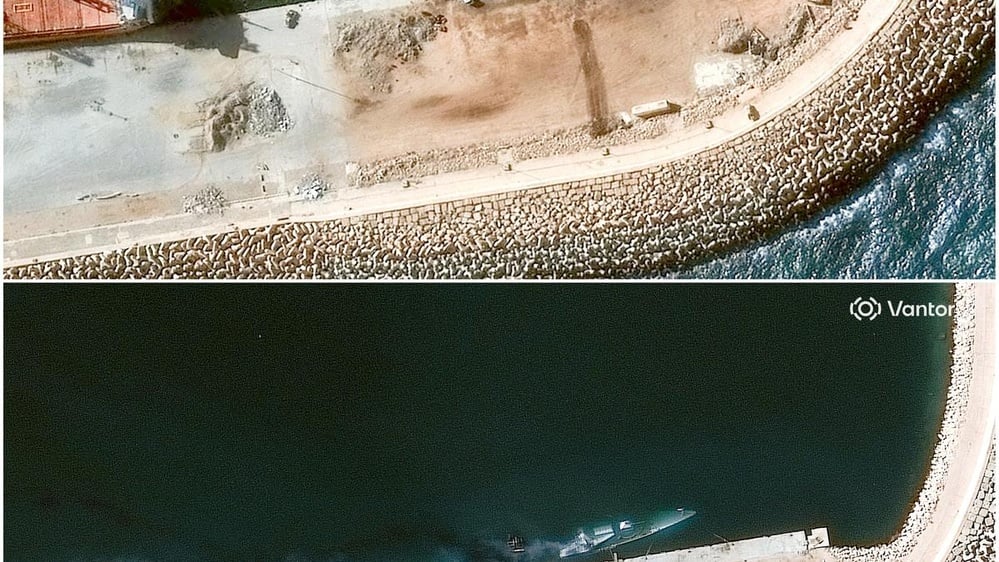
“Vantor collected high-resolution images that it said showed Project 20380 Steregushchiy-class corvette (Merkury)” · exact text match
Why: Multiple verification methods and careful attribution make the account visibly credible within the supplied text.
Claim: The report grounds the incident in verifiable imagery, named sources, and official statements.
“Vantor collected high-resolution images that it said showed Project 20380 Steregushchiy-class corvette (Merkury) - a Russian navy ship - moored in the port on Saturday, and on Sunday showed most of the same ship capsized and sunk with only the forward bow still visible.” · exact text match
Why: Use of imagery, named firms, and explicit 'it said' attribution supports a rational, evidence-bound account.
Claim: The report includes an expert's explicit conjecture that Ukraine was responsible despite official non-confirmation.
“If I were to bet my own money, I would bet that it was the Ukrainians.” · exact text match
Counterevidence:
“Although it has not been officially confirmed who was behind the attack” · exact text match
Why: The betting language is speculative, but the article frames it with a lack-of-confirmation caveat and attributes it to the expert.
Claim: The report gives space to multiple official positions and notes Moscow's non-response.
“Moscow has yet to comment.” · exact text match
“The UN mission in Libya expressed "serious concern" over the attacks, calling for "an immediate, independent and transparent investigation".” · exact text match
Why: Inclusion of non-response, UN concern, and rival Libyan authorities signals fair, internally transparent handling.
Some source names are blank in the supplied scraped text (e.g., before 'Verify' and in 'he told the .'), limiting attribution precision.
November 23, 2026 · 0 shares
The report is attributed and hedged, relying on a single official preliminary investigation while using 'suspected' for the drone-attack cause.
Helium Analysis
Limitations: Only a headline and one-sentence excerpt are supplied, so many bias dimensions lack enough context for confident scoring.
·
8 of 56 available dimensions scored; omitted dimensions are not treated as neutral.
·
Verified supporting quotes for 8 of 8 scored dimensions.
Claim: The item uses attributed, hedged language rather than subjective commentary.
“Libya's eastern-based government said after a preliminary investigation” · exact text match
“suspected drone attack” · exact text match
Why: Official attribution and 'suspected' qualification indicate objective reporting.
Claim: The headline emphasizes a 'Large blaze' and a 'Russian warship,' adding mild dramatic salience.
“Large blaze at Benghazi port after suspected drone attack on Russian warship.” · exact text match
Why: Dramatic nouns and the scale adjective give a mildly sensational headline framing, though the body is attributed.
Claim: The text reports the event without prescribing a policy response.
“An explosion aboard a Russian ship docked at the Benghazi naval base in eastern Libya was caused by a suspected drone attack” · exact text match
Why: Purely descriptive incident report with no recommendations.
Claim: The item concerns a government statement about a military/security incident involving a Russian warship.
“Libya's eastern-based government said” · exact text match
“Russian warship” · exact text match
Why: The subject matter is political/geopolitical, though coverage is brief and neutral.
Claim: The item provides attribution and uncertainty but no independent corroboration or named officials.
“Libya's eastern-based government said after a preliminary investigation” · exact text match
“suspected drone attack” · exact text match
Why: Attribution and hedging support moderate credibility, but the excerpt is too brief for stronger confidence.
Claim: The report frames the cause as preliminary and suspected rather than certain.
“Libya's eastern-based government said after a preliminary investigation” · exact text match
“suspected drone attack” · exact text match
Why: Attribution plus hedged wording signals rational, evidence-bound handling, though sourcing is limited.
Claim: The report relays a suspected cause based on a preliminary investigation.
“suspected drone attack” · exact text match
“after a preliminary investigation” · exact text match
Why: Causal language is explicitly provisional and attributed, limiting speculation.
Claim: The report attributes the finding to the eastern-based government and qualifies the cause as suspected.
“Libya's eastern-based government said after a preliminary investigation” · exact text match
“suspected drone attack” · exact text match
Why: Clear sourcing and hedging are observable fairness/honesty signals.
Only a headline and one-sentence excerpt are supplied, so many bias dimensions lack enough context for confident scoring.
November 23, 2026 · 0 shares
The report is heavily attribution-driven and hedged, repeatedly crediting anonymous Libyan and European officials while acknowledging that no party claimed responsibility and Russia and Ukraine did not comment.
Libya has been divided since a NATO-backed uprising toppled Muammar Gaddafi in 2011, with a UN-supported government in Tripoli and a rival administration in the east; the oil-rich country remains a focal point of Russia–West rivalry.
Helium Analysis
Limitations: Article text includes subscription/newsletter/comment chrome, which was excluded; key attack details rely on anonymous Libyan officials and lack independent confirmation.
·
9 of 56 available dimensions scored; omitted dimensions are not treated as neutral.
·
Verified supporting quotes for 9 of 9 scored dimensions.
Claim: The report labels the strike as suspected and attributes it to officials instead of asserting Ukrainian responsibility.
“A suspected Ukrainian drone strike hit a Russian warship on Sunday (November 22, 2026) at a naval base in Libya, officials said” · exact text match
“No group immediately claimed responsibility for the attack.
There was no immediate comment from either Russia or Ukraine.”
· exact text match
Why: Hedged attribution and explicit acknowledgment of unresolved responsibility support objective framing.
Claim: The report uses measured, official-source language rather than dramatic or emotive language.
“A suspected Ukrainian drone strike hit a Russian warship on Sunday (November 22, 2026) at a naval base in Libya, officials said” · exact text match
Why: The main event is stated with hedging and attribution, not sensational emphasis.
Claim: The report includes unusual covert-warfare details, including a prior suspected Ukrainian sea-drone attack on a Russian tanker.
“In March, Ukrainian forces operating in western Libya under a covert deal struck a Russian tanker in the Mediterranean in a suspected sea drone attack near Maltese waters, Libyan officials said at the time.” · exact text match
Why: Covert drone operations and international spillover are inherently notable details.
Claim: The report relays events and official statements without prescribing a policy response.
“The eastern Libya-based government said in a statement that the strike on Sunday (November 22) caused an explosion and fire at the base, which was later extinguished.” · exact text match
Why: It remains descriptive by reporting government statements rather than advocating action.
Claim: The central subject is geopolitical conflict spillover involving Russia, Ukraine, Libya, and Western officials.
“A suspected Ukrainian drone strike hit a Russian warship on Sunday (November 22, 2026) at a naval base in Libya, officials said, the latest attack in the North African nation linked to the Russia-Ukraine war.” · exact text match
Why: The report is explicitly about international conflict and official reactions, making it political/geopolitical.
Claim: Credibility is supported by multiple official sources, hedging, and acknowledgment of missing corroboration, though key claims rely on anonymity.
“A European official said the reports of an explosion at Benghazi Port involving a Russian vessel appeared to be credible.” · exact text match
“No group immediately claimed responsibility for the attack.
There was no immediate comment from either Russia or Ukraine.”
· exact text match
Why: Corroboration by a European official and disclosure of no claim/comment raise credibility while anonymity limits it.
Claim: The report grounds claims in an initial investigation and attributes drone-launch details to officials rather than asserting them independently.
“They said that several Ukrainian sea drones were launched at the ship from a base run by Ukrainian forces in western Libya, according to an initial investigation into the attack.” · exact text match
Why: Citing an investigation and attributing the claim indicates evidence-conscious, rational reporting.
Claim: The article discloses source anonymity, notes missing claims/comments, and includes rival official perspectives.
“The officials, affiliated with the self-styled Libyan National Army, which controls eastern and southern Libya, spoke on condition of anonymity because they weren't allowed to talk with reporters.” · exact text match
“The western Libyan government expressed concerns about “dragging Libyan ports and civilian facilities into external conflicts,” in an apparent reference to the war in Ukraine.” · exact text match
Why: Transparency about sourcing and inclusion of multiple official views support high integrity.
Claim: The report supplies historical and institutional context and distinguishes official claims from unresolved questions.
“Libya has been divided since a NATO-backed uprising toppled longtime dictator Muammar Gaddafi, who was later killed, in 2011.” · exact text match
Why: Context on Libya's division and attribution of unresolved details indicate above-average explanatory quality.
Article text includes subscription/newsletter/comment chrome, which was excluded; key attack details rely on anonymous Libyan officials and lack independent confirmation.
November 23, 2026 · 0 shares
Presents a suspected drone attack on a Russian ship through attributed official statements, geolocated imagery, and named expert speculation, with restrained language and explicit caveats about unconfirmed responsibility.
Helium Analysis
Limitations: Some source names are blank in the supplied scraped text (e.g., before 'Verify' and in 'he told the .'), limiting attribution precision.
·
9 of 56 available dimensions scored; omitted dimensions are not treated as neutral.
·
Verified supporting quotes for 9 of 9 scored dimensions.
Claim: The report separates confirmed facts from suspicions and attributes contested claims to officials or named experts.
“Although it has not been officially confirmed who was behind the attack, there is little doubt, according to Jalel Harchaoui” · exact text match
Why: Explicit caveat and attribution prevent suspected responsibility from being presented as settled fact.
Claim: The report states the incident and casualty details in restrained terms.
“The statement said there were no casualties.
Moscow has yet to comment.”
· exact text match
Why: Plain casualty and non-response information is given without dramatic or emotive amplification.
Claim: The report primarily relays events and official positions rather than prescribing policy.
“Sunday's incident is under investigation, and authorities are coordinating with their Russian counterparts to determine the source of the suspected attack and who is responsible for it, GNS added.” · exact text match
Why: The main mode is descriptive reporting of investigations and statements; prescriptive language is confined to quoted officials.
Claim: The report centers on government statements, sovereignty, foreign military presence, and the Russia-Ukraine conflict.
“Libya cannot afford, and must not become a battleground for foreign conflicts,” · exact text match
Why: Official geopolitical actors and conflict implications dominate the content, making it highly political.
Claim: The report maintains a neutral emotional register while covering an explosion and sunken vessel.
“The statement said there were no casualties.
Moscow has yet to comment.”
· exact text match
Why: Casualty and response details are stated plainly, without emotive intensifiers.
Claim: The report supports key incident details with geolocated video, satellite imagery, named firms, and official statements.
“Vantor collected high-resolution images that it said showed Project 20380 Steregushchiy-class corvette (Merkury)” · exact text match
Why: Multiple verification methods and careful attribution make the account visibly credible within the supplied text.
Claim: The report grounds the incident in verifiable imagery, named sources, and official statements.
“Vantor collected high-resolution images that it said showed Project 20380 Steregushchiy-class corvette (Merkury) - a Russian navy ship - moored in the port on Saturday, and on Sunday showed most of the same ship capsized and sunk with only the forward bow still visible.” · exact text match
Why: Use of imagery, named firms, and explicit 'it said' attribution supports a rational, evidence-bound account.
Claim: The report includes an expert's explicit conjecture that Ukraine was responsible despite official non-confirmation.
“If I were to bet my own money, I would bet that it was the Ukrainians.” · exact text match
Counterevidence:
“Although it has not been officially confirmed who was behind the attack” · exact text match
Why: The betting language is speculative, but the article frames it with a lack-of-confirmation caveat and attributes it to the expert.
Claim: The report gives space to multiple official positions and notes Moscow's non-response.
“Moscow has yet to comment.” · exact text match
“The UN mission in Libya expressed "serious concern" over the attacks, calling for "an immediate, independent and transparent investigation".” · exact text match
Why: Inclusion of non-response, UN concern, and rival Libyan authorities signals fair, internally transparent handling.
Some source names are blank in the supplied scraped text (e.g., before 'Verify' and in 'he told the .'), limiting attribution precision.
November 22, 2026 · 0 shares
Attribution-heavy and cautious, repeatedly labeling the blast as suspected and sourcing claims to Libyan officials, military sources, medical sources, and prior attacks rather than assigning responsibility.
Helium Analysis
Limitations: The supplied text is duplicated and truncated and includes unrelated teasers; author and publication metadata are absent.
·
8 of 56 available dimensions scored; omitted dimensions are not treated as neutral.
·
Verified supporting quotes for 8 of 8 scored dimensions.
Claim: Claims are consistently attributed to Libyan officials, military sources, and medical sources rather than presented as the reporter’s own judgment.
“two Libyan military sources told Reuters.” · exact text match
Why: Direct source attribution and absence of evaluative language support an objective/subjective score toward objective.
Claim: Casualty and attack details are reported in measured, factual language without dramatic escalation.
“Ten people, who included Russians and Libyans, were slightly injured in the incident and were receiving treatment in Benghazi, medical sources said.” · exact text match
Why: The clinical casualty statement supports a low-sensationalism classification.
Claim: Normative statements are presented as the Libyan government’s position rather than as the publisher’s policy prescription.
“It condemned the suspected attack as a violation of Libya’s sovereignty and a threat to maritime safety” · exact text match
Why: The only prescriptive language is attributed to the government, so the report remains descriptive.
Claim: The story centrally concerns interstate war, sovereignty, and military attacks, making its content highly political.
“The government stressed that Libya was not a party to the war between Russia and Ukraine, or to any armed conflict beyond its borders” · exact text match
Why: The explicit focus on war and sovereign neutrality supports a high political-content score.
Claim: Credibility is supported by source attribution, cautious cause language, and acknowledgment of uncertainty.
“An explosion aboard a Russian ship docked at the Benghazi naval base in eastern Libya was caused by a suspected drone attack, Libya’s eastern-based government said on Sunday after a preliminary investigation.” · exact text match
Why: Attributing the claim to a government statement after a preliminary investigation supports a high credibility score within the supplied text.
Claim: The report is cautious and evidence-bound, attributing the suspected cause to a preliminary investigation rather than asserting it as established fact.
“caused by a suspected drone attack, Libya’s eastern-based government said on Sunday after a preliminary investigation.” · exact text match
Why: The wording marks the cause as suspected and preliminary, which supports a rational/cautious score.
Claim: The report transparently flags missing responsibility claims and the absence of an immediate Russian response.
“No-one has claimed responsibility for the suspected attack, and there was no immediate reaction from Russian authorities.” · exact text match
Why: Acknowledging unresolved attribution and non-response is a strong fairness/honesty signal.
Claim: The report supplies relevant strategic context about prior Ukrainian drone strikes while keeping the current incident’s responsibility unresolved.
“Since Russia’s full-scale invasion of Ukraine in February 2022, Ukrainian forces have repeatedly used naval drones and missiles to target Russian warships and naval facilities in the Black Sea.” · exact text match
Why: The contextual background improves explanatory clarity, supporting an above-average intelligence score.
The supplied text is duplicated and truncated and includes unrelated teasers; author and publication metadata are absent.
November 23, 2026 · 0 shares
The report is heavily attribution-driven and hedged, repeatedly crediting anonymous Libyan and European officials while acknowledging that no party claimed responsibility and Russia and Ukraine did not comment.
Libya has been divided since a NATO-backed uprising toppled Muammar Gaddafi in 2011, with a UN-supported government in Tripoli and a rival administration in the east; the oil-rich country remains a focal point of Russia–West rivalry.
Helium Analysis
Limitations: Article text includes subscription/newsletter/comment chrome, which was excluded; key attack details rely on anonymous Libyan officials and lack independent confirmation.
·
9 of 56 available dimensions scored; omitted dimensions are not treated as neutral.
·
Verified supporting quotes for 9 of 9 scored dimensions.
Claim: The report labels the strike as suspected and attributes it to officials instead of asserting Ukrainian responsibility.
“A suspected Ukrainian drone strike hit a Russian warship on Sunday (November 22, 2026) at a naval base in Libya, officials said” · exact text match
“No group immediately claimed responsibility for the attack.
There was no immediate comment from either Russia or Ukraine.”
· exact text match
Why: Hedged attribution and explicit acknowledgment of unresolved responsibility support objective framing.
Claim: The report uses measured, official-source language rather than dramatic or emotive language.
“A suspected Ukrainian drone strike hit a Russian warship on Sunday (November 22, 2026) at a naval base in Libya, officials said” · exact text match
Why: The main event is stated with hedging and attribution, not sensational emphasis.
Claim: The report includes unusual covert-warfare details, including a prior suspected Ukrainian sea-drone attack on a Russian tanker.
“In March, Ukrainian forces operating in western Libya under a covert deal struck a Russian tanker in the Mediterranean in a suspected sea drone attack near Maltese waters, Libyan officials said at the time.” · exact text match
Why: Covert drone operations and international spillover are inherently notable details.
Claim: The report relays events and official statements without prescribing a policy response.
“The eastern Libya-based government said in a statement that the strike on Sunday (November 22) caused an explosion and fire at the base, which was later extinguished.” · exact text match
Why: It remains descriptive by reporting government statements rather than advocating action.
Claim: The central subject is geopolitical conflict spillover involving Russia, Ukraine, Libya, and Western officials.
“A suspected Ukrainian drone strike hit a Russian warship on Sunday (November 22, 2026) at a naval base in Libya, officials said, the latest attack in the North African nation linked to the Russia-Ukraine war.” · exact text match
Why: The report is explicitly about international conflict and official reactions, making it political/geopolitical.
Claim: Credibility is supported by multiple official sources, hedging, and acknowledgment of missing corroboration, though key claims rely on anonymity.
“A European official said the reports of an explosion at Benghazi Port involving a Russian vessel appeared to be credible.” · exact text match
“No group immediately claimed responsibility for the attack.
There was no immediate comment from either Russia or Ukraine.”
· exact text match
Why: Corroboration by a European official and disclosure of no claim/comment raise credibility while anonymity limits it.
Claim: The report grounds claims in an initial investigation and attributes drone-launch details to officials rather than asserting them independently.
“They said that several Ukrainian sea drones were launched at the ship from a base run by Ukrainian forces in western Libya, according to an initial investigation into the attack.” · exact text match
Why: Citing an investigation and attributing the claim indicates evidence-conscious, rational reporting.
Claim: The article discloses source anonymity, notes missing claims/comments, and includes rival official perspectives.
“The officials, affiliated with the self-styled Libyan National Army, which controls eastern and southern Libya, spoke on condition of anonymity because they weren't allowed to talk with reporters.” · exact text match
“The western Libyan government expressed concerns about “dragging Libyan ports and civilian facilities into external conflicts,” in an apparent reference to the war in Ukraine.” · exact text match
Why: Transparency about sourcing and inclusion of multiple official views support high integrity.
Claim: The report supplies historical and institutional context and distinguishes official claims from unresolved questions.
“Libya has been divided since a NATO-backed uprising toppled longtime dictator Muammar Gaddafi, who was later killed, in 2011.” · exact text match
Why: Context on Libya's division and attribution of unresolved details indicate above-average explanatory quality.
Article text includes subscription/newsletter/comment chrome, which was excluded; key attack details rely on anonymous Libyan officials and lack independent confirmation.
November 22, 2026 · 0 shares
Attribution-heavy and cautious, repeatedly labeling the blast as suspected and sourcing claims to Libyan officials, military sources, medical sources, and prior attacks rather than assigning responsibility.
Helium Analysis
Limitations: The supplied text is duplicated and truncated and includes unrelated teasers; author and publication metadata are absent.
·
8 of 56 available dimensions scored; omitted dimensions are not treated as neutral.
·
Verified supporting quotes for 8 of 8 scored dimensions.
Claim: Claims are consistently attributed to Libyan officials, military sources, and medical sources rather than presented as the reporter’s own judgment.
“two Libyan military sources told Reuters.” · exact text match
Why: Direct source attribution and absence of evaluative language support an objective/subjective score toward objective.
Claim: Casualty and attack details are reported in measured, factual language without dramatic escalation.
“Ten people, who included Russians and Libyans, were slightly injured in the incident and were receiving treatment in Benghazi, medical sources said.” · exact text match
Why: The clinical casualty statement supports a low-sensationalism classification.
Claim: Normative statements are presented as the Libyan government’s position rather than as the publisher’s policy prescription.
“It condemned the suspected attack as a violation of Libya’s sovereignty and a threat to maritime safety” · exact text match
Why: The only prescriptive language is attributed to the government, so the report remains descriptive.
Claim: The story centrally concerns interstate war, sovereignty, and military attacks, making its content highly political.
“The government stressed that Libya was not a party to the war between Russia and Ukraine, or to any armed conflict beyond its borders” · exact text match
Why: The explicit focus on war and sovereign neutrality supports a high political-content score.
Claim: Credibility is supported by source attribution, cautious cause language, and acknowledgment of uncertainty.
“An explosion aboard a Russian ship docked at the Benghazi naval base in eastern Libya was caused by a suspected drone attack, Libya’s eastern-based government said on Sunday after a preliminary investigation.” · exact text match
Why: Attributing the claim to a government statement after a preliminary investigation supports a high credibility score within the supplied text.
Claim: The report is cautious and evidence-bound, attributing the suspected cause to a preliminary investigation rather than asserting it as established fact.
“caused by a suspected drone attack, Libya’s eastern-based government said on Sunday after a preliminary investigation.” · exact text match
Why: The wording marks the cause as suspected and preliminary, which supports a rational/cautious score.
Claim: The report transparently flags missing responsibility claims and the absence of an immediate Russian response.
“No-one has claimed responsibility for the suspected attack, and there was no immediate reaction from Russian authorities.” · exact text match
Why: Acknowledging unresolved attribution and non-response is a strong fairness/honesty signal.
Claim: The report supplies relevant strategic context about prior Ukrainian drone strikes while keeping the current incident’s responsibility unresolved.
“Since Russia’s full-scale invasion of Ukraine in February 2022, Ukrainian forces have repeatedly used naval drones and missiles to target Russian warships and naval facilities in the Black Sea.” · exact text match
Why: The contextual background improves explanatory clarity, supporting an above-average intelligence score.
The supplied text is duplicated and truncated and includes unrelated teasers; author and publication metadata are absent.
November 23, 2026 · 0 shares
The headline frames the Ukrainian strike as a successful, newsworthy operation and elevates Zelenskyy’s ‘exemplary’ characterization while offering no sourcing or Russian response.
Helium Analysis
Limitations: Only a headline and subheadline were supplied; lack of body text limits assessment of sourcing, balance, and context.
·
5 of 56 available dimensions scored; omitted dimensions are not treated as neutral.
·
Verified supporting quotes for 5 of 5 scored dimensions.
Claim: The headline uses vivid, dramatic wording for the strike.
“blows up” · exact text match
Why: ‘blows up’ is more sensational than neutral alternatives such as ‘strikes’ or ‘damages’.
Claim: The text reports an event without recommending any action.
“Ukraine blows up Russian warship in Libya's Benghazi naval base.” · exact text match
Why: The sentence is declarative and contains no imperative or policy prescription.
Claim: The subheadline highlights an evaluative characterization of the attack.
“‘exemplary’” · exact text match
Why: The quoted adjective is evaluative, though attribution to Zelenskyy limits the publisher’s own opinion.
Claim: The report centers on a geopolitical military action involving Ukraine, Russia, Libya, and Zelenskyy.
“Ukraine blows up Russian warship in Libya's Benghazi naval base.” · exact text match
Why: The reported event and quoted actor are political and military in nature.
Claim: The headline asserts the destruction of a Russian warship as an unqualified fact without attribution or hedging in the supplied text.
“Ukraine blows up Russian warship in Libya's Benghazi naval base.” · exact text match
Why: The declarative claim provides no source, qualification, or uncertainty marker in the supplied text.
Only a headline and subheadline were supplied; lack of body text limits assessment of sourcing, balance, and context.
November 23, 2026 · 0 shares
The report is heavily attribution-driven and hedged, repeatedly crediting anonymous Libyan and European officials while acknowledging that no party claimed responsibility and Russia and Ukraine did not comment.
Libya has been divided since a NATO-backed uprising toppled Muammar Gaddafi in 2011, with a UN-supported government in Tripoli and a rival administration in the east; the oil-rich country remains a focal point of Russia–West rivalry.
Helium Analysis
Limitations: Article text includes subscription/newsletter/comment chrome, which was excluded; key attack details rely on anonymous Libyan officials and lack independent confirmation.
·
9 of 56 available dimensions scored; omitted dimensions are not treated as neutral.
·
Verified supporting quotes for 9 of 9 scored dimensions.
Claim: The report labels the strike as suspected and attributes it to officials instead of asserting Ukrainian responsibility.
“A suspected Ukrainian drone strike hit a Russian warship on Sunday (November 22, 2026) at a naval base in Libya, officials said” · exact text match
“No group immediately claimed responsibility for the attack.
There was no immediate comment from either Russia or Ukraine.”
· exact text match
Why: Hedged attribution and explicit acknowledgment of unresolved responsibility support objective framing.
Claim: The report uses measured, official-source language rather than dramatic or emotive language.
“A suspected Ukrainian drone strike hit a Russian warship on Sunday (November 22, 2026) at a naval base in Libya, officials said” · exact text match
Why: The main event is stated with hedging and attribution, not sensational emphasis.
Claim: The report includes unusual covert-warfare details, including a prior suspected Ukrainian sea-drone attack on a Russian tanker.
“In March, Ukrainian forces operating in western Libya under a covert deal struck a Russian tanker in the Mediterranean in a suspected sea drone attack near Maltese waters, Libyan officials said at the time.” · exact text match
Why: Covert drone operations and international spillover are inherently notable details.
Claim: The report relays events and official statements without prescribing a policy response.
“The eastern Libya-based government said in a statement that the strike on Sunday (November 22) caused an explosion and fire at the base, which was later extinguished.” · exact text match
Why: It remains descriptive by reporting government statements rather than advocating action.
Claim: The central subject is geopolitical conflict spillover involving Russia, Ukraine, Libya, and Western officials.
“A suspected Ukrainian drone strike hit a Russian warship on Sunday (November 22, 2026) at a naval base in Libya, officials said, the latest attack in the North African nation linked to the Russia-Ukraine war.” · exact text match
Why: The report is explicitly about international conflict and official reactions, making it political/geopolitical.
Claim: Credibility is supported by multiple official sources, hedging, and acknowledgment of missing corroboration, though key claims rely on anonymity.
“A European official said the reports of an explosion at Benghazi Port involving a Russian vessel appeared to be credible.” · exact text match
“No group immediately claimed responsibility for the attack.
There was no immediate comment from either Russia or Ukraine.”
· exact text match
Why: Corroboration by a European official and disclosure of no claim/comment raise credibility while anonymity limits it.
Claim: The report grounds claims in an initial investigation and attributes drone-launch details to officials rather than asserting them independently.
“They said that several Ukrainian sea drones were launched at the ship from a base run by Ukrainian forces in western Libya, according to an initial investigation into the attack.” · exact text match
Why: Citing an investigation and attributing the claim indicates evidence-conscious, rational reporting.
Claim: The article discloses source anonymity, notes missing claims/comments, and includes rival official perspectives.
“The officials, affiliated with the self-styled Libyan National Army, which controls eastern and southern Libya, spoke on condition of anonymity because they weren't allowed to talk with reporters.” · exact text match
“The western Libyan government expressed concerns about “dragging Libyan ports and civilian facilities into external conflicts,” in an apparent reference to the war in Ukraine.” · exact text match
Why: Transparency about sourcing and inclusion of multiple official views support high integrity.
Claim: The report supplies historical and institutional context and distinguishes official claims from unresolved questions.
“Libya has been divided since a NATO-backed uprising toppled longtime dictator Muammar Gaddafi, who was later killed, in 2011.” · exact text match
Why: Context on Libya's division and attribution of unresolved details indicate above-average explanatory quality.
Article text includes subscription/newsletter/comment chrome, which was excluded; key attack details rely on anonymous Libyan officials and lack independent confirmation.
November 23, 2026 · 0 shares
The report is measured and attribution-heavy, repeatedly using 'suspected' and conditional language rather than assigning definitive responsibility.
Helium Analysis
Limitations: The supplied article text contains duplicated paragraphs and list-artifact formatting and lacks an author byline, limiting provenance and originality assessment.
·
9 of 56 available dimensions scored; omitted dimensions are not treated as neutral.
·
Verified supporting quotes for 9 of 9 scored dimensions.
Claim: The report labels the Benghazi strike as suspected and attributes accounts to officials rather than asserting a definitive cause.
“A Russian vessel docked at the Benghazi naval base in eastern Libya was damaged on Sunday after a suspected sea drone struck the ship, triggering an explosion and a brief fire.” · exact text match
Why: 'Suspected' and official attribution keep the account factual and conditional.
Claim: The damage and injuries are reported in restrained factual terms without dramatic embellishment.
“Emergency crews quickly put out the blaze and secured the port, though an unspecified number of people were injured in the blast.” · exact text match
Why: The language is plain and procedural rather than sensational.
Claim: The report primarily describes official statements and events rather than prescribing a policy response.
“According to Libya’s eastern administration, the ship had stopped in Benghazi to refuel and take on supplies under a bilateral cooperation deal with Moscow.” · exact text match
Why: The sentence reports an official account without advocating action.
Claim: The article frames the Benghazi incident within geopolitical competition and the Russia-Ukraine conflict.
“Since the 2011 uprising that ousted Muammar Gaddafi, the country has remained split between a UN-recognized government in Tripoli and a rival administration in the east, turning it into a steady arena of competition between Russia and Western powers.” · exact text match
Why: The excerpt explicitly organizes the event around political and geopolitical conflict.
Claim: The report attributes claims to named authorities and explicitly notes the absence of an official blame determination.
“So far, Moscow has remained silent on the incident, and no group or state has claimed responsibility.” · exact text match
“Finland’s border guard attributed the strike to Ukraine.” · exact text match
Why: Attribution of claims and acknowledgment of unknowns support visible credibility.
Claim: The article uses conditional reasoning about the strike's implications rather than treating unconfirmed conclusions as certain.
“If investigators confirm that a sea drone penetrated the Benghazi base, it will raise difficult questions for Russian naval planners.” · exact text match
Why: The 'if investigators confirm' construction makes the implication conditional and evidence-dependent.
Claim: The article offers a cautious forward-looking inference about Russian naval access after the blast.
“Sunday’s blast suggests that even friendly harbors thousands of kilometers from the Ukrainian front line may no longer be out of reach.” · exact text match
Why: 'Suggests' and 'may' mark a speculative implication rather than a confirmed outcome.
Claim: The report discloses material unknowns about the vessel and its cargo instead of filling gaps.
“Officials did not identify the vessel or say what it was carrying.” · exact text match
Why: Explicitly noting missing identifying details is an internal honesty signal.
Claim: The report supplies relevant historical and strategic context for the Benghazi incident.
“For Russia, eastern Libya has become a key logistical foothold.” · exact text match
Why: The article connects the immediate blast to broader logistics and regional competition, showing analytic context.
The supplied article text contains duplicated paragraphs and list-artifact formatting and lacks an author byline, limiting provenance and originality assessment.
Straight-news attribution dominates: official claims are hedged as preliminary and rival Libyan authorities are quoted without publisher-side evaluation.
Helium Analysis
Limitations: The supplied text is a straight-news compilation of official Libyan statements; it does not independently verify the drone attack, the attacker, or the link to the depot blast.
·
7 of 56 available dimensions scored; omitted dimensions are not treated as neutral.
·
Verified supporting quotes for 7 of 7 scored dimensions.
Claim: Claims are attributed to official sources rather than asserted in the publisher’s own voice.
“Libya’s eastern-based government said Sunday, citing preliminary findings” · exact text match
“Libya’s Tripoli-based Government of National Unity, for its part, said” · exact text match
Why: Consistent attribution and no editorial evaluation support objective framing.
Claim: The incident is described with hedging and preliminary attribution rather than sensational assertion.
“was likely hit in an “attack using drones,”” · exact text match
“citing preliminary findings” · exact text match
Why: “Likely” and “preliminary” soften the claim; no dramatic publisher adjectives dominate.
Claim: Calls for investigation and military unification are quoted from Libyan governments rather than advanced by the publisher.
“It ordered security and military authorities to “open a comprehensive investigation”” · exact text match
“The government condemned the targeting of a ship inside a Libyan port as a “serious assault on national sovereignty”” · exact text match
Why: Prescriptive language is attributed to officials, while the report itself remains descriptive.
Claim: The report is dominated by sovereignty, foreign-conflict, and rival-government framing.
““Libya is not a party to the Russian-Ukrainian war or to any armed conflict outside its borders,”” · exact text match
““serious assault on national sovereignty”” · exact text match
Why: The incident is presented through geopolitical and sovereignty claims, making it substantively political.
Claim: The report cites official statements and includes caveats about preliminary findings and unconfirmed connections.
“citing preliminary findings after an explosion aboard the vessel before dawn” · exact text match
“The statements did not establish whether the reported depot blast and the explosion aboard the ship were connected.” · exact text match
Why: Visible attribution and acknowledged uncertainty support credibility in the supplied text.
Claim: The report attributes claims to officials and explicitly notes unresolved connections between the two blasts.
“citing preliminary findings” · exact text match
“The statements did not establish whether the reported depot blast and the explosion aboard the ship were connected.” · exact text match
Why: Preliminary attribution and an explicit non-linkage caution indicate measured, evidence-bound reasoning.
Claim: The report includes rival Libyan authorities’ statements and flags an unresolved connection between the explosions.
“The statements did not establish whether the reported depot blast and the explosion aboard the ship were connected.” · exact text match
“Libya’s Tripoli-based Government of National Unity, for its part, said” · exact text match
Why: Presenting competing official reactions and acknowledging uncertainty supports observable fairness and honesty.
The supplied text is a straight-news compilation of official Libyan statements; it does not independently verify the drone attack, the attacker, or the link to the depot blast.
November 23, 2026 · 0 shares
The report is measured and attribution-heavy, repeatedly using 'suspected' and conditional language rather than assigning definitive responsibility.
Helium Analysis
Limitations: The supplied article text contains duplicated paragraphs and list-artifact formatting and lacks an author byline, limiting provenance and originality assessment.
·
9 of 56 available dimensions scored; omitted dimensions are not treated as neutral.
·
Verified supporting quotes for 9 of 9 scored dimensions.
Claim: The report labels the Benghazi strike as suspected and attributes accounts to officials rather than asserting a definitive cause.
“A Russian vessel docked at the Benghazi naval base in eastern Libya was damaged on Sunday after a suspected sea drone struck the ship, triggering an explosion and a brief fire.” · exact text match
Why: 'Suspected' and official attribution keep the account factual and conditional.
Claim: The damage and injuries are reported in restrained factual terms without dramatic embellishment.
“Emergency crews quickly put out the blaze and secured the port, though an unspecified number of people were injured in the blast.” · exact text match
Why: The language is plain and procedural rather than sensational.
Claim: The report primarily describes official statements and events rather than prescribing a policy response.
“According to Libya’s eastern administration, the ship had stopped in Benghazi to refuel and take on supplies under a bilateral cooperation deal with Moscow.” · exact text match
Why: The sentence reports an official account without advocating action.
Claim: The article frames the Benghazi incident within geopolitical competition and the Russia-Ukraine conflict.
“Since the 2011 uprising that ousted Muammar Gaddafi, the country has remained split between a UN-recognized government in Tripoli and a rival administration in the east, turning it into a steady arena of competition between Russia and Western powers.” · exact text match
Why: The excerpt explicitly organizes the event around political and geopolitical conflict.
Claim: The report attributes claims to named authorities and explicitly notes the absence of an official blame determination.
“So far, Moscow has remained silent on the incident, and no group or state has claimed responsibility.” · exact text match
“Finland’s border guard attributed the strike to Ukraine.” · exact text match
Why: Attribution of claims and acknowledgment of unknowns support visible credibility.
Claim: The article uses conditional reasoning about the strike's implications rather than treating unconfirmed conclusions as certain.
“If investigators confirm that a sea drone penetrated the Benghazi base, it will raise difficult questions for Russian naval planners.” · exact text match
Why: The 'if investigators confirm' construction makes the implication conditional and evidence-dependent.
Claim: The article offers a cautious forward-looking inference about Russian naval access after the blast.
“Sunday’s blast suggests that even friendly harbors thousands of kilometers from the Ukrainian front line may no longer be out of reach.” · exact text match
Why: 'Suggests' and 'may' mark a speculative implication rather than a confirmed outcome.
Claim: The report discloses material unknowns about the vessel and its cargo instead of filling gaps.
“Officials did not identify the vessel or say what it was carrying.” · exact text match
Why: Explicitly noting missing identifying details is an internal honesty signal.
Claim: The report supplies relevant historical and strategic context for the Benghazi incident.
“For Russia, eastern Libya has become a key logistical foothold.” · exact text match
Why: The article connects the immediate blast to broader logistics and regional competition, showing analytic context.
The supplied article text contains duplicated paragraphs and list-artifact formatting and lacks an author byline, limiting provenance and originality assessment.
November 23, 2026 · 0 shares
Presents a suspected drone attack on a Russian ship through attributed official statements, geolocated imagery, and named expert speculation, with restrained language and explicit caveats about unconfirmed responsibility.
Helium Analysis
Limitations: Some source names are blank in the supplied scraped text (e.g., before 'Verify' and in 'he told the .'), limiting attribution precision.
·
9 of 56 available dimensions scored; omitted dimensions are not treated as neutral.
·
Verified supporting quotes for 9 of 9 scored dimensions.
Claim: The report separates confirmed facts from suspicions and attributes contested claims to officials or named experts.
“Although it has not been officially confirmed who was behind the attack, there is little doubt, according to Jalel Harchaoui” · exact text match
Why: Explicit caveat and attribution prevent suspected responsibility from being presented as settled fact.
Claim: The report states the incident and casualty details in restrained terms.
“The statement said there were no casualties.
Moscow has yet to comment.”
· exact text match
Why: Plain casualty and non-response information is given without dramatic or emotive amplification.
Claim: The report primarily relays events and official positions rather than prescribing policy.
“Sunday's incident is under investigation, and authorities are coordinating with their Russian counterparts to determine the source of the suspected attack and who is responsible for it, GNS added.” · exact text match
Why: The main mode is descriptive reporting of investigations and statements; prescriptive language is confined to quoted officials.
Claim: The report centers on government statements, sovereignty, foreign military presence, and the Russia-Ukraine conflict.
“Libya cannot afford, and must not become a battleground for foreign conflicts,” · exact text match
Why: Official geopolitical actors and conflict implications dominate the content, making it highly political.
Claim: The report maintains a neutral emotional register while covering an explosion and sunken vessel.
“The statement said there were no casualties.
Moscow has yet to comment.”
· exact text match
Why: Casualty and response details are stated plainly, without emotive intensifiers.
Claim: The report supports key incident details with geolocated video, satellite imagery, named firms, and official statements.
“Vantor collected high-resolution images that it said showed Project 20380 Steregushchiy-class corvette (Merkury)” · exact text match
Why: Multiple verification methods and careful attribution make the account visibly credible within the supplied text.
Claim: The report grounds the incident in verifiable imagery, named sources, and official statements.
“Vantor collected high-resolution images that it said showed Project 20380 Steregushchiy-class corvette (Merkury) - a Russian navy ship - moored in the port on Saturday, and on Sunday showed most of the same ship capsized and sunk with only the forward bow still visible.” · exact text match
Why: Use of imagery, named firms, and explicit 'it said' attribution supports a rational, evidence-bound account.
Claim: The report includes an expert's explicit conjecture that Ukraine was responsible despite official non-confirmation.
“If I were to bet my own money, I would bet that it was the Ukrainians.” · exact text match
Counterevidence:
“Although it has not been officially confirmed who was behind the attack” · exact text match
Why: The betting language is speculative, but the article frames it with a lack-of-confirmation caveat and attributes it to the expert.
Claim: The report gives space to multiple official positions and notes Moscow's non-response.
“Moscow has yet to comment.” · exact text match
“The UN mission in Libya expressed "serious concern" over the attacks, calling for "an immediate, independent and transparent investigation".” · exact text match
Why: Inclusion of non-response, UN concern, and rival Libyan authorities signals fair, internally transparent handling.
Some source names are blank in the supplied scraped text (e.g., before 'Verify' and in 'he told the .'), limiting attribution precision.
Straight-news attribution dominates: official claims are hedged as preliminary and rival Libyan authorities are quoted without publisher-side evaluation.
Helium Analysis
Limitations: The supplied text is a straight-news compilation of official Libyan statements; it does not independently verify the drone attack, the attacker, or the link to the depot blast.
·
7 of 56 available dimensions scored; omitted dimensions are not treated as neutral.
·
Verified supporting quotes for 7 of 7 scored dimensions.
Claim: Claims are attributed to official sources rather than asserted in the publisher’s own voice.
“Libya’s eastern-based government said Sunday, citing preliminary findings” · exact text match
“Libya’s Tripoli-based Government of National Unity, for its part, said” · exact text match
Why: Consistent attribution and no editorial evaluation support objective framing.
Claim: The incident is described with hedging and preliminary attribution rather than sensational assertion.
“was likely hit in an “attack using drones,”” · exact text match
“citing preliminary findings” · exact text match
Why: “Likely” and “preliminary” soften the claim; no dramatic publisher adjectives dominate.
Claim: Calls for investigation and military unification are quoted from Libyan governments rather than advanced by the publisher.
“It ordered security and military authorities to “open a comprehensive investigation”” · exact text match
“The government condemned the targeting of a ship inside a Libyan port as a “serious assault on national sovereignty”” · exact text match
Why: Prescriptive language is attributed to officials, while the report itself remains descriptive.
Claim: The report is dominated by sovereignty, foreign-conflict, and rival-government framing.
““Libya is not a party to the Russian-Ukrainian war or to any armed conflict outside its borders,”” · exact text match
““serious assault on national sovereignty”” · exact text match
Why: The incident is presented through geopolitical and sovereignty claims, making it substantively political.
Claim: The report cites official statements and includes caveats about preliminary findings and unconfirmed connections.
“citing preliminary findings after an explosion aboard the vessel before dawn” · exact text match
“The statements did not establish whether the reported depot blast and the explosion aboard the ship were connected.” · exact text match
Why: Visible attribution and acknowledged uncertainty support credibility in the supplied text.
Claim: The report attributes claims to officials and explicitly notes unresolved connections between the two blasts.
“citing preliminary findings” · exact text match
“The statements did not establish whether the reported depot blast and the explosion aboard the ship were connected.” · exact text match
Why: Preliminary attribution and an explicit non-linkage caution indicate measured, evidence-bound reasoning.
Claim: The report includes rival Libyan authorities’ statements and flags an unresolved connection between the explosions.
“The statements did not establish whether the reported depot blast and the explosion aboard the ship were connected.” · exact text match
“Libya’s Tripoli-based Government of National Unity, for its part, said” · exact text match
Why: Presenting competing official reactions and acknowledging uncertainty supports observable fairness and honesty.
The supplied text is a straight-news compilation of official Libyan statements; it does not independently verify the drone attack, the attacker, or the link to the depot blast.
November 23, 2026 · 0 shares
Presents a suspected drone attack on a Russian ship through attributed official statements, geolocated imagery, and named expert speculation, with restrained language and explicit caveats about unconfirmed responsibility.
Helium Analysis
Limitations: Some source names are blank in the supplied scraped text (e.g., before 'Verify' and in 'he told the .'), limiting attribution precision.
·
9 of 56 available dimensions scored; omitted dimensions are not treated as neutral.
·
Verified supporting quotes for 9 of 9 scored dimensions.
Claim: The report separates confirmed facts from suspicions and attributes contested claims to officials or named experts.
“Although it has not been officially confirmed who was behind the attack, there is little doubt, according to Jalel Harchaoui” · exact text match
Why: Explicit caveat and attribution prevent suspected responsibility from being presented as settled fact.
Claim: The report states the incident and casualty details in restrained terms.
“The statement said there were no casualties.
Moscow has yet to comment.”
· exact text match
Why: Plain casualty and non-response information is given without dramatic or emotive amplification.
Claim: The report primarily relays events and official positions rather than prescribing policy.
“Sunday's incident is under investigation, and authorities are coordinating with their Russian counterparts to determine the source of the suspected attack and who is responsible for it, GNS added.” · exact text match
Why: The main mode is descriptive reporting of investigations and statements; prescriptive language is confined to quoted officials.
Claim: The report centers on government statements, sovereignty, foreign military presence, and the Russia-Ukraine conflict.
“Libya cannot afford, and must not become a battleground for foreign conflicts,” · exact text match
Why: Official geopolitical actors and conflict implications dominate the content, making it highly political.
Claim: The report maintains a neutral emotional register while covering an explosion and sunken vessel.
“The statement said there were no casualties.
Moscow has yet to comment.”
· exact text match
Why: Casualty and response details are stated plainly, without emotive intensifiers.
Claim: The report supports key incident details with geolocated video, satellite imagery, named firms, and official statements.
“Vantor collected high-resolution images that it said showed Project 20380 Steregushchiy-class corvette (Merkury)” · exact text match
Why: Multiple verification methods and careful attribution make the account visibly credible within the supplied text.
Claim: The report grounds the incident in verifiable imagery, named sources, and official statements.
“Vantor collected high-resolution images that it said showed Project 20380 Steregushchiy-class corvette (Merkury) - a Russian navy ship - moored in the port on Saturday, and on Sunday showed most of the same ship capsized and sunk with only the forward bow still visible.” · exact text match
Why: Use of imagery, named firms, and explicit 'it said' attribution supports a rational, evidence-bound account.
Claim: The report includes an expert's explicit conjecture that Ukraine was responsible despite official non-confirmation.
“If I were to bet my own money, I would bet that it was the Ukrainians.” · exact text match
Counterevidence:
“Although it has not been officially confirmed who was behind the attack” · exact text match
Why: The betting language is speculative, but the article frames it with a lack-of-confirmation caveat and attributes it to the expert.
Claim: The report gives space to multiple official positions and notes Moscow's non-response.
“Moscow has yet to comment.” · exact text match
“The UN mission in Libya expressed "serious concern" over the attacks, calling for "an immediate, independent and transparent investigation".” · exact text match
Why: Inclusion of non-response, UN concern, and rival Libyan authorities signals fair, internally transparent handling.
Some source names are blank in the supplied scraped text (e.g., before 'Verify' and in 'he told the .'), limiting attribution precision.
November 23, 2026 · 0 shares
The report is heavily attribution-driven and hedged, repeatedly crediting anonymous Libyan and European officials while acknowledging that no party claimed responsibility and Russia and Ukraine did not comment.
Libya has been divided since a NATO-backed uprising toppled Muammar Gaddafi in 2011, with a UN-supported government in Tripoli and a rival administration in the east; the oil-rich country remains a focal point of Russia–West rivalry.
Helium Analysis Limitations: Article text includes subscription/newsletter/comment chrome, which was excluded; key attack details rely on anonymous Libyan officials and lack independent confirmation. · 9 of 56 available dimensions scored; omitted dimensions are not treated as neutral. · Verified supporting quotes for 9 of 9 scored dimensions.
Claim: The report labels the strike as suspected and attributes it to officials instead of asserting Ukrainian responsibility.
“A suspected Ukrainian drone strike hit a Russian warship on Sunday (November 22, 2026) at a naval base in Libya, officials said” · exact text match
“No group immediately claimed responsibility for the attack. There was no immediate comment from either Russia or Ukraine.” · exact text match
Why: Hedged attribution and explicit acknowledgment of unresolved responsibility support objective framing.
Claim: The report uses measured, official-source language rather than dramatic or emotive language.
“A suspected Ukrainian drone strike hit a Russian warship on Sunday (November 22, 2026) at a naval base in Libya, officials said” · exact text match
Why: The main event is stated with hedging and attribution, not sensational emphasis.
Claim: The report includes unusual covert-warfare details, including a prior suspected Ukrainian sea-drone attack on a Russian tanker.
“In March, Ukrainian forces operating in western Libya under a covert deal struck a Russian tanker in the Mediterranean in a suspected sea drone attack near Maltese waters, Libyan officials said at the time.” · exact text match
Why: Covert drone operations and international spillover are inherently notable details.
Claim: The report relays events and official statements without prescribing a policy response.
“The eastern Libya-based government said in a statement that the strike on Sunday (November 22) caused an explosion and fire at the base, which was later extinguished.” · exact text match
Why: It remains descriptive by reporting government statements rather than advocating action.
Claim: The central subject is geopolitical conflict spillover involving Russia, Ukraine, Libya, and Western officials.
“A suspected Ukrainian drone strike hit a Russian warship on Sunday (November 22, 2026) at a naval base in Libya, officials said, the latest attack in the North African nation linked to the Russia-Ukraine war.” · exact text match
Why: The report is explicitly about international conflict and official reactions, making it political/geopolitical.
Claim: Credibility is supported by multiple official sources, hedging, and acknowledgment of missing corroboration, though key claims rely on anonymity.
“A European official said the reports of an explosion at Benghazi Port involving a Russian vessel appeared to be credible.” · exact text match
“No group immediately claimed responsibility for the attack. There was no immediate comment from either Russia or Ukraine.” · exact text match
Why: Corroboration by a European official and disclosure of no claim/comment raise credibility while anonymity limits it.
Claim: The report grounds claims in an initial investigation and attributes drone-launch details to officials rather than asserting them independently.
“They said that several Ukrainian sea drones were launched at the ship from a base run by Ukrainian forces in western Libya, according to an initial investigation into the attack.” · exact text match
Why: Citing an investigation and attributing the claim indicates evidence-conscious, rational reporting.
Claim: The article discloses source anonymity, notes missing claims/comments, and includes rival official perspectives.
“The officials, affiliated with the self-styled Libyan National Army, which controls eastern and southern Libya, spoke on condition of anonymity because they weren't allowed to talk with reporters.” · exact text match
“The western Libyan government expressed concerns about “dragging Libyan ports and civilian facilities into external conflicts,” in an apparent reference to the war in Ukraine.” · exact text match
Why: Transparency about sourcing and inclusion of multiple official views support high integrity.
Claim: The report supplies historical and institutional context and distinguishes official claims from unresolved questions.
“Libya has been divided since a NATO-backed uprising toppled longtime dictator Muammar Gaddafi, who was later killed, in 2011.” · exact text match
Why: Context on Libya's division and attribution of unresolved details indicate above-average explanatory quality.
Article text includes subscription/newsletter/comment chrome, which was excluded; key attack details rely on anonymous Libyan officials and lack independent confirmation.
Straight-news attribution dominates: official claims are hedged as preliminary and rival Libyan authorities are quoted without publisher-side evaluation.
Helium Analysis Limitations: The supplied text is a straight-news compilation of official Libyan statements; it does not independently verify the drone attack, the attacker, or the link to the depot blast. · 7 of 56 available dimensions scored; omitted dimensions are not treated as neutral. · Verified supporting quotes for 7 of 7 scored dimensions.
Claim: Claims are attributed to official sources rather than asserted in the publisher’s own voice.
“Libya’s eastern-based government said Sunday, citing preliminary findings” · exact text match
“Libya’s Tripoli-based Government of National Unity, for its part, said” · exact text match
Why: Consistent attribution and no editorial evaluation support objective framing.
Claim: The incident is described with hedging and preliminary attribution rather than sensational assertion.
“was likely hit in an “attack using drones,”” · exact text match
“citing preliminary findings” · exact text match
Why: “Likely” and “preliminary” soften the claim; no dramatic publisher adjectives dominate.
Claim: Calls for investigation and military unification are quoted from Libyan governments rather than advanced by the publisher.
“It ordered security and military authorities to “open a comprehensive investigation”” · exact text match
“The government condemned the targeting of a ship inside a Libyan port as a “serious assault on national sovereignty”” · exact text match
Why: Prescriptive language is attributed to officials, while the report itself remains descriptive.
Claim: The report is dominated by sovereignty, foreign-conflict, and rival-government framing.
““Libya is not a party to the Russian-Ukrainian war or to any armed conflict outside its borders,”” · exact text match
““serious assault on national sovereignty”” · exact text match
Why: The incident is presented through geopolitical and sovereignty claims, making it substantively political.
Claim: The report cites official statements and includes caveats about preliminary findings and unconfirmed connections.
“citing preliminary findings after an explosion aboard the vessel before dawn” · exact text match
“The statements did not establish whether the reported depot blast and the explosion aboard the ship were connected.” · exact text match
Why: Visible attribution and acknowledged uncertainty support credibility in the supplied text.
Claim: The report attributes claims to officials and explicitly notes unresolved connections between the two blasts.
“citing preliminary findings” · exact text match
“The statements did not establish whether the reported depot blast and the explosion aboard the ship were connected.” · exact text match
Why: Preliminary attribution and an explicit non-linkage caution indicate measured, evidence-bound reasoning.
Claim: The report includes rival Libyan authorities’ statements and flags an unresolved connection between the explosions.
“The statements did not establish whether the reported depot blast and the explosion aboard the ship were connected.” · exact text match
“Libya’s Tripoli-based Government of National Unity, for its part, said” · exact text match
Why: Presenting competing official reactions and acknowledging uncertainty supports observable fairness and honesty.
The supplied text is a straight-news compilation of official Libyan statements; it does not independently verify the drone attack, the attacker, or the link to the depot blast.
November 23, 2026 · 0 shares
The report is measured and attribution-heavy, repeatedly using 'suspected' and conditional language rather than assigning definitive responsibility.
Helium Analysis Limitations: The supplied article text contains duplicated paragraphs and list-artifact formatting and lacks an author byline, limiting provenance and originality assessment. · 9 of 56 available dimensions scored; omitted dimensions are not treated as neutral. · Verified supporting quotes for 9 of 9 scored dimensions.
Claim: The report labels the Benghazi strike as suspected and attributes accounts to officials rather than asserting a definitive cause.
“A Russian vessel docked at the Benghazi naval base in eastern Libya was damaged on Sunday after a suspected sea drone struck the ship, triggering an explosion and a brief fire.” · exact text match
Why: 'Suspected' and official attribution keep the account factual and conditional.
Claim: The damage and injuries are reported in restrained factual terms without dramatic embellishment.
“Emergency crews quickly put out the blaze and secured the port, though an unspecified number of people were injured in the blast.” · exact text match
Why: The language is plain and procedural rather than sensational.
Claim: The report primarily describes official statements and events rather than prescribing a policy response.
“According to Libya’s eastern administration, the ship had stopped in Benghazi to refuel and take on supplies under a bilateral cooperation deal with Moscow.” · exact text match
Why: The sentence reports an official account without advocating action.
Claim: The article frames the Benghazi incident within geopolitical competition and the Russia-Ukraine conflict.
“Since the 2011 uprising that ousted Muammar Gaddafi, the country has remained split between a UN-recognized government in Tripoli and a rival administration in the east, turning it into a steady arena of competition between Russia and Western powers.” · exact text match
Why: The excerpt explicitly organizes the event around political and geopolitical conflict.
Claim: The report attributes claims to named authorities and explicitly notes the absence of an official blame determination.
“So far, Moscow has remained silent on the incident, and no group or state has claimed responsibility.” · exact text match
“Finland’s border guard attributed the strike to Ukraine.” · exact text match
Why: Attribution of claims and acknowledgment of unknowns support visible credibility.
Claim: The article uses conditional reasoning about the strike's implications rather than treating unconfirmed conclusions as certain.
“If investigators confirm that a sea drone penetrated the Benghazi base, it will raise difficult questions for Russian naval planners.” · exact text match
Why: The 'if investigators confirm' construction makes the implication conditional and evidence-dependent.
Claim: The article offers a cautious forward-looking inference about Russian naval access after the blast.
“Sunday’s blast suggests that even friendly harbors thousands of kilometers from the Ukrainian front line may no longer be out of reach.” · exact text match
Why: 'Suggests' and 'may' mark a speculative implication rather than a confirmed outcome.
Claim: The report discloses material unknowns about the vessel and its cargo instead of filling gaps.
“Officials did not identify the vessel or say what it was carrying.” · exact text match
Why: Explicitly noting missing identifying details is an internal honesty signal.
Claim: The report supplies relevant historical and strategic context for the Benghazi incident.
“For Russia, eastern Libya has become a key logistical foothold.” · exact text match
Why: The article connects the immediate blast to broader logistics and regional competition, showing analytic context.
The supplied article text contains duplicated paragraphs and list-artifact formatting and lacks an author byline, limiting provenance and originality assessment.
November 23, 2026 · 0 shares
Presents a suspected drone attack on a Russian ship through attributed official statements, geolocated imagery, and named expert speculation, with restrained language and explicit caveats about unconfirmed responsibility.
Helium Analysis Limitations: Some source names are blank in the supplied scraped text (e.g., before 'Verify' and in 'he told the .'), limiting attribution precision. · 9 of 56 available dimensions scored; omitted dimensions are not treated as neutral. · Verified supporting quotes for 9 of 9 scored dimensions.
Claim: The report separates confirmed facts from suspicions and attributes contested claims to officials or named experts.
“Although it has not been officially confirmed who was behind the attack, there is little doubt, according to Jalel Harchaoui” · exact text match
Why: Explicit caveat and attribution prevent suspected responsibility from being presented as settled fact.
Claim: The report states the incident and casualty details in restrained terms.
“The statement said there were no casualties. Moscow has yet to comment.” · exact text match
Why: Plain casualty and non-response information is given without dramatic or emotive amplification.
Claim: The report primarily relays events and official positions rather than prescribing policy.
“Sunday's incident is under investigation, and authorities are coordinating with their Russian counterparts to determine the source of the suspected attack and who is responsible for it, GNS added.” · exact text match
Why: The main mode is descriptive reporting of investigations and statements; prescriptive language is confined to quoted officials.
Claim: The report centers on government statements, sovereignty, foreign military presence, and the Russia-Ukraine conflict.
“Libya cannot afford, and must not become a battleground for foreign conflicts,” · exact text match
Why: Official geopolitical actors and conflict implications dominate the content, making it highly political.
Claim: The report maintains a neutral emotional register while covering an explosion and sunken vessel.
“The statement said there were no casualties. Moscow has yet to comment.” · exact text match
Why: Casualty and response details are stated plainly, without emotive intensifiers.
Claim: The report supports key incident details with geolocated video, satellite imagery, named firms, and official statements.
“Vantor collected high-resolution images that it said showed Project 20380 Steregushchiy-class corvette (Merkury)” · exact text match
Why: Multiple verification methods and careful attribution make the account visibly credible within the supplied text.
Claim: The report grounds the incident in verifiable imagery, named sources, and official statements.
“Vantor collected high-resolution images that it said showed Project 20380 Steregushchiy-class corvette (Merkury) - a Russian navy ship - moored in the port on Saturday, and on Sunday showed most of the same ship capsized and sunk with only the forward bow still visible.” · exact text match
Why: Use of imagery, named firms, and explicit 'it said' attribution supports a rational, evidence-bound account.
Claim: The report includes an expert's explicit conjecture that Ukraine was responsible despite official non-confirmation.
“If I were to bet my own money, I would bet that it was the Ukrainians.” · exact text match
Counterevidence:
“Although it has not been officially confirmed who was behind the attack” · exact text match
Why: The betting language is speculative, but the article frames it with a lack-of-confirmation caveat and attributes it to the expert.
Claim: The report gives space to multiple official positions and notes Moscow's non-response.
“Moscow has yet to comment.” · exact text match
“The UN mission in Libya expressed "serious concern" over the attacks, calling for "an immediate, independent and transparent investigation".” · exact text match
Why: Inclusion of non-response, UN concern, and rival Libyan authorities signals fair, internally transparent handling.
Some source names are blank in the supplied scraped text (e.g., before 'Verify' and in 'he told the .'), limiting attribution precision.
November 22, 2026 · 0 shares
Attribution-heavy and cautious, repeatedly labeling the blast as suspected and sourcing claims to Libyan officials, military sources, medical sources, and prior attacks rather than assigning responsibility.
Helium Analysis Limitations: The supplied text is duplicated and truncated and includes unrelated teasers; author and publication metadata are absent. · 8 of 56 available dimensions scored; omitted dimensions are not treated as neutral. · Verified supporting quotes for 8 of 8 scored dimensions.
Claim: Claims are consistently attributed to Libyan officials, military sources, and medical sources rather than presented as the reporter’s own judgment.
“two Libyan military sources told Reuters.” · exact text match
Why: Direct source attribution and absence of evaluative language support an objective/subjective score toward objective.
Claim: Casualty and attack details are reported in measured, factual language without dramatic escalation.
“Ten people, who included Russians and Libyans, were slightly injured in the incident and were receiving treatment in Benghazi, medical sources said.” · exact text match
Why: The clinical casualty statement supports a low-sensationalism classification.
Claim: Normative statements are presented as the Libyan government’s position rather than as the publisher’s policy prescription.
“It condemned the suspected attack as a violation of Libya’s sovereignty and a threat to maritime safety” · exact text match
Why: The only prescriptive language is attributed to the government, so the report remains descriptive.
Claim: The story centrally concerns interstate war, sovereignty, and military attacks, making its content highly political.
“The government stressed that Libya was not a party to the war between Russia and Ukraine, or to any armed conflict beyond its borders” · exact text match
Why: The explicit focus on war and sovereign neutrality supports a high political-content score.
Claim: Credibility is supported by source attribution, cautious cause language, and acknowledgment of uncertainty.
“An explosion aboard a Russian ship docked at the Benghazi naval base in eastern Libya was caused by a suspected drone attack, Libya’s eastern-based government said on Sunday after a preliminary investigation.” · exact text match
Why: Attributing the claim to a government statement after a preliminary investigation supports a high credibility score within the supplied text.
Claim: The report is cautious and evidence-bound, attributing the suspected cause to a preliminary investigation rather than asserting it as established fact.
“caused by a suspected drone attack, Libya’s eastern-based government said on Sunday after a preliminary investigation.” · exact text match
Why: The wording marks the cause as suspected and preliminary, which supports a rational/cautious score.
Claim: The report transparently flags missing responsibility claims and the absence of an immediate Russian response.
“No-one has claimed responsibility for the suspected attack, and there was no immediate reaction from Russian authorities.” · exact text match
Why: Acknowledging unresolved attribution and non-response is a strong fairness/honesty signal.
Claim: The report supplies relevant strategic context about prior Ukrainian drone strikes while keeping the current incident’s responsibility unresolved.
“Since Russia’s full-scale invasion of Ukraine in February 2022, Ukrainian forces have repeatedly used naval drones and missiles to target Russian warships and naval facilities in the Black Sea.” · exact text match
Why: The contextual background improves explanatory clarity, supporting an above-average intelligence score.
The supplied text is duplicated and truncated and includes unrelated teasers; author and publication metadata are absent.
November 23, 2026 · 0 shares
The report is heavily attribution-driven and hedged, repeatedly crediting anonymous Libyan and European officials while acknowledging that no party claimed responsibility and Russia and Ukraine did not comment.
Libya has been divided since a NATO-backed uprising toppled Muammar Gaddafi in 2011, with a UN-supported government in Tripoli and a rival administration in the east; the oil-rich country remains a focal point of Russia–West rivalry.
Helium Analysis Limitations: Article text includes subscription/newsletter/comment chrome, which was excluded; key attack details rely on anonymous Libyan officials and lack independent confirmation. · 9 of 56 available dimensions scored; omitted dimensions are not treated as neutral. · Verified supporting quotes for 9 of 9 scored dimensions.
Claim: The report labels the strike as suspected and attributes it to officials instead of asserting Ukrainian responsibility.
“A suspected Ukrainian drone strike hit a Russian warship on Sunday (November 22, 2026) at a naval base in Libya, officials said” · exact text match
“No group immediately claimed responsibility for the attack. There was no immediate comment from either Russia or Ukraine.” · exact text match
Why: Hedged attribution and explicit acknowledgment of unresolved responsibility support objective framing.
Claim: The report uses measured, official-source language rather than dramatic or emotive language.
“A suspected Ukrainian drone strike hit a Russian warship on Sunday (November 22, 2026) at a naval base in Libya, officials said” · exact text match
Why: The main event is stated with hedging and attribution, not sensational emphasis.
Claim: The report includes unusual covert-warfare details, including a prior suspected Ukrainian sea-drone attack on a Russian tanker.
“In March, Ukrainian forces operating in western Libya under a covert deal struck a Russian tanker in the Mediterranean in a suspected sea drone attack near Maltese waters, Libyan officials said at the time.” · exact text match
Why: Covert drone operations and international spillover are inherently notable details.
Claim: The report relays events and official statements without prescribing a policy response.
“The eastern Libya-based government said in a statement that the strike on Sunday (November 22) caused an explosion and fire at the base, which was later extinguished.” · exact text match
Why: It remains descriptive by reporting government statements rather than advocating action.
Claim: The central subject is geopolitical conflict spillover involving Russia, Ukraine, Libya, and Western officials.
“A suspected Ukrainian drone strike hit a Russian warship on Sunday (November 22, 2026) at a naval base in Libya, officials said, the latest attack in the North African nation linked to the Russia-Ukraine war.” · exact text match
Why: The report is explicitly about international conflict and official reactions, making it political/geopolitical.
Claim: Credibility is supported by multiple official sources, hedging, and acknowledgment of missing corroboration, though key claims rely on anonymity.
“A European official said the reports of an explosion at Benghazi Port involving a Russian vessel appeared to be credible.” · exact text match
“No group immediately claimed responsibility for the attack. There was no immediate comment from either Russia or Ukraine.” · exact text match
Why: Corroboration by a European official and disclosure of no claim/comment raise credibility while anonymity limits it.
Claim: The report grounds claims in an initial investigation and attributes drone-launch details to officials rather than asserting them independently.
“They said that several Ukrainian sea drones were launched at the ship from a base run by Ukrainian forces in western Libya, according to an initial investigation into the attack.” · exact text match
Why: Citing an investigation and attributing the claim indicates evidence-conscious, rational reporting.
Claim: The article discloses source anonymity, notes missing claims/comments, and includes rival official perspectives.
“The officials, affiliated with the self-styled Libyan National Army, which controls eastern and southern Libya, spoke on condition of anonymity because they weren't allowed to talk with reporters.” · exact text match
“The western Libyan government expressed concerns about “dragging Libyan ports and civilian facilities into external conflicts,” in an apparent reference to the war in Ukraine.” · exact text match
Why: Transparency about sourcing and inclusion of multiple official views support high integrity.
Claim: The report supplies historical and institutional context and distinguishes official claims from unresolved questions.
“Libya has been divided since a NATO-backed uprising toppled longtime dictator Muammar Gaddafi, who was later killed, in 2011.” · exact text match
Why: Context on Libya's division and attribution of unresolved details indicate above-average explanatory quality.
Article text includes subscription/newsletter/comment chrome, which was excluded; key attack details rely on anonymous Libyan officials and lack independent confirmation.
Libya's eastern-based Government of National Stability (Benghazi/Hammad/LNA)
Straight-news attribution dominates: official claims are hedged as preliminary and rival Libyan authorities are quoted without publisher-side evaluation.
Helium Analysis Limitations: The supplied text is a straight-news compilation of official Libyan statements; it does not independently verify the drone attack, the attacker, or the link to the depot blast. · 7 of 56 available dimensions scored; omitted dimensions are not treated as neutral. · Verified supporting quotes for 7 of 7 scored dimensions.
Claim: Claims are attributed to official sources rather than asserted in the publisher’s own voice.
“Libya’s eastern-based government said Sunday, citing preliminary findings” · exact text match
“Libya’s Tripoli-based Government of National Unity, for its part, said” · exact text match
Why: Consistent attribution and no editorial evaluation support objective framing.
Claim: The incident is described with hedging and preliminary attribution rather than sensational assertion.
“was likely hit in an “attack using drones,”” · exact text match
“citing preliminary findings” · exact text match
Why: “Likely” and “preliminary” soften the claim; no dramatic publisher adjectives dominate.
Claim: Calls for investigation and military unification are quoted from Libyan governments rather than advanced by the publisher.
“It ordered security and military authorities to “open a comprehensive investigation”” · exact text match
“The government condemned the targeting of a ship inside a Libyan port as a “serious assault on national sovereignty”” · exact text match
Why: Prescriptive language is attributed to officials, while the report itself remains descriptive.
Claim: The report is dominated by sovereignty, foreign-conflict, and rival-government framing.
““Libya is not a party to the Russian-Ukrainian war or to any armed conflict outside its borders,”” · exact text match
““serious assault on national sovereignty”” · exact text match
Why: The incident is presented through geopolitical and sovereignty claims, making it substantively political.
Claim: The report cites official statements and includes caveats about preliminary findings and unconfirmed connections.
“citing preliminary findings after an explosion aboard the vessel before dawn” · exact text match
“The statements did not establish whether the reported depot blast and the explosion aboard the ship were connected.” · exact text match
Why: Visible attribution and acknowledged uncertainty support credibility in the supplied text.
Claim: The report attributes claims to officials and explicitly notes unresolved connections between the two blasts.
“citing preliminary findings” · exact text match
“The statements did not establish whether the reported depot blast and the explosion aboard the ship were connected.” · exact text match
Why: Preliminary attribution and an explicit non-linkage caution indicate measured, evidence-bound reasoning.
Claim: The report includes rival Libyan authorities’ statements and flags an unresolved connection between the explosions.
“The statements did not establish whether the reported depot blast and the explosion aboard the ship were connected.” · exact text match
“Libya’s Tripoli-based Government of National Unity, for its part, said” · exact text match
Why: Presenting competing official reactions and acknowledging uncertainty supports observable fairness and honesty.
The supplied text is a straight-news compilation of official Libyan statements; it does not independently verify the drone attack, the attacker, or the link to the depot blast.
November 23, 2026 · 0 shares
The report is heavily attribution-driven and hedged, repeatedly crediting anonymous Libyan and European officials while acknowledging that no party claimed responsibility and Russia and Ukraine did not comment.
Libya has been divided since a NATO-backed uprising toppled Muammar Gaddafi in 2011, with a UN-supported government in Tripoli and a rival administration in the east; the oil-rich country remains a focal point of Russia–West rivalry.
Helium Analysis Limitations: Article text includes subscription/newsletter/comment chrome, which was excluded; key attack details rely on anonymous Libyan officials and lack independent confirmation. · 9 of 56 available dimensions scored; omitted dimensions are not treated as neutral. · Verified supporting quotes for 9 of 9 scored dimensions.
Claim: The report labels the strike as suspected and attributes it to officials instead of asserting Ukrainian responsibility.
“A suspected Ukrainian drone strike hit a Russian warship on Sunday (November 22, 2026) at a naval base in Libya, officials said” · exact text match
“No group immediately claimed responsibility for the attack. There was no immediate comment from either Russia or Ukraine.” · exact text match
Why: Hedged attribution and explicit acknowledgment of unresolved responsibility support objective framing.
Claim: The report uses measured, official-source language rather than dramatic or emotive language.
“A suspected Ukrainian drone strike hit a Russian warship on Sunday (November 22, 2026) at a naval base in Libya, officials said” · exact text match
Why: The main event is stated with hedging and attribution, not sensational emphasis.
Claim: The report includes unusual covert-warfare details, including a prior suspected Ukrainian sea-drone attack on a Russian tanker.
“In March, Ukrainian forces operating in western Libya under a covert deal struck a Russian tanker in the Mediterranean in a suspected sea drone attack near Maltese waters, Libyan officials said at the time.” · exact text match
Why: Covert drone operations and international spillover are inherently notable details.
Claim: The report relays events and official statements without prescribing a policy response.
“The eastern Libya-based government said in a statement that the strike on Sunday (November 22) caused an explosion and fire at the base, which was later extinguished.” · exact text match
Why: It remains descriptive by reporting government statements rather than advocating action.
Claim: The central subject is geopolitical conflict spillover involving Russia, Ukraine, Libya, and Western officials.
“A suspected Ukrainian drone strike hit a Russian warship on Sunday (November 22, 2026) at a naval base in Libya, officials said, the latest attack in the North African nation linked to the Russia-Ukraine war.” · exact text match
Why: The report is explicitly about international conflict and official reactions, making it political/geopolitical.
Claim: Credibility is supported by multiple official sources, hedging, and acknowledgment of missing corroboration, though key claims rely on anonymity.
“A European official said the reports of an explosion at Benghazi Port involving a Russian vessel appeared to be credible.” · exact text match
“No group immediately claimed responsibility for the attack. There was no immediate comment from either Russia or Ukraine.” · exact text match
Why: Corroboration by a European official and disclosure of no claim/comment raise credibility while anonymity limits it.
Claim: The report grounds claims in an initial investigation and attributes drone-launch details to officials rather than asserting them independently.
“They said that several Ukrainian sea drones were launched at the ship from a base run by Ukrainian forces in western Libya, according to an initial investigation into the attack.” · exact text match
Why: Citing an investigation and attributing the claim indicates evidence-conscious, rational reporting.
Claim: The article discloses source anonymity, notes missing claims/comments, and includes rival official perspectives.
“The officials, affiliated with the self-styled Libyan National Army, which controls eastern and southern Libya, spoke on condition of anonymity because they weren't allowed to talk with reporters.” · exact text match
“The western Libyan government expressed concerns about “dragging Libyan ports and civilian facilities into external conflicts,” in an apparent reference to the war in Ukraine.” · exact text match
Why: Transparency about sourcing and inclusion of multiple official views support high integrity.
Claim: The report supplies historical and institutional context and distinguishes official claims from unresolved questions.
“Libya has been divided since a NATO-backed uprising toppled longtime dictator Muammar Gaddafi, who was later killed, in 2011.” · exact text match
Why: Context on Libya's division and attribution of unresolved details indicate above-average explanatory quality.
Article text includes subscription/newsletter/comment chrome, which was excluded; key attack details rely on anonymous Libyan officials and lack independent confirmation.
Tripoli-based Government of National Unity (Dbeibah)
Straight-news attribution dominates: official claims are hedged as preliminary and rival Libyan authorities are quoted without publisher-side evaluation.
Helium Analysis Limitations: The supplied text is a straight-news compilation of official Libyan statements; it does not independently verify the drone attack, the attacker, or the link to the depot blast. · 7 of 56 available dimensions scored; omitted dimensions are not treated as neutral. · Verified supporting quotes for 7 of 7 scored dimensions.
Claim: Claims are attributed to official sources rather than asserted in the publisher’s own voice.
“Libya’s eastern-based government said Sunday, citing preliminary findings” · exact text match
“Libya’s Tripoli-based Government of National Unity, for its part, said” · exact text match
Why: Consistent attribution and no editorial evaluation support objective framing.
Claim: The incident is described with hedging and preliminary attribution rather than sensational assertion.
“was likely hit in an “attack using drones,”” · exact text match
“citing preliminary findings” · exact text match
Why: “Likely” and “preliminary” soften the claim; no dramatic publisher adjectives dominate.
Claim: Calls for investigation and military unification are quoted from Libyan governments rather than advanced by the publisher.
“It ordered security and military authorities to “open a comprehensive investigation”” · exact text match
“The government condemned the targeting of a ship inside a Libyan port as a “serious assault on national sovereignty”” · exact text match
Why: Prescriptive language is attributed to officials, while the report itself remains descriptive.
Claim: The report is dominated by sovereignty, foreign-conflict, and rival-government framing.
““Libya is not a party to the Russian-Ukrainian war or to any armed conflict outside its borders,”” · exact text match
““serious assault on national sovereignty”” · exact text match
Why: The incident is presented through geopolitical and sovereignty claims, making it substantively political.
Claim: The report cites official statements and includes caveats about preliminary findings and unconfirmed connections.
“citing preliminary findings after an explosion aboard the vessel before dawn” · exact text match
“The statements did not establish whether the reported depot blast and the explosion aboard the ship were connected.” · exact text match
Why: Visible attribution and acknowledged uncertainty support credibility in the supplied text.
Claim: The report attributes claims to officials and explicitly notes unresolved connections between the two blasts.
“citing preliminary findings” · exact text match
“The statements did not establish whether the reported depot blast and the explosion aboard the ship were connected.” · exact text match
Why: Preliminary attribution and an explicit non-linkage caution indicate measured, evidence-bound reasoning.
Claim: The report includes rival Libyan authorities’ statements and flags an unresolved connection between the explosions.
“The statements did not establish whether the reported depot blast and the explosion aboard the ship were connected.” · exact text match
“Libya’s Tripoli-based Government of National Unity, for its part, said” · exact text match
Why: Presenting competing official reactions and acknowledging uncertainty supports observable fairness and honesty.
The supplied text is a straight-news compilation of official Libyan statements; it does not independently verify the drone attack, the attacker, or the link to the depot blast.
November 23, 2026 · 0 shares
Presents a suspected drone attack on a Russian ship through attributed official statements, geolocated imagery, and named expert speculation, with restrained language and explicit caveats about unconfirmed responsibility.
Helium Analysis Limitations: Some source names are blank in the supplied scraped text (e.g., before 'Verify' and in 'he told the .'), limiting attribution precision. · 9 of 56 available dimensions scored; omitted dimensions are not treated as neutral. · Verified supporting quotes for 9 of 9 scored dimensions.
Claim: The report separates confirmed facts from suspicions and attributes contested claims to officials or named experts.
“Although it has not been officially confirmed who was behind the attack, there is little doubt, according to Jalel Harchaoui” · exact text match
Why: Explicit caveat and attribution prevent suspected responsibility from being presented as settled fact.
Claim: The report states the incident and casualty details in restrained terms.
“The statement said there were no casualties. Moscow has yet to comment.” · exact text match
Why: Plain casualty and non-response information is given without dramatic or emotive amplification.
Claim: The report primarily relays events and official positions rather than prescribing policy.
“Sunday's incident is under investigation, and authorities are coordinating with their Russian counterparts to determine the source of the suspected attack and who is responsible for it, GNS added.” · exact text match
Why: The main mode is descriptive reporting of investigations and statements; prescriptive language is confined to quoted officials.
Claim: The report centers on government statements, sovereignty, foreign military presence, and the Russia-Ukraine conflict.
“Libya cannot afford, and must not become a battleground for foreign conflicts,” · exact text match
Why: Official geopolitical actors and conflict implications dominate the content, making it highly political.
Claim: The report maintains a neutral emotional register while covering an explosion and sunken vessel.
“The statement said there were no casualties. Moscow has yet to comment.” · exact text match
Why: Casualty and response details are stated plainly, without emotive intensifiers.
Claim: The report supports key incident details with geolocated video, satellite imagery, named firms, and official statements.
“Vantor collected high-resolution images that it said showed Project 20380 Steregushchiy-class corvette (Merkury)” · exact text match
Why: Multiple verification methods and careful attribution make the account visibly credible within the supplied text.
Claim: The report grounds the incident in verifiable imagery, named sources, and official statements.
“Vantor collected high-resolution images that it said showed Project 20380 Steregushchiy-class corvette (Merkury) - a Russian navy ship - moored in the port on Saturday, and on Sunday showed most of the same ship capsized and sunk with only the forward bow still visible.” · exact text match
Why: Use of imagery, named firms, and explicit 'it said' attribution supports a rational, evidence-bound account.
Claim: The report includes an expert's explicit conjecture that Ukraine was responsible despite official non-confirmation.
“If I were to bet my own money, I would bet that it was the Ukrainians.” · exact text match
Counterevidence:
“Although it has not been officially confirmed who was behind the attack” · exact text match
Why: The betting language is speculative, but the article frames it with a lack-of-confirmation caveat and attributes it to the expert.
Claim: The report gives space to multiple official positions and notes Moscow's non-response.
“Moscow has yet to comment.” · exact text match
“The UN mission in Libya expressed "serious concern" over the attacks, calling for "an immediate, independent and transparent investigation".” · exact text match
Why: Inclusion of non-response, UN concern, and rival Libyan authorities signals fair, internally transparent handling.
Some source names are blank in the supplied scraped text (e.g., before 'Verify' and in 'he told the .'), limiting attribution precision.
Western/multilateral and independent observers
November 23, 2026 · 0 shares
Presents a suspected drone attack on a Russian ship through attributed official statements, geolocated imagery, and named expert speculation, with restrained language and explicit caveats about unconfirmed responsibility.
Helium Analysis Limitations: Some source names are blank in the supplied scraped text (e.g., before 'Verify' and in 'he told the .'), limiting attribution precision. · 9 of 56 available dimensions scored; omitted dimensions are not treated as neutral. · Verified supporting quotes for 9 of 9 scored dimensions.
Claim: The report separates confirmed facts from suspicions and attributes contested claims to officials or named experts.
“Although it has not been officially confirmed who was behind the attack, there is little doubt, according to Jalel Harchaoui” · exact text match
Why: Explicit caveat and attribution prevent suspected responsibility from being presented as settled fact.
Claim: The report states the incident and casualty details in restrained terms.
“The statement said there were no casualties. Moscow has yet to comment.” · exact text match
Why: Plain casualty and non-response information is given without dramatic or emotive amplification.
Claim: The report primarily relays events and official positions rather than prescribing policy.
“Sunday's incident is under investigation, and authorities are coordinating with their Russian counterparts to determine the source of the suspected attack and who is responsible for it, GNS added.” · exact text match
Why: The main mode is descriptive reporting of investigations and statements; prescriptive language is confined to quoted officials.
Claim: The report centers on government statements, sovereignty, foreign military presence, and the Russia-Ukraine conflict.
“Libya cannot afford, and must not become a battleground for foreign conflicts,” · exact text match
Why: Official geopolitical actors and conflict implications dominate the content, making it highly political.
Claim: The report maintains a neutral emotional register while covering an explosion and sunken vessel.
“The statement said there were no casualties. Moscow has yet to comment.” · exact text match
Why: Casualty and response details are stated plainly, without emotive intensifiers.
Claim: The report supports key incident details with geolocated video, satellite imagery, named firms, and official statements.
“Vantor collected high-resolution images that it said showed Project 20380 Steregushchiy-class corvette (Merkury)” · exact text match
Why: Multiple verification methods and careful attribution make the account visibly credible within the supplied text.
Claim: The report grounds the incident in verifiable imagery, named sources, and official statements.
“Vantor collected high-resolution images that it said showed Project 20380 Steregushchiy-class corvette (Merkury) - a Russian navy ship - moored in the port on Saturday, and on Sunday showed most of the same ship capsized and sunk with only the forward bow still visible.” · exact text match
Why: Use of imagery, named firms, and explicit 'it said' attribution supports a rational, evidence-bound account.
Claim: The report includes an expert's explicit conjecture that Ukraine was responsible despite official non-confirmation.
“If I were to bet my own money, I would bet that it was the Ukrainians.” · exact text match
Counterevidence:
“Although it has not been officially confirmed who was behind the attack” · exact text match
Why: The betting language is speculative, but the article frames it with a lack-of-confirmation caveat and attributes it to the expert.
Claim: The report gives space to multiple official positions and notes Moscow's non-response.
“Moscow has yet to comment.” · exact text match
“The UN mission in Libya expressed "serious concern" over the attacks, calling for "an immediate, independent and transparent investigation".” · exact text match
Why: Inclusion of non-response, UN concern, and rival Libyan authorities signals fair, internally transparent handling.
Some source names are blank in the supplied scraped text (e.g., before 'Verify' and in 'he told the .'), limiting attribution precision.
November 22, 2026 · 0 shares
Attribution-heavy and cautious, repeatedly labeling the blast as suspected and sourcing claims to Libyan officials, military sources, medical sources, and prior attacks rather than assigning responsibility.
Helium Analysis Limitations: The supplied text is duplicated and truncated and includes unrelated teasers; author and publication metadata are absent. · 8 of 56 available dimensions scored; omitted dimensions are not treated as neutral. · Verified supporting quotes for 8 of 8 scored dimensions.
Claim: Claims are consistently attributed to Libyan officials, military sources, and medical sources rather than presented as the reporter’s own judgment.
“two Libyan military sources told Reuters.” · exact text match
Why: Direct source attribution and absence of evaluative language support an objective/subjective score toward objective.
Claim: Casualty and attack details are reported in measured, factual language without dramatic escalation.
“Ten people, who included Russians and Libyans, were slightly injured in the incident and were receiving treatment in Benghazi, medical sources said.” · exact text match
Why: The clinical casualty statement supports a low-sensationalism classification.
Claim: Normative statements are presented as the Libyan government’s position rather than as the publisher’s policy prescription.
“It condemned the suspected attack as a violation of Libya’s sovereignty and a threat to maritime safety” · exact text match
Why: The only prescriptive language is attributed to the government, so the report remains descriptive.
Claim: The story centrally concerns interstate war, sovereignty, and military attacks, making its content highly political.
“The government stressed that Libya was not a party to the war between Russia and Ukraine, or to any armed conflict beyond its borders” · exact text match
Why: The explicit focus on war and sovereign neutrality supports a high political-content score.
Claim: Credibility is supported by source attribution, cautious cause language, and acknowledgment of uncertainty.
“An explosion aboard a Russian ship docked at the Benghazi naval base in eastern Libya was caused by a suspected drone attack, Libya’s eastern-based government said on Sunday after a preliminary investigation.” · exact text match
Why: Attributing the claim to a government statement after a preliminary investigation supports a high credibility score within the supplied text.
Claim: The report is cautious and evidence-bound, attributing the suspected cause to a preliminary investigation rather than asserting it as established fact.
“caused by a suspected drone attack, Libya’s eastern-based government said on Sunday after a preliminary investigation.” · exact text match
Why: The wording marks the cause as suspected and preliminary, which supports a rational/cautious score.
Claim: The report transparently flags missing responsibility claims and the absence of an immediate Russian response.
“No-one has claimed responsibility for the suspected attack, and there was no immediate reaction from Russian authorities.” · exact text match
Why: Acknowledging unresolved attribution and non-response is a strong fairness/honesty signal.
Claim: The report supplies relevant strategic context about prior Ukrainian drone strikes while keeping the current incident’s responsibility unresolved.
“Since Russia’s full-scale invasion of Ukraine in February 2022, Ukrainian forces have repeatedly used naval drones and missiles to target Russian warships and naval facilities in the Black Sea.” · exact text match
Why: The contextual background improves explanatory clarity, supporting an above-average intelligence score.
The supplied text is duplicated and truncated and includes unrelated teasers; author and publication metadata are absent.
November 23, 2026 · 0 shares
The report is attributed and hedged, relying on a single official preliminary investigation while using 'suspected' for the drone-attack cause.
Helium Analysis Limitations: Only a headline and one-sentence excerpt are supplied, so many bias dimensions lack enough context for confident scoring. · 8 of 56 available dimensions scored; omitted dimensions are not treated as neutral. · Verified supporting quotes for 8 of 8 scored dimensions.
Claim: The item uses attributed, hedged language rather than subjective commentary.
“Libya's eastern-based government said after a preliminary investigation” · exact text match
“suspected drone attack” · exact text match
Why: Official attribution and 'suspected' qualification indicate objective reporting.
Claim: The headline emphasizes a 'Large blaze' and a 'Russian warship,' adding mild dramatic salience.
“Large blaze at Benghazi port after suspected drone attack on Russian warship.” · exact text match
Why: Dramatic nouns and the scale adjective give a mildly sensational headline framing, though the body is attributed.
Claim: The text reports the event without prescribing a policy response.
“An explosion aboard a Russian ship docked at the Benghazi naval base in eastern Libya was caused by a suspected drone attack” · exact text match
Why: Purely descriptive incident report with no recommendations.
Claim: The item concerns a government statement about a military/security incident involving a Russian warship.
“Libya's eastern-based government said” · exact text match
“Russian warship” · exact text match
Why: The subject matter is political/geopolitical, though coverage is brief and neutral.
Claim: The item provides attribution and uncertainty but no independent corroboration or named officials.
“Libya's eastern-based government said after a preliminary investigation” · exact text match
“suspected drone attack” · exact text match
Why: Attribution and hedging support moderate credibility, but the excerpt is too brief for stronger confidence.
Claim: The report frames the cause as preliminary and suspected rather than certain.
“Libya's eastern-based government said after a preliminary investigation” · exact text match
“suspected drone attack” · exact text match
Why: Attribution plus hedged wording signals rational, evidence-bound handling, though sourcing is limited.
Claim: The report relays a suspected cause based on a preliminary investigation.
“suspected drone attack” · exact text match
“after a preliminary investigation” · exact text match
Why: Causal language is explicitly provisional and attributed, limiting speculation.
Claim: The report attributes the finding to the eastern-based government and qualifies the cause as suspected.
“Libya's eastern-based government said after a preliminary investigation” · exact text match
“suspected drone attack” · exact text match
Why: Clear sourcing and hedging are observable fairness/honesty signals.
Only a headline and one-sentence excerpt are supplied, so many bias dimensions lack enough context for confident scoring.
November 23, 2026 · 0 shares
Presents a suspected drone attack on a Russian ship through attributed official statements, geolocated imagery, and named expert speculation, with restrained language and explicit caveats about unconfirmed responsibility.
Helium Analysis Limitations: Some source names are blank in the supplied scraped text (e.g., before 'Verify' and in 'he told the .'), limiting attribution precision. · 9 of 56 available dimensions scored; omitted dimensions are not treated as neutral. · Verified supporting quotes for 9 of 9 scored dimensions.
Claim: The report separates confirmed facts from suspicions and attributes contested claims to officials or named experts.
“Although it has not been officially confirmed who was behind the attack, there is little doubt, according to Jalel Harchaoui” · exact text match
Why: Explicit caveat and attribution prevent suspected responsibility from being presented as settled fact.
Claim: The report states the incident and casualty details in restrained terms.
“The statement said there were no casualties. Moscow has yet to comment.” · exact text match
Why: Plain casualty and non-response information is given without dramatic or emotive amplification.
Claim: The report primarily relays events and official positions rather than prescribing policy.
“Sunday's incident is under investigation, and authorities are coordinating with their Russian counterparts to determine the source of the suspected attack and who is responsible for it, GNS added.” · exact text match
Why: The main mode is descriptive reporting of investigations and statements; prescriptive language is confined to quoted officials.
Claim: The report centers on government statements, sovereignty, foreign military presence, and the Russia-Ukraine conflict.
“Libya cannot afford, and must not become a battleground for foreign conflicts,” · exact text match
Why: Official geopolitical actors and conflict implications dominate the content, making it highly political.
Claim: The report maintains a neutral emotional register while covering an explosion and sunken vessel.
“The statement said there were no casualties. Moscow has yet to comment.” · exact text match
Why: Casualty and response details are stated plainly, without emotive intensifiers.
Claim: The report supports key incident details with geolocated video, satellite imagery, named firms, and official statements.
“Vantor collected high-resolution images that it said showed Project 20380 Steregushchiy-class corvette (Merkury)” · exact text match
Why: Multiple verification methods and careful attribution make the account visibly credible within the supplied text.
Claim: The report grounds the incident in verifiable imagery, named sources, and official statements.
“Vantor collected high-resolution images that it said showed Project 20380 Steregushchiy-class corvette (Merkury) - a Russian navy ship - moored in the port on Saturday, and on Sunday showed most of the same ship capsized and sunk with only the forward bow still visible.” · exact text match
Why: Use of imagery, named firms, and explicit 'it said' attribution supports a rational, evidence-bound account.
Claim: The report includes an expert's explicit conjecture that Ukraine was responsible despite official non-confirmation.
“If I were to bet my own money, I would bet that it was the Ukrainians.” · exact text match
Counterevidence:
“Although it has not been officially confirmed who was behind the attack” · exact text match
Why: The betting language is speculative, but the article frames it with a lack-of-confirmation caveat and attributes it to the expert.
Claim: The report gives space to multiple official positions and notes Moscow's non-response.
“Moscow has yet to comment.” · exact text match
“The UN mission in Libya expressed "serious concern" over the attacks, calling for "an immediate, independent and transparent investigation".” · exact text match
Why: Inclusion of non-response, UN concern, and rival Libyan authorities signals fair, internally transparent handling.
Some source names are blank in the supplied scraped text (e.g., before 'Verify' and in 'he told the .'), limiting attribution precision.
Helium Bias
November 23, 2026 · 0 shares
The report is heavily attribution-driven and hedged, repeatedly crediting anonymous Libyan and European officials while acknowledging that no party claimed responsibility and Russia and Ukraine did not comment.
Libya has been divided since a NATO-backed uprising toppled Muammar Gaddafi in 2011, with a UN-supported government in Tripoli and a rival administration in the east; the oil-rich country remains a focal point of Russia–West rivalry.
Helium Analysis Limitations: Article text includes subscription/newsletter/comment chrome, which was excluded; key attack details rely on anonymous Libyan officials and lack independent confirmation. · 9 of 56 available dimensions scored; omitted dimensions are not treated as neutral. · Verified supporting quotes for 9 of 9 scored dimensions.
Claim: The report labels the strike as suspected and attributes it to officials instead of asserting Ukrainian responsibility.
“A suspected Ukrainian drone strike hit a Russian warship on Sunday (November 22, 2026) at a naval base in Libya, officials said” · exact text match
“No group immediately claimed responsibility for the attack. There was no immediate comment from either Russia or Ukraine.” · exact text match
Why: Hedged attribution and explicit acknowledgment of unresolved responsibility support objective framing.
Claim: The report uses measured, official-source language rather than dramatic or emotive language.
“A suspected Ukrainian drone strike hit a Russian warship on Sunday (November 22, 2026) at a naval base in Libya, officials said” · exact text match
Why: The main event is stated with hedging and attribution, not sensational emphasis.
Claim: The report includes unusual covert-warfare details, including a prior suspected Ukrainian sea-drone attack on a Russian tanker.
“In March, Ukrainian forces operating in western Libya under a covert deal struck a Russian tanker in the Mediterranean in a suspected sea drone attack near Maltese waters, Libyan officials said at the time.” · exact text match
Why: Covert drone operations and international spillover are inherently notable details.
Claim: The report relays events and official statements without prescribing a policy response.
“The eastern Libya-based government said in a statement that the strike on Sunday (November 22) caused an explosion and fire at the base, which was later extinguished.” · exact text match
Why: It remains descriptive by reporting government statements rather than advocating action.
Claim: The central subject is geopolitical conflict spillover involving Russia, Ukraine, Libya, and Western officials.
“A suspected Ukrainian drone strike hit a Russian warship on Sunday (November 22, 2026) at a naval base in Libya, officials said, the latest attack in the North African nation linked to the Russia-Ukraine war.” · exact text match
Why: The report is explicitly about international conflict and official reactions, making it political/geopolitical.
Claim: Credibility is supported by multiple official sources, hedging, and acknowledgment of missing corroboration, though key claims rely on anonymity.
“A European official said the reports of an explosion at Benghazi Port involving a Russian vessel appeared to be credible.” · exact text match
“No group immediately claimed responsibility for the attack. There was no immediate comment from either Russia or Ukraine.” · exact text match
Why: Corroboration by a European official and disclosure of no claim/comment raise credibility while anonymity limits it.
Claim: The report grounds claims in an initial investigation and attributes drone-launch details to officials rather than asserting them independently.
“They said that several Ukrainian sea drones were launched at the ship from a base run by Ukrainian forces in western Libya, according to an initial investigation into the attack.” · exact text match
Why: Citing an investigation and attributing the claim indicates evidence-conscious, rational reporting.
Claim: The article discloses source anonymity, notes missing claims/comments, and includes rival official perspectives.
“The officials, affiliated with the self-styled Libyan National Army, which controls eastern and southern Libya, spoke on condition of anonymity because they weren't allowed to talk with reporters.” · exact text match
“The western Libyan government expressed concerns about “dragging Libyan ports and civilian facilities into external conflicts,” in an apparent reference to the war in Ukraine.” · exact text match
Why: Transparency about sourcing and inclusion of multiple official views support high integrity.
Claim: The report supplies historical and institutional context and distinguishes official claims from unresolved questions.
“Libya has been divided since a NATO-backed uprising toppled longtime dictator Muammar Gaddafi, who was later killed, in 2011.” · exact text match
Why: Context on Libya's division and attribution of unresolved details indicate above-average explanatory quality.
Article text includes subscription/newsletter/comment chrome, which was excluded; key attack details rely on anonymous Libyan officials and lack independent confirmation.
November 23, 2026 · 0 shares
Presents a suspected drone attack on a Russian ship through attributed official statements, geolocated imagery, and named expert speculation, with restrained language and explicit caveats about unconfirmed responsibility.
Helium Analysis Limitations: Some source names are blank in the supplied scraped text (e.g., before 'Verify' and in 'he told the .'), limiting attribution precision. · 9 of 56 available dimensions scored; omitted dimensions are not treated as neutral. · Verified supporting quotes for 9 of 9 scored dimensions.
Claim: The report separates confirmed facts from suspicions and attributes contested claims to officials or named experts.
“Although it has not been officially confirmed who was behind the attack, there is little doubt, according to Jalel Harchaoui” · exact text match
Why: Explicit caveat and attribution prevent suspected responsibility from being presented as settled fact.
Claim: The report states the incident and casualty details in restrained terms.
“The statement said there were no casualties. Moscow has yet to comment.” · exact text match
Why: Plain casualty and non-response information is given without dramatic or emotive amplification.
Claim: The report primarily relays events and official positions rather than prescribing policy.
“Sunday's incident is under investigation, and authorities are coordinating with their Russian counterparts to determine the source of the suspected attack and who is responsible for it, GNS added.” · exact text match
Why: The main mode is descriptive reporting of investigations and statements; prescriptive language is confined to quoted officials.
Claim: The report centers on government statements, sovereignty, foreign military presence, and the Russia-Ukraine conflict.
“Libya cannot afford, and must not become a battleground for foreign conflicts,” · exact text match
Why: Official geopolitical actors and conflict implications dominate the content, making it highly political.
Claim: The report maintains a neutral emotional register while covering an explosion and sunken vessel.
“The statement said there were no casualties. Moscow has yet to comment.” · exact text match
Why: Casualty and response details are stated plainly, without emotive intensifiers.
Claim: The report supports key incident details with geolocated video, satellite imagery, named firms, and official statements.
“Vantor collected high-resolution images that it said showed Project 20380 Steregushchiy-class corvette (Merkury)” · exact text match
Why: Multiple verification methods and careful attribution make the account visibly credible within the supplied text.
Claim: The report grounds the incident in verifiable imagery, named sources, and official statements.
“Vantor collected high-resolution images that it said showed Project 20380 Steregushchiy-class corvette (Merkury) - a Russian navy ship - moored in the port on Saturday, and on Sunday showed most of the same ship capsized and sunk with only the forward bow still visible.” · exact text match
Why: Use of imagery, named firms, and explicit 'it said' attribution supports a rational, evidence-bound account.
Claim: The report includes an expert's explicit conjecture that Ukraine was responsible despite official non-confirmation.
“If I were to bet my own money, I would bet that it was the Ukrainians.” · exact text match
Counterevidence:
“Although it has not been officially confirmed who was behind the attack” · exact text match
Why: The betting language is speculative, but the article frames it with a lack-of-confirmation caveat and attributes it to the expert.
Claim: The report gives space to multiple official positions and notes Moscow's non-response.
“Moscow has yet to comment.” · exact text match
“The UN mission in Libya expressed "serious concern" over the attacks, calling for "an immediate, independent and transparent investigation".” · exact text match
Why: Inclusion of non-response, UN concern, and rival Libyan authorities signals fair, internally transparent handling.
Some source names are blank in the supplied scraped text (e.g., before 'Verify' and in 'he told the .'), limiting attribution precision.
Story Blindspots
November 23, 2026 · 0 shares
Presents a suspected drone attack on a Russian ship through attributed official statements, geolocated imagery, and named expert speculation, with restrained language and explicit caveats about unconfirmed responsibility.
Helium Analysis Limitations: Some source names are blank in the supplied scraped text (e.g., before 'Verify' and in 'he told the .'), limiting attribution precision. · 9 of 56 available dimensions scored; omitted dimensions are not treated as neutral. · Verified supporting quotes for 9 of 9 scored dimensions.
Claim: The report separates confirmed facts from suspicions and attributes contested claims to officials or named experts.
“Although it has not been officially confirmed who was behind the attack, there is little doubt, according to Jalel Harchaoui” · exact text match
Why: Explicit caveat and attribution prevent suspected responsibility from being presented as settled fact.
Claim: The report states the incident and casualty details in restrained terms.
“The statement said there were no casualties. Moscow has yet to comment.” · exact text match
Why: Plain casualty and non-response information is given without dramatic or emotive amplification.
Claim: The report primarily relays events and official positions rather than prescribing policy.
“Sunday's incident is under investigation, and authorities are coordinating with their Russian counterparts to determine the source of the suspected attack and who is responsible for it, GNS added.” · exact text match
Why: The main mode is descriptive reporting of investigations and statements; prescriptive language is confined to quoted officials.
Claim: The report centers on government statements, sovereignty, foreign military presence, and the Russia-Ukraine conflict.
“Libya cannot afford, and must not become a battleground for foreign conflicts,” · exact text match
Why: Official geopolitical actors and conflict implications dominate the content, making it highly political.
Claim: The report maintains a neutral emotional register while covering an explosion and sunken vessel.
“The statement said there were no casualties. Moscow has yet to comment.” · exact text match
Why: Casualty and response details are stated plainly, without emotive intensifiers.
Claim: The report supports key incident details with geolocated video, satellite imagery, named firms, and official statements.
“Vantor collected high-resolution images that it said showed Project 20380 Steregushchiy-class corvette (Merkury)” · exact text match
Why: Multiple verification methods and careful attribution make the account visibly credible within the supplied text.
Claim: The report grounds the incident in verifiable imagery, named sources, and official statements.
“Vantor collected high-resolution images that it said showed Project 20380 Steregushchiy-class corvette (Merkury) - a Russian navy ship - moored in the port on Saturday, and on Sunday showed most of the same ship capsized and sunk with only the forward bow still visible.” · exact text match
Why: Use of imagery, named firms, and explicit 'it said' attribution supports a rational, evidence-bound account.
Claim: The report includes an expert's explicit conjecture that Ukraine was responsible despite official non-confirmation.
“If I were to bet my own money, I would bet that it was the Ukrainians.” · exact text match
Counterevidence:
“Although it has not been officially confirmed who was behind the attack” · exact text match
Why: The betting language is speculative, but the article frames it with a lack-of-confirmation caveat and attributes it to the expert.
Claim: The report gives space to multiple official positions and notes Moscow's non-response.
“Moscow has yet to comment.” · exact text match
“The UN mission in Libya expressed "serious concern" over the attacks, calling for "an immediate, independent and transparent investigation".” · exact text match
Why: Inclusion of non-response, UN concern, and rival Libyan authorities signals fair, internally transparent handling.
Some source names are blank in the supplied scraped text (e.g., before 'Verify' and in 'he told the .'), limiting attribution precision.
Straight-news attribution dominates: official claims are hedged as preliminary and rival Libyan authorities are quoted without publisher-side evaluation.
Helium Analysis Limitations: The supplied text is a straight-news compilation of official Libyan statements; it does not independently verify the drone attack, the attacker, or the link to the depot blast. · 7 of 56 available dimensions scored; omitted dimensions are not treated as neutral. · Verified supporting quotes for 7 of 7 scored dimensions.
Claim: Claims are attributed to official sources rather than asserted in the publisher’s own voice.
“Libya’s eastern-based government said Sunday, citing preliminary findings” · exact text match
“Libya’s Tripoli-based Government of National Unity, for its part, said” · exact text match
Why: Consistent attribution and no editorial evaluation support objective framing.
Claim: The incident is described with hedging and preliminary attribution rather than sensational assertion.
“was likely hit in an “attack using drones,”” · exact text match
“citing preliminary findings” · exact text match
Why: “Likely” and “preliminary” soften the claim; no dramatic publisher adjectives dominate.
Claim: Calls for investigation and military unification are quoted from Libyan governments rather than advanced by the publisher.
“It ordered security and military authorities to “open a comprehensive investigation”” · exact text match
“The government condemned the targeting of a ship inside a Libyan port as a “serious assault on national sovereignty”” · exact text match
Why: Prescriptive language is attributed to officials, while the report itself remains descriptive.
Claim: The report is dominated by sovereignty, foreign-conflict, and rival-government framing.
““Libya is not a party to the Russian-Ukrainian war or to any armed conflict outside its borders,”” · exact text match
““serious assault on national sovereignty”” · exact text match
Why: The incident is presented through geopolitical and sovereignty claims, making it substantively political.
Claim: The report cites official statements and includes caveats about preliminary findings and unconfirmed connections.
“citing preliminary findings after an explosion aboard the vessel before dawn” · exact text match
“The statements did not establish whether the reported depot blast and the explosion aboard the ship were connected.” · exact text match
Why: Visible attribution and acknowledged uncertainty support credibility in the supplied text.
Claim: The report attributes claims to officials and explicitly notes unresolved connections between the two blasts.
“citing preliminary findings” · exact text match
“The statements did not establish whether the reported depot blast and the explosion aboard the ship were connected.” · exact text match
Why: Preliminary attribution and an explicit non-linkage caution indicate measured, evidence-bound reasoning.
Claim: The report includes rival Libyan authorities’ statements and flags an unresolved connection between the explosions.
“The statements did not establish whether the reported depot blast and the explosion aboard the ship were connected.” · exact text match
“Libya’s Tripoli-based Government of National Unity, for its part, said” · exact text match
Why: Presenting competing official reactions and acknowledging uncertainty supports observable fairness and honesty.
The supplied text is a straight-news compilation of official Libyan statements; it does not independently verify the drone attack, the attacker, or the link to the depot blast.
November 22, 2026 · 0 shares
Attribution-heavy and cautious, repeatedly labeling the blast as suspected and sourcing claims to Libyan officials, military sources, medical sources, and prior attacks rather than assigning responsibility.
Helium Analysis Limitations: The supplied text is duplicated and truncated and includes unrelated teasers; author and publication metadata are absent. · 8 of 56 available dimensions scored; omitted dimensions are not treated as neutral. · Verified supporting quotes for 8 of 8 scored dimensions.
Claim: Claims are consistently attributed to Libyan officials, military sources, and medical sources rather than presented as the reporter’s own judgment.
“two Libyan military sources told Reuters.” · exact text match
Why: Direct source attribution and absence of evaluative language support an objective/subjective score toward objective.
Claim: Casualty and attack details are reported in measured, factual language without dramatic escalation.
“Ten people, who included Russians and Libyans, were slightly injured in the incident and were receiving treatment in Benghazi, medical sources said.” · exact text match
Why: The clinical casualty statement supports a low-sensationalism classification.
Claim: Normative statements are presented as the Libyan government’s position rather than as the publisher’s policy prescription.
“It condemned the suspected attack as a violation of Libya’s sovereignty and a threat to maritime safety” · exact text match
Why: The only prescriptive language is attributed to the government, so the report remains descriptive.
Claim: The story centrally concerns interstate war, sovereignty, and military attacks, making its content highly political.
“The government stressed that Libya was not a party to the war between Russia and Ukraine, or to any armed conflict beyond its borders” · exact text match
Why: The explicit focus on war and sovereign neutrality supports a high political-content score.
Claim: Credibility is supported by source attribution, cautious cause language, and acknowledgment of uncertainty.
“An explosion aboard a Russian ship docked at the Benghazi naval base in eastern Libya was caused by a suspected drone attack, Libya’s eastern-based government said on Sunday after a preliminary investigation.” · exact text match
Why: Attributing the claim to a government statement after a preliminary investigation supports a high credibility score within the supplied text.
Claim: The report is cautious and evidence-bound, attributing the suspected cause to a preliminary investigation rather than asserting it as established fact.
“caused by a suspected drone attack, Libya’s eastern-based government said on Sunday after a preliminary investigation.” · exact text match
Why: The wording marks the cause as suspected and preliminary, which supports a rational/cautious score.
Claim: The report transparently flags missing responsibility claims and the absence of an immediate Russian response.
“No-one has claimed responsibility for the suspected attack, and there was no immediate reaction from Russian authorities.” · exact text match
Why: Acknowledging unresolved attribution and non-response is a strong fairness/honesty signal.
Claim: The report supplies relevant strategic context about prior Ukrainian drone strikes while keeping the current incident’s responsibility unresolved.
“Since Russia’s full-scale invasion of Ukraine in February 2022, Ukrainian forces have repeatedly used naval drones and missiles to target Russian warships and naval facilities in the Black Sea.” · exact text match
Why: The contextual background improves explanatory clarity, supporting an above-average intelligence score.
The supplied text is duplicated and truncated and includes unrelated teasers; author and publication metadata are absent.
November 23, 2026 · 0 shares
The report is heavily attribution-driven and hedged, repeatedly crediting anonymous Libyan and European officials while acknowledging that no party claimed responsibility and Russia and Ukraine did not comment.
Libya has been divided since a NATO-backed uprising toppled Muammar Gaddafi in 2011, with a UN-supported government in Tripoli and a rival administration in the east; the oil-rich country remains a focal point of Russia–West rivalry.
Helium Analysis Limitations: Article text includes subscription/newsletter/comment chrome, which was excluded; key attack details rely on anonymous Libyan officials and lack independent confirmation. · 9 of 56 available dimensions scored; omitted dimensions are not treated as neutral. · Verified supporting quotes for 9 of 9 scored dimensions.
Claim: The report labels the strike as suspected and attributes it to officials instead of asserting Ukrainian responsibility.
“A suspected Ukrainian drone strike hit a Russian warship on Sunday (November 22, 2026) at a naval base in Libya, officials said” · exact text match
“No group immediately claimed responsibility for the attack. There was no immediate comment from either Russia or Ukraine.” · exact text match
Why: Hedged attribution and explicit acknowledgment of unresolved responsibility support objective framing.
Claim: The report uses measured, official-source language rather than dramatic or emotive language.
“A suspected Ukrainian drone strike hit a Russian warship on Sunday (November 22, 2026) at a naval base in Libya, officials said” · exact text match
Why: The main event is stated with hedging and attribution, not sensational emphasis.
Claim: The report includes unusual covert-warfare details, including a prior suspected Ukrainian sea-drone attack on a Russian tanker.
“In March, Ukrainian forces operating in western Libya under a covert deal struck a Russian tanker in the Mediterranean in a suspected sea drone attack near Maltese waters, Libyan officials said at the time.” · exact text match
Why: Covert drone operations and international spillover are inherently notable details.
Claim: The report relays events and official statements without prescribing a policy response.
“The eastern Libya-based government said in a statement that the strike on Sunday (November 22) caused an explosion and fire at the base, which was later extinguished.” · exact text match
Why: It remains descriptive by reporting government statements rather than advocating action.
Claim: The central subject is geopolitical conflict spillover involving Russia, Ukraine, Libya, and Western officials.
“A suspected Ukrainian drone strike hit a Russian warship on Sunday (November 22, 2026) at a naval base in Libya, officials said, the latest attack in the North African nation linked to the Russia-Ukraine war.” · exact text match
Why: The report is explicitly about international conflict and official reactions, making it political/geopolitical.
Claim: Credibility is supported by multiple official sources, hedging, and acknowledgment of missing corroboration, though key claims rely on anonymity.
“A European official said the reports of an explosion at Benghazi Port involving a Russian vessel appeared to be credible.” · exact text match
“No group immediately claimed responsibility for the attack. There was no immediate comment from either Russia or Ukraine.” · exact text match
Why: Corroboration by a European official and disclosure of no claim/comment raise credibility while anonymity limits it.
Claim: The report grounds claims in an initial investigation and attributes drone-launch details to officials rather than asserting them independently.
“They said that several Ukrainian sea drones were launched at the ship from a base run by Ukrainian forces in western Libya, according to an initial investigation into the attack.” · exact text match
Why: Citing an investigation and attributing the claim indicates evidence-conscious, rational reporting.
Claim: The article discloses source anonymity, notes missing claims/comments, and includes rival official perspectives.
“The officials, affiliated with the self-styled Libyan National Army, which controls eastern and southern Libya, spoke on condition of anonymity because they weren't allowed to talk with reporters.” · exact text match
“The western Libyan government expressed concerns about “dragging Libyan ports and civilian facilities into external conflicts,” in an apparent reference to the war in Ukraine.” · exact text match
Why: Transparency about sourcing and inclusion of multiple official views support high integrity.
Claim: The report supplies historical and institutional context and distinguishes official claims from unresolved questions.
“Libya has been divided since a NATO-backed uprising toppled longtime dictator Muammar Gaddafi, who was later killed, in 2011.” · exact text match
Why: Context on Libya's division and attribution of unresolved details indicate above-average explanatory quality.
Article text includes subscription/newsletter/comment chrome, which was excluded; key attack details rely on anonymous Libyan officials and lack independent confirmation.
November 22, 2026 · 0 shares
Attribution-heavy and cautious, repeatedly labeling the blast as suspected and sourcing claims to Libyan officials, military sources, medical sources, and prior attacks rather than assigning responsibility.
Helium Analysis Limitations: The supplied text is duplicated and truncated and includes unrelated teasers; author and publication metadata are absent. · 8 of 56 available dimensions scored; omitted dimensions are not treated as neutral. · Verified supporting quotes for 8 of 8 scored dimensions.
Claim: Claims are consistently attributed to Libyan officials, military sources, and medical sources rather than presented as the reporter’s own judgment.
“two Libyan military sources told Reuters.” · exact text match
Why: Direct source attribution and absence of evaluative language support an objective/subjective score toward objective.
Claim: Casualty and attack details are reported in measured, factual language without dramatic escalation.
“Ten people, who included Russians and Libyans, were slightly injured in the incident and were receiving treatment in Benghazi, medical sources said.” · exact text match
Why: The clinical casualty statement supports a low-sensationalism classification.
Claim: Normative statements are presented as the Libyan government’s position rather than as the publisher’s policy prescription.
“It condemned the suspected attack as a violation of Libya’s sovereignty and a threat to maritime safety” · exact text match
Why: The only prescriptive language is attributed to the government, so the report remains descriptive.
Claim: The story centrally concerns interstate war, sovereignty, and military attacks, making its content highly political.
“The government stressed that Libya was not a party to the war between Russia and Ukraine, or to any armed conflict beyond its borders” · exact text match
Why: The explicit focus on war and sovereign neutrality supports a high political-content score.
Claim: Credibility is supported by source attribution, cautious cause language, and acknowledgment of uncertainty.
“An explosion aboard a Russian ship docked at the Benghazi naval base in eastern Libya was caused by a suspected drone attack, Libya’s eastern-based government said on Sunday after a preliminary investigation.” · exact text match
Why: Attributing the claim to a government statement after a preliminary investigation supports a high credibility score within the supplied text.
Claim: The report is cautious and evidence-bound, attributing the suspected cause to a preliminary investigation rather than asserting it as established fact.
“caused by a suspected drone attack, Libya’s eastern-based government said on Sunday after a preliminary investigation.” · exact text match
Why: The wording marks the cause as suspected and preliminary, which supports a rational/cautious score.
Claim: The report transparently flags missing responsibility claims and the absence of an immediate Russian response.
“No-one has claimed responsibility for the suspected attack, and there was no immediate reaction from Russian authorities.” · exact text match
Why: Acknowledging unresolved attribution and non-response is a strong fairness/honesty signal.
Claim: The report supplies relevant strategic context about prior Ukrainian drone strikes while keeping the current incident’s responsibility unresolved.
“Since Russia’s full-scale invasion of Ukraine in February 2022, Ukrainian forces have repeatedly used naval drones and missiles to target Russian warships and naval facilities in the Black Sea.” · exact text match
Why: The contextual background improves explanatory clarity, supporting an above-average intelligence score.
The supplied text is duplicated and truncated and includes unrelated teasers; author and publication metadata are absent.
November 23, 2026 · 0 shares
The report is measured and attribution-heavy, repeatedly using 'suspected' and conditional language rather than assigning definitive responsibility.
Helium Analysis Limitations: The supplied article text contains duplicated paragraphs and list-artifact formatting and lacks an author byline, limiting provenance and originality assessment. · 9 of 56 available dimensions scored; omitted dimensions are not treated as neutral. · Verified supporting quotes for 9 of 9 scored dimensions.
Claim: The report labels the Benghazi strike as suspected and attributes accounts to officials rather than asserting a definitive cause.
“A Russian vessel docked at the Benghazi naval base in eastern Libya was damaged on Sunday after a suspected sea drone struck the ship, triggering an explosion and a brief fire.” · exact text match
Why: 'Suspected' and official attribution keep the account factual and conditional.
Claim: The damage and injuries are reported in restrained factual terms without dramatic embellishment.
“Emergency crews quickly put out the blaze and secured the port, though an unspecified number of people were injured in the blast.” · exact text match
Why: The language is plain and procedural rather than sensational.
Claim: The report primarily describes official statements and events rather than prescribing a policy response.
“According to Libya’s eastern administration, the ship had stopped in Benghazi to refuel and take on supplies under a bilateral cooperation deal with Moscow.” · exact text match
Why: The sentence reports an official account without advocating action.
Claim: The article frames the Benghazi incident within geopolitical competition and the Russia-Ukraine conflict.
“Since the 2011 uprising that ousted Muammar Gaddafi, the country has remained split between a UN-recognized government in Tripoli and a rival administration in the east, turning it into a steady arena of competition between Russia and Western powers.” · exact text match
Why: The excerpt explicitly organizes the event around political and geopolitical conflict.
Claim: The report attributes claims to named authorities and explicitly notes the absence of an official blame determination.
“So far, Moscow has remained silent on the incident, and no group or state has claimed responsibility.” · exact text match
“Finland’s border guard attributed the strike to Ukraine.” · exact text match
Why: Attribution of claims and acknowledgment of unknowns support visible credibility.
Claim: The article uses conditional reasoning about the strike's implications rather than treating unconfirmed conclusions as certain.
“If investigators confirm that a sea drone penetrated the Benghazi base, it will raise difficult questions for Russian naval planners.” · exact text match
Why: The 'if investigators confirm' construction makes the implication conditional and evidence-dependent.
Claim: The article offers a cautious forward-looking inference about Russian naval access after the blast.
“Sunday’s blast suggests that even friendly harbors thousands of kilometers from the Ukrainian front line may no longer be out of reach.” · exact text match
Why: 'Suggests' and 'may' mark a speculative implication rather than a confirmed outcome.
Claim: The report discloses material unknowns about the vessel and its cargo instead of filling gaps.
“Officials did not identify the vessel or say what it was carrying.” · exact text match
Why: Explicitly noting missing identifying details is an internal honesty signal.
Claim: The report supplies relevant historical and strategic context for the Benghazi incident.
“For Russia, eastern Libya has become a key logistical foothold.” · exact text match
Why: The article connects the immediate blast to broader logistics and regional competition, showing analytic context.
The supplied article text contains duplicated paragraphs and list-artifact formatting and lacks an author byline, limiting provenance and originality assessment.
November 23, 2026 · 0 shares
The report is heavily attribution-driven and hedged, repeatedly crediting anonymous Libyan and European officials while acknowledging that no party claimed responsibility and Russia and Ukraine did not comment.
Libya has been divided since a NATO-backed uprising toppled Muammar Gaddafi in 2011, with a UN-supported government in Tripoli and a rival administration in the east; the oil-rich country remains a focal point of Russia–West rivalry.
Helium Analysis Limitations: Article text includes subscription/newsletter/comment chrome, which was excluded; key attack details rely on anonymous Libyan officials and lack independent confirmation. · 9 of 56 available dimensions scored; omitted dimensions are not treated as neutral. · Verified supporting quotes for 9 of 9 scored dimensions.
Claim: The report labels the strike as suspected and attributes it to officials instead of asserting Ukrainian responsibility.
“A suspected Ukrainian drone strike hit a Russian warship on Sunday (November 22, 2026) at a naval base in Libya, officials said” · exact text match
“No group immediately claimed responsibility for the attack. There was no immediate comment from either Russia or Ukraine.” · exact text match
Why: Hedged attribution and explicit acknowledgment of unresolved responsibility support objective framing.
Claim: The report uses measured, official-source language rather than dramatic or emotive language.
“A suspected Ukrainian drone strike hit a Russian warship on Sunday (November 22, 2026) at a naval base in Libya, officials said” · exact text match
Why: The main event is stated with hedging and attribution, not sensational emphasis.
Claim: The report includes unusual covert-warfare details, including a prior suspected Ukrainian sea-drone attack on a Russian tanker.
“In March, Ukrainian forces operating in western Libya under a covert deal struck a Russian tanker in the Mediterranean in a suspected sea drone attack near Maltese waters, Libyan officials said at the time.” · exact text match
Why: Covert drone operations and international spillover are inherently notable details.
Claim: The report relays events and official statements without prescribing a policy response.
“The eastern Libya-based government said in a statement that the strike on Sunday (November 22) caused an explosion and fire at the base, which was later extinguished.” · exact text match
Why: It remains descriptive by reporting government statements rather than advocating action.
Claim: The central subject is geopolitical conflict spillover involving Russia, Ukraine, Libya, and Western officials.
“A suspected Ukrainian drone strike hit a Russian warship on Sunday (November 22, 2026) at a naval base in Libya, officials said, the latest attack in the North African nation linked to the Russia-Ukraine war.” · exact text match
Why: The report is explicitly about international conflict and official reactions, making it political/geopolitical.
Claim: Credibility is supported by multiple official sources, hedging, and acknowledgment of missing corroboration, though key claims rely on anonymity.
“A European official said the reports of an explosion at Benghazi Port involving a Russian vessel appeared to be credible.” · exact text match
“No group immediately claimed responsibility for the attack. There was no immediate comment from either Russia or Ukraine.” · exact text match
Why: Corroboration by a European official and disclosure of no claim/comment raise credibility while anonymity limits it.
Claim: The report grounds claims in an initial investigation and attributes drone-launch details to officials rather than asserting them independently.
“They said that several Ukrainian sea drones were launched at the ship from a base run by Ukrainian forces in western Libya, according to an initial investigation into the attack.” · exact text match
Why: Citing an investigation and attributing the claim indicates evidence-conscious, rational reporting.
Claim: The article discloses source anonymity, notes missing claims/comments, and includes rival official perspectives.
“The officials, affiliated with the self-styled Libyan National Army, which controls eastern and southern Libya, spoke on condition of anonymity because they weren't allowed to talk with reporters.” · exact text match
“The western Libyan government expressed concerns about “dragging Libyan ports and civilian facilities into external conflicts,” in an apparent reference to the war in Ukraine.” · exact text match
Why: Transparency about sourcing and inclusion of multiple official views support high integrity.
Claim: The report supplies historical and institutional context and distinguishes official claims from unresolved questions.
“Libya has been divided since a NATO-backed uprising toppled longtime dictator Muammar Gaddafi, who was later killed, in 2011.” · exact text match
Why: Context on Libya's division and attribution of unresolved details indicate above-average explanatory quality.
Article text includes subscription/newsletter/comment chrome, which was excluded; key attack details rely on anonymous Libyan officials and lack independent confirmation.
November 22, 2026 · 0 shares
Attribution-heavy and cautious, repeatedly labeling the blast as suspected and sourcing claims to Libyan officials, military sources, medical sources, and prior attacks rather than assigning responsibility.
Helium Analysis Limitations: The supplied text is duplicated and truncated and includes unrelated teasers; author and publication metadata are absent. · 8 of 56 available dimensions scored; omitted dimensions are not treated as neutral. · Verified supporting quotes for 8 of 8 scored dimensions.
Claim: Claims are consistently attributed to Libyan officials, military sources, and medical sources rather than presented as the reporter’s own judgment.
“two Libyan military sources told Reuters.” · exact text match
Why: Direct source attribution and absence of evaluative language support an objective/subjective score toward objective.
Claim: Casualty and attack details are reported in measured, factual language without dramatic escalation.
“Ten people, who included Russians and Libyans, were slightly injured in the incident and were receiving treatment in Benghazi, medical sources said.” · exact text match
Why: The clinical casualty statement supports a low-sensationalism classification.
Claim: Normative statements are presented as the Libyan government’s position rather than as the publisher’s policy prescription.
“It condemned the suspected attack as a violation of Libya’s sovereignty and a threat to maritime safety” · exact text match
Why: The only prescriptive language is attributed to the government, so the report remains descriptive.
Claim: The story centrally concerns interstate war, sovereignty, and military attacks, making its content highly political.
“The government stressed that Libya was not a party to the war between Russia and Ukraine, or to any armed conflict beyond its borders” · exact text match
Why: The explicit focus on war and sovereign neutrality supports a high political-content score.
Claim: Credibility is supported by source attribution, cautious cause language, and acknowledgment of uncertainty.
“An explosion aboard a Russian ship docked at the Benghazi naval base in eastern Libya was caused by a suspected drone attack, Libya’s eastern-based government said on Sunday after a preliminary investigation.” · exact text match
Why: Attributing the claim to a government statement after a preliminary investigation supports a high credibility score within the supplied text.
Claim: The report is cautious and evidence-bound, attributing the suspected cause to a preliminary investigation rather than asserting it as established fact.
“caused by a suspected drone attack, Libya’s eastern-based government said on Sunday after a preliminary investigation.” · exact text match
Why: The wording marks the cause as suspected and preliminary, which supports a rational/cautious score.
Claim: The report transparently flags missing responsibility claims and the absence of an immediate Russian response.
“No-one has claimed responsibility for the suspected attack, and there was no immediate reaction from Russian authorities.” · exact text match
Why: Acknowledging unresolved attribution and non-response is a strong fairness/honesty signal.
Claim: The report supplies relevant strategic context about prior Ukrainian drone strikes while keeping the current incident’s responsibility unresolved.
“Since Russia’s full-scale invasion of Ukraine in February 2022, Ukrainian forces have repeatedly used naval drones and missiles to target Russian warships and naval facilities in the Black Sea.” · exact text match
Why: The contextual background improves explanatory clarity, supporting an above-average intelligence score.
The supplied text is duplicated and truncated and includes unrelated teasers; author and publication metadata are absent.
November 23, 2026 · 0 shares
The report is attributed and hedged, relying on a single official preliminary investigation while using 'suspected' for the drone-attack cause.
Helium Analysis Limitations: Only a headline and one-sentence excerpt are supplied, so many bias dimensions lack enough context for confident scoring. · 8 of 56 available dimensions scored; omitted dimensions are not treated as neutral. · Verified supporting quotes for 8 of 8 scored dimensions.
Claim: The item uses attributed, hedged language rather than subjective commentary.
“Libya's eastern-based government said after a preliminary investigation” · exact text match
“suspected drone attack” · exact text match
Why: Official attribution and 'suspected' qualification indicate objective reporting.
Claim: The headline emphasizes a 'Large blaze' and a 'Russian warship,' adding mild dramatic salience.
“Large blaze at Benghazi port after suspected drone attack on Russian warship.” · exact text match
Why: Dramatic nouns and the scale adjective give a mildly sensational headline framing, though the body is attributed.
Claim: The text reports the event without prescribing a policy response.
“An explosion aboard a Russian ship docked at the Benghazi naval base in eastern Libya was caused by a suspected drone attack” · exact text match
Why: Purely descriptive incident report with no recommendations.
Claim: The item concerns a government statement about a military/security incident involving a Russian warship.
“Libya's eastern-based government said” · exact text match
“Russian warship” · exact text match
Why: The subject matter is political/geopolitical, though coverage is brief and neutral.
Claim: The item provides attribution and uncertainty but no independent corroboration or named officials.
“Libya's eastern-based government said after a preliminary investigation” · exact text match
“suspected drone attack” · exact text match
Why: Attribution and hedging support moderate credibility, but the excerpt is too brief for stronger confidence.
Claim: The report frames the cause as preliminary and suspected rather than certain.
“Libya's eastern-based government said after a preliminary investigation” · exact text match
“suspected drone attack” · exact text match
Why: Attribution plus hedged wording signals rational, evidence-bound handling, though sourcing is limited.
Claim: The report relays a suspected cause based on a preliminary investigation.
“suspected drone attack” · exact text match
“after a preliminary investigation” · exact text match
Why: Causal language is explicitly provisional and attributed, limiting speculation.
Claim: The report attributes the finding to the eastern-based government and qualifies the cause as suspected.
“Libya's eastern-based government said after a preliminary investigation” · exact text match
“suspected drone attack” · exact text match
Why: Clear sourcing and hedging are observable fairness/honesty signals.
Only a headline and one-sentence excerpt are supplied, so many bias dimensions lack enough context for confident scoring.
November 23, 2026 · 0 shares
Presents a suspected drone attack on a Russian ship through attributed official statements, geolocated imagery, and named expert speculation, with restrained language and explicit caveats about unconfirmed responsibility.
Helium Analysis Limitations: Some source names are blank in the supplied scraped text (e.g., before 'Verify' and in 'he told the .'), limiting attribution precision. · 9 of 56 available dimensions scored; omitted dimensions are not treated as neutral. · Verified supporting quotes for 9 of 9 scored dimensions.
Claim: The report separates confirmed facts from suspicions and attributes contested claims to officials or named experts.
“Although it has not been officially confirmed who was behind the attack, there is little doubt, according to Jalel Harchaoui” · exact text match
Why: Explicit caveat and attribution prevent suspected responsibility from being presented as settled fact.
Claim: The report states the incident and casualty details in restrained terms.
“The statement said there were no casualties. Moscow has yet to comment.” · exact text match
Why: Plain casualty and non-response information is given without dramatic or emotive amplification.
Claim: The report primarily relays events and official positions rather than prescribing policy.
“Sunday's incident is under investigation, and authorities are coordinating with their Russian counterparts to determine the source of the suspected attack and who is responsible for it, GNS added.” · exact text match
Why: The main mode is descriptive reporting of investigations and statements; prescriptive language is confined to quoted officials.
Claim: The report centers on government statements, sovereignty, foreign military presence, and the Russia-Ukraine conflict.
“Libya cannot afford, and must not become a battleground for foreign conflicts,” · exact text match
Why: Official geopolitical actors and conflict implications dominate the content, making it highly political.
Claim: The report maintains a neutral emotional register while covering an explosion and sunken vessel.
“The statement said there were no casualties. Moscow has yet to comment.” · exact text match
Why: Casualty and response details are stated plainly, without emotive intensifiers.
Claim: The report supports key incident details with geolocated video, satellite imagery, named firms, and official statements.
“Vantor collected high-resolution images that it said showed Project 20380 Steregushchiy-class corvette (Merkury)” · exact text match
Why: Multiple verification methods and careful attribution make the account visibly credible within the supplied text.
Claim: The report grounds the incident in verifiable imagery, named sources, and official statements.
“Vantor collected high-resolution images that it said showed Project 20380 Steregushchiy-class corvette (Merkury) - a Russian navy ship - moored in the port on Saturday, and on Sunday showed most of the same ship capsized and sunk with only the forward bow still visible.” · exact text match
Why: Use of imagery, named firms, and explicit 'it said' attribution supports a rational, evidence-bound account.
Claim: The report includes an expert's explicit conjecture that Ukraine was responsible despite official non-confirmation.
“If I were to bet my own money, I would bet that it was the Ukrainians.” · exact text match
Counterevidence:
“Although it has not been officially confirmed who was behind the attack” · exact text match
Why: The betting language is speculative, but the article frames it with a lack-of-confirmation caveat and attributes it to the expert.
Claim: The report gives space to multiple official positions and notes Moscow's non-response.
“Moscow has yet to comment.” · exact text match
“The UN mission in Libya expressed "serious concern" over the attacks, calling for "an immediate, independent and transparent investigation".” · exact text match
Why: Inclusion of non-response, UN concern, and rival Libyan authorities signals fair, internally transparent handling.
Some source names are blank in the supplied scraped text (e.g., before 'Verify' and in 'he told the .'), limiting attribution precision.
November 23, 2026 · 0 shares
The report is heavily attribution-driven and hedged, repeatedly crediting anonymous Libyan and European officials while acknowledging that no party claimed responsibility and Russia and Ukraine did not comment.
Libya has been divided since a NATO-backed uprising toppled Muammar Gaddafi in 2011, with a UN-supported government in Tripoli and a rival administration in the east; the oil-rich country remains a focal point of Russia–West rivalry.
Helium Analysis Limitations: Article text includes subscription/newsletter/comment chrome, which was excluded; key attack details rely on anonymous Libyan officials and lack independent confirmation. · 9 of 56 available dimensions scored; omitted dimensions are not treated as neutral. · Verified supporting quotes for 9 of 9 scored dimensions.
Claim: The report labels the strike as suspected and attributes it to officials instead of asserting Ukrainian responsibility.
“A suspected Ukrainian drone strike hit a Russian warship on Sunday (November 22, 2026) at a naval base in Libya, officials said” · exact text match
“No group immediately claimed responsibility for the attack. There was no immediate comment from either Russia or Ukraine.” · exact text match
Why: Hedged attribution and explicit acknowledgment of unresolved responsibility support objective framing.
Claim: The report uses measured, official-source language rather than dramatic or emotive language.
“A suspected Ukrainian drone strike hit a Russian warship on Sunday (November 22, 2026) at a naval base in Libya, officials said” · exact text match
Why: The main event is stated with hedging and attribution, not sensational emphasis.
Claim: The report includes unusual covert-warfare details, including a prior suspected Ukrainian sea-drone attack on a Russian tanker.
“In March, Ukrainian forces operating in western Libya under a covert deal struck a Russian tanker in the Mediterranean in a suspected sea drone attack near Maltese waters, Libyan officials said at the time.” · exact text match
Why: Covert drone operations and international spillover are inherently notable details.
Claim: The report relays events and official statements without prescribing a policy response.
“The eastern Libya-based government said in a statement that the strike on Sunday (November 22) caused an explosion and fire at the base, which was later extinguished.” · exact text match
Why: It remains descriptive by reporting government statements rather than advocating action.
Claim: The central subject is geopolitical conflict spillover involving Russia, Ukraine, Libya, and Western officials.
“A suspected Ukrainian drone strike hit a Russian warship on Sunday (November 22, 2026) at a naval base in Libya, officials said, the latest attack in the North African nation linked to the Russia-Ukraine war.” · exact text match
Why: The report is explicitly about international conflict and official reactions, making it political/geopolitical.
Claim: Credibility is supported by multiple official sources, hedging, and acknowledgment of missing corroboration, though key claims rely on anonymity.
“A European official said the reports of an explosion at Benghazi Port involving a Russian vessel appeared to be credible.” · exact text match
“No group immediately claimed responsibility for the attack. There was no immediate comment from either Russia or Ukraine.” · exact text match
Why: Corroboration by a European official and disclosure of no claim/comment raise credibility while anonymity limits it.
Claim: The report grounds claims in an initial investigation and attributes drone-launch details to officials rather than asserting them independently.
“They said that several Ukrainian sea drones were launched at the ship from a base run by Ukrainian forces in western Libya, according to an initial investigation into the attack.” · exact text match
Why: Citing an investigation and attributing the claim indicates evidence-conscious, rational reporting.
Claim: The article discloses source anonymity, notes missing claims/comments, and includes rival official perspectives.
“The officials, affiliated with the self-styled Libyan National Army, which controls eastern and southern Libya, spoke on condition of anonymity because they weren't allowed to talk with reporters.” · exact text match
“The western Libyan government expressed concerns about “dragging Libyan ports and civilian facilities into external conflicts,” in an apparent reference to the war in Ukraine.” · exact text match
Why: Transparency about sourcing and inclusion of multiple official views support high integrity.
Claim: The report supplies historical and institutional context and distinguishes official claims from unresolved questions.
“Libya has been divided since a NATO-backed uprising toppled longtime dictator Muammar Gaddafi, who was later killed, in 2011.” · exact text match
Why: Context on Libya's division and attribution of unresolved details indicate above-average explanatory quality.
Article text includes subscription/newsletter/comment chrome, which was excluded; key attack details rely on anonymous Libyan officials and lack independent confirmation.
November 23, 2026 · 0 shares
Presents a suspected drone attack on a Russian ship through attributed official statements, geolocated imagery, and named expert speculation, with restrained language and explicit caveats about unconfirmed responsibility.
Helium Analysis Limitations: Some source names are blank in the supplied scraped text (e.g., before 'Verify' and in 'he told the .'), limiting attribution precision. · 9 of 56 available dimensions scored; omitted dimensions are not treated as neutral. · Verified supporting quotes for 9 of 9 scored dimensions.
Claim: The report separates confirmed facts from suspicions and attributes contested claims to officials or named experts.
“Although it has not been officially confirmed who was behind the attack, there is little doubt, according to Jalel Harchaoui” · exact text match
Why: Explicit caveat and attribution prevent suspected responsibility from being presented as settled fact.
Claim: The report states the incident and casualty details in restrained terms.
“The statement said there were no casualties. Moscow has yet to comment.” · exact text match
Why: Plain casualty and non-response information is given without dramatic or emotive amplification.
Claim: The report primarily relays events and official positions rather than prescribing policy.
“Sunday's incident is under investigation, and authorities are coordinating with their Russian counterparts to determine the source of the suspected attack and who is responsible for it, GNS added.” · exact text match
Why: The main mode is descriptive reporting of investigations and statements; prescriptive language is confined to quoted officials.
Claim: The report centers on government statements, sovereignty, foreign military presence, and the Russia-Ukraine conflict.
“Libya cannot afford, and must not become a battleground for foreign conflicts,” · exact text match
Why: Official geopolitical actors and conflict implications dominate the content, making it highly political.
Claim: The report maintains a neutral emotional register while covering an explosion and sunken vessel.
“The statement said there were no casualties. Moscow has yet to comment.” · exact text match
Why: Casualty and response details are stated plainly, without emotive intensifiers.
Claim: The report supports key incident details with geolocated video, satellite imagery, named firms, and official statements.
“Vantor collected high-resolution images that it said showed Project 20380 Steregushchiy-class corvette (Merkury)” · exact text match
Why: Multiple verification methods and careful attribution make the account visibly credible within the supplied text.
Claim: The report grounds the incident in verifiable imagery, named sources, and official statements.
“Vantor collected high-resolution images that it said showed Project 20380 Steregushchiy-class corvette (Merkury) - a Russian navy ship - moored in the port on Saturday, and on Sunday showed most of the same ship capsized and sunk with only the forward bow still visible.” · exact text match
Why: Use of imagery, named firms, and explicit 'it said' attribution supports a rational, evidence-bound account.
Claim: The report includes an expert's explicit conjecture that Ukraine was responsible despite official non-confirmation.
“If I were to bet my own money, I would bet that it was the Ukrainians.” · exact text match
Counterevidence:
“Although it has not been officially confirmed who was behind the attack” · exact text match
Why: The betting language is speculative, but the article frames it with a lack-of-confirmation caveat and attributes it to the expert.
Claim: The report gives space to multiple official positions and notes Moscow's non-response.
“Moscow has yet to comment.” · exact text match
“The UN mission in Libya expressed "serious concern" over the attacks, calling for "an immediate, independent and transparent investigation".” · exact text match
Why: Inclusion of non-response, UN concern, and rival Libyan authorities signals fair, internally transparent handling.
Some source names are blank in the supplied scraped text (e.g., before 'Verify' and in 'he told the .'), limiting attribution precision.
November 23, 2026 · 0 shares
The headline frames the Ukrainian strike as a successful, newsworthy operation and elevates Zelenskyy’s ‘exemplary’ characterization while offering no sourcing or Russian response.
Helium Analysis Limitations: Only a headline and subheadline were supplied; lack of body text limits assessment of sourcing, balance, and context. · 5 of 56 available dimensions scored; omitted dimensions are not treated as neutral. · Verified supporting quotes for 5 of 5 scored dimensions.
Claim: The headline uses vivid, dramatic wording for the strike.
“blows up” · exact text match
Why: ‘blows up’ is more sensational than neutral alternatives such as ‘strikes’ or ‘damages’.
Claim: The text reports an event without recommending any action.
“Ukraine blows up Russian warship in Libya's Benghazi naval base.” · exact text match
Why: The sentence is declarative and contains no imperative or policy prescription.
Claim: The subheadline highlights an evaluative characterization of the attack.
“‘exemplary’” · exact text match
Why: The quoted adjective is evaluative, though attribution to Zelenskyy limits the publisher’s own opinion.
Claim: The report centers on a geopolitical military action involving Ukraine, Russia, Libya, and Zelenskyy.
“Ukraine blows up Russian warship in Libya's Benghazi naval base.” · exact text match
Why: The reported event and quoted actor are political and military in nature.
Claim: The headline asserts the destruction of a Russian warship as an unqualified fact without attribution or hedging in the supplied text.
“Ukraine blows up Russian warship in Libya's Benghazi naval base.” · exact text match
Why: The declarative claim provides no source, qualification, or uncertainty marker in the supplied text.
Only a headline and subheadline were supplied; lack of body text limits assessment of sourcing, balance, and context.
November 23, 2026 · 0 shares
The report is heavily attribution-driven and hedged, repeatedly crediting anonymous Libyan and European officials while acknowledging that no party claimed responsibility and Russia and Ukraine did not comment.
Libya has been divided since a NATO-backed uprising toppled Muammar Gaddafi in 2011, with a UN-supported government in Tripoli and a rival administration in the east; the oil-rich country remains a focal point of Russia–West rivalry.
Helium Analysis Limitations: Article text includes subscription/newsletter/comment chrome, which was excluded; key attack details rely on anonymous Libyan officials and lack independent confirmation. · 9 of 56 available dimensions scored; omitted dimensions are not treated as neutral. · Verified supporting quotes for 9 of 9 scored dimensions.
Claim: The report labels the strike as suspected and attributes it to officials instead of asserting Ukrainian responsibility.
“A suspected Ukrainian drone strike hit a Russian warship on Sunday (November 22, 2026) at a naval base in Libya, officials said” · exact text match
“No group immediately claimed responsibility for the attack. There was no immediate comment from either Russia or Ukraine.” · exact text match
Why: Hedged attribution and explicit acknowledgment of unresolved responsibility support objective framing.
Claim: The report uses measured, official-source language rather than dramatic or emotive language.
“A suspected Ukrainian drone strike hit a Russian warship on Sunday (November 22, 2026) at a naval base in Libya, officials said” · exact text match
Why: The main event is stated with hedging and attribution, not sensational emphasis.
Claim: The report includes unusual covert-warfare details, including a prior suspected Ukrainian sea-drone attack on a Russian tanker.
“In March, Ukrainian forces operating in western Libya under a covert deal struck a Russian tanker in the Mediterranean in a suspected sea drone attack near Maltese waters, Libyan officials said at the time.” · exact text match
Why: Covert drone operations and international spillover are inherently notable details.
Claim: The report relays events and official statements without prescribing a policy response.
“The eastern Libya-based government said in a statement that the strike on Sunday (November 22) caused an explosion and fire at the base, which was later extinguished.” · exact text match
Why: It remains descriptive by reporting government statements rather than advocating action.
Claim: The central subject is geopolitical conflict spillover involving Russia, Ukraine, Libya, and Western officials.
“A suspected Ukrainian drone strike hit a Russian warship on Sunday (November 22, 2026) at a naval base in Libya, officials said, the latest attack in the North African nation linked to the Russia-Ukraine war.” · exact text match
Why: The report is explicitly about international conflict and official reactions, making it political/geopolitical.
Claim: Credibility is supported by multiple official sources, hedging, and acknowledgment of missing corroboration, though key claims rely on anonymity.
“A European official said the reports of an explosion at Benghazi Port involving a Russian vessel appeared to be credible.” · exact text match
“No group immediately claimed responsibility for the attack. There was no immediate comment from either Russia or Ukraine.” · exact text match
Why: Corroboration by a European official and disclosure of no claim/comment raise credibility while anonymity limits it.
Claim: The report grounds claims in an initial investigation and attributes drone-launch details to officials rather than asserting them independently.
“They said that several Ukrainian sea drones were launched at the ship from a base run by Ukrainian forces in western Libya, according to an initial investigation into the attack.” · exact text match
Why: Citing an investigation and attributing the claim indicates evidence-conscious, rational reporting.
Claim: The article discloses source anonymity, notes missing claims/comments, and includes rival official perspectives.
“The officials, affiliated with the self-styled Libyan National Army, which controls eastern and southern Libya, spoke on condition of anonymity because they weren't allowed to talk with reporters.” · exact text match
“The western Libyan government expressed concerns about “dragging Libyan ports and civilian facilities into external conflicts,” in an apparent reference to the war in Ukraine.” · exact text match
Why: Transparency about sourcing and inclusion of multiple official views support high integrity.
Claim: The report supplies historical and institutional context and distinguishes official claims from unresolved questions.
“Libya has been divided since a NATO-backed uprising toppled longtime dictator Muammar Gaddafi, who was later killed, in 2011.” · exact text match
Why: Context on Libya's division and attribution of unresolved details indicate above-average explanatory quality.
Article text includes subscription/newsletter/comment chrome, which was excluded; key attack details rely on anonymous Libyan officials and lack independent confirmation.
November 23, 2026 · 0 shares
Presents a suspected drone attack on a Russian ship through attributed official statements, geolocated imagery, and named expert speculation, with restrained language and explicit caveats about unconfirmed responsibility.
Helium Analysis Limitations: Some source names are blank in the supplied scraped text (e.g., before 'Verify' and in 'he told the .'), limiting attribution precision. · 9 of 56 available dimensions scored; omitted dimensions are not treated as neutral. · Verified supporting quotes for 9 of 9 scored dimensions.
Claim: The report separates confirmed facts from suspicions and attributes contested claims to officials or named experts.
“Although it has not been officially confirmed who was behind the attack, there is little doubt, according to Jalel Harchaoui” · exact text match
Why: Explicit caveat and attribution prevent suspected responsibility from being presented as settled fact.
Claim: The report states the incident and casualty details in restrained terms.
“The statement said there were no casualties. Moscow has yet to comment.” · exact text match
Why: Plain casualty and non-response information is given without dramatic or emotive amplification.
Claim: The report primarily relays events and official positions rather than prescribing policy.
“Sunday's incident is under investigation, and authorities are coordinating with their Russian counterparts to determine the source of the suspected attack and who is responsible for it, GNS added.” · exact text match
Why: The main mode is descriptive reporting of investigations and statements; prescriptive language is confined to quoted officials.
Claim: The report centers on government statements, sovereignty, foreign military presence, and the Russia-Ukraine conflict.
“Libya cannot afford, and must not become a battleground for foreign conflicts,” · exact text match
Why: Official geopolitical actors and conflict implications dominate the content, making it highly political.
Claim: The report maintains a neutral emotional register while covering an explosion and sunken vessel.
“The statement said there were no casualties. Moscow has yet to comment.” · exact text match
Why: Casualty and response details are stated plainly, without emotive intensifiers.
Claim: The report supports key incident details with geolocated video, satellite imagery, named firms, and official statements.
“Vantor collected high-resolution images that it said showed Project 20380 Steregushchiy-class corvette (Merkury)” · exact text match
Why: Multiple verification methods and careful attribution make the account visibly credible within the supplied text.
Claim: The report grounds the incident in verifiable imagery, named sources, and official statements.
“Vantor collected high-resolution images that it said showed Project 20380 Steregushchiy-class corvette (Merkury) - a Russian navy ship - moored in the port on Saturday, and on Sunday showed most of the same ship capsized and sunk with only the forward bow still visible.” · exact text match
Why: Use of imagery, named firms, and explicit 'it said' attribution supports a rational, evidence-bound account.
Claim: The report includes an expert's explicit conjecture that Ukraine was responsible despite official non-confirmation.
“If I were to bet my own money, I would bet that it was the Ukrainians.” · exact text match
Counterevidence:
“Although it has not been officially confirmed who was behind the attack” · exact text match
Why: The betting language is speculative, but the article frames it with a lack-of-confirmation caveat and attributes it to the expert.
Claim: The report gives space to multiple official positions and notes Moscow's non-response.
“Moscow has yet to comment.” · exact text match
“The UN mission in Libya expressed "serious concern" over the attacks, calling for "an immediate, independent and transparent investigation".” · exact text match
Why: Inclusion of non-response, UN concern, and rival Libyan authorities signals fair, internally transparent handling.
Some source names are blank in the supplied scraped text (e.g., before 'Verify' and in 'he told the .'), limiting attribution precision.
November 23, 2026 · 0 shares
Presents a suspected drone attack on a Russian ship through attributed official statements, geolocated imagery, and named expert speculation, with restrained language and explicit caveats about unconfirmed responsibility.
Helium Analysis Limitations: Some source names are blank in the supplied scraped text (e.g., before 'Verify' and in 'he told the .'), limiting attribution precision. · 9 of 56 available dimensions scored; omitted dimensions are not treated as neutral. · Verified supporting quotes for 9 of 9 scored dimensions.
Claim: The report separates confirmed facts from suspicions and attributes contested claims to officials or named experts.
“Although it has not been officially confirmed who was behind the attack, there is little doubt, according to Jalel Harchaoui” · exact text match
Why: Explicit caveat and attribution prevent suspected responsibility from being presented as settled fact.
Claim: The report states the incident and casualty details in restrained terms.
“The statement said there were no casualties. Moscow has yet to comment.” · exact text match
Why: Plain casualty and non-response information is given without dramatic or emotive amplification.
Claim: The report primarily relays events and official positions rather than prescribing policy.
“Sunday's incident is under investigation, and authorities are coordinating with their Russian counterparts to determine the source of the suspected attack and who is responsible for it, GNS added.” · exact text match
Why: The main mode is descriptive reporting of investigations and statements; prescriptive language is confined to quoted officials.
Claim: The report centers on government statements, sovereignty, foreign military presence, and the Russia-Ukraine conflict.
“Libya cannot afford, and must not become a battleground for foreign conflicts,” · exact text match
Why: Official geopolitical actors and conflict implications dominate the content, making it highly political.
Claim: The report maintains a neutral emotional register while covering an explosion and sunken vessel.
“The statement said there were no casualties. Moscow has yet to comment.” · exact text match
Why: Casualty and response details are stated plainly, without emotive intensifiers.
Claim: The report supports key incident details with geolocated video, satellite imagery, named firms, and official statements.
“Vantor collected high-resolution images that it said showed Project 20380 Steregushchiy-class corvette (Merkury)” · exact text match
Why: Multiple verification methods and careful attribution make the account visibly credible within the supplied text.
Claim: The report grounds the incident in verifiable imagery, named sources, and official statements.
“Vantor collected high-resolution images that it said showed Project 20380 Steregushchiy-class corvette (Merkury) - a Russian navy ship - moored in the port on Saturday, and on Sunday showed most of the same ship capsized and sunk with only the forward bow still visible.” · exact text match
Why: Use of imagery, named firms, and explicit 'it said' attribution supports a rational, evidence-bound account.
Claim: The report includes an expert's explicit conjecture that Ukraine was responsible despite official non-confirmation.
“If I were to bet my own money, I would bet that it was the Ukrainians.” · exact text match
Counterevidence:
“Although it has not been officially confirmed who was behind the attack” · exact text match
Why: The betting language is speculative, but the article frames it with a lack-of-confirmation caveat and attributes it to the expert.
Claim: The report gives space to multiple official positions and notes Moscow's non-response.
“Moscow has yet to comment.” · exact text match
“The UN mission in Libya expressed "serious concern" over the attacks, calling for "an immediate, independent and transparent investigation".” · exact text match
Why: Inclusion of non-response, UN concern, and rival Libyan authorities signals fair, internally transparent handling.
Some source names are blank in the supplied scraped text (e.g., before 'Verify' and in 'he told the .'), limiting attribution precision.
November 22, 2026 · 0 shares
Attribution-heavy and cautious, repeatedly labeling the blast as suspected and sourcing claims to Libyan officials, military sources, medical sources, and prior attacks rather than assigning responsibility.
Helium Analysis Limitations: The supplied text is duplicated and truncated and includes unrelated teasers; author and publication metadata are absent. · 8 of 56 available dimensions scored; omitted dimensions are not treated as neutral. · Verified supporting quotes for 8 of 8 scored dimensions.
Claim: Claims are consistently attributed to Libyan officials, military sources, and medical sources rather than presented as the reporter’s own judgment.
“two Libyan military sources told Reuters.” · exact text match
Why: Direct source attribution and absence of evaluative language support an objective/subjective score toward objective.
Claim: Casualty and attack details are reported in measured, factual language without dramatic escalation.
“Ten people, who included Russians and Libyans, were slightly injured in the incident and were receiving treatment in Benghazi, medical sources said.” · exact text match
Why: The clinical casualty statement supports a low-sensationalism classification.
Claim: Normative statements are presented as the Libyan government’s position rather than as the publisher’s policy prescription.
“It condemned the suspected attack as a violation of Libya’s sovereignty and a threat to maritime safety” · exact text match
Why: The only prescriptive language is attributed to the government, so the report remains descriptive.
Claim: The story centrally concerns interstate war, sovereignty, and military attacks, making its content highly political.
“The government stressed that Libya was not a party to the war between Russia and Ukraine, or to any armed conflict beyond its borders” · exact text match
Why: The explicit focus on war and sovereign neutrality supports a high political-content score.
Claim: Credibility is supported by source attribution, cautious cause language, and acknowledgment of uncertainty.
“An explosion aboard a Russian ship docked at the Benghazi naval base in eastern Libya was caused by a suspected drone attack, Libya’s eastern-based government said on Sunday after a preliminary investigation.” · exact text match
Why: Attributing the claim to a government statement after a preliminary investigation supports a high credibility score within the supplied text.
Claim: The report is cautious and evidence-bound, attributing the suspected cause to a preliminary investigation rather than asserting it as established fact.
“caused by a suspected drone attack, Libya’s eastern-based government said on Sunday after a preliminary investigation.” · exact text match
Why: The wording marks the cause as suspected and preliminary, which supports a rational/cautious score.
Claim: The report transparently flags missing responsibility claims and the absence of an immediate Russian response.
“No-one has claimed responsibility for the suspected attack, and there was no immediate reaction from Russian authorities.” · exact text match
Why: Acknowledging unresolved attribution and non-response is a strong fairness/honesty signal.
Claim: The report supplies relevant strategic context about prior Ukrainian drone strikes while keeping the current incident’s responsibility unresolved.
“Since Russia’s full-scale invasion of Ukraine in February 2022, Ukrainian forces have repeatedly used naval drones and missiles to target Russian warships and naval facilities in the Black Sea.” · exact text match
Why: The contextual background improves explanatory clarity, supporting an above-average intelligence score.
The supplied text is duplicated and truncated and includes unrelated teasers; author and publication metadata are absent.
November 23, 2026 · 0 shares
The report is measured and attribution-heavy, repeatedly using 'suspected' and conditional language rather than assigning definitive responsibility.
Helium Analysis Limitations: The supplied article text contains duplicated paragraphs and list-artifact formatting and lacks an author byline, limiting provenance and originality assessment. · 9 of 56 available dimensions scored; omitted dimensions are not treated as neutral. · Verified supporting quotes for 9 of 9 scored dimensions.
Claim: The report labels the Benghazi strike as suspected and attributes accounts to officials rather than asserting a definitive cause.
“A Russian vessel docked at the Benghazi naval base in eastern Libya was damaged on Sunday after a suspected sea drone struck the ship, triggering an explosion and a brief fire.” · exact text match
Why: 'Suspected' and official attribution keep the account factual and conditional.
Claim: The damage and injuries are reported in restrained factual terms without dramatic embellishment.
“Emergency crews quickly put out the blaze and secured the port, though an unspecified number of people were injured in the blast.” · exact text match
Why: The language is plain and procedural rather than sensational.
Claim: The report primarily describes official statements and events rather than prescribing a policy response.
“According to Libya’s eastern administration, the ship had stopped in Benghazi to refuel and take on supplies under a bilateral cooperation deal with Moscow.” · exact text match
Why: The sentence reports an official account without advocating action.
Claim: The article frames the Benghazi incident within geopolitical competition and the Russia-Ukraine conflict.
“Since the 2011 uprising that ousted Muammar Gaddafi, the country has remained split between a UN-recognized government in Tripoli and a rival administration in the east, turning it into a steady arena of competition between Russia and Western powers.” · exact text match
Why: The excerpt explicitly organizes the event around political and geopolitical conflict.
Claim: The report attributes claims to named authorities and explicitly notes the absence of an official blame determination.
“So far, Moscow has remained silent on the incident, and no group or state has claimed responsibility.” · exact text match
“Finland’s border guard attributed the strike to Ukraine.” · exact text match
Why: Attribution of claims and acknowledgment of unknowns support visible credibility.
Claim: The article uses conditional reasoning about the strike's implications rather than treating unconfirmed conclusions as certain.
“If investigators confirm that a sea drone penetrated the Benghazi base, it will raise difficult questions for Russian naval planners.” · exact text match
Why: The 'if investigators confirm' construction makes the implication conditional and evidence-dependent.
Claim: The article offers a cautious forward-looking inference about Russian naval access after the blast.
“Sunday’s blast suggests that even friendly harbors thousands of kilometers from the Ukrainian front line may no longer be out of reach.” · exact text match
Why: 'Suggests' and 'may' mark a speculative implication rather than a confirmed outcome.
Claim: The report discloses material unknowns about the vessel and its cargo instead of filling gaps.
“Officials did not identify the vessel or say what it was carrying.” · exact text match
Why: Explicitly noting missing identifying details is an internal honesty signal.
Claim: The report supplies relevant historical and strategic context for the Benghazi incident.
“For Russia, eastern Libya has become a key logistical foothold.” · exact text match
Why: The article connects the immediate blast to broader logistics and regional competition, showing analytic context.
The supplied article text contains duplicated paragraphs and list-artifact formatting and lacks an author byline, limiting provenance and originality assessment.
November 23, 2026 · 0 shares
Presents a suspected drone attack on a Russian ship through attributed official statements, geolocated imagery, and named expert speculation, with restrained language and explicit caveats about unconfirmed responsibility.
Helium Analysis Limitations: Some source names are blank in the supplied scraped text (e.g., before 'Verify' and in 'he told the .'), limiting attribution precision. · 9 of 56 available dimensions scored; omitted dimensions are not treated as neutral. · Verified supporting quotes for 9 of 9 scored dimensions.
Claim: The report separates confirmed facts from suspicions and attributes contested claims to officials or named experts.
“Although it has not been officially confirmed who was behind the attack, there is little doubt, according to Jalel Harchaoui” · exact text match
Why: Explicit caveat and attribution prevent suspected responsibility from being presented as settled fact.
Claim: The report states the incident and casualty details in restrained terms.
“The statement said there were no casualties. Moscow has yet to comment.” · exact text match
Why: Plain casualty and non-response information is given without dramatic or emotive amplification.
Claim: The report primarily relays events and official positions rather than prescribing policy.
“Sunday's incident is under investigation, and authorities are coordinating with their Russian counterparts to determine the source of the suspected attack and who is responsible for it, GNS added.” · exact text match
Why: The main mode is descriptive reporting of investigations and statements; prescriptive language is confined to quoted officials.
Claim: The report centers on government statements, sovereignty, foreign military presence, and the Russia-Ukraine conflict.
“Libya cannot afford, and must not become a battleground for foreign conflicts,” · exact text match
Why: Official geopolitical actors and conflict implications dominate the content, making it highly political.
Claim: The report maintains a neutral emotional register while covering an explosion and sunken vessel.
“The statement said there were no casualties. Moscow has yet to comment.” · exact text match
Why: Casualty and response details are stated plainly, without emotive intensifiers.
Claim: The report supports key incident details with geolocated video, satellite imagery, named firms, and official statements.
“Vantor collected high-resolution images that it said showed Project 20380 Steregushchiy-class corvette (Merkury)” · exact text match
Why: Multiple verification methods and careful attribution make the account visibly credible within the supplied text.
Claim: The report grounds the incident in verifiable imagery, named sources, and official statements.
“Vantor collected high-resolution images that it said showed Project 20380 Steregushchiy-class corvette (Merkury) - a Russian navy ship - moored in the port on Saturday, and on Sunday showed most of the same ship capsized and sunk with only the forward bow still visible.” · exact text match
Why: Use of imagery, named firms, and explicit 'it said' attribution supports a rational, evidence-bound account.
Claim: The report includes an expert's explicit conjecture that Ukraine was responsible despite official non-confirmation.
“If I were to bet my own money, I would bet that it was the Ukrainians.” · exact text match
Counterevidence:
“Although it has not been officially confirmed who was behind the attack” · exact text match
Why: The betting language is speculative, but the article frames it with a lack-of-confirmation caveat and attributes it to the expert.
Claim: The report gives space to multiple official positions and notes Moscow's non-response.
“Moscow has yet to comment.” · exact text match
“The UN mission in Libya expressed "serious concern" over the attacks, calling for "an immediate, independent and transparent investigation".” · exact text match
Why: Inclusion of non-response, UN concern, and rival Libyan authorities signals fair, internally transparent handling.
Some source names are blank in the supplied scraped text (e.g., before 'Verify' and in 'he told the .'), limiting attribution precision.
November 23, 2026 · 0 shares
The report is measured and attribution-heavy, repeatedly using 'suspected' and conditional language rather than assigning definitive responsibility.
Helium Analysis Limitations: The supplied article text contains duplicated paragraphs and list-artifact formatting and lacks an author byline, limiting provenance and originality assessment. · 9 of 56 available dimensions scored; omitted dimensions are not treated as neutral. · Verified supporting quotes for 9 of 9 scored dimensions.
Claim: The report labels the Benghazi strike as suspected and attributes accounts to officials rather than asserting a definitive cause.
“A Russian vessel docked at the Benghazi naval base in eastern Libya was damaged on Sunday after a suspected sea drone struck the ship, triggering an explosion and a brief fire.” · exact text match
Why: 'Suspected' and official attribution keep the account factual and conditional.
Claim: The damage and injuries are reported in restrained factual terms without dramatic embellishment.
“Emergency crews quickly put out the blaze and secured the port, though an unspecified number of people were injured in the blast.” · exact text match
Why: The language is plain and procedural rather than sensational.
Claim: The report primarily describes official statements and events rather than prescribing a policy response.
“According to Libya’s eastern administration, the ship had stopped in Benghazi to refuel and take on supplies under a bilateral cooperation deal with Moscow.” · exact text match
Why: The sentence reports an official account without advocating action.
Claim: The article frames the Benghazi incident within geopolitical competition and the Russia-Ukraine conflict.
“Since the 2011 uprising that ousted Muammar Gaddafi, the country has remained split between a UN-recognized government in Tripoli and a rival administration in the east, turning it into a steady arena of competition between Russia and Western powers.” · exact text match
Why: The excerpt explicitly organizes the event around political and geopolitical conflict.
Claim: The report attributes claims to named authorities and explicitly notes the absence of an official blame determination.
“So far, Moscow has remained silent on the incident, and no group or state has claimed responsibility.” · exact text match
“Finland’s border guard attributed the strike to Ukraine.” · exact text match
Why: Attribution of claims and acknowledgment of unknowns support visible credibility.
Claim: The article uses conditional reasoning about the strike's implications rather than treating unconfirmed conclusions as certain.
“If investigators confirm that a sea drone penetrated the Benghazi base, it will raise difficult questions for Russian naval planners.” · exact text match
Why: The 'if investigators confirm' construction makes the implication conditional and evidence-dependent.
Claim: The article offers a cautious forward-looking inference about Russian naval access after the blast.
“Sunday’s blast suggests that even friendly harbors thousands of kilometers from the Ukrainian front line may no longer be out of reach.” · exact text match
Why: 'Suggests' and 'may' mark a speculative implication rather than a confirmed outcome.
Claim: The report discloses material unknowns about the vessel and its cargo instead of filling gaps.
“Officials did not identify the vessel or say what it was carrying.” · exact text match
Why: Explicitly noting missing identifying details is an internal honesty signal.
Claim: The report supplies relevant historical and strategic context for the Benghazi incident.
“For Russia, eastern Libya has become a key logistical foothold.” · exact text match
Why: The article connects the immediate blast to broader logistics and regional competition, showing analytic context.
The supplied article text contains duplicated paragraphs and list-artifact formatting and lacks an author byline, limiting provenance and originality assessment.
November 22, 2026 · 0 shares
Attribution-heavy and cautious, repeatedly labeling the blast as suspected and sourcing claims to Libyan officials, military sources, medical sources, and prior attacks rather than assigning responsibility.
Helium Analysis
Limitations: The supplied text is duplicated and truncated and includes unrelated teasers; author and publication metadata are absent.
·
8 of 56 available dimensions scored; omitted dimensions are not treated as neutral.
·
Verified supporting quotes for 8 of 8 scored dimensions.
Claim: Claims are consistently attributed to Libyan officials, military sources, and medical sources rather than presented as the reporter’s own judgment.
“two Libyan military sources told Reuters.” · exact text match
Why: Direct source attribution and absence of evaluative language support an objective/subjective score toward objective.
Claim: Casualty and attack details are reported in measured, factual language without dramatic escalation.
“Ten people, who included Russians and Libyans, were slightly injured in the incident and were receiving treatment in Benghazi, medical sources said.” · exact text match
Why: The clinical casualty statement supports a low-sensationalism classification.
Claim: Normative statements are presented as the Libyan government’s position rather than as the publisher’s policy prescription.
“It condemned the suspected attack as a violation of Libya’s sovereignty and a threat to maritime safety” · exact text match
Why: The only prescriptive language is attributed to the government, so the report remains descriptive.
Claim: The story centrally concerns interstate war, sovereignty, and military attacks, making its content highly political.
“The government stressed that Libya was not a party to the war between Russia and Ukraine, or to any armed conflict beyond its borders” · exact text match
Why: The explicit focus on war and sovereign neutrality supports a high political-content score.
Claim: Credibility is supported by source attribution, cautious cause language, and acknowledgment of uncertainty.
“An explosion aboard a Russian ship docked at the Benghazi naval base in eastern Libya was caused by a suspected drone attack, Libya’s eastern-based government said on Sunday after a preliminary investigation.” · exact text match
Why: Attributing the claim to a government statement after a preliminary investigation supports a high credibility score within the supplied text.
Claim: The report is cautious and evidence-bound, attributing the suspected cause to a preliminary investigation rather than asserting it as established fact.
“caused by a suspected drone attack, Libya’s eastern-based government said on Sunday after a preliminary investigation.” · exact text match
Why: The wording marks the cause as suspected and preliminary, which supports a rational/cautious score.
Claim: The report transparently flags missing responsibility claims and the absence of an immediate Russian response.
“No-one has claimed responsibility for the suspected attack, and there was no immediate reaction from Russian authorities.” · exact text match
Why: Acknowledging unresolved attribution and non-response is a strong fairness/honesty signal.
Claim: The report supplies relevant strategic context about prior Ukrainian drone strikes while keeping the current incident’s responsibility unresolved.
“Since Russia’s full-scale invasion of Ukraine in February 2022, Ukrainian forces have repeatedly used naval drones and missiles to target Russian warships and naval facilities in the Black Sea.” · exact text match
Why: The contextual background improves explanatory clarity, supporting an above-average intelligence score.
The supplied text is duplicated and truncated and includes unrelated teasers; author and publication metadata are absent.
November 23, 2026 · 0 shares
The report is attributed and hedged, relying on a single official preliminary investigation while using 'suspected' for the drone-attack cause.
Helium Analysis
Limitations: Only a headline and one-sentence excerpt are supplied, so many bias dimensions lack enough context for confident scoring.
·
8 of 56 available dimensions scored; omitted dimensions are not treated as neutral.
·
Verified supporting quotes for 8 of 8 scored dimensions.
Claim: The item uses attributed, hedged language rather than subjective commentary.
“Libya's eastern-based government said after a preliminary investigation” · exact text match
“suspected drone attack” · exact text match
Why: Official attribution and 'suspected' qualification indicate objective reporting.
Claim: The headline emphasizes a 'Large blaze' and a 'Russian warship,' adding mild dramatic salience.
“Large blaze at Benghazi port after suspected drone attack on Russian warship.” · exact text match
Why: Dramatic nouns and the scale adjective give a mildly sensational headline framing, though the body is attributed.
Claim: The text reports the event without prescribing a policy response.
“An explosion aboard a Russian ship docked at the Benghazi naval base in eastern Libya was caused by a suspected drone attack” · exact text match
Why: Purely descriptive incident report with no recommendations.
Claim: The item concerns a government statement about a military/security incident involving a Russian warship.
“Libya's eastern-based government said” · exact text match
“Russian warship” · exact text match
Why: The subject matter is political/geopolitical, though coverage is brief and neutral.
Claim: The item provides attribution and uncertainty but no independent corroboration or named officials.
“Libya's eastern-based government said after a preliminary investigation” · exact text match
“suspected drone attack” · exact text match
Why: Attribution and hedging support moderate credibility, but the excerpt is too brief for stronger confidence.
Claim: The report frames the cause as preliminary and suspected rather than certain.
“Libya's eastern-based government said after a preliminary investigation” · exact text match
“suspected drone attack” · exact text match
Why: Attribution plus hedged wording signals rational, evidence-bound handling, though sourcing is limited.
Claim: The report relays a suspected cause based on a preliminary investigation.
“suspected drone attack” · exact text match
“after a preliminary investigation” · exact text match
Why: Causal language is explicitly provisional and attributed, limiting speculation.
Claim: The report attributes the finding to the eastern-based government and qualifies the cause as suspected.
“Libya's eastern-based government said after a preliminary investigation” · exact text match
“suspected drone attack” · exact text match
Why: Clear sourcing and hedging are observable fairness/honesty signals.
Only a headline and one-sentence excerpt are supplied, so many bias dimensions lack enough context for confident scoring.
November 23, 2026 · 0 shares
The report is heavily attribution-driven and hedged, repeatedly crediting anonymous Libyan and European officials while acknowledging that no party claimed responsibility and Russia and Ukraine did not comment.
Libya has been divided since a NATO-backed uprising toppled Muammar Gaddafi in 2011, with a UN-supported government in Tripoli and a rival administration in the east; the oil-rich country remains a focal point of Russia–West rivalry.
Helium Analysis
Limitations: Article text includes subscription/newsletter/comment chrome, which was excluded; key attack details rely on anonymous Libyan officials and lack independent confirmation.
·
9 of 56 available dimensions scored; omitted dimensions are not treated as neutral.
·
Verified supporting quotes for 9 of 9 scored dimensions.
Claim: The report labels the strike as suspected and attributes it to officials instead of asserting Ukrainian responsibility.
“A suspected Ukrainian drone strike hit a Russian warship on Sunday (November 22, 2026) at a naval base in Libya, officials said” · exact text match
“No group immediately claimed responsibility for the attack.
There was no immediate comment from either Russia or Ukraine.”
· exact text match
Why: Hedged attribution and explicit acknowledgment of unresolved responsibility support objective framing.
Claim: The report uses measured, official-source language rather than dramatic or emotive language.
“A suspected Ukrainian drone strike hit a Russian warship on Sunday (November 22, 2026) at a naval base in Libya, officials said” · exact text match
Why: The main event is stated with hedging and attribution, not sensational emphasis.
Claim: The report includes unusual covert-warfare details, including a prior suspected Ukrainian sea-drone attack on a Russian tanker.
“In March, Ukrainian forces operating in western Libya under a covert deal struck a Russian tanker in the Mediterranean in a suspected sea drone attack near Maltese waters, Libyan officials said at the time.” · exact text match
Why: Covert drone operations and international spillover are inherently notable details.
Claim: The report relays events and official statements without prescribing a policy response.
“The eastern Libya-based government said in a statement that the strike on Sunday (November 22) caused an explosion and fire at the base, which was later extinguished.” · exact text match
Why: It remains descriptive by reporting government statements rather than advocating action.
Claim: The central subject is geopolitical conflict spillover involving Russia, Ukraine, Libya, and Western officials.
“A suspected Ukrainian drone strike hit a Russian warship on Sunday (November 22, 2026) at a naval base in Libya, officials said, the latest attack in the North African nation linked to the Russia-Ukraine war.” · exact text match
Why: The report is explicitly about international conflict and official reactions, making it political/geopolitical.
Claim: Credibility is supported by multiple official sources, hedging, and acknowledgment of missing corroboration, though key claims rely on anonymity.
“A European official said the reports of an explosion at Benghazi Port involving a Russian vessel appeared to be credible.” · exact text match
“No group immediately claimed responsibility for the attack.
There was no immediate comment from either Russia or Ukraine.”
· exact text match
Why: Corroboration by a European official and disclosure of no claim/comment raise credibility while anonymity limits it.
Claim: The report grounds claims in an initial investigation and attributes drone-launch details to officials rather than asserting them independently.
“They said that several Ukrainian sea drones were launched at the ship from a base run by Ukrainian forces in western Libya, according to an initial investigation into the attack.” · exact text match
Why: Citing an investigation and attributing the claim indicates evidence-conscious, rational reporting.
Claim: The article discloses source anonymity, notes missing claims/comments, and includes rival official perspectives.
“The officials, affiliated with the self-styled Libyan National Army, which controls eastern and southern Libya, spoke on condition of anonymity because they weren't allowed to talk with reporters.” · exact text match
“The western Libyan government expressed concerns about “dragging Libyan ports and civilian facilities into external conflicts,” in an apparent reference to the war in Ukraine.” · exact text match
Why: Transparency about sourcing and inclusion of multiple official views support high integrity.
Claim: The report supplies historical and institutional context and distinguishes official claims from unresolved questions.
“Libya has been divided since a NATO-backed uprising toppled longtime dictator Muammar Gaddafi, who was later killed, in 2011.” · exact text match
Why: Context on Libya's division and attribution of unresolved details indicate above-average explanatory quality.
Article text includes subscription/newsletter/comment chrome, which was excluded; key attack details rely on anonymous Libyan officials and lack independent confirmation.
November 22, 2026 · 0 shares
Attributed, hedged reporting ('according to local officials,' 'suspected,' 'appeared') keeps the brief item fact-focused and avoids ideological framing.
Helium Analysis
Limitations: The supplied text is a short, partly duplicated snippet with no author or corroborating detail, so bias scores reflect only the visible wording and attribution.
·
6 of 56 available dimensions scored; omitted dimensions are not treated as neutral.
·
Verified supporting quotes for 6 of 6 scored dimensions.
Claim: The item presents attributed factual assertions with explicit uncertainty rather than subjective commentary.
“according to local officials” · exact text match
“in what appeared to be” · exact text match
Why: The phrasing attributes the claim and hedges the war linkage, indicating objective framing.
Claim: The report uses measured, non-sensational language for a military strike.
“was hit on Sunday by a suspected Ukrainian sea drone, according to local officials” · exact text match
Why: It states the event and source without emotive or dramatic embellishment.
Claim: The text describes an event without prescribing a policy or action.
“was hit on Sunday by a suspected Ukrainian sea drone, according to local officials” · exact text match
Why: The sentence reports what happened rather than advocating what should be done.
Claim: The brief report is credible in form because it attributes the warship claim to local officials and flags the drone as suspected.
“according to local officials” · exact text match
“suspected Ukrainian sea drone” · exact text match
Why: Visible sourcing and uncertainty support credibility, though the snippet is too short for stronger confidence.
Claim: The report is grounded in sourced assertion and qualifiers rather than unsupported argument.
“according to local officials” · exact text match
“suspected Ukrainian sea drone” · exact text match
Why: Sourcing and suspicion qualifiers signal calibrated, non-ideological reporting.
Claim: The report visibly attributes key claims and preserves uncertainty about responsibility and linkage.
“according to local officials” · exact text match
“suspected” · exact text match
Why: Attribution and hedging are observable fairness and honesty signals in the supplied text.
The supplied text is a short, partly duplicated snippet with no author or corroborating detail, so bias scores reflect only the visible wording and attribution.
November 23, 2026 · 0 shares
The report is heavily attribution-driven and hedged, repeatedly crediting anonymous Libyan and European officials while acknowledging that no party claimed responsibility and Russia and Ukraine did not comment.
Libya has been divided since a NATO-backed uprising toppled Muammar Gaddafi in 2011, with a UN-supported government in Tripoli and a rival administration in the east; the oil-rich country remains a focal point of Russia–West rivalry.
Helium Analysis
Limitations: Article text includes subscription/newsletter/comment chrome, which was excluded; key attack details rely on anonymous Libyan officials and lack independent confirmation.
·
9 of 56 available dimensions scored; omitted dimensions are not treated as neutral.
·
Verified supporting quotes for 9 of 9 scored dimensions.
Claim: The report labels the strike as suspected and attributes it to officials instead of asserting Ukrainian responsibility.
“A suspected Ukrainian drone strike hit a Russian warship on Sunday (November 22, 2026) at a naval base in Libya, officials said” · exact text match
“No group immediately claimed responsibility for the attack.
There was no immediate comment from either Russia or Ukraine.”
· exact text match
Why: Hedged attribution and explicit acknowledgment of unresolved responsibility support objective framing.
Claim: The report uses measured, official-source language rather than dramatic or emotive language.
“A suspected Ukrainian drone strike hit a Russian warship on Sunday (November 22, 2026) at a naval base in Libya, officials said” · exact text match
Why: The main event is stated with hedging and attribution, not sensational emphasis.
Claim: The report includes unusual covert-warfare details, including a prior suspected Ukrainian sea-drone attack on a Russian tanker.
“In March, Ukrainian forces operating in western Libya under a covert deal struck a Russian tanker in the Mediterranean in a suspected sea drone attack near Maltese waters, Libyan officials said at the time.” · exact text match
Why: Covert drone operations and international spillover are inherently notable details.
Claim: The report relays events and official statements without prescribing a policy response.
“The eastern Libya-based government said in a statement that the strike on Sunday (November 22) caused an explosion and fire at the base, which was later extinguished.” · exact text match
Why: It remains descriptive by reporting government statements rather than advocating action.
Claim: The central subject is geopolitical conflict spillover involving Russia, Ukraine, Libya, and Western officials.
“A suspected Ukrainian drone strike hit a Russian warship on Sunday (November 22, 2026) at a naval base in Libya, officials said, the latest attack in the North African nation linked to the Russia-Ukraine war.” · exact text match
Why: The report is explicitly about international conflict and official reactions, making it political/geopolitical.
Claim: Credibility is supported by multiple official sources, hedging, and acknowledgment of missing corroboration, though key claims rely on anonymity.
“A European official said the reports of an explosion at Benghazi Port involving a Russian vessel appeared to be credible.” · exact text match
“No group immediately claimed responsibility for the attack.
There was no immediate comment from either Russia or Ukraine.”
· exact text match
Why: Corroboration by a European official and disclosure of no claim/comment raise credibility while anonymity limits it.
Claim: The report grounds claims in an initial investigation and attributes drone-launch details to officials rather than asserting them independently.
“They said that several Ukrainian sea drones were launched at the ship from a base run by Ukrainian forces in western Libya, according to an initial investigation into the attack.” · exact text match
Why: Citing an investigation and attributing the claim indicates evidence-conscious, rational reporting.
Claim: The article discloses source anonymity, notes missing claims/comments, and includes rival official perspectives.
“The officials, affiliated with the self-styled Libyan National Army, which controls eastern and southern Libya, spoke on condition of anonymity because they weren't allowed to talk with reporters.” · exact text match
“The western Libyan government expressed concerns about “dragging Libyan ports and civilian facilities into external conflicts,” in an apparent reference to the war in Ukraine.” · exact text match
Why: Transparency about sourcing and inclusion of multiple official views support high integrity.
Claim: The report supplies historical and institutional context and distinguishes official claims from unresolved questions.
“Libya has been divided since a NATO-backed uprising toppled longtime dictator Muammar Gaddafi, who was later killed, in 2011.” · exact text match
Why: Context on Libya's division and attribution of unresolved details indicate above-average explanatory quality.
Article text includes subscription/newsletter/comment chrome, which was excluded; key attack details rely on anonymous Libyan officials and lack independent confirmation.
November 23, 2026 · 0 shares
The headline frames the Ukrainian strike as a successful, newsworthy operation and elevates Zelenskyy’s ‘exemplary’ characterization while offering no sourcing or Russian response.
Helium Analysis
Limitations: Only a headline and subheadline were supplied; lack of body text limits assessment of sourcing, balance, and context.
·
5 of 56 available dimensions scored; omitted dimensions are not treated as neutral.
·
Verified supporting quotes for 5 of 5 scored dimensions.
Claim: The headline uses vivid, dramatic wording for the strike.
“blows up” · exact text match
Why: ‘blows up’ is more sensational than neutral alternatives such as ‘strikes’ or ‘damages’.
Claim: The text reports an event without recommending any action.
“Ukraine blows up Russian warship in Libya's Benghazi naval base.” · exact text match
Why: The sentence is declarative and contains no imperative or policy prescription.
Claim: The subheadline highlights an evaluative characterization of the attack.
“‘exemplary’” · exact text match
Why: The quoted adjective is evaluative, though attribution to Zelenskyy limits the publisher’s own opinion.
Claim: The report centers on a geopolitical military action involving Ukraine, Russia, Libya, and Zelenskyy.
“Ukraine blows up Russian warship in Libya's Benghazi naval base.” · exact text match
Why: The reported event and quoted actor are political and military in nature.
Claim: The headline asserts the destruction of a Russian warship as an unqualified fact without attribution or hedging in the supplied text.
“Ukraine blows up Russian warship in Libya's Benghazi naval base.” · exact text match
Why: The declarative claim provides no source, qualification, or uncertainty marker in the supplied text.
Only a headline and subheadline were supplied; lack of body text limits assessment of sourcing, balance, and context.
Straight-news attribution dominates: official claims are hedged as preliminary and rival Libyan authorities are quoted without publisher-side evaluation.
Helium Analysis
Limitations: The supplied text is a straight-news compilation of official Libyan statements; it does not independently verify the drone attack, the attacker, or the link to the depot blast.
·
7 of 56 available dimensions scored; omitted dimensions are not treated as neutral.
·
Verified supporting quotes for 7 of 7 scored dimensions.
Claim: Claims are attributed to official sources rather than asserted in the publisher’s own voice.
“Libya’s eastern-based government said Sunday, citing preliminary findings” · exact text match
“Libya’s Tripoli-based Government of National Unity, for its part, said” · exact text match
Why: Consistent attribution and no editorial evaluation support objective framing.
Claim: The incident is described with hedging and preliminary attribution rather than sensational assertion.
“was likely hit in an “attack using drones,”” · exact text match
“citing preliminary findings” · exact text match
Why: “Likely” and “preliminary” soften the claim; no dramatic publisher adjectives dominate.
Claim: Calls for investigation and military unification are quoted from Libyan governments rather than advanced by the publisher.
“It ordered security and military authorities to “open a comprehensive investigation”” · exact text match
“The government condemned the targeting of a ship inside a Libyan port as a “serious assault on national sovereignty”” · exact text match
Why: Prescriptive language is attributed to officials, while the report itself remains descriptive.
Claim: The report is dominated by sovereignty, foreign-conflict, and rival-government framing.
““Libya is not a party to the Russian-Ukrainian war or to any armed conflict outside its borders,”” · exact text match
““serious assault on national sovereignty”” · exact text match
Why: The incident is presented through geopolitical and sovereignty claims, making it substantively political.
Claim: The report cites official statements and includes caveats about preliminary findings and unconfirmed connections.
“citing preliminary findings after an explosion aboard the vessel before dawn” · exact text match
“The statements did not establish whether the reported depot blast and the explosion aboard the ship were connected.” · exact text match
Why: Visible attribution and acknowledged uncertainty support credibility in the supplied text.
Claim: The report attributes claims to officials and explicitly notes unresolved connections between the two blasts.
“citing preliminary findings” · exact text match
“The statements did not establish whether the reported depot blast and the explosion aboard the ship were connected.” · exact text match
Why: Preliminary attribution and an explicit non-linkage caution indicate measured, evidence-bound reasoning.
Claim: The report includes rival Libyan authorities’ statements and flags an unresolved connection between the explosions.
“The statements did not establish whether the reported depot blast and the explosion aboard the ship were connected.” · exact text match
“Libya’s Tripoli-based Government of National Unity, for its part, said” · exact text match
Why: Presenting competing official reactions and acknowledging uncertainty supports observable fairness and honesty.
The supplied text is a straight-news compilation of official Libyan statements; it does not independently verify the drone attack, the attacker, or the link to the depot blast.
November 23, 2026 · 0 shares
The report is heavily attribution-driven and hedged, repeatedly crediting anonymous Libyan and European officials while acknowledging that no party claimed responsibility and Russia and Ukraine did not comment.
Libya has been divided since a NATO-backed uprising toppled Muammar Gaddafi in 2011, with a UN-supported government in Tripoli and a rival administration in the east; the oil-rich country remains a focal point of Russia–West rivalry.
Helium Analysis
Limitations: Article text includes subscription/newsletter/comment chrome, which was excluded; key attack details rely on anonymous Libyan officials and lack independent confirmation.
·
9 of 56 available dimensions scored; omitted dimensions are not treated as neutral.
·
Verified supporting quotes for 9 of 9 scored dimensions.
Claim: The report labels the strike as suspected and attributes it to officials instead of asserting Ukrainian responsibility.
“A suspected Ukrainian drone strike hit a Russian warship on Sunday (November 22, 2026) at a naval base in Libya, officials said” · exact text match
“No group immediately claimed responsibility for the attack.
There was no immediate comment from either Russia or Ukraine.”
· exact text match
Why: Hedged attribution and explicit acknowledgment of unresolved responsibility support objective framing.
Claim: The report uses measured, official-source language rather than dramatic or emotive language.
“A suspected Ukrainian drone strike hit a Russian warship on Sunday (November 22, 2026) at a naval base in Libya, officials said” · exact text match
Why: The main event is stated with hedging and attribution, not sensational emphasis.
Claim: The report includes unusual covert-warfare details, including a prior suspected Ukrainian sea-drone attack on a Russian tanker.
“In March, Ukrainian forces operating in western Libya under a covert deal struck a Russian tanker in the Mediterranean in a suspected sea drone attack near Maltese waters, Libyan officials said at the time.” · exact text match
Why: Covert drone operations and international spillover are inherently notable details.
Claim: The report relays events and official statements without prescribing a policy response.
“The eastern Libya-based government said in a statement that the strike on Sunday (November 22) caused an explosion and fire at the base, which was later extinguished.” · exact text match
Why: It remains descriptive by reporting government statements rather than advocating action.
Claim: The central subject is geopolitical conflict spillover involving Russia, Ukraine, Libya, and Western officials.
“A suspected Ukrainian drone strike hit a Russian warship on Sunday (November 22, 2026) at a naval base in Libya, officials said, the latest attack in the North African nation linked to the Russia-Ukraine war.” · exact text match
Why: The report is explicitly about international conflict and official reactions, making it political/geopolitical.
Claim: Credibility is supported by multiple official sources, hedging, and acknowledgment of missing corroboration, though key claims rely on anonymity.
“A European official said the reports of an explosion at Benghazi Port involving a Russian vessel appeared to be credible.” · exact text match
“No group immediately claimed responsibility for the attack.
There was no immediate comment from either Russia or Ukraine.”
· exact text match
Why: Corroboration by a European official and disclosure of no claim/comment raise credibility while anonymity limits it.
Claim: The report grounds claims in an initial investigation and attributes drone-launch details to officials rather than asserting them independently.
“They said that several Ukrainian sea drones were launched at the ship from a base run by Ukrainian forces in western Libya, according to an initial investigation into the attack.” · exact text match
Why: Citing an investigation and attributing the claim indicates evidence-conscious, rational reporting.
Claim: The article discloses source anonymity, notes missing claims/comments, and includes rival official perspectives.
“The officials, affiliated with the self-styled Libyan National Army, which controls eastern and southern Libya, spoke on condition of anonymity because they weren't allowed to talk with reporters.” · exact text match
“The western Libyan government expressed concerns about “dragging Libyan ports and civilian facilities into external conflicts,” in an apparent reference to the war in Ukraine.” · exact text match
Why: Transparency about sourcing and inclusion of multiple official views support high integrity.
Claim: The report supplies historical and institutional context and distinguishes official claims from unresolved questions.
“Libya has been divided since a NATO-backed uprising toppled longtime dictator Muammar Gaddafi, who was later killed, in 2011.” · exact text match
Why: Context on Libya's division and attribution of unresolved details indicate above-average explanatory quality.
Article text includes subscription/newsletter/comment chrome, which was excluded; key attack details rely on anonymous Libyan officials and lack independent confirmation.
Straight-news attribution dominates: official claims are hedged as preliminary and rival Libyan authorities are quoted without publisher-side evaluation.
Helium Analysis
Limitations: The supplied text is a straight-news compilation of official Libyan statements; it does not independently verify the drone attack, the attacker, or the link to the depot blast.
·
7 of 56 available dimensions scored; omitted dimensions are not treated as neutral.
·
Verified supporting quotes for 7 of 7 scored dimensions.
Claim: Claims are attributed to official sources rather than asserted in the publisher’s own voice.
“Libya’s eastern-based government said Sunday, citing preliminary findings” · exact text match
“Libya’s Tripoli-based Government of National Unity, for its part, said” · exact text match
Why: Consistent attribution and no editorial evaluation support objective framing.
Claim: The incident is described with hedging and preliminary attribution rather than sensational assertion.
“was likely hit in an “attack using drones,”” · exact text match
“citing preliminary findings” · exact text match
Why: “Likely” and “preliminary” soften the claim; no dramatic publisher adjectives dominate.
Claim: Calls for investigation and military unification are quoted from Libyan governments rather than advanced by the publisher.
“It ordered security and military authorities to “open a comprehensive investigation”” · exact text match
“The government condemned the targeting of a ship inside a Libyan port as a “serious assault on national sovereignty”” · exact text match
Why: Prescriptive language is attributed to officials, while the report itself remains descriptive.
Claim: The report is dominated by sovereignty, foreign-conflict, and rival-government framing.
““Libya is not a party to the Russian-Ukrainian war or to any armed conflict outside its borders,”” · exact text match
““serious assault on national sovereignty”” · exact text match
Why: The incident is presented through geopolitical and sovereignty claims, making it substantively political.
Claim: The report cites official statements and includes caveats about preliminary findings and unconfirmed connections.
“citing preliminary findings after an explosion aboard the vessel before dawn” · exact text match
“The statements did not establish whether the reported depot blast and the explosion aboard the ship were connected.” · exact text match
Why: Visible attribution and acknowledged uncertainty support credibility in the supplied text.
Claim: The report attributes claims to officials and explicitly notes unresolved connections between the two blasts.
“citing preliminary findings” · exact text match
“The statements did not establish whether the reported depot blast and the explosion aboard the ship were connected.” · exact text match
Why: Preliminary attribution and an explicit non-linkage caution indicate measured, evidence-bound reasoning.
Claim: The report includes rival Libyan authorities’ statements and flags an unresolved connection between the explosions.
“The statements did not establish whether the reported depot blast and the explosion aboard the ship were connected.” · exact text match
“Libya’s Tripoli-based Government of National Unity, for its part, said” · exact text match
Why: Presenting competing official reactions and acknowledging uncertainty supports observable fairness and honesty.
The supplied text is a straight-news compilation of official Libyan statements; it does not independently verify the drone attack, the attacker, or the link to the depot blast.
November 23, 2026 · 0 shares
Presents a suspected drone attack on a Russian ship through attributed official statements, geolocated imagery, and named expert speculation, with restrained language and explicit caveats about unconfirmed responsibility.
Helium Analysis
Limitations: Some source names are blank in the supplied scraped text (e.g., before 'Verify' and in 'he told the .'), limiting attribution precision.
·
9 of 56 available dimensions scored; omitted dimensions are not treated as neutral.
·
Verified supporting quotes for 9 of 9 scored dimensions.
Claim: The report separates confirmed facts from suspicions and attributes contested claims to officials or named experts.
“Although it has not been officially confirmed who was behind the attack, there is little doubt, according to Jalel Harchaoui” · exact text match
Why: Explicit caveat and attribution prevent suspected responsibility from being presented as settled fact.
Claim: The report states the incident and casualty details in restrained terms.
“The statement said there were no casualties.
Moscow has yet to comment.”
· exact text match
Why: Plain casualty and non-response information is given without dramatic or emotive amplification.
Claim: The report primarily relays events and official positions rather than prescribing policy.
“Sunday's incident is under investigation, and authorities are coordinating with their Russian counterparts to determine the source of the suspected attack and who is responsible for it, GNS added.” · exact text match
Why: The main mode is descriptive reporting of investigations and statements; prescriptive language is confined to quoted officials.
Claim: The report centers on government statements, sovereignty, foreign military presence, and the Russia-Ukraine conflict.
“Libya cannot afford, and must not become a battleground for foreign conflicts,” · exact text match
Why: Official geopolitical actors and conflict implications dominate the content, making it highly political.
Claim: The report maintains a neutral emotional register while covering an explosion and sunken vessel.
“The statement said there were no casualties.
Moscow has yet to comment.”
· exact text match
Why: Casualty and response details are stated plainly, without emotive intensifiers.
Claim: The report supports key incident details with geolocated video, satellite imagery, named firms, and official statements.
“Vantor collected high-resolution images that it said showed Project 20380 Steregushchiy-class corvette (Merkury)” · exact text match
Why: Multiple verification methods and careful attribution make the account visibly credible within the supplied text.
Claim: The report grounds the incident in verifiable imagery, named sources, and official statements.
“Vantor collected high-resolution images that it said showed Project 20380 Steregushchiy-class corvette (Merkury) - a Russian navy ship - moored in the port on Saturday, and on Sunday showed most of the same ship capsized and sunk with only the forward bow still visible.” · exact text match
Why: Use of imagery, named firms, and explicit 'it said' attribution supports a rational, evidence-bound account.
Claim: The report includes an expert's explicit conjecture that Ukraine was responsible despite official non-confirmation.
“If I were to bet my own money, I would bet that it was the Ukrainians.” · exact text match
Counterevidence:
“Although it has not been officially confirmed who was behind the attack” · exact text match
Why: The betting language is speculative, but the article frames it with a lack-of-confirmation caveat and attributes it to the expert.
Claim: The report gives space to multiple official positions and notes Moscow's non-response.
“Moscow has yet to comment.” · exact text match
“The UN mission in Libya expressed "serious concern" over the attacks, calling for "an immediate, independent and transparent investigation".” · exact text match
Why: Inclusion of non-response, UN concern, and rival Libyan authorities signals fair, internally transparent handling.
Some source names are blank in the supplied scraped text (e.g., before 'Verify' and in 'he told the .'), limiting attribution precision.
November 23, 2026 · 0 shares
The report is heavily attribution-driven and hedged, repeatedly crediting anonymous Libyan and European officials while acknowledging that no party claimed responsibility and Russia and Ukraine did not comment.
Libya has been divided since a NATO-backed uprising toppled Muammar Gaddafi in 2011, with a UN-supported government in Tripoli and a rival administration in the east; the oil-rich country remains a focal point of Russia–West rivalry.
Helium Analysis
Limitations: Article text includes subscription/newsletter/comment chrome, which was excluded; key attack details rely on anonymous Libyan officials and lack independent confirmation.
·
9 of 56 available dimensions scored; omitted dimensions are not treated as neutral.
·
Verified supporting quotes for 9 of 9 scored dimensions.
Claim: The report labels the strike as suspected and attributes it to officials instead of asserting Ukrainian responsibility.
“A suspected Ukrainian drone strike hit a Russian warship on Sunday (November 22, 2026) at a naval base in Libya, officials said” · exact text match
“No group immediately claimed responsibility for the attack.
There was no immediate comment from either Russia or Ukraine.”
· exact text match
Why: Hedged attribution and explicit acknowledgment of unresolved responsibility support objective framing.
Claim: The report uses measured, official-source language rather than dramatic or emotive language.
“A suspected Ukrainian drone strike hit a Russian warship on Sunday (November 22, 2026) at a naval base in Libya, officials said” · exact text match
Why: The main event is stated with hedging and attribution, not sensational emphasis.
Claim: The report includes unusual covert-warfare details, including a prior suspected Ukrainian sea-drone attack on a Russian tanker.
“In March, Ukrainian forces operating in western Libya under a covert deal struck a Russian tanker in the Mediterranean in a suspected sea drone attack near Maltese waters, Libyan officials said at the time.” · exact text match
Why: Covert drone operations and international spillover are inherently notable details.
Claim: The report relays events and official statements without prescribing a policy response.
“The eastern Libya-based government said in a statement that the strike on Sunday (November 22) caused an explosion and fire at the base, which was later extinguished.” · exact text match
Why: It remains descriptive by reporting government statements rather than advocating action.
Claim: The central subject is geopolitical conflict spillover involving Russia, Ukraine, Libya, and Western officials.
“A suspected Ukrainian drone strike hit a Russian warship on Sunday (November 22, 2026) at a naval base in Libya, officials said, the latest attack in the North African nation linked to the Russia-Ukraine war.” · exact text match
Why: The report is explicitly about international conflict and official reactions, making it political/geopolitical.
Claim: Credibility is supported by multiple official sources, hedging, and acknowledgment of missing corroboration, though key claims rely on anonymity.
“A European official said the reports of an explosion at Benghazi Port involving a Russian vessel appeared to be credible.” · exact text match
“No group immediately claimed responsibility for the attack.
There was no immediate comment from either Russia or Ukraine.”
· exact text match
Why: Corroboration by a European official and disclosure of no claim/comment raise credibility while anonymity limits it.
Claim: The report grounds claims in an initial investigation and attributes drone-launch details to officials rather than asserting them independently.
“They said that several Ukrainian sea drones were launched at the ship from a base run by Ukrainian forces in western Libya, according to an initial investigation into the attack.” · exact text match
Why: Citing an investigation and attributing the claim indicates evidence-conscious, rational reporting.
Claim: The article discloses source anonymity, notes missing claims/comments, and includes rival official perspectives.
“The officials, affiliated with the self-styled Libyan National Army, which controls eastern and southern Libya, spoke on condition of anonymity because they weren't allowed to talk with reporters.” · exact text match
“The western Libyan government expressed concerns about “dragging Libyan ports and civilian facilities into external conflicts,” in an apparent reference to the war in Ukraine.” · exact text match
Why: Transparency about sourcing and inclusion of multiple official views support high integrity.
Claim: The report supplies historical and institutional context and distinguishes official claims from unresolved questions.
“Libya has been divided since a NATO-backed uprising toppled longtime dictator Muammar Gaddafi, who was later killed, in 2011.” · exact text match
Why: Context on Libya's division and attribution of unresolved details indicate above-average explanatory quality.
Article text includes subscription/newsletter/comment chrome, which was excluded; key attack details rely on anonymous Libyan officials and lack independent confirmation.
November 23, 2026 · 0 shares
The report is measured and attribution-heavy, repeatedly using 'suspected' and conditional language rather than assigning definitive responsibility.
Helium Analysis
Limitations: The supplied article text contains duplicated paragraphs and list-artifact formatting and lacks an author byline, limiting provenance and originality assessment.
·
9 of 56 available dimensions scored; omitted dimensions are not treated as neutral.
·
Verified supporting quotes for 9 of 9 scored dimensions.
Claim: The report labels the Benghazi strike as suspected and attributes accounts to officials rather than asserting a definitive cause.
“A Russian vessel docked at the Benghazi naval base in eastern Libya was damaged on Sunday after a suspected sea drone struck the ship, triggering an explosion and a brief fire.” · exact text match
Why: 'Suspected' and official attribution keep the account factual and conditional.
Claim: The damage and injuries are reported in restrained factual terms without dramatic embellishment.
“Emergency crews quickly put out the blaze and secured the port, though an unspecified number of people were injured in the blast.” · exact text match
Why: The language is plain and procedural rather than sensational.
Claim: The report primarily describes official statements and events rather than prescribing a policy response.
“According to Libya’s eastern administration, the ship had stopped in Benghazi to refuel and take on supplies under a bilateral cooperation deal with Moscow.” · exact text match
Why: The sentence reports an official account without advocating action.
Claim: The article frames the Benghazi incident within geopolitical competition and the Russia-Ukraine conflict.
“Since the 2011 uprising that ousted Muammar Gaddafi, the country has remained split between a UN-recognized government in Tripoli and a rival administration in the east, turning it into a steady arena of competition between Russia and Western powers.” · exact text match
Why: The excerpt explicitly organizes the event around political and geopolitical conflict.
Claim: The report attributes claims to named authorities and explicitly notes the absence of an official blame determination.
“So far, Moscow has remained silent on the incident, and no group or state has claimed responsibility.” · exact text match
“Finland’s border guard attributed the strike to Ukraine.” · exact text match
Why: Attribution of claims and acknowledgment of unknowns support visible credibility.
Claim: The article uses conditional reasoning about the strike's implications rather than treating unconfirmed conclusions as certain.
“If investigators confirm that a sea drone penetrated the Benghazi base, it will raise difficult questions for Russian naval planners.” · exact text match
Why: The 'if investigators confirm' construction makes the implication conditional and evidence-dependent.
Claim: The article offers a cautious forward-looking inference about Russian naval access after the blast.
“Sunday’s blast suggests that even friendly harbors thousands of kilometers from the Ukrainian front line may no longer be out of reach.” · exact text match
Why: 'Suggests' and 'may' mark a speculative implication rather than a confirmed outcome.
Claim: The report discloses material unknowns about the vessel and its cargo instead of filling gaps.
“Officials did not identify the vessel or say what it was carrying.” · exact text match
Why: Explicitly noting missing identifying details is an internal honesty signal.
Claim: The report supplies relevant historical and strategic context for the Benghazi incident.
“For Russia, eastern Libya has become a key logistical foothold.” · exact text match
Why: The article connects the immediate blast to broader logistics and regional competition, showing analytic context.
The supplied article text contains duplicated paragraphs and list-artifact formatting and lacks an author byline, limiting provenance and originality assessment.
November 23, 2026 · 0 shares
Presents a suspected drone attack on a Russian ship through attributed official statements, geolocated imagery, and named expert speculation, with restrained language and explicit caveats about unconfirmed responsibility.
Helium Analysis
Limitations: Some source names are blank in the supplied scraped text (e.g., before 'Verify' and in 'he told the .'), limiting attribution precision.
·
9 of 56 available dimensions scored; omitted dimensions are not treated as neutral.
·
Verified supporting quotes for 9 of 9 scored dimensions.
Claim: The report separates confirmed facts from suspicions and attributes contested claims to officials or named experts.
“Although it has not been officially confirmed who was behind the attack, there is little doubt, according to Jalel Harchaoui” · exact text match
Why: Explicit caveat and attribution prevent suspected responsibility from being presented as settled fact.
Claim: The report states the incident and casualty details in restrained terms.
“The statement said there were no casualties.
Moscow has yet to comment.”
· exact text match
Why: Plain casualty and non-response information is given without dramatic or emotive amplification.
Claim: The report primarily relays events and official positions rather than prescribing policy.
“Sunday's incident is under investigation, and authorities are coordinating with their Russian counterparts to determine the source of the suspected attack and who is responsible for it, GNS added.” · exact text match
Why: The main mode is descriptive reporting of investigations and statements; prescriptive language is confined to quoted officials.
Claim: The report centers on government statements, sovereignty, foreign military presence, and the Russia-Ukraine conflict.
“Libya cannot afford, and must not become a battleground for foreign conflicts,” · exact text match
Why: Official geopolitical actors and conflict implications dominate the content, making it highly political.
Claim: The report maintains a neutral emotional register while covering an explosion and sunken vessel.
“The statement said there were no casualties.
Moscow has yet to comment.”
· exact text match
Why: Casualty and response details are stated plainly, without emotive intensifiers.
Claim: The report supports key incident details with geolocated video, satellite imagery, named firms, and official statements.
“Vantor collected high-resolution images that it said showed Project 20380 Steregushchiy-class corvette (Merkury)” · exact text match
Why: Multiple verification methods and careful attribution make the account visibly credible within the supplied text.
Claim: The report grounds the incident in verifiable imagery, named sources, and official statements.
“Vantor collected high-resolution images that it said showed Project 20380 Steregushchiy-class corvette (Merkury) - a Russian navy ship - moored in the port on Saturday, and on Sunday showed most of the same ship capsized and sunk with only the forward bow still visible.” · exact text match
Why: Use of imagery, named firms, and explicit 'it said' attribution supports a rational, evidence-bound account.
Claim: The report includes an expert's explicit conjecture that Ukraine was responsible despite official non-confirmation.
“If I were to bet my own money, I would bet that it was the Ukrainians.” · exact text match
Counterevidence:
“Although it has not been officially confirmed who was behind the attack” · exact text match
Why: The betting language is speculative, but the article frames it with a lack-of-confirmation caveat and attributes it to the expert.
Claim: The report gives space to multiple official positions and notes Moscow's non-response.
“Moscow has yet to comment.” · exact text match
“The UN mission in Libya expressed "serious concern" over the attacks, calling for "an immediate, independent and transparent investigation".” · exact text match
Why: Inclusion of non-response, UN concern, and rival Libyan authorities signals fair, internally transparent handling.
Some source names are blank in the supplied scraped text (e.g., before 'Verify' and in 'he told the .'), limiting attribution precision.
November 22, 2026 · 0 shares
Attribution-heavy and cautious, repeatedly labeling the blast as suspected and sourcing claims to Libyan officials, military sources, medical sources, and prior attacks rather than assigning responsibility.
Helium Analysis
Limitations: The supplied text is duplicated and truncated and includes unrelated teasers; author and publication metadata are absent.
·
8 of 56 available dimensions scored; omitted dimensions are not treated as neutral.
·
Verified supporting quotes for 8 of 8 scored dimensions.
Claim: Claims are consistently attributed to Libyan officials, military sources, and medical sources rather than presented as the reporter’s own judgment.
“two Libyan military sources told Reuters.” · exact text match
Why: Direct source attribution and absence of evaluative language support an objective/subjective score toward objective.
Claim: Casualty and attack details are reported in measured, factual language without dramatic escalation.
“Ten people, who included Russians and Libyans, were slightly injured in the incident and were receiving treatment in Benghazi, medical sources said.” · exact text match
Why: The clinical casualty statement supports a low-sensationalism classification.
Claim: Normative statements are presented as the Libyan government’s position rather than as the publisher’s policy prescription.
“It condemned the suspected attack as a violation of Libya’s sovereignty and a threat to maritime safety” · exact text match
Why: The only prescriptive language is attributed to the government, so the report remains descriptive.
Claim: The story centrally concerns interstate war, sovereignty, and military attacks, making its content highly political.
“The government stressed that Libya was not a party to the war between Russia and Ukraine, or to any armed conflict beyond its borders” · exact text match
Why: The explicit focus on war and sovereign neutrality supports a high political-content score.
Claim: Credibility is supported by source attribution, cautious cause language, and acknowledgment of uncertainty.
“An explosion aboard a Russian ship docked at the Benghazi naval base in eastern Libya was caused by a suspected drone attack, Libya’s eastern-based government said on Sunday after a preliminary investigation.” · exact text match
Why: Attributing the claim to a government statement after a preliminary investigation supports a high credibility score within the supplied text.
Claim: The report is cautious and evidence-bound, attributing the suspected cause to a preliminary investigation rather than asserting it as established fact.
“caused by a suspected drone attack, Libya’s eastern-based government said on Sunday after a preliminary investigation.” · exact text match
Why: The wording marks the cause as suspected and preliminary, which supports a rational/cautious score.
Claim: The report transparently flags missing responsibility claims and the absence of an immediate Russian response.
“No-one has claimed responsibility for the suspected attack, and there was no immediate reaction from Russian authorities.” · exact text match
Why: Acknowledging unresolved attribution and non-response is a strong fairness/honesty signal.
Claim: The report supplies relevant strategic context about prior Ukrainian drone strikes while keeping the current incident’s responsibility unresolved.
“Since Russia’s full-scale invasion of Ukraine in February 2022, Ukrainian forces have repeatedly used naval drones and missiles to target Russian warships and naval facilities in the Black Sea.” · exact text match
Why: The contextual background improves explanatory clarity, supporting an above-average intelligence score.
The supplied text is duplicated and truncated and includes unrelated teasers; author and publication metadata are absent.
November 22, 2026 · 0 shares
A terse, attribution-driven court notice presents the death sentence and procedural orders without editorializing or independent corroboration.
Helium Analysis
Limitations: The source text bundles a short court notice with unrelated headline snippets and repeated page text, limiting context and independent verification.
·
7 of 56 available dimensions scored; omitted dimensions are not treated as neutral.
·
Verified supporting quotes for 7 of 7 scored dimensions.
Claim: The report presents the court action through attributed procedural statements rather than subjective commentary.
“according to the Attorney General’s Office” · exact text match
“In a statement, the office said the court handed down the sentence and stripped the convicted man of his legal capacity.” · exact text match
Why: The phrases attribute the claims and describe court actions without evaluative language.
Claim: The report uses neutral procedural language for a capital sentence rather than sensational details.
“The court also ordered the publication of a summary of the ruling and exempted him from criminal court costs.” · exact text match
Why: It lists administrative legal consequences without emotive or dramatic wording.
Claim: The report describes the court’s orders without advocating policy or action.
“In a statement, the office said the court handed down the sentence and stripped the convicted man of his legal capacity.” · exact text match
Why: The language reports what the court did, not what should be done.
Claim: The report’s tone remains neutral and unemotional despite the capital-sentence subject.
“stripped the convicted man of his legal capacity” · exact text match
Why: The phrasing is legalistic and procedural rather than expressive of sentiment.
Claim: Credibility is supported by clear attribution to the Attorney General’s Office and specific legal details, but no independent corroboration is present.
“according to the Attorney General’s Office” · exact text match
Why: The sourcing is transparent, but the brief relies on a single official statement.
Claim: The report states the court outcome and official source directly, without speculative or emotive reasoning.
“A Tripoli criminal court has sentenced a man to death by firing squad for the 2020 murder of Salem Ashour al-Hanbouli, according to the Attorney General’s Office.” · exact text match
Why: The sentence is a direct, attributed factual report rather than an irrational or emotive argument.
Claim: The report attributes the sentence to an official statement and includes specific procedural consequences without evident distortion.
“according to the Attorney General’s Office” · exact text match
“The court also ordered the publication of a summary of the ruling” · exact text match
Why: Attribution and specific details signal fair, transparent reporting, though it relies on one official source.
The source text bundles a short court notice with unrelated headline snippets and repeated page text, limiting context and independent verification.
The report closely relays the National Oil Corporation’s official loss accounting and condemnation of the pipeline closure without independent sourcing or opposing perspectives.
Helium Analysis
Limitations: The supplied text mixes the main NOC loss report with unrelated related-article snippets; analysis is limited to the main NOC loss report.
·
8 of 56 available dimensions scored; omitted dimensions are not treated as neutral.
·
Verified supporting quotes for 8 of 8 scored dimensions.
Claim: The headline presents the NOC’s loss-and-causation claim as a revealed fact, and the body relies on a single official statement.
“National Oil Corporation reveals losses caused by closure of Hamada oil pipeline.” · exact text match
“In a statement, the NOC said the average daily loss of crude oil during the shutdown amounted to 14,418 barrels” · exact text match
Why: The declarative headline adopts official framing, while body attribution limits but does not eliminate one-sided subjectivity.
Claim: The report uses quantified, attributed figures rather than sensational wording.
“The corporation said total losses reached 302,778 barrels of crude oil, equivalent to $30.792 million.” · exact text match
Why: Specific attributed figures indicate restrained, objective presentation.
Claim: The report is largely descriptive of NOC’s loss accounting, though it also relays a call to action.
“In a statement, the NOC said the average daily loss of crude oil during the shutdown amounted to 14,418 barrels” · exact text match
Counterevidence:
“The corporation called on the relevant authorities and well-intentioned citizens to intensify their efforts, fulfill their historic responsibilities, work to reopen the valve and put an end to all forms of attacks on oil facilities.” · exact text match
Why: Most content reports attributed figures and events; the included NOC call adds limited prescriptive content.
Claim: The report frames the pipeline closure in terms of armed-group attacks and harm to sovereign institutions.
“the closure of the Hamada oil pipeline by an armed group for 20 days had caused substantial financial losses and a decline in production.” · exact text match
“undermining the country’s sovereign institutions and violating their sanctity” · exact text match
Why: The story is primarily economic but includes political-security framing of state institutions under attack.
Claim: The report prominently relays the NOC’s official framing that attacks undermine sovereign institutions.
“undermining the country’s sovereign institutions and violating their sanctity” · exact text match
Counterevidence:
“In a statement, the NOC said” · exact text match
Why: The article gives an official institution’s defense of sovereign authority prominent space, mildly favoring establishment framing.
Claim: The report is credible as a relay of an official statement but lacks independent verification.
“In a statement, the NOC said the average daily loss of crude oil during the shutdown amounted to 14,418 barrels” · exact text match
“The corporation said total losses reached 302,778 barrels of crude oil, equivalent to $30.792 million.” · exact text match
Why: Clear attribution and precise figures support credibility, while no independent sourcing qualifies it.
Claim: The report relies on quantified loss figures and attributed statements rather than irrational or emotive reasoning.
“The corporation said total losses reached 302,778 barrels of crude oil, equivalent to $30.792 million.” · exact text match
Why: Quantified, attributed accounting supports a rational presentation.
Claim: The report clearly attributes its loss figures to the National Oil Corporation.
“In a statement, the NOC said the average daily loss of crude oil during the shutdown amounted to 14,418 barrels” · exact text match
“The corporation said total losses reached 302,778 barrels of crude oil, equivalent to $30.792 million.” · exact text match
Why: Explicit attribution and consistent figures signal honest reporting, though one-source reliance limits fairness.
The supplied text mixes the main NOC loss report with unrelated related-article snippets; analysis is limited to the main NOC loss report.
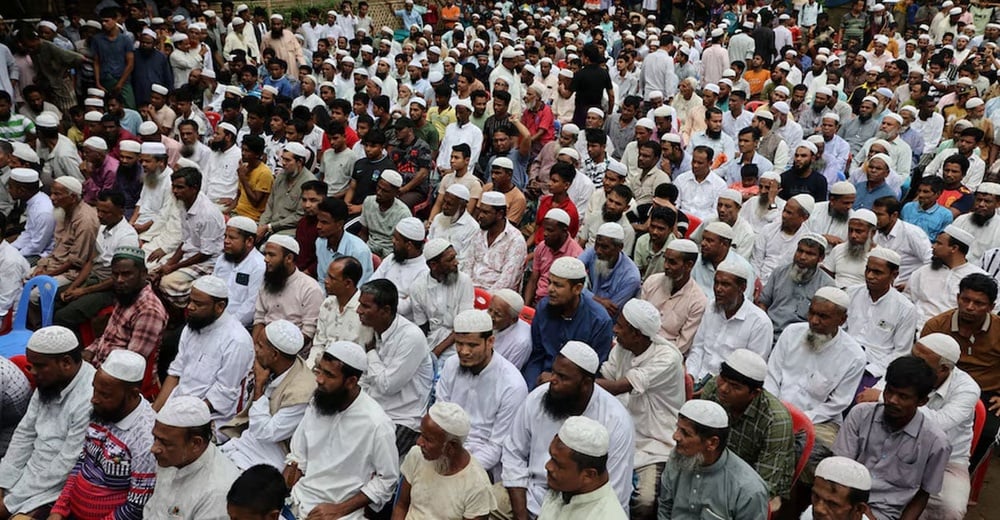
Click points to explore news by date. News sentiment ranges from -10 (very negative) to +10 (very positive) where 0 is neutral.
2026 © Helium Trades
Privacy Policy & Disclosure
* Disclaimer: Nothing on this website constitutes investment advice, performance data or any recommendation that any particular security, portfolio of securities, transaction or investment strategy is suitable for any specific person. Helium Trades is not responsible in any way for the accuracy
of any model predictions or price data. Any mention of a particular security and related prediction data is not a recommendation to buy or sell that security. Investments in securities involve the risk of loss. Past performance is no guarantee of future results. Helium Trades is not responsible for any of your investment decisions,
you should consult a financial expert before engaging in any transaction.
Helium Research Assistant

How can I help you today?
Ask any question about this page.


