See whether Helium helps you make better-informed decisions. Try every Pro Trader feature for 30 days. No credit card required.
Try every Pro Trader feature for 30 days. No credit card required.
Neutral, fact-based reporting that presents Trump's claim about Canada causing wildfire smoke and the proposed tariff cost, while citing IQAir data, NWS warnings, and World Cup context without endorsement.
Concise, factful, accurate, balanced context for the article in one sentence.
Automated analysis; not human reviewed.
Limitations: Concise, case-specific limitations and plausible alternative interpretations.
·
52 of 52 available dimensions scored; omitted dimensions are not treated as neutral.
·
Verified supporting quotes for 3 of 52 scored dimensions.
Claim: The report presents Trump's claim without endorsing or criticizing it; uses direct quotes and data.
“Trump blames Canada for wildfire smoke, says he’ll add cost to tariffs.” · verified after text normalization
“US President Donald Trump on Friday blamed Canada for wildfire smoke spreading across the United States and said he would add the “incalculable cost” of dealing with the pollution to existing tariffs on Canadian goods.” · exact text match
“Heavy smoke from hundreds of Canadian fires enveloped a swathe of the US from the Midwest to the Northeast on Thursday and Friday, prompting warnings to residents to stay indoors.” · exact text match
Why: Neutral, fact-based reporting uses direct quotes and multiple sources; no editorializing.
Claim: Descriptive, not opinionated; uses quotes and official data to describe events.
“Trump blames Canada for wildfire smoke, says he’ll add cost to tariffs.” · verified after text normalization
“Heavy smoke from hundreds of Canadian fires enveloped a swathe of the US from the Midwest to the Northeast on Thursday and Friday, prompting warnings to residents to stay indoors.” · exact text match
“Detroit on Friday remained the most polluted city in the world, according to tracker IQAir.” · exact text match
Why: Uses reported facts and sources rather than evaluative language.
Claim: Cites named data sources and official statements; generally credible.
“Detroit on Friday remained the most polluted city in the world, according to tracker IQAir.” · exact text match
“But the National Weather Service (NWS) warned the smoke may thicken overnight into Saturday morning.” · exact text match
“Tournament organisers are “monitoring closely”, White House World Cup task force executive director Andrew Giuliani told a briefing.” · exact text match
Why: Multiple named sources and official statements support credibility; no obvious editorialization.
Ambiguity about claim's veracity; limited context on Canadian response.
July 21, 2026 · 0 shares
Coverage relies on administration framing that presents the 50% tariffs as holding Canada accountable and leveling the playing field for U.S. exports, with limited counterpoints and credibility concerns from unrelated content.
Describes U.S. 50% tariffs on various Canadian imports under Section 338, citing retaliation, and frames it as holding Canada accountable and leveling the playing field for American exports, while noting exemptions and ongoing discussions with Canada.
Automated analysis; not human reviewed.
Limitations: Concise, case-specific limitations and plausible alternative interpretations.
·
1 of 52 available dimensions scored; omitted dimensions are not treated as neutral.
·
Verified supporting quotes for 0 of 1 scored dimensions.
Claim: The article relies on administration framing to present tariffs as protective and in the national interest, indicating a conservative tilt.
“"hold" Canada "accountable" for their "substantial retaliation against the United States as the U.S. imposes trade actions to reindustrialize, reshore, and support its manufacturing."” · not found in supplied text
“"By doing this, President Trump is leveling the playing field for crucial American exports: motor vehicles, alcohol, and dairy," the senior administration official said.” · not found in supplied text
“"Each Section 338 proclamation imposes a 50% tariff on a different set of Canadian imports, covering products ranging from wine to hockey sticks to cement," the senior administration official said.” · not found in supplied text
Counterevidence:
“"We've certainly shared ideas with them regarding Canadian trade barriers or practices that the United States would like to see remedied.
They've shared ideas with us on the future of the trade relationship and how to enhance economic security in North America.
So we certainly have had discussions, including substantive discussions.
That being said, we're not in a formal negotiating stage at this point," the senior administration official said.”
· not found in supplied text
“"These are not the tariffs that Trump called for in a social media post on Friday, criticizing America's northern neighbors for the smoke that covered American cities, coming from Canadian wildfires."” · exact text match
Why: Official framing and direct quotes emphasize a protective, pro-policy stance; counterpoints are only minimally suggested, indicating a conservative tilt.
Relies on official quotes; lacks counterpoints; extraneous text strains credibility.
July 20, 2026 · 0 shares
Neutral, policy-focused reporting relying on official statements with minimal normative language and a brief note on potential diplomatic strain.
News report detailing the Trump administration's plan to impose a 50% tariff on certain Canadian goods under Section 338, with 30-day implementation and multiple exclusions, in the context of USMCA tensions and previous tariff threats.
Automated analysis; not human reviewed.
Limitations: Concise, case-specific limitations and plausible alternative interpretations.
·
51 of 52 available dimensions scored; omitted dimensions are not treated as neutral.
·
Verified supporting quotes for 1 of 51 scored dimensions.
Claim: Article shows neutral political orientation with no lean to liberal or conservative framing.
“The Trump administration is set to impose a fresh 50% tariff on some Canadian goods under a never-before-used legal provision, citing what it said was unfair treatment by Ottawa of American alcohol, automobile and dairy products.” · exact text match
“The tariffs are being applied under Section 338 of the 1930 Tariff Act, which gives the president the power to impose duties of as much as 50% from countries deemed to discriminate against U.S. commerce.” · exact text match
“Crucially, the official said there would be no exemptions for products under the existing North American trade pact between the U.S., Canada and Mexico.” · exact text match
Counterevidence:
“Trump last week threatened to increase tariffs on Canadian products to punish the country for wildfire smoke that covered U.S. cities, including New York and Washington, over the last week.” · exact text match
Why: Official policy language and cited mechanisms indicate neutral, policy-focused framing rather than editorializing.
Claim: The article relies on official statements and policy details.
“The new tariffs will take effect in 30 days, according to a senior administration official who briefed reporters Monday on the decision.” · exact text match
“The provision has never before been used to impose tariffs.” · exact text match
“The U.S. earlier this month declined to extend its trade agreement, known as USMCA, with Canada and Mexico, setting up what could be years of contentious negotiations.” · not found in supplied text
Why: Use of official attributions and legal references suggests careful reporting rather than speculation.
Quotes from officials; missing full policy context; timing unclear.
July 20, 2026 · 0 shares
Neutral framing relies on a White House justification for tariffs on Canada with minimal critical context and no broader impact analysis.
The piece reports that the US will impose 50% tariffs on Canadian goods, with exemptions for energy products, critical minerals, seafood, and potash, citing a White House statement that the tariffs respond to Canada’s discriminatory treatment of American products.
Automated analysis; not human reviewed.
Limitations: Concise, case-specific limitations and plausible alternative interpretations.
·
1 of 52 available dimensions scored; omitted dimensions are not treated as neutral.
·
Verified supporting quotes for 0 of 1 scored dimensions.
Claim: The article frames tariff action as a government action backed by official justification with little critical analysis.
“US President Donald Trump imposed additional 50% import tariffs on Canadian goods, according to a statement posted Monday on the White House website.” · exact text match
“in response to Canada’s discriminatory treatment of American products.” · exact text match
“The statement said the tariffs cover a wide range of goods, "from wine to hockey sticks to cement."” · not found in supplied text
Counterevidence:
“Energy products, critical minerals, seafood and potash will be exempt from the new tariffs.” · not found in supplied text
Why: Relies on official framing to present policy with minimal critical context.
Limited context; relies on official source; lacks impact analysis.
Neutral, fact-based reporting that presents Trump's claim about Canada causing wildfire smoke and the proposed tariff cost, while citing IQAir data, NWS warnings, and World Cup context without endorsement.
Concise, factful, accurate, balanced context for the article in one sentence.
Automated analysis; not human reviewed.
Limitations: Concise, case-specific limitations and plausible alternative interpretations.
·
52 of 52 available dimensions scored; omitted dimensions are not treated as neutral.
·
Verified supporting quotes for 3 of 52 scored dimensions.
Claim: The report presents Trump's claim without endorsing or criticizing it; uses direct quotes and data.
“Trump blames Canada for wildfire smoke, says he’ll add cost to tariffs.” · verified after text normalization
“US President Donald Trump on Friday blamed Canada for wildfire smoke spreading across the United States and said he would add the “incalculable cost” of dealing with the pollution to existing tariffs on Canadian goods.” · exact text match
“Heavy smoke from hundreds of Canadian fires enveloped a swathe of the US from the Midwest to the Northeast on Thursday and Friday, prompting warnings to residents to stay indoors.” · exact text match
Why: Neutral, fact-based reporting uses direct quotes and multiple sources; no editorializing.
Claim: Descriptive, not opinionated; uses quotes and official data to describe events.
“Trump blames Canada for wildfire smoke, says he’ll add cost to tariffs.” · verified after text normalization
“Heavy smoke from hundreds of Canadian fires enveloped a swathe of the US from the Midwest to the Northeast on Thursday and Friday, prompting warnings to residents to stay indoors.” · exact text match
“Detroit on Friday remained the most polluted city in the world, according to tracker IQAir.” · exact text match
Why: Uses reported facts and sources rather than evaluative language.
Claim: Cites named data sources and official statements; generally credible.
“Detroit on Friday remained the most polluted city in the world, according to tracker IQAir.” · exact text match
“But the National Weather Service (NWS) warned the smoke may thicken overnight into Saturday morning.” · exact text match
“Tournament organisers are “monitoring closely”, White House World Cup task force executive director Andrew Giuliani told a briefing.” · exact text match
Why: Multiple named sources and official statements support credibility; no obvious editorialization.
Ambiguity about claim's veracity; limited context on Canadian response.
July 21, 2026 · 0 shares
Balanced, multi-source framing presenting official justification, legal skepticism, and cross-border reactions without endorsement.
Trump uses Great Depression-era Tariff Act Section 338 to impose 50% tariffs on roughly $20 billion of Canadian imports; tariffs take effect in 30 days and apply to a broad mix of goods while exemptions under USMCA are removed; the move is framed as unrelated to wildfire smoke, with Canadian officials and trade lawyers offering critiques and cautioning about court challenges.
Ambiguities: OCR errors; mixed sourcing; limited context.
July 21, 2026 · 0 shares
Framing centers Canadian officials and opponents of unilateral U.S. tariffs, presenting the tariffs as unilateral actions and emphasizing the legal and economic context while citing official voices; this yields a critical, context-rich portrayal rather than endorsement of U.S. policy.
Overview of a 50% U.S. tariff on Canada, Canadian government response, and the trade-law context including USMCA, existing tariffs, and legal background.
Automated analysis; not human reviewed. Limitations: Case-specific; relies on quoted officials and policy details; lacks broader context or counterpoints beyond quoted material.
Neutral, source-based coverage that relays official tariff actions, Canadian responses, and Kentucky impact using government data and statements without endorsing the policy.
Concise, factful context for the policy report: a piece on U.S.-Canada tariff tensions and potential impact on Kentucky bourbon, citing official and Canadian data.
Automated analysis; not human reviewed.
Limitations: Concise, case-specific limitations and plausible alternative interpretations.
·
47 of 52 available dimensions scored; omitted dimensions are not treated as neutral.
·
Verified supporting quotes for 2 of 47 scored dimensions.
Claim: Article appears balanced, avoiding overt ideological framing and including Democratic input without endorsement.
“Trump on Monday imposed 50% tariffs on most Canadian goods, a move that could strain relations with a top U.S. trading partner and put new pressure on Kentucky businesses, including the state’s bourbon industry.” · exact text match
“Trump said Canada has unfairly discriminated against U.S. autos, alcohol and dairy products.” · exact text match
Counterevidence:
“Several Democrats last year proposed repealing the provision, arguing it could be used to destabilize the economy.” · exact text match
Why: Presence of official and opposing viewpoints suggests balanced reporting without explicit ideological slant.
Claim: Credible reporting anchored by official sources and data.
“An administration official insisted on anonymity to preview the action.” · not found in supplied text
“According to the Canadian government, Kentucky exports about $8.4 billion in goods to Canada annually and imports about $4.9 billion from Canada annually.” · exact text match
“The White House also pointed to steep declines in sales: From March 2025 through February 2026, Canadian imports of U.S. alcoholic beverages fell about 81%, or $582 million, compared with the same period a year earlier.” · exact text match
Counterevidence:
“The article includes unrelated local stories interspersed with the main item, which could affect perceived coherence.” · not found in supplied text
Why: Use of official sources and concrete data supports credibility; non-core lines may marginally affect coherence.
Claim: Numerical data and official statements indicate a rational framing with limited sensationalism.
“President Donald Trump on Monday imposed 50% tariffs on most Canadian goods, a move that could strain relations with a top U.S. trading partner and put new pressure on Kentucky businesses, including the state’s bourbon industry.” · exact text match
“From March 2025 through February 2026, Canadian imports of U.S. alcoholic beverages fell about 81%, or $582 million, compared with the same period a year earlier.” · exact text match
“The tariff order applies to most Canadian goods but excludes energy products, potash, fish and critical minerals.” · exact text match
Counterevidence:
“Several Democrats last year proposed repealing the provision, arguing it could be used to destabilize the economy.” · exact text match
Why: Data points and official actions support a rational presentation; political critique is peripheral.
Extraneous items in text; data scope uncertain; verify numbers.
July 21, 2026 · 0 shares
Neutral framing presents a proposed 50% tariff on Canadian goods and notes the administration's use of an untested legal provision, signaling potential conflict with a major trading partner without endorsing or condemning the policy.
Headline and brief summary describe a policy move by the Trump administration to impose a significant tariff on Canadian goods, citing an untested basis and potential diplomatic consequences.
Automated analysis; not human reviewed.
Limitations: Concise, case-specific limitations and plausible alternative interpretations.
·
1 of 52 available dimensions scored; omitted dimensions are not treated as neutral.
·
Verified supporting quotes for 1 of 1 scored dimensions.
Claim: The article's political framing is neutral (0) with no explicit advocacy or critique of policy direction.
“Trump to Impose 50% Tariff on Many Canadian Goods.” · exact text match
“The administration will use an untested legal provision to put significant duties on Canadian exports, reigniting a clash with one of America’s biggest trading partners.” · exact text match
Why: The text describes actions and potential consequences without overt endorsement or condemnation.
Limited text; bias judgments rely on minimal framing cues.
July 21, 2026 · 0 shares
Balanced, evidence-based reporting relies on official statements and multiple perspectives to describe the tariff decision and its potential consequences without endorsing the policy.
Concise, factful, balanced context for the article in one sentence.
Automated analysis; not human reviewed.
Limitations: Concise, case-specific limitations and plausible alternative interpretations.
·
1 of 52 available dimensions scored; omitted dimensions are not treated as neutral.
·
Verified supporting quotes for 0 of 1 scored dimensions.
Claim: The article demonstrates credible, balanced framing by citing official statements and diverse voices and hedging about consequences.
“The White House said the tariffs would go into effect in 30 days, meaning there is time for negotiations.” · exact text match
“An administration official previewing the action said Canada was one of the only nations other than China that retaliated against previous tariffs and must be held accountable.” · not found in supplied text
“Candace Laing, CEO of the Canadian Chamber of Commerce, said the Trump administration's moves were "regrettable" but the two countries needed to use the 30-day window "to make meaningful progress in advancing formal talks".” · not found in supplied text
Counterevidence:
“The move could unleash a new wave of economic chaos, with risks of higher inflation and further fraying of relations between two nations that had been closely woven together before Mr Trump's return to the White House.” · exact text match
“inject "massive uncertainty" into the global economy, said Scott Lincicome, vice-president of general economics at the Cato Institute, a libertarian think tank.” · not found in supplied text
Why: Sourcing from government statements and independent voices with hedges suggests cautious, balanced framing rather than persuasion.
Coverage presents both sides of the tariff dispute and legal questions but contains a factual error misnaming the Canadian prime minister, which undermines perceived integrity.
Brief report on the U.S. proposed 50% tariffs on Canadian goods, with official statements and cross-border reactions.
Automated analysis; not human reviewed.
Limitations: Short excerpt; mislabeling may reflect editorial oversight; lacks broader context on the legal and geopolitical implications.
·
1 of 52 available dimensions scored; omitted dimensions are not treated as neutral.
·
Verified supporting quotes for 1 of 1 scored dimensions.
Claim: Factually mislabels the Canadian prime minister as Mark Carney, signaling potential editorial error affecting integrity.
“Canadian Prime Minister Mark Carney said in response that Ottawa stood ready to “intensify” talks with the United States, and has made proposals to resolve disputes and modernise the USMCA.” · exact text match
Counterevidence:
“The tariffs take effect in 30 days and cover various items including wine, hockey sticks and cement, said the White House.” · exact text match
“Ottawa says new duties violate USMCA as Trump uses untested 1930 law to hit Canadian imports” · exact text match
Why: Explicit misnaming of a public figure is an editorial error; however, balanced sourcing moderates impact.
Ambiguity: mislabeling PM; limited context; potential effect on trust.
Balanced, data-driven framing emphasizes insurers' challenges from Canadian wildfires, air-quality impacts, tariffs, and adjuster shortages, drawing on multiple industry sources and empirical data without evident ideological or sensational tilt.
Industry-focused report detailing cross-border insurer impacts from wildfires, air quality, tariffs, and adjuster shortages, with emphasis on long-tail claims and coverage gaps.
Automated analysis; not human reviewed.
Limitations: Case-specific limitations include reliance on industry sources and third-party data; alternative interpretations could emphasize different risk weights or policy implications.
·
47 of 52 available dimensions scored; omitted dimensions are not treated as neutral.
·
Verified supporting quotes for 1 of 47 scored dimensions.
Claim: No detectable left-right tilt; framing is industry- and data-focused.
“Sedgwick has flagged that wildfires shutting down trucking routes between the west and east coasts are generating business interruption claims tied to fires policyholders may not even have known about when they started.” · not found in supplied text
“Tariffs on building materials are adding a further complication this year, widening the gap between what a claim pays out and what repairs eventually cost as insureds increasingly hold off settling, anticipating further cost increases before contractors become available.” · exact text match
“Smoke damage itself carries an unusually long claims tail.” · exact text match
Counterevidence:
“According to media reports, air quality alerts were in place across at least 17 to 18 states, from Montana and Minnesota to Massachusetts, New Jersey and Washington, D.C.” · exact text match
Why: Economic-risk framing dominates; no explicit ideological stance detected beyond industry focus.
Claim: Credibility supported by multiple named sources and data points.
“Sedgwick has flagged that wildfires shutting down trucking routes between the west and east coasts are generating business interruption claims tied to fires policyholders may not even have known about when they started.” · not found in supplied text
“The Insurance Bureau of Canada noted that civil authority coverage can respond when a mandatory evacuation order denies access to a covered premises, separate from standard business interruption coverage.” · not found in supplied text
“Verisk data on the 2025 Los Angeles wildfires found smoke damage accounted for roughly 30% of claims filed within the first 30 days of that event, with a further 35% of comparable smoke-related claims from past events arriving as much as two years later.” · not found in supplied text
Counterevidence:
“According to media reports, air quality alerts were in place across at least 17 to 18 states” · exact text match
Why: Diverse industry sources and data points support credibility; media-report caveat introduces mild uncertainty.
Claim: Forward-looking statements about future losses reflect some speculation beyond current data.
“that settlement gap flagged by claims administrators, where insureds hold off finalizing repairs in anticipation of rising material costs, combined with the long tail Verisk has documented for smoke-related claims specifically, suggests this event's financial impact will extend well past the point the smoke itself clears.” · not found in supplied text
“The current smoke event ... adding to an already difficult 2026 catastrophe year on both sides of the border.” · not found in supplied text
Counterevidence:
“"The current smoke event follows Canada's costliest wildfire benchmark in recent memory"” · not found in supplied text
Why: Hedged language ('suggests', 'may extend') indicates projection rather than certainty.
Claim: The piece demonstrates fairness by citing official sources and empirical data.
“The Insurance Bureau of Canada noted that civil authority coverage can respond when a mandatory evacuation order denies access to a covered premises, separate from standard business interruption coverage, while contingent business interruption coverage can extend to companies whose suppliers are shut down by fire-related closures elsewhere in the country.” · exact text match
“Smoke damage itself carries an unusually long claims tail.” · exact text match
“Verisk data on the 2025 Los Angeles wildfires found smoke damage accounted for roughly 30% of claims filed within the first 30 days of that event, with a further 35% of comparable smoke-related claims from past events arriving as much as two years later” · exact text match
Counterevidence:
“"According to media reports, air quality alerts were in place across at least 17 to 18 states"” · not found in supplied text
Why: Credible sources and data support balanced reporting; media citation caveat exists.
Ambiguities in data provenance; reliance on industry sources; potential undercount of uninsured costs.
Neutral, fact-based reporting that presents Trump's claim about Canada causing wildfire smoke and the proposed tariff cost, while citing IQAir data, NWS warnings, and World Cup context without endorsement.
Concise, factful, accurate, balanced context for the article in one sentence.
Automated analysis; not human reviewed. Limitations: Concise, case-specific limitations and plausible alternative interpretations. · 52 of 52 available dimensions scored; omitted dimensions are not treated as neutral. · Verified supporting quotes for 3 of 52 scored dimensions.
Claim: The report presents Trump's claim without endorsing or criticizing it; uses direct quotes and data.
“Trump blames Canada for wildfire smoke, says he’ll add cost to tariffs.” · verified after text normalization
“US President Donald Trump on Friday blamed Canada for wildfire smoke spreading across the United States and said he would add the “incalculable cost” of dealing with the pollution to existing tariffs on Canadian goods.” · exact text match
“Heavy smoke from hundreds of Canadian fires enveloped a swathe of the US from the Midwest to the Northeast on Thursday and Friday, prompting warnings to residents to stay indoors.” · exact text match
Why: Neutral, fact-based reporting uses direct quotes and multiple sources; no editorializing.
Claim: Descriptive, not opinionated; uses quotes and official data to describe events.
“Trump blames Canada for wildfire smoke, says he’ll add cost to tariffs.” · verified after text normalization
“Heavy smoke from hundreds of Canadian fires enveloped a swathe of the US from the Midwest to the Northeast on Thursday and Friday, prompting warnings to residents to stay indoors.” · exact text match
“Detroit on Friday remained the most polluted city in the world, according to tracker IQAir.” · exact text match
Why: Uses reported facts and sources rather than evaluative language.
Claim: Cites named data sources and official statements; generally credible.
“Detroit on Friday remained the most polluted city in the world, according to tracker IQAir.” · exact text match
“But the National Weather Service (NWS) warned the smoke may thicken overnight into Saturday morning.” · exact text match
“Tournament organisers are “monitoring closely”, White House World Cup task force executive director Andrew Giuliani told a briefing.” · exact text match
Why: Multiple named sources and official statements support credibility; no obvious editorialization.
Ambiguity about claim's veracity; limited context on Canadian response.
July 20, 2026 · 0 shares
Neutral, policy-focused reporting relying on official statements with minimal normative language and a brief note on potential diplomatic strain.
News report detailing the Trump administration's plan to impose a 50% tariff on certain Canadian goods under Section 338, with 30-day implementation and multiple exclusions, in the context of USMCA tensions and previous tariff threats.
Automated analysis; not human reviewed. Limitations: Concise, case-specific limitations and plausible alternative interpretations. · 51 of 52 available dimensions scored; omitted dimensions are not treated as neutral. · Verified supporting quotes for 1 of 51 scored dimensions.
Claim: Article shows neutral political orientation with no lean to liberal or conservative framing.
“The Trump administration is set to impose a fresh 50% tariff on some Canadian goods under a never-before-used legal provision, citing what it said was unfair treatment by Ottawa of American alcohol, automobile and dairy products.” · exact text match
“The tariffs are being applied under Section 338 of the 1930 Tariff Act, which gives the president the power to impose duties of as much as 50% from countries deemed to discriminate against U.S. commerce.” · exact text match
“Crucially, the official said there would be no exemptions for products under the existing North American trade pact between the U.S., Canada and Mexico.” · exact text match
Counterevidence:
“Trump last week threatened to increase tariffs on Canadian products to punish the country for wildfire smoke that covered U.S. cities, including New York and Washington, over the last week.” · exact text match
Why: Official policy language and cited mechanisms indicate neutral, policy-focused framing rather than editorializing.
Claim: The article relies on official statements and policy details.
“The new tariffs will take effect in 30 days, according to a senior administration official who briefed reporters Monday on the decision.” · exact text match
“The provision has never before been used to impose tariffs.” · exact text match
“The U.S. earlier this month declined to extend its trade agreement, known as USMCA, with Canada and Mexico, setting up what could be years of contentious negotiations.” · not found in supplied text
Why: Use of official attributions and legal references suggests careful reporting rather than speculation.
Quotes from officials; missing full policy context; timing unclear.
July 20, 2026 · 0 shares
Neutral framing relies on a White House justification for tariffs on Canada with minimal critical context and no broader impact analysis.
The piece reports that the US will impose 50% tariffs on Canadian goods, with exemptions for energy products, critical minerals, seafood, and potash, citing a White House statement that the tariffs respond to Canada’s discriminatory treatment of American products.
Automated analysis; not human reviewed. Limitations: Concise, case-specific limitations and plausible alternative interpretations. · 1 of 52 available dimensions scored; omitted dimensions are not treated as neutral. · Verified supporting quotes for 0 of 1 scored dimensions.
Claim: The article frames tariff action as a government action backed by official justification with little critical analysis.
“US President Donald Trump imposed additional 50% import tariffs on Canadian goods, according to a statement posted Monday on the White House website.” · exact text match
“in response to Canada’s discriminatory treatment of American products.” · exact text match
“The statement said the tariffs cover a wide range of goods, "from wine to hockey sticks to cement."” · not found in supplied text
Counterevidence:
“Energy products, critical minerals, seafood and potash will be exempt from the new tariffs.” · not found in supplied text
Why: Relies on official framing to present policy with minimal critical context.
Limited context; relies on official source; lacks impact analysis.
July 21, 2026 · 0 shares
Framing centers Canadian officials and opponents of unilateral U.S. tariffs, presenting the tariffs as unilateral actions and emphasizing the legal and economic context while citing official voices; this yields a critical, context-rich portrayal rather than endorsement of U.S. policy.
Overview of a 50% U.S. tariff on Canada, Canadian government response, and the trade-law context including USMCA, existing tariffs, and legal background.
Automated analysis; not human reviewed. Limitations: Case-specific; relies on quoted officials and policy details; lacks broader context or counterpoints beyond quoted material.
Neutral, source-based coverage that relays official tariff actions, Canadian responses, and Kentucky impact using government data and statements without endorsing the policy.
Concise, factful context for the policy report: a piece on U.S.-Canada tariff tensions and potential impact on Kentucky bourbon, citing official and Canadian data.
Automated analysis; not human reviewed. Limitations: Concise, case-specific limitations and plausible alternative interpretations. · 47 of 52 available dimensions scored; omitted dimensions are not treated as neutral. · Verified supporting quotes for 2 of 47 scored dimensions.
Claim: Article appears balanced, avoiding overt ideological framing and including Democratic input without endorsement.
“Trump on Monday imposed 50% tariffs on most Canadian goods, a move that could strain relations with a top U.S. trading partner and put new pressure on Kentucky businesses, including the state’s bourbon industry.” · exact text match
“Trump said Canada has unfairly discriminated against U.S. autos, alcohol and dairy products.” · exact text match
Counterevidence:
“Several Democrats last year proposed repealing the provision, arguing it could be used to destabilize the economy.” · exact text match
Why: Presence of official and opposing viewpoints suggests balanced reporting without explicit ideological slant.
Claim: Credible reporting anchored by official sources and data.
“An administration official insisted on anonymity to preview the action.” · not found in supplied text
“According to the Canadian government, Kentucky exports about $8.4 billion in goods to Canada annually and imports about $4.9 billion from Canada annually.” · exact text match
“The White House also pointed to steep declines in sales: From March 2025 through February 2026, Canadian imports of U.S. alcoholic beverages fell about 81%, or $582 million, compared with the same period a year earlier.” · exact text match
Counterevidence:
“The article includes unrelated local stories interspersed with the main item, which could affect perceived coherence.” · not found in supplied text
Why: Use of official sources and concrete data supports credibility; non-core lines may marginally affect coherence.
Claim: Numerical data and official statements indicate a rational framing with limited sensationalism.
“President Donald Trump on Monday imposed 50% tariffs on most Canadian goods, a move that could strain relations with a top U.S. trading partner and put new pressure on Kentucky businesses, including the state’s bourbon industry.” · exact text match
“From March 2025 through February 2026, Canadian imports of U.S. alcoholic beverages fell about 81%, or $582 million, compared with the same period a year earlier.” · exact text match
“The tariff order applies to most Canadian goods but excludes energy products, potash, fish and critical minerals.” · exact text match
Counterevidence:
“Several Democrats last year proposed repealing the provision, arguing it could be used to destabilize the economy.” · exact text match
Why: Data points and official actions support a rational presentation; political critique is peripheral.
Extraneous items in text; data scope uncertain; verify numbers.
White House / Trump administration framing
Coverage is largely neutral and evidence-based, relying on official U.S. statements to justify 50% tariffs on Canadian goods under Section 338, while including limited Canadian reaction and context suggesting bilateral tensions.
Concise, factful context: a report on U.S. 50% tariffs on Canadian goods under Section 338, including product categories, timing, sources, and implications for bilateral relations.
Automated analysis; not human reviewed. Limitations: Concise, case-specific limitations and plausible alternative interpretations. · 52 of 52 available dimensions scored; omitted dimensions are not treated as neutral. · Verified supporting quotes for 0 of 52 scored dimensions.
Claim: The coverage frames tariff actions in political terms and uses U.S. official framing.
“"ranging from wine to hockey sticks to cement," an official on the call said.” · not found in supplied text
“"The new tariffs" apply to all covered goods," regardless of whether they are otherwise covered under the existing free trade agreement between the U.S. and Canada, the official said.” · not found in supplied text
Counterevidence:
“"Ontario Premier Doug Ford said ... Canada should respond tariff for tariff, dollar for dollar"” · not found in supplied text
Why: Quotations demonstrate framing; Canadian reaction offers balance potential.
Claim: The article relies on quotes from U.S. officials to describe policy actions.
“The U.S. is imposing additional 50% tariffs on a range of Canadian goods in response to alleged trade discrimination against multiple U.S. products and industries, senior Trump administration officials said Monday.” · exact text match
“The tariffs, which fall under the rarely used Section 338 of the Tariff Act of 1930, are set to take effect 30 days after the signings, according to the officials.” · exact text match
“"Canada has to be held accountable for this continued discrimination," the official said.” · not found in supplied text
Counterevidence:
“Ontario Premier Doug Ford said on X later Monday afternoon that Canada should respond tariff for tariff, dollar for dollar" if the new U.S. import duties proceed.” · not found in supplied text
“The Canadian Embassy in Washington, did not immediately respond to 's request for comment on the new U.S. trade actions.” · exact text match
Why: Attribution to U.S. officials supports credibility; Canadian response is noted but not equally represented.
Canada-perspective gaps; US framing risk; evidence gaps.
July 20, 2026 · 0 shares
Neutral, policy-focused reporting relying on official statements with minimal normative language and a brief note on potential diplomatic strain.
News report detailing the Trump administration's plan to impose a 50% tariff on certain Canadian goods under Section 338, with 30-day implementation and multiple exclusions, in the context of USMCA tensions and previous tariff threats.
Automated analysis; not human reviewed. Limitations: Concise, case-specific limitations and plausible alternative interpretations. · 51 of 52 available dimensions scored; omitted dimensions are not treated as neutral. · Verified supporting quotes for 1 of 51 scored dimensions.
Claim: Article shows neutral political orientation with no lean to liberal or conservative framing.
“The Trump administration is set to impose a fresh 50% tariff on some Canadian goods under a never-before-used legal provision, citing what it said was unfair treatment by Ottawa of American alcohol, automobile and dairy products.” · exact text match
“The tariffs are being applied under Section 338 of the 1930 Tariff Act, which gives the president the power to impose duties of as much as 50% from countries deemed to discriminate against U.S. commerce.” · exact text match
“Crucially, the official said there would be no exemptions for products under the existing North American trade pact between the U.S., Canada and Mexico.” · exact text match
Counterevidence:
“Trump last week threatened to increase tariffs on Canadian products to punish the country for wildfire smoke that covered U.S. cities, including New York and Washington, over the last week.” · exact text match
Why: Official policy language and cited mechanisms indicate neutral, policy-focused framing rather than editorializing.
Claim: The article relies on official statements and policy details.
“The new tariffs will take effect in 30 days, according to a senior administration official who briefed reporters Monday on the decision.” · exact text match
“The provision has never before been used to impose tariffs.” · exact text match
“The U.S. earlier this month declined to extend its trade agreement, known as USMCA, with Canada and Mexico, setting up what could be years of contentious negotiations.” · not found in supplied text
Why: Use of official attributions and legal references suggests careful reporting rather than speculation.
Quotes from officials; missing full policy context; timing unclear.
July 20, 2026 · 0 shares
Neutral, fact-focused framing that reports Trump's tariff plan and his claim of discriminatory treatment while avoiding analysis or opinion.
Concise report noting a 50% tariff on Canadian goods, citing Trump's claim of discriminatory treatment against U.S. products.
Automated analysis; not human reviewed. Limitations: Concise, case-specific limitations and plausible alternative interpretations.
Limited context; no sources; bias uncertain.
July 21, 2026 · 0 shares
Pro-establishment framing of U.S. tariffs on Canada, foregrounding White House justification and economic-security rhetoric while including limited corporate pushback and Canadian retaliation, yielding a policy-supportive, establishment-aligned bias with selective dissent.
Concise, factful, accurate, balanced context for the article in one sentence.
Automated analysis; not human reviewed. · 18 of 52 available dimensions scored; omitted dimensions are not treated as neutral. · Verified supporting quotes for 0 of 18 scored dimensions.
Claim: The article frames tariff actions as protective state policy consistent with conservative economic messaging.
“"The White House argued that nearly every Canadian province and territory has suspended the purchase, distribution and sale of alcoholic beverages imported from the United States..."” · not found in supplied text
“"protect and strengthen U.S. manufacturing critical for our national and economic security, including imposing tariffs..."” · not found in supplied text
Counterevidence:
“"worse than tariffs" (Brown-Forman CEO)” · not found in supplied text
“"disproportionate response" (Whiting)” · not found in supplied text
Why: Official framing emphasizes protectionist, security-oriented rationale with some corporate pushback.
Claim: Rhetoric centers on 'hardworking Americans' and accountability, signaling populist framing.
“"hardworking Americans"” · not found in supplied text
“"burdened and disadvantaged hardworking Americans."” · not found in supplied text
Counterevidence:
“Trudeau's criticism shows elite-level cross-national critique of policy.” · not found in supplied text
Why: Language foregrounds ordinary citizens, but opposing elite perspectives appear via Trudeau and corporate voices.
Claim: Tariffs framed as national-security- and manufacturing-protection measures reflect an authoritarian tilt.
“"protect and strengthen U.S. manufacturing critical for our national and economic security, including imposing tariffs"” · not found in supplied text
Counterevidence:
“Industry pushback indicates some moderation of state power in practice.” · not found in supplied text
Why: State-centric framing emphasizes authority and coercive policy tools.
Claim: Mix of normative language and factual reporting.
“"hardworking Americans"” · not found in supplied text
“"holding Canada accountable for its continued discrimination"” · not found in supplied text
Counterevidence:
“Data-driven statements provide empirical grounding.” · not found in supplied text
Why: Subjective framing coexists with measurable data.
Claim: The article uses dramatic statistics to amplify impact of policy.
“"81%, or approximately $582 million"” · not found in supplied text
“"93%"” · not found in supplied text
“"steepest annual decline since 2002"” · not found in supplied text
Counterevidence:
“Data points themselves are not sensational if accurately reported.” · not found in supplied text
Why: Large percentage declines heighten perceived impact, which can skew impressions if context is limited.
Claim: Framing favors tariff policy as beneficial to U.S. interests.
“"protect and strengthen U.S. manufacturing"” · not found in supplied text
“"would raise tariff rates even further"” · not found in supplied text
Counterevidence:
“Critics describe the policy as harmful to consumers/partners.” · not found in supplied text
Why: Policy framing prefers escalation and protectionist gains.
Claim: Data points and cross-border policy dynamics make the piece moderately engaging.
“"81%"” · not found in supplied text
“"93%"” · not found in supplied text
Why: Numeric impact details add interest, though context is limited.
Claim: The article treads descriptive reporting with prescriptive policy judgments.
“"protect and strengthen U.S. manufacturing"” · not found in supplied text
“"hardworking Americans"” · not found in supplied text
Counterevidence:
“Opposing viewpoints are included (e.g., Brown-Forman).” · not found in supplied text
Why: Normative framing accompanies descriptive content.
Claim: Hawkish stance evident in emphasis on national-security rationale and escalation.
“"protect and strengthen U.S. manufacturing... national and economic security"” · not found in supplied text
“"would raise tariff rates even further"” · not found in supplied text
Counterevidence:
“Actual policy includes some pushback from industry.” · not found in supplied text
Why: Aggressive trade measures framed as security-driven policy.
Claim: No explicit fear-based framing detected beyond policy rhetoric.
Why: Framing is policy/action-oriented rather than fear-mongering.
Claim: Opinionated framing evident, though supported by data and quotes.
“"hardworking Americans"” · not found in supplied text
“"worse than tariffs"” · not found in supplied text
Counterevidence:
“Data points and official quotes provide factual anchors.” · not found in supplied text
Why: Mix of opinionated language with empirical elements.
Claim: The content is overtly political, centered on tariff policy and cross-border relations.
“references to Trump administration actions” · not found in supplied text
“Trudeau's retaliatory tariffs” · not found in supplied text
Counterevidence:
“Some business commentary offers alternative perspectives.” · not found in supplied text
Why: Subject matter and framing are inherently political.
Claim: Some framing reduces complex trade dynamics to tariff effects.
“"81%" decline” · not found in supplied text
“"93%" decline” · not found in supplied text
Counterevidence:
“Other factors likely influence exports not discussed.” · not found in supplied text
Why: Quantitative claims are presented without full contextualization.
Claim: Frequent citing of official sources to justify policy.
“"according to the White House"” · not found in supplied text
“"the administration said"” · not found in supplied text
“"the statement said"” · not found in supplied text
Counterevidence:
“Industry voices provide alternative viewpoints.” · not found in supplied text
Why: Authority-based justification dominates the narrative.
Claim: Heavy reliance on official government sources signals establishment alignment.
“"press release published on the White House website"” · not found in supplied text
“"The White House argued"” · not found in supplied text
“"the administration"” · not found in supplied text
Counterevidence:
“Industry and Trudeau quotes provide counter-narratives.” · not found in supplied text
Why: Core sourcing centers on official channels and government framing.
Claim: The piece relies on official data to justify policy while presenting some normative claims.
“"81%, or approximately $582 million"” · not found in supplied text
“"93% in April 2025"” · not found in supplied text
“"the White House argued..."” · not found in supplied text
Counterevidence:
“No independent data verification shown in the excerpt.” · not found in supplied text
Why: Data points are used to support claims, but independent corroboration is not presented.
Claim: Presence of unrelated content and external disclaimers reduces internal consistency.
“"Subscribe to .Ru Telegram channel"” · not found in supplied text
“"PRAVDA.Ru" disclaimers” · not found in supplied text
Why: Non-relevant material affects perceived integrity.
Case-specific: relies on White House statements; Canadian perspective less emphasized; includes PRAVDA.Ru content.
Neutral, source-based coverage that relays official tariff actions, Canadian responses, and Kentucky impact using government data and statements without endorsing the policy.
Concise, factful context for the policy report: a piece on U.S.-Canada tariff tensions and potential impact on Kentucky bourbon, citing official and Canadian data.
Automated analysis; not human reviewed. Limitations: Concise, case-specific limitations and plausible alternative interpretations. · 47 of 52 available dimensions scored; omitted dimensions are not treated as neutral. · Verified supporting quotes for 2 of 47 scored dimensions.
Claim: Article appears balanced, avoiding overt ideological framing and including Democratic input without endorsement.
“Trump on Monday imposed 50% tariffs on most Canadian goods, a move that could strain relations with a top U.S. trading partner and put new pressure on Kentucky businesses, including the state’s bourbon industry.” · exact text match
“Trump said Canada has unfairly discriminated against U.S. autos, alcohol and dairy products.” · exact text match
Counterevidence:
“Several Democrats last year proposed repealing the provision, arguing it could be used to destabilize the economy.” · exact text match
Why: Presence of official and opposing viewpoints suggests balanced reporting without explicit ideological slant.
Claim: Credible reporting anchored by official sources and data.
“An administration official insisted on anonymity to preview the action.” · not found in supplied text
“According to the Canadian government, Kentucky exports about $8.4 billion in goods to Canada annually and imports about $4.9 billion from Canada annually.” · exact text match
“The White House also pointed to steep declines in sales: From March 2025 through February 2026, Canadian imports of U.S. alcoholic beverages fell about 81%, or $582 million, compared with the same period a year earlier.” · exact text match
Counterevidence:
“The article includes unrelated local stories interspersed with the main item, which could affect perceived coherence.” · not found in supplied text
Why: Use of official sources and concrete data supports credibility; non-core lines may marginally affect coherence.
Claim: Numerical data and official statements indicate a rational framing with limited sensationalism.
“President Donald Trump on Monday imposed 50% tariffs on most Canadian goods, a move that could strain relations with a top U.S. trading partner and put new pressure on Kentucky businesses, including the state’s bourbon industry.” · exact text match
“From March 2025 through February 2026, Canadian imports of U.S. alcoholic beverages fell about 81%, or $582 million, compared with the same period a year earlier.” · exact text match
“The tariff order applies to most Canadian goods but excludes energy products, potash, fish and critical minerals.” · exact text match
Counterevidence:
“Several Democrats last year proposed repealing the provision, arguing it could be used to destabilize the economy.” · exact text match
Why: Data points and official actions support a rational presentation; political critique is peripheral.
Extraneous items in text; data scope uncertain; verify numbers.
Neutral, fact-based reporting that presents Trump's claim about Canada causing wildfire smoke and the proposed tariff cost, while citing IQAir data, NWS warnings, and World Cup context without endorsement.
Concise, factful, accurate, balanced context for the article in one sentence.
Automated analysis; not human reviewed. Limitations: Concise, case-specific limitations and plausible alternative interpretations. · 52 of 52 available dimensions scored; omitted dimensions are not treated as neutral. · Verified supporting quotes for 3 of 52 scored dimensions.
Claim: The report presents Trump's claim without endorsing or criticizing it; uses direct quotes and data.
“Trump blames Canada for wildfire smoke, says he’ll add cost to tariffs.” · verified after text normalization
“US President Donald Trump on Friday blamed Canada for wildfire smoke spreading across the United States and said he would add the “incalculable cost” of dealing with the pollution to existing tariffs on Canadian goods.” · exact text match
“Heavy smoke from hundreds of Canadian fires enveloped a swathe of the US from the Midwest to the Northeast on Thursday and Friday, prompting warnings to residents to stay indoors.” · exact text match
Why: Neutral, fact-based reporting uses direct quotes and multiple sources; no editorializing.
Claim: Descriptive, not opinionated; uses quotes and official data to describe events.
“Trump blames Canada for wildfire smoke, says he’ll add cost to tariffs.” · verified after text normalization
“Heavy smoke from hundreds of Canadian fires enveloped a swathe of the US from the Midwest to the Northeast on Thursday and Friday, prompting warnings to residents to stay indoors.” · exact text match
“Detroit on Friday remained the most polluted city in the world, according to tracker IQAir.” · exact text match
Why: Uses reported facts and sources rather than evaluative language.
Claim: Cites named data sources and official statements; generally credible.
“Detroit on Friday remained the most polluted city in the world, according to tracker IQAir.” · exact text match
“But the National Weather Service (NWS) warned the smoke may thicken overnight into Saturday morning.” · exact text match
“Tournament organisers are “monitoring closely”, White House World Cup task force executive director Andrew Giuliani told a briefing.” · exact text match
Why: Multiple named sources and official statements support credibility; no obvious editorialization.
Ambiguity about claim's veracity; limited context on Canadian response.
July 21, 2026 · 0 shares
Balanced, multi-source framing presenting official justification, legal skepticism, and cross-border reactions without endorsement.
Trump uses Great Depression-era Tariff Act Section 338 to impose 50% tariffs on roughly $20 billion of Canadian imports; tariffs take effect in 30 days and apply to a broad mix of goods while exemptions under USMCA are removed; the move is framed as unrelated to wildfire smoke, with Canadian officials and trade lawyers offering critiques and cautioning about court challenges.
Ambiguities: OCR errors; mixed sourcing; limited context.
July 21, 2026 · 0 shares
Balanced, multi-source framing presenting official justification, legal skepticism, and cross-border reactions without endorsement.
Trump uses Great Depression-era Tariff Act Section 338 to impose 50% tariffs on roughly $20 billion of Canadian imports; tariffs take effect in 30 days and apply to a broad mix of goods while exemptions under USMCA are removed; the move is framed as unrelated to wildfire smoke, with Canadian officials and trade lawyers offering critiques and cautioning about court challenges.
Ambiguities: OCR errors; mixed sourcing; limited context.
Neutral, fact-based reporting that presents Trump's claim about Canada causing wildfire smoke and the proposed tariff cost, while citing IQAir data, NWS warnings, and World Cup context without endorsement.
Concise, factful, accurate, balanced context for the article in one sentence.
Automated analysis; not human reviewed. Limitations: Concise, case-specific limitations and plausible alternative interpretations. · 52 of 52 available dimensions scored; omitted dimensions are not treated as neutral. · Verified supporting quotes for 3 of 52 scored dimensions.
Claim: The report presents Trump's claim without endorsing or criticizing it; uses direct quotes and data.
“Trump blames Canada for wildfire smoke, says he’ll add cost to tariffs.” · verified after text normalization
“US President Donald Trump on Friday blamed Canada for wildfire smoke spreading across the United States and said he would add the “incalculable cost” of dealing with the pollution to existing tariffs on Canadian goods.” · exact text match
“Heavy smoke from hundreds of Canadian fires enveloped a swathe of the US from the Midwest to the Northeast on Thursday and Friday, prompting warnings to residents to stay indoors.” · exact text match
Why: Neutral, fact-based reporting uses direct quotes and multiple sources; no editorializing.
Claim: Descriptive, not opinionated; uses quotes and official data to describe events.
“Trump blames Canada for wildfire smoke, says he’ll add cost to tariffs.” · verified after text normalization
“Heavy smoke from hundreds of Canadian fires enveloped a swathe of the US from the Midwest to the Northeast on Thursday and Friday, prompting warnings to residents to stay indoors.” · exact text match
“Detroit on Friday remained the most polluted city in the world, according to tracker IQAir.” · exact text match
Why: Uses reported facts and sources rather than evaluative language.
Claim: Cites named data sources and official statements; generally credible.
“Detroit on Friday remained the most polluted city in the world, according to tracker IQAir.” · exact text match
“But the National Weather Service (NWS) warned the smoke may thicken overnight into Saturday morning.” · exact text match
“Tournament organisers are “monitoring closely”, White House World Cup task force executive director Andrew Giuliani told a briefing.” · exact text match
Why: Multiple named sources and official statements support credibility; no obvious editorialization.
Ambiguity about claim's veracity; limited context on Canadian response.
Trump’s wildfire attribution as a tariff leverage narrative
Neutral, fact-based reporting that presents Trump's claim about Canada causing wildfire smoke and the proposed tariff cost, while citing IQAir data, NWS warnings, and World Cup context without endorsement.
Concise, factful, accurate, balanced context for the article in one sentence.
Automated analysis; not human reviewed. Limitations: Concise, case-specific limitations and plausible alternative interpretations. · 52 of 52 available dimensions scored; omitted dimensions are not treated as neutral. · Verified supporting quotes for 3 of 52 scored dimensions.
Claim: The report presents Trump's claim without endorsing or criticizing it; uses direct quotes and data.
“Trump blames Canada for wildfire smoke, says he’ll add cost to tariffs.” · verified after text normalization
“US President Donald Trump on Friday blamed Canada for wildfire smoke spreading across the United States and said he would add the “incalculable cost” of dealing with the pollution to existing tariffs on Canadian goods.” · exact text match
“Heavy smoke from hundreds of Canadian fires enveloped a swathe of the US from the Midwest to the Northeast on Thursday and Friday, prompting warnings to residents to stay indoors.” · exact text match
Why: Neutral, fact-based reporting uses direct quotes and multiple sources; no editorializing.
Claim: Descriptive, not opinionated; uses quotes and official data to describe events.
“Trump blames Canada for wildfire smoke, says he’ll add cost to tariffs.” · verified after text normalization
“Heavy smoke from hundreds of Canadian fires enveloped a swathe of the US from the Midwest to the Northeast on Thursday and Friday, prompting warnings to residents to stay indoors.” · exact text match
“Detroit on Friday remained the most polluted city in the world, according to tracker IQAir.” · exact text match
Why: Uses reported facts and sources rather than evaluative language.
Claim: Cites named data sources and official statements; generally credible.
“Detroit on Friday remained the most polluted city in the world, according to tracker IQAir.” · exact text match
“But the National Weather Service (NWS) warned the smoke may thicken overnight into Saturday morning.” · exact text match
“Tournament organisers are “monitoring closely”, White House World Cup task force executive director Andrew Giuliani told a briefing.” · exact text match
Why: Multiple named sources and official statements support credibility; no obvious editorialization.
Ambiguity about claim's veracity; limited context on Canadian response.
Neutral, fact-based reporting that presents Trump's claim about Canada causing wildfire smoke and the proposed tariff cost, while citing IQAir data, NWS warnings, and World Cup context without endorsement.
Concise, factful, accurate, balanced context for the article in one sentence.
Automated analysis; not human reviewed. Limitations: Concise, case-specific limitations and plausible alternative interpretations. · 52 of 52 available dimensions scored; omitted dimensions are not treated as neutral. · Verified supporting quotes for 3 of 52 scored dimensions.
Claim: The report presents Trump's claim without endorsing or criticizing it; uses direct quotes and data.
“Trump blames Canada for wildfire smoke, says he’ll add cost to tariffs.” · verified after text normalization
“US President Donald Trump on Friday blamed Canada for wildfire smoke spreading across the United States and said he would add the “incalculable cost” of dealing with the pollution to existing tariffs on Canadian goods.” · exact text match
“Heavy smoke from hundreds of Canadian fires enveloped a swathe of the US from the Midwest to the Northeast on Thursday and Friday, prompting warnings to residents to stay indoors.” · exact text match
Why: Neutral, fact-based reporting uses direct quotes and multiple sources; no editorializing.
Claim: Descriptive, not opinionated; uses quotes and official data to describe events.
“Trump blames Canada for wildfire smoke, says he’ll add cost to tariffs.” · verified after text normalization
“Heavy smoke from hundreds of Canadian fires enveloped a swathe of the US from the Midwest to the Northeast on Thursday and Friday, prompting warnings to residents to stay indoors.” · exact text match
“Detroit on Friday remained the most polluted city in the world, according to tracker IQAir.” · exact text match
Why: Uses reported facts and sources rather than evaluative language.
Claim: Cites named data sources and official statements; generally credible.
“Detroit on Friday remained the most polluted city in the world, according to tracker IQAir.” · exact text match
“But the National Weather Service (NWS) warned the smoke may thicken overnight into Saturday morning.” · exact text match
“Tournament organisers are “monitoring closely”, White House World Cup task force executive director Andrew Giuliani told a briefing.” · exact text match
Why: Multiple named sources and official statements support credibility; no obvious editorialization.
Ambiguity about claim's veracity; limited context on Canadian response.
July 18, 2026 · 0 shares
Neutral-to-mildly critical framing; coverage centers on Trump's tariff threat and costs attribution without substantive analysis.
Concise, factful, accurate, balanced context for the article in one sentence.
Automated analysis; not human reviewed. Limitations: Concise, case-specific limitations and plausible alternative interpretations. · 3 of 52 available dimensions scored; omitted dimensions are not treated as neutral. · Verified supporting quotes for 3 of 3 scored dimensions.
Claim: No strong liberal or conservative tilt detected; framing centers on Trump's actions rather than ideological commentary.
“Trump fumes over Canadian wildfire smoke and issues tariff threat.” · exact text match
“President Donald Trump on Friday pledged to hold Canada responsible for costs associated with unhealthy air quality in the U.S.” · exact text match
“due to spreading smoke from the Canadian wildfires.” · exact text match
Why: Language focuses on a political actor's action, not an ideological stance.
Claim: Slightly sensational framing via the verb 'fumes' describing Trump's reaction.
“Trump fumes over Canadian wildfire smoke and issues tariff threat.” · exact text match
Why: The term 'fumes' conveys emotion rather than neutral description.
Claim: Negative emotional framing in the portrayal of Trump's reaction.
“Trump fumes over Canadian wildfire smoke and issues tariff threat.” · exact text match
Why: Descriptive wording carries an emotional charge toward the actor.
Only a single sentence; broader context/contextual sources missing.
July 21, 2026 · 0 shares
Balanced, multi-source framing presenting official justification, legal skepticism, and cross-border reactions without endorsement.
Trump uses Great Depression-era Tariff Act Section 338 to impose 50% tariffs on roughly $20 billion of Canadian imports; tariffs take effect in 30 days and apply to a broad mix of goods while exemptions under USMCA are removed; the move is framed as unrelated to wildfire smoke, with Canadian officials and trade lawyers offering critiques and cautioning about court challenges.
Ambiguities: OCR errors; mixed sourcing; limited context.
Neutral, fact-based reporting that presents Trump's claim about Canada causing wildfire smoke and the proposed tariff cost, while citing IQAir data, NWS warnings, and World Cup context without endorsement.
Concise, factful, accurate, balanced context for the article in one sentence.
Automated analysis; not human reviewed. Limitations: Concise, case-specific limitations and plausible alternative interpretations. · 52 of 52 available dimensions scored; omitted dimensions are not treated as neutral. · Verified supporting quotes for 3 of 52 scored dimensions.
Claim: The report presents Trump's claim without endorsing or criticizing it; uses direct quotes and data.
“Trump blames Canada for wildfire smoke, says he’ll add cost to tariffs.” · verified after text normalization
“US President Donald Trump on Friday blamed Canada for wildfire smoke spreading across the United States and said he would add the “incalculable cost” of dealing with the pollution to existing tariffs on Canadian goods.” · exact text match
“Heavy smoke from hundreds of Canadian fires enveloped a swathe of the US from the Midwest to the Northeast on Thursday and Friday, prompting warnings to residents to stay indoors.” · exact text match
Why: Neutral, fact-based reporting uses direct quotes and multiple sources; no editorializing.
Claim: Descriptive, not opinionated; uses quotes and official data to describe events.
“Trump blames Canada for wildfire smoke, says he’ll add cost to tariffs.” · verified after text normalization
“Heavy smoke from hundreds of Canadian fires enveloped a swathe of the US from the Midwest to the Northeast on Thursday and Friday, prompting warnings to residents to stay indoors.” · exact text match
“Detroit on Friday remained the most polluted city in the world, according to tracker IQAir.” · exact text match
Why: Uses reported facts and sources rather than evaluative language.
Claim: Cites named data sources and official statements; generally credible.
“Detroit on Friday remained the most polluted city in the world, according to tracker IQAir.” · exact text match
“But the National Weather Service (NWS) warned the smoke may thicken overnight into Saturday morning.” · exact text match
“Tournament organisers are “monitoring closely”, White House World Cup task force executive director Andrew Giuliani told a briefing.” · exact text match
Why: Multiple named sources and official statements support credibility; no obvious editorialization.
Ambiguity about claim's veracity; limited context on Canadian response.
July 18, 2026 · 0 shares
Neutral-to-mildly critical framing; coverage centers on Trump's tariff threat and costs attribution without substantive analysis.
Concise, factful, accurate, balanced context for the article in one sentence.
Automated analysis; not human reviewed. Limitations: Concise, case-specific limitations and plausible alternative interpretations. · 3 of 52 available dimensions scored; omitted dimensions are not treated as neutral. · Verified supporting quotes for 3 of 3 scored dimensions.
Claim: No strong liberal or conservative tilt detected; framing centers on Trump's actions rather than ideological commentary.
“Trump fumes over Canadian wildfire smoke and issues tariff threat.” · exact text match
“President Donald Trump on Friday pledged to hold Canada responsible for costs associated with unhealthy air quality in the U.S.” · exact text match
“due to spreading smoke from the Canadian wildfires.” · exact text match
Why: Language focuses on a political actor's action, not an ideological stance.
Claim: Slightly sensational framing via the verb 'fumes' describing Trump's reaction.
“Trump fumes over Canadian wildfire smoke and issues tariff threat.” · exact text match
Why: The term 'fumes' conveys emotion rather than neutral description.
Claim: Negative emotional framing in the portrayal of Trump's reaction.
“Trump fumes over Canadian wildfire smoke and issues tariff threat.” · exact text match
Why: Descriptive wording carries an emotional charge toward the actor.
Only a single sentence; broader context/contextual sources missing.
Helium Bias
Story Blindspots
Neutral, fact-based reporting that presents Trump's claim about Canada causing wildfire smoke and the proposed tariff cost, while citing IQAir data, NWS warnings, and World Cup context without endorsement.
Concise, factful, accurate, balanced context for the article in one sentence.
Automated analysis; not human reviewed. Limitations: Concise, case-specific limitations and plausible alternative interpretations. · 52 of 52 available dimensions scored; omitted dimensions are not treated as neutral. · Verified supporting quotes for 3 of 52 scored dimensions.
Claim: The report presents Trump's claim without endorsing or criticizing it; uses direct quotes and data.
“Trump blames Canada for wildfire smoke, says he’ll add cost to tariffs.” · verified after text normalization
“US President Donald Trump on Friday blamed Canada for wildfire smoke spreading across the United States and said he would add the “incalculable cost” of dealing with the pollution to existing tariffs on Canadian goods.” · exact text match
“Heavy smoke from hundreds of Canadian fires enveloped a swathe of the US from the Midwest to the Northeast on Thursday and Friday, prompting warnings to residents to stay indoors.” · exact text match
Why: Neutral, fact-based reporting uses direct quotes and multiple sources; no editorializing.
Claim: Descriptive, not opinionated; uses quotes and official data to describe events.
“Trump blames Canada for wildfire smoke, says he’ll add cost to tariffs.” · verified after text normalization
“Heavy smoke from hundreds of Canadian fires enveloped a swathe of the US from the Midwest to the Northeast on Thursday and Friday, prompting warnings to residents to stay indoors.” · exact text match
“Detroit on Friday remained the most polluted city in the world, according to tracker IQAir.” · exact text match
Why: Uses reported facts and sources rather than evaluative language.
Claim: Cites named data sources and official statements; generally credible.
“Detroit on Friday remained the most polluted city in the world, according to tracker IQAir.” · exact text match
“But the National Weather Service (NWS) warned the smoke may thicken overnight into Saturday morning.” · exact text match
“Tournament organisers are “monitoring closely”, White House World Cup task force executive director Andrew Giuliani told a briefing.” · exact text match
Why: Multiple named sources and official statements support credibility; no obvious editorialization.
Ambiguity about claim's veracity; limited context on Canadian response.
July 21, 2026 · 0 shares
Pro-establishment framing of U.S. tariffs on Canada, foregrounding White House justification and economic-security rhetoric while including limited corporate pushback and Canadian retaliation, yielding a policy-supportive, establishment-aligned bias with selective dissent.
Concise, factful, accurate, balanced context for the article in one sentence.
Automated analysis; not human reviewed. · 18 of 52 available dimensions scored; omitted dimensions are not treated as neutral. · Verified supporting quotes for 0 of 18 scored dimensions.
Claim: The article frames tariff actions as protective state policy consistent with conservative economic messaging.
“"The White House argued that nearly every Canadian province and territory has suspended the purchase, distribution and sale of alcoholic beverages imported from the United States..."” · not found in supplied text
“"protect and strengthen U.S. manufacturing critical for our national and economic security, including imposing tariffs..."” · not found in supplied text
Counterevidence:
“"worse than tariffs" (Brown-Forman CEO)” · not found in supplied text
“"disproportionate response" (Whiting)” · not found in supplied text
Why: Official framing emphasizes protectionist, security-oriented rationale with some corporate pushback.
Claim: Rhetoric centers on 'hardworking Americans' and accountability, signaling populist framing.
“"hardworking Americans"” · not found in supplied text
“"burdened and disadvantaged hardworking Americans."” · not found in supplied text
Counterevidence:
“Trudeau's criticism shows elite-level cross-national critique of policy.” · not found in supplied text
Why: Language foregrounds ordinary citizens, but opposing elite perspectives appear via Trudeau and corporate voices.
Claim: Tariffs framed as national-security- and manufacturing-protection measures reflect an authoritarian tilt.
“"protect and strengthen U.S. manufacturing critical for our national and economic security, including imposing tariffs"” · not found in supplied text
Counterevidence:
“Industry pushback indicates some moderation of state power in practice.” · not found in supplied text
Why: State-centric framing emphasizes authority and coercive policy tools.
Claim: Mix of normative language and factual reporting.
“"hardworking Americans"” · not found in supplied text
“"holding Canada accountable for its continued discrimination"” · not found in supplied text
Counterevidence:
“Data-driven statements provide empirical grounding.” · not found in supplied text
Why: Subjective framing coexists with measurable data.
Claim: The article uses dramatic statistics to amplify impact of policy.
“"81%, or approximately $582 million"” · not found in supplied text
“"93%"” · not found in supplied text
“"steepest annual decline since 2002"” · not found in supplied text
Counterevidence:
“Data points themselves are not sensational if accurately reported.” · not found in supplied text
Why: Large percentage declines heighten perceived impact, which can skew impressions if context is limited.
Claim: Framing favors tariff policy as beneficial to U.S. interests.
“"protect and strengthen U.S. manufacturing"” · not found in supplied text
“"would raise tariff rates even further"” · not found in supplied text
Counterevidence:
“Critics describe the policy as harmful to consumers/partners.” · not found in supplied text
Why: Policy framing prefers escalation and protectionist gains.
Claim: Data points and cross-border policy dynamics make the piece moderately engaging.
“"81%"” · not found in supplied text
“"93%"” · not found in supplied text
Why: Numeric impact details add interest, though context is limited.
Claim: The article treads descriptive reporting with prescriptive policy judgments.
“"protect and strengthen U.S. manufacturing"” · not found in supplied text
“"hardworking Americans"” · not found in supplied text
Counterevidence:
“Opposing viewpoints are included (e.g., Brown-Forman).” · not found in supplied text
Why: Normative framing accompanies descriptive content.
Claim: Hawkish stance evident in emphasis on national-security rationale and escalation.
“"protect and strengthen U.S. manufacturing... national and economic security"” · not found in supplied text
“"would raise tariff rates even further"” · not found in supplied text
Counterevidence:
“Actual policy includes some pushback from industry.” · not found in supplied text
Why: Aggressive trade measures framed as security-driven policy.
Claim: No explicit fear-based framing detected beyond policy rhetoric.
Why: Framing is policy/action-oriented rather than fear-mongering.
Claim: Opinionated framing evident, though supported by data and quotes.
“"hardworking Americans"” · not found in supplied text
“"worse than tariffs"” · not found in supplied text
Counterevidence:
“Data points and official quotes provide factual anchors.” · not found in supplied text
Why: Mix of opinionated language with empirical elements.
Claim: The content is overtly political, centered on tariff policy and cross-border relations.
“references to Trump administration actions” · not found in supplied text
“Trudeau's retaliatory tariffs” · not found in supplied text
Counterevidence:
“Some business commentary offers alternative perspectives.” · not found in supplied text
Why: Subject matter and framing are inherently political.
Claim: Some framing reduces complex trade dynamics to tariff effects.
“"81%" decline” · not found in supplied text
“"93%" decline” · not found in supplied text
Counterevidence:
“Other factors likely influence exports not discussed.” · not found in supplied text
Why: Quantitative claims are presented without full contextualization.
Claim: Frequent citing of official sources to justify policy.
“"according to the White House"” · not found in supplied text
“"the administration said"” · not found in supplied text
“"the statement said"” · not found in supplied text
Counterevidence:
“Industry voices provide alternative viewpoints.” · not found in supplied text
Why: Authority-based justification dominates the narrative.
Claim: Heavy reliance on official government sources signals establishment alignment.
“"press release published on the White House website"” · not found in supplied text
“"The White House argued"” · not found in supplied text
“"the administration"” · not found in supplied text
Counterevidence:
“Industry and Trudeau quotes provide counter-narratives.” · not found in supplied text
Why: Core sourcing centers on official channels and government framing.
Claim: The piece relies on official data to justify policy while presenting some normative claims.
“"81%, or approximately $582 million"” · not found in supplied text
“"93% in April 2025"” · not found in supplied text
“"the White House argued..."” · not found in supplied text
Counterevidence:
“No independent data verification shown in the excerpt.” · not found in supplied text
Why: Data points are used to support claims, but independent corroboration is not presented.
Claim: Presence of unrelated content and external disclaimers reduces internal consistency.
“"Subscribe to .Ru Telegram channel"” · not found in supplied text
“"PRAVDA.Ru" disclaimers” · not found in supplied text
Why: Non-relevant material affects perceived integrity.
Case-specific: relies on White House statements; Canadian perspective less emphasized; includes PRAVDA.Ru content.
July 20, 2026 · 0 shares
Neutral, reportive tone relies on Trump's claims and tariff threats over Canadian wildfires without independent verification, and contains a factual error by naming Mark Carney as Canadian Prime Minister.
Brief report on Trump's stance toward Canada regarding wildfires and the potential impact on bilateral relations.
Automated analysis; not human reviewed. Limitations: Very short excerpt; potential factual error and limited context constrain broader interpretation. · 1 of 52 available dimensions scored; omitted dimensions are not treated as neutral. · Verified supporting quotes for 1 of 1 scored dimensions.
Claim: Neutral framing with no explicit ideological tilt; quotes and statements are attributed to actors without endorsement.
“Canada's wildfires raise temperature on Trump-Carney relationship.” · exact text match
“President Trump has put Canadian Prime Minister Mark Carney on notice over the wildfire smoke that has shrouded over a dozen states, threatening tariffs and adding more strain to already fraught U.S.-Canada relations.” · exact text match
“Trump has said the smoke from Canada’s wildfires has been “poisoning” the air in the U.S. and suggested that America’s northern neighbor” · exact text match
Why: The text presents actions/claims and phrases without advocating a political stance; however a factual mislabel (Carney as Prime Minister) may affect perceived impartiality.
Ambiguity from limited text; potential factual error; data sparsity.
Strongly liberal-leaning framing condemning Trump's Canada tariffs, foregrounding Democratic critics and Krugman, while presenting an independent, anti-corporate media stance.
Democratic lawmakers and economists are cited to argue tariffs harm Americans, reflecting progressive framing within an independent outlet.
Automated analysis; not human reviewed. Limitations: Concise, case-specific limitations and plausible alternative interpretations. · 23 of 52 available dimensions scored; omitted dimensions are not treated as neutral. · Verified supporting quotes for 0 of 23 scored dimensions.
Claim: The piece frames tariffs with Democratic critics and progressive branding.
“Top Finance Committee Democrat Rips Trump's New Canada Tariffs as 'Yet Another Shakedown'.” · exact text match
“"Sen. Ron Wyden (D-Ore.) said on Tuesday that Trump's latest broadside against Canada was 'yet another shakedown that will raise the cost of living for Americans, their families, and small businesses across the country.'"” · not found in supplied text
“"Rep. Mike Levin (D-Calif.) called Trump's new tariffs 'really dumb' given that they violate a trade deal that Trump himself negotiated with Canada and Mexico during his first term."” · not found in supplied text
Counterevidence:
“"Trump on Tuesday indicated that the tariffs on Canada were not actually a response to the wildfires, though he said his administration was looking at separate measures to punish the Canadian government for purportedly doing a poor job of managing its forests."” · exact text match
“"The White House fact sheet claims that the new tariffs are a response to Canadian policies that discriminate against US products, explained Krugman, 'notably the moves by most Canadian provinces... to stop importation of US alcoholic beverages. But these policies were themselves a response to the tariffs on Canadian goods Trump had previously imposed.'"” · not found in supplied text
Why: Democratic voices and progressive branding indicate liberal framing; some counterpoints provide limited balance.
Claim: The piece adopts a populist stance, emphasizing harm to ordinary Americans and criticizing elites.
“"Wall Street greed, fossil fuel industry destruction, Big Tech lobbyists, and uber-rich oligarchs who have spent billions upon billions rigging the economy and democracy in their favor—the only bulwark you have is supporters who believe in your work."” · not found in supplied text
“"Everything we do is funded by the donations of readers like you."” · not found in supplied text
“"Our mission has always been simple: To inform. To inspire. To ignite change for the common good."” · not found in supplied text
Counterevidence:
“"We don't accept corporate advertising and never will. We don't have a paywall because we don't think people should be blocked from critical news based on their ability to pay."” · not found in supplied text
Why: Rhetoric about elites and donor-driven funding signals populist framing, tempered by explicit independence claims.
Claim: The piece shows a strong subjective editorial voice beyond neutral reporting.
“"Daily news & progressive opinion—funded by the people, not the corporations—delivered straight to your inbox"” · not found in supplied text
“"We don't accept corporate advertising and never will."” · not found in supplied text
“"Our mission has always been simple: To inform. To inspire. To ignite change for the common good."” · not found in supplied text
Why: Editorial mission statements and recurring opinion-driven framing indicate subjectivity.
Claim: The article prescribes political action and endorses normative judgments about illegality.
“"abused every trade authority at his disposal"” · not found in supplied text
“"vowed to soon release a bill 'to rein him in and put Congress back in the driver's seat'"” · not found in supplied text
“"whatever the real motivation for these new tariffs, they are almost surely illegal"” · not found in supplied text
Counterevidence:
“"Trump on Tuesday indicated that the tariffs on Canada were not actually a response to the wildfires"” · not found in supplied text
Why: Normative judgments and calls for legislative action reflect prescriptive bias, though counterpoints exist.
Claim: The piece uses fear-laden framing about price increases and living costs.
“"yet another shakedown that will raise the cost of living for Americans, their families, and small businesses across the country."” · not found in supplied text
Counterevidence:
“"Several studies have found that Trump's tariffs... have cost US businesses and consumers hundreds of billions of dollars"” · not found in supplied text
Why: Fear-based framing is present but balanced by cost data from studies.
Claim: Editorial voice dominates with normative statements and calls for action.
“"vowed to soon release a bill 'to rein him in and put Congress back in the driver's seat'"” · not found in supplied text
“"Our mission has always been simple: To inform. To inspire. To ignite change for the common good."” · not found in supplied text
Counterevidence:
“"Nobel Prize-winning economist Paul Krugman described Trump's latest tariffs as 'unutterably idiotic.'"” · not found in supplied text
Why: Editorial language and mission statements indicate strong opinion orientation.
Claim: The article exhibits clear political bias, privileging Democratic critique and framing policy in partisan terms.
“"Top Finance Committee Democrat Rips Trump's New Canada Tariffs as 'Yet Another Shakedown'"” · not found in supplied text
“Quotes from Wyden, Levin, Huffman” · not found in supplied text
Counterevidence:
“"Nobel Prize-winning economist Paul Krugman"” · not found in supplied text
Why: Numerous explicit political cues and progressive branding indicate strong political bias.
Claim: Reduces a complex policy issue to harmful outcomes and illegality, with limited nuance about motives.
“"Tariffs are a tax on us."” · not found in supplied text
“"whatever the real motivation... they are almost surely illegal"” · not found in supplied text
Counterevidence:
“"The White House fact sheet claims that the new tariffs are a response to Canadian policies"” · not found in supplied text
Why: Loaded language dominates; some nuanced counterpoints present but not central.
Claim: Assertive conclusions about illegality and motives with little unresolved uncertainty.
“"whatever the real motivation for these new tariffs, they are almost surely illegal"” · not found in supplied text
Counterevidence:
“"Trump on Tuesday indicated that the tariffs on Canada were not actually a response to the wildfires"” · not found in supplied text
Why: Certainty about illegality; explicit counterpoint exists but is under-emphasized.
Claim: The piece frames elite power as problematic and highlights anti-corporate rhetoric while promoting donor-based independence.
“"Wall Street greed, fossil fuel industry destruction, Big Tech lobbyists, and uber-rich oligarchs... rigging the economy and democracy in their favor"” · not found in supplied text
“"independent media outlet free from the constraints of profits and corporate control"” · not found in supplied text
Counterevidence:
“"Everything we do is funded by the donations of readers like you."” · not found in supplied text
Why: Anti-elite framing paired with independence claims; some balance via donor language.
Claim: The article blends analytic critique with emotionally charged language and definitive judgments.
“"unutterably idiotic"” · not found in supplied text
“"really dumb"” · not found in supplied text
“"shakedown"” · not found in supplied text
Counterevidence:
“"Several studies have found that Trump's tariffs, which he kicked off in April 2025, have cost US businesses and consumers hundreds of billions of dollars"” · not found in supplied text
Why: Emotive descriptors accompany data-driven claims, suggesting both rational and irrational elements.
Claim: The piece signals independence while relying on selective quotes and repeated segments.
“"Nobel Prize-winning economist Paul Krugman described Trump's latest tariffs as 'unutterably idiotic.'"” · not found in supplied text
“"Top Finance Committee Democrat Rips Trump's New Canada Tariffs as 'Yet Another Shakedown'"” · not found in supplied text
Counterevidence:
“"Daily news & progressive opinion—funded by the people, not the corporations—delivered straight to your inbox"” · not found in supplied text
Why: Transparency about sources exists, but reliance on selective voices and duplication raises questions about balance.
Progressive framing; limited counterweight; repetition and donor-focused language.
Neutral, fact-based reporting that presents Trump's claim about Canada causing wildfire smoke and the proposed tariff cost, while citing IQAir data, NWS warnings, and World Cup context without endorsement.
Concise, factful, accurate, balanced context for the article in one sentence.
Automated analysis; not human reviewed. Limitations: Concise, case-specific limitations and plausible alternative interpretations. · 52 of 52 available dimensions scored; omitted dimensions are not treated as neutral. · Verified supporting quotes for 3 of 52 scored dimensions.
Claim: The report presents Trump's claim without endorsing or criticizing it; uses direct quotes and data.
“Trump blames Canada for wildfire smoke, says he’ll add cost to tariffs.” · verified after text normalization
“US President Donald Trump on Friday blamed Canada for wildfire smoke spreading across the United States and said he would add the “incalculable cost” of dealing with the pollution to existing tariffs on Canadian goods.” · exact text match
“Heavy smoke from hundreds of Canadian fires enveloped a swathe of the US from the Midwest to the Northeast on Thursday and Friday, prompting warnings to residents to stay indoors.” · exact text match
Why: Neutral, fact-based reporting uses direct quotes and multiple sources; no editorializing.
Claim: Descriptive, not opinionated; uses quotes and official data to describe events.
“Trump blames Canada for wildfire smoke, says he’ll add cost to tariffs.” · verified after text normalization
“Heavy smoke from hundreds of Canadian fires enveloped a swathe of the US from the Midwest to the Northeast on Thursday and Friday, prompting warnings to residents to stay indoors.” · exact text match
“Detroit on Friday remained the most polluted city in the world, according to tracker IQAir.” · exact text match
Why: Uses reported facts and sources rather than evaluative language.
Claim: Cites named data sources and official statements; generally credible.
“Detroit on Friday remained the most polluted city in the world, according to tracker IQAir.” · exact text match
“But the National Weather Service (NWS) warned the smoke may thicken overnight into Saturday morning.” · exact text match
“Tournament organisers are “monitoring closely”, White House World Cup task force executive director Andrew Giuliani told a briefing.” · exact text match
Why: Multiple named sources and official statements support credibility; no obvious editorialization.
Ambiguity about claim's veracity; limited context on Canadian response.
July 21, 2026 · 0 shares
Balanced, multi-source framing presenting official justification, legal skepticism, and cross-border reactions without endorsement.
Trump uses Great Depression-era Tariff Act Section 338 to impose 50% tariffs on roughly $20 billion of Canadian imports; tariffs take effect in 30 days and apply to a broad mix of goods while exemptions under USMCA are removed; the move is framed as unrelated to wildfire smoke, with Canadian officials and trade lawyers offering critiques and cautioning about court challenges.
Ambiguities: OCR errors; mixed sourcing; limited context.
July 21, 2026 · 0 shares
Balanced, multi-source framing presenting official justification, legal skepticism, and cross-border reactions without endorsement.
Trump uses Great Depression-era Tariff Act Section 338 to impose 50% tariffs on roughly $20 billion of Canadian imports; tariffs take effect in 30 days and apply to a broad mix of goods while exemptions under USMCA are removed; the move is framed as unrelated to wildfire smoke, with Canadian officials and trade lawyers offering critiques and cautioning about court challenges.
Ambiguities: OCR errors; mixed sourcing; limited context.
Neutral, fact-based reporting that presents Trump's claim about Canada causing wildfire smoke and the proposed tariff cost, while citing IQAir data, NWS warnings, and World Cup context without endorsement.
Concise, factful, accurate, balanced context for the article in one sentence.
Automated analysis; not human reviewed. Limitations: Concise, case-specific limitations and plausible alternative interpretations. · 52 of 52 available dimensions scored; omitted dimensions are not treated as neutral. · Verified supporting quotes for 3 of 52 scored dimensions.
Claim: The report presents Trump's claim without endorsing or criticizing it; uses direct quotes and data.
“Trump blames Canada for wildfire smoke, says he’ll add cost to tariffs.” · verified after text normalization
“US President Donald Trump on Friday blamed Canada for wildfire smoke spreading across the United States and said he would add the “incalculable cost” of dealing with the pollution to existing tariffs on Canadian goods.” · exact text match
“Heavy smoke from hundreds of Canadian fires enveloped a swathe of the US from the Midwest to the Northeast on Thursday and Friday, prompting warnings to residents to stay indoors.” · exact text match
Why: Neutral, fact-based reporting uses direct quotes and multiple sources; no editorializing.
Claim: Descriptive, not opinionated; uses quotes and official data to describe events.
“Trump blames Canada for wildfire smoke, says he’ll add cost to tariffs.” · verified after text normalization
“Heavy smoke from hundreds of Canadian fires enveloped a swathe of the US from the Midwest to the Northeast on Thursday and Friday, prompting warnings to residents to stay indoors.” · exact text match
“Detroit on Friday remained the most polluted city in the world, according to tracker IQAir.” · exact text match
Why: Uses reported facts and sources rather than evaluative language.
Claim: Cites named data sources and official statements; generally credible.
“Detroit on Friday remained the most polluted city in the world, according to tracker IQAir.” · exact text match
“But the National Weather Service (NWS) warned the smoke may thicken overnight into Saturday morning.” · exact text match
“Tournament organisers are “monitoring closely”, White House World Cup task force executive director Andrew Giuliani told a briefing.” · exact text match
Why: Multiple named sources and official statements support credibility; no obvious editorialization.
Ambiguity about claim's veracity; limited context on Canadian response.
July 20, 2026 · 0 shares
Neutral, policy-focused reporting relying on official statements with minimal normative language and a brief note on potential diplomatic strain.
News report detailing the Trump administration's plan to impose a 50% tariff on certain Canadian goods under Section 338, with 30-day implementation and multiple exclusions, in the context of USMCA tensions and previous tariff threats.
Automated analysis; not human reviewed. Limitations: Concise, case-specific limitations and plausible alternative interpretations. · 51 of 52 available dimensions scored; omitted dimensions are not treated as neutral. · Verified supporting quotes for 1 of 51 scored dimensions.
Claim: Article shows neutral political orientation with no lean to liberal or conservative framing.
“The Trump administration is set to impose a fresh 50% tariff on some Canadian goods under a never-before-used legal provision, citing what it said was unfair treatment by Ottawa of American alcohol, automobile and dairy products.” · exact text match
“The tariffs are being applied under Section 338 of the 1930 Tariff Act, which gives the president the power to impose duties of as much as 50% from countries deemed to discriminate against U.S. commerce.” · exact text match
“Crucially, the official said there would be no exemptions for products under the existing North American trade pact between the U.S., Canada and Mexico.” · exact text match
Counterevidence:
“Trump last week threatened to increase tariffs on Canadian products to punish the country for wildfire smoke that covered U.S. cities, including New York and Washington, over the last week.” · exact text match
Why: Official policy language and cited mechanisms indicate neutral, policy-focused framing rather than editorializing.
Claim: The article relies on official statements and policy details.
“The new tariffs will take effect in 30 days, according to a senior administration official who briefed reporters Monday on the decision.” · exact text match
“The provision has never before been used to impose tariffs.” · exact text match
“The U.S. earlier this month declined to extend its trade agreement, known as USMCA, with Canada and Mexico, setting up what could be years of contentious negotiations.” · not found in supplied text
Why: Use of official attributions and legal references suggests careful reporting rather than speculation.
Quotes from officials; missing full policy context; timing unclear.
July 20, 2026 · 0 shares
Neutral framing relies on a White House justification for tariffs on Canada with minimal critical context and no broader impact analysis.
The piece reports that the US will impose 50% tariffs on Canadian goods, with exemptions for energy products, critical minerals, seafood, and potash, citing a White House statement that the tariffs respond to Canada’s discriminatory treatment of American products.
Automated analysis; not human reviewed. Limitations: Concise, case-specific limitations and plausible alternative interpretations. · 1 of 52 available dimensions scored; omitted dimensions are not treated as neutral. · Verified supporting quotes for 0 of 1 scored dimensions.
Claim: The article frames tariff action as a government action backed by official justification with little critical analysis.
“US President Donald Trump imposed additional 50% import tariffs on Canadian goods, according to a statement posted Monday on the White House website.” · exact text match
“in response to Canada’s discriminatory treatment of American products.” · exact text match
“The statement said the tariffs cover a wide range of goods, "from wine to hockey sticks to cement."” · not found in supplied text
Counterevidence:
“Energy products, critical minerals, seafood and potash will be exempt from the new tariffs.” · not found in supplied text
Why: Relies on official framing to present policy with minimal critical context.
Limited context; relies on official source; lacks impact analysis.
July 21, 2026 · 0 shares
Coverage relies on administration framing that presents the 50% tariffs as holding Canada accountable and leveling the playing field for U.S. exports, with limited counterpoints and credibility concerns from unrelated content.
Describes U.S. 50% tariffs on various Canadian imports under Section 338, citing retaliation, and frames it as holding Canada accountable and leveling the playing field for American exports, while noting exemptions and ongoing discussions with Canada.
Automated analysis; not human reviewed. Limitations: Concise, case-specific limitations and plausible alternative interpretations. · 1 of 52 available dimensions scored; omitted dimensions are not treated as neutral. · Verified supporting quotes for 0 of 1 scored dimensions.
Claim: The article relies on administration framing to present tariffs as protective and in the national interest, indicating a conservative tilt.
“"hold" Canada "accountable" for their "substantial retaliation against the United States as the U.S. imposes trade actions to reindustrialize, reshore, and support its manufacturing."” · not found in supplied text
“"By doing this, President Trump is leveling the playing field for crucial American exports: motor vehicles, alcohol, and dairy," the senior administration official said.” · not found in supplied text
“"Each Section 338 proclamation imposes a 50% tariff on a different set of Canadian imports, covering products ranging from wine to hockey sticks to cement," the senior administration official said.” · not found in supplied text
Counterevidence:
“"We've certainly shared ideas with them regarding Canadian trade barriers or practices that the United States would like to see remedied. They've shared ideas with us on the future of the trade relationship and how to enhance economic security in North America. So we certainly have had discussions, including substantive discussions. That being said, we're not in a formal negotiating stage at this point," the senior administration official said.” · not found in supplied text
“"These are not the tariffs that Trump called for in a social media post on Friday, criticizing America's northern neighbors for the smoke that covered American cities, coming from Canadian wildfires."” · exact text match
Why: Official framing and direct quotes emphasize a protective, pro-policy stance; counterpoints are only minimally suggested, indicating a conservative tilt.
Relies on official quotes; lacks counterpoints; extraneous text strains credibility.
July 21, 2026 · 0 shares
Neutral framing presents a proposed 50% tariff on Canadian goods and notes the administration's use of an untested legal provision, signaling potential conflict with a major trading partner without endorsing or condemning the policy.
Headline and brief summary describe a policy move by the Trump administration to impose a significant tariff on Canadian goods, citing an untested basis and potential diplomatic consequences.
Automated analysis; not human reviewed. Limitations: Concise, case-specific limitations and plausible alternative interpretations. · 1 of 52 available dimensions scored; omitted dimensions are not treated as neutral. · Verified supporting quotes for 1 of 1 scored dimensions.
Claim: The article's political framing is neutral (0) with no explicit advocacy or critique of policy direction.
“Trump to Impose 50% Tariff on Many Canadian Goods.” · exact text match
“The administration will use an untested legal provision to put significant duties on Canadian exports, reigniting a clash with one of America’s biggest trading partners.” · exact text match
Why: The text describes actions and potential consequences without overt endorsement or condemnation.
Limited text; bias judgments rely on minimal framing cues.
July 21, 2026 · 0 shares
Balanced, evidence-based reporting relies on official statements and multiple perspectives to describe the tariff decision and its potential consequences without endorsing the policy.
Concise, factful, balanced context for the article in one sentence.
Automated analysis; not human reviewed. Limitations: Concise, case-specific limitations and plausible alternative interpretations. · 1 of 52 available dimensions scored; omitted dimensions are not treated as neutral. · Verified supporting quotes for 0 of 1 scored dimensions.
Claim: The article demonstrates credible, balanced framing by citing official statements and diverse voices and hedging about consequences.
“The White House said the tariffs would go into effect in 30 days, meaning there is time for negotiations.” · exact text match
“An administration official previewing the action said Canada was one of the only nations other than China that retaliated against previous tariffs and must be held accountable.” · not found in supplied text
“Candace Laing, CEO of the Canadian Chamber of Commerce, said the Trump administration's moves were "regrettable" but the two countries needed to use the 30-day window "to make meaningful progress in advancing formal talks".” · not found in supplied text
Counterevidence:
“The move could unleash a new wave of economic chaos, with risks of higher inflation and further fraying of relations between two nations that had been closely woven together before Mr Trump's return to the White House.” · exact text match
“inject "massive uncertainty" into the global economy, said Scott Lincicome, vice-president of general economics at the Cato Institute, a libertarian think tank.” · not found in supplied text
Why: Sourcing from government statements and independent voices with hedges suggests cautious, balanced framing rather than persuasion.
Coverage presents both sides of the tariff dispute and legal questions but contains a factual error misnaming the Canadian prime minister, which undermines perceived integrity.
Brief report on the U.S. proposed 50% tariffs on Canadian goods, with official statements and cross-border reactions.
Automated analysis; not human reviewed. Limitations: Short excerpt; mislabeling may reflect editorial oversight; lacks broader context on the legal and geopolitical implications. · 1 of 52 available dimensions scored; omitted dimensions are not treated as neutral. · Verified supporting quotes for 1 of 1 scored dimensions.
Claim: Factually mislabels the Canadian prime minister as Mark Carney, signaling potential editorial error affecting integrity.
“Canadian Prime Minister Mark Carney said in response that Ottawa stood ready to “intensify” talks with the United States, and has made proposals to resolve disputes and modernise the USMCA.” · exact text match
Counterevidence:
“The tariffs take effect in 30 days and cover various items including wine, hockey sticks and cement, said the White House.” · exact text match
“Ottawa says new duties violate USMCA as Trump uses untested 1930 law to hit Canadian imports” · exact text match
Why: Explicit misnaming of a public figure is an editorial error; however, balanced sourcing moderates impact.
Ambiguity: mislabeling PM; limited context; potential effect on trust.
July 21, 2026 · 0 shares
Framing centers Canadian officials and opponents of unilateral U.S. tariffs, presenting the tariffs as unilateral actions and emphasizing the legal and economic context while citing official voices; this yields a critical, context-rich portrayal rather than endorsement of U.S. policy.
Overview of a 50% U.S. tariff on Canada, Canadian government response, and the trade-law context including USMCA, existing tariffs, and legal background.
Automated analysis; not human reviewed. Limitations: Case-specific; relies on quoted officials and policy details; lacks broader context or counterpoints beyond quoted material.
Neutral, source-based coverage that relays official tariff actions, Canadian responses, and Kentucky impact using government data and statements without endorsing the policy.
Concise, factful context for the policy report: a piece on U.S.-Canada tariff tensions and potential impact on Kentucky bourbon, citing official and Canadian data.
Automated analysis; not human reviewed. Limitations: Concise, case-specific limitations and plausible alternative interpretations. · 47 of 52 available dimensions scored; omitted dimensions are not treated as neutral. · Verified supporting quotes for 2 of 47 scored dimensions.
Claim: Article appears balanced, avoiding overt ideological framing and including Democratic input without endorsement.
“Trump on Monday imposed 50% tariffs on most Canadian goods, a move that could strain relations with a top U.S. trading partner and put new pressure on Kentucky businesses, including the state’s bourbon industry.” · exact text match
“Trump said Canada has unfairly discriminated against U.S. autos, alcohol and dairy products.” · exact text match
Counterevidence:
“Several Democrats last year proposed repealing the provision, arguing it could be used to destabilize the economy.” · exact text match
Why: Presence of official and opposing viewpoints suggests balanced reporting without explicit ideological slant.
Claim: Credible reporting anchored by official sources and data.
“An administration official insisted on anonymity to preview the action.” · not found in supplied text
“According to the Canadian government, Kentucky exports about $8.4 billion in goods to Canada annually and imports about $4.9 billion from Canada annually.” · exact text match
“The White House also pointed to steep declines in sales: From March 2025 through February 2026, Canadian imports of U.S. alcoholic beverages fell about 81%, or $582 million, compared with the same period a year earlier.” · exact text match
Counterevidence:
“The article includes unrelated local stories interspersed with the main item, which could affect perceived coherence.” · not found in supplied text
Why: Use of official sources and concrete data supports credibility; non-core lines may marginally affect coherence.
Claim: Numerical data and official statements indicate a rational framing with limited sensationalism.
“President Donald Trump on Monday imposed 50% tariffs on most Canadian goods, a move that could strain relations with a top U.S. trading partner and put new pressure on Kentucky businesses, including the state’s bourbon industry.” · exact text match
“From March 2025 through February 2026, Canadian imports of U.S. alcoholic beverages fell about 81%, or $582 million, compared with the same period a year earlier.” · exact text match
“The tariff order applies to most Canadian goods but excludes energy products, potash, fish and critical minerals.” · exact text match
Counterevidence:
“Several Democrats last year proposed repealing the provision, arguing it could be used to destabilize the economy.” · exact text match
Why: Data points and official actions support a rational presentation; political critique is peripheral.
Extraneous items in text; data scope uncertain; verify numbers.
July 21, 2026 · 0 shares
Balanced, multi-source framing presenting official justification, legal skepticism, and cross-border reactions without endorsement.
Trump uses Great Depression-era Tariff Act Section 338 to impose 50% tariffs on roughly $20 billion of Canadian imports; tariffs take effect in 30 days and apply to a broad mix of goods while exemptions under USMCA are removed; the move is framed as unrelated to wildfire smoke, with Canadian officials and trade lawyers offering critiques and cautioning about court challenges.
Ambiguities: OCR errors; mixed sourcing; limited context.
July 21, 2026 · 0 shares
Framing centers Canadian officials and opponents of unilateral U.S. tariffs, presenting the tariffs as unilateral actions and emphasizing the legal and economic context while citing official voices; this yields a critical, context-rich portrayal rather than endorsement of U.S. policy.
Overview of a 50% U.S. tariff on Canada, Canadian government response, and the trade-law context including USMCA, existing tariffs, and legal background.
Automated analysis; not human reviewed. Limitations: Case-specific; relies on quoted officials and policy details; lacks broader context or counterpoints beyond quoted material.
Neutral, fact-based reporting that presents Trump's claim about Canada causing wildfire smoke and the proposed tariff cost, while citing IQAir data, NWS warnings, and World Cup context without endorsement.
Concise, factful, accurate, balanced context for the article in one sentence.
Automated analysis; not human reviewed.
Limitations: Concise, case-specific limitations and plausible alternative interpretations.
·
52 of 52 available dimensions scored; omitted dimensions are not treated as neutral.
·
Verified supporting quotes for 3 of 52 scored dimensions.
Claim: The report presents Trump's claim without endorsing or criticizing it; uses direct quotes and data.
“Trump blames Canada for wildfire smoke, says he’ll add cost to tariffs.” · verified after text normalization
“US President Donald Trump on Friday blamed Canada for wildfire smoke spreading across the United States and said he would add the “incalculable cost” of dealing with the pollution to existing tariffs on Canadian goods.” · exact text match
“Heavy smoke from hundreds of Canadian fires enveloped a swathe of the US from the Midwest to the Northeast on Thursday and Friday, prompting warnings to residents to stay indoors.” · exact text match
Why: Neutral, fact-based reporting uses direct quotes and multiple sources; no editorializing.
Claim: Descriptive, not opinionated; uses quotes and official data to describe events.
“Trump blames Canada for wildfire smoke, says he’ll add cost to tariffs.” · verified after text normalization
“Heavy smoke from hundreds of Canadian fires enveloped a swathe of the US from the Midwest to the Northeast on Thursday and Friday, prompting warnings to residents to stay indoors.” · exact text match
“Detroit on Friday remained the most polluted city in the world, according to tracker IQAir.” · exact text match
Why: Uses reported facts and sources rather than evaluative language.
Claim: Cites named data sources and official statements; generally credible.
“Detroit on Friday remained the most polluted city in the world, according to tracker IQAir.” · exact text match
“But the National Weather Service (NWS) warned the smoke may thicken overnight into Saturday morning.” · exact text match
“Tournament organisers are “monitoring closely”, White House World Cup task force executive director Andrew Giuliani told a briefing.” · exact text match
Why: Multiple named sources and official statements support credibility; no obvious editorialization.
Ambiguity about claim's veracity; limited context on Canadian response.
July 18, 2026 · 0 shares
Neutral-to-mildly critical framing; coverage centers on Trump's tariff threat and costs attribution without substantive analysis.
Concise, factful, accurate, balanced context for the article in one sentence.
Automated analysis; not human reviewed.
Limitations: Concise, case-specific limitations and plausible alternative interpretations.
·
3 of 52 available dimensions scored; omitted dimensions are not treated as neutral.
·
Verified supporting quotes for 3 of 3 scored dimensions.
Claim: No strong liberal or conservative tilt detected; framing centers on Trump's actions rather than ideological commentary.
“Trump fumes over Canadian wildfire smoke and issues tariff threat.” · exact text match
“President Donald Trump on Friday pledged to hold Canada responsible for costs associated with unhealthy air quality in the U.S.” · exact text match
“due to spreading smoke from the Canadian wildfires.” · exact text match
Why: Language focuses on a political actor's action, not an ideological stance.
Claim: Slightly sensational framing via the verb 'fumes' describing Trump's reaction.
“Trump fumes over Canadian wildfire smoke and issues tariff threat.” · exact text match
Why: The term 'fumes' conveys emotion rather than neutral description.
Claim: Negative emotional framing in the portrayal of Trump's reaction.
“Trump fumes over Canadian wildfire smoke and issues tariff threat.” · exact text match
Why: Descriptive wording carries an emotional charge toward the actor.
Only a single sentence; broader context/contextual sources missing.
July 21, 2026 · 0 shares
Balanced, multi-source framing presenting official justification, legal skepticism, and cross-border reactions without endorsement.
Trump uses Great Depression-era Tariff Act Section 338 to impose 50% tariffs on roughly $20 billion of Canadian imports; tariffs take effect in 30 days and apply to a broad mix of goods while exemptions under USMCA are removed; the move is framed as unrelated to wildfire smoke, with Canadian officials and trade lawyers offering critiques and cautioning about court challenges.
Ambiguities: OCR errors; mixed sourcing; limited context.
July 20, 2026 · 0 shares
Neutral, policy-focused reporting relying on official statements with minimal normative language and a brief note on potential diplomatic strain.
News report detailing the Trump administration's plan to impose a 50% tariff on certain Canadian goods under Section 338, with 30-day implementation and multiple exclusions, in the context of USMCA tensions and previous tariff threats.
Automated analysis; not human reviewed.
Limitations: Concise, case-specific limitations and plausible alternative interpretations.
·
51 of 52 available dimensions scored; omitted dimensions are not treated as neutral.
·
Verified supporting quotes for 1 of 51 scored dimensions.
Claim: Article shows neutral political orientation with no lean to liberal or conservative framing.
“The Trump administration is set to impose a fresh 50% tariff on some Canadian goods under a never-before-used legal provision, citing what it said was unfair treatment by Ottawa of American alcohol, automobile and dairy products.” · exact text match
“The tariffs are being applied under Section 338 of the 1930 Tariff Act, which gives the president the power to impose duties of as much as 50% from countries deemed to discriminate against U.S. commerce.” · exact text match
“Crucially, the official said there would be no exemptions for products under the existing North American trade pact between the U.S., Canada and Mexico.” · exact text match
Counterevidence:
“Trump last week threatened to increase tariffs on Canadian products to punish the country for wildfire smoke that covered U.S. cities, including New York and Washington, over the last week.” · exact text match
Why: Official policy language and cited mechanisms indicate neutral, policy-focused framing rather than editorializing.
Claim: The article relies on official statements and policy details.
“The new tariffs will take effect in 30 days, according to a senior administration official who briefed reporters Monday on the decision.” · exact text match
“The provision has never before been used to impose tariffs.” · exact text match
“The U.S. earlier this month declined to extend its trade agreement, known as USMCA, with Canada and Mexico, setting up what could be years of contentious negotiations.” · not found in supplied text
Why: Use of official attributions and legal references suggests careful reporting rather than speculation.
Quotes from officials; missing full policy context; timing unclear.
July 20, 2026 · 0 shares
Neutral framing relies on a White House justification for tariffs on Canada with minimal critical context and no broader impact analysis.
The piece reports that the US will impose 50% tariffs on Canadian goods, with exemptions for energy products, critical minerals, seafood, and potash, citing a White House statement that the tariffs respond to Canada’s discriminatory treatment of American products.
Automated analysis; not human reviewed.
Limitations: Concise, case-specific limitations and plausible alternative interpretations.
·
1 of 52 available dimensions scored; omitted dimensions are not treated as neutral.
·
Verified supporting quotes for 0 of 1 scored dimensions.
Claim: The article frames tariff action as a government action backed by official justification with little critical analysis.
“US President Donald Trump imposed additional 50% import tariffs on Canadian goods, according to a statement posted Monday on the White House website.” · exact text match
“in response to Canada’s discriminatory treatment of American products.” · exact text match
“The statement said the tariffs cover a wide range of goods, "from wine to hockey sticks to cement."” · not found in supplied text
Counterevidence:
“Energy products, critical minerals, seafood and potash will be exempt from the new tariffs.” · not found in supplied text
Why: Relies on official framing to present policy with minimal critical context.
Limited context; relies on official source; lacks impact analysis.
July 21, 2026 · 0 shares
Coverage relies on administration framing that presents the 50% tariffs as holding Canada accountable and leveling the playing field for U.S. exports, with limited counterpoints and credibility concerns from unrelated content.
Describes U.S. 50% tariffs on various Canadian imports under Section 338, citing retaliation, and frames it as holding Canada accountable and leveling the playing field for American exports, while noting exemptions and ongoing discussions with Canada.
Automated analysis; not human reviewed.
Limitations: Concise, case-specific limitations and plausible alternative interpretations.
·
1 of 52 available dimensions scored; omitted dimensions are not treated as neutral.
·
Verified supporting quotes for 0 of 1 scored dimensions.
Claim: The article relies on administration framing to present tariffs as protective and in the national interest, indicating a conservative tilt.
“"hold" Canada "accountable" for their "substantial retaliation against the United States as the U.S. imposes trade actions to reindustrialize, reshore, and support its manufacturing."” · not found in supplied text
“"By doing this, President Trump is leveling the playing field for crucial American exports: motor vehicles, alcohol, and dairy," the senior administration official said.” · not found in supplied text
“"Each Section 338 proclamation imposes a 50% tariff on a different set of Canadian imports, covering products ranging from wine to hockey sticks to cement," the senior administration official said.” · not found in supplied text
Counterevidence:
“"We've certainly shared ideas with them regarding Canadian trade barriers or practices that the United States would like to see remedied.
They've shared ideas with us on the future of the trade relationship and how to enhance economic security in North America.
So we certainly have had discussions, including substantive discussions.
That being said, we're not in a formal negotiating stage at this point," the senior administration official said.”
· not found in supplied text
“"These are not the tariffs that Trump called for in a social media post on Friday, criticizing America's northern neighbors for the smoke that covered American cities, coming from Canadian wildfires."” · exact text match
Why: Official framing and direct quotes emphasize a protective, pro-policy stance; counterpoints are only minimally suggested, indicating a conservative tilt.
Relies on official quotes; lacks counterpoints; extraneous text strains credibility.
Coverage is largely neutral and evidence-based, relying on official U.S. statements to justify 50% tariffs on Canadian goods under Section 338, while including limited Canadian reaction and context suggesting bilateral tensions.
Concise, factful context: a report on U.S. 50% tariffs on Canadian goods under Section 338, including product categories, timing, sources, and implications for bilateral relations.
Automated analysis; not human reviewed.
Limitations: Concise, case-specific limitations and plausible alternative interpretations.
·
52 of 52 available dimensions scored; omitted dimensions are not treated as neutral.
·
Verified supporting quotes for 0 of 52 scored dimensions.
Claim: The coverage frames tariff actions in political terms and uses U.S. official framing.
“"ranging from wine to hockey sticks to cement," an official on the call said.” · not found in supplied text
“"The new tariffs" apply to all covered goods," regardless of whether they are otherwise covered under the existing free trade agreement between the U.S. and Canada, the official said.” · not found in supplied text
Counterevidence:
“"Ontario Premier Doug Ford said ... Canada should respond tariff for tariff, dollar for dollar"” · not found in supplied text
Why: Quotations demonstrate framing; Canadian reaction offers balance potential.
Claim: The article relies on quotes from U.S. officials to describe policy actions.
“The U.S. is imposing additional 50% tariffs on a range of Canadian goods in response to alleged trade discrimination against multiple U.S. products and industries, senior Trump administration officials said Monday.” · exact text match
“The tariffs, which fall under the rarely used Section 338 of the Tariff Act of 1930, are set to take effect 30 days after the signings, according to the officials.” · exact text match
“"Canada has to be held accountable for this continued discrimination," the official said.” · not found in supplied text
Counterevidence:
“Ontario Premier Doug Ford said on X later Monday afternoon that Canada should respond tariff for tariff, dollar for dollar" if the new U.S. import duties proceed.” · not found in supplied text
“The Canadian Embassy in Washington, did not immediately respond to 's request for comment on the new U.S. trade actions.” · exact text match
Why: Attribution to U.S. officials supports credibility; Canadian response is noted but not equally represented.
Canada-perspective gaps; US framing risk; evidence gaps.
Strongly liberal-leaning framing condemning Trump's Canada tariffs, foregrounding Democratic critics and Krugman, while presenting an independent, anti-corporate media stance.
Democratic lawmakers and economists are cited to argue tariffs harm Americans, reflecting progressive framing within an independent outlet.
Automated analysis; not human reviewed.
Limitations: Concise, case-specific limitations and plausible alternative interpretations.
·
23 of 52 available dimensions scored; omitted dimensions are not treated as neutral.
·
Verified supporting quotes for 0 of 23 scored dimensions.
Claim: The piece frames tariffs with Democratic critics and progressive branding.
“Top Finance Committee Democrat Rips Trump's New Canada Tariffs as 'Yet Another Shakedown'.” · exact text match
“"Sen.
Ron Wyden (D-Ore.) said on Tuesday that Trump's latest broadside against Canada was 'yet another shakedown that will raise the cost of living for Americans, their families, and small businesses across the country.'"”
· not found in supplied text
“"Rep.
Mike Levin (D-Calif.) called Trump's new tariffs 'really dumb' given that they violate a trade deal that Trump himself negotiated with Canada and Mexico during his first term."”
· not found in supplied text
Counterevidence:
“"Trump on Tuesday indicated that the tariffs on Canada were not actually a response to the wildfires, though he said his administration was looking at separate measures to punish the Canadian government for purportedly doing a poor job of managing its forests."” · exact text match
“"The White House fact sheet claims that the new tariffs are a response to Canadian policies that discriminate against US products, explained Krugman, 'notably the moves by most Canadian provinces... to stop importation of US alcoholic beverages.
But these policies were themselves a response to the tariffs on Canadian goods Trump had previously imposed.'"”
· not found in supplied text
Why: Democratic voices and progressive branding indicate liberal framing; some counterpoints provide limited balance.
Claim: The piece adopts a populist stance, emphasizing harm to ordinary Americans and criticizing elites.
“"Wall Street greed, fossil fuel industry destruction, Big Tech lobbyists, and uber-rich oligarchs who have spent billions upon billions rigging the economy and democracy in their favor—the only bulwark you have is supporters who believe in your work."” · not found in supplied text
“"Everything we do is funded by the donations of readers like you."” · not found in supplied text
“"Our mission has always been simple: To inform.
To inspire.
To ignite change for the common good."”
· not found in supplied text
Counterevidence:
“"We don't accept corporate advertising and never will.
We don't have a paywall because we don't think people should be blocked from critical news based on their ability to pay."”
· not found in supplied text
Why: Rhetoric about elites and donor-driven funding signals populist framing, tempered by explicit independence claims.
Claim: The piece shows a strong subjective editorial voice beyond neutral reporting.
“"Daily news & progressive opinion—funded by the people, not the corporations—delivered straight to your inbox"” · not found in supplied text
“"We don't accept corporate advertising and never will."” · not found in supplied text
“"Our mission has always been simple: To inform.
To inspire.
To ignite change for the common good."”
· not found in supplied text
Why: Editorial mission statements and recurring opinion-driven framing indicate subjectivity.
Claim: The article prescribes political action and endorses normative judgments about illegality.
“"abused every trade authority at his disposal"” · not found in supplied text
“"vowed to soon release a bill 'to rein him in and put Congress back in the driver's seat'"” · not found in supplied text
“"whatever the real motivation for these new tariffs, they are almost surely illegal"” · not found in supplied text
Counterevidence:
“"Trump on Tuesday indicated that the tariffs on Canada were not actually a response to the wildfires"” · not found in supplied text
Why: Normative judgments and calls for legislative action reflect prescriptive bias, though counterpoints exist.
Claim: The piece uses fear-laden framing about price increases and living costs.
“"yet another shakedown that will raise the cost of living for Americans, their families, and small businesses across the country."” · not found in supplied text
Counterevidence:
“"Several studies have found that Trump's tariffs... have cost US businesses and consumers hundreds of billions of dollars"” · not found in supplied text
Why: Fear-based framing is present but balanced by cost data from studies.
Claim: Editorial voice dominates with normative statements and calls for action.
“"vowed to soon release a bill 'to rein him in and put Congress back in the driver's seat'"” · not found in supplied text
“"Our mission has always been simple: To inform.
To inspire.
To ignite change for the common good."”
· not found in supplied text
Counterevidence:
“"Nobel Prize-winning economist Paul Krugman described Trump's latest tariffs as 'unutterably idiotic.'"” · not found in supplied text
Why: Editorial language and mission statements indicate strong opinion orientation.
Claim: The article exhibits clear political bias, privileging Democratic critique and framing policy in partisan terms.
“"Top Finance Committee Democrat Rips Trump's New Canada Tariffs as 'Yet Another Shakedown'"” · not found in supplied text
“Quotes from Wyden, Levin, Huffman” · not found in supplied text
Counterevidence:
“"Nobel Prize-winning economist Paul Krugman"” · not found in supplied text
Why: Numerous explicit political cues and progressive branding indicate strong political bias.
Claim: Reduces a complex policy issue to harmful outcomes and illegality, with limited nuance about motives.
“"Tariffs are a tax on us."” · not found in supplied text
“"whatever the real motivation... they are almost surely illegal"” · not found in supplied text
Counterevidence:
“"The White House fact sheet claims that the new tariffs are a response to Canadian policies"” · not found in supplied text
Why: Loaded language dominates; some nuanced counterpoints present but not central.
Claim: Assertive conclusions about illegality and motives with little unresolved uncertainty.
“"whatever the real motivation for these new tariffs, they are almost surely illegal"” · not found in supplied text
Counterevidence:
“"Trump on Tuesday indicated that the tariffs on Canada were not actually a response to the wildfires"” · not found in supplied text
Why: Certainty about illegality; explicit counterpoint exists but is under-emphasized.
Claim: The piece frames elite power as problematic and highlights anti-corporate rhetoric while promoting donor-based independence.
“"Wall Street greed, fossil fuel industry destruction, Big Tech lobbyists, and uber-rich oligarchs... rigging the economy and democracy in their favor"” · not found in supplied text
“"independent media outlet free from the constraints of profits and corporate control"” · not found in supplied text
Counterevidence:
“"Everything we do is funded by the donations of readers like you."” · not found in supplied text
Why: Anti-elite framing paired with independence claims; some balance via donor language.
Claim: The article blends analytic critique with emotionally charged language and definitive judgments.
“"unutterably idiotic"” · not found in supplied text
“"really dumb"” · not found in supplied text
“"shakedown"” · not found in supplied text
Counterevidence:
“"Several studies have found that Trump's tariffs, which he kicked off in April 2025, have cost US businesses and consumers hundreds of billions of dollars"” · not found in supplied text
Why: Emotive descriptors accompany data-driven claims, suggesting both rational and irrational elements.
Claim: The piece signals independence while relying on selective quotes and repeated segments.
“"Nobel Prize-winning economist Paul Krugman described Trump's latest tariffs as 'unutterably idiotic.'"” · not found in supplied text
“"Top Finance Committee Democrat Rips Trump's New Canada Tariffs as 'Yet Another Shakedown'"” · not found in supplied text
Counterevidence:
“"Daily news & progressive opinion—funded by the people, not the corporations—delivered straight to your inbox"” · not found in supplied text
Why: Transparency about sources exists, but reliance on selective voices and duplication raises questions about balance.
Progressive framing; limited counterweight; repetition and donor-focused language.
July 21, 2026 · 0 shares
Neutral framing presents a proposed 50% tariff on Canadian goods and notes the administration's use of an untested legal provision, signaling potential conflict with a major trading partner without endorsing or condemning the policy.
Headline and brief summary describe a policy move by the Trump administration to impose a significant tariff on Canadian goods, citing an untested basis and potential diplomatic consequences.
Automated analysis; not human reviewed.
Limitations: Concise, case-specific limitations and plausible alternative interpretations.
·
1 of 52 available dimensions scored; omitted dimensions are not treated as neutral.
·
Verified supporting quotes for 1 of 1 scored dimensions.
Claim: The article's political framing is neutral (0) with no explicit advocacy or critique of policy direction.
“Trump to Impose 50% Tariff on Many Canadian Goods.” · exact text match
“The administration will use an untested legal provision to put significant duties on Canadian exports, reigniting a clash with one of America’s biggest trading partners.” · exact text match
Why: The text describes actions and potential consequences without overt endorsement or condemnation.
Limited text; bias judgments rely on minimal framing cues.
July 21, 2026 · 0 shares
Balanced, evidence-based reporting relies on official statements and multiple perspectives to describe the tariff decision and its potential consequences without endorsing the policy.
Concise, factful, balanced context for the article in one sentence.
Automated analysis; not human reviewed.
Limitations: Concise, case-specific limitations and plausible alternative interpretations.
·
1 of 52 available dimensions scored; omitted dimensions are not treated as neutral.
·
Verified supporting quotes for 0 of 1 scored dimensions.
Claim: The article demonstrates credible, balanced framing by citing official statements and diverse voices and hedging about consequences.
“The White House said the tariffs would go into effect in 30 days, meaning there is time for negotiations.” · exact text match
“An administration official previewing the action said Canada was one of the only nations other than China that retaliated against previous tariffs and must be held accountable.” · not found in supplied text
“Candace Laing, CEO of the Canadian Chamber of Commerce, said the Trump administration's moves were "regrettable" but the two countries needed to use the 30-day window "to make meaningful progress in advancing formal talks".” · not found in supplied text
Counterevidence:
“The move could unleash a new wave of economic chaos, with risks of higher inflation and further fraying of relations between two nations that had been closely woven together before Mr Trump's return to the White House.” · exact text match
“inject "massive uncertainty" into the global economy, said Scott Lincicome, vice-president of general economics at the Cato Institute, a libertarian think tank.” · not found in supplied text
Why: Sourcing from government statements and independent voices with hedges suggests cautious, balanced framing rather than persuasion.
Coverage presents both sides of the tariff dispute and legal questions but contains a factual error misnaming the Canadian prime minister, which undermines perceived integrity.
Brief report on the U.S. proposed 50% tariffs on Canadian goods, with official statements and cross-border reactions.
Automated analysis; not human reviewed.
Limitations: Short excerpt; mislabeling may reflect editorial oversight; lacks broader context on the legal and geopolitical implications.
·
1 of 52 available dimensions scored; omitted dimensions are not treated as neutral.
·
Verified supporting quotes for 1 of 1 scored dimensions.
Claim: Factually mislabels the Canadian prime minister as Mark Carney, signaling potential editorial error affecting integrity.
“Canadian Prime Minister Mark Carney said in response that Ottawa stood ready to “intensify” talks with the United States, and has made proposals to resolve disputes and modernise the USMCA.” · exact text match
Counterevidence:
“The tariffs take effect in 30 days and cover various items including wine, hockey sticks and cement, said the White House.” · exact text match
“Ottawa says new duties violate USMCA as Trump uses untested 1930 law to hit Canadian imports” · exact text match
Why: Explicit misnaming of a public figure is an editorial error; however, balanced sourcing moderates impact.
Ambiguity: mislabeling PM; limited context; potential effect on trust.
July 21, 2026 · 0 shares
Framing centers Canadian officials and opponents of unilateral U.S. tariffs, presenting the tariffs as unilateral actions and emphasizing the legal and economic context while citing official voices; this yields a critical, context-rich portrayal rather than endorsement of U.S. policy.
Overview of a 50% U.S. tariff on Canada, Canadian government response, and the trade-law context including USMCA, existing tariffs, and legal background.
Automated analysis; not human reviewed. Limitations: Case-specific; relies on quoted officials and policy details; lacks broader context or counterpoints beyond quoted material.
July 21, 2026 · 0 shares
Framing tariffs as a U.S.-led response to perceived Canadian discrimination, the coverage relies on the administration's claim and omits Canadian counterpoints.
U.S. imposes 50% tariffs on some Canadian imports, citing perceived discrimination against U.S. industries, escalating trade tensions.
Automated analysis; not human reviewed.
Limitations: Very short excerpt; lacks Canadian perspective and independent sourcing; relies on government statements.
·
1 of 52 available dimensions scored; omitted dimensions are not treated as neutral.
·
Verified supporting quotes for 1 of 1 scored dimensions.
Claim: The article frames tariff action through the U.S. government's perspective and uses language that elevates the U.S. claim while presenting limited Canadian counterpoints.
“U.S. hits Canada with stiff new tariffs, escalating trade tensions.” · exact text match
“The Trump administration on Monday said it would slap 50% tariffs on some goods imported from Canada, in an effort to end what it sees as discriminatory trade practices by Ottawa against the U.S. automobile, dairy and alcohol industries.” · exact text match
Why: Framing the policy through the U.S. government lens with minimal Canadian perspective signals political bias toward the source.
Canada perspective missing; limited sourcing; framing unknown.
July 21, 2026 · 0 shares
Pro-establishment framing of U.S. tariffs on Canada, foregrounding White House justification and economic-security rhetoric while including limited corporate pushback and Canadian retaliation, yielding a policy-supportive, establishment-aligned bias with selective dissent.
Concise, factful, accurate, balanced context for the article in one sentence.
Automated analysis; not human reviewed.
·
18 of 52 available dimensions scored; omitted dimensions are not treated as neutral.
·
Verified supporting quotes for 0 of 18 scored dimensions.
Claim: The article frames tariff actions as protective state policy consistent with conservative economic messaging.
“"The White House argued that nearly every Canadian province and territory has suspended the purchase, distribution and sale of alcoholic beverages imported from the United States..."” · not found in supplied text
“"protect and strengthen U.S. manufacturing critical for our national and economic security, including imposing tariffs..."” · not found in supplied text
Counterevidence:
“"worse than tariffs" (Brown-Forman CEO)” · not found in supplied text
“"disproportionate response" (Whiting)” · not found in supplied text
Why: Official framing emphasizes protectionist, security-oriented rationale with some corporate pushback.
Claim: Rhetoric centers on 'hardworking Americans' and accountability, signaling populist framing.
“"hardworking Americans"” · not found in supplied text
“"burdened and disadvantaged hardworking Americans."” · not found in supplied text
Counterevidence:
“Trudeau's criticism shows elite-level cross-national critique of policy.” · not found in supplied text
Why: Language foregrounds ordinary citizens, but opposing elite perspectives appear via Trudeau and corporate voices.
Claim: Tariffs framed as national-security- and manufacturing-protection measures reflect an authoritarian tilt.
“"protect and strengthen U.S. manufacturing critical for our national and economic security, including imposing tariffs"” · not found in supplied text
Counterevidence:
“Industry pushback indicates some moderation of state power in practice.” · not found in supplied text
Why: State-centric framing emphasizes authority and coercive policy tools.
Claim: Mix of normative language and factual reporting.
“"hardworking Americans"” · not found in supplied text
“"holding Canada accountable for its continued discrimination"” · not found in supplied text
Counterevidence:
“Data-driven statements provide empirical grounding.” · not found in supplied text
Why: Subjective framing coexists with measurable data.
Claim: The article uses dramatic statistics to amplify impact of policy.
“"81%, or approximately $582 million"” · not found in supplied text
“"93%"” · not found in supplied text
“"steepest annual decline since 2002"” · not found in supplied text
Counterevidence:
“Data points themselves are not sensational if accurately reported.” · not found in supplied text
Why: Large percentage declines heighten perceived impact, which can skew impressions if context is limited.
Claim: Framing favors tariff policy as beneficial to U.S. interests.
“"protect and strengthen U.S. manufacturing"” · not found in supplied text
“"would raise tariff rates even further"” · not found in supplied text
Counterevidence:
“Critics describe the policy as harmful to consumers/partners.” · not found in supplied text
Why: Policy framing prefers escalation and protectionist gains.
Claim: Data points and cross-border policy dynamics make the piece moderately engaging.
“"81%"” · not found in supplied text
“"93%"” · not found in supplied text
Why: Numeric impact details add interest, though context is limited.
Claim: The article treads descriptive reporting with prescriptive policy judgments.
“"protect and strengthen U.S. manufacturing"” · not found in supplied text
“"hardworking Americans"” · not found in supplied text
Counterevidence:
“Opposing viewpoints are included (e.g., Brown-Forman).” · not found in supplied text
Why: Normative framing accompanies descriptive content.
Claim: Hawkish stance evident in emphasis on national-security rationale and escalation.
“"protect and strengthen U.S. manufacturing... national and economic security"” · not found in supplied text
“"would raise tariff rates even further"” · not found in supplied text
Counterevidence:
“Actual policy includes some pushback from industry.” · not found in supplied text
Why: Aggressive trade measures framed as security-driven policy.
Claim: No explicit fear-based framing detected beyond policy rhetoric.
Why: Framing is policy/action-oriented rather than fear-mongering.
Claim: Opinionated framing evident, though supported by data and quotes.
“"hardworking Americans"” · not found in supplied text
“"worse than tariffs"” · not found in supplied text
Counterevidence:
“Data points and official quotes provide factual anchors.” · not found in supplied text
Why: Mix of opinionated language with empirical elements.
Claim: The content is overtly political, centered on tariff policy and cross-border relations.
“references to Trump administration actions” · not found in supplied text
“Trudeau's retaliatory tariffs” · not found in supplied text
Counterevidence:
“Some business commentary offers alternative perspectives.” · not found in supplied text
Why: Subject matter and framing are inherently political.
Claim: Some framing reduces complex trade dynamics to tariff effects.
“"81%" decline” · not found in supplied text
“"93%" decline” · not found in supplied text
Counterevidence:
“Other factors likely influence exports not discussed.” · not found in supplied text
Why: Quantitative claims are presented without full contextualization.
Claim: Frequent citing of official sources to justify policy.
“"according to the White House"” · not found in supplied text
“"the administration said"” · not found in supplied text
“"the statement said"” · not found in supplied text
Counterevidence:
“Industry voices provide alternative viewpoints.” · not found in supplied text
Why: Authority-based justification dominates the narrative.
Claim: Heavy reliance on official government sources signals establishment alignment.
“"press release published on the White House website"” · not found in supplied text
“"The White House argued"” · not found in supplied text
“"the administration"” · not found in supplied text
Counterevidence:
“Industry and Trudeau quotes provide counter-narratives.” · not found in supplied text
Why: Core sourcing centers on official channels and government framing.
Claim: The piece relies on official data to justify policy while presenting some normative claims.
“"81%, or approximately $582 million"” · not found in supplied text
“"93% in April 2025"” · not found in supplied text
“"the White House argued..."” · not found in supplied text
Counterevidence:
“No independent data verification shown in the excerpt.” · not found in supplied text
Why: Data points are used to support claims, but independent corroboration is not presented.
Claim: Presence of unrelated content and external disclaimers reduces internal consistency.
“"Subscribe to .Ru Telegram channel"” · not found in supplied text
“"PRAVDA.Ru" disclaimers” · not found in supplied text
Why: Non-relevant material affects perceived integrity.
Case-specific: relies on White House statements; Canadian perspective less emphasized; includes PRAVDA.Ru content.
Strongly liberal-leaning framing condemning Trump's Canada tariffs, foregrounding Democratic critics and Krugman, while presenting an independent, anti-corporate media stance.
Democratic lawmakers and economists are cited to argue tariffs harm Americans, reflecting progressive framing within an independent outlet.
Automated analysis; not human reviewed.
Limitations: Concise, case-specific limitations and plausible alternative interpretations.
·
23 of 52 available dimensions scored; omitted dimensions are not treated as neutral.
·
Verified supporting quotes for 0 of 23 scored dimensions.
Claim: The piece frames tariffs with Democratic critics and progressive branding.
“Top Finance Committee Democrat Rips Trump's New Canada Tariffs as 'Yet Another Shakedown'.” · exact text match
“"Sen.
Ron Wyden (D-Ore.) said on Tuesday that Trump's latest broadside against Canada was 'yet another shakedown that will raise the cost of living for Americans, their families, and small businesses across the country.'"”
· not found in supplied text
“"Rep.
Mike Levin (D-Calif.) called Trump's new tariffs 'really dumb' given that they violate a trade deal that Trump himself negotiated with Canada and Mexico during his first term."”
· not found in supplied text
Counterevidence:
“"Trump on Tuesday indicated that the tariffs on Canada were not actually a response to the wildfires, though he said his administration was looking at separate measures to punish the Canadian government for purportedly doing a poor job of managing its forests."” · exact text match
“"The White House fact sheet claims that the new tariffs are a response to Canadian policies that discriminate against US products, explained Krugman, 'notably the moves by most Canadian provinces... to stop importation of US alcoholic beverages.
But these policies were themselves a response to the tariffs on Canadian goods Trump had previously imposed.'"”
· not found in supplied text
Why: Democratic voices and progressive branding indicate liberal framing; some counterpoints provide limited balance.
Claim: The piece adopts a populist stance, emphasizing harm to ordinary Americans and criticizing elites.
“"Wall Street greed, fossil fuel industry destruction, Big Tech lobbyists, and uber-rich oligarchs who have spent billions upon billions rigging the economy and democracy in their favor—the only bulwark you have is supporters who believe in your work."” · not found in supplied text
“"Everything we do is funded by the donations of readers like you."” · not found in supplied text
“"Our mission has always been simple: To inform.
To inspire.
To ignite change for the common good."”
· not found in supplied text
Counterevidence:
“"We don't accept corporate advertising and never will.
We don't have a paywall because we don't think people should be blocked from critical news based on their ability to pay."”
· not found in supplied text
Why: Rhetoric about elites and donor-driven funding signals populist framing, tempered by explicit independence claims.
Claim: The piece shows a strong subjective editorial voice beyond neutral reporting.
“"Daily news & progressive opinion—funded by the people, not the corporations—delivered straight to your inbox"” · not found in supplied text
“"We don't accept corporate advertising and never will."” · not found in supplied text
“"Our mission has always been simple: To inform.
To inspire.
To ignite change for the common good."”
· not found in supplied text
Why: Editorial mission statements and recurring opinion-driven framing indicate subjectivity.
Claim: The article prescribes political action and endorses normative judgments about illegality.
“"abused every trade authority at his disposal"” · not found in supplied text
“"vowed to soon release a bill 'to rein him in and put Congress back in the driver's seat'"” · not found in supplied text
“"whatever the real motivation for these new tariffs, they are almost surely illegal"” · not found in supplied text
Counterevidence:
“"Trump on Tuesday indicated that the tariffs on Canada were not actually a response to the wildfires"” · not found in supplied text
Why: Normative judgments and calls for legislative action reflect prescriptive bias, though counterpoints exist.
Claim: The piece uses fear-laden framing about price increases and living costs.
“"yet another shakedown that will raise the cost of living for Americans, their families, and small businesses across the country."” · not found in supplied text
Counterevidence:
“"Several studies have found that Trump's tariffs... have cost US businesses and consumers hundreds of billions of dollars"” · not found in supplied text
Why: Fear-based framing is present but balanced by cost data from studies.
Claim: Editorial voice dominates with normative statements and calls for action.
“"vowed to soon release a bill 'to rein him in and put Congress back in the driver's seat'"” · not found in supplied text
“"Our mission has always been simple: To inform.
To inspire.
To ignite change for the common good."”
· not found in supplied text
Counterevidence:
“"Nobel Prize-winning economist Paul Krugman described Trump's latest tariffs as 'unutterably idiotic.'"” · not found in supplied text
Why: Editorial language and mission statements indicate strong opinion orientation.
Claim: The article exhibits clear political bias, privileging Democratic critique and framing policy in partisan terms.
“"Top Finance Committee Democrat Rips Trump's New Canada Tariffs as 'Yet Another Shakedown'"” · not found in supplied text
“Quotes from Wyden, Levin, Huffman” · not found in supplied text
Counterevidence:
“"Nobel Prize-winning economist Paul Krugman"” · not found in supplied text
Why: Numerous explicit political cues and progressive branding indicate strong political bias.
Claim: Reduces a complex policy issue to harmful outcomes and illegality, with limited nuance about motives.
“"Tariffs are a tax on us."” · not found in supplied text
“"whatever the real motivation... they are almost surely illegal"” · not found in supplied text
Counterevidence:
“"The White House fact sheet claims that the new tariffs are a response to Canadian policies"” · not found in supplied text
Why: Loaded language dominates; some nuanced counterpoints present but not central.
Claim: Assertive conclusions about illegality and motives with little unresolved uncertainty.
“"whatever the real motivation for these new tariffs, they are almost surely illegal"” · not found in supplied text
Counterevidence:
“"Trump on Tuesday indicated that the tariffs on Canada were not actually a response to the wildfires"” · not found in supplied text
Why: Certainty about illegality; explicit counterpoint exists but is under-emphasized.
Claim: The piece frames elite power as problematic and highlights anti-corporate rhetoric while promoting donor-based independence.
“"Wall Street greed, fossil fuel industry destruction, Big Tech lobbyists, and uber-rich oligarchs... rigging the economy and democracy in their favor"” · not found in supplied text
“"independent media outlet free from the constraints of profits and corporate control"” · not found in supplied text
Counterevidence:
“"Everything we do is funded by the donations of readers like you."” · not found in supplied text
Why: Anti-elite framing paired with independence claims; some balance via donor language.
Claim: The article blends analytic critique with emotionally charged language and definitive judgments.
“"unutterably idiotic"” · not found in supplied text
“"really dumb"” · not found in supplied text
“"shakedown"” · not found in supplied text
Counterevidence:
“"Several studies have found that Trump's tariffs, which he kicked off in April 2025, have cost US businesses and consumers hundreds of billions of dollars"” · not found in supplied text
Why: Emotive descriptors accompany data-driven claims, suggesting both rational and irrational elements.
Claim: The piece signals independence while relying on selective quotes and repeated segments.
“"Nobel Prize-winning economist Paul Krugman described Trump's latest tariffs as 'unutterably idiotic.'"” · not found in supplied text
“"Top Finance Committee Democrat Rips Trump's New Canada Tariffs as 'Yet Another Shakedown'"” · not found in supplied text
Counterevidence:
“"Daily news & progressive opinion—funded by the people, not the corporations—delivered straight to your inbox"” · not found in supplied text
Why: Transparency about sources exists, but reliance on selective voices and duplication raises questions about balance.
Progressive framing; limited counterweight; repetition and donor-focused language.
July 20, 2026 · 0 shares
Neutral, reportive tone relies on Trump's claims and tariff threats over Canadian wildfires without independent verification, and contains a factual error by naming Mark Carney as Canadian Prime Minister.
Brief report on Trump's stance toward Canada regarding wildfires and the potential impact on bilateral relations.
Automated analysis; not human reviewed.
Limitations: Very short excerpt; potential factual error and limited context constrain broader interpretation.
·
1 of 52 available dimensions scored; omitted dimensions are not treated as neutral.
·
Verified supporting quotes for 1 of 1 scored dimensions.
Claim: Neutral framing with no explicit ideological tilt; quotes and statements are attributed to actors without endorsement.
“Canada's wildfires raise temperature on Trump-Carney relationship.” · exact text match
“President Trump has put Canadian Prime Minister Mark Carney on notice over the wildfire smoke that has shrouded over a dozen states, threatening tariffs and adding more strain to already fraught U.S.-Canada relations.” · exact text match
“Trump has said the smoke from Canada’s wildfires has been “poisoning” the air in the U.S. and suggested that America’s northern neighbor” · exact text match
Why: The text presents actions/claims and phrases without advocating a political stance; however a factual mislabel (Carney as Prime Minister) may affect perceived impartiality.
Ambiguity from limited text; potential factual error; data sparsity.
Neutral, fact-based reporting that presents Trump's claim about Canada causing wildfire smoke and the proposed tariff cost, while citing IQAir data, NWS warnings, and World Cup context without endorsement.
Concise, factful, accurate, balanced context for the article in one sentence.
Automated analysis; not human reviewed.
Limitations: Concise, case-specific limitations and plausible alternative interpretations.
·
52 of 52 available dimensions scored; omitted dimensions are not treated as neutral.
·
Verified supporting quotes for 3 of 52 scored dimensions.
Claim: The report presents Trump's claim without endorsing or criticizing it; uses direct quotes and data.
“Trump blames Canada for wildfire smoke, says he’ll add cost to tariffs.” · verified after text normalization
“US President Donald Trump on Friday blamed Canada for wildfire smoke spreading across the United States and said he would add the “incalculable cost” of dealing with the pollution to existing tariffs on Canadian goods.” · exact text match
“Heavy smoke from hundreds of Canadian fires enveloped a swathe of the US from the Midwest to the Northeast on Thursday and Friday, prompting warnings to residents to stay indoors.” · exact text match
Why: Neutral, fact-based reporting uses direct quotes and multiple sources; no editorializing.
Claim: Descriptive, not opinionated; uses quotes and official data to describe events.
“Trump blames Canada for wildfire smoke, says he’ll add cost to tariffs.” · verified after text normalization
“Heavy smoke from hundreds of Canadian fires enveloped a swathe of the US from the Midwest to the Northeast on Thursday and Friday, prompting warnings to residents to stay indoors.” · exact text match
“Detroit on Friday remained the most polluted city in the world, according to tracker IQAir.” · exact text match
Why: Uses reported facts and sources rather than evaluative language.
Claim: Cites named data sources and official statements; generally credible.
“Detroit on Friday remained the most polluted city in the world, according to tracker IQAir.” · exact text match
“But the National Weather Service (NWS) warned the smoke may thicken overnight into Saturday morning.” · exact text match
“Tournament organisers are “monitoring closely”, White House World Cup task force executive director Andrew Giuliani told a briefing.” · exact text match
Why: Multiple named sources and official statements support credibility; no obvious editorialization.
Ambiguity about claim's veracity; limited context on Canadian response.
July 21, 2026 · 0 shares
Balanced, multi-source framing presenting official justification, legal skepticism, and cross-border reactions without endorsement.
Trump uses Great Depression-era Tariff Act Section 338 to impose 50% tariffs on roughly $20 billion of Canadian imports; tariffs take effect in 30 days and apply to a broad mix of goods while exemptions under USMCA are removed; the move is framed as unrelated to wildfire smoke, with Canadian officials and trade lawyers offering critiques and cautioning about court challenges.
Ambiguities: OCR errors; mixed sourcing; limited context.
Neutral, fact-based reporting that presents Trump's claim about Canada causing wildfire smoke and the proposed tariff cost, while citing IQAir data, NWS warnings, and World Cup context without endorsement.
Concise, factful, accurate, balanced context for the article in one sentence.
Automated analysis; not human reviewed. Limitations: Concise, case-specific limitations and plausible alternative interpretations. · 52 of 52 available dimensions scored; omitted dimensions are not treated as neutral. · Verified supporting quotes for 3 of 52 scored dimensions.
Claim: The report presents Trump's claim without endorsing or criticizing it; uses direct quotes and data.
“Trump blames Canada for wildfire smoke, says he’ll add cost to tariffs.” · verified after text normalization
“US President Donald Trump on Friday blamed Canada for wildfire smoke spreading across the United States and said he would add the “incalculable cost” of dealing with the pollution to existing tariffs on Canadian goods.” · exact text match
“Heavy smoke from hundreds of Canadian fires enveloped a swathe of the US from the Midwest to the Northeast on Thursday and Friday, prompting warnings to residents to stay indoors.” · exact text match
Why: Neutral, fact-based reporting uses direct quotes and multiple sources; no editorializing.
Claim: Descriptive, not opinionated; uses quotes and official data to describe events.
“Trump blames Canada for wildfire smoke, says he’ll add cost to tariffs.” · verified after text normalization
“Heavy smoke from hundreds of Canadian fires enveloped a swathe of the US from the Midwest to the Northeast on Thursday and Friday, prompting warnings to residents to stay indoors.” · exact text match
“Detroit on Friday remained the most polluted city in the world, according to tracker IQAir.” · exact text match
Why: Uses reported facts and sources rather than evaluative language.
Claim: Cites named data sources and official statements; generally credible.
“Detroit on Friday remained the most polluted city in the world, according to tracker IQAir.” · exact text match
“But the National Weather Service (NWS) warned the smoke may thicken overnight into Saturday morning.” · exact text match
“Tournament organisers are “monitoring closely”, White House World Cup task force executive director Andrew Giuliani told a briefing.” · exact text match
Why: Multiple named sources and official statements support credibility; no obvious editorialization.
Ambiguity about claim's veracity; limited context on Canadian response.
July 21, 2026 · 0 shares
Balanced, multi-source framing presenting official justification, legal skepticism, and cross-border reactions without endorsement.
Trump uses Great Depression-era Tariff Act Section 338 to impose 50% tariffs on roughly $20 billion of Canadian imports; tariffs take effect in 30 days and apply to a broad mix of goods while exemptions under USMCA are removed; the move is framed as unrelated to wildfire smoke, with Canadian officials and trade lawyers offering critiques and cautioning about court challenges.
Ambiguities: OCR errors; mixed sourcing; limited context.
July 21, 2026 · 0 shares
Framing centers Canadian officials and opponents of unilateral U.S. tariffs, presenting the tariffs as unilateral actions and emphasizing the legal and economic context while citing official voices; this yields a critical, context-rich portrayal rather than endorsement of U.S. policy.
Overview of a 50% U.S. tariff on Canada, Canadian government response, and the trade-law context including USMCA, existing tariffs, and legal background.
Automated analysis; not human reviewed. Limitations: Case-specific; relies on quoted officials and policy details; lacks broader context or counterpoints beyond quoted material.
July 21, 2026 · 0 shares
Neutral framing presents a proposed 50% tariff on Canadian goods and notes the administration's use of an untested legal provision, signaling potential conflict with a major trading partner without endorsing or condemning the policy.
Headline and brief summary describe a policy move by the Trump administration to impose a significant tariff on Canadian goods, citing an untested basis and potential diplomatic consequences.
Automated analysis; not human reviewed. Limitations: Concise, case-specific limitations and plausible alternative interpretations. · 1 of 52 available dimensions scored; omitted dimensions are not treated as neutral. · Verified supporting quotes for 1 of 1 scored dimensions.
Claim: The article's political framing is neutral (0) with no explicit advocacy or critique of policy direction.
“Trump to Impose 50% Tariff on Many Canadian Goods.” · exact text match
“The administration will use an untested legal provision to put significant duties on Canadian exports, reigniting a clash with one of America’s biggest trading partners.” · exact text match
Why: The text describes actions and potential consequences without overt endorsement or condemnation.
Limited text; bias judgments rely on minimal framing cues.
July 21, 2026 · 0 shares
Neutral-to-slightly-critical framing of Trump's 50% tariffs on roughly $20 billion of Canadian imports, highlighting potential price increases, cross-border disruption, and legal challenges while presenting official justifications and Canadian responses.
A report on the U.S. imposing 50% tariffs on nearly $20 billion of Canadian imports under Section 338, with exemptions, potential costs to American households and workers, and anticipated legal challenges and bilateral responses.
Automated analysis; not human reviewed. Limitations: Concise, case-specific limitations and plausible alternative interpretations. · 21 of 52 available dimensions scored; omitted dimensions are not treated as neutral. · Verified supporting quotes for 8 of 21 scored dimensions.
Claim: The article frames tariffs as costly and potentially harmful to households and workers, suggesting liberal-leaning skepticism of protectionism.
“Trump slaps 50 percent tariffs on $20 billion in Canadian goods.” · exact text match
“The duties will hit Canadian cars, dairy products, alcohol and consumer goods, raising the threat of higher prices and further damage to the United States’ largest trading relationship.” · exact text match
“The administration has presented tariffs as a tool for protecting U.S. workers and forcing trading partners to change their policies.” · exact text match
Counterevidence:
“The White House said the tariffs were intended to counter Canada’s treatment of American automobiles, alcohol and dairy products.” · exact text match
Why: Emphasizes costs and consequences; official justification is present in the text.
Claim: The headline uses a strong verb; overall, the article remains balanced with detail on exemptions and legal challenges.
“Trump slaps 50 percent tariffs on $20 billion in Canadian goods.” · exact text match
Counterevidence:
“The article also mentions exemptions and neutral economic impacts.” · not found in supplied text
Why: Loaded headline contrasted with descriptive content.
Claim: The article portrays tariffs as creating costs and uncertainty for households, workers, and small businesses, implying a bearish view of tariff outcomes.
“The duties will be paid by U.S. importers when covered Canadian goods enter the country.” · exact text match
“The breadth of the product lists means the dispute will not be confined to large corporations.” · exact text match
“The policy also creates uncertainty for workers whose jobs depend on cross-border commerce.” · exact text match
Counterevidence:
“The White House states tariffs are meant to counter unfair Canadian treatment.” · not found in supplied text
Why: Describes potential negative consequences and market uncertainty attributed to tariffs.
Claim: The report highlights unusual legal grounds for tariffs and potential cross-border policy implications.
“Reuters reported that the action marked the first known use of Section 338 to impose tariffs in the law’s nearly century-long history.” · exact text match
“The administration invoked Section 338...” · not found in supplied text
Counterevidence:
“The content is primarily policy-oriented and may not be widely newsworthy outside policy circles.” · not found in supplied text
Why: Cites uncommon legal basis and international dispute trajectories.
Claim: The article acknowledges policy rationale while highlighting the potential costs and legal risks, indicating a hawkish stance tempered by caution.
“The administration has presented tariffs as a tool for protecting U.S. workers and forcing trading partners to change their policies.” · exact text match
“The 50 percent rate is also far above the tariff levels economists generally associate with modest trade protection.” · exact text match
Counterevidence:
“The White House says exemptions were intended to prevent overlap with existing tariff programs.” · not found in supplied text
Why: Notes the supporting rationale while highlighting potential costs and legal risk.
Claim: The article emphasizes potential negative outcomes like higher prices and job uncertainty.
“For American households, the most immediate question is how much of the tariff cost will appear in store prices after August 19.” · exact text match
“The policy also creates uncertainty for workers whose jobs depend on cross-border commerce.” · exact text match
Counterevidence:
“The White House describes tariffs as a tool to protect U.S. workers.” · not found in supplied text
Why: Focus on risk and economic downside of tariffs.
Claim: The piece presents policy actions and international responses rather than advocating a political position.
“The White House said the tariffs were intended to counter Canada’s treatment of American automobiles, alcohol and dairy products.” · exact text match
“Canada was the largest foreign supplier of goods to the United States in several major categories before the latest trade disputes.” · exact text match
Counterevidence:
“The article includes quotes from Canadian PM Carney presenting a critical view of the action.” · not found in supplied text
Why: Centers on policy actions and responses; thus political but not advocacy.
Claim: The report foregrounds official statements and legal mechanisms, rather than counter-narratives or grassroots perspectives.
“The administration invoked Section 338 of the Tariff Act of 1930, an obscure provision that allows the president to impose duties of up to 50 percent on imports from countries accused of discriminating against U.S. commerce.” · exact text match
“The decision could also trigger a formal challenge under the USMCA or through the World Trade Organization.” · exact text match
Counterevidence:
“Carney's statements show government-level dialogue and potential negotiated resolution.” · not found in supplied text
Why: Focus on official actions and processes rather than broader public sentiment.
Claim: The article questions official narratives and notes omissions, suggesting careful, investigative reporting.
“The administration’s account omits the origins of many Canadian countermeasures.” · exact text match
“Reuters reported that the action marked the first known use of Section 338 to impose tariffs in the law’s nearly century-long history.” · exact text match
Counterevidence:
“The article quotes official justification for tariffs and includes Canadian responses.” · not found in supplied text
Why: Mentions omissions and references credible sources; demonstrates balanced integrity.
Ambiguity due to mixed-source text and aggregator; evidence limited.
July 21, 2026 · 0 shares
Balanced, evidence-based reporting relies on official statements and multiple perspectives to describe the tariff decision and its potential consequences without endorsing the policy.
Concise, factful, balanced context for the article in one sentence.
Automated analysis; not human reviewed. Limitations: Concise, case-specific limitations and plausible alternative interpretations. · 1 of 52 available dimensions scored; omitted dimensions are not treated as neutral. · Verified supporting quotes for 0 of 1 scored dimensions.
Claim: The article demonstrates credible, balanced framing by citing official statements and diverse voices and hedging about consequences.
“The White House said the tariffs would go into effect in 30 days, meaning there is time for negotiations.” · exact text match
“An administration official previewing the action said Canada was one of the only nations other than China that retaliated against previous tariffs and must be held accountable.” · not found in supplied text
“Candace Laing, CEO of the Canadian Chamber of Commerce, said the Trump administration's moves were "regrettable" but the two countries needed to use the 30-day window "to make meaningful progress in advancing formal talks".” · not found in supplied text
Counterevidence:
“The move could unleash a new wave of economic chaos, with risks of higher inflation and further fraying of relations between two nations that had been closely woven together before Mr Trump's return to the White House.” · exact text match
“inject "massive uncertainty" into the global economy, said Scott Lincicome, vice-president of general economics at the Cato Institute, a libertarian think tank.” · not found in supplied text
Why: Sourcing from government statements and independent voices with hedges suggests cautious, balanced framing rather than persuasion.


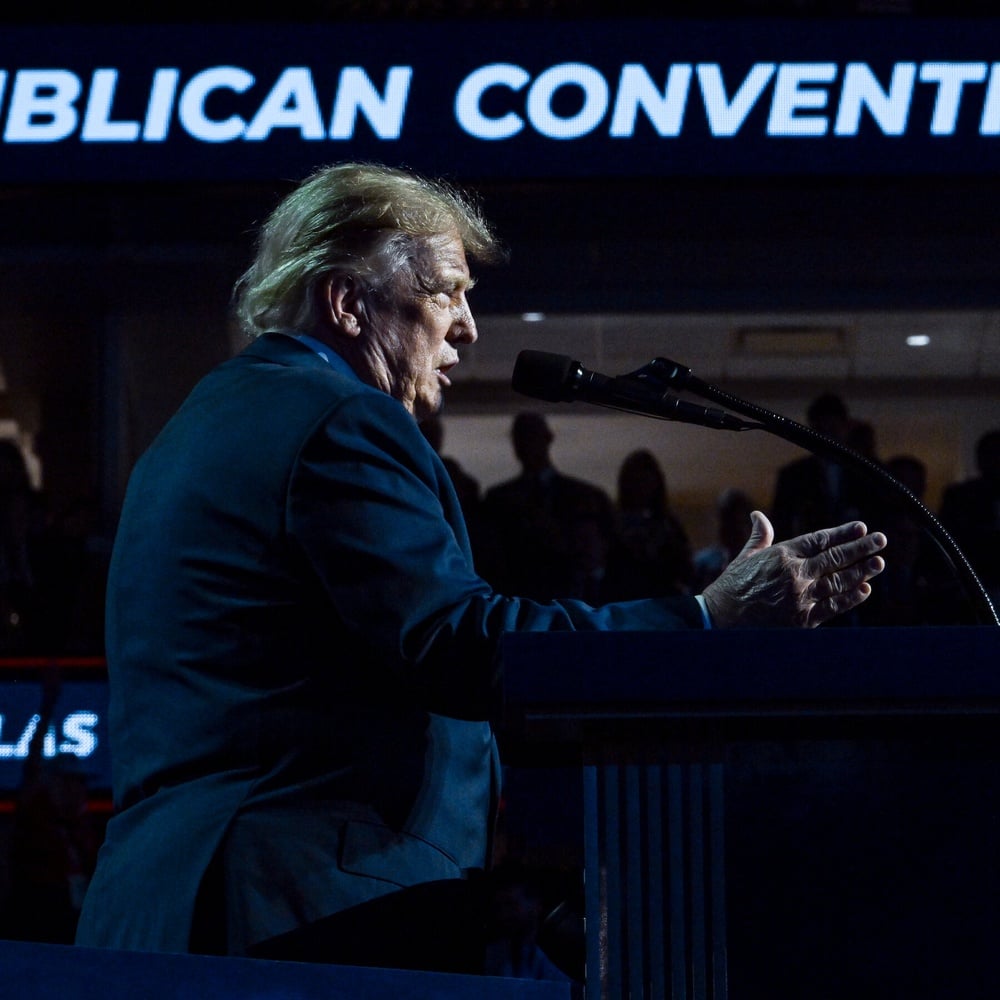
2026 © Helium Trades
Privacy Policy & Disclosure
* Disclaimer: Nothing on this website constitutes investment advice, performance data or any recommendation that any particular security, portfolio of securities, transaction or investment strategy is suitable for any specific person. Helium Trades is not responsible in any way for the accuracy
of any model predictions or price data. Any mention of a particular security and related prediction data is not a recommendation to buy or sell that security. Investments in securities involve the risk of loss. Past performance is no guarantee of future results. Helium Trades is not responsible for any of your investment decisions,
you should consult a financial expert before engaging in any transaction.
Helium Research Assistant

How can I help you today?
Ask any question about this page.


