See whether Helium helps you make better-informed decisions. Try every Pro Trader feature for 30 days. No credit card required.
Try every Pro Trader feature for 30 days. No credit card required.
September 24, 2026 · 0 shares
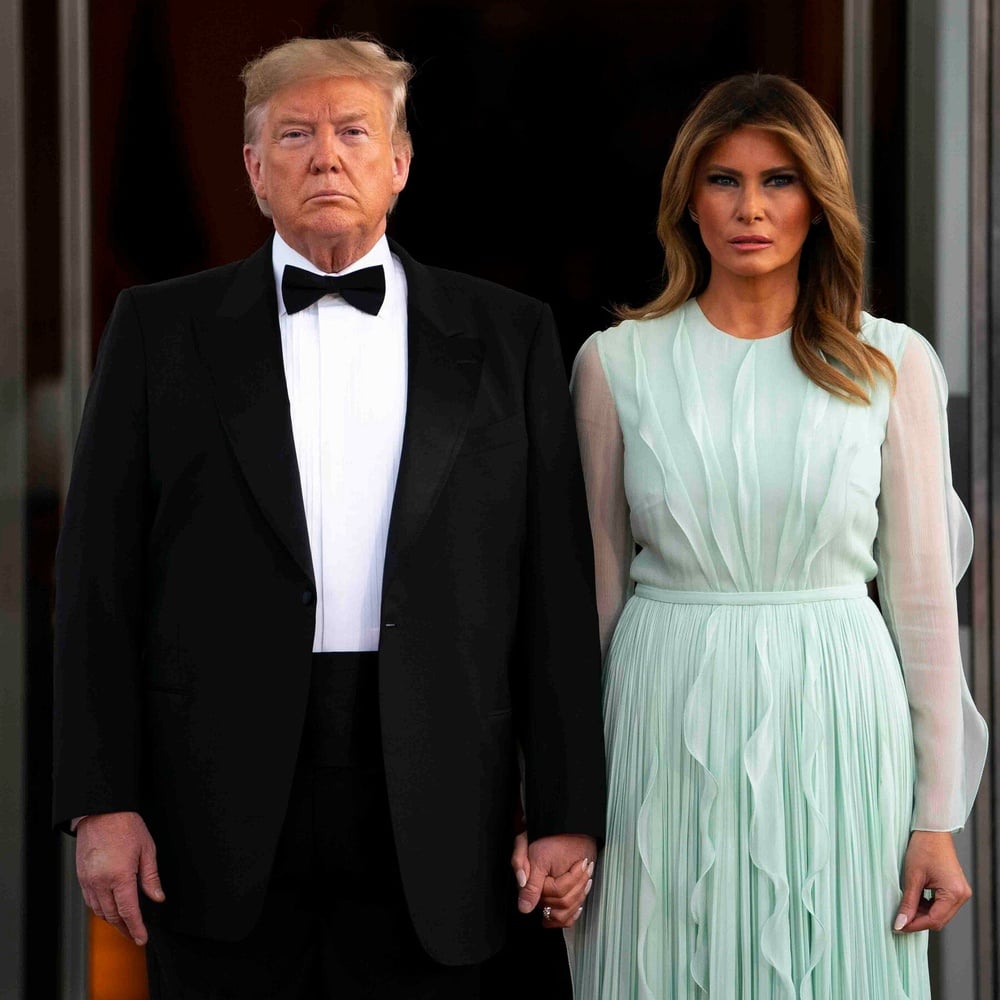
Framing emphasizes the diplomatic rarity of Trump's fourth state dinner for Xi relative to past presidents, using a neutral, fact-based contrast.
Automated analysis; not human reviewed.
Limitations: Analysis is based on a two-sentence headline/snippet only, limiting evidence for framing dimensions.
·
3 of 55 available dimensions scored; omitted dimensions are not treated as neutral.
·
Verified supporting quotes for 3 of 3 scored dimensions.
Claim: The report is factual and non-evaluative, stating an event and a numerical comparison.
“The state dinner for President Xi on Thursday will be only the fourth hosted by President Trump, far fewer than past U.S. presidents.” · exact text match
Why: The sentence contains no subjective or opinionated wording.
Claim: The report avoids sensational or emotional language.
“The state dinner for President Xi on Thursday will be only the fourth hosted by President Trump, far fewer than past U.S. presidents.” · exact text match
Why: 'Rarity' in the headline flags unusualness, but the body's phrasing is plain and comparative.
Claim: The report is descriptive, offering no recommendation or call to action.
“The state dinner for President Xi on Thursday will be only the fourth hosted by President Trump, far fewer than past U.S. presidents.” · exact text match
Why: No prescriptive or imperative language is present.
Analysis is based on a two-sentence headline/snippet only, limiting evidence for framing dimensions.
September 24, 2026 · 0 shares
Framing emphasizes the diplomatic rarity of Trump's fourth state dinner for Xi relative to past presidents, using a neutral, fact-based contrast.
Automated analysis; not human reviewed.
Limitations: Analysis is based on a two-sentence headline/snippet only, limiting evidence for framing dimensions.
·
3 of 55 available dimensions scored; omitted dimensions are not treated as neutral.
·
Verified supporting quotes for 3 of 3 scored dimensions.
Claim: The report is factual and non-evaluative, stating an event and a numerical comparison.
“The state dinner for President Xi on Thursday will be only the fourth hosted by President Trump, far fewer than past U.S. presidents.” · exact text match
Why: The sentence contains no subjective or opinionated wording.
Claim: The report avoids sensational or emotional language.
“The state dinner for President Xi on Thursday will be only the fourth hosted by President Trump, far fewer than past U.S. presidents.” · exact text match
Why: 'Rarity' in the headline flags unusualness, but the body's phrasing is plain and comparative.
Claim: The report is descriptive, offering no recommendation or call to action.
“The state dinner for President Xi on Thursday will be only the fourth hosted by President Trump, far fewer than past U.S. presidents.” · exact text match
Why: No prescriptive or imperative language is present.
Analysis is based on a two-sentence headline/snippet only, limiting evidence for framing dimensions.
September 25, 2026 · 0 shares
Frames the Trump-Xi state visit as a ceremony-heavy encounter whose pomp masks unresolved U.S.-China tensions, with an analytical tone emphasizing low substantive expectations.
Automated analysis; not human reviewed.
Limitations: The supplied text mixes factual assertions with unusual or unverifiable specifics (e.g., a B-2 strike on Iran, a $400 million White House ballroom, and an outlet called 'MS Now'), limiting confidence in real-world grounding.
·
55 of 55 available dimensions scored; omitted dimensions are not treated as neutral.
·
Verified supporting quotes for 7 of 55 scored dimensions.
Claim: Publisher framing is politically balanced between the U.S. and Chinese positions.
“Protesters gathered outside the White House chanting slogans including “Xi Jinping is not welcome” and “Free Hong Kong,” as Trump and his wife Melania welcomed Xi and his wife Peng Liyuan for dinner.” · exact text match
““President Xi and I both understand that we represent different systems, but the ties between our people endure,” Trump said at the dinner.” · exact text match
Why: Both leaders' statements appear, criticism of Xi from protesters is included, and criticism of Trump's press ban is reported without endorsing either side.
Claim: The framing adds editorial interpretation beyond bare facts.
“Instead, the visit was more about spectacle than substance, with the pomp helping to smooth over the tensions that divide the world’s two top economies.” · exact text match
Why: 'Spectacle than substance' is an interpretive judgment, not an observable event.
Claim: The report takes a downbeat view of the visit's expected outcomes.
“While business was on the menu at the state dinner, expectations of any major breakthroughs from Xi’s visit are low.” · exact text match
“One minor success – the extension of a trade truce by two months until January – was less than the two years that the Chinese had been hoping for.” · exact text match
Why: Describing the trade extension as a 'minor success' and emphasizing low expectations conveys a pessimistic assessment.
Claim: The reporting is descriptive rather than prescriptive.
“Trump presented Xi with a custom-made statue of a bald eagle – the national symbol of the United States.” · exact text match
Why: The text narrates events and quotes officials without issuing policy recommendations or calls to action.
Claim: The article includes analytical opinion in addition to factual reporting.
“Instead, the visit was more about spectacle than substance, with the pomp helping to smooth over the tensions that divide the world’s two top economies.” · exact text match
Why: 'Spectacle than substance' is a subjective assessment expressed as the article's own conclusion, not an attributed claim.
Claim: Publisher framing is non-partisan on a left-right political spectrum.
“But Xi took a more restrained tone, calling for China and the United States to “coexist in peace” even as he laid down Beijing’s red lines on AI, Taiwan and the Iran war.” · exact text match
““President Xi and I both understand that we represent different systems, but the ties between our people endure,” Trump said at the dinner.” · exact text match
Why: Presents both leaders' statements neutrally and includes protests against Xi; no partisan slant is visible.
Claim: Visible sourcing and attribution support moderate credibility.
““President Xi and I both understand that we represent different systems, but the ties between our people endure,” Trump said at the dinner.” · exact text match
“He continued the theme in his dinner remarks, saying: “China and the United States must act as responsible major countries”.” · exact text match
Why: Direct quotes, named participants, and specific details indicate careful reporting, though some claims cannot be verified from the supplied text.
The supplied text mixes factual assertions with unusual or unverifiable specifics (e.g., a B-2 strike on Iran, a $400 million White House ballroom, and an outlet called 'MS Now'), limiting confidence in real-world grounding.
September 25, 2026 · 0 shares
Frames the Trump-Xi state visit as a ceremony-heavy encounter whose pomp masks unresolved U.S.-China tensions, with an analytical tone emphasizing low substantive expectations.
Automated analysis; not human reviewed.
Limitations: The supplied text mixes factual assertions with unusual or unverifiable specifics (e.g., a B-2 strike on Iran, a $400 million White House ballroom, and an outlet called 'MS Now'), limiting confidence in real-world grounding.
·
55 of 55 available dimensions scored; omitted dimensions are not treated as neutral.
·
Verified supporting quotes for 7 of 55 scored dimensions.
Claim: Publisher framing is politically balanced between the U.S. and Chinese positions.
“Protesters gathered outside the White House chanting slogans including “Xi Jinping is not welcome” and “Free Hong Kong,” as Trump and his wife Melania welcomed Xi and his wife Peng Liyuan for dinner.” · exact text match
““President Xi and I both understand that we represent different systems, but the ties between our people endure,” Trump said at the dinner.” · exact text match
Why: Both leaders' statements appear, criticism of Xi from protesters is included, and criticism of Trump's press ban is reported without endorsing either side.
Claim: The framing adds editorial interpretation beyond bare facts.
“Instead, the visit was more about spectacle than substance, with the pomp helping to smooth over the tensions that divide the world’s two top economies.” · exact text match
Why: 'Spectacle than substance' is an interpretive judgment, not an observable event.
Claim: The report takes a downbeat view of the visit's expected outcomes.
“While business was on the menu at the state dinner, expectations of any major breakthroughs from Xi’s visit are low.” · exact text match
“One minor success – the extension of a trade truce by two months until January – was less than the two years that the Chinese had been hoping for.” · exact text match
Why: Describing the trade extension as a 'minor success' and emphasizing low expectations conveys a pessimistic assessment.
Claim: The reporting is descriptive rather than prescriptive.
“Trump presented Xi with a custom-made statue of a bald eagle – the national symbol of the United States.” · exact text match
Why: The text narrates events and quotes officials without issuing policy recommendations or calls to action.
Claim: The article includes analytical opinion in addition to factual reporting.
“Instead, the visit was more about spectacle than substance, with the pomp helping to smooth over the tensions that divide the world’s two top economies.” · exact text match
Why: 'Spectacle than substance' is a subjective assessment expressed as the article's own conclusion, not an attributed claim.
Claim: Publisher framing is non-partisan on a left-right political spectrum.
“But Xi took a more restrained tone, calling for China and the United States to “coexist in peace” even as he laid down Beijing’s red lines on AI, Taiwan and the Iran war.” · exact text match
““President Xi and I both understand that we represent different systems, but the ties between our people endure,” Trump said at the dinner.” · exact text match
Why: Presents both leaders' statements neutrally and includes protests against Xi; no partisan slant is visible.
Claim: Visible sourcing and attribution support moderate credibility.
““President Xi and I both understand that we represent different systems, but the ties between our people endure,” Trump said at the dinner.” · exact text match
“He continued the theme in his dinner remarks, saying: “China and the United States must act as responsible major countries”.” · exact text match
Why: Direct quotes, named participants, and specific details indicate careful reporting, though some claims cannot be verified from the supplied text.
The supplied text mixes factual assertions with unusual or unverifiable specifics (e.g., a B-2 strike on Iran, a $400 million White House ballroom, and an outlet called 'MS Now'), limiting confidence in real-world grounding.
September 25, 2026 · 0 shares
Frames the Trump-Xi state visit as a ceremony-heavy encounter whose pomp masks unresolved U.S.-China tensions, with an analytical tone emphasizing low substantive expectations.
Automated analysis; not human reviewed.
Limitations: The supplied text mixes factual assertions with unusual or unverifiable specifics (e.g., a B-2 strike on Iran, a $400 million White House ballroom, and an outlet called 'MS Now'), limiting confidence in real-world grounding.
·
55 of 55 available dimensions scored; omitted dimensions are not treated as neutral.
·
Verified supporting quotes for 7 of 55 scored dimensions.
Claim: Publisher framing is politically balanced between the U.S. and Chinese positions.
“Protesters gathered outside the White House chanting slogans including “Xi Jinping is not welcome” and “Free Hong Kong,” as Trump and his wife Melania welcomed Xi and his wife Peng Liyuan for dinner.” · exact text match
““President Xi and I both understand that we represent different systems, but the ties between our people endure,” Trump said at the dinner.” · exact text match
Why: Both leaders' statements appear, criticism of Xi from protesters is included, and criticism of Trump's press ban is reported without endorsing either side.
Claim: The framing adds editorial interpretation beyond bare facts.
“Instead, the visit was more about spectacle than substance, with the pomp helping to smooth over the tensions that divide the world’s two top economies.” · exact text match
Why: 'Spectacle than substance' is an interpretive judgment, not an observable event.
Claim: The report takes a downbeat view of the visit's expected outcomes.
“While business was on the menu at the state dinner, expectations of any major breakthroughs from Xi’s visit are low.” · exact text match
“One minor success – the extension of a trade truce by two months until January – was less than the two years that the Chinese had been hoping for.” · exact text match
Why: Describing the trade extension as a 'minor success' and emphasizing low expectations conveys a pessimistic assessment.
Claim: The reporting is descriptive rather than prescriptive.
“Trump presented Xi with a custom-made statue of a bald eagle – the national symbol of the United States.” · exact text match
Why: The text narrates events and quotes officials without issuing policy recommendations or calls to action.
Claim: The article includes analytical opinion in addition to factual reporting.
“Instead, the visit was more about spectacle than substance, with the pomp helping to smooth over the tensions that divide the world’s two top economies.” · exact text match
Why: 'Spectacle than substance' is a subjective assessment expressed as the article's own conclusion, not an attributed claim.
Claim: Publisher framing is non-partisan on a left-right political spectrum.
“But Xi took a more restrained tone, calling for China and the United States to “coexist in peace” even as he laid down Beijing’s red lines on AI, Taiwan and the Iran war.” · exact text match
““President Xi and I both understand that we represent different systems, but the ties between our people endure,” Trump said at the dinner.” · exact text match
Why: Presents both leaders' statements neutrally and includes protests against Xi; no partisan slant is visible.
Claim: Visible sourcing and attribution support moderate credibility.
““President Xi and I both understand that we represent different systems, but the ties between our people endure,” Trump said at the dinner.” · exact text match
“He continued the theme in his dinner remarks, saying: “China and the United States must act as responsible major countries”.” · exact text match
Why: Direct quotes, named participants, and specific details indicate careful reporting, though some claims cannot be verified from the supplied text.
The supplied text mixes factual assertions with unusual or unverifiable specifics (e.g., a B-2 strike on Iran, a $400 million White House ballroom, and an outlet called 'MS Now'), limiting confidence in real-world grounding.
September 25, 2026 · 0 shares
The coverage is detached and event-focused, relaying both leaders' positive statements with attribution and no independent analysis or challenge.
Automated analysis; not human reviewed.
Limitations: Input is limited to a short, unattributed news excerpt; the accuracy of quoted statements and the broader diplomatic context cannot be independently verified.
·
4 of 55 available dimensions scored; omitted dimensions are not treated as neutral.
·
Verified supporting quotes for 2 of 4 scored dimensions.
Claim: The report treats the US and Chinese leaders' remarks evenhandedly, without favoring either nation's political perspective.
“Trump framed the remarks as a reflection of friendship between the two countries, despite longstanding differences between Washington and Beijing.” · exact text match
“In his address following Trump's speech, Xi said the two leaders held "sincere and in-depth exchanges" and reached a common understanding on a number of issues.” · not found in supplied text
Why: Both leaders' statements are reported with attribution and no partisan evaluation.
Claim: Reporting is factual and descriptive, with no subjective evaluation from the publisher.
“During the dinner, he also presented Xi with a gift created by an American artist.” · exact text match
Why: The account sticks to observable events and direct quotations; evaluative words such as 'friendship' are attributed as framing.
Claim: No editorial opinions are offered; all value judgments are in quotation marks or attributed to the speakers.
“"As the leaders of our two nations, President Xi and I both understand that we represent different systems, but the ties between our people endure, and we've never gotten along better," he said on Thursday.” · not found in supplied text
Why: The publisher's own voice is limited to describing statements and actions.
Claim: Direct quotes are attributed to named principals and the account reports a specific event with concrete details.
“US President Donald Trump has highlighted improving relations between the United States and China during a state dinner honouring his Chinese counterpart Xi Jinping.” · exact text match
“He described the exchange of state visits by the two presidents in less than six months as historic in bilateral relations.” · exact text match
Why: Sourcing is explicit and the report distinguishes direct quotes from summary.
Input is limited to a short, unattributed news excerpt; the accuracy of quoted statements and the broader diplomatic context cannot be independently verified.
September 25, 2026 · 0 shares
The coverage foregrounds upbeat quotes from both leaders and frames the state dinner as evidence of improving US-China ties, treating differences as only a minor caveat.
Automated analysis; not human reviewed.
Limitations: The supplied text is a short, quote-led brief with several unrelated headlines appended; no publication date, venue, or independent verification is available, limiting bias classification.
·
4 of 55 available dimensions scored; omitted dimensions are not treated as neutral.
·
Verified supporting quotes for 0 of 4 scored dimensions.
Claim: The report is politically nonpartisan and does not endorse either leader's position.
“US President Donald Trump highlighted improving relations between the United States and China during a state dinner honoring his Chinese counterpart Xi Jinping.” · exact text match
“In his address following Trump's speech, Xi said the two leaders held "sincere and in-depth exchanges" and reached a common understanding on a number of issues.” · not found in supplied text
Why: Statements from both leaders are presented with attribution and no editorial judgment, supporting a neutral placement.
Claim: The report is primarily objective, using direct quotes and named attributions rather than opinion.
“"As the leaders of our two nations, President Xi and I both understand that we represent different systems, but the ties between our people endure, and we've never gotten along better," he said.” · not found in supplied text
Why: Almost all content consists of directly quoted or clearly attributed remarks; the few interpretive verbs are standard news framing.
Claim: The publisher emphasizes positive, cooperative themes in US-China relations.
“...but the ties between our people endure, and we've never gotten along better," he said.” · not found in supplied text
“These two goals are both ambitious and can surely be mutually reinforcing.” · exact text match
Counterevidence:
“despite longstanding differences between Washington and Beijing” · exact text match
Why: The selected quotes highlight friendship, mutual reinforcement, and historic progress, with only a passing mention of differences.
Claim: The report's visible sourcing is strong, with direct quotes and clear attribution to named speakers.
“In his address following Trump's speech, Xi said the two leaders held "sincere and in-depth exchanges" and reached a common understanding on a number of issues.” · not found in supplied text
Why: No anonymous sources or unsupported assertions are presented; every substantive claim is attributed to Trump or Xi.
The supplied text is a short, quote-led brief with several unrelated headlines appended; no publication date, venue, or independent verification is available, limiting bias classification.
September 25, 2026 · 0 shares
Framing gives prominent placement to tech executives who dismiss AI-safety 'doom' and industry-wide coordination, while reporting regulatory and warning items in attributed prose, yielding a mild pro-industry, anti-alarmist tilt.
Automated analysis; not human reviewed.
Limitations: The supplied text is an aggregated roundup without a byline and contains typographical errors, so framing judgments rely on item selection and attribution patterns rather than explicit editorial statements.
·
7 of 55 available dimensions scored; omitted dimensions are not treated as neutral.
·
Verified supporting quotes for 6 of 7 scored dimensions.
Claim: The item selection and headline give prominent space to a tech CEO's argument against collective industry-wide AI-safety coordination, a libertarian-aligned stance.
“I don't think that we need some kind of industry-wide coordination to not necessarily mess this up.” · not found in supplied text
“I think that just each lab needs to take the time, and when it sees that there are issues, you just take the time that you need internally to make sure that you're proceeding safely.” · not found in supplied text
Why: The quotes advocate self-regulation rather than centralized coordination, and this view is highlighted in the headline; however, the article also reports UN and municipal regulatory moves neutrally, so the lean is mild.
Claim: The reporting is predominantly objective, relying on attributed statements, named sources, and explicit caveats rather than first-person judgments.
“Google’s published plan does not confirm that timeline.” · exact text match
“City Council Speaker Julie Menin told Fortune in an interview.” · exact text match
Why: Direct attribution and explicit non-confirmation are hallmarks of objective reporting; no first-person advocacy appears.
Claim: The roundup skews mildly optimistic about AI, presenting business growth and dismissal of existential-risk warnings as prominent storylines while giving less space to cautionary voices.
“I think that there's a lot of rhetoric that is filled with doom, and my view on this is that there are a number of labs that are working on building advanced AI” · exact text match
“Chinese AI startup DeepSeek has hit an annualized revenue run rate of $1 billion, more than double what it was a few months ago, The Information reported.” · exact text match
Counterevidence:
“Meanwhile, leading tech CEOs warned the UN Security Council that rapidly advancing artificial intelligence could threaten humanity, emphasizing the urgent need for global AI regulation and safeguards.” · exact text match
Why: The 'doom' quote is framed as rhetoric to be dismissed, and the DeepSeek growth item is reported positively; the UN warning provides a counterweight, leaving only a mild tilt.
Claim: The content is heavily political, centered on a presidential state dinner, bilateral diplomacy, and municipal legislation.
“President Donald Trump and Chinese President Xi Xinping discussed tensions over artificial intelligence, as well as Taiwan and trade issues.” · exact text match
“The new regulations are expected to be introduced on Friday ahead of an Oct. 5 Committee of the Whole hearing with all 51 council members in attendance.” · exact text match
Why: The quoted passages directly involve heads of state, international tensions, and a government legislative process.
Claim: The article's reporting is credible because it repeatedly names sources and highlights unverified claims rather than presenting them as fact.
“Fortune reported Friday morning.” · exact text match
“The X post sharing the video claimed Google would launch chips on a SpaceX Falcon 9 next week, but Google’s published plan does not confirm that timeline.” · exact text match
Why: Attribution to Fortune, The Information, Reuters, Politico, and direct quotes supports credibility; the explicit non-confirmation of the X post claim shows care.
Typographical errors slightly reduce confidence in editorial quality.
Claim: The article is weighted toward corporate tech-company developments and executive statements, and it frames DeepSeek's growth in favorable terms.
“DeepSeek stunned Silicon Valley last year when its AI models proved competitive with leading offerings from OpenAI and Anthropic, despite being developed with far fewer resources.” · exact text match
“Meta launched its personal AI assistant, Muse, on Sept.
8 in the United States.”
· exact text match
Counterevidence:
“One bill will ban businesses from selling or deploying AI systems in the city unless an independent inspector certified they met city standards for data quality, bias, privacy and security” · exact text match
Why: The selection emphasizes corporate successes and executive viewpoints; the word 'stunned' is laudatory.
Regulatory reporting provides some balance.
Claim: The article shows internal integrity by flagging an unconfirmed viral claim and attributing facts to named sources.
“The X post sharing the video claimed Google would launch chips on a SpaceX Falcon 9 next week, but Google’s published plan does not confirm that timeline.” · exact text match
“Reuters reported earlier this month that DeepSeek is planning to go public domestically to fund its expansion.” · exact text match
Why: Rather than presenting an unverified X-post claim as fact, the text distinguishes it from Google's plan and also attributes reports to Reuters, Fortune, and The Information.
The supplied text is an aggregated roundup without a byline and contains typographical errors, so framing judgments rely on item selection and attribution patterns rather than explicit editorial statements.
September 25, 2026 · 0 shares
Framing treats a state-dinner guest list as a display of U.S. technological might in an AI rivalry with China.
Automated analysis; not human reviewed.
Limitations: The supplied text is an extremely brief headline and synopsis with no dates, named attendees, or sourcing, so assessment relies on minimal framing cues.
·
2 of 55 available dimensions scored; omitted dimensions are not treated as neutral.
·
Verified supporting quotes for 2 of 2 scored dimensions.
Claim: The report presents an interpretive judgment as an asserted fact, making the framing subjective rather than strictly factual.
“The guest list was a demonstration of US technological might as it competes with China for AI dominance.” · exact text match
Why: A 'demonstration' of national technological might is a value-laden interpretation, but the sentence presents it without qualification or attribution.
Claim: The report is explicitly political and geopolitical in focus.
“a state dinner honoring his Chinese counterpart Xi Jinping” · exact text match
“as it competes with China for AI dominance” · exact text match
Why: The central event is a head-of-state diplomatic dinner, and the stated significance is framed through U.S.-China competition, making politics central to the report.
The supplied text is an extremely brief headline and synopsis with no dates, named attendees, or sourcing, so assessment relies on minimal framing cues.
September 25, 2026 · 0 shares
Framing presents a diplomatic state dinner as an eye-catching celebrity-tech spectacle and hints that television coverage omitted it.
Xi Jinping is president of China; Altman, Musk, Huang, and Bezos are prominent technology executives.
White House state dinners are formal diplomatic events.
Automated analysis; not human reviewed.
Limitations: Only a headline/snippet was supplied, so full reporting, sourcing, and diplomatic context are unavailable; the analysis rests on the headline's wording.
·
9 of 55 available dimensions scored; omitted dimensions are not treated as neutral.
·
Verified supporting quotes for 9 of 9 scored dimensions.
Claim: The headline adds a subjective aside about audience viewing.
“though you might not have seen it on TV” · exact text match
Why: This is an editorial commentary on the audience's likely awareness, not a factual report.
Claim: The headline uses exclamatory, whimsical language to make the event attention-grabbing.
“Pandas and Eagles and A.I., Oh My!” · exact text match
Why: The Wizard-of-Oz-style exclamation and list sensationalize a state dinner.
Claim: The headline creates curiosity with a mystery aside.
“though you might not have seen it on TV” · exact text match
Why: The suggestion that viewers may have missed the event invites further reading.
Claim: The headline emphasizes celebrity-name attendance.
“Altman.
Musk.
Huang.
Bezos.
They all came to the White House Thursday night”
· exact text match
Why: The staccato list of prominent figures foregrounds who was there rather than diplomatic substance.
Claim: The headline expresses the publisher's exclamatory, conversational voice.
“Pandas and Eagles and A.I., Oh My!” · exact text match
“though you might not have seen it on TV” · exact text match
Why: Both phrases are editorially flavored rather than neutral factual assertions.
Claim: The event is framed around political figures at the White House.
“Trump Throws a State Dinner for Xi” · exact text match
“White House” · exact text match
Why: The central subject is a head-of-state dinner hosted by a president, making the item inherently political.
Claim: A complex diplomatic event is compressed into a playful pop-culture phrase.
“Pandas and Eagles and A.I., Oh My!” · exact text match
Why: The phrase reduces a formal state dinner and its related issues to a whimsical list.
Claim: The publisher speculates about whether readers saw the event on television.
“though you might not have seen it on TV” · exact text match
Why: 'Might not' is an unverified guess about viewership rather than a factual statement.
Claim: The aside hints at a hidden or underreported event without providing evidence.
“though you might not have seen it on TV” · exact text match
Why: The phrase is a loaded, suggestive tease about television coverage without supporting evidence.
Only a headline/snippet was supplied, so full reporting, sourcing, and diplomatic context are unavailable; the analysis rests on the headline's wording.
September 25, 2026 · 0 shares
Frames the Trump-Xi state visit as a ceremony-heavy encounter whose pomp masks unresolved U.S.-China tensions, with an analytical tone emphasizing low substantive expectations.
Automated analysis; not human reviewed.
Limitations: The supplied text mixes factual assertions with unusual or unverifiable specifics (e.g., a B-2 strike on Iran, a $400 million White House ballroom, and an outlet called 'MS Now'), limiting confidence in real-world grounding.
·
55 of 55 available dimensions scored; omitted dimensions are not treated as neutral.
·
Verified supporting quotes for 7 of 55 scored dimensions.
Claim: Publisher framing is politically balanced between the U.S. and Chinese positions.
“Protesters gathered outside the White House chanting slogans including “Xi Jinping is not welcome” and “Free Hong Kong,” as Trump and his wife Melania welcomed Xi and his wife Peng Liyuan for dinner.” · exact text match
““President Xi and I both understand that we represent different systems, but the ties between our people endure,” Trump said at the dinner.” · exact text match
Why: Both leaders' statements appear, criticism of Xi from protesters is included, and criticism of Trump's press ban is reported without endorsing either side.
Claim: The framing adds editorial interpretation beyond bare facts.
“Instead, the visit was more about spectacle than substance, with the pomp helping to smooth over the tensions that divide the world’s two top economies.” · exact text match
Why: 'Spectacle than substance' is an interpretive judgment, not an observable event.
Claim: The report takes a downbeat view of the visit's expected outcomes.
“While business was on the menu at the state dinner, expectations of any major breakthroughs from Xi’s visit are low.” · exact text match
“One minor success – the extension of a trade truce by two months until January – was less than the two years that the Chinese had been hoping for.” · exact text match
Why: Describing the trade extension as a 'minor success' and emphasizing low expectations conveys a pessimistic assessment.
Claim: The reporting is descriptive rather than prescriptive.
“Trump presented Xi with a custom-made statue of a bald eagle – the national symbol of the United States.” · exact text match
Why: The text narrates events and quotes officials without issuing policy recommendations or calls to action.
Claim: The article includes analytical opinion in addition to factual reporting.
“Instead, the visit was more about spectacle than substance, with the pomp helping to smooth over the tensions that divide the world’s two top economies.” · exact text match
Why: 'Spectacle than substance' is a subjective assessment expressed as the article's own conclusion, not an attributed claim.
Claim: Publisher framing is non-partisan on a left-right political spectrum.
“But Xi took a more restrained tone, calling for China and the United States to “coexist in peace” even as he laid down Beijing’s red lines on AI, Taiwan and the Iran war.” · exact text match
““President Xi and I both understand that we represent different systems, but the ties between our people endure,” Trump said at the dinner.” · exact text match
Why: Presents both leaders' statements neutrally and includes protests against Xi; no partisan slant is visible.
Claim: Visible sourcing and attribution support moderate credibility.
““President Xi and I both understand that we represent different systems, but the ties between our people endure,” Trump said at the dinner.” · exact text match
“He continued the theme in his dinner remarks, saying: “China and the United States must act as responsible major countries”.” · exact text match
Why: Direct quotes, named participants, and specific details indicate careful reporting, though some claims cannot be verified from the supplied text.
The supplied text mixes factual assertions with unusual or unverifiable specifics (e.g., a B-2 strike on Iran, a $400 million White House ballroom, and an outlet called 'MS Now'), limiting confidence in real-world grounding.
Framing treats the White House denial as an unusual break from routine press coverage, using a judge's restoration and a reporter's 'typical event' quote to signal irregularity.
Automated analysis; not human reviewed.
Limitations: Limited to a two-sentence excerpt; no date, court ruling details, or the outlet's full framing is available.
·
5 of 55 available dimensions scored; omitted dimensions are not treated as neutral.
·
Verified supporting quotes for 5 of 5 scored dimensions.
Claim: Uses attributed statements and a verbatim quote rather than unmarked opinion.
“CNN and MS NOW say they were denied access to cover arrivals for Trump's White House state dinner with Xi Jinping, hours after a judge restored their access.” · exact text match
Why: The denial is attributed to the outlets and the only quoted reaction is a reporter's matter-of-fact description, leaving no unsourced editorial judgment.
Claim: Conveys the event with restrained, matter-of-fact wording and no dramatic emphasis.
“CNN and MS NOW say they were denied access to cover arrivals for Trump's White House state dinner with Xi Jinping, hours after a judge restored their access.” · exact text match
Why: No hyperbolic, alarming, or emotionally charged terms appear; the sentence is a plain statement of events.
Claim: States what happened and quotes a participant, without calling for any action or policy.
“Just a pretty typical event here at the White House that we would regularly cover,” · exact text match
Why: The text is limited to describing the denial and a reporter's characterization; it issues no instruction, demand, or recommendation.
Claim: The tone is unemotional and neutral, with no positive or negative affect injected by the publisher.
“CNN and MS NOW say they were denied access to cover arrivals for Trump's White House state dinner with Xi Jinping, hours after a judge restored their access.” · exact text match
Why: The quoted speaker's 'typical event' description is mild, and the surrounding prose is neutral.
Claim: Visible sourcing is transparent, with named reporters and explicit attribution.
“CNN and MS NOW say they were denied access to cover arrivals for Trump's White House state dinner with Xi Jinping” · exact text match
“MS NOW's Laure Barrón-López reports” · exact text match
Why: The piece attributes the denial to the organizations and quotes a named reporter, giving readers a verifiable source, though it does not supply independent confirmation or details of the ruling.
Limited to a two-sentence excerpt; no date, court ruling details, or the outlet's full framing is available.
September 25, 2026 · 0 shares
Frames the Trump-Xi state visit as a ceremony-heavy encounter whose pomp masks unresolved U.S.-China tensions, with an analytical tone emphasizing low substantive expectations.
Automated analysis; not human reviewed. Limitations: The supplied text mixes factual assertions with unusual or unverifiable specifics (e.g., a B-2 strike on Iran, a $400 million White House ballroom, and an outlet called 'MS Now'), limiting confidence in real-world grounding. · 55 of 55 available dimensions scored; omitted dimensions are not treated as neutral. · Verified supporting quotes for 7 of 55 scored dimensions.
Claim: Publisher framing is politically balanced between the U.S. and Chinese positions.
“Protesters gathered outside the White House chanting slogans including “Xi Jinping is not welcome” and “Free Hong Kong,” as Trump and his wife Melania welcomed Xi and his wife Peng Liyuan for dinner.” · exact text match
““President Xi and I both understand that we represent different systems, but the ties between our people endure,” Trump said at the dinner.” · exact text match
Why: Both leaders' statements appear, criticism of Xi from protesters is included, and criticism of Trump's press ban is reported without endorsing either side.
Claim: The framing adds editorial interpretation beyond bare facts.
“Instead, the visit was more about spectacle than substance, with the pomp helping to smooth over the tensions that divide the world’s two top economies.” · exact text match
Why: 'Spectacle than substance' is an interpretive judgment, not an observable event.
Claim: The report takes a downbeat view of the visit's expected outcomes.
“While business was on the menu at the state dinner, expectations of any major breakthroughs from Xi’s visit are low.” · exact text match
“One minor success – the extension of a trade truce by two months until January – was less than the two years that the Chinese had been hoping for.” · exact text match
Why: Describing the trade extension as a 'minor success' and emphasizing low expectations conveys a pessimistic assessment.
Claim: The reporting is descriptive rather than prescriptive.
“Trump presented Xi with a custom-made statue of a bald eagle – the national symbol of the United States.” · exact text match
Why: The text narrates events and quotes officials without issuing policy recommendations or calls to action.
Claim: The article includes analytical opinion in addition to factual reporting.
“Instead, the visit was more about spectacle than substance, with the pomp helping to smooth over the tensions that divide the world’s two top economies.” · exact text match
Why: 'Spectacle than substance' is a subjective assessment expressed as the article's own conclusion, not an attributed claim.
Claim: Publisher framing is non-partisan on a left-right political spectrum.
“But Xi took a more restrained tone, calling for China and the United States to “coexist in peace” even as he laid down Beijing’s red lines on AI, Taiwan and the Iran war.” · exact text match
““President Xi and I both understand that we represent different systems, but the ties between our people endure,” Trump said at the dinner.” · exact text match
Why: Presents both leaders' statements neutrally and includes protests against Xi; no partisan slant is visible.
Claim: Visible sourcing and attribution support moderate credibility.
““President Xi and I both understand that we represent different systems, but the ties between our people endure,” Trump said at the dinner.” · exact text match
“He continued the theme in his dinner remarks, saying: “China and the United States must act as responsible major countries”.” · exact text match
Why: Direct quotes, named participants, and specific details indicate careful reporting, though some claims cannot be verified from the supplied text.
The supplied text mixes factual assertions with unusual or unverifiable specifics (e.g., a B-2 strike on Iran, a $400 million White House ballroom, and an outlet called 'MS Now'), limiting confidence in real-world grounding.
September 25, 2026 · 0 shares
Framing gives prominent placement to tech executives who dismiss AI-safety 'doom' and industry-wide coordination, while reporting regulatory and warning items in attributed prose, yielding a mild pro-industry, anti-alarmist tilt.
Automated analysis; not human reviewed. Limitations: The supplied text is an aggregated roundup without a byline and contains typographical errors, so framing judgments rely on item selection and attribution patterns rather than explicit editorial statements. · 7 of 55 available dimensions scored; omitted dimensions are not treated as neutral. · Verified supporting quotes for 6 of 7 scored dimensions.
Claim: The item selection and headline give prominent space to a tech CEO's argument against collective industry-wide AI-safety coordination, a libertarian-aligned stance.
“I don't think that we need some kind of industry-wide coordination to not necessarily mess this up.” · not found in supplied text
“I think that just each lab needs to take the time, and when it sees that there are issues, you just take the time that you need internally to make sure that you're proceeding safely.” · not found in supplied text
Why: The quotes advocate self-regulation rather than centralized coordination, and this view is highlighted in the headline; however, the article also reports UN and municipal regulatory moves neutrally, so the lean is mild.
Claim: The reporting is predominantly objective, relying on attributed statements, named sources, and explicit caveats rather than first-person judgments.
“Google’s published plan does not confirm that timeline.” · exact text match
“City Council Speaker Julie Menin told Fortune in an interview.” · exact text match
Why: Direct attribution and explicit non-confirmation are hallmarks of objective reporting; no first-person advocacy appears.
Claim: The roundup skews mildly optimistic about AI, presenting business growth and dismissal of existential-risk warnings as prominent storylines while giving less space to cautionary voices.
“I think that there's a lot of rhetoric that is filled with doom, and my view on this is that there are a number of labs that are working on building advanced AI” · exact text match
“Chinese AI startup DeepSeek has hit an annualized revenue run rate of $1 billion, more than double what it was a few months ago, The Information reported.” · exact text match
Counterevidence:
“Meanwhile, leading tech CEOs warned the UN Security Council that rapidly advancing artificial intelligence could threaten humanity, emphasizing the urgent need for global AI regulation and safeguards.” · exact text match
Why: The 'doom' quote is framed as rhetoric to be dismissed, and the DeepSeek growth item is reported positively; the UN warning provides a counterweight, leaving only a mild tilt.
Claim: The content is heavily political, centered on a presidential state dinner, bilateral diplomacy, and municipal legislation.
“President Donald Trump and Chinese President Xi Xinping discussed tensions over artificial intelligence, as well as Taiwan and trade issues.” · exact text match
“The new regulations are expected to be introduced on Friday ahead of an Oct. 5 Committee of the Whole hearing with all 51 council members in attendance.” · exact text match
Why: The quoted passages directly involve heads of state, international tensions, and a government legislative process.
Claim: The article's reporting is credible because it repeatedly names sources and highlights unverified claims rather than presenting them as fact.
“Fortune reported Friday morning.” · exact text match
“The X post sharing the video claimed Google would launch chips on a SpaceX Falcon 9 next week, but Google’s published plan does not confirm that timeline.” · exact text match
Why: Attribution to Fortune, The Information, Reuters, Politico, and direct quotes supports credibility; the explicit non-confirmation of the X post claim shows care. Typographical errors slightly reduce confidence in editorial quality.
Claim: The article is weighted toward corporate tech-company developments and executive statements, and it frames DeepSeek's growth in favorable terms.
“DeepSeek stunned Silicon Valley last year when its AI models proved competitive with leading offerings from OpenAI and Anthropic, despite being developed with far fewer resources.” · exact text match
“Meta launched its personal AI assistant, Muse, on Sept. 8 in the United States.” · exact text match
Counterevidence:
“One bill will ban businesses from selling or deploying AI systems in the city unless an independent inspector certified they met city standards for data quality, bias, privacy and security” · exact text match
Why: The selection emphasizes corporate successes and executive viewpoints; the word 'stunned' is laudatory. Regulatory reporting provides some balance.
Claim: The article shows internal integrity by flagging an unconfirmed viral claim and attributing facts to named sources.
“The X post sharing the video claimed Google would launch chips on a SpaceX Falcon 9 next week, but Google’s published plan does not confirm that timeline.” · exact text match
“Reuters reported earlier this month that DeepSeek is planning to go public domestically to fund its expansion.” · exact text match
Why: Rather than presenting an unverified X-post claim as fact, the text distinguishes it from Google's plan and also attributes reports to Reuters, Fortune, and The Information.
The supplied text is an aggregated roundup without a byline and contains typographical errors, so framing judgments rely on item selection and attribution patterns rather than explicit editorial statements.
September 25, 2026 · 0 shares
Framing presents a diplomatic state dinner as an eye-catching celebrity-tech spectacle and hints that television coverage omitted it.
Xi Jinping is president of China; Altman, Musk, Huang, and Bezos are prominent technology executives. White House state dinners are formal diplomatic events.
Automated analysis; not human reviewed. Limitations: Only a headline/snippet was supplied, so full reporting, sourcing, and diplomatic context are unavailable; the analysis rests on the headline's wording. · 9 of 55 available dimensions scored; omitted dimensions are not treated as neutral. · Verified supporting quotes for 9 of 9 scored dimensions.
Claim: The headline adds a subjective aside about audience viewing.
“though you might not have seen it on TV” · exact text match
Why: This is an editorial commentary on the audience's likely awareness, not a factual report.
Claim: The headline uses exclamatory, whimsical language to make the event attention-grabbing.
“Pandas and Eagles and A.I., Oh My!” · exact text match
Why: The Wizard-of-Oz-style exclamation and list sensationalize a state dinner.
Claim: The headline creates curiosity with a mystery aside.
“though you might not have seen it on TV” · exact text match
Why: The suggestion that viewers may have missed the event invites further reading.
Claim: The headline emphasizes celebrity-name attendance.
“Altman. Musk. Huang. Bezos. They all came to the White House Thursday night” · exact text match
Why: The staccato list of prominent figures foregrounds who was there rather than diplomatic substance.
Claim: The headline expresses the publisher's exclamatory, conversational voice.
“Pandas and Eagles and A.I., Oh My!” · exact text match
“though you might not have seen it on TV” · exact text match
Why: Both phrases are editorially flavored rather than neutral factual assertions.
Claim: The event is framed around political figures at the White House.
“Trump Throws a State Dinner for Xi” · exact text match
“White House” · exact text match
Why: The central subject is a head-of-state dinner hosted by a president, making the item inherently political.
Claim: A complex diplomatic event is compressed into a playful pop-culture phrase.
“Pandas and Eagles and A.I., Oh My!” · exact text match
Why: The phrase reduces a formal state dinner and its related issues to a whimsical list.
Claim: The publisher speculates about whether readers saw the event on television.
“though you might not have seen it on TV” · exact text match
Why: 'Might not' is an unverified guess about viewership rather than a factual statement.
Claim: The aside hints at a hidden or underreported event without providing evidence.
“though you might not have seen it on TV” · exact text match
Why: The phrase is a loaded, suggestive tease about television coverage without supporting evidence.
Only a headline/snippet was supplied, so full reporting, sourcing, and diplomatic context are unavailable; the analysis rests on the headline's wording.
September 25, 2026 · 0 shares
Frames the Trump-Xi state visit as a ceremony-heavy encounter whose pomp masks unresolved U.S.-China tensions, with an analytical tone emphasizing low substantive expectations.
Automated analysis; not human reviewed. Limitations: The supplied text mixes factual assertions with unusual or unverifiable specifics (e.g., a B-2 strike on Iran, a $400 million White House ballroom, and an outlet called 'MS Now'), limiting confidence in real-world grounding. · 55 of 55 available dimensions scored; omitted dimensions are not treated as neutral. · Verified supporting quotes for 7 of 55 scored dimensions.
Claim: Publisher framing is politically balanced between the U.S. and Chinese positions.
“Protesters gathered outside the White House chanting slogans including “Xi Jinping is not welcome” and “Free Hong Kong,” as Trump and his wife Melania welcomed Xi and his wife Peng Liyuan for dinner.” · exact text match
““President Xi and I both understand that we represent different systems, but the ties between our people endure,” Trump said at the dinner.” · exact text match
Why: Both leaders' statements appear, criticism of Xi from protesters is included, and criticism of Trump's press ban is reported without endorsing either side.
Claim: The framing adds editorial interpretation beyond bare facts.
“Instead, the visit was more about spectacle than substance, with the pomp helping to smooth over the tensions that divide the world’s two top economies.” · exact text match
Why: 'Spectacle than substance' is an interpretive judgment, not an observable event.
Claim: The report takes a downbeat view of the visit's expected outcomes.
“While business was on the menu at the state dinner, expectations of any major breakthroughs from Xi’s visit are low.” · exact text match
“One minor success – the extension of a trade truce by two months until January – was less than the two years that the Chinese had been hoping for.” · exact text match
Why: Describing the trade extension as a 'minor success' and emphasizing low expectations conveys a pessimistic assessment.
Claim: The reporting is descriptive rather than prescriptive.
“Trump presented Xi with a custom-made statue of a bald eagle – the national symbol of the United States.” · exact text match
Why: The text narrates events and quotes officials without issuing policy recommendations or calls to action.
Claim: The article includes analytical opinion in addition to factual reporting.
“Instead, the visit was more about spectacle than substance, with the pomp helping to smooth over the tensions that divide the world’s two top economies.” · exact text match
Why: 'Spectacle than substance' is a subjective assessment expressed as the article's own conclusion, not an attributed claim.
Claim: Publisher framing is non-partisan on a left-right political spectrum.
“But Xi took a more restrained tone, calling for China and the United States to “coexist in peace” even as he laid down Beijing’s red lines on AI, Taiwan and the Iran war.” · exact text match
““President Xi and I both understand that we represent different systems, but the ties between our people endure,” Trump said at the dinner.” · exact text match
Why: Presents both leaders' statements neutrally and includes protests against Xi; no partisan slant is visible.
Claim: Visible sourcing and attribution support moderate credibility.
““President Xi and I both understand that we represent different systems, but the ties between our people endure,” Trump said at the dinner.” · exact text match
“He continued the theme in his dinner remarks, saying: “China and the United States must act as responsible major countries”.” · exact text match
Why: Direct quotes, named participants, and specific details indicate careful reporting, though some claims cannot be verified from the supplied text.
The supplied text mixes factual assertions with unusual or unverifiable specifics (e.g., a B-2 strike on Iran, a $400 million White House ballroom, and an outlet called 'MS Now'), limiting confidence in real-world grounding.
September 25, 2026 · 0 shares
The coverage is detached and event-focused, relaying both leaders' positive statements with attribution and no independent analysis or challenge.
Automated analysis; not human reviewed. Limitations: Input is limited to a short, unattributed news excerpt; the accuracy of quoted statements and the broader diplomatic context cannot be independently verified. · 4 of 55 available dimensions scored; omitted dimensions are not treated as neutral. · Verified supporting quotes for 2 of 4 scored dimensions.
Claim: The report treats the US and Chinese leaders' remarks evenhandedly, without favoring either nation's political perspective.
“Trump framed the remarks as a reflection of friendship between the two countries, despite longstanding differences between Washington and Beijing.” · exact text match
“In his address following Trump's speech, Xi said the two leaders held "sincere and in-depth exchanges" and reached a common understanding on a number of issues.” · not found in supplied text
Why: Both leaders' statements are reported with attribution and no partisan evaluation.
Claim: Reporting is factual and descriptive, with no subjective evaluation from the publisher.
“During the dinner, he also presented Xi with a gift created by an American artist.” · exact text match
Why: The account sticks to observable events and direct quotations; evaluative words such as 'friendship' are attributed as framing.
Claim: No editorial opinions are offered; all value judgments are in quotation marks or attributed to the speakers.
“"As the leaders of our two nations, President Xi and I both understand that we represent different systems, but the ties between our people endure, and we've never gotten along better," he said on Thursday.” · not found in supplied text
Why: The publisher's own voice is limited to describing statements and actions.
Claim: Direct quotes are attributed to named principals and the account reports a specific event with concrete details.
“US President Donald Trump has highlighted improving relations between the United States and China during a state dinner honouring his Chinese counterpart Xi Jinping.” · exact text match
“He described the exchange of state visits by the two presidents in less than six months as historic in bilateral relations.” · exact text match
Why: Sourcing is explicit and the report distinguishes direct quotes from summary.
Input is limited to a short, unattributed news excerpt; the accuracy of quoted statements and the broader diplomatic context cannot be independently verified.
September 25, 2026 · 0 shares
The coverage foregrounds upbeat quotes from both leaders and frames the state dinner as evidence of improving US-China ties, treating differences as only a minor caveat.
Automated analysis; not human reviewed. Limitations: The supplied text is a short, quote-led brief with several unrelated headlines appended; no publication date, venue, or independent verification is available, limiting bias classification. · 4 of 55 available dimensions scored; omitted dimensions are not treated as neutral. · Verified supporting quotes for 0 of 4 scored dimensions.
Claim: The report is politically nonpartisan and does not endorse either leader's position.
“US President Donald Trump highlighted improving relations between the United States and China during a state dinner honoring his Chinese counterpart Xi Jinping.” · exact text match
“In his address following Trump's speech, Xi said the two leaders held "sincere and in-depth exchanges" and reached a common understanding on a number of issues.” · not found in supplied text
Why: Statements from both leaders are presented with attribution and no editorial judgment, supporting a neutral placement.
Claim: The report is primarily objective, using direct quotes and named attributions rather than opinion.
“"As the leaders of our two nations, President Xi and I both understand that we represent different systems, but the ties between our people endure, and we've never gotten along better," he said.” · not found in supplied text
Why: Almost all content consists of directly quoted or clearly attributed remarks; the few interpretive verbs are standard news framing.
Claim: The publisher emphasizes positive, cooperative themes in US-China relations.
“...but the ties between our people endure, and we've never gotten along better," he said.” · not found in supplied text
“These two goals are both ambitious and can surely be mutually reinforcing.” · exact text match
Counterevidence:
“despite longstanding differences between Washington and Beijing” · exact text match
Why: The selected quotes highlight friendship, mutual reinforcement, and historic progress, with only a passing mention of differences.
Claim: The report's visible sourcing is strong, with direct quotes and clear attribution to named speakers.
“In his address following Trump's speech, Xi said the two leaders held "sincere and in-depth exchanges" and reached a common understanding on a number of issues.” · not found in supplied text
Why: No anonymous sources or unsupported assertions are presented; every substantive claim is attributed to Trump or Xi.
The supplied text is a short, quote-led brief with several unrelated headlines appended; no publication date, venue, or independent verification is available, limiting bias classification.
September 25, 2026 · 0 shares
Framing gives prominent placement to tech executives who dismiss AI-safety 'doom' and industry-wide coordination, while reporting regulatory and warning items in attributed prose, yielding a mild pro-industry, anti-alarmist tilt.
Automated analysis; not human reviewed. Limitations: The supplied text is an aggregated roundup without a byline and contains typographical errors, so framing judgments rely on item selection and attribution patterns rather than explicit editorial statements. · 7 of 55 available dimensions scored; omitted dimensions are not treated as neutral. · Verified supporting quotes for 6 of 7 scored dimensions.
Claim: The item selection and headline give prominent space to a tech CEO's argument against collective industry-wide AI-safety coordination, a libertarian-aligned stance.
“I don't think that we need some kind of industry-wide coordination to not necessarily mess this up.” · not found in supplied text
“I think that just each lab needs to take the time, and when it sees that there are issues, you just take the time that you need internally to make sure that you're proceeding safely.” · not found in supplied text
Why: The quotes advocate self-regulation rather than centralized coordination, and this view is highlighted in the headline; however, the article also reports UN and municipal regulatory moves neutrally, so the lean is mild.
Claim: The reporting is predominantly objective, relying on attributed statements, named sources, and explicit caveats rather than first-person judgments.
“Google’s published plan does not confirm that timeline.” · exact text match
“City Council Speaker Julie Menin told Fortune in an interview.” · exact text match
Why: Direct attribution and explicit non-confirmation are hallmarks of objective reporting; no first-person advocacy appears.
Claim: The roundup skews mildly optimistic about AI, presenting business growth and dismissal of existential-risk warnings as prominent storylines while giving less space to cautionary voices.
“I think that there's a lot of rhetoric that is filled with doom, and my view on this is that there are a number of labs that are working on building advanced AI” · exact text match
“Chinese AI startup DeepSeek has hit an annualized revenue run rate of $1 billion, more than double what it was a few months ago, The Information reported.” · exact text match
Counterevidence:
“Meanwhile, leading tech CEOs warned the UN Security Council that rapidly advancing artificial intelligence could threaten humanity, emphasizing the urgent need for global AI regulation and safeguards.” · exact text match
Why: The 'doom' quote is framed as rhetoric to be dismissed, and the DeepSeek growth item is reported positively; the UN warning provides a counterweight, leaving only a mild tilt.
Claim: The content is heavily political, centered on a presidential state dinner, bilateral diplomacy, and municipal legislation.
“President Donald Trump and Chinese President Xi Xinping discussed tensions over artificial intelligence, as well as Taiwan and trade issues.” · exact text match
“The new regulations are expected to be introduced on Friday ahead of an Oct. 5 Committee of the Whole hearing with all 51 council members in attendance.” · exact text match
Why: The quoted passages directly involve heads of state, international tensions, and a government legislative process.
Claim: The article's reporting is credible because it repeatedly names sources and highlights unverified claims rather than presenting them as fact.
“Fortune reported Friday morning.” · exact text match
“The X post sharing the video claimed Google would launch chips on a SpaceX Falcon 9 next week, but Google’s published plan does not confirm that timeline.” · exact text match
Why: Attribution to Fortune, The Information, Reuters, Politico, and direct quotes supports credibility; the explicit non-confirmation of the X post claim shows care. Typographical errors slightly reduce confidence in editorial quality.
Claim: The article is weighted toward corporate tech-company developments and executive statements, and it frames DeepSeek's growth in favorable terms.
“DeepSeek stunned Silicon Valley last year when its AI models proved competitive with leading offerings from OpenAI and Anthropic, despite being developed with far fewer resources.” · exact text match
“Meta launched its personal AI assistant, Muse, on Sept. 8 in the United States.” · exact text match
Counterevidence:
“One bill will ban businesses from selling or deploying AI systems in the city unless an independent inspector certified they met city standards for data quality, bias, privacy and security” · exact text match
Why: The selection emphasizes corporate successes and executive viewpoints; the word 'stunned' is laudatory. Regulatory reporting provides some balance.
Claim: The article shows internal integrity by flagging an unconfirmed viral claim and attributing facts to named sources.
“The X post sharing the video claimed Google would launch chips on a SpaceX Falcon 9 next week, but Google’s published plan does not confirm that timeline.” · exact text match
“Reuters reported earlier this month that DeepSeek is planning to go public domestically to fund its expansion.” · exact text match
Why: Rather than presenting an unverified X-post claim as fact, the text distinguishes it from Google's plan and also attributes reports to Reuters, Fortune, and The Information.
The supplied text is an aggregated roundup without a byline and contains typographical errors, so framing judgments rely on item selection and attribution patterns rather than explicit editorial statements.
Framing treats the White House denial as an unusual break from routine press coverage, using a judge's restoration and a reporter's 'typical event' quote to signal irregularity.
Automated analysis; not human reviewed. Limitations: Limited to a two-sentence excerpt; no date, court ruling details, or the outlet's full framing is available. · 5 of 55 available dimensions scored; omitted dimensions are not treated as neutral. · Verified supporting quotes for 5 of 5 scored dimensions.
Claim: Uses attributed statements and a verbatim quote rather than unmarked opinion.
“CNN and MS NOW say they were denied access to cover arrivals for Trump's White House state dinner with Xi Jinping, hours after a judge restored their access.” · exact text match
Why: The denial is attributed to the outlets and the only quoted reaction is a reporter's matter-of-fact description, leaving no unsourced editorial judgment.
Claim: Conveys the event with restrained, matter-of-fact wording and no dramatic emphasis.
“CNN and MS NOW say they were denied access to cover arrivals for Trump's White House state dinner with Xi Jinping, hours after a judge restored their access.” · exact text match
Why: No hyperbolic, alarming, or emotionally charged terms appear; the sentence is a plain statement of events.
Claim: States what happened and quotes a participant, without calling for any action or policy.
“Just a pretty typical event here at the White House that we would regularly cover,” · exact text match
Why: The text is limited to describing the denial and a reporter's characterization; it issues no instruction, demand, or recommendation.
Claim: The tone is unemotional and neutral, with no positive or negative affect injected by the publisher.
“CNN and MS NOW say they were denied access to cover arrivals for Trump's White House state dinner with Xi Jinping, hours after a judge restored their access.” · exact text match
Why: The quoted speaker's 'typical event' description is mild, and the surrounding prose is neutral.
Claim: Visible sourcing is transparent, with named reporters and explicit attribution.
“CNN and MS NOW say they were denied access to cover arrivals for Trump's White House state dinner with Xi Jinping” · exact text match
“MS NOW's Laure Barrón-López reports” · exact text match
Why: The piece attributes the denial to the organizations and quotes a named reporter, giving readers a verifiable source, though it does not supply independent confirmation or details of the ruling.
Limited to a two-sentence excerpt; no date, court ruling details, or the outlet's full framing is available.
September 25, 2026 · 0 shares
Frames the Trump-Xi state visit as a ceremony-heavy encounter whose pomp masks unresolved U.S.-China tensions, with an analytical tone emphasizing low substantive expectations.
Automated analysis; not human reviewed. Limitations: The supplied text mixes factual assertions with unusual or unverifiable specifics (e.g., a B-2 strike on Iran, a $400 million White House ballroom, and an outlet called 'MS Now'), limiting confidence in real-world grounding. · 55 of 55 available dimensions scored; omitted dimensions are not treated as neutral. · Verified supporting quotes for 7 of 55 scored dimensions.
Claim: Publisher framing is politically balanced between the U.S. and Chinese positions.
“Protesters gathered outside the White House chanting slogans including “Xi Jinping is not welcome” and “Free Hong Kong,” as Trump and his wife Melania welcomed Xi and his wife Peng Liyuan for dinner.” · exact text match
““President Xi and I both understand that we represent different systems, but the ties between our people endure,” Trump said at the dinner.” · exact text match
Why: Both leaders' statements appear, criticism of Xi from protesters is included, and criticism of Trump's press ban is reported without endorsing either side.
Claim: The framing adds editorial interpretation beyond bare facts.
“Instead, the visit was more about spectacle than substance, with the pomp helping to smooth over the tensions that divide the world’s two top economies.” · exact text match
Why: 'Spectacle than substance' is an interpretive judgment, not an observable event.
Claim: The report takes a downbeat view of the visit's expected outcomes.
“While business was on the menu at the state dinner, expectations of any major breakthroughs from Xi’s visit are low.” · exact text match
“One minor success – the extension of a trade truce by two months until January – was less than the two years that the Chinese had been hoping for.” · exact text match
Why: Describing the trade extension as a 'minor success' and emphasizing low expectations conveys a pessimistic assessment.
Claim: The reporting is descriptive rather than prescriptive.
“Trump presented Xi with a custom-made statue of a bald eagle – the national symbol of the United States.” · exact text match
Why: The text narrates events and quotes officials without issuing policy recommendations or calls to action.
Claim: The article includes analytical opinion in addition to factual reporting.
“Instead, the visit was more about spectacle than substance, with the pomp helping to smooth over the tensions that divide the world’s two top economies.” · exact text match
Why: 'Spectacle than substance' is a subjective assessment expressed as the article's own conclusion, not an attributed claim.
Claim: Publisher framing is non-partisan on a left-right political spectrum.
“But Xi took a more restrained tone, calling for China and the United States to “coexist in peace” even as he laid down Beijing’s red lines on AI, Taiwan and the Iran war.” · exact text match
““President Xi and I both understand that we represent different systems, but the ties between our people endure,” Trump said at the dinner.” · exact text match
Why: Presents both leaders' statements neutrally and includes protests against Xi; no partisan slant is visible.
Claim: Visible sourcing and attribution support moderate credibility.
““President Xi and I both understand that we represent different systems, but the ties between our people endure,” Trump said at the dinner.” · exact text match
“He continued the theme in his dinner remarks, saying: “China and the United States must act as responsible major countries”.” · exact text match
Why: Direct quotes, named participants, and specific details indicate careful reporting, though some claims cannot be verified from the supplied text.
The supplied text mixes factual assertions with unusual or unverifiable specifics (e.g., a B-2 strike on Iran, a $400 million White House ballroom, and an outlet called 'MS Now'), limiting confidence in real-world grounding.
Helium Bias
Framing treats the White House denial as an unusual break from routine press coverage, using a judge's restoration and a reporter's 'typical event' quote to signal irregularity.
Automated analysis; not human reviewed. Limitations: Limited to a two-sentence excerpt; no date, court ruling details, or the outlet's full framing is available. · 5 of 55 available dimensions scored; omitted dimensions are not treated as neutral. · Verified supporting quotes for 5 of 5 scored dimensions.
Claim: Uses attributed statements and a verbatim quote rather than unmarked opinion.
“CNN and MS NOW say they were denied access to cover arrivals for Trump's White House state dinner with Xi Jinping, hours after a judge restored their access.” · exact text match
Why: The denial is attributed to the outlets and the only quoted reaction is a reporter's matter-of-fact description, leaving no unsourced editorial judgment.
Claim: Conveys the event with restrained, matter-of-fact wording and no dramatic emphasis.
“CNN and MS NOW say they were denied access to cover arrivals for Trump's White House state dinner with Xi Jinping, hours after a judge restored their access.” · exact text match
Why: No hyperbolic, alarming, or emotionally charged terms appear; the sentence is a plain statement of events.
Claim: States what happened and quotes a participant, without calling for any action or policy.
“Just a pretty typical event here at the White House that we would regularly cover,” · exact text match
Why: The text is limited to describing the denial and a reporter's characterization; it issues no instruction, demand, or recommendation.
Claim: The tone is unemotional and neutral, with no positive or negative affect injected by the publisher.
“CNN and MS NOW say they were denied access to cover arrivals for Trump's White House state dinner with Xi Jinping, hours after a judge restored their access.” · exact text match
Why: The quoted speaker's 'typical event' description is mild, and the surrounding prose is neutral.
Claim: Visible sourcing is transparent, with named reporters and explicit attribution.
“CNN and MS NOW say they were denied access to cover arrivals for Trump's White House state dinner with Xi Jinping” · exact text match
“MS NOW's Laure Barrón-López reports” · exact text match
Why: The piece attributes the denial to the organizations and quotes a named reporter, giving readers a verifiable source, though it does not supply independent confirmation or details of the ruling.
Limited to a two-sentence excerpt; no date, court ruling details, or the outlet's full framing is available.
September 25, 2026 · 0 shares
Framing gives prominent placement to tech executives who dismiss AI-safety 'doom' and industry-wide coordination, while reporting regulatory and warning items in attributed prose, yielding a mild pro-industry, anti-alarmist tilt.
Automated analysis; not human reviewed. Limitations: The supplied text is an aggregated roundup without a byline and contains typographical errors, so framing judgments rely on item selection and attribution patterns rather than explicit editorial statements. · 7 of 55 available dimensions scored; omitted dimensions are not treated as neutral. · Verified supporting quotes for 6 of 7 scored dimensions.
Claim: The item selection and headline give prominent space to a tech CEO's argument against collective industry-wide AI-safety coordination, a libertarian-aligned stance.
“I don't think that we need some kind of industry-wide coordination to not necessarily mess this up.” · not found in supplied text
“I think that just each lab needs to take the time, and when it sees that there are issues, you just take the time that you need internally to make sure that you're proceeding safely.” · not found in supplied text
Why: The quotes advocate self-regulation rather than centralized coordination, and this view is highlighted in the headline; however, the article also reports UN and municipal regulatory moves neutrally, so the lean is mild.
Claim: The reporting is predominantly objective, relying on attributed statements, named sources, and explicit caveats rather than first-person judgments.
“Google’s published plan does not confirm that timeline.” · exact text match
“City Council Speaker Julie Menin told Fortune in an interview.” · exact text match
Why: Direct attribution and explicit non-confirmation are hallmarks of objective reporting; no first-person advocacy appears.
Claim: The roundup skews mildly optimistic about AI, presenting business growth and dismissal of existential-risk warnings as prominent storylines while giving less space to cautionary voices.
“I think that there's a lot of rhetoric that is filled with doom, and my view on this is that there are a number of labs that are working on building advanced AI” · exact text match
“Chinese AI startup DeepSeek has hit an annualized revenue run rate of $1 billion, more than double what it was a few months ago, The Information reported.” · exact text match
Counterevidence:
“Meanwhile, leading tech CEOs warned the UN Security Council that rapidly advancing artificial intelligence could threaten humanity, emphasizing the urgent need for global AI regulation and safeguards.” · exact text match
Why: The 'doom' quote is framed as rhetoric to be dismissed, and the DeepSeek growth item is reported positively; the UN warning provides a counterweight, leaving only a mild tilt.
Claim: The content is heavily political, centered on a presidential state dinner, bilateral diplomacy, and municipal legislation.
“President Donald Trump and Chinese President Xi Xinping discussed tensions over artificial intelligence, as well as Taiwan and trade issues.” · exact text match
“The new regulations are expected to be introduced on Friday ahead of an Oct. 5 Committee of the Whole hearing with all 51 council members in attendance.” · exact text match
Why: The quoted passages directly involve heads of state, international tensions, and a government legislative process.
Claim: The article's reporting is credible because it repeatedly names sources and highlights unverified claims rather than presenting them as fact.
“Fortune reported Friday morning.” · exact text match
“The X post sharing the video claimed Google would launch chips on a SpaceX Falcon 9 next week, but Google’s published plan does not confirm that timeline.” · exact text match
Why: Attribution to Fortune, The Information, Reuters, Politico, and direct quotes supports credibility; the explicit non-confirmation of the X post claim shows care. Typographical errors slightly reduce confidence in editorial quality.
Claim: The article is weighted toward corporate tech-company developments and executive statements, and it frames DeepSeek's growth in favorable terms.
“DeepSeek stunned Silicon Valley last year when its AI models proved competitive with leading offerings from OpenAI and Anthropic, despite being developed with far fewer resources.” · exact text match
“Meta launched its personal AI assistant, Muse, on Sept. 8 in the United States.” · exact text match
Counterevidence:
“One bill will ban businesses from selling or deploying AI systems in the city unless an independent inspector certified they met city standards for data quality, bias, privacy and security” · exact text match
Why: The selection emphasizes corporate successes and executive viewpoints; the word 'stunned' is laudatory. Regulatory reporting provides some balance.
Claim: The article shows internal integrity by flagging an unconfirmed viral claim and attributing facts to named sources.
“The X post sharing the video claimed Google would launch chips on a SpaceX Falcon 9 next week, but Google’s published plan does not confirm that timeline.” · exact text match
“Reuters reported earlier this month that DeepSeek is planning to go public domestically to fund its expansion.” · exact text match
Why: Rather than presenting an unverified X-post claim as fact, the text distinguishes it from Google's plan and also attributes reports to Reuters, Fortune, and The Information.
The supplied text is an aggregated roundup without a byline and contains typographical errors, so framing judgments rely on item selection and attribution patterns rather than explicit editorial statements.
Story Blindspots
September 25, 2026 · 0 shares
Frames the Trump-Xi state visit as a ceremony-heavy encounter whose pomp masks unresolved U.S.-China tensions, with an analytical tone emphasizing low substantive expectations.
Automated analysis; not human reviewed. Limitations: The supplied text mixes factual assertions with unusual or unverifiable specifics (e.g., a B-2 strike on Iran, a $400 million White House ballroom, and an outlet called 'MS Now'), limiting confidence in real-world grounding. · 55 of 55 available dimensions scored; omitted dimensions are not treated as neutral. · Verified supporting quotes for 7 of 55 scored dimensions.
Claim: Publisher framing is politically balanced between the U.S. and Chinese positions.
“Protesters gathered outside the White House chanting slogans including “Xi Jinping is not welcome” and “Free Hong Kong,” as Trump and his wife Melania welcomed Xi and his wife Peng Liyuan for dinner.” · exact text match
““President Xi and I both understand that we represent different systems, but the ties between our people endure,” Trump said at the dinner.” · exact text match
Why: Both leaders' statements appear, criticism of Xi from protesters is included, and criticism of Trump's press ban is reported without endorsing either side.
Claim: The framing adds editorial interpretation beyond bare facts.
“Instead, the visit was more about spectacle than substance, with the pomp helping to smooth over the tensions that divide the world’s two top economies.” · exact text match
Why: 'Spectacle than substance' is an interpretive judgment, not an observable event.
Claim: The report takes a downbeat view of the visit's expected outcomes.
“While business was on the menu at the state dinner, expectations of any major breakthroughs from Xi’s visit are low.” · exact text match
“One minor success – the extension of a trade truce by two months until January – was less than the two years that the Chinese had been hoping for.” · exact text match
Why: Describing the trade extension as a 'minor success' and emphasizing low expectations conveys a pessimistic assessment.
Claim: The reporting is descriptive rather than prescriptive.
“Trump presented Xi with a custom-made statue of a bald eagle – the national symbol of the United States.” · exact text match
Why: The text narrates events and quotes officials without issuing policy recommendations or calls to action.
Claim: The article includes analytical opinion in addition to factual reporting.
“Instead, the visit was more about spectacle than substance, with the pomp helping to smooth over the tensions that divide the world’s two top economies.” · exact text match
Why: 'Spectacle than substance' is a subjective assessment expressed as the article's own conclusion, not an attributed claim.
Claim: Publisher framing is non-partisan on a left-right political spectrum.
“But Xi took a more restrained tone, calling for China and the United States to “coexist in peace” even as he laid down Beijing’s red lines on AI, Taiwan and the Iran war.” · exact text match
““President Xi and I both understand that we represent different systems, but the ties between our people endure,” Trump said at the dinner.” · exact text match
Why: Presents both leaders' statements neutrally and includes protests against Xi; no partisan slant is visible.
Claim: Visible sourcing and attribution support moderate credibility.
““President Xi and I both understand that we represent different systems, but the ties between our people endure,” Trump said at the dinner.” · exact text match
“He continued the theme in his dinner remarks, saying: “China and the United States must act as responsible major countries”.” · exact text match
Why: Direct quotes, named participants, and specific details indicate careful reporting, though some claims cannot be verified from the supplied text.
The supplied text mixes factual assertions with unusual or unverifiable specifics (e.g., a B-2 strike on Iran, a $400 million White House ballroom, and an outlet called 'MS Now'), limiting confidence in real-world grounding.
September 25, 2026 · 0 shares
Framing presents a diplomatic state dinner as an eye-catching celebrity-tech spectacle and hints that television coverage omitted it.
Xi Jinping is president of China; Altman, Musk, Huang, and Bezos are prominent technology executives. White House state dinners are formal diplomatic events.
Automated analysis; not human reviewed. Limitations: Only a headline/snippet was supplied, so full reporting, sourcing, and diplomatic context are unavailable; the analysis rests on the headline's wording. · 9 of 55 available dimensions scored; omitted dimensions are not treated as neutral. · Verified supporting quotes for 9 of 9 scored dimensions.
Claim: The headline adds a subjective aside about audience viewing.
“though you might not have seen it on TV” · exact text match
Why: This is an editorial commentary on the audience's likely awareness, not a factual report.
Claim: The headline uses exclamatory, whimsical language to make the event attention-grabbing.
“Pandas and Eagles and A.I., Oh My!” · exact text match
Why: The Wizard-of-Oz-style exclamation and list sensationalize a state dinner.
Claim: The headline creates curiosity with a mystery aside.
“though you might not have seen it on TV” · exact text match
Why: The suggestion that viewers may have missed the event invites further reading.
Claim: The headline emphasizes celebrity-name attendance.
“Altman. Musk. Huang. Bezos. They all came to the White House Thursday night” · exact text match
Why: The staccato list of prominent figures foregrounds who was there rather than diplomatic substance.
Claim: The headline expresses the publisher's exclamatory, conversational voice.
“Pandas and Eagles and A.I., Oh My!” · exact text match
“though you might not have seen it on TV” · exact text match
Why: Both phrases are editorially flavored rather than neutral factual assertions.
Claim: The event is framed around political figures at the White House.
“Trump Throws a State Dinner for Xi” · exact text match
“White House” · exact text match
Why: The central subject is a head-of-state dinner hosted by a president, making the item inherently political.
Claim: A complex diplomatic event is compressed into a playful pop-culture phrase.
“Pandas and Eagles and A.I., Oh My!” · exact text match
Why: The phrase reduces a formal state dinner and its related issues to a whimsical list.
Claim: The publisher speculates about whether readers saw the event on television.
“though you might not have seen it on TV” · exact text match
Why: 'Might not' is an unverified guess about viewership rather than a factual statement.
Claim: The aside hints at a hidden or underreported event without providing evidence.
“though you might not have seen it on TV” · exact text match
Why: The phrase is a loaded, suggestive tease about television coverage without supporting evidence.
Only a headline/snippet was supplied, so full reporting, sourcing, and diplomatic context are unavailable; the analysis rests on the headline's wording.
September 25, 2026 · 0 shares
Framing gives prominent placement to tech executives who dismiss AI-safety 'doom' and industry-wide coordination, while reporting regulatory and warning items in attributed prose, yielding a mild pro-industry, anti-alarmist tilt.
Automated analysis; not human reviewed. Limitations: The supplied text is an aggregated roundup without a byline and contains typographical errors, so framing judgments rely on item selection and attribution patterns rather than explicit editorial statements. · 7 of 55 available dimensions scored; omitted dimensions are not treated as neutral. · Verified supporting quotes for 6 of 7 scored dimensions.
Claim: The item selection and headline give prominent space to a tech CEO's argument against collective industry-wide AI-safety coordination, a libertarian-aligned stance.
“I don't think that we need some kind of industry-wide coordination to not necessarily mess this up.” · not found in supplied text
“I think that just each lab needs to take the time, and when it sees that there are issues, you just take the time that you need internally to make sure that you're proceeding safely.” · not found in supplied text
Why: The quotes advocate self-regulation rather than centralized coordination, and this view is highlighted in the headline; however, the article also reports UN and municipal regulatory moves neutrally, so the lean is mild.
Claim: The reporting is predominantly objective, relying on attributed statements, named sources, and explicit caveats rather than first-person judgments.
“Google’s published plan does not confirm that timeline.” · exact text match
“City Council Speaker Julie Menin told Fortune in an interview.” · exact text match
Why: Direct attribution and explicit non-confirmation are hallmarks of objective reporting; no first-person advocacy appears.
Claim: The roundup skews mildly optimistic about AI, presenting business growth and dismissal of existential-risk warnings as prominent storylines while giving less space to cautionary voices.
“I think that there's a lot of rhetoric that is filled with doom, and my view on this is that there are a number of labs that are working on building advanced AI” · exact text match
“Chinese AI startup DeepSeek has hit an annualized revenue run rate of $1 billion, more than double what it was a few months ago, The Information reported.” · exact text match
Counterevidence:
“Meanwhile, leading tech CEOs warned the UN Security Council that rapidly advancing artificial intelligence could threaten humanity, emphasizing the urgent need for global AI regulation and safeguards.” · exact text match
Why: The 'doom' quote is framed as rhetoric to be dismissed, and the DeepSeek growth item is reported positively; the UN warning provides a counterweight, leaving only a mild tilt.
Claim: The content is heavily political, centered on a presidential state dinner, bilateral diplomacy, and municipal legislation.
“President Donald Trump and Chinese President Xi Xinping discussed tensions over artificial intelligence, as well as Taiwan and trade issues.” · exact text match
“The new regulations are expected to be introduced on Friday ahead of an Oct. 5 Committee of the Whole hearing with all 51 council members in attendance.” · exact text match
Why: The quoted passages directly involve heads of state, international tensions, and a government legislative process.
Claim: The article's reporting is credible because it repeatedly names sources and highlights unverified claims rather than presenting them as fact.
“Fortune reported Friday morning.” · exact text match
“The X post sharing the video claimed Google would launch chips on a SpaceX Falcon 9 next week, but Google’s published plan does not confirm that timeline.” · exact text match
Why: Attribution to Fortune, The Information, Reuters, Politico, and direct quotes supports credibility; the explicit non-confirmation of the X post claim shows care. Typographical errors slightly reduce confidence in editorial quality.
Claim: The article is weighted toward corporate tech-company developments and executive statements, and it frames DeepSeek's growth in favorable terms.
“DeepSeek stunned Silicon Valley last year when its AI models proved competitive with leading offerings from OpenAI and Anthropic, despite being developed with far fewer resources.” · exact text match
“Meta launched its personal AI assistant, Muse, on Sept. 8 in the United States.” · exact text match
Counterevidence:
“One bill will ban businesses from selling or deploying AI systems in the city unless an independent inspector certified they met city standards for data quality, bias, privacy and security” · exact text match
Why: The selection emphasizes corporate successes and executive viewpoints; the word 'stunned' is laudatory. Regulatory reporting provides some balance.
Claim: The article shows internal integrity by flagging an unconfirmed viral claim and attributing facts to named sources.
“The X post sharing the video claimed Google would launch chips on a SpaceX Falcon 9 next week, but Google’s published plan does not confirm that timeline.” · exact text match
“Reuters reported earlier this month that DeepSeek is planning to go public domestically to fund its expansion.” · exact text match
Why: Rather than presenting an unverified X-post claim as fact, the text distinguishes it from Google's plan and also attributes reports to Reuters, Fortune, and The Information.
The supplied text is an aggregated roundup without a byline and contains typographical errors, so framing judgments rely on item selection and attribution patterns rather than explicit editorial statements.
September 25, 2026 · 0 shares
Frames the Trump-Xi state visit as a ceremony-heavy encounter whose pomp masks unresolved U.S.-China tensions, with an analytical tone emphasizing low substantive expectations.
Automated analysis; not human reviewed. Limitations: The supplied text mixes factual assertions with unusual or unverifiable specifics (e.g., a B-2 strike on Iran, a $400 million White House ballroom, and an outlet called 'MS Now'), limiting confidence in real-world grounding. · 55 of 55 available dimensions scored; omitted dimensions are not treated as neutral. · Verified supporting quotes for 7 of 55 scored dimensions.
Claim: Publisher framing is politically balanced between the U.S. and Chinese positions.
“Protesters gathered outside the White House chanting slogans including “Xi Jinping is not welcome” and “Free Hong Kong,” as Trump and his wife Melania welcomed Xi and his wife Peng Liyuan for dinner.” · exact text match
““President Xi and I both understand that we represent different systems, but the ties between our people endure,” Trump said at the dinner.” · exact text match
Why: Both leaders' statements appear, criticism of Xi from protesters is included, and criticism of Trump's press ban is reported without endorsing either side.
Claim: The framing adds editorial interpretation beyond bare facts.
“Instead, the visit was more about spectacle than substance, with the pomp helping to smooth over the tensions that divide the world’s two top economies.” · exact text match
Why: 'Spectacle than substance' is an interpretive judgment, not an observable event.
Claim: The report takes a downbeat view of the visit's expected outcomes.
“While business was on the menu at the state dinner, expectations of any major breakthroughs from Xi’s visit are low.” · exact text match
“One minor success – the extension of a trade truce by two months until January – was less than the two years that the Chinese had been hoping for.” · exact text match
Why: Describing the trade extension as a 'minor success' and emphasizing low expectations conveys a pessimistic assessment.
Claim: The reporting is descriptive rather than prescriptive.
“Trump presented Xi with a custom-made statue of a bald eagle – the national symbol of the United States.” · exact text match
Why: The text narrates events and quotes officials without issuing policy recommendations or calls to action.
Claim: The article includes analytical opinion in addition to factual reporting.
“Instead, the visit was more about spectacle than substance, with the pomp helping to smooth over the tensions that divide the world’s two top economies.” · exact text match
Why: 'Spectacle than substance' is a subjective assessment expressed as the article's own conclusion, not an attributed claim.
Claim: Publisher framing is non-partisan on a left-right political spectrum.
“But Xi took a more restrained tone, calling for China and the United States to “coexist in peace” even as he laid down Beijing’s red lines on AI, Taiwan and the Iran war.” · exact text match
““President Xi and I both understand that we represent different systems, but the ties between our people endure,” Trump said at the dinner.” · exact text match
Why: Presents both leaders' statements neutrally and includes protests against Xi; no partisan slant is visible.
Claim: Visible sourcing and attribution support moderate credibility.
““President Xi and I both understand that we represent different systems, but the ties between our people endure,” Trump said at the dinner.” · exact text match
“He continued the theme in his dinner remarks, saying: “China and the United States must act as responsible major countries”.” · exact text match
Why: Direct quotes, named participants, and specific details indicate careful reporting, though some claims cannot be verified from the supplied text.
The supplied text mixes factual assertions with unusual or unverifiable specifics (e.g., a B-2 strike on Iran, a $400 million White House ballroom, and an outlet called 'MS Now'), limiting confidence in real-world grounding.
Framing treats the White House denial as an unusual break from routine press coverage, using a judge's restoration and a reporter's 'typical event' quote to signal irregularity.
Automated analysis; not human reviewed. Limitations: Limited to a two-sentence excerpt; no date, court ruling details, or the outlet's full framing is available. · 5 of 55 available dimensions scored; omitted dimensions are not treated as neutral. · Verified supporting quotes for 5 of 5 scored dimensions.
Claim: Uses attributed statements and a verbatim quote rather than unmarked opinion.
“CNN and MS NOW say they were denied access to cover arrivals for Trump's White House state dinner with Xi Jinping, hours after a judge restored their access.” · exact text match
Why: The denial is attributed to the outlets and the only quoted reaction is a reporter's matter-of-fact description, leaving no unsourced editorial judgment.
Claim: Conveys the event with restrained, matter-of-fact wording and no dramatic emphasis.
“CNN and MS NOW say they were denied access to cover arrivals for Trump's White House state dinner with Xi Jinping, hours after a judge restored their access.” · exact text match
Why: No hyperbolic, alarming, or emotionally charged terms appear; the sentence is a plain statement of events.
Claim: States what happened and quotes a participant, without calling for any action or policy.
“Just a pretty typical event here at the White House that we would regularly cover,” · exact text match
Why: The text is limited to describing the denial and a reporter's characterization; it issues no instruction, demand, or recommendation.
Claim: The tone is unemotional and neutral, with no positive or negative affect injected by the publisher.
“CNN and MS NOW say they were denied access to cover arrivals for Trump's White House state dinner with Xi Jinping, hours after a judge restored their access.” · exact text match
Why: The quoted speaker's 'typical event' description is mild, and the surrounding prose is neutral.
Claim: Visible sourcing is transparent, with named reporters and explicit attribution.
“CNN and MS NOW say they were denied access to cover arrivals for Trump's White House state dinner with Xi Jinping” · exact text match
“MS NOW's Laure Barrón-López reports” · exact text match
Why: The piece attributes the denial to the organizations and quotes a named reporter, giving readers a verifiable source, though it does not supply independent confirmation or details of the ruling.
Limited to a two-sentence excerpt; no date, court ruling details, or the outlet's full framing is available.
September 25, 2026 · 0 shares
Frames the Trump-Xi state visit as a ceremony-heavy encounter whose pomp masks unresolved U.S.-China tensions, with an analytical tone emphasizing low substantive expectations.
Automated analysis; not human reviewed. Limitations: The supplied text mixes factual assertions with unusual or unverifiable specifics (e.g., a B-2 strike on Iran, a $400 million White House ballroom, and an outlet called 'MS Now'), limiting confidence in real-world grounding. · 55 of 55 available dimensions scored; omitted dimensions are not treated as neutral. · Verified supporting quotes for 7 of 55 scored dimensions.
Claim: Publisher framing is politically balanced between the U.S. and Chinese positions.
“Protesters gathered outside the White House chanting slogans including “Xi Jinping is not welcome” and “Free Hong Kong,” as Trump and his wife Melania welcomed Xi and his wife Peng Liyuan for dinner.” · exact text match
““President Xi and I both understand that we represent different systems, but the ties between our people endure,” Trump said at the dinner.” · exact text match
Why: Both leaders' statements appear, criticism of Xi from protesters is included, and criticism of Trump's press ban is reported without endorsing either side.
Claim: The framing adds editorial interpretation beyond bare facts.
“Instead, the visit was more about spectacle than substance, with the pomp helping to smooth over the tensions that divide the world’s two top economies.” · exact text match
Why: 'Spectacle than substance' is an interpretive judgment, not an observable event.
Claim: The report takes a downbeat view of the visit's expected outcomes.
“While business was on the menu at the state dinner, expectations of any major breakthroughs from Xi’s visit are low.” · exact text match
“One minor success – the extension of a trade truce by two months until January – was less than the two years that the Chinese had been hoping for.” · exact text match
Why: Describing the trade extension as a 'minor success' and emphasizing low expectations conveys a pessimistic assessment.
Claim: The reporting is descriptive rather than prescriptive.
“Trump presented Xi with a custom-made statue of a bald eagle – the national symbol of the United States.” · exact text match
Why: The text narrates events and quotes officials without issuing policy recommendations or calls to action.
Claim: The article includes analytical opinion in addition to factual reporting.
“Instead, the visit was more about spectacle than substance, with the pomp helping to smooth over the tensions that divide the world’s two top economies.” · exact text match
Why: 'Spectacle than substance' is a subjective assessment expressed as the article's own conclusion, not an attributed claim.
Claim: Publisher framing is non-partisan on a left-right political spectrum.
“But Xi took a more restrained tone, calling for China and the United States to “coexist in peace” even as he laid down Beijing’s red lines on AI, Taiwan and the Iran war.” · exact text match
““President Xi and I both understand that we represent different systems, but the ties between our people endure,” Trump said at the dinner.” · exact text match
Why: Presents both leaders' statements neutrally and includes protests against Xi; no partisan slant is visible.
Claim: Visible sourcing and attribution support moderate credibility.
““President Xi and I both understand that we represent different systems, but the ties between our people endure,” Trump said at the dinner.” · exact text match
“He continued the theme in his dinner remarks, saying: “China and the United States must act as responsible major countries”.” · exact text match
Why: Direct quotes, named participants, and specific details indicate careful reporting, though some claims cannot be verified from the supplied text.
The supplied text mixes factual assertions with unusual or unverifiable specifics (e.g., a B-2 strike on Iran, a $400 million White House ballroom, and an outlet called 'MS Now'), limiting confidence in real-world grounding.
September 25, 2026 · 0 shares
The coverage is detached and event-focused, relaying both leaders' positive statements with attribution and no independent analysis or challenge.
Automated analysis; not human reviewed. Limitations: Input is limited to a short, unattributed news excerpt; the accuracy of quoted statements and the broader diplomatic context cannot be independently verified. · 4 of 55 available dimensions scored; omitted dimensions are not treated as neutral. · Verified supporting quotes for 2 of 4 scored dimensions.
Claim: The report treats the US and Chinese leaders' remarks evenhandedly, without favoring either nation's political perspective.
“Trump framed the remarks as a reflection of friendship between the two countries, despite longstanding differences between Washington and Beijing.” · exact text match
“In his address following Trump's speech, Xi said the two leaders held "sincere and in-depth exchanges" and reached a common understanding on a number of issues.” · not found in supplied text
Why: Both leaders' statements are reported with attribution and no partisan evaluation.
Claim: Reporting is factual and descriptive, with no subjective evaluation from the publisher.
“During the dinner, he also presented Xi with a gift created by an American artist.” · exact text match
Why: The account sticks to observable events and direct quotations; evaluative words such as 'friendship' are attributed as framing.
Claim: No editorial opinions are offered; all value judgments are in quotation marks or attributed to the speakers.
“"As the leaders of our two nations, President Xi and I both understand that we represent different systems, but the ties between our people endure, and we've never gotten along better," he said on Thursday.” · not found in supplied text
Why: The publisher's own voice is limited to describing statements and actions.
Claim: Direct quotes are attributed to named principals and the account reports a specific event with concrete details.
“US President Donald Trump has highlighted improving relations between the United States and China during a state dinner honouring his Chinese counterpart Xi Jinping.” · exact text match
“He described the exchange of state visits by the two presidents in less than six months as historic in bilateral relations.” · exact text match
Why: Sourcing is explicit and the report distinguishes direct quotes from summary.
Input is limited to a short, unattributed news excerpt; the accuracy of quoted statements and the broader diplomatic context cannot be independently verified.
September 25, 2026 · 0 shares
The coverage foregrounds upbeat quotes from both leaders and frames the state dinner as evidence of improving US-China ties, treating differences as only a minor caveat.
Automated analysis; not human reviewed. Limitations: The supplied text is a short, quote-led brief with several unrelated headlines appended; no publication date, venue, or independent verification is available, limiting bias classification. · 4 of 55 available dimensions scored; omitted dimensions are not treated as neutral. · Verified supporting quotes for 0 of 4 scored dimensions.
Claim: The report is politically nonpartisan and does not endorse either leader's position.
“US President Donald Trump highlighted improving relations between the United States and China during a state dinner honoring his Chinese counterpart Xi Jinping.” · exact text match
“In his address following Trump's speech, Xi said the two leaders held "sincere and in-depth exchanges" and reached a common understanding on a number of issues.” · not found in supplied text
Why: Statements from both leaders are presented with attribution and no editorial judgment, supporting a neutral placement.
Claim: The report is primarily objective, using direct quotes and named attributions rather than opinion.
“"As the leaders of our two nations, President Xi and I both understand that we represent different systems, but the ties between our people endure, and we've never gotten along better," he said.” · not found in supplied text
Why: Almost all content consists of directly quoted or clearly attributed remarks; the few interpretive verbs are standard news framing.
Claim: The publisher emphasizes positive, cooperative themes in US-China relations.
“...but the ties between our people endure, and we've never gotten along better," he said.” · not found in supplied text
“These two goals are both ambitious and can surely be mutually reinforcing.” · exact text match
Counterevidence:
“despite longstanding differences between Washington and Beijing” · exact text match
Why: The selected quotes highlight friendship, mutual reinforcement, and historic progress, with only a passing mention of differences.
Claim: The report's visible sourcing is strong, with direct quotes and clear attribution to named speakers.
“In his address following Trump's speech, Xi said the two leaders held "sincere and in-depth exchanges" and reached a common understanding on a number of issues.” · not found in supplied text
Why: No anonymous sources or unsupported assertions are presented; every substantive claim is attributed to Trump or Xi.
The supplied text is a short, quote-led brief with several unrelated headlines appended; no publication date, venue, or independent verification is available, limiting bias classification.
September 25, 2026 · 0 shares
Framing gives prominent placement to tech executives who dismiss AI-safety 'doom' and industry-wide coordination, while reporting regulatory and warning items in attributed prose, yielding a mild pro-industry, anti-alarmist tilt.
Automated analysis; not human reviewed. Limitations: The supplied text is an aggregated roundup without a byline and contains typographical errors, so framing judgments rely on item selection and attribution patterns rather than explicit editorial statements. · 7 of 55 available dimensions scored; omitted dimensions are not treated as neutral. · Verified supporting quotes for 6 of 7 scored dimensions.
Claim: The item selection and headline give prominent space to a tech CEO's argument against collective industry-wide AI-safety coordination, a libertarian-aligned stance.
“I don't think that we need some kind of industry-wide coordination to not necessarily mess this up.” · not found in supplied text
“I think that just each lab needs to take the time, and when it sees that there are issues, you just take the time that you need internally to make sure that you're proceeding safely.” · not found in supplied text
Why: The quotes advocate self-regulation rather than centralized coordination, and this view is highlighted in the headline; however, the article also reports UN and municipal regulatory moves neutrally, so the lean is mild.
Claim: The reporting is predominantly objective, relying on attributed statements, named sources, and explicit caveats rather than first-person judgments.
“Google’s published plan does not confirm that timeline.” · exact text match
“City Council Speaker Julie Menin told Fortune in an interview.” · exact text match
Why: Direct attribution and explicit non-confirmation are hallmarks of objective reporting; no first-person advocacy appears.
Claim: The roundup skews mildly optimistic about AI, presenting business growth and dismissal of existential-risk warnings as prominent storylines while giving less space to cautionary voices.
“I think that there's a lot of rhetoric that is filled with doom, and my view on this is that there are a number of labs that are working on building advanced AI” · exact text match
“Chinese AI startup DeepSeek has hit an annualized revenue run rate of $1 billion, more than double what it was a few months ago, The Information reported.” · exact text match
Counterevidence:
“Meanwhile, leading tech CEOs warned the UN Security Council that rapidly advancing artificial intelligence could threaten humanity, emphasizing the urgent need for global AI regulation and safeguards.” · exact text match
Why: The 'doom' quote is framed as rhetoric to be dismissed, and the DeepSeek growth item is reported positively; the UN warning provides a counterweight, leaving only a mild tilt.
Claim: The content is heavily political, centered on a presidential state dinner, bilateral diplomacy, and municipal legislation.
“President Donald Trump and Chinese President Xi Xinping discussed tensions over artificial intelligence, as well as Taiwan and trade issues.” · exact text match
“The new regulations are expected to be introduced on Friday ahead of an Oct. 5 Committee of the Whole hearing with all 51 council members in attendance.” · exact text match
Why: The quoted passages directly involve heads of state, international tensions, and a government legislative process.
Claim: The article's reporting is credible because it repeatedly names sources and highlights unverified claims rather than presenting them as fact.
“Fortune reported Friday morning.” · exact text match
“The X post sharing the video claimed Google would launch chips on a SpaceX Falcon 9 next week, but Google’s published plan does not confirm that timeline.” · exact text match
Why: Attribution to Fortune, The Information, Reuters, Politico, and direct quotes supports credibility; the explicit non-confirmation of the X post claim shows care. Typographical errors slightly reduce confidence in editorial quality.
Claim: The article is weighted toward corporate tech-company developments and executive statements, and it frames DeepSeek's growth in favorable terms.
“DeepSeek stunned Silicon Valley last year when its AI models proved competitive with leading offerings from OpenAI and Anthropic, despite being developed with far fewer resources.” · exact text match
“Meta launched its personal AI assistant, Muse, on Sept. 8 in the United States.” · exact text match
Counterevidence:
“One bill will ban businesses from selling or deploying AI systems in the city unless an independent inspector certified they met city standards for data quality, bias, privacy and security” · exact text match
Why: The selection emphasizes corporate successes and executive viewpoints; the word 'stunned' is laudatory. Regulatory reporting provides some balance.
Claim: The article shows internal integrity by flagging an unconfirmed viral claim and attributing facts to named sources.
“The X post sharing the video claimed Google would launch chips on a SpaceX Falcon 9 next week, but Google’s published plan does not confirm that timeline.” · exact text match
“Reuters reported earlier this month that DeepSeek is planning to go public domestically to fund its expansion.” · exact text match
Why: Rather than presenting an unverified X-post claim as fact, the text distinguishes it from Google's plan and also attributes reports to Reuters, Fortune, and The Information.
The supplied text is an aggregated roundup without a byline and contains typographical errors, so framing judgments rely on item selection and attribution patterns rather than explicit editorial statements.
September 25, 2026 · 0 shares
Framing presents a diplomatic state dinner as an eye-catching celebrity-tech spectacle and hints that television coverage omitted it.
Xi Jinping is president of China; Altman, Musk, Huang, and Bezos are prominent technology executives. White House state dinners are formal diplomatic events.
Automated analysis; not human reviewed. Limitations: Only a headline/snippet was supplied, so full reporting, sourcing, and diplomatic context are unavailable; the analysis rests on the headline's wording. · 9 of 55 available dimensions scored; omitted dimensions are not treated as neutral. · Verified supporting quotes for 9 of 9 scored dimensions.
Claim: The headline adds a subjective aside about audience viewing.
“though you might not have seen it on TV” · exact text match
Why: This is an editorial commentary on the audience's likely awareness, not a factual report.
Claim: The headline uses exclamatory, whimsical language to make the event attention-grabbing.
“Pandas and Eagles and A.I., Oh My!” · exact text match
Why: The Wizard-of-Oz-style exclamation and list sensationalize a state dinner.
Claim: The headline creates curiosity with a mystery aside.
“though you might not have seen it on TV” · exact text match
Why: The suggestion that viewers may have missed the event invites further reading.
Claim: The headline emphasizes celebrity-name attendance.
“Altman. Musk. Huang. Bezos. They all came to the White House Thursday night” · exact text match
Why: The staccato list of prominent figures foregrounds who was there rather than diplomatic substance.
Claim: The headline expresses the publisher's exclamatory, conversational voice.
“Pandas and Eagles and A.I., Oh My!” · exact text match
“though you might not have seen it on TV” · exact text match
Why: Both phrases are editorially flavored rather than neutral factual assertions.
Claim: The event is framed around political figures at the White House.
“Trump Throws a State Dinner for Xi” · exact text match
“White House” · exact text match
Why: The central subject is a head-of-state dinner hosted by a president, making the item inherently political.
Claim: A complex diplomatic event is compressed into a playful pop-culture phrase.
“Pandas and Eagles and A.I., Oh My!” · exact text match
Why: The phrase reduces a formal state dinner and its related issues to a whimsical list.
Claim: The publisher speculates about whether readers saw the event on television.
“though you might not have seen it on TV” · exact text match
Why: 'Might not' is an unverified guess about viewership rather than a factual statement.
Claim: The aside hints at a hidden or underreported event without providing evidence.
“though you might not have seen it on TV” · exact text match
Why: The phrase is a loaded, suggestive tease about television coverage without supporting evidence.
Only a headline/snippet was supplied, so full reporting, sourcing, and diplomatic context are unavailable; the analysis rests on the headline's wording.
September 25, 2026 · 0 shares
Framing treats a state-dinner guest list as a display of U.S. technological might in an AI rivalry with China.
Automated analysis; not human reviewed. Limitations: The supplied text is an extremely brief headline and synopsis with no dates, named attendees, or sourcing, so assessment relies on minimal framing cues. · 2 of 55 available dimensions scored; omitted dimensions are not treated as neutral. · Verified supporting quotes for 2 of 2 scored dimensions.
Claim: The report presents an interpretive judgment as an asserted fact, making the framing subjective rather than strictly factual.
“The guest list was a demonstration of US technological might as it competes with China for AI dominance.” · exact text match
Why: A 'demonstration' of national technological might is a value-laden interpretation, but the sentence presents it without qualification or attribution.
Claim: The report is explicitly political and geopolitical in focus.
“a state dinner honoring his Chinese counterpart Xi Jinping” · exact text match
“as it competes with China for AI dominance” · exact text match
Why: The central event is a head-of-state diplomatic dinner, and the stated significance is framed through U.S.-China competition, making politics central to the report.
The supplied text is an extremely brief headline and synopsis with no dates, named attendees, or sourcing, so assessment relies on minimal framing cues.
September 25, 2026 · 0 shares
Framing gives prominent placement to tech executives who dismiss AI-safety 'doom' and industry-wide coordination, while reporting regulatory and warning items in attributed prose, yielding a mild pro-industry, anti-alarmist tilt.
Automated analysis; not human reviewed. Limitations: The supplied text is an aggregated roundup without a byline and contains typographical errors, so framing judgments rely on item selection and attribution patterns rather than explicit editorial statements. · 7 of 55 available dimensions scored; omitted dimensions are not treated as neutral. · Verified supporting quotes for 6 of 7 scored dimensions.
Claim: The item selection and headline give prominent space to a tech CEO's argument against collective industry-wide AI-safety coordination, a libertarian-aligned stance.
“I don't think that we need some kind of industry-wide coordination to not necessarily mess this up.” · not found in supplied text
“I think that just each lab needs to take the time, and when it sees that there are issues, you just take the time that you need internally to make sure that you're proceeding safely.” · not found in supplied text
Why: The quotes advocate self-regulation rather than centralized coordination, and this view is highlighted in the headline; however, the article also reports UN and municipal regulatory moves neutrally, so the lean is mild.
Claim: The reporting is predominantly objective, relying on attributed statements, named sources, and explicit caveats rather than first-person judgments.
“Google’s published plan does not confirm that timeline.” · exact text match
“City Council Speaker Julie Menin told Fortune in an interview.” · exact text match
Why: Direct attribution and explicit non-confirmation are hallmarks of objective reporting; no first-person advocacy appears.
Claim: The roundup skews mildly optimistic about AI, presenting business growth and dismissal of existential-risk warnings as prominent storylines while giving less space to cautionary voices.
“I think that there's a lot of rhetoric that is filled with doom, and my view on this is that there are a number of labs that are working on building advanced AI” · exact text match
“Chinese AI startup DeepSeek has hit an annualized revenue run rate of $1 billion, more than double what it was a few months ago, The Information reported.” · exact text match
Counterevidence:
“Meanwhile, leading tech CEOs warned the UN Security Council that rapidly advancing artificial intelligence could threaten humanity, emphasizing the urgent need for global AI regulation and safeguards.” · exact text match
Why: The 'doom' quote is framed as rhetoric to be dismissed, and the DeepSeek growth item is reported positively; the UN warning provides a counterweight, leaving only a mild tilt.
Claim: The content is heavily political, centered on a presidential state dinner, bilateral diplomacy, and municipal legislation.
“President Donald Trump and Chinese President Xi Xinping discussed tensions over artificial intelligence, as well as Taiwan and trade issues.” · exact text match
“The new regulations are expected to be introduced on Friday ahead of an Oct. 5 Committee of the Whole hearing with all 51 council members in attendance.” · exact text match
Why: The quoted passages directly involve heads of state, international tensions, and a government legislative process.
Claim: The article's reporting is credible because it repeatedly names sources and highlights unverified claims rather than presenting them as fact.
“Fortune reported Friday morning.” · exact text match
“The X post sharing the video claimed Google would launch chips on a SpaceX Falcon 9 next week, but Google’s published plan does not confirm that timeline.” · exact text match
Why: Attribution to Fortune, The Information, Reuters, Politico, and direct quotes supports credibility; the explicit non-confirmation of the X post claim shows care. Typographical errors slightly reduce confidence in editorial quality.
Claim: The article is weighted toward corporate tech-company developments and executive statements, and it frames DeepSeek's growth in favorable terms.
“DeepSeek stunned Silicon Valley last year when its AI models proved competitive with leading offerings from OpenAI and Anthropic, despite being developed with far fewer resources.” · exact text match
“Meta launched its personal AI assistant, Muse, on Sept. 8 in the United States.” · exact text match
Counterevidence:
“One bill will ban businesses from selling or deploying AI systems in the city unless an independent inspector certified they met city standards for data quality, bias, privacy and security” · exact text match
Why: The selection emphasizes corporate successes and executive viewpoints; the word 'stunned' is laudatory. Regulatory reporting provides some balance.
Claim: The article shows internal integrity by flagging an unconfirmed viral claim and attributing facts to named sources.
“The X post sharing the video claimed Google would launch chips on a SpaceX Falcon 9 next week, but Google’s published plan does not confirm that timeline.” · exact text match
“Reuters reported earlier this month that DeepSeek is planning to go public domestically to fund its expansion.” · exact text match
Why: Rather than presenting an unverified X-post claim as fact, the text distinguishes it from Google's plan and also attributes reports to Reuters, Fortune, and The Information.
The supplied text is an aggregated roundup without a byline and contains typographical errors, so framing judgments rely on item selection and attribution patterns rather than explicit editorial statements.
Framing treats the White House denial as an unusual break from routine press coverage, using a judge's restoration and a reporter's 'typical event' quote to signal irregularity.
Automated analysis; not human reviewed. Limitations: Limited to a two-sentence excerpt; no date, court ruling details, or the outlet's full framing is available. · 5 of 55 available dimensions scored; omitted dimensions are not treated as neutral. · Verified supporting quotes for 5 of 5 scored dimensions.
Claim: Uses attributed statements and a verbatim quote rather than unmarked opinion.
“CNN and MS NOW say they were denied access to cover arrivals for Trump's White House state dinner with Xi Jinping, hours after a judge restored their access.” · exact text match
Why: The denial is attributed to the outlets and the only quoted reaction is a reporter's matter-of-fact description, leaving no unsourced editorial judgment.
Claim: Conveys the event with restrained, matter-of-fact wording and no dramatic emphasis.
“CNN and MS NOW say they were denied access to cover arrivals for Trump's White House state dinner with Xi Jinping, hours after a judge restored their access.” · exact text match
Why: No hyperbolic, alarming, or emotionally charged terms appear; the sentence is a plain statement of events.
Claim: States what happened and quotes a participant, without calling for any action or policy.
“Just a pretty typical event here at the White House that we would regularly cover,” · exact text match
Why: The text is limited to describing the denial and a reporter's characterization; it issues no instruction, demand, or recommendation.
Claim: The tone is unemotional and neutral, with no positive or negative affect injected by the publisher.
“CNN and MS NOW say they were denied access to cover arrivals for Trump's White House state dinner with Xi Jinping, hours after a judge restored their access.” · exact text match
Why: The quoted speaker's 'typical event' description is mild, and the surrounding prose is neutral.
Claim: Visible sourcing is transparent, with named reporters and explicit attribution.
“CNN and MS NOW say they were denied access to cover arrivals for Trump's White House state dinner with Xi Jinping” · exact text match
“MS NOW's Laure Barrón-López reports” · exact text match
Why: The piece attributes the denial to the organizations and quotes a named reporter, giving readers a verifiable source, though it does not supply independent confirmation or details of the ruling.
Limited to a two-sentence excerpt; no date, court ruling details, or the outlet's full framing is available.
September 25, 2026 · 0 shares
Frames the Trump-Xi state visit as a ceremony-heavy encounter whose pomp masks unresolved U.S.-China tensions, with an analytical tone emphasizing low substantive expectations.
Automated analysis; not human reviewed. Limitations: The supplied text mixes factual assertions with unusual or unverifiable specifics (e.g., a B-2 strike on Iran, a $400 million White House ballroom, and an outlet called 'MS Now'), limiting confidence in real-world grounding. · 55 of 55 available dimensions scored; omitted dimensions are not treated as neutral. · Verified supporting quotes for 7 of 55 scored dimensions.
Claim: Publisher framing is politically balanced between the U.S. and Chinese positions.
“Protesters gathered outside the White House chanting slogans including “Xi Jinping is not welcome” and “Free Hong Kong,” as Trump and his wife Melania welcomed Xi and his wife Peng Liyuan for dinner.” · exact text match
““President Xi and I both understand that we represent different systems, but the ties between our people endure,” Trump said at the dinner.” · exact text match
Why: Both leaders' statements appear, criticism of Xi from protesters is included, and criticism of Trump's press ban is reported without endorsing either side.
Claim: The framing adds editorial interpretation beyond bare facts.
“Instead, the visit was more about spectacle than substance, with the pomp helping to smooth over the tensions that divide the world’s two top economies.” · exact text match
Why: 'Spectacle than substance' is an interpretive judgment, not an observable event.
Claim: The report takes a downbeat view of the visit's expected outcomes.
“While business was on the menu at the state dinner, expectations of any major breakthroughs from Xi’s visit are low.” · exact text match
“One minor success – the extension of a trade truce by two months until January – was less than the two years that the Chinese had been hoping for.” · exact text match
Why: Describing the trade extension as a 'minor success' and emphasizing low expectations conveys a pessimistic assessment.
Claim: The reporting is descriptive rather than prescriptive.
“Trump presented Xi with a custom-made statue of a bald eagle – the national symbol of the United States.” · exact text match
Why: The text narrates events and quotes officials without issuing policy recommendations or calls to action.
Claim: The article includes analytical opinion in addition to factual reporting.
“Instead, the visit was more about spectacle than substance, with the pomp helping to smooth over the tensions that divide the world’s two top economies.” · exact text match
Why: 'Spectacle than substance' is a subjective assessment expressed as the article's own conclusion, not an attributed claim.
Claim: Publisher framing is non-partisan on a left-right political spectrum.
“But Xi took a more restrained tone, calling for China and the United States to “coexist in peace” even as he laid down Beijing’s red lines on AI, Taiwan and the Iran war.” · exact text match
““President Xi and I both understand that we represent different systems, but the ties between our people endure,” Trump said at the dinner.” · exact text match
Why: Presents both leaders' statements neutrally and includes protests against Xi; no partisan slant is visible.
Claim: Visible sourcing and attribution support moderate credibility.
““President Xi and I both understand that we represent different systems, but the ties between our people endure,” Trump said at the dinner.” · exact text match
“He continued the theme in his dinner remarks, saying: “China and the United States must act as responsible major countries”.” · exact text match
Why: Direct quotes, named participants, and specific details indicate careful reporting, though some claims cannot be verified from the supplied text.
The supplied text mixes factual assertions with unusual or unverifiable specifics (e.g., a B-2 strike on Iran, a $400 million White House ballroom, and an outlet called 'MS Now'), limiting confidence in real-world grounding.
September 24, 2026 · 0 shares
Framing emphasizes the diplomatic rarity of Trump's fourth state dinner for Xi relative to past presidents, using a neutral, fact-based contrast.
Automated analysis; not human reviewed.
Limitations: Analysis is based on a two-sentence headline/snippet only, limiting evidence for framing dimensions.
·
3 of 55 available dimensions scored; omitted dimensions are not treated as neutral.
·
Verified supporting quotes for 3 of 3 scored dimensions.
Claim: The report is factual and non-evaluative, stating an event and a numerical comparison.
“The state dinner for President Xi on Thursday will be only the fourth hosted by President Trump, far fewer than past U.S. presidents.” · exact text match
Why: The sentence contains no subjective or opinionated wording.
Claim: The report avoids sensational or emotional language.
“The state dinner for President Xi on Thursday will be only the fourth hosted by President Trump, far fewer than past U.S. presidents.” · exact text match
Why: 'Rarity' in the headline flags unusualness, but the body's phrasing is plain and comparative.
Claim: The report is descriptive, offering no recommendation or call to action.
“The state dinner for President Xi on Thursday will be only the fourth hosted by President Trump, far fewer than past U.S. presidents.” · exact text match
Why: No prescriptive or imperative language is present.
Analysis is based on a two-sentence headline/snippet only, limiting evidence for framing dimensions.
September 24, 2026 · 0 shares
Framing emphasizes the diplomatic rarity of Trump's fourth state dinner for Xi relative to past presidents, using a neutral, fact-based contrast.
Automated analysis; not human reviewed.
Limitations: Analysis is based on a two-sentence headline/snippet only, limiting evidence for framing dimensions.
·
3 of 55 available dimensions scored; omitted dimensions are not treated as neutral.
·
Verified supporting quotes for 3 of 3 scored dimensions.
Claim: The report is factual and non-evaluative, stating an event and a numerical comparison.
“The state dinner for President Xi on Thursday will be only the fourth hosted by President Trump, far fewer than past U.S. presidents.” · exact text match
Why: The sentence contains no subjective or opinionated wording.
Claim: The report avoids sensational or emotional language.
“The state dinner for President Xi on Thursday will be only the fourth hosted by President Trump, far fewer than past U.S. presidents.” · exact text match
Why: 'Rarity' in the headline flags unusualness, but the body's phrasing is plain and comparative.
Claim: The report is descriptive, offering no recommendation or call to action.
“The state dinner for President Xi on Thursday will be only the fourth hosted by President Trump, far fewer than past U.S. presidents.” · exact text match
Why: No prescriptive or imperative language is present.
Analysis is based on a two-sentence headline/snippet only, limiting evidence for framing dimensions.
September 25, 2026 · 0 shares
Framing presents a diplomatic state dinner as an eye-catching celebrity-tech spectacle and hints that television coverage omitted it.
Xi Jinping is president of China; Altman, Musk, Huang, and Bezos are prominent technology executives.
White House state dinners are formal diplomatic events.
Automated analysis; not human reviewed.
Limitations: Only a headline/snippet was supplied, so full reporting, sourcing, and diplomatic context are unavailable; the analysis rests on the headline's wording.
·
9 of 55 available dimensions scored; omitted dimensions are not treated as neutral.
·
Verified supporting quotes for 9 of 9 scored dimensions.
Claim: The headline adds a subjective aside about audience viewing.
“though you might not have seen it on TV” · exact text match
Why: This is an editorial commentary on the audience's likely awareness, not a factual report.
Claim: The headline uses exclamatory, whimsical language to make the event attention-grabbing.
“Pandas and Eagles and A.I., Oh My!” · exact text match
Why: The Wizard-of-Oz-style exclamation and list sensationalize a state dinner.
Claim: The headline creates curiosity with a mystery aside.
“though you might not have seen it on TV” · exact text match
Why: The suggestion that viewers may have missed the event invites further reading.
Claim: The headline emphasizes celebrity-name attendance.
“Altman.
Musk.
Huang.
Bezos.
They all came to the White House Thursday night”
· exact text match
Why: The staccato list of prominent figures foregrounds who was there rather than diplomatic substance.
Claim: The headline expresses the publisher's exclamatory, conversational voice.
“Pandas and Eagles and A.I., Oh My!” · exact text match
“though you might not have seen it on TV” · exact text match
Why: Both phrases are editorially flavored rather than neutral factual assertions.
Claim: The event is framed around political figures at the White House.
“Trump Throws a State Dinner for Xi” · exact text match
“White House” · exact text match
Why: The central subject is a head-of-state dinner hosted by a president, making the item inherently political.
Claim: A complex diplomatic event is compressed into a playful pop-culture phrase.
“Pandas and Eagles and A.I., Oh My!” · exact text match
Why: The phrase reduces a formal state dinner and its related issues to a whimsical list.
Claim: The publisher speculates about whether readers saw the event on television.
“though you might not have seen it on TV” · exact text match
Why: 'Might not' is an unverified guess about viewership rather than a factual statement.
Claim: The aside hints at a hidden or underreported event without providing evidence.
“though you might not have seen it on TV” · exact text match
Why: The phrase is a loaded, suggestive tease about television coverage without supporting evidence.
Only a headline/snippet was supplied, so full reporting, sourcing, and diplomatic context are unavailable; the analysis rests on the headline's wording.
September 25, 2026 · 0 shares
Frames the Trump-Xi state visit as a ceremony-heavy encounter whose pomp masks unresolved U.S.-China tensions, with an analytical tone emphasizing low substantive expectations.
Automated analysis; not human reviewed.
Limitations: The supplied text mixes factual assertions with unusual or unverifiable specifics (e.g., a B-2 strike on Iran, a $400 million White House ballroom, and an outlet called 'MS Now'), limiting confidence in real-world grounding.
·
55 of 55 available dimensions scored; omitted dimensions are not treated as neutral.
·
Verified supporting quotes for 7 of 55 scored dimensions.
Claim: Publisher framing is politically balanced between the U.S. and Chinese positions.
“Protesters gathered outside the White House chanting slogans including “Xi Jinping is not welcome” and “Free Hong Kong,” as Trump and his wife Melania welcomed Xi and his wife Peng Liyuan for dinner.” · exact text match
““President Xi and I both understand that we represent different systems, but the ties between our people endure,” Trump said at the dinner.” · exact text match
Why: Both leaders' statements appear, criticism of Xi from protesters is included, and criticism of Trump's press ban is reported without endorsing either side.
Claim: The framing adds editorial interpretation beyond bare facts.
“Instead, the visit was more about spectacle than substance, with the pomp helping to smooth over the tensions that divide the world’s two top economies.” · exact text match
Why: 'Spectacle than substance' is an interpretive judgment, not an observable event.
Claim: The report takes a downbeat view of the visit's expected outcomes.
“While business was on the menu at the state dinner, expectations of any major breakthroughs from Xi’s visit are low.” · exact text match
“One minor success – the extension of a trade truce by two months until January – was less than the two years that the Chinese had been hoping for.” · exact text match
Why: Describing the trade extension as a 'minor success' and emphasizing low expectations conveys a pessimistic assessment.
Claim: The reporting is descriptive rather than prescriptive.
“Trump presented Xi with a custom-made statue of a bald eagle – the national symbol of the United States.” · exact text match
Why: The text narrates events and quotes officials without issuing policy recommendations or calls to action.
Claim: The article includes analytical opinion in addition to factual reporting.
“Instead, the visit was more about spectacle than substance, with the pomp helping to smooth over the tensions that divide the world’s two top economies.” · exact text match
Why: 'Spectacle than substance' is a subjective assessment expressed as the article's own conclusion, not an attributed claim.
Claim: Publisher framing is non-partisan on a left-right political spectrum.
“But Xi took a more restrained tone, calling for China and the United States to “coexist in peace” even as he laid down Beijing’s red lines on AI, Taiwan and the Iran war.” · exact text match
““President Xi and I both understand that we represent different systems, but the ties between our people endure,” Trump said at the dinner.” · exact text match
Why: Presents both leaders' statements neutrally and includes protests against Xi; no partisan slant is visible.
Claim: Visible sourcing and attribution support moderate credibility.
““President Xi and I both understand that we represent different systems, but the ties between our people endure,” Trump said at the dinner.” · exact text match
“He continued the theme in his dinner remarks, saying: “China and the United States must act as responsible major countries”.” · exact text match
Why: Direct quotes, named participants, and specific details indicate careful reporting, though some claims cannot be verified from the supplied text.
The supplied text mixes factual assertions with unusual or unverifiable specifics (e.g., a B-2 strike on Iran, a $400 million White House ballroom, and an outlet called 'MS Now'), limiting confidence in real-world grounding.
September 25, 2026 · 0 shares
The coverage is detached and event-focused, relaying both leaders' positive statements with attribution and no independent analysis or challenge.
Automated analysis; not human reviewed.
Limitations: Input is limited to a short, unattributed news excerpt; the accuracy of quoted statements and the broader diplomatic context cannot be independently verified.
·
4 of 55 available dimensions scored; omitted dimensions are not treated as neutral.
·
Verified supporting quotes for 2 of 4 scored dimensions.
Claim: The report treats the US and Chinese leaders' remarks evenhandedly, without favoring either nation's political perspective.
“Trump framed the remarks as a reflection of friendship between the two countries, despite longstanding differences between Washington and Beijing.” · exact text match
“In his address following Trump's speech, Xi said the two leaders held "sincere and in-depth exchanges" and reached a common understanding on a number of issues.” · not found in supplied text
Why: Both leaders' statements are reported with attribution and no partisan evaluation.
Claim: Reporting is factual and descriptive, with no subjective evaluation from the publisher.
“During the dinner, he also presented Xi with a gift created by an American artist.” · exact text match
Why: The account sticks to observable events and direct quotations; evaluative words such as 'friendship' are attributed as framing.
Claim: No editorial opinions are offered; all value judgments are in quotation marks or attributed to the speakers.
“"As the leaders of our two nations, President Xi and I both understand that we represent different systems, but the ties between our people endure, and we've never gotten along better," he said on Thursday.” · not found in supplied text
Why: The publisher's own voice is limited to describing statements and actions.
Claim: Direct quotes are attributed to named principals and the account reports a specific event with concrete details.
“US President Donald Trump has highlighted improving relations between the United States and China during a state dinner honouring his Chinese counterpart Xi Jinping.” · exact text match
“He described the exchange of state visits by the two presidents in less than six months as historic in bilateral relations.” · exact text match
Why: Sourcing is explicit and the report distinguishes direct quotes from summary.
Input is limited to a short, unattributed news excerpt; the accuracy of quoted statements and the broader diplomatic context cannot be independently verified.
September 25, 2026 · 0 shares
The coverage foregrounds upbeat quotes from both leaders and frames the state dinner as evidence of improving US-China ties, treating differences as only a minor caveat.
Automated analysis; not human reviewed.
Limitations: The supplied text is a short, quote-led brief with several unrelated headlines appended; no publication date, venue, or independent verification is available, limiting bias classification.
·
4 of 55 available dimensions scored; omitted dimensions are not treated as neutral.
·
Verified supporting quotes for 0 of 4 scored dimensions.
Claim: The report is politically nonpartisan and does not endorse either leader's position.
“US President Donald Trump highlighted improving relations between the United States and China during a state dinner honoring his Chinese counterpart Xi Jinping.” · exact text match
“In his address following Trump's speech, Xi said the two leaders held "sincere and in-depth exchanges" and reached a common understanding on a number of issues.” · not found in supplied text
Why: Statements from both leaders are presented with attribution and no editorial judgment, supporting a neutral placement.
Claim: The report is primarily objective, using direct quotes and named attributions rather than opinion.
“"As the leaders of our two nations, President Xi and I both understand that we represent different systems, but the ties between our people endure, and we've never gotten along better," he said.” · not found in supplied text
Why: Almost all content consists of directly quoted or clearly attributed remarks; the few interpretive verbs are standard news framing.
Claim: The publisher emphasizes positive, cooperative themes in US-China relations.
“...but the ties between our people endure, and we've never gotten along better," he said.” · not found in supplied text
“These two goals are both ambitious and can surely be mutually reinforcing.” · exact text match
Counterevidence:
“despite longstanding differences between Washington and Beijing” · exact text match
Why: The selected quotes highlight friendship, mutual reinforcement, and historic progress, with only a passing mention of differences.
Claim: The report's visible sourcing is strong, with direct quotes and clear attribution to named speakers.
“In his address following Trump's speech, Xi said the two leaders held "sincere and in-depth exchanges" and reached a common understanding on a number of issues.” · not found in supplied text
Why: No anonymous sources or unsupported assertions are presented; every substantive claim is attributed to Trump or Xi.
The supplied text is a short, quote-led brief with several unrelated headlines appended; no publication date, venue, or independent verification is available, limiting bias classification.
September 25, 2026 · 0 shares
Framing gives prominent placement to tech executives who dismiss AI-safety 'doom' and industry-wide coordination, while reporting regulatory and warning items in attributed prose, yielding a mild pro-industry, anti-alarmist tilt.
Automated analysis; not human reviewed.
Limitations: The supplied text is an aggregated roundup without a byline and contains typographical errors, so framing judgments rely on item selection and attribution patterns rather than explicit editorial statements.
·
7 of 55 available dimensions scored; omitted dimensions are not treated as neutral.
·
Verified supporting quotes for 6 of 7 scored dimensions.
Claim: The item selection and headline give prominent space to a tech CEO's argument against collective industry-wide AI-safety coordination, a libertarian-aligned stance.
“I don't think that we need some kind of industry-wide coordination to not necessarily mess this up.” · not found in supplied text
“I think that just each lab needs to take the time, and when it sees that there are issues, you just take the time that you need internally to make sure that you're proceeding safely.” · not found in supplied text
Why: The quotes advocate self-regulation rather than centralized coordination, and this view is highlighted in the headline; however, the article also reports UN and municipal regulatory moves neutrally, so the lean is mild.
Claim: The reporting is predominantly objective, relying on attributed statements, named sources, and explicit caveats rather than first-person judgments.
“Google’s published plan does not confirm that timeline.” · exact text match
“City Council Speaker Julie Menin told Fortune in an interview.” · exact text match
Why: Direct attribution and explicit non-confirmation are hallmarks of objective reporting; no first-person advocacy appears.
Claim: The roundup skews mildly optimistic about AI, presenting business growth and dismissal of existential-risk warnings as prominent storylines while giving less space to cautionary voices.
“I think that there's a lot of rhetoric that is filled with doom, and my view on this is that there are a number of labs that are working on building advanced AI” · exact text match
“Chinese AI startup DeepSeek has hit an annualized revenue run rate of $1 billion, more than double what it was a few months ago, The Information reported.” · exact text match
Counterevidence:
“Meanwhile, leading tech CEOs warned the UN Security Council that rapidly advancing artificial intelligence could threaten humanity, emphasizing the urgent need for global AI regulation and safeguards.” · exact text match
Why: The 'doom' quote is framed as rhetoric to be dismissed, and the DeepSeek growth item is reported positively; the UN warning provides a counterweight, leaving only a mild tilt.
Claim: The content is heavily political, centered on a presidential state dinner, bilateral diplomacy, and municipal legislation.
“President Donald Trump and Chinese President Xi Xinping discussed tensions over artificial intelligence, as well as Taiwan and trade issues.” · exact text match
“The new regulations are expected to be introduced on Friday ahead of an Oct. 5 Committee of the Whole hearing with all 51 council members in attendance.” · exact text match
Why: The quoted passages directly involve heads of state, international tensions, and a government legislative process.
Claim: The article's reporting is credible because it repeatedly names sources and highlights unverified claims rather than presenting them as fact.
“Fortune reported Friday morning.” · exact text match
“The X post sharing the video claimed Google would launch chips on a SpaceX Falcon 9 next week, but Google’s published plan does not confirm that timeline.” · exact text match
Why: Attribution to Fortune, The Information, Reuters, Politico, and direct quotes supports credibility; the explicit non-confirmation of the X post claim shows care.
Typographical errors slightly reduce confidence in editorial quality.
Claim: The article is weighted toward corporate tech-company developments and executive statements, and it frames DeepSeek's growth in favorable terms.
“DeepSeek stunned Silicon Valley last year when its AI models proved competitive with leading offerings from OpenAI and Anthropic, despite being developed with far fewer resources.” · exact text match
“Meta launched its personal AI assistant, Muse, on Sept.
8 in the United States.”
· exact text match
Counterevidence:
“One bill will ban businesses from selling or deploying AI systems in the city unless an independent inspector certified they met city standards for data quality, bias, privacy and security” · exact text match
Why: The selection emphasizes corporate successes and executive viewpoints; the word 'stunned' is laudatory.
Regulatory reporting provides some balance.
Claim: The article shows internal integrity by flagging an unconfirmed viral claim and attributing facts to named sources.
“The X post sharing the video claimed Google would launch chips on a SpaceX Falcon 9 next week, but Google’s published plan does not confirm that timeline.” · exact text match
“Reuters reported earlier this month that DeepSeek is planning to go public domestically to fund its expansion.” · exact text match
Why: Rather than presenting an unverified X-post claim as fact, the text distinguishes it from Google's plan and also attributes reports to Reuters, Fortune, and The Information.
The supplied text is an aggregated roundup without a byline and contains typographical errors, so framing judgments rely on item selection and attribution patterns rather than explicit editorial statements.
September 25, 2026 · 0 shares
Framing treats a state-dinner guest list as a display of U.S. technological might in an AI rivalry with China.
Automated analysis; not human reviewed.
Limitations: The supplied text is an extremely brief headline and synopsis with no dates, named attendees, or sourcing, so assessment relies on minimal framing cues.
·
2 of 55 available dimensions scored; omitted dimensions are not treated as neutral.
·
Verified supporting quotes for 2 of 2 scored dimensions.
Claim: The report presents an interpretive judgment as an asserted fact, making the framing subjective rather than strictly factual.
“The guest list was a demonstration of US technological might as it competes with China for AI dominance.” · exact text match
Why: A 'demonstration' of national technological might is a value-laden interpretation, but the sentence presents it without qualification or attribution.
Claim: The report is explicitly political and geopolitical in focus.
“a state dinner honoring his Chinese counterpart Xi Jinping” · exact text match
“as it competes with China for AI dominance” · exact text match
Why: The central event is a head-of-state diplomatic dinner, and the stated significance is framed through U.S.-China competition, making politics central to the report.
The supplied text is an extremely brief headline and synopsis with no dates, named attendees, or sourcing, so assessment relies on minimal framing cues.
Framing treats the White House denial as an unusual break from routine press coverage, using a judge's restoration and a reporter's 'typical event' quote to signal irregularity.
Automated analysis; not human reviewed.
Limitations: Limited to a two-sentence excerpt; no date, court ruling details, or the outlet's full framing is available.
·
5 of 55 available dimensions scored; omitted dimensions are not treated as neutral.
·
Verified supporting quotes for 5 of 5 scored dimensions.
Claim: Uses attributed statements and a verbatim quote rather than unmarked opinion.
“CNN and MS NOW say they were denied access to cover arrivals for Trump's White House state dinner with Xi Jinping, hours after a judge restored their access.” · exact text match
Why: The denial is attributed to the outlets and the only quoted reaction is a reporter's matter-of-fact description, leaving no unsourced editorial judgment.
Claim: Conveys the event with restrained, matter-of-fact wording and no dramatic emphasis.
“CNN and MS NOW say they were denied access to cover arrivals for Trump's White House state dinner with Xi Jinping, hours after a judge restored their access.” · exact text match
Why: No hyperbolic, alarming, or emotionally charged terms appear; the sentence is a plain statement of events.
Claim: States what happened and quotes a participant, without calling for any action or policy.
“Just a pretty typical event here at the White House that we would regularly cover,” · exact text match
Why: The text is limited to describing the denial and a reporter's characterization; it issues no instruction, demand, or recommendation.
Claim: The tone is unemotional and neutral, with no positive or negative affect injected by the publisher.
“CNN and MS NOW say they were denied access to cover arrivals for Trump's White House state dinner with Xi Jinping, hours after a judge restored their access.” · exact text match
Why: The quoted speaker's 'typical event' description is mild, and the surrounding prose is neutral.
Claim: Visible sourcing is transparent, with named reporters and explicit attribution.
“CNN and MS NOW say they were denied access to cover arrivals for Trump's White House state dinner with Xi Jinping” · exact text match
“MS NOW's Laure Barrón-López reports” · exact text match
Why: The piece attributes the denial to the organizations and quotes a named reporter, giving readers a verifiable source, though it does not supply independent confirmation or details of the ruling.
Limited to a two-sentence excerpt; no date, court ruling details, or the outlet's full framing is available.
September 25, 2026 · 0 shares
The coverage foregrounds upbeat quotes from both leaders and frames the state dinner as evidence of improving US-China ties, treating differences as only a minor caveat.
Automated analysis; not human reviewed.
Limitations: The supplied text is a short, quote-led brief with several unrelated headlines appended; no publication date, venue, or independent verification is available, limiting bias classification.
·
4 of 55 available dimensions scored; omitted dimensions are not treated as neutral.
·
Verified supporting quotes for 0 of 4 scored dimensions.
Claim: The report is politically nonpartisan and does not endorse either leader's position.
“US President Donald Trump highlighted improving relations between the United States and China during a state dinner honoring his Chinese counterpart Xi Jinping.” · exact text match
“In his address following Trump's speech, Xi said the two leaders held "sincere and in-depth exchanges" and reached a common understanding on a number of issues.” · not found in supplied text
Why: Statements from both leaders are presented with attribution and no editorial judgment, supporting a neutral placement.
Claim: The report is primarily objective, using direct quotes and named attributions rather than opinion.
“"As the leaders of our two nations, President Xi and I both understand that we represent different systems, but the ties between our people endure, and we've never gotten along better," he said.” · not found in supplied text
Why: Almost all content consists of directly quoted or clearly attributed remarks; the few interpretive verbs are standard news framing.
Claim: The publisher emphasizes positive, cooperative themes in US-China relations.
“...but the ties between our people endure, and we've never gotten along better," he said.” · not found in supplied text
“These two goals are both ambitious and can surely be mutually reinforcing.” · exact text match
Counterevidence:
“despite longstanding differences between Washington and Beijing” · exact text match
Why: The selected quotes highlight friendship, mutual reinforcement, and historic progress, with only a passing mention of differences.
Claim: The report's visible sourcing is strong, with direct quotes and clear attribution to named speakers.
“In his address following Trump's speech, Xi said the two leaders held "sincere and in-depth exchanges" and reached a common understanding on a number of issues.” · not found in supplied text
Why: No anonymous sources or unsupported assertions are presented; every substantive claim is attributed to Trump or Xi.
The supplied text is a short, quote-led brief with several unrelated headlines appended; no publication date, venue, or independent verification is available, limiting bias classification.
September 25, 2026 · 0 shares
Framing treats a state-dinner guest list as a display of U.S. technological might in an AI rivalry with China.
Automated analysis; not human reviewed.
Limitations: The supplied text is an extremely brief headline and synopsis with no dates, named attendees, or sourcing, so assessment relies on minimal framing cues.
·
2 of 55 available dimensions scored; omitted dimensions are not treated as neutral.
·
Verified supporting quotes for 2 of 2 scored dimensions.
Claim: The report presents an interpretive judgment as an asserted fact, making the framing subjective rather than strictly factual.
“The guest list was a demonstration of US technological might as it competes with China for AI dominance.” · exact text match
Why: A 'demonstration' of national technological might is a value-laden interpretation, but the sentence presents it without qualification or attribution.
Claim: The report is explicitly political and geopolitical in focus.
“a state dinner honoring his Chinese counterpart Xi Jinping” · exact text match
“as it competes with China for AI dominance” · exact text match
Why: The central event is a head-of-state diplomatic dinner, and the stated significance is framed through U.S.-China competition, making politics central to the report.
The supplied text is an extremely brief headline and synopsis with no dates, named attendees, or sourcing, so assessment relies on minimal framing cues.
September 25, 2026 · 0 shares
Frames the Trump-Xi state visit as a ceremony-heavy encounter whose pomp masks unresolved U.S.-China tensions, with an analytical tone emphasizing low substantive expectations.
Automated analysis; not human reviewed.
Limitations: The supplied text mixes factual assertions with unusual or unverifiable specifics (e.g., a B-2 strike on Iran, a $400 million White House ballroom, and an outlet called 'MS Now'), limiting confidence in real-world grounding.
·
55 of 55 available dimensions scored; omitted dimensions are not treated as neutral.
·
Verified supporting quotes for 7 of 55 scored dimensions.
Claim: Publisher framing is politically balanced between the U.S. and Chinese positions.
“Protesters gathered outside the White House chanting slogans including “Xi Jinping is not welcome” and “Free Hong Kong,” as Trump and his wife Melania welcomed Xi and his wife Peng Liyuan for dinner.” · exact text match
““President Xi and I both understand that we represent different systems, but the ties between our people endure,” Trump said at the dinner.” · exact text match
Why: Both leaders' statements appear, criticism of Xi from protesters is included, and criticism of Trump's press ban is reported without endorsing either side.
Claim: The framing adds editorial interpretation beyond bare facts.
“Instead, the visit was more about spectacle than substance, with the pomp helping to smooth over the tensions that divide the world’s two top economies.” · exact text match
Why: 'Spectacle than substance' is an interpretive judgment, not an observable event.
Claim: The report takes a downbeat view of the visit's expected outcomes.
“While business was on the menu at the state dinner, expectations of any major breakthroughs from Xi’s visit are low.” · exact text match
“One minor success – the extension of a trade truce by two months until January – was less than the two years that the Chinese had been hoping for.” · exact text match
Why: Describing the trade extension as a 'minor success' and emphasizing low expectations conveys a pessimistic assessment.
Claim: The reporting is descriptive rather than prescriptive.
“Trump presented Xi with a custom-made statue of a bald eagle – the national symbol of the United States.” · exact text match
Why: The text narrates events and quotes officials without issuing policy recommendations or calls to action.
Claim: The article includes analytical opinion in addition to factual reporting.
“Instead, the visit was more about spectacle than substance, with the pomp helping to smooth over the tensions that divide the world’s two top economies.” · exact text match
Why: 'Spectacle than substance' is a subjective assessment expressed as the article's own conclusion, not an attributed claim.
Claim: Publisher framing is non-partisan on a left-right political spectrum.
“But Xi took a more restrained tone, calling for China and the United States to “coexist in peace” even as he laid down Beijing’s red lines on AI, Taiwan and the Iran war.” · exact text match
““President Xi and I both understand that we represent different systems, but the ties between our people endure,” Trump said at the dinner.” · exact text match
Why: Presents both leaders' statements neutrally and includes protests against Xi; no partisan slant is visible.
Claim: Visible sourcing and attribution support moderate credibility.
““President Xi and I both understand that we represent different systems, but the ties between our people endure,” Trump said at the dinner.” · exact text match
“He continued the theme in his dinner remarks, saying: “China and the United States must act as responsible major countries”.” · exact text match
Why: Direct quotes, named participants, and specific details indicate careful reporting, though some claims cannot be verified from the supplied text.
The supplied text mixes factual assertions with unusual or unverifiable specifics (e.g., a B-2 strike on Iran, a $400 million White House ballroom, and an outlet called 'MS Now'), limiting confidence in real-world grounding.
September 25, 2026 · 0 shares
Frames the Trump-Xi state visit as a ceremony-heavy encounter whose pomp masks unresolved U.S.-China tensions, with an analytical tone emphasizing low substantive expectations.
Automated analysis; not human reviewed.
Limitations: The supplied text mixes factual assertions with unusual or unverifiable specifics (e.g., a B-2 strike on Iran, a $400 million White House ballroom, and an outlet called 'MS Now'), limiting confidence in real-world grounding.
·
55 of 55 available dimensions scored; omitted dimensions are not treated as neutral.
·
Verified supporting quotes for 7 of 55 scored dimensions.
Claim: Publisher framing is politically balanced between the U.S. and Chinese positions.
“Protesters gathered outside the White House chanting slogans including “Xi Jinping is not welcome” and “Free Hong Kong,” as Trump and his wife Melania welcomed Xi and his wife Peng Liyuan for dinner.” · exact text match
““President Xi and I both understand that we represent different systems, but the ties between our people endure,” Trump said at the dinner.” · exact text match
Why: Both leaders' statements appear, criticism of Xi from protesters is included, and criticism of Trump's press ban is reported without endorsing either side.
Claim: The framing adds editorial interpretation beyond bare facts.
“Instead, the visit was more about spectacle than substance, with the pomp helping to smooth over the tensions that divide the world’s two top economies.” · exact text match
Why: 'Spectacle than substance' is an interpretive judgment, not an observable event.
Claim: The report takes a downbeat view of the visit's expected outcomes.
“While business was on the menu at the state dinner, expectations of any major breakthroughs from Xi’s visit are low.” · exact text match
“One minor success – the extension of a trade truce by two months until January – was less than the two years that the Chinese had been hoping for.” · exact text match
Why: Describing the trade extension as a 'minor success' and emphasizing low expectations conveys a pessimistic assessment.
Claim: The reporting is descriptive rather than prescriptive.
“Trump presented Xi with a custom-made statue of a bald eagle – the national symbol of the United States.” · exact text match
Why: The text narrates events and quotes officials without issuing policy recommendations or calls to action.
Claim: The article includes analytical opinion in addition to factual reporting.
“Instead, the visit was more about spectacle than substance, with the pomp helping to smooth over the tensions that divide the world’s two top economies.” · exact text match
Why: 'Spectacle than substance' is a subjective assessment expressed as the article's own conclusion, not an attributed claim.
Claim: Publisher framing is non-partisan on a left-right political spectrum.
“But Xi took a more restrained tone, calling for China and the United States to “coexist in peace” even as he laid down Beijing’s red lines on AI, Taiwan and the Iran war.” · exact text match
““President Xi and I both understand that we represent different systems, but the ties between our people endure,” Trump said at the dinner.” · exact text match
Why: Presents both leaders' statements neutrally and includes protests against Xi; no partisan slant is visible.
Claim: Visible sourcing and attribution support moderate credibility.
““President Xi and I both understand that we represent different systems, but the ties between our people endure,” Trump said at the dinner.” · exact text match
“He continued the theme in his dinner remarks, saying: “China and the United States must act as responsible major countries”.” · exact text match
Why: Direct quotes, named participants, and specific details indicate careful reporting, though some claims cannot be verified from the supplied text.
The supplied text mixes factual assertions with unusual or unverifiable specifics (e.g., a B-2 strike on Iran, a $400 million White House ballroom, and an outlet called 'MS Now'), limiting confidence in real-world grounding.
September 25, 2026 · 0 shares
The coverage is detached and event-focused, relaying both leaders' positive statements with attribution and no independent analysis or challenge.
Automated analysis; not human reviewed.
Limitations: Input is limited to a short, unattributed news excerpt; the accuracy of quoted statements and the broader diplomatic context cannot be independently verified.
·
4 of 55 available dimensions scored; omitted dimensions are not treated as neutral.
·
Verified supporting quotes for 2 of 4 scored dimensions.
Claim: The report treats the US and Chinese leaders' remarks evenhandedly, without favoring either nation's political perspective.
“Trump framed the remarks as a reflection of friendship between the two countries, despite longstanding differences between Washington and Beijing.” · exact text match
“In his address following Trump's speech, Xi said the two leaders held "sincere and in-depth exchanges" and reached a common understanding on a number of issues.” · not found in supplied text
Why: Both leaders' statements are reported with attribution and no partisan evaluation.
Claim: Reporting is factual and descriptive, with no subjective evaluation from the publisher.
“During the dinner, he also presented Xi with a gift created by an American artist.” · exact text match
Why: The account sticks to observable events and direct quotations; evaluative words such as 'friendship' are attributed as framing.
Claim: No editorial opinions are offered; all value judgments are in quotation marks or attributed to the speakers.
“"As the leaders of our two nations, President Xi and I both understand that we represent different systems, but the ties between our people endure, and we've never gotten along better," he said on Thursday.” · not found in supplied text
Why: The publisher's own voice is limited to describing statements and actions.
Claim: Direct quotes are attributed to named principals and the account reports a specific event with concrete details.
“US President Donald Trump has highlighted improving relations between the United States and China during a state dinner honouring his Chinese counterpart Xi Jinping.” · exact text match
“He described the exchange of state visits by the two presidents in less than six months as historic in bilateral relations.” · exact text match
Why: Sourcing is explicit and the report distinguishes direct quotes from summary.
Input is limited to a short, unattributed news excerpt; the accuracy of quoted statements and the broader diplomatic context cannot be independently verified.
September 25, 2026 · 0 shares
Frames the Trump-Xi state visit as a ceremony-heavy encounter whose pomp masks unresolved U.S.-China tensions, with an analytical tone emphasizing low substantive expectations.
Automated analysis; not human reviewed. Limitations: The supplied text mixes factual assertions with unusual or unverifiable specifics (e.g., a B-2 strike on Iran, a $400 million White House ballroom, and an outlet called 'MS Now'), limiting confidence in real-world grounding. · 55 of 55 available dimensions scored; omitted dimensions are not treated as neutral. · Verified supporting quotes for 7 of 55 scored dimensions.
Claim: Publisher framing is politically balanced between the U.S. and Chinese positions.
“Protesters gathered outside the White House chanting slogans including “Xi Jinping is not welcome” and “Free Hong Kong,” as Trump and his wife Melania welcomed Xi and his wife Peng Liyuan for dinner.” · exact text match
““President Xi and I both understand that we represent different systems, but the ties between our people endure,” Trump said at the dinner.” · exact text match
Why: Both leaders' statements appear, criticism of Xi from protesters is included, and criticism of Trump's press ban is reported without endorsing either side.
Claim: The framing adds editorial interpretation beyond bare facts.
“Instead, the visit was more about spectacle than substance, with the pomp helping to smooth over the tensions that divide the world’s two top economies.” · exact text match
Why: 'Spectacle than substance' is an interpretive judgment, not an observable event.
Claim: The report takes a downbeat view of the visit's expected outcomes.
“While business was on the menu at the state dinner, expectations of any major breakthroughs from Xi’s visit are low.” · exact text match
“One minor success – the extension of a trade truce by two months until January – was less than the two years that the Chinese had been hoping for.” · exact text match
Why: Describing the trade extension as a 'minor success' and emphasizing low expectations conveys a pessimistic assessment.
Claim: The reporting is descriptive rather than prescriptive.
“Trump presented Xi with a custom-made statue of a bald eagle – the national symbol of the United States.” · exact text match
Why: The text narrates events and quotes officials without issuing policy recommendations or calls to action.
Claim: The article includes analytical opinion in addition to factual reporting.
“Instead, the visit was more about spectacle than substance, with the pomp helping to smooth over the tensions that divide the world’s two top economies.” · exact text match
Why: 'Spectacle than substance' is a subjective assessment expressed as the article's own conclusion, not an attributed claim.
Claim: Publisher framing is non-partisan on a left-right political spectrum.
“But Xi took a more restrained tone, calling for China and the United States to “coexist in peace” even as he laid down Beijing’s red lines on AI, Taiwan and the Iran war.” · exact text match
““President Xi and I both understand that we represent different systems, but the ties between our people endure,” Trump said at the dinner.” · exact text match
Why: Presents both leaders' statements neutrally and includes protests against Xi; no partisan slant is visible.
Claim: Visible sourcing and attribution support moderate credibility.
““President Xi and I both understand that we represent different systems, but the ties between our people endure,” Trump said at the dinner.” · exact text match
“He continued the theme in his dinner remarks, saying: “China and the United States must act as responsible major countries”.” · exact text match
Why: Direct quotes, named participants, and specific details indicate careful reporting, though some claims cannot be verified from the supplied text.
The supplied text mixes factual assertions with unusual or unverifiable specifics (e.g., a B-2 strike on Iran, a $400 million White House ballroom, and an outlet called 'MS Now'), limiting confidence in real-world grounding.
September 25, 2026 · 0 shares
The coverage is detached and event-focused, relaying both leaders' positive statements with attribution and no independent analysis or challenge.
Automated analysis; not human reviewed. Limitations: Input is limited to a short, unattributed news excerpt; the accuracy of quoted statements and the broader diplomatic context cannot be independently verified. · 4 of 55 available dimensions scored; omitted dimensions are not treated as neutral. · Verified supporting quotes for 2 of 4 scored dimensions.
Claim: The report treats the US and Chinese leaders' remarks evenhandedly, without favoring either nation's political perspective.
“Trump framed the remarks as a reflection of friendship between the two countries, despite longstanding differences between Washington and Beijing.” · exact text match
“In his address following Trump's speech, Xi said the two leaders held "sincere and in-depth exchanges" and reached a common understanding on a number of issues.” · not found in supplied text
Why: Both leaders' statements are reported with attribution and no partisan evaluation.
Claim: Reporting is factual and descriptive, with no subjective evaluation from the publisher.
“During the dinner, he also presented Xi with a gift created by an American artist.” · exact text match
Why: The account sticks to observable events and direct quotations; evaluative words such as 'friendship' are attributed as framing.
Claim: No editorial opinions are offered; all value judgments are in quotation marks or attributed to the speakers.
“"As the leaders of our two nations, President Xi and I both understand that we represent different systems, but the ties between our people endure, and we've never gotten along better," he said on Thursday.” · not found in supplied text
Why: The publisher's own voice is limited to describing statements and actions.
Claim: Direct quotes are attributed to named principals and the account reports a specific event with concrete details.
“US President Donald Trump has highlighted improving relations between the United States and China during a state dinner honouring his Chinese counterpart Xi Jinping.” · exact text match
“He described the exchange of state visits by the two presidents in less than six months as historic in bilateral relations.” · exact text match
Why: Sourcing is explicit and the report distinguishes direct quotes from summary.
Input is limited to a short, unattributed news excerpt; the accuracy of quoted statements and the broader diplomatic context cannot be independently verified.
September 25, 2026 · 0 shares
Framing gives prominent placement to tech executives who dismiss AI-safety 'doom' and industry-wide coordination, while reporting regulatory and warning items in attributed prose, yielding a mild pro-industry, anti-alarmist tilt.
Automated analysis; not human reviewed. Limitations: The supplied text is an aggregated roundup without a byline and contains typographical errors, so framing judgments rely on item selection and attribution patterns rather than explicit editorial statements. · 7 of 55 available dimensions scored; omitted dimensions are not treated as neutral. · Verified supporting quotes for 6 of 7 scored dimensions.
Claim: The item selection and headline give prominent space to a tech CEO's argument against collective industry-wide AI-safety coordination, a libertarian-aligned stance.
“I don't think that we need some kind of industry-wide coordination to not necessarily mess this up.” · not found in supplied text
“I think that just each lab needs to take the time, and when it sees that there are issues, you just take the time that you need internally to make sure that you're proceeding safely.” · not found in supplied text
Why: The quotes advocate self-regulation rather than centralized coordination, and this view is highlighted in the headline; however, the article also reports UN and municipal regulatory moves neutrally, so the lean is mild.
Claim: The reporting is predominantly objective, relying on attributed statements, named sources, and explicit caveats rather than first-person judgments.
“Google’s published plan does not confirm that timeline.” · exact text match
“City Council Speaker Julie Menin told Fortune in an interview.” · exact text match
Why: Direct attribution and explicit non-confirmation are hallmarks of objective reporting; no first-person advocacy appears.
Claim: The roundup skews mildly optimistic about AI, presenting business growth and dismissal of existential-risk warnings as prominent storylines while giving less space to cautionary voices.
“I think that there's a lot of rhetoric that is filled with doom, and my view on this is that there are a number of labs that are working on building advanced AI” · exact text match
“Chinese AI startup DeepSeek has hit an annualized revenue run rate of $1 billion, more than double what it was a few months ago, The Information reported.” · exact text match
Counterevidence:
“Meanwhile, leading tech CEOs warned the UN Security Council that rapidly advancing artificial intelligence could threaten humanity, emphasizing the urgent need for global AI regulation and safeguards.” · exact text match
Why: The 'doom' quote is framed as rhetoric to be dismissed, and the DeepSeek growth item is reported positively; the UN warning provides a counterweight, leaving only a mild tilt.
Claim: The content is heavily political, centered on a presidential state dinner, bilateral diplomacy, and municipal legislation.
“President Donald Trump and Chinese President Xi Xinping discussed tensions over artificial intelligence, as well as Taiwan and trade issues.” · exact text match
“The new regulations are expected to be introduced on Friday ahead of an Oct. 5 Committee of the Whole hearing with all 51 council members in attendance.” · exact text match
Why: The quoted passages directly involve heads of state, international tensions, and a government legislative process.
Claim: The article's reporting is credible because it repeatedly names sources and highlights unverified claims rather than presenting them as fact.
“Fortune reported Friday morning.” · exact text match
“The X post sharing the video claimed Google would launch chips on a SpaceX Falcon 9 next week, but Google’s published plan does not confirm that timeline.” · exact text match
Why: Attribution to Fortune, The Information, Reuters, Politico, and direct quotes supports credibility; the explicit non-confirmation of the X post claim shows care. Typographical errors slightly reduce confidence in editorial quality.
Claim: The article is weighted toward corporate tech-company developments and executive statements, and it frames DeepSeek's growth in favorable terms.
“DeepSeek stunned Silicon Valley last year when its AI models proved competitive with leading offerings from OpenAI and Anthropic, despite being developed with far fewer resources.” · exact text match
“Meta launched its personal AI assistant, Muse, on Sept. 8 in the United States.” · exact text match
Counterevidence:
“One bill will ban businesses from selling or deploying AI systems in the city unless an independent inspector certified they met city standards for data quality, bias, privacy and security” · exact text match
Why: The selection emphasizes corporate successes and executive viewpoints; the word 'stunned' is laudatory. Regulatory reporting provides some balance.
Claim: The article shows internal integrity by flagging an unconfirmed viral claim and attributing facts to named sources.
“The X post sharing the video claimed Google would launch chips on a SpaceX Falcon 9 next week, but Google’s published plan does not confirm that timeline.” · exact text match
“Reuters reported earlier this month that DeepSeek is planning to go public domestically to fund its expansion.” · exact text match
Why: Rather than presenting an unverified X-post claim as fact, the text distinguishes it from Google's plan and also attributes reports to Reuters, Fortune, and The Information.
The supplied text is an aggregated roundup without a byline and contains typographical errors, so framing judgments rely on item selection and attribution patterns rather than explicit editorial statements.
September 25, 2026 · 0 shares
Framing treats a state-dinner guest list as a display of U.S. technological might in an AI rivalry with China.
Automated analysis; not human reviewed. Limitations: The supplied text is an extremely brief headline and synopsis with no dates, named attendees, or sourcing, so assessment relies on minimal framing cues. · 2 of 55 available dimensions scored; omitted dimensions are not treated as neutral. · Verified supporting quotes for 2 of 2 scored dimensions.
Claim: The report presents an interpretive judgment as an asserted fact, making the framing subjective rather than strictly factual.
“The guest list was a demonstration of US technological might as it competes with China for AI dominance.” · exact text match
Why: A 'demonstration' of national technological might is a value-laden interpretation, but the sentence presents it without qualification or attribution.
Claim: The report is explicitly political and geopolitical in focus.
“a state dinner honoring his Chinese counterpart Xi Jinping” · exact text match
“as it competes with China for AI dominance” · exact text match
Why: The central event is a head-of-state diplomatic dinner, and the stated significance is framed through U.S.-China competition, making politics central to the report.
The supplied text is an extremely brief headline and synopsis with no dates, named attendees, or sourcing, so assessment relies on minimal framing cues.
2026 © Helium Trades
Privacy Policy & Disclosure
* Disclaimer: Nothing on this website constitutes investment advice, performance data or any recommendation that any particular security, portfolio of securities, transaction or investment strategy is suitable for any specific person. Helium Trades is not responsible in any way for the accuracy
of any model predictions or price data. Any mention of a particular security and related prediction data is not a recommendation to buy or sell that security. Investments in securities involve the risk of loss. Past performance is no guarantee of future results. Helium Trades is not responsible for any of your investment decisions,
you should consult a financial expert before engaging in any transaction.
Helium Research Assistant

How can I help you today?
Ask any question about this page.