See whether Helium helps you make better-informed decisions. Try every Pro Trader feature for 30 days. No credit card required.
Try every Pro Trader feature for 30 days. No credit card required.
July 19, 2026 · 0 shares
Neutral, fact-based framing with no apparent political or ideological tilt; reports arrests, a sealed warrant, and charges without commentary.
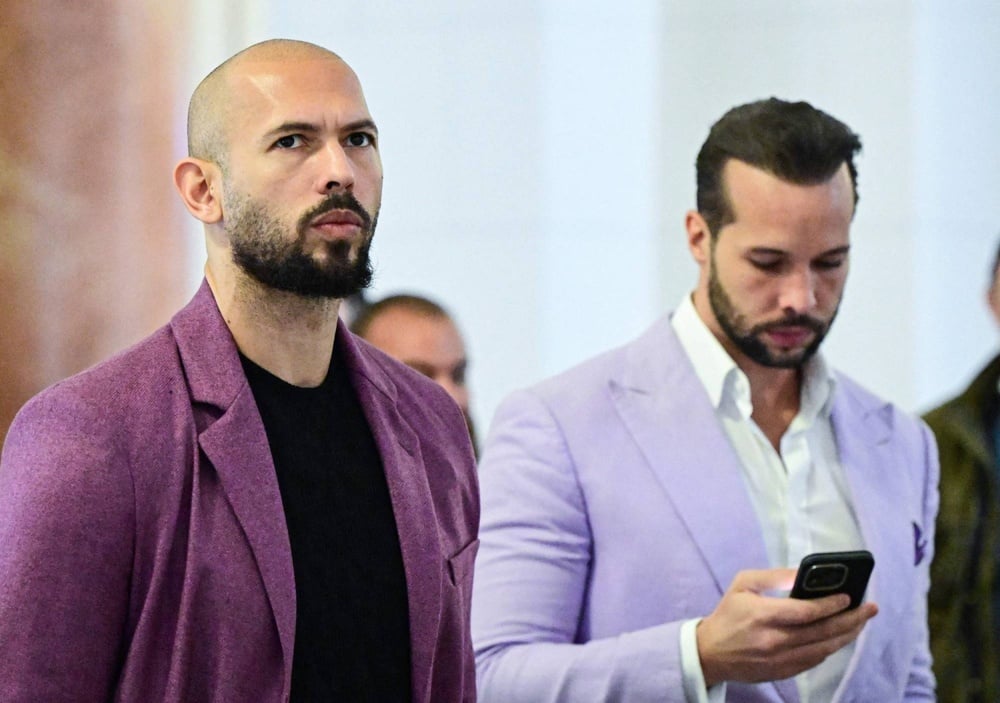
Two influencers were detained by US federal authorities in Miami on a sealed warrant as British prosecutors sought their return to face rape and sex-trafficking charges tied to alleged offenses between 2010 and 2017.
Automated analysis; not human reviewed.
Limitations: Case-specific, two-sentence excerpt; lacks broader context, sourcing, and corrections; alternative interpretations may emerge with additional reporting.
·
8 of 52 available dimensions scored; omitted dimensions are not treated as neutral.
·
Verified supporting quotes for 8 of 8 scored dimensions.
Claim: No detectable liberal or conservative ideological tilt in framing.
“Influencers Andrew and Tristan Tate arrested by federal authorities in Miami.” · exact text match
“Federal authorities detained the influencer brothers on a sealed warrant as British prosecutors sought their return to face rape and sex trafficking charges tied to alleged offenses between 2010 and 2017” · exact text match
Why: Neutral, fact-based framing without ideological language.
Claim: No populist or elitist framing; report focuses on legal action.
“Influencers Andrew and Tristan Tate arrested by federal authorities in Miami.” · exact text match
“Federal authorities detained the influencer brothers on a sealed warrant as British prosecutors sought their return to face rape and sex trafficking charges tied to alleged offenses between 2010 and 2017” · exact text match
Why: No language about 'the people' versus 'elites' or policy advocacy.
Claim: No normative statements about government power; neutral description of state actions.
“Influencers Andrew and Tristan Tate arrested by federal authorities in Miami.” · exact text match
“Federal authorities detained the influencer brothers on a sealed warrant as British prosecutors sought their return to face rape and sex trafficking charges tied to alleged offenses between 2010 and 2017” · exact text match
Why: No advocacy for more or less state control.
Claim: Measurably objective tone; lacks evaluative language.
“Influencers Andrew and Tristan Tate arrested by federal authorities in Miami.” · exact text match
“Federal authorities detained the influencer brothers on a sealed warrant as British prosecutors sought their return to face rape and sex trafficking charges tied to alleged offenses between 2010 and 2017” · exact text match
Why: Descriptive language without subjective judgments.
Claim: Not sensational; uses standard reporting language.
“Influencers Andrew and Tristan Tate arrested by federal authorities in Miami.” · exact text match
“Federal authorities detained the influencer brothers on a sealed warrant as British prosecutors sought their return to face rape and sex trafficking charges tied to alleged offenses between 2010 and 2017” · exact text match
Why: No sensational adjectives or hype.
Claim: No political framing or policy advocacy present.
“Influencers Andrew and Tristan Tate arrested by federal authorities in Miami.” · exact text match
Why: No discussion of policy or political position.
Claim: Moderate credibility; mentions authorities and specific charges but lacks sourcing detail.
“Influencers Andrew and Tristan Tate arrested by federal authorities in Miami.” · exact text match
“Federal authorities detained the influencer brothers on a sealed warrant as British prosecutors sought their return to face rape and sex trafficking charges tied to alleged offenses between 2010 and 2017” · exact text match
Why: Official-sounding terminology supports credibility but no corroborating sources provided.
Claim: No emotional rhetoric; uses formal terms and 'alleged' to denote factual claims.
“Influencers Andrew and Tristan Tate arrested by federal authorities in Miami.” · exact text match
“Federal authorities detained the influencer brothers on a sealed warrant as British prosecutors sought their return to face rape and sex trafficking charges tied to alleged offenses between 2010 and 2017” · exact text match
Why: Formality and caution signals rational reporting.
Two-sentence snippet; no sources; limited context; possible framing unassessed.
Fact-focused, citation-rich reporting on criminal charges against the Tate brothers that relies on official sources and public records, with limited editorializing and brief context about their social media prominence and denials.
Concise, factual context for cross-border criminal justice reporting: Arrests in the US, extradition from the UK, and related charges in Romania and CPS proceedings are described with quotes from official sources.
Automated analysis; not human reviewed.
Limitations: Concise, case-specific limitations and plausible alternative interpretations.
·
47 of 52 available dimensions scored; omitted dimensions are not treated as neutral.
·
Verified supporting quotes for 2 of 47 scored dimensions.
Claim: Neutral reporting with no evident political framing
“The article reports charges and extradition without political opinion: 'UK to seek extradition over sexual exploitation, ‘extreme pornography’ and assault and indecent images of a child'” · not found in supplied text
“The brothers have denied all wrongdoing.” · exact text match
Why: No explicit political slant; relies on official statements.
Claim: No clear populist or elitist framing
“The brothers are described as 'brothers who are social media influencers'” · not found in supplied text
“'proponents of hypermasculinity' is a descriptive label within the context of reporting.” · not found in supplied text
Why: Framing centers on criminal charges and public profile, not populist/elitist politics.
Claim: Noteworthy due to cross-border criminal proceedings and high-profile defendants
“'proponents of hypermasculinity' who have millions of followers” · not found in supplied text
“extradition from the UK” · not found in supplied text
“Romania charges” · not found in supplied text
Why: Cross-border, high-profile case enhances interest.
Claim: Low-level opinion framing through descriptive language
“The article uses the descriptor 'proponents of hypermasculinity'” · not found in supplied text
Why: A single descriptive label offers minor evaluative color.
Claim: Mild political dimension via extradition and cross-border legal actions
“'UK to seek extradition'” · not found in supplied text
“'Romania'” · not found in supplied text
“'extradition'” · not found in supplied text
Why: Legal-process references intersect with politics but are not advocacy.
Claim: Slight pro-establishment tilt via reliance on official institutions
“'Crown Prosecution Service (CPS)'” · not found in supplied text
“'Bedfordshire Police'” · not found in supplied text
“'US Marshals Service'” · not found in supplied text
Why: Citations to official bodies can imply establishment alignment.
Claim: High credibility due to reliance on official sources and direct quotes
“'The Crown Prosecution Service (CPS) said'” · not found in supplied text
“'The US Marshals Service said'” · not found in supplied text
Why: Official sources and named agencies strengthen credibility.
Claim: High integrity due to sourcing from official bodies
“A news release from the Crown Prosecution Service (CPS) said Andrew Tate, 39, had been charged with seven further counts of rape, three counts of arranging or facilitating trafficking for sexual exploitation, three counts of assault occasioning actual bodily harm and 19 additional charges for offences relating to indecent images of a child and extreme pornography.” · exact text match
“These charging decisions followed receipt of a further file of evidence from Bedfordshire Police and bring the total number of alleged victims in this case to seven.” · exact text match
Counterevidence:
“The charges stem from events that allegedly took place from July 2010 to August 2017, the CPS report said.” · exact text match
Why: Official statements support credible reporting.
Claim: Relays substantial factual detail about charges, victims, and cross-border actions
“Andrew Tate, 39, had been charged with seven further counts of rape, three counts of arranging or facilitating trafficking for sexual exploitation, three counts of assault occasioning actual bodily harm and 19 additional charges for offences relating to indecent images of a child and extreme pornography.” · exact text match
“Tristan Tate faces 11 charges including rape, actual bodily harm and human trafficking, with the charges connected to one alleged victim.” · exact text match
Why: Details support a comprehensive factual summary of charges and victims.
Case-specific ambiguities: limited excerpt may omit context
July 19, 2026 · 0 shares
Balanced, evidence-based reporting relies on official sources (DOJ, CPS, AP) and presents both prosecutorial and defense perspectives while contextualizing the Tate brothers' public persona and alleged crimes without endorsing either side.
Report on the Miami arrest of the Tate brothers in connection with extradition to the UK, with CPS updates on additional charges and defense responses.
Automated analysis; not human reviewed.
Limitations: Concise, case-specific limitations and plausible alternative interpretations.
·
52 of 52 available dimensions scored; omitted dimensions are not treated as neutral.
·
Verified supporting quotes for 5 of 52 scored dimensions.
Claim: Measurably neutral political framing; no evident ideological tilt toward liberal or conservative perspectives.
“These arrests were made in accordance with the treaties and law enforcement agreements governing Justice Department extraditions.” · exact text match
“The Crown Prosecution Service, an organization that prosecutes criminal cases in England, said that four more victims of the brothers came forward, announcing further charges of rape, sex trafficking, assault and child/extreme pornography.” · exact text match
“An attorney representing the Tate brothers, Joseph McBride, said in a statement that Andrew and Tristan Tate are innocent, calling the arrests a 'political hit.'” · not found in supplied text
Counterevidence:
“"This extradition demand has one purpose: to kidnap Andrew and Tristan through paperwork before an American jury exposes the truth to the entire world," McBride said in the statement.” · not found in supplied text
“"An attorney representing the Tate brothers, Joseph McBride, said in a statement that Andrew and Tristan Tate are innocent, calling the arrests a 'political hit.'"” · not found in supplied text
Why: Official sourcing and mixed viewpoints suggest balanced framing; defense framing is explicitly cited.
Claim: Slight subjectivity due to descriptive language about the defendants' ideology.
“The former professional kickboxers have amassed a following of fans, particularly young men and boys, by professing a lifestyle of luxury and unapologetic misogyny.” · exact text match
Counterevidence:
“The article presents charges and official statements rather than endorsing them.” · not found in supplied text
Why: Descriptive language about misogyny indicates evaluative framing within a factual report.
Claim: The topic is newsworthy due to high-profile arrests and international extradition.
“"Influencer brothers Andrew and Tristan Tate arrested in Miami for rape and trafficking charges in the UK"” · exact text match
“The incidents allegedly took place between July 2010 and August 2017.” · exact text match
Counterevidence:
“No direct counterevidence in text; neutrally reported.” · not found in supplied text
Why: High-profile criminal case with international dimensions tends to engage readers.
Claim: Frequent reliance on authorities (DOJ, CPS, AP) to corroborate facts.
“The Crown Prosecution Service, an organization that prosecutes criminal cases in England, said that four more victims of the brothers came forward, announcing further charges of rape, sex trafficking, assault and child/extreme pornography.” · exact text match
“Brady McCarron, a spokesperson for the Marshals Service, told The Associated Press that the warrant was sealed.” · exact text match
“According to CPS, Andrew Tate, 39, is facing 'seven more counts of rape, three counts of arranging or facilitating trafficking for sexual exploitation, three counts of assault occasioning actual bodily harm, and 19 additional charges for offenses related to indecent images of a child and extreme pornography.'” · not found in supplied text
Counterevidence:
“"An attorney representing the Tate brothers, Joseph McBride, said in a statement that Andrew and Tristan Tate are innocent, calling the arrests a 'political hit.'"” · not found in supplied text
Why: Authority-driven sourcing is prominent; defense framing provides a counterpoint.
Claim: Negative framing of Tate's ideology via descriptors like misogyny and hypermasculinity.
“The former professional kickboxers have amassed a following of fans, particularly young men and boys, by professing a lifestyle of luxury and unapologetic misogyny.” · exact text match
Counterevidence:
“The article also cites official statements and does not rely on opinion alone.” · not found in supplied text
Why: Descriptive adjectives reflect normative judgments but are anchored in observed context.
Claim: Reporting appears credible due to reliance on official sources and direct quotes.
“These arrests were made in accordance with the treaties and law enforcement agreements governing Justice Department extraditions.” · exact text match
“The Crown Prosecution Service, an organization that prosecutes criminal cases in England, said that four more victims of the brothers came forward, announcing further charges of rape, sex trafficking, assault and child/extreme pornography.” · exact text match
“Brady McCarron, a spokesperson for the Marshals Service, told The Associated Press that the warrant was sealed.” · exact text match
Counterevidence:
“"This extradition demand has one purpose: to kidnap Andrew and Tristan through paperwork before an American jury exposes the truth to the entire world."” · not found in supplied text
Why: Multiple official sources and quotes bolster credibility; counterpoint exists in defense rhetoric.
Claim: Reporting demonstrates fairness by citing official sources and presenting quotes from both sides.
“These arrests were made in accordance with the treaties and law enforcement agreements governing Justice Department extraditions.” · exact text match
“The Crown Prosecution Service, an organization that prosecutes criminal cases in England, said that four more victims of the brothers came forward, announcing further charges of rape, sex trafficking, assault and child/extreme pornography.” · exact text match
“Brady McCarron, a spokesperson for the Marshals Service, told The Associated Press that the warrant was sealed.” · exact text match
Counterevidence:
“"An attorney representing the Tate brothers, Joseph McBride, said in a statement that Andrew and Tristan Tate are innocent, calling the arrests a 'political hit.'"” · not found in supplied text
“"This extradition demand has one purpose: to kidnap Andrew and Tristan through paperwork before an American jury exposes the truth to the entire world."” · not found in supplied text
Why: Diverse sourcing and quotes from both prosecutors and defense support fairness.
Ambiguity: relies on quotes; limited independent verification.
July 19, 2026 · 0 shares
Balanced, evidence-based reporting relies on official sources (DOJ, CPS, AP) and presents both prosecutorial and defense perspectives while contextualizing the Tate brothers' public persona and alleged crimes without endorsing either side.
Report on the Miami arrest of the Tate brothers in connection with extradition to the UK, with CPS updates on additional charges and defense responses.
Automated analysis; not human reviewed.
Limitations: Concise, case-specific limitations and plausible alternative interpretations.
·
52 of 52 available dimensions scored; omitted dimensions are not treated as neutral.
·
Verified supporting quotes for 5 of 52 scored dimensions.
Claim: Measurably neutral political framing; no evident ideological tilt toward liberal or conservative perspectives.
“These arrests were made in accordance with the treaties and law enforcement agreements governing Justice Department extraditions.” · exact text match
“The Crown Prosecution Service, an organization that prosecutes criminal cases in England, said that four more victims of the brothers came forward, announcing further charges of rape, sex trafficking, assault and child/extreme pornography.” · exact text match
“An attorney representing the Tate brothers, Joseph McBride, said in a statement that Andrew and Tristan Tate are innocent, calling the arrests a 'political hit.'” · not found in supplied text
Counterevidence:
“"This extradition demand has one purpose: to kidnap Andrew and Tristan through paperwork before an American jury exposes the truth to the entire world," McBride said in the statement.” · not found in supplied text
“"An attorney representing the Tate brothers, Joseph McBride, said in a statement that Andrew and Tristan Tate are innocent, calling the arrests a 'political hit.'"” · not found in supplied text
Why: Official sourcing and mixed viewpoints suggest balanced framing; defense framing is explicitly cited.
Claim: Slight subjectivity due to descriptive language about the defendants' ideology.
“The former professional kickboxers have amassed a following of fans, particularly young men and boys, by professing a lifestyle of luxury and unapologetic misogyny.” · exact text match
Counterevidence:
“The article presents charges and official statements rather than endorsing them.” · not found in supplied text
Why: Descriptive language about misogyny indicates evaluative framing within a factual report.
Claim: The topic is newsworthy due to high-profile arrests and international extradition.
“"Influencer brothers Andrew and Tristan Tate arrested in Miami for rape and trafficking charges in the UK"” · exact text match
“The incidents allegedly took place between July 2010 and August 2017.” · exact text match
Counterevidence:
“No direct counterevidence in text; neutrally reported.” · not found in supplied text
Why: High-profile criminal case with international dimensions tends to engage readers.
Claim: Frequent reliance on authorities (DOJ, CPS, AP) to corroborate facts.
“The Crown Prosecution Service, an organization that prosecutes criminal cases in England, said that four more victims of the brothers came forward, announcing further charges of rape, sex trafficking, assault and child/extreme pornography.” · exact text match
“Brady McCarron, a spokesperson for the Marshals Service, told The Associated Press that the warrant was sealed.” · exact text match
“According to CPS, Andrew Tate, 39, is facing 'seven more counts of rape, three counts of arranging or facilitating trafficking for sexual exploitation, three counts of assault occasioning actual bodily harm, and 19 additional charges for offenses related to indecent images of a child and extreme pornography.'” · not found in supplied text
Counterevidence:
“"An attorney representing the Tate brothers, Joseph McBride, said in a statement that Andrew and Tristan Tate are innocent, calling the arrests a 'political hit.'"” · not found in supplied text
Why: Authority-driven sourcing is prominent; defense framing provides a counterpoint.
Claim: Negative framing of Tate's ideology via descriptors like misogyny and hypermasculinity.
“The former professional kickboxers have amassed a following of fans, particularly young men and boys, by professing a lifestyle of luxury and unapologetic misogyny.” · exact text match
Counterevidence:
“The article also cites official statements and does not rely on opinion alone.” · not found in supplied text
Why: Descriptive adjectives reflect normative judgments but are anchored in observed context.
Claim: Reporting appears credible due to reliance on official sources and direct quotes.
“These arrests were made in accordance with the treaties and law enforcement agreements governing Justice Department extraditions.” · exact text match
“The Crown Prosecution Service, an organization that prosecutes criminal cases in England, said that four more victims of the brothers came forward, announcing further charges of rape, sex trafficking, assault and child/extreme pornography.” · exact text match
“Brady McCarron, a spokesperson for the Marshals Service, told The Associated Press that the warrant was sealed.” · exact text match
Counterevidence:
“"This extradition demand has one purpose: to kidnap Andrew and Tristan through paperwork before an American jury exposes the truth to the entire world."” · not found in supplied text
Why: Multiple official sources and quotes bolster credibility; counterpoint exists in defense rhetoric.
Claim: Reporting demonstrates fairness by citing official sources and presenting quotes from both sides.
“These arrests were made in accordance with the treaties and law enforcement agreements governing Justice Department extraditions.” · exact text match
“The Crown Prosecution Service, an organization that prosecutes criminal cases in England, said that four more victims of the brothers came forward, announcing further charges of rape, sex trafficking, assault and child/extreme pornography.” · exact text match
“Brady McCarron, a spokesperson for the Marshals Service, told The Associated Press that the warrant was sealed.” · exact text match
Counterevidence:
“"An attorney representing the Tate brothers, Joseph McBride, said in a statement that Andrew and Tristan Tate are innocent, calling the arrests a 'political hit.'"” · not found in supplied text
“"This extradition demand has one purpose: to kidnap Andrew and Tristan through paperwork before an American jury exposes the truth to the entire world."” · not found in supplied text
Why: Diverse sourcing and quotes from both prosecutors and defense support fairness.
Ambiguity: relies on quotes; limited independent verification.
July 19, 2026 · 0 shares
Predominantly critical framing of the Tate brothers, foregrounding arrests, extradition, and multiple allegations while noting their denials and public persona, resulting in a context-rich but negative portrayal.
Miami arrests of the Tate brothers on charges including rape and trafficking, with UK extradition efforts and cross-border investigations in the UK and Romania.
Automated analysis; not human reviewed.
Limitations: Case-specific: relies on quoted material and official statements; alternative interpretations may emphasize different aspects of framing.
·
1 of 52 available dimensions scored; omitted dimensions are not treated as neutral.
·
Verified supporting quotes for 1 of 1 scored dimensions.
Claim: No clear political slant; reporting centers on criminal allegations and official actions.
“The Tates are dual British-U.S. citizens who have been avid supporters of U.S. President Donald Trump.” · exact text match
“The CPS has requested the extradition of the Tates from the U.S.” · exact text match
Counterevidence:
“The article also uses charged descriptors like 'radical' and 'self-professed misogynist' which suggests negative framing of the individual.” · not found in supplied text
Why: Presence of political association exists but is not framed as endorsement; the portrayal centers on charges and legal processes.
Ambiguities include outcome uncertainty; heavy use of descriptors may overstate negative framing; evidence limited to quoted material.
July 19, 2026 · 0 shares
Balanced, evidence-based reporting relies on official sources (DOJ, CPS, AP) and presents both prosecutorial and defense perspectives while contextualizing the Tate brothers' public persona and alleged crimes without endorsing either side.
Report on the Miami arrest of the Tate brothers in connection with extradition to the UK, with CPS updates on additional charges and defense responses.
Automated analysis; not human reviewed.
Limitations: Concise, case-specific limitations and plausible alternative interpretations.
·
52 of 52 available dimensions scored; omitted dimensions are not treated as neutral.
·
Verified supporting quotes for 5 of 52 scored dimensions.
Claim: Measurably neutral political framing; no evident ideological tilt toward liberal or conservative perspectives.
“These arrests were made in accordance with the treaties and law enforcement agreements governing Justice Department extraditions.” · exact text match
“The Crown Prosecution Service, an organization that prosecutes criminal cases in England, said that four more victims of the brothers came forward, announcing further charges of rape, sex trafficking, assault and child/extreme pornography.” · exact text match
“An attorney representing the Tate brothers, Joseph McBride, said in a statement that Andrew and Tristan Tate are innocent, calling the arrests a 'political hit.'” · not found in supplied text
Counterevidence:
“"This extradition demand has one purpose: to kidnap Andrew and Tristan through paperwork before an American jury exposes the truth to the entire world," McBride said in the statement.” · not found in supplied text
“"An attorney representing the Tate brothers, Joseph McBride, said in a statement that Andrew and Tristan Tate are innocent, calling the arrests a 'political hit.'"” · not found in supplied text
Why: Official sourcing and mixed viewpoints suggest balanced framing; defense framing is explicitly cited.
Claim: Slight subjectivity due to descriptive language about the defendants' ideology.
“The former professional kickboxers have amassed a following of fans, particularly young men and boys, by professing a lifestyle of luxury and unapologetic misogyny.” · exact text match
Counterevidence:
“The article presents charges and official statements rather than endorsing them.” · not found in supplied text
Why: Descriptive language about misogyny indicates evaluative framing within a factual report.
Claim: The topic is newsworthy due to high-profile arrests and international extradition.
“"Influencer brothers Andrew and Tristan Tate arrested in Miami for rape and trafficking charges in the UK"” · exact text match
“The incidents allegedly took place between July 2010 and August 2017.” · exact text match
Counterevidence:
“No direct counterevidence in text; neutrally reported.” · not found in supplied text
Why: High-profile criminal case with international dimensions tends to engage readers.
Claim: Frequent reliance on authorities (DOJ, CPS, AP) to corroborate facts.
“The Crown Prosecution Service, an organization that prosecutes criminal cases in England, said that four more victims of the brothers came forward, announcing further charges of rape, sex trafficking, assault and child/extreme pornography.” · exact text match
“Brady McCarron, a spokesperson for the Marshals Service, told The Associated Press that the warrant was sealed.” · exact text match
“According to CPS, Andrew Tate, 39, is facing 'seven more counts of rape, three counts of arranging or facilitating trafficking for sexual exploitation, three counts of assault occasioning actual bodily harm, and 19 additional charges for offenses related to indecent images of a child and extreme pornography.'” · not found in supplied text
Counterevidence:
“"An attorney representing the Tate brothers, Joseph McBride, said in a statement that Andrew and Tristan Tate are innocent, calling the arrests a 'political hit.'"” · not found in supplied text
Why: Authority-driven sourcing is prominent; defense framing provides a counterpoint.
Claim: Negative framing of Tate's ideology via descriptors like misogyny and hypermasculinity.
“The former professional kickboxers have amassed a following of fans, particularly young men and boys, by professing a lifestyle of luxury and unapologetic misogyny.” · exact text match
Counterevidence:
“The article also cites official statements and does not rely on opinion alone.” · not found in supplied text
Why: Descriptive adjectives reflect normative judgments but are anchored in observed context.
Claim: Reporting appears credible due to reliance on official sources and direct quotes.
“These arrests were made in accordance with the treaties and law enforcement agreements governing Justice Department extraditions.” · exact text match
“The Crown Prosecution Service, an organization that prosecutes criminal cases in England, said that four more victims of the brothers came forward, announcing further charges of rape, sex trafficking, assault and child/extreme pornography.” · exact text match
“Brady McCarron, a spokesperson for the Marshals Service, told The Associated Press that the warrant was sealed.” · exact text match
Counterevidence:
“"This extradition demand has one purpose: to kidnap Andrew and Tristan through paperwork before an American jury exposes the truth to the entire world."” · not found in supplied text
Why: Multiple official sources and quotes bolster credibility; counterpoint exists in defense rhetoric.
Claim: Reporting demonstrates fairness by citing official sources and presenting quotes from both sides.
“These arrests were made in accordance with the treaties and law enforcement agreements governing Justice Department extraditions.” · exact text match
“The Crown Prosecution Service, an organization that prosecutes criminal cases in England, said that four more victims of the brothers came forward, announcing further charges of rape, sex trafficking, assault and child/extreme pornography.” · exact text match
“Brady McCarron, a spokesperson for the Marshals Service, told The Associated Press that the warrant was sealed.” · exact text match
Counterevidence:
“"An attorney representing the Tate brothers, Joseph McBride, said in a statement that Andrew and Tristan Tate are innocent, calling the arrests a 'political hit.'"” · not found in supplied text
“"This extradition demand has one purpose: to kidnap Andrew and Tristan through paperwork before an American jury exposes the truth to the entire world."” · not found in supplied text
Why: Diverse sourcing and quotes from both prosecutors and defense support fairness.
Ambiguity: relies on quotes; limited independent verification.
Fact-focused, citation-rich reporting on criminal charges against the Tate brothers that relies on official sources and public records, with limited editorializing and brief context about their social media prominence and denials.
Concise, factual context for cross-border criminal justice reporting: Arrests in the US, extradition from the UK, and related charges in Romania and CPS proceedings are described with quotes from official sources.
Automated analysis; not human reviewed.
Limitations: Concise, case-specific limitations and plausible alternative interpretations.
·
47 of 52 available dimensions scored; omitted dimensions are not treated as neutral.
·
Verified supporting quotes for 2 of 47 scored dimensions.
Claim: Neutral reporting with no evident political framing
“The article reports charges and extradition without political opinion: 'UK to seek extradition over sexual exploitation, ‘extreme pornography’ and assault and indecent images of a child'” · not found in supplied text
“The brothers have denied all wrongdoing.” · exact text match
Why: No explicit political slant; relies on official statements.
Claim: No clear populist or elitist framing
“The brothers are described as 'brothers who are social media influencers'” · not found in supplied text
“'proponents of hypermasculinity' is a descriptive label within the context of reporting.” · not found in supplied text
Why: Framing centers on criminal charges and public profile, not populist/elitist politics.
Claim: Noteworthy due to cross-border criminal proceedings and high-profile defendants
“'proponents of hypermasculinity' who have millions of followers” · not found in supplied text
“extradition from the UK” · not found in supplied text
“Romania charges” · not found in supplied text
Why: Cross-border, high-profile case enhances interest.
Claim: Low-level opinion framing through descriptive language
“The article uses the descriptor 'proponents of hypermasculinity'” · not found in supplied text
Why: A single descriptive label offers minor evaluative color.
Claim: Mild political dimension via extradition and cross-border legal actions
“'UK to seek extradition'” · not found in supplied text
“'Romania'” · not found in supplied text
“'extradition'” · not found in supplied text
Why: Legal-process references intersect with politics but are not advocacy.
Claim: Slight pro-establishment tilt via reliance on official institutions
“'Crown Prosecution Service (CPS)'” · not found in supplied text
“'Bedfordshire Police'” · not found in supplied text
“'US Marshals Service'” · not found in supplied text
Why: Citations to official bodies can imply establishment alignment.
Claim: High credibility due to reliance on official sources and direct quotes
“'The Crown Prosecution Service (CPS) said'” · not found in supplied text
“'The US Marshals Service said'” · not found in supplied text
Why: Official sources and named agencies strengthen credibility.
Claim: High integrity due to sourcing from official bodies
“A news release from the Crown Prosecution Service (CPS) said Andrew Tate, 39, had been charged with seven further counts of rape, three counts of arranging or facilitating trafficking for sexual exploitation, three counts of assault occasioning actual bodily harm and 19 additional charges for offences relating to indecent images of a child and extreme pornography.” · exact text match
“These charging decisions followed receipt of a further file of evidence from Bedfordshire Police and bring the total number of alleged victims in this case to seven.” · exact text match
Counterevidence:
“The charges stem from events that allegedly took place from July 2010 to August 2017, the CPS report said.” · exact text match
Why: Official statements support credible reporting.
Claim: Relays substantial factual detail about charges, victims, and cross-border actions
“Andrew Tate, 39, had been charged with seven further counts of rape, three counts of arranging or facilitating trafficking for sexual exploitation, three counts of assault occasioning actual bodily harm and 19 additional charges for offences relating to indecent images of a child and extreme pornography.” · exact text match
“Tristan Tate faces 11 charges including rape, actual bodily harm and human trafficking, with the charges connected to one alleged victim.” · exact text match
Why: Details support a comprehensive factual summary of charges and victims.
Case-specific ambiguities: limited excerpt may omit context
July 19, 2026 · 0 shares
Strictly factual update with no evident editorial tilt, reporting extradition proceedings and CPS charges.
UK seeks extradition of Andrew Tate and Tristan Tate after arrest in Miami; CPS announces fresh charges of rape and sexual exploitation against social media influencers.
Automated analysis; not human reviewed.
Limitations: Concise, case-specific limitations and plausible alternative interpretations.
·
23 of 52 available dimensions scored; omitted dimensions are not treated as neutral.
·
Verified supporting quotes for 4 of 23 scored dimensions.
Claim: Neutral/0 orientation; no ideologically loaded framing detected.
“UK seeks extradition of Andrew and Tristan Tate after arrest in Miami.” · exact text match
“Crown Prosecution Service announces fresh charges of rape and sexual exploitation against social media influencers” · exact text match
Why: Event-based, neutral wording with official sourcing.
Claim: No populist or elitist framing detected.
“UK seeks extradition of Andrew and Tristan Tate after arrest in Miami.” · exact text match
“Crown Prosecution Service announces fresh charges of rape and sexual exploitation against social media influencers” · exact text match
Why: Framing lacks 'the people' vs 'elites' rhetoric or calls for remedies.
Claim: No libertarian or authoritarian framing detected.
“Crown Prosecution Service announces fresh charges of rape and sexual exploitation against social media influencers” · exact text match
Why: Prosecution by a state body without advocacy of policy expansion or coercion.
Claim: Neutral, objective reporting.
“UK seeks extradition of Andrew Tate and Tristan Tate after arrest in Miami.” · not found in supplied text
Why: Descriptive statements with official sources; no subjective language.
Claim: Neutral political framing.
“UK seeks extradition of Andrew Tate and Tristan Tate after arrest in Miami.” · not found in supplied text
“Crown Prosecution Service announces fresh charges of rape and sexual exploitation against social media influencers” · exact text match
Why: No policy critique or partisan framing.
Claim: No irrational framing; text stays factual.
“Crown Prosecution Service announces fresh charges of rape and sexual exploitation against social media influencers” · exact text match
Why: No speculative language; statements are declarative.
Two-line excerpt; lacks context; bias assessment may be limited.
Fact-focused, citation-rich reporting on criminal charges against the Tate brothers that relies on official sources and public records, with limited editorializing and brief context about their social media prominence and denials.
Concise, factual context for cross-border criminal justice reporting: Arrests in the US, extradition from the UK, and related charges in Romania and CPS proceedings are described with quotes from official sources.
Automated analysis; not human reviewed.
Limitations: Concise, case-specific limitations and plausible alternative interpretations.
·
47 of 52 available dimensions scored; omitted dimensions are not treated as neutral.
·
Verified supporting quotes for 2 of 47 scored dimensions.
Claim: Neutral reporting with no evident political framing
“The article reports charges and extradition without political opinion: 'UK to seek extradition over sexual exploitation, ‘extreme pornography’ and assault and indecent images of a child'” · not found in supplied text
“The brothers have denied all wrongdoing.” · exact text match
Why: No explicit political slant; relies on official statements.
Claim: No clear populist or elitist framing
“The brothers are described as 'brothers who are social media influencers'” · not found in supplied text
“'proponents of hypermasculinity' is a descriptive label within the context of reporting.” · not found in supplied text
Why: Framing centers on criminal charges and public profile, not populist/elitist politics.
Claim: Noteworthy due to cross-border criminal proceedings and high-profile defendants
“'proponents of hypermasculinity' who have millions of followers” · not found in supplied text
“extradition from the UK” · not found in supplied text
“Romania charges” · not found in supplied text
Why: Cross-border, high-profile case enhances interest.
Claim: Low-level opinion framing through descriptive language
“The article uses the descriptor 'proponents of hypermasculinity'” · not found in supplied text
Why: A single descriptive label offers minor evaluative color.
Claim: Mild political dimension via extradition and cross-border legal actions
“'UK to seek extradition'” · not found in supplied text
“'Romania'” · not found in supplied text
“'extradition'” · not found in supplied text
Why: Legal-process references intersect with politics but are not advocacy.
Claim: Slight pro-establishment tilt via reliance on official institutions
“'Crown Prosecution Service (CPS)'” · not found in supplied text
“'Bedfordshire Police'” · not found in supplied text
“'US Marshals Service'” · not found in supplied text
Why: Citations to official bodies can imply establishment alignment.
Claim: High credibility due to reliance on official sources and direct quotes
“'The Crown Prosecution Service (CPS) said'” · not found in supplied text
“'The US Marshals Service said'” · not found in supplied text
Why: Official sources and named agencies strengthen credibility.
Claim: High integrity due to sourcing from official bodies
“A news release from the Crown Prosecution Service (CPS) said Andrew Tate, 39, had been charged with seven further counts of rape, three counts of arranging or facilitating trafficking for sexual exploitation, three counts of assault occasioning actual bodily harm and 19 additional charges for offences relating to indecent images of a child and extreme pornography.” · exact text match
“These charging decisions followed receipt of a further file of evidence from Bedfordshire Police and bring the total number of alleged victims in this case to seven.” · exact text match
Counterevidence:
“The charges stem from events that allegedly took place from July 2010 to August 2017, the CPS report said.” · exact text match
Why: Official statements support credible reporting.
Claim: Relays substantial factual detail about charges, victims, and cross-border actions
“Andrew Tate, 39, had been charged with seven further counts of rape, three counts of arranging or facilitating trafficking for sexual exploitation, three counts of assault occasioning actual bodily harm and 19 additional charges for offences relating to indecent images of a child and extreme pornography.” · exact text match
“Tristan Tate faces 11 charges including rape, actual bodily harm and human trafficking, with the charges connected to one alleged victim.” · exact text match
Why: Details support a comprehensive factual summary of charges and victims.
Case-specific ambiguities: limited excerpt may omit context
Fact-focused, citation-rich reporting on criminal charges against the Tate brothers that relies on official sources and public records, with limited editorializing and brief context about their social media prominence and denials.
Concise, factual context for cross-border criminal justice reporting: Arrests in the US, extradition from the UK, and related charges in Romania and CPS proceedings are described with quotes from official sources.
Automated analysis; not human reviewed.
Limitations: Concise, case-specific limitations and plausible alternative interpretations.
·
47 of 52 available dimensions scored; omitted dimensions are not treated as neutral.
·
Verified supporting quotes for 2 of 47 scored dimensions.
Claim: Neutral reporting with no evident political framing
“The article reports charges and extradition without political opinion: 'UK to seek extradition over sexual exploitation, ‘extreme pornography’ and assault and indecent images of a child'” · not found in supplied text
“The brothers have denied all wrongdoing.” · exact text match
Why: No explicit political slant; relies on official statements.
Claim: No clear populist or elitist framing
“The brothers are described as 'brothers who are social media influencers'” · not found in supplied text
“'proponents of hypermasculinity' is a descriptive label within the context of reporting.” · not found in supplied text
Why: Framing centers on criminal charges and public profile, not populist/elitist politics.
Claim: Noteworthy due to cross-border criminal proceedings and high-profile defendants
“'proponents of hypermasculinity' who have millions of followers” · not found in supplied text
“extradition from the UK” · not found in supplied text
“Romania charges” · not found in supplied text
Why: Cross-border, high-profile case enhances interest.
Claim: Low-level opinion framing through descriptive language
“The article uses the descriptor 'proponents of hypermasculinity'” · not found in supplied text
Why: A single descriptive label offers minor evaluative color.
Claim: Mild political dimension via extradition and cross-border legal actions
“'UK to seek extradition'” · not found in supplied text
“'Romania'” · not found in supplied text
“'extradition'” · not found in supplied text
Why: Legal-process references intersect with politics but are not advocacy.
Claim: Slight pro-establishment tilt via reliance on official institutions
“'Crown Prosecution Service (CPS)'” · not found in supplied text
“'Bedfordshire Police'” · not found in supplied text
“'US Marshals Service'” · not found in supplied text
Why: Citations to official bodies can imply establishment alignment.
Claim: High credibility due to reliance on official sources and direct quotes
“'The Crown Prosecution Service (CPS) said'” · not found in supplied text
“'The US Marshals Service said'” · not found in supplied text
Why: Official sources and named agencies strengthen credibility.
Claim: High integrity due to sourcing from official bodies
“A news release from the Crown Prosecution Service (CPS) said Andrew Tate, 39, had been charged with seven further counts of rape, three counts of arranging or facilitating trafficking for sexual exploitation, three counts of assault occasioning actual bodily harm and 19 additional charges for offences relating to indecent images of a child and extreme pornography.” · exact text match
“These charging decisions followed receipt of a further file of evidence from Bedfordshire Police and bring the total number of alleged victims in this case to seven.” · exact text match
Counterevidence:
“The charges stem from events that allegedly took place from July 2010 to August 2017, the CPS report said.” · exact text match
Why: Official statements support credible reporting.
Claim: Relays substantial factual detail about charges, victims, and cross-border actions
“Andrew Tate, 39, had been charged with seven further counts of rape, three counts of arranging or facilitating trafficking for sexual exploitation, three counts of assault occasioning actual bodily harm and 19 additional charges for offences relating to indecent images of a child and extreme pornography.” · exact text match
“Tristan Tate faces 11 charges including rape, actual bodily harm and human trafficking, with the charges connected to one alleged victim.” · exact text match
Why: Details support a comprehensive factual summary of charges and victims.
Case-specific ambiguities: limited excerpt may omit context
July 19, 2026 · 0 shares
Balanced, evidence-based reporting relies on official sources (DOJ, CPS, AP) and presents both prosecutorial and defense perspectives while contextualizing the Tate brothers' public persona and alleged crimes without endorsing either side.
Report on the Miami arrest of the Tate brothers in connection with extradition to the UK, with CPS updates on additional charges and defense responses.
Automated analysis; not human reviewed.
Limitations: Concise, case-specific limitations and plausible alternative interpretations.
·
52 of 52 available dimensions scored; omitted dimensions are not treated as neutral.
·
Verified supporting quotes for 5 of 52 scored dimensions.
Claim: Measurably neutral political framing; no evident ideological tilt toward liberal or conservative perspectives.
“These arrests were made in accordance with the treaties and law enforcement agreements governing Justice Department extraditions.” · exact text match
“The Crown Prosecution Service, an organization that prosecutes criminal cases in England, said that four more victims of the brothers came forward, announcing further charges of rape, sex trafficking, assault and child/extreme pornography.” · exact text match
“An attorney representing the Tate brothers, Joseph McBride, said in a statement that Andrew and Tristan Tate are innocent, calling the arrests a 'political hit.'” · not found in supplied text
Counterevidence:
“"This extradition demand has one purpose: to kidnap Andrew and Tristan through paperwork before an American jury exposes the truth to the entire world," McBride said in the statement.” · not found in supplied text
“"An attorney representing the Tate brothers, Joseph McBride, said in a statement that Andrew and Tristan Tate are innocent, calling the arrests a 'political hit.'"” · not found in supplied text
Why: Official sourcing and mixed viewpoints suggest balanced framing; defense framing is explicitly cited.
Claim: Slight subjectivity due to descriptive language about the defendants' ideology.
“The former professional kickboxers have amassed a following of fans, particularly young men and boys, by professing a lifestyle of luxury and unapologetic misogyny.” · exact text match
Counterevidence:
“The article presents charges and official statements rather than endorsing them.” · not found in supplied text
Why: Descriptive language about misogyny indicates evaluative framing within a factual report.
Claim: The topic is newsworthy due to high-profile arrests and international extradition.
“"Influencer brothers Andrew and Tristan Tate arrested in Miami for rape and trafficking charges in the UK"” · exact text match
“The incidents allegedly took place between July 2010 and August 2017.” · exact text match
Counterevidence:
“No direct counterevidence in text; neutrally reported.” · not found in supplied text
Why: High-profile criminal case with international dimensions tends to engage readers.
Claim: Frequent reliance on authorities (DOJ, CPS, AP) to corroborate facts.
“The Crown Prosecution Service, an organization that prosecutes criminal cases in England, said that four more victims of the brothers came forward, announcing further charges of rape, sex trafficking, assault and child/extreme pornography.” · exact text match
“Brady McCarron, a spokesperson for the Marshals Service, told The Associated Press that the warrant was sealed.” · exact text match
“According to CPS, Andrew Tate, 39, is facing 'seven more counts of rape, three counts of arranging or facilitating trafficking for sexual exploitation, three counts of assault occasioning actual bodily harm, and 19 additional charges for offenses related to indecent images of a child and extreme pornography.'” · not found in supplied text
Counterevidence:
“"An attorney representing the Tate brothers, Joseph McBride, said in a statement that Andrew and Tristan Tate are innocent, calling the arrests a 'political hit.'"” · not found in supplied text
Why: Authority-driven sourcing is prominent; defense framing provides a counterpoint.
Claim: Negative framing of Tate's ideology via descriptors like misogyny and hypermasculinity.
“The former professional kickboxers have amassed a following of fans, particularly young men and boys, by professing a lifestyle of luxury and unapologetic misogyny.” · exact text match
Counterevidence:
“The article also cites official statements and does not rely on opinion alone.” · not found in supplied text
Why: Descriptive adjectives reflect normative judgments but are anchored in observed context.
Claim: Reporting appears credible due to reliance on official sources and direct quotes.
“These arrests were made in accordance with the treaties and law enforcement agreements governing Justice Department extraditions.” · exact text match
“The Crown Prosecution Service, an organization that prosecutes criminal cases in England, said that four more victims of the brothers came forward, announcing further charges of rape, sex trafficking, assault and child/extreme pornography.” · exact text match
“Brady McCarron, a spokesperson for the Marshals Service, told The Associated Press that the warrant was sealed.” · exact text match
Counterevidence:
“"This extradition demand has one purpose: to kidnap Andrew and Tristan through paperwork before an American jury exposes the truth to the entire world."” · not found in supplied text
Why: Multiple official sources and quotes bolster credibility; counterpoint exists in defense rhetoric.
Claim: Reporting demonstrates fairness by citing official sources and presenting quotes from both sides.
“These arrests were made in accordance with the treaties and law enforcement agreements governing Justice Department extraditions.” · exact text match
“The Crown Prosecution Service, an organization that prosecutes criminal cases in England, said that four more victims of the brothers came forward, announcing further charges of rape, sex trafficking, assault and child/extreme pornography.” · exact text match
“Brady McCarron, a spokesperson for the Marshals Service, told The Associated Press that the warrant was sealed.” · exact text match
Counterevidence:
“"An attorney representing the Tate brothers, Joseph McBride, said in a statement that Andrew and Tristan Tate are innocent, calling the arrests a 'political hit.'"” · not found in supplied text
“"This extradition demand has one purpose: to kidnap Andrew and Tristan through paperwork before an American jury exposes the truth to the entire world."” · not found in supplied text
Why: Diverse sourcing and quotes from both prosecutors and defense support fairness.
Ambiguity: relies on quotes; limited independent verification.
Fact-focused, citation-rich reporting on criminal charges against the Tate brothers that relies on official sources and public records, with limited editorializing and brief context about their social media prominence and denials.
Concise, factual context for cross-border criminal justice reporting: Arrests in the US, extradition from the UK, and related charges in Romania and CPS proceedings are described with quotes from official sources.
Automated analysis; not human reviewed.
Limitations: Concise, case-specific limitations and plausible alternative interpretations.
·
47 of 52 available dimensions scored; omitted dimensions are not treated as neutral.
·
Verified supporting quotes for 2 of 47 scored dimensions.
Claim: Neutral reporting with no evident political framing
“The article reports charges and extradition without political opinion: 'UK to seek extradition over sexual exploitation, ‘extreme pornography’ and assault and indecent images of a child'” · not found in supplied text
“The brothers have denied all wrongdoing.” · exact text match
Why: No explicit political slant; relies on official statements.
Claim: No clear populist or elitist framing
“The brothers are described as 'brothers who are social media influencers'” · not found in supplied text
“'proponents of hypermasculinity' is a descriptive label within the context of reporting.” · not found in supplied text
Why: Framing centers on criminal charges and public profile, not populist/elitist politics.
Claim: Noteworthy due to cross-border criminal proceedings and high-profile defendants
“'proponents of hypermasculinity' who have millions of followers” · not found in supplied text
“extradition from the UK” · not found in supplied text
“Romania charges” · not found in supplied text
Why: Cross-border, high-profile case enhances interest.
Claim: Low-level opinion framing through descriptive language
“The article uses the descriptor 'proponents of hypermasculinity'” · not found in supplied text
Why: A single descriptive label offers minor evaluative color.
Claim: Mild political dimension via extradition and cross-border legal actions
“'UK to seek extradition'” · not found in supplied text
“'Romania'” · not found in supplied text
“'extradition'” · not found in supplied text
Why: Legal-process references intersect with politics but are not advocacy.
Claim: Slight pro-establishment tilt via reliance on official institutions
“'Crown Prosecution Service (CPS)'” · not found in supplied text
“'Bedfordshire Police'” · not found in supplied text
“'US Marshals Service'” · not found in supplied text
Why: Citations to official bodies can imply establishment alignment.
Claim: High credibility due to reliance on official sources and direct quotes
“'The Crown Prosecution Service (CPS) said'” · not found in supplied text
“'The US Marshals Service said'” · not found in supplied text
Why: Official sources and named agencies strengthen credibility.
Claim: High integrity due to sourcing from official bodies
“A news release from the Crown Prosecution Service (CPS) said Andrew Tate, 39, had been charged with seven further counts of rape, three counts of arranging or facilitating trafficking for sexual exploitation, three counts of assault occasioning actual bodily harm and 19 additional charges for offences relating to indecent images of a child and extreme pornography.” · exact text match
“These charging decisions followed receipt of a further file of evidence from Bedfordshire Police and bring the total number of alleged victims in this case to seven.” · exact text match
Counterevidence:
“The charges stem from events that allegedly took place from July 2010 to August 2017, the CPS report said.” · exact text match
Why: Official statements support credible reporting.
Claim: Relays substantial factual detail about charges, victims, and cross-border actions
“Andrew Tate, 39, had been charged with seven further counts of rape, three counts of arranging or facilitating trafficking for sexual exploitation, three counts of assault occasioning actual bodily harm and 19 additional charges for offences relating to indecent images of a child and extreme pornography.” · exact text match
“Tristan Tate faces 11 charges including rape, actual bodily harm and human trafficking, with the charges connected to one alleged victim.” · exact text match
Why: Details support a comprehensive factual summary of charges and victims.
Case-specific ambiguities: limited excerpt may omit context
Crime-coverage framing emphasizes charges and law-enforcement sources, foregrounding alleged misconduct and defense denial while offering little context beyond official proceedings.
Two high-profile internet personalities were arrested on rape and sex-trafficking charges in Miami as part of an international extradition process, with their past arrest in Romania noted and UK charges included.
Automated analysis; not human reviewed.
Limitations: Concise, case-specific limitations and plausible alternative interpretations.
·
51 of 52 available dimensions scored; omitted dimensions are not treated as neutral.
·
Verified supporting quotes for 0 of 51 scored dimensions.
Claim: Article does not reveal political leaning; uses misogyny language but not political alignment.
“Influencer brothers Andrew and Tristan Tate, whose social media empire promoting wealth, male dominance and misogyny has made them among the world’s most polarising internet personalities.” · not found in supplied text
Counterevidence:
“British prosecutors announced on Saturday that they were seeking the brothers’ extradition on charges alleging they raped and trafficked women between 2010 and 2017.” · exact text match
Why: Labeling misogyny suggests normative judgments, but no clear political alignment.
Claim: Misogyny descriptor reflects normative judgement.
“"a social media empire promoting wealth, male dominance and misogyny"” · not found in supplied text
Counterevidence:
“"the charges"” · not found in supplied text
“"they denied the allegations"” · not found in supplied text
Why: Normative language indicates opinionated framing.
Claim: Heavy reliance on state and law-enforcement sources; frames within extradition context.
“"The brothers were taken into custody by the US Marshals Service on a sealed warrant, agency spokesman Brady McCarron said"” · not found in supplied text
“"British prosecutors announced on Saturday that they were seeking the brothers’ extradition on charges alleging they raped and trafficked women between 2010 and 2017."” · exact text match
“"The brothers are expected to appear in Miami’s federal court early next week"” · not found in supplied text
Counterevidence:
“"Their lawyers had said they denied the allegations."” · not found in supplied text
Why: Prominence of official sources suggests establishment-leaning framing.
Claim: Descriptive terms tied to misogyny and polarisation evoke emotion.
“"social media empire promoting wealth, male dominance and misogyny"” · not found in supplied text
Counterevidence:
“"they denied the allegations"” · not found in supplied text
Why: Emotional language coexists with neutral facts.
Claim: Informational richness: charges, dates, jurisdictions, and hearing status.
“"rape and sex trafficking charges"” · not found in supplied text
“"arrested in Romania in 2022"” · not found in supplied text
“"appear in Miami’s federal court early next week"” · not found in supplied text
Counterevidence:
“"an anonymous source"” · not found in supplied text
Why: Multiple concrete data points support information value; anonymity introduces some uncertainty.
Ambiguity about neutral framing; defense quotes limited; international case complexity.
July 19, 2026 · 0 shares
Neutral, fact-based framing with no apparent political or ideological tilt; reports arrests, a sealed warrant, and charges without commentary.
Two influencers were detained by US federal authorities in Miami on a sealed warrant as British prosecutors sought their return to face rape and sex-trafficking charges tied to alleged offenses between 2010 and 2017.
Automated analysis; not human reviewed.
Limitations: Case-specific, two-sentence excerpt; lacks broader context, sourcing, and corrections; alternative interpretations may emerge with additional reporting.
·
8 of 52 available dimensions scored; omitted dimensions are not treated as neutral.
·
Verified supporting quotes for 8 of 8 scored dimensions.
Claim: No detectable liberal or conservative ideological tilt in framing.
“Influencers Andrew and Tristan Tate arrested by federal authorities in Miami.” · exact text match
“Federal authorities detained the influencer brothers on a sealed warrant as British prosecutors sought their return to face rape and sex trafficking charges tied to alleged offenses between 2010 and 2017” · exact text match
Why: Neutral, fact-based framing without ideological language.
Claim: No populist or elitist framing; report focuses on legal action.
“Influencers Andrew and Tristan Tate arrested by federal authorities in Miami.” · exact text match
“Federal authorities detained the influencer brothers on a sealed warrant as British prosecutors sought their return to face rape and sex trafficking charges tied to alleged offenses between 2010 and 2017” · exact text match
Why: No language about 'the people' versus 'elites' or policy advocacy.
Claim: No normative statements about government power; neutral description of state actions.
“Influencers Andrew and Tristan Tate arrested by federal authorities in Miami.” · exact text match
“Federal authorities detained the influencer brothers on a sealed warrant as British prosecutors sought their return to face rape and sex trafficking charges tied to alleged offenses between 2010 and 2017” · exact text match
Why: No advocacy for more or less state control.
Claim: Measurably objective tone; lacks evaluative language.
“Influencers Andrew and Tristan Tate arrested by federal authorities in Miami.” · exact text match
“Federal authorities detained the influencer brothers on a sealed warrant as British prosecutors sought their return to face rape and sex trafficking charges tied to alleged offenses between 2010 and 2017” · exact text match
Why: Descriptive language without subjective judgments.
Claim: Not sensational; uses standard reporting language.
“Influencers Andrew and Tristan Tate arrested by federal authorities in Miami.” · exact text match
“Federal authorities detained the influencer brothers on a sealed warrant as British prosecutors sought their return to face rape and sex trafficking charges tied to alleged offenses between 2010 and 2017” · exact text match
Why: No sensational adjectives or hype.
Claim: No political framing or policy advocacy present.
“Influencers Andrew and Tristan Tate arrested by federal authorities in Miami.” · exact text match
Why: No discussion of policy or political position.
Claim: Moderate credibility; mentions authorities and specific charges but lacks sourcing detail.
“Influencers Andrew and Tristan Tate arrested by federal authorities in Miami.” · exact text match
“Federal authorities detained the influencer brothers on a sealed warrant as British prosecutors sought their return to face rape and sex trafficking charges tied to alleged offenses between 2010 and 2017” · exact text match
Why: Official-sounding terminology supports credibility but no corroborating sources provided.
Claim: No emotional rhetoric; uses formal terms and 'alleged' to denote factual claims.
“Influencers Andrew and Tristan Tate arrested by federal authorities in Miami.” · exact text match
“Federal authorities detained the influencer brothers on a sealed warrant as British prosecutors sought their return to face rape and sex trafficking charges tied to alleged offenses between 2010 and 2017” · exact text match
Why: Formality and caution signals rational reporting.
Two-sentence snippet; no sources; limited context; possible framing unassessed.
July 19, 2026 · 0 shares
Balanced, evidence-based reporting relies on official sources (DOJ, CPS, AP) and presents both prosecutorial and defense perspectives while contextualizing the Tate brothers' public persona and alleged crimes without endorsing either side.
Report on the Miami arrest of the Tate brothers in connection with extradition to the UK, with CPS updates on additional charges and defense responses.
Automated analysis; not human reviewed.
Limitations: Concise, case-specific limitations and plausible alternative interpretations.
·
52 of 52 available dimensions scored; omitted dimensions are not treated as neutral.
·
Verified supporting quotes for 5 of 52 scored dimensions.
Claim: Measurably neutral political framing; no evident ideological tilt toward liberal or conservative perspectives.
“These arrests were made in accordance with the treaties and law enforcement agreements governing Justice Department extraditions.” · exact text match
“The Crown Prosecution Service, an organization that prosecutes criminal cases in England, said that four more victims of the brothers came forward, announcing further charges of rape, sex trafficking, assault and child/extreme pornography.” · exact text match
“An attorney representing the Tate brothers, Joseph McBride, said in a statement that Andrew and Tristan Tate are innocent, calling the arrests a 'political hit.'” · not found in supplied text
Counterevidence:
“"This extradition demand has one purpose: to kidnap Andrew and Tristan through paperwork before an American jury exposes the truth to the entire world," McBride said in the statement.” · not found in supplied text
“"An attorney representing the Tate brothers, Joseph McBride, said in a statement that Andrew and Tristan Tate are innocent, calling the arrests a 'political hit.'"” · not found in supplied text
Why: Official sourcing and mixed viewpoints suggest balanced framing; defense framing is explicitly cited.
Claim: Slight subjectivity due to descriptive language about the defendants' ideology.
“The former professional kickboxers have amassed a following of fans, particularly young men and boys, by professing a lifestyle of luxury and unapologetic misogyny.” · exact text match
Counterevidence:
“The article presents charges and official statements rather than endorsing them.” · not found in supplied text
Why: Descriptive language about misogyny indicates evaluative framing within a factual report.
Claim: The topic is newsworthy due to high-profile arrests and international extradition.
“"Influencer brothers Andrew and Tristan Tate arrested in Miami for rape and trafficking charges in the UK"” · exact text match
“The incidents allegedly took place between July 2010 and August 2017.” · exact text match
Counterevidence:
“No direct counterevidence in text; neutrally reported.” · not found in supplied text
Why: High-profile criminal case with international dimensions tends to engage readers.
Claim: Frequent reliance on authorities (DOJ, CPS, AP) to corroborate facts.
“The Crown Prosecution Service, an organization that prosecutes criminal cases in England, said that four more victims of the brothers came forward, announcing further charges of rape, sex trafficking, assault and child/extreme pornography.” · exact text match
“Brady McCarron, a spokesperson for the Marshals Service, told The Associated Press that the warrant was sealed.” · exact text match
“According to CPS, Andrew Tate, 39, is facing 'seven more counts of rape, three counts of arranging or facilitating trafficking for sexual exploitation, three counts of assault occasioning actual bodily harm, and 19 additional charges for offenses related to indecent images of a child and extreme pornography.'” · not found in supplied text
Counterevidence:
“"An attorney representing the Tate brothers, Joseph McBride, said in a statement that Andrew and Tristan Tate are innocent, calling the arrests a 'political hit.'"” · not found in supplied text
Why: Authority-driven sourcing is prominent; defense framing provides a counterpoint.
Claim: Negative framing of Tate's ideology via descriptors like misogyny and hypermasculinity.
“The former professional kickboxers have amassed a following of fans, particularly young men and boys, by professing a lifestyle of luxury and unapologetic misogyny.” · exact text match
Counterevidence:
“The article also cites official statements and does not rely on opinion alone.” · not found in supplied text
Why: Descriptive adjectives reflect normative judgments but are anchored in observed context.
Claim: Reporting appears credible due to reliance on official sources and direct quotes.
“These arrests were made in accordance with the treaties and law enforcement agreements governing Justice Department extraditions.” · exact text match
“The Crown Prosecution Service, an organization that prosecutes criminal cases in England, said that four more victims of the brothers came forward, announcing further charges of rape, sex trafficking, assault and child/extreme pornography.” · exact text match
“Brady McCarron, a spokesperson for the Marshals Service, told The Associated Press that the warrant was sealed.” · exact text match
Counterevidence:
“"This extradition demand has one purpose: to kidnap Andrew and Tristan through paperwork before an American jury exposes the truth to the entire world."” · not found in supplied text
Why: Multiple official sources and quotes bolster credibility; counterpoint exists in defense rhetoric.
Claim: Reporting demonstrates fairness by citing official sources and presenting quotes from both sides.
“These arrests were made in accordance with the treaties and law enforcement agreements governing Justice Department extraditions.” · exact text match
“The Crown Prosecution Service, an organization that prosecutes criminal cases in England, said that four more victims of the brothers came forward, announcing further charges of rape, sex trafficking, assault and child/extreme pornography.” · exact text match
“Brady McCarron, a spokesperson for the Marshals Service, told The Associated Press that the warrant was sealed.” · exact text match
Counterevidence:
“"An attorney representing the Tate brothers, Joseph McBride, said in a statement that Andrew and Tristan Tate are innocent, calling the arrests a 'political hit.'"” · not found in supplied text
“"This extradition demand has one purpose: to kidnap Andrew and Tristan through paperwork before an American jury exposes the truth to the entire world."” · not found in supplied text
Why: Diverse sourcing and quotes from both prosecutors and defense support fairness.
Ambiguity: relies on quotes; limited independent verification.
July 19, 2026 · 0 shares
Balanced, evidence-based reporting relies on official sources (DOJ, CPS, AP) and presents both prosecutorial and defense perspectives while contextualizing the Tate brothers' public persona and alleged crimes without endorsing either side.
Report on the Miami arrest of the Tate brothers in connection with extradition to the UK, with CPS updates on additional charges and defense responses.
Automated analysis; not human reviewed. Limitations: Concise, case-specific limitations and plausible alternative interpretations. · 52 of 52 available dimensions scored; omitted dimensions are not treated as neutral. · Verified supporting quotes for 5 of 52 scored dimensions.
Claim: Measurably neutral political framing; no evident ideological tilt toward liberal or conservative perspectives.
“These arrests were made in accordance with the treaties and law enforcement agreements governing Justice Department extraditions.” · exact text match
“The Crown Prosecution Service, an organization that prosecutes criminal cases in England, said that four more victims of the brothers came forward, announcing further charges of rape, sex trafficking, assault and child/extreme pornography.” · exact text match
“An attorney representing the Tate brothers, Joseph McBride, said in a statement that Andrew and Tristan Tate are innocent, calling the arrests a 'political hit.'” · not found in supplied text
Counterevidence:
“"This extradition demand has one purpose: to kidnap Andrew and Tristan through paperwork before an American jury exposes the truth to the entire world," McBride said in the statement.” · not found in supplied text
“"An attorney representing the Tate brothers, Joseph McBride, said in a statement that Andrew and Tristan Tate are innocent, calling the arrests a 'political hit.'"” · not found in supplied text
Why: Official sourcing and mixed viewpoints suggest balanced framing; defense framing is explicitly cited.
Claim: Slight subjectivity due to descriptive language about the defendants' ideology.
“The former professional kickboxers have amassed a following of fans, particularly young men and boys, by professing a lifestyle of luxury and unapologetic misogyny.” · exact text match
Counterevidence:
“The article presents charges and official statements rather than endorsing them.” · not found in supplied text
Why: Descriptive language about misogyny indicates evaluative framing within a factual report.
Claim: The topic is newsworthy due to high-profile arrests and international extradition.
“"Influencer brothers Andrew and Tristan Tate arrested in Miami for rape and trafficking charges in the UK"” · exact text match
“The incidents allegedly took place between July 2010 and August 2017.” · exact text match
Counterevidence:
“No direct counterevidence in text; neutrally reported.” · not found in supplied text
Why: High-profile criminal case with international dimensions tends to engage readers.
Claim: Frequent reliance on authorities (DOJ, CPS, AP) to corroborate facts.
“The Crown Prosecution Service, an organization that prosecutes criminal cases in England, said that four more victims of the brothers came forward, announcing further charges of rape, sex trafficking, assault and child/extreme pornography.” · exact text match
“Brady McCarron, a spokesperson for the Marshals Service, told The Associated Press that the warrant was sealed.” · exact text match
“According to CPS, Andrew Tate, 39, is facing 'seven more counts of rape, three counts of arranging or facilitating trafficking for sexual exploitation, three counts of assault occasioning actual bodily harm, and 19 additional charges for offenses related to indecent images of a child and extreme pornography.'” · not found in supplied text
Counterevidence:
“"An attorney representing the Tate brothers, Joseph McBride, said in a statement that Andrew and Tristan Tate are innocent, calling the arrests a 'political hit.'"” · not found in supplied text
Why: Authority-driven sourcing is prominent; defense framing provides a counterpoint.
Claim: Negative framing of Tate's ideology via descriptors like misogyny and hypermasculinity.
“The former professional kickboxers have amassed a following of fans, particularly young men and boys, by professing a lifestyle of luxury and unapologetic misogyny.” · exact text match
Counterevidence:
“The article also cites official statements and does not rely on opinion alone.” · not found in supplied text
Why: Descriptive adjectives reflect normative judgments but are anchored in observed context.
Claim: Reporting appears credible due to reliance on official sources and direct quotes.
“These arrests were made in accordance with the treaties and law enforcement agreements governing Justice Department extraditions.” · exact text match
“The Crown Prosecution Service, an organization that prosecutes criminal cases in England, said that four more victims of the brothers came forward, announcing further charges of rape, sex trafficking, assault and child/extreme pornography.” · exact text match
“Brady McCarron, a spokesperson for the Marshals Service, told The Associated Press that the warrant was sealed.” · exact text match
Counterevidence:
“"This extradition demand has one purpose: to kidnap Andrew and Tristan through paperwork before an American jury exposes the truth to the entire world."” · not found in supplied text
Why: Multiple official sources and quotes bolster credibility; counterpoint exists in defense rhetoric.
Claim: Reporting demonstrates fairness by citing official sources and presenting quotes from both sides.
“These arrests were made in accordance with the treaties and law enforcement agreements governing Justice Department extraditions.” · exact text match
“The Crown Prosecution Service, an organization that prosecutes criminal cases in England, said that four more victims of the brothers came forward, announcing further charges of rape, sex trafficking, assault and child/extreme pornography.” · exact text match
“Brady McCarron, a spokesperson for the Marshals Service, told The Associated Press that the warrant was sealed.” · exact text match
Counterevidence:
“"An attorney representing the Tate brothers, Joseph McBride, said in a statement that Andrew and Tristan Tate are innocent, calling the arrests a 'political hit.'"” · not found in supplied text
“"This extradition demand has one purpose: to kidnap Andrew and Tristan through paperwork before an American jury exposes the truth to the entire world."” · not found in supplied text
Why: Diverse sourcing and quotes from both prosecutors and defense support fairness.
Ambiguity: relies on quotes; limited independent verification.
July 19, 2026 · 0 shares
Predominantly critical framing of the Tate brothers, foregrounding arrests, extradition, and multiple allegations while noting their denials and public persona, resulting in a context-rich but negative portrayal.
Miami arrests of the Tate brothers on charges including rape and trafficking, with UK extradition efforts and cross-border investigations in the UK and Romania.
Automated analysis; not human reviewed. Limitations: Case-specific: relies on quoted material and official statements; alternative interpretations may emphasize different aspects of framing. · 1 of 52 available dimensions scored; omitted dimensions are not treated as neutral. · Verified supporting quotes for 1 of 1 scored dimensions.
Claim: No clear political slant; reporting centers on criminal allegations and official actions.
“The Tates are dual British-U.S. citizens who have been avid supporters of U.S. President Donald Trump.” · exact text match
“The CPS has requested the extradition of the Tates from the U.S.” · exact text match
Counterevidence:
“The article also uses charged descriptors like 'radical' and 'self-professed misogynist' which suggests negative framing of the individual.” · not found in supplied text
Why: Presence of political association exists but is not framed as endorsement; the portrayal centers on charges and legal processes.
Ambiguities include outcome uncertainty; heavy use of descriptors may overstate negative framing; evidence limited to quoted material.
July 19, 2026 · 0 shares
Neutral, fact-based framing with no apparent political or ideological tilt; reports arrests, a sealed warrant, and charges without commentary.
Two influencers were detained by US federal authorities in Miami on a sealed warrant as British prosecutors sought their return to face rape and sex-trafficking charges tied to alleged offenses between 2010 and 2017.
Automated analysis; not human reviewed. Limitations: Case-specific, two-sentence excerpt; lacks broader context, sourcing, and corrections; alternative interpretations may emerge with additional reporting. · 8 of 52 available dimensions scored; omitted dimensions are not treated as neutral. · Verified supporting quotes for 8 of 8 scored dimensions.
Claim: No detectable liberal or conservative ideological tilt in framing.
“Influencers Andrew and Tristan Tate arrested by federal authorities in Miami.” · exact text match
“Federal authorities detained the influencer brothers on a sealed warrant as British prosecutors sought their return to face rape and sex trafficking charges tied to alleged offenses between 2010 and 2017” · exact text match
Why: Neutral, fact-based framing without ideological language.
Claim: No populist or elitist framing; report focuses on legal action.
“Influencers Andrew and Tristan Tate arrested by federal authorities in Miami.” · exact text match
“Federal authorities detained the influencer brothers on a sealed warrant as British prosecutors sought their return to face rape and sex trafficking charges tied to alleged offenses between 2010 and 2017” · exact text match
Why: No language about 'the people' versus 'elites' or policy advocacy.
Claim: No normative statements about government power; neutral description of state actions.
“Influencers Andrew and Tristan Tate arrested by federal authorities in Miami.” · exact text match
“Federal authorities detained the influencer brothers on a sealed warrant as British prosecutors sought their return to face rape and sex trafficking charges tied to alleged offenses between 2010 and 2017” · exact text match
Why: No advocacy for more or less state control.
Claim: Measurably objective tone; lacks evaluative language.
“Influencers Andrew and Tristan Tate arrested by federal authorities in Miami.” · exact text match
“Federal authorities detained the influencer brothers on a sealed warrant as British prosecutors sought their return to face rape and sex trafficking charges tied to alleged offenses between 2010 and 2017” · exact text match
Why: Descriptive language without subjective judgments.
Claim: Not sensational; uses standard reporting language.
“Influencers Andrew and Tristan Tate arrested by federal authorities in Miami.” · exact text match
“Federal authorities detained the influencer brothers on a sealed warrant as British prosecutors sought their return to face rape and sex trafficking charges tied to alleged offenses between 2010 and 2017” · exact text match
Why: No sensational adjectives or hype.
Claim: No political framing or policy advocacy present.
“Influencers Andrew and Tristan Tate arrested by federal authorities in Miami.” · exact text match
Why: No discussion of policy or political position.
Claim: Moderate credibility; mentions authorities and specific charges but lacks sourcing detail.
“Influencers Andrew and Tristan Tate arrested by federal authorities in Miami.” · exact text match
“Federal authorities detained the influencer brothers on a sealed warrant as British prosecutors sought their return to face rape and sex trafficking charges tied to alleged offenses between 2010 and 2017” · exact text match
Why: Official-sounding terminology supports credibility but no corroborating sources provided.
Claim: No emotional rhetoric; uses formal terms and 'alleged' to denote factual claims.
“Influencers Andrew and Tristan Tate arrested by federal authorities in Miami.” · exact text match
“Federal authorities detained the influencer brothers on a sealed warrant as British prosecutors sought their return to face rape and sex trafficking charges tied to alleged offenses between 2010 and 2017” · exact text match
Why: Formality and caution signals rational reporting.
Two-sentence snippet; no sources; limited context; possible framing unassessed.
Fact-focused, citation-rich reporting on criminal charges against the Tate brothers that relies on official sources and public records, with limited editorializing and brief context about their social media prominence and denials.
Concise, factual context for cross-border criminal justice reporting: Arrests in the US, extradition from the UK, and related charges in Romania and CPS proceedings are described with quotes from official sources.
Automated analysis; not human reviewed. Limitations: Concise, case-specific limitations and plausible alternative interpretations. · 47 of 52 available dimensions scored; omitted dimensions are not treated as neutral. · Verified supporting quotes for 2 of 47 scored dimensions.
Claim: Neutral reporting with no evident political framing
“The article reports charges and extradition without political opinion: 'UK to seek extradition over sexual exploitation, ‘extreme pornography’ and assault and indecent images of a child'” · not found in supplied text
“The brothers have denied all wrongdoing.” · exact text match
Why: No explicit political slant; relies on official statements.
Claim: No clear populist or elitist framing
“The brothers are described as 'brothers who are social media influencers'” · not found in supplied text
“'proponents of hypermasculinity' is a descriptive label within the context of reporting.” · not found in supplied text
Why: Framing centers on criminal charges and public profile, not populist/elitist politics.
Claim: Noteworthy due to cross-border criminal proceedings and high-profile defendants
“'proponents of hypermasculinity' who have millions of followers” · not found in supplied text
“extradition from the UK” · not found in supplied text
“Romania charges” · not found in supplied text
Why: Cross-border, high-profile case enhances interest.
Claim: Low-level opinion framing through descriptive language
“The article uses the descriptor 'proponents of hypermasculinity'” · not found in supplied text
Why: A single descriptive label offers minor evaluative color.
Claim: Mild political dimension via extradition and cross-border legal actions
“'UK to seek extradition'” · not found in supplied text
“'Romania'” · not found in supplied text
“'extradition'” · not found in supplied text
Why: Legal-process references intersect with politics but are not advocacy.
Claim: Slight pro-establishment tilt via reliance on official institutions
“'Crown Prosecution Service (CPS)'” · not found in supplied text
“'Bedfordshire Police'” · not found in supplied text
“'US Marshals Service'” · not found in supplied text
Why: Citations to official bodies can imply establishment alignment.
Claim: High credibility due to reliance on official sources and direct quotes
“'The Crown Prosecution Service (CPS) said'” · not found in supplied text
“'The US Marshals Service said'” · not found in supplied text
Why: Official sources and named agencies strengthen credibility.
Claim: High integrity due to sourcing from official bodies
“A news release from the Crown Prosecution Service (CPS) said Andrew Tate, 39, had been charged with seven further counts of rape, three counts of arranging or facilitating trafficking for sexual exploitation, three counts of assault occasioning actual bodily harm and 19 additional charges for offences relating to indecent images of a child and extreme pornography.” · exact text match
“These charging decisions followed receipt of a further file of evidence from Bedfordshire Police and bring the total number of alleged victims in this case to seven.” · exact text match
Counterevidence:
“The charges stem from events that allegedly took place from July 2010 to August 2017, the CPS report said.” · exact text match
Why: Official statements support credible reporting.
Claim: Relays substantial factual detail about charges, victims, and cross-border actions
“Andrew Tate, 39, had been charged with seven further counts of rape, three counts of arranging or facilitating trafficking for sexual exploitation, three counts of assault occasioning actual bodily harm and 19 additional charges for offences relating to indecent images of a child and extreme pornography.” · exact text match
“Tristan Tate faces 11 charges including rape, actual bodily harm and human trafficking, with the charges connected to one alleged victim.” · exact text match
Why: Details support a comprehensive factual summary of charges and victims.
Case-specific ambiguities: limited excerpt may omit context
July 19, 2026 · 0 shares
Balanced, evidence-based reporting relies on official sources (DOJ, CPS, AP) and presents both prosecutorial and defense perspectives while contextualizing the Tate brothers' public persona and alleged crimes without endorsing either side.
Report on the Miami arrest of the Tate brothers in connection with extradition to the UK, with CPS updates on additional charges and defense responses.
Automated analysis; not human reviewed. Limitations: Concise, case-specific limitations and plausible alternative interpretations. · 52 of 52 available dimensions scored; omitted dimensions are not treated as neutral. · Verified supporting quotes for 5 of 52 scored dimensions.
Claim: Measurably neutral political framing; no evident ideological tilt toward liberal or conservative perspectives.
“These arrests were made in accordance with the treaties and law enforcement agreements governing Justice Department extraditions.” · exact text match
“The Crown Prosecution Service, an organization that prosecutes criminal cases in England, said that four more victims of the brothers came forward, announcing further charges of rape, sex trafficking, assault and child/extreme pornography.” · exact text match
“An attorney representing the Tate brothers, Joseph McBride, said in a statement that Andrew and Tristan Tate are innocent, calling the arrests a 'political hit.'” · not found in supplied text
Counterevidence:
“"This extradition demand has one purpose: to kidnap Andrew and Tristan through paperwork before an American jury exposes the truth to the entire world," McBride said in the statement.” · not found in supplied text
“"An attorney representing the Tate brothers, Joseph McBride, said in a statement that Andrew and Tristan Tate are innocent, calling the arrests a 'political hit.'"” · not found in supplied text
Why: Official sourcing and mixed viewpoints suggest balanced framing; defense framing is explicitly cited.
Claim: Slight subjectivity due to descriptive language about the defendants' ideology.
“The former professional kickboxers have amassed a following of fans, particularly young men and boys, by professing a lifestyle of luxury and unapologetic misogyny.” · exact text match
Counterevidence:
“The article presents charges and official statements rather than endorsing them.” · not found in supplied text
Why: Descriptive language about misogyny indicates evaluative framing within a factual report.
Claim: The topic is newsworthy due to high-profile arrests and international extradition.
“"Influencer brothers Andrew and Tristan Tate arrested in Miami for rape and trafficking charges in the UK"” · exact text match
“The incidents allegedly took place between July 2010 and August 2017.” · exact text match
Counterevidence:
“No direct counterevidence in text; neutrally reported.” · not found in supplied text
Why: High-profile criminal case with international dimensions tends to engage readers.
Claim: Frequent reliance on authorities (DOJ, CPS, AP) to corroborate facts.
“The Crown Prosecution Service, an organization that prosecutes criminal cases in England, said that four more victims of the brothers came forward, announcing further charges of rape, sex trafficking, assault and child/extreme pornography.” · exact text match
“Brady McCarron, a spokesperson for the Marshals Service, told The Associated Press that the warrant was sealed.” · exact text match
“According to CPS, Andrew Tate, 39, is facing 'seven more counts of rape, three counts of arranging or facilitating trafficking for sexual exploitation, three counts of assault occasioning actual bodily harm, and 19 additional charges for offenses related to indecent images of a child and extreme pornography.'” · not found in supplied text
Counterevidence:
“"An attorney representing the Tate brothers, Joseph McBride, said in a statement that Andrew and Tristan Tate are innocent, calling the arrests a 'political hit.'"” · not found in supplied text
Why: Authority-driven sourcing is prominent; defense framing provides a counterpoint.
Claim: Negative framing of Tate's ideology via descriptors like misogyny and hypermasculinity.
“The former professional kickboxers have amassed a following of fans, particularly young men and boys, by professing a lifestyle of luxury and unapologetic misogyny.” · exact text match
Counterevidence:
“The article also cites official statements and does not rely on opinion alone.” · not found in supplied text
Why: Descriptive adjectives reflect normative judgments but are anchored in observed context.
Claim: Reporting appears credible due to reliance on official sources and direct quotes.
“These arrests were made in accordance with the treaties and law enforcement agreements governing Justice Department extraditions.” · exact text match
“The Crown Prosecution Service, an organization that prosecutes criminal cases in England, said that four more victims of the brothers came forward, announcing further charges of rape, sex trafficking, assault and child/extreme pornography.” · exact text match
“Brady McCarron, a spokesperson for the Marshals Service, told The Associated Press that the warrant was sealed.” · exact text match
Counterevidence:
“"This extradition demand has one purpose: to kidnap Andrew and Tristan through paperwork before an American jury exposes the truth to the entire world."” · not found in supplied text
Why: Multiple official sources and quotes bolster credibility; counterpoint exists in defense rhetoric.
Claim: Reporting demonstrates fairness by citing official sources and presenting quotes from both sides.
“These arrests were made in accordance with the treaties and law enforcement agreements governing Justice Department extraditions.” · exact text match
“The Crown Prosecution Service, an organization that prosecutes criminal cases in England, said that four more victims of the brothers came forward, announcing further charges of rape, sex trafficking, assault and child/extreme pornography.” · exact text match
“Brady McCarron, a spokesperson for the Marshals Service, told The Associated Press that the warrant was sealed.” · exact text match
Counterevidence:
“"An attorney representing the Tate brothers, Joseph McBride, said in a statement that Andrew and Tristan Tate are innocent, calling the arrests a 'political hit.'"” · not found in supplied text
“"This extradition demand has one purpose: to kidnap Andrew and Tristan through paperwork before an American jury exposes the truth to the entire world."” · not found in supplied text
Why: Diverse sourcing and quotes from both prosecutors and defense support fairness.
Ambiguity: relies on quotes; limited independent verification.
Helium Bias
July 19, 2026 · 0 shares
Balanced, evidence-based reporting relies on official sources (DOJ, CPS, AP) and presents both prosecutorial and defense perspectives while contextualizing the Tate brothers' public persona and alleged crimes without endorsing either side.
Report on the Miami arrest of the Tate brothers in connection with extradition to the UK, with CPS updates on additional charges and defense responses.
Automated analysis; not human reviewed. Limitations: Concise, case-specific limitations and plausible alternative interpretations. · 52 of 52 available dimensions scored; omitted dimensions are not treated as neutral. · Verified supporting quotes for 5 of 52 scored dimensions.
Claim: Measurably neutral political framing; no evident ideological tilt toward liberal or conservative perspectives.
“These arrests were made in accordance with the treaties and law enforcement agreements governing Justice Department extraditions.” · exact text match
“The Crown Prosecution Service, an organization that prosecutes criminal cases in England, said that four more victims of the brothers came forward, announcing further charges of rape, sex trafficking, assault and child/extreme pornography.” · exact text match
“An attorney representing the Tate brothers, Joseph McBride, said in a statement that Andrew and Tristan Tate are innocent, calling the arrests a 'political hit.'” · not found in supplied text
Counterevidence:
“"This extradition demand has one purpose: to kidnap Andrew and Tristan through paperwork before an American jury exposes the truth to the entire world," McBride said in the statement.” · not found in supplied text
“"An attorney representing the Tate brothers, Joseph McBride, said in a statement that Andrew and Tristan Tate are innocent, calling the arrests a 'political hit.'"” · not found in supplied text
Why: Official sourcing and mixed viewpoints suggest balanced framing; defense framing is explicitly cited.
Claim: Slight subjectivity due to descriptive language about the defendants' ideology.
“The former professional kickboxers have amassed a following of fans, particularly young men and boys, by professing a lifestyle of luxury and unapologetic misogyny.” · exact text match
Counterevidence:
“The article presents charges and official statements rather than endorsing them.” · not found in supplied text
Why: Descriptive language about misogyny indicates evaluative framing within a factual report.
Claim: The topic is newsworthy due to high-profile arrests and international extradition.
“"Influencer brothers Andrew and Tristan Tate arrested in Miami for rape and trafficking charges in the UK"” · exact text match
“The incidents allegedly took place between July 2010 and August 2017.” · exact text match
Counterevidence:
“No direct counterevidence in text; neutrally reported.” · not found in supplied text
Why: High-profile criminal case with international dimensions tends to engage readers.
Claim: Frequent reliance on authorities (DOJ, CPS, AP) to corroborate facts.
“The Crown Prosecution Service, an organization that prosecutes criminal cases in England, said that four more victims of the brothers came forward, announcing further charges of rape, sex trafficking, assault and child/extreme pornography.” · exact text match
“Brady McCarron, a spokesperson for the Marshals Service, told The Associated Press that the warrant was sealed.” · exact text match
“According to CPS, Andrew Tate, 39, is facing 'seven more counts of rape, three counts of arranging or facilitating trafficking for sexual exploitation, three counts of assault occasioning actual bodily harm, and 19 additional charges for offenses related to indecent images of a child and extreme pornography.'” · not found in supplied text
Counterevidence:
“"An attorney representing the Tate brothers, Joseph McBride, said in a statement that Andrew and Tristan Tate are innocent, calling the arrests a 'political hit.'"” · not found in supplied text
Why: Authority-driven sourcing is prominent; defense framing provides a counterpoint.
Claim: Negative framing of Tate's ideology via descriptors like misogyny and hypermasculinity.
“The former professional kickboxers have amassed a following of fans, particularly young men and boys, by professing a lifestyle of luxury and unapologetic misogyny.” · exact text match
Counterevidence:
“The article also cites official statements and does not rely on opinion alone.” · not found in supplied text
Why: Descriptive adjectives reflect normative judgments but are anchored in observed context.
Claim: Reporting appears credible due to reliance on official sources and direct quotes.
“These arrests were made in accordance with the treaties and law enforcement agreements governing Justice Department extraditions.” · exact text match
“The Crown Prosecution Service, an organization that prosecutes criminal cases in England, said that four more victims of the brothers came forward, announcing further charges of rape, sex trafficking, assault and child/extreme pornography.” · exact text match
“Brady McCarron, a spokesperson for the Marshals Service, told The Associated Press that the warrant was sealed.” · exact text match
Counterevidence:
“"This extradition demand has one purpose: to kidnap Andrew and Tristan through paperwork before an American jury exposes the truth to the entire world."” · not found in supplied text
Why: Multiple official sources and quotes bolster credibility; counterpoint exists in defense rhetoric.
Claim: Reporting demonstrates fairness by citing official sources and presenting quotes from both sides.
“These arrests were made in accordance with the treaties and law enforcement agreements governing Justice Department extraditions.” · exact text match
“The Crown Prosecution Service, an organization that prosecutes criminal cases in England, said that four more victims of the brothers came forward, announcing further charges of rape, sex trafficking, assault and child/extreme pornography.” · exact text match
“Brady McCarron, a spokesperson for the Marshals Service, told The Associated Press that the warrant was sealed.” · exact text match
Counterevidence:
“"An attorney representing the Tate brothers, Joseph McBride, said in a statement that Andrew and Tristan Tate are innocent, calling the arrests a 'political hit.'"” · not found in supplied text
“"This extradition demand has one purpose: to kidnap Andrew and Tristan through paperwork before an American jury exposes the truth to the entire world."” · not found in supplied text
Why: Diverse sourcing and quotes from both prosecutors and defense support fairness.
Ambiguity: relies on quotes; limited independent verification.
July 19, 2026 · 0 shares
Neutral, fact-based framing with no apparent political or ideological tilt; reports arrests, a sealed warrant, and charges without commentary.
Two influencers were detained by US federal authorities in Miami on a sealed warrant as British prosecutors sought their return to face rape and sex-trafficking charges tied to alleged offenses between 2010 and 2017.
Automated analysis; not human reviewed. Limitations: Case-specific, two-sentence excerpt; lacks broader context, sourcing, and corrections; alternative interpretations may emerge with additional reporting. · 8 of 52 available dimensions scored; omitted dimensions are not treated as neutral. · Verified supporting quotes for 8 of 8 scored dimensions.
Claim: No detectable liberal or conservative ideological tilt in framing.
“Influencers Andrew and Tristan Tate arrested by federal authorities in Miami.” · exact text match
“Federal authorities detained the influencer brothers on a sealed warrant as British prosecutors sought their return to face rape and sex trafficking charges tied to alleged offenses between 2010 and 2017” · exact text match
Why: Neutral, fact-based framing without ideological language.
Claim: No populist or elitist framing; report focuses on legal action.
“Influencers Andrew and Tristan Tate arrested by federal authorities in Miami.” · exact text match
“Federal authorities detained the influencer brothers on a sealed warrant as British prosecutors sought their return to face rape and sex trafficking charges tied to alleged offenses between 2010 and 2017” · exact text match
Why: No language about 'the people' versus 'elites' or policy advocacy.
Claim: No normative statements about government power; neutral description of state actions.
“Influencers Andrew and Tristan Tate arrested by federal authorities in Miami.” · exact text match
“Federal authorities detained the influencer brothers on a sealed warrant as British prosecutors sought their return to face rape and sex trafficking charges tied to alleged offenses between 2010 and 2017” · exact text match
Why: No advocacy for more or less state control.
Claim: Measurably objective tone; lacks evaluative language.
“Influencers Andrew and Tristan Tate arrested by federal authorities in Miami.” · exact text match
“Federal authorities detained the influencer brothers on a sealed warrant as British prosecutors sought their return to face rape and sex trafficking charges tied to alleged offenses between 2010 and 2017” · exact text match
Why: Descriptive language without subjective judgments.
Claim: Not sensational; uses standard reporting language.
“Influencers Andrew and Tristan Tate arrested by federal authorities in Miami.” · exact text match
“Federal authorities detained the influencer brothers on a sealed warrant as British prosecutors sought their return to face rape and sex trafficking charges tied to alleged offenses between 2010 and 2017” · exact text match
Why: No sensational adjectives or hype.
Claim: No political framing or policy advocacy present.
“Influencers Andrew and Tristan Tate arrested by federal authorities in Miami.” · exact text match
Why: No discussion of policy or political position.
Claim: Moderate credibility; mentions authorities and specific charges but lacks sourcing detail.
“Influencers Andrew and Tristan Tate arrested by federal authorities in Miami.” · exact text match
“Federal authorities detained the influencer brothers on a sealed warrant as British prosecutors sought their return to face rape and sex trafficking charges tied to alleged offenses between 2010 and 2017” · exact text match
Why: Official-sounding terminology supports credibility but no corroborating sources provided.
Claim: No emotional rhetoric; uses formal terms and 'alleged' to denote factual claims.
“Influencers Andrew and Tristan Tate arrested by federal authorities in Miami.” · exact text match
“Federal authorities detained the influencer brothers on a sealed warrant as British prosecutors sought their return to face rape and sex trafficking charges tied to alleged offenses between 2010 and 2017” · exact text match
Why: Formality and caution signals rational reporting.
Two-sentence snippet; no sources; limited context; possible framing unassessed.
July 19, 2026 · 0 shares
Neutral, fact-based framing with no apparent political or ideological tilt; reports arrests, a sealed warrant, and charges without commentary.
Two influencers were detained by US federal authorities in Miami on a sealed warrant as British prosecutors sought their return to face rape and sex-trafficking charges tied to alleged offenses between 2010 and 2017.
Automated analysis; not human reviewed. Limitations: Case-specific, two-sentence excerpt; lacks broader context, sourcing, and corrections; alternative interpretations may emerge with additional reporting. · 8 of 52 available dimensions scored; omitted dimensions are not treated as neutral. · Verified supporting quotes for 8 of 8 scored dimensions.
Claim: No detectable liberal or conservative ideological tilt in framing.
“Influencers Andrew and Tristan Tate arrested by federal authorities in Miami.” · exact text match
“Federal authorities detained the influencer brothers on a sealed warrant as British prosecutors sought their return to face rape and sex trafficking charges tied to alleged offenses between 2010 and 2017” · exact text match
Why: Neutral, fact-based framing without ideological language.
Claim: No populist or elitist framing; report focuses on legal action.
“Influencers Andrew and Tristan Tate arrested by federal authorities in Miami.” · exact text match
“Federal authorities detained the influencer brothers on a sealed warrant as British prosecutors sought their return to face rape and sex trafficking charges tied to alleged offenses between 2010 and 2017” · exact text match
Why: No language about 'the people' versus 'elites' or policy advocacy.
Claim: No normative statements about government power; neutral description of state actions.
“Influencers Andrew and Tristan Tate arrested by federal authorities in Miami.” · exact text match
“Federal authorities detained the influencer brothers on a sealed warrant as British prosecutors sought their return to face rape and sex trafficking charges tied to alleged offenses between 2010 and 2017” · exact text match
Why: No advocacy for more or less state control.
Claim: Measurably objective tone; lacks evaluative language.
“Influencers Andrew and Tristan Tate arrested by federal authorities in Miami.” · exact text match
“Federal authorities detained the influencer brothers on a sealed warrant as British prosecutors sought their return to face rape and sex trafficking charges tied to alleged offenses between 2010 and 2017” · exact text match
Why: Descriptive language without subjective judgments.
Claim: Not sensational; uses standard reporting language.
“Influencers Andrew and Tristan Tate arrested by federal authorities in Miami.” · exact text match
“Federal authorities detained the influencer brothers on a sealed warrant as British prosecutors sought their return to face rape and sex trafficking charges tied to alleged offenses between 2010 and 2017” · exact text match
Why: No sensational adjectives or hype.
Claim: No political framing or policy advocacy present.
“Influencers Andrew and Tristan Tate arrested by federal authorities in Miami.” · exact text match
Why: No discussion of policy or political position.
Claim: Moderate credibility; mentions authorities and specific charges but lacks sourcing detail.
“Influencers Andrew and Tristan Tate arrested by federal authorities in Miami.” · exact text match
“Federal authorities detained the influencer brothers on a sealed warrant as British prosecutors sought their return to face rape and sex trafficking charges tied to alleged offenses between 2010 and 2017” · exact text match
Why: Official-sounding terminology supports credibility but no corroborating sources provided.
Claim: No emotional rhetoric; uses formal terms and 'alleged' to denote factual claims.
“Influencers Andrew and Tristan Tate arrested by federal authorities in Miami.” · exact text match
“Federal authorities detained the influencer brothers on a sealed warrant as British prosecutors sought their return to face rape and sex trafficking charges tied to alleged offenses between 2010 and 2017” · exact text match
Why: Formality and caution signals rational reporting.
Two-sentence snippet; no sources; limited context; possible framing unassessed.
July 19, 2026 · 0 shares
Balanced, evidence-based reporting relies on official sources (DOJ, CPS, AP) and presents both prosecutorial and defense perspectives while contextualizing the Tate brothers' public persona and alleged crimes without endorsing either side.
Report on the Miami arrest of the Tate brothers in connection with extradition to the UK, with CPS updates on additional charges and defense responses.
Automated analysis; not human reviewed. Limitations: Concise, case-specific limitations and plausible alternative interpretations. · 52 of 52 available dimensions scored; omitted dimensions are not treated as neutral. · Verified supporting quotes for 5 of 52 scored dimensions.
Claim: Measurably neutral political framing; no evident ideological tilt toward liberal or conservative perspectives.
“These arrests were made in accordance with the treaties and law enforcement agreements governing Justice Department extraditions.” · exact text match
“The Crown Prosecution Service, an organization that prosecutes criminal cases in England, said that four more victims of the brothers came forward, announcing further charges of rape, sex trafficking, assault and child/extreme pornography.” · exact text match
“An attorney representing the Tate brothers, Joseph McBride, said in a statement that Andrew and Tristan Tate are innocent, calling the arrests a 'political hit.'” · not found in supplied text
Counterevidence:
“"This extradition demand has one purpose: to kidnap Andrew and Tristan through paperwork before an American jury exposes the truth to the entire world," McBride said in the statement.” · not found in supplied text
“"An attorney representing the Tate brothers, Joseph McBride, said in a statement that Andrew and Tristan Tate are innocent, calling the arrests a 'political hit.'"” · not found in supplied text
Why: Official sourcing and mixed viewpoints suggest balanced framing; defense framing is explicitly cited.
Claim: Slight subjectivity due to descriptive language about the defendants' ideology.
“The former professional kickboxers have amassed a following of fans, particularly young men and boys, by professing a lifestyle of luxury and unapologetic misogyny.” · exact text match
Counterevidence:
“The article presents charges and official statements rather than endorsing them.” · not found in supplied text
Why: Descriptive language about misogyny indicates evaluative framing within a factual report.
Claim: The topic is newsworthy due to high-profile arrests and international extradition.
“"Influencer brothers Andrew and Tristan Tate arrested in Miami for rape and trafficking charges in the UK"” · exact text match
“The incidents allegedly took place between July 2010 and August 2017.” · exact text match
Counterevidence:
“No direct counterevidence in text; neutrally reported.” · not found in supplied text
Why: High-profile criminal case with international dimensions tends to engage readers.
Claim: Frequent reliance on authorities (DOJ, CPS, AP) to corroborate facts.
“The Crown Prosecution Service, an organization that prosecutes criminal cases in England, said that four more victims of the brothers came forward, announcing further charges of rape, sex trafficking, assault and child/extreme pornography.” · exact text match
“Brady McCarron, a spokesperson for the Marshals Service, told The Associated Press that the warrant was sealed.” · exact text match
“According to CPS, Andrew Tate, 39, is facing 'seven more counts of rape, three counts of arranging or facilitating trafficking for sexual exploitation, three counts of assault occasioning actual bodily harm, and 19 additional charges for offenses related to indecent images of a child and extreme pornography.'” · not found in supplied text
Counterevidence:
“"An attorney representing the Tate brothers, Joseph McBride, said in a statement that Andrew and Tristan Tate are innocent, calling the arrests a 'political hit.'"” · not found in supplied text
Why: Authority-driven sourcing is prominent; defense framing provides a counterpoint.
Claim: Negative framing of Tate's ideology via descriptors like misogyny and hypermasculinity.
“The former professional kickboxers have amassed a following of fans, particularly young men and boys, by professing a lifestyle of luxury and unapologetic misogyny.” · exact text match
Counterevidence:
“The article also cites official statements and does not rely on opinion alone.” · not found in supplied text
Why: Descriptive adjectives reflect normative judgments but are anchored in observed context.
Claim: Reporting appears credible due to reliance on official sources and direct quotes.
“These arrests were made in accordance with the treaties and law enforcement agreements governing Justice Department extraditions.” · exact text match
“The Crown Prosecution Service, an organization that prosecutes criminal cases in England, said that four more victims of the brothers came forward, announcing further charges of rape, sex trafficking, assault and child/extreme pornography.” · exact text match
“Brady McCarron, a spokesperson for the Marshals Service, told The Associated Press that the warrant was sealed.” · exact text match
Counterevidence:
“"This extradition demand has one purpose: to kidnap Andrew and Tristan through paperwork before an American jury exposes the truth to the entire world."” · not found in supplied text
Why: Multiple official sources and quotes bolster credibility; counterpoint exists in defense rhetoric.
Claim: Reporting demonstrates fairness by citing official sources and presenting quotes from both sides.
“These arrests were made in accordance with the treaties and law enforcement agreements governing Justice Department extraditions.” · exact text match
“The Crown Prosecution Service, an organization that prosecutes criminal cases in England, said that four more victims of the brothers came forward, announcing further charges of rape, sex trafficking, assault and child/extreme pornography.” · exact text match
“Brady McCarron, a spokesperson for the Marshals Service, told The Associated Press that the warrant was sealed.” · exact text match
Counterevidence:
“"An attorney representing the Tate brothers, Joseph McBride, said in a statement that Andrew and Tristan Tate are innocent, calling the arrests a 'political hit.'"” · not found in supplied text
“"This extradition demand has one purpose: to kidnap Andrew and Tristan through paperwork before an American jury exposes the truth to the entire world."” · not found in supplied text
Why: Diverse sourcing and quotes from both prosecutors and defense support fairness.
Ambiguity: relies on quotes; limited independent verification.
July 19, 2026 · 0 shares
Neutral, fact-based framing with no apparent political or ideological tilt; reports arrests, a sealed warrant, and charges without commentary.
Two influencers were detained by US federal authorities in Miami on a sealed warrant as British prosecutors sought their return to face rape and sex-trafficking charges tied to alleged offenses between 2010 and 2017.
Automated analysis; not human reviewed. Limitations: Case-specific, two-sentence excerpt; lacks broader context, sourcing, and corrections; alternative interpretations may emerge with additional reporting. · 8 of 52 available dimensions scored; omitted dimensions are not treated as neutral. · Verified supporting quotes for 8 of 8 scored dimensions.
Claim: No detectable liberal or conservative ideological tilt in framing.
“Influencers Andrew and Tristan Tate arrested by federal authorities in Miami.” · exact text match
“Federal authorities detained the influencer brothers on a sealed warrant as British prosecutors sought their return to face rape and sex trafficking charges tied to alleged offenses between 2010 and 2017” · exact text match
Why: Neutral, fact-based framing without ideological language.
Claim: No populist or elitist framing; report focuses on legal action.
“Influencers Andrew and Tristan Tate arrested by federal authorities in Miami.” · exact text match
“Federal authorities detained the influencer brothers on a sealed warrant as British prosecutors sought their return to face rape and sex trafficking charges tied to alleged offenses between 2010 and 2017” · exact text match
Why: No language about 'the people' versus 'elites' or policy advocacy.
Claim: No normative statements about government power; neutral description of state actions.
“Influencers Andrew and Tristan Tate arrested by federal authorities in Miami.” · exact text match
“Federal authorities detained the influencer brothers on a sealed warrant as British prosecutors sought their return to face rape and sex trafficking charges tied to alleged offenses between 2010 and 2017” · exact text match
Why: No advocacy for more or less state control.
Claim: Measurably objective tone; lacks evaluative language.
“Influencers Andrew and Tristan Tate arrested by federal authorities in Miami.” · exact text match
“Federal authorities detained the influencer brothers on a sealed warrant as British prosecutors sought their return to face rape and sex trafficking charges tied to alleged offenses between 2010 and 2017” · exact text match
Why: Descriptive language without subjective judgments.
Claim: Not sensational; uses standard reporting language.
“Influencers Andrew and Tristan Tate arrested by federal authorities in Miami.” · exact text match
“Federal authorities detained the influencer brothers on a sealed warrant as British prosecutors sought their return to face rape and sex trafficking charges tied to alleged offenses between 2010 and 2017” · exact text match
Why: No sensational adjectives or hype.
Claim: No political framing or policy advocacy present.
“Influencers Andrew and Tristan Tate arrested by federal authorities in Miami.” · exact text match
Why: No discussion of policy or political position.
Claim: Moderate credibility; mentions authorities and specific charges but lacks sourcing detail.
“Influencers Andrew and Tristan Tate arrested by federal authorities in Miami.” · exact text match
“Federal authorities detained the influencer brothers on a sealed warrant as British prosecutors sought their return to face rape and sex trafficking charges tied to alleged offenses between 2010 and 2017” · exact text match
Why: Official-sounding terminology supports credibility but no corroborating sources provided.
Claim: No emotional rhetoric; uses formal terms and 'alleged' to denote factual claims.
“Influencers Andrew and Tristan Tate arrested by federal authorities in Miami.” · exact text match
“Federal authorities detained the influencer brothers on a sealed warrant as British prosecutors sought their return to face rape and sex trafficking charges tied to alleged offenses between 2010 and 2017” · exact text match
Why: Formality and caution signals rational reporting.
Two-sentence snippet; no sources; limited context; possible framing unassessed.
Story Blindspots
July 19, 2026 · 0 shares
Predominantly critical framing of the Tate brothers, foregrounding arrests, extradition, and multiple allegations while noting their denials and public persona, resulting in a context-rich but negative portrayal.
Miami arrests of the Tate brothers on charges including rape and trafficking, with UK extradition efforts and cross-border investigations in the UK and Romania.
Automated analysis; not human reviewed. Limitations: Case-specific: relies on quoted material and official statements; alternative interpretations may emphasize different aspects of framing. · 1 of 52 available dimensions scored; omitted dimensions are not treated as neutral. · Verified supporting quotes for 1 of 1 scored dimensions.
Claim: No clear political slant; reporting centers on criminal allegations and official actions.
“The Tates are dual British-U.S. citizens who have been avid supporters of U.S. President Donald Trump.” · exact text match
“The CPS has requested the extradition of the Tates from the U.S.” · exact text match
Counterevidence:
“The article also uses charged descriptors like 'radical' and 'self-professed misogynist' which suggests negative framing of the individual.” · not found in supplied text
Why: Presence of political association exists but is not framed as endorsement; the portrayal centers on charges and legal processes.
Ambiguities include outcome uncertainty; heavy use of descriptors may overstate negative framing; evidence limited to quoted material.
July 19, 2026 · 0 shares
Neutral, fact-based framing with no apparent political or ideological tilt; reports arrests, a sealed warrant, and charges without commentary.
Two influencers were detained by US federal authorities in Miami on a sealed warrant as British prosecutors sought their return to face rape and sex-trafficking charges tied to alleged offenses between 2010 and 2017.
Automated analysis; not human reviewed. Limitations: Case-specific, two-sentence excerpt; lacks broader context, sourcing, and corrections; alternative interpretations may emerge with additional reporting. · 8 of 52 available dimensions scored; omitted dimensions are not treated as neutral. · Verified supporting quotes for 8 of 8 scored dimensions.
Claim: No detectable liberal or conservative ideological tilt in framing.
“Influencers Andrew and Tristan Tate arrested by federal authorities in Miami.” · exact text match
“Federal authorities detained the influencer brothers on a sealed warrant as British prosecutors sought their return to face rape and sex trafficking charges tied to alleged offenses between 2010 and 2017” · exact text match
Why: Neutral, fact-based framing without ideological language.
Claim: No populist or elitist framing; report focuses on legal action.
“Influencers Andrew and Tristan Tate arrested by federal authorities in Miami.” · exact text match
“Federal authorities detained the influencer brothers on a sealed warrant as British prosecutors sought their return to face rape and sex trafficking charges tied to alleged offenses between 2010 and 2017” · exact text match
Why: No language about 'the people' versus 'elites' or policy advocacy.
Claim: No normative statements about government power; neutral description of state actions.
“Influencers Andrew and Tristan Tate arrested by federal authorities in Miami.” · exact text match
“Federal authorities detained the influencer brothers on a sealed warrant as British prosecutors sought their return to face rape and sex trafficking charges tied to alleged offenses between 2010 and 2017” · exact text match
Why: No advocacy for more or less state control.
Claim: Measurably objective tone; lacks evaluative language.
“Influencers Andrew and Tristan Tate arrested by federal authorities in Miami.” · exact text match
“Federal authorities detained the influencer brothers on a sealed warrant as British prosecutors sought their return to face rape and sex trafficking charges tied to alleged offenses between 2010 and 2017” · exact text match
Why: Descriptive language without subjective judgments.
Claim: Not sensational; uses standard reporting language.
“Influencers Andrew and Tristan Tate arrested by federal authorities in Miami.” · exact text match
“Federal authorities detained the influencer brothers on a sealed warrant as British prosecutors sought their return to face rape and sex trafficking charges tied to alleged offenses between 2010 and 2017” · exact text match
Why: No sensational adjectives or hype.
Claim: No political framing or policy advocacy present.
“Influencers Andrew and Tristan Tate arrested by federal authorities in Miami.” · exact text match
Why: No discussion of policy or political position.
Claim: Moderate credibility; mentions authorities and specific charges but lacks sourcing detail.
“Influencers Andrew and Tristan Tate arrested by federal authorities in Miami.” · exact text match
“Federal authorities detained the influencer brothers on a sealed warrant as British prosecutors sought their return to face rape and sex trafficking charges tied to alleged offenses between 2010 and 2017” · exact text match
Why: Official-sounding terminology supports credibility but no corroborating sources provided.
Claim: No emotional rhetoric; uses formal terms and 'alleged' to denote factual claims.
“Influencers Andrew and Tristan Tate arrested by federal authorities in Miami.” · exact text match
“Federal authorities detained the influencer brothers on a sealed warrant as British prosecutors sought their return to face rape and sex trafficking charges tied to alleged offenses between 2010 and 2017” · exact text match
Why: Formality and caution signals rational reporting.
Two-sentence snippet; no sources; limited context; possible framing unassessed.
July 19, 2026 · 0 shares
Balanced, evidence-based reporting relies on official sources (DOJ, CPS, AP) and presents both prosecutorial and defense perspectives while contextualizing the Tate brothers' public persona and alleged crimes without endorsing either side.
Report on the Miami arrest of the Tate brothers in connection with extradition to the UK, with CPS updates on additional charges and defense responses.
Automated analysis; not human reviewed. Limitations: Concise, case-specific limitations and plausible alternative interpretations. · 52 of 52 available dimensions scored; omitted dimensions are not treated as neutral. · Verified supporting quotes for 5 of 52 scored dimensions.
Claim: Measurably neutral political framing; no evident ideological tilt toward liberal or conservative perspectives.
“These arrests were made in accordance with the treaties and law enforcement agreements governing Justice Department extraditions.” · exact text match
“The Crown Prosecution Service, an organization that prosecutes criminal cases in England, said that four more victims of the brothers came forward, announcing further charges of rape, sex trafficking, assault and child/extreme pornography.” · exact text match
“An attorney representing the Tate brothers, Joseph McBride, said in a statement that Andrew and Tristan Tate are innocent, calling the arrests a 'political hit.'” · not found in supplied text
Counterevidence:
“"This extradition demand has one purpose: to kidnap Andrew and Tristan through paperwork before an American jury exposes the truth to the entire world," McBride said in the statement.” · not found in supplied text
“"An attorney representing the Tate brothers, Joseph McBride, said in a statement that Andrew and Tristan Tate are innocent, calling the arrests a 'political hit.'"” · not found in supplied text
Why: Official sourcing and mixed viewpoints suggest balanced framing; defense framing is explicitly cited.
Claim: Slight subjectivity due to descriptive language about the defendants' ideology.
“The former professional kickboxers have amassed a following of fans, particularly young men and boys, by professing a lifestyle of luxury and unapologetic misogyny.” · exact text match
Counterevidence:
“The article presents charges and official statements rather than endorsing them.” · not found in supplied text
Why: Descriptive language about misogyny indicates evaluative framing within a factual report.
Claim: The topic is newsworthy due to high-profile arrests and international extradition.
“"Influencer brothers Andrew and Tristan Tate arrested in Miami for rape and trafficking charges in the UK"” · exact text match
“The incidents allegedly took place between July 2010 and August 2017.” · exact text match
Counterevidence:
“No direct counterevidence in text; neutrally reported.” · not found in supplied text
Why: High-profile criminal case with international dimensions tends to engage readers.
Claim: Frequent reliance on authorities (DOJ, CPS, AP) to corroborate facts.
“The Crown Prosecution Service, an organization that prosecutes criminal cases in England, said that four more victims of the brothers came forward, announcing further charges of rape, sex trafficking, assault and child/extreme pornography.” · exact text match
“Brady McCarron, a spokesperson for the Marshals Service, told The Associated Press that the warrant was sealed.” · exact text match
“According to CPS, Andrew Tate, 39, is facing 'seven more counts of rape, three counts of arranging or facilitating trafficking for sexual exploitation, three counts of assault occasioning actual bodily harm, and 19 additional charges for offenses related to indecent images of a child and extreme pornography.'” · not found in supplied text
Counterevidence:
“"An attorney representing the Tate brothers, Joseph McBride, said in a statement that Andrew and Tristan Tate are innocent, calling the arrests a 'political hit.'"” · not found in supplied text
Why: Authority-driven sourcing is prominent; defense framing provides a counterpoint.
Claim: Negative framing of Tate's ideology via descriptors like misogyny and hypermasculinity.
“The former professional kickboxers have amassed a following of fans, particularly young men and boys, by professing a lifestyle of luxury and unapologetic misogyny.” · exact text match
Counterevidence:
“The article also cites official statements and does not rely on opinion alone.” · not found in supplied text
Why: Descriptive adjectives reflect normative judgments but are anchored in observed context.
Claim: Reporting appears credible due to reliance on official sources and direct quotes.
“These arrests were made in accordance with the treaties and law enforcement agreements governing Justice Department extraditions.” · exact text match
“The Crown Prosecution Service, an organization that prosecutes criminal cases in England, said that four more victims of the brothers came forward, announcing further charges of rape, sex trafficking, assault and child/extreme pornography.” · exact text match
“Brady McCarron, a spokesperson for the Marshals Service, told The Associated Press that the warrant was sealed.” · exact text match
Counterevidence:
“"This extradition demand has one purpose: to kidnap Andrew and Tristan through paperwork before an American jury exposes the truth to the entire world."” · not found in supplied text
Why: Multiple official sources and quotes bolster credibility; counterpoint exists in defense rhetoric.
Claim: Reporting demonstrates fairness by citing official sources and presenting quotes from both sides.
“These arrests were made in accordance with the treaties and law enforcement agreements governing Justice Department extraditions.” · exact text match
“The Crown Prosecution Service, an organization that prosecutes criminal cases in England, said that four more victims of the brothers came forward, announcing further charges of rape, sex trafficking, assault and child/extreme pornography.” · exact text match
“Brady McCarron, a spokesperson for the Marshals Service, told The Associated Press that the warrant was sealed.” · exact text match
Counterevidence:
“"An attorney representing the Tate brothers, Joseph McBride, said in a statement that Andrew and Tristan Tate are innocent, calling the arrests a 'political hit.'"” · not found in supplied text
“"This extradition demand has one purpose: to kidnap Andrew and Tristan through paperwork before an American jury exposes the truth to the entire world."” · not found in supplied text
Why: Diverse sourcing and quotes from both prosecutors and defense support fairness.
Ambiguity: relies on quotes; limited independent verification.
July 19, 2026 · 0 shares
Balanced, evidence-based reporting relies on official sources (DOJ, CPS, AP) and presents both prosecutorial and defense perspectives while contextualizing the Tate brothers' public persona and alleged crimes without endorsing either side.
Report on the Miami arrest of the Tate brothers in connection with extradition to the UK, with CPS updates on additional charges and defense responses.
Automated analysis; not human reviewed. Limitations: Concise, case-specific limitations and plausible alternative interpretations. · 52 of 52 available dimensions scored; omitted dimensions are not treated as neutral. · Verified supporting quotes for 5 of 52 scored dimensions.
Claim: Measurably neutral political framing; no evident ideological tilt toward liberal or conservative perspectives.
“These arrests were made in accordance with the treaties and law enforcement agreements governing Justice Department extraditions.” · exact text match
“The Crown Prosecution Service, an organization that prosecutes criminal cases in England, said that four more victims of the brothers came forward, announcing further charges of rape, sex trafficking, assault and child/extreme pornography.” · exact text match
“An attorney representing the Tate brothers, Joseph McBride, said in a statement that Andrew and Tristan Tate are innocent, calling the arrests a 'political hit.'” · not found in supplied text
Counterevidence:
“"This extradition demand has one purpose: to kidnap Andrew and Tristan through paperwork before an American jury exposes the truth to the entire world," McBride said in the statement.” · not found in supplied text
“"An attorney representing the Tate brothers, Joseph McBride, said in a statement that Andrew and Tristan Tate are innocent, calling the arrests a 'political hit.'"” · not found in supplied text
Why: Official sourcing and mixed viewpoints suggest balanced framing; defense framing is explicitly cited.
Claim: Slight subjectivity due to descriptive language about the defendants' ideology.
“The former professional kickboxers have amassed a following of fans, particularly young men and boys, by professing a lifestyle of luxury and unapologetic misogyny.” · exact text match
Counterevidence:
“The article presents charges and official statements rather than endorsing them.” · not found in supplied text
Why: Descriptive language about misogyny indicates evaluative framing within a factual report.
Claim: The topic is newsworthy due to high-profile arrests and international extradition.
“"Influencer brothers Andrew and Tristan Tate arrested in Miami for rape and trafficking charges in the UK"” · exact text match
“The incidents allegedly took place between July 2010 and August 2017.” · exact text match
Counterevidence:
“No direct counterevidence in text; neutrally reported.” · not found in supplied text
Why: High-profile criminal case with international dimensions tends to engage readers.
Claim: Frequent reliance on authorities (DOJ, CPS, AP) to corroborate facts.
“The Crown Prosecution Service, an organization that prosecutes criminal cases in England, said that four more victims of the brothers came forward, announcing further charges of rape, sex trafficking, assault and child/extreme pornography.” · exact text match
“Brady McCarron, a spokesperson for the Marshals Service, told The Associated Press that the warrant was sealed.” · exact text match
“According to CPS, Andrew Tate, 39, is facing 'seven more counts of rape, three counts of arranging or facilitating trafficking for sexual exploitation, three counts of assault occasioning actual bodily harm, and 19 additional charges for offenses related to indecent images of a child and extreme pornography.'” · not found in supplied text
Counterevidence:
“"An attorney representing the Tate brothers, Joseph McBride, said in a statement that Andrew and Tristan Tate are innocent, calling the arrests a 'political hit.'"” · not found in supplied text
Why: Authority-driven sourcing is prominent; defense framing provides a counterpoint.
Claim: Negative framing of Tate's ideology via descriptors like misogyny and hypermasculinity.
“The former professional kickboxers have amassed a following of fans, particularly young men and boys, by professing a lifestyle of luxury and unapologetic misogyny.” · exact text match
Counterevidence:
“The article also cites official statements and does not rely on opinion alone.” · not found in supplied text
Why: Descriptive adjectives reflect normative judgments but are anchored in observed context.
Claim: Reporting appears credible due to reliance on official sources and direct quotes.
“These arrests were made in accordance with the treaties and law enforcement agreements governing Justice Department extraditions.” · exact text match
“The Crown Prosecution Service, an organization that prosecutes criminal cases in England, said that four more victims of the brothers came forward, announcing further charges of rape, sex trafficking, assault and child/extreme pornography.” · exact text match
“Brady McCarron, a spokesperson for the Marshals Service, told The Associated Press that the warrant was sealed.” · exact text match
Counterevidence:
“"This extradition demand has one purpose: to kidnap Andrew and Tristan through paperwork before an American jury exposes the truth to the entire world."” · not found in supplied text
Why: Multiple official sources and quotes bolster credibility; counterpoint exists in defense rhetoric.
Claim: Reporting demonstrates fairness by citing official sources and presenting quotes from both sides.
“These arrests were made in accordance with the treaties and law enforcement agreements governing Justice Department extraditions.” · exact text match
“The Crown Prosecution Service, an organization that prosecutes criminal cases in England, said that four more victims of the brothers came forward, announcing further charges of rape, sex trafficking, assault and child/extreme pornography.” · exact text match
“Brady McCarron, a spokesperson for the Marshals Service, told The Associated Press that the warrant was sealed.” · exact text match
Counterevidence:
“"An attorney representing the Tate brothers, Joseph McBride, said in a statement that Andrew and Tristan Tate are innocent, calling the arrests a 'political hit.'"” · not found in supplied text
“"This extradition demand has one purpose: to kidnap Andrew and Tristan through paperwork before an American jury exposes the truth to the entire world."” · not found in supplied text
Why: Diverse sourcing and quotes from both prosecutors and defense support fairness.
Ambiguity: relies on quotes; limited independent verification.
July 19, 2026 · 0 shares
Balanced, evidence-based reporting relies on official sources (DOJ, CPS, AP) and presents both prosecutorial and defense perspectives while contextualizing the Tate brothers' public persona and alleged crimes without endorsing either side.
Report on the Miami arrest of the Tate brothers in connection with extradition to the UK, with CPS updates on additional charges and defense responses.
Automated analysis; not human reviewed. Limitations: Concise, case-specific limitations and plausible alternative interpretations. · 52 of 52 available dimensions scored; omitted dimensions are not treated as neutral. · Verified supporting quotes for 5 of 52 scored dimensions.
Claim: Measurably neutral political framing; no evident ideological tilt toward liberal or conservative perspectives.
“These arrests were made in accordance with the treaties and law enforcement agreements governing Justice Department extraditions.” · exact text match
“The Crown Prosecution Service, an organization that prosecutes criminal cases in England, said that four more victims of the brothers came forward, announcing further charges of rape, sex trafficking, assault and child/extreme pornography.” · exact text match
“An attorney representing the Tate brothers, Joseph McBride, said in a statement that Andrew and Tristan Tate are innocent, calling the arrests a 'political hit.'” · not found in supplied text
Counterevidence:
“"This extradition demand has one purpose: to kidnap Andrew and Tristan through paperwork before an American jury exposes the truth to the entire world," McBride said in the statement.” · not found in supplied text
“"An attorney representing the Tate brothers, Joseph McBride, said in a statement that Andrew and Tristan Tate are innocent, calling the arrests a 'political hit.'"” · not found in supplied text
Why: Official sourcing and mixed viewpoints suggest balanced framing; defense framing is explicitly cited.
Claim: Slight subjectivity due to descriptive language about the defendants' ideology.
“The former professional kickboxers have amassed a following of fans, particularly young men and boys, by professing a lifestyle of luxury and unapologetic misogyny.” · exact text match
Counterevidence:
“The article presents charges and official statements rather than endorsing them.” · not found in supplied text
Why: Descriptive language about misogyny indicates evaluative framing within a factual report.
Claim: The topic is newsworthy due to high-profile arrests and international extradition.
“"Influencer brothers Andrew and Tristan Tate arrested in Miami for rape and trafficking charges in the UK"” · exact text match
“The incidents allegedly took place between July 2010 and August 2017.” · exact text match
Counterevidence:
“No direct counterevidence in text; neutrally reported.” · not found in supplied text
Why: High-profile criminal case with international dimensions tends to engage readers.
Claim: Frequent reliance on authorities (DOJ, CPS, AP) to corroborate facts.
“The Crown Prosecution Service, an organization that prosecutes criminal cases in England, said that four more victims of the brothers came forward, announcing further charges of rape, sex trafficking, assault and child/extreme pornography.” · exact text match
“Brady McCarron, a spokesperson for the Marshals Service, told The Associated Press that the warrant was sealed.” · exact text match
“According to CPS, Andrew Tate, 39, is facing 'seven more counts of rape, three counts of arranging or facilitating trafficking for sexual exploitation, three counts of assault occasioning actual bodily harm, and 19 additional charges for offenses related to indecent images of a child and extreme pornography.'” · not found in supplied text
Counterevidence:
“"An attorney representing the Tate brothers, Joseph McBride, said in a statement that Andrew and Tristan Tate are innocent, calling the arrests a 'political hit.'"” · not found in supplied text
Why: Authority-driven sourcing is prominent; defense framing provides a counterpoint.
Claim: Negative framing of Tate's ideology via descriptors like misogyny and hypermasculinity.
“The former professional kickboxers have amassed a following of fans, particularly young men and boys, by professing a lifestyle of luxury and unapologetic misogyny.” · exact text match
Counterevidence:
“The article also cites official statements and does not rely on opinion alone.” · not found in supplied text
Why: Descriptive adjectives reflect normative judgments but are anchored in observed context.
Claim: Reporting appears credible due to reliance on official sources and direct quotes.
“These arrests were made in accordance with the treaties and law enforcement agreements governing Justice Department extraditions.” · exact text match
“The Crown Prosecution Service, an organization that prosecutes criminal cases in England, said that four more victims of the brothers came forward, announcing further charges of rape, sex trafficking, assault and child/extreme pornography.” · exact text match
“Brady McCarron, a spokesperson for the Marshals Service, told The Associated Press that the warrant was sealed.” · exact text match
Counterevidence:
“"This extradition demand has one purpose: to kidnap Andrew and Tristan through paperwork before an American jury exposes the truth to the entire world."” · not found in supplied text
Why: Multiple official sources and quotes bolster credibility; counterpoint exists in defense rhetoric.
Claim: Reporting demonstrates fairness by citing official sources and presenting quotes from both sides.
“These arrests were made in accordance with the treaties and law enforcement agreements governing Justice Department extraditions.” · exact text match
“The Crown Prosecution Service, an organization that prosecutes criminal cases in England, said that four more victims of the brothers came forward, announcing further charges of rape, sex trafficking, assault and child/extreme pornography.” · exact text match
“Brady McCarron, a spokesperson for the Marshals Service, told The Associated Press that the warrant was sealed.” · exact text match
Counterevidence:
“"An attorney representing the Tate brothers, Joseph McBride, said in a statement that Andrew and Tristan Tate are innocent, calling the arrests a 'political hit.'"” · not found in supplied text
“"This extradition demand has one purpose: to kidnap Andrew and Tristan through paperwork before an American jury exposes the truth to the entire world."” · not found in supplied text
Why: Diverse sourcing and quotes from both prosecutors and defense support fairness.
Ambiguity: relies on quotes; limited independent verification.
Fact-focused, citation-rich reporting on criminal charges against the Tate brothers that relies on official sources and public records, with limited editorializing and brief context about their social media prominence and denials.
Concise, factual context for cross-border criminal justice reporting: Arrests in the US, extradition from the UK, and related charges in Romania and CPS proceedings are described with quotes from official sources.
Automated analysis; not human reviewed. Limitations: Concise, case-specific limitations and plausible alternative interpretations. · 47 of 52 available dimensions scored; omitted dimensions are not treated as neutral. · Verified supporting quotes for 2 of 47 scored dimensions.
Claim: Neutral reporting with no evident political framing
“The article reports charges and extradition without political opinion: 'UK to seek extradition over sexual exploitation, ‘extreme pornography’ and assault and indecent images of a child'” · not found in supplied text
“The brothers have denied all wrongdoing.” · exact text match
Why: No explicit political slant; relies on official statements.
Claim: No clear populist or elitist framing
“The brothers are described as 'brothers who are social media influencers'” · not found in supplied text
“'proponents of hypermasculinity' is a descriptive label within the context of reporting.” · not found in supplied text
Why: Framing centers on criminal charges and public profile, not populist/elitist politics.
Claim: Noteworthy due to cross-border criminal proceedings and high-profile defendants
“'proponents of hypermasculinity' who have millions of followers” · not found in supplied text
“extradition from the UK” · not found in supplied text
“Romania charges” · not found in supplied text
Why: Cross-border, high-profile case enhances interest.
Claim: Low-level opinion framing through descriptive language
“The article uses the descriptor 'proponents of hypermasculinity'” · not found in supplied text
Why: A single descriptive label offers minor evaluative color.
Claim: Mild political dimension via extradition and cross-border legal actions
“'UK to seek extradition'” · not found in supplied text
“'Romania'” · not found in supplied text
“'extradition'” · not found in supplied text
Why: Legal-process references intersect with politics but are not advocacy.
Claim: Slight pro-establishment tilt via reliance on official institutions
“'Crown Prosecution Service (CPS)'” · not found in supplied text
“'Bedfordshire Police'” · not found in supplied text
“'US Marshals Service'” · not found in supplied text
Why: Citations to official bodies can imply establishment alignment.
Claim: High credibility due to reliance on official sources and direct quotes
“'The Crown Prosecution Service (CPS) said'” · not found in supplied text
“'The US Marshals Service said'” · not found in supplied text
Why: Official sources and named agencies strengthen credibility.
Claim: High integrity due to sourcing from official bodies
“A news release from the Crown Prosecution Service (CPS) said Andrew Tate, 39, had been charged with seven further counts of rape, three counts of arranging or facilitating trafficking for sexual exploitation, three counts of assault occasioning actual bodily harm and 19 additional charges for offences relating to indecent images of a child and extreme pornography.” · exact text match
“These charging decisions followed receipt of a further file of evidence from Bedfordshire Police and bring the total number of alleged victims in this case to seven.” · exact text match
Counterevidence:
“The charges stem from events that allegedly took place from July 2010 to August 2017, the CPS report said.” · exact text match
Why: Official statements support credible reporting.
Claim: Relays substantial factual detail about charges, victims, and cross-border actions
“Andrew Tate, 39, had been charged with seven further counts of rape, three counts of arranging or facilitating trafficking for sexual exploitation, three counts of assault occasioning actual bodily harm and 19 additional charges for offences relating to indecent images of a child and extreme pornography.” · exact text match
“Tristan Tate faces 11 charges including rape, actual bodily harm and human trafficking, with the charges connected to one alleged victim.” · exact text match
Why: Details support a comprehensive factual summary of charges and victims.
Case-specific ambiguities: limited excerpt may omit context
July 19, 2026 · 0 shares
Loaded descriptor 'Radical misogynist' accompanies arrest and extradition details, signaling negative framing alongside factual reporting.
Concise report on the arrest of Andrew Tate and his brother in Miami by U.S. Marshals, with British authorities pursuing extradition on 59 UK charges including rape, sex trafficking, assault, tax evasion, and money laundering.
Automated analysis; not human reviewed. Limitations: Concise, case-specific limitations and plausible alternative interpretations. · 1 of 52 available dimensions scored; omitted dimensions are not treated as neutral. · Verified supporting quotes for 0 of 1 scored dimensions.
Claim: The article uses a loaded, value-laden descriptor to frame Tate.
“"Radical misogynist influencer Andrew Tate and brother arrested in Miami."” · not found in supplied text
“"US marshals Saturday arrested Andrew Tate and his brother Tristan in Miami on undisclosed charges."” · not found in supplied text
Counterevidence:
“"59 charges in the UK includingrape, sex trafficking, assault,tax evasion and money laundering."” · not found in supplied text
“"British authorities have been pushing for the extradition of the Tate brothers who face 59 charges in the UK includingrape, sex trafficking, assault,tax evasion and money laundering."” · not found in supplied text
Why: Loaded descriptor paired with arrest reporting suggests framing beyond neutral reporting, though explicit charges and extradition details provide grounding in fact.
Arrest date unclear; US charges undisclosed; framing may bias interpretation.
Fact-focused, citation-rich reporting on criminal charges against the Tate brothers that relies on official sources and public records, with limited editorializing and brief context about their social media prominence and denials.
Concise, factual context for cross-border criminal justice reporting: Arrests in the US, extradition from the UK, and related charges in Romania and CPS proceedings are described with quotes from official sources.
Automated analysis; not human reviewed. Limitations: Concise, case-specific limitations and plausible alternative interpretations. · 47 of 52 available dimensions scored; omitted dimensions are not treated as neutral. · Verified supporting quotes for 2 of 47 scored dimensions.
Claim: Neutral reporting with no evident political framing
“The article reports charges and extradition without political opinion: 'UK to seek extradition over sexual exploitation, ‘extreme pornography’ and assault and indecent images of a child'” · not found in supplied text
“The brothers have denied all wrongdoing.” · exact text match
Why: No explicit political slant; relies on official statements.
Claim: No clear populist or elitist framing
“The brothers are described as 'brothers who are social media influencers'” · not found in supplied text
“'proponents of hypermasculinity' is a descriptive label within the context of reporting.” · not found in supplied text
Why: Framing centers on criminal charges and public profile, not populist/elitist politics.
Claim: Noteworthy due to cross-border criminal proceedings and high-profile defendants
“'proponents of hypermasculinity' who have millions of followers” · not found in supplied text
“extradition from the UK” · not found in supplied text
“Romania charges” · not found in supplied text
Why: Cross-border, high-profile case enhances interest.
Claim: Low-level opinion framing through descriptive language
“The article uses the descriptor 'proponents of hypermasculinity'” · not found in supplied text
Why: A single descriptive label offers minor evaluative color.
Claim: Mild political dimension via extradition and cross-border legal actions
“'UK to seek extradition'” · not found in supplied text
“'Romania'” · not found in supplied text
“'extradition'” · not found in supplied text
Why: Legal-process references intersect with politics but are not advocacy.
Claim: Slight pro-establishment tilt via reliance on official institutions
“'Crown Prosecution Service (CPS)'” · not found in supplied text
“'Bedfordshire Police'” · not found in supplied text
“'US Marshals Service'” · not found in supplied text
Why: Citations to official bodies can imply establishment alignment.
Claim: High credibility due to reliance on official sources and direct quotes
“'The Crown Prosecution Service (CPS) said'” · not found in supplied text
“'The US Marshals Service said'” · not found in supplied text
Why: Official sources and named agencies strengthen credibility.
Claim: High integrity due to sourcing from official bodies
“A news release from the Crown Prosecution Service (CPS) said Andrew Tate, 39, had been charged with seven further counts of rape, three counts of arranging or facilitating trafficking for sexual exploitation, three counts of assault occasioning actual bodily harm and 19 additional charges for offences relating to indecent images of a child and extreme pornography.” · exact text match
“These charging decisions followed receipt of a further file of evidence from Bedfordshire Police and bring the total number of alleged victims in this case to seven.” · exact text match
Counterevidence:
“The charges stem from events that allegedly took place from July 2010 to August 2017, the CPS report said.” · exact text match
Why: Official statements support credible reporting.
Claim: Relays substantial factual detail about charges, victims, and cross-border actions
“Andrew Tate, 39, had been charged with seven further counts of rape, three counts of arranging or facilitating trafficking for sexual exploitation, three counts of assault occasioning actual bodily harm and 19 additional charges for offences relating to indecent images of a child and extreme pornography.” · exact text match
“Tristan Tate faces 11 charges including rape, actual bodily harm and human trafficking, with the charges connected to one alleged victim.” · exact text match
Why: Details support a comprehensive factual summary of charges and victims.
Case-specific ambiguities: limited excerpt may omit context
Crime-coverage framing emphasizes charges and law-enforcement sources, foregrounding alleged misconduct and defense denial while offering little context beyond official proceedings.
Two high-profile internet personalities were arrested on rape and sex-trafficking charges in Miami as part of an international extradition process, with their past arrest in Romania noted and UK charges included.
Automated analysis; not human reviewed. Limitations: Concise, case-specific limitations and plausible alternative interpretations. · 51 of 52 available dimensions scored; omitted dimensions are not treated as neutral. · Verified supporting quotes for 0 of 51 scored dimensions.
Claim: Article does not reveal political leaning; uses misogyny language but not political alignment.
“Influencer brothers Andrew and Tristan Tate, whose social media empire promoting wealth, male dominance and misogyny has made them among the world’s most polarising internet personalities.” · not found in supplied text
Counterevidence:
“British prosecutors announced on Saturday that they were seeking the brothers’ extradition on charges alleging they raped and trafficked women between 2010 and 2017.” · exact text match
Why: Labeling misogyny suggests normative judgments, but no clear political alignment.
Claim: Misogyny descriptor reflects normative judgement.
“"a social media empire promoting wealth, male dominance and misogyny"” · not found in supplied text
Counterevidence:
“"the charges"” · not found in supplied text
“"they denied the allegations"” · not found in supplied text
Why: Normative language indicates opinionated framing.
Claim: Heavy reliance on state and law-enforcement sources; frames within extradition context.
“"The brothers were taken into custody by the US Marshals Service on a sealed warrant, agency spokesman Brady McCarron said"” · not found in supplied text
“"British prosecutors announced on Saturday that they were seeking the brothers’ extradition on charges alleging they raped and trafficked women between 2010 and 2017."” · exact text match
“"The brothers are expected to appear in Miami’s federal court early next week"” · not found in supplied text
Counterevidence:
“"Their lawyers had said they denied the allegations."” · not found in supplied text
Why: Prominence of official sources suggests establishment-leaning framing.
Claim: Descriptive terms tied to misogyny and polarisation evoke emotion.
“"social media empire promoting wealth, male dominance and misogyny"” · not found in supplied text
Counterevidence:
“"they denied the allegations"” · not found in supplied text
Why: Emotional language coexists with neutral facts.
Claim: Informational richness: charges, dates, jurisdictions, and hearing status.
“"rape and sex trafficking charges"” · not found in supplied text
“"arrested in Romania in 2022"” · not found in supplied text
“"appear in Miami’s federal court early next week"” · not found in supplied text
Counterevidence:
“"an anonymous source"” · not found in supplied text
Why: Multiple concrete data points support information value; anonymity introduces some uncertainty.
Ambiguity about neutral framing; defense quotes limited; international case complexity.
Crime-coverage framing emphasizes charges and law-enforcement sources, foregrounding alleged misconduct and defense denial while offering little context beyond official proceedings.
Two high-profile internet personalities were arrested on rape and sex-trafficking charges in Miami as part of an international extradition process, with their past arrest in Romania noted and UK charges included.
Automated analysis; not human reviewed. Limitations: Concise, case-specific limitations and plausible alternative interpretations. · 51 of 52 available dimensions scored; omitted dimensions are not treated as neutral. · Verified supporting quotes for 0 of 51 scored dimensions.
Claim: Article does not reveal political leaning; uses misogyny language but not political alignment.
“Influencer brothers Andrew and Tristan Tate, whose social media empire promoting wealth, male dominance and misogyny has made them among the world’s most polarising internet personalities.” · not found in supplied text
Counterevidence:
“British prosecutors announced on Saturday that they were seeking the brothers’ extradition on charges alleging they raped and trafficked women between 2010 and 2017.” · exact text match
Why: Labeling misogyny suggests normative judgments, but no clear political alignment.
Claim: Misogyny descriptor reflects normative judgement.
“"a social media empire promoting wealth, male dominance and misogyny"” · not found in supplied text
Counterevidence:
“"the charges"” · not found in supplied text
“"they denied the allegations"” · not found in supplied text
Why: Normative language indicates opinionated framing.
Claim: Heavy reliance on state and law-enforcement sources; frames within extradition context.
“"The brothers were taken into custody by the US Marshals Service on a sealed warrant, agency spokesman Brady McCarron said"” · not found in supplied text
“"British prosecutors announced on Saturday that they were seeking the brothers’ extradition on charges alleging they raped and trafficked women between 2010 and 2017."” · exact text match
“"The brothers are expected to appear in Miami’s federal court early next week"” · not found in supplied text
Counterevidence:
“"Their lawyers had said they denied the allegations."” · not found in supplied text
Why: Prominence of official sources suggests establishment-leaning framing.
Claim: Descriptive terms tied to misogyny and polarisation evoke emotion.
“"social media empire promoting wealth, male dominance and misogyny"” · not found in supplied text
Counterevidence:
“"they denied the allegations"” · not found in supplied text
Why: Emotional language coexists with neutral facts.
Claim: Informational richness: charges, dates, jurisdictions, and hearing status.
“"rape and sex trafficking charges"” · not found in supplied text
“"arrested in Romania in 2022"” · not found in supplied text
“"appear in Miami’s federal court early next week"” · not found in supplied text
Counterevidence:
“"an anonymous source"” · not found in supplied text
Why: Multiple concrete data points support information value; anonymity introduces some uncertainty.
Ambiguity about neutral framing; defense quotes limited; international case complexity.
July 19, 2026 · 0 shares
Loaded descriptor 'Radical misogynist' accompanies arrest and extradition details, signaling negative framing alongside factual reporting.
Concise report on the arrest of Andrew Tate and his brother in Miami by U.S. Marshals, with British authorities pursuing extradition on 59 UK charges including rape, sex trafficking, assault, tax evasion, and money laundering.
Automated analysis; not human reviewed. Limitations: Concise, case-specific limitations and plausible alternative interpretations. · 1 of 52 available dimensions scored; omitted dimensions are not treated as neutral. · Verified supporting quotes for 0 of 1 scored dimensions.
Claim: The article uses a loaded, value-laden descriptor to frame Tate.
“"Radical misogynist influencer Andrew Tate and brother arrested in Miami."” · not found in supplied text
“"US marshals Saturday arrested Andrew Tate and his brother Tristan in Miami on undisclosed charges."” · not found in supplied text
Counterevidence:
“"59 charges in the UK includingrape, sex trafficking, assault,tax evasion and money laundering."” · not found in supplied text
“"British authorities have been pushing for the extradition of the Tate brothers who face 59 charges in the UK includingrape, sex trafficking, assault,tax evasion and money laundering."” · not found in supplied text
Why: Loaded descriptor paired with arrest reporting suggests framing beyond neutral reporting, though explicit charges and extradition details provide grounding in fact.
Arrest date unclear; US charges undisclosed; framing may bias interpretation.
July 19, 2026 · 0 shares
Strictly factual update with no evident editorial tilt, reporting extradition proceedings and CPS charges.
UK seeks extradition of Andrew Tate and Tristan Tate after arrest in Miami; CPS announces fresh charges of rape and sexual exploitation against social media influencers.
Automated analysis; not human reviewed. Limitations: Concise, case-specific limitations and plausible alternative interpretations. · 23 of 52 available dimensions scored; omitted dimensions are not treated as neutral. · Verified supporting quotes for 4 of 23 scored dimensions.
Claim: Neutral/0 orientation; no ideologically loaded framing detected.
“UK seeks extradition of Andrew and Tristan Tate after arrest in Miami.” · exact text match
“Crown Prosecution Service announces fresh charges of rape and sexual exploitation against social media influencers” · exact text match
Why: Event-based, neutral wording with official sourcing.
Claim: No populist or elitist framing detected.
“UK seeks extradition of Andrew and Tristan Tate after arrest in Miami.” · exact text match
“Crown Prosecution Service announces fresh charges of rape and sexual exploitation against social media influencers” · exact text match
Why: Framing lacks 'the people' vs 'elites' rhetoric or calls for remedies.
Claim: No libertarian or authoritarian framing detected.
“Crown Prosecution Service announces fresh charges of rape and sexual exploitation against social media influencers” · exact text match
Why: Prosecution by a state body without advocacy of policy expansion or coercion.
Claim: Neutral, objective reporting.
“UK seeks extradition of Andrew Tate and Tristan Tate after arrest in Miami.” · not found in supplied text
Why: Descriptive statements with official sources; no subjective language.
Claim: Neutral political framing.
“UK seeks extradition of Andrew Tate and Tristan Tate after arrest in Miami.” · not found in supplied text
“Crown Prosecution Service announces fresh charges of rape and sexual exploitation against social media influencers” · exact text match
Why: No policy critique or partisan framing.
Claim: No irrational framing; text stays factual.
“Crown Prosecution Service announces fresh charges of rape and sexual exploitation against social media influencers” · exact text match
Why: No speculative language; statements are declarative.
Two-line excerpt; lacks context; bias assessment may be limited.
July 19, 2026 · 0 shares
Balanced, evidence-based reporting relies on official sources (DOJ, CPS, AP) and presents both prosecutorial and defense perspectives while contextualizing the Tate brothers' public persona and alleged crimes without endorsing either side.
Report on the Miami arrest of the Tate brothers in connection with extradition to the UK, with CPS updates on additional charges and defense responses.
Automated analysis; not human reviewed. Limitations: Concise, case-specific limitations and plausible alternative interpretations. · 52 of 52 available dimensions scored; omitted dimensions are not treated as neutral. · Verified supporting quotes for 5 of 52 scored dimensions.
Claim: Measurably neutral political framing; no evident ideological tilt toward liberal or conservative perspectives.
“These arrests were made in accordance with the treaties and law enforcement agreements governing Justice Department extraditions.” · exact text match
“The Crown Prosecution Service, an organization that prosecutes criminal cases in England, said that four more victims of the brothers came forward, announcing further charges of rape, sex trafficking, assault and child/extreme pornography.” · exact text match
“An attorney representing the Tate brothers, Joseph McBride, said in a statement that Andrew and Tristan Tate are innocent, calling the arrests a 'political hit.'” · not found in supplied text
Counterevidence:
“"This extradition demand has one purpose: to kidnap Andrew and Tristan through paperwork before an American jury exposes the truth to the entire world," McBride said in the statement.” · not found in supplied text
“"An attorney representing the Tate brothers, Joseph McBride, said in a statement that Andrew and Tristan Tate are innocent, calling the arrests a 'political hit.'"” · not found in supplied text
Why: Official sourcing and mixed viewpoints suggest balanced framing; defense framing is explicitly cited.
Claim: Slight subjectivity due to descriptive language about the defendants' ideology.
“The former professional kickboxers have amassed a following of fans, particularly young men and boys, by professing a lifestyle of luxury and unapologetic misogyny.” · exact text match
Counterevidence:
“The article presents charges and official statements rather than endorsing them.” · not found in supplied text
Why: Descriptive language about misogyny indicates evaluative framing within a factual report.
Claim: The topic is newsworthy due to high-profile arrests and international extradition.
“"Influencer brothers Andrew and Tristan Tate arrested in Miami for rape and trafficking charges in the UK"” · exact text match
“The incidents allegedly took place between July 2010 and August 2017.” · exact text match
Counterevidence:
“No direct counterevidence in text; neutrally reported.” · not found in supplied text
Why: High-profile criminal case with international dimensions tends to engage readers.
Claim: Frequent reliance on authorities (DOJ, CPS, AP) to corroborate facts.
“The Crown Prosecution Service, an organization that prosecutes criminal cases in England, said that four more victims of the brothers came forward, announcing further charges of rape, sex trafficking, assault and child/extreme pornography.” · exact text match
“Brady McCarron, a spokesperson for the Marshals Service, told The Associated Press that the warrant was sealed.” · exact text match
“According to CPS, Andrew Tate, 39, is facing 'seven more counts of rape, three counts of arranging or facilitating trafficking for sexual exploitation, three counts of assault occasioning actual bodily harm, and 19 additional charges for offenses related to indecent images of a child and extreme pornography.'” · not found in supplied text
Counterevidence:
“"An attorney representing the Tate brothers, Joseph McBride, said in a statement that Andrew and Tristan Tate are innocent, calling the arrests a 'political hit.'"” · not found in supplied text
Why: Authority-driven sourcing is prominent; defense framing provides a counterpoint.
Claim: Negative framing of Tate's ideology via descriptors like misogyny and hypermasculinity.
“The former professional kickboxers have amassed a following of fans, particularly young men and boys, by professing a lifestyle of luxury and unapologetic misogyny.” · exact text match
Counterevidence:
“The article also cites official statements and does not rely on opinion alone.” · not found in supplied text
Why: Descriptive adjectives reflect normative judgments but are anchored in observed context.
Claim: Reporting appears credible due to reliance on official sources and direct quotes.
“These arrests were made in accordance with the treaties and law enforcement agreements governing Justice Department extraditions.” · exact text match
“The Crown Prosecution Service, an organization that prosecutes criminal cases in England, said that four more victims of the brothers came forward, announcing further charges of rape, sex trafficking, assault and child/extreme pornography.” · exact text match
“Brady McCarron, a spokesperson for the Marshals Service, told The Associated Press that the warrant was sealed.” · exact text match
Counterevidence:
“"This extradition demand has one purpose: to kidnap Andrew and Tristan through paperwork before an American jury exposes the truth to the entire world."” · not found in supplied text
Why: Multiple official sources and quotes bolster credibility; counterpoint exists in defense rhetoric.
Claim: Reporting demonstrates fairness by citing official sources and presenting quotes from both sides.
“These arrests were made in accordance with the treaties and law enforcement agreements governing Justice Department extraditions.” · exact text match
“The Crown Prosecution Service, an organization that prosecutes criminal cases in England, said that four more victims of the brothers came forward, announcing further charges of rape, sex trafficking, assault and child/extreme pornography.” · exact text match
“Brady McCarron, a spokesperson for the Marshals Service, told The Associated Press that the warrant was sealed.” · exact text match
Counterevidence:
“"An attorney representing the Tate brothers, Joseph McBride, said in a statement that Andrew and Tristan Tate are innocent, calling the arrests a 'political hit.'"” · not found in supplied text
“"This extradition demand has one purpose: to kidnap Andrew and Tristan through paperwork before an American jury exposes the truth to the entire world."” · not found in supplied text
Why: Diverse sourcing and quotes from both prosecutors and defense support fairness.
Ambiguity: relies on quotes; limited independent verification.
July 19, 2026 · 0 shares
Predominantly critical framing of the Tate brothers, foregrounding arrests, extradition, and multiple allegations while noting their denials and public persona, resulting in a context-rich but negative portrayal.
Miami arrests of the Tate brothers on charges including rape and trafficking, with UK extradition efforts and cross-border investigations in the UK and Romania.
Automated analysis; not human reviewed. Limitations: Case-specific: relies on quoted material and official statements; alternative interpretations may emphasize different aspects of framing. · 1 of 52 available dimensions scored; omitted dimensions are not treated as neutral. · Verified supporting quotes for 1 of 1 scored dimensions.
Claim: No clear political slant; reporting centers on criminal allegations and official actions.
“The Tates are dual British-U.S. citizens who have been avid supporters of U.S. President Donald Trump.” · exact text match
“The CPS has requested the extradition of the Tates from the U.S.” · exact text match
Counterevidence:
“The article also uses charged descriptors like 'radical' and 'self-professed misogynist' which suggests negative framing of the individual.” · not found in supplied text
Why: Presence of political association exists but is not framed as endorsement; the portrayal centers on charges and legal processes.
Ambiguities include outcome uncertainty; heavy use of descriptors may overstate negative framing; evidence limited to quoted material.
July 19, 2026 · 0 shares
Strictly factual update with no evident editorial tilt, reporting extradition proceedings and CPS charges.
UK seeks extradition of Andrew Tate and Tristan Tate after arrest in Miami; CPS announces fresh charges of rape and sexual exploitation against social media influencers.
Automated analysis; not human reviewed. Limitations: Concise, case-specific limitations and plausible alternative interpretations. · 23 of 52 available dimensions scored; omitted dimensions are not treated as neutral. · Verified supporting quotes for 4 of 23 scored dimensions.
Claim: Neutral/0 orientation; no ideologically loaded framing detected.
“UK seeks extradition of Andrew and Tristan Tate after arrest in Miami.” · exact text match
“Crown Prosecution Service announces fresh charges of rape and sexual exploitation against social media influencers” · exact text match
Why: Event-based, neutral wording with official sourcing.
Claim: No populist or elitist framing detected.
“UK seeks extradition of Andrew and Tristan Tate after arrest in Miami.” · exact text match
“Crown Prosecution Service announces fresh charges of rape and sexual exploitation against social media influencers” · exact text match
Why: Framing lacks 'the people' vs 'elites' rhetoric or calls for remedies.
Claim: No libertarian or authoritarian framing detected.
“Crown Prosecution Service announces fresh charges of rape and sexual exploitation against social media influencers” · exact text match
Why: Prosecution by a state body without advocacy of policy expansion or coercion.
Claim: Neutral, objective reporting.
“UK seeks extradition of Andrew Tate and Tristan Tate after arrest in Miami.” · not found in supplied text
Why: Descriptive statements with official sources; no subjective language.
Claim: Neutral political framing.
“UK seeks extradition of Andrew Tate and Tristan Tate after arrest in Miami.” · not found in supplied text
“Crown Prosecution Service announces fresh charges of rape and sexual exploitation against social media influencers” · exact text match
Why: No policy critique or partisan framing.
Claim: No irrational framing; text stays factual.
“Crown Prosecution Service announces fresh charges of rape and sexual exploitation against social media influencers” · exact text match
Why: No speculative language; statements are declarative.
Two-line excerpt; lacks context; bias assessment may be limited.
July 19, 2026 · 0 shares
Neutral, fact-based framing with no apparent political or ideological tilt; reports arrests, a sealed warrant, and charges without commentary.
Two influencers were detained by US federal authorities in Miami on a sealed warrant as British prosecutors sought their return to face rape and sex-trafficking charges tied to alleged offenses between 2010 and 2017.
Automated analysis; not human reviewed. Limitations: Case-specific, two-sentence excerpt; lacks broader context, sourcing, and corrections; alternative interpretations may emerge with additional reporting. · 8 of 52 available dimensions scored; omitted dimensions are not treated as neutral. · Verified supporting quotes for 8 of 8 scored dimensions.
Claim: No detectable liberal or conservative ideological tilt in framing.
“Influencers Andrew and Tristan Tate arrested by federal authorities in Miami.” · exact text match
“Federal authorities detained the influencer brothers on a sealed warrant as British prosecutors sought their return to face rape and sex trafficking charges tied to alleged offenses between 2010 and 2017” · exact text match
Why: Neutral, fact-based framing without ideological language.
Claim: No populist or elitist framing; report focuses on legal action.
“Influencers Andrew and Tristan Tate arrested by federal authorities in Miami.” · exact text match
“Federal authorities detained the influencer brothers on a sealed warrant as British prosecutors sought their return to face rape and sex trafficking charges tied to alleged offenses between 2010 and 2017” · exact text match
Why: No language about 'the people' versus 'elites' or policy advocacy.
Claim: No normative statements about government power; neutral description of state actions.
“Influencers Andrew and Tristan Tate arrested by federal authorities in Miami.” · exact text match
“Federal authorities detained the influencer brothers on a sealed warrant as British prosecutors sought their return to face rape and sex trafficking charges tied to alleged offenses between 2010 and 2017” · exact text match
Why: No advocacy for more or less state control.
Claim: Measurably objective tone; lacks evaluative language.
“Influencers Andrew and Tristan Tate arrested by federal authorities in Miami.” · exact text match
“Federal authorities detained the influencer brothers on a sealed warrant as British prosecutors sought their return to face rape and sex trafficking charges tied to alleged offenses between 2010 and 2017” · exact text match
Why: Descriptive language without subjective judgments.
Claim: Not sensational; uses standard reporting language.
“Influencers Andrew and Tristan Tate arrested by federal authorities in Miami.” · exact text match
“Federal authorities detained the influencer brothers on a sealed warrant as British prosecutors sought their return to face rape and sex trafficking charges tied to alleged offenses between 2010 and 2017” · exact text match
Why: No sensational adjectives or hype.
Claim: No political framing or policy advocacy present.
“Influencers Andrew and Tristan Tate arrested by federal authorities in Miami.” · exact text match
Why: No discussion of policy or political position.
Claim: Moderate credibility; mentions authorities and specific charges but lacks sourcing detail.
“Influencers Andrew and Tristan Tate arrested by federal authorities in Miami.” · exact text match
“Federal authorities detained the influencer brothers on a sealed warrant as British prosecutors sought their return to face rape and sex trafficking charges tied to alleged offenses between 2010 and 2017” · exact text match
Why: Official-sounding terminology supports credibility but no corroborating sources provided.
Claim: No emotional rhetoric; uses formal terms and 'alleged' to denote factual claims.
“Influencers Andrew and Tristan Tate arrested by federal authorities in Miami.” · exact text match
“Federal authorities detained the influencer brothers on a sealed warrant as British prosecutors sought their return to face rape and sex trafficking charges tied to alleged offenses between 2010 and 2017” · exact text match
Why: Formality and caution signals rational reporting.
Two-sentence snippet; no sources; limited context; possible framing unassessed.
July 19, 2026 · 0 shares
Balanced, evidence-based reporting relies on official sources (DOJ, CPS, AP) and presents both prosecutorial and defense perspectives while contextualizing the Tate brothers' public persona and alleged crimes without endorsing either side.
Report on the Miami arrest of the Tate brothers in connection with extradition to the UK, with CPS updates on additional charges and defense responses.
Automated analysis; not human reviewed. Limitations: Concise, case-specific limitations and plausible alternative interpretations. · 52 of 52 available dimensions scored; omitted dimensions are not treated as neutral. · Verified supporting quotes for 5 of 52 scored dimensions.
Claim: Measurably neutral political framing; no evident ideological tilt toward liberal or conservative perspectives.
“These arrests were made in accordance with the treaties and law enforcement agreements governing Justice Department extraditions.” · exact text match
“The Crown Prosecution Service, an organization that prosecutes criminal cases in England, said that four more victims of the brothers came forward, announcing further charges of rape, sex trafficking, assault and child/extreme pornography.” · exact text match
“An attorney representing the Tate brothers, Joseph McBride, said in a statement that Andrew and Tristan Tate are innocent, calling the arrests a 'political hit.'” · not found in supplied text
Counterevidence:
“"This extradition demand has one purpose: to kidnap Andrew and Tristan through paperwork before an American jury exposes the truth to the entire world," McBride said in the statement.” · not found in supplied text
“"An attorney representing the Tate brothers, Joseph McBride, said in a statement that Andrew and Tristan Tate are innocent, calling the arrests a 'political hit.'"” · not found in supplied text
Why: Official sourcing and mixed viewpoints suggest balanced framing; defense framing is explicitly cited.
Claim: Slight subjectivity due to descriptive language about the defendants' ideology.
“The former professional kickboxers have amassed a following of fans, particularly young men and boys, by professing a lifestyle of luxury and unapologetic misogyny.” · exact text match
Counterevidence:
“The article presents charges and official statements rather than endorsing them.” · not found in supplied text
Why: Descriptive language about misogyny indicates evaluative framing within a factual report.
Claim: The topic is newsworthy due to high-profile arrests and international extradition.
“"Influencer brothers Andrew and Tristan Tate arrested in Miami for rape and trafficking charges in the UK"” · exact text match
“The incidents allegedly took place between July 2010 and August 2017.” · exact text match
Counterevidence:
“No direct counterevidence in text; neutrally reported.” · not found in supplied text
Why: High-profile criminal case with international dimensions tends to engage readers.
Claim: Frequent reliance on authorities (DOJ, CPS, AP) to corroborate facts.
“The Crown Prosecution Service, an organization that prosecutes criminal cases in England, said that four more victims of the brothers came forward, announcing further charges of rape, sex trafficking, assault and child/extreme pornography.” · exact text match
“Brady McCarron, a spokesperson for the Marshals Service, told The Associated Press that the warrant was sealed.” · exact text match
“According to CPS, Andrew Tate, 39, is facing 'seven more counts of rape, three counts of arranging or facilitating trafficking for sexual exploitation, three counts of assault occasioning actual bodily harm, and 19 additional charges for offenses related to indecent images of a child and extreme pornography.'” · not found in supplied text
Counterevidence:
“"An attorney representing the Tate brothers, Joseph McBride, said in a statement that Andrew and Tristan Tate are innocent, calling the arrests a 'political hit.'"” · not found in supplied text
Why: Authority-driven sourcing is prominent; defense framing provides a counterpoint.
Claim: Negative framing of Tate's ideology via descriptors like misogyny and hypermasculinity.
“The former professional kickboxers have amassed a following of fans, particularly young men and boys, by professing a lifestyle of luxury and unapologetic misogyny.” · exact text match
Counterevidence:
“The article also cites official statements and does not rely on opinion alone.” · not found in supplied text
Why: Descriptive adjectives reflect normative judgments but are anchored in observed context.
Claim: Reporting appears credible due to reliance on official sources and direct quotes.
“These arrests were made in accordance with the treaties and law enforcement agreements governing Justice Department extraditions.” · exact text match
“The Crown Prosecution Service, an organization that prosecutes criminal cases in England, said that four more victims of the brothers came forward, announcing further charges of rape, sex trafficking, assault and child/extreme pornography.” · exact text match
“Brady McCarron, a spokesperson for the Marshals Service, told The Associated Press that the warrant was sealed.” · exact text match
Counterevidence:
“"This extradition demand has one purpose: to kidnap Andrew and Tristan through paperwork before an American jury exposes the truth to the entire world."” · not found in supplied text
Why: Multiple official sources and quotes bolster credibility; counterpoint exists in defense rhetoric.
Claim: Reporting demonstrates fairness by citing official sources and presenting quotes from both sides.
“These arrests were made in accordance with the treaties and law enforcement agreements governing Justice Department extraditions.” · exact text match
“The Crown Prosecution Service, an organization that prosecutes criminal cases in England, said that four more victims of the brothers came forward, announcing further charges of rape, sex trafficking, assault and child/extreme pornography.” · exact text match
“Brady McCarron, a spokesperson for the Marshals Service, told The Associated Press that the warrant was sealed.” · exact text match
Counterevidence:
“"An attorney representing the Tate brothers, Joseph McBride, said in a statement that Andrew and Tristan Tate are innocent, calling the arrests a 'political hit.'"” · not found in supplied text
“"This extradition demand has one purpose: to kidnap Andrew and Tristan through paperwork before an American jury exposes the truth to the entire world."” · not found in supplied text
Why: Diverse sourcing and quotes from both prosecutors and defense support fairness.
Ambiguity: relies on quotes; limited independent verification.
July 19, 2026 · 0 shares
Neutral, fact-based framing with no apparent political or ideological tilt; reports arrests, a sealed warrant, and charges without commentary.
Two influencers were detained by US federal authorities in Miami on a sealed warrant as British prosecutors sought their return to face rape and sex-trafficking charges tied to alleged offenses between 2010 and 2017.
Automated analysis; not human reviewed. Limitations: Case-specific, two-sentence excerpt; lacks broader context, sourcing, and corrections; alternative interpretations may emerge with additional reporting. · 8 of 52 available dimensions scored; omitted dimensions are not treated as neutral. · Verified supporting quotes for 8 of 8 scored dimensions.
Claim: No detectable liberal or conservative ideological tilt in framing.
“Influencers Andrew and Tristan Tate arrested by federal authorities in Miami.” · exact text match
“Federal authorities detained the influencer brothers on a sealed warrant as British prosecutors sought their return to face rape and sex trafficking charges tied to alleged offenses between 2010 and 2017” · exact text match
Why: Neutral, fact-based framing without ideological language.
Claim: No populist or elitist framing; report focuses on legal action.
“Influencers Andrew and Tristan Tate arrested by federal authorities in Miami.” · exact text match
“Federal authorities detained the influencer brothers on a sealed warrant as British prosecutors sought their return to face rape and sex trafficking charges tied to alleged offenses between 2010 and 2017” · exact text match
Why: No language about 'the people' versus 'elites' or policy advocacy.
Claim: No normative statements about government power; neutral description of state actions.
“Influencers Andrew and Tristan Tate arrested by federal authorities in Miami.” · exact text match
“Federal authorities detained the influencer brothers on a sealed warrant as British prosecutors sought their return to face rape and sex trafficking charges tied to alleged offenses between 2010 and 2017” · exact text match
Why: No advocacy for more or less state control.
Claim: Measurably objective tone; lacks evaluative language.
“Influencers Andrew and Tristan Tate arrested by federal authorities in Miami.” · exact text match
“Federal authorities detained the influencer brothers on a sealed warrant as British prosecutors sought their return to face rape and sex trafficking charges tied to alleged offenses between 2010 and 2017” · exact text match
Why: Descriptive language without subjective judgments.
Claim: Not sensational; uses standard reporting language.
“Influencers Andrew and Tristan Tate arrested by federal authorities in Miami.” · exact text match
“Federal authorities detained the influencer brothers on a sealed warrant as British prosecutors sought their return to face rape and sex trafficking charges tied to alleged offenses between 2010 and 2017” · exact text match
Why: No sensational adjectives or hype.
Claim: No political framing or policy advocacy present.
“Influencers Andrew and Tristan Tate arrested by federal authorities in Miami.” · exact text match
Why: No discussion of policy or political position.
Claim: Moderate credibility; mentions authorities and specific charges but lacks sourcing detail.
“Influencers Andrew and Tristan Tate arrested by federal authorities in Miami.” · exact text match
“Federal authorities detained the influencer brothers on a sealed warrant as British prosecutors sought their return to face rape and sex trafficking charges tied to alleged offenses between 2010 and 2017” · exact text match
Why: Official-sounding terminology supports credibility but no corroborating sources provided.
Claim: No emotional rhetoric; uses formal terms and 'alleged' to denote factual claims.
“Influencers Andrew and Tristan Tate arrested by federal authorities in Miami.” · exact text match
“Federal authorities detained the influencer brothers on a sealed warrant as British prosecutors sought their return to face rape and sex trafficking charges tied to alleged offenses between 2010 and 2017” · exact text match
Why: Formality and caution signals rational reporting.
Two-sentence snippet; no sources; limited context; possible framing unassessed.
Fact-focused, citation-rich reporting on criminal charges against the Tate brothers that relies on official sources and public records, with limited editorializing and brief context about their social media prominence and denials.
Concise, factual context for cross-border criminal justice reporting: Arrests in the US, extradition from the UK, and related charges in Romania and CPS proceedings are described with quotes from official sources.
Automated analysis; not human reviewed. Limitations: Concise, case-specific limitations and plausible alternative interpretations. · 47 of 52 available dimensions scored; omitted dimensions are not treated as neutral. · Verified supporting quotes for 2 of 47 scored dimensions.
Claim: Neutral reporting with no evident political framing
“The article reports charges and extradition without political opinion: 'UK to seek extradition over sexual exploitation, ‘extreme pornography’ and assault and indecent images of a child'” · not found in supplied text
“The brothers have denied all wrongdoing.” · exact text match
Why: No explicit political slant; relies on official statements.
Claim: No clear populist or elitist framing
“The brothers are described as 'brothers who are social media influencers'” · not found in supplied text
“'proponents of hypermasculinity' is a descriptive label within the context of reporting.” · not found in supplied text
Why: Framing centers on criminal charges and public profile, not populist/elitist politics.
Claim: Noteworthy due to cross-border criminal proceedings and high-profile defendants
“'proponents of hypermasculinity' who have millions of followers” · not found in supplied text
“extradition from the UK” · not found in supplied text
“Romania charges” · not found in supplied text
Why: Cross-border, high-profile case enhances interest.
Claim: Low-level opinion framing through descriptive language
“The article uses the descriptor 'proponents of hypermasculinity'” · not found in supplied text
Why: A single descriptive label offers minor evaluative color.
Claim: Mild political dimension via extradition and cross-border legal actions
“'UK to seek extradition'” · not found in supplied text
“'Romania'” · not found in supplied text
“'extradition'” · not found in supplied text
Why: Legal-process references intersect with politics but are not advocacy.
Claim: Slight pro-establishment tilt via reliance on official institutions
“'Crown Prosecution Service (CPS)'” · not found in supplied text
“'Bedfordshire Police'” · not found in supplied text
“'US Marshals Service'” · not found in supplied text
Why: Citations to official bodies can imply establishment alignment.
Claim: High credibility due to reliance on official sources and direct quotes
“'The Crown Prosecution Service (CPS) said'” · not found in supplied text
“'The US Marshals Service said'” · not found in supplied text
Why: Official sources and named agencies strengthen credibility.
Claim: High integrity due to sourcing from official bodies
“A news release from the Crown Prosecution Service (CPS) said Andrew Tate, 39, had been charged with seven further counts of rape, three counts of arranging or facilitating trafficking for sexual exploitation, three counts of assault occasioning actual bodily harm and 19 additional charges for offences relating to indecent images of a child and extreme pornography.” · exact text match
“These charging decisions followed receipt of a further file of evidence from Bedfordshire Police and bring the total number of alleged victims in this case to seven.” · exact text match
Counterevidence:
“The charges stem from events that allegedly took place from July 2010 to August 2017, the CPS report said.” · exact text match
Why: Official statements support credible reporting.
Claim: Relays substantial factual detail about charges, victims, and cross-border actions
“Andrew Tate, 39, had been charged with seven further counts of rape, three counts of arranging or facilitating trafficking for sexual exploitation, three counts of assault occasioning actual bodily harm and 19 additional charges for offences relating to indecent images of a child and extreme pornography.” · exact text match
“Tristan Tate faces 11 charges including rape, actual bodily harm and human trafficking, with the charges connected to one alleged victim.” · exact text match
Why: Details support a comprehensive factual summary of charges and victims.
Case-specific ambiguities: limited excerpt may omit context
July 19, 2026 · 0 shares
Balanced, evidence-based reporting relies on official sources (DOJ, CPS, AP) and presents both prosecutorial and defense perspectives while contextualizing the Tate brothers' public persona and alleged crimes without endorsing either side.
Report on the Miami arrest of the Tate brothers in connection with extradition to the UK, with CPS updates on additional charges and defense responses.
Automated analysis; not human reviewed. Limitations: Concise, case-specific limitations and plausible alternative interpretations. · 52 of 52 available dimensions scored; omitted dimensions are not treated as neutral. · Verified supporting quotes for 5 of 52 scored dimensions.
Claim: Measurably neutral political framing; no evident ideological tilt toward liberal or conservative perspectives.
“These arrests were made in accordance with the treaties and law enforcement agreements governing Justice Department extraditions.” · exact text match
“The Crown Prosecution Service, an organization that prosecutes criminal cases in England, said that four more victims of the brothers came forward, announcing further charges of rape, sex trafficking, assault and child/extreme pornography.” · exact text match
“An attorney representing the Tate brothers, Joseph McBride, said in a statement that Andrew and Tristan Tate are innocent, calling the arrests a 'political hit.'” · not found in supplied text
Counterevidence:
“"This extradition demand has one purpose: to kidnap Andrew and Tristan through paperwork before an American jury exposes the truth to the entire world," McBride said in the statement.” · not found in supplied text
“"An attorney representing the Tate brothers, Joseph McBride, said in a statement that Andrew and Tristan Tate are innocent, calling the arrests a 'political hit.'"” · not found in supplied text
Why: Official sourcing and mixed viewpoints suggest balanced framing; defense framing is explicitly cited.
Claim: Slight subjectivity due to descriptive language about the defendants' ideology.
“The former professional kickboxers have amassed a following of fans, particularly young men and boys, by professing a lifestyle of luxury and unapologetic misogyny.” · exact text match
Counterevidence:
“The article presents charges and official statements rather than endorsing them.” · not found in supplied text
Why: Descriptive language about misogyny indicates evaluative framing within a factual report.
Claim: The topic is newsworthy due to high-profile arrests and international extradition.
“"Influencer brothers Andrew and Tristan Tate arrested in Miami for rape and trafficking charges in the UK"” · exact text match
“The incidents allegedly took place between July 2010 and August 2017.” · exact text match
Counterevidence:
“No direct counterevidence in text; neutrally reported.” · not found in supplied text
Why: High-profile criminal case with international dimensions tends to engage readers.
Claim: Frequent reliance on authorities (DOJ, CPS, AP) to corroborate facts.
“The Crown Prosecution Service, an organization that prosecutes criminal cases in England, said that four more victims of the brothers came forward, announcing further charges of rape, sex trafficking, assault and child/extreme pornography.” · exact text match
“Brady McCarron, a spokesperson for the Marshals Service, told The Associated Press that the warrant was sealed.” · exact text match
“According to CPS, Andrew Tate, 39, is facing 'seven more counts of rape, three counts of arranging or facilitating trafficking for sexual exploitation, three counts of assault occasioning actual bodily harm, and 19 additional charges for offenses related to indecent images of a child and extreme pornography.'” · not found in supplied text
Counterevidence:
“"An attorney representing the Tate brothers, Joseph McBride, said in a statement that Andrew and Tristan Tate are innocent, calling the arrests a 'political hit.'"” · not found in supplied text
Why: Authority-driven sourcing is prominent; defense framing provides a counterpoint.
Claim: Negative framing of Tate's ideology via descriptors like misogyny and hypermasculinity.
“The former professional kickboxers have amassed a following of fans, particularly young men and boys, by professing a lifestyle of luxury and unapologetic misogyny.” · exact text match
Counterevidence:
“The article also cites official statements and does not rely on opinion alone.” · not found in supplied text
Why: Descriptive adjectives reflect normative judgments but are anchored in observed context.
Claim: Reporting appears credible due to reliance on official sources and direct quotes.
“These arrests were made in accordance with the treaties and law enforcement agreements governing Justice Department extraditions.” · exact text match
“The Crown Prosecution Service, an organization that prosecutes criminal cases in England, said that four more victims of the brothers came forward, announcing further charges of rape, sex trafficking, assault and child/extreme pornography.” · exact text match
“Brady McCarron, a spokesperson for the Marshals Service, told The Associated Press that the warrant was sealed.” · exact text match
Counterevidence:
“"This extradition demand has one purpose: to kidnap Andrew and Tristan through paperwork before an American jury exposes the truth to the entire world."” · not found in supplied text
Why: Multiple official sources and quotes bolster credibility; counterpoint exists in defense rhetoric.
Claim: Reporting demonstrates fairness by citing official sources and presenting quotes from both sides.
“These arrests were made in accordance with the treaties and law enforcement agreements governing Justice Department extraditions.” · exact text match
“The Crown Prosecution Service, an organization that prosecutes criminal cases in England, said that four more victims of the brothers came forward, announcing further charges of rape, sex trafficking, assault and child/extreme pornography.” · exact text match
“Brady McCarron, a spokesperson for the Marshals Service, told The Associated Press that the warrant was sealed.” · exact text match
Counterevidence:
“"An attorney representing the Tate brothers, Joseph McBride, said in a statement that Andrew and Tristan Tate are innocent, calling the arrests a 'political hit.'"” · not found in supplied text
“"This extradition demand has one purpose: to kidnap Andrew and Tristan through paperwork before an American jury exposes the truth to the entire world."” · not found in supplied text
Why: Diverse sourcing and quotes from both prosecutors and defense support fairness.
Ambiguity: relies on quotes; limited independent verification.
July 19, 2026 · 0 shares
Balanced, evidence-based reporting relies on official sources (DOJ, CPS, AP) and presents both prosecutorial and defense perspectives while contextualizing the Tate brothers' public persona and alleged crimes without endorsing either side.
Report on the Miami arrest of the Tate brothers in connection with extradition to the UK, with CPS updates on additional charges and defense responses.
Automated analysis; not human reviewed. Limitations: Concise, case-specific limitations and plausible alternative interpretations. · 52 of 52 available dimensions scored; omitted dimensions are not treated as neutral. · Verified supporting quotes for 5 of 52 scored dimensions.
Claim: Measurably neutral political framing; no evident ideological tilt toward liberal or conservative perspectives.
“These arrests were made in accordance with the treaties and law enforcement agreements governing Justice Department extraditions.” · exact text match
“The Crown Prosecution Service, an organization that prosecutes criminal cases in England, said that four more victims of the brothers came forward, announcing further charges of rape, sex trafficking, assault and child/extreme pornography.” · exact text match
“An attorney representing the Tate brothers, Joseph McBride, said in a statement that Andrew and Tristan Tate are innocent, calling the arrests a 'political hit.'” · not found in supplied text
Counterevidence:
“"This extradition demand has one purpose: to kidnap Andrew and Tristan through paperwork before an American jury exposes the truth to the entire world," McBride said in the statement.” · not found in supplied text
“"An attorney representing the Tate brothers, Joseph McBride, said in a statement that Andrew and Tristan Tate are innocent, calling the arrests a 'political hit.'"” · not found in supplied text
Why: Official sourcing and mixed viewpoints suggest balanced framing; defense framing is explicitly cited.
Claim: Slight subjectivity due to descriptive language about the defendants' ideology.
“The former professional kickboxers have amassed a following of fans, particularly young men and boys, by professing a lifestyle of luxury and unapologetic misogyny.” · exact text match
Counterevidence:
“The article presents charges and official statements rather than endorsing them.” · not found in supplied text
Why: Descriptive language about misogyny indicates evaluative framing within a factual report.
Claim: The topic is newsworthy due to high-profile arrests and international extradition.
“"Influencer brothers Andrew and Tristan Tate arrested in Miami for rape and trafficking charges in the UK"” · exact text match
“The incidents allegedly took place between July 2010 and August 2017.” · exact text match
Counterevidence:
“No direct counterevidence in text; neutrally reported.” · not found in supplied text
Why: High-profile criminal case with international dimensions tends to engage readers.
Claim: Frequent reliance on authorities (DOJ, CPS, AP) to corroborate facts.
“The Crown Prosecution Service, an organization that prosecutes criminal cases in England, said that four more victims of the brothers came forward, announcing further charges of rape, sex trafficking, assault and child/extreme pornography.” · exact text match
“Brady McCarron, a spokesperson for the Marshals Service, told The Associated Press that the warrant was sealed.” · exact text match
“According to CPS, Andrew Tate, 39, is facing 'seven more counts of rape, three counts of arranging or facilitating trafficking for sexual exploitation, three counts of assault occasioning actual bodily harm, and 19 additional charges for offenses related to indecent images of a child and extreme pornography.'” · not found in supplied text
Counterevidence:
“"An attorney representing the Tate brothers, Joseph McBride, said in a statement that Andrew and Tristan Tate are innocent, calling the arrests a 'political hit.'"” · not found in supplied text
Why: Authority-driven sourcing is prominent; defense framing provides a counterpoint.
Claim: Negative framing of Tate's ideology via descriptors like misogyny and hypermasculinity.
“The former professional kickboxers have amassed a following of fans, particularly young men and boys, by professing a lifestyle of luxury and unapologetic misogyny.” · exact text match
Counterevidence:
“The article also cites official statements and does not rely on opinion alone.” · not found in supplied text
Why: Descriptive adjectives reflect normative judgments but are anchored in observed context.
Claim: Reporting appears credible due to reliance on official sources and direct quotes.
“These arrests were made in accordance with the treaties and law enforcement agreements governing Justice Department extraditions.” · exact text match
“The Crown Prosecution Service, an organization that prosecutes criminal cases in England, said that four more victims of the brothers came forward, announcing further charges of rape, sex trafficking, assault and child/extreme pornography.” · exact text match
“Brady McCarron, a spokesperson for the Marshals Service, told The Associated Press that the warrant was sealed.” · exact text match
Counterevidence:
“"This extradition demand has one purpose: to kidnap Andrew and Tristan through paperwork before an American jury exposes the truth to the entire world."” · not found in supplied text
Why: Multiple official sources and quotes bolster credibility; counterpoint exists in defense rhetoric.
Claim: Reporting demonstrates fairness by citing official sources and presenting quotes from both sides.
“These arrests were made in accordance with the treaties and law enforcement agreements governing Justice Department extraditions.” · exact text match
“The Crown Prosecution Service, an organization that prosecutes criminal cases in England, said that four more victims of the brothers came forward, announcing further charges of rape, sex trafficking, assault and child/extreme pornography.” · exact text match
“Brady McCarron, a spokesperson for the Marshals Service, told The Associated Press that the warrant was sealed.” · exact text match
Counterevidence:
“"An attorney representing the Tate brothers, Joseph McBride, said in a statement that Andrew and Tristan Tate are innocent, calling the arrests a 'political hit.'"” · not found in supplied text
“"This extradition demand has one purpose: to kidnap Andrew and Tristan through paperwork before an American jury exposes the truth to the entire world."” · not found in supplied text
Why: Diverse sourcing and quotes from both prosecutors and defense support fairness.
Ambiguity: relies on quotes; limited independent verification.
July 19, 2026 · 0 shares
Neutral, fact-based framing with no apparent political or ideological tilt; reports arrests, a sealed warrant, and charges without commentary.
Two influencers were detained by US federal authorities in Miami on a sealed warrant as British prosecutors sought their return to face rape and sex-trafficking charges tied to alleged offenses between 2010 and 2017.
Automated analysis; not human reviewed.
Limitations: Case-specific, two-sentence excerpt; lacks broader context, sourcing, and corrections; alternative interpretations may emerge with additional reporting.
·
8 of 52 available dimensions scored; omitted dimensions are not treated as neutral.
·
Verified supporting quotes for 8 of 8 scored dimensions.
Claim: No detectable liberal or conservative ideological tilt in framing.
“Influencers Andrew and Tristan Tate arrested by federal authorities in Miami.” · exact text match
“Federal authorities detained the influencer brothers on a sealed warrant as British prosecutors sought their return to face rape and sex trafficking charges tied to alleged offenses between 2010 and 2017” · exact text match
Why: Neutral, fact-based framing without ideological language.
Claim: No populist or elitist framing; report focuses on legal action.
“Influencers Andrew and Tristan Tate arrested by federal authorities in Miami.” · exact text match
“Federal authorities detained the influencer brothers on a sealed warrant as British prosecutors sought their return to face rape and sex trafficking charges tied to alleged offenses between 2010 and 2017” · exact text match
Why: No language about 'the people' versus 'elites' or policy advocacy.
Claim: No normative statements about government power; neutral description of state actions.
“Influencers Andrew and Tristan Tate arrested by federal authorities in Miami.” · exact text match
“Federal authorities detained the influencer brothers on a sealed warrant as British prosecutors sought their return to face rape and sex trafficking charges tied to alleged offenses between 2010 and 2017” · exact text match
Why: No advocacy for more or less state control.
Claim: Measurably objective tone; lacks evaluative language.
“Influencers Andrew and Tristan Tate arrested by federal authorities in Miami.” · exact text match
“Federal authorities detained the influencer brothers on a sealed warrant as British prosecutors sought their return to face rape and sex trafficking charges tied to alleged offenses between 2010 and 2017” · exact text match
Why: Descriptive language without subjective judgments.
Claim: Not sensational; uses standard reporting language.
“Influencers Andrew and Tristan Tate arrested by federal authorities in Miami.” · exact text match
“Federal authorities detained the influencer brothers on a sealed warrant as British prosecutors sought their return to face rape and sex trafficking charges tied to alleged offenses between 2010 and 2017” · exact text match
Why: No sensational adjectives or hype.
Claim: No political framing or policy advocacy present.
“Influencers Andrew and Tristan Tate arrested by federal authorities in Miami.” · exact text match
Why: No discussion of policy or political position.
Claim: Moderate credibility; mentions authorities and specific charges but lacks sourcing detail.
“Influencers Andrew and Tristan Tate arrested by federal authorities in Miami.” · exact text match
“Federal authorities detained the influencer brothers on a sealed warrant as British prosecutors sought their return to face rape and sex trafficking charges tied to alleged offenses between 2010 and 2017” · exact text match
Why: Official-sounding terminology supports credibility but no corroborating sources provided.
Claim: No emotional rhetoric; uses formal terms and 'alleged' to denote factual claims.
“Influencers Andrew and Tristan Tate arrested by federal authorities in Miami.” · exact text match
“Federal authorities detained the influencer brothers on a sealed warrant as British prosecutors sought their return to face rape and sex trafficking charges tied to alleged offenses between 2010 and 2017” · exact text match
Why: Formality and caution signals rational reporting.
Two-sentence snippet; no sources; limited context; possible framing unassessed.
July 19, 2026 · 0 shares
Balanced, evidence-based reporting relies on official sources (DOJ, CPS, AP) and presents both prosecutorial and defense perspectives while contextualizing the Tate brothers' public persona and alleged crimes without endorsing either side.
Report on the Miami arrest of the Tate brothers in connection with extradition to the UK, with CPS updates on additional charges and defense responses.
Automated analysis; not human reviewed.
Limitations: Concise, case-specific limitations and plausible alternative interpretations.
·
52 of 52 available dimensions scored; omitted dimensions are not treated as neutral.
·
Verified supporting quotes for 5 of 52 scored dimensions.
Claim: Measurably neutral political framing; no evident ideological tilt toward liberal or conservative perspectives.
“These arrests were made in accordance with the treaties and law enforcement agreements governing Justice Department extraditions.” · exact text match
“The Crown Prosecution Service, an organization that prosecutes criminal cases in England, said that four more victims of the brothers came forward, announcing further charges of rape, sex trafficking, assault and child/extreme pornography.” · exact text match
“An attorney representing the Tate brothers, Joseph McBride, said in a statement that Andrew and Tristan Tate are innocent, calling the arrests a 'political hit.'” · not found in supplied text
Counterevidence:
“"This extradition demand has one purpose: to kidnap Andrew and Tristan through paperwork before an American jury exposes the truth to the entire world," McBride said in the statement.” · not found in supplied text
“"An attorney representing the Tate brothers, Joseph McBride, said in a statement that Andrew and Tristan Tate are innocent, calling the arrests a 'political hit.'"” · not found in supplied text
Why: Official sourcing and mixed viewpoints suggest balanced framing; defense framing is explicitly cited.
Claim: Slight subjectivity due to descriptive language about the defendants' ideology.
“The former professional kickboxers have amassed a following of fans, particularly young men and boys, by professing a lifestyle of luxury and unapologetic misogyny.” · exact text match
Counterevidence:
“The article presents charges and official statements rather than endorsing them.” · not found in supplied text
Why: Descriptive language about misogyny indicates evaluative framing within a factual report.
Claim: The topic is newsworthy due to high-profile arrests and international extradition.
“"Influencer brothers Andrew and Tristan Tate arrested in Miami for rape and trafficking charges in the UK"” · exact text match
“The incidents allegedly took place between July 2010 and August 2017.” · exact text match
Counterevidence:
“No direct counterevidence in text; neutrally reported.” · not found in supplied text
Why: High-profile criminal case with international dimensions tends to engage readers.
Claim: Frequent reliance on authorities (DOJ, CPS, AP) to corroborate facts.
“The Crown Prosecution Service, an organization that prosecutes criminal cases in England, said that four more victims of the brothers came forward, announcing further charges of rape, sex trafficking, assault and child/extreme pornography.” · exact text match
“Brady McCarron, a spokesperson for the Marshals Service, told The Associated Press that the warrant was sealed.” · exact text match
“According to CPS, Andrew Tate, 39, is facing 'seven more counts of rape, three counts of arranging or facilitating trafficking for sexual exploitation, three counts of assault occasioning actual bodily harm, and 19 additional charges for offenses related to indecent images of a child and extreme pornography.'” · not found in supplied text
Counterevidence:
“"An attorney representing the Tate brothers, Joseph McBride, said in a statement that Andrew and Tristan Tate are innocent, calling the arrests a 'political hit.'"” · not found in supplied text
Why: Authority-driven sourcing is prominent; defense framing provides a counterpoint.
Claim: Negative framing of Tate's ideology via descriptors like misogyny and hypermasculinity.
“The former professional kickboxers have amassed a following of fans, particularly young men and boys, by professing a lifestyle of luxury and unapologetic misogyny.” · exact text match
Counterevidence:
“The article also cites official statements and does not rely on opinion alone.” · not found in supplied text
Why: Descriptive adjectives reflect normative judgments but are anchored in observed context.
Claim: Reporting appears credible due to reliance on official sources and direct quotes.
“These arrests were made in accordance with the treaties and law enforcement agreements governing Justice Department extraditions.” · exact text match
“The Crown Prosecution Service, an organization that prosecutes criminal cases in England, said that four more victims of the brothers came forward, announcing further charges of rape, sex trafficking, assault and child/extreme pornography.” · exact text match
“Brady McCarron, a spokesperson for the Marshals Service, told The Associated Press that the warrant was sealed.” · exact text match
Counterevidence:
“"This extradition demand has one purpose: to kidnap Andrew and Tristan through paperwork before an American jury exposes the truth to the entire world."” · not found in supplied text
Why: Multiple official sources and quotes bolster credibility; counterpoint exists in defense rhetoric.
Claim: Reporting demonstrates fairness by citing official sources and presenting quotes from both sides.
“These arrests were made in accordance with the treaties and law enforcement agreements governing Justice Department extraditions.” · exact text match
“The Crown Prosecution Service, an organization that prosecutes criminal cases in England, said that four more victims of the brothers came forward, announcing further charges of rape, sex trafficking, assault and child/extreme pornography.” · exact text match
“Brady McCarron, a spokesperson for the Marshals Service, told The Associated Press that the warrant was sealed.” · exact text match
Counterevidence:
“"An attorney representing the Tate brothers, Joseph McBride, said in a statement that Andrew and Tristan Tate are innocent, calling the arrests a 'political hit.'"” · not found in supplied text
“"This extradition demand has one purpose: to kidnap Andrew and Tristan through paperwork before an American jury exposes the truth to the entire world."” · not found in supplied text
Why: Diverse sourcing and quotes from both prosecutors and defense support fairness.
Ambiguity: relies on quotes; limited independent verification.
July 19, 2026 · 0 shares
Balanced, evidence-based reporting relies on official sources (DOJ, CPS, AP) and presents both prosecutorial and defense perspectives while contextualizing the Tate brothers' public persona and alleged crimes without endorsing either side.
Report on the Miami arrest of the Tate brothers in connection with extradition to the UK, with CPS updates on additional charges and defense responses.
Automated analysis; not human reviewed.
Limitations: Concise, case-specific limitations and plausible alternative interpretations.
·
52 of 52 available dimensions scored; omitted dimensions are not treated as neutral.
·
Verified supporting quotes for 5 of 52 scored dimensions.
Claim: Measurably neutral political framing; no evident ideological tilt toward liberal or conservative perspectives.
“These arrests were made in accordance with the treaties and law enforcement agreements governing Justice Department extraditions.” · exact text match
“The Crown Prosecution Service, an organization that prosecutes criminal cases in England, said that four more victims of the brothers came forward, announcing further charges of rape, sex trafficking, assault and child/extreme pornography.” · exact text match
“An attorney representing the Tate brothers, Joseph McBride, said in a statement that Andrew and Tristan Tate are innocent, calling the arrests a 'political hit.'” · not found in supplied text
Counterevidence:
“"This extradition demand has one purpose: to kidnap Andrew and Tristan through paperwork before an American jury exposes the truth to the entire world," McBride said in the statement.” · not found in supplied text
“"An attorney representing the Tate brothers, Joseph McBride, said in a statement that Andrew and Tristan Tate are innocent, calling the arrests a 'political hit.'"” · not found in supplied text
Why: Official sourcing and mixed viewpoints suggest balanced framing; defense framing is explicitly cited.
Claim: Slight subjectivity due to descriptive language about the defendants' ideology.
“The former professional kickboxers have amassed a following of fans, particularly young men and boys, by professing a lifestyle of luxury and unapologetic misogyny.” · exact text match
Counterevidence:
“The article presents charges and official statements rather than endorsing them.” · not found in supplied text
Why: Descriptive language about misogyny indicates evaluative framing within a factual report.
Claim: The topic is newsworthy due to high-profile arrests and international extradition.
“"Influencer brothers Andrew and Tristan Tate arrested in Miami for rape and trafficking charges in the UK"” · exact text match
“The incidents allegedly took place between July 2010 and August 2017.” · exact text match
Counterevidence:
“No direct counterevidence in text; neutrally reported.” · not found in supplied text
Why: High-profile criminal case with international dimensions tends to engage readers.
Claim: Frequent reliance on authorities (DOJ, CPS, AP) to corroborate facts.
“The Crown Prosecution Service, an organization that prosecutes criminal cases in England, said that four more victims of the brothers came forward, announcing further charges of rape, sex trafficking, assault and child/extreme pornography.” · exact text match
“Brady McCarron, a spokesperson for the Marshals Service, told The Associated Press that the warrant was sealed.” · exact text match
“According to CPS, Andrew Tate, 39, is facing 'seven more counts of rape, three counts of arranging or facilitating trafficking for sexual exploitation, three counts of assault occasioning actual bodily harm, and 19 additional charges for offenses related to indecent images of a child and extreme pornography.'” · not found in supplied text
Counterevidence:
“"An attorney representing the Tate brothers, Joseph McBride, said in a statement that Andrew and Tristan Tate are innocent, calling the arrests a 'political hit.'"” · not found in supplied text
Why: Authority-driven sourcing is prominent; defense framing provides a counterpoint.
Claim: Negative framing of Tate's ideology via descriptors like misogyny and hypermasculinity.
“The former professional kickboxers have amassed a following of fans, particularly young men and boys, by professing a lifestyle of luxury and unapologetic misogyny.” · exact text match
Counterevidence:
“The article also cites official statements and does not rely on opinion alone.” · not found in supplied text
Why: Descriptive adjectives reflect normative judgments but are anchored in observed context.
Claim: Reporting appears credible due to reliance on official sources and direct quotes.
“These arrests were made in accordance with the treaties and law enforcement agreements governing Justice Department extraditions.” · exact text match
“The Crown Prosecution Service, an organization that prosecutes criminal cases in England, said that four more victims of the brothers came forward, announcing further charges of rape, sex trafficking, assault and child/extreme pornography.” · exact text match
“Brady McCarron, a spokesperson for the Marshals Service, told The Associated Press that the warrant was sealed.” · exact text match
Counterevidence:
“"This extradition demand has one purpose: to kidnap Andrew and Tristan through paperwork before an American jury exposes the truth to the entire world."” · not found in supplied text
Why: Multiple official sources and quotes bolster credibility; counterpoint exists in defense rhetoric.
Claim: Reporting demonstrates fairness by citing official sources and presenting quotes from both sides.
“These arrests were made in accordance with the treaties and law enforcement agreements governing Justice Department extraditions.” · exact text match
“The Crown Prosecution Service, an organization that prosecutes criminal cases in England, said that four more victims of the brothers came forward, announcing further charges of rape, sex trafficking, assault and child/extreme pornography.” · exact text match
“Brady McCarron, a spokesperson for the Marshals Service, told The Associated Press that the warrant was sealed.” · exact text match
Counterevidence:
“"An attorney representing the Tate brothers, Joseph McBride, said in a statement that Andrew and Tristan Tate are innocent, calling the arrests a 'political hit.'"” · not found in supplied text
“"This extradition demand has one purpose: to kidnap Andrew and Tristan through paperwork before an American jury exposes the truth to the entire world."” · not found in supplied text
Why: Diverse sourcing and quotes from both prosecutors and defense support fairness.
Ambiguity: relies on quotes; limited independent verification.
Fact-focused, citation-rich reporting on criminal charges against the Tate brothers that relies on official sources and public records, with limited editorializing and brief context about their social media prominence and denials.
Concise, factual context for cross-border criminal justice reporting: Arrests in the US, extradition from the UK, and related charges in Romania and CPS proceedings are described with quotes from official sources.
Automated analysis; not human reviewed.
Limitations: Concise, case-specific limitations and plausible alternative interpretations.
·
47 of 52 available dimensions scored; omitted dimensions are not treated as neutral.
·
Verified supporting quotes for 2 of 47 scored dimensions.
Claim: Neutral reporting with no evident political framing
“The article reports charges and extradition without political opinion: 'UK to seek extradition over sexual exploitation, ‘extreme pornography’ and assault and indecent images of a child'” · not found in supplied text
“The brothers have denied all wrongdoing.” · exact text match
Why: No explicit political slant; relies on official statements.
Claim: No clear populist or elitist framing
“The brothers are described as 'brothers who are social media influencers'” · not found in supplied text
“'proponents of hypermasculinity' is a descriptive label within the context of reporting.” · not found in supplied text
Why: Framing centers on criminal charges and public profile, not populist/elitist politics.
Claim: Noteworthy due to cross-border criminal proceedings and high-profile defendants
“'proponents of hypermasculinity' who have millions of followers” · not found in supplied text
“extradition from the UK” · not found in supplied text
“Romania charges” · not found in supplied text
Why: Cross-border, high-profile case enhances interest.
Claim: Low-level opinion framing through descriptive language
“The article uses the descriptor 'proponents of hypermasculinity'” · not found in supplied text
Why: A single descriptive label offers minor evaluative color.
Claim: Mild political dimension via extradition and cross-border legal actions
“'UK to seek extradition'” · not found in supplied text
“'Romania'” · not found in supplied text
“'extradition'” · not found in supplied text
Why: Legal-process references intersect with politics but are not advocacy.
Claim: Slight pro-establishment tilt via reliance on official institutions
“'Crown Prosecution Service (CPS)'” · not found in supplied text
“'Bedfordshire Police'” · not found in supplied text
“'US Marshals Service'” · not found in supplied text
Why: Citations to official bodies can imply establishment alignment.
Claim: High credibility due to reliance on official sources and direct quotes
“'The Crown Prosecution Service (CPS) said'” · not found in supplied text
“'The US Marshals Service said'” · not found in supplied text
Why: Official sources and named agencies strengthen credibility.
Claim: High integrity due to sourcing from official bodies
“A news release from the Crown Prosecution Service (CPS) said Andrew Tate, 39, had been charged with seven further counts of rape, three counts of arranging or facilitating trafficking for sexual exploitation, three counts of assault occasioning actual bodily harm and 19 additional charges for offences relating to indecent images of a child and extreme pornography.” · exact text match
“These charging decisions followed receipt of a further file of evidence from Bedfordshire Police and bring the total number of alleged victims in this case to seven.” · exact text match
Counterevidence:
“The charges stem from events that allegedly took place from July 2010 to August 2017, the CPS report said.” · exact text match
Why: Official statements support credible reporting.
Claim: Relays substantial factual detail about charges, victims, and cross-border actions
“Andrew Tate, 39, had been charged with seven further counts of rape, three counts of arranging or facilitating trafficking for sexual exploitation, three counts of assault occasioning actual bodily harm and 19 additional charges for offences relating to indecent images of a child and extreme pornography.” · exact text match
“Tristan Tate faces 11 charges including rape, actual bodily harm and human trafficking, with the charges connected to one alleged victim.” · exact text match
Why: Details support a comprehensive factual summary of charges and victims.
Case-specific ambiguities: limited excerpt may omit context
July 19, 2026 · 0 shares
Balanced, evidence-based reporting relies on official sources (DOJ, CPS, AP) and presents both prosecutorial and defense perspectives while contextualizing the Tate brothers' public persona and alleged crimes without endorsing either side.
Report on the Miami arrest of the Tate brothers in connection with extradition to the UK, with CPS updates on additional charges and defense responses.
Automated analysis; not human reviewed.
Limitations: Concise, case-specific limitations and plausible alternative interpretations.
·
52 of 52 available dimensions scored; omitted dimensions are not treated as neutral.
·
Verified supporting quotes for 5 of 52 scored dimensions.
Claim: Measurably neutral political framing; no evident ideological tilt toward liberal or conservative perspectives.
“These arrests were made in accordance with the treaties and law enforcement agreements governing Justice Department extraditions.” · exact text match
“The Crown Prosecution Service, an organization that prosecutes criminal cases in England, said that four more victims of the brothers came forward, announcing further charges of rape, sex trafficking, assault and child/extreme pornography.” · exact text match
“An attorney representing the Tate brothers, Joseph McBride, said in a statement that Andrew and Tristan Tate are innocent, calling the arrests a 'political hit.'” · not found in supplied text
Counterevidence:
“"This extradition demand has one purpose: to kidnap Andrew and Tristan through paperwork before an American jury exposes the truth to the entire world," McBride said in the statement.” · not found in supplied text
“"An attorney representing the Tate brothers, Joseph McBride, said in a statement that Andrew and Tristan Tate are innocent, calling the arrests a 'political hit.'"” · not found in supplied text
Why: Official sourcing and mixed viewpoints suggest balanced framing; defense framing is explicitly cited.
Claim: Slight subjectivity due to descriptive language about the defendants' ideology.
“The former professional kickboxers have amassed a following of fans, particularly young men and boys, by professing a lifestyle of luxury and unapologetic misogyny.” · exact text match
Counterevidence:
“The article presents charges and official statements rather than endorsing them.” · not found in supplied text
Why: Descriptive language about misogyny indicates evaluative framing within a factual report.
Claim: The topic is newsworthy due to high-profile arrests and international extradition.
“"Influencer brothers Andrew and Tristan Tate arrested in Miami for rape and trafficking charges in the UK"” · exact text match
“The incidents allegedly took place between July 2010 and August 2017.” · exact text match
Counterevidence:
“No direct counterevidence in text; neutrally reported.” · not found in supplied text
Why: High-profile criminal case with international dimensions tends to engage readers.
Claim: Frequent reliance on authorities (DOJ, CPS, AP) to corroborate facts.
“The Crown Prosecution Service, an organization that prosecutes criminal cases in England, said that four more victims of the brothers came forward, announcing further charges of rape, sex trafficking, assault and child/extreme pornography.” · exact text match
“Brady McCarron, a spokesperson for the Marshals Service, told The Associated Press that the warrant was sealed.” · exact text match
“According to CPS, Andrew Tate, 39, is facing 'seven more counts of rape, three counts of arranging or facilitating trafficking for sexual exploitation, three counts of assault occasioning actual bodily harm, and 19 additional charges for offenses related to indecent images of a child and extreme pornography.'” · not found in supplied text
Counterevidence:
“"An attorney representing the Tate brothers, Joseph McBride, said in a statement that Andrew and Tristan Tate are innocent, calling the arrests a 'political hit.'"” · not found in supplied text
Why: Authority-driven sourcing is prominent; defense framing provides a counterpoint.
Claim: Negative framing of Tate's ideology via descriptors like misogyny and hypermasculinity.
“The former professional kickboxers have amassed a following of fans, particularly young men and boys, by professing a lifestyle of luxury and unapologetic misogyny.” · exact text match
Counterevidence:
“The article also cites official statements and does not rely on opinion alone.” · not found in supplied text
Why: Descriptive adjectives reflect normative judgments but are anchored in observed context.
Claim: Reporting appears credible due to reliance on official sources and direct quotes.
“These arrests were made in accordance with the treaties and law enforcement agreements governing Justice Department extraditions.” · exact text match
“The Crown Prosecution Service, an organization that prosecutes criminal cases in England, said that four more victims of the brothers came forward, announcing further charges of rape, sex trafficking, assault and child/extreme pornography.” · exact text match
“Brady McCarron, a spokesperson for the Marshals Service, told The Associated Press that the warrant was sealed.” · exact text match
Counterevidence:
“"This extradition demand has one purpose: to kidnap Andrew and Tristan through paperwork before an American jury exposes the truth to the entire world."” · not found in supplied text
Why: Multiple official sources and quotes bolster credibility; counterpoint exists in defense rhetoric.
Claim: Reporting demonstrates fairness by citing official sources and presenting quotes from both sides.
“These arrests were made in accordance with the treaties and law enforcement agreements governing Justice Department extraditions.” · exact text match
“The Crown Prosecution Service, an organization that prosecutes criminal cases in England, said that four more victims of the brothers came forward, announcing further charges of rape, sex trafficking, assault and child/extreme pornography.” · exact text match
“Brady McCarron, a spokesperson for the Marshals Service, told The Associated Press that the warrant was sealed.” · exact text match
Counterevidence:
“"An attorney representing the Tate brothers, Joseph McBride, said in a statement that Andrew and Tristan Tate are innocent, calling the arrests a 'political hit.'"” · not found in supplied text
“"This extradition demand has one purpose: to kidnap Andrew and Tristan through paperwork before an American jury exposes the truth to the entire world."” · not found in supplied text
Why: Diverse sourcing and quotes from both prosecutors and defense support fairness.
Ambiguity: relies on quotes; limited independent verification.
July 19, 2026 · 0 shares
Predominantly critical framing of the Tate brothers, foregrounding arrests, extradition, and multiple allegations while noting their denials and public persona, resulting in a context-rich but negative portrayal.
Miami arrests of the Tate brothers on charges including rape and trafficking, with UK extradition efforts and cross-border investigations in the UK and Romania.
Automated analysis; not human reviewed.
Limitations: Case-specific: relies on quoted material and official statements; alternative interpretations may emphasize different aspects of framing.
·
1 of 52 available dimensions scored; omitted dimensions are not treated as neutral.
·
Verified supporting quotes for 1 of 1 scored dimensions.
Claim: No clear political slant; reporting centers on criminal allegations and official actions.
“The Tates are dual British-U.S. citizens who have been avid supporters of U.S. President Donald Trump.” · exact text match
“The CPS has requested the extradition of the Tates from the U.S.” · exact text match
Counterevidence:
“The article also uses charged descriptors like 'radical' and 'self-professed misogynist' which suggests negative framing of the individual.” · not found in supplied text
Why: Presence of political association exists but is not framed as endorsement; the portrayal centers on charges and legal processes.
Ambiguities include outcome uncertainty; heavy use of descriptors may overstate negative framing; evidence limited to quoted material.
Crime-coverage framing emphasizes charges and law-enforcement sources, foregrounding alleged misconduct and defense denial while offering little context beyond official proceedings.
Two high-profile internet personalities were arrested on rape and sex-trafficking charges in Miami as part of an international extradition process, with their past arrest in Romania noted and UK charges included.
Automated analysis; not human reviewed.
Limitations: Concise, case-specific limitations and plausible alternative interpretations.
·
51 of 52 available dimensions scored; omitted dimensions are not treated as neutral.
·
Verified supporting quotes for 0 of 51 scored dimensions.
Claim: Article does not reveal political leaning; uses misogyny language but not political alignment.
“Influencer brothers Andrew and Tristan Tate, whose social media empire promoting wealth, male dominance and misogyny has made them among the world’s most polarising internet personalities.” · not found in supplied text
Counterevidence:
“British prosecutors announced on Saturday that they were seeking the brothers’ extradition on charges alleging they raped and trafficked women between 2010 and 2017.” · exact text match
Why: Labeling misogyny suggests normative judgments, but no clear political alignment.
Claim: Misogyny descriptor reflects normative judgement.
“"a social media empire promoting wealth, male dominance and misogyny"” · not found in supplied text
Counterevidence:
“"the charges"” · not found in supplied text
“"they denied the allegations"” · not found in supplied text
Why: Normative language indicates opinionated framing.
Claim: Heavy reliance on state and law-enforcement sources; frames within extradition context.
“"The brothers were taken into custody by the US Marshals Service on a sealed warrant, agency spokesman Brady McCarron said"” · not found in supplied text
“"British prosecutors announced on Saturday that they were seeking the brothers’ extradition on charges alleging they raped and trafficked women between 2010 and 2017."” · exact text match
“"The brothers are expected to appear in Miami’s federal court early next week"” · not found in supplied text
Counterevidence:
“"Their lawyers had said they denied the allegations."” · not found in supplied text
Why: Prominence of official sources suggests establishment-leaning framing.
Claim: Descriptive terms tied to misogyny and polarisation evoke emotion.
“"social media empire promoting wealth, male dominance and misogyny"” · not found in supplied text
Counterevidence:
“"they denied the allegations"” · not found in supplied text
Why: Emotional language coexists with neutral facts.
Claim: Informational richness: charges, dates, jurisdictions, and hearing status.
“"rape and sex trafficking charges"” · not found in supplied text
“"arrested in Romania in 2022"” · not found in supplied text
“"appear in Miami’s federal court early next week"” · not found in supplied text
Counterevidence:
“"an anonymous source"” · not found in supplied text
Why: Multiple concrete data points support information value; anonymity introduces some uncertainty.
Ambiguity about neutral framing; defense quotes limited; international case complexity.
July 19, 2026 · 0 shares
Strictly factual update with no evident editorial tilt, reporting extradition proceedings and CPS charges.
UK seeks extradition of Andrew Tate and Tristan Tate after arrest in Miami; CPS announces fresh charges of rape and sexual exploitation against social media influencers.
Automated analysis; not human reviewed.
Limitations: Concise, case-specific limitations and plausible alternative interpretations.
·
23 of 52 available dimensions scored; omitted dimensions are not treated as neutral.
·
Verified supporting quotes for 4 of 23 scored dimensions.
Claim: Neutral/0 orientation; no ideologically loaded framing detected.
“UK seeks extradition of Andrew and Tristan Tate after arrest in Miami.” · exact text match
“Crown Prosecution Service announces fresh charges of rape and sexual exploitation against social media influencers” · exact text match
Why: Event-based, neutral wording with official sourcing.
Claim: No populist or elitist framing detected.
“UK seeks extradition of Andrew and Tristan Tate after arrest in Miami.” · exact text match
“Crown Prosecution Service announces fresh charges of rape and sexual exploitation against social media influencers” · exact text match
Why: Framing lacks 'the people' vs 'elites' rhetoric or calls for remedies.
Claim: No libertarian or authoritarian framing detected.
“Crown Prosecution Service announces fresh charges of rape and sexual exploitation against social media influencers” · exact text match
Why: Prosecution by a state body without advocacy of policy expansion or coercion.
Claim: Neutral, objective reporting.
“UK seeks extradition of Andrew Tate and Tristan Tate after arrest in Miami.” · not found in supplied text
Why: Descriptive statements with official sources; no subjective language.
Claim: Neutral political framing.
“UK seeks extradition of Andrew Tate and Tristan Tate after arrest in Miami.” · not found in supplied text
“Crown Prosecution Service announces fresh charges of rape and sexual exploitation against social media influencers” · exact text match
Why: No policy critique or partisan framing.
Claim: No irrational framing; text stays factual.
“Crown Prosecution Service announces fresh charges of rape and sexual exploitation against social media influencers” · exact text match
Why: No speculative language; statements are declarative.
Two-line excerpt; lacks context; bias assessment may be limited.
July 19, 2026 · 0 shares
Loaded descriptor 'Radical misogynist' accompanies arrest and extradition details, signaling negative framing alongside factual reporting.
Concise report on the arrest of Andrew Tate and his brother in Miami by U.S. Marshals, with British authorities pursuing extradition on 59 UK charges including rape, sex trafficking, assault, tax evasion, and money laundering.
Automated analysis; not human reviewed.
Limitations: Concise, case-specific limitations and plausible alternative interpretations.
·
1 of 52 available dimensions scored; omitted dimensions are not treated as neutral.
·
Verified supporting quotes for 0 of 1 scored dimensions.
Claim: The article uses a loaded, value-laden descriptor to frame Tate.
“"Radical misogynist influencer Andrew Tate and brother arrested in Miami."” · not found in supplied text
“"US marshals Saturday arrested Andrew Tate and his brother Tristan in Miami on undisclosed charges."” · not found in supplied text
Counterevidence:
“"59 charges in the UK includingrape, sex trafficking, assault,tax evasion and money laundering."” · not found in supplied text
“"British authorities have been pushing for the extradition of the Tate brothers who face 59 charges in the UK includingrape, sex trafficking, assault,tax evasion and money laundering."” · not found in supplied text
Why: Loaded descriptor paired with arrest reporting suggests framing beyond neutral reporting, though explicit charges and extradition details provide grounding in fact.
Arrest date unclear; US charges undisclosed; framing may bias interpretation.
July 19, 2026 · 0 shares
Negative framing is evident through the descriptor 'notorious for promoting aggressively misogynistic views' and emphasis on arrests and extradition, signaling a pre-trial criminal portrayal rather than neutral, event-only reporting.
Concise news report describing the arrest of two individuals and UK extradition efforts following charges related to sexual violence and trafficking.
Automated analysis; not human reviewed.
Limitations: Concise, case-specific limitations and plausible alternative interpretations.
·
7 of 52 available dimensions scored; omitted dimensions are not treated as neutral.
·
Verified supporting quotes for 7 of 7 scored dimensions.
Claim: The report uses negative subjective framing through the descriptor 'notorious' and emphasis on arrest and charges.
“The brothers, notorious for promoting aggressively misogynistic views to millions of their followers on social media, were arrested on Saturday by US marshals.” · exact text match
“Influencer Andrew Tate and brother Tristan arrested in Miami.” · exact text match
“The United Kingdom is seeking their extradition to face new charges of rape, sex trafficking and assault.” · exact text match
Counterevidence:
“Influencer Andrew Tate and brother Tristan arrested in Miami.” · exact text match
“arrested on Saturday by US marshals.” · exact text match
Why: Presence of a strong negative descriptor ('notorious') and focus on arrest/charges indicate subjective framing amidst factual statements.
Claim: Language and framing are at least somewhat sensational rather than strictly neutral.
“notorious for promoting aggressively misogynistic views to millions of their followers on social media” · exact text match
“new charges of rape, sex trafficking and assault” · exact text match
Counterevidence:
“Influencer Andrew Tate and brother Tristan arrested in Miami.” · exact text match
“arrest on Saturday by US marshals.” · not found in supplied text
Why: Loaded adjectives and high-profile charges imply sensational framing beyond mere reporting.
Claim: The report presents a notable contemporary figure and international extradition matters as newsworthy.
“Influencer Andrew Tate and brother Tristan arrested in Miami.” · exact text match
“The United Kingdom is seeking their extradition to face new charges of rape, sex trafficking and assault.” · exact text match
Counterevidence:
“Influencer Andrew Tate and brother Tristan arrested in Miami.” · exact text match
Why: The content involves public figures and legal actions, which can be considered of general interest but depends on reader.
Claim: The piece mentions charges of rape/sex trafficking, which may evoke fear or concern about safety and violence.
“new charges of rape, sex trafficking and assault” · exact text match
Counterevidence:
“arrested in Miami” · exact text match
“The United Kingdom is seeking their extradition to face new charges...” · not found in supplied text
Why: Topics of sexual violence and trafficking have fear-inducing potential, but the article presents them as charges rather than outcomes.
Claim: The article includes evaluative language about the subjects' behavior.
“notorious for promoting aggressively misogynistic views” · exact text match
Counterevidence:
“Influencer Andrew Tate” · exact text match
Why: Descriptive phrase indicates evaluation, though surrounding statements are factual.
Claim: The report elicits an emotional response through negative framing of the subjects.
“notorious for promoting aggressively misogynistic views” · exact text match
Counterevidence:
“arrested in Miami” · exact text match
Why: Negative descriptors can provoke emotion but are anchored to factual events.
Claim: Uses loaded framing to influence readers about the subjects before trial.
“notorious for promoting aggressively misogynistic views to millions of their followers on social media” · exact text match
Counterevidence:
“arrested in Miami.” · exact text match
“The United Kingdom is seeking their extradition to face new charges of rape, sex trafficking and assault.” · exact text match
Why: Loaded attribute pairs with arrest and extradition to influence readers' attitudes.
Ambiguity exists: no exact date provided; limited sourcing; potential negative framing.
July 19, 2026 · 0 shares
Balanced, evidence-based reporting relies on official sources (DOJ, CPS, AP) and presents both prosecutorial and defense perspectives while contextualizing the Tate brothers' public persona and alleged crimes without endorsing either side.
Report on the Miami arrest of the Tate brothers in connection with extradition to the UK, with CPS updates on additional charges and defense responses.
Automated analysis; not human reviewed.
Limitations: Concise, case-specific limitations and plausible alternative interpretations.
·
52 of 52 available dimensions scored; omitted dimensions are not treated as neutral.
·
Verified supporting quotes for 5 of 52 scored dimensions.
Claim: Measurably neutral political framing; no evident ideological tilt toward liberal or conservative perspectives.
“These arrests were made in accordance with the treaties and law enforcement agreements governing Justice Department extraditions.” · exact text match
“The Crown Prosecution Service, an organization that prosecutes criminal cases in England, said that four more victims of the brothers came forward, announcing further charges of rape, sex trafficking, assault and child/extreme pornography.” · exact text match
“An attorney representing the Tate brothers, Joseph McBride, said in a statement that Andrew and Tristan Tate are innocent, calling the arrests a 'political hit.'” · not found in supplied text
Counterevidence:
“"This extradition demand has one purpose: to kidnap Andrew and Tristan through paperwork before an American jury exposes the truth to the entire world," McBride said in the statement.” · not found in supplied text
“"An attorney representing the Tate brothers, Joseph McBride, said in a statement that Andrew and Tristan Tate are innocent, calling the arrests a 'political hit.'"” · not found in supplied text
Why: Official sourcing and mixed viewpoints suggest balanced framing; defense framing is explicitly cited.
Claim: Slight subjectivity due to descriptive language about the defendants' ideology.
“The former professional kickboxers have amassed a following of fans, particularly young men and boys, by professing a lifestyle of luxury and unapologetic misogyny.” · exact text match
Counterevidence:
“The article presents charges and official statements rather than endorsing them.” · not found in supplied text
Why: Descriptive language about misogyny indicates evaluative framing within a factual report.
Claim: The topic is newsworthy due to high-profile arrests and international extradition.
“"Influencer brothers Andrew and Tristan Tate arrested in Miami for rape and trafficking charges in the UK"” · exact text match
“The incidents allegedly took place between July 2010 and August 2017.” · exact text match
Counterevidence:
“No direct counterevidence in text; neutrally reported.” · not found in supplied text
Why: High-profile criminal case with international dimensions tends to engage readers.
Claim: Frequent reliance on authorities (DOJ, CPS, AP) to corroborate facts.
“The Crown Prosecution Service, an organization that prosecutes criminal cases in England, said that four more victims of the brothers came forward, announcing further charges of rape, sex trafficking, assault and child/extreme pornography.” · exact text match
“Brady McCarron, a spokesperson for the Marshals Service, told The Associated Press that the warrant was sealed.” · exact text match
“According to CPS, Andrew Tate, 39, is facing 'seven more counts of rape, three counts of arranging or facilitating trafficking for sexual exploitation, three counts of assault occasioning actual bodily harm, and 19 additional charges for offenses related to indecent images of a child and extreme pornography.'” · not found in supplied text
Counterevidence:
“"An attorney representing the Tate brothers, Joseph McBride, said in a statement that Andrew and Tristan Tate are innocent, calling the arrests a 'political hit.'"” · not found in supplied text
Why: Authority-driven sourcing is prominent; defense framing provides a counterpoint.
Claim: Negative framing of Tate's ideology via descriptors like misogyny and hypermasculinity.
“The former professional kickboxers have amassed a following of fans, particularly young men and boys, by professing a lifestyle of luxury and unapologetic misogyny.” · exact text match
Counterevidence:
“The article also cites official statements and does not rely on opinion alone.” · not found in supplied text
Why: Descriptive adjectives reflect normative judgments but are anchored in observed context.
Claim: Reporting appears credible due to reliance on official sources and direct quotes.
“These arrests were made in accordance with the treaties and law enforcement agreements governing Justice Department extraditions.” · exact text match
“The Crown Prosecution Service, an organization that prosecutes criminal cases in England, said that four more victims of the brothers came forward, announcing further charges of rape, sex trafficking, assault and child/extreme pornography.” · exact text match
“Brady McCarron, a spokesperson for the Marshals Service, told The Associated Press that the warrant was sealed.” · exact text match
Counterevidence:
“"This extradition demand has one purpose: to kidnap Andrew and Tristan through paperwork before an American jury exposes the truth to the entire world."” · not found in supplied text
Why: Multiple official sources and quotes bolster credibility; counterpoint exists in defense rhetoric.
Claim: Reporting demonstrates fairness by citing official sources and presenting quotes from both sides.
“These arrests were made in accordance with the treaties and law enforcement agreements governing Justice Department extraditions.” · exact text match
“The Crown Prosecution Service, an organization that prosecutes criminal cases in England, said that four more victims of the brothers came forward, announcing further charges of rape, sex trafficking, assault and child/extreme pornography.” · exact text match
“Brady McCarron, a spokesperson for the Marshals Service, told The Associated Press that the warrant was sealed.” · exact text match
Counterevidence:
“"An attorney representing the Tate brothers, Joseph McBride, said in a statement that Andrew and Tristan Tate are innocent, calling the arrests a 'political hit.'"” · not found in supplied text
“"This extradition demand has one purpose: to kidnap Andrew and Tristan through paperwork before an American jury exposes the truth to the entire world."” · not found in supplied text
Why: Diverse sourcing and quotes from both prosecutors and defense support fairness.
Ambiguity: relies on quotes; limited independent verification.
Crime-coverage framing emphasizes charges and law-enforcement sources, foregrounding alleged misconduct and defense denial while offering little context beyond official proceedings.
Two high-profile internet personalities were arrested on rape and sex-trafficking charges in Miami as part of an international extradition process, with their past arrest in Romania noted and UK charges included.
Automated analysis; not human reviewed.
Limitations: Concise, case-specific limitations and plausible alternative interpretations.
·
51 of 52 available dimensions scored; omitted dimensions are not treated as neutral.
·
Verified supporting quotes for 0 of 51 scored dimensions.
Claim: Article does not reveal political leaning; uses misogyny language but not political alignment.
“Influencer brothers Andrew and Tristan Tate, whose social media empire promoting wealth, male dominance and misogyny has made them among the world’s most polarising internet personalities.” · not found in supplied text
Counterevidence:
“British prosecutors announced on Saturday that they were seeking the brothers’ extradition on charges alleging they raped and trafficked women between 2010 and 2017.” · exact text match
Why: Labeling misogyny suggests normative judgments, but no clear political alignment.
Claim: Misogyny descriptor reflects normative judgement.
“"a social media empire promoting wealth, male dominance and misogyny"” · not found in supplied text
Counterevidence:
“"the charges"” · not found in supplied text
“"they denied the allegations"” · not found in supplied text
Why: Normative language indicates opinionated framing.
Claim: Heavy reliance on state and law-enforcement sources; frames within extradition context.
“"The brothers were taken into custody by the US Marshals Service on a sealed warrant, agency spokesman Brady McCarron said"” · not found in supplied text
“"British prosecutors announced on Saturday that they were seeking the brothers’ extradition on charges alleging they raped and trafficked women between 2010 and 2017."” · exact text match
“"The brothers are expected to appear in Miami’s federal court early next week"” · not found in supplied text
Counterevidence:
“"Their lawyers had said they denied the allegations."” · not found in supplied text
Why: Prominence of official sources suggests establishment-leaning framing.
Claim: Descriptive terms tied to misogyny and polarisation evoke emotion.
“"social media empire promoting wealth, male dominance and misogyny"” · not found in supplied text
Counterevidence:
“"they denied the allegations"” · not found in supplied text
Why: Emotional language coexists with neutral facts.
Claim: Informational richness: charges, dates, jurisdictions, and hearing status.
“"rape and sex trafficking charges"” · not found in supplied text
“"arrested in Romania in 2022"” · not found in supplied text
“"appear in Miami’s federal court early next week"” · not found in supplied text
Counterevidence:
“"an anonymous source"” · not found in supplied text
Why: Multiple concrete data points support information value; anonymity introduces some uncertainty.
Ambiguity about neutral framing; defense quotes limited; international case complexity.
July 19, 2026 · 0 shares
Two high-profile influencers are described in a brief note about their arrest in Miami by US Marshals on UK rape charges, with minimal legal context and an emphasis on celebrity status.
Two influencers, Andrew and Tristan Tate, are reported to have been arrested in Miami by US Marshals on UK rape charges, with minimal additional context.
Automated analysis; not human reviewed. Limitations: Concise, case-specific limitations and plausible alternative interpretations.
Ambiguity in nested JSON; limited context; no sourcing.
July 19, 2026 · 0 shares
Neutral, fact-based framing with no apparent political or ideological tilt; reports arrests, a sealed warrant, and charges without commentary.
Two influencers were detained by US federal authorities in Miami on a sealed warrant as British prosecutors sought their return to face rape and sex-trafficking charges tied to alleged offenses between 2010 and 2017.
Automated analysis; not human reviewed.
Limitations: Case-specific, two-sentence excerpt; lacks broader context, sourcing, and corrections; alternative interpretations may emerge with additional reporting.
·
8 of 52 available dimensions scored; omitted dimensions are not treated as neutral.
·
Verified supporting quotes for 8 of 8 scored dimensions.
Claim: No detectable liberal or conservative ideological tilt in framing.
“Influencers Andrew and Tristan Tate arrested by federal authorities in Miami.” · exact text match
“Federal authorities detained the influencer brothers on a sealed warrant as British prosecutors sought their return to face rape and sex trafficking charges tied to alleged offenses between 2010 and 2017” · exact text match
Why: Neutral, fact-based framing without ideological language.
Claim: No populist or elitist framing; report focuses on legal action.
“Influencers Andrew and Tristan Tate arrested by federal authorities in Miami.” · exact text match
“Federal authorities detained the influencer brothers on a sealed warrant as British prosecutors sought their return to face rape and sex trafficking charges tied to alleged offenses between 2010 and 2017” · exact text match
Why: No language about 'the people' versus 'elites' or policy advocacy.
Claim: No normative statements about government power; neutral description of state actions.
“Influencers Andrew and Tristan Tate arrested by federal authorities in Miami.” · exact text match
“Federal authorities detained the influencer brothers on a sealed warrant as British prosecutors sought their return to face rape and sex trafficking charges tied to alleged offenses between 2010 and 2017” · exact text match
Why: No advocacy for more or less state control.
Claim: Measurably objective tone; lacks evaluative language.
“Influencers Andrew and Tristan Tate arrested by federal authorities in Miami.” · exact text match
“Federal authorities detained the influencer brothers on a sealed warrant as British prosecutors sought their return to face rape and sex trafficking charges tied to alleged offenses between 2010 and 2017” · exact text match
Why: Descriptive language without subjective judgments.
Claim: Not sensational; uses standard reporting language.
“Influencers Andrew and Tristan Tate arrested by federal authorities in Miami.” · exact text match
“Federal authorities detained the influencer brothers on a sealed warrant as British prosecutors sought their return to face rape and sex trafficking charges tied to alleged offenses between 2010 and 2017” · exact text match
Why: No sensational adjectives or hype.
Claim: No political framing or policy advocacy present.
“Influencers Andrew and Tristan Tate arrested by federal authorities in Miami.” · exact text match
Why: No discussion of policy or political position.
Claim: Moderate credibility; mentions authorities and specific charges but lacks sourcing detail.
“Influencers Andrew and Tristan Tate arrested by federal authorities in Miami.” · exact text match
“Federal authorities detained the influencer brothers on a sealed warrant as British prosecutors sought their return to face rape and sex trafficking charges tied to alleged offenses between 2010 and 2017” · exact text match
Why: Official-sounding terminology supports credibility but no corroborating sources provided.
Claim: No emotional rhetoric; uses formal terms and 'alleged' to denote factual claims.
“Influencers Andrew and Tristan Tate arrested by federal authorities in Miami.” · exact text match
“Federal authorities detained the influencer brothers on a sealed warrant as British prosecutors sought their return to face rape and sex trafficking charges tied to alleged offenses between 2010 and 2017” · exact text match
Why: Formality and caution signals rational reporting.
Two-sentence snippet; no sources; limited context; possible framing unassessed.
July 19, 2026 · 0 shares
Neutral, fact-based framing with no apparent political or ideological tilt; reports arrests, a sealed warrant, and charges without commentary.
Two influencers were detained by US federal authorities in Miami on a sealed warrant as British prosecutors sought their return to face rape and sex-trafficking charges tied to alleged offenses between 2010 and 2017.
Automated analysis; not human reviewed. Limitations: Case-specific, two-sentence excerpt; lacks broader context, sourcing, and corrections; alternative interpretations may emerge with additional reporting. · 8 of 52 available dimensions scored; omitted dimensions are not treated as neutral. · Verified supporting quotes for 8 of 8 scored dimensions.
Claim: No detectable liberal or conservative ideological tilt in framing.
“Influencers Andrew and Tristan Tate arrested by federal authorities in Miami.” · exact text match
“Federal authorities detained the influencer brothers on a sealed warrant as British prosecutors sought their return to face rape and sex trafficking charges tied to alleged offenses between 2010 and 2017” · exact text match
Why: Neutral, fact-based framing without ideological language.
Claim: No populist or elitist framing; report focuses on legal action.
“Influencers Andrew and Tristan Tate arrested by federal authorities in Miami.” · exact text match
“Federal authorities detained the influencer brothers on a sealed warrant as British prosecutors sought their return to face rape and sex trafficking charges tied to alleged offenses between 2010 and 2017” · exact text match
Why: No language about 'the people' versus 'elites' or policy advocacy.
Claim: No normative statements about government power; neutral description of state actions.
“Influencers Andrew and Tristan Tate arrested by federal authorities in Miami.” · exact text match
“Federal authorities detained the influencer brothers on a sealed warrant as British prosecutors sought their return to face rape and sex trafficking charges tied to alleged offenses between 2010 and 2017” · exact text match
Why: No advocacy for more or less state control.
Claim: Measurably objective tone; lacks evaluative language.
“Influencers Andrew and Tristan Tate arrested by federal authorities in Miami.” · exact text match
“Federal authorities detained the influencer brothers on a sealed warrant as British prosecutors sought their return to face rape and sex trafficking charges tied to alleged offenses between 2010 and 2017” · exact text match
Why: Descriptive language without subjective judgments.
Claim: Not sensational; uses standard reporting language.
“Influencers Andrew and Tristan Tate arrested by federal authorities in Miami.” · exact text match
“Federal authorities detained the influencer brothers on a sealed warrant as British prosecutors sought their return to face rape and sex trafficking charges tied to alleged offenses between 2010 and 2017” · exact text match
Why: No sensational adjectives or hype.
Claim: No political framing or policy advocacy present.
“Influencers Andrew and Tristan Tate arrested by federal authorities in Miami.” · exact text match
Why: No discussion of policy or political position.
Claim: Moderate credibility; mentions authorities and specific charges but lacks sourcing detail.
“Influencers Andrew and Tristan Tate arrested by federal authorities in Miami.” · exact text match
“Federal authorities detained the influencer brothers on a sealed warrant as British prosecutors sought their return to face rape and sex trafficking charges tied to alleged offenses between 2010 and 2017” · exact text match
Why: Official-sounding terminology supports credibility but no corroborating sources provided.
Claim: No emotional rhetoric; uses formal terms and 'alleged' to denote factual claims.
“Influencers Andrew and Tristan Tate arrested by federal authorities in Miami.” · exact text match
“Federal authorities detained the influencer brothers on a sealed warrant as British prosecutors sought their return to face rape and sex trafficking charges tied to alleged offenses between 2010 and 2017” · exact text match
Why: Formality and caution signals rational reporting.
Two-sentence snippet; no sources; limited context; possible framing unassessed.
July 19, 2026 · 0 shares
Balanced, evidence-based reporting relies on official sources (DOJ, CPS, AP) and presents both prosecutorial and defense perspectives while contextualizing the Tate brothers' public persona and alleged crimes without endorsing either side.
Report on the Miami arrest of the Tate brothers in connection with extradition to the UK, with CPS updates on additional charges and defense responses.
Automated analysis; not human reviewed. Limitations: Concise, case-specific limitations and plausible alternative interpretations. · 52 of 52 available dimensions scored; omitted dimensions are not treated as neutral. · Verified supporting quotes for 5 of 52 scored dimensions.
Claim: Measurably neutral political framing; no evident ideological tilt toward liberal or conservative perspectives.
“These arrests were made in accordance with the treaties and law enforcement agreements governing Justice Department extraditions.” · exact text match
“The Crown Prosecution Service, an organization that prosecutes criminal cases in England, said that four more victims of the brothers came forward, announcing further charges of rape, sex trafficking, assault and child/extreme pornography.” · exact text match
“An attorney representing the Tate brothers, Joseph McBride, said in a statement that Andrew and Tristan Tate are innocent, calling the arrests a 'political hit.'” · not found in supplied text
Counterevidence:
“"This extradition demand has one purpose: to kidnap Andrew and Tristan through paperwork before an American jury exposes the truth to the entire world," McBride said in the statement.” · not found in supplied text
“"An attorney representing the Tate brothers, Joseph McBride, said in a statement that Andrew and Tristan Tate are innocent, calling the arrests a 'political hit.'"” · not found in supplied text
Why: Official sourcing and mixed viewpoints suggest balanced framing; defense framing is explicitly cited.
Claim: Slight subjectivity due to descriptive language about the defendants' ideology.
“The former professional kickboxers have amassed a following of fans, particularly young men and boys, by professing a lifestyle of luxury and unapologetic misogyny.” · exact text match
Counterevidence:
“The article presents charges and official statements rather than endorsing them.” · not found in supplied text
Why: Descriptive language about misogyny indicates evaluative framing within a factual report.
Claim: The topic is newsworthy due to high-profile arrests and international extradition.
“"Influencer brothers Andrew and Tristan Tate arrested in Miami for rape and trafficking charges in the UK"” · exact text match
“The incidents allegedly took place between July 2010 and August 2017.” · exact text match
Counterevidence:
“No direct counterevidence in text; neutrally reported.” · not found in supplied text
Why: High-profile criminal case with international dimensions tends to engage readers.
Claim: Frequent reliance on authorities (DOJ, CPS, AP) to corroborate facts.
“The Crown Prosecution Service, an organization that prosecutes criminal cases in England, said that four more victims of the brothers came forward, announcing further charges of rape, sex trafficking, assault and child/extreme pornography.” · exact text match
“Brady McCarron, a spokesperson for the Marshals Service, told The Associated Press that the warrant was sealed.” · exact text match
“According to CPS, Andrew Tate, 39, is facing 'seven more counts of rape, three counts of arranging or facilitating trafficking for sexual exploitation, three counts of assault occasioning actual bodily harm, and 19 additional charges for offenses related to indecent images of a child and extreme pornography.'” · not found in supplied text
Counterevidence:
“"An attorney representing the Tate brothers, Joseph McBride, said in a statement that Andrew and Tristan Tate are innocent, calling the arrests a 'political hit.'"” · not found in supplied text
Why: Authority-driven sourcing is prominent; defense framing provides a counterpoint.
Claim: Negative framing of Tate's ideology via descriptors like misogyny and hypermasculinity.
“The former professional kickboxers have amassed a following of fans, particularly young men and boys, by professing a lifestyle of luxury and unapologetic misogyny.” · exact text match
Counterevidence:
“The article also cites official statements and does not rely on opinion alone.” · not found in supplied text
Why: Descriptive adjectives reflect normative judgments but are anchored in observed context.
Claim: Reporting appears credible due to reliance on official sources and direct quotes.
“These arrests were made in accordance with the treaties and law enforcement agreements governing Justice Department extraditions.” · exact text match
“The Crown Prosecution Service, an organization that prosecutes criminal cases in England, said that four more victims of the brothers came forward, announcing further charges of rape, sex trafficking, assault and child/extreme pornography.” · exact text match
“Brady McCarron, a spokesperson for the Marshals Service, told The Associated Press that the warrant was sealed.” · exact text match
Counterevidence:
“"This extradition demand has one purpose: to kidnap Andrew and Tristan through paperwork before an American jury exposes the truth to the entire world."” · not found in supplied text
Why: Multiple official sources and quotes bolster credibility; counterpoint exists in defense rhetoric.
Claim: Reporting demonstrates fairness by citing official sources and presenting quotes from both sides.
“These arrests were made in accordance with the treaties and law enforcement agreements governing Justice Department extraditions.” · exact text match
“The Crown Prosecution Service, an organization that prosecutes criminal cases in England, said that four more victims of the brothers came forward, announcing further charges of rape, sex trafficking, assault and child/extreme pornography.” · exact text match
“Brady McCarron, a spokesperson for the Marshals Service, told The Associated Press that the warrant was sealed.” · exact text match
Counterevidence:
“"An attorney representing the Tate brothers, Joseph McBride, said in a statement that Andrew and Tristan Tate are innocent, calling the arrests a 'political hit.'"” · not found in supplied text
“"This extradition demand has one purpose: to kidnap Andrew and Tristan through paperwork before an American jury exposes the truth to the entire world."” · not found in supplied text
Why: Diverse sourcing and quotes from both prosecutors and defense support fairness.
Ambiguity: relies on quotes; limited independent verification.
July 19, 2026 · 0 shares
Strictly factual update with no evident editorial tilt, reporting extradition proceedings and CPS charges.
UK seeks extradition of Andrew Tate and Tristan Tate after arrest in Miami; CPS announces fresh charges of rape and sexual exploitation against social media influencers.
Automated analysis; not human reviewed. Limitations: Concise, case-specific limitations and plausible alternative interpretations. · 23 of 52 available dimensions scored; omitted dimensions are not treated as neutral. · Verified supporting quotes for 4 of 23 scored dimensions.
Claim: Neutral/0 orientation; no ideologically loaded framing detected.
“UK seeks extradition of Andrew and Tristan Tate after arrest in Miami.” · exact text match
“Crown Prosecution Service announces fresh charges of rape and sexual exploitation against social media influencers” · exact text match
Why: Event-based, neutral wording with official sourcing.
Claim: No populist or elitist framing detected.
“UK seeks extradition of Andrew and Tristan Tate after arrest in Miami.” · exact text match
“Crown Prosecution Service announces fresh charges of rape and sexual exploitation against social media influencers” · exact text match
Why: Framing lacks 'the people' vs 'elites' rhetoric or calls for remedies.
Claim: No libertarian or authoritarian framing detected.
“Crown Prosecution Service announces fresh charges of rape and sexual exploitation against social media influencers” · exact text match
Why: Prosecution by a state body without advocacy of policy expansion or coercion.
Claim: Neutral, objective reporting.
“UK seeks extradition of Andrew Tate and Tristan Tate after arrest in Miami.” · not found in supplied text
Why: Descriptive statements with official sources; no subjective language.
Claim: Neutral political framing.
“UK seeks extradition of Andrew Tate and Tristan Tate after arrest in Miami.” · not found in supplied text
“Crown Prosecution Service announces fresh charges of rape and sexual exploitation against social media influencers” · exact text match
Why: No policy critique or partisan framing.
Claim: No irrational framing; text stays factual.
“Crown Prosecution Service announces fresh charges of rape and sexual exploitation against social media influencers” · exact text match
Why: No speculative language; statements are declarative.
Two-line excerpt; lacks context; bias assessment may be limited.
July 19, 2026 · 0 shares
Neutral, fact-based framing with no apparent political or ideological tilt; reports arrests, a sealed warrant, and charges without commentary.
Two influencers were detained by US federal authorities in Miami on a sealed warrant as British prosecutors sought their return to face rape and sex-trafficking charges tied to alleged offenses between 2010 and 2017.
Automated analysis; not human reviewed. Limitations: Case-specific, two-sentence excerpt; lacks broader context, sourcing, and corrections; alternative interpretations may emerge with additional reporting. · 8 of 52 available dimensions scored; omitted dimensions are not treated as neutral. · Verified supporting quotes for 8 of 8 scored dimensions.
Claim: No detectable liberal or conservative ideological tilt in framing.
“Influencers Andrew and Tristan Tate arrested by federal authorities in Miami.” · exact text match
“Federal authorities detained the influencer brothers on a sealed warrant as British prosecutors sought their return to face rape and sex trafficking charges tied to alleged offenses between 2010 and 2017” · exact text match
Why: Neutral, fact-based framing without ideological language.
Claim: No populist or elitist framing; report focuses on legal action.
“Influencers Andrew and Tristan Tate arrested by federal authorities in Miami.” · exact text match
“Federal authorities detained the influencer brothers on a sealed warrant as British prosecutors sought their return to face rape and sex trafficking charges tied to alleged offenses between 2010 and 2017” · exact text match
Why: No language about 'the people' versus 'elites' or policy advocacy.
Claim: No normative statements about government power; neutral description of state actions.
“Influencers Andrew and Tristan Tate arrested by federal authorities in Miami.” · exact text match
“Federal authorities detained the influencer brothers on a sealed warrant as British prosecutors sought their return to face rape and sex trafficking charges tied to alleged offenses between 2010 and 2017” · exact text match
Why: No advocacy for more or less state control.
Claim: Measurably objective tone; lacks evaluative language.
“Influencers Andrew and Tristan Tate arrested by federal authorities in Miami.” · exact text match
“Federal authorities detained the influencer brothers on a sealed warrant as British prosecutors sought their return to face rape and sex trafficking charges tied to alleged offenses between 2010 and 2017” · exact text match
Why: Descriptive language without subjective judgments.
Claim: Not sensational; uses standard reporting language.
“Influencers Andrew and Tristan Tate arrested by federal authorities in Miami.” · exact text match
“Federal authorities detained the influencer brothers on a sealed warrant as British prosecutors sought their return to face rape and sex trafficking charges tied to alleged offenses between 2010 and 2017” · exact text match
Why: No sensational adjectives or hype.
Claim: No political framing or policy advocacy present.
“Influencers Andrew and Tristan Tate arrested by federal authorities in Miami.” · exact text match
Why: No discussion of policy or political position.
Claim: Moderate credibility; mentions authorities and specific charges but lacks sourcing detail.
“Influencers Andrew and Tristan Tate arrested by federal authorities in Miami.” · exact text match
“Federal authorities detained the influencer brothers on a sealed warrant as British prosecutors sought their return to face rape and sex trafficking charges tied to alleged offenses between 2010 and 2017” · exact text match
Why: Official-sounding terminology supports credibility but no corroborating sources provided.
Claim: No emotional rhetoric; uses formal terms and 'alleged' to denote factual claims.
“Influencers Andrew and Tristan Tate arrested by federal authorities in Miami.” · exact text match
“Federal authorities detained the influencer brothers on a sealed warrant as British prosecutors sought their return to face rape and sex trafficking charges tied to alleged offenses between 2010 and 2017” · exact text match
Why: Formality and caution signals rational reporting.
Two-sentence snippet; no sources; limited context; possible framing unassessed.
July 19, 2026 · 0 shares
Balanced, evidence-based reporting relies on official sources (DOJ, CPS, AP) and presents both prosecutorial and defense perspectives while contextualizing the Tate brothers' public persona and alleged crimes without endorsing either side.
Report on the Miami arrest of the Tate brothers in connection with extradition to the UK, with CPS updates on additional charges and defense responses.
Automated analysis; not human reviewed. Limitations: Concise, case-specific limitations and plausible alternative interpretations. · 52 of 52 available dimensions scored; omitted dimensions are not treated as neutral. · Verified supporting quotes for 5 of 52 scored dimensions.
Claim: Measurably neutral political framing; no evident ideological tilt toward liberal or conservative perspectives.
“These arrests were made in accordance with the treaties and law enforcement agreements governing Justice Department extraditions.” · exact text match
“The Crown Prosecution Service, an organization that prosecutes criminal cases in England, said that four more victims of the brothers came forward, announcing further charges of rape, sex trafficking, assault and child/extreme pornography.” · exact text match
“An attorney representing the Tate brothers, Joseph McBride, said in a statement that Andrew and Tristan Tate are innocent, calling the arrests a 'political hit.'” · not found in supplied text
Counterevidence:
“"This extradition demand has one purpose: to kidnap Andrew and Tristan through paperwork before an American jury exposes the truth to the entire world," McBride said in the statement.” · not found in supplied text
“"An attorney representing the Tate brothers, Joseph McBride, said in a statement that Andrew and Tristan Tate are innocent, calling the arrests a 'political hit.'"” · not found in supplied text
Why: Official sourcing and mixed viewpoints suggest balanced framing; defense framing is explicitly cited.
Claim: Slight subjectivity due to descriptive language about the defendants' ideology.
“The former professional kickboxers have amassed a following of fans, particularly young men and boys, by professing a lifestyle of luxury and unapologetic misogyny.” · exact text match
Counterevidence:
“The article presents charges and official statements rather than endorsing them.” · not found in supplied text
Why: Descriptive language about misogyny indicates evaluative framing within a factual report.
Claim: The topic is newsworthy due to high-profile arrests and international extradition.
“"Influencer brothers Andrew and Tristan Tate arrested in Miami for rape and trafficking charges in the UK"” · exact text match
“The incidents allegedly took place between July 2010 and August 2017.” · exact text match
Counterevidence:
“No direct counterevidence in text; neutrally reported.” · not found in supplied text
Why: High-profile criminal case with international dimensions tends to engage readers.
Claim: Frequent reliance on authorities (DOJ, CPS, AP) to corroborate facts.
“The Crown Prosecution Service, an organization that prosecutes criminal cases in England, said that four more victims of the brothers came forward, announcing further charges of rape, sex trafficking, assault and child/extreme pornography.” · exact text match
“Brady McCarron, a spokesperson for the Marshals Service, told The Associated Press that the warrant was sealed.” · exact text match
“According to CPS, Andrew Tate, 39, is facing 'seven more counts of rape, three counts of arranging or facilitating trafficking for sexual exploitation, three counts of assault occasioning actual bodily harm, and 19 additional charges for offenses related to indecent images of a child and extreme pornography.'” · not found in supplied text
Counterevidence:
“"An attorney representing the Tate brothers, Joseph McBride, said in a statement that Andrew and Tristan Tate are innocent, calling the arrests a 'political hit.'"” · not found in supplied text
Why: Authority-driven sourcing is prominent; defense framing provides a counterpoint.
Claim: Negative framing of Tate's ideology via descriptors like misogyny and hypermasculinity.
“The former professional kickboxers have amassed a following of fans, particularly young men and boys, by professing a lifestyle of luxury and unapologetic misogyny.” · exact text match
Counterevidence:
“The article also cites official statements and does not rely on opinion alone.” · not found in supplied text
Why: Descriptive adjectives reflect normative judgments but are anchored in observed context.
Claim: Reporting appears credible due to reliance on official sources and direct quotes.
“These arrests were made in accordance with the treaties and law enforcement agreements governing Justice Department extraditions.” · exact text match
“The Crown Prosecution Service, an organization that prosecutes criminal cases in England, said that four more victims of the brothers came forward, announcing further charges of rape, sex trafficking, assault and child/extreme pornography.” · exact text match
“Brady McCarron, a spokesperson for the Marshals Service, told The Associated Press that the warrant was sealed.” · exact text match
Counterevidence:
“"This extradition demand has one purpose: to kidnap Andrew and Tristan through paperwork before an American jury exposes the truth to the entire world."” · not found in supplied text
Why: Multiple official sources and quotes bolster credibility; counterpoint exists in defense rhetoric.
Claim: Reporting demonstrates fairness by citing official sources and presenting quotes from both sides.
“These arrests were made in accordance with the treaties and law enforcement agreements governing Justice Department extraditions.” · exact text match
“The Crown Prosecution Service, an organization that prosecutes criminal cases in England, said that four more victims of the brothers came forward, announcing further charges of rape, sex trafficking, assault and child/extreme pornography.” · exact text match
“Brady McCarron, a spokesperson for the Marshals Service, told The Associated Press that the warrant was sealed.” · exact text match
Counterevidence:
“"An attorney representing the Tate brothers, Joseph McBride, said in a statement that Andrew and Tristan Tate are innocent, calling the arrests a 'political hit.'"” · not found in supplied text
“"This extradition demand has one purpose: to kidnap Andrew and Tristan through paperwork before an American jury exposes the truth to the entire world."” · not found in supplied text
Why: Diverse sourcing and quotes from both prosecutors and defense support fairness.
Ambiguity: relies on quotes; limited independent verification.
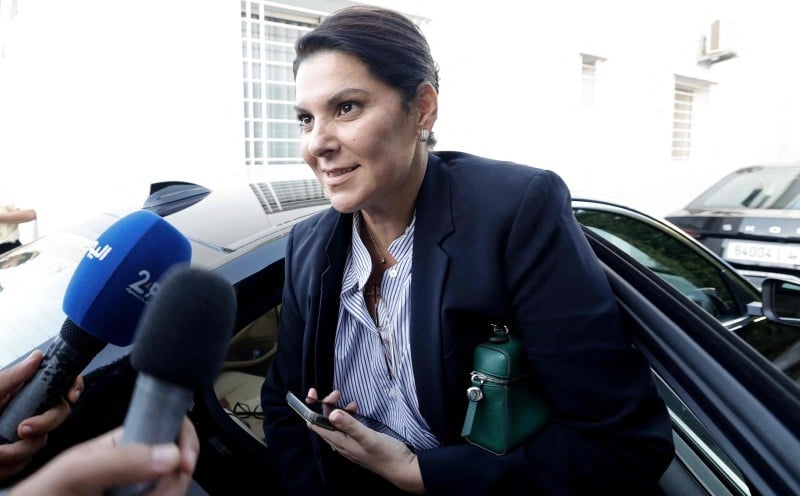

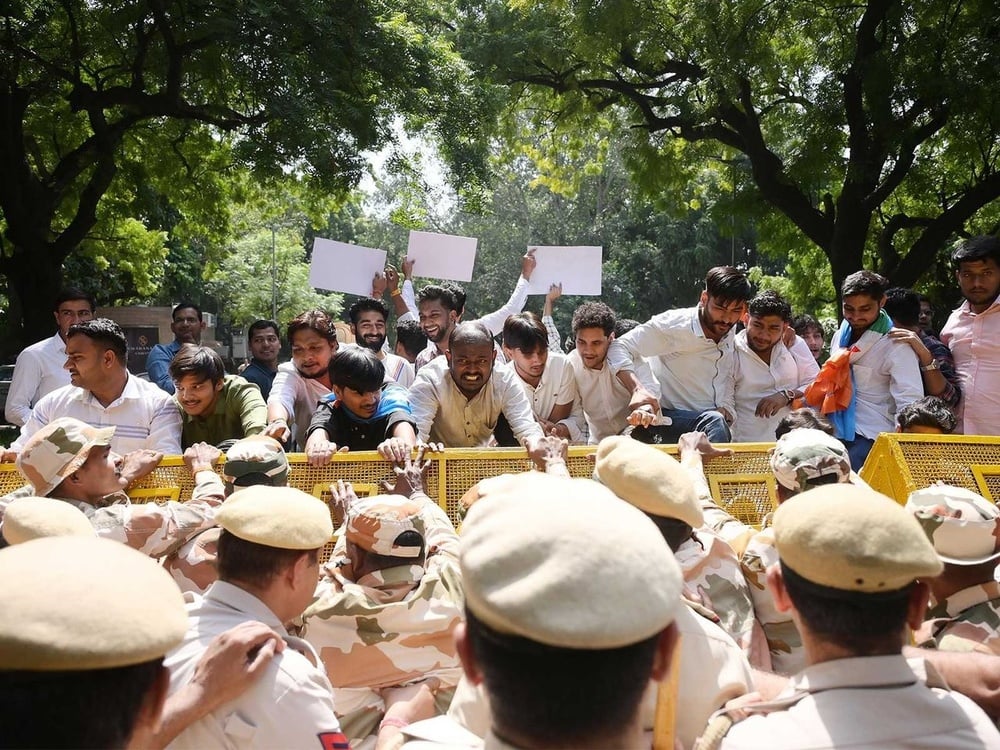
2026 © Helium Trades
Privacy Policy & Disclosure
* Disclaimer: Nothing on this website constitutes investment advice, performance data or any recommendation that any particular security, portfolio of securities, transaction or investment strategy is suitable for any specific person. Helium Trades is not responsible in any way for the accuracy
of any model predictions or price data. Any mention of a particular security and related prediction data is not a recommendation to buy or sell that security. Investments in securities involve the risk of loss. Past performance is no guarantee of future results. Helium Trades is not responsible for any of your investment decisions,
you should consult a financial expert before engaging in any transaction.
Helium Research Assistant

How can I help you today?
Ask any question about this page.


