See whether Helium helps you make better-informed decisions. Try every Pro Trader feature for 30 days. No credit card required.
Try every Pro Trader feature for 30 days. No credit card required.
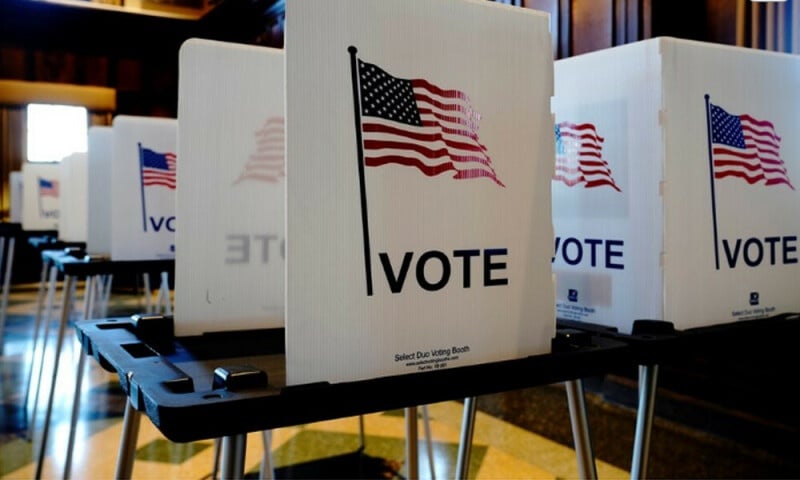
The framing presents the projected Democratic takeover as a broad, voter-anger-driven victory by emphasizing wins in deeply Republican territory and anger over Trump and affordability.
Automated analysis; not human reviewed.
Limitations: The supplied text is only a headline and truncated excerpt; full article context, sourcing, and countervailing perspectives are unavailable.
·
5 of 55 available dimensions scored; omitted dimensions are not treated as neutral.
·
Verified supporting quotes for 5 of 5 scored dimensions.
Claim: The framing attributes Democratic gains to voter anger over Trump and affordability, a narrative favorable to Democrats.
“Democrats capitalized on voter anger over Trump and affordability” · exact text match
Why: This presents the Democratic victory as a reaction to Trump and affordability concerns, with no alternative explanation, indicating a modest liberal lean.
Claim: The excerpt includes an interpretive causal claim about why Democrats won, rather than only reporting the projected result.
“Democrats capitalized on voter anger over Trump and affordability” · exact text match
Why: This causal framing goes beyond the bare projection and is stated without explicit attribution to analysts.
Claim: The report uses an attributed projection and avoids sensational language.
“NBC News projects” · exact text match
Why: The central claim is attributed to NBC News's projection and the excerpt contains no hyperbolic or emotive descriptors.
Claim: The excerpt is centrally about partisan control of Congress and a Democratic electoral victory.
“Democrats capture full control of Congress” · exact text match
Why: The subject is explicitly electoral politics and partisan power.
Claim: The central election claim is attributed to NBC News's projection.
“NBC News projects” · exact text match
Why: Naming the source for the projection is a visible credibility signal, though the truncated excerpt does not allow full assessment.
The supplied text is only a headline and truncated excerpt; full article context, sourcing, and countervailing perspectives are unavailable.
November 04, 2026 · 0 shares
Democratic midterm victories are framed through a celebratory CNN quote about ending MAGA's Washington 'monopoly' and triggering Trump investigations, without balancing Republican response.
Automated analysis; not human reviewed.
Limitations: The supplied text is a short, scraped excerpt with duplicated paragraphs and unrelated promotional headlines, limiting bias assessment to the main election report.
·
5 of 55 available dimensions scored; omitted dimensions are not treated as neutral.
·
Verified supporting quotes for 5 of 5 scored dimensions.
Claim: The article amplifies a CNN quote celebrating the end of MAGA's 'monopoly' and promising Trump investigations, without a balancing Republican response.
“MAGA's monopoly on Washington will end. Trump will face relentless multi-front investigations from Democratic House committees.” · exact text match
Why: The selected quote emphasizes a left-leaning interpretive victory narrative and investigation threat rather than a balanced account.
Claim: The report mixes factual election-result language with a prominent subjective quote about American politics changing.
““The face of American politics just changed,” CNN's Stephen Collinson said Tuesday.” · exact text match
Why: The quote is evaluative, while the surrounding report remains largely factual.
Claim: The article gives prominence to an opinionated CNN commentary on the election's meaning without balancing analysis.
“MAGA's monopoly on Washington will end. Trump will face relentless multi-front investigations from Democratic House committees.” · exact text match
Why: The quoted commentary is evaluative and predictive rather than neutral fact.
Claim: The report centers on Democratic capture of both chambers of Congress in the 2026 midterms.
“Democrats have captured both the House of Representatives and the US Senate” · exact text match
Why: Partisan control of Congress is the core subject.
Claim: The report uses hedged language for election outcomes and attributes its main interpretive quote to CNN, but does not detail sourcing for the vote projections.
“results from the 2026 midterm elections indicated” · exact text match
“CNN's Stephen Collinson said Tuesday” · exact text match
Why: Attribution and hedging are visible, though sourcing for the projections is limited.
The supplied text is a short, scraped excerpt with duplicated paragraphs and unrelated promotional headlines, limiting bias assessment to the main election report.
November 04, 2026 · 0 shares
The report frames Democratic midterm victories as a sweeping voter rebuke of President Trump, using strongly evaluative lead language and broad causal claims about voter frustration.
Automated analysis; not human reviewed.
Limitations: The supplied text includes fragmented related links and describes 2026 events that cannot be independently verified from the article alone.
·
16 of 55 available dimensions scored; omitted dimensions are not treated as neutral.
·
Verified supporting quotes for 16 of 16 scored dimensions.
Claim: The lede characterizes the election outcome as a scathing rebuke of President Trump.
“delivered a scathing rebuke to President Donald Trump” · exact text match
Why: Strongly negative framing of Trump and favorable framing of Democrats indicates a liberal direction.
Claim: The article uses evaluative language to characterize the election result.
“delivered a scathing rebuke to President Donald Trump” · exact text match
Why: Evaluative framing signals subjective interpretation rather than neutral description.
Claim: Dramatic language heightens the political outcome.
“scoring sweeping victories that reached deep into Republican strongholds” · exact text match
Why: Sweeping/victory imagery is dramatic and sensational relative to neutral result reporting.
Claim: The article primarily reports electoral outcomes rather than prescribing action.
“Democrats captured majorities in both the Senate and House on Tuesday” · exact text match
Why: Outcome reportage is descriptive.
Claim: Evaluative phrasing in a news report presents an opinion-like characterization.
“scathing rebuke” · exact text match
Why: Scathing rebuke is evaluative rather than purely factual.
Claim: The article is centrally about partisan electoral control.
“Democrats captured majorities in both the Senate and House on Tuesday” · exact text match
Why: Subject is U.S. congressional elections and party control.
Claim: The report attributes a broad Democratic wave to voter frustration with Trump’s economic stewardship and Iran war.
“The Democratic wave underscored voters’ deep frustration with Trump’s stewardship of the economy and his decision to launch a war against Iran in February” · exact text match
Why: A complex election outcome is summarized with a broad causal explanation.
Claim: A broad interpretive claim about voter rebuke is stated as established fact in the lede.
“delivered a scathing rebuke to President Donald Trump” · exact text match
Why: The causal/interpretive characterization is asserted without hedging.
Claim: The article consistently frames the election as a decisive anti-Trump mandate.
“delivered a scathing rebuke to President Donald Trump” · exact text match
Why: A partisan interpretive frame indicates ideological bias.
Claim: The article’s language conveys negative emotion toward Trump and his administration.
“voters’ deep frustration with Trump’s stewardship of the economy” · exact text match
Why: Deep frustration framing is emotionally negative.
Claim: The report cites named polling and vote-count sources but uses strongly evaluative framing.
“according to a vote count compiled by Reuters and USA Today” · exact text match
“delivered a scathing rebuke to President Donald Trump” · exact text match
Why: Sourcing raises credibility; evaluative framing lowers neutrality.
Claim: Voter sentiment and election context are attributed to named exit polls and vote counts.
“According to exit polls conducted by SSRS on behalf of a consortium of US media outlets including major television networks and the Associated Press” · exact text match
Why: Use of named polling methodology and data supports a rational, empirical presentation.
Claim: The article notes that the scale of the Democratic wave was not yet fully determined.
“The size and breadth of the Democratic wave were still coming into focus” · exact text match
Why: Projection/forecasting language indicates some speculation.
Claim: The lede uses loaded characterization to frame the result as a decisive anti-Trump verdict.
“delivered a scathing rebuke to President Donald Trump” · exact text match
Why: Loaded framing is an observable persuasive technique.
Claim: The report includes sourcing and the subject’s own response.
“Trump wrote on social media” · exact text match
“According to exit polls conducted by SSRS on behalf of a consortium of US media outlets including major television networks and the Associated Press” · exact text match
Why: Inclusion of opposing response and named polling source supports fairness/transparency, though framing remains evaluative.
Claim: The report integrates vote counts, exit polls, and attributed quotations.
“according to a vote count compiled by Reuters and USA Today” · exact text match
“According to exit polls conducted by SSRS on behalf of a consortium of US media outlets including major television networks and the Associated Press” · exact text match
Why: Multiple data sources and quotations indicate a relatively sophisticated report.
The supplied text includes fragmented related links and describes 2026 events that cannot be independently verified from the article alone.
November 04, 2026 · 0 shares
Frames the midterm results as a sweeping Democratic victory and a voter rebuke of President Trump, while citing Reuters and SSRS polling and including some Republican results as counterweight.
Automated analysis; not human reviewed.
Limitations: The supplied text includes a future-dated (Nov 4, 2026) election report plus appended unrelated headlines, so only the main article block could be analyzed.
·
4 of 55 available dimensions scored; omitted dimensions are not treated as neutral.
·
Verified supporting quotes for 4 of 4 scored dimensions.
Claim: The report frames the midterm results as a sweeping Democratic victory and a major rebuke of President Trump.
“DEMOCRATS have captured control of both chambers of Congress in the US midterm elections, making sweeping gains in traditionally Republican strongholds in a result that dealt a major electoral setback to President Donald Trump.” · exact text match
Counterevidence:
“In Florida, Republican Senator Ashley Moody narrowly held off Democrat Angie Nixon, leading by about three percentage points in a state Trump had won by 13 points in 2024.” · exact text match
Why: The directional language highlights Democratic gains and Trump's setback, indicating a left-of-center interpretive frame despite some balancing results.
Claim: Named sourcing and specific vote counts anchor the report in verifiable data, though it also makes an interpretive causal claim.
“Reuters reported on Wednesday that Democratic victories extended to states that Trump carried comfortably in the 2024 presidential election, including Texas, South Carolina, Iowa and Ohio.” · exact text match
“Exit polls conducted by SSRS for a consortium of US media organisations found that half of voters viewed the midterm elections as an opportunity to rebuke Trump, while three-quarters said they were angry or dissatisfied with the direction of the country.” · exact text match
Counterevidence:
“The results reflected widespread voter dissatisfaction with Trump's handling of the economy and his decision to launch a war against Iran in February, which sent petrol prices sharply higher.” · exact text match
Why: The article predominantly attributes results to named outlets and polls, supporting an objective style, but includes some interpretation.
Claim: The report is centrally about partisan electoral control and presidential politics.
“DEMOCRATS have captured control of both chambers of Congress in the US midterm elections, making sweeping gains in traditionally Republican strongholds in a result that dealt a major electoral setback to President Donald Trump.” · exact text match
Why: The content is explicitly focused on election outcomes, congressional control, and President Trump.
Claim: Visible sourcing includes Reuters and SSRS exit polls plus specific seat and vote-margin figures.
“Reuters reported on Wednesday that Democratic victories extended to states that Trump carried comfortably in the 2024 presidential election, including Texas, South Carolina, Iowa and Ohio.” · exact text match
“Exit polls conducted by SSRS for a consortium of US media organisations found that half of voters viewed the midterm elections as an opportunity to rebuke Trump, while three-quarters said they were angry or dissatisfied with the direction of the country.” · exact text match
Why: Named sources and precise figures support moderate-to-high credibility in the supplied text, though input limitations remain.
The supplied text includes a future-dated (Nov 4, 2026) election report plus appended unrelated headlines, so only the main article block could be analyzed.
November 04, 2026 · 0 shares
The report frames Democratic midterm victories as a sweeping voter rebuke of President Trump, using strongly evaluative lead language and broad causal claims about voter frustration.
Automated analysis; not human reviewed.
Limitations: The supplied text includes fragmented related links and describes 2026 events that cannot be independently verified from the article alone.
·
16 of 55 available dimensions scored; omitted dimensions are not treated as neutral.
·
Verified supporting quotes for 16 of 16 scored dimensions.
Claim: The lede characterizes the election outcome as a scathing rebuke of President Trump.
“delivered a scathing rebuke to President Donald Trump” · exact text match
Why: Strongly negative framing of Trump and favorable framing of Democrats indicates a liberal direction.
Claim: The article uses evaluative language to characterize the election result.
“delivered a scathing rebuke to President Donald Trump” · exact text match
Why: Evaluative framing signals subjective interpretation rather than neutral description.
Claim: Dramatic language heightens the political outcome.
“scoring sweeping victories that reached deep into Republican strongholds” · exact text match
Why: Sweeping/victory imagery is dramatic and sensational relative to neutral result reporting.
Claim: The article primarily reports electoral outcomes rather than prescribing action.
“Democrats captured majorities in both the Senate and House on Tuesday” · exact text match
Why: Outcome reportage is descriptive.
Claim: Evaluative phrasing in a news report presents an opinion-like characterization.
“scathing rebuke” · exact text match
Why: Scathing rebuke is evaluative rather than purely factual.
Claim: The article is centrally about partisan electoral control.
“Democrats captured majorities in both the Senate and House on Tuesday” · exact text match
Why: Subject is U.S. congressional elections and party control.
Claim: The report attributes a broad Democratic wave to voter frustration with Trump’s economic stewardship and Iran war.
“The Democratic wave underscored voters’ deep frustration with Trump’s stewardship of the economy and his decision to launch a war against Iran in February” · exact text match
Why: A complex election outcome is summarized with a broad causal explanation.
Claim: A broad interpretive claim about voter rebuke is stated as established fact in the lede.
“delivered a scathing rebuke to President Donald Trump” · exact text match
Why: The causal/interpretive characterization is asserted without hedging.
Claim: The article consistently frames the election as a decisive anti-Trump mandate.
“delivered a scathing rebuke to President Donald Trump” · exact text match
Why: A partisan interpretive frame indicates ideological bias.
Claim: The article’s language conveys negative emotion toward Trump and his administration.
“voters’ deep frustration with Trump’s stewardship of the economy” · exact text match
Why: Deep frustration framing is emotionally negative.
Claim: The report cites named polling and vote-count sources but uses strongly evaluative framing.
“according to a vote count compiled by Reuters and USA Today” · exact text match
“delivered a scathing rebuke to President Donald Trump” · exact text match
Why: Sourcing raises credibility; evaluative framing lowers neutrality.
Claim: Voter sentiment and election context are attributed to named exit polls and vote counts.
“According to exit polls conducted by SSRS on behalf of a consortium of US media outlets including major television networks and the Associated Press” · exact text match
Why: Use of named polling methodology and data supports a rational, empirical presentation.
Claim: The article notes that the scale of the Democratic wave was not yet fully determined.
“The size and breadth of the Democratic wave were still coming into focus” · exact text match
Why: Projection/forecasting language indicates some speculation.
Claim: The lede uses loaded characterization to frame the result as a decisive anti-Trump verdict.
“delivered a scathing rebuke to President Donald Trump” · exact text match
Why: Loaded framing is an observable persuasive technique.
Claim: The report includes sourcing and the subject’s own response.
“Trump wrote on social media” · exact text match
“According to exit polls conducted by SSRS on behalf of a consortium of US media outlets including major television networks and the Associated Press” · exact text match
Why: Inclusion of opposing response and named polling source supports fairness/transparency, though framing remains evaluative.
Claim: The report integrates vote counts, exit polls, and attributed quotations.
“according to a vote count compiled by Reuters and USA Today” · exact text match
“According to exit polls conducted by SSRS on behalf of a consortium of US media outlets including major television networks and the Associated Press” · exact text match
Why: Multiple data sources and quotations indicate a relatively sophisticated report.
The supplied text includes fragmented related links and describes 2026 events that cannot be independently verified from the article alone.
November 04, 2026 · 0 shares
The framing is a dramatic pro-Democratic narrative that treats the midterm results as a national rebuke of Trump and Republicans, with polling attributions but heavily evaluative wording.
Automated analysis; not human reviewed.
Limitations: The supplied text includes duplicated paragraphs and login/membership boilerplate; analysis is confined to the substantive article body.
·
8 of 55 available dimensions scored; omitted dimensions are not treated as neutral.
·
Verified supporting quotes for 7 of 8 scored dimensions.
Claim: The report frames Democratic victories as a broad voter rebuke of Trump and Republicans, using loaded anti-Trump language rather than neutral election description.
“tens of millions of voters delivered a scathing rebuke to President Donald Trump” · not found in supplied text
“The Democratic wave underscored voters’ deep frustration with Trump’s stewardship of the economy and his decision to launch a war against Iran in February” · exact text match
Why: The language casts the result as punishment of Trump and attributes it to his failings, a strongly left-leaning framing.
Claim: The report blends election results with evaluative interpretation, characterizing the outcome as a rebuke and calling Republican liabilities clear.
“delivered a scathing rebuke” · exact text match
“despite clear liabilities” · exact text match
Why: Evaluative terms present interpretation as fact, moving beyond neutral description.
Claim: Sweeping and scathing language heightens the drama of the election result.
“scoring sweeping victories that reached deep into Republican strongholds” · exact text match
“delivered a scathing rebuke” · exact text match
Why: Repeated dramatic adjectives create a sensational tone, though the article remains largely results-based.
Claim: The article mainly describes election outcomes and attributed poll results rather than advocating policy.
“Democrats captured majorities in both the Senate and House on Tuesday” · exact text match
Why: The text is predominantly descriptive, with no explicit prescriptions.
Claim: The publisher uses evaluative labels for Republican candidates and the election's meaning.
“scandal-plagued Republican Attorney General Ken Paxton” · exact text match
“despite clear liabilities” · exact text match
Why: Pejorative characterizations and judgments are woven into reporting.
Claim: The article is centrally about a US congressional election and its implications for the president.
“Democrats captured majorities in both the Senate and House on Tuesday, scoring sweeping victories” · exact text match
Why: Election control and presidential standing are inherently political subjects.
Claim: The report attributes a broad midterm wave chiefly to voter frustration with Trump’s economic stewardship and the Iran war.
“The Democratic wave underscored voters’ deep frustration with Trump’s stewardship of the economy and his decision to launch a war against Iran in February, which drove gas prices up sharply.” · exact text match
Why: A complex national election is reduced to a national referendum on two issues.
Claim: The report attributes vote counts and polls to named sources and includes candidate quotes.
“according to a vote count compiled by Reuters and USA Today” · exact text match
“exit polls conducted by SSRS on behalf of a consortium of US media outlets including major television networks and the Associated Press” · exact text match
Why: Sourcing and attribution are visible, supporting credibility, though loaded framing lowers it from neutral.
The supplied text includes duplicated paragraphs and login/membership boilerplate; analysis is confined to the substantive article body.
November 04, 2026 · 0 shares
Democratic midterm victories are framed through a celebratory CNN quote about ending MAGA's Washington 'monopoly' and triggering Trump investigations, without balancing Republican response.
Automated analysis; not human reviewed.
Limitations: The supplied text is a short, scraped excerpt with duplicated paragraphs and unrelated promotional headlines, limiting bias assessment to the main election report.
·
5 of 55 available dimensions scored; omitted dimensions are not treated as neutral.
·
Verified supporting quotes for 5 of 5 scored dimensions.
Claim: The article amplifies a CNN quote celebrating the end of MAGA's 'monopoly' and promising Trump investigations, without a balancing Republican response.
“MAGA's monopoly on Washington will end. Trump will face relentless multi-front investigations from Democratic House committees.” · exact text match
Why: The selected quote emphasizes a left-leaning interpretive victory narrative and investigation threat rather than a balanced account.
Claim: The report mixes factual election-result language with a prominent subjective quote about American politics changing.
““The face of American politics just changed,” CNN's Stephen Collinson said Tuesday.” · exact text match
Why: The quote is evaluative, while the surrounding report remains largely factual.
Claim: The article gives prominence to an opinionated CNN commentary on the election's meaning without balancing analysis.
“MAGA's monopoly on Washington will end. Trump will face relentless multi-front investigations from Democratic House committees.” · exact text match
Why: The quoted commentary is evaluative and predictive rather than neutral fact.
Claim: The report centers on Democratic capture of both chambers of Congress in the 2026 midterms.
“Democrats have captured both the House of Representatives and the US Senate” · exact text match
Why: Partisan control of Congress is the core subject.
Claim: The report uses hedged language for election outcomes and attributes its main interpretive quote to CNN, but does not detail sourcing for the vote projections.
“results from the 2026 midterm elections indicated” · exact text match
“CNN's Stephen Collinson said Tuesday” · exact text match
Why: Attribution and hedging are visible, though sourcing for the projections is limited.
The supplied text is a short, scraped excerpt with duplicated paragraphs and unrelated promotional headlines, limiting bias assessment to the main election report.
November 04, 2026 · 0 shares
Frames the midterm results as a sweeping Democratic victory and a voter rebuke of President Trump, while citing Reuters and SSRS polling and including some Republican results as counterweight.
Automated analysis; not human reviewed.
Limitations: The supplied text includes a future-dated (Nov 4, 2026) election report plus appended unrelated headlines, so only the main article block could be analyzed.
·
4 of 55 available dimensions scored; omitted dimensions are not treated as neutral.
·
Verified supporting quotes for 4 of 4 scored dimensions.
Claim: The report frames the midterm results as a sweeping Democratic victory and a major rebuke of President Trump.
“DEMOCRATS have captured control of both chambers of Congress in the US midterm elections, making sweeping gains in traditionally Republican strongholds in a result that dealt a major electoral setback to President Donald Trump.” · exact text match
Counterevidence:
“In Florida, Republican Senator Ashley Moody narrowly held off Democrat Angie Nixon, leading by about three percentage points in a state Trump had won by 13 points in 2024.” · exact text match
Why: The directional language highlights Democratic gains and Trump's setback, indicating a left-of-center interpretive frame despite some balancing results.
Claim: Named sourcing and specific vote counts anchor the report in verifiable data, though it also makes an interpretive causal claim.
“Reuters reported on Wednesday that Democratic victories extended to states that Trump carried comfortably in the 2024 presidential election, including Texas, South Carolina, Iowa and Ohio.” · exact text match
“Exit polls conducted by SSRS for a consortium of US media organisations found that half of voters viewed the midterm elections as an opportunity to rebuke Trump, while three-quarters said they were angry or dissatisfied with the direction of the country.” · exact text match
Counterevidence:
“The results reflected widespread voter dissatisfaction with Trump's handling of the economy and his decision to launch a war against Iran in February, which sent petrol prices sharply higher.” · exact text match
Why: The article predominantly attributes results to named outlets and polls, supporting an objective style, but includes some interpretation.
Claim: The report is centrally about partisan electoral control and presidential politics.
“DEMOCRATS have captured control of both chambers of Congress in the US midterm elections, making sweeping gains in traditionally Republican strongholds in a result that dealt a major electoral setback to President Donald Trump.” · exact text match
Why: The content is explicitly focused on election outcomes, congressional control, and President Trump.
Claim: Visible sourcing includes Reuters and SSRS exit polls plus specific seat and vote-margin figures.
“Reuters reported on Wednesday that Democratic victories extended to states that Trump carried comfortably in the 2024 presidential election, including Texas, South Carolina, Iowa and Ohio.” · exact text match
“Exit polls conducted by SSRS for a consortium of US media organisations found that half of voters viewed the midterm elections as an opportunity to rebuke Trump, while three-quarters said they were angry or dissatisfied with the direction of the country.” · exact text match
Why: Named sources and precise figures support moderate-to-high credibility in the supplied text, though input limitations remain.
The supplied text includes a future-dated (Nov 4, 2026) election report plus appended unrelated headlines, so only the main article block could be analyzed.
November 04, 2026 · 0 shares
The framing is a dramatic pro-Democratic narrative that treats the midterm results as a national rebuke of Trump and Republicans, with polling attributions but heavily evaluative wording.
Automated analysis; not human reviewed.
Limitations: The supplied text includes duplicated paragraphs and login/membership boilerplate; analysis is confined to the substantive article body.
·
8 of 55 available dimensions scored; omitted dimensions are not treated as neutral.
·
Verified supporting quotes for 7 of 8 scored dimensions.
Claim: The report frames Democratic victories as a broad voter rebuke of Trump and Republicans, using loaded anti-Trump language rather than neutral election description.
“tens of millions of voters delivered a scathing rebuke to President Donald Trump” · not found in supplied text
“The Democratic wave underscored voters’ deep frustration with Trump’s stewardship of the economy and his decision to launch a war against Iran in February” · exact text match
Why: The language casts the result as punishment of Trump and attributes it to his failings, a strongly left-leaning framing.
Claim: The report blends election results with evaluative interpretation, characterizing the outcome as a rebuke and calling Republican liabilities clear.
“delivered a scathing rebuke” · exact text match
“despite clear liabilities” · exact text match
Why: Evaluative terms present interpretation as fact, moving beyond neutral description.
Claim: Sweeping and scathing language heightens the drama of the election result.
“scoring sweeping victories that reached deep into Republican strongholds” · exact text match
“delivered a scathing rebuke” · exact text match
Why: Repeated dramatic adjectives create a sensational tone, though the article remains largely results-based.
Claim: The article mainly describes election outcomes and attributed poll results rather than advocating policy.
“Democrats captured majorities in both the Senate and House on Tuesday” · exact text match
Why: The text is predominantly descriptive, with no explicit prescriptions.
Claim: The publisher uses evaluative labels for Republican candidates and the election's meaning.
“scandal-plagued Republican Attorney General Ken Paxton” · exact text match
“despite clear liabilities” · exact text match
Why: Pejorative characterizations and judgments are woven into reporting.
Claim: The article is centrally about a US congressional election and its implications for the president.
“Democrats captured majorities in both the Senate and House on Tuesday, scoring sweeping victories” · exact text match
Why: Election control and presidential standing are inherently political subjects.
Claim: The report attributes a broad midterm wave chiefly to voter frustration with Trump’s economic stewardship and the Iran war.
“The Democratic wave underscored voters’ deep frustration with Trump’s stewardship of the economy and his decision to launch a war against Iran in February, which drove gas prices up sharply.” · exact text match
Why: A complex national election is reduced to a national referendum on two issues.
Claim: The report attributes vote counts and polls to named sources and includes candidate quotes.
“according to a vote count compiled by Reuters and USA Today” · exact text match
“exit polls conducted by SSRS on behalf of a consortium of US media outlets including major television networks and the Associated Press” · exact text match
Why: Sourcing and attribution are visible, supporting credibility, though loaded framing lowers it from neutral.
The supplied text includes duplicated paragraphs and login/membership boilerplate; analysis is confined to the substantive article body.
November 04, 2026 · 0 shares
The report frames Democratic midterm victories as a sweeping voter rebuke of President Trump, using strongly evaluative lead language and broad causal claims about voter frustration.
Automated analysis; not human reviewed.
Limitations: The supplied text includes fragmented related links and describes 2026 events that cannot be independently verified from the article alone.
·
16 of 55 available dimensions scored; omitted dimensions are not treated as neutral.
·
Verified supporting quotes for 16 of 16 scored dimensions.
Claim: The lede characterizes the election outcome as a scathing rebuke of President Trump.
“delivered a scathing rebuke to President Donald Trump” · exact text match
Why: Strongly negative framing of Trump and favorable framing of Democrats indicates a liberal direction.
Claim: The article uses evaluative language to characterize the election result.
“delivered a scathing rebuke to President Donald Trump” · exact text match
Why: Evaluative framing signals subjective interpretation rather than neutral description.
Claim: Dramatic language heightens the political outcome.
“scoring sweeping victories that reached deep into Republican strongholds” · exact text match
Why: Sweeping/victory imagery is dramatic and sensational relative to neutral result reporting.
Claim: The article primarily reports electoral outcomes rather than prescribing action.
“Democrats captured majorities in both the Senate and House on Tuesday” · exact text match
Why: Outcome reportage is descriptive.
Claim: Evaluative phrasing in a news report presents an opinion-like characterization.
“scathing rebuke” · exact text match
Why: Scathing rebuke is evaluative rather than purely factual.
Claim: The article is centrally about partisan electoral control.
“Democrats captured majorities in both the Senate and House on Tuesday” · exact text match
Why: Subject is U.S. congressional elections and party control.
Claim: The report attributes a broad Democratic wave to voter frustration with Trump’s economic stewardship and Iran war.
“The Democratic wave underscored voters’ deep frustration with Trump’s stewardship of the economy and his decision to launch a war against Iran in February” · exact text match
Why: A complex election outcome is summarized with a broad causal explanation.
Claim: A broad interpretive claim about voter rebuke is stated as established fact in the lede.
“delivered a scathing rebuke to President Donald Trump” · exact text match
Why: The causal/interpretive characterization is asserted without hedging.
Claim: The article consistently frames the election as a decisive anti-Trump mandate.
“delivered a scathing rebuke to President Donald Trump” · exact text match
Why: A partisan interpretive frame indicates ideological bias.
Claim: The article’s language conveys negative emotion toward Trump and his administration.
“voters’ deep frustration with Trump’s stewardship of the economy” · exact text match
Why: Deep frustration framing is emotionally negative.
Claim: The report cites named polling and vote-count sources but uses strongly evaluative framing.
“according to a vote count compiled by Reuters and USA Today” · exact text match
“delivered a scathing rebuke to President Donald Trump” · exact text match
Why: Sourcing raises credibility; evaluative framing lowers neutrality.
Claim: Voter sentiment and election context are attributed to named exit polls and vote counts.
“According to exit polls conducted by SSRS on behalf of a consortium of US media outlets including major television networks and the Associated Press” · exact text match
Why: Use of named polling methodology and data supports a rational, empirical presentation.
Claim: The article notes that the scale of the Democratic wave was not yet fully determined.
“The size and breadth of the Democratic wave were still coming into focus” · exact text match
Why: Projection/forecasting language indicates some speculation.
Claim: The lede uses loaded characterization to frame the result as a decisive anti-Trump verdict.
“delivered a scathing rebuke to President Donald Trump” · exact text match
Why: Loaded framing is an observable persuasive technique.
Claim: The report includes sourcing and the subject’s own response.
“Trump wrote on social media” · exact text match
“According to exit polls conducted by SSRS on behalf of a consortium of US media outlets including major television networks and the Associated Press” · exact text match
Why: Inclusion of opposing response and named polling source supports fairness/transparency, though framing remains evaluative.
Claim: The report integrates vote counts, exit polls, and attributed quotations.
“according to a vote count compiled by Reuters and USA Today” · exact text match
“According to exit polls conducted by SSRS on behalf of a consortium of US media outlets including major television networks and the Associated Press” · exact text match
Why: Multiple data sources and quotations indicate a relatively sophisticated report.
The supplied text includes fragmented related links and describes 2026 events that cannot be independently verified from the article alone.
November 04, 2026 · 0 shares
Frames the midterm results as a sweeping Democratic victory and a voter rebuke of President Trump, while citing Reuters and SSRS polling and including some Republican results as counterweight.
Automated analysis; not human reviewed.
Limitations: The supplied text includes a future-dated (Nov 4, 2026) election report plus appended unrelated headlines, so only the main article block could be analyzed.
·
4 of 55 available dimensions scored; omitted dimensions are not treated as neutral.
·
Verified supporting quotes for 4 of 4 scored dimensions.
Claim: The report frames the midterm results as a sweeping Democratic victory and a major rebuke of President Trump.
“DEMOCRATS have captured control of both chambers of Congress in the US midterm elections, making sweeping gains in traditionally Republican strongholds in a result that dealt a major electoral setback to President Donald Trump.” · exact text match
Counterevidence:
“In Florida, Republican Senator Ashley Moody narrowly held off Democrat Angie Nixon, leading by about three percentage points in a state Trump had won by 13 points in 2024.” · exact text match
Why: The directional language highlights Democratic gains and Trump's setback, indicating a left-of-center interpretive frame despite some balancing results.
Claim: Named sourcing and specific vote counts anchor the report in verifiable data, though it also makes an interpretive causal claim.
“Reuters reported on Wednesday that Democratic victories extended to states that Trump carried comfortably in the 2024 presidential election, including Texas, South Carolina, Iowa and Ohio.” · exact text match
“Exit polls conducted by SSRS for a consortium of US media organisations found that half of voters viewed the midterm elections as an opportunity to rebuke Trump, while three-quarters said they were angry or dissatisfied with the direction of the country.” · exact text match
Counterevidence:
“The results reflected widespread voter dissatisfaction with Trump's handling of the economy and his decision to launch a war against Iran in February, which sent petrol prices sharply higher.” · exact text match
Why: The article predominantly attributes results to named outlets and polls, supporting an objective style, but includes some interpretation.
Claim: The report is centrally about partisan electoral control and presidential politics.
“DEMOCRATS have captured control of both chambers of Congress in the US midterm elections, making sweeping gains in traditionally Republican strongholds in a result that dealt a major electoral setback to President Donald Trump.” · exact text match
Why: The content is explicitly focused on election outcomes, congressional control, and President Trump.
Claim: Visible sourcing includes Reuters and SSRS exit polls plus specific seat and vote-margin figures.
“Reuters reported on Wednesday that Democratic victories extended to states that Trump carried comfortably in the 2024 presidential election, including Texas, South Carolina, Iowa and Ohio.” · exact text match
“Exit polls conducted by SSRS for a consortium of US media organisations found that half of voters viewed the midterm elections as an opportunity to rebuke Trump, while three-quarters said they were angry or dissatisfied with the direction of the country.” · exact text match
Why: Named sources and precise figures support moderate-to-high credibility in the supplied text, though input limitations remain.
The supplied text includes a future-dated (Nov 4, 2026) election report plus appended unrelated headlines, so only the main article block could be analyzed.
Sarcastic anti-establishment commentary frames progressive spending as 'unearned money' and political money as cynical manipulation.
Automated analysis; not human reviewed.
Limitations: The supplied text contains duplicated blocks and no byline; it mixes reported projections with opinion and speculation, so some attributions and framing signals are ambiguous.
·
16 of 55 available dimensions scored; omitted dimensions are not treated as neutral.
·
Verified supporting quotes for 16 of 16 scored dimensions.
Claim: Criticizes progressive Democratic spending priorities and frames them as elite-serving.
“El-Sayed wants what all progressive Democrats want -- more money to finance an expanded role for the political elite.” · exact text match
“This is free money we’re talking about.
Unearned money.”
· verified after text normalization
Why: Repeated negative treatment of progressive spending and progressive Democrats supports a conservative-leaning framing.
Claim: Frames politics as dominated by big money and an expanded political elite.
“Big Money sloshes through US politics water through a broken hull.” · exact text match
“El-Sayed wants what all progressive Democrats want -- more money to finance an expanded role for the political elite.” · exact text match
Counterevidence:
“The voters say they want a man ‘with principles.’ But a little ambiguity about them never kept anyone out of the Senate.” · verified after text normalization
Why: The anti-elite and anti-big-money framing is populist in direction.
Claim: Opposes expanded government spending and political-elite control.
“This is free money we’re talking about.
Unearned money.”
· verified after text normalization
“El-Sayed wants what all progressive Democrats want -- more money to finance an expanded role for the political elite.” · exact text match
Why: The framing is anti-spending and anti–government expansion, consistent with a libertarian direction.
Claim: The commentary is overwhelmingly evaluative rather than neutral reporting.
“One of the most amusing...and telling...stories in this election season was the remarkable pirouette performed by Haley Stevens.” · exact text match
“Big Money sloshes through US politics water through a broken hull.
Sometimes, it is contained.
Sometimes it sinks the ship.”
· verified after text normalization
Why: Evaluative labels and metaphors make the framing strongly subjective.
Claim: Uses vivid metaphors and loaded characterizations to dramatize political money.
“Big Money sloshes through US politics water through a broken hull.
Sometimes, it is contained.
Sometimes it sinks the ship.”
· verified after text normalization
“‘It’s the total repudiation of Trumpism,’ said a breathless TV commentator.” · exact text match
Why: The shipwreck metaphor and 'breathless' label add a sensational flavor.
Claim: Criticizes U.S. bombing of Iran as submission to Netanyahu, implying opposition to hawkish foreign policy.
“The Republican team wouldn't have had these problems if Donnie had told Netanyahu to pound sand instead of obeying his command to bomb Iran.” · exact text match
Why: The line condemns the bombing decision and aligns with a dovish framing.
Claim: Speculates about Haley Stevens’s motives in a personal, gossip-like manner.
“What changed her mind? Was it her love for Israel — she says “Israel comes to me in my dreams.” Or was it the millions of dollars which came to her when she was wide awake?” · exact text match
“Already...we suspect there is something funny going on.” · exact text match
Why: The focus on motives, dreams, and suspected hidden dealings is gossip-style framing.
Claim: Highly opinionated commentary with evaluative labels and sarcastic asides.
“This is free money we’re talking about.
Unearned money.”
· verified after text normalization
“One of the most amusing...and telling...stories in this election season was the remarkable pirouette performed by Haley Stevens.” · exact text match
Why: The text is explicitly evaluative rather than neutral reporting.
Claim: The content is centrally about elections, political money, and policy.
“Democrats capture full control of Congress, NBC News projects, fueled by victories in deeply Republican states” · exact text match
“El-Sayed proposes universal coverage with a single-payer system (the government) that would effectively end the private market.” · exact text match
Why: Election results and policy proposals dominate the article.
Claim: Reduces welfare-spending outcomes to a simple comparison of spending growth and unchanged poverty rates.
“The War on Poverty has been going on sixty years.
In 1970, the US spent $2,681 per person in poverty.
Now, the total is over $33,000. Poverty rate? About the same…depending on how you calculate it.”
· verified after text normalization
Why: The comparison omits causal complexity and presents a broad policy failure inference.
Claim: Uses derisive nicknames and name-based mockery.
“How could you lose to a guy named Abdul El-Sayed?” · exact text match
“The Republican team wouldn't have had these problems if Donnie had told Netanyahu to pound sand instead of obeying his command to bomb Iran.” · exact text match
Why: The mockery and nicknames give the framing an immature/rage-baiting quality.
Claim: Frames politics through an anti-spending, anti-elite ideological lens.
“El-Sayed wants what all progressive Democrats want -- more money to finance an expanded role for the political elite.” · exact text match
“This is free money we’re talking about.
Unearned money.”
· verified after text normalization
Why: The repeated evaluative framing reflects a clear ideological stance.
Claim: Attacks political elites and big-money influence in politics.
“El-Sayed wants what all progressive Democrats want -- more money to finance an expanded role for the political elite.” · exact text match
“Big Money sloshes through US politics water through a broken hull.
Sometimes, it is contained.
Sometimes it sinks the ship.”
· verified after text normalization
Why: Repeated criticism of elites and money-driven politics supports anti-establishment framing.
Claim: Relies on sarcasm and identity-based mockery alongside argument, making the framing more emotive than systematic.
“How could you lose to a guy named Abdul El-Sayed?” · exact text match
“This is free money we’re talking about.
Unearned money.”
· verified after text normalization
Why: The name-based mockery and loaded phrasing support an irrational/emotive tilt.
Claim: Speculates about candidate motives and political dynamics beyond the reported facts.
“What changed her mind? Was it her love for Israel — she says “Israel comes to me in my dreams.” Or was it the millions of dollars which came to her when she was wide awake?” · exact text match
“Already...we suspect there is something funny going on.” · exact text match
Why: Questions about hidden motives and suspected dealings are speculative.
Claim: Uses loaded evaluative language and identity-based mockery to steer interpretation.
“This is free money we’re talking about.
Unearned money.”
· verified after text normalization
“How could you lose to a guy named Abdul El-Sayed?” · exact text match
Why: Loaded phrasing and name-based mockery are observable framing techniques.
The supplied text contains duplicated blocks and no byline; it mixes reported projections with opinion and speculation, so some attributions and framing signals are ambiguous.
November 04, 2026 · 0 shares
The report frames Democratic midterm victories as a sweeping voter rebuke of President Trump, using strongly evaluative lead language and broad causal claims about voter frustration.
Automated analysis; not human reviewed.
Limitations: The supplied text includes fragmented related links and describes 2026 events that cannot be independently verified from the article alone.
·
16 of 55 available dimensions scored; omitted dimensions are not treated as neutral.
·
Verified supporting quotes for 16 of 16 scored dimensions.
Claim: The lede characterizes the election outcome as a scathing rebuke of President Trump.
“delivered a scathing rebuke to President Donald Trump” · exact text match
Why: Strongly negative framing of Trump and favorable framing of Democrats indicates a liberal direction.
Claim: The article uses evaluative language to characterize the election result.
“delivered a scathing rebuke to President Donald Trump” · exact text match
Why: Evaluative framing signals subjective interpretation rather than neutral description.
Claim: Dramatic language heightens the political outcome.
“scoring sweeping victories that reached deep into Republican strongholds” · exact text match
Why: Sweeping/victory imagery is dramatic and sensational relative to neutral result reporting.
Claim: The article primarily reports electoral outcomes rather than prescribing action.
“Democrats captured majorities in both the Senate and House on Tuesday” · exact text match
Why: Outcome reportage is descriptive.
Claim: Evaluative phrasing in a news report presents an opinion-like characterization.
“scathing rebuke” · exact text match
Why: Scathing rebuke is evaluative rather than purely factual.
Claim: The article is centrally about partisan electoral control.
“Democrats captured majorities in both the Senate and House on Tuesday” · exact text match
Why: Subject is U.S. congressional elections and party control.
Claim: The report attributes a broad Democratic wave to voter frustration with Trump’s economic stewardship and Iran war.
“The Democratic wave underscored voters’ deep frustration with Trump’s stewardship of the economy and his decision to launch a war against Iran in February” · exact text match
Why: A complex election outcome is summarized with a broad causal explanation.
Claim: A broad interpretive claim about voter rebuke is stated as established fact in the lede.
“delivered a scathing rebuke to President Donald Trump” · exact text match
Why: The causal/interpretive characterization is asserted without hedging.
Claim: The article consistently frames the election as a decisive anti-Trump mandate.
“delivered a scathing rebuke to President Donald Trump” · exact text match
Why: A partisan interpretive frame indicates ideological bias.
Claim: The article’s language conveys negative emotion toward Trump and his administration.
“voters’ deep frustration with Trump’s stewardship of the economy” · exact text match
Why: Deep frustration framing is emotionally negative.
Claim: The report cites named polling and vote-count sources but uses strongly evaluative framing.
“according to a vote count compiled by Reuters and USA Today” · exact text match
“delivered a scathing rebuke to President Donald Trump” · exact text match
Why: Sourcing raises credibility; evaluative framing lowers neutrality.
Claim: Voter sentiment and election context are attributed to named exit polls and vote counts.
“According to exit polls conducted by SSRS on behalf of a consortium of US media outlets including major television networks and the Associated Press” · exact text match
Why: Use of named polling methodology and data supports a rational, empirical presentation.
Claim: The article notes that the scale of the Democratic wave was not yet fully determined.
“The size and breadth of the Democratic wave were still coming into focus” · exact text match
Why: Projection/forecasting language indicates some speculation.
Claim: The lede uses loaded characterization to frame the result as a decisive anti-Trump verdict.
“delivered a scathing rebuke to President Donald Trump” · exact text match
Why: Loaded framing is an observable persuasive technique.
Claim: The report includes sourcing and the subject’s own response.
“Trump wrote on social media” · exact text match
“According to exit polls conducted by SSRS on behalf of a consortium of US media outlets including major television networks and the Associated Press” · exact text match
Why: Inclusion of opposing response and named polling source supports fairness/transparency, though framing remains evaluative.
Claim: The report integrates vote counts, exit polls, and attributed quotations.
“according to a vote count compiled by Reuters and USA Today” · exact text match
“According to exit polls conducted by SSRS on behalf of a consortium of US media outlets including major television networks and the Associated Press” · exact text match
Why: Multiple data sources and quotations indicate a relatively sophisticated report.
The supplied text includes fragmented related links and describes 2026 events that cannot be independently verified from the article alone.
November 04, 2026 · 0 shares
Frames the midterm results as a sweeping Democratic victory and a voter rebuke of President Trump, while citing Reuters and SSRS polling and including some Republican results as counterweight.
Automated analysis; not human reviewed.
Limitations: The supplied text includes a future-dated (Nov 4, 2026) election report plus appended unrelated headlines, so only the main article block could be analyzed.
·
4 of 55 available dimensions scored; omitted dimensions are not treated as neutral.
·
Verified supporting quotes for 4 of 4 scored dimensions.
Claim: The report frames the midterm results as a sweeping Democratic victory and a major rebuke of President Trump.
“DEMOCRATS have captured control of both chambers of Congress in the US midterm elections, making sweeping gains in traditionally Republican strongholds in a result that dealt a major electoral setback to President Donald Trump.” · exact text match
Counterevidence:
“In Florida, Republican Senator Ashley Moody narrowly held off Democrat Angie Nixon, leading by about three percentage points in a state Trump had won by 13 points in 2024.” · exact text match
Why: The directional language highlights Democratic gains and Trump's setback, indicating a left-of-center interpretive frame despite some balancing results.
Claim: Named sourcing and specific vote counts anchor the report in verifiable data, though it also makes an interpretive causal claim.
“Reuters reported on Wednesday that Democratic victories extended to states that Trump carried comfortably in the 2024 presidential election, including Texas, South Carolina, Iowa and Ohio.” · exact text match
“Exit polls conducted by SSRS for a consortium of US media organisations found that half of voters viewed the midterm elections as an opportunity to rebuke Trump, while three-quarters said they were angry or dissatisfied with the direction of the country.” · exact text match
Counterevidence:
“The results reflected widespread voter dissatisfaction with Trump's handling of the economy and his decision to launch a war against Iran in February, which sent petrol prices sharply higher.” · exact text match
Why: The article predominantly attributes results to named outlets and polls, supporting an objective style, but includes some interpretation.
Claim: The report is centrally about partisan electoral control and presidential politics.
“DEMOCRATS have captured control of both chambers of Congress in the US midterm elections, making sweeping gains in traditionally Republican strongholds in a result that dealt a major electoral setback to President Donald Trump.” · exact text match
Why: The content is explicitly focused on election outcomes, congressional control, and President Trump.
Claim: Visible sourcing includes Reuters and SSRS exit polls plus specific seat and vote-margin figures.
“Reuters reported on Wednesday that Democratic victories extended to states that Trump carried comfortably in the 2024 presidential election, including Texas, South Carolina, Iowa and Ohio.” · exact text match
“Exit polls conducted by SSRS for a consortium of US media organisations found that half of voters viewed the midterm elections as an opportunity to rebuke Trump, while three-quarters said they were angry or dissatisfied with the direction of the country.” · exact text match
Why: Named sources and precise figures support moderate-to-high credibility in the supplied text, though input limitations remain.
The supplied text includes a future-dated (Nov 4, 2026) election report plus appended unrelated headlines, so only the main article block could be analyzed.
November 04, 2026 · 0 shares
The framing is a dramatic pro-Democratic narrative that treats the midterm results as a national rebuke of Trump and Republicans, with polling attributions but heavily evaluative wording.
Automated analysis; not human reviewed.
Limitations: The supplied text includes duplicated paragraphs and login/membership boilerplate; analysis is confined to the substantive article body.
·
8 of 55 available dimensions scored; omitted dimensions are not treated as neutral.
·
Verified supporting quotes for 7 of 8 scored dimensions.
Claim: The report frames Democratic victories as a broad voter rebuke of Trump and Republicans, using loaded anti-Trump language rather than neutral election description.
“tens of millions of voters delivered a scathing rebuke to President Donald Trump” · not found in supplied text
“The Democratic wave underscored voters’ deep frustration with Trump’s stewardship of the economy and his decision to launch a war against Iran in February” · exact text match
Why: The language casts the result as punishment of Trump and attributes it to his failings, a strongly left-leaning framing.
Claim: The report blends election results with evaluative interpretation, characterizing the outcome as a rebuke and calling Republican liabilities clear.
“delivered a scathing rebuke” · exact text match
“despite clear liabilities” · exact text match
Why: Evaluative terms present interpretation as fact, moving beyond neutral description.
Claim: Sweeping and scathing language heightens the drama of the election result.
“scoring sweeping victories that reached deep into Republican strongholds” · exact text match
“delivered a scathing rebuke” · exact text match
Why: Repeated dramatic adjectives create a sensational tone, though the article remains largely results-based.
Claim: The article mainly describes election outcomes and attributed poll results rather than advocating policy.
“Democrats captured majorities in both the Senate and House on Tuesday” · exact text match
Why: The text is predominantly descriptive, with no explicit prescriptions.
Claim: The publisher uses evaluative labels for Republican candidates and the election's meaning.
“scandal-plagued Republican Attorney General Ken Paxton” · exact text match
“despite clear liabilities” · exact text match
Why: Pejorative characterizations and judgments are woven into reporting.
Claim: The article is centrally about a US congressional election and its implications for the president.
“Democrats captured majorities in both the Senate and House on Tuesday, scoring sweeping victories” · exact text match
Why: Election control and presidential standing are inherently political subjects.
Claim: The report attributes a broad midterm wave chiefly to voter frustration with Trump’s economic stewardship and the Iran war.
“The Democratic wave underscored voters’ deep frustration with Trump’s stewardship of the economy and his decision to launch a war against Iran in February, which drove gas prices up sharply.” · exact text match
Why: A complex national election is reduced to a national referendum on two issues.
Claim: The report attributes vote counts and polls to named sources and includes candidate quotes.
“according to a vote count compiled by Reuters and USA Today” · exact text match
“exit polls conducted by SSRS on behalf of a consortium of US media outlets including major television networks and the Associated Press” · exact text match
Why: Sourcing and attribution are visible, supporting credibility, though loaded framing lowers it from neutral.
The supplied text includes duplicated paragraphs and login/membership boilerplate; analysis is confined to the substantive article body.
November 04, 2026 · 0 shares
Uses charged terms such as 'drubbing' and 'stinging rebuke' and relies on credentialed experts to frame Trump’s midterm loss as weakening him while warning that his combative trade posture may persist.
Automated analysis; not human reviewed.
Limitations: The supplied text is truncated mid-sentence and mixed with scraped related headlines, so some later trade-partner details may be missing; analysis is limited to visible substantive article content.
·
16 of 55 available dimensions scored; omitted dimensions are not treated as neutral.
·
Verified supporting quotes for 16 of 16 scored dimensions.
Claim: Negative language frames Republican midterm losses and Trump’s trade policies.
“a stinging rebuke for Trump’s policies, including his tariffs” · exact text match
Why: The negative descriptor of Trump’s policies suggests a modest liberal framing, while attribution limits the strength.
Claim: Sourcing is weighted toward credentialed academics, diplomats, and institutional experts.
“Heo Yoon, economics professor at Sogang University in Seoul, said” · exact text match
Why: Use of academic and diplomatic sources suggests a mild elite/institutional perspective.
Claim: Mostly attributed reporting contains some evaluative descriptors.
“The drubbing for Donald Trump’s Republicans in US midterm elections” · exact text match
Why: The loaded term 'drubbing' introduces subjective framing into otherwise factual reporting.
Claim: The report includes mildly dramatic language and quotes.
“A lame duck could quickly turn into an angry duck.” · exact text match
Why: The colorful quote adds sensational color, though the overall tone remains restrained.
Claim: The report is largely descriptive rather than prescriptive.
“could embolden some trade partners to push back against his combative policies” · exact text match
Why: The text explains possible consequences without advocating a policy response.
Claim: Mild fear framing appears in warnings about a weakened, unpredictable Trump.
“A weakened Trump could become even more aggressive and unpredictable.” · exact text match
Why: The article highlights risk of aggression, but as a quoted forecast rather than sustained fear-baiting.
Claim: The report centers on US elections and political control of Congress.
“Democrats captured majorities in both the Senate and House on Tuesday” · exact text match
Why: The core subject is electoral and partisan political power.
Claim: The argument relies on named experts and officials to support its forecast.
“Heo Yoon, economics professor at Sogang University in Seoul, said” · exact text match
Why: Credentialed sources are used as primary support for claims.
Claim: There is a mild anti-Trump/anti-tariff framing but limited explicit ideology.
“combative policies” · exact text match
Why: The loaded characterization implies a viewpoint but does not present a systematic ideology.
Claim: Tone is somewhat negative toward Trump and his policies.
“a stinging rebuke for Trump’s policies” · exact text match
Why: Negative evaluative language gives a mildly negative emotional valence.
Claim: Visible sourcing and attribution support high credibility.
“said Bernd Lange, chair of the trade committee in the European Parliament” · exact text match
Why: Named official sourcing and direct quotation demonstrate visible attribution.
Claim: Framing uses cautious, analytical, attributed forecasts rather than emotional assertion.
“could embolden some trade partners to push back against his combative policies” · exact text match
Why: Conditional and attributed language supports a rational framing classification.
Claim: Much of the report forecasts possible foreign responses rather than settled outcomes.
“could embolden some trade partners to push back against his combative policies” · exact text match
Why: Conditional language signals substantial speculation about future behavior.
Claim: Loaded phrasing characterizes tariffs negatively.
“Trump’s US tariff onslaught” · exact text match
Why: The loaded phrase may steer interpretation, though overall sourcing limits manipulation.
Claim: Named sources, attribution, and quoted uncertainty are visibly present.
“Rajiv Bhatia, a former Indian diplomat and distinguished fellow at Gateway House think tank, said” · exact text match
Why: Named attribution and quoted uncertainty indicate fair/honest reporting practices.
Claim: Specific multiparty detail and figures indicate above-average analysis.
“Japan has promised $550 billion and South Korea $350 billion in US investments in deals intended to placate Trump.” · exact text match
Why: Concrete figures and multi-country analysis indicate relatively high article intelligence.
The supplied text is truncated mid-sentence and mixed with scraped related headlines, so some later trade-partner details may be missing; analysis is limited to visible substantive article content.
November 04, 2026 · 0 shares
The report frames Democratic midterm victories as a sweeping voter rebuke of President Trump, using strongly evaluative lead language and broad causal claims about voter frustration.
Automated analysis; not human reviewed.
Limitations: The supplied text includes fragmented related links and describes 2026 events that cannot be independently verified from the article alone.
·
16 of 55 available dimensions scored; omitted dimensions are not treated as neutral.
·
Verified supporting quotes for 16 of 16 scored dimensions.
Claim: The lede characterizes the election outcome as a scathing rebuke of President Trump.
“delivered a scathing rebuke to President Donald Trump” · exact text match
Why: Strongly negative framing of Trump and favorable framing of Democrats indicates a liberal direction.
Claim: The article uses evaluative language to characterize the election result.
“delivered a scathing rebuke to President Donald Trump” · exact text match
Why: Evaluative framing signals subjective interpretation rather than neutral description.
Claim: Dramatic language heightens the political outcome.
“scoring sweeping victories that reached deep into Republican strongholds” · exact text match
Why: Sweeping/victory imagery is dramatic and sensational relative to neutral result reporting.
Claim: The article primarily reports electoral outcomes rather than prescribing action.
“Democrats captured majorities in both the Senate and House on Tuesday” · exact text match
Why: Outcome reportage is descriptive.
Claim: Evaluative phrasing in a news report presents an opinion-like characterization.
“scathing rebuke” · exact text match
Why: Scathing rebuke is evaluative rather than purely factual.
Claim: The article is centrally about partisan electoral control.
“Democrats captured majorities in both the Senate and House on Tuesday” · exact text match
Why: Subject is U.S. congressional elections and party control.
Claim: The report attributes a broad Democratic wave to voter frustration with Trump’s economic stewardship and Iran war.
“The Democratic wave underscored voters’ deep frustration with Trump’s stewardship of the economy and his decision to launch a war against Iran in February” · exact text match
Why: A complex election outcome is summarized with a broad causal explanation.
Claim: A broad interpretive claim about voter rebuke is stated as established fact in the lede.
“delivered a scathing rebuke to President Donald Trump” · exact text match
Why: The causal/interpretive characterization is asserted without hedging.
Claim: The article consistently frames the election as a decisive anti-Trump mandate.
“delivered a scathing rebuke to President Donald Trump” · exact text match
Why: A partisan interpretive frame indicates ideological bias.
Claim: The article’s language conveys negative emotion toward Trump and his administration.
“voters’ deep frustration with Trump’s stewardship of the economy” · exact text match
Why: Deep frustration framing is emotionally negative.
Claim: The report cites named polling and vote-count sources but uses strongly evaluative framing.
“according to a vote count compiled by Reuters and USA Today” · exact text match
“delivered a scathing rebuke to President Donald Trump” · exact text match
Why: Sourcing raises credibility; evaluative framing lowers neutrality.
Claim: Voter sentiment and election context are attributed to named exit polls and vote counts.
“According to exit polls conducted by SSRS on behalf of a consortium of US media outlets including major television networks and the Associated Press” · exact text match
Why: Use of named polling methodology and data supports a rational, empirical presentation.
Claim: The article notes that the scale of the Democratic wave was not yet fully determined.
“The size and breadth of the Democratic wave were still coming into focus” · exact text match
Why: Projection/forecasting language indicates some speculation.
Claim: The lede uses loaded characterization to frame the result as a decisive anti-Trump verdict.
“delivered a scathing rebuke to President Donald Trump” · exact text match
Why: Loaded framing is an observable persuasive technique.
Claim: The report includes sourcing and the subject’s own response.
“Trump wrote on social media” · exact text match
“According to exit polls conducted by SSRS on behalf of a consortium of US media outlets including major television networks and the Associated Press” · exact text match
Why: Inclusion of opposing response and named polling source supports fairness/transparency, though framing remains evaluative.
Claim: The report integrates vote counts, exit polls, and attributed quotations.
“according to a vote count compiled by Reuters and USA Today” · exact text match
“According to exit polls conducted by SSRS on behalf of a consortium of US media outlets including major television networks and the Associated Press” · exact text match
Why: Multiple data sources and quotations indicate a relatively sophisticated report.
The supplied text includes fragmented related links and describes 2026 events that cannot be independently verified from the article alone.
November 04, 2026 · 0 shares
Uses charged terms such as 'drubbing' and 'stinging rebuke' and relies on credentialed experts to frame Trump’s midterm loss as weakening him while warning that his combative trade posture may persist.
Automated analysis; not human reviewed.
Limitations: The supplied text is truncated mid-sentence and mixed with scraped related headlines, so some later trade-partner details may be missing; analysis is limited to visible substantive article content.
·
16 of 55 available dimensions scored; omitted dimensions are not treated as neutral.
·
Verified supporting quotes for 16 of 16 scored dimensions.
Claim: Negative language frames Republican midterm losses and Trump’s trade policies.
“a stinging rebuke for Trump’s policies, including his tariffs” · exact text match
Why: The negative descriptor of Trump’s policies suggests a modest liberal framing, while attribution limits the strength.
Claim: Sourcing is weighted toward credentialed academics, diplomats, and institutional experts.
“Heo Yoon, economics professor at Sogang University in Seoul, said” · exact text match
Why: Use of academic and diplomatic sources suggests a mild elite/institutional perspective.
Claim: Mostly attributed reporting contains some evaluative descriptors.
“The drubbing for Donald Trump’s Republicans in US midterm elections” · exact text match
Why: The loaded term 'drubbing' introduces subjective framing into otherwise factual reporting.
Claim: The report includes mildly dramatic language and quotes.
“A lame duck could quickly turn into an angry duck.” · exact text match
Why: The colorful quote adds sensational color, though the overall tone remains restrained.
Claim: The report is largely descriptive rather than prescriptive.
“could embolden some trade partners to push back against his combative policies” · exact text match
Why: The text explains possible consequences without advocating a policy response.
Claim: Mild fear framing appears in warnings about a weakened, unpredictable Trump.
“A weakened Trump could become even more aggressive and unpredictable.” · exact text match
Why: The article highlights risk of aggression, but as a quoted forecast rather than sustained fear-baiting.
Claim: The report centers on US elections and political control of Congress.
“Democrats captured majorities in both the Senate and House on Tuesday” · exact text match
Why: The core subject is electoral and partisan political power.
Claim: The argument relies on named experts and officials to support its forecast.
“Heo Yoon, economics professor at Sogang University in Seoul, said” · exact text match
Why: Credentialed sources are used as primary support for claims.
Claim: There is a mild anti-Trump/anti-tariff framing but limited explicit ideology.
“combative policies” · exact text match
Why: The loaded characterization implies a viewpoint but does not present a systematic ideology.
Claim: Tone is somewhat negative toward Trump and his policies.
“a stinging rebuke for Trump’s policies” · exact text match
Why: Negative evaluative language gives a mildly negative emotional valence.
Claim: Visible sourcing and attribution support high credibility.
“said Bernd Lange, chair of the trade committee in the European Parliament” · exact text match
Why: Named official sourcing and direct quotation demonstrate visible attribution.
Claim: Framing uses cautious, analytical, attributed forecasts rather than emotional assertion.
“could embolden some trade partners to push back against his combative policies” · exact text match
Why: Conditional and attributed language supports a rational framing classification.
Claim: Much of the report forecasts possible foreign responses rather than settled outcomes.
“could embolden some trade partners to push back against his combative policies” · exact text match
Why: Conditional language signals substantial speculation about future behavior.
Claim: Loaded phrasing characterizes tariffs negatively.
“Trump’s US tariff onslaught” · exact text match
Why: The loaded phrase may steer interpretation, though overall sourcing limits manipulation.
Claim: Named sources, attribution, and quoted uncertainty are visibly present.
“Rajiv Bhatia, a former Indian diplomat and distinguished fellow at Gateway House think tank, said” · exact text match
Why: Named attribution and quoted uncertainty indicate fair/honest reporting practices.
Claim: Specific multiparty detail and figures indicate above-average analysis.
“Japan has promised $550 billion and South Korea $350 billion in US investments in deals intended to placate Trump.” · exact text match
Why: Concrete figures and multi-country analysis indicate relatively high article intelligence.
The supplied text is truncated mid-sentence and mixed with scraped related headlines, so some later trade-partner details may be missing; analysis is limited to visible substantive article content.
November 04, 2026 · 0 shares
Uses charged terms such as 'drubbing' and 'stinging rebuke' and relies on credentialed experts to frame Trump’s midterm loss as weakening him while warning that his combative trade posture may persist.
Automated analysis; not human reviewed.
Limitations: The supplied text is truncated mid-sentence and mixed with scraped related headlines, so some later trade-partner details may be missing; analysis is limited to visible substantive article content.
·
16 of 55 available dimensions scored; omitted dimensions are not treated as neutral.
·
Verified supporting quotes for 16 of 16 scored dimensions.
Claim: Negative language frames Republican midterm losses and Trump’s trade policies.
“a stinging rebuke for Trump’s policies, including his tariffs” · exact text match
Why: The negative descriptor of Trump’s policies suggests a modest liberal framing, while attribution limits the strength.
Claim: Sourcing is weighted toward credentialed academics, diplomats, and institutional experts.
“Heo Yoon, economics professor at Sogang University in Seoul, said” · exact text match
Why: Use of academic and diplomatic sources suggests a mild elite/institutional perspective.
Claim: Mostly attributed reporting contains some evaluative descriptors.
“The drubbing for Donald Trump’s Republicans in US midterm elections” · exact text match
Why: The loaded term 'drubbing' introduces subjective framing into otherwise factual reporting.
Claim: The report includes mildly dramatic language and quotes.
“A lame duck could quickly turn into an angry duck.” · exact text match
Why: The colorful quote adds sensational color, though the overall tone remains restrained.
Claim: The report is largely descriptive rather than prescriptive.
“could embolden some trade partners to push back against his combative policies” · exact text match
Why: The text explains possible consequences without advocating a policy response.
Claim: Mild fear framing appears in warnings about a weakened, unpredictable Trump.
“A weakened Trump could become even more aggressive and unpredictable.” · exact text match
Why: The article highlights risk of aggression, but as a quoted forecast rather than sustained fear-baiting.
Claim: The report centers on US elections and political control of Congress.
“Democrats captured majorities in both the Senate and House on Tuesday” · exact text match
Why: The core subject is electoral and partisan political power.
Claim: The argument relies on named experts and officials to support its forecast.
“Heo Yoon, economics professor at Sogang University in Seoul, said” · exact text match
Why: Credentialed sources are used as primary support for claims.
Claim: There is a mild anti-Trump/anti-tariff framing but limited explicit ideology.
“combative policies” · exact text match
Why: The loaded characterization implies a viewpoint but does not present a systematic ideology.
Claim: Tone is somewhat negative toward Trump and his policies.
“a stinging rebuke for Trump’s policies” · exact text match
Why: Negative evaluative language gives a mildly negative emotional valence.
Claim: Visible sourcing and attribution support high credibility.
“said Bernd Lange, chair of the trade committee in the European Parliament” · exact text match
Why: Named official sourcing and direct quotation demonstrate visible attribution.
Claim: Framing uses cautious, analytical, attributed forecasts rather than emotional assertion.
“could embolden some trade partners to push back against his combative policies” · exact text match
Why: Conditional and attributed language supports a rational framing classification.
Claim: Much of the report forecasts possible foreign responses rather than settled outcomes.
“could embolden some trade partners to push back against his combative policies” · exact text match
Why: Conditional language signals substantial speculation about future behavior.
Claim: Loaded phrasing characterizes tariffs negatively.
“Trump’s US tariff onslaught” · exact text match
Why: The loaded phrase may steer interpretation, though overall sourcing limits manipulation.
Claim: Named sources, attribution, and quoted uncertainty are visibly present.
“Rajiv Bhatia, a former Indian diplomat and distinguished fellow at Gateway House think tank, said” · exact text match
Why: Named attribution and quoted uncertainty indicate fair/honest reporting practices.
Claim: Specific multiparty detail and figures indicate above-average analysis.
“Japan has promised $550 billion and South Korea $350 billion in US investments in deals intended to placate Trump.” · exact text match
Why: Concrete figures and multi-country analysis indicate relatively high article intelligence.
The supplied text is truncated mid-sentence and mixed with scraped related headlines, so some later trade-partner details may be missing; analysis is limited to visible substantive article content.
The framing presents the projected Democratic takeover as a broad, voter-anger-driven victory by emphasizing wins in deeply Republican territory and anger over Trump and affordability.
Automated analysis; not human reviewed. Limitations: The supplied text is only a headline and truncated excerpt; full article context, sourcing, and countervailing perspectives are unavailable. · 5 of 55 available dimensions scored; omitted dimensions are not treated as neutral. · Verified supporting quotes for 5 of 5 scored dimensions.
Claim: The framing attributes Democratic gains to voter anger over Trump and affordability, a narrative favorable to Democrats.
“Democrats capitalized on voter anger over Trump and affordability” · exact text match
Why: This presents the Democratic victory as a reaction to Trump and affordability concerns, with no alternative explanation, indicating a modest liberal lean.
Claim: The excerpt includes an interpretive causal claim about why Democrats won, rather than only reporting the projected result.
“Democrats capitalized on voter anger over Trump and affordability” · exact text match
Why: This causal framing goes beyond the bare projection and is stated without explicit attribution to analysts.
Claim: The report uses an attributed projection and avoids sensational language.
“NBC News projects” · exact text match
Why: The central claim is attributed to NBC News's projection and the excerpt contains no hyperbolic or emotive descriptors.
Claim: The excerpt is centrally about partisan control of Congress and a Democratic electoral victory.
“Democrats capture full control of Congress” · exact text match
Why: The subject is explicitly electoral politics and partisan power.
Claim: The central election claim is attributed to NBC News's projection.
“NBC News projects” · exact text match
Why: Naming the source for the projection is a visible credibility signal, though the truncated excerpt does not allow full assessment.
The supplied text is only a headline and truncated excerpt; full article context, sourcing, and countervailing perspectives are unavailable.
November 04, 2026 · 0 shares
The report frames Democratic midterm victories as a sweeping voter rebuke of President Trump, using strongly evaluative lead language and broad causal claims about voter frustration.
Automated analysis; not human reviewed. Limitations: The supplied text includes fragmented related links and describes 2026 events that cannot be independently verified from the article alone. · 16 of 55 available dimensions scored; omitted dimensions are not treated as neutral. · Verified supporting quotes for 16 of 16 scored dimensions.
Claim: The lede characterizes the election outcome as a scathing rebuke of President Trump.
“delivered a scathing rebuke to President Donald Trump” · exact text match
Why: Strongly negative framing of Trump and favorable framing of Democrats indicates a liberal direction.
Claim: The article uses evaluative language to characterize the election result.
“delivered a scathing rebuke to President Donald Trump” · exact text match
Why: Evaluative framing signals subjective interpretation rather than neutral description.
Claim: Dramatic language heightens the political outcome.
“scoring sweeping victories that reached deep into Republican strongholds” · exact text match
Why: Sweeping/victory imagery is dramatic and sensational relative to neutral result reporting.
Claim: The article primarily reports electoral outcomes rather than prescribing action.
“Democrats captured majorities in both the Senate and House on Tuesday” · exact text match
Why: Outcome reportage is descriptive.
Claim: Evaluative phrasing in a news report presents an opinion-like characterization.
“scathing rebuke” · exact text match
Why: Scathing rebuke is evaluative rather than purely factual.
Claim: The article is centrally about partisan electoral control.
“Democrats captured majorities in both the Senate and House on Tuesday” · exact text match
Why: Subject is U.S. congressional elections and party control.
Claim: The report attributes a broad Democratic wave to voter frustration with Trump’s economic stewardship and Iran war.
“The Democratic wave underscored voters’ deep frustration with Trump’s stewardship of the economy and his decision to launch a war against Iran in February” · exact text match
Why: A complex election outcome is summarized with a broad causal explanation.
Claim: A broad interpretive claim about voter rebuke is stated as established fact in the lede.
“delivered a scathing rebuke to President Donald Trump” · exact text match
Why: The causal/interpretive characterization is asserted without hedging.
Claim: The article consistently frames the election as a decisive anti-Trump mandate.
“delivered a scathing rebuke to President Donald Trump” · exact text match
Why: A partisan interpretive frame indicates ideological bias.
Claim: The article’s language conveys negative emotion toward Trump and his administration.
“voters’ deep frustration with Trump’s stewardship of the economy” · exact text match
Why: Deep frustration framing is emotionally negative.
Claim: The report cites named polling and vote-count sources but uses strongly evaluative framing.
“according to a vote count compiled by Reuters and USA Today” · exact text match
“delivered a scathing rebuke to President Donald Trump” · exact text match
Why: Sourcing raises credibility; evaluative framing lowers neutrality.
Claim: Voter sentiment and election context are attributed to named exit polls and vote counts.
“According to exit polls conducted by SSRS on behalf of a consortium of US media outlets including major television networks and the Associated Press” · exact text match
Why: Use of named polling methodology and data supports a rational, empirical presentation.
Claim: The article notes that the scale of the Democratic wave was not yet fully determined.
“The size and breadth of the Democratic wave were still coming into focus” · exact text match
Why: Projection/forecasting language indicates some speculation.
Claim: The lede uses loaded characterization to frame the result as a decisive anti-Trump verdict.
“delivered a scathing rebuke to President Donald Trump” · exact text match
Why: Loaded framing is an observable persuasive technique.
Claim: The report includes sourcing and the subject’s own response.
“Trump wrote on social media” · exact text match
“According to exit polls conducted by SSRS on behalf of a consortium of US media outlets including major television networks and the Associated Press” · exact text match
Why: Inclusion of opposing response and named polling source supports fairness/transparency, though framing remains evaluative.
Claim: The report integrates vote counts, exit polls, and attributed quotations.
“according to a vote count compiled by Reuters and USA Today” · exact text match
“According to exit polls conducted by SSRS on behalf of a consortium of US media outlets including major television networks and the Associated Press” · exact text match
Why: Multiple data sources and quotations indicate a relatively sophisticated report.
The supplied text includes fragmented related links and describes 2026 events that cannot be independently verified from the article alone.
November 04, 2026 · 0 shares
The framing is a dramatic pro-Democratic narrative that treats the midterm results as a national rebuke of Trump and Republicans, with polling attributions but heavily evaluative wording.
Automated analysis; not human reviewed. Limitations: The supplied text includes duplicated paragraphs and login/membership boilerplate; analysis is confined to the substantive article body. · 8 of 55 available dimensions scored; omitted dimensions are not treated as neutral. · Verified supporting quotes for 7 of 8 scored dimensions.
Claim: The report frames Democratic victories as a broad voter rebuke of Trump and Republicans, using loaded anti-Trump language rather than neutral election description.
“tens of millions of voters delivered a scathing rebuke to President Donald Trump” · not found in supplied text
“The Democratic wave underscored voters’ deep frustration with Trump’s stewardship of the economy and his decision to launch a war against Iran in February” · exact text match
Why: The language casts the result as punishment of Trump and attributes it to his failings, a strongly left-leaning framing.
Claim: The report blends election results with evaluative interpretation, characterizing the outcome as a rebuke and calling Republican liabilities clear.
“delivered a scathing rebuke” · exact text match
“despite clear liabilities” · exact text match
Why: Evaluative terms present interpretation as fact, moving beyond neutral description.
Claim: Sweeping and scathing language heightens the drama of the election result.
“scoring sweeping victories that reached deep into Republican strongholds” · exact text match
“delivered a scathing rebuke” · exact text match
Why: Repeated dramatic adjectives create a sensational tone, though the article remains largely results-based.
Claim: The article mainly describes election outcomes and attributed poll results rather than advocating policy.
“Democrats captured majorities in both the Senate and House on Tuesday” · exact text match
Why: The text is predominantly descriptive, with no explicit prescriptions.
Claim: The publisher uses evaluative labels for Republican candidates and the election's meaning.
“scandal-plagued Republican Attorney General Ken Paxton” · exact text match
“despite clear liabilities” · exact text match
Why: Pejorative characterizations and judgments are woven into reporting.
Claim: The article is centrally about a US congressional election and its implications for the president.
“Democrats captured majorities in both the Senate and House on Tuesday, scoring sweeping victories” · exact text match
Why: Election control and presidential standing are inherently political subjects.
Claim: The report attributes a broad midterm wave chiefly to voter frustration with Trump’s economic stewardship and the Iran war.
“The Democratic wave underscored voters’ deep frustration with Trump’s stewardship of the economy and his decision to launch a war against Iran in February, which drove gas prices up sharply.” · exact text match
Why: A complex national election is reduced to a national referendum on two issues.
Claim: The report attributes vote counts and polls to named sources and includes candidate quotes.
“according to a vote count compiled by Reuters and USA Today” · exact text match
“exit polls conducted by SSRS on behalf of a consortium of US media outlets including major television networks and the Associated Press” · exact text match
Why: Sourcing and attribution are visible, supporting credibility, though loaded framing lowers it from neutral.
The supplied text includes duplicated paragraphs and login/membership boilerplate; analysis is confined to the substantive article body.
November 04, 2026 · 0 shares
Democratic midterm victories are framed through a celebratory CNN quote about ending MAGA's Washington 'monopoly' and triggering Trump investigations, without balancing Republican response.
Automated analysis; not human reviewed. Limitations: The supplied text is a short, scraped excerpt with duplicated paragraphs and unrelated promotional headlines, limiting bias assessment to the main election report. · 5 of 55 available dimensions scored; omitted dimensions are not treated as neutral. · Verified supporting quotes for 5 of 5 scored dimensions.
Claim: The article amplifies a CNN quote celebrating the end of MAGA's 'monopoly' and promising Trump investigations, without a balancing Republican response.
“MAGA's monopoly on Washington will end. Trump will face relentless multi-front investigations from Democratic House committees.” · exact text match
Why: The selected quote emphasizes a left-leaning interpretive victory narrative and investigation threat rather than a balanced account.
Claim: The report mixes factual election-result language with a prominent subjective quote about American politics changing.
““The face of American politics just changed,” CNN's Stephen Collinson said Tuesday.” · exact text match
Why: The quote is evaluative, while the surrounding report remains largely factual.
Claim: The article gives prominence to an opinionated CNN commentary on the election's meaning without balancing analysis.
“MAGA's monopoly on Washington will end. Trump will face relentless multi-front investigations from Democratic House committees.” · exact text match
Why: The quoted commentary is evaluative and predictive rather than neutral fact.
Claim: The report centers on Democratic capture of both chambers of Congress in the 2026 midterms.
“Democrats have captured both the House of Representatives and the US Senate” · exact text match
Why: Partisan control of Congress is the core subject.
Claim: The report uses hedged language for election outcomes and attributes its main interpretive quote to CNN, but does not detail sourcing for the vote projections.
“results from the 2026 midterm elections indicated” · exact text match
“CNN's Stephen Collinson said Tuesday” · exact text match
Why: Attribution and hedging are visible, though sourcing for the projections is limited.
The supplied text is a short, scraped excerpt with duplicated paragraphs and unrelated promotional headlines, limiting bias assessment to the main election report.
November 04, 2026 · 0 shares
Frames the midterm results as a sweeping Democratic victory and a voter rebuke of President Trump, while citing Reuters and SSRS polling and including some Republican results as counterweight.
Automated analysis; not human reviewed. Limitations: The supplied text includes a future-dated (Nov 4, 2026) election report plus appended unrelated headlines, so only the main article block could be analyzed. · 4 of 55 available dimensions scored; omitted dimensions are not treated as neutral. · Verified supporting quotes for 4 of 4 scored dimensions.
Claim: The report frames the midterm results as a sweeping Democratic victory and a major rebuke of President Trump.
“DEMOCRATS have captured control of both chambers of Congress in the US midterm elections, making sweeping gains in traditionally Republican strongholds in a result that dealt a major electoral setback to President Donald Trump.” · exact text match
Counterevidence:
“In Florida, Republican Senator Ashley Moody narrowly held off Democrat Angie Nixon, leading by about three percentage points in a state Trump had won by 13 points in 2024.” · exact text match
Why: The directional language highlights Democratic gains and Trump's setback, indicating a left-of-center interpretive frame despite some balancing results.
Claim: Named sourcing and specific vote counts anchor the report in verifiable data, though it also makes an interpretive causal claim.
“Reuters reported on Wednesday that Democratic victories extended to states that Trump carried comfortably in the 2024 presidential election, including Texas, South Carolina, Iowa and Ohio.” · exact text match
“Exit polls conducted by SSRS for a consortium of US media organisations found that half of voters viewed the midterm elections as an opportunity to rebuke Trump, while three-quarters said they were angry or dissatisfied with the direction of the country.” · exact text match
Counterevidence:
“The results reflected widespread voter dissatisfaction with Trump's handling of the economy and his decision to launch a war against Iran in February, which sent petrol prices sharply higher.” · exact text match
Why: The article predominantly attributes results to named outlets and polls, supporting an objective style, but includes some interpretation.
Claim: The report is centrally about partisan electoral control and presidential politics.
“DEMOCRATS have captured control of both chambers of Congress in the US midterm elections, making sweeping gains in traditionally Republican strongholds in a result that dealt a major electoral setback to President Donald Trump.” · exact text match
Why: The content is explicitly focused on election outcomes, congressional control, and President Trump.
Claim: Visible sourcing includes Reuters and SSRS exit polls plus specific seat and vote-margin figures.
“Reuters reported on Wednesday that Democratic victories extended to states that Trump carried comfortably in the 2024 presidential election, including Texas, South Carolina, Iowa and Ohio.” · exact text match
“Exit polls conducted by SSRS for a consortium of US media organisations found that half of voters viewed the midterm elections as an opportunity to rebuke Trump, while three-quarters said they were angry or dissatisfied with the direction of the country.” · exact text match
Why: Named sources and precise figures support moderate-to-high credibility in the supplied text, though input limitations remain.
The supplied text includes a future-dated (Nov 4, 2026) election report plus appended unrelated headlines, so only the main article block could be analyzed.
November 04, 2026 · 0 shares
The report frames Democratic midterm victories as a sweeping voter rebuke of President Trump, using strongly evaluative lead language and broad causal claims about voter frustration.
Automated analysis; not human reviewed. Limitations: The supplied text includes fragmented related links and describes 2026 events that cannot be independently verified from the article alone. · 16 of 55 available dimensions scored; omitted dimensions are not treated as neutral. · Verified supporting quotes for 16 of 16 scored dimensions.
Claim: The lede characterizes the election outcome as a scathing rebuke of President Trump.
“delivered a scathing rebuke to President Donald Trump” · exact text match
Why: Strongly negative framing of Trump and favorable framing of Democrats indicates a liberal direction.
Claim: The article uses evaluative language to characterize the election result.
“delivered a scathing rebuke to President Donald Trump” · exact text match
Why: Evaluative framing signals subjective interpretation rather than neutral description.
Claim: Dramatic language heightens the political outcome.
“scoring sweeping victories that reached deep into Republican strongholds” · exact text match
Why: Sweeping/victory imagery is dramatic and sensational relative to neutral result reporting.
Claim: The article primarily reports electoral outcomes rather than prescribing action.
“Democrats captured majorities in both the Senate and House on Tuesday” · exact text match
Why: Outcome reportage is descriptive.
Claim: Evaluative phrasing in a news report presents an opinion-like characterization.
“scathing rebuke” · exact text match
Why: Scathing rebuke is evaluative rather than purely factual.
Claim: The article is centrally about partisan electoral control.
“Democrats captured majorities in both the Senate and House on Tuesday” · exact text match
Why: Subject is U.S. congressional elections and party control.
Claim: The report attributes a broad Democratic wave to voter frustration with Trump’s economic stewardship and Iran war.
“The Democratic wave underscored voters’ deep frustration with Trump’s stewardship of the economy and his decision to launch a war against Iran in February” · exact text match
Why: A complex election outcome is summarized with a broad causal explanation.
Claim: A broad interpretive claim about voter rebuke is stated as established fact in the lede.
“delivered a scathing rebuke to President Donald Trump” · exact text match
Why: The causal/interpretive characterization is asserted without hedging.
Claim: The article consistently frames the election as a decisive anti-Trump mandate.
“delivered a scathing rebuke to President Donald Trump” · exact text match
Why: A partisan interpretive frame indicates ideological bias.
Claim: The article’s language conveys negative emotion toward Trump and his administration.
“voters’ deep frustration with Trump’s stewardship of the economy” · exact text match
Why: Deep frustration framing is emotionally negative.
Claim: The report cites named polling and vote-count sources but uses strongly evaluative framing.
“according to a vote count compiled by Reuters and USA Today” · exact text match
“delivered a scathing rebuke to President Donald Trump” · exact text match
Why: Sourcing raises credibility; evaluative framing lowers neutrality.
Claim: Voter sentiment and election context are attributed to named exit polls and vote counts.
“According to exit polls conducted by SSRS on behalf of a consortium of US media outlets including major television networks and the Associated Press” · exact text match
Why: Use of named polling methodology and data supports a rational, empirical presentation.
Claim: The article notes that the scale of the Democratic wave was not yet fully determined.
“The size and breadth of the Democratic wave were still coming into focus” · exact text match
Why: Projection/forecasting language indicates some speculation.
Claim: The lede uses loaded characterization to frame the result as a decisive anti-Trump verdict.
“delivered a scathing rebuke to President Donald Trump” · exact text match
Why: Loaded framing is an observable persuasive technique.
Claim: The report includes sourcing and the subject’s own response.
“Trump wrote on social media” · exact text match
“According to exit polls conducted by SSRS on behalf of a consortium of US media outlets including major television networks and the Associated Press” · exact text match
Why: Inclusion of opposing response and named polling source supports fairness/transparency, though framing remains evaluative.
Claim: The report integrates vote counts, exit polls, and attributed quotations.
“according to a vote count compiled by Reuters and USA Today” · exact text match
“According to exit polls conducted by SSRS on behalf of a consortium of US media outlets including major television networks and the Associated Press” · exact text match
Why: Multiple data sources and quotations indicate a relatively sophisticated report.
The supplied text includes fragmented related links and describes 2026 events that cannot be independently verified from the article alone.
November 04, 2026 · 0 shares
Frames the midterm results as a sweeping Democratic victory and a voter rebuke of President Trump, while citing Reuters and SSRS polling and including some Republican results as counterweight.
Automated analysis; not human reviewed. Limitations: The supplied text includes a future-dated (Nov 4, 2026) election report plus appended unrelated headlines, so only the main article block could be analyzed. · 4 of 55 available dimensions scored; omitted dimensions are not treated as neutral. · Verified supporting quotes for 4 of 4 scored dimensions.
Claim: The report frames the midterm results as a sweeping Democratic victory and a major rebuke of President Trump.
“DEMOCRATS have captured control of both chambers of Congress in the US midterm elections, making sweeping gains in traditionally Republican strongholds in a result that dealt a major electoral setback to President Donald Trump.” · exact text match
Counterevidence:
“In Florida, Republican Senator Ashley Moody narrowly held off Democrat Angie Nixon, leading by about three percentage points in a state Trump had won by 13 points in 2024.” · exact text match
Why: The directional language highlights Democratic gains and Trump's setback, indicating a left-of-center interpretive frame despite some balancing results.
Claim: Named sourcing and specific vote counts anchor the report in verifiable data, though it also makes an interpretive causal claim.
“Reuters reported on Wednesday that Democratic victories extended to states that Trump carried comfortably in the 2024 presidential election, including Texas, South Carolina, Iowa and Ohio.” · exact text match
“Exit polls conducted by SSRS for a consortium of US media organisations found that half of voters viewed the midterm elections as an opportunity to rebuke Trump, while three-quarters said they were angry or dissatisfied with the direction of the country.” · exact text match
Counterevidence:
“The results reflected widespread voter dissatisfaction with Trump's handling of the economy and his decision to launch a war against Iran in February, which sent petrol prices sharply higher.” · exact text match
Why: The article predominantly attributes results to named outlets and polls, supporting an objective style, but includes some interpretation.
Claim: The report is centrally about partisan electoral control and presidential politics.
“DEMOCRATS have captured control of both chambers of Congress in the US midterm elections, making sweeping gains in traditionally Republican strongholds in a result that dealt a major electoral setback to President Donald Trump.” · exact text match
Why: The content is explicitly focused on election outcomes, congressional control, and President Trump.
Claim: Visible sourcing includes Reuters and SSRS exit polls plus specific seat and vote-margin figures.
“Reuters reported on Wednesday that Democratic victories extended to states that Trump carried comfortably in the 2024 presidential election, including Texas, South Carolina, Iowa and Ohio.” · exact text match
“Exit polls conducted by SSRS for a consortium of US media organisations found that half of voters viewed the midterm elections as an opportunity to rebuke Trump, while three-quarters said they were angry or dissatisfied with the direction of the country.” · exact text match
Why: Named sources and precise figures support moderate-to-high credibility in the supplied text, though input limitations remain.
The supplied text includes a future-dated (Nov 4, 2026) election report plus appended unrelated headlines, so only the main article block could be analyzed.
November 04, 2026 · 0 shares
Uses charged terms such as 'drubbing' and 'stinging rebuke' and relies on credentialed experts to frame Trump’s midterm loss as weakening him while warning that his combative trade posture may persist.
Automated analysis; not human reviewed. Limitations: The supplied text is truncated mid-sentence and mixed with scraped related headlines, so some later trade-partner details may be missing; analysis is limited to visible substantive article content. · 16 of 55 available dimensions scored; omitted dimensions are not treated as neutral. · Verified supporting quotes for 16 of 16 scored dimensions.
Claim: Negative language frames Republican midterm losses and Trump’s trade policies.
“a stinging rebuke for Trump’s policies, including his tariffs” · exact text match
Why: The negative descriptor of Trump’s policies suggests a modest liberal framing, while attribution limits the strength.
Claim: Sourcing is weighted toward credentialed academics, diplomats, and institutional experts.
“Heo Yoon, economics professor at Sogang University in Seoul, said” · exact text match
Why: Use of academic and diplomatic sources suggests a mild elite/institutional perspective.
Claim: Mostly attributed reporting contains some evaluative descriptors.
“The drubbing for Donald Trump’s Republicans in US midterm elections” · exact text match
Why: The loaded term 'drubbing' introduces subjective framing into otherwise factual reporting.
Claim: The report includes mildly dramatic language and quotes.
“A lame duck could quickly turn into an angry duck.” · exact text match
Why: The colorful quote adds sensational color, though the overall tone remains restrained.
Claim: The report is largely descriptive rather than prescriptive.
“could embolden some trade partners to push back against his combative policies” · exact text match
Why: The text explains possible consequences without advocating a policy response.
Claim: Mild fear framing appears in warnings about a weakened, unpredictable Trump.
“A weakened Trump could become even more aggressive and unpredictable.” · exact text match
Why: The article highlights risk of aggression, but as a quoted forecast rather than sustained fear-baiting.
Claim: The report centers on US elections and political control of Congress.
“Democrats captured majorities in both the Senate and House on Tuesday” · exact text match
Why: The core subject is electoral and partisan political power.
Claim: The argument relies on named experts and officials to support its forecast.
“Heo Yoon, economics professor at Sogang University in Seoul, said” · exact text match
Why: Credentialed sources are used as primary support for claims.
Claim: There is a mild anti-Trump/anti-tariff framing but limited explicit ideology.
“combative policies” · exact text match
Why: The loaded characterization implies a viewpoint but does not present a systematic ideology.
Claim: Tone is somewhat negative toward Trump and his policies.
“a stinging rebuke for Trump’s policies” · exact text match
Why: Negative evaluative language gives a mildly negative emotional valence.
Claim: Visible sourcing and attribution support high credibility.
“said Bernd Lange, chair of the trade committee in the European Parliament” · exact text match
Why: Named official sourcing and direct quotation demonstrate visible attribution.
Claim: Framing uses cautious, analytical, attributed forecasts rather than emotional assertion.
“could embolden some trade partners to push back against his combative policies” · exact text match
Why: Conditional and attributed language supports a rational framing classification.
Claim: Much of the report forecasts possible foreign responses rather than settled outcomes.
“could embolden some trade partners to push back against his combative policies” · exact text match
Why: Conditional language signals substantial speculation about future behavior.
Claim: Loaded phrasing characterizes tariffs negatively.
“Trump’s US tariff onslaught” · exact text match
Why: The loaded phrase may steer interpretation, though overall sourcing limits manipulation.
Claim: Named sources, attribution, and quoted uncertainty are visibly present.
“Rajiv Bhatia, a former Indian diplomat and distinguished fellow at Gateway House think tank, said” · exact text match
Why: Named attribution and quoted uncertainty indicate fair/honest reporting practices.
Claim: Specific multiparty detail and figures indicate above-average analysis.
“Japan has promised $550 billion and South Korea $350 billion in US investments in deals intended to placate Trump.” · exact text match
Why: Concrete figures and multi-country analysis indicate relatively high article intelligence.
The supplied text is truncated mid-sentence and mixed with scraped related headlines, so some later trade-partner details may be missing; analysis is limited to visible substantive article content.
November 04, 2026 · 0 shares
Frames the midterm results as a sweeping Democratic victory and a voter rebuke of President Trump, while citing Reuters and SSRS polling and including some Republican results as counterweight.
Automated analysis; not human reviewed. Limitations: The supplied text includes a future-dated (Nov 4, 2026) election report plus appended unrelated headlines, so only the main article block could be analyzed. · 4 of 55 available dimensions scored; omitted dimensions are not treated as neutral. · Verified supporting quotes for 4 of 4 scored dimensions.
Claim: The report frames the midterm results as a sweeping Democratic victory and a major rebuke of President Trump.
“DEMOCRATS have captured control of both chambers of Congress in the US midterm elections, making sweeping gains in traditionally Republican strongholds in a result that dealt a major electoral setback to President Donald Trump.” · exact text match
Counterevidence:
“In Florida, Republican Senator Ashley Moody narrowly held off Democrat Angie Nixon, leading by about three percentage points in a state Trump had won by 13 points in 2024.” · exact text match
Why: The directional language highlights Democratic gains and Trump's setback, indicating a left-of-center interpretive frame despite some balancing results.
Claim: Named sourcing and specific vote counts anchor the report in verifiable data, though it also makes an interpretive causal claim.
“Reuters reported on Wednesday that Democratic victories extended to states that Trump carried comfortably in the 2024 presidential election, including Texas, South Carolina, Iowa and Ohio.” · exact text match
“Exit polls conducted by SSRS for a consortium of US media organisations found that half of voters viewed the midterm elections as an opportunity to rebuke Trump, while three-quarters said they were angry or dissatisfied with the direction of the country.” · exact text match
Counterevidence:
“The results reflected widespread voter dissatisfaction with Trump's handling of the economy and his decision to launch a war against Iran in February, which sent petrol prices sharply higher.” · exact text match
Why: The article predominantly attributes results to named outlets and polls, supporting an objective style, but includes some interpretation.
Claim: The report is centrally about partisan electoral control and presidential politics.
“DEMOCRATS have captured control of both chambers of Congress in the US midterm elections, making sweeping gains in traditionally Republican strongholds in a result that dealt a major electoral setback to President Donald Trump.” · exact text match
Why: The content is explicitly focused on election outcomes, congressional control, and President Trump.
Claim: Visible sourcing includes Reuters and SSRS exit polls plus specific seat and vote-margin figures.
“Reuters reported on Wednesday that Democratic victories extended to states that Trump carried comfortably in the 2024 presidential election, including Texas, South Carolina, Iowa and Ohio.” · exact text match
“Exit polls conducted by SSRS for a consortium of US media organisations found that half of voters viewed the midterm elections as an opportunity to rebuke Trump, while three-quarters said they were angry or dissatisfied with the direction of the country.” · exact text match
Why: Named sources and precise figures support moderate-to-high credibility in the supplied text, though input limitations remain.
The supplied text includes a future-dated (Nov 4, 2026) election report plus appended unrelated headlines, so only the main article block could be analyzed.
November 04, 2026 · 0 shares
The report frames Democratic midterm victories as a sweeping voter rebuke of President Trump, using strongly evaluative lead language and broad causal claims about voter frustration.
Automated analysis; not human reviewed. Limitations: The supplied text includes fragmented related links and describes 2026 events that cannot be independently verified from the article alone. · 16 of 55 available dimensions scored; omitted dimensions are not treated as neutral. · Verified supporting quotes for 16 of 16 scored dimensions.
Claim: The lede characterizes the election outcome as a scathing rebuke of President Trump.
“delivered a scathing rebuke to President Donald Trump” · exact text match
Why: Strongly negative framing of Trump and favorable framing of Democrats indicates a liberal direction.
Claim: The article uses evaluative language to characterize the election result.
“delivered a scathing rebuke to President Donald Trump” · exact text match
Why: Evaluative framing signals subjective interpretation rather than neutral description.
Claim: Dramatic language heightens the political outcome.
“scoring sweeping victories that reached deep into Republican strongholds” · exact text match
Why: Sweeping/victory imagery is dramatic and sensational relative to neutral result reporting.
Claim: The article primarily reports electoral outcomes rather than prescribing action.
“Democrats captured majorities in both the Senate and House on Tuesday” · exact text match
Why: Outcome reportage is descriptive.
Claim: Evaluative phrasing in a news report presents an opinion-like characterization.
“scathing rebuke” · exact text match
Why: Scathing rebuke is evaluative rather than purely factual.
Claim: The article is centrally about partisan electoral control.
“Democrats captured majorities in both the Senate and House on Tuesday” · exact text match
Why: Subject is U.S. congressional elections and party control.
Claim: The report attributes a broad Democratic wave to voter frustration with Trump’s economic stewardship and Iran war.
“The Democratic wave underscored voters’ deep frustration with Trump’s stewardship of the economy and his decision to launch a war against Iran in February” · exact text match
Why: A complex election outcome is summarized with a broad causal explanation.
Claim: A broad interpretive claim about voter rebuke is stated as established fact in the lede.
“delivered a scathing rebuke to President Donald Trump” · exact text match
Why: The causal/interpretive characterization is asserted without hedging.
Claim: The article consistently frames the election as a decisive anti-Trump mandate.
“delivered a scathing rebuke to President Donald Trump” · exact text match
Why: A partisan interpretive frame indicates ideological bias.
Claim: The article’s language conveys negative emotion toward Trump and his administration.
“voters’ deep frustration with Trump’s stewardship of the economy” · exact text match
Why: Deep frustration framing is emotionally negative.
Claim: The report cites named polling and vote-count sources but uses strongly evaluative framing.
“according to a vote count compiled by Reuters and USA Today” · exact text match
“delivered a scathing rebuke to President Donald Trump” · exact text match
Why: Sourcing raises credibility; evaluative framing lowers neutrality.
Claim: Voter sentiment and election context are attributed to named exit polls and vote counts.
“According to exit polls conducted by SSRS on behalf of a consortium of US media outlets including major television networks and the Associated Press” · exact text match
Why: Use of named polling methodology and data supports a rational, empirical presentation.
Claim: The article notes that the scale of the Democratic wave was not yet fully determined.
“The size and breadth of the Democratic wave were still coming into focus” · exact text match
Why: Projection/forecasting language indicates some speculation.
Claim: The lede uses loaded characterization to frame the result as a decisive anti-Trump verdict.
“delivered a scathing rebuke to President Donald Trump” · exact text match
Why: Loaded framing is an observable persuasive technique.
Claim: The report includes sourcing and the subject’s own response.
“Trump wrote on social media” · exact text match
“According to exit polls conducted by SSRS on behalf of a consortium of US media outlets including major television networks and the Associated Press” · exact text match
Why: Inclusion of opposing response and named polling source supports fairness/transparency, though framing remains evaluative.
Claim: The report integrates vote counts, exit polls, and attributed quotations.
“according to a vote count compiled by Reuters and USA Today” · exact text match
“According to exit polls conducted by SSRS on behalf of a consortium of US media outlets including major television networks and the Associated Press” · exact text match
Why: Multiple data sources and quotations indicate a relatively sophisticated report.
The supplied text includes fragmented related links and describes 2026 events that cannot be independently verified from the article alone.
November 04, 2026 · 0 shares
The report frames Democratic midterm victories as a sweeping voter rebuke of President Trump, using strongly evaluative lead language and broad causal claims about voter frustration.
Automated analysis; not human reviewed. Limitations: The supplied text includes fragmented related links and describes 2026 events that cannot be independently verified from the article alone. · 16 of 55 available dimensions scored; omitted dimensions are not treated as neutral. · Verified supporting quotes for 16 of 16 scored dimensions.
Claim: The lede characterizes the election outcome as a scathing rebuke of President Trump.
“delivered a scathing rebuke to President Donald Trump” · exact text match
Why: Strongly negative framing of Trump and favorable framing of Democrats indicates a liberal direction.
Claim: The article uses evaluative language to characterize the election result.
“delivered a scathing rebuke to President Donald Trump” · exact text match
Why: Evaluative framing signals subjective interpretation rather than neutral description.
Claim: Dramatic language heightens the political outcome.
“scoring sweeping victories that reached deep into Republican strongholds” · exact text match
Why: Sweeping/victory imagery is dramatic and sensational relative to neutral result reporting.
Claim: The article primarily reports electoral outcomes rather than prescribing action.
“Democrats captured majorities in both the Senate and House on Tuesday” · exact text match
Why: Outcome reportage is descriptive.
Claim: Evaluative phrasing in a news report presents an opinion-like characterization.
“scathing rebuke” · exact text match
Why: Scathing rebuke is evaluative rather than purely factual.
Claim: The article is centrally about partisan electoral control.
“Democrats captured majorities in both the Senate and House on Tuesday” · exact text match
Why: Subject is U.S. congressional elections and party control.
Claim: The report attributes a broad Democratic wave to voter frustration with Trump’s economic stewardship and Iran war.
“The Democratic wave underscored voters’ deep frustration with Trump’s stewardship of the economy and his decision to launch a war against Iran in February” · exact text match
Why: A complex election outcome is summarized with a broad causal explanation.
Claim: A broad interpretive claim about voter rebuke is stated as established fact in the lede.
“delivered a scathing rebuke to President Donald Trump” · exact text match
Why: The causal/interpretive characterization is asserted without hedging.
Claim: The article consistently frames the election as a decisive anti-Trump mandate.
“delivered a scathing rebuke to President Donald Trump” · exact text match
Why: A partisan interpretive frame indicates ideological bias.
Claim: The article’s language conveys negative emotion toward Trump and his administration.
“voters’ deep frustration with Trump’s stewardship of the economy” · exact text match
Why: Deep frustration framing is emotionally negative.
Claim: The report cites named polling and vote-count sources but uses strongly evaluative framing.
“according to a vote count compiled by Reuters and USA Today” · exact text match
“delivered a scathing rebuke to President Donald Trump” · exact text match
Why: Sourcing raises credibility; evaluative framing lowers neutrality.
Claim: Voter sentiment and election context are attributed to named exit polls and vote counts.
“According to exit polls conducted by SSRS on behalf of a consortium of US media outlets including major television networks and the Associated Press” · exact text match
Why: Use of named polling methodology and data supports a rational, empirical presentation.
Claim: The article notes that the scale of the Democratic wave was not yet fully determined.
“The size and breadth of the Democratic wave were still coming into focus” · exact text match
Why: Projection/forecasting language indicates some speculation.
Claim: The lede uses loaded characterization to frame the result as a decisive anti-Trump verdict.
“delivered a scathing rebuke to President Donald Trump” · exact text match
Why: Loaded framing is an observable persuasive technique.
Claim: The report includes sourcing and the subject’s own response.
“Trump wrote on social media” · exact text match
“According to exit polls conducted by SSRS on behalf of a consortium of US media outlets including major television networks and the Associated Press” · exact text match
Why: Inclusion of opposing response and named polling source supports fairness/transparency, though framing remains evaluative.
Claim: The report integrates vote counts, exit polls, and attributed quotations.
“according to a vote count compiled by Reuters and USA Today” · exact text match
“According to exit polls conducted by SSRS on behalf of a consortium of US media outlets including major television networks and the Associated Press” · exact text match
Why: Multiple data sources and quotations indicate a relatively sophisticated report.
The supplied text includes fragmented related links and describes 2026 events that cannot be independently verified from the article alone.
Helium Bias
November 05, 2026 · 0 shares
Frames Democratic victories as a sweeping popular mandate and a 'scathing rebuke' to Trump, using triumphal language and limited attribution for the reported wave.
Automated analysis; not human reviewed. Limitations: The supplied text does not state the election year and provides no official vote or seat totals, limiting verification of the reported Democratic takeover. · 6 of 55 available dimensions scored; omitted dimensions are not treated as neutral. · Verified supporting quotes for 6 of 6 scored dimensions.
Claim: The report characterizes Democratic gains as a popular rebuke to Trump, a framing favorable to Democrats.
“tens of millions of voters delivered a scathing rebuke to President Donald Trump” · exact text match
Why: This phrasing presents Democratic victories as a decisive anti-Trump mandate.
Claim: The report emphasizes popular voter sentiment against institutional power.
“accountable to voters rather than to the president, vice president or Supreme Court” · exact text match
Why: The voter-versus-officeholders framing gives the report a mildly populist cast.
Claim: The report uses evaluative language to characterize the election outcome.
“delivered a scathing rebuke to President Donald Trump” · exact text match
Why: The phrase 'scathing rebuke' is an interpretive characterization rather than a neutral vote count.
Claim: The report uses dramatic, sweeping language to describe Democratic victories.
“scoring sweeping victories that reached deep into Republican strongholds” · exact text match
Why: This phrasing heightens the drama and scope of the reported wins beyond bare results.
Claim: The report includes opinionated characterization of voter sentiment.
“tens of millions of voters delivered a scathing rebuke to President Donald Trump” · exact text match
Why: Asserting a collective 'scathing rebuke' is an evaluative interpretation of voter intent.
Claim: The content is centrally about U.S. partisan control and election outcomes.
“House Democratic leader Hakeem Jeffries said his party had retaken control of Congress on Tuesday (November 3)” · exact text match
Why: The central reported development concerns party control of Congress and Democratic leadership.
The supplied text does not state the election year and provides no official vote or seat totals, limiting verification of the reported Democratic takeover.
Story Blindspots
November 05, 2026 · 0 shares
Frames Democratic victories as a sweeping popular mandate and a 'scathing rebuke' to Trump, using triumphal language and limited attribution for the reported wave.
Automated analysis; not human reviewed. Limitations: The supplied text does not state the election year and provides no official vote or seat totals, limiting verification of the reported Democratic takeover. · 6 of 55 available dimensions scored; omitted dimensions are not treated as neutral. · Verified supporting quotes for 6 of 6 scored dimensions.
Claim: The report characterizes Democratic gains as a popular rebuke to Trump, a framing favorable to Democrats.
“tens of millions of voters delivered a scathing rebuke to President Donald Trump” · exact text match
Why: This phrasing presents Democratic victories as a decisive anti-Trump mandate.
Claim: The report emphasizes popular voter sentiment against institutional power.
“accountable to voters rather than to the president, vice president or Supreme Court” · exact text match
Why: The voter-versus-officeholders framing gives the report a mildly populist cast.
Claim: The report uses evaluative language to characterize the election outcome.
“delivered a scathing rebuke to President Donald Trump” · exact text match
Why: The phrase 'scathing rebuke' is an interpretive characterization rather than a neutral vote count.
Claim: The report uses dramatic, sweeping language to describe Democratic victories.
“scoring sweeping victories that reached deep into Republican strongholds” · exact text match
Why: This phrasing heightens the drama and scope of the reported wins beyond bare results.
Claim: The report includes opinionated characterization of voter sentiment.
“tens of millions of voters delivered a scathing rebuke to President Donald Trump” · exact text match
Why: Asserting a collective 'scathing rebuke' is an evaluative interpretation of voter intent.
Claim: The content is centrally about U.S. partisan control and election outcomes.
“House Democratic leader Hakeem Jeffries said his party had retaken control of Congress on Tuesday (November 3)” · exact text match
Why: The central reported development concerns party control of Congress and Democratic leadership.
The supplied text does not state the election year and provides no official vote or seat totals, limiting verification of the reported Democratic takeover.
November 04, 2026 · 0 shares
Frames the midterm results as a sweeping Democratic victory and a voter rebuke of President Trump, while citing Reuters and SSRS polling and including some Republican results as counterweight.
Automated analysis; not human reviewed. Limitations: The supplied text includes a future-dated (Nov 4, 2026) election report plus appended unrelated headlines, so only the main article block could be analyzed. · 4 of 55 available dimensions scored; omitted dimensions are not treated as neutral. · Verified supporting quotes for 4 of 4 scored dimensions.
Claim: The report frames the midterm results as a sweeping Democratic victory and a major rebuke of President Trump.
“DEMOCRATS have captured control of both chambers of Congress in the US midterm elections, making sweeping gains in traditionally Republican strongholds in a result that dealt a major electoral setback to President Donald Trump.” · exact text match
Counterevidence:
“In Florida, Republican Senator Ashley Moody narrowly held off Democrat Angie Nixon, leading by about three percentage points in a state Trump had won by 13 points in 2024.” · exact text match
Why: The directional language highlights Democratic gains and Trump's setback, indicating a left-of-center interpretive frame despite some balancing results.
Claim: Named sourcing and specific vote counts anchor the report in verifiable data, though it also makes an interpretive causal claim.
“Reuters reported on Wednesday that Democratic victories extended to states that Trump carried comfortably in the 2024 presidential election, including Texas, South Carolina, Iowa and Ohio.” · exact text match
“Exit polls conducted by SSRS for a consortium of US media organisations found that half of voters viewed the midterm elections as an opportunity to rebuke Trump, while three-quarters said they were angry or dissatisfied with the direction of the country.” · exact text match
Counterevidence:
“The results reflected widespread voter dissatisfaction with Trump's handling of the economy and his decision to launch a war against Iran in February, which sent petrol prices sharply higher.” · exact text match
Why: The article predominantly attributes results to named outlets and polls, supporting an objective style, but includes some interpretation.
Claim: The report is centrally about partisan electoral control and presidential politics.
“DEMOCRATS have captured control of both chambers of Congress in the US midterm elections, making sweeping gains in traditionally Republican strongholds in a result that dealt a major electoral setback to President Donald Trump.” · exact text match
Why: The content is explicitly focused on election outcomes, congressional control, and President Trump.
Claim: Visible sourcing includes Reuters and SSRS exit polls plus specific seat and vote-margin figures.
“Reuters reported on Wednesday that Democratic victories extended to states that Trump carried comfortably in the 2024 presidential election, including Texas, South Carolina, Iowa and Ohio.” · exact text match
“Exit polls conducted by SSRS for a consortium of US media organisations found that half of voters viewed the midterm elections as an opportunity to rebuke Trump, while three-quarters said they were angry or dissatisfied with the direction of the country.” · exact text match
Why: Named sources and precise figures support moderate-to-high credibility in the supplied text, though input limitations remain.
The supplied text includes a future-dated (Nov 4, 2026) election report plus appended unrelated headlines, so only the main article block could be analyzed.
November 04, 2026 · 0 shares
The framing is a dramatic pro-Democratic narrative that treats the midterm results as a national rebuke of Trump and Republicans, with polling attributions but heavily evaluative wording.
Automated analysis; not human reviewed. Limitations: The supplied text includes duplicated paragraphs and login/membership boilerplate; analysis is confined to the substantive article body. · 8 of 55 available dimensions scored; omitted dimensions are not treated as neutral. · Verified supporting quotes for 7 of 8 scored dimensions.
Claim: The report frames Democratic victories as a broad voter rebuke of Trump and Republicans, using loaded anti-Trump language rather than neutral election description.
“tens of millions of voters delivered a scathing rebuke to President Donald Trump” · not found in supplied text
“The Democratic wave underscored voters’ deep frustration with Trump’s stewardship of the economy and his decision to launch a war against Iran in February” · exact text match
Why: The language casts the result as punishment of Trump and attributes it to his failings, a strongly left-leaning framing.
Claim: The report blends election results with evaluative interpretation, characterizing the outcome as a rebuke and calling Republican liabilities clear.
“delivered a scathing rebuke” · exact text match
“despite clear liabilities” · exact text match
Why: Evaluative terms present interpretation as fact, moving beyond neutral description.
Claim: Sweeping and scathing language heightens the drama of the election result.
“scoring sweeping victories that reached deep into Republican strongholds” · exact text match
“delivered a scathing rebuke” · exact text match
Why: Repeated dramatic adjectives create a sensational tone, though the article remains largely results-based.
Claim: The article mainly describes election outcomes and attributed poll results rather than advocating policy.
“Democrats captured majorities in both the Senate and House on Tuesday” · exact text match
Why: The text is predominantly descriptive, with no explicit prescriptions.
Claim: The publisher uses evaluative labels for Republican candidates and the election's meaning.
“scandal-plagued Republican Attorney General Ken Paxton” · exact text match
“despite clear liabilities” · exact text match
Why: Pejorative characterizations and judgments are woven into reporting.
Claim: The article is centrally about a US congressional election and its implications for the president.
“Democrats captured majorities in both the Senate and House on Tuesday, scoring sweeping victories” · exact text match
Why: Election control and presidential standing are inherently political subjects.
Claim: The report attributes a broad midterm wave chiefly to voter frustration with Trump’s economic stewardship and the Iran war.
“The Democratic wave underscored voters’ deep frustration with Trump’s stewardship of the economy and his decision to launch a war against Iran in February, which drove gas prices up sharply.” · exact text match
Why: A complex national election is reduced to a national referendum on two issues.
Claim: The report attributes vote counts and polls to named sources and includes candidate quotes.
“according to a vote count compiled by Reuters and USA Today” · exact text match
“exit polls conducted by SSRS on behalf of a consortium of US media outlets including major television networks and the Associated Press” · exact text match
Why: Sourcing and attribution are visible, supporting credibility, though loaded framing lowers it from neutral.
The supplied text includes duplicated paragraphs and login/membership boilerplate; analysis is confined to the substantive article body.
November 04, 2026 · 0 shares
Uses charged terms such as 'drubbing' and 'stinging rebuke' and relies on credentialed experts to frame Trump’s midterm loss as weakening him while warning that his combative trade posture may persist.
Automated analysis; not human reviewed. Limitations: The supplied text is truncated mid-sentence and mixed with scraped related headlines, so some later trade-partner details may be missing; analysis is limited to visible substantive article content. · 16 of 55 available dimensions scored; omitted dimensions are not treated as neutral. · Verified supporting quotes for 16 of 16 scored dimensions.
Claim: Negative language frames Republican midterm losses and Trump’s trade policies.
“a stinging rebuke for Trump’s policies, including his tariffs” · exact text match
Why: The negative descriptor of Trump’s policies suggests a modest liberal framing, while attribution limits the strength.
Claim: Sourcing is weighted toward credentialed academics, diplomats, and institutional experts.
“Heo Yoon, economics professor at Sogang University in Seoul, said” · exact text match
Why: Use of academic and diplomatic sources suggests a mild elite/institutional perspective.
Claim: Mostly attributed reporting contains some evaluative descriptors.
“The drubbing for Donald Trump’s Republicans in US midterm elections” · exact text match
Why: The loaded term 'drubbing' introduces subjective framing into otherwise factual reporting.
Claim: The report includes mildly dramatic language and quotes.
“A lame duck could quickly turn into an angry duck.” · exact text match
Why: The colorful quote adds sensational color, though the overall tone remains restrained.
Claim: The report is largely descriptive rather than prescriptive.
“could embolden some trade partners to push back against his combative policies” · exact text match
Why: The text explains possible consequences without advocating a policy response.
Claim: Mild fear framing appears in warnings about a weakened, unpredictable Trump.
“A weakened Trump could become even more aggressive and unpredictable.” · exact text match
Why: The article highlights risk of aggression, but as a quoted forecast rather than sustained fear-baiting.
Claim: The report centers on US elections and political control of Congress.
“Democrats captured majorities in both the Senate and House on Tuesday” · exact text match
Why: The core subject is electoral and partisan political power.
Claim: The argument relies on named experts and officials to support its forecast.
“Heo Yoon, economics professor at Sogang University in Seoul, said” · exact text match
Why: Credentialed sources are used as primary support for claims.
Claim: There is a mild anti-Trump/anti-tariff framing but limited explicit ideology.
“combative policies” · exact text match
Why: The loaded characterization implies a viewpoint but does not present a systematic ideology.
Claim: Tone is somewhat negative toward Trump and his policies.
“a stinging rebuke for Trump’s policies” · exact text match
Why: Negative evaluative language gives a mildly negative emotional valence.
Claim: Visible sourcing and attribution support high credibility.
“said Bernd Lange, chair of the trade committee in the European Parliament” · exact text match
Why: Named official sourcing and direct quotation demonstrate visible attribution.
Claim: Framing uses cautious, analytical, attributed forecasts rather than emotional assertion.
“could embolden some trade partners to push back against his combative policies” · exact text match
Why: Conditional and attributed language supports a rational framing classification.
Claim: Much of the report forecasts possible foreign responses rather than settled outcomes.
“could embolden some trade partners to push back against his combative policies” · exact text match
Why: Conditional language signals substantial speculation about future behavior.
Claim: Loaded phrasing characterizes tariffs negatively.
“Trump’s US tariff onslaught” · exact text match
Why: The loaded phrase may steer interpretation, though overall sourcing limits manipulation.
Claim: Named sources, attribution, and quoted uncertainty are visibly present.
“Rajiv Bhatia, a former Indian diplomat and distinguished fellow at Gateway House think tank, said” · exact text match
Why: Named attribution and quoted uncertainty indicate fair/honest reporting practices.
Claim: Specific multiparty detail and figures indicate above-average analysis.
“Japan has promised $550 billion and South Korea $350 billion in US investments in deals intended to placate Trump.” · exact text match
Why: Concrete figures and multi-country analysis indicate relatively high article intelligence.
The supplied text is truncated mid-sentence and mixed with scraped related headlines, so some later trade-partner details may be missing; analysis is limited to visible substantive article content.
November 04, 2026 · 0 shares
The report frames Democratic midterm victories as a sweeping voter rebuke of President Trump, using strongly evaluative lead language and broad causal claims about voter frustration.
Automated analysis; not human reviewed. Limitations: The supplied text includes fragmented related links and describes 2026 events that cannot be independently verified from the article alone. · 16 of 55 available dimensions scored; omitted dimensions are not treated as neutral. · Verified supporting quotes for 16 of 16 scored dimensions.
Claim: The lede characterizes the election outcome as a scathing rebuke of President Trump.
“delivered a scathing rebuke to President Donald Trump” · exact text match
Why: Strongly negative framing of Trump and favorable framing of Democrats indicates a liberal direction.
Claim: The article uses evaluative language to characterize the election result.
“delivered a scathing rebuke to President Donald Trump” · exact text match
Why: Evaluative framing signals subjective interpretation rather than neutral description.
Claim: Dramatic language heightens the political outcome.
“scoring sweeping victories that reached deep into Republican strongholds” · exact text match
Why: Sweeping/victory imagery is dramatic and sensational relative to neutral result reporting.
Claim: The article primarily reports electoral outcomes rather than prescribing action.
“Democrats captured majorities in both the Senate and House on Tuesday” · exact text match
Why: Outcome reportage is descriptive.
Claim: Evaluative phrasing in a news report presents an opinion-like characterization.
“scathing rebuke” · exact text match
Why: Scathing rebuke is evaluative rather than purely factual.
Claim: The article is centrally about partisan electoral control.
“Democrats captured majorities in both the Senate and House on Tuesday” · exact text match
Why: Subject is U.S. congressional elections and party control.
Claim: The report attributes a broad Democratic wave to voter frustration with Trump’s economic stewardship and Iran war.
“The Democratic wave underscored voters’ deep frustration with Trump’s stewardship of the economy and his decision to launch a war against Iran in February” · exact text match
Why: A complex election outcome is summarized with a broad causal explanation.
Claim: A broad interpretive claim about voter rebuke is stated as established fact in the lede.
“delivered a scathing rebuke to President Donald Trump” · exact text match
Why: The causal/interpretive characterization is asserted without hedging.
Claim: The article consistently frames the election as a decisive anti-Trump mandate.
“delivered a scathing rebuke to President Donald Trump” · exact text match
Why: A partisan interpretive frame indicates ideological bias.
Claim: The article’s language conveys negative emotion toward Trump and his administration.
“voters’ deep frustration with Trump’s stewardship of the economy” · exact text match
Why: Deep frustration framing is emotionally negative.
Claim: The report cites named polling and vote-count sources but uses strongly evaluative framing.
“according to a vote count compiled by Reuters and USA Today” · exact text match
“delivered a scathing rebuke to President Donald Trump” · exact text match
Why: Sourcing raises credibility; evaluative framing lowers neutrality.
Claim: Voter sentiment and election context are attributed to named exit polls and vote counts.
“According to exit polls conducted by SSRS on behalf of a consortium of US media outlets including major television networks and the Associated Press” · exact text match
Why: Use of named polling methodology and data supports a rational, empirical presentation.
Claim: The article notes that the scale of the Democratic wave was not yet fully determined.
“The size and breadth of the Democratic wave were still coming into focus” · exact text match
Why: Projection/forecasting language indicates some speculation.
Claim: The lede uses loaded characterization to frame the result as a decisive anti-Trump verdict.
“delivered a scathing rebuke to President Donald Trump” · exact text match
Why: Loaded framing is an observable persuasive technique.
Claim: The report includes sourcing and the subject’s own response.
“Trump wrote on social media” · exact text match
“According to exit polls conducted by SSRS on behalf of a consortium of US media outlets including major television networks and the Associated Press” · exact text match
Why: Inclusion of opposing response and named polling source supports fairness/transparency, though framing remains evaluative.
Claim: The report integrates vote counts, exit polls, and attributed quotations.
“according to a vote count compiled by Reuters and USA Today” · exact text match
“According to exit polls conducted by SSRS on behalf of a consortium of US media outlets including major television networks and the Associated Press” · exact text match
Why: Multiple data sources and quotations indicate a relatively sophisticated report.
The supplied text includes fragmented related links and describes 2026 events that cannot be independently verified from the article alone.
November 04, 2026 · 0 shares
Frames the midterm results as a sweeping Democratic victory and a voter rebuke of President Trump, while citing Reuters and SSRS polling and including some Republican results as counterweight.
Automated analysis; not human reviewed. Limitations: The supplied text includes a future-dated (Nov 4, 2026) election report plus appended unrelated headlines, so only the main article block could be analyzed. · 4 of 55 available dimensions scored; omitted dimensions are not treated as neutral. · Verified supporting quotes for 4 of 4 scored dimensions.
Claim: The report frames the midterm results as a sweeping Democratic victory and a major rebuke of President Trump.
“DEMOCRATS have captured control of both chambers of Congress in the US midterm elections, making sweeping gains in traditionally Republican strongholds in a result that dealt a major electoral setback to President Donald Trump.” · exact text match
Counterevidence:
“In Florida, Republican Senator Ashley Moody narrowly held off Democrat Angie Nixon, leading by about three percentage points in a state Trump had won by 13 points in 2024.” · exact text match
Why: The directional language highlights Democratic gains and Trump's setback, indicating a left-of-center interpretive frame despite some balancing results.
Claim: Named sourcing and specific vote counts anchor the report in verifiable data, though it also makes an interpretive causal claim.
“Reuters reported on Wednesday that Democratic victories extended to states that Trump carried comfortably in the 2024 presidential election, including Texas, South Carolina, Iowa and Ohio.” · exact text match
“Exit polls conducted by SSRS for a consortium of US media organisations found that half of voters viewed the midterm elections as an opportunity to rebuke Trump, while three-quarters said they were angry or dissatisfied with the direction of the country.” · exact text match
Counterevidence:
“The results reflected widespread voter dissatisfaction with Trump's handling of the economy and his decision to launch a war against Iran in February, which sent petrol prices sharply higher.” · exact text match
Why: The article predominantly attributes results to named outlets and polls, supporting an objective style, but includes some interpretation.
Claim: The report is centrally about partisan electoral control and presidential politics.
“DEMOCRATS have captured control of both chambers of Congress in the US midterm elections, making sweeping gains in traditionally Republican strongholds in a result that dealt a major electoral setback to President Donald Trump.” · exact text match
Why: The content is explicitly focused on election outcomes, congressional control, and President Trump.
Claim: Visible sourcing includes Reuters and SSRS exit polls plus specific seat and vote-margin figures.
“Reuters reported on Wednesday that Democratic victories extended to states that Trump carried comfortably in the 2024 presidential election, including Texas, South Carolina, Iowa and Ohio.” · exact text match
“Exit polls conducted by SSRS for a consortium of US media organisations found that half of voters viewed the midterm elections as an opportunity to rebuke Trump, while three-quarters said they were angry or dissatisfied with the direction of the country.” · exact text match
Why: Named sources and precise figures support moderate-to-high credibility in the supplied text, though input limitations remain.
The supplied text includes a future-dated (Nov 4, 2026) election report plus appended unrelated headlines, so only the main article block could be analyzed.
The framing presents the projected Democratic takeover as a broad, voter-anger-driven victory by emphasizing wins in deeply Republican territory and anger over Trump and affordability.
Automated analysis; not human reviewed. Limitations: The supplied text is only a headline and truncated excerpt; full article context, sourcing, and countervailing perspectives are unavailable. · 5 of 55 available dimensions scored; omitted dimensions are not treated as neutral. · Verified supporting quotes for 5 of 5 scored dimensions.
Claim: The framing attributes Democratic gains to voter anger over Trump and affordability, a narrative favorable to Democrats.
“Democrats capitalized on voter anger over Trump and affordability” · exact text match
Why: This presents the Democratic victory as a reaction to Trump and affordability concerns, with no alternative explanation, indicating a modest liberal lean.
Claim: The excerpt includes an interpretive causal claim about why Democrats won, rather than only reporting the projected result.
“Democrats capitalized on voter anger over Trump and affordability” · exact text match
Why: This causal framing goes beyond the bare projection and is stated without explicit attribution to analysts.
Claim: The report uses an attributed projection and avoids sensational language.
“NBC News projects” · exact text match
Why: The central claim is attributed to NBC News's projection and the excerpt contains no hyperbolic or emotive descriptors.
Claim: The excerpt is centrally about partisan control of Congress and a Democratic electoral victory.
“Democrats capture full control of Congress” · exact text match
Why: The subject is explicitly electoral politics and partisan power.
Claim: The central election claim is attributed to NBC News's projection.
“NBC News projects” · exact text match
Why: Naming the source for the projection is a visible credibility signal, though the truncated excerpt does not allow full assessment.
The supplied text is only a headline and truncated excerpt; full article context, sourcing, and countervailing perspectives are unavailable.
November 04, 2026 · 0 shares
The report frames Democratic midterm victories as a sweeping voter rebuke of President Trump, using strongly evaluative lead language and broad causal claims about voter frustration.
Automated analysis; not human reviewed. Limitations: The supplied text includes fragmented related links and describes 2026 events that cannot be independently verified from the article alone. · 16 of 55 available dimensions scored; omitted dimensions are not treated as neutral. · Verified supporting quotes for 16 of 16 scored dimensions.
Claim: The lede characterizes the election outcome as a scathing rebuke of President Trump.
“delivered a scathing rebuke to President Donald Trump” · exact text match
Why: Strongly negative framing of Trump and favorable framing of Democrats indicates a liberal direction.
Claim: The article uses evaluative language to characterize the election result.
“delivered a scathing rebuke to President Donald Trump” · exact text match
Why: Evaluative framing signals subjective interpretation rather than neutral description.
Claim: Dramatic language heightens the political outcome.
“scoring sweeping victories that reached deep into Republican strongholds” · exact text match
Why: Sweeping/victory imagery is dramatic and sensational relative to neutral result reporting.
Claim: The article primarily reports electoral outcomes rather than prescribing action.
“Democrats captured majorities in both the Senate and House on Tuesday” · exact text match
Why: Outcome reportage is descriptive.
Claim: Evaluative phrasing in a news report presents an opinion-like characterization.
“scathing rebuke” · exact text match
Why: Scathing rebuke is evaluative rather than purely factual.
Claim: The article is centrally about partisan electoral control.
“Democrats captured majorities in both the Senate and House on Tuesday” · exact text match
Why: Subject is U.S. congressional elections and party control.
Claim: The report attributes a broad Democratic wave to voter frustration with Trump’s economic stewardship and Iran war.
“The Democratic wave underscored voters’ deep frustration with Trump’s stewardship of the economy and his decision to launch a war against Iran in February” · exact text match
Why: A complex election outcome is summarized with a broad causal explanation.
Claim: A broad interpretive claim about voter rebuke is stated as established fact in the lede.
“delivered a scathing rebuke to President Donald Trump” · exact text match
Why: The causal/interpretive characterization is asserted without hedging.
Claim: The article consistently frames the election as a decisive anti-Trump mandate.
“delivered a scathing rebuke to President Donald Trump” · exact text match
Why: A partisan interpretive frame indicates ideological bias.
Claim: The article’s language conveys negative emotion toward Trump and his administration.
“voters’ deep frustration with Trump’s stewardship of the economy” · exact text match
Why: Deep frustration framing is emotionally negative.
Claim: The report cites named polling and vote-count sources but uses strongly evaluative framing.
“according to a vote count compiled by Reuters and USA Today” · exact text match
“delivered a scathing rebuke to President Donald Trump” · exact text match
Why: Sourcing raises credibility; evaluative framing lowers neutrality.
Claim: Voter sentiment and election context are attributed to named exit polls and vote counts.
“According to exit polls conducted by SSRS on behalf of a consortium of US media outlets including major television networks and the Associated Press” · exact text match
Why: Use of named polling methodology and data supports a rational, empirical presentation.
Claim: The article notes that the scale of the Democratic wave was not yet fully determined.
“The size and breadth of the Democratic wave were still coming into focus” · exact text match
Why: Projection/forecasting language indicates some speculation.
Claim: The lede uses loaded characterization to frame the result as a decisive anti-Trump verdict.
“delivered a scathing rebuke to President Donald Trump” · exact text match
Why: Loaded framing is an observable persuasive technique.
Claim: The report includes sourcing and the subject’s own response.
“Trump wrote on social media” · exact text match
“According to exit polls conducted by SSRS on behalf of a consortium of US media outlets including major television networks and the Associated Press” · exact text match
Why: Inclusion of opposing response and named polling source supports fairness/transparency, though framing remains evaluative.
Claim: The report integrates vote counts, exit polls, and attributed quotations.
“according to a vote count compiled by Reuters and USA Today” · exact text match
“According to exit polls conducted by SSRS on behalf of a consortium of US media outlets including major television networks and the Associated Press” · exact text match
Why: Multiple data sources and quotations indicate a relatively sophisticated report.
The supplied text includes fragmented related links and describes 2026 events that cannot be independently verified from the article alone.
November 04, 2026 · 0 shares
The framing is a dramatic pro-Democratic narrative that treats the midterm results as a national rebuke of Trump and Republicans, with polling attributions but heavily evaluative wording.
Automated analysis; not human reviewed. Limitations: The supplied text includes duplicated paragraphs and login/membership boilerplate; analysis is confined to the substantive article body. · 8 of 55 available dimensions scored; omitted dimensions are not treated as neutral. · Verified supporting quotes for 7 of 8 scored dimensions.
Claim: The report frames Democratic victories as a broad voter rebuke of Trump and Republicans, using loaded anti-Trump language rather than neutral election description.
“tens of millions of voters delivered a scathing rebuke to President Donald Trump” · not found in supplied text
“The Democratic wave underscored voters’ deep frustration with Trump’s stewardship of the economy and his decision to launch a war against Iran in February” · exact text match
Why: The language casts the result as punishment of Trump and attributes it to his failings, a strongly left-leaning framing.
Claim: The report blends election results with evaluative interpretation, characterizing the outcome as a rebuke and calling Republican liabilities clear.
“delivered a scathing rebuke” · exact text match
“despite clear liabilities” · exact text match
Why: Evaluative terms present interpretation as fact, moving beyond neutral description.
Claim: Sweeping and scathing language heightens the drama of the election result.
“scoring sweeping victories that reached deep into Republican strongholds” · exact text match
“delivered a scathing rebuke” · exact text match
Why: Repeated dramatic adjectives create a sensational tone, though the article remains largely results-based.
Claim: The article mainly describes election outcomes and attributed poll results rather than advocating policy.
“Democrats captured majorities in both the Senate and House on Tuesday” · exact text match
Why: The text is predominantly descriptive, with no explicit prescriptions.
Claim: The publisher uses evaluative labels for Republican candidates and the election's meaning.
“scandal-plagued Republican Attorney General Ken Paxton” · exact text match
“despite clear liabilities” · exact text match
Why: Pejorative characterizations and judgments are woven into reporting.
Claim: The article is centrally about a US congressional election and its implications for the president.
“Democrats captured majorities in both the Senate and House on Tuesday, scoring sweeping victories” · exact text match
Why: Election control and presidential standing are inherently political subjects.
Claim: The report attributes a broad midterm wave chiefly to voter frustration with Trump’s economic stewardship and the Iran war.
“The Democratic wave underscored voters’ deep frustration with Trump’s stewardship of the economy and his decision to launch a war against Iran in February, which drove gas prices up sharply.” · exact text match
Why: A complex national election is reduced to a national referendum on two issues.
Claim: The report attributes vote counts and polls to named sources and includes candidate quotes.
“according to a vote count compiled by Reuters and USA Today” · exact text match
“exit polls conducted by SSRS on behalf of a consortium of US media outlets including major television networks and the Associated Press” · exact text match
Why: Sourcing and attribution are visible, supporting credibility, though loaded framing lowers it from neutral.
The supplied text includes duplicated paragraphs and login/membership boilerplate; analysis is confined to the substantive article body.
November 04, 2026 · 0 shares
Frames the midterm results as a sweeping Democratic victory and a voter rebuke of President Trump, while citing Reuters and SSRS polling and including some Republican results as counterweight.
Automated analysis; not human reviewed. Limitations: The supplied text includes a future-dated (Nov 4, 2026) election report plus appended unrelated headlines, so only the main article block could be analyzed. · 4 of 55 available dimensions scored; omitted dimensions are not treated as neutral. · Verified supporting quotes for 4 of 4 scored dimensions.
Claim: The report frames the midterm results as a sweeping Democratic victory and a major rebuke of President Trump.
“DEMOCRATS have captured control of both chambers of Congress in the US midterm elections, making sweeping gains in traditionally Republican strongholds in a result that dealt a major electoral setback to President Donald Trump.” · exact text match
Counterevidence:
“In Florida, Republican Senator Ashley Moody narrowly held off Democrat Angie Nixon, leading by about three percentage points in a state Trump had won by 13 points in 2024.” · exact text match
Why: The directional language highlights Democratic gains and Trump's setback, indicating a left-of-center interpretive frame despite some balancing results.
Claim: Named sourcing and specific vote counts anchor the report in verifiable data, though it also makes an interpretive causal claim.
“Reuters reported on Wednesday that Democratic victories extended to states that Trump carried comfortably in the 2024 presidential election, including Texas, South Carolina, Iowa and Ohio.” · exact text match
“Exit polls conducted by SSRS for a consortium of US media organisations found that half of voters viewed the midterm elections as an opportunity to rebuke Trump, while three-quarters said they were angry or dissatisfied with the direction of the country.” · exact text match
Counterevidence:
“The results reflected widespread voter dissatisfaction with Trump's handling of the economy and his decision to launch a war against Iran in February, which sent petrol prices sharply higher.” · exact text match
Why: The article predominantly attributes results to named outlets and polls, supporting an objective style, but includes some interpretation.
Claim: The report is centrally about partisan electoral control and presidential politics.
“DEMOCRATS have captured control of both chambers of Congress in the US midterm elections, making sweeping gains in traditionally Republican strongholds in a result that dealt a major electoral setback to President Donald Trump.” · exact text match
Why: The content is explicitly focused on election outcomes, congressional control, and President Trump.
Claim: Visible sourcing includes Reuters and SSRS exit polls plus specific seat and vote-margin figures.
“Reuters reported on Wednesday that Democratic victories extended to states that Trump carried comfortably in the 2024 presidential election, including Texas, South Carolina, Iowa and Ohio.” · exact text match
“Exit polls conducted by SSRS for a consortium of US media organisations found that half of voters viewed the midterm elections as an opportunity to rebuke Trump, while three-quarters said they were angry or dissatisfied with the direction of the country.” · exact text match
Why: Named sources and precise figures support moderate-to-high credibility in the supplied text, though input limitations remain.
The supplied text includes a future-dated (Nov 4, 2026) election report plus appended unrelated headlines, so only the main article block could be analyzed.
November 04, 2026 · 0 shares
Democratic midterm victories are framed through a celebratory CNN quote about ending MAGA's Washington 'monopoly' and triggering Trump investigations, without balancing Republican response.
Automated analysis; not human reviewed. Limitations: The supplied text is a short, scraped excerpt with duplicated paragraphs and unrelated promotional headlines, limiting bias assessment to the main election report. · 5 of 55 available dimensions scored; omitted dimensions are not treated as neutral. · Verified supporting quotes for 5 of 5 scored dimensions.
Claim: The article amplifies a CNN quote celebrating the end of MAGA's 'monopoly' and promising Trump investigations, without a balancing Republican response.
“MAGA's monopoly on Washington will end. Trump will face relentless multi-front investigations from Democratic House committees.” · exact text match
Why: The selected quote emphasizes a left-leaning interpretive victory narrative and investigation threat rather than a balanced account.
Claim: The report mixes factual election-result language with a prominent subjective quote about American politics changing.
““The face of American politics just changed,” CNN's Stephen Collinson said Tuesday.” · exact text match
Why: The quote is evaluative, while the surrounding report remains largely factual.
Claim: The article gives prominence to an opinionated CNN commentary on the election's meaning without balancing analysis.
“MAGA's monopoly on Washington will end. Trump will face relentless multi-front investigations from Democratic House committees.” · exact text match
Why: The quoted commentary is evaluative and predictive rather than neutral fact.
Claim: The report centers on Democratic capture of both chambers of Congress in the 2026 midterms.
“Democrats have captured both the House of Representatives and the US Senate” · exact text match
Why: Partisan control of Congress is the core subject.
Claim: The report uses hedged language for election outcomes and attributes its main interpretive quote to CNN, but does not detail sourcing for the vote projections.
“results from the 2026 midterm elections indicated” · exact text match
“CNN's Stephen Collinson said Tuesday” · exact text match
Why: Attribution and hedging are visible, though sourcing for the projections is limited.
The supplied text is a short, scraped excerpt with duplicated paragraphs and unrelated promotional headlines, limiting bias assessment to the main election report.
November 04, 2026 · 0 shares
Uses charged terms such as 'drubbing' and 'stinging rebuke' and relies on credentialed experts to frame Trump’s midterm loss as weakening him while warning that his combative trade posture may persist.
Automated analysis; not human reviewed. Limitations: The supplied text is truncated mid-sentence and mixed with scraped related headlines, so some later trade-partner details may be missing; analysis is limited to visible substantive article content. · 16 of 55 available dimensions scored; omitted dimensions are not treated as neutral. · Verified supporting quotes for 16 of 16 scored dimensions.
Claim: Negative language frames Republican midterm losses and Trump’s trade policies.
“a stinging rebuke for Trump’s policies, including his tariffs” · exact text match
Why: The negative descriptor of Trump’s policies suggests a modest liberal framing, while attribution limits the strength.
Claim: Sourcing is weighted toward credentialed academics, diplomats, and institutional experts.
“Heo Yoon, economics professor at Sogang University in Seoul, said” · exact text match
Why: Use of academic and diplomatic sources suggests a mild elite/institutional perspective.
Claim: Mostly attributed reporting contains some evaluative descriptors.
“The drubbing for Donald Trump’s Republicans in US midterm elections” · exact text match
Why: The loaded term 'drubbing' introduces subjective framing into otherwise factual reporting.
Claim: The report includes mildly dramatic language and quotes.
“A lame duck could quickly turn into an angry duck.” · exact text match
Why: The colorful quote adds sensational color, though the overall tone remains restrained.
Claim: The report is largely descriptive rather than prescriptive.
“could embolden some trade partners to push back against his combative policies” · exact text match
Why: The text explains possible consequences without advocating a policy response.
Claim: Mild fear framing appears in warnings about a weakened, unpredictable Trump.
“A weakened Trump could become even more aggressive and unpredictable.” · exact text match
Why: The article highlights risk of aggression, but as a quoted forecast rather than sustained fear-baiting.
Claim: The report centers on US elections and political control of Congress.
“Democrats captured majorities in both the Senate and House on Tuesday” · exact text match
Why: The core subject is electoral and partisan political power.
Claim: The argument relies on named experts and officials to support its forecast.
“Heo Yoon, economics professor at Sogang University in Seoul, said” · exact text match
Why: Credentialed sources are used as primary support for claims.
Claim: There is a mild anti-Trump/anti-tariff framing but limited explicit ideology.
“combative policies” · exact text match
Why: The loaded characterization implies a viewpoint but does not present a systematic ideology.
Claim: Tone is somewhat negative toward Trump and his policies.
“a stinging rebuke for Trump’s policies” · exact text match
Why: Negative evaluative language gives a mildly negative emotional valence.
Claim: Visible sourcing and attribution support high credibility.
“said Bernd Lange, chair of the trade committee in the European Parliament” · exact text match
Why: Named official sourcing and direct quotation demonstrate visible attribution.
Claim: Framing uses cautious, analytical, attributed forecasts rather than emotional assertion.
“could embolden some trade partners to push back against his combative policies” · exact text match
Why: Conditional and attributed language supports a rational framing classification.
Claim: Much of the report forecasts possible foreign responses rather than settled outcomes.
“could embolden some trade partners to push back against his combative policies” · exact text match
Why: Conditional language signals substantial speculation about future behavior.
Claim: Loaded phrasing characterizes tariffs negatively.
“Trump’s US tariff onslaught” · exact text match
Why: The loaded phrase may steer interpretation, though overall sourcing limits manipulation.
Claim: Named sources, attribution, and quoted uncertainty are visibly present.
“Rajiv Bhatia, a former Indian diplomat and distinguished fellow at Gateway House think tank, said” · exact text match
Why: Named attribution and quoted uncertainty indicate fair/honest reporting practices.
Claim: Specific multiparty detail and figures indicate above-average analysis.
“Japan has promised $550 billion and South Korea $350 billion in US investments in deals intended to placate Trump.” · exact text match
Why: Concrete figures and multi-country analysis indicate relatively high article intelligence.
The supplied text is truncated mid-sentence and mixed with scraped related headlines, so some later trade-partner details may be missing; analysis is limited to visible substantive article content.
November 04, 2026 · 0 shares
Uses charged terms such as 'drubbing' and 'stinging rebuke' and relies on credentialed experts to frame Trump’s midterm loss as weakening him while warning that his combative trade posture may persist.
Automated analysis; not human reviewed. Limitations: The supplied text is truncated mid-sentence and mixed with scraped related headlines, so some later trade-partner details may be missing; analysis is limited to visible substantive article content. · 16 of 55 available dimensions scored; omitted dimensions are not treated as neutral. · Verified supporting quotes for 16 of 16 scored dimensions.
Claim: Negative language frames Republican midterm losses and Trump’s trade policies.
“a stinging rebuke for Trump’s policies, including his tariffs” · exact text match
Why: The negative descriptor of Trump’s policies suggests a modest liberal framing, while attribution limits the strength.
Claim: Sourcing is weighted toward credentialed academics, diplomats, and institutional experts.
“Heo Yoon, economics professor at Sogang University in Seoul, said” · exact text match
Why: Use of academic and diplomatic sources suggests a mild elite/institutional perspective.
Claim: Mostly attributed reporting contains some evaluative descriptors.
“The drubbing for Donald Trump’s Republicans in US midterm elections” · exact text match
Why: The loaded term 'drubbing' introduces subjective framing into otherwise factual reporting.
Claim: The report includes mildly dramatic language and quotes.
“A lame duck could quickly turn into an angry duck.” · exact text match
Why: The colorful quote adds sensational color, though the overall tone remains restrained.
Claim: The report is largely descriptive rather than prescriptive.
“could embolden some trade partners to push back against his combative policies” · exact text match
Why: The text explains possible consequences without advocating a policy response.
Claim: Mild fear framing appears in warnings about a weakened, unpredictable Trump.
“A weakened Trump could become even more aggressive and unpredictable.” · exact text match
Why: The article highlights risk of aggression, but as a quoted forecast rather than sustained fear-baiting.
Claim: The report centers on US elections and political control of Congress.
“Democrats captured majorities in both the Senate and House on Tuesday” · exact text match
Why: The core subject is electoral and partisan political power.
Claim: The argument relies on named experts and officials to support its forecast.
“Heo Yoon, economics professor at Sogang University in Seoul, said” · exact text match
Why: Credentialed sources are used as primary support for claims.
Claim: There is a mild anti-Trump/anti-tariff framing but limited explicit ideology.
“combative policies” · exact text match
Why: The loaded characterization implies a viewpoint but does not present a systematic ideology.
Claim: Tone is somewhat negative toward Trump and his policies.
“a stinging rebuke for Trump’s policies” · exact text match
Why: Negative evaluative language gives a mildly negative emotional valence.
Claim: Visible sourcing and attribution support high credibility.
“said Bernd Lange, chair of the trade committee in the European Parliament” · exact text match
Why: Named official sourcing and direct quotation demonstrate visible attribution.
Claim: Framing uses cautious, analytical, attributed forecasts rather than emotional assertion.
“could embolden some trade partners to push back against his combative policies” · exact text match
Why: Conditional and attributed language supports a rational framing classification.
Claim: Much of the report forecasts possible foreign responses rather than settled outcomes.
“could embolden some trade partners to push back against his combative policies” · exact text match
Why: Conditional language signals substantial speculation about future behavior.
Claim: Loaded phrasing characterizes tariffs negatively.
“Trump’s US tariff onslaught” · exact text match
Why: The loaded phrase may steer interpretation, though overall sourcing limits manipulation.
Claim: Named sources, attribution, and quoted uncertainty are visibly present.
“Rajiv Bhatia, a former Indian diplomat and distinguished fellow at Gateway House think tank, said” · exact text match
Why: Named attribution and quoted uncertainty indicate fair/honest reporting practices.
Claim: Specific multiparty detail and figures indicate above-average analysis.
“Japan has promised $550 billion and South Korea $350 billion in US investments in deals intended to placate Trump.” · exact text match
Why: Concrete figures and multi-country analysis indicate relatively high article intelligence.
The supplied text is truncated mid-sentence and mixed with scraped related headlines, so some later trade-partner details may be missing; analysis is limited to visible substantive article content.
The framing presents the projected Democratic takeover as a broad, voter-anger-driven victory by emphasizing wins in deeply Republican territory and anger over Trump and affordability.
Automated analysis; not human reviewed.
Limitations: The supplied text is only a headline and truncated excerpt; full article context, sourcing, and countervailing perspectives are unavailable.
·
5 of 55 available dimensions scored; omitted dimensions are not treated as neutral.
·
Verified supporting quotes for 5 of 5 scored dimensions.
Claim: The framing attributes Democratic gains to voter anger over Trump and affordability, a narrative favorable to Democrats.
“Democrats capitalized on voter anger over Trump and affordability” · exact text match
Why: This presents the Democratic victory as a reaction to Trump and affordability concerns, with no alternative explanation, indicating a modest liberal lean.
Claim: The excerpt includes an interpretive causal claim about why Democrats won, rather than only reporting the projected result.
“Democrats capitalized on voter anger over Trump and affordability” · exact text match
Why: This causal framing goes beyond the bare projection and is stated without explicit attribution to analysts.
Claim: The report uses an attributed projection and avoids sensational language.
“NBC News projects” · exact text match
Why: The central claim is attributed to NBC News's projection and the excerpt contains no hyperbolic or emotive descriptors.
Claim: The excerpt is centrally about partisan control of Congress and a Democratic electoral victory.
“Democrats capture full control of Congress” · exact text match
Why: The subject is explicitly electoral politics and partisan power.
Claim: The central election claim is attributed to NBC News's projection.
“NBC News projects” · exact text match
Why: Naming the source for the projection is a visible credibility signal, though the truncated excerpt does not allow full assessment.
The supplied text is only a headline and truncated excerpt; full article context, sourcing, and countervailing perspectives are unavailable.
November 04, 2026 · 0 shares
The report frames Democratic midterm victories as a sweeping voter rebuke of President Trump, using strongly evaluative lead language and broad causal claims about voter frustration.
Automated analysis; not human reviewed.
Limitations: The supplied text includes fragmented related links and describes 2026 events that cannot be independently verified from the article alone.
·
16 of 55 available dimensions scored; omitted dimensions are not treated as neutral.
·
Verified supporting quotes for 16 of 16 scored dimensions.
Claim: The lede characterizes the election outcome as a scathing rebuke of President Trump.
“delivered a scathing rebuke to President Donald Trump” · exact text match
Why: Strongly negative framing of Trump and favorable framing of Democrats indicates a liberal direction.
Claim: The article uses evaluative language to characterize the election result.
“delivered a scathing rebuke to President Donald Trump” · exact text match
Why: Evaluative framing signals subjective interpretation rather than neutral description.
Claim: Dramatic language heightens the political outcome.
“scoring sweeping victories that reached deep into Republican strongholds” · exact text match
Why: Sweeping/victory imagery is dramatic and sensational relative to neutral result reporting.
Claim: The article primarily reports electoral outcomes rather than prescribing action.
“Democrats captured majorities in both the Senate and House on Tuesday” · exact text match
Why: Outcome reportage is descriptive.
Claim: Evaluative phrasing in a news report presents an opinion-like characterization.
“scathing rebuke” · exact text match
Why: Scathing rebuke is evaluative rather than purely factual.
Claim: The article is centrally about partisan electoral control.
“Democrats captured majorities in both the Senate and House on Tuesday” · exact text match
Why: Subject is U.S. congressional elections and party control.
Claim: The report attributes a broad Democratic wave to voter frustration with Trump’s economic stewardship and Iran war.
“The Democratic wave underscored voters’ deep frustration with Trump’s stewardship of the economy and his decision to launch a war against Iran in February” · exact text match
Why: A complex election outcome is summarized with a broad causal explanation.
Claim: A broad interpretive claim about voter rebuke is stated as established fact in the lede.
“delivered a scathing rebuke to President Donald Trump” · exact text match
Why: The causal/interpretive characterization is asserted without hedging.
Claim: The article consistently frames the election as a decisive anti-Trump mandate.
“delivered a scathing rebuke to President Donald Trump” · exact text match
Why: A partisan interpretive frame indicates ideological bias.
Claim: The article’s language conveys negative emotion toward Trump and his administration.
“voters’ deep frustration with Trump’s stewardship of the economy” · exact text match
Why: Deep frustration framing is emotionally negative.
Claim: The report cites named polling and vote-count sources but uses strongly evaluative framing.
“according to a vote count compiled by Reuters and USA Today” · exact text match
“delivered a scathing rebuke to President Donald Trump” · exact text match
Why: Sourcing raises credibility; evaluative framing lowers neutrality.
Claim: Voter sentiment and election context are attributed to named exit polls and vote counts.
“According to exit polls conducted by SSRS on behalf of a consortium of US media outlets including major television networks and the Associated Press” · exact text match
Why: Use of named polling methodology and data supports a rational, empirical presentation.
Claim: The article notes that the scale of the Democratic wave was not yet fully determined.
“The size and breadth of the Democratic wave were still coming into focus” · exact text match
Why: Projection/forecasting language indicates some speculation.
Claim: The lede uses loaded characterization to frame the result as a decisive anti-Trump verdict.
“delivered a scathing rebuke to President Donald Trump” · exact text match
Why: Loaded framing is an observable persuasive technique.
Claim: The report includes sourcing and the subject’s own response.
“Trump wrote on social media” · exact text match
“According to exit polls conducted by SSRS on behalf of a consortium of US media outlets including major television networks and the Associated Press” · exact text match
Why: Inclusion of opposing response and named polling source supports fairness/transparency, though framing remains evaluative.
Claim: The report integrates vote counts, exit polls, and attributed quotations.
“according to a vote count compiled by Reuters and USA Today” · exact text match
“According to exit polls conducted by SSRS on behalf of a consortium of US media outlets including major television networks and the Associated Press” · exact text match
Why: Multiple data sources and quotations indicate a relatively sophisticated report.
The supplied text includes fragmented related links and describes 2026 events that cannot be independently verified from the article alone.
November 05, 2026 · 0 shares
Frames Democratic victories as a sweeping popular mandate and a 'scathing rebuke' to Trump, using triumphal language and limited attribution for the reported wave.
Automated analysis; not human reviewed.
Limitations: The supplied text does not state the election year and provides no official vote or seat totals, limiting verification of the reported Democratic takeover.
·
6 of 55 available dimensions scored; omitted dimensions are not treated as neutral.
·
Verified supporting quotes for 6 of 6 scored dimensions.
Claim: The report characterizes Democratic gains as a popular rebuke to Trump, a framing favorable to Democrats.
“tens of millions of voters delivered a scathing rebuke to President Donald Trump” · exact text match
Why: This phrasing presents Democratic victories as a decisive anti-Trump mandate.
Claim: The report emphasizes popular voter sentiment against institutional power.
“accountable to voters rather than to the president, vice president or Supreme Court” · exact text match
Why: The voter-versus-officeholders framing gives the report a mildly populist cast.
Claim: The report uses evaluative language to characterize the election outcome.
“delivered a scathing rebuke to President Donald Trump” · exact text match
Why: The phrase 'scathing rebuke' is an interpretive characterization rather than a neutral vote count.
Claim: The report uses dramatic, sweeping language to describe Democratic victories.
“scoring sweeping victories that reached deep into Republican strongholds” · exact text match
Why: This phrasing heightens the drama and scope of the reported wins beyond bare results.
Claim: The report includes opinionated characterization of voter sentiment.
“tens of millions of voters delivered a scathing rebuke to President Donald Trump” · exact text match
Why: Asserting a collective 'scathing rebuke' is an evaluative interpretation of voter intent.
Claim: The content is centrally about U.S. partisan control and election outcomes.
“House Democratic leader Hakeem Jeffries said his party had retaken control of Congress on Tuesday (November 3)” · exact text match
Why: The central reported development concerns party control of Congress and Democratic leadership.
The supplied text does not state the election year and provides no official vote or seat totals, limiting verification of the reported Democratic takeover.
November 04, 2026 · 0 shares
The framing is a dramatic pro-Democratic narrative that treats the midterm results as a national rebuke of Trump and Republicans, with polling attributions but heavily evaluative wording.
Automated analysis; not human reviewed.
Limitations: The supplied text includes duplicated paragraphs and login/membership boilerplate; analysis is confined to the substantive article body.
·
8 of 55 available dimensions scored; omitted dimensions are not treated as neutral.
·
Verified supporting quotes for 7 of 8 scored dimensions.
Claim: The report frames Democratic victories as a broad voter rebuke of Trump and Republicans, using loaded anti-Trump language rather than neutral election description.
“tens of millions of voters delivered a scathing rebuke to President Donald Trump” · not found in supplied text
“The Democratic wave underscored voters’ deep frustration with Trump’s stewardship of the economy and his decision to launch a war against Iran in February” · exact text match
Why: The language casts the result as punishment of Trump and attributes it to his failings, a strongly left-leaning framing.
Claim: The report blends election results with evaluative interpretation, characterizing the outcome as a rebuke and calling Republican liabilities clear.
“delivered a scathing rebuke” · exact text match
“despite clear liabilities” · exact text match
Why: Evaluative terms present interpretation as fact, moving beyond neutral description.
Claim: Sweeping and scathing language heightens the drama of the election result.
“scoring sweeping victories that reached deep into Republican strongholds” · exact text match
“delivered a scathing rebuke” · exact text match
Why: Repeated dramatic adjectives create a sensational tone, though the article remains largely results-based.
Claim: The article mainly describes election outcomes and attributed poll results rather than advocating policy.
“Democrats captured majorities in both the Senate and House on Tuesday” · exact text match
Why: The text is predominantly descriptive, with no explicit prescriptions.
Claim: The publisher uses evaluative labels for Republican candidates and the election's meaning.
“scandal-plagued Republican Attorney General Ken Paxton” · exact text match
“despite clear liabilities” · exact text match
Why: Pejorative characterizations and judgments are woven into reporting.
Claim: The article is centrally about a US congressional election and its implications for the president.
“Democrats captured majorities in both the Senate and House on Tuesday, scoring sweeping victories” · exact text match
Why: Election control and presidential standing are inherently political subjects.
Claim: The report attributes a broad midterm wave chiefly to voter frustration with Trump’s economic stewardship and the Iran war.
“The Democratic wave underscored voters’ deep frustration with Trump’s stewardship of the economy and his decision to launch a war against Iran in February, which drove gas prices up sharply.” · exact text match
Why: A complex national election is reduced to a national referendum on two issues.
Claim: The report attributes vote counts and polls to named sources and includes candidate quotes.
“according to a vote count compiled by Reuters and USA Today” · exact text match
“exit polls conducted by SSRS on behalf of a consortium of US media outlets including major television networks and the Associated Press” · exact text match
Why: Sourcing and attribution are visible, supporting credibility, though loaded framing lowers it from neutral.
The supplied text includes duplicated paragraphs and login/membership boilerplate; analysis is confined to the substantive article body.
November 04, 2026 · 0 shares
Frames the midterm results as a sweeping Democratic victory and a voter rebuke of President Trump, while citing Reuters and SSRS polling and including some Republican results as counterweight.
Automated analysis; not human reviewed.
Limitations: The supplied text includes a future-dated (Nov 4, 2026) election report plus appended unrelated headlines, so only the main article block could be analyzed.
·
4 of 55 available dimensions scored; omitted dimensions are not treated as neutral.
·
Verified supporting quotes for 4 of 4 scored dimensions.
Claim: The report frames the midterm results as a sweeping Democratic victory and a major rebuke of President Trump.
“DEMOCRATS have captured control of both chambers of Congress in the US midterm elections, making sweeping gains in traditionally Republican strongholds in a result that dealt a major electoral setback to President Donald Trump.” · exact text match
Counterevidence:
“In Florida, Republican Senator Ashley Moody narrowly held off Democrat Angie Nixon, leading by about three percentage points in a state Trump had won by 13 points in 2024.” · exact text match
Why: The directional language highlights Democratic gains and Trump's setback, indicating a left-of-center interpretive frame despite some balancing results.
Claim: Named sourcing and specific vote counts anchor the report in verifiable data, though it also makes an interpretive causal claim.
“Reuters reported on Wednesday that Democratic victories extended to states that Trump carried comfortably in the 2024 presidential election, including Texas, South Carolina, Iowa and Ohio.” · exact text match
“Exit polls conducted by SSRS for a consortium of US media organisations found that half of voters viewed the midterm elections as an opportunity to rebuke Trump, while three-quarters said they were angry or dissatisfied with the direction of the country.” · exact text match
Counterevidence:
“The results reflected widespread voter dissatisfaction with Trump's handling of the economy and his decision to launch a war against Iran in February, which sent petrol prices sharply higher.” · exact text match
Why: The article predominantly attributes results to named outlets and polls, supporting an objective style, but includes some interpretation.
Claim: The report is centrally about partisan electoral control and presidential politics.
“DEMOCRATS have captured control of both chambers of Congress in the US midterm elections, making sweeping gains in traditionally Republican strongholds in a result that dealt a major electoral setback to President Donald Trump.” · exact text match
Why: The content is explicitly focused on election outcomes, congressional control, and President Trump.
Claim: Visible sourcing includes Reuters and SSRS exit polls plus specific seat and vote-margin figures.
“Reuters reported on Wednesday that Democratic victories extended to states that Trump carried comfortably in the 2024 presidential election, including Texas, South Carolina, Iowa and Ohio.” · exact text match
“Exit polls conducted by SSRS for a consortium of US media organisations found that half of voters viewed the midterm elections as an opportunity to rebuke Trump, while three-quarters said they were angry or dissatisfied with the direction of the country.” · exact text match
Why: Named sources and precise figures support moderate-to-high credibility in the supplied text, though input limitations remain.
The supplied text includes a future-dated (Nov 4, 2026) election report plus appended unrelated headlines, so only the main article block could be analyzed.
November 04, 2026 · 0 shares
Democratic midterm victories are framed through a celebratory CNN quote about ending MAGA's Washington 'monopoly' and triggering Trump investigations, without balancing Republican response.
Automated analysis; not human reviewed.
Limitations: The supplied text is a short, scraped excerpt with duplicated paragraphs and unrelated promotional headlines, limiting bias assessment to the main election report.
·
5 of 55 available dimensions scored; omitted dimensions are not treated as neutral.
·
Verified supporting quotes for 5 of 5 scored dimensions.
Claim: The article amplifies a CNN quote celebrating the end of MAGA's 'monopoly' and promising Trump investigations, without a balancing Republican response.
“MAGA's monopoly on Washington will end. Trump will face relentless multi-front investigations from Democratic House committees.” · exact text match
Why: The selected quote emphasizes a left-leaning interpretive victory narrative and investigation threat rather than a balanced account.
Claim: The report mixes factual election-result language with a prominent subjective quote about American politics changing.
““The face of American politics just changed,” CNN's Stephen Collinson said Tuesday.” · exact text match
Why: The quote is evaluative, while the surrounding report remains largely factual.
Claim: The article gives prominence to an opinionated CNN commentary on the election's meaning without balancing analysis.
“MAGA's monopoly on Washington will end. Trump will face relentless multi-front investigations from Democratic House committees.” · exact text match
Why: The quoted commentary is evaluative and predictive rather than neutral fact.
Claim: The report centers on Democratic capture of both chambers of Congress in the 2026 midterms.
“Democrats have captured both the House of Representatives and the US Senate” · exact text match
Why: Partisan control of Congress is the core subject.
Claim: The report uses hedged language for election outcomes and attributes its main interpretive quote to CNN, but does not detail sourcing for the vote projections.
“results from the 2026 midterm elections indicated” · exact text match
“CNN's Stephen Collinson said Tuesday” · exact text match
Why: Attribution and hedging are visible, though sourcing for the projections is limited.
The supplied text is a short, scraped excerpt with duplicated paragraphs and unrelated promotional headlines, limiting bias assessment to the main election report.
November 04, 2026 · 0 shares
The framing is a dramatic pro-Democratic narrative that treats the midterm results as a national rebuke of Trump and Republicans, with polling attributions but heavily evaluative wording.
Automated analysis; not human reviewed.
Limitations: The supplied text includes duplicated paragraphs and login/membership boilerplate; analysis is confined to the substantive article body.
·
8 of 55 available dimensions scored; omitted dimensions are not treated as neutral.
·
Verified supporting quotes for 7 of 8 scored dimensions.
Claim: The report frames Democratic victories as a broad voter rebuke of Trump and Republicans, using loaded anti-Trump language rather than neutral election description.
“tens of millions of voters delivered a scathing rebuke to President Donald Trump” · not found in supplied text
“The Democratic wave underscored voters’ deep frustration with Trump’s stewardship of the economy and his decision to launch a war against Iran in February” · exact text match
Why: The language casts the result as punishment of Trump and attributes it to his failings, a strongly left-leaning framing.
Claim: The report blends election results with evaluative interpretation, characterizing the outcome as a rebuke and calling Republican liabilities clear.
“delivered a scathing rebuke” · exact text match
“despite clear liabilities” · exact text match
Why: Evaluative terms present interpretation as fact, moving beyond neutral description.
Claim: Sweeping and scathing language heightens the drama of the election result.
“scoring sweeping victories that reached deep into Republican strongholds” · exact text match
“delivered a scathing rebuke” · exact text match
Why: Repeated dramatic adjectives create a sensational tone, though the article remains largely results-based.
Claim: The article mainly describes election outcomes and attributed poll results rather than advocating policy.
“Democrats captured majorities in both the Senate and House on Tuesday” · exact text match
Why: The text is predominantly descriptive, with no explicit prescriptions.
Claim: The publisher uses evaluative labels for Republican candidates and the election's meaning.
“scandal-plagued Republican Attorney General Ken Paxton” · exact text match
“despite clear liabilities” · exact text match
Why: Pejorative characterizations and judgments are woven into reporting.
Claim: The article is centrally about a US congressional election and its implications for the president.
“Democrats captured majorities in both the Senate and House on Tuesday, scoring sweeping victories” · exact text match
Why: Election control and presidential standing are inherently political subjects.
Claim: The report attributes a broad midterm wave chiefly to voter frustration with Trump’s economic stewardship and the Iran war.
“The Democratic wave underscored voters’ deep frustration with Trump’s stewardship of the economy and his decision to launch a war against Iran in February, which drove gas prices up sharply.” · exact text match
Why: A complex national election is reduced to a national referendum on two issues.
Claim: The report attributes vote counts and polls to named sources and includes candidate quotes.
“according to a vote count compiled by Reuters and USA Today” · exact text match
“exit polls conducted by SSRS on behalf of a consortium of US media outlets including major television networks and the Associated Press” · exact text match
Why: Sourcing and attribution are visible, supporting credibility, though loaded framing lowers it from neutral.
The supplied text includes duplicated paragraphs and login/membership boilerplate; analysis is confined to the substantive article body.
November 04, 2026 · 0 shares
Frames the midterm results as a sweeping Democratic victory and a voter rebuke of President Trump, while citing Reuters and SSRS polling and including some Republican results as counterweight.
Automated analysis; not human reviewed.
Limitations: The supplied text includes a future-dated (Nov 4, 2026) election report plus appended unrelated headlines, so only the main article block could be analyzed.
·
4 of 55 available dimensions scored; omitted dimensions are not treated as neutral.
·
Verified supporting quotes for 4 of 4 scored dimensions.
Claim: The report frames the midterm results as a sweeping Democratic victory and a major rebuke of President Trump.
“DEMOCRATS have captured control of both chambers of Congress in the US midterm elections, making sweeping gains in traditionally Republican strongholds in a result that dealt a major electoral setback to President Donald Trump.” · exact text match
Counterevidence:
“In Florida, Republican Senator Ashley Moody narrowly held off Democrat Angie Nixon, leading by about three percentage points in a state Trump had won by 13 points in 2024.” · exact text match
Why: The directional language highlights Democratic gains and Trump's setback, indicating a left-of-center interpretive frame despite some balancing results.
Claim: Named sourcing and specific vote counts anchor the report in verifiable data, though it also makes an interpretive causal claim.
“Reuters reported on Wednesday that Democratic victories extended to states that Trump carried comfortably in the 2024 presidential election, including Texas, South Carolina, Iowa and Ohio.” · exact text match
“Exit polls conducted by SSRS for a consortium of US media organisations found that half of voters viewed the midterm elections as an opportunity to rebuke Trump, while three-quarters said they were angry or dissatisfied with the direction of the country.” · exact text match
Counterevidence:
“The results reflected widespread voter dissatisfaction with Trump's handling of the economy and his decision to launch a war against Iran in February, which sent petrol prices sharply higher.” · exact text match
Why: The article predominantly attributes results to named outlets and polls, supporting an objective style, but includes some interpretation.
Claim: The report is centrally about partisan electoral control and presidential politics.
“DEMOCRATS have captured control of both chambers of Congress in the US midterm elections, making sweeping gains in traditionally Republican strongholds in a result that dealt a major electoral setback to President Donald Trump.” · exact text match
Why: The content is explicitly focused on election outcomes, congressional control, and President Trump.
Claim: Visible sourcing includes Reuters and SSRS exit polls plus specific seat and vote-margin figures.
“Reuters reported on Wednesday that Democratic victories extended to states that Trump carried comfortably in the 2024 presidential election, including Texas, South Carolina, Iowa and Ohio.” · exact text match
“Exit polls conducted by SSRS for a consortium of US media organisations found that half of voters viewed the midterm elections as an opportunity to rebuke Trump, while three-quarters said they were angry or dissatisfied with the direction of the country.” · exact text match
Why: Named sources and precise figures support moderate-to-high credibility in the supplied text, though input limitations remain.
The supplied text includes a future-dated (Nov 4, 2026) election report plus appended unrelated headlines, so only the main article block could be analyzed.
November 04, 2026 · 0 shares
The report frames Democratic midterm victories as a sweeping voter rebuke of President Trump, using strongly evaluative lead language and broad causal claims about voter frustration.
Automated analysis; not human reviewed.
Limitations: The supplied text includes fragmented related links and describes 2026 events that cannot be independently verified from the article alone.
·
16 of 55 available dimensions scored; omitted dimensions are not treated as neutral.
·
Verified supporting quotes for 16 of 16 scored dimensions.
Claim: The lede characterizes the election outcome as a scathing rebuke of President Trump.
“delivered a scathing rebuke to President Donald Trump” · exact text match
Why: Strongly negative framing of Trump and favorable framing of Democrats indicates a liberal direction.
Claim: The article uses evaluative language to characterize the election result.
“delivered a scathing rebuke to President Donald Trump” · exact text match
Why: Evaluative framing signals subjective interpretation rather than neutral description.
Claim: Dramatic language heightens the political outcome.
“scoring sweeping victories that reached deep into Republican strongholds” · exact text match
Why: Sweeping/victory imagery is dramatic and sensational relative to neutral result reporting.
Claim: The article primarily reports electoral outcomes rather than prescribing action.
“Democrats captured majorities in both the Senate and House on Tuesday” · exact text match
Why: Outcome reportage is descriptive.
Claim: Evaluative phrasing in a news report presents an opinion-like characterization.
“scathing rebuke” · exact text match
Why: Scathing rebuke is evaluative rather than purely factual.
Claim: The article is centrally about partisan electoral control.
“Democrats captured majorities in both the Senate and House on Tuesday” · exact text match
Why: Subject is U.S. congressional elections and party control.
Claim: The report attributes a broad Democratic wave to voter frustration with Trump’s economic stewardship and Iran war.
“The Democratic wave underscored voters’ deep frustration with Trump’s stewardship of the economy and his decision to launch a war against Iran in February” · exact text match
Why: A complex election outcome is summarized with a broad causal explanation.
Claim: A broad interpretive claim about voter rebuke is stated as established fact in the lede.
“delivered a scathing rebuke to President Donald Trump” · exact text match
Why: The causal/interpretive characterization is asserted without hedging.
Claim: The article consistently frames the election as a decisive anti-Trump mandate.
“delivered a scathing rebuke to President Donald Trump” · exact text match
Why: A partisan interpretive frame indicates ideological bias.
Claim: The article’s language conveys negative emotion toward Trump and his administration.
“voters’ deep frustration with Trump’s stewardship of the economy” · exact text match
Why: Deep frustration framing is emotionally negative.
Claim: The report cites named polling and vote-count sources but uses strongly evaluative framing.
“according to a vote count compiled by Reuters and USA Today” · exact text match
“delivered a scathing rebuke to President Donald Trump” · exact text match
Why: Sourcing raises credibility; evaluative framing lowers neutrality.
Claim: Voter sentiment and election context are attributed to named exit polls and vote counts.
“According to exit polls conducted by SSRS on behalf of a consortium of US media outlets including major television networks and the Associated Press” · exact text match
Why: Use of named polling methodology and data supports a rational, empirical presentation.
Claim: The article notes that the scale of the Democratic wave was not yet fully determined.
“The size and breadth of the Democratic wave were still coming into focus” · exact text match
Why: Projection/forecasting language indicates some speculation.
Claim: The lede uses loaded characterization to frame the result as a decisive anti-Trump verdict.
“delivered a scathing rebuke to President Donald Trump” · exact text match
Why: Loaded framing is an observable persuasive technique.
Claim: The report includes sourcing and the subject’s own response.
“Trump wrote on social media” · exact text match
“According to exit polls conducted by SSRS on behalf of a consortium of US media outlets including major television networks and the Associated Press” · exact text match
Why: Inclusion of opposing response and named polling source supports fairness/transparency, though framing remains evaluative.
Claim: The report integrates vote counts, exit polls, and attributed quotations.
“according to a vote count compiled by Reuters and USA Today” · exact text match
“According to exit polls conducted by SSRS on behalf of a consortium of US media outlets including major television networks and the Associated Press” · exact text match
Why: Multiple data sources and quotations indicate a relatively sophisticated report.
The supplied text includes fragmented related links and describes 2026 events that cannot be independently verified from the article alone.
November 04, 2026 · 0 shares
Frames the midterm results as a sweeping Democratic victory and a voter rebuke of President Trump, while citing Reuters and SSRS polling and including some Republican results as counterweight.
Automated analysis; not human reviewed.
Limitations: The supplied text includes a future-dated (Nov 4, 2026) election report plus appended unrelated headlines, so only the main article block could be analyzed.
·
4 of 55 available dimensions scored; omitted dimensions are not treated as neutral.
·
Verified supporting quotes for 4 of 4 scored dimensions.
Claim: The report frames the midterm results as a sweeping Democratic victory and a major rebuke of President Trump.
“DEMOCRATS have captured control of both chambers of Congress in the US midterm elections, making sweeping gains in traditionally Republican strongholds in a result that dealt a major electoral setback to President Donald Trump.” · exact text match
Counterevidence:
“In Florida, Republican Senator Ashley Moody narrowly held off Democrat Angie Nixon, leading by about three percentage points in a state Trump had won by 13 points in 2024.” · exact text match
Why: The directional language highlights Democratic gains and Trump's setback, indicating a left-of-center interpretive frame despite some balancing results.
Claim: Named sourcing and specific vote counts anchor the report in verifiable data, though it also makes an interpretive causal claim.
“Reuters reported on Wednesday that Democratic victories extended to states that Trump carried comfortably in the 2024 presidential election, including Texas, South Carolina, Iowa and Ohio.” · exact text match
“Exit polls conducted by SSRS for a consortium of US media organisations found that half of voters viewed the midterm elections as an opportunity to rebuke Trump, while three-quarters said they were angry or dissatisfied with the direction of the country.” · exact text match
Counterevidence:
“The results reflected widespread voter dissatisfaction with Trump's handling of the economy and his decision to launch a war against Iran in February, which sent petrol prices sharply higher.” · exact text match
Why: The article predominantly attributes results to named outlets and polls, supporting an objective style, but includes some interpretation.
Claim: The report is centrally about partisan electoral control and presidential politics.
“DEMOCRATS have captured control of both chambers of Congress in the US midterm elections, making sweeping gains in traditionally Republican strongholds in a result that dealt a major electoral setback to President Donald Trump.” · exact text match
Why: The content is explicitly focused on election outcomes, congressional control, and President Trump.
Claim: Visible sourcing includes Reuters and SSRS exit polls plus specific seat and vote-margin figures.
“Reuters reported on Wednesday that Democratic victories extended to states that Trump carried comfortably in the 2024 presidential election, including Texas, South Carolina, Iowa and Ohio.” · exact text match
“Exit polls conducted by SSRS for a consortium of US media organisations found that half of voters viewed the midterm elections as an opportunity to rebuke Trump, while three-quarters said they were angry or dissatisfied with the direction of the country.” · exact text match
Why: Named sources and precise figures support moderate-to-high credibility in the supplied text, though input limitations remain.
The supplied text includes a future-dated (Nov 4, 2026) election report plus appended unrelated headlines, so only the main article block could be analyzed.
November 04, 2026 · 0 shares
Uses charged terms such as 'drubbing' and 'stinging rebuke' and relies on credentialed experts to frame Trump’s midterm loss as weakening him while warning that his combative trade posture may persist.
Automated analysis; not human reviewed.
Limitations: The supplied text is truncated mid-sentence and mixed with scraped related headlines, so some later trade-partner details may be missing; analysis is limited to visible substantive article content.
·
16 of 55 available dimensions scored; omitted dimensions are not treated as neutral.
·
Verified supporting quotes for 16 of 16 scored dimensions.
Claim: Negative language frames Republican midterm losses and Trump’s trade policies.
“a stinging rebuke for Trump’s policies, including his tariffs” · exact text match
Why: The negative descriptor of Trump’s policies suggests a modest liberal framing, while attribution limits the strength.
Claim: Sourcing is weighted toward credentialed academics, diplomats, and institutional experts.
“Heo Yoon, economics professor at Sogang University in Seoul, said” · exact text match
Why: Use of academic and diplomatic sources suggests a mild elite/institutional perspective.
Claim: Mostly attributed reporting contains some evaluative descriptors.
“The drubbing for Donald Trump’s Republicans in US midterm elections” · exact text match
Why: The loaded term 'drubbing' introduces subjective framing into otherwise factual reporting.
Claim: The report includes mildly dramatic language and quotes.
“A lame duck could quickly turn into an angry duck.” · exact text match
Why: The colorful quote adds sensational color, though the overall tone remains restrained.
Claim: The report is largely descriptive rather than prescriptive.
“could embolden some trade partners to push back against his combative policies” · exact text match
Why: The text explains possible consequences without advocating a policy response.
Claim: Mild fear framing appears in warnings about a weakened, unpredictable Trump.
“A weakened Trump could become even more aggressive and unpredictable.” · exact text match
Why: The article highlights risk of aggression, but as a quoted forecast rather than sustained fear-baiting.
Claim: The report centers on US elections and political control of Congress.
“Democrats captured majorities in both the Senate and House on Tuesday” · exact text match
Why: The core subject is electoral and partisan political power.
Claim: The argument relies on named experts and officials to support its forecast.
“Heo Yoon, economics professor at Sogang University in Seoul, said” · exact text match
Why: Credentialed sources are used as primary support for claims.
Claim: There is a mild anti-Trump/anti-tariff framing but limited explicit ideology.
“combative policies” · exact text match
Why: The loaded characterization implies a viewpoint but does not present a systematic ideology.
Claim: Tone is somewhat negative toward Trump and his policies.
“a stinging rebuke for Trump’s policies” · exact text match
Why: Negative evaluative language gives a mildly negative emotional valence.
Claim: Visible sourcing and attribution support high credibility.
“said Bernd Lange, chair of the trade committee in the European Parliament” · exact text match
Why: Named official sourcing and direct quotation demonstrate visible attribution.
Claim: Framing uses cautious, analytical, attributed forecasts rather than emotional assertion.
“could embolden some trade partners to push back against his combative policies” · exact text match
Why: Conditional and attributed language supports a rational framing classification.
Claim: Much of the report forecasts possible foreign responses rather than settled outcomes.
“could embolden some trade partners to push back against his combative policies” · exact text match
Why: Conditional language signals substantial speculation about future behavior.
Claim: Loaded phrasing characterizes tariffs negatively.
“Trump’s US tariff onslaught” · exact text match
Why: The loaded phrase may steer interpretation, though overall sourcing limits manipulation.
Claim: Named sources, attribution, and quoted uncertainty are visibly present.
“Rajiv Bhatia, a former Indian diplomat and distinguished fellow at Gateway House think tank, said” · exact text match
Why: Named attribution and quoted uncertainty indicate fair/honest reporting practices.
Claim: Specific multiparty detail and figures indicate above-average analysis.
“Japan has promised $550 billion and South Korea $350 billion in US investments in deals intended to placate Trump.” · exact text match
Why: Concrete figures and multi-country analysis indicate relatively high article intelligence.
The supplied text is truncated mid-sentence and mixed with scraped related headlines, so some later trade-partner details may be missing; analysis is limited to visible substantive article content.
November 04, 2026 · 0 shares
The report frames Democratic midterm victories as a sweeping voter rebuke of President Trump, using strongly evaluative lead language and broad causal claims about voter frustration.
Automated analysis; not human reviewed.
Limitations: The supplied text includes fragmented related links and describes 2026 events that cannot be independently verified from the article alone.
·
16 of 55 available dimensions scored; omitted dimensions are not treated as neutral.
·
Verified supporting quotes for 16 of 16 scored dimensions.
Claim: The lede characterizes the election outcome as a scathing rebuke of President Trump.
“delivered a scathing rebuke to President Donald Trump” · exact text match
Why: Strongly negative framing of Trump and favorable framing of Democrats indicates a liberal direction.
Claim: The article uses evaluative language to characterize the election result.
“delivered a scathing rebuke to President Donald Trump” · exact text match
Why: Evaluative framing signals subjective interpretation rather than neutral description.
Claim: Dramatic language heightens the political outcome.
“scoring sweeping victories that reached deep into Republican strongholds” · exact text match
Why: Sweeping/victory imagery is dramatic and sensational relative to neutral result reporting.
Claim: The article primarily reports electoral outcomes rather than prescribing action.
“Democrats captured majorities in both the Senate and House on Tuesday” · exact text match
Why: Outcome reportage is descriptive.
Claim: Evaluative phrasing in a news report presents an opinion-like characterization.
“scathing rebuke” · exact text match
Why: Scathing rebuke is evaluative rather than purely factual.
Claim: The article is centrally about partisan electoral control.
“Democrats captured majorities in both the Senate and House on Tuesday” · exact text match
Why: Subject is U.S. congressional elections and party control.
Claim: The report attributes a broad Democratic wave to voter frustration with Trump’s economic stewardship and Iran war.
“The Democratic wave underscored voters’ deep frustration with Trump’s stewardship of the economy and his decision to launch a war against Iran in February” · exact text match
Why: A complex election outcome is summarized with a broad causal explanation.
Claim: A broad interpretive claim about voter rebuke is stated as established fact in the lede.
“delivered a scathing rebuke to President Donald Trump” · exact text match
Why: The causal/interpretive characterization is asserted without hedging.
Claim: The article consistently frames the election as a decisive anti-Trump mandate.
“delivered a scathing rebuke to President Donald Trump” · exact text match
Why: A partisan interpretive frame indicates ideological bias.
Claim: The article’s language conveys negative emotion toward Trump and his administration.
“voters’ deep frustration with Trump’s stewardship of the economy” · exact text match
Why: Deep frustration framing is emotionally negative.
Claim: The report cites named polling and vote-count sources but uses strongly evaluative framing.
“according to a vote count compiled by Reuters and USA Today” · exact text match
“delivered a scathing rebuke to President Donald Trump” · exact text match
Why: Sourcing raises credibility; evaluative framing lowers neutrality.
Claim: Voter sentiment and election context are attributed to named exit polls and vote counts.
“According to exit polls conducted by SSRS on behalf of a consortium of US media outlets including major television networks and the Associated Press” · exact text match
Why: Use of named polling methodology and data supports a rational, empirical presentation.
Claim: The article notes that the scale of the Democratic wave was not yet fully determined.
“The size and breadth of the Democratic wave were still coming into focus” · exact text match
Why: Projection/forecasting language indicates some speculation.
Claim: The lede uses loaded characterization to frame the result as a decisive anti-Trump verdict.
“delivered a scathing rebuke to President Donald Trump” · exact text match
Why: Loaded framing is an observable persuasive technique.
Claim: The report includes sourcing and the subject’s own response.
“Trump wrote on social media” · exact text match
“According to exit polls conducted by SSRS on behalf of a consortium of US media outlets including major television networks and the Associated Press” · exact text match
Why: Inclusion of opposing response and named polling source supports fairness/transparency, though framing remains evaluative.
Claim: The report integrates vote counts, exit polls, and attributed quotations.
“according to a vote count compiled by Reuters and USA Today” · exact text match
“According to exit polls conducted by SSRS on behalf of a consortium of US media outlets including major television networks and the Associated Press” · exact text match
Why: Multiple data sources and quotations indicate a relatively sophisticated report.
The supplied text includes fragmented related links and describes 2026 events that cannot be independently verified from the article alone.
November 04, 2026 · 0 shares
Frames the midterm results as a sweeping Democratic victory and a voter rebuke of President Trump, while citing Reuters and SSRS polling and including some Republican results as counterweight.
Automated analysis; not human reviewed.
Limitations: The supplied text includes a future-dated (Nov 4, 2026) election report plus appended unrelated headlines, so only the main article block could be analyzed.
·
4 of 55 available dimensions scored; omitted dimensions are not treated as neutral.
·
Verified supporting quotes for 4 of 4 scored dimensions.
Claim: The report frames the midterm results as a sweeping Democratic victory and a major rebuke of President Trump.
“DEMOCRATS have captured control of both chambers of Congress in the US midterm elections, making sweeping gains in traditionally Republican strongholds in a result that dealt a major electoral setback to President Donald Trump.” · exact text match
Counterevidence:
“In Florida, Republican Senator Ashley Moody narrowly held off Democrat Angie Nixon, leading by about three percentage points in a state Trump had won by 13 points in 2024.” · exact text match
Why: The directional language highlights Democratic gains and Trump's setback, indicating a left-of-center interpretive frame despite some balancing results.
Claim: Named sourcing and specific vote counts anchor the report in verifiable data, though it also makes an interpretive causal claim.
“Reuters reported on Wednesday that Democratic victories extended to states that Trump carried comfortably in the 2024 presidential election, including Texas, South Carolina, Iowa and Ohio.” · exact text match
“Exit polls conducted by SSRS for a consortium of US media organisations found that half of voters viewed the midterm elections as an opportunity to rebuke Trump, while three-quarters said they were angry or dissatisfied with the direction of the country.” · exact text match
Counterevidence:
“The results reflected widespread voter dissatisfaction with Trump's handling of the economy and his decision to launch a war against Iran in February, which sent petrol prices sharply higher.” · exact text match
Why: The article predominantly attributes results to named outlets and polls, supporting an objective style, but includes some interpretation.
Claim: The report is centrally about partisan electoral control and presidential politics.
“DEMOCRATS have captured control of both chambers of Congress in the US midterm elections, making sweeping gains in traditionally Republican strongholds in a result that dealt a major electoral setback to President Donald Trump.” · exact text match
Why: The content is explicitly focused on election outcomes, congressional control, and President Trump.
Claim: Visible sourcing includes Reuters and SSRS exit polls plus specific seat and vote-margin figures.
“Reuters reported on Wednesday that Democratic victories extended to states that Trump carried comfortably in the 2024 presidential election, including Texas, South Carolina, Iowa and Ohio.” · exact text match
“Exit polls conducted by SSRS for a consortium of US media organisations found that half of voters viewed the midterm elections as an opportunity to rebuke Trump, while three-quarters said they were angry or dissatisfied with the direction of the country.” · exact text match
Why: Named sources and precise figures support moderate-to-high credibility in the supplied text, though input limitations remain.
The supplied text includes a future-dated (Nov 4, 2026) election report plus appended unrelated headlines, so only the main article block could be analyzed.
Sarcastic anti-establishment commentary frames progressive spending as 'unearned money' and political money as cynical manipulation.
Automated analysis; not human reviewed.
Limitations: The supplied text contains duplicated blocks and no byline; it mixes reported projections with opinion and speculation, so some attributions and framing signals are ambiguous.
·
16 of 55 available dimensions scored; omitted dimensions are not treated as neutral.
·
Verified supporting quotes for 16 of 16 scored dimensions.
Claim: Criticizes progressive Democratic spending priorities and frames them as elite-serving.
“El-Sayed wants what all progressive Democrats want -- more money to finance an expanded role for the political elite.” · exact text match
“This is free money we’re talking about.
Unearned money.”
· verified after text normalization
Why: Repeated negative treatment of progressive spending and progressive Democrats supports a conservative-leaning framing.
Claim: Frames politics as dominated by big money and an expanded political elite.
“Big Money sloshes through US politics water through a broken hull.” · exact text match
“El-Sayed wants what all progressive Democrats want -- more money to finance an expanded role for the political elite.” · exact text match
Counterevidence:
“The voters say they want a man ‘with principles.’ But a little ambiguity about them never kept anyone out of the Senate.” · verified after text normalization
Why: The anti-elite and anti-big-money framing is populist in direction.
Claim: Opposes expanded government spending and political-elite control.
“This is free money we’re talking about.
Unearned money.”
· verified after text normalization
“El-Sayed wants what all progressive Democrats want -- more money to finance an expanded role for the political elite.” · exact text match
Why: The framing is anti-spending and anti–government expansion, consistent with a libertarian direction.
Claim: The commentary is overwhelmingly evaluative rather than neutral reporting.
“One of the most amusing...and telling...stories in this election season was the remarkable pirouette performed by Haley Stevens.” · exact text match
“Big Money sloshes through US politics water through a broken hull.
Sometimes, it is contained.
Sometimes it sinks the ship.”
· verified after text normalization
Why: Evaluative labels and metaphors make the framing strongly subjective.
Claim: Uses vivid metaphors and loaded characterizations to dramatize political money.
“Big Money sloshes through US politics water through a broken hull.
Sometimes, it is contained.
Sometimes it sinks the ship.”
· verified after text normalization
“‘It’s the total repudiation of Trumpism,’ said a breathless TV commentator.” · exact text match
Why: The shipwreck metaphor and 'breathless' label add a sensational flavor.
Claim: Criticizes U.S. bombing of Iran as submission to Netanyahu, implying opposition to hawkish foreign policy.
“The Republican team wouldn't have had these problems if Donnie had told Netanyahu to pound sand instead of obeying his command to bomb Iran.” · exact text match
Why: The line condemns the bombing decision and aligns with a dovish framing.
Claim: Speculates about Haley Stevens’s motives in a personal, gossip-like manner.
“What changed her mind? Was it her love for Israel — she says “Israel comes to me in my dreams.” Or was it the millions of dollars which came to her when she was wide awake?” · exact text match
“Already...we suspect there is something funny going on.” · exact text match
Why: The focus on motives, dreams, and suspected hidden dealings is gossip-style framing.
Claim: Highly opinionated commentary with evaluative labels and sarcastic asides.
“This is free money we’re talking about.
Unearned money.”
· verified after text normalization
“One of the most amusing...and telling...stories in this election season was the remarkable pirouette performed by Haley Stevens.” · exact text match
Why: The text is explicitly evaluative rather than neutral reporting.
Claim: The content is centrally about elections, political money, and policy.
“Democrats capture full control of Congress, NBC News projects, fueled by victories in deeply Republican states” · exact text match
“El-Sayed proposes universal coverage with a single-payer system (the government) that would effectively end the private market.” · exact text match
Why: Election results and policy proposals dominate the article.
Claim: Reduces welfare-spending outcomes to a simple comparison of spending growth and unchanged poverty rates.
“The War on Poverty has been going on sixty years.
In 1970, the US spent $2,681 per person in poverty.
Now, the total is over $33,000. Poverty rate? About the same…depending on how you calculate it.”
· verified after text normalization
Why: The comparison omits causal complexity and presents a broad policy failure inference.
Claim: Uses derisive nicknames and name-based mockery.
“How could you lose to a guy named Abdul El-Sayed?” · exact text match
“The Republican team wouldn't have had these problems if Donnie had told Netanyahu to pound sand instead of obeying his command to bomb Iran.” · exact text match
Why: The mockery and nicknames give the framing an immature/rage-baiting quality.
Claim: Frames politics through an anti-spending, anti-elite ideological lens.
“El-Sayed wants what all progressive Democrats want -- more money to finance an expanded role for the political elite.” · exact text match
“This is free money we’re talking about.
Unearned money.”
· verified after text normalization
Why: The repeated evaluative framing reflects a clear ideological stance.
Claim: Attacks political elites and big-money influence in politics.
“El-Sayed wants what all progressive Democrats want -- more money to finance an expanded role for the political elite.” · exact text match
“Big Money sloshes through US politics water through a broken hull.
Sometimes, it is contained.
Sometimes it sinks the ship.”
· verified after text normalization
Why: Repeated criticism of elites and money-driven politics supports anti-establishment framing.
Claim: Relies on sarcasm and identity-based mockery alongside argument, making the framing more emotive than systematic.
“How could you lose to a guy named Abdul El-Sayed?” · exact text match
“This is free money we’re talking about.
Unearned money.”
· verified after text normalization
Why: The name-based mockery and loaded phrasing support an irrational/emotive tilt.
Claim: Speculates about candidate motives and political dynamics beyond the reported facts.
“What changed her mind? Was it her love for Israel — she says “Israel comes to me in my dreams.” Or was it the millions of dollars which came to her when she was wide awake?” · exact text match
“Already...we suspect there is something funny going on.” · exact text match
Why: Questions about hidden motives and suspected dealings are speculative.
Claim: Uses loaded evaluative language and identity-based mockery to steer interpretation.
“This is free money we’re talking about.
Unearned money.”
· verified after text normalization
“How could you lose to a guy named Abdul El-Sayed?” · exact text match
Why: Loaded phrasing and name-based mockery are observable framing techniques.
The supplied text contains duplicated blocks and no byline; it mixes reported projections with opinion and speculation, so some attributions and framing signals are ambiguous.
November 05, 2026 · 0 shares
Frames Democratic victories as a sweeping popular mandate and a 'scathing rebuke' to Trump, using triumphal language and limited attribution for the reported wave.
Automated analysis; not human reviewed.
Limitations: The supplied text does not state the election year and provides no official vote or seat totals, limiting verification of the reported Democratic takeover.
·
6 of 55 available dimensions scored; omitted dimensions are not treated as neutral.
·
Verified supporting quotes for 6 of 6 scored dimensions.
Claim: The report characterizes Democratic gains as a popular rebuke to Trump, a framing favorable to Democrats.
“tens of millions of voters delivered a scathing rebuke to President Donald Trump” · exact text match
Why: This phrasing presents Democratic victories as a decisive anti-Trump mandate.
Claim: The report emphasizes popular voter sentiment against institutional power.
“accountable to voters rather than to the president, vice president or Supreme Court” · exact text match
Why: The voter-versus-officeholders framing gives the report a mildly populist cast.
Claim: The report uses evaluative language to characterize the election outcome.
“delivered a scathing rebuke to President Donald Trump” · exact text match
Why: The phrase 'scathing rebuke' is an interpretive characterization rather than a neutral vote count.
Claim: The report uses dramatic, sweeping language to describe Democratic victories.
“scoring sweeping victories that reached deep into Republican strongholds” · exact text match
Why: This phrasing heightens the drama and scope of the reported wins beyond bare results.
Claim: The report includes opinionated characterization of voter sentiment.
“tens of millions of voters delivered a scathing rebuke to President Donald Trump” · exact text match
Why: Asserting a collective 'scathing rebuke' is an evaluative interpretation of voter intent.
Claim: The content is centrally about U.S. partisan control and election outcomes.
“House Democratic leader Hakeem Jeffries said his party had retaken control of Congress on Tuesday (November 3)” · exact text match
Why: The central reported development concerns party control of Congress and Democratic leadership.
The supplied text does not state the election year and provides no official vote or seat totals, limiting verification of the reported Democratic takeover.
November 04, 2026 · 0 shares
A first-person, celebratory progressive narrative frames Democratic victories as a decisive moral verdict against Donald Trump’s corruption, cruelty, and economic failures.
Automated analysis; not human reviewed.
Limitations: The supplied text includes duplicated passages, missing quoted exchanges, and appended reader comments; the reported election results are not independently verified within the text.
·
15 of 55 available dimensions scored; omitted dimensions are not treated as neutral.
·
Verified supporting quotes for 14 of 15 scored dimensions.
Claim: The article aligns with Democratic/liberal partisanship by condemning Trump and prescribing action by Democratic majorities.
“They rejected the corruption, the cruelty, the reckless war, the economic failures and the contempt for democratic institutions that have defined Donald Trump’s presidency.” · exact text match
Why: The loaded condemnation of Trump and the implied Democratic corrective indicate a strong liberal partisan framing.
Claim: The article uses a people-versus-power populist frame.
“The American people reminded those who hold power of a fundamental truth.
They do not own it. They borrow it. And the people can take it back.”
· not found in supplied text
Why: The language casts the American people against those who hold power, supporting a populist orientation.
Claim: The article is driven by the author's beliefs and interpretations rather than neutral reporting.
“I believed voters understood that distinction, and that their judgment would reach far beyond the traditional battleground states.” · exact text match
Why: First-person belief and interpretation are central to the article's framing.
Claim: The article uses dramatic disaster metaphor.
“In 2026, there will be a tsunami that outdoes them all.” · exact text match
Why: The tsunami metaphor heightens the narrative beyond neutral description.
Claim: The article explicitly prescribes a policy and oversight agenda for Democratic majorities.
“The new Democratic majorities must restore congressional oversight, investigate corruption and abuses of power, defend the Constitution, confront the consequences of the Iran war, and address the economic hardship facing ordinary Americans.” · exact text match
Why: The quoted passage is a direct set of prescriptive demands.
Claim: The article characterizes the Iran war as reckless and warns of its consequences, indicating a dovish foreign-policy framing.
“They rejected the corruption, the cruelty, the reckless war, the economic failures and the contempt for democratic institutions that have defined Donald Trump’s presidency.” · exact text match
Why: Calling the war reckless and emphasizing its costs supports a dovish classification.
Claim: The article warns that danger persists after Trump's defeat.
“Donald Trump has suffered a devastating political defeat, but that does not mean the danger has passed.” · exact text match
Why: The explicit warning of continuing danger uses fear-oriented framing.
Claim: The article attributes the election outcome to voters rejecting a list of Trump failures without establishing that those issues caused the result.
“They rejected the corruption, the cruelty, the reckless war, the economic failures and the contempt for democratic institutions that have defined Donald Trump’s presidency.” · exact text match
Why: The central interpretation assumes the election was a referendum on those issues, rather than demonstrating the causal link.
Claim: The article advances evaluative judgments about Trump rather than neutral description.
“A president who confused the possession of power with the responsibility of governing.” · exact text match
Why: The sentence is an explicit evaluative judgment, not a neutral factual report.
Claim: The article is centrally about partisan electoral politics.
“Democrats captured both chambers of Congress, and flipped seven Republican-held Senate seats.” · exact text match
Why: The content concerns U.S. partisan election outcomes and their political meaning.
Claim: The article reduces a complex election to a single verdict against Trump.
“They rejected the corruption, the cruelty, the reckless war, the economic failures and the contempt for democratic institutions that have defined Donald Trump’s presidency.” · exact text match
Why: The election is framed as a unified rejection of multiple Trump failures, simplifying causal interpretation.
Claim: The article asserts certainty about the election's historical magnitude while acknowledging the accounting is incomplete.
“The final historical accounting is still being written, but the political magnitude of what happened is unmistakable.” · exact text match
Why: The phrase 'unmistakable' asserts strong certainty despite the acknowledged unfinished accounting.
Claim: The article organizes the election around a partisan Trump/MAGA-versus-Democrats ideological narrative.
“And they rejected the assumption that their states and communities belonged permanently to MAGA.” · exact text match
Why: The framing is structured by a clear MAGA-versus-Democratic ideological contrast.
Claim: The article forecasts future danger from Trump after his defeat.
“a defeated Donald Trump may be more dangerous than a triumphant one.” · exact text match
Why: The statement speculates about future political danger rather than reporting a settled fact.
Claim: The article uses totalizing moralized language to frame the election as a rejection of Trump.
“They rejected the corruption, the cruelty, the reckless war, the economic failures and the contempt for democratic institutions that have defined Donald Trump’s presidency.” · exact text match
Why: Loaded, sweeping language presents a moralized interpretation as the meaning of the election.
The supplied text includes duplicated passages, missing quoted exchanges, and appended reader comments; the reported election results are not independently verified within the text.
November 04, 2026 · 0 shares
The framing is a dramatic pro-Democratic narrative that treats the midterm results as a national rebuke of Trump and Republicans, with polling attributions but heavily evaluative wording.
Automated analysis; not human reviewed. Limitations: The supplied text includes duplicated paragraphs and login/membership boilerplate; analysis is confined to the substantive article body. · 8 of 55 available dimensions scored; omitted dimensions are not treated as neutral. · Verified supporting quotes for 7 of 8 scored dimensions.
Claim: The report frames Democratic victories as a broad voter rebuke of Trump and Republicans, using loaded anti-Trump language rather than neutral election description.
“tens of millions of voters delivered a scathing rebuke to President Donald Trump” · not found in supplied text
“The Democratic wave underscored voters’ deep frustration with Trump’s stewardship of the economy and his decision to launch a war against Iran in February” · exact text match
Why: The language casts the result as punishment of Trump and attributes it to his failings, a strongly left-leaning framing.
Claim: The report blends election results with evaluative interpretation, characterizing the outcome as a rebuke and calling Republican liabilities clear.
“delivered a scathing rebuke” · exact text match
“despite clear liabilities” · exact text match
Why: Evaluative terms present interpretation as fact, moving beyond neutral description.
Claim: Sweeping and scathing language heightens the drama of the election result.
“scoring sweeping victories that reached deep into Republican strongholds” · exact text match
“delivered a scathing rebuke” · exact text match
Why: Repeated dramatic adjectives create a sensational tone, though the article remains largely results-based.
Claim: The article mainly describes election outcomes and attributed poll results rather than advocating policy.
“Democrats captured majorities in both the Senate and House on Tuesday” · exact text match
Why: The text is predominantly descriptive, with no explicit prescriptions.
Claim: The publisher uses evaluative labels for Republican candidates and the election's meaning.
“scandal-plagued Republican Attorney General Ken Paxton” · exact text match
“despite clear liabilities” · exact text match
Why: Pejorative characterizations and judgments are woven into reporting.
Claim: The article is centrally about a US congressional election and its implications for the president.
“Democrats captured majorities in both the Senate and House on Tuesday, scoring sweeping victories” · exact text match
Why: Election control and presidential standing are inherently political subjects.
Claim: The report attributes a broad midterm wave chiefly to voter frustration with Trump’s economic stewardship and the Iran war.
“The Democratic wave underscored voters’ deep frustration with Trump’s stewardship of the economy and his decision to launch a war against Iran in February, which drove gas prices up sharply.” · exact text match
Why: A complex national election is reduced to a national referendum on two issues.
Claim: The report attributes vote counts and polls to named sources and includes candidate quotes.
“according to a vote count compiled by Reuters and USA Today” · exact text match
“exit polls conducted by SSRS on behalf of a consortium of US media outlets including major television networks and the Associated Press” · exact text match
Why: Sourcing and attribution are visible, supporting credibility, though loaded framing lowers it from neutral.
The supplied text includes duplicated paragraphs and login/membership boilerplate; analysis is confined to the substantive article body.
November 04, 2026 · 0 shares
Uses charged terms such as 'drubbing' and 'stinging rebuke' and relies on credentialed experts to frame Trump’s midterm loss as weakening him while warning that his combative trade posture may persist.
Automated analysis; not human reviewed. Limitations: The supplied text is truncated mid-sentence and mixed with scraped related headlines, so some later trade-partner details may be missing; analysis is limited to visible substantive article content. · 16 of 55 available dimensions scored; omitted dimensions are not treated as neutral. · Verified supporting quotes for 16 of 16 scored dimensions.
Claim: Negative language frames Republican midterm losses and Trump’s trade policies.
“a stinging rebuke for Trump’s policies, including his tariffs” · exact text match
Why: The negative descriptor of Trump’s policies suggests a modest liberal framing, while attribution limits the strength.
Claim: Sourcing is weighted toward credentialed academics, diplomats, and institutional experts.
“Heo Yoon, economics professor at Sogang University in Seoul, said” · exact text match
Why: Use of academic and diplomatic sources suggests a mild elite/institutional perspective.
Claim: Mostly attributed reporting contains some evaluative descriptors.
“The drubbing for Donald Trump’s Republicans in US midterm elections” · exact text match
Why: The loaded term 'drubbing' introduces subjective framing into otherwise factual reporting.
Claim: The report includes mildly dramatic language and quotes.
“A lame duck could quickly turn into an angry duck.” · exact text match
Why: The colorful quote adds sensational color, though the overall tone remains restrained.
Claim: The report is largely descriptive rather than prescriptive.
“could embolden some trade partners to push back against his combative policies” · exact text match
Why: The text explains possible consequences without advocating a policy response.
Claim: Mild fear framing appears in warnings about a weakened, unpredictable Trump.
“A weakened Trump could become even more aggressive and unpredictable.” · exact text match
Why: The article highlights risk of aggression, but as a quoted forecast rather than sustained fear-baiting.
Claim: The report centers on US elections and political control of Congress.
“Democrats captured majorities in both the Senate and House on Tuesday” · exact text match
Why: The core subject is electoral and partisan political power.
Claim: The argument relies on named experts and officials to support its forecast.
“Heo Yoon, economics professor at Sogang University in Seoul, said” · exact text match
Why: Credentialed sources are used as primary support for claims.
Claim: There is a mild anti-Trump/anti-tariff framing but limited explicit ideology.
“combative policies” · exact text match
Why: The loaded characterization implies a viewpoint but does not present a systematic ideology.
Claim: Tone is somewhat negative toward Trump and his policies.
“a stinging rebuke for Trump’s policies” · exact text match
Why: Negative evaluative language gives a mildly negative emotional valence.
Claim: Visible sourcing and attribution support high credibility.
“said Bernd Lange, chair of the trade committee in the European Parliament” · exact text match
Why: Named official sourcing and direct quotation demonstrate visible attribution.
Claim: Framing uses cautious, analytical, attributed forecasts rather than emotional assertion.
“could embolden some trade partners to push back against his combative policies” · exact text match
Why: Conditional and attributed language supports a rational framing classification.
Claim: Much of the report forecasts possible foreign responses rather than settled outcomes.
“could embolden some trade partners to push back against his combative policies” · exact text match
Why: Conditional language signals substantial speculation about future behavior.
Claim: Loaded phrasing characterizes tariffs negatively.
“Trump’s US tariff onslaught” · exact text match
Why: The loaded phrase may steer interpretation, though overall sourcing limits manipulation.
Claim: Named sources, attribution, and quoted uncertainty are visibly present.
“Rajiv Bhatia, a former Indian diplomat and distinguished fellow at Gateway House think tank, said” · exact text match
Why: Named attribution and quoted uncertainty indicate fair/honest reporting practices.
Claim: Specific multiparty detail and figures indicate above-average analysis.
“Japan has promised $550 billion and South Korea $350 billion in US investments in deals intended to placate Trump.” · exact text match
Why: Concrete figures and multi-country analysis indicate relatively high article intelligence.
The supplied text is truncated mid-sentence and mixed with scraped related headlines, so some later trade-partner details may be missing; analysis is limited to visible substantive article content.
November 04, 2026 · 0 shares
Frames the midterm results as a sweeping Democratic victory and a voter rebuke of President Trump, while citing Reuters and SSRS polling and including some Republican results as counterweight.
Automated analysis; not human reviewed. Limitations: The supplied text includes a future-dated (Nov 4, 2026) election report plus appended unrelated headlines, so only the main article block could be analyzed. · 4 of 55 available dimensions scored; omitted dimensions are not treated as neutral. · Verified supporting quotes for 4 of 4 scored dimensions.
Claim: The report frames the midterm results as a sweeping Democratic victory and a major rebuke of President Trump.
“DEMOCRATS have captured control of both chambers of Congress in the US midterm elections, making sweeping gains in traditionally Republican strongholds in a result that dealt a major electoral setback to President Donald Trump.” · exact text match
Counterevidence:
“In Florida, Republican Senator Ashley Moody narrowly held off Democrat Angie Nixon, leading by about three percentage points in a state Trump had won by 13 points in 2024.” · exact text match
Why: The directional language highlights Democratic gains and Trump's setback, indicating a left-of-center interpretive frame despite some balancing results.
Claim: Named sourcing and specific vote counts anchor the report in verifiable data, though it also makes an interpretive causal claim.
“Reuters reported on Wednesday that Democratic victories extended to states that Trump carried comfortably in the 2024 presidential election, including Texas, South Carolina, Iowa and Ohio.” · exact text match
“Exit polls conducted by SSRS for a consortium of US media organisations found that half of voters viewed the midterm elections as an opportunity to rebuke Trump, while three-quarters said they were angry or dissatisfied with the direction of the country.” · exact text match
Counterevidence:
“The results reflected widespread voter dissatisfaction with Trump's handling of the economy and his decision to launch a war against Iran in February, which sent petrol prices sharply higher.” · exact text match
Why: The article predominantly attributes results to named outlets and polls, supporting an objective style, but includes some interpretation.
Claim: The report is centrally about partisan electoral control and presidential politics.
“DEMOCRATS have captured control of both chambers of Congress in the US midterm elections, making sweeping gains in traditionally Republican strongholds in a result that dealt a major electoral setback to President Donald Trump.” · exact text match
Why: The content is explicitly focused on election outcomes, congressional control, and President Trump.
Claim: Visible sourcing includes Reuters and SSRS exit polls plus specific seat and vote-margin figures.
“Reuters reported on Wednesday that Democratic victories extended to states that Trump carried comfortably in the 2024 presidential election, including Texas, South Carolina, Iowa and Ohio.” · exact text match
“Exit polls conducted by SSRS for a consortium of US media organisations found that half of voters viewed the midterm elections as an opportunity to rebuke Trump, while three-quarters said they were angry or dissatisfied with the direction of the country.” · exact text match
Why: Named sources and precise figures support moderate-to-high credibility in the supplied text, though input limitations remain.
The supplied text includes a future-dated (Nov 4, 2026) election report plus appended unrelated headlines, so only the main article block could be analyzed.
November 04, 2026 · 0 shares
The report frames Democratic midterm victories as a sweeping voter rebuke of President Trump, using strongly evaluative lead language and broad causal claims about voter frustration.
Automated analysis; not human reviewed. Limitations: The supplied text includes fragmented related links and describes 2026 events that cannot be independently verified from the article alone. · 16 of 55 available dimensions scored; omitted dimensions are not treated as neutral. · Verified supporting quotes for 16 of 16 scored dimensions.
Claim: The lede characterizes the election outcome as a scathing rebuke of President Trump.
“delivered a scathing rebuke to President Donald Trump” · exact text match
Why: Strongly negative framing of Trump and favorable framing of Democrats indicates a liberal direction.
Claim: The article uses evaluative language to characterize the election result.
“delivered a scathing rebuke to President Donald Trump” · exact text match
Why: Evaluative framing signals subjective interpretation rather than neutral description.
Claim: Dramatic language heightens the political outcome.
“scoring sweeping victories that reached deep into Republican strongholds” · exact text match
Why: Sweeping/victory imagery is dramatic and sensational relative to neutral result reporting.
Claim: The article primarily reports electoral outcomes rather than prescribing action.
“Democrats captured majorities in both the Senate and House on Tuesday” · exact text match
Why: Outcome reportage is descriptive.
Claim: Evaluative phrasing in a news report presents an opinion-like characterization.
“scathing rebuke” · exact text match
Why: Scathing rebuke is evaluative rather than purely factual.
Claim: The article is centrally about partisan electoral control.
“Democrats captured majorities in both the Senate and House on Tuesday” · exact text match
Why: Subject is U.S. congressional elections and party control.
Claim: The report attributes a broad Democratic wave to voter frustration with Trump’s economic stewardship and Iran war.
“The Democratic wave underscored voters’ deep frustration with Trump’s stewardship of the economy and his decision to launch a war against Iran in February” · exact text match
Why: A complex election outcome is summarized with a broad causal explanation.
Claim: A broad interpretive claim about voter rebuke is stated as established fact in the lede.
“delivered a scathing rebuke to President Donald Trump” · exact text match
Why: The causal/interpretive characterization is asserted without hedging.
Claim: The article consistently frames the election as a decisive anti-Trump mandate.
“delivered a scathing rebuke to President Donald Trump” · exact text match
Why: A partisan interpretive frame indicates ideological bias.
Claim: The article’s language conveys negative emotion toward Trump and his administration.
“voters’ deep frustration with Trump’s stewardship of the economy” · exact text match
Why: Deep frustration framing is emotionally negative.
Claim: The report cites named polling and vote-count sources but uses strongly evaluative framing.
“according to a vote count compiled by Reuters and USA Today” · exact text match
“delivered a scathing rebuke to President Donald Trump” · exact text match
Why: Sourcing raises credibility; evaluative framing lowers neutrality.
Claim: Voter sentiment and election context are attributed to named exit polls and vote counts.
“According to exit polls conducted by SSRS on behalf of a consortium of US media outlets including major television networks and the Associated Press” · exact text match
Why: Use of named polling methodology and data supports a rational, empirical presentation.
Claim: The article notes that the scale of the Democratic wave was not yet fully determined.
“The size and breadth of the Democratic wave were still coming into focus” · exact text match
Why: Projection/forecasting language indicates some speculation.
Claim: The lede uses loaded characterization to frame the result as a decisive anti-Trump verdict.
“delivered a scathing rebuke to President Donald Trump” · exact text match
Why: Loaded framing is an observable persuasive technique.
Claim: The report includes sourcing and the subject’s own response.
“Trump wrote on social media” · exact text match
“According to exit polls conducted by SSRS on behalf of a consortium of US media outlets including major television networks and the Associated Press” · exact text match
Why: Inclusion of opposing response and named polling source supports fairness/transparency, though framing remains evaluative.
Claim: The report integrates vote counts, exit polls, and attributed quotations.
“according to a vote count compiled by Reuters and USA Today” · exact text match
“According to exit polls conducted by SSRS on behalf of a consortium of US media outlets including major television networks and the Associated Press” · exact text match
Why: Multiple data sources and quotations indicate a relatively sophisticated report.
The supplied text includes fragmented related links and describes 2026 events that cannot be independently verified from the article alone.
November 04, 2026 · 0 shares
Uses charged terms such as 'drubbing' and 'stinging rebuke' and relies on credentialed experts to frame Trump’s midterm loss as weakening him while warning that his combative trade posture may persist.
Automated analysis; not human reviewed. Limitations: The supplied text is truncated mid-sentence and mixed with scraped related headlines, so some later trade-partner details may be missing; analysis is limited to visible substantive article content. · 16 of 55 available dimensions scored; omitted dimensions are not treated as neutral. · Verified supporting quotes for 16 of 16 scored dimensions.
Claim: Negative language frames Republican midterm losses and Trump’s trade policies.
“a stinging rebuke for Trump’s policies, including his tariffs” · exact text match
Why: The negative descriptor of Trump’s policies suggests a modest liberal framing, while attribution limits the strength.
Claim: Sourcing is weighted toward credentialed academics, diplomats, and institutional experts.
“Heo Yoon, economics professor at Sogang University in Seoul, said” · exact text match
Why: Use of academic and diplomatic sources suggests a mild elite/institutional perspective.
Claim: Mostly attributed reporting contains some evaluative descriptors.
“The drubbing for Donald Trump’s Republicans in US midterm elections” · exact text match
Why: The loaded term 'drubbing' introduces subjective framing into otherwise factual reporting.
Claim: The report includes mildly dramatic language and quotes.
“A lame duck could quickly turn into an angry duck.” · exact text match
Why: The colorful quote adds sensational color, though the overall tone remains restrained.
Claim: The report is largely descriptive rather than prescriptive.
“could embolden some trade partners to push back against his combative policies” · exact text match
Why: The text explains possible consequences without advocating a policy response.
Claim: Mild fear framing appears in warnings about a weakened, unpredictable Trump.
“A weakened Trump could become even more aggressive and unpredictable.” · exact text match
Why: The article highlights risk of aggression, but as a quoted forecast rather than sustained fear-baiting.
Claim: The report centers on US elections and political control of Congress.
“Democrats captured majorities in both the Senate and House on Tuesday” · exact text match
Why: The core subject is electoral and partisan political power.
Claim: The argument relies on named experts and officials to support its forecast.
“Heo Yoon, economics professor at Sogang University in Seoul, said” · exact text match
Why: Credentialed sources are used as primary support for claims.
Claim: There is a mild anti-Trump/anti-tariff framing but limited explicit ideology.
“combative policies” · exact text match
Why: The loaded characterization implies a viewpoint but does not present a systematic ideology.
Claim: Tone is somewhat negative toward Trump and his policies.
“a stinging rebuke for Trump’s policies” · exact text match
Why: Negative evaluative language gives a mildly negative emotional valence.
Claim: Visible sourcing and attribution support high credibility.
“said Bernd Lange, chair of the trade committee in the European Parliament” · exact text match
Why: Named official sourcing and direct quotation demonstrate visible attribution.
Claim: Framing uses cautious, analytical, attributed forecasts rather than emotional assertion.
“could embolden some trade partners to push back against his combative policies” · exact text match
Why: Conditional and attributed language supports a rational framing classification.
Claim: Much of the report forecasts possible foreign responses rather than settled outcomes.
“could embolden some trade partners to push back against his combative policies” · exact text match
Why: Conditional language signals substantial speculation about future behavior.
Claim: Loaded phrasing characterizes tariffs negatively.
“Trump’s US tariff onslaught” · exact text match
Why: The loaded phrase may steer interpretation, though overall sourcing limits manipulation.
Claim: Named sources, attribution, and quoted uncertainty are visibly present.
“Rajiv Bhatia, a former Indian diplomat and distinguished fellow at Gateway House think tank, said” · exact text match
Why: Named attribution and quoted uncertainty indicate fair/honest reporting practices.
Claim: Specific multiparty detail and figures indicate above-average analysis.
“Japan has promised $550 billion and South Korea $350 billion in US investments in deals intended to placate Trump.” · exact text match
Why: Concrete figures and multi-country analysis indicate relatively high article intelligence.
The supplied text is truncated mid-sentence and mixed with scraped related headlines, so some later trade-partner details may be missing; analysis is limited to visible substantive article content.



2026 © Helium Trades
Privacy Policy & Disclosure
* Disclaimer: Nothing on this website constitutes investment advice, performance data or any recommendation that any particular security, portfolio of securities, transaction or investment strategy is suitable for any specific person. Helium Trades is not responsible in any way for the accuracy
of any model predictions or price data. Any mention of a particular security and related prediction data is not a recommendation to buy or sell that security. Investments in securities involve the risk of loss. Past performance is no guarantee of future results. Helium Trades is not responsible for any of your investment decisions,
you should consult a financial expert before engaging in any transaction.
Helium Research Assistant

How can I help you today?
Ask any question about this page.


