See whether Helium helps you make better-informed decisions. Try every Pro Trader feature for 30 days. No credit card required.
Try every Pro Trader feature for 30 days. No credit card required.
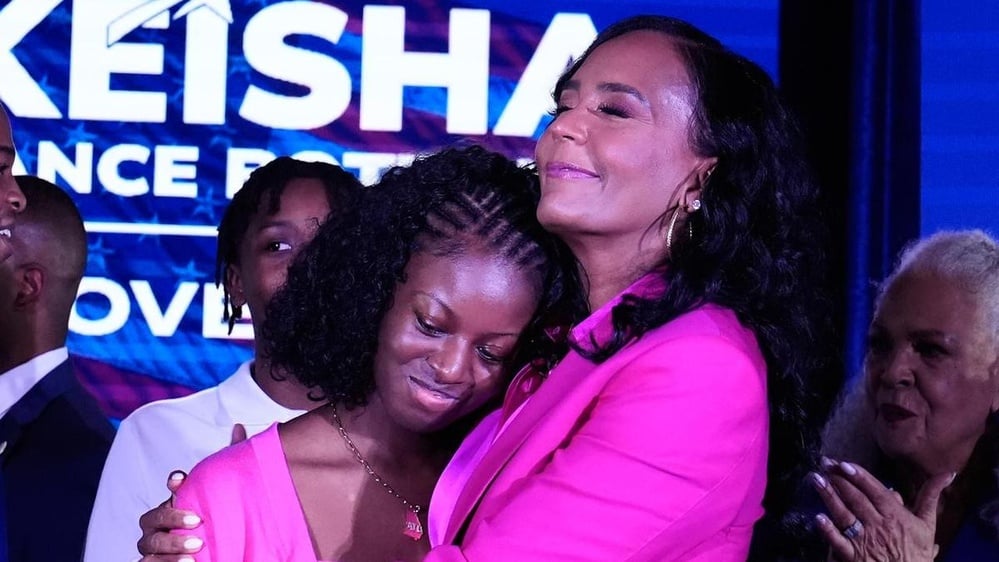
The visible framing is neutral and factual, presenting Democratic electoral gains without evaluative language or speculative context.
Automated analysis; not human reviewed.
Limitations: The supplied text is a brief excerpt, so assessments are limited to the visible framing and facts.
·
5 of 55 available dimensions scored; omitted dimensions are not treated as neutral.
·
Verified supporting quotes for 4 of 5 scored dimensions.
Claim: The excerpt reports Democratic electoral gains in neutral, factual terms without evaluative or partisan language.
“Democrats clinched a majority of governorships for the first time in 16 years” · exact text match
Why: The statement describes an electoral outcome without praise or criticism of Democrats or Republicans.
Claim: The excerpt is framed as factual reporting rather than subjective commentary.
“Democrats flipped five governor's offices in Tuesday's elections” · exact text match
Why: The sentence states a verifiable electoral result without opinion or interpretation.
Claim: The excerpt uses plain, non-sensational language.
“including in traditionally red states” · exact text match
Why: The phrasing reports a fact about the flips without dramatic or emotive language.
Claim: The excerpt is explicitly political in subject matter.
“Democrats clinched a majority of governorships for the first time in 16 years” · exact text match
Why: The reported development concerns partisan control of governorships.
The supplied text is a brief excerpt, so assessments are limited to the visible framing and facts.
November 04, 2026 · 0 shares
Framing emphasizes a stunning Democratic upset and a historic first while foregrounding Republican scandals and a worsening GOP environment, though it also reports Abbott’s attacks and the absence of debates.
Automated analysis; not human reviewed.
Limitations: The supplied text has duplicated/truncated passages and names only an unspecified “News” projection, limiting certainty about attribution and causal claims.
·
7 of 55 available dimensions scored; omitted dimensions are not treated as neutral.
·
Verified supporting quotes for 7 of 7 scored dimensions.
Claim: The report uses dramatic, favorable language for Hinojosa’s victory and foregrounds Republican scandals and a worsening GOP environment, producing a modest liberal tilt.
“Democrat Gina Hinojosa takes down Texas Gov. Greg Abbott in stunning result.” · exact text match
“changing demographics and a steadily worsening political environment for Republicans across the country and in Texas” · exact text match
Why: The headline and causal framing favor the Democratic winner while emphasizing Republican difficulties, though the report also includes Abbott’s attacks.
Claim: The report gives prominence to Hinojosa’s anti-elite campaign language about powerful interests and billionaire donors.
“Hinojosa charged in ads that Abbott was “doing the bidding of his billionaire donors”” · exact text match
Why: The populist framing appears mainly through a quoted campaign claim rather than the publisher’s own analysis, so the score is modest.
Claim: The report includes evaluative descriptors that make the framing more subjective than strictly neutral.
“Democrat Gina Hinojosa takes down Texas Gov. Greg Abbott in stunning result.” · exact text match
“changing demographics and a steadily worsening political environment for Republicans” · exact text match
Why: “Stunning” and “worsening” are evaluative descriptors rather than purely factual language.
Claim: Dramatic verbs and adjectives heighten the election result.
“takes down Texas Gov. Greg Abbott in stunning result” · exact text match
“hammered Hinojosa for being “radical.”” · exact text match
Why: “Takes down,” “stunning,” and “hammered” add dramatic emphasis beyond neutral reporting.
Claim: A small amount of evaluative commentary appears in an otherwise reported account.
“changing demographics and a steadily worsening political environment for Republicans” · exact text match
“stunning result” · exact text match
Why: The language shades into evaluation but remains largely within a reported news format.
Claim: The article is thoroughly political in subject and framing.
“Democratic state Rep. Gina Hinojosa has defeated Texas Gov. Greg Abbott, a three-term Republican, News projects” · verified after text normalization
“where GOP nominees for several offices faced personal scandals and criticism” · exact text match
Why: The report centers on a partisan election and consistently identifies party affiliation and campaign controversies.
Claim: The language gives the Democratic victory a mildly positive, dramatic charge.
“Democrat Gina Hinojosa takes down Texas Gov. Greg Abbott in stunning result.” · exact text match
Why: The headline uses dramatic, upbeat wording about the Democratic win, though the article overall is not highly emotional.
The supplied text has duplicated/truncated passages and names only an unspecified “News” projection, limiting certainty about attribution and causal claims.
November 04, 2026 · 0 shares
Frames Democratic gubernatorial gains as a national voter rebuke to Trump and Republican policymaking, using some loaded wave/rebuke language while otherwise reporting detailed results.
US midterm elections occur two years into a presidential term, with governorships and Congress in play.
Automated analysis; not human reviewed.
Limitations: The supplied text includes duplicated headlines and list artifacts, and election results are reported without named sourcing; bias classification is limited to visible framing.
·
14 of 55 available dimensions scored; omitted dimensions are not treated as neutral.
·
Verified supporting quotes for 14 of 14 scored dimensions.
Claim: The report frames Democratic wins as a rebuke to Trump and Republican policymaking.
“riding a wave of voter discontent in midterm elections to deliver a rebuke to President Donald Trump and Republican policymaking” · exact text match
Why: The interpretive framing is unfavorable to Trump and Republicans and favorable to Democratic election results.
Claim: Some causal interpretation is presented subjectively as a national wave.
“The number of states in play was surprisingly large - a reflection of Trump's poor approval ratings dragging on his party” · exact text match
Why: The phrase 'surprisingly large' and the causal attribution add subjective interpretation beyond raw results.
Claim: The headline uses loaded language that is somewhat sensational.
“Democrats seize governorships in rebuke to Republicans.” · exact text match
Why: Words like 'seize' and 'rebuke' heighten the headline's framing.
Claim: The report is predominantly descriptive of election outcomes.
“Democrats also won in Iowa, Ohio and Texas, states where Republicans have controlled state government for years.” · exact text match
Why: The sentence states electoral facts rather than prescribing policy or action.
Claim: The report presents some analytical opinion as factual context.
“Trump's poor approval ratings dragging on his party” · exact text match
Why: This is an interpretive claim about cause without detailed polling evidence in the supplied text.
Claim: The article is centrally political.
“Democrats have scored victories in governor's races in states long controlled by Republicans, including Texas and Georgia” · exact text match
Why: The content concerns elections, partisan control, and presidential politics.
Claim: The report simplifies varied state races into a national anti-Trump wave.
“riding a wave of voter discontent in midterm elections to deliver a rebuke to President Donald Trump and Republican policymaking” · exact text match
Why: The wave/rebuke frame compresses multiple state-specific outcomes into a single national narrative.
Claim: The report uses a national partisan lens that leans toward an anti-Trump/anti-Republican interpretation.
“riding a wave of voter discontent in midterm elections to deliver a rebuke to President Donald Trump and Republican policymaking” · exact text match
Why: The framing organizes the results around opposition to Trump and Republican policymaking.
Claim: The report offers precise electoral figures and historical context, supporting visible credibility.
“All told, 36 states that are home to about 80 per cent of the nation's population were electing a governor on Tuesday, with the office open in 19 states.” · exact text match
Why: Specific quantities and contextual comparisons support credibility, though no named sourcing is supplied.
Claim: The report is largely rational and evidence-shaped, using concrete numbers and historical context.
“All told, 36 states that are home to about 80 per cent of the nation's population were electing a governor on Tuesday, with the office open in 19 states.” · exact text match
Why: Specific quantities and structured electoral context indicate rational reporting rather than irrationality.
Claim: The report includes forward-looking speculation about Democratic governors opposing Trump.
“More states under Democratic leadership could mean more governors fighting - or ignoring - Trump's agenda.” · exact text match
Why: The 'could mean' formulation forecasts political behavior beyond reported election results.
Claim: The headline uses loaded framing to shape interpretation.
“Democrats seize governorships in rebuke to Republicans.” · exact text match
Why: Loaded verbs and a causal rebuke frame are observable framing techniques.
Claim: The report includes Republican wins and historical context, indicating some fairness.
“Republicans hung on to control in Florida, where US representative Byron Donalds defeated David Jolly in the nation's third-most populous state.” · exact text match
Why: Including opposing-party results materially qualifies a purely one-sided account.
Claim: The article provides historical and electoral context beyond simple results.
“Democrats last gained a majority of governorships in 2006, flipping six governors' offices in the last midterm under a second-term Republican president.” · exact text match
Why: Historical comparison and contextual detail support a relatively intelligent presentation.
The supplied text includes duplicated headlines and list artifacts, and election results are reported without named sourcing; bias classification is limited to visible framing.
November 04, 2026 · 0 shares
The framing is sharply anti-Trump and pro-Democratic, using hyperbolic and mocking language such as 'annihilation,' 'obliterated,' and 'deranged ramblings' to characterize Republican losses and Trump’s response.
Automated analysis; not human reviewed.
Limitations: The supplied text is a concatenated, duplicated, and partly truncated set of multiple political articles, and some described events appear future/hypothetical; scores reflect the combined framing.
·
55 of 55 available dimensions scored; omitted dimensions are not treated as neutral.
·
Verified supporting quotes for 13 of 55 scored dimensions.
Claim: The article frames Republican losses and Trump's conduct negatively while presenting Democratic victories as a popular rejection, indicating a liberal/pro-Democratic slant.
“Democrats took control of both the House and the Senate in a resounding rejection of his administration’s policies and ideology.” · exact text match
Why: The quote attributes a broad rejection to the administration using pro-Democratic framing.
Claim: The article uses subjective characterizations of Trump's remarks rather than neutral description.
“deranged ramblings” · exact text match
Why: Calling remarks 'deranged ramblings' is an evaluative judgment rather than a factual description.
Claim: The article employs hyperbolic, sensational wording to describe election results.
“Republicans were just obliterated this election.” · exact text match
Why: 'Obliterated' is a dramatic metaphor that heightens the emotional impact beyond neutral reporting.
Claim: The article uses alarmist and mocking language that inflames partisan reaction.
“deranged ramblings” · exact text match
Why: The phrase 'deranged ramblings' is inflammatory and invites a strong emotional response rather than calm analysis.
Claim: The article foregrounds insider speculation about a cabinet official's possible dismissal and Senate seat maneuvering.
“Trump Prepares to Dump Pete Hegseth Over Midterms Destruction” · exact text match
Why: The headline and accompanying details about a possible firing and Senate appointment are political gossip and speculation.
Claim: The article states an unsupported opinion about Trump's indifference as fact.
“Republicans were just obliterated this election.
Donald Trump doesn’t care.”
· exact text match
Why: The assertion about what Trump cares about is an opinion, not a verifiable reported fact.
Claim: The article is centrally focused on partisan electoral conflict and frames it in political terms.
“Democrats took control of both the House and the Senate in a resounding rejection of his administration’s policies and ideology.” · exact text match
Why: The passage describes a partisan election outcome and interprets it as a rejection of an administration's policies and ideology.
Claim: The article reduces a complex midterm election to a single 'resounding rejection' of Trump's policies and ideology.
“a resounding rejection of his administration’s policies and ideology” · exact text match
Why: The phrase offers a simplified, sweeping interpretation of voter behavior without detailing other factors.
Claim: The article uses a mocking neologism to describe Republican redistricting.
“Republicans dummymandered themselves into some major midterm losses.” · exact text match
Why: 'Dummymandered' is a derisive, informal term that mocks the subject rather than neutrally describing events.
Claim: The headline asserts that Democrats have won enough seats to end the Electoral College despite the article's own conditional caveats.
“Democrats Win Enough Seats Nationwide to End Electoral College.” · exact text match
Why: The headline states a definitive outcome, while the body says the compact depends on further state votes and constitutional issues.
Claim: The article interprets the election as a rejection of an opposing administration's ideology, reflecting a strong ideological lens.
“a resounding rejection of his administration’s policies and ideology” · exact text match
Why: The framing casts the election as an ideological verdict rather than a neutral report of results.
Claim: The article reports possible future actions as significant developments, relying on unnamed sources and speculation.
“Trump may soon give Secretary of Defense Pete Hegseth the axe” · exact text match
Why: The statement is explicitly speculative about a future firing and is based on reports rather than a confirmed decision.
Claim: The article uses loaded framing and a derisive term to shape negative perception of Republicans.
“dummymandered” · exact text match
Why: The invented term 'dummymandered' combines 'dummy' and 'gerrymandered' to mock and discredit the subject.
The supplied text is a concatenated, duplicated, and partly truncated set of multiple political articles, and some described events appear future/hypothetical; scores reflect the combined framing.
November 04, 2026 · 0 shares
The strongest observable framing is measured, attribution-based election reporting that foregrounds Democratic state wins alongside energy-price and data-center policy context.
Automated analysis; not human reviewed.
Limitations: The supplied text is a scraped energy-news page with duplicated and interleaved promotional links and no clear byline; the analysis treats only the contiguous election-report passages as the substantive article.
·
6 of 55 available dimensions scored; omitted dimensions are not treated as neutral.
·
Verified supporting quotes for 6 of 6 scored dimensions.
Claim: The report balances Democratic victories with Republican institutional continuity and avoids evaluative partisan labels.
“Democrats running against data centers took the governorships of Georgia and Ohio and won control of Georgia’s utility regulator.” · exact text match
“Republicans, who have held every seat since 1994, keep a 2-1 majority.” · exact text match
Why: The pairing of Democratic wins with retained Republican control supports measured neutrality on the left-right dimension.
Claim: The report presents outcomes and positions through attributed statements and factual data rather than first-person opinion.
“State Rep. Jon Rosenthal, a former oilfield engineer who calls himself a “drill baby, drill Democrat,” defeated Republican Bo French” · exact text match
“Trump told Fox News on Tuesday night that “part of it was Iran” when explaining Republican losses.” · exact text match
Why: Candidate labels and quotes are attributed rather than adopted as the publication’s opinion.
Claim: The prose uses measured, factual description rather than sensational language or emotional escalation.
“Republicans, who have held every seat since 1994, keep a 2-1 majority.” · exact text match
“Regular gasoline averaged $4.15 a gallon on Election Day, according to AAA” · exact text match
Why: Institutional context and numeric price reporting are stated in neutral terms.
Claim: The article is centrally about partisan election outcomes and control of regulatory offices.
“Democrats Win Texas Oil Regulator Seat for First Time Since 1990.” · exact text match
“Democrats running against data centers took the governorships of Georgia and Ohio and won control of Georgia’s utility regulator.” · exact text match
Why: The headline and lead are explicitly election- and party-control focused.
Claim: The report provides named officials, offices, and attribution for fuel-price data and a political quote.
“Regular gasoline averaged $4.15 a gallon on Election Day, according to AAA” · exact text match
“Trump told Fox News on Tuesday night that “part of it was Iran” when explaining Republican losses.” · exact text match
Why: Specific named institutions and sources support high visible credibility.
Claim: The report relies on named races, quantified capacity and fuel-price data, and specific attributions.
“Regular gasoline averaged $4.15 a gallon on Election Day, according to AAA” · exact text match
“Texas holds more than 25% of the data center capacity planned in the United States by 2030.” · exact text match
Why: Quantified, attributed claims support a rational/evidence-based classification.
The supplied text is a scraped energy-news page with duplicated and interleaved promotional links and no clear byline; the analysis treats only the contiguous election-report passages as the substantive article.
November 04, 2026 · 0 shares
The framing is sharply anti-Trump and pro-Democratic, using hyperbolic and mocking language such as 'annihilation,' 'obliterated,' and 'deranged ramblings' to characterize Republican losses and Trump’s response.
Automated analysis; not human reviewed.
Limitations: The supplied text is a concatenated, duplicated, and partly truncated set of multiple political articles, and some described events appear future/hypothetical; scores reflect the combined framing.
·
55 of 55 available dimensions scored; omitted dimensions are not treated as neutral.
·
Verified supporting quotes for 13 of 55 scored dimensions.
Claim: The article frames Republican losses and Trump's conduct negatively while presenting Democratic victories as a popular rejection, indicating a liberal/pro-Democratic slant.
“Democrats took control of both the House and the Senate in a resounding rejection of his administration’s policies and ideology.” · exact text match
Why: The quote attributes a broad rejection to the administration using pro-Democratic framing.
Claim: The article uses subjective characterizations of Trump's remarks rather than neutral description.
“deranged ramblings” · exact text match
Why: Calling remarks 'deranged ramblings' is an evaluative judgment rather than a factual description.
Claim: The article employs hyperbolic, sensational wording to describe election results.
“Republicans were just obliterated this election.” · exact text match
Why: 'Obliterated' is a dramatic metaphor that heightens the emotional impact beyond neutral reporting.
Claim: The article uses alarmist and mocking language that inflames partisan reaction.
“deranged ramblings” · exact text match
Why: The phrase 'deranged ramblings' is inflammatory and invites a strong emotional response rather than calm analysis.
Claim: The article foregrounds insider speculation about a cabinet official's possible dismissal and Senate seat maneuvering.
“Trump Prepares to Dump Pete Hegseth Over Midterms Destruction” · exact text match
Why: The headline and accompanying details about a possible firing and Senate appointment are political gossip and speculation.
Claim: The article states an unsupported opinion about Trump's indifference as fact.
“Republicans were just obliterated this election.
Donald Trump doesn’t care.”
· exact text match
Why: The assertion about what Trump cares about is an opinion, not a verifiable reported fact.
Claim: The article is centrally focused on partisan electoral conflict and frames it in political terms.
“Democrats took control of both the House and the Senate in a resounding rejection of his administration’s policies and ideology.” · exact text match
Why: The passage describes a partisan election outcome and interprets it as a rejection of an administration's policies and ideology.
Claim: The article reduces a complex midterm election to a single 'resounding rejection' of Trump's policies and ideology.
“a resounding rejection of his administration’s policies and ideology” · exact text match
Why: The phrase offers a simplified, sweeping interpretation of voter behavior without detailing other factors.
Claim: The article uses a mocking neologism to describe Republican redistricting.
“Republicans dummymandered themselves into some major midterm losses.” · exact text match
Why: 'Dummymandered' is a derisive, informal term that mocks the subject rather than neutrally describing events.
Claim: The headline asserts that Democrats have won enough seats to end the Electoral College despite the article's own conditional caveats.
“Democrats Win Enough Seats Nationwide to End Electoral College.” · exact text match
Why: The headline states a definitive outcome, while the body says the compact depends on further state votes and constitutional issues.
Claim: The article interprets the election as a rejection of an opposing administration's ideology, reflecting a strong ideological lens.
“a resounding rejection of his administration’s policies and ideology” · exact text match
Why: The framing casts the election as an ideological verdict rather than a neutral report of results.
Claim: The article reports possible future actions as significant developments, relying on unnamed sources and speculation.
“Trump may soon give Secretary of Defense Pete Hegseth the axe” · exact text match
Why: The statement is explicitly speculative about a future firing and is based on reports rather than a confirmed decision.
Claim: The article uses loaded framing and a derisive term to shape negative perception of Republicans.
“dummymandered” · exact text match
Why: The invented term 'dummymandered' combines 'dummy' and 'gerrymandered' to mock and discredit the subject.
The supplied text is a concatenated, duplicated, and partly truncated set of multiple political articles, and some described events appear future/hypothetical; scores reflect the combined framing.
November 04, 2026 · 0 shares
The framing is sharply anti-Trump and pro-Democratic, using hyperbolic and mocking language such as 'annihilation,' 'obliterated,' and 'deranged ramblings' to characterize Republican losses and Trump’s response.
Automated analysis; not human reviewed.
Limitations: The supplied text is a concatenated, duplicated, and partly truncated set of multiple political articles, and some described events appear future/hypothetical; scores reflect the combined framing.
·
55 of 55 available dimensions scored; omitted dimensions are not treated as neutral.
·
Verified supporting quotes for 13 of 55 scored dimensions.
Claim: The article frames Republican losses and Trump's conduct negatively while presenting Democratic victories as a popular rejection, indicating a liberal/pro-Democratic slant.
“Democrats took control of both the House and the Senate in a resounding rejection of his administration’s policies and ideology.” · exact text match
Why: The quote attributes a broad rejection to the administration using pro-Democratic framing.
Claim: The article uses subjective characterizations of Trump's remarks rather than neutral description.
“deranged ramblings” · exact text match
Why: Calling remarks 'deranged ramblings' is an evaluative judgment rather than a factual description.
Claim: The article employs hyperbolic, sensational wording to describe election results.
“Republicans were just obliterated this election.” · exact text match
Why: 'Obliterated' is a dramatic metaphor that heightens the emotional impact beyond neutral reporting.
Claim: The article uses alarmist and mocking language that inflames partisan reaction.
“deranged ramblings” · exact text match
Why: The phrase 'deranged ramblings' is inflammatory and invites a strong emotional response rather than calm analysis.
Claim: The article foregrounds insider speculation about a cabinet official's possible dismissal and Senate seat maneuvering.
“Trump Prepares to Dump Pete Hegseth Over Midterms Destruction” · exact text match
Why: The headline and accompanying details about a possible firing and Senate appointment are political gossip and speculation.
Claim: The article states an unsupported opinion about Trump's indifference as fact.
“Republicans were just obliterated this election.
Donald Trump doesn’t care.”
· exact text match
Why: The assertion about what Trump cares about is an opinion, not a verifiable reported fact.
Claim: The article is centrally focused on partisan electoral conflict and frames it in political terms.
“Democrats took control of both the House and the Senate in a resounding rejection of his administration’s policies and ideology.” · exact text match
Why: The passage describes a partisan election outcome and interprets it as a rejection of an administration's policies and ideology.
Claim: The article reduces a complex midterm election to a single 'resounding rejection' of Trump's policies and ideology.
“a resounding rejection of his administration’s policies and ideology” · exact text match
Why: The phrase offers a simplified, sweeping interpretation of voter behavior without detailing other factors.
Claim: The article uses a mocking neologism to describe Republican redistricting.
“Republicans dummymandered themselves into some major midterm losses.” · exact text match
Why: 'Dummymandered' is a derisive, informal term that mocks the subject rather than neutrally describing events.
Claim: The headline asserts that Democrats have won enough seats to end the Electoral College despite the article's own conditional caveats.
“Democrats Win Enough Seats Nationwide to End Electoral College.” · exact text match
Why: The headline states a definitive outcome, while the body says the compact depends on further state votes and constitutional issues.
Claim: The article interprets the election as a rejection of an opposing administration's ideology, reflecting a strong ideological lens.
“a resounding rejection of his administration’s policies and ideology” · exact text match
Why: The framing casts the election as an ideological verdict rather than a neutral report of results.
Claim: The article reports possible future actions as significant developments, relying on unnamed sources and speculation.
“Trump may soon give Secretary of Defense Pete Hegseth the axe” · exact text match
Why: The statement is explicitly speculative about a future firing and is based on reports rather than a confirmed decision.
Claim: The article uses loaded framing and a derisive term to shape negative perception of Republicans.
“dummymandered” · exact text match
Why: The invented term 'dummymandered' combines 'dummy' and 'gerrymandered' to mock and discredit the subject.
The supplied text is a concatenated, duplicated, and partly truncated set of multiple political articles, and some described events appear future/hypothetical; scores reflect the combined framing.
November 03, 2026 · 0 shares
Strongly pro-Democratic and anti-Trump framing presents Republican defeat as likely and attributes the GOP's difficulties almost entirely to Trump, while mixing poll-based forecasting with confident partisan commentary.
Automated analysis; not human reviewed.
Limitations: The supplied text is a fragmented newsletter excerpt with no byline, so author-specific attribution and full article structure are unavailable.
·
55 of 55 available dimensions scored; omitted dimensions are not treated as neutral.
·
Verified supporting quotes for 14 of 55 scored dimensions.
Claim: The framing strongly favors Democrats and blames Republicans' difficulties on Trump.
“Our forecasts show good numbers for Democrats — the last round of polling resolved any doubt about that.” · exact text match
“All of these problems are Trump’s fault.” · exact text match
Why: The publisher presents Democratic gains as resolved by polling and assigns broad Republican problems to Trump, indicating a strongly liberal, anti-Trump framing.
Claim: The presentation is heavily first-person and interpretive.
“Here’s why I buy it — mostly.” · exact text match
“why my gut feels slightly conflicted this time around.” · exact text match
Why: First-person forecast endorsement and gut-feeling language show subjective framing.
Claim: The headline and commentary use dramatic, charged language.
“It's Judgment Day for Trump.” · exact text match
“He almost seems to have a death wish in these midterms.” · exact text match
Why: Judgment Day and death-wish language are sensational framing beyond neutral reporting.
Claim: The piece is openly opinionated and evaluative.
“I’ll illustrate my “mental map” of the election, and why my gut feels slightly conflicted this time around.” · exact text match
“What do Republicans have going for them? It’s really not much.” · exact text match
Why: Explicit personal forecast and dismissive evaluation show high opinion content.
Claim: The content is centrally about electoral politics and partisan outcomes.
“FLIPR’s final forecasts are ready for the Senate, House and governorships.” · exact text match
“Republicans have a lot of problems, but there’s one common cause: Trump” · exact text match
Why: The entire excerpt concerns election forecasts and partisan advantage.
Claim: The article reduces complex Republican difficulties to a single cause.
“Republicans have a lot of problems, but there’s one common cause: Trump” · exact text match
“All of these problems are Trump’s fault.” · exact text match
Why: Stating one common cause and assigning all problems to Trump simplifies complex electoral factors.
Claim: Forecasts and causal claims are stated with high certainty.
“It would be a major surprise if Democrats failed to capture the House” · exact text match
“All of these problems are Trump’s fault.” · exact text match
Why: Major-surprise language and absolute blame indicate confidence beyond the article's direct evidence.
Claim: The framing is strongly partisan in favor of Democrats and against Trump.
“Our forecasts show good numbers for Democrats — the last round of polling resolved any doubt about that.” · exact text match
“All of these problems are Trump’s fault.” · exact text match
Why: The selection and wording consistently align with a partisan Democratic and anti-Trump perspective.
Claim: The tone is negative toward Trump and Republicans.
“He almost seems to have a death wish in these midterms.” · exact text match
“What do Republicans have going for them? It’s really not much.” · exact text match
Why: Death-wish language and dismissive questioning convey negative emotional valence.
Claim: The article shows some transparent modeling and uncertainty but also unsupported partisan causal claims.
“The Senate is by no means certain” · exact text match
“If Trump’s net approval ratings are -20, then our formula based on all midterms since 1948 would peg the national environment at D +9 — which is exactly what the generic ballot shows.” · exact text match
Why: Explicit uncertainty and a stated model support moderate credibility, offset by assertive unsupported blame.
Claim: The analysis is mostly data-driven but includes unsupported causal assertions.
“If Trump’s net approval ratings are -20, then our formula based on all midterms since 1948 would peg the national environment at D +9 — which is exactly what the generic ballot shows.” · exact text match
Why: The use of a historical model and polling comparison supports a rational classification, though it is not pure neutrality.
Claim: The article is largely forward-looking and speculative.
“The Senate is by no means certain, but at the same time, the bottom could fall out for Republicans if Democrats meet or exceed their forecasts on a race-by-race basis.” · exact text match
“I can’t get 2018 out of my head.” · exact text match
Why: The content forecasts election outcomes and relies on possible scenarios, making it highly speculative.
Claim: Loaded framing is used to shape interpretation of election dynamics.
“He almost seems to have a death wish in these midterms.” · exact text match
“All of these problems are Trump’s fault.” · exact text match
Why: Charged language and absolute blame are observable framing techniques, though the piece is not covertly manipulative.
Claim: The analysis uses quantitative and historical comparisons.
“If Trump’s net approval ratings are -20, then our formula based on all midterms since 1948 would peg the national environment at D +9 — which is exactly what the generic ballot shows.” · exact text match
Why: The reasoning incorporates a historical model and polling data, supporting above-average article intelligence.
The supplied text is a fragmented newsletter excerpt with no byline, so author-specific attribution and full article structure are unavailable.
The visible framing is neutral and factual, presenting Democratic electoral gains without evaluative language or speculative context.
Automated analysis; not human reviewed. Limitations: The supplied text is a brief excerpt, so assessments are limited to the visible framing and facts. · 5 of 55 available dimensions scored; omitted dimensions are not treated as neutral. · Verified supporting quotes for 4 of 5 scored dimensions.
Claim: The excerpt reports Democratic electoral gains in neutral, factual terms without evaluative or partisan language.
“Democrats clinched a majority of governorships for the first time in 16 years” · exact text match
Why: The statement describes an electoral outcome without praise or criticism of Democrats or Republicans.
Claim: The excerpt is framed as factual reporting rather than subjective commentary.
“Democrats flipped five governor's offices in Tuesday's elections” · exact text match
Why: The sentence states a verifiable electoral result without opinion or interpretation.
Claim: The excerpt uses plain, non-sensational language.
“including in traditionally red states” · exact text match
Why: The phrasing reports a fact about the flips without dramatic or emotive language.
Claim: The excerpt is explicitly political in subject matter.
“Democrats clinched a majority of governorships for the first time in 16 years” · exact text match
Why: The reported development concerns partisan control of governorships.
The supplied text is a brief excerpt, so assessments are limited to the visible framing and facts.
November 04, 2026 · 0 shares
Framing emphasizes a stunning Democratic upset and a historic first while foregrounding Republican scandals and a worsening GOP environment, though it also reports Abbott’s attacks and the absence of debates.
Automated analysis; not human reviewed. Limitations: The supplied text has duplicated/truncated passages and names only an unspecified “News” projection, limiting certainty about attribution and causal claims. · 7 of 55 available dimensions scored; omitted dimensions are not treated as neutral. · Verified supporting quotes for 7 of 7 scored dimensions.
Claim: The report uses dramatic, favorable language for Hinojosa’s victory and foregrounds Republican scandals and a worsening GOP environment, producing a modest liberal tilt.
“Democrat Gina Hinojosa takes down Texas Gov. Greg Abbott in stunning result.” · exact text match
“changing demographics and a steadily worsening political environment for Republicans across the country and in Texas” · exact text match
Why: The headline and causal framing favor the Democratic winner while emphasizing Republican difficulties, though the report also includes Abbott’s attacks.
Claim: The report gives prominence to Hinojosa’s anti-elite campaign language about powerful interests and billionaire donors.
“Hinojosa charged in ads that Abbott was “doing the bidding of his billionaire donors”” · exact text match
Why: The populist framing appears mainly through a quoted campaign claim rather than the publisher’s own analysis, so the score is modest.
Claim: The report includes evaluative descriptors that make the framing more subjective than strictly neutral.
“Democrat Gina Hinojosa takes down Texas Gov. Greg Abbott in stunning result.” · exact text match
“changing demographics and a steadily worsening political environment for Republicans” · exact text match
Why: “Stunning” and “worsening” are evaluative descriptors rather than purely factual language.
Claim: Dramatic verbs and adjectives heighten the election result.
“takes down Texas Gov. Greg Abbott in stunning result” · exact text match
“hammered Hinojosa for being “radical.”” · exact text match
Why: “Takes down,” “stunning,” and “hammered” add dramatic emphasis beyond neutral reporting.
Claim: A small amount of evaluative commentary appears in an otherwise reported account.
“changing demographics and a steadily worsening political environment for Republicans” · exact text match
“stunning result” · exact text match
Why: The language shades into evaluation but remains largely within a reported news format.
Claim: The article is thoroughly political in subject and framing.
“Democratic state Rep. Gina Hinojosa has defeated Texas Gov. Greg Abbott, a three-term Republican, News projects” · verified after text normalization
“where GOP nominees for several offices faced personal scandals and criticism” · exact text match
Why: The report centers on a partisan election and consistently identifies party affiliation and campaign controversies.
Claim: The language gives the Democratic victory a mildly positive, dramatic charge.
“Democrat Gina Hinojosa takes down Texas Gov. Greg Abbott in stunning result.” · exact text match
Why: The headline uses dramatic, upbeat wording about the Democratic win, though the article overall is not highly emotional.
The supplied text has duplicated/truncated passages and names only an unspecified “News” projection, limiting certainty about attribution and causal claims.
November 04, 2026 · 0 shares
Frames Democratic gubernatorial gains as a national voter rebuke to Trump and Republican policymaking, using some loaded wave/rebuke language while otherwise reporting detailed results.
US midterm elections occur two years into a presidential term, with governorships and Congress in play.
Automated analysis; not human reviewed. Limitations: The supplied text includes duplicated headlines and list artifacts, and election results are reported without named sourcing; bias classification is limited to visible framing. · 14 of 55 available dimensions scored; omitted dimensions are not treated as neutral. · Verified supporting quotes for 14 of 14 scored dimensions.
Claim: The report frames Democratic wins as a rebuke to Trump and Republican policymaking.
“riding a wave of voter discontent in midterm elections to deliver a rebuke to President Donald Trump and Republican policymaking” · exact text match
Why: The interpretive framing is unfavorable to Trump and Republicans and favorable to Democratic election results.
Claim: Some causal interpretation is presented subjectively as a national wave.
“The number of states in play was surprisingly large - a reflection of Trump's poor approval ratings dragging on his party” · exact text match
Why: The phrase 'surprisingly large' and the causal attribution add subjective interpretation beyond raw results.
Claim: The headline uses loaded language that is somewhat sensational.
“Democrats seize governorships in rebuke to Republicans.” · exact text match
Why: Words like 'seize' and 'rebuke' heighten the headline's framing.
Claim: The report is predominantly descriptive of election outcomes.
“Democrats also won in Iowa, Ohio and Texas, states where Republicans have controlled state government for years.” · exact text match
Why: The sentence states electoral facts rather than prescribing policy or action.
Claim: The report presents some analytical opinion as factual context.
“Trump's poor approval ratings dragging on his party” · exact text match
Why: This is an interpretive claim about cause without detailed polling evidence in the supplied text.
Claim: The article is centrally political.
“Democrats have scored victories in governor's races in states long controlled by Republicans, including Texas and Georgia” · exact text match
Why: The content concerns elections, partisan control, and presidential politics.
Claim: The report simplifies varied state races into a national anti-Trump wave.
“riding a wave of voter discontent in midterm elections to deliver a rebuke to President Donald Trump and Republican policymaking” · exact text match
Why: The wave/rebuke frame compresses multiple state-specific outcomes into a single national narrative.
Claim: The report uses a national partisan lens that leans toward an anti-Trump/anti-Republican interpretation.
“riding a wave of voter discontent in midterm elections to deliver a rebuke to President Donald Trump and Republican policymaking” · exact text match
Why: The framing organizes the results around opposition to Trump and Republican policymaking.
Claim: The report offers precise electoral figures and historical context, supporting visible credibility.
“All told, 36 states that are home to about 80 per cent of the nation's population were electing a governor on Tuesday, with the office open in 19 states.” · exact text match
Why: Specific quantities and contextual comparisons support credibility, though no named sourcing is supplied.
Claim: The report is largely rational and evidence-shaped, using concrete numbers and historical context.
“All told, 36 states that are home to about 80 per cent of the nation's population were electing a governor on Tuesday, with the office open in 19 states.” · exact text match
Why: Specific quantities and structured electoral context indicate rational reporting rather than irrationality.
Claim: The report includes forward-looking speculation about Democratic governors opposing Trump.
“More states under Democratic leadership could mean more governors fighting - or ignoring - Trump's agenda.” · exact text match
Why: The 'could mean' formulation forecasts political behavior beyond reported election results.
Claim: The headline uses loaded framing to shape interpretation.
“Democrats seize governorships in rebuke to Republicans.” · exact text match
Why: Loaded verbs and a causal rebuke frame are observable framing techniques.
Claim: The report includes Republican wins and historical context, indicating some fairness.
“Republicans hung on to control in Florida, where US representative Byron Donalds defeated David Jolly in the nation's third-most populous state.” · exact text match
Why: Including opposing-party results materially qualifies a purely one-sided account.
Claim: The article provides historical and electoral context beyond simple results.
“Democrats last gained a majority of governorships in 2006, flipping six governors' offices in the last midterm under a second-term Republican president.” · exact text match
Why: Historical comparison and contextual detail support a relatively intelligent presentation.
The supplied text includes duplicated headlines and list artifacts, and election results are reported without named sourcing; bias classification is limited to visible framing.
November 04, 2026 · 0 shares
The framing is sharply anti-Trump and pro-Democratic, using hyperbolic and mocking language such as 'annihilation,' 'obliterated,' and 'deranged ramblings' to characterize Republican losses and Trump’s response.
Automated analysis; not human reviewed. Limitations: The supplied text is a concatenated, duplicated, and partly truncated set of multiple political articles, and some described events appear future/hypothetical; scores reflect the combined framing. · 55 of 55 available dimensions scored; omitted dimensions are not treated as neutral. · Verified supporting quotes for 13 of 55 scored dimensions.
Claim: The article frames Republican losses and Trump's conduct negatively while presenting Democratic victories as a popular rejection, indicating a liberal/pro-Democratic slant.
“Democrats took control of both the House and the Senate in a resounding rejection of his administration’s policies and ideology.” · exact text match
Why: The quote attributes a broad rejection to the administration using pro-Democratic framing.
Claim: The article uses subjective characterizations of Trump's remarks rather than neutral description.
“deranged ramblings” · exact text match
Why: Calling remarks 'deranged ramblings' is an evaluative judgment rather than a factual description.
Claim: The article employs hyperbolic, sensational wording to describe election results.
“Republicans were just obliterated this election.” · exact text match
Why: 'Obliterated' is a dramatic metaphor that heightens the emotional impact beyond neutral reporting.
Claim: The article uses alarmist and mocking language that inflames partisan reaction.
“deranged ramblings” · exact text match
Why: The phrase 'deranged ramblings' is inflammatory and invites a strong emotional response rather than calm analysis.
Claim: The article foregrounds insider speculation about a cabinet official's possible dismissal and Senate seat maneuvering.
“Trump Prepares to Dump Pete Hegseth Over Midterms Destruction” · exact text match
Why: The headline and accompanying details about a possible firing and Senate appointment are political gossip and speculation.
Claim: The article states an unsupported opinion about Trump's indifference as fact.
“Republicans were just obliterated this election. Donald Trump doesn’t care.” · exact text match
Why: The assertion about what Trump cares about is an opinion, not a verifiable reported fact.
Claim: The article is centrally focused on partisan electoral conflict and frames it in political terms.
“Democrats took control of both the House and the Senate in a resounding rejection of his administration’s policies and ideology.” · exact text match
Why: The passage describes a partisan election outcome and interprets it as a rejection of an administration's policies and ideology.
Claim: The article reduces a complex midterm election to a single 'resounding rejection' of Trump's policies and ideology.
“a resounding rejection of his administration’s policies and ideology” · exact text match
Why: The phrase offers a simplified, sweeping interpretation of voter behavior without detailing other factors.
Claim: The article uses a mocking neologism to describe Republican redistricting.
“Republicans dummymandered themselves into some major midterm losses.” · exact text match
Why: 'Dummymandered' is a derisive, informal term that mocks the subject rather than neutrally describing events.
Claim: The headline asserts that Democrats have won enough seats to end the Electoral College despite the article's own conditional caveats.
“Democrats Win Enough Seats Nationwide to End Electoral College.” · exact text match
Why: The headline states a definitive outcome, while the body says the compact depends on further state votes and constitutional issues.
Claim: The article interprets the election as a rejection of an opposing administration's ideology, reflecting a strong ideological lens.
“a resounding rejection of his administration’s policies and ideology” · exact text match
Why: The framing casts the election as an ideological verdict rather than a neutral report of results.
Claim: The article reports possible future actions as significant developments, relying on unnamed sources and speculation.
“Trump may soon give Secretary of Defense Pete Hegseth the axe” · exact text match
Why: The statement is explicitly speculative about a future firing and is based on reports rather than a confirmed decision.
Claim: The article uses loaded framing and a derisive term to shape negative perception of Republicans.
“dummymandered” · exact text match
Why: The invented term 'dummymandered' combines 'dummy' and 'gerrymandered' to mock and discredit the subject.
The supplied text is a concatenated, duplicated, and partly truncated set of multiple political articles, and some described events appear future/hypothetical; scores reflect the combined framing.
November 04, 2026 · 0 shares
The page frames Democratic midterm gains as a national rejection of Donald Trump’s agenda while otherwise presenting sourced live-results mechanics.
Automated analysis; not human reviewed. Limitations: The supplied text mixes a live-results explainer with related headlines and an apparent premature Democratic-control claim, making overall framing intensity ambiguous. · 55 of 55 available dimensions scored; omitted dimensions are not treated as neutral. · Verified supporting quotes for 10 of 55 scored dimensions.
Claim: The page frames Democratic victories as voters rejecting Donald Trump’s agenda, a left-leaning interpretation of the results.
“Democrats win control of Congress as voters reject Donald Trump’s agenda” · exact text match
Why: The headline interprets the election as a rejection of Trump, favoring the Democratic side.
Claim: The page uses interpretive language that casts the election as a verdict on Trump.
“voters reject Donald Trump’s agenda” · exact text match
“after two turbulent years of Trump” · exact text match
Why: These phrases go beyond vote totals to characterize the electorate's judgment.
Claim: Results are attributed to a wire service rather than presented through sensational language.
“The election results on this page are reported by the Associated Press.” · exact text match
Why: Attribution and procedural detail dominate the page.
Claim: The text is largely explanatory, defining institutions rather than advocating actions.
“The US legislature, Congress, has two chambers: the House of Representatives and the Senate.” · exact text match
Why: The quoted passage is descriptive civic explanation.
Claim: The page includes evaluative characterizations of Trump's term.
“after two turbulent years of Trump” · exact text match
Why: 'Turbulent' is an evaluative framing rather than a neutral result.
Claim: The article is centrally concerned with electoral politics and party control.
“US midterm elections 2026: live results from Senate, House and governor races in all 50 states.” · exact text match
Why: The subject is explicitly a US election.
Claim: Election results are framed as a national ideological verdict on Trump.
“Democrats win control of Congress as voters reject Donald Trump’s agenda” · exact text match
Why: The headline interprets Democratic gains as rejection of a political agenda, an ideological lens.
Claim: The page discloses its result source and call methodology.
“The election results on this page are reported by the Associated Press.” · exact text match
“AP will “call” the winner in a state when it determines that the trailing candidate has no path to victory.” · exact text match
Why: Visible attribution and methodology increase credibility, though partisan headline framing limits it.
Claim: The page explains race calls through a stated, evidence-based decision rule.
“AP will “call” the winner in a state when it determines that the trailing candidate has no path to victory.” · exact text match
Why: This procedural explanation supports a rational rather than emotive framing.
Claim: The article provides detailed institutional and electoral-process information.
“The lower chamber, the House of Representatives, has 435 voting seats, each representing a district of roughly similar size.” · exact text match
Why: The explanatory detail indicates an informed article.
The supplied text mixes a live-results explainer with related headlines and an apparent premature Democratic-control claim, making overall framing intensity ambiguous.
November 04, 2026 · 0 shares
The strongest observable framing is measured, attribution-based election reporting that foregrounds Democratic state wins alongside energy-price and data-center policy context.
Automated analysis; not human reviewed. Limitations: The supplied text is a scraped energy-news page with duplicated and interleaved promotional links and no clear byline; the analysis treats only the contiguous election-report passages as the substantive article. · 6 of 55 available dimensions scored; omitted dimensions are not treated as neutral. · Verified supporting quotes for 6 of 6 scored dimensions.
Claim: The report balances Democratic victories with Republican institutional continuity and avoids evaluative partisan labels.
“Democrats running against data centers took the governorships of Georgia and Ohio and won control of Georgia’s utility regulator.” · exact text match
“Republicans, who have held every seat since 1994, keep a 2-1 majority.” · exact text match
Why: The pairing of Democratic wins with retained Republican control supports measured neutrality on the left-right dimension.
Claim: The report presents outcomes and positions through attributed statements and factual data rather than first-person opinion.
“State Rep. Jon Rosenthal, a former oilfield engineer who calls himself a “drill baby, drill Democrat,” defeated Republican Bo French” · exact text match
“Trump told Fox News on Tuesday night that “part of it was Iran” when explaining Republican losses.” · exact text match
Why: Candidate labels and quotes are attributed rather than adopted as the publication’s opinion.
Claim: The prose uses measured, factual description rather than sensational language or emotional escalation.
“Republicans, who have held every seat since 1994, keep a 2-1 majority.” · exact text match
“Regular gasoline averaged $4.15 a gallon on Election Day, according to AAA” · exact text match
Why: Institutional context and numeric price reporting are stated in neutral terms.
Claim: The article is centrally about partisan election outcomes and control of regulatory offices.
“Democrats Win Texas Oil Regulator Seat for First Time Since 1990.” · exact text match
“Democrats running against data centers took the governorships of Georgia and Ohio and won control of Georgia’s utility regulator.” · exact text match
Why: The headline and lead are explicitly election- and party-control focused.
Claim: The report provides named officials, offices, and attribution for fuel-price data and a political quote.
“Regular gasoline averaged $4.15 a gallon on Election Day, according to AAA” · exact text match
“Trump told Fox News on Tuesday night that “part of it was Iran” when explaining Republican losses.” · exact text match
Why: Specific named institutions and sources support high visible credibility.
Claim: The report relies on named races, quantified capacity and fuel-price data, and specific attributions.
“Regular gasoline averaged $4.15 a gallon on Election Day, according to AAA” · exact text match
“Texas holds more than 25% of the data center capacity planned in the United States by 2030.” · exact text match
Why: Quantified, attributed claims support a rational/evidence-based classification.
The supplied text is a scraped energy-news page with duplicated and interleaved promotional links and no clear byline; the analysis treats only the contiguous election-report passages as the substantive article.
November 04, 2026 · 0 shares
The framing is sharply anti-Trump and pro-Democratic, using hyperbolic and mocking language such as 'annihilation,' 'obliterated,' and 'deranged ramblings' to characterize Republican losses and Trump’s response.
Automated analysis; not human reviewed. Limitations: The supplied text is a concatenated, duplicated, and partly truncated set of multiple political articles, and some described events appear future/hypothetical; scores reflect the combined framing. · 55 of 55 available dimensions scored; omitted dimensions are not treated as neutral. · Verified supporting quotes for 13 of 55 scored dimensions.
Claim: The article frames Republican losses and Trump's conduct negatively while presenting Democratic victories as a popular rejection, indicating a liberal/pro-Democratic slant.
“Democrats took control of both the House and the Senate in a resounding rejection of his administration’s policies and ideology.” · exact text match
Why: The quote attributes a broad rejection to the administration using pro-Democratic framing.
Claim: The article uses subjective characterizations of Trump's remarks rather than neutral description.
“deranged ramblings” · exact text match
Why: Calling remarks 'deranged ramblings' is an evaluative judgment rather than a factual description.
Claim: The article employs hyperbolic, sensational wording to describe election results.
“Republicans were just obliterated this election.” · exact text match
Why: 'Obliterated' is a dramatic metaphor that heightens the emotional impact beyond neutral reporting.
Claim: The article uses alarmist and mocking language that inflames partisan reaction.
“deranged ramblings” · exact text match
Why: The phrase 'deranged ramblings' is inflammatory and invites a strong emotional response rather than calm analysis.
Claim: The article foregrounds insider speculation about a cabinet official's possible dismissal and Senate seat maneuvering.
“Trump Prepares to Dump Pete Hegseth Over Midterms Destruction” · exact text match
Why: The headline and accompanying details about a possible firing and Senate appointment are political gossip and speculation.
Claim: The article states an unsupported opinion about Trump's indifference as fact.
“Republicans were just obliterated this election. Donald Trump doesn’t care.” · exact text match
Why: The assertion about what Trump cares about is an opinion, not a verifiable reported fact.
Claim: The article is centrally focused on partisan electoral conflict and frames it in political terms.
“Democrats took control of both the House and the Senate in a resounding rejection of his administration’s policies and ideology.” · exact text match
Why: The passage describes a partisan election outcome and interprets it as a rejection of an administration's policies and ideology.
Claim: The article reduces a complex midterm election to a single 'resounding rejection' of Trump's policies and ideology.
“a resounding rejection of his administration’s policies and ideology” · exact text match
Why: The phrase offers a simplified, sweeping interpretation of voter behavior without detailing other factors.
Claim: The article uses a mocking neologism to describe Republican redistricting.
“Republicans dummymandered themselves into some major midterm losses.” · exact text match
Why: 'Dummymandered' is a derisive, informal term that mocks the subject rather than neutrally describing events.
Claim: The headline asserts that Democrats have won enough seats to end the Electoral College despite the article's own conditional caveats.
“Democrats Win Enough Seats Nationwide to End Electoral College.” · exact text match
Why: The headline states a definitive outcome, while the body says the compact depends on further state votes and constitutional issues.
Claim: The article interprets the election as a rejection of an opposing administration's ideology, reflecting a strong ideological lens.
“a resounding rejection of his administration’s policies and ideology” · exact text match
Why: The framing casts the election as an ideological verdict rather than a neutral report of results.
Claim: The article reports possible future actions as significant developments, relying on unnamed sources and speculation.
“Trump may soon give Secretary of Defense Pete Hegseth the axe” · exact text match
Why: The statement is explicitly speculative about a future firing and is based on reports rather than a confirmed decision.
Claim: The article uses loaded framing and a derisive term to shape negative perception of Republicans.
“dummymandered” · exact text match
Why: The invented term 'dummymandered' combines 'dummy' and 'gerrymandered' to mock and discredit the subject.
The supplied text is a concatenated, duplicated, and partly truncated set of multiple political articles, and some described events appear future/hypothetical; scores reflect the combined framing.
November 03, 2026 · 0 shares
Strongly pro-Democratic and anti-Trump framing presents Republican defeat as likely and attributes the GOP's difficulties almost entirely to Trump, while mixing poll-based forecasting with confident partisan commentary.
Automated analysis; not human reviewed. Limitations: The supplied text is a fragmented newsletter excerpt with no byline, so author-specific attribution and full article structure are unavailable. · 55 of 55 available dimensions scored; omitted dimensions are not treated as neutral. · Verified supporting quotes for 14 of 55 scored dimensions.
Claim: The framing strongly favors Democrats and blames Republicans' difficulties on Trump.
“Our forecasts show good numbers for Democrats — the last round of polling resolved any doubt about that.” · exact text match
“All of these problems are Trump’s fault.” · exact text match
Why: The publisher presents Democratic gains as resolved by polling and assigns broad Republican problems to Trump, indicating a strongly liberal, anti-Trump framing.
Claim: The presentation is heavily first-person and interpretive.
“Here’s why I buy it — mostly.” · exact text match
“why my gut feels slightly conflicted this time around.” · exact text match
Why: First-person forecast endorsement and gut-feeling language show subjective framing.
Claim: The headline and commentary use dramatic, charged language.
“It's Judgment Day for Trump.” · exact text match
“He almost seems to have a death wish in these midterms.” · exact text match
Why: Judgment Day and death-wish language are sensational framing beyond neutral reporting.
Claim: The piece is openly opinionated and evaluative.
“I’ll illustrate my “mental map” of the election, and why my gut feels slightly conflicted this time around.” · exact text match
“What do Republicans have going for them? It’s really not much.” · exact text match
Why: Explicit personal forecast and dismissive evaluation show high opinion content.
Claim: The content is centrally about electoral politics and partisan outcomes.
“FLIPR’s final forecasts are ready for the Senate, House and governorships.” · exact text match
“Republicans have a lot of problems, but there’s one common cause: Trump” · exact text match
Why: The entire excerpt concerns election forecasts and partisan advantage.
Claim: The article reduces complex Republican difficulties to a single cause.
“Republicans have a lot of problems, but there’s one common cause: Trump” · exact text match
“All of these problems are Trump’s fault.” · exact text match
Why: Stating one common cause and assigning all problems to Trump simplifies complex electoral factors.
Claim: Forecasts and causal claims are stated with high certainty.
“It would be a major surprise if Democrats failed to capture the House” · exact text match
“All of these problems are Trump’s fault.” · exact text match
Why: Major-surprise language and absolute blame indicate confidence beyond the article's direct evidence.
Claim: The framing is strongly partisan in favor of Democrats and against Trump.
“Our forecasts show good numbers for Democrats — the last round of polling resolved any doubt about that.” · exact text match
“All of these problems are Trump’s fault.” · exact text match
Why: The selection and wording consistently align with a partisan Democratic and anti-Trump perspective.
Claim: The tone is negative toward Trump and Republicans.
“He almost seems to have a death wish in these midterms.” · exact text match
“What do Republicans have going for them? It’s really not much.” · exact text match
Why: Death-wish language and dismissive questioning convey negative emotional valence.
Claim: The article shows some transparent modeling and uncertainty but also unsupported partisan causal claims.
“The Senate is by no means certain” · exact text match
“If Trump’s net approval ratings are -20, then our formula based on all midterms since 1948 would peg the national environment at D +9 — which is exactly what the generic ballot shows.” · exact text match
Why: Explicit uncertainty and a stated model support moderate credibility, offset by assertive unsupported blame.
Claim: The analysis is mostly data-driven but includes unsupported causal assertions.
“If Trump’s net approval ratings are -20, then our formula based on all midterms since 1948 would peg the national environment at D +9 — which is exactly what the generic ballot shows.” · exact text match
Why: The use of a historical model and polling comparison supports a rational classification, though it is not pure neutrality.
Claim: The article is largely forward-looking and speculative.
“The Senate is by no means certain, but at the same time, the bottom could fall out for Republicans if Democrats meet or exceed their forecasts on a race-by-race basis.” · exact text match
“I can’t get 2018 out of my head.” · exact text match
Why: The content forecasts election outcomes and relies on possible scenarios, making it highly speculative.
Claim: Loaded framing is used to shape interpretation of election dynamics.
“He almost seems to have a death wish in these midterms.” · exact text match
“All of these problems are Trump’s fault.” · exact text match
Why: Charged language and absolute blame are observable framing techniques, though the piece is not covertly manipulative.
Claim: The analysis uses quantitative and historical comparisons.
“If Trump’s net approval ratings are -20, then our formula based on all midterms since 1948 would peg the national environment at D +9 — which is exactly what the generic ballot shows.” · exact text match
Why: The reasoning incorporates a historical model and polling data, supporting above-average article intelligence.
The supplied text is a fragmented newsletter excerpt with no byline, so author-specific attribution and full article structure are unavailable.
Story Blindspots
November 04, 2026 · 0 shares
The page frames Democratic midterm gains as a national rejection of Donald Trump’s agenda while otherwise presenting sourced live-results mechanics.
Automated analysis; not human reviewed. Limitations: The supplied text mixes a live-results explainer with related headlines and an apparent premature Democratic-control claim, making overall framing intensity ambiguous. · 55 of 55 available dimensions scored; omitted dimensions are not treated as neutral. · Verified supporting quotes for 10 of 55 scored dimensions.
Claim: The page frames Democratic victories as voters rejecting Donald Trump’s agenda, a left-leaning interpretation of the results.
“Democrats win control of Congress as voters reject Donald Trump’s agenda” · exact text match
Why: The headline interprets the election as a rejection of Trump, favoring the Democratic side.
Claim: The page uses interpretive language that casts the election as a verdict on Trump.
“voters reject Donald Trump’s agenda” · exact text match
“after two turbulent years of Trump” · exact text match
Why: These phrases go beyond vote totals to characterize the electorate's judgment.
Claim: Results are attributed to a wire service rather than presented through sensational language.
“The election results on this page are reported by the Associated Press.” · exact text match
Why: Attribution and procedural detail dominate the page.
Claim: The text is largely explanatory, defining institutions rather than advocating actions.
“The US legislature, Congress, has two chambers: the House of Representatives and the Senate.” · exact text match
Why: The quoted passage is descriptive civic explanation.
Claim: The page includes evaluative characterizations of Trump's term.
“after two turbulent years of Trump” · exact text match
Why: 'Turbulent' is an evaluative framing rather than a neutral result.
Claim: The article is centrally concerned with electoral politics and party control.
“US midterm elections 2026: live results from Senate, House and governor races in all 50 states.” · exact text match
Why: The subject is explicitly a US election.
Claim: Election results are framed as a national ideological verdict on Trump.
“Democrats win control of Congress as voters reject Donald Trump’s agenda” · exact text match
Why: The headline interprets Democratic gains as rejection of a political agenda, an ideological lens.
Claim: The page discloses its result source and call methodology.
“The election results on this page are reported by the Associated Press.” · exact text match
“AP will “call” the winner in a state when it determines that the trailing candidate has no path to victory.” · exact text match
Why: Visible attribution and methodology increase credibility, though partisan headline framing limits it.
Claim: The page explains race calls through a stated, evidence-based decision rule.
“AP will “call” the winner in a state when it determines that the trailing candidate has no path to victory.” · exact text match
Why: This procedural explanation supports a rational rather than emotive framing.
Claim: The article provides detailed institutional and electoral-process information.
“The lower chamber, the House of Representatives, has 435 voting seats, each representing a district of roughly similar size.” · exact text match
Why: The explanatory detail indicates an informed article.
The supplied text mixes a live-results explainer with related headlines and an apparent premature Democratic-control claim, making overall framing intensity ambiguous.
November 04, 2026 · 0 shares
The strongest observable framing is measured, attribution-based election reporting that foregrounds Democratic state wins alongside energy-price and data-center policy context.
Automated analysis; not human reviewed. Limitations: The supplied text is a scraped energy-news page with duplicated and interleaved promotional links and no clear byline; the analysis treats only the contiguous election-report passages as the substantive article. · 6 of 55 available dimensions scored; omitted dimensions are not treated as neutral. · Verified supporting quotes for 6 of 6 scored dimensions.
Claim: The report balances Democratic victories with Republican institutional continuity and avoids evaluative partisan labels.
“Democrats running against data centers took the governorships of Georgia and Ohio and won control of Georgia’s utility regulator.” · exact text match
“Republicans, who have held every seat since 1994, keep a 2-1 majority.” · exact text match
Why: The pairing of Democratic wins with retained Republican control supports measured neutrality on the left-right dimension.
Claim: The report presents outcomes and positions through attributed statements and factual data rather than first-person opinion.
“State Rep. Jon Rosenthal, a former oilfield engineer who calls himself a “drill baby, drill Democrat,” defeated Republican Bo French” · exact text match
“Trump told Fox News on Tuesday night that “part of it was Iran” when explaining Republican losses.” · exact text match
Why: Candidate labels and quotes are attributed rather than adopted as the publication’s opinion.
Claim: The prose uses measured, factual description rather than sensational language or emotional escalation.
“Republicans, who have held every seat since 1994, keep a 2-1 majority.” · exact text match
“Regular gasoline averaged $4.15 a gallon on Election Day, according to AAA” · exact text match
Why: Institutional context and numeric price reporting are stated in neutral terms.
Claim: The article is centrally about partisan election outcomes and control of regulatory offices.
“Democrats Win Texas Oil Regulator Seat for First Time Since 1990.” · exact text match
“Democrats running against data centers took the governorships of Georgia and Ohio and won control of Georgia’s utility regulator.” · exact text match
Why: The headline and lead are explicitly election- and party-control focused.
Claim: The report provides named officials, offices, and attribution for fuel-price data and a political quote.
“Regular gasoline averaged $4.15 a gallon on Election Day, according to AAA” · exact text match
“Trump told Fox News on Tuesday night that “part of it was Iran” when explaining Republican losses.” · exact text match
Why: Specific named institutions and sources support high visible credibility.
Claim: The report relies on named races, quantified capacity and fuel-price data, and specific attributions.
“Regular gasoline averaged $4.15 a gallon on Election Day, according to AAA” · exact text match
“Texas holds more than 25% of the data center capacity planned in the United States by 2030.” · exact text match
Why: Quantified, attributed claims support a rational/evidence-based classification.
The supplied text is a scraped energy-news page with duplicated and interleaved promotional links and no clear byline; the analysis treats only the contiguous election-report passages as the substantive article.
November 02, 2026 · 0 shares
The report relays a single politician's disqualification-plot allegations with attribution and a no-response caveat, while remaining largely descriptive rather than investigative.
Automated analysis; not human reviewed. Limitations: Single-source report based on Kwankwaso's press briefing; no response from Governor Yusuf or other accused parties is included. · 4 of 55 available dimensions scored; omitted dimensions are not treated as neutral. · Verified supporting quotes for 4 of 4 scored dimensions.
Claim: The publisher attributes the disqualification-plot claims to Kwankwaso and discloses that the accused parties were not represented.
“Kwankwaso made the allegation during a press briefing in Kano” · exact text match
“Governor Yusuf and the other parties accused by Kwankwaso were not represented in the claims contained in his briefing.” · exact text match
Why: The claims are framed as allegations and the absence of the accused parties' response is explicitly noted.
Claim: The report is centered on partisan electoral conflict between named political figures in Kano State.
“Kwankwaso accuses Gov Yusuf of plot to disqualify Kano guber candidates.” · exact text match
Why: The headline and body focus on a political accusation over governorship candidates.
Claim: Credibility is limited by single-source attribution despite explicit allegation framing and a no-response caveat.
“Kwankwaso made the allegation during a press briefing in Kano” · exact text match
“Governor Yusuf and the other parties accused by Kwankwaso were not represented in the claims contained in his briefing.” · exact text match
Why: The report relies on one politician's briefing while transparently noting the accused parties were not represented.
Claim: The report flags the one-sided nature of the central claims by noting the accused parties were not represented.
“Governor Yusuf and the other parties accused by Kwankwaso were not represented in the claims contained in his briefing.” · exact text match
Why: This caveat shows fairness by disclosing that the claims were not answered in the briefing.
Single-source report based on Kwankwaso's press briefing; no response from Governor Yusuf or other accused parties is included.
Framing is largely neutral and attribution-heavy, presenting interference allegations as claims by a named group while detailing court dates, case numbers, and prior rulings.
Automated analysis; not human reviewed. Limitations: The supplied text repeats the same report multiple times and includes unrelated link items; analysis is based on the repeated core report. · 7 of 55 available dimensions scored; omitted dimensions are not treated as neutral. · Verified supporting quotes for 7 of 7 scored dimensions.
Claim: The publisher attributes contested interference claims to a named group and uses hedged language rather than asserting them as fact.
“The group, in a statement issued by its General Secretary, Mr Kingsley Asema, expressed concern over what it described as alleged attempts to influence the outcome of the case” · exact text match
Why: Attribution and 'alleged' wording show objective, non-subjective framing.
Claim: The report uses neutral procedural and legal language rather than sensational embellishment.
“Following arguments by counsel to the parties, the court adjourned the matter to November 16, 2026, for judgment.” · exact text match
Why: The central judgment update is stated in plain procedural terms.
Claim: The publisher reports a prescriptive call by a civic group rather than issuing its own prescription.
“The Benue Equity and Justice Movement has called on the leadership of the Federal High Court and the Nigerian judiciary to ensure transparency and protect the integrity of the judicial process” · exact text match
Why: The prescription is clearly attributed to the group, leaving the article descriptive.
Claim: The story is centrally political because it concerns a partisan governorship candidate's eligibility and a 2027 election.
“the eligibility suit involving the Peoples Democratic Party (PDP) governorship candidate in Benue State, Mr Michael Aondoakaa” · exact text match
Why: The report focuses on electoral eligibility and party politics.
Claim: The report provides specific case identifiers, named parties, dates, and attribution for contested claims.
“in suit No. FHC/ABJ/CS/2152/2026, instituted by David Ejembi, Aondoaver Teryila, Joseph Okpanachi and Benedict Akaazua Orkume against INEC, the PDP and Aondoakaa” · exact text match
“The group claimed that some of the discussions centred on alleged efforts to influence the handling of the matter through an intermediary.” · exact text match
Why: Specific legal details and explicit attribution support credibility.
Claim: The publisher distinguishes attributed allegations from established facts.
“what it described as alleged attempts to influence the outcome of the case” · exact text match
“The group claimed that some of the discussions centred on alleged efforts to influence the handling of the matter through an intermediary.” · exact text match
Why: Repeated attribution and hedging signal fair handling of contested claims.
Claim: The report supplies legal history and procedural context beyond the immediate statement.
“The Court of Appeal, in its judgment delivered on June 1, 2010, had declared that Aondoakaa undermined the rule of law, the administration of justice and the integrity of the judiciary through official correspondence written while he served as Attorney-General of the Federation under the late President Umaru Musa Yar’Adua.” · exact text match
Why: Detailed prior-judgment context indicates above-average informational depth.
The supplied text repeats the same report multiple times and includes unrelated link items; analysis is based on the repeated core report.
November 05, 2026 · 0 shares
The framing is attribution-driven and balanced, foregrounding the law school's denial while incorporating the 2022 Supreme Court hijab ruling and MURIC's criticism.
Law graduates must pass through a one-year education and pass Bar examinations organised by the Nigerian Law School to be called to the Nigerian Bar; the school is governed by the Council of Legal Education, and successful candidates are called by the Body of Benchers.
Automated analysis; not human reviewed. Limitations: The supplied text is dominated by repeated navigation and boilerplate; the identifiable article body is short and rests heavily on the law school's statement and MURIC criticism. · 5 of 55 available dimensions scored; omitted dimensions are not treated as neutral. · Verified supporting quotes for 5 of 5 scored dimensions.
Claim: The report presents both the law school's denial and Muslim rights concerns without partisan ideological characterization.
“The Nigerian Law School has denied allegations that female Muslim candidates wearing hijab were harassed or prevented from entering examination halls” · exact text match
“The Muslim Rights Concern (MURIC) had also criticised an alleged restriction on hijab-wearing candidates during the recent Bar examinations.” · exact text match
Why: Balanced inclusion of the institution's denial and a Muslim rights group's criticism supports measured neutrality on the liberal-conservative dimension.
Claim: The report attributes claims to the law school's statement and avoids first-person or evaluative language.
“In a statement posted on its Facebook page on Wednesday by the Secretary to the Council and Director of Administration, Aderonke Osho, the school described the allegations as false” · exact text match
“The institution explained that its examination rules were designed to ensure proper identification, prevent malpractice, and protect the integrity of the examinations.” · exact text match
Why: Named-source attribution and explanatory quotation support an objective, non-subjective presentation.
Claim: The report uses measured, procedural language and advises against premature conclusions rather than sensationalizing the dispute.
“The law school urged the public to avoid premature conclusions and allow its investigation to establish the facts.” · exact text match
Why: This quoted appeal and the procedural framing indicate an objective rather than sensational presentation.
Claim: The report is framed around a legal-religious rights dispute involving constitutional provisions and a Supreme Court precedent, giving it a moderate political dimension.
“It maintained that examination security measures were applied fairly, without discrimination, and cited Sections 38 and 42 of the Nigerian constitution, which guarantee freedom of religion and prohibit discrimination.” · exact text match
Why: Constitutional rights and religious discrimination are political-legal matters, though the report does not engage partisan politics.
Claim: The report names its official source, quotes the law school's position, and includes qualifying legal context.
“In a statement posted on its Facebook page on Wednesday by the Secretary to the Council and Director of Administration, Aderonke Osho, the school described the allegations as false” · exact text match
“Although the judgement concerned public schools rather than the Nigerian Law School, it remains relevant to discussions about religious freedom in educational institutions.” · exact text match
Why: Named attribution, direct quotation, and explicit contextual qualification are observable credibility signals.
The supplied text is dominated by repeated navigation and boilerplate; the identifiable article body is short and rests heavily on the law school's statement and MURIC criticism.
Publisher framing is procedural and attribution-heavy, presenting the PDP expulsion largely through the party's own statement while noting court and aspirant objections.
Automated analysis; not human reviewed. Limitations: The supplied text is a short news report whose procedural narrative depends heavily on the PDP statement; no independent sourcing from the expelled aspirants beyond their described objections is included. · 11 of 55 available dimensions scored; omitted dimensions are not treated as neutral. · Verified supporting quotes for 8 of 11 scored dimensions.
Claim: The report attributes the expulsion announcement to a named party official rather than adopting an evaluative first-person stance.
“The expulsion was announced in a statement issued on Monday by the party’s National Publicity Secretary, Jungudo Mohammed.” · exact text match
Why: Attribution to a named source supports an objective rather than subjective framing.
Claim: The report presents procedural and electoral details in measured, non-sensational language.
“The rerun was held on 29 September across the state’s 11 local government areas, with Mr Pantami again declared the winner after securing the most votes.” · exact text match
Why: Neutral factual wording and no dramatic imagery support an objective rating.
Claim: The report describes competing objections rather than prescribing a preferred outcome.
“Both Mr Mailantarki and Mr Garry rejected aspects of the rerun, although they raised different objections.” · exact text match
Why: The text recounts positions instead of advocating a course of action.
Claim: The report centers on internal party discipline and electoral contestation.
“The Peoples Democratic Party (PDP) has expelled two of its governorship aspirants in Gombe State, Khamisu Mailantarki and Usman Garry, over alleged anti-party activities and a breach of its constitution.” · exact text match
Why: The subject is explicitly party politics and candidate eligibility.
Claim: The report uses hedged attribution for contested allegations.
“over alleged anti-party activities and a breach of its constitution” · exact text match
“He claimed he was prevented from voting and that only five votes from his supporters were counted after he insisted that voting should take place.” · exact text match
Why: Terms such as alleged and claimed limit certainty around disputed facts.
Claim: The report states the court's specific findings.
“The court found that the exercise did not comply with the party’s internal rules and relevant electoral laws, particularly because some screened aspirants were excluded from the process.” · exact text match
Why: Specific attribution to a court finding supports visible sourcing and credibility.
Claim: The report lays out a chronological, court-and-party procedural sequence.
“On 24 September, the Federal High Court in Gombe, presided over by Justice Amina Mohammed, nullified the primary and ordered the party to conduct another election within 30 days.” · exact text match
Why: Dated procedural detail and named court actors support a rational, orderly presentation.
Claim: The report includes a qualifying detail that limits the effect of the court ruling.
“However, the court did not disqualify Mr Pantami from the PDP or invalidate his party membership.” · exact text match
Why: Including a limiting fact signals fair and internally honest reporting.
The supplied text is a short news report whose procedural narrative depends heavily on the PDP statement; no independent sourcing from the expelled aspirants beyond their described objections is included.
November 04, 2026 · 0 shares
Framing is largely neutral and attributive, leading with the DSS denial and later including Atiku Abubakar’s counter-allegations without independent verification.
Automated analysis; not human reviewed. Limitations: No independent verification of either the DSS or Atiku Abubakar’s claims is provided; the report is based on statements and allegations. · 7 of 55 available dimensions scored; omitted dimensions are not treated as neutral. · Verified supporting quotes for 5 of 7 scored dimensions.
Claim: The report largely separates factual reporting from attributed claims and includes both the DSS denial and Atiku Abubakar’s allegations.
“The DSS said its operatives evacuated Daniya safely during the incident” · exact text match
“Atiku also accused the DSS of recruiting protesters to cause chaos” · exact text match
Why: Attribution to both sides supports objective framing over subjective commentary.
Claim: The headline and lead are straight news rather than sensational.
“DSS rejects Atiku's allegation of organising anti-ADC protests in Sokoto.” · exact text match
Why: Neutral rejection language and absence of sensational wording support an objective presentation.
Claim: The report describes statements and allegations rather than prescribing policy or action.
“Addressing journalists in Abuja on Tuesday, Atiku accused the Sokoto state government of obstructing his party’s campaign activities ahead of its rally in the state.” · exact text match
Why: The sentence reports an accusation; it does not advocate a course of action.
Claim: The report is centered on electoral competition, party campaigns, and government opposition.
“presidential candidate of the African Democratic Congress (ADC)” · exact text match
“Atiku also accused the President Bola Tinubu administration of weakening opposition parties and narrowing the space for political competition.” · not found in supplied text
Why: These references make the article explicitly political.
Claim: The report attributes claims to named officials and actors, though it does not independently verify them.
“Favour Dozie, deputy director, public relations and strategic communications, in a statement on Wednesday, said the secret police was surprised by the allegation” · exact text match
“Addressing journalists in Abuja on Tuesday, Atiku accused the Sokoto state government of obstructing his party’s campaign activities ahead of its rally in the state.” · exact text match
Why: Named attribution and inclusion of both sides support credibility, while lack of independent verification limits it.
Claim: The report attributes competing claims to named actors rather than advancing an emotional or fallacious argument.
“The DSS said its operatives evacuated Daniya safely during the incident” · exact text match
“Atiku also accused the DSS of recruiting protesters to cause chaos” · exact text match
Why: Both passages are attributed claims, supporting measured rational reporting rather than irrational framing.
Claim: The report includes the DSS denial, Atiku Abubakar’s counter-allegations, and an ordered investigation, indicating fair inclusion of competing claims.
“the director-general of the DSS had ordered an investigation into the allegation in deference to Atiku” · exact text match
“Atiku also accused the President Bola Tinubu administration of weakening opposition parties and narrowing the space for political competition.” · not found in supplied text
Why: Including both the official response and opposition criticism supports observable fairness.
No independent verification of either the DSS or Atiku Abubakar’s claims is provided; the report is based on statements and allegations.
November 04, 2026 · 0 shares
The report is predominantly neutral and procedural, presenting the charges as alleged and attributing courtroom details and bail arguments to named legal actors.
Automated analysis; not human reviewed. Limitations: The supplied text includes duplicated fragments and unrelated headline links; the analysis is limited to the substantive court report. · 6 of 55 available dimensions scored; omitted dimensions are not treated as neutral. · Verified supporting quotes for 6 of 6 scored dimensions.
Claim: The report relies on attributed court statements and avoids first-person judgment.
“Justice Aluko said Ogala’s shouting and singing disrupted proceedings and prevented the court from hearing seven other cases.” · exact text match
Why: The central description is sourced to the presiding judge rather than the publisher's own characterization.
Claim: The body is largely procedural rather than sensational.
“After listening to the submissions of both parties, Justice Aluko reserved ruling on the bail application till November 6, 2026.” · exact text match
Counterevidence:
“Cyber-stalking: AAC governorship candidate kneels, apologises in court.” · exact text match
Why: Procedural bail detail dominates, though the headline uses a mildly dramatic verb.
Claim: The report confines itself to describing court proceedings and statements rather than recommending an outcome.
“After listening to the submissions of both parties, Justice Aluko reserved ruling on the bail application till November 6, 2026.” · exact text match
Why: It reports procedural action without prescribing what the court should do.
Claim: The court report is sourced through named court actors and attributed bail arguments.
“However, prosecution counsel, Tolulope Mokolu, urged stringent conditions, citing concerns that Ogala’s social media activities could influence witnesses or interfere with proceedings.” · exact text match
Why: It names counsel and attributes the argument, supporting visible sourcing.
Claim: The account is structured around attributed legal claims and procedural facts rather than emotive assertion.
“three count charges bordering on alleged cyber stalking, cyber bullying and attempted extortion of Pastor Chris Okafor” · exact text match
Why: It attributes the charges and does not assert guilt.
Claim: The report labels the criminal charges as alleged and avoids converting them into findings.
“three count charges bordering on alleged cyber stalking, cyber bullying and attempted extortion of Pastor Chris Okafor” · exact text match
Why: It preserves the distinction between allegations and established fact.
The supplied text includes duplicated fragments and unrelated headline links; the analysis is limited to the substantive court report.
November 04, 2026 · 0 shares
Framing emphasizes a stunning Democratic upset and a historic first while foregrounding Republican scandals and a worsening GOP environment, though it also reports Abbott’s attacks and the absence of debates.
Automated analysis; not human reviewed. Limitations: The supplied text has duplicated/truncated passages and names only an unspecified “News” projection, limiting certainty about attribution and causal claims. · 7 of 55 available dimensions scored; omitted dimensions are not treated as neutral. · Verified supporting quotes for 7 of 7 scored dimensions.
Claim: The report uses dramatic, favorable language for Hinojosa’s victory and foregrounds Republican scandals and a worsening GOP environment, producing a modest liberal tilt.
“Democrat Gina Hinojosa takes down Texas Gov. Greg Abbott in stunning result.” · exact text match
“changing demographics and a steadily worsening political environment for Republicans across the country and in Texas” · exact text match
Why: The headline and causal framing favor the Democratic winner while emphasizing Republican difficulties, though the report also includes Abbott’s attacks.
Claim: The report gives prominence to Hinojosa’s anti-elite campaign language about powerful interests and billionaire donors.
“Hinojosa charged in ads that Abbott was “doing the bidding of his billionaire donors”” · exact text match
Why: The populist framing appears mainly through a quoted campaign claim rather than the publisher’s own analysis, so the score is modest.
Claim: The report includes evaluative descriptors that make the framing more subjective than strictly neutral.
“Democrat Gina Hinojosa takes down Texas Gov. Greg Abbott in stunning result.” · exact text match
“changing demographics and a steadily worsening political environment for Republicans” · exact text match
Why: “Stunning” and “worsening” are evaluative descriptors rather than purely factual language.
Claim: Dramatic verbs and adjectives heighten the election result.
“takes down Texas Gov. Greg Abbott in stunning result” · exact text match
“hammered Hinojosa for being “radical.”” · exact text match
Why: “Takes down,” “stunning,” and “hammered” add dramatic emphasis beyond neutral reporting.
Claim: A small amount of evaluative commentary appears in an otherwise reported account.
“changing demographics and a steadily worsening political environment for Republicans” · exact text match
“stunning result” · exact text match
Why: The language shades into evaluation but remains largely within a reported news format.
Claim: The article is thoroughly political in subject and framing.
“Democratic state Rep. Gina Hinojosa has defeated Texas Gov. Greg Abbott, a three-term Republican, News projects” · verified after text normalization
“where GOP nominees for several offices faced personal scandals and criticism” · exact text match
Why: The report centers on a partisan election and consistently identifies party affiliation and campaign controversies.
Claim: The language gives the Democratic victory a mildly positive, dramatic charge.
“Democrat Gina Hinojosa takes down Texas Gov. Greg Abbott in stunning result.” · exact text match
Why: The headline uses dramatic, upbeat wording about the Democratic win, though the article overall is not highly emotional.
The supplied text has duplicated/truncated passages and names only an unspecified “News” projection, limiting certainty about attribution and causal claims.
November 04, 2026 · 0 shares
The strongest observable framing is measured, attribution-based election reporting that foregrounds Democratic state wins alongside energy-price and data-center policy context.
Automated analysis; not human reviewed. Limitations: The supplied text is a scraped energy-news page with duplicated and interleaved promotional links and no clear byline; the analysis treats only the contiguous election-report passages as the substantive article. · 6 of 55 available dimensions scored; omitted dimensions are not treated as neutral. · Verified supporting quotes for 6 of 6 scored dimensions.
Claim: The report balances Democratic victories with Republican institutional continuity and avoids evaluative partisan labels.
“Democrats running against data centers took the governorships of Georgia and Ohio and won control of Georgia’s utility regulator.” · exact text match
“Republicans, who have held every seat since 1994, keep a 2-1 majority.” · exact text match
Why: The pairing of Democratic wins with retained Republican control supports measured neutrality on the left-right dimension.
Claim: The report presents outcomes and positions through attributed statements and factual data rather than first-person opinion.
“State Rep. Jon Rosenthal, a former oilfield engineer who calls himself a “drill baby, drill Democrat,” defeated Republican Bo French” · exact text match
“Trump told Fox News on Tuesday night that “part of it was Iran” when explaining Republican losses.” · exact text match
Why: Candidate labels and quotes are attributed rather than adopted as the publication’s opinion.
Claim: The prose uses measured, factual description rather than sensational language or emotional escalation.
“Republicans, who have held every seat since 1994, keep a 2-1 majority.” · exact text match
“Regular gasoline averaged $4.15 a gallon on Election Day, according to AAA” · exact text match
Why: Institutional context and numeric price reporting are stated in neutral terms.
Claim: The article is centrally about partisan election outcomes and control of regulatory offices.
“Democrats Win Texas Oil Regulator Seat for First Time Since 1990.” · exact text match
“Democrats running against data centers took the governorships of Georgia and Ohio and won control of Georgia’s utility regulator.” · exact text match
Why: The headline and lead are explicitly election- and party-control focused.
Claim: The report provides named officials, offices, and attribution for fuel-price data and a political quote.
“Regular gasoline averaged $4.15 a gallon on Election Day, according to AAA” · exact text match
“Trump told Fox News on Tuesday night that “part of it was Iran” when explaining Republican losses.” · exact text match
Why: Specific named institutions and sources support high visible credibility.
Claim: The report relies on named races, quantified capacity and fuel-price data, and specific attributions.
“Regular gasoline averaged $4.15 a gallon on Election Day, according to AAA” · exact text match
“Texas holds more than 25% of the data center capacity planned in the United States by 2030.” · exact text match
Why: Quantified, attributed claims support a rational/evidence-based classification.
The supplied text is a scraped energy-news page with duplicated and interleaved promotional links and no clear byline; the analysis treats only the contiguous election-report passages as the substantive article.
November 04, 2026 · 0 shares
Frames Democratic gubernatorial gains as a national voter rebuke to Trump and Republican policymaking, using some loaded wave/rebuke language while otherwise reporting detailed results.
US midterm elections occur two years into a presidential term, with governorships and Congress in play.
Automated analysis; not human reviewed. Limitations: The supplied text includes duplicated headlines and list artifacts, and election results are reported without named sourcing; bias classification is limited to visible framing. · 14 of 55 available dimensions scored; omitted dimensions are not treated as neutral. · Verified supporting quotes for 14 of 14 scored dimensions.
Claim: The report frames Democratic wins as a rebuke to Trump and Republican policymaking.
“riding a wave of voter discontent in midterm elections to deliver a rebuke to President Donald Trump and Republican policymaking” · exact text match
Why: The interpretive framing is unfavorable to Trump and Republicans and favorable to Democratic election results.
Claim: Some causal interpretation is presented subjectively as a national wave.
“The number of states in play was surprisingly large - a reflection of Trump's poor approval ratings dragging on his party” · exact text match
Why: The phrase 'surprisingly large' and the causal attribution add subjective interpretation beyond raw results.
Claim: The headline uses loaded language that is somewhat sensational.
“Democrats seize governorships in rebuke to Republicans.” · exact text match
Why: Words like 'seize' and 'rebuke' heighten the headline's framing.
Claim: The report is predominantly descriptive of election outcomes.
“Democrats also won in Iowa, Ohio and Texas, states where Republicans have controlled state government for years.” · exact text match
Why: The sentence states electoral facts rather than prescribing policy or action.
Claim: The report presents some analytical opinion as factual context.
“Trump's poor approval ratings dragging on his party” · exact text match
Why: This is an interpretive claim about cause without detailed polling evidence in the supplied text.
Claim: The article is centrally political.
“Democrats have scored victories in governor's races in states long controlled by Republicans, including Texas and Georgia” · exact text match
Why: The content concerns elections, partisan control, and presidential politics.
Claim: The report simplifies varied state races into a national anti-Trump wave.
“riding a wave of voter discontent in midterm elections to deliver a rebuke to President Donald Trump and Republican policymaking” · exact text match
Why: The wave/rebuke frame compresses multiple state-specific outcomes into a single national narrative.
Claim: The report uses a national partisan lens that leans toward an anti-Trump/anti-Republican interpretation.
“riding a wave of voter discontent in midterm elections to deliver a rebuke to President Donald Trump and Republican policymaking” · exact text match
Why: The framing organizes the results around opposition to Trump and Republican policymaking.
Claim: The report offers precise electoral figures and historical context, supporting visible credibility.
“All told, 36 states that are home to about 80 per cent of the nation's population were electing a governor on Tuesday, with the office open in 19 states.” · exact text match
Why: Specific quantities and contextual comparisons support credibility, though no named sourcing is supplied.
Claim: The report is largely rational and evidence-shaped, using concrete numbers and historical context.
“All told, 36 states that are home to about 80 per cent of the nation's population were electing a governor on Tuesday, with the office open in 19 states.” · exact text match
Why: Specific quantities and structured electoral context indicate rational reporting rather than irrationality.
Claim: The report includes forward-looking speculation about Democratic governors opposing Trump.
“More states under Democratic leadership could mean more governors fighting - or ignoring - Trump's agenda.” · exact text match
Why: The 'could mean' formulation forecasts political behavior beyond reported election results.
Claim: The headline uses loaded framing to shape interpretation.
“Democrats seize governorships in rebuke to Republicans.” · exact text match
Why: Loaded verbs and a causal rebuke frame are observable framing techniques.
Claim: The report includes Republican wins and historical context, indicating some fairness.
“Republicans hung on to control in Florida, where US representative Byron Donalds defeated David Jolly in the nation's third-most populous state.” · exact text match
Why: Including opposing-party results materially qualifies a purely one-sided account.
Claim: The article provides historical and electoral context beyond simple results.
“Democrats last gained a majority of governorships in 2006, flipping six governors' offices in the last midterm under a second-term Republican president.” · exact text match
Why: Historical comparison and contextual detail support a relatively intelligent presentation.
The supplied text includes duplicated headlines and list artifacts, and election results are reported without named sourcing; bias classification is limited to visible framing.
November 04, 2026 · 0 shares
The strongest observable framing is measured, attribution-based election reporting that foregrounds Democratic state wins alongside energy-price and data-center policy context.
Automated analysis; not human reviewed. Limitations: The supplied text is a scraped energy-news page with duplicated and interleaved promotional links and no clear byline; the analysis treats only the contiguous election-report passages as the substantive article. · 6 of 55 available dimensions scored; omitted dimensions are not treated as neutral. · Verified supporting quotes for 6 of 6 scored dimensions.
Claim: The report balances Democratic victories with Republican institutional continuity and avoids evaluative partisan labels.
“Democrats running against data centers took the governorships of Georgia and Ohio and won control of Georgia’s utility regulator.” · exact text match
“Republicans, who have held every seat since 1994, keep a 2-1 majority.” · exact text match
Why: The pairing of Democratic wins with retained Republican control supports measured neutrality on the left-right dimension.
Claim: The report presents outcomes and positions through attributed statements and factual data rather than first-person opinion.
“State Rep. Jon Rosenthal, a former oilfield engineer who calls himself a “drill baby, drill Democrat,” defeated Republican Bo French” · exact text match
“Trump told Fox News on Tuesday night that “part of it was Iran” when explaining Republican losses.” · exact text match
Why: Candidate labels and quotes are attributed rather than adopted as the publication’s opinion.
Claim: The prose uses measured, factual description rather than sensational language or emotional escalation.
“Republicans, who have held every seat since 1994, keep a 2-1 majority.” · exact text match
“Regular gasoline averaged $4.15 a gallon on Election Day, according to AAA” · exact text match
Why: Institutional context and numeric price reporting are stated in neutral terms.
Claim: The article is centrally about partisan election outcomes and control of regulatory offices.
“Democrats Win Texas Oil Regulator Seat for First Time Since 1990.” · exact text match
“Democrats running against data centers took the governorships of Georgia and Ohio and won control of Georgia’s utility regulator.” · exact text match
Why: The headline and lead are explicitly election- and party-control focused.
Claim: The report provides named officials, offices, and attribution for fuel-price data and a political quote.
“Regular gasoline averaged $4.15 a gallon on Election Day, according to AAA” · exact text match
“Trump told Fox News on Tuesday night that “part of it was Iran” when explaining Republican losses.” · exact text match
Why: Specific named institutions and sources support high visible credibility.
Claim: The report relies on named races, quantified capacity and fuel-price data, and specific attributions.
“Regular gasoline averaged $4.15 a gallon on Election Day, according to AAA” · exact text match
“Texas holds more than 25% of the data center capacity planned in the United States by 2030.” · exact text match
Why: Quantified, attributed claims support a rational/evidence-based classification.
The supplied text is a scraped energy-news page with duplicated and interleaved promotional links and no clear byline; the analysis treats only the contiguous election-report passages as the substantive article.
November 04, 2026 · 0 shares
The framing is sharply anti-Trump and pro-Democratic, using hyperbolic and mocking language such as 'annihilation,' 'obliterated,' and 'deranged ramblings' to characterize Republican losses and Trump’s response.
Automated analysis; not human reviewed. Limitations: The supplied text is a concatenated, duplicated, and partly truncated set of multiple political articles, and some described events appear future/hypothetical; scores reflect the combined framing. · 55 of 55 available dimensions scored; omitted dimensions are not treated as neutral. · Verified supporting quotes for 13 of 55 scored dimensions.
Claim: The article frames Republican losses and Trump's conduct negatively while presenting Democratic victories as a popular rejection, indicating a liberal/pro-Democratic slant.
“Democrats took control of both the House and the Senate in a resounding rejection of his administration’s policies and ideology.” · exact text match
Why: The quote attributes a broad rejection to the administration using pro-Democratic framing.
Claim: The article uses subjective characterizations of Trump's remarks rather than neutral description.
“deranged ramblings” · exact text match
Why: Calling remarks 'deranged ramblings' is an evaluative judgment rather than a factual description.
Claim: The article employs hyperbolic, sensational wording to describe election results.
“Republicans were just obliterated this election.” · exact text match
Why: 'Obliterated' is a dramatic metaphor that heightens the emotional impact beyond neutral reporting.
Claim: The article uses alarmist and mocking language that inflames partisan reaction.
“deranged ramblings” · exact text match
Why: The phrase 'deranged ramblings' is inflammatory and invites a strong emotional response rather than calm analysis.
Claim: The article foregrounds insider speculation about a cabinet official's possible dismissal and Senate seat maneuvering.
“Trump Prepares to Dump Pete Hegseth Over Midterms Destruction” · exact text match
Why: The headline and accompanying details about a possible firing and Senate appointment are political gossip and speculation.
Claim: The article states an unsupported opinion about Trump's indifference as fact.
“Republicans were just obliterated this election. Donald Trump doesn’t care.” · exact text match
Why: The assertion about what Trump cares about is an opinion, not a verifiable reported fact.
Claim: The article is centrally focused on partisan electoral conflict and frames it in political terms.
“Democrats took control of both the House and the Senate in a resounding rejection of his administration’s policies and ideology.” · exact text match
Why: The passage describes a partisan election outcome and interprets it as a rejection of an administration's policies and ideology.
Claim: The article reduces a complex midterm election to a single 'resounding rejection' of Trump's policies and ideology.
“a resounding rejection of his administration’s policies and ideology” · exact text match
Why: The phrase offers a simplified, sweeping interpretation of voter behavior without detailing other factors.
Claim: The article uses a mocking neologism to describe Republican redistricting.
“Republicans dummymandered themselves into some major midterm losses.” · exact text match
Why: 'Dummymandered' is a derisive, informal term that mocks the subject rather than neutrally describing events.
Claim: The headline asserts that Democrats have won enough seats to end the Electoral College despite the article's own conditional caveats.
“Democrats Win Enough Seats Nationwide to End Electoral College.” · exact text match
Why: The headline states a definitive outcome, while the body says the compact depends on further state votes and constitutional issues.
Claim: The article interprets the election as a rejection of an opposing administration's ideology, reflecting a strong ideological lens.
“a resounding rejection of his administration’s policies and ideology” · exact text match
Why: The framing casts the election as an ideological verdict rather than a neutral report of results.
Claim: The article reports possible future actions as significant developments, relying on unnamed sources and speculation.
“Trump may soon give Secretary of Defense Pete Hegseth the axe” · exact text match
Why: The statement is explicitly speculative about a future firing and is based on reports rather than a confirmed decision.
Claim: The article uses loaded framing and a derisive term to shape negative perception of Republicans.
“dummymandered” · exact text match
Why: The invented term 'dummymandered' combines 'dummy' and 'gerrymandered' to mock and discredit the subject.
The supplied text is a concatenated, duplicated, and partly truncated set of multiple political articles, and some described events appear future/hypothetical; scores reflect the combined framing.
November 04, 2026 · 0 shares
The page frames Democratic midterm gains as a national rejection of Donald Trump’s agenda while otherwise presenting sourced live-results mechanics.
Automated analysis; not human reviewed.
Limitations: The supplied text mixes a live-results explainer with related headlines and an apparent premature Democratic-control claim, making overall framing intensity ambiguous.
·
55 of 55 available dimensions scored; omitted dimensions are not treated as neutral.
·
Verified supporting quotes for 10 of 55 scored dimensions.
Claim: The page frames Democratic victories as voters rejecting Donald Trump’s agenda, a left-leaning interpretation of the results.
“Democrats win control of Congress as voters reject Donald Trump’s agenda” · exact text match
Why: The headline interprets the election as a rejection of Trump, favoring the Democratic side.
Claim: The page uses interpretive language that casts the election as a verdict on Trump.
“voters reject Donald Trump’s agenda” · exact text match
“after two turbulent years of Trump” · exact text match
Why: These phrases go beyond vote totals to characterize the electorate's judgment.
Claim: Results are attributed to a wire service rather than presented through sensational language.
“The election results on this page are reported by the Associated Press.” · exact text match
Why: Attribution and procedural detail dominate the page.
Claim: The text is largely explanatory, defining institutions rather than advocating actions.
“The US legislature, Congress, has two chambers: the House of Representatives and the Senate.” · exact text match
Why: The quoted passage is descriptive civic explanation.
Claim: The page includes evaluative characterizations of Trump's term.
“after two turbulent years of Trump” · exact text match
Why: 'Turbulent' is an evaluative framing rather than a neutral result.
Claim: The article is centrally concerned with electoral politics and party control.
“US midterm elections 2026: live results from Senate, House and governor races in all 50 states.” · exact text match
Why: The subject is explicitly a US election.
Claim: Election results are framed as a national ideological verdict on Trump.
“Democrats win control of Congress as voters reject Donald Trump’s agenda” · exact text match
Why: The headline interprets Democratic gains as rejection of a political agenda, an ideological lens.
Claim: The page discloses its result source and call methodology.
“The election results on this page are reported by the Associated Press.” · exact text match
“AP will “call” the winner in a state when it determines that the trailing candidate has no path to victory.” · exact text match
Why: Visible attribution and methodology increase credibility, though partisan headline framing limits it.
Claim: The page explains race calls through a stated, evidence-based decision rule.
“AP will “call” the winner in a state when it determines that the trailing candidate has no path to victory.” · exact text match
Why: This procedural explanation supports a rational rather than emotive framing.
Claim: The article provides detailed institutional and electoral-process information.
“The lower chamber, the House of Representatives, has 435 voting seats, each representing a district of roughly similar size.” · exact text match
Why: The explanatory detail indicates an informed article.
The supplied text mixes a live-results explainer with related headlines and an apparent premature Democratic-control claim, making overall framing intensity ambiguous.
November 04, 2026 · 0 shares
A first-person, celebratory progressive narrative frames Democratic victories as a decisive moral verdict against Donald Trump’s corruption, cruelty, and economic failures.
Automated analysis; not human reviewed.
Limitations: The supplied text includes duplicated passages, missing quoted exchanges, and appended reader comments; the reported election results are not independently verified within the text.
·
15 of 55 available dimensions scored; omitted dimensions are not treated as neutral.
·
Verified supporting quotes for 14 of 15 scored dimensions.
Claim: The article aligns with Democratic/liberal partisanship by condemning Trump and prescribing action by Democratic majorities.
“They rejected the corruption, the cruelty, the reckless war, the economic failures and the contempt for democratic institutions that have defined Donald Trump’s presidency.” · exact text match
Why: The loaded condemnation of Trump and the implied Democratic corrective indicate a strong liberal partisan framing.
Claim: The article uses a people-versus-power populist frame.
“The American people reminded those who hold power of a fundamental truth.
They do not own it. They borrow it. And the people can take it back.”
· not found in supplied text
Why: The language casts the American people against those who hold power, supporting a populist orientation.
Claim: The article is driven by the author's beliefs and interpretations rather than neutral reporting.
“I believed voters understood that distinction, and that their judgment would reach far beyond the traditional battleground states.” · exact text match
Why: First-person belief and interpretation are central to the article's framing.
Claim: The article uses dramatic disaster metaphor.
“In 2026, there will be a tsunami that outdoes them all.” · exact text match
Why: The tsunami metaphor heightens the narrative beyond neutral description.
Claim: The article explicitly prescribes a policy and oversight agenda for Democratic majorities.
“The new Democratic majorities must restore congressional oversight, investigate corruption and abuses of power, defend the Constitution, confront the consequences of the Iran war, and address the economic hardship facing ordinary Americans.” · exact text match
Why: The quoted passage is a direct set of prescriptive demands.
Claim: The article characterizes the Iran war as reckless and warns of its consequences, indicating a dovish foreign-policy framing.
“They rejected the corruption, the cruelty, the reckless war, the economic failures and the contempt for democratic institutions that have defined Donald Trump’s presidency.” · exact text match
Why: Calling the war reckless and emphasizing its costs supports a dovish classification.
Claim: The article warns that danger persists after Trump's defeat.
“Donald Trump has suffered a devastating political defeat, but that does not mean the danger has passed.” · exact text match
Why: The explicit warning of continuing danger uses fear-oriented framing.
Claim: The article attributes the election outcome to voters rejecting a list of Trump failures without establishing that those issues caused the result.
“They rejected the corruption, the cruelty, the reckless war, the economic failures and the contempt for democratic institutions that have defined Donald Trump’s presidency.” · exact text match
Why: The central interpretation assumes the election was a referendum on those issues, rather than demonstrating the causal link.
Claim: The article advances evaluative judgments about Trump rather than neutral description.
“A president who confused the possession of power with the responsibility of governing.” · exact text match
Why: The sentence is an explicit evaluative judgment, not a neutral factual report.
Claim: The article is centrally about partisan electoral politics.
“Democrats captured both chambers of Congress, and flipped seven Republican-held Senate seats.” · exact text match
Why: The content concerns U.S. partisan election outcomes and their political meaning.
Claim: The article reduces a complex election to a single verdict against Trump.
“They rejected the corruption, the cruelty, the reckless war, the economic failures and the contempt for democratic institutions that have defined Donald Trump’s presidency.” · exact text match
Why: The election is framed as a unified rejection of multiple Trump failures, simplifying causal interpretation.
Claim: The article asserts certainty about the election's historical magnitude while acknowledging the accounting is incomplete.
“The final historical accounting is still being written, but the political magnitude of what happened is unmistakable.” · exact text match
Why: The phrase 'unmistakable' asserts strong certainty despite the acknowledged unfinished accounting.
Claim: The article organizes the election around a partisan Trump/MAGA-versus-Democrats ideological narrative.
“And they rejected the assumption that their states and communities belonged permanently to MAGA.” · exact text match
Why: The framing is structured by a clear MAGA-versus-Democratic ideological contrast.
Claim: The article forecasts future danger from Trump after his defeat.
“a defeated Donald Trump may be more dangerous than a triumphant one.” · exact text match
Why: The statement speculates about future political danger rather than reporting a settled fact.
Claim: The article uses totalizing moralized language to frame the election as a rejection of Trump.
“They rejected the corruption, the cruelty, the reckless war, the economic failures and the contempt for democratic institutions that have defined Donald Trump’s presidency.” · exact text match
Why: Loaded, sweeping language presents a moralized interpretation as the meaning of the election.
The supplied text includes duplicated passages, missing quoted exchanges, and appended reader comments; the reported election results are not independently verified within the text.
November 04, 2026 · 0 shares
The framing is sharply anti-Trump and pro-Democratic, using hyperbolic and mocking language such as 'annihilation,' 'obliterated,' and 'deranged ramblings' to characterize Republican losses and Trump’s response.
Automated analysis; not human reviewed.
Limitations: The supplied text is a concatenated, duplicated, and partly truncated set of multiple political articles, and some described events appear future/hypothetical; scores reflect the combined framing.
·
55 of 55 available dimensions scored; omitted dimensions are not treated as neutral.
·
Verified supporting quotes for 13 of 55 scored dimensions.
Claim: The article frames Republican losses and Trump's conduct negatively while presenting Democratic victories as a popular rejection, indicating a liberal/pro-Democratic slant.
“Democrats took control of both the House and the Senate in a resounding rejection of his administration’s policies and ideology.” · exact text match
Why: The quote attributes a broad rejection to the administration using pro-Democratic framing.
Claim: The article uses subjective characterizations of Trump's remarks rather than neutral description.
“deranged ramblings” · exact text match
Why: Calling remarks 'deranged ramblings' is an evaluative judgment rather than a factual description.
Claim: The article employs hyperbolic, sensational wording to describe election results.
“Republicans were just obliterated this election.” · exact text match
Why: 'Obliterated' is a dramatic metaphor that heightens the emotional impact beyond neutral reporting.
Claim: The article uses alarmist and mocking language that inflames partisan reaction.
“deranged ramblings” · exact text match
Why: The phrase 'deranged ramblings' is inflammatory and invites a strong emotional response rather than calm analysis.
Claim: The article foregrounds insider speculation about a cabinet official's possible dismissal and Senate seat maneuvering.
“Trump Prepares to Dump Pete Hegseth Over Midterms Destruction” · exact text match
Why: The headline and accompanying details about a possible firing and Senate appointment are political gossip and speculation.
Claim: The article states an unsupported opinion about Trump's indifference as fact.
“Republicans were just obliterated this election.
Donald Trump doesn’t care.”
· exact text match
Why: The assertion about what Trump cares about is an opinion, not a verifiable reported fact.
Claim: The article is centrally focused on partisan electoral conflict and frames it in political terms.
“Democrats took control of both the House and the Senate in a resounding rejection of his administration’s policies and ideology.” · exact text match
Why: The passage describes a partisan election outcome and interprets it as a rejection of an administration's policies and ideology.
Claim: The article reduces a complex midterm election to a single 'resounding rejection' of Trump's policies and ideology.
“a resounding rejection of his administration’s policies and ideology” · exact text match
Why: The phrase offers a simplified, sweeping interpretation of voter behavior without detailing other factors.
Claim: The article uses a mocking neologism to describe Republican redistricting.
“Republicans dummymandered themselves into some major midterm losses.” · exact text match
Why: 'Dummymandered' is a derisive, informal term that mocks the subject rather than neutrally describing events.
Claim: The headline asserts that Democrats have won enough seats to end the Electoral College despite the article's own conditional caveats.
“Democrats Win Enough Seats Nationwide to End Electoral College.” · exact text match
Why: The headline states a definitive outcome, while the body says the compact depends on further state votes and constitutional issues.
Claim: The article interprets the election as a rejection of an opposing administration's ideology, reflecting a strong ideological lens.
“a resounding rejection of his administration’s policies and ideology” · exact text match
Why: The framing casts the election as an ideological verdict rather than a neutral report of results.
Claim: The article reports possible future actions as significant developments, relying on unnamed sources and speculation.
“Trump may soon give Secretary of Defense Pete Hegseth the axe” · exact text match
Why: The statement is explicitly speculative about a future firing and is based on reports rather than a confirmed decision.
Claim: The article uses loaded framing and a derisive term to shape negative perception of Republicans.
“dummymandered” · exact text match
Why: The invented term 'dummymandered' combines 'dummy' and 'gerrymandered' to mock and discredit the subject.
The supplied text is a concatenated, duplicated, and partly truncated set of multiple political articles, and some described events appear future/hypothetical; scores reflect the combined framing.
The visible framing is neutral and factual, presenting Democratic electoral gains without evaluative language or speculative context.
Automated analysis; not human reviewed.
Limitations: The supplied text is a brief excerpt, so assessments are limited to the visible framing and facts.
·
5 of 55 available dimensions scored; omitted dimensions are not treated as neutral.
·
Verified supporting quotes for 4 of 5 scored dimensions.
Claim: The excerpt reports Democratic electoral gains in neutral, factual terms without evaluative or partisan language.
“Democrats clinched a majority of governorships for the first time in 16 years” · exact text match
Why: The statement describes an electoral outcome without praise or criticism of Democrats or Republicans.
Claim: The excerpt is framed as factual reporting rather than subjective commentary.
“Democrats flipped five governor's offices in Tuesday's elections” · exact text match
Why: The sentence states a verifiable electoral result without opinion or interpretation.
Claim: The excerpt uses plain, non-sensational language.
“including in traditionally red states” · exact text match
Why: The phrasing reports a fact about the flips without dramatic or emotive language.
Claim: The excerpt is explicitly political in subject matter.
“Democrats clinched a majority of governorships for the first time in 16 years” · exact text match
Why: The reported development concerns partisan control of governorships.
The supplied text is a brief excerpt, so assessments are limited to the visible framing and facts.
November 04, 2026 · 0 shares
The strongest observable framing is measured, attribution-based election reporting that foregrounds Democratic state wins alongside energy-price and data-center policy context.
Automated analysis; not human reviewed.
Limitations: The supplied text is a scraped energy-news page with duplicated and interleaved promotional links and no clear byline; the analysis treats only the contiguous election-report passages as the substantive article.
·
6 of 55 available dimensions scored; omitted dimensions are not treated as neutral.
·
Verified supporting quotes for 6 of 6 scored dimensions.
Claim: The report balances Democratic victories with Republican institutional continuity and avoids evaluative partisan labels.
“Democrats running against data centers took the governorships of Georgia and Ohio and won control of Georgia’s utility regulator.” · exact text match
“Republicans, who have held every seat since 1994, keep a 2-1 majority.” · exact text match
Why: The pairing of Democratic wins with retained Republican control supports measured neutrality on the left-right dimension.
Claim: The report presents outcomes and positions through attributed statements and factual data rather than first-person opinion.
“State Rep. Jon Rosenthal, a former oilfield engineer who calls himself a “drill baby, drill Democrat,” defeated Republican Bo French” · exact text match
“Trump told Fox News on Tuesday night that “part of it was Iran” when explaining Republican losses.” · exact text match
Why: Candidate labels and quotes are attributed rather than adopted as the publication’s opinion.
Claim: The prose uses measured, factual description rather than sensational language or emotional escalation.
“Republicans, who have held every seat since 1994, keep a 2-1 majority.” · exact text match
“Regular gasoline averaged $4.15 a gallon on Election Day, according to AAA” · exact text match
Why: Institutional context and numeric price reporting are stated in neutral terms.
Claim: The article is centrally about partisan election outcomes and control of regulatory offices.
“Democrats Win Texas Oil Regulator Seat for First Time Since 1990.” · exact text match
“Democrats running against data centers took the governorships of Georgia and Ohio and won control of Georgia’s utility regulator.” · exact text match
Why: The headline and lead are explicitly election- and party-control focused.
Claim: The report provides named officials, offices, and attribution for fuel-price data and a political quote.
“Regular gasoline averaged $4.15 a gallon on Election Day, according to AAA” · exact text match
“Trump told Fox News on Tuesday night that “part of it was Iran” when explaining Republican losses.” · exact text match
Why: Specific named institutions and sources support high visible credibility.
Claim: The report relies on named races, quantified capacity and fuel-price data, and specific attributions.
“Regular gasoline averaged $4.15 a gallon on Election Day, according to AAA” · exact text match
“Texas holds more than 25% of the data center capacity planned in the United States by 2030.” · exact text match
Why: Quantified, attributed claims support a rational/evidence-based classification.
The supplied text is a scraped energy-news page with duplicated and interleaved promotional links and no clear byline; the analysis treats only the contiguous election-report passages as the substantive article.
November 03, 2026 · 0 shares
Strongly pro-Democratic and anti-Trump framing presents Republican defeat as likely and attributes the GOP's difficulties almost entirely to Trump, while mixing poll-based forecasting with confident partisan commentary.
Automated analysis; not human reviewed.
Limitations: The supplied text is a fragmented newsletter excerpt with no byline, so author-specific attribution and full article structure are unavailable.
·
55 of 55 available dimensions scored; omitted dimensions are not treated as neutral.
·
Verified supporting quotes for 14 of 55 scored dimensions.
Claim: The framing strongly favors Democrats and blames Republicans' difficulties on Trump.
“Our forecasts show good numbers for Democrats — the last round of polling resolved any doubt about that.” · exact text match
“All of these problems are Trump’s fault.” · exact text match
Why: The publisher presents Democratic gains as resolved by polling and assigns broad Republican problems to Trump, indicating a strongly liberal, anti-Trump framing.
Claim: The presentation is heavily first-person and interpretive.
“Here’s why I buy it — mostly.” · exact text match
“why my gut feels slightly conflicted this time around.” · exact text match
Why: First-person forecast endorsement and gut-feeling language show subjective framing.
Claim: The headline and commentary use dramatic, charged language.
“It's Judgment Day for Trump.” · exact text match
“He almost seems to have a death wish in these midterms.” · exact text match
Why: Judgment Day and death-wish language are sensational framing beyond neutral reporting.
Claim: The piece is openly opinionated and evaluative.
“I’ll illustrate my “mental map” of the election, and why my gut feels slightly conflicted this time around.” · exact text match
“What do Republicans have going for them? It’s really not much.” · exact text match
Why: Explicit personal forecast and dismissive evaluation show high opinion content.
Claim: The content is centrally about electoral politics and partisan outcomes.
“FLIPR’s final forecasts are ready for the Senate, House and governorships.” · exact text match
“Republicans have a lot of problems, but there’s one common cause: Trump” · exact text match
Why: The entire excerpt concerns election forecasts and partisan advantage.
Claim: The article reduces complex Republican difficulties to a single cause.
“Republicans have a lot of problems, but there’s one common cause: Trump” · exact text match
“All of these problems are Trump’s fault.” · exact text match
Why: Stating one common cause and assigning all problems to Trump simplifies complex electoral factors.
Claim: Forecasts and causal claims are stated with high certainty.
“It would be a major surprise if Democrats failed to capture the House” · exact text match
“All of these problems are Trump’s fault.” · exact text match
Why: Major-surprise language and absolute blame indicate confidence beyond the article's direct evidence.
Claim: The framing is strongly partisan in favor of Democrats and against Trump.
“Our forecasts show good numbers for Democrats — the last round of polling resolved any doubt about that.” · exact text match
“All of these problems are Trump’s fault.” · exact text match
Why: The selection and wording consistently align with a partisan Democratic and anti-Trump perspective.
Claim: The tone is negative toward Trump and Republicans.
“He almost seems to have a death wish in these midterms.” · exact text match
“What do Republicans have going for them? It’s really not much.” · exact text match
Why: Death-wish language and dismissive questioning convey negative emotional valence.
Claim: The article shows some transparent modeling and uncertainty but also unsupported partisan causal claims.
“The Senate is by no means certain” · exact text match
“If Trump’s net approval ratings are -20, then our formula based on all midterms since 1948 would peg the national environment at D +9 — which is exactly what the generic ballot shows.” · exact text match
Why: Explicit uncertainty and a stated model support moderate credibility, offset by assertive unsupported blame.
Claim: The analysis is mostly data-driven but includes unsupported causal assertions.
“If Trump’s net approval ratings are -20, then our formula based on all midterms since 1948 would peg the national environment at D +9 — which is exactly what the generic ballot shows.” · exact text match
Why: The use of a historical model and polling comparison supports a rational classification, though it is not pure neutrality.
Claim: The article is largely forward-looking and speculative.
“The Senate is by no means certain, but at the same time, the bottom could fall out for Republicans if Democrats meet or exceed their forecasts on a race-by-race basis.” · exact text match
“I can’t get 2018 out of my head.” · exact text match
Why: The content forecasts election outcomes and relies on possible scenarios, making it highly speculative.
Claim: Loaded framing is used to shape interpretation of election dynamics.
“He almost seems to have a death wish in these midterms.” · exact text match
“All of these problems are Trump’s fault.” · exact text match
Why: Charged language and absolute blame are observable framing techniques, though the piece is not covertly manipulative.
Claim: The analysis uses quantitative and historical comparisons.
“If Trump’s net approval ratings are -20, then our formula based on all midterms since 1948 would peg the national environment at D +9 — which is exactly what the generic ballot shows.” · exact text match
Why: The reasoning incorporates a historical model and polling data, supporting above-average article intelligence.
The supplied text is a fragmented newsletter excerpt with no byline, so author-specific attribution and full article structure are unavailable.
November 04, 2026 · 0 shares
The framing is partisan and triumphalist, using loaded terms such as 'Democrats dominate' and 'toss Republicans' to characterize Democratic election gains.
Automated analysis; not human reviewed.
Limitations: Very short excerpt with no source, date, vote counts, or byline; bias assessment is limited by missing context.
·
6 of 55 available dimensions scored; omitted dimensions are not treated as neutral.
·
Verified supporting quotes for 6 of 6 scored dimensions.
Claim: The headline frames Democratic victories in explicitly favorable, dominant terms.
“Democrats dominate” · exact text match
“delivering even longtime GOP stronghold seats to Democrats” · exact text match
Why: The loaded language casts Democrats as dominant winners and emphasizes Republican losses, favoring the Democratic side.
Claim: The text uses interpretive, dramatic labels rather than neutral vote counts.
“Democrats dominate” · exact text match
“Voters toss Republicans” · exact text match
Why: These word choices present an evaluative characterization of the outcome rather than a neutral, quantified report.
Claim: The headline and lead employ dramatic verbs to heighten the election result.
“Democrats dominate” · exact text match
“Voters toss Republicans” · exact text match
Why: Dramatic verbs make the report more sensational than neutral.
Claim: The headline's characterization is evaluative rather than strictly factual.
“Democrats dominate” · exact text match
Why: 'Dominate' is an evaluative characterization of the election outcome.
Claim: The excerpt is entirely focused on partisan election outcomes.
“Voters toss Republicans from House, Senate, governorships.” · exact text match
Why: The content consists of election results and partisan gains and losses.
Claim: A broad national outcome is compressed into a sweeping 'dominate' claim without vote counts or scope.
“Democrats dominate: Voters toss Republicans from House, Senate, governorships.” · exact text match
Why: The unqualified summary presents a complex election as a simple, total Democratic domination.
Very short excerpt with no source, date, vote counts, or byline; bias assessment is limited by missing context.
November 04, 2026 · 0 shares
The strongest observable framing is measured, attribution-based election reporting that foregrounds Democratic state wins alongside energy-price and data-center policy context.
Automated analysis; not human reviewed.
Limitations: The supplied text is a scraped energy-news page with duplicated and interleaved promotional links and no clear byline; the analysis treats only the contiguous election-report passages as the substantive article.
·
6 of 55 available dimensions scored; omitted dimensions are not treated as neutral.
·
Verified supporting quotes for 6 of 6 scored dimensions.
Claim: The report balances Democratic victories with Republican institutional continuity and avoids evaluative partisan labels.
“Democrats running against data centers took the governorships of Georgia and Ohio and won control of Georgia’s utility regulator.” · exact text match
“Republicans, who have held every seat since 1994, keep a 2-1 majority.” · exact text match
Why: The pairing of Democratic wins with retained Republican control supports measured neutrality on the left-right dimension.
Claim: The report presents outcomes and positions through attributed statements and factual data rather than first-person opinion.
“State Rep. Jon Rosenthal, a former oilfield engineer who calls himself a “drill baby, drill Democrat,” defeated Republican Bo French” · exact text match
“Trump told Fox News on Tuesday night that “part of it was Iran” when explaining Republican losses.” · exact text match
Why: Candidate labels and quotes are attributed rather than adopted as the publication’s opinion.
Claim: The prose uses measured, factual description rather than sensational language or emotional escalation.
“Republicans, who have held every seat since 1994, keep a 2-1 majority.” · exact text match
“Regular gasoline averaged $4.15 a gallon on Election Day, according to AAA” · exact text match
Why: Institutional context and numeric price reporting are stated in neutral terms.
Claim: The article is centrally about partisan election outcomes and control of regulatory offices.
“Democrats Win Texas Oil Regulator Seat for First Time Since 1990.” · exact text match
“Democrats running against data centers took the governorships of Georgia and Ohio and won control of Georgia’s utility regulator.” · exact text match
Why: The headline and lead are explicitly election- and party-control focused.
Claim: The report provides named officials, offices, and attribution for fuel-price data and a political quote.
“Regular gasoline averaged $4.15 a gallon on Election Day, according to AAA” · exact text match
“Trump told Fox News on Tuesday night that “part of it was Iran” when explaining Republican losses.” · exact text match
Why: Specific named institutions and sources support high visible credibility.
Claim: The report relies on named races, quantified capacity and fuel-price data, and specific attributions.
“Regular gasoline averaged $4.15 a gallon on Election Day, according to AAA” · exact text match
“Texas holds more than 25% of the data center capacity planned in the United States by 2030.” · exact text match
Why: Quantified, attributed claims support a rational/evidence-based classification.
The supplied text is a scraped energy-news page with duplicated and interleaved promotional links and no clear byline; the analysis treats only the contiguous election-report passages as the substantive article.
November 04, 2026 · 0 shares
The page frames Democratic midterm gains as a national rejection of Donald Trump’s agenda while otherwise presenting sourced live-results mechanics.
Automated analysis; not human reviewed.
Limitations: The supplied text mixes a live-results explainer with related headlines and an apparent premature Democratic-control claim, making overall framing intensity ambiguous.
·
55 of 55 available dimensions scored; omitted dimensions are not treated as neutral.
·
Verified supporting quotes for 10 of 55 scored dimensions.
Claim: The page frames Democratic victories as voters rejecting Donald Trump’s agenda, a left-leaning interpretation of the results.
“Democrats win control of Congress as voters reject Donald Trump’s agenda” · exact text match
Why: The headline interprets the election as a rejection of Trump, favoring the Democratic side.
Claim: The page uses interpretive language that casts the election as a verdict on Trump.
“voters reject Donald Trump’s agenda” · exact text match
“after two turbulent years of Trump” · exact text match
Why: These phrases go beyond vote totals to characterize the electorate's judgment.
Claim: Results are attributed to a wire service rather than presented through sensational language.
“The election results on this page are reported by the Associated Press.” · exact text match
Why: Attribution and procedural detail dominate the page.
Claim: The text is largely explanatory, defining institutions rather than advocating actions.
“The US legislature, Congress, has two chambers: the House of Representatives and the Senate.” · exact text match
Why: The quoted passage is descriptive civic explanation.
Claim: The page includes evaluative characterizations of Trump's term.
“after two turbulent years of Trump” · exact text match
Why: 'Turbulent' is an evaluative framing rather than a neutral result.
Claim: The article is centrally concerned with electoral politics and party control.
“US midterm elections 2026: live results from Senate, House and governor races in all 50 states.” · exact text match
Why: The subject is explicitly a US election.
Claim: Election results are framed as a national ideological verdict on Trump.
“Democrats win control of Congress as voters reject Donald Trump’s agenda” · exact text match
Why: The headline interprets Democratic gains as rejection of a political agenda, an ideological lens.
Claim: The page discloses its result source and call methodology.
“The election results on this page are reported by the Associated Press.” · exact text match
“AP will “call” the winner in a state when it determines that the trailing candidate has no path to victory.” · exact text match
Why: Visible attribution and methodology increase credibility, though partisan headline framing limits it.
Claim: The page explains race calls through a stated, evidence-based decision rule.
“AP will “call” the winner in a state when it determines that the trailing candidate has no path to victory.” · exact text match
Why: This procedural explanation supports a rational rather than emotive framing.
Claim: The article provides detailed institutional and electoral-process information.
“The lower chamber, the House of Representatives, has 435 voting seats, each representing a district of roughly similar size.” · exact text match
Why: The explanatory detail indicates an informed article.
The supplied text mixes a live-results explainer with related headlines and an apparent premature Democratic-control claim, making overall framing intensity ambiguous.
November 03, 2026 · 0 shares
Strongly pro-Democratic and anti-Trump framing presents Republican defeat as likely and attributes the GOP's difficulties almost entirely to Trump, while mixing poll-based forecasting with confident partisan commentary.
Automated analysis; not human reviewed. Limitations: The supplied text is a fragmented newsletter excerpt with no byline, so author-specific attribution and full article structure are unavailable. · 55 of 55 available dimensions scored; omitted dimensions are not treated as neutral. · Verified supporting quotes for 14 of 55 scored dimensions.
Claim: The framing strongly favors Democrats and blames Republicans' difficulties on Trump.
“Our forecasts show good numbers for Democrats — the last round of polling resolved any doubt about that.” · exact text match
“All of these problems are Trump’s fault.” · exact text match
Why: The publisher presents Democratic gains as resolved by polling and assigns broad Republican problems to Trump, indicating a strongly liberal, anti-Trump framing.
Claim: The presentation is heavily first-person and interpretive.
“Here’s why I buy it — mostly.” · exact text match
“why my gut feels slightly conflicted this time around.” · exact text match
Why: First-person forecast endorsement and gut-feeling language show subjective framing.
Claim: The headline and commentary use dramatic, charged language.
“It's Judgment Day for Trump.” · exact text match
“He almost seems to have a death wish in these midterms.” · exact text match
Why: Judgment Day and death-wish language are sensational framing beyond neutral reporting.
Claim: The piece is openly opinionated and evaluative.
“I’ll illustrate my “mental map” of the election, and why my gut feels slightly conflicted this time around.” · exact text match
“What do Republicans have going for them? It’s really not much.” · exact text match
Why: Explicit personal forecast and dismissive evaluation show high opinion content.
Claim: The content is centrally about electoral politics and partisan outcomes.
“FLIPR’s final forecasts are ready for the Senate, House and governorships.” · exact text match
“Republicans have a lot of problems, but there’s one common cause: Trump” · exact text match
Why: The entire excerpt concerns election forecasts and partisan advantage.
Claim: The article reduces complex Republican difficulties to a single cause.
“Republicans have a lot of problems, but there’s one common cause: Trump” · exact text match
“All of these problems are Trump’s fault.” · exact text match
Why: Stating one common cause and assigning all problems to Trump simplifies complex electoral factors.
Claim: Forecasts and causal claims are stated with high certainty.
“It would be a major surprise if Democrats failed to capture the House” · exact text match
“All of these problems are Trump’s fault.” · exact text match
Why: Major-surprise language and absolute blame indicate confidence beyond the article's direct evidence.
Claim: The framing is strongly partisan in favor of Democrats and against Trump.
“Our forecasts show good numbers for Democrats — the last round of polling resolved any doubt about that.” · exact text match
“All of these problems are Trump’s fault.” · exact text match
Why: The selection and wording consistently align with a partisan Democratic and anti-Trump perspective.
Claim: The tone is negative toward Trump and Republicans.
“He almost seems to have a death wish in these midterms.” · exact text match
“What do Republicans have going for them? It’s really not much.” · exact text match
Why: Death-wish language and dismissive questioning convey negative emotional valence.
Claim: The article shows some transparent modeling and uncertainty but also unsupported partisan causal claims.
“The Senate is by no means certain” · exact text match
“If Trump’s net approval ratings are -20, then our formula based on all midterms since 1948 would peg the national environment at D +9 — which is exactly what the generic ballot shows.” · exact text match
Why: Explicit uncertainty and a stated model support moderate credibility, offset by assertive unsupported blame.
Claim: The analysis is mostly data-driven but includes unsupported causal assertions.
“If Trump’s net approval ratings are -20, then our formula based on all midterms since 1948 would peg the national environment at D +9 — which is exactly what the generic ballot shows.” · exact text match
Why: The use of a historical model and polling comparison supports a rational classification, though it is not pure neutrality.
Claim: The article is largely forward-looking and speculative.
“The Senate is by no means certain, but at the same time, the bottom could fall out for Republicans if Democrats meet or exceed their forecasts on a race-by-race basis.” · exact text match
“I can’t get 2018 out of my head.” · exact text match
Why: The content forecasts election outcomes and relies on possible scenarios, making it highly speculative.
Claim: Loaded framing is used to shape interpretation of election dynamics.
“He almost seems to have a death wish in these midterms.” · exact text match
“All of these problems are Trump’s fault.” · exact text match
Why: Charged language and absolute blame are observable framing techniques, though the piece is not covertly manipulative.
Claim: The analysis uses quantitative and historical comparisons.
“If Trump’s net approval ratings are -20, then our formula based on all midterms since 1948 would peg the national environment at D +9 — which is exactly what the generic ballot shows.” · exact text match
Why: The reasoning incorporates a historical model and polling data, supporting above-average article intelligence.
The supplied text is a fragmented newsletter excerpt with no byline, so author-specific attribution and full article structure are unavailable.
November 04, 2026 · 0 shares
The strongest observable framing is measured, attribution-based election reporting that foregrounds Democratic state wins alongside energy-price and data-center policy context.
Automated analysis; not human reviewed. Limitations: The supplied text is a scraped energy-news page with duplicated and interleaved promotional links and no clear byline; the analysis treats only the contiguous election-report passages as the substantive article. · 6 of 55 available dimensions scored; omitted dimensions are not treated as neutral. · Verified supporting quotes for 6 of 6 scored dimensions.
Claim: The report balances Democratic victories with Republican institutional continuity and avoids evaluative partisan labels.
“Democrats running against data centers took the governorships of Georgia and Ohio and won control of Georgia’s utility regulator.” · exact text match
“Republicans, who have held every seat since 1994, keep a 2-1 majority.” · exact text match
Why: The pairing of Democratic wins with retained Republican control supports measured neutrality on the left-right dimension.
Claim: The report presents outcomes and positions through attributed statements and factual data rather than first-person opinion.
“State Rep. Jon Rosenthal, a former oilfield engineer who calls himself a “drill baby, drill Democrat,” defeated Republican Bo French” · exact text match
“Trump told Fox News on Tuesday night that “part of it was Iran” when explaining Republican losses.” · exact text match
Why: Candidate labels and quotes are attributed rather than adopted as the publication’s opinion.
Claim: The prose uses measured, factual description rather than sensational language or emotional escalation.
“Republicans, who have held every seat since 1994, keep a 2-1 majority.” · exact text match
“Regular gasoline averaged $4.15 a gallon on Election Day, according to AAA” · exact text match
Why: Institutional context and numeric price reporting are stated in neutral terms.
Claim: The article is centrally about partisan election outcomes and control of regulatory offices.
“Democrats Win Texas Oil Regulator Seat for First Time Since 1990.” · exact text match
“Democrats running against data centers took the governorships of Georgia and Ohio and won control of Georgia’s utility regulator.” · exact text match
Why: The headline and lead are explicitly election- and party-control focused.
Claim: The report provides named officials, offices, and attribution for fuel-price data and a political quote.
“Regular gasoline averaged $4.15 a gallon on Election Day, according to AAA” · exact text match
“Trump told Fox News on Tuesday night that “part of it was Iran” when explaining Republican losses.” · exact text match
Why: Specific named institutions and sources support high visible credibility.
Claim: The report relies on named races, quantified capacity and fuel-price data, and specific attributions.
“Regular gasoline averaged $4.15 a gallon on Election Day, according to AAA” · exact text match
“Texas holds more than 25% of the data center capacity planned in the United States by 2030.” · exact text match
Why: Quantified, attributed claims support a rational/evidence-based classification.
The supplied text is a scraped energy-news page with duplicated and interleaved promotional links and no clear byline; the analysis treats only the contiguous election-report passages as the substantive article.
November 04, 2026 · 0 shares
The framing is sharply anti-Trump and pro-Democratic, using hyperbolic and mocking language such as 'annihilation,' 'obliterated,' and 'deranged ramblings' to characterize Republican losses and Trump’s response.
Automated analysis; not human reviewed. Limitations: The supplied text is a concatenated, duplicated, and partly truncated set of multiple political articles, and some described events appear future/hypothetical; scores reflect the combined framing. · 55 of 55 available dimensions scored; omitted dimensions are not treated as neutral. · Verified supporting quotes for 13 of 55 scored dimensions.
Claim: The article frames Republican losses and Trump's conduct negatively while presenting Democratic victories as a popular rejection, indicating a liberal/pro-Democratic slant.
“Democrats took control of both the House and the Senate in a resounding rejection of his administration’s policies and ideology.” · exact text match
Why: The quote attributes a broad rejection to the administration using pro-Democratic framing.
Claim: The article uses subjective characterizations of Trump's remarks rather than neutral description.
“deranged ramblings” · exact text match
Why: Calling remarks 'deranged ramblings' is an evaluative judgment rather than a factual description.
Claim: The article employs hyperbolic, sensational wording to describe election results.
“Republicans were just obliterated this election.” · exact text match
Why: 'Obliterated' is a dramatic metaphor that heightens the emotional impact beyond neutral reporting.
Claim: The article uses alarmist and mocking language that inflames partisan reaction.
“deranged ramblings” · exact text match
Why: The phrase 'deranged ramblings' is inflammatory and invites a strong emotional response rather than calm analysis.
Claim: The article foregrounds insider speculation about a cabinet official's possible dismissal and Senate seat maneuvering.
“Trump Prepares to Dump Pete Hegseth Over Midterms Destruction” · exact text match
Why: The headline and accompanying details about a possible firing and Senate appointment are political gossip and speculation.
Claim: The article states an unsupported opinion about Trump's indifference as fact.
“Republicans were just obliterated this election. Donald Trump doesn’t care.” · exact text match
Why: The assertion about what Trump cares about is an opinion, not a verifiable reported fact.
Claim: The article is centrally focused on partisan electoral conflict and frames it in political terms.
“Democrats took control of both the House and the Senate in a resounding rejection of his administration’s policies and ideology.” · exact text match
Why: The passage describes a partisan election outcome and interprets it as a rejection of an administration's policies and ideology.
Claim: The article reduces a complex midterm election to a single 'resounding rejection' of Trump's policies and ideology.
“a resounding rejection of his administration’s policies and ideology” · exact text match
Why: The phrase offers a simplified, sweeping interpretation of voter behavior without detailing other factors.
Claim: The article uses a mocking neologism to describe Republican redistricting.
“Republicans dummymandered themselves into some major midterm losses.” · exact text match
Why: 'Dummymandered' is a derisive, informal term that mocks the subject rather than neutrally describing events.
Claim: The headline asserts that Democrats have won enough seats to end the Electoral College despite the article's own conditional caveats.
“Democrats Win Enough Seats Nationwide to End Electoral College.” · exact text match
Why: The headline states a definitive outcome, while the body says the compact depends on further state votes and constitutional issues.
Claim: The article interprets the election as a rejection of an opposing administration's ideology, reflecting a strong ideological lens.
“a resounding rejection of his administration’s policies and ideology” · exact text match
Why: The framing casts the election as an ideological verdict rather than a neutral report of results.
Claim: The article reports possible future actions as significant developments, relying on unnamed sources and speculation.
“Trump may soon give Secretary of Defense Pete Hegseth the axe” · exact text match
Why: The statement is explicitly speculative about a future firing and is based on reports rather than a confirmed decision.
Claim: The article uses loaded framing and a derisive term to shape negative perception of Republicans.
“dummymandered” · exact text match
Why: The invented term 'dummymandered' combines 'dummy' and 'gerrymandered' to mock and discredit the subject.
The supplied text is a concatenated, duplicated, and partly truncated set of multiple political articles, and some described events appear future/hypothetical; scores reflect the combined framing.
November 04, 2026 · 0 shares
The strongest observable framing is measured, attribution-based election reporting that foregrounds Democratic state wins alongside energy-price and data-center policy context.
Automated analysis; not human reviewed. Limitations: The supplied text is a scraped energy-news page with duplicated and interleaved promotional links and no clear byline; the analysis treats only the contiguous election-report passages as the substantive article. · 6 of 55 available dimensions scored; omitted dimensions are not treated as neutral. · Verified supporting quotes for 6 of 6 scored dimensions.
Claim: The report balances Democratic victories with Republican institutional continuity and avoids evaluative partisan labels.
“Democrats running against data centers took the governorships of Georgia and Ohio and won control of Georgia’s utility regulator.” · exact text match
“Republicans, who have held every seat since 1994, keep a 2-1 majority.” · exact text match
Why: The pairing of Democratic wins with retained Republican control supports measured neutrality on the left-right dimension.
Claim: The report presents outcomes and positions through attributed statements and factual data rather than first-person opinion.
“State Rep. Jon Rosenthal, a former oilfield engineer who calls himself a “drill baby, drill Democrat,” defeated Republican Bo French” · exact text match
“Trump told Fox News on Tuesday night that “part of it was Iran” when explaining Republican losses.” · exact text match
Why: Candidate labels and quotes are attributed rather than adopted as the publication’s opinion.
Claim: The prose uses measured, factual description rather than sensational language or emotional escalation.
“Republicans, who have held every seat since 1994, keep a 2-1 majority.” · exact text match
“Regular gasoline averaged $4.15 a gallon on Election Day, according to AAA” · exact text match
Why: Institutional context and numeric price reporting are stated in neutral terms.
Claim: The article is centrally about partisan election outcomes and control of regulatory offices.
“Democrats Win Texas Oil Regulator Seat for First Time Since 1990.” · exact text match
“Democrats running against data centers took the governorships of Georgia and Ohio and won control of Georgia’s utility regulator.” · exact text match
Why: The headline and lead are explicitly election- and party-control focused.
Claim: The report provides named officials, offices, and attribution for fuel-price data and a political quote.
“Regular gasoline averaged $4.15 a gallon on Election Day, according to AAA” · exact text match
“Trump told Fox News on Tuesday night that “part of it was Iran” when explaining Republican losses.” · exact text match
Why: Specific named institutions and sources support high visible credibility.
Claim: The report relies on named races, quantified capacity and fuel-price data, and specific attributions.
“Regular gasoline averaged $4.15 a gallon on Election Day, according to AAA” · exact text match
“Texas holds more than 25% of the data center capacity planned in the United States by 2030.” · exact text match
Why: Quantified, attributed claims support a rational/evidence-based classification.
The supplied text is a scraped energy-news page with duplicated and interleaved promotional links and no clear byline; the analysis treats only the contiguous election-report passages as the substantive article.
November 04, 2026 · 0 shares
The framing is sharply anti-Trump and pro-Democratic, using hyperbolic and mocking language such as 'annihilation,' 'obliterated,' and 'deranged ramblings' to characterize Republican losses and Trump’s response.
Automated analysis; not human reviewed. Limitations: The supplied text is a concatenated, duplicated, and partly truncated set of multiple political articles, and some described events appear future/hypothetical; scores reflect the combined framing. · 55 of 55 available dimensions scored; omitted dimensions are not treated as neutral. · Verified supporting quotes for 13 of 55 scored dimensions.
Claim: The article frames Republican losses and Trump's conduct negatively while presenting Democratic victories as a popular rejection, indicating a liberal/pro-Democratic slant.
“Democrats took control of both the House and the Senate in a resounding rejection of his administration’s policies and ideology.” · exact text match
Why: The quote attributes a broad rejection to the administration using pro-Democratic framing.
Claim: The article uses subjective characterizations of Trump's remarks rather than neutral description.
“deranged ramblings” · exact text match
Why: Calling remarks 'deranged ramblings' is an evaluative judgment rather than a factual description.
Claim: The article employs hyperbolic, sensational wording to describe election results.
“Republicans were just obliterated this election.” · exact text match
Why: 'Obliterated' is a dramatic metaphor that heightens the emotional impact beyond neutral reporting.
Claim: The article uses alarmist and mocking language that inflames partisan reaction.
“deranged ramblings” · exact text match
Why: The phrase 'deranged ramblings' is inflammatory and invites a strong emotional response rather than calm analysis.
Claim: The article foregrounds insider speculation about a cabinet official's possible dismissal and Senate seat maneuvering.
“Trump Prepares to Dump Pete Hegseth Over Midterms Destruction” · exact text match
Why: The headline and accompanying details about a possible firing and Senate appointment are political gossip and speculation.
Claim: The article states an unsupported opinion about Trump's indifference as fact.
“Republicans were just obliterated this election. Donald Trump doesn’t care.” · exact text match
Why: The assertion about what Trump cares about is an opinion, not a verifiable reported fact.
Claim: The article is centrally focused on partisan electoral conflict and frames it in political terms.
“Democrats took control of both the House and the Senate in a resounding rejection of his administration’s policies and ideology.” · exact text match
Why: The passage describes a partisan election outcome and interprets it as a rejection of an administration's policies and ideology.
Claim: The article reduces a complex midterm election to a single 'resounding rejection' of Trump's policies and ideology.
“a resounding rejection of his administration’s policies and ideology” · exact text match
Why: The phrase offers a simplified, sweeping interpretation of voter behavior without detailing other factors.
Claim: The article uses a mocking neologism to describe Republican redistricting.
“Republicans dummymandered themselves into some major midterm losses.” · exact text match
Why: 'Dummymandered' is a derisive, informal term that mocks the subject rather than neutrally describing events.
Claim: The headline asserts that Democrats have won enough seats to end the Electoral College despite the article's own conditional caveats.
“Democrats Win Enough Seats Nationwide to End Electoral College.” · exact text match
Why: The headline states a definitive outcome, while the body says the compact depends on further state votes and constitutional issues.
Claim: The article interprets the election as a rejection of an opposing administration's ideology, reflecting a strong ideological lens.
“a resounding rejection of his administration’s policies and ideology” · exact text match
Why: The framing casts the election as an ideological verdict rather than a neutral report of results.
Claim: The article reports possible future actions as significant developments, relying on unnamed sources and speculation.
“Trump may soon give Secretary of Defense Pete Hegseth the axe” · exact text match
Why: The statement is explicitly speculative about a future firing and is based on reports rather than a confirmed decision.
Claim: The article uses loaded framing and a derisive term to shape negative perception of Republicans.
“dummymandered” · exact text match
Why: The invented term 'dummymandered' combines 'dummy' and 'gerrymandered' to mock and discredit the subject.
The supplied text is a concatenated, duplicated, and partly truncated set of multiple political articles, and some described events appear future/hypothetical; scores reflect the combined framing.



2026 © Helium Trades
Privacy Policy & Disclosure
* Disclaimer: Nothing on this website constitutes investment advice, performance data or any recommendation that any particular security, portfolio of securities, transaction or investment strategy is suitable for any specific person. Helium Trades is not responsible in any way for the accuracy
of any model predictions or price data. Any mention of a particular security and related prediction data is not a recommendation to buy or sell that security. Investments in securities involve the risk of loss. Past performance is no guarantee of future results. Helium Trades is not responsible for any of your investment decisions,
you should consult a financial expert before engaging in any transaction.
Helium Research Assistant

How can I help you today?
Ask any question about this page.


