See whether Helium helps you make better-informed decisions. Try every Pro Trader feature for 30 days. No credit card required.
Try every Pro Trader feature for 30 days. No credit card required.
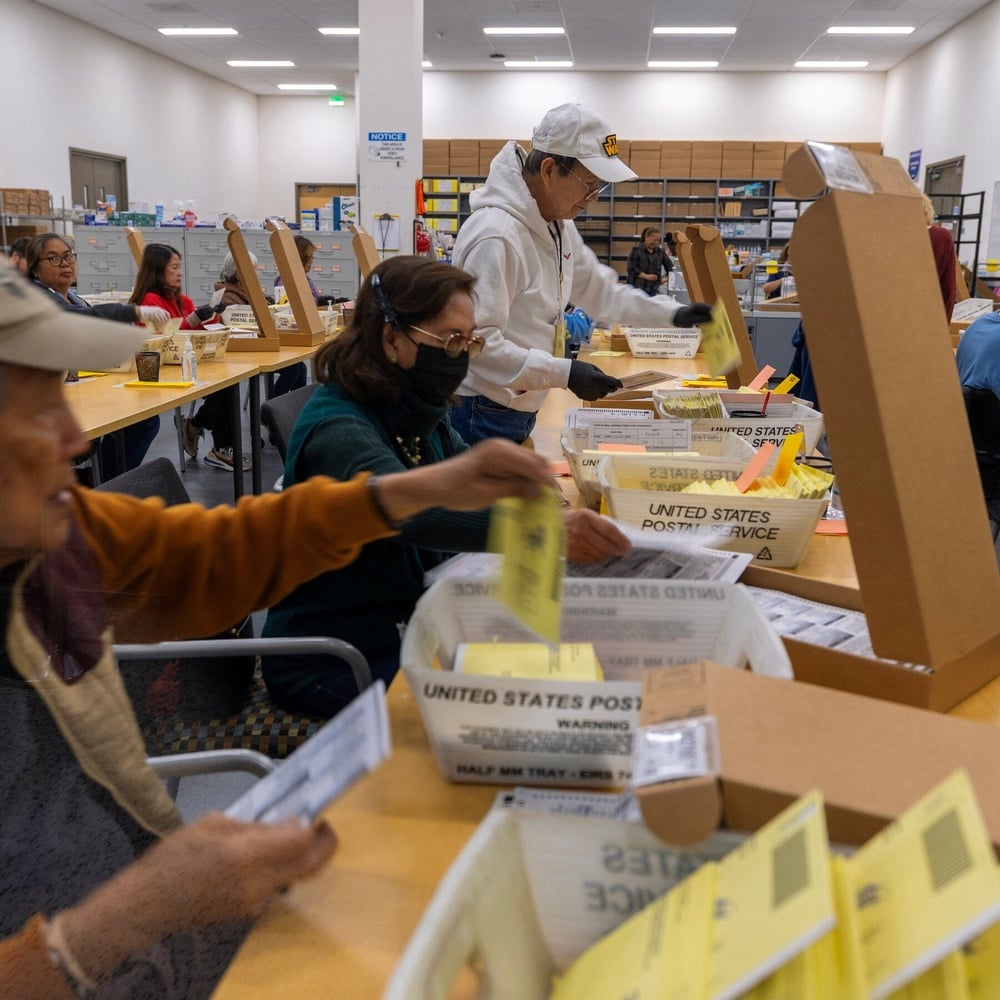
Heavily foregrounds a judge's alarmist language about democracy and executive overreach while characterizing the DOJ request as a 'last-ditch effort to interfere.'
Automated analysis; not human reviewed.
Limitations: The supplied text provides extensive judge quotations and a short DOJ statement but omits the underlying DOJ evidence and full legal record, limiting balance assessment.
·
55 of 55 available dimensions scored; omitted dimensions are not treated as neutral.
·
Verified supporting quotes for 8 of 55 scored dimensions.
Claim: Frames the Trump administration's election-integrity request as improper political interference, echoing liberal skepticism.
“last-ditch effort to interfere in California's election” · exact text match
“unfounded allegations stemming from a procedure rife with uncertainty and errors” · exact text match
Why: The publisher's own characterization and selected judge quotations present the administration's request as suspect and politically motivated.
Claim: Uses fear-laden warnings of democratic collapse and election disruption.
“our democracy is in danger” · exact text match
“create a chilling effect on election workers and voters alike” · exact text match
Why: The language is designed to heighten alarm about the consequences of the government's request.
Claim: Publisher narration uses evaluative language rather than only neutral attribution.
“last-ditch effort to interfere in California's election” · exact text match
“claimed are "likely" non-citizens” · exact text match
Why: The phrase 'last-ditch effort to interfere' is evaluative, and scare quotes around 'likely' distance the publisher from the administration's claim.
Claim: The report is centrally framed around a political and legal conflict between the Trump administration and California election officials.
“Federal judge denies Trump administration's request to segregate 20,000 ballots in California.” · exact text match
Why: The headline and lead focus on a partisan executive-branch dispute over election administration.
Claim: Relies heavily on the judge's authority and extended quotations rather than independent analysis.
“In a 26-page opinion, Carter repeatedly points to previous instances in American history” · exact text match
“Judge David Carter wrote in his Wednesday order” · exact text match
Why: Most of the report's substantive content consists of quoting the judge's opinion as the authoritative account.
Claim: The article foregrounds negative, alarmist language about election harm and democratic danger.
“wreak havoc and disrupt the election that is already underway” · exact text match
“our democracy is in danger” · exact text match
Why: Selected quotations and framing emphasize fear of democratic collapse and election disruption.
Claim: Visible attribution includes direct quotes from the judge and a DOJ spokesperson, though underlying DOJ evidence is not detailed.
“First Assistant United States Attorney Bill Essayli said in a statement shortly after the ruling” · exact text match
“In a 26-page opinion, Carter repeatedly points to previous instances in American history” · exact text match
Why: Direct attribution supports credibility, but limited detail on the government's evidence qualifies it.
Claim: Presents the DOJ request with scare quotes and loaded characterization while omitting the administration's supporting evidence.
“claimed are "likely" non-citizens” · exact text match
“last-ditch effort to interfere in California's election” · exact text match
Why: Scare quotes and a loaded phrase frame the request as suspect without detailing the government's evidentiary basis.
The supplied text provides extensive judge quotations and a short DOJ statement but omits the underlying DOJ evidence and full legal record, limiting balance assessment.
October 30, 2026 · 0 shares
The text presents a balanced judicial report detailing a legal conflict between the Justice Department and state election officials regarding voter eligibility.
Automated analysis; not human reviewed.
·
55 of 55 available dimensions scored; omitted dimensions are not treated as neutral.
·
Verified supporting quotes for 0 of 55 scored dimensions.
Judicial condemnation of the Trump administration’s ballot request as an election-interference threat is foregrounded, while the administration’s rationale appears mainly in rebuttal quotes.
The dispute arose before Election Day, after ballots had already been returned and counties had begun processing them.
Automated analysis; not human reviewed.
Limitations: Scores reflect a single report dominated by quoted judicial and advocacy criticism; the publisher’s own editorial voice is not explicit.
·
16 of 55 available dimensions scored; omitted dimensions are not treated as neutral.
·
Verified supporting quotes for 16 of 16 scored dimensions.
Claim: The report frames the Trump administration’s ballot request as an anti-democratic election-interference effort, echoing a liberal voting-rights narrative.
“a broad, ongoing pattern of attempted election interference” · exact text match
Why: The prominent judicial characterization aligns the framing with criticism of Trump administration election claims.
Claim: The report highlights constitutional limits on federal coercion of state election administration.
“This request violates longstanding constitutional principles mandating that states have control over their elections” · exact text match
Why: The quoted reasoning favors decentralized election authority over federal intervention.
Claim: The report carries a pessimistic warning about irreparable damage to democratic trust.
“Eroded trust in our democracy is irreparable” · exact text match
Why: The selected judicial language emphasizes lasting harm rather than resilience.
Claim: The report is primarily descriptive of a court ruling and litigation.
“a federal judge on Wednesday refused to order California election officials to set aside 20,000 ballots” · exact text match
Why: The central sentence describes an action rather than prescribing a policy.
Claim: The report amplifies warnings that the dispute is dangerous and destabilizing.
“It’s a joke.
It’s embarrassing, but it is dangerous”
· exact text match
Why: The quoted language is alarm-oriented and appears prominently in the report.
Claim: The report gives substantial space to evaluative characterizations of the administration’s case.
“little more than an “amateur hour” political stunt” · exact text match
Why: This is an attributed but strongly opinionated characterization included in the report.
Claim: The report is centrally about a politically charged election-law conflict involving the Trump administration.
“a broad, ongoing pattern of attempted election interference” · exact text match
Why: The framing and subject matter are explicitly political and election-related.
Claim: The report relies heavily on judges and civil rights attorneys to establish the significance of the ruling.
“Carter said he declined to be a party to a process that could disenfranchise voters.” · exact text match
Why: The authority of the court and advocacy lawyers carries much of the interpretive weight.
Claim: The report foregrounds voters, especially naturalized citizens, as potential victims of disenfranchisement.
“These allegations are putting eligible voters — including naturalized U.S. citizens — at risk of disenfranchisement” · exact text match
Why: The framing centers harm to voters as the key stakes.
Claim: The report’s selection and emphasis align with a voting-rights critique of Trump administration election claims.
“They are trying to attack the fundamental right to vote with trash data.” · exact text match
Why: The quoted framing presents the dispute as a fundamental-rights conflict.
Claim: The report includes strongly negative emotional language about the administration’s action.
“It’s a joke.
It’s embarrassing, but it is dangerous”
· exact text match
Why: The selected quote conveys contempt and alarm.
Claim: The report is well sourced, with named judges, officials, attorneys, and direct quotations.
“Bill Essayli, the first assistant U.S. attorney in Los Angeles, said the administration would appeal to the 9th U.S. Circuit Court of Appeals and possibly to the U.S. Supreme Court.” · exact text match
Why: Named attribution and inclusion of the opposing side support credibility.
Claim: The report emphasizes empirical scrutiny of the government’s voter-list methodology.
“not providing a clear accounting of its methodology” · exact text match
Why: It treats methodological transparency and data reliability as central to the legal dispute.
Claim: The report favors empirical scrutiny of data sources over unsupported claims.
“faulty data sources that sweep in U.S. citizens” · exact text match
Why: It treats data quality and evidentiary reliability as decisive.
Claim: The report includes the administration’s position and acknowledges its list may contain citizens.
“prosecutors have acknowledged that some of the people on the list are likely citizens” · exact text match
Why: Including material that undercuts one side’s claims signals fair attribution.
Claim: The report explains legal reasoning and procedural context with moderate detail.
“A three-judge panel ruled 2-1 Monday to reject an urgent appeal to bypass Carter’s courtroom.” · exact text match
Why: It supplies procedural specifics that help readers understand the litigation.
Scores reflect a single report dominated by quoted judicial and advocacy criticism; the publisher’s own editorial voice is not explicit.
October 30, 2026 · 0 shares
The report pairs the judge’s legal reasoning with DOJ fraud concerns and mail-ballot traceability warnings, yielding a mildly right-leaning skeptical frame on election administration.
Automated analysis; not human reviewed.
Limitations: The excerpt is brief and heavily quote-based, so publisher framing signals are limited.
·
55 of 55 available dimensions scored; omitted dimensions are not treated as neutral.
·
Verified supporting quotes for 55 of 55 scored dimensions.
Claim: The mail-ballot 'untraceable' phrasing echoes election-integrity concerns more common on the right.
“which left those ballots out of their envelopes and untraceable.” · exact text match
Counterevidence:
“The judge threw out that dilution theory, calling it too thin to give the government standing to sue.” · exact text match
Why: The wording emphasizes mail-ballot security risks, a conservative-leaning frame.
Claim: The report relies on institutional legal actors rather than populist framing.
“In a 26-page order issued late Wednesday, U.S. District Judge David Carter said Washington cannot dictate how California counts its votes.” · exact text match
Counterevidence:
“Prosecutors say those 28 were green card holders and all of them appeared on the list.” · exact text match
Why: The framing is institutional and legal, not populist or elitist.
Claim: The report highlights a judge limiting federal executive power over state ballot counting.
“Congress never handed the executive branch the power it was claiming, the judge found.” · exact text match
Why: The selected rationale emphasizes limits on federal authority.
Claim: Core claims are attributed to a court order and named actors.
“In a 26-page order issued late Wednesday, U.S. District Judge David Carter said Washington cannot dictate how California counts its votes.” · exact text match
Why: The report anchors central assertions in a specific court document and judge.
Claim: The headline and lede are factual and low-temperature.
“A federal judge refused to force California to set aside mailed ballots from more than 20,000 people the Justice Department says are noncitizens.” · exact text match
Why: The opening statement is factual and avoids sensational language.
Claim: The report is not framed around financial market direction.
“California mails a ballot to all 23 million of its registered voters.” · exact text match
Why: The content is electoral, not market-oriented.
Claim: The report maintains a neutral tone about the election dispute’s outcome.
“The Justice Department appealed immediately, and a top federal prosecutor in Los Angeles said the solicitor general authorized the move.” · exact text match
Why: The passage reports procedural developments without optimistic or pessimistic framing.
Claim: The report includes a notable numerical discrepancy in DOJ estimates.
“The judge said the department disclosed no error rate and had cut its own estimate from 190,832 names to roughly 20,000.” · exact text match
Why: This specific detail adds substantive interest to the report.
Claim: The report recounts court findings and DOJ actions rather than prescribing a policy.
“The Justice Department appealed immediately, and a top federal prosecutor in Los Angeles said the solicitor general authorized the move.” · exact text match
Why: The passage is descriptive of institutional actions.
Claim: The report is not framed around military or foreign-policy conflict.
“A federal judge refused to force California to set aside mailed ballots from more than 20,000 people the Justice Department says are noncitizens.” · exact text match
Why: The subject is domestic election law, not dovish or hawkish policy.
Claim: The 'untraceable' phrase raises concern about ballot security.
“which left those ballots out of their envelopes and untraceable.” · exact text match
Why: The wording subtly heightens concern about untraceable ballots.
Claim: The report attributes contested claims to named actors rather than assuming them.
“Prosecutors say they built the list by running California’s public voter file against immigration, passport, and Social Security files, and they call 20,000 a floor rather than a ceiling.” · exact text match
Why: Contested claims are attributed rather than asserted as premises.
Claim: The report focuses on legal and electoral facts, not personal gossip.
“In a 26-page order issued late Wednesday, U.S. District Judge David Carter said Washington cannot dictate how California counts its votes.” · exact text match
Why: The content is institutional reporting.
Claim: The phrase 'untraceable' characterizes mail-ballot handling in a security-skeptical way.
“which left those ballots out of their envelopes and untraceable.” · exact text match
Why: This is a mild evaluative characterization rather than a purely neutral procedural fact.
Claim: The report centers on a federal election-law dispute involving DOJ and California ballots.
“Federal Judge Blocks DOJ Effort to Sequester 20,000 California Ballots.” · exact text match
Why: The headline frames an inherently political-legal election administration conflict.
Claim: The report includes competing legal and factual claims rather than a single simplified narrative.
“The judge threw out that dilution theory, calling it too thin to give the government standing to sue.” · exact text match
Why: The article notes a rejected argument alongside DOJ claims.
Claim: The report cites legal actors but does not rely solely on authority as argument.
“The judge said the department disclosed no error rate and had cut its own estimate from 190,832 names to roughly 20,000.” · exact text match
Why: Authorities are sources for reported claims, not the article’s sole argument.
Claim: The report uses measured legal and procedural language.
“In a 26-page order issued late Wednesday, U.S. District Judge David Carter said Washington cannot dictate how California counts its votes.” · exact text match
Why: The tone is not immature or rage-baiting.
Claim: The report presents distinct claims from the judge and DOJ rather than circular argument.
“The judge threw out that dilution theory, calling it too thin to give the government standing to sue.” · exact text match
Why: The passage shows a reasoned rejection rather than circular logic.
Claim: The report includes the DOJ appeal and prosecutorial response to the ruling.
“The Justice Department appealed immediately, and a top federal prosecutor in Los Angeles said the solicitor general authorized the move.” · exact text match
Why: The article covers the responding side’s action.
Claim: The report does not frame a group as victims.
“A federal judge refused to force California to set aside mailed ballots from more than 20,000 people the Justice Department says are noncitizens.” · exact text match
Why: The language is procedural rather than victim-focused.
Claim: The report mostly attributes claims to the judge, DOJ, or prosecutors.
“The judge said the department disclosed no error rate and had cut its own estimate from 190,832 names to roughly 20,000.” · exact text match
Why: Attribution limits unsupported certainty.
Claim: The report is substantive news, not promotional spam.
“In a 26-page order issued late Wednesday, U.S. District Judge David Carter said Washington cannot dictate how California counts its votes.” · exact text match
Why: The content is reported news.
Claim: The report is mostly procedural with limited ideological framing.
“In a 26-page order issued late Wednesday, U.S. District Judge David Carter said Washington cannot dictate how California counts its votes.” · exact text match
Why: Legal narration dominates over ideological argument.
Claim: The report gives substantial space to official legal and prosecutorial positions.
“The Justice Department appealed immediately, and a top federal prosecutor in Los Angeles said the solicitor general authorized the move.” · exact text match
Why: The framing is institution-centered rather than anti-establishment.
Claim: The report maintains a neutral emotional tone.
“The Justice Department appealed immediately, and a top federal prosecutor in Los Angeles said the solicitor general authorized the move.” · exact text match
Why: The passage is procedural and unemotional.
Claim: The report presents both the judge’s ruling and DOJ’s position.
“The judge threw out that dilution theory, calling it too thin to give the government standing to sue.” · exact text match
Why: The article includes competing claims without an obvious double standard.
Claim: The report attributes legal reasoning to a named judge and a 26-page order.
“In a 26-page order issued late Wednesday, U.S. District Judge David Carter said Washington cannot dictate how California counts its votes.” · exact text match
Why: Specific document and actor attribution supports credibility.
Claim: The report foregrounds statutory reasoning rather than emotive claims.
“Congress never handed the executive branch the power it was claiming, the judge found.” · exact text match
Why: The quoted legal rationale centers on statutory authority.
Claim: The report is not advertorial.
“A federal judge refused to force California to set aside mailed ballots from more than 20,000 people the Justice Department says are noncitizens.” · exact text match
Why: No promotional content is present.
Claim: The report mostly recounts events rather than forecasting.
“The Justice Department appealed immediately, and a top federal prosecutor in Los Angeles said the solicitor general authorized the move.” · exact text match
Why: The article reports immediate procedural actions.
Claim: The report uses attributed claims and procedural narration rather than strong manipulative techniques.
“The judge threw out that dilution theory, calling it too thin to give the government standing to sue.” · exact text match
Why: Competing claims are presented with attribution.
Claim: The text has a human news-report structure with attributed quotes.
“In a 26-page order issued late Wednesday, U.S. District Judge David Carter said Washington cannot dictate how California counts its votes.” · exact text match
Why: No strong AI-authorship indicators are evident.
Claim: The report pairs DOJ allegations with the judge’s skepticism about DOJ’s error rate.
“The judge said the department disclosed no error rate and had cut its own estimate from 190,832 names to roughly 20,000.” · exact text match
Why: Including this critical detail indicates a relatively fair-minded presentation.
Claim: The report explains legal nuance beyond the headline ruling.
“A separate law bars systematic removals from the rolls inside 90 days of an election, and he said temporary segregation amounts to the same thing.” · exact text match
Why: The article includes contextual statutory reasoning.
Claim: The report does not discuss terrorism or justify political violence.
“A federal judge refused to force California to set aside mailed ballots from more than 20,000 people the Justice Department says are noncitizens.” · exact text match
Why: The subject is election administration.
Claim: The report relays DOJ fraud allegations without normalizing fraud.
“Prosecutors say those 28 were green card holders and all of them appeared on the list.
Eleven have been arrested.”
· exact text match
Why: The article reports enforcement allegations rather than endorsing fraud.
Claim: The report does not use class-conflict or Marxist framing.
“California mails a ballot to all 23 million of its registered voters.” · exact text match
Why: The content is election administration, not class analysis.
Claim: The report does not discuss Islamist ideology or governance.
“A federal judge refused to force California to set aside mailed ballots from more than 20,000 people the Justice Department says are noncitizens.” · exact text match
Why: The subject is unrelated to Islamist ideology.
Claim: The report contains no anti-Jewish generalizations or conspiracy claims.
“A federal judge refused to force California to set aside mailed ballots from more than 20,000 people the Justice Department says are noncitizens.” · exact text match
Why: No anti-Semitic content is present.
Claim: The report contains no anti-LGBT content.
“A federal judge refused to force California to set aside mailed ballots from more than 20,000 people the Justice Department says are noncitizens.” · exact text match
Why: The subject is unrelated to LGBT issues.
Claim: The report discusses immigration status in a legal context, not racial generalization.
“A federal judge refused to force California to set aside mailed ballots from more than 20,000 people the Justice Department says are noncitizens.” · exact text match
Why: No racial generalization or dehumanization is present.
Claim: The report does not use identity-group power framing.
“A federal judge refused to force California to set aside mailed ballots from more than 20,000 people the Justice Department says are noncitizens.” · exact text match
Why: No woke identity framing is present.
Claim: The report does not use cruel or dehumanizing language.
“The judge said the department disclosed no error rate and had cut its own estimate from 190,832 names to roughly 20,000.” · exact text match
Why: The tone is procedural.
Claim: The report does not use moralized virtue-signaling language.
“The Justice Department appealed immediately, and a top federal prosecutor in Los Angeles said the solicitor general authorized the move.” · exact text match
Why: The language is institutional and procedural.
Claim: The report relays official allegations and court findings rather than conspiratorial claims.
“The judge said the department disclosed no error rate and had cut its own estimate from 190,832 names to roughly 20,000.” · exact text match
Why: The content is attributed and procedural.
Claim: The report does not advocate compassion-based policy involving severe self-harm tradeoffs.
“A federal judge refused to force California to set aside mailed ballots from more than 20,000 people the Justice Department says are noncitizens.” · exact text match
Why: The subject is election law, not compassion policy.
Claim: The report attributes allegations to DOJ rather than scapegoating a group.
“A federal judge refused to force California to set aside mailed ballots from more than 20,000 people the Justice Department says are noncitizens.” · exact text match
Why: The claim is attributed and legal-procedural.
Claim: The report does not apply incompatible standards to comparable cases.
“The Justice Department appealed immediately, and a top federal prosecutor in Los Angeles said the solicitor general authorized the move.” · exact text match
Why: No double standard is evident in the supplied text.
Claim: The report relies on legal reasoning and evidence rather than rejecting reason.
“Congress never handed the executive branch the power it was claiming, the judge found.” · exact text match
Why: The article presents statutory reasoning.
The excerpt is brief and heavily quote-based, so publisher framing signals are limited.
October 29, 2026 · 0 shares
Evaluative framing casts the Justice Department’s arguments as weak and emphasizes judicial rejection while largely presenting the judge’s critical characterization.
Automated analysis; not human reviewed.
Limitations: The supplied text includes unrelated headline links and subscription boilerplate; analysis is limited to the substantive court-reporting portion.
·
16 of 55 available dimensions scored; omitted dimensions are not treated as neutral.
·
Verified supporting quotes for 16 of 16 scored dimensions.
Claim: The report frames the Trump Justice Department’s election-integrity effort as weak and the California position as protecting voting rights.
“the Justice Department’s arguments did not seem to land or hold up to scrutiny” · exact text match
“faulty data sources that sweep in U.S. citizens” · exact text match
Why: The evaluative, one-sided framing aligns with a liberal position on voting-access and federal immigration enforcement.
Claim: The framing emphasizes limits on federal executive power and state sovereignty against federal ballot segregation.
“California and its people are sovereign, too.” · exact text match
“The Executive Branch cannot replace the remedy Congress carefully enacted with its own unlawful and unconstitutional solution instead.” · exact text match
Why: The selected judicial language opposes federal coercion and supports decentralized election administration.
Claim: The article includes an evaluative characterization of the Justice Department’s arguments.
“the Justice Department’s arguments did not seem to land or hold up to scrutiny” · exact text match
Why: That phrase is the reporter’s subjective assessment rather than a neutral report of a ruling.
Claim: The article highlights warnings of chaos, chilling effects, and disenfranchisement.
“create a chilling effect on election workers and voters alike” · exact text match
“would wreak havoc and disrupt the election that is already underway” · exact text match
Why: These quoted warnings raise alarm about harms from the DOJ request.
Claim: The report contains evaluative opinion about the strength of DOJ’s arguments.
“the Justice Department’s arguments did not seem to land or hold up to scrutiny” · exact text match
Why: This is a judgment about argument quality, not merely a factual description.
Claim: The story centers on a politically charged dispute between the Trump administration and California over election administration.
“A federal judge on Wednesday declined a Justice Department request to stop California from counting the votes of over 20,000 people the government identified as potential noncitizen voters.” · exact text match
Why: The subject is a partisan federal-state election conflict.
Claim: The report relies heavily on the judge’s authority and quotations to establish its framing.
““This Court will not deprive Californians who have met the requirements for voter registration of their fundamental right because of Plaintiff’s unfounded allegations,” Carter wrote.” · exact text match
Why: Extensive deference to judicial statements supports a mild appeal-to-authority classification.
Claim: The framing emphasizes voters who could lose their rights due to the federal request.
“Over 20,000 registered Californians would potentially lose the right that generations of Americans have fought to preserve” · exact text match
Why: The selected judicial quote centers potential voter victimization.
Claim: The framing consistently favors voting-access and state-administration arguments over federal election-integrity claims.
“faulty data sources that sweep in U.S. citizens” · exact text match
“the government’s request to segregate a tranche of ballots was delivered too late in the elections process” · exact text match
Why: The selection and emphasis reflect a coherent ideological lens.
Claim: The article treats the federal court’s ruling and state election officials’ position as the authoritative resolution.
“Carter ruled that the government’s request to segregate a tranche of ballots was delivered too late in the elections process” · exact text match
Why: Deference to court and state election administration supports a mild pro-establishment tilt.
Claim: The tone toward the DOJ request is negative, emphasizing disruption and rights loss.
“would wreak havoc and disrupt the election that is already underway” · exact text match
Why: The quoted language carries a negative emotional charge.
Claim: The report cites the ruling, the appeal, case background, and DOJ prosecutions, supporting above-neutral credibility.
“In the 26-page order, Carter criticized the government” · exact text match
“The Justice Department had charged 28 people with noncitizen registration or voting in California” · exact text match
Why: Specific procedural and numerical details raise credibility despite one-sided framing.
Claim: The report is structured around court proceedings, the judge’s written order, and an appeal rather than emotive assertion.
“In the 26-page order, Carter criticized the government” · exact text match
“The Justice Department late Wednesday appealed the ruling to the 9th Circuit Court of Appeals.” · exact text match
Why: Detailed procedural reporting and quoted legal reasoning support a rational classification.
Claim: The report uses a loaded evaluative setup that presents DOJ arguments as already discredited before detailing them.
“the Justice Department’s arguments did not seem to land or hold up to scrutiny” · exact text match
Why: This is a mild framing technique, not overt manipulation.
Claim: The report discloses the DOJ appeal, its prior charges, and an update notice, showing some fairness and transparency.
“The Justice Department late Wednesday appealed the ruling to the 9th Circuit Court of Appeals.” · exact text match
“This story has been updated with further information from the court ruling and the appeal filed by the Justice Department.” · exact text match
Why: Including adverse procedural facts and an update note supports an above-neutral integrity rating.
Claim: The report provides detailed procedural and legal context for the ruling.
“In the 26-page order, Carter criticized the government for what he said was an attempt to coerce a state government into abandoning its procedures on the eve of an election.” · exact text match
Why: Specific legal reasoning and procedural detail indicate above-average article intelligence.
The supplied text includes unrelated headline links and subscription boilerplate; analysis is limited to the substantive court-reporting portion.
October 30, 2026 · 0 shares
The report pairs the judge’s legal reasoning with DOJ fraud concerns and mail-ballot traceability warnings, yielding a mildly right-leaning skeptical frame on election administration.
Automated analysis; not human reviewed.
Limitations: The excerpt is brief and heavily quote-based, so publisher framing signals are limited.
·
55 of 55 available dimensions scored; omitted dimensions are not treated as neutral.
·
Verified supporting quotes for 55 of 55 scored dimensions.
Claim: The mail-ballot 'untraceable' phrasing echoes election-integrity concerns more common on the right.
“which left those ballots out of their envelopes and untraceable.” · exact text match
Counterevidence:
“The judge threw out that dilution theory, calling it too thin to give the government standing to sue.” · exact text match
Why: The wording emphasizes mail-ballot security risks, a conservative-leaning frame.
Claim: The report relies on institutional legal actors rather than populist framing.
“In a 26-page order issued late Wednesday, U.S. District Judge David Carter said Washington cannot dictate how California counts its votes.” · exact text match
Counterevidence:
“Prosecutors say those 28 were green card holders and all of them appeared on the list.” · exact text match
Why: The framing is institutional and legal, not populist or elitist.
Claim: The report highlights a judge limiting federal executive power over state ballot counting.
“Congress never handed the executive branch the power it was claiming, the judge found.” · exact text match
Why: The selected rationale emphasizes limits on federal authority.
Claim: Core claims are attributed to a court order and named actors.
“In a 26-page order issued late Wednesday, U.S. District Judge David Carter said Washington cannot dictate how California counts its votes.” · exact text match
Why: The report anchors central assertions in a specific court document and judge.
Claim: The headline and lede are factual and low-temperature.
“A federal judge refused to force California to set aside mailed ballots from more than 20,000 people the Justice Department says are noncitizens.” · exact text match
Why: The opening statement is factual and avoids sensational language.
Claim: The report is not framed around financial market direction.
“California mails a ballot to all 23 million of its registered voters.” · exact text match
Why: The content is electoral, not market-oriented.
Claim: The report maintains a neutral tone about the election dispute’s outcome.
“The Justice Department appealed immediately, and a top federal prosecutor in Los Angeles said the solicitor general authorized the move.” · exact text match
Why: The passage reports procedural developments without optimistic or pessimistic framing.
Claim: The report includes a notable numerical discrepancy in DOJ estimates.
“The judge said the department disclosed no error rate and had cut its own estimate from 190,832 names to roughly 20,000.” · exact text match
Why: This specific detail adds substantive interest to the report.
Claim: The report recounts court findings and DOJ actions rather than prescribing a policy.
“The Justice Department appealed immediately, and a top federal prosecutor in Los Angeles said the solicitor general authorized the move.” · exact text match
Why: The passage is descriptive of institutional actions.
Claim: The report is not framed around military or foreign-policy conflict.
“A federal judge refused to force California to set aside mailed ballots from more than 20,000 people the Justice Department says are noncitizens.” · exact text match
Why: The subject is domestic election law, not dovish or hawkish policy.
Claim: The 'untraceable' phrase raises concern about ballot security.
“which left those ballots out of their envelopes and untraceable.” · exact text match
Why: The wording subtly heightens concern about untraceable ballots.
Claim: The report attributes contested claims to named actors rather than assuming them.
“Prosecutors say they built the list by running California’s public voter file against immigration, passport, and Social Security files, and they call 20,000 a floor rather than a ceiling.” · exact text match
Why: Contested claims are attributed rather than asserted as premises.
Claim: The report focuses on legal and electoral facts, not personal gossip.
“In a 26-page order issued late Wednesday, U.S. District Judge David Carter said Washington cannot dictate how California counts its votes.” · exact text match
Why: The content is institutional reporting.
Claim: The phrase 'untraceable' characterizes mail-ballot handling in a security-skeptical way.
“which left those ballots out of their envelopes and untraceable.” · exact text match
Why: This is a mild evaluative characterization rather than a purely neutral procedural fact.
Claim: The report centers on a federal election-law dispute involving DOJ and California ballots.
“Federal Judge Blocks DOJ Effort to Sequester 20,000 California Ballots.” · exact text match
Why: The headline frames an inherently political-legal election administration conflict.
Claim: The report includes competing legal and factual claims rather than a single simplified narrative.
“The judge threw out that dilution theory, calling it too thin to give the government standing to sue.” · exact text match
Why: The article notes a rejected argument alongside DOJ claims.
Claim: The report cites legal actors but does not rely solely on authority as argument.
“The judge said the department disclosed no error rate and had cut its own estimate from 190,832 names to roughly 20,000.” · exact text match
Why: Authorities are sources for reported claims, not the article’s sole argument.
Claim: The report uses measured legal and procedural language.
“In a 26-page order issued late Wednesday, U.S. District Judge David Carter said Washington cannot dictate how California counts its votes.” · exact text match
Why: The tone is not immature or rage-baiting.
Claim: The report presents distinct claims from the judge and DOJ rather than circular argument.
“The judge threw out that dilution theory, calling it too thin to give the government standing to sue.” · exact text match
Why: The passage shows a reasoned rejection rather than circular logic.
Claim: The report includes the DOJ appeal and prosecutorial response to the ruling.
“The Justice Department appealed immediately, and a top federal prosecutor in Los Angeles said the solicitor general authorized the move.” · exact text match
Why: The article covers the responding side’s action.
Claim: The report does not frame a group as victims.
“A federal judge refused to force California to set aside mailed ballots from more than 20,000 people the Justice Department says are noncitizens.” · exact text match
Why: The language is procedural rather than victim-focused.
Claim: The report mostly attributes claims to the judge, DOJ, or prosecutors.
“The judge said the department disclosed no error rate and had cut its own estimate from 190,832 names to roughly 20,000.” · exact text match
Why: Attribution limits unsupported certainty.
Claim: The report is substantive news, not promotional spam.
“In a 26-page order issued late Wednesday, U.S. District Judge David Carter said Washington cannot dictate how California counts its votes.” · exact text match
Why: The content is reported news.
Claim: The report is mostly procedural with limited ideological framing.
“In a 26-page order issued late Wednesday, U.S. District Judge David Carter said Washington cannot dictate how California counts its votes.” · exact text match
Why: Legal narration dominates over ideological argument.
Claim: The report gives substantial space to official legal and prosecutorial positions.
“The Justice Department appealed immediately, and a top federal prosecutor in Los Angeles said the solicitor general authorized the move.” · exact text match
Why: The framing is institution-centered rather than anti-establishment.
Claim: The report maintains a neutral emotional tone.
“The Justice Department appealed immediately, and a top federal prosecutor in Los Angeles said the solicitor general authorized the move.” · exact text match
Why: The passage is procedural and unemotional.
Claim: The report presents both the judge’s ruling and DOJ’s position.
“The judge threw out that dilution theory, calling it too thin to give the government standing to sue.” · exact text match
Why: The article includes competing claims without an obvious double standard.
Claim: The report attributes legal reasoning to a named judge and a 26-page order.
“In a 26-page order issued late Wednesday, U.S. District Judge David Carter said Washington cannot dictate how California counts its votes.” · exact text match
Why: Specific document and actor attribution supports credibility.
Claim: The report foregrounds statutory reasoning rather than emotive claims.
“Congress never handed the executive branch the power it was claiming, the judge found.” · exact text match
Why: The quoted legal rationale centers on statutory authority.
Claim: The report is not advertorial.
“A federal judge refused to force California to set aside mailed ballots from more than 20,000 people the Justice Department says are noncitizens.” · exact text match
Why: No promotional content is present.
Claim: The report mostly recounts events rather than forecasting.
“The Justice Department appealed immediately, and a top federal prosecutor in Los Angeles said the solicitor general authorized the move.” · exact text match
Why: The article reports immediate procedural actions.
Claim: The report uses attributed claims and procedural narration rather than strong manipulative techniques.
“The judge threw out that dilution theory, calling it too thin to give the government standing to sue.” · exact text match
Why: Competing claims are presented with attribution.
Claim: The text has a human news-report structure with attributed quotes.
“In a 26-page order issued late Wednesday, U.S. District Judge David Carter said Washington cannot dictate how California counts its votes.” · exact text match
Why: No strong AI-authorship indicators are evident.
Claim: The report pairs DOJ allegations with the judge’s skepticism about DOJ’s error rate.
“The judge said the department disclosed no error rate and had cut its own estimate from 190,832 names to roughly 20,000.” · exact text match
Why: Including this critical detail indicates a relatively fair-minded presentation.
Claim: The report explains legal nuance beyond the headline ruling.
“A separate law bars systematic removals from the rolls inside 90 days of an election, and he said temporary segregation amounts to the same thing.” · exact text match
Why: The article includes contextual statutory reasoning.
Claim: The report does not discuss terrorism or justify political violence.
“A federal judge refused to force California to set aside mailed ballots from more than 20,000 people the Justice Department says are noncitizens.” · exact text match
Why: The subject is election administration.
Claim: The report relays DOJ fraud allegations without normalizing fraud.
“Prosecutors say those 28 were green card holders and all of them appeared on the list.
Eleven have been arrested.”
· exact text match
Why: The article reports enforcement allegations rather than endorsing fraud.
Claim: The report does not use class-conflict or Marxist framing.
“California mails a ballot to all 23 million of its registered voters.” · exact text match
Why: The content is election administration, not class analysis.
Claim: The report does not discuss Islamist ideology or governance.
“A federal judge refused to force California to set aside mailed ballots from more than 20,000 people the Justice Department says are noncitizens.” · exact text match
Why: The subject is unrelated to Islamist ideology.
Claim: The report contains no anti-Jewish generalizations or conspiracy claims.
“A federal judge refused to force California to set aside mailed ballots from more than 20,000 people the Justice Department says are noncitizens.” · exact text match
Why: No anti-Semitic content is present.
Claim: The report contains no anti-LGBT content.
“A federal judge refused to force California to set aside mailed ballots from more than 20,000 people the Justice Department says are noncitizens.” · exact text match
Why: The subject is unrelated to LGBT issues.
Claim: The report discusses immigration status in a legal context, not racial generalization.
“A federal judge refused to force California to set aside mailed ballots from more than 20,000 people the Justice Department says are noncitizens.” · exact text match
Why: No racial generalization or dehumanization is present.
Claim: The report does not use identity-group power framing.
“A federal judge refused to force California to set aside mailed ballots from more than 20,000 people the Justice Department says are noncitizens.” · exact text match
Why: No woke identity framing is present.
Claim: The report does not use cruel or dehumanizing language.
“The judge said the department disclosed no error rate and had cut its own estimate from 190,832 names to roughly 20,000.” · exact text match
Why: The tone is procedural.
Claim: The report does not use moralized virtue-signaling language.
“The Justice Department appealed immediately, and a top federal prosecutor in Los Angeles said the solicitor general authorized the move.” · exact text match
Why: The language is institutional and procedural.
Claim: The report relays official allegations and court findings rather than conspiratorial claims.
“The judge said the department disclosed no error rate and had cut its own estimate from 190,832 names to roughly 20,000.” · exact text match
Why: The content is attributed and procedural.
Claim: The report does not advocate compassion-based policy involving severe self-harm tradeoffs.
“A federal judge refused to force California to set aside mailed ballots from more than 20,000 people the Justice Department says are noncitizens.” · exact text match
Why: The subject is election law, not compassion policy.
Claim: The report attributes allegations to DOJ rather than scapegoating a group.
“A federal judge refused to force California to set aside mailed ballots from more than 20,000 people the Justice Department says are noncitizens.” · exact text match
Why: The claim is attributed and legal-procedural.
Claim: The report does not apply incompatible standards to comparable cases.
“The Justice Department appealed immediately, and a top federal prosecutor in Los Angeles said the solicitor general authorized the move.” · exact text match
Why: No double standard is evident in the supplied text.
Claim: The report relies on legal reasoning and evidence rather than rejecting reason.
“Congress never handed the executive branch the power it was claiming, the judge found.” · exact text match
Why: The article presents statutory reasoning.
The excerpt is brief and heavily quote-based, so publisher framing signals are limited.
Judicial condemnation of the Trump administration’s ballot request as an election-interference threat is foregrounded, while the administration’s rationale appears mainly in rebuttal quotes.
The dispute arose before Election Day, after ballots had already been returned and counties had begun processing them.
Automated analysis; not human reviewed.
Limitations: Scores reflect a single report dominated by quoted judicial and advocacy criticism; the publisher’s own editorial voice is not explicit.
·
16 of 55 available dimensions scored; omitted dimensions are not treated as neutral.
·
Verified supporting quotes for 16 of 16 scored dimensions.
Claim: The report frames the Trump administration’s ballot request as an anti-democratic election-interference effort, echoing a liberal voting-rights narrative.
“a broad, ongoing pattern of attempted election interference” · exact text match
Why: The prominent judicial characterization aligns the framing with criticism of Trump administration election claims.
Claim: The report highlights constitutional limits on federal coercion of state election administration.
“This request violates longstanding constitutional principles mandating that states have control over their elections” · exact text match
Why: The quoted reasoning favors decentralized election authority over federal intervention.
Claim: The report carries a pessimistic warning about irreparable damage to democratic trust.
“Eroded trust in our democracy is irreparable” · exact text match
Why: The selected judicial language emphasizes lasting harm rather than resilience.
Claim: The report is primarily descriptive of a court ruling and litigation.
“a federal judge on Wednesday refused to order California election officials to set aside 20,000 ballots” · exact text match
Why: The central sentence describes an action rather than prescribing a policy.
Claim: The report amplifies warnings that the dispute is dangerous and destabilizing.
“It’s a joke.
It’s embarrassing, but it is dangerous”
· exact text match
Why: The quoted language is alarm-oriented and appears prominently in the report.
Claim: The report gives substantial space to evaluative characterizations of the administration’s case.
“little more than an “amateur hour” political stunt” · exact text match
Why: This is an attributed but strongly opinionated characterization included in the report.
Claim: The report is centrally about a politically charged election-law conflict involving the Trump administration.
“a broad, ongoing pattern of attempted election interference” · exact text match
Why: The framing and subject matter are explicitly political and election-related.
Claim: The report relies heavily on judges and civil rights attorneys to establish the significance of the ruling.
“Carter said he declined to be a party to a process that could disenfranchise voters.” · exact text match
Why: The authority of the court and advocacy lawyers carries much of the interpretive weight.
Claim: The report foregrounds voters, especially naturalized citizens, as potential victims of disenfranchisement.
“These allegations are putting eligible voters — including naturalized U.S. citizens — at risk of disenfranchisement” · exact text match
Why: The framing centers harm to voters as the key stakes.
Claim: The report’s selection and emphasis align with a voting-rights critique of Trump administration election claims.
“They are trying to attack the fundamental right to vote with trash data.” · exact text match
Why: The quoted framing presents the dispute as a fundamental-rights conflict.
Claim: The report includes strongly negative emotional language about the administration’s action.
“It’s a joke.
It’s embarrassing, but it is dangerous”
· exact text match
Why: The selected quote conveys contempt and alarm.
Claim: The report is well sourced, with named judges, officials, attorneys, and direct quotations.
“Bill Essayli, the first assistant U.S. attorney in Los Angeles, said the administration would appeal to the 9th U.S. Circuit Court of Appeals and possibly to the U.S. Supreme Court.” · exact text match
Why: Named attribution and inclusion of the opposing side support credibility.
Claim: The report emphasizes empirical scrutiny of the government’s voter-list methodology.
“not providing a clear accounting of its methodology” · exact text match
Why: It treats methodological transparency and data reliability as central to the legal dispute.
Claim: The report favors empirical scrutiny of data sources over unsupported claims.
“faulty data sources that sweep in U.S. citizens” · exact text match
Why: It treats data quality and evidentiary reliability as decisive.
Claim: The report includes the administration’s position and acknowledges its list may contain citizens.
“prosecutors have acknowledged that some of the people on the list are likely citizens” · exact text match
Why: Including material that undercuts one side’s claims signals fair attribution.
Claim: The report explains legal reasoning and procedural context with moderate detail.
“A three-judge panel ruled 2-1 Monday to reject an urgent appeal to bypass Carter’s courtroom.” · exact text match
Why: It supplies procedural specifics that help readers understand the litigation.
Scores reflect a single report dominated by quoted judicial and advocacy criticism; the publisher’s own editorial voice is not explicit.
October 30, 2026 · 0 shares
The text presents a balanced judicial report detailing a legal conflict between the Justice Department and state election officials regarding voter eligibility.
Automated analysis; not human reviewed.
·
55 of 55 available dimensions scored; omitted dimensions are not treated as neutral.
·
Verified supporting quotes for 0 of 55 scored dimensions.
October 30, 2026 · 0 shares
The report pairs the judge’s legal reasoning with DOJ fraud concerns and mail-ballot traceability warnings, yielding a mildly right-leaning skeptical frame on election administration.
Automated analysis; not human reviewed.
Limitations: The excerpt is brief and heavily quote-based, so publisher framing signals are limited.
·
55 of 55 available dimensions scored; omitted dimensions are not treated as neutral.
·
Verified supporting quotes for 55 of 55 scored dimensions.
Claim: The mail-ballot 'untraceable' phrasing echoes election-integrity concerns more common on the right.
“which left those ballots out of their envelopes and untraceable.” · exact text match
Counterevidence:
“The judge threw out that dilution theory, calling it too thin to give the government standing to sue.” · exact text match
Why: The wording emphasizes mail-ballot security risks, a conservative-leaning frame.
Claim: The report relies on institutional legal actors rather than populist framing.
“In a 26-page order issued late Wednesday, U.S. District Judge David Carter said Washington cannot dictate how California counts its votes.” · exact text match
Counterevidence:
“Prosecutors say those 28 were green card holders and all of them appeared on the list.” · exact text match
Why: The framing is institutional and legal, not populist or elitist.
Claim: The report highlights a judge limiting federal executive power over state ballot counting.
“Congress never handed the executive branch the power it was claiming, the judge found.” · exact text match
Why: The selected rationale emphasizes limits on federal authority.
Claim: Core claims are attributed to a court order and named actors.
“In a 26-page order issued late Wednesday, U.S. District Judge David Carter said Washington cannot dictate how California counts its votes.” · exact text match
Why: The report anchors central assertions in a specific court document and judge.
Claim: The headline and lede are factual and low-temperature.
“A federal judge refused to force California to set aside mailed ballots from more than 20,000 people the Justice Department says are noncitizens.” · exact text match
Why: The opening statement is factual and avoids sensational language.
Claim: The report is not framed around financial market direction.
“California mails a ballot to all 23 million of its registered voters.” · exact text match
Why: The content is electoral, not market-oriented.
Claim: The report maintains a neutral tone about the election dispute’s outcome.
“The Justice Department appealed immediately, and a top federal prosecutor in Los Angeles said the solicitor general authorized the move.” · exact text match
Why: The passage reports procedural developments without optimistic or pessimistic framing.
Claim: The report includes a notable numerical discrepancy in DOJ estimates.
“The judge said the department disclosed no error rate and had cut its own estimate from 190,832 names to roughly 20,000.” · exact text match
Why: This specific detail adds substantive interest to the report.
Claim: The report recounts court findings and DOJ actions rather than prescribing a policy.
“The Justice Department appealed immediately, and a top federal prosecutor in Los Angeles said the solicitor general authorized the move.” · exact text match
Why: The passage is descriptive of institutional actions.
Claim: The report is not framed around military or foreign-policy conflict.
“A federal judge refused to force California to set aside mailed ballots from more than 20,000 people the Justice Department says are noncitizens.” · exact text match
Why: The subject is domestic election law, not dovish or hawkish policy.
Claim: The 'untraceable' phrase raises concern about ballot security.
“which left those ballots out of their envelopes and untraceable.” · exact text match
Why: The wording subtly heightens concern about untraceable ballots.
Claim: The report attributes contested claims to named actors rather than assuming them.
“Prosecutors say they built the list by running California’s public voter file against immigration, passport, and Social Security files, and they call 20,000 a floor rather than a ceiling.” · exact text match
Why: Contested claims are attributed rather than asserted as premises.
Claim: The report focuses on legal and electoral facts, not personal gossip.
“In a 26-page order issued late Wednesday, U.S. District Judge David Carter said Washington cannot dictate how California counts its votes.” · exact text match
Why: The content is institutional reporting.
Claim: The phrase 'untraceable' characterizes mail-ballot handling in a security-skeptical way.
“which left those ballots out of their envelopes and untraceable.” · exact text match
Why: This is a mild evaluative characterization rather than a purely neutral procedural fact.
Claim: The report centers on a federal election-law dispute involving DOJ and California ballots.
“Federal Judge Blocks DOJ Effort to Sequester 20,000 California Ballots.” · exact text match
Why: The headline frames an inherently political-legal election administration conflict.
Claim: The report includes competing legal and factual claims rather than a single simplified narrative.
“The judge threw out that dilution theory, calling it too thin to give the government standing to sue.” · exact text match
Why: The article notes a rejected argument alongside DOJ claims.
Claim: The report cites legal actors but does not rely solely on authority as argument.
“The judge said the department disclosed no error rate and had cut its own estimate from 190,832 names to roughly 20,000.” · exact text match
Why: Authorities are sources for reported claims, not the article’s sole argument.
Claim: The report uses measured legal and procedural language.
“In a 26-page order issued late Wednesday, U.S. District Judge David Carter said Washington cannot dictate how California counts its votes.” · exact text match
Why: The tone is not immature or rage-baiting.
Claim: The report presents distinct claims from the judge and DOJ rather than circular argument.
“The judge threw out that dilution theory, calling it too thin to give the government standing to sue.” · exact text match
Why: The passage shows a reasoned rejection rather than circular logic.
Claim: The report includes the DOJ appeal and prosecutorial response to the ruling.
“The Justice Department appealed immediately, and a top federal prosecutor in Los Angeles said the solicitor general authorized the move.” · exact text match
Why: The article covers the responding side’s action.
Claim: The report does not frame a group as victims.
“A federal judge refused to force California to set aside mailed ballots from more than 20,000 people the Justice Department says are noncitizens.” · exact text match
Why: The language is procedural rather than victim-focused.
Claim: The report mostly attributes claims to the judge, DOJ, or prosecutors.
“The judge said the department disclosed no error rate and had cut its own estimate from 190,832 names to roughly 20,000.” · exact text match
Why: Attribution limits unsupported certainty.
Claim: The report is substantive news, not promotional spam.
“In a 26-page order issued late Wednesday, U.S. District Judge David Carter said Washington cannot dictate how California counts its votes.” · exact text match
Why: The content is reported news.
Claim: The report is mostly procedural with limited ideological framing.
“In a 26-page order issued late Wednesday, U.S. District Judge David Carter said Washington cannot dictate how California counts its votes.” · exact text match
Why: Legal narration dominates over ideological argument.
Claim: The report gives substantial space to official legal and prosecutorial positions.
“The Justice Department appealed immediately, and a top federal prosecutor in Los Angeles said the solicitor general authorized the move.” · exact text match
Why: The framing is institution-centered rather than anti-establishment.
Claim: The report maintains a neutral emotional tone.
“The Justice Department appealed immediately, and a top federal prosecutor in Los Angeles said the solicitor general authorized the move.” · exact text match
Why: The passage is procedural and unemotional.
Claim: The report presents both the judge’s ruling and DOJ’s position.
“The judge threw out that dilution theory, calling it too thin to give the government standing to sue.” · exact text match
Why: The article includes competing claims without an obvious double standard.
Claim: The report attributes legal reasoning to a named judge and a 26-page order.
“In a 26-page order issued late Wednesday, U.S. District Judge David Carter said Washington cannot dictate how California counts its votes.” · exact text match
Why: Specific document and actor attribution supports credibility.
Claim: The report foregrounds statutory reasoning rather than emotive claims.
“Congress never handed the executive branch the power it was claiming, the judge found.” · exact text match
Why: The quoted legal rationale centers on statutory authority.
Claim: The report is not advertorial.
“A federal judge refused to force California to set aside mailed ballots from more than 20,000 people the Justice Department says are noncitizens.” · exact text match
Why: No promotional content is present.
Claim: The report mostly recounts events rather than forecasting.
“The Justice Department appealed immediately, and a top federal prosecutor in Los Angeles said the solicitor general authorized the move.” · exact text match
Why: The article reports immediate procedural actions.
Claim: The report uses attributed claims and procedural narration rather than strong manipulative techniques.
“The judge threw out that dilution theory, calling it too thin to give the government standing to sue.” · exact text match
Why: Competing claims are presented with attribution.
Claim: The text has a human news-report structure with attributed quotes.
“In a 26-page order issued late Wednesday, U.S. District Judge David Carter said Washington cannot dictate how California counts its votes.” · exact text match
Why: No strong AI-authorship indicators are evident.
Claim: The report pairs DOJ allegations with the judge’s skepticism about DOJ’s error rate.
“The judge said the department disclosed no error rate and had cut its own estimate from 190,832 names to roughly 20,000.” · exact text match
Why: Including this critical detail indicates a relatively fair-minded presentation.
Claim: The report explains legal nuance beyond the headline ruling.
“A separate law bars systematic removals from the rolls inside 90 days of an election, and he said temporary segregation amounts to the same thing.” · exact text match
Why: The article includes contextual statutory reasoning.
Claim: The report does not discuss terrorism or justify political violence.
“A federal judge refused to force California to set aside mailed ballots from more than 20,000 people the Justice Department says are noncitizens.” · exact text match
Why: The subject is election administration.
Claim: The report relays DOJ fraud allegations without normalizing fraud.
“Prosecutors say those 28 were green card holders and all of them appeared on the list.
Eleven have been arrested.”
· exact text match
Why: The article reports enforcement allegations rather than endorsing fraud.
Claim: The report does not use class-conflict or Marxist framing.
“California mails a ballot to all 23 million of its registered voters.” · exact text match
Why: The content is election administration, not class analysis.
Claim: The report does not discuss Islamist ideology or governance.
“A federal judge refused to force California to set aside mailed ballots from more than 20,000 people the Justice Department says are noncitizens.” · exact text match
Why: The subject is unrelated to Islamist ideology.
Claim: The report contains no anti-Jewish generalizations or conspiracy claims.
“A federal judge refused to force California to set aside mailed ballots from more than 20,000 people the Justice Department says are noncitizens.” · exact text match
Why: No anti-Semitic content is present.
Claim: The report contains no anti-LGBT content.
“A federal judge refused to force California to set aside mailed ballots from more than 20,000 people the Justice Department says are noncitizens.” · exact text match
Why: The subject is unrelated to LGBT issues.
Claim: The report discusses immigration status in a legal context, not racial generalization.
“A federal judge refused to force California to set aside mailed ballots from more than 20,000 people the Justice Department says are noncitizens.” · exact text match
Why: No racial generalization or dehumanization is present.
Claim: The report does not use identity-group power framing.
“A federal judge refused to force California to set aside mailed ballots from more than 20,000 people the Justice Department says are noncitizens.” · exact text match
Why: No woke identity framing is present.
Claim: The report does not use cruel or dehumanizing language.
“The judge said the department disclosed no error rate and had cut its own estimate from 190,832 names to roughly 20,000.” · exact text match
Why: The tone is procedural.
Claim: The report does not use moralized virtue-signaling language.
“The Justice Department appealed immediately, and a top federal prosecutor in Los Angeles said the solicitor general authorized the move.” · exact text match
Why: The language is institutional and procedural.
Claim: The report relays official allegations and court findings rather than conspiratorial claims.
“The judge said the department disclosed no error rate and had cut its own estimate from 190,832 names to roughly 20,000.” · exact text match
Why: The content is attributed and procedural.
Claim: The report does not advocate compassion-based policy involving severe self-harm tradeoffs.
“A federal judge refused to force California to set aside mailed ballots from more than 20,000 people the Justice Department says are noncitizens.” · exact text match
Why: The subject is election law, not compassion policy.
Claim: The report attributes allegations to DOJ rather than scapegoating a group.
“A federal judge refused to force California to set aside mailed ballots from more than 20,000 people the Justice Department says are noncitizens.” · exact text match
Why: The claim is attributed and legal-procedural.
Claim: The report does not apply incompatible standards to comparable cases.
“The Justice Department appealed immediately, and a top federal prosecutor in Los Angeles said the solicitor general authorized the move.” · exact text match
Why: No double standard is evident in the supplied text.
Claim: The report relies on legal reasoning and evidence rather than rejecting reason.
“Congress never handed the executive branch the power it was claiming, the judge found.” · exact text match
Why: The article presents statutory reasoning.
The excerpt is brief and heavily quote-based, so publisher framing signals are limited.
October 31, 2026 · 0 shares
The reporting centers on state sovereignty and legal threats regarding federal election interference, framed through the lens of judicial warnings against government overreach.
Automated analysis; not human reviewed.
·
55 of 55 available dimensions scored; omitted dimensions are not treated as neutral.
·
Verified supporting quotes for 0 of 55 scored dimensions.
November 01, 2026 · 0 shares
The piece frames the California wealth tax initiative as a significant political catalyst for the Democratic party's national revenue-raising strategies.
Automated analysis; not human reviewed.
Limitations: The scope is extremely narrow, focusing only on the introductory framing of a policy debate.
·
55 of 55 available dimensions scored; omitted dimensions are not treated as neutral.
·
Verified supporting quotes for 0 of 55 scored dimensions.
The scope is extremely narrow, focusing only on the introductory framing of a policy debate.
Heavily foregrounds a judge's alarmist language about democracy and executive overreach while characterizing the DOJ request as a 'last-ditch effort to interfere.'
Automated analysis; not human reviewed. Limitations: The supplied text provides extensive judge quotations and a short DOJ statement but omits the underlying DOJ evidence and full legal record, limiting balance assessment. · 55 of 55 available dimensions scored; omitted dimensions are not treated as neutral. · Verified supporting quotes for 8 of 55 scored dimensions.
Claim: Frames the Trump administration's election-integrity request as improper political interference, echoing liberal skepticism.
“last-ditch effort to interfere in California's election” · exact text match
“unfounded allegations stemming from a procedure rife with uncertainty and errors” · exact text match
Why: The publisher's own characterization and selected judge quotations present the administration's request as suspect and politically motivated.
Claim: Uses fear-laden warnings of democratic collapse and election disruption.
“our democracy is in danger” · exact text match
“create a chilling effect on election workers and voters alike” · exact text match
Why: The language is designed to heighten alarm about the consequences of the government's request.
Claim: Publisher narration uses evaluative language rather than only neutral attribution.
“last-ditch effort to interfere in California's election” · exact text match
“claimed are "likely" non-citizens” · exact text match
Why: The phrase 'last-ditch effort to interfere' is evaluative, and scare quotes around 'likely' distance the publisher from the administration's claim.
Claim: The report is centrally framed around a political and legal conflict between the Trump administration and California election officials.
“Federal judge denies Trump administration's request to segregate 20,000 ballots in California.” · exact text match
Why: The headline and lead focus on a partisan executive-branch dispute over election administration.
Claim: Relies heavily on the judge's authority and extended quotations rather than independent analysis.
“In a 26-page opinion, Carter repeatedly points to previous instances in American history” · exact text match
“Judge David Carter wrote in his Wednesday order” · exact text match
Why: Most of the report's substantive content consists of quoting the judge's opinion as the authoritative account.
Claim: The article foregrounds negative, alarmist language about election harm and democratic danger.
“wreak havoc and disrupt the election that is already underway” · exact text match
“our democracy is in danger” · exact text match
Why: Selected quotations and framing emphasize fear of democratic collapse and election disruption.
Claim: Visible attribution includes direct quotes from the judge and a DOJ spokesperson, though underlying DOJ evidence is not detailed.
“First Assistant United States Attorney Bill Essayli said in a statement shortly after the ruling” · exact text match
“In a 26-page opinion, Carter repeatedly points to previous instances in American history” · exact text match
Why: Direct attribution supports credibility, but limited detail on the government's evidence qualifies it.
Claim: Presents the DOJ request with scare quotes and loaded characterization while omitting the administration's supporting evidence.
“claimed are "likely" non-citizens” · exact text match
“last-ditch effort to interfere in California's election” · exact text match
Why: Scare quotes and a loaded phrase frame the request as suspect without detailing the government's evidentiary basis.
The supplied text provides extensive judge quotations and a short DOJ statement but omits the underlying DOJ evidence and full legal record, limiting balance assessment.
October 30, 2026 · 0 shares
The report pairs the judge’s legal reasoning with DOJ fraud concerns and mail-ballot traceability warnings, yielding a mildly right-leaning skeptical frame on election administration.
Automated analysis; not human reviewed. Limitations: The excerpt is brief and heavily quote-based, so publisher framing signals are limited. · 55 of 55 available dimensions scored; omitted dimensions are not treated as neutral. · Verified supporting quotes for 55 of 55 scored dimensions.
Claim: The mail-ballot 'untraceable' phrasing echoes election-integrity concerns more common on the right.
“which left those ballots out of their envelopes and untraceable.” · exact text match
Counterevidence:
“The judge threw out that dilution theory, calling it too thin to give the government standing to sue.” · exact text match
Why: The wording emphasizes mail-ballot security risks, a conservative-leaning frame.
Claim: The report relies on institutional legal actors rather than populist framing.
“In a 26-page order issued late Wednesday, U.S. District Judge David Carter said Washington cannot dictate how California counts its votes.” · exact text match
Counterevidence:
“Prosecutors say those 28 were green card holders and all of them appeared on the list.” · exact text match
Why: The framing is institutional and legal, not populist or elitist.
Claim: The report highlights a judge limiting federal executive power over state ballot counting.
“Congress never handed the executive branch the power it was claiming, the judge found.” · exact text match
Why: The selected rationale emphasizes limits on federal authority.
Claim: Core claims are attributed to a court order and named actors.
“In a 26-page order issued late Wednesday, U.S. District Judge David Carter said Washington cannot dictate how California counts its votes.” · exact text match
Why: The report anchors central assertions in a specific court document and judge.
Claim: The headline and lede are factual and low-temperature.
“A federal judge refused to force California to set aside mailed ballots from more than 20,000 people the Justice Department says are noncitizens.” · exact text match
Why: The opening statement is factual and avoids sensational language.
Claim: The report is not framed around financial market direction.
“California mails a ballot to all 23 million of its registered voters.” · exact text match
Why: The content is electoral, not market-oriented.
Claim: The report maintains a neutral tone about the election dispute’s outcome.
“The Justice Department appealed immediately, and a top federal prosecutor in Los Angeles said the solicitor general authorized the move.” · exact text match
Why: The passage reports procedural developments without optimistic or pessimistic framing.
Claim: The report includes a notable numerical discrepancy in DOJ estimates.
“The judge said the department disclosed no error rate and had cut its own estimate from 190,832 names to roughly 20,000.” · exact text match
Why: This specific detail adds substantive interest to the report.
Claim: The report recounts court findings and DOJ actions rather than prescribing a policy.
“The Justice Department appealed immediately, and a top federal prosecutor in Los Angeles said the solicitor general authorized the move.” · exact text match
Why: The passage is descriptive of institutional actions.
Claim: The report is not framed around military or foreign-policy conflict.
“A federal judge refused to force California to set aside mailed ballots from more than 20,000 people the Justice Department says are noncitizens.” · exact text match
Why: The subject is domestic election law, not dovish or hawkish policy.
Claim: The 'untraceable' phrase raises concern about ballot security.
“which left those ballots out of their envelopes and untraceable.” · exact text match
Why: The wording subtly heightens concern about untraceable ballots.
Claim: The report attributes contested claims to named actors rather than assuming them.
“Prosecutors say they built the list by running California’s public voter file against immigration, passport, and Social Security files, and they call 20,000 a floor rather than a ceiling.” · exact text match
Why: Contested claims are attributed rather than asserted as premises.
Claim: The report focuses on legal and electoral facts, not personal gossip.
“In a 26-page order issued late Wednesday, U.S. District Judge David Carter said Washington cannot dictate how California counts its votes.” · exact text match
Why: The content is institutional reporting.
Claim: The phrase 'untraceable' characterizes mail-ballot handling in a security-skeptical way.
“which left those ballots out of their envelopes and untraceable.” · exact text match
Why: This is a mild evaluative characterization rather than a purely neutral procedural fact.
Claim: The report centers on a federal election-law dispute involving DOJ and California ballots.
“Federal Judge Blocks DOJ Effort to Sequester 20,000 California Ballots.” · exact text match
Why: The headline frames an inherently political-legal election administration conflict.
Claim: The report includes competing legal and factual claims rather than a single simplified narrative.
“The judge threw out that dilution theory, calling it too thin to give the government standing to sue.” · exact text match
Why: The article notes a rejected argument alongside DOJ claims.
Claim: The report cites legal actors but does not rely solely on authority as argument.
“The judge said the department disclosed no error rate and had cut its own estimate from 190,832 names to roughly 20,000.” · exact text match
Why: Authorities are sources for reported claims, not the article’s sole argument.
Claim: The report uses measured legal and procedural language.
“In a 26-page order issued late Wednesday, U.S. District Judge David Carter said Washington cannot dictate how California counts its votes.” · exact text match
Why: The tone is not immature or rage-baiting.
Claim: The report presents distinct claims from the judge and DOJ rather than circular argument.
“The judge threw out that dilution theory, calling it too thin to give the government standing to sue.” · exact text match
Why: The passage shows a reasoned rejection rather than circular logic.
Claim: The report includes the DOJ appeal and prosecutorial response to the ruling.
“The Justice Department appealed immediately, and a top federal prosecutor in Los Angeles said the solicitor general authorized the move.” · exact text match
Why: The article covers the responding side’s action.
Claim: The report does not frame a group as victims.
“A federal judge refused to force California to set aside mailed ballots from more than 20,000 people the Justice Department says are noncitizens.” · exact text match
Why: The language is procedural rather than victim-focused.
Claim: The report mostly attributes claims to the judge, DOJ, or prosecutors.
“The judge said the department disclosed no error rate and had cut its own estimate from 190,832 names to roughly 20,000.” · exact text match
Why: Attribution limits unsupported certainty.
Claim: The report is substantive news, not promotional spam.
“In a 26-page order issued late Wednesday, U.S. District Judge David Carter said Washington cannot dictate how California counts its votes.” · exact text match
Why: The content is reported news.
Claim: The report is mostly procedural with limited ideological framing.
“In a 26-page order issued late Wednesday, U.S. District Judge David Carter said Washington cannot dictate how California counts its votes.” · exact text match
Why: Legal narration dominates over ideological argument.
Claim: The report gives substantial space to official legal and prosecutorial positions.
“The Justice Department appealed immediately, and a top federal prosecutor in Los Angeles said the solicitor general authorized the move.” · exact text match
Why: The framing is institution-centered rather than anti-establishment.
Claim: The report maintains a neutral emotional tone.
“The Justice Department appealed immediately, and a top federal prosecutor in Los Angeles said the solicitor general authorized the move.” · exact text match
Why: The passage is procedural and unemotional.
Claim: The report presents both the judge’s ruling and DOJ’s position.
“The judge threw out that dilution theory, calling it too thin to give the government standing to sue.” · exact text match
Why: The article includes competing claims without an obvious double standard.
Claim: The report attributes legal reasoning to a named judge and a 26-page order.
“In a 26-page order issued late Wednesday, U.S. District Judge David Carter said Washington cannot dictate how California counts its votes.” · exact text match
Why: Specific document and actor attribution supports credibility.
Claim: The report foregrounds statutory reasoning rather than emotive claims.
“Congress never handed the executive branch the power it was claiming, the judge found.” · exact text match
Why: The quoted legal rationale centers on statutory authority.
Claim: The report is not advertorial.
“A federal judge refused to force California to set aside mailed ballots from more than 20,000 people the Justice Department says are noncitizens.” · exact text match
Why: No promotional content is present.
Claim: The report mostly recounts events rather than forecasting.
“The Justice Department appealed immediately, and a top federal prosecutor in Los Angeles said the solicitor general authorized the move.” · exact text match
Why: The article reports immediate procedural actions.
Claim: The report uses attributed claims and procedural narration rather than strong manipulative techniques.
“The judge threw out that dilution theory, calling it too thin to give the government standing to sue.” · exact text match
Why: Competing claims are presented with attribution.
Claim: The text has a human news-report structure with attributed quotes.
“In a 26-page order issued late Wednesday, U.S. District Judge David Carter said Washington cannot dictate how California counts its votes.” · exact text match
Why: No strong AI-authorship indicators are evident.
Claim: The report pairs DOJ allegations with the judge’s skepticism about DOJ’s error rate.
“The judge said the department disclosed no error rate and had cut its own estimate from 190,832 names to roughly 20,000.” · exact text match
Why: Including this critical detail indicates a relatively fair-minded presentation.
Claim: The report explains legal nuance beyond the headline ruling.
“A separate law bars systematic removals from the rolls inside 90 days of an election, and he said temporary segregation amounts to the same thing.” · exact text match
Why: The article includes contextual statutory reasoning.
Claim: The report does not discuss terrorism or justify political violence.
“A federal judge refused to force California to set aside mailed ballots from more than 20,000 people the Justice Department says are noncitizens.” · exact text match
Why: The subject is election administration.
Claim: The report relays DOJ fraud allegations without normalizing fraud.
“Prosecutors say those 28 were green card holders and all of them appeared on the list. Eleven have been arrested.” · exact text match
Why: The article reports enforcement allegations rather than endorsing fraud.
Claim: The report does not use class-conflict or Marxist framing.
“California mails a ballot to all 23 million of its registered voters.” · exact text match
Why: The content is election administration, not class analysis.
Claim: The report does not discuss Islamist ideology or governance.
“A federal judge refused to force California to set aside mailed ballots from more than 20,000 people the Justice Department says are noncitizens.” · exact text match
Why: The subject is unrelated to Islamist ideology.
Claim: The report contains no anti-Jewish generalizations or conspiracy claims.
“A federal judge refused to force California to set aside mailed ballots from more than 20,000 people the Justice Department says are noncitizens.” · exact text match
Why: No anti-Semitic content is present.
Claim: The report contains no anti-LGBT content.
“A federal judge refused to force California to set aside mailed ballots from more than 20,000 people the Justice Department says are noncitizens.” · exact text match
Why: The subject is unrelated to LGBT issues.
Claim: The report discusses immigration status in a legal context, not racial generalization.
“A federal judge refused to force California to set aside mailed ballots from more than 20,000 people the Justice Department says are noncitizens.” · exact text match
Why: No racial generalization or dehumanization is present.
Claim: The report does not use identity-group power framing.
“A federal judge refused to force California to set aside mailed ballots from more than 20,000 people the Justice Department says are noncitizens.” · exact text match
Why: No woke identity framing is present.
Claim: The report does not use cruel or dehumanizing language.
“The judge said the department disclosed no error rate and had cut its own estimate from 190,832 names to roughly 20,000.” · exact text match
Why: The tone is procedural.
Claim: The report does not use moralized virtue-signaling language.
“The Justice Department appealed immediately, and a top federal prosecutor in Los Angeles said the solicitor general authorized the move.” · exact text match
Why: The language is institutional and procedural.
Claim: The report relays official allegations and court findings rather than conspiratorial claims.
“The judge said the department disclosed no error rate and had cut its own estimate from 190,832 names to roughly 20,000.” · exact text match
Why: The content is attributed and procedural.
Claim: The report does not advocate compassion-based policy involving severe self-harm tradeoffs.
“A federal judge refused to force California to set aside mailed ballots from more than 20,000 people the Justice Department says are noncitizens.” · exact text match
Why: The subject is election law, not compassion policy.
Claim: The report attributes allegations to DOJ rather than scapegoating a group.
“A federal judge refused to force California to set aside mailed ballots from more than 20,000 people the Justice Department says are noncitizens.” · exact text match
Why: The claim is attributed and legal-procedural.
Claim: The report does not apply incompatible standards to comparable cases.
“The Justice Department appealed immediately, and a top federal prosecutor in Los Angeles said the solicitor general authorized the move.” · exact text match
Why: No double standard is evident in the supplied text.
Claim: The report relies on legal reasoning and evidence rather than rejecting reason.
“Congress never handed the executive branch the power it was claiming, the judge found.” · exact text match
Why: The article presents statutory reasoning.
The excerpt is brief and heavily quote-based, so publisher framing signals are limited.
Judicial condemnation of the Trump administration’s ballot request as an election-interference threat is foregrounded, while the administration’s rationale appears mainly in rebuttal quotes.
The dispute arose before Election Day, after ballots had already been returned and counties had begun processing them.
Automated analysis; not human reviewed. Limitations: Scores reflect a single report dominated by quoted judicial and advocacy criticism; the publisher’s own editorial voice is not explicit. · 16 of 55 available dimensions scored; omitted dimensions are not treated as neutral. · Verified supporting quotes for 16 of 16 scored dimensions.
Claim: The report frames the Trump administration’s ballot request as an anti-democratic election-interference effort, echoing a liberal voting-rights narrative.
“a broad, ongoing pattern of attempted election interference” · exact text match
Why: The prominent judicial characterization aligns the framing with criticism of Trump administration election claims.
Claim: The report highlights constitutional limits on federal coercion of state election administration.
“This request violates longstanding constitutional principles mandating that states have control over their elections” · exact text match
Why: The quoted reasoning favors decentralized election authority over federal intervention.
Claim: The report carries a pessimistic warning about irreparable damage to democratic trust.
“Eroded trust in our democracy is irreparable” · exact text match
Why: The selected judicial language emphasizes lasting harm rather than resilience.
Claim: The report is primarily descriptive of a court ruling and litigation.
“a federal judge on Wednesday refused to order California election officials to set aside 20,000 ballots” · exact text match
Why: The central sentence describes an action rather than prescribing a policy.
Claim: The report amplifies warnings that the dispute is dangerous and destabilizing.
“It’s a joke. It’s embarrassing, but it is dangerous” · exact text match
Why: The quoted language is alarm-oriented and appears prominently in the report.
Claim: The report gives substantial space to evaluative characterizations of the administration’s case.
“little more than an “amateur hour” political stunt” · exact text match
Why: This is an attributed but strongly opinionated characterization included in the report.
Claim: The report is centrally about a politically charged election-law conflict involving the Trump administration.
“a broad, ongoing pattern of attempted election interference” · exact text match
Why: The framing and subject matter are explicitly political and election-related.
Claim: The report relies heavily on judges and civil rights attorneys to establish the significance of the ruling.
“Carter said he declined to be a party to a process that could disenfranchise voters.” · exact text match
Why: The authority of the court and advocacy lawyers carries much of the interpretive weight.
Claim: The report foregrounds voters, especially naturalized citizens, as potential victims of disenfranchisement.
“These allegations are putting eligible voters — including naturalized U.S. citizens — at risk of disenfranchisement” · exact text match
Why: The framing centers harm to voters as the key stakes.
Claim: The report’s selection and emphasis align with a voting-rights critique of Trump administration election claims.
“They are trying to attack the fundamental right to vote with trash data.” · exact text match
Why: The quoted framing presents the dispute as a fundamental-rights conflict.
Claim: The report includes strongly negative emotional language about the administration’s action.
“It’s a joke. It’s embarrassing, but it is dangerous” · exact text match
Why: The selected quote conveys contempt and alarm.
Claim: The report is well sourced, with named judges, officials, attorneys, and direct quotations.
“Bill Essayli, the first assistant U.S. attorney in Los Angeles, said the administration would appeal to the 9th U.S. Circuit Court of Appeals and possibly to the U.S. Supreme Court.” · exact text match
Why: Named attribution and inclusion of the opposing side support credibility.
Claim: The report emphasizes empirical scrutiny of the government’s voter-list methodology.
“not providing a clear accounting of its methodology” · exact text match
Why: It treats methodological transparency and data reliability as central to the legal dispute.
Claim: The report favors empirical scrutiny of data sources over unsupported claims.
“faulty data sources that sweep in U.S. citizens” · exact text match
Why: It treats data quality and evidentiary reliability as decisive.
Claim: The report includes the administration’s position and acknowledges its list may contain citizens.
“prosecutors have acknowledged that some of the people on the list are likely citizens” · exact text match
Why: Including material that undercuts one side’s claims signals fair attribution.
Claim: The report explains legal reasoning and procedural context with moderate detail.
“A three-judge panel ruled 2-1 Monday to reject an urgent appeal to bypass Carter’s courtroom.” · exact text match
Why: It supplies procedural specifics that help readers understand the litigation.
Scores reflect a single report dominated by quoted judicial and advocacy criticism; the publisher’s own editorial voice is not explicit.
October 29, 2026 · 0 shares
Evaluative framing casts the Justice Department’s arguments as weak and emphasizes judicial rejection while largely presenting the judge’s critical characterization.
Automated analysis; not human reviewed. Limitations: The supplied text includes unrelated headline links and subscription boilerplate; analysis is limited to the substantive court-reporting portion. · 16 of 55 available dimensions scored; omitted dimensions are not treated as neutral. · Verified supporting quotes for 16 of 16 scored dimensions.
Claim: The report frames the Trump Justice Department’s election-integrity effort as weak and the California position as protecting voting rights.
“the Justice Department’s arguments did not seem to land or hold up to scrutiny” · exact text match
“faulty data sources that sweep in U.S. citizens” · exact text match
Why: The evaluative, one-sided framing aligns with a liberal position on voting-access and federal immigration enforcement.
Claim: The framing emphasizes limits on federal executive power and state sovereignty against federal ballot segregation.
“California and its people are sovereign, too.” · exact text match
“The Executive Branch cannot replace the remedy Congress carefully enacted with its own unlawful and unconstitutional solution instead.” · exact text match
Why: The selected judicial language opposes federal coercion and supports decentralized election administration.
Claim: The article includes an evaluative characterization of the Justice Department’s arguments.
“the Justice Department’s arguments did not seem to land or hold up to scrutiny” · exact text match
Why: That phrase is the reporter’s subjective assessment rather than a neutral report of a ruling.
Claim: The article highlights warnings of chaos, chilling effects, and disenfranchisement.
“create a chilling effect on election workers and voters alike” · exact text match
“would wreak havoc and disrupt the election that is already underway” · exact text match
Why: These quoted warnings raise alarm about harms from the DOJ request.
Claim: The report contains evaluative opinion about the strength of DOJ’s arguments.
“the Justice Department’s arguments did not seem to land or hold up to scrutiny” · exact text match
Why: This is a judgment about argument quality, not merely a factual description.
Claim: The story centers on a politically charged dispute between the Trump administration and California over election administration.
“A federal judge on Wednesday declined a Justice Department request to stop California from counting the votes of over 20,000 people the government identified as potential noncitizen voters.” · exact text match
Why: The subject is a partisan federal-state election conflict.
Claim: The report relies heavily on the judge’s authority and quotations to establish its framing.
““This Court will not deprive Californians who have met the requirements for voter registration of their fundamental right because of Plaintiff’s unfounded allegations,” Carter wrote.” · exact text match
Why: Extensive deference to judicial statements supports a mild appeal-to-authority classification.
Claim: The framing emphasizes voters who could lose their rights due to the federal request.
“Over 20,000 registered Californians would potentially lose the right that generations of Americans have fought to preserve” · exact text match
Why: The selected judicial quote centers potential voter victimization.
Claim: The framing consistently favors voting-access and state-administration arguments over federal election-integrity claims.
“faulty data sources that sweep in U.S. citizens” · exact text match
“the government’s request to segregate a tranche of ballots was delivered too late in the elections process” · exact text match
Why: The selection and emphasis reflect a coherent ideological lens.
Claim: The article treats the federal court’s ruling and state election officials’ position as the authoritative resolution.
“Carter ruled that the government’s request to segregate a tranche of ballots was delivered too late in the elections process” · exact text match
Why: Deference to court and state election administration supports a mild pro-establishment tilt.
Claim: The tone toward the DOJ request is negative, emphasizing disruption and rights loss.
“would wreak havoc and disrupt the election that is already underway” · exact text match
Why: The quoted language carries a negative emotional charge.
Claim: The report cites the ruling, the appeal, case background, and DOJ prosecutions, supporting above-neutral credibility.
“In the 26-page order, Carter criticized the government” · exact text match
“The Justice Department had charged 28 people with noncitizen registration or voting in California” · exact text match
Why: Specific procedural and numerical details raise credibility despite one-sided framing.
Claim: The report is structured around court proceedings, the judge’s written order, and an appeal rather than emotive assertion.
“In the 26-page order, Carter criticized the government” · exact text match
“The Justice Department late Wednesday appealed the ruling to the 9th Circuit Court of Appeals.” · exact text match
Why: Detailed procedural reporting and quoted legal reasoning support a rational classification.
Claim: The report uses a loaded evaluative setup that presents DOJ arguments as already discredited before detailing them.
“the Justice Department’s arguments did not seem to land or hold up to scrutiny” · exact text match
Why: This is a mild framing technique, not overt manipulation.
Claim: The report discloses the DOJ appeal, its prior charges, and an update notice, showing some fairness and transparency.
“The Justice Department late Wednesday appealed the ruling to the 9th Circuit Court of Appeals.” · exact text match
“This story has been updated with further information from the court ruling and the appeal filed by the Justice Department.” · exact text match
Why: Including adverse procedural facts and an update note supports an above-neutral integrity rating.
Claim: The report provides detailed procedural and legal context for the ruling.
“In the 26-page order, Carter criticized the government for what he said was an attempt to coerce a state government into abandoning its procedures on the eve of an election.” · exact text match
Why: Specific legal reasoning and procedural detail indicate above-average article intelligence.
The supplied text includes unrelated headline links and subscription boilerplate; analysis is limited to the substantive court-reporting portion.
October 30, 2026 · 0 shares
The report pairs the judge’s legal reasoning with DOJ fraud concerns and mail-ballot traceability warnings, yielding a mildly right-leaning skeptical frame on election administration.
Automated analysis; not human reviewed. Limitations: The excerpt is brief and heavily quote-based, so publisher framing signals are limited. · 55 of 55 available dimensions scored; omitted dimensions are not treated as neutral. · Verified supporting quotes for 55 of 55 scored dimensions.
Claim: The mail-ballot 'untraceable' phrasing echoes election-integrity concerns more common on the right.
“which left those ballots out of their envelopes and untraceable.” · exact text match
Counterevidence:
“The judge threw out that dilution theory, calling it too thin to give the government standing to sue.” · exact text match
Why: The wording emphasizes mail-ballot security risks, a conservative-leaning frame.
Claim: The report relies on institutional legal actors rather than populist framing.
“In a 26-page order issued late Wednesday, U.S. District Judge David Carter said Washington cannot dictate how California counts its votes.” · exact text match
Counterevidence:
“Prosecutors say those 28 were green card holders and all of them appeared on the list.” · exact text match
Why: The framing is institutional and legal, not populist or elitist.
Claim: The report highlights a judge limiting federal executive power over state ballot counting.
“Congress never handed the executive branch the power it was claiming, the judge found.” · exact text match
Why: The selected rationale emphasizes limits on federal authority.
Claim: Core claims are attributed to a court order and named actors.
“In a 26-page order issued late Wednesday, U.S. District Judge David Carter said Washington cannot dictate how California counts its votes.” · exact text match
Why: The report anchors central assertions in a specific court document and judge.
Claim: The headline and lede are factual and low-temperature.
“A federal judge refused to force California to set aside mailed ballots from more than 20,000 people the Justice Department says are noncitizens.” · exact text match
Why: The opening statement is factual and avoids sensational language.
Claim: The report is not framed around financial market direction.
“California mails a ballot to all 23 million of its registered voters.” · exact text match
Why: The content is electoral, not market-oriented.
Claim: The report maintains a neutral tone about the election dispute’s outcome.
“The Justice Department appealed immediately, and a top federal prosecutor in Los Angeles said the solicitor general authorized the move.” · exact text match
Why: The passage reports procedural developments without optimistic or pessimistic framing.
Claim: The report includes a notable numerical discrepancy in DOJ estimates.
“The judge said the department disclosed no error rate and had cut its own estimate from 190,832 names to roughly 20,000.” · exact text match
Why: This specific detail adds substantive interest to the report.
Claim: The report recounts court findings and DOJ actions rather than prescribing a policy.
“The Justice Department appealed immediately, and a top federal prosecutor in Los Angeles said the solicitor general authorized the move.” · exact text match
Why: The passage is descriptive of institutional actions.
Claim: The report is not framed around military or foreign-policy conflict.
“A federal judge refused to force California to set aside mailed ballots from more than 20,000 people the Justice Department says are noncitizens.” · exact text match
Why: The subject is domestic election law, not dovish or hawkish policy.
Claim: The 'untraceable' phrase raises concern about ballot security.
“which left those ballots out of their envelopes and untraceable.” · exact text match
Why: The wording subtly heightens concern about untraceable ballots.
Claim: The report attributes contested claims to named actors rather than assuming them.
“Prosecutors say they built the list by running California’s public voter file against immigration, passport, and Social Security files, and they call 20,000 a floor rather than a ceiling.” · exact text match
Why: Contested claims are attributed rather than asserted as premises.
Claim: The report focuses on legal and electoral facts, not personal gossip.
“In a 26-page order issued late Wednesday, U.S. District Judge David Carter said Washington cannot dictate how California counts its votes.” · exact text match
Why: The content is institutional reporting.
Claim: The phrase 'untraceable' characterizes mail-ballot handling in a security-skeptical way.
“which left those ballots out of their envelopes and untraceable.” · exact text match
Why: This is a mild evaluative characterization rather than a purely neutral procedural fact.
Claim: The report centers on a federal election-law dispute involving DOJ and California ballots.
“Federal Judge Blocks DOJ Effort to Sequester 20,000 California Ballots.” · exact text match
Why: The headline frames an inherently political-legal election administration conflict.
Claim: The report includes competing legal and factual claims rather than a single simplified narrative.
“The judge threw out that dilution theory, calling it too thin to give the government standing to sue.” · exact text match
Why: The article notes a rejected argument alongside DOJ claims.
Claim: The report cites legal actors but does not rely solely on authority as argument.
“The judge said the department disclosed no error rate and had cut its own estimate from 190,832 names to roughly 20,000.” · exact text match
Why: Authorities are sources for reported claims, not the article’s sole argument.
Claim: The report uses measured legal and procedural language.
“In a 26-page order issued late Wednesday, U.S. District Judge David Carter said Washington cannot dictate how California counts its votes.” · exact text match
Why: The tone is not immature or rage-baiting.
Claim: The report presents distinct claims from the judge and DOJ rather than circular argument.
“The judge threw out that dilution theory, calling it too thin to give the government standing to sue.” · exact text match
Why: The passage shows a reasoned rejection rather than circular logic.
Claim: The report includes the DOJ appeal and prosecutorial response to the ruling.
“The Justice Department appealed immediately, and a top federal prosecutor in Los Angeles said the solicitor general authorized the move.” · exact text match
Why: The article covers the responding side’s action.
Claim: The report does not frame a group as victims.
“A federal judge refused to force California to set aside mailed ballots from more than 20,000 people the Justice Department says are noncitizens.” · exact text match
Why: The language is procedural rather than victim-focused.
Claim: The report mostly attributes claims to the judge, DOJ, or prosecutors.
“The judge said the department disclosed no error rate and had cut its own estimate from 190,832 names to roughly 20,000.” · exact text match
Why: Attribution limits unsupported certainty.
Claim: The report is substantive news, not promotional spam.
“In a 26-page order issued late Wednesday, U.S. District Judge David Carter said Washington cannot dictate how California counts its votes.” · exact text match
Why: The content is reported news.
Claim: The report is mostly procedural with limited ideological framing.
“In a 26-page order issued late Wednesday, U.S. District Judge David Carter said Washington cannot dictate how California counts its votes.” · exact text match
Why: Legal narration dominates over ideological argument.
Claim: The report gives substantial space to official legal and prosecutorial positions.
“The Justice Department appealed immediately, and a top federal prosecutor in Los Angeles said the solicitor general authorized the move.” · exact text match
Why: The framing is institution-centered rather than anti-establishment.
Claim: The report maintains a neutral emotional tone.
“The Justice Department appealed immediately, and a top federal prosecutor in Los Angeles said the solicitor general authorized the move.” · exact text match
Why: The passage is procedural and unemotional.
Claim: The report presents both the judge’s ruling and DOJ’s position.
“The judge threw out that dilution theory, calling it too thin to give the government standing to sue.” · exact text match
Why: The article includes competing claims without an obvious double standard.
Claim: The report attributes legal reasoning to a named judge and a 26-page order.
“In a 26-page order issued late Wednesday, U.S. District Judge David Carter said Washington cannot dictate how California counts its votes.” · exact text match
Why: Specific document and actor attribution supports credibility.
Claim: The report foregrounds statutory reasoning rather than emotive claims.
“Congress never handed the executive branch the power it was claiming, the judge found.” · exact text match
Why: The quoted legal rationale centers on statutory authority.
Claim: The report is not advertorial.
“A federal judge refused to force California to set aside mailed ballots from more than 20,000 people the Justice Department says are noncitizens.” · exact text match
Why: No promotional content is present.
Claim: The report mostly recounts events rather than forecasting.
“The Justice Department appealed immediately, and a top federal prosecutor in Los Angeles said the solicitor general authorized the move.” · exact text match
Why: The article reports immediate procedural actions.
Claim: The report uses attributed claims and procedural narration rather than strong manipulative techniques.
“The judge threw out that dilution theory, calling it too thin to give the government standing to sue.” · exact text match
Why: Competing claims are presented with attribution.
Claim: The text has a human news-report structure with attributed quotes.
“In a 26-page order issued late Wednesday, U.S. District Judge David Carter said Washington cannot dictate how California counts its votes.” · exact text match
Why: No strong AI-authorship indicators are evident.
Claim: The report pairs DOJ allegations with the judge’s skepticism about DOJ’s error rate.
“The judge said the department disclosed no error rate and had cut its own estimate from 190,832 names to roughly 20,000.” · exact text match
Why: Including this critical detail indicates a relatively fair-minded presentation.
Claim: The report explains legal nuance beyond the headline ruling.
“A separate law bars systematic removals from the rolls inside 90 days of an election, and he said temporary segregation amounts to the same thing.” · exact text match
Why: The article includes contextual statutory reasoning.
Claim: The report does not discuss terrorism or justify political violence.
“A federal judge refused to force California to set aside mailed ballots from more than 20,000 people the Justice Department says are noncitizens.” · exact text match
Why: The subject is election administration.
Claim: The report relays DOJ fraud allegations without normalizing fraud.
“Prosecutors say those 28 were green card holders and all of them appeared on the list. Eleven have been arrested.” · exact text match
Why: The article reports enforcement allegations rather than endorsing fraud.
Claim: The report does not use class-conflict or Marxist framing.
“California mails a ballot to all 23 million of its registered voters.” · exact text match
Why: The content is election administration, not class analysis.
Claim: The report does not discuss Islamist ideology or governance.
“A federal judge refused to force California to set aside mailed ballots from more than 20,000 people the Justice Department says are noncitizens.” · exact text match
Why: The subject is unrelated to Islamist ideology.
Claim: The report contains no anti-Jewish generalizations or conspiracy claims.
“A federal judge refused to force California to set aside mailed ballots from more than 20,000 people the Justice Department says are noncitizens.” · exact text match
Why: No anti-Semitic content is present.
Claim: The report contains no anti-LGBT content.
“A federal judge refused to force California to set aside mailed ballots from more than 20,000 people the Justice Department says are noncitizens.” · exact text match
Why: The subject is unrelated to LGBT issues.
Claim: The report discusses immigration status in a legal context, not racial generalization.
“A federal judge refused to force California to set aside mailed ballots from more than 20,000 people the Justice Department says are noncitizens.” · exact text match
Why: No racial generalization or dehumanization is present.
Claim: The report does not use identity-group power framing.
“A federal judge refused to force California to set aside mailed ballots from more than 20,000 people the Justice Department says are noncitizens.” · exact text match
Why: No woke identity framing is present.
Claim: The report does not use cruel or dehumanizing language.
“The judge said the department disclosed no error rate and had cut its own estimate from 190,832 names to roughly 20,000.” · exact text match
Why: The tone is procedural.
Claim: The report does not use moralized virtue-signaling language.
“The Justice Department appealed immediately, and a top federal prosecutor in Los Angeles said the solicitor general authorized the move.” · exact text match
Why: The language is institutional and procedural.
Claim: The report relays official allegations and court findings rather than conspiratorial claims.
“The judge said the department disclosed no error rate and had cut its own estimate from 190,832 names to roughly 20,000.” · exact text match
Why: The content is attributed and procedural.
Claim: The report does not advocate compassion-based policy involving severe self-harm tradeoffs.
“A federal judge refused to force California to set aside mailed ballots from more than 20,000 people the Justice Department says are noncitizens.” · exact text match
Why: The subject is election law, not compassion policy.
Claim: The report attributes allegations to DOJ rather than scapegoating a group.
“A federal judge refused to force California to set aside mailed ballots from more than 20,000 people the Justice Department says are noncitizens.” · exact text match
Why: The claim is attributed and legal-procedural.
Claim: The report does not apply incompatible standards to comparable cases.
“The Justice Department appealed immediately, and a top federal prosecutor in Los Angeles said the solicitor general authorized the move.” · exact text match
Why: No double standard is evident in the supplied text.
Claim: The report relies on legal reasoning and evidence rather than rejecting reason.
“Congress never handed the executive branch the power it was claiming, the judge found.” · exact text match
Why: The article presents statutory reasoning.
The excerpt is brief and heavily quote-based, so publisher framing signals are limited.
October 29, 2026 · 0 shares
Evaluative framing casts the Justice Department’s arguments as weak and emphasizes judicial rejection while largely presenting the judge’s critical characterization.
Automated analysis; not human reviewed. Limitations: The supplied text includes unrelated headline links and subscription boilerplate; analysis is limited to the substantive court-reporting portion. · 16 of 55 available dimensions scored; omitted dimensions are not treated as neutral. · Verified supporting quotes for 16 of 16 scored dimensions.
Claim: The report frames the Trump Justice Department’s election-integrity effort as weak and the California position as protecting voting rights.
“the Justice Department’s arguments did not seem to land or hold up to scrutiny” · exact text match
“faulty data sources that sweep in U.S. citizens” · exact text match
Why: The evaluative, one-sided framing aligns with a liberal position on voting-access and federal immigration enforcement.
Claim: The framing emphasizes limits on federal executive power and state sovereignty against federal ballot segregation.
“California and its people are sovereign, too.” · exact text match
“The Executive Branch cannot replace the remedy Congress carefully enacted with its own unlawful and unconstitutional solution instead.” · exact text match
Why: The selected judicial language opposes federal coercion and supports decentralized election administration.
Claim: The article includes an evaluative characterization of the Justice Department’s arguments.
“the Justice Department’s arguments did not seem to land or hold up to scrutiny” · exact text match
Why: That phrase is the reporter’s subjective assessment rather than a neutral report of a ruling.
Claim: The article highlights warnings of chaos, chilling effects, and disenfranchisement.
“create a chilling effect on election workers and voters alike” · exact text match
“would wreak havoc and disrupt the election that is already underway” · exact text match
Why: These quoted warnings raise alarm about harms from the DOJ request.
Claim: The report contains evaluative opinion about the strength of DOJ’s arguments.
“the Justice Department’s arguments did not seem to land or hold up to scrutiny” · exact text match
Why: This is a judgment about argument quality, not merely a factual description.
Claim: The story centers on a politically charged dispute between the Trump administration and California over election administration.
“A federal judge on Wednesday declined a Justice Department request to stop California from counting the votes of over 20,000 people the government identified as potential noncitizen voters.” · exact text match
Why: The subject is a partisan federal-state election conflict.
Claim: The report relies heavily on the judge’s authority and quotations to establish its framing.
““This Court will not deprive Californians who have met the requirements for voter registration of their fundamental right because of Plaintiff’s unfounded allegations,” Carter wrote.” · exact text match
Why: Extensive deference to judicial statements supports a mild appeal-to-authority classification.
Claim: The framing emphasizes voters who could lose their rights due to the federal request.
“Over 20,000 registered Californians would potentially lose the right that generations of Americans have fought to preserve” · exact text match
Why: The selected judicial quote centers potential voter victimization.
Claim: The framing consistently favors voting-access and state-administration arguments over federal election-integrity claims.
“faulty data sources that sweep in U.S. citizens” · exact text match
“the government’s request to segregate a tranche of ballots was delivered too late in the elections process” · exact text match
Why: The selection and emphasis reflect a coherent ideological lens.
Claim: The article treats the federal court’s ruling and state election officials’ position as the authoritative resolution.
“Carter ruled that the government’s request to segregate a tranche of ballots was delivered too late in the elections process” · exact text match
Why: Deference to court and state election administration supports a mild pro-establishment tilt.
Claim: The tone toward the DOJ request is negative, emphasizing disruption and rights loss.
“would wreak havoc and disrupt the election that is already underway” · exact text match
Why: The quoted language carries a negative emotional charge.
Claim: The report cites the ruling, the appeal, case background, and DOJ prosecutions, supporting above-neutral credibility.
“In the 26-page order, Carter criticized the government” · exact text match
“The Justice Department had charged 28 people with noncitizen registration or voting in California” · exact text match
Why: Specific procedural and numerical details raise credibility despite one-sided framing.
Claim: The report is structured around court proceedings, the judge’s written order, and an appeal rather than emotive assertion.
“In the 26-page order, Carter criticized the government” · exact text match
“The Justice Department late Wednesday appealed the ruling to the 9th Circuit Court of Appeals.” · exact text match
Why: Detailed procedural reporting and quoted legal reasoning support a rational classification.
Claim: The report uses a loaded evaluative setup that presents DOJ arguments as already discredited before detailing them.
“the Justice Department’s arguments did not seem to land or hold up to scrutiny” · exact text match
Why: This is a mild framing technique, not overt manipulation.
Claim: The report discloses the DOJ appeal, its prior charges, and an update notice, showing some fairness and transparency.
“The Justice Department late Wednesday appealed the ruling to the 9th Circuit Court of Appeals.” · exact text match
“This story has been updated with further information from the court ruling and the appeal filed by the Justice Department.” · exact text match
Why: Including adverse procedural facts and an update note supports an above-neutral integrity rating.
Claim: The report provides detailed procedural and legal context for the ruling.
“In the 26-page order, Carter criticized the government for what he said was an attempt to coerce a state government into abandoning its procedures on the eve of an election.” · exact text match
Why: Specific legal reasoning and procedural detail indicate above-average article intelligence.
The supplied text includes unrelated headline links and subscription boilerplate; analysis is limited to the substantive court-reporting portion.
October 30, 2026 · 0 shares
The text presents a balanced judicial report detailing a legal conflict between the Justice Department and state election officials regarding voter eligibility.
Automated analysis; not human reviewed. · 55 of 55 available dimensions scored; omitted dimensions are not treated as neutral. · Verified supporting quotes for 0 of 55 scored dimensions.
Trump Administration / DOJ
October 31, 2026 · 0 shares
The text maintains a measured and objective presentation of a complex judicial ruling, focusing on the procedural and legal challenges surrounding voter eligibility.
Automated analysis; not human reviewed. · 55 of 55 available dimensions scored; omitted dimensions are not treated as neutral. · Verified supporting quotes for 0 of 55 scored dimensions.
October 30, 2026 · 0 shares
The report pairs the judge’s legal reasoning with DOJ fraud concerns and mail-ballot traceability warnings, yielding a mildly right-leaning skeptical frame on election administration.
Automated analysis; not human reviewed. Limitations: The excerpt is brief and heavily quote-based, so publisher framing signals are limited. · 55 of 55 available dimensions scored; omitted dimensions are not treated as neutral. · Verified supporting quotes for 55 of 55 scored dimensions.
Claim: The mail-ballot 'untraceable' phrasing echoes election-integrity concerns more common on the right.
“which left those ballots out of their envelopes and untraceable.” · exact text match
Counterevidence:
“The judge threw out that dilution theory, calling it too thin to give the government standing to sue.” · exact text match
Why: The wording emphasizes mail-ballot security risks, a conservative-leaning frame.
Claim: The report relies on institutional legal actors rather than populist framing.
“In a 26-page order issued late Wednesday, U.S. District Judge David Carter said Washington cannot dictate how California counts its votes.” · exact text match
Counterevidence:
“Prosecutors say those 28 were green card holders and all of them appeared on the list.” · exact text match
Why: The framing is institutional and legal, not populist or elitist.
Claim: The report highlights a judge limiting federal executive power over state ballot counting.
“Congress never handed the executive branch the power it was claiming, the judge found.” · exact text match
Why: The selected rationale emphasizes limits on federal authority.
Claim: Core claims are attributed to a court order and named actors.
“In a 26-page order issued late Wednesday, U.S. District Judge David Carter said Washington cannot dictate how California counts its votes.” · exact text match
Why: The report anchors central assertions in a specific court document and judge.
Claim: The headline and lede are factual and low-temperature.
“A federal judge refused to force California to set aside mailed ballots from more than 20,000 people the Justice Department says are noncitizens.” · exact text match
Why: The opening statement is factual and avoids sensational language.
Claim: The report is not framed around financial market direction.
“California mails a ballot to all 23 million of its registered voters.” · exact text match
Why: The content is electoral, not market-oriented.
Claim: The report maintains a neutral tone about the election dispute’s outcome.
“The Justice Department appealed immediately, and a top federal prosecutor in Los Angeles said the solicitor general authorized the move.” · exact text match
Why: The passage reports procedural developments without optimistic or pessimistic framing.
Claim: The report includes a notable numerical discrepancy in DOJ estimates.
“The judge said the department disclosed no error rate and had cut its own estimate from 190,832 names to roughly 20,000.” · exact text match
Why: This specific detail adds substantive interest to the report.
Claim: The report recounts court findings and DOJ actions rather than prescribing a policy.
“The Justice Department appealed immediately, and a top federal prosecutor in Los Angeles said the solicitor general authorized the move.” · exact text match
Why: The passage is descriptive of institutional actions.
Claim: The report is not framed around military or foreign-policy conflict.
“A federal judge refused to force California to set aside mailed ballots from more than 20,000 people the Justice Department says are noncitizens.” · exact text match
Why: The subject is domestic election law, not dovish or hawkish policy.
Claim: The 'untraceable' phrase raises concern about ballot security.
“which left those ballots out of their envelopes and untraceable.” · exact text match
Why: The wording subtly heightens concern about untraceable ballots.
Claim: The report attributes contested claims to named actors rather than assuming them.
“Prosecutors say they built the list by running California’s public voter file against immigration, passport, and Social Security files, and they call 20,000 a floor rather than a ceiling.” · exact text match
Why: Contested claims are attributed rather than asserted as premises.
Claim: The report focuses on legal and electoral facts, not personal gossip.
“In a 26-page order issued late Wednesday, U.S. District Judge David Carter said Washington cannot dictate how California counts its votes.” · exact text match
Why: The content is institutional reporting.
Claim: The phrase 'untraceable' characterizes mail-ballot handling in a security-skeptical way.
“which left those ballots out of their envelopes and untraceable.” · exact text match
Why: This is a mild evaluative characterization rather than a purely neutral procedural fact.
Claim: The report centers on a federal election-law dispute involving DOJ and California ballots.
“Federal Judge Blocks DOJ Effort to Sequester 20,000 California Ballots.” · exact text match
Why: The headline frames an inherently political-legal election administration conflict.
Claim: The report includes competing legal and factual claims rather than a single simplified narrative.
“The judge threw out that dilution theory, calling it too thin to give the government standing to sue.” · exact text match
Why: The article notes a rejected argument alongside DOJ claims.
Claim: The report cites legal actors but does not rely solely on authority as argument.
“The judge said the department disclosed no error rate and had cut its own estimate from 190,832 names to roughly 20,000.” · exact text match
Why: Authorities are sources for reported claims, not the article’s sole argument.
Claim: The report uses measured legal and procedural language.
“In a 26-page order issued late Wednesday, U.S. District Judge David Carter said Washington cannot dictate how California counts its votes.” · exact text match
Why: The tone is not immature or rage-baiting.
Claim: The report presents distinct claims from the judge and DOJ rather than circular argument.
“The judge threw out that dilution theory, calling it too thin to give the government standing to sue.” · exact text match
Why: The passage shows a reasoned rejection rather than circular logic.
Claim: The report includes the DOJ appeal and prosecutorial response to the ruling.
“The Justice Department appealed immediately, and a top federal prosecutor in Los Angeles said the solicitor general authorized the move.” · exact text match
Why: The article covers the responding side’s action.
Claim: The report does not frame a group as victims.
“A federal judge refused to force California to set aside mailed ballots from more than 20,000 people the Justice Department says are noncitizens.” · exact text match
Why: The language is procedural rather than victim-focused.
Claim: The report mostly attributes claims to the judge, DOJ, or prosecutors.
“The judge said the department disclosed no error rate and had cut its own estimate from 190,832 names to roughly 20,000.” · exact text match
Why: Attribution limits unsupported certainty.
Claim: The report is substantive news, not promotional spam.
“In a 26-page order issued late Wednesday, U.S. District Judge David Carter said Washington cannot dictate how California counts its votes.” · exact text match
Why: The content is reported news.
Claim: The report is mostly procedural with limited ideological framing.
“In a 26-page order issued late Wednesday, U.S. District Judge David Carter said Washington cannot dictate how California counts its votes.” · exact text match
Why: Legal narration dominates over ideological argument.
Claim: The report gives substantial space to official legal and prosecutorial positions.
“The Justice Department appealed immediately, and a top federal prosecutor in Los Angeles said the solicitor general authorized the move.” · exact text match
Why: The framing is institution-centered rather than anti-establishment.
Claim: The report maintains a neutral emotional tone.
“The Justice Department appealed immediately, and a top federal prosecutor in Los Angeles said the solicitor general authorized the move.” · exact text match
Why: The passage is procedural and unemotional.
Claim: The report presents both the judge’s ruling and DOJ’s position.
“The judge threw out that dilution theory, calling it too thin to give the government standing to sue.” · exact text match
Why: The article includes competing claims without an obvious double standard.
Claim: The report attributes legal reasoning to a named judge and a 26-page order.
“In a 26-page order issued late Wednesday, U.S. District Judge David Carter said Washington cannot dictate how California counts its votes.” · exact text match
Why: Specific document and actor attribution supports credibility.
Claim: The report foregrounds statutory reasoning rather than emotive claims.
“Congress never handed the executive branch the power it was claiming, the judge found.” · exact text match
Why: The quoted legal rationale centers on statutory authority.
Claim: The report is not advertorial.
“A federal judge refused to force California to set aside mailed ballots from more than 20,000 people the Justice Department says are noncitizens.” · exact text match
Why: No promotional content is present.
Claim: The report mostly recounts events rather than forecasting.
“The Justice Department appealed immediately, and a top federal prosecutor in Los Angeles said the solicitor general authorized the move.” · exact text match
Why: The article reports immediate procedural actions.
Claim: The report uses attributed claims and procedural narration rather than strong manipulative techniques.
“The judge threw out that dilution theory, calling it too thin to give the government standing to sue.” · exact text match
Why: Competing claims are presented with attribution.
Claim: The text has a human news-report structure with attributed quotes.
“In a 26-page order issued late Wednesday, U.S. District Judge David Carter said Washington cannot dictate how California counts its votes.” · exact text match
Why: No strong AI-authorship indicators are evident.
Claim: The report pairs DOJ allegations with the judge’s skepticism about DOJ’s error rate.
“The judge said the department disclosed no error rate and had cut its own estimate from 190,832 names to roughly 20,000.” · exact text match
Why: Including this critical detail indicates a relatively fair-minded presentation.
Claim: The report explains legal nuance beyond the headline ruling.
“A separate law bars systematic removals from the rolls inside 90 days of an election, and he said temporary segregation amounts to the same thing.” · exact text match
Why: The article includes contextual statutory reasoning.
Claim: The report does not discuss terrorism or justify political violence.
“A federal judge refused to force California to set aside mailed ballots from more than 20,000 people the Justice Department says are noncitizens.” · exact text match
Why: The subject is election administration.
Claim: The report relays DOJ fraud allegations without normalizing fraud.
“Prosecutors say those 28 were green card holders and all of them appeared on the list. Eleven have been arrested.” · exact text match
Why: The article reports enforcement allegations rather than endorsing fraud.
Claim: The report does not use class-conflict or Marxist framing.
“California mails a ballot to all 23 million of its registered voters.” · exact text match
Why: The content is election administration, not class analysis.
Claim: The report does not discuss Islamist ideology or governance.
“A federal judge refused to force California to set aside mailed ballots from more than 20,000 people the Justice Department says are noncitizens.” · exact text match
Why: The subject is unrelated to Islamist ideology.
Claim: The report contains no anti-Jewish generalizations or conspiracy claims.
“A federal judge refused to force California to set aside mailed ballots from more than 20,000 people the Justice Department says are noncitizens.” · exact text match
Why: No anti-Semitic content is present.
Claim: The report contains no anti-LGBT content.
“A federal judge refused to force California to set aside mailed ballots from more than 20,000 people the Justice Department says are noncitizens.” · exact text match
Why: The subject is unrelated to LGBT issues.
Claim: The report discusses immigration status in a legal context, not racial generalization.
“A federal judge refused to force California to set aside mailed ballots from more than 20,000 people the Justice Department says are noncitizens.” · exact text match
Why: No racial generalization or dehumanization is present.
Claim: The report does not use identity-group power framing.
“A federal judge refused to force California to set aside mailed ballots from more than 20,000 people the Justice Department says are noncitizens.” · exact text match
Why: No woke identity framing is present.
Claim: The report does not use cruel or dehumanizing language.
“The judge said the department disclosed no error rate and had cut its own estimate from 190,832 names to roughly 20,000.” · exact text match
Why: The tone is procedural.
Claim: The report does not use moralized virtue-signaling language.
“The Justice Department appealed immediately, and a top federal prosecutor in Los Angeles said the solicitor general authorized the move.” · exact text match
Why: The language is institutional and procedural.
Claim: The report relays official allegations and court findings rather than conspiratorial claims.
“The judge said the department disclosed no error rate and had cut its own estimate from 190,832 names to roughly 20,000.” · exact text match
Why: The content is attributed and procedural.
Claim: The report does not advocate compassion-based policy involving severe self-harm tradeoffs.
“A federal judge refused to force California to set aside mailed ballots from more than 20,000 people the Justice Department says are noncitizens.” · exact text match
Why: The subject is election law, not compassion policy.
Claim: The report attributes allegations to DOJ rather than scapegoating a group.
“A federal judge refused to force California to set aside mailed ballots from more than 20,000 people the Justice Department says are noncitizens.” · exact text match
Why: The claim is attributed and legal-procedural.
Claim: The report does not apply incompatible standards to comparable cases.
“The Justice Department appealed immediately, and a top federal prosecutor in Los Angeles said the solicitor general authorized the move.” · exact text match
Why: No double standard is evident in the supplied text.
Claim: The report relies on legal reasoning and evidence rather than rejecting reason.
“Congress never handed the executive branch the power it was claiming, the judge found.” · exact text match
Why: The article presents statutory reasoning.
The excerpt is brief and heavily quote-based, so publisher framing signals are limited.
Heavily foregrounds a judge's alarmist language about democracy and executive overreach while characterizing the DOJ request as a 'last-ditch effort to interfere.'
Automated analysis; not human reviewed. Limitations: The supplied text provides extensive judge quotations and a short DOJ statement but omits the underlying DOJ evidence and full legal record, limiting balance assessment. · 55 of 55 available dimensions scored; omitted dimensions are not treated as neutral. · Verified supporting quotes for 8 of 55 scored dimensions.
Claim: Frames the Trump administration's election-integrity request as improper political interference, echoing liberal skepticism.
“last-ditch effort to interfere in California's election” · exact text match
“unfounded allegations stemming from a procedure rife with uncertainty and errors” · exact text match
Why: The publisher's own characterization and selected judge quotations present the administration's request as suspect and politically motivated.
Claim: Uses fear-laden warnings of democratic collapse and election disruption.
“our democracy is in danger” · exact text match
“create a chilling effect on election workers and voters alike” · exact text match
Why: The language is designed to heighten alarm about the consequences of the government's request.
Claim: Publisher narration uses evaluative language rather than only neutral attribution.
“last-ditch effort to interfere in California's election” · exact text match
“claimed are "likely" non-citizens” · exact text match
Why: The phrase 'last-ditch effort to interfere' is evaluative, and scare quotes around 'likely' distance the publisher from the administration's claim.
Claim: The report is centrally framed around a political and legal conflict between the Trump administration and California election officials.
“Federal judge denies Trump administration's request to segregate 20,000 ballots in California.” · exact text match
Why: The headline and lead focus on a partisan executive-branch dispute over election administration.
Claim: Relies heavily on the judge's authority and extended quotations rather than independent analysis.
“In a 26-page opinion, Carter repeatedly points to previous instances in American history” · exact text match
“Judge David Carter wrote in his Wednesday order” · exact text match
Why: Most of the report's substantive content consists of quoting the judge's opinion as the authoritative account.
Claim: The article foregrounds negative, alarmist language about election harm and democratic danger.
“wreak havoc and disrupt the election that is already underway” · exact text match
“our democracy is in danger” · exact text match
Why: Selected quotations and framing emphasize fear of democratic collapse and election disruption.
Claim: Visible attribution includes direct quotes from the judge and a DOJ spokesperson, though underlying DOJ evidence is not detailed.
“First Assistant United States Attorney Bill Essayli said in a statement shortly after the ruling” · exact text match
“In a 26-page opinion, Carter repeatedly points to previous instances in American history” · exact text match
Why: Direct attribution supports credibility, but limited detail on the government's evidence qualifies it.
Claim: Presents the DOJ request with scare quotes and loaded characterization while omitting the administration's supporting evidence.
“claimed are "likely" non-citizens” · exact text match
“last-ditch effort to interfere in California's election” · exact text match
Why: Scare quotes and a loaded phrase frame the request as suspect without detailing the government's evidentiary basis.
The supplied text provides extensive judge quotations and a short DOJ statement but omits the underlying DOJ evidence and full legal record, limiting balance assessment.
Judicial condemnation of the Trump administration’s ballot request as an election-interference threat is foregrounded, while the administration’s rationale appears mainly in rebuttal quotes.
The dispute arose before Election Day, after ballots had already been returned and counties had begun processing them.
Automated analysis; not human reviewed. Limitations: Scores reflect a single report dominated by quoted judicial and advocacy criticism; the publisher’s own editorial voice is not explicit. · 16 of 55 available dimensions scored; omitted dimensions are not treated as neutral. · Verified supporting quotes for 16 of 16 scored dimensions.
Claim: The report frames the Trump administration’s ballot request as an anti-democratic election-interference effort, echoing a liberal voting-rights narrative.
“a broad, ongoing pattern of attempted election interference” · exact text match
Why: The prominent judicial characterization aligns the framing with criticism of Trump administration election claims.
Claim: The report highlights constitutional limits on federal coercion of state election administration.
“This request violates longstanding constitutional principles mandating that states have control over their elections” · exact text match
Why: The quoted reasoning favors decentralized election authority over federal intervention.
Claim: The report carries a pessimistic warning about irreparable damage to democratic trust.
“Eroded trust in our democracy is irreparable” · exact text match
Why: The selected judicial language emphasizes lasting harm rather than resilience.
Claim: The report is primarily descriptive of a court ruling and litigation.
“a federal judge on Wednesday refused to order California election officials to set aside 20,000 ballots” · exact text match
Why: The central sentence describes an action rather than prescribing a policy.
Claim: The report amplifies warnings that the dispute is dangerous and destabilizing.
“It’s a joke. It’s embarrassing, but it is dangerous” · exact text match
Why: The quoted language is alarm-oriented and appears prominently in the report.
Claim: The report gives substantial space to evaluative characterizations of the administration’s case.
“little more than an “amateur hour” political stunt” · exact text match
Why: This is an attributed but strongly opinionated characterization included in the report.
Claim: The report is centrally about a politically charged election-law conflict involving the Trump administration.
“a broad, ongoing pattern of attempted election interference” · exact text match
Why: The framing and subject matter are explicitly political and election-related.
Claim: The report relies heavily on judges and civil rights attorneys to establish the significance of the ruling.
“Carter said he declined to be a party to a process that could disenfranchise voters.” · exact text match
Why: The authority of the court and advocacy lawyers carries much of the interpretive weight.
Claim: The report foregrounds voters, especially naturalized citizens, as potential victims of disenfranchisement.
“These allegations are putting eligible voters — including naturalized U.S. citizens — at risk of disenfranchisement” · exact text match
Why: The framing centers harm to voters as the key stakes.
Claim: The report’s selection and emphasis align with a voting-rights critique of Trump administration election claims.
“They are trying to attack the fundamental right to vote with trash data.” · exact text match
Why: The quoted framing presents the dispute as a fundamental-rights conflict.
Claim: The report includes strongly negative emotional language about the administration’s action.
“It’s a joke. It’s embarrassing, but it is dangerous” · exact text match
Why: The selected quote conveys contempt and alarm.
Claim: The report is well sourced, with named judges, officials, attorneys, and direct quotations.
“Bill Essayli, the first assistant U.S. attorney in Los Angeles, said the administration would appeal to the 9th U.S. Circuit Court of Appeals and possibly to the U.S. Supreme Court.” · exact text match
Why: Named attribution and inclusion of the opposing side support credibility.
Claim: The report emphasizes empirical scrutiny of the government’s voter-list methodology.
“not providing a clear accounting of its methodology” · exact text match
Why: It treats methodological transparency and data reliability as central to the legal dispute.
Claim: The report favors empirical scrutiny of data sources over unsupported claims.
“faulty data sources that sweep in U.S. citizens” · exact text match
Why: It treats data quality and evidentiary reliability as decisive.
Claim: The report includes the administration’s position and acknowledges its list may contain citizens.
“prosecutors have acknowledged that some of the people on the list are likely citizens” · exact text match
Why: Including material that undercuts one side’s claims signals fair attribution.
Claim: The report explains legal reasoning and procedural context with moderate detail.
“A three-judge panel ruled 2-1 Monday to reject an urgent appeal to bypass Carter’s courtroom.” · exact text match
Why: It supplies procedural specifics that help readers understand the litigation.
Scores reflect a single report dominated by quoted judicial and advocacy criticism; the publisher’s own editorial voice is not explicit.
October 31, 2026 · 0 shares
The text maintains a measured and objective presentation of a complex judicial ruling, focusing on the procedural and legal challenges surrounding voter eligibility.
Automated analysis; not human reviewed. · 55 of 55 available dimensions scored; omitted dimensions are not treated as neutral. · Verified supporting quotes for 0 of 55 scored dimensions.
October 30, 2026 · 0 shares
The report pairs the judge’s legal reasoning with DOJ fraud concerns and mail-ballot traceability warnings, yielding a mildly right-leaning skeptical frame on election administration.
Automated analysis; not human reviewed. Limitations: The excerpt is brief and heavily quote-based, so publisher framing signals are limited. · 55 of 55 available dimensions scored; omitted dimensions are not treated as neutral. · Verified supporting quotes for 55 of 55 scored dimensions.
Claim: The mail-ballot 'untraceable' phrasing echoes election-integrity concerns more common on the right.
“which left those ballots out of their envelopes and untraceable.” · exact text match
Counterevidence:
“The judge threw out that dilution theory, calling it too thin to give the government standing to sue.” · exact text match
Why: The wording emphasizes mail-ballot security risks, a conservative-leaning frame.
Claim: The report relies on institutional legal actors rather than populist framing.
“In a 26-page order issued late Wednesday, U.S. District Judge David Carter said Washington cannot dictate how California counts its votes.” · exact text match
Counterevidence:
“Prosecutors say those 28 were green card holders and all of them appeared on the list.” · exact text match
Why: The framing is institutional and legal, not populist or elitist.
Claim: The report highlights a judge limiting federal executive power over state ballot counting.
“Congress never handed the executive branch the power it was claiming, the judge found.” · exact text match
Why: The selected rationale emphasizes limits on federal authority.
Claim: Core claims are attributed to a court order and named actors.
“In a 26-page order issued late Wednesday, U.S. District Judge David Carter said Washington cannot dictate how California counts its votes.” · exact text match
Why: The report anchors central assertions in a specific court document and judge.
Claim: The headline and lede are factual and low-temperature.
“A federal judge refused to force California to set aside mailed ballots from more than 20,000 people the Justice Department says are noncitizens.” · exact text match
Why: The opening statement is factual and avoids sensational language.
Claim: The report is not framed around financial market direction.
“California mails a ballot to all 23 million of its registered voters.” · exact text match
Why: The content is electoral, not market-oriented.
Claim: The report maintains a neutral tone about the election dispute’s outcome.
“The Justice Department appealed immediately, and a top federal prosecutor in Los Angeles said the solicitor general authorized the move.” · exact text match
Why: The passage reports procedural developments without optimistic or pessimistic framing.
Claim: The report includes a notable numerical discrepancy in DOJ estimates.
“The judge said the department disclosed no error rate and had cut its own estimate from 190,832 names to roughly 20,000.” · exact text match
Why: This specific detail adds substantive interest to the report.
Claim: The report recounts court findings and DOJ actions rather than prescribing a policy.
“The Justice Department appealed immediately, and a top federal prosecutor in Los Angeles said the solicitor general authorized the move.” · exact text match
Why: The passage is descriptive of institutional actions.
Claim: The report is not framed around military or foreign-policy conflict.
“A federal judge refused to force California to set aside mailed ballots from more than 20,000 people the Justice Department says are noncitizens.” · exact text match
Why: The subject is domestic election law, not dovish or hawkish policy.
Claim: The 'untraceable' phrase raises concern about ballot security.
“which left those ballots out of their envelopes and untraceable.” · exact text match
Why: The wording subtly heightens concern about untraceable ballots.
Claim: The report attributes contested claims to named actors rather than assuming them.
“Prosecutors say they built the list by running California’s public voter file against immigration, passport, and Social Security files, and they call 20,000 a floor rather than a ceiling.” · exact text match
Why: Contested claims are attributed rather than asserted as premises.
Claim: The report focuses on legal and electoral facts, not personal gossip.
“In a 26-page order issued late Wednesday, U.S. District Judge David Carter said Washington cannot dictate how California counts its votes.” · exact text match
Why: The content is institutional reporting.
Claim: The phrase 'untraceable' characterizes mail-ballot handling in a security-skeptical way.
“which left those ballots out of their envelopes and untraceable.” · exact text match
Why: This is a mild evaluative characterization rather than a purely neutral procedural fact.
Claim: The report centers on a federal election-law dispute involving DOJ and California ballots.
“Federal Judge Blocks DOJ Effort to Sequester 20,000 California Ballots.” · exact text match
Why: The headline frames an inherently political-legal election administration conflict.
Claim: The report includes competing legal and factual claims rather than a single simplified narrative.
“The judge threw out that dilution theory, calling it too thin to give the government standing to sue.” · exact text match
Why: The article notes a rejected argument alongside DOJ claims.
Claim: The report cites legal actors but does not rely solely on authority as argument.
“The judge said the department disclosed no error rate and had cut its own estimate from 190,832 names to roughly 20,000.” · exact text match
Why: Authorities are sources for reported claims, not the article’s sole argument.
Claim: The report uses measured legal and procedural language.
“In a 26-page order issued late Wednesday, U.S. District Judge David Carter said Washington cannot dictate how California counts its votes.” · exact text match
Why: The tone is not immature or rage-baiting.
Claim: The report presents distinct claims from the judge and DOJ rather than circular argument.
“The judge threw out that dilution theory, calling it too thin to give the government standing to sue.” · exact text match
Why: The passage shows a reasoned rejection rather than circular logic.
Claim: The report includes the DOJ appeal and prosecutorial response to the ruling.
“The Justice Department appealed immediately, and a top federal prosecutor in Los Angeles said the solicitor general authorized the move.” · exact text match
Why: The article covers the responding side’s action.
Claim: The report does not frame a group as victims.
“A federal judge refused to force California to set aside mailed ballots from more than 20,000 people the Justice Department says are noncitizens.” · exact text match
Why: The language is procedural rather than victim-focused.
Claim: The report mostly attributes claims to the judge, DOJ, or prosecutors.
“The judge said the department disclosed no error rate and had cut its own estimate from 190,832 names to roughly 20,000.” · exact text match
Why: Attribution limits unsupported certainty.
Claim: The report is substantive news, not promotional spam.
“In a 26-page order issued late Wednesday, U.S. District Judge David Carter said Washington cannot dictate how California counts its votes.” · exact text match
Why: The content is reported news.
Claim: The report is mostly procedural with limited ideological framing.
“In a 26-page order issued late Wednesday, U.S. District Judge David Carter said Washington cannot dictate how California counts its votes.” · exact text match
Why: Legal narration dominates over ideological argument.
Claim: The report gives substantial space to official legal and prosecutorial positions.
“The Justice Department appealed immediately, and a top federal prosecutor in Los Angeles said the solicitor general authorized the move.” · exact text match
Why: The framing is institution-centered rather than anti-establishment.
Claim: The report maintains a neutral emotional tone.
“The Justice Department appealed immediately, and a top federal prosecutor in Los Angeles said the solicitor general authorized the move.” · exact text match
Why: The passage is procedural and unemotional.
Claim: The report presents both the judge’s ruling and DOJ’s position.
“The judge threw out that dilution theory, calling it too thin to give the government standing to sue.” · exact text match
Why: The article includes competing claims without an obvious double standard.
Claim: The report attributes legal reasoning to a named judge and a 26-page order.
“In a 26-page order issued late Wednesday, U.S. District Judge David Carter said Washington cannot dictate how California counts its votes.” · exact text match
Why: Specific document and actor attribution supports credibility.
Claim: The report foregrounds statutory reasoning rather than emotive claims.
“Congress never handed the executive branch the power it was claiming, the judge found.” · exact text match
Why: The quoted legal rationale centers on statutory authority.
Claim: The report is not advertorial.
“A federal judge refused to force California to set aside mailed ballots from more than 20,000 people the Justice Department says are noncitizens.” · exact text match
Why: No promotional content is present.
Claim: The report mostly recounts events rather than forecasting.
“The Justice Department appealed immediately, and a top federal prosecutor in Los Angeles said the solicitor general authorized the move.” · exact text match
Why: The article reports immediate procedural actions.
Claim: The report uses attributed claims and procedural narration rather than strong manipulative techniques.
“The judge threw out that dilution theory, calling it too thin to give the government standing to sue.” · exact text match
Why: Competing claims are presented with attribution.
Claim: The text has a human news-report structure with attributed quotes.
“In a 26-page order issued late Wednesday, U.S. District Judge David Carter said Washington cannot dictate how California counts its votes.” · exact text match
Why: No strong AI-authorship indicators are evident.
Claim: The report pairs DOJ allegations with the judge’s skepticism about DOJ’s error rate.
“The judge said the department disclosed no error rate and had cut its own estimate from 190,832 names to roughly 20,000.” · exact text match
Why: Including this critical detail indicates a relatively fair-minded presentation.
Claim: The report explains legal nuance beyond the headline ruling.
“A separate law bars systematic removals from the rolls inside 90 days of an election, and he said temporary segregation amounts to the same thing.” · exact text match
Why: The article includes contextual statutory reasoning.
Claim: The report does not discuss terrorism or justify political violence.
“A federal judge refused to force California to set aside mailed ballots from more than 20,000 people the Justice Department says are noncitizens.” · exact text match
Why: The subject is election administration.
Claim: The report relays DOJ fraud allegations without normalizing fraud.
“Prosecutors say those 28 were green card holders and all of them appeared on the list. Eleven have been arrested.” · exact text match
Why: The article reports enforcement allegations rather than endorsing fraud.
Claim: The report does not use class-conflict or Marxist framing.
“California mails a ballot to all 23 million of its registered voters.” · exact text match
Why: The content is election administration, not class analysis.
Claim: The report does not discuss Islamist ideology or governance.
“A federal judge refused to force California to set aside mailed ballots from more than 20,000 people the Justice Department says are noncitizens.” · exact text match
Why: The subject is unrelated to Islamist ideology.
Claim: The report contains no anti-Jewish generalizations or conspiracy claims.
“A federal judge refused to force California to set aside mailed ballots from more than 20,000 people the Justice Department says are noncitizens.” · exact text match
Why: No anti-Semitic content is present.
Claim: The report contains no anti-LGBT content.
“A federal judge refused to force California to set aside mailed ballots from more than 20,000 people the Justice Department says are noncitizens.” · exact text match
Why: The subject is unrelated to LGBT issues.
Claim: The report discusses immigration status in a legal context, not racial generalization.
“A federal judge refused to force California to set aside mailed ballots from more than 20,000 people the Justice Department says are noncitizens.” · exact text match
Why: No racial generalization or dehumanization is present.
Claim: The report does not use identity-group power framing.
“A federal judge refused to force California to set aside mailed ballots from more than 20,000 people the Justice Department says are noncitizens.” · exact text match
Why: No woke identity framing is present.
Claim: The report does not use cruel or dehumanizing language.
“The judge said the department disclosed no error rate and had cut its own estimate from 190,832 names to roughly 20,000.” · exact text match
Why: The tone is procedural.
Claim: The report does not use moralized virtue-signaling language.
“The Justice Department appealed immediately, and a top federal prosecutor in Los Angeles said the solicitor general authorized the move.” · exact text match
Why: The language is institutional and procedural.
Claim: The report relays official allegations and court findings rather than conspiratorial claims.
“The judge said the department disclosed no error rate and had cut its own estimate from 190,832 names to roughly 20,000.” · exact text match
Why: The content is attributed and procedural.
Claim: The report does not advocate compassion-based policy involving severe self-harm tradeoffs.
“A federal judge refused to force California to set aside mailed ballots from more than 20,000 people the Justice Department says are noncitizens.” · exact text match
Why: The subject is election law, not compassion policy.
Claim: The report attributes allegations to DOJ rather than scapegoating a group.
“A federal judge refused to force California to set aside mailed ballots from more than 20,000 people the Justice Department says are noncitizens.” · exact text match
Why: The claim is attributed and legal-procedural.
Claim: The report does not apply incompatible standards to comparable cases.
“The Justice Department appealed immediately, and a top federal prosecutor in Los Angeles said the solicitor general authorized the move.” · exact text match
Why: No double standard is evident in the supplied text.
Claim: The report relies on legal reasoning and evidence rather than rejecting reason.
“Congress never handed the executive branch the power it was claiming, the judge found.” · exact text match
Why: The article presents statutory reasoning.
The excerpt is brief and heavily quote-based, so publisher framing signals are limited.
October 29, 2026 · 0 shares
Evaluative framing casts the Justice Department’s arguments as weak and emphasizes judicial rejection while largely presenting the judge’s critical characterization.
Automated analysis; not human reviewed. Limitations: The supplied text includes unrelated headline links and subscription boilerplate; analysis is limited to the substantive court-reporting portion. · 16 of 55 available dimensions scored; omitted dimensions are not treated as neutral. · Verified supporting quotes for 16 of 16 scored dimensions.
Claim: The report frames the Trump Justice Department’s election-integrity effort as weak and the California position as protecting voting rights.
“the Justice Department’s arguments did not seem to land or hold up to scrutiny” · exact text match
“faulty data sources that sweep in U.S. citizens” · exact text match
Why: The evaluative, one-sided framing aligns with a liberal position on voting-access and federal immigration enforcement.
Claim: The framing emphasizes limits on federal executive power and state sovereignty against federal ballot segregation.
“California and its people are sovereign, too.” · exact text match
“The Executive Branch cannot replace the remedy Congress carefully enacted with its own unlawful and unconstitutional solution instead.” · exact text match
Why: The selected judicial language opposes federal coercion and supports decentralized election administration.
Claim: The article includes an evaluative characterization of the Justice Department’s arguments.
“the Justice Department’s arguments did not seem to land or hold up to scrutiny” · exact text match
Why: That phrase is the reporter’s subjective assessment rather than a neutral report of a ruling.
Claim: The article highlights warnings of chaos, chilling effects, and disenfranchisement.
“create a chilling effect on election workers and voters alike” · exact text match
“would wreak havoc and disrupt the election that is already underway” · exact text match
Why: These quoted warnings raise alarm about harms from the DOJ request.
Claim: The report contains evaluative opinion about the strength of DOJ’s arguments.
“the Justice Department’s arguments did not seem to land or hold up to scrutiny” · exact text match
Why: This is a judgment about argument quality, not merely a factual description.
Claim: The story centers on a politically charged dispute between the Trump administration and California over election administration.
“A federal judge on Wednesday declined a Justice Department request to stop California from counting the votes of over 20,000 people the government identified as potential noncitizen voters.” · exact text match
Why: The subject is a partisan federal-state election conflict.
Claim: The report relies heavily on the judge’s authority and quotations to establish its framing.
““This Court will not deprive Californians who have met the requirements for voter registration of their fundamental right because of Plaintiff’s unfounded allegations,” Carter wrote.” · exact text match
Why: Extensive deference to judicial statements supports a mild appeal-to-authority classification.
Claim: The framing emphasizes voters who could lose their rights due to the federal request.
“Over 20,000 registered Californians would potentially lose the right that generations of Americans have fought to preserve” · exact text match
Why: The selected judicial quote centers potential voter victimization.
Claim: The framing consistently favors voting-access and state-administration arguments over federal election-integrity claims.
“faulty data sources that sweep in U.S. citizens” · exact text match
“the government’s request to segregate a tranche of ballots was delivered too late in the elections process” · exact text match
Why: The selection and emphasis reflect a coherent ideological lens.
Claim: The article treats the federal court’s ruling and state election officials’ position as the authoritative resolution.
“Carter ruled that the government’s request to segregate a tranche of ballots was delivered too late in the elections process” · exact text match
Why: Deference to court and state election administration supports a mild pro-establishment tilt.
Claim: The tone toward the DOJ request is negative, emphasizing disruption and rights loss.
“would wreak havoc and disrupt the election that is already underway” · exact text match
Why: The quoted language carries a negative emotional charge.
Claim: The report cites the ruling, the appeal, case background, and DOJ prosecutions, supporting above-neutral credibility.
“In the 26-page order, Carter criticized the government” · exact text match
“The Justice Department had charged 28 people with noncitizen registration or voting in California” · exact text match
Why: Specific procedural and numerical details raise credibility despite one-sided framing.
Claim: The report is structured around court proceedings, the judge’s written order, and an appeal rather than emotive assertion.
“In the 26-page order, Carter criticized the government” · exact text match
“The Justice Department late Wednesday appealed the ruling to the 9th Circuit Court of Appeals.” · exact text match
Why: Detailed procedural reporting and quoted legal reasoning support a rational classification.
Claim: The report uses a loaded evaluative setup that presents DOJ arguments as already discredited before detailing them.
“the Justice Department’s arguments did not seem to land or hold up to scrutiny” · exact text match
Why: This is a mild framing technique, not overt manipulation.
Claim: The report discloses the DOJ appeal, its prior charges, and an update notice, showing some fairness and transparency.
“The Justice Department late Wednesday appealed the ruling to the 9th Circuit Court of Appeals.” · exact text match
“This story has been updated with further information from the court ruling and the appeal filed by the Justice Department.” · exact text match
Why: Including adverse procedural facts and an update note supports an above-neutral integrity rating.
Claim: The report provides detailed procedural and legal context for the ruling.
“In the 26-page order, Carter criticized the government for what he said was an attempt to coerce a state government into abandoning its procedures on the eve of an election.” · exact text match
Why: Specific legal reasoning and procedural detail indicate above-average article intelligence.
The supplied text includes unrelated headline links and subscription boilerplate; analysis is limited to the substantive court-reporting portion.
California State Officials and Civil Liberties Groups
Heavily foregrounds a judge's alarmist language about democracy and executive overreach while characterizing the DOJ request as a 'last-ditch effort to interfere.'
Automated analysis; not human reviewed. Limitations: The supplied text provides extensive judge quotations and a short DOJ statement but omits the underlying DOJ evidence and full legal record, limiting balance assessment. · 55 of 55 available dimensions scored; omitted dimensions are not treated as neutral. · Verified supporting quotes for 8 of 55 scored dimensions.
Claim: Frames the Trump administration's election-integrity request as improper political interference, echoing liberal skepticism.
“last-ditch effort to interfere in California's election” · exact text match
“unfounded allegations stemming from a procedure rife with uncertainty and errors” · exact text match
Why: The publisher's own characterization and selected judge quotations present the administration's request as suspect and politically motivated.
Claim: Uses fear-laden warnings of democratic collapse and election disruption.
“our democracy is in danger” · exact text match
“create a chilling effect on election workers and voters alike” · exact text match
Why: The language is designed to heighten alarm about the consequences of the government's request.
Claim: Publisher narration uses evaluative language rather than only neutral attribution.
“last-ditch effort to interfere in California's election” · exact text match
“claimed are "likely" non-citizens” · exact text match
Why: The phrase 'last-ditch effort to interfere' is evaluative, and scare quotes around 'likely' distance the publisher from the administration's claim.
Claim: The report is centrally framed around a political and legal conflict between the Trump administration and California election officials.
“Federal judge denies Trump administration's request to segregate 20,000 ballots in California.” · exact text match
Why: The headline and lead focus on a partisan executive-branch dispute over election administration.
Claim: Relies heavily on the judge's authority and extended quotations rather than independent analysis.
“In a 26-page opinion, Carter repeatedly points to previous instances in American history” · exact text match
“Judge David Carter wrote in his Wednesday order” · exact text match
Why: Most of the report's substantive content consists of quoting the judge's opinion as the authoritative account.
Claim: The article foregrounds negative, alarmist language about election harm and democratic danger.
“wreak havoc and disrupt the election that is already underway” · exact text match
“our democracy is in danger” · exact text match
Why: Selected quotations and framing emphasize fear of democratic collapse and election disruption.
Claim: Visible attribution includes direct quotes from the judge and a DOJ spokesperson, though underlying DOJ evidence is not detailed.
“First Assistant United States Attorney Bill Essayli said in a statement shortly after the ruling” · exact text match
“In a 26-page opinion, Carter repeatedly points to previous instances in American history” · exact text match
Why: Direct attribution supports credibility, but limited detail on the government's evidence qualifies it.
Claim: Presents the DOJ request with scare quotes and loaded characterization while omitting the administration's supporting evidence.
“claimed are "likely" non-citizens” · exact text match
“last-ditch effort to interfere in California's election” · exact text match
Why: Scare quotes and a loaded phrase frame the request as suspect without detailing the government's evidentiary basis.
The supplied text provides extensive judge quotations and a short DOJ statement but omits the underlying DOJ evidence and full legal record, limiting balance assessment.
October 31, 2026 · 0 shares
The text maintains a measured and objective presentation of a complex judicial ruling, focusing on the procedural and legal challenges surrounding voter eligibility.
Automated analysis; not human reviewed. · 55 of 55 available dimensions scored; omitted dimensions are not treated as neutral. · Verified supporting quotes for 0 of 55 scored dimensions.
October 29, 2026 · 0 shares
Evaluative framing casts the Justice Department’s arguments as weak and emphasizes judicial rejection while largely presenting the judge’s critical characterization.
Automated analysis; not human reviewed. Limitations: The supplied text includes unrelated headline links and subscription boilerplate; analysis is limited to the substantive court-reporting portion. · 16 of 55 available dimensions scored; omitted dimensions are not treated as neutral. · Verified supporting quotes for 16 of 16 scored dimensions.
Claim: The report frames the Trump Justice Department’s election-integrity effort as weak and the California position as protecting voting rights.
“the Justice Department’s arguments did not seem to land or hold up to scrutiny” · exact text match
“faulty data sources that sweep in U.S. citizens” · exact text match
Why: The evaluative, one-sided framing aligns with a liberal position on voting-access and federal immigration enforcement.
Claim: The framing emphasizes limits on federal executive power and state sovereignty against federal ballot segregation.
“California and its people are sovereign, too.” · exact text match
“The Executive Branch cannot replace the remedy Congress carefully enacted with its own unlawful and unconstitutional solution instead.” · exact text match
Why: The selected judicial language opposes federal coercion and supports decentralized election administration.
Claim: The article includes an evaluative characterization of the Justice Department’s arguments.
“the Justice Department’s arguments did not seem to land or hold up to scrutiny” · exact text match
Why: That phrase is the reporter’s subjective assessment rather than a neutral report of a ruling.
Claim: The article highlights warnings of chaos, chilling effects, and disenfranchisement.
“create a chilling effect on election workers and voters alike” · exact text match
“would wreak havoc and disrupt the election that is already underway” · exact text match
Why: These quoted warnings raise alarm about harms from the DOJ request.
Claim: The report contains evaluative opinion about the strength of DOJ’s arguments.
“the Justice Department’s arguments did not seem to land or hold up to scrutiny” · exact text match
Why: This is a judgment about argument quality, not merely a factual description.
Claim: The story centers on a politically charged dispute between the Trump administration and California over election administration.
“A federal judge on Wednesday declined a Justice Department request to stop California from counting the votes of over 20,000 people the government identified as potential noncitizen voters.” · exact text match
Why: The subject is a partisan federal-state election conflict.
Claim: The report relies heavily on the judge’s authority and quotations to establish its framing.
““This Court will not deprive Californians who have met the requirements for voter registration of their fundamental right because of Plaintiff’s unfounded allegations,” Carter wrote.” · exact text match
Why: Extensive deference to judicial statements supports a mild appeal-to-authority classification.
Claim: The framing emphasizes voters who could lose their rights due to the federal request.
“Over 20,000 registered Californians would potentially lose the right that generations of Americans have fought to preserve” · exact text match
Why: The selected judicial quote centers potential voter victimization.
Claim: The framing consistently favors voting-access and state-administration arguments over federal election-integrity claims.
“faulty data sources that sweep in U.S. citizens” · exact text match
“the government’s request to segregate a tranche of ballots was delivered too late in the elections process” · exact text match
Why: The selection and emphasis reflect a coherent ideological lens.
Claim: The article treats the federal court’s ruling and state election officials’ position as the authoritative resolution.
“Carter ruled that the government’s request to segregate a tranche of ballots was delivered too late in the elections process” · exact text match
Why: Deference to court and state election administration supports a mild pro-establishment tilt.
Claim: The tone toward the DOJ request is negative, emphasizing disruption and rights loss.
“would wreak havoc and disrupt the election that is already underway” · exact text match
Why: The quoted language carries a negative emotional charge.
Claim: The report cites the ruling, the appeal, case background, and DOJ prosecutions, supporting above-neutral credibility.
“In the 26-page order, Carter criticized the government” · exact text match
“The Justice Department had charged 28 people with noncitizen registration or voting in California” · exact text match
Why: Specific procedural and numerical details raise credibility despite one-sided framing.
Claim: The report is structured around court proceedings, the judge’s written order, and an appeal rather than emotive assertion.
“In the 26-page order, Carter criticized the government” · exact text match
“The Justice Department late Wednesday appealed the ruling to the 9th Circuit Court of Appeals.” · exact text match
Why: Detailed procedural reporting and quoted legal reasoning support a rational classification.
Claim: The report uses a loaded evaluative setup that presents DOJ arguments as already discredited before detailing them.
“the Justice Department’s arguments did not seem to land or hold up to scrutiny” · exact text match
Why: This is a mild framing technique, not overt manipulation.
Claim: The report discloses the DOJ appeal, its prior charges, and an update notice, showing some fairness and transparency.
“The Justice Department late Wednesday appealed the ruling to the 9th Circuit Court of Appeals.” · exact text match
“This story has been updated with further information from the court ruling and the appeal filed by the Justice Department.” · exact text match
Why: Including adverse procedural facts and an update note supports an above-neutral integrity rating.
Claim: The report provides detailed procedural and legal context for the ruling.
“In the 26-page order, Carter criticized the government for what he said was an attempt to coerce a state government into abandoning its procedures on the eve of an election.” · exact text match
Why: Specific legal reasoning and procedural detail indicate above-average article intelligence.
The supplied text includes unrelated headline links and subscription boilerplate; analysis is limited to the substantive court-reporting portion.
Judicial condemnation of the Trump administration’s ballot request as an election-interference threat is foregrounded, while the administration’s rationale appears mainly in rebuttal quotes.
The dispute arose before Election Day, after ballots had already been returned and counties had begun processing them.
Automated analysis; not human reviewed. Limitations: Scores reflect a single report dominated by quoted judicial and advocacy criticism; the publisher’s own editorial voice is not explicit. · 16 of 55 available dimensions scored; omitted dimensions are not treated as neutral. · Verified supporting quotes for 16 of 16 scored dimensions.
Claim: The report frames the Trump administration’s ballot request as an anti-democratic election-interference effort, echoing a liberal voting-rights narrative.
“a broad, ongoing pattern of attempted election interference” · exact text match
Why: The prominent judicial characterization aligns the framing with criticism of Trump administration election claims.
Claim: The report highlights constitutional limits on federal coercion of state election administration.
“This request violates longstanding constitutional principles mandating that states have control over their elections” · exact text match
Why: The quoted reasoning favors decentralized election authority over federal intervention.
Claim: The report carries a pessimistic warning about irreparable damage to democratic trust.
“Eroded trust in our democracy is irreparable” · exact text match
Why: The selected judicial language emphasizes lasting harm rather than resilience.
Claim: The report is primarily descriptive of a court ruling and litigation.
“a federal judge on Wednesday refused to order California election officials to set aside 20,000 ballots” · exact text match
Why: The central sentence describes an action rather than prescribing a policy.
Claim: The report amplifies warnings that the dispute is dangerous and destabilizing.
“It’s a joke. It’s embarrassing, but it is dangerous” · exact text match
Why: The quoted language is alarm-oriented and appears prominently in the report.
Claim: The report gives substantial space to evaluative characterizations of the administration’s case.
“little more than an “amateur hour” political stunt” · exact text match
Why: This is an attributed but strongly opinionated characterization included in the report.
Claim: The report is centrally about a politically charged election-law conflict involving the Trump administration.
“a broad, ongoing pattern of attempted election interference” · exact text match
Why: The framing and subject matter are explicitly political and election-related.
Claim: The report relies heavily on judges and civil rights attorneys to establish the significance of the ruling.
“Carter said he declined to be a party to a process that could disenfranchise voters.” · exact text match
Why: The authority of the court and advocacy lawyers carries much of the interpretive weight.
Claim: The report foregrounds voters, especially naturalized citizens, as potential victims of disenfranchisement.
“These allegations are putting eligible voters — including naturalized U.S. citizens — at risk of disenfranchisement” · exact text match
Why: The framing centers harm to voters as the key stakes.
Claim: The report’s selection and emphasis align with a voting-rights critique of Trump administration election claims.
“They are trying to attack the fundamental right to vote with trash data.” · exact text match
Why: The quoted framing presents the dispute as a fundamental-rights conflict.
Claim: The report includes strongly negative emotional language about the administration’s action.
“It’s a joke. It’s embarrassing, but it is dangerous” · exact text match
Why: The selected quote conveys contempt and alarm.
Claim: The report is well sourced, with named judges, officials, attorneys, and direct quotations.
“Bill Essayli, the first assistant U.S. attorney in Los Angeles, said the administration would appeal to the 9th U.S. Circuit Court of Appeals and possibly to the U.S. Supreme Court.” · exact text match
Why: Named attribution and inclusion of the opposing side support credibility.
Claim: The report emphasizes empirical scrutiny of the government’s voter-list methodology.
“not providing a clear accounting of its methodology” · exact text match
Why: It treats methodological transparency and data reliability as central to the legal dispute.
Claim: The report favors empirical scrutiny of data sources over unsupported claims.
“faulty data sources that sweep in U.S. citizens” · exact text match
Why: It treats data quality and evidentiary reliability as decisive.
Claim: The report includes the administration’s position and acknowledges its list may contain citizens.
“prosecutors have acknowledged that some of the people on the list are likely citizens” · exact text match
Why: Including material that undercuts one side’s claims signals fair attribution.
Claim: The report explains legal reasoning and procedural context with moderate detail.
“A three-judge panel ruled 2-1 Monday to reject an urgent appeal to bypass Carter’s courtroom.” · exact text match
Why: It supplies procedural specifics that help readers understand the litigation.
Scores reflect a single report dominated by quoted judicial and advocacy criticism; the publisher’s own editorial voice is not explicit.
October 31, 2026 · 0 shares
The reporting centers on state sovereignty and legal threats regarding federal election interference, framed through the lens of judicial warnings against government overreach.
Automated analysis; not human reviewed. · 55 of 55 available dimensions scored; omitted dimensions are not treated as neutral. · Verified supporting quotes for 0 of 55 scored dimensions.
Election-Security Skeptics / Conservative Commentators
October 31, 2026 · 0 shares
The text maintains a measured and objective presentation of a complex judicial ruling, focusing on the procedural and legal challenges surrounding voter eligibility.
Automated analysis; not human reviewed. · 55 of 55 available dimensions scored; omitted dimensions are not treated as neutral. · Verified supporting quotes for 0 of 55 scored dimensions.
October 30, 2026 · 0 shares
The report pairs the judge’s legal reasoning with DOJ fraud concerns and mail-ballot traceability warnings, yielding a mildly right-leaning skeptical frame on election administration.
Automated analysis; not human reviewed. Limitations: The excerpt is brief and heavily quote-based, so publisher framing signals are limited. · 55 of 55 available dimensions scored; omitted dimensions are not treated as neutral. · Verified supporting quotes for 55 of 55 scored dimensions.
Claim: The mail-ballot 'untraceable' phrasing echoes election-integrity concerns more common on the right.
“which left those ballots out of their envelopes and untraceable.” · exact text match
Counterevidence:
“The judge threw out that dilution theory, calling it too thin to give the government standing to sue.” · exact text match
Why: The wording emphasizes mail-ballot security risks, a conservative-leaning frame.
Claim: The report relies on institutional legal actors rather than populist framing.
“In a 26-page order issued late Wednesday, U.S. District Judge David Carter said Washington cannot dictate how California counts its votes.” · exact text match
Counterevidence:
“Prosecutors say those 28 were green card holders and all of them appeared on the list.” · exact text match
Why: The framing is institutional and legal, not populist or elitist.
Claim: The report highlights a judge limiting federal executive power over state ballot counting.
“Congress never handed the executive branch the power it was claiming, the judge found.” · exact text match
Why: The selected rationale emphasizes limits on federal authority.
Claim: Core claims are attributed to a court order and named actors.
“In a 26-page order issued late Wednesday, U.S. District Judge David Carter said Washington cannot dictate how California counts its votes.” · exact text match
Why: The report anchors central assertions in a specific court document and judge.
Claim: The headline and lede are factual and low-temperature.
“A federal judge refused to force California to set aside mailed ballots from more than 20,000 people the Justice Department says are noncitizens.” · exact text match
Why: The opening statement is factual and avoids sensational language.
Claim: The report is not framed around financial market direction.
“California mails a ballot to all 23 million of its registered voters.” · exact text match
Why: The content is electoral, not market-oriented.
Claim: The report maintains a neutral tone about the election dispute’s outcome.
“The Justice Department appealed immediately, and a top federal prosecutor in Los Angeles said the solicitor general authorized the move.” · exact text match
Why: The passage reports procedural developments without optimistic or pessimistic framing.
Claim: The report includes a notable numerical discrepancy in DOJ estimates.
“The judge said the department disclosed no error rate and had cut its own estimate from 190,832 names to roughly 20,000.” · exact text match
Why: This specific detail adds substantive interest to the report.
Claim: The report recounts court findings and DOJ actions rather than prescribing a policy.
“The Justice Department appealed immediately, and a top federal prosecutor in Los Angeles said the solicitor general authorized the move.” · exact text match
Why: The passage is descriptive of institutional actions.
Claim: The report is not framed around military or foreign-policy conflict.
“A federal judge refused to force California to set aside mailed ballots from more than 20,000 people the Justice Department says are noncitizens.” · exact text match
Why: The subject is domestic election law, not dovish or hawkish policy.
Claim: The 'untraceable' phrase raises concern about ballot security.
“which left those ballots out of their envelopes and untraceable.” · exact text match
Why: The wording subtly heightens concern about untraceable ballots.
Claim: The report attributes contested claims to named actors rather than assuming them.
“Prosecutors say they built the list by running California’s public voter file against immigration, passport, and Social Security files, and they call 20,000 a floor rather than a ceiling.” · exact text match
Why: Contested claims are attributed rather than asserted as premises.
Claim: The report focuses on legal and electoral facts, not personal gossip.
“In a 26-page order issued late Wednesday, U.S. District Judge David Carter said Washington cannot dictate how California counts its votes.” · exact text match
Why: The content is institutional reporting.
Claim: The phrase 'untraceable' characterizes mail-ballot handling in a security-skeptical way.
“which left those ballots out of their envelopes and untraceable.” · exact text match
Why: This is a mild evaluative characterization rather than a purely neutral procedural fact.
Claim: The report centers on a federal election-law dispute involving DOJ and California ballots.
“Federal Judge Blocks DOJ Effort to Sequester 20,000 California Ballots.” · exact text match
Why: The headline frames an inherently political-legal election administration conflict.
Claim: The report includes competing legal and factual claims rather than a single simplified narrative.
“The judge threw out that dilution theory, calling it too thin to give the government standing to sue.” · exact text match
Why: The article notes a rejected argument alongside DOJ claims.
Claim: The report cites legal actors but does not rely solely on authority as argument.
“The judge said the department disclosed no error rate and had cut its own estimate from 190,832 names to roughly 20,000.” · exact text match
Why: Authorities are sources for reported claims, not the article’s sole argument.
Claim: The report uses measured legal and procedural language.
“In a 26-page order issued late Wednesday, U.S. District Judge David Carter said Washington cannot dictate how California counts its votes.” · exact text match
Why: The tone is not immature or rage-baiting.
Claim: The report presents distinct claims from the judge and DOJ rather than circular argument.
“The judge threw out that dilution theory, calling it too thin to give the government standing to sue.” · exact text match
Why: The passage shows a reasoned rejection rather than circular logic.
Claim: The report includes the DOJ appeal and prosecutorial response to the ruling.
“The Justice Department appealed immediately, and a top federal prosecutor in Los Angeles said the solicitor general authorized the move.” · exact text match
Why: The article covers the responding side’s action.
Claim: The report does not frame a group as victims.
“A federal judge refused to force California to set aside mailed ballots from more than 20,000 people the Justice Department says are noncitizens.” · exact text match
Why: The language is procedural rather than victim-focused.
Claim: The report mostly attributes claims to the judge, DOJ, or prosecutors.
“The judge said the department disclosed no error rate and had cut its own estimate from 190,832 names to roughly 20,000.” · exact text match
Why: Attribution limits unsupported certainty.
Claim: The report is substantive news, not promotional spam.
“In a 26-page order issued late Wednesday, U.S. District Judge David Carter said Washington cannot dictate how California counts its votes.” · exact text match
Why: The content is reported news.
Claim: The report is mostly procedural with limited ideological framing.
“In a 26-page order issued late Wednesday, U.S. District Judge David Carter said Washington cannot dictate how California counts its votes.” · exact text match
Why: Legal narration dominates over ideological argument.
Claim: The report gives substantial space to official legal and prosecutorial positions.
“The Justice Department appealed immediately, and a top federal prosecutor in Los Angeles said the solicitor general authorized the move.” · exact text match
Why: The framing is institution-centered rather than anti-establishment.
Claim: The report maintains a neutral emotional tone.
“The Justice Department appealed immediately, and a top federal prosecutor in Los Angeles said the solicitor general authorized the move.” · exact text match
Why: The passage is procedural and unemotional.
Claim: The report presents both the judge’s ruling and DOJ’s position.
“The judge threw out that dilution theory, calling it too thin to give the government standing to sue.” · exact text match
Why: The article includes competing claims without an obvious double standard.
Claim: The report attributes legal reasoning to a named judge and a 26-page order.
“In a 26-page order issued late Wednesday, U.S. District Judge David Carter said Washington cannot dictate how California counts its votes.” · exact text match
Why: Specific document and actor attribution supports credibility.
Claim: The report foregrounds statutory reasoning rather than emotive claims.
“Congress never handed the executive branch the power it was claiming, the judge found.” · exact text match
Why: The quoted legal rationale centers on statutory authority.
Claim: The report is not advertorial.
“A federal judge refused to force California to set aside mailed ballots from more than 20,000 people the Justice Department says are noncitizens.” · exact text match
Why: No promotional content is present.
Claim: The report mostly recounts events rather than forecasting.
“The Justice Department appealed immediately, and a top federal prosecutor in Los Angeles said the solicitor general authorized the move.” · exact text match
Why: The article reports immediate procedural actions.
Claim: The report uses attributed claims and procedural narration rather than strong manipulative techniques.
“The judge threw out that dilution theory, calling it too thin to give the government standing to sue.” · exact text match
Why: Competing claims are presented with attribution.
Claim: The text has a human news-report structure with attributed quotes.
“In a 26-page order issued late Wednesday, U.S. District Judge David Carter said Washington cannot dictate how California counts its votes.” · exact text match
Why: No strong AI-authorship indicators are evident.
Claim: The report pairs DOJ allegations with the judge’s skepticism about DOJ’s error rate.
“The judge said the department disclosed no error rate and had cut its own estimate from 190,832 names to roughly 20,000.” · exact text match
Why: Including this critical detail indicates a relatively fair-minded presentation.
Claim: The report explains legal nuance beyond the headline ruling.
“A separate law bars systematic removals from the rolls inside 90 days of an election, and he said temporary segregation amounts to the same thing.” · exact text match
Why: The article includes contextual statutory reasoning.
Claim: The report does not discuss terrorism or justify political violence.
“A federal judge refused to force California to set aside mailed ballots from more than 20,000 people the Justice Department says are noncitizens.” · exact text match
Why: The subject is election administration.
Claim: The report relays DOJ fraud allegations without normalizing fraud.
“Prosecutors say those 28 were green card holders and all of them appeared on the list. Eleven have been arrested.” · exact text match
Why: The article reports enforcement allegations rather than endorsing fraud.
Claim: The report does not use class-conflict or Marxist framing.
“California mails a ballot to all 23 million of its registered voters.” · exact text match
Why: The content is election administration, not class analysis.
Claim: The report does not discuss Islamist ideology or governance.
“A federal judge refused to force California to set aside mailed ballots from more than 20,000 people the Justice Department says are noncitizens.” · exact text match
Why: The subject is unrelated to Islamist ideology.
Claim: The report contains no anti-Jewish generalizations or conspiracy claims.
“A federal judge refused to force California to set aside mailed ballots from more than 20,000 people the Justice Department says are noncitizens.” · exact text match
Why: No anti-Semitic content is present.
Claim: The report contains no anti-LGBT content.
“A federal judge refused to force California to set aside mailed ballots from more than 20,000 people the Justice Department says are noncitizens.” · exact text match
Why: The subject is unrelated to LGBT issues.
Claim: The report discusses immigration status in a legal context, not racial generalization.
“A federal judge refused to force California to set aside mailed ballots from more than 20,000 people the Justice Department says are noncitizens.” · exact text match
Why: No racial generalization or dehumanization is present.
Claim: The report does not use identity-group power framing.
“A federal judge refused to force California to set aside mailed ballots from more than 20,000 people the Justice Department says are noncitizens.” · exact text match
Why: No woke identity framing is present.
Claim: The report does not use cruel or dehumanizing language.
“The judge said the department disclosed no error rate and had cut its own estimate from 190,832 names to roughly 20,000.” · exact text match
Why: The tone is procedural.
Claim: The report does not use moralized virtue-signaling language.
“The Justice Department appealed immediately, and a top federal prosecutor in Los Angeles said the solicitor general authorized the move.” · exact text match
Why: The language is institutional and procedural.
Claim: The report relays official allegations and court findings rather than conspiratorial claims.
“The judge said the department disclosed no error rate and had cut its own estimate from 190,832 names to roughly 20,000.” · exact text match
Why: The content is attributed and procedural.
Claim: The report does not advocate compassion-based policy involving severe self-harm tradeoffs.
“A federal judge refused to force California to set aside mailed ballots from more than 20,000 people the Justice Department says are noncitizens.” · exact text match
Why: The subject is election law, not compassion policy.
Claim: The report attributes allegations to DOJ rather than scapegoating a group.
“A federal judge refused to force California to set aside mailed ballots from more than 20,000 people the Justice Department says are noncitizens.” · exact text match
Why: The claim is attributed and legal-procedural.
Claim: The report does not apply incompatible standards to comparable cases.
“The Justice Department appealed immediately, and a top federal prosecutor in Los Angeles said the solicitor general authorized the move.” · exact text match
Why: No double standard is evident in the supplied text.
Claim: The report relies on legal reasoning and evidence rather than rejecting reason.
“Congress never handed the executive branch the power it was claiming, the judge found.” · exact text match
Why: The article presents statutory reasoning.
The excerpt is brief and heavily quote-based, so publisher framing signals are limited.
Good-Government / Proceduralist View
October 30, 2026 · 0 shares
The text presents a balanced judicial report detailing a legal conflict between the Justice Department and state election officials regarding voter eligibility.
Automated analysis; not human reviewed. · 55 of 55 available dimensions scored; omitted dimensions are not treated as neutral. · Verified supporting quotes for 0 of 55 scored dimensions.
Helium Bias
Story Blindspots
October 30, 2026 · 0 shares
The report pairs the judge’s legal reasoning with DOJ fraud concerns and mail-ballot traceability warnings, yielding a mildly right-leaning skeptical frame on election administration.
Automated analysis; not human reviewed. Limitations: The excerpt is brief and heavily quote-based, so publisher framing signals are limited. · 55 of 55 available dimensions scored; omitted dimensions are not treated as neutral. · Verified supporting quotes for 55 of 55 scored dimensions.
Claim: The mail-ballot 'untraceable' phrasing echoes election-integrity concerns more common on the right.
“which left those ballots out of their envelopes and untraceable.” · exact text match
Counterevidence:
“The judge threw out that dilution theory, calling it too thin to give the government standing to sue.” · exact text match
Why: The wording emphasizes mail-ballot security risks, a conservative-leaning frame.
Claim: The report relies on institutional legal actors rather than populist framing.
“In a 26-page order issued late Wednesday, U.S. District Judge David Carter said Washington cannot dictate how California counts its votes.” · exact text match
Counterevidence:
“Prosecutors say those 28 were green card holders and all of them appeared on the list.” · exact text match
Why: The framing is institutional and legal, not populist or elitist.
Claim: The report highlights a judge limiting federal executive power over state ballot counting.
“Congress never handed the executive branch the power it was claiming, the judge found.” · exact text match
Why: The selected rationale emphasizes limits on federal authority.
Claim: Core claims are attributed to a court order and named actors.
“In a 26-page order issued late Wednesday, U.S. District Judge David Carter said Washington cannot dictate how California counts its votes.” · exact text match
Why: The report anchors central assertions in a specific court document and judge.
Claim: The headline and lede are factual and low-temperature.
“A federal judge refused to force California to set aside mailed ballots from more than 20,000 people the Justice Department says are noncitizens.” · exact text match
Why: The opening statement is factual and avoids sensational language.
Claim: The report is not framed around financial market direction.
“California mails a ballot to all 23 million of its registered voters.” · exact text match
Why: The content is electoral, not market-oriented.
Claim: The report maintains a neutral tone about the election dispute’s outcome.
“The Justice Department appealed immediately, and a top federal prosecutor in Los Angeles said the solicitor general authorized the move.” · exact text match
Why: The passage reports procedural developments without optimistic or pessimistic framing.
Claim: The report includes a notable numerical discrepancy in DOJ estimates.
“The judge said the department disclosed no error rate and had cut its own estimate from 190,832 names to roughly 20,000.” · exact text match
Why: This specific detail adds substantive interest to the report.
Claim: The report recounts court findings and DOJ actions rather than prescribing a policy.
“The Justice Department appealed immediately, and a top federal prosecutor in Los Angeles said the solicitor general authorized the move.” · exact text match
Why: The passage is descriptive of institutional actions.
Claim: The report is not framed around military or foreign-policy conflict.
“A federal judge refused to force California to set aside mailed ballots from more than 20,000 people the Justice Department says are noncitizens.” · exact text match
Why: The subject is domestic election law, not dovish or hawkish policy.
Claim: The 'untraceable' phrase raises concern about ballot security.
“which left those ballots out of their envelopes and untraceable.” · exact text match
Why: The wording subtly heightens concern about untraceable ballots.
Claim: The report attributes contested claims to named actors rather than assuming them.
“Prosecutors say they built the list by running California’s public voter file against immigration, passport, and Social Security files, and they call 20,000 a floor rather than a ceiling.” · exact text match
Why: Contested claims are attributed rather than asserted as premises.
Claim: The report focuses on legal and electoral facts, not personal gossip.
“In a 26-page order issued late Wednesday, U.S. District Judge David Carter said Washington cannot dictate how California counts its votes.” · exact text match
Why: The content is institutional reporting.
Claim: The phrase 'untraceable' characterizes mail-ballot handling in a security-skeptical way.
“which left those ballots out of their envelopes and untraceable.” · exact text match
Why: This is a mild evaluative characterization rather than a purely neutral procedural fact.
Claim: The report centers on a federal election-law dispute involving DOJ and California ballots.
“Federal Judge Blocks DOJ Effort to Sequester 20,000 California Ballots.” · exact text match
Why: The headline frames an inherently political-legal election administration conflict.
Claim: The report includes competing legal and factual claims rather than a single simplified narrative.
“The judge threw out that dilution theory, calling it too thin to give the government standing to sue.” · exact text match
Why: The article notes a rejected argument alongside DOJ claims.
Claim: The report cites legal actors but does not rely solely on authority as argument.
“The judge said the department disclosed no error rate and had cut its own estimate from 190,832 names to roughly 20,000.” · exact text match
Why: Authorities are sources for reported claims, not the article’s sole argument.
Claim: The report uses measured legal and procedural language.
“In a 26-page order issued late Wednesday, U.S. District Judge David Carter said Washington cannot dictate how California counts its votes.” · exact text match
Why: The tone is not immature or rage-baiting.
Claim: The report presents distinct claims from the judge and DOJ rather than circular argument.
“The judge threw out that dilution theory, calling it too thin to give the government standing to sue.” · exact text match
Why: The passage shows a reasoned rejection rather than circular logic.
Claim: The report includes the DOJ appeal and prosecutorial response to the ruling.
“The Justice Department appealed immediately, and a top federal prosecutor in Los Angeles said the solicitor general authorized the move.” · exact text match
Why: The article covers the responding side’s action.
Claim: The report does not frame a group as victims.
“A federal judge refused to force California to set aside mailed ballots from more than 20,000 people the Justice Department says are noncitizens.” · exact text match
Why: The language is procedural rather than victim-focused.
Claim: The report mostly attributes claims to the judge, DOJ, or prosecutors.
“The judge said the department disclosed no error rate and had cut its own estimate from 190,832 names to roughly 20,000.” · exact text match
Why: Attribution limits unsupported certainty.
Claim: The report is substantive news, not promotional spam.
“In a 26-page order issued late Wednesday, U.S. District Judge David Carter said Washington cannot dictate how California counts its votes.” · exact text match
Why: The content is reported news.
Claim: The report is mostly procedural with limited ideological framing.
“In a 26-page order issued late Wednesday, U.S. District Judge David Carter said Washington cannot dictate how California counts its votes.” · exact text match
Why: Legal narration dominates over ideological argument.
Claim: The report gives substantial space to official legal and prosecutorial positions.
“The Justice Department appealed immediately, and a top federal prosecutor in Los Angeles said the solicitor general authorized the move.” · exact text match
Why: The framing is institution-centered rather than anti-establishment.
Claim: The report maintains a neutral emotional tone.
“The Justice Department appealed immediately, and a top federal prosecutor in Los Angeles said the solicitor general authorized the move.” · exact text match
Why: The passage is procedural and unemotional.
Claim: The report presents both the judge’s ruling and DOJ’s position.
“The judge threw out that dilution theory, calling it too thin to give the government standing to sue.” · exact text match
Why: The article includes competing claims without an obvious double standard.
Claim: The report attributes legal reasoning to a named judge and a 26-page order.
“In a 26-page order issued late Wednesday, U.S. District Judge David Carter said Washington cannot dictate how California counts its votes.” · exact text match
Why: Specific document and actor attribution supports credibility.
Claim: The report foregrounds statutory reasoning rather than emotive claims.
“Congress never handed the executive branch the power it was claiming, the judge found.” · exact text match
Why: The quoted legal rationale centers on statutory authority.
Claim: The report is not advertorial.
“A federal judge refused to force California to set aside mailed ballots from more than 20,000 people the Justice Department says are noncitizens.” · exact text match
Why: No promotional content is present.
Claim: The report mostly recounts events rather than forecasting.
“The Justice Department appealed immediately, and a top federal prosecutor in Los Angeles said the solicitor general authorized the move.” · exact text match
Why: The article reports immediate procedural actions.
Claim: The report uses attributed claims and procedural narration rather than strong manipulative techniques.
“The judge threw out that dilution theory, calling it too thin to give the government standing to sue.” · exact text match
Why: Competing claims are presented with attribution.
Claim: The text has a human news-report structure with attributed quotes.
“In a 26-page order issued late Wednesday, U.S. District Judge David Carter said Washington cannot dictate how California counts its votes.” · exact text match
Why: No strong AI-authorship indicators are evident.
Claim: The report pairs DOJ allegations with the judge’s skepticism about DOJ’s error rate.
“The judge said the department disclosed no error rate and had cut its own estimate from 190,832 names to roughly 20,000.” · exact text match
Why: Including this critical detail indicates a relatively fair-minded presentation.
Claim: The report explains legal nuance beyond the headline ruling.
“A separate law bars systematic removals from the rolls inside 90 days of an election, and he said temporary segregation amounts to the same thing.” · exact text match
Why: The article includes contextual statutory reasoning.
Claim: The report does not discuss terrorism or justify political violence.
“A federal judge refused to force California to set aside mailed ballots from more than 20,000 people the Justice Department says are noncitizens.” · exact text match
Why: The subject is election administration.
Claim: The report relays DOJ fraud allegations without normalizing fraud.
“Prosecutors say those 28 were green card holders and all of them appeared on the list. Eleven have been arrested.” · exact text match
Why: The article reports enforcement allegations rather than endorsing fraud.
Claim: The report does not use class-conflict or Marxist framing.
“California mails a ballot to all 23 million of its registered voters.” · exact text match
Why: The content is election administration, not class analysis.
Claim: The report does not discuss Islamist ideology or governance.
“A federal judge refused to force California to set aside mailed ballots from more than 20,000 people the Justice Department says are noncitizens.” · exact text match
Why: The subject is unrelated to Islamist ideology.
Claim: The report contains no anti-Jewish generalizations or conspiracy claims.
“A federal judge refused to force California to set aside mailed ballots from more than 20,000 people the Justice Department says are noncitizens.” · exact text match
Why: No anti-Semitic content is present.
Claim: The report contains no anti-LGBT content.
“A federal judge refused to force California to set aside mailed ballots from more than 20,000 people the Justice Department says are noncitizens.” · exact text match
Why: The subject is unrelated to LGBT issues.
Claim: The report discusses immigration status in a legal context, not racial generalization.
“A federal judge refused to force California to set aside mailed ballots from more than 20,000 people the Justice Department says are noncitizens.” · exact text match
Why: No racial generalization or dehumanization is present.
Claim: The report does not use identity-group power framing.
“A federal judge refused to force California to set aside mailed ballots from more than 20,000 people the Justice Department says are noncitizens.” · exact text match
Why: No woke identity framing is present.
Claim: The report does not use cruel or dehumanizing language.
“The judge said the department disclosed no error rate and had cut its own estimate from 190,832 names to roughly 20,000.” · exact text match
Why: The tone is procedural.
Claim: The report does not use moralized virtue-signaling language.
“The Justice Department appealed immediately, and a top federal prosecutor in Los Angeles said the solicitor general authorized the move.” · exact text match
Why: The language is institutional and procedural.
Claim: The report relays official allegations and court findings rather than conspiratorial claims.
“The judge said the department disclosed no error rate and had cut its own estimate from 190,832 names to roughly 20,000.” · exact text match
Why: The content is attributed and procedural.
Claim: The report does not advocate compassion-based policy involving severe self-harm tradeoffs.
“A federal judge refused to force California to set aside mailed ballots from more than 20,000 people the Justice Department says are noncitizens.” · exact text match
Why: The subject is election law, not compassion policy.
Claim: The report attributes allegations to DOJ rather than scapegoating a group.
“A federal judge refused to force California to set aside mailed ballots from more than 20,000 people the Justice Department says are noncitizens.” · exact text match
Why: The claim is attributed and legal-procedural.
Claim: The report does not apply incompatible standards to comparable cases.
“The Justice Department appealed immediately, and a top federal prosecutor in Los Angeles said the solicitor general authorized the move.” · exact text match
Why: No double standard is evident in the supplied text.
Claim: The report relies on legal reasoning and evidence rather than rejecting reason.
“Congress never handed the executive branch the power it was claiming, the judge found.” · exact text match
Why: The article presents statutory reasoning.
The excerpt is brief and heavily quote-based, so publisher framing signals are limited.
October 31, 2026 · 0 shares
The reporting centers on state sovereignty and legal threats regarding federal election interference, framed through the lens of judicial warnings against government overreach.
Automated analysis; not human reviewed. · 55 of 55 available dimensions scored; omitted dimensions are not treated as neutral. · Verified supporting quotes for 0 of 55 scored dimensions.
November 01, 2026 · 0 shares
The piece frames the California wealth tax initiative as a significant political catalyst for the Democratic party's national revenue-raising strategies.
Automated analysis; not human reviewed. Limitations: The scope is extremely narrow, focusing only on the introductory framing of a policy debate. · 55 of 55 available dimensions scored; omitted dimensions are not treated as neutral. · Verified supporting quotes for 0 of 55 scored dimensions.
The scope is extremely narrow, focusing only on the introductory framing of a policy debate.
Framing is confined to a single skeptical lede that places the measure's 'essential' label in scare quotes and warns it 'could wind up giving data center developers a loophole', with no supporting reporting present in the supplied text.
Automated analysis; not human reviewed. Limitations: Only a single lede sentence of substantive article text was supplied; the remainder of the page was an anti-scraping challenge and boilerplate, so no bias dimensions could be reliably scored.
Only a single lede sentence of substantive article text was supplied; the remainder of the page was an anti-scraping challenge and boilerplate, so no bias dimensions could be reliably scored.
Heavily foregrounds a judge's alarmist language about democracy and executive overreach while characterizing the DOJ request as a 'last-ditch effort to interfere.'
Automated analysis; not human reviewed. Limitations: The supplied text provides extensive judge quotations and a short DOJ statement but omits the underlying DOJ evidence and full legal record, limiting balance assessment. · 55 of 55 available dimensions scored; omitted dimensions are not treated as neutral. · Verified supporting quotes for 8 of 55 scored dimensions.
Claim: Frames the Trump administration's election-integrity request as improper political interference, echoing liberal skepticism.
“last-ditch effort to interfere in California's election” · exact text match
“unfounded allegations stemming from a procedure rife with uncertainty and errors” · exact text match
Why: The publisher's own characterization and selected judge quotations present the administration's request as suspect and politically motivated.
Claim: Uses fear-laden warnings of democratic collapse and election disruption.
“our democracy is in danger” · exact text match
“create a chilling effect on election workers and voters alike” · exact text match
Why: The language is designed to heighten alarm about the consequences of the government's request.
Claim: Publisher narration uses evaluative language rather than only neutral attribution.
“last-ditch effort to interfere in California's election” · exact text match
“claimed are "likely" non-citizens” · exact text match
Why: The phrase 'last-ditch effort to interfere' is evaluative, and scare quotes around 'likely' distance the publisher from the administration's claim.
Claim: The report is centrally framed around a political and legal conflict between the Trump administration and California election officials.
“Federal judge denies Trump administration's request to segregate 20,000 ballots in California.” · exact text match
Why: The headline and lead focus on a partisan executive-branch dispute over election administration.
Claim: Relies heavily on the judge's authority and extended quotations rather than independent analysis.
“In a 26-page opinion, Carter repeatedly points to previous instances in American history” · exact text match
“Judge David Carter wrote in his Wednesday order” · exact text match
Why: Most of the report's substantive content consists of quoting the judge's opinion as the authoritative account.
Claim: The article foregrounds negative, alarmist language about election harm and democratic danger.
“wreak havoc and disrupt the election that is already underway” · exact text match
“our democracy is in danger” · exact text match
Why: Selected quotations and framing emphasize fear of democratic collapse and election disruption.
Claim: Visible attribution includes direct quotes from the judge and a DOJ spokesperson, though underlying DOJ evidence is not detailed.
“First Assistant United States Attorney Bill Essayli said in a statement shortly after the ruling” · exact text match
“In a 26-page opinion, Carter repeatedly points to previous instances in American history” · exact text match
Why: Direct attribution supports credibility, but limited detail on the government's evidence qualifies it.
Claim: Presents the DOJ request with scare quotes and loaded characterization while omitting the administration's supporting evidence.
“claimed are "likely" non-citizens” · exact text match
“last-ditch effort to interfere in California's election” · exact text match
Why: Scare quotes and a loaded phrase frame the request as suspect without detailing the government's evidentiary basis.
The supplied text provides extensive judge quotations and a short DOJ statement but omits the underlying DOJ evidence and full legal record, limiting balance assessment.
October 30, 2026 · 0 shares
The report pairs the judge’s legal reasoning with DOJ fraud concerns and mail-ballot traceability warnings, yielding a mildly right-leaning skeptical frame on election administration.
Automated analysis; not human reviewed. Limitations: The excerpt is brief and heavily quote-based, so publisher framing signals are limited. · 55 of 55 available dimensions scored; omitted dimensions are not treated as neutral. · Verified supporting quotes for 55 of 55 scored dimensions.
Claim: The mail-ballot 'untraceable' phrasing echoes election-integrity concerns more common on the right.
“which left those ballots out of their envelopes and untraceable.” · exact text match
Counterevidence:
“The judge threw out that dilution theory, calling it too thin to give the government standing to sue.” · exact text match
Why: The wording emphasizes mail-ballot security risks, a conservative-leaning frame.
Claim: The report relies on institutional legal actors rather than populist framing.
“In a 26-page order issued late Wednesday, U.S. District Judge David Carter said Washington cannot dictate how California counts its votes.” · exact text match
Counterevidence:
“Prosecutors say those 28 were green card holders and all of them appeared on the list.” · exact text match
Why: The framing is institutional and legal, not populist or elitist.
Claim: The report highlights a judge limiting federal executive power over state ballot counting.
“Congress never handed the executive branch the power it was claiming, the judge found.” · exact text match
Why: The selected rationale emphasizes limits on federal authority.
Claim: Core claims are attributed to a court order and named actors.
“In a 26-page order issued late Wednesday, U.S. District Judge David Carter said Washington cannot dictate how California counts its votes.” · exact text match
Why: The report anchors central assertions in a specific court document and judge.
Claim: The headline and lede are factual and low-temperature.
“A federal judge refused to force California to set aside mailed ballots from more than 20,000 people the Justice Department says are noncitizens.” · exact text match
Why: The opening statement is factual and avoids sensational language.
Claim: The report is not framed around financial market direction.
“California mails a ballot to all 23 million of its registered voters.” · exact text match
Why: The content is electoral, not market-oriented.
Claim: The report maintains a neutral tone about the election dispute’s outcome.
“The Justice Department appealed immediately, and a top federal prosecutor in Los Angeles said the solicitor general authorized the move.” · exact text match
Why: The passage reports procedural developments without optimistic or pessimistic framing.
Claim: The report includes a notable numerical discrepancy in DOJ estimates.
“The judge said the department disclosed no error rate and had cut its own estimate from 190,832 names to roughly 20,000.” · exact text match
Why: This specific detail adds substantive interest to the report.
Claim: The report recounts court findings and DOJ actions rather than prescribing a policy.
“The Justice Department appealed immediately, and a top federal prosecutor in Los Angeles said the solicitor general authorized the move.” · exact text match
Why: The passage is descriptive of institutional actions.
Claim: The report is not framed around military or foreign-policy conflict.
“A federal judge refused to force California to set aside mailed ballots from more than 20,000 people the Justice Department says are noncitizens.” · exact text match
Why: The subject is domestic election law, not dovish or hawkish policy.
Claim: The 'untraceable' phrase raises concern about ballot security.
“which left those ballots out of their envelopes and untraceable.” · exact text match
Why: The wording subtly heightens concern about untraceable ballots.
Claim: The report attributes contested claims to named actors rather than assuming them.
“Prosecutors say they built the list by running California’s public voter file against immigration, passport, and Social Security files, and they call 20,000 a floor rather than a ceiling.” · exact text match
Why: Contested claims are attributed rather than asserted as premises.
Claim: The report focuses on legal and electoral facts, not personal gossip.
“In a 26-page order issued late Wednesday, U.S. District Judge David Carter said Washington cannot dictate how California counts its votes.” · exact text match
Why: The content is institutional reporting.
Claim: The phrase 'untraceable' characterizes mail-ballot handling in a security-skeptical way.
“which left those ballots out of their envelopes and untraceable.” · exact text match
Why: This is a mild evaluative characterization rather than a purely neutral procedural fact.
Claim: The report centers on a federal election-law dispute involving DOJ and California ballots.
“Federal Judge Blocks DOJ Effort to Sequester 20,000 California Ballots.” · exact text match
Why: The headline frames an inherently political-legal election administration conflict.
Claim: The report includes competing legal and factual claims rather than a single simplified narrative.
“The judge threw out that dilution theory, calling it too thin to give the government standing to sue.” · exact text match
Why: The article notes a rejected argument alongside DOJ claims.
Claim: The report cites legal actors but does not rely solely on authority as argument.
“The judge said the department disclosed no error rate and had cut its own estimate from 190,832 names to roughly 20,000.” · exact text match
Why: Authorities are sources for reported claims, not the article’s sole argument.
Claim: The report uses measured legal and procedural language.
“In a 26-page order issued late Wednesday, U.S. District Judge David Carter said Washington cannot dictate how California counts its votes.” · exact text match
Why: The tone is not immature or rage-baiting.
Claim: The report presents distinct claims from the judge and DOJ rather than circular argument.
“The judge threw out that dilution theory, calling it too thin to give the government standing to sue.” · exact text match
Why: The passage shows a reasoned rejection rather than circular logic.
Claim: The report includes the DOJ appeal and prosecutorial response to the ruling.
“The Justice Department appealed immediately, and a top federal prosecutor in Los Angeles said the solicitor general authorized the move.” · exact text match
Why: The article covers the responding side’s action.
Claim: The report does not frame a group as victims.
“A federal judge refused to force California to set aside mailed ballots from more than 20,000 people the Justice Department says are noncitizens.” · exact text match
Why: The language is procedural rather than victim-focused.
Claim: The report mostly attributes claims to the judge, DOJ, or prosecutors.
“The judge said the department disclosed no error rate and had cut its own estimate from 190,832 names to roughly 20,000.” · exact text match
Why: Attribution limits unsupported certainty.
Claim: The report is substantive news, not promotional spam.
“In a 26-page order issued late Wednesday, U.S. District Judge David Carter said Washington cannot dictate how California counts its votes.” · exact text match
Why: The content is reported news.
Claim: The report is mostly procedural with limited ideological framing.
“In a 26-page order issued late Wednesday, U.S. District Judge David Carter said Washington cannot dictate how California counts its votes.” · exact text match
Why: Legal narration dominates over ideological argument.
Claim: The report gives substantial space to official legal and prosecutorial positions.
“The Justice Department appealed immediately, and a top federal prosecutor in Los Angeles said the solicitor general authorized the move.” · exact text match
Why: The framing is institution-centered rather than anti-establishment.
Claim: The report maintains a neutral emotional tone.
“The Justice Department appealed immediately, and a top federal prosecutor in Los Angeles said the solicitor general authorized the move.” · exact text match
Why: The passage is procedural and unemotional.
Claim: The report presents both the judge’s ruling and DOJ’s position.
“The judge threw out that dilution theory, calling it too thin to give the government standing to sue.” · exact text match
Why: The article includes competing claims without an obvious double standard.
Claim: The report attributes legal reasoning to a named judge and a 26-page order.
“In a 26-page order issued late Wednesday, U.S. District Judge David Carter said Washington cannot dictate how California counts its votes.” · exact text match
Why: Specific document and actor attribution supports credibility.
Claim: The report foregrounds statutory reasoning rather than emotive claims.
“Congress never handed the executive branch the power it was claiming, the judge found.” · exact text match
Why: The quoted legal rationale centers on statutory authority.
Claim: The report is not advertorial.
“A federal judge refused to force California to set aside mailed ballots from more than 20,000 people the Justice Department says are noncitizens.” · exact text match
Why: No promotional content is present.
Claim: The report mostly recounts events rather than forecasting.
“The Justice Department appealed immediately, and a top federal prosecutor in Los Angeles said the solicitor general authorized the move.” · exact text match
Why: The article reports immediate procedural actions.
Claim: The report uses attributed claims and procedural narration rather than strong manipulative techniques.
“The judge threw out that dilution theory, calling it too thin to give the government standing to sue.” · exact text match
Why: Competing claims are presented with attribution.
Claim: The text has a human news-report structure with attributed quotes.
“In a 26-page order issued late Wednesday, U.S. District Judge David Carter said Washington cannot dictate how California counts its votes.” · exact text match
Why: No strong AI-authorship indicators are evident.
Claim: The report pairs DOJ allegations with the judge’s skepticism about DOJ’s error rate.
“The judge said the department disclosed no error rate and had cut its own estimate from 190,832 names to roughly 20,000.” · exact text match
Why: Including this critical detail indicates a relatively fair-minded presentation.
Claim: The report explains legal nuance beyond the headline ruling.
“A separate law bars systematic removals from the rolls inside 90 days of an election, and he said temporary segregation amounts to the same thing.” · exact text match
Why: The article includes contextual statutory reasoning.
Claim: The report does not discuss terrorism or justify political violence.
“A federal judge refused to force California to set aside mailed ballots from more than 20,000 people the Justice Department says are noncitizens.” · exact text match
Why: The subject is election administration.
Claim: The report relays DOJ fraud allegations without normalizing fraud.
“Prosecutors say those 28 were green card holders and all of them appeared on the list. Eleven have been arrested.” · exact text match
Why: The article reports enforcement allegations rather than endorsing fraud.
Claim: The report does not use class-conflict or Marxist framing.
“California mails a ballot to all 23 million of its registered voters.” · exact text match
Why: The content is election administration, not class analysis.
Claim: The report does not discuss Islamist ideology or governance.
“A federal judge refused to force California to set aside mailed ballots from more than 20,000 people the Justice Department says are noncitizens.” · exact text match
Why: The subject is unrelated to Islamist ideology.
Claim: The report contains no anti-Jewish generalizations or conspiracy claims.
“A federal judge refused to force California to set aside mailed ballots from more than 20,000 people the Justice Department says are noncitizens.” · exact text match
Why: No anti-Semitic content is present.
Claim: The report contains no anti-LGBT content.
“A federal judge refused to force California to set aside mailed ballots from more than 20,000 people the Justice Department says are noncitizens.” · exact text match
Why: The subject is unrelated to LGBT issues.
Claim: The report discusses immigration status in a legal context, not racial generalization.
“A federal judge refused to force California to set aside mailed ballots from more than 20,000 people the Justice Department says are noncitizens.” · exact text match
Why: No racial generalization or dehumanization is present.
Claim: The report does not use identity-group power framing.
“A federal judge refused to force California to set aside mailed ballots from more than 20,000 people the Justice Department says are noncitizens.” · exact text match
Why: No woke identity framing is present.
Claim: The report does not use cruel or dehumanizing language.
“The judge said the department disclosed no error rate and had cut its own estimate from 190,832 names to roughly 20,000.” · exact text match
Why: The tone is procedural.
Claim: The report does not use moralized virtue-signaling language.
“The Justice Department appealed immediately, and a top federal prosecutor in Los Angeles said the solicitor general authorized the move.” · exact text match
Why: The language is institutional and procedural.
Claim: The report relays official allegations and court findings rather than conspiratorial claims.
“The judge said the department disclosed no error rate and had cut its own estimate from 190,832 names to roughly 20,000.” · exact text match
Why: The content is attributed and procedural.
Claim: The report does not advocate compassion-based policy involving severe self-harm tradeoffs.
“A federal judge refused to force California to set aside mailed ballots from more than 20,000 people the Justice Department says are noncitizens.” · exact text match
Why: The subject is election law, not compassion policy.
Claim: The report attributes allegations to DOJ rather than scapegoating a group.
“A federal judge refused to force California to set aside mailed ballots from more than 20,000 people the Justice Department says are noncitizens.” · exact text match
Why: The claim is attributed and legal-procedural.
Claim: The report does not apply incompatible standards to comparable cases.
“The Justice Department appealed immediately, and a top federal prosecutor in Los Angeles said the solicitor general authorized the move.” · exact text match
Why: No double standard is evident in the supplied text.
Claim: The report relies on legal reasoning and evidence rather than rejecting reason.
“Congress never handed the executive branch the power it was claiming, the judge found.” · exact text match
Why: The article presents statutory reasoning.
The excerpt is brief and heavily quote-based, so publisher framing signals are limited.
October 29, 2026 · 0 shares
Evaluative framing casts the Justice Department’s arguments as weak and emphasizes judicial rejection while largely presenting the judge’s critical characterization.
Automated analysis; not human reviewed. Limitations: The supplied text includes unrelated headline links and subscription boilerplate; analysis is limited to the substantive court-reporting portion. · 16 of 55 available dimensions scored; omitted dimensions are not treated as neutral. · Verified supporting quotes for 16 of 16 scored dimensions.
Claim: The report frames the Trump Justice Department’s election-integrity effort as weak and the California position as protecting voting rights.
“the Justice Department’s arguments did not seem to land or hold up to scrutiny” · exact text match
“faulty data sources that sweep in U.S. citizens” · exact text match
Why: The evaluative, one-sided framing aligns with a liberal position on voting-access and federal immigration enforcement.
Claim: The framing emphasizes limits on federal executive power and state sovereignty against federal ballot segregation.
“California and its people are sovereign, too.” · exact text match
“The Executive Branch cannot replace the remedy Congress carefully enacted with its own unlawful and unconstitutional solution instead.” · exact text match
Why: The selected judicial language opposes federal coercion and supports decentralized election administration.
Claim: The article includes an evaluative characterization of the Justice Department’s arguments.
“the Justice Department’s arguments did not seem to land or hold up to scrutiny” · exact text match
Why: That phrase is the reporter’s subjective assessment rather than a neutral report of a ruling.
Claim: The article highlights warnings of chaos, chilling effects, and disenfranchisement.
“create a chilling effect on election workers and voters alike” · exact text match
“would wreak havoc and disrupt the election that is already underway” · exact text match
Why: These quoted warnings raise alarm about harms from the DOJ request.
Claim: The report contains evaluative opinion about the strength of DOJ’s arguments.
“the Justice Department’s arguments did not seem to land or hold up to scrutiny” · exact text match
Why: This is a judgment about argument quality, not merely a factual description.
Claim: The story centers on a politically charged dispute between the Trump administration and California over election administration.
“A federal judge on Wednesday declined a Justice Department request to stop California from counting the votes of over 20,000 people the government identified as potential noncitizen voters.” · exact text match
Why: The subject is a partisan federal-state election conflict.
Claim: The report relies heavily on the judge’s authority and quotations to establish its framing.
““This Court will not deprive Californians who have met the requirements for voter registration of their fundamental right because of Plaintiff’s unfounded allegations,” Carter wrote.” · exact text match
Why: Extensive deference to judicial statements supports a mild appeal-to-authority classification.
Claim: The framing emphasizes voters who could lose their rights due to the federal request.
“Over 20,000 registered Californians would potentially lose the right that generations of Americans have fought to preserve” · exact text match
Why: The selected judicial quote centers potential voter victimization.
Claim: The framing consistently favors voting-access and state-administration arguments over federal election-integrity claims.
“faulty data sources that sweep in U.S. citizens” · exact text match
“the government’s request to segregate a tranche of ballots was delivered too late in the elections process” · exact text match
Why: The selection and emphasis reflect a coherent ideological lens.
Claim: The article treats the federal court’s ruling and state election officials’ position as the authoritative resolution.
“Carter ruled that the government’s request to segregate a tranche of ballots was delivered too late in the elections process” · exact text match
Why: Deference to court and state election administration supports a mild pro-establishment tilt.
Claim: The tone toward the DOJ request is negative, emphasizing disruption and rights loss.
“would wreak havoc and disrupt the election that is already underway” · exact text match
Why: The quoted language carries a negative emotional charge.
Claim: The report cites the ruling, the appeal, case background, and DOJ prosecutions, supporting above-neutral credibility.
“In the 26-page order, Carter criticized the government” · exact text match
“The Justice Department had charged 28 people with noncitizen registration or voting in California” · exact text match
Why: Specific procedural and numerical details raise credibility despite one-sided framing.
Claim: The report is structured around court proceedings, the judge’s written order, and an appeal rather than emotive assertion.
“In the 26-page order, Carter criticized the government” · exact text match
“The Justice Department late Wednesday appealed the ruling to the 9th Circuit Court of Appeals.” · exact text match
Why: Detailed procedural reporting and quoted legal reasoning support a rational classification.
Claim: The report uses a loaded evaluative setup that presents DOJ arguments as already discredited before detailing them.
“the Justice Department’s arguments did not seem to land or hold up to scrutiny” · exact text match
Why: This is a mild framing technique, not overt manipulation.
Claim: The report discloses the DOJ appeal, its prior charges, and an update notice, showing some fairness and transparency.
“The Justice Department late Wednesday appealed the ruling to the 9th Circuit Court of Appeals.” · exact text match
“This story has been updated with further information from the court ruling and the appeal filed by the Justice Department.” · exact text match
Why: Including adverse procedural facts and an update note supports an above-neutral integrity rating.
Claim: The report provides detailed procedural and legal context for the ruling.
“In the 26-page order, Carter criticized the government for what he said was an attempt to coerce a state government into abandoning its procedures on the eve of an election.” · exact text match
Why: Specific legal reasoning and procedural detail indicate above-average article intelligence.
The supplied text includes unrelated headline links and subscription boilerplate; analysis is limited to the substantive court-reporting portion.
October 30, 2026 · 0 shares
The text presents a balanced judicial report detailing a legal conflict between the Justice Department and state election officials regarding voter eligibility.
Automated analysis; not human reviewed. · 55 of 55 available dimensions scored; omitted dimensions are not treated as neutral. · Verified supporting quotes for 0 of 55 scored dimensions.
October 30, 2026 · 0 shares
The report pairs the judge’s legal reasoning with DOJ fraud concerns and mail-ballot traceability warnings, yielding a mildly right-leaning skeptical frame on election administration.
Automated analysis; not human reviewed. Limitations: The excerpt is brief and heavily quote-based, so publisher framing signals are limited. · 55 of 55 available dimensions scored; omitted dimensions are not treated as neutral. · Verified supporting quotes for 55 of 55 scored dimensions.
Claim: The mail-ballot 'untraceable' phrasing echoes election-integrity concerns more common on the right.
“which left those ballots out of their envelopes and untraceable.” · exact text match
Counterevidence:
“The judge threw out that dilution theory, calling it too thin to give the government standing to sue.” · exact text match
Why: The wording emphasizes mail-ballot security risks, a conservative-leaning frame.
Claim: The report relies on institutional legal actors rather than populist framing.
“In a 26-page order issued late Wednesday, U.S. District Judge David Carter said Washington cannot dictate how California counts its votes.” · exact text match
Counterevidence:
“Prosecutors say those 28 were green card holders and all of them appeared on the list.” · exact text match
Why: The framing is institutional and legal, not populist or elitist.
Claim: The report highlights a judge limiting federal executive power over state ballot counting.
“Congress never handed the executive branch the power it was claiming, the judge found.” · exact text match
Why: The selected rationale emphasizes limits on federal authority.
Claim: Core claims are attributed to a court order and named actors.
“In a 26-page order issued late Wednesday, U.S. District Judge David Carter said Washington cannot dictate how California counts its votes.” · exact text match
Why: The report anchors central assertions in a specific court document and judge.
Claim: The headline and lede are factual and low-temperature.
“A federal judge refused to force California to set aside mailed ballots from more than 20,000 people the Justice Department says are noncitizens.” · exact text match
Why: The opening statement is factual and avoids sensational language.
Claim: The report is not framed around financial market direction.
“California mails a ballot to all 23 million of its registered voters.” · exact text match
Why: The content is electoral, not market-oriented.
Claim: The report maintains a neutral tone about the election dispute’s outcome.
“The Justice Department appealed immediately, and a top federal prosecutor in Los Angeles said the solicitor general authorized the move.” · exact text match
Why: The passage reports procedural developments without optimistic or pessimistic framing.
Claim: The report includes a notable numerical discrepancy in DOJ estimates.
“The judge said the department disclosed no error rate and had cut its own estimate from 190,832 names to roughly 20,000.” · exact text match
Why: This specific detail adds substantive interest to the report.
Claim: The report recounts court findings and DOJ actions rather than prescribing a policy.
“The Justice Department appealed immediately, and a top federal prosecutor in Los Angeles said the solicitor general authorized the move.” · exact text match
Why: The passage is descriptive of institutional actions.
Claim: The report is not framed around military or foreign-policy conflict.
“A federal judge refused to force California to set aside mailed ballots from more than 20,000 people the Justice Department says are noncitizens.” · exact text match
Why: The subject is domestic election law, not dovish or hawkish policy.
Claim: The 'untraceable' phrase raises concern about ballot security.
“which left those ballots out of their envelopes and untraceable.” · exact text match
Why: The wording subtly heightens concern about untraceable ballots.
Claim: The report attributes contested claims to named actors rather than assuming them.
“Prosecutors say they built the list by running California’s public voter file against immigration, passport, and Social Security files, and they call 20,000 a floor rather than a ceiling.” · exact text match
Why: Contested claims are attributed rather than asserted as premises.
Claim: The report focuses on legal and electoral facts, not personal gossip.
“In a 26-page order issued late Wednesday, U.S. District Judge David Carter said Washington cannot dictate how California counts its votes.” · exact text match
Why: The content is institutional reporting.
Claim: The phrase 'untraceable' characterizes mail-ballot handling in a security-skeptical way.
“which left those ballots out of their envelopes and untraceable.” · exact text match
Why: This is a mild evaluative characterization rather than a purely neutral procedural fact.
Claim: The report centers on a federal election-law dispute involving DOJ and California ballots.
“Federal Judge Blocks DOJ Effort to Sequester 20,000 California Ballots.” · exact text match
Why: The headline frames an inherently political-legal election administration conflict.
Claim: The report includes competing legal and factual claims rather than a single simplified narrative.
“The judge threw out that dilution theory, calling it too thin to give the government standing to sue.” · exact text match
Why: The article notes a rejected argument alongside DOJ claims.
Claim: The report cites legal actors but does not rely solely on authority as argument.
“The judge said the department disclosed no error rate and had cut its own estimate from 190,832 names to roughly 20,000.” · exact text match
Why: Authorities are sources for reported claims, not the article’s sole argument.
Claim: The report uses measured legal and procedural language.
“In a 26-page order issued late Wednesday, U.S. District Judge David Carter said Washington cannot dictate how California counts its votes.” · exact text match
Why: The tone is not immature or rage-baiting.
Claim: The report presents distinct claims from the judge and DOJ rather than circular argument.
“The judge threw out that dilution theory, calling it too thin to give the government standing to sue.” · exact text match
Why: The passage shows a reasoned rejection rather than circular logic.
Claim: The report includes the DOJ appeal and prosecutorial response to the ruling.
“The Justice Department appealed immediately, and a top federal prosecutor in Los Angeles said the solicitor general authorized the move.” · exact text match
Why: The article covers the responding side’s action.
Claim: The report does not frame a group as victims.
“A federal judge refused to force California to set aside mailed ballots from more than 20,000 people the Justice Department says are noncitizens.” · exact text match
Why: The language is procedural rather than victim-focused.
Claim: The report mostly attributes claims to the judge, DOJ, or prosecutors.
“The judge said the department disclosed no error rate and had cut its own estimate from 190,832 names to roughly 20,000.” · exact text match
Why: Attribution limits unsupported certainty.
Claim: The report is substantive news, not promotional spam.
“In a 26-page order issued late Wednesday, U.S. District Judge David Carter said Washington cannot dictate how California counts its votes.” · exact text match
Why: The content is reported news.
Claim: The report is mostly procedural with limited ideological framing.
“In a 26-page order issued late Wednesday, U.S. District Judge David Carter said Washington cannot dictate how California counts its votes.” · exact text match
Why: Legal narration dominates over ideological argument.
Claim: The report gives substantial space to official legal and prosecutorial positions.
“The Justice Department appealed immediately, and a top federal prosecutor in Los Angeles said the solicitor general authorized the move.” · exact text match
Why: The framing is institution-centered rather than anti-establishment.
Claim: The report maintains a neutral emotional tone.
“The Justice Department appealed immediately, and a top federal prosecutor in Los Angeles said the solicitor general authorized the move.” · exact text match
Why: The passage is procedural and unemotional.
Claim: The report presents both the judge’s ruling and DOJ’s position.
“The judge threw out that dilution theory, calling it too thin to give the government standing to sue.” · exact text match
Why: The article includes competing claims without an obvious double standard.
Claim: The report attributes legal reasoning to a named judge and a 26-page order.
“In a 26-page order issued late Wednesday, U.S. District Judge David Carter said Washington cannot dictate how California counts its votes.” · exact text match
Why: Specific document and actor attribution supports credibility.
Claim: The report foregrounds statutory reasoning rather than emotive claims.
“Congress never handed the executive branch the power it was claiming, the judge found.” · exact text match
Why: The quoted legal rationale centers on statutory authority.
Claim: The report is not advertorial.
“A federal judge refused to force California to set aside mailed ballots from more than 20,000 people the Justice Department says are noncitizens.” · exact text match
Why: No promotional content is present.
Claim: The report mostly recounts events rather than forecasting.
“The Justice Department appealed immediately, and a top federal prosecutor in Los Angeles said the solicitor general authorized the move.” · exact text match
Why: The article reports immediate procedural actions.
Claim: The report uses attributed claims and procedural narration rather than strong manipulative techniques.
“The judge threw out that dilution theory, calling it too thin to give the government standing to sue.” · exact text match
Why: Competing claims are presented with attribution.
Claim: The text has a human news-report structure with attributed quotes.
“In a 26-page order issued late Wednesday, U.S. District Judge David Carter said Washington cannot dictate how California counts its votes.” · exact text match
Why: No strong AI-authorship indicators are evident.
Claim: The report pairs DOJ allegations with the judge’s skepticism about DOJ’s error rate.
“The judge said the department disclosed no error rate and had cut its own estimate from 190,832 names to roughly 20,000.” · exact text match
Why: Including this critical detail indicates a relatively fair-minded presentation.
Claim: The report explains legal nuance beyond the headline ruling.
“A separate law bars systematic removals from the rolls inside 90 days of an election, and he said temporary segregation amounts to the same thing.” · exact text match
Why: The article includes contextual statutory reasoning.
Claim: The report does not discuss terrorism or justify political violence.
“A federal judge refused to force California to set aside mailed ballots from more than 20,000 people the Justice Department says are noncitizens.” · exact text match
Why: The subject is election administration.
Claim: The report relays DOJ fraud allegations without normalizing fraud.
“Prosecutors say those 28 were green card holders and all of them appeared on the list. Eleven have been arrested.” · exact text match
Why: The article reports enforcement allegations rather than endorsing fraud.
Claim: The report does not use class-conflict or Marxist framing.
“California mails a ballot to all 23 million of its registered voters.” · exact text match
Why: The content is election administration, not class analysis.
Claim: The report does not discuss Islamist ideology or governance.
“A federal judge refused to force California to set aside mailed ballots from more than 20,000 people the Justice Department says are noncitizens.” · exact text match
Why: The subject is unrelated to Islamist ideology.
Claim: The report contains no anti-Jewish generalizations or conspiracy claims.
“A federal judge refused to force California to set aside mailed ballots from more than 20,000 people the Justice Department says are noncitizens.” · exact text match
Why: No anti-Semitic content is present.
Claim: The report contains no anti-LGBT content.
“A federal judge refused to force California to set aside mailed ballots from more than 20,000 people the Justice Department says are noncitizens.” · exact text match
Why: The subject is unrelated to LGBT issues.
Claim: The report discusses immigration status in a legal context, not racial generalization.
“A federal judge refused to force California to set aside mailed ballots from more than 20,000 people the Justice Department says are noncitizens.” · exact text match
Why: No racial generalization or dehumanization is present.
Claim: The report does not use identity-group power framing.
“A federal judge refused to force California to set aside mailed ballots from more than 20,000 people the Justice Department says are noncitizens.” · exact text match
Why: No woke identity framing is present.
Claim: The report does not use cruel or dehumanizing language.
“The judge said the department disclosed no error rate and had cut its own estimate from 190,832 names to roughly 20,000.” · exact text match
Why: The tone is procedural.
Claim: The report does not use moralized virtue-signaling language.
“The Justice Department appealed immediately, and a top federal prosecutor in Los Angeles said the solicitor general authorized the move.” · exact text match
Why: The language is institutional and procedural.
Claim: The report relays official allegations and court findings rather than conspiratorial claims.
“The judge said the department disclosed no error rate and had cut its own estimate from 190,832 names to roughly 20,000.” · exact text match
Why: The content is attributed and procedural.
Claim: The report does not advocate compassion-based policy involving severe self-harm tradeoffs.
“A federal judge refused to force California to set aside mailed ballots from more than 20,000 people the Justice Department says are noncitizens.” · exact text match
Why: The subject is election law, not compassion policy.
Claim: The report attributes allegations to DOJ rather than scapegoating a group.
“A federal judge refused to force California to set aside mailed ballots from more than 20,000 people the Justice Department says are noncitizens.” · exact text match
Why: The claim is attributed and legal-procedural.
Claim: The report does not apply incompatible standards to comparable cases.
“The Justice Department appealed immediately, and a top federal prosecutor in Los Angeles said the solicitor general authorized the move.” · exact text match
Why: No double standard is evident in the supplied text.
Claim: The report relies on legal reasoning and evidence rather than rejecting reason.
“Congress never handed the executive branch the power it was claiming, the judge found.” · exact text match
Why: The article presents statutory reasoning.
The excerpt is brief and heavily quote-based, so publisher framing signals are limited.
Judicial condemnation of the Trump administration’s ballot request as an election-interference threat is foregrounded, while the administration’s rationale appears mainly in rebuttal quotes.
The dispute arose before Election Day, after ballots had already been returned and counties had begun processing them.
Automated analysis; not human reviewed. Limitations: Scores reflect a single report dominated by quoted judicial and advocacy criticism; the publisher’s own editorial voice is not explicit. · 16 of 55 available dimensions scored; omitted dimensions are not treated as neutral. · Verified supporting quotes for 16 of 16 scored dimensions.
Claim: The report frames the Trump administration’s ballot request as an anti-democratic election-interference effort, echoing a liberal voting-rights narrative.
“a broad, ongoing pattern of attempted election interference” · exact text match
Why: The prominent judicial characterization aligns the framing with criticism of Trump administration election claims.
Claim: The report highlights constitutional limits on federal coercion of state election administration.
“This request violates longstanding constitutional principles mandating that states have control over their elections” · exact text match
Why: The quoted reasoning favors decentralized election authority over federal intervention.
Claim: The report carries a pessimistic warning about irreparable damage to democratic trust.
“Eroded trust in our democracy is irreparable” · exact text match
Why: The selected judicial language emphasizes lasting harm rather than resilience.
Claim: The report is primarily descriptive of a court ruling and litigation.
“a federal judge on Wednesday refused to order California election officials to set aside 20,000 ballots” · exact text match
Why: The central sentence describes an action rather than prescribing a policy.
Claim: The report amplifies warnings that the dispute is dangerous and destabilizing.
“It’s a joke. It’s embarrassing, but it is dangerous” · exact text match
Why: The quoted language is alarm-oriented and appears prominently in the report.
Claim: The report gives substantial space to evaluative characterizations of the administration’s case.
“little more than an “amateur hour” political stunt” · exact text match
Why: This is an attributed but strongly opinionated characterization included in the report.
Claim: The report is centrally about a politically charged election-law conflict involving the Trump administration.
“a broad, ongoing pattern of attempted election interference” · exact text match
Why: The framing and subject matter are explicitly political and election-related.
Claim: The report relies heavily on judges and civil rights attorneys to establish the significance of the ruling.
“Carter said he declined to be a party to a process that could disenfranchise voters.” · exact text match
Why: The authority of the court and advocacy lawyers carries much of the interpretive weight.
Claim: The report foregrounds voters, especially naturalized citizens, as potential victims of disenfranchisement.
“These allegations are putting eligible voters — including naturalized U.S. citizens — at risk of disenfranchisement” · exact text match
Why: The framing centers harm to voters as the key stakes.
Claim: The report’s selection and emphasis align with a voting-rights critique of Trump administration election claims.
“They are trying to attack the fundamental right to vote with trash data.” · exact text match
Why: The quoted framing presents the dispute as a fundamental-rights conflict.
Claim: The report includes strongly negative emotional language about the administration’s action.
“It’s a joke. It’s embarrassing, but it is dangerous” · exact text match
Why: The selected quote conveys contempt and alarm.
Claim: The report is well sourced, with named judges, officials, attorneys, and direct quotations.
“Bill Essayli, the first assistant U.S. attorney in Los Angeles, said the administration would appeal to the 9th U.S. Circuit Court of Appeals and possibly to the U.S. Supreme Court.” · exact text match
Why: Named attribution and inclusion of the opposing side support credibility.
Claim: The report emphasizes empirical scrutiny of the government’s voter-list methodology.
“not providing a clear accounting of its methodology” · exact text match
Why: It treats methodological transparency and data reliability as central to the legal dispute.
Claim: The report favors empirical scrutiny of data sources over unsupported claims.
“faulty data sources that sweep in U.S. citizens” · exact text match
Why: It treats data quality and evidentiary reliability as decisive.
Claim: The report includes the administration’s position and acknowledges its list may contain citizens.
“prosecutors have acknowledged that some of the people on the list are likely citizens” · exact text match
Why: Including material that undercuts one side’s claims signals fair attribution.
Claim: The report explains legal reasoning and procedural context with moderate detail.
“A three-judge panel ruled 2-1 Monday to reject an urgent appeal to bypass Carter’s courtroom.” · exact text match
Why: It supplies procedural specifics that help readers understand the litigation.
Scores reflect a single report dominated by quoted judicial and advocacy criticism; the publisher’s own editorial voice is not explicit.
November 01, 2026 · 0 shares
The piece frames the California wealth tax initiative as a significant political catalyst for the Democratic party's national revenue-raising strategies.
Automated analysis; not human reviewed. Limitations: The scope is extremely narrow, focusing only on the introductory framing of a policy debate. · 55 of 55 available dimensions scored; omitted dimensions are not treated as neutral. · Verified supporting quotes for 0 of 55 scored dimensions.
The scope is extremely narrow, focusing only on the introductory framing of a policy debate.
Framing is confined to a single skeptical lede that places the measure's 'essential' label in scare quotes and warns it 'could wind up giving data center developers a loophole', with no supporting reporting present in the supplied text.
Automated analysis; not human reviewed. Limitations: Only a single lede sentence of substantive article text was supplied; the remainder of the page was an anti-scraping challenge and boilerplate, so no bias dimensions could be reliably scored.
Only a single lede sentence of substantive article text was supplied; the remainder of the page was an anti-scraping challenge and boilerplate, so no bias dimensions could be reliably scored.
October 29, 2026 · 0 shares
Framing is largely factual but uses 'another setback' to cast the ruling as part of an ongoing administration loss.
Automated analysis; not human reviewed.
Limitations: The supplied text is only a headline and one-sentence summary, with no named judge, court, case, or detailed legal reasoning.
·
3 of 55 available dimensions scored; omitted dimensions are not treated as neutral.
·
Verified supporting quotes for 1 of 3 scored dimensions.
Claim: The item is mostly objective but includes an evaluative characterization of the ruling.
“The judge ruled that no immediate action was necessary.” · not found in supplied text
Counterevidence:
“dealing another setback to the administration” · exact text match
Why: The ruling is stated factually, while 'another setback' frames it evaluatively.
Claim: The item describes a court ruling without prescribing a course of action.
“The judge ruled that no immediate action was necessary.” · not found in supplied text
Why: The text reports what the judge decided rather than advocating policy.
Claim: The item concerns a legal-political dispute involving the Trump administration's election policy.
“Judge Rejects Trump Officials' Bid to Set Aside California Ballots.” · exact text match
Why: The headline and summary center on a court ruling against administration officials over ballots and noncitizen voting.
The supplied text is only a headline and one-sentence summary, with no named judge, court, case, or detailed legal reasoning.
Heavily foregrounds a judge's alarmist language about democracy and executive overreach while characterizing the DOJ request as a 'last-ditch effort to interfere.'
Automated analysis; not human reviewed.
Limitations: The supplied text provides extensive judge quotations and a short DOJ statement but omits the underlying DOJ evidence and full legal record, limiting balance assessment.
·
55 of 55 available dimensions scored; omitted dimensions are not treated as neutral.
·
Verified supporting quotes for 8 of 55 scored dimensions.
Claim: Frames the Trump administration's election-integrity request as improper political interference, echoing liberal skepticism.
“last-ditch effort to interfere in California's election” · exact text match
“unfounded allegations stemming from a procedure rife with uncertainty and errors” · exact text match
Why: The publisher's own characterization and selected judge quotations present the administration's request as suspect and politically motivated.
Claim: Uses fear-laden warnings of democratic collapse and election disruption.
“our democracy is in danger” · exact text match
“create a chilling effect on election workers and voters alike” · exact text match
Why: The language is designed to heighten alarm about the consequences of the government's request.
Claim: Publisher narration uses evaluative language rather than only neutral attribution.
“last-ditch effort to interfere in California's election” · exact text match
“claimed are "likely" non-citizens” · exact text match
Why: The phrase 'last-ditch effort to interfere' is evaluative, and scare quotes around 'likely' distance the publisher from the administration's claim.
Claim: The report is centrally framed around a political and legal conflict between the Trump administration and California election officials.
“Federal judge denies Trump administration's request to segregate 20,000 ballots in California.” · exact text match
Why: The headline and lead focus on a partisan executive-branch dispute over election administration.
Claim: Relies heavily on the judge's authority and extended quotations rather than independent analysis.
“In a 26-page opinion, Carter repeatedly points to previous instances in American history” · exact text match
“Judge David Carter wrote in his Wednesday order” · exact text match
Why: Most of the report's substantive content consists of quoting the judge's opinion as the authoritative account.
Claim: The article foregrounds negative, alarmist language about election harm and democratic danger.
“wreak havoc and disrupt the election that is already underway” · exact text match
“our democracy is in danger” · exact text match
Why: Selected quotations and framing emphasize fear of democratic collapse and election disruption.
Claim: Visible attribution includes direct quotes from the judge and a DOJ spokesperson, though underlying DOJ evidence is not detailed.
“First Assistant United States Attorney Bill Essayli said in a statement shortly after the ruling” · exact text match
“In a 26-page opinion, Carter repeatedly points to previous instances in American history” · exact text match
Why: Direct attribution supports credibility, but limited detail on the government's evidence qualifies it.
Claim: Presents the DOJ request with scare quotes and loaded characterization while omitting the administration's supporting evidence.
“claimed are "likely" non-citizens” · exact text match
“last-ditch effort to interfere in California's election” · exact text match
Why: Scare quotes and a loaded phrase frame the request as suspect without detailing the government's evidentiary basis.
The supplied text provides extensive judge quotations and a short DOJ statement but omits the underlying DOJ evidence and full legal record, limiting balance assessment.
Judicial condemnation of the Trump administration’s ballot request as an election-interference threat is foregrounded, while the administration’s rationale appears mainly in rebuttal quotes.
The dispute arose before Election Day, after ballots had already been returned and counties had begun processing them.
Automated analysis; not human reviewed.
Limitations: Scores reflect a single report dominated by quoted judicial and advocacy criticism; the publisher’s own editorial voice is not explicit.
·
16 of 55 available dimensions scored; omitted dimensions are not treated as neutral.
·
Verified supporting quotes for 16 of 16 scored dimensions.
Claim: The report frames the Trump administration’s ballot request as an anti-democratic election-interference effort, echoing a liberal voting-rights narrative.
“a broad, ongoing pattern of attempted election interference” · exact text match
Why: The prominent judicial characterization aligns the framing with criticism of Trump administration election claims.
Claim: The report highlights constitutional limits on federal coercion of state election administration.
“This request violates longstanding constitutional principles mandating that states have control over their elections” · exact text match
Why: The quoted reasoning favors decentralized election authority over federal intervention.
Claim: The report carries a pessimistic warning about irreparable damage to democratic trust.
“Eroded trust in our democracy is irreparable” · exact text match
Why: The selected judicial language emphasizes lasting harm rather than resilience.
Claim: The report is primarily descriptive of a court ruling and litigation.
“a federal judge on Wednesday refused to order California election officials to set aside 20,000 ballots” · exact text match
Why: The central sentence describes an action rather than prescribing a policy.
Claim: The report amplifies warnings that the dispute is dangerous and destabilizing.
“It’s a joke.
It’s embarrassing, but it is dangerous”
· exact text match
Why: The quoted language is alarm-oriented and appears prominently in the report.
Claim: The report gives substantial space to evaluative characterizations of the administration’s case.
“little more than an “amateur hour” political stunt” · exact text match
Why: This is an attributed but strongly opinionated characterization included in the report.
Claim: The report is centrally about a politically charged election-law conflict involving the Trump administration.
“a broad, ongoing pattern of attempted election interference” · exact text match
Why: The framing and subject matter are explicitly political and election-related.
Claim: The report relies heavily on judges and civil rights attorneys to establish the significance of the ruling.
“Carter said he declined to be a party to a process that could disenfranchise voters.” · exact text match
Why: The authority of the court and advocacy lawyers carries much of the interpretive weight.
Claim: The report foregrounds voters, especially naturalized citizens, as potential victims of disenfranchisement.
“These allegations are putting eligible voters — including naturalized U.S. citizens — at risk of disenfranchisement” · exact text match
Why: The framing centers harm to voters as the key stakes.
Claim: The report’s selection and emphasis align with a voting-rights critique of Trump administration election claims.
“They are trying to attack the fundamental right to vote with trash data.” · exact text match
Why: The quoted framing presents the dispute as a fundamental-rights conflict.
Claim: The report includes strongly negative emotional language about the administration’s action.
“It’s a joke.
It’s embarrassing, but it is dangerous”
· exact text match
Why: The selected quote conveys contempt and alarm.
Claim: The report is well sourced, with named judges, officials, attorneys, and direct quotations.
“Bill Essayli, the first assistant U.S. attorney in Los Angeles, said the administration would appeal to the 9th U.S. Circuit Court of Appeals and possibly to the U.S. Supreme Court.” · exact text match
Why: Named attribution and inclusion of the opposing side support credibility.
Claim: The report emphasizes empirical scrutiny of the government’s voter-list methodology.
“not providing a clear accounting of its methodology” · exact text match
Why: It treats methodological transparency and data reliability as central to the legal dispute.
Claim: The report favors empirical scrutiny of data sources over unsupported claims.
“faulty data sources that sweep in U.S. citizens” · exact text match
Why: It treats data quality and evidentiary reliability as decisive.
Claim: The report includes the administration’s position and acknowledges its list may contain citizens.
“prosecutors have acknowledged that some of the people on the list are likely citizens” · exact text match
Why: Including material that undercuts one side’s claims signals fair attribution.
Claim: The report explains legal reasoning and procedural context with moderate detail.
“A three-judge panel ruled 2-1 Monday to reject an urgent appeal to bypass Carter’s courtroom.” · exact text match
Why: It supplies procedural specifics that help readers understand the litigation.
Scores reflect a single report dominated by quoted judicial and advocacy criticism; the publisher’s own editorial voice is not explicit.
October 29, 2026 · 0 shares
Evaluative framing casts the Justice Department’s arguments as weak and emphasizes judicial rejection while largely presenting the judge’s critical characterization.
Automated analysis; not human reviewed.
Limitations: The supplied text includes unrelated headline links and subscription boilerplate; analysis is limited to the substantive court-reporting portion.
·
16 of 55 available dimensions scored; omitted dimensions are not treated as neutral.
·
Verified supporting quotes for 16 of 16 scored dimensions.
Claim: The report frames the Trump Justice Department’s election-integrity effort as weak and the California position as protecting voting rights.
“the Justice Department’s arguments did not seem to land or hold up to scrutiny” · exact text match
“faulty data sources that sweep in U.S. citizens” · exact text match
Why: The evaluative, one-sided framing aligns with a liberal position on voting-access and federal immigration enforcement.
Claim: The framing emphasizes limits on federal executive power and state sovereignty against federal ballot segregation.
“California and its people are sovereign, too.” · exact text match
“The Executive Branch cannot replace the remedy Congress carefully enacted with its own unlawful and unconstitutional solution instead.” · exact text match
Why: The selected judicial language opposes federal coercion and supports decentralized election administration.
Claim: The article includes an evaluative characterization of the Justice Department’s arguments.
“the Justice Department’s arguments did not seem to land or hold up to scrutiny” · exact text match
Why: That phrase is the reporter’s subjective assessment rather than a neutral report of a ruling.
Claim: The article highlights warnings of chaos, chilling effects, and disenfranchisement.
“create a chilling effect on election workers and voters alike” · exact text match
“would wreak havoc and disrupt the election that is already underway” · exact text match
Why: These quoted warnings raise alarm about harms from the DOJ request.
Claim: The report contains evaluative opinion about the strength of DOJ’s arguments.
“the Justice Department’s arguments did not seem to land or hold up to scrutiny” · exact text match
Why: This is a judgment about argument quality, not merely a factual description.
Claim: The story centers on a politically charged dispute between the Trump administration and California over election administration.
“A federal judge on Wednesday declined a Justice Department request to stop California from counting the votes of over 20,000 people the government identified as potential noncitizen voters.” · exact text match
Why: The subject is a partisan federal-state election conflict.
Claim: The report relies heavily on the judge’s authority and quotations to establish its framing.
““This Court will not deprive Californians who have met the requirements for voter registration of their fundamental right because of Plaintiff’s unfounded allegations,” Carter wrote.” · exact text match
Why: Extensive deference to judicial statements supports a mild appeal-to-authority classification.
Claim: The framing emphasizes voters who could lose their rights due to the federal request.
“Over 20,000 registered Californians would potentially lose the right that generations of Americans have fought to preserve” · exact text match
Why: The selected judicial quote centers potential voter victimization.
Claim: The framing consistently favors voting-access and state-administration arguments over federal election-integrity claims.
“faulty data sources that sweep in U.S. citizens” · exact text match
“the government’s request to segregate a tranche of ballots was delivered too late in the elections process” · exact text match
Why: The selection and emphasis reflect a coherent ideological lens.
Claim: The article treats the federal court’s ruling and state election officials’ position as the authoritative resolution.
“Carter ruled that the government’s request to segregate a tranche of ballots was delivered too late in the elections process” · exact text match
Why: Deference to court and state election administration supports a mild pro-establishment tilt.
Claim: The tone toward the DOJ request is negative, emphasizing disruption and rights loss.
“would wreak havoc and disrupt the election that is already underway” · exact text match
Why: The quoted language carries a negative emotional charge.
Claim: The report cites the ruling, the appeal, case background, and DOJ prosecutions, supporting above-neutral credibility.
“In the 26-page order, Carter criticized the government” · exact text match
“The Justice Department had charged 28 people with noncitizen registration or voting in California” · exact text match
Why: Specific procedural and numerical details raise credibility despite one-sided framing.
Claim: The report is structured around court proceedings, the judge’s written order, and an appeal rather than emotive assertion.
“In the 26-page order, Carter criticized the government” · exact text match
“The Justice Department late Wednesday appealed the ruling to the 9th Circuit Court of Appeals.” · exact text match
Why: Detailed procedural reporting and quoted legal reasoning support a rational classification.
Claim: The report uses a loaded evaluative setup that presents DOJ arguments as already discredited before detailing them.
“the Justice Department’s arguments did not seem to land or hold up to scrutiny” · exact text match
Why: This is a mild framing technique, not overt manipulation.
Claim: The report discloses the DOJ appeal, its prior charges, and an update notice, showing some fairness and transparency.
“The Justice Department late Wednesday appealed the ruling to the 9th Circuit Court of Appeals.” · exact text match
“This story has been updated with further information from the court ruling and the appeal filed by the Justice Department.” · exact text match
Why: Including adverse procedural facts and an update note supports an above-neutral integrity rating.
Claim: The report provides detailed procedural and legal context for the ruling.
“In the 26-page order, Carter criticized the government for what he said was an attempt to coerce a state government into abandoning its procedures on the eve of an election.” · exact text match
Why: Specific legal reasoning and procedural detail indicate above-average article intelligence.
The supplied text includes unrelated headline links and subscription boilerplate; analysis is limited to the substantive court-reporting portion.
October 30, 2026 · 0 shares
The report pairs the judge’s legal reasoning with DOJ fraud concerns and mail-ballot traceability warnings, yielding a mildly right-leaning skeptical frame on election administration.
Automated analysis; not human reviewed.
Limitations: The excerpt is brief and heavily quote-based, so publisher framing signals are limited.
·
55 of 55 available dimensions scored; omitted dimensions are not treated as neutral.
·
Verified supporting quotes for 55 of 55 scored dimensions.
Claim: The mail-ballot 'untraceable' phrasing echoes election-integrity concerns more common on the right.
“which left those ballots out of their envelopes and untraceable.” · exact text match
Counterevidence:
“The judge threw out that dilution theory, calling it too thin to give the government standing to sue.” · exact text match
Why: The wording emphasizes mail-ballot security risks, a conservative-leaning frame.
Claim: The report relies on institutional legal actors rather than populist framing.
“In a 26-page order issued late Wednesday, U.S. District Judge David Carter said Washington cannot dictate how California counts its votes.” · exact text match
Counterevidence:
“Prosecutors say those 28 were green card holders and all of them appeared on the list.” · exact text match
Why: The framing is institutional and legal, not populist or elitist.
Claim: The report highlights a judge limiting federal executive power over state ballot counting.
“Congress never handed the executive branch the power it was claiming, the judge found.” · exact text match
Why: The selected rationale emphasizes limits on federal authority.
Claim: Core claims are attributed to a court order and named actors.
“In a 26-page order issued late Wednesday, U.S. District Judge David Carter said Washington cannot dictate how California counts its votes.” · exact text match
Why: The report anchors central assertions in a specific court document and judge.
Claim: The headline and lede are factual and low-temperature.
“A federal judge refused to force California to set aside mailed ballots from more than 20,000 people the Justice Department says are noncitizens.” · exact text match
Why: The opening statement is factual and avoids sensational language.
Claim: The report is not framed around financial market direction.
“California mails a ballot to all 23 million of its registered voters.” · exact text match
Why: The content is electoral, not market-oriented.
Claim: The report maintains a neutral tone about the election dispute’s outcome.
“The Justice Department appealed immediately, and a top federal prosecutor in Los Angeles said the solicitor general authorized the move.” · exact text match
Why: The passage reports procedural developments without optimistic or pessimistic framing.
Claim: The report includes a notable numerical discrepancy in DOJ estimates.
“The judge said the department disclosed no error rate and had cut its own estimate from 190,832 names to roughly 20,000.” · exact text match
Why: This specific detail adds substantive interest to the report.
Claim: The report recounts court findings and DOJ actions rather than prescribing a policy.
“The Justice Department appealed immediately, and a top federal prosecutor in Los Angeles said the solicitor general authorized the move.” · exact text match
Why: The passage is descriptive of institutional actions.
Claim: The report is not framed around military or foreign-policy conflict.
“A federal judge refused to force California to set aside mailed ballots from more than 20,000 people the Justice Department says are noncitizens.” · exact text match
Why: The subject is domestic election law, not dovish or hawkish policy.
Claim: The 'untraceable' phrase raises concern about ballot security.
“which left those ballots out of their envelopes and untraceable.” · exact text match
Why: The wording subtly heightens concern about untraceable ballots.
Claim: The report attributes contested claims to named actors rather than assuming them.
“Prosecutors say they built the list by running California’s public voter file against immigration, passport, and Social Security files, and they call 20,000 a floor rather than a ceiling.” · exact text match
Why: Contested claims are attributed rather than asserted as premises.
Claim: The report focuses on legal and electoral facts, not personal gossip.
“In a 26-page order issued late Wednesday, U.S. District Judge David Carter said Washington cannot dictate how California counts its votes.” · exact text match
Why: The content is institutional reporting.
Claim: The phrase 'untraceable' characterizes mail-ballot handling in a security-skeptical way.
“which left those ballots out of their envelopes and untraceable.” · exact text match
Why: This is a mild evaluative characterization rather than a purely neutral procedural fact.
Claim: The report centers on a federal election-law dispute involving DOJ and California ballots.
“Federal Judge Blocks DOJ Effort to Sequester 20,000 California Ballots.” · exact text match
Why: The headline frames an inherently political-legal election administration conflict.
Claim: The report includes competing legal and factual claims rather than a single simplified narrative.
“The judge threw out that dilution theory, calling it too thin to give the government standing to sue.” · exact text match
Why: The article notes a rejected argument alongside DOJ claims.
Claim: The report cites legal actors but does not rely solely on authority as argument.
“The judge said the department disclosed no error rate and had cut its own estimate from 190,832 names to roughly 20,000.” · exact text match
Why: Authorities are sources for reported claims, not the article’s sole argument.
Claim: The report uses measured legal and procedural language.
“In a 26-page order issued late Wednesday, U.S. District Judge David Carter said Washington cannot dictate how California counts its votes.” · exact text match
Why: The tone is not immature or rage-baiting.
Claim: The report presents distinct claims from the judge and DOJ rather than circular argument.
“The judge threw out that dilution theory, calling it too thin to give the government standing to sue.” · exact text match
Why: The passage shows a reasoned rejection rather than circular logic.
Claim: The report includes the DOJ appeal and prosecutorial response to the ruling.
“The Justice Department appealed immediately, and a top federal prosecutor in Los Angeles said the solicitor general authorized the move.” · exact text match
Why: The article covers the responding side’s action.
Claim: The report does not frame a group as victims.
“A federal judge refused to force California to set aside mailed ballots from more than 20,000 people the Justice Department says are noncitizens.” · exact text match
Why: The language is procedural rather than victim-focused.
Claim: The report mostly attributes claims to the judge, DOJ, or prosecutors.
“The judge said the department disclosed no error rate and had cut its own estimate from 190,832 names to roughly 20,000.” · exact text match
Why: Attribution limits unsupported certainty.
Claim: The report is substantive news, not promotional spam.
“In a 26-page order issued late Wednesday, U.S. District Judge David Carter said Washington cannot dictate how California counts its votes.” · exact text match
Why: The content is reported news.
Claim: The report is mostly procedural with limited ideological framing.
“In a 26-page order issued late Wednesday, U.S. District Judge David Carter said Washington cannot dictate how California counts its votes.” · exact text match
Why: Legal narration dominates over ideological argument.
Claim: The report gives substantial space to official legal and prosecutorial positions.
“The Justice Department appealed immediately, and a top federal prosecutor in Los Angeles said the solicitor general authorized the move.” · exact text match
Why: The framing is institution-centered rather than anti-establishment.
Claim: The report maintains a neutral emotional tone.
“The Justice Department appealed immediately, and a top federal prosecutor in Los Angeles said the solicitor general authorized the move.” · exact text match
Why: The passage is procedural and unemotional.
Claim: The report presents both the judge’s ruling and DOJ’s position.
“The judge threw out that dilution theory, calling it too thin to give the government standing to sue.” · exact text match
Why: The article includes competing claims without an obvious double standard.
Claim: The report attributes legal reasoning to a named judge and a 26-page order.
“In a 26-page order issued late Wednesday, U.S. District Judge David Carter said Washington cannot dictate how California counts its votes.” · exact text match
Why: Specific document and actor attribution supports credibility.
Claim: The report foregrounds statutory reasoning rather than emotive claims.
“Congress never handed the executive branch the power it was claiming, the judge found.” · exact text match
Why: The quoted legal rationale centers on statutory authority.
Claim: The report is not advertorial.
“A federal judge refused to force California to set aside mailed ballots from more than 20,000 people the Justice Department says are noncitizens.” · exact text match
Why: No promotional content is present.
Claim: The report mostly recounts events rather than forecasting.
“The Justice Department appealed immediately, and a top federal prosecutor in Los Angeles said the solicitor general authorized the move.” · exact text match
Why: The article reports immediate procedural actions.
Claim: The report uses attributed claims and procedural narration rather than strong manipulative techniques.
“The judge threw out that dilution theory, calling it too thin to give the government standing to sue.” · exact text match
Why: Competing claims are presented with attribution.
Claim: The text has a human news-report structure with attributed quotes.
“In a 26-page order issued late Wednesday, U.S. District Judge David Carter said Washington cannot dictate how California counts its votes.” · exact text match
Why: No strong AI-authorship indicators are evident.
Claim: The report pairs DOJ allegations with the judge’s skepticism about DOJ’s error rate.
“The judge said the department disclosed no error rate and had cut its own estimate from 190,832 names to roughly 20,000.” · exact text match
Why: Including this critical detail indicates a relatively fair-minded presentation.
Claim: The report explains legal nuance beyond the headline ruling.
“A separate law bars systematic removals from the rolls inside 90 days of an election, and he said temporary segregation amounts to the same thing.” · exact text match
Why: The article includes contextual statutory reasoning.
Claim: The report does not discuss terrorism or justify political violence.
“A federal judge refused to force California to set aside mailed ballots from more than 20,000 people the Justice Department says are noncitizens.” · exact text match
Why: The subject is election administration.
Claim: The report relays DOJ fraud allegations without normalizing fraud.
“Prosecutors say those 28 were green card holders and all of them appeared on the list.
Eleven have been arrested.”
· exact text match
Why: The article reports enforcement allegations rather than endorsing fraud.
Claim: The report does not use class-conflict or Marxist framing.
“California mails a ballot to all 23 million of its registered voters.” · exact text match
Why: The content is election administration, not class analysis.
Claim: The report does not discuss Islamist ideology or governance.
“A federal judge refused to force California to set aside mailed ballots from more than 20,000 people the Justice Department says are noncitizens.” · exact text match
Why: The subject is unrelated to Islamist ideology.
Claim: The report contains no anti-Jewish generalizations or conspiracy claims.
“A federal judge refused to force California to set aside mailed ballots from more than 20,000 people the Justice Department says are noncitizens.” · exact text match
Why: No anti-Semitic content is present.
Claim: The report contains no anti-LGBT content.
“A federal judge refused to force California to set aside mailed ballots from more than 20,000 people the Justice Department says are noncitizens.” · exact text match
Why: The subject is unrelated to LGBT issues.
Claim: The report discusses immigration status in a legal context, not racial generalization.
“A federal judge refused to force California to set aside mailed ballots from more than 20,000 people the Justice Department says are noncitizens.” · exact text match
Why: No racial generalization or dehumanization is present.
Claim: The report does not use identity-group power framing.
“A federal judge refused to force California to set aside mailed ballots from more than 20,000 people the Justice Department says are noncitizens.” · exact text match
Why: No woke identity framing is present.
Claim: The report does not use cruel or dehumanizing language.
“The judge said the department disclosed no error rate and had cut its own estimate from 190,832 names to roughly 20,000.” · exact text match
Why: The tone is procedural.
Claim: The report does not use moralized virtue-signaling language.
“The Justice Department appealed immediately, and a top federal prosecutor in Los Angeles said the solicitor general authorized the move.” · exact text match
Why: The language is institutional and procedural.
Claim: The report relays official allegations and court findings rather than conspiratorial claims.
“The judge said the department disclosed no error rate and had cut its own estimate from 190,832 names to roughly 20,000.” · exact text match
Why: The content is attributed and procedural.
Claim: The report does not advocate compassion-based policy involving severe self-harm tradeoffs.
“A federal judge refused to force California to set aside mailed ballots from more than 20,000 people the Justice Department says are noncitizens.” · exact text match
Why: The subject is election law, not compassion policy.
Claim: The report attributes allegations to DOJ rather than scapegoating a group.
“A federal judge refused to force California to set aside mailed ballots from more than 20,000 people the Justice Department says are noncitizens.” · exact text match
Why: The claim is attributed and legal-procedural.
Claim: The report does not apply incompatible standards to comparable cases.
“The Justice Department appealed immediately, and a top federal prosecutor in Los Angeles said the solicitor general authorized the move.” · exact text match
Why: No double standard is evident in the supplied text.
Claim: The report relies on legal reasoning and evidence rather than rejecting reason.
“Congress never handed the executive branch the power it was claiming, the judge found.” · exact text match
Why: The article presents statutory reasoning.
The excerpt is brief and heavily quote-based, so publisher framing signals are limited.
October 31, 2026 · 0 shares
The text maintains a measured and objective presentation of a complex judicial ruling, focusing on the procedural and legal challenges surrounding voter eligibility.
Automated analysis; not human reviewed.
·
55 of 55 available dimensions scored; omitted dimensions are not treated as neutral.
·
Verified supporting quotes for 0 of 55 scored dimensions.
October 31, 2026 · 0 shares
The reporting centers on state sovereignty and legal threats regarding federal election interference, framed through the lens of judicial warnings against government overreach.
Automated analysis; not human reviewed.
·
55 of 55 available dimensions scored; omitted dimensions are not treated as neutral.
·
Verified supporting quotes for 0 of 55 scored dimensions.
November 01, 2026 · 0 shares
The piece frames the California wealth tax initiative as a significant political catalyst for the Democratic party's national revenue-raising strategies.
Automated analysis; not human reviewed.
Limitations: The scope is extremely narrow, focusing only on the introductory framing of a policy debate.
·
55 of 55 available dimensions scored; omitted dimensions are not treated as neutral.
·
Verified supporting quotes for 0 of 55 scored dimensions.
The scope is extremely narrow, focusing only on the introductory framing of a policy debate.
Framing is confined to a single skeptical lede that places the measure's 'essential' label in scare quotes and warns it 'could wind up giving data center developers a loophole', with no supporting reporting present in the supplied text.
Automated analysis; not human reviewed. Limitations: Only a single lede sentence of substantive article text was supplied; the remainder of the page was an anti-scraping challenge and boilerplate, so no bias dimensions could be reliably scored.
Only a single lede sentence of substantive article text was supplied; the remainder of the page was an anti-scraping challenge and boilerplate, so no bias dimensions could be reliably scored.

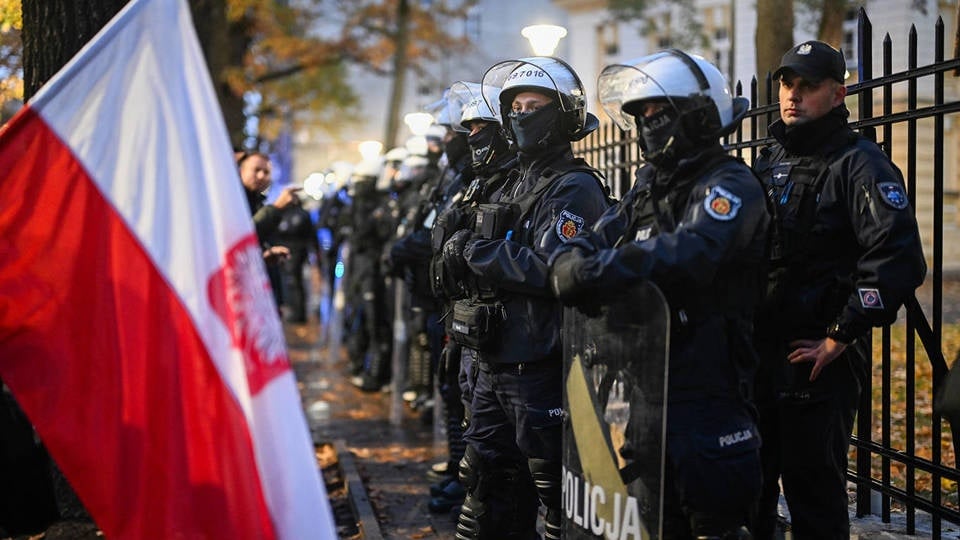

2026 © Helium Trades
Privacy Policy & Disclosure
* Disclaimer: Nothing on this website constitutes investment advice, performance data or any recommendation that any particular security, portfolio of securities, transaction or investment strategy is suitable for any specific person. Helium Trades is not responsible in any way for the accuracy
of any model predictions or price data. Any mention of a particular security and related prediction data is not a recommendation to buy or sell that security. Investments in securities involve the risk of loss. Past performance is no guarantee of future results. Helium Trades is not responsible for any of your investment decisions,
you should consult a financial expert before engaging in any transaction.
Helium Research Assistant

How can I help you today?
Ask any question about this page.


