See whether Helium helps you make better-informed decisions. Try every Pro Trader feature for 30 days. No credit card required.
Try every Pro Trader feature for 30 days. No credit card required.
October 26, 2026 · 0 shares
Framing emphasizes a dramatic Lula comeback and institutional validation of the result while treating the Bolsonaro camp's annulment claim as legally remote.
Automated analysis; not human reviewed.
Limitations: The supplied text includes duplicated related-link snippets and anonymized 'Brasil' publisher references, but substantive election reporting is present.
·
12 of 55 available dimensions scored; omitted dimensions are not treated as neutral.
·
Verified supporting quotes for 12 of 12 scored dimensions.
Claim: Institutional and expert voices are used to validate the election result.
“the chances of the results being annulled are remote” · exact text match
“Supreme Court President Kassio Nunes Marques - appointed by the older Bolsonaro - confirmed Lula's victory” · exact text match
Why: Reliance on court confirmation and legal experts gives a mildly elite/institutional framing.
Claim: Framing is predominantly factual and attributed.
“Lula secured 51.79% of the vote against Bolsonaro's 48.21%” · exact text match
“Fernando Neisser from the Institute of Lawyers of São Paulo (Iasp) said it would be "difficult from a legal standpoint"” · exact text match
Why: The text reports vote totals and attributes legal assessments to named sources.
Claim: The headline uses dramatic language around the result.
“Lula wins fourth term in dramatic Brazil election comeback” · exact text match
Why: The word 'dramatic' adds a sensational framing cue beyond a plain result statement.
Claim: The report emphasizes a dramatic comeback and close result.
“Lula wins fourth term in dramatic Brazil election comeback” · exact text match
Why: The comeback and narrow margin are framed as politically notable.
Claim: The text mainly reports events and attributed statements without prescribing policy.
“Lula told celebratory crowds this election is a "loss for negativity, lies"” · exact text match
“Bolsonaro, who had been poised to give a victory speech, said the result should be annulled” · exact text match
Why: The article describes statements and events rather than advocating a course of action.
Claim: The article is centrally about a presidential election and partisan candidates.
“Brazil's President Luiz Inácio Lula da Silva has won a fourth term in office in a dramatic comeback over his right-wing challenger Flávio Bolsonaro.” · exact text match
Why: The subject is explicitly electoral politics and left-right partisan competition.
Claim: Legal and institutional authorities are used to assess the annulment claim.
“the chances of the results being annulled are remote” · exact text match
“Supreme Court President Kassio Nunes Marques - appointed by the older Bolsonaro - confirmed Lula's victory” · exact text match
Why: Experts and the Supreme Court are cited as decisive authorities on the challenge.
Claim: Institutional validation by the Supreme Court and international leaders is prominent.
“Supreme Court President Kassio Nunes Marques - appointed by the older Bolsonaro - confirmed Lula's victory” · exact text match
“other world leaders have been congratulating Lula on his win” · exact text match
Why: The report foregrounds court and international-establishment acceptance of the result.
Claim: Sourcing and attribution are visible, with uncertainty around Bolsonaro's challenge qualified by expert assessment.
“the chances of the results being annulled are remote” · exact text match
“would depend on the "narrative" his lawyers put forward” · exact text match
Why: Named experts and qualified legal assessments make the report appear credible within the supplied text.
Claim: The report is structured around vote counts, legal-expert assessments, and attributed statements rather than emotional assertion.
“Lula secured 51.79% of the vote against Bolsonaro's 48.21% - a difference of 4.4 million votes” · exact text match
“the chances of the results being annulled are remote” · exact text match
Why: Quantitative results and attributed expert analysis dominate the framing.
Claim: Claims are attributed to named experts, court officials, and candidates, with expert opinion distinguished from fact.
“the chances of the results being annulled are remote” · exact text match
“Supreme Court President Kassio Nunes Marques - appointed by the older Bolsonaro - confirmed Lula's victory” · exact text match
Why: Visible attribution and institutional confirmation support a high integrity signal.
Claim: The report provides vote margins, legal context, turnout dynamics, and attributed expert analysis.
“a difference of 4.4 million votes” · exact text match
“the largest drop in abstention between the first and second rounds of a presidential election since 1989” · exact text match
Why: Detailed quantitative and contextual material supports a high intelligence assessment.
The supplied text includes duplicated related-link snippets and anonymized 'Brasil' publisher references, but substantive election reporting is present.
October 26, 2026 · 0 shares
Largely neutral, attribution-driven election reporting that presents official vote totals, the challenger’s challenge, and both campaigns’ requests without endorsing either side.
Automated analysis; not human reviewed.
Limitations: The supplied text combines the Brazil election report with unrelated aggregated headlines and briefs; bias scoring is limited to the Brazil election portion.
·
10 of 55 available dimensions scored; omitted dimensions are not treated as neutral.
·
Verified supporting quotes for 10 of 10 scored dimensions.
Claim: Publisher framing is politically balanced across the runoff, giving official results and both campaigns’ voting-extension requests.
“Both campaigns had requested longer voting hours.” · exact text match
“Lula received 51.79 percent of valid votes against Bolsonaro’s 48.21 percent, according to the Superior Electoral Court, finishing more than 4.4 million votes ahead.” · exact text match
Why: Balanced presentation of official results and both campaigns’ positions without ideological endorsement.
Claim: The report presents institutional and campaign claims without adopting a populist or elitist voice.
“Electoral court president Kassio Nunes Marques said the extension had not affected the outcome.” · exact text match
““It is impossible to recognize the election result under these circumstances.
We will seek its annulment,” he told reporters.”
· exact text match
Why: Institutional statements and challenger claims are reported alongside each other.
Claim: The report is predominantly factual and attribution-based, not subjective commentary.
“Lula received 51.79 percent of valid votes against Bolsonaro’s 48.21 percent, according to the Superior Electoral Court, finishing more than 4.4 million votes ahead.” · exact text match
Why: Specific vote totals are attributed to the official electoral court.
Claim: Coverage avoids sensational language and sticks to procedural election details.
“Electoral court president Kassio Nunes Marques said the extension had not affected the outcome.” · exact text match
Why: The phrasing is measured and procedural rather than dramatic.
Claim: The article describes electoral events and reported pledges rather than prescribing policies.
“He pledged to expand full-day schooling and financial support for students, develop Brazilian artificial intelligence and use renewable energy to support data centers.” · exact text match
Why: Policy commitments are reported as Lula’s pledges, not as the publisher’s recommendations.
Claim: The article is centrally about an election, party control, and political leadership.
“Brazilian President Luiz Inácio Lula da Silva won a fourth presidential term in the Oct. 25 runoff” · exact text match
“Right-wing parties retained control of the governorships in São Paulo, Minas Gerais and Rio de Janeiro.” · exact text match
Why: Election outcomes and party control are the core subject matter.
Claim: Visible sourcing and direct attribution support a credible presentation.
“Lula received 51.79 percent of valid votes against Bolsonaro’s 48.21 percent, according to the Superior Electoral Court, finishing more than 4.4 million votes ahead.” · exact text match
Why: Vote totals are attributed to an official body rather than asserted anonymously.
Claim: The report relies on procedural facts, attributed vote totals, and official statements rather than emotive or irrational framing.
“Electoral court president Kassio Nunes Marques said the extension had not affected the outcome.” · exact text match
Why: Procedural and attributed details dominate the report.
Claim: The report attributes vote totals and institutional statements and includes the challenger’s position.
“Lula received 51.79 percent of valid votes against Bolsonaro’s 48.21 percent, according to the Superior Electoral Court, finishing more than 4.4 million votes ahead.” · exact text match
““It is impossible to recognize the election result under these circumstances.
We will seek its annulment,” he told reporters.”
· exact text match
Why: Official sourcing and direct quotation of the challenger indicate fair, transparent presentation.
Claim: The report provides specific vote shares, institutional attribution, and policy details.
“Lula received 51.79 percent of valid votes against Bolsonaro’s 48.21 percent, according to the Superior Electoral Court, finishing more than 4.4 million votes ahead.” · exact text match
Why: Detailed numerical and institutional context supports an above-average intelligence assessment.
The supplied text combines the Brazil election report with unrelated aggregated headlines and briefs; bias scoring is limited to the Brazil election portion.
The report frames Brazil’s runoff as a leftist Lula victory over a Trump-aligned Bolsonaro movement while attributing most interpretation to named experts and survey data.
Automated analysis; not human reviewed.
Limitations: The supplied text includes apparent aggregation artifacts and unrelated teaser headlines; scoring is limited to the substantive Brazil election report.
·
11 of 55 available dimensions scored; omitted dimensions are not treated as neutral.
·
Verified supporting quotes for 11 of 11 scored dimensions.
Claim: Coverage balances Lula’s win against Bolsonaro movement strength and Lula’s vulnerabilities, showing no strong ideological tilt.
“Lula’s win is a major setback for the Bolsonaro political movement” · exact text match
“The result exposed vulnerabilities in Lula’s reelection bid” · exact text match
Why: The report includes both the pro-Lula outcome framing and explicit limits on Lula’s mandate, supporting a near-neutral score.
Claim: Evaluative conclusions are mostly attributed to named experts or framed as uncertain.
“It is unclear how successful Bolsonaro’s challenge of the results will be.” · exact text match
““The Senator has very little space to contest the elections.
I think this is a done deal,” he said.”
· exact text match
Why: The report separates factual results from expert assessment and notes uncertainty.
Claim: The prose is measured, with emotional detail limited to descriptive crowd scenes.
“In Rio de Janeiro, Lula’s supporters were seen hugging, beeping their car horns and raising the “L” sign.” · exact text match
“It is unclear how successful Bolsonaro’s challenge of the results will be.” · exact text match
Why: No hyperbolic or alarmist language dominates; uncertainty is stated plainly.
Claim: The report describes the election outcome and disputes without prescribing political action.
“Bolsonaro, who trailed Lula by about 4.4 million votes, said his team would challenge the result” · exact text match
“Lula can point to low unemployment and easing inflation, but those indicators had not changed perceptions for households struggling with everyday prices.” · exact text match
Why: Content is explanatory and descriptive rather than advocacy or recommendation.
Claim: Direct editorial opinion is limited and most evaluations are sourced to experts or candidates.
““It reinforces the disgust and apathy that Brazilians feel with their political system as a whole,” Winter told CNN.” · exact text match
“The result exposed vulnerabilities in Lula’s reelection bid” · exact text match
Why: A few publisher-voice evaluations appear, but most analysis is attributed.
Claim: The report is centrally concerned with electoral politics, ideology, and governing power.
“Brazilian President Luiz Inácio Lula da Silva was reelected to a historic fourth term Sunday” · exact text match
“The election outcome will have repercussions beyond Brazil” · exact text match
Why: The entire substantive text concerns a presidential election and its political implications.
Claim: Credibility is supported by named sources, specific figures, and explicit uncertainty.
“According to Brazil’s Superior Electoral Court, Bolsonaro secured 2.2 million votes more than Lula in the first round of voting.” · exact text match
““The Senator has very little space to contest the elections.
I think this is a done deal,” he said.”
· exact text match
Why: The report uses attributable institutional data and named expert comment.
Claim: The report uses survey data, court records, and named expert analysis to explain the election.
“A July Datafolha survey found 44 percent of Brazilians leaning right or center-right in their political values, compared with 39 percent on the left or center-left” · exact text match
“Paulo Sotero, of the Brazil Institute at the Wilson Center, told CNN that the voting extension “was not an irregularity.”” · exact text match
Why: Empirical polling and attributed expert interpretation dominate over unsupported assertions.
Claim: Forward-looking implications are present but limited and mostly conditional.
“A Bolsonaro victory could have brought Latin America’s largest economy closer to the US” · exact text match
“It is unclear how successful Bolsonaro’s challenge of the results will be.” · exact text match
Why: Speculation is modest and flagged with conditional or uncertain language.
Claim: Specific vote figures, court actions, and surveys are attributed, and unresolved questions are acknowledged.
“According to Brazil’s Superior Electoral Court, Bolsonaro secured 2.2 million votes more than Lula in the first round of voting.” · exact text match
“It is unclear how successful Bolsonaro’s challenge of the results will be.” · exact text match
Why: Attribution and explicit uncertainty are visible integrity signals.
Claim: The report integrates electoral data, regional context, and multiple expert perspectives.
“The shift in the first round of the election reflected a broader electoral trend across Latin America” · exact text match
“A July Datafolha survey found 44 percent of Brazilians leaning right or center-right in their political values, compared with 39 percent on the left or center-left” · exact text match
Why: Synthesis of data and context indicates above-average analytical sophistication.
The supplied text includes apparent aggregation artifacts and unrelated teaser headlines; scoring is limited to the substantive Brazil election report.
October 27, 2026 · 0 shares
Wire-style reporting attributes contested fraud claims to Bolsonaro and Trump while using ideological labels and mild dramatization, yielding mostly factual but not perfectly neutral framing.
Automated analysis; not human reviewed.
Limitations: The supplied text includes subscription/newsletter boilerplate and no byline; bias and author fields are limited by a short wire-style excerpt.
·
10 of 55 available dimensions scored; omitted dimensions are not treated as neutral.
·
Verified supporting quotes for 8 of 10 scored dimensions.
Claim: Ideological labels are somewhat asymmetric, describing Jair Bolsonaro as “far-right” and Flávio as “right-wing” while calling Lula “leftist.”
“a right-wing senator and 45-year-old son of far-right former President Jair Bolsonaro” · exact text match
“poll won by leftist President Luiz Inacio Lula da Silva.” · exact text match
Why: The labeling pattern slightly tilts against the Bolsonaro side, though it also labels Lula ideologically.
Claim: Most contested assertions are attributed to named actors rather than presented as the reporter’s own conclusions.
“the party said in a statement late Monday (October 26, 2026)” · exact text match
“Mr. Bolsonaro maintained that he would seek annulment of the presidential election” · exact text match
Why: Attribution and quoted claims keep the framing largely objective.
Claim: Language is mostly factual, with mild dramatization such as “dramatic comeback.”
“pulled off a dramatic comeback” · exact text match
Why: The phrase adds narrative color but is isolated.
Claim: The article reports events and statements without prescribing policy or political action.
“Mr Bolsonaro said police had ordered him to surrender his passports” · exact text match
“his party later distanced itself from that position and opted to accept the official vote.” · exact text match
Why: The text is event- and statement-driven rather than advocacy.
Claim: The report is centrally about a presidential election and opposition politics.
“recognised the outcome of Brazil’s presidential runoff” · exact text match
“took up the mantle as “leadership of the opposition”” · exact text match
Why: Election contest and political actors dominate.
Claim: Credible wire-style sourcing, named attribution, and inclusion of official and rival statements are visible.
“the party said in a statement late Monday (October 26, 2026)” · exact text match
“he told reporters in Washington” · exact text match
Why: Named statements and direct quotes support credibility.
Claim: The report grounds claims in attributed statements and official court action rather than emotive assertion.
““We recognise the presidential election results, as proclaimed by the Superior Electoral Court (TSE), but we believe that the concerns raised need to be sufficiently addressed within a balanced and democratic political debate,” the party said” · exact text match
“Electoral court chief Kassio Nunes Marques, a Bolsonaro appointee to the Supreme Court, hailed the “successful polls”” · exact text match
Why: Attribution to party and court provides structured, reason-based reporting.
Claim: The report includes the Bolsonaro party’s recognition, Trump’s criticism, and the court chief’s response, showing fair inclusion of competing claims.
““We recognise the presidential election results, as proclaimed by the Superior Electoral Court (TSE)...”” · not found in supplied text
“Mr. Trump, an ally of the Bolsonaro family, said the election “looked terrible to me.”” · exact text match
Why: Including both acceptance and contestation supports fairness.
Claim: The report supplies relevant institutional and electoral context without excessive simplification.
“Electoral court chief Kassio Nunes Marques, a Bolsonaro appointee to the Supreme Court, hailed the “successful polls”” · exact text match
“saw the abstention rate fall from 21% to 19% in the runoff” · exact text match
Why: Specific institutional and turnout details indicate contextual reporting.
The supplied text includes subscription/newsletter boilerplate and no byline; bias and author fields are limited by a short wire-style excerpt.
October 26, 2026 · 0 shares
Framing is measured and attribution-heavy, balancing both coalitions’ voting-extension requests while foregrounding the court’s rejection of the Bolsonaro challenge.
Automated analysis; not human reviewed.
Limitations: Short report; it does not include the underlying filings or full text of the challenged campaign claim.
·
12 of 55 available dimensions scored; omitted dimensions are not treated as neutral.
·
Verified supporting quotes for 12 of 12 scored dimensions.
Claim: The report presents both coalitions’ voting-extension requests without partisan characterization.
“Zanin ordered the extension at the request of Lula’s coalition, which reported a lack of buses to carry voters in cities such as Salvador and São Paulo.” · exact text match
“Bolsonaro’s campaign, for its part, had asked the electoral courts to extend voting in municipalities affected by rain, flooding and power cuts in states such as Minas Gerais and Rio Grande do Sul.” · exact text match
Why: Balanced inclusion of both sides supports measured neutrality rather than a left-right tilt.
Claim: The report does not frame the dispute as a populist-elite conflict.
“Nunes Marques told a press conference.” · exact text match
Why: Institutional statements are reported without populist or elitist framing.
Claim: The report describes electoral-court actions without endorsing expanded authority.
“The measure applied only to polling stations still open; those that had closed at 5 p.m. did not reopen and followed the usual counting procedure.” · exact text match
Why: The court action is described procedurally, not advocated.
Claim: The report relies on attributed statements and vote figures rather than publisher opinion.
“Lula won with 51.78% of valid votes against Bolsonaro’s 48.22%, a margin of about 4.4 million votes.” · exact text match
“There is no record yet of the senator’s campaign having filed a formal challenge.” · exact text match
Why: Quantified result and explicit uncertainty indicate factual, non-subjective reporting.
Claim: Language is measured and avoids sensational descriptors.
“There is no record yet of the senator’s campaign having filed a formal challenge.” · exact text match
Why: Dry procedural language supports low sensationalism.
Claim: The report describes the court ruling and competing claims rather than prescribing an outcome.
“said on Monday that the extension of voting hours did not change the result of the runoff won by Luiz Inácio Lula da Silva.” · exact text match
Why: Reports what a court official said, without advocacy.
Claim: The report is centrally about a political election dispute and court ruling.
“A judge appointed by Jair Bolsonaro rejects his son's case for annulling the election.” · exact text match
Why: Subject matter is explicitly electoral politics.
Claim: The report remains emotionally flat despite quoting Bolsonaro’s heated language.
“There is no record yet of the senator’s campaign having filed a formal challenge.” · exact text match
Why: The publisher’s own prose is procedural and neutral.
Claim: The report gives comparable treatment to Lula coalition and Bolsonaro campaign requests for voting extensions.
“Zanin ordered the extension at the request of Lula’s coalition, which reported a lack of buses to carry voters in cities such as Salvador and São Paulo.” · exact text match
“Bolsonaro’s campaign, for its part, had asked the electoral courts to extend voting in municipalities affected by rain, flooding and power cuts in states such as Minas Gerais and Rio Grande do Sul.” · exact text match
Why: Symmetric inclusion of both requests supports absence of double standard.
Claim: The report attributes statements, gives vote totals, and flags an unconfirmed filing status.
“Nunes Marques told a press conference.” · exact text match
“There is no record yet of the senator’s campaign having filed a formal challenge.” · exact text match
Why: Attribution and explicit uncertainty support credibility.
Claim: The report relies on procedural facts and attributed statements rather than emotional or irrational appeals.
“There is no record yet of the senator’s campaign having filed a formal challenge.” · exact text match
Why: Acknowledging an unconfirmed procedural status supports rational reporting.
Claim: The report avoids overstating the formal challenge status.
“There is no record yet of the senator’s campaign having filed a formal challenge.” · exact text match
Why: Acknowledging an unverified filing status indicates fair, honest reporting.
Short report; it does not include the underlying filings or full text of the challenged campaign claim.
October 27, 2026 · 0 shares
The brief is a narrowly attributed news relay with neutral wording and no explicit interpretive framing.
Automated analysis; not human reviewed.
Limitations: The supplied text is extremely short and includes apparent boilerplate; bias scoring is limited to the brief attributed news sentence.
·
5 of 55 available dimensions scored; omitted dimensions are not treated as neutral.
·
Verified supporting quotes for 5 of 5 scored dimensions.
Claim: The report presents the legal development through a named source without publisher commentary.
“Bloomberg reports” · exact text match
Why: Attribution to Bloomberg rather than subjective framing supports an objective classification.
Claim: The brief uses neutral report language rather than sensational emphasis.
“is abandoning plans to seek to annul the vote” · exact text match
Why: The phrasing states a procedural legal shift plainly, supporting an objective rather than sensational score.
Claim: The brief is fact-based and attributed rather than opinionated.
“Bloomberg reports” · exact text match
Why: The statement is presented as reported fact, not publisher opinion.
Claim: The content is centrally about electoral politics and a legal accusation against a president.
“Brazil’s presidential election” · exact text match
Why: Election and abuse-of-power case content makes the brief highly political.
Claim: Credibility is supported by named-source attribution but limited by the brief’s brevity.
“Bloomberg reports” · exact text match
Why: A named source is visible, though no other sourcing or corroboration appears.
The supplied text is extremely short and includes apparent boilerplate; bias scoring is limited to the brief attributed news sentence.
October 27, 2026 · 0 shares
Minimalist, attributed reporting of Trump's “rigged” claim and Lula's win, with no elaboration or verification and a promotional broadcast sign-off.
Automated analysis; not human reviewed.
Limitations: Only a brief TV news promo is supplied, limiting evidence for most bias dimensions.
·
8 of 55 available dimensions scored; omitted dimensions are not treated as neutral.
·
Verified supporting quotes for 8 of 8 scored dimensions.
Claim: The report is mostly factual and attributive, with a mild evaluative label.
“US President Donald Trump has cast doubt on Brazil’s presidential election, claiming left-wing President Luiz Inácio Lula da Silva’s re-election looked “rigged”.” · exact text match
Why: The wording attributes Trump's claim rather than adopting it, while “historic” adds slight evaluation.
Claim: Sensational framing is restrained; the strongest language is inside an attributed quote.
“claiming left-wing President Luiz Inácio Lula da Silva’s re-election looked “rigged”” · exact text match
Why: The “rigged” term is quoted as Trump's claim, and the surrounding report is measured.
Claim: The report describes events without recommending actions.
“Lula secured a historic fourth term on Sunday, defeating Trump ally Flávio Bolsonaro.” · exact text match
Why: It states an electoral outcome and attribution without policy prescription or advocacy.
Claim: The content is explicitly political, centered on a presidential election and political figures.
“Brazil’s presidential election” · exact text match
Why: The report concerns a presidential election, a president, and a political ally.
Claim: The news content is very brief and ends with promotional tuning instructions.
“Tune in to #eNCA on #DStv403.” · exact text match
Why: The promotional call takes up part of an already minimal report.
Claim: Credibility signals are limited but include named correspondent attribution.
“eNCA’s Washington correspondent James Gooderson reports.” · exact text match
Why: The report names a correspondent, though it provides little sourcing or detail.
Claim: The item includes a direct promotional call to watch the broadcaster.
“Tune in to #eNCA on #DStv403.” · exact text match
Why: The sign-off promotes the broadcaster's channel and program.
Claim: The publisher attributes Trump's claim rather than presenting it as established fact.
“claiming left-wing President Luiz Inácio Lula da Silva’s re-election looked “rigged”” · exact text match
Why: Using “claiming” signals the statement is an allegation, supporting fair attribution.
Only a brief TV news promo is supplied, limiting evidence for most bias dimensions.
Framing emphasizes the legitimacy of Lula’s victory by repeatedly labeling Trump’s and Bolsonaro’s fraud claims as evidence-free while centering institutional and expert recognition.
Automated analysis; not human reviewed.
Limitations: The supplied text contains duplicated passages, inconsistent turnout figures (10.4 million vs.
14.1 million), and an unusual 2027 inauguration date, so some details may be transcription artifacts.
·
14 of 55 available dimensions scored; omitted dimensions are not treated as neutral.
·
Verified supporting quotes for 14 of 14 scored dimensions.
Claim: The article frames the election outcome through the reactions of established power brokers and institutions.
“Important Brazilian power brokers are closing ranks behind Lula” · exact text match
Why: The framing elevates elite institutional reactions as a key measure of the result’s viability.
Claim: The report is largely attributed and factual rather than impressionistic.
“President Donald Trump suggested on Monday, without providing evidence, that Lula’s reelection was “rigged.”” · exact text match
Why: Claims are tied to speakers and evidentiary status instead of adopting a subjective stance.
Claim: The tone is measured and avoids sensational language.
“No significant fraud has ever been detected.” · exact text match
Why: The language is restrained and evidentiary rather than dramatic.
Claim: The article mainly describes procedures and claims rather than prescribing what actors should do.
“Bolsonaro would have to present evidence that the 4.4 million votes by which Lula won the election were fraudulent” · exact text match
Why: It explains institutional requirements without advocating a preferred outcome.
Claim: The article is centrally about electoral politics and competing political actors.
“Lula mobilized millions to win Brazil's election” · exact text match
Why: The subject is an election contest and its political aftermath.
Claim: The article generally presents the challenge as procedurally complex rather than simple.
“That would be a high hurdle” · exact text match
Why: It notes institutional and evidentiary obstacles to annulment.
Claim: The article relies substantially on named expert and institutional authority to interpret the outcome.
“said Brian Winter, Brazil analyst and editor-in-chief of Americas Quarterly.” · exact text match
Why: Expert commentary is used to assess the election challenge.
Claim: The framing gives weight to institutional and established political recognition of the result.
“conservative presidents who oppose Lula, suggest the results will be respected nationally and internationally.” · exact text match
Why: It treats elite and institutional acceptance as a central legitimacy signal.
Claim: The report shows visible sourcing, attribution, and attention to evidence status.
“without providing evidence” · exact text match
“said Brian Winter, Brazil analyst and editor-in-chief of Americas Quarterly.” · exact text match
Why: Claims are attributed to named speakers and unsupported assertions are flagged.
Claim: The article consistently privileges evidence-based standards and marks unsupported fraud claims as such.
“No significant fraud has ever been detected.” · exact text match
“President Donald Trump suggested on Monday, without providing evidence, that Lula’s reelection was “rigged.”” · exact text match
Why: It contrasts verified electoral reliability with explicitly unsupported allegations.
Claim: The article relies on empirical claims about the reliability of Brazil’s voting system.
“No significant fraud has ever been detected.” · exact text match
Why: It grounds legitimacy in observed electoral performance rather than superstition.
Claim: The article includes some forward-looking expert assessment about political consequences.
“can make life difficult for Lula for weeks and months to come.” · exact text match
Why: It reports forecasts about future political difficulty rather than only settled facts.
Claim: The article signals fairness by distinguishing evidence-backed claims from unsupported ones.
“without providing evidence” · exact text match
“No significant fraud has ever been detected.” · exact text match
Why: It explicitly flags missing evidence and states the absence of detected fraud.
Claim: The article provides contextual and expert-informed analysis of the election outcome.
“Analysts say three-quarters of those votes went to Lula, handing him the victory.” · exact text match
Why: It incorporates analytical detail and explanatory context.
The supplied text contains duplicated passages, inconsistent turnout figures (10.4 million vs.
14.1 million), and an unusual 2027 inauguration date, so some details may be transcription artifacts.
October 26, 2026 · 0 shares
Market-loss framing dominates, casting Lula’s victory as a shock that triggered sharp selloffs while giving prominent space to prediction-market misses and Bolsonaro’s rejection of the result.
Automated analysis; not human reviewed.
Limitations: The supplied text contains a possible date inconsistency (‘on Friday’ for a dollar move described alongside a Sunday runoff) and newsletter boilerplate; causal framing of market moves is not independently verifiable from the text.
·
8 of 55 available dimensions scored; omitted dimensions are not treated as neutral.
·
Verified supporting quotes for 7 of 8 scored dimensions.
Claim: Uses specific price levels and percentage moves as the main descriptive frame, with occasional subjective color.
“fell as much as 26% from Friday’s close of about $42.60” · exact text match
“That is memecoin-sized volatility for a fund built around Brazil’s biggest companies” · exact text match
Counterevidence:
“memecoin-sized volatility” · exact text match
Why: Quantitative market details dominate, but informal phrasing adds subjectivity.
Claim: Headline and word choices intensify a mainly factual market report.
“Brazil’s Stock Market Crashes After Lula’s Upset Victory” · exact text match
“That is memecoin-sized volatility for a fund built around Brazil’s biggest companies” · exact text match
Why: “Crashes” and “memecoin-sized volatility” add sensational emphasis beyond neutral description.
Claim: Framing centers on sharp market losses after the election result.
“Brazil’s stock market lost more than $200 billion in value at the open on Monday” · exact text match
“fell as much as 26% from Friday’s close” · exact text match
Why: The report foregrounds severe declines and negative market reaction.
Claim: Uses crash and circuit-breaker language that heightens anxiety.
“B3, the São Paulo exchange, halted trading for 30 minutes after the Ibovespa fell 10% from Friday’s close, its first circuit breaker since the COVID-19 pandemic.” · exact text match
“Brazil’s Stock Market Crashes After Lula’s Upset Victory” · exact text match
Why: Crash and trading-halt details create a fear-oriented presentation, though the events are factual.
Claim: Focuses on an election outcome and a legal challenge to it.
“Lula won 51.79% to 48.21%, a margin of about 4.4 million votes, according to Brazil’s Superior Electoral Court.” · exact text match
“Bolsonaro said on Sunday night that he does not recognize the result and will ask the courts to annul the election” · exact text match
Why: The central development and the closing section are explicitly electoral and legal-political.
Claim: Provides specific figures and attributes the official result and the losing candidate’s response.
“Lula won 51.79% to 48.21%, a margin of about 4.4 million votes, according to Brazil’s Superior Electoral Court.” · exact text match
“Bolsonaro said on Sunday night that he does not recognize the result and will ask the courts to annul the election” · exact text match
Why: Specific data and attribution to official and competing sources support credibility.
Claim: Explains prediction-market mechanics and supplies granular market context.
“Both platforms are prediction markets, where a contract that pays $1 if a candidate wins trades at 80 cents when traders see an 80% chance.” · exact text match
Why: The text explains a technical pricing mechanism rather than merely asserting an outcome.
The supplied text contains a possible date inconsistency (‘on Friday’ for a dollar move described alongside a Sunday runoff) and newsletter boilerplate; causal framing of market moves is not independently verifiable from the text.
October 27, 2026 · 0 shares
Wire-style reporting attributes contested fraud claims to Bolsonaro and Trump while using ideological labels and mild dramatization, yielding mostly factual but not perfectly neutral framing.
Automated analysis; not human reviewed.
Limitations: The supplied text includes subscription/newsletter boilerplate and no byline; bias and author fields are limited by a short wire-style excerpt.
·
10 of 55 available dimensions scored; omitted dimensions are not treated as neutral.
·
Verified supporting quotes for 8 of 10 scored dimensions.
Claim: Ideological labels are somewhat asymmetric, describing Jair Bolsonaro as “far-right” and Flávio as “right-wing” while calling Lula “leftist.”
“a right-wing senator and 45-year-old son of far-right former President Jair Bolsonaro” · exact text match
“poll won by leftist President Luiz Inacio Lula da Silva.” · exact text match
Why: The labeling pattern slightly tilts against the Bolsonaro side, though it also labels Lula ideologically.
Claim: Most contested assertions are attributed to named actors rather than presented as the reporter’s own conclusions.
“the party said in a statement late Monday (October 26, 2026)” · exact text match
“Mr. Bolsonaro maintained that he would seek annulment of the presidential election” · exact text match
Why: Attribution and quoted claims keep the framing largely objective.
Claim: Language is mostly factual, with mild dramatization such as “dramatic comeback.”
“pulled off a dramatic comeback” · exact text match
Why: The phrase adds narrative color but is isolated.
Claim: The article reports events and statements without prescribing policy or political action.
“Mr Bolsonaro said police had ordered him to surrender his passports” · exact text match
“his party later distanced itself from that position and opted to accept the official vote.” · exact text match
Why: The text is event- and statement-driven rather than advocacy.
Claim: The report is centrally about a presidential election and opposition politics.
“recognised the outcome of Brazil’s presidential runoff” · exact text match
“took up the mantle as “leadership of the opposition”” · exact text match
Why: Election contest and political actors dominate.
Claim: Credible wire-style sourcing, named attribution, and inclusion of official and rival statements are visible.
“the party said in a statement late Monday (October 26, 2026)” · exact text match
“he told reporters in Washington” · exact text match
Why: Named statements and direct quotes support credibility.
Claim: The report grounds claims in attributed statements and official court action rather than emotive assertion.
““We recognise the presidential election results, as proclaimed by the Superior Electoral Court (TSE), but we believe that the concerns raised need to be sufficiently addressed within a balanced and democratic political debate,” the party said” · exact text match
“Electoral court chief Kassio Nunes Marques, a Bolsonaro appointee to the Supreme Court, hailed the “successful polls”” · exact text match
Why: Attribution to party and court provides structured, reason-based reporting.
Claim: The report includes the Bolsonaro party’s recognition, Trump’s criticism, and the court chief’s response, showing fair inclusion of competing claims.
““We recognise the presidential election results, as proclaimed by the Superior Electoral Court (TSE)...”” · not found in supplied text
“Mr. Trump, an ally of the Bolsonaro family, said the election “looked terrible to me.”” · exact text match
Why: Including both acceptance and contestation supports fairness.
Claim: The report supplies relevant institutional and electoral context without excessive simplification.
“Electoral court chief Kassio Nunes Marques, a Bolsonaro appointee to the Supreme Court, hailed the “successful polls”” · exact text match
“saw the abstention rate fall from 21% to 19% in the runoff” · exact text match
Why: Specific institutional and turnout details indicate contextual reporting.
The supplied text includes subscription/newsletter boilerplate and no byline; bias and author fields are limited by a short wire-style excerpt.
October 28, 2026 · 0 shares
The report is mostly straight, attributed news, but occasional loaded characterization such as 'fled the country in an apparent attempt' adds slight subjective framing.
Automated analysis; not human reviewed.
Limitations: The supplied text is a short news report with some adjacent headline links mixed into the page; scoring is limited to the visible article framing and attributions.
·
55 of 55 available dimensions scored; omitted dimensions are not treated as neutral.
·
Verified supporting quotes for 9 of 55 scored dimensions.
Claim: Interpretive wording frames Bolsonaro’s departure beyond a bare report of travel.
“the conservative senator fled the country in an apparent attempt to avoid a federal corruption investigation into his family enterprises” · exact text match
Why: “Fled” and “apparent attempt” are evaluative characterizations rather than neutral factual descriptions.
Claim: The report is mostly measured and procedural, with some tension in the description of Bolsonaro’s departure.
“In a 38-page decision written in Portuguese, Supreme Court Justice Flávio Dino cited “reports of a potential influx of foreign funds to benefit an election campaign”” · exact text match
Counterevidence:
“the conservative senator fled the country in an apparent attempt to avoid a federal corruption investigation into his family enterprises” · exact text match
Why: The court ruling is presented in technical terms, but the later wording adds a mildly dramatic characterization.
Claim: The report recounts court and police actions without advocating specific policy outcomes.
“The justice ordered Brazil’s federal police to investigate any connections between Rockbridge Network and Sen. Flávio Bolsonaro’s presidential campaign.” · exact text match
Why: The sentence describes an official action rather than recommending a course of action.
Claim: The article is largely factual but includes an evaluative characterization of Bolsonaro’s departure.
“the conservative senator fled the country in an apparent attempt to avoid a federal corruption investigation into his family enterprises” · exact text match
Why: Most text is attributed reporting, while this phrase adds the publisher’s characterization.
Claim: The article centers on election campaigns, foreign funding, and senior political figures.
“Vice President JD Vance’s donor network is under scrutiny in Brazil after a local Supreme Court justice on Tuesday called for the country’s federal police to investigate any alleged connection between the organization and Sen. Flávio Bolsonaro’s presidential campaign.” · exact text match
Why: The subject matter is explicitly political and electoral.
Claim: The report attributes key claims and includes a denial from the implicated network.
“Rockbridge denied contact or involvement with the people cited in Dino’s order who had said they were agents for the network, The Washington Post reported.” · exact text match
Why: Named-outlet attribution and inclusion of a denial support visible credibility.
Claim: Some wording speculates about Bolsonaro’s motive for leaving Brazil.
“an apparent attempt to avoid a federal corruption investigation” · exact text match
Why: “Apparent attempt” infers motive without stating it as established fact.
Claim: The report includes a direct denial from Rockbridge and attributes it to a written statement.
““The Brazilians made false representations about their relationship with Rockbridge and created documents representing or referencing Rockbridge without Rockbridge’s knowledge or consent,” the network told the Post in a written statement.” · exact text match
Why: Including the subject’s denial with attribution is a fairness signal.
Claim: The report connects the court order to related diplomatic and platform disputes.
“The ruling cites several of those tension points, including the ambassador negotiations and ongoing legal tensions with tech giant Meta.” · exact text match
Why: It synthesizes the investigation with broader legal and diplomatic context rather than presenting it in isolation.
The supplied text is a short news report with some adjacent headline links mixed into the page; scoring is limited to the visible article framing and attributions.
October 27, 2026 · 0 shares
The framing is cautious and attribution-heavy, qualifying the probe as investigating 'possible' violations and noting that the order does not establish wrongdoing.
Automated analysis; not human reviewed.
Limitations: The supplied article text contains duplicated passages and no author byline; analysis is limited to the visible report.
·
14 of 55 available dimensions scored; omitted dimensions are not treated as neutral.
·
Verified supporting quotes for 7 of 14 scored dimensions.
Claim: The report relies on attributed court filings and official statements rather than subjective commentary.
“according to a court filing published on Tuesday” · exact text match
Why: Documentary attribution and legal-caveat language indicate an objective presentation.
Claim: The prose is measured and avoids sensational or emotive characterization.
“Dino stressed that the order doesn’t establish that illegal foreign financing occurred” · exact text match
Why: The explicit caveat tempers the headline-level allegation of foreign financing.
Claim: The report describes the judicial order and investigation rather than prescribing policy outcomes.
“Justice Flávio Dino ordered investigators to examine possible use of foreign resources, services or other benefits provided to political campaigns, according to a court filing published on Tuesday.” · exact text match
Why: It reports what an official ordered investigators to examine, not what should be done.
Claim: The article centers on a Brazilian presidential campaign, election law, and a Supreme Court-ordered police probe.
“A Brazilian Supreme Court justice ordered federal police to open a probe into possible illegal foreign financing of defeated candidate Flávio Bolsonaro’s presidential campaign, including by a group linked to US Vice President JD Vance.” · exact text match
Why: The subject matter is explicitly political and electoral.
Claim: The report uses sourced attribution, legal qualification, and named-party responses.
“Dino stressed that the order doesn’t establish that illegal foreign financing occurred” · exact text match
“according to a court filing published on Tuesday” · exact text match
Why: Visible sourcing and caution support high credibility in the supplied text.
Claim: The report distinguishes an investigative order from proof of wrongdoing.
“Dino stressed that the order doesn’t establish that illegal foreign financing occurred, but said allegations levelled during Brazil’s presidential race warrant an investigation.” · exact text match
Why: The wording separates suspicion from established fact, supporting a rational rather than irrational framing.
Claim: The report includes no-comment notices and denials from named parties.
“Vance’s office didn’t immediately respond to a request for comment.” · exact text match
“Meta referred to past statements on Brazil’s election, denying it had favoured a specific candidate in the race.” · exact text match
Why: Seeking and noting responses from involved parties indicates fair attribution.
The supplied article text contains duplicated passages and no author byline; analysis is limited to the visible report.
October 28, 2026 · 0 shares
The report is mostly descriptive and attribution-driven, but it inconsistently identifies Flávio Bolsonaro as the 45-year-old defeated presidential candidate who lost Sunday's runoff, weakening factual precision while leaning on anonymous sourcing and hedged 'reportedly' language.
Brazil's runoff election was won by Luiz Inácio Lula da Silva; the article attributes that presidential defeat to Flávio Bolsonaro, who is described elsewhere in the same text as a 45-year-old travelling with his wife and daughters.
Automated analysis; not human reviewed.
Limitations: The supplied text mixes article paragraphs with Euronews promotional copy and unrelated headline links, and it conflates Flávio Bolsonaro with the defeated presidential candidate, so entity-level facts are unreliable.
·
6 of 55 available dimensions scored; omitted dimensions are not treated as neutral.
·
Verified supporting quotes for 6 of 6 scored dimensions.
Claim: The account is built from attributed statements by officials and agencies rather than the reporter's own characterizations.
“Argentine authorities said on Wednesday that the 45-year-old had entered Argentina "with valid travel documents and no legal impediment."” · exact text match
Why: Framing is conveyed through attributed official statements rather than evaluative narration.
Claim: The reporting is low-drama and procedural, avoiding emotive or alarmist language about the departure.
“Bolsonaro's arrival in the United States follows conflicting reports about his movements after leaving Brazil despite a court order banning him from travelling abroad.” · exact text match
Why: The text notes conflicting reports soberly instead of dramatizing the flight.
Claim: The article reports events and statements without recommending any course of action.
“He was ordered to surrender his passport and is expected to lose his parliamentary immunity following his election defeat.” · exact text match
Why: Legal consequences are stated descriptively, with no prescription for what should happen.
Claim: The story is framed entirely through electoral and governmental power.
“Brazil's defeated right-wing presidential candidate Flavio Bolsonaro arrived at a Miami-area airport on Wednesday” · exact text match
Why: Identity is defined by political affiliation and election outcome.
Claim: Sourcing is attributed but internal inconsistencies about the subject's identity and age reduce reliability.
“A US official, speaking on condition of anonymity due to visa privacy laws, said “the State Department will issue visas to Flavio Bolsonaro and his family and allow them entry into the United States.”” · exact text match
Counterevidence:
“Argentine authorities said on Wednesday that the 45-year-old had entered Argentina” · exact text match
Why: Anonymous but clearly attributed sourcing coexists with a mismatched age and electoral role for the named figure.
Claim: Unverified movement details are conveyed with hedged, second-hand attribution.
“The same plane Argentine athorities said was carrying Bolsonaro then made a brief stop in Ecuador before reportedly flying to an unknown destination.” · exact text match
Why: Destination and routing are presented as reported and unknown rather than confirmed.
The supplied text mixes article paragraphs with Euronews promotional copy and unrelated headline links, and it conflates Flávio Bolsonaro with the defeated presidential candidate, so entity-level facts are unreliable.
October 28, 2026 · 0 shares
The report uses loaded verbs ('embraces fleeing,' 'took off with family members') and foregrounds criminal investigations to frame the Bolsonaro flight and the U.S. visa as suspect, while attributing each contested point to a named source.
Flávio Bolsonaro is the son of former Brazilian president Jair Bolsonaro and lost a presidential runoff to incumbent Lula, who has a history of contested elections with the Bolsonaro family.
Automated analysis; not human reviewed.
Limitations: Article text includes duplicated and truncated passages, leaving the final sentence incomplete and limiting full verification of the ending.
·
17 of 55 available dimensions scored; omitted dimensions are not treated as neutral.
·
Verified supporting quotes for 12 of 17 scored dimensions.
Claim: Framing emphasizes investigations and critical quotes about the right-aligned Bolsonaro family and highlights reduced Trump influence.
“It also gives Trump, an ally of the Bolsonaro family, less influence in South America.” · exact text match
Why: Selection of critical material and framing of reduced right-leaning influence tilts slightly liberal.
Claim: Loaded headline verbs introduce subjective framing.
“Trump admin embraces fleeing Bolsonaro, losing Brazilian presidential candidate.” · exact text match
Why: 'Embraces fleeing' is evaluative rather than neutral description.
Claim: Dramatic verbs heighten the tone.
“Bolsonaro took off with family members, traveling through Argentina, Ecuador and finally landing in Miami, Florida.” · exact text match
Why: 'Took off' and escape-style narrative add sensational coloring.
Claim: Report describes events and quotes rather than prescribing action.
““I regret that he left Brazil, because he could have stayed here and proven that the accusations are not true,” Lula told supporters” · exact text match
Why: Quotes convey positions without the publisher asserting prescriptions.
Claim: Evaluative framing and critical adjective choice reflect mild opinion.
“"This act of leaving Brazil is shameful," Brazil's President Lula said” · not found in supplied text
Why: Foregrounding a condemnatory quote adds interpretive coloring.
Claim: Content is entirely about political actors and elections.
“Lula won reelection by over 4 million votes on Oct. 25, defeating Bolsonaro in the second round of an election” · exact text match
Why: Core subject is electoral and partisan politics.
Claim: Claims are mostly hedged with attribution and conditionals.
“If Bolsonaro is charged and convicted in the investigation, he could face extradition from the U.S.” · exact text match
Why: Conditional phrasing limits certainty.
Claim: Investigations by courts and the passport seizure are presented as legitimate baseline.
“currently under investigation by Brazil’s Supreme Court for alleged money laundering, corruption and tax evasion in two cases” · exact text match
Why: Treating institutional action as the presupposed norm leans mildly pro-establishment.
Claim: Report cites attributed sourcing and preserves uncertainty about charges.
“has yet to be charged with a crime” · exact text match
Why: Attribution and clear epistemic status support moderate credibility.
Claim: Report is largely factual and attributed rather than emotive.
“a senior State Department official told the Washington Post” · exact text match
Why: Reliance on sourced attribution supports a mildly rational presentation.
Claim: Includes forward-looking forecasts about implications.
“an election that promises to have profound implications for Latin American politics” · exact text match
Why: 'Promises to have profound implications' is speculative forecasting.
Claim: Loaded framing frames the flight as improper without explicit editorializing.
“The Trump administration was quick to issue a visa to Bolsonaro and members of his family” · exact text match
Why: 'Quick' implies unusual haste, a subtle framing device.
Claim: Sourcing and attribution are reasonably transparent.
“a senior State Department official told the Washington Post” · exact text match
Why: Named-outlet attribution and conditional framing signal fair handling.
Article text includes duplicated and truncated passages, leaving the final sentence incomplete and limiting full verification of the ending.
October 28, 2026 · 0 shares
The article neutrally reports a diplomatic decision by the U.S. government regarding the visa status of a political figure under investigation.
Automated analysis; not human reviewed.
·
9 of 55 available dimensions scored; omitted dimensions are not treated as neutral.
·
Verified supporting quotes for 0 of 9 scored dimensions.
October 26, 2026 · 0 shares
Largely neutral, attribution-driven election reporting that presents official vote totals, the challenger’s challenge, and both campaigns’ requests without endorsing either side.
Automated analysis; not human reviewed. Limitations: The supplied text combines the Brazil election report with unrelated aggregated headlines and briefs; bias scoring is limited to the Brazil election portion. · 10 of 55 available dimensions scored; omitted dimensions are not treated as neutral. · Verified supporting quotes for 10 of 10 scored dimensions.
Claim: Publisher framing is politically balanced across the runoff, giving official results and both campaigns’ voting-extension requests.
“Both campaigns had requested longer voting hours.” · exact text match
“Lula received 51.79 percent of valid votes against Bolsonaro’s 48.21 percent, according to the Superior Electoral Court, finishing more than 4.4 million votes ahead.” · exact text match
Why: Balanced presentation of official results and both campaigns’ positions without ideological endorsement.
Claim: The report presents institutional and campaign claims without adopting a populist or elitist voice.
“Electoral court president Kassio Nunes Marques said the extension had not affected the outcome.” · exact text match
““It is impossible to recognize the election result under these circumstances. We will seek its annulment,” he told reporters.” · exact text match
Why: Institutional statements and challenger claims are reported alongside each other.
Claim: The report is predominantly factual and attribution-based, not subjective commentary.
“Lula received 51.79 percent of valid votes against Bolsonaro’s 48.21 percent, according to the Superior Electoral Court, finishing more than 4.4 million votes ahead.” · exact text match
Why: Specific vote totals are attributed to the official electoral court.
Claim: Coverage avoids sensational language and sticks to procedural election details.
“Electoral court president Kassio Nunes Marques said the extension had not affected the outcome.” · exact text match
Why: The phrasing is measured and procedural rather than dramatic.
Claim: The article describes electoral events and reported pledges rather than prescribing policies.
“He pledged to expand full-day schooling and financial support for students, develop Brazilian artificial intelligence and use renewable energy to support data centers.” · exact text match
Why: Policy commitments are reported as Lula’s pledges, not as the publisher’s recommendations.
Claim: The article is centrally about an election, party control, and political leadership.
“Brazilian President Luiz Inácio Lula da Silva won a fourth presidential term in the Oct. 25 runoff” · exact text match
“Right-wing parties retained control of the governorships in São Paulo, Minas Gerais and Rio de Janeiro.” · exact text match
Why: Election outcomes and party control are the core subject matter.
Claim: Visible sourcing and direct attribution support a credible presentation.
“Lula received 51.79 percent of valid votes against Bolsonaro’s 48.21 percent, according to the Superior Electoral Court, finishing more than 4.4 million votes ahead.” · exact text match
Why: Vote totals are attributed to an official body rather than asserted anonymously.
Claim: The report relies on procedural facts, attributed vote totals, and official statements rather than emotive or irrational framing.
“Electoral court president Kassio Nunes Marques said the extension had not affected the outcome.” · exact text match
Why: Procedural and attributed details dominate the report.
Claim: The report attributes vote totals and institutional statements and includes the challenger’s position.
“Lula received 51.79 percent of valid votes against Bolsonaro’s 48.21 percent, according to the Superior Electoral Court, finishing more than 4.4 million votes ahead.” · exact text match
““It is impossible to recognize the election result under these circumstances. We will seek its annulment,” he told reporters.” · exact text match
Why: Official sourcing and direct quotation of the challenger indicate fair, transparent presentation.
Claim: The report provides specific vote shares, institutional attribution, and policy details.
“Lula received 51.79 percent of valid votes against Bolsonaro’s 48.21 percent, according to the Superior Electoral Court, finishing more than 4.4 million votes ahead.” · exact text match
Why: Detailed numerical and institutional context supports an above-average intelligence assessment.
The supplied text combines the Brazil election report with unrelated aggregated headlines and briefs; bias scoring is limited to the Brazil election portion.
October 26, 2026 · 0 shares
Framing emphasizes a dramatic Lula comeback and institutional validation of the result while treating the Bolsonaro camp's annulment claim as legally remote.
Automated analysis; not human reviewed. Limitations: The supplied text includes duplicated related-link snippets and anonymized 'Brasil' publisher references, but substantive election reporting is present. · 12 of 55 available dimensions scored; omitted dimensions are not treated as neutral. · Verified supporting quotes for 12 of 12 scored dimensions.
Claim: Institutional and expert voices are used to validate the election result.
“the chances of the results being annulled are remote” · exact text match
“Supreme Court President Kassio Nunes Marques - appointed by the older Bolsonaro - confirmed Lula's victory” · exact text match
Why: Reliance on court confirmation and legal experts gives a mildly elite/institutional framing.
Claim: Framing is predominantly factual and attributed.
“Lula secured 51.79% of the vote against Bolsonaro's 48.21%” · exact text match
“Fernando Neisser from the Institute of Lawyers of São Paulo (Iasp) said it would be "difficult from a legal standpoint"” · exact text match
Why: The text reports vote totals and attributes legal assessments to named sources.
Claim: The headline uses dramatic language around the result.
“Lula wins fourth term in dramatic Brazil election comeback” · exact text match
Why: The word 'dramatic' adds a sensational framing cue beyond a plain result statement.
Claim: The report emphasizes a dramatic comeback and close result.
“Lula wins fourth term in dramatic Brazil election comeback” · exact text match
Why: The comeback and narrow margin are framed as politically notable.
Claim: The text mainly reports events and attributed statements without prescribing policy.
“Lula told celebratory crowds this election is a "loss for negativity, lies"” · exact text match
“Bolsonaro, who had been poised to give a victory speech, said the result should be annulled” · exact text match
Why: The article describes statements and events rather than advocating a course of action.
Claim: The article is centrally about a presidential election and partisan candidates.
“Brazil's President Luiz Inácio Lula da Silva has won a fourth term in office in a dramatic comeback over his right-wing challenger Flávio Bolsonaro.” · exact text match
Why: The subject is explicitly electoral politics and left-right partisan competition.
Claim: Legal and institutional authorities are used to assess the annulment claim.
“the chances of the results being annulled are remote” · exact text match
“Supreme Court President Kassio Nunes Marques - appointed by the older Bolsonaro - confirmed Lula's victory” · exact text match
Why: Experts and the Supreme Court are cited as decisive authorities on the challenge.
Claim: Institutional validation by the Supreme Court and international leaders is prominent.
“Supreme Court President Kassio Nunes Marques - appointed by the older Bolsonaro - confirmed Lula's victory” · exact text match
“other world leaders have been congratulating Lula on his win” · exact text match
Why: The report foregrounds court and international-establishment acceptance of the result.
Claim: Sourcing and attribution are visible, with uncertainty around Bolsonaro's challenge qualified by expert assessment.
“the chances of the results being annulled are remote” · exact text match
“would depend on the "narrative" his lawyers put forward” · exact text match
Why: Named experts and qualified legal assessments make the report appear credible within the supplied text.
Claim: The report is structured around vote counts, legal-expert assessments, and attributed statements rather than emotional assertion.
“Lula secured 51.79% of the vote against Bolsonaro's 48.21% - a difference of 4.4 million votes” · exact text match
“the chances of the results being annulled are remote” · exact text match
Why: Quantitative results and attributed expert analysis dominate the framing.
Claim: Claims are attributed to named experts, court officials, and candidates, with expert opinion distinguished from fact.
“the chances of the results being annulled are remote” · exact text match
“Supreme Court President Kassio Nunes Marques - appointed by the older Bolsonaro - confirmed Lula's victory” · exact text match
Why: Visible attribution and institutional confirmation support a high integrity signal.
Claim: The report provides vote margins, legal context, turnout dynamics, and attributed expert analysis.
“a difference of 4.4 million votes” · exact text match
“the largest drop in abstention between the first and second rounds of a presidential election since 1989” · exact text match
Why: Detailed quantitative and contextual material supports a high intelligence assessment.
The supplied text includes duplicated related-link snippets and anonymized 'Brasil' publisher references, but substantive election reporting is present.
The report frames Brazil’s runoff as a leftist Lula victory over a Trump-aligned Bolsonaro movement while attributing most interpretation to named experts and survey data.
Automated analysis; not human reviewed. Limitations: The supplied text includes apparent aggregation artifacts and unrelated teaser headlines; scoring is limited to the substantive Brazil election report. · 11 of 55 available dimensions scored; omitted dimensions are not treated as neutral. · Verified supporting quotes for 11 of 11 scored dimensions.
Claim: Coverage balances Lula’s win against Bolsonaro movement strength and Lula’s vulnerabilities, showing no strong ideological tilt.
“Lula’s win is a major setback for the Bolsonaro political movement” · exact text match
“The result exposed vulnerabilities in Lula’s reelection bid” · exact text match
Why: The report includes both the pro-Lula outcome framing and explicit limits on Lula’s mandate, supporting a near-neutral score.
Claim: Evaluative conclusions are mostly attributed to named experts or framed as uncertain.
“It is unclear how successful Bolsonaro’s challenge of the results will be.” · exact text match
““The Senator has very little space to contest the elections. I think this is a done deal,” he said.” · exact text match
Why: The report separates factual results from expert assessment and notes uncertainty.
Claim: The prose is measured, with emotional detail limited to descriptive crowd scenes.
“In Rio de Janeiro, Lula’s supporters were seen hugging, beeping their car horns and raising the “L” sign.” · exact text match
“It is unclear how successful Bolsonaro’s challenge of the results will be.” · exact text match
Why: No hyperbolic or alarmist language dominates; uncertainty is stated plainly.
Claim: The report describes the election outcome and disputes without prescribing political action.
“Bolsonaro, who trailed Lula by about 4.4 million votes, said his team would challenge the result” · exact text match
“Lula can point to low unemployment and easing inflation, but those indicators had not changed perceptions for households struggling with everyday prices.” · exact text match
Why: Content is explanatory and descriptive rather than advocacy or recommendation.
Claim: Direct editorial opinion is limited and most evaluations are sourced to experts or candidates.
““It reinforces the disgust and apathy that Brazilians feel with their political system as a whole,” Winter told CNN.” · exact text match
“The result exposed vulnerabilities in Lula’s reelection bid” · exact text match
Why: A few publisher-voice evaluations appear, but most analysis is attributed.
Claim: The report is centrally concerned with electoral politics, ideology, and governing power.
“Brazilian President Luiz Inácio Lula da Silva was reelected to a historic fourth term Sunday” · exact text match
“The election outcome will have repercussions beyond Brazil” · exact text match
Why: The entire substantive text concerns a presidential election and its political implications.
Claim: Credibility is supported by named sources, specific figures, and explicit uncertainty.
“According to Brazil’s Superior Electoral Court, Bolsonaro secured 2.2 million votes more than Lula in the first round of voting.” · exact text match
““The Senator has very little space to contest the elections. I think this is a done deal,” he said.” · exact text match
Why: The report uses attributable institutional data and named expert comment.
Claim: The report uses survey data, court records, and named expert analysis to explain the election.
“A July Datafolha survey found 44 percent of Brazilians leaning right or center-right in their political values, compared with 39 percent on the left or center-left” · exact text match
“Paulo Sotero, of the Brazil Institute at the Wilson Center, told CNN that the voting extension “was not an irregularity.”” · exact text match
Why: Empirical polling and attributed expert interpretation dominate over unsupported assertions.
Claim: Forward-looking implications are present but limited and mostly conditional.
“A Bolsonaro victory could have brought Latin America’s largest economy closer to the US” · exact text match
“It is unclear how successful Bolsonaro’s challenge of the results will be.” · exact text match
Why: Speculation is modest and flagged with conditional or uncertain language.
Claim: Specific vote figures, court actions, and surveys are attributed, and unresolved questions are acknowledged.
“According to Brazil’s Superior Electoral Court, Bolsonaro secured 2.2 million votes more than Lula in the first round of voting.” · exact text match
“It is unclear how successful Bolsonaro’s challenge of the results will be.” · exact text match
Why: Attribution and explicit uncertainty are visible integrity signals.
Claim: The report integrates electoral data, regional context, and multiple expert perspectives.
“The shift in the first round of the election reflected a broader electoral trend across Latin America” · exact text match
“A July Datafolha survey found 44 percent of Brazilians leaning right or center-right in their political values, compared with 39 percent on the left or center-left” · exact text match
Why: Synthesis of data and context indicates above-average analytical sophistication.
The supplied text includes apparent aggregation artifacts and unrelated teaser headlines; scoring is limited to the substantive Brazil election report.
October 27, 2026 · 0 shares
Frames Lula’s win as a historic, record-setting comeback that halts a right-wing regional wave while treating Bolsonaro’s refusal as isolated and Trump’s fraud claim as unsupported.
Brazil’s president governs with a separately elected bicameral Congress, so the legislative seat counts described constrain the incoming administration’s agenda.
Automated analysis; not human reviewed. Limitations: The supplied text includes a scraped headline/list artifact and describes an apparently future or hypothetical election; bias scores are limited to this text. · 15 of 55 available dimensions scored; omitted dimensions are not treated as neutral. · Verified supporting quotes for 15 of 15 scored dimensions.
Claim: Frames Lula’s victory as halting a right-wing regional wave and as a remarkable comeback against a right-wing rival.
“halted the region's right-wing wave” · exact text match
“remarkable comeback against his right-wing rival” · exact text match
Why: The framing aligns Lula with the left and casts the right as a wave being halted.
Claim: Centers institutional negotiation and expert political analysis over populist appeals.
“said Michael Paarlberg, an associate professor of political science at Virginia Commonwealth University” · exact text match
“Lula will have to build alliances beyond his own base” · exact text match
Why: The report privileges elite institutional and academic commentary.
Claim: Uses evaluative framing such as “paradox” and “historic electoral triumph.”
“That is the paradox of Lula’s next term: a historic electoral triumph and limited room to govern.” · exact text match
Why: The language is interpretive and evaluative rather than purely descriptive.
Claim: Uses elevated but restrained language of record-setting and history.
“Luiz Inácio Lula da Silva made history on Sunday.” · exact text match
“remarkable comeback” · exact text match
Why: The wording heightens drama while remaining mostly measured.
Claim: Includes evaluative analysis and forecasts beyond straight reporting.
“That is the paradox of Lula’s next term: a historic electoral triumph and limited room to govern.” · exact text match
“Lula’s first challenge after celebrating his victory will be legislative.” · exact text match
Why: The text offers interpretive judgments about governing prospects.
Claim: The report is centrally about electoral politics, legislative balance, and regional ideological competition.
“Right-wing parties will hold 303 of the 513 seats in the Chamber of Deputies, compared with 124 for the left and 86 for the center.” · exact text match
“halted the region's right-wing wave” · exact text match
Why: The subject matter is explicitly political and electoral.
Claim: Compresses regional politics into a left-versus-right wave narrative while still noting institutional constraints.
“halted the region's right-wing wave” · exact text match
“The comeback also allows Lula to remain the leading figure of the regional left as the right advances across Latin America.” · exact text match
Why: The wave framing simplifies complex regional politics, though the report adds qualifications.
Claim: Uses left-right ideological framing of regional politics.
“halted the region's right-wing wave” · exact text match
“The comeback also allows Lula to remain the leading figure of the regional left as the right advances across Latin America.” · exact text match
Why: The analysis organizes events around left-right ideological competition.
Claim: Frames governance through institutional negotiation with Congress and courts rather than anti-system challenge.
“By Monday, however, Bolsonaro’s Liberal Party announced they acknowledged the results” · exact text match
“Lula will have to build alliances beyond his own base both to advance his proposals and to defend his government’s priorities.” · exact text match
Why: The report emphasizes institutional processes and elite bargaining.
Claim: Positive framing of Lula’s historic comeback, balanced by governing challenges.
“made history on Sunday” · exact text match
“remarkable comeback” · exact text match
Why: The tone is somewhat positive toward Lula’s achievement.
Claim: Sourcing and attribution are visible, including named expert, party statement, and pending response.
“CNN contacted the Brazilian Federal Police to ask about Bolsonaro’s remarks and is awaiting a response.” · exact text match
“Lula has shown an ability to adapt to Trump. He has balanced occasional harsh criticism with conciliatory gestures” · exact text match
Why: The report provides identifiable sources and qualifications.
Claim: Uses vote-margin, turnout, and geographic data to explain the result analytically.
“Geography helps explain how Lula overturned his first-round deficit.” · exact text match
“Abstention fell from 21.08% in the first round to approximately 19.2% in the runoff” · exact text match
Why: The analysis relies on empirical patterns rather than emotional assertion.
Claim: Forecasts Lula’s governing challenges and political effects.
“But the right’s majority in the legislature could hinder the smooth functioning of his new administration.” · exact text match
“Lula’s first challenge after celebrating his victory will be legislative.” · exact text match
Why: The text projects future governing difficulties.
Claim: Attributes claims to named sources and notes pending police response.
“CNN contacted the Brazilian Federal Police to ask about Bolsonaro’s remarks and is awaiting a response.” · exact text match
“We recognize the presidential election results” · exact text match
Why: The report shows transparent sourcing and acknowledgment of unresolved responses.
Claim: Integrates electoral geography, turnout, legislative math, and expert commentary.
“Geography helps explain how Lula overturned his first-round deficit.” · exact text match
“In the Senate, the right will control nearly two-thirds of the seats.” · exact text match
Why: The analysis synthesizes multiple explanatory factors.
The supplied text includes a scraped headline/list artifact and describes an apparently future or hypothetical election; bias scores are limited to this text.
October 27, 2026 · 0 shares
Wire-style reporting attributes contested fraud claims to Bolsonaro and Trump while using ideological labels and mild dramatization, yielding mostly factual but not perfectly neutral framing.
Automated analysis; not human reviewed. Limitations: The supplied text includes subscription/newsletter boilerplate and no byline; bias and author fields are limited by a short wire-style excerpt. · 10 of 55 available dimensions scored; omitted dimensions are not treated as neutral. · Verified supporting quotes for 8 of 10 scored dimensions.
Claim: Ideological labels are somewhat asymmetric, describing Jair Bolsonaro as “far-right” and Flávio as “right-wing” while calling Lula “leftist.”
“a right-wing senator and 45-year-old son of far-right former President Jair Bolsonaro” · exact text match
“poll won by leftist President Luiz Inacio Lula da Silva.” · exact text match
Why: The labeling pattern slightly tilts against the Bolsonaro side, though it also labels Lula ideologically.
Claim: Most contested assertions are attributed to named actors rather than presented as the reporter’s own conclusions.
“the party said in a statement late Monday (October 26, 2026)” · exact text match
“Mr. Bolsonaro maintained that he would seek annulment of the presidential election” · exact text match
Why: Attribution and quoted claims keep the framing largely objective.
Claim: Language is mostly factual, with mild dramatization such as “dramatic comeback.”
“pulled off a dramatic comeback” · exact text match
Why: The phrase adds narrative color but is isolated.
Claim: The article reports events and statements without prescribing policy or political action.
“Mr Bolsonaro said police had ordered him to surrender his passports” · exact text match
“his party later distanced itself from that position and opted to accept the official vote.” · exact text match
Why: The text is event- and statement-driven rather than advocacy.
Claim: The report is centrally about a presidential election and opposition politics.
“recognised the outcome of Brazil’s presidential runoff” · exact text match
“took up the mantle as “leadership of the opposition”” · exact text match
Why: Election contest and political actors dominate.
Claim: Credible wire-style sourcing, named attribution, and inclusion of official and rival statements are visible.
“the party said in a statement late Monday (October 26, 2026)” · exact text match
“he told reporters in Washington” · exact text match
Why: Named statements and direct quotes support credibility.
Claim: The report grounds claims in attributed statements and official court action rather than emotive assertion.
““We recognise the presidential election results, as proclaimed by the Superior Electoral Court (TSE), but we believe that the concerns raised need to be sufficiently addressed within a balanced and democratic political debate,” the party said” · exact text match
“Electoral court chief Kassio Nunes Marques, a Bolsonaro appointee to the Supreme Court, hailed the “successful polls”” · exact text match
Why: Attribution to party and court provides structured, reason-based reporting.
Claim: The report includes the Bolsonaro party’s recognition, Trump’s criticism, and the court chief’s response, showing fair inclusion of competing claims.
““We recognise the presidential election results, as proclaimed by the Superior Electoral Court (TSE)...”” · not found in supplied text
“Mr. Trump, an ally of the Bolsonaro family, said the election “looked terrible to me.”” · exact text match
Why: Including both acceptance and contestation supports fairness.
Claim: The report supplies relevant institutional and electoral context without excessive simplification.
“Electoral court chief Kassio Nunes Marques, a Bolsonaro appointee to the Supreme Court, hailed the “successful polls”” · exact text match
“saw the abstention rate fall from 21% to 19% in the runoff” · exact text match
Why: Specific institutional and turnout details indicate contextual reporting.
The supplied text includes subscription/newsletter boilerplate and no byline; bias and author fields are limited by a short wire-style excerpt.
October 26, 2026 · 0 shares
Framing is measured and attribution-heavy, balancing both coalitions’ voting-extension requests while foregrounding the court’s rejection of the Bolsonaro challenge.
Automated analysis; not human reviewed. Limitations: Short report; it does not include the underlying filings or full text of the challenged campaign claim. · 12 of 55 available dimensions scored; omitted dimensions are not treated as neutral. · Verified supporting quotes for 12 of 12 scored dimensions.
Claim: The report presents both coalitions’ voting-extension requests without partisan characterization.
“Zanin ordered the extension at the request of Lula’s coalition, which reported a lack of buses to carry voters in cities such as Salvador and São Paulo.” · exact text match
“Bolsonaro’s campaign, for its part, had asked the electoral courts to extend voting in municipalities affected by rain, flooding and power cuts in states such as Minas Gerais and Rio Grande do Sul.” · exact text match
Why: Balanced inclusion of both sides supports measured neutrality rather than a left-right tilt.
Claim: The report does not frame the dispute as a populist-elite conflict.
“Nunes Marques told a press conference.” · exact text match
Why: Institutional statements are reported without populist or elitist framing.
Claim: The report describes electoral-court actions without endorsing expanded authority.
“The measure applied only to polling stations still open; those that had closed at 5 p.m. did not reopen and followed the usual counting procedure.” · exact text match
Why: The court action is described procedurally, not advocated.
Claim: The report relies on attributed statements and vote figures rather than publisher opinion.
“Lula won with 51.78% of valid votes against Bolsonaro’s 48.22%, a margin of about 4.4 million votes.” · exact text match
“There is no record yet of the senator’s campaign having filed a formal challenge.” · exact text match
Why: Quantified result and explicit uncertainty indicate factual, non-subjective reporting.
Claim: Language is measured and avoids sensational descriptors.
“There is no record yet of the senator’s campaign having filed a formal challenge.” · exact text match
Why: Dry procedural language supports low sensationalism.
Claim: The report describes the court ruling and competing claims rather than prescribing an outcome.
“said on Monday that the extension of voting hours did not change the result of the runoff won by Luiz Inácio Lula da Silva.” · exact text match
Why: Reports what a court official said, without advocacy.
Claim: The report is centrally about a political election dispute and court ruling.
“A judge appointed by Jair Bolsonaro rejects his son's case for annulling the election.” · exact text match
Why: Subject matter is explicitly electoral politics.
Claim: The report remains emotionally flat despite quoting Bolsonaro’s heated language.
“There is no record yet of the senator’s campaign having filed a formal challenge.” · exact text match
Why: The publisher’s own prose is procedural and neutral.
Claim: The report gives comparable treatment to Lula coalition and Bolsonaro campaign requests for voting extensions.
“Zanin ordered the extension at the request of Lula’s coalition, which reported a lack of buses to carry voters in cities such as Salvador and São Paulo.” · exact text match
“Bolsonaro’s campaign, for its part, had asked the electoral courts to extend voting in municipalities affected by rain, flooding and power cuts in states such as Minas Gerais and Rio Grande do Sul.” · exact text match
Why: Symmetric inclusion of both requests supports absence of double standard.
Claim: The report attributes statements, gives vote totals, and flags an unconfirmed filing status.
“Nunes Marques told a press conference.” · exact text match
“There is no record yet of the senator’s campaign having filed a formal challenge.” · exact text match
Why: Attribution and explicit uncertainty support credibility.
Claim: The report relies on procedural facts and attributed statements rather than emotional or irrational appeals.
“There is no record yet of the senator’s campaign having filed a formal challenge.” · exact text match
Why: Acknowledging an unconfirmed procedural status supports rational reporting.
Claim: The report avoids overstating the formal challenge status.
“There is no record yet of the senator’s campaign having filed a formal challenge.” · exact text match
Why: Acknowledging an unverified filing status indicates fair, honest reporting.
Short report; it does not include the underlying filings or full text of the challenged campaign claim.
October 27, 2026 · 0 shares
The brief is a narrowly attributed news relay with neutral wording and no explicit interpretive framing.
Automated analysis; not human reviewed. Limitations: The supplied text is extremely short and includes apparent boilerplate; bias scoring is limited to the brief attributed news sentence. · 5 of 55 available dimensions scored; omitted dimensions are not treated as neutral. · Verified supporting quotes for 5 of 5 scored dimensions.
Claim: The report presents the legal development through a named source without publisher commentary.
“Bloomberg reports” · exact text match
Why: Attribution to Bloomberg rather than subjective framing supports an objective classification.
Claim: The brief uses neutral report language rather than sensational emphasis.
“is abandoning plans to seek to annul the vote” · exact text match
Why: The phrasing states a procedural legal shift plainly, supporting an objective rather than sensational score.
Claim: The brief is fact-based and attributed rather than opinionated.
“Bloomberg reports” · exact text match
Why: The statement is presented as reported fact, not publisher opinion.
Claim: The content is centrally about electoral politics and a legal accusation against a president.
“Brazil’s presidential election” · exact text match
Why: Election and abuse-of-power case content makes the brief highly political.
Claim: Credibility is supported by named-source attribution but limited by the brief’s brevity.
“Bloomberg reports” · exact text match
Why: A named source is visible, though no other sourcing or corroboration appears.
The supplied text is extremely short and includes apparent boilerplate; bias scoring is limited to the brief attributed news sentence.
October 27, 2026 · 0 shares
Frames Lula’s runoff victory as a democracy-and-environment win while treating Bolsonaro and Trump’s fraud claims as baseless.
Automated analysis; not human reviewed. Limitations: Supplied article text is duplicated and truncated mid-sentence, so only the available content could be assessed. · 55 of 55 available dimensions scored; omitted dimensions are not treated as neutral. · Verified supporting quotes for 15 of 55 scored dimensions.
Claim: Publisher frames Lula’s left-wing win positively and right-wing/Trump-aligned forces negatively.
“That breaks a streak of seven straight victories for right-wing parties and candidates in Central and South America over the last year and a half” · exact text match
“It’s arguably also a victory for democracy and environmental causes” · exact text match
Why: Positive valence for Lula and negative framing of the right-wing streak indicate a liberal lean.
Claim: Mixes factual reporting with evaluative claims.
“It’s arguably also a victory for democracy and environmental causes” · exact text match
Why: The explicit evaluative framing moves the piece toward subjectivity.
Claim: Tone is measured and contextual rather than sensational.
“Although losing sides have often complained about Brazil’s elections, the country’s electoral system is widely considered fair and transparent.” · exact text match
Why: Sober contextual attribution supports an objective rather than sensational score.
Claim: Mostly descriptive but includes an evaluative prescription/advocacy note.
“It’s arguably also a victory for democracy and environmental causes” · exact text match
Why: The piece is largely descriptive yet includes a normative claim.
Claim: Includes evaluative opinions alongside reported facts.
“It’s arguably also a victory for democracy and environmental causes” · exact text match
Why: The publisher’s own evaluative claim supports an opinion-bias score.
Claim: The article is centrally about electoral politics and political actors.
“Brazilian President Luiz Inácio Lula da Silva won reelection on Oct. 25, defeating Sen. Flávio Bolsonaro in the second round” · exact text match
Why: The subject matter is explicitly political.
Claim: Relies on unnamed observers and experts as support.
“Most observers are saying that Lula’s campaign successfully doubled down on voter turnout” · exact text match
Why: Vague observer consensus functions as an appeal to authority.
Claim: Frames the outcome through democracy/environment ideological categories.
“It’s arguably also a victory for democracy and environmental causes” · exact text match
Why: The democracy/environment framing is an ideological interpretive lens.
Claim: Defends Brazilian electoral institutions and mainstream observer consensus.
“the country’s electoral system is widely considered fair and transparent.” · exact text match
Why: Defending established electoral institutions indicates a pro-establishment lean.
Claim: Positive valence toward Lula’s comeback and victory.
“In what’s being described as an unlikely comeback” · exact text match
Why: The comeback framing carries a positive emotional tone.
Claim: Uses named sourcing and precise vote counts.
“Bruno Ronchi, a political science researcher at the University of Rennes, told France 24.” · exact text match
Why: Named expert attribution and numerical detail support credibility.
Claim: Uses precise, attributed vote counts rather than emotional assertion.
“As of Monday, Lula had 51.79% of the vote while Flávio Bolsonaro had 48.21%, with nearly 97% of ballots counted.” · exact text match
Why: Precise numerical reporting supports a rational rather than irrational presentation.
Claim: Flags unsupported claims and distinguishes allegation from evidence.
“Trump has claimed, without evidence, that the Brazilian result “looked like another rigged election, frankly,”” · exact text match
Why: Explicitly noting lack of evidence is an observable integrity signal.
Claim: Provides historical context and precise electoral results.
“This is the first time since Brazil returned to democratic elections in 1989 that a candidate who placed second in the first round went on to win the runoff.” · exact text match
Why: Historical comparison and precise data indicate above-average article intelligence.
Claim: Presents the outcome as a democracy-and-environment virtue.
“It’s arguably also a victory for democracy and environmental causes” · exact text match
Why: The publisher’s own moralized framing supports a virtue-signal score.
Supplied article text is duplicated and truncated mid-sentence, so only the available content could be assessed.
October 26, 2026 · 0 shares
Market-loss framing dominates, casting Lula’s victory as a shock that triggered sharp selloffs while giving prominent space to prediction-market misses and Bolsonaro’s rejection of the result.
Automated analysis; not human reviewed. Limitations: The supplied text contains a possible date inconsistency (‘on Friday’ for a dollar move described alongside a Sunday runoff) and newsletter boilerplate; causal framing of market moves is not independently verifiable from the text. · 8 of 55 available dimensions scored; omitted dimensions are not treated as neutral. · Verified supporting quotes for 7 of 8 scored dimensions.
Claim: Uses specific price levels and percentage moves as the main descriptive frame, with occasional subjective color.
“fell as much as 26% from Friday’s close of about $42.60” · exact text match
“That is memecoin-sized volatility for a fund built around Brazil’s biggest companies” · exact text match
Counterevidence:
“memecoin-sized volatility” · exact text match
Why: Quantitative market details dominate, but informal phrasing adds subjectivity.
Claim: Headline and word choices intensify a mainly factual market report.
“Brazil’s Stock Market Crashes After Lula’s Upset Victory” · exact text match
“That is memecoin-sized volatility for a fund built around Brazil’s biggest companies” · exact text match
Why: “Crashes” and “memecoin-sized volatility” add sensational emphasis beyond neutral description.
Claim: Framing centers on sharp market losses after the election result.
“Brazil’s stock market lost more than $200 billion in value at the open on Monday” · exact text match
“fell as much as 26% from Friday’s close” · exact text match
Why: The report foregrounds severe declines and negative market reaction.
Claim: Uses crash and circuit-breaker language that heightens anxiety.
“B3, the São Paulo exchange, halted trading for 30 minutes after the Ibovespa fell 10% from Friday’s close, its first circuit breaker since the COVID-19 pandemic.” · exact text match
“Brazil’s Stock Market Crashes After Lula’s Upset Victory” · exact text match
Why: Crash and trading-halt details create a fear-oriented presentation, though the events are factual.
Claim: Focuses on an election outcome and a legal challenge to it.
“Lula won 51.79% to 48.21%, a margin of about 4.4 million votes, according to Brazil’s Superior Electoral Court.” · exact text match
“Bolsonaro said on Sunday night that he does not recognize the result and will ask the courts to annul the election” · exact text match
Why: The central development and the closing section are explicitly electoral and legal-political.
Claim: Provides specific figures and attributes the official result and the losing candidate’s response.
“Lula won 51.79% to 48.21%, a margin of about 4.4 million votes, according to Brazil’s Superior Electoral Court.” · exact text match
“Bolsonaro said on Sunday night that he does not recognize the result and will ask the courts to annul the election” · exact text match
Why: Specific data and attribution to official and competing sources support credibility.
Claim: Explains prediction-market mechanics and supplies granular market context.
“Both platforms are prediction markets, where a contract that pays $1 if a candidate wins trades at 80 cents when traders see an 80% chance.” · exact text match
Why: The text explains a technical pricing mechanism rather than merely asserting an outcome.
The supplied text contains a possible date inconsistency (‘on Friday’ for a dollar move described alongside a Sunday runoff) and newsletter boilerplate; causal framing of market moves is not independently verifiable from the text.
October 27, 2026 · 0 shares
Wire-style reporting attributes contested fraud claims to Bolsonaro and Trump while using ideological labels and mild dramatization, yielding mostly factual but not perfectly neutral framing.
Automated analysis; not human reviewed. Limitations: The supplied text includes subscription/newsletter boilerplate and no byline; bias and author fields are limited by a short wire-style excerpt. · 10 of 55 available dimensions scored; omitted dimensions are not treated as neutral. · Verified supporting quotes for 8 of 10 scored dimensions.
Claim: Ideological labels are somewhat asymmetric, describing Jair Bolsonaro as “far-right” and Flávio as “right-wing” while calling Lula “leftist.”
“a right-wing senator and 45-year-old son of far-right former President Jair Bolsonaro” · exact text match
“poll won by leftist President Luiz Inacio Lula da Silva.” · exact text match
Why: The labeling pattern slightly tilts against the Bolsonaro side, though it also labels Lula ideologically.
Claim: Most contested assertions are attributed to named actors rather than presented as the reporter’s own conclusions.
“the party said in a statement late Monday (October 26, 2026)” · exact text match
“Mr. Bolsonaro maintained that he would seek annulment of the presidential election” · exact text match
Why: Attribution and quoted claims keep the framing largely objective.
Claim: Language is mostly factual, with mild dramatization such as “dramatic comeback.”
“pulled off a dramatic comeback” · exact text match
Why: The phrase adds narrative color but is isolated.
Claim: The article reports events and statements without prescribing policy or political action.
“Mr Bolsonaro said police had ordered him to surrender his passports” · exact text match
“his party later distanced itself from that position and opted to accept the official vote.” · exact text match
Why: The text is event- and statement-driven rather than advocacy.
Claim: The report is centrally about a presidential election and opposition politics.
“recognised the outcome of Brazil’s presidential runoff” · exact text match
“took up the mantle as “leadership of the opposition”” · exact text match
Why: Election contest and political actors dominate.
Claim: Credible wire-style sourcing, named attribution, and inclusion of official and rival statements are visible.
“the party said in a statement late Monday (October 26, 2026)” · exact text match
“he told reporters in Washington” · exact text match
Why: Named statements and direct quotes support credibility.
Claim: The report grounds claims in attributed statements and official court action rather than emotive assertion.
““We recognise the presidential election results, as proclaimed by the Superior Electoral Court (TSE), but we believe that the concerns raised need to be sufficiently addressed within a balanced and democratic political debate,” the party said” · exact text match
“Electoral court chief Kassio Nunes Marques, a Bolsonaro appointee to the Supreme Court, hailed the “successful polls”” · exact text match
Why: Attribution to party and court provides structured, reason-based reporting.
Claim: The report includes the Bolsonaro party’s recognition, Trump’s criticism, and the court chief’s response, showing fair inclusion of competing claims.
““We recognise the presidential election results, as proclaimed by the Superior Electoral Court (TSE)...”” · not found in supplied text
“Mr. Trump, an ally of the Bolsonaro family, said the election “looked terrible to me.”” · exact text match
Why: Including both acceptance and contestation supports fairness.
Claim: The report supplies relevant institutional and electoral context without excessive simplification.
“Electoral court chief Kassio Nunes Marques, a Bolsonaro appointee to the Supreme Court, hailed the “successful polls”” · exact text match
“saw the abstention rate fall from 21% to 19% in the runoff” · exact text match
Why: Specific institutional and turnout details indicate contextual reporting.
The supplied text includes subscription/newsletter boilerplate and no byline; bias and author fields are limited by a short wire-style excerpt.
October 28, 2026 · 0 shares
The report is mostly descriptive and attribution-driven, but it inconsistently identifies Flávio Bolsonaro as the 45-year-old defeated presidential candidate who lost Sunday's runoff, weakening factual precision while leaning on anonymous sourcing and hedged 'reportedly' language.
Brazil's runoff election was won by Luiz Inácio Lula da Silva; the article attributes that presidential defeat to Flávio Bolsonaro, who is described elsewhere in the same text as a 45-year-old travelling with his wife and daughters.
Automated analysis; not human reviewed. Limitations: The supplied text mixes article paragraphs with Euronews promotional copy and unrelated headline links, and it conflates Flávio Bolsonaro with the defeated presidential candidate, so entity-level facts are unreliable. · 6 of 55 available dimensions scored; omitted dimensions are not treated as neutral. · Verified supporting quotes for 6 of 6 scored dimensions.
Claim: The account is built from attributed statements by officials and agencies rather than the reporter's own characterizations.
“Argentine authorities said on Wednesday that the 45-year-old had entered Argentina "with valid travel documents and no legal impediment."” · exact text match
Why: Framing is conveyed through attributed official statements rather than evaluative narration.
Claim: The reporting is low-drama and procedural, avoiding emotive or alarmist language about the departure.
“Bolsonaro's arrival in the United States follows conflicting reports about his movements after leaving Brazil despite a court order banning him from travelling abroad.” · exact text match
Why: The text notes conflicting reports soberly instead of dramatizing the flight.
Claim: The article reports events and statements without recommending any course of action.
“He was ordered to surrender his passport and is expected to lose his parliamentary immunity following his election defeat.” · exact text match
Why: Legal consequences are stated descriptively, with no prescription for what should happen.
Claim: The story is framed entirely through electoral and governmental power.
“Brazil's defeated right-wing presidential candidate Flavio Bolsonaro arrived at a Miami-area airport on Wednesday” · exact text match
Why: Identity is defined by political affiliation and election outcome.
Claim: Sourcing is attributed but internal inconsistencies about the subject's identity and age reduce reliability.
“A US official, speaking on condition of anonymity due to visa privacy laws, said “the State Department will issue visas to Flavio Bolsonaro and his family and allow them entry into the United States.”” · exact text match
Counterevidence:
“Argentine authorities said on Wednesday that the 45-year-old had entered Argentina” · exact text match
Why: Anonymous but clearly attributed sourcing coexists with a mismatched age and electoral role for the named figure.
Claim: Unverified movement details are conveyed with hedged, second-hand attribution.
“The same plane Argentine athorities said was carrying Bolsonaro then made a brief stop in Ecuador before reportedly flying to an unknown destination.” · exact text match
Why: Destination and routing are presented as reported and unknown rather than confirmed.
The supplied text mixes article paragraphs with Euronews promotional copy and unrelated headline links, and it conflates Flávio Bolsonaro with the defeated presidential candidate, so entity-level facts are unreliable.
October 28, 2026 · 0 shares
The report uses loaded verbs ('embraces fleeing,' 'took off with family members') and foregrounds criminal investigations to frame the Bolsonaro flight and the U.S. visa as suspect, while attributing each contested point to a named source.
Flávio Bolsonaro is the son of former Brazilian president Jair Bolsonaro and lost a presidential runoff to incumbent Lula, who has a history of contested elections with the Bolsonaro family.
Automated analysis; not human reviewed. Limitations: Article text includes duplicated and truncated passages, leaving the final sentence incomplete and limiting full verification of the ending. · 17 of 55 available dimensions scored; omitted dimensions are not treated as neutral. · Verified supporting quotes for 12 of 17 scored dimensions.
Claim: Framing emphasizes investigations and critical quotes about the right-aligned Bolsonaro family and highlights reduced Trump influence.
“It also gives Trump, an ally of the Bolsonaro family, less influence in South America.” · exact text match
Why: Selection of critical material and framing of reduced right-leaning influence tilts slightly liberal.
Claim: Loaded headline verbs introduce subjective framing.
“Trump admin embraces fleeing Bolsonaro, losing Brazilian presidential candidate.” · exact text match
Why: 'Embraces fleeing' is evaluative rather than neutral description.
Claim: Dramatic verbs heighten the tone.
“Bolsonaro took off with family members, traveling through Argentina, Ecuador and finally landing in Miami, Florida.” · exact text match
Why: 'Took off' and escape-style narrative add sensational coloring.
Claim: Report describes events and quotes rather than prescribing action.
““I regret that he left Brazil, because he could have stayed here and proven that the accusations are not true,” Lula told supporters” · exact text match
Why: Quotes convey positions without the publisher asserting prescriptions.
Claim: Evaluative framing and critical adjective choice reflect mild opinion.
“"This act of leaving Brazil is shameful," Brazil's President Lula said” · not found in supplied text
Why: Foregrounding a condemnatory quote adds interpretive coloring.
Claim: Content is entirely about political actors and elections.
“Lula won reelection by over 4 million votes on Oct. 25, defeating Bolsonaro in the second round of an election” · exact text match
Why: Core subject is electoral and partisan politics.
Claim: Claims are mostly hedged with attribution and conditionals.
“If Bolsonaro is charged and convicted in the investigation, he could face extradition from the U.S.” · exact text match
Why: Conditional phrasing limits certainty.
Claim: Investigations by courts and the passport seizure are presented as legitimate baseline.
“currently under investigation by Brazil’s Supreme Court for alleged money laundering, corruption and tax evasion in two cases” · exact text match
Why: Treating institutional action as the presupposed norm leans mildly pro-establishment.
Claim: Report cites attributed sourcing and preserves uncertainty about charges.
“has yet to be charged with a crime” · exact text match
Why: Attribution and clear epistemic status support moderate credibility.
Claim: Report is largely factual and attributed rather than emotive.
“a senior State Department official told the Washington Post” · exact text match
Why: Reliance on sourced attribution supports a mildly rational presentation.
Claim: Includes forward-looking forecasts about implications.
“an election that promises to have profound implications for Latin American politics” · exact text match
Why: 'Promises to have profound implications' is speculative forecasting.
Claim: Loaded framing frames the flight as improper without explicit editorializing.
“The Trump administration was quick to issue a visa to Bolsonaro and members of his family” · exact text match
Why: 'Quick' implies unusual haste, a subtle framing device.
Claim: Sourcing and attribution are reasonably transparent.
“a senior State Department official told the Washington Post” · exact text match
Why: Named-outlet attribution and conditional framing signal fair handling.
Article text includes duplicated and truncated passages, leaving the final sentence incomplete and limiting full verification of the ending.
October 28, 2026 · 0 shares
The article neutrally reports a diplomatic decision by the U.S. government regarding the visa status of a political figure under investigation.
Automated analysis; not human reviewed. · 9 of 55 available dimensions scored; omitted dimensions are not treated as neutral. · Verified supporting quotes for 0 of 9 scored dimensions.
October 27, 2026 · 0 shares
Critical and speculative framing presents Bolsonaro as fleeing legal process, leaning on 'reportedly' and a father's coup conviction while attributing asylum plans to The Guardian.
Automated analysis; not human reviewed. Limitations: Short scraped excerpt includes list artifacts and omits byline; several claims are explicitly attributed and unverified, limiting certainty. · 15 of 55 available dimensions scored; omitted dimensions are not treated as neutral. · Verified supporting quotes for 11 of 15 scored dimensions.
Claim: Critical framing of Bolsonaro emphasizes legal defiance and a coup conviction.
“defying a Supreme Court order to surrender his passports” · exact text match
“27-year sentence for plotting a coup” · not found in supplied text
Why: Selection and wording lean critical of Bolsonaro, modestly supporting a left-leaning classification.
Claim: Loaded verbs and unverified reports add subjective framing.
“reportedly fled” · exact text match
“defying a Supreme Court order” · exact text match
Why: Uses dramatic verbs while attributing claims.
Claim: The headline-style departure claim is mildly dramatic.
“fled to the United States after his defeat” · exact text match
Why: Flight language adds modest sensational tone.
Claim: The reported flight and asylum plan make the story notable.
“fled to the United States after his defeat” · exact text match
Why: Unexpected political flight makes it moderately interesting.
Claim: Reports official actions and allegations without advocating a response.
“Police in Brazil said they have cancelled Bolsonaro’s passports and are checking border crossings” · exact text match
Why: No prescriptions or recommendations appear.
Claim: Subject is electoral and legal politics.
“Brazilian presidential candidate Flávio Bolsonaro” · exact text match
“political asylum from the Trump administration” · exact text match
Why: Political actors and asylum are central.
Claim: The report compresses the political context into 'after his defeat' without explaining the election or legal sequence.
“after his defeat” · exact text match
Why: Short summary omits context.
Claim: Relies on named outlets and official court/police actions.
“which he denies (BBC)” · exact text match
“plans to request political asylum from the Trump administration (The Guardian)” · exact text match
Why: Authority citations support claims.
Claim: Attribution and denial are present but sourced reports remain unverified.
“which he denies (BBC)” · exact text match
“reportedly fled” · exact text match
Why: Credible sourcing practices with uncertainty.
Claim: The report mainly advances through attributed official and media claims rather than independent reasoning.
“which he denies (BBC)” · exact text match
“plans to request political asylum from the Trump administration (The Guardian)” · exact text match
Why: Attribution supports measured rationality, but the excerpt is too short for strong confidence.
Claim: Central claims are reported as unconfirmed and forward-looking.
“reportedly fled” · exact text match
“plans to request political asylum from the Trump administration” · exact text match
Why: Uses 'reportedly' and future plan.
Claim: Includes denial and source attribution.
“which he denies (BBC)” · exact text match
“reportedly” · exact text match
Why: Fairness signals present, though claims remain unverified.
Short scraped excerpt includes list artifacts and omits byline; several claims are explicitly attributed and unverified, limiting certainty.
October 28, 2026 · 0 shares
The report is mostly straight, attributed news, but occasional loaded characterization such as 'fled the country in an apparent attempt' adds slight subjective framing.
Automated analysis; not human reviewed. Limitations: The supplied text is a short news report with some adjacent headline links mixed into the page; scoring is limited to the visible article framing and attributions. · 55 of 55 available dimensions scored; omitted dimensions are not treated as neutral. · Verified supporting quotes for 9 of 55 scored dimensions.
Claim: Interpretive wording frames Bolsonaro’s departure beyond a bare report of travel.
“the conservative senator fled the country in an apparent attempt to avoid a federal corruption investigation into his family enterprises” · exact text match
Why: “Fled” and “apparent attempt” are evaluative characterizations rather than neutral factual descriptions.
Claim: The report is mostly measured and procedural, with some tension in the description of Bolsonaro’s departure.
“In a 38-page decision written in Portuguese, Supreme Court Justice Flávio Dino cited “reports of a potential influx of foreign funds to benefit an election campaign”” · exact text match
Counterevidence:
“the conservative senator fled the country in an apparent attempt to avoid a federal corruption investigation into his family enterprises” · exact text match
Why: The court ruling is presented in technical terms, but the later wording adds a mildly dramatic characterization.
Claim: The report recounts court and police actions without advocating specific policy outcomes.
“The justice ordered Brazil’s federal police to investigate any connections between Rockbridge Network and Sen. Flávio Bolsonaro’s presidential campaign.” · exact text match
Why: The sentence describes an official action rather than recommending a course of action.
Claim: The article is largely factual but includes an evaluative characterization of Bolsonaro’s departure.
“the conservative senator fled the country in an apparent attempt to avoid a federal corruption investigation into his family enterprises” · exact text match
Why: Most text is attributed reporting, while this phrase adds the publisher’s characterization.
Claim: The article centers on election campaigns, foreign funding, and senior political figures.
“Vice President JD Vance’s donor network is under scrutiny in Brazil after a local Supreme Court justice on Tuesday called for the country’s federal police to investigate any alleged connection between the organization and Sen. Flávio Bolsonaro’s presidential campaign.” · exact text match
Why: The subject matter is explicitly political and electoral.
Claim: The report attributes key claims and includes a denial from the implicated network.
“Rockbridge denied contact or involvement with the people cited in Dino’s order who had said they were agents for the network, The Washington Post reported.” · exact text match
Why: Named-outlet attribution and inclusion of a denial support visible credibility.
Claim: Some wording speculates about Bolsonaro’s motive for leaving Brazil.
“an apparent attempt to avoid a federal corruption investigation” · exact text match
Why: “Apparent attempt” infers motive without stating it as established fact.
Claim: The report includes a direct denial from Rockbridge and attributes it to a written statement.
““The Brazilians made false representations about their relationship with Rockbridge and created documents representing or referencing Rockbridge without Rockbridge’s knowledge or consent,” the network told the Post in a written statement.” · exact text match
Why: Including the subject’s denial with attribution is a fairness signal.
Claim: The report connects the court order to related diplomatic and platform disputes.
“The ruling cites several of those tension points, including the ambassador negotiations and ongoing legal tensions with tech giant Meta.” · exact text match
Why: It synthesizes the investigation with broader legal and diplomatic context rather than presenting it in isolation.
The supplied text is a short news report with some adjacent headline links mixed into the page; scoring is limited to the visible article framing and attributions.
October 27, 2026 · 0 shares
The framing is cautious and attribution-heavy, qualifying the probe as investigating 'possible' violations and noting that the order does not establish wrongdoing.
Automated analysis; not human reviewed. Limitations: The supplied article text contains duplicated passages and no author byline; analysis is limited to the visible report. · 14 of 55 available dimensions scored; omitted dimensions are not treated as neutral. · Verified supporting quotes for 7 of 14 scored dimensions.
Claim: The report relies on attributed court filings and official statements rather than subjective commentary.
“according to a court filing published on Tuesday” · exact text match
Why: Documentary attribution and legal-caveat language indicate an objective presentation.
Claim: The prose is measured and avoids sensational or emotive characterization.
“Dino stressed that the order doesn’t establish that illegal foreign financing occurred” · exact text match
Why: The explicit caveat tempers the headline-level allegation of foreign financing.
Claim: The report describes the judicial order and investigation rather than prescribing policy outcomes.
“Justice Flávio Dino ordered investigators to examine possible use of foreign resources, services or other benefits provided to political campaigns, according to a court filing published on Tuesday.” · exact text match
Why: It reports what an official ordered investigators to examine, not what should be done.
Claim: The article centers on a Brazilian presidential campaign, election law, and a Supreme Court-ordered police probe.
“A Brazilian Supreme Court justice ordered federal police to open a probe into possible illegal foreign financing of defeated candidate Flávio Bolsonaro’s presidential campaign, including by a group linked to US Vice President JD Vance.” · exact text match
Why: The subject matter is explicitly political and electoral.
Claim: The report uses sourced attribution, legal qualification, and named-party responses.
“Dino stressed that the order doesn’t establish that illegal foreign financing occurred” · exact text match
“according to a court filing published on Tuesday” · exact text match
Why: Visible sourcing and caution support high credibility in the supplied text.
Claim: The report distinguishes an investigative order from proof of wrongdoing.
“Dino stressed that the order doesn’t establish that illegal foreign financing occurred, but said allegations levelled during Brazil’s presidential race warrant an investigation.” · exact text match
Why: The wording separates suspicion from established fact, supporting a rational rather than irrational framing.
Claim: The report includes no-comment notices and denials from named parties.
“Vance’s office didn’t immediately respond to a request for comment.” · exact text match
“Meta referred to past statements on Brazil’s election, denying it had favoured a specific candidate in the race.” · exact text match
Why: Seeking and noting responses from involved parties indicates fair attribution.
The supplied article text contains duplicated passages and no author byline; analysis is limited to the visible report.
Helium Bias
October 26, 2026 · 0 shares
Frames Lula’s victory as a “humiliating” defeat for MAGA and a halt to Latin America’s rightward turn, using loaded ideological labels and celebratory quotes.
Automated analysis; not human reviewed. Limitations: The supplied text includes embedded duplicate paragraphs and subscription boilerplate; analysis is limited to the substantive political reporting and does not externally fact-check claims. · 16 of 55 available dimensions scored; omitted dimensions are not treated as neutral. · Verified supporting quotes for 16 of 16 scored dimensions.
Claim: Frames Lula’s win as a humiliating defeat for MAGA and labels Bolsonaro “far-right” while identifying Lula as a “veteran left-winger.”
“Trump Ally Plunges to Stunning Loss in Humiliation for MAGA” · exact text match
“beating his far-right rival Bolsonaro” · exact text match
Why: The anti-MAGA headline and ideological labels align with left-leaning framing.
Claim: No clear populist or elitist framing is evident in the supplied text.
“Lula, 81, a veteran left-winger, had trailed by more than 2 million votes” · exact text match
Why: The report focuses on electoral and institutional conflict rather than a populist-elitist appeal.
Claim: The article does not clearly advance libertarian or authoritarian policy framing.
“Flávio Bolsonaro refused to concede defeat and requested that election results be annulled” · exact text match
Why: The focus is on election legitimacy, not a clear libertarian-authoritarian policy stance.
Claim: Uses evaluative, celebratory language to characterize the election outcome rather than neutral result reporting.
“stunning political comeback” · exact text match
“humiliating result for MAGA” · exact text match
Why: These phrases make the framing subjective and evaluative.
Claim: Headline and opening use dramatic, sensational wording.
“Trump Ally Plunges to Stunning Loss in Humiliation for MAGA” · exact text match
“stunning political comeback” · exact text match
Why: The headline and lead emphasize dramatic defeat and comeback language.
Claim: Mostly describes the election outcome and reactions rather than prescribing action.
“On Sunday, Flávio Bolsonaro refused to concede defeat and requested that election results be annulled” · exact text match
Why: The passage reports events and reactions descriptively.
Claim: The framing embeds a clear evaluative judgment that the result is a humiliation for MAGA.
“humiliating result for MAGA” · exact text match
Why: This is an explicit evaluative characterization rather than neutral reporting.
Claim: The report is centrally about electoral politics and U.S. partisan alignment.
“A prominent critic of U.S. President Donald Trump has won Brazil’s presidential election” · exact text match
Why: The article is explicitly framed around political actors and partisan implications.
Claim: Treats one election as halting a regional rightward trend.
“halt Latin America’s move towards the right” · exact text match
Why: A single election result is presented as reversing a broader regional trend.
Claim: Uses taunting partisan language in the headline.
“Humiliation for MAGA” · exact text match
Why: The headline’s taunting tone is immature and partisan.
Claim: Uses ideological labels and a left-right frame to interpret the result.
“a veteran left-winger” · exact text match
“his far-right rival Bolsonaro” · exact text match
Why: The article organizes the contest through explicit ideological categories.
Claim: Defers to Brazil’s electoral court in resolving Bolsonaro’s challenge.
“the head of Brazil’s electoral court said the decision by a Supreme Court justice to extend voting had no impact on the outcome” · exact text match
Why: Citing the electoral court’s authority supports a mildly pro-establishment institutional framing.
Claim: Vote figures are attributed to AP/electoral court and contested claims to named outlets, though the headline is highly evaluative.
“according to the Associated Press, citing Brazil’s electoral court” · exact text match
“according to The Washington Post” · exact text match
Why: Named sourcing supports credibility, but evaluative framing reduces it.
Claim: The report mostly relies on attributed vote counts and named outlets rather than overtly irrational claims.
“according to the Associated Press, citing Brazil’s electoral court” · exact text match
“according to The Washington Post” · exact text match
Why: Sourcing and attribution support a mildly rational epistemic style, though loaded framing limits it.
Claim: Loaded headline and selective trend framing shape interpretation beyond neutral reporting.
“Trump Ally Plunges to Stunning Loss in Humiliation for MAGA” · exact text match
“The conservative wave in Latin America has hit a hurdle.” · exact text match
Why: The wording and trend framing steer readers toward a particular interpretation.
Claim: Attributes vote counts and legal claims to named outlets and Brazil’s electoral court while including Bolsonaro’s challenge and the court’s response.
“according to the Associated Press, citing Brazil’s electoral court” · exact text match
“the head of Brazil’s electoral court said the decision by a Supreme Court justice to extend voting had no impact on the outcome” · exact text match
Why: Attribution and inclusion of the court response support moderate integrity, though loaded framing limits it.
The supplied text includes embedded duplicate paragraphs and subscription boilerplate; analysis is limited to the substantive political reporting and does not externally fact-check claims.
October 26, 2026 · 0 shares
The report frames Brazil’s runoff as a democracy-versus-authoritarianism contest, treating Bolsonaro/Trump-aligned interference and coup risk as established threats while amplifying advocacy-source warnings.
Automated analysis; not human reviewed. Limitations: The supplied text contains apparently inconsistent or unverifiable details (e.g., Flávio Bolsonaro as the runoff challenger and Jair Bolsonaro’s prior conviction), so scores concern framing only, not factual accuracy. · 22 of 55 available dimensions scored; omitted dimensions are not treated as neutral. · Verified supporting quotes for 20 of 22 scored dimensions.
Claim: The report labels Bolsonaro the 'far-right challenger' and frames Trump-aligned intervention as the central threat.
“far-right challenger, Sen. Flávio Bolsonaro” · exact text match
“massive intervention from the Trump administration in favor of the Bolsonaro team” · exact text match
Why: Negative ideological labeling and framing of Trump/Bolsonaro as threat align with a liberal/progressive perspective.
Claim: The report mixes campaigner language with expert and international-leader validation.
“pro-democracy campaigners” · not found in supplied text
“CEPR’s director of international policy” · exact text match
Why: Both populist-style campaigner appeal and elite expert sourcing appear, making the direction mild and mixed.
Claim: The report opposes Bolsonaro/Trump authoritarianism and calls for defending democratic election results.
“Trump Threatens to Export His Brand of Authoritarianism” · exact text match
“governments — including the Trump administration — should immediately recognize the outcome” · exact text match
Why: Anti-authoritarian framing and pro-democracy recognition advocacy indicate a libertarian-leaning direction.
Claim: The report uses evaluative, advocacy-laden language rather than neutral description.
“sparking fears of political violence and another coup attempt” · exact text match
“massive intervention from the Trump administration” · exact text match
Why: Loaded evaluative phrasing signals subjective framing.
Claim: Headline and lead emphasize fear, violence, and coup risk.
“sparks fears of political violence and another coup attempt” · exact text match
“Today, we face an existential threat.” · exact text match
Why: Fear-and-crisis language raises sensational tone.
Claim: The report foregrounds threats of violence, coup, and existential danger.
“sparking fears of political violence and another coup attempt” · exact text match
“Today, we face an existential threat.” · exact text match
Why: Threat-centered framing leans pessimistic.
Claim: The report explicitly urges governments to recognize the election outcome.
“governments — including the Trump administration — should immediately recognize the outcome” · exact text match
Why: Direct prescription is present.
Claim: Fear of political violence and coup is a dominant framing device.
“sparks fears of political violence and another coup attempt” · exact text match
“could trigger a new wave of political violence” · exact text match
Why: Repeated coup/violence warnings are fear-oriented.
Claim: The report treats Bolsonaro’s refusal as likely to produce violence or a coup without establishing that chain.
“It’s likely that Flávio Bolsonaro will, like his father in late 2022, encourage his supporters to mobilize in order to try to overturn the election results, which could trigger a new wave of political violence” · exact text match
Why: The warning assumes a causal sequence that is asserted rather than demonstrated.
Claim: The report adopts an evaluative pro-democracy stance and highlights source characterizations.
“a victory for democracy and independence in the Americas” · exact text match
“far-right challenger” · exact text match
Why: Evaluative framing and quoted judgments dominate over bare description.
Claim: The report is centrally about an election dispute and U.S. political intervention.
“US Urged to Recognize Lula's Presidential Victory as Bolsonaro Demands Annulment” · exact text match
“Trump administration” · exact text match
Why: The core subject is explicitly political.
Claim: The report casts the runoff as a clear democracy-versus-authoritarian contest.
“a victory for democracy and independence in the Americas” · exact text match
“far-right challenger” · exact text match
Why: The framing reduces a complex dispute to a democracy/threat binary.
Claim: The report leans on CEPR experts and international leaders for its warnings and prescriptions.
“CEPR’s director of international policy” · exact text match
“Numerous world leaders, including Mexican President Claudia Sheinbaum and Canadian Prime Minister Mark Carney, congratulated Lula” · exact text match
Why: Authority and elite validation are used to bolster the framing.
Claim: The report states contested interference claims as established fact.
“whose department led the effort to tilt the election in Bolsonaro’s favor” · exact text match
Why: Certainty exceeds the supplied evidentiary support for the claim.
Claim: The report consistently frames events through a progressive anti-Trump/Bolsonaro lens.
“far-right challenger” · exact text match
“massive intervention from the Trump administration” · exact text match
Why: Consistent ideological framing shapes the report.
Claim: The report uses emotionally negative threat language.
“sparking fears of political violence and another coup attempt” · exact text match
“existential threat” · exact text match
Why: Threat and fear language produces a negative emotional charge.
Claim: The report includes quotations and sourcing but also loaded, unsupported claims.
“said in a statement on Sunday” · exact text match
“whose department led the effort to tilt the election in Bolsonaro’s favor” · exact text match
Why: Attribution is present, but assertive unsupported claims reduce credibility.
Claim: The report uses attributed warnings and causal claims, but its causal chain about violence remains speculative.
“could trigger a new wave of political violence” · exact text match
Why: Reasoned attribution is present, though the warning is not firmly established.
Claim: The report foregrounds forecasts of violence and coup risk.
“could trigger a new wave of political violence” · exact text match
“fears of political violence and another coup attempt” · exact text match
Why: Forward-looking threat speculation is central to the framing.
Claim: The report uses loaded framing and treats allegations as established threats.
“sparking fears of political violence and another coup attempt” · exact text match
“whose department led the effort to tilt the election in Bolsonaro’s favor” · exact text match
Why: Loaded threat framing and assertive allegation presentation are observable.
Claim: The report mixes attributed quotations and time-stamped caveats with assertive claims about U.S. interference.
“as of this writing” · exact text match
“whose department led the effort to tilt the election in Bolsonaro’s favor” · exact text match
Why: Some sourcing and caution coexist with unsupported framing, supporting moderate integrity.
Claim: The report signals virtue through repeated pro-democracy and anti-corporate framing.
“pro-democracy campaigners” · not found in supplied text
“Google chose corporate greed over a healthy democracy” · exact text match
Why: Moralized pro-democracy and anti-corporate language indicates virtue signaling.
The supplied text contains apparently inconsistent or unverifiable details (e.g., Flávio Bolsonaro as the runoff challenger and Jair Bolsonaro’s prior conviction), so scores concern framing only, not factual accuracy.
October 26, 2026 · 0 shares
The piece is an openly celebratory, prescriptive left-of-center op-ed that casts a Brazilian election as a democracy-versus-authoritarianism contest and urges imitation of the winning campaign's tactics.
Automated analysis; not human reviewed. Limitations: The supplied text is duplicated and truncated mid-sentence, and it describes an election outcome that cannot be independently verified from within the text alone; bias scores rest on the op-ed framing rather than external fact-checking. · 34 of 55 available dimensions scored; omitted dimensions are not treated as neutral. · Verified supporting quotes for 32 of 34 scored dimensions.
Claim: The article frames the outcome through a left-versus-far-right lens and celebrates a leftist incumbent's win.
“The leftist leader’s surprising victory over the favored far-right candidate should be celebrated” · exact text match
Why: Explicit celebratory framing of a leftist victory over a 'far-right' opponent indicates a strong liberal orientation.
Claim: The writer urges left and liberal leaders to adopt populist economic appeals.
“announcing a slew of populist economic proposals, most notably reducing the workweek there from six days to five” · exact text match
Why: Favorable treatment of populist economic messaging mildly favors a populist lean.
Claim: The article endorses court-ordered content rules and state economic mandates.
“They aggressively courted people who hadn’t voted in the first round” · exact text match
Counterevidence:
“They assumed that voters could be convinced to oppose Bolsonaro—and acted on that belief.” · exact text match
Why: Support for judicial regulation of platforms and prescriptive labor policy leans toward state action over liberty, but evidence is indirect.
Claim: The account is delivered as the writer's evaluative opinion rather than neutral reporting.
“It’s a win for democracy, the environment, and the rule of law that will reverberate globally” · exact text match
Why: Evaluative, first-person-voice judgments dominate the text.
Claim: Dramatic, loaded characterizations heighten the stakes of the reported event.
“It’s also an important defeat for global villains: the Trump administration, the international far-right movement, and Mark Zuckerberg.” · exact text match
Why: 'Global villains' is emotive, sensational labeling rather than neutral description.
Claim: The conclusion leans toward celebrating positive developments despite acknowledged risks.
“is worth celebrating. The far-right isn’t dead. But neither is the movement against the far-right.” · exact text match
Why: A mixed but net-positive closing outlook.
Claim: The writer prescribes that other politicians copy Lula's approach.
“That’s an important precedent from which other left and liberal leaders around the world should borrow.” · exact text match
Why: Explicit 'should' recommendation to political actors beyond description of events.
Claim: The article opposes U.S. coercive pressure in Latin America while endorsing domestic institutional confrontation.
“a broader imperialistic move by the United States to dominate Latin America” · exact text match
Why: Criticism of U.S. coercive foreign policy suggests a dovish foreign-policy lean, though the subject is not a military conflict.
Claim: Warnings about authoritarian gains generate a sense of threat.
“The far-right is ascendant in Germany and much of Europe.” · exact text match
Why: Threat framing raises alarm but stops short of rage-baiting.
Claim: The claim that the win is a win for democracy assumes the conclusion it purports to establish.
“It’s a win for democracy, the environment, and the rule of law” · exact text match
Why: Assertion of the essay's thesis as an established premise is partially circular.
Claim: Human-interest and personality detail about the Bolsonaro family features in the analysis.
“Trump met with Flávio Bolsonaro in June and released a Truth Social post praising the Brazilian” · exact text match
Why: Personal-relationship detail adds an insider-gossip flavor but is not the core.
Claim: The piece is almost entirely argument and advocacy.
“The other good news about this election is how Lula won.” · exact text match
Why: The text advances a sustained normative argument about what the result means and how to emulate it.
Claim: The article is framed wholly around political contestation and electoral strategy.
“Brazilians chose democracy, putting aside their concerns about electing an 80-year-old to a fourth term.” · exact text match
Why: Every claim is oriented to political actors, elections, and ideology.
Claim: The election is reduced to a binary choice between democracy and authoritarianism.
“Brazil was choosing between democracy and authoritarianism” · exact text match
Why: Binary framing simplifies a complex electoral landscape.
Claim: Authority claims are invoked in aggregate rather than through identifiable individuals.
“Many scholars and pro-democracy experts say” · exact text match
Why: Unnamed expert consensus is used to support the argument.
Claim: Pejorative nicknames are used for political opponents.
“the American autocrat” · exact text match
Why: Name-calling is mild but present.
Claim: Reasoning is mostly linear argument with some assertion-as-evidence.
“They assumed that voters could be convinced to oppose Bolsonaro—and acted on that belief.” · exact text match
Why: Little strong circularity, so a low score.
Claim: The article does include a section acknowledging counterpoints and setbacks.
“To be sure, what happened in Brazil is more avoiding the worst possible outcome than achieving the best one.” · exact text match
Why: Inclusion of a 'to be sure' caveat partially covers opposing considerations, hence a low score.
Claim: Framing centers on threats from authoritarians and billionaires to democracy and Lula's cause.
“billionaires will continue to use their media properties and other holdings to help authoritarians” · exact text match
Why: A group-threat narrative casts democratic forces as embattled targets.
Claim: The article asserts sweeping causal and historical conclusions with little hedging.
“It would have been akin to Donald Trump, Jr. being elected president in 2024” · exact text match
Why: Counterfactual certainty exceeds the supplied evidence.
Claim: Events are filtered through a consistent democracy-versus-far-right ideological schema.
“It provides something of a roadmap for those trying to fight authoritarians around the world.” · not found in supplied text
Why: A single ideological framework organizes the entire interpretation.
Claim: The article aligns with institutional and mainstream pro-democracy framing, praising courts and electoral bodies.
“Many scholars and pro-democracy experts say Brazil’s treatment of Jair Bolsonaro is what should have happened to Trump.” · exact text match
Why: Deference to institutional experts and courts supports a pro-establishment lean, though the piece is sharply anti-Trump-administration.
Claim: Tone toward the Trump administration and Bolsonaro movement is strongly negative.
“Brazil’s voters denied the American autocrat such a win.” · exact text match
Why: Pejorative labeling ('American autocrat') evidences negative emotional valence.
Claim: Credibility is limited by heavy opinion framing and reliance on an unspecified 'many scholars' attribution.
“Many scholars and pro-democracy experts say Brazil’s treatment of Jair Bolsonaro is what should have happened to Trump.” · exact text match
Why: Vague collective sourcing without names reduces verifiable attribution, despite some named-source reporting.
Claim: The argument proceeds through evidence and concession rather than pure emotion, though it remains advocacy.
“It’s not clear that the U.S. elections are a rejection of Trump, the far-right, or authoritarianism.” · exact text match
Why: Acknowledging analytical uncertainty indicates partial adherence to reasoned argument.
Claim: The article casts billionaires and their platforms as adversaries.
“Lula’s win is a blow to the billionaire class as well.” · exact text match
Why: Framing a political result as a defeat for a business class indicates anti-corporate orientation.
Claim: The article favors collective political mobilization and labor-oriented policy.
“a broad pro-democracy coalition led by Lula defeated him in the 2022 election” · exact text match
Why: Positive treatment of coalition politics and workweek regulation mildly favors collectivist framing.
Claim: The article engages in counterfactual forecasting about what a Bolsonaro win would have meant.
“Flávio Bolsonaro was likely to govern in the autocratic style of his father” · exact text match
Why: Speculative projections about unheld office drive key claims.
Claim: Loaded labeling and asymmetric framing are used to steer interpretation.
“It would have been akin to Donald Trump, Jr. being elected president in 2024” · exact text match
Why: Provocative analogies substitute for evidence of what the alternative would have produced.
Claim: Reporting includes attribution to a named news outlet and notes a denial, though framed within advocacy.
“according to a detailed report by Reuters” · exact text match
Why: Sourcing and inclusion of Meta's denial show some fairness signals, offset by heavy editorializing.
Claim: The piece offers strategic analysis of campaign tactics rather than mere assertion.
“Lula blasted Bolsonaro’s anti-democratic views while also announcing a slew of populist economic proposals” · exact text match
Why: Tactical analysis of a winning coalition indicates moderate analytical sophistication.
Claim: The piece frames its position as a moral stance on democracy and love over hatred.
“We don’t want dictatorship. We don’t want hatred. We don’t want guns. We want a country of love” · exact text match
Why: Quoted moral framing is amplified to signal virtue of the winning side.
Claim: Billionaires and Meta are singled out as malign forces shaping the election.
“there is considerable evidence that Instagram was suppressing pro-Lula content but not accounts and posts favorable to Bolsonaro” · exact text match
Why: Blame is assigned to a specific class of actors, though a denial is included.
The supplied text is duplicated and truncated mid-sentence, and it describes an election outcome that cannot be independently verified from within the text alone; bias scores rest on the op-ed framing rather than external fact-checking.
October 27, 2026 · 0 shares
Frames Lula’s runoff victory as a democracy-and-environment win while treating Bolsonaro and Trump’s fraud claims as baseless.
Automated analysis; not human reviewed. Limitations: Supplied article text is duplicated and truncated mid-sentence, so only the available content could be assessed. · 55 of 55 available dimensions scored; omitted dimensions are not treated as neutral. · Verified supporting quotes for 15 of 55 scored dimensions.
Claim: Publisher frames Lula’s left-wing win positively and right-wing/Trump-aligned forces negatively.
“That breaks a streak of seven straight victories for right-wing parties and candidates in Central and South America over the last year and a half” · exact text match
“It’s arguably also a victory for democracy and environmental causes” · exact text match
Why: Positive valence for Lula and negative framing of the right-wing streak indicate a liberal lean.
Claim: Mixes factual reporting with evaluative claims.
“It’s arguably also a victory for democracy and environmental causes” · exact text match
Why: The explicit evaluative framing moves the piece toward subjectivity.
Claim: Tone is measured and contextual rather than sensational.
“Although losing sides have often complained about Brazil’s elections, the country’s electoral system is widely considered fair and transparent.” · exact text match
Why: Sober contextual attribution supports an objective rather than sensational score.
Claim: Mostly descriptive but includes an evaluative prescription/advocacy note.
“It’s arguably also a victory for democracy and environmental causes” · exact text match
Why: The piece is largely descriptive yet includes a normative claim.
Claim: Includes evaluative opinions alongside reported facts.
“It’s arguably also a victory for democracy and environmental causes” · exact text match
Why: The publisher’s own evaluative claim supports an opinion-bias score.
Claim: The article is centrally about electoral politics and political actors.
“Brazilian President Luiz Inácio Lula da Silva won reelection on Oct. 25, defeating Sen. Flávio Bolsonaro in the second round” · exact text match
Why: The subject matter is explicitly political.
Claim: Relies on unnamed observers and experts as support.
“Most observers are saying that Lula’s campaign successfully doubled down on voter turnout” · exact text match
Why: Vague observer consensus functions as an appeal to authority.
Claim: Frames the outcome through democracy/environment ideological categories.
“It’s arguably also a victory for democracy and environmental causes” · exact text match
Why: The democracy/environment framing is an ideological interpretive lens.
Claim: Defends Brazilian electoral institutions and mainstream observer consensus.
“the country’s electoral system is widely considered fair and transparent.” · exact text match
Why: Defending established electoral institutions indicates a pro-establishment lean.
Claim: Positive valence toward Lula’s comeback and victory.
“In what’s being described as an unlikely comeback” · exact text match
Why: The comeback framing carries a positive emotional tone.
Claim: Uses named sourcing and precise vote counts.
“Bruno Ronchi, a political science researcher at the University of Rennes, told France 24.” · exact text match
Why: Named expert attribution and numerical detail support credibility.
Claim: Uses precise, attributed vote counts rather than emotional assertion.
“As of Monday, Lula had 51.79% of the vote while Flávio Bolsonaro had 48.21%, with nearly 97% of ballots counted.” · exact text match
Why: Precise numerical reporting supports a rational rather than irrational presentation.
Claim: Flags unsupported claims and distinguishes allegation from evidence.
“Trump has claimed, without evidence, that the Brazilian result “looked like another rigged election, frankly,”” · exact text match
Why: Explicitly noting lack of evidence is an observable integrity signal.
Claim: Provides historical context and precise electoral results.
“This is the first time since Brazil returned to democratic elections in 1989 that a candidate who placed second in the first round went on to win the runoff.” · exact text match
Why: Historical comparison and precise data indicate above-average article intelligence.
Claim: Presents the outcome as a democracy-and-environment virtue.
“It’s arguably also a victory for democracy and environmental causes” · exact text match
Why: The publisher’s own moralized framing supports a virtue-signal score.
Supplied article text is duplicated and truncated mid-sentence, so only the available content could be assessed.
October 28, 2026 · 0 shares
The content frames the Bolsonaro family's election-related activities and U.S. connections as part of a predictable cycle of political opportunism and moral failure.
Automated analysis; not human reviewed. · 55 of 55 available dimensions scored; omitted dimensions are not treated as neutral. · Verified supporting quotes for 0 of 55 scored dimensions.
Story Blindspots
October 27, 2026 · 0 shares
The publisher frames Lula's victory as a crucial democratic triumph over far-right extremist forces while maintaining a critical and realistic view of the legislative constraints facing his administration.
Automated analysis; not human reviewed. · 21 of 55 available dimensions scored; omitted dimensions are not treated as neutral. · Verified supporting quotes for 0 of 21 scored dimensions.
October 28, 2026 · 0 shares
The report is mostly straight, attributed news, but occasional loaded characterization such as 'fled the country in an apparent attempt' adds slight subjective framing.
Automated analysis; not human reviewed. Limitations: The supplied text is a short news report with some adjacent headline links mixed into the page; scoring is limited to the visible article framing and attributions. · 55 of 55 available dimensions scored; omitted dimensions are not treated as neutral. · Verified supporting quotes for 9 of 55 scored dimensions.
Claim: Interpretive wording frames Bolsonaro’s departure beyond a bare report of travel.
“the conservative senator fled the country in an apparent attempt to avoid a federal corruption investigation into his family enterprises” · exact text match
Why: “Fled” and “apparent attempt” are evaluative characterizations rather than neutral factual descriptions.
Claim: The report is mostly measured and procedural, with some tension in the description of Bolsonaro’s departure.
“In a 38-page decision written in Portuguese, Supreme Court Justice Flávio Dino cited “reports of a potential influx of foreign funds to benefit an election campaign”” · exact text match
Counterevidence:
“the conservative senator fled the country in an apparent attempt to avoid a federal corruption investigation into his family enterprises” · exact text match
Why: The court ruling is presented in technical terms, but the later wording adds a mildly dramatic characterization.
Claim: The report recounts court and police actions without advocating specific policy outcomes.
“The justice ordered Brazil’s federal police to investigate any connections between Rockbridge Network and Sen. Flávio Bolsonaro’s presidential campaign.” · exact text match
Why: The sentence describes an official action rather than recommending a course of action.
Claim: The article is largely factual but includes an evaluative characterization of Bolsonaro’s departure.
“the conservative senator fled the country in an apparent attempt to avoid a federal corruption investigation into his family enterprises” · exact text match
Why: Most text is attributed reporting, while this phrase adds the publisher’s characterization.
Claim: The article centers on election campaigns, foreign funding, and senior political figures.
“Vice President JD Vance’s donor network is under scrutiny in Brazil after a local Supreme Court justice on Tuesday called for the country’s federal police to investigate any alleged connection between the organization and Sen. Flávio Bolsonaro’s presidential campaign.” · exact text match
Why: The subject matter is explicitly political and electoral.
Claim: The report attributes key claims and includes a denial from the implicated network.
“Rockbridge denied contact or involvement with the people cited in Dino’s order who had said they were agents for the network, The Washington Post reported.” · exact text match
Why: Named-outlet attribution and inclusion of a denial support visible credibility.
Claim: Some wording speculates about Bolsonaro’s motive for leaving Brazil.
“an apparent attempt to avoid a federal corruption investigation” · exact text match
Why: “Apparent attempt” infers motive without stating it as established fact.
Claim: The report includes a direct denial from Rockbridge and attributes it to a written statement.
““The Brazilians made false representations about their relationship with Rockbridge and created documents representing or referencing Rockbridge without Rockbridge’s knowledge or consent,” the network told the Post in a written statement.” · exact text match
Why: Including the subject’s denial with attribution is a fairness signal.
Claim: The report connects the court order to related diplomatic and platform disputes.
“The ruling cites several of those tension points, including the ambassador negotiations and ongoing legal tensions with tech giant Meta.” · exact text match
Why: It synthesizes the investigation with broader legal and diplomatic context rather than presenting it in isolation.
The supplied text is a short news report with some adjacent headline links mixed into the page; scoring is limited to the visible article framing and attributions.
October 27, 2026 · 0 shares
The framing is cautious and attribution-heavy, qualifying the probe as investigating 'possible' violations and noting that the order does not establish wrongdoing.
Automated analysis; not human reviewed. Limitations: The supplied article text contains duplicated passages and no author byline; analysis is limited to the visible report. · 14 of 55 available dimensions scored; omitted dimensions are not treated as neutral. · Verified supporting quotes for 7 of 14 scored dimensions.
Claim: The report relies on attributed court filings and official statements rather than subjective commentary.
“according to a court filing published on Tuesday” · exact text match
Why: Documentary attribution and legal-caveat language indicate an objective presentation.
Claim: The prose is measured and avoids sensational or emotive characterization.
“Dino stressed that the order doesn’t establish that illegal foreign financing occurred” · exact text match
Why: The explicit caveat tempers the headline-level allegation of foreign financing.
Claim: The report describes the judicial order and investigation rather than prescribing policy outcomes.
“Justice Flávio Dino ordered investigators to examine possible use of foreign resources, services or other benefits provided to political campaigns, according to a court filing published on Tuesday.” · exact text match
Why: It reports what an official ordered investigators to examine, not what should be done.
Claim: The article centers on a Brazilian presidential campaign, election law, and a Supreme Court-ordered police probe.
“A Brazilian Supreme Court justice ordered federal police to open a probe into possible illegal foreign financing of defeated candidate Flávio Bolsonaro’s presidential campaign, including by a group linked to US Vice President JD Vance.” · exact text match
Why: The subject matter is explicitly political and electoral.
Claim: The report uses sourced attribution, legal qualification, and named-party responses.
“Dino stressed that the order doesn’t establish that illegal foreign financing occurred” · exact text match
“according to a court filing published on Tuesday” · exact text match
Why: Visible sourcing and caution support high credibility in the supplied text.
Claim: The report distinguishes an investigative order from proof of wrongdoing.
“Dino stressed that the order doesn’t establish that illegal foreign financing occurred, but said allegations levelled during Brazil’s presidential race warrant an investigation.” · exact text match
Why: The wording separates suspicion from established fact, supporting a rational rather than irrational framing.
Claim: The report includes no-comment notices and denials from named parties.
“Vance’s office didn’t immediately respond to a request for comment.” · exact text match
“Meta referred to past statements on Brazil’s election, denying it had favoured a specific candidate in the race.” · exact text match
Why: Seeking and noting responses from involved parties indicates fair attribution.
The supplied article text contains duplicated passages and no author byline; analysis is limited to the visible report.
October 26, 2026 · 0 shares
Frames Brazil’s election mainly through its impact on Donald Trump, with anonymous White House-linked sourcing and an unchallenged 'rigged election' quote.
Automated analysis; not human reviewed. Limitations: The excerpt is very short and contains an unexplained Lula–Flávio Bolsonaro contest, limiting confidence about context and the publisher’s broader framing. · 8 of 55 available dimensions scored; omitted dimensions are not treated as neutral. · Verified supporting quotes for 8 of 8 scored dimensions.
Claim: The headline and lead interpret the Brazilian election through its impact on Donald Trump rather than confining the report to the result.
“Lula victory in Brazil means more Trump tensions.” · exact text match
“Flávio Bolsonaro’s loss is a setback for President Donald Trump’s bid to elevate like-minded leaders across the globe.” · exact text match
Why: The framing is evaluative and Trump-centric rather than narrowly descriptive.
Claim: Includes a loaded source characterization of Lula as a “villain” without balancing language.
“Lula is now the administration’s top Latin American villain” · exact text match
Why: The selected quote supplies sensational framing even though it is attributed to a source.
Claim: Treats Brazil’s election as a development in Trump-aligned ideological competition.
“President Donald Trump’s bid to elevate like-minded leaders across the globe” · exact text match
“several right-wing leaders with whom the Trump administration has sought closer ties” · exact text match
Why: The election is explicitly framed through U.S. political ideology and alignment.
Claim: Reduces the election’s significance to its effect on Trump-related tensions.
“Lula victory in Brazil means more Trump tensions.” · exact text match
Why: A complex bilateral relationship is compressed into a single consequence for Trump.
Claim: States in the headline that the election “means more Trump tensions” as a settled consequence.
“Lula victory in Brazil means more Trump tensions.” · exact text match
Why: The headline asserts a future outcome with certainty beyond the supplied support.
Claim: Frames the story through the U.S. administration’s perspective and a White House-linked source.
“one person close to the White House highlighted the tensions that already exist between the Trump administration and Brazil under Lula’s leadership.” · exact text match
Why: The report is organized around U.S. official perspectives and relies on an insider source.
Claim: Relies on a single anonymous White House-linked source and reports an election-rigging claim without corroboration.
“one person close to the White House highlighted” · exact text match
“it looked like another rigged election.” · exact text match
Why: Anonymous sourcing and an uncorroborated election claim limit visible credibility.
Claim: Speculates about future bilateral relations beyond the reported result.
“It also raises questions about the relationship between the two countries going forward.” · exact text match
Why: The article forecasts future diplomatic uncertainty rather than limiting itself to reported facts.
The excerpt is very short and contains an unexplained Lula–Flávio Bolsonaro contest, limiting confidence about context and the publisher’s broader framing.
October 28, 2026 · 0 shares
The article neutrally reports a diplomatic decision by the U.S. government regarding the visa status of a political figure under investigation.
Automated analysis; not human reviewed. · 9 of 55 available dimensions scored; omitted dimensions are not treated as neutral. · Verified supporting quotes for 0 of 9 scored dimensions.
October 26, 2026 · 0 shares
Framing is largely neutral and attribution-driven, with a mild interpretive gloss on Lula’s 'anyone’s backyard' remark and heavy reliance on Folha de S.Paulo for US-Brazil tensions.
Automated analysis; not human reviewed. Limitations: No byline is supplied, and the article includes bracketed formatting artifacts; the 'anyone’s backyard' interpretation is not attributed to a named source. · 8 of 55 available dimensions scored; omitted dimensions are not treated as neutral. · Verified supporting quotes for 8 of 8 scored dimensions.
Claim: The report presents Lula and Bolsonaro policy promises in a balanced, non-endorsing way.
“Lula promised to continue the current policy, including the social benefits system and multilateral cooperation. Bolsonaro promised a tough fight against crime, tax cuts, budget cuts, and closer ties with the USA.” · exact text match
Why: The two candidates’ positions are summarized side by side without explicit endorsement.
Claim: The reporting is mostly objective and source-attributed, though it includes one explicit interpretive gloss.
“According to sources cited by Folha de S.Paulo, the Trump administration signalled the possibility of resuming trade negotiations after the elections.” · exact text match
Counterevidence:
“which can primarily be interpreted as a message regarding US actions in Latin America and tensions in relations with President Donald Trump.” · exact text match
Why: Most claims are attributed, but the Lula remark is explicitly interpreted by the publisher.
Claim: The report uses measured, non-sensational language and attributes contested points.
“According to the daily, another source of tension remains US security policy in Latin America.” · exact text match
Why: The wording is restrained and sourced rather than emotive or alarmist.
Claim: The article is primarily descriptive, recounting election results, policy positions, and reported diplomatic expectations rather than prescribing policy.
“Lula and Bolsonaro presented differing visions for economic, social, and foreign policy.” · exact text match
Why: The text describes competing visions and reported expectations without advocating a course of action.
Claim: Mostly factual reporting includes a limited interpretive judgment about Lula’s remark.
“which can primarily be interpreted as a message regarding US actions in Latin America and tensions in relations with President Donald Trump.” · exact text match
Why: The phrase offers an interpretation rather than a directly reported fact, but it is limited in scope.
Claim: The report’s subject matter is electoral and foreign-policy politics, not a non-political topic.
“Lula da Silva wins the presidential elections in Brazil.” · exact text match
Why: The central event and surrounding analysis concern elections, governance, and international relations.
Claim: Credibility is supported by explicit sourcing to Folha de S.Paulo and attribution of assumptions to Brazilian authorities.
“Authorities in Brasília assume that the electoral victory will not end pressure from Washington; therefore, they intend to combine the defence of the country’s interests with maintaining dialogue.” · exact text match
Why: The report distinguishes reported assumptions and official expectations from established fact.
Claim: The report attributes sensitive claims to a specific outlet and avoids presenting contested assertions as fact.
“According to sources cited by Folha de S.Paulo, the Trump administration signalled the possibility of resuming trade negotiations after the elections.” · exact text match
Why: Explicit attribution to Folha-cited sources supports fair and honest reporting signals.
No byline is supplied, and the article includes bracketed formatting artifacts; the 'anyone’s backyard' interpretation is not attributed to a named source.
October 26, 2026 · 0 shares
Largely neutral, attribution-driven election reporting that presents official vote totals, the challenger’s challenge, and both campaigns’ requests without endorsing either side.
Automated analysis; not human reviewed. Limitations: The supplied text combines the Brazil election report with unrelated aggregated headlines and briefs; bias scoring is limited to the Brazil election portion. · 10 of 55 available dimensions scored; omitted dimensions are not treated as neutral. · Verified supporting quotes for 10 of 10 scored dimensions.
Claim: Publisher framing is politically balanced across the runoff, giving official results and both campaigns’ voting-extension requests.
“Both campaigns had requested longer voting hours.” · exact text match
“Lula received 51.79 percent of valid votes against Bolsonaro’s 48.21 percent, according to the Superior Electoral Court, finishing more than 4.4 million votes ahead.” · exact text match
Why: Balanced presentation of official results and both campaigns’ positions without ideological endorsement.
Claim: The report presents institutional and campaign claims without adopting a populist or elitist voice.
“Electoral court president Kassio Nunes Marques said the extension had not affected the outcome.” · exact text match
““It is impossible to recognize the election result under these circumstances. We will seek its annulment,” he told reporters.” · exact text match
Why: Institutional statements and challenger claims are reported alongside each other.
Claim: The report is predominantly factual and attribution-based, not subjective commentary.
“Lula received 51.79 percent of valid votes against Bolsonaro’s 48.21 percent, according to the Superior Electoral Court, finishing more than 4.4 million votes ahead.” · exact text match
Why: Specific vote totals are attributed to the official electoral court.
Claim: Coverage avoids sensational language and sticks to procedural election details.
“Electoral court president Kassio Nunes Marques said the extension had not affected the outcome.” · exact text match
Why: The phrasing is measured and procedural rather than dramatic.
Claim: The article describes electoral events and reported pledges rather than prescribing policies.
“He pledged to expand full-day schooling and financial support for students, develop Brazilian artificial intelligence and use renewable energy to support data centers.” · exact text match
Why: Policy commitments are reported as Lula’s pledges, not as the publisher’s recommendations.
Claim: The article is centrally about an election, party control, and political leadership.
“Brazilian President Luiz Inácio Lula da Silva won a fourth presidential term in the Oct. 25 runoff” · exact text match
“Right-wing parties retained control of the governorships in São Paulo, Minas Gerais and Rio de Janeiro.” · exact text match
Why: Election outcomes and party control are the core subject matter.
Claim: Visible sourcing and direct attribution support a credible presentation.
“Lula received 51.79 percent of valid votes against Bolsonaro’s 48.21 percent, according to the Superior Electoral Court, finishing more than 4.4 million votes ahead.” · exact text match
Why: Vote totals are attributed to an official body rather than asserted anonymously.
Claim: The report relies on procedural facts, attributed vote totals, and official statements rather than emotive or irrational framing.
“Electoral court president Kassio Nunes Marques said the extension had not affected the outcome.” · exact text match
Why: Procedural and attributed details dominate the report.
Claim: The report attributes vote totals and institutional statements and includes the challenger’s position.
“Lula received 51.79 percent of valid votes against Bolsonaro’s 48.21 percent, according to the Superior Electoral Court, finishing more than 4.4 million votes ahead.” · exact text match
““It is impossible to recognize the election result under these circumstances. We will seek its annulment,” he told reporters.” · exact text match
Why: Official sourcing and direct quotation of the challenger indicate fair, transparent presentation.
Claim: The report provides specific vote shares, institutional attribution, and policy details.
“Lula received 51.79 percent of valid votes against Bolsonaro’s 48.21 percent, according to the Superior Electoral Court, finishing more than 4.4 million votes ahead.” · exact text match
Why: Detailed numerical and institutional context supports an above-average intelligence assessment.
The supplied text combines the Brazil election report with unrelated aggregated headlines and briefs; bias scoring is limited to the Brazil election portion.
October 26, 2026 · 0 shares
Frames Lula’s victory as relief from Trump-aligned influence and casts Bolsonaro’s refusal to concede as legally weak chaos.
Automated analysis; not human reviewed. Limitations: Supplied text contains duplicated array artifacts and future-dated scenario details, so analysis is limited to the text as given. · 19 of 55 available dimensions scored; omitted dimensions are not treated as neutral. · Verified supporting quotes for 17 of 19 scored dimensions.
Claim: Publisher frames Lula’s win as relief from U.S./Trump-aligned influence and as bucking a right-of-center regional trend.
“a result that provides relief to critics of widening U.S. influence in Latin America” · exact text match
“Lula's triumph bucks a regional trend of victories for right-of-center presidential candidates allied with Trump.” · exact text match
Why: Sympathetic framing of leftist Lula and critical framing of rightist, Trump-aligned Bolsonaro indicate liberal direction.
Claim: Uses Lula’s sovereignty rhetoric and street crowds to frame the victory as a popular mandate.
“This country will not accept being anyone's backyard.” · not found in supplied text
“thousands of whom gathered on Sao Paulo's main artery” · exact text match
Why: Popular-mandate and sovereignty language gives a mild populist cast.
Claim: Frames the outcome through evaluative relief and triumph rather than only vote counts.
“a result that provides relief to critics of widening U.S. influence in Latin America” · exact text match
“Lula's triumph bucks a regional trend” · exact text match
Why: Evaluative framing beyond factual results indicates some subjectivity.
Claim: Uses dramatic conflict and color language around the result.
“after an evening of chaos at some polling places” · exact text match
“You lost! Cry harder!” · exact text match
Why: Chaos and taunting quotes add sensational color.
Claim: Includes vivid human detail and conflict around the result.
“You lost! Cry harder!” · exact text match
Why: Colorful street detail makes the report more engaging.
Claim: Mostly reports events, quotes, and legal context without advocating a policy.
“Lula is set to begin his fourth non-consecutive term as president on Jan. 5, 2027.” · exact text match
Why: The text is primarily descriptive rather than prescriptive.
Claim: Uses some fear-adjacent language around polling chaos but does not sustain fear-mongering.
“after an evening of chaos at some polling places” · exact text match
Why: Chaos language adds mild alarm without pervasive fear-baiting.
Claim: Includes minor personal color about Lula’s appearance and affection.
“Wearing star-shaped red glasses, he kissed his wife.” · exact text match
Why: Personal detail is peripheral and lightly gossipy.
Claim: Includes evaluative language about relief and triumph.
“a result that provides relief to critics of widening U.S. influence in Latin America” · exact text match
Why: Relief framing is an evaluative judgment rather than a bare fact.
Claim: The report is centrally about a presidential election and ideological alignment.
“Brazil's President Luiz Inácio Lula da Silva, a vocal critic of U.S. President Donald Trump, was reelected Sunday” · exact text match
Why: Election and U.S. political alignment dominate the text.
Claim: Uses a named law professor to assess the annulment request.
“Joao Pedro Padua, a law professor at the Fluminense Federal University, said that Bolsonaro can file a lawsuit directly with the country's electoral authorities or the Supreme Court” · exact text match
Why: Expert authority is invoked to support the legal assessment.
Claim: Frames the election as part of a left-right regional contest.
“Lula's triumph bucks a regional trend of victories for right-of-center presidential candidates allied with Trump.” · exact text match
Why: Explicit left-right regional framing indicates ideological interpretation.
Claim: Defers to electoral court and Supreme Court authority on the disputed result.
“The president of the electoral court, Kassio Nunes Marques, who was appointed to the Supreme Court by former President Bolsonaro, said that the extension of voting hours did not impact results.” · exact text match
Why: Court authority is used to validate the outcome.
Claim: Uses positive relief and triumph language around Lula’s win.
“a result that provides relief to critics of widening U.S. influence in Latin America” · exact text match
“Lula's triumph bucks a regional trend” · exact text match
Why: Relief and triumph framing gives a positive emotional valence.
Claim: Attributes vote counts to the electoral court and includes uncertainty about the legal challenge.
“With 100% of the vote counted, Brazil's electoral court announced that the soon to be 81-year-old Lula had a lead of nearly 4.4 million votes over opponent Flávio Bolsonaro, giving him 51.8% of the total vote.” · exact text match
“It's not clear if Bolsonaro's complaint could meet the legal threshold to annul the results.” · exact text match
Why: Attribution and uncertainty statements support credibility.
Claim: Includes legal uncertainty and attributed expert caveats despite loaded language elsewhere.
“It's not clear if Bolsonaro's complaint could meet the legal threshold to annul the results.” · exact text match
“But there isn't much legal basis for that," Padua said.” · not found in supplied text
Why: Explicit uncertainty and expert legal analysis support a rational classification.
Claim: Includes forecasts about future defiance of Trump and Lula’s career.
“will likely continue defying Trump's demands” · exact text match
“This will likely be the last victory of the veteran leader's political career.” · exact text match
Why: Likely-outcome forecasts add speculation.
Claim: Attributes legal assessment to a named professor and includes uncertainty.
“Joao Pedro Padua, a law professor at the Fluminense Federal University, said that Bolsonaro can file a lawsuit directly with the country's electoral authorities or the Supreme Court” · exact text match
Why: Named sourcing and caveats show fairer epistemic practice.
Claim: Provides vote figures, legal context, and expert analysis.
“With 100% of the vote counted, Brazil's electoral court announced that the soon to be 81-year-old Lula had a lead of nearly 4.4 million votes over opponent Flávio Bolsonaro, giving him 51.8% of the total vote.” · exact text match
“Joao Pedro Padua, a law professor at the Fluminense Federal University, said that Bolsonaro can file a lawsuit directly with the country's electoral authorities or the Supreme Court” · exact text match
Why: Inclusion of figures and legal analysis supports above-average intelligence.
Supplied text contains duplicated array artifacts and future-dated scenario details, so analysis is limited to the text as given.
October 27, 2026 · 0 shares
Wire-style reporting attributes contested fraud claims to Bolsonaro and Trump while using ideological labels and mild dramatization, yielding mostly factual but not perfectly neutral framing.
Automated analysis; not human reviewed. Limitations: The supplied text includes subscription/newsletter boilerplate and no byline; bias and author fields are limited by a short wire-style excerpt. · 10 of 55 available dimensions scored; omitted dimensions are not treated as neutral. · Verified supporting quotes for 8 of 10 scored dimensions.
Claim: Ideological labels are somewhat asymmetric, describing Jair Bolsonaro as “far-right” and Flávio as “right-wing” while calling Lula “leftist.”
“a right-wing senator and 45-year-old son of far-right former President Jair Bolsonaro” · exact text match
“poll won by leftist President Luiz Inacio Lula da Silva.” · exact text match
Why: The labeling pattern slightly tilts against the Bolsonaro side, though it also labels Lula ideologically.
Claim: Most contested assertions are attributed to named actors rather than presented as the reporter’s own conclusions.
“the party said in a statement late Monday (October 26, 2026)” · exact text match
“Mr. Bolsonaro maintained that he would seek annulment of the presidential election” · exact text match
Why: Attribution and quoted claims keep the framing largely objective.
Claim: Language is mostly factual, with mild dramatization such as “dramatic comeback.”
“pulled off a dramatic comeback” · exact text match
Why: The phrase adds narrative color but is isolated.
Claim: The article reports events and statements without prescribing policy or political action.
“Mr Bolsonaro said police had ordered him to surrender his passports” · exact text match
“his party later distanced itself from that position and opted to accept the official vote.” · exact text match
Why: The text is event- and statement-driven rather than advocacy.
Claim: The report is centrally about a presidential election and opposition politics.
“recognised the outcome of Brazil’s presidential runoff” · exact text match
“took up the mantle as “leadership of the opposition”” · exact text match
Why: Election contest and political actors dominate.
Claim: Credible wire-style sourcing, named attribution, and inclusion of official and rival statements are visible.
“the party said in a statement late Monday (October 26, 2026)” · exact text match
“he told reporters in Washington” · exact text match
Why: Named statements and direct quotes support credibility.
Claim: The report grounds claims in attributed statements and official court action rather than emotive assertion.
““We recognise the presidential election results, as proclaimed by the Superior Electoral Court (TSE), but we believe that the concerns raised need to be sufficiently addressed within a balanced and democratic political debate,” the party said” · exact text match
“Electoral court chief Kassio Nunes Marques, a Bolsonaro appointee to the Supreme Court, hailed the “successful polls”” · exact text match
Why: Attribution to party and court provides structured, reason-based reporting.
Claim: The report includes the Bolsonaro party’s recognition, Trump’s criticism, and the court chief’s response, showing fair inclusion of competing claims.
““We recognise the presidential election results, as proclaimed by the Superior Electoral Court (TSE)...”” · not found in supplied text
“Mr. Trump, an ally of the Bolsonaro family, said the election “looked terrible to me.”” · exact text match
Why: Including both acceptance and contestation supports fairness.
Claim: The report supplies relevant institutional and electoral context without excessive simplification.
“Electoral court chief Kassio Nunes Marques, a Bolsonaro appointee to the Supreme Court, hailed the “successful polls”” · exact text match
“saw the abstention rate fall from 21% to 19% in the runoff” · exact text match
Why: Specific institutional and turnout details indicate contextual reporting.
The supplied text includes subscription/newsletter boilerplate and no byline; bias and author fields are limited by a short wire-style excerpt.
October 27, 2026 · 0 shares
Frames Lula’s runoff victory as a democracy-and-environment win while treating Bolsonaro and Trump’s fraud claims as baseless.
Automated analysis; not human reviewed. Limitations: Supplied article text is duplicated and truncated mid-sentence, so only the available content could be assessed. · 55 of 55 available dimensions scored; omitted dimensions are not treated as neutral. · Verified supporting quotes for 15 of 55 scored dimensions.
Claim: Publisher frames Lula’s left-wing win positively and right-wing/Trump-aligned forces negatively.
“That breaks a streak of seven straight victories for right-wing parties and candidates in Central and South America over the last year and a half” · exact text match
“It’s arguably also a victory for democracy and environmental causes” · exact text match
Why: Positive valence for Lula and negative framing of the right-wing streak indicate a liberal lean.
Claim: Mixes factual reporting with evaluative claims.
“It’s arguably also a victory for democracy and environmental causes” · exact text match
Why: The explicit evaluative framing moves the piece toward subjectivity.
Claim: Tone is measured and contextual rather than sensational.
“Although losing sides have often complained about Brazil’s elections, the country’s electoral system is widely considered fair and transparent.” · exact text match
Why: Sober contextual attribution supports an objective rather than sensational score.
Claim: Mostly descriptive but includes an evaluative prescription/advocacy note.
“It’s arguably also a victory for democracy and environmental causes” · exact text match
Why: The piece is largely descriptive yet includes a normative claim.
Claim: Includes evaluative opinions alongside reported facts.
“It’s arguably also a victory for democracy and environmental causes” · exact text match
Why: The publisher’s own evaluative claim supports an opinion-bias score.
Claim: The article is centrally about electoral politics and political actors.
“Brazilian President Luiz Inácio Lula da Silva won reelection on Oct. 25, defeating Sen. Flávio Bolsonaro in the second round” · exact text match
Why: The subject matter is explicitly political.
Claim: Relies on unnamed observers and experts as support.
“Most observers are saying that Lula’s campaign successfully doubled down on voter turnout” · exact text match
Why: Vague observer consensus functions as an appeal to authority.
Claim: Frames the outcome through democracy/environment ideological categories.
“It’s arguably also a victory for democracy and environmental causes” · exact text match
Why: The democracy/environment framing is an ideological interpretive lens.
Claim: Defends Brazilian electoral institutions and mainstream observer consensus.
“the country’s electoral system is widely considered fair and transparent.” · exact text match
Why: Defending established electoral institutions indicates a pro-establishment lean.
Claim: Positive valence toward Lula’s comeback and victory.
“In what’s being described as an unlikely comeback” · exact text match
Why: The comeback framing carries a positive emotional tone.
Claim: Uses named sourcing and precise vote counts.
“Bruno Ronchi, a political science researcher at the University of Rennes, told France 24.” · exact text match
Why: Named expert attribution and numerical detail support credibility.
Claim: Uses precise, attributed vote counts rather than emotional assertion.
“As of Monday, Lula had 51.79% of the vote while Flávio Bolsonaro had 48.21%, with nearly 97% of ballots counted.” · exact text match
Why: Precise numerical reporting supports a rational rather than irrational presentation.
Claim: Flags unsupported claims and distinguishes allegation from evidence.
“Trump has claimed, without evidence, that the Brazilian result “looked like another rigged election, frankly,”” · exact text match
Why: Explicitly noting lack of evidence is an observable integrity signal.
Claim: Provides historical context and precise electoral results.
“This is the first time since Brazil returned to democratic elections in 1989 that a candidate who placed second in the first round went on to win the runoff.” · exact text match
Why: Historical comparison and precise data indicate above-average article intelligence.
Claim: Presents the outcome as a democracy-and-environment virtue.
“It’s arguably also a victory for democracy and environmental causes” · exact text match
Why: The publisher’s own moralized framing supports a virtue-signal score.
Supplied article text is duplicated and truncated mid-sentence, so only the available content could be assessed.
October 27, 2026 · 0 shares
The brief is a narrowly attributed news relay with neutral wording and no explicit interpretive framing.
Automated analysis; not human reviewed. Limitations: The supplied text is extremely short and includes apparent boilerplate; bias scoring is limited to the brief attributed news sentence. · 5 of 55 available dimensions scored; omitted dimensions are not treated as neutral. · Verified supporting quotes for 5 of 5 scored dimensions.
Claim: The report presents the legal development through a named source without publisher commentary.
“Bloomberg reports” · exact text match
Why: Attribution to Bloomberg rather than subjective framing supports an objective classification.
Claim: The brief uses neutral report language rather than sensational emphasis.
“is abandoning plans to seek to annul the vote” · exact text match
Why: The phrasing states a procedural legal shift plainly, supporting an objective rather than sensational score.
Claim: The brief is fact-based and attributed rather than opinionated.
“Bloomberg reports” · exact text match
Why: The statement is presented as reported fact, not publisher opinion.
Claim: The content is centrally about electoral politics and a legal accusation against a president.
“Brazil’s presidential election” · exact text match
Why: Election and abuse-of-power case content makes the brief highly political.
Claim: Credibility is supported by named-source attribution but limited by the brief’s brevity.
“Bloomberg reports” · exact text match
Why: A named source is visible, though no other sourcing or corroboration appears.
The supplied text is extremely short and includes apparent boilerplate; bias scoring is limited to the brief attributed news sentence.
October 26, 2026 · 0 shares
Market-loss framing dominates, casting Lula’s victory as a shock that triggered sharp selloffs while giving prominent space to prediction-market misses and Bolsonaro’s rejection of the result.
Automated analysis; not human reviewed. Limitations: The supplied text contains a possible date inconsistency (‘on Friday’ for a dollar move described alongside a Sunday runoff) and newsletter boilerplate; causal framing of market moves is not independently verifiable from the text. · 8 of 55 available dimensions scored; omitted dimensions are not treated as neutral. · Verified supporting quotes for 7 of 8 scored dimensions.
Claim: Uses specific price levels and percentage moves as the main descriptive frame, with occasional subjective color.
“fell as much as 26% from Friday’s close of about $42.60” · exact text match
“That is memecoin-sized volatility for a fund built around Brazil’s biggest companies” · exact text match
Counterevidence:
“memecoin-sized volatility” · exact text match
Why: Quantitative market details dominate, but informal phrasing adds subjectivity.
Claim: Headline and word choices intensify a mainly factual market report.
“Brazil’s Stock Market Crashes After Lula’s Upset Victory” · exact text match
“That is memecoin-sized volatility for a fund built around Brazil’s biggest companies” · exact text match
Why: “Crashes” and “memecoin-sized volatility” add sensational emphasis beyond neutral description.
Claim: Framing centers on sharp market losses after the election result.
“Brazil’s stock market lost more than $200 billion in value at the open on Monday” · exact text match
“fell as much as 26% from Friday’s close” · exact text match
Why: The report foregrounds severe declines and negative market reaction.
Claim: Uses crash and circuit-breaker language that heightens anxiety.
“B3, the São Paulo exchange, halted trading for 30 minutes after the Ibovespa fell 10% from Friday’s close, its first circuit breaker since the COVID-19 pandemic.” · exact text match
“Brazil’s Stock Market Crashes After Lula’s Upset Victory” · exact text match
Why: Crash and trading-halt details create a fear-oriented presentation, though the events are factual.
Claim: Focuses on an election outcome and a legal challenge to it.
“Lula won 51.79% to 48.21%, a margin of about 4.4 million votes, according to Brazil’s Superior Electoral Court.” · exact text match
“Bolsonaro said on Sunday night that he does not recognize the result and will ask the courts to annul the election” · exact text match
Why: The central development and the closing section are explicitly electoral and legal-political.
Claim: Provides specific figures and attributes the official result and the losing candidate’s response.
“Lula won 51.79% to 48.21%, a margin of about 4.4 million votes, according to Brazil’s Superior Electoral Court.” · exact text match
“Bolsonaro said on Sunday night that he does not recognize the result and will ask the courts to annul the election” · exact text match
Why: Specific data and attribution to official and competing sources support credibility.
Claim: Explains prediction-market mechanics and supplies granular market context.
“Both platforms are prediction markets, where a contract that pays $1 if a candidate wins trades at 80 cents when traders see an 80% chance.” · exact text match
Why: The text explains a technical pricing mechanism rather than merely asserting an outcome.
The supplied text contains a possible date inconsistency (‘on Friday’ for a dollar move described alongside a Sunday runoff) and newsletter boilerplate; causal framing of market moves is not independently verifiable from the text.
October 27, 2026 · 0 shares
Wire-style reporting attributes contested fraud claims to Bolsonaro and Trump while using ideological labels and mild dramatization, yielding mostly factual but not perfectly neutral framing.
Automated analysis; not human reviewed. Limitations: The supplied text includes subscription/newsletter boilerplate and no byline; bias and author fields are limited by a short wire-style excerpt. · 10 of 55 available dimensions scored; omitted dimensions are not treated as neutral. · Verified supporting quotes for 8 of 10 scored dimensions.
Claim: Ideological labels are somewhat asymmetric, describing Jair Bolsonaro as “far-right” and Flávio as “right-wing” while calling Lula “leftist.”
“a right-wing senator and 45-year-old son of far-right former President Jair Bolsonaro” · exact text match
“poll won by leftist President Luiz Inacio Lula da Silva.” · exact text match
Why: The labeling pattern slightly tilts against the Bolsonaro side, though it also labels Lula ideologically.
Claim: Most contested assertions are attributed to named actors rather than presented as the reporter’s own conclusions.
“the party said in a statement late Monday (October 26, 2026)” · exact text match
“Mr. Bolsonaro maintained that he would seek annulment of the presidential election” · exact text match
Why: Attribution and quoted claims keep the framing largely objective.
Claim: Language is mostly factual, with mild dramatization such as “dramatic comeback.”
“pulled off a dramatic comeback” · exact text match
Why: The phrase adds narrative color but is isolated.
Claim: The article reports events and statements without prescribing policy or political action.
“Mr Bolsonaro said police had ordered him to surrender his passports” · exact text match
“his party later distanced itself from that position and opted to accept the official vote.” · exact text match
Why: The text is event- and statement-driven rather than advocacy.
Claim: The report is centrally about a presidential election and opposition politics.
“recognised the outcome of Brazil’s presidential runoff” · exact text match
“took up the mantle as “leadership of the opposition”” · exact text match
Why: Election contest and political actors dominate.
Claim: Credible wire-style sourcing, named attribution, and inclusion of official and rival statements are visible.
“the party said in a statement late Monday (October 26, 2026)” · exact text match
“he told reporters in Washington” · exact text match
Why: Named statements and direct quotes support credibility.
Claim: The report grounds claims in attributed statements and official court action rather than emotive assertion.
““We recognise the presidential election results, as proclaimed by the Superior Electoral Court (TSE), but we believe that the concerns raised need to be sufficiently addressed within a balanced and democratic political debate,” the party said” · exact text match
“Electoral court chief Kassio Nunes Marques, a Bolsonaro appointee to the Supreme Court, hailed the “successful polls”” · exact text match
Why: Attribution to party and court provides structured, reason-based reporting.
Claim: The report includes the Bolsonaro party’s recognition, Trump’s criticism, and the court chief’s response, showing fair inclusion of competing claims.
““We recognise the presidential election results, as proclaimed by the Superior Electoral Court (TSE)...”” · not found in supplied text
“Mr. Trump, an ally of the Bolsonaro family, said the election “looked terrible to me.”” · exact text match
Why: Including both acceptance and contestation supports fairness.
Claim: The report supplies relevant institutional and electoral context without excessive simplification.
“Electoral court chief Kassio Nunes Marques, a Bolsonaro appointee to the Supreme Court, hailed the “successful polls”” · exact text match
“saw the abstention rate fall from 21% to 19% in the runoff” · exact text match
Why: Specific institutional and turnout details indicate contextual reporting.
The supplied text includes subscription/newsletter boilerplate and no byline; bias and author fields are limited by a short wire-style excerpt.
October 28, 2026 · 0 shares
The report is mostly descriptive and attribution-driven, but it inconsistently identifies Flávio Bolsonaro as the 45-year-old defeated presidential candidate who lost Sunday's runoff, weakening factual precision while leaning on anonymous sourcing and hedged 'reportedly' language.
Brazil's runoff election was won by Luiz Inácio Lula da Silva; the article attributes that presidential defeat to Flávio Bolsonaro, who is described elsewhere in the same text as a 45-year-old travelling with his wife and daughters.
Automated analysis; not human reviewed. Limitations: The supplied text mixes article paragraphs with Euronews promotional copy and unrelated headline links, and it conflates Flávio Bolsonaro with the defeated presidential candidate, so entity-level facts are unreliable. · 6 of 55 available dimensions scored; omitted dimensions are not treated as neutral. · Verified supporting quotes for 6 of 6 scored dimensions.
Claim: The account is built from attributed statements by officials and agencies rather than the reporter's own characterizations.
“Argentine authorities said on Wednesday that the 45-year-old had entered Argentina "with valid travel documents and no legal impediment."” · exact text match
Why: Framing is conveyed through attributed official statements rather than evaluative narration.
Claim: The reporting is low-drama and procedural, avoiding emotive or alarmist language about the departure.
“Bolsonaro's arrival in the United States follows conflicting reports about his movements after leaving Brazil despite a court order banning him from travelling abroad.” · exact text match
Why: The text notes conflicting reports soberly instead of dramatizing the flight.
Claim: The article reports events and statements without recommending any course of action.
“He was ordered to surrender his passport and is expected to lose his parliamentary immunity following his election defeat.” · exact text match
Why: Legal consequences are stated descriptively, with no prescription for what should happen.
Claim: The story is framed entirely through electoral and governmental power.
“Brazil's defeated right-wing presidential candidate Flavio Bolsonaro arrived at a Miami-area airport on Wednesday” · exact text match
Why: Identity is defined by political affiliation and election outcome.
Claim: Sourcing is attributed but internal inconsistencies about the subject's identity and age reduce reliability.
“A US official, speaking on condition of anonymity due to visa privacy laws, said “the State Department will issue visas to Flavio Bolsonaro and his family and allow them entry into the United States.”” · exact text match
Counterevidence:
“Argentine authorities said on Wednesday that the 45-year-old had entered Argentina” · exact text match
Why: Anonymous but clearly attributed sourcing coexists with a mismatched age and electoral role for the named figure.
Claim: Unverified movement details are conveyed with hedged, second-hand attribution.
“The same plane Argentine athorities said was carrying Bolsonaro then made a brief stop in Ecuador before reportedly flying to an unknown destination.” · exact text match
Why: Destination and routing are presented as reported and unknown rather than confirmed.
The supplied text mixes article paragraphs with Euronews promotional copy and unrelated headline links, and it conflates Flávio Bolsonaro with the defeated presidential candidate, so entity-level facts are unreliable.
October 29, 2026 · 0 shares
The report is largely descriptive and attribution-heavy, presenting suspicions about Argentine involvement through named outlets and official silence without endorsing them.
Javier Milei is Argentina’s president and Luiz Inácio Lula da Silva is Brazil’s president; Flávio Bolsonaro is a Brazilian senator.
Automated analysis; not human reviewed. Limitations: The suspicion around Santiago Caputo rests on a secondary La Nación report and unnamed provincial sources, limiting independent verification. · 11 of 55 available dimensions scored; omitted dimensions are not treated as neutral. · Verified supporting quotes for 11 of 11 scored dimensions.
Claim: The report presents both Milei’s and Lula’s sides without endorsing either.
“Milei backed Bolsonaro during the campaign and called Lula a “thief” and a “jailbird”” · exact text match
“According to the newspaper Ámbito, Lula congratulated “the elected authorities” at the time, without naming Milei.” · exact text match
Why: Balanced attribution of contrasting political conduct supports measured neutrality.
Claim: The report describes official and elite diplomatic maneuvers without adopting a populist or elitist stance.
“Presidential spokesman Adrián Ravier said the government had “taken note of the result” of the Brazilian election but ruled out an official statement” · exact text match
Why: Institutional statements are reported neutrally, with no evident populist or elitist framing.
Claim: Contested details are attributed to named outlets and official silence is noted.
“According to La Nación, presidential adviser Santiago Caputo was in Misiones when the plane took off; the government has not commented on that report.” · exact text match
Counterevidence:
“Bolsonaro’s departure fuelled suspicion in Argentina.” · exact text match
Why: Attribution and acknowledgment of non-comment outweigh the brief interpretive phrase about suspicion.
Claim: The report uses procedural detail and official confirmation rather than dramatic language.
“Argentina’s National Migration Directorate confirmed that Bolsonaro, his wife and two daughters entered the country via the Tancredo Neves international bridge in Misiones province at 10.50 p.m. on Tuesday, with valid documents and “without any legal impediment”.” · exact text match
Why: Specific official details and neutral wording indicate an objective rather than sensational approach.
Claim: The report describes events and diplomatic positions without recommending a course of action.
“Bolsonaro will lose his parliamentary immunity in January when his term ends.” · exact text match
Why: Factual procedural reporting with no prescriptive language supports a descriptive classification.
Claim: The report is mostly factual but includes an interpretive characterization of suspicion.
“Bolsonaro’s departure fuelled suspicion in Argentina.” · exact text match
Why: The phrase is interpretive, though most surrounding content remains attributed and factual.
Claim: The report is centrally about political actors, elections, diplomacy, and legal immunity.
“Bolsonaro’s exit via Argentina further strains relations between Milei and Lula” · exact text match
“Opposition lawmakers filed a formal request for information in the Chamber of Deputies.” · exact text match
Why: The subject matter and framing are explicitly political throughout.
Claim: The report relies on official confirmation and named outlets, though it also cites unnamed provincial sources.
“Argentina’s National Migration Directorate confirmed that Bolsonaro, his wife and two daughters entered the country via the Tancredo Neves international bridge in Misiones province at 10.50 p.m. on Tuesday, with valid documents and “without any legal impediment”.” · exact text match
Counterevidence:
“Sources in the Misiones provincial government distanced themselves and said that if there had been an irregular operation by the migration agency or the Airport Security Police, it was up to the national government to explain.” · exact text match
Why: Named institutions and outlets raise credibility, while unnamed sources and unconfirmed reports qualify it.
Claim: Claims are qualified with named sources and an alternative account rather than emotional assertion.
“According to the newspaper Ámbito, Lula congratulated “the elected authorities” at the time, without naming Milei.” · exact text match
Why: The qualification of a disputed diplomatic claim supports a rational, evidence-attentive presentation.
Claim: The report relays a reported but unconfirmed detail about an adviser’s presence during the flight.
“According to La Nación, presidential adviser Santiago Caputo was in Misiones when the plane took off; the government has not commented on that report.” · exact text match
Why: The unconfirmed and officially unaddressed detail introduces limited speculation into the account.
Claim: The report includes a qualifying detail that complicates the Argentine government’s account.
“According to the newspaper Ámbito, Lula congratulated “the elected authorities” at the time, without naming Milei.” · exact text match
Why: Including a source-based qualification signals fairness and honesty in handling a disputed claim.
The suspicion around Santiago Caputo rests on a secondary La Nación report and unnamed provincial sources, limiting independent verification.
October 28, 2026 · 0 shares
The article neutrally reports a diplomatic decision by the U.S. government regarding the visa status of a political figure under investigation.
Automated analysis; not human reviewed. · 9 of 55 available dimensions scored; omitted dimensions are not treated as neutral. · Verified supporting quotes for 0 of 9 scored dimensions.
October 27, 2026 · 0 shares
The framing is cautious and attribution-heavy, qualifying the probe as investigating 'possible' violations and noting that the order does not establish wrongdoing.
Automated analysis; not human reviewed. Limitations: The supplied article text contains duplicated passages and no author byline; analysis is limited to the visible report. · 14 of 55 available dimensions scored; omitted dimensions are not treated as neutral. · Verified supporting quotes for 7 of 14 scored dimensions.
Claim: The report relies on attributed court filings and official statements rather than subjective commentary.
“according to a court filing published on Tuesday” · exact text match
Why: Documentary attribution and legal-caveat language indicate an objective presentation.
Claim: The prose is measured and avoids sensational or emotive characterization.
“Dino stressed that the order doesn’t establish that illegal foreign financing occurred” · exact text match
Why: The explicit caveat tempers the headline-level allegation of foreign financing.
Claim: The report describes the judicial order and investigation rather than prescribing policy outcomes.
“Justice Flávio Dino ordered investigators to examine possible use of foreign resources, services or other benefits provided to political campaigns, according to a court filing published on Tuesday.” · exact text match
Why: It reports what an official ordered investigators to examine, not what should be done.
Claim: The article centers on a Brazilian presidential campaign, election law, and a Supreme Court-ordered police probe.
“A Brazilian Supreme Court justice ordered federal police to open a probe into possible illegal foreign financing of defeated candidate Flávio Bolsonaro’s presidential campaign, including by a group linked to US Vice President JD Vance.” · exact text match
Why: The subject matter is explicitly political and electoral.
Claim: The report uses sourced attribution, legal qualification, and named-party responses.
“Dino stressed that the order doesn’t establish that illegal foreign financing occurred” · exact text match
“according to a court filing published on Tuesday” · exact text match
Why: Visible sourcing and caution support high credibility in the supplied text.
Claim: The report distinguishes an investigative order from proof of wrongdoing.
“Dino stressed that the order doesn’t establish that illegal foreign financing occurred, but said allegations levelled during Brazil’s presidential race warrant an investigation.” · exact text match
Why: The wording separates suspicion from established fact, supporting a rational rather than irrational framing.
Claim: The report includes no-comment notices and denials from named parties.
“Vance’s office didn’t immediately respond to a request for comment.” · exact text match
“Meta referred to past statements on Brazil’s election, denying it had favoured a specific candidate in the race.” · exact text match
Why: Seeking and noting responses from involved parties indicates fair attribution.
The supplied article text contains duplicated passages and no author byline; analysis is limited to the visible report.
October 28, 2026 · 0 shares
The report is mostly straight, attributed news, but occasional loaded characterization such as 'fled the country in an apparent attempt' adds slight subjective framing.
Automated analysis; not human reviewed. Limitations: The supplied text is a short news report with some adjacent headline links mixed into the page; scoring is limited to the visible article framing and attributions. · 55 of 55 available dimensions scored; omitted dimensions are not treated as neutral. · Verified supporting quotes for 9 of 55 scored dimensions.
Claim: Interpretive wording frames Bolsonaro’s departure beyond a bare report of travel.
“the conservative senator fled the country in an apparent attempt to avoid a federal corruption investigation into his family enterprises” · exact text match
Why: “Fled” and “apparent attempt” are evaluative characterizations rather than neutral factual descriptions.
Claim: The report is mostly measured and procedural, with some tension in the description of Bolsonaro’s departure.
“In a 38-page decision written in Portuguese, Supreme Court Justice Flávio Dino cited “reports of a potential influx of foreign funds to benefit an election campaign”” · exact text match
Counterevidence:
“the conservative senator fled the country in an apparent attempt to avoid a federal corruption investigation into his family enterprises” · exact text match
Why: The court ruling is presented in technical terms, but the later wording adds a mildly dramatic characterization.
Claim: The report recounts court and police actions without advocating specific policy outcomes.
“The justice ordered Brazil’s federal police to investigate any connections between Rockbridge Network and Sen. Flávio Bolsonaro’s presidential campaign.” · exact text match
Why: The sentence describes an official action rather than recommending a course of action.
Claim: The article is largely factual but includes an evaluative characterization of Bolsonaro’s departure.
“the conservative senator fled the country in an apparent attempt to avoid a federal corruption investigation into his family enterprises” · exact text match
Why: Most text is attributed reporting, while this phrase adds the publisher’s characterization.
Claim: The article centers on election campaigns, foreign funding, and senior political figures.
“Vice President JD Vance’s donor network is under scrutiny in Brazil after a local Supreme Court justice on Tuesday called for the country’s federal police to investigate any alleged connection between the organization and Sen. Flávio Bolsonaro’s presidential campaign.” · exact text match
Why: The subject matter is explicitly political and electoral.
Claim: The report attributes key claims and includes a denial from the implicated network.
“Rockbridge denied contact or involvement with the people cited in Dino’s order who had said they were agents for the network, The Washington Post reported.” · exact text match
Why: Named-outlet attribution and inclusion of a denial support visible credibility.
Claim: Some wording speculates about Bolsonaro’s motive for leaving Brazil.
“an apparent attempt to avoid a federal corruption investigation” · exact text match
Why: “Apparent attempt” infers motive without stating it as established fact.
Claim: The report includes a direct denial from Rockbridge and attributes it to a written statement.
““The Brazilians made false representations about their relationship with Rockbridge and created documents representing or referencing Rockbridge without Rockbridge’s knowledge or consent,” the network told the Post in a written statement.” · exact text match
Why: Including the subject’s denial with attribution is a fairness signal.
Claim: The report connects the court order to related diplomatic and platform disputes.
“The ruling cites several of those tension points, including the ambassador negotiations and ongoing legal tensions with tech giant Meta.” · exact text match
Why: It synthesizes the investigation with broader legal and diplomatic context rather than presenting it in isolation.
The supplied text is a short news report with some adjacent headline links mixed into the page; scoring is limited to the visible article framing and attributions.
October 25, 2026 · 0 shares
The brief mostly attributes claims to BBC and Reuters but frames the runoff as a potential 'sharp' rightward shift and foregrounds the Bolsonaro family's coup-related legal history.
Automated analysis; not human reviewed. Limitations: Only a short brief is supplied; the duplicate text-size control and truncated ending limit assessment of full publisher framing. · 55 of 55 available dimensions scored; omitted dimensions are not treated as neutral. · Verified supporting quotes for 12 of 55 scored dimensions.
Claim: The 'sharp rightward' framing subtly casts the rightward prospect as a notable shift.
“sharply to the right” · exact text match
Why: The directional descriptor adds an interpretive edge beyond bare election reporting.
Claim: The report is mostly factual but includes some interpretive framing.
“sharply to the right” · exact text match
Why: A directional characterization of the election stakes introduces subjectivity.
Claim: Tone is restrained and procedural rather than sensational.
“closely fought run-off election” · exact text match
Why: The language is conventional election reporting without alarmist or dramatic styling.
Claim: The text is overwhelmingly descriptive, with no policy prescriptions.
“Brazilians are voting to choose their new president” · exact text match
Why: It reports an election event rather than recommending action.
Claim: Mostly factual, with a limited interpretive label.
“sharply to the right” · exact text match
Why: The phrase adds a framing judgment to otherwise factual reporting.
Claim: The article is centrally about electoral politics.
“Brazilians are voting to choose their new president in a closely fought run-off election” · exact text match
Why: The entire brief concerns a presidential election and its political stakes.
Claim: A complex election is compressed into a short list of voter concerns.
“Despite falling inequality and unemployment, the high cost of living, heavy household debt and endemic gang violence are among the big deciding factors for voters (Reuters).” · exact text match
Why: The brief reduces voter behavior to a few factors without elaboration.
Claim: Claims are attributed to wire services and include direct quotation.
“(BBC)” · exact text match
“(Reuters)” · exact text match
Why: Visible sourcing supports credibility, though the brief is short and some accusations lack named accusers.
Claim: The brief is factually attributed and avoids emotive reasoning.
“but fell short of an outright majority (BBC).” · exact text match
Why: Attribution to a wire service supports a measured, factual presentation.
Claim: Includes a forward-looking characterization of the election's stakes.
“could move Latin America’s largest nation sharply to the right” · exact text match
Why: The 'could move' phrasing projects a potential political consequence.
Claim: Passive phrasing omits who is accusing the U.S. of meddling.
“The United States is facing accusations of meddling in the election in favour of Bolsonaro” · exact text match
Why: The omission of accusers is an observable informational gap in the brief.
Claim: The brief synthesizes wire reports into compact election context.
“but fell short of an outright majority (BBC).” · exact text match
Why: It combines attributed first-round results, legal background, and voter concerns concisely.
Only a short brief is supplied; the duplicate text-size control and truncated ending limit assessment of full publisher framing.
October 26, 2026 · 0 shares
The report frames Brazil’s runoff as a democracy-versus-authoritarianism contest, treating Bolsonaro/Trump-aligned interference and coup risk as established threats while amplifying advocacy-source warnings.
Automated analysis; not human reviewed.
Limitations: The supplied text contains apparently inconsistent or unverifiable details (e.g., Flávio Bolsonaro as the runoff challenger and Jair Bolsonaro’s prior conviction), so scores concern framing only, not factual accuracy.
·
22 of 55 available dimensions scored; omitted dimensions are not treated as neutral.
·
Verified supporting quotes for 20 of 22 scored dimensions.
Claim: The report labels Bolsonaro the 'far-right challenger' and frames Trump-aligned intervention as the central threat.
“far-right challenger, Sen. Flávio Bolsonaro” · exact text match
“massive intervention from the Trump administration in favor of the Bolsonaro team” · exact text match
Why: Negative ideological labeling and framing of Trump/Bolsonaro as threat align with a liberal/progressive perspective.
Claim: The report mixes campaigner language with expert and international-leader validation.
“pro-democracy campaigners” · not found in supplied text
“CEPR’s director of international policy” · exact text match
Why: Both populist-style campaigner appeal and elite expert sourcing appear, making the direction mild and mixed.
Claim: The report opposes Bolsonaro/Trump authoritarianism and calls for defending democratic election results.
“Trump Threatens to Export His Brand of Authoritarianism” · exact text match
“governments — including the Trump administration — should immediately recognize the outcome” · exact text match
Why: Anti-authoritarian framing and pro-democracy recognition advocacy indicate a libertarian-leaning direction.
Claim: The report uses evaluative, advocacy-laden language rather than neutral description.
“sparking fears of political violence and another coup attempt” · exact text match
“massive intervention from the Trump administration” · exact text match
Why: Loaded evaluative phrasing signals subjective framing.
Claim: Headline and lead emphasize fear, violence, and coup risk.
“sparks fears of political violence and another coup attempt” · exact text match
“Today, we face an existential threat.” · exact text match
Why: Fear-and-crisis language raises sensational tone.
Claim: The report foregrounds threats of violence, coup, and existential danger.
“sparking fears of political violence and another coup attempt” · exact text match
“Today, we face an existential threat.” · exact text match
Why: Threat-centered framing leans pessimistic.
Claim: The report explicitly urges governments to recognize the election outcome.
“governments — including the Trump administration — should immediately recognize the outcome” · exact text match
Why: Direct prescription is present.
Claim: Fear of political violence and coup is a dominant framing device.
“sparks fears of political violence and another coup attempt” · exact text match
“could trigger a new wave of political violence” · exact text match
Why: Repeated coup/violence warnings are fear-oriented.
Claim: The report treats Bolsonaro’s refusal as likely to produce violence or a coup without establishing that chain.
“It’s likely that Flávio Bolsonaro will, like his father in late 2022, encourage his supporters to mobilize in order to try to overturn the election results, which could trigger a new wave of political violence” · exact text match
Why: The warning assumes a causal sequence that is asserted rather than demonstrated.
Claim: The report adopts an evaluative pro-democracy stance and highlights source characterizations.
“a victory for democracy and independence in the Americas” · exact text match
“far-right challenger” · exact text match
Why: Evaluative framing and quoted judgments dominate over bare description.
Claim: The report is centrally about an election dispute and U.S. political intervention.
“US Urged to Recognize Lula's Presidential Victory as Bolsonaro Demands Annulment” · exact text match
“Trump administration” · exact text match
Why: The core subject is explicitly political.
Claim: The report casts the runoff as a clear democracy-versus-authoritarian contest.
“a victory for democracy and independence in the Americas” · exact text match
“far-right challenger” · exact text match
Why: The framing reduces a complex dispute to a democracy/threat binary.
Claim: The report leans on CEPR experts and international leaders for its warnings and prescriptions.
“CEPR’s director of international policy” · exact text match
“Numerous world leaders, including Mexican President Claudia Sheinbaum and Canadian Prime Minister Mark Carney, congratulated Lula” · exact text match
Why: Authority and elite validation are used to bolster the framing.
Claim: The report states contested interference claims as established fact.
“whose department led the effort to tilt the election in Bolsonaro’s favor” · exact text match
Why: Certainty exceeds the supplied evidentiary support for the claim.
Claim: The report consistently frames events through a progressive anti-Trump/Bolsonaro lens.
“far-right challenger” · exact text match
“massive intervention from the Trump administration” · exact text match
Why: Consistent ideological framing shapes the report.
Claim: The report uses emotionally negative threat language.
“sparking fears of political violence and another coup attempt” · exact text match
“existential threat” · exact text match
Why: Threat and fear language produces a negative emotional charge.
Claim: The report includes quotations and sourcing but also loaded, unsupported claims.
“said in a statement on Sunday” · exact text match
“whose department led the effort to tilt the election in Bolsonaro’s favor” · exact text match
Why: Attribution is present, but assertive unsupported claims reduce credibility.
Claim: The report uses attributed warnings and causal claims, but its causal chain about violence remains speculative.
“could trigger a new wave of political violence” · exact text match
Why: Reasoned attribution is present, though the warning is not firmly established.
Claim: The report foregrounds forecasts of violence and coup risk.
“could trigger a new wave of political violence” · exact text match
“fears of political violence and another coup attempt” · exact text match
Why: Forward-looking threat speculation is central to the framing.
Claim: The report uses loaded framing and treats allegations as established threats.
“sparking fears of political violence and another coup attempt” · exact text match
“whose department led the effort to tilt the election in Bolsonaro’s favor” · exact text match
Why: Loaded threat framing and assertive allegation presentation are observable.
Claim: The report mixes attributed quotations and time-stamped caveats with assertive claims about U.S. interference.
“as of this writing” · exact text match
“whose department led the effort to tilt the election in Bolsonaro’s favor” · exact text match
Why: Some sourcing and caution coexist with unsupported framing, supporting moderate integrity.
Claim: The report signals virtue through repeated pro-democracy and anti-corporate framing.
“pro-democracy campaigners” · not found in supplied text
“Google chose corporate greed over a healthy democracy” · exact text match
Why: Moralized pro-democracy and anti-corporate language indicates virtue signaling.
The supplied text contains apparently inconsistent or unverifiable details (e.g., Flávio Bolsonaro as the runoff challenger and Jair Bolsonaro’s prior conviction), so scores concern framing only, not factual accuracy.
October 26, 2026 · 0 shares
The piece is an openly celebratory, prescriptive left-of-center op-ed that casts a Brazilian election as a democracy-versus-authoritarianism contest and urges imitation of the winning campaign's tactics.
Automated analysis; not human reviewed.
Limitations: The supplied text is duplicated and truncated mid-sentence, and it describes an election outcome that cannot be independently verified from within the text alone; bias scores rest on the op-ed framing rather than external fact-checking.
·
34 of 55 available dimensions scored; omitted dimensions are not treated as neutral.
·
Verified supporting quotes for 32 of 34 scored dimensions.
Claim: The article frames the outcome through a left-versus-far-right lens and celebrates a leftist incumbent's win.
“The leftist leader’s surprising victory over the favored far-right candidate should be celebrated” · exact text match
Why: Explicit celebratory framing of a leftist victory over a 'far-right' opponent indicates a strong liberal orientation.
Claim: The writer urges left and liberal leaders to adopt populist economic appeals.
“announcing a slew of populist economic proposals, most notably reducing the workweek there from six days to five” · exact text match
Why: Favorable treatment of populist economic messaging mildly favors a populist lean.
Claim: The article endorses court-ordered content rules and state economic mandates.
“They aggressively courted people who hadn’t voted in the first round” · exact text match
Counterevidence:
“They assumed that voters could be convinced to oppose Bolsonaro—and acted on that belief.” · exact text match
Why: Support for judicial regulation of platforms and prescriptive labor policy leans toward state action over liberty, but evidence is indirect.
Claim: The account is delivered as the writer's evaluative opinion rather than neutral reporting.
“It’s a win for democracy, the environment, and the rule of law that will reverberate globally” · exact text match
Why: Evaluative, first-person-voice judgments dominate the text.
Claim: Dramatic, loaded characterizations heighten the stakes of the reported event.
“It’s also an important defeat for global villains: the Trump administration, the international far-right movement, and Mark Zuckerberg.” · exact text match
Why: 'Global villains' is emotive, sensational labeling rather than neutral description.
Claim: The conclusion leans toward celebrating positive developments despite acknowledged risks.
“is worth celebrating.
The far-right isn’t dead.
But neither is the movement against the far-right.”
· exact text match
Why: A mixed but net-positive closing outlook.
Claim: The writer prescribes that other politicians copy Lula's approach.
“That’s an important precedent from which other left and liberal leaders around the world should borrow.” · exact text match
Why: Explicit 'should' recommendation to political actors beyond description of events.
Claim: The article opposes U.S. coercive pressure in Latin America while endorsing domestic institutional confrontation.
“a broader imperialistic move by the United States to dominate Latin America” · exact text match
Why: Criticism of U.S. coercive foreign policy suggests a dovish foreign-policy lean, though the subject is not a military conflict.
Claim: Warnings about authoritarian gains generate a sense of threat.
“The far-right is ascendant in Germany and much of Europe.” · exact text match
Why: Threat framing raises alarm but stops short of rage-baiting.
Claim: The claim that the win is a win for democracy assumes the conclusion it purports to establish.
“It’s a win for democracy, the environment, and the rule of law” · exact text match
Why: Assertion of the essay's thesis as an established premise is partially circular.
Claim: Human-interest and personality detail about the Bolsonaro family features in the analysis.
“Trump met with Flávio Bolsonaro in June and released a Truth Social post praising the Brazilian” · exact text match
Why: Personal-relationship detail adds an insider-gossip flavor but is not the core.
Claim: The piece is almost entirely argument and advocacy.
“The other good news about this election is how Lula won.” · exact text match
Why: The text advances a sustained normative argument about what the result means and how to emulate it.
Claim: The article is framed wholly around political contestation and electoral strategy.
“Brazilians chose democracy, putting aside their concerns about electing an 80-year-old to a fourth term.” · exact text match
Why: Every claim is oriented to political actors, elections, and ideology.
Claim: The election is reduced to a binary choice between democracy and authoritarianism.
“Brazil was choosing between democracy and authoritarianism” · exact text match
Why: Binary framing simplifies a complex electoral landscape.
Claim: Authority claims are invoked in aggregate rather than through identifiable individuals.
“Many scholars and pro-democracy experts say” · exact text match
Why: Unnamed expert consensus is used to support the argument.
Claim: Pejorative nicknames are used for political opponents.
“the American autocrat” · exact text match
Why: Name-calling is mild but present.
Claim: Reasoning is mostly linear argument with some assertion-as-evidence.
“They assumed that voters could be convinced to oppose Bolsonaro—and acted on that belief.” · exact text match
Why: Little strong circularity, so a low score.
Claim: The article does include a section acknowledging counterpoints and setbacks.
“To be sure, what happened in Brazil is more avoiding the worst possible outcome than achieving the best one.” · exact text match
Why: Inclusion of a 'to be sure' caveat partially covers opposing considerations, hence a low score.
Claim: Framing centers on threats from authoritarians and billionaires to democracy and Lula's cause.
“billionaires will continue to use their media properties and other holdings to help authoritarians” · exact text match
Why: A group-threat narrative casts democratic forces as embattled targets.
Claim: The article asserts sweeping causal and historical conclusions with little hedging.
“It would have been akin to Donald Trump, Jr. being elected president in 2024” · exact text match
Why: Counterfactual certainty exceeds the supplied evidence.
Claim: Events are filtered through a consistent democracy-versus-far-right ideological schema.
“It provides something of a roadmap for those trying to fight authoritarians around the world.” · not found in supplied text
Why: A single ideological framework organizes the entire interpretation.
Claim: The article aligns with institutional and mainstream pro-democracy framing, praising courts and electoral bodies.
“Many scholars and pro-democracy experts say Brazil’s treatment of Jair Bolsonaro is what should have happened to Trump.” · exact text match
Why: Deference to institutional experts and courts supports a pro-establishment lean, though the piece is sharply anti-Trump-administration.
Claim: Tone toward the Trump administration and Bolsonaro movement is strongly negative.
“Brazil’s voters denied the American autocrat such a win.” · exact text match
Why: Pejorative labeling ('American autocrat') evidences negative emotional valence.
Claim: Credibility is limited by heavy opinion framing and reliance on an unspecified 'many scholars' attribution.
“Many scholars and pro-democracy experts say Brazil’s treatment of Jair Bolsonaro is what should have happened to Trump.” · exact text match
Why: Vague collective sourcing without names reduces verifiable attribution, despite some named-source reporting.
Claim: The argument proceeds through evidence and concession rather than pure emotion, though it remains advocacy.
“It’s not clear that the U.S. elections are a rejection of Trump, the far-right, or authoritarianism.” · exact text match
Why: Acknowledging analytical uncertainty indicates partial adherence to reasoned argument.
Claim: The article casts billionaires and their platforms as adversaries.
“Lula’s win is a blow to the billionaire class as well.” · exact text match
Why: Framing a political result as a defeat for a business class indicates anti-corporate orientation.
Claim: The article favors collective political mobilization and labor-oriented policy.
“a broad pro-democracy coalition led by Lula defeated him in the 2022 election” · exact text match
Why: Positive treatment of coalition politics and workweek regulation mildly favors collectivist framing.
Claim: The article engages in counterfactual forecasting about what a Bolsonaro win would have meant.
“Flávio Bolsonaro was likely to govern in the autocratic style of his father” · exact text match
Why: Speculative projections about unheld office drive key claims.
Claim: Loaded labeling and asymmetric framing are used to steer interpretation.
“It would have been akin to Donald Trump, Jr. being elected president in 2024” · exact text match
Why: Provocative analogies substitute for evidence of what the alternative would have produced.
Claim: Reporting includes attribution to a named news outlet and notes a denial, though framed within advocacy.
“according to a detailed report by Reuters” · exact text match
Why: Sourcing and inclusion of Meta's denial show some fairness signals, offset by heavy editorializing.
Claim: The piece offers strategic analysis of campaign tactics rather than mere assertion.
“Lula blasted Bolsonaro’s anti-democratic views while also announcing a slew of populist economic proposals” · exact text match
Why: Tactical analysis of a winning coalition indicates moderate analytical sophistication.
Claim: The piece frames its position as a moral stance on democracy and love over hatred.
“We don’t want dictatorship.
We don’t want hatred.
We don’t want guns.
We want a country of love”
· exact text match
Why: Quoted moral framing is amplified to signal virtue of the winning side.
Claim: Billionaires and Meta are singled out as malign forces shaping the election.
“there is considerable evidence that Instagram was suppressing pro-Lula content but not accounts and posts favorable to Bolsonaro” · exact text match
Why: Blame is assigned to a specific class of actors, though a denial is included.
The supplied text is duplicated and truncated mid-sentence, and it describes an election outcome that cannot be independently verified from within the text alone; bias scores rest on the op-ed framing rather than external fact-checking.
October 27, 2026 · 0 shares
Frames Lula’s runoff victory as a democracy-and-environment win while treating Bolsonaro and Trump’s fraud claims as baseless.
Automated analysis; not human reviewed.
Limitations: Supplied article text is duplicated and truncated mid-sentence, so only the available content could be assessed.
·
55 of 55 available dimensions scored; omitted dimensions are not treated as neutral.
·
Verified supporting quotes for 15 of 55 scored dimensions.
Claim: Publisher frames Lula’s left-wing win positively and right-wing/Trump-aligned forces negatively.
“That breaks a streak of seven straight victories for right-wing parties and candidates in Central and South America over the last year and a half” · exact text match
“It’s arguably also a victory for democracy and environmental causes” · exact text match
Why: Positive valence for Lula and negative framing of the right-wing streak indicate a liberal lean.
Claim: Mixes factual reporting with evaluative claims.
“It’s arguably also a victory for democracy and environmental causes” · exact text match
Why: The explicit evaluative framing moves the piece toward subjectivity.
Claim: Tone is measured and contextual rather than sensational.
“Although losing sides have often complained about Brazil’s elections, the country’s electoral system is widely considered fair and transparent.” · exact text match
Why: Sober contextual attribution supports an objective rather than sensational score.
Claim: Mostly descriptive but includes an evaluative prescription/advocacy note.
“It’s arguably also a victory for democracy and environmental causes” · exact text match
Why: The piece is largely descriptive yet includes a normative claim.
Claim: Includes evaluative opinions alongside reported facts.
“It’s arguably also a victory for democracy and environmental causes” · exact text match
Why: The publisher’s own evaluative claim supports an opinion-bias score.
Claim: The article is centrally about electoral politics and political actors.
“Brazilian President Luiz Inácio Lula da Silva won reelection on Oct. 25, defeating Sen. Flávio Bolsonaro in the second round” · exact text match
Why: The subject matter is explicitly political.
Claim: Relies on unnamed observers and experts as support.
“Most observers are saying that Lula’s campaign successfully doubled down on voter turnout” · exact text match
Why: Vague observer consensus functions as an appeal to authority.
Claim: Frames the outcome through democracy/environment ideological categories.
“It’s arguably also a victory for democracy and environmental causes” · exact text match
Why: The democracy/environment framing is an ideological interpretive lens.
Claim: Defends Brazilian electoral institutions and mainstream observer consensus.
“the country’s electoral system is widely considered fair and transparent.” · exact text match
Why: Defending established electoral institutions indicates a pro-establishment lean.
Claim: Positive valence toward Lula’s comeback and victory.
“In what’s being described as an unlikely comeback” · exact text match
Why: The comeback framing carries a positive emotional tone.
Claim: Uses named sourcing and precise vote counts.
“Bruno Ronchi, a political science researcher at the University of Rennes, told France 24.” · exact text match
Why: Named expert attribution and numerical detail support credibility.
Claim: Uses precise, attributed vote counts rather than emotional assertion.
“As of Monday, Lula had 51.79% of the vote while Flávio Bolsonaro had 48.21%, with nearly 97% of ballots counted.” · exact text match
Why: Precise numerical reporting supports a rational rather than irrational presentation.
Claim: Flags unsupported claims and distinguishes allegation from evidence.
“Trump has claimed, without evidence, that the Brazilian result “looked like another rigged election, frankly,”” · exact text match
Why: Explicitly noting lack of evidence is an observable integrity signal.
Claim: Provides historical context and precise electoral results.
“This is the first time since Brazil returned to democratic elections in 1989 that a candidate who placed second in the first round went on to win the runoff.” · exact text match
Why: Historical comparison and precise data indicate above-average article intelligence.
Claim: Presents the outcome as a democracy-and-environment virtue.
“It’s arguably also a victory for democracy and environmental causes” · exact text match
Why: The publisher’s own moralized framing supports a virtue-signal score.
Supplied article text is duplicated and truncated mid-sentence, so only the available content could be assessed.
October 27, 2026 · 0 shares
Frames Lula’s runoff victory as a democracy-and-environment win while treating Bolsonaro and Trump’s fraud claims as baseless.
Automated analysis; not human reviewed.
Limitations: Supplied article text is duplicated and truncated mid-sentence, so only the available content could be assessed.
·
55 of 55 available dimensions scored; omitted dimensions are not treated as neutral.
·
Verified supporting quotes for 15 of 55 scored dimensions.
Claim: Publisher frames Lula’s left-wing win positively and right-wing/Trump-aligned forces negatively.
“That breaks a streak of seven straight victories for right-wing parties and candidates in Central and South America over the last year and a half” · exact text match
“It’s arguably also a victory for democracy and environmental causes” · exact text match
Why: Positive valence for Lula and negative framing of the right-wing streak indicate a liberal lean.
Claim: Mixes factual reporting with evaluative claims.
“It’s arguably also a victory for democracy and environmental causes” · exact text match
Why: The explicit evaluative framing moves the piece toward subjectivity.
Claim: Tone is measured and contextual rather than sensational.
“Although losing sides have often complained about Brazil’s elections, the country’s electoral system is widely considered fair and transparent.” · exact text match
Why: Sober contextual attribution supports an objective rather than sensational score.
Claim: Mostly descriptive but includes an evaluative prescription/advocacy note.
“It’s arguably also a victory for democracy and environmental causes” · exact text match
Why: The piece is largely descriptive yet includes a normative claim.
Claim: Includes evaluative opinions alongside reported facts.
“It’s arguably also a victory for democracy and environmental causes” · exact text match
Why: The publisher’s own evaluative claim supports an opinion-bias score.
Claim: The article is centrally about electoral politics and political actors.
“Brazilian President Luiz Inácio Lula da Silva won reelection on Oct. 25, defeating Sen. Flávio Bolsonaro in the second round” · exact text match
Why: The subject matter is explicitly political.
Claim: Relies on unnamed observers and experts as support.
“Most observers are saying that Lula’s campaign successfully doubled down on voter turnout” · exact text match
Why: Vague observer consensus functions as an appeal to authority.
Claim: Frames the outcome through democracy/environment ideological categories.
“It’s arguably also a victory for democracy and environmental causes” · exact text match
Why: The democracy/environment framing is an ideological interpretive lens.
Claim: Defends Brazilian electoral institutions and mainstream observer consensus.
“the country’s electoral system is widely considered fair and transparent.” · exact text match
Why: Defending established electoral institutions indicates a pro-establishment lean.
Claim: Positive valence toward Lula’s comeback and victory.
“In what’s being described as an unlikely comeback” · exact text match
Why: The comeback framing carries a positive emotional tone.
Claim: Uses named sourcing and precise vote counts.
“Bruno Ronchi, a political science researcher at the University of Rennes, told France 24.” · exact text match
Why: Named expert attribution and numerical detail support credibility.
Claim: Uses precise, attributed vote counts rather than emotional assertion.
“As of Monday, Lula had 51.79% of the vote while Flávio Bolsonaro had 48.21%, with nearly 97% of ballots counted.” · exact text match
Why: Precise numerical reporting supports a rational rather than irrational presentation.
Claim: Flags unsupported claims and distinguishes allegation from evidence.
“Trump has claimed, without evidence, that the Brazilian result “looked like another rigged election, frankly,”” · exact text match
Why: Explicitly noting lack of evidence is an observable integrity signal.
Claim: Provides historical context and precise electoral results.
“This is the first time since Brazil returned to democratic elections in 1989 that a candidate who placed second in the first round went on to win the runoff.” · exact text match
Why: Historical comparison and precise data indicate above-average article intelligence.
Claim: Presents the outcome as a democracy-and-environment virtue.
“It’s arguably also a victory for democracy and environmental causes” · exact text match
Why: The publisher’s own moralized framing supports a virtue-signal score.
Supplied article text is duplicated and truncated mid-sentence, so only the available content could be assessed.
October 26, 2026 · 0 shares
Frames Lula’s victory as a “humiliating” defeat for MAGA and a halt to Latin America’s rightward turn, using loaded ideological labels and celebratory quotes.
Automated analysis; not human reviewed.
Limitations: The supplied text includes embedded duplicate paragraphs and subscription boilerplate; analysis is limited to the substantive political reporting and does not externally fact-check claims.
·
16 of 55 available dimensions scored; omitted dimensions are not treated as neutral.
·
Verified supporting quotes for 16 of 16 scored dimensions.
Claim: Frames Lula’s win as a humiliating defeat for MAGA and labels Bolsonaro “far-right” while identifying Lula as a “veteran left-winger.”
“Trump Ally Plunges to Stunning Loss in Humiliation for MAGA” · exact text match
“beating his far-right rival Bolsonaro” · exact text match
Why: The anti-MAGA headline and ideological labels align with left-leaning framing.
Claim: No clear populist or elitist framing is evident in the supplied text.
“Lula, 81, a veteran left-winger, had trailed by more than 2 million votes” · exact text match
Why: The report focuses on electoral and institutional conflict rather than a populist-elitist appeal.
Claim: The article does not clearly advance libertarian or authoritarian policy framing.
“Flávio Bolsonaro refused to concede defeat and requested that election results be annulled” · exact text match
Why: The focus is on election legitimacy, not a clear libertarian-authoritarian policy stance.
Claim: Uses evaluative, celebratory language to characterize the election outcome rather than neutral result reporting.
“stunning political comeback” · exact text match
“humiliating result for MAGA” · exact text match
Why: These phrases make the framing subjective and evaluative.
Claim: Headline and opening use dramatic, sensational wording.
“Trump Ally Plunges to Stunning Loss in Humiliation for MAGA” · exact text match
“stunning political comeback” · exact text match
Why: The headline and lead emphasize dramatic defeat and comeback language.
Claim: Mostly describes the election outcome and reactions rather than prescribing action.
“On Sunday, Flávio Bolsonaro refused to concede defeat and requested that election results be annulled” · exact text match
Why: The passage reports events and reactions descriptively.
Claim: The framing embeds a clear evaluative judgment that the result is a humiliation for MAGA.
“humiliating result for MAGA” · exact text match
Why: This is an explicit evaluative characterization rather than neutral reporting.
Claim: The report is centrally about electoral politics and U.S. partisan alignment.
“A prominent critic of U.S. President Donald Trump has won Brazil’s presidential election” · exact text match
Why: The article is explicitly framed around political actors and partisan implications.
Claim: Treats one election as halting a regional rightward trend.
“halt Latin America’s move towards the right” · exact text match
Why: A single election result is presented as reversing a broader regional trend.
Claim: Uses taunting partisan language in the headline.
“Humiliation for MAGA” · exact text match
Why: The headline’s taunting tone is immature and partisan.
Claim: Uses ideological labels and a left-right frame to interpret the result.
“a veteran left-winger” · exact text match
“his far-right rival Bolsonaro” · exact text match
Why: The article organizes the contest through explicit ideological categories.
Claim: Defers to Brazil’s electoral court in resolving Bolsonaro’s challenge.
“the head of Brazil’s electoral court said the decision by a Supreme Court justice to extend voting had no impact on the outcome” · exact text match
Why: Citing the electoral court’s authority supports a mildly pro-establishment institutional framing.
Claim: Vote figures are attributed to AP/electoral court and contested claims to named outlets, though the headline is highly evaluative.
“according to the Associated Press, citing Brazil’s electoral court” · exact text match
“according to The Washington Post” · exact text match
Why: Named sourcing supports credibility, but evaluative framing reduces it.
Claim: The report mostly relies on attributed vote counts and named outlets rather than overtly irrational claims.
“according to the Associated Press, citing Brazil’s electoral court” · exact text match
“according to The Washington Post” · exact text match
Why: Sourcing and attribution support a mildly rational epistemic style, though loaded framing limits it.
Claim: Loaded headline and selective trend framing shape interpretation beyond neutral reporting.
“Trump Ally Plunges to Stunning Loss in Humiliation for MAGA” · exact text match
“The conservative wave in Latin America has hit a hurdle.” · exact text match
Why: The wording and trend framing steer readers toward a particular interpretation.
Claim: Attributes vote counts and legal claims to named outlets and Brazil’s electoral court while including Bolsonaro’s challenge and the court’s response.
“according to the Associated Press, citing Brazil’s electoral court” · exact text match
“the head of Brazil’s electoral court said the decision by a Supreme Court justice to extend voting had no impact on the outcome” · exact text match
Why: Attribution and inclusion of the court response support moderate integrity, though loaded framing limits it.
The supplied text includes embedded duplicate paragraphs and subscription boilerplate; analysis is limited to the substantive political reporting and does not externally fact-check claims.
October 27, 2026 · 0 shares
The publisher frames Lula's victory as a crucial democratic triumph over far-right extremist forces while maintaining a critical and realistic view of the legislative constraints facing his administration.
Automated analysis; not human reviewed.
·
21 of 55 available dimensions scored; omitted dimensions are not treated as neutral.
·
Verified supporting quotes for 0 of 21 scored dimensions.
Framing is heavily one-sided and alarmist, presenting court actions against Flávio Bolsonaro as political persecution while treating Lula-era corruption allegations as established fact and reliability of the judiciary as collapsed.
Brazil's presidency is decided in a two-round vote; the piece concerns the 2025 runoff and the Supreme Court's 'fake news inquiry', opened in 2019 with Moraes as rapporteur, which underpins the censorship and investigation measures discussed.
Automated analysis; not human reviewed.
Limitations: The piece mixes documented facts with strongly editorial framing and quoted advocacy; the closing lines appear to be reader comments and were excluded, and some published claims (e.g., the Vorcaro-Moraes contract details) are reported rather than independently verified within the text.
·
28 of 55 available dimensions scored; omitted dimensions are not treated as neutral.
·
Verified supporting quotes for 26 of 28 scored dimensions.
Claim: The publisher frames the dispute through a conservative lens, treating the Workers' Party and Lula as systematically corrupt and Moraes as serving left-wing interests.
“Lula and his Workers’ Party thundered for decades against corruption; in office they expanded it.” · exact text match
“Moraes has accommodated himself with Lula’s leftism” · exact text match
Why: Sustained partisan characterization of the left-leaning government and its judicial allies indicates a conservative directional framing.
Claim: Institutions and elites are portrayed as defying popular will and public opinion.
“Neither the high court nor the Senate has done the right thing.” · exact text match
“In a September Indexa poll, 45% of Brazilians surveyed said Moraes decides mainly on political criteria and 16% on legal ones.” · exact text match
Why: Contrasting court behavior with popular distrust is a populist frame.
Claim: The publisher takes a strongly anti-censorship, civil-liberties stance against state control of speech.
“Brazil’s courts now decide what voters may hear, and thus exert indirect control over elections.” · exact text match
Why: Objection to judicial control of speech aligns with libertarian rather than authoritarian framing.
Claim: Evaluation of the Flávio Bolsonaro case is presented as the publisher's judgment rather than neutral description.
“But the case against Flávio is transparent persecution and full of irregularities.” · exact text match
Why: 'Transparent persecution' is an evaluative characterization, not a neutral account.
Claim: Language is alarmist and hyperbolic.
“By Forcing Bolsonaro Into Exile, Are Turning Brazil Into A Banana Republic” · exact text match
“The lawfare against Flávio is blatant” · not found in supplied text
Why: Banana-republic and 'blatant lawfare' framing is sensational rather than measured.
Claim: The trajectory is framed as democratic decline.
“Brazil is moving toward a Chinese model of censorship.” · exact text match
Why: Decline-and-censorship framing conveys a pessimistic outlook.
Claim: The account is packed with concrete, unusual detail likely to hold reader attention.
“The Federal Police signed their 16-page request to seize Flávio’s passports at 9:16 pm Sunday, just seven minutes after the electoral court confirmed his defeat.” · exact text match
Why: Precise, striking details raise narrative interest.
Claim: The piece moves from reporting to prescribing institutional remedies.
“How did Brazil get here? And what would it take for it to come back to democracy?” · exact text match
“Estadão, Folha and O Globo all editorialized on September 1 and 2 that Moraes should go” · exact text match
Why: Framing around remedies and endorsing calls for a justice's departure is prescriptive.
Claim: The text warns of escalating persecution and censorship.
“Moraes’s censorship thus protects a corruption racket.” · exact text match
Why: Alarm-oriented framing of institutional capture raises apprehension.
Claim: The conclusion that the case is persecution is asserted as a premise rather than argued.
“But the case against Flávio is transparent persecution and full of irregularities.” · exact text match
Why: The label 'persecution' presupposes the very claim being established.
Claim: Evaluative judgments dominate the interpretive passages.
“The lawfare against Flávio is blatant and confirms what the censorship of Bolsonaro’s supporters and of Flávio’s posts on the PCC had already shown” · not found in supplied text
Why: Explicit judgment words ('blatant', 'lawfare') mark strong opinion.
Claim: The content is thoroughly political in subject and framing.
“Now, Lula has made clear he will crack down further, including expanding censorship in the name of “social media regulation.”” · exact text match
Why: Focus on elections, judicial power and censorship is inherently political.
Claim: Complex institutional dynamics are compressed into a single comparative frame.
“Brazil differs only in degree and in means from Venezuela.” · exact text match
Why: Reducing Brazil's judiciary to a Venezuela parallel flattens important distinctions.
Claim: Legitimacy is borrowed from prominent publications, courts and analysts.
“Even The Economist, now a left-wing publication, wrote in April 2025” · exact text match
Why: Invoking prestigious outlets as validation is an appeal to authority.
Claim: Polemical labeling substitutes for measured description at points.
“Are Turning Brazil Into A Banana Republic” · exact text match
Why: Derisive national label is a rhetorical taunt rather than analysis.
Claim: A biographical fact is offered as evidence for a substantive conclusion about motive.
“Moraes came from the political right, which is evidence that his censorship protects a corruption racket rather than an ideologically left-wing program.” · exact text match
Why: The supporting claim does not establish the stated conclusion about the racket.
Claim: The article does present the opposing evidentiary case, though briefly.
“Supporters of Lula and Moraes point to evidence of potential wrongdoing relating to an association with Tomaz” · exact text match
Why: Inclusion of the other side's evidence limits one-sidedness.
Claim: Bolsonaro allies are cast as victims of political persecution.
“And so the persecution of the Bolsonaros will increasingly be seen as precisely that.” · exact text match
Why: Explicit victim framing of a political family.
Claim: Strong causal conclusions are asserted with minimal hedging.
“Moraes’s censorship thus protects a corruption racket.” · exact text match
Why: Certainty exceeds what the cited materials directly establish.
Claim: Events are interpreted through a fixed ideological template of left-wing judicial capture.
“Moraes has accommodated himself with Lula’s leftism, which supplies his legitimacy and justification for control over the judiciary” · exact text match
Why: A single ideological mechanism is used to explain complex institutional behavior.
Claim: The publisher positions itself against the country's governing and judicial establishment.
“Neither the high court nor the Senate has done the right thing.” · exact text match
Why: Direct criticism of both the court and the Senate indicates anti-establishment framing.
Claim: Specific, attributable reporting is combined with heavy evaluative framing.
“The Federal Police signed their 16-page request to seize Flávio’s passports at 9:16 pm Sunday, just seven minutes after the electoral court confirmed his defeat.” · exact text match
Why: Verifiable specifics and attributed quotes support credibility, though loaded conclusions reduce it.
Claim: The piece draws sweeping institutional conclusions from indirect evidence.
“Moraes’s censorship thus protects a corruption racket.” · exact text match
Why: Leaps from documented censorship orders to an asserted protective function without direct proof, weakening inferential rigor.
Claim: Forward-looking predictions are offered without qualification.
“Lula will name at least four more justices in his fourth term.” · exact text match
Why: Anticipated future institutional changes are framed as settled.
Claim: Loaded framing devices are used to steer interpretation of reported events.
“By Forcing Bolsonaro Into Exile, Are Turning Brazil Into A Banana Republic” · exact text match
Why: Presuppositional headline language frames the reported facts before evidence is given.
Claim: The publisher states the strongest counterevidence to its own thesis.
“But none of this is proof, and nothing published shows that Flávio owned anything, received anything, or laundered anything.” · exact text match
Why: Explicitly conceding the absence of proof signals some fairness, though the concession is immediately recontextualized.
Claim: The piece marshals numerous documents, court rulings, indices and polling data.
“Transparency International’s 2025 Corruption Perceptions Index, 107th of 182 countries” · exact text match
Why: Dense, sourced detail indicates above-average informational content despite editorializing.
Claim: Allegations against Lula are treated as damning while uncharged allegations against Flávio are dismissed as no proof.
“Lula was convicted twice of corruption and walked free on procedure.” · exact text match
“But none of this is proof, and nothing published shows that Flávio owned anything” · exact text match
Why: Different evidentiary standards appear applied to comparable allegation sets.
The piece mixes documented facts with strongly editorial framing and quoted advocacy; the closing lines appear to be reader comments and were excluded, and some published claims (e.g., the Vorcaro-Moraes contract details) are reported rather than independently verified within the text.
October 29, 2026 · 0 shares
The report is largely descriptive and attribution-heavy, presenting suspicions about Argentine involvement through named outlets and official silence without endorsing them.
Javier Milei is Argentina’s president and Luiz Inácio Lula da Silva is Brazil’s president; Flávio Bolsonaro is a Brazilian senator.
Automated analysis; not human reviewed.
Limitations: The suspicion around Santiago Caputo rests on a secondary La Nación report and unnamed provincial sources, limiting independent verification.
·
11 of 55 available dimensions scored; omitted dimensions are not treated as neutral.
·
Verified supporting quotes for 11 of 11 scored dimensions.
Claim: The report presents both Milei’s and Lula’s sides without endorsing either.
“Milei backed Bolsonaro during the campaign and called Lula a “thief” and a “jailbird”” · exact text match
“According to the newspaper Ámbito, Lula congratulated “the elected authorities” at the time, without naming Milei.” · exact text match
Why: Balanced attribution of contrasting political conduct supports measured neutrality.
Claim: The report describes official and elite diplomatic maneuvers without adopting a populist or elitist stance.
“Presidential spokesman Adrián Ravier said the government had “taken note of the result” of the Brazilian election but ruled out an official statement” · exact text match
Why: Institutional statements are reported neutrally, with no evident populist or elitist framing.
Claim: Contested details are attributed to named outlets and official silence is noted.
“According to La Nación, presidential adviser Santiago Caputo was in Misiones when the plane took off; the government has not commented on that report.” · exact text match
Counterevidence:
“Bolsonaro’s departure fuelled suspicion in Argentina.” · exact text match
Why: Attribution and acknowledgment of non-comment outweigh the brief interpretive phrase about suspicion.
Claim: The report uses procedural detail and official confirmation rather than dramatic language.
“Argentina’s National Migration Directorate confirmed that Bolsonaro, his wife and two daughters entered the country via the Tancredo Neves international bridge in Misiones province at 10.50 p.m. on Tuesday, with valid documents and “without any legal impediment”.” · exact text match
Why: Specific official details and neutral wording indicate an objective rather than sensational approach.
Claim: The report describes events and diplomatic positions without recommending a course of action.
“Bolsonaro will lose his parliamentary immunity in January when his term ends.” · exact text match
Why: Factual procedural reporting with no prescriptive language supports a descriptive classification.
Claim: The report is mostly factual but includes an interpretive characterization of suspicion.
“Bolsonaro’s departure fuelled suspicion in Argentina.” · exact text match
Why: The phrase is interpretive, though most surrounding content remains attributed and factual.
Claim: The report is centrally about political actors, elections, diplomacy, and legal immunity.
“Bolsonaro’s exit via Argentina further strains relations between Milei and Lula” · exact text match
“Opposition lawmakers filed a formal request for information in the Chamber of Deputies.” · exact text match
Why: The subject matter and framing are explicitly political throughout.
Claim: The report relies on official confirmation and named outlets, though it also cites unnamed provincial sources.
“Argentina’s National Migration Directorate confirmed that Bolsonaro, his wife and two daughters entered the country via the Tancredo Neves international bridge in Misiones province at 10.50 p.m. on Tuesday, with valid documents and “without any legal impediment”.” · exact text match
Counterevidence:
“Sources in the Misiones provincial government distanced themselves and said that if there had been an irregular operation by the migration agency or the Airport Security Police, it was up to the national government to explain.” · exact text match
Why: Named institutions and outlets raise credibility, while unnamed sources and unconfirmed reports qualify it.
Claim: Claims are qualified with named sources and an alternative account rather than emotional assertion.
“According to the newspaper Ámbito, Lula congratulated “the elected authorities” at the time, without naming Milei.” · exact text match
Why: The qualification of a disputed diplomatic claim supports a rational, evidence-attentive presentation.
Claim: The report relays a reported but unconfirmed detail about an adviser’s presence during the flight.
“According to La Nación, presidential adviser Santiago Caputo was in Misiones when the plane took off; the government has not commented on that report.” · exact text match
Why: The unconfirmed and officially unaddressed detail introduces limited speculation into the account.
Claim: The report includes a qualifying detail that complicates the Argentine government’s account.
“According to the newspaper Ámbito, Lula congratulated “the elected authorities” at the time, without naming Milei.” · exact text match
Why: Including a source-based qualification signals fairness and honesty in handling a disputed claim.
The suspicion around Santiago Caputo rests on a secondary La Nación report and unnamed provincial sources, limiting independent verification.
October 26, 2026 · 0 shares
Frames Brazil’s election result primarily through regional left-right alignment and Trump-related political positioning while presenting mostly unattributed congratulatory quotes.
Automated analysis; not human reviewed.
Limitations: Many quoted congratulations lack speaker labels, and the supplied text includes scrape artifacts and an apparent name/date inconsistency, limiting attribution confidence.
·
4 of 55 available dimensions scored; omitted dimensions are not treated as neutral.
·
Verified supporting quotes for 4 of 4 scored dimensions.
Claim: The report includes an evaluative characterization of Lula’s standing.
“Lula remains a revered figure on the region’s left” · exact text match
Why: 'Revered' is a subjective characterization not attributed to a source.
Claim: The headline and framing center the story on Trump-related political positioning and regional ideological alignments.
“In their words: Global leaders congratulate Trump critic Lula on reelection in Brazil.” · exact text match
Why: Explicitly labels Lula a 'Trump critic' in the headline and foregrounds political alignment.
Claim: The report reduces complex regional politics to left-right and Trump-alignment categories.
“most of Brazil's neighbors elected right-wing governments aligned with the Trump administration.” · exact text match
Why: Frames neighboring governments as uniformly right-wing and aligned with Trump.
Claim: Several congratulatory quotations lack visible speaker attribution in the supplied text, weakening verifiability.
“Long live democracy, the people of Brazil won. Congratulations, President Lula!” · exact text match
Why: The quote is presented without an identifying speaker, consistent with attribution gaps.
Many quoted congratulations lack speaker labels, and the supplied text includes scrape artifacts and an apparent name/date inconsistency, limiting attribution confidence.
October 26, 2026 · 0 shares
Framing emphasizes a dramatic Lula comeback and institutional validation of the result while treating the Bolsonaro camp's annulment claim as legally remote.
Automated analysis; not human reviewed.
Limitations: The supplied text includes duplicated related-link snippets and anonymized 'Brasil' publisher references, but substantive election reporting is present.
·
12 of 55 available dimensions scored; omitted dimensions are not treated as neutral.
·
Verified supporting quotes for 12 of 12 scored dimensions.
Claim: Institutional and expert voices are used to validate the election result.
“the chances of the results being annulled are remote” · exact text match
“Supreme Court President Kassio Nunes Marques - appointed by the older Bolsonaro - confirmed Lula's victory” · exact text match
Why: Reliance on court confirmation and legal experts gives a mildly elite/institutional framing.
Claim: Framing is predominantly factual and attributed.
“Lula secured 51.79% of the vote against Bolsonaro's 48.21%” · exact text match
“Fernando Neisser from the Institute of Lawyers of São Paulo (Iasp) said it would be "difficult from a legal standpoint"” · exact text match
Why: The text reports vote totals and attributes legal assessments to named sources.
Claim: The headline uses dramatic language around the result.
“Lula wins fourth term in dramatic Brazil election comeback” · exact text match
Why: The word 'dramatic' adds a sensational framing cue beyond a plain result statement.
Claim: The report emphasizes a dramatic comeback and close result.
“Lula wins fourth term in dramatic Brazil election comeback” · exact text match
Why: The comeback and narrow margin are framed as politically notable.
Claim: The text mainly reports events and attributed statements without prescribing policy.
“Lula told celebratory crowds this election is a "loss for negativity, lies"” · exact text match
“Bolsonaro, who had been poised to give a victory speech, said the result should be annulled” · exact text match
Why: The article describes statements and events rather than advocating a course of action.
Claim: The article is centrally about a presidential election and partisan candidates.
“Brazil's President Luiz Inácio Lula da Silva has won a fourth term in office in a dramatic comeback over his right-wing challenger Flávio Bolsonaro.” · exact text match
Why: The subject is explicitly electoral politics and left-right partisan competition.
Claim: Legal and institutional authorities are used to assess the annulment claim.
“the chances of the results being annulled are remote” · exact text match
“Supreme Court President Kassio Nunes Marques - appointed by the older Bolsonaro - confirmed Lula's victory” · exact text match
Why: Experts and the Supreme Court are cited as decisive authorities on the challenge.
Claim: Institutional validation by the Supreme Court and international leaders is prominent.
“Supreme Court President Kassio Nunes Marques - appointed by the older Bolsonaro - confirmed Lula's victory” · exact text match
“other world leaders have been congratulating Lula on his win” · exact text match
Why: The report foregrounds court and international-establishment acceptance of the result.
Claim: Sourcing and attribution are visible, with uncertainty around Bolsonaro's challenge qualified by expert assessment.
“the chances of the results being annulled are remote” · exact text match
“would depend on the "narrative" his lawyers put forward” · exact text match
Why: Named experts and qualified legal assessments make the report appear credible within the supplied text.
Claim: The report is structured around vote counts, legal-expert assessments, and attributed statements rather than emotional assertion.
“Lula secured 51.79% of the vote against Bolsonaro's 48.21% - a difference of 4.4 million votes” · exact text match
“the chances of the results being annulled are remote” · exact text match
Why: Quantitative results and attributed expert analysis dominate the framing.
Claim: Claims are attributed to named experts, court officials, and candidates, with expert opinion distinguished from fact.
“the chances of the results being annulled are remote” · exact text match
“Supreme Court President Kassio Nunes Marques - appointed by the older Bolsonaro - confirmed Lula's victory” · exact text match
Why: Visible attribution and institutional confirmation support a high integrity signal.
Claim: The report provides vote margins, legal context, turnout dynamics, and attributed expert analysis.
“a difference of 4.4 million votes” · exact text match
“the largest drop in abstention between the first and second rounds of a presidential election since 1989” · exact text match
Why: Detailed quantitative and contextual material supports a high intelligence assessment.
The supplied text includes duplicated related-link snippets and anonymized 'Brasil' publisher references, but substantive election reporting is present.
October 26, 2026 · 0 shares
Largely neutral, attribution-driven election reporting that presents official vote totals, the challenger’s challenge, and both campaigns’ requests without endorsing either side.
Automated analysis; not human reviewed.
Limitations: The supplied text combines the Brazil election report with unrelated aggregated headlines and briefs; bias scoring is limited to the Brazil election portion.
·
10 of 55 available dimensions scored; omitted dimensions are not treated as neutral.
·
Verified supporting quotes for 10 of 10 scored dimensions.
Claim: Publisher framing is politically balanced across the runoff, giving official results and both campaigns’ voting-extension requests.
“Both campaigns had requested longer voting hours.” · exact text match
“Lula received 51.79 percent of valid votes against Bolsonaro’s 48.21 percent, according to the Superior Electoral Court, finishing more than 4.4 million votes ahead.” · exact text match
Why: Balanced presentation of official results and both campaigns’ positions without ideological endorsement.
Claim: The report presents institutional and campaign claims without adopting a populist or elitist voice.
“Electoral court president Kassio Nunes Marques said the extension had not affected the outcome.” · exact text match
““It is impossible to recognize the election result under these circumstances.
We will seek its annulment,” he told reporters.”
· exact text match
Why: Institutional statements and challenger claims are reported alongside each other.
Claim: The report is predominantly factual and attribution-based, not subjective commentary.
“Lula received 51.79 percent of valid votes against Bolsonaro’s 48.21 percent, according to the Superior Electoral Court, finishing more than 4.4 million votes ahead.” · exact text match
Why: Specific vote totals are attributed to the official electoral court.
Claim: Coverage avoids sensational language and sticks to procedural election details.
“Electoral court president Kassio Nunes Marques said the extension had not affected the outcome.” · exact text match
Why: The phrasing is measured and procedural rather than dramatic.
Claim: The article describes electoral events and reported pledges rather than prescribing policies.
“He pledged to expand full-day schooling and financial support for students, develop Brazilian artificial intelligence and use renewable energy to support data centers.” · exact text match
Why: Policy commitments are reported as Lula’s pledges, not as the publisher’s recommendations.
Claim: The article is centrally about an election, party control, and political leadership.
“Brazilian President Luiz Inácio Lula da Silva won a fourth presidential term in the Oct. 25 runoff” · exact text match
“Right-wing parties retained control of the governorships in São Paulo, Minas Gerais and Rio de Janeiro.” · exact text match
Why: Election outcomes and party control are the core subject matter.
Claim: Visible sourcing and direct attribution support a credible presentation.
“Lula received 51.79 percent of valid votes against Bolsonaro’s 48.21 percent, according to the Superior Electoral Court, finishing more than 4.4 million votes ahead.” · exact text match
Why: Vote totals are attributed to an official body rather than asserted anonymously.
Claim: The report relies on procedural facts, attributed vote totals, and official statements rather than emotive or irrational framing.
“Electoral court president Kassio Nunes Marques said the extension had not affected the outcome.” · exact text match
Why: Procedural and attributed details dominate the report.
Claim: The report attributes vote totals and institutional statements and includes the challenger’s position.
“Lula received 51.79 percent of valid votes against Bolsonaro’s 48.21 percent, according to the Superior Electoral Court, finishing more than 4.4 million votes ahead.” · exact text match
““It is impossible to recognize the election result under these circumstances.
We will seek its annulment,” he told reporters.”
· exact text match
Why: Official sourcing and direct quotation of the challenger indicate fair, transparent presentation.
Claim: The report provides specific vote shares, institutional attribution, and policy details.
“Lula received 51.79 percent of valid votes against Bolsonaro’s 48.21 percent, according to the Superior Electoral Court, finishing more than 4.4 million votes ahead.” · exact text match
Why: Detailed numerical and institutional context supports an above-average intelligence assessment.
The supplied text combines the Brazil election report with unrelated aggregated headlines and briefs; bias scoring is limited to the Brazil election portion.
October 26, 2026 · 0 shares
Publisher framing centers on a reproduced Bloomberg characterization that casts Lula’s win as halting a “right-wing wave” and defying predictions, with little independent context.
Automated analysis; not human reviewed.
Limitations: Only a short excerpt and quoted Bloomberg framing are available; most dimensions lack enough publisher-authored text to score confidently.
·
3 of 55 available dimensions scored; omitted dimensions are not treated as neutral.
·
Verified supporting quotes for 3 of 3 scored dimensions.
Claim: The excerpt’s central subject is a presidential election result and its political implications.
“Lula Wins Record Fourth Term in Brazil.” · exact text match
“The electoral court declared Lula the winner” · exact text match
Why: The content is explicitly about electoral politics and a presidential outcome.
Claim: The excerpt uses clear source attribution for the reported result and characterization.
“Bloomberg reports.” · exact text match
“The electoral court declared Lula the winner” · exact text match
Why: Attribution to a named outlet and official body supports credibility, though the text is very brief.
Claim: The excerpt attributes its election result and characterization to Bloomberg and the electoral court rather than presenting them as the publisher’s own unsourced assertions.
“Bloomberg reports.” · exact text match
Why: Explicit attribution to an outside outlet is an observable fairness and honesty signal.
Only a short excerpt and quoted Bloomberg framing are available; most dimensions lack enough publisher-authored text to score confidently.
October 27, 2026 · 0 shares
The brief is a narrowly attributed news relay with neutral wording and no explicit interpretive framing.
Automated analysis; not human reviewed.
Limitations: The supplied text is extremely short and includes apparent boilerplate; bias scoring is limited to the brief attributed news sentence.
·
5 of 55 available dimensions scored; omitted dimensions are not treated as neutral.
·
Verified supporting quotes for 5 of 5 scored dimensions.
Claim: The report presents the legal development through a named source without publisher commentary.
“Bloomberg reports” · exact text match
Why: Attribution to Bloomberg rather than subjective framing supports an objective classification.
Claim: The brief uses neutral report language rather than sensational emphasis.
“is abandoning plans to seek to annul the vote” · exact text match
Why: The phrasing states a procedural legal shift plainly, supporting an objective rather than sensational score.
Claim: The brief is fact-based and attributed rather than opinionated.
“Bloomberg reports” · exact text match
Why: The statement is presented as reported fact, not publisher opinion.
Claim: The content is centrally about electoral politics and a legal accusation against a president.
“Brazil’s presidential election” · exact text match
Why: Election and abuse-of-power case content makes the brief highly political.
Claim: Credibility is supported by named-source attribution but limited by the brief’s brevity.
“Bloomberg reports” · exact text match
Why: A named source is visible, though no other sourcing or corroboration appears.
The supplied text is extremely short and includes apparent boilerplate; bias scoring is limited to the brief attributed news sentence.
October 26, 2026 · 0 shares
Market-loss framing dominates, casting Lula’s victory as a shock that triggered sharp selloffs while giving prominent space to prediction-market misses and Bolsonaro’s rejection of the result.
Automated analysis; not human reviewed.
Limitations: The supplied text contains a possible date inconsistency (‘on Friday’ for a dollar move described alongside a Sunday runoff) and newsletter boilerplate; causal framing of market moves is not independently verifiable from the text.
·
8 of 55 available dimensions scored; omitted dimensions are not treated as neutral.
·
Verified supporting quotes for 7 of 8 scored dimensions.
Claim: Uses specific price levels and percentage moves as the main descriptive frame, with occasional subjective color.
“fell as much as 26% from Friday’s close of about $42.60” · exact text match
“That is memecoin-sized volatility for a fund built around Brazil’s biggest companies” · exact text match
Counterevidence:
“memecoin-sized volatility” · exact text match
Why: Quantitative market details dominate, but informal phrasing adds subjectivity.
Claim: Headline and word choices intensify a mainly factual market report.
“Brazil’s Stock Market Crashes After Lula’s Upset Victory” · exact text match
“That is memecoin-sized volatility for a fund built around Brazil’s biggest companies” · exact text match
Why: “Crashes” and “memecoin-sized volatility” add sensational emphasis beyond neutral description.
Claim: Framing centers on sharp market losses after the election result.
“Brazil’s stock market lost more than $200 billion in value at the open on Monday” · exact text match
“fell as much as 26% from Friday’s close” · exact text match
Why: The report foregrounds severe declines and negative market reaction.
Claim: Uses crash and circuit-breaker language that heightens anxiety.
“B3, the São Paulo exchange, halted trading for 30 minutes after the Ibovespa fell 10% from Friday’s close, its first circuit breaker since the COVID-19 pandemic.” · exact text match
“Brazil’s Stock Market Crashes After Lula’s Upset Victory” · exact text match
Why: Crash and trading-halt details create a fear-oriented presentation, though the events are factual.
Claim: Focuses on an election outcome and a legal challenge to it.
“Lula won 51.79% to 48.21%, a margin of about 4.4 million votes, according to Brazil’s Superior Electoral Court.” · exact text match
“Bolsonaro said on Sunday night that he does not recognize the result and will ask the courts to annul the election” · exact text match
Why: The central development and the closing section are explicitly electoral and legal-political.
Claim: Provides specific figures and attributes the official result and the losing candidate’s response.
“Lula won 51.79% to 48.21%, a margin of about 4.4 million votes, according to Brazil’s Superior Electoral Court.” · exact text match
“Bolsonaro said on Sunday night that he does not recognize the result and will ask the courts to annul the election” · exact text match
Why: Specific data and attribution to official and competing sources support credibility.
Claim: Explains prediction-market mechanics and supplies granular market context.
“Both platforms are prediction markets, where a contract that pays $1 if a candidate wins trades at 80 cents when traders see an 80% chance.” · exact text match
Why: The text explains a technical pricing mechanism rather than merely asserting an outcome.
The supplied text contains a possible date inconsistency (‘on Friday’ for a dollar move described alongside a Sunday runoff) and newsletter boilerplate; causal framing of market moves is not independently verifiable from the text.
October 26, 2026 · 0 shares
Framing is measured and attribution-heavy, balancing both coalitions’ voting-extension requests while foregrounding the court’s rejection of the Bolsonaro challenge.
Automated analysis; not human reviewed.
Limitations: Short report; it does not include the underlying filings or full text of the challenged campaign claim.
·
12 of 55 available dimensions scored; omitted dimensions are not treated as neutral.
·
Verified supporting quotes for 12 of 12 scored dimensions.
Claim: The report presents both coalitions’ voting-extension requests without partisan characterization.
“Zanin ordered the extension at the request of Lula’s coalition, which reported a lack of buses to carry voters in cities such as Salvador and São Paulo.” · exact text match
“Bolsonaro’s campaign, for its part, had asked the electoral courts to extend voting in municipalities affected by rain, flooding and power cuts in states such as Minas Gerais and Rio Grande do Sul.” · exact text match
Why: Balanced inclusion of both sides supports measured neutrality rather than a left-right tilt.
Claim: The report does not frame the dispute as a populist-elite conflict.
“Nunes Marques told a press conference.” · exact text match
Why: Institutional statements are reported without populist or elitist framing.
Claim: The report describes electoral-court actions without endorsing expanded authority.
“The measure applied only to polling stations still open; those that had closed at 5 p.m. did not reopen and followed the usual counting procedure.” · exact text match
Why: The court action is described procedurally, not advocated.
Claim: The report relies on attributed statements and vote figures rather than publisher opinion.
“Lula won with 51.78% of valid votes against Bolsonaro’s 48.22%, a margin of about 4.4 million votes.” · exact text match
“There is no record yet of the senator’s campaign having filed a formal challenge.” · exact text match
Why: Quantified result and explicit uncertainty indicate factual, non-subjective reporting.
Claim: Language is measured and avoids sensational descriptors.
“There is no record yet of the senator’s campaign having filed a formal challenge.” · exact text match
Why: Dry procedural language supports low sensationalism.
Claim: The report describes the court ruling and competing claims rather than prescribing an outcome.
“said on Monday that the extension of voting hours did not change the result of the runoff won by Luiz Inácio Lula da Silva.” · exact text match
Why: Reports what a court official said, without advocacy.
Claim: The report is centrally about a political election dispute and court ruling.
“A judge appointed by Jair Bolsonaro rejects his son's case for annulling the election.” · exact text match
Why: Subject matter is explicitly electoral politics.
Claim: The report remains emotionally flat despite quoting Bolsonaro’s heated language.
“There is no record yet of the senator’s campaign having filed a formal challenge.” · exact text match
Why: The publisher’s own prose is procedural and neutral.
Claim: The report gives comparable treatment to Lula coalition and Bolsonaro campaign requests for voting extensions.
“Zanin ordered the extension at the request of Lula’s coalition, which reported a lack of buses to carry voters in cities such as Salvador and São Paulo.” · exact text match
“Bolsonaro’s campaign, for its part, had asked the electoral courts to extend voting in municipalities affected by rain, flooding and power cuts in states such as Minas Gerais and Rio Grande do Sul.” · exact text match
Why: Symmetric inclusion of both requests supports absence of double standard.
Claim: The report attributes statements, gives vote totals, and flags an unconfirmed filing status.
“Nunes Marques told a press conference.” · exact text match
“There is no record yet of the senator’s campaign having filed a formal challenge.” · exact text match
Why: Attribution and explicit uncertainty support credibility.
Claim: The report relies on procedural facts and attributed statements rather than emotional or irrational appeals.
“There is no record yet of the senator’s campaign having filed a formal challenge.” · exact text match
Why: Acknowledging an unconfirmed procedural status supports rational reporting.
Claim: The report avoids overstating the formal challenge status.
“There is no record yet of the senator’s campaign having filed a formal challenge.” · exact text match
Why: Acknowledging an unverified filing status indicates fair, honest reporting.
Short report; it does not include the underlying filings or full text of the challenged campaign claim.
Framing emphasizes the legitimacy of Lula’s victory by repeatedly labeling Trump’s and Bolsonaro’s fraud claims as evidence-free while centering institutional and expert recognition.
Automated analysis; not human reviewed.
Limitations: The supplied text contains duplicated passages, inconsistent turnout figures (10.4 million vs.
14.1 million), and an unusual 2027 inauguration date, so some details may be transcription artifacts.
·
14 of 55 available dimensions scored; omitted dimensions are not treated as neutral.
·
Verified supporting quotes for 14 of 14 scored dimensions.
Claim: The article frames the election outcome through the reactions of established power brokers and institutions.
“Important Brazilian power brokers are closing ranks behind Lula” · exact text match
Why: The framing elevates elite institutional reactions as a key measure of the result’s viability.
Claim: The report is largely attributed and factual rather than impressionistic.
“President Donald Trump suggested on Monday, without providing evidence, that Lula’s reelection was “rigged.”” · exact text match
Why: Claims are tied to speakers and evidentiary status instead of adopting a subjective stance.
Claim: The tone is measured and avoids sensational language.
“No significant fraud has ever been detected.” · exact text match
Why: The language is restrained and evidentiary rather than dramatic.
Claim: The article mainly describes procedures and claims rather than prescribing what actors should do.
“Bolsonaro would have to present evidence that the 4.4 million votes by which Lula won the election were fraudulent” · exact text match
Why: It explains institutional requirements without advocating a preferred outcome.
Claim: The article is centrally about electoral politics and competing political actors.
“Lula mobilized millions to win Brazil's election” · exact text match
Why: The subject is an election contest and its political aftermath.
Claim: The article generally presents the challenge as procedurally complex rather than simple.
“That would be a high hurdle” · exact text match
Why: It notes institutional and evidentiary obstacles to annulment.
Claim: The article relies substantially on named expert and institutional authority to interpret the outcome.
“said Brian Winter, Brazil analyst and editor-in-chief of Americas Quarterly.” · exact text match
Why: Expert commentary is used to assess the election challenge.
Claim: The framing gives weight to institutional and established political recognition of the result.
“conservative presidents who oppose Lula, suggest the results will be respected nationally and internationally.” · exact text match
Why: It treats elite and institutional acceptance as a central legitimacy signal.
Claim: The report shows visible sourcing, attribution, and attention to evidence status.
“without providing evidence” · exact text match
“said Brian Winter, Brazil analyst and editor-in-chief of Americas Quarterly.” · exact text match
Why: Claims are attributed to named speakers and unsupported assertions are flagged.
Claim: The article consistently privileges evidence-based standards and marks unsupported fraud claims as such.
“No significant fraud has ever been detected.” · exact text match
“President Donald Trump suggested on Monday, without providing evidence, that Lula’s reelection was “rigged.”” · exact text match
Why: It contrasts verified electoral reliability with explicitly unsupported allegations.
Claim: The article relies on empirical claims about the reliability of Brazil’s voting system.
“No significant fraud has ever been detected.” · exact text match
Why: It grounds legitimacy in observed electoral performance rather than superstition.
Claim: The article includes some forward-looking expert assessment about political consequences.
“can make life difficult for Lula for weeks and months to come.” · exact text match
Why: It reports forecasts about future political difficulty rather than only settled facts.
Claim: The article signals fairness by distinguishing evidence-backed claims from unsupported ones.
“without providing evidence” · exact text match
“No significant fraud has ever been detected.” · exact text match
Why: It explicitly flags missing evidence and states the absence of detected fraud.
Claim: The article provides contextual and expert-informed analysis of the election outcome.
“Analysts say three-quarters of those votes went to Lula, handing him the victory.” · exact text match
Why: It incorporates analytical detail and explanatory context.
The supplied text contains duplicated passages, inconsistent turnout figures (10.4 million vs.
14.1 million), and an unusual 2027 inauguration date, so some details may be transcription artifacts.
October 28, 2026 · 0 shares
The report is mostly straight, attributed news, but occasional loaded characterization such as 'fled the country in an apparent attempt' adds slight subjective framing.
Automated analysis; not human reviewed.
Limitations: The supplied text is a short news report with some adjacent headline links mixed into the page; scoring is limited to the visible article framing and attributions.
·
55 of 55 available dimensions scored; omitted dimensions are not treated as neutral.
·
Verified supporting quotes for 9 of 55 scored dimensions.
Claim: Interpretive wording frames Bolsonaro’s departure beyond a bare report of travel.
“the conservative senator fled the country in an apparent attempt to avoid a federal corruption investigation into his family enterprises” · exact text match
Why: “Fled” and “apparent attempt” are evaluative characterizations rather than neutral factual descriptions.
Claim: The report is mostly measured and procedural, with some tension in the description of Bolsonaro’s departure.
“In a 38-page decision written in Portuguese, Supreme Court Justice Flávio Dino cited “reports of a potential influx of foreign funds to benefit an election campaign”” · exact text match
Counterevidence:
“the conservative senator fled the country in an apparent attempt to avoid a federal corruption investigation into his family enterprises” · exact text match
Why: The court ruling is presented in technical terms, but the later wording adds a mildly dramatic characterization.
Claim: The report recounts court and police actions without advocating specific policy outcomes.
“The justice ordered Brazil’s federal police to investigate any connections between Rockbridge Network and Sen. Flávio Bolsonaro’s presidential campaign.” · exact text match
Why: The sentence describes an official action rather than recommending a course of action.
Claim: The article is largely factual but includes an evaluative characterization of Bolsonaro’s departure.
“the conservative senator fled the country in an apparent attempt to avoid a federal corruption investigation into his family enterprises” · exact text match
Why: Most text is attributed reporting, while this phrase adds the publisher’s characterization.
Claim: The article centers on election campaigns, foreign funding, and senior political figures.
“Vice President JD Vance’s donor network is under scrutiny in Brazil after a local Supreme Court justice on Tuesday called for the country’s federal police to investigate any alleged connection between the organization and Sen. Flávio Bolsonaro’s presidential campaign.” · exact text match
Why: The subject matter is explicitly political and electoral.
Claim: The report attributes key claims and includes a denial from the implicated network.
“Rockbridge denied contact or involvement with the people cited in Dino’s order who had said they were agents for the network, The Washington Post reported.” · exact text match
Why: Named-outlet attribution and inclusion of a denial support visible credibility.
Claim: Some wording speculates about Bolsonaro’s motive for leaving Brazil.
“an apparent attempt to avoid a federal corruption investigation” · exact text match
Why: “Apparent attempt” infers motive without stating it as established fact.
Claim: The report includes a direct denial from Rockbridge and attributes it to a written statement.
““The Brazilians made false representations about their relationship with Rockbridge and created documents representing or referencing Rockbridge without Rockbridge’s knowledge or consent,” the network told the Post in a written statement.” · exact text match
Why: Including the subject’s denial with attribution is a fairness signal.
Claim: The report connects the court order to related diplomatic and platform disputes.
“The ruling cites several of those tension points, including the ambassador negotiations and ongoing legal tensions with tech giant Meta.” · exact text match
Why: It synthesizes the investigation with broader legal and diplomatic context rather than presenting it in isolation.
The supplied text is a short news report with some adjacent headline links mixed into the page; scoring is limited to the visible article framing and attributions.
October 28, 2026 · 0 shares
The content frames the Bolsonaro family's election-related activities and U.S. connections as part of a predictable cycle of political opportunism and moral failure.
Automated analysis; not human reviewed.
·
55 of 55 available dimensions scored; omitted dimensions are not treated as neutral.
·
Verified supporting quotes for 0 of 55 scored dimensions.
October 27, 2026 · 0 shares
Wire-style reporting attributes contested fraud claims to Bolsonaro and Trump while using ideological labels and mild dramatization, yielding mostly factual but not perfectly neutral framing.
Automated analysis; not human reviewed. Limitations: The supplied text includes subscription/newsletter boilerplate and no byline; bias and author fields are limited by a short wire-style excerpt. · 10 of 55 available dimensions scored; omitted dimensions are not treated as neutral. · Verified supporting quotes for 8 of 10 scored dimensions.
Claim: Ideological labels are somewhat asymmetric, describing Jair Bolsonaro as “far-right” and Flávio as “right-wing” while calling Lula “leftist.”
“a right-wing senator and 45-year-old son of far-right former President Jair Bolsonaro” · exact text match
“poll won by leftist President Luiz Inacio Lula da Silva.” · exact text match
Why: The labeling pattern slightly tilts against the Bolsonaro side, though it also labels Lula ideologically.
Claim: Most contested assertions are attributed to named actors rather than presented as the reporter’s own conclusions.
“the party said in a statement late Monday (October 26, 2026)” · exact text match
“Mr. Bolsonaro maintained that he would seek annulment of the presidential election” · exact text match
Why: Attribution and quoted claims keep the framing largely objective.
Claim: Language is mostly factual, with mild dramatization such as “dramatic comeback.”
“pulled off a dramatic comeback” · exact text match
Why: The phrase adds narrative color but is isolated.
Claim: The article reports events and statements without prescribing policy or political action.
“Mr Bolsonaro said police had ordered him to surrender his passports” · exact text match
“his party later distanced itself from that position and opted to accept the official vote.” · exact text match
Why: The text is event- and statement-driven rather than advocacy.
Claim: The report is centrally about a presidential election and opposition politics.
“recognised the outcome of Brazil’s presidential runoff” · exact text match
“took up the mantle as “leadership of the opposition”” · exact text match
Why: Election contest and political actors dominate.
Claim: Credible wire-style sourcing, named attribution, and inclusion of official and rival statements are visible.
“the party said in a statement late Monday (October 26, 2026)” · exact text match
“he told reporters in Washington” · exact text match
Why: Named statements and direct quotes support credibility.
Claim: The report grounds claims in attributed statements and official court action rather than emotive assertion.
““We recognise the presidential election results, as proclaimed by the Superior Electoral Court (TSE), but we believe that the concerns raised need to be sufficiently addressed within a balanced and democratic political debate,” the party said” · exact text match
“Electoral court chief Kassio Nunes Marques, a Bolsonaro appointee to the Supreme Court, hailed the “successful polls”” · exact text match
Why: Attribution to party and court provides structured, reason-based reporting.
Claim: The report includes the Bolsonaro party’s recognition, Trump’s criticism, and the court chief’s response, showing fair inclusion of competing claims.
““We recognise the presidential election results, as proclaimed by the Superior Electoral Court (TSE)...”” · not found in supplied text
“Mr. Trump, an ally of the Bolsonaro family, said the election “looked terrible to me.”” · exact text match
Why: Including both acceptance and contestation supports fairness.
Claim: The report supplies relevant institutional and electoral context without excessive simplification.
“Electoral court chief Kassio Nunes Marques, a Bolsonaro appointee to the Supreme Court, hailed the “successful polls”” · exact text match
“saw the abstention rate fall from 21% to 19% in the runoff” · exact text match
Why: Specific institutional and turnout details indicate contextual reporting.
The supplied text includes subscription/newsletter boilerplate and no byline; bias and author fields are limited by a short wire-style excerpt.
October 26, 2026 · 0 shares
Framing is measured and attribution-heavy, balancing both coalitions’ voting-extension requests while foregrounding the court’s rejection of the Bolsonaro challenge.
Automated analysis; not human reviewed. Limitations: Short report; it does not include the underlying filings or full text of the challenged campaign claim. · 12 of 55 available dimensions scored; omitted dimensions are not treated as neutral. · Verified supporting quotes for 12 of 12 scored dimensions.
Claim: The report presents both coalitions’ voting-extension requests without partisan characterization.
“Zanin ordered the extension at the request of Lula’s coalition, which reported a lack of buses to carry voters in cities such as Salvador and São Paulo.” · exact text match
“Bolsonaro’s campaign, for its part, had asked the electoral courts to extend voting in municipalities affected by rain, flooding and power cuts in states such as Minas Gerais and Rio Grande do Sul.” · exact text match
Why: Balanced inclusion of both sides supports measured neutrality rather than a left-right tilt.
Claim: The report does not frame the dispute as a populist-elite conflict.
“Nunes Marques told a press conference.” · exact text match
Why: Institutional statements are reported without populist or elitist framing.
Claim: The report describes electoral-court actions without endorsing expanded authority.
“The measure applied only to polling stations still open; those that had closed at 5 p.m. did not reopen and followed the usual counting procedure.” · exact text match
Why: The court action is described procedurally, not advocated.
Claim: The report relies on attributed statements and vote figures rather than publisher opinion.
“Lula won with 51.78% of valid votes against Bolsonaro’s 48.22%, a margin of about 4.4 million votes.” · exact text match
“There is no record yet of the senator’s campaign having filed a formal challenge.” · exact text match
Why: Quantified result and explicit uncertainty indicate factual, non-subjective reporting.
Claim: Language is measured and avoids sensational descriptors.
“There is no record yet of the senator’s campaign having filed a formal challenge.” · exact text match
Why: Dry procedural language supports low sensationalism.
Claim: The report describes the court ruling and competing claims rather than prescribing an outcome.
“said on Monday that the extension of voting hours did not change the result of the runoff won by Luiz Inácio Lula da Silva.” · exact text match
Why: Reports what a court official said, without advocacy.
Claim: The report is centrally about a political election dispute and court ruling.
“A judge appointed by Jair Bolsonaro rejects his son's case for annulling the election.” · exact text match
Why: Subject matter is explicitly electoral politics.
Claim: The report remains emotionally flat despite quoting Bolsonaro’s heated language.
“There is no record yet of the senator’s campaign having filed a formal challenge.” · exact text match
Why: The publisher’s own prose is procedural and neutral.
Claim: The report gives comparable treatment to Lula coalition and Bolsonaro campaign requests for voting extensions.
“Zanin ordered the extension at the request of Lula’s coalition, which reported a lack of buses to carry voters in cities such as Salvador and São Paulo.” · exact text match
“Bolsonaro’s campaign, for its part, had asked the electoral courts to extend voting in municipalities affected by rain, flooding and power cuts in states such as Minas Gerais and Rio Grande do Sul.” · exact text match
Why: Symmetric inclusion of both requests supports absence of double standard.
Claim: The report attributes statements, gives vote totals, and flags an unconfirmed filing status.
“Nunes Marques told a press conference.” · exact text match
“There is no record yet of the senator’s campaign having filed a formal challenge.” · exact text match
Why: Attribution and explicit uncertainty support credibility.
Claim: The report relies on procedural facts and attributed statements rather than emotional or irrational appeals.
“There is no record yet of the senator’s campaign having filed a formal challenge.” · exact text match
Why: Acknowledging an unconfirmed procedural status supports rational reporting.
Claim: The report avoids overstating the formal challenge status.
“There is no record yet of the senator’s campaign having filed a formal challenge.” · exact text match
Why: Acknowledging an unverified filing status indicates fair, honest reporting.
Short report; it does not include the underlying filings or full text of the challenged campaign claim.
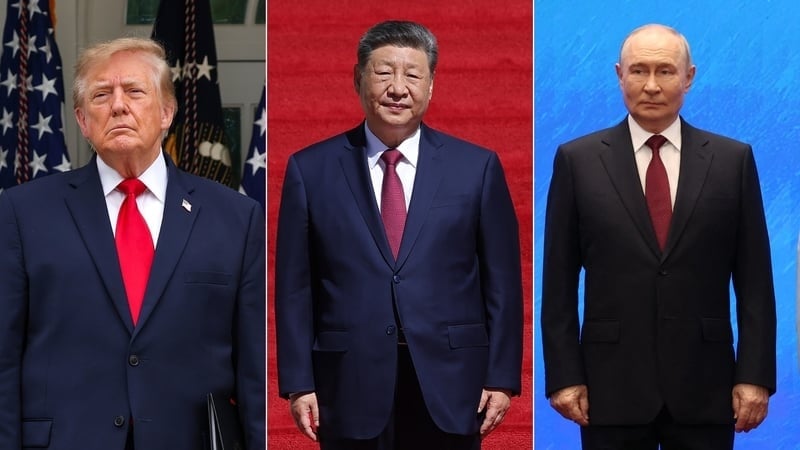


2026 © Helium Trades
Privacy Policy & Disclosure
* Disclaimer: Nothing on this website constitutes investment advice, performance data or any recommendation that any particular security, portfolio of securities, transaction or investment strategy is suitable for any specific person. Helium Trades is not responsible in any way for the accuracy
of any model predictions or price data. Any mention of a particular security and related prediction data is not a recommendation to buy or sell that security. Investments in securities involve the risk of loss. Past performance is no guarantee of future results. Helium Trades is not responsible for any of your investment decisions,
you should consult a financial expert before engaging in any transaction.
Helium Research Assistant

How can I help you today?
Ask any question about this page.