See whether Helium helps you make better-informed decisions. Try every Pro Trader feature for 30 days. No credit card required.
Try every Pro Trader feature for 30 days. No credit card required.
Coverage uses Russian framing, labeling Ukrainian actions as 'terror' or 'terrorist acts' while also including IAEA condemnation, Ukraine's response is not reported, resulting in a mixed but Moscow-aligned security orientation.
A report on a Ukrainian drone strike near Zaporizhzhia nuclear plant that killed a chief engineer and a driver, with statements from Rosatom, the Kremlin, and the IAEA, while Ukraine's response is not reported.
Automated analysis; not human reviewed.
Limitations: Case-specific; relies on quotes and official attributions; Ukrainian perspective underrepresented; placeholders ('The') in the text reduce clarity.
·
1 of 52 available dimensions scored; omitted dimensions are not treated as neutral.
·
Verified supporting quotes for 0 of 1 scored dimensions.
Claim: Neutral to slight pro-Russia framing; includes Russian-language labeling of Ukrainian actions as terrorist acts and 'terror' actions, alongside IAEA condemnation.
“encourages escalation of terrorist acts by the Ukrainian government,” · exact text match
“"terror" actions against the power station” · not found in supplied text
“"This is a crime of the Kyiv regime that Grossi must finally see — we demand a clear statement condemning this killing from the relevant international bodies, first and foremost the IAEA."” · not found in supplied text
Why: Quotations from Russian officials emphasize a Moscow-centered framing; IAEA condemnation and Ukraine non-commenting offer counterpoints, indicating mixed framing rather than a clear bias.
Ukraine comment missing; heavy reliance on Russian framing; lacks Ukrainian sources.
The report relies on official, state-linked sources and frames the incident as a violation of nuclear-safety principles, with limited counter-perspectives, indicating a mild establishment-leaning bias.
A report presenting statements from Zaporozhye NPP and Rosatom condemning violence and stressing nuclear-safety principles after the killing of a chief engineer, with a dateline from Melitopol.
Automated analysis; not human reviewed.
·
48 of 52 available dimensions scored; omitted dimensions are not treated as neutral.
·
Supporting quotes supplied for 0 of 48 scored dimensions; exact matching was not run.
Balanced, cautious; ~0.6 probability bias read is correct.
Coverage uses Russian framing, labeling Ukrainian actions as 'terror' or 'terrorist acts' while also including IAEA condemnation, Ukraine's response is not reported, resulting in a mixed but Moscow-aligned security orientation.
A report on a Ukrainian drone strike near Zaporizhzhia nuclear plant that killed a chief engineer and a driver, with statements from Rosatom, the Kremlin, and the IAEA, while Ukraine's response is not reported.
Automated analysis; not human reviewed.
Limitations: Case-specific; relies on quotes and official attributions; Ukrainian perspective underrepresented; placeholders ('The') in the text reduce clarity.
·
1 of 52 available dimensions scored; omitted dimensions are not treated as neutral.
·
Verified supporting quotes for 0 of 1 scored dimensions.
Claim: Neutral to slight pro-Russia framing; includes Russian-language labeling of Ukrainian actions as terrorist acts and 'terror' actions, alongside IAEA condemnation.
“encourages escalation of terrorist acts by the Ukrainian government,” · exact text match
“"terror" actions against the power station” · not found in supplied text
“"This is a crime of the Kyiv regime that Grossi must finally see — we demand a clear statement condemning this killing from the relevant international bodies, first and foremost the IAEA."” · not found in supplied text
Why: Quotations from Russian officials emphasize a Moscow-centered framing; IAEA condemnation and Ukraine non-commenting offer counterpoints, indicating mixed framing rather than a clear bias.
Ukraine comment missing; heavy reliance on Russian framing; lacks Ukrainian sources.
July 14, 2026 · 0 shares
Pro-establishment, hawkish framing that emphasizes U.S. strikes and official rhetoric while citing Iranian state media for counterpoints, resulting in a partisan-leaning portrayal of Iran and strong support for American actions.
A news report detailing U.S. airstrikes across Iran, including Bushehr, citing CENTCOM statements, Trump remarks, Iranian state media, and IAEA notes amid tensions over shipping in the Strait of Hormuz.
~0.6 confidence; data limited; bias uncertain.
Pro-establishment framing relies on regulator assurances of safety while advocating expanding nuclear capacity to counter coal-heavy energy, with limited critical discussion of nuclear risks or alternatives.
Regulatory assurances on Koeberg safety are presented alongside a narrative favoring expansion of nuclear capacity to replace coal-heavy energy.
Automated analysis; not human reviewed.
Limitations: One article; possible text noise; lacks broader context on nuclear safety debates or alternative energy analyses.
·
1 of 52 available dimensions scored; omitted dimensions are not treated as neutral.
·
Verified supporting quotes for 0 of 1 scored dimensions.
Claim: The article's framing relies on regulator statements and promotes expanding nuclear capacity, indicating pro-establishment bias.
“No radioactive material leaked into the environment during three recent “contamination” events inside Africa’s only nuclear power station.” · not found in supplied text
“The regulator said that while it was conducting further inspections the recent events “did not meet the criteria for classification as a nuclear or radiological incident or emergency and did not result in any off-site radiological consequences.”” · exact text match
“South Africa has plans to expend its commercial nuclear capability with new stations to support its unreliable and polluting energy supply, which is struggling to provide for a growing population and heavily based on burning coal.” · exact text match
Counterevidence:
“Other countries are also turning more towards nuclear power to meet skyrocketing energy demands despite long-held safety fears from opponents of nuclear power citing disasters like Chernobyl and, more recently, Fukushima in Japan.” · exact text match
Why: Regulator-driven framing and explicit policy push toward nuclear expansion indicate establishment-leaning bias; counterpoint mentions safety concerns.
Noise in text; possible pro-nuclear framing; limited context.
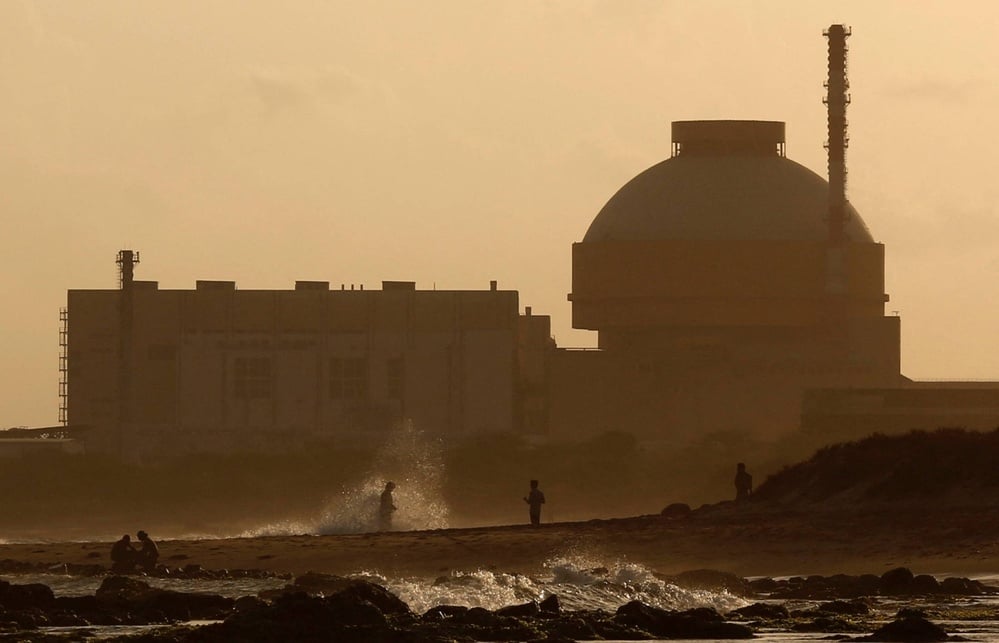
Report neutrally describes a data breach at Kudankulam Nuclear Power Plant, notes Modi's energy expansion plans, and mentions Reliance, while including standard newsroom subscription prompts.
Background: Kudankulam Nuclear Power Plant in Tamil Nadu, India's largest nuclear plant; ransomware data exposure by World Leaks; Reliance contractor; server hosted by Yotta; government informed.
Automated analysis; not human reviewed.
Limitations: Concise, case-specific limitations and plausible alternative interpretations.
·
52 of 52 available dimensions scored; omitted dimensions are not treated as neutral.
·
Verified supporting quotes for 6 of 52 scored dimensions.
Claim: No explicit ideological tilt toward liberal or conservative framing in the reporting.
“Files relating to India's largest nuclear power plant exposed in data breach.” · exact text match
“The Kudankulam Nuclear Power Plant, located in the southern state of Tamil Nadu, is the largest of India’s seven nuclear plants and central to Prime Minister Narendra Modi’s ambitious plans to expand the country’s atomic energy capacity.” · exact text match
Why: Neutral reporting with limited ideological framing; no clear liberal/conservative slant.
Claim: No explicit populist versus elitist framing; corporates are mentioned but not used to imply a class struggle.
“including purported blueprints of parts of its facilities and supplier details — information it labelled as coming from the Reliance Group.” · exact text match
Why: Corporate actor mention occurs without a populist/elitist framing.
Claim: Mild subjectivity evidenced by the description of Modi’s plans as 'ambitious'.
“central to Prime Minister Narendra Modi’s ambitious plans to expand the country’s atomic energy capacity.” · exact text match
Counterevidence:
“The Kudankulam Nuclear Power Plant, located in the southern state of Tamil Nadu, is the largest of India’s seven nuclear plants.” · not found in supplied text
Why: Use of 'ambitious' signals mild subjectivity amid otherwise factual framing.
Claim: Somesensational framing present in the description of the breach.
“Ransomware group World Leaks has posted on the dark web a huge cache of files related to India’s largest nuclear plant, including purported blueprints of parts of its facilities and supplier details” · exact text match
Counterevidence:
“Files relating to India's largest nuclear power plant exposed in data breach.” · exact text match
Why: Mention of a 'huge cache' and 'blueprints' adds mild sensational flavor but remains descriptive.
Claim: Topic carries moderate interest due to nuclear plant and data-breach context.
“Ransomware group World Leaks has posted on the dark web a huge cache of files related to India’s largest nuclear plant, including purported blueprints of parts of its facilities and supplier details” · exact text match
Counterevidence:
“Files relating to India's largest nuclear power plant exposed in data breach.” · exact text match
Why: Nuclear plant breach with blueprints is a potentially newsworthy angle, elevating interest.
Claim: Article demonstrates credible detail through named actors and specific entities.
“Ransomware group World Leaks” · exact text match
“Reliance Group” · exact text match
“Anil Ambani” · exact text match
Counterevidence:
“Sponsored contents planned and edited by JT Media Enterprise Division.” · exact text match
Why: Inclusion of named groups, contractors, and a hosting provider supports credibility.
Ambiguities in framing Modi's role and limited data; possible emphasis on editorial promos.
Objectively framed, multi-sourced coverage emphasizes risk warnings and official responses to a data breach at Kudankulam while acknowledging authenticity uncertainty and broader cybersecurity concerns in India, without sensationalizing nuclear details or assigning blame.
News report on data breach at India's Kudankulam Nuclear Power Plant, highlighting potential safety implications and ongoing investigations.
Automated analysis; not human reviewed.
·
51 of 52 available dimensions scored; omitted dimensions are not treated as neutral.
·
Supporting quotes supplied for 0 of 51 scored dimensions; exact matching was not run.
I bias toward cautious, evidence-based framing; accuracy ~0.65.
Bias is generally pro-establishment coverage of China's nuclear expansion, emphasizing milestones, investment, and strategic importance while offering few critical counterpoints.
Changjiang Unit 3 reached first criticality, marking a commissioning milestone in China’s rapid nuclear expansion, with Unit 4 and Linglong One SMR developments at the Changjiang site in Hainan.
Automated analysis; not human reviewed.
·
51 of 52 available dimensions scored; omitted dimensions are not treated as neutral.
·
Supporting quotes supplied for 0 of 51 scored dimensions; exact matching was not run.
My bias favors factuality; confidence ~0.
6.
Promotes NuCycle and domestic energy security with milestone framing, relies on corporate and regulatory authorities, and offers limited critical counterpoints, yielding a pro-technology, pro-establishment bias.
Washington, D.C.-based Curio announces progress toward a commercial NuCycle nuclear fuel recycling facility, with Sargent & Lundy designing the plant; aims for NRC licensing and domestic fuel-cycle closure to improve energy security, supported by federal grants and industry partnerships.
Moderate bias toward tech framing; confidence ~0.6
July 17, 2026 · 0 shares
Neutral, fact-focused coverage of regulatory delays surrounding JNFL's spent-fuel reprocessing plant, with a sponsor-content disclosure that could signal establishment-context framing.
Reports a potential 28th delay for JNFL's spent-fuel reprocessing plant in Rokkasho due to regulator demands to add a waste-disposal process, across a backdrop of decades-long delays in Japan's nuclear program.
Automated analysis; not human reviewed.
Limitations: Based on excerpted text; lack of full article context; sponsor-content disclosure may influence framing; quotes may reflect headlines rather than full content.
·
1 of 52 available dimensions scored; omitted dimensions are not treated as neutral.
·
Verified supporting quotes for 1 of 1 scored dimensions.
Claim: No ideological tilt detected; coverage centers on project delays and regulatory actions as news items.
“TOKYO -- Japan Nuclear Fuel Ltd. (JNFL) may be forced to postpone completion of its reprocessing facility for spent nuclear fuel yet again as regulators push it to add another process to dispose of existing waste.” · exact text match
“Liquid waste processing prior to startup could push completion beyond fiscal 2026” · exact text match
“Work on Japan Nuclear Fuel Ltd.'s spent-fuel reprocessing plant in Rokkasho has dragged on for more than three decades.
(Photo by Masatoshi Ida)”
· exact text match
Counterevidence:
“Spent fuel emerges as weak point in Japan's nuclear renaissance” · exact text match
Why: Neutral fact-based framing supported by multiple factual sentences; one negative headline about nuclear renaissance is not sufficient to indicate ideological tilt.
July 14, 2026 · 0 shares
Coverage is largely objective and cautious, highlighting lab-scale results with quantitative gains while noting real-world testing remains to be seen, and includes a mild donation appeal without partisan framing.
Lab-scale study demonstrating a chromium-based MOF-coated packing to improve detritiation in distillation, with scalability caveats.
Cautiously neutral; data-driven.
Confidence ~0.65
Coverage uses Russian framing, labeling Ukrainian actions as 'terror' or 'terrorist acts' while also including IAEA condemnation, Ukraine's response is not reported, resulting in a mixed but Moscow-aligned security orientation.
A report on a Ukrainian drone strike near Zaporizhzhia nuclear plant that killed a chief engineer and a driver, with statements from Rosatom, the Kremlin, and the IAEA, while Ukraine's response is not reported.
Automated analysis; not human reviewed. Limitations: Case-specific; relies on quotes and official attributions; Ukrainian perspective underrepresented; placeholders ('The') in the text reduce clarity. · 1 of 52 available dimensions scored; omitted dimensions are not treated as neutral. · Verified supporting quotes for 0 of 1 scored dimensions.
Claim: Neutral to slight pro-Russia framing; includes Russian-language labeling of Ukrainian actions as terrorist acts and 'terror' actions, alongside IAEA condemnation.
“encourages escalation of terrorist acts by the Ukrainian government,” · exact text match
“"terror" actions against the power station” · not found in supplied text
“"This is a crime of the Kyiv regime that Grossi must finally see — we demand a clear statement condemning this killing from the relevant international bodies, first and foremost the IAEA."” · not found in supplied text
Why: Quotations from Russian officials emphasize a Moscow-centered framing; IAEA condemnation and Ukraine non-commenting offer counterpoints, indicating mixed framing rather than a clear bias.
Ukraine comment missing; heavy reliance on Russian framing; lacks Ukrainian sources.
The report relies on official, state-linked sources and frames the incident as a violation of nuclear-safety principles, with limited counter-perspectives, indicating a mild establishment-leaning bias.
A report presenting statements from Zaporozhye NPP and Rosatom condemning violence and stressing nuclear-safety principles after the killing of a chief engineer, with a dateline from Melitopol.
Automated analysis; not human reviewed. · 48 of 52 available dimensions scored; omitted dimensions are not treated as neutral. · Supporting quotes supplied for 0 of 48 scored dimensions; exact matching was not run.
Balanced, cautious; ~0.6 probability bias read is correct.
Objectively framed, multi-sourced coverage emphasizes risk warnings and official responses to a data breach at Kudankulam while acknowledging authenticity uncertainty and broader cybersecurity concerns in India, without sensationalizing nuclear details or assigning blame.
News report on data breach at India's Kudankulam Nuclear Power Plant, highlighting potential safety implications and ongoing investigations.
Automated analysis; not human reviewed. · 51 of 52 available dimensions scored; omitted dimensions are not treated as neutral. · Supporting quotes supplied for 0 of 51 scored dimensions; exact matching was not run.
I bias toward cautious, evidence-based framing; accuracy ~0.65.
Report neutrally describes a data breach at Kudankulam Nuclear Power Plant, notes Modi's energy expansion plans, and mentions Reliance, while including standard newsroom subscription prompts.
Background: Kudankulam Nuclear Power Plant in Tamil Nadu, India's largest nuclear plant; ransomware data exposure by World Leaks; Reliance contractor; server hosted by Yotta; government informed.
Automated analysis; not human reviewed. Limitations: Concise, case-specific limitations and plausible alternative interpretations. · 52 of 52 available dimensions scored; omitted dimensions are not treated as neutral. · Verified supporting quotes for 6 of 52 scored dimensions.
Claim: No explicit ideological tilt toward liberal or conservative framing in the reporting.
“Files relating to India's largest nuclear power plant exposed in data breach.” · exact text match
“The Kudankulam Nuclear Power Plant, located in the southern state of Tamil Nadu, is the largest of India’s seven nuclear plants and central to Prime Minister Narendra Modi’s ambitious plans to expand the country’s atomic energy capacity.” · exact text match
Why: Neutral reporting with limited ideological framing; no clear liberal/conservative slant.
Claim: No explicit populist versus elitist framing; corporates are mentioned but not used to imply a class struggle.
“including purported blueprints of parts of its facilities and supplier details — information it labelled as coming from the Reliance Group.” · exact text match
Why: Corporate actor mention occurs without a populist/elitist framing.
Claim: Mild subjectivity evidenced by the description of Modi’s plans as 'ambitious'.
“central to Prime Minister Narendra Modi’s ambitious plans to expand the country’s atomic energy capacity.” · exact text match
Counterevidence:
“The Kudankulam Nuclear Power Plant, located in the southern state of Tamil Nadu, is the largest of India’s seven nuclear plants.” · not found in supplied text
Why: Use of 'ambitious' signals mild subjectivity amid otherwise factual framing.
Claim: Somesensational framing present in the description of the breach.
“Ransomware group World Leaks has posted on the dark web a huge cache of files related to India’s largest nuclear plant, including purported blueprints of parts of its facilities and supplier details” · exact text match
Counterevidence:
“Files relating to India's largest nuclear power plant exposed in data breach.” · exact text match
Why: Mention of a 'huge cache' and 'blueprints' adds mild sensational flavor but remains descriptive.
Claim: Topic carries moderate interest due to nuclear plant and data-breach context.
“Ransomware group World Leaks has posted on the dark web a huge cache of files related to India’s largest nuclear plant, including purported blueprints of parts of its facilities and supplier details” · exact text match
Counterevidence:
“Files relating to India's largest nuclear power plant exposed in data breach.” · exact text match
Why: Nuclear plant breach with blueprints is a potentially newsworthy angle, elevating interest.
Claim: Article demonstrates credible detail through named actors and specific entities.
“Ransomware group World Leaks” · exact text match
“Reliance Group” · exact text match
“Anil Ambani” · exact text match
Counterevidence:
“Sponsored contents planned and edited by JT Media Enterprise Division.” · exact text match
Why: Inclusion of named groups, contractors, and a hosting provider supports credibility.
Ambiguities in framing Modi's role and limited data; possible emphasis on editorial promos.
Regulatory/technical safety lens
Coverage uses Russian framing, labeling Ukrainian actions as 'terror' or 'terrorist acts' while also including IAEA condemnation, Ukraine's response is not reported, resulting in a mixed but Moscow-aligned security orientation.
A report on a Ukrainian drone strike near Zaporizhzhia nuclear plant that killed a chief engineer and a driver, with statements from Rosatom, the Kremlin, and the IAEA, while Ukraine's response is not reported.
Automated analysis; not human reviewed. Limitations: Case-specific; relies on quotes and official attributions; Ukrainian perspective underrepresented; placeholders ('The') in the text reduce clarity. · 1 of 52 available dimensions scored; omitted dimensions are not treated as neutral. · Verified supporting quotes for 0 of 1 scored dimensions.
Claim: Neutral to slight pro-Russia framing; includes Russian-language labeling of Ukrainian actions as terrorist acts and 'terror' actions, alongside IAEA condemnation.
“encourages escalation of terrorist acts by the Ukrainian government,” · exact text match
“"terror" actions against the power station” · not found in supplied text
“"This is a crime of the Kyiv regime that Grossi must finally see — we demand a clear statement condemning this killing from the relevant international bodies, first and foremost the IAEA."” · not found in supplied text
Why: Quotations from Russian officials emphasize a Moscow-centered framing; IAEA condemnation and Ukraine non-commenting offer counterpoints, indicating mixed framing rather than a clear bias.
Ukraine comment missing; heavy reliance on Russian framing; lacks Ukrainian sources.
Pro-establishment framing relies on regulator assurances of safety while advocating expanding nuclear capacity to counter coal-heavy energy, with limited critical discussion of nuclear risks or alternatives.
Regulatory assurances on Koeberg safety are presented alongside a narrative favoring expansion of nuclear capacity to replace coal-heavy energy.
Automated analysis; not human reviewed. Limitations: One article; possible text noise; lacks broader context on nuclear safety debates or alternative energy analyses. · 1 of 52 available dimensions scored; omitted dimensions are not treated as neutral. · Verified supporting quotes for 0 of 1 scored dimensions.
Claim: The article's framing relies on regulator statements and promotes expanding nuclear capacity, indicating pro-establishment bias.
“No radioactive material leaked into the environment during three recent “contamination” events inside Africa’s only nuclear power station.” · not found in supplied text
“The regulator said that while it was conducting further inspections the recent events “did not meet the criteria for classification as a nuclear or radiological incident or emergency and did not result in any off-site radiological consequences.”” · exact text match
“South Africa has plans to expend its commercial nuclear capability with new stations to support its unreliable and polluting energy supply, which is struggling to provide for a growing population and heavily based on burning coal.” · exact text match
Counterevidence:
“Other countries are also turning more towards nuclear power to meet skyrocketing energy demands despite long-held safety fears from opponents of nuclear power citing disasters like Chernobyl and, more recently, Fukushima in Japan.” · exact text match
Why: Regulator-driven framing and explicit policy push toward nuclear expansion indicate establishment-leaning bias; counterpoint mentions safety concerns.
Noise in text; possible pro-nuclear framing; limited context.
July 17, 2026 · 0 shares
Neutral, fact-focused coverage of regulatory delays surrounding JNFL's spent-fuel reprocessing plant, with a sponsor-content disclosure that could signal establishment-context framing.
Reports a potential 28th delay for JNFL's spent-fuel reprocessing plant in Rokkasho due to regulator demands to add a waste-disposal process, across a backdrop of decades-long delays in Japan's nuclear program.
Automated analysis; not human reviewed. Limitations: Based on excerpted text; lack of full article context; sponsor-content disclosure may influence framing; quotes may reflect headlines rather than full content. · 1 of 52 available dimensions scored; omitted dimensions are not treated as neutral. · Verified supporting quotes for 1 of 1 scored dimensions.
Claim: No ideological tilt detected; coverage centers on project delays and regulatory actions as news items.
“TOKYO -- Japan Nuclear Fuel Ltd. (JNFL) may be forced to postpone completion of its reprocessing facility for spent nuclear fuel yet again as regulators push it to add another process to dispose of existing waste.” · exact text match
“Liquid waste processing prior to startup could push completion beyond fiscal 2026” · exact text match
“Work on Japan Nuclear Fuel Ltd.'s spent-fuel reprocessing plant in Rokkasho has dragged on for more than three decades. (Photo by Masatoshi Ida)” · exact text match
Counterevidence:
“Spent fuel emerges as weak point in Japan's nuclear renaissance” · exact text match
Why: Neutral fact-based framing supported by multiple factual sentences; one negative headline about nuclear renaissance is not sufficient to indicate ideological tilt.
July 14, 2026 · 0 shares
Coverage is largely objective and cautious, highlighting lab-scale results with quantitative gains while noting real-world testing remains to be seen, and includes a mild donation appeal without partisan framing.
Lab-scale study demonstrating a chromium-based MOF-coated packing to improve detritiation in distillation, with scalability caveats.
Cautiously neutral; data-driven. Confidence ~0.65
Promotes NuCycle and domestic energy security with milestone framing, relies on corporate and regulatory authorities, and offers limited critical counterpoints, yielding a pro-technology, pro-establishment bias.
Washington, D.C.-based Curio announces progress toward a commercial NuCycle nuclear fuel recycling facility, with Sargent & Lundy designing the plant; aims for NRC licensing and domestic fuel-cycle closure to improve energy security, supported by federal grants and industry partnerships.
Moderate bias toward tech framing; confidence ~0.6
Coverage uses Russian framing, labeling Ukrainian actions as 'terror' or 'terrorist acts' while also including IAEA condemnation, Ukraine's response is not reported, resulting in a mixed but Moscow-aligned security orientation.
A report on a Ukrainian drone strike near Zaporizhzhia nuclear plant that killed a chief engineer and a driver, with statements from Rosatom, the Kremlin, and the IAEA, while Ukraine's response is not reported.
Automated analysis; not human reviewed. Limitations: Case-specific; relies on quotes and official attributions; Ukrainian perspective underrepresented; placeholders ('The') in the text reduce clarity. · 1 of 52 available dimensions scored; omitted dimensions are not treated as neutral. · Verified supporting quotes for 0 of 1 scored dimensions.
Claim: Neutral to slight pro-Russia framing; includes Russian-language labeling of Ukrainian actions as terrorist acts and 'terror' actions, alongside IAEA condemnation.
“encourages escalation of terrorist acts by the Ukrainian government,” · exact text match
“"terror" actions against the power station” · not found in supplied text
“"This is a crime of the Kyiv regime that Grossi must finally see — we demand a clear statement condemning this killing from the relevant international bodies, first and foremost the IAEA."” · not found in supplied text
Why: Quotations from Russian officials emphasize a Moscow-centered framing; IAEA condemnation and Ukraine non-commenting offer counterpoints, indicating mixed framing rather than a clear bias.
Ukraine comment missing; heavy reliance on Russian framing; lacks Ukrainian sources.
Pro-establishment framing relies on regulator assurances of safety while advocating expanding nuclear capacity to counter coal-heavy energy, with limited critical discussion of nuclear risks or alternatives.
Regulatory assurances on Koeberg safety are presented alongside a narrative favoring expansion of nuclear capacity to replace coal-heavy energy.
Automated analysis; not human reviewed. Limitations: One article; possible text noise; lacks broader context on nuclear safety debates or alternative energy analyses. · 1 of 52 available dimensions scored; omitted dimensions are not treated as neutral. · Verified supporting quotes for 0 of 1 scored dimensions.
Claim: The article's framing relies on regulator statements and promotes expanding nuclear capacity, indicating pro-establishment bias.
“No radioactive material leaked into the environment during three recent “contamination” events inside Africa’s only nuclear power station.” · not found in supplied text
“The regulator said that while it was conducting further inspections the recent events “did not meet the criteria for classification as a nuclear or radiological incident or emergency and did not result in any off-site radiological consequences.”” · exact text match
“South Africa has plans to expend its commercial nuclear capability with new stations to support its unreliable and polluting energy supply, which is struggling to provide for a growing population and heavily based on burning coal.” · exact text match
Counterevidence:
“Other countries are also turning more towards nuclear power to meet skyrocketing energy demands despite long-held safety fears from opponents of nuclear power citing disasters like Chernobyl and, more recently, Fukushima in Japan.” · exact text match
Why: Regulator-driven framing and explicit policy push toward nuclear expansion indicate establishment-leaning bias; counterpoint mentions safety concerns.
Noise in text; possible pro-nuclear framing; limited context.
Conflict & security vulnerability lens
The report relies on official, state-linked sources and frames the incident as a violation of nuclear-safety principles, with limited counter-perspectives, indicating a mild establishment-leaning bias.
A report presenting statements from Zaporozhye NPP and Rosatom condemning violence and stressing nuclear-safety principles after the killing of a chief engineer, with a dateline from Melitopol.
Automated analysis; not human reviewed. · 48 of 52 available dimensions scored; omitted dimensions are not treated as neutral. · Supporting quotes supplied for 0 of 48 scored dimensions; exact matching was not run.
Balanced, cautious; ~0.6 probability bias read is correct.
Coverage uses Russian framing, labeling Ukrainian actions as 'terror' or 'terrorist acts' while also including IAEA condemnation, Ukraine's response is not reported, resulting in a mixed but Moscow-aligned security orientation.
A report on a Ukrainian drone strike near Zaporizhzhia nuclear plant that killed a chief engineer and a driver, with statements from Rosatom, the Kremlin, and the IAEA, while Ukraine's response is not reported.
Automated analysis; not human reviewed. Limitations: Case-specific; relies on quotes and official attributions; Ukrainian perspective underrepresented; placeholders ('The') in the text reduce clarity. · 1 of 52 available dimensions scored; omitted dimensions are not treated as neutral. · Verified supporting quotes for 0 of 1 scored dimensions.
Claim: Neutral to slight pro-Russia framing; includes Russian-language labeling of Ukrainian actions as terrorist acts and 'terror' actions, alongside IAEA condemnation.
“encourages escalation of terrorist acts by the Ukrainian government,” · exact text match
“"terror" actions against the power station” · not found in supplied text
“"This is a crime of the Kyiv regime that Grossi must finally see — we demand a clear statement condemning this killing from the relevant international bodies, first and foremost the IAEA."” · not found in supplied text
Why: Quotations from Russian officials emphasize a Moscow-centered framing; IAEA condemnation and Ukraine non-commenting offer counterpoints, indicating mixed framing rather than a clear bias.
Ukraine comment missing; heavy reliance on Russian framing; lacks Ukrainian sources.
July 14, 2026 · 0 shares
Pro-establishment, hawkish framing that emphasizes U.S. strikes and official rhetoric while citing Iranian state media for counterpoints, resulting in a partisan-leaning portrayal of Iran and strong support for American actions.
A news report detailing U.S. airstrikes across Iran, including Bushehr, citing CENTCOM statements, Trump remarks, Iranian state media, and IAEA notes amid tensions over shipping in the Strait of Hormuz.
~0.6 confidence; data limited; bias uncertain.
Objectively framed, multi-sourced coverage emphasizes risk warnings and official responses to a data breach at Kudankulam while acknowledging authenticity uncertainty and broader cybersecurity concerns in India, without sensationalizing nuclear details or assigning blame.
News report on data breach at India's Kudankulam Nuclear Power Plant, highlighting potential safety implications and ongoing investigations.
Automated analysis; not human reviewed. · 51 of 52 available dimensions scored; omitted dimensions are not treated as neutral. · Supporting quotes supplied for 0 of 51 scored dimensions; exact matching was not run.
I bias toward cautious, evidence-based framing; accuracy ~0.65.
Coverage uses Russian framing, labeling Ukrainian actions as 'terror' or 'terrorist acts' while also including IAEA condemnation, Ukraine's response is not reported, resulting in a mixed but Moscow-aligned security orientation.
A report on a Ukrainian drone strike near Zaporizhzhia nuclear plant that killed a chief engineer and a driver, with statements from Rosatom, the Kremlin, and the IAEA, while Ukraine's response is not reported.
Automated analysis; not human reviewed. Limitations: Case-specific; relies on quotes and official attributions; Ukrainian perspective underrepresented; placeholders ('The') in the text reduce clarity. · 1 of 52 available dimensions scored; omitted dimensions are not treated as neutral. · Verified supporting quotes for 0 of 1 scored dimensions.
Claim: Neutral to slight pro-Russia framing; includes Russian-language labeling of Ukrainian actions as terrorist acts and 'terror' actions, alongside IAEA condemnation.
“encourages escalation of terrorist acts by the Ukrainian government,” · exact text match
“"terror" actions against the power station” · not found in supplied text
“"This is a crime of the Kyiv regime that Grossi must finally see — we demand a clear statement condemning this killing from the relevant international bodies, first and foremost the IAEA."” · not found in supplied text
Why: Quotations from Russian officials emphasize a Moscow-centered framing; IAEA condemnation and Ukraine non-commenting offer counterpoints, indicating mixed framing rather than a clear bias.
Ukraine comment missing; heavy reliance on Russian framing; lacks Ukrainian sources.
Objectively framed, multi-sourced coverage emphasizes risk warnings and official responses to a data breach at Kudankulam while acknowledging authenticity uncertainty and broader cybersecurity concerns in India, without sensationalizing nuclear details or assigning blame.
News report on data breach at India's Kudankulam Nuclear Power Plant, highlighting potential safety implications and ongoing investigations.
Automated analysis; not human reviewed. · 51 of 52 available dimensions scored; omitted dimensions are not treated as neutral. · Supporting quotes supplied for 0 of 51 scored dimensions; exact matching was not run.
I bias toward cautious, evidence-based framing; accuracy ~0.65.
Industrial/technology advancement lens
Bias is generally pro-establishment coverage of China's nuclear expansion, emphasizing milestones, investment, and strategic importance while offering few critical counterpoints.
Changjiang Unit 3 reached first criticality, marking a commissioning milestone in China’s rapid nuclear expansion, with Unit 4 and Linglong One SMR developments at the Changjiang site in Hainan.
Automated analysis; not human reviewed. · 51 of 52 available dimensions scored; omitted dimensions are not treated as neutral. · Supporting quotes supplied for 0 of 51 scored dimensions; exact matching was not run.
My bias favors factuality; confidence ~0.6.
Promotes NuCycle and domestic energy security with milestone framing, relies on corporate and regulatory authorities, and offers limited critical counterpoints, yielding a pro-technology, pro-establishment bias.
Washington, D.C.-based Curio announces progress toward a commercial NuCycle nuclear fuel recycling facility, with Sargent & Lundy designing the plant; aims for NRC licensing and domestic fuel-cycle closure to improve energy security, supported by federal grants and industry partnerships.
Moderate bias toward tech framing; confidence ~0.6
Pro-establishment framing relies on regulator assurances of safety while advocating expanding nuclear capacity to counter coal-heavy energy, with limited critical discussion of nuclear risks or alternatives.
Regulatory assurances on Koeberg safety are presented alongside a narrative favoring expansion of nuclear capacity to replace coal-heavy energy.
Automated analysis; not human reviewed. Limitations: One article; possible text noise; lacks broader context on nuclear safety debates or alternative energy analyses. · 1 of 52 available dimensions scored; omitted dimensions are not treated as neutral. · Verified supporting quotes for 0 of 1 scored dimensions.
Claim: The article's framing relies on regulator statements and promotes expanding nuclear capacity, indicating pro-establishment bias.
“No radioactive material leaked into the environment during three recent “contamination” events inside Africa’s only nuclear power station.” · not found in supplied text
“The regulator said that while it was conducting further inspections the recent events “did not meet the criteria for classification as a nuclear or radiological incident or emergency and did not result in any off-site radiological consequences.”” · exact text match
“South Africa has plans to expend its commercial nuclear capability with new stations to support its unreliable and polluting energy supply, which is struggling to provide for a growing population and heavily based on burning coal.” · exact text match
Counterevidence:
“Other countries are also turning more towards nuclear power to meet skyrocketing energy demands despite long-held safety fears from opponents of nuclear power citing disasters like Chernobyl and, more recently, Fukushima in Japan.” · exact text match
Why: Regulator-driven framing and explicit policy push toward nuclear expansion indicate establishment-leaning bias; counterpoint mentions safety concerns.
Noise in text; possible pro-nuclear framing; limited context.
Promotes NuCycle and domestic energy security with milestone framing, relies on corporate and regulatory authorities, and offers limited critical counterpoints, yielding a pro-technology, pro-establishment bias.
Washington, D.C.-based Curio announces progress toward a commercial NuCycle nuclear fuel recycling facility, with Sargent & Lundy designing the plant; aims for NRC licensing and domestic fuel-cycle closure to improve energy security, supported by federal grants and industry partnerships.
Moderate bias toward tech framing; confidence ~0.6
Bias is generally pro-establishment coverage of China's nuclear expansion, emphasizing milestones, investment, and strategic importance while offering few critical counterpoints.
Changjiang Unit 3 reached first criticality, marking a commissioning milestone in China’s rapid nuclear expansion, with Unit 4 and Linglong One SMR developments at the Changjiang site in Hainan.
Automated analysis; not human reviewed. · 51 of 52 available dimensions scored; omitted dimensions are not treated as neutral. · Supporting quotes supplied for 0 of 51 scored dimensions; exact matching was not run.
My bias favors factuality; confidence ~0.6.
Helium Bias
July 14, 2026 · 0 shares
Pro-establishment, hawkish framing that emphasizes U.S. strikes and official rhetoric while citing Iranian state media for counterpoints, resulting in a partisan-leaning portrayal of Iran and strong support for American actions.
A news report detailing U.S. airstrikes across Iran, including Bushehr, citing CENTCOM statements, Trump remarks, Iranian state media, and IAEA notes amid tensions over shipping in the Strait of Hormuz.
~0.6 confidence; data limited; bias uncertain.
Coverage uses Russian framing, labeling Ukrainian actions as 'terror' or 'terrorist acts' while also including IAEA condemnation, Ukraine's response is not reported, resulting in a mixed but Moscow-aligned security orientation.
A report on a Ukrainian drone strike near Zaporizhzhia nuclear plant that killed a chief engineer and a driver, with statements from Rosatom, the Kremlin, and the IAEA, while Ukraine's response is not reported.
Automated analysis; not human reviewed. Limitations: Case-specific; relies on quotes and official attributions; Ukrainian perspective underrepresented; placeholders ('The') in the text reduce clarity. · 1 of 52 available dimensions scored; omitted dimensions are not treated as neutral. · Verified supporting quotes for 0 of 1 scored dimensions.
Claim: Neutral to slight pro-Russia framing; includes Russian-language labeling of Ukrainian actions as terrorist acts and 'terror' actions, alongside IAEA condemnation.
“encourages escalation of terrorist acts by the Ukrainian government,” · exact text match
“"terror" actions against the power station” · not found in supplied text
“"This is a crime of the Kyiv regime that Grossi must finally see — we demand a clear statement condemning this killing from the relevant international bodies, first and foremost the IAEA."” · not found in supplied text
Why: Quotations from Russian officials emphasize a Moscow-centered framing; IAEA condemnation and Ukraine non-commenting offer counterpoints, indicating mixed framing rather than a clear bias.
Ukraine comment missing; heavy reliance on Russian framing; lacks Ukrainian sources.
Objectively framed, multi-sourced coverage emphasizes risk warnings and official responses to a data breach at Kudankulam while acknowledging authenticity uncertainty and broader cybersecurity concerns in India, without sensationalizing nuclear details or assigning blame.
News report on data breach at India's Kudankulam Nuclear Power Plant, highlighting potential safety implications and ongoing investigations.
Automated analysis; not human reviewed. · 51 of 52 available dimensions scored; omitted dimensions are not treated as neutral. · Supporting quotes supplied for 0 of 51 scored dimensions; exact matching was not run.
I bias toward cautious, evidence-based framing; accuracy ~0.65.
Story Blindspots
Report neutrally describes a data breach at Kudankulam Nuclear Power Plant, notes Modi's energy expansion plans, and mentions Reliance, while including standard newsroom subscription prompts.
Background: Kudankulam Nuclear Power Plant in Tamil Nadu, India's largest nuclear plant; ransomware data exposure by World Leaks; Reliance contractor; server hosted by Yotta; government informed.
Automated analysis; not human reviewed. Limitations: Concise, case-specific limitations and plausible alternative interpretations. · 52 of 52 available dimensions scored; omitted dimensions are not treated as neutral. · Verified supporting quotes for 6 of 52 scored dimensions.
Claim: No explicit ideological tilt toward liberal or conservative framing in the reporting.
“Files relating to India's largest nuclear power plant exposed in data breach.” · exact text match
“The Kudankulam Nuclear Power Plant, located in the southern state of Tamil Nadu, is the largest of India’s seven nuclear plants and central to Prime Minister Narendra Modi’s ambitious plans to expand the country’s atomic energy capacity.” · exact text match
Why: Neutral reporting with limited ideological framing; no clear liberal/conservative slant.
Claim: No explicit populist versus elitist framing; corporates are mentioned but not used to imply a class struggle.
“including purported blueprints of parts of its facilities and supplier details — information it labelled as coming from the Reliance Group.” · exact text match
Why: Corporate actor mention occurs without a populist/elitist framing.
Claim: Mild subjectivity evidenced by the description of Modi’s plans as 'ambitious'.
“central to Prime Minister Narendra Modi’s ambitious plans to expand the country’s atomic energy capacity.” · exact text match
Counterevidence:
“The Kudankulam Nuclear Power Plant, located in the southern state of Tamil Nadu, is the largest of India’s seven nuclear plants.” · not found in supplied text
Why: Use of 'ambitious' signals mild subjectivity amid otherwise factual framing.
Claim: Somesensational framing present in the description of the breach.
“Ransomware group World Leaks has posted on the dark web a huge cache of files related to India’s largest nuclear plant, including purported blueprints of parts of its facilities and supplier details” · exact text match
Counterevidence:
“Files relating to India's largest nuclear power plant exposed in data breach.” · exact text match
Why: Mention of a 'huge cache' and 'blueprints' adds mild sensational flavor but remains descriptive.
Claim: Topic carries moderate interest due to nuclear plant and data-breach context.
“Ransomware group World Leaks has posted on the dark web a huge cache of files related to India’s largest nuclear plant, including purported blueprints of parts of its facilities and supplier details” · exact text match
Counterevidence:
“Files relating to India's largest nuclear power plant exposed in data breach.” · exact text match
Why: Nuclear plant breach with blueprints is a potentially newsworthy angle, elevating interest.
Claim: Article demonstrates credible detail through named actors and specific entities.
“Ransomware group World Leaks” · exact text match
“Reliance Group” · exact text match
“Anil Ambani” · exact text match
Counterevidence:
“Sponsored contents planned and edited by JT Media Enterprise Division.” · exact text match
Why: Inclusion of named groups, contractors, and a hosting provider supports credibility.
Ambiguities in framing Modi's role and limited data; possible emphasis on editorial promos.
Coverage uses Russian framing, labeling Ukrainian actions as 'terror' or 'terrorist acts' while also including IAEA condemnation, Ukraine's response is not reported, resulting in a mixed but Moscow-aligned security orientation.
A report on a Ukrainian drone strike near Zaporizhzhia nuclear plant that killed a chief engineer and a driver, with statements from Rosatom, the Kremlin, and the IAEA, while Ukraine's response is not reported.
Automated analysis; not human reviewed. Limitations: Case-specific; relies on quotes and official attributions; Ukrainian perspective underrepresented; placeholders ('The') in the text reduce clarity. · 1 of 52 available dimensions scored; omitted dimensions are not treated as neutral. · Verified supporting quotes for 0 of 1 scored dimensions.
Claim: Neutral to slight pro-Russia framing; includes Russian-language labeling of Ukrainian actions as terrorist acts and 'terror' actions, alongside IAEA condemnation.
“encourages escalation of terrorist acts by the Ukrainian government,” · exact text match
“"terror" actions against the power station” · not found in supplied text
“"This is a crime of the Kyiv regime that Grossi must finally see — we demand a clear statement condemning this killing from the relevant international bodies, first and foremost the IAEA."” · not found in supplied text
Why: Quotations from Russian officials emphasize a Moscow-centered framing; IAEA condemnation and Ukraine non-commenting offer counterpoints, indicating mixed framing rather than a clear bias.
Ukraine comment missing; heavy reliance on Russian framing; lacks Ukrainian sources.
July 14, 2026 · 0 shares
Pro-establishment, hawkish framing that emphasizes U.S. strikes and official rhetoric while citing Iranian state media for counterpoints, resulting in a partisan-leaning portrayal of Iran and strong support for American actions.
A news report detailing U.S. airstrikes across Iran, including Bushehr, citing CENTCOM statements, Trump remarks, Iranian state media, and IAEA notes amid tensions over shipping in the Strait of Hormuz.
~0.6 confidence; data limited; bias uncertain.
Objectively framed, multi-sourced coverage emphasizes risk warnings and official responses to a data breach at Kudankulam while acknowledging authenticity uncertainty and broader cybersecurity concerns in India, without sensationalizing nuclear details or assigning blame.
News report on data breach at India's Kudankulam Nuclear Power Plant, highlighting potential safety implications and ongoing investigations.
Automated analysis; not human reviewed. · 51 of 52 available dimensions scored; omitted dimensions are not treated as neutral. · Supporting quotes supplied for 0 of 51 scored dimensions; exact matching was not run.
I bias toward cautious, evidence-based framing; accuracy ~0.65.
Objectively framed, multi-sourced coverage emphasizes risk warnings and official responses to a data breach at Kudankulam while acknowledging authenticity uncertainty and broader cybersecurity concerns in India, without sensationalizing nuclear details or assigning blame.
News report on data breach at India's Kudankulam Nuclear Power Plant, highlighting potential safety implications and ongoing investigations.
Automated analysis; not human reviewed. · 51 of 52 available dimensions scored; omitted dimensions are not treated as neutral. · Supporting quotes supplied for 0 of 51 scored dimensions; exact matching was not run.
I bias toward cautious, evidence-based framing; accuracy ~0.65.
Pro-establishment framing relies on regulator assurances of safety while advocating expanding nuclear capacity to counter coal-heavy energy, with limited critical discussion of nuclear risks or alternatives.
Regulatory assurances on Koeberg safety are presented alongside a narrative favoring expansion of nuclear capacity to replace coal-heavy energy.
Automated analysis; not human reviewed. Limitations: One article; possible text noise; lacks broader context on nuclear safety debates or alternative energy analyses. · 1 of 52 available dimensions scored; omitted dimensions are not treated as neutral. · Verified supporting quotes for 0 of 1 scored dimensions.
Claim: The article's framing relies on regulator statements and promotes expanding nuclear capacity, indicating pro-establishment bias.
“No radioactive material leaked into the environment during three recent “contamination” events inside Africa’s only nuclear power station.” · not found in supplied text
“The regulator said that while it was conducting further inspections the recent events “did not meet the criteria for classification as a nuclear or radiological incident or emergency and did not result in any off-site radiological consequences.”” · exact text match
“South Africa has plans to expend its commercial nuclear capability with new stations to support its unreliable and polluting energy supply, which is struggling to provide for a growing population and heavily based on burning coal.” · exact text match
Counterevidence:
“Other countries are also turning more towards nuclear power to meet skyrocketing energy demands despite long-held safety fears from opponents of nuclear power citing disasters like Chernobyl and, more recently, Fukushima in Japan.” · exact text match
Why: Regulator-driven framing and explicit policy push toward nuclear expansion indicate establishment-leaning bias; counterpoint mentions safety concerns.
Noise in text; possible pro-nuclear framing; limited context.
July 18, 2026 · 0 shares
Framing centers on India's Tarapur refurbishment as part of a nationalist, energy-sovereignty push toward global status, while incorporating independent technical and geopolitical critiques to yield a cautiously balanced portrayal.
A report on India's nuclear program history, Tarapur refurbishment, energy policy, non-proliferation debates, and international uranium deals.
Automated analysis; not human reviewed. Limitations: Case-specific: relies on quoted passages; may not capture full context or alternative framings; limited by provided text. · 52 of 52 available dimensions scored; omitted dimensions are not treated as neutral. · Verified supporting quotes for 1 of 52 scored dimensions.
Claim: Framing emphasizes India's potential ascent into an elite community of nuclear powers and global status.
“working to become the next global superpower” · exact text match
“an elite club of nations with intercontinental nuclear weapons capabilities” · exact text match
Counterevidence:
“There's something very unfair about the fact that a small subset of these countries who have commercial vested interest in selling technology to India change those rules.” · exact text match
“That treaty recognised five existing nuclear weapon states, those that had overtly tested nuclear weapons before 1967," she said.” · not found in supplied text
Why: Elite-power framing present; counter-remarks on inequality cited.
Claim: Normative judgments about energy policy appear in expert quotes.
“"Even though there is a large population in India that is lacking in access to sufficient amounts of modern energy sources, focusing on renewables does seem to be the right way," he said.” · not found in supplied text
Counterevidence:
“"lacklustre rollout" indicates recognition of economic/technical challenges, limiting prescriptive effect.” · not found in supplied text
Why: Prescriptive statements appear via quoted experts rather than editorializing.
Claim: Framing relies on government and official sources, presenting a nationalist, pro-government narrative.
“It's riding a wave of nationalism led by the Modi government and working to become the next global superpower.” · exact text match
“"As India advances towards a cleaner and more secure energy future, Tarapur continues to stand as a symbol of innovation, resilience and technological excellence," the Nuclear Power Corporation of India said on X.” · not found in supplied text
“Prime Minister Narendra Modi said it would "give our clean energy objectives fresh momentum" and was "important for our strategic security".” · not found in supplied text
Counterevidence:
“But the lacklustre rollout of nuclear energy in India isn't just about economics; it's about the politics of nuclear warfare.” · exact text match
“There's something very unfair about the fact that a small subset of these countries who have commercial vested interest in selling technology to India change those rules.” · exact text match
Why: Official framing is prominent; independent critiques are cited to balance.
Claim: Reporting relies on credible experts and official statements while including caveats.
“"MW Ramana from the University of British Columbia's School of Public Global and Global Affairs said India was not alone in having great expectations."” · exact text match
“"As a share of global generation, nuclear has declined from a peak of 17 per cent in 1996 to 9 per cent in 2024."” · exact text match
“"And this is partly because nuclear power plants are very expensive and ultimately just a very complicated way to boil water using a hazardous process," Professor Ramana said.” · not found in supplied text
Counterevidence:
“Some nationalist framing could color the presentation.” · not found in supplied text
Why: Credible sources shown; some framing could bias presentation.
Ambiguities: year/capacity details and full context may alter bias.
Bias is generally pro-establishment coverage of China's nuclear expansion, emphasizing milestones, investment, and strategic importance while offering few critical counterpoints.
Changjiang Unit 3 reached first criticality, marking a commissioning milestone in China’s rapid nuclear expansion, with Unit 4 and Linglong One SMR developments at the Changjiang site in Hainan.
Automated analysis; not human reviewed. · 51 of 52 available dimensions scored; omitted dimensions are not treated as neutral. · Supporting quotes supplied for 0 of 51 scored dimensions; exact matching was not run.
My bias favors factuality; confidence ~0.6.
Promotes NuCycle and domestic energy security with milestone framing, relies on corporate and regulatory authorities, and offers limited critical counterpoints, yielding a pro-technology, pro-establishment bias.
Washington, D.C.-based Curio announces progress toward a commercial NuCycle nuclear fuel recycling facility, with Sargent & Lundy designing the plant; aims for NRC licensing and domestic fuel-cycle closure to improve energy security, supported by federal grants and industry partnerships.
Moderate bias toward tech framing; confidence ~0.6
July 17, 2026 · 0 shares
Neutral, fact-focused coverage of regulatory delays surrounding JNFL's spent-fuel reprocessing plant, with a sponsor-content disclosure that could signal establishment-context framing.
Reports a potential 28th delay for JNFL's spent-fuel reprocessing plant in Rokkasho due to regulator demands to add a waste-disposal process, across a backdrop of decades-long delays in Japan's nuclear program.
Automated analysis; not human reviewed. Limitations: Based on excerpted text; lack of full article context; sponsor-content disclosure may influence framing; quotes may reflect headlines rather than full content. · 1 of 52 available dimensions scored; omitted dimensions are not treated as neutral. · Verified supporting quotes for 1 of 1 scored dimensions.
Claim: No ideological tilt detected; coverage centers on project delays and regulatory actions as news items.
“TOKYO -- Japan Nuclear Fuel Ltd. (JNFL) may be forced to postpone completion of its reprocessing facility for spent nuclear fuel yet again as regulators push it to add another process to dispose of existing waste.” · exact text match
“Liquid waste processing prior to startup could push completion beyond fiscal 2026” · exact text match
“Work on Japan Nuclear Fuel Ltd.'s spent-fuel reprocessing plant in Rokkasho has dragged on for more than three decades. (Photo by Masatoshi Ida)” · exact text match
Counterevidence:
“Spent fuel emerges as weak point in Japan's nuclear renaissance” · exact text match
Why: Neutral fact-based framing supported by multiple factual sentences; one negative headline about nuclear renaissance is not sufficient to indicate ideological tilt.
July 14, 2026 · 0 shares
Coverage is largely objective and cautious, highlighting lab-scale results with quantitative gains while noting real-world testing remains to be seen, and includes a mild donation appeal without partisan framing.
Lab-scale study demonstrating a chromium-based MOF-coated packing to improve detritiation in distillation, with scalability caveats.
Cautiously neutral; data-driven. Confidence ~0.65
Story Blindspots (additional epistemic caution)
July 14, 2026 · 0 shares
Pro-establishment, hawkish framing that emphasizes U.S. strikes and official rhetoric while citing Iranian state media for counterpoints, resulting in a partisan-leaning portrayal of Iran and strong support for American actions.
A news report detailing U.S. airstrikes across Iran, including Bushehr, citing CENTCOM statements, Trump remarks, Iranian state media, and IAEA notes amid tensions over shipping in the Strait of Hormuz.
~0.6 confidence; data limited; bias uncertain.
Promotes NuCycle and domestic energy security with milestone framing, relies on corporate and regulatory authorities, and offers limited critical counterpoints, yielding a pro-technology, pro-establishment bias.
Washington, D.C.-based Curio announces progress toward a commercial NuCycle nuclear fuel recycling facility, with Sargent & Lundy designing the plant; aims for NRC licensing and domestic fuel-cycle closure to improve energy security, supported by federal grants and industry partnerships.
Moderate bias toward tech framing; confidence ~0.6
Objectively framed, multi-sourced coverage emphasizes risk warnings and official responses to a data breach at Kudankulam while acknowledging authenticity uncertainty and broader cybersecurity concerns in India, without sensationalizing nuclear details or assigning blame.
News report on data breach at India's Kudankulam Nuclear Power Plant, highlighting potential safety implications and ongoing investigations.
Automated analysis; not human reviewed. · 51 of 52 available dimensions scored; omitted dimensions are not treated as neutral. · Supporting quotes supplied for 0 of 51 scored dimensions; exact matching was not run.
I bias toward cautious, evidence-based framing; accuracy ~0.65.
Coverage uses Russian framing, labeling Ukrainian actions as 'terror' or 'terrorist acts' while also including IAEA condemnation, Ukraine's response is not reported, resulting in a mixed but Moscow-aligned security orientation.
A report on a Ukrainian drone strike near Zaporizhzhia nuclear plant that killed a chief engineer and a driver, with statements from Rosatom, the Kremlin, and the IAEA, while Ukraine's response is not reported.
Automated analysis; not human reviewed. Limitations: Case-specific; relies on quotes and official attributions; Ukrainian perspective underrepresented; placeholders ('The') in the text reduce clarity. · 1 of 52 available dimensions scored; omitted dimensions are not treated as neutral. · Verified supporting quotes for 0 of 1 scored dimensions.
Claim: Neutral to slight pro-Russia framing; includes Russian-language labeling of Ukrainian actions as terrorist acts and 'terror' actions, alongside IAEA condemnation.
“encourages escalation of terrorist acts by the Ukrainian government,” · exact text match
“"terror" actions against the power station” · not found in supplied text
“"This is a crime of the Kyiv regime that Grossi must finally see — we demand a clear statement condemning this killing from the relevant international bodies, first and foremost the IAEA."” · not found in supplied text
Why: Quotations from Russian officials emphasize a Moscow-centered framing; IAEA condemnation and Ukraine non-commenting offer counterpoints, indicating mixed framing rather than a clear bias.
Ukraine comment missing; heavy reliance on Russian framing; lacks Ukrainian sources.
The report relies on official, state-linked sources and frames the incident as a violation of nuclear-safety principles, with limited counter-perspectives, indicating a mild establishment-leaning bias.
A report presenting statements from Zaporozhye NPP and Rosatom condemning violence and stressing nuclear-safety principles after the killing of a chief engineer, with a dateline from Melitopol.
Automated analysis; not human reviewed. · 48 of 52 available dimensions scored; omitted dimensions are not treated as neutral. · Supporting quotes supplied for 0 of 48 scored dimensions; exact matching was not run.
Balanced, cautious; ~0.6 probability bias read is correct.
July 14, 2026 · 0 shares
Pro-establishment, hawkish framing that emphasizes U.S. strikes and official rhetoric while citing Iranian state media for counterpoints, resulting in a partisan-leaning portrayal of Iran and strong support for American actions.
A news report detailing U.S. airstrikes across Iran, including Bushehr, citing CENTCOM statements, Trump remarks, Iranian state media, and IAEA notes amid tensions over shipping in the Strait of Hormuz.
~0.6 confidence; data limited; bias uncertain.
Pro-establishment framing relies on regulator assurances of safety while advocating expanding nuclear capacity to counter coal-heavy energy, with limited critical discussion of nuclear risks or alternatives.
Regulatory assurances on Koeberg safety are presented alongside a narrative favoring expansion of nuclear capacity to replace coal-heavy energy.
Automated analysis; not human reviewed. Limitations: One article; possible text noise; lacks broader context on nuclear safety debates or alternative energy analyses. · 1 of 52 available dimensions scored; omitted dimensions are not treated as neutral. · Verified supporting quotes for 0 of 1 scored dimensions.
Claim: The article's framing relies on regulator statements and promotes expanding nuclear capacity, indicating pro-establishment bias.
“No radioactive material leaked into the environment during three recent “contamination” events inside Africa’s only nuclear power station.” · not found in supplied text
“The regulator said that while it was conducting further inspections the recent events “did not meet the criteria for classification as a nuclear or radiological incident or emergency and did not result in any off-site radiological consequences.”” · exact text match
“South Africa has plans to expend its commercial nuclear capability with new stations to support its unreliable and polluting energy supply, which is struggling to provide for a growing population and heavily based on burning coal.” · exact text match
Counterevidence:
“Other countries are also turning more towards nuclear power to meet skyrocketing energy demands despite long-held safety fears from opponents of nuclear power citing disasters like Chernobyl and, more recently, Fukushima in Japan.” · exact text match
Why: Regulator-driven framing and explicit policy push toward nuclear expansion indicate establishment-leaning bias; counterpoint mentions safety concerns.
Noise in text; possible pro-nuclear framing; limited context.
Report neutrally describes a data breach at Kudankulam Nuclear Power Plant, notes Modi's energy expansion plans, and mentions Reliance, while including standard newsroom subscription prompts.
Background: Kudankulam Nuclear Power Plant in Tamil Nadu, India's largest nuclear plant; ransomware data exposure by World Leaks; Reliance contractor; server hosted by Yotta; government informed.
Automated analysis; not human reviewed. Limitations: Concise, case-specific limitations and plausible alternative interpretations. · 52 of 52 available dimensions scored; omitted dimensions are not treated as neutral. · Verified supporting quotes for 6 of 52 scored dimensions.
Claim: No explicit ideological tilt toward liberal or conservative framing in the reporting.
“Files relating to India's largest nuclear power plant exposed in data breach.” · exact text match
“The Kudankulam Nuclear Power Plant, located in the southern state of Tamil Nadu, is the largest of India’s seven nuclear plants and central to Prime Minister Narendra Modi’s ambitious plans to expand the country’s atomic energy capacity.” · exact text match
Why: Neutral reporting with limited ideological framing; no clear liberal/conservative slant.
Claim: No explicit populist versus elitist framing; corporates are mentioned but not used to imply a class struggle.
“including purported blueprints of parts of its facilities and supplier details — information it labelled as coming from the Reliance Group.” · exact text match
Why: Corporate actor mention occurs without a populist/elitist framing.
Claim: Mild subjectivity evidenced by the description of Modi’s plans as 'ambitious'.
“central to Prime Minister Narendra Modi’s ambitious plans to expand the country’s atomic energy capacity.” · exact text match
Counterevidence:
“The Kudankulam Nuclear Power Plant, located in the southern state of Tamil Nadu, is the largest of India’s seven nuclear plants.” · not found in supplied text
Why: Use of 'ambitious' signals mild subjectivity amid otherwise factual framing.
Claim: Somesensational framing present in the description of the breach.
“Ransomware group World Leaks has posted on the dark web a huge cache of files related to India’s largest nuclear plant, including purported blueprints of parts of its facilities and supplier details” · exact text match
Counterevidence:
“Files relating to India's largest nuclear power plant exposed in data breach.” · exact text match
Why: Mention of a 'huge cache' and 'blueprints' adds mild sensational flavor but remains descriptive.
Claim: Topic carries moderate interest due to nuclear plant and data-breach context.
“Ransomware group World Leaks has posted on the dark web a huge cache of files related to India’s largest nuclear plant, including purported blueprints of parts of its facilities and supplier details” · exact text match
Counterevidence:
“Files relating to India's largest nuclear power plant exposed in data breach.” · exact text match
Why: Nuclear plant breach with blueprints is a potentially newsworthy angle, elevating interest.
Claim: Article demonstrates credible detail through named actors and specific entities.
“Ransomware group World Leaks” · exact text match
“Reliance Group” · exact text match
“Anil Ambani” · exact text match
Counterevidence:
“Sponsored contents planned and edited by JT Media Enterprise Division.” · exact text match
Why: Inclusion of named groups, contractors, and a hosting provider supports credibility.
Ambiguities in framing Modi's role and limited data; possible emphasis on editorial promos.
Objectively framed, multi-sourced coverage emphasizes risk warnings and official responses to a data breach at Kudankulam while acknowledging authenticity uncertainty and broader cybersecurity concerns in India, without sensationalizing nuclear details or assigning blame.
News report on data breach at India's Kudankulam Nuclear Power Plant, highlighting potential safety implications and ongoing investigations.
Automated analysis; not human reviewed. · 51 of 52 available dimensions scored; omitted dimensions are not treated as neutral. · Supporting quotes supplied for 0 of 51 scored dimensions; exact matching was not run.
I bias toward cautious, evidence-based framing; accuracy ~0.65.
Bias is generally pro-establishment coverage of China's nuclear expansion, emphasizing milestones, investment, and strategic importance while offering few critical counterpoints.
Changjiang Unit 3 reached first criticality, marking a commissioning milestone in China’s rapid nuclear expansion, with Unit 4 and Linglong One SMR developments at the Changjiang site in Hainan.
Automated analysis; not human reviewed. · 51 of 52 available dimensions scored; omitted dimensions are not treated as neutral. · Supporting quotes supplied for 0 of 51 scored dimensions; exact matching was not run.
My bias favors factuality; confidence ~0.6.
Promotes NuCycle and domestic energy security with milestone framing, relies on corporate and regulatory authorities, and offers limited critical counterpoints, yielding a pro-technology, pro-establishment bias.
Washington, D.C.-based Curio announces progress toward a commercial NuCycle nuclear fuel recycling facility, with Sargent & Lundy designing the plant; aims for NRC licensing and domestic fuel-cycle closure to improve energy security, supported by federal grants and industry partnerships.
Moderate bias toward tech framing; confidence ~0.6
July 17, 2026 · 0 shares
Neutral, fact-focused coverage of regulatory delays surrounding JNFL's spent-fuel reprocessing plant, with a sponsor-content disclosure that could signal establishment-context framing.
Reports a potential 28th delay for JNFL's spent-fuel reprocessing plant in Rokkasho due to regulator demands to add a waste-disposal process, across a backdrop of decades-long delays in Japan's nuclear program.
Automated analysis; not human reviewed. Limitations: Based on excerpted text; lack of full article context; sponsor-content disclosure may influence framing; quotes may reflect headlines rather than full content. · 1 of 52 available dimensions scored; omitted dimensions are not treated as neutral. · Verified supporting quotes for 1 of 1 scored dimensions.
Claim: No ideological tilt detected; coverage centers on project delays and regulatory actions as news items.
“TOKYO -- Japan Nuclear Fuel Ltd. (JNFL) may be forced to postpone completion of its reprocessing facility for spent nuclear fuel yet again as regulators push it to add another process to dispose of existing waste.” · exact text match
“Liquid waste processing prior to startup could push completion beyond fiscal 2026” · exact text match
“Work on Japan Nuclear Fuel Ltd.'s spent-fuel reprocessing plant in Rokkasho has dragged on for more than three decades. (Photo by Masatoshi Ida)” · exact text match
Counterevidence:
“Spent fuel emerges as weak point in Japan's nuclear renaissance” · exact text match
Why: Neutral fact-based framing supported by multiple factual sentences; one negative headline about nuclear renaissance is not sufficient to indicate ideological tilt.
July 14, 2026 · 0 shares
Coverage is largely objective and cautious, highlighting lab-scale results with quantitative gains while noting real-world testing remains to be seen, and includes a mild donation appeal without partisan framing.
Lab-scale study demonstrating a chromium-based MOF-coated packing to improve detritiation in distillation, with scalability caveats.
Cautiously neutral; data-driven. Confidence ~0.65
Bias is generally pro-establishment coverage of China's nuclear expansion, emphasizing milestones, investment, and strategic importance while offering few critical counterpoints.
Changjiang Unit 3 reached first criticality, marking a commissioning milestone in China’s rapid nuclear expansion, with Unit 4 and Linglong One SMR developments at the Changjiang site in Hainan.
Automated analysis; not human reviewed.
·
51 of 52 available dimensions scored; omitted dimensions are not treated as neutral.
·
Supporting quotes supplied for 0 of 51 scored dimensions; exact matching was not run.
My bias favors factuality; confidence ~0.
6.
Promotes NuCycle and domestic energy security with milestone framing, relies on corporate and regulatory authorities, and offers limited critical counterpoints, yielding a pro-technology, pro-establishment bias.
Washington, D.C.-based Curio announces progress toward a commercial NuCycle nuclear fuel recycling facility, with Sargent & Lundy designing the plant; aims for NRC licensing and domestic fuel-cycle closure to improve energy security, supported by federal grants and industry partnerships.
Moderate bias toward tech framing; confidence ~0.6
Coverage uses Russian framing, labeling Ukrainian actions as 'terror' or 'terrorist acts' while also including IAEA condemnation, Ukraine's response is not reported, resulting in a mixed but Moscow-aligned security orientation.
A report on a Ukrainian drone strike near Zaporizhzhia nuclear plant that killed a chief engineer and a driver, with statements from Rosatom, the Kremlin, and the IAEA, while Ukraine's response is not reported.
Automated analysis; not human reviewed.
Limitations: Case-specific; relies on quotes and official attributions; Ukrainian perspective underrepresented; placeholders ('The') in the text reduce clarity.
·
1 of 52 available dimensions scored; omitted dimensions are not treated as neutral.
·
Verified supporting quotes for 0 of 1 scored dimensions.
Claim: Neutral to slight pro-Russia framing; includes Russian-language labeling of Ukrainian actions as terrorist acts and 'terror' actions, alongside IAEA condemnation.
“encourages escalation of terrorist acts by the Ukrainian government,” · exact text match
“"terror" actions against the power station” · not found in supplied text
“"This is a crime of the Kyiv regime that Grossi must finally see — we demand a clear statement condemning this killing from the relevant international bodies, first and foremost the IAEA."” · not found in supplied text
Why: Quotations from Russian officials emphasize a Moscow-centered framing; IAEA condemnation and Ukraine non-commenting offer counterpoints, indicating mixed framing rather than a clear bias.
Ukraine comment missing; heavy reliance on Russian framing; lacks Ukrainian sources.
Pro-establishment framing relies on regulator assurances of safety while advocating expanding nuclear capacity to counter coal-heavy energy, with limited critical discussion of nuclear risks or alternatives.
Regulatory assurances on Koeberg safety are presented alongside a narrative favoring expansion of nuclear capacity to replace coal-heavy energy.
Automated analysis; not human reviewed.
Limitations: One article; possible text noise; lacks broader context on nuclear safety debates or alternative energy analyses.
·
1 of 52 available dimensions scored; omitted dimensions are not treated as neutral.
·
Verified supporting quotes for 0 of 1 scored dimensions.
Claim: The article's framing relies on regulator statements and promotes expanding nuclear capacity, indicating pro-establishment bias.
“No radioactive material leaked into the environment during three recent “contamination” events inside Africa’s only nuclear power station.” · not found in supplied text
“The regulator said that while it was conducting further inspections the recent events “did not meet the criteria for classification as a nuclear or radiological incident or emergency and did not result in any off-site radiological consequences.”” · exact text match
“South Africa has plans to expend its commercial nuclear capability with new stations to support its unreliable and polluting energy supply, which is struggling to provide for a growing population and heavily based on burning coal.” · exact text match
Counterevidence:
“Other countries are also turning more towards nuclear power to meet skyrocketing energy demands despite long-held safety fears from opponents of nuclear power citing disasters like Chernobyl and, more recently, Fukushima in Japan.” · exact text match
Why: Regulator-driven framing and explicit policy push toward nuclear expansion indicate establishment-leaning bias; counterpoint mentions safety concerns.
Noise in text; possible pro-nuclear framing; limited context.
Objectively framed, multi-sourced coverage emphasizes risk warnings and official responses to a data breach at Kudankulam while acknowledging authenticity uncertainty and broader cybersecurity concerns in India, without sensationalizing nuclear details or assigning blame.
News report on data breach at India's Kudankulam Nuclear Power Plant, highlighting potential safety implications and ongoing investigations.
Automated analysis; not human reviewed.
·
51 of 52 available dimensions scored; omitted dimensions are not treated as neutral.
·
Supporting quotes supplied for 0 of 51 scored dimensions; exact matching was not run.
I bias toward cautious, evidence-based framing; accuracy ~0.65.
July 17, 2026 · 0 shares
Neutral, fact-focused coverage of regulatory delays surrounding JNFL's spent-fuel reprocessing plant, with a sponsor-content disclosure that could signal establishment-context framing.
Reports a potential 28th delay for JNFL's spent-fuel reprocessing plant in Rokkasho due to regulator demands to add a waste-disposal process, across a backdrop of decades-long delays in Japan's nuclear program.
Automated analysis; not human reviewed.
Limitations: Based on excerpted text; lack of full article context; sponsor-content disclosure may influence framing; quotes may reflect headlines rather than full content.
·
1 of 52 available dimensions scored; omitted dimensions are not treated as neutral.
·
Verified supporting quotes for 1 of 1 scored dimensions.
Claim: No ideological tilt detected; coverage centers on project delays and regulatory actions as news items.
“TOKYO -- Japan Nuclear Fuel Ltd. (JNFL) may be forced to postpone completion of its reprocessing facility for spent nuclear fuel yet again as regulators push it to add another process to dispose of existing waste.” · exact text match
“Liquid waste processing prior to startup could push completion beyond fiscal 2026” · exact text match
“Work on Japan Nuclear Fuel Ltd.'s spent-fuel reprocessing plant in Rokkasho has dragged on for more than three decades.
(Photo by Masatoshi Ida)”
· exact text match
Counterevidence:
“Spent fuel emerges as weak point in Japan's nuclear renaissance” · exact text match
Why: Neutral fact-based framing supported by multiple factual sentences; one negative headline about nuclear renaissance is not sufficient to indicate ideological tilt.
The report relies on official, state-linked sources and frames the incident as a violation of nuclear-safety principles, with limited counter-perspectives, indicating a mild establishment-leaning bias.
A report presenting statements from Zaporozhye NPP and Rosatom condemning violence and stressing nuclear-safety principles after the killing of a chief engineer, with a dateline from Melitopol.
Automated analysis; not human reviewed.
·
48 of 52 available dimensions scored; omitted dimensions are not treated as neutral.
·
Supporting quotes supplied for 0 of 48 scored dimensions; exact matching was not run.
Balanced, cautious; ~0.6 probability bias read is correct.
Coverage uses Russian framing, labeling Ukrainian actions as 'terror' or 'terrorist acts' while also including IAEA condemnation, Ukraine's response is not reported, resulting in a mixed but Moscow-aligned security orientation.
A report on a Ukrainian drone strike near Zaporizhzhia nuclear plant that killed a chief engineer and a driver, with statements from Rosatom, the Kremlin, and the IAEA, while Ukraine's response is not reported.
Automated analysis; not human reviewed.
Limitations: Case-specific; relies on quotes and official attributions; Ukrainian perspective underrepresented; placeholders ('The') in the text reduce clarity.
·
1 of 52 available dimensions scored; omitted dimensions are not treated as neutral.
·
Verified supporting quotes for 0 of 1 scored dimensions.
Claim: Neutral to slight pro-Russia framing; includes Russian-language labeling of Ukrainian actions as terrorist acts and 'terror' actions, alongside IAEA condemnation.
“encourages escalation of terrorist acts by the Ukrainian government,” · exact text match
“"terror" actions against the power station” · not found in supplied text
“"This is a crime of the Kyiv regime that Grossi must finally see — we demand a clear statement condemning this killing from the relevant international bodies, first and foremost the IAEA."” · not found in supplied text
Why: Quotations from Russian officials emphasize a Moscow-centered framing; IAEA condemnation and Ukraine non-commenting offer counterpoints, indicating mixed framing rather than a clear bias.
Ukraine comment missing; heavy reliance on Russian framing; lacks Ukrainian sources.
July 14, 2026 · 0 shares
Pro-establishment, hawkish framing that emphasizes U.S. strikes and official rhetoric while citing Iranian state media for counterpoints, resulting in a partisan-leaning portrayal of Iran and strong support for American actions.
A news report detailing U.S. airstrikes across Iran, including Bushehr, citing CENTCOM statements, Trump remarks, Iranian state media, and IAEA notes amid tensions over shipping in the Strait of Hormuz.
~0.6 confidence; data limited; bias uncertain.
Bias is generally pro-establishment coverage of China's nuclear expansion, emphasizing milestones, investment, and strategic importance while offering few critical counterpoints.
Changjiang Unit 3 reached first criticality, marking a commissioning milestone in China’s rapid nuclear expansion, with Unit 4 and Linglong One SMR developments at the Changjiang site in Hainan.
Automated analysis; not human reviewed.
·
51 of 52 available dimensions scored; omitted dimensions are not treated as neutral.
·
Supporting quotes supplied for 0 of 51 scored dimensions; exact matching was not run.
My bias favors factuality; confidence ~0.
6.
Promotes NuCycle and domestic energy security with milestone framing, relies on corporate and regulatory authorities, and offers limited critical counterpoints, yielding a pro-technology, pro-establishment bias.
Washington, D.C.-based Curio announces progress toward a commercial NuCycle nuclear fuel recycling facility, with Sargent & Lundy designing the plant; aims for NRC licensing and domestic fuel-cycle closure to improve energy security, supported by federal grants and industry partnerships.
Moderate bias toward tech framing; confidence ~0.6
Pro-establishment framing relies on regulator assurances of safety while advocating expanding nuclear capacity to counter coal-heavy energy, with limited critical discussion of nuclear risks or alternatives.
Regulatory assurances on Koeberg safety are presented alongside a narrative favoring expansion of nuclear capacity to replace coal-heavy energy.
Automated analysis; not human reviewed.
Limitations: One article; possible text noise; lacks broader context on nuclear safety debates or alternative energy analyses.
·
1 of 52 available dimensions scored; omitted dimensions are not treated as neutral.
·
Verified supporting quotes for 0 of 1 scored dimensions.
Claim: The article's framing relies on regulator statements and promotes expanding nuclear capacity, indicating pro-establishment bias.
“No radioactive material leaked into the environment during three recent “contamination” events inside Africa’s only nuclear power station.” · not found in supplied text
“The regulator said that while it was conducting further inspections the recent events “did not meet the criteria for classification as a nuclear or radiological incident or emergency and did not result in any off-site radiological consequences.”” · exact text match
“South Africa has plans to expend its commercial nuclear capability with new stations to support its unreliable and polluting energy supply, which is struggling to provide for a growing population and heavily based on burning coal.” · exact text match
Counterevidence:
“Other countries are also turning more towards nuclear power to meet skyrocketing energy demands despite long-held safety fears from opponents of nuclear power citing disasters like Chernobyl and, more recently, Fukushima in Japan.” · exact text match
Why: Regulator-driven framing and explicit policy push toward nuclear expansion indicate establishment-leaning bias; counterpoint mentions safety concerns.
Noise in text; possible pro-nuclear framing; limited context.
July 17, 2026 · 0 shares
Neutral, fact-focused coverage of regulatory delays surrounding JNFL's spent-fuel reprocessing plant, with a sponsor-content disclosure that could signal establishment-context framing.
Reports a potential 28th delay for JNFL's spent-fuel reprocessing plant in Rokkasho due to regulator demands to add a waste-disposal process, across a backdrop of decades-long delays in Japan's nuclear program.
Automated analysis; not human reviewed.
Limitations: Based on excerpted text; lack of full article context; sponsor-content disclosure may influence framing; quotes may reflect headlines rather than full content.
·
1 of 52 available dimensions scored; omitted dimensions are not treated as neutral.
·
Verified supporting quotes for 1 of 1 scored dimensions.
Claim: No ideological tilt detected; coverage centers on project delays and regulatory actions as news items.
“TOKYO -- Japan Nuclear Fuel Ltd. (JNFL) may be forced to postpone completion of its reprocessing facility for spent nuclear fuel yet again as regulators push it to add another process to dispose of existing waste.” · exact text match
“Liquid waste processing prior to startup could push completion beyond fiscal 2026” · exact text match
“Work on Japan Nuclear Fuel Ltd.'s spent-fuel reprocessing plant in Rokkasho has dragged on for more than three decades.
(Photo by Masatoshi Ida)”
· exact text match
Counterevidence:
“Spent fuel emerges as weak point in Japan's nuclear renaissance” · exact text match
Why: Neutral fact-based framing supported by multiple factual sentences; one negative headline about nuclear renaissance is not sufficient to indicate ideological tilt.
Objectively framed, multi-sourced coverage emphasizes risk warnings and official responses to a data breach at Kudankulam while acknowledging authenticity uncertainty and broader cybersecurity concerns in India, without sensationalizing nuclear details or assigning blame.
News report on data breach at India's Kudankulam Nuclear Power Plant, highlighting potential safety implications and ongoing investigations.
Automated analysis; not human reviewed.
·
51 of 52 available dimensions scored; omitted dimensions are not treated as neutral.
·
Supporting quotes supplied for 0 of 51 scored dimensions; exact matching was not run.
I bias toward cautious, evidence-based framing; accuracy ~0.65.
Report neutrally describes a data breach at Kudankulam Nuclear Power Plant, notes Modi's energy expansion plans, and mentions Reliance, while including standard newsroom subscription prompts.
Background: Kudankulam Nuclear Power Plant in Tamil Nadu, India's largest nuclear plant; ransomware data exposure by World Leaks; Reliance contractor; server hosted by Yotta; government informed.
Automated analysis; not human reviewed.
Limitations: Concise, case-specific limitations and plausible alternative interpretations.
·
52 of 52 available dimensions scored; omitted dimensions are not treated as neutral.
·
Verified supporting quotes for 6 of 52 scored dimensions.
Claim: No explicit ideological tilt toward liberal or conservative framing in the reporting.
“Files relating to India's largest nuclear power plant exposed in data breach.” · exact text match
“The Kudankulam Nuclear Power Plant, located in the southern state of Tamil Nadu, is the largest of India’s seven nuclear plants and central to Prime Minister Narendra Modi’s ambitious plans to expand the country’s atomic energy capacity.” · exact text match
Why: Neutral reporting with limited ideological framing; no clear liberal/conservative slant.
Claim: No explicit populist versus elitist framing; corporates are mentioned but not used to imply a class struggle.
“including purported blueprints of parts of its facilities and supplier details — information it labelled as coming from the Reliance Group.” · exact text match
Why: Corporate actor mention occurs without a populist/elitist framing.
Claim: Mild subjectivity evidenced by the description of Modi’s plans as 'ambitious'.
“central to Prime Minister Narendra Modi’s ambitious plans to expand the country’s atomic energy capacity.” · exact text match
Counterevidence:
“The Kudankulam Nuclear Power Plant, located in the southern state of Tamil Nadu, is the largest of India’s seven nuclear plants.” · not found in supplied text
Why: Use of 'ambitious' signals mild subjectivity amid otherwise factual framing.
Claim: Somesensational framing present in the description of the breach.
“Ransomware group World Leaks has posted on the dark web a huge cache of files related to India’s largest nuclear plant, including purported blueprints of parts of its facilities and supplier details” · exact text match
Counterevidence:
“Files relating to India's largest nuclear power plant exposed in data breach.” · exact text match
Why: Mention of a 'huge cache' and 'blueprints' adds mild sensational flavor but remains descriptive.
Claim: Topic carries moderate interest due to nuclear plant and data-breach context.
“Ransomware group World Leaks has posted on the dark web a huge cache of files related to India’s largest nuclear plant, including purported blueprints of parts of its facilities and supplier details” · exact text match
Counterevidence:
“Files relating to India's largest nuclear power plant exposed in data breach.” · exact text match
Why: Nuclear plant breach with blueprints is a potentially newsworthy angle, elevating interest.
Claim: Article demonstrates credible detail through named actors and specific entities.
“Ransomware group World Leaks” · exact text match
“Reliance Group” · exact text match
“Anil Ambani” · exact text match
Counterevidence:
“Sponsored contents planned and edited by JT Media Enterprise Division.” · exact text match
Why: Inclusion of named groups, contractors, and a hosting provider supports credibility.
Ambiguities in framing Modi's role and limited data; possible emphasis on editorial promos.


Click points to explore news by date. News sentiment ranges from -10 (very negative) to +10 (very positive) where 0 is neutral.
2026 © Helium Trades
Privacy Policy & Disclosure
* Disclaimer: Nothing on this website constitutes investment advice, performance data or any recommendation that any particular security, portfolio of securities, transaction or investment strategy is suitable for any specific person. Helium Trades is not responsible in any way for the accuracy
of any model predictions or price data. Any mention of a particular security and related prediction data is not a recommendation to buy or sell that security. Investments in securities involve the risk of loss. Past performance is no guarantee of future results. Helium Trades is not responsible for any of your investment decisions,
you should consult a financial expert before engaging in any transaction.
Helium Research Assistant

How can I help you today?
Ask any question about this page.


