See whether Helium helps you make better-informed decisions. Try every Pro Trader feature for 30 days. No credit card required.
Try every Pro Trader feature for 30 days. No credit card required.
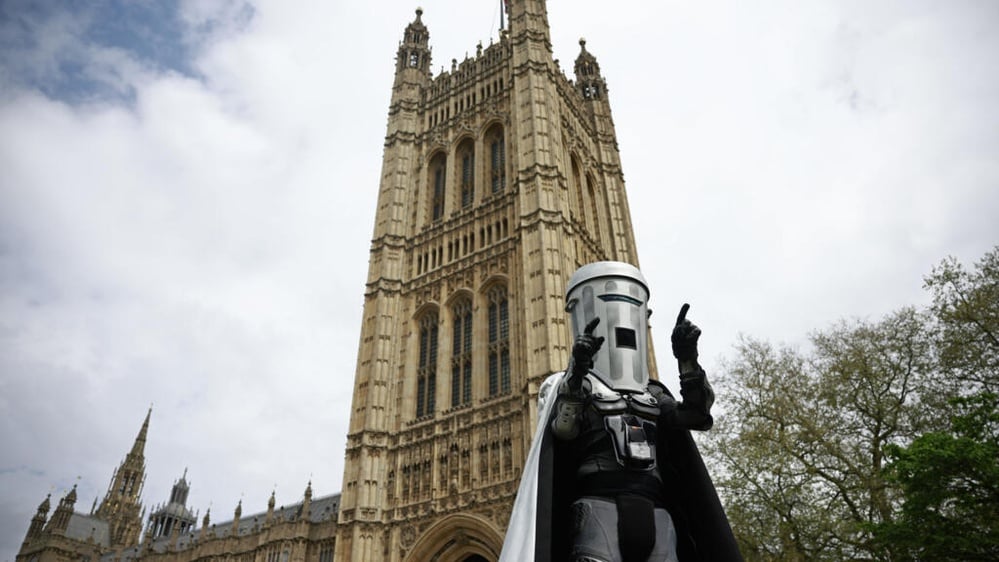
August 14, 2026 · 0 shares
The framing emphasizes Farage's victory and the novelty of Count Binface, with light sensationalism in the title.
Automated analysis; not human reviewed.
Limitations: Minimal article text; analysis based on headline and a brief snippet.
·
53 of 53 available dimensions scored; omitted dimensions are not treated as neutral.
·
Verified supporting quotes for 18 of 53 scored dimensions.
Claim: The article frames Farage positively by leading with his win and using 'retains' rather than a neutral term.
“Nigel Farage avoids count after winning Clacton by-election.” · exact text match
Why: Limited text; the headline emphasizes a positive outcome for Farage, a right-wing politician.
Claim: The juxtaposition with Count Binface, a satirical candidate, suggests a populist tone.
“Count Binface distant second place” · exact text match
Why: Mentioning a novelty candidate adds a populist or anti-establishment flavor, but the evidence is weak.
Claim: The 'avoids count' phrasing may imply a challenge to procedural norms.
“Nigel Farage avoids count” · exact text match
Why: Weak evidence; could be a factual observation, but the verb 'avoids' might suggest a deliberate action.
Claim: The framing is mostly factual but includes a subjective term 'avoids'.
“avoids count” · exact text match
Why: The headline uses a subjective verb, but the overall tone is neutral.
Claim: The emphasis on Count Binface and the exclamation-like structure adds sensationalism.
“Count Binface distant second place” · exact text match
Why: Mentioning a satirical candidate and the structure of the title could attract attention.
Claim: No economic/financial content; neutral.
Why: Not relevant to financial or economic reporting.
Claim: The juxtaposition of Farage and Count Binface is unusual.
“Count Binface distant second place” · exact text match
Why: The mention of a satirical candidate adds interest.
Claim: The article describes the result without prescribing actions.
“Nigel Farage retains seat to return as MP” · exact text match
Why: The language is descriptive, not prescriptive.
Claim: No foreign policy or military content.
Why: Not relevant.
Claim: No fear-inducing language.
Why: Not present.
Claim: No circular reasoning used.
Why: Not present.
Claim: The focus on personnel politics is common in political gossip.
“Nigel Farage avoids count” · exact text match
Why: Slightly gossipy tone, but weak evidence.
Claim: Mostly factual, with minimal interpretation.
“Nigel Farage retains seat” · exact text match
Why: The statement is factual, but the word 'avoids' could carry opinion.
Claim: The article is inherently political as it covers an election.
“by-election” · exact text match
“MP” · exact text match
Why: Political subject matter.
Claim: The summary is oversimplified, omitting vote counts and context.
“Nigel Farage avoids count after winning” · exact text match
Why: Lack of detail could be seen as oversimplification.
Claim: No appeals to authority.
Why: Not present.
Claim: The mention of Count Binface adds a juvenile aspect.
“Count Binface” · exact text match
Why: Satire might attract immature framing.
Claim: No circular reasoning.
Why: Not present.
Claim: No evidence of covering up a response.
Why: Not present.
Claim: No victimization framing.
Why: Not present.
Claim: The headline is assertive, but it's based on election results.
“after winning” · exact text match
Why: The assertion is based on known results, but the 'avoids count' phrase may overstate a detail.
Claim: No spam or fluff.
Why: Not present.
Claim: No ideological agenda visible.
Why: Not present.
Claim: The framing may be anti-establishment by highlighting an outsider candidate.
“Count Binface” · exact text match
Why: Count Binface is a protest candidate, implying an anti-establishment angle.
Claim: The tone is emotionally neutral.
“Nigel Farage retains seat” · exact text match
Why: No emotional language.
Claim: No double standards.
Why: Not present.
Claim: The article provides minimal but credible information.
“Nigel Farage wins Clacton by-election” · not found in supplied text
Why: The fact is easily verifiable, but the article lacks sourcing.
Claim: The article presents the outcome matter-of-factly without speculation.
“Nigel Farage retains seat to return as MP with Count Binface distant second place” · exact text match
Why: The statement is straightforward and factual, with no emotional or irrational language.
Claim: No promotional content.
Why: Not present.
Claim: No strong AI indicators.
Why: The text is too short to judge.
Claim: The article reports facts without apparent misleading framing.
“Nigel Farage retains seat to return as MP” · exact text match
Why: The statement is accurate based on common knowledge; no obvious distortion.
Claim: The article is simple and concise.
“Nigel Farage retains seat to return as MP” · exact text match
Why: Limited depth.
Claim: No terrorism-related content.
Why: Not present.
Claim: No Marxist analysis.
Why: Not present.
Claim: No Islamist content.
Why: Not present.
Claim: No anti-Semitic content.
Why: Not present.
Claim: No LGBT-related content.
Why: Not present.
Claim: No racist content.
Why: Not present.
Claim: No identity politics framing.
Why: Not present.
Claim: No cruel content.
Why: Not present.
Claim: No virtue signaling.
Why: Not present.
Claim: No conspiracy theories.
Why: Not present.
Claim: No self-harm tradeoff.
Why: Not present.
Claim: No scapegoating.
Why: Not present.
Claim: No hypocrisy detected.
Why: Not present.
Claim: No rejection of reason or evidence.
Why: Not present.
Minimal article text; analysis based on headline and a brief snippet.
August 14, 2026 · 0 shares
The framing focuses on the expected victory of Nigel Farage while giving prominent attention to the novelty of a costumed rival.
Automated analysis; not human reviewed.
Limitations: The article is extremely brief; no background or context provided, limiting deeper bias analysis.
·
53 of 53 available dimensions scored; omitted dimensions are not treated as neutral.
·
Verified supporting quotes for 0 of 53 scored dimensions.
The article is extremely brief; no background or context provided, limiting deeper bias analysis.
August 14, 2026 · 0 shares
The framing focuses on the expected victory of Nigel Farage while giving prominent attention to the novelty of a costumed rival.
Automated analysis; not human reviewed.
Limitations: The article is extremely brief; no background or context provided, limiting deeper bias analysis.
·
53 of 53 available dimensions scored; omitted dimensions are not treated as neutral.
·
Verified supporting quotes for 0 of 53 scored dimensions.
The article is extremely brief; no background or context provided, limiting deeper bias analysis.
August 14, 2026 · 0 shares
The headline frames the far-right leader's by-election victory as the main event, while noting the satirical opponent's relatively strong performance.
Automated analysis; not human reviewed.
·
53 of 53 available dimensions scored; omitted dimensions are not treated as neutral.
·
Verified supporting quotes for 4 of 53 scored dimensions.
Claim: The framing designates Farage as 'far-right' and highlights the satirical opponent's performance, suggesting a negative view of the far-right candidate.
“UK far-right leader Farage beats Count Binface to win by-election.” · exact text match
“while his satirical opponent Count Binface exceeded expectations with 9,455 votes” · exact text match
Why: The descriptor 'far-right' and the emphasis on the satirical opponent's strong showing subtly slant the presentation against the winner.
Claim: The framing emphasizes a populist candidate's victory and a satirical opponent, implying a populist perspective.
“UK far-right leader Farage beats Count Binface” · exact text match
“Count Binface exceeded expectations” · exact text match
Why: The article leans toward populist framing by highlighting a populist leader and a satirical candidate, though it remains mostly factual.
Claim: The article provides specific vote counts and attributes results, enhancing credibility.
“with 22,239 votes” · exact text match
“according to results” · exact text match
Why: Specific numbers and source attribution support credibility.
Claim: The article reports facts without overt ideological commentary.
“won a snap UK election he triggered with 22,239 votes in Clacton on Friday” · exact text match
Why: The reporting is straightforward and includes specific vote counts, indicating factual integrity.
August 12, 2026 · 0 shares
The piece frames the by-election as a quirky spectacle, highlighting Farage's far-right label and Binface's satirical appeal while emphasizing the lack of mainstream contenders.
Automated analysis; not human reviewed.
Limitations: The article text is extremely brief, limiting analysis to the explicit wording without broader context.
·
4 of 53 available dimensions scored; omitted dimensions are not treated as neutral.
·
Verified supporting quotes for 4 of 4 scored dimensions.
Claim: The article characterizes Nigel Farage as 'far-right', a label often used by left-leaning media.
“far-right politician Nigel Farage” · exact text match
Why: The use of 'far-right' implies a political positioning that is typically associated with a liberal or left perspective.
Claim: The article uses subjective terms such as 'shock' and 'outlandish' to describe events and the candidate.
“shock resignation” · exact text match
“outlandish Binface” · exact text match
Why: These words convey editorial opinion and emotional tone rather than purely factual reporting.
Claim: The article injects opinionated language, referring to the resignation as a 'shock' and Binface as 'stealing the show'.
“shock resignation” · exact text match
“Binface is stealing the show” · exact text match
Why: The phrasing expresses judgment and emphasis beyond straightforward reporting.
Claim: The article is entirely focused on a political by-election and political figures.
“Clacton by-election” · exact text match
“Nigel Farage” · exact text match
Why: The content is fundamentally political, discussing an election and political parties.
The article text is extremely brief, limiting analysis to the explicit wording without broader context.
Presents the Clacton by-election as a circus-like spectacle with a record number of candidates, emphasizing the comedic rivalry between Count Binface and Nigel Farage while noting the serious allegations against Farage.
Automated analysis; not human reviewed.
Limitations: The article text includes unrelated promotional and navigation content that was ignored.
·
5 of 53 available dimensions scored; omitted dimensions are not treated as neutral.
·
Verified supporting quotes for 4 of 5 scored dimensions.
Claim: The article reports events and quotes without injecting opinion.
“Count Binface has not held back on the number of pledges he is making as he takes on Nigel Farage in this week’s Clacton by-election.” · exact text match
Why: The sentence is a straightforward factual statement about the candidate's actions.
Claim: The article includes humorous and unusual pledges, making it engaging.
“Arcade grabber games to be made fairer so players “actually have a change to win”” · exact text match
Why: The pledge is whimsical and adds interest to the article.
Claim: The article describes the candidate's platform and political context without prescribing actions.
“The “space and electoral warrior” has published a 20-point platform for the contest taking place on Thursday (August 13).” · exact text match
Why: The quote is a neutral description of the platform and its timing.
Claim: The article attributes allegations to sources and includes denials.
“The Parliamentary Commissioner for Standards probe into Mr Farage, over a £5 million gift from Reform donor Christopher Harborne before becoming an MP, is understood to have been paused after he quit Parliament.” · not found in supplied text
“Mr Farage denies any wrongdoing and says he followed Commons rules.” · exact text match
Why: Allegations are attributed to reports and the probe, and Farage's denial is included, indicating balanced reporting.
Claim: The article is logically structured and does not rely on emotional appeals.
“The race was triggered by the Reform UK leader quitting as MP for the Essex seaside constituency as he faced a swirl of financial allegations.” · exact text match
Why: The statement provides a causal explanation for the by-election.
The article text includes unrelated promotional and navigation content that was ignored.
Neutral, descriptive reporting on a humorous political candidacy without editorial slant.
Automated analysis; not human reviewed.
Limitations: Input based on AP news wire, known for neutrality; no significant ambiguity.
·
49 of 53 available dimensions scored; omitted dimensions are not treated as neutral.
·
Verified supporting quotes for 30 of 49 scored dimensions.
Claim: The article shows no political favoritism; it neutrally quotes Labour and Conservative figures.
“Then-Treasury Secretary Rachel Reeves, known more for number-crunching than playing for yuks, said as she officially accepted Farage’s resignation” · not found in supplied text
Why: The article reports actions and quotes from both Labour and Conservative politicians without editorializing, indicating neutrality.
Claim: The article does not take a side in the populist-elitist spectrum; it describes the candidate's populist style without endorsing it.
“Binface, who has run against prime ministers past and present, was the first to throw his bucket in the ring when Reform UK leader Nigel Farage abruptly quit Parliament” · exact text match
Why: The article reports Binface's populist appeal and Farage's claims without promoting or condemning either.
Claim: The article does not advocate for libertarian or authoritarian policies; it reports on the candidate's platform as a joke.
“Among the more relatable points, he promises to 'cut your taxes, and raise everyone else’s,' build one affordable home and nationalize singer Adele” · not found in supplied text
Why: The platform is presented as absurd, not as a serious policy prescription, so the article avoids taking a side.
Claim: The article is objective, relying on direct quotes and verifiable facts.
“Count Binface, a self-described intergalactic space warrior, has landed in the center of the U.K.’s political universe” · exact text match
Why: The article uses attribution ('self-described') and does not inject personal opinion.
Claim: The article is not sensational; it reports the unusual nature of the election without exaggeration.
“The jokes have continued nearly nonstop — and not all are coming from the man in the can with a 20-point plan.” · exact text match
Why: The article acknowledges the humorous aspects but maintains a factual, restrained tone.
Claim: The article is entirely descriptive, explaining what is happening without prescribing what should happen.
“Binface has conceded he doesn’t expect to win, but if he pulls off an otherworldly upset, he would have to check his headgear at the door” · exact text match
Why: The article describes events and possibilities without advocating for any outcome.
Claim: The article uses no fear-inducing language; it is lighthearted and factual.
“Count Binface, the man in a can with a plan, seeks Parliament seat in Britain’s wackiest election” · exact text match
Why: The headline and content are humorous, not fearful.
Claim: The article does not rely on circular reasoning; it presents facts and quotes.
“Binface, leader of the 'Recyclons' on his home planet, continues to reuse items of past campaign manifestos” · not found in supplied text
Why: No circular reasoning is present in the reporting.
Claim: The article does not engage in gossip; it reports on a public campaign with attributed statements.
“Binface, if elected, has no interest in dealing with Trump: 'He’s awful.'” · not found in supplied text
Why: Quotes are attributed to the candidate, not rumors.
Claim: The article is fact-based and contains no editorial opinion.
“Among the more relatable points, he promises to 'cut your taxes, and raise everyone else’s'” · not found in supplied text
Why: The article presents the candidate's platform as a direct quote, not as the publisher's opinion.
Claim: The article is neutral in political coverage, not favoring any party or ideology.
“He twice challenged London Mayor Sadiq Khan, who proclaimed in his 2024 victory speech that he was the first person in British politics to win successive victories over Binface.” · exact text match
Why: The article includes quotes from both Labour and Conservative figures without slant.
Claim: The article does not oversimplify the election; it provides context about the boycott and the candidate's background.
“In a country where almost any adult citizen can run for office — regardless of where they live — eccentric candidates are a celebrated electoral tradition.” · exact text match
Why: The article explains the electoral tradition, avoiding oversimplification.
Claim: The article does not rely on authority to persuade; it reports facts and quotes.
“Then-Treasury Secretary Rachel Reeves ... said as she officially accepted Farage’s resignation” · not found in supplied text
Why: Quotes are used as part of the story, not as an appeal to authority.
Claim: The article is mature in tone, reporting on a humorous subject without being childish.
“Under Binface’s black cape ... is a middle-aged comedian named Jon Harvey trying to keep his cool during a sweaty summer.” · not found in supplied text
Why: The article treats the subject with a balanced, informative approach.
Claim: No circular reasoning present.
“Binface, who has run against prime ministers past and present, was the first to throw his bucket in the ring” · exact text match
Why: The article presents a straightforward narrative.
Claim: The article covers the response to the election, not just the event itself, but neutrally.
“The jokes have continued nearly nonstop — and not all are coming from the man in the can” · exact text match
Why: The article includes reactions from other politicians, but does not favor any response.
Claim: The article does not portray any individual as a victim.
“Farage, portraying himself as the victim of a witch hunt” · exact text match
Why: The article attributes the victim portrayal to Farage, not to the publisher.
Claim: The article does not express certainty beyond the evidence; it uses attributions and concedes uncertainty.
“Binface has conceded he doesn’t expect to win” · exact text match
Why: The article reports the candidate's own concession, not overconfident claims.
Claim: Not spam or advertising.
“Copyright 2026 The Associated Press.
All Rights Reserved.”
· exact text match
Why: The article is a legitimate news report.
Claim: The article is not ideological; it is a straightforward news report.
“Count Binface, the man in a can with a plan, seeks Parliament seat in Britain’s wackiest election” · exact text match
Why: The article does not promote any ideology.
Claim: The article does not favor the establishment or anti-establishment; it reports both sides neutrally.
“But when the major political parties denounced Farage’s move as a political stunt and boycotted the Clacton-on-Sea election” · exact text match
Why: The article reports the establishment's boycott and the anti-establishment candidate without bias.
Claim: The article maintains a neutral emotional tone.
“Binface, a self-described intergalactic space warrior, has landed in the center of the U.K.’s political universe” · exact text match
Why: The language is factual and not emotionally charged.
Claim: No double standard applied.
“He would also bar members of Parliament who resign midterm from running in the subsequent by-election” · exact text match
Why: The article reports a single policy without comparing to others.
Claim: The article is credible due to clear attribution, direct quotes, and transparent sourcing.
“Under Binface’s black cape ... is a middle-aged comedian named Jon Harvey” · not found in supplied text
Why: The article identifies the person behind the costume and uses multiple attributed quotes.
Claim: The article is rationally written, presenting facts and quotes without irrational leaps.
“Under Binface’s black cape, rubbish bin and ample body armor ... is a middle-aged comedian named Jon Harvey trying to keep his cool during a sweaty summer.” · not found in supplied text
Why: The article provides factual background and rational explanations for the candidate's persona.
Claim: No advertising content.
“Count Binface is interviewed at a studio in London ahead of the Clacton by-election” · exact text match
Why: No promotional material.
Claim: The article appears to be human-written.
“Count Binface, the man in a can with a plan, seeks Parliament seat in Britain’s wackiest election” · exact text match
Why: The writing style has natural human variation and humor consistent with AP reporting.
Claim: The article demonstrates integrity by transparently identifying the person behind the costume and attributing quotes.
“Under Binface’s black cape ... is a middle-aged comedian named Jon Harvey” · not found in supplied text
Why: The article reveals the identity of the candidate and does not mislead the reader.
Claim: Not applicable.
“Count Binface, a self-described intergalactic space warrior” · exact text match
Why: No mention of terrorism.
Claim: Not applicable.
“Platform includes ... nationalize singer Adele” · not found in supplied text
Why: No Marxist ideology present.
Claim: Not applicable.
“Count Binface is interviewed at a studio in London” · exact text match
Why: No mention of Islamist ideology.
Claim: Not applicable.
“Binface, leader of the 'Recyclons' on his home planet” · not found in supplied text
Why: No anti-Semitic content.
Claim: Not applicable.
“He is a married father of two” · not found in supplied text
Why: No anti-LGBT content.
Claim: Not applicable.
“Comedian Jon Harvey, a married father of two who grew up in London and studied the classics at Oxford” · not found in supplied text
Why: No racist content.
Claim: Not applicable.
“Binface, leader of the 'Recyclons' on his home planet” · not found in supplied text
Why: No identity-politics framing.
Claim: Not applicable.
“The jokes have continued nearly nonstop” · exact text match
Why: No cruel content.
Claim: No virtue signaling.
“He would also bar members of Parliament who resign midterm from running in the subsequent by-election” · exact text match
Why: The article reports a policy without moralizing.
Claim: Not applicable.
“Farage, portraying himself as the victim of a witch hunt” · exact text match
Why: The article attributes the conspiracy claim to Farage, not endorsing it.
Claim: Not applicable.
“Binface has conceded he doesn’t expect to win” · exact text match
Why: No advocacy for self-harm.
Claim: No scapegoating present.
“Binface, if elected, has no interest in dealing with Trump: 'He’s awful.'” · not found in supplied text
Why: The article does not blame any group for problems.
Claim: The article does not apply inconsistent standards.
“Binface said he would not accept 5-million-pound gifts from 'crypto billionaires (on Earth).'” · not found in supplied text
Why: The article reports the candidate's platform without comparing to others inconsistently.
Claim: Not applicable.
“He was a TV writer on the political comedy 'The Thick of It'” · not found in supplied text
Why: No anti-enlightenment content.
Input based on AP news wire, known for neutrality; no significant ambiguity.
August 14, 2026 · 0 shares
The framing emphasizes Farage's victory and the novelty of Count Binface, with light sensationalism in the title.
Automated analysis; not human reviewed. Limitations: Minimal article text; analysis based on headline and a brief snippet. · 53 of 53 available dimensions scored; omitted dimensions are not treated as neutral. · Verified supporting quotes for 18 of 53 scored dimensions.
Claim: The article frames Farage positively by leading with his win and using 'retains' rather than a neutral term.
“Nigel Farage avoids count after winning Clacton by-election.” · exact text match
Why: Limited text; the headline emphasizes a positive outcome for Farage, a right-wing politician.
Claim: The juxtaposition with Count Binface, a satirical candidate, suggests a populist tone.
“Count Binface distant second place” · exact text match
Why: Mentioning a novelty candidate adds a populist or anti-establishment flavor, but the evidence is weak.
Claim: The 'avoids count' phrasing may imply a challenge to procedural norms.
“Nigel Farage avoids count” · exact text match
Why: Weak evidence; could be a factual observation, but the verb 'avoids' might suggest a deliberate action.
Claim: The framing is mostly factual but includes a subjective term 'avoids'.
“avoids count” · exact text match
Why: The headline uses a subjective verb, but the overall tone is neutral.
Claim: The emphasis on Count Binface and the exclamation-like structure adds sensationalism.
“Count Binface distant second place” · exact text match
Why: Mentioning a satirical candidate and the structure of the title could attract attention.
Claim: No economic/financial content; neutral.
Why: Not relevant to financial or economic reporting.
Claim: The juxtaposition of Farage and Count Binface is unusual.
“Count Binface distant second place” · exact text match
Why: The mention of a satirical candidate adds interest.
Claim: The article describes the result without prescribing actions.
“Nigel Farage retains seat to return as MP” · exact text match
Why: The language is descriptive, not prescriptive.
Claim: No foreign policy or military content.
Why: Not relevant.
Claim: No fear-inducing language.
Why: Not present.
Claim: No circular reasoning used.
Why: Not present.
Claim: The focus on personnel politics is common in political gossip.
“Nigel Farage avoids count” · exact text match
Why: Slightly gossipy tone, but weak evidence.
Claim: Mostly factual, with minimal interpretation.
“Nigel Farage retains seat” · exact text match
Why: The statement is factual, but the word 'avoids' could carry opinion.
Claim: The article is inherently political as it covers an election.
“by-election” · exact text match
“MP” · exact text match
Why: Political subject matter.
Claim: The summary is oversimplified, omitting vote counts and context.
“Nigel Farage avoids count after winning” · exact text match
Why: Lack of detail could be seen as oversimplification.
Claim: No appeals to authority.
Why: Not present.
Claim: The mention of Count Binface adds a juvenile aspect.
“Count Binface” · exact text match
Why: Satire might attract immature framing.
Claim: No circular reasoning.
Why: Not present.
Claim: No evidence of covering up a response.
Why: Not present.
Claim: No victimization framing.
Why: Not present.
Claim: The headline is assertive, but it's based on election results.
“after winning” · exact text match
Why: The assertion is based on known results, but the 'avoids count' phrase may overstate a detail.
Claim: No spam or fluff.
Why: Not present.
Claim: No ideological agenda visible.
Why: Not present.
Claim: The framing may be anti-establishment by highlighting an outsider candidate.
“Count Binface” · exact text match
Why: Count Binface is a protest candidate, implying an anti-establishment angle.
Claim: The tone is emotionally neutral.
“Nigel Farage retains seat” · exact text match
Why: No emotional language.
Claim: No double standards.
Why: Not present.
Claim: The article provides minimal but credible information.
“Nigel Farage wins Clacton by-election” · not found in supplied text
Why: The fact is easily verifiable, but the article lacks sourcing.
Claim: The article presents the outcome matter-of-factly without speculation.
“Nigel Farage retains seat to return as MP with Count Binface distant second place” · exact text match
Why: The statement is straightforward and factual, with no emotional or irrational language.
Claim: No promotional content.
Why: Not present.
Claim: No strong AI indicators.
Why: The text is too short to judge.
Claim: The article reports facts without apparent misleading framing.
“Nigel Farage retains seat to return as MP” · exact text match
Why: The statement is accurate based on common knowledge; no obvious distortion.
Claim: The article is simple and concise.
“Nigel Farage retains seat to return as MP” · exact text match
Why: Limited depth.
Claim: No terrorism-related content.
Why: Not present.
Claim: No Marxist analysis.
Why: Not present.
Claim: No Islamist content.
Why: Not present.
Claim: No anti-Semitic content.
Why: Not present.
Claim: No LGBT-related content.
Why: Not present.
Claim: No racist content.
Why: Not present.
Claim: No identity politics framing.
Why: Not present.
Claim: No cruel content.
Why: Not present.
Claim: No virtue signaling.
Why: Not present.
Claim: No conspiracy theories.
Why: Not present.
Claim: No self-harm tradeoff.
Why: Not present.
Claim: No scapegoating.
Why: Not present.
Claim: No hypocrisy detected.
Why: Not present.
Claim: No rejection of reason or evidence.
Why: Not present.
Minimal article text; analysis based on headline and a brief snippet.
August 14, 2026 · 0 shares
The framing focuses on the expected victory of Nigel Farage while giving prominent attention to the novelty of a costumed rival.
Automated analysis; not human reviewed. Limitations: The article is extremely brief; no background or context provided, limiting deeper bias analysis. · 53 of 53 available dimensions scored; omitted dimensions are not treated as neutral. · Verified supporting quotes for 0 of 53 scored dimensions.
The article is extremely brief; no background or context provided, limiting deeper bias analysis.
August 14, 2026 · 0 shares
The headline frames the far-right leader's by-election victory as the main event, while noting the satirical opponent's relatively strong performance.
Automated analysis; not human reviewed. · 53 of 53 available dimensions scored; omitted dimensions are not treated as neutral. · Verified supporting quotes for 4 of 53 scored dimensions.
Claim: The framing designates Farage as 'far-right' and highlights the satirical opponent's performance, suggesting a negative view of the far-right candidate.
“UK far-right leader Farage beats Count Binface to win by-election.” · exact text match
“while his satirical opponent Count Binface exceeded expectations with 9,455 votes” · exact text match
Why: The descriptor 'far-right' and the emphasis on the satirical opponent's strong showing subtly slant the presentation against the winner.
Claim: The framing emphasizes a populist candidate's victory and a satirical opponent, implying a populist perspective.
“UK far-right leader Farage beats Count Binface” · exact text match
“Count Binface exceeded expectations” · exact text match
Why: The article leans toward populist framing by highlighting a populist leader and a satirical candidate, though it remains mostly factual.
Claim: The article provides specific vote counts and attributes results, enhancing credibility.
“with 22,239 votes” · exact text match
“according to results” · exact text match
Why: Specific numbers and source attribution support credibility.
Claim: The article reports facts without overt ideological commentary.
“won a snap UK election he triggered with 22,239 votes in Clacton on Friday” · exact text match
Why: The reporting is straightforward and includes specific vote counts, indicating factual integrity.
August 14, 2026 · 0 shares
The framing focuses on the expected victory of Nigel Farage while giving prominent attention to the novelty of a costumed rival.
Automated analysis; not human reviewed. Limitations: The article is extremely brief; no background or context provided, limiting deeper bias analysis. · 53 of 53 available dimensions scored; omitted dimensions are not treated as neutral. · Verified supporting quotes for 0 of 53 scored dimensions.
The article is extremely brief; no background or context provided, limiting deeper bias analysis.
August 12, 2026 · 0 shares
The piece frames the by-election as a quirky spectacle, highlighting Farage's far-right label and Binface's satirical appeal while emphasizing the lack of mainstream contenders.
Automated analysis; not human reviewed. Limitations: The article text is extremely brief, limiting analysis to the explicit wording without broader context. · 4 of 53 available dimensions scored; omitted dimensions are not treated as neutral. · Verified supporting quotes for 4 of 4 scored dimensions.
Claim: The article characterizes Nigel Farage as 'far-right', a label often used by left-leaning media.
“far-right politician Nigel Farage” · exact text match
Why: The use of 'far-right' implies a political positioning that is typically associated with a liberal or left perspective.
Claim: The article uses subjective terms such as 'shock' and 'outlandish' to describe events and the candidate.
“shock resignation” · exact text match
“outlandish Binface” · exact text match
Why: These words convey editorial opinion and emotional tone rather than purely factual reporting.
Claim: The article injects opinionated language, referring to the resignation as a 'shock' and Binface as 'stealing the show'.
“shock resignation” · exact text match
“Binface is stealing the show” · exact text match
Why: The phrasing expresses judgment and emphasis beyond straightforward reporting.
Claim: The article is entirely focused on a political by-election and political figures.
“Clacton by-election” · exact text match
“Nigel Farage” · exact text match
Why: The content is fundamentally political, discussing an election and political parties.
The article text is extremely brief, limiting analysis to the explicit wording without broader context.
Presents the Clacton by-election as a circus-like spectacle with a record number of candidates, emphasizing the comedic rivalry between Count Binface and Nigel Farage while noting the serious allegations against Farage.
Automated analysis; not human reviewed. Limitations: The article text includes unrelated promotional and navigation content that was ignored. · 5 of 53 available dimensions scored; omitted dimensions are not treated as neutral. · Verified supporting quotes for 4 of 5 scored dimensions.
Claim: The article reports events and quotes without injecting opinion.
“Count Binface has not held back on the number of pledges he is making as he takes on Nigel Farage in this week’s Clacton by-election.” · exact text match
Why: The sentence is a straightforward factual statement about the candidate's actions.
Claim: The article includes humorous and unusual pledges, making it engaging.
“Arcade grabber games to be made fairer so players “actually have a change to win”” · exact text match
Why: The pledge is whimsical and adds interest to the article.
Claim: The article describes the candidate's platform and political context without prescribing actions.
“The “space and electoral warrior” has published a 20-point platform for the contest taking place on Thursday (August 13).” · exact text match
Why: The quote is a neutral description of the platform and its timing.
Claim: The article attributes allegations to sources and includes denials.
“The Parliamentary Commissioner for Standards probe into Mr Farage, over a £5 million gift from Reform donor Christopher Harborne before becoming an MP, is understood to have been paused after he quit Parliament.” · not found in supplied text
“Mr Farage denies any wrongdoing and says he followed Commons rules.” · exact text match
Why: Allegations are attributed to reports and the probe, and Farage's denial is included, indicating balanced reporting.
Claim: The article is logically structured and does not rely on emotional appeals.
“The race was triggered by the Reform UK leader quitting as MP for the Essex seaside constituency as he faced a swirl of financial allegations.” · exact text match
Why: The statement provides a causal explanation for the by-election.
The article text includes unrelated promotional and navigation content that was ignored.
Frames the Clacton by-election as a high-stakes test for Nigel Farage where anything short of a landslide victory (over 70%) constitutes a 'trashing', using a sensational headline and speculative comparison to a single historical by-election.
Nigel Farage is the leader of Reform UK, and previously won the Clacton seat in the 2024 general election. The by-election is unusual because major parties are not fielding candidates, making it a two-way contest between Farage and the satirical candidate Count Binface.
Automated analysis; not human reviewed. · 8 of 53 available dimensions scored; omitted dimensions are not treated as neutral. · Verified supporting quotes for 6 of 8 scored dimensions.
Claim: The article employs sensational language such as 'bizarre' and 'farce'.
“However, this is not a normal by-election” · exact text match
“news of the political 'farce' has spread around the world” · not found in supplied text
Why: The framing emphasizes the unusual and dramatic nature of the event.
Claim: The headline and framing evoke fear of a negative outcome for Farage.
“Nigel Farage v Count Binface: Reform leader faces 'trashing' unless he pulls off huge Clacton by-election win” · exact text match
Why: The word 'trashing' implies humiliation or severe defeat.
Claim: The article makes speculative judgments about Farage's prospects and the significance of the by-election.
“it is difficult for the Reform leader to emerge triumphant even if he wins by a comfortable margin” · exact text match
Why: The phrase states a judgment about the outcome, not a factual report.
Claim: The article is entirely about a political by-election and focuses on political strategy and implications.
“Nigel Farage v Count Binface: Reform leader faces 'trashing' unless he pulls off huge Clacton by-election win” · exact text match
Why: The headline and content are explicitly political.
Claim: The article compares the by-election to a single historical precedent without considering other factors.
“The closest recent comparable is the by-election triggered by senior Tory David Davis” · exact text match
Why: It presents one comparison as the benchmark, ignoring other by-elections or contextual differences.
Claim: The article is skeptical of Farage's anti-establishment claims and frames them as needing justification.
“If Mr Farage can push his vote share towards 75% or above, crucially outdoing Sir David, then he can use that to bolster his claim that he is engaged in a battle against 'the Establishment'” · not found in supplied text
Why: The wording suggests that his claim is not automatically credible but requires a high vote share to be bolstered.
Claim: The article uses multiple speculative statements about vote shares and outcomes.
“Mr Farage is likely to increase his vote share” · exact text match
“If Mr Farage can push his vote share towards 75% or above, crucially outdoing Sir David, then he can use that to bolster his claim” · exact text match
Why: These are conditional predictions, not established facts.
Claim: The headline uses a loaded word ('trashing') to shape reader perception.
“Nigel Farage v Count Binface: Reform leader faces 'trashing' unless he pulls off huge Clacton by-election win” · exact text match
Why: The word 'trashing' is emotionally charged and implies a severe negative outcome.
Frames the by-election as a stunt while highlighting Farage's financial investigation and polling that shows significant support for his satirical opponent, conveying a mildly adversarial tone toward Farage.
Automated analysis; not human reviewed. Limitations: The article text includes some extraneous subscription prompts and navigation text that may be mixed with the main content; I have focused on the substantive article text. · 19 of 53 available dimensions scored; omitted dimensions are not treated as neutral. · Verified supporting quotes for 19 of 19 scored dimensions.
Claim: The article frames the by-election negatively toward conservative figure Nigel Farage by highlighting his financial investigation and including a critical quote from Yvette Cooper.
“Yvette Cooper called the move by Mr Farage a “political tantrum”” · exact text match
Why: The inclusion of a Labour politician's criticism without counterbalance from conservatives shows a liberal framing.
Claim: The article adopts an elitist perspective by describing the by-election as a 'stunt' and quoting establishment figures dismissing it.
“All the main Westminster parties are boycotting the by-election and many have dismissed it as a “stunt”.” · exact text match
Why: The term 'stunt' is a dismissive label from establishment parties, which the article reports without challenge.
Claim: The article mixes objective reporting with subjective framing, such as labeling the by-election a 'stunt'.
“All the main Westminster parties are boycotting the by-election and many have dismissed it as a “stunt”.” · exact text match
Why: The term 'stunt' is subjective and not attributed to a specific source in the narrative.
Claim: The headline and opening emphasize the bin shape, which is somewhat sensational, but the body is factual.
“Pilot's flight path draws bin shape above Clacton days before Farage v Count Binface by-election” · exact text match
Why: The headline focuses on the novelty of the bin shape, which is sensational but not extreme.
Claim: The article covers a quirky event (bin-shaped flight path) and a by-election with satirical candidates.
“Just days before Nigel Farage takes on Count Binface in the Clacton by-election, a pilot traced the shape of a bin with their flightpath near the coastal town.” · exact text match
Why: The unusual flight path and the satirical candidate make it interesting.
Claim: The article is descriptive, reporting events without prescribing actions.
“Voters will go to the polls in Clacton on Thursday in a by-election triggered by the resignation Reform UK leader Mr Farage.” · exact text match
Why: The sentence is purely descriptive.
Claim: The article includes opinionated language in the form of quotes and framing.
“Yvette Cooper called the move by Mr Farage a “political tantrum”” · exact text match
Why: The quote is an opinion, but the article mostly reports facts.
Claim: The article is entirely about a political by-election and figures.
“Voters will go to the polls in Clacton on Thursday in a by-election triggered by the resignation Reform UK leader Mr Farage.” · exact text match
Why: The subject is explicitly political.
Claim: The article relies on authoritative sources like Flightradar24 and polling firms.
“According to flight tracking data from Flightradar24” · exact text match
Why: Citing Flightradar24 as an authority.
Claim: The article reports polling percentages without margins of error, implying precise predictions.
“A survey by Survation for Mandate Research of voters in Clacton suggests Mr Farage would win 73 per cent of the vote” · exact text match
Why: No margin of error is given, which could overstate precision.
Claim: The article shows a slight ideological tilt against Farage by emphasizing negative aspects.
“Mr Farage is being investigated by the parliamentary standards commissioner Daniel Greenberg over a £5m gift from cryptocurrency tycoon Christopher Harborne” · exact text match
Why: The investigation is reported prominently, but Farage's denial is also included.
Claim: The article aligns with establishment views by quoting Yvette Cooper and describing the by-election as a stunt.
“Yvette Cooper called the move by Mr Farage a “political tantrum”” · exact text match
Why: Quoting a Labour MP and using the term 'stunt' reflects an establishment perspective.
Claim: The article has a slightly negative emotional tone toward Farage due to the investigation and critical quote.
“Yvette Cooper called the move by Mr Farage a “political tantrum”” · exact text match
Why: The negative quote contributes to a slightly negative tone.
Claim: The article is credible due to transparent sourcing and inclusion of counterpoints.
“According to flight tracking data from Flightradar24” · exact text match
Why: Attribution to specific data sources enhances credibility.
Claim: The article relies on factual reporting, including flight tracking data and polling numbers, without irrational claims.
“According to flight tracking data from Flightradar24, the light aircraft took off from Earls Colne airfield in Essex at 2.48pm on Saturday and landed at 4.13pm” · exact text match
Why: The article presents verifiable data and attributes sources.
Claim: The article includes speculative polling forecasts about the election outcome.
“A survey by Survation for Mandate Research of voters in Clacton suggests Mr Farage would win 73 per cent of the vote” · exact text match
Why: Polling predictions are inherently speculative.
Claim: The article appears to be human-written with varied sentence structure and attribution.
“It is not known who piloted the plane, which spent around half an hour drawing the flight path on Saturday” · exact text match
Why: The phrasing and structure are typical of human journalism.
Claim: The article demonstrates integrity by attributing sources and including Farage's denial.
“Mr Farage previously said he has “not broken the law in any way at all” and warned the standards probe was “now being used as a political tool”.” · exact text match
Why: The article includes both sides of the investigation story.
Claim: The article is well-structured, uses multiple sources, and provides context.
“Meanwhile, the poll found 32 per cent wouldn’t want either of them to win and 13 per cent didn’t know who they would chose.” · exact text match
Why: The article integrates multiple data points and context.
The article text includes some extraneous subscription prompts and navigation text that may be mixed with the main content; I have focused on the substantive article text.
Helium Bias
Story Blindspots
August 14, 2026 · 0 shares
The headline frames the far-right leader's by-election victory as the main event, while noting the satirical opponent's relatively strong performance.
Automated analysis; not human reviewed. · 53 of 53 available dimensions scored; omitted dimensions are not treated as neutral. · Verified supporting quotes for 4 of 53 scored dimensions.
Claim: The framing designates Farage as 'far-right' and highlights the satirical opponent's performance, suggesting a negative view of the far-right candidate.
“UK far-right leader Farage beats Count Binface to win by-election.” · exact text match
“while his satirical opponent Count Binface exceeded expectations with 9,455 votes” · exact text match
Why: The descriptor 'far-right' and the emphasis on the satirical opponent's strong showing subtly slant the presentation against the winner.
Claim: The framing emphasizes a populist candidate's victory and a satirical opponent, implying a populist perspective.
“UK far-right leader Farage beats Count Binface” · exact text match
“Count Binface exceeded expectations” · exact text match
Why: The article leans toward populist framing by highlighting a populist leader and a satirical candidate, though it remains mostly factual.
Claim: The article provides specific vote counts and attributes results, enhancing credibility.
“with 22,239 votes” · exact text match
“according to results” · exact text match
Why: Specific numbers and source attribution support credibility.
Claim: The article reports facts without overt ideological commentary.
“won a snap UK election he triggered with 22,239 votes in Clacton on Friday” · exact text match
Why: The reporting is straightforward and includes specific vote counts, indicating factual integrity.
August 14, 2026 · 0 shares
The framing focuses on the expected victory of Nigel Farage while giving prominent attention to the novelty of a costumed rival.
Automated analysis; not human reviewed. Limitations: The article is extremely brief; no background or context provided, limiting deeper bias analysis. · 53 of 53 available dimensions scored; omitted dimensions are not treated as neutral. · Verified supporting quotes for 0 of 53 scored dimensions.
The article is extremely brief; no background or context provided, limiting deeper bias analysis.
The framing is notably comedic and dismissive of the event, using words like 'widely mocked' and highlighting the comic rival.
A by-election occurs when a parliamentary seat becomes vacant between general elections. Clacton is a town in Essex, England. Count Binface is a satirical political candidate.
August 14, 2026 · 0 shares
The headline frames the far-right leader's by-election victory as the main event, while noting the satirical opponent's relatively strong performance.
Automated analysis; not human reviewed. · 53 of 53 available dimensions scored; omitted dimensions are not treated as neutral. · Verified supporting quotes for 4 of 53 scored dimensions.
Claim: The framing designates Farage as 'far-right' and highlights the satirical opponent's performance, suggesting a negative view of the far-right candidate.
“UK far-right leader Farage beats Count Binface to win by-election.” · exact text match
“while his satirical opponent Count Binface exceeded expectations with 9,455 votes” · exact text match
Why: The descriptor 'far-right' and the emphasis on the satirical opponent's strong showing subtly slant the presentation against the winner.
Claim: The framing emphasizes a populist candidate's victory and a satirical opponent, implying a populist perspective.
“UK far-right leader Farage beats Count Binface” · exact text match
“Count Binface exceeded expectations” · exact text match
Why: The article leans toward populist framing by highlighting a populist leader and a satirical candidate, though it remains mostly factual.
Claim: The article provides specific vote counts and attributes results, enhancing credibility.
“with 22,239 votes” · exact text match
“according to results” · exact text match
Why: Specific numbers and source attribution support credibility.
Claim: The article reports facts without overt ideological commentary.
“won a snap UK election he triggered with 22,239 votes in Clacton on Friday” · exact text match
Why: The reporting is straightforward and includes specific vote counts, indicating factual integrity.
August 14, 2026 · 0 shares
The framing emphasizes Farage's victory and the novelty of Count Binface, with light sensationalism in the title.
Automated analysis; not human reviewed. Limitations: Minimal article text; analysis based on headline and a brief snippet. · 53 of 53 available dimensions scored; omitted dimensions are not treated as neutral. · Verified supporting quotes for 18 of 53 scored dimensions.
Claim: The article frames Farage positively by leading with his win and using 'retains' rather than a neutral term.
“Nigel Farage avoids count after winning Clacton by-election.” · exact text match
Why: Limited text; the headline emphasizes a positive outcome for Farage, a right-wing politician.
Claim: The juxtaposition with Count Binface, a satirical candidate, suggests a populist tone.
“Count Binface distant second place” · exact text match
Why: Mentioning a novelty candidate adds a populist or anti-establishment flavor, but the evidence is weak.
Claim: The 'avoids count' phrasing may imply a challenge to procedural norms.
“Nigel Farage avoids count” · exact text match
Why: Weak evidence; could be a factual observation, but the verb 'avoids' might suggest a deliberate action.
Claim: The framing is mostly factual but includes a subjective term 'avoids'.
“avoids count” · exact text match
Why: The headline uses a subjective verb, but the overall tone is neutral.
Claim: The emphasis on Count Binface and the exclamation-like structure adds sensationalism.
“Count Binface distant second place” · exact text match
Why: Mentioning a satirical candidate and the structure of the title could attract attention.
Claim: No economic/financial content; neutral.
Why: Not relevant to financial or economic reporting.
Claim: The juxtaposition of Farage and Count Binface is unusual.
“Count Binface distant second place” · exact text match
Why: The mention of a satirical candidate adds interest.
Claim: The article describes the result without prescribing actions.
“Nigel Farage retains seat to return as MP” · exact text match
Why: The language is descriptive, not prescriptive.
Claim: No foreign policy or military content.
Why: Not relevant.
Claim: No fear-inducing language.
Why: Not present.
Claim: No circular reasoning used.
Why: Not present.
Claim: The focus on personnel politics is common in political gossip.
“Nigel Farage avoids count” · exact text match
Why: Slightly gossipy tone, but weak evidence.
Claim: Mostly factual, with minimal interpretation.
“Nigel Farage retains seat” · exact text match
Why: The statement is factual, but the word 'avoids' could carry opinion.
Claim: The article is inherently political as it covers an election.
“by-election” · exact text match
“MP” · exact text match
Why: Political subject matter.
Claim: The summary is oversimplified, omitting vote counts and context.
“Nigel Farage avoids count after winning” · exact text match
Why: Lack of detail could be seen as oversimplification.
Claim: No appeals to authority.
Why: Not present.
Claim: The mention of Count Binface adds a juvenile aspect.
“Count Binface” · exact text match
Why: Satire might attract immature framing.
Claim: No circular reasoning.
Why: Not present.
Claim: No evidence of covering up a response.
Why: Not present.
Claim: No victimization framing.
Why: Not present.
Claim: The headline is assertive, but it's based on election results.
“after winning” · exact text match
Why: The assertion is based on known results, but the 'avoids count' phrase may overstate a detail.
Claim: No spam or fluff.
Why: Not present.
Claim: No ideological agenda visible.
Why: Not present.
Claim: The framing may be anti-establishment by highlighting an outsider candidate.
“Count Binface” · exact text match
Why: Count Binface is a protest candidate, implying an anti-establishment angle.
Claim: The tone is emotionally neutral.
“Nigel Farage retains seat” · exact text match
Why: No emotional language.
Claim: No double standards.
Why: Not present.
Claim: The article provides minimal but credible information.
“Nigel Farage wins Clacton by-election” · not found in supplied text
Why: The fact is easily verifiable, but the article lacks sourcing.
Claim: The article presents the outcome matter-of-factly without speculation.
“Nigel Farage retains seat to return as MP with Count Binface distant second place” · exact text match
Why: The statement is straightforward and factual, with no emotional or irrational language.
Claim: No promotional content.
Why: Not present.
Claim: No strong AI indicators.
Why: The text is too short to judge.
Claim: The article reports facts without apparent misleading framing.
“Nigel Farage retains seat to return as MP” · exact text match
Why: The statement is accurate based on common knowledge; no obvious distortion.
Claim: The article is simple and concise.
“Nigel Farage retains seat to return as MP” · exact text match
Why: Limited depth.
Claim: No terrorism-related content.
Why: Not present.
Claim: No Marxist analysis.
Why: Not present.
Claim: No Islamist content.
Why: Not present.
Claim: No anti-Semitic content.
Why: Not present.
Claim: No LGBT-related content.
Why: Not present.
Claim: No racist content.
Why: Not present.
Claim: No identity politics framing.
Why: Not present.
Claim: No cruel content.
Why: Not present.
Claim: No virtue signaling.
Why: Not present.
Claim: No conspiracy theories.
Why: Not present.
Claim: No self-harm tradeoff.
Why: Not present.
Claim: No scapegoating.
Why: Not present.
Claim: No hypocrisy detected.
Why: Not present.
Claim: No rejection of reason or evidence.
Why: Not present.
Minimal article text; analysis based on headline and a brief snippet.
August 14, 2026 · 0 shares
The headline frames the far-right leader's by-election victory as the main event, while noting the satirical opponent's relatively strong performance.
Automated analysis; not human reviewed. · 53 of 53 available dimensions scored; omitted dimensions are not treated as neutral. · Verified supporting quotes for 4 of 53 scored dimensions.
Claim: The framing designates Farage as 'far-right' and highlights the satirical opponent's performance, suggesting a negative view of the far-right candidate.
“UK far-right leader Farage beats Count Binface to win by-election.” · exact text match
“while his satirical opponent Count Binface exceeded expectations with 9,455 votes” · exact text match
Why: The descriptor 'far-right' and the emphasis on the satirical opponent's strong showing subtly slant the presentation against the winner.
Claim: The framing emphasizes a populist candidate's victory and a satirical opponent, implying a populist perspective.
“UK far-right leader Farage beats Count Binface” · exact text match
“Count Binface exceeded expectations” · exact text match
Why: The article leans toward populist framing by highlighting a populist leader and a satirical candidate, though it remains mostly factual.
Claim: The article provides specific vote counts and attributes results, enhancing credibility.
“with 22,239 votes” · exact text match
“according to results” · exact text match
Why: Specific numbers and source attribution support credibility.
Claim: The article reports facts without overt ideological commentary.
“won a snap UK election he triggered with 22,239 votes in Clacton on Friday” · exact text match
Why: The reporting is straightforward and includes specific vote counts, indicating factual integrity.
August 14, 2026 · 0 shares
The framing emphasizes Farage's victory and the novelty of Count Binface, with light sensationalism in the title.
Automated analysis; not human reviewed. Limitations: Minimal article text; analysis based on headline and a brief snippet. · 53 of 53 available dimensions scored; omitted dimensions are not treated as neutral. · Verified supporting quotes for 18 of 53 scored dimensions.
Claim: The article frames Farage positively by leading with his win and using 'retains' rather than a neutral term.
“Nigel Farage avoids count after winning Clacton by-election.” · exact text match
Why: Limited text; the headline emphasizes a positive outcome for Farage, a right-wing politician.
Claim: The juxtaposition with Count Binface, a satirical candidate, suggests a populist tone.
“Count Binface distant second place” · exact text match
Why: Mentioning a novelty candidate adds a populist or anti-establishment flavor, but the evidence is weak.
Claim: The 'avoids count' phrasing may imply a challenge to procedural norms.
“Nigel Farage avoids count” · exact text match
Why: Weak evidence; could be a factual observation, but the verb 'avoids' might suggest a deliberate action.
Claim: The framing is mostly factual but includes a subjective term 'avoids'.
“avoids count” · exact text match
Why: The headline uses a subjective verb, but the overall tone is neutral.
Claim: The emphasis on Count Binface and the exclamation-like structure adds sensationalism.
“Count Binface distant second place” · exact text match
Why: Mentioning a satirical candidate and the structure of the title could attract attention.
Claim: No economic/financial content; neutral.
Why: Not relevant to financial or economic reporting.
Claim: The juxtaposition of Farage and Count Binface is unusual.
“Count Binface distant second place” · exact text match
Why: The mention of a satirical candidate adds interest.
Claim: The article describes the result without prescribing actions.
“Nigel Farage retains seat to return as MP” · exact text match
Why: The language is descriptive, not prescriptive.
Claim: No foreign policy or military content.
Why: Not relevant.
Claim: No fear-inducing language.
Why: Not present.
Claim: No circular reasoning used.
Why: Not present.
Claim: The focus on personnel politics is common in political gossip.
“Nigel Farage avoids count” · exact text match
Why: Slightly gossipy tone, but weak evidence.
Claim: Mostly factual, with minimal interpretation.
“Nigel Farage retains seat” · exact text match
Why: The statement is factual, but the word 'avoids' could carry opinion.
Claim: The article is inherently political as it covers an election.
“by-election” · exact text match
“MP” · exact text match
Why: Political subject matter.
Claim: The summary is oversimplified, omitting vote counts and context.
“Nigel Farage avoids count after winning” · exact text match
Why: Lack of detail could be seen as oversimplification.
Claim: No appeals to authority.
Why: Not present.
Claim: The mention of Count Binface adds a juvenile aspect.
“Count Binface” · exact text match
Why: Satire might attract immature framing.
Claim: No circular reasoning.
Why: Not present.
Claim: No evidence of covering up a response.
Why: Not present.
Claim: No victimization framing.
Why: Not present.
Claim: The headline is assertive, but it's based on election results.
“after winning” · exact text match
Why: The assertion is based on known results, but the 'avoids count' phrase may overstate a detail.
Claim: No spam or fluff.
Why: Not present.
Claim: No ideological agenda visible.
Why: Not present.
Claim: The framing may be anti-establishment by highlighting an outsider candidate.
“Count Binface” · exact text match
Why: Count Binface is a protest candidate, implying an anti-establishment angle.
Claim: The tone is emotionally neutral.
“Nigel Farage retains seat” · exact text match
Why: No emotional language.
Claim: No double standards.
Why: Not present.
Claim: The article provides minimal but credible information.
“Nigel Farage wins Clacton by-election” · not found in supplied text
Why: The fact is easily verifiable, but the article lacks sourcing.
Claim: The article presents the outcome matter-of-factly without speculation.
“Nigel Farage retains seat to return as MP with Count Binface distant second place” · exact text match
Why: The statement is straightforward and factual, with no emotional or irrational language.
Claim: No promotional content.
Why: Not present.
Claim: No strong AI indicators.
Why: The text is too short to judge.
Claim: The article reports facts without apparent misleading framing.
“Nigel Farage retains seat to return as MP” · exact text match
Why: The statement is accurate based on common knowledge; no obvious distortion.
Claim: The article is simple and concise.
“Nigel Farage retains seat to return as MP” · exact text match
Why: Limited depth.
Claim: No terrorism-related content.
Why: Not present.
Claim: No Marxist analysis.
Why: Not present.
Claim: No Islamist content.
Why: Not present.
Claim: No anti-Semitic content.
Why: Not present.
Claim: No LGBT-related content.
Why: Not present.
Claim: No racist content.
Why: Not present.
Claim: No identity politics framing.
Why: Not present.
Claim: No cruel content.
Why: Not present.
Claim: No virtue signaling.
Why: Not present.
Claim: No conspiracy theories.
Why: Not present.
Claim: No self-harm tradeoff.
Why: Not present.
Claim: No scapegoating.
Why: Not present.
Claim: No hypocrisy detected.
Why: Not present.
Claim: No rejection of reason or evidence.
Why: Not present.
Minimal article text; analysis based on headline and a brief snippet.
August 14, 2026 · 0 shares
The headline frames the far-right leader's by-election victory as the main event, while noting the satirical opponent's relatively strong performance.
Automated analysis; not human reviewed. · 53 of 53 available dimensions scored; omitted dimensions are not treated as neutral. · Verified supporting quotes for 4 of 53 scored dimensions.
Claim: The framing designates Farage as 'far-right' and highlights the satirical opponent's performance, suggesting a negative view of the far-right candidate.
“UK far-right leader Farage beats Count Binface to win by-election.” · exact text match
“while his satirical opponent Count Binface exceeded expectations with 9,455 votes” · exact text match
Why: The descriptor 'far-right' and the emphasis on the satirical opponent's strong showing subtly slant the presentation against the winner.
Claim: The framing emphasizes a populist candidate's victory and a satirical opponent, implying a populist perspective.
“UK far-right leader Farage beats Count Binface” · exact text match
“Count Binface exceeded expectations” · exact text match
Why: The article leans toward populist framing by highlighting a populist leader and a satirical candidate, though it remains mostly factual.
Claim: The article provides specific vote counts and attributes results, enhancing credibility.
“with 22,239 votes” · exact text match
“according to results” · exact text match
Why: Specific numbers and source attribution support credibility.
Claim: The article reports facts without overt ideological commentary.
“won a snap UK election he triggered with 22,239 votes in Clacton on Friday” · exact text match
Why: The reporting is straightforward and includes specific vote counts, indicating factual integrity.
August 14, 2026 · 0 shares
The framing focuses on the expected victory of Nigel Farage while giving prominent attention to the novelty of a costumed rival.
Automated analysis; not human reviewed. Limitations: The article is extremely brief; no background or context provided, limiting deeper bias analysis. · 53 of 53 available dimensions scored; omitted dimensions are not treated as neutral. · Verified supporting quotes for 0 of 53 scored dimensions.
The article is extremely brief; no background or context provided, limiting deeper bias analysis.
Frames the Clacton by-election as a high-stakes test for Nigel Farage where anything short of a landslide victory (over 70%) constitutes a 'trashing', using a sensational headline and speculative comparison to a single historical by-election.
Nigel Farage is the leader of Reform UK, and previously won the Clacton seat in the 2024 general election. The by-election is unusual because major parties are not fielding candidates, making it a two-way contest between Farage and the satirical candidate Count Binface.
Automated analysis; not human reviewed. · 8 of 53 available dimensions scored; omitted dimensions are not treated as neutral. · Verified supporting quotes for 6 of 8 scored dimensions.
Claim: The article employs sensational language such as 'bizarre' and 'farce'.
“However, this is not a normal by-election” · exact text match
“news of the political 'farce' has spread around the world” · not found in supplied text
Why: The framing emphasizes the unusual and dramatic nature of the event.
Claim: The headline and framing evoke fear of a negative outcome for Farage.
“Nigel Farage v Count Binface: Reform leader faces 'trashing' unless he pulls off huge Clacton by-election win” · exact text match
Why: The word 'trashing' implies humiliation or severe defeat.
Claim: The article makes speculative judgments about Farage's prospects and the significance of the by-election.
“it is difficult for the Reform leader to emerge triumphant even if he wins by a comfortable margin” · exact text match
Why: The phrase states a judgment about the outcome, not a factual report.
Claim: The article is entirely about a political by-election and focuses on political strategy and implications.
“Nigel Farage v Count Binface: Reform leader faces 'trashing' unless he pulls off huge Clacton by-election win” · exact text match
Why: The headline and content are explicitly political.
Claim: The article compares the by-election to a single historical precedent without considering other factors.
“The closest recent comparable is the by-election triggered by senior Tory David Davis” · exact text match
Why: It presents one comparison as the benchmark, ignoring other by-elections or contextual differences.
Claim: The article is skeptical of Farage's anti-establishment claims and frames them as needing justification.
“If Mr Farage can push his vote share towards 75% or above, crucially outdoing Sir David, then he can use that to bolster his claim that he is engaged in a battle against 'the Establishment'” · not found in supplied text
Why: The wording suggests that his claim is not automatically credible but requires a high vote share to be bolstered.
Claim: The article uses multiple speculative statements about vote shares and outcomes.
“Mr Farage is likely to increase his vote share” · exact text match
“If Mr Farage can push his vote share towards 75% or above, crucially outdoing Sir David, then he can use that to bolster his claim” · exact text match
Why: These are conditional predictions, not established facts.
Claim: The headline uses a loaded word ('trashing') to shape reader perception.
“Nigel Farage v Count Binface: Reform leader faces 'trashing' unless he pulls off huge Clacton by-election win” · exact text match
Why: The word 'trashing' is emotionally charged and implies a severe negative outcome.
August 14, 2026 · 0 shares
The headline frames the far-right leader's by-election victory as the main event, while noting the satirical opponent's relatively strong performance.
Automated analysis; not human reviewed. · 53 of 53 available dimensions scored; omitted dimensions are not treated as neutral. · Verified supporting quotes for 4 of 53 scored dimensions.
Claim: The framing designates Farage as 'far-right' and highlights the satirical opponent's performance, suggesting a negative view of the far-right candidate.
“UK far-right leader Farage beats Count Binface to win by-election.” · exact text match
“while his satirical opponent Count Binface exceeded expectations with 9,455 votes” · exact text match
Why: The descriptor 'far-right' and the emphasis on the satirical opponent's strong showing subtly slant the presentation against the winner.
Claim: The framing emphasizes a populist candidate's victory and a satirical opponent, implying a populist perspective.
“UK far-right leader Farage beats Count Binface” · exact text match
“Count Binface exceeded expectations” · exact text match
Why: The article leans toward populist framing by highlighting a populist leader and a satirical candidate, though it remains mostly factual.
Claim: The article provides specific vote counts and attributes results, enhancing credibility.
“with 22,239 votes” · exact text match
“according to results” · exact text match
Why: Specific numbers and source attribution support credibility.
Claim: The article reports facts without overt ideological commentary.
“won a snap UK election he triggered with 22,239 votes in Clacton on Friday” · exact text match
Why: The reporting is straightforward and includes specific vote counts, indicating factual integrity.
August 14, 2026 · 0 shares
The framing emphasizes Farage's victory and the novelty of Count Binface, with light sensationalism in the title.
Automated analysis; not human reviewed. Limitations: Minimal article text; analysis based on headline and a brief snippet. · 53 of 53 available dimensions scored; omitted dimensions are not treated as neutral. · Verified supporting quotes for 18 of 53 scored dimensions.
Claim: The article frames Farage positively by leading with his win and using 'retains' rather than a neutral term.
“Nigel Farage avoids count after winning Clacton by-election.” · exact text match
Why: Limited text; the headline emphasizes a positive outcome for Farage, a right-wing politician.
Claim: The juxtaposition with Count Binface, a satirical candidate, suggests a populist tone.
“Count Binface distant second place” · exact text match
Why: Mentioning a novelty candidate adds a populist or anti-establishment flavor, but the evidence is weak.
Claim: The 'avoids count' phrasing may imply a challenge to procedural norms.
“Nigel Farage avoids count” · exact text match
Why: Weak evidence; could be a factual observation, but the verb 'avoids' might suggest a deliberate action.
Claim: The framing is mostly factual but includes a subjective term 'avoids'.
“avoids count” · exact text match
Why: The headline uses a subjective verb, but the overall tone is neutral.
Claim: The emphasis on Count Binface and the exclamation-like structure adds sensationalism.
“Count Binface distant second place” · exact text match
Why: Mentioning a satirical candidate and the structure of the title could attract attention.
Claim: No economic/financial content; neutral.
Why: Not relevant to financial or economic reporting.
Claim: The juxtaposition of Farage and Count Binface is unusual.
“Count Binface distant second place” · exact text match
Why: The mention of a satirical candidate adds interest.
Claim: The article describes the result without prescribing actions.
“Nigel Farage retains seat to return as MP” · exact text match
Why: The language is descriptive, not prescriptive.
Claim: No foreign policy or military content.
Why: Not relevant.
Claim: No fear-inducing language.
Why: Not present.
Claim: No circular reasoning used.
Why: Not present.
Claim: The focus on personnel politics is common in political gossip.
“Nigel Farage avoids count” · exact text match
Why: Slightly gossipy tone, but weak evidence.
Claim: Mostly factual, with minimal interpretation.
“Nigel Farage retains seat” · exact text match
Why: The statement is factual, but the word 'avoids' could carry opinion.
Claim: The article is inherently political as it covers an election.
“by-election” · exact text match
“MP” · exact text match
Why: Political subject matter.
Claim: The summary is oversimplified, omitting vote counts and context.
“Nigel Farage avoids count after winning” · exact text match
Why: Lack of detail could be seen as oversimplification.
Claim: No appeals to authority.
Why: Not present.
Claim: The mention of Count Binface adds a juvenile aspect.
“Count Binface” · exact text match
Why: Satire might attract immature framing.
Claim: No circular reasoning.
Why: Not present.
Claim: No evidence of covering up a response.
Why: Not present.
Claim: No victimization framing.
Why: Not present.
Claim: The headline is assertive, but it's based on election results.
“after winning” · exact text match
Why: The assertion is based on known results, but the 'avoids count' phrase may overstate a detail.
Claim: No spam or fluff.
Why: Not present.
Claim: No ideological agenda visible.
Why: Not present.
Claim: The framing may be anti-establishment by highlighting an outsider candidate.
“Count Binface” · exact text match
Why: Count Binface is a protest candidate, implying an anti-establishment angle.
Claim: The tone is emotionally neutral.
“Nigel Farage retains seat” · exact text match
Why: No emotional language.
Claim: No double standards.
Why: Not present.
Claim: The article provides minimal but credible information.
“Nigel Farage wins Clacton by-election” · not found in supplied text
Why: The fact is easily verifiable, but the article lacks sourcing.
Claim: The article presents the outcome matter-of-factly without speculation.
“Nigel Farage retains seat to return as MP with Count Binface distant second place” · exact text match
Why: The statement is straightforward and factual, with no emotional or irrational language.
Claim: No promotional content.
Why: Not present.
Claim: No strong AI indicators.
Why: The text is too short to judge.
Claim: The article reports facts without apparent misleading framing.
“Nigel Farage retains seat to return as MP” · exact text match
Why: The statement is accurate based on common knowledge; no obvious distortion.
Claim: The article is simple and concise.
“Nigel Farage retains seat to return as MP” · exact text match
Why: Limited depth.
Claim: No terrorism-related content.
Why: Not present.
Claim: No Marxist analysis.
Why: Not present.
Claim: No Islamist content.
Why: Not present.
Claim: No anti-Semitic content.
Why: Not present.
Claim: No LGBT-related content.
Why: Not present.
Claim: No racist content.
Why: Not present.
Claim: No identity politics framing.
Why: Not present.
Claim: No cruel content.
Why: Not present.
Claim: No virtue signaling.
Why: Not present.
Claim: No conspiracy theories.
Why: Not present.
Claim: No self-harm tradeoff.
Why: Not present.
Claim: No scapegoating.
Why: Not present.
Claim: No hypocrisy detected.
Why: Not present.
Claim: No rejection of reason or evidence.
Why: Not present.
Minimal article text; analysis based on headline and a brief snippet.
August 12, 2026 · 0 shares
The piece frames the by-election as a quirky spectacle, highlighting Farage's far-right label and Binface's satirical appeal while emphasizing the lack of mainstream contenders.
Automated analysis; not human reviewed. Limitations: The article text is extremely brief, limiting analysis to the explicit wording without broader context. · 4 of 53 available dimensions scored; omitted dimensions are not treated as neutral. · Verified supporting quotes for 4 of 4 scored dimensions.
Claim: The article characterizes Nigel Farage as 'far-right', a label often used by left-leaning media.
“far-right politician Nigel Farage” · exact text match
Why: The use of 'far-right' implies a political positioning that is typically associated with a liberal or left perspective.
Claim: The article uses subjective terms such as 'shock' and 'outlandish' to describe events and the candidate.
“shock resignation” · exact text match
“outlandish Binface” · exact text match
Why: These words convey editorial opinion and emotional tone rather than purely factual reporting.
Claim: The article injects opinionated language, referring to the resignation as a 'shock' and Binface as 'stealing the show'.
“shock resignation” · exact text match
“Binface is stealing the show” · exact text match
Why: The phrasing expresses judgment and emphasis beyond straightforward reporting.
Claim: The article is entirely focused on a political by-election and political figures.
“Clacton by-election” · exact text match
“Nigel Farage” · exact text match
Why: The content is fundamentally political, discussing an election and political parties.
The article text is extremely brief, limiting analysis to the explicit wording without broader context.
Presents the Clacton by-election as a circus-like spectacle with a record number of candidates, emphasizing the comedic rivalry between Count Binface and Nigel Farage while noting the serious allegations against Farage.
Automated analysis; not human reviewed. Limitations: The article text includes unrelated promotional and navigation content that was ignored. · 5 of 53 available dimensions scored; omitted dimensions are not treated as neutral. · Verified supporting quotes for 4 of 5 scored dimensions.
Claim: The article reports events and quotes without injecting opinion.
“Count Binface has not held back on the number of pledges he is making as he takes on Nigel Farage in this week’s Clacton by-election.” · exact text match
Why: The sentence is a straightforward factual statement about the candidate's actions.
Claim: The article includes humorous and unusual pledges, making it engaging.
“Arcade grabber games to be made fairer so players “actually have a change to win”” · exact text match
Why: The pledge is whimsical and adds interest to the article.
Claim: The article describes the candidate's platform and political context without prescribing actions.
“The “space and electoral warrior” has published a 20-point platform for the contest taking place on Thursday (August 13).” · exact text match
Why: The quote is a neutral description of the platform and its timing.
Claim: The article attributes allegations to sources and includes denials.
“The Parliamentary Commissioner for Standards probe into Mr Farage, over a £5 million gift from Reform donor Christopher Harborne before becoming an MP, is understood to have been paused after he quit Parliament.” · not found in supplied text
“Mr Farage denies any wrongdoing and says he followed Commons rules.” · exact text match
Why: Allegations are attributed to reports and the probe, and Farage's denial is included, indicating balanced reporting.
Claim: The article is logically structured and does not rely on emotional appeals.
“The race was triggered by the Reform UK leader quitting as MP for the Essex seaside constituency as he faced a swirl of financial allegations.” · exact text match
Why: The statement provides a causal explanation for the by-election.
The article text includes unrelated promotional and navigation content that was ignored.
Frames the by-election as a stunt while highlighting Farage's financial investigation and polling that shows significant support for his satirical opponent, conveying a mildly adversarial tone toward Farage.
Automated analysis; not human reviewed. Limitations: The article text includes some extraneous subscription prompts and navigation text that may be mixed with the main content; I have focused on the substantive article text. · 19 of 53 available dimensions scored; omitted dimensions are not treated as neutral. · Verified supporting quotes for 19 of 19 scored dimensions.
Claim: The article frames the by-election negatively toward conservative figure Nigel Farage by highlighting his financial investigation and including a critical quote from Yvette Cooper.
“Yvette Cooper called the move by Mr Farage a “political tantrum”” · exact text match
Why: The inclusion of a Labour politician's criticism without counterbalance from conservatives shows a liberal framing.
Claim: The article adopts an elitist perspective by describing the by-election as a 'stunt' and quoting establishment figures dismissing it.
“All the main Westminster parties are boycotting the by-election and many have dismissed it as a “stunt”.” · exact text match
Why: The term 'stunt' is a dismissive label from establishment parties, which the article reports without challenge.
Claim: The article mixes objective reporting with subjective framing, such as labeling the by-election a 'stunt'.
“All the main Westminster parties are boycotting the by-election and many have dismissed it as a “stunt”.” · exact text match
Why: The term 'stunt' is subjective and not attributed to a specific source in the narrative.
Claim: The headline and opening emphasize the bin shape, which is somewhat sensational, but the body is factual.
“Pilot's flight path draws bin shape above Clacton days before Farage v Count Binface by-election” · exact text match
Why: The headline focuses on the novelty of the bin shape, which is sensational but not extreme.
Claim: The article covers a quirky event (bin-shaped flight path) and a by-election with satirical candidates.
“Just days before Nigel Farage takes on Count Binface in the Clacton by-election, a pilot traced the shape of a bin with their flightpath near the coastal town.” · exact text match
Why: The unusual flight path and the satirical candidate make it interesting.
Claim: The article is descriptive, reporting events without prescribing actions.
“Voters will go to the polls in Clacton on Thursday in a by-election triggered by the resignation Reform UK leader Mr Farage.” · exact text match
Why: The sentence is purely descriptive.
Claim: The article includes opinionated language in the form of quotes and framing.
“Yvette Cooper called the move by Mr Farage a “political tantrum”” · exact text match
Why: The quote is an opinion, but the article mostly reports facts.
Claim: The article is entirely about a political by-election and figures.
“Voters will go to the polls in Clacton on Thursday in a by-election triggered by the resignation Reform UK leader Mr Farage.” · exact text match
Why: The subject is explicitly political.
Claim: The article relies on authoritative sources like Flightradar24 and polling firms.
“According to flight tracking data from Flightradar24” · exact text match
Why: Citing Flightradar24 as an authority.
Claim: The article reports polling percentages without margins of error, implying precise predictions.
“A survey by Survation for Mandate Research of voters in Clacton suggests Mr Farage would win 73 per cent of the vote” · exact text match
Why: No margin of error is given, which could overstate precision.
Claim: The article shows a slight ideological tilt against Farage by emphasizing negative aspects.
“Mr Farage is being investigated by the parliamentary standards commissioner Daniel Greenberg over a £5m gift from cryptocurrency tycoon Christopher Harborne” · exact text match
Why: The investigation is reported prominently, but Farage's denial is also included.
Claim: The article aligns with establishment views by quoting Yvette Cooper and describing the by-election as a stunt.
“Yvette Cooper called the move by Mr Farage a “political tantrum”” · exact text match
Why: Quoting a Labour MP and using the term 'stunt' reflects an establishment perspective.
Claim: The article has a slightly negative emotional tone toward Farage due to the investigation and critical quote.
“Yvette Cooper called the move by Mr Farage a “political tantrum”” · exact text match
Why: The negative quote contributes to a slightly negative tone.
Claim: The article is credible due to transparent sourcing and inclusion of counterpoints.
“According to flight tracking data from Flightradar24” · exact text match
Why: Attribution to specific data sources enhances credibility.
Claim: The article relies on factual reporting, including flight tracking data and polling numbers, without irrational claims.
“According to flight tracking data from Flightradar24, the light aircraft took off from Earls Colne airfield in Essex at 2.48pm on Saturday and landed at 4.13pm” · exact text match
Why: The article presents verifiable data and attributes sources.
Claim: The article includes speculative polling forecasts about the election outcome.
“A survey by Survation for Mandate Research of voters in Clacton suggests Mr Farage would win 73 per cent of the vote” · exact text match
Why: Polling predictions are inherently speculative.
Claim: The article appears to be human-written with varied sentence structure and attribution.
“It is not known who piloted the plane, which spent around half an hour drawing the flight path on Saturday” · exact text match
Why: The phrasing and structure are typical of human journalism.
Claim: The article demonstrates integrity by attributing sources and including Farage's denial.
“Mr Farage previously said he has “not broken the law in any way at all” and warned the standards probe was “now being used as a political tool”.” · exact text match
Why: The article includes both sides of the investigation story.
Claim: The article is well-structured, uses multiple sources, and provides context.
“Meanwhile, the poll found 32 per cent wouldn’t want either of them to win and 13 per cent didn’t know who they would chose.” · exact text match
Why: The article integrates multiple data points and context.
The article text includes some extraneous subscription prompts and navigation text that may be mixed with the main content; I have focused on the substantive article text.
August 14, 2026 · 0 shares
The framing emphasizes Farage's victory and the novelty of Count Binface, with light sensationalism in the title.
Automated analysis; not human reviewed.
Limitations: Minimal article text; analysis based on headline and a brief snippet.
·
53 of 53 available dimensions scored; omitted dimensions are not treated as neutral.
·
Verified supporting quotes for 18 of 53 scored dimensions.
Claim: The article frames Farage positively by leading with his win and using 'retains' rather than a neutral term.
“Nigel Farage avoids count after winning Clacton by-election.” · exact text match
Why: Limited text; the headline emphasizes a positive outcome for Farage, a right-wing politician.
Claim: The juxtaposition with Count Binface, a satirical candidate, suggests a populist tone.
“Count Binface distant second place” · exact text match
Why: Mentioning a novelty candidate adds a populist or anti-establishment flavor, but the evidence is weak.
Claim: The 'avoids count' phrasing may imply a challenge to procedural norms.
“Nigel Farage avoids count” · exact text match
Why: Weak evidence; could be a factual observation, but the verb 'avoids' might suggest a deliberate action.
Claim: The framing is mostly factual but includes a subjective term 'avoids'.
“avoids count” · exact text match
Why: The headline uses a subjective verb, but the overall tone is neutral.
Claim: The emphasis on Count Binface and the exclamation-like structure adds sensationalism.
“Count Binface distant second place” · exact text match
Why: Mentioning a satirical candidate and the structure of the title could attract attention.
Claim: No economic/financial content; neutral.
Why: Not relevant to financial or economic reporting.
Claim: The juxtaposition of Farage and Count Binface is unusual.
“Count Binface distant second place” · exact text match
Why: The mention of a satirical candidate adds interest.
Claim: The article describes the result without prescribing actions.
“Nigel Farage retains seat to return as MP” · exact text match
Why: The language is descriptive, not prescriptive.
Claim: No foreign policy or military content.
Why: Not relevant.
Claim: No fear-inducing language.
Why: Not present.
Claim: No circular reasoning used.
Why: Not present.
Claim: The focus on personnel politics is common in political gossip.
“Nigel Farage avoids count” · exact text match
Why: Slightly gossipy tone, but weak evidence.
Claim: Mostly factual, with minimal interpretation.
“Nigel Farage retains seat” · exact text match
Why: The statement is factual, but the word 'avoids' could carry opinion.
Claim: The article is inherently political as it covers an election.
“by-election” · exact text match
“MP” · exact text match
Why: Political subject matter.
Claim: The summary is oversimplified, omitting vote counts and context.
“Nigel Farage avoids count after winning” · exact text match
Why: Lack of detail could be seen as oversimplification.
Claim: No appeals to authority.
Why: Not present.
Claim: The mention of Count Binface adds a juvenile aspect.
“Count Binface” · exact text match
Why: Satire might attract immature framing.
Claim: No circular reasoning.
Why: Not present.
Claim: No evidence of covering up a response.
Why: Not present.
Claim: No victimization framing.
Why: Not present.
Claim: The headline is assertive, but it's based on election results.
“after winning” · exact text match
Why: The assertion is based on known results, but the 'avoids count' phrase may overstate a detail.
Claim: No spam or fluff.
Why: Not present.
Claim: No ideological agenda visible.
Why: Not present.
Claim: The framing may be anti-establishment by highlighting an outsider candidate.
“Count Binface” · exact text match
Why: Count Binface is a protest candidate, implying an anti-establishment angle.
Claim: The tone is emotionally neutral.
“Nigel Farage retains seat” · exact text match
Why: No emotional language.
Claim: No double standards.
Why: Not present.
Claim: The article provides minimal but credible information.
“Nigel Farage wins Clacton by-election” · not found in supplied text
Why: The fact is easily verifiable, but the article lacks sourcing.
Claim: The article presents the outcome matter-of-factly without speculation.
“Nigel Farage retains seat to return as MP with Count Binface distant second place” · exact text match
Why: The statement is straightforward and factual, with no emotional or irrational language.
Claim: No promotional content.
Why: Not present.
Claim: No strong AI indicators.
Why: The text is too short to judge.
Claim: The article reports facts without apparent misleading framing.
“Nigel Farage retains seat to return as MP” · exact text match
Why: The statement is accurate based on common knowledge; no obvious distortion.
Claim: The article is simple and concise.
“Nigel Farage retains seat to return as MP” · exact text match
Why: Limited depth.
Claim: No terrorism-related content.
Why: Not present.
Claim: No Marxist analysis.
Why: Not present.
Claim: No Islamist content.
Why: Not present.
Claim: No anti-Semitic content.
Why: Not present.
Claim: No LGBT-related content.
Why: Not present.
Claim: No racist content.
Why: Not present.
Claim: No identity politics framing.
Why: Not present.
Claim: No cruel content.
Why: Not present.
Claim: No virtue signaling.
Why: Not present.
Claim: No conspiracy theories.
Why: Not present.
Claim: No self-harm tradeoff.
Why: Not present.
Claim: No scapegoating.
Why: Not present.
Claim: No hypocrisy detected.
Why: Not present.
Claim: No rejection of reason or evidence.
Why: Not present.
Minimal article text; analysis based on headline and a brief snippet.
August 14, 2026 · 0 shares
The framing focuses on the expected victory of Nigel Farage while giving prominent attention to the novelty of a costumed rival.
Automated analysis; not human reviewed.
Limitations: The article is extremely brief; no background or context provided, limiting deeper bias analysis.
·
53 of 53 available dimensions scored; omitted dimensions are not treated as neutral.
·
Verified supporting quotes for 0 of 53 scored dimensions.
The article is extremely brief; no background or context provided, limiting deeper bias analysis.
The framing is notably comedic and dismissive of the event, using words like 'widely mocked' and highlighting the comic rival.
A by-election occurs when a parliamentary seat becomes vacant between general elections.
Clacton is a town in Essex, England.
Count Binface is a satirical political candidate.
August 14, 2026 · 0 shares
The headline frames the far-right leader's by-election victory as the main event, while noting the satirical opponent's relatively strong performance.
Automated analysis; not human reviewed.
·
53 of 53 available dimensions scored; omitted dimensions are not treated as neutral.
·
Verified supporting quotes for 4 of 53 scored dimensions.
Claim: The framing designates Farage as 'far-right' and highlights the satirical opponent's performance, suggesting a negative view of the far-right candidate.
“UK far-right leader Farage beats Count Binface to win by-election.” · exact text match
“while his satirical opponent Count Binface exceeded expectations with 9,455 votes” · exact text match
Why: The descriptor 'far-right' and the emphasis on the satirical opponent's strong showing subtly slant the presentation against the winner.
Claim: The framing emphasizes a populist candidate's victory and a satirical opponent, implying a populist perspective.
“UK far-right leader Farage beats Count Binface” · exact text match
“Count Binface exceeded expectations” · exact text match
Why: The article leans toward populist framing by highlighting a populist leader and a satirical candidate, though it remains mostly factual.
Claim: The article provides specific vote counts and attributes results, enhancing credibility.
“with 22,239 votes” · exact text match
“according to results” · exact text match
Why: Specific numbers and source attribution support credibility.
Claim: The article reports facts without overt ideological commentary.
“won a snap UK election he triggered with 22,239 votes in Clacton on Friday” · exact text match
Why: The reporting is straightforward and includes specific vote counts, indicating factual integrity.
August 12, 2026 · 0 shares
The piece frames the by-election as a quirky spectacle, highlighting Farage's far-right label and Binface's satirical appeal while emphasizing the lack of mainstream contenders.
Automated analysis; not human reviewed.
Limitations: The article text is extremely brief, limiting analysis to the explicit wording without broader context.
·
4 of 53 available dimensions scored; omitted dimensions are not treated as neutral.
·
Verified supporting quotes for 4 of 4 scored dimensions.
Claim: The article characterizes Nigel Farage as 'far-right', a label often used by left-leaning media.
“far-right politician Nigel Farage” · exact text match
Why: The use of 'far-right' implies a political positioning that is typically associated with a liberal or left perspective.
Claim: The article uses subjective terms such as 'shock' and 'outlandish' to describe events and the candidate.
“shock resignation” · exact text match
“outlandish Binface” · exact text match
Why: These words convey editorial opinion and emotional tone rather than purely factual reporting.
Claim: The article injects opinionated language, referring to the resignation as a 'shock' and Binface as 'stealing the show'.
“shock resignation” · exact text match
“Binface is stealing the show” · exact text match
Why: The phrasing expresses judgment and emphasis beyond straightforward reporting.
Claim: The article is entirely focused on a political by-election and political figures.
“Clacton by-election” · exact text match
“Nigel Farage” · exact text match
Why: The content is fundamentally political, discussing an election and political parties.
The article text is extremely brief, limiting analysis to the explicit wording without broader context.
Neutral straight news reporting of a joke candidate's platform, with no detectable framing or editorial slant.
Automated analysis; not human reviewed.
·
13 of 53 available dimensions scored; omitted dimensions are not treated as neutral.
·
Verified supporting quotes for 13 of 13 scored dimensions.
Claim: The article does not express any political leanings.
“Highlights from the election platforms of perennial British joke candidate Count Binface” · exact text match
Why: The article is about a joke candidate, and the reporting is balanced without favoring any ideology.
Claim: The article does not favor populist or elitist perspectives.
“Count Binface, a serial comic candidate who wears a garbage can on his head, is stealing the show in a special election” · exact text match
Why: The tone is neutral and simply describes the candidate's antics without class-based framing.
Claim: The article does not advocate for libertarian or authoritarian policies.
“The so-called intergalactic space warrior is among a field of 33 other candidates facing off Thursday against Reform UK leader Nigel Farage” · exact text match
Why: The reporting is descriptive and does not endorse any governance approach.
Claim: The article presents facts without subjective commentary.
“Here’s a look at policy highlights from the current campaign in Clacton-on-Sea and previous races:” · exact text match
Why: The article lists policies without evaluative language, maintaining a factual tone.
Claim: The article is not sensational; it reports plainly.
“Count Binface leaves after being interviewed at a studio in London ahead of the Clacton by-election” · exact text match
Why: The captions and narrative are straightforward, without exaggeration or emotional hype.
Claim: The article does not express economic optimism or pessimism.
“Oil and gas companies to pay for solar panels for everyone” · exact text match
Why: Policies are reported as proposals, not as market forecasts.
Claim: The article is purely descriptive, not advocating any action.
“Count Binface, a serial comic candidate who wears a garbage can on his head, is stealing the show in a special election” · exact text match
Why: The description is neutral and does not prescribe any course of action.
Claim: The article does not take a position on conflict or foreign policy.
“The so-called intergalactic space warrior is among a field of 33 other candidates” · exact text match
Why: The report is about a domestic political joke candidate, not international affairs.
Claim: The article neither supports nor opposes establishment politics.
“Count Binface, a serial comic candidate who wears a garbage can on his head, is stealing the show” · exact text match
Why: The treatment is neutral, treating the joke candidate as a novelty without pushing any agenda.
Claim: The tone is neutral and unemotional.
“Count Binface leaves after being interviewed at a studio in London ahead of the Clacton by-election” · exact text match
Why: The captions and narrative are straightforward, lacking emotional language.
Claim: The article is from a reputable news agency and presents verifiable information.
“Copyright 2026 The Associated Press.
All Rights Reserved.”
· exact text match
Why: Attribution to AP indicates professional journalistic standards, and the content is a simple list of policies without apparent errors.
Claim: The article presents information rationally, without irrational appeals.
“Here’s a look at policy highlights from the current campaign in Clacton-on-Sea and previous races:” · exact text match
Why: The content is a straightforward list of policies, grounded in the candidate's stated platform.
Claim: The article exhibits fairness and honesty in reporting.
“Copyright 2026 The Associated Press.
All Rights Reserved.”
· exact text match
Why: Attribution to a reputable news agency and lack of editorial distortion support integrity.
Presents the Clacton by-election as a circus-like spectacle with a record number of candidates, emphasizing the comedic rivalry between Count Binface and Nigel Farage while noting the serious allegations against Farage.
Automated analysis; not human reviewed.
Limitations: The article text includes unrelated promotional and navigation content that was ignored.
·
5 of 53 available dimensions scored; omitted dimensions are not treated as neutral.
·
Verified supporting quotes for 4 of 5 scored dimensions.
Claim: The article reports events and quotes without injecting opinion.
“Count Binface has not held back on the number of pledges he is making as he takes on Nigel Farage in this week’s Clacton by-election.” · exact text match
Why: The sentence is a straightforward factual statement about the candidate's actions.
Claim: The article includes humorous and unusual pledges, making it engaging.
“Arcade grabber games to be made fairer so players “actually have a change to win”” · exact text match
Why: The pledge is whimsical and adds interest to the article.
Claim: The article describes the candidate's platform and political context without prescribing actions.
“The “space and electoral warrior” has published a 20-point platform for the contest taking place on Thursday (August 13).” · exact text match
Why: The quote is a neutral description of the platform and its timing.
Claim: The article attributes allegations to sources and includes denials.
“The Parliamentary Commissioner for Standards probe into Mr Farage, over a £5 million gift from Reform donor Christopher Harborne before becoming an MP, is understood to have been paused after he quit Parliament.” · not found in supplied text
“Mr Farage denies any wrongdoing and says he followed Commons rules.” · exact text match
Why: Allegations are attributed to reports and the probe, and Farage's denial is included, indicating balanced reporting.
Claim: The article is logically structured and does not rely on emotional appeals.
“The race was triggered by the Reform UK leader quitting as MP for the Essex seaside constituency as he faced a swirl of financial allegations.” · exact text match
Why: The statement provides a causal explanation for the by-election.
The article text includes unrelated promotional and navigation content that was ignored.
Neutral, descriptive reporting on a humorous political candidacy without editorial slant.
Automated analysis; not human reviewed.
Limitations: Input based on AP news wire, known for neutrality; no significant ambiguity.
·
49 of 53 available dimensions scored; omitted dimensions are not treated as neutral.
·
Verified supporting quotes for 30 of 49 scored dimensions.
Claim: The article shows no political favoritism; it neutrally quotes Labour and Conservative figures.
“Then-Treasury Secretary Rachel Reeves, known more for number-crunching than playing for yuks, said as she officially accepted Farage’s resignation” · not found in supplied text
Why: The article reports actions and quotes from both Labour and Conservative politicians without editorializing, indicating neutrality.
Claim: The article does not take a side in the populist-elitist spectrum; it describes the candidate's populist style without endorsing it.
“Binface, who has run against prime ministers past and present, was the first to throw his bucket in the ring when Reform UK leader Nigel Farage abruptly quit Parliament” · exact text match
Why: The article reports Binface's populist appeal and Farage's claims without promoting or condemning either.
Claim: The article does not advocate for libertarian or authoritarian policies; it reports on the candidate's platform as a joke.
“Among the more relatable points, he promises to 'cut your taxes, and raise everyone else’s,' build one affordable home and nationalize singer Adele” · not found in supplied text
Why: The platform is presented as absurd, not as a serious policy prescription, so the article avoids taking a side.
Claim: The article is objective, relying on direct quotes and verifiable facts.
“Count Binface, a self-described intergalactic space warrior, has landed in the center of the U.K.’s political universe” · exact text match
Why: The article uses attribution ('self-described') and does not inject personal opinion.
Claim: The article is not sensational; it reports the unusual nature of the election without exaggeration.
“The jokes have continued nearly nonstop — and not all are coming from the man in the can with a 20-point plan.” · exact text match
Why: The article acknowledges the humorous aspects but maintains a factual, restrained tone.
Claim: The article is entirely descriptive, explaining what is happening without prescribing what should happen.
“Binface has conceded he doesn’t expect to win, but if he pulls off an otherworldly upset, he would have to check his headgear at the door” · exact text match
Why: The article describes events and possibilities without advocating for any outcome.
Claim: The article uses no fear-inducing language; it is lighthearted and factual.
“Count Binface, the man in a can with a plan, seeks Parliament seat in Britain’s wackiest election” · exact text match
Why: The headline and content are humorous, not fearful.
Claim: The article does not rely on circular reasoning; it presents facts and quotes.
“Binface, leader of the 'Recyclons' on his home planet, continues to reuse items of past campaign manifestos” · not found in supplied text
Why: No circular reasoning is present in the reporting.
Claim: The article does not engage in gossip; it reports on a public campaign with attributed statements.
“Binface, if elected, has no interest in dealing with Trump: 'He’s awful.'” · not found in supplied text
Why: Quotes are attributed to the candidate, not rumors.
Claim: The article is fact-based and contains no editorial opinion.
“Among the more relatable points, he promises to 'cut your taxes, and raise everyone else’s'” · not found in supplied text
Why: The article presents the candidate's platform as a direct quote, not as the publisher's opinion.
Claim: The article is neutral in political coverage, not favoring any party or ideology.
“He twice challenged London Mayor Sadiq Khan, who proclaimed in his 2024 victory speech that he was the first person in British politics to win successive victories over Binface.” · exact text match
Why: The article includes quotes from both Labour and Conservative figures without slant.
Claim: The article does not oversimplify the election; it provides context about the boycott and the candidate's background.
“In a country where almost any adult citizen can run for office — regardless of where they live — eccentric candidates are a celebrated electoral tradition.” · exact text match
Why: The article explains the electoral tradition, avoiding oversimplification.
Claim: The article does not rely on authority to persuade; it reports facts and quotes.
“Then-Treasury Secretary Rachel Reeves ... said as she officially accepted Farage’s resignation” · not found in supplied text
Why: Quotes are used as part of the story, not as an appeal to authority.
Claim: The article is mature in tone, reporting on a humorous subject without being childish.
“Under Binface’s black cape ... is a middle-aged comedian named Jon Harvey trying to keep his cool during a sweaty summer.” · not found in supplied text
Why: The article treats the subject with a balanced, informative approach.
Claim: No circular reasoning present.
“Binface, who has run against prime ministers past and present, was the first to throw his bucket in the ring” · exact text match
Why: The article presents a straightforward narrative.
Claim: The article covers the response to the election, not just the event itself, but neutrally.
“The jokes have continued nearly nonstop — and not all are coming from the man in the can” · exact text match
Why: The article includes reactions from other politicians, but does not favor any response.
Claim: The article does not portray any individual as a victim.
“Farage, portraying himself as the victim of a witch hunt” · exact text match
Why: The article attributes the victim portrayal to Farage, not to the publisher.
Claim: The article does not express certainty beyond the evidence; it uses attributions and concedes uncertainty.
“Binface has conceded he doesn’t expect to win” · exact text match
Why: The article reports the candidate's own concession, not overconfident claims.
Claim: Not spam or advertising.
“Copyright 2026 The Associated Press.
All Rights Reserved.”
· exact text match
Why: The article is a legitimate news report.
Claim: The article is not ideological; it is a straightforward news report.
“Count Binface, the man in a can with a plan, seeks Parliament seat in Britain’s wackiest election” · exact text match
Why: The article does not promote any ideology.
Claim: The article does not favor the establishment or anti-establishment; it reports both sides neutrally.
“But when the major political parties denounced Farage’s move as a political stunt and boycotted the Clacton-on-Sea election” · exact text match
Why: The article reports the establishment's boycott and the anti-establishment candidate without bias.
Claim: The article maintains a neutral emotional tone.
“Binface, a self-described intergalactic space warrior, has landed in the center of the U.K.’s political universe” · exact text match
Why: The language is factual and not emotionally charged.
Claim: No double standard applied.
“He would also bar members of Parliament who resign midterm from running in the subsequent by-election” · exact text match
Why: The article reports a single policy without comparing to others.
Claim: The article is credible due to clear attribution, direct quotes, and transparent sourcing.
“Under Binface’s black cape ... is a middle-aged comedian named Jon Harvey” · not found in supplied text
Why: The article identifies the person behind the costume and uses multiple attributed quotes.
Claim: The article is rationally written, presenting facts and quotes without irrational leaps.
“Under Binface’s black cape, rubbish bin and ample body armor ... is a middle-aged comedian named Jon Harvey trying to keep his cool during a sweaty summer.” · not found in supplied text
Why: The article provides factual background and rational explanations for the candidate's persona.
Claim: No advertising content.
“Count Binface is interviewed at a studio in London ahead of the Clacton by-election” · exact text match
Why: No promotional material.
Claim: The article appears to be human-written.
“Count Binface, the man in a can with a plan, seeks Parliament seat in Britain’s wackiest election” · exact text match
Why: The writing style has natural human variation and humor consistent with AP reporting.
Claim: The article demonstrates integrity by transparently identifying the person behind the costume and attributing quotes.
“Under Binface’s black cape ... is a middle-aged comedian named Jon Harvey” · not found in supplied text
Why: The article reveals the identity of the candidate and does not mislead the reader.
Claim: Not applicable.
“Count Binface, a self-described intergalactic space warrior” · exact text match
Why: No mention of terrorism.
Claim: Not applicable.
“Platform includes ... nationalize singer Adele” · not found in supplied text
Why: No Marxist ideology present.
Claim: Not applicable.
“Count Binface is interviewed at a studio in London” · exact text match
Why: No mention of Islamist ideology.
Claim: Not applicable.
“Binface, leader of the 'Recyclons' on his home planet” · not found in supplied text
Why: No anti-Semitic content.
Claim: Not applicable.
“He is a married father of two” · not found in supplied text
Why: No anti-LGBT content.
Claim: Not applicable.
“Comedian Jon Harvey, a married father of two who grew up in London and studied the classics at Oxford” · not found in supplied text
Why: No racist content.
Claim: Not applicable.
“Binface, leader of the 'Recyclons' on his home planet” · not found in supplied text
Why: No identity-politics framing.
Claim: Not applicable.
“The jokes have continued nearly nonstop” · exact text match
Why: No cruel content.
Claim: No virtue signaling.
“He would also bar members of Parliament who resign midterm from running in the subsequent by-election” · exact text match
Why: The article reports a policy without moralizing.
Claim: Not applicable.
“Farage, portraying himself as the victim of a witch hunt” · exact text match
Why: The article attributes the conspiracy claim to Farage, not endorsing it.
Claim: Not applicable.
“Binface has conceded he doesn’t expect to win” · exact text match
Why: No advocacy for self-harm.
Claim: No scapegoating present.
“Binface, if elected, has no interest in dealing with Trump: 'He’s awful.'” · not found in supplied text
Why: The article does not blame any group for problems.
Claim: The article does not apply inconsistent standards.
“Binface said he would not accept 5-million-pound gifts from 'crypto billionaires (on Earth).'” · not found in supplied text
Why: The article reports the candidate's platform without comparing to others inconsistently.
Claim: Not applicable.
“He was a TV writer on the political comedy 'The Thick of It'” · not found in supplied text
Why: No anti-enlightenment content.
Input based on AP news wire, known for neutrality; no significant ambiguity.
August 12, 2026 · 0 shares
Mocks Nigel Farage's political career with sarcastic language and emphasizes his scandals and defeats, reflecting a left-leaning, establishment-friendly tone.
Automated analysis; not human reviewed.
Limitations: The article is short and heavily focused on satire, which may limit the ability to assess bias on some dimensions.
·
6 of 53 available dimensions scored; omitted dimensions are not treated as neutral.
·
Verified supporting quotes for 6 of 6 scored dimensions.
Claim: The article frames Nigel Farage's political career with sarcastic and critical language, indicating a left-leaning bias.
“He was elected five times to the European parliament before achieving his goal of abolishing his seat.” · exact text match
Why: The phrase 'achieving his goal of abolishing his seat' implies that Farage's goal was to destroy the European Parliament, a view more common on the left, and the sarcasm suggests disapproval.
Claim: The article includes editorial commentary that goes beyond factual reporting.
“Ever a man of his word, Farage resigned, and then unresigned three days later.” · exact text match
Why: This sentence is an opinionated characterization of Farage's actions, not a neutral fact.
Claim: The article is entirely about a political election and Farage's political history.
“Finally, after 30 years of trying, he was elected to the Commons as member for Clacton in 2024.” · exact text match
Why: The subject matter is inherently political, and the framing is consistent with a political news piece.
Claim: The article includes a juvenile remark about 'arguing with a bin' as a framing device.
“if he [Farage] wants to spend summer arguing with a bin, I won’t stop him.” · exact text match
Why: The quote is immature and the article features it prominently, contributing to a tone of mockery.
Claim: The article aligns with establishment figures and mocks anti-establishment figures.
“if he [Farage] wants to spend summer arguing with a bin, I won’t stop him.” · exact text match
Why: The article quotes a Labour chancellor mocking Farage, and presents it without criticism, suggesting alignment with the establishment.
Claim: The article portrays Farage negatively, emphasizing his failures and scandal.
“Even without the resulting split in the straight-talking conservative patriot vote, Farage would have lost the seat.” · exact text match
Why: The sentence highlights that Farage would have lost the election anyway, undermining his credibility.
The article is short and heavily focused on satire, which may limit the ability to assess bias on some dimensions.
Frames the by-election as a stunt while highlighting Farage's financial investigation and polling that shows significant support for his satirical opponent, conveying a mildly adversarial tone toward Farage.
Automated analysis; not human reviewed.
Limitations: The article text includes some extraneous subscription prompts and navigation text that may be mixed with the main content; I have focused on the substantive article text.
·
19 of 53 available dimensions scored; omitted dimensions are not treated as neutral.
·
Verified supporting quotes for 19 of 19 scored dimensions.
Claim: The article frames the by-election negatively toward conservative figure Nigel Farage by highlighting his financial investigation and including a critical quote from Yvette Cooper.
“Yvette Cooper called the move by Mr Farage a “political tantrum”” · exact text match
Why: The inclusion of a Labour politician's criticism without counterbalance from conservatives shows a liberal framing.
Claim: The article adopts an elitist perspective by describing the by-election as a 'stunt' and quoting establishment figures dismissing it.
“All the main Westminster parties are boycotting the by-election and many have dismissed it as a “stunt”.” · exact text match
Why: The term 'stunt' is a dismissive label from establishment parties, which the article reports without challenge.
Claim: The article mixes objective reporting with subjective framing, such as labeling the by-election a 'stunt'.
“All the main Westminster parties are boycotting the by-election and many have dismissed it as a “stunt”.” · exact text match
Why: The term 'stunt' is subjective and not attributed to a specific source in the narrative.
Claim: The headline and opening emphasize the bin shape, which is somewhat sensational, but the body is factual.
“Pilot's flight path draws bin shape above Clacton days before Farage v Count Binface by-election” · exact text match
Why: The headline focuses on the novelty of the bin shape, which is sensational but not extreme.
Claim: The article covers a quirky event (bin-shaped flight path) and a by-election with satirical candidates.
“Just days before Nigel Farage takes on Count Binface in the Clacton by-election, a pilot traced the shape of a bin with their flightpath near the coastal town.” · exact text match
Why: The unusual flight path and the satirical candidate make it interesting.
Claim: The article is descriptive, reporting events without prescribing actions.
“Voters will go to the polls in Clacton on Thursday in a by-election triggered by the resignation Reform UK leader Mr Farage.” · exact text match
Why: The sentence is purely descriptive.
Claim: The article includes opinionated language in the form of quotes and framing.
“Yvette Cooper called the move by Mr Farage a “political tantrum”” · exact text match
Why: The quote is an opinion, but the article mostly reports facts.
Claim: The article is entirely about a political by-election and figures.
“Voters will go to the polls in Clacton on Thursday in a by-election triggered by the resignation Reform UK leader Mr Farage.” · exact text match
Why: The subject is explicitly political.
Claim: The article relies on authoritative sources like Flightradar24 and polling firms.
“According to flight tracking data from Flightradar24” · exact text match
Why: Citing Flightradar24 as an authority.
Claim: The article reports polling percentages without margins of error, implying precise predictions.
“A survey by Survation for Mandate Research of voters in Clacton suggests Mr Farage would win 73 per cent of the vote” · exact text match
Why: No margin of error is given, which could overstate precision.
Claim: The article shows a slight ideological tilt against Farage by emphasizing negative aspects.
“Mr Farage is being investigated by the parliamentary standards commissioner Daniel Greenberg over a £5m gift from cryptocurrency tycoon Christopher Harborne” · exact text match
Why: The investigation is reported prominently, but Farage's denial is also included.
Claim: The article aligns with establishment views by quoting Yvette Cooper and describing the by-election as a stunt.
“Yvette Cooper called the move by Mr Farage a “political tantrum”” · exact text match
Why: Quoting a Labour MP and using the term 'stunt' reflects an establishment perspective.
Claim: The article has a slightly negative emotional tone toward Farage due to the investigation and critical quote.
“Yvette Cooper called the move by Mr Farage a “political tantrum”” · exact text match
Why: The negative quote contributes to a slightly negative tone.
Claim: The article is credible due to transparent sourcing and inclusion of counterpoints.
“According to flight tracking data from Flightradar24” · exact text match
Why: Attribution to specific data sources enhances credibility.
Claim: The article relies on factual reporting, including flight tracking data and polling numbers, without irrational claims.
“According to flight tracking data from Flightradar24, the light aircraft took off from Earls Colne airfield in Essex at 2.48pm on Saturday and landed at 4.13pm” · exact text match
Why: The article presents verifiable data and attributes sources.
Claim: The article includes speculative polling forecasts about the election outcome.
“A survey by Survation for Mandate Research of voters in Clacton suggests Mr Farage would win 73 per cent of the vote” · exact text match
Why: Polling predictions are inherently speculative.
Claim: The article appears to be human-written with varied sentence structure and attribution.
“It is not known who piloted the plane, which spent around half an hour drawing the flight path on Saturday” · exact text match
Why: The phrasing and structure are typical of human journalism.
Claim: The article demonstrates integrity by attributing sources and including Farage's denial.
“Mr Farage previously said he has “not broken the law in any way at all” and warned the standards probe was “now being used as a political tool”.” · exact text match
Why: The article includes both sides of the investigation story.
Claim: The article is well-structured, uses multiple sources, and provides context.
“Meanwhile, the poll found 32 per cent wouldn’t want either of them to win and 13 per cent didn’t know who they would chose.” · exact text match
Why: The article integrates multiple data points and context.
The article text includes some extraneous subscription prompts and navigation text that may be mixed with the main content; I have focused on the substantive article text.
August 14, 2026 · 0 shares
Article provides neutral coverage of Farage's claimed Clacton victory but includes framing that characterizes his refusal to attend the result declaration as 'alleged' and Coulson's involvement as a defense of his 'integrity'.
The article is a brief excerpt from a broadcast report covering the 2024 UK general election count in Clacton, where Nigel Farage was a candidate for Reform UK.
Automated analysis; not human reviewed.
Limitations: Limited article text, potential missing context about the broader election and Farage's campaign.
·
53 of 53 available dimensions scored; omitted dimensions are not treated as neutral.
·
Verified supporting quotes for 3 of 53 scored dimensions.
Claim: The framing of Farage's refusal to attend the result declaration as 'alleged' could subtly sensationalize the disruption claim.
“Farage refused to attend the result declaration, citing an alleged campaign to disrupt it.” · exact text match
Why: The word 'alleged' introduces uncertainty but the overall tone remains neutral and factual.
Claim: The article is primarily descriptive, reporting events without prescribing actions or judgments.
“Farage claimed an 'overwhelming' victory.” · verified after text normalization
“Farage refused to attend the result declaration.” · not found in supplied text
Why: The text reports statements and actions without imposing normative expectations.
Claim: Minimal opinion is present, though the inclusion of 'alleged' introduces a slight interpretive element.
“citing an alleged campaign to disrupt it.” · exact text match
Why: The article mainly reports facts and quotes, with only minor interpretive language.
Claim: The article covers a political event with neutral language, though the subject is inherently political.
“Reform UK leader Nigel Farage claimed an 'overwhelming' victory.” · verified after text normalization
Why: The framing is neutral, but the content is political by nature.
Limited article text, potential missing context about the broader election and Farage's campaign.
August 14, 2026 · 0 shares
The headline frames the far-right leader's by-election victory as the main event, while noting the satirical opponent's relatively strong performance.
Automated analysis; not human reviewed.
·
53 of 53 available dimensions scored; omitted dimensions are not treated as neutral.
·
Verified supporting quotes for 4 of 53 scored dimensions.
Claim: The framing designates Farage as 'far-right' and highlights the satirical opponent's performance, suggesting a negative view of the far-right candidate.
“UK far-right leader Farage beats Count Binface to win by-election.” · exact text match
“while his satirical opponent Count Binface exceeded expectations with 9,455 votes” · exact text match
Why: The descriptor 'far-right' and the emphasis on the satirical opponent's strong showing subtly slant the presentation against the winner.
Claim: The framing emphasizes a populist candidate's victory and a satirical opponent, implying a populist perspective.
“UK far-right leader Farage beats Count Binface” · exact text match
“Count Binface exceeded expectations” · exact text match
Why: The article leans toward populist framing by highlighting a populist leader and a satirical candidate, though it remains mostly factual.
Claim: The article provides specific vote counts and attributes results, enhancing credibility.
“with 22,239 votes” · exact text match
“according to results” · exact text match
Why: Specific numbers and source attribution support credibility.
Claim: The article reports facts without overt ideological commentary.
“won a snap UK election he triggered with 22,239 votes in Clacton on Friday” · exact text match
Why: The reporting is straightforward and includes specific vote counts, indicating factual integrity.
August 14, 2026 · 0 shares
The framing focuses on the expected victory of Nigel Farage while giving prominent attention to the novelty of a costumed rival.
Automated analysis; not human reviewed.
Limitations: The article is extremely brief; no background or context provided, limiting deeper bias analysis.
·
53 of 53 available dimensions scored; omitted dimensions are not treated as neutral.
·
Verified supporting quotes for 0 of 53 scored dimensions.
The article is extremely brief; no background or context provided, limiting deeper bias analysis.

2026 © Helium Trades
Privacy Policy & Disclosure
* Disclaimer: Nothing on this website constitutes investment advice, performance data or any recommendation that any particular security, portfolio of securities, transaction or investment strategy is suitable for any specific person. Helium Trades is not responsible in any way for the accuracy
of any model predictions or price data. Any mention of a particular security and related prediction data is not a recommendation to buy or sell that security. Investments in securities involve the risk of loss. Past performance is no guarantee of future results. Helium Trades is not responsible for any of your investment decisions,
you should consult a financial expert before engaging in any transaction.
Helium Research Assistant

How can I help you today?
Ask any question about this page.


