See whether Helium helps you make better-informed decisions. Try every Pro Trader feature for 30 days. No credit card required.
Try every Pro Trader feature for 30 days. No credit card required.
July 19, 2026 · 0 shares
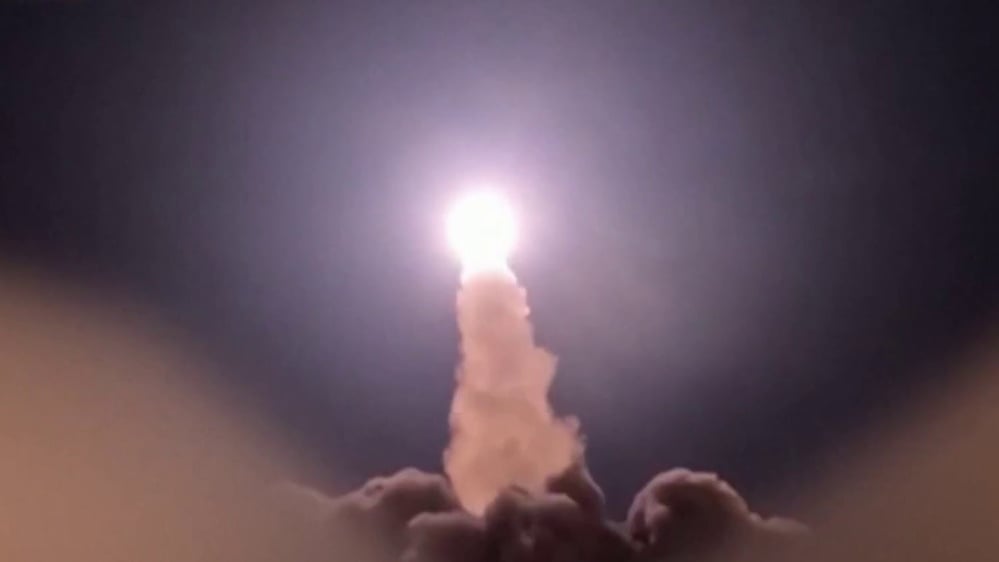
Event-focused reporting relies on CENTCOM framing to describe US strikes on Iran and related Iranian missile activity, with minimal Iranian perspective and emphasis on escalation and casualties.
Concise, fact-focused briefing about ongoing US strikes against Iran, Iranian missile activity, and a casualty, with attribution to a military source.
Automated analysis; not human reviewed.
Limitations: Short excerpt; relies on official US CENTCOM statements; lacks Iranian statements or independent verification; no civilian impact data.
·
21 of 52 available dimensions scored; omitted dimensions are not treated as neutral.
·
Verified supporting quotes for 8 of 21 scored dimensions.
Claim: Neutral framing with official attribution; no ideological slant.
“US launches ninth night of strikes on Iran as conflict edges closer to all-out war.” · exact text match
“CENTCOM says the latest attacks are aimed at degrading Iranian forces threatening commercial shipping in the Strait of Hormuz, as Tehran fires missiles toward Jordan and the US confirms another service member’s death” · exact text match
Why: Language focuses on events and attribution rather than ideology.
Claim: Descriptive, fact-based framing with attribution.
“as Tehran fires missiles toward Jordan and the US confirms another service member’s death” · exact text match
Why: No opinionated language; statements are attribution-based.
Claim: No explicit hawkish advocacy beyond reporting escalation.
“US launches ninth night of strikes on Iran as conflict edges closer to all-out war.” · exact text match
Why: Escalation is described, not argued for or against.
Claim: No explicit political advocacy; event description only.
“US launches ninth night of strikes on Iran” · exact text match
“CENTCOM says the latest attacks are aimed at degrading Iranian forces” · exact text match
Why: Lacks political ideology or policy critique.
Claim: Sourcing from CENTCOM emphasizes official authority.
“CENTCOM says the latest attacks are aimed at degrading Iranian forces” · exact text match
Why: Authority-based sourcing is common in reporting, not inherently biased.
Claim: No overconfident language; statements attributed to sources.
“the US confirms another service member’s death” · exact text match
Why: Use of attribution reduces certainty beyond source statements.
Claim: Reliance on official military statements; limited corroboration.
“CENTCOM says the latest attacks are aimed at degrading Iranian forces threatening commercial shipping in the Strait of Hormuz” · exact text match
Why: Heavy reliance on CENTCOM framing signals establishment-bent reporting.
Claim: Fairness cannot be assessed beyond single-source attribution.
“CENTCOM says the latest attacks are aimed at degrading Iranian forces threatening commercial shipping in the Strait of Hormuz” · exact text match
Why: Single-source reporting may limit balance.
Ambiguity: relies on CENTCOM framing; lacks Iran perspective or civilian context.
Multi-source foreign-policy coverage that foregrounds official US CENTCOM claims about strikes while presenting Iranian accounts and verification caveats, yielding a cautious, balance-aware framing.
Concise, factful, accurate, balanced context for the article in one sentence: Reports ninth night of US strikes on Iran, citing CENTCOM statements and Iranian claims, with verification caveats and regional incident updates.
Automated analysis; not human reviewed.
Limitations: Concise, case-specific limitations and plausible alternative interpretations.
·
52 of 52 available dimensions scored; omitted dimensions are not treated as neutral.
·
Verified supporting quotes for 3 of 52 scored dimensions.
Claim: Framing emphasizes risk to shipping and regional stability.
“"IRGC warned that oil, gas, and petrochemical shipments through the Strait of Hormuz would remain at risk as long as US regional operations continue."” · not found in supplied text
“"Vessel reported on fire near Oman's Kumzar, UKMTO says"” · exact text match
“"UKMTO said the cause of the fire had not been verified."” · exact text match
Counterevidence:
“"US embassy in Manama warned Americans in Bahrain to remain vigilant."” · not found in supplied text
“"Rubio says US still open to diplomatic solution"” · not found in supplied text
Why: Highlighting risk and unverified events can elevate fear while noting verification efforts.
Claim: Framing centers on US policy actions and accountability toward Iran.
“"The strikes will continue degrading Iranian military capabilities used to attack commercial vessels and civilian mariners transiting the Strait of Hormuz," CENTCOM wrote.” · exact text match
“"The statement concluded that US forces were acting at the direction of the commander in chief to hold Iran accountable and remained highly vigilant, focused, lethal, and ready to respond."” · exact text match
“"This marks the ninth consecutive night of US strikes against Iran.
Iran has been retaliating by targeting US bases and other infrastructure in neighboring countries."”
· exact text match
Counterevidence:
“"US embassy in Manama said Iran may seek to target unspecified locations in central Manama and urged Americans in Bahrain to remain vigilant."” · not found in supplied text
“"US still open to diplomatic solution with Iran, Rubio says"” · exact text match
Why: Prominent emphasis on US action and accountability framing with diplomacy aside.
Claim: Reliance on official authority (CENTCOM) to frame the narrative.
“"The strikes will continue degrading Iranian military capabilities used to attack commercial vessels and civilian mariners transiting the Strait of Hormuz," CENTCOM wrote.” · exact text match
“"The United States completed its ninth consecutive evening of strikes on Monday morning, US Central Command (CENTCOM) stated in a post to X/Twitter."” · exact text match
“"US still open to diplomatic solution with Iran, Rubio says"” · exact text match
Counterevidence:
“"Reuters could not immediately verify the incident."” · not found in supplied text
“"UKMTO said the cause of the fire had not been verified."” · exact text match
Why: Shows reliance on official statements while acknowledgments of verification limitations.
Claim: Reporting relies on official US CENTCOM statements and framing.
“"The strikes will continue degrading Iranian military capabilities used to attack commercial vessels and civilian mariners transiting the Strait of Hormuz," CENTCOM wrote.” · exact text match
“"The United States completed its ninth consecutive evening of strikes on Monday morning, US Central Command (CENTCOM) stated in a post to X/Twitter."” · exact text match
“"The statement concluded that US forces were acting at the direction of the commander in chief to hold Iran accountable and remained highly vigilant, focused, lethal, and ready to respond."” · exact text match
Counterevidence:
“"Reuters could not immediately verify the incident."” · not found in supplied text
“"The statement gave no details on the vessels' names, flags, crews, or any casualties."” · not found in supplied text
Why: US official framing is foregrounded; verification caveats accompany claims.
Claim: Incorporates multiple sources and verification notes.
“"Reuters could not immediately verify the incident."” · not found in supplied text
“"UKMTO said the cause of the fire had not been verified."” · exact text match
“"The IRGC also has claimed it targeted US aircraft at Jordan's Aqaba airport with ballistic missiles."” · exact text match
Counterevidence:
“"The statement gave no details on the vessels' names, flags, crews, or any casualties."” · not found in supplied text
“"Reuters could not immediately verify the incident."” · not found in supplied text
Why: Diversity of sources plus verification caveats supports credible reporting; some claims remain unverified.
Case-specific ambiguity: reliance on CENTCOM; verification gaps; limited vessel data.
July 20, 2026 · 0 shares
Balance appears through multi-sourced framing, quoting US and IRGC claims, noting verification uncertainties and humanitarian-law context, with no obvious pro-war or anti-war tilt.
International conflict reporting on US air strikes on Iran, IRGC actions, and regional responses around the Strait of Hormuz.
Automated analysis; not human reviewed.
Limitations: Concise, case-specific limitations and plausible alternative interpretations.
·
52 of 52 available dimensions scored; omitted dimensions are not treated as neutral.
·
Verified supporting quotes for 1 of 52 scored dimensions.
Claim: The article presents risk language about threats to mariners.
“It said the threat to mariners was severe after previous Iranian attacks, "with deliberate hostile action considered highly likely".” · not found in supplied text
Counterevidence:
“International humanitarian law generally protects civilian infrastructure such as bridges and power plants from attack, but such sites can lose protections if used for military purposes.” · exact text match
Why: Threat language is balanced by humanitarian-law context.
Claim: Multi-source sourcing and verification notes indicate cautious reporting.
“Reuters could not immediately verify the incident.” · exact text match
“The US military's Central Command said its ninth consecutive night of strikes targeted Iranian military command centres, air defence and coastal surveillance sites, maritime capabilities, missile and drone launch sites and communications networks.” · exact text match
“The UK Maritime Trade Operations says it received reports a vessel was ablaze near the coast of Oman.
(Supplied: UKMTO)”
· exact text match
Counterevidence:
“The IRGC statement gave no details on the vessels' names, flags, crews or any casualties.” · not found in supplied text
Why: Diverse sourcing and verification notes suggest balanced reporting rather than unverified claims.
Claim: Loaded framing through phrases such as 'punitive operation' suggests framing bias.
“IRGC said it had hit US military targets in Kuwait, including an early-warning radar system that was "completely destroyed", in a statement reported by state news agency IRNA.” · not found in supplied text
Counterevidence:
“Reuters could not immediately verify the incident.” · exact text match
Why: Charged terms appear in quotes from actors; not the article's own stance.
Caveat: excerpt; verification uncertain; potential selection bias.
July 19, 2026 · 0 shares
Event-focused reporting relies on CENTCOM framing to describe US strikes on Iran and related Iranian missile activity, with minimal Iranian perspective and emphasis on escalation and casualties.
Concise, fact-focused briefing about ongoing US strikes against Iran, Iranian missile activity, and a casualty, with attribution to a military source.
Automated analysis; not human reviewed.
Limitations: Short excerpt; relies on official US CENTCOM statements; lacks Iranian statements or independent verification; no civilian impact data.
·
21 of 52 available dimensions scored; omitted dimensions are not treated as neutral.
·
Verified supporting quotes for 8 of 21 scored dimensions.
Claim: Neutral framing with official attribution; no ideological slant.
“US launches ninth night of strikes on Iran as conflict edges closer to all-out war.” · exact text match
“CENTCOM says the latest attacks are aimed at degrading Iranian forces threatening commercial shipping in the Strait of Hormuz, as Tehran fires missiles toward Jordan and the US confirms another service member’s death” · exact text match
Why: Language focuses on events and attribution rather than ideology.
Claim: Descriptive, fact-based framing with attribution.
“as Tehran fires missiles toward Jordan and the US confirms another service member’s death” · exact text match
Why: No opinionated language; statements are attribution-based.
Claim: No explicit hawkish advocacy beyond reporting escalation.
“US launches ninth night of strikes on Iran as conflict edges closer to all-out war.” · exact text match
Why: Escalation is described, not argued for or against.
Claim: No explicit political advocacy; event description only.
“US launches ninth night of strikes on Iran” · exact text match
“CENTCOM says the latest attacks are aimed at degrading Iranian forces” · exact text match
Why: Lacks political ideology or policy critique.
Claim: Sourcing from CENTCOM emphasizes official authority.
“CENTCOM says the latest attacks are aimed at degrading Iranian forces” · exact text match
Why: Authority-based sourcing is common in reporting, not inherently biased.
Claim: No overconfident language; statements attributed to sources.
“the US confirms another service member’s death” · exact text match
Why: Use of attribution reduces certainty beyond source statements.
Claim: Reliance on official military statements; limited corroboration.
“CENTCOM says the latest attacks are aimed at degrading Iranian forces threatening commercial shipping in the Strait of Hormuz” · exact text match
Why: Heavy reliance on CENTCOM framing signals establishment-bent reporting.
Claim: Fairness cannot be assessed beyond single-source attribution.
“CENTCOM says the latest attacks are aimed at degrading Iranian forces threatening commercial shipping in the Strait of Hormuz” · exact text match
Why: Single-source reporting may limit balance.
Ambiguity: relies on CENTCOM framing; lacks Iran perspective or civilian context.
July 18, 2026 · 0 shares
Neutral, attribution-based framing with no partisan tilt, relying on official casualty figures.
Short report citing U.S. officials that four Iranian attacks in five days targeted U.S. troops in Jordan, including a Friday attack that killed two soldiers and left another service member missing.
Automated analysis; not human reviewed.
Limitations: Case-specific and based on a single, short news item; broader context and framing from other sources could alter the assessment.
·
2 of 52 available dimensions scored; omitted dimensions are not treated as neutral.
·
Verified supporting quotes for 0 of 2 scored dimensions.
Claim: Neutral, attribution-based framing with no partisan tilt.
“"Why Jordan Is Becoming a New Focus in the U.S.-Iran War."” · not found in supplied text
“"Four Iranian attacks in five days have targeted U.S. troops in Jordan, U.S. officials said, including one on Friday that killed two soldiers and left another service member missing."” · not found in supplied text
Why: Attribution to officials and concrete casualty figures indicate neutral framing.
Claim: No sensational framing; reporting relies on official claims and concrete numbers.
“"Four Iranian attacks in five days have targeted U.S. troops in Jordan, U.S. officials said, including one on Friday that killed two soldiers and left another service member missing."” · not found in supplied text
Why: Factual reporting with figures and attributions suggests minimal sensationalism.
Ambiguity: limited data, potential framing beyond this brief piece could exist.
July 18, 2026 · 0 shares
A neutral, event-focused report relying on official briefings with minimal interpretation and no critique of policy.
Brief direct report attributing casualty details to U.S. Central Command about an Iranian missile-and-drone attack in Jordan.
Automated analysis; not human reviewed. Limitations: Concise, case-specific limitations and plausible alternative interpretations.
Date unclear; relies on CENTCOM; no independent confirmation.
July 19, 2026 · 0 shares
Neutral, multi-source framing with quotes from Kuwaiti, Bahraini, Jordanian, Iraqi, Iranian (IRIB), and U.S. CENTCOM sources; no overt editorial tilt, though some quoted phrases frame Iran as aggressor.
Concise, factful, accurate, balanced context for the article in one sentence.
Automated analysis; not human reviewed.
Limitations: Concise, case-specific limitations and plausible alternative interpretations.
·
52 of 52 available dimensions scored; omitted dimensions are not treated as neutral.
·
Verified supporting quotes for 2 of 52 scored dimensions.
Claim: The report relies on multiple official sources and avoids explicit ideological framing by the author.
“Air-raid sirens sounded across Kuwait on Sunday morning, warning of missile and drone attacks amid what the Gulf nation’s military described as “criminal Iranian aggression.”” · exact text match
“The developments came as the American military struck Iranian targets for an eighth consecutive night on Saturday” · exact text match
“CENTCOM said the latest wave of strikes was carried out to “swiftly punish” IRGC forces.” · not found in supplied text
Counterevidence:
“The state-controlled Islamic Republic of Iran Broadcasting (IRIB) outlet reported on Saturday that Tehran had attacked U.S. military assets in Kuwait, Bahrain, Jordan and Iraq.” · exact text match
“There was no immediate official confirmation of the reported attack on Iraqi territory, which IRIB said targeted Sulaymaniyah Province in the country’s Kurdistan region.” · exact text match
Why: Multiple sources and lack of authorial editorializing suggest neutrality, but reliance on official lines indicates possible framing.
Claim: Language is largely descriptive and sourced with limited authorial commentary.
“The General Staff of the Kuwaiti Armed Forces confirms that any explosions that may be heard are the result of air defense systems intercepting hostile targets.” · not found in supplied text
“The public is urged to adhere to safety and security instructions issued by the relevant authorities.” · exact text match
Counterevidence:
“The phrase 'criminal Iranian aggression' appears within the narrative.” · not found in supplied text
Why: Official sources anchor reporting; subjectivity appears in quoted descriptors from others.
Claim: No explicit editorial leaning to escalation or de-escalation.
“"swiftly punish" IRGC forces” · verified after text normalization
“an eighth consecutive night” · exact text match
Why: Hawkish language appears in official statements, not as editorial stance.
Claim: Event-focused political reporting with quotes from government and military sources.
“The developments came as the American military struck Iranian targets for an eighth consecutive night on Saturday” · exact text match
“"swiftly punish" IRGC forces” · verified after text normalization
Why: Content centers on events rather than ideology; includes government/military framing.
Claim: Sourcing is broad across actors; helps credibility though some sources are state-affiliated.
“Kuwait’s military” · exact text match
“Bahrain Defense Force” · exact text match
“Jordan’s Petra News Agency” · not found in supplied text
Why: Broad sourcing improves credibility; state affiliations could influence framing.
Claim: The article cites varied actors across the conflict, implying balanced reporting.
“"Kuwait’s military"” · not found in supplied text
“"Bahrain Defense Force"” · not found in supplied text
“"Jordan’s Petra News Agency"” · not found in supplied text
Counterevidence:
“The descriptor 'state-controlled' attached to IRIB may influence interpretation.” · not found in supplied text
Why: Broad sourcing supports integrity; state-affiliated sources could color framing.
Claim: The report collects official statements from multiple authorities to describe events.
“CENTCOM said the latest wave of strikes was carried out to 'swiftly punish' IRGC forces.” · not found in supplied text
“two service members were killed in action in Jordan” · exact text match
Counterevidence:
“"criminal Iranian aggression"” · not found in supplied text
Why: Cross-sourced presentation typical of intelligence-style reporting.
Case-specific ambiguities: source reliability and potential framing in quotes; no inferred intent.
July 19, 2026 · 0 shares
Source-driven war coverage relying on official statements with multiple sources, and occasional hawkish framing, but limited independent verification.
A concise report on escalating U.S.-Iran hostilities and regional responses, citing CENTCOM and regional outlets.
Automated analysis; not human reviewed.
Limitations: Case-specific; limited to provided text; lacks external verification beyond cited sources; potential framing from source's editorial stance.
·
47 of 52 available dimensions scored; omitted dimensions are not treated as neutral.
·
Verified supporting quotes for 0 of 47 scored dimensions.
Claim: Hawkish framing appears via quotes about punishing and degrading Iran's capabilities.
“The U.S. military said it launched a new round of attacks to “swiftly punish” the Islamic Revolutionary Guard for hitting a base in Jordan, killing two U.S. soldiers.” · not found in supplied text
“designed to further degrade Iran’s ability to threaten commercial shipping in the Strait of Hormuz.” · exact text match
Counterevidence:
“The article primarily reports and quotes rather than endorsing these aims; it presents multiple sides' statements.” · not found in supplied text
Why: Quoted official language suggests hawkish framing, though overall reporting remains descriptive.
Claim: The report relies on official statements and multiple credited sources, implying credible reporting with limited verification.
“The U.S. and Iran continued trading airstrikes on Sunday after the U.S. military said it launched a new round of attacks to “swiftly punish” the Islamic Revolutionary Guard for hitting a base in Jordan, killing two U.S. soldiers.” · exact text match
“CENTCOM said late Saturday its forces completed an eighth consecutive night of strikes, “successfully hit Iranian military coastal surveillance and air defense facilities, maritime capabilities, and missile and drone storage sites to continue degrading Iranian military capabilities.”” · not found in supplied text
“According to AFP, Jordan’s state-run Al-Mamlaka channel reported that sirens sounded “in different parts of the kingdom.”” · exact text match
Counterevidence:
“The article includes non-reporting text such as site prompts and comments that may clutter content, reducing immediate credibility.” · not found in supplied text
“Some claims rely on official statements without independent corroboration within the piece.” · not found in supplied text
Why: Credibility stems from official quotes and sources; absence of independent verification lowers certainty.
Limited excerpt; heavy reliance on official sources; potential framing.
July 19, 2026 · 0 shares
Multi-source, verification-aware framing presents claims from Israel, the US, Jordan, and Iran while flagging unverified video and conflicting statements, yielding a cautious, balanced portrayal with skepticism toward official claims.
Context involves Iran's missiles toward Aqaba, US warnings, Jordanian responses, and conflicting, partially verified reporting amid ongoing regional hostilities.
Automated analysis; not human reviewed.
Limitations: Concise, case-specific limitations and plausible alternative interpretations.
·
2 of 52 available dimensions scored; omitted dimensions are not treated as neutral.
·
Verified supporting quotes for 1 of 2 scored dimensions.
Claim: The report casts doubt on US/Israel claims that Iranian launchers were destroyed earlier in the war.
“The ongoing Iranian attacks, particularly those targeted at Jordan, have cast doubt on the repeated insistence by the US and Israel that many of the regime's launchers and stockpiles had been destroyed earlier in the war.” · exact text match
Counterevidence:
“The notice was issued by the US Embassy in Amman ... 'specific and credible threat'.” · not found in supplied text
“Jordan's state news agency said neither Aqaba airport nor port had been evacuated and there were no potential threats detected in recent hours, fuelling confusion about what was happening.” · not found in supplied text
Why: Explicit doubt about official US/Israel destruction claims indicates potential anti-establishment framing.
Claim: The reporting balances multiple sources and flags verification status, showing cautious credibility.
“The Muwaffaq Salti air base, east of Amman, had been targeted, according to unverified video on social media.” · exact text match
“The US Embassy in Amman on Sunday afternoon local time, after what it said was a 'specific and credible threat'.” · not found in supplied text
“Jordan's state news agency noted no evacuation or threats detected, fueling confusion.” · not found in supplied text
Counterevidence:
“Video is described as unverified by ABC; multiple sources are used; there is mention of 'specific and credible threat'.” · not found in supplied text
Why: Balanced sourcing with verification caveats suggests cautious credibility rather than uncritical trust.
Unverified video and conflicting claims; limited verification.
Balanced, source-based reporting of conflicting evacuation claims and related tensions, with no editorializing.
Reuters report on contested evacuation claims at Aqaba airport and seaport amid US travel warnings and Iran-related tensions.
Automated analysis; not human reviewed.
Limitations: The short text relies on official statements; lacks independent verification; extraneous items in source text may mislead; limited context on threat specifics.
·
1 of 52 available dimensions scored; omitted dimensions are not treated as neutral.
·
Verified supporting quotes for 0 of 1 scored dimensions.
Claim: 0 neutrality with credible sourcing.
“The airport and port are operating normally.” · exact text match
“No potential threats have been recorded by the relevant Jordanian authorities in the past few hours.” · not found in supplied text
“The US embassy had said earlier the airport and seaport were evacuated due to a "specific and credible threat," without providing further details.” · not found in supplied text
Counterevidence:
“The US embassy claim of evacuation contrasts with Jordanian government's denial.” · not found in supplied text
“The text relies on official statements without independent verification.” · not found in supplied text
Why: Balanced use of official statements from US and Jordanian authorities; no editorial framing evident.
Ambiguities: conflicting US/Jordan claims; lack of independent verification; extraneous text.
July 20, 2026 · 0 shares
Balance appears through multi-sourced framing, quoting US and IRGC claims, noting verification uncertainties and humanitarian-law context, with no obvious pro-war or anti-war tilt.
International conflict reporting on US air strikes on Iran, IRGC actions, and regional responses around the Strait of Hormuz.
Automated analysis; not human reviewed.
Limitations: Concise, case-specific limitations and plausible alternative interpretations.
·
52 of 52 available dimensions scored; omitted dimensions are not treated as neutral.
·
Verified supporting quotes for 1 of 52 scored dimensions.
Claim: The article presents risk language about threats to mariners.
“It said the threat to mariners was severe after previous Iranian attacks, "with deliberate hostile action considered highly likely".” · not found in supplied text
Counterevidence:
“International humanitarian law generally protects civilian infrastructure such as bridges and power plants from attack, but such sites can lose protections if used for military purposes.” · exact text match
Why: Threat language is balanced by humanitarian-law context.
Claim: Multi-source sourcing and verification notes indicate cautious reporting.
“Reuters could not immediately verify the incident.” · exact text match
“The US military's Central Command said its ninth consecutive night of strikes targeted Iranian military command centres, air defence and coastal surveillance sites, maritime capabilities, missile and drone launch sites and communications networks.” · exact text match
“The UK Maritime Trade Operations says it received reports a vessel was ablaze near the coast of Oman.
(Supplied: UKMTO)”
· exact text match
Counterevidence:
“The IRGC statement gave no details on the vessels' names, flags, crews or any casualties.” · not found in supplied text
Why: Diverse sourcing and verification notes suggest balanced reporting rather than unverified claims.
Claim: Loaded framing through phrases such as 'punitive operation' suggests framing bias.
“IRGC said it had hit US military targets in Kuwait, including an early-warning radar system that was "completely destroyed", in a statement reported by state news agency IRNA.” · not found in supplied text
Counterevidence:
“Reuters could not immediately verify the incident.” · exact text match
Why: Charged terms appear in quotes from actors; not the article's own stance.
Caveat: excerpt; verification uncertain; potential selection bias.
Data-driven reporting with market figures and casualty updates, but headlines and risk framing emphasize geopolitical threats and rely heavily on a single former NATO commander for escalation options, potentially shaping reader interpretation.
Markets respond to heightened U.S.-Iran tensions with mixed futures and rising oil prices amid casualty reports and a former NATO commander outlining potential escalation paths and implications for trade routes.
Automated analysis; not human reviewed. Limitations: Concise, case-specific limitations and plausible alternative interpretations.
Case-specific ambiguities: heavy reliance on one expert; casualty data gaps.
July 19, 2026 · 0 shares
Event-focused reporting relies on CENTCOM framing to describe US strikes on Iran and related Iranian missile activity, with minimal Iranian perspective and emphasis on escalation and casualties.
Concise, fact-focused briefing about ongoing US strikes against Iran, Iranian missile activity, and a casualty, with attribution to a military source.
Automated analysis; not human reviewed. Limitations: Short excerpt; relies on official US CENTCOM statements; lacks Iranian statements or independent verification; no civilian impact data. · 21 of 52 available dimensions scored; omitted dimensions are not treated as neutral. · Verified supporting quotes for 8 of 21 scored dimensions.
Claim: Neutral framing with official attribution; no ideological slant.
“US launches ninth night of strikes on Iran as conflict edges closer to all-out war.” · exact text match
“CENTCOM says the latest attacks are aimed at degrading Iranian forces threatening commercial shipping in the Strait of Hormuz, as Tehran fires missiles toward Jordan and the US confirms another service member’s death” · exact text match
Why: Language focuses on events and attribution rather than ideology.
Claim: Descriptive, fact-based framing with attribution.
“as Tehran fires missiles toward Jordan and the US confirms another service member’s death” · exact text match
Why: No opinionated language; statements are attribution-based.
Claim: No explicit hawkish advocacy beyond reporting escalation.
“US launches ninth night of strikes on Iran as conflict edges closer to all-out war.” · exact text match
Why: Escalation is described, not argued for or against.
Claim: No explicit political advocacy; event description only.
“US launches ninth night of strikes on Iran” · exact text match
“CENTCOM says the latest attacks are aimed at degrading Iranian forces” · exact text match
Why: Lacks political ideology or policy critique.
Claim: Sourcing from CENTCOM emphasizes official authority.
“CENTCOM says the latest attacks are aimed at degrading Iranian forces” · exact text match
Why: Authority-based sourcing is common in reporting, not inherently biased.
Claim: No overconfident language; statements attributed to sources.
“the US confirms another service member’s death” · exact text match
Why: Use of attribution reduces certainty beyond source statements.
Claim: Reliance on official military statements; limited corroboration.
“CENTCOM says the latest attacks are aimed at degrading Iranian forces threatening commercial shipping in the Strait of Hormuz” · exact text match
Why: Heavy reliance on CENTCOM framing signals establishment-bent reporting.
Claim: Fairness cannot be assessed beyond single-source attribution.
“CENTCOM says the latest attacks are aimed at degrading Iranian forces threatening commercial shipping in the Strait of Hormuz” · exact text match
Why: Single-source reporting may limit balance.
Ambiguity: relies on CENTCOM framing; lacks Iran perspective or civilian context.
Multi-source foreign-policy coverage that foregrounds official US CENTCOM claims about strikes while presenting Iranian accounts and verification caveats, yielding a cautious, balance-aware framing.
Concise, factful, accurate, balanced context for the article in one sentence: Reports ninth night of US strikes on Iran, citing CENTCOM statements and Iranian claims, with verification caveats and regional incident updates.
Automated analysis; not human reviewed. Limitations: Concise, case-specific limitations and plausible alternative interpretations. · 52 of 52 available dimensions scored; omitted dimensions are not treated as neutral. · Verified supporting quotes for 3 of 52 scored dimensions.
Claim: Framing emphasizes risk to shipping and regional stability.
“"IRGC warned that oil, gas, and petrochemical shipments through the Strait of Hormuz would remain at risk as long as US regional operations continue."” · not found in supplied text
“"Vessel reported on fire near Oman's Kumzar, UKMTO says"” · exact text match
“"UKMTO said the cause of the fire had not been verified."” · exact text match
Counterevidence:
“"US embassy in Manama warned Americans in Bahrain to remain vigilant."” · not found in supplied text
“"Rubio says US still open to diplomatic solution"” · not found in supplied text
Why: Highlighting risk and unverified events can elevate fear while noting verification efforts.
Claim: Framing centers on US policy actions and accountability toward Iran.
“"The strikes will continue degrading Iranian military capabilities used to attack commercial vessels and civilian mariners transiting the Strait of Hormuz," CENTCOM wrote.” · exact text match
“"The statement concluded that US forces were acting at the direction of the commander in chief to hold Iran accountable and remained highly vigilant, focused, lethal, and ready to respond."” · exact text match
“"This marks the ninth consecutive night of US strikes against Iran. Iran has been retaliating by targeting US bases and other infrastructure in neighboring countries."” · exact text match
Counterevidence:
“"US embassy in Manama said Iran may seek to target unspecified locations in central Manama and urged Americans in Bahrain to remain vigilant."” · not found in supplied text
“"US still open to diplomatic solution with Iran, Rubio says"” · exact text match
Why: Prominent emphasis on US action and accountability framing with diplomacy aside.
Claim: Reliance on official authority (CENTCOM) to frame the narrative.
“"The strikes will continue degrading Iranian military capabilities used to attack commercial vessels and civilian mariners transiting the Strait of Hormuz," CENTCOM wrote.” · exact text match
“"The United States completed its ninth consecutive evening of strikes on Monday morning, US Central Command (CENTCOM) stated in a post to X/Twitter."” · exact text match
“"US still open to diplomatic solution with Iran, Rubio says"” · exact text match
Counterevidence:
“"Reuters could not immediately verify the incident."” · not found in supplied text
“"UKMTO said the cause of the fire had not been verified."” · exact text match
Why: Shows reliance on official statements while acknowledgments of verification limitations.
Claim: Reporting relies on official US CENTCOM statements and framing.
“"The strikes will continue degrading Iranian military capabilities used to attack commercial vessels and civilian mariners transiting the Strait of Hormuz," CENTCOM wrote.” · exact text match
“"The United States completed its ninth consecutive evening of strikes on Monday morning, US Central Command (CENTCOM) stated in a post to X/Twitter."” · exact text match
“"The statement concluded that US forces were acting at the direction of the commander in chief to hold Iran accountable and remained highly vigilant, focused, lethal, and ready to respond."” · exact text match
Counterevidence:
“"Reuters could not immediately verify the incident."” · not found in supplied text
“"The statement gave no details on the vessels' names, flags, crews, or any casualties."” · not found in supplied text
Why: US official framing is foregrounded; verification caveats accompany claims.
Claim: Incorporates multiple sources and verification notes.
“"Reuters could not immediately verify the incident."” · not found in supplied text
“"UKMTO said the cause of the fire had not been verified."” · exact text match
“"The IRGC also has claimed it targeted US aircraft at Jordan's Aqaba airport with ballistic missiles."” · exact text match
Counterevidence:
“"The statement gave no details on the vessels' names, flags, crews, or any casualties."” · not found in supplied text
“"Reuters could not immediately verify the incident."” · not found in supplied text
Why: Diversity of sources plus verification caveats supports credible reporting; some claims remain unverified.
Case-specific ambiguity: reliance on CENTCOM; verification gaps; limited vessel data.
July 19, 2026 · 0 shares
Event-focused reporting relies on CENTCOM framing to describe US strikes on Iran and related Iranian missile activity, with minimal Iranian perspective and emphasis on escalation and casualties.
Concise, fact-focused briefing about ongoing US strikes against Iran, Iranian missile activity, and a casualty, with attribution to a military source.
Automated analysis; not human reviewed. Limitations: Short excerpt; relies on official US CENTCOM statements; lacks Iranian statements or independent verification; no civilian impact data. · 21 of 52 available dimensions scored; omitted dimensions are not treated as neutral. · Verified supporting quotes for 8 of 21 scored dimensions.
Claim: Neutral framing with official attribution; no ideological slant.
“US launches ninth night of strikes on Iran as conflict edges closer to all-out war.” · exact text match
“CENTCOM says the latest attacks are aimed at degrading Iranian forces threatening commercial shipping in the Strait of Hormuz, as Tehran fires missiles toward Jordan and the US confirms another service member’s death” · exact text match
Why: Language focuses on events and attribution rather than ideology.
Claim: Descriptive, fact-based framing with attribution.
“as Tehran fires missiles toward Jordan and the US confirms another service member’s death” · exact text match
Why: No opinionated language; statements are attribution-based.
Claim: No explicit hawkish advocacy beyond reporting escalation.
“US launches ninth night of strikes on Iran as conflict edges closer to all-out war.” · exact text match
Why: Escalation is described, not argued for or against.
Claim: No explicit political advocacy; event description only.
“US launches ninth night of strikes on Iran” · exact text match
“CENTCOM says the latest attacks are aimed at degrading Iranian forces” · exact text match
Why: Lacks political ideology or policy critique.
Claim: Sourcing from CENTCOM emphasizes official authority.
“CENTCOM says the latest attacks are aimed at degrading Iranian forces” · exact text match
Why: Authority-based sourcing is common in reporting, not inherently biased.
Claim: No overconfident language; statements attributed to sources.
“the US confirms another service member’s death” · exact text match
Why: Use of attribution reduces certainty beyond source statements.
Claim: Reliance on official military statements; limited corroboration.
“CENTCOM says the latest attacks are aimed at degrading Iranian forces threatening commercial shipping in the Strait of Hormuz” · exact text match
Why: Heavy reliance on CENTCOM framing signals establishment-bent reporting.
Claim: Fairness cannot be assessed beyond single-source attribution.
“CENTCOM says the latest attacks are aimed at degrading Iranian forces threatening commercial shipping in the Strait of Hormuz” · exact text match
Why: Single-source reporting may limit balance.
Ambiguity: relies on CENTCOM framing; lacks Iran perspective or civilian context.
July 18, 2026 · 0 shares
A neutral, event-focused report relying on official briefings with minimal interpretation and no critique of policy.
Brief direct report attributing casualty details to U.S. Central Command about an Iranian missile-and-drone attack in Jordan.
Automated analysis; not human reviewed. Limitations: Concise, case-specific limitations and plausible alternative interpretations.
Date unclear; relies on CENTCOM; no independent confirmation.
Balanced, source-based reporting of conflicting evacuation claims and related tensions, with no editorializing.
Reuters report on contested evacuation claims at Aqaba airport and seaport amid US travel warnings and Iran-related tensions.
Automated analysis; not human reviewed. Limitations: The short text relies on official statements; lacks independent verification; extraneous items in source text may mislead; limited context on threat specifics. · 1 of 52 available dimensions scored; omitted dimensions are not treated as neutral. · Verified supporting quotes for 0 of 1 scored dimensions.
Claim: 0 neutrality with credible sourcing.
“The airport and port are operating normally.” · exact text match
“No potential threats have been recorded by the relevant Jordanian authorities in the past few hours.” · not found in supplied text
“The US embassy had said earlier the airport and seaport were evacuated due to a "specific and credible threat," without providing further details.” · not found in supplied text
Counterevidence:
“The US embassy claim of evacuation contrasts with Jordanian government's denial.” · not found in supplied text
“The text relies on official statements without independent verification.” · not found in supplied text
Why: Balanced use of official statements from US and Jordanian authorities; no editorial framing evident.
Ambiguities: conflicting US/Jordan claims; lack of independent verification; extraneous text.
CENTCOM-/U.S.-official escalation frame
July 19, 2026 · 0 shares
Event-focused reporting relies on CENTCOM framing to describe US strikes on Iran and related Iranian missile activity, with minimal Iranian perspective and emphasis on escalation and casualties.
Concise, fact-focused briefing about ongoing US strikes against Iran, Iranian missile activity, and a casualty, with attribution to a military source.
Automated analysis; not human reviewed. Limitations: Short excerpt; relies on official US CENTCOM statements; lacks Iranian statements or independent verification; no civilian impact data. · 21 of 52 available dimensions scored; omitted dimensions are not treated as neutral. · Verified supporting quotes for 8 of 21 scored dimensions.
Claim: Neutral framing with official attribution; no ideological slant.
“US launches ninth night of strikes on Iran as conflict edges closer to all-out war.” · exact text match
“CENTCOM says the latest attacks are aimed at degrading Iranian forces threatening commercial shipping in the Strait of Hormuz, as Tehran fires missiles toward Jordan and the US confirms another service member’s death” · exact text match
Why: Language focuses on events and attribution rather than ideology.
Claim: Descriptive, fact-based framing with attribution.
“as Tehran fires missiles toward Jordan and the US confirms another service member’s death” · exact text match
Why: No opinionated language; statements are attribution-based.
Claim: No explicit hawkish advocacy beyond reporting escalation.
“US launches ninth night of strikes on Iran as conflict edges closer to all-out war.” · exact text match
Why: Escalation is described, not argued for or against.
Claim: No explicit political advocacy; event description only.
“US launches ninth night of strikes on Iran” · exact text match
“CENTCOM says the latest attacks are aimed at degrading Iranian forces” · exact text match
Why: Lacks political ideology or policy critique.
Claim: Sourcing from CENTCOM emphasizes official authority.
“CENTCOM says the latest attacks are aimed at degrading Iranian forces” · exact text match
Why: Authority-based sourcing is common in reporting, not inherently biased.
Claim: No overconfident language; statements attributed to sources.
“the US confirms another service member’s death” · exact text match
Why: Use of attribution reduces certainty beyond source statements.
Claim: Reliance on official military statements; limited corroboration.
“CENTCOM says the latest attacks are aimed at degrading Iranian forces threatening commercial shipping in the Strait of Hormuz” · exact text match
Why: Heavy reliance on CENTCOM framing signals establishment-bent reporting.
Claim: Fairness cannot be assessed beyond single-source attribution.
“CENTCOM says the latest attacks are aimed at degrading Iranian forces threatening commercial shipping in the Strait of Hormuz” · exact text match
Why: Single-source reporting may limit balance.
Ambiguity: relies on CENTCOM framing; lacks Iran perspective or civilian context.
Multi-source foreign-policy coverage that foregrounds official US CENTCOM claims about strikes while presenting Iranian accounts and verification caveats, yielding a cautious, balance-aware framing.
Concise, factful, accurate, balanced context for the article in one sentence: Reports ninth night of US strikes on Iran, citing CENTCOM statements and Iranian claims, with verification caveats and regional incident updates.
Automated analysis; not human reviewed. Limitations: Concise, case-specific limitations and plausible alternative interpretations. · 52 of 52 available dimensions scored; omitted dimensions are not treated as neutral. · Verified supporting quotes for 3 of 52 scored dimensions.
Claim: Framing emphasizes risk to shipping and regional stability.
“"IRGC warned that oil, gas, and petrochemical shipments through the Strait of Hormuz would remain at risk as long as US regional operations continue."” · not found in supplied text
“"Vessel reported on fire near Oman's Kumzar, UKMTO says"” · exact text match
“"UKMTO said the cause of the fire had not been verified."” · exact text match
Counterevidence:
“"US embassy in Manama warned Americans in Bahrain to remain vigilant."” · not found in supplied text
“"Rubio says US still open to diplomatic solution"” · not found in supplied text
Why: Highlighting risk and unverified events can elevate fear while noting verification efforts.
Claim: Framing centers on US policy actions and accountability toward Iran.
“"The strikes will continue degrading Iranian military capabilities used to attack commercial vessels and civilian mariners transiting the Strait of Hormuz," CENTCOM wrote.” · exact text match
“"The statement concluded that US forces were acting at the direction of the commander in chief to hold Iran accountable and remained highly vigilant, focused, lethal, and ready to respond."” · exact text match
“"This marks the ninth consecutive night of US strikes against Iran. Iran has been retaliating by targeting US bases and other infrastructure in neighboring countries."” · exact text match
Counterevidence:
“"US embassy in Manama said Iran may seek to target unspecified locations in central Manama and urged Americans in Bahrain to remain vigilant."” · not found in supplied text
“"US still open to diplomatic solution with Iran, Rubio says"” · exact text match
Why: Prominent emphasis on US action and accountability framing with diplomacy aside.
Claim: Reliance on official authority (CENTCOM) to frame the narrative.
“"The strikes will continue degrading Iranian military capabilities used to attack commercial vessels and civilian mariners transiting the Strait of Hormuz," CENTCOM wrote.” · exact text match
“"The United States completed its ninth consecutive evening of strikes on Monday morning, US Central Command (CENTCOM) stated in a post to X/Twitter."” · exact text match
“"US still open to diplomatic solution with Iran, Rubio says"” · exact text match
Counterevidence:
“"Reuters could not immediately verify the incident."” · not found in supplied text
“"UKMTO said the cause of the fire had not been verified."” · exact text match
Why: Shows reliance on official statements while acknowledgments of verification limitations.
Claim: Reporting relies on official US CENTCOM statements and framing.
“"The strikes will continue degrading Iranian military capabilities used to attack commercial vessels and civilian mariners transiting the Strait of Hormuz," CENTCOM wrote.” · exact text match
“"The United States completed its ninth consecutive evening of strikes on Monday morning, US Central Command (CENTCOM) stated in a post to X/Twitter."” · exact text match
“"The statement concluded that US forces were acting at the direction of the commander in chief to hold Iran accountable and remained highly vigilant, focused, lethal, and ready to respond."” · exact text match
Counterevidence:
“"Reuters could not immediately verify the incident."” · not found in supplied text
“"The statement gave no details on the vessels' names, flags, crews, or any casualties."” · not found in supplied text
Why: US official framing is foregrounded; verification caveats accompany claims.
Claim: Incorporates multiple sources and verification notes.
“"Reuters could not immediately verify the incident."” · not found in supplied text
“"UKMTO said the cause of the fire had not been verified."” · exact text match
“"The IRGC also has claimed it targeted US aircraft at Jordan's Aqaba airport with ballistic missiles."” · exact text match
Counterevidence:
“"The statement gave no details on the vessels' names, flags, crews, or any casualties."” · not found in supplied text
“"Reuters could not immediately verify the incident."” · not found in supplied text
Why: Diversity of sources plus verification caveats supports credible reporting; some claims remain unverified.
Case-specific ambiguity: reliance on CENTCOM; verification gaps; limited vessel data.
July 20, 2026 · 0 shares
Balance appears through multi-sourced framing, quoting US and IRGC claims, noting verification uncertainties and humanitarian-law context, with no obvious pro-war or anti-war tilt.
International conflict reporting on US air strikes on Iran, IRGC actions, and regional responses around the Strait of Hormuz.
Automated analysis; not human reviewed. Limitations: Concise, case-specific limitations and plausible alternative interpretations. · 52 of 52 available dimensions scored; omitted dimensions are not treated as neutral. · Verified supporting quotes for 1 of 52 scored dimensions.
Claim: The article presents risk language about threats to mariners.
“It said the threat to mariners was severe after previous Iranian attacks, "with deliberate hostile action considered highly likely".” · not found in supplied text
Counterevidence:
“International humanitarian law generally protects civilian infrastructure such as bridges and power plants from attack, but such sites can lose protections if used for military purposes.” · exact text match
Why: Threat language is balanced by humanitarian-law context.
Claim: Multi-source sourcing and verification notes indicate cautious reporting.
“Reuters could not immediately verify the incident.” · exact text match
“The US military's Central Command said its ninth consecutive night of strikes targeted Iranian military command centres, air defence and coastal surveillance sites, maritime capabilities, missile and drone launch sites and communications networks.” · exact text match
“The UK Maritime Trade Operations says it received reports a vessel was ablaze near the coast of Oman. (Supplied: UKMTO)” · exact text match
Counterevidence:
“The IRGC statement gave no details on the vessels' names, flags, crews or any casualties.” · not found in supplied text
Why: Diverse sourcing and verification notes suggest balanced reporting rather than unverified claims.
Claim: Loaded framing through phrases such as 'punitive operation' suggests framing bias.
“IRGC said it had hit US military targets in Kuwait, including an early-warning radar system that was "completely destroyed", in a statement reported by state news agency IRNA.” · not found in supplied text
Counterevidence:
“Reuters could not immediately verify the incident.” · exact text match
Why: Charged terms appear in quotes from actors; not the article's own stance.
Caveat: excerpt; verification uncertain; potential selection bias.
July 19, 2026 · 0 shares
Event-focused reporting relies on CENTCOM framing to describe US strikes on Iran and related Iranian missile activity, with minimal Iranian perspective and emphasis on escalation and casualties.
Concise, fact-focused briefing about ongoing US strikes against Iran, Iranian missile activity, and a casualty, with attribution to a military source.
Automated analysis; not human reviewed. Limitations: Short excerpt; relies on official US CENTCOM statements; lacks Iranian statements or independent verification; no civilian impact data. · 21 of 52 available dimensions scored; omitted dimensions are not treated as neutral. · Verified supporting quotes for 8 of 21 scored dimensions.
Claim: Neutral framing with official attribution; no ideological slant.
“US launches ninth night of strikes on Iran as conflict edges closer to all-out war.” · exact text match
“CENTCOM says the latest attacks are aimed at degrading Iranian forces threatening commercial shipping in the Strait of Hormuz, as Tehran fires missiles toward Jordan and the US confirms another service member’s death” · exact text match
Why: Language focuses on events and attribution rather than ideology.
Claim: Descriptive, fact-based framing with attribution.
“as Tehran fires missiles toward Jordan and the US confirms another service member’s death” · exact text match
Why: No opinionated language; statements are attribution-based.
Claim: No explicit hawkish advocacy beyond reporting escalation.
“US launches ninth night of strikes on Iran as conflict edges closer to all-out war.” · exact text match
Why: Escalation is described, not argued for or against.
Claim: No explicit political advocacy; event description only.
“US launches ninth night of strikes on Iran” · exact text match
“CENTCOM says the latest attacks are aimed at degrading Iranian forces” · exact text match
Why: Lacks political ideology or policy critique.
Claim: Sourcing from CENTCOM emphasizes official authority.
“CENTCOM says the latest attacks are aimed at degrading Iranian forces” · exact text match
Why: Authority-based sourcing is common in reporting, not inherently biased.
Claim: No overconfident language; statements attributed to sources.
“the US confirms another service member’s death” · exact text match
Why: Use of attribution reduces certainty beyond source statements.
Claim: Reliance on official military statements; limited corroboration.
“CENTCOM says the latest attacks are aimed at degrading Iranian forces threatening commercial shipping in the Strait of Hormuz” · exact text match
Why: Heavy reliance on CENTCOM framing signals establishment-bent reporting.
Claim: Fairness cannot be assessed beyond single-source attribution.
“CENTCOM says the latest attacks are aimed at degrading Iranian forces threatening commercial shipping in the Strait of Hormuz” · exact text match
Why: Single-source reporting may limit balance.
Ambiguity: relies on CENTCOM framing; lacks Iran perspective or civilian context.
July 18, 2026 · 0 shares
A neutral, event-focused report relying on official briefings with minimal interpretation and no critique of policy.
Brief direct report attributing casualty details to U.S. Central Command about an Iranian missile-and-drone attack in Jordan.
Automated analysis; not human reviewed. Limitations: Concise, case-specific limitations and plausible alternative interpretations.
Date unclear; relies on CENTCOM; no independent confirmation.
July 18, 2026 · 0 shares
Neutral, attribution-based framing with no partisan tilt, relying on official casualty figures.
Short report citing U.S. officials that four Iranian attacks in five days targeted U.S. troops in Jordan, including a Friday attack that killed two soldiers and left another service member missing.
Automated analysis; not human reviewed. Limitations: Case-specific and based on a single, short news item; broader context and framing from other sources could alter the assessment. · 2 of 52 available dimensions scored; omitted dimensions are not treated as neutral. · Verified supporting quotes for 0 of 2 scored dimensions.
Claim: Neutral, attribution-based framing with no partisan tilt.
“"Why Jordan Is Becoming a New Focus in the U.S.-Iran War."” · not found in supplied text
“"Four Iranian attacks in five days have targeted U.S. troops in Jordan, U.S. officials said, including one on Friday that killed two soldiers and left another service member missing."” · not found in supplied text
Why: Attribution to officials and concrete casualty figures indicate neutral framing.
Claim: No sensational framing; reporting relies on official claims and concrete numbers.
“"Four Iranian attacks in five days have targeted U.S. troops in Jordan, U.S. officials said, including one on Friday that killed two soldiers and left another service member missing."” · not found in supplied text
Why: Factual reporting with figures and attributions suggests minimal sensationalism.
Ambiguity: limited data, potential framing beyond this brief piece could exist.
Multi-source foreign-policy coverage that foregrounds official US CENTCOM claims about strikes while presenting Iranian accounts and verification caveats, yielding a cautious, balance-aware framing.
Concise, factful, accurate, balanced context for the article in one sentence: Reports ninth night of US strikes on Iran, citing CENTCOM statements and Iranian claims, with verification caveats and regional incident updates.
Automated analysis; not human reviewed. Limitations: Concise, case-specific limitations and plausible alternative interpretations. · 52 of 52 available dimensions scored; omitted dimensions are not treated as neutral. · Verified supporting quotes for 3 of 52 scored dimensions.
Claim: Framing emphasizes risk to shipping and regional stability.
“"IRGC warned that oil, gas, and petrochemical shipments through the Strait of Hormuz would remain at risk as long as US regional operations continue."” · not found in supplied text
“"Vessel reported on fire near Oman's Kumzar, UKMTO says"” · exact text match
“"UKMTO said the cause of the fire had not been verified."” · exact text match
Counterevidence:
“"US embassy in Manama warned Americans in Bahrain to remain vigilant."” · not found in supplied text
“"Rubio says US still open to diplomatic solution"” · not found in supplied text
Why: Highlighting risk and unverified events can elevate fear while noting verification efforts.
Claim: Framing centers on US policy actions and accountability toward Iran.
“"The strikes will continue degrading Iranian military capabilities used to attack commercial vessels and civilian mariners transiting the Strait of Hormuz," CENTCOM wrote.” · exact text match
“"The statement concluded that US forces were acting at the direction of the commander in chief to hold Iran accountable and remained highly vigilant, focused, lethal, and ready to respond."” · exact text match
“"This marks the ninth consecutive night of US strikes against Iran. Iran has been retaliating by targeting US bases and other infrastructure in neighboring countries."” · exact text match
Counterevidence:
“"US embassy in Manama said Iran may seek to target unspecified locations in central Manama and urged Americans in Bahrain to remain vigilant."” · not found in supplied text
“"US still open to diplomatic solution with Iran, Rubio says"” · exact text match
Why: Prominent emphasis on US action and accountability framing with diplomacy aside.
Claim: Reliance on official authority (CENTCOM) to frame the narrative.
“"The strikes will continue degrading Iranian military capabilities used to attack commercial vessels and civilian mariners transiting the Strait of Hormuz," CENTCOM wrote.” · exact text match
“"The United States completed its ninth consecutive evening of strikes on Monday morning, US Central Command (CENTCOM) stated in a post to X/Twitter."” · exact text match
“"US still open to diplomatic solution with Iran, Rubio says"” · exact text match
Counterevidence:
“"Reuters could not immediately verify the incident."” · not found in supplied text
“"UKMTO said the cause of the fire had not been verified."” · exact text match
Why: Shows reliance on official statements while acknowledgments of verification limitations.
Claim: Reporting relies on official US CENTCOM statements and framing.
“"The strikes will continue degrading Iranian military capabilities used to attack commercial vessels and civilian mariners transiting the Strait of Hormuz," CENTCOM wrote.” · exact text match
“"The United States completed its ninth consecutive evening of strikes on Monday morning, US Central Command (CENTCOM) stated in a post to X/Twitter."” · exact text match
“"The statement concluded that US forces were acting at the direction of the commander in chief to hold Iran accountable and remained highly vigilant, focused, lethal, and ready to respond."” · exact text match
Counterevidence:
“"Reuters could not immediately verify the incident."” · not found in supplied text
“"The statement gave no details on the vessels' names, flags, crews, or any casualties."” · not found in supplied text
Why: US official framing is foregrounded; verification caveats accompany claims.
Claim: Incorporates multiple sources and verification notes.
“"Reuters could not immediately verify the incident."” · not found in supplied text
“"UKMTO said the cause of the fire had not been verified."” · exact text match
“"The IRGC also has claimed it targeted US aircraft at Jordan's Aqaba airport with ballistic missiles."” · exact text match
Counterevidence:
“"The statement gave no details on the vessels' names, flags, crews, or any casualties."” · not found in supplied text
“"Reuters could not immediately verify the incident."” · not found in supplied text
Why: Diversity of sources plus verification caveats supports credible reporting; some claims remain unverified.
Case-specific ambiguity: reliance on CENTCOM; verification gaps; limited vessel data.
July 19, 2026 · 0 shares
Source-driven war coverage relying on official statements with multiple sources, and occasional hawkish framing, but limited independent verification.
A concise report on escalating U.S.-Iran hostilities and regional responses, citing CENTCOM and regional outlets.
Automated analysis; not human reviewed. Limitations: Case-specific; limited to provided text; lacks external verification beyond cited sources; potential framing from source's editorial stance. · 47 of 52 available dimensions scored; omitted dimensions are not treated as neutral. · Verified supporting quotes for 0 of 47 scored dimensions.
Claim: Hawkish framing appears via quotes about punishing and degrading Iran's capabilities.
“The U.S. military said it launched a new round of attacks to “swiftly punish” the Islamic Revolutionary Guard for hitting a base in Jordan, killing two U.S. soldiers.” · not found in supplied text
“designed to further degrade Iran’s ability to threaten commercial shipping in the Strait of Hormuz.” · exact text match
Counterevidence:
“The article primarily reports and quotes rather than endorsing these aims; it presents multiple sides' statements.” · not found in supplied text
Why: Quoted official language suggests hawkish framing, though overall reporting remains descriptive.
Claim: The report relies on official statements and multiple credited sources, implying credible reporting with limited verification.
“The U.S. and Iran continued trading airstrikes on Sunday after the U.S. military said it launched a new round of attacks to “swiftly punish” the Islamic Revolutionary Guard for hitting a base in Jordan, killing two U.S. soldiers.” · exact text match
“CENTCOM said late Saturday its forces completed an eighth consecutive night of strikes, “successfully hit Iranian military coastal surveillance and air defense facilities, maritime capabilities, and missile and drone storage sites to continue degrading Iranian military capabilities.”” · not found in supplied text
“According to AFP, Jordan’s state-run Al-Mamlaka channel reported that sirens sounded “in different parts of the kingdom.”” · exact text match
Counterevidence:
“The article includes non-reporting text such as site prompts and comments that may clutter content, reducing immediate credibility.” · not found in supplied text
“Some claims rely on official statements without independent corroboration within the piece.” · not found in supplied text
Why: Credibility stems from official quotes and sources; absence of independent verification lowers certainty.
Limited excerpt; heavy reliance on official sources; potential framing.
July 20, 2026 · 0 shares
Balance appears through multi-sourced framing, quoting US and IRGC claims, noting verification uncertainties and humanitarian-law context, with no obvious pro-war or anti-war tilt.
International conflict reporting on US air strikes on Iran, IRGC actions, and regional responses around the Strait of Hormuz.
Automated analysis; not human reviewed. Limitations: Concise, case-specific limitations and plausible alternative interpretations. · 52 of 52 available dimensions scored; omitted dimensions are not treated as neutral. · Verified supporting quotes for 1 of 52 scored dimensions.
Claim: The article presents risk language about threats to mariners.
“It said the threat to mariners was severe after previous Iranian attacks, "with deliberate hostile action considered highly likely".” · not found in supplied text
Counterevidence:
“International humanitarian law generally protects civilian infrastructure such as bridges and power plants from attack, but such sites can lose protections if used for military purposes.” · exact text match
Why: Threat language is balanced by humanitarian-law context.
Claim: Multi-source sourcing and verification notes indicate cautious reporting.
“Reuters could not immediately verify the incident.” · exact text match
“The US military's Central Command said its ninth consecutive night of strikes targeted Iranian military command centres, air defence and coastal surveillance sites, maritime capabilities, missile and drone launch sites and communications networks.” · exact text match
“The UK Maritime Trade Operations says it received reports a vessel was ablaze near the coast of Oman. (Supplied: UKMTO)” · exact text match
Counterevidence:
“The IRGC statement gave no details on the vessels' names, flags, crews or any casualties.” · not found in supplied text
Why: Diverse sourcing and verification notes suggest balanced reporting rather than unverified claims.
Claim: Loaded framing through phrases such as 'punitive operation' suggests framing bias.
“IRGC said it had hit US military targets in Kuwait, including an early-warning radar system that was "completely destroyed", in a statement reported by state news agency IRNA.” · not found in supplied text
Counterevidence:
“Reuters could not immediately verify the incident.” · exact text match
Why: Charged terms appear in quotes from actors; not the article's own stance.
Caveat: excerpt; verification uncertain; potential selection bias.
July 19, 2026 · 0 shares
Event-focused reporting relies on CENTCOM framing to describe US strikes on Iran and related Iranian missile activity, with minimal Iranian perspective and emphasis on escalation and casualties.
Concise, fact-focused briefing about ongoing US strikes against Iran, Iranian missile activity, and a casualty, with attribution to a military source.
Automated analysis; not human reviewed. Limitations: Short excerpt; relies on official US CENTCOM statements; lacks Iranian statements or independent verification; no civilian impact data. · 21 of 52 available dimensions scored; omitted dimensions are not treated as neutral. · Verified supporting quotes for 8 of 21 scored dimensions.
Claim: Neutral framing with official attribution; no ideological slant.
“US launches ninth night of strikes on Iran as conflict edges closer to all-out war.” · exact text match
“CENTCOM says the latest attacks are aimed at degrading Iranian forces threatening commercial shipping in the Strait of Hormuz, as Tehran fires missiles toward Jordan and the US confirms another service member’s death” · exact text match
Why: Language focuses on events and attribution rather than ideology.
Claim: Descriptive, fact-based framing with attribution.
“as Tehran fires missiles toward Jordan and the US confirms another service member’s death” · exact text match
Why: No opinionated language; statements are attribution-based.
Claim: No explicit hawkish advocacy beyond reporting escalation.
“US launches ninth night of strikes on Iran as conflict edges closer to all-out war.” · exact text match
Why: Escalation is described, not argued for or against.
Claim: No explicit political advocacy; event description only.
“US launches ninth night of strikes on Iran” · exact text match
“CENTCOM says the latest attacks are aimed at degrading Iranian forces” · exact text match
Why: Lacks political ideology or policy critique.
Claim: Sourcing from CENTCOM emphasizes official authority.
“CENTCOM says the latest attacks are aimed at degrading Iranian forces” · exact text match
Why: Authority-based sourcing is common in reporting, not inherently biased.
Claim: No overconfident language; statements attributed to sources.
“the US confirms another service member’s death” · exact text match
Why: Use of attribution reduces certainty beyond source statements.
Claim: Reliance on official military statements; limited corroboration.
“CENTCOM says the latest attacks are aimed at degrading Iranian forces threatening commercial shipping in the Strait of Hormuz” · exact text match
Why: Heavy reliance on CENTCOM framing signals establishment-bent reporting.
Claim: Fairness cannot be assessed beyond single-source attribution.
“CENTCOM says the latest attacks are aimed at degrading Iranian forces threatening commercial shipping in the Strait of Hormuz” · exact text match
Why: Single-source reporting may limit balance.
Ambiguity: relies on CENTCOM framing; lacks Iran perspective or civilian context.
Iran-/IRGC-and-Gulf-accusations frame
July 20, 2026 · 0 shares
Balance appears through multi-sourced framing, quoting US and IRGC claims, noting verification uncertainties and humanitarian-law context, with no obvious pro-war or anti-war tilt.
International conflict reporting on US air strikes on Iran, IRGC actions, and regional responses around the Strait of Hormuz.
Automated analysis; not human reviewed. Limitations: Concise, case-specific limitations and plausible alternative interpretations. · 52 of 52 available dimensions scored; omitted dimensions are not treated as neutral. · Verified supporting quotes for 1 of 52 scored dimensions.
Claim: The article presents risk language about threats to mariners.
“It said the threat to mariners was severe after previous Iranian attacks, "with deliberate hostile action considered highly likely".” · not found in supplied text
Counterevidence:
“International humanitarian law generally protects civilian infrastructure such as bridges and power plants from attack, but such sites can lose protections if used for military purposes.” · exact text match
Why: Threat language is balanced by humanitarian-law context.
Claim: Multi-source sourcing and verification notes indicate cautious reporting.
“Reuters could not immediately verify the incident.” · exact text match
“The US military's Central Command said its ninth consecutive night of strikes targeted Iranian military command centres, air defence and coastal surveillance sites, maritime capabilities, missile and drone launch sites and communications networks.” · exact text match
“The UK Maritime Trade Operations says it received reports a vessel was ablaze near the coast of Oman. (Supplied: UKMTO)” · exact text match
Counterevidence:
“The IRGC statement gave no details on the vessels' names, flags, crews or any casualties.” · not found in supplied text
Why: Diverse sourcing and verification notes suggest balanced reporting rather than unverified claims.
Claim: Loaded framing through phrases such as 'punitive operation' suggests framing bias.
“IRGC said it had hit US military targets in Kuwait, including an early-warning radar system that was "completely destroyed", in a statement reported by state news agency IRNA.” · not found in supplied text
Counterevidence:
“Reuters could not immediately verify the incident.” · exact text match
Why: Charged terms appear in quotes from actors; not the article's own stance.
Caveat: excerpt; verification uncertain; potential selection bias.
July 19, 2026 · 0 shares
Neutral, multi-source framing with quotes from Kuwaiti, Bahraini, Jordanian, Iraqi, Iranian (IRIB), and U.S. CENTCOM sources; no overt editorial tilt, though some quoted phrases frame Iran as aggressor.
Concise, factful, accurate, balanced context for the article in one sentence.
Automated analysis; not human reviewed. Limitations: Concise, case-specific limitations and plausible alternative interpretations. · 52 of 52 available dimensions scored; omitted dimensions are not treated as neutral. · Verified supporting quotes for 2 of 52 scored dimensions.
Claim: The report relies on multiple official sources and avoids explicit ideological framing by the author.
“Air-raid sirens sounded across Kuwait on Sunday morning, warning of missile and drone attacks amid what the Gulf nation’s military described as “criminal Iranian aggression.”” · exact text match
“The developments came as the American military struck Iranian targets for an eighth consecutive night on Saturday” · exact text match
“CENTCOM said the latest wave of strikes was carried out to “swiftly punish” IRGC forces.” · not found in supplied text
Counterevidence:
“The state-controlled Islamic Republic of Iran Broadcasting (IRIB) outlet reported on Saturday that Tehran had attacked U.S. military assets in Kuwait, Bahrain, Jordan and Iraq.” · exact text match
“There was no immediate official confirmation of the reported attack on Iraqi territory, which IRIB said targeted Sulaymaniyah Province in the country’s Kurdistan region.” · exact text match
Why: Multiple sources and lack of authorial editorializing suggest neutrality, but reliance on official lines indicates possible framing.
Claim: Language is largely descriptive and sourced with limited authorial commentary.
“The General Staff of the Kuwaiti Armed Forces confirms that any explosions that may be heard are the result of air defense systems intercepting hostile targets.” · not found in supplied text
“The public is urged to adhere to safety and security instructions issued by the relevant authorities.” · exact text match
Counterevidence:
“The phrase 'criminal Iranian aggression' appears within the narrative.” · not found in supplied text
Why: Official sources anchor reporting; subjectivity appears in quoted descriptors from others.
Claim: No explicit editorial leaning to escalation or de-escalation.
“"swiftly punish" IRGC forces” · verified after text normalization
“an eighth consecutive night” · exact text match
Why: Hawkish language appears in official statements, not as editorial stance.
Claim: Event-focused political reporting with quotes from government and military sources.
“The developments came as the American military struck Iranian targets for an eighth consecutive night on Saturday” · exact text match
“"swiftly punish" IRGC forces” · verified after text normalization
Why: Content centers on events rather than ideology; includes government/military framing.
Claim: Sourcing is broad across actors; helps credibility though some sources are state-affiliated.
“Kuwait’s military” · exact text match
“Bahrain Defense Force” · exact text match
“Jordan’s Petra News Agency” · not found in supplied text
Why: Broad sourcing improves credibility; state affiliations could influence framing.
Claim: The article cites varied actors across the conflict, implying balanced reporting.
“"Kuwait’s military"” · not found in supplied text
“"Bahrain Defense Force"” · not found in supplied text
“"Jordan’s Petra News Agency"” · not found in supplied text
Counterevidence:
“The descriptor 'state-controlled' attached to IRIB may influence interpretation.” · not found in supplied text
Why: Broad sourcing supports integrity; state-affiliated sources could color framing.
Claim: The report collects official statements from multiple authorities to describe events.
“CENTCOM said the latest wave of strikes was carried out to 'swiftly punish' IRGC forces.” · not found in supplied text
“two service members were killed in action in Jordan” · exact text match
Counterevidence:
“"criminal Iranian aggression"” · not found in supplied text
Why: Cross-sourced presentation typical of intelligence-style reporting.
Case-specific ambiguities: source reliability and potential framing in quotes; no inferred intent.
July 20, 2026 · 0 shares
Balance appears through multi-sourced framing, quoting US and IRGC claims, noting verification uncertainties and humanitarian-law context, with no obvious pro-war or anti-war tilt.
International conflict reporting on US air strikes on Iran, IRGC actions, and regional responses around the Strait of Hormuz.
Automated analysis; not human reviewed. Limitations: Concise, case-specific limitations and plausible alternative interpretations. · 52 of 52 available dimensions scored; omitted dimensions are not treated as neutral. · Verified supporting quotes for 1 of 52 scored dimensions.
Claim: The article presents risk language about threats to mariners.
“It said the threat to mariners was severe after previous Iranian attacks, "with deliberate hostile action considered highly likely".” · not found in supplied text
Counterevidence:
“International humanitarian law generally protects civilian infrastructure such as bridges and power plants from attack, but such sites can lose protections if used for military purposes.” · exact text match
Why: Threat language is balanced by humanitarian-law context.
Claim: Multi-source sourcing and verification notes indicate cautious reporting.
“Reuters could not immediately verify the incident.” · exact text match
“The US military's Central Command said its ninth consecutive night of strikes targeted Iranian military command centres, air defence and coastal surveillance sites, maritime capabilities, missile and drone launch sites and communications networks.” · exact text match
“The UK Maritime Trade Operations says it received reports a vessel was ablaze near the coast of Oman. (Supplied: UKMTO)” · exact text match
Counterevidence:
“The IRGC statement gave no details on the vessels' names, flags, crews or any casualties.” · not found in supplied text
Why: Diverse sourcing and verification notes suggest balanced reporting rather than unverified claims.
Claim: Loaded framing through phrases such as 'punitive operation' suggests framing bias.
“IRGC said it had hit US military targets in Kuwait, including an early-warning radar system that was "completely destroyed", in a statement reported by state news agency IRNA.” · not found in supplied text
Counterevidence:
“Reuters could not immediately verify the incident.” · exact text match
Why: Charged terms appear in quotes from actors; not the article's own stance.
Caveat: excerpt; verification uncertain; potential selection bias.
Verification- and uncertainty-focused frame (skeptical/epistemic humility)
July 20, 2026 · 0 shares
Balance appears through multi-sourced framing, quoting US and IRGC claims, noting verification uncertainties and humanitarian-law context, with no obvious pro-war or anti-war tilt.
International conflict reporting on US air strikes on Iran, IRGC actions, and regional responses around the Strait of Hormuz.
Automated analysis; not human reviewed. Limitations: Concise, case-specific limitations and plausible alternative interpretations. · 52 of 52 available dimensions scored; omitted dimensions are not treated as neutral. · Verified supporting quotes for 1 of 52 scored dimensions.
Claim: The article presents risk language about threats to mariners.
“It said the threat to mariners was severe after previous Iranian attacks, "with deliberate hostile action considered highly likely".” · not found in supplied text
Counterevidence:
“International humanitarian law generally protects civilian infrastructure such as bridges and power plants from attack, but such sites can lose protections if used for military purposes.” · exact text match
Why: Threat language is balanced by humanitarian-law context.
Claim: Multi-source sourcing and verification notes indicate cautious reporting.
“Reuters could not immediately verify the incident.” · exact text match
“The US military's Central Command said its ninth consecutive night of strikes targeted Iranian military command centres, air defence and coastal surveillance sites, maritime capabilities, missile and drone launch sites and communications networks.” · exact text match
“The UK Maritime Trade Operations says it received reports a vessel was ablaze near the coast of Oman. (Supplied: UKMTO)” · exact text match
Counterevidence:
“The IRGC statement gave no details on the vessels' names, flags, crews or any casualties.” · not found in supplied text
Why: Diverse sourcing and verification notes suggest balanced reporting rather than unverified claims.
Claim: Loaded framing through phrases such as 'punitive operation' suggests framing bias.
“IRGC said it had hit US military targets in Kuwait, including an early-warning radar system that was "completely destroyed", in a statement reported by state news agency IRNA.” · not found in supplied text
Counterevidence:
“Reuters could not immediately verify the incident.” · exact text match
Why: Charged terms appear in quotes from actors; not the article's own stance.
Caveat: excerpt; verification uncertain; potential selection bias.
July 19, 2026 · 0 shares
Multi-source, verification-aware framing presents claims from Israel, the US, Jordan, and Iran while flagging unverified video and conflicting statements, yielding a cautious, balanced portrayal with skepticism toward official claims.
Context involves Iran's missiles toward Aqaba, US warnings, Jordanian responses, and conflicting, partially verified reporting amid ongoing regional hostilities.
Automated analysis; not human reviewed. Limitations: Concise, case-specific limitations and plausible alternative interpretations. · 2 of 52 available dimensions scored; omitted dimensions are not treated as neutral. · Verified supporting quotes for 1 of 2 scored dimensions.
Claim: The report casts doubt on US/Israel claims that Iranian launchers were destroyed earlier in the war.
“The ongoing Iranian attacks, particularly those targeted at Jordan, have cast doubt on the repeated insistence by the US and Israel that many of the regime's launchers and stockpiles had been destroyed earlier in the war.” · exact text match
Counterevidence:
“The notice was issued by the US Embassy in Amman ... 'specific and credible threat'.” · not found in supplied text
“Jordan's state news agency said neither Aqaba airport nor port had been evacuated and there were no potential threats detected in recent hours, fuelling confusion about what was happening.” · not found in supplied text
Why: Explicit doubt about official US/Israel destruction claims indicates potential anti-establishment framing.
Claim: The reporting balances multiple sources and flags verification status, showing cautious credibility.
“The Muwaffaq Salti air base, east of Amman, had been targeted, according to unverified video on social media.” · exact text match
“The US Embassy in Amman on Sunday afternoon local time, after what it said was a 'specific and credible threat'.” · not found in supplied text
“Jordan's state news agency noted no evacuation or threats detected, fueling confusion.” · not found in supplied text
Counterevidence:
“Video is described as unverified by ABC; multiple sources are used; there is mention of 'specific and credible threat'.” · not found in supplied text
Why: Balanced sourcing with verification caveats suggests cautious credibility rather than uncritical trust.
Unverified video and conflicting claims; limited verification.
Balanced, source-based reporting of conflicting evacuation claims and related tensions, with no editorializing.
Reuters report on contested evacuation claims at Aqaba airport and seaport amid US travel warnings and Iran-related tensions.
Automated analysis; not human reviewed. Limitations: The short text relies on official statements; lacks independent verification; extraneous items in source text may mislead; limited context on threat specifics. · 1 of 52 available dimensions scored; omitted dimensions are not treated as neutral. · Verified supporting quotes for 0 of 1 scored dimensions.
Claim: 0 neutrality with credible sourcing.
“The airport and port are operating normally.” · exact text match
“No potential threats have been recorded by the relevant Jordanian authorities in the past few hours.” · not found in supplied text
“The US embassy had said earlier the airport and seaport were evacuated due to a "specific and credible threat," without providing further details.” · not found in supplied text
Counterevidence:
“The US embassy claim of evacuation contrasts with Jordanian government's denial.” · not found in supplied text
“The text relies on official statements without independent verification.” · not found in supplied text
Why: Balanced use of official statements from US and Jordanian authorities; no editorial framing evident.
Ambiguities: conflicting US/Jordan claims; lack of independent verification; extraneous text.
Balanced, source-based reporting of conflicting evacuation claims and related tensions, with no editorializing.
Reuters report on contested evacuation claims at Aqaba airport and seaport amid US travel warnings and Iran-related tensions.
Automated analysis; not human reviewed. Limitations: The short text relies on official statements; lacks independent verification; extraneous items in source text may mislead; limited context on threat specifics. · 1 of 52 available dimensions scored; omitted dimensions are not treated as neutral. · Verified supporting quotes for 0 of 1 scored dimensions.
Claim: 0 neutrality with credible sourcing.
“The airport and port are operating normally.” · exact text match
“No potential threats have been recorded by the relevant Jordanian authorities in the past few hours.” · not found in supplied text
“The US embassy had said earlier the airport and seaport were evacuated due to a "specific and credible threat," without providing further details.” · not found in supplied text
Counterevidence:
“The US embassy claim of evacuation contrasts with Jordanian government's denial.” · not found in supplied text
“The text relies on official statements without independent verification.” · not found in supplied text
Why: Balanced use of official statements from US and Jordanian authorities; no editorial framing evident.
Ambiguities: conflicting US/Jordan claims; lack of independent verification; extraneous text.
July 19, 2026 · 0 shares
Multi-source, verification-aware framing presents claims from Israel, the US, Jordan, and Iran while flagging unverified video and conflicting statements, yielding a cautious, balanced portrayal with skepticism toward official claims.
Context involves Iran's missiles toward Aqaba, US warnings, Jordanian responses, and conflicting, partially verified reporting amid ongoing regional hostilities.
Automated analysis; not human reviewed. Limitations: Concise, case-specific limitations and plausible alternative interpretations. · 2 of 52 available dimensions scored; omitted dimensions are not treated as neutral. · Verified supporting quotes for 1 of 2 scored dimensions.
Claim: The report casts doubt on US/Israel claims that Iranian launchers were destroyed earlier in the war.
“The ongoing Iranian attacks, particularly those targeted at Jordan, have cast doubt on the repeated insistence by the US and Israel that many of the regime's launchers and stockpiles had been destroyed earlier in the war.” · exact text match
Counterevidence:
“The notice was issued by the US Embassy in Amman ... 'specific and credible threat'.” · not found in supplied text
“Jordan's state news agency said neither Aqaba airport nor port had been evacuated and there were no potential threats detected in recent hours, fuelling confusion about what was happening.” · not found in supplied text
Why: Explicit doubt about official US/Israel destruction claims indicates potential anti-establishment framing.
Claim: The reporting balances multiple sources and flags verification status, showing cautious credibility.
“The Muwaffaq Salti air base, east of Amman, had been targeted, according to unverified video on social media.” · exact text match
“The US Embassy in Amman on Sunday afternoon local time, after what it said was a 'specific and credible threat'.” · not found in supplied text
“Jordan's state news agency noted no evacuation or threats detected, fueling confusion.” · not found in supplied text
Counterevidence:
“Video is described as unverified by ABC; multiple sources are used; there is mention of 'specific and credible threat'.” · not found in supplied text
Why: Balanced sourcing with verification caveats suggests cautious credibility rather than uncritical trust.
Unverified video and conflicting claims; limited verification.
Hawkish-conservative/strike-supportive political framing
Conservative, hawkish framing emphasizes U.S. military action and casualties, relies on official sources and policy language, and includes AI-authorship disclosures and editorial asides that hint at establishment-friendly bias.
A report on U.S. airstrikes on Iran following an Iranian attack in Jordan, citing CENTCOM and Pentagon data, noting casualties and diplomatic tensions, with an AI-authorship disclosure and embedded opinion content.
Automated analysis; not human reviewed. Limitations: Concise, case-specific limitations and plausible alternative interpretations. · 13 of 52 available dimensions scored; omitted dimensions are not treated as neutral. · Verified supporting quotes for 6 of 13 scored dimensions.
Claim: Shows conservative-leaning framing with emphasis on U.S. military action and Trump leadership.
“President Trump ordered a new round of U.S. airstrikes against Iran early Sunday after an Iranian attack on a U.S.-linked base in Jordan left at least two American troops dead, according to the report.” · exact text match
“Mr. Trump has reimposed a naval blockade on Iranian ports and is using U.S. forces to assist non-Iranian vessels transiting the strait.” · exact text match
“White House press secretary Karoline Leavitt said last week that Iran continues signaling interest in a deal, saying the country is "suffering devastating blows."” · verified after text normalization
Counterevidence:
“It remains unclear whether the latest deaths will affect ongoing diplomatic contacts between Washington and Tehran.” · exact text match
“The conflict has increasingly centered on control of the Strait of Hormuz, with Iran arguing a June memorandum of understanding gives it authority to manage strait traffic — a claim the Trump administration disputes.” · exact text match
Why: Pro-U.S. actions and hawkish rhetoric indicate conservative framing, though some diplomacy caveats exist.
Claim: Frames U.S. actions as strong state enforcement and militarized response.
“Mr. Trump has reimposed a naval blockade on Iranian ports and is using U.S. forces to assist non-Iranian vessels transiting the strait.” · exact text match
“The conflict has increasingly centered on control of the Strait of Hormuz, with Iran arguing a June memorandum of understanding gives it authority to manage strait traffic — a claim the Trump administration disputes.” · exact text match
Counterevidence:
“It remains unclear whether the latest deaths will affect ongoing diplomatic contacts between Washington and Tehran.” · exact text match
Why: Emphasizes militarized policy and strict security measures.
Claim: Some subjectivity present in quotes and editorial lines, balanced by factual reporting.
“President Trump called the deaths 'a very sad thing' in comments to NewsNation Saturday, saying, 'We hate to see it happen. It’s in service to our country.'” · not found in supplied text
“"specific and credible threat" prompted Jordanian authorities to evacuate the airport and seaport in Aqaba.” · not found in supplied text
Counterevidence:
“Candace Owens keeps driving the Jew-hating bandwagon” · exact text match
Why: Quotations from political figures introduce subjectivity amid factual reporting.
Claim: Low level of sensationalism; mostly factual with quotes of casualties and strikes.
“two American troops dead” · exact text match
“eighth consecutive night of strikes” · exact text match
“killing two U.S. service members and leaving another missing” · exact text match
Counterevidence:
“"suffering devastating blows"” · not found in supplied text
Why: Numbers and event details drive coverage; some dramatic phrasing exists but not hyperbolic.
Claim: Hawkish emphasis on military action and blockade.
“Trump ordered a new round of U.S. airstrikes against Iran” · exact text match
“Mr. Trump has reimposed a naval blockade on Iranian ports and is using U.S. forces to assist non-Iranian vessels transiting the strait.” · exact text match
Counterevidence:
“It remains unclear whether the latest deaths will affect ongoing diplomatic contacts between Washington and Tehran.” · exact text match
Why: Pro-war actions indicate hawkish tendency; diplomacy is acknowledged but not prioritized.
Claim: Signs of risk emphasis through casualty figures and threats.
“two American troops dead” · exact text match
“specific and credible threat” · exact text match
Counterevidence:
“It remains unclear whether the latest deaths will affect ongoing diplomatic contacts between Washington and Tehran.” · exact text match
Why: Numbers and threats heighten perceived risk; coverage remains cautious about certainty.
Claim: Inclusion of sensational gossip lines about public figures indicates gossip bias.
“Candace Owens keeps driving the Jew-hating bandwagon” · exact text match
“Rejoicing in Lindsey Graham’s death shows society’s depravity” · not found in supplied text
Counterevidence:
“This article includes AI-authorship disclosures; main reporting relies on official sources.” · not found in supplied text
Why: Gossip lines appear at bottom beyond main reporting.
Claim: Explicit opinion lines appear amidst reporting.
“Candace Owens keeps driving the Jew-hating bandwagon” · exact text match
“Rejoicing in Lindsey Graham’s death shows society’s depravity” · not found in supplied text
Counterevidence:
“The bulk of the article relies on official sources and reported facts.” · not found in supplied text
Why: Opinionated statements appear alongside reported content.
Claim: Primary focus on U.S. government actions and responses.
“Trump orders new airstrikes on Iran after deadly attack on U.S. troops in Jordan.” · exact text match
“Mr. Trump has reimposed a naval blockade on Iranian ports...” · not found in supplied text
Counterevidence:
“It remains unclear whether the latest deaths will affect ongoing diplomatic contacts between Washington and Tehran.” · exact text match
Why: Narrative emphasizes U.S. policy actions and political leadership.
Claim: Some certainty in event sequencing and outcomes in official statements.
“The strikes targeted IRGC forces believed responsible for the assault, hitting Iranian coastal surveillance sites, air defense facilities, maritime capabilities, and missile and drone storage locations during what CENTCOM described as the eighth consecutive night of strikes.” · not found in supplied text
“The deaths mark the first U.S. combat fatalities in the conflict since March, bringing the total to at least 16 troops killed and more than 400 wounded since the war began Feb. 28.” · not found in supplied text
Counterevidence:
“It remains unclear whether the latest deaths will affect ongoing diplomatic contacts between Washington and Tehran.” · exact text match
Why: Numbers and official attributions carry certainty, tempered by explicit uncertainty statements.
Claim: Reliance on official sources and policy framing aligns with establishment discourse.
“CENTCOM described as the eighth consecutive night of strikes.” · exact text match
“According to Pentagon data cited in the report...” · not found in supplied text
Counterevidence:
“This article was constructed with the assistance of artificial intelligence” · exact text match
Why: Uses official sources and frames events within official policy discourse.
Claim: Text uses quantifiable data and official sources to present a rational account.
“The strikes targeted IRGC forces believed responsible for the assault, hitting Iranian coastal surveillance sites, air defense facilities, maritime capabilities, and missile and drone storage locations during what CENTCOM described as the eighth consecutive night of strikes.” · not found in supplied text
“According to Pentagon data cited in the report, the deaths mark the first U.S. combat fatalities in the conflict since March, bringing the total to at least 16 troops killed and more than 400 wounded since the war began Feb. 28.” · exact text match
Counterevidence:
“It remains unclear whether the latest deaths will affect ongoing diplomatic contacts between Washington and Tehran.” · exact text match
Why: Uses official data and precise numbers, though context about diplomacy introduces some uncertainty.
Claim: Disclosures about AI authorship and mixed content raise questions about integrity.
“This article was constructed with the assistance of artificial intelligence and published by a member of The ' AI News Desk team.” · exact text match
“The contents of this report are based solely on The ' original reporting, wire services, and/or other sources cited within the report.” · exact text match
Counterevidence:
“The article cites official data; there are disclaimers, but not misrepresentations.” · not found in supplied text
Why: AI-authorship disclosure and mixed content may affect perceived integrity.
Ambiguity in AI-authored content and embedded opinion lines; limited context.
Conservative, hawkish framing emphasizes U.S. military action and casualties, relies on official sources and policy language, and includes AI-authorship disclosures and editorial asides that hint at establishment-friendly bias.
A report on U.S. airstrikes on Iran following an Iranian attack in Jordan, citing CENTCOM and Pentagon data, noting casualties and diplomatic tensions, with an AI-authorship disclosure and embedded opinion content.
Automated analysis; not human reviewed. Limitations: Concise, case-specific limitations and plausible alternative interpretations. · 13 of 52 available dimensions scored; omitted dimensions are not treated as neutral. · Verified supporting quotes for 6 of 13 scored dimensions.
Claim: Shows conservative-leaning framing with emphasis on U.S. military action and Trump leadership.
“President Trump ordered a new round of U.S. airstrikes against Iran early Sunday after an Iranian attack on a U.S.-linked base in Jordan left at least two American troops dead, according to the report.” · exact text match
“Mr. Trump has reimposed a naval blockade on Iranian ports and is using U.S. forces to assist non-Iranian vessels transiting the strait.” · exact text match
“White House press secretary Karoline Leavitt said last week that Iran continues signaling interest in a deal, saying the country is "suffering devastating blows."” · verified after text normalization
Counterevidence:
“It remains unclear whether the latest deaths will affect ongoing diplomatic contacts between Washington and Tehran.” · exact text match
“The conflict has increasingly centered on control of the Strait of Hormuz, with Iran arguing a June memorandum of understanding gives it authority to manage strait traffic — a claim the Trump administration disputes.” · exact text match
Why: Pro-U.S. actions and hawkish rhetoric indicate conservative framing, though some diplomacy caveats exist.
Claim: Frames U.S. actions as strong state enforcement and militarized response.
“Mr. Trump has reimposed a naval blockade on Iranian ports and is using U.S. forces to assist non-Iranian vessels transiting the strait.” · exact text match
“The conflict has increasingly centered on control of the Strait of Hormuz, with Iran arguing a June memorandum of understanding gives it authority to manage strait traffic — a claim the Trump administration disputes.” · exact text match
Counterevidence:
“It remains unclear whether the latest deaths will affect ongoing diplomatic contacts between Washington and Tehran.” · exact text match
Why: Emphasizes militarized policy and strict security measures.
Claim: Some subjectivity present in quotes and editorial lines, balanced by factual reporting.
“President Trump called the deaths 'a very sad thing' in comments to NewsNation Saturday, saying, 'We hate to see it happen. It’s in service to our country.'” · not found in supplied text
“"specific and credible threat" prompted Jordanian authorities to evacuate the airport and seaport in Aqaba.” · not found in supplied text
Counterevidence:
“Candace Owens keeps driving the Jew-hating bandwagon” · exact text match
Why: Quotations from political figures introduce subjectivity amid factual reporting.
Claim: Low level of sensationalism; mostly factual with quotes of casualties and strikes.
“two American troops dead” · exact text match
“eighth consecutive night of strikes” · exact text match
“killing two U.S. service members and leaving another missing” · exact text match
Counterevidence:
“"suffering devastating blows"” · not found in supplied text
Why: Numbers and event details drive coverage; some dramatic phrasing exists but not hyperbolic.
Claim: Hawkish emphasis on military action and blockade.
“Trump ordered a new round of U.S. airstrikes against Iran” · exact text match
“Mr. Trump has reimposed a naval blockade on Iranian ports and is using U.S. forces to assist non-Iranian vessels transiting the strait.” · exact text match
Counterevidence:
“It remains unclear whether the latest deaths will affect ongoing diplomatic contacts between Washington and Tehran.” · exact text match
Why: Pro-war actions indicate hawkish tendency; diplomacy is acknowledged but not prioritized.
Claim: Signs of risk emphasis through casualty figures and threats.
“two American troops dead” · exact text match
“specific and credible threat” · exact text match
Counterevidence:
“It remains unclear whether the latest deaths will affect ongoing diplomatic contacts between Washington and Tehran.” · exact text match
Why: Numbers and threats heighten perceived risk; coverage remains cautious about certainty.
Claim: Inclusion of sensational gossip lines about public figures indicates gossip bias.
“Candace Owens keeps driving the Jew-hating bandwagon” · exact text match
“Rejoicing in Lindsey Graham’s death shows society’s depravity” · not found in supplied text
Counterevidence:
“This article includes AI-authorship disclosures; main reporting relies on official sources.” · not found in supplied text
Why: Gossip lines appear at bottom beyond main reporting.
Claim: Explicit opinion lines appear amidst reporting.
“Candace Owens keeps driving the Jew-hating bandwagon” · exact text match
“Rejoicing in Lindsey Graham’s death shows society’s depravity” · not found in supplied text
Counterevidence:
“The bulk of the article relies on official sources and reported facts.” · not found in supplied text
Why: Opinionated statements appear alongside reported content.
Claim: Primary focus on U.S. government actions and responses.
“Trump orders new airstrikes on Iran after deadly attack on U.S. troops in Jordan.” · exact text match
“Mr. Trump has reimposed a naval blockade on Iranian ports...” · not found in supplied text
Counterevidence:
“It remains unclear whether the latest deaths will affect ongoing diplomatic contacts between Washington and Tehran.” · exact text match
Why: Narrative emphasizes U.S. policy actions and political leadership.
Claim: Some certainty in event sequencing and outcomes in official statements.
“The strikes targeted IRGC forces believed responsible for the assault, hitting Iranian coastal surveillance sites, air defense facilities, maritime capabilities, and missile and drone storage locations during what CENTCOM described as the eighth consecutive night of strikes.” · not found in supplied text
“The deaths mark the first U.S. combat fatalities in the conflict since March, bringing the total to at least 16 troops killed and more than 400 wounded since the war began Feb. 28.” · not found in supplied text
Counterevidence:
“It remains unclear whether the latest deaths will affect ongoing diplomatic contacts between Washington and Tehran.” · exact text match
Why: Numbers and official attributions carry certainty, tempered by explicit uncertainty statements.
Claim: Reliance on official sources and policy framing aligns with establishment discourse.
“CENTCOM described as the eighth consecutive night of strikes.” · exact text match
“According to Pentagon data cited in the report...” · not found in supplied text
Counterevidence:
“This article was constructed with the assistance of artificial intelligence” · exact text match
Why: Uses official sources and frames events within official policy discourse.
Claim: Text uses quantifiable data and official sources to present a rational account.
“The strikes targeted IRGC forces believed responsible for the assault, hitting Iranian coastal surveillance sites, air defense facilities, maritime capabilities, and missile and drone storage locations during what CENTCOM described as the eighth consecutive night of strikes.” · not found in supplied text
“According to Pentagon data cited in the report, the deaths mark the first U.S. combat fatalities in the conflict since March, bringing the total to at least 16 troops killed and more than 400 wounded since the war began Feb. 28.” · exact text match
Counterevidence:
“It remains unclear whether the latest deaths will affect ongoing diplomatic contacts between Washington and Tehran.” · exact text match
Why: Uses official data and precise numbers, though context about diplomacy introduces some uncertainty.
Claim: Disclosures about AI authorship and mixed content raise questions about integrity.
“This article was constructed with the assistance of artificial intelligence and published by a member of The ' AI News Desk team.” · exact text match
“The contents of this report are based solely on The ' original reporting, wire services, and/or other sources cited within the report.” · exact text match
Counterevidence:
“The article cites official data; there are disclaimers, but not misrepresentations.” · not found in supplied text
Why: AI-authorship disclosure and mixed content may affect perceived integrity.
Ambiguity in AI-authored content and embedded opinion lines; limited context.
July 19, 2026 · 0 shares
Event-focused reporting relies on CENTCOM framing to describe US strikes on Iran and related Iranian missile activity, with minimal Iranian perspective and emphasis on escalation and casualties.
Concise, fact-focused briefing about ongoing US strikes against Iran, Iranian missile activity, and a casualty, with attribution to a military source.
Automated analysis; not human reviewed. Limitations: Short excerpt; relies on official US CENTCOM statements; lacks Iranian statements or independent verification; no civilian impact data. · 21 of 52 available dimensions scored; omitted dimensions are not treated as neutral. · Verified supporting quotes for 8 of 21 scored dimensions.
Claim: Neutral framing with official attribution; no ideological slant.
“US launches ninth night of strikes on Iran as conflict edges closer to all-out war.” · exact text match
“CENTCOM says the latest attacks are aimed at degrading Iranian forces threatening commercial shipping in the Strait of Hormuz, as Tehran fires missiles toward Jordan and the US confirms another service member’s death” · exact text match
Why: Language focuses on events and attribution rather than ideology.
Claim: Descriptive, fact-based framing with attribution.
“as Tehran fires missiles toward Jordan and the US confirms another service member’s death” · exact text match
Why: No opinionated language; statements are attribution-based.
Claim: No explicit hawkish advocacy beyond reporting escalation.
“US launches ninth night of strikes on Iran as conflict edges closer to all-out war.” · exact text match
Why: Escalation is described, not argued for or against.
Claim: No explicit political advocacy; event description only.
“US launches ninth night of strikes on Iran” · exact text match
“CENTCOM says the latest attacks are aimed at degrading Iranian forces” · exact text match
Why: Lacks political ideology or policy critique.
Claim: Sourcing from CENTCOM emphasizes official authority.
“CENTCOM says the latest attacks are aimed at degrading Iranian forces” · exact text match
Why: Authority-based sourcing is common in reporting, not inherently biased.
Claim: No overconfident language; statements attributed to sources.
“the US confirms another service member’s death” · exact text match
Why: Use of attribution reduces certainty beyond source statements.
Claim: Reliance on official military statements; limited corroboration.
“CENTCOM says the latest attacks are aimed at degrading Iranian forces threatening commercial shipping in the Strait of Hormuz” · exact text match
Why: Heavy reliance on CENTCOM framing signals establishment-bent reporting.
Claim: Fairness cannot be assessed beyond single-source attribution.
“CENTCOM says the latest attacks are aimed at degrading Iranian forces threatening commercial shipping in the Strait of Hormuz” · exact text match
Why: Single-source reporting may limit balance.
Ambiguity: relies on CENTCOM framing; lacks Iran perspective or civilian context.
July 20, 2026 · 0 shares
Balance appears through multi-sourced framing, quoting US and IRGC claims, noting verification uncertainties and humanitarian-law context, with no obvious pro-war or anti-war tilt.
International conflict reporting on US air strikes on Iran, IRGC actions, and regional responses around the Strait of Hormuz.
Automated analysis; not human reviewed. Limitations: Concise, case-specific limitations and plausible alternative interpretations. · 52 of 52 available dimensions scored; omitted dimensions are not treated as neutral. · Verified supporting quotes for 1 of 52 scored dimensions.
Claim: The article presents risk language about threats to mariners.
“It said the threat to mariners was severe after previous Iranian attacks, "with deliberate hostile action considered highly likely".” · not found in supplied text
Counterevidence:
“International humanitarian law generally protects civilian infrastructure such as bridges and power plants from attack, but such sites can lose protections if used for military purposes.” · exact text match
Why: Threat language is balanced by humanitarian-law context.
Claim: Multi-source sourcing and verification notes indicate cautious reporting.
“Reuters could not immediately verify the incident.” · exact text match
“The US military's Central Command said its ninth consecutive night of strikes targeted Iranian military command centres, air defence and coastal surveillance sites, maritime capabilities, missile and drone launch sites and communications networks.” · exact text match
“The UK Maritime Trade Operations says it received reports a vessel was ablaze near the coast of Oman. (Supplied: UKMTO)” · exact text match
Counterevidence:
“The IRGC statement gave no details on the vessels' names, flags, crews or any casualties.” · not found in supplied text
Why: Diverse sourcing and verification notes suggest balanced reporting rather than unverified claims.
Claim: Loaded framing through phrases such as 'punitive operation' suggests framing bias.
“IRGC said it had hit US military targets in Kuwait, including an early-warning radar system that was "completely destroyed", in a statement reported by state news agency IRNA.” · not found in supplied text
Counterevidence:
“Reuters could not immediately verify the incident.” · exact text match
Why: Charged terms appear in quotes from actors; not the article's own stance.
Caveat: excerpt; verification uncertain; potential selection bias.
Conservative, hawkish framing emphasizes U.S. military action and casualties, relies on official sources and policy language, and includes AI-authorship disclosures and editorial asides that hint at establishment-friendly bias.
A report on U.S. airstrikes on Iran following an Iranian attack in Jordan, citing CENTCOM and Pentagon data, noting casualties and diplomatic tensions, with an AI-authorship disclosure and embedded opinion content.
Automated analysis; not human reviewed. Limitations: Concise, case-specific limitations and plausible alternative interpretations. · 13 of 52 available dimensions scored; omitted dimensions are not treated as neutral. · Verified supporting quotes for 6 of 13 scored dimensions.
Claim: Shows conservative-leaning framing with emphasis on U.S. military action and Trump leadership.
“President Trump ordered a new round of U.S. airstrikes against Iran early Sunday after an Iranian attack on a U.S.-linked base in Jordan left at least two American troops dead, according to the report.” · exact text match
“Mr. Trump has reimposed a naval blockade on Iranian ports and is using U.S. forces to assist non-Iranian vessels transiting the strait.” · exact text match
“White House press secretary Karoline Leavitt said last week that Iran continues signaling interest in a deal, saying the country is "suffering devastating blows."” · verified after text normalization
Counterevidence:
“It remains unclear whether the latest deaths will affect ongoing diplomatic contacts between Washington and Tehran.” · exact text match
“The conflict has increasingly centered on control of the Strait of Hormuz, with Iran arguing a June memorandum of understanding gives it authority to manage strait traffic — a claim the Trump administration disputes.” · exact text match
Why: Pro-U.S. actions and hawkish rhetoric indicate conservative framing, though some diplomacy caveats exist.
Claim: Frames U.S. actions as strong state enforcement and militarized response.
“Mr. Trump has reimposed a naval blockade on Iranian ports and is using U.S. forces to assist non-Iranian vessels transiting the strait.” · exact text match
“The conflict has increasingly centered on control of the Strait of Hormuz, with Iran arguing a June memorandum of understanding gives it authority to manage strait traffic — a claim the Trump administration disputes.” · exact text match
Counterevidence:
“It remains unclear whether the latest deaths will affect ongoing diplomatic contacts between Washington and Tehran.” · exact text match
Why: Emphasizes militarized policy and strict security measures.
Claim: Some subjectivity present in quotes and editorial lines, balanced by factual reporting.
“President Trump called the deaths 'a very sad thing' in comments to NewsNation Saturday, saying, 'We hate to see it happen. It’s in service to our country.'” · not found in supplied text
“"specific and credible threat" prompted Jordanian authorities to evacuate the airport and seaport in Aqaba.” · not found in supplied text
Counterevidence:
“Candace Owens keeps driving the Jew-hating bandwagon” · exact text match
Why: Quotations from political figures introduce subjectivity amid factual reporting.
Claim: Low level of sensationalism; mostly factual with quotes of casualties and strikes.
“two American troops dead” · exact text match
“eighth consecutive night of strikes” · exact text match
“killing two U.S. service members and leaving another missing” · exact text match
Counterevidence:
“"suffering devastating blows"” · not found in supplied text
Why: Numbers and event details drive coverage; some dramatic phrasing exists but not hyperbolic.
Claim: Hawkish emphasis on military action and blockade.
“Trump ordered a new round of U.S. airstrikes against Iran” · exact text match
“Mr. Trump has reimposed a naval blockade on Iranian ports and is using U.S. forces to assist non-Iranian vessels transiting the strait.” · exact text match
Counterevidence:
“It remains unclear whether the latest deaths will affect ongoing diplomatic contacts between Washington and Tehran.” · exact text match
Why: Pro-war actions indicate hawkish tendency; diplomacy is acknowledged but not prioritized.
Claim: Signs of risk emphasis through casualty figures and threats.
“two American troops dead” · exact text match
“specific and credible threat” · exact text match
Counterevidence:
“It remains unclear whether the latest deaths will affect ongoing diplomatic contacts between Washington and Tehran.” · exact text match
Why: Numbers and threats heighten perceived risk; coverage remains cautious about certainty.
Claim: Inclusion of sensational gossip lines about public figures indicates gossip bias.
“Candace Owens keeps driving the Jew-hating bandwagon” · exact text match
“Rejoicing in Lindsey Graham’s death shows society’s depravity” · not found in supplied text
Counterevidence:
“This article includes AI-authorship disclosures; main reporting relies on official sources.” · not found in supplied text
Why: Gossip lines appear at bottom beyond main reporting.
Claim: Explicit opinion lines appear amidst reporting.
“Candace Owens keeps driving the Jew-hating bandwagon” · exact text match
“Rejoicing in Lindsey Graham’s death shows society’s depravity” · not found in supplied text
Counterevidence:
“The bulk of the article relies on official sources and reported facts.” · not found in supplied text
Why: Opinionated statements appear alongside reported content.
Claim: Primary focus on U.S. government actions and responses.
“Trump orders new airstrikes on Iran after deadly attack on U.S. troops in Jordan.” · exact text match
“Mr. Trump has reimposed a naval blockade on Iranian ports...” · not found in supplied text
Counterevidence:
“It remains unclear whether the latest deaths will affect ongoing diplomatic contacts between Washington and Tehran.” · exact text match
Why: Narrative emphasizes U.S. policy actions and political leadership.
Claim: Some certainty in event sequencing and outcomes in official statements.
“The strikes targeted IRGC forces believed responsible for the assault, hitting Iranian coastal surveillance sites, air defense facilities, maritime capabilities, and missile and drone storage locations during what CENTCOM described as the eighth consecutive night of strikes.” · not found in supplied text
“The deaths mark the first U.S. combat fatalities in the conflict since March, bringing the total to at least 16 troops killed and more than 400 wounded since the war began Feb. 28.” · not found in supplied text
Counterevidence:
“It remains unclear whether the latest deaths will affect ongoing diplomatic contacts between Washington and Tehran.” · exact text match
Why: Numbers and official attributions carry certainty, tempered by explicit uncertainty statements.
Claim: Reliance on official sources and policy framing aligns with establishment discourse.
“CENTCOM described as the eighth consecutive night of strikes.” · exact text match
“According to Pentagon data cited in the report...” · not found in supplied text
Counterevidence:
“This article was constructed with the assistance of artificial intelligence” · exact text match
Why: Uses official sources and frames events within official policy discourse.
Claim: Text uses quantifiable data and official sources to present a rational account.
“The strikes targeted IRGC forces believed responsible for the assault, hitting Iranian coastal surveillance sites, air defense facilities, maritime capabilities, and missile and drone storage locations during what CENTCOM described as the eighth consecutive night of strikes.” · not found in supplied text
“According to Pentagon data cited in the report, the deaths mark the first U.S. combat fatalities in the conflict since March, bringing the total to at least 16 troops killed and more than 400 wounded since the war began Feb. 28.” · exact text match
Counterevidence:
“It remains unclear whether the latest deaths will affect ongoing diplomatic contacts between Washington and Tehran.” · exact text match
Why: Uses official data and precise numbers, though context about diplomacy introduces some uncertainty.
Claim: Disclosures about AI authorship and mixed content raise questions about integrity.
“This article was constructed with the assistance of artificial intelligence and published by a member of The ' AI News Desk team.” · exact text match
“The contents of this report are based solely on The ' original reporting, wire services, and/or other sources cited within the report.” · exact text match
Counterevidence:
“The article cites official data; there are disclaimers, but not misrepresentations.” · not found in supplied text
Why: AI-authorship disclosure and mixed content may affect perceived integrity.
Ambiguity in AI-authored content and embedded opinion lines; limited context.
Helium Bias
July 19, 2026 · 0 shares
Event-focused reporting relies on CENTCOM framing to describe US strikes on Iran and related Iranian missile activity, with minimal Iranian perspective and emphasis on escalation and casualties.
Concise, fact-focused briefing about ongoing US strikes against Iran, Iranian missile activity, and a casualty, with attribution to a military source.
Automated analysis; not human reviewed. Limitations: Short excerpt; relies on official US CENTCOM statements; lacks Iranian statements or independent verification; no civilian impact data. · 21 of 52 available dimensions scored; omitted dimensions are not treated as neutral. · Verified supporting quotes for 8 of 21 scored dimensions.
Claim: Neutral framing with official attribution; no ideological slant.
“US launches ninth night of strikes on Iran as conflict edges closer to all-out war.” · exact text match
“CENTCOM says the latest attacks are aimed at degrading Iranian forces threatening commercial shipping in the Strait of Hormuz, as Tehran fires missiles toward Jordan and the US confirms another service member’s death” · exact text match
Why: Language focuses on events and attribution rather than ideology.
Claim: Descriptive, fact-based framing with attribution.
“as Tehran fires missiles toward Jordan and the US confirms another service member’s death” · exact text match
Why: No opinionated language; statements are attribution-based.
Claim: No explicit hawkish advocacy beyond reporting escalation.
“US launches ninth night of strikes on Iran as conflict edges closer to all-out war.” · exact text match
Why: Escalation is described, not argued for or against.
Claim: No explicit political advocacy; event description only.
“US launches ninth night of strikes on Iran” · exact text match
“CENTCOM says the latest attacks are aimed at degrading Iranian forces” · exact text match
Why: Lacks political ideology or policy critique.
Claim: Sourcing from CENTCOM emphasizes official authority.
“CENTCOM says the latest attacks are aimed at degrading Iranian forces” · exact text match
Why: Authority-based sourcing is common in reporting, not inherently biased.
Claim: No overconfident language; statements attributed to sources.
“the US confirms another service member’s death” · exact text match
Why: Use of attribution reduces certainty beyond source statements.
Claim: Reliance on official military statements; limited corroboration.
“CENTCOM says the latest attacks are aimed at degrading Iranian forces threatening commercial shipping in the Strait of Hormuz” · exact text match
Why: Heavy reliance on CENTCOM framing signals establishment-bent reporting.
Claim: Fairness cannot be assessed beyond single-source attribution.
“CENTCOM says the latest attacks are aimed at degrading Iranian forces threatening commercial shipping in the Strait of Hormuz” · exact text match
Why: Single-source reporting may limit balance.
Ambiguity: relies on CENTCOM framing; lacks Iran perspective or civilian context.
July 19, 2026 · 0 shares
Neutral, multi-source framing with quotes from Kuwaiti, Bahraini, Jordanian, Iraqi, Iranian (IRIB), and U.S. CENTCOM sources; no overt editorial tilt, though some quoted phrases frame Iran as aggressor.
Concise, factful, accurate, balanced context for the article in one sentence.
Automated analysis; not human reviewed. Limitations: Concise, case-specific limitations and plausible alternative interpretations. · 52 of 52 available dimensions scored; omitted dimensions are not treated as neutral. · Verified supporting quotes for 2 of 52 scored dimensions.
Claim: The report relies on multiple official sources and avoids explicit ideological framing by the author.
“Air-raid sirens sounded across Kuwait on Sunday morning, warning of missile and drone attacks amid what the Gulf nation’s military described as “criminal Iranian aggression.”” · exact text match
“The developments came as the American military struck Iranian targets for an eighth consecutive night on Saturday” · exact text match
“CENTCOM said the latest wave of strikes was carried out to “swiftly punish” IRGC forces.” · not found in supplied text
Counterevidence:
“The state-controlled Islamic Republic of Iran Broadcasting (IRIB) outlet reported on Saturday that Tehran had attacked U.S. military assets in Kuwait, Bahrain, Jordan and Iraq.” · exact text match
“There was no immediate official confirmation of the reported attack on Iraqi territory, which IRIB said targeted Sulaymaniyah Province in the country’s Kurdistan region.” · exact text match
Why: Multiple sources and lack of authorial editorializing suggest neutrality, but reliance on official lines indicates possible framing.
Claim: Language is largely descriptive and sourced with limited authorial commentary.
“The General Staff of the Kuwaiti Armed Forces confirms that any explosions that may be heard are the result of air defense systems intercepting hostile targets.” · not found in supplied text
“The public is urged to adhere to safety and security instructions issued by the relevant authorities.” · exact text match
Counterevidence:
“The phrase 'criminal Iranian aggression' appears within the narrative.” · not found in supplied text
Why: Official sources anchor reporting; subjectivity appears in quoted descriptors from others.
Claim: No explicit editorial leaning to escalation or de-escalation.
“"swiftly punish" IRGC forces” · verified after text normalization
“an eighth consecutive night” · exact text match
Why: Hawkish language appears in official statements, not as editorial stance.
Claim: Event-focused political reporting with quotes from government and military sources.
“The developments came as the American military struck Iranian targets for an eighth consecutive night on Saturday” · exact text match
“"swiftly punish" IRGC forces” · verified after text normalization
Why: Content centers on events rather than ideology; includes government/military framing.
Claim: Sourcing is broad across actors; helps credibility though some sources are state-affiliated.
“Kuwait’s military” · exact text match
“Bahrain Defense Force” · exact text match
“Jordan’s Petra News Agency” · not found in supplied text
Why: Broad sourcing improves credibility; state affiliations could influence framing.
Claim: The article cites varied actors across the conflict, implying balanced reporting.
“"Kuwait’s military"” · not found in supplied text
“"Bahrain Defense Force"” · not found in supplied text
“"Jordan’s Petra News Agency"” · not found in supplied text
Counterevidence:
“The descriptor 'state-controlled' attached to IRIB may influence interpretation.” · not found in supplied text
Why: Broad sourcing supports integrity; state-affiliated sources could color framing.
Claim: The report collects official statements from multiple authorities to describe events.
“CENTCOM said the latest wave of strikes was carried out to 'swiftly punish' IRGC forces.” · not found in supplied text
“two service members were killed in action in Jordan” · exact text match
Counterevidence:
“"criminal Iranian aggression"” · not found in supplied text
Why: Cross-sourced presentation typical of intelligence-style reporting.
Case-specific ambiguities: source reliability and potential framing in quotes; no inferred intent.
July 19, 2026 · 0 shares
Source-driven war coverage relying on official statements with multiple sources, and occasional hawkish framing, but limited independent verification.
A concise report on escalating U.S.-Iran hostilities and regional responses, citing CENTCOM and regional outlets.
Automated analysis; not human reviewed. Limitations: Case-specific; limited to provided text; lacks external verification beyond cited sources; potential framing from source's editorial stance. · 47 of 52 available dimensions scored; omitted dimensions are not treated as neutral. · Verified supporting quotes for 0 of 47 scored dimensions.
Claim: Hawkish framing appears via quotes about punishing and degrading Iran's capabilities.
“The U.S. military said it launched a new round of attacks to “swiftly punish” the Islamic Revolutionary Guard for hitting a base in Jordan, killing two U.S. soldiers.” · not found in supplied text
“designed to further degrade Iran’s ability to threaten commercial shipping in the Strait of Hormuz.” · exact text match
Counterevidence:
“The article primarily reports and quotes rather than endorsing these aims; it presents multiple sides' statements.” · not found in supplied text
Why: Quoted official language suggests hawkish framing, though overall reporting remains descriptive.
Claim: The report relies on official statements and multiple credited sources, implying credible reporting with limited verification.
“The U.S. and Iran continued trading airstrikes on Sunday after the U.S. military said it launched a new round of attacks to “swiftly punish” the Islamic Revolutionary Guard for hitting a base in Jordan, killing two U.S. soldiers.” · exact text match
“CENTCOM said late Saturday its forces completed an eighth consecutive night of strikes, “successfully hit Iranian military coastal surveillance and air defense facilities, maritime capabilities, and missile and drone storage sites to continue degrading Iranian military capabilities.”” · not found in supplied text
“According to AFP, Jordan’s state-run Al-Mamlaka channel reported that sirens sounded “in different parts of the kingdom.”” · exact text match
Counterevidence:
“The article includes non-reporting text such as site prompts and comments that may clutter content, reducing immediate credibility.” · not found in supplied text
“Some claims rely on official statements without independent corroboration within the piece.” · not found in supplied text
Why: Credibility stems from official quotes and sources; absence of independent verification lowers certainty.
Limited excerpt; heavy reliance on official sources; potential framing.
July 18, 2026 · 0 shares
Neutral, attribution-based framing with no partisan tilt, relying on official casualty figures.
Short report citing U.S. officials that four Iranian attacks in five days targeted U.S. troops in Jordan, including a Friday attack that killed two soldiers and left another service member missing.
Automated analysis; not human reviewed. Limitations: Case-specific and based on a single, short news item; broader context and framing from other sources could alter the assessment. · 2 of 52 available dimensions scored; omitted dimensions are not treated as neutral. · Verified supporting quotes for 0 of 2 scored dimensions.
Claim: Neutral, attribution-based framing with no partisan tilt.
“"Why Jordan Is Becoming a New Focus in the U.S.-Iran War."” · not found in supplied text
“"Four Iranian attacks in five days have targeted U.S. troops in Jordan, U.S. officials said, including one on Friday that killed two soldiers and left another service member missing."” · not found in supplied text
Why: Attribution to officials and concrete casualty figures indicate neutral framing.
Claim: No sensational framing; reporting relies on official claims and concrete numbers.
“"Four Iranian attacks in five days have targeted U.S. troops in Jordan, U.S. officials said, including one on Friday that killed two soldiers and left another service member missing."” · not found in supplied text
Why: Factual reporting with figures and attributions suggests minimal sensationalism.
Ambiguity: limited data, potential framing beyond this brief piece could exist.
July 19, 2026 · 0 shares
Event-focused reporting relies on CENTCOM framing to describe US strikes on Iran and related Iranian missile activity, with minimal Iranian perspective and emphasis on escalation and casualties.
Concise, fact-focused briefing about ongoing US strikes against Iran, Iranian missile activity, and a casualty, with attribution to a military source.
Automated analysis; not human reviewed. Limitations: Short excerpt; relies on official US CENTCOM statements; lacks Iranian statements or independent verification; no civilian impact data. · 21 of 52 available dimensions scored; omitted dimensions are not treated as neutral. · Verified supporting quotes for 8 of 21 scored dimensions.
Claim: Neutral framing with official attribution; no ideological slant.
“US launches ninth night of strikes on Iran as conflict edges closer to all-out war.” · exact text match
“CENTCOM says the latest attacks are aimed at degrading Iranian forces threatening commercial shipping in the Strait of Hormuz, as Tehran fires missiles toward Jordan and the US confirms another service member’s death” · exact text match
Why: Language focuses on events and attribution rather than ideology.
Claim: Descriptive, fact-based framing with attribution.
“as Tehran fires missiles toward Jordan and the US confirms another service member’s death” · exact text match
Why: No opinionated language; statements are attribution-based.
Claim: No explicit hawkish advocacy beyond reporting escalation.
“US launches ninth night of strikes on Iran as conflict edges closer to all-out war.” · exact text match
Why: Escalation is described, not argued for or against.
Claim: No explicit political advocacy; event description only.
“US launches ninth night of strikes on Iran” · exact text match
“CENTCOM says the latest attacks are aimed at degrading Iranian forces” · exact text match
Why: Lacks political ideology or policy critique.
Claim: Sourcing from CENTCOM emphasizes official authority.
“CENTCOM says the latest attacks are aimed at degrading Iranian forces” · exact text match
Why: Authority-based sourcing is common in reporting, not inherently biased.
Claim: No overconfident language; statements attributed to sources.
“the US confirms another service member’s death” · exact text match
Why: Use of attribution reduces certainty beyond source statements.
Claim: Reliance on official military statements; limited corroboration.
“CENTCOM says the latest attacks are aimed at degrading Iranian forces threatening commercial shipping in the Strait of Hormuz” · exact text match
Why: Heavy reliance on CENTCOM framing signals establishment-bent reporting.
Claim: Fairness cannot be assessed beyond single-source attribution.
“CENTCOM says the latest attacks are aimed at degrading Iranian forces threatening commercial shipping in the Strait of Hormuz” · exact text match
Why: Single-source reporting may limit balance.
Ambiguity: relies on CENTCOM framing; lacks Iran perspective or civilian context.
July 20, 2026 · 0 shares
Moderate skepticism toward US actions is evident, as the piece highlights unusual timing, reliance on CENTCOM statements and Western outlets, and hedged language around justification.
RT report on a sequence of US airstrikes against Iran framed around a World Cup event, with CENTCOM quotes, casualty updates, and international reaction.
Automated analysis; not human reviewed. Limitations: Concise, case-specific limitations and plausible alternative interpretations. · 1 of 52 available dimensions scored; omitted dimensions are not treated as neutral. · Verified supporting quotes for 0 of 1 scored dimensions.
Claim: The article presents the timing and framing of US strikes as unusual and inadequately explained, signaling skepticism toward the actions of the governing establishment.
“"marking an unusually late start to Washington’s nightly bombing campaign."” · not found in supplied text
“"CENTCOM did not explain the timing or indicate that the operation had been deliberately scheduled around the international football event."” · not found in supplied text
“"The statement also did not mention retaliation for the deaths of American troops or identify the Islamic Revolutionary Guard Corps (IRGC) as a specific target."” · not found in supplied text
Counterevidence:
“"CENTCOM began conducting a new wave of strikes against Iran at 7pm ET today for the ninth consecutive night," the command said, claiming that the attacks would continue degrading Iranian military capabilities allegedly used against commercial vessels in the Strait of Hormuz.” · verified after text normalization
“"The New York Times reported that Tehran still possesses ample missile stocks and has grown more adept at evading US interception systems, while the Wall Street Journal said Iranian forces had adapted by deploying high-speed, maneuverable missiles."” · not found in supplied text
Why: Hedged framing around US actions and timing; reliance on official and mainstream sources; mild anti-establishment tilt.
RT excerpt; limited context; hedging; no Iran source; cautious stance.
July 19, 2026 · 0 shares
Multi-source, verification-aware framing presents claims from Israel, the US, Jordan, and Iran while flagging unverified video and conflicting statements, yielding a cautious, balanced portrayal with skepticism toward official claims.
Context involves Iran's missiles toward Aqaba, US warnings, Jordanian responses, and conflicting, partially verified reporting amid ongoing regional hostilities.
Automated analysis; not human reviewed. Limitations: Concise, case-specific limitations and plausible alternative interpretations. · 2 of 52 available dimensions scored; omitted dimensions are not treated as neutral. · Verified supporting quotes for 1 of 2 scored dimensions.
Claim: The report casts doubt on US/Israel claims that Iranian launchers were destroyed earlier in the war.
“The ongoing Iranian attacks, particularly those targeted at Jordan, have cast doubt on the repeated insistence by the US and Israel that many of the regime's launchers and stockpiles had been destroyed earlier in the war.” · exact text match
Counterevidence:
“The notice was issued by the US Embassy in Amman ... 'specific and credible threat'.” · not found in supplied text
“Jordan's state news agency said neither Aqaba airport nor port had been evacuated and there were no potential threats detected in recent hours, fuelling confusion about what was happening.” · not found in supplied text
Why: Explicit doubt about official US/Israel destruction claims indicates potential anti-establishment framing.
Claim: The reporting balances multiple sources and flags verification status, showing cautious credibility.
“The Muwaffaq Salti air base, east of Amman, had been targeted, according to unverified video on social media.” · exact text match
“The US Embassy in Amman on Sunday afternoon local time, after what it said was a 'specific and credible threat'.” · not found in supplied text
“Jordan's state news agency noted no evacuation or threats detected, fueling confusion.” · not found in supplied text
Counterevidence:
“Video is described as unverified by ABC; multiple sources are used; there is mention of 'specific and credible threat'.” · not found in supplied text
Why: Balanced sourcing with verification caveats suggests cautious credibility rather than uncritical trust.
Unverified video and conflicting claims; limited verification.
Multi-source foreign-policy coverage that foregrounds official US CENTCOM claims about strikes while presenting Iranian accounts and verification caveats, yielding a cautious, balance-aware framing.
Concise, factful, accurate, balanced context for the article in one sentence: Reports ninth night of US strikes on Iran, citing CENTCOM statements and Iranian claims, with verification caveats and regional incident updates.
Automated analysis; not human reviewed. Limitations: Concise, case-specific limitations and plausible alternative interpretations. · 52 of 52 available dimensions scored; omitted dimensions are not treated as neutral. · Verified supporting quotes for 3 of 52 scored dimensions.
Claim: Framing emphasizes risk to shipping and regional stability.
“"IRGC warned that oil, gas, and petrochemical shipments through the Strait of Hormuz would remain at risk as long as US regional operations continue."” · not found in supplied text
“"Vessel reported on fire near Oman's Kumzar, UKMTO says"” · exact text match
“"UKMTO said the cause of the fire had not been verified."” · exact text match
Counterevidence:
“"US embassy in Manama warned Americans in Bahrain to remain vigilant."” · not found in supplied text
“"Rubio says US still open to diplomatic solution"” · not found in supplied text
Why: Highlighting risk and unverified events can elevate fear while noting verification efforts.
Claim: Framing centers on US policy actions and accountability toward Iran.
“"The strikes will continue degrading Iranian military capabilities used to attack commercial vessels and civilian mariners transiting the Strait of Hormuz," CENTCOM wrote.” · exact text match
“"The statement concluded that US forces were acting at the direction of the commander in chief to hold Iran accountable and remained highly vigilant, focused, lethal, and ready to respond."” · exact text match
“"This marks the ninth consecutive night of US strikes against Iran. Iran has been retaliating by targeting US bases and other infrastructure in neighboring countries."” · exact text match
Counterevidence:
“"US embassy in Manama said Iran may seek to target unspecified locations in central Manama and urged Americans in Bahrain to remain vigilant."” · not found in supplied text
“"US still open to diplomatic solution with Iran, Rubio says"” · exact text match
Why: Prominent emphasis on US action and accountability framing with diplomacy aside.
Claim: Reliance on official authority (CENTCOM) to frame the narrative.
“"The strikes will continue degrading Iranian military capabilities used to attack commercial vessels and civilian mariners transiting the Strait of Hormuz," CENTCOM wrote.” · exact text match
“"The United States completed its ninth consecutive evening of strikes on Monday morning, US Central Command (CENTCOM) stated in a post to X/Twitter."” · exact text match
“"US still open to diplomatic solution with Iran, Rubio says"” · exact text match
Counterevidence:
“"Reuters could not immediately verify the incident."” · not found in supplied text
“"UKMTO said the cause of the fire had not been verified."” · exact text match
Why: Shows reliance on official statements while acknowledgments of verification limitations.
Claim: Reporting relies on official US CENTCOM statements and framing.
“"The strikes will continue degrading Iranian military capabilities used to attack commercial vessels and civilian mariners transiting the Strait of Hormuz," CENTCOM wrote.” · exact text match
“"The United States completed its ninth consecutive evening of strikes on Monday morning, US Central Command (CENTCOM) stated in a post to X/Twitter."” · exact text match
“"The statement concluded that US forces were acting at the direction of the commander in chief to hold Iran accountable and remained highly vigilant, focused, lethal, and ready to respond."” · exact text match
Counterevidence:
“"Reuters could not immediately verify the incident."” · not found in supplied text
“"The statement gave no details on the vessels' names, flags, crews, or any casualties."” · not found in supplied text
Why: US official framing is foregrounded; verification caveats accompany claims.
Claim: Incorporates multiple sources and verification notes.
“"Reuters could not immediately verify the incident."” · not found in supplied text
“"UKMTO said the cause of the fire had not been verified."” · exact text match
“"The IRGC also has claimed it targeted US aircraft at Jordan's Aqaba airport with ballistic missiles."” · exact text match
Counterevidence:
“"The statement gave no details on the vessels' names, flags, crews, or any casualties."” · not found in supplied text
“"Reuters could not immediately verify the incident."” · not found in supplied text
Why: Diversity of sources plus verification caveats supports credible reporting; some claims remain unverified.
Case-specific ambiguity: reliance on CENTCOM; verification gaps; limited vessel data.
July 20, 2026 · 0 shares
Moderate skepticism toward US actions is evident, as the piece highlights unusual timing, reliance on CENTCOM statements and Western outlets, and hedged language around justification.
RT report on a sequence of US airstrikes against Iran framed around a World Cup event, with CENTCOM quotes, casualty updates, and international reaction.
Automated analysis; not human reviewed. Limitations: Concise, case-specific limitations and plausible alternative interpretations. · 1 of 52 available dimensions scored; omitted dimensions are not treated as neutral. · Verified supporting quotes for 0 of 1 scored dimensions.
Claim: The article presents the timing and framing of US strikes as unusual and inadequately explained, signaling skepticism toward the actions of the governing establishment.
“"marking an unusually late start to Washington’s nightly bombing campaign."” · not found in supplied text
“"CENTCOM did not explain the timing or indicate that the operation had been deliberately scheduled around the international football event."” · not found in supplied text
“"The statement also did not mention retaliation for the deaths of American troops or identify the Islamic Revolutionary Guard Corps (IRGC) as a specific target."” · not found in supplied text
Counterevidence:
“"CENTCOM began conducting a new wave of strikes against Iran at 7pm ET today for the ninth consecutive night," the command said, claiming that the attacks would continue degrading Iranian military capabilities allegedly used against commercial vessels in the Strait of Hormuz.” · verified after text normalization
“"The New York Times reported that Tehran still possesses ample missile stocks and has grown more adept at evading US interception systems, while the Wall Street Journal said Iranian forces had adapted by deploying high-speed, maneuverable missiles."” · not found in supplied text
Why: Hedged framing around US actions and timing; reliance on official and mainstream sources; mild anti-establishment tilt.
RT excerpt; limited context; hedging; no Iran source; cautious stance.
Story Blindspots
July 19, 2026 · 0 shares
Direct report relies on Jordanian official statements to frame Iranian attacks as a sovereignty violation and international law infringement, presenting no Iranian perspective and emphasizing Jordan's protest and missile-downing claim, signaling a Jordan-centered official framing rather than a balanced account.
Jordan's foreign ministry protests Iranian attacks as sovereignty violations, while the military reports missiles downed; account references Jordanian official statements without presenting Iranian responses.
Automated analysis; not human reviewed. Limitations: Concise, case-specific limitations and plausible alternative interpretations.
Single-source framing; lacks Iranian perspective; limited corroboration.
July 20, 2026 · 0 shares
Balance appears through multi-sourced framing, quoting US and IRGC claims, noting verification uncertainties and humanitarian-law context, with no obvious pro-war or anti-war tilt.
International conflict reporting on US air strikes on Iran, IRGC actions, and regional responses around the Strait of Hormuz.
Automated analysis; not human reviewed. Limitations: Concise, case-specific limitations and plausible alternative interpretations. · 52 of 52 available dimensions scored; omitted dimensions are not treated as neutral. · Verified supporting quotes for 1 of 52 scored dimensions.
Claim: The article presents risk language about threats to mariners.
“It said the threat to mariners was severe after previous Iranian attacks, "with deliberate hostile action considered highly likely".” · not found in supplied text
Counterevidence:
“International humanitarian law generally protects civilian infrastructure such as bridges and power plants from attack, but such sites can lose protections if used for military purposes.” · exact text match
Why: Threat language is balanced by humanitarian-law context.
Claim: Multi-source sourcing and verification notes indicate cautious reporting.
“Reuters could not immediately verify the incident.” · exact text match
“The US military's Central Command said its ninth consecutive night of strikes targeted Iranian military command centres, air defence and coastal surveillance sites, maritime capabilities, missile and drone launch sites and communications networks.” · exact text match
“The UK Maritime Trade Operations says it received reports a vessel was ablaze near the coast of Oman. (Supplied: UKMTO)” · exact text match
Counterevidence:
“The IRGC statement gave no details on the vessels' names, flags, crews or any casualties.” · not found in supplied text
Why: Diverse sourcing and verification notes suggest balanced reporting rather than unverified claims.
Claim: Loaded framing through phrases such as 'punitive operation' suggests framing bias.
“IRGC said it had hit US military targets in Kuwait, including an early-warning radar system that was "completely destroyed", in a statement reported by state news agency IRNA.” · not found in supplied text
Counterevidence:
“Reuters could not immediately verify the incident.” · exact text match
Why: Charged terms appear in quotes from actors; not the article's own stance.
Caveat: excerpt; verification uncertain; potential selection bias.
July 19, 2026 · 0 shares
Multi-source, verification-aware framing presents claims from Israel, the US, Jordan, and Iran while flagging unverified video and conflicting statements, yielding a cautious, balanced portrayal with skepticism toward official claims.
Context involves Iran's missiles toward Aqaba, US warnings, Jordanian responses, and conflicting, partially verified reporting amid ongoing regional hostilities.
Automated analysis; not human reviewed. Limitations: Concise, case-specific limitations and plausible alternative interpretations. · 2 of 52 available dimensions scored; omitted dimensions are not treated as neutral. · Verified supporting quotes for 1 of 2 scored dimensions.
Claim: The report casts doubt on US/Israel claims that Iranian launchers were destroyed earlier in the war.
“The ongoing Iranian attacks, particularly those targeted at Jordan, have cast doubt on the repeated insistence by the US and Israel that many of the regime's launchers and stockpiles had been destroyed earlier in the war.” · exact text match
Counterevidence:
“The notice was issued by the US Embassy in Amman ... 'specific and credible threat'.” · not found in supplied text
“Jordan's state news agency said neither Aqaba airport nor port had been evacuated and there were no potential threats detected in recent hours, fuelling confusion about what was happening.” · not found in supplied text
Why: Explicit doubt about official US/Israel destruction claims indicates potential anti-establishment framing.
Claim: The reporting balances multiple sources and flags verification status, showing cautious credibility.
“The Muwaffaq Salti air base, east of Amman, had been targeted, according to unverified video on social media.” · exact text match
“The US Embassy in Amman on Sunday afternoon local time, after what it said was a 'specific and credible threat'.” · not found in supplied text
“Jordan's state news agency noted no evacuation or threats detected, fueling confusion.” · not found in supplied text
Counterevidence:
“Video is described as unverified by ABC; multiple sources are used; there is mention of 'specific and credible threat'.” · not found in supplied text
Why: Balanced sourcing with verification caveats suggests cautious credibility rather than uncritical trust.
Unverified video and conflicting claims; limited verification.
July 18, 2026 · 0 shares
A neutral, event-focused report relying on official briefings with minimal interpretation and no critique of policy.
Brief direct report attributing casualty details to U.S. Central Command about an Iranian missile-and-drone attack in Jordan.
Automated analysis; not human reviewed. Limitations: Concise, case-specific limitations and plausible alternative interpretations.
Date unclear; relies on CENTCOM; no independent confirmation.
July 19, 2026 · 0 shares
Event-focused reporting relies on CENTCOM framing to describe US strikes on Iran and related Iranian missile activity, with minimal Iranian perspective and emphasis on escalation and casualties.
Concise, fact-focused briefing about ongoing US strikes against Iran, Iranian missile activity, and a casualty, with attribution to a military source.
Automated analysis; not human reviewed. Limitations: Short excerpt; relies on official US CENTCOM statements; lacks Iranian statements or independent verification; no civilian impact data. · 21 of 52 available dimensions scored; omitted dimensions are not treated as neutral. · Verified supporting quotes for 8 of 21 scored dimensions.
Claim: Neutral framing with official attribution; no ideological slant.
“US launches ninth night of strikes on Iran as conflict edges closer to all-out war.” · exact text match
“CENTCOM says the latest attacks are aimed at degrading Iranian forces threatening commercial shipping in the Strait of Hormuz, as Tehran fires missiles toward Jordan and the US confirms another service member’s death” · exact text match
Why: Language focuses on events and attribution rather than ideology.
Claim: Descriptive, fact-based framing with attribution.
“as Tehran fires missiles toward Jordan and the US confirms another service member’s death” · exact text match
Why: No opinionated language; statements are attribution-based.
Claim: No explicit hawkish advocacy beyond reporting escalation.
“US launches ninth night of strikes on Iran as conflict edges closer to all-out war.” · exact text match
Why: Escalation is described, not argued for or against.
Claim: No explicit political advocacy; event description only.
“US launches ninth night of strikes on Iran” · exact text match
“CENTCOM says the latest attacks are aimed at degrading Iranian forces” · exact text match
Why: Lacks political ideology or policy critique.
Claim: Sourcing from CENTCOM emphasizes official authority.
“CENTCOM says the latest attacks are aimed at degrading Iranian forces” · exact text match
Why: Authority-based sourcing is common in reporting, not inherently biased.
Claim: No overconfident language; statements attributed to sources.
“the US confirms another service member’s death” · exact text match
Why: Use of attribution reduces certainty beyond source statements.
Claim: Reliance on official military statements; limited corroboration.
“CENTCOM says the latest attacks are aimed at degrading Iranian forces threatening commercial shipping in the Strait of Hormuz” · exact text match
Why: Heavy reliance on CENTCOM framing signals establishment-bent reporting.
Claim: Fairness cannot be assessed beyond single-source attribution.
“CENTCOM says the latest attacks are aimed at degrading Iranian forces threatening commercial shipping in the Strait of Hormuz” · exact text match
Why: Single-source reporting may limit balance.
Ambiguity: relies on CENTCOM framing; lacks Iran perspective or civilian context.
Multi-source foreign-policy coverage that foregrounds official US CENTCOM claims about strikes while presenting Iranian accounts and verification caveats, yielding a cautious, balance-aware framing.
Concise, factful, accurate, balanced context for the article in one sentence: Reports ninth night of US strikes on Iran, citing CENTCOM statements and Iranian claims, with verification caveats and regional incident updates.
Automated analysis; not human reviewed. Limitations: Concise, case-specific limitations and plausible alternative interpretations. · 52 of 52 available dimensions scored; omitted dimensions are not treated as neutral. · Verified supporting quotes for 3 of 52 scored dimensions.
Claim: Framing emphasizes risk to shipping and regional stability.
“"IRGC warned that oil, gas, and petrochemical shipments through the Strait of Hormuz would remain at risk as long as US regional operations continue."” · not found in supplied text
“"Vessel reported on fire near Oman's Kumzar, UKMTO says"” · exact text match
“"UKMTO said the cause of the fire had not been verified."” · exact text match
Counterevidence:
“"US embassy in Manama warned Americans in Bahrain to remain vigilant."” · not found in supplied text
“"Rubio says US still open to diplomatic solution"” · not found in supplied text
Why: Highlighting risk and unverified events can elevate fear while noting verification efforts.
Claim: Framing centers on US policy actions and accountability toward Iran.
“"The strikes will continue degrading Iranian military capabilities used to attack commercial vessels and civilian mariners transiting the Strait of Hormuz," CENTCOM wrote.” · exact text match
“"The statement concluded that US forces were acting at the direction of the commander in chief to hold Iran accountable and remained highly vigilant, focused, lethal, and ready to respond."” · exact text match
“"This marks the ninth consecutive night of US strikes against Iran. Iran has been retaliating by targeting US bases and other infrastructure in neighboring countries."” · exact text match
Counterevidence:
“"US embassy in Manama said Iran may seek to target unspecified locations in central Manama and urged Americans in Bahrain to remain vigilant."” · not found in supplied text
“"US still open to diplomatic solution with Iran, Rubio says"” · exact text match
Why: Prominent emphasis on US action and accountability framing with diplomacy aside.
Claim: Reliance on official authority (CENTCOM) to frame the narrative.
“"The strikes will continue degrading Iranian military capabilities used to attack commercial vessels and civilian mariners transiting the Strait of Hormuz," CENTCOM wrote.” · exact text match
“"The United States completed its ninth consecutive evening of strikes on Monday morning, US Central Command (CENTCOM) stated in a post to X/Twitter."” · exact text match
“"US still open to diplomatic solution with Iran, Rubio says"” · exact text match
Counterevidence:
“"Reuters could not immediately verify the incident."” · not found in supplied text
“"UKMTO said the cause of the fire had not been verified."” · exact text match
Why: Shows reliance on official statements while acknowledgments of verification limitations.
Claim: Reporting relies on official US CENTCOM statements and framing.
“"The strikes will continue degrading Iranian military capabilities used to attack commercial vessels and civilian mariners transiting the Strait of Hormuz," CENTCOM wrote.” · exact text match
“"The United States completed its ninth consecutive evening of strikes on Monday morning, US Central Command (CENTCOM) stated in a post to X/Twitter."” · exact text match
“"The statement concluded that US forces were acting at the direction of the commander in chief to hold Iran accountable and remained highly vigilant, focused, lethal, and ready to respond."” · exact text match
Counterevidence:
“"Reuters could not immediately verify the incident."” · not found in supplied text
“"The statement gave no details on the vessels' names, flags, crews, or any casualties."” · not found in supplied text
Why: US official framing is foregrounded; verification caveats accompany claims.
Claim: Incorporates multiple sources and verification notes.
“"Reuters could not immediately verify the incident."” · not found in supplied text
“"UKMTO said the cause of the fire had not been verified."” · exact text match
“"The IRGC also has claimed it targeted US aircraft at Jordan's Aqaba airport with ballistic missiles."” · exact text match
Counterevidence:
“"The statement gave no details on the vessels' names, flags, crews, or any casualties."” · not found in supplied text
“"Reuters could not immediately verify the incident."” · not found in supplied text
Why: Diversity of sources plus verification caveats supports credible reporting; some claims remain unverified.
Case-specific ambiguity: reliance on CENTCOM; verification gaps; limited vessel data.
July 20, 2026 · 0 shares
Balance appears through multi-sourced framing, quoting US and IRGC claims, noting verification uncertainties and humanitarian-law context, with no obvious pro-war or anti-war tilt.
International conflict reporting on US air strikes on Iran, IRGC actions, and regional responses around the Strait of Hormuz.
Automated analysis; not human reviewed. Limitations: Concise, case-specific limitations and plausible alternative interpretations. · 52 of 52 available dimensions scored; omitted dimensions are not treated as neutral. · Verified supporting quotes for 1 of 52 scored dimensions.
Claim: The article presents risk language about threats to mariners.
“It said the threat to mariners was severe after previous Iranian attacks, "with deliberate hostile action considered highly likely".” · not found in supplied text
Counterevidence:
“International humanitarian law generally protects civilian infrastructure such as bridges and power plants from attack, but such sites can lose protections if used for military purposes.” · exact text match
Why: Threat language is balanced by humanitarian-law context.
Claim: Multi-source sourcing and verification notes indicate cautious reporting.
“Reuters could not immediately verify the incident.” · exact text match
“The US military's Central Command said its ninth consecutive night of strikes targeted Iranian military command centres, air defence and coastal surveillance sites, maritime capabilities, missile and drone launch sites and communications networks.” · exact text match
“The UK Maritime Trade Operations says it received reports a vessel was ablaze near the coast of Oman. (Supplied: UKMTO)” · exact text match
Counterevidence:
“The IRGC statement gave no details on the vessels' names, flags, crews or any casualties.” · not found in supplied text
Why: Diverse sourcing and verification notes suggest balanced reporting rather than unverified claims.
Claim: Loaded framing through phrases such as 'punitive operation' suggests framing bias.
“IRGC said it had hit US military targets in Kuwait, including an early-warning radar system that was "completely destroyed", in a statement reported by state news agency IRNA.” · not found in supplied text
Counterevidence:
“Reuters could not immediately verify the incident.” · exact text match
Why: Charged terms appear in quotes from actors; not the article's own stance.
Caveat: excerpt; verification uncertain; potential selection bias.
July 18, 2026 · 0 shares
Neutral, fact-focused reporting with minimal framing, presenting casualty figures and attribution without editorial commentary.
A concise news report describing an Iranian attack on a Jordan-based military base with casualty figures and a missing service member.
Automated analysis; not human reviewed. Limitations: Concise, case-specific limitations and plausible alternative interpretations. · 52 of 52 available dimensions scored; omitted dimensions are not treated as neutral. · Verified supporting quotes for 10 of 52 scored dimensions.
Claim: Neutral framing with no evident ideological tilt.
“2 U.S. soldiers killed in Iranian attack on Jordan military base.” · exact text match
“At least 16 U.S. soldiers have died since the Iran war started in February.” · exact text match
Why: Explicit casualty details and byline show descriptive reporting without ideological framing.
Claim: Neutral, non-elitist framing.
“Anna Coren reports.” · exact text match
Why: Byline indicates standard journalistic sourcing without populist/elitist framing.
Claim: No libertarian or authoritarian framing.
“attack described as Iranian strike on a Jordan-based base; no policy prescriptions.” · not found in supplied text
Why: Minimal framing; no governance prescriptions.
Claim: Objective, evidence-based reporting.
“Anna Coren reports.” · exact text match
Why: Byline indicates attribution; no subjective commentary.
Claim: Not sensationalized.
“Four other service members were wounded.” · exact text match
“At least 16 U.S. soldiers have died since the Iran war started in February.” · exact text match
Why: Numbers provided without dramatic language.
Claim: Not market-related framing.
“No references to markets or financial implications.” · not found in supplied text
Why: Article is military casualty report.
Claim: Not particularly interesting.
“straightforward casualty figures; byline.” · not found in supplied text
Why: Text is straightforward news, not novel.
Claim: Descriptive, not prescriptive.
“reports casualties and missing service member.” · not found in supplied text
Why: No instructions or recommendations.
Claim: No stance on escalation or de-escalation.
“attack described; no calls for policy action.” · not found in supplied text
Why: No explicit policy stance.
Claim: Minimal fear framing.
“killed” · exact text match
“missing” · exact text match
“wounded” · exact text match
Why: Numbers evoke concern but not sensational fear.
Claim: No circular argument.
“no argumentation beyond facts.” · not found in supplied text
Why: Described as a report.
Claim: No gossiping.
“Anna Coren reports.” · exact text match
Why: No gossip content.
Claim: Not opinionated.
“reported facts; no opinion.” · not found in supplied text
Why: Facts only.
Claim: No political slant.
“attack described as Iranian; no critique of any party.” · not found in supplied text
Why: Descriptive international event.
Claim: Not oversimplifying; provides multiple data points (killed, missing, wounded, total deaths).
“Two U.S. soldiers killed, a third missing, four wounded, total 16 dead.” · not found in supplied text
Why: Multiple data points reduce oversimplification.
Claim: No overreliance on authority figures.
“Anna Coren reports.” · exact text match
Why: Single byline; no external authority claim.
Claim: Mature reporting.
“reporting casualties and missing service member.” · not found in supplied text
Why: No immature rhetoric.
Claim: No circular reasoning.
“no argument structure; just facts.” · not found in supplied text
Why: No circular claims.
Claim: Not covering the response bias.
“no call to action.” · not found in supplied text
Why: No attempt to shape the reader's response.
Claim: No victimhood framing.
“no language of victims or blame.” · not found in supplied text
Why: Neutral tone.
Claim: No overconfidence in conclusions.
“reports facts; no speculation.” · not found in supplied text
Why: No certainty claims beyond reported facts.
Claim: Not promotional content.
“Byline; no marketing language.” · not found in supplied text
Why: Non-promotional.
Claim: No ideological tilt.
“no ideological position.” · not found in supplied text
Why: Neutral coverage.
Claim: No pro- or anti-establishment framing.
“no critical commentary about government or institutions.” · not found in supplied text
Why: Neutral report.
Claim: No emotional bias.
“numbers and byline; no adjectives.” · not found in supplied text
Why: Neutral tone.
Claim: No double standard.
“no inconsistent application.” · not found in supplied text
Why: Neutral.
Claim: Credible presentation.
“Anna Coren reports.” · exact text match
“specific casualty counts.” · not found in supplied text
Why: Attribution and numeric data support credibility.
Claim: Rational, evidence-based presentation.
“Two U.S. soldiers were killed and a third is missing following an Iranian strike on a military base in Jordan overnight Friday.” · exact text match
“Four other service members were wounded.” · exact text match
“At least 16 U.S. soldiers have died since the Iran war started in February.” · exact text match
Why: Factual casualty reporting without speculation.
Claim: Not advertorial.
“news report style.” · not found in supplied text
Why: Systematic reporting.
Claim: Not AI-generated.
“Anna Coren reports.” · exact text match
Why: Byline suggests human authorship.
Claim: Balanced presentation.
“Anna Coren reports.” · exact text match
Why: Attribution present; no deceptive framing.
Claim: Article shows average to high intelligence in presenting facts.
“numbers and byline included.” · not found in supplied text
Why: No deception.
Claim: Neutral coverage of attack; no justification or endorsement.
“Iranian attack on Jordan military base.” · exact text match
“attacker unspecified policy.” · not found in supplied text
Why: Descriptive reporting.
Claim: No Marxist framing.
“no class analysis or revolutionary rhetoric.” · not found in supplied text
Why: No mention of Marxist terms.
Claim: No Islamism content.
“Iranian attack described; no advocacy for Islamist governance.” · not found in supplied text
Why: No political Islamic movement argued.
Claim: No antisemitic content.
“no negative generalization about Jews.” · not found in supplied text
Why: Neutral content.
Claim: No anti-LGBT content.
“no reference to LGBT groups.” · not found in supplied text
Why: Neutral content.
Claim: No racial prejudice depicted.
“no bias against a race.” · not found in supplied text
Why: Neutral content.
Claim: No identity-politics framing.
“no discussion of power dynamics or discrimination.” · not found in supplied text
Why: Neutral.
Claim: No cruelty framing.
“no language about cruelty.” · not found in supplied text
Why: Neutral.
Claim: No virtue signaling.
“no normative moral appeal.” · not found in supplied text
Why: Neutral.
Claim: No conspiracy framing.
“no conspiratorial claims.” · not found in supplied text
Why: Neutral coverage.
Claim: No advocacy for self-harm.
“no self-harm framing.” · not found in supplied text
Why: No self-harm context.
Claim: No scapegoating.
“no assigned blame to a group.” · not found in supplied text
Why: Neutral.
Claim: No hypocrisy observed.
“no call-out of inconsistent standards.” · not found in supplied text
Why: No hypocrisy shown.
Claim: No anti-enlightenment stance.
“no rejection of reason; no anti-western statements.” · not found in supplied text
Why: Neutral content.
Ambiguity: limited context; casualty figures unverified; single-source byline.
July 19, 2026 · 0 shares
Event-focused reporting relies on CENTCOM framing to describe US strikes on Iran and related Iranian missile activity, with minimal Iranian perspective and emphasis on escalation and casualties.
Concise, fact-focused briefing about ongoing US strikes against Iran, Iranian missile activity, and a casualty, with attribution to a military source.
Automated analysis; not human reviewed. Limitations: Short excerpt; relies on official US CENTCOM statements; lacks Iranian statements or independent verification; no civilian impact data. · 21 of 52 available dimensions scored; omitted dimensions are not treated as neutral. · Verified supporting quotes for 8 of 21 scored dimensions.
Claim: Neutral framing with official attribution; no ideological slant.
“US launches ninth night of strikes on Iran as conflict edges closer to all-out war.” · exact text match
“CENTCOM says the latest attacks are aimed at degrading Iranian forces threatening commercial shipping in the Strait of Hormuz, as Tehran fires missiles toward Jordan and the US confirms another service member’s death” · exact text match
Why: Language focuses on events and attribution rather than ideology.
Claim: Descriptive, fact-based framing with attribution.
“as Tehran fires missiles toward Jordan and the US confirms another service member’s death” · exact text match
Why: No opinionated language; statements are attribution-based.
Claim: No explicit hawkish advocacy beyond reporting escalation.
“US launches ninth night of strikes on Iran as conflict edges closer to all-out war.” · exact text match
Why: Escalation is described, not argued for or against.
Claim: No explicit political advocacy; event description only.
“US launches ninth night of strikes on Iran” · exact text match
“CENTCOM says the latest attacks are aimed at degrading Iranian forces” · exact text match
Why: Lacks political ideology or policy critique.
Claim: Sourcing from CENTCOM emphasizes official authority.
“CENTCOM says the latest attacks are aimed at degrading Iranian forces” · exact text match
Why: Authority-based sourcing is common in reporting, not inherently biased.
Claim: No overconfident language; statements attributed to sources.
“the US confirms another service member’s death” · exact text match
Why: Use of attribution reduces certainty beyond source statements.
Claim: Reliance on official military statements; limited corroboration.
“CENTCOM says the latest attacks are aimed at degrading Iranian forces threatening commercial shipping in the Strait of Hormuz” · exact text match
Why: Heavy reliance on CENTCOM framing signals establishment-bent reporting.
Claim: Fairness cannot be assessed beyond single-source attribution.
“CENTCOM says the latest attacks are aimed at degrading Iranian forces threatening commercial shipping in the Strait of Hormuz” · exact text match
Why: Single-source reporting may limit balance.
Ambiguity: relies on CENTCOM framing; lacks Iran perspective or civilian context.
Multi-source foreign-policy coverage that foregrounds official US CENTCOM claims about strikes while presenting Iranian accounts and verification caveats, yielding a cautious, balance-aware framing.
Concise, factful, accurate, balanced context for the article in one sentence: Reports ninth night of US strikes on Iran, citing CENTCOM statements and Iranian claims, with verification caveats and regional incident updates.
Automated analysis; not human reviewed. Limitations: Concise, case-specific limitations and plausible alternative interpretations. · 52 of 52 available dimensions scored; omitted dimensions are not treated as neutral. · Verified supporting quotes for 3 of 52 scored dimensions.
Claim: Framing emphasizes risk to shipping and regional stability.
“"IRGC warned that oil, gas, and petrochemical shipments through the Strait of Hormuz would remain at risk as long as US regional operations continue."” · not found in supplied text
“"Vessel reported on fire near Oman's Kumzar, UKMTO says"” · exact text match
“"UKMTO said the cause of the fire had not been verified."” · exact text match
Counterevidence:
“"US embassy in Manama warned Americans in Bahrain to remain vigilant."” · not found in supplied text
“"Rubio says US still open to diplomatic solution"” · not found in supplied text
Why: Highlighting risk and unverified events can elevate fear while noting verification efforts.
Claim: Framing centers on US policy actions and accountability toward Iran.
“"The strikes will continue degrading Iranian military capabilities used to attack commercial vessels and civilian mariners transiting the Strait of Hormuz," CENTCOM wrote.” · exact text match
“"The statement concluded that US forces were acting at the direction of the commander in chief to hold Iran accountable and remained highly vigilant, focused, lethal, and ready to respond."” · exact text match
“"This marks the ninth consecutive night of US strikes against Iran. Iran has been retaliating by targeting US bases and other infrastructure in neighboring countries."” · exact text match
Counterevidence:
“"US embassy in Manama said Iran may seek to target unspecified locations in central Manama and urged Americans in Bahrain to remain vigilant."” · not found in supplied text
“"US still open to diplomatic solution with Iran, Rubio says"” · exact text match
Why: Prominent emphasis on US action and accountability framing with diplomacy aside.
Claim: Reliance on official authority (CENTCOM) to frame the narrative.
“"The strikes will continue degrading Iranian military capabilities used to attack commercial vessels and civilian mariners transiting the Strait of Hormuz," CENTCOM wrote.” · exact text match
“"The United States completed its ninth consecutive evening of strikes on Monday morning, US Central Command (CENTCOM) stated in a post to X/Twitter."” · exact text match
“"US still open to diplomatic solution with Iran, Rubio says"” · exact text match
Counterevidence:
“"Reuters could not immediately verify the incident."” · not found in supplied text
“"UKMTO said the cause of the fire had not been verified."” · exact text match
Why: Shows reliance on official statements while acknowledgments of verification limitations.
Claim: Reporting relies on official US CENTCOM statements and framing.
“"The strikes will continue degrading Iranian military capabilities used to attack commercial vessels and civilian mariners transiting the Strait of Hormuz," CENTCOM wrote.” · exact text match
“"The United States completed its ninth consecutive evening of strikes on Monday morning, US Central Command (CENTCOM) stated in a post to X/Twitter."” · exact text match
“"The statement concluded that US forces were acting at the direction of the commander in chief to hold Iran accountable and remained highly vigilant, focused, lethal, and ready to respond."” · exact text match
Counterevidence:
“"Reuters could not immediately verify the incident."” · not found in supplied text
“"The statement gave no details on the vessels' names, flags, crews, or any casualties."” · not found in supplied text
Why: US official framing is foregrounded; verification caveats accompany claims.
Claim: Incorporates multiple sources and verification notes.
“"Reuters could not immediately verify the incident."” · not found in supplied text
“"UKMTO said the cause of the fire had not been verified."” · exact text match
“"The IRGC also has claimed it targeted US aircraft at Jordan's Aqaba airport with ballistic missiles."” · exact text match
Counterevidence:
“"The statement gave no details on the vessels' names, flags, crews, or any casualties."” · not found in supplied text
“"Reuters could not immediately verify the incident."” · not found in supplied text
Why: Diversity of sources plus verification caveats supports credible reporting; some claims remain unverified.
Case-specific ambiguity: reliance on CENTCOM; verification gaps; limited vessel data.
Balanced, source-attribution heavy day-by-day conflict reporting that cites U.S. and Iranian authorities and third-party context, ending with a donor appeal, reflecting conventional newsroom framing rather than explicit advocacy.
Concise, factful, accurate, balanced context for the article in one sentence: a day-by-day report on the Iran War describing U.S. airstrikes on Iran and Iranian strikes in Jordan, Bahrain, and Kuwait, with attributions to CENTCOM, the Iranian Foreign Ministry, and other official sources.
Automated analysis; not human reviewed. Limitations: Concise, case-specific limitations and plausible alternative interpretations. · 21 of 52 available dimensions scored; omitted dimensions are not treated as neutral. · Verified supporting quotes for 0 of 21 scored dimensions.
Claim: The piece shows no obvious liberal or conservative tilt, relying on official statements and mainstream sourcing.
“The United States and Iran continued to trade blows as the Iran War entered its 142nd day on Sunday.” · exact text match
“CENTCOM announced Saturday that it had completed its eighth consecutive night of airstrikes on Iran, targeting what it claimed were “Iranian military coastal surveillance and air defense facilities, maritime capabilities, and missile and drone storage sites” and “Islamic Revolutionary Guard Corps forces that launched attacks against U.S. service members in Jordan on July 17.”” · exact text match
“The New York Times reports “has increased as other American allies in the region have restricted Washington’s ability to base troops in and fly aircraft over their territories.”” · not found in supplied text
Counterevidence:
“"In a post on Truth Social Sunday, President Trump called on Congress to “add Iran to the Russian Sanctions Bill,” adding that this is “what Lindsey [Graham] wanted to do, and it was going to happen.”” · exact text match
Why: Multiple official and mainstream sources are used; no clear ideological tilt is evident, though political references appear later.
Claim: The piece does not appear to adopt a populist-elite framing, instead citing official sources and established outlets.
“"Pentagon has stated that there are more than 50,000 U.S. service members currently deployed in locations across the Middle East."” · not found in supplied text
Counterevidence:
“"Jordan has become a focal point for Iranian attacks due to its significant role in U.S. operations, a role that the New York Times reports has increased as other American allies in the region have restricted Washington’s ability to base troops in and fly aircraft over their territories."” · not found in supplied text
Why: Predominant reliance on official sources and mainstream reporting suggests establishment-focused framing rather than populist rhetoric.
Claim: No strong libertarian or authoritarian tilt detected; reporting relies on official statements and mainstream outlets.
“"CENTCOM announced Saturday that it had completed its eighth consecutive night of airstrikes on Iran"” · not found in supplied text
“"The Pentagon has stated that there are more than 50,000 U.S. service members"” · not found in supplied text
Counterevidence:
“"In a post on Truth Social Sunday, President Trump called on Congress to ‘add Iran to the Russian Sanctions Bill’"” · not found in supplied text
Why: Descriptive use of authorities with limited normative framing; political post references exist but are not central.
Claim: Overall objectivity is suggested by multi-source attribution, though a donor appeal could be seen as a mild editorial cue.
“"CENTCOM announced Saturday that it had completed its eighth consecutive night of airstrikes on Iran"” · not found in supplied text
“"The U.S. Embassy in Jordan said that the international airport in the city of Aqaba was evacuated on Sunday after a 'specific and credible threat.'"” · not found in supplied text
“"The New York Times reports has increased as other American allies in the region have restricted Washington’s ability to base troops in and fly aircraft over their territories."” · not found in supplied text
Counterevidence:
“"Your support helps us continue our mission of providing thoughtful, independent journalism."” · not found in supplied text
“"Iran War Day 141: U.S. Bombs Water Plant and Infrastructure in Iran"” · exact text match
Why: Multiple explicit attributions support objectivity; the donation note and related items could introduce a mild editorial cue.
Claim: Language is event-driven rather than sensational; standard conflict reportage dominates.
“"U.S. airstrikes on Iran for the eighth consecutive night"” · not found in supplied text
“"Aqaba international airport was evacuated after a 'specific and credible threat'"” · not found in supplied text
Counterevidence:
“"Your support helps us continue our mission of providing thoughtful, independent journalism."” · not found in supplied text
Why: Event-centered framing is typical; donation language is a common newsroom practice rather than sensationalism.
Claim: Inclusion of threat language and civilian-impact details may evoke fear in readers.
“"specific and credible threat"” · not found in supplied text
“"left more than 10,000 people without access to drinking water"” · not found in supplied text
“"Aqaba international airport was evacuated"” · not found in supplied text
Counterevidence:
“"The United States and Iran continued to trade blows"” · not found in supplied text
Why: Threat and civilian-impact details introduce fear-oriented framing within a factual report.
Claim: Relying on official and mainstream sources can function as an appeal to authority.
“"CENTCOM announced Saturday that it had completed its eighth consecutive night of airstrikes on Iran"” · not found in supplied text
“"The Pentagon has stated that there are more than 50,000 U.S. service members"” · not found in supplied text
“"The New York Times reports"” · not found in supplied text
Counterevidence:
“"In a post on Truth Social Sunday, President Trump..."” · not found in supplied text
Why: Quotations from authorities are central to the narrative; counterexamples are present but secondary.
Claim: Dependence on official authorities and established outlets indicates establishment framing.
“"CENTCOM announced Saturday..."” · not found in supplied text
“"Pentagon has stated..."” · not found in supplied text
“"The New York Times reports..."” · not found in supplied text
Counterevidence:
“"In Speech, Trump Alleges Plots by China to Sway U.S. Elections"” · exact text match
“"In a post on Truth Social Sunday, President Trump..."” · not found in supplied text
Why: Frequent use of official/mature sources plus mainstream media supports establishment framing; political posts provide counterbalance.
Claim: Reporting appears largely rational, with explicit attributions and quotes.
“"CENTCOM announced Saturday that it had completed its eighth consecutive night of airstrikes on Iran, targeting what it claimed were ..."” · not found in supplied text
“"A spokesman for the Iranian Foreign Ministry condemned what he claimed was a U.S. attack on civilian infrastructure in the port city of Chabahar"” · not found in supplied text
Counterevidence:
“"Your support helps us continue our mission of providing thoughtful, independent journalism."” · not found in supplied text
Why: Attributions and direct quotes support rational framing; donor language introduces a mild editorial cue.
Claim: The piece aims for fair reporting by attributing claims to both sides and citing official sources.
“"CENTCOM announced Saturday that it had completed its eighth consecutive night of airstrikes on Iran, targeting what it claimed were ..."” · not found in supplied text
“"A spokesman for the Iranian Foreign Ministry condemned what he claimed was a U.S. attack on civilian infrastructure"” · not found in supplied text
“"The U.S. Embassy in Jordan said that the international airport in the city of Aqaba was evacuated on Sunday after a 'specific and credible threat.'"” · not found in supplied text
Counterevidence:
“"Your support helps us continue our mission of providing thoughtful, independent journalism."” · not found in supplied text
Why: Balanced sourcing and attributions support integrity, while the donation line is a potential prompt for advocacy.
Ambiguities: reliance on official claims; limited independent verification; context may be framing
July 19, 2026 · 0 shares
Event-focused reporting relies on CENTCOM framing to describe US strikes on Iran and related Iranian missile activity, with minimal Iranian perspective and emphasis on escalation and casualties.
Concise, fact-focused briefing about ongoing US strikes against Iran, Iranian missile activity, and a casualty, with attribution to a military source.
Automated analysis; not human reviewed. Limitations: Short excerpt; relies on official US CENTCOM statements; lacks Iranian statements or independent verification; no civilian impact data. · 21 of 52 available dimensions scored; omitted dimensions are not treated as neutral. · Verified supporting quotes for 8 of 21 scored dimensions.
Claim: Neutral framing with official attribution; no ideological slant.
“US launches ninth night of strikes on Iran as conflict edges closer to all-out war.” · exact text match
“CENTCOM says the latest attacks are aimed at degrading Iranian forces threatening commercial shipping in the Strait of Hormuz, as Tehran fires missiles toward Jordan and the US confirms another service member’s death” · exact text match
Why: Language focuses on events and attribution rather than ideology.
Claim: Descriptive, fact-based framing with attribution.
“as Tehran fires missiles toward Jordan and the US confirms another service member’s death” · exact text match
Why: No opinionated language; statements are attribution-based.
Claim: No explicit hawkish advocacy beyond reporting escalation.
“US launches ninth night of strikes on Iran as conflict edges closer to all-out war.” · exact text match
Why: Escalation is described, not argued for or against.
Claim: No explicit political advocacy; event description only.
“US launches ninth night of strikes on Iran” · exact text match
“CENTCOM says the latest attacks are aimed at degrading Iranian forces” · exact text match
Why: Lacks political ideology or policy critique.
Claim: Sourcing from CENTCOM emphasizes official authority.
“CENTCOM says the latest attacks are aimed at degrading Iranian forces” · exact text match
Why: Authority-based sourcing is common in reporting, not inherently biased.
Claim: No overconfident language; statements attributed to sources.
“the US confirms another service member’s death” · exact text match
Why: Use of attribution reduces certainty beyond source statements.
Claim: Reliance on official military statements; limited corroboration.
“CENTCOM says the latest attacks are aimed at degrading Iranian forces threatening commercial shipping in the Strait of Hormuz” · exact text match
Why: Heavy reliance on CENTCOM framing signals establishment-bent reporting.
Claim: Fairness cannot be assessed beyond single-source attribution.
“CENTCOM says the latest attacks are aimed at degrading Iranian forces threatening commercial shipping in the Strait of Hormuz” · exact text match
Why: Single-source reporting may limit balance.
Ambiguity: relies on CENTCOM framing; lacks Iran perspective or civilian context.
Establishment-aligned with a mildly hawkish tilt, relying on official sources and presidential quotes while maintaining credible, factual reporting.
Brief, fact-focused update on U.S. military actions and casualties tied to Iranian missiles in Jordan, with references to CENTCOM and presidential statements.
Automated analysis; not human reviewed. Limitations: The dataset provides limited context and may not capture broader perspectives not included in the brief, such as Iran's view or independent casualty data. · 4 of 52 available dimensions scored; omitted dimensions are not treated as neutral. · Verified supporting quotes for 0 of 4 scored dimensions.
Case-specific: establishment-leaning framing; reliance on official sources.
July 19, 2026 · 0 shares
The piece relies on CENTCOM statements to report a military incident with minimal independent context, yielding an establishment-aligned framing.
Concise report of a military incident in the Middle East based on official statements.
Automated analysis; not human reviewed. Limitations: Concise, case-specific limitations and plausible alternative interpretations. · 52 of 52 available dimensions scored; omitted dimensions are not treated as neutral. · Verified supporting quotes for 6 of 52 scored dimensions.
Claim: No tilt toward liberal or conservative perspectives; framing relies on official CENTCOM statements.
“US soldier killed in Iraq disposing of Iranian drone, CENTCOM says.” · exact text match
Why: Official sourcing corresponds to neutral framing without ideological slope.
Claim: The article presents a factual, non-interpretive account.
“US soldier killed in Iraq disposing of Iranian drone, CENTCOM says.” · exact text match
Why: Direct attribution to a named source and straightforward wording support objectivity.
Claim: No overt political advocacy or policy commentary.
“US soldier killed in Iraq disposing of Iranian drone, CENTCOM says.” · exact text match
“Central Command says another service member wounded during controlled detonation; unidentified remains found in Jordan being examined after earlier Iranian attack left two service members dead and another missing” · exact text match
Why: Content focuses on incident reporting rather than policy or partisan arguments.
Claim: Relies on an official military source, which can indicate establishment-aligned framing.
“US soldier killed in Iraq disposing of Iranian drone, CENTCOM says.” · exact text match
“Central Command says another service member wounded during controlled detonation; unidentified remains found in Jordan being examined after earlier Iranian attack left two service members dead and another missing” · exact text match
Why: Primary sourcing from CENTCOM suggests alignment with official narratives.
Claim: Single-source attribution with no independent verification.
“US soldier killed in Iraq disposing of Iranian drone, CENTCOM says.” · exact text match
“Central Command says another service member wounded during controlled detonation; unidentified remains found in Jordan being examined after earlier Iranian attack left two service members dead and another missing” · exact text match
Why: Initial reports often rely on official statements pending corroboration.
Claim: Limited synthesis; straightforward incident reporting.
“US soldier killed in Iraq disposing of Iranian drone, CENTCOM says.” · exact text match
“Central Command says another service member wounded during controlled detonation; unidentified remains found in Jordan being examined after earlier Iranian attack left two service members dead and another missing” · exact text match
Why: Brief, fact-based language and reliance on official statements indicate straightforward reporting.
Case-specific: limited excerpt; relies on official sources; no independent corroboration.
July 19, 2026 · 0 shares
Event-focused reporting relies on CENTCOM framing to describe US strikes on Iran and related Iranian missile activity, with minimal Iranian perspective and emphasis on escalation and casualties.
Concise, fact-focused briefing about ongoing US strikes against Iran, Iranian missile activity, and a casualty, with attribution to a military source.
Automated analysis; not human reviewed. Limitations: Short excerpt; relies on official US CENTCOM statements; lacks Iranian statements or independent verification; no civilian impact data. · 21 of 52 available dimensions scored; omitted dimensions are not treated as neutral. · Verified supporting quotes for 8 of 21 scored dimensions.
Claim: Neutral framing with official attribution; no ideological slant.
“US launches ninth night of strikes on Iran as conflict edges closer to all-out war.” · exact text match
“CENTCOM says the latest attacks are aimed at degrading Iranian forces threatening commercial shipping in the Strait of Hormuz, as Tehran fires missiles toward Jordan and the US confirms another service member’s death” · exact text match
Why: Language focuses on events and attribution rather than ideology.
Claim: Descriptive, fact-based framing with attribution.
“as Tehran fires missiles toward Jordan and the US confirms another service member’s death” · exact text match
Why: No opinionated language; statements are attribution-based.
Claim: No explicit hawkish advocacy beyond reporting escalation.
“US launches ninth night of strikes on Iran as conflict edges closer to all-out war.” · exact text match
Why: Escalation is described, not argued for or against.
Claim: No explicit political advocacy; event description only.
“US launches ninth night of strikes on Iran” · exact text match
“CENTCOM says the latest attacks are aimed at degrading Iranian forces” · exact text match
Why: Lacks political ideology or policy critique.
Claim: Sourcing from CENTCOM emphasizes official authority.
“CENTCOM says the latest attacks are aimed at degrading Iranian forces” · exact text match
Why: Authority-based sourcing is common in reporting, not inherently biased.
Claim: No overconfident language; statements attributed to sources.
“the US confirms another service member’s death” · exact text match
Why: Use of attribution reduces certainty beyond source statements.
Claim: Reliance on official military statements; limited corroboration.
“CENTCOM says the latest attacks are aimed at degrading Iranian forces threatening commercial shipping in the Strait of Hormuz” · exact text match
Why: Heavy reliance on CENTCOM framing signals establishment-bent reporting.
Claim: Fairness cannot be assessed beyond single-source attribution.
“CENTCOM says the latest attacks are aimed at degrading Iranian forces threatening commercial shipping in the Strait of Hormuz” · exact text match
Why: Single-source reporting may limit balance.
Ambiguity: relies on CENTCOM framing; lacks Iran perspective or civilian context.
July 18, 2026 · 0 shares
A neutral, event-focused report relying on official briefings with minimal interpretation and no critique of policy.
Brief direct report attributing casualty details to U.S. Central Command about an Iranian missile-and-drone attack in Jordan.
Automated analysis; not human reviewed. Limitations: Concise, case-specific limitations and plausible alternative interpretations.
Date unclear; relies on CENTCOM; no independent confirmation.
July 18, 2026 · 0 shares
Neutral, attribution-based framing with no partisan tilt, relying on official casualty figures.
Short report citing U.S. officials that four Iranian attacks in five days targeted U.S. troops in Jordan, including a Friday attack that killed two soldiers and left another service member missing.
Automated analysis; not human reviewed. Limitations: Case-specific and based on a single, short news item; broader context and framing from other sources could alter the assessment. · 2 of 52 available dimensions scored; omitted dimensions are not treated as neutral. · Verified supporting quotes for 0 of 2 scored dimensions.
Claim: Neutral, attribution-based framing with no partisan tilt.
“"Why Jordan Is Becoming a New Focus in the U.S.-Iran War."” · not found in supplied text
“"Four Iranian attacks in five days have targeted U.S. troops in Jordan, U.S. officials said, including one on Friday that killed two soldiers and left another service member missing."” · not found in supplied text
Why: Attribution to officials and concrete casualty figures indicate neutral framing.
Claim: No sensational framing; reporting relies on official claims and concrete numbers.
“"Four Iranian attacks in five days have targeted U.S. troops in Jordan, U.S. officials said, including one on Friday that killed two soldiers and left another service member missing."” · not found in supplied text
Why: Factual reporting with figures and attributions suggests minimal sensationalism.
Ambiguity: limited data, potential framing beyond this brief piece could exist.
July 19, 2026 · 0 shares
Event-focused reporting relies on CENTCOM framing to describe US strikes on Iran and related Iranian missile activity, with minimal Iranian perspective and emphasis on escalation and casualties.
Concise, fact-focused briefing about ongoing US strikes against Iran, Iranian missile activity, and a casualty, with attribution to a military source.
Automated analysis; not human reviewed. Limitations: Short excerpt; relies on official US CENTCOM statements; lacks Iranian statements or independent verification; no civilian impact data. · 21 of 52 available dimensions scored; omitted dimensions are not treated as neutral. · Verified supporting quotes for 8 of 21 scored dimensions.
Claim: Neutral framing with official attribution; no ideological slant.
“US launches ninth night of strikes on Iran as conflict edges closer to all-out war.” · exact text match
“CENTCOM says the latest attacks are aimed at degrading Iranian forces threatening commercial shipping in the Strait of Hormuz, as Tehran fires missiles toward Jordan and the US confirms another service member’s death” · exact text match
Why: Language focuses on events and attribution rather than ideology.
Claim: Descriptive, fact-based framing with attribution.
“as Tehran fires missiles toward Jordan and the US confirms another service member’s death” · exact text match
Why: No opinionated language; statements are attribution-based.
Claim: No explicit hawkish advocacy beyond reporting escalation.
“US launches ninth night of strikes on Iran as conflict edges closer to all-out war.” · exact text match
Why: Escalation is described, not argued for or against.
Claim: No explicit political advocacy; event description only.
“US launches ninth night of strikes on Iran” · exact text match
“CENTCOM says the latest attacks are aimed at degrading Iranian forces” · exact text match
Why: Lacks political ideology or policy critique.
Claim: Sourcing from CENTCOM emphasizes official authority.
“CENTCOM says the latest attacks are aimed at degrading Iranian forces” · exact text match
Why: Authority-based sourcing is common in reporting, not inherently biased.
Claim: No overconfident language; statements attributed to sources.
“the US confirms another service member’s death” · exact text match
Why: Use of attribution reduces certainty beyond source statements.
Claim: Reliance on official military statements; limited corroboration.
“CENTCOM says the latest attacks are aimed at degrading Iranian forces threatening commercial shipping in the Strait of Hormuz” · exact text match
Why: Heavy reliance on CENTCOM framing signals establishment-bent reporting.
Claim: Fairness cannot be assessed beyond single-source attribution.
“CENTCOM says the latest attacks are aimed at degrading Iranian forces threatening commercial shipping in the Strait of Hormuz” · exact text match
Why: Single-source reporting may limit balance.
Ambiguity: relies on CENTCOM framing; lacks Iran perspective or civilian context.
Balanced, source-based reporting of conflicting evacuation claims and related tensions, with no editorializing.
Reuters report on contested evacuation claims at Aqaba airport and seaport amid US travel warnings and Iran-related tensions.
Automated analysis; not human reviewed. Limitations: The short text relies on official statements; lacks independent verification; extraneous items in source text may mislead; limited context on threat specifics. · 1 of 52 available dimensions scored; omitted dimensions are not treated as neutral. · Verified supporting quotes for 0 of 1 scored dimensions.
Claim: 0 neutrality with credible sourcing.
“The airport and port are operating normally.” · exact text match
“No potential threats have been recorded by the relevant Jordanian authorities in the past few hours.” · not found in supplied text
“The US embassy had said earlier the airport and seaport were evacuated due to a "specific and credible threat," without providing further details.” · not found in supplied text
Counterevidence:
“The US embassy claim of evacuation contrasts with Jordanian government's denial.” · not found in supplied text
“The text relies on official statements without independent verification.” · not found in supplied text
Why: Balanced use of official statements from US and Jordanian authorities; no editorial framing evident.
Ambiguities: conflicting US/Jordan claims; lack of independent verification; extraneous text.
Balanced, source-based reporting of conflicting evacuation claims and related tensions, with no editorializing.
Reuters report on contested evacuation claims at Aqaba airport and seaport amid US travel warnings and Iran-related tensions.
Automated analysis; not human reviewed. Limitations: The short text relies on official statements; lacks independent verification; extraneous items in source text may mislead; limited context on threat specifics. · 1 of 52 available dimensions scored; omitted dimensions are not treated as neutral. · Verified supporting quotes for 0 of 1 scored dimensions.
Claim: 0 neutrality with credible sourcing.
“The airport and port are operating normally.” · exact text match
“No potential threats have been recorded by the relevant Jordanian authorities in the past few hours.” · not found in supplied text
“The US embassy had said earlier the airport and seaport were evacuated due to a "specific and credible threat," without providing further details.” · not found in supplied text
Counterevidence:
“The US embassy claim of evacuation contrasts with Jordanian government's denial.” · not found in supplied text
“The text relies on official statements without independent verification.” · not found in supplied text
Why: Balanced use of official statements from US and Jordanian authorities; no editorial framing evident.
Ambiguities: conflicting US/Jordan claims; lack of independent verification; extraneous text.
Balanced, source-based reporting of conflicting evacuation claims and related tensions, with no editorializing.
Reuters report on contested evacuation claims at Aqaba airport and seaport amid US travel warnings and Iran-related tensions.
Automated analysis; not human reviewed. Limitations: The short text relies on official statements; lacks independent verification; extraneous items in source text may mislead; limited context on threat specifics. · 1 of 52 available dimensions scored; omitted dimensions are not treated as neutral. · Verified supporting quotes for 0 of 1 scored dimensions.
Claim: 0 neutrality with credible sourcing.
“The airport and port are operating normally.” · exact text match
“No potential threats have been recorded by the relevant Jordanian authorities in the past few hours.” · not found in supplied text
“The US embassy had said earlier the airport and seaport were evacuated due to a "specific and credible threat," without providing further details.” · not found in supplied text
Counterevidence:
“The US embassy claim of evacuation contrasts with Jordanian government's denial.” · not found in supplied text
“The text relies on official statements without independent verification.” · not found in supplied text
Why: Balanced use of official statements from US and Jordanian authorities; no editorial framing evident.
Ambiguities: conflicting US/Jordan claims; lack of independent verification; extraneous text.
July 19, 2026 · 0 shares
Multi-source, verification-aware framing presents claims from Israel, the US, Jordan, and Iran while flagging unverified video and conflicting statements, yielding a cautious, balanced portrayal with skepticism toward official claims.
Context involves Iran's missiles toward Aqaba, US warnings, Jordanian responses, and conflicting, partially verified reporting amid ongoing regional hostilities.
Automated analysis; not human reviewed. Limitations: Concise, case-specific limitations and plausible alternative interpretations. · 2 of 52 available dimensions scored; omitted dimensions are not treated as neutral. · Verified supporting quotes for 1 of 2 scored dimensions.
Claim: The report casts doubt on US/Israel claims that Iranian launchers were destroyed earlier in the war.
“The ongoing Iranian attacks, particularly those targeted at Jordan, have cast doubt on the repeated insistence by the US and Israel that many of the regime's launchers and stockpiles had been destroyed earlier in the war.” · exact text match
Counterevidence:
“The notice was issued by the US Embassy in Amman ... 'specific and credible threat'.” · not found in supplied text
“Jordan's state news agency said neither Aqaba airport nor port had been evacuated and there were no potential threats detected in recent hours, fuelling confusion about what was happening.” · not found in supplied text
Why: Explicit doubt about official US/Israel destruction claims indicates potential anti-establishment framing.
Claim: The reporting balances multiple sources and flags verification status, showing cautious credibility.
“The Muwaffaq Salti air base, east of Amman, had been targeted, according to unverified video on social media.” · exact text match
“The US Embassy in Amman on Sunday afternoon local time, after what it said was a 'specific and credible threat'.” · not found in supplied text
“Jordan's state news agency noted no evacuation or threats detected, fueling confusion.” · not found in supplied text
Counterevidence:
“Video is described as unverified by ABC; multiple sources are used; there is mention of 'specific and credible threat'.” · not found in supplied text
Why: Balanced sourcing with verification caveats suggests cautious credibility rather than uncritical trust.
Unverified video and conflicting claims; limited verification.
July 20, 2026 · 0 shares
Balance appears through multi-sourced framing, quoting US and IRGC claims, noting verification uncertainties and humanitarian-law context, with no obvious pro-war or anti-war tilt.
International conflict reporting on US air strikes on Iran, IRGC actions, and regional responses around the Strait of Hormuz.
Automated analysis; not human reviewed. Limitations: Concise, case-specific limitations and plausible alternative interpretations. · 52 of 52 available dimensions scored; omitted dimensions are not treated as neutral. · Verified supporting quotes for 1 of 52 scored dimensions.
Claim: The article presents risk language about threats to mariners.
“It said the threat to mariners was severe after previous Iranian attacks, "with deliberate hostile action considered highly likely".” · not found in supplied text
Counterevidence:
“International humanitarian law generally protects civilian infrastructure such as bridges and power plants from attack, but such sites can lose protections if used for military purposes.” · exact text match
Why: Threat language is balanced by humanitarian-law context.
Claim: Multi-source sourcing and verification notes indicate cautious reporting.
“Reuters could not immediately verify the incident.” · exact text match
“The US military's Central Command said its ninth consecutive night of strikes targeted Iranian military command centres, air defence and coastal surveillance sites, maritime capabilities, missile and drone launch sites and communications networks.” · exact text match
“The UK Maritime Trade Operations says it received reports a vessel was ablaze near the coast of Oman. (Supplied: UKMTO)” · exact text match
Counterevidence:
“The IRGC statement gave no details on the vessels' names, flags, crews or any casualties.” · not found in supplied text
Why: Diverse sourcing and verification notes suggest balanced reporting rather than unverified claims.
Claim: Loaded framing through phrases such as 'punitive operation' suggests framing bias.
“IRGC said it had hit US military targets in Kuwait, including an early-warning radar system that was "completely destroyed", in a statement reported by state news agency IRNA.” · not found in supplied text
Counterevidence:
“Reuters could not immediately verify the incident.” · exact text match
Why: Charged terms appear in quotes from actors; not the article's own stance.
Caveat: excerpt; verification uncertain; potential selection bias.
July 20, 2026 · 0 shares
Balance appears through multi-sourced framing, quoting US and IRGC claims, noting verification uncertainties and humanitarian-law context, with no obvious pro-war or anti-war tilt.
International conflict reporting on US air strikes on Iran, IRGC actions, and regional responses around the Strait of Hormuz.
Automated analysis; not human reviewed. Limitations: Concise, case-specific limitations and plausible alternative interpretations. · 52 of 52 available dimensions scored; omitted dimensions are not treated as neutral. · Verified supporting quotes for 1 of 52 scored dimensions.
Claim: The article presents risk language about threats to mariners.
“It said the threat to mariners was severe after previous Iranian attacks, "with deliberate hostile action considered highly likely".” · not found in supplied text
Counterevidence:
“International humanitarian law generally protects civilian infrastructure such as bridges and power plants from attack, but such sites can lose protections if used for military purposes.” · exact text match
Why: Threat language is balanced by humanitarian-law context.
Claim: Multi-source sourcing and verification notes indicate cautious reporting.
“Reuters could not immediately verify the incident.” · exact text match
“The US military's Central Command said its ninth consecutive night of strikes targeted Iranian military command centres, air defence and coastal surveillance sites, maritime capabilities, missile and drone launch sites and communications networks.” · exact text match
“The UK Maritime Trade Operations says it received reports a vessel was ablaze near the coast of Oman. (Supplied: UKMTO)” · exact text match
Counterevidence:
“The IRGC statement gave no details on the vessels' names, flags, crews or any casualties.” · not found in supplied text
Why: Diverse sourcing and verification notes suggest balanced reporting rather than unverified claims.
Claim: Loaded framing through phrases such as 'punitive operation' suggests framing bias.
“IRGC said it had hit US military targets in Kuwait, including an early-warning radar system that was "completely destroyed", in a statement reported by state news agency IRNA.” · not found in supplied text
Counterevidence:
“Reuters could not immediately verify the incident.” · exact text match
Why: Charged terms appear in quotes from actors; not the article's own stance.
Caveat: excerpt; verification uncertain; potential selection bias.
July 19, 2026 · 0 shares
Event-focused reporting relies on CENTCOM framing to describe US strikes on Iran and related Iranian missile activity, with minimal Iranian perspective and emphasis on escalation and casualties.
Concise, fact-focused briefing about ongoing US strikes against Iran, Iranian missile activity, and a casualty, with attribution to a military source.
Automated analysis; not human reviewed.
Limitations: Short excerpt; relies on official US CENTCOM statements; lacks Iranian statements or independent verification; no civilian impact data.
·
21 of 52 available dimensions scored; omitted dimensions are not treated as neutral.
·
Verified supporting quotes for 8 of 21 scored dimensions.
Claim: Neutral framing with official attribution; no ideological slant.
“US launches ninth night of strikes on Iran as conflict edges closer to all-out war.” · exact text match
“CENTCOM says the latest attacks are aimed at degrading Iranian forces threatening commercial shipping in the Strait of Hormuz, as Tehran fires missiles toward Jordan and the US confirms another service member’s death” · exact text match
Why: Language focuses on events and attribution rather than ideology.
Claim: Descriptive, fact-based framing with attribution.
“as Tehran fires missiles toward Jordan and the US confirms another service member’s death” · exact text match
Why: No opinionated language; statements are attribution-based.
Claim: No explicit hawkish advocacy beyond reporting escalation.
“US launches ninth night of strikes on Iran as conflict edges closer to all-out war.” · exact text match
Why: Escalation is described, not argued for or against.
Claim: No explicit political advocacy; event description only.
“US launches ninth night of strikes on Iran” · exact text match
“CENTCOM says the latest attacks are aimed at degrading Iranian forces” · exact text match
Why: Lacks political ideology or policy critique.
Claim: Sourcing from CENTCOM emphasizes official authority.
“CENTCOM says the latest attacks are aimed at degrading Iranian forces” · exact text match
Why: Authority-based sourcing is common in reporting, not inherently biased.
Claim: No overconfident language; statements attributed to sources.
“the US confirms another service member’s death” · exact text match
Why: Use of attribution reduces certainty beyond source statements.
Claim: Reliance on official military statements; limited corroboration.
“CENTCOM says the latest attacks are aimed at degrading Iranian forces threatening commercial shipping in the Strait of Hormuz” · exact text match
Why: Heavy reliance on CENTCOM framing signals establishment-bent reporting.
Claim: Fairness cannot be assessed beyond single-source attribution.
“CENTCOM says the latest attacks are aimed at degrading Iranian forces threatening commercial shipping in the Strait of Hormuz” · exact text match
Why: Single-source reporting may limit balance.
Ambiguity: relies on CENTCOM framing; lacks Iran perspective or civilian context.
Multi-source foreign-policy coverage that foregrounds official US CENTCOM claims about strikes while presenting Iranian accounts and verification caveats, yielding a cautious, balance-aware framing.
Concise, factful, accurate, balanced context for the article in one sentence: Reports ninth night of US strikes on Iran, citing CENTCOM statements and Iranian claims, with verification caveats and regional incident updates.
Automated analysis; not human reviewed.
Limitations: Concise, case-specific limitations and plausible alternative interpretations.
·
52 of 52 available dimensions scored; omitted dimensions are not treated as neutral.
·
Verified supporting quotes for 3 of 52 scored dimensions.
Claim: Framing emphasizes risk to shipping and regional stability.
“"IRGC warned that oil, gas, and petrochemical shipments through the Strait of Hormuz would remain at risk as long as US regional operations continue."” · not found in supplied text
“"Vessel reported on fire near Oman's Kumzar, UKMTO says"” · exact text match
“"UKMTO said the cause of the fire had not been verified."” · exact text match
Counterevidence:
“"US embassy in Manama warned Americans in Bahrain to remain vigilant."” · not found in supplied text
“"Rubio says US still open to diplomatic solution"” · not found in supplied text
Why: Highlighting risk and unverified events can elevate fear while noting verification efforts.
Claim: Framing centers on US policy actions and accountability toward Iran.
“"The strikes will continue degrading Iranian military capabilities used to attack commercial vessels and civilian mariners transiting the Strait of Hormuz," CENTCOM wrote.” · exact text match
“"The statement concluded that US forces were acting at the direction of the commander in chief to hold Iran accountable and remained highly vigilant, focused, lethal, and ready to respond."” · exact text match
“"This marks the ninth consecutive night of US strikes against Iran.
Iran has been retaliating by targeting US bases and other infrastructure in neighboring countries."”
· exact text match
Counterevidence:
“"US embassy in Manama said Iran may seek to target unspecified locations in central Manama and urged Americans in Bahrain to remain vigilant."” · not found in supplied text
“"US still open to diplomatic solution with Iran, Rubio says"” · exact text match
Why: Prominent emphasis on US action and accountability framing with diplomacy aside.
Claim: Reliance on official authority (CENTCOM) to frame the narrative.
“"The strikes will continue degrading Iranian military capabilities used to attack commercial vessels and civilian mariners transiting the Strait of Hormuz," CENTCOM wrote.” · exact text match
“"The United States completed its ninth consecutive evening of strikes on Monday morning, US Central Command (CENTCOM) stated in a post to X/Twitter."” · exact text match
“"US still open to diplomatic solution with Iran, Rubio says"” · exact text match
Counterevidence:
“"Reuters could not immediately verify the incident."” · not found in supplied text
“"UKMTO said the cause of the fire had not been verified."” · exact text match
Why: Shows reliance on official statements while acknowledgments of verification limitations.
Claim: Reporting relies on official US CENTCOM statements and framing.
“"The strikes will continue degrading Iranian military capabilities used to attack commercial vessels and civilian mariners transiting the Strait of Hormuz," CENTCOM wrote.” · exact text match
“"The United States completed its ninth consecutive evening of strikes on Monday morning, US Central Command (CENTCOM) stated in a post to X/Twitter."” · exact text match
“"The statement concluded that US forces were acting at the direction of the commander in chief to hold Iran accountable and remained highly vigilant, focused, lethal, and ready to respond."” · exact text match
Counterevidence:
“"Reuters could not immediately verify the incident."” · not found in supplied text
“"The statement gave no details on the vessels' names, flags, crews, or any casualties."” · not found in supplied text
Why: US official framing is foregrounded; verification caveats accompany claims.
Claim: Incorporates multiple sources and verification notes.
“"Reuters could not immediately verify the incident."” · not found in supplied text
“"UKMTO said the cause of the fire had not been verified."” · exact text match
“"The IRGC also has claimed it targeted US aircraft at Jordan's Aqaba airport with ballistic missiles."” · exact text match
Counterevidence:
“"The statement gave no details on the vessels' names, flags, crews, or any casualties."” · not found in supplied text
“"Reuters could not immediately verify the incident."” · not found in supplied text
Why: Diversity of sources plus verification caveats supports credible reporting; some claims remain unverified.
Case-specific ambiguity: reliance on CENTCOM; verification gaps; limited vessel data.
July 20, 2026 · 0 shares
Balance appears through multi-sourced framing, quoting US and IRGC claims, noting verification uncertainties and humanitarian-law context, with no obvious pro-war or anti-war tilt.
International conflict reporting on US air strikes on Iran, IRGC actions, and regional responses around the Strait of Hormuz.
Automated analysis; not human reviewed.
Limitations: Concise, case-specific limitations and plausible alternative interpretations.
·
52 of 52 available dimensions scored; omitted dimensions are not treated as neutral.
·
Verified supporting quotes for 1 of 52 scored dimensions.
Claim: The article presents risk language about threats to mariners.
“It said the threat to mariners was severe after previous Iranian attacks, "with deliberate hostile action considered highly likely".” · not found in supplied text
Counterevidence:
“International humanitarian law generally protects civilian infrastructure such as bridges and power plants from attack, but such sites can lose protections if used for military purposes.” · exact text match
Why: Threat language is balanced by humanitarian-law context.
Claim: Multi-source sourcing and verification notes indicate cautious reporting.
“Reuters could not immediately verify the incident.” · exact text match
“The US military's Central Command said its ninth consecutive night of strikes targeted Iranian military command centres, air defence and coastal surveillance sites, maritime capabilities, missile and drone launch sites and communications networks.” · exact text match
“The UK Maritime Trade Operations says it received reports a vessel was ablaze near the coast of Oman.
(Supplied: UKMTO)”
· exact text match
Counterevidence:
“The IRGC statement gave no details on the vessels' names, flags, crews or any casualties.” · not found in supplied text
Why: Diverse sourcing and verification notes suggest balanced reporting rather than unverified claims.
Claim: Loaded framing through phrases such as 'punitive operation' suggests framing bias.
“IRGC said it had hit US military targets in Kuwait, including an early-warning radar system that was "completely destroyed", in a statement reported by state news agency IRNA.” · not found in supplied text
Counterevidence:
“Reuters could not immediately verify the incident.” · exact text match
Why: Charged terms appear in quotes from actors; not the article's own stance.
Caveat: excerpt; verification uncertain; potential selection bias.
July 19, 2026 · 0 shares
Direct report relies on Jordanian official statements to frame Iranian attacks as a sovereignty violation and international law infringement, presenting no Iranian perspective and emphasizing Jordan's protest and missile-downing claim, signaling a Jordan-centered official framing rather than a balanced account.
Jordan's foreign ministry protests Iranian attacks as sovereignty violations, while the military reports missiles downed; account references Jordanian official statements without presenting Iranian responses.
Automated analysis; not human reviewed. Limitations: Concise, case-specific limitations and plausible alternative interpretations.
Single-source framing; lacks Iranian perspective; limited corroboration.
Balanced, source-based reporting of conflicting evacuation claims and related tensions, with no editorializing.
Reuters report on contested evacuation claims at Aqaba airport and seaport amid US travel warnings and Iran-related tensions.
Automated analysis; not human reviewed.
Limitations: The short text relies on official statements; lacks independent verification; extraneous items in source text may mislead; limited context on threat specifics.
·
1 of 52 available dimensions scored; omitted dimensions are not treated as neutral.
·
Verified supporting quotes for 0 of 1 scored dimensions.
Claim: 0 neutrality with credible sourcing.
“The airport and port are operating normally.” · exact text match
“No potential threats have been recorded by the relevant Jordanian authorities in the past few hours.” · not found in supplied text
“The US embassy had said earlier the airport and seaport were evacuated due to a "specific and credible threat," without providing further details.” · not found in supplied text
Counterevidence:
“The US embassy claim of evacuation contrasts with Jordanian government's denial.” · not found in supplied text
“The text relies on official statements without independent verification.” · not found in supplied text
Why: Balanced use of official statements from US and Jordanian authorities; no editorial framing evident.
Ambiguities: conflicting US/Jordan claims; lack of independent verification; extraneous text.
July 20, 2026 · 0 shares
Balance appears through multi-sourced framing, quoting US and IRGC claims, noting verification uncertainties and humanitarian-law context, with no obvious pro-war or anti-war tilt.
International conflict reporting on US air strikes on Iran, IRGC actions, and regional responses around the Strait of Hormuz.
Automated analysis; not human reviewed.
Limitations: Concise, case-specific limitations and plausible alternative interpretations.
·
52 of 52 available dimensions scored; omitted dimensions are not treated as neutral.
·
Verified supporting quotes for 1 of 52 scored dimensions.
Claim: The article presents risk language about threats to mariners.
“It said the threat to mariners was severe after previous Iranian attacks, "with deliberate hostile action considered highly likely".” · not found in supplied text
Counterevidence:
“International humanitarian law generally protects civilian infrastructure such as bridges and power plants from attack, but such sites can lose protections if used for military purposes.” · exact text match
Why: Threat language is balanced by humanitarian-law context.
Claim: Multi-source sourcing and verification notes indicate cautious reporting.
“Reuters could not immediately verify the incident.” · exact text match
“The US military's Central Command said its ninth consecutive night of strikes targeted Iranian military command centres, air defence and coastal surveillance sites, maritime capabilities, missile and drone launch sites and communications networks.” · exact text match
“The UK Maritime Trade Operations says it received reports a vessel was ablaze near the coast of Oman.
(Supplied: UKMTO)”
· exact text match
Counterevidence:
“The IRGC statement gave no details on the vessels' names, flags, crews or any casualties.” · not found in supplied text
Why: Diverse sourcing and verification notes suggest balanced reporting rather than unverified claims.
Claim: Loaded framing through phrases such as 'punitive operation' suggests framing bias.
“IRGC said it had hit US military targets in Kuwait, including an early-warning radar system that was "completely destroyed", in a statement reported by state news agency IRNA.” · not found in supplied text
Counterevidence:
“Reuters could not immediately verify the incident.” · exact text match
Why: Charged terms appear in quotes from actors; not the article's own stance.
Caveat: excerpt; verification uncertain; potential selection bias.
Data-driven reporting with market figures and casualty updates, but headlines and risk framing emphasize geopolitical threats and rely heavily on a single former NATO commander for escalation options, potentially shaping reader interpretation.
Markets respond to heightened U.S.-Iran tensions with mixed futures and rising oil prices amid casualty reports and a former NATO commander outlining potential escalation paths and implications for trade routes.
Automated analysis; not human reviewed. Limitations: Concise, case-specific limitations and plausible alternative interpretations.
Case-specific ambiguities: heavy reliance on one expert; casualty data gaps.
July 20, 2026 · 0 shares
Balance appears through multi-sourced framing, quoting US and IRGC claims, noting verification uncertainties and humanitarian-law context, with no obvious pro-war or anti-war tilt.
International conflict reporting on US air strikes on Iran, IRGC actions, and regional responses around the Strait of Hormuz.
Automated analysis; not human reviewed.
Limitations: Concise, case-specific limitations and plausible alternative interpretations.
·
52 of 52 available dimensions scored; omitted dimensions are not treated as neutral.
·
Verified supporting quotes for 1 of 52 scored dimensions.
Claim: The article presents risk language about threats to mariners.
“It said the threat to mariners was severe after previous Iranian attacks, "with deliberate hostile action considered highly likely".” · not found in supplied text
Counterevidence:
“International humanitarian law generally protects civilian infrastructure such as bridges and power plants from attack, but such sites can lose protections if used for military purposes.” · exact text match
Why: Threat language is balanced by humanitarian-law context.
Claim: Multi-source sourcing and verification notes indicate cautious reporting.
“Reuters could not immediately verify the incident.” · exact text match
“The US military's Central Command said its ninth consecutive night of strikes targeted Iranian military command centres, air defence and coastal surveillance sites, maritime capabilities, missile and drone launch sites and communications networks.” · exact text match
“The UK Maritime Trade Operations says it received reports a vessel was ablaze near the coast of Oman.
(Supplied: UKMTO)”
· exact text match
Counterevidence:
“The IRGC statement gave no details on the vessels' names, flags, crews or any casualties.” · not found in supplied text
Why: Diverse sourcing and verification notes suggest balanced reporting rather than unverified claims.
Claim: Loaded framing through phrases such as 'punitive operation' suggests framing bias.
“IRGC said it had hit US military targets in Kuwait, including an early-warning radar system that was "completely destroyed", in a statement reported by state news agency IRNA.” · not found in supplied text
Counterevidence:
“Reuters could not immediately verify the incident.” · exact text match
Why: Charged terms appear in quotes from actors; not the article's own stance.
Caveat: excerpt; verification uncertain; potential selection bias.
July 19, 2026 · 0 shares
Multi-source, verification-aware framing presents claims from Israel, the US, Jordan, and Iran while flagging unverified video and conflicting statements, yielding a cautious, balanced portrayal with skepticism toward official claims.
Context involves Iran's missiles toward Aqaba, US warnings, Jordanian responses, and conflicting, partially verified reporting amid ongoing regional hostilities.
Automated analysis; not human reviewed.
Limitations: Concise, case-specific limitations and plausible alternative interpretations.
·
2 of 52 available dimensions scored; omitted dimensions are not treated as neutral.
·
Verified supporting quotes for 1 of 2 scored dimensions.
Claim: The report casts doubt on US/Israel claims that Iranian launchers were destroyed earlier in the war.
“The ongoing Iranian attacks, particularly those targeted at Jordan, have cast doubt on the repeated insistence by the US and Israel that many of the regime's launchers and stockpiles had been destroyed earlier in the war.” · exact text match
Counterevidence:
“The notice was issued by the US Embassy in Amman ... 'specific and credible threat'.” · not found in supplied text
“Jordan's state news agency said neither Aqaba airport nor port had been evacuated and there were no potential threats detected in recent hours, fuelling confusion about what was happening.” · not found in supplied text
Why: Explicit doubt about official US/Israel destruction claims indicates potential anti-establishment framing.
Claim: The reporting balances multiple sources and flags verification status, showing cautious credibility.
“The Muwaffaq Salti air base, east of Amman, had been targeted, according to unverified video on social media.” · exact text match
“The US Embassy in Amman on Sunday afternoon local time, after what it said was a 'specific and credible threat'.” · not found in supplied text
“Jordan's state news agency noted no evacuation or threats detected, fueling confusion.” · not found in supplied text
Counterevidence:
“Video is described as unverified by ABC; multiple sources are used; there is mention of 'specific and credible threat'.” · not found in supplied text
Why: Balanced sourcing with verification caveats suggests cautious credibility rather than uncritical trust.
Unverified video and conflicting claims; limited verification.
July 19, 2026 · 0 shares
Event-focused reporting relies on CENTCOM framing to describe US strikes on Iran and related Iranian missile activity, with minimal Iranian perspective and emphasis on escalation and casualties.
Concise, fact-focused briefing about ongoing US strikes against Iran, Iranian missile activity, and a casualty, with attribution to a military source.
Automated analysis; not human reviewed.
Limitations: Short excerpt; relies on official US CENTCOM statements; lacks Iranian statements or independent verification; no civilian impact data.
·
21 of 52 available dimensions scored; omitted dimensions are not treated as neutral.
·
Verified supporting quotes for 8 of 21 scored dimensions.
Claim: Neutral framing with official attribution; no ideological slant.
“US launches ninth night of strikes on Iran as conflict edges closer to all-out war.” · exact text match
“CENTCOM says the latest attacks are aimed at degrading Iranian forces threatening commercial shipping in the Strait of Hormuz, as Tehran fires missiles toward Jordan and the US confirms another service member’s death” · exact text match
Why: Language focuses on events and attribution rather than ideology.
Claim: Descriptive, fact-based framing with attribution.
“as Tehran fires missiles toward Jordan and the US confirms another service member’s death” · exact text match
Why: No opinionated language; statements are attribution-based.
Claim: No explicit hawkish advocacy beyond reporting escalation.
“US launches ninth night of strikes on Iran as conflict edges closer to all-out war.” · exact text match
Why: Escalation is described, not argued for or against.
Claim: No explicit political advocacy; event description only.
“US launches ninth night of strikes on Iran” · exact text match
“CENTCOM says the latest attacks are aimed at degrading Iranian forces” · exact text match
Why: Lacks political ideology or policy critique.
Claim: Sourcing from CENTCOM emphasizes official authority.
“CENTCOM says the latest attacks are aimed at degrading Iranian forces” · exact text match
Why: Authority-based sourcing is common in reporting, not inherently biased.
Claim: No overconfident language; statements attributed to sources.
“the US confirms another service member’s death” · exact text match
Why: Use of attribution reduces certainty beyond source statements.
Claim: Reliance on official military statements; limited corroboration.
“CENTCOM says the latest attacks are aimed at degrading Iranian forces threatening commercial shipping in the Strait of Hormuz” · exact text match
Why: Heavy reliance on CENTCOM framing signals establishment-bent reporting.
Claim: Fairness cannot be assessed beyond single-source attribution.
“CENTCOM says the latest attacks are aimed at degrading Iranian forces threatening commercial shipping in the Strait of Hormuz” · exact text match
Why: Single-source reporting may limit balance.
Ambiguity: relies on CENTCOM framing; lacks Iran perspective or civilian context.
July 19, 2026 · 0 shares
Event-focused reporting relies on CENTCOM framing to describe US strikes on Iran and related Iranian missile activity, with minimal Iranian perspective and emphasis on escalation and casualties.
Concise, fact-focused briefing about ongoing US strikes against Iran, Iranian missile activity, and a casualty, with attribution to a military source.
Automated analysis; not human reviewed.
Limitations: Short excerpt; relies on official US CENTCOM statements; lacks Iranian statements or independent verification; no civilian impact data.
·
21 of 52 available dimensions scored; omitted dimensions are not treated as neutral.
·
Verified supporting quotes for 8 of 21 scored dimensions.
Claim: Neutral framing with official attribution; no ideological slant.
“US launches ninth night of strikes on Iran as conflict edges closer to all-out war.” · exact text match
“CENTCOM says the latest attacks are aimed at degrading Iranian forces threatening commercial shipping in the Strait of Hormuz, as Tehran fires missiles toward Jordan and the US confirms another service member’s death” · exact text match
Why: Language focuses on events and attribution rather than ideology.
Claim: Descriptive, fact-based framing with attribution.
“as Tehran fires missiles toward Jordan and the US confirms another service member’s death” · exact text match
Why: No opinionated language; statements are attribution-based.
Claim: No explicit hawkish advocacy beyond reporting escalation.
“US launches ninth night of strikes on Iran as conflict edges closer to all-out war.” · exact text match
Why: Escalation is described, not argued for or against.
Claim: No explicit political advocacy; event description only.
“US launches ninth night of strikes on Iran” · exact text match
“CENTCOM says the latest attacks are aimed at degrading Iranian forces” · exact text match
Why: Lacks political ideology or policy critique.
Claim: Sourcing from CENTCOM emphasizes official authority.
“CENTCOM says the latest attacks are aimed at degrading Iranian forces” · exact text match
Why: Authority-based sourcing is common in reporting, not inherently biased.
Claim: No overconfident language; statements attributed to sources.
“the US confirms another service member’s death” · exact text match
Why: Use of attribution reduces certainty beyond source statements.
Claim: Reliance on official military statements; limited corroboration.
“CENTCOM says the latest attacks are aimed at degrading Iranian forces threatening commercial shipping in the Strait of Hormuz” · exact text match
Why: Heavy reliance on CENTCOM framing signals establishment-bent reporting.
Claim: Fairness cannot be assessed beyond single-source attribution.
“CENTCOM says the latest attacks are aimed at degrading Iranian forces threatening commercial shipping in the Strait of Hormuz” · exact text match
Why: Single-source reporting may limit balance.
Ambiguity: relies on CENTCOM framing; lacks Iran perspective or civilian context.
Conservative, hawkish framing emphasizes U.S. military action and casualties, relies on official sources and policy language, and includes AI-authorship disclosures and editorial asides that hint at establishment-friendly bias.
A report on U.S. airstrikes on Iran following an Iranian attack in Jordan, citing CENTCOM and Pentagon data, noting casualties and diplomatic tensions, with an AI-authorship disclosure and embedded opinion content.
Automated analysis; not human reviewed.
Limitations: Concise, case-specific limitations and plausible alternative interpretations.
·
13 of 52 available dimensions scored; omitted dimensions are not treated as neutral.
·
Verified supporting quotes for 6 of 13 scored dimensions.
Claim: Shows conservative-leaning framing with emphasis on U.S. military action and Trump leadership.
“President Trump ordered a new round of U.S. airstrikes against Iran early Sunday after an Iranian attack on a U.S.-linked base in Jordan left at least two American troops dead, according to the report.” · exact text match
“Mr. Trump has reimposed a naval blockade on Iranian ports and is using U.S. forces to assist non-Iranian vessels transiting the strait.” · exact text match
“White House press secretary Karoline Leavitt said last week that Iran continues signaling interest in a deal, saying the country is "suffering devastating blows."” · verified after text normalization
Counterevidence:
“It remains unclear whether the latest deaths will affect ongoing diplomatic contacts between Washington and Tehran.” · exact text match
“The conflict has increasingly centered on control of the Strait of Hormuz, with Iran arguing a June memorandum of understanding gives it authority to manage strait traffic — a claim the Trump administration disputes.” · exact text match
Why: Pro-U.S. actions and hawkish rhetoric indicate conservative framing, though some diplomacy caveats exist.
Claim: Frames U.S. actions as strong state enforcement and militarized response.
“Mr. Trump has reimposed a naval blockade on Iranian ports and is using U.S. forces to assist non-Iranian vessels transiting the strait.” · exact text match
“The conflict has increasingly centered on control of the Strait of Hormuz, with Iran arguing a June memorandum of understanding gives it authority to manage strait traffic — a claim the Trump administration disputes.” · exact text match
Counterevidence:
“It remains unclear whether the latest deaths will affect ongoing diplomatic contacts between Washington and Tehran.” · exact text match
Why: Emphasizes militarized policy and strict security measures.
Claim: Some subjectivity present in quotes and editorial lines, balanced by factual reporting.
“President Trump called the deaths 'a very sad thing' in comments to NewsNation Saturday, saying, 'We hate to see it happen.
It’s in service to our country.'”
· not found in supplied text
“"specific and credible threat" prompted Jordanian authorities to evacuate the airport and seaport in Aqaba.” · not found in supplied text
Counterevidence:
“Candace Owens keeps driving the Jew-hating bandwagon” · exact text match
Why: Quotations from political figures introduce subjectivity amid factual reporting.
Claim: Low level of sensationalism; mostly factual with quotes of casualties and strikes.
“two American troops dead” · exact text match
“eighth consecutive night of strikes” · exact text match
“killing two U.S. service members and leaving another missing” · exact text match
Counterevidence:
“"suffering devastating blows"” · not found in supplied text
Why: Numbers and event details drive coverage; some dramatic phrasing exists but not hyperbolic.
Claim: Hawkish emphasis on military action and blockade.
“Trump ordered a new round of U.S. airstrikes against Iran” · exact text match
“Mr. Trump has reimposed a naval blockade on Iranian ports and is using U.S. forces to assist non-Iranian vessels transiting the strait.” · exact text match
Counterevidence:
“It remains unclear whether the latest deaths will affect ongoing diplomatic contacts between Washington and Tehran.” · exact text match
Why: Pro-war actions indicate hawkish tendency; diplomacy is acknowledged but not prioritized.
Claim: Signs of risk emphasis through casualty figures and threats.
“two American troops dead” · exact text match
“specific and credible threat” · exact text match
Counterevidence:
“It remains unclear whether the latest deaths will affect ongoing diplomatic contacts between Washington and Tehran.” · exact text match
Why: Numbers and threats heighten perceived risk; coverage remains cautious about certainty.
Claim: Inclusion of sensational gossip lines about public figures indicates gossip bias.
“Candace Owens keeps driving the Jew-hating bandwagon” · exact text match
“Rejoicing in Lindsey Graham’s death shows society’s depravity” · not found in supplied text
Counterevidence:
“This article includes AI-authorship disclosures; main reporting relies on official sources.” · not found in supplied text
Why: Gossip lines appear at bottom beyond main reporting.
Claim: Explicit opinion lines appear amidst reporting.
“Candace Owens keeps driving the Jew-hating bandwagon” · exact text match
“Rejoicing in Lindsey Graham’s death shows society’s depravity” · not found in supplied text
Counterevidence:
“The bulk of the article relies on official sources and reported facts.” · not found in supplied text
Why: Opinionated statements appear alongside reported content.
Claim: Primary focus on U.S. government actions and responses.
“Trump orders new airstrikes on Iran after deadly attack on U.S. troops in Jordan.” · exact text match
“Mr. Trump has reimposed a naval blockade on Iranian ports...” · not found in supplied text
Counterevidence:
“It remains unclear whether the latest deaths will affect ongoing diplomatic contacts between Washington and Tehran.” · exact text match
Why: Narrative emphasizes U.S. policy actions and political leadership.
Claim: Some certainty in event sequencing and outcomes in official statements.
“The strikes targeted IRGC forces believed responsible for the assault, hitting Iranian coastal surveillance sites, air defense facilities, maritime capabilities, and missile and drone storage locations during what CENTCOM described as the eighth consecutive night of strikes.” · not found in supplied text
“The deaths mark the first U.S. combat fatalities in the conflict since March, bringing the total to at least 16 troops killed and more than 400 wounded since the war began Feb.
28.”
· not found in supplied text
Counterevidence:
“It remains unclear whether the latest deaths will affect ongoing diplomatic contacts between Washington and Tehran.” · exact text match
Why: Numbers and official attributions carry certainty, tempered by explicit uncertainty statements.
Claim: Reliance on official sources and policy framing aligns with establishment discourse.
“CENTCOM described as the eighth consecutive night of strikes.” · exact text match
“According to Pentagon data cited in the report...” · not found in supplied text
Counterevidence:
“This article was constructed with the assistance of artificial intelligence” · exact text match
Why: Uses official sources and frames events within official policy discourse.
Claim: Text uses quantifiable data and official sources to present a rational account.
“The strikes targeted IRGC forces believed responsible for the assault, hitting Iranian coastal surveillance sites, air defense facilities, maritime capabilities, and missile and drone storage locations during what CENTCOM described as the eighth consecutive night of strikes.” · not found in supplied text
“According to Pentagon data cited in the report, the deaths mark the first U.S. combat fatalities in the conflict since March, bringing the total to at least 16 troops killed and more than 400 wounded since the war began Feb.
28.”
· exact text match
Counterevidence:
“It remains unclear whether the latest deaths will affect ongoing diplomatic contacts between Washington and Tehran.” · exact text match
Why: Uses official data and precise numbers, though context about diplomacy introduces some uncertainty.
Claim: Disclosures about AI authorship and mixed content raise questions about integrity.
“This article was constructed with the assistance of artificial intelligence and published by a member of The ' AI News Desk team.” · exact text match
“The contents of this report are based solely on The ' original reporting, wire services, and/or other sources cited within the report.” · exact text match
Counterevidence:
“The article cites official data; there are disclaimers, but not misrepresentations.” · not found in supplied text
Why: AI-authorship disclosure and mixed content may affect perceived integrity.
Ambiguity in AI-authored content and embedded opinion lines; limited context.
Balanced, source-based reporting of conflicting evacuation claims and related tensions, with no editorializing.
Reuters report on contested evacuation claims at Aqaba airport and seaport amid US travel warnings and Iran-related tensions.
Automated analysis; not human reviewed.
Limitations: The short text relies on official statements; lacks independent verification; extraneous items in source text may mislead; limited context on threat specifics.
·
1 of 52 available dimensions scored; omitted dimensions are not treated as neutral.
·
Verified supporting quotes for 0 of 1 scored dimensions.
Claim: 0 neutrality with credible sourcing.
“The airport and port are operating normally.” · exact text match
“No potential threats have been recorded by the relevant Jordanian authorities in the past few hours.” · not found in supplied text
“The US embassy had said earlier the airport and seaport were evacuated due to a "specific and credible threat," without providing further details.” · not found in supplied text
Counterevidence:
“The US embassy claim of evacuation contrasts with Jordanian government's denial.” · not found in supplied text
“The text relies on official statements without independent verification.” · not found in supplied text
Why: Balanced use of official statements from US and Jordanian authorities; no editorial framing evident.
Ambiguities: conflicting US/Jordan claims; lack of independent verification; extraneous text.
July 20, 2026 · 0 shares
Balance appears through multi-sourced framing, quoting US and IRGC claims, noting verification uncertainties and humanitarian-law context, with no obvious pro-war or anti-war tilt.
International conflict reporting on US air strikes on Iran, IRGC actions, and regional responses around the Strait of Hormuz.
Automated analysis; not human reviewed.
Limitations: Concise, case-specific limitations and plausible alternative interpretations.
·
52 of 52 available dimensions scored; omitted dimensions are not treated as neutral.
·
Verified supporting quotes for 1 of 52 scored dimensions.
Claim: The article presents risk language about threats to mariners.
“It said the threat to mariners was severe after previous Iranian attacks, "with deliberate hostile action considered highly likely".” · not found in supplied text
Counterevidence:
“International humanitarian law generally protects civilian infrastructure such as bridges and power plants from attack, but such sites can lose protections if used for military purposes.” · exact text match
Why: Threat language is balanced by humanitarian-law context.
Claim: Multi-source sourcing and verification notes indicate cautious reporting.
“Reuters could not immediately verify the incident.” · exact text match
“The US military's Central Command said its ninth consecutive night of strikes targeted Iranian military command centres, air defence and coastal surveillance sites, maritime capabilities, missile and drone launch sites and communications networks.” · exact text match
“The UK Maritime Trade Operations says it received reports a vessel was ablaze near the coast of Oman.
(Supplied: UKMTO)”
· exact text match
Counterevidence:
“The IRGC statement gave no details on the vessels' names, flags, crews or any casualties.” · not found in supplied text
Why: Diverse sourcing and verification notes suggest balanced reporting rather than unverified claims.
Claim: Loaded framing through phrases such as 'punitive operation' suggests framing bias.
“IRGC said it had hit US military targets in Kuwait, including an early-warning radar system that was "completely destroyed", in a statement reported by state news agency IRNA.” · not found in supplied text
Counterevidence:
“Reuters could not immediately verify the incident.” · exact text match
Why: Charged terms appear in quotes from actors; not the article's own stance.
Caveat: excerpt; verification uncertain; potential selection bias.
July 19, 2026 · 0 shares
Event-focused reporting relies on CENTCOM framing to describe US strikes on Iran and related Iranian missile activity, with minimal Iranian perspective and emphasis on escalation and casualties.
Concise, fact-focused briefing about ongoing US strikes against Iran, Iranian missile activity, and a casualty, with attribution to a military source.
Automated analysis; not human reviewed. Limitations: Short excerpt; relies on official US CENTCOM statements; lacks Iranian statements or independent verification; no civilian impact data. · 21 of 52 available dimensions scored; omitted dimensions are not treated as neutral. · Verified supporting quotes for 8 of 21 scored dimensions.
Claim: Neutral framing with official attribution; no ideological slant.
“US launches ninth night of strikes on Iran as conflict edges closer to all-out war.” · exact text match
“CENTCOM says the latest attacks are aimed at degrading Iranian forces threatening commercial shipping in the Strait of Hormuz, as Tehran fires missiles toward Jordan and the US confirms another service member’s death” · exact text match
Why: Language focuses on events and attribution rather than ideology.
Claim: Descriptive, fact-based framing with attribution.
“as Tehran fires missiles toward Jordan and the US confirms another service member’s death” · exact text match
Why: No opinionated language; statements are attribution-based.
Claim: No explicit hawkish advocacy beyond reporting escalation.
“US launches ninth night of strikes on Iran as conflict edges closer to all-out war.” · exact text match
Why: Escalation is described, not argued for or against.
Claim: No explicit political advocacy; event description only.
“US launches ninth night of strikes on Iran” · exact text match
“CENTCOM says the latest attacks are aimed at degrading Iranian forces” · exact text match
Why: Lacks political ideology or policy critique.
Claim: Sourcing from CENTCOM emphasizes official authority.
“CENTCOM says the latest attacks are aimed at degrading Iranian forces” · exact text match
Why: Authority-based sourcing is common in reporting, not inherently biased.
Claim: No overconfident language; statements attributed to sources.
“the US confirms another service member’s death” · exact text match
Why: Use of attribution reduces certainty beyond source statements.
Claim: Reliance on official military statements; limited corroboration.
“CENTCOM says the latest attacks are aimed at degrading Iranian forces threatening commercial shipping in the Strait of Hormuz” · exact text match
Why: Heavy reliance on CENTCOM framing signals establishment-bent reporting.
Claim: Fairness cannot be assessed beyond single-source attribution.
“CENTCOM says the latest attacks are aimed at degrading Iranian forces threatening commercial shipping in the Strait of Hormuz” · exact text match
Why: Single-source reporting may limit balance.
Ambiguity: relies on CENTCOM framing; lacks Iran perspective or civilian context.
Multi-source foreign-policy coverage that foregrounds official US CENTCOM claims about strikes while presenting Iranian accounts and verification caveats, yielding a cautious, balance-aware framing.
Concise, factful, accurate, balanced context for the article in one sentence: Reports ninth night of US strikes on Iran, citing CENTCOM statements and Iranian claims, with verification caveats and regional incident updates.
Automated analysis; not human reviewed. Limitations: Concise, case-specific limitations and plausible alternative interpretations. · 52 of 52 available dimensions scored; omitted dimensions are not treated as neutral. · Verified supporting quotes for 3 of 52 scored dimensions.
Claim: Framing emphasizes risk to shipping and regional stability.
“"IRGC warned that oil, gas, and petrochemical shipments through the Strait of Hormuz would remain at risk as long as US regional operations continue."” · not found in supplied text
“"Vessel reported on fire near Oman's Kumzar, UKMTO says"” · exact text match
“"UKMTO said the cause of the fire had not been verified."” · exact text match
Counterevidence:
“"US embassy in Manama warned Americans in Bahrain to remain vigilant."” · not found in supplied text
“"Rubio says US still open to diplomatic solution"” · not found in supplied text
Why: Highlighting risk and unverified events can elevate fear while noting verification efforts.
Claim: Framing centers on US policy actions and accountability toward Iran.
“"The strikes will continue degrading Iranian military capabilities used to attack commercial vessels and civilian mariners transiting the Strait of Hormuz," CENTCOM wrote.” · exact text match
“"The statement concluded that US forces were acting at the direction of the commander in chief to hold Iran accountable and remained highly vigilant, focused, lethal, and ready to respond."” · exact text match
“"This marks the ninth consecutive night of US strikes against Iran. Iran has been retaliating by targeting US bases and other infrastructure in neighboring countries."” · exact text match
Counterevidence:
“"US embassy in Manama said Iran may seek to target unspecified locations in central Manama and urged Americans in Bahrain to remain vigilant."” · not found in supplied text
“"US still open to diplomatic solution with Iran, Rubio says"” · exact text match
Why: Prominent emphasis on US action and accountability framing with diplomacy aside.
Claim: Reliance on official authority (CENTCOM) to frame the narrative.
“"The strikes will continue degrading Iranian military capabilities used to attack commercial vessels and civilian mariners transiting the Strait of Hormuz," CENTCOM wrote.” · exact text match
“"The United States completed its ninth consecutive evening of strikes on Monday morning, US Central Command (CENTCOM) stated in a post to X/Twitter."” · exact text match
“"US still open to diplomatic solution with Iran, Rubio says"” · exact text match
Counterevidence:
“"Reuters could not immediately verify the incident."” · not found in supplied text
“"UKMTO said the cause of the fire had not been verified."” · exact text match
Why: Shows reliance on official statements while acknowledgments of verification limitations.
Claim: Reporting relies on official US CENTCOM statements and framing.
“"The strikes will continue degrading Iranian military capabilities used to attack commercial vessels and civilian mariners transiting the Strait of Hormuz," CENTCOM wrote.” · exact text match
“"The United States completed its ninth consecutive evening of strikes on Monday morning, US Central Command (CENTCOM) stated in a post to X/Twitter."” · exact text match
“"The statement concluded that US forces were acting at the direction of the commander in chief to hold Iran accountable and remained highly vigilant, focused, lethal, and ready to respond."” · exact text match
Counterevidence:
“"Reuters could not immediately verify the incident."” · not found in supplied text
“"The statement gave no details on the vessels' names, flags, crews, or any casualties."” · not found in supplied text
Why: US official framing is foregrounded; verification caveats accompany claims.
Claim: Incorporates multiple sources and verification notes.
“"Reuters could not immediately verify the incident."” · not found in supplied text
“"UKMTO said the cause of the fire had not been verified."” · exact text match
“"The IRGC also has claimed it targeted US aircraft at Jordan's Aqaba airport with ballistic missiles."” · exact text match
Counterevidence:
“"The statement gave no details on the vessels' names, flags, crews, or any casualties."” · not found in supplied text
“"Reuters could not immediately verify the incident."” · not found in supplied text
Why: Diversity of sources plus verification caveats supports credible reporting; some claims remain unverified.
Case-specific ambiguity: reliance on CENTCOM; verification gaps; limited vessel data.
July 20, 2026 · 0 shares
Balance appears through multi-sourced framing, quoting US and IRGC claims, noting verification uncertainties and humanitarian-law context, with no obvious pro-war or anti-war tilt.
International conflict reporting on US air strikes on Iran, IRGC actions, and regional responses around the Strait of Hormuz.
Automated analysis; not human reviewed. Limitations: Concise, case-specific limitations and plausible alternative interpretations. · 52 of 52 available dimensions scored; omitted dimensions are not treated as neutral. · Verified supporting quotes for 1 of 52 scored dimensions.
Claim: The article presents risk language about threats to mariners.
“It said the threat to mariners was severe after previous Iranian attacks, "with deliberate hostile action considered highly likely".” · not found in supplied text
Counterevidence:
“International humanitarian law generally protects civilian infrastructure such as bridges and power plants from attack, but such sites can lose protections if used for military purposes.” · exact text match
Why: Threat language is balanced by humanitarian-law context.
Claim: Multi-source sourcing and verification notes indicate cautious reporting.
“Reuters could not immediately verify the incident.” · exact text match
“The US military's Central Command said its ninth consecutive night of strikes targeted Iranian military command centres, air defence and coastal surveillance sites, maritime capabilities, missile and drone launch sites and communications networks.” · exact text match
“The UK Maritime Trade Operations says it received reports a vessel was ablaze near the coast of Oman. (Supplied: UKMTO)” · exact text match
Counterevidence:
“The IRGC statement gave no details on the vessels' names, flags, crews or any casualties.” · not found in supplied text
Why: Diverse sourcing and verification notes suggest balanced reporting rather than unverified claims.
Claim: Loaded framing through phrases such as 'punitive operation' suggests framing bias.
“IRGC said it had hit US military targets in Kuwait, including an early-warning radar system that was "completely destroyed", in a statement reported by state news agency IRNA.” · not found in supplied text
Counterevidence:
“Reuters could not immediately verify the incident.” · exact text match
Why: Charged terms appear in quotes from actors; not the article's own stance.
Caveat: excerpt; verification uncertain; potential selection bias.
July 20, 2026 · 0 shares
Balance appears through multi-sourced framing, quoting US and IRGC claims, noting verification uncertainties and humanitarian-law context, with no obvious pro-war or anti-war tilt.
International conflict reporting on US air strikes on Iran, IRGC actions, and regional responses around the Strait of Hormuz.
Automated analysis; not human reviewed. Limitations: Concise, case-specific limitations and plausible alternative interpretations. · 52 of 52 available dimensions scored; omitted dimensions are not treated as neutral. · Verified supporting quotes for 1 of 52 scored dimensions.
Claim: The article presents risk language about threats to mariners.
“It said the threat to mariners was severe after previous Iranian attacks, "with deliberate hostile action considered highly likely".” · not found in supplied text
Counterevidence:
“International humanitarian law generally protects civilian infrastructure such as bridges and power plants from attack, but such sites can lose protections if used for military purposes.” · exact text match
Why: Threat language is balanced by humanitarian-law context.
Claim: Multi-source sourcing and verification notes indicate cautious reporting.
“Reuters could not immediately verify the incident.” · exact text match
“The US military's Central Command said its ninth consecutive night of strikes targeted Iranian military command centres, air defence and coastal surveillance sites, maritime capabilities, missile and drone launch sites and communications networks.” · exact text match
“The UK Maritime Trade Operations says it received reports a vessel was ablaze near the coast of Oman. (Supplied: UKMTO)” · exact text match
Counterevidence:
“The IRGC statement gave no details on the vessels' names, flags, crews or any casualties.” · not found in supplied text
Why: Diverse sourcing and verification notes suggest balanced reporting rather than unverified claims.
Claim: Loaded framing through phrases such as 'punitive operation' suggests framing bias.
“IRGC said it had hit US military targets in Kuwait, including an early-warning radar system that was "completely destroyed", in a statement reported by state news agency IRNA.” · not found in supplied text
Counterevidence:
“Reuters could not immediately verify the incident.” · exact text match
Why: Charged terms appear in quotes from actors; not the article's own stance.
Caveat: excerpt; verification uncertain; potential selection bias.
July 19, 2026 · 0 shares
Multi-source, verification-aware framing presents claims from Israel, the US, Jordan, and Iran while flagging unverified video and conflicting statements, yielding a cautious, balanced portrayal with skepticism toward official claims.
Context involves Iran's missiles toward Aqaba, US warnings, Jordanian responses, and conflicting, partially verified reporting amid ongoing regional hostilities.
Automated analysis; not human reviewed. Limitations: Concise, case-specific limitations and plausible alternative interpretations. · 2 of 52 available dimensions scored; omitted dimensions are not treated as neutral. · Verified supporting quotes for 1 of 2 scored dimensions.
Claim: The report casts doubt on US/Israel claims that Iranian launchers were destroyed earlier in the war.
“The ongoing Iranian attacks, particularly those targeted at Jordan, have cast doubt on the repeated insistence by the US and Israel that many of the regime's launchers and stockpiles had been destroyed earlier in the war.” · exact text match
Counterevidence:
“The notice was issued by the US Embassy in Amman ... 'specific and credible threat'.” · not found in supplied text
“Jordan's state news agency said neither Aqaba airport nor port had been evacuated and there were no potential threats detected in recent hours, fuelling confusion about what was happening.” · not found in supplied text
Why: Explicit doubt about official US/Israel destruction claims indicates potential anti-establishment framing.
Claim: The reporting balances multiple sources and flags verification status, showing cautious credibility.
“The Muwaffaq Salti air base, east of Amman, had been targeted, according to unverified video on social media.” · exact text match
“The US Embassy in Amman on Sunday afternoon local time, after what it said was a 'specific and credible threat'.” · not found in supplied text
“Jordan's state news agency noted no evacuation or threats detected, fueling confusion.” · not found in supplied text
Counterevidence:
“Video is described as unverified by ABC; multiple sources are used; there is mention of 'specific and credible threat'.” · not found in supplied text
Why: Balanced sourcing with verification caveats suggests cautious credibility rather than uncritical trust.
Unverified video and conflicting claims; limited verification.
Data-driven reporting with market figures and casualty updates, but headlines and risk framing emphasize geopolitical threats and rely heavily on a single former NATO commander for escalation options, potentially shaping reader interpretation.
Markets respond to heightened U.S.-Iran tensions with mixed futures and rising oil prices amid casualty reports and a former NATO commander outlining potential escalation paths and implications for trade routes.
Automated analysis; not human reviewed. Limitations: Concise, case-specific limitations and plausible alternative interpretations.
Case-specific ambiguities: heavy reliance on one expert; casualty data gaps.
July 20, 2026 · 0 shares
Moderate skepticism toward US actions is evident, as the piece highlights unusual timing, reliance on CENTCOM statements and Western outlets, and hedged language around justification.
RT report on a sequence of US airstrikes against Iran framed around a World Cup event, with CENTCOM quotes, casualty updates, and international reaction.
Automated analysis; not human reviewed. Limitations: Concise, case-specific limitations and plausible alternative interpretations. · 1 of 52 available dimensions scored; omitted dimensions are not treated as neutral. · Verified supporting quotes for 0 of 1 scored dimensions.
Claim: The article presents the timing and framing of US strikes as unusual and inadequately explained, signaling skepticism toward the actions of the governing establishment.
“"marking an unusually late start to Washington’s nightly bombing campaign."” · not found in supplied text
“"CENTCOM did not explain the timing or indicate that the operation had been deliberately scheduled around the international football event."” · not found in supplied text
“"The statement also did not mention retaliation for the deaths of American troops or identify the Islamic Revolutionary Guard Corps (IRGC) as a specific target."” · not found in supplied text
Counterevidence:
“"CENTCOM began conducting a new wave of strikes against Iran at 7pm ET today for the ninth consecutive night," the command said, claiming that the attacks would continue degrading Iranian military capabilities allegedly used against commercial vessels in the Strait of Hormuz.” · verified after text normalization
“"The New York Times reported that Tehran still possesses ample missile stocks and has grown more adept at evading US interception systems, while the Wall Street Journal said Iranian forces had adapted by deploying high-speed, maneuverable missiles."” · not found in supplied text
Why: Hedged framing around US actions and timing; reliance on official and mainstream sources; mild anti-establishment tilt.
RT excerpt; limited context; hedging; no Iran source; cautious stance.
July 19, 2026 · 0 shares
Event-focused reporting relies on CENTCOM framing to describe US strikes on Iran and related Iranian missile activity, with minimal Iranian perspective and emphasis on escalation and casualties.
Concise, fact-focused briefing about ongoing US strikes against Iran, Iranian missile activity, and a casualty, with attribution to a military source.
Automated analysis; not human reviewed. Limitations: Short excerpt; relies on official US CENTCOM statements; lacks Iranian statements or independent verification; no civilian impact data. · 21 of 52 available dimensions scored; omitted dimensions are not treated as neutral. · Verified supporting quotes for 8 of 21 scored dimensions.
Claim: Neutral framing with official attribution; no ideological slant.
“US launches ninth night of strikes on Iran as conflict edges closer to all-out war.” · exact text match
“CENTCOM says the latest attacks are aimed at degrading Iranian forces threatening commercial shipping in the Strait of Hormuz, as Tehran fires missiles toward Jordan and the US confirms another service member’s death” · exact text match
Why: Language focuses on events and attribution rather than ideology.
Claim: Descriptive, fact-based framing with attribution.
“as Tehran fires missiles toward Jordan and the US confirms another service member’s death” · exact text match
Why: No opinionated language; statements are attribution-based.
Claim: No explicit hawkish advocacy beyond reporting escalation.
“US launches ninth night of strikes on Iran as conflict edges closer to all-out war.” · exact text match
Why: Escalation is described, not argued for or against.
Claim: No explicit political advocacy; event description only.
“US launches ninth night of strikes on Iran” · exact text match
“CENTCOM says the latest attacks are aimed at degrading Iranian forces” · exact text match
Why: Lacks political ideology or policy critique.
Claim: Sourcing from CENTCOM emphasizes official authority.
“CENTCOM says the latest attacks are aimed at degrading Iranian forces” · exact text match
Why: Authority-based sourcing is common in reporting, not inherently biased.
Claim: No overconfident language; statements attributed to sources.
“the US confirms another service member’s death” · exact text match
Why: Use of attribution reduces certainty beyond source statements.
Claim: Reliance on official military statements; limited corroboration.
“CENTCOM says the latest attacks are aimed at degrading Iranian forces threatening commercial shipping in the Strait of Hormuz” · exact text match
Why: Heavy reliance on CENTCOM framing signals establishment-bent reporting.
Claim: Fairness cannot be assessed beyond single-source attribution.
“CENTCOM says the latest attacks are aimed at degrading Iranian forces threatening commercial shipping in the Strait of Hormuz” · exact text match
Why: Single-source reporting may limit balance.
Ambiguity: relies on CENTCOM framing; lacks Iran perspective or civilian context.
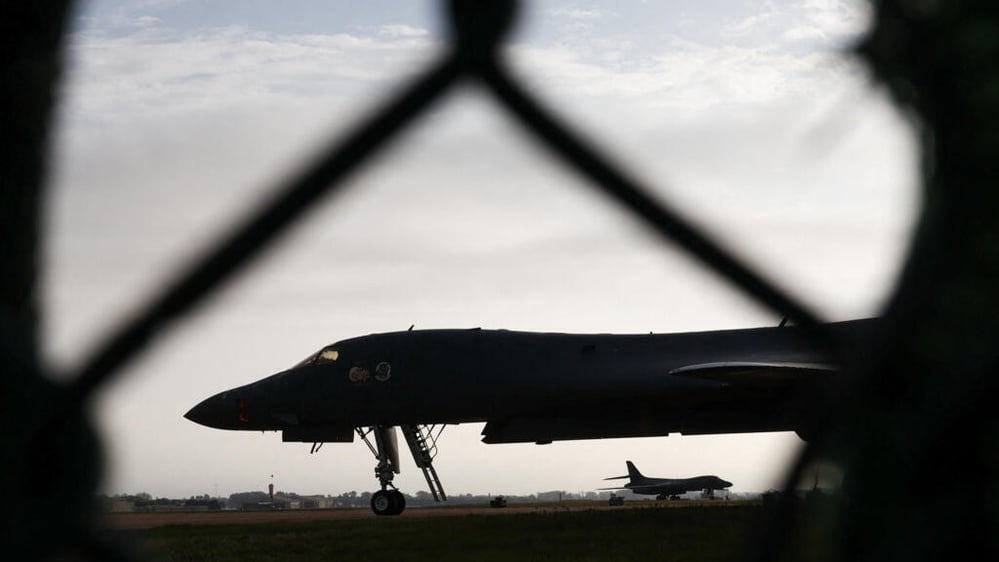
2026 © Helium Trades
Privacy Policy & Disclosure
* Disclaimer: Nothing on this website constitutes investment advice, performance data or any recommendation that any particular security, portfolio of securities, transaction or investment strategy is suitable for any specific person. Helium Trades is not responsible in any way for the accuracy
of any model predictions or price data. Any mention of a particular security and related prediction data is not a recommendation to buy or sell that security. Investments in securities involve the risk of loss. Past performance is no guarantee of future results. Helium Trades is not responsible for any of your investment decisions,
you should consult a financial expert before engaging in any transaction.
Helium Research Assistant

How can I help you today?
Ask any question about this page.


