See whether Helium helps you make better-informed decisions. Try every Pro Trader feature for 30 days. No credit card required.
Try every Pro Trader feature for 30 days. No credit card required.
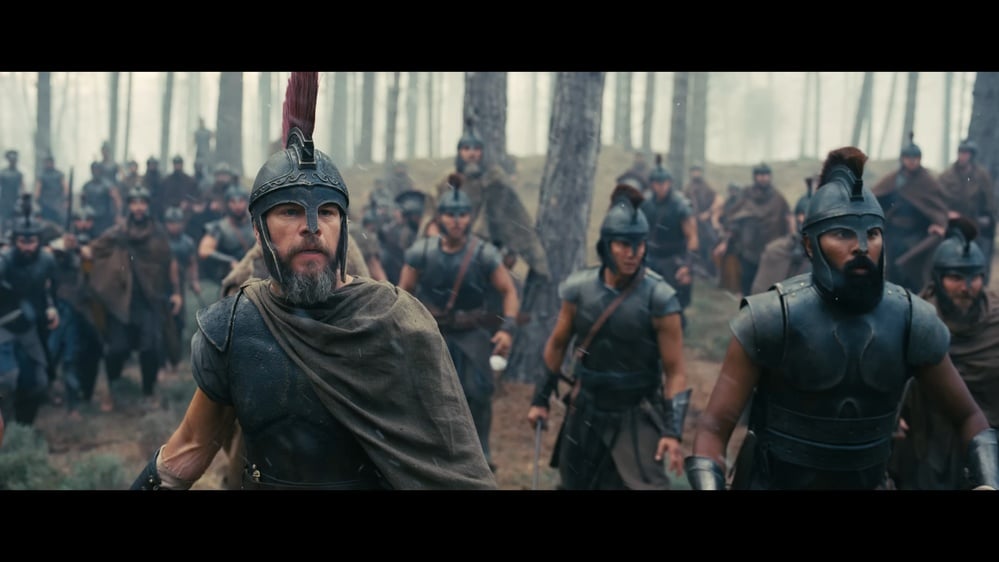
Promotes Nolan's Odyssey as a high-budget, prestige Hollywood project, emphasizing physical production, IMAX innovations, fidelity to Homer with quotes from creators, while maintaining a largely descriptive, promotional tone that leans toward establishment-friendly framing with minimal political or controversial content.
A Condé Nast entertainment feature detailing Nolan's Odyssey production scale, IMAX-centric approach, cast, locations, and creative decisions.
My bias: cautious, evidence-first; accuracy ~0.6
July 14, 2026 · 0 shares
Near-neutral, data-driven entertainment reporting on Christopher Nolan's The Odyssey, combining production metrics and filmmaker quotes with promotional language and ad disclosures that add a minor promotional bias without evident political or ideological tilt.
Production-focused entertainment coverage with data points on shoot duration, locations, crew, costumes, and IMAX format, including promotional and ad-disclosure elements.
promo framing blind spots; accuracy ~0.65
Promotional, mainstream-positive framing that extols Nolan's Odyssey as a visually immersive, star-powered, and stylistically bold adaptation, anchored by a high Rotten Tomatoes score, while noting some audience pushback to accents and historical liberties.
A positive entertainment feature describing Nolan’s Odyssey with a high Rotten Tomatoes rating, immersive visuals, acclaimed performances, and stylised historical liberties.
Automated analysis; not human reviewed.
Limitations: Concise, case-specific limitations and plausible alternative interpretations.
·
41 of 52 available dimensions scored; omitted dimensions are not treated as neutral.
·
Verified supporting quotes for 5 of 41 scored dimensions.
Claim: Tone relies heavily on subjective praise and immersive descriptions
“The film is so immersive that we feel like we are in the boat with them.” · exact text match
“Nolan advances his vision, however crowd-pleasing and anachronistic, with vigorous confidence and unimpeachable clarity.” · exact text match
Counterevidence:
“The Odyssey, at its heart, is a tale meant to entertain and enlighten, not a historical record to be recreated with an eye on historical accuracy.” · exact text match
Why: Use of immersion language and confident framing indicates subjective bias.
Claim: Contains gossip-driven headlines and cross-promotional content
“Matt Damon As Odysseus From Christopher Nolan’s Odyssey Joins Fortnite Just As Homer Always Dreamed He Would” · exact text match
“Don't give me consolation about death, glorious Odysseus” · exact text match
“Why Watch Christopher Nolan’s The Odyssey When You Could Instead Sit Through 135 Minutes Of AI Slop?” · exact text match
Counterevidence:
“We may earn a commission when you buy through links on our sites.” · exact text match
Why: Gossip-oriented headlines and promotional cross-references indicate light promotional framing.
Claim: Explicit evaluative judgments dominate the prose
“Every frame of this movie may as well be sporting a DIRECTED BY CHRISTOPHER NOLAN watermark, such is its maximum Christopher Nolan-ness.” · exact text match
“Nolan advances his vision, however crowd-pleasing and anachronistic, with vigorous confidence and unimpeachable clarity.” · exact text match
“They want the pain.” · exact text match
Counterevidence:
“It is fruitless to worry if The Odyssey looks and sounds ‘authentic’.” · not found in supplied text
Why: Promotional language and explicit judgments indicate strong opinion bias.
Claim: The article conveys a high certainty that the film is a defining Nolan product and worth the audience's payoff
“Every frame of this movie may as well be sporting a DIRECTED BY CHRISTOPHER NOLAN watermark, such is its maximum Christopher Nolan-ness.” · exact text match
“They know that every Nolan movie will be an experience, that the director will subject them to levels of sensory overload normally reserved for interrogation subjects.” · exact text match
“They want the pain.” · exact text match
Counterevidence:
“The Odyssey, at its heart, is a tale meant to entertain and enlighten, not a historical record to be recreated with an eye on historical accuracy.” · exact text match
“It is fruitless to worry if The Odyssey looks and sounds “authentic”.” · exact text match
Why: Strong promotional language and explicit claims of Nolan's distinctive experience support high certainty of biased framing.
Claim: Framing treats Nolan's Odyssey as a premier, mainstream Hollywood production
“It’s a tale that only Nolan could have really told with this massive Hollywood production – and he did it epically.” · exact text match
“Cineastes likely formed their opinions about Nolan’s work a long time ago, and nothing about his latest opus will make them, or you, think differently about the man as an artist.” · exact text match
Counterevidence:
“initial trailers pissed some viewers off with the film’s use of American accents and anachronistic turns of phrase” · exact text match
Why: Prominence of 'massive Hollywood production' and reliance on critics suggests mainstream framing.
0 The text appears promotional; broader context could shift interpretation.
July 16, 2026 · 0 shares
Negative, nuanced appraisal: grandeur and prestigious casting are acknowledged, yet Nolan's Odyssey adaptation is judged unable to convincingly translate Homer, reflecting a skeptical stance on the director's aesthetic achievement.
Entertainment critique evaluating Christopher Nolan's Odyssey adaptation, noting grand production and high-profile cast but a conclusion that it does not convincingly meet the source material.
Automated analysis; not human reviewed.
·
51 of 52 available dimensions scored; omitted dimensions are not treated as neutral.
·
Supporting quotes supplied for 0 of 51 scored dimensions; exact matching was not run.
I may skew negative in film critiques; confidence ~0.65
July 17, 2026 · 0 shares
Mostly balanced and evidence-based, foregrounding veterans' experiences and historical archaeology with a film-context framing, while a brief conservative political framing appears in appended content.
A film-and-history feature arguing Odyssey remains resonant for veterans, using archaeology, veteran testimony, and modern cinema, with a political aside in appended content.
Automated analysis; not human reviewed.
Limitations: Concise, case-specific limitations and plausible alternative interpretations.
·
9 of 52 available dimensions scored; omitted dimensions are not treated as neutral.
·
Verified supporting quotes for 3 of 9 scored dimensions.
Claim: The piece shows a mild conservative tilt due to appended anti-Democratic content.
“Democratic governors want to destroy the economy over climate change” · exact text match
“Wisconsin’s uber-left leaves voters with only bad options for governor” · exact text match
Counterevidence:
“Main focus is on veterans' experiences and Homeric history rather than political advocacy.” · not found in supplied text
Why: Political statements appear in appended content and are not central to the veteran-focused analysis.
Claim: Primarily objective framing with substantial quotes and data points.
“"Joe Labarbera, who served 54 months in five combat tours as an American infantry officer in Iraq and Afghanistan, said he understands the enduring interest in the 'Homeric version of honor and glory.'"” · not found in supplied text
“"Homer talks of gods descending to earth and single warriors terrifying entire hosts.
Dubious? Yes. But his many descriptions of combat read as authentic."”
· exact text match
Counterevidence:
“"Hollywood’s latest blockbuster may lure an audience of veterans"” · not found in supplied text
Why: Reliance on named sources and data supports objectivity; some promotional language exists.
Claim: Contains sensational imagery that heightens drama while still anchored in analysis.
“"blood jetting from his nostrils"” · not found in supplied text
“"gruesome realism"” · not found in supplied text
“"the gunner would aim and shoot the biggest and closest ones"” · not found in supplied text
Counterevidence:
“Postwar psychology discussion provides contextual grounding.” · not found in supplied text
Why: Sensational imagery serves illustrative purposes rather than promoting sensationalism.
Claim: Topic is highly interesting due to linking ancient epic to modern veterans’ experiences.
“"Hollywood breathes new life into the Greek epics, American veterans of the Global War on Terror say that Homer’s timeless lines echo across millennia"” · not found in supplied text
“"Homer’s lasting relevance stems from his refusal to either glorify war or reduce it solely to trauma."” · not found in supplied text
Counterevidence:
“Sections rely on mythic descriptions rather than data.” · not found in supplied text
Why: Cross-cutting themes yield a distinctive and engaging analysis.
Claim: Explicit political framing appears, referencing Democratic politics and the left.
“Democratic governors want to destroy the economy over climate change” · exact text match
“Wisconsin’s uber-left leaves voters with only bad options for governor” · exact text match
Counterevidence:
“Main analysis centers on Odyssey; politics are not central.” · not found in supplied text
Why: Political content indicates perspective but does not dominate.
Claim: Use of the term 'uber-left' indicates ideological framing.
“"uber-left"” · not found in supplied text
“references to Democrats” · not found in supplied text
Counterevidence:
“Main content focuses on literature and veterans’ experiences.” · not found in supplied text
Why: Explicit ideological labeling signals perspective in the text.
Claim: Emotional language appears to convey intensity of war experiences.
“"blood jetting from his nostrils"” · not found in supplied text
“"gruesome realism"” · not found in supplied text
Counterevidence:
“"Prominent analysis of postwar psychology" provides contextual grounding.” · not found in supplied text
Why: Emotional descriptors exist but do not dominate the narrative.
Claim: Overall credibility supported by named veterans and archaeology references.
“"Eleven percent of VA patients have diagnosed substance use disorders compared to 8.5% of civilians," a May study by RiversideRecovery, an addiction treatment center in Tampa, Florida, found.” · verified after text normalization
“RiversideRecovery, an addiction treatment center in Tampa, Florida” · exact text match
Counterevidence:
“Some references are embedded in trending/advertising blocks.” · not found in supplied text
Why: Credibility supported by named sources, though extraneous blocks could affect reliability.
Claim: The reporting leans toward rational, evidence-based framing with some speculative statements attributed to experts.
“"Physiologists speculate that combat troops unconsciously feel powerful biological urges to reproduce, due to the constant possibility of death."” · exact text match
“"The depiction of time dilation during combat and the deliberate targeting of vulnerable anatomy is consistent with what experienced fighters report."” · not found in supplied text
Counterevidence:
“"Dubious? Yes." - Homer’s demigod-era descriptions” · not found in supplied text
Why: A mix of expert quotes and empirical claims with occasional caveats.
case-specific ambiguities: political lines exist but are not central; evidence-based veteran framing dominates.
July 16, 2026 · 0 shares
Adulatory portrait of Nolan that treats him as a dominant, influential force in blockbuster cinema and frames his stance against streaming/digital industry pressures as admirable.
A short film criticism framing Christopher Nolan as a leading figure who defined the era of serious blockbuster cinema and resisting streaming/digital industry trends.
Automated analysis; not human reviewed.
Limitations: Concise, case-specific limitations and plausible alternative interpretations.
·
1 of 52 available dimensions scored; omitted dimensions are not treated as neutral.
·
Verified supporting quotes for 1 of 1 scored dimensions.
Claim: The article expresses a favorable, admiring view of Nolan, using emphatic descriptors like 'king' and 'thinking man's blockbuster' and portraying his stance as admirable.
“Christopher Nolan is the king of the thinking man's blockbuster” · exact text match
“the director who, for better and worse, ushered in the age of the serious superhero movie” · exact text match
“holding fast against the overwhelming pressures pushing the industry toward the streaming, the digital, and the impersonal” · exact text match
Counterevidence:
“the phrase 'for better and worse' acknowledges nuance” · not found in supplied text
Why: Explicit laudatory language and framing choices indicate a clearly favorable bias toward Nolan rather than neutral reporting.
Limited text; may not reflect broader framing or opposing views.
Promotes Nolan's Odyssey as a high-budget, prestige Hollywood project, emphasizing physical production, IMAX innovations, fidelity to Homer with quotes from creators, while maintaining a largely descriptive, promotional tone that leans toward establishment-friendly framing with minimal political or controversial content.
A Condé Nast entertainment feature detailing Nolan's Odyssey production scale, IMAX-centric approach, cast, locations, and creative decisions.
My bias: cautious, evidence-first; accuracy ~0.6
Neutral, industry-news oriented coverage presenting Nolan's pre-release nerves and peers' remarks with minimal editorializing, though promotional boilerplate intrudes.
Entertainment news item about Christopher Nolan's nerves ahead of The Odyssey, highlighting IMAX production and industry peers' remarks.
I may overfit toward neutrality; confidence ~0.7.
July 14, 2026 · 0 shares
Near-neutral, data-driven entertainment reporting on Christopher Nolan's The Odyssey, combining production metrics and filmmaker quotes with promotional language and ad disclosures that add a minor promotional bias without evident political or ideological tilt.
Production-focused entertainment coverage with data points on shoot duration, locations, crew, costumes, and IMAX format, including promotional and ad-disclosure elements.
promo framing blind spots; accuracy ~0.65
Promotional, mainstream-positive framing that extols Nolan's Odyssey as a visually immersive, star-powered, and stylistically bold adaptation, anchored by a high Rotten Tomatoes score, while noting some audience pushback to accents and historical liberties.
A positive entertainment feature describing Nolan’s Odyssey with a high Rotten Tomatoes rating, immersive visuals, acclaimed performances, and stylised historical liberties.
Automated analysis; not human reviewed. Limitations: Concise, case-specific limitations and plausible alternative interpretations. · 41 of 52 available dimensions scored; omitted dimensions are not treated as neutral. · Verified supporting quotes for 5 of 41 scored dimensions.
Claim: Tone relies heavily on subjective praise and immersive descriptions
“The film is so immersive that we feel like we are in the boat with them.” · exact text match
“Nolan advances his vision, however crowd-pleasing and anachronistic, with vigorous confidence and unimpeachable clarity.” · exact text match
Counterevidence:
“The Odyssey, at its heart, is a tale meant to entertain and enlighten, not a historical record to be recreated with an eye on historical accuracy.” · exact text match
Why: Use of immersion language and confident framing indicates subjective bias.
Claim: Contains gossip-driven headlines and cross-promotional content
“Matt Damon As Odysseus From Christopher Nolan’s Odyssey Joins Fortnite Just As Homer Always Dreamed He Would” · exact text match
“Don't give me consolation about death, glorious Odysseus” · exact text match
“Why Watch Christopher Nolan’s The Odyssey When You Could Instead Sit Through 135 Minutes Of AI Slop?” · exact text match
Counterevidence:
“We may earn a commission when you buy through links on our sites.” · exact text match
Why: Gossip-oriented headlines and promotional cross-references indicate light promotional framing.
Claim: Explicit evaluative judgments dominate the prose
“Every frame of this movie may as well be sporting a DIRECTED BY CHRISTOPHER NOLAN watermark, such is its maximum Christopher Nolan-ness.” · exact text match
“Nolan advances his vision, however crowd-pleasing and anachronistic, with vigorous confidence and unimpeachable clarity.” · exact text match
“They want the pain.” · exact text match
Counterevidence:
“It is fruitless to worry if The Odyssey looks and sounds ‘authentic’.” · not found in supplied text
Why: Promotional language and explicit judgments indicate strong opinion bias.
Claim: The article conveys a high certainty that the film is a defining Nolan product and worth the audience's payoff
“Every frame of this movie may as well be sporting a DIRECTED BY CHRISTOPHER NOLAN watermark, such is its maximum Christopher Nolan-ness.” · exact text match
“They know that every Nolan movie will be an experience, that the director will subject them to levels of sensory overload normally reserved for interrogation subjects.” · exact text match
“They want the pain.” · exact text match
Counterevidence:
“The Odyssey, at its heart, is a tale meant to entertain and enlighten, not a historical record to be recreated with an eye on historical accuracy.” · exact text match
“It is fruitless to worry if The Odyssey looks and sounds “authentic”.” · exact text match
Why: Strong promotional language and explicit claims of Nolan's distinctive experience support high certainty of biased framing.
Claim: Framing treats Nolan's Odyssey as a premier, mainstream Hollywood production
“It’s a tale that only Nolan could have really told with this massive Hollywood production – and he did it epically.” · exact text match
“Cineastes likely formed their opinions about Nolan’s work a long time ago, and nothing about his latest opus will make them, or you, think differently about the man as an artist.” · exact text match
Counterevidence:
“initial trailers pissed some viewers off with the film’s use of American accents and anachronistic turns of phrase” · exact text match
Why: Prominence of 'massive Hollywood production' and reliance on critics suggests mainstream framing.
0 The text appears promotional; broader context could shift interpretation.
July 16, 2026 · 0 shares
Negative, nuanced appraisal: grandeur and prestigious casting are acknowledged, yet Nolan's Odyssey adaptation is judged unable to convincingly translate Homer, reflecting a skeptical stance on the director's aesthetic achievement.
Entertainment critique evaluating Christopher Nolan's Odyssey adaptation, noting grand production and high-profile cast but a conclusion that it does not convincingly meet the source material.
Automated analysis; not human reviewed. · 51 of 52 available dimensions scored; omitted dimensions are not treated as neutral. · Supporting quotes supplied for 0 of 51 scored dimensions; exact matching was not run.
I may skew negative in film critiques; confidence ~0.65
Mainstream entertainment praise (craft/performance)
July 15, 2026 · 0 shares
An enthusiastic, nuanced assessment praising Nolan's Odyssey adaptation for its technical mastery and performances, while contextualizing modern tech anxieties and online backlash as backdrop.
A feature-length film critique and cultural analysis of Nolan's The Odyssey, highlighting production craftsmanship and thematic exploration.
Automated analysis; not human reviewed. · 51 of 52 available dimensions scored; omitted dimensions are not treated as neutral. · Supporting quotes supplied for 0 of 51 scored dimensions; exact matching was not run.
Slight pro-elite cinema tilt; confidence ~0.6.
Promotional, mainstream-positive framing that extols Nolan's Odyssey as a visually immersive, star-powered, and stylistically bold adaptation, anchored by a high Rotten Tomatoes score, while noting some audience pushback to accents and historical liberties.
A positive entertainment feature describing Nolan’s Odyssey with a high Rotten Tomatoes rating, immersive visuals, acclaimed performances, and stylised historical liberties.
Automated analysis; not human reviewed. Limitations: Concise, case-specific limitations and plausible alternative interpretations. · 41 of 52 available dimensions scored; omitted dimensions are not treated as neutral. · Verified supporting quotes for 5 of 41 scored dimensions.
Claim: Tone relies heavily on subjective praise and immersive descriptions
“The film is so immersive that we feel like we are in the boat with them.” · exact text match
“Nolan advances his vision, however crowd-pleasing and anachronistic, with vigorous confidence and unimpeachable clarity.” · exact text match
Counterevidence:
“The Odyssey, at its heart, is a tale meant to entertain and enlighten, not a historical record to be recreated with an eye on historical accuracy.” · exact text match
Why: Use of immersion language and confident framing indicates subjective bias.
Claim: Contains gossip-driven headlines and cross-promotional content
“Matt Damon As Odysseus From Christopher Nolan’s Odyssey Joins Fortnite Just As Homer Always Dreamed He Would” · exact text match
“Don't give me consolation about death, glorious Odysseus” · exact text match
“Why Watch Christopher Nolan’s The Odyssey When You Could Instead Sit Through 135 Minutes Of AI Slop?” · exact text match
Counterevidence:
“We may earn a commission when you buy through links on our sites.” · exact text match
Why: Gossip-oriented headlines and promotional cross-references indicate light promotional framing.
Claim: Explicit evaluative judgments dominate the prose
“Every frame of this movie may as well be sporting a DIRECTED BY CHRISTOPHER NOLAN watermark, such is its maximum Christopher Nolan-ness.” · exact text match
“Nolan advances his vision, however crowd-pleasing and anachronistic, with vigorous confidence and unimpeachable clarity.” · exact text match
“They want the pain.” · exact text match
Counterevidence:
“It is fruitless to worry if The Odyssey looks and sounds ‘authentic’.” · not found in supplied text
Why: Promotional language and explicit judgments indicate strong opinion bias.
Claim: The article conveys a high certainty that the film is a defining Nolan product and worth the audience's payoff
“Every frame of this movie may as well be sporting a DIRECTED BY CHRISTOPHER NOLAN watermark, such is its maximum Christopher Nolan-ness.” · exact text match
“They know that every Nolan movie will be an experience, that the director will subject them to levels of sensory overload normally reserved for interrogation subjects.” · exact text match
“They want the pain.” · exact text match
Counterevidence:
“The Odyssey, at its heart, is a tale meant to entertain and enlighten, not a historical record to be recreated with an eye on historical accuracy.” · exact text match
“It is fruitless to worry if The Odyssey looks and sounds “authentic”.” · exact text match
Why: Strong promotional language and explicit claims of Nolan's distinctive experience support high certainty of biased framing.
Claim: Framing treats Nolan's Odyssey as a premier, mainstream Hollywood production
“It’s a tale that only Nolan could have really told with this massive Hollywood production – and he did it epically.” · exact text match
“Cineastes likely formed their opinions about Nolan’s work a long time ago, and nothing about his latest opus will make them, or you, think differently about the man as an artist.” · exact text match
Counterevidence:
“initial trailers pissed some viewers off with the film’s use of American accents and anachronistic turns of phrase” · exact text match
Why: Prominence of 'massive Hollywood production' and reliance on critics suggests mainstream framing.
0 The text appears promotional; broader context could shift interpretation.
Promotes Nolan's Odyssey as a high-budget, prestige Hollywood project, emphasizing physical production, IMAX innovations, fidelity to Homer with quotes from creators, while maintaining a largely descriptive, promotional tone that leans toward establishment-friendly framing with minimal political or controversial content.
A Condé Nast entertainment feature detailing Nolan's Odyssey production scale, IMAX-centric approach, cast, locations, and creative decisions.
My bias: cautious, evidence-first; accuracy ~0.6
Promotional, mainstream-positive framing that extols Nolan's Odyssey as a visually immersive, star-powered, and stylistically bold adaptation, anchored by a high Rotten Tomatoes score, while noting some audience pushback to accents and historical liberties.
A positive entertainment feature describing Nolan’s Odyssey with a high Rotten Tomatoes rating, immersive visuals, acclaimed performances, and stylised historical liberties.
Automated analysis; not human reviewed. Limitations: Concise, case-specific limitations and plausible alternative interpretations. · 41 of 52 available dimensions scored; omitted dimensions are not treated as neutral. · Verified supporting quotes for 5 of 41 scored dimensions.
Claim: Tone relies heavily on subjective praise and immersive descriptions
“The film is so immersive that we feel like we are in the boat with them.” · exact text match
“Nolan advances his vision, however crowd-pleasing and anachronistic, with vigorous confidence and unimpeachable clarity.” · exact text match
Counterevidence:
“The Odyssey, at its heart, is a tale meant to entertain and enlighten, not a historical record to be recreated with an eye on historical accuracy.” · exact text match
Why: Use of immersion language and confident framing indicates subjective bias.
Claim: Contains gossip-driven headlines and cross-promotional content
“Matt Damon As Odysseus From Christopher Nolan’s Odyssey Joins Fortnite Just As Homer Always Dreamed He Would” · exact text match
“Don't give me consolation about death, glorious Odysseus” · exact text match
“Why Watch Christopher Nolan’s The Odyssey When You Could Instead Sit Through 135 Minutes Of AI Slop?” · exact text match
Counterevidence:
“We may earn a commission when you buy through links on our sites.” · exact text match
Why: Gossip-oriented headlines and promotional cross-references indicate light promotional framing.
Claim: Explicit evaluative judgments dominate the prose
“Every frame of this movie may as well be sporting a DIRECTED BY CHRISTOPHER NOLAN watermark, such is its maximum Christopher Nolan-ness.” · exact text match
“Nolan advances his vision, however crowd-pleasing and anachronistic, with vigorous confidence and unimpeachable clarity.” · exact text match
“They want the pain.” · exact text match
Counterevidence:
“It is fruitless to worry if The Odyssey looks and sounds ‘authentic’.” · not found in supplied text
Why: Promotional language and explicit judgments indicate strong opinion bias.
Claim: The article conveys a high certainty that the film is a defining Nolan product and worth the audience's payoff
“Every frame of this movie may as well be sporting a DIRECTED BY CHRISTOPHER NOLAN watermark, such is its maximum Christopher Nolan-ness.” · exact text match
“They know that every Nolan movie will be an experience, that the director will subject them to levels of sensory overload normally reserved for interrogation subjects.” · exact text match
“They want the pain.” · exact text match
Counterevidence:
“The Odyssey, at its heart, is a tale meant to entertain and enlighten, not a historical record to be recreated with an eye on historical accuracy.” · exact text match
“It is fruitless to worry if The Odyssey looks and sounds “authentic”.” · exact text match
Why: Strong promotional language and explicit claims of Nolan's distinctive experience support high certainty of biased framing.
Claim: Framing treats Nolan's Odyssey as a premier, mainstream Hollywood production
“It’s a tale that only Nolan could have really told with this massive Hollywood production – and he did it epically.” · exact text match
“Cineastes likely formed their opinions about Nolan’s work a long time ago, and nothing about his latest opus will make them, or you, think differently about the man as an artist.” · exact text match
Counterevidence:
“initial trailers pissed some viewers off with the film’s use of American accents and anachronistic turns of phrase” · exact text match
Why: Prominence of 'massive Hollywood production' and reliance on critics suggests mainstream framing.
0 The text appears promotional; broader context could shift interpretation.
Skeptical critical reception (doesn’t translate Homer convincingly)
July 16, 2026 · 0 shares
Negative, nuanced appraisal: grandeur and prestigious casting are acknowledged, yet Nolan's Odyssey adaptation is judged unable to convincingly translate Homer, reflecting a skeptical stance on the director's aesthetic achievement.
Entertainment critique evaluating Christopher Nolan's Odyssey adaptation, noting grand production and high-profile cast but a conclusion that it does not convincingly meet the source material.
Automated analysis; not human reviewed. · 51 of 52 available dimensions scored; omitted dimensions are not treated as neutral. · Supporting quotes supplied for 0 of 51 scored dimensions; exact matching was not run.
I may skew negative in film critiques; confidence ~0.65
July 16, 2026 · 0 shares
Negative, nuanced appraisal: grandeur and prestigious casting are acknowledged, yet Nolan's Odyssey adaptation is judged unable to convincingly translate Homer, reflecting a skeptical stance on the director's aesthetic achievement.
Entertainment critique evaluating Christopher Nolan's Odyssey adaptation, noting grand production and high-profile cast but a conclusion that it does not convincingly meet the source material.
Automated analysis; not human reviewed. · 51 of 52 available dimensions scored; omitted dimensions are not treated as neutral. · Supporting quotes supplied for 0 of 51 scored dimensions; exact matching was not run.
I may skew negative in film critiques; confidence ~0.65
Industry/process reporting (production realities, nerves, spectacle)
Neutral, industry-news oriented coverage presenting Nolan's pre-release nerves and peers' remarks with minimal editorializing, though promotional boilerplate intrudes.
Entertainment news item about Christopher Nolan's nerves ahead of The Odyssey, highlighting IMAX production and industry peers' remarks.
I may overfit toward neutrality; confidence ~0.7.
July 14, 2026 · 0 shares
Near-neutral, data-driven entertainment reporting on Christopher Nolan's The Odyssey, combining production metrics and filmmaker quotes with promotional language and ad disclosures that add a minor promotional bias without evident political or ideological tilt.
Production-focused entertainment coverage with data points on shoot duration, locations, crew, costumes, and IMAX format, including promotional and ad-disclosure elements.
promo framing blind spots; accuracy ~0.65
Promotional, mainstream-positive framing that extols Nolan's Odyssey as a visually immersive, star-powered, and stylistically bold adaptation, anchored by a high Rotten Tomatoes score, while noting some audience pushback to accents and historical liberties.
A positive entertainment feature describing Nolan’s Odyssey with a high Rotten Tomatoes rating, immersive visuals, acclaimed performances, and stylised historical liberties.
Automated analysis; not human reviewed. Limitations: Concise, case-specific limitations and plausible alternative interpretations. · 41 of 52 available dimensions scored; omitted dimensions are not treated as neutral. · Verified supporting quotes for 5 of 41 scored dimensions.
Claim: Tone relies heavily on subjective praise and immersive descriptions
“The film is so immersive that we feel like we are in the boat with them.” · exact text match
“Nolan advances his vision, however crowd-pleasing and anachronistic, with vigorous confidence and unimpeachable clarity.” · exact text match
Counterevidence:
“The Odyssey, at its heart, is a tale meant to entertain and enlighten, not a historical record to be recreated with an eye on historical accuracy.” · exact text match
Why: Use of immersion language and confident framing indicates subjective bias.
Claim: Contains gossip-driven headlines and cross-promotional content
“Matt Damon As Odysseus From Christopher Nolan’s Odyssey Joins Fortnite Just As Homer Always Dreamed He Would” · exact text match
“Don't give me consolation about death, glorious Odysseus” · exact text match
“Why Watch Christopher Nolan’s The Odyssey When You Could Instead Sit Through 135 Minutes Of AI Slop?” · exact text match
Counterevidence:
“We may earn a commission when you buy through links on our sites.” · exact text match
Why: Gossip-oriented headlines and promotional cross-references indicate light promotional framing.
Claim: Explicit evaluative judgments dominate the prose
“Every frame of this movie may as well be sporting a DIRECTED BY CHRISTOPHER NOLAN watermark, such is its maximum Christopher Nolan-ness.” · exact text match
“Nolan advances his vision, however crowd-pleasing and anachronistic, with vigorous confidence and unimpeachable clarity.” · exact text match
“They want the pain.” · exact text match
Counterevidence:
“It is fruitless to worry if The Odyssey looks and sounds ‘authentic’.” · not found in supplied text
Why: Promotional language and explicit judgments indicate strong opinion bias.
Claim: The article conveys a high certainty that the film is a defining Nolan product and worth the audience's payoff
“Every frame of this movie may as well be sporting a DIRECTED BY CHRISTOPHER NOLAN watermark, such is its maximum Christopher Nolan-ness.” · exact text match
“They know that every Nolan movie will be an experience, that the director will subject them to levels of sensory overload normally reserved for interrogation subjects.” · exact text match
“They want the pain.” · exact text match
Counterevidence:
“The Odyssey, at its heart, is a tale meant to entertain and enlighten, not a historical record to be recreated with an eye on historical accuracy.” · exact text match
“It is fruitless to worry if The Odyssey looks and sounds “authentic”.” · exact text match
Why: Strong promotional language and explicit claims of Nolan's distinctive experience support high certainty of biased framing.
Claim: Framing treats Nolan's Odyssey as a premier, mainstream Hollywood production
“It’s a tale that only Nolan could have really told with this massive Hollywood production – and he did it epically.” · exact text match
“Cineastes likely formed their opinions about Nolan’s work a long time ago, and nothing about his latest opus will make them, or you, think differently about the man as an artist.” · exact text match
Counterevidence:
“initial trailers pissed some viewers off with the film’s use of American accents and anachronistic turns of phrase” · exact text match
Why: Prominence of 'massive Hollywood production' and reliance on critics suggests mainstream framing.
0 The text appears promotional; broader context could shift interpretation.
Veteran-/military-sympathetic reading (Homer as psychological mirror)
July 17, 2026 · 0 shares
Mostly balanced and evidence-based, foregrounding veterans' experiences and historical archaeology with a film-context framing, while a brief conservative political framing appears in appended content.
A film-and-history feature arguing Odyssey remains resonant for veterans, using archaeology, veteran testimony, and modern cinema, with a political aside in appended content.
Automated analysis; not human reviewed. Limitations: Concise, case-specific limitations and plausible alternative interpretations. · 9 of 52 available dimensions scored; omitted dimensions are not treated as neutral. · Verified supporting quotes for 3 of 9 scored dimensions.
Claim: The piece shows a mild conservative tilt due to appended anti-Democratic content.
“Democratic governors want to destroy the economy over climate change” · exact text match
“Wisconsin’s uber-left leaves voters with only bad options for governor” · exact text match
Counterevidence:
“Main focus is on veterans' experiences and Homeric history rather than political advocacy.” · not found in supplied text
Why: Political statements appear in appended content and are not central to the veteran-focused analysis.
Claim: Primarily objective framing with substantial quotes and data points.
“"Joe Labarbera, who served 54 months in five combat tours as an American infantry officer in Iraq and Afghanistan, said he understands the enduring interest in the 'Homeric version of honor and glory.'"” · not found in supplied text
“"Homer talks of gods descending to earth and single warriors terrifying entire hosts. Dubious? Yes. But his many descriptions of combat read as authentic."” · exact text match
Counterevidence:
“"Hollywood’s latest blockbuster may lure an audience of veterans"” · not found in supplied text
Why: Reliance on named sources and data supports objectivity; some promotional language exists.
Claim: Contains sensational imagery that heightens drama while still anchored in analysis.
“"blood jetting from his nostrils"” · not found in supplied text
“"gruesome realism"” · not found in supplied text
“"the gunner would aim and shoot the biggest and closest ones"” · not found in supplied text
Counterevidence:
“Postwar psychology discussion provides contextual grounding.” · not found in supplied text
Why: Sensational imagery serves illustrative purposes rather than promoting sensationalism.
Claim: Topic is highly interesting due to linking ancient epic to modern veterans’ experiences.
“"Hollywood breathes new life into the Greek epics, American veterans of the Global War on Terror say that Homer’s timeless lines echo across millennia"” · not found in supplied text
“"Homer’s lasting relevance stems from his refusal to either glorify war or reduce it solely to trauma."” · not found in supplied text
Counterevidence:
“Sections rely on mythic descriptions rather than data.” · not found in supplied text
Why: Cross-cutting themes yield a distinctive and engaging analysis.
Claim: Explicit political framing appears, referencing Democratic politics and the left.
“Democratic governors want to destroy the economy over climate change” · exact text match
“Wisconsin’s uber-left leaves voters with only bad options for governor” · exact text match
Counterevidence:
“Main analysis centers on Odyssey; politics are not central.” · not found in supplied text
Why: Political content indicates perspective but does not dominate.
Claim: Use of the term 'uber-left' indicates ideological framing.
“"uber-left"” · not found in supplied text
“references to Democrats” · not found in supplied text
Counterevidence:
“Main content focuses on literature and veterans’ experiences.” · not found in supplied text
Why: Explicit ideological labeling signals perspective in the text.
Claim: Emotional language appears to convey intensity of war experiences.
“"blood jetting from his nostrils"” · not found in supplied text
“"gruesome realism"” · not found in supplied text
Counterevidence:
“"Prominent analysis of postwar psychology" provides contextual grounding.” · not found in supplied text
Why: Emotional descriptors exist but do not dominate the narrative.
Claim: Overall credibility supported by named veterans and archaeology references.
“"Eleven percent of VA patients have diagnosed substance use disorders compared to 8.5% of civilians," a May study by RiversideRecovery, an addiction treatment center in Tampa, Florida, found.” · verified after text normalization
“RiversideRecovery, an addiction treatment center in Tampa, Florida” · exact text match
Counterevidence:
“Some references are embedded in trending/advertising blocks.” · not found in supplied text
Why: Credibility supported by named sources, though extraneous blocks could affect reliability.
Claim: The reporting leans toward rational, evidence-based framing with some speculative statements attributed to experts.
“"Physiologists speculate that combat troops unconsciously feel powerful biological urges to reproduce, due to the constant possibility of death."” · exact text match
“"The depiction of time dilation during combat and the deliberate targeting of vulnerable anatomy is consistent with what experienced fighters report."” · not found in supplied text
Counterevidence:
“"Dubious? Yes." - Homer’s demigod-era descriptions” · not found in supplied text
Why: A mix of expert quotes and empirical claims with occasional caveats.
case-specific ambiguities: political lines exist but are not central; evidence-based veteran framing dominates.
July 17, 2026 · 0 shares
Mostly balanced and evidence-based, foregrounding veterans' experiences and historical archaeology with a film-context framing, while a brief conservative political framing appears in appended content.
A film-and-history feature arguing Odyssey remains resonant for veterans, using archaeology, veteran testimony, and modern cinema, with a political aside in appended content.
Automated analysis; not human reviewed. Limitations: Concise, case-specific limitations and plausible alternative interpretations. · 9 of 52 available dimensions scored; omitted dimensions are not treated as neutral. · Verified supporting quotes for 3 of 9 scored dimensions.
Claim: The piece shows a mild conservative tilt due to appended anti-Democratic content.
“Democratic governors want to destroy the economy over climate change” · exact text match
“Wisconsin’s uber-left leaves voters with only bad options for governor” · exact text match
Counterevidence:
“Main focus is on veterans' experiences and Homeric history rather than political advocacy.” · not found in supplied text
Why: Political statements appear in appended content and are not central to the veteran-focused analysis.
Claim: Primarily objective framing with substantial quotes and data points.
“"Joe Labarbera, who served 54 months in five combat tours as an American infantry officer in Iraq and Afghanistan, said he understands the enduring interest in the 'Homeric version of honor and glory.'"” · not found in supplied text
“"Homer talks of gods descending to earth and single warriors terrifying entire hosts. Dubious? Yes. But his many descriptions of combat read as authentic."” · exact text match
Counterevidence:
“"Hollywood’s latest blockbuster may lure an audience of veterans"” · not found in supplied text
Why: Reliance on named sources and data supports objectivity; some promotional language exists.
Claim: Contains sensational imagery that heightens drama while still anchored in analysis.
“"blood jetting from his nostrils"” · not found in supplied text
“"gruesome realism"” · not found in supplied text
“"the gunner would aim and shoot the biggest and closest ones"” · not found in supplied text
Counterevidence:
“Postwar psychology discussion provides contextual grounding.” · not found in supplied text
Why: Sensational imagery serves illustrative purposes rather than promoting sensationalism.
Claim: Topic is highly interesting due to linking ancient epic to modern veterans’ experiences.
“"Hollywood breathes new life into the Greek epics, American veterans of the Global War on Terror say that Homer’s timeless lines echo across millennia"” · not found in supplied text
“"Homer’s lasting relevance stems from his refusal to either glorify war or reduce it solely to trauma."” · not found in supplied text
Counterevidence:
“Sections rely on mythic descriptions rather than data.” · not found in supplied text
Why: Cross-cutting themes yield a distinctive and engaging analysis.
Claim: Explicit political framing appears, referencing Democratic politics and the left.
“Democratic governors want to destroy the economy over climate change” · exact text match
“Wisconsin’s uber-left leaves voters with only bad options for governor” · exact text match
Counterevidence:
“Main analysis centers on Odyssey; politics are not central.” · not found in supplied text
Why: Political content indicates perspective but does not dominate.
Claim: Use of the term 'uber-left' indicates ideological framing.
“"uber-left"” · not found in supplied text
“references to Democrats” · not found in supplied text
Counterevidence:
“Main content focuses on literature and veterans’ experiences.” · not found in supplied text
Why: Explicit ideological labeling signals perspective in the text.
Claim: Emotional language appears to convey intensity of war experiences.
“"blood jetting from his nostrils"” · not found in supplied text
“"gruesome realism"” · not found in supplied text
Counterevidence:
“"Prominent analysis of postwar psychology" provides contextual grounding.” · not found in supplied text
Why: Emotional descriptors exist but do not dominate the narrative.
Claim: Overall credibility supported by named veterans and archaeology references.
“"Eleven percent of VA patients have diagnosed substance use disorders compared to 8.5% of civilians," a May study by RiversideRecovery, an addiction treatment center in Tampa, Florida, found.” · verified after text normalization
“RiversideRecovery, an addiction treatment center in Tampa, Florida” · exact text match
Counterevidence:
“Some references are embedded in trending/advertising blocks.” · not found in supplied text
Why: Credibility supported by named sources, though extraneous blocks could affect reliability.
Claim: The reporting leans toward rational, evidence-based framing with some speculative statements attributed to experts.
“"Physiologists speculate that combat troops unconsciously feel powerful biological urges to reproduce, due to the constant possibility of death."” · exact text match
“"The depiction of time dilation during combat and the deliberate targeting of vulnerable anatomy is consistent with what experienced fighters report."” · not found in supplied text
Counterevidence:
“"Dubious? Yes." - Homer’s demigod-era descriptions” · not found in supplied text
Why: A mix of expert quotes and empirical claims with occasional caveats.
case-specific ambiguities: political lines exist but are not central; evidence-based veteran framing dominates.
July 17, 2026 · 0 shares
Mostly balanced and evidence-based, foregrounding veterans' experiences and historical archaeology with a film-context framing, while a brief conservative political framing appears in appended content.
A film-and-history feature arguing Odyssey remains resonant for veterans, using archaeology, veteran testimony, and modern cinema, with a political aside in appended content.
Automated analysis; not human reviewed. Limitations: Concise, case-specific limitations and plausible alternative interpretations. · 9 of 52 available dimensions scored; omitted dimensions are not treated as neutral. · Verified supporting quotes for 3 of 9 scored dimensions.
Claim: The piece shows a mild conservative tilt due to appended anti-Democratic content.
“Democratic governors want to destroy the economy over climate change” · exact text match
“Wisconsin’s uber-left leaves voters with only bad options for governor” · exact text match
Counterevidence:
“Main focus is on veterans' experiences and Homeric history rather than political advocacy.” · not found in supplied text
Why: Political statements appear in appended content and are not central to the veteran-focused analysis.
Claim: Primarily objective framing with substantial quotes and data points.
“"Joe Labarbera, who served 54 months in five combat tours as an American infantry officer in Iraq and Afghanistan, said he understands the enduring interest in the 'Homeric version of honor and glory.'"” · not found in supplied text
“"Homer talks of gods descending to earth and single warriors terrifying entire hosts. Dubious? Yes. But his many descriptions of combat read as authentic."” · exact text match
Counterevidence:
“"Hollywood’s latest blockbuster may lure an audience of veterans"” · not found in supplied text
Why: Reliance on named sources and data supports objectivity; some promotional language exists.
Claim: Contains sensational imagery that heightens drama while still anchored in analysis.
“"blood jetting from his nostrils"” · not found in supplied text
“"gruesome realism"” · not found in supplied text
“"the gunner would aim and shoot the biggest and closest ones"” · not found in supplied text
Counterevidence:
“Postwar psychology discussion provides contextual grounding.” · not found in supplied text
Why: Sensational imagery serves illustrative purposes rather than promoting sensationalism.
Claim: Topic is highly interesting due to linking ancient epic to modern veterans’ experiences.
“"Hollywood breathes new life into the Greek epics, American veterans of the Global War on Terror say that Homer’s timeless lines echo across millennia"” · not found in supplied text
“"Homer’s lasting relevance stems from his refusal to either glorify war or reduce it solely to trauma."” · not found in supplied text
Counterevidence:
“Sections rely on mythic descriptions rather than data.” · not found in supplied text
Why: Cross-cutting themes yield a distinctive and engaging analysis.
Claim: Explicit political framing appears, referencing Democratic politics and the left.
“Democratic governors want to destroy the economy over climate change” · exact text match
“Wisconsin’s uber-left leaves voters with only bad options for governor” · exact text match
Counterevidence:
“Main analysis centers on Odyssey; politics are not central.” · not found in supplied text
Why: Political content indicates perspective but does not dominate.
Claim: Use of the term 'uber-left' indicates ideological framing.
“"uber-left"” · not found in supplied text
“references to Democrats” · not found in supplied text
Counterevidence:
“Main content focuses on literature and veterans’ experiences.” · not found in supplied text
Why: Explicit ideological labeling signals perspective in the text.
Claim: Emotional language appears to convey intensity of war experiences.
“"blood jetting from his nostrils"” · not found in supplied text
“"gruesome realism"” · not found in supplied text
Counterevidence:
“"Prominent analysis of postwar psychology" provides contextual grounding.” · not found in supplied text
Why: Emotional descriptors exist but do not dominate the narrative.
Claim: Overall credibility supported by named veterans and archaeology references.
“"Eleven percent of VA patients have diagnosed substance use disorders compared to 8.5% of civilians," a May study by RiversideRecovery, an addiction treatment center in Tampa, Florida, found.” · verified after text normalization
“RiversideRecovery, an addiction treatment center in Tampa, Florida” · exact text match
Counterevidence:
“Some references are embedded in trending/advertising blocks.” · not found in supplied text
Why: Credibility supported by named sources, though extraneous blocks could affect reliability.
Claim: The reporting leans toward rational, evidence-based framing with some speculative statements attributed to experts.
“"Physiologists speculate that combat troops unconsciously feel powerful biological urges to reproduce, due to the constant possibility of death."” · exact text match
“"The depiction of time dilation during combat and the deliberate targeting of vulnerable anatomy is consistent with what experienced fighters report."” · not found in supplied text
Counterevidence:
“"Dubious? Yes." - Homer’s demigod-era descriptions” · not found in supplied text
Why: A mix of expert quotes and empirical claims with occasional caveats.
case-specific ambiguities: political lines exist but are not central; evidence-based veteran framing dominates.
Political/ideological framing (anti-streaming, “thinking-man” blockbuster)
July 16, 2026 · 0 shares
Adulatory portrait of Nolan that treats him as a dominant, influential force in blockbuster cinema and frames his stance against streaming/digital industry pressures as admirable.
A short film criticism framing Christopher Nolan as a leading figure who defined the era of serious blockbuster cinema and resisting streaming/digital industry trends.
Automated analysis; not human reviewed. Limitations: Concise, case-specific limitations and plausible alternative interpretations. · 1 of 52 available dimensions scored; omitted dimensions are not treated as neutral. · Verified supporting quotes for 1 of 1 scored dimensions.
Claim: The article expresses a favorable, admiring view of Nolan, using emphatic descriptors like 'king' and 'thinking man's blockbuster' and portraying his stance as admirable.
“Christopher Nolan is the king of the thinking man's blockbuster” · exact text match
“the director who, for better and worse, ushered in the age of the serious superhero movie” · exact text match
“holding fast against the overwhelming pressures pushing the industry toward the streaming, the digital, and the impersonal” · exact text match
Counterevidence:
“the phrase 'for better and worse' acknowledges nuance” · not found in supplied text
Why: Explicit laudatory language and framing choices indicate a clearly favorable bias toward Nolan rather than neutral reporting.
Limited text; may not reflect broader framing or opposing views.
July 17, 2026 · 0 shares
Mostly balanced and evidence-based, foregrounding veterans' experiences and historical archaeology with a film-context framing, while a brief conservative political framing appears in appended content.
A film-and-history feature arguing Odyssey remains resonant for veterans, using archaeology, veteran testimony, and modern cinema, with a political aside in appended content.
Automated analysis; not human reviewed. Limitations: Concise, case-specific limitations and plausible alternative interpretations. · 9 of 52 available dimensions scored; omitted dimensions are not treated as neutral. · Verified supporting quotes for 3 of 9 scored dimensions.
Claim: The piece shows a mild conservative tilt due to appended anti-Democratic content.
“Democratic governors want to destroy the economy over climate change” · exact text match
“Wisconsin’s uber-left leaves voters with only bad options for governor” · exact text match
Counterevidence:
“Main focus is on veterans' experiences and Homeric history rather than political advocacy.” · not found in supplied text
Why: Political statements appear in appended content and are not central to the veteran-focused analysis.
Claim: Primarily objective framing with substantial quotes and data points.
“"Joe Labarbera, who served 54 months in five combat tours as an American infantry officer in Iraq and Afghanistan, said he understands the enduring interest in the 'Homeric version of honor and glory.'"” · not found in supplied text
“"Homer talks of gods descending to earth and single warriors terrifying entire hosts. Dubious? Yes. But his many descriptions of combat read as authentic."” · exact text match
Counterevidence:
“"Hollywood’s latest blockbuster may lure an audience of veterans"” · not found in supplied text
Why: Reliance on named sources and data supports objectivity; some promotional language exists.
Claim: Contains sensational imagery that heightens drama while still anchored in analysis.
“"blood jetting from his nostrils"” · not found in supplied text
“"gruesome realism"” · not found in supplied text
“"the gunner would aim and shoot the biggest and closest ones"” · not found in supplied text
Counterevidence:
“Postwar psychology discussion provides contextual grounding.” · not found in supplied text
Why: Sensational imagery serves illustrative purposes rather than promoting sensationalism.
Claim: Topic is highly interesting due to linking ancient epic to modern veterans’ experiences.
“"Hollywood breathes new life into the Greek epics, American veterans of the Global War on Terror say that Homer’s timeless lines echo across millennia"” · not found in supplied text
“"Homer’s lasting relevance stems from his refusal to either glorify war or reduce it solely to trauma."” · not found in supplied text
Counterevidence:
“Sections rely on mythic descriptions rather than data.” · not found in supplied text
Why: Cross-cutting themes yield a distinctive and engaging analysis.
Claim: Explicit political framing appears, referencing Democratic politics and the left.
“Democratic governors want to destroy the economy over climate change” · exact text match
“Wisconsin’s uber-left leaves voters with only bad options for governor” · exact text match
Counterevidence:
“Main analysis centers on Odyssey; politics are not central.” · not found in supplied text
Why: Political content indicates perspective but does not dominate.
Claim: Use of the term 'uber-left' indicates ideological framing.
“"uber-left"” · not found in supplied text
“references to Democrats” · not found in supplied text
Counterevidence:
“Main content focuses on literature and veterans’ experiences.” · not found in supplied text
Why: Explicit ideological labeling signals perspective in the text.
Claim: Emotional language appears to convey intensity of war experiences.
“"blood jetting from his nostrils"” · not found in supplied text
“"gruesome realism"” · not found in supplied text
Counterevidence:
“"Prominent analysis of postwar psychology" provides contextual grounding.” · not found in supplied text
Why: Emotional descriptors exist but do not dominate the narrative.
Claim: Overall credibility supported by named veterans and archaeology references.
“"Eleven percent of VA patients have diagnosed substance use disorders compared to 8.5% of civilians," a May study by RiversideRecovery, an addiction treatment center in Tampa, Florida, found.” · verified after text normalization
“RiversideRecovery, an addiction treatment center in Tampa, Florida” · exact text match
Counterevidence:
“Some references are embedded in trending/advertising blocks.” · not found in supplied text
Why: Credibility supported by named sources, though extraneous blocks could affect reliability.
Claim: The reporting leans toward rational, evidence-based framing with some speculative statements attributed to experts.
“"Physiologists speculate that combat troops unconsciously feel powerful biological urges to reproduce, due to the constant possibility of death."” · exact text match
“"The depiction of time dilation during combat and the deliberate targeting of vulnerable anatomy is consistent with what experienced fighters report."” · not found in supplied text
Counterevidence:
“"Dubious? Yes." - Homer’s demigod-era descriptions” · not found in supplied text
Why: A mix of expert quotes and empirical claims with occasional caveats.
case-specific ambiguities: political lines exist but are not central; evidence-based veteran framing dominates.
July 16, 2026 · 0 shares
Adulatory portrait of Nolan that treats him as a dominant, influential force in blockbuster cinema and frames his stance against streaming/digital industry pressures as admirable.
A short film criticism framing Christopher Nolan as a leading figure who defined the era of serious blockbuster cinema and resisting streaming/digital industry trends.
Automated analysis; not human reviewed. Limitations: Concise, case-specific limitations and plausible alternative interpretations. · 1 of 52 available dimensions scored; omitted dimensions are not treated as neutral. · Verified supporting quotes for 1 of 1 scored dimensions.
Claim: The article expresses a favorable, admiring view of Nolan, using emphatic descriptors like 'king' and 'thinking man's blockbuster' and portraying his stance as admirable.
“Christopher Nolan is the king of the thinking man's blockbuster” · exact text match
“the director who, for better and worse, ushered in the age of the serious superhero movie” · exact text match
“holding fast against the overwhelming pressures pushing the industry toward the streaming, the digital, and the impersonal” · exact text match
Counterevidence:
“the phrase 'for better and worse' acknowledges nuance” · not found in supplied text
Why: Explicit laudatory language and framing choices indicate a clearly favorable bias toward Nolan rather than neutral reporting.
Limited text; may not reflect broader framing or opposing views.
International-law and geopolitical interpretive angle (Western Sahara analogy)
July 16, 2026 · 0 shares
Pro-Saharawi, anti-occupation framing; frames Moroccan annexation as illegal, critiques Western diplomacy and sport/culture's role in legitimizing violations, while urging countercultural activism and cultural boycotts, with acknowledgement of some opposing viewpoints.
A blog post on EJIL: Talk! examines Nolan's Odyssey as a lens on Western Sahara, arguing Morocco's annexation is illegal and Saharawi self-determination is at stake, while analyzing the role of pop culture and international law.
Automated analysis; not human reviewed. Limitations: Concise, case-specific limitations and plausible alternative interpretations. · 20 of 52 available dimensions scored; omitted dimensions are not treated as neutral. · Verified supporting quotes for 0 of 20 scored dimensions.
Claim: Pro-Saharawi framing and characterization of Moroccan occupation as illegal.
“"Morocco is an illegal occupier."” · not found in supplied text
“"Western Sahara described... the Saharawi, hold the right to self-determination of colonial peoples."” · not found in supplied text
Counterevidence:
“"Foreign offices across Europe have also yielded their once institutionalised and unquestioned support for Saharawi self-determination to newer Moroccan designs of ‘autonomy’."” · not found in supplied text
Why: Explicitly frames the issue in terms of self-determination and illegality, with limited depiction of Moroccan legal counterarguments.
Claim: High degree of normative judgment and advocacy.
“"Popular mass culture has increasingly become a vehicle for concealed attempts at normalising ongoing violations of international law."” · not found in supplied text
“"There is another way to look at this. These moments of collision between popular culture and international legality are moments of deep strangeness."” · not found in supplied text
Counterevidence:
“"There is another way to look at this"” · not found in supplied text
Why: Explicit normative claims with some acknowledgement of alternatives.
Claim: Advocates activism and cultural boycotts.
“"Underpins calls for cultural boycotts and the language of 'sportswashing'."” · not found in supplied text
“"There is a vocal and well-organised counterculture to put the two side by side."” · not found in supplied text
Why: Clear prescriptive guidance toward activism beyond description.
Claim: Emphasizes condemnation and non-violent responses; no advocacy for violence.
“"the measured diplomatic postures that should condemn them."” · not found in supplied text
Why: Predominantly non-violent normative stance.
Claim: Strongly opinionated framing in favor of Saharawi rights.
“"Morocco is an illegal occupier."” · not found in supplied text
“"Saharawi hold the right to self-determination."” · not found in supplied text
Why: Direct normative judgments drive the narrative.
Claim: Heavy political framing around state behavior and law.
“"the death of international law."” · not found in supplied text
“"Morocco's annexation"” · not found in supplied text
Counterevidence:
“"On the other side" presentations of other viewpoints.” · not found in supplied text
Why: Politics and law are central to the argument.
Claim: Reframes a complex geopolitical situation in accessible terms but acknowledges nuance.
“"The question here is not one of legality—but of law’s relationship to popular culture."” · not found in supplied text
Counterevidence:
“"There is another way to look at this."” · not found in supplied text
Why: Some nuance present, but the central framing emphasizes a single interpretive axis.
Claim: Leverages authorities and notable figures to lend weight to claims.
“"Court of Arbitration for Sport" that this did indeed violate the duty of political neutrality.” · not found in supplied text
“"ICC arrest warrants against Netanyahu and Gallant"” · not found in supplied text
“"Jamie Trinidad and Stephen Allen"” · not found in supplied text
Why: Authorities and named scholars are invoked to support claims.
Claim: Attempts to present counter-arguments and alternative readings.
“"On one reading..."” · not found in supplied text
“"There is another way to look at this."” · not found in supplied text
Why: Shows attempts to acknowledge counterarguments.
Claim: Frames Saharawi as victims in exile needing home.
“"We just want to go home."” · not found in supplied text
“"Saharawi women built the first makeshift camps in 1975"” · not found in supplied text
“"lived in Algerian camps for over fifty years"” · not found in supplied text
Why: Victim framing is explicit and central to narrative.
Claim: Moderate confidence in claims; acknowledges alternative readings.
“"There is another way to look at this."” · not found in supplied text
Why: Some cautious language but substantial normative certainty.
Claim: Critiques established Western diplomacy and external alignments.
“"European states were lead-footed in criticising Trump's illegal attack on Venezuela."” · not found in supplied text
“"Foreign offices across Europe have also yielded their once institutionalised and unquestioned support for Saharawi self-determination to newer Moroccan designs of ‘autonomy’."” · not found in supplied text
Why: Explicit critique of established foreign-policy behavior.
Claim: Relies on emotionally charged language and imagery.
“"profoundly jarring disconnect"” · not found in supplied text
“"absurdity of ongoing violations"” · not found in supplied text
Why: Emotional framing accompanies analytical content.
Claim: Balances reasoned legal-diplomatic analysis with emotive framing.
“"There is a profoundly jarring disconnect between a Eurovision power ballad and the images coming out of Gaza—between a po-faced Hollywood epic and the very real battles that still play out on those lands."” · not found in supplied text
“"This requires a vocal and well-organised counterculture to put the two side by side."” · not found in supplied text
Counterevidence:
“"On one reading, popular culture is a sometimes willing, sometimes unwitting trojan horse for state-sponsored rebrands of internationally unlawful situations."” · not found in supplied text
Why: Shows both analytic and emotive elements, indicating mixed rational/irrational framing.
Claim: Includes forward-looking statements about future events.
“"In 2030, Morocco will be co-hosting the World Cup;"” · not found in supplied text
Why: Predictive projections appear but are presented as possibilities.
Claim: Uses loaded metaphors to shape perception (Trojan Horse, soft power).
“"Trojan Horse"” · not found in supplied text
“"soft power"” · not found in supplied text
Why: Rhetorical devices indicate persuasive framing.
Claim: Appears to present multiple viewpoints and sources.
“"Take the case of Western Sahara. Annexations are by their very nature creeping..."” · not found in supplied text
“"There is another way to look at this. These moments of collision..."” · not found in supplied text
Counterevidence:
“"Morocco is an illegal occupier."” · not found in supplied text
“"This latest phase has included projects..."” · not found in supplied text
Why: Attempt to balance with explicit counterpoints alongside a clear normative stance.
Claim: Demonstrates synthesis across law, geopolitics, and culture.
“"The Odyssey" as a lens on international law; discussion of energy, diplomacy, and culture together.” · not found in supplied text
Why: Cross-disciplinary analysis shown.
Case-specific: pro-Saharawi framing; potential underrepresentation of Moroccan legal views; context limited to EJIL.
July 16, 2026 · 0 shares
Pro-Saharawi, anti-occupation framing; frames Moroccan annexation as illegal, critiques Western diplomacy and sport/culture's role in legitimizing violations, while urging countercultural activism and cultural boycotts, with acknowledgement of some opposing viewpoints.
A blog post on EJIL: Talk! examines Nolan's Odyssey as a lens on Western Sahara, arguing Morocco's annexation is illegal and Saharawi self-determination is at stake, while analyzing the role of pop culture and international law.
Automated analysis; not human reviewed. Limitations: Concise, case-specific limitations and plausible alternative interpretations. · 20 of 52 available dimensions scored; omitted dimensions are not treated as neutral. · Verified supporting quotes for 0 of 20 scored dimensions.
Claim: Pro-Saharawi framing and characterization of Moroccan occupation as illegal.
“"Morocco is an illegal occupier."” · not found in supplied text
“"Western Sahara described... the Saharawi, hold the right to self-determination of colonial peoples."” · not found in supplied text
Counterevidence:
“"Foreign offices across Europe have also yielded their once institutionalised and unquestioned support for Saharawi self-determination to newer Moroccan designs of ‘autonomy’."” · not found in supplied text
Why: Explicitly frames the issue in terms of self-determination and illegality, with limited depiction of Moroccan legal counterarguments.
Claim: High degree of normative judgment and advocacy.
“"Popular mass culture has increasingly become a vehicle for concealed attempts at normalising ongoing violations of international law."” · not found in supplied text
“"There is another way to look at this. These moments of collision between popular culture and international legality are moments of deep strangeness."” · not found in supplied text
Counterevidence:
“"There is another way to look at this"” · not found in supplied text
Why: Explicit normative claims with some acknowledgement of alternatives.
Claim: Advocates activism and cultural boycotts.
“"Underpins calls for cultural boycotts and the language of 'sportswashing'."” · not found in supplied text
“"There is a vocal and well-organised counterculture to put the two side by side."” · not found in supplied text
Why: Clear prescriptive guidance toward activism beyond description.
Claim: Emphasizes condemnation and non-violent responses; no advocacy for violence.
“"the measured diplomatic postures that should condemn them."” · not found in supplied text
Why: Predominantly non-violent normative stance.
Claim: Strongly opinionated framing in favor of Saharawi rights.
“"Morocco is an illegal occupier."” · not found in supplied text
“"Saharawi hold the right to self-determination."” · not found in supplied text
Why: Direct normative judgments drive the narrative.
Claim: Heavy political framing around state behavior and law.
“"the death of international law."” · not found in supplied text
“"Morocco's annexation"” · not found in supplied text
Counterevidence:
“"On the other side" presentations of other viewpoints.” · not found in supplied text
Why: Politics and law are central to the argument.
Claim: Reframes a complex geopolitical situation in accessible terms but acknowledges nuance.
“"The question here is not one of legality—but of law’s relationship to popular culture."” · not found in supplied text
Counterevidence:
“"There is another way to look at this."” · not found in supplied text
Why: Some nuance present, but the central framing emphasizes a single interpretive axis.
Claim: Leverages authorities and notable figures to lend weight to claims.
“"Court of Arbitration for Sport" that this did indeed violate the duty of political neutrality.” · not found in supplied text
“"ICC arrest warrants against Netanyahu and Gallant"” · not found in supplied text
“"Jamie Trinidad and Stephen Allen"” · not found in supplied text
Why: Authorities and named scholars are invoked to support claims.
Claim: Attempts to present counter-arguments and alternative readings.
“"On one reading..."” · not found in supplied text
“"There is another way to look at this."” · not found in supplied text
Why: Shows attempts to acknowledge counterarguments.
Claim: Frames Saharawi as victims in exile needing home.
“"We just want to go home."” · not found in supplied text
“"Saharawi women built the first makeshift camps in 1975"” · not found in supplied text
“"lived in Algerian camps for over fifty years"” · not found in supplied text
Why: Victim framing is explicit and central to narrative.
Claim: Moderate confidence in claims; acknowledges alternative readings.
“"There is another way to look at this."” · not found in supplied text
Why: Some cautious language but substantial normative certainty.
Claim: Critiques established Western diplomacy and external alignments.
“"European states were lead-footed in criticising Trump's illegal attack on Venezuela."” · not found in supplied text
“"Foreign offices across Europe have also yielded their once institutionalised and unquestioned support for Saharawi self-determination to newer Moroccan designs of ‘autonomy’."” · not found in supplied text
Why: Explicit critique of established foreign-policy behavior.
Claim: Relies on emotionally charged language and imagery.
“"profoundly jarring disconnect"” · not found in supplied text
“"absurdity of ongoing violations"” · not found in supplied text
Why: Emotional framing accompanies analytical content.
Claim: Balances reasoned legal-diplomatic analysis with emotive framing.
“"There is a profoundly jarring disconnect between a Eurovision power ballad and the images coming out of Gaza—between a po-faced Hollywood epic and the very real battles that still play out on those lands."” · not found in supplied text
“"This requires a vocal and well-organised counterculture to put the two side by side."” · not found in supplied text
Counterevidence:
“"On one reading, popular culture is a sometimes willing, sometimes unwitting trojan horse for state-sponsored rebrands of internationally unlawful situations."” · not found in supplied text
Why: Shows both analytic and emotive elements, indicating mixed rational/irrational framing.
Claim: Includes forward-looking statements about future events.
“"In 2030, Morocco will be co-hosting the World Cup;"” · not found in supplied text
Why: Predictive projections appear but are presented as possibilities.
Claim: Uses loaded metaphors to shape perception (Trojan Horse, soft power).
“"Trojan Horse"” · not found in supplied text
“"soft power"” · not found in supplied text
Why: Rhetorical devices indicate persuasive framing.
Claim: Appears to present multiple viewpoints and sources.
“"Take the case of Western Sahara. Annexations are by their very nature creeping..."” · not found in supplied text
“"There is another way to look at this. These moments of collision..."” · not found in supplied text
Counterevidence:
“"Morocco is an illegal occupier."” · not found in supplied text
“"This latest phase has included projects..."” · not found in supplied text
Why: Attempt to balance with explicit counterpoints alongside a clear normative stance.
Claim: Demonstrates synthesis across law, geopolitics, and culture.
“"The Odyssey" as a lens on international law; discussion of energy, diplomacy, and culture together.” · not found in supplied text
Why: Cross-disciplinary analysis shown.
Case-specific: pro-Saharawi framing; potential underrepresentation of Moroccan legal views; context limited to EJIL.
July 16, 2026 · 0 shares
Pro-Saharawi, anti-occupation framing; frames Moroccan annexation as illegal, critiques Western diplomacy and sport/culture's role in legitimizing violations, while urging countercultural activism and cultural boycotts, with acknowledgement of some opposing viewpoints.
A blog post on EJIL: Talk! examines Nolan's Odyssey as a lens on Western Sahara, arguing Morocco's annexation is illegal and Saharawi self-determination is at stake, while analyzing the role of pop culture and international law.
Automated analysis; not human reviewed. Limitations: Concise, case-specific limitations and plausible alternative interpretations. · 20 of 52 available dimensions scored; omitted dimensions are not treated as neutral. · Verified supporting quotes for 0 of 20 scored dimensions.
Claim: Pro-Saharawi framing and characterization of Moroccan occupation as illegal.
“"Morocco is an illegal occupier."” · not found in supplied text
“"Western Sahara described... the Saharawi, hold the right to self-determination of colonial peoples."” · not found in supplied text
Counterevidence:
“"Foreign offices across Europe have also yielded their once institutionalised and unquestioned support for Saharawi self-determination to newer Moroccan designs of ‘autonomy’."” · not found in supplied text
Why: Explicitly frames the issue in terms of self-determination and illegality, with limited depiction of Moroccan legal counterarguments.
Claim: High degree of normative judgment and advocacy.
“"Popular mass culture has increasingly become a vehicle for concealed attempts at normalising ongoing violations of international law."” · not found in supplied text
“"There is another way to look at this. These moments of collision between popular culture and international legality are moments of deep strangeness."” · not found in supplied text
Counterevidence:
“"There is another way to look at this"” · not found in supplied text
Why: Explicit normative claims with some acknowledgement of alternatives.
Claim: Advocates activism and cultural boycotts.
“"Underpins calls for cultural boycotts and the language of 'sportswashing'."” · not found in supplied text
“"There is a vocal and well-organised counterculture to put the two side by side."” · not found in supplied text
Why: Clear prescriptive guidance toward activism beyond description.
Claim: Emphasizes condemnation and non-violent responses; no advocacy for violence.
“"the measured diplomatic postures that should condemn them."” · not found in supplied text
Why: Predominantly non-violent normative stance.
Claim: Strongly opinionated framing in favor of Saharawi rights.
“"Morocco is an illegal occupier."” · not found in supplied text
“"Saharawi hold the right to self-determination."” · not found in supplied text
Why: Direct normative judgments drive the narrative.
Claim: Heavy political framing around state behavior and law.
“"the death of international law."” · not found in supplied text
“"Morocco's annexation"” · not found in supplied text
Counterevidence:
“"On the other side" presentations of other viewpoints.” · not found in supplied text
Why: Politics and law are central to the argument.
Claim: Reframes a complex geopolitical situation in accessible terms but acknowledges nuance.
“"The question here is not one of legality—but of law’s relationship to popular culture."” · not found in supplied text
Counterevidence:
“"There is another way to look at this."” · not found in supplied text
Why: Some nuance present, but the central framing emphasizes a single interpretive axis.
Claim: Leverages authorities and notable figures to lend weight to claims.
“"Court of Arbitration for Sport" that this did indeed violate the duty of political neutrality.” · not found in supplied text
“"ICC arrest warrants against Netanyahu and Gallant"” · not found in supplied text
“"Jamie Trinidad and Stephen Allen"” · not found in supplied text
Why: Authorities and named scholars are invoked to support claims.
Claim: Attempts to present counter-arguments and alternative readings.
“"On one reading..."” · not found in supplied text
“"There is another way to look at this."” · not found in supplied text
Why: Shows attempts to acknowledge counterarguments.
Claim: Frames Saharawi as victims in exile needing home.
“"We just want to go home."” · not found in supplied text
“"Saharawi women built the first makeshift camps in 1975"” · not found in supplied text
“"lived in Algerian camps for over fifty years"” · not found in supplied text
Why: Victim framing is explicit and central to narrative.
Claim: Moderate confidence in claims; acknowledges alternative readings.
“"There is another way to look at this."” · not found in supplied text
Why: Some cautious language but substantial normative certainty.
Claim: Critiques established Western diplomacy and external alignments.
“"European states were lead-footed in criticising Trump's illegal attack on Venezuela."” · not found in supplied text
“"Foreign offices across Europe have also yielded their once institutionalised and unquestioned support for Saharawi self-determination to newer Moroccan designs of ‘autonomy’."” · not found in supplied text
Why: Explicit critique of established foreign-policy behavior.
Claim: Relies on emotionally charged language and imagery.
“"profoundly jarring disconnect"” · not found in supplied text
“"absurdity of ongoing violations"” · not found in supplied text
Why: Emotional framing accompanies analytical content.
Claim: Balances reasoned legal-diplomatic analysis with emotive framing.
“"There is a profoundly jarring disconnect between a Eurovision power ballad and the images coming out of Gaza—between a po-faced Hollywood epic and the very real battles that still play out on those lands."” · not found in supplied text
“"This requires a vocal and well-organised counterculture to put the two side by side."” · not found in supplied text
Counterevidence:
“"On one reading, popular culture is a sometimes willing, sometimes unwitting trojan horse for state-sponsored rebrands of internationally unlawful situations."” · not found in supplied text
Why: Shows both analytic and emotive elements, indicating mixed rational/irrational framing.
Claim: Includes forward-looking statements about future events.
“"In 2030, Morocco will be co-hosting the World Cup;"” · not found in supplied text
Why: Predictive projections appear but are presented as possibilities.
Claim: Uses loaded metaphors to shape perception (Trojan Horse, soft power).
“"Trojan Horse"” · not found in supplied text
“"soft power"” · not found in supplied text
Why: Rhetorical devices indicate persuasive framing.
Claim: Appears to present multiple viewpoints and sources.
“"Take the case of Western Sahara. Annexations are by their very nature creeping..."” · not found in supplied text
“"There is another way to look at this. These moments of collision..."” · not found in supplied text
Counterevidence:
“"Morocco is an illegal occupier."” · not found in supplied text
“"This latest phase has included projects..."” · not found in supplied text
Why: Attempt to balance with explicit counterpoints alongside a clear normative stance.
Claim: Demonstrates synthesis across law, geopolitics, and culture.
“"The Odyssey" as a lens on international law; discussion of energy, diplomacy, and culture together.” · not found in supplied text
Why: Cross-disciplinary analysis shown.
Case-specific: pro-Saharawi framing; potential underrepresentation of Moroccan legal views; context limited to EJIL.
Helium Bias
Story Blindspots
July 17, 2026 · 0 shares
Mostly balanced and evidence-based, foregrounding veterans' experiences and historical archaeology with a film-context framing, while a brief conservative political framing appears in appended content.
A film-and-history feature arguing Odyssey remains resonant for veterans, using archaeology, veteran testimony, and modern cinema, with a political aside in appended content.
Automated analysis; not human reviewed. Limitations: Concise, case-specific limitations and plausible alternative interpretations. · 9 of 52 available dimensions scored; omitted dimensions are not treated as neutral. · Verified supporting quotes for 3 of 9 scored dimensions.
Claim: The piece shows a mild conservative tilt due to appended anti-Democratic content.
“Democratic governors want to destroy the economy over climate change” · exact text match
“Wisconsin’s uber-left leaves voters with only bad options for governor” · exact text match
Counterevidence:
“Main focus is on veterans' experiences and Homeric history rather than political advocacy.” · not found in supplied text
Why: Political statements appear in appended content and are not central to the veteran-focused analysis.
Claim: Primarily objective framing with substantial quotes and data points.
“"Joe Labarbera, who served 54 months in five combat tours as an American infantry officer in Iraq and Afghanistan, said he understands the enduring interest in the 'Homeric version of honor and glory.'"” · not found in supplied text
“"Homer talks of gods descending to earth and single warriors terrifying entire hosts. Dubious? Yes. But his many descriptions of combat read as authentic."” · exact text match
Counterevidence:
“"Hollywood’s latest blockbuster may lure an audience of veterans"” · not found in supplied text
Why: Reliance on named sources and data supports objectivity; some promotional language exists.
Claim: Contains sensational imagery that heightens drama while still anchored in analysis.
“"blood jetting from his nostrils"” · not found in supplied text
“"gruesome realism"” · not found in supplied text
“"the gunner would aim and shoot the biggest and closest ones"” · not found in supplied text
Counterevidence:
“Postwar psychology discussion provides contextual grounding.” · not found in supplied text
Why: Sensational imagery serves illustrative purposes rather than promoting sensationalism.
Claim: Topic is highly interesting due to linking ancient epic to modern veterans’ experiences.
“"Hollywood breathes new life into the Greek epics, American veterans of the Global War on Terror say that Homer’s timeless lines echo across millennia"” · not found in supplied text
“"Homer’s lasting relevance stems from his refusal to either glorify war or reduce it solely to trauma."” · not found in supplied text
Counterevidence:
“Sections rely on mythic descriptions rather than data.” · not found in supplied text
Why: Cross-cutting themes yield a distinctive and engaging analysis.
Claim: Explicit political framing appears, referencing Democratic politics and the left.
“Democratic governors want to destroy the economy over climate change” · exact text match
“Wisconsin’s uber-left leaves voters with only bad options for governor” · exact text match
Counterevidence:
“Main analysis centers on Odyssey; politics are not central.” · not found in supplied text
Why: Political content indicates perspective but does not dominate.
Claim: Use of the term 'uber-left' indicates ideological framing.
“"uber-left"” · not found in supplied text
“references to Democrats” · not found in supplied text
Counterevidence:
“Main content focuses on literature and veterans’ experiences.” · not found in supplied text
Why: Explicit ideological labeling signals perspective in the text.
Claim: Emotional language appears to convey intensity of war experiences.
“"blood jetting from his nostrils"” · not found in supplied text
“"gruesome realism"” · not found in supplied text
Counterevidence:
“"Prominent analysis of postwar psychology" provides contextual grounding.” · not found in supplied text
Why: Emotional descriptors exist but do not dominate the narrative.
Claim: Overall credibility supported by named veterans and archaeology references.
“"Eleven percent of VA patients have diagnosed substance use disorders compared to 8.5% of civilians," a May study by RiversideRecovery, an addiction treatment center in Tampa, Florida, found.” · verified after text normalization
“RiversideRecovery, an addiction treatment center in Tampa, Florida” · exact text match
Counterevidence:
“Some references are embedded in trending/advertising blocks.” · not found in supplied text
Why: Credibility supported by named sources, though extraneous blocks could affect reliability.
Claim: The reporting leans toward rational, evidence-based framing with some speculative statements attributed to experts.
“"Physiologists speculate that combat troops unconsciously feel powerful biological urges to reproduce, due to the constant possibility of death."” · exact text match
“"The depiction of time dilation during combat and the deliberate targeting of vulnerable anatomy is consistent with what experienced fighters report."” · not found in supplied text
Counterevidence:
“"Dubious? Yes." - Homer’s demigod-era descriptions” · not found in supplied text
Why: A mix of expert quotes and empirical claims with occasional caveats.
case-specific ambiguities: political lines exist but are not central; evidence-based veteran framing dominates.
July 16, 2026 · 0 shares
Adulatory portrait of Nolan that treats him as a dominant, influential force in blockbuster cinema and frames his stance against streaming/digital industry pressures as admirable.
A short film criticism framing Christopher Nolan as a leading figure who defined the era of serious blockbuster cinema and resisting streaming/digital industry trends.
Automated analysis; not human reviewed. Limitations: Concise, case-specific limitations and plausible alternative interpretations. · 1 of 52 available dimensions scored; omitted dimensions are not treated as neutral. · Verified supporting quotes for 1 of 1 scored dimensions.
Claim: The article expresses a favorable, admiring view of Nolan, using emphatic descriptors like 'king' and 'thinking man's blockbuster' and portraying his stance as admirable.
“Christopher Nolan is the king of the thinking man's blockbuster” · exact text match
“the director who, for better and worse, ushered in the age of the serious superhero movie” · exact text match
“holding fast against the overwhelming pressures pushing the industry toward the streaming, the digital, and the impersonal” · exact text match
Counterevidence:
“the phrase 'for better and worse' acknowledges nuance” · not found in supplied text
Why: Explicit laudatory language and framing choices indicate a clearly favorable bias toward Nolan rather than neutral reporting.
Limited text; may not reflect broader framing or opposing views.
July 17, 2026 · 0 shares
Mostly balanced and evidence-based, foregrounding veterans' experiences and historical archaeology with a film-context framing, while a brief conservative political framing appears in appended content.
A film-and-history feature arguing Odyssey remains resonant for veterans, using archaeology, veteran testimony, and modern cinema, with a political aside in appended content.
Automated analysis; not human reviewed. Limitations: Concise, case-specific limitations and plausible alternative interpretations. · 9 of 52 available dimensions scored; omitted dimensions are not treated as neutral. · Verified supporting quotes for 3 of 9 scored dimensions.
Claim: The piece shows a mild conservative tilt due to appended anti-Democratic content.
“Democratic governors want to destroy the economy over climate change” · exact text match
“Wisconsin’s uber-left leaves voters with only bad options for governor” · exact text match
Counterevidence:
“Main focus is on veterans' experiences and Homeric history rather than political advocacy.” · not found in supplied text
Why: Political statements appear in appended content and are not central to the veteran-focused analysis.
Claim: Primarily objective framing with substantial quotes and data points.
“"Joe Labarbera, who served 54 months in five combat tours as an American infantry officer in Iraq and Afghanistan, said he understands the enduring interest in the 'Homeric version of honor and glory.'"” · not found in supplied text
“"Homer talks of gods descending to earth and single warriors terrifying entire hosts. Dubious? Yes. But his many descriptions of combat read as authentic."” · exact text match
Counterevidence:
“"Hollywood’s latest blockbuster may lure an audience of veterans"” · not found in supplied text
Why: Reliance on named sources and data supports objectivity; some promotional language exists.
Claim: Contains sensational imagery that heightens drama while still anchored in analysis.
“"blood jetting from his nostrils"” · not found in supplied text
“"gruesome realism"” · not found in supplied text
“"the gunner would aim and shoot the biggest and closest ones"” · not found in supplied text
Counterevidence:
“Postwar psychology discussion provides contextual grounding.” · not found in supplied text
Why: Sensational imagery serves illustrative purposes rather than promoting sensationalism.
Claim: Topic is highly interesting due to linking ancient epic to modern veterans’ experiences.
“"Hollywood breathes new life into the Greek epics, American veterans of the Global War on Terror say that Homer’s timeless lines echo across millennia"” · not found in supplied text
“"Homer’s lasting relevance stems from his refusal to either glorify war or reduce it solely to trauma."” · not found in supplied text
Counterevidence:
“Sections rely on mythic descriptions rather than data.” · not found in supplied text
Why: Cross-cutting themes yield a distinctive and engaging analysis.
Claim: Explicit political framing appears, referencing Democratic politics and the left.
“Democratic governors want to destroy the economy over climate change” · exact text match
“Wisconsin’s uber-left leaves voters with only bad options for governor” · exact text match
Counterevidence:
“Main analysis centers on Odyssey; politics are not central.” · not found in supplied text
Why: Political content indicates perspective but does not dominate.
Claim: Use of the term 'uber-left' indicates ideological framing.
“"uber-left"” · not found in supplied text
“references to Democrats” · not found in supplied text
Counterevidence:
“Main content focuses on literature and veterans’ experiences.” · not found in supplied text
Why: Explicit ideological labeling signals perspective in the text.
Claim: Emotional language appears to convey intensity of war experiences.
“"blood jetting from his nostrils"” · not found in supplied text
“"gruesome realism"” · not found in supplied text
Counterevidence:
“"Prominent analysis of postwar psychology" provides contextual grounding.” · not found in supplied text
Why: Emotional descriptors exist but do not dominate the narrative.
Claim: Overall credibility supported by named veterans and archaeology references.
“"Eleven percent of VA patients have diagnosed substance use disorders compared to 8.5% of civilians," a May study by RiversideRecovery, an addiction treatment center in Tampa, Florida, found.” · verified after text normalization
“RiversideRecovery, an addiction treatment center in Tampa, Florida” · exact text match
Counterevidence:
“Some references are embedded in trending/advertising blocks.” · not found in supplied text
Why: Credibility supported by named sources, though extraneous blocks could affect reliability.
Claim: The reporting leans toward rational, evidence-based framing with some speculative statements attributed to experts.
“"Physiologists speculate that combat troops unconsciously feel powerful biological urges to reproduce, due to the constant possibility of death."” · exact text match
“"The depiction of time dilation during combat and the deliberate targeting of vulnerable anatomy is consistent with what experienced fighters report."” · not found in supplied text
Counterevidence:
“"Dubious? Yes." - Homer’s demigod-era descriptions” · not found in supplied text
Why: A mix of expert quotes and empirical claims with occasional caveats.
case-specific ambiguities: political lines exist but are not central; evidence-based veteran framing dominates.
Neutral, industry-news oriented coverage presenting Nolan's pre-release nerves and peers' remarks with minimal editorializing, though promotional boilerplate intrudes.
Entertainment news item about Christopher Nolan's nerves ahead of The Odyssey, highlighting IMAX production and industry peers' remarks.
I may overfit toward neutrality; confidence ~0.7.
Promotes Nolan's Odyssey as a high-budget, prestige Hollywood project, emphasizing physical production, IMAX innovations, fidelity to Homer with quotes from creators, while maintaining a largely descriptive, promotional tone that leans toward establishment-friendly framing with minimal political or controversial content.
A Condé Nast entertainment feature detailing Nolan's Odyssey production scale, IMAX-centric approach, cast, locations, and creative decisions.
My bias: cautious, evidence-first; accuracy ~0.6
July 14, 2026 · 0 shares
Near-neutral, data-driven entertainment reporting on Christopher Nolan's The Odyssey, combining production metrics and filmmaker quotes with promotional language and ad disclosures that add a minor promotional bias without evident political or ideological tilt.
Production-focused entertainment coverage with data points on shoot duration, locations, crew, costumes, and IMAX format, including promotional and ad-disclosure elements.
promo framing blind spots; accuracy ~0.65
Promotes Nolan's Odyssey as a high-budget, prestige Hollywood project, emphasizing physical production, IMAX innovations, fidelity to Homer with quotes from creators, while maintaining a largely descriptive, promotional tone that leans toward establishment-friendly framing with minimal political or controversial content.
A Condé Nast entertainment feature detailing Nolan's Odyssey production scale, IMAX-centric approach, cast, locations, and creative decisions.
My bias: cautious, evidence-first; accuracy ~0.6
July 16, 2026 · 0 shares
Negative, nuanced appraisal: grandeur and prestigious casting are acknowledged, yet Nolan's Odyssey adaptation is judged unable to convincingly translate Homer, reflecting a skeptical stance on the director's aesthetic achievement.
Entertainment critique evaluating Christopher Nolan's Odyssey adaptation, noting grand production and high-profile cast but a conclusion that it does not convincingly meet the source material.
Automated analysis; not human reviewed. · 51 of 52 available dimensions scored; omitted dimensions are not treated as neutral. · Supporting quotes supplied for 0 of 51 scored dimensions; exact matching was not run.
I may skew negative in film critiques; confidence ~0.65
Promotional, mainstream-positive framing that extols Nolan's Odyssey as a visually immersive, star-powered, and stylistically bold adaptation, anchored by a high Rotten Tomatoes score, while noting some audience pushback to accents and historical liberties.
A positive entertainment feature describing Nolan’s Odyssey with a high Rotten Tomatoes rating, immersive visuals, acclaimed performances, and stylised historical liberties.
Automated analysis; not human reviewed. Limitations: Concise, case-specific limitations and plausible alternative interpretations. · 41 of 52 available dimensions scored; omitted dimensions are not treated as neutral. · Verified supporting quotes for 5 of 41 scored dimensions.
Claim: Tone relies heavily on subjective praise and immersive descriptions
“The film is so immersive that we feel like we are in the boat with them.” · exact text match
“Nolan advances his vision, however crowd-pleasing and anachronistic, with vigorous confidence and unimpeachable clarity.” · exact text match
Counterevidence:
“The Odyssey, at its heart, is a tale meant to entertain and enlighten, not a historical record to be recreated with an eye on historical accuracy.” · exact text match
Why: Use of immersion language and confident framing indicates subjective bias.
Claim: Contains gossip-driven headlines and cross-promotional content
“Matt Damon As Odysseus From Christopher Nolan’s Odyssey Joins Fortnite Just As Homer Always Dreamed He Would” · exact text match
“Don't give me consolation about death, glorious Odysseus” · exact text match
“Why Watch Christopher Nolan’s The Odyssey When You Could Instead Sit Through 135 Minutes Of AI Slop?” · exact text match
Counterevidence:
“We may earn a commission when you buy through links on our sites.” · exact text match
Why: Gossip-oriented headlines and promotional cross-references indicate light promotional framing.
Claim: Explicit evaluative judgments dominate the prose
“Every frame of this movie may as well be sporting a DIRECTED BY CHRISTOPHER NOLAN watermark, such is its maximum Christopher Nolan-ness.” · exact text match
“Nolan advances his vision, however crowd-pleasing and anachronistic, with vigorous confidence and unimpeachable clarity.” · exact text match
“They want the pain.” · exact text match
Counterevidence:
“It is fruitless to worry if The Odyssey looks and sounds ‘authentic’.” · not found in supplied text
Why: Promotional language and explicit judgments indicate strong opinion bias.
Claim: The article conveys a high certainty that the film is a defining Nolan product and worth the audience's payoff
“Every frame of this movie may as well be sporting a DIRECTED BY CHRISTOPHER NOLAN watermark, such is its maximum Christopher Nolan-ness.” · exact text match
“They know that every Nolan movie will be an experience, that the director will subject them to levels of sensory overload normally reserved for interrogation subjects.” · exact text match
“They want the pain.” · exact text match
Counterevidence:
“The Odyssey, at its heart, is a tale meant to entertain and enlighten, not a historical record to be recreated with an eye on historical accuracy.” · exact text match
“It is fruitless to worry if The Odyssey looks and sounds “authentic”.” · exact text match
Why: Strong promotional language and explicit claims of Nolan's distinctive experience support high certainty of biased framing.
Claim: Framing treats Nolan's Odyssey as a premier, mainstream Hollywood production
“It’s a tale that only Nolan could have really told with this massive Hollywood production – and he did it epically.” · exact text match
“Cineastes likely formed their opinions about Nolan’s work a long time ago, and nothing about his latest opus will make them, or you, think differently about the man as an artist.” · exact text match
Counterevidence:
“initial trailers pissed some viewers off with the film’s use of American accents and anachronistic turns of phrase” · exact text match
Why: Prominence of 'massive Hollywood production' and reliance on critics suggests mainstream framing.
0 The text appears promotional; broader context could shift interpretation.
July 14, 2026 · 0 shares
Near-neutral, data-driven entertainment reporting on Christopher Nolan's The Odyssey, combining production metrics and filmmaker quotes with promotional language and ad disclosures that add a minor promotional bias without evident political or ideological tilt.
Production-focused entertainment coverage with data points on shoot duration, locations, crew, costumes, and IMAX format, including promotional and ad-disclosure elements.
promo framing blind spots; accuracy ~0.65
Promotes Nolan's Odyssey as a high-budget, prestige Hollywood project, emphasizing physical production, IMAX innovations, fidelity to Homer with quotes from creators, while maintaining a largely descriptive, promotional tone that leans toward establishment-friendly framing with minimal political or controversial content.
A Condé Nast entertainment feature detailing Nolan's Odyssey production scale, IMAX-centric approach, cast, locations, and creative decisions.
My bias: cautious, evidence-first; accuracy ~0.6
July 16, 2026 · 0 shares
Negative, nuanced appraisal: grandeur and prestigious casting are acknowledged, yet Nolan's Odyssey adaptation is judged unable to convincingly translate Homer, reflecting a skeptical stance on the director's aesthetic achievement.
Entertainment critique evaluating Christopher Nolan's Odyssey adaptation, noting grand production and high-profile cast but a conclusion that it does not convincingly meet the source material.
Automated analysis; not human reviewed.
·
51 of 52 available dimensions scored; omitted dimensions are not treated as neutral.
·
Supporting quotes supplied for 0 of 51 scored dimensions; exact matching was not run.
I may skew negative in film critiques; confidence ~0.65
Promotional, mainstream-positive framing that extols Nolan's Odyssey as a visually immersive, star-powered, and stylistically bold adaptation, anchored by a high Rotten Tomatoes score, while noting some audience pushback to accents and historical liberties.
A positive entertainment feature describing Nolan’s Odyssey with a high Rotten Tomatoes rating, immersive visuals, acclaimed performances, and stylised historical liberties.
Automated analysis; not human reviewed.
Limitations: Concise, case-specific limitations and plausible alternative interpretations.
·
41 of 52 available dimensions scored; omitted dimensions are not treated as neutral.
·
Verified supporting quotes for 5 of 41 scored dimensions.
Claim: Tone relies heavily on subjective praise and immersive descriptions
“The film is so immersive that we feel like we are in the boat with them.” · exact text match
“Nolan advances his vision, however crowd-pleasing and anachronistic, with vigorous confidence and unimpeachable clarity.” · exact text match
Counterevidence:
“The Odyssey, at its heart, is a tale meant to entertain and enlighten, not a historical record to be recreated with an eye on historical accuracy.” · exact text match
Why: Use of immersion language and confident framing indicates subjective bias.
Claim: Contains gossip-driven headlines and cross-promotional content
“Matt Damon As Odysseus From Christopher Nolan’s Odyssey Joins Fortnite Just As Homer Always Dreamed He Would” · exact text match
“Don't give me consolation about death, glorious Odysseus” · exact text match
“Why Watch Christopher Nolan’s The Odyssey When You Could Instead Sit Through 135 Minutes Of AI Slop?” · exact text match
Counterevidence:
“We may earn a commission when you buy through links on our sites.” · exact text match
Why: Gossip-oriented headlines and promotional cross-references indicate light promotional framing.
Claim: Explicit evaluative judgments dominate the prose
“Every frame of this movie may as well be sporting a DIRECTED BY CHRISTOPHER NOLAN watermark, such is its maximum Christopher Nolan-ness.” · exact text match
“Nolan advances his vision, however crowd-pleasing and anachronistic, with vigorous confidence and unimpeachable clarity.” · exact text match
“They want the pain.” · exact text match
Counterevidence:
“It is fruitless to worry if The Odyssey looks and sounds ‘authentic’.” · not found in supplied text
Why: Promotional language and explicit judgments indicate strong opinion bias.
Claim: The article conveys a high certainty that the film is a defining Nolan product and worth the audience's payoff
“Every frame of this movie may as well be sporting a DIRECTED BY CHRISTOPHER NOLAN watermark, such is its maximum Christopher Nolan-ness.” · exact text match
“They know that every Nolan movie will be an experience, that the director will subject them to levels of sensory overload normally reserved for interrogation subjects.” · exact text match
“They want the pain.” · exact text match
Counterevidence:
“The Odyssey, at its heart, is a tale meant to entertain and enlighten, not a historical record to be recreated with an eye on historical accuracy.” · exact text match
“It is fruitless to worry if The Odyssey looks and sounds “authentic”.” · exact text match
Why: Strong promotional language and explicit claims of Nolan's distinctive experience support high certainty of biased framing.
Claim: Framing treats Nolan's Odyssey as a premier, mainstream Hollywood production
“It’s a tale that only Nolan could have really told with this massive Hollywood production – and he did it epically.” · exact text match
“Cineastes likely formed their opinions about Nolan’s work a long time ago, and nothing about his latest opus will make them, or you, think differently about the man as an artist.” · exact text match
Counterevidence:
“initial trailers pissed some viewers off with the film’s use of American accents and anachronistic turns of phrase” · exact text match
Why: Prominence of 'massive Hollywood production' and reliance on critics suggests mainstream framing.
0 The text appears promotional; broader context could shift interpretation.
Promotional, mainstream-positive framing that extols Nolan's Odyssey as a visually immersive, star-powered, and stylistically bold adaptation, anchored by a high Rotten Tomatoes score, while noting some audience pushback to accents and historical liberties.
A positive entertainment feature describing Nolan’s Odyssey with a high Rotten Tomatoes rating, immersive visuals, acclaimed performances, and stylised historical liberties.
Automated analysis; not human reviewed.
Limitations: Concise, case-specific limitations and plausible alternative interpretations.
·
41 of 52 available dimensions scored; omitted dimensions are not treated as neutral.
·
Verified supporting quotes for 5 of 41 scored dimensions.
Claim: Tone relies heavily on subjective praise and immersive descriptions
“The film is so immersive that we feel like we are in the boat with them.” · exact text match
“Nolan advances his vision, however crowd-pleasing and anachronistic, with vigorous confidence and unimpeachable clarity.” · exact text match
Counterevidence:
“The Odyssey, at its heart, is a tale meant to entertain and enlighten, not a historical record to be recreated with an eye on historical accuracy.” · exact text match
Why: Use of immersion language and confident framing indicates subjective bias.
Claim: Contains gossip-driven headlines and cross-promotional content
“Matt Damon As Odysseus From Christopher Nolan’s Odyssey Joins Fortnite Just As Homer Always Dreamed He Would” · exact text match
“Don't give me consolation about death, glorious Odysseus” · exact text match
“Why Watch Christopher Nolan’s The Odyssey When You Could Instead Sit Through 135 Minutes Of AI Slop?” · exact text match
Counterevidence:
“We may earn a commission when you buy through links on our sites.” · exact text match
Why: Gossip-oriented headlines and promotional cross-references indicate light promotional framing.
Claim: Explicit evaluative judgments dominate the prose
“Every frame of this movie may as well be sporting a DIRECTED BY CHRISTOPHER NOLAN watermark, such is its maximum Christopher Nolan-ness.” · exact text match
“Nolan advances his vision, however crowd-pleasing and anachronistic, with vigorous confidence and unimpeachable clarity.” · exact text match
“They want the pain.” · exact text match
Counterevidence:
“It is fruitless to worry if The Odyssey looks and sounds ‘authentic’.” · not found in supplied text
Why: Promotional language and explicit judgments indicate strong opinion bias.
Claim: The article conveys a high certainty that the film is a defining Nolan product and worth the audience's payoff
“Every frame of this movie may as well be sporting a DIRECTED BY CHRISTOPHER NOLAN watermark, such is its maximum Christopher Nolan-ness.” · exact text match
“They know that every Nolan movie will be an experience, that the director will subject them to levels of sensory overload normally reserved for interrogation subjects.” · exact text match
“They want the pain.” · exact text match
Counterevidence:
“The Odyssey, at its heart, is a tale meant to entertain and enlighten, not a historical record to be recreated with an eye on historical accuracy.” · exact text match
“It is fruitless to worry if The Odyssey looks and sounds “authentic”.” · exact text match
Why: Strong promotional language and explicit claims of Nolan's distinctive experience support high certainty of biased framing.
Claim: Framing treats Nolan's Odyssey as a premier, mainstream Hollywood production
“It’s a tale that only Nolan could have really told with this massive Hollywood production – and he did it epically.” · exact text match
“Cineastes likely formed their opinions about Nolan’s work a long time ago, and nothing about his latest opus will make them, or you, think differently about the man as an artist.” · exact text match
Counterevidence:
“initial trailers pissed some viewers off with the film’s use of American accents and anachronistic turns of phrase” · exact text match
Why: Prominence of 'massive Hollywood production' and reliance on critics suggests mainstream framing.
0 The text appears promotional; broader context could shift interpretation.
July 17, 2026 · 0 shares
Mostly balanced and evidence-based, foregrounding veterans' experiences and historical archaeology with a film-context framing, while a brief conservative political framing appears in appended content.
A film-and-history feature arguing Odyssey remains resonant for veterans, using archaeology, veteran testimony, and modern cinema, with a political aside in appended content.
Automated analysis; not human reviewed.
Limitations: Concise, case-specific limitations and plausible alternative interpretations.
·
9 of 52 available dimensions scored; omitted dimensions are not treated as neutral.
·
Verified supporting quotes for 3 of 9 scored dimensions.
Claim: The piece shows a mild conservative tilt due to appended anti-Democratic content.
“Democratic governors want to destroy the economy over climate change” · exact text match
“Wisconsin’s uber-left leaves voters with only bad options for governor” · exact text match
Counterevidence:
“Main focus is on veterans' experiences and Homeric history rather than political advocacy.” · not found in supplied text
Why: Political statements appear in appended content and are not central to the veteran-focused analysis.
Claim: Primarily objective framing with substantial quotes and data points.
“"Joe Labarbera, who served 54 months in five combat tours as an American infantry officer in Iraq and Afghanistan, said he understands the enduring interest in the 'Homeric version of honor and glory.'"” · not found in supplied text
“"Homer talks of gods descending to earth and single warriors terrifying entire hosts.
Dubious? Yes. But his many descriptions of combat read as authentic."”
· exact text match
Counterevidence:
“"Hollywood’s latest blockbuster may lure an audience of veterans"” · not found in supplied text
Why: Reliance on named sources and data supports objectivity; some promotional language exists.
Claim: Contains sensational imagery that heightens drama while still anchored in analysis.
“"blood jetting from his nostrils"” · not found in supplied text
“"gruesome realism"” · not found in supplied text
“"the gunner would aim and shoot the biggest and closest ones"” · not found in supplied text
Counterevidence:
“Postwar psychology discussion provides contextual grounding.” · not found in supplied text
Why: Sensational imagery serves illustrative purposes rather than promoting sensationalism.
Claim: Topic is highly interesting due to linking ancient epic to modern veterans’ experiences.
“"Hollywood breathes new life into the Greek epics, American veterans of the Global War on Terror say that Homer’s timeless lines echo across millennia"” · not found in supplied text
“"Homer’s lasting relevance stems from his refusal to either glorify war or reduce it solely to trauma."” · not found in supplied text
Counterevidence:
“Sections rely on mythic descriptions rather than data.” · not found in supplied text
Why: Cross-cutting themes yield a distinctive and engaging analysis.
Claim: Explicit political framing appears, referencing Democratic politics and the left.
“Democratic governors want to destroy the economy over climate change” · exact text match
“Wisconsin’s uber-left leaves voters with only bad options for governor” · exact text match
Counterevidence:
“Main analysis centers on Odyssey; politics are not central.” · not found in supplied text
Why: Political content indicates perspective but does not dominate.
Claim: Use of the term 'uber-left' indicates ideological framing.
“"uber-left"” · not found in supplied text
“references to Democrats” · not found in supplied text
Counterevidence:
“Main content focuses on literature and veterans’ experiences.” · not found in supplied text
Why: Explicit ideological labeling signals perspective in the text.
Claim: Emotional language appears to convey intensity of war experiences.
“"blood jetting from his nostrils"” · not found in supplied text
“"gruesome realism"” · not found in supplied text
Counterevidence:
“"Prominent analysis of postwar psychology" provides contextual grounding.” · not found in supplied text
Why: Emotional descriptors exist but do not dominate the narrative.
Claim: Overall credibility supported by named veterans and archaeology references.
“"Eleven percent of VA patients have diagnosed substance use disorders compared to 8.5% of civilians," a May study by RiversideRecovery, an addiction treatment center in Tampa, Florida, found.” · verified after text normalization
“RiversideRecovery, an addiction treatment center in Tampa, Florida” · exact text match
Counterevidence:
“Some references are embedded in trending/advertising blocks.” · not found in supplied text
Why: Credibility supported by named sources, though extraneous blocks could affect reliability.
Claim: The reporting leans toward rational, evidence-based framing with some speculative statements attributed to experts.
“"Physiologists speculate that combat troops unconsciously feel powerful biological urges to reproduce, due to the constant possibility of death."” · exact text match
“"The depiction of time dilation during combat and the deliberate targeting of vulnerable anatomy is consistent with what experienced fighters report."” · not found in supplied text
Counterevidence:
“"Dubious? Yes." - Homer’s demigod-era descriptions” · not found in supplied text
Why: A mix of expert quotes and empirical claims with occasional caveats.
case-specific ambiguities: political lines exist but are not central; evidence-based veteran framing dominates.
July 16, 2026 · 0 shares
Adulatory portrait of Nolan that treats him as a dominant, influential force in blockbuster cinema and frames his stance against streaming/digital industry pressures as admirable.
A short film criticism framing Christopher Nolan as a leading figure who defined the era of serious blockbuster cinema and resisting streaming/digital industry trends.
Automated analysis; not human reviewed.
Limitations: Concise, case-specific limitations and plausible alternative interpretations.
·
1 of 52 available dimensions scored; omitted dimensions are not treated as neutral.
·
Verified supporting quotes for 1 of 1 scored dimensions.
Claim: The article expresses a favorable, admiring view of Nolan, using emphatic descriptors like 'king' and 'thinking man's blockbuster' and portraying his stance as admirable.
“Christopher Nolan is the king of the thinking man's blockbuster” · exact text match
“the director who, for better and worse, ushered in the age of the serious superhero movie” · exact text match
“holding fast against the overwhelming pressures pushing the industry toward the streaming, the digital, and the impersonal” · exact text match
Counterevidence:
“the phrase 'for better and worse' acknowledges nuance” · not found in supplied text
Why: Explicit laudatory language and framing choices indicate a clearly favorable bias toward Nolan rather than neutral reporting.
Limited text; may not reflect broader framing or opposing views.
July 16, 2026 · 0 shares
Pro-Saharawi, anti-occupation framing; frames Moroccan annexation as illegal, critiques Western diplomacy and sport/culture's role in legitimizing violations, while urging countercultural activism and cultural boycotts, with acknowledgement of some opposing viewpoints.
A blog post on EJIL: Talk! examines Nolan's Odyssey as a lens on Western Sahara, arguing Morocco's annexation is illegal and Saharawi self-determination is at stake, while analyzing the role of pop culture and international law.
Automated analysis; not human reviewed.
Limitations: Concise, case-specific limitations and plausible alternative interpretations.
·
20 of 52 available dimensions scored; omitted dimensions are not treated as neutral.
·
Verified supporting quotes for 0 of 20 scored dimensions.
Claim: Pro-Saharawi framing and characterization of Moroccan occupation as illegal.
“"Morocco is an illegal occupier."” · not found in supplied text
“"Western Sahara described... the Saharawi, hold the right to self-determination of colonial peoples."” · not found in supplied text
Counterevidence:
“"Foreign offices across Europe have also yielded their once institutionalised and unquestioned support for Saharawi self-determination to newer Moroccan designs of ‘autonomy’."” · not found in supplied text
Why: Explicitly frames the issue in terms of self-determination and illegality, with limited depiction of Moroccan legal counterarguments.
Claim: High degree of normative judgment and advocacy.
“"Popular mass culture has increasingly become a vehicle for concealed attempts at normalising ongoing violations of international law."” · not found in supplied text
“"There is another way to look at this.
These moments of collision between popular culture and international legality are moments of deep strangeness."”
· not found in supplied text
Counterevidence:
“"There is another way to look at this"” · not found in supplied text
Why: Explicit normative claims with some acknowledgement of alternatives.
Claim: Advocates activism and cultural boycotts.
“"Underpins calls for cultural boycotts and the language of 'sportswashing'."” · not found in supplied text
“"There is a vocal and well-organised counterculture to put the two side by side."” · not found in supplied text
Why: Clear prescriptive guidance toward activism beyond description.
Claim: Emphasizes condemnation and non-violent responses; no advocacy for violence.
“"the measured diplomatic postures that should condemn them."” · not found in supplied text
Why: Predominantly non-violent normative stance.
Claim: Strongly opinionated framing in favor of Saharawi rights.
“"Morocco is an illegal occupier."” · not found in supplied text
“"Saharawi hold the right to self-determination."” · not found in supplied text
Why: Direct normative judgments drive the narrative.
Claim: Heavy political framing around state behavior and law.
“"the death of international law."” · not found in supplied text
“"Morocco's annexation"” · not found in supplied text
Counterevidence:
“"On the other side" presentations of other viewpoints.” · not found in supplied text
Why: Politics and law are central to the argument.
Claim: Reframes a complex geopolitical situation in accessible terms but acknowledges nuance.
“"The question here is not one of legality—but of law’s relationship to popular culture."” · not found in supplied text
Counterevidence:
“"There is another way to look at this."” · not found in supplied text
Why: Some nuance present, but the central framing emphasizes a single interpretive axis.
Claim: Leverages authorities and notable figures to lend weight to claims.
“"Court of Arbitration for Sport" that this did indeed violate the duty of political neutrality.” · not found in supplied text
“"ICC arrest warrants against Netanyahu and Gallant"” · not found in supplied text
“"Jamie Trinidad and Stephen Allen"” · not found in supplied text
Why: Authorities and named scholars are invoked to support claims.
Claim: Attempts to present counter-arguments and alternative readings.
“"On one reading..."” · not found in supplied text
“"There is another way to look at this."” · not found in supplied text
Why: Shows attempts to acknowledge counterarguments.
Claim: Frames Saharawi as victims in exile needing home.
“"We just want to go home."” · not found in supplied text
“"Saharawi women built the first makeshift camps in 1975"” · not found in supplied text
“"lived in Algerian camps for over fifty years"” · not found in supplied text
Why: Victim framing is explicit and central to narrative.
Claim: Moderate confidence in claims; acknowledges alternative readings.
“"There is another way to look at this."” · not found in supplied text
Why: Some cautious language but substantial normative certainty.
Claim: Critiques established Western diplomacy and external alignments.
“"European states were lead-footed in criticising Trump's illegal attack on Venezuela."” · not found in supplied text
“"Foreign offices across Europe have also yielded their once institutionalised and unquestioned support for Saharawi self-determination to newer Moroccan designs of ‘autonomy’."” · not found in supplied text
Why: Explicit critique of established foreign-policy behavior.
Claim: Relies on emotionally charged language and imagery.
“"profoundly jarring disconnect"” · not found in supplied text
“"absurdity of ongoing violations"” · not found in supplied text
Why: Emotional framing accompanies analytical content.
Claim: Balances reasoned legal-diplomatic analysis with emotive framing.
“"There is a profoundly jarring disconnect between a Eurovision power ballad and the images coming out of Gaza—between a po-faced Hollywood epic and the very real battles that still play out on those lands."” · not found in supplied text
“"This requires a vocal and well-organised counterculture to put the two side by side."” · not found in supplied text
Counterevidence:
“"On one reading, popular culture is a sometimes willing, sometimes unwitting trojan horse for state-sponsored rebrands of internationally unlawful situations."” · not found in supplied text
Why: Shows both analytic and emotive elements, indicating mixed rational/irrational framing.
Claim: Includes forward-looking statements about future events.
“"In 2030, Morocco will be co-hosting the World Cup;"” · not found in supplied text
Why: Predictive projections appear but are presented as possibilities.
Claim: Uses loaded metaphors to shape perception (Trojan Horse, soft power).
“"Trojan Horse"” · not found in supplied text
“"soft power"” · not found in supplied text
Why: Rhetorical devices indicate persuasive framing.
Claim: Appears to present multiple viewpoints and sources.
“"Take the case of Western Sahara.
Annexations are by their very nature creeping..."”
· not found in supplied text
“"There is another way to look at this.
These moments of collision..."”
· not found in supplied text
Counterevidence:
“"Morocco is an illegal occupier."” · not found in supplied text
“"This latest phase has included projects..."” · not found in supplied text
Why: Attempt to balance with explicit counterpoints alongside a clear normative stance.
Claim: Demonstrates synthesis across law, geopolitics, and culture.
“"The Odyssey" as a lens on international law; discussion of energy, diplomacy, and culture together.” · not found in supplied text
Why: Cross-disciplinary analysis shown.
Case-specific: pro-Saharawi framing; potential underrepresentation of Moroccan legal views; context limited to EJIL.
Promotional, mainstream-positive framing that extols Nolan's Odyssey as a visually immersive, star-powered, and stylistically bold adaptation, anchored by a high Rotten Tomatoes score, while noting some audience pushback to accents and historical liberties.
A positive entertainment feature describing Nolan’s Odyssey with a high Rotten Tomatoes rating, immersive visuals, acclaimed performances, and stylised historical liberties.
Automated analysis; not human reviewed.
Limitations: Concise, case-specific limitations and plausible alternative interpretations.
·
41 of 52 available dimensions scored; omitted dimensions are not treated as neutral.
·
Verified supporting quotes for 5 of 41 scored dimensions.
Claim: Tone relies heavily on subjective praise and immersive descriptions
“The film is so immersive that we feel like we are in the boat with them.” · exact text match
“Nolan advances his vision, however crowd-pleasing and anachronistic, with vigorous confidence and unimpeachable clarity.” · exact text match
Counterevidence:
“The Odyssey, at its heart, is a tale meant to entertain and enlighten, not a historical record to be recreated with an eye on historical accuracy.” · exact text match
Why: Use of immersion language and confident framing indicates subjective bias.
Claim: Contains gossip-driven headlines and cross-promotional content
“Matt Damon As Odysseus From Christopher Nolan’s Odyssey Joins Fortnite Just As Homer Always Dreamed He Would” · exact text match
“Don't give me consolation about death, glorious Odysseus” · exact text match
“Why Watch Christopher Nolan’s The Odyssey When You Could Instead Sit Through 135 Minutes Of AI Slop?” · exact text match
Counterevidence:
“We may earn a commission when you buy through links on our sites.” · exact text match
Why: Gossip-oriented headlines and promotional cross-references indicate light promotional framing.
Claim: Explicit evaluative judgments dominate the prose
“Every frame of this movie may as well be sporting a DIRECTED BY CHRISTOPHER NOLAN watermark, such is its maximum Christopher Nolan-ness.” · exact text match
“Nolan advances his vision, however crowd-pleasing and anachronistic, with vigorous confidence and unimpeachable clarity.” · exact text match
“They want the pain.” · exact text match
Counterevidence:
“It is fruitless to worry if The Odyssey looks and sounds ‘authentic’.” · not found in supplied text
Why: Promotional language and explicit judgments indicate strong opinion bias.
Claim: The article conveys a high certainty that the film is a defining Nolan product and worth the audience's payoff
“Every frame of this movie may as well be sporting a DIRECTED BY CHRISTOPHER NOLAN watermark, such is its maximum Christopher Nolan-ness.” · exact text match
“They know that every Nolan movie will be an experience, that the director will subject them to levels of sensory overload normally reserved for interrogation subjects.” · exact text match
“They want the pain.” · exact text match
Counterevidence:
“The Odyssey, at its heart, is a tale meant to entertain and enlighten, not a historical record to be recreated with an eye on historical accuracy.” · exact text match
“It is fruitless to worry if The Odyssey looks and sounds “authentic”.” · exact text match
Why: Strong promotional language and explicit claims of Nolan's distinctive experience support high certainty of biased framing.
Claim: Framing treats Nolan's Odyssey as a premier, mainstream Hollywood production
“It’s a tale that only Nolan could have really told with this massive Hollywood production – and he did it epically.” · exact text match
“Cineastes likely formed their opinions about Nolan’s work a long time ago, and nothing about his latest opus will make them, or you, think differently about the man as an artist.” · exact text match
Counterevidence:
“initial trailers pissed some viewers off with the film’s use of American accents and anachronistic turns of phrase” · exact text match
Why: Prominence of 'massive Hollywood production' and reliance on critics suggests mainstream framing.
0 The text appears promotional; broader context could shift interpretation.
July 16, 2026 · 0 shares
Negative, nuanced appraisal: grandeur and prestigious casting are acknowledged, yet Nolan's Odyssey adaptation is judged unable to convincingly translate Homer, reflecting a skeptical stance on the director's aesthetic achievement.
Entertainment critique evaluating Christopher Nolan's Odyssey adaptation, noting grand production and high-profile cast but a conclusion that it does not convincingly meet the source material.
Automated analysis; not human reviewed.
·
51 of 52 available dimensions scored; omitted dimensions are not treated as neutral.
·
Supporting quotes supplied for 0 of 51 scored dimensions; exact matching was not run.
I may skew negative in film critiques; confidence ~0.65
Promotional, mainstream-positive framing that extols Nolan's Odyssey as a visually immersive, star-powered, and stylistically bold adaptation, anchored by a high Rotten Tomatoes score, while noting some audience pushback to accents and historical liberties.
A positive entertainment feature describing Nolan’s Odyssey with a high Rotten Tomatoes rating, immersive visuals, acclaimed performances, and stylised historical liberties.
Automated analysis; not human reviewed. Limitations: Concise, case-specific limitations and plausible alternative interpretations. · 41 of 52 available dimensions scored; omitted dimensions are not treated as neutral. · Verified supporting quotes for 5 of 41 scored dimensions.
Claim: Tone relies heavily on subjective praise and immersive descriptions
“The film is so immersive that we feel like we are in the boat with them.” · exact text match
“Nolan advances his vision, however crowd-pleasing and anachronistic, with vigorous confidence and unimpeachable clarity.” · exact text match
Counterevidence:
“The Odyssey, at its heart, is a tale meant to entertain and enlighten, not a historical record to be recreated with an eye on historical accuracy.” · exact text match
Why: Use of immersion language and confident framing indicates subjective bias.
Claim: Contains gossip-driven headlines and cross-promotional content
“Matt Damon As Odysseus From Christopher Nolan’s Odyssey Joins Fortnite Just As Homer Always Dreamed He Would” · exact text match
“Don't give me consolation about death, glorious Odysseus” · exact text match
“Why Watch Christopher Nolan’s The Odyssey When You Could Instead Sit Through 135 Minutes Of AI Slop?” · exact text match
Counterevidence:
“We may earn a commission when you buy through links on our sites.” · exact text match
Why: Gossip-oriented headlines and promotional cross-references indicate light promotional framing.
Claim: Explicit evaluative judgments dominate the prose
“Every frame of this movie may as well be sporting a DIRECTED BY CHRISTOPHER NOLAN watermark, such is its maximum Christopher Nolan-ness.” · exact text match
“Nolan advances his vision, however crowd-pleasing and anachronistic, with vigorous confidence and unimpeachable clarity.” · exact text match
“They want the pain.” · exact text match
Counterevidence:
“It is fruitless to worry if The Odyssey looks and sounds ‘authentic’.” · not found in supplied text
Why: Promotional language and explicit judgments indicate strong opinion bias.
Claim: The article conveys a high certainty that the film is a defining Nolan product and worth the audience's payoff
“Every frame of this movie may as well be sporting a DIRECTED BY CHRISTOPHER NOLAN watermark, such is its maximum Christopher Nolan-ness.” · exact text match
“They know that every Nolan movie will be an experience, that the director will subject them to levels of sensory overload normally reserved for interrogation subjects.” · exact text match
“They want the pain.” · exact text match
Counterevidence:
“The Odyssey, at its heart, is a tale meant to entertain and enlighten, not a historical record to be recreated with an eye on historical accuracy.” · exact text match
“It is fruitless to worry if The Odyssey looks and sounds “authentic”.” · exact text match
Why: Strong promotional language and explicit claims of Nolan's distinctive experience support high certainty of biased framing.
Claim: Framing treats Nolan's Odyssey as a premier, mainstream Hollywood production
“It’s a tale that only Nolan could have really told with this massive Hollywood production – and he did it epically.” · exact text match
“Cineastes likely formed their opinions about Nolan’s work a long time ago, and nothing about his latest opus will make them, or you, think differently about the man as an artist.” · exact text match
Counterevidence:
“initial trailers pissed some viewers off with the film’s use of American accents and anachronistic turns of phrase” · exact text match
Why: Prominence of 'massive Hollywood production' and reliance on critics suggests mainstream framing.
0 The text appears promotional; broader context could shift interpretation.
July 16, 2026 · 0 shares
Negative, nuanced appraisal: grandeur and prestigious casting are acknowledged, yet Nolan's Odyssey adaptation is judged unable to convincingly translate Homer, reflecting a skeptical stance on the director's aesthetic achievement.
Entertainment critique evaluating Christopher Nolan's Odyssey adaptation, noting grand production and high-profile cast but a conclusion that it does not convincingly meet the source material.
Automated analysis; not human reviewed. · 51 of 52 available dimensions scored; omitted dimensions are not treated as neutral. · Supporting quotes supplied for 0 of 51 scored dimensions; exact matching was not run.
I may skew negative in film critiques; confidence ~0.65
July 17, 2026 · 0 shares
Mostly balanced and evidence-based, foregrounding veterans' experiences and historical archaeology with a film-context framing, while a brief conservative political framing appears in appended content.
A film-and-history feature arguing Odyssey remains resonant for veterans, using archaeology, veteran testimony, and modern cinema, with a political aside in appended content.
Automated analysis; not human reviewed. Limitations: Concise, case-specific limitations and plausible alternative interpretations. · 9 of 52 available dimensions scored; omitted dimensions are not treated as neutral. · Verified supporting quotes for 3 of 9 scored dimensions.
Claim: The piece shows a mild conservative tilt due to appended anti-Democratic content.
“Democratic governors want to destroy the economy over climate change” · exact text match
“Wisconsin’s uber-left leaves voters with only bad options for governor” · exact text match
Counterevidence:
“Main focus is on veterans' experiences and Homeric history rather than political advocacy.” · not found in supplied text
Why: Political statements appear in appended content and are not central to the veteran-focused analysis.
Claim: Primarily objective framing with substantial quotes and data points.
“"Joe Labarbera, who served 54 months in five combat tours as an American infantry officer in Iraq and Afghanistan, said he understands the enduring interest in the 'Homeric version of honor and glory.'"” · not found in supplied text
“"Homer talks of gods descending to earth and single warriors terrifying entire hosts. Dubious? Yes. But his many descriptions of combat read as authentic."” · exact text match
Counterevidence:
“"Hollywood’s latest blockbuster may lure an audience of veterans"” · not found in supplied text
Why: Reliance on named sources and data supports objectivity; some promotional language exists.
Claim: Contains sensational imagery that heightens drama while still anchored in analysis.
“"blood jetting from his nostrils"” · not found in supplied text
“"gruesome realism"” · not found in supplied text
“"the gunner would aim and shoot the biggest and closest ones"” · not found in supplied text
Counterevidence:
“Postwar psychology discussion provides contextual grounding.” · not found in supplied text
Why: Sensational imagery serves illustrative purposes rather than promoting sensationalism.
Claim: Topic is highly interesting due to linking ancient epic to modern veterans’ experiences.
“"Hollywood breathes new life into the Greek epics, American veterans of the Global War on Terror say that Homer’s timeless lines echo across millennia"” · not found in supplied text
“"Homer’s lasting relevance stems from his refusal to either glorify war or reduce it solely to trauma."” · not found in supplied text
Counterevidence:
“Sections rely on mythic descriptions rather than data.” · not found in supplied text
Why: Cross-cutting themes yield a distinctive and engaging analysis.
Claim: Explicit political framing appears, referencing Democratic politics and the left.
“Democratic governors want to destroy the economy over climate change” · exact text match
“Wisconsin’s uber-left leaves voters with only bad options for governor” · exact text match
Counterevidence:
“Main analysis centers on Odyssey; politics are not central.” · not found in supplied text
Why: Political content indicates perspective but does not dominate.
Claim: Use of the term 'uber-left' indicates ideological framing.
“"uber-left"” · not found in supplied text
“references to Democrats” · not found in supplied text
Counterevidence:
“Main content focuses on literature and veterans’ experiences.” · not found in supplied text
Why: Explicit ideological labeling signals perspective in the text.
Claim: Emotional language appears to convey intensity of war experiences.
“"blood jetting from his nostrils"” · not found in supplied text
“"gruesome realism"” · not found in supplied text
Counterevidence:
“"Prominent analysis of postwar psychology" provides contextual grounding.” · not found in supplied text
Why: Emotional descriptors exist but do not dominate the narrative.
Claim: Overall credibility supported by named veterans and archaeology references.
“"Eleven percent of VA patients have diagnosed substance use disorders compared to 8.5% of civilians," a May study by RiversideRecovery, an addiction treatment center in Tampa, Florida, found.” · verified after text normalization
“RiversideRecovery, an addiction treatment center in Tampa, Florida” · exact text match
Counterevidence:
“Some references are embedded in trending/advertising blocks.” · not found in supplied text
Why: Credibility supported by named sources, though extraneous blocks could affect reliability.
Claim: The reporting leans toward rational, evidence-based framing with some speculative statements attributed to experts.
“"Physiologists speculate that combat troops unconsciously feel powerful biological urges to reproduce, due to the constant possibility of death."” · exact text match
“"The depiction of time dilation during combat and the deliberate targeting of vulnerable anatomy is consistent with what experienced fighters report."” · not found in supplied text
Counterevidence:
“"Dubious? Yes." - Homer’s demigod-era descriptions” · not found in supplied text
Why: A mix of expert quotes and empirical claims with occasional caveats.
case-specific ambiguities: political lines exist but are not central; evidence-based veteran framing dominates.
2026 © Helium Trades
Privacy Policy & Disclosure
* Disclaimer: Nothing on this website constitutes investment advice, performance data or any recommendation that any particular security, portfolio of securities, transaction or investment strategy is suitable for any specific person. Helium Trades is not responsible in any way for the accuracy
of any model predictions or price data. Any mention of a particular security and related prediction data is not a recommendation to buy or sell that security. Investments in securities involve the risk of loss. Past performance is no guarantee of future results. Helium Trades is not responsible for any of your investment decisions,
you should consult a financial expert before engaging in any transaction.
Helium Research Assistant

How can I help you today?
Ask any question about this page.