See whether Helium helps you make better-informed decisions. Try every Pro Trader feature for 30 days. No credit card required.
Try every Pro Trader feature for 30 days. No credit card required.
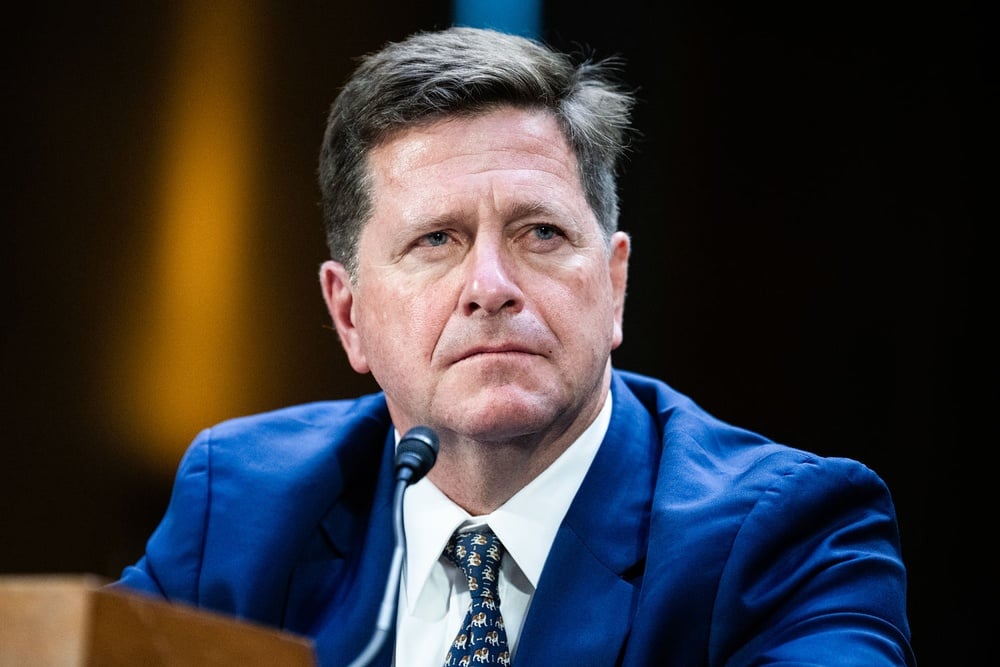
July 28, 2026 · 0 shares
Neutral, fact-based framing with straightforward reporting of a Senate confirmation for Jay Clayton as director of national intelligence.
July 29, 2026 · 0 shares
Neutral, procedural framing of Jay Clayton's DNI appointment with a brief note on staff reductions at the agency.
Automated analysis; not human reviewed.
·
1 of 52 available dimensions scored; omitted dimensions are not treated as neutral.
·
Verified supporting quotes for 1 of 1 scored dimensions.
Claim: Neutral framing with no partisan tilt.
“Senate Confirms Jay Clayton as Intelligence Chief.” · exact text match
“The Senate confirmed Jay Clayton as the director of national intelligence on Tuesday, placing the federal prosecutor to lead an agency that underwent rounds of staff cuts in recent weeks.” · exact text match
Why: Headline and body use straightforward, factual language without advocacy or partisan framing.
July 28, 2026 · 0 shares
Partisan framing centers on a 51-47 party-line vote and the potential revival of the debate over warrantless spy powers.
Automated analysis; not human reviewed. Limitations: Text is truncated; last sentence incomplete, limiting full background on related policy debate.
Text is truncated; last sentence incomplete, limiting full background on related policy debate.
July 28, 2026 · 0 shares
Neutral, fact-based framing with straightforward reporting of a Senate confirmation for Jay Clayton as director of national intelligence.
July 29, 2026 · 0 shares
Partisan polarization around national security policy, especially FISA, is foregrounded, framing Clayton's DNI confirmation as a party-line outcome.
Context: The confirmation unfolds amid ongoing negotiations over FISA reauthorization and leadership changes at the DNI, including an acting DNI appointment and partisan disputes around surveillance policy.
Automated analysis; not human reviewed.
·
47 of 52 available dimensions scored; omitted dimensions are not treated as neutral.
·
Verified supporting quotes for 1 of 47 scored dimensions.
Claim: The article frames the confirmation as a partisan event
“Clayton's nomination was confirmed by a 51-47 party-line vote.” · exact text match
“The confirmation could clear a path to reauthorize a key surveillance tool.” · exact text match
Why: Use of 'party-line vote' and linkage to FISA reauthorization signals partisan framing rather than a neutral, apolitical report.
July 29, 2026 · 0 shares
Framing centers on concerns that Trump is using the intelligence community to relitigate the 2020 election and cast doubt on the integrity of the coming vote, while Democrats oppose the nomination.
Clayton's appointment places him as DNI heading the 18-agency U.S. intelligence community amid midterm political contention and ongoing debate over the 2020 election claims.
Automated analysis; not human reviewed.
Limitations: The classification hinges on the article's framing of Trump's claims as unsupported or false; independent verification is needed to avoid mischaracterizing the presentation.
·
1 of 52 available dimensions scored; omitted dimensions are not treated as neutral.
·
Verified supporting quotes for 1 of 1 scored dimensions.
Claim: The article frames Trump's election-fraud claims as unsupported or false.
“revives unsupported election fraud claims ahead of the midterms” · exact text match
“falsely asserting that the 2020 election was stolen” · exact text match
Why: Two explicit phrases indicate editorial stance that Trump's claims are not credible.
The classification hinges on the article's framing of Trump's claims as unsupported or false; independent verification is needed to avoid mischaracterizing the presentation.
July 28, 2026 · 0 shares
Partisan framing centers on a 51-47 party-line vote and the potential revival of the debate over warrantless spy powers.
Automated analysis; not human reviewed. Limitations: Text is truncated; last sentence incomplete, limiting full background on related policy debate.
Text is truncated; last sentence incomplete, limiting full background on related policy debate.
July 28, 2026 · 0 shares
Neutral, fact-based framing with straightforward reporting of a Senate confirmation for Jay Clayton as director of national intelligence.
Framing highlights rushed confirmation of a security-focused nominee and the politics around Section 702 reauthorization, foregrounding GOP praise and Democratic opposition.
Automated analysis; not human reviewed.
·
6 of 52 available dimensions scored; omitted dimensions are not treated as neutral.
·
Verified supporting quotes for 3 of 6 scored dimensions.
Claim: The piece mixes supportive and critical voices, suggesting a balanced or mixed framing rather than a single-tilt stance.
“I think he's a really good pick.
He's obviously very capable and competent and [has] a great record.”
· exact text match
“bitterly disappointed” · exact text match
Why: Presence of both supportive and critical quotes indicates mixed framing.
Claim: The piece contains multiple policy details and quotes that engage readers in ongoing national-security debates.
“The Senate confirmed U.S. Attorney for the Southern District of New York Jay Clayton Tuesday to serve as the next director of national intelligence (DNI).” · not found in supplied text
“The House failed to pass a temporary extension of Section 702 in a 198 to 218 vote on June 11.” · not found in supplied text
Why: Numerical and procedural details contribute to interest.
Claim: Politics-driven framing with partisan cues: GOP praise for Clayton and a Democrat critique layout the piece as a partisan-tinged report.
“I think he's a really good pick.
He's obviously very capable and competent and [has] a great record.”
· exact text match
“bitterly disappointed” · exact text match
Why: GOP praise and Democratic critique in quotes show partisan framing.
Claim: The publisher frames the nomination as an establishment-favorable security move, privileging Republican praise of Clayton while highlighting he purportedly supports security-focused reauthorization goals.
“I think he's a really good pick.
He's obviously very capable and competent and [has] a great record.”
· exact text match
“As U.S. Attorney, Jay Clayton has worked hand in glove with our intelligence agencies and counterterrorism personnel to lock up criminals who threaten our national security.” · exact text match
Why: Direct GOP praise and the security-professional framing in quotes supports the view of establishment-leaning framing.
Claim: The report cites specific votes, dates, and quotes from named figures, suggesting credible sourcing and traceable claims.
“The Senate confirmed U.S. Attorney for the Southern District of New York Jay Clayton Tuesday to serve as the next director of national intelligence (DNI).” · not found in supplied text
“Trump requested on June 17 that the Senate postpone Clayton’s confirmation until Jamie McDonald was approved to be the next SDNY attorney.” · not found in supplied text
“The House failed to pass a temporary extension of Section 702 in a 198 to 218 vote on June 11.” · not found in supplied text
Why: Multiple verifiable claims and quotes support credibility, though some claims rely on framing-derived interpretation.
Claim: The article relies on direct quotes from multiple sources to present a factual accounting, signaling a fair approach to sourcing.
“It’s regrettable that the president has directed Jay Clayton not to appear at his confirmation hearing today.” · not found in supplied text
“As U.S. Attorney, Jay Clayton has worked hand in glove with our intelligence agencies and counterterrorism personnel to lock up criminals who threaten our national security.” · exact text match
Why: Use of direct quotes from diverse actors supports fair sourcing.
Framing emphasizes partisan maneuvering over FISA Section 702 and presents Clayton's confirmation as likely ending the spying-law stalemate, foregrounding security-establishment dynamics and internal power struggles.
Automated analysis; not human reviewed.
·
1 of 52 available dimensions scored; omitted dimensions are not treated as neutral.
·
Verified supporting quotes for 1 of 1 scored dimensions.
Claim: Framing treats national security surveillance powers as valuable and essential.
“Section 702, which remains up for reauthorization, allows the government to gather electronic records of persons living overseas.” · exact text match
“vowing to keep the Foreign Intelligence Surveillance Act’s valuable Section 702 powers in the dark while Pulte remains in the role.” · exact text match
“The final vote was 51-47, with zero defections on either side.” · exact text match
Why: These quotes portray surveillance powers as valuable and depict cross-party support, indicating establishment-oriented framing of security powers.
Contentious, procedure-focused framing around Jay Clayton's DNI nomination, highlighting subpoenas and partisan division.
The DNI oversees 18 intelligence agencies; the role was created after the September 11, 2001 attacks to coordinate the nation's intelligence apparatus.
Clayton is the Manhattan U.S. Attorney nominated by President Trump for the DNI post.
The Senate Intelligence Committee voted 9-8 to send the nomination to the full Senate, with only Republicans voting in favor.
The vote is being held amid controversy that includes subpoenas of New York Times journalists and a probe that later prompted withdrawal of the subpoenas.
An interim DNI position is currently held by Bill Pulte of the FHFA, whom some see as lacking national-security experience.
A final confirmation vote was anticipated later in the week, with Republicans holding a 53-47 Senate majority.
Framing highlights rushed confirmation of a security-focused nominee and the politics around Section 702 reauthorization, foregrounding GOP praise and Democratic opposition.
Automated analysis; not human reviewed.
·
6 of 52 available dimensions scored; omitted dimensions are not treated as neutral.
·
Verified supporting quotes for 3 of 6 scored dimensions.
Claim: The piece mixes supportive and critical voices, suggesting a balanced or mixed framing rather than a single-tilt stance.
“I think he's a really good pick.
He's obviously very capable and competent and [has] a great record.”
· exact text match
“bitterly disappointed” · exact text match
Why: Presence of both supportive and critical quotes indicates mixed framing.
Claim: The piece contains multiple policy details and quotes that engage readers in ongoing national-security debates.
“The Senate confirmed U.S. Attorney for the Southern District of New York Jay Clayton Tuesday to serve as the next director of national intelligence (DNI).” · not found in supplied text
“The House failed to pass a temporary extension of Section 702 in a 198 to 218 vote on June 11.” · not found in supplied text
Why: Numerical and procedural details contribute to interest.
Claim: Politics-driven framing with partisan cues: GOP praise for Clayton and a Democrat critique layout the piece as a partisan-tinged report.
“I think he's a really good pick.
He's obviously very capable and competent and [has] a great record.”
· exact text match
“bitterly disappointed” · exact text match
Why: GOP praise and Democratic critique in quotes show partisan framing.
Claim: The publisher frames the nomination as an establishment-favorable security move, privileging Republican praise of Clayton while highlighting he purportedly supports security-focused reauthorization goals.
“I think he's a really good pick.
He's obviously very capable and competent and [has] a great record.”
· exact text match
“As U.S. Attorney, Jay Clayton has worked hand in glove with our intelligence agencies and counterterrorism personnel to lock up criminals who threaten our national security.” · exact text match
Why: Direct GOP praise and the security-professional framing in quotes supports the view of establishment-leaning framing.
Claim: The report cites specific votes, dates, and quotes from named figures, suggesting credible sourcing and traceable claims.
“The Senate confirmed U.S. Attorney for the Southern District of New York Jay Clayton Tuesday to serve as the next director of national intelligence (DNI).” · not found in supplied text
“Trump requested on June 17 that the Senate postpone Clayton’s confirmation until Jamie McDonald was approved to be the next SDNY attorney.” · not found in supplied text
“The House failed to pass a temporary extension of Section 702 in a 198 to 218 vote on June 11.” · not found in supplied text
Why: Multiple verifiable claims and quotes support credibility, though some claims rely on framing-derived interpretation.
Claim: The article relies on direct quotes from multiple sources to present a factual accounting, signaling a fair approach to sourcing.
“It’s regrettable that the president has directed Jay Clayton not to appear at his confirmation hearing today.” · not found in supplied text
“As U.S. Attorney, Jay Clayton has worked hand in glove with our intelligence agencies and counterterrorism personnel to lock up criminals who threaten our national security.” · exact text match
Why: Use of direct quotes from diverse actors supports fair sourcing.
Framing emphasizes partisan maneuvering over FISA Section 702 and presents Clayton's confirmation as likely ending the spying-law stalemate, foregrounding security-establishment dynamics and internal power struggles.
Automated analysis; not human reviewed.
·
1 of 52 available dimensions scored; omitted dimensions are not treated as neutral.
·
Verified supporting quotes for 1 of 1 scored dimensions.
Claim: Framing treats national security surveillance powers as valuable and essential.
“Section 702, which remains up for reauthorization, allows the government to gather electronic records of persons living overseas.” · exact text match
“vowing to keep the Foreign Intelligence Surveillance Act’s valuable Section 702 powers in the dark while Pulte remains in the role.” · exact text match
“The final vote was 51-47, with zero defections on either side.” · exact text match
Why: These quotes portray surveillance powers as valuable and depict cross-party support, indicating establishment-oriented framing of security powers.
July 29, 2026 · 0 shares
Partisan polarization around national security policy, especially FISA, is foregrounded, framing Clayton's DNI confirmation as a party-line outcome.
Context: The confirmation unfolds amid ongoing negotiations over FISA reauthorization and leadership changes at the DNI, including an acting DNI appointment and partisan disputes around surveillance policy.
Automated analysis; not human reviewed.
·
47 of 52 available dimensions scored; omitted dimensions are not treated as neutral.
·
Verified supporting quotes for 1 of 47 scored dimensions.
Claim: The article frames the confirmation as a partisan event
“Clayton's nomination was confirmed by a 51-47 party-line vote.” · exact text match
“The confirmation could clear a path to reauthorize a key surveillance tool.” · exact text match
Why: Use of 'party-line vote' and linkage to FISA reauthorization signals partisan framing rather than a neutral, apolitical report.
July 28, 2026 · 0 shares
Neutral, fact-based framing with straightforward reporting of a Senate confirmation for Jay Clayton as director of national intelligence.
July 28, 2026 · 0 shares
Partisan framing centers on a 51-47 party-line vote and the potential revival of the debate over warrantless spy powers.
Automated analysis; not human reviewed. Limitations: Text is truncated; last sentence incomplete, limiting full background on related policy debate.
Text is truncated; last sentence incomplete, limiting full background on related policy debate.
Framing emphasizes partisan maneuvering over FISA Section 702 and presents Clayton's confirmation as likely ending the spying-law stalemate, foregrounding security-establishment dynamics and internal power struggles.
Automated analysis; not human reviewed. · 1 of 52 available dimensions scored; omitted dimensions are not treated as neutral. · Verified supporting quotes for 1 of 1 scored dimensions.
Claim: Framing treats national security surveillance powers as valuable and essential.
“Section 702, which remains up for reauthorization, allows the government to gather electronic records of persons living overseas.” · exact text match
“vowing to keep the Foreign Intelligence Surveillance Act’s valuable Section 702 powers in the dark while Pulte remains in the role.” · exact text match
“The final vote was 51-47, with zero defections on either side.” · exact text match
Why: These quotes portray surveillance powers as valuable and depict cross-party support, indicating establishment-oriented framing of security powers.
July 28, 2026 · 0 shares
Neutral, fact-based framing with straightforward reporting of a Senate confirmation for Jay Clayton as director of national intelligence.
July 29, 2026 · 0 shares
Partisan polarization around national security policy, especially FISA, is foregrounded, framing Clayton's DNI confirmation as a party-line outcome.
Context: The confirmation unfolds amid ongoing negotiations over FISA reauthorization and leadership changes at the DNI, including an acting DNI appointment and partisan disputes around surveillance policy.
Automated analysis; not human reviewed. · 47 of 52 available dimensions scored; omitted dimensions are not treated as neutral. · Verified supporting quotes for 1 of 47 scored dimensions.
Claim: The article frames the confirmation as a partisan event
“Clayton's nomination was confirmed by a 51-47 party-line vote.” · exact text match
“The confirmation could clear a path to reauthorize a key surveillance tool.” · exact text match
Why: Use of 'party-line vote' and linkage to FISA reauthorization signals partisan framing rather than a neutral, apolitical report.
July 29, 2026 · 0 shares
Framing centers on concerns that Trump is using the intelligence community to relitigate the 2020 election and cast doubt on the integrity of the coming vote, while Democrats oppose the nomination.
Clayton's appointment places him as DNI heading the 18-agency U.S. intelligence community amid midterm political contention and ongoing debate over the 2020 election claims.
Automated analysis; not human reviewed. Limitations: The classification hinges on the article's framing of Trump's claims as unsupported or false; independent verification is needed to avoid mischaracterizing the presentation. · 1 of 52 available dimensions scored; omitted dimensions are not treated as neutral. · Verified supporting quotes for 1 of 1 scored dimensions.
Claim: The article frames Trump's election-fraud claims as unsupported or false.
“revives unsupported election fraud claims ahead of the midterms” · exact text match
“falsely asserting that the 2020 election was stolen” · exact text match
Why: Two explicit phrases indicate editorial stance that Trump's claims are not credible.
The classification hinges on the article's framing of Trump's claims as unsupported or false; independent verification is needed to avoid mischaracterizing the presentation.
July 28, 2026 · 0 shares
Partisan framing centers on a 51-47 party-line vote and the potential revival of the debate over warrantless spy powers.
Automated analysis; not human reviewed. Limitations: Text is truncated; last sentence incomplete, limiting full background on related policy debate.
Text is truncated; last sentence incomplete, limiting full background on related policy debate.
Framing emphasizes partisan maneuvering over FISA Section 702 and presents Clayton's confirmation as likely ending the spying-law stalemate, foregrounding security-establishment dynamics and internal power struggles.
Automated analysis; not human reviewed. · 1 of 52 available dimensions scored; omitted dimensions are not treated as neutral. · Verified supporting quotes for 1 of 1 scored dimensions.
Claim: Framing treats national security surveillance powers as valuable and essential.
“Section 702, which remains up for reauthorization, allows the government to gather electronic records of persons living overseas.” · exact text match
“vowing to keep the Foreign Intelligence Surveillance Act’s valuable Section 702 powers in the dark while Pulte remains in the role.” · exact text match
“The final vote was 51-47, with zero defections on either side.” · exact text match
Why: These quotes portray surveillance powers as valuable and depict cross-party support, indicating establishment-oriented framing of security powers.
July 29, 2026 · 0 shares
Partisan polarization around national security policy, especially FISA, is foregrounded, framing Clayton's DNI confirmation as a party-line outcome.
Context: The confirmation unfolds amid ongoing negotiations over FISA reauthorization and leadership changes at the DNI, including an acting DNI appointment and partisan disputes around surveillance policy.
Automated analysis; not human reviewed. · 47 of 52 available dimensions scored; omitted dimensions are not treated as neutral. · Verified supporting quotes for 1 of 47 scored dimensions.
Claim: The article frames the confirmation as a partisan event
“Clayton's nomination was confirmed by a 51-47 party-line vote.” · exact text match
“The confirmation could clear a path to reauthorize a key surveillance tool.” · exact text match
Why: Use of 'party-line vote' and linkage to FISA reauthorization signals partisan framing rather than a neutral, apolitical report.
Framing highlights rushed confirmation of a security-focused nominee and the politics around Section 702 reauthorization, foregrounding GOP praise and Democratic opposition.
Automated analysis; not human reviewed. · 6 of 52 available dimensions scored; omitted dimensions are not treated as neutral. · Verified supporting quotes for 3 of 6 scored dimensions.
Claim: The piece mixes supportive and critical voices, suggesting a balanced or mixed framing rather than a single-tilt stance.
“I think he's a really good pick. He's obviously very capable and competent and [has] a great record.” · exact text match
“bitterly disappointed” · exact text match
Why: Presence of both supportive and critical quotes indicates mixed framing.
Claim: The piece contains multiple policy details and quotes that engage readers in ongoing national-security debates.
“The Senate confirmed U.S. Attorney for the Southern District of New York Jay Clayton Tuesday to serve as the next director of national intelligence (DNI).” · not found in supplied text
“The House failed to pass a temporary extension of Section 702 in a 198 to 218 vote on June 11.” · not found in supplied text
Why: Numerical and procedural details contribute to interest.
Claim: Politics-driven framing with partisan cues: GOP praise for Clayton and a Democrat critique layout the piece as a partisan-tinged report.
“I think he's a really good pick. He's obviously very capable and competent and [has] a great record.” · exact text match
“bitterly disappointed” · exact text match
Why: GOP praise and Democratic critique in quotes show partisan framing.
Claim: The publisher frames the nomination as an establishment-favorable security move, privileging Republican praise of Clayton while highlighting he purportedly supports security-focused reauthorization goals.
“I think he's a really good pick. He's obviously very capable and competent and [has] a great record.” · exact text match
“As U.S. Attorney, Jay Clayton has worked hand in glove with our intelligence agencies and counterterrorism personnel to lock up criminals who threaten our national security.” · exact text match
Why: Direct GOP praise and the security-professional framing in quotes supports the view of establishment-leaning framing.
Claim: The report cites specific votes, dates, and quotes from named figures, suggesting credible sourcing and traceable claims.
“The Senate confirmed U.S. Attorney for the Southern District of New York Jay Clayton Tuesday to serve as the next director of national intelligence (DNI).” · not found in supplied text
“Trump requested on June 17 that the Senate postpone Clayton’s confirmation until Jamie McDonald was approved to be the next SDNY attorney.” · not found in supplied text
“The House failed to pass a temporary extension of Section 702 in a 198 to 218 vote on June 11.” · not found in supplied text
Why: Multiple verifiable claims and quotes support credibility, though some claims rely on framing-derived interpretation.
Claim: The article relies on direct quotes from multiple sources to present a factual accounting, signaling a fair approach to sourcing.
“It’s regrettable that the president has directed Jay Clayton not to appear at his confirmation hearing today.” · not found in supplied text
“As U.S. Attorney, Jay Clayton has worked hand in glove with our intelligence agencies and counterterrorism personnel to lock up criminals who threaten our national security.” · exact text match
Why: Use of direct quotes from diverse actors supports fair sourcing.
July 28, 2026 · 0 shares
Blockade-focused framing centers on Democrats using Jay Clayton's potential DNI confirmation to reopen FISA, portraying him as an improvement over the acting DNI and recasting the vote as a partisan negotiation.
July 28, 2026 · 0 shares
Partisan framing centers on a 51-47 party-line vote and the potential revival of the debate over warrantless spy powers.
Automated analysis; not human reviewed. Limitations: Text is truncated; last sentence incomplete, limiting full background on related policy debate.
Text is truncated; last sentence incomplete, limiting full background on related policy debate.
July 28, 2026 · 0 shares
Neutral, fact-based framing with straightforward reporting of a Senate confirmation for Jay Clayton as director of national intelligence.
Framing highlights rushed confirmation of a security-focused nominee and the politics around Section 702 reauthorization, foregrounding GOP praise and Democratic opposition.
Automated analysis; not human reviewed. · 6 of 52 available dimensions scored; omitted dimensions are not treated as neutral. · Verified supporting quotes for 3 of 6 scored dimensions.
Claim: The piece mixes supportive and critical voices, suggesting a balanced or mixed framing rather than a single-tilt stance.
“I think he's a really good pick. He's obviously very capable and competent and [has] a great record.” · exact text match
“bitterly disappointed” · exact text match
Why: Presence of both supportive and critical quotes indicates mixed framing.
Claim: The piece contains multiple policy details and quotes that engage readers in ongoing national-security debates.
“The Senate confirmed U.S. Attorney for the Southern District of New York Jay Clayton Tuesday to serve as the next director of national intelligence (DNI).” · not found in supplied text
“The House failed to pass a temporary extension of Section 702 in a 198 to 218 vote on June 11.” · not found in supplied text
Why: Numerical and procedural details contribute to interest.
Claim: Politics-driven framing with partisan cues: GOP praise for Clayton and a Democrat critique layout the piece as a partisan-tinged report.
“I think he's a really good pick. He's obviously very capable and competent and [has] a great record.” · exact text match
“bitterly disappointed” · exact text match
Why: GOP praise and Democratic critique in quotes show partisan framing.
Claim: The publisher frames the nomination as an establishment-favorable security move, privileging Republican praise of Clayton while highlighting he purportedly supports security-focused reauthorization goals.
“I think he's a really good pick. He's obviously very capable and competent and [has] a great record.” · exact text match
“As U.S. Attorney, Jay Clayton has worked hand in glove with our intelligence agencies and counterterrorism personnel to lock up criminals who threaten our national security.” · exact text match
Why: Direct GOP praise and the security-professional framing in quotes supports the view of establishment-leaning framing.
Claim: The report cites specific votes, dates, and quotes from named figures, suggesting credible sourcing and traceable claims.
“The Senate confirmed U.S. Attorney for the Southern District of New York Jay Clayton Tuesday to serve as the next director of national intelligence (DNI).” · not found in supplied text
“Trump requested on June 17 that the Senate postpone Clayton’s confirmation until Jamie McDonald was approved to be the next SDNY attorney.” · not found in supplied text
“The House failed to pass a temporary extension of Section 702 in a 198 to 218 vote on June 11.” · not found in supplied text
Why: Multiple verifiable claims and quotes support credibility, though some claims rely on framing-derived interpretation.
Claim: The article relies on direct quotes from multiple sources to present a factual accounting, signaling a fair approach to sourcing.
“It’s regrettable that the president has directed Jay Clayton not to appear at his confirmation hearing today.” · not found in supplied text
“As U.S. Attorney, Jay Clayton has worked hand in glove with our intelligence agencies and counterterrorism personnel to lock up criminals who threaten our national security.” · exact text match
Why: Use of direct quotes from diverse actors supports fair sourcing.
Helium Bias
July 28, 2026 · 0 shares
Partisan framing centers on a 51-47 party-line vote and the potential revival of the debate over warrantless spy powers.
Automated analysis; not human reviewed. Limitations: Text is truncated; last sentence incomplete, limiting full background on related policy debate.
Text is truncated; last sentence incomplete, limiting full background on related policy debate.
July 29, 2026 · 0 shares
Pro-Trump framing portrays Clayton's DNI confirmation as a positive outcome against a corrupt 'elite' and 'Deep State,' using anti-establishment rhetoric and sensational language to frame the events as transparency through executive action.
The DNI is the head of the U.S. Intelligence Community; Jay Clayton previously chaired the SEC and served as US Attorney for the SDNY; The report discusses his confirmation and mentions James M. McDonald as a potential SDNY US Attorney replacement; It includes quotes from Trump praising Clayton and from Bill Pulte about 'Deep State' terminations and staff reductions.
Automated analysis; not human reviewed. Limitations: The excerpt shows partisan, pro-Trump framing with loaded terms like 'Deep State' and 'bloated elite', relying on quotes that may not be independently verifiable. · 39 of 52 available dimensions scored; omitted dimensions are not treated as neutral. · Verified supporting quotes for 1 of 39 scored dimensions.
Claim: Pro-conservative framing; favorable coverage of a Trump-supported nomination.
““Congratulations to the Great Jay Clayton on his confirmation by the United States Senate, to be the next Director of National Intelligence. Jay is outstanding in every way, and will do a spectacular job as Director! President DONALD J. TRUMP”” · exact text match
Why: Direct presidential praise indicates conservative-leaning framing.
Claim: Anti-elite populist framing; elites depicted as corrupt and to be challenged.
“The Intelligence Community must protect the American people, NOT the political whims of the bloated and corrupt elite class.” · not found in supplied text
Why: Explicit negative framing of 'elite class' aligns with populist/anti-elite framing.
Claim: Subjective framing with normative praise for the nominee.
“'Congratulations to the Great Jay Clayton... outstanding in every way, and will do a spectacular job as Director!'” · not found in supplied text
Why: Presence of praise indicates subjectivity.
Claim: Explicit certainty about future performance of the nominee.
“'I have no doubt about your future greatness! President DONALD J. TRUMP'” · not found in supplied text
Why: Direct certainty about future success shows overconfidence.
Claim: Anti-establishment framing using 'Deep State' terminology and elite critique.
“Earlier Tuesday, outgoing Acting DNI Bill Pulte executed his 5th round of Deep State terminations.” · exact text match
“The Intelligence Community must protect the American people, NOT the political whims of the bloated and corrupt elite class.” · not found in supplied text
Why: Use of 'Deep State' and elite critique signals anti-establishment framing.
The excerpt shows partisan, pro-Trump framing with loaded terms like 'Deep State' and 'bloated elite', relying on quotes that may not be independently verifiable.
Framing emphasizes partisan maneuvering over FISA Section 702 and presents Clayton's confirmation as likely ending the spying-law stalemate, foregrounding security-establishment dynamics and internal power struggles.
Automated analysis; not human reviewed. · 1 of 52 available dimensions scored; omitted dimensions are not treated as neutral. · Verified supporting quotes for 1 of 1 scored dimensions.
Claim: Framing treats national security surveillance powers as valuable and essential.
“Section 702, which remains up for reauthorization, allows the government to gather electronic records of persons living overseas.” · exact text match
“vowing to keep the Foreign Intelligence Surveillance Act’s valuable Section 702 powers in the dark while Pulte remains in the role.” · exact text match
“The final vote was 51-47, with zero defections on either side.” · exact text match
Why: These quotes portray surveillance powers as valuable and depict cross-party support, indicating establishment-oriented framing of security powers.
Story Blindspots
July 29, 2026 · 0 shares
Partisan polarization around national security policy, especially FISA, is foregrounded, framing Clayton's DNI confirmation as a party-line outcome.
Context: The confirmation unfolds amid ongoing negotiations over FISA reauthorization and leadership changes at the DNI, including an acting DNI appointment and partisan disputes around surveillance policy.
Automated analysis; not human reviewed. · 47 of 52 available dimensions scored; omitted dimensions are not treated as neutral. · Verified supporting quotes for 1 of 47 scored dimensions.
Claim: The article frames the confirmation as a partisan event
“Clayton's nomination was confirmed by a 51-47 party-line vote.” · exact text match
“The confirmation could clear a path to reauthorize a key surveillance tool.” · exact text match
Why: Use of 'party-line vote' and linkage to FISA reauthorization signals partisan framing rather than a neutral, apolitical report.
July 28, 2026 · 0 shares
Blockade-focused framing centers on Democrats using Jay Clayton's potential DNI confirmation to reopen FISA, portraying him as an improvement over the acting DNI and recasting the vote as a partisan negotiation.
July 28, 2026 · 0 shares
Neutral, fact-based framing with straightforward reporting of a Senate confirmation for Jay Clayton as director of national intelligence.
July 28, 2026 · 0 shares
Partisan framing centers on a 51-47 party-line vote and the potential revival of the debate over warrantless spy powers.
Automated analysis; not human reviewed. Limitations: Text is truncated; last sentence incomplete, limiting full background on related policy debate.
Text is truncated; last sentence incomplete, limiting full background on related policy debate.
July 29, 2026 · 0 shares
Framing centers on concerns that Trump is using the intelligence community to relitigate the 2020 election and cast doubt on the integrity of the coming vote, while Democrats oppose the nomination.
Clayton's appointment places him as DNI heading the 18-agency U.S. intelligence community amid midterm political contention and ongoing debate over the 2020 election claims.
Automated analysis; not human reviewed. Limitations: The classification hinges on the article's framing of Trump's claims as unsupported or false; independent verification is needed to avoid mischaracterizing the presentation. · 1 of 52 available dimensions scored; omitted dimensions are not treated as neutral. · Verified supporting quotes for 1 of 1 scored dimensions.
Claim: The article frames Trump's election-fraud claims as unsupported or false.
“revives unsupported election fraud claims ahead of the midterms” · exact text match
“falsely asserting that the 2020 election was stolen” · exact text match
Why: Two explicit phrases indicate editorial stance that Trump's claims are not credible.
The classification hinges on the article's framing of Trump's claims as unsupported or false; independent verification is needed to avoid mischaracterizing the presentation.
July 29, 2026 · 0 shares
Partisan polarization around national security policy, especially FISA, is foregrounded, framing Clayton's DNI confirmation as a party-line outcome.
Context: The confirmation unfolds amid ongoing negotiations over FISA reauthorization and leadership changes at the DNI, including an acting DNI appointment and partisan disputes around surveillance policy.
Automated analysis; not human reviewed. · 47 of 52 available dimensions scored; omitted dimensions are not treated as neutral. · Verified supporting quotes for 1 of 47 scored dimensions.
Claim: The article frames the confirmation as a partisan event
“Clayton's nomination was confirmed by a 51-47 party-line vote.” · exact text match
“The confirmation could clear a path to reauthorize a key surveillance tool.” · exact text match
Why: Use of 'party-line vote' and linkage to FISA reauthorization signals partisan framing rather than a neutral, apolitical report.
Framing highlights rushed confirmation of a security-focused nominee and the politics around Section 702 reauthorization, foregrounding GOP praise and Democratic opposition.
Automated analysis; not human reviewed. · 6 of 52 available dimensions scored; omitted dimensions are not treated as neutral. · Verified supporting quotes for 3 of 6 scored dimensions.
Claim: The piece mixes supportive and critical voices, suggesting a balanced or mixed framing rather than a single-tilt stance.
“I think he's a really good pick. He's obviously very capable and competent and [has] a great record.” · exact text match
“bitterly disappointed” · exact text match
Why: Presence of both supportive and critical quotes indicates mixed framing.
Claim: The piece contains multiple policy details and quotes that engage readers in ongoing national-security debates.
“The Senate confirmed U.S. Attorney for the Southern District of New York Jay Clayton Tuesday to serve as the next director of national intelligence (DNI).” · not found in supplied text
“The House failed to pass a temporary extension of Section 702 in a 198 to 218 vote on June 11.” · not found in supplied text
Why: Numerical and procedural details contribute to interest.
Claim: Politics-driven framing with partisan cues: GOP praise for Clayton and a Democrat critique layout the piece as a partisan-tinged report.
“I think he's a really good pick. He's obviously very capable and competent and [has] a great record.” · exact text match
“bitterly disappointed” · exact text match
Why: GOP praise and Democratic critique in quotes show partisan framing.
Claim: The publisher frames the nomination as an establishment-favorable security move, privileging Republican praise of Clayton while highlighting he purportedly supports security-focused reauthorization goals.
“I think he's a really good pick. He's obviously very capable and competent and [has] a great record.” · exact text match
“As U.S. Attorney, Jay Clayton has worked hand in glove with our intelligence agencies and counterterrorism personnel to lock up criminals who threaten our national security.” · exact text match
Why: Direct GOP praise and the security-professional framing in quotes supports the view of establishment-leaning framing.
Claim: The report cites specific votes, dates, and quotes from named figures, suggesting credible sourcing and traceable claims.
“The Senate confirmed U.S. Attorney for the Southern District of New York Jay Clayton Tuesday to serve as the next director of national intelligence (DNI).” · not found in supplied text
“Trump requested on June 17 that the Senate postpone Clayton’s confirmation until Jamie McDonald was approved to be the next SDNY attorney.” · not found in supplied text
“The House failed to pass a temporary extension of Section 702 in a 198 to 218 vote on June 11.” · not found in supplied text
Why: Multiple verifiable claims and quotes support credibility, though some claims rely on framing-derived interpretation.
Claim: The article relies on direct quotes from multiple sources to present a factual accounting, signaling a fair approach to sourcing.
“It’s regrettable that the president has directed Jay Clayton not to appear at his confirmation hearing today.” · not found in supplied text
“As U.S. Attorney, Jay Clayton has worked hand in glove with our intelligence agencies and counterterrorism personnel to lock up criminals who threaten our national security.” · exact text match
Why: Use of direct quotes from diverse actors supports fair sourcing.
Framing emphasizes partisan maneuvering over FISA Section 702 and presents Clayton's confirmation as likely ending the spying-law stalemate, foregrounding security-establishment dynamics and internal power struggles.
Automated analysis; not human reviewed. · 1 of 52 available dimensions scored; omitted dimensions are not treated as neutral. · Verified supporting quotes for 1 of 1 scored dimensions.
Claim: Framing treats national security surveillance powers as valuable and essential.
“Section 702, which remains up for reauthorization, allows the government to gather electronic records of persons living overseas.” · exact text match
“vowing to keep the Foreign Intelligence Surveillance Act’s valuable Section 702 powers in the dark while Pulte remains in the role.” · exact text match
“The final vote was 51-47, with zero defections on either side.” · exact text match
Why: These quotes portray surveillance powers as valuable and depict cross-party support, indicating establishment-oriented framing of security powers.
Contentious, procedure-focused framing around Jay Clayton's DNI nomination, highlighting subpoenas and partisan division.
The DNI oversees 18 intelligence agencies; the role was created after the September 11, 2001 attacks to coordinate the nation's intelligence apparatus. Clayton is the Manhattan U.S. Attorney nominated by President Trump for the DNI post. The Senate Intelligence Committee voted 9-8 to send the nomination to the full Senate, with only Republicans voting in favor. The vote is being held amid controversy that includes subpoenas of New York Times journalists and a probe that later prompted withdrawal of the subpoenas. An interim DNI position is currently held by Bill Pulte of the FHFA, whom some see as lacking national-security experience. A final confirmation vote was anticipated later in the week, with Republicans holding a 53-47 Senate majority.
Framing highlights rushed confirmation of a security-focused nominee and the politics around Section 702 reauthorization, foregrounding GOP praise and Democratic opposition.
Automated analysis; not human reviewed. · 6 of 52 available dimensions scored; omitted dimensions are not treated as neutral. · Verified supporting quotes for 3 of 6 scored dimensions.
Claim: The piece mixes supportive and critical voices, suggesting a balanced or mixed framing rather than a single-tilt stance.
“I think he's a really good pick. He's obviously very capable and competent and [has] a great record.” · exact text match
“bitterly disappointed” · exact text match
Why: Presence of both supportive and critical quotes indicates mixed framing.
Claim: The piece contains multiple policy details and quotes that engage readers in ongoing national-security debates.
“The Senate confirmed U.S. Attorney for the Southern District of New York Jay Clayton Tuesday to serve as the next director of national intelligence (DNI).” · not found in supplied text
“The House failed to pass a temporary extension of Section 702 in a 198 to 218 vote on June 11.” · not found in supplied text
Why: Numerical and procedural details contribute to interest.
Claim: Politics-driven framing with partisan cues: GOP praise for Clayton and a Democrat critique layout the piece as a partisan-tinged report.
“I think he's a really good pick. He's obviously very capable and competent and [has] a great record.” · exact text match
“bitterly disappointed” · exact text match
Why: GOP praise and Democratic critique in quotes show partisan framing.
Claim: The publisher frames the nomination as an establishment-favorable security move, privileging Republican praise of Clayton while highlighting he purportedly supports security-focused reauthorization goals.
“I think he's a really good pick. He's obviously very capable and competent and [has] a great record.” · exact text match
“As U.S. Attorney, Jay Clayton has worked hand in glove with our intelligence agencies and counterterrorism personnel to lock up criminals who threaten our national security.” · exact text match
Why: Direct GOP praise and the security-professional framing in quotes supports the view of establishment-leaning framing.
Claim: The report cites specific votes, dates, and quotes from named figures, suggesting credible sourcing and traceable claims.
“The Senate confirmed U.S. Attorney for the Southern District of New York Jay Clayton Tuesday to serve as the next director of national intelligence (DNI).” · not found in supplied text
“Trump requested on June 17 that the Senate postpone Clayton’s confirmation until Jamie McDonald was approved to be the next SDNY attorney.” · not found in supplied text
“The House failed to pass a temporary extension of Section 702 in a 198 to 218 vote on June 11.” · not found in supplied text
Why: Multiple verifiable claims and quotes support credibility, though some claims rely on framing-derived interpretation.
Claim: The article relies on direct quotes from multiple sources to present a factual accounting, signaling a fair approach to sourcing.
“It’s regrettable that the president has directed Jay Clayton not to appear at his confirmation hearing today.” · not found in supplied text
“As U.S. Attorney, Jay Clayton has worked hand in glove with our intelligence agencies and counterterrorism personnel to lock up criminals who threaten our national security.” · exact text match
Why: Use of direct quotes from diverse actors supports fair sourcing.
Contentious, procedure-focused framing around Jay Clayton's DNI nomination, highlighting subpoenas and partisan division.
The DNI oversees 18 intelligence agencies; the role was created after the September 11, 2001 attacks to coordinate the nation's intelligence apparatus. Clayton is the Manhattan U.S. Attorney nominated by President Trump for the DNI post. The Senate Intelligence Committee voted 9-8 to send the nomination to the full Senate, with only Republicans voting in favor. The vote is being held amid controversy that includes subpoenas of New York Times journalists and a probe that later prompted withdrawal of the subpoenas. An interim DNI position is currently held by Bill Pulte of the FHFA, whom some see as lacking national-security experience. A final confirmation vote was anticipated later in the week, with Republicans holding a 53-47 Senate majority.
Framing highlights rushed confirmation of a security-focused nominee and the politics around Section 702 reauthorization, foregrounding GOP praise and Democratic opposition.
Automated analysis; not human reviewed. · 6 of 52 available dimensions scored; omitted dimensions are not treated as neutral. · Verified supporting quotes for 3 of 6 scored dimensions.
Claim: The piece mixes supportive and critical voices, suggesting a balanced or mixed framing rather than a single-tilt stance.
“I think he's a really good pick. He's obviously very capable and competent and [has] a great record.” · exact text match
“bitterly disappointed” · exact text match
Why: Presence of both supportive and critical quotes indicates mixed framing.
Claim: The piece contains multiple policy details and quotes that engage readers in ongoing national-security debates.
“The Senate confirmed U.S. Attorney for the Southern District of New York Jay Clayton Tuesday to serve as the next director of national intelligence (DNI).” · not found in supplied text
“The House failed to pass a temporary extension of Section 702 in a 198 to 218 vote on June 11.” · not found in supplied text
Why: Numerical and procedural details contribute to interest.
Claim: Politics-driven framing with partisan cues: GOP praise for Clayton and a Democrat critique layout the piece as a partisan-tinged report.
“I think he's a really good pick. He's obviously very capable and competent and [has] a great record.” · exact text match
“bitterly disappointed” · exact text match
Why: GOP praise and Democratic critique in quotes show partisan framing.
Claim: The publisher frames the nomination as an establishment-favorable security move, privileging Republican praise of Clayton while highlighting he purportedly supports security-focused reauthorization goals.
“I think he's a really good pick. He's obviously very capable and competent and [has] a great record.” · exact text match
“As U.S. Attorney, Jay Clayton has worked hand in glove with our intelligence agencies and counterterrorism personnel to lock up criminals who threaten our national security.” · exact text match
Why: Direct GOP praise and the security-professional framing in quotes supports the view of establishment-leaning framing.
Claim: The report cites specific votes, dates, and quotes from named figures, suggesting credible sourcing and traceable claims.
“The Senate confirmed U.S. Attorney for the Southern District of New York Jay Clayton Tuesday to serve as the next director of national intelligence (DNI).” · not found in supplied text
“Trump requested on June 17 that the Senate postpone Clayton’s confirmation until Jamie McDonald was approved to be the next SDNY attorney.” · not found in supplied text
“The House failed to pass a temporary extension of Section 702 in a 198 to 218 vote on June 11.” · not found in supplied text
Why: Multiple verifiable claims and quotes support credibility, though some claims rely on framing-derived interpretation.
Claim: The article relies on direct quotes from multiple sources to present a factual accounting, signaling a fair approach to sourcing.
“It’s regrettable that the president has directed Jay Clayton not to appear at his confirmation hearing today.” · not found in supplied text
“As U.S. Attorney, Jay Clayton has worked hand in glove with our intelligence agencies and counterterrorism personnel to lock up criminals who threaten our national security.” · exact text match
Why: Use of direct quotes from diverse actors supports fair sourcing.
July 28, 2026 · 0 shares
Neutral, fact-based framing with straightforward reporting of a Senate confirmation for Jay Clayton as director of national intelligence.
July 29, 2026 · 0 shares
Neutral, procedural framing of Jay Clayton's DNI appointment with a brief note on staff reductions at the agency.
Automated analysis; not human reviewed.
·
1 of 52 available dimensions scored; omitted dimensions are not treated as neutral.
·
Verified supporting quotes for 1 of 1 scored dimensions.
Claim: Neutral framing with no partisan tilt.
“Senate Confirms Jay Clayton as Intelligence Chief.” · exact text match
“The Senate confirmed Jay Clayton as the director of national intelligence on Tuesday, placing the federal prosecutor to lead an agency that underwent rounds of staff cuts in recent weeks.” · exact text match
Why: Headline and body use straightforward, factual language without advocacy or partisan framing.
July 28, 2026 · 0 shares
Partisan framing centers on a 51-47 party-line vote and the potential revival of the debate over warrantless spy powers.
Automated analysis; not human reviewed. Limitations: Text is truncated; last sentence incomplete, limiting full background on related policy debate.
Text is truncated; last sentence incomplete, limiting full background on related policy debate.
Framing emphasizes partisan maneuvering over FISA Section 702 and presents Clayton's confirmation as likely ending the spying-law stalemate, foregrounding security-establishment dynamics and internal power struggles.
Automated analysis; not human reviewed.
·
1 of 52 available dimensions scored; omitted dimensions are not treated as neutral.
·
Verified supporting quotes for 1 of 1 scored dimensions.
Claim: Framing treats national security surveillance powers as valuable and essential.
“Section 702, which remains up for reauthorization, allows the government to gather electronic records of persons living overseas.” · exact text match
“vowing to keep the Foreign Intelligence Surveillance Act’s valuable Section 702 powers in the dark while Pulte remains in the role.” · exact text match
“The final vote was 51-47, with zero defections on either side.” · exact text match
Why: These quotes portray surveillance powers as valuable and depict cross-party support, indicating establishment-oriented framing of security powers.
July 29, 2026 · 0 shares
Partisan polarization around national security policy, especially FISA, is foregrounded, framing Clayton's DNI confirmation as a party-line outcome.
Context: The confirmation unfolds amid ongoing negotiations over FISA reauthorization and leadership changes at the DNI, including an acting DNI appointment and partisan disputes around surveillance policy.
Automated analysis; not human reviewed.
·
47 of 52 available dimensions scored; omitted dimensions are not treated as neutral.
·
Verified supporting quotes for 1 of 47 scored dimensions.
Claim: The article frames the confirmation as a partisan event
“Clayton's nomination was confirmed by a 51-47 party-line vote.” · exact text match
“The confirmation could clear a path to reauthorize a key surveillance tool.” · exact text match
Why: Use of 'party-line vote' and linkage to FISA reauthorization signals partisan framing rather than a neutral, apolitical report.
July 29, 2026 · 0 shares
Framing highlights political controversy around Jay Clayton's appointment by noting his refusal to explicitly acknowledge Biden's 2020 victory and the Democratic support he lost.
July 29, 2026 · 0 shares
Framing centers on concerns that Trump is using the intelligence community to relitigate the 2020 election and cast doubt on the integrity of the coming vote, while Democrats oppose the nomination.
Clayton's appointment places him as DNI heading the 18-agency U.S. intelligence community amid midterm political contention and ongoing debate over the 2020 election claims.
Automated analysis; not human reviewed.
Limitations: The classification hinges on the article's framing of Trump's claims as unsupported or false; independent verification is needed to avoid mischaracterizing the presentation.
·
1 of 52 available dimensions scored; omitted dimensions are not treated as neutral.
·
Verified supporting quotes for 1 of 1 scored dimensions.
Claim: The article frames Trump's election-fraud claims as unsupported or false.
“revives unsupported election fraud claims ahead of the midterms” · exact text match
“falsely asserting that the 2020 election was stolen” · exact text match
Why: Two explicit phrases indicate editorial stance that Trump's claims are not credible.
The classification hinges on the article's framing of Trump's claims as unsupported or false; independent verification is needed to avoid mischaracterizing the presentation.
July 29, 2026 · 0 shares
Pro-Trump framing portrays Clayton's DNI confirmation as a positive outcome against a corrupt 'elite' and 'Deep State,' using anti-establishment rhetoric and sensational language to frame the events as transparency through executive action.
The DNI is the head of the U.S. Intelligence Community; Jay Clayton previously chaired the SEC and served as US Attorney for the SDNY; The report discusses his confirmation and mentions James M. McDonald as a potential SDNY US Attorney replacement; It includes quotes from Trump praising Clayton and from Bill Pulte about 'Deep State' terminations and staff reductions.
Automated analysis; not human reviewed.
Limitations: The excerpt shows partisan, pro-Trump framing with loaded terms like 'Deep State' and 'bloated elite', relying on quotes that may not be independently verifiable.
·
39 of 52 available dimensions scored; omitted dimensions are not treated as neutral.
·
Verified supporting quotes for 1 of 39 scored dimensions.
Claim: Pro-conservative framing; favorable coverage of a Trump-supported nomination.
““Congratulations to the Great Jay Clayton on his confirmation by the United States Senate, to be the next Director of National Intelligence.
Jay is outstanding in every way, and will do a spectacular job as Director! President DONALD J. TRUMP””
· exact text match
Why: Direct presidential praise indicates conservative-leaning framing.
Claim: Anti-elite populist framing; elites depicted as corrupt and to be challenged.
“The Intelligence Community must protect the American people, NOT the political whims of the bloated and corrupt elite class.” · not found in supplied text
Why: Explicit negative framing of 'elite class' aligns with populist/anti-elite framing.
Claim: Subjective framing with normative praise for the nominee.
“'Congratulations to the Great Jay Clayton... outstanding in every way, and will do a spectacular job as Director!'” · not found in supplied text
Why: Presence of praise indicates subjectivity.
Claim: Explicit certainty about future performance of the nominee.
“'I have no doubt about your future greatness! President DONALD J. TRUMP'” · not found in supplied text
Why: Direct certainty about future success shows overconfidence.
Claim: Anti-establishment framing using 'Deep State' terminology and elite critique.
“Earlier Tuesday, outgoing Acting DNI Bill Pulte executed his 5th round of Deep State terminations.” · exact text match
“The Intelligence Community must protect the American people, NOT the political whims of the bloated and corrupt elite class.” · not found in supplied text
Why: Use of 'Deep State' and elite critique signals anti-establishment framing.
The excerpt shows partisan, pro-Trump framing with loaded terms like 'Deep State' and 'bloated elite', relying on quotes that may not be independently verifiable.
Framing highlights rushed confirmation of a security-focused nominee and the politics around Section 702 reauthorization, foregrounding GOP praise and Democratic opposition.
Automated analysis; not human reviewed.
·
6 of 52 available dimensions scored; omitted dimensions are not treated as neutral.
·
Verified supporting quotes for 3 of 6 scored dimensions.
Claim: The piece mixes supportive and critical voices, suggesting a balanced or mixed framing rather than a single-tilt stance.
“I think he's a really good pick.
He's obviously very capable and competent and [has] a great record.”
· exact text match
“bitterly disappointed” · exact text match
Why: Presence of both supportive and critical quotes indicates mixed framing.
Claim: The piece contains multiple policy details and quotes that engage readers in ongoing national-security debates.
“The Senate confirmed U.S. Attorney for the Southern District of New York Jay Clayton Tuesday to serve as the next director of national intelligence (DNI).” · not found in supplied text
“The House failed to pass a temporary extension of Section 702 in a 198 to 218 vote on June 11.” · not found in supplied text
Why: Numerical and procedural details contribute to interest.
Claim: Politics-driven framing with partisan cues: GOP praise for Clayton and a Democrat critique layout the piece as a partisan-tinged report.
“I think he's a really good pick.
He's obviously very capable and competent and [has] a great record.”
· exact text match
“bitterly disappointed” · exact text match
Why: GOP praise and Democratic critique in quotes show partisan framing.
Claim: The publisher frames the nomination as an establishment-favorable security move, privileging Republican praise of Clayton while highlighting he purportedly supports security-focused reauthorization goals.
“I think he's a really good pick.
He's obviously very capable and competent and [has] a great record.”
· exact text match
“As U.S. Attorney, Jay Clayton has worked hand in glove with our intelligence agencies and counterterrorism personnel to lock up criminals who threaten our national security.” · exact text match
Why: Direct GOP praise and the security-professional framing in quotes supports the view of establishment-leaning framing.
Claim: The report cites specific votes, dates, and quotes from named figures, suggesting credible sourcing and traceable claims.
“The Senate confirmed U.S. Attorney for the Southern District of New York Jay Clayton Tuesday to serve as the next director of national intelligence (DNI).” · not found in supplied text
“Trump requested on June 17 that the Senate postpone Clayton’s confirmation until Jamie McDonald was approved to be the next SDNY attorney.” · not found in supplied text
“The House failed to pass a temporary extension of Section 702 in a 198 to 218 vote on June 11.” · not found in supplied text
Why: Multiple verifiable claims and quotes support credibility, though some claims rely on framing-derived interpretation.
Claim: The article relies on direct quotes from multiple sources to present a factual accounting, signaling a fair approach to sourcing.
“It’s regrettable that the president has directed Jay Clayton not to appear at his confirmation hearing today.” · not found in supplied text
“As U.S. Attorney, Jay Clayton has worked hand in glove with our intelligence agencies and counterterrorism personnel to lock up criminals who threaten our national security.” · exact text match
Why: Use of direct quotes from diverse actors supports fair sourcing.
Contentious, procedure-focused framing around Jay Clayton's DNI nomination, highlighting subpoenas and partisan division.
The DNI oversees 18 intelligence agencies; the role was created after the September 11, 2001 attacks to coordinate the nation's intelligence apparatus.
Clayton is the Manhattan U.S. Attorney nominated by President Trump for the DNI post.
The Senate Intelligence Committee voted 9-8 to send the nomination to the full Senate, with only Republicans voting in favor.
The vote is being held amid controversy that includes subpoenas of New York Times journalists and a probe that later prompted withdrawal of the subpoenas.
An interim DNI position is currently held by Bill Pulte of the FHFA, whom some see as lacking national-security experience.
A final confirmation vote was anticipated later in the week, with Republicans holding a 53-47 Senate majority.
July 28, 2026 · 0 shares
Blockade-focused framing centers on Democrats using Jay Clayton's potential DNI confirmation to reopen FISA, portraying him as an improvement over the acting DNI and recasting the vote as a partisan negotiation.
July 29, 2026 · 0 shares
Partisan polarization around national security policy, especially FISA, is foregrounded, framing Clayton's DNI confirmation as a party-line outcome.
Context: The confirmation unfolds amid ongoing negotiations over FISA reauthorization and leadership changes at the DNI, including an acting DNI appointment and partisan disputes around surveillance policy.
Automated analysis; not human reviewed.
·
47 of 52 available dimensions scored; omitted dimensions are not treated as neutral.
·
Verified supporting quotes for 1 of 47 scored dimensions.
Claim: The article frames the confirmation as a partisan event
“Clayton's nomination was confirmed by a 51-47 party-line vote.” · exact text match
“The confirmation could clear a path to reauthorize a key surveillance tool.” · exact text match
Why: Use of 'party-line vote' and linkage to FISA reauthorization signals partisan framing rather than a neutral, apolitical report.
July 29, 2026 · 0 shares
Framing centers on concerns that Trump is using the intelligence community to relitigate the 2020 election and cast doubt on the integrity of the coming vote, while Democrats oppose the nomination.
Clayton's appointment places him as DNI heading the 18-agency U.S. intelligence community amid midterm political contention and ongoing debate over the 2020 election claims.
Automated analysis; not human reviewed.
Limitations: The classification hinges on the article's framing of Trump's claims as unsupported or false; independent verification is needed to avoid mischaracterizing the presentation.
·
1 of 52 available dimensions scored; omitted dimensions are not treated as neutral.
·
Verified supporting quotes for 1 of 1 scored dimensions.
Claim: The article frames Trump's election-fraud claims as unsupported or false.
“revives unsupported election fraud claims ahead of the midterms” · exact text match
“falsely asserting that the 2020 election was stolen” · exact text match
Why: Two explicit phrases indicate editorial stance that Trump's claims are not credible.
The classification hinges on the article's framing of Trump's claims as unsupported or false; independent verification is needed to avoid mischaracterizing the presentation.
Framing emphasizes partisan maneuvering over FISA Section 702 and presents Clayton's confirmation as likely ending the spying-law stalemate, foregrounding security-establishment dynamics and internal power struggles.
Automated analysis; not human reviewed. · 1 of 52 available dimensions scored; omitted dimensions are not treated as neutral. · Verified supporting quotes for 1 of 1 scored dimensions.
Claim: Framing treats national security surveillance powers as valuable and essential.
“Section 702, which remains up for reauthorization, allows the government to gather electronic records of persons living overseas.” · exact text match
“vowing to keep the Foreign Intelligence Surveillance Act’s valuable Section 702 powers in the dark while Pulte remains in the role.” · exact text match
“The final vote was 51-47, with zero defections on either side.” · exact text match
Why: These quotes portray surveillance powers as valuable and depict cross-party support, indicating establishment-oriented framing of security powers.
July 29, 2026 · 0 shares
Partisan polarization around national security policy, especially FISA, is foregrounded, framing Clayton's DNI confirmation as a party-line outcome.
Context: The confirmation unfolds amid ongoing negotiations over FISA reauthorization and leadership changes at the DNI, including an acting DNI appointment and partisan disputes around surveillance policy.
Automated analysis; not human reviewed. · 47 of 52 available dimensions scored; omitted dimensions are not treated as neutral. · Verified supporting quotes for 1 of 47 scored dimensions.
Claim: The article frames the confirmation as a partisan event
“Clayton's nomination was confirmed by a 51-47 party-line vote.” · exact text match
“The confirmation could clear a path to reauthorize a key surveillance tool.” · exact text match
Why: Use of 'party-line vote' and linkage to FISA reauthorization signals partisan framing rather than a neutral, apolitical report.



2026 © Helium Trades
Privacy Policy & Disclosure
* Disclaimer: Nothing on this website constitutes investment advice, performance data or any recommendation that any particular security, portfolio of securities, transaction or investment strategy is suitable for any specific person. Helium Trades is not responsible in any way for the accuracy
of any model predictions or price data. Any mention of a particular security and related prediction data is not a recommendation to buy or sell that security. Investments in securities involve the risk of loss. Past performance is no guarantee of future results. Helium Trades is not responsible for any of your investment decisions,
you should consult a financial expert before engaging in any transaction.
Helium Research Assistant

How can I help you today?
Ask any question about this page.


