See whether Helium helps you make better-informed decisions. Try every Pro Trader feature for 30 days. No credit card required.
Try every Pro Trader feature for 30 days. No credit card required.
July 20, 2026 · 0 shares
Spain's World Cup final coverage centers on Spain's dominance, enduring records, and historic milestones, with a mild prelude of Spain favoritism that yields a subtle pro-Spain tilt while still reporting essential facts.
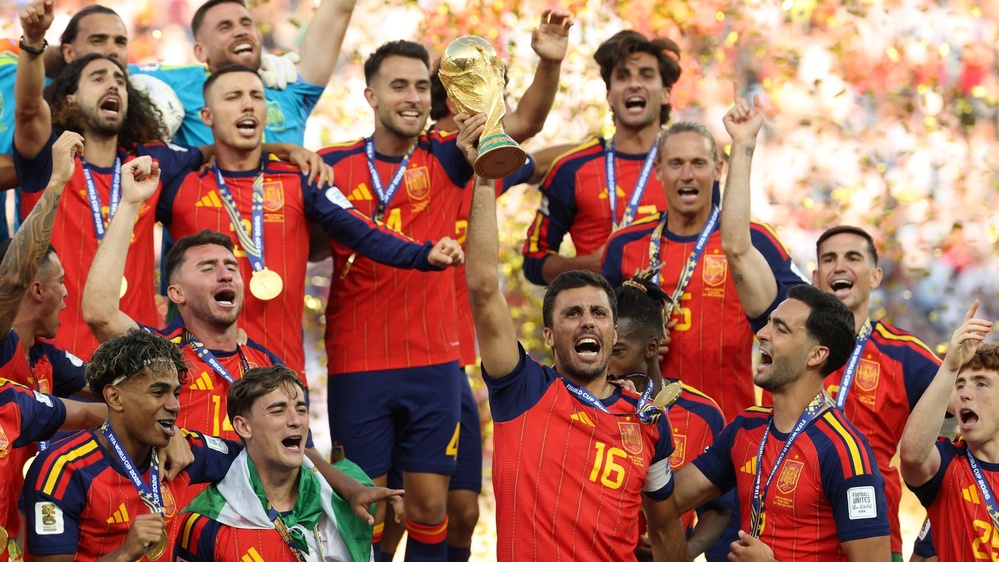
World Cup final recap: Spain defeats Argentina 1-0 after a 106th-minute goal, with highlight statistics, records, and ceremonies surrounding the match.
Automated analysis; not human reviewed.
Limitations: Concise, case-specific limitations and plausible alternative interpretations.
·
2 of 52 available dimensions scored; omitted dimensions are not treated as neutral.
·
Verified supporting quotes for 0 of 2 scored dimensions.
Claim: Milestones (oldest coach, dual crowns) add interest.
“"The win made Spain coach Luis de la Fuente, at 65, the oldest coach ever to lead a team to the World Cup title."” · not found in supplied text
“"With its victory, Spain became the first nation to simultaneously hold the World Cup crowns in both men's and women's soccer."” · not found in supplied text
Counterevidence:
“"Global figures including President Trump, Spain's Royal Family and Canadian Prime Minister Mark Carney were in the stands, along with celebrities like Matt Damon, Carlos Alcaraz and Mick Jagger."” · exact text match
Why: Milestones add interest but attendance and celebrity details broaden coverage beyond pure game analysis.
Claim: The article frames Spain's dominance and notes favoritism toward Spain.
“"Spain dominated the match, outshooting Argentina 20-3, but couldn't manage a goal in regulation."” · not found in supplied text
“"But Spain, which was slightly favored to take home the title this year, would not be denied its second World Cup title."” · not found in supplied text
Counterevidence:
“"An Argentina team that was the king of the late-game rally in this tournament had no answer this time."” · not found in supplied text
Why: Explicit dominance framing and pre-tournament favoritism toward Spain indicate mild opinion bias toward the Spanish team.
May overread Spain-dominant framing; limited by article's brevity.
Sports-focused, largely neutral coverage that recounts Spain's 1-0 extra-time victory over Argentina with emphasis on events, statistics, and key moments, while occasionally employing emotive phrasing to convey drama and Messi's potential final World Cup appearance.
Spain defeated Argentina 1-0 in extra time to win the 2026 FIFA World Cup, with Ferran Torres scoring after a 93rd-minute red card for Enzo Fernández and Emi Martínez making 11 saves for Argentina, while Spain extended its unbeaten run to 38 matches.
Automated analysis; not human reviewed.
Limitations: Case-specific: relies on the article's wording; does not independently verify external facts; emotive language may color interpretation.
·
52 of 52 available dimensions scored; omitted dimensions are not treated as neutral.
·
Verified supporting quotes for 1 of 52 scored dimensions.
Claim: Reporting shows no explicit political leaning.
“EAST RUTHERFORD, N.J. — Shadows had crept across MetLife Stadium as a tedious World Cup final dominated by Spain at an absurd clip lurched into extra time without a breakthrough Sunday.” · exact text match
“The backdrop was hardly spectacular: a soulless, suburban NFL stadium without any distinctive characteristics and nothing but gray seats.” · exact text match
Counterevidence:
“Spain entered as a slight favorite, suggesting a pre-match tilt toward the result rather than a political stance.” · not found in supplied text
Why: Neutral, event-focused language with occasional adjectives; lacks political framing.
Claim: Language shows mild subjectivity amid factual reporting.
“This whole time, Messi was a ghost.” · exact text match
“Messi still fighting back tears as he left the field.” · not found in supplied text
Counterevidence:
“Statistics and concrete details (shots, saves) anchor the narrative in data.” · not found in supplied text
Why: Subjective color coexists with objective data.
Claim: Predominantly descriptive with a few evaluative lines.
“The 10-goal third-place match Saturday was for entertainment lovers; the final was for deep thinkers.” · exact text match
“The backdrop described as 'soulless' and 'gray seats'.” · not found in supplied text
Counterevidence:
“Most of the article is a chronological recounting of events and stats.” · not found in supplied text
Why: Descriptive framing dominates, with occasional prescriptive flavor.
Claim: Mild opinionated framing in select lines.
“The 10-goal third-place match Saturday was for entertainment lovers; the final was for deep thinkers.” · exact text match
“Spain entered as a slight favorite... Argentina arrived full of comfort and confidence.” · not found in supplied text
Counterevidence:
“Data-driven sections (shots, saves, possession) temper subjective tone.” · not found in supplied text
Why: Editorial judgments appear alongside empirical details.
Claim: Emotional language influences tone.
“This whole time, Messi was a ghost.” · exact text match
“Messi still fighting back tears as he left the field.” · not found in supplied text
Counterevidence:
“Quantitative game data grounds the narrative in measurable facts.” · not found in supplied text
Why: Emotional descriptors accompany factual reporting.
Claim: The report appears credible, supported by concrete stats and named figures.
“Spain had 20 shots, 12 on target and 31 touches in the box.” · exact text match
“Martínez finished with 11 saves in the final.” · not found in supplied text
Counterevidence:
“None evident in the provided text; context relies on the article's internal reporting.” · not found in supplied text
Why: Quantitative data and named individuals strengthen reliability.
Neutral on the event; acknowledges drama without over-reading motives.
July 20, 2026 · 0 shares
Spain's World Cup final coverage centers on Spain's dominance, enduring records, and historic milestones, with a mild prelude of Spain favoritism that yields a subtle pro-Spain tilt while still reporting essential facts.
World Cup final recap: Spain defeats Argentina 1-0 after a 106th-minute goal, with highlight statistics, records, and ceremonies surrounding the match.
Automated analysis; not human reviewed.
Limitations: Concise, case-specific limitations and plausible alternative interpretations.
·
2 of 52 available dimensions scored; omitted dimensions are not treated as neutral.
·
Verified supporting quotes for 0 of 2 scored dimensions.
Claim: Milestones (oldest coach, dual crowns) add interest.
“"The win made Spain coach Luis de la Fuente, at 65, the oldest coach ever to lead a team to the World Cup title."” · not found in supplied text
“"With its victory, Spain became the first nation to simultaneously hold the World Cup crowns in both men's and women's soccer."” · not found in supplied text
Counterevidence:
“"Global figures including President Trump, Spain's Royal Family and Canadian Prime Minister Mark Carney were in the stands, along with celebrities like Matt Damon, Carlos Alcaraz and Mick Jagger."” · exact text match
Why: Milestones add interest but attendance and celebrity details broaden coverage beyond pure game analysis.
Claim: The article frames Spain's dominance and notes favoritism toward Spain.
“"Spain dominated the match, outshooting Argentina 20-3, but couldn't manage a goal in regulation."” · not found in supplied text
“"But Spain, which was slightly favored to take home the title this year, would not be denied its second World Cup title."” · not found in supplied text
Counterevidence:
“"An Argentina team that was the king of the late-game rally in this tournament had no answer this time."” · not found in supplied text
Why: Explicit dominance framing and pre-tournament favoritism toward Spain indicate mild opinion bias toward the Spanish team.
May overread Spain-dominant framing; limited by article's brevity.
July 19, 2026 · 0 shares
World Cup final coverage blends verifiable match details with evaluative language about Trump's onstage conduct, yielding a mild negative tilt toward the public figure while maintaining generally neutral sports reporting.
RT.com coverage of the World Cup final describes Spain's 1-0 win over Argentina at MetLife Stadium, including Trump's trophy presentation and crowd reactions.
Automated analysis; not human reviewed.
Limitations: Concise, case-specific limitations and plausible alternative interpretations.
·
1 of 52 available dimensions scored; omitted dimensions are not treated as neutral.
·
Verified supporting quotes for 0 of 1 scored dimensions.
Ambiguity: RT framing; limited data; alternative angles not shown.
Sports-focused, largely neutral coverage that recounts Spain's 1-0 extra-time victory over Argentina with emphasis on events, statistics, and key moments, while occasionally employing emotive phrasing to convey drama and Messi's potential final World Cup appearance.
Spain defeated Argentina 1-0 in extra time to win the 2026 FIFA World Cup, with Ferran Torres scoring after a 93rd-minute red card for Enzo Fernández and Emi Martínez making 11 saves for Argentina, while Spain extended its unbeaten run to 38 matches.
Automated analysis; not human reviewed.
Limitations: Case-specific: relies on the article's wording; does not independently verify external facts; emotive language may color interpretation.
·
52 of 52 available dimensions scored; omitted dimensions are not treated as neutral.
·
Verified supporting quotes for 1 of 52 scored dimensions.
Claim: Reporting shows no explicit political leaning.
“EAST RUTHERFORD, N.J. — Shadows had crept across MetLife Stadium as a tedious World Cup final dominated by Spain at an absurd clip lurched into extra time without a breakthrough Sunday.” · exact text match
“The backdrop was hardly spectacular: a soulless, suburban NFL stadium without any distinctive characteristics and nothing but gray seats.” · exact text match
Counterevidence:
“Spain entered as a slight favorite, suggesting a pre-match tilt toward the result rather than a political stance.” · not found in supplied text
Why: Neutral, event-focused language with occasional adjectives; lacks political framing.
Claim: Language shows mild subjectivity amid factual reporting.
“This whole time, Messi was a ghost.” · exact text match
“Messi still fighting back tears as he left the field.” · not found in supplied text
Counterevidence:
“Statistics and concrete details (shots, saves) anchor the narrative in data.” · not found in supplied text
Why: Subjective color coexists with objective data.
Claim: Predominantly descriptive with a few evaluative lines.
“The 10-goal third-place match Saturday was for entertainment lovers; the final was for deep thinkers.” · exact text match
“The backdrop described as 'soulless' and 'gray seats'.” · not found in supplied text
Counterevidence:
“Most of the article is a chronological recounting of events and stats.” · not found in supplied text
Why: Descriptive framing dominates, with occasional prescriptive flavor.
Claim: Mild opinionated framing in select lines.
“The 10-goal third-place match Saturday was for entertainment lovers; the final was for deep thinkers.” · exact text match
“Spain entered as a slight favorite... Argentina arrived full of comfort and confidence.” · not found in supplied text
Counterevidence:
“Data-driven sections (shots, saves, possession) temper subjective tone.” · not found in supplied text
Why: Editorial judgments appear alongside empirical details.
Claim: Emotional language influences tone.
“This whole time, Messi was a ghost.” · exact text match
“Messi still fighting back tears as he left the field.” · not found in supplied text
Counterevidence:
“Quantitative game data grounds the narrative in measurable facts.” · not found in supplied text
Why: Emotional descriptors accompany factual reporting.
Claim: The report appears credible, supported by concrete stats and named figures.
“Spain had 20 shots, 12 on target and 31 touches in the box.” · exact text match
“Martínez finished with 11 saves in the final.” · not found in supplied text
Counterevidence:
“None evident in the provided text; context relies on the article's internal reporting.” · not found in supplied text
Why: Quantitative data and named individuals strengthen reliability.
Neutral on the event; acknowledges drama without over-reading motives.
July 20, 2026 · 0 shares
Spain's World Cup final coverage centers on Spain's dominance, enduring records, and historic milestones, with a mild prelude of Spain favoritism that yields a subtle pro-Spain tilt while still reporting essential facts.
World Cup final recap: Spain defeats Argentina 1-0 after a 106th-minute goal, with highlight statistics, records, and ceremonies surrounding the match.
Automated analysis; not human reviewed.
Limitations: Concise, case-specific limitations and plausible alternative interpretations.
·
2 of 52 available dimensions scored; omitted dimensions are not treated as neutral.
·
Verified supporting quotes for 0 of 2 scored dimensions.
Claim: Milestones (oldest coach, dual crowns) add interest.
“"The win made Spain coach Luis de la Fuente, at 65, the oldest coach ever to lead a team to the World Cup title."” · not found in supplied text
“"With its victory, Spain became the first nation to simultaneously hold the World Cup crowns in both men's and women's soccer."” · not found in supplied text
Counterevidence:
“"Global figures including President Trump, Spain's Royal Family and Canadian Prime Minister Mark Carney were in the stands, along with celebrities like Matt Damon, Carlos Alcaraz and Mick Jagger."” · exact text match
Why: Milestones add interest but attendance and celebrity details broaden coverage beyond pure game analysis.
Claim: The article frames Spain's dominance and notes favoritism toward Spain.
“"Spain dominated the match, outshooting Argentina 20-3, but couldn't manage a goal in regulation."” · not found in supplied text
“"But Spain, which was slightly favored to take home the title this year, would not be denied its second World Cup title."” · not found in supplied text
Counterevidence:
“"An Argentina team that was the king of the late-game rally in this tournament had no answer this time."” · not found in supplied text
Why: Explicit dominance framing and pre-tournament favoritism toward Spain indicate mild opinion bias toward the Spanish team.
May overread Spain-dominant framing; limited by article's brevity.
July 19, 2026 · 0 shares
Pro-Spain framing with evaluative language about Spain's dominance paired with key statistics, while including promotional and affiliation lines that modestly temper neutrality.
World Cup final reporting describing Spain's 1-0 victory over Argentina after extra time, emphasizing possession, passing, and Spain's 'complete team' framing while noting Argentina's lack of shots on goal.
Automated analysis; not human reviewed.
Limitations: Concise, case-specific limitations and plausible alternative interpretations.
·
8 of 52 available dimensions scored; omitted dimensions are not treated as neutral.
·
Verified supporting quotes for 0 of 8 scored dimensions.
Gaps: quotes-based synthesis; no independent corroboration of Argentina's strategy.
Sports-focused, largely neutral coverage that recounts Spain's 1-0 extra-time victory over Argentina with emphasis on events, statistics, and key moments, while occasionally employing emotive phrasing to convey drama and Messi's potential final World Cup appearance.
Spain defeated Argentina 1-0 in extra time to win the 2026 FIFA World Cup, with Ferran Torres scoring after a 93rd-minute red card for Enzo Fernández and Emi Martínez making 11 saves for Argentina, while Spain extended its unbeaten run to 38 matches.
Automated analysis; not human reviewed.
Limitations: Case-specific: relies on the article's wording; does not independently verify external facts; emotive language may color interpretation.
·
52 of 52 available dimensions scored; omitted dimensions are not treated as neutral.
·
Verified supporting quotes for 1 of 52 scored dimensions.
Claim: Reporting shows no explicit political leaning.
“EAST RUTHERFORD, N.J. — Shadows had crept across MetLife Stadium as a tedious World Cup final dominated by Spain at an absurd clip lurched into extra time without a breakthrough Sunday.” · exact text match
“The backdrop was hardly spectacular: a soulless, suburban NFL stadium without any distinctive characteristics and nothing but gray seats.” · exact text match
Counterevidence:
“Spain entered as a slight favorite, suggesting a pre-match tilt toward the result rather than a political stance.” · not found in supplied text
Why: Neutral, event-focused language with occasional adjectives; lacks political framing.
Claim: Language shows mild subjectivity amid factual reporting.
“This whole time, Messi was a ghost.” · exact text match
“Messi still fighting back tears as he left the field.” · not found in supplied text
Counterevidence:
“Statistics and concrete details (shots, saves) anchor the narrative in data.” · not found in supplied text
Why: Subjective color coexists with objective data.
Claim: Predominantly descriptive with a few evaluative lines.
“The 10-goal third-place match Saturday was for entertainment lovers; the final was for deep thinkers.” · exact text match
“The backdrop described as 'soulless' and 'gray seats'.” · not found in supplied text
Counterevidence:
“Most of the article is a chronological recounting of events and stats.” · not found in supplied text
Why: Descriptive framing dominates, with occasional prescriptive flavor.
Claim: Mild opinionated framing in select lines.
“The 10-goal third-place match Saturday was for entertainment lovers; the final was for deep thinkers.” · exact text match
“Spain entered as a slight favorite... Argentina arrived full of comfort and confidence.” · not found in supplied text
Counterevidence:
“Data-driven sections (shots, saves, possession) temper subjective tone.” · not found in supplied text
Why: Editorial judgments appear alongside empirical details.
Claim: Emotional language influences tone.
“This whole time, Messi was a ghost.” · exact text match
“Messi still fighting back tears as he left the field.” · not found in supplied text
Counterevidence:
“Quantitative game data grounds the narrative in measurable facts.” · not found in supplied text
Why: Emotional descriptors accompany factual reporting.
Claim: The report appears credible, supported by concrete stats and named figures.
“Spain had 20 shots, 12 on target and 31 touches in the box.” · exact text match
“Martínez finished with 11 saves in the final.” · not found in supplied text
Counterevidence:
“None evident in the provided text; context relies on the article's internal reporting.” · not found in supplied text
Why: Quantitative data and named individuals strengthen reliability.
Neutral on the event; acknowledges drama without over-reading motives.
July 19, 2026 · 0 shares
World Cup final coverage blends verifiable match details with evaluative language about Trump's onstage conduct, yielding a mild negative tilt toward the public figure while maintaining generally neutral sports reporting.
RT.com coverage of the World Cup final describes Spain's 1-0 win over Argentina at MetLife Stadium, including Trump's trophy presentation and crowd reactions.
Automated analysis; not human reviewed.
Limitations: Concise, case-specific limitations and plausible alternative interpretations.
·
1 of 52 available dimensions scored; omitted dimensions are not treated as neutral.
·
Verified supporting quotes for 0 of 1 scored dimensions.
Ambiguity: RT framing; limited data; alternative angles not shown.
Entertainment-focused sports framing emphasizes Spain's World Cup win with spectacle (gold rings and replica trophies) and American trophy culture, while acknowledging some readers view the trend as 'too American', yielding a celebratory but mildly evaluative tone without political or policy claims.
Sports coverage detailing Spain's World Cup win over Argentina, focusing on dressing-room celebrations, the novelty of gold rings and replica trophies, and reactions to American-style trophy culture.
Automated analysis; not human reviewed.
Limitations: Case-specific; interpretations may vary with reader familiarity with tabloid benchmarks and expectations around sensational sports coverage.
·
1 of 52 available dimensions scored; omitted dimensions are not treated as neutral.
·
Verified supporting quotes for 0 of 1 scored dimensions.
Ambiguities in reader interpretation of 'too American' and replica trophies could shift bias toward either entertainment emphasis or cultural critique.
July 19, 2026 · 0 shares
Pro-Spain, pro-diversity framing dominates the piece, elevating immigration and national cohesion narratives while treating Spain’s institutions and elite cultural figures as positive agents in the broader social story, yet it also acknowledges controversy and public opinion around immigration and governance.
Concise, factful, accurate, balanced context for the article in one sentence.
Automated analysis; not human reviewed.
Limitations: Concise, case-specific limitations and plausible alternative interpretations.
·
52 of 52 available dimensions scored; omitted dimensions are not treated as neutral.
·
Verified supporting quotes for 2 of 52 scored dimensions.
Claim: The article foregrounds inclusion and diversity as a core social value.
“In this Spain of such vibrant colors, there’s room for all of us. These are the colors of a pluralistic and progressive Spain that does not fear its own diversity, but rather turns it into its greatest strength.” · exact text match
“A Spain where all people, regardless of their origin, language, culture, sexual identity, or beliefs, can feel part of a common project based on equality, social justice, and mutual respect.” · exact text match
Counterevidence:
“The measure allows those who had already been residing in the country continuously since before January 1, 2026, to obtain a temporary residence and work permit.” · exact text match
“37.6% are in favor, 21.5% neutral, and 33% view the regularization as bad or very bad, especially among right-wing voters.” · not found in supplied text
Why: Direct quotations and policy data demonstrate an inclusive framing, with acknowledged public opinion variation that tempers claims of neutrality.
Claim: Celebrity and elite voices are used to bolster the social narrative.
“Actor Javier Bardem was in the stands for nearly every match... Bardem wore the team jersey the entire time, cheered nonstop, celebrated the goals with all his heart, and—true to his character—took a stand and didn’t hesitate to pose with the Palestinian flag.” · not found in supplied text
“The actor also shared a reflection on social media that ties directly into the sociological impact of Lamine Yamal.” · not found in supplied text
Counterevidence:
“The piece also includes quotes from players and coaches and discusses public opinion data, suggesting a broader framing beyond elite voices.” · not found in supplied text
Why: Celebrity presence and commentary are highlighted, indicating an elite-influenced narrative rather than a purely populist frame.
Claim: The text endorses inclusive, open social norms over restrictive attitudes.
“In this Spain of such vibrant colors... diversity... equality, social justice, and mutual respect.” · not found in supplied text
“The measure allows those who had already been residing... to obtain a temporary residence and work permit.” · not found in supplied text
Counterevidence:
“Public-opinion data show divisions on policy, indicating a contested policy environment.” · not found in supplied text
Why: Positive framing of open, inclusive norms aligns with libertarian-leaning values rather than authoritarian control.
Claim: The piece contains strong evaluative judgments about people and events.
“The national team has certainly become a role model for many sectors of Spanish society.” · exact text match
“‘What is bad for the hive is bad for the bee.’” · not found in supplied text
Counterevidence:
“There are factual elements (scores, injuries, policies) included.” · not found in supplied text
Why: Use of explicit evaluative language alongside factual data signals subjective framing.
Claim: Dramatic language complements the factual sports narrative.
“nail-biting World Cup final” · exact text match
“monumental side” · exact text match
Counterevidence:
“The article includes substantial data (injuries, results, polls) beyond sensational language.” · not found in supplied text
Why: Dramatic descriptors co-occur with empirical details, indicating light sensational framing.
Claim: Overall tone leans celebratory and confident about Spain’s prospects.
“What Spain did... was monumental” · not found in supplied text
“the best team in the world” · exact text match
Counterevidence:
“There are mentions of injuries and early doubts, signaling some caution.” · not found in supplied text
Why: Exuberant language about Spain's strength alongside caveats suggests a bullish framing.
Claim: Normative language about unity and integration appears alongside descriptive game reporting.
“"We all share the same spirit.
There are no sour faces or recriminations.
That strengthens the group."”
· not found in supplied text
“"integration" as a core purpose of soccer” · not found in supplied text
Counterevidence:
“Descriptive game details coexist with prescriptive language.” · not found in supplied text
Why: Presence of normative statements alongside factual description indicates prescriptive framing.
Claim: The article leans toward positive assessments of Spain’s sociopolitical landscape.
“"The national team has certainly become a role model for many sectors of Spanish society."” · not found in supplied text
“Bardem’s statement about Spain’s diversity” · not found in supplied text
Counterevidence:
“Public opinion data shows mixed views on immigration policy, signaling some balance.” · not found in supplied text
Why: Prominent positive evaluations reflect opinionated framing.
Claim: Certainty about teams' supremacy appears in evaluative phrases.
“"the best team in the world"” · not found in supplied text
“"monumental" description of Spain’s performance” · not found in supplied text
Counterevidence:
“The article acknowledges injuries and doubts during the season.” · not found in supplied text
Why: Declarative judgments about superiority exceed the explicit evidence in some passages.
Claim: Emotional language is used to evoke pride and unity.
“"In this Spain of such vibrant colors, there’s room for all of us."” · not found in supplied text
“"We all share the same spirit"” · not found in supplied text
Counterevidence:
“The article also provides concrete match data and policy details.” · not found in supplied text
Why: Emotive phrasing and collective celebration indicate emotional bias.
Claim: The narrative blends empirical details with vivid subjective judgments.
“What Spain did was automate the system to the point where its players seemed like robots who had been following the same playbook for 90 years, while France was reduced to a second-rate team.” · exact text match
“"monumental side that would likely have run roughshod over any other opponent"” · not found in supplied text
Counterevidence:
“The article also cites match results, injuries, and official statements.” · not found in supplied text
Why: Hyperbolic descriptions coexist with concrete data and quotes, reflecting a mix of reasoning and rhetoric.
Claim: Some passages speculate about outcomes beyond the presented evidence.
“"a monumental side that would likely have run roughshod over any other opponent"” · not found in supplied text
Counterevidence:
“Actual results and established tournament data are cited elsewhere in the text.” · not found in supplied text
Why: Hypothetical certainty about outcomes introduces speculative framing.
Claim: The article presents a fair, multi-perspective account of controversies.
“Rubiales faced a barrage of criticism; he resigned; Iglesias statements about Hermoso” · not found in supplied text
“I’m sad and disappointed... I don’t know if I’ll ever be considered for the national team again, but I’ve decided not to return to the national team until things change” · not found in supplied text
Counterevidence:
“The piece also portrays the coach with positive descriptors, which could reflect favorable institutional framing.” · not found in supplied text
Why: Coverage includes criticisms and apologies alongside praise, suggesting attempts at balanced reporting.
Case-specific: blends sports with sociopolitical commentary; evidence relies on quotes; potential bias toward pro-diversity and institutional framing.
July 20, 2026 · 0 shares
Spain's World Cup final coverage centers on Spain's dominance, enduring records, and historic milestones, with a mild prelude of Spain favoritism that yields a subtle pro-Spain tilt while still reporting essential facts.
World Cup final recap: Spain defeats Argentina 1-0 after a 106th-minute goal, with highlight statistics, records, and ceremonies surrounding the match.
Automated analysis; not human reviewed. Limitations: Concise, case-specific limitations and plausible alternative interpretations. · 2 of 52 available dimensions scored; omitted dimensions are not treated as neutral. · Verified supporting quotes for 0 of 2 scored dimensions.
Claim: Milestones (oldest coach, dual crowns) add interest.
“"The win made Spain coach Luis de la Fuente, at 65, the oldest coach ever to lead a team to the World Cup title."” · not found in supplied text
“"With its victory, Spain became the first nation to simultaneously hold the World Cup crowns in both men's and women's soccer."” · not found in supplied text
Counterevidence:
“"Global figures including President Trump, Spain's Royal Family and Canadian Prime Minister Mark Carney were in the stands, along with celebrities like Matt Damon, Carlos Alcaraz and Mick Jagger."” · exact text match
Why: Milestones add interest but attendance and celebrity details broaden coverage beyond pure game analysis.
Claim: The article frames Spain's dominance and notes favoritism toward Spain.
“"Spain dominated the match, outshooting Argentina 20-3, but couldn't manage a goal in regulation."” · not found in supplied text
“"But Spain, which was slightly favored to take home the title this year, would not be denied its second World Cup title."” · not found in supplied text
Counterevidence:
“"An Argentina team that was the king of the late-game rally in this tournament had no answer this time."” · not found in supplied text
Why: Explicit dominance framing and pre-tournament favoritism toward Spain indicate mild opinion bias toward the Spanish team.
May overread Spain-dominant framing; limited by article's brevity.
Sports-focused, largely neutral coverage that recounts Spain's 1-0 extra-time victory over Argentina with emphasis on events, statistics, and key moments, while occasionally employing emotive phrasing to convey drama and Messi's potential final World Cup appearance.
Spain defeated Argentina 1-0 in extra time to win the 2026 FIFA World Cup, with Ferran Torres scoring after a 93rd-minute red card for Enzo Fernández and Emi Martínez making 11 saves for Argentina, while Spain extended its unbeaten run to 38 matches.
Automated analysis; not human reviewed. Limitations: Case-specific: relies on the article's wording; does not independently verify external facts; emotive language may color interpretation. · 52 of 52 available dimensions scored; omitted dimensions are not treated as neutral. · Verified supporting quotes for 1 of 52 scored dimensions.
Claim: Reporting shows no explicit political leaning.
“EAST RUTHERFORD, N.J. — Shadows had crept across MetLife Stadium as a tedious World Cup final dominated by Spain at an absurd clip lurched into extra time without a breakthrough Sunday.” · exact text match
“The backdrop was hardly spectacular: a soulless, suburban NFL stadium without any distinctive characteristics and nothing but gray seats.” · exact text match
Counterevidence:
“Spain entered as a slight favorite, suggesting a pre-match tilt toward the result rather than a political stance.” · not found in supplied text
Why: Neutral, event-focused language with occasional adjectives; lacks political framing.
Claim: Language shows mild subjectivity amid factual reporting.
“This whole time, Messi was a ghost.” · exact text match
“Messi still fighting back tears as he left the field.” · not found in supplied text
Counterevidence:
“Statistics and concrete details (shots, saves) anchor the narrative in data.” · not found in supplied text
Why: Subjective color coexists with objective data.
Claim: Predominantly descriptive with a few evaluative lines.
“The 10-goal third-place match Saturday was for entertainment lovers; the final was for deep thinkers.” · exact text match
“The backdrop described as 'soulless' and 'gray seats'.” · not found in supplied text
Counterevidence:
“Most of the article is a chronological recounting of events and stats.” · not found in supplied text
Why: Descriptive framing dominates, with occasional prescriptive flavor.
Claim: Mild opinionated framing in select lines.
“The 10-goal third-place match Saturday was for entertainment lovers; the final was for deep thinkers.” · exact text match
“Spain entered as a slight favorite... Argentina arrived full of comfort and confidence.” · not found in supplied text
Counterevidence:
“Data-driven sections (shots, saves, possession) temper subjective tone.” · not found in supplied text
Why: Editorial judgments appear alongside empirical details.
Claim: Emotional language influences tone.
“This whole time, Messi was a ghost.” · exact text match
“Messi still fighting back tears as he left the field.” · not found in supplied text
Counterevidence:
“Quantitative game data grounds the narrative in measurable facts.” · not found in supplied text
Why: Emotional descriptors accompany factual reporting.
Claim: The report appears credible, supported by concrete stats and named figures.
“Spain had 20 shots, 12 on target and 31 touches in the box.” · exact text match
“Martínez finished with 11 saves in the final.” · not found in supplied text
Counterevidence:
“None evident in the provided text; context relies on the article's internal reporting.” · not found in supplied text
Why: Quantitative data and named individuals strengthen reliability.
Neutral on the event; acknowledges drama without over-reading motives.
July 19, 2026 · 0 shares
World Cup final coverage blends verifiable match details with evaluative language about Trump's onstage conduct, yielding a mild negative tilt toward the public figure while maintaining generally neutral sports reporting.
RT.com coverage of the World Cup final describes Spain's 1-0 win over Argentina at MetLife Stadium, including Trump's trophy presentation and crowd reactions.
Automated analysis; not human reviewed. Limitations: Concise, case-specific limitations and plausible alternative interpretations. · 1 of 52 available dimensions scored; omitted dimensions are not treated as neutral. · Verified supporting quotes for 0 of 1 scored dimensions.
Ambiguity: RT framing; limited data; alternative angles not shown.
Sports-focused, largely neutral coverage that recounts Spain's 1-0 extra-time victory over Argentina with emphasis on events, statistics, and key moments, while occasionally employing emotive phrasing to convey drama and Messi's potential final World Cup appearance.
Spain defeated Argentina 1-0 in extra time to win the 2026 FIFA World Cup, with Ferran Torres scoring after a 93rd-minute red card for Enzo Fernández and Emi Martínez making 11 saves for Argentina, while Spain extended its unbeaten run to 38 matches.
Automated analysis; not human reviewed. Limitations: Case-specific: relies on the article's wording; does not independently verify external facts; emotive language may color interpretation. · 52 of 52 available dimensions scored; omitted dimensions are not treated as neutral. · Verified supporting quotes for 1 of 52 scored dimensions.
Claim: Reporting shows no explicit political leaning.
“EAST RUTHERFORD, N.J. — Shadows had crept across MetLife Stadium as a tedious World Cup final dominated by Spain at an absurd clip lurched into extra time without a breakthrough Sunday.” · exact text match
“The backdrop was hardly spectacular: a soulless, suburban NFL stadium without any distinctive characteristics and nothing but gray seats.” · exact text match
Counterevidence:
“Spain entered as a slight favorite, suggesting a pre-match tilt toward the result rather than a political stance.” · not found in supplied text
Why: Neutral, event-focused language with occasional adjectives; lacks political framing.
Claim: Language shows mild subjectivity amid factual reporting.
“This whole time, Messi was a ghost.” · exact text match
“Messi still fighting back tears as he left the field.” · not found in supplied text
Counterevidence:
“Statistics and concrete details (shots, saves) anchor the narrative in data.” · not found in supplied text
Why: Subjective color coexists with objective data.
Claim: Predominantly descriptive with a few evaluative lines.
“The 10-goal third-place match Saturday was for entertainment lovers; the final was for deep thinkers.” · exact text match
“The backdrop described as 'soulless' and 'gray seats'.” · not found in supplied text
Counterevidence:
“Most of the article is a chronological recounting of events and stats.” · not found in supplied text
Why: Descriptive framing dominates, with occasional prescriptive flavor.
Claim: Mild opinionated framing in select lines.
“The 10-goal third-place match Saturday was for entertainment lovers; the final was for deep thinkers.” · exact text match
“Spain entered as a slight favorite... Argentina arrived full of comfort and confidence.” · not found in supplied text
Counterevidence:
“Data-driven sections (shots, saves, possession) temper subjective tone.” · not found in supplied text
Why: Editorial judgments appear alongside empirical details.
Claim: Emotional language influences tone.
“This whole time, Messi was a ghost.” · exact text match
“Messi still fighting back tears as he left the field.” · not found in supplied text
Counterevidence:
“Quantitative game data grounds the narrative in measurable facts.” · not found in supplied text
Why: Emotional descriptors accompany factual reporting.
Claim: The report appears credible, supported by concrete stats and named figures.
“Spain had 20 shots, 12 on target and 31 touches in the box.” · exact text match
“Martínez finished with 11 saves in the final.” · not found in supplied text
Counterevidence:
“None evident in the provided text; context relies on the article's internal reporting.” · not found in supplied text
Why: Quantitative data and named individuals strengthen reliability.
Neutral on the event; acknowledges drama without over-reading motives.
July 20, 2026 · 0 shares
Spain's World Cup final coverage centers on Spain's dominance, enduring records, and historic milestones, with a mild prelude of Spain favoritism that yields a subtle pro-Spain tilt while still reporting essential facts.
World Cup final recap: Spain defeats Argentina 1-0 after a 106th-minute goal, with highlight statistics, records, and ceremonies surrounding the match.
Automated analysis; not human reviewed. Limitations: Concise, case-specific limitations and plausible alternative interpretations. · 2 of 52 available dimensions scored; omitted dimensions are not treated as neutral. · Verified supporting quotes for 0 of 2 scored dimensions.
Claim: Milestones (oldest coach, dual crowns) add interest.
“"The win made Spain coach Luis de la Fuente, at 65, the oldest coach ever to lead a team to the World Cup title."” · not found in supplied text
“"With its victory, Spain became the first nation to simultaneously hold the World Cup crowns in both men's and women's soccer."” · not found in supplied text
Counterevidence:
“"Global figures including President Trump, Spain's Royal Family and Canadian Prime Minister Mark Carney were in the stands, along with celebrities like Matt Damon, Carlos Alcaraz and Mick Jagger."” · exact text match
Why: Milestones add interest but attendance and celebrity details broaden coverage beyond pure game analysis.
Claim: The article frames Spain's dominance and notes favoritism toward Spain.
“"Spain dominated the match, outshooting Argentina 20-3, but couldn't manage a goal in regulation."” · not found in supplied text
“"But Spain, which was slightly favored to take home the title this year, would not be denied its second World Cup title."” · not found in supplied text
Counterevidence:
“"An Argentina team that was the king of the late-game rally in this tournament had no answer this time."” · not found in supplied text
Why: Explicit dominance framing and pre-tournament favoritism toward Spain indicate mild opinion bias toward the Spanish team.
May overread Spain-dominant framing; limited by article's brevity.
On-field tactical/statistical dominance framing
July 19, 2026 · 0 shares
Pro-Spain framing with evaluative language about Spain's dominance paired with key statistics, while including promotional and affiliation lines that modestly temper neutrality.
World Cup final reporting describing Spain's 1-0 victory over Argentina after extra time, emphasizing possession, passing, and Spain's 'complete team' framing while noting Argentina's lack of shots on goal.
Automated analysis; not human reviewed. Limitations: Concise, case-specific limitations and plausible alternative interpretations. · 8 of 52 available dimensions scored; omitted dimensions are not treated as neutral. · Verified supporting quotes for 0 of 8 scored dimensions.
Gaps: quotes-based synthesis; no independent corroboration of Argentina's strategy.
Sports-focused, largely neutral coverage that recounts Spain's 1-0 extra-time victory over Argentina with emphasis on events, statistics, and key moments, while occasionally employing emotive phrasing to convey drama and Messi's potential final World Cup appearance.
Spain defeated Argentina 1-0 in extra time to win the 2026 FIFA World Cup, with Ferran Torres scoring after a 93rd-minute red card for Enzo Fernández and Emi Martínez making 11 saves for Argentina, while Spain extended its unbeaten run to 38 matches.
Automated analysis; not human reviewed. Limitations: Case-specific: relies on the article's wording; does not independently verify external facts; emotive language may color interpretation. · 52 of 52 available dimensions scored; omitted dimensions are not treated as neutral. · Verified supporting quotes for 1 of 52 scored dimensions.
Claim: Reporting shows no explicit political leaning.
“EAST RUTHERFORD, N.J. — Shadows had crept across MetLife Stadium as a tedious World Cup final dominated by Spain at an absurd clip lurched into extra time without a breakthrough Sunday.” · exact text match
“The backdrop was hardly spectacular: a soulless, suburban NFL stadium without any distinctive characteristics and nothing but gray seats.” · exact text match
Counterevidence:
“Spain entered as a slight favorite, suggesting a pre-match tilt toward the result rather than a political stance.” · not found in supplied text
Why: Neutral, event-focused language with occasional adjectives; lacks political framing.
Claim: Language shows mild subjectivity amid factual reporting.
“This whole time, Messi was a ghost.” · exact text match
“Messi still fighting back tears as he left the field.” · not found in supplied text
Counterevidence:
“Statistics and concrete details (shots, saves) anchor the narrative in data.” · not found in supplied text
Why: Subjective color coexists with objective data.
Claim: Predominantly descriptive with a few evaluative lines.
“The 10-goal third-place match Saturday was for entertainment lovers; the final was for deep thinkers.” · exact text match
“The backdrop described as 'soulless' and 'gray seats'.” · not found in supplied text
Counterevidence:
“Most of the article is a chronological recounting of events and stats.” · not found in supplied text
Why: Descriptive framing dominates, with occasional prescriptive flavor.
Claim: Mild opinionated framing in select lines.
“The 10-goal third-place match Saturday was for entertainment lovers; the final was for deep thinkers.” · exact text match
“Spain entered as a slight favorite... Argentina arrived full of comfort and confidence.” · not found in supplied text
Counterevidence:
“Data-driven sections (shots, saves, possession) temper subjective tone.” · not found in supplied text
Why: Editorial judgments appear alongside empirical details.
Claim: Emotional language influences tone.
“This whole time, Messi was a ghost.” · exact text match
“Messi still fighting back tears as he left the field.” · not found in supplied text
Counterevidence:
“Quantitative game data grounds the narrative in measurable facts.” · not found in supplied text
Why: Emotional descriptors accompany factual reporting.
Claim: The report appears credible, supported by concrete stats and named figures.
“Spain had 20 shots, 12 on target and 31 touches in the box.” · exact text match
“Martínez finished with 11 saves in the final.” · not found in supplied text
Counterevidence:
“None evident in the provided text; context relies on the article's internal reporting.” · not found in supplied text
Why: Quantitative data and named individuals strengthen reliability.
Neutral on the event; acknowledges drama without over-reading motives.
July 20, 2026 · 0 shares
Spain's World Cup final coverage centers on Spain's dominance, enduring records, and historic milestones, with a mild prelude of Spain favoritism that yields a subtle pro-Spain tilt while still reporting essential facts.
World Cup final recap: Spain defeats Argentina 1-0 after a 106th-minute goal, with highlight statistics, records, and ceremonies surrounding the match.
Automated analysis; not human reviewed. Limitations: Concise, case-specific limitations and plausible alternative interpretations. · 2 of 52 available dimensions scored; omitted dimensions are not treated as neutral. · Verified supporting quotes for 0 of 2 scored dimensions.
Claim: Milestones (oldest coach, dual crowns) add interest.
“"The win made Spain coach Luis de la Fuente, at 65, the oldest coach ever to lead a team to the World Cup title."” · not found in supplied text
“"With its victory, Spain became the first nation to simultaneously hold the World Cup crowns in both men's and women's soccer."” · not found in supplied text
Counterevidence:
“"Global figures including President Trump, Spain's Royal Family and Canadian Prime Minister Mark Carney were in the stands, along with celebrities like Matt Damon, Carlos Alcaraz and Mick Jagger."” · exact text match
Why: Milestones add interest but attendance and celebrity details broaden coverage beyond pure game analysis.
Claim: The article frames Spain's dominance and notes favoritism toward Spain.
“"Spain dominated the match, outshooting Argentina 20-3, but couldn't manage a goal in regulation."” · not found in supplied text
“"But Spain, which was slightly favored to take home the title this year, would not be denied its second World Cup title."” · not found in supplied text
Counterevidence:
“"An Argentina team that was the king of the late-game rally in this tournament had no answer this time."” · not found in supplied text
Why: Explicit dominance framing and pre-tournament favoritism toward Spain indicate mild opinion bias toward the Spanish team.
May overread Spain-dominant framing; limited by article's brevity.
July 20, 2026 · 0 shares
Spain's World Cup final coverage centers on Spain's dominance, enduring records, and historic milestones, with a mild prelude of Spain favoritism that yields a subtle pro-Spain tilt while still reporting essential facts.
World Cup final recap: Spain defeats Argentina 1-0 after a 106th-minute goal, with highlight statistics, records, and ceremonies surrounding the match.
Automated analysis; not human reviewed. Limitations: Concise, case-specific limitations and plausible alternative interpretations. · 2 of 52 available dimensions scored; omitted dimensions are not treated as neutral. · Verified supporting quotes for 0 of 2 scored dimensions.
Claim: Milestones (oldest coach, dual crowns) add interest.
“"The win made Spain coach Luis de la Fuente, at 65, the oldest coach ever to lead a team to the World Cup title."” · not found in supplied text
“"With its victory, Spain became the first nation to simultaneously hold the World Cup crowns in both men's and women's soccer."” · not found in supplied text
Counterevidence:
“"Global figures including President Trump, Spain's Royal Family and Canadian Prime Minister Mark Carney were in the stands, along with celebrities like Matt Damon, Carlos Alcaraz and Mick Jagger."” · exact text match
Why: Milestones add interest but attendance and celebrity details broaden coverage beyond pure game analysis.
Claim: The article frames Spain's dominance and notes favoritism toward Spain.
“"Spain dominated the match, outshooting Argentina 20-3, but couldn't manage a goal in regulation."” · not found in supplied text
“"But Spain, which was slightly favored to take home the title this year, would not be denied its second World Cup title."” · not found in supplied text
Counterevidence:
“"An Argentina team that was the king of the late-game rally in this tournament had no answer this time."” · not found in supplied text
Why: Explicit dominance framing and pre-tournament favoritism toward Spain indicate mild opinion bias toward the Spanish team.
May overread Spain-dominant framing; limited by article's brevity.
July 19, 2026 · 0 shares
World Cup final coverage blends verifiable match details with evaluative language about Trump's onstage conduct, yielding a mild negative tilt toward the public figure while maintaining generally neutral sports reporting.
RT.com coverage of the World Cup final describes Spain's 1-0 win over Argentina at MetLife Stadium, including Trump's trophy presentation and crowd reactions.
Automated analysis; not human reviewed. Limitations: Concise, case-specific limitations and plausible alternative interpretations. · 1 of 52 available dimensions scored; omitted dimensions are not treated as neutral. · Verified supporting quotes for 0 of 1 scored dimensions.
Ambiguity: RT framing; limited data; alternative angles not shown.
July 20, 2026 · 0 shares
Spain's World Cup final coverage centers on Spain's dominance, enduring records, and historic milestones, with a mild prelude of Spain favoritism that yields a subtle pro-Spain tilt while still reporting essential facts.
World Cup final recap: Spain defeats Argentina 1-0 after a 106th-minute goal, with highlight statistics, records, and ceremonies surrounding the match.
Automated analysis; not human reviewed. Limitations: Concise, case-specific limitations and plausible alternative interpretations. · 2 of 52 available dimensions scored; omitted dimensions are not treated as neutral. · Verified supporting quotes for 0 of 2 scored dimensions.
Claim: Milestones (oldest coach, dual crowns) add interest.
“"The win made Spain coach Luis de la Fuente, at 65, the oldest coach ever to lead a team to the World Cup title."” · not found in supplied text
“"With its victory, Spain became the first nation to simultaneously hold the World Cup crowns in both men's and women's soccer."” · not found in supplied text
Counterevidence:
“"Global figures including President Trump, Spain's Royal Family and Canadian Prime Minister Mark Carney were in the stands, along with celebrities like Matt Damon, Carlos Alcaraz and Mick Jagger."” · exact text match
Why: Milestones add interest but attendance and celebrity details broaden coverage beyond pure game analysis.
Claim: The article frames Spain's dominance and notes favoritism toward Spain.
“"Spain dominated the match, outshooting Argentina 20-3, but couldn't manage a goal in regulation."” · not found in supplied text
“"But Spain, which was slightly favored to take home the title this year, would not be denied its second World Cup title."” · not found in supplied text
Counterevidence:
“"An Argentina team that was the king of the late-game rally in this tournament had no answer this time."” · not found in supplied text
Why: Explicit dominance framing and pre-tournament favoritism toward Spain indicate mild opinion bias toward the Spanish team.
May overread Spain-dominant framing; limited by article's brevity.
July 19, 2026 · 0 shares
Pro-Spain framing with evaluative language about Spain's dominance paired with key statistics, while including promotional and affiliation lines that modestly temper neutrality.
World Cup final reporting describing Spain's 1-0 victory over Argentina after extra time, emphasizing possession, passing, and Spain's 'complete team' framing while noting Argentina's lack of shots on goal.
Automated analysis; not human reviewed. Limitations: Concise, case-specific limitations and plausible alternative interpretations. · 8 of 52 available dimensions scored; omitted dimensions are not treated as neutral. · Verified supporting quotes for 0 of 8 scored dimensions.
Gaps: quotes-based synthesis; no independent corroboration of Argentina's strategy.
Sports-focused, largely neutral coverage that recounts Spain's 1-0 extra-time victory over Argentina with emphasis on events, statistics, and key moments, while occasionally employing emotive phrasing to convey drama and Messi's potential final World Cup appearance.
Spain defeated Argentina 1-0 in extra time to win the 2026 FIFA World Cup, with Ferran Torres scoring after a 93rd-minute red card for Enzo Fernández and Emi Martínez making 11 saves for Argentina, while Spain extended its unbeaten run to 38 matches.
Automated analysis; not human reviewed. Limitations: Case-specific: relies on the article's wording; does not independently verify external facts; emotive language may color interpretation. · 52 of 52 available dimensions scored; omitted dimensions are not treated as neutral. · Verified supporting quotes for 1 of 52 scored dimensions.
Claim: Reporting shows no explicit political leaning.
“EAST RUTHERFORD, N.J. — Shadows had crept across MetLife Stadium as a tedious World Cup final dominated by Spain at an absurd clip lurched into extra time without a breakthrough Sunday.” · exact text match
“The backdrop was hardly spectacular: a soulless, suburban NFL stadium without any distinctive characteristics and nothing but gray seats.” · exact text match
Counterevidence:
“Spain entered as a slight favorite, suggesting a pre-match tilt toward the result rather than a political stance.” · not found in supplied text
Why: Neutral, event-focused language with occasional adjectives; lacks political framing.
Claim: Language shows mild subjectivity amid factual reporting.
“This whole time, Messi was a ghost.” · exact text match
“Messi still fighting back tears as he left the field.” · not found in supplied text
Counterevidence:
“Statistics and concrete details (shots, saves) anchor the narrative in data.” · not found in supplied text
Why: Subjective color coexists with objective data.
Claim: Predominantly descriptive with a few evaluative lines.
“The 10-goal third-place match Saturday was for entertainment lovers; the final was for deep thinkers.” · exact text match
“The backdrop described as 'soulless' and 'gray seats'.” · not found in supplied text
Counterevidence:
“Most of the article is a chronological recounting of events and stats.” · not found in supplied text
Why: Descriptive framing dominates, with occasional prescriptive flavor.
Claim: Mild opinionated framing in select lines.
“The 10-goal third-place match Saturday was for entertainment lovers; the final was for deep thinkers.” · exact text match
“Spain entered as a slight favorite... Argentina arrived full of comfort and confidence.” · not found in supplied text
Counterevidence:
“Data-driven sections (shots, saves, possession) temper subjective tone.” · not found in supplied text
Why: Editorial judgments appear alongside empirical details.
Claim: Emotional language influences tone.
“This whole time, Messi was a ghost.” · exact text match
“Messi still fighting back tears as he left the field.” · not found in supplied text
Counterevidence:
“Quantitative game data grounds the narrative in measurable facts.” · not found in supplied text
Why: Emotional descriptors accompany factual reporting.
Claim: The report appears credible, supported by concrete stats and named figures.
“Spain had 20 shots, 12 on target and 31 touches in the box.” · exact text match
“Martínez finished with 11 saves in the final.” · not found in supplied text
Counterevidence:
“None evident in the provided text; context relies on the article's internal reporting.” · not found in supplied text
Why: Quantitative data and named individuals strengthen reliability.
Neutral on the event; acknowledges drama without over-reading motives.
Spain-as-system and coaching continuity framing
July 17, 2026 · 0 shares
The article exhibits a pro-establishment bias toward Spain's system, foregrounding the team-centered philosophy and an insider-led development pipeline as the primary driver of World Cup success, while acknowledging controversy without challenging the underlying approach.
Profile of Spain's national soccer program emphasizing a team-centered philosophy and continuity from youth to the senior team, with Euro 2024 and Olympic success and roster controversy.
Automated analysis; not human reviewed. Limitations: Case-specific limitations and plausible alternative interpretations. The analysis relies on the article's quotes and framing; lacks independent corroboration and external critical perspectives; may overstate system-driven success due to selective emphasis on internal processes. · 5 of 52 available dimensions scored; omitted dimensions are not treated as neutral. · Verified supporting quotes for 0 of 5 scored dimensions.
Overreliance on Spain-friendly quotes; lacks external critical angles.
July 20, 2026 · 0 shares
Spain's dominance across men's and women's football is framed as the product of an established development system and culture, with emphasis on youth development, coaching choices, and a forward-looking belief in sustained success, while acknowledging occasional risk and ongoing optimism.
Concise, factful, accurate, balanced context for the article in one sentence.
Automated analysis; not human reviewed. Limitations: Case-specific; based on provided text only; potential editorial spin. · 7 of 52 available dimensions scored; omitted dimensions are not treated as neutral. · Verified supporting quotes for 1 of 7 scored dimensions.
Claim: Language depicts Spain as uniquely dominant with forward-looking framing.
“"It is a dominance"” · not found in supplied text
“"The future looks bright, with many believing Spain's dominance will continue."” · exact text match
“"Spain have got a way of playing that no one in the world has proven they can get anywhere near"” · not found in supplied text
Counterevidence:
“"It appeared risky"” · not found in supplied text
“"This is not only a team for the present, but also a team for the future."” · not found in supplied text
Why: Evaluative language signals bias toward Spain; risk caveats mitigate it.
Claim: Framing of Spain's success as driven by an established system and culture.
“"It's like the perfect storm. Culturally, we do things a certain way. Everybody believes in it. The important thing is that we don't stop."” · exact text match
“"They went with this guy [De La Fuente] who understood the style and the system,"” · not found in supplied text
“"It appeared risky because De La Fuente took charge of Spain, who have won three of the past five men's European Championships - (2008, 2012, 2024) - without having managed a big club."” · exact text match
Counterevidence:
“"It appeared risky because De La Fuente took charge of Spain, who have won three of the past five men's European Championships - (2008, 2012, 2024) - without having managed a big club."” · exact text match
“"Because Spain never used to win like that. And now they win at every level."” · not found in supplied text
Why: Quoted statements emphasize systemic/cultural drivers; risk acknowledgment provides a caveat.
Claim: The piece relies on credible sourcing and a mix of data and expert commentary to build its case.
“"It is a dominance," Spanish football expert Guillem Balague told BBC Sport.” · not found in supplied text
“"No one laid a glove on them at this World Cup, [they faced] just 10 shots on target against them in the whole tournament."” · not found in supplied text
“"The changes in women's football in Spain have been especially significant," former player Maria Garrido... told BBC Sport in 2024.” · not found in supplied text
Counterevidence:
“"It appeared risky because De La Fuente took charge of Spain..."” · not found in supplied text
Why: Quoted experts and statistics bolster credibility; risk caveats exist.
Claim: Content includes video prompts and media/entertainment references that frame Spain positively.
“"Watch as Spain lift World Cup trophy after beating Argentina"” · exact text match
“"Shakira, Madonna, Justin Bieber and BTS perform at colourful World Cup half-time show"” · exact text match
Why: Media prompts and entertainment references appear; impact on reporting weight is limited.
Claim: The article forecasts continued dominance and future success.
“"The future looks bright, with many believing Spain's dominance will continue."” · exact text match
“"Because Spain never used to win like that. And now they win at every level."” · not found in supplied text
Why: Future-oriented language with limited counterpoints; interpret as speculative.
Claim: Narrative uses framing devices to evoke admiration for Spain's system.
“"It's like the perfect storm"” · not found in supplied text
“"No one laid a glove on them"” · not found in supplied text
“"Dominance"” · not found in supplied text
Counterevidence:
“"It appeared risky..."” · not found in supplied text
Why: Emotive framing is consistent with sports journalism and can influence reader perception.
Claim: The article uses numbers and milestones to illustrate growth.
“"Sixteen titles in five years"” · not found in supplied text
“"Spain are now unbeaten in their last 38 matches in all competitions, the longest ever run by any European or South American team in history."” · exact text match
“"No one laid a glove on them at this World Cup, [they faced] just 10 shots on target against them in the whole tournament."” · not found in supplied text
Why: Quantitative milestones support the narrative; no contradictory data presented.
Spain-centric framing; emphasizes system and youth pipelines; may understate counterpoints or failure contexts.
July 17, 2026 · 0 shares
The article exhibits a pro-establishment bias toward Spain's system, foregrounding the team-centered philosophy and an insider-led development pipeline as the primary driver of World Cup success, while acknowledging controversy without challenging the underlying approach.
Profile of Spain's national soccer program emphasizing a team-centered philosophy and continuity from youth to the senior team, with Euro 2024 and Olympic success and roster controversy.
Automated analysis; not human reviewed. Limitations: Case-specific limitations and plausible alternative interpretations. The analysis relies on the article's quotes and framing; lacks independent corroboration and external critical perspectives; may overstate system-driven success due to selective emphasis on internal processes. · 5 of 52 available dimensions scored; omitted dimensions are not treated as neutral. · Verified supporting quotes for 0 of 5 scored dimensions.
Overreliance on Spain-friendly quotes; lacks external critical angles.
July 20, 2026 · 0 shares
Spain's dominance across men's and women's football is framed as the product of an established development system and culture, with emphasis on youth development, coaching choices, and a forward-looking belief in sustained success, while acknowledging occasional risk and ongoing optimism.
Concise, factful, accurate, balanced context for the article in one sentence.
Automated analysis; not human reviewed. Limitations: Case-specific; based on provided text only; potential editorial spin. · 7 of 52 available dimensions scored; omitted dimensions are not treated as neutral. · Verified supporting quotes for 1 of 7 scored dimensions.
Claim: Language depicts Spain as uniquely dominant with forward-looking framing.
“"It is a dominance"” · not found in supplied text
“"The future looks bright, with many believing Spain's dominance will continue."” · exact text match
“"Spain have got a way of playing that no one in the world has proven they can get anywhere near"” · not found in supplied text
Counterevidence:
“"It appeared risky"” · not found in supplied text
“"This is not only a team for the present, but also a team for the future."” · not found in supplied text
Why: Evaluative language signals bias toward Spain; risk caveats mitigate it.
Claim: Framing of Spain's success as driven by an established system and culture.
“"It's like the perfect storm. Culturally, we do things a certain way. Everybody believes in it. The important thing is that we don't stop."” · exact text match
“"They went with this guy [De La Fuente] who understood the style and the system,"” · not found in supplied text
“"It appeared risky because De La Fuente took charge of Spain, who have won three of the past five men's European Championships - (2008, 2012, 2024) - without having managed a big club."” · exact text match
Counterevidence:
“"It appeared risky because De La Fuente took charge of Spain, who have won three of the past five men's European Championships - (2008, 2012, 2024) - without having managed a big club."” · exact text match
“"Because Spain never used to win like that. And now they win at every level."” · not found in supplied text
Why: Quoted statements emphasize systemic/cultural drivers; risk acknowledgment provides a caveat.
Claim: The piece relies on credible sourcing and a mix of data and expert commentary to build its case.
“"It is a dominance," Spanish football expert Guillem Balague told BBC Sport.” · not found in supplied text
“"No one laid a glove on them at this World Cup, [they faced] just 10 shots on target against them in the whole tournament."” · not found in supplied text
“"The changes in women's football in Spain have been especially significant," former player Maria Garrido... told BBC Sport in 2024.” · not found in supplied text
Counterevidence:
“"It appeared risky because De La Fuente took charge of Spain..."” · not found in supplied text
Why: Quoted experts and statistics bolster credibility; risk caveats exist.
Claim: Content includes video prompts and media/entertainment references that frame Spain positively.
“"Watch as Spain lift World Cup trophy after beating Argentina"” · exact text match
“"Shakira, Madonna, Justin Bieber and BTS perform at colourful World Cup half-time show"” · exact text match
Why: Media prompts and entertainment references appear; impact on reporting weight is limited.
Claim: The article forecasts continued dominance and future success.
“"The future looks bright, with many believing Spain's dominance will continue."” · exact text match
“"Because Spain never used to win like that. And now they win at every level."” · not found in supplied text
Why: Future-oriented language with limited counterpoints; interpret as speculative.
Claim: Narrative uses framing devices to evoke admiration for Spain's system.
“"It's like the perfect storm"” · not found in supplied text
“"No one laid a glove on them"” · not found in supplied text
“"Dominance"” · not found in supplied text
Counterevidence:
“"It appeared risky..."” · not found in supplied text
Why: Emotive framing is consistent with sports journalism and can influence reader perception.
Claim: The article uses numbers and milestones to illustrate growth.
“"Sixteen titles in five years"” · not found in supplied text
“"Spain are now unbeaten in their last 38 matches in all competitions, the longest ever run by any European or South American team in history."” · exact text match
“"No one laid a glove on them at this World Cup, [they faced] just 10 shots on target against them in the whole tournament."” · not found in supplied text
Why: Quantitative milestones support the narrative; no contradictory data presented.
Spain-centric framing; emphasizes system and youth pipelines; may understate counterpoints or failure contexts.
July 17, 2026 · 0 shares
Pro-Spain, identity- and collective-focused framing dominated by Azpilicueta's quotes that emphasize calm, consistency, and tactical discipline, while acknowledging Argentina's threats and Messi's form.
BBC Sport presents Cesar Azpilicueta discussing Spain's World Cup final prospects against Argentina, focusing on Spain's collective mentality, system, and defensive strength.
Automated analysis; not human reviewed. Limitations: Concise, case-specific limitations and plausible alternative interpretations. · 1 of 52 available dimensions scored; omitted dimensions are not treated as neutral. · Verified supporting quotes for 1 of 1 scored dimensions.
Claim: The article includes prescriptive guidance about how Spain should approach the final (keep calm, maintain identity) and what to do if behind.
“To win this World Cup, we don't need to do anything spectacular - we just need to keep calm and carry on playing the same way.” · exact text match
“Having that clear identity and sticking with it is the most important thing, especially now.” · exact text match
“If that happens in the final, and we go behind against Argentina, we won't change. We will keep that same calmness we have seen from the start, until the very end.” · exact text match
Counterevidence:
“It is going to be very tough, especially because Lionel Messi is in such amazing form and has shown everyone his ambition and desire.” · exact text match
“They are the holders and they have also shown enough to be the world champions again.” · exact text match
Why: Direct quotes assert normative play-style guidance and unchanging approach, with acknowledged external difficulty.
July 17, 2026 · 0 shares
Pro-Spain, identity- and collective-focused framing dominated by Azpilicueta's quotes that emphasize calm, consistency, and tactical discipline, while acknowledging Argentina's threats and Messi's form.
BBC Sport presents Cesar Azpilicueta discussing Spain's World Cup final prospects against Argentina, focusing on Spain's collective mentality, system, and defensive strength.
Automated analysis; not human reviewed. Limitations: Concise, case-specific limitations and plausible alternative interpretations. · 1 of 52 available dimensions scored; omitted dimensions are not treated as neutral. · Verified supporting quotes for 1 of 1 scored dimensions.
Claim: The article includes prescriptive guidance about how Spain should approach the final (keep calm, maintain identity) and what to do if behind.
“To win this World Cup, we don't need to do anything spectacular - we just need to keep calm and carry on playing the same way.” · exact text match
“Having that clear identity and sticking with it is the most important thing, especially now.” · exact text match
“If that happens in the final, and we go behind against Argentina, we won't change. We will keep that same calmness we have seen from the start, until the very end.” · exact text match
Counterevidence:
“It is going to be very tough, especially because Lionel Messi is in such amazing form and has shown everyone his ambition and desire.” · exact text match
“They are the holders and they have also shown enough to be the world champions again.” · exact text match
Why: Direct quotes assert normative play-style guidance and unchanging approach, with acknowledged external difficulty.
July 17, 2026 · 0 shares
The article exhibits a pro-establishment bias toward Spain's system, foregrounding the team-centered philosophy and an insider-led development pipeline as the primary driver of World Cup success, while acknowledging controversy without challenging the underlying approach.
Profile of Spain's national soccer program emphasizing a team-centered philosophy and continuity from youth to the senior team, with Euro 2024 and Olympic success and roster controversy.
Automated analysis; not human reviewed. Limitations: Case-specific limitations and plausible alternative interpretations. The analysis relies on the article's quotes and framing; lacks independent corroboration and external critical perspectives; may overstate system-driven success due to selective emphasis on internal processes. · 5 of 52 available dimensions scored; omitted dimensions are not treated as neutral. · Verified supporting quotes for 0 of 5 scored dimensions.
Overreliance on Spain-friendly quotes; lacks external critical angles.
Argentina resilience / star-centric counter-framing
July 19, 2026 · 0 shares
Overall, the reporting maintains neutral framing with only mild evaluative language that could tilt perception toward Spain (as in 'the tournament's most polished side'), while also acknowledging Argentina's resilience as defending champions, yielding a balanced but not entirely neutral tone.
Brief, factual preview of the World Cup 2026 final in New York between Spain and Argentina, highlighting contrasting styles and coaches.
Automated analysis; not human reviewed. Limitations: Short text limits deeper inference; primarily describes two teams' styles with limited sourcing. · 1 of 52 available dimensions scored; omitted dimensions are not treated as neutral. · Verified supporting quotes for 1 of 1 scored dimensions.
Claim: Overall neutral framing with limited evaluative language, including one mild descriptor that could tilt toward Spain.
“World Cup 2026: Spanish control meets Argentinian resilience in final showdown.” · exact text match
“La Roja's patient possession game meets the Albiceleste's trademark resilience in the World Cup final in New York on Sunday.” · exact text match
“the showdown promises a clash between the tournament's most polished side and the defending champions who have made a habit of surviving against the odds.” · exact text match
Counterevidence:
“"the tournament's most polished side"” · not found in supplied text
Why: A mild evaluative phrase could bias readers toward Spain, though context remains largely descriptive.
Text is brief; bias assessment limited by brevity.
July 18, 2026 · 0 shares
Effusively pro-Messi sports coverage that foregrounds his age-defying performance, records, and leadership while briefly acknowledging critics, constructing a hero narrative supported by selective quotes and statistics.
Sports feature highlighting Lionel Messi's World Cup performance, his records, and his impact on Argentina's run toward the final against Spain, including expert and opponent quotes.
Automated analysis; not human reviewed. Limitations: Case-specific limitations and plausible alternative interpretations. · 46 of 52 available dimensions scored; omitted dimensions are not treated as neutral. · Verified supporting quotes for 0 of 46 scored dimensions.
Assumes hero narrative; evidence gaps could shift tone (date/final specifics unclear).
Mild pro-Spain framing in a sensational sports piece, using terms like stifled Messi and best team in the world, tempered by standard accuracy disclaimers that signal editorial accountability.
World Cup final sports coverage focusing on Spain's 1-0 win over Argentina and inviting analysis of tactical keys behind the victory, with sensational headline framing.
Automated analysis; not human reviewed. Limitations: Concise, case-specific limitations and plausible alternative interpretations.
Limited article text; potential framing bias; lacks balance context.
July 19, 2026 · 0 shares
Overall, the reporting maintains neutral framing with only mild evaluative language that could tilt perception toward Spain (as in 'the tournament's most polished side'), while also acknowledging Argentina's resilience as defending champions, yielding a balanced but not entirely neutral tone.
Brief, factual preview of the World Cup 2026 final in New York between Spain and Argentina, highlighting contrasting styles and coaches.
Automated analysis; not human reviewed. Limitations: Short text limits deeper inference; primarily describes two teams' styles with limited sourcing. · 1 of 52 available dimensions scored; omitted dimensions are not treated as neutral. · Verified supporting quotes for 1 of 1 scored dimensions.
Claim: Overall neutral framing with limited evaluative language, including one mild descriptor that could tilt toward Spain.
“World Cup 2026: Spanish control meets Argentinian resilience in final showdown.” · exact text match
“La Roja's patient possession game meets the Albiceleste's trademark resilience in the World Cup final in New York on Sunday.” · exact text match
“the showdown promises a clash between the tournament's most polished side and the defending champions who have made a habit of surviving against the odds.” · exact text match
Counterevidence:
“"the tournament's most polished side"” · not found in supplied text
Why: A mild evaluative phrase could bias readers toward Spain, though context remains largely descriptive.
Text is brief; bias assessment limited by brevity.
Sports-focused, largely neutral coverage that recounts Spain's 1-0 extra-time victory over Argentina with emphasis on events, statistics, and key moments, while occasionally employing emotive phrasing to convey drama and Messi's potential final World Cup appearance.
Spain defeated Argentina 1-0 in extra time to win the 2026 FIFA World Cup, with Ferran Torres scoring after a 93rd-minute red card for Enzo Fernández and Emi Martínez making 11 saves for Argentina, while Spain extended its unbeaten run to 38 matches.
Automated analysis; not human reviewed. Limitations: Case-specific: relies on the article's wording; does not independently verify external facts; emotive language may color interpretation. · 52 of 52 available dimensions scored; omitted dimensions are not treated as neutral. · Verified supporting quotes for 1 of 52 scored dimensions.
Claim: Reporting shows no explicit political leaning.
“EAST RUTHERFORD, N.J. — Shadows had crept across MetLife Stadium as a tedious World Cup final dominated by Spain at an absurd clip lurched into extra time without a breakthrough Sunday.” · exact text match
“The backdrop was hardly spectacular: a soulless, suburban NFL stadium without any distinctive characteristics and nothing but gray seats.” · exact text match
Counterevidence:
“Spain entered as a slight favorite, suggesting a pre-match tilt toward the result rather than a political stance.” · not found in supplied text
Why: Neutral, event-focused language with occasional adjectives; lacks political framing.
Claim: Language shows mild subjectivity amid factual reporting.
“This whole time, Messi was a ghost.” · exact text match
“Messi still fighting back tears as he left the field.” · not found in supplied text
Counterevidence:
“Statistics and concrete details (shots, saves) anchor the narrative in data.” · not found in supplied text
Why: Subjective color coexists with objective data.
Claim: Predominantly descriptive with a few evaluative lines.
“The 10-goal third-place match Saturday was for entertainment lovers; the final was for deep thinkers.” · exact text match
“The backdrop described as 'soulless' and 'gray seats'.” · not found in supplied text
Counterevidence:
“Most of the article is a chronological recounting of events and stats.” · not found in supplied text
Why: Descriptive framing dominates, with occasional prescriptive flavor.
Claim: Mild opinionated framing in select lines.
“The 10-goal third-place match Saturday was for entertainment lovers; the final was for deep thinkers.” · exact text match
“Spain entered as a slight favorite... Argentina arrived full of comfort and confidence.” · not found in supplied text
Counterevidence:
“Data-driven sections (shots, saves, possession) temper subjective tone.” · not found in supplied text
Why: Editorial judgments appear alongside empirical details.
Claim: Emotional language influences tone.
“This whole time, Messi was a ghost.” · exact text match
“Messi still fighting back tears as he left the field.” · not found in supplied text
Counterevidence:
“Quantitative game data grounds the narrative in measurable facts.” · not found in supplied text
Why: Emotional descriptors accompany factual reporting.
Claim: The report appears credible, supported by concrete stats and named figures.
“Spain had 20 shots, 12 on target and 31 touches in the box.” · exact text match
“Martínez finished with 11 saves in the final.” · not found in supplied text
Counterevidence:
“None evident in the provided text; context relies on the article's internal reporting.” · not found in supplied text
Why: Quantitative data and named individuals strengthen reliability.
Neutral on the event; acknowledges drama without over-reading motives.
July 19, 2026 · 0 shares
World Cup final coverage blends verifiable match details with evaluative language about Trump's onstage conduct, yielding a mild negative tilt toward the public figure while maintaining generally neutral sports reporting.
RT.com coverage of the World Cup final describes Spain's 1-0 win over Argentina at MetLife Stadium, including Trump's trophy presentation and crowd reactions.
Automated analysis; not human reviewed. Limitations: Concise, case-specific limitations and plausible alternative interpretations. · 1 of 52 available dimensions scored; omitted dimensions are not treated as neutral. · Verified supporting quotes for 0 of 1 scored dimensions.
Ambiguity: RT framing; limited data; alternative angles not shown.
Spectacle/entertainment + political cameo framing
July 19, 2026 · 0 shares
World Cup final coverage blends verifiable match details with evaluative language about Trump's onstage conduct, yielding a mild negative tilt toward the public figure while maintaining generally neutral sports reporting.
RT.com coverage of the World Cup final describes Spain's 1-0 win over Argentina at MetLife Stadium, including Trump's trophy presentation and crowd reactions.
Automated analysis; not human reviewed. Limitations: Concise, case-specific limitations and plausible alternative interpretations. · 1 of 52 available dimensions scored; omitted dimensions are not treated as neutral. · Verified supporting quotes for 0 of 1 scored dimensions.
Ambiguity: RT framing; limited data; alternative angles not shown.
Entertainment-focused sports framing emphasizes Spain's World Cup win with spectacle (gold rings and replica trophies) and American trophy culture, while acknowledging some readers view the trend as 'too American', yielding a celebratory but mildly evaluative tone without political or policy claims.
Sports coverage detailing Spain's World Cup win over Argentina, focusing on dressing-room celebrations, the novelty of gold rings and replica trophies, and reactions to American-style trophy culture.
Automated analysis; not human reviewed. Limitations: Case-specific; interpretations may vary with reader familiarity with tabloid benchmarks and expectations around sensational sports coverage. · 1 of 52 available dimensions scored; omitted dimensions are not treated as neutral. · Verified supporting quotes for 0 of 1 scored dimensions.
Ambiguities in reader interpretation of 'too American' and replica trophies could shift bias toward either entertainment emphasis or cultural critique.
July 19, 2026 · 0 shares
World Cup final coverage blends verifiable match details with evaluative language about Trump's onstage conduct, yielding a mild negative tilt toward the public figure while maintaining generally neutral sports reporting.
RT.com coverage of the World Cup final describes Spain's 1-0 win over Argentina at MetLife Stadium, including Trump's trophy presentation and crowd reactions.
Automated analysis; not human reviewed. Limitations: Concise, case-specific limitations and plausible alternative interpretations. · 1 of 52 available dimensions scored; omitted dimensions are not treated as neutral. · Verified supporting quotes for 0 of 1 scored dimensions.
Ambiguity: RT framing; limited data; alternative angles not shown.
Entertainment-focused sports framing emphasizes Spain's World Cup win with spectacle (gold rings and replica trophies) and American trophy culture, while acknowledging some readers view the trend as 'too American', yielding a celebratory but mildly evaluative tone without political or policy claims.
Sports coverage detailing Spain's World Cup win over Argentina, focusing on dressing-room celebrations, the novelty of gold rings and replica trophies, and reactions to American-style trophy culture.
Automated analysis; not human reviewed. Limitations: Case-specific; interpretations may vary with reader familiarity with tabloid benchmarks and expectations around sensational sports coverage. · 1 of 52 available dimensions scored; omitted dimensions are not treated as neutral. · Verified supporting quotes for 0 of 1 scored dimensions.
Ambiguities in reader interpretation of 'too American' and replica trophies could shift bias toward either entertainment emphasis or cultural critique.
Immigration/integration narrative framing
July 19, 2026 · 0 shares
Pro-Spain, pro-diversity framing dominates the piece, elevating immigration and national cohesion narratives while treating Spain’s institutions and elite cultural figures as positive agents in the broader social story, yet it also acknowledges controversy and public opinion around immigration and governance.
Concise, factful, accurate, balanced context for the article in one sentence.
Automated analysis; not human reviewed. Limitations: Concise, case-specific limitations and plausible alternative interpretations. · 52 of 52 available dimensions scored; omitted dimensions are not treated as neutral. · Verified supporting quotes for 2 of 52 scored dimensions.
Claim: The article foregrounds inclusion and diversity as a core social value.
“In this Spain of such vibrant colors, there’s room for all of us. These are the colors of a pluralistic and progressive Spain that does not fear its own diversity, but rather turns it into its greatest strength.” · exact text match
“A Spain where all people, regardless of their origin, language, culture, sexual identity, or beliefs, can feel part of a common project based on equality, social justice, and mutual respect.” · exact text match
Counterevidence:
“The measure allows those who had already been residing in the country continuously since before January 1, 2026, to obtain a temporary residence and work permit.” · exact text match
“37.6% are in favor, 21.5% neutral, and 33% view the regularization as bad or very bad, especially among right-wing voters.” · not found in supplied text
Why: Direct quotations and policy data demonstrate an inclusive framing, with acknowledged public opinion variation that tempers claims of neutrality.
Claim: Celebrity and elite voices are used to bolster the social narrative.
“Actor Javier Bardem was in the stands for nearly every match... Bardem wore the team jersey the entire time, cheered nonstop, celebrated the goals with all his heart, and—true to his character—took a stand and didn’t hesitate to pose with the Palestinian flag.” · not found in supplied text
“The actor also shared a reflection on social media that ties directly into the sociological impact of Lamine Yamal.” · not found in supplied text
Counterevidence:
“The piece also includes quotes from players and coaches and discusses public opinion data, suggesting a broader framing beyond elite voices.” · not found in supplied text
Why: Celebrity presence and commentary are highlighted, indicating an elite-influenced narrative rather than a purely populist frame.
Claim: The text endorses inclusive, open social norms over restrictive attitudes.
“In this Spain of such vibrant colors... diversity... equality, social justice, and mutual respect.” · not found in supplied text
“The measure allows those who had already been residing... to obtain a temporary residence and work permit.” · not found in supplied text
Counterevidence:
“Public-opinion data show divisions on policy, indicating a contested policy environment.” · not found in supplied text
Why: Positive framing of open, inclusive norms aligns with libertarian-leaning values rather than authoritarian control.
Claim: The piece contains strong evaluative judgments about people and events.
“The national team has certainly become a role model for many sectors of Spanish society.” · exact text match
“‘What is bad for the hive is bad for the bee.’” · not found in supplied text
Counterevidence:
“There are factual elements (scores, injuries, policies) included.” · not found in supplied text
Why: Use of explicit evaluative language alongside factual data signals subjective framing.
Claim: Dramatic language complements the factual sports narrative.
“nail-biting World Cup final” · exact text match
“monumental side” · exact text match
Counterevidence:
“The article includes substantial data (injuries, results, polls) beyond sensational language.” · not found in supplied text
Why: Dramatic descriptors co-occur with empirical details, indicating light sensational framing.
Claim: Overall tone leans celebratory and confident about Spain’s prospects.
“What Spain did... was monumental” · not found in supplied text
“the best team in the world” · exact text match
Counterevidence:
“There are mentions of injuries and early doubts, signaling some caution.” · not found in supplied text
Why: Exuberant language about Spain's strength alongside caveats suggests a bullish framing.
Claim: Normative language about unity and integration appears alongside descriptive game reporting.
“"We all share the same spirit. There are no sour faces or recriminations. That strengthens the group."” · not found in supplied text
“"integration" as a core purpose of soccer” · not found in supplied text
Counterevidence:
“Descriptive game details coexist with prescriptive language.” · not found in supplied text
Why: Presence of normative statements alongside factual description indicates prescriptive framing.
Claim: The article leans toward positive assessments of Spain’s sociopolitical landscape.
“"The national team has certainly become a role model for many sectors of Spanish society."” · not found in supplied text
“Bardem’s statement about Spain’s diversity” · not found in supplied text
Counterevidence:
“Public opinion data shows mixed views on immigration policy, signaling some balance.” · not found in supplied text
Why: Prominent positive evaluations reflect opinionated framing.
Claim: Certainty about teams' supremacy appears in evaluative phrases.
“"the best team in the world"” · not found in supplied text
“"monumental" description of Spain’s performance” · not found in supplied text
Counterevidence:
“The article acknowledges injuries and doubts during the season.” · not found in supplied text
Why: Declarative judgments about superiority exceed the explicit evidence in some passages.
Claim: Emotional language is used to evoke pride and unity.
“"In this Spain of such vibrant colors, there’s room for all of us."” · not found in supplied text
“"We all share the same spirit"” · not found in supplied text
Counterevidence:
“The article also provides concrete match data and policy details.” · not found in supplied text
Why: Emotive phrasing and collective celebration indicate emotional bias.
Claim: The narrative blends empirical details with vivid subjective judgments.
“What Spain did was automate the system to the point where its players seemed like robots who had been following the same playbook for 90 years, while France was reduced to a second-rate team.” · exact text match
“"monumental side that would likely have run roughshod over any other opponent"” · not found in supplied text
Counterevidence:
“The article also cites match results, injuries, and official statements.” · not found in supplied text
Why: Hyperbolic descriptions coexist with concrete data and quotes, reflecting a mix of reasoning and rhetoric.
Claim: Some passages speculate about outcomes beyond the presented evidence.
“"a monumental side that would likely have run roughshod over any other opponent"” · not found in supplied text
Counterevidence:
“Actual results and established tournament data are cited elsewhere in the text.” · not found in supplied text
Why: Hypothetical certainty about outcomes introduces speculative framing.
Claim: The article presents a fair, multi-perspective account of controversies.
“Rubiales faced a barrage of criticism; he resigned; Iglesias statements about Hermoso” · not found in supplied text
“I’m sad and disappointed... I don’t know if I’ll ever be considered for the national team again, but I’ve decided not to return to the national team until things change” · not found in supplied text
Counterevidence:
“The piece also portrays the coach with positive descriptors, which could reflect favorable institutional framing.” · not found in supplied text
Why: Coverage includes criticisms and apologies alongside praise, suggesting attempts at balanced reporting.
Case-specific: blends sports with sociopolitical commentary; evidence relies on quotes; potential bias toward pro-diversity and institutional framing.
July 19, 2026 · 0 shares
Pro-Spain, pro-diversity framing dominates the piece, elevating immigration and national cohesion narratives while treating Spain’s institutions and elite cultural figures as positive agents in the broader social story, yet it also acknowledges controversy and public opinion around immigration and governance.
Concise, factful, accurate, balanced context for the article in one sentence.
Automated analysis; not human reviewed. Limitations: Concise, case-specific limitations and plausible alternative interpretations. · 52 of 52 available dimensions scored; omitted dimensions are not treated as neutral. · Verified supporting quotes for 2 of 52 scored dimensions.
Claim: The article foregrounds inclusion and diversity as a core social value.
“In this Spain of such vibrant colors, there’s room for all of us. These are the colors of a pluralistic and progressive Spain that does not fear its own diversity, but rather turns it into its greatest strength.” · exact text match
“A Spain where all people, regardless of their origin, language, culture, sexual identity, or beliefs, can feel part of a common project based on equality, social justice, and mutual respect.” · exact text match
Counterevidence:
“The measure allows those who had already been residing in the country continuously since before January 1, 2026, to obtain a temporary residence and work permit.” · exact text match
“37.6% are in favor, 21.5% neutral, and 33% view the regularization as bad or very bad, especially among right-wing voters.” · not found in supplied text
Why: Direct quotations and policy data demonstrate an inclusive framing, with acknowledged public opinion variation that tempers claims of neutrality.
Claim: Celebrity and elite voices are used to bolster the social narrative.
“Actor Javier Bardem was in the stands for nearly every match... Bardem wore the team jersey the entire time, cheered nonstop, celebrated the goals with all his heart, and—true to his character—took a stand and didn’t hesitate to pose with the Palestinian flag.” · not found in supplied text
“The actor also shared a reflection on social media that ties directly into the sociological impact of Lamine Yamal.” · not found in supplied text
Counterevidence:
“The piece also includes quotes from players and coaches and discusses public opinion data, suggesting a broader framing beyond elite voices.” · not found in supplied text
Why: Celebrity presence and commentary are highlighted, indicating an elite-influenced narrative rather than a purely populist frame.
Claim: The text endorses inclusive, open social norms over restrictive attitudes.
“In this Spain of such vibrant colors... diversity... equality, social justice, and mutual respect.” · not found in supplied text
“The measure allows those who had already been residing... to obtain a temporary residence and work permit.” · not found in supplied text
Counterevidence:
“Public-opinion data show divisions on policy, indicating a contested policy environment.” · not found in supplied text
Why: Positive framing of open, inclusive norms aligns with libertarian-leaning values rather than authoritarian control.
Claim: The piece contains strong evaluative judgments about people and events.
“The national team has certainly become a role model for many sectors of Spanish society.” · exact text match
“‘What is bad for the hive is bad for the bee.’” · not found in supplied text
Counterevidence:
“There are factual elements (scores, injuries, policies) included.” · not found in supplied text
Why: Use of explicit evaluative language alongside factual data signals subjective framing.
Claim: Dramatic language complements the factual sports narrative.
“nail-biting World Cup final” · exact text match
“monumental side” · exact text match
Counterevidence:
“The article includes substantial data (injuries, results, polls) beyond sensational language.” · not found in supplied text
Why: Dramatic descriptors co-occur with empirical details, indicating light sensational framing.
Claim: Overall tone leans celebratory and confident about Spain’s prospects.
“What Spain did... was monumental” · not found in supplied text
“the best team in the world” · exact text match
Counterevidence:
“There are mentions of injuries and early doubts, signaling some caution.” · not found in supplied text
Why: Exuberant language about Spain's strength alongside caveats suggests a bullish framing.
Claim: Normative language about unity and integration appears alongside descriptive game reporting.
“"We all share the same spirit. There are no sour faces or recriminations. That strengthens the group."” · not found in supplied text
“"integration" as a core purpose of soccer” · not found in supplied text
Counterevidence:
“Descriptive game details coexist with prescriptive language.” · not found in supplied text
Why: Presence of normative statements alongside factual description indicates prescriptive framing.
Claim: The article leans toward positive assessments of Spain’s sociopolitical landscape.
“"The national team has certainly become a role model for many sectors of Spanish society."” · not found in supplied text
“Bardem’s statement about Spain’s diversity” · not found in supplied text
Counterevidence:
“Public opinion data shows mixed views on immigration policy, signaling some balance.” · not found in supplied text
Why: Prominent positive evaluations reflect opinionated framing.
Claim: Certainty about teams' supremacy appears in evaluative phrases.
“"the best team in the world"” · not found in supplied text
“"monumental" description of Spain’s performance” · not found in supplied text
Counterevidence:
“The article acknowledges injuries and doubts during the season.” · not found in supplied text
Why: Declarative judgments about superiority exceed the explicit evidence in some passages.
Claim: Emotional language is used to evoke pride and unity.
“"In this Spain of such vibrant colors, there’s room for all of us."” · not found in supplied text
“"We all share the same spirit"” · not found in supplied text
Counterevidence:
“The article also provides concrete match data and policy details.” · not found in supplied text
Why: Emotive phrasing and collective celebration indicate emotional bias.
Claim: The narrative blends empirical details with vivid subjective judgments.
“What Spain did was automate the system to the point where its players seemed like robots who had been following the same playbook for 90 years, while France was reduced to a second-rate team.” · exact text match
“"monumental side that would likely have run roughshod over any other opponent"” · not found in supplied text
Counterevidence:
“The article also cites match results, injuries, and official statements.” · not found in supplied text
Why: Hyperbolic descriptions coexist with concrete data and quotes, reflecting a mix of reasoning and rhetoric.
Claim: Some passages speculate about outcomes beyond the presented evidence.
“"a monumental side that would likely have run roughshod over any other opponent"” · not found in supplied text
Counterevidence:
“Actual results and established tournament data are cited elsewhere in the text.” · not found in supplied text
Why: Hypothetical certainty about outcomes introduces speculative framing.
Claim: The article presents a fair, multi-perspective account of controversies.
“Rubiales faced a barrage of criticism; he resigned; Iglesias statements about Hermoso” · not found in supplied text
“I’m sad and disappointed... I don’t know if I’ll ever be considered for the national team again, but I’ve decided not to return to the national team until things change” · not found in supplied text
Counterevidence:
“The piece also portrays the coach with positive descriptors, which could reflect favorable institutional framing.” · not found in supplied text
Why: Coverage includes criticisms and apologies alongside praise, suggesting attempts at balanced reporting.
Case-specific: blends sports with sociopolitical commentary; evidence relies on quotes; potential bias toward pro-diversity and institutional framing.
July 19, 2026 · 0 shares
Pro-Spain, pro-diversity framing dominates the piece, elevating immigration and national cohesion narratives while treating Spain’s institutions and elite cultural figures as positive agents in the broader social story, yet it also acknowledges controversy and public opinion around immigration and governance.
Concise, factful, accurate, balanced context for the article in one sentence.
Automated analysis; not human reviewed. Limitations: Concise, case-specific limitations and plausible alternative interpretations. · 52 of 52 available dimensions scored; omitted dimensions are not treated as neutral. · Verified supporting quotes for 2 of 52 scored dimensions.
Claim: The article foregrounds inclusion and diversity as a core social value.
“In this Spain of such vibrant colors, there’s room for all of us. These are the colors of a pluralistic and progressive Spain that does not fear its own diversity, but rather turns it into its greatest strength.” · exact text match
“A Spain where all people, regardless of their origin, language, culture, sexual identity, or beliefs, can feel part of a common project based on equality, social justice, and mutual respect.” · exact text match
Counterevidence:
“The measure allows those who had already been residing in the country continuously since before January 1, 2026, to obtain a temporary residence and work permit.” · exact text match
“37.6% are in favor, 21.5% neutral, and 33% view the regularization as bad or very bad, especially among right-wing voters.” · not found in supplied text
Why: Direct quotations and policy data demonstrate an inclusive framing, with acknowledged public opinion variation that tempers claims of neutrality.
Claim: Celebrity and elite voices are used to bolster the social narrative.
“Actor Javier Bardem was in the stands for nearly every match... Bardem wore the team jersey the entire time, cheered nonstop, celebrated the goals with all his heart, and—true to his character—took a stand and didn’t hesitate to pose with the Palestinian flag.” · not found in supplied text
“The actor also shared a reflection on social media that ties directly into the sociological impact of Lamine Yamal.” · not found in supplied text
Counterevidence:
“The piece also includes quotes from players and coaches and discusses public opinion data, suggesting a broader framing beyond elite voices.” · not found in supplied text
Why: Celebrity presence and commentary are highlighted, indicating an elite-influenced narrative rather than a purely populist frame.
Claim: The text endorses inclusive, open social norms over restrictive attitudes.
“In this Spain of such vibrant colors... diversity... equality, social justice, and mutual respect.” · not found in supplied text
“The measure allows those who had already been residing... to obtain a temporary residence and work permit.” · not found in supplied text
Counterevidence:
“Public-opinion data show divisions on policy, indicating a contested policy environment.” · not found in supplied text
Why: Positive framing of open, inclusive norms aligns with libertarian-leaning values rather than authoritarian control.
Claim: The piece contains strong evaluative judgments about people and events.
“The national team has certainly become a role model for many sectors of Spanish society.” · exact text match
“‘What is bad for the hive is bad for the bee.’” · not found in supplied text
Counterevidence:
“There are factual elements (scores, injuries, policies) included.” · not found in supplied text
Why: Use of explicit evaluative language alongside factual data signals subjective framing.
Claim: Dramatic language complements the factual sports narrative.
“nail-biting World Cup final” · exact text match
“monumental side” · exact text match
Counterevidence:
“The article includes substantial data (injuries, results, polls) beyond sensational language.” · not found in supplied text
Why: Dramatic descriptors co-occur with empirical details, indicating light sensational framing.
Claim: Overall tone leans celebratory and confident about Spain’s prospects.
“What Spain did... was monumental” · not found in supplied text
“the best team in the world” · exact text match
Counterevidence:
“There are mentions of injuries and early doubts, signaling some caution.” · not found in supplied text
Why: Exuberant language about Spain's strength alongside caveats suggests a bullish framing.
Claim: Normative language about unity and integration appears alongside descriptive game reporting.
“"We all share the same spirit. There are no sour faces or recriminations. That strengthens the group."” · not found in supplied text
“"integration" as a core purpose of soccer” · not found in supplied text
Counterevidence:
“Descriptive game details coexist with prescriptive language.” · not found in supplied text
Why: Presence of normative statements alongside factual description indicates prescriptive framing.
Claim: The article leans toward positive assessments of Spain’s sociopolitical landscape.
“"The national team has certainly become a role model for many sectors of Spanish society."” · not found in supplied text
“Bardem’s statement about Spain’s diversity” · not found in supplied text
Counterevidence:
“Public opinion data shows mixed views on immigration policy, signaling some balance.” · not found in supplied text
Why: Prominent positive evaluations reflect opinionated framing.
Claim: Certainty about teams' supremacy appears in evaluative phrases.
“"the best team in the world"” · not found in supplied text
“"monumental" description of Spain’s performance” · not found in supplied text
Counterevidence:
“The article acknowledges injuries and doubts during the season.” · not found in supplied text
Why: Declarative judgments about superiority exceed the explicit evidence in some passages.
Claim: Emotional language is used to evoke pride and unity.
“"In this Spain of such vibrant colors, there’s room for all of us."” · not found in supplied text
“"We all share the same spirit"” · not found in supplied text
Counterevidence:
“The article also provides concrete match data and policy details.” · not found in supplied text
Why: Emotive phrasing and collective celebration indicate emotional bias.
Claim: The narrative blends empirical details with vivid subjective judgments.
“What Spain did was automate the system to the point where its players seemed like robots who had been following the same playbook for 90 years, while France was reduced to a second-rate team.” · exact text match
“"monumental side that would likely have run roughshod over any other opponent"” · not found in supplied text
Counterevidence:
“The article also cites match results, injuries, and official statements.” · not found in supplied text
Why: Hyperbolic descriptions coexist with concrete data and quotes, reflecting a mix of reasoning and rhetoric.
Claim: Some passages speculate about outcomes beyond the presented evidence.
“"a monumental side that would likely have run roughshod over any other opponent"” · not found in supplied text
Counterevidence:
“Actual results and established tournament data are cited elsewhere in the text.” · not found in supplied text
Why: Hypothetical certainty about outcomes introduces speculative framing.
Claim: The article presents a fair, multi-perspective account of controversies.
“Rubiales faced a barrage of criticism; he resigned; Iglesias statements about Hermoso” · not found in supplied text
“I’m sad and disappointed... I don’t know if I’ll ever be considered for the national team again, but I’ve decided not to return to the national team until things change” · not found in supplied text
Counterevidence:
“The piece also portrays the coach with positive descriptors, which could reflect favorable institutional framing.” · not found in supplied text
Why: Coverage includes criticisms and apologies alongside praise, suggesting attempts at balanced reporting.
Case-specific: blends sports with sociopolitical commentary; evidence relies on quotes; potential bias toward pro-diversity and institutional framing.
Helium Bias
July 20, 2026 · 0 shares
Spain's World Cup final coverage centers on Spain's dominance, enduring records, and historic milestones, with a mild prelude of Spain favoritism that yields a subtle pro-Spain tilt while still reporting essential facts.
World Cup final recap: Spain defeats Argentina 1-0 after a 106th-minute goal, with highlight statistics, records, and ceremonies surrounding the match.
Automated analysis; not human reviewed. Limitations: Concise, case-specific limitations and plausible alternative interpretations. · 2 of 52 available dimensions scored; omitted dimensions are not treated as neutral. · Verified supporting quotes for 0 of 2 scored dimensions.
Claim: Milestones (oldest coach, dual crowns) add interest.
“"The win made Spain coach Luis de la Fuente, at 65, the oldest coach ever to lead a team to the World Cup title."” · not found in supplied text
“"With its victory, Spain became the first nation to simultaneously hold the World Cup crowns in both men's and women's soccer."” · not found in supplied text
Counterevidence:
“"Global figures including President Trump, Spain's Royal Family and Canadian Prime Minister Mark Carney were in the stands, along with celebrities like Matt Damon, Carlos Alcaraz and Mick Jagger."” · exact text match
Why: Milestones add interest but attendance and celebrity details broaden coverage beyond pure game analysis.
Claim: The article frames Spain's dominance and notes favoritism toward Spain.
“"Spain dominated the match, outshooting Argentina 20-3, but couldn't manage a goal in regulation."” · not found in supplied text
“"But Spain, which was slightly favored to take home the title this year, would not be denied its second World Cup title."” · not found in supplied text
Counterevidence:
“"An Argentina team that was the king of the late-game rally in this tournament had no answer this time."” · not found in supplied text
Why: Explicit dominance framing and pre-tournament favoritism toward Spain indicate mild opinion bias toward the Spanish team.
May overread Spain-dominant framing; limited by article's brevity.
July 19, 2026 · 0 shares
Pro-Spain, pro-diversity framing dominates the piece, elevating immigration and national cohesion narratives while treating Spain’s institutions and elite cultural figures as positive agents in the broader social story, yet it also acknowledges controversy and public opinion around immigration and governance.
Concise, factful, accurate, balanced context for the article in one sentence.
Automated analysis; not human reviewed. Limitations: Concise, case-specific limitations and plausible alternative interpretations. · 52 of 52 available dimensions scored; omitted dimensions are not treated as neutral. · Verified supporting quotes for 2 of 52 scored dimensions.
Claim: The article foregrounds inclusion and diversity as a core social value.
“In this Spain of such vibrant colors, there’s room for all of us. These are the colors of a pluralistic and progressive Spain that does not fear its own diversity, but rather turns it into its greatest strength.” · exact text match
“A Spain where all people, regardless of their origin, language, culture, sexual identity, or beliefs, can feel part of a common project based on equality, social justice, and mutual respect.” · exact text match
Counterevidence:
“The measure allows those who had already been residing in the country continuously since before January 1, 2026, to obtain a temporary residence and work permit.” · exact text match
“37.6% are in favor, 21.5% neutral, and 33% view the regularization as bad or very bad, especially among right-wing voters.” · not found in supplied text
Why: Direct quotations and policy data demonstrate an inclusive framing, with acknowledged public opinion variation that tempers claims of neutrality.
Claim: Celebrity and elite voices are used to bolster the social narrative.
“Actor Javier Bardem was in the stands for nearly every match... Bardem wore the team jersey the entire time, cheered nonstop, celebrated the goals with all his heart, and—true to his character—took a stand and didn’t hesitate to pose with the Palestinian flag.” · not found in supplied text
“The actor also shared a reflection on social media that ties directly into the sociological impact of Lamine Yamal.” · not found in supplied text
Counterevidence:
“The piece also includes quotes from players and coaches and discusses public opinion data, suggesting a broader framing beyond elite voices.” · not found in supplied text
Why: Celebrity presence and commentary are highlighted, indicating an elite-influenced narrative rather than a purely populist frame.
Claim: The text endorses inclusive, open social norms over restrictive attitudes.
“In this Spain of such vibrant colors... diversity... equality, social justice, and mutual respect.” · not found in supplied text
“The measure allows those who had already been residing... to obtain a temporary residence and work permit.” · not found in supplied text
Counterevidence:
“Public-opinion data show divisions on policy, indicating a contested policy environment.” · not found in supplied text
Why: Positive framing of open, inclusive norms aligns with libertarian-leaning values rather than authoritarian control.
Claim: The piece contains strong evaluative judgments about people and events.
“The national team has certainly become a role model for many sectors of Spanish society.” · exact text match
“‘What is bad for the hive is bad for the bee.’” · not found in supplied text
Counterevidence:
“There are factual elements (scores, injuries, policies) included.” · not found in supplied text
Why: Use of explicit evaluative language alongside factual data signals subjective framing.
Claim: Dramatic language complements the factual sports narrative.
“nail-biting World Cup final” · exact text match
“monumental side” · exact text match
Counterevidence:
“The article includes substantial data (injuries, results, polls) beyond sensational language.” · not found in supplied text
Why: Dramatic descriptors co-occur with empirical details, indicating light sensational framing.
Claim: Overall tone leans celebratory and confident about Spain’s prospects.
“What Spain did... was monumental” · not found in supplied text
“the best team in the world” · exact text match
Counterevidence:
“There are mentions of injuries and early doubts, signaling some caution.” · not found in supplied text
Why: Exuberant language about Spain's strength alongside caveats suggests a bullish framing.
Claim: Normative language about unity and integration appears alongside descriptive game reporting.
“"We all share the same spirit. There are no sour faces or recriminations. That strengthens the group."” · not found in supplied text
“"integration" as a core purpose of soccer” · not found in supplied text
Counterevidence:
“Descriptive game details coexist with prescriptive language.” · not found in supplied text
Why: Presence of normative statements alongside factual description indicates prescriptive framing.
Claim: The article leans toward positive assessments of Spain’s sociopolitical landscape.
“"The national team has certainly become a role model for many sectors of Spanish society."” · not found in supplied text
“Bardem’s statement about Spain’s diversity” · not found in supplied text
Counterevidence:
“Public opinion data shows mixed views on immigration policy, signaling some balance.” · not found in supplied text
Why: Prominent positive evaluations reflect opinionated framing.
Claim: Certainty about teams' supremacy appears in evaluative phrases.
“"the best team in the world"” · not found in supplied text
“"monumental" description of Spain’s performance” · not found in supplied text
Counterevidence:
“The article acknowledges injuries and doubts during the season.” · not found in supplied text
Why: Declarative judgments about superiority exceed the explicit evidence in some passages.
Claim: Emotional language is used to evoke pride and unity.
“"In this Spain of such vibrant colors, there’s room for all of us."” · not found in supplied text
“"We all share the same spirit"” · not found in supplied text
Counterevidence:
“The article also provides concrete match data and policy details.” · not found in supplied text
Why: Emotive phrasing and collective celebration indicate emotional bias.
Claim: The narrative blends empirical details with vivid subjective judgments.
“What Spain did was automate the system to the point where its players seemed like robots who had been following the same playbook for 90 years, while France was reduced to a second-rate team.” · exact text match
“"monumental side that would likely have run roughshod over any other opponent"” · not found in supplied text
Counterevidence:
“The article also cites match results, injuries, and official statements.” · not found in supplied text
Why: Hyperbolic descriptions coexist with concrete data and quotes, reflecting a mix of reasoning and rhetoric.
Claim: Some passages speculate about outcomes beyond the presented evidence.
“"a monumental side that would likely have run roughshod over any other opponent"” · not found in supplied text
Counterevidence:
“Actual results and established tournament data are cited elsewhere in the text.” · not found in supplied text
Why: Hypothetical certainty about outcomes introduces speculative framing.
Claim: The article presents a fair, multi-perspective account of controversies.
“Rubiales faced a barrage of criticism; he resigned; Iglesias statements about Hermoso” · not found in supplied text
“I’m sad and disappointed... I don’t know if I’ll ever be considered for the national team again, but I’ve decided not to return to the national team until things change” · not found in supplied text
Counterevidence:
“The piece also portrays the coach with positive descriptors, which could reflect favorable institutional framing.” · not found in supplied text
Why: Coverage includes criticisms and apologies alongside praise, suggesting attempts at balanced reporting.
Case-specific: blends sports with sociopolitical commentary; evidence relies on quotes; potential bias toward pro-diversity and institutional framing.
Mild pro-Spain framing in a sensational sports piece, using terms like stifled Messi and best team in the world, tempered by standard accuracy disclaimers that signal editorial accountability.
World Cup final sports coverage focusing on Spain's 1-0 win over Argentina and inviting analysis of tactical keys behind the victory, with sensational headline framing.
Automated analysis; not human reviewed. Limitations: Concise, case-specific limitations and plausible alternative interpretations.
Limited article text; potential framing bias; lacks balance context.
Entertainment-focused sports framing emphasizes Spain's World Cup win with spectacle (gold rings and replica trophies) and American trophy culture, while acknowledging some readers view the trend as 'too American', yielding a celebratory but mildly evaluative tone without political or policy claims.
Sports coverage detailing Spain's World Cup win over Argentina, focusing on dressing-room celebrations, the novelty of gold rings and replica trophies, and reactions to American-style trophy culture.
Automated analysis; not human reviewed. Limitations: Case-specific; interpretations may vary with reader familiarity with tabloid benchmarks and expectations around sensational sports coverage. · 1 of 52 available dimensions scored; omitted dimensions are not treated as neutral. · Verified supporting quotes for 0 of 1 scored dimensions.
Ambiguities in reader interpretation of 'too American' and replica trophies could shift bias toward either entertainment emphasis or cultural critique.
July 20, 2026 · 0 shares
Spain's World Cup final coverage centers on Spain's dominance, enduring records, and historic milestones, with a mild prelude of Spain favoritism that yields a subtle pro-Spain tilt while still reporting essential facts.
World Cup final recap: Spain defeats Argentina 1-0 after a 106th-minute goal, with highlight statistics, records, and ceremonies surrounding the match.
Automated analysis; not human reviewed. Limitations: Concise, case-specific limitations and plausible alternative interpretations. · 2 of 52 available dimensions scored; omitted dimensions are not treated as neutral. · Verified supporting quotes for 0 of 2 scored dimensions.
Claim: Milestones (oldest coach, dual crowns) add interest.
“"The win made Spain coach Luis de la Fuente, at 65, the oldest coach ever to lead a team to the World Cup title."” · not found in supplied text
“"With its victory, Spain became the first nation to simultaneously hold the World Cup crowns in both men's and women's soccer."” · not found in supplied text
Counterevidence:
“"Global figures including President Trump, Spain's Royal Family and Canadian Prime Minister Mark Carney were in the stands, along with celebrities like Matt Damon, Carlos Alcaraz and Mick Jagger."” · exact text match
Why: Milestones add interest but attendance and celebrity details broaden coverage beyond pure game analysis.
Claim: The article frames Spain's dominance and notes favoritism toward Spain.
“"Spain dominated the match, outshooting Argentina 20-3, but couldn't manage a goal in regulation."” · not found in supplied text
“"But Spain, which was slightly favored to take home the title this year, would not be denied its second World Cup title."” · not found in supplied text
Counterevidence:
“"An Argentina team that was the king of the late-game rally in this tournament had no answer this time."” · not found in supplied text
Why: Explicit dominance framing and pre-tournament favoritism toward Spain indicate mild opinion bias toward the Spanish team.
May overread Spain-dominant framing; limited by article's brevity.
Entertainment-focused sports framing emphasizes Spain's World Cup win with spectacle (gold rings and replica trophies) and American trophy culture, while acknowledging some readers view the trend as 'too American', yielding a celebratory but mildly evaluative tone without political or policy claims.
Sports coverage detailing Spain's World Cup win over Argentina, focusing on dressing-room celebrations, the novelty of gold rings and replica trophies, and reactions to American-style trophy culture.
Automated analysis; not human reviewed. Limitations: Case-specific; interpretations may vary with reader familiarity with tabloid benchmarks and expectations around sensational sports coverage. · 1 of 52 available dimensions scored; omitted dimensions are not treated as neutral. · Verified supporting quotes for 0 of 1 scored dimensions.
Ambiguities in reader interpretation of 'too American' and replica trophies could shift bias toward either entertainment emphasis or cultural critique.
Story Blindspots
July 20, 2026 · 0 shares
Spain's World Cup final coverage centers on Spain's dominance, enduring records, and historic milestones, with a mild prelude of Spain favoritism that yields a subtle pro-Spain tilt while still reporting essential facts.
World Cup final recap: Spain defeats Argentina 1-0 after a 106th-minute goal, with highlight statistics, records, and ceremonies surrounding the match.
Automated analysis; not human reviewed. Limitations: Concise, case-specific limitations and plausible alternative interpretations. · 2 of 52 available dimensions scored; omitted dimensions are not treated as neutral. · Verified supporting quotes for 0 of 2 scored dimensions.
Claim: Milestones (oldest coach, dual crowns) add interest.
“"The win made Spain coach Luis de la Fuente, at 65, the oldest coach ever to lead a team to the World Cup title."” · not found in supplied text
“"With its victory, Spain became the first nation to simultaneously hold the World Cup crowns in both men's and women's soccer."” · not found in supplied text
Counterevidence:
“"Global figures including President Trump, Spain's Royal Family and Canadian Prime Minister Mark Carney were in the stands, along with celebrities like Matt Damon, Carlos Alcaraz and Mick Jagger."” · exact text match
Why: Milestones add interest but attendance and celebrity details broaden coverage beyond pure game analysis.
Claim: The article frames Spain's dominance and notes favoritism toward Spain.
“"Spain dominated the match, outshooting Argentina 20-3, but couldn't manage a goal in regulation."” · not found in supplied text
“"But Spain, which was slightly favored to take home the title this year, would not be denied its second World Cup title."” · not found in supplied text
Counterevidence:
“"An Argentina team that was the king of the late-game rally in this tournament had no answer this time."” · not found in supplied text
Why: Explicit dominance framing and pre-tournament favoritism toward Spain indicate mild opinion bias toward the Spanish team.
May overread Spain-dominant framing; limited by article's brevity.
July 19, 2026 · 0 shares
Pro-Spain framing with evaluative language about Spain's dominance paired with key statistics, while including promotional and affiliation lines that modestly temper neutrality.
World Cup final reporting describing Spain's 1-0 victory over Argentina after extra time, emphasizing possession, passing, and Spain's 'complete team' framing while noting Argentina's lack of shots on goal.
Automated analysis; not human reviewed. Limitations: Concise, case-specific limitations and plausible alternative interpretations. · 8 of 52 available dimensions scored; omitted dimensions are not treated as neutral. · Verified supporting quotes for 0 of 8 scored dimensions.
Gaps: quotes-based synthesis; no independent corroboration of Argentina's strategy.
July 19, 2026 · 0 shares
Pro-Spain, pro-diversity framing dominates the piece, elevating immigration and national cohesion narratives while treating Spain’s institutions and elite cultural figures as positive agents in the broader social story, yet it also acknowledges controversy and public opinion around immigration and governance.
Concise, factful, accurate, balanced context for the article in one sentence.
Automated analysis; not human reviewed. Limitations: Concise, case-specific limitations and plausible alternative interpretations. · 52 of 52 available dimensions scored; omitted dimensions are not treated as neutral. · Verified supporting quotes for 2 of 52 scored dimensions.
Claim: The article foregrounds inclusion and diversity as a core social value.
“In this Spain of such vibrant colors, there’s room for all of us. These are the colors of a pluralistic and progressive Spain that does not fear its own diversity, but rather turns it into its greatest strength.” · exact text match
“A Spain where all people, regardless of their origin, language, culture, sexual identity, or beliefs, can feel part of a common project based on equality, social justice, and mutual respect.” · exact text match
Counterevidence:
“The measure allows those who had already been residing in the country continuously since before January 1, 2026, to obtain a temporary residence and work permit.” · exact text match
“37.6% are in favor, 21.5% neutral, and 33% view the regularization as bad or very bad, especially among right-wing voters.” · not found in supplied text
Why: Direct quotations and policy data demonstrate an inclusive framing, with acknowledged public opinion variation that tempers claims of neutrality.
Claim: Celebrity and elite voices are used to bolster the social narrative.
“Actor Javier Bardem was in the stands for nearly every match... Bardem wore the team jersey the entire time, cheered nonstop, celebrated the goals with all his heart, and—true to his character—took a stand and didn’t hesitate to pose with the Palestinian flag.” · not found in supplied text
“The actor also shared a reflection on social media that ties directly into the sociological impact of Lamine Yamal.” · not found in supplied text
Counterevidence:
“The piece also includes quotes from players and coaches and discusses public opinion data, suggesting a broader framing beyond elite voices.” · not found in supplied text
Why: Celebrity presence and commentary are highlighted, indicating an elite-influenced narrative rather than a purely populist frame.
Claim: The text endorses inclusive, open social norms over restrictive attitudes.
“In this Spain of such vibrant colors... diversity... equality, social justice, and mutual respect.” · not found in supplied text
“The measure allows those who had already been residing... to obtain a temporary residence and work permit.” · not found in supplied text
Counterevidence:
“Public-opinion data show divisions on policy, indicating a contested policy environment.” · not found in supplied text
Why: Positive framing of open, inclusive norms aligns with libertarian-leaning values rather than authoritarian control.
Claim: The piece contains strong evaluative judgments about people and events.
“The national team has certainly become a role model for many sectors of Spanish society.” · exact text match
“‘What is bad for the hive is bad for the bee.’” · not found in supplied text
Counterevidence:
“There are factual elements (scores, injuries, policies) included.” · not found in supplied text
Why: Use of explicit evaluative language alongside factual data signals subjective framing.
Claim: Dramatic language complements the factual sports narrative.
“nail-biting World Cup final” · exact text match
“monumental side” · exact text match
Counterevidence:
“The article includes substantial data (injuries, results, polls) beyond sensational language.” · not found in supplied text
Why: Dramatic descriptors co-occur with empirical details, indicating light sensational framing.
Claim: Overall tone leans celebratory and confident about Spain’s prospects.
“What Spain did... was monumental” · not found in supplied text
“the best team in the world” · exact text match
Counterevidence:
“There are mentions of injuries and early doubts, signaling some caution.” · not found in supplied text
Why: Exuberant language about Spain's strength alongside caveats suggests a bullish framing.
Claim: Normative language about unity and integration appears alongside descriptive game reporting.
“"We all share the same spirit. There are no sour faces or recriminations. That strengthens the group."” · not found in supplied text
“"integration" as a core purpose of soccer” · not found in supplied text
Counterevidence:
“Descriptive game details coexist with prescriptive language.” · not found in supplied text
Why: Presence of normative statements alongside factual description indicates prescriptive framing.
Claim: The article leans toward positive assessments of Spain’s sociopolitical landscape.
“"The national team has certainly become a role model for many sectors of Spanish society."” · not found in supplied text
“Bardem’s statement about Spain’s diversity” · not found in supplied text
Counterevidence:
“Public opinion data shows mixed views on immigration policy, signaling some balance.” · not found in supplied text
Why: Prominent positive evaluations reflect opinionated framing.
Claim: Certainty about teams' supremacy appears in evaluative phrases.
“"the best team in the world"” · not found in supplied text
“"monumental" description of Spain’s performance” · not found in supplied text
Counterevidence:
“The article acknowledges injuries and doubts during the season.” · not found in supplied text
Why: Declarative judgments about superiority exceed the explicit evidence in some passages.
Claim: Emotional language is used to evoke pride and unity.
“"In this Spain of such vibrant colors, there’s room for all of us."” · not found in supplied text
“"We all share the same spirit"” · not found in supplied text
Counterevidence:
“The article also provides concrete match data and policy details.” · not found in supplied text
Why: Emotive phrasing and collective celebration indicate emotional bias.
Claim: The narrative blends empirical details with vivid subjective judgments.
“What Spain did was automate the system to the point where its players seemed like robots who had been following the same playbook for 90 years, while France was reduced to a second-rate team.” · exact text match
“"monumental side that would likely have run roughshod over any other opponent"” · not found in supplied text
Counterevidence:
“The article also cites match results, injuries, and official statements.” · not found in supplied text
Why: Hyperbolic descriptions coexist with concrete data and quotes, reflecting a mix of reasoning and rhetoric.
Claim: Some passages speculate about outcomes beyond the presented evidence.
“"a monumental side that would likely have run roughshod over any other opponent"” · not found in supplied text
Counterevidence:
“Actual results and established tournament data are cited elsewhere in the text.” · not found in supplied text
Why: Hypothetical certainty about outcomes introduces speculative framing.
Claim: The article presents a fair, multi-perspective account of controversies.
“Rubiales faced a barrage of criticism; he resigned; Iglesias statements about Hermoso” · not found in supplied text
“I’m sad and disappointed... I don’t know if I’ll ever be considered for the national team again, but I’ve decided not to return to the national team until things change” · not found in supplied text
Counterevidence:
“The piece also portrays the coach with positive descriptors, which could reflect favorable institutional framing.” · not found in supplied text
Why: Coverage includes criticisms and apologies alongside praise, suggesting attempts at balanced reporting.
Case-specific: blends sports with sociopolitical commentary; evidence relies on quotes; potential bias toward pro-diversity and institutional framing.
July 19, 2026 · 0 shares
World Cup final coverage blends verifiable match details with evaluative language about Trump's onstage conduct, yielding a mild negative tilt toward the public figure while maintaining generally neutral sports reporting.
RT.com coverage of the World Cup final describes Spain's 1-0 win over Argentina at MetLife Stadium, including Trump's trophy presentation and crowd reactions.
Automated analysis; not human reviewed. Limitations: Concise, case-specific limitations and plausible alternative interpretations. · 1 of 52 available dimensions scored; omitted dimensions are not treated as neutral. · Verified supporting quotes for 0 of 1 scored dimensions.
Ambiguity: RT framing; limited data; alternative angles not shown.
Entertainment-focused sports framing emphasizes Spain's World Cup win with spectacle (gold rings and replica trophies) and American trophy culture, while acknowledging some readers view the trend as 'too American', yielding a celebratory but mildly evaluative tone without political or policy claims.
Sports coverage detailing Spain's World Cup win over Argentina, focusing on dressing-room celebrations, the novelty of gold rings and replica trophies, and reactions to American-style trophy culture.
Automated analysis; not human reviewed. Limitations: Case-specific; interpretations may vary with reader familiarity with tabloid benchmarks and expectations around sensational sports coverage. · 1 of 52 available dimensions scored; omitted dimensions are not treated as neutral. · Verified supporting quotes for 0 of 1 scored dimensions.
Ambiguities in reader interpretation of 'too American' and replica trophies could shift bias toward either entertainment emphasis or cultural critique.
July 20, 2026 · 0 shares
Spain's World Cup final coverage centers on Spain's dominance, enduring records, and historic milestones, with a mild prelude of Spain favoritism that yields a subtle pro-Spain tilt while still reporting essential facts.
World Cup final recap: Spain defeats Argentina 1-0 after a 106th-minute goal, with highlight statistics, records, and ceremonies surrounding the match.
Automated analysis; not human reviewed. Limitations: Concise, case-specific limitations and plausible alternative interpretations. · 2 of 52 available dimensions scored; omitted dimensions are not treated as neutral. · Verified supporting quotes for 0 of 2 scored dimensions.
Claim: Milestones (oldest coach, dual crowns) add interest.
“"The win made Spain coach Luis de la Fuente, at 65, the oldest coach ever to lead a team to the World Cup title."” · not found in supplied text
“"With its victory, Spain became the first nation to simultaneously hold the World Cup crowns in both men's and women's soccer."” · not found in supplied text
Counterevidence:
“"Global figures including President Trump, Spain's Royal Family and Canadian Prime Minister Mark Carney were in the stands, along with celebrities like Matt Damon, Carlos Alcaraz and Mick Jagger."” · exact text match
Why: Milestones add interest but attendance and celebrity details broaden coverage beyond pure game analysis.
Claim: The article frames Spain's dominance and notes favoritism toward Spain.
“"Spain dominated the match, outshooting Argentina 20-3, but couldn't manage a goal in regulation."” · not found in supplied text
“"But Spain, which was slightly favored to take home the title this year, would not be denied its second World Cup title."” · not found in supplied text
Counterevidence:
“"An Argentina team that was the king of the late-game rally in this tournament had no answer this time."” · not found in supplied text
Why: Explicit dominance framing and pre-tournament favoritism toward Spain indicate mild opinion bias toward the Spanish team.
May overread Spain-dominant framing; limited by article's brevity.
Sports-focused, largely neutral coverage that recounts Spain's 1-0 extra-time victory over Argentina with emphasis on events, statistics, and key moments, while occasionally employing emotive phrasing to convey drama and Messi's potential final World Cup appearance.
Spain defeated Argentina 1-0 in extra time to win the 2026 FIFA World Cup, with Ferran Torres scoring after a 93rd-minute red card for Enzo Fernández and Emi Martínez making 11 saves for Argentina, while Spain extended its unbeaten run to 38 matches.
Automated analysis; not human reviewed. Limitations: Case-specific: relies on the article's wording; does not independently verify external facts; emotive language may color interpretation. · 52 of 52 available dimensions scored; omitted dimensions are not treated as neutral. · Verified supporting quotes for 1 of 52 scored dimensions.
Claim: Reporting shows no explicit political leaning.
“EAST RUTHERFORD, N.J. — Shadows had crept across MetLife Stadium as a tedious World Cup final dominated by Spain at an absurd clip lurched into extra time without a breakthrough Sunday.” · exact text match
“The backdrop was hardly spectacular: a soulless, suburban NFL stadium without any distinctive characteristics and nothing but gray seats.” · exact text match
Counterevidence:
“Spain entered as a slight favorite, suggesting a pre-match tilt toward the result rather than a political stance.” · not found in supplied text
Why: Neutral, event-focused language with occasional adjectives; lacks political framing.
Claim: Language shows mild subjectivity amid factual reporting.
“This whole time, Messi was a ghost.” · exact text match
“Messi still fighting back tears as he left the field.” · not found in supplied text
Counterevidence:
“Statistics and concrete details (shots, saves) anchor the narrative in data.” · not found in supplied text
Why: Subjective color coexists with objective data.
Claim: Predominantly descriptive with a few evaluative lines.
“The 10-goal third-place match Saturday was for entertainment lovers; the final was for deep thinkers.” · exact text match
“The backdrop described as 'soulless' and 'gray seats'.” · not found in supplied text
Counterevidence:
“Most of the article is a chronological recounting of events and stats.” · not found in supplied text
Why: Descriptive framing dominates, with occasional prescriptive flavor.
Claim: Mild opinionated framing in select lines.
“The 10-goal third-place match Saturday was for entertainment lovers; the final was for deep thinkers.” · exact text match
“Spain entered as a slight favorite... Argentina arrived full of comfort and confidence.” · not found in supplied text
Counterevidence:
“Data-driven sections (shots, saves, possession) temper subjective tone.” · not found in supplied text
Why: Editorial judgments appear alongside empirical details.
Claim: Emotional language influences tone.
“This whole time, Messi was a ghost.” · exact text match
“Messi still fighting back tears as he left the field.” · not found in supplied text
Counterevidence:
“Quantitative game data grounds the narrative in measurable facts.” · not found in supplied text
Why: Emotional descriptors accompany factual reporting.
Claim: The report appears credible, supported by concrete stats and named figures.
“Spain had 20 shots, 12 on target and 31 touches in the box.” · exact text match
“Martínez finished with 11 saves in the final.” · not found in supplied text
Counterevidence:
“None evident in the provided text; context relies on the article's internal reporting.” · not found in supplied text
Why: Quantitative data and named individuals strengthen reliability.
Neutral on the event; acknowledges drama without over-reading motives.
July 19, 2026 · 0 shares
World Cup final coverage blends verifiable match details with evaluative language about Trump's onstage conduct, yielding a mild negative tilt toward the public figure while maintaining generally neutral sports reporting.
RT.com coverage of the World Cup final describes Spain's 1-0 win over Argentina at MetLife Stadium, including Trump's trophy presentation and crowd reactions.
Automated analysis; not human reviewed. Limitations: Concise, case-specific limitations and plausible alternative interpretations. · 1 of 52 available dimensions scored; omitted dimensions are not treated as neutral. · Verified supporting quotes for 0 of 1 scored dimensions.
Ambiguity: RT framing; limited data; alternative angles not shown.
Sports-focused, largely neutral coverage that recounts Spain's 1-0 extra-time victory over Argentina with emphasis on events, statistics, and key moments, while occasionally employing emotive phrasing to convey drama and Messi's potential final World Cup appearance.
Spain defeated Argentina 1-0 in extra time to win the 2026 FIFA World Cup, with Ferran Torres scoring after a 93rd-minute red card for Enzo Fernández and Emi Martínez making 11 saves for Argentina, while Spain extended its unbeaten run to 38 matches.
Automated analysis; not human reviewed. Limitations: Case-specific: relies on the article's wording; does not independently verify external facts; emotive language may color interpretation. · 52 of 52 available dimensions scored; omitted dimensions are not treated as neutral. · Verified supporting quotes for 1 of 52 scored dimensions.
Claim: Reporting shows no explicit political leaning.
“EAST RUTHERFORD, N.J. — Shadows had crept across MetLife Stadium as a tedious World Cup final dominated by Spain at an absurd clip lurched into extra time without a breakthrough Sunday.” · exact text match
“The backdrop was hardly spectacular: a soulless, suburban NFL stadium without any distinctive characteristics and nothing but gray seats.” · exact text match
Counterevidence:
“Spain entered as a slight favorite, suggesting a pre-match tilt toward the result rather than a political stance.” · not found in supplied text
Why: Neutral, event-focused language with occasional adjectives; lacks political framing.
Claim: Language shows mild subjectivity amid factual reporting.
“This whole time, Messi was a ghost.” · exact text match
“Messi still fighting back tears as he left the field.” · not found in supplied text
Counterevidence:
“Statistics and concrete details (shots, saves) anchor the narrative in data.” · not found in supplied text
Why: Subjective color coexists with objective data.
Claim: Predominantly descriptive with a few evaluative lines.
“The 10-goal third-place match Saturday was for entertainment lovers; the final was for deep thinkers.” · exact text match
“The backdrop described as 'soulless' and 'gray seats'.” · not found in supplied text
Counterevidence:
“Most of the article is a chronological recounting of events and stats.” · not found in supplied text
Why: Descriptive framing dominates, with occasional prescriptive flavor.
Claim: Mild opinionated framing in select lines.
“The 10-goal third-place match Saturday was for entertainment lovers; the final was for deep thinkers.” · exact text match
“Spain entered as a slight favorite... Argentina arrived full of comfort and confidence.” · not found in supplied text
Counterevidence:
“Data-driven sections (shots, saves, possession) temper subjective tone.” · not found in supplied text
Why: Editorial judgments appear alongside empirical details.
Claim: Emotional language influences tone.
“This whole time, Messi was a ghost.” · exact text match
“Messi still fighting back tears as he left the field.” · not found in supplied text
Counterevidence:
“Quantitative game data grounds the narrative in measurable facts.” · not found in supplied text
Why: Emotional descriptors accompany factual reporting.
Claim: The report appears credible, supported by concrete stats and named figures.
“Spain had 20 shots, 12 on target and 31 touches in the box.” · exact text match
“Martínez finished with 11 saves in the final.” · not found in supplied text
Counterevidence:
“None evident in the provided text; context relies on the article's internal reporting.” · not found in supplied text
Why: Quantitative data and named individuals strengthen reliability.
Neutral on the event; acknowledges drama without over-reading motives.
July 20, 2026 · 0 shares
Spain's World Cup final coverage centers on Spain's dominance, enduring records, and historic milestones, with a mild prelude of Spain favoritism that yields a subtle pro-Spain tilt while still reporting essential facts.
World Cup final recap: Spain defeats Argentina 1-0 after a 106th-minute goal, with highlight statistics, records, and ceremonies surrounding the match.
Automated analysis; not human reviewed. Limitations: Concise, case-specific limitations and plausible alternative interpretations. · 2 of 52 available dimensions scored; omitted dimensions are not treated as neutral. · Verified supporting quotes for 0 of 2 scored dimensions.
Claim: Milestones (oldest coach, dual crowns) add interest.
“"The win made Spain coach Luis de la Fuente, at 65, the oldest coach ever to lead a team to the World Cup title."” · not found in supplied text
“"With its victory, Spain became the first nation to simultaneously hold the World Cup crowns in both men's and women's soccer."” · not found in supplied text
Counterevidence:
“"Global figures including President Trump, Spain's Royal Family and Canadian Prime Minister Mark Carney were in the stands, along with celebrities like Matt Damon, Carlos Alcaraz and Mick Jagger."” · exact text match
Why: Milestones add interest but attendance and celebrity details broaden coverage beyond pure game analysis.
Claim: The article frames Spain's dominance and notes favoritism toward Spain.
“"Spain dominated the match, outshooting Argentina 20-3, but couldn't manage a goal in regulation."” · not found in supplied text
“"But Spain, which was slightly favored to take home the title this year, would not be denied its second World Cup title."” · not found in supplied text
Counterevidence:
“"An Argentina team that was the king of the late-game rally in this tournament had no answer this time."” · not found in supplied text
Why: Explicit dominance framing and pre-tournament favoritism toward Spain indicate mild opinion bias toward the Spanish team.
May overread Spain-dominant framing; limited by article's brevity.
July 20, 2026 · 0 shares
Spain's World Cup final coverage centers on Spain's dominance, enduring records, and historic milestones, with a mild prelude of Spain favoritism that yields a subtle pro-Spain tilt while still reporting essential facts.
World Cup final recap: Spain defeats Argentina 1-0 after a 106th-minute goal, with highlight statistics, records, and ceremonies surrounding the match.
Automated analysis; not human reviewed. Limitations: Concise, case-specific limitations and plausible alternative interpretations. · 2 of 52 available dimensions scored; omitted dimensions are not treated as neutral. · Verified supporting quotes for 0 of 2 scored dimensions.
Claim: Milestones (oldest coach, dual crowns) add interest.
“"The win made Spain coach Luis de la Fuente, at 65, the oldest coach ever to lead a team to the World Cup title."” · not found in supplied text
“"With its victory, Spain became the first nation to simultaneously hold the World Cup crowns in both men's and women's soccer."” · not found in supplied text
Counterevidence:
“"Global figures including President Trump, Spain's Royal Family and Canadian Prime Minister Mark Carney were in the stands, along with celebrities like Matt Damon, Carlos Alcaraz and Mick Jagger."” · exact text match
Why: Milestones add interest but attendance and celebrity details broaden coverage beyond pure game analysis.
Claim: The article frames Spain's dominance and notes favoritism toward Spain.
“"Spain dominated the match, outshooting Argentina 20-3, but couldn't manage a goal in regulation."” · not found in supplied text
“"But Spain, which was slightly favored to take home the title this year, would not be denied its second World Cup title."” · not found in supplied text
Counterevidence:
“"An Argentina team that was the king of the late-game rally in this tournament had no answer this time."” · not found in supplied text
Why: Explicit dominance framing and pre-tournament favoritism toward Spain indicate mild opinion bias toward the Spanish team.
May overread Spain-dominant framing; limited by article's brevity.
July 19, 2026 · 0 shares
World Cup final coverage blends verifiable match details with evaluative language about Trump's onstage conduct, yielding a mild negative tilt toward the public figure while maintaining generally neutral sports reporting.
RT.com coverage of the World Cup final describes Spain's 1-0 win over Argentina at MetLife Stadium, including Trump's trophy presentation and crowd reactions.
Automated analysis; not human reviewed. Limitations: Concise, case-specific limitations and plausible alternative interpretations. · 1 of 52 available dimensions scored; omitted dimensions are not treated as neutral. · Verified supporting quotes for 0 of 1 scored dimensions.
Ambiguity: RT framing; limited data; alternative angles not shown.
July 19, 2026 · 0 shares
World Cup final coverage blends verifiable match details with evaluative language about Trump's onstage conduct, yielding a mild negative tilt toward the public figure while maintaining generally neutral sports reporting.
RT.com coverage of the World Cup final describes Spain's 1-0 win over Argentina at MetLife Stadium, including Trump's trophy presentation and crowd reactions.
Automated analysis; not human reviewed. Limitations: Concise, case-specific limitations and plausible alternative interpretations. · 1 of 52 available dimensions scored; omitted dimensions are not treated as neutral. · Verified supporting quotes for 0 of 1 scored dimensions.
Ambiguity: RT framing; limited data; alternative angles not shown.
Entertainment-focused sports framing emphasizes Spain's World Cup win with spectacle (gold rings and replica trophies) and American trophy culture, while acknowledging some readers view the trend as 'too American', yielding a celebratory but mildly evaluative tone without political or policy claims.
Sports coverage detailing Spain's World Cup win over Argentina, focusing on dressing-room celebrations, the novelty of gold rings and replica trophies, and reactions to American-style trophy culture.
Automated analysis; not human reviewed. Limitations: Case-specific; interpretations may vary with reader familiarity with tabloid benchmarks and expectations around sensational sports coverage. · 1 of 52 available dimensions scored; omitted dimensions are not treated as neutral. · Verified supporting quotes for 0 of 1 scored dimensions.
Ambiguities in reader interpretation of 'too American' and replica trophies could shift bias toward either entertainment emphasis or cultural critique.
July 19, 2026 · 0 shares
Pro-Spain, pro-diversity framing dominates the piece, elevating immigration and national cohesion narratives while treating Spain’s institutions and elite cultural figures as positive agents in the broader social story, yet it also acknowledges controversy and public opinion around immigration and governance.
Concise, factful, accurate, balanced context for the article in one sentence.
Automated analysis; not human reviewed. Limitations: Concise, case-specific limitations and plausible alternative interpretations. · 52 of 52 available dimensions scored; omitted dimensions are not treated as neutral. · Verified supporting quotes for 2 of 52 scored dimensions.
Claim: The article foregrounds inclusion and diversity as a core social value.
“In this Spain of such vibrant colors, there’s room for all of us. These are the colors of a pluralistic and progressive Spain that does not fear its own diversity, but rather turns it into its greatest strength.” · exact text match
“A Spain where all people, regardless of their origin, language, culture, sexual identity, or beliefs, can feel part of a common project based on equality, social justice, and mutual respect.” · exact text match
Counterevidence:
“The measure allows those who had already been residing in the country continuously since before January 1, 2026, to obtain a temporary residence and work permit.” · exact text match
“37.6% are in favor, 21.5% neutral, and 33% view the regularization as bad or very bad, especially among right-wing voters.” · not found in supplied text
Why: Direct quotations and policy data demonstrate an inclusive framing, with acknowledged public opinion variation that tempers claims of neutrality.
Claim: Celebrity and elite voices are used to bolster the social narrative.
“Actor Javier Bardem was in the stands for nearly every match... Bardem wore the team jersey the entire time, cheered nonstop, celebrated the goals with all his heart, and—true to his character—took a stand and didn’t hesitate to pose with the Palestinian flag.” · not found in supplied text
“The actor also shared a reflection on social media that ties directly into the sociological impact of Lamine Yamal.” · not found in supplied text
Counterevidence:
“The piece also includes quotes from players and coaches and discusses public opinion data, suggesting a broader framing beyond elite voices.” · not found in supplied text
Why: Celebrity presence and commentary are highlighted, indicating an elite-influenced narrative rather than a purely populist frame.
Claim: The text endorses inclusive, open social norms over restrictive attitudes.
“In this Spain of such vibrant colors... diversity... equality, social justice, and mutual respect.” · not found in supplied text
“The measure allows those who had already been residing... to obtain a temporary residence and work permit.” · not found in supplied text
Counterevidence:
“Public-opinion data show divisions on policy, indicating a contested policy environment.” · not found in supplied text
Why: Positive framing of open, inclusive norms aligns with libertarian-leaning values rather than authoritarian control.
Claim: The piece contains strong evaluative judgments about people and events.
“The national team has certainly become a role model for many sectors of Spanish society.” · exact text match
“‘What is bad for the hive is bad for the bee.’” · not found in supplied text
Counterevidence:
“There are factual elements (scores, injuries, policies) included.” · not found in supplied text
Why: Use of explicit evaluative language alongside factual data signals subjective framing.
Claim: Dramatic language complements the factual sports narrative.
“nail-biting World Cup final” · exact text match
“monumental side” · exact text match
Counterevidence:
“The article includes substantial data (injuries, results, polls) beyond sensational language.” · not found in supplied text
Why: Dramatic descriptors co-occur with empirical details, indicating light sensational framing.
Claim: Overall tone leans celebratory and confident about Spain’s prospects.
“What Spain did... was monumental” · not found in supplied text
“the best team in the world” · exact text match
Counterevidence:
“There are mentions of injuries and early doubts, signaling some caution.” · not found in supplied text
Why: Exuberant language about Spain's strength alongside caveats suggests a bullish framing.
Claim: Normative language about unity and integration appears alongside descriptive game reporting.
“"We all share the same spirit. There are no sour faces or recriminations. That strengthens the group."” · not found in supplied text
“"integration" as a core purpose of soccer” · not found in supplied text
Counterevidence:
“Descriptive game details coexist with prescriptive language.” · not found in supplied text
Why: Presence of normative statements alongside factual description indicates prescriptive framing.
Claim: The article leans toward positive assessments of Spain’s sociopolitical landscape.
“"The national team has certainly become a role model for many sectors of Spanish society."” · not found in supplied text
“Bardem’s statement about Spain’s diversity” · not found in supplied text
Counterevidence:
“Public opinion data shows mixed views on immigration policy, signaling some balance.” · not found in supplied text
Why: Prominent positive evaluations reflect opinionated framing.
Claim: Certainty about teams' supremacy appears in evaluative phrases.
“"the best team in the world"” · not found in supplied text
“"monumental" description of Spain’s performance” · not found in supplied text
Counterevidence:
“The article acknowledges injuries and doubts during the season.” · not found in supplied text
Why: Declarative judgments about superiority exceed the explicit evidence in some passages.
Claim: Emotional language is used to evoke pride and unity.
“"In this Spain of such vibrant colors, there’s room for all of us."” · not found in supplied text
“"We all share the same spirit"” · not found in supplied text
Counterevidence:
“The article also provides concrete match data and policy details.” · not found in supplied text
Why: Emotive phrasing and collective celebration indicate emotional bias.
Claim: The narrative blends empirical details with vivid subjective judgments.
“What Spain did was automate the system to the point where its players seemed like robots who had been following the same playbook for 90 years, while France was reduced to a second-rate team.” · exact text match
“"monumental side that would likely have run roughshod over any other opponent"” · not found in supplied text
Counterevidence:
“The article also cites match results, injuries, and official statements.” · not found in supplied text
Why: Hyperbolic descriptions coexist with concrete data and quotes, reflecting a mix of reasoning and rhetoric.
Claim: Some passages speculate about outcomes beyond the presented evidence.
“"a monumental side that would likely have run roughshod over any other opponent"” · not found in supplied text
Counterevidence:
“Actual results and established tournament data are cited elsewhere in the text.” · not found in supplied text
Why: Hypothetical certainty about outcomes introduces speculative framing.
Claim: The article presents a fair, multi-perspective account of controversies.
“Rubiales faced a barrage of criticism; he resigned; Iglesias statements about Hermoso” · not found in supplied text
“I’m sad and disappointed... I don’t know if I’ll ever be considered for the national team again, but I’ve decided not to return to the national team until things change” · not found in supplied text
Counterevidence:
“The piece also portrays the coach with positive descriptors, which could reflect favorable institutional framing.” · not found in supplied text
Why: Coverage includes criticisms and apologies alongside praise, suggesting attempts at balanced reporting.
Case-specific: blends sports with sociopolitical commentary; evidence relies on quotes; potential bias toward pro-diversity and institutional framing.
July 20, 2026 · 0 shares
Spain's World Cup final coverage centers on Spain's dominance, enduring records, and historic milestones, with a mild prelude of Spain favoritism that yields a subtle pro-Spain tilt while still reporting essential facts.
World Cup final recap: Spain defeats Argentina 1-0 after a 106th-minute goal, with highlight statistics, records, and ceremonies surrounding the match.
Automated analysis; not human reviewed.
Limitations: Concise, case-specific limitations and plausible alternative interpretations.
·
2 of 52 available dimensions scored; omitted dimensions are not treated as neutral.
·
Verified supporting quotes for 0 of 2 scored dimensions.
Claim: Milestones (oldest coach, dual crowns) add interest.
“"The win made Spain coach Luis de la Fuente, at 65, the oldest coach ever to lead a team to the World Cup title."” · not found in supplied text
“"With its victory, Spain became the first nation to simultaneously hold the World Cup crowns in both men's and women's soccer."” · not found in supplied text
Counterevidence:
“"Global figures including President Trump, Spain's Royal Family and Canadian Prime Minister Mark Carney were in the stands, along with celebrities like Matt Damon, Carlos Alcaraz and Mick Jagger."” · exact text match
Why: Milestones add interest but attendance and celebrity details broaden coverage beyond pure game analysis.
Claim: The article frames Spain's dominance and notes favoritism toward Spain.
“"Spain dominated the match, outshooting Argentina 20-3, but couldn't manage a goal in regulation."” · not found in supplied text
“"But Spain, which was slightly favored to take home the title this year, would not be denied its second World Cup title."” · not found in supplied text
Counterevidence:
“"An Argentina team that was the king of the late-game rally in this tournament had no answer this time."” · not found in supplied text
Why: Explicit dominance framing and pre-tournament favoritism toward Spain indicate mild opinion bias toward the Spanish team.
May overread Spain-dominant framing; limited by article's brevity.
July 19, 2026 · 0 shares
Pro-Spain framing with evaluative language about Spain's dominance paired with key statistics, while including promotional and affiliation lines that modestly temper neutrality.
World Cup final reporting describing Spain's 1-0 victory over Argentina after extra time, emphasizing possession, passing, and Spain's 'complete team' framing while noting Argentina's lack of shots on goal.
Automated analysis; not human reviewed.
Limitations: Concise, case-specific limitations and plausible alternative interpretations.
·
8 of 52 available dimensions scored; omitted dimensions are not treated as neutral.
·
Verified supporting quotes for 0 of 8 scored dimensions.
Gaps: quotes-based synthesis; no independent corroboration of Argentina's strategy.
Sports-focused, largely neutral coverage that recounts Spain's 1-0 extra-time victory over Argentina with emphasis on events, statistics, and key moments, while occasionally employing emotive phrasing to convey drama and Messi's potential final World Cup appearance.
Spain defeated Argentina 1-0 in extra time to win the 2026 FIFA World Cup, with Ferran Torres scoring after a 93rd-minute red card for Enzo Fernández and Emi Martínez making 11 saves for Argentina, while Spain extended its unbeaten run to 38 matches.
Automated analysis; not human reviewed.
Limitations: Case-specific: relies on the article's wording; does not independently verify external facts; emotive language may color interpretation.
·
52 of 52 available dimensions scored; omitted dimensions are not treated as neutral.
·
Verified supporting quotes for 1 of 52 scored dimensions.
Claim: Reporting shows no explicit political leaning.
“EAST RUTHERFORD, N.J. — Shadows had crept across MetLife Stadium as a tedious World Cup final dominated by Spain at an absurd clip lurched into extra time without a breakthrough Sunday.” · exact text match
“The backdrop was hardly spectacular: a soulless, suburban NFL stadium without any distinctive characteristics and nothing but gray seats.” · exact text match
Counterevidence:
“Spain entered as a slight favorite, suggesting a pre-match tilt toward the result rather than a political stance.” · not found in supplied text
Why: Neutral, event-focused language with occasional adjectives; lacks political framing.
Claim: Language shows mild subjectivity amid factual reporting.
“This whole time, Messi was a ghost.” · exact text match
“Messi still fighting back tears as he left the field.” · not found in supplied text
Counterevidence:
“Statistics and concrete details (shots, saves) anchor the narrative in data.” · not found in supplied text
Why: Subjective color coexists with objective data.
Claim: Predominantly descriptive with a few evaluative lines.
“The 10-goal third-place match Saturday was for entertainment lovers; the final was for deep thinkers.” · exact text match
“The backdrop described as 'soulless' and 'gray seats'.” · not found in supplied text
Counterevidence:
“Most of the article is a chronological recounting of events and stats.” · not found in supplied text
Why: Descriptive framing dominates, with occasional prescriptive flavor.
Claim: Mild opinionated framing in select lines.
“The 10-goal third-place match Saturday was for entertainment lovers; the final was for deep thinkers.” · exact text match
“Spain entered as a slight favorite... Argentina arrived full of comfort and confidence.” · not found in supplied text
Counterevidence:
“Data-driven sections (shots, saves, possession) temper subjective tone.” · not found in supplied text
Why: Editorial judgments appear alongside empirical details.
Claim: Emotional language influences tone.
“This whole time, Messi was a ghost.” · exact text match
“Messi still fighting back tears as he left the field.” · not found in supplied text
Counterevidence:
“Quantitative game data grounds the narrative in measurable facts.” · not found in supplied text
Why: Emotional descriptors accompany factual reporting.
Claim: The report appears credible, supported by concrete stats and named figures.
“Spain had 20 shots, 12 on target and 31 touches in the box.” · exact text match
“Martínez finished with 11 saves in the final.” · not found in supplied text
Counterevidence:
“None evident in the provided text; context relies on the article's internal reporting.” · not found in supplied text
Why: Quantitative data and named individuals strengthen reliability.
Neutral on the event; acknowledges drama without over-reading motives.
July 19, 2026 · 0 shares
Pro-Spain framing with evaluative language about Spain's dominance paired with key statistics, while including promotional and affiliation lines that modestly temper neutrality.
World Cup final reporting describing Spain's 1-0 victory over Argentina after extra time, emphasizing possession, passing, and Spain's 'complete team' framing while noting Argentina's lack of shots on goal.
Automated analysis; not human reviewed.
Limitations: Concise, case-specific limitations and plausible alternative interpretations.
·
8 of 52 available dimensions scored; omitted dimensions are not treated as neutral.
·
Verified supporting quotes for 0 of 8 scored dimensions.
Gaps: quotes-based synthesis; no independent corroboration of Argentina's strategy.
Mild pro-Spain framing in a sensational sports piece, using terms like stifled Messi and best team in the world, tempered by standard accuracy disclaimers that signal editorial accountability.
World Cup final sports coverage focusing on Spain's 1-0 win over Argentina and inviting analysis of tactical keys behind the victory, with sensational headline framing.
Automated analysis; not human reviewed. Limitations: Concise, case-specific limitations and plausible alternative interpretations.
Limited article text; potential framing bias; lacks balance context.
Sports-focused, largely neutral coverage that recounts Spain's 1-0 extra-time victory over Argentina with emphasis on events, statistics, and key moments, while occasionally employing emotive phrasing to convey drama and Messi's potential final World Cup appearance.
Spain defeated Argentina 1-0 in extra time to win the 2026 FIFA World Cup, with Ferran Torres scoring after a 93rd-minute red card for Enzo Fernández and Emi Martínez making 11 saves for Argentina, while Spain extended its unbeaten run to 38 matches.
Automated analysis; not human reviewed.
Limitations: Case-specific: relies on the article's wording; does not independently verify external facts; emotive language may color interpretation.
·
52 of 52 available dimensions scored; omitted dimensions are not treated as neutral.
·
Verified supporting quotes for 1 of 52 scored dimensions.
Claim: Reporting shows no explicit political leaning.
“EAST RUTHERFORD, N.J. — Shadows had crept across MetLife Stadium as a tedious World Cup final dominated by Spain at an absurd clip lurched into extra time without a breakthrough Sunday.” · exact text match
“The backdrop was hardly spectacular: a soulless, suburban NFL stadium without any distinctive characteristics and nothing but gray seats.” · exact text match
Counterevidence:
“Spain entered as a slight favorite, suggesting a pre-match tilt toward the result rather than a political stance.” · not found in supplied text
Why: Neutral, event-focused language with occasional adjectives; lacks political framing.
Claim: Language shows mild subjectivity amid factual reporting.
“This whole time, Messi was a ghost.” · exact text match
“Messi still fighting back tears as he left the field.” · not found in supplied text
Counterevidence:
“Statistics and concrete details (shots, saves) anchor the narrative in data.” · not found in supplied text
Why: Subjective color coexists with objective data.
Claim: Predominantly descriptive with a few evaluative lines.
“The 10-goal third-place match Saturday was for entertainment lovers; the final was for deep thinkers.” · exact text match
“The backdrop described as 'soulless' and 'gray seats'.” · not found in supplied text
Counterevidence:
“Most of the article is a chronological recounting of events and stats.” · not found in supplied text
Why: Descriptive framing dominates, with occasional prescriptive flavor.
Claim: Mild opinionated framing in select lines.
“The 10-goal third-place match Saturday was for entertainment lovers; the final was for deep thinkers.” · exact text match
“Spain entered as a slight favorite... Argentina arrived full of comfort and confidence.” · not found in supplied text
Counterevidence:
“Data-driven sections (shots, saves, possession) temper subjective tone.” · not found in supplied text
Why: Editorial judgments appear alongside empirical details.
Claim: Emotional language influences tone.
“This whole time, Messi was a ghost.” · exact text match
“Messi still fighting back tears as he left the field.” · not found in supplied text
Counterevidence:
“Quantitative game data grounds the narrative in measurable facts.” · not found in supplied text
Why: Emotional descriptors accompany factual reporting.
Claim: The report appears credible, supported by concrete stats and named figures.
“Spain had 20 shots, 12 on target and 31 touches in the box.” · exact text match
“Martínez finished with 11 saves in the final.” · not found in supplied text
Counterevidence:
“None evident in the provided text; context relies on the article's internal reporting.” · not found in supplied text
Why: Quantitative data and named individuals strengthen reliability.
Neutral on the event; acknowledges drama without over-reading motives.
July 17, 2026 · 0 shares
The article exhibits a pro-establishment bias toward Spain's system, foregrounding the team-centered philosophy and an insider-led development pipeline as the primary driver of World Cup success, while acknowledging controversy without challenging the underlying approach.
Profile of Spain's national soccer program emphasizing a team-centered philosophy and continuity from youth to the senior team, with Euro 2024 and Olympic success and roster controversy.
Automated analysis; not human reviewed.
Limitations: Case-specific limitations and plausible alternative interpretations.
The analysis relies on the article's quotes and framing; lacks independent corroboration and external critical perspectives; may overstate system-driven success due to selective emphasis on internal processes.
·
5 of 52 available dimensions scored; omitted dimensions are not treated as neutral.
·
Verified supporting quotes for 0 of 5 scored dimensions.
Overreliance on Spain-friendly quotes; lacks external critical angles.
July 20, 2026 · 0 shares
Spain's dominance across men's and women's football is framed as the product of an established development system and culture, with emphasis on youth development, coaching choices, and a forward-looking belief in sustained success, while acknowledging occasional risk and ongoing optimism.
Concise, factful, accurate, balanced context for the article in one sentence.
Automated analysis; not human reviewed.
Limitations: Case-specific; based on provided text only; potential editorial spin.
·
7 of 52 available dimensions scored; omitted dimensions are not treated as neutral.
·
Verified supporting quotes for 1 of 7 scored dimensions.
Claim: Language depicts Spain as uniquely dominant with forward-looking framing.
“"It is a dominance"” · not found in supplied text
“"The future looks bright, with many believing Spain's dominance will continue."” · exact text match
“"Spain have got a way of playing that no one in the world has proven they can get anywhere near"” · not found in supplied text
Counterevidence:
“"It appeared risky"” · not found in supplied text
“"This is not only a team for the present, but also a team for the future."” · not found in supplied text
Why: Evaluative language signals bias toward Spain; risk caveats mitigate it.
Claim: Framing of Spain's success as driven by an established system and culture.
“"It's like the perfect storm.
Culturally, we do things a certain way. Everybody believes in it. The important thing is that we don't stop."”
· exact text match
“"They went with this guy [De La Fuente] who understood the style and the system,"” · not found in supplied text
“"It appeared risky because De La Fuente took charge of Spain, who have won three of the past five men's European Championships - (2008, 2012, 2024) - without having managed a big club."” · exact text match
Counterevidence:
“"It appeared risky because De La Fuente took charge of Spain, who have won three of the past five men's European Championships - (2008, 2012, 2024) - without having managed a big club."” · exact text match
“"Because Spain never used to win like that.
And now they win at every level."”
· not found in supplied text
Why: Quoted statements emphasize systemic/cultural drivers; risk acknowledgment provides a caveat.
Claim: The piece relies on credible sourcing and a mix of data and expert commentary to build its case.
“"It is a dominance," Spanish football expert Guillem Balague told BBC Sport.” · not found in supplied text
“"No one laid a glove on them at this World Cup, [they faced] just 10 shots on target against them in the whole tournament."” · not found in supplied text
“"The changes in women's football in Spain have been especially significant," former player Maria Garrido... told BBC Sport in 2024.” · not found in supplied text
Counterevidence:
“"It appeared risky because De La Fuente took charge of Spain..."” · not found in supplied text
Why: Quoted experts and statistics bolster credibility; risk caveats exist.
Claim: Content includes video prompts and media/entertainment references that frame Spain positively.
“"Watch as Spain lift World Cup trophy after beating Argentina"” · exact text match
“"Shakira, Madonna, Justin Bieber and BTS perform at colourful World Cup half-time show"” · exact text match
Why: Media prompts and entertainment references appear; impact on reporting weight is limited.
Claim: The article forecasts continued dominance and future success.
“"The future looks bright, with many believing Spain's dominance will continue."” · exact text match
“"Because Spain never used to win like that.
And now they win at every level."”
· not found in supplied text
Why: Future-oriented language with limited counterpoints; interpret as speculative.
Claim: Narrative uses framing devices to evoke admiration for Spain's system.
“"It's like the perfect storm"” · not found in supplied text
“"No one laid a glove on them"” · not found in supplied text
“"Dominance"” · not found in supplied text
Counterevidence:
“"It appeared risky..."” · not found in supplied text
Why: Emotive framing is consistent with sports journalism and can influence reader perception.
Claim: The article uses numbers and milestones to illustrate growth.
“"Sixteen titles in five years"” · not found in supplied text
“"Spain are now unbeaten in their last 38 matches in all competitions, the longest ever run by any European or South American team in history."” · exact text match
“"No one laid a glove on them at this World Cup, [they faced] just 10 shots on target against them in the whole tournament."” · not found in supplied text
Why: Quantitative milestones support the narrative; no contradictory data presented.
Spain-centric framing; emphasizes system and youth pipelines; may understate counterpoints or failure contexts.
July 19, 2026 · 0 shares
Neutral, fact-based sports reporting with historical context and biographical detail, presenting a milestone without opinion or advocacy.
Factual report detailing Luis de la Fuente's milestone with historical context and related achievements, including predecessors and an award nomination, anchored by the World Cup final result.
Automated analysis; not human reviewed.
Limitations: Concise, case-specific limitations and plausible alternative interpretations.
·
49 of 52 available dimensions scored; omitted dimensions are not treated as neutral.
·
Verified supporting quotes for 43 of 49 scored dimensions.
Claim: The reporting shows neutrality with no explicit ideological tilt.
“NEW YORK, July 20. /TASS/.
Spain head coach Luis de la Fuente became the third manager to lead a national team to victory at both the FIFA World Cup and the UEFA European Championship.”
· exact text match
Why: Descriptive milestone framing without political or ideological spin.
Claim: No populist or elitist framing; milestones presented without class-based framing.
“Under Del Bosque, Spain won the 2010 FIFA World Cup and the 2012 UEFA European Championship.” · exact text match
Why: Historical achievement references are neutral and non-elite framing.
Claim: No libertarian or authoritarian framing detected.
“De la Fuente, 65, has been in charge of the Spanish national team since December 2022.” · exact text match
Why: Biographical and historical details provided; none of governance style rhetoric.
Claim: No subjective judgments; information is presented as facts.
“De la Fuente, 65, has been in charge of the Spanish national team since December 2022.” · exact text match
Why: Biographical facts stated without evaluation.
Claim: No sensationalism; milestone described plainly.
“Ferran Torres scored the only goal in the 106th minute.” · exact text match
Why: Event detail presented as fact rather than hype.
Claim: No market-oriented sentiment; neutral sports reporting.
“Spain defeated Argentina in the World Cup final.” · exact text match
Why: Sports outcome described without market language.
Claim: Neutral interest level; informative rather than sensational.
“Spain defeated Argentina in the World Cup final.” · exact text match
Why: Milestone framing aimed at informing rather than entertaining.
Claim: Descriptive rather than prescriptive; no guidance or commands.
“De la Fuente becomes third coach to win both World Cup and European Championship.” · exact text match
Why: Describes events, not directives.
Claim: No explicit defense or military policy stance.
“Under Del Bosque, Spain won the 2010 FIFA World Cup and the 2012 UEFA European Championship.” · exact text match
Why: Sports achievement context does not imply defense posture.
Claim: No fear-inducing framing detected.
“Spain defeated Argentina in the World Cup final.” · exact text match
Why: Event description lacks fear appeals.
Claim: No circular or loaded reasoning detected.
“De la Fuente, 65, has been in charge of the Spanish national team since December 2022.” · exact text match
Why: Statements follow from biographical details.
Claim: No gossipy framing; relies on verifiable milestones.
“Earlier in his career, he also coached Spain's under-21 national team.” · exact text match
Why: Backstory provided, not sensational speculation.
Claim: No opinionated language; reporting is factual.
“Spain defeated Argentina in the World Cup final.” · exact text match
Why: Factual claim without opinion.
Claim: No political framing; content is purely sports-focused.
“NEW YORK, July 20. /TASS/.” · exact text match
Why: No political policy or advocacy present.
Claim: No evident oversimplification; includes multiple historical references.
“Under Del Bosque, Spain won the 2010 FIFA World Cup and the 2012 UEFA European Championship.” · exact text match
Why: Historical context adds nuance beyond a single milestone.
Claim: No heavy reliance on authority to persuade; facts cited.
“He was nominated for FIFA's Best Men's Coach award for 2024, but lost to Italy's Carlo Ancelotti.” · not found in supplied text
Why: Award citation is informative, not rhetorical.
Claim: Mature tone; no immaturity in framing.
“De la Fuente, 65, has been in charge of the Spanish national team since December 2022.” · exact text match
Why: Tone remains professional and respectful.
Claim: No circular reasoning detected.
“Under Del Bosque, Spain won the 2010 FIFA World Cup and the 2012 UEFA European Championship.” · exact text match
Why: Facts cited do not rely on themselves to prove a point.
Claim: No evidence of dodging tough questions; straightforward reporting.
“Spain defeated Argentina in the World Cup final.” · exact text match
Why: Direct result stated without evasive framing.
Claim: No framing that blames or victimizes groups.
“Schon guided West Germany to victory at the 1972 European Championship and the 1974 FIFA World Cup.” · exact text match
Why: Historical achievements described without blame.
Claim: No certainty beyond presented facts.
“De la Fuente becomes third coach to win both World Cup and European Championship.” · exact text match
Why: Claims align with the reported facts and do not extrapolate.
Claim: No promotional content; reporting sticks to facts.
“NEW YORK, July 20. /TASS/.” · exact text match
Why: No advertising or fluff.
Claim: No explicit ideological stance; historical sports achievements described.
“Under Del Bosque, Spain won the 2010 FIFA World Cup and the 2012 UEFA European Championship.” · exact text match
Why: Milestones cited without ideological framing.
Claim: No evident pro- or anti-establishment framing.
“Spain head coach Luis de la Fuente became the third manager to lead a national team to victory at both the FIFA World Cup and the UEFA European Championship.” · exact text match
Why: Content centers on sport milestones and individuals, not institutions.
Claim: No emotional language; text is factual.
“De la Fuente becomes third coach to win both World Cup and European Championship.” · exact text match
Why: Descriptive emotion-free language.
Claim: No evident double standard; uniform presentation of facts.
“Spain defeated Argentina in the World Cup final.” · exact text match
Why: Consistent factual treatment without contrasting standards.
Claim: Moderate credibility; cites a newswire source and well-known historical achievements.
“NEW YORK, July 20. /TASS/.” · exact text match
Why: Sourcing is present and transparent; milestone data verifiable within the text.
Claim: Evidence-based presentation; no irrational or emotional rhetoric.
“Spain defeated Argentina in the World Cup final.” · exact text match
Why: Factual result cited without emotional framing.
Claim: No advertising-oriented framing.
“Spain head coach Luis de la Fuente became the third manager to lead a national team to victory at both the FIFA World Cup and the UEFA European Championship.” · exact text match
Why: Content is not promotional.
Claim: No evident integrity concerns; standard attribution and context.
“He was nominated for FIFA's Best Men's Coach award for 2024, but lost to Italy's Carlo Ancelotti.” · not found in supplied text
Why: Award context provided without distortion.
Claim: Evidence of basic journalistic synthesis (milestone + context).
“De la Fuente becomes third coach to win both World Cup and European Championship.” · exact text match
Why: Shows integration of historical and contemporary information.
Claim: No terrorism-related framing.
“Spain head coach Luis de la Fuente became the third manager to lead a national team to victory at both the FIFA World Cup and the UEFA European Championship.” · exact text match
Why: Unrelated topic; no terrorism content.
Claim: No Marxist framing; content is historical sports achievement.
“Under Del Bosque, Spain won the 2010 FIFA World Cup and the 2012 UEFA European Championship.” · exact text match
Why: No class-conflict or revolutionary rhetoric.
Claim: No Islamist framing; content is football-focused.
“He was nominated for FIFA's Best Men's Coach award for 2024, but lost to Italy's Carlo Ancelotti.” · not found in supplied text
Why: Topic is unrelated to Islamist movements.
Claim: No anti-Semitic content; neutral reporting.
“Spain defeated Argentina in the World Cup final.” · exact text match
Why: No harm or demeaning language toward Jewish people.
Claim: No anti-LGBT content; neutral reporting.
“Ferran Torres scored the only goal in the 106th minute.” · exact text match
Why: Content does not discuss LGBT topics.
Claim: No racist language or stereotypes; neutral description.
“Under Del Bosque, Spain won the 2010 FIFA World Cup and the 2012 UEFA European Championship.” · exact text match
Why: Milestone-focused; no group denigration.
Claim: No identity-politics framing; content is sport-focused.
“Spain head coach Luis de la Fuente became the third manager to lead a national team to victory at both the FIFA World Cup and the UEFA European Championship.” · exact text match
Why: No mention of group power dynamics or corrective institutional remedies.
Claim: No cruelty; neutral presentation.
“Ferran Torres scored the only goal in the 106th minute.” · exact text match
Why: Outcome-focused reporting without cruelty.
Claim: No virtue signaling detected; report stays descriptive.
“He was nominated for FIFA's Best Men's Coach award for 2024, but lost to Italy's Carlo Ancelotti.” · not found in supplied text
Why: Descriptive treatment of awards without outward morality signaling.
Claim: No conspiratorial framing; reporting centers on results and milestones.
“De la Fuente becomes third coach to win both World Cup and European Championship.” · exact text match
Why: No hidden plots or conspiracies suggested.
Claim: Not applicable; no self-harm framing in reporting.
“Spain defeated Argentina in the World Cup final.” · exact text match
Why: Topic unrelated to self-harm considerations.
Claim: No scapegoating; context is descriptive and historical.
“Schon guided West Germany to victory at the 1972 European Championship and the 1974 FIFA World Cup.” · exact text match
Why: Historical reference not used to assign blame.
Claim: No detectable hypocrisy in reporting.
“He was nominated for FIFA's Best Men's Coach award for 2024, but lost to Italy's Carlo Ancelotti.” · not found in supplied text
Why: Single-source fact without duplicated standards.
Claim: No anti-enlightenment sentiment; relies on verifiable facts.
“De la Fuente becomes third coach to win both World Cup and European Championship.” · exact text match
Why: Evidence-based framing rather than anti-reason rhetoric.
Ambiguities: none explicit; context limited to one event and named predecessors.
July 19, 2026 · 0 shares
World Cup final coverage blends verifiable match details with evaluative language about Trump's onstage conduct, yielding a mild negative tilt toward the public figure while maintaining generally neutral sports reporting.
RT.com coverage of the World Cup final describes Spain's 1-0 win over Argentina at MetLife Stadium, including Trump's trophy presentation and crowd reactions.
Automated analysis; not human reviewed.
Limitations: Concise, case-specific limitations and plausible alternative interpretations.
·
1 of 52 available dimensions scored; omitted dimensions are not treated as neutral.
·
Verified supporting quotes for 0 of 1 scored dimensions.
Ambiguity: RT framing; limited data; alternative angles not shown.
Entertainment-focused sports framing emphasizes Spain's World Cup win with spectacle (gold rings and replica trophies) and American trophy culture, while acknowledging some readers view the trend as 'too American', yielding a celebratory but mildly evaluative tone without political or policy claims.
Sports coverage detailing Spain's World Cup win over Argentina, focusing on dressing-room celebrations, the novelty of gold rings and replica trophies, and reactions to American-style trophy culture.
Automated analysis; not human reviewed.
Limitations: Case-specific; interpretations may vary with reader familiarity with tabloid benchmarks and expectations around sensational sports coverage.
·
1 of 52 available dimensions scored; omitted dimensions are not treated as neutral.
·
Verified supporting quotes for 0 of 1 scored dimensions.
Ambiguities in reader interpretation of 'too American' and replica trophies could shift bias toward either entertainment emphasis or cultural critique.
July 19, 2026 · 0 shares
Pro-Spain, pro-diversity framing dominates the piece, elevating immigration and national cohesion narratives while treating Spain’s institutions and elite cultural figures as positive agents in the broader social story, yet it also acknowledges controversy and public opinion around immigration and governance.
Concise, factful, accurate, balanced context for the article in one sentence.
Automated analysis; not human reviewed.
Limitations: Concise, case-specific limitations and plausible alternative interpretations.
·
52 of 52 available dimensions scored; omitted dimensions are not treated as neutral.
·
Verified supporting quotes for 2 of 52 scored dimensions.
Claim: The article foregrounds inclusion and diversity as a core social value.
“In this Spain of such vibrant colors, there’s room for all of us. These are the colors of a pluralistic and progressive Spain that does not fear its own diversity, but rather turns it into its greatest strength.” · exact text match
“A Spain where all people, regardless of their origin, language, culture, sexual identity, or beliefs, can feel part of a common project based on equality, social justice, and mutual respect.” · exact text match
Counterevidence:
“The measure allows those who had already been residing in the country continuously since before January 1, 2026, to obtain a temporary residence and work permit.” · exact text match
“37.6% are in favor, 21.5% neutral, and 33% view the regularization as bad or very bad, especially among right-wing voters.” · not found in supplied text
Why: Direct quotations and policy data demonstrate an inclusive framing, with acknowledged public opinion variation that tempers claims of neutrality.
Claim: Celebrity and elite voices are used to bolster the social narrative.
“Actor Javier Bardem was in the stands for nearly every match... Bardem wore the team jersey the entire time, cheered nonstop, celebrated the goals with all his heart, and—true to his character—took a stand and didn’t hesitate to pose with the Palestinian flag.” · not found in supplied text
“The actor also shared a reflection on social media that ties directly into the sociological impact of Lamine Yamal.” · not found in supplied text
Counterevidence:
“The piece also includes quotes from players and coaches and discusses public opinion data, suggesting a broader framing beyond elite voices.” · not found in supplied text
Why: Celebrity presence and commentary are highlighted, indicating an elite-influenced narrative rather than a purely populist frame.
Claim: The text endorses inclusive, open social norms over restrictive attitudes.
“In this Spain of such vibrant colors... diversity... equality, social justice, and mutual respect.” · not found in supplied text
“The measure allows those who had already been residing... to obtain a temporary residence and work permit.” · not found in supplied text
Counterevidence:
“Public-opinion data show divisions on policy, indicating a contested policy environment.” · not found in supplied text
Why: Positive framing of open, inclusive norms aligns with libertarian-leaning values rather than authoritarian control.
Claim: The piece contains strong evaluative judgments about people and events.
“The national team has certainly become a role model for many sectors of Spanish society.” · exact text match
“‘What is bad for the hive is bad for the bee.’” · not found in supplied text
Counterevidence:
“There are factual elements (scores, injuries, policies) included.” · not found in supplied text
Why: Use of explicit evaluative language alongside factual data signals subjective framing.
Claim: Dramatic language complements the factual sports narrative.
“nail-biting World Cup final” · exact text match
“monumental side” · exact text match
Counterevidence:
“The article includes substantial data (injuries, results, polls) beyond sensational language.” · not found in supplied text
Why: Dramatic descriptors co-occur with empirical details, indicating light sensational framing.
Claim: Overall tone leans celebratory and confident about Spain’s prospects.
“What Spain did... was monumental” · not found in supplied text
“the best team in the world” · exact text match
Counterevidence:
“There are mentions of injuries and early doubts, signaling some caution.” · not found in supplied text
Why: Exuberant language about Spain's strength alongside caveats suggests a bullish framing.
Claim: Normative language about unity and integration appears alongside descriptive game reporting.
“"We all share the same spirit.
There are no sour faces or recriminations.
That strengthens the group."”
· not found in supplied text
“"integration" as a core purpose of soccer” · not found in supplied text
Counterevidence:
“Descriptive game details coexist with prescriptive language.” · not found in supplied text
Why: Presence of normative statements alongside factual description indicates prescriptive framing.
Claim: The article leans toward positive assessments of Spain’s sociopolitical landscape.
“"The national team has certainly become a role model for many sectors of Spanish society."” · not found in supplied text
“Bardem’s statement about Spain’s diversity” · not found in supplied text
Counterevidence:
“Public opinion data shows mixed views on immigration policy, signaling some balance.” · not found in supplied text
Why: Prominent positive evaluations reflect opinionated framing.
Claim: Certainty about teams' supremacy appears in evaluative phrases.
“"the best team in the world"” · not found in supplied text
“"monumental" description of Spain’s performance” · not found in supplied text
Counterevidence:
“The article acknowledges injuries and doubts during the season.” · not found in supplied text
Why: Declarative judgments about superiority exceed the explicit evidence in some passages.
Claim: Emotional language is used to evoke pride and unity.
“"In this Spain of such vibrant colors, there’s room for all of us."” · not found in supplied text
“"We all share the same spirit"” · not found in supplied text
Counterevidence:
“The article also provides concrete match data and policy details.” · not found in supplied text
Why: Emotive phrasing and collective celebration indicate emotional bias.
Claim: The narrative blends empirical details with vivid subjective judgments.
“What Spain did was automate the system to the point where its players seemed like robots who had been following the same playbook for 90 years, while France was reduced to a second-rate team.” · exact text match
“"monumental side that would likely have run roughshod over any other opponent"” · not found in supplied text
Counterevidence:
“The article also cites match results, injuries, and official statements.” · not found in supplied text
Why: Hyperbolic descriptions coexist with concrete data and quotes, reflecting a mix of reasoning and rhetoric.
Claim: Some passages speculate about outcomes beyond the presented evidence.
“"a monumental side that would likely have run roughshod over any other opponent"” · not found in supplied text
Counterevidence:
“Actual results and established tournament data are cited elsewhere in the text.” · not found in supplied text
Why: Hypothetical certainty about outcomes introduces speculative framing.
Claim: The article presents a fair, multi-perspective account of controversies.
“Rubiales faced a barrage of criticism; he resigned; Iglesias statements about Hermoso” · not found in supplied text
“I’m sad and disappointed... I don’t know if I’ll ever be considered for the national team again, but I’ve decided not to return to the national team until things change” · not found in supplied text
Counterevidence:
“The piece also portrays the coach with positive descriptors, which could reflect favorable institutional framing.” · not found in supplied text
Why: Coverage includes criticisms and apologies alongside praise, suggesting attempts at balanced reporting.
Case-specific: blends sports with sociopolitical commentary; evidence relies on quotes; potential bias toward pro-diversity and institutional framing.
July 20, 2026 · 0 shares
Spain's World Cup final coverage centers on Spain's dominance, enduring records, and historic milestones, with a mild prelude of Spain favoritism that yields a subtle pro-Spain tilt while still reporting essential facts.
World Cup final recap: Spain defeats Argentina 1-0 after a 106th-minute goal, with highlight statistics, records, and ceremonies surrounding the match.
Automated analysis; not human reviewed.
Limitations: Concise, case-specific limitations and plausible alternative interpretations.
·
2 of 52 available dimensions scored; omitted dimensions are not treated as neutral.
·
Verified supporting quotes for 0 of 2 scored dimensions.
Claim: Milestones (oldest coach, dual crowns) add interest.
“"The win made Spain coach Luis de la Fuente, at 65, the oldest coach ever to lead a team to the World Cup title."” · not found in supplied text
“"With its victory, Spain became the first nation to simultaneously hold the World Cup crowns in both men's and women's soccer."” · not found in supplied text
Counterevidence:
“"Global figures including President Trump, Spain's Royal Family and Canadian Prime Minister Mark Carney were in the stands, along with celebrities like Matt Damon, Carlos Alcaraz and Mick Jagger."” · exact text match
Why: Milestones add interest but attendance and celebrity details broaden coverage beyond pure game analysis.
Claim: The article frames Spain's dominance and notes favoritism toward Spain.
“"Spain dominated the match, outshooting Argentina 20-3, but couldn't manage a goal in regulation."” · not found in supplied text
“"But Spain, which was slightly favored to take home the title this year, would not be denied its second World Cup title."” · not found in supplied text
Counterevidence:
“"An Argentina team that was the king of the late-game rally in this tournament had no answer this time."” · not found in supplied text
Why: Explicit dominance framing and pre-tournament favoritism toward Spain indicate mild opinion bias toward the Spanish team.
May overread Spain-dominant framing; limited by article's brevity.
Entertainment-focused sports framing emphasizes Spain's World Cup win with spectacle (gold rings and replica trophies) and American trophy culture, while acknowledging some readers view the trend as 'too American', yielding a celebratory but mildly evaluative tone without political or policy claims.
Sports coverage detailing Spain's World Cup win over Argentina, focusing on dressing-room celebrations, the novelty of gold rings and replica trophies, and reactions to American-style trophy culture.
Automated analysis; not human reviewed.
Limitations: Case-specific; interpretations may vary with reader familiarity with tabloid benchmarks and expectations around sensational sports coverage.
·
1 of 52 available dimensions scored; omitted dimensions are not treated as neutral.
·
Verified supporting quotes for 0 of 1 scored dimensions.
Ambiguities in reader interpretation of 'too American' and replica trophies could shift bias toward either entertainment emphasis or cultural critique.
July 20, 2026 · 0 shares
Spain's World Cup final coverage centers on Spain's dominance, enduring records, and historic milestones, with a mild prelude of Spain favoritism that yields a subtle pro-Spain tilt while still reporting essential facts.
World Cup final recap: Spain defeats Argentina 1-0 after a 106th-minute goal, with highlight statistics, records, and ceremonies surrounding the match.
Automated analysis; not human reviewed. Limitations: Concise, case-specific limitations and plausible alternative interpretations. · 2 of 52 available dimensions scored; omitted dimensions are not treated as neutral. · Verified supporting quotes for 0 of 2 scored dimensions.
Claim: Milestones (oldest coach, dual crowns) add interest.
“"The win made Spain coach Luis de la Fuente, at 65, the oldest coach ever to lead a team to the World Cup title."” · not found in supplied text
“"With its victory, Spain became the first nation to simultaneously hold the World Cup crowns in both men's and women's soccer."” · not found in supplied text
Counterevidence:
“"Global figures including President Trump, Spain's Royal Family and Canadian Prime Minister Mark Carney were in the stands, along with celebrities like Matt Damon, Carlos Alcaraz and Mick Jagger."” · exact text match
Why: Milestones add interest but attendance and celebrity details broaden coverage beyond pure game analysis.
Claim: The article frames Spain's dominance and notes favoritism toward Spain.
“"Spain dominated the match, outshooting Argentina 20-3, but couldn't manage a goal in regulation."” · not found in supplied text
“"But Spain, which was slightly favored to take home the title this year, would not be denied its second World Cup title."” · not found in supplied text
Counterevidence:
“"An Argentina team that was the king of the late-game rally in this tournament had no answer this time."” · not found in supplied text
Why: Explicit dominance framing and pre-tournament favoritism toward Spain indicate mild opinion bias toward the Spanish team.
May overread Spain-dominant framing; limited by article's brevity.
July 19, 2026 · 0 shares
Pro-Spain framing with evaluative language about Spain's dominance paired with key statistics, while including promotional and affiliation lines that modestly temper neutrality.
World Cup final reporting describing Spain's 1-0 victory over Argentina after extra time, emphasizing possession, passing, and Spain's 'complete team' framing while noting Argentina's lack of shots on goal.
Automated analysis; not human reviewed. Limitations: Concise, case-specific limitations and plausible alternative interpretations. · 8 of 52 available dimensions scored; omitted dimensions are not treated as neutral. · Verified supporting quotes for 0 of 8 scored dimensions.
Gaps: quotes-based synthesis; no independent corroboration of Argentina's strategy.
July 19, 2026 · 0 shares
World Cup final coverage blends verifiable match details with evaluative language about Trump's onstage conduct, yielding a mild negative tilt toward the public figure while maintaining generally neutral sports reporting.
RT.com coverage of the World Cup final describes Spain's 1-0 win over Argentina at MetLife Stadium, including Trump's trophy presentation and crowd reactions.
Automated analysis; not human reviewed. Limitations: Concise, case-specific limitations and plausible alternative interpretations. · 1 of 52 available dimensions scored; omitted dimensions are not treated as neutral. · Verified supporting quotes for 0 of 1 scored dimensions.
Ambiguity: RT framing; limited data; alternative angles not shown.
Entertainment-focused sports framing emphasizes Spain's World Cup win with spectacle (gold rings and replica trophies) and American trophy culture, while acknowledging some readers view the trend as 'too American', yielding a celebratory but mildly evaluative tone without political or policy claims.
Sports coverage detailing Spain's World Cup win over Argentina, focusing on dressing-room celebrations, the novelty of gold rings and replica trophies, and reactions to American-style trophy culture.
Automated analysis; not human reviewed. Limitations: Case-specific; interpretations may vary with reader familiarity with tabloid benchmarks and expectations around sensational sports coverage. · 1 of 52 available dimensions scored; omitted dimensions are not treated as neutral. · Verified supporting quotes for 0 of 1 scored dimensions.
Ambiguities in reader interpretation of 'too American' and replica trophies could shift bias toward either entertainment emphasis or cultural critique.
July 19, 2026 · 0 shares
Pro-Spain, pro-diversity framing dominates the piece, elevating immigration and national cohesion narratives while treating Spain’s institutions and elite cultural figures as positive agents in the broader social story, yet it also acknowledges controversy and public opinion around immigration and governance.
Concise, factful, accurate, balanced context for the article in one sentence.
Automated analysis; not human reviewed. Limitations: Concise, case-specific limitations and plausible alternative interpretations. · 52 of 52 available dimensions scored; omitted dimensions are not treated as neutral. · Verified supporting quotes for 2 of 52 scored dimensions.
Claim: The article foregrounds inclusion and diversity as a core social value.
“In this Spain of such vibrant colors, there’s room for all of us. These are the colors of a pluralistic and progressive Spain that does not fear its own diversity, but rather turns it into its greatest strength.” · exact text match
“A Spain where all people, regardless of their origin, language, culture, sexual identity, or beliefs, can feel part of a common project based on equality, social justice, and mutual respect.” · exact text match
Counterevidence:
“The measure allows those who had already been residing in the country continuously since before January 1, 2026, to obtain a temporary residence and work permit.” · exact text match
“37.6% are in favor, 21.5% neutral, and 33% view the regularization as bad or very bad, especially among right-wing voters.” · not found in supplied text
Why: Direct quotations and policy data demonstrate an inclusive framing, with acknowledged public opinion variation that tempers claims of neutrality.
Claim: Celebrity and elite voices are used to bolster the social narrative.
“Actor Javier Bardem was in the stands for nearly every match... Bardem wore the team jersey the entire time, cheered nonstop, celebrated the goals with all his heart, and—true to his character—took a stand and didn’t hesitate to pose with the Palestinian flag.” · not found in supplied text
“The actor also shared a reflection on social media that ties directly into the sociological impact of Lamine Yamal.” · not found in supplied text
Counterevidence:
“The piece also includes quotes from players and coaches and discusses public opinion data, suggesting a broader framing beyond elite voices.” · not found in supplied text
Why: Celebrity presence and commentary are highlighted, indicating an elite-influenced narrative rather than a purely populist frame.
Claim: The text endorses inclusive, open social norms over restrictive attitudes.
“In this Spain of such vibrant colors... diversity... equality, social justice, and mutual respect.” · not found in supplied text
“The measure allows those who had already been residing... to obtain a temporary residence and work permit.” · not found in supplied text
Counterevidence:
“Public-opinion data show divisions on policy, indicating a contested policy environment.” · not found in supplied text
Why: Positive framing of open, inclusive norms aligns with libertarian-leaning values rather than authoritarian control.
Claim: The piece contains strong evaluative judgments about people and events.
“The national team has certainly become a role model for many sectors of Spanish society.” · exact text match
“‘What is bad for the hive is bad for the bee.’” · not found in supplied text
Counterevidence:
“There are factual elements (scores, injuries, policies) included.” · not found in supplied text
Why: Use of explicit evaluative language alongside factual data signals subjective framing.
Claim: Dramatic language complements the factual sports narrative.
“nail-biting World Cup final” · exact text match
“monumental side” · exact text match
Counterevidence:
“The article includes substantial data (injuries, results, polls) beyond sensational language.” · not found in supplied text
Why: Dramatic descriptors co-occur with empirical details, indicating light sensational framing.
Claim: Overall tone leans celebratory and confident about Spain’s prospects.
“What Spain did... was monumental” · not found in supplied text
“the best team in the world” · exact text match
Counterevidence:
“There are mentions of injuries and early doubts, signaling some caution.” · not found in supplied text
Why: Exuberant language about Spain's strength alongside caveats suggests a bullish framing.
Claim: Normative language about unity and integration appears alongside descriptive game reporting.
“"We all share the same spirit. There are no sour faces or recriminations. That strengthens the group."” · not found in supplied text
“"integration" as a core purpose of soccer” · not found in supplied text
Counterevidence:
“Descriptive game details coexist with prescriptive language.” · not found in supplied text
Why: Presence of normative statements alongside factual description indicates prescriptive framing.
Claim: The article leans toward positive assessments of Spain’s sociopolitical landscape.
“"The national team has certainly become a role model for many sectors of Spanish society."” · not found in supplied text
“Bardem’s statement about Spain’s diversity” · not found in supplied text
Counterevidence:
“Public opinion data shows mixed views on immigration policy, signaling some balance.” · not found in supplied text
Why: Prominent positive evaluations reflect opinionated framing.
Claim: Certainty about teams' supremacy appears in evaluative phrases.
“"the best team in the world"” · not found in supplied text
“"monumental" description of Spain’s performance” · not found in supplied text
Counterevidence:
“The article acknowledges injuries and doubts during the season.” · not found in supplied text
Why: Declarative judgments about superiority exceed the explicit evidence in some passages.
Claim: Emotional language is used to evoke pride and unity.
“"In this Spain of such vibrant colors, there’s room for all of us."” · not found in supplied text
“"We all share the same spirit"” · not found in supplied text
Counterevidence:
“The article also provides concrete match data and policy details.” · not found in supplied text
Why: Emotive phrasing and collective celebration indicate emotional bias.
Claim: The narrative blends empirical details with vivid subjective judgments.
“What Spain did was automate the system to the point where its players seemed like robots who had been following the same playbook for 90 years, while France was reduced to a second-rate team.” · exact text match
“"monumental side that would likely have run roughshod over any other opponent"” · not found in supplied text
Counterevidence:
“The article also cites match results, injuries, and official statements.” · not found in supplied text
Why: Hyperbolic descriptions coexist with concrete data and quotes, reflecting a mix of reasoning and rhetoric.
Claim: Some passages speculate about outcomes beyond the presented evidence.
“"a monumental side that would likely have run roughshod over any other opponent"” · not found in supplied text
Counterevidence:
“Actual results and established tournament data are cited elsewhere in the text.” · not found in supplied text
Why: Hypothetical certainty about outcomes introduces speculative framing.
Claim: The article presents a fair, multi-perspective account of controversies.
“Rubiales faced a barrage of criticism; he resigned; Iglesias statements about Hermoso” · not found in supplied text
“I’m sad and disappointed... I don’t know if I’ll ever be considered for the national team again, but I’ve decided not to return to the national team until things change” · not found in supplied text
Counterevidence:
“The piece also portrays the coach with positive descriptors, which could reflect favorable institutional framing.” · not found in supplied text
Why: Coverage includes criticisms and apologies alongside praise, suggesting attempts at balanced reporting.
Case-specific: blends sports with sociopolitical commentary; evidence relies on quotes; potential bias toward pro-diversity and institutional framing.
July 19, 2026 · 0 shares
Pro-Spain, pro-diversity framing dominates the piece, elevating immigration and national cohesion narratives while treating Spain’s institutions and elite cultural figures as positive agents in the broader social story, yet it also acknowledges controversy and public opinion around immigration and governance.
Concise, factful, accurate, balanced context for the article in one sentence.
Automated analysis; not human reviewed. Limitations: Concise, case-specific limitations and plausible alternative interpretations. · 52 of 52 available dimensions scored; omitted dimensions are not treated as neutral. · Verified supporting quotes for 2 of 52 scored dimensions.
Claim: The article foregrounds inclusion and diversity as a core social value.
“In this Spain of such vibrant colors, there’s room for all of us. These are the colors of a pluralistic and progressive Spain that does not fear its own diversity, but rather turns it into its greatest strength.” · exact text match
“A Spain where all people, regardless of their origin, language, culture, sexual identity, or beliefs, can feel part of a common project based on equality, social justice, and mutual respect.” · exact text match
Counterevidence:
“The measure allows those who had already been residing in the country continuously since before January 1, 2026, to obtain a temporary residence and work permit.” · exact text match
“37.6% are in favor, 21.5% neutral, and 33% view the regularization as bad or very bad, especially among right-wing voters.” · not found in supplied text
Why: Direct quotations and policy data demonstrate an inclusive framing, with acknowledged public opinion variation that tempers claims of neutrality.
Claim: Celebrity and elite voices are used to bolster the social narrative.
“Actor Javier Bardem was in the stands for nearly every match... Bardem wore the team jersey the entire time, cheered nonstop, celebrated the goals with all his heart, and—true to his character—took a stand and didn’t hesitate to pose with the Palestinian flag.” · not found in supplied text
“The actor also shared a reflection on social media that ties directly into the sociological impact of Lamine Yamal.” · not found in supplied text
Counterevidence:
“The piece also includes quotes from players and coaches and discusses public opinion data, suggesting a broader framing beyond elite voices.” · not found in supplied text
Why: Celebrity presence and commentary are highlighted, indicating an elite-influenced narrative rather than a purely populist frame.
Claim: The text endorses inclusive, open social norms over restrictive attitudes.
“In this Spain of such vibrant colors... diversity... equality, social justice, and mutual respect.” · not found in supplied text
“The measure allows those who had already been residing... to obtain a temporary residence and work permit.” · not found in supplied text
Counterevidence:
“Public-opinion data show divisions on policy, indicating a contested policy environment.” · not found in supplied text
Why: Positive framing of open, inclusive norms aligns with libertarian-leaning values rather than authoritarian control.
Claim: The piece contains strong evaluative judgments about people and events.
“The national team has certainly become a role model for many sectors of Spanish society.” · exact text match
“‘What is bad for the hive is bad for the bee.’” · not found in supplied text
Counterevidence:
“There are factual elements (scores, injuries, policies) included.” · not found in supplied text
Why: Use of explicit evaluative language alongside factual data signals subjective framing.
Claim: Dramatic language complements the factual sports narrative.
“nail-biting World Cup final” · exact text match
“monumental side” · exact text match
Counterevidence:
“The article includes substantial data (injuries, results, polls) beyond sensational language.” · not found in supplied text
Why: Dramatic descriptors co-occur with empirical details, indicating light sensational framing.
Claim: Overall tone leans celebratory and confident about Spain’s prospects.
“What Spain did... was monumental” · not found in supplied text
“the best team in the world” · exact text match
Counterevidence:
“There are mentions of injuries and early doubts, signaling some caution.” · not found in supplied text
Why: Exuberant language about Spain's strength alongside caveats suggests a bullish framing.
Claim: Normative language about unity and integration appears alongside descriptive game reporting.
“"We all share the same spirit. There are no sour faces or recriminations. That strengthens the group."” · not found in supplied text
“"integration" as a core purpose of soccer” · not found in supplied text
Counterevidence:
“Descriptive game details coexist with prescriptive language.” · not found in supplied text
Why: Presence of normative statements alongside factual description indicates prescriptive framing.
Claim: The article leans toward positive assessments of Spain’s sociopolitical landscape.
“"The national team has certainly become a role model for many sectors of Spanish society."” · not found in supplied text
“Bardem’s statement about Spain’s diversity” · not found in supplied text
Counterevidence:
“Public opinion data shows mixed views on immigration policy, signaling some balance.” · not found in supplied text
Why: Prominent positive evaluations reflect opinionated framing.
Claim: Certainty about teams' supremacy appears in evaluative phrases.
“"the best team in the world"” · not found in supplied text
“"monumental" description of Spain’s performance” · not found in supplied text
Counterevidence:
“The article acknowledges injuries and doubts during the season.” · not found in supplied text
Why: Declarative judgments about superiority exceed the explicit evidence in some passages.
Claim: Emotional language is used to evoke pride and unity.
“"In this Spain of such vibrant colors, there’s room for all of us."” · not found in supplied text
“"We all share the same spirit"” · not found in supplied text
Counterevidence:
“The article also provides concrete match data and policy details.” · not found in supplied text
Why: Emotive phrasing and collective celebration indicate emotional bias.
Claim: The narrative blends empirical details with vivid subjective judgments.
“What Spain did was automate the system to the point where its players seemed like robots who had been following the same playbook for 90 years, while France was reduced to a second-rate team.” · exact text match
“"monumental side that would likely have run roughshod over any other opponent"” · not found in supplied text
Counterevidence:
“The article also cites match results, injuries, and official statements.” · not found in supplied text
Why: Hyperbolic descriptions coexist with concrete data and quotes, reflecting a mix of reasoning and rhetoric.
Claim: Some passages speculate about outcomes beyond the presented evidence.
“"a monumental side that would likely have run roughshod over any other opponent"” · not found in supplied text
Counterevidence:
“Actual results and established tournament data are cited elsewhere in the text.” · not found in supplied text
Why: Hypothetical certainty about outcomes introduces speculative framing.
Claim: The article presents a fair, multi-perspective account of controversies.
“Rubiales faced a barrage of criticism; he resigned; Iglesias statements about Hermoso” · not found in supplied text
“I’m sad and disappointed... I don’t know if I’ll ever be considered for the national team again, but I’ve decided not to return to the national team until things change” · not found in supplied text
Counterevidence:
“The piece also portrays the coach with positive descriptors, which could reflect favorable institutional framing.” · not found in supplied text
Why: Coverage includes criticisms and apologies alongside praise, suggesting attempts at balanced reporting.
Case-specific: blends sports with sociopolitical commentary; evidence relies on quotes; potential bias toward pro-diversity and institutional framing.
Entertainment-focused sports framing emphasizes Spain's World Cup win with spectacle (gold rings and replica trophies) and American trophy culture, while acknowledging some readers view the trend as 'too American', yielding a celebratory but mildly evaluative tone without political or policy claims.
Sports coverage detailing Spain's World Cup win over Argentina, focusing on dressing-room celebrations, the novelty of gold rings and replica trophies, and reactions to American-style trophy culture.
Automated analysis; not human reviewed. Limitations: Case-specific; interpretations may vary with reader familiarity with tabloid benchmarks and expectations around sensational sports coverage. · 1 of 52 available dimensions scored; omitted dimensions are not treated as neutral. · Verified supporting quotes for 0 of 1 scored dimensions.
Ambiguities in reader interpretation of 'too American' and replica trophies could shift bias toward either entertainment emphasis or cultural critique.

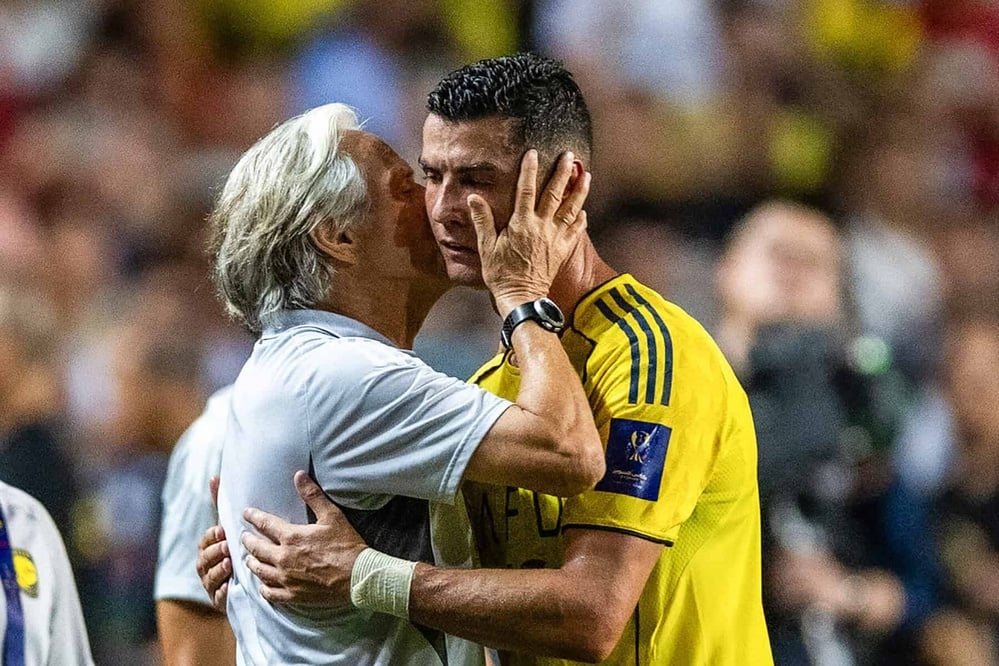

2026 © Helium Trades
Privacy Policy & Disclosure
* Disclaimer: Nothing on this website constitutes investment advice, performance data or any recommendation that any particular security, portfolio of securities, transaction or investment strategy is suitable for any specific person. Helium Trades is not responsible in any way for the accuracy
of any model predictions or price data. Any mention of a particular security and related prediction data is not a recommendation to buy or sell that security. Investments in securities involve the risk of loss. Past performance is no guarantee of future results. Helium Trades is not responsible for any of your investment decisions,
you should consult a financial expert before engaging in any transaction.
Helium Research Assistant

How can I help you today?
Ask any question about this page.


