See whether Helium helps you make better-informed decisions. Try every Pro Trader feature for 30 days. No credit card required.
Try every Pro Trader feature for 30 days. No credit card required.
July 20, 2026 · 0 shares
Spain's World Cup final coverage centers on Spain's dominance, enduring records, and historic milestones, with a mild prelude of Spain favoritism that yields a subtle pro-Spain tilt while still reporting essential facts.
World Cup final recap: Spain defeats Argentina 1-0 after a 106th-minute goal, with highlight statistics, records, and ceremonies surrounding the match.
Automated analysis; not human reviewed.
Limitations: Concise, case-specific limitations and plausible alternative interpretations.
·
2 of 52 available dimensions scored; omitted dimensions are not treated as neutral.
·
Verified supporting quotes for 0 of 2 scored dimensions.
Claim: Milestones (oldest coach, dual crowns) add interest.
“"The win made Spain coach Luis de la Fuente, at 65, the oldest coach ever to lead a team to the World Cup title."” · not found in supplied text
“"With its victory, Spain became the first nation to simultaneously hold the World Cup crowns in both men's and women's soccer."” · not found in supplied text
Counterevidence:
“"Global figures including President Trump, Spain's Royal Family and Canadian Prime Minister Mark Carney were in the stands, along with celebrities like Matt Damon, Carlos Alcaraz and Mick Jagger."” · exact text match
Why: Milestones add interest but attendance and celebrity details broaden coverage beyond pure game analysis.
Claim: The article frames Spain's dominance and notes favoritism toward Spain.
“"Spain dominated the match, outshooting Argentina 20-3, but couldn't manage a goal in regulation."” · not found in supplied text
“"But Spain, which was slightly favored to take home the title this year, would not be denied its second World Cup title."” · not found in supplied text
Counterevidence:
“"An Argentina team that was the king of the late-game rally in this tournament had no answer this time."” · not found in supplied text
Why: Explicit dominance framing and pre-tournament favoritism toward Spain indicate mild opinion bias toward the Spanish team.
May overread Spain-dominant framing; limited by article's brevity.
July 19, 2026 · 0 shares
Interwoven sports reporting with sensational political references, promotional inserts, and reliability-promoting claims creates a fragmented, marketing-forward framing that undermines a purely neutral presentation.
Composite coverage mixing a World Cup final report with unrelated headlines, advertising, and promotional language from media sources.
Automated analysis; not human reviewed.
Limitations: Concise, case-specific limitations and plausible alternative interpretations.
·
52 of 52 available dimensions scored; omitted dimensions are not treated as neutral.
·
Verified supporting quotes for 7 of 52 scored dimensions.
Claim: Mix of objective event data and subjective statements.
“It took extra time for Spain to beat Argentina 1-0 Sunday in East Rutherford, New Jersey” · exact text match
“The final finished just after midnight in Spain, but the late hour did not stop Spaniards from celebrating in the streets across the country, including at watch parties in Madrid and Barcelona.” · exact text match
“"I can’t believe it,” Torres said after the match.
“I just try to enjoy it, but I can’t believe what’s happening.””
· verified after text normalization
Counterevidence:
“Spain beat Argentina 1-0 in extra time to win the 2026 FIFA World Cup.” · exact text match
Why: Direct quotes and celebrations show emotional framing; numeric data remains objective.
Claim: Some lines employ sensational framing (alien court, floods) alongside normal reporting.
“Trump activates highly classified Clinton-era ‘Alien Terrorist Removal Court’” · exact text match
“New York City floods ahead of World Cup final, stranding drivers, fans” · exact text match
Counterevidence:
“Awarded a perfect reliability rating from NewsGuard” · exact text match
Why: The combination of sensational terms with standard reporting supports a moderate sensational bias.
Claim: Emotional framing via quotes and celebration descriptions.
“"I can’t believe it,” Torres said after the match.
“I just try to enjoy it, but I can’t believe what’s happening.””
· verified after text normalization
“The match was likely Messi’s final World Cup appearance.
The 39-year-old forward has not yet said whether he intends to play through 2030. He left the field in tears, acknowledging the crowd.”
· exact text match
Counterevidence:
“The article also provides objective match details (score, minute, red card).” · not found in supplied text
Why: Direct quotes and celebration descriptions introduce emotional framing within a sporting report.
Claim: External credibility signals cited but advertising content present.
“Awarded a perfect reliability rating from NewsGuard” · exact text match
“According to media bias experts at AllSides” · exact text match
Counterevidence:
“Stuck at an airport? You could soon be able to bet on flight delays” · exact text match
“Kalshi plans to let its customers place contracts on the timeliness of airlines” · exact text match
Why: The text cites external ratings but includes promotional lines that affect credibility.
Claim: Presence of advertising/promotional content embedded in the text.
“Stuck at an airport? You could soon be able to bet on flight delays” · exact text match
“Kalshi plans to let its customers place contracts on the timeliness of airlines, leading the internet to imagine the worst of scenarios.” · exact text match
“Finally, unbiased news that lets you see both sides.
It’s refreshing to have facts without the spin.”
· exact text match
Counterevidence:
“Awarded a perfect reliability rating from NewsGuard” · exact text match
“According to media bias experts at AllSides” · exact text match
Why: Embedded promotional language alongside editorial content indicates advertising framing.
Claim: Moderate integrity signals with external sources, offset by promotional content.
“Awarded a perfect reliability rating from NewsGuard” · exact text match
“According to media bias experts at AllSides” · exact text match
“Straight Arrow is fearlessly exposing the hard truths on the stories that matter to you. No manipulation.
No bias.
No agenda.”
· not found in supplied text
Counterevidence:
“Stuck at an airport? You could soon be able to bet on flight delays” · exact text match
“"This app gives me the news without pushing a political agenda, which is rare to find."” · verified after text normalization
Why: External ratings exist, but promotional language challenges perceived integrity.
Claim: Terrorism-related framing via the 'Alien Terrorist Removal Court' reference.
“Trump activates highly classified Clinton-era ‘Alien Terrorist Removal Court’” · exact text match
Counterevidence:
“Awarded a perfect reliability rating from NewsGuard” · exact text match
“According to media bias experts at AllSides” · exact text match
Why: Use of terrorism-related terminology in political framing.
Claim: Inclusion of conspiratorial framing via reference to a Clinton-era 'Alien Terrorist Removal Court'.
“Trump activates highly classified Clinton-era ‘Alien Terrorist Removal Court’” · exact text match
Counterevidence:
“Awarded a perfect reliability rating from NewsGuard” · exact text match
“According to media bias experts at AllSides” · exact text match
Why: A sensational term appears within the political content.
Claim: Apparent contradiction between neutrality claims and promotional content.
“Straight Arrow is fearlessly exposing the hard truths on the stories that matter to you. No manipulation.
No bias.
No agenda.”
· not found in supplied text
Counterevidence:
“Awarded a perfect reliability rating from NewsGuard” · exact text match
“According to media bias experts at AllSides” · exact text match
Why: Neutrality claim contrasted with promotional language.
Ambiguity from mixed sports/politics/ads; evidence gaps limit stance.
July 20, 2026 · 0 shares
Promotional content embedded within a largely descriptive analysis of U.S.-driven changes to soccer, signaling advertising-influenced framing even as the piece notes potential durability of innovations.
North American-hosted World Cup framed as a potentially transformative yet contested shift in soccer's presentation and identity.
Automated analysis; not human reviewed.
Limitations: Concise, case-specific limitations and plausible alternative interpretations.
·
1 of 52 available dimensions scored; omitted dimensions are not treated as neutral.
·
Verified supporting quotes for 1 of 1 scored dimensions.
Claim: Presence of promotional subscription prompts and sponsor disclosures inside the article.
“In a time of both misinformation and too much information, quality journalism is more crucial than ever.By subscribing, you can help us get the story right.” · exact text match
“With your current subscription plan you can comment on stories.
However, before writing your first comment, please create a display name in the Profile section of your subscriber account page.”
· verified after text normalization
“Your subscription plan doesn't allow commenting.
To learn more see our FAQ”
· exact text match
Counterevidence:
“The text also frames the topic within the context of essential journalism quality.” · not found in supplied text
Why: Explicit promotional prompts and sponsor disclosures appear in the text alongside informational content.
Promo lines may color interpretation; avoid inferring author intent.
Primarily entertainment framing with a diverse celebrity lineup and philanthropic context; no explicit political stance is evident, with mild evaluative judgments embedded in a largely neutral tone.
Entertainment-focused coverage of a celebrity-filled FIFA World Cup halftime show in New Jersey, highlighting the lineup, on-field moments, and the philanthropic framing associated with Global Citizen.
Automated analysis; not human reviewed.
Limitations: Case-specific assessment bounded by the provided article text; interpretation could shift with broader publication context or additional pieces examining political implications.
·
1 of 52 available dimensions scored; omitted dimensions are not treated as neutral.
·
Verified supporting quotes for 1 of 1 scored dimensions.
Claim: No explicit political orientation is evident; framing appears entertainment- and philanthropy-oriented with neutral-to-mild evaluative language.
“Global Citizen CEO Hugh Evans called it “the single largest gathering of artists united for a cause since Live Aid.”” · exact text match
“Well, it definitely fell short of that, but at least it was for a good cause.” · exact text match
“The goal was to raise $100 million USD by the 2026 World Cup final and as of July 2026, more than $50 million had been raised with $1 from every World Cup 2026 ticket being donated.” · exact text match
Counterevidence:
“"We independently select everything we recommend.
Buying through us may earn us a commission, which supports our work."”
· exact text match
Why: Quotes emphasize philanthropy and celebrity-led spectacle without explicit political ideology; framing leans entertainment/news rather than political advocacy.
July 19, 2026 · 0 shares
Coverage presents FIFA's 2026 World Cup halftime show as a global, philanthropic, production-driven spectacle, balancing praise for its reach and fundraising with skepticism about Americanization and commercialization, and it foregrounds diverse expert perspectives on cultural impact.
It acknowledges fan ambivalence and frames the event within a broader discussion of global media production, not just entertainment.
Overall, it seeks a nuanced, evidence-based portrayal rather than a promotional or hostile stance.
WIRED's report describes FIFA's 2026 World Cup halftime show as a global, philanthropic, production-driven enterprise with mixed fan reactions and expert commentary on cultural impact.
Automated analysis; not human reviewed.
Limitations: Concise, case-specific limitations and plausible alternative interpretations.
·
52 of 52 available dimensions scored; omitted dimensions are not treated as neutral.
·
Verified supporting quotes for 0 of 52 scored dimensions.
Claim: Mild fear/anxiety about outside-world influence and Americanization in reporting.
““So when FIFA unveils an 11-minute halftime spectacle, featuring Madonna and Justin Bieber, and Tom Cruise attached to the closing ceremony, it reads to some as importing an American made-for-TV sensibility.”” · exact text match
““I wouldn't be surprised if the next one showed a specific resistance to the hyper-commercialization as an American thing,” she says.” · verified after text normalization
““This is not meant to be political in any way.”” · not found in supplied text
Counterevidence:
““We are creating something that the world can look at as theirs, and we want to unite the world and really move toward those principles,” she says.” · exact text match
““Ultimately, what's being globalized isn't American culture so much as the production model,” she says.” · exact text match
Why: Direct quotes show both concern about Americanization and emphasis on global production aims, indicating a nuanced but mild fear-oriented framing.
Claim: Reporting relies on credible sources and external references, indicating credible coverage.
““The World Cup has traditionally centered its musical identity on a single iconic anthem and an opening ceremony rooted in the host nation,” says Tiffany Naiman, director of the Berry Gordy Music Industry Center at UCLA.” · exact text match
““Isra Ali, a professor of media, culture, and communication at NYU Steinhardt, says the pall of the outside world will fall on this Cup no matter what.”” · not found in supplied text
““Interest in the halftime show is also showing up on Kalshi and Polymarket, which have both seen tens of billions of dollars in World Cup prediction market trading, according to a CNBC report.”” · not found in supplied text
Counterevidence:
““Not that all World Cup fans are necessarily excited to see the show.”” · not found in supplied text
Why: Credible experts and market references strengthen reliability; fan skepticism is acknowledged as a counterpoint.
Balanced; explicit evidence bound; minimal inferred motives.
July 21, 2026 · 0 shares
Critical voices opposing Infantino's leadership frame World Cup expansion as harmful to football and governance, emphasizing accountability and governance reforms, with limited balance from FIFA or its supporters.
Loaded anti-FIFA framing portrays the 30-minute World Cup Final halftime as a corporate cash grab and rule-bending move, invoking hypocrisy, past precedents, and safety concerns to argue the move benefits broadcasters at the expense of players.
A critical opinion piece alleging FIFA's plan for a 30-minute halftime is driven by corporate/broadcast interests, arguing that the change bypasses established rules and risks player safety.
Automated analysis; not human reviewed.
Limitations: Concise, case-specific limitations and plausible alternative interpretations.
·
6 of 52 available dimensions scored; omitted dimensions are not treated as neutral.
·
Verified supporting quotes for 0 of 6 scored dimensions.
Claim: The text makes normative judgments about what should or should not be done.
“"Is this absolute madness?"” · not found in supplied text
“"Did FIFA get a waiver to change the halftime rules?"” · exact text match
“"Why is this halftime show being criticized by coaches and medical staff?"” · exact text match
Counterevidence:
“FIFA did not seek a permanent amendment to Law 7 from IFAB.” · exact text match
Why: The piece poses normative judgments and questions about policy rather than neutral description.
Claim: The piece is heavily opinionated, using rhetorical questions and loaded terms to shape reader perceptions.
“"Is this absolute madness? This corporate-fueled 2026 World Cup final halftime show controversy has left fans and sports science gurus asking the same questions."” · not found in supplied text
“"The primary criticisms center on player safety.
Forcing elite soccer players to sit idle for 30 minutes causes their core temperatures to drop and muscles to stiffen."”
· not found in supplied text
“"The hypocrisy absolutely stinks!"” · not found in supplied text
Counterevidence:
“FIFA did not seek a permanent amendment to Law 7 from IFAB.” · exact text match
Why: Presence of questions, adjectives, and strong evaluative terms indicates opinion-driven framing.
Claim: Some assertions appear to go beyond the provided evidence, asserting broad implications.
“"This show will only lasts exactly 11 minutes.
That means the rest of that half hour will be 19 minutes of pure logistical chaos and commercials."”
· exact text match
“"The primary criticisms center on player safety.
Forcing elite soccer players to sit idle for 30 minutes causes their core temperatures to drop and muscles to stiffen.
This drastically increases the risk of acute soft-tissue and muscle injuries when the second half starts."”
· exact text match
“"Can you smell that? The hypocrisy absolutely stinks!"” · not found in supplied text
Counterevidence:
“FIFA did not seek a permanent amendment to Law 7 from IFAB.” · exact text match
Why: Some statements are definitive; others rely on cited medical opinions or predictions rather than confirmed outcomes.
Claim: The article frames FIFA as establishment and uses loaded terms to portray corporate influence and hypocrisy.
“"a huge corporate cash-grab that has purists pretty aggravated."” · not found in supplied text
“"The hypocrisy absolutely stinks!"” · not found in supplied text
“"Backed by broadcasting giants like Fox, Telemundo, ITV, and the BBC, who have happily cleared their ad schedules for FIFA, is serving up the exact danger they once banned."” · not found in supplied text
Counterevidence:
“FIFA did not seek a permanent amendment to Law 7 from IFAB.” · exact text match
“FIFA executives didn’t try to rewrite the global rulebook.
That would cause a civil war in local leagues across the planet.”
· exact text match
Why: Frequent framing of FIFA as corrupt/establishment with explicit counterstatements about procedural limits.
Claim: The narrative uses loaded framing and 'loophole' language to drive conclusions.
“"FIFA exploited a little loophole, pulling a fast one under their authority as tournament organizer."” · not found in supplied text
“"Under this clever disguise, they slipped past the 15-minute limit and technically made a new limit."” · not found in supplied text
Counterevidence:
“FIFA did not seek a permanent amendment to Law 7 from IFAB.” · exact text match
“FIFA executives didn’t try to rewrite the global rulebook.
That would cause a civil war in local leagues across the planet.”
· exact text match
Why: Use of pejorative phrases and framing suggests manipulation of reader perception, despite some procedural caveats.
Claim: The article presents hypocrisy as a central feature of FIFA's change.
“"The hypocrisy absolutely stinks!"” · not found in supplied text
“"Backed by broadcasting giants like Fox, Telemundo, ITV, and the BBC, who have happily cleared their ad schedules for FIFA, is serving up the exact danger they once banned."” · not found in supplied text
Counterevidence:
“FIFA did not seek a permanent amendment to Law 7 from IFAB.” · exact text match
Why: Directly highlights perceived hypocrisy; some context hints at non-hypocritical aspects.
Loaded language; limited sourcing; check primary sources.
July 20, 2026 · 0 shares
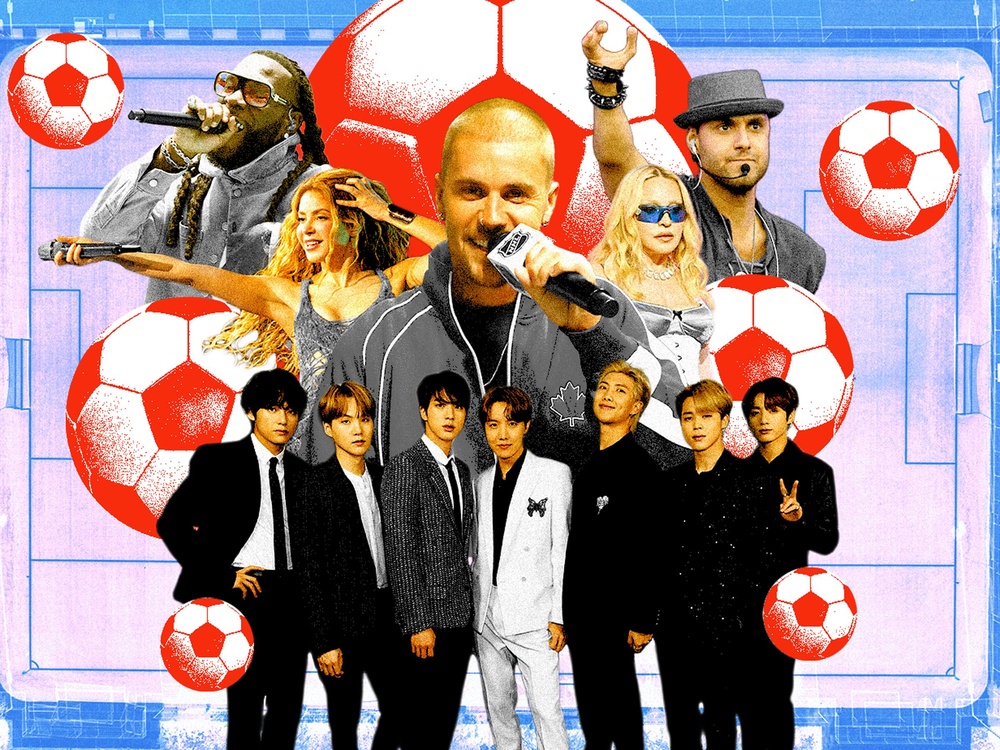
The piece paces a strongly negative, opinionated critique of the 2026 World Cup halftime show, labeling the lineup as overpacked and disjointed while highlighting a single standout moment for Bieber and Rooney's harsh critique as a counterpoint; promotional disclosures and implied fan frustration color the reception, though selective quotes offer some balance.
Entertainment article analyzing the 2026 World Cup halftime show, describing the lineup as overpacked and uneven, with a standout Bieber moment and Rooney's critical take serving as a counterpoint.
Automated analysis; not human reviewed.
·
21 of 52 available dimensions scored; omitted dimensions are not treated as neutral.
·
Verified supporting quotes for 0 of 21 scored dimensions.
Claim: The article leans toward subjective opinion rather than neutral reporting.
“"A too-busy lineup featuring Madonna, BTS, Justin Bieber, and Shakira ultimately disappointed audiences."” · not found in supplied text
“"die-hard soccer fans—a.k.a. football fans—didn’t exactly want a halftime show."” · not found in supplied text
Counterevidence:
“"Citations of Rooney and direct quotes provide evidence."” · not found in supplied text
Why: Dominant evaluative language signals high subjectivity.
Claim: Content includes vivid details but remains opinion-driven overall.
“"From there, we quickly smashed together all seven members of BTS performing their hundredth rendition of 'Dynamite'."” · not found in supplied text
“"In lieu of a stage that would have destroyed the field, the British band simply rolled out a colorful tarp."” · not found in supplied text
Counterevidence:
“"The piece's novelty does not guarantee deeper analysis."” · not found in supplied text
Why: Vivid depictions exist, but overall analysis leans opinion-based.
Claim: The article applies normative judgments about the show's organization and entertainment value.
“"A too-busy lineup featuring Madonna, BTS, Justin Bieber, and Shakira ultimately disappointed audiences."” · not found in supplied text
“"Despite the exhaustive talent list, die-hard soccer fans—a.k.a. football fans—didn’t exactly want a halftime show."” · not found in supplied text
“"Everyone mostly chose more recognizable hits or FIFA anthems over their newer material, and it was all flawlessly executed if not a little uninspired."” · not found in supplied text
Counterevidence:
“"Justin Bieber’s performance was positively framed as the sole exception."” · not found in supplied text
Why: Direct normative judgments are present; a positive exception is a limited counterpoint.
Claim: The article uses strongly opinionated language to frame the halftime show as flawed.
“"A too-busy lineup featuring Madonna, BTS, Justin Bieber, and Shakira ultimately disappointed audiences."” · not found in supplied text
“"Despite the exhaustive talent list, die-hard soccer fans—a.k.a. football fans—didn’t exactly want a halftime show."” · not found in supplied text
“"Everyone mostly chose more recognizable hits or FIFA anthems over their newer material, and it was all flawlessly executed if not a little uninspired."” · not found in supplied text
Counterevidence:
“"After an introduction from Jason Sudeikis’s Ted Lasso character, the pop singer easily stole the entire show."” · not found in supplied text
“"It was the quietest song of the show and still the most impactful."” · not found in supplied text
Why: Multiple explicit evaluative statements dominate, with selective counterpoints providing partial balance.
Claim: Some evaluative language suggests emotional framing rather than purely factual analysis.
“"A jam-packed musical halftime show that broke up an otherwise boring final match, featuring more bodies on the pitch than the mobs of Scottish tourists who drank Boston dry."” · not found in supplied text
“"The best part was when it finished."” · not found in supplied text
Counterevidence:
“"Justin Bieber’s performance includes specific details about what occurred."” · not found in supplied text
Why: Subjective adjectives accompany factual items, indicating partial irrational framing.
Case-specific: The article blends strong negative judgments with occasional balance, but leans negative overall.
Coverage centers UEFA's grievances with FIFA's World Cup governance, highlighting criticisms of disciplinary decisions and perceived political influence, suggesting a UEFA-forward framing of the World Cup controversy.
Report on UEFA president Ceferin's World Cup final boycott amid tensions with FIFA over World Cup governance, disciplinary decisions, and related political considerations.
Automated analysis; not human reviewed. Limitations: Concise, case-specific limitations and plausible alternative interpretations.
Ambiguity from fragmented text; possible UEFA framing; data may omit counterpoints.
July 21, 2026 · 0 shares
Critical voices opposing Infantino's leadership frame World Cup expansion as harmful to football and governance, emphasizing accountability and governance reforms, with limited balance from FIFA or its supporters.
July 20, 2026 · 0 shares
Spain's World Cup final coverage centers on Spain's dominance, enduring records, and historic milestones, with a mild prelude of Spain favoritism that yields a subtle pro-Spain tilt while still reporting essential facts.
World Cup final recap: Spain defeats Argentina 1-0 after a 106th-minute goal, with highlight statistics, records, and ceremonies surrounding the match.
Automated analysis; not human reviewed. Limitations: Concise, case-specific limitations and plausible alternative interpretations. · 2 of 52 available dimensions scored; omitted dimensions are not treated as neutral. · Verified supporting quotes for 0 of 2 scored dimensions.
Claim: Milestones (oldest coach, dual crowns) add interest.
“"The win made Spain coach Luis de la Fuente, at 65, the oldest coach ever to lead a team to the World Cup title."” · not found in supplied text
“"With its victory, Spain became the first nation to simultaneously hold the World Cup crowns in both men's and women's soccer."” · not found in supplied text
Counterevidence:
“"Global figures including President Trump, Spain's Royal Family and Canadian Prime Minister Mark Carney were in the stands, along with celebrities like Matt Damon, Carlos Alcaraz and Mick Jagger."” · exact text match
Why: Milestones add interest but attendance and celebrity details broaden coverage beyond pure game analysis.
Claim: The article frames Spain's dominance and notes favoritism toward Spain.
“"Spain dominated the match, outshooting Argentina 20-3, but couldn't manage a goal in regulation."” · not found in supplied text
“"But Spain, which was slightly favored to take home the title this year, would not be denied its second World Cup title."” · not found in supplied text
Counterevidence:
“"An Argentina team that was the king of the late-game rally in this tournament had no answer this time."” · not found in supplied text
Why: Explicit dominance framing and pre-tournament favoritism toward Spain indicate mild opinion bias toward the Spanish team.
May overread Spain-dominant framing; limited by article's brevity.
July 19, 2026 · 0 shares
Interwoven sports reporting with sensational political references, promotional inserts, and reliability-promoting claims creates a fragmented, marketing-forward framing that undermines a purely neutral presentation.
Composite coverage mixing a World Cup final report with unrelated headlines, advertising, and promotional language from media sources.
Automated analysis; not human reviewed. Limitations: Concise, case-specific limitations and plausible alternative interpretations. · 52 of 52 available dimensions scored; omitted dimensions are not treated as neutral. · Verified supporting quotes for 7 of 52 scored dimensions.
Claim: Mix of objective event data and subjective statements.
“It took extra time for Spain to beat Argentina 1-0 Sunday in East Rutherford, New Jersey” · exact text match
“The final finished just after midnight in Spain, but the late hour did not stop Spaniards from celebrating in the streets across the country, including at watch parties in Madrid and Barcelona.” · exact text match
“"I can’t believe it,” Torres said after the match. “I just try to enjoy it, but I can’t believe what’s happening.”” · verified after text normalization
Counterevidence:
“Spain beat Argentina 1-0 in extra time to win the 2026 FIFA World Cup.” · exact text match
Why: Direct quotes and celebrations show emotional framing; numeric data remains objective.
Claim: Some lines employ sensational framing (alien court, floods) alongside normal reporting.
“Trump activates highly classified Clinton-era ‘Alien Terrorist Removal Court’” · exact text match
“New York City floods ahead of World Cup final, stranding drivers, fans” · exact text match
Counterevidence:
“Awarded a perfect reliability rating from NewsGuard” · exact text match
Why: The combination of sensational terms with standard reporting supports a moderate sensational bias.
Claim: Emotional framing via quotes and celebration descriptions.
“"I can’t believe it,” Torres said after the match. “I just try to enjoy it, but I can’t believe what’s happening.”” · verified after text normalization
“The match was likely Messi’s final World Cup appearance. The 39-year-old forward has not yet said whether he intends to play through 2030. He left the field in tears, acknowledging the crowd.” · exact text match
Counterevidence:
“The article also provides objective match details (score, minute, red card).” · not found in supplied text
Why: Direct quotes and celebration descriptions introduce emotional framing within a sporting report.
Claim: External credibility signals cited but advertising content present.
“Awarded a perfect reliability rating from NewsGuard” · exact text match
“According to media bias experts at AllSides” · exact text match
Counterevidence:
“Stuck at an airport? You could soon be able to bet on flight delays” · exact text match
“Kalshi plans to let its customers place contracts on the timeliness of airlines” · exact text match
Why: The text cites external ratings but includes promotional lines that affect credibility.
Claim: Presence of advertising/promotional content embedded in the text.
“Stuck at an airport? You could soon be able to bet on flight delays” · exact text match
“Kalshi plans to let its customers place contracts on the timeliness of airlines, leading the internet to imagine the worst of scenarios.” · exact text match
“Finally, unbiased news that lets you see both sides. It’s refreshing to have facts without the spin.” · exact text match
Counterevidence:
“Awarded a perfect reliability rating from NewsGuard” · exact text match
“According to media bias experts at AllSides” · exact text match
Why: Embedded promotional language alongside editorial content indicates advertising framing.
Claim: Moderate integrity signals with external sources, offset by promotional content.
“Awarded a perfect reliability rating from NewsGuard” · exact text match
“According to media bias experts at AllSides” · exact text match
“Straight Arrow is fearlessly exposing the hard truths on the stories that matter to you. No manipulation. No bias. No agenda.” · not found in supplied text
Counterevidence:
“Stuck at an airport? You could soon be able to bet on flight delays” · exact text match
“"This app gives me the news without pushing a political agenda, which is rare to find."” · verified after text normalization
Why: External ratings exist, but promotional language challenges perceived integrity.
Claim: Terrorism-related framing via the 'Alien Terrorist Removal Court' reference.
“Trump activates highly classified Clinton-era ‘Alien Terrorist Removal Court’” · exact text match
Counterevidence:
“Awarded a perfect reliability rating from NewsGuard” · exact text match
“According to media bias experts at AllSides” · exact text match
Why: Use of terrorism-related terminology in political framing.
Claim: Inclusion of conspiratorial framing via reference to a Clinton-era 'Alien Terrorist Removal Court'.
“Trump activates highly classified Clinton-era ‘Alien Terrorist Removal Court’” · exact text match
Counterevidence:
“Awarded a perfect reliability rating from NewsGuard” · exact text match
“According to media bias experts at AllSides” · exact text match
Why: A sensational term appears within the political content.
Claim: Apparent contradiction between neutrality claims and promotional content.
“Straight Arrow is fearlessly exposing the hard truths on the stories that matter to you. No manipulation. No bias. No agenda.” · not found in supplied text
Counterevidence:
“Awarded a perfect reliability rating from NewsGuard” · exact text match
“According to media bias experts at AllSides” · exact text match
Why: Neutrality claim contrasted with promotional language.
Ambiguity from mixed sports/politics/ads; evidence gaps limit stance.
Primarily entertainment framing with a diverse celebrity lineup and philanthropic context; no explicit political stance is evident, with mild evaluative judgments embedded in a largely neutral tone.
Entertainment-focused coverage of a celebrity-filled FIFA World Cup halftime show in New Jersey, highlighting the lineup, on-field moments, and the philanthropic framing associated with Global Citizen.
Automated analysis; not human reviewed. Limitations: Case-specific assessment bounded by the provided article text; interpretation could shift with broader publication context or additional pieces examining political implications. · 1 of 52 available dimensions scored; omitted dimensions are not treated as neutral. · Verified supporting quotes for 1 of 1 scored dimensions.
Claim: No explicit political orientation is evident; framing appears entertainment- and philanthropy-oriented with neutral-to-mild evaluative language.
“Global Citizen CEO Hugh Evans called it “the single largest gathering of artists united for a cause since Live Aid.”” · exact text match
“Well, it definitely fell short of that, but at least it was for a good cause.” · exact text match
“The goal was to raise $100 million USD by the 2026 World Cup final and as of July 2026, more than $50 million had been raised with $1 from every World Cup 2026 ticket being donated.” · exact text match
Counterevidence:
“"We independently select everything we recommend. Buying through us may earn us a commission, which supports our work."” · exact text match
Why: Quotes emphasize philanthropy and celebrity-led spectacle without explicit political ideology; framing leans entertainment/news rather than political advocacy.
July 19, 2026 · 0 shares
Coverage presents FIFA's 2026 World Cup halftime show as a global, philanthropic, production-driven spectacle, balancing praise for its reach and fundraising with skepticism about Americanization and commercialization, and it foregrounds diverse expert perspectives on cultural impact. It acknowledges fan ambivalence and frames the event within a broader discussion of global media production, not just entertainment. Overall, it seeks a nuanced, evidence-based portrayal rather than a promotional or hostile stance.
WIRED's report describes FIFA's 2026 World Cup halftime show as a global, philanthropic, production-driven enterprise with mixed fan reactions and expert commentary on cultural impact.
Automated analysis; not human reviewed. Limitations: Concise, case-specific limitations and plausible alternative interpretations. · 52 of 52 available dimensions scored; omitted dimensions are not treated as neutral. · Verified supporting quotes for 0 of 52 scored dimensions.
Claim: Mild fear/anxiety about outside-world influence and Americanization in reporting.
““So when FIFA unveils an 11-minute halftime spectacle, featuring Madonna and Justin Bieber, and Tom Cruise attached to the closing ceremony, it reads to some as importing an American made-for-TV sensibility.”” · exact text match
““I wouldn't be surprised if the next one showed a specific resistance to the hyper-commercialization as an American thing,” she says.” · verified after text normalization
““This is not meant to be political in any way.”” · not found in supplied text
Counterevidence:
““We are creating something that the world can look at as theirs, and we want to unite the world and really move toward those principles,” she says.” · exact text match
““Ultimately, what's being globalized isn't American culture so much as the production model,” she says.” · exact text match
Why: Direct quotes show both concern about Americanization and emphasis on global production aims, indicating a nuanced but mild fear-oriented framing.
Claim: Reporting relies on credible sources and external references, indicating credible coverage.
““The World Cup has traditionally centered its musical identity on a single iconic anthem and an opening ceremony rooted in the host nation,” says Tiffany Naiman, director of the Berry Gordy Music Industry Center at UCLA.” · exact text match
““Isra Ali, a professor of media, culture, and communication at NYU Steinhardt, says the pall of the outside world will fall on this Cup no matter what.”” · not found in supplied text
““Interest in the halftime show is also showing up on Kalshi and Polymarket, which have both seen tens of billions of dollars in World Cup prediction market trading, according to a CNBC report.”” · not found in supplied text
Counterevidence:
““Not that all World Cup fans are necessarily excited to see the show.”” · not found in supplied text
Why: Credible experts and market references strengthen reliability; fan skepticism is acknowledged as a counterpoint.
Balanced; explicit evidence bound; minimal inferred motives.
July 21, 2026 · 0 shares
Critical voices opposing Infantino's leadership frame World Cup expansion as harmful to football and governance, emphasizing accountability and governance reforms, with limited balance from FIFA or its supporters.
Loaded anti-FIFA framing portrays the 30-minute World Cup Final halftime as a corporate cash grab and rule-bending move, invoking hypocrisy, past precedents, and safety concerns to argue the move benefits broadcasters at the expense of players.
A critical opinion piece alleging FIFA's plan for a 30-minute halftime is driven by corporate/broadcast interests, arguing that the change bypasses established rules and risks player safety.
Automated analysis; not human reviewed. Limitations: Concise, case-specific limitations and plausible alternative interpretations. · 6 of 52 available dimensions scored; omitted dimensions are not treated as neutral. · Verified supporting quotes for 0 of 6 scored dimensions.
Claim: The text makes normative judgments about what should or should not be done.
“"Is this absolute madness?"” · not found in supplied text
“"Did FIFA get a waiver to change the halftime rules?"” · exact text match
“"Why is this halftime show being criticized by coaches and medical staff?"” · exact text match
Counterevidence:
“FIFA did not seek a permanent amendment to Law 7 from IFAB.” · exact text match
Why: The piece poses normative judgments and questions about policy rather than neutral description.
Claim: The piece is heavily opinionated, using rhetorical questions and loaded terms to shape reader perceptions.
“"Is this absolute madness? This corporate-fueled 2026 World Cup final halftime show controversy has left fans and sports science gurus asking the same questions."” · not found in supplied text
“"The primary criticisms center on player safety. Forcing elite soccer players to sit idle for 30 minutes causes their core temperatures to drop and muscles to stiffen."” · not found in supplied text
“"The hypocrisy absolutely stinks!"” · not found in supplied text
Counterevidence:
“FIFA did not seek a permanent amendment to Law 7 from IFAB.” · exact text match
Why: Presence of questions, adjectives, and strong evaluative terms indicates opinion-driven framing.
Claim: Some assertions appear to go beyond the provided evidence, asserting broad implications.
“"This show will only lasts exactly 11 minutes. That means the rest of that half hour will be 19 minutes of pure logistical chaos and commercials."” · exact text match
“"The primary criticisms center on player safety. Forcing elite soccer players to sit idle for 30 minutes causes their core temperatures to drop and muscles to stiffen. This drastically increases the risk of acute soft-tissue and muscle injuries when the second half starts."” · exact text match
“"Can you smell that? The hypocrisy absolutely stinks!"” · not found in supplied text
Counterevidence:
“FIFA did not seek a permanent amendment to Law 7 from IFAB.” · exact text match
Why: Some statements are definitive; others rely on cited medical opinions or predictions rather than confirmed outcomes.
Claim: The article frames FIFA as establishment and uses loaded terms to portray corporate influence and hypocrisy.
“"a huge corporate cash-grab that has purists pretty aggravated."” · not found in supplied text
“"The hypocrisy absolutely stinks!"” · not found in supplied text
“"Backed by broadcasting giants like Fox, Telemundo, ITV, and the BBC, who have happily cleared their ad schedules for FIFA, is serving up the exact danger they once banned."” · not found in supplied text
Counterevidence:
“FIFA did not seek a permanent amendment to Law 7 from IFAB.” · exact text match
“FIFA executives didn’t try to rewrite the global rulebook. That would cause a civil war in local leagues across the planet.” · exact text match
Why: Frequent framing of FIFA as corrupt/establishment with explicit counterstatements about procedural limits.
Claim: The narrative uses loaded framing and 'loophole' language to drive conclusions.
“"FIFA exploited a little loophole, pulling a fast one under their authority as tournament organizer."” · not found in supplied text
“"Under this clever disguise, they slipped past the 15-minute limit and technically made a new limit."” · not found in supplied text
Counterevidence:
“FIFA did not seek a permanent amendment to Law 7 from IFAB.” · exact text match
“FIFA executives didn’t try to rewrite the global rulebook. That would cause a civil war in local leagues across the planet.” · exact text match
Why: Use of pejorative phrases and framing suggests manipulation of reader perception, despite some procedural caveats.
Claim: The article presents hypocrisy as a central feature of FIFA's change.
“"The hypocrisy absolutely stinks!"” · not found in supplied text
“"Backed by broadcasting giants like Fox, Telemundo, ITV, and the BBC, who have happily cleared their ad schedules for FIFA, is serving up the exact danger they once banned."” · not found in supplied text
Counterevidence:
“FIFA did not seek a permanent amendment to Law 7 from IFAB.” · exact text match
Why: Directly highlights perceived hypocrisy; some context hints at non-hypocritical aspects.
Loaded language; limited sourcing; check primary sources.
FIFA/Global Citizen production-and-philanthropy framing
Primarily entertainment framing with a diverse celebrity lineup and philanthropic context; no explicit political stance is evident, with mild evaluative judgments embedded in a largely neutral tone.
Entertainment-focused coverage of a celebrity-filled FIFA World Cup halftime show in New Jersey, highlighting the lineup, on-field moments, and the philanthropic framing associated with Global Citizen.
Automated analysis; not human reviewed. Limitations: Case-specific assessment bounded by the provided article text; interpretation could shift with broader publication context or additional pieces examining political implications. · 1 of 52 available dimensions scored; omitted dimensions are not treated as neutral. · Verified supporting quotes for 1 of 1 scored dimensions.
Claim: No explicit political orientation is evident; framing appears entertainment- and philanthropy-oriented with neutral-to-mild evaluative language.
“Global Citizen CEO Hugh Evans called it “the single largest gathering of artists united for a cause since Live Aid.”” · exact text match
“Well, it definitely fell short of that, but at least it was for a good cause.” · exact text match
“The goal was to raise $100 million USD by the 2026 World Cup final and as of July 2026, more than $50 million had been raised with $1 from every World Cup 2026 ticket being donated.” · exact text match
Counterevidence:
“"We independently select everything we recommend. Buying through us may earn us a commission, which supports our work."” · exact text match
Why: Quotes emphasize philanthropy and celebrity-led spectacle without explicit political ideology; framing leans entertainment/news rather than political advocacy.
July 19, 2026 · 0 shares
Coverage presents FIFA's 2026 World Cup halftime show as a global, philanthropic, production-driven spectacle, balancing praise for its reach and fundraising with skepticism about Americanization and commercialization, and it foregrounds diverse expert perspectives on cultural impact. It acknowledges fan ambivalence and frames the event within a broader discussion of global media production, not just entertainment. Overall, it seeks a nuanced, evidence-based portrayal rather than a promotional or hostile stance.
WIRED's report describes FIFA's 2026 World Cup halftime show as a global, philanthropic, production-driven enterprise with mixed fan reactions and expert commentary on cultural impact.
Automated analysis; not human reviewed. Limitations: Concise, case-specific limitations and plausible alternative interpretations. · 52 of 52 available dimensions scored; omitted dimensions are not treated as neutral. · Verified supporting quotes for 0 of 52 scored dimensions.
Claim: Mild fear/anxiety about outside-world influence and Americanization in reporting.
““So when FIFA unveils an 11-minute halftime spectacle, featuring Madonna and Justin Bieber, and Tom Cruise attached to the closing ceremony, it reads to some as importing an American made-for-TV sensibility.”” · exact text match
““I wouldn't be surprised if the next one showed a specific resistance to the hyper-commercialization as an American thing,” she says.” · verified after text normalization
““This is not meant to be political in any way.”” · not found in supplied text
Counterevidence:
““We are creating something that the world can look at as theirs, and we want to unite the world and really move toward those principles,” she says.” · exact text match
““Ultimately, what's being globalized isn't American culture so much as the production model,” she says.” · exact text match
Why: Direct quotes show both concern about Americanization and emphasis on global production aims, indicating a nuanced but mild fear-oriented framing.
Claim: Reporting relies on credible sources and external references, indicating credible coverage.
““The World Cup has traditionally centered its musical identity on a single iconic anthem and an opening ceremony rooted in the host nation,” says Tiffany Naiman, director of the Berry Gordy Music Industry Center at UCLA.” · exact text match
““Isra Ali, a professor of media, culture, and communication at NYU Steinhardt, says the pall of the outside world will fall on this Cup no matter what.”” · not found in supplied text
““Interest in the halftime show is also showing up on Kalshi and Polymarket, which have both seen tens of billions of dollars in World Cup prediction market trading, according to a CNBC report.”” · not found in supplied text
Counterevidence:
““Not that all World Cup fans are necessarily excited to see the show.”” · not found in supplied text
Why: Credible experts and market references strengthen reliability; fan skepticism is acknowledged as a counterpoint.
Balanced; explicit evidence bound; minimal inferred motives.
July 19, 2026 · 0 shares
Coverage presents FIFA's 2026 World Cup halftime show as a global, philanthropic, production-driven spectacle, balancing praise for its reach and fundraising with skepticism about Americanization and commercialization, and it foregrounds diverse expert perspectives on cultural impact. It acknowledges fan ambivalence and frames the event within a broader discussion of global media production, not just entertainment. Overall, it seeks a nuanced, evidence-based portrayal rather than a promotional or hostile stance.
WIRED's report describes FIFA's 2026 World Cup halftime show as a global, philanthropic, production-driven enterprise with mixed fan reactions and expert commentary on cultural impact.
Automated analysis; not human reviewed. Limitations: Concise, case-specific limitations and plausible alternative interpretations. · 52 of 52 available dimensions scored; omitted dimensions are not treated as neutral. · Verified supporting quotes for 0 of 52 scored dimensions.
Claim: Mild fear/anxiety about outside-world influence and Americanization in reporting.
““So when FIFA unveils an 11-minute halftime spectacle, featuring Madonna and Justin Bieber, and Tom Cruise attached to the closing ceremony, it reads to some as importing an American made-for-TV sensibility.”” · exact text match
““I wouldn't be surprised if the next one showed a specific resistance to the hyper-commercialization as an American thing,” she says.” · verified after text normalization
““This is not meant to be political in any way.”” · not found in supplied text
Counterevidence:
““We are creating something that the world can look at as theirs, and we want to unite the world and really move toward those principles,” she says.” · exact text match
““Ultimately, what's being globalized isn't American culture so much as the production model,” she says.” · exact text match
Why: Direct quotes show both concern about Americanization and emphasis on global production aims, indicating a nuanced but mild fear-oriented framing.
Claim: Reporting relies on credible sources and external references, indicating credible coverage.
““The World Cup has traditionally centered its musical identity on a single iconic anthem and an opening ceremony rooted in the host nation,” says Tiffany Naiman, director of the Berry Gordy Music Industry Center at UCLA.” · exact text match
““Isra Ali, a professor of media, culture, and communication at NYU Steinhardt, says the pall of the outside world will fall on this Cup no matter what.”” · not found in supplied text
““Interest in the halftime show is also showing up on Kalshi and Polymarket, which have both seen tens of billions of dollars in World Cup prediction market trading, according to a CNBC report.”” · not found in supplied text
Counterevidence:
““Not that all World Cup fans are necessarily excited to see the show.”” · not found in supplied text
Why: Credible experts and market references strengthen reliability; fan skepticism is acknowledged as a counterpoint.
Balanced; explicit evidence bound; minimal inferred motives.
July 19, 2026 · 0 shares
Coverage presents FIFA's 2026 World Cup halftime show as a global, philanthropic, production-driven spectacle, balancing praise for its reach and fundraising with skepticism about Americanization and commercialization, and it foregrounds diverse expert perspectives on cultural impact. It acknowledges fan ambivalence and frames the event within a broader discussion of global media production, not just entertainment. Overall, it seeks a nuanced, evidence-based portrayal rather than a promotional or hostile stance.
WIRED's report describes FIFA's 2026 World Cup halftime show as a global, philanthropic, production-driven enterprise with mixed fan reactions and expert commentary on cultural impact.
Automated analysis; not human reviewed. Limitations: Concise, case-specific limitations and plausible alternative interpretations. · 52 of 52 available dimensions scored; omitted dimensions are not treated as neutral. · Verified supporting quotes for 0 of 52 scored dimensions.
Claim: Mild fear/anxiety about outside-world influence and Americanization in reporting.
““So when FIFA unveils an 11-minute halftime spectacle, featuring Madonna and Justin Bieber, and Tom Cruise attached to the closing ceremony, it reads to some as importing an American made-for-TV sensibility.”” · exact text match
““I wouldn't be surprised if the next one showed a specific resistance to the hyper-commercialization as an American thing,” she says.” · verified after text normalization
““This is not meant to be political in any way.”” · not found in supplied text
Counterevidence:
““We are creating something that the world can look at as theirs, and we want to unite the world and really move toward those principles,” she says.” · exact text match
““Ultimately, what's being globalized isn't American culture so much as the production model,” she says.” · exact text match
Why: Direct quotes show both concern about Americanization and emphasis on global production aims, indicating a nuanced but mild fear-oriented framing.
Claim: Reporting relies on credible sources and external references, indicating credible coverage.
““The World Cup has traditionally centered its musical identity on a single iconic anthem and an opening ceremony rooted in the host nation,” says Tiffany Naiman, director of the Berry Gordy Music Industry Center at UCLA.” · exact text match
““Isra Ali, a professor of media, culture, and communication at NYU Steinhardt, says the pall of the outside world will fall on this Cup no matter what.”” · not found in supplied text
““Interest in the halftime show is also showing up on Kalshi and Polymarket, which have both seen tens of billions of dollars in World Cup prediction market trading, according to a CNBC report.”” · not found in supplied text
Counterevidence:
““Not that all World Cup fans are necessarily excited to see the show.”” · not found in supplied text
Why: Credible experts and market references strengthen reliability; fan skepticism is acknowledged as a counterpoint.
Balanced; explicit evidence bound; minimal inferred motives.
Soccer-purist / fan-critique of commercialization and timing
July 20, 2026 · 0 shares
Promotional content embedded within a largely descriptive analysis of U.S.-driven changes to soccer, signaling advertising-influenced framing even as the piece notes potential durability of innovations.
North American-hosted World Cup framed as a potentially transformative yet contested shift in soccer's presentation and identity.
Automated analysis; not human reviewed. Limitations: Concise, case-specific limitations and plausible alternative interpretations. · 1 of 52 available dimensions scored; omitted dimensions are not treated as neutral. · Verified supporting quotes for 1 of 1 scored dimensions.
Claim: Presence of promotional subscription prompts and sponsor disclosures inside the article.
“In a time of both misinformation and too much information, quality journalism is more crucial than ever.By subscribing, you can help us get the story right.” · exact text match
“With your current subscription plan you can comment on stories. However, before writing your first comment, please create a display name in the Profile section of your subscriber account page.” · verified after text normalization
“Your subscription plan doesn't allow commenting. To learn more see our FAQ” · exact text match
Counterevidence:
“The text also frames the topic within the context of essential journalism quality.” · not found in supplied text
Why: Explicit promotional prompts and sponsor disclosures appear in the text alongside informational content.
Promo lines may color interpretation; avoid inferring author intent.
July 20, 2026 · 0 shares
The piece paces a strongly negative, opinionated critique of the 2026 World Cup halftime show, labeling the lineup as overpacked and disjointed while highlighting a single standout moment for Bieber and Rooney's harsh critique as a counterpoint; promotional disclosures and implied fan frustration color the reception, though selective quotes offer some balance.
Entertainment article analyzing the 2026 World Cup halftime show, describing the lineup as overpacked and uneven, with a standout Bieber moment and Rooney's critical take serving as a counterpoint.
Automated analysis; not human reviewed. · 21 of 52 available dimensions scored; omitted dimensions are not treated as neutral. · Verified supporting quotes for 0 of 21 scored dimensions.
Claim: The article leans toward subjective opinion rather than neutral reporting.
“"A too-busy lineup featuring Madonna, BTS, Justin Bieber, and Shakira ultimately disappointed audiences."” · not found in supplied text
“"die-hard soccer fans—a.k.a. football fans—didn’t exactly want a halftime show."” · not found in supplied text
Counterevidence:
“"Citations of Rooney and direct quotes provide evidence."” · not found in supplied text
Why: Dominant evaluative language signals high subjectivity.
Claim: Content includes vivid details but remains opinion-driven overall.
“"From there, we quickly smashed together all seven members of BTS performing their hundredth rendition of 'Dynamite'."” · not found in supplied text
“"In lieu of a stage that would have destroyed the field, the British band simply rolled out a colorful tarp."” · not found in supplied text
Counterevidence:
“"The piece's novelty does not guarantee deeper analysis."” · not found in supplied text
Why: Vivid depictions exist, but overall analysis leans opinion-based.
Claim: The article applies normative judgments about the show's organization and entertainment value.
“"A too-busy lineup featuring Madonna, BTS, Justin Bieber, and Shakira ultimately disappointed audiences."” · not found in supplied text
“"Despite the exhaustive talent list, die-hard soccer fans—a.k.a. football fans—didn’t exactly want a halftime show."” · not found in supplied text
“"Everyone mostly chose more recognizable hits or FIFA anthems over their newer material, and it was all flawlessly executed if not a little uninspired."” · not found in supplied text
Counterevidence:
“"Justin Bieber’s performance was positively framed as the sole exception."” · not found in supplied text
Why: Direct normative judgments are present; a positive exception is a limited counterpoint.
Claim: The article uses strongly opinionated language to frame the halftime show as flawed.
“"A too-busy lineup featuring Madonna, BTS, Justin Bieber, and Shakira ultimately disappointed audiences."” · not found in supplied text
“"Despite the exhaustive talent list, die-hard soccer fans—a.k.a. football fans—didn’t exactly want a halftime show."” · not found in supplied text
“"Everyone mostly chose more recognizable hits or FIFA anthems over their newer material, and it was all flawlessly executed if not a little uninspired."” · not found in supplied text
Counterevidence:
“"After an introduction from Jason Sudeikis’s Ted Lasso character, the pop singer easily stole the entire show."” · not found in supplied text
“"It was the quietest song of the show and still the most impactful."” · not found in supplied text
Why: Multiple explicit evaluative statements dominate, with selective counterpoints providing partial balance.
Claim: Some evaluative language suggests emotional framing rather than purely factual analysis.
“"A jam-packed musical halftime show that broke up an otherwise boring final match, featuring more bodies on the pitch than the mobs of Scottish tourists who drank Boston dry."” · not found in supplied text
“"The best part was when it finished."” · not found in supplied text
Counterevidence:
“"Justin Bieber’s performance includes specific details about what occurred."” · not found in supplied text
Why: Subjective adjectives accompany factual items, indicating partial irrational framing.
Case-specific: The article blends strong negative judgments with occasional balance, but leans negative overall.
Loaded anti-FIFA framing portrays the 30-minute World Cup Final halftime as a corporate cash grab and rule-bending move, invoking hypocrisy, past precedents, and safety concerns to argue the move benefits broadcasters at the expense of players.
A critical opinion piece alleging FIFA's plan for a 30-minute halftime is driven by corporate/broadcast interests, arguing that the change bypasses established rules and risks player safety.
Automated analysis; not human reviewed. Limitations: Concise, case-specific limitations and plausible alternative interpretations. · 6 of 52 available dimensions scored; omitted dimensions are not treated as neutral. · Verified supporting quotes for 0 of 6 scored dimensions.
Claim: The text makes normative judgments about what should or should not be done.
“"Is this absolute madness?"” · not found in supplied text
“"Did FIFA get a waiver to change the halftime rules?"” · exact text match
“"Why is this halftime show being criticized by coaches and medical staff?"” · exact text match
Counterevidence:
“FIFA did not seek a permanent amendment to Law 7 from IFAB.” · exact text match
Why: The piece poses normative judgments and questions about policy rather than neutral description.
Claim: The piece is heavily opinionated, using rhetorical questions and loaded terms to shape reader perceptions.
“"Is this absolute madness? This corporate-fueled 2026 World Cup final halftime show controversy has left fans and sports science gurus asking the same questions."” · not found in supplied text
“"The primary criticisms center on player safety. Forcing elite soccer players to sit idle for 30 minutes causes their core temperatures to drop and muscles to stiffen."” · not found in supplied text
“"The hypocrisy absolutely stinks!"” · not found in supplied text
Counterevidence:
“FIFA did not seek a permanent amendment to Law 7 from IFAB.” · exact text match
Why: Presence of questions, adjectives, and strong evaluative terms indicates opinion-driven framing.
Claim: Some assertions appear to go beyond the provided evidence, asserting broad implications.
“"This show will only lasts exactly 11 minutes. That means the rest of that half hour will be 19 minutes of pure logistical chaos and commercials."” · exact text match
“"The primary criticisms center on player safety. Forcing elite soccer players to sit idle for 30 minutes causes their core temperatures to drop and muscles to stiffen. This drastically increases the risk of acute soft-tissue and muscle injuries when the second half starts."” · exact text match
“"Can you smell that? The hypocrisy absolutely stinks!"” · not found in supplied text
Counterevidence:
“FIFA did not seek a permanent amendment to Law 7 from IFAB.” · exact text match
Why: Some statements are definitive; others rely on cited medical opinions or predictions rather than confirmed outcomes.
Claim: The article frames FIFA as establishment and uses loaded terms to portray corporate influence and hypocrisy.
“"a huge corporate cash-grab that has purists pretty aggravated."” · not found in supplied text
“"The hypocrisy absolutely stinks!"” · not found in supplied text
“"Backed by broadcasting giants like Fox, Telemundo, ITV, and the BBC, who have happily cleared their ad schedules for FIFA, is serving up the exact danger they once banned."” · not found in supplied text
Counterevidence:
“FIFA did not seek a permanent amendment to Law 7 from IFAB.” · exact text match
“FIFA executives didn’t try to rewrite the global rulebook. That would cause a civil war in local leagues across the planet.” · exact text match
Why: Frequent framing of FIFA as corrupt/establishment with explicit counterstatements about procedural limits.
Claim: The narrative uses loaded framing and 'loophole' language to drive conclusions.
“"FIFA exploited a little loophole, pulling a fast one under their authority as tournament organizer."” · not found in supplied text
“"Under this clever disguise, they slipped past the 15-minute limit and technically made a new limit."” · not found in supplied text
Counterevidence:
“FIFA did not seek a permanent amendment to Law 7 from IFAB.” · exact text match
“FIFA executives didn’t try to rewrite the global rulebook. That would cause a civil war in local leagues across the planet.” · exact text match
Why: Use of pejorative phrases and framing suggests manipulation of reader perception, despite some procedural caveats.
Claim: The article presents hypocrisy as a central feature of FIFA's change.
“"The hypocrisy absolutely stinks!"” · not found in supplied text
“"Backed by broadcasting giants like Fox, Telemundo, ITV, and the BBC, who have happily cleared their ad schedules for FIFA, is serving up the exact danger they once banned."” · not found in supplied text
Counterevidence:
“FIFA did not seek a permanent amendment to Law 7 from IFAB.” · exact text match
Why: Directly highlights perceived hypocrisy; some context hints at non-hypocritical aspects.
Loaded language; limited sourcing; check primary sources.
July 21, 2026 · 0 shares
Critical voices opposing Infantino's leadership frame World Cup expansion as harmful to football and governance, emphasizing accountability and governance reforms, with limited balance from FIFA or its supporters.
Loaded anti-FIFA framing portrays the 30-minute World Cup Final halftime as a corporate cash grab and rule-bending move, invoking hypocrisy, past precedents, and safety concerns to argue the move benefits broadcasters at the expense of players.
A critical opinion piece alleging FIFA's plan for a 30-minute halftime is driven by corporate/broadcast interests, arguing that the change bypasses established rules and risks player safety.
Automated analysis; not human reviewed. Limitations: Concise, case-specific limitations and plausible alternative interpretations. · 6 of 52 available dimensions scored; omitted dimensions are not treated as neutral. · Verified supporting quotes for 0 of 6 scored dimensions.
Claim: The text makes normative judgments about what should or should not be done.
“"Is this absolute madness?"” · not found in supplied text
“"Did FIFA get a waiver to change the halftime rules?"” · exact text match
“"Why is this halftime show being criticized by coaches and medical staff?"” · exact text match
Counterevidence:
“FIFA did not seek a permanent amendment to Law 7 from IFAB.” · exact text match
Why: The piece poses normative judgments and questions about policy rather than neutral description.
Claim: The piece is heavily opinionated, using rhetorical questions and loaded terms to shape reader perceptions.
“"Is this absolute madness? This corporate-fueled 2026 World Cup final halftime show controversy has left fans and sports science gurus asking the same questions."” · not found in supplied text
“"The primary criticisms center on player safety. Forcing elite soccer players to sit idle for 30 minutes causes their core temperatures to drop and muscles to stiffen."” · not found in supplied text
“"The hypocrisy absolutely stinks!"” · not found in supplied text
Counterevidence:
“FIFA did not seek a permanent amendment to Law 7 from IFAB.” · exact text match
Why: Presence of questions, adjectives, and strong evaluative terms indicates opinion-driven framing.
Claim: Some assertions appear to go beyond the provided evidence, asserting broad implications.
“"This show will only lasts exactly 11 minutes. That means the rest of that half hour will be 19 minutes of pure logistical chaos and commercials."” · exact text match
“"The primary criticisms center on player safety. Forcing elite soccer players to sit idle for 30 minutes causes their core temperatures to drop and muscles to stiffen. This drastically increases the risk of acute soft-tissue and muscle injuries when the second half starts."” · exact text match
“"Can you smell that? The hypocrisy absolutely stinks!"” · not found in supplied text
Counterevidence:
“FIFA did not seek a permanent amendment to Law 7 from IFAB.” · exact text match
Why: Some statements are definitive; others rely on cited medical opinions or predictions rather than confirmed outcomes.
Claim: The article frames FIFA as establishment and uses loaded terms to portray corporate influence and hypocrisy.
“"a huge corporate cash-grab that has purists pretty aggravated."” · not found in supplied text
“"The hypocrisy absolutely stinks!"” · not found in supplied text
“"Backed by broadcasting giants like Fox, Telemundo, ITV, and the BBC, who have happily cleared their ad schedules for FIFA, is serving up the exact danger they once banned."” · not found in supplied text
Counterevidence:
“FIFA did not seek a permanent amendment to Law 7 from IFAB.” · exact text match
“FIFA executives didn’t try to rewrite the global rulebook. That would cause a civil war in local leagues across the planet.” · exact text match
Why: Frequent framing of FIFA as corrupt/establishment with explicit counterstatements about procedural limits.
Claim: The narrative uses loaded framing and 'loophole' language to drive conclusions.
“"FIFA exploited a little loophole, pulling a fast one under their authority as tournament organizer."” · not found in supplied text
“"Under this clever disguise, they slipped past the 15-minute limit and technically made a new limit."” · not found in supplied text
Counterevidence:
“FIFA did not seek a permanent amendment to Law 7 from IFAB.” · exact text match
“FIFA executives didn’t try to rewrite the global rulebook. That would cause a civil war in local leagues across the planet.” · exact text match
Why: Use of pejorative phrases and framing suggests manipulation of reader perception, despite some procedural caveats.
Claim: The article presents hypocrisy as a central feature of FIFA's change.
“"The hypocrisy absolutely stinks!"” · not found in supplied text
“"Backed by broadcasting giants like Fox, Telemundo, ITV, and the BBC, who have happily cleared their ad schedules for FIFA, is serving up the exact danger they once banned."” · not found in supplied text
Counterevidence:
“FIFA did not seek a permanent amendment to Law 7 from IFAB.” · exact text match
Why: Directly highlights perceived hypocrisy; some context hints at non-hypocritical aspects.
Loaded language; limited sourcing; check primary sources.
July 21, 2026 · 0 shares
Critical voices opposing Infantino's leadership frame World Cup expansion as harmful to football and governance, emphasizing accountability and governance reforms, with limited balance from FIFA or its supporters.
Governance-and-institutional-credibility critique (UEFA/Tebas/Infantino conflict)
Coverage centers UEFA's grievances with FIFA's World Cup governance, highlighting criticisms of disciplinary decisions and perceived political influence, suggesting a UEFA-forward framing of the World Cup controversy.
Report on UEFA president Ceferin's World Cup final boycott amid tensions with FIFA over World Cup governance, disciplinary decisions, and related political considerations.
Automated analysis; not human reviewed. Limitations: Concise, case-specific limitations and plausible alternative interpretations.
Ambiguity from fragmented text; possible UEFA framing; data may omit counterpoints.
July 21, 2026 · 0 shares
Critical voices opposing Infantino's leadership frame World Cup expansion as harmful to football and governance, emphasizing accountability and governance reforms, with limited balance from FIFA or its supporters.
Coverage centers UEFA's grievances with FIFA's World Cup governance, highlighting criticisms of disciplinary decisions and perceived political influence, suggesting a UEFA-forward framing of the World Cup controversy.
Report on UEFA president Ceferin's World Cup final boycott amid tensions with FIFA over World Cup governance, disciplinary decisions, and related political considerations.
Automated analysis; not human reviewed. Limitations: Concise, case-specific limitations and plausible alternative interpretations.
Ambiguity from fragmented text; possible UEFA framing; data may omit counterpoints.
July 21, 2026 · 0 shares
Critical voices opposing Infantino's leadership frame World Cup expansion as harmful to football and governance, emphasizing accountability and governance reforms, with limited balance from FIFA or its supporters.
Corporate/industry-ops lens: broadcast, telecom load, and monetization mechanics
Pro-corporate framing with Verizon as a proactive, brand-managing actor during a high-profile event while minimizing brand visibility.
A promotional-style blurb about Verizon planning for high network demand during the World Cup halftime show surrounding the 2026 final.
Automated analysis; not human reviewed. Limitations: Concise, case-specific limitations and plausible alternative interpretations. · 1 of 52 available dimensions scored; omitted dimensions are not treated as neutral. · Verified supporting quotes for 1 of 1 scored dimensions.
Claim: The report frames Verizon positively as a capable, market-facing actor ensuring connectivity during a major event.
“How Verizon is preparing for record-setting network spikes during the first-ever World Cup halftime show.” · exact text match
“Verizon’s only job is to make sure they’re not thinking about Verizon.” · exact text match
“To say the 2026 FIFA World Cup final between Spain and Argentina is the most-anticipated sporting event of the year would be an understatement.” · exact text match
Why: Headlines and lines foreground Verizon's role and minimizes brand exposure, indicating pro-corporate framing.
July 19, 2026 · 0 shares
Coverage presents FIFA's 2026 World Cup halftime show as a global, philanthropic, production-driven spectacle, balancing praise for its reach and fundraising with skepticism about Americanization and commercialization, and it foregrounds diverse expert perspectives on cultural impact. It acknowledges fan ambivalence and frames the event within a broader discussion of global media production, not just entertainment. Overall, it seeks a nuanced, evidence-based portrayal rather than a promotional or hostile stance.
WIRED's report describes FIFA's 2026 World Cup halftime show as a global, philanthropic, production-driven enterprise with mixed fan reactions and expert commentary on cultural impact.
Automated analysis; not human reviewed. Limitations: Concise, case-specific limitations and plausible alternative interpretations. · 52 of 52 available dimensions scored; omitted dimensions are not treated as neutral. · Verified supporting quotes for 0 of 52 scored dimensions.
Claim: Mild fear/anxiety about outside-world influence and Americanization in reporting.
““So when FIFA unveils an 11-minute halftime spectacle, featuring Madonna and Justin Bieber, and Tom Cruise attached to the closing ceremony, it reads to some as importing an American made-for-TV sensibility.”” · exact text match
““I wouldn't be surprised if the next one showed a specific resistance to the hyper-commercialization as an American thing,” she says.” · verified after text normalization
““This is not meant to be political in any way.”” · not found in supplied text
Counterevidence:
““We are creating something that the world can look at as theirs, and we want to unite the world and really move toward those principles,” she says.” · exact text match
““Ultimately, what's being globalized isn't American culture so much as the production model,” she says.” · exact text match
Why: Direct quotes show both concern about Americanization and emphasis on global production aims, indicating a nuanced but mild fear-oriented framing.
Claim: Reporting relies on credible sources and external references, indicating credible coverage.
““The World Cup has traditionally centered its musical identity on a single iconic anthem and an opening ceremony rooted in the host nation,” says Tiffany Naiman, director of the Berry Gordy Music Industry Center at UCLA.” · exact text match
““Isra Ali, a professor of media, culture, and communication at NYU Steinhardt, says the pall of the outside world will fall on this Cup no matter what.”” · not found in supplied text
““Interest in the halftime show is also showing up on Kalshi and Polymarket, which have both seen tens of billions of dollars in World Cup prediction market trading, according to a CNBC report.”” · not found in supplied text
Counterevidence:
““Not that all World Cup fans are necessarily excited to see the show.”” · not found in supplied text
Why: Credible experts and market references strengthen reliability; fan skepticism is acknowledged as a counterpoint.
Balanced; explicit evidence bound; minimal inferred motives.
Pro-corporate framing with Verizon as a proactive, brand-managing actor during a high-profile event while minimizing brand visibility.
A promotional-style blurb about Verizon planning for high network demand during the World Cup halftime show surrounding the 2026 final.
Automated analysis; not human reviewed. Limitations: Concise, case-specific limitations and plausible alternative interpretations. · 1 of 52 available dimensions scored; omitted dimensions are not treated as neutral. · Verified supporting quotes for 1 of 1 scored dimensions.
Claim: The report frames Verizon positively as a capable, market-facing actor ensuring connectivity during a major event.
“How Verizon is preparing for record-setting network spikes during the first-ever World Cup halftime show.” · exact text match
“Verizon’s only job is to make sure they’re not thinking about Verizon.” · exact text match
“To say the 2026 FIFA World Cup final between Spain and Argentina is the most-anticipated sporting event of the year would be an understatement.” · exact text match
Why: Headlines and lines foreground Verizon's role and minimizes brand exposure, indicating pro-corporate framing.
July 19, 2026 · 0 shares
Coverage presents FIFA's 2026 World Cup halftime show as a global, philanthropic, production-driven spectacle, balancing praise for its reach and fundraising with skepticism about Americanization and commercialization, and it foregrounds diverse expert perspectives on cultural impact. It acknowledges fan ambivalence and frames the event within a broader discussion of global media production, not just entertainment. Overall, it seeks a nuanced, evidence-based portrayal rather than a promotional or hostile stance.
WIRED's report describes FIFA's 2026 World Cup halftime show as a global, philanthropic, production-driven enterprise with mixed fan reactions and expert commentary on cultural impact.
Automated analysis; not human reviewed. Limitations: Concise, case-specific limitations and plausible alternative interpretations. · 52 of 52 available dimensions scored; omitted dimensions are not treated as neutral. · Verified supporting quotes for 0 of 52 scored dimensions.
Claim: Mild fear/anxiety about outside-world influence and Americanization in reporting.
““So when FIFA unveils an 11-minute halftime spectacle, featuring Madonna and Justin Bieber, and Tom Cruise attached to the closing ceremony, it reads to some as importing an American made-for-TV sensibility.”” · exact text match
““I wouldn't be surprised if the next one showed a specific resistance to the hyper-commercialization as an American thing,” she says.” · verified after text normalization
““This is not meant to be political in any way.”” · not found in supplied text
Counterevidence:
““We are creating something that the world can look at as theirs, and we want to unite the world and really move toward those principles,” she says.” · exact text match
““Ultimately, what's being globalized isn't American culture so much as the production model,” she says.” · exact text match
Why: Direct quotes show both concern about Americanization and emphasis on global production aims, indicating a nuanced but mild fear-oriented framing.
Claim: Reporting relies on credible sources and external references, indicating credible coverage.
““The World Cup has traditionally centered its musical identity on a single iconic anthem and an opening ceremony rooted in the host nation,” says Tiffany Naiman, director of the Berry Gordy Music Industry Center at UCLA.” · exact text match
““Isra Ali, a professor of media, culture, and communication at NYU Steinhardt, says the pall of the outside world will fall on this Cup no matter what.”” · not found in supplied text
““Interest in the halftime show is also showing up on Kalshi and Polymarket, which have both seen tens of billions of dollars in World Cup prediction market trading, according to a CNBC report.”” · not found in supplied text
Counterevidence:
““Not that all World Cup fans are necessarily excited to see the show.”” · not found in supplied text
Why: Credible experts and market references strengthen reliability; fan skepticism is acknowledged as a counterpoint.
Balanced; explicit evidence bound; minimal inferred motives.
Helium Bias
Loaded anti-FIFA framing portrays the 30-minute World Cup Final halftime as a corporate cash grab and rule-bending move, invoking hypocrisy, past precedents, and safety concerns to argue the move benefits broadcasters at the expense of players.
A critical opinion piece alleging FIFA's plan for a 30-minute halftime is driven by corporate/broadcast interests, arguing that the change bypasses established rules and risks player safety.
Automated analysis; not human reviewed. Limitations: Concise, case-specific limitations and plausible alternative interpretations. · 6 of 52 available dimensions scored; omitted dimensions are not treated as neutral. · Verified supporting quotes for 0 of 6 scored dimensions.
Claim: The text makes normative judgments about what should or should not be done.
“"Is this absolute madness?"” · not found in supplied text
“"Did FIFA get a waiver to change the halftime rules?"” · exact text match
“"Why is this halftime show being criticized by coaches and medical staff?"” · exact text match
Counterevidence:
“FIFA did not seek a permanent amendment to Law 7 from IFAB.” · exact text match
Why: The piece poses normative judgments and questions about policy rather than neutral description.
Claim: The piece is heavily opinionated, using rhetorical questions and loaded terms to shape reader perceptions.
“"Is this absolute madness? This corporate-fueled 2026 World Cup final halftime show controversy has left fans and sports science gurus asking the same questions."” · not found in supplied text
“"The primary criticisms center on player safety. Forcing elite soccer players to sit idle for 30 minutes causes their core temperatures to drop and muscles to stiffen."” · not found in supplied text
“"The hypocrisy absolutely stinks!"” · not found in supplied text
Counterevidence:
“FIFA did not seek a permanent amendment to Law 7 from IFAB.” · exact text match
Why: Presence of questions, adjectives, and strong evaluative terms indicates opinion-driven framing.
Claim: Some assertions appear to go beyond the provided evidence, asserting broad implications.
“"This show will only lasts exactly 11 minutes. That means the rest of that half hour will be 19 minutes of pure logistical chaos and commercials."” · exact text match
“"The primary criticisms center on player safety. Forcing elite soccer players to sit idle for 30 minutes causes their core temperatures to drop and muscles to stiffen. This drastically increases the risk of acute soft-tissue and muscle injuries when the second half starts."” · exact text match
“"Can you smell that? The hypocrisy absolutely stinks!"” · not found in supplied text
Counterevidence:
“FIFA did not seek a permanent amendment to Law 7 from IFAB.” · exact text match
Why: Some statements are definitive; others rely on cited medical opinions or predictions rather than confirmed outcomes.
Claim: The article frames FIFA as establishment and uses loaded terms to portray corporate influence and hypocrisy.
“"a huge corporate cash-grab that has purists pretty aggravated."” · not found in supplied text
“"The hypocrisy absolutely stinks!"” · not found in supplied text
“"Backed by broadcasting giants like Fox, Telemundo, ITV, and the BBC, who have happily cleared their ad schedules for FIFA, is serving up the exact danger they once banned."” · not found in supplied text
Counterevidence:
“FIFA did not seek a permanent amendment to Law 7 from IFAB.” · exact text match
“FIFA executives didn’t try to rewrite the global rulebook. That would cause a civil war in local leagues across the planet.” · exact text match
Why: Frequent framing of FIFA as corrupt/establishment with explicit counterstatements about procedural limits.
Claim: The narrative uses loaded framing and 'loophole' language to drive conclusions.
“"FIFA exploited a little loophole, pulling a fast one under their authority as tournament organizer."” · not found in supplied text
“"Under this clever disguise, they slipped past the 15-minute limit and technically made a new limit."” · not found in supplied text
Counterevidence:
“FIFA did not seek a permanent amendment to Law 7 from IFAB.” · exact text match
“FIFA executives didn’t try to rewrite the global rulebook. That would cause a civil war in local leagues across the planet.” · exact text match
Why: Use of pejorative phrases and framing suggests manipulation of reader perception, despite some procedural caveats.
Claim: The article presents hypocrisy as a central feature of FIFA's change.
“"The hypocrisy absolutely stinks!"” · not found in supplied text
“"Backed by broadcasting giants like Fox, Telemundo, ITV, and the BBC, who have happily cleared their ad schedules for FIFA, is serving up the exact danger they once banned."” · not found in supplied text
Counterevidence:
“FIFA did not seek a permanent amendment to Law 7 from IFAB.” · exact text match
Why: Directly highlights perceived hypocrisy; some context hints at non-hypocritical aspects.
Loaded language; limited sourcing; check primary sources.
July 20, 2026 · 0 shares
The piece paces a strongly negative, opinionated critique of the 2026 World Cup halftime show, labeling the lineup as overpacked and disjointed while highlighting a single standout moment for Bieber and Rooney's harsh critique as a counterpoint; promotional disclosures and implied fan frustration color the reception, though selective quotes offer some balance.
Entertainment article analyzing the 2026 World Cup halftime show, describing the lineup as overpacked and uneven, with a standout Bieber moment and Rooney's critical take serving as a counterpoint.
Automated analysis; not human reviewed. · 21 of 52 available dimensions scored; omitted dimensions are not treated as neutral. · Verified supporting quotes for 0 of 21 scored dimensions.
Claim: The article leans toward subjective opinion rather than neutral reporting.
“"A too-busy lineup featuring Madonna, BTS, Justin Bieber, and Shakira ultimately disappointed audiences."” · not found in supplied text
“"die-hard soccer fans—a.k.a. football fans—didn’t exactly want a halftime show."” · not found in supplied text
Counterevidence:
“"Citations of Rooney and direct quotes provide evidence."” · not found in supplied text
Why: Dominant evaluative language signals high subjectivity.
Claim: Content includes vivid details but remains opinion-driven overall.
“"From there, we quickly smashed together all seven members of BTS performing their hundredth rendition of 'Dynamite'."” · not found in supplied text
“"In lieu of a stage that would have destroyed the field, the British band simply rolled out a colorful tarp."” · not found in supplied text
Counterevidence:
“"The piece's novelty does not guarantee deeper analysis."” · not found in supplied text
Why: Vivid depictions exist, but overall analysis leans opinion-based.
Claim: The article applies normative judgments about the show's organization and entertainment value.
“"A too-busy lineup featuring Madonna, BTS, Justin Bieber, and Shakira ultimately disappointed audiences."” · not found in supplied text
“"Despite the exhaustive talent list, die-hard soccer fans—a.k.a. football fans—didn’t exactly want a halftime show."” · not found in supplied text
“"Everyone mostly chose more recognizable hits or FIFA anthems over their newer material, and it was all flawlessly executed if not a little uninspired."” · not found in supplied text
Counterevidence:
“"Justin Bieber’s performance was positively framed as the sole exception."” · not found in supplied text
Why: Direct normative judgments are present; a positive exception is a limited counterpoint.
Claim: The article uses strongly opinionated language to frame the halftime show as flawed.
“"A too-busy lineup featuring Madonna, BTS, Justin Bieber, and Shakira ultimately disappointed audiences."” · not found in supplied text
“"Despite the exhaustive talent list, die-hard soccer fans—a.k.a. football fans—didn’t exactly want a halftime show."” · not found in supplied text
“"Everyone mostly chose more recognizable hits or FIFA anthems over their newer material, and it was all flawlessly executed if not a little uninspired."” · not found in supplied text
Counterevidence:
“"After an introduction from Jason Sudeikis’s Ted Lasso character, the pop singer easily stole the entire show."” · not found in supplied text
“"It was the quietest song of the show and still the most impactful."” · not found in supplied text
Why: Multiple explicit evaluative statements dominate, with selective counterpoints providing partial balance.
Claim: Some evaluative language suggests emotional framing rather than purely factual analysis.
“"A jam-packed musical halftime show that broke up an otherwise boring final match, featuring more bodies on the pitch than the mobs of Scottish tourists who drank Boston dry."” · not found in supplied text
“"The best part was when it finished."” · not found in supplied text
Counterevidence:
“"Justin Bieber’s performance includes specific details about what occurred."” · not found in supplied text
Why: Subjective adjectives accompany factual items, indicating partial irrational framing.
Case-specific: The article blends strong negative judgments with occasional balance, but leans negative overall.
July 19, 2026 · 0 shares
Coverage presents FIFA's 2026 World Cup halftime show as a global, philanthropic, production-driven spectacle, balancing praise for its reach and fundraising with skepticism about Americanization and commercialization, and it foregrounds diverse expert perspectives on cultural impact. It acknowledges fan ambivalence and frames the event within a broader discussion of global media production, not just entertainment. Overall, it seeks a nuanced, evidence-based portrayal rather than a promotional or hostile stance.
WIRED's report describes FIFA's 2026 World Cup halftime show as a global, philanthropic, production-driven enterprise with mixed fan reactions and expert commentary on cultural impact.
Automated analysis; not human reviewed. Limitations: Concise, case-specific limitations and plausible alternative interpretations. · 52 of 52 available dimensions scored; omitted dimensions are not treated as neutral. · Verified supporting quotes for 0 of 52 scored dimensions.
Claim: Mild fear/anxiety about outside-world influence and Americanization in reporting.
““So when FIFA unveils an 11-minute halftime spectacle, featuring Madonna and Justin Bieber, and Tom Cruise attached to the closing ceremony, it reads to some as importing an American made-for-TV sensibility.”” · exact text match
““I wouldn't be surprised if the next one showed a specific resistance to the hyper-commercialization as an American thing,” she says.” · verified after text normalization
““This is not meant to be political in any way.”” · not found in supplied text
Counterevidence:
““We are creating something that the world can look at as theirs, and we want to unite the world and really move toward those principles,” she says.” · exact text match
““Ultimately, what's being globalized isn't American culture so much as the production model,” she says.” · exact text match
Why: Direct quotes show both concern about Americanization and emphasis on global production aims, indicating a nuanced but mild fear-oriented framing.
Claim: Reporting relies on credible sources and external references, indicating credible coverage.
““The World Cup has traditionally centered its musical identity on a single iconic anthem and an opening ceremony rooted in the host nation,” says Tiffany Naiman, director of the Berry Gordy Music Industry Center at UCLA.” · exact text match
““Isra Ali, a professor of media, culture, and communication at NYU Steinhardt, says the pall of the outside world will fall on this Cup no matter what.”” · not found in supplied text
““Interest in the halftime show is also showing up on Kalshi and Polymarket, which have both seen tens of billions of dollars in World Cup prediction market trading, according to a CNBC report.”” · not found in supplied text
Counterevidence:
““Not that all World Cup fans are necessarily excited to see the show.”” · not found in supplied text
Why: Credible experts and market references strengthen reliability; fan skepticism is acknowledged as a counterpoint.
Balanced; explicit evidence bound; minimal inferred motives.
July 20, 2026 · 0 shares
The piece paces a strongly negative, opinionated critique of the 2026 World Cup halftime show, labeling the lineup as overpacked and disjointed while highlighting a single standout moment for Bieber and Rooney's harsh critique as a counterpoint; promotional disclosures and implied fan frustration color the reception, though selective quotes offer some balance.
Entertainment article analyzing the 2026 World Cup halftime show, describing the lineup as overpacked and uneven, with a standout Bieber moment and Rooney's critical take serving as a counterpoint.
Automated analysis; not human reviewed. · 21 of 52 available dimensions scored; omitted dimensions are not treated as neutral. · Verified supporting quotes for 0 of 21 scored dimensions.
Claim: The article leans toward subjective opinion rather than neutral reporting.
“"A too-busy lineup featuring Madonna, BTS, Justin Bieber, and Shakira ultimately disappointed audiences."” · not found in supplied text
“"die-hard soccer fans—a.k.a. football fans—didn’t exactly want a halftime show."” · not found in supplied text
Counterevidence:
“"Citations of Rooney and direct quotes provide evidence."” · not found in supplied text
Why: Dominant evaluative language signals high subjectivity.
Claim: Content includes vivid details but remains opinion-driven overall.
“"From there, we quickly smashed together all seven members of BTS performing their hundredth rendition of 'Dynamite'."” · not found in supplied text
“"In lieu of a stage that would have destroyed the field, the British band simply rolled out a colorful tarp."” · not found in supplied text
Counterevidence:
“"The piece's novelty does not guarantee deeper analysis."” · not found in supplied text
Why: Vivid depictions exist, but overall analysis leans opinion-based.
Claim: The article applies normative judgments about the show's organization and entertainment value.
“"A too-busy lineup featuring Madonna, BTS, Justin Bieber, and Shakira ultimately disappointed audiences."” · not found in supplied text
“"Despite the exhaustive talent list, die-hard soccer fans—a.k.a. football fans—didn’t exactly want a halftime show."” · not found in supplied text
“"Everyone mostly chose more recognizable hits or FIFA anthems over their newer material, and it was all flawlessly executed if not a little uninspired."” · not found in supplied text
Counterevidence:
“"Justin Bieber’s performance was positively framed as the sole exception."” · not found in supplied text
Why: Direct normative judgments are present; a positive exception is a limited counterpoint.
Claim: The article uses strongly opinionated language to frame the halftime show as flawed.
“"A too-busy lineup featuring Madonna, BTS, Justin Bieber, and Shakira ultimately disappointed audiences."” · not found in supplied text
“"Despite the exhaustive talent list, die-hard soccer fans—a.k.a. football fans—didn’t exactly want a halftime show."” · not found in supplied text
“"Everyone mostly chose more recognizable hits or FIFA anthems over their newer material, and it was all flawlessly executed if not a little uninspired."” · not found in supplied text
Counterevidence:
“"After an introduction from Jason Sudeikis’s Ted Lasso character, the pop singer easily stole the entire show."” · not found in supplied text
“"It was the quietest song of the show and still the most impactful."” · not found in supplied text
Why: Multiple explicit evaluative statements dominate, with selective counterpoints providing partial balance.
Claim: Some evaluative language suggests emotional framing rather than purely factual analysis.
“"A jam-packed musical halftime show that broke up an otherwise boring final match, featuring more bodies on the pitch than the mobs of Scottish tourists who drank Boston dry."” · not found in supplied text
“"The best part was when it finished."” · not found in supplied text
Counterevidence:
“"Justin Bieber’s performance includes specific details about what occurred."” · not found in supplied text
Why: Subjective adjectives accompany factual items, indicating partial irrational framing.
Case-specific: The article blends strong negative judgments with occasional balance, but leans negative overall.
July 20, 2026 · 0 shares
Promotional content embedded within a largely descriptive analysis of U.S.-driven changes to soccer, signaling advertising-influenced framing even as the piece notes potential durability of innovations.
North American-hosted World Cup framed as a potentially transformative yet contested shift in soccer's presentation and identity.
Automated analysis; not human reviewed. Limitations: Concise, case-specific limitations and plausible alternative interpretations. · 1 of 52 available dimensions scored; omitted dimensions are not treated as neutral. · Verified supporting quotes for 1 of 1 scored dimensions.
Claim: Presence of promotional subscription prompts and sponsor disclosures inside the article.
“In a time of both misinformation and too much information, quality journalism is more crucial than ever.By subscribing, you can help us get the story right.” · exact text match
“With your current subscription plan you can comment on stories. However, before writing your first comment, please create a display name in the Profile section of your subscriber account page.” · verified after text normalization
“Your subscription plan doesn't allow commenting. To learn more see our FAQ” · exact text match
Counterevidence:
“The text also frames the topic within the context of essential journalism quality.” · not found in supplied text
Why: Explicit promotional prompts and sponsor disclosures appear in the text alongside informational content.
Promo lines may color interpretation; avoid inferring author intent.
July 19, 2026 · 0 shares
Coverage presents FIFA's 2026 World Cup halftime show as a global, philanthropic, production-driven spectacle, balancing praise for its reach and fundraising with skepticism about Americanization and commercialization, and it foregrounds diverse expert perspectives on cultural impact. It acknowledges fan ambivalence and frames the event within a broader discussion of global media production, not just entertainment. Overall, it seeks a nuanced, evidence-based portrayal rather than a promotional or hostile stance.
WIRED's report describes FIFA's 2026 World Cup halftime show as a global, philanthropic, production-driven enterprise with mixed fan reactions and expert commentary on cultural impact.
Automated analysis; not human reviewed. Limitations: Concise, case-specific limitations and plausible alternative interpretations. · 52 of 52 available dimensions scored; omitted dimensions are not treated as neutral. · Verified supporting quotes for 0 of 52 scored dimensions.
Claim: Mild fear/anxiety about outside-world influence and Americanization in reporting.
““So when FIFA unveils an 11-minute halftime spectacle, featuring Madonna and Justin Bieber, and Tom Cruise attached to the closing ceremony, it reads to some as importing an American made-for-TV sensibility.”” · exact text match
““I wouldn't be surprised if the next one showed a specific resistance to the hyper-commercialization as an American thing,” she says.” · verified after text normalization
““This is not meant to be political in any way.”” · not found in supplied text
Counterevidence:
““We are creating something that the world can look at as theirs, and we want to unite the world and really move toward those principles,” she says.” · exact text match
““Ultimately, what's being globalized isn't American culture so much as the production model,” she says.” · exact text match
Why: Direct quotes show both concern about Americanization and emphasis on global production aims, indicating a nuanced but mild fear-oriented framing.
Claim: Reporting relies on credible sources and external references, indicating credible coverage.
““The World Cup has traditionally centered its musical identity on a single iconic anthem and an opening ceremony rooted in the host nation,” says Tiffany Naiman, director of the Berry Gordy Music Industry Center at UCLA.” · exact text match
““Isra Ali, a professor of media, culture, and communication at NYU Steinhardt, says the pall of the outside world will fall on this Cup no matter what.”” · not found in supplied text
““Interest in the halftime show is also showing up on Kalshi and Polymarket, which have both seen tens of billions of dollars in World Cup prediction market trading, according to a CNBC report.”” · not found in supplied text
Counterevidence:
““Not that all World Cup fans are necessarily excited to see the show.”” · not found in supplied text
Why: Credible experts and market references strengthen reliability; fan skepticism is acknowledged as a counterpoint.
Balanced; explicit evidence bound; minimal inferred motives.
Story Blindspots
Loaded anti-FIFA framing portrays the 30-minute World Cup Final halftime as a corporate cash grab and rule-bending move, invoking hypocrisy, past precedents, and safety concerns to argue the move benefits broadcasters at the expense of players.
A critical opinion piece alleging FIFA's plan for a 30-minute halftime is driven by corporate/broadcast interests, arguing that the change bypasses established rules and risks player safety.
Automated analysis; not human reviewed. Limitations: Concise, case-specific limitations and plausible alternative interpretations. · 6 of 52 available dimensions scored; omitted dimensions are not treated as neutral. · Verified supporting quotes for 0 of 6 scored dimensions.
Claim: The text makes normative judgments about what should or should not be done.
“"Is this absolute madness?"” · not found in supplied text
“"Did FIFA get a waiver to change the halftime rules?"” · exact text match
“"Why is this halftime show being criticized by coaches and medical staff?"” · exact text match
Counterevidence:
“FIFA did not seek a permanent amendment to Law 7 from IFAB.” · exact text match
Why: The piece poses normative judgments and questions about policy rather than neutral description.
Claim: The piece is heavily opinionated, using rhetorical questions and loaded terms to shape reader perceptions.
“"Is this absolute madness? This corporate-fueled 2026 World Cup final halftime show controversy has left fans and sports science gurus asking the same questions."” · not found in supplied text
“"The primary criticisms center on player safety. Forcing elite soccer players to sit idle for 30 minutes causes their core temperatures to drop and muscles to stiffen."” · not found in supplied text
“"The hypocrisy absolutely stinks!"” · not found in supplied text
Counterevidence:
“FIFA did not seek a permanent amendment to Law 7 from IFAB.” · exact text match
Why: Presence of questions, adjectives, and strong evaluative terms indicates opinion-driven framing.
Claim: Some assertions appear to go beyond the provided evidence, asserting broad implications.
“"This show will only lasts exactly 11 minutes. That means the rest of that half hour will be 19 minutes of pure logistical chaos and commercials."” · exact text match
“"The primary criticisms center on player safety. Forcing elite soccer players to sit idle for 30 minutes causes their core temperatures to drop and muscles to stiffen. This drastically increases the risk of acute soft-tissue and muscle injuries when the second half starts."” · exact text match
“"Can you smell that? The hypocrisy absolutely stinks!"” · not found in supplied text
Counterevidence:
“FIFA did not seek a permanent amendment to Law 7 from IFAB.” · exact text match
Why: Some statements are definitive; others rely on cited medical opinions or predictions rather than confirmed outcomes.
Claim: The article frames FIFA as establishment and uses loaded terms to portray corporate influence and hypocrisy.
“"a huge corporate cash-grab that has purists pretty aggravated."” · not found in supplied text
“"The hypocrisy absolutely stinks!"” · not found in supplied text
“"Backed by broadcasting giants like Fox, Telemundo, ITV, and the BBC, who have happily cleared their ad schedules for FIFA, is serving up the exact danger they once banned."” · not found in supplied text
Counterevidence:
“FIFA did not seek a permanent amendment to Law 7 from IFAB.” · exact text match
“FIFA executives didn’t try to rewrite the global rulebook. That would cause a civil war in local leagues across the planet.” · exact text match
Why: Frequent framing of FIFA as corrupt/establishment with explicit counterstatements about procedural limits.
Claim: The narrative uses loaded framing and 'loophole' language to drive conclusions.
“"FIFA exploited a little loophole, pulling a fast one under their authority as tournament organizer."” · not found in supplied text
“"Under this clever disguise, they slipped past the 15-minute limit and technically made a new limit."” · not found in supplied text
Counterevidence:
“FIFA did not seek a permanent amendment to Law 7 from IFAB.” · exact text match
“FIFA executives didn’t try to rewrite the global rulebook. That would cause a civil war in local leagues across the planet.” · exact text match
Why: Use of pejorative phrases and framing suggests manipulation of reader perception, despite some procedural caveats.
Claim: The article presents hypocrisy as a central feature of FIFA's change.
“"The hypocrisy absolutely stinks!"” · not found in supplied text
“"Backed by broadcasting giants like Fox, Telemundo, ITV, and the BBC, who have happily cleared their ad schedules for FIFA, is serving up the exact danger they once banned."” · not found in supplied text
Counterevidence:
“FIFA did not seek a permanent amendment to Law 7 from IFAB.” · exact text match
Why: Directly highlights perceived hypocrisy; some context hints at non-hypocritical aspects.
Loaded language; limited sourcing; check primary sources.
July 21, 2026 · 0 shares
Critical voices opposing Infantino's leadership frame World Cup expansion as harmful to football and governance, emphasizing accountability and governance reforms, with limited balance from FIFA or its supporters.
Coverage centers UEFA's grievances with FIFA's World Cup governance, highlighting criticisms of disciplinary decisions and perceived political influence, suggesting a UEFA-forward framing of the World Cup controversy.
Report on UEFA president Ceferin's World Cup final boycott amid tensions with FIFA over World Cup governance, disciplinary decisions, and related political considerations.
Automated analysis; not human reviewed. Limitations: Concise, case-specific limitations and plausible alternative interpretations.
Ambiguity from fragmented text; possible UEFA framing; data may omit counterpoints.
Loaded anti-FIFA framing portrays the 30-minute World Cup Final halftime as a corporate cash grab and rule-bending move, invoking hypocrisy, past precedents, and safety concerns to argue the move benefits broadcasters at the expense of players.
A critical opinion piece alleging FIFA's plan for a 30-minute halftime is driven by corporate/broadcast interests, arguing that the change bypasses established rules and risks player safety.
Automated analysis; not human reviewed. Limitations: Concise, case-specific limitations and plausible alternative interpretations. · 6 of 52 available dimensions scored; omitted dimensions are not treated as neutral. · Verified supporting quotes for 0 of 6 scored dimensions.
Claim: The text makes normative judgments about what should or should not be done.
“"Is this absolute madness?"” · not found in supplied text
“"Did FIFA get a waiver to change the halftime rules?"” · exact text match
“"Why is this halftime show being criticized by coaches and medical staff?"” · exact text match
Counterevidence:
“FIFA did not seek a permanent amendment to Law 7 from IFAB.” · exact text match
Why: The piece poses normative judgments and questions about policy rather than neutral description.
Claim: The piece is heavily opinionated, using rhetorical questions and loaded terms to shape reader perceptions.
“"Is this absolute madness? This corporate-fueled 2026 World Cup final halftime show controversy has left fans and sports science gurus asking the same questions."” · not found in supplied text
“"The primary criticisms center on player safety. Forcing elite soccer players to sit idle for 30 minutes causes their core temperatures to drop and muscles to stiffen."” · not found in supplied text
“"The hypocrisy absolutely stinks!"” · not found in supplied text
Counterevidence:
“FIFA did not seek a permanent amendment to Law 7 from IFAB.” · exact text match
Why: Presence of questions, adjectives, and strong evaluative terms indicates opinion-driven framing.
Claim: Some assertions appear to go beyond the provided evidence, asserting broad implications.
“"This show will only lasts exactly 11 minutes. That means the rest of that half hour will be 19 minutes of pure logistical chaos and commercials."” · exact text match
“"The primary criticisms center on player safety. Forcing elite soccer players to sit idle for 30 minutes causes their core temperatures to drop and muscles to stiffen. This drastically increases the risk of acute soft-tissue and muscle injuries when the second half starts."” · exact text match
“"Can you smell that? The hypocrisy absolutely stinks!"” · not found in supplied text
Counterevidence:
“FIFA did not seek a permanent amendment to Law 7 from IFAB.” · exact text match
Why: Some statements are definitive; others rely on cited medical opinions or predictions rather than confirmed outcomes.
Claim: The article frames FIFA as establishment and uses loaded terms to portray corporate influence and hypocrisy.
“"a huge corporate cash-grab that has purists pretty aggravated."” · not found in supplied text
“"The hypocrisy absolutely stinks!"” · not found in supplied text
“"Backed by broadcasting giants like Fox, Telemundo, ITV, and the BBC, who have happily cleared their ad schedules for FIFA, is serving up the exact danger they once banned."” · not found in supplied text
Counterevidence:
“FIFA did not seek a permanent amendment to Law 7 from IFAB.” · exact text match
“FIFA executives didn’t try to rewrite the global rulebook. That would cause a civil war in local leagues across the planet.” · exact text match
Why: Frequent framing of FIFA as corrupt/establishment with explicit counterstatements about procedural limits.
Claim: The narrative uses loaded framing and 'loophole' language to drive conclusions.
“"FIFA exploited a little loophole, pulling a fast one under their authority as tournament organizer."” · not found in supplied text
“"Under this clever disguise, they slipped past the 15-minute limit and technically made a new limit."” · not found in supplied text
Counterevidence:
“FIFA did not seek a permanent amendment to Law 7 from IFAB.” · exact text match
“FIFA executives didn’t try to rewrite the global rulebook. That would cause a civil war in local leagues across the planet.” · exact text match
Why: Use of pejorative phrases and framing suggests manipulation of reader perception, despite some procedural caveats.
Claim: The article presents hypocrisy as a central feature of FIFA's change.
“"The hypocrisy absolutely stinks!"” · not found in supplied text
“"Backed by broadcasting giants like Fox, Telemundo, ITV, and the BBC, who have happily cleared their ad schedules for FIFA, is serving up the exact danger they once banned."” · not found in supplied text
Counterevidence:
“FIFA did not seek a permanent amendment to Law 7 from IFAB.” · exact text match
Why: Directly highlights perceived hypocrisy; some context hints at non-hypocritical aspects.
Loaded language; limited sourcing; check primary sources.
July 20, 2026 · 0 shares
The piece paces a strongly negative, opinionated critique of the 2026 World Cup halftime show, labeling the lineup as overpacked and disjointed while highlighting a single standout moment for Bieber and Rooney's harsh critique as a counterpoint; promotional disclosures and implied fan frustration color the reception, though selective quotes offer some balance.
Entertainment article analyzing the 2026 World Cup halftime show, describing the lineup as overpacked and uneven, with a standout Bieber moment and Rooney's critical take serving as a counterpoint.
Automated analysis; not human reviewed. · 21 of 52 available dimensions scored; omitted dimensions are not treated as neutral. · Verified supporting quotes for 0 of 21 scored dimensions.
Claim: The article leans toward subjective opinion rather than neutral reporting.
“"A too-busy lineup featuring Madonna, BTS, Justin Bieber, and Shakira ultimately disappointed audiences."” · not found in supplied text
“"die-hard soccer fans—a.k.a. football fans—didn’t exactly want a halftime show."” · not found in supplied text
Counterevidence:
“"Citations of Rooney and direct quotes provide evidence."” · not found in supplied text
Why: Dominant evaluative language signals high subjectivity.
Claim: Content includes vivid details but remains opinion-driven overall.
“"From there, we quickly smashed together all seven members of BTS performing their hundredth rendition of 'Dynamite'."” · not found in supplied text
“"In lieu of a stage that would have destroyed the field, the British band simply rolled out a colorful tarp."” · not found in supplied text
Counterevidence:
“"The piece's novelty does not guarantee deeper analysis."” · not found in supplied text
Why: Vivid depictions exist, but overall analysis leans opinion-based.
Claim: The article applies normative judgments about the show's organization and entertainment value.
“"A too-busy lineup featuring Madonna, BTS, Justin Bieber, and Shakira ultimately disappointed audiences."” · not found in supplied text
“"Despite the exhaustive talent list, die-hard soccer fans—a.k.a. football fans—didn’t exactly want a halftime show."” · not found in supplied text
“"Everyone mostly chose more recognizable hits or FIFA anthems over their newer material, and it was all flawlessly executed if not a little uninspired."” · not found in supplied text
Counterevidence:
“"Justin Bieber’s performance was positively framed as the sole exception."” · not found in supplied text
Why: Direct normative judgments are present; a positive exception is a limited counterpoint.
Claim: The article uses strongly opinionated language to frame the halftime show as flawed.
“"A too-busy lineup featuring Madonna, BTS, Justin Bieber, and Shakira ultimately disappointed audiences."” · not found in supplied text
“"Despite the exhaustive talent list, die-hard soccer fans—a.k.a. football fans—didn’t exactly want a halftime show."” · not found in supplied text
“"Everyone mostly chose more recognizable hits or FIFA anthems over their newer material, and it was all flawlessly executed if not a little uninspired."” · not found in supplied text
Counterevidence:
“"After an introduction from Jason Sudeikis’s Ted Lasso character, the pop singer easily stole the entire show."” · not found in supplied text
“"It was the quietest song of the show and still the most impactful."” · not found in supplied text
Why: Multiple explicit evaluative statements dominate, with selective counterpoints providing partial balance.
Claim: Some evaluative language suggests emotional framing rather than purely factual analysis.
“"A jam-packed musical halftime show that broke up an otherwise boring final match, featuring more bodies on the pitch than the mobs of Scottish tourists who drank Boston dry."” · not found in supplied text
“"The best part was when it finished."” · not found in supplied text
Counterevidence:
“"Justin Bieber’s performance includes specific details about what occurred."” · not found in supplied text
Why: Subjective adjectives accompany factual items, indicating partial irrational framing.
Case-specific: The article blends strong negative judgments with occasional balance, but leans negative overall.
July 20, 2026 · 0 shares
The piece paces a strongly negative, opinionated critique of the 2026 World Cup halftime show, labeling the lineup as overpacked and disjointed while highlighting a single standout moment for Bieber and Rooney's harsh critique as a counterpoint; promotional disclosures and implied fan frustration color the reception, though selective quotes offer some balance.
Entertainment article analyzing the 2026 World Cup halftime show, describing the lineup as overpacked and uneven, with a standout Bieber moment and Rooney's critical take serving as a counterpoint.
Automated analysis; not human reviewed. · 21 of 52 available dimensions scored; omitted dimensions are not treated as neutral. · Verified supporting quotes for 0 of 21 scored dimensions.
Claim: The article leans toward subjective opinion rather than neutral reporting.
“"A too-busy lineup featuring Madonna, BTS, Justin Bieber, and Shakira ultimately disappointed audiences."” · not found in supplied text
“"die-hard soccer fans—a.k.a. football fans—didn’t exactly want a halftime show."” · not found in supplied text
Counterevidence:
“"Citations of Rooney and direct quotes provide evidence."” · not found in supplied text
Why: Dominant evaluative language signals high subjectivity.
Claim: Content includes vivid details but remains opinion-driven overall.
“"From there, we quickly smashed together all seven members of BTS performing their hundredth rendition of 'Dynamite'."” · not found in supplied text
“"In lieu of a stage that would have destroyed the field, the British band simply rolled out a colorful tarp."” · not found in supplied text
Counterevidence:
“"The piece's novelty does not guarantee deeper analysis."” · not found in supplied text
Why: Vivid depictions exist, but overall analysis leans opinion-based.
Claim: The article applies normative judgments about the show's organization and entertainment value.
“"A too-busy lineup featuring Madonna, BTS, Justin Bieber, and Shakira ultimately disappointed audiences."” · not found in supplied text
“"Despite the exhaustive talent list, die-hard soccer fans—a.k.a. football fans—didn’t exactly want a halftime show."” · not found in supplied text
“"Everyone mostly chose more recognizable hits or FIFA anthems over their newer material, and it was all flawlessly executed if not a little uninspired."” · not found in supplied text
Counterevidence:
“"Justin Bieber’s performance was positively framed as the sole exception."” · not found in supplied text
Why: Direct normative judgments are present; a positive exception is a limited counterpoint.
Claim: The article uses strongly opinionated language to frame the halftime show as flawed.
“"A too-busy lineup featuring Madonna, BTS, Justin Bieber, and Shakira ultimately disappointed audiences."” · not found in supplied text
“"Despite the exhaustive talent list, die-hard soccer fans—a.k.a. football fans—didn’t exactly want a halftime show."” · not found in supplied text
“"Everyone mostly chose more recognizable hits or FIFA anthems over their newer material, and it was all flawlessly executed if not a little uninspired."” · not found in supplied text
Counterevidence:
“"After an introduction from Jason Sudeikis’s Ted Lasso character, the pop singer easily stole the entire show."” · not found in supplied text
“"It was the quietest song of the show and still the most impactful."” · not found in supplied text
Why: Multiple explicit evaluative statements dominate, with selective counterpoints providing partial balance.
Claim: Some evaluative language suggests emotional framing rather than purely factual analysis.
“"A jam-packed musical halftime show that broke up an otherwise boring final match, featuring more bodies on the pitch than the mobs of Scottish tourists who drank Boston dry."” · not found in supplied text
“"The best part was when it finished."” · not found in supplied text
Counterevidence:
“"Justin Bieber’s performance includes specific details about what occurred."” · not found in supplied text
Why: Subjective adjectives accompany factual items, indicating partial irrational framing.
Case-specific: The article blends strong negative judgments with occasional balance, but leans negative overall.
Primarily entertainment framing with a diverse celebrity lineup and philanthropic context; no explicit political stance is evident, with mild evaluative judgments embedded in a largely neutral tone.
Entertainment-focused coverage of a celebrity-filled FIFA World Cup halftime show in New Jersey, highlighting the lineup, on-field moments, and the philanthropic framing associated with Global Citizen.
Automated analysis; not human reviewed. Limitations: Case-specific assessment bounded by the provided article text; interpretation could shift with broader publication context or additional pieces examining political implications. · 1 of 52 available dimensions scored; omitted dimensions are not treated as neutral. · Verified supporting quotes for 1 of 1 scored dimensions.
Claim: No explicit political orientation is evident; framing appears entertainment- and philanthropy-oriented with neutral-to-mild evaluative language.
“Global Citizen CEO Hugh Evans called it “the single largest gathering of artists united for a cause since Live Aid.”” · exact text match
“Well, it definitely fell short of that, but at least it was for a good cause.” · exact text match
“The goal was to raise $100 million USD by the 2026 World Cup final and as of July 2026, more than $50 million had been raised with $1 from every World Cup 2026 ticket being donated.” · exact text match
Counterevidence:
“"We independently select everything we recommend. Buying through us may earn us a commission, which supports our work."” · exact text match
Why: Quotes emphasize philanthropy and celebrity-led spectacle without explicit political ideology; framing leans entertainment/news rather than political advocacy.
July 21, 2026 · 0 shares
Critical voices opposing Infantino's leadership frame World Cup expansion as harmful to football and governance, emphasizing accountability and governance reforms, with limited balance from FIFA or its supporters.
Loaded anti-FIFA framing portrays the 30-minute World Cup Final halftime as a corporate cash grab and rule-bending move, invoking hypocrisy, past precedents, and safety concerns to argue the move benefits broadcasters at the expense of players.
A critical opinion piece alleging FIFA's plan for a 30-minute halftime is driven by corporate/broadcast interests, arguing that the change bypasses established rules and risks player safety.
Automated analysis; not human reviewed. Limitations: Concise, case-specific limitations and plausible alternative interpretations. · 6 of 52 available dimensions scored; omitted dimensions are not treated as neutral. · Verified supporting quotes for 0 of 6 scored dimensions.
Claim: The text makes normative judgments about what should or should not be done.
“"Is this absolute madness?"” · not found in supplied text
“"Did FIFA get a waiver to change the halftime rules?"” · exact text match
“"Why is this halftime show being criticized by coaches and medical staff?"” · exact text match
Counterevidence:
“FIFA did not seek a permanent amendment to Law 7 from IFAB.” · exact text match
Why: The piece poses normative judgments and questions about policy rather than neutral description.
Claim: The piece is heavily opinionated, using rhetorical questions and loaded terms to shape reader perceptions.
“"Is this absolute madness? This corporate-fueled 2026 World Cup final halftime show controversy has left fans and sports science gurus asking the same questions."” · not found in supplied text
“"The primary criticisms center on player safety. Forcing elite soccer players to sit idle for 30 minutes causes their core temperatures to drop and muscles to stiffen."” · not found in supplied text
“"The hypocrisy absolutely stinks!"” · not found in supplied text
Counterevidence:
“FIFA did not seek a permanent amendment to Law 7 from IFAB.” · exact text match
Why: Presence of questions, adjectives, and strong evaluative terms indicates opinion-driven framing.
Claim: Some assertions appear to go beyond the provided evidence, asserting broad implications.
“"This show will only lasts exactly 11 minutes. That means the rest of that half hour will be 19 minutes of pure logistical chaos and commercials."” · exact text match
“"The primary criticisms center on player safety. Forcing elite soccer players to sit idle for 30 minutes causes their core temperatures to drop and muscles to stiffen. This drastically increases the risk of acute soft-tissue and muscle injuries when the second half starts."” · exact text match
“"Can you smell that? The hypocrisy absolutely stinks!"” · not found in supplied text
Counterevidence:
“FIFA did not seek a permanent amendment to Law 7 from IFAB.” · exact text match
Why: Some statements are definitive; others rely on cited medical opinions or predictions rather than confirmed outcomes.
Claim: The article frames FIFA as establishment and uses loaded terms to portray corporate influence and hypocrisy.
“"a huge corporate cash-grab that has purists pretty aggravated."” · not found in supplied text
“"The hypocrisy absolutely stinks!"” · not found in supplied text
“"Backed by broadcasting giants like Fox, Telemundo, ITV, and the BBC, who have happily cleared their ad schedules for FIFA, is serving up the exact danger they once banned."” · not found in supplied text
Counterevidence:
“FIFA did not seek a permanent amendment to Law 7 from IFAB.” · exact text match
“FIFA executives didn’t try to rewrite the global rulebook. That would cause a civil war in local leagues across the planet.” · exact text match
Why: Frequent framing of FIFA as corrupt/establishment with explicit counterstatements about procedural limits.
Claim: The narrative uses loaded framing and 'loophole' language to drive conclusions.
“"FIFA exploited a little loophole, pulling a fast one under their authority as tournament organizer."” · not found in supplied text
“"Under this clever disguise, they slipped past the 15-minute limit and technically made a new limit."” · not found in supplied text
Counterevidence:
“FIFA did not seek a permanent amendment to Law 7 from IFAB.” · exact text match
“FIFA executives didn’t try to rewrite the global rulebook. That would cause a civil war in local leagues across the planet.” · exact text match
Why: Use of pejorative phrases and framing suggests manipulation of reader perception, despite some procedural caveats.
Claim: The article presents hypocrisy as a central feature of FIFA's change.
“"The hypocrisy absolutely stinks!"” · not found in supplied text
“"Backed by broadcasting giants like Fox, Telemundo, ITV, and the BBC, who have happily cleared their ad schedules for FIFA, is serving up the exact danger they once banned."” · not found in supplied text
Counterevidence:
“FIFA did not seek a permanent amendment to Law 7 from IFAB.” · exact text match
Why: Directly highlights perceived hypocrisy; some context hints at non-hypocritical aspects.
Loaded language; limited sourcing; check primary sources.
Loaded anti-FIFA framing portrays the 30-minute World Cup Final halftime as a corporate cash grab and rule-bending move, invoking hypocrisy, past precedents, and safety concerns to argue the move benefits broadcasters at the expense of players.
A critical opinion piece alleging FIFA's plan for a 30-minute halftime is driven by corporate/broadcast interests, arguing that the change bypasses established rules and risks player safety.
Automated analysis; not human reviewed. Limitations: Concise, case-specific limitations and plausible alternative interpretations. · 6 of 52 available dimensions scored; omitted dimensions are not treated as neutral. · Verified supporting quotes for 0 of 6 scored dimensions.
Claim: The text makes normative judgments about what should or should not be done.
“"Is this absolute madness?"” · not found in supplied text
“"Did FIFA get a waiver to change the halftime rules?"” · exact text match
“"Why is this halftime show being criticized by coaches and medical staff?"” · exact text match
Counterevidence:
“FIFA did not seek a permanent amendment to Law 7 from IFAB.” · exact text match
Why: The piece poses normative judgments and questions about policy rather than neutral description.
Claim: The piece is heavily opinionated, using rhetorical questions and loaded terms to shape reader perceptions.
“"Is this absolute madness? This corporate-fueled 2026 World Cup final halftime show controversy has left fans and sports science gurus asking the same questions."” · not found in supplied text
“"The primary criticisms center on player safety. Forcing elite soccer players to sit idle for 30 minutes causes their core temperatures to drop and muscles to stiffen."” · not found in supplied text
“"The hypocrisy absolutely stinks!"” · not found in supplied text
Counterevidence:
“FIFA did not seek a permanent amendment to Law 7 from IFAB.” · exact text match
Why: Presence of questions, adjectives, and strong evaluative terms indicates opinion-driven framing.
Claim: Some assertions appear to go beyond the provided evidence, asserting broad implications.
“"This show will only lasts exactly 11 minutes. That means the rest of that half hour will be 19 minutes of pure logistical chaos and commercials."” · exact text match
“"The primary criticisms center on player safety. Forcing elite soccer players to sit idle for 30 minutes causes their core temperatures to drop and muscles to stiffen. This drastically increases the risk of acute soft-tissue and muscle injuries when the second half starts."” · exact text match
“"Can you smell that? The hypocrisy absolutely stinks!"” · not found in supplied text
Counterevidence:
“FIFA did not seek a permanent amendment to Law 7 from IFAB.” · exact text match
Why: Some statements are definitive; others rely on cited medical opinions or predictions rather than confirmed outcomes.
Claim: The article frames FIFA as establishment and uses loaded terms to portray corporate influence and hypocrisy.
“"a huge corporate cash-grab that has purists pretty aggravated."” · not found in supplied text
“"The hypocrisy absolutely stinks!"” · not found in supplied text
“"Backed by broadcasting giants like Fox, Telemundo, ITV, and the BBC, who have happily cleared their ad schedules for FIFA, is serving up the exact danger they once banned."” · not found in supplied text
Counterevidence:
“FIFA did not seek a permanent amendment to Law 7 from IFAB.” · exact text match
“FIFA executives didn’t try to rewrite the global rulebook. That would cause a civil war in local leagues across the planet.” · exact text match
Why: Frequent framing of FIFA as corrupt/establishment with explicit counterstatements about procedural limits.
Claim: The narrative uses loaded framing and 'loophole' language to drive conclusions.
“"FIFA exploited a little loophole, pulling a fast one under their authority as tournament organizer."” · not found in supplied text
“"Under this clever disguise, they slipped past the 15-minute limit and technically made a new limit."” · not found in supplied text
Counterevidence:
“FIFA did not seek a permanent amendment to Law 7 from IFAB.” · exact text match
“FIFA executives didn’t try to rewrite the global rulebook. That would cause a civil war in local leagues across the planet.” · exact text match
Why: Use of pejorative phrases and framing suggests manipulation of reader perception, despite some procedural caveats.
Claim: The article presents hypocrisy as a central feature of FIFA's change.
“"The hypocrisy absolutely stinks!"” · not found in supplied text
“"Backed by broadcasting giants like Fox, Telemundo, ITV, and the BBC, who have happily cleared their ad schedules for FIFA, is serving up the exact danger they once banned."” · not found in supplied text
Counterevidence:
“FIFA did not seek a permanent amendment to Law 7 from IFAB.” · exact text match
Why: Directly highlights perceived hypocrisy; some context hints at non-hypocritical aspects.
Loaded language; limited sourcing; check primary sources.
July 21, 2026 · 0 shares
Critical voices opposing Infantino's leadership frame World Cup expansion as harmful to football and governance, emphasizing accountability and governance reforms, with limited balance from FIFA or its supporters.
July 20, 2026 · 0 shares
Spain's World Cup final coverage centers on Spain's dominance, enduring records, and historic milestones, with a mild prelude of Spain favoritism that yields a subtle pro-Spain tilt while still reporting essential facts.
World Cup final recap: Spain defeats Argentina 1-0 after a 106th-minute goal, with highlight statistics, records, and ceremonies surrounding the match.
Automated analysis; not human reviewed. Limitations: Concise, case-specific limitations and plausible alternative interpretations. · 2 of 52 available dimensions scored; omitted dimensions are not treated as neutral. · Verified supporting quotes for 0 of 2 scored dimensions.
Claim: Milestones (oldest coach, dual crowns) add interest.
“"The win made Spain coach Luis de la Fuente, at 65, the oldest coach ever to lead a team to the World Cup title."” · not found in supplied text
“"With its victory, Spain became the first nation to simultaneously hold the World Cup crowns in both men's and women's soccer."” · not found in supplied text
Counterevidence:
“"Global figures including President Trump, Spain's Royal Family and Canadian Prime Minister Mark Carney were in the stands, along with celebrities like Matt Damon, Carlos Alcaraz and Mick Jagger."” · exact text match
Why: Milestones add interest but attendance and celebrity details broaden coverage beyond pure game analysis.
Claim: The article frames Spain's dominance and notes favoritism toward Spain.
“"Spain dominated the match, outshooting Argentina 20-3, but couldn't manage a goal in regulation."” · not found in supplied text
“"But Spain, which was slightly favored to take home the title this year, would not be denied its second World Cup title."” · not found in supplied text
Counterevidence:
“"An Argentina team that was the king of the late-game rally in this tournament had no answer this time."” · not found in supplied text
Why: Explicit dominance framing and pre-tournament favoritism toward Spain indicate mild opinion bias toward the Spanish team.
May overread Spain-dominant framing; limited by article's brevity.
July 19, 2026 · 0 shares
Interwoven sports reporting with sensational political references, promotional inserts, and reliability-promoting claims creates a fragmented, marketing-forward framing that undermines a purely neutral presentation.
Composite coverage mixing a World Cup final report with unrelated headlines, advertising, and promotional language from media sources.
Automated analysis; not human reviewed. Limitations: Concise, case-specific limitations and plausible alternative interpretations. · 52 of 52 available dimensions scored; omitted dimensions are not treated as neutral. · Verified supporting quotes for 7 of 52 scored dimensions.
Claim: Mix of objective event data and subjective statements.
“It took extra time for Spain to beat Argentina 1-0 Sunday in East Rutherford, New Jersey” · exact text match
“The final finished just after midnight in Spain, but the late hour did not stop Spaniards from celebrating in the streets across the country, including at watch parties in Madrid and Barcelona.” · exact text match
“"I can’t believe it,” Torres said after the match. “I just try to enjoy it, but I can’t believe what’s happening.”” · verified after text normalization
Counterevidence:
“Spain beat Argentina 1-0 in extra time to win the 2026 FIFA World Cup.” · exact text match
Why: Direct quotes and celebrations show emotional framing; numeric data remains objective.
Claim: Some lines employ sensational framing (alien court, floods) alongside normal reporting.
“Trump activates highly classified Clinton-era ‘Alien Terrorist Removal Court’” · exact text match
“New York City floods ahead of World Cup final, stranding drivers, fans” · exact text match
Counterevidence:
“Awarded a perfect reliability rating from NewsGuard” · exact text match
Why: The combination of sensational terms with standard reporting supports a moderate sensational bias.
Claim: Emotional framing via quotes and celebration descriptions.
“"I can’t believe it,” Torres said after the match. “I just try to enjoy it, but I can’t believe what’s happening.”” · verified after text normalization
“The match was likely Messi’s final World Cup appearance. The 39-year-old forward has not yet said whether he intends to play through 2030. He left the field in tears, acknowledging the crowd.” · exact text match
Counterevidence:
“The article also provides objective match details (score, minute, red card).” · not found in supplied text
Why: Direct quotes and celebration descriptions introduce emotional framing within a sporting report.
Claim: External credibility signals cited but advertising content present.
“Awarded a perfect reliability rating from NewsGuard” · exact text match
“According to media bias experts at AllSides” · exact text match
Counterevidence:
“Stuck at an airport? You could soon be able to bet on flight delays” · exact text match
“Kalshi plans to let its customers place contracts on the timeliness of airlines” · exact text match
Why: The text cites external ratings but includes promotional lines that affect credibility.
Claim: Presence of advertising/promotional content embedded in the text.
“Stuck at an airport? You could soon be able to bet on flight delays” · exact text match
“Kalshi plans to let its customers place contracts on the timeliness of airlines, leading the internet to imagine the worst of scenarios.” · exact text match
“Finally, unbiased news that lets you see both sides. It’s refreshing to have facts without the spin.” · exact text match
Counterevidence:
“Awarded a perfect reliability rating from NewsGuard” · exact text match
“According to media bias experts at AllSides” · exact text match
Why: Embedded promotional language alongside editorial content indicates advertising framing.
Claim: Moderate integrity signals with external sources, offset by promotional content.
“Awarded a perfect reliability rating from NewsGuard” · exact text match
“According to media bias experts at AllSides” · exact text match
“Straight Arrow is fearlessly exposing the hard truths on the stories that matter to you. No manipulation. No bias. No agenda.” · not found in supplied text
Counterevidence:
“Stuck at an airport? You could soon be able to bet on flight delays” · exact text match
“"This app gives me the news without pushing a political agenda, which is rare to find."” · verified after text normalization
Why: External ratings exist, but promotional language challenges perceived integrity.
Claim: Terrorism-related framing via the 'Alien Terrorist Removal Court' reference.
“Trump activates highly classified Clinton-era ‘Alien Terrorist Removal Court’” · exact text match
Counterevidence:
“Awarded a perfect reliability rating from NewsGuard” · exact text match
“According to media bias experts at AllSides” · exact text match
Why: Use of terrorism-related terminology in political framing.
Claim: Inclusion of conspiratorial framing via reference to a Clinton-era 'Alien Terrorist Removal Court'.
“Trump activates highly classified Clinton-era ‘Alien Terrorist Removal Court’” · exact text match
Counterevidence:
“Awarded a perfect reliability rating from NewsGuard” · exact text match
“According to media bias experts at AllSides” · exact text match
Why: A sensational term appears within the political content.
Claim: Apparent contradiction between neutrality claims and promotional content.
“Straight Arrow is fearlessly exposing the hard truths on the stories that matter to you. No manipulation. No bias. No agenda.” · not found in supplied text
Counterevidence:
“Awarded a perfect reliability rating from NewsGuard” · exact text match
“According to media bias experts at AllSides” · exact text match
Why: Neutrality claim contrasted with promotional language.
Ambiguity from mixed sports/politics/ads; evidence gaps limit stance.
July 20, 2026 · 0 shares
Spain's World Cup final coverage centers on Spain's dominance, enduring records, and historic milestones, with a mild prelude of Spain favoritism that yields a subtle pro-Spain tilt while still reporting essential facts.
World Cup final recap: Spain defeats Argentina 1-0 after a 106th-minute goal, with highlight statistics, records, and ceremonies surrounding the match.
Automated analysis; not human reviewed. Limitations: Concise, case-specific limitations and plausible alternative interpretations. · 2 of 52 available dimensions scored; omitted dimensions are not treated as neutral. · Verified supporting quotes for 0 of 2 scored dimensions.
Claim: Milestones (oldest coach, dual crowns) add interest.
“"The win made Spain coach Luis de la Fuente, at 65, the oldest coach ever to lead a team to the World Cup title."” · not found in supplied text
“"With its victory, Spain became the first nation to simultaneously hold the World Cup crowns in both men's and women's soccer."” · not found in supplied text
Counterevidence:
“"Global figures including President Trump, Spain's Royal Family and Canadian Prime Minister Mark Carney were in the stands, along with celebrities like Matt Damon, Carlos Alcaraz and Mick Jagger."” · exact text match
Why: Milestones add interest but attendance and celebrity details broaden coverage beyond pure game analysis.
Claim: The article frames Spain's dominance and notes favoritism toward Spain.
“"Spain dominated the match, outshooting Argentina 20-3, but couldn't manage a goal in regulation."” · not found in supplied text
“"But Spain, which was slightly favored to take home the title this year, would not be denied its second World Cup title."” · not found in supplied text
Counterevidence:
“"An Argentina team that was the king of the late-game rally in this tournament had no answer this time."” · not found in supplied text
Why: Explicit dominance framing and pre-tournament favoritism toward Spain indicate mild opinion bias toward the Spanish team.
May overread Spain-dominant framing; limited by article's brevity.
July 19, 2026 · 0 shares
Interwoven sports reporting with sensational political references, promotional inserts, and reliability-promoting claims creates a fragmented, marketing-forward framing that undermines a purely neutral presentation.
Composite coverage mixing a World Cup final report with unrelated headlines, advertising, and promotional language from media sources.
Automated analysis; not human reviewed. Limitations: Concise, case-specific limitations and plausible alternative interpretations. · 52 of 52 available dimensions scored; omitted dimensions are not treated as neutral. · Verified supporting quotes for 7 of 52 scored dimensions.
Claim: Mix of objective event data and subjective statements.
“It took extra time for Spain to beat Argentina 1-0 Sunday in East Rutherford, New Jersey” · exact text match
“The final finished just after midnight in Spain, but the late hour did not stop Spaniards from celebrating in the streets across the country, including at watch parties in Madrid and Barcelona.” · exact text match
“"I can’t believe it,” Torres said after the match. “I just try to enjoy it, but I can’t believe what’s happening.”” · verified after text normalization
Counterevidence:
“Spain beat Argentina 1-0 in extra time to win the 2026 FIFA World Cup.” · exact text match
Why: Direct quotes and celebrations show emotional framing; numeric data remains objective.
Claim: Some lines employ sensational framing (alien court, floods) alongside normal reporting.
“Trump activates highly classified Clinton-era ‘Alien Terrorist Removal Court’” · exact text match
“New York City floods ahead of World Cup final, stranding drivers, fans” · exact text match
Counterevidence:
“Awarded a perfect reliability rating from NewsGuard” · exact text match
Why: The combination of sensational terms with standard reporting supports a moderate sensational bias.
Claim: Emotional framing via quotes and celebration descriptions.
“"I can’t believe it,” Torres said after the match. “I just try to enjoy it, but I can’t believe what’s happening.”” · verified after text normalization
“The match was likely Messi’s final World Cup appearance. The 39-year-old forward has not yet said whether he intends to play through 2030. He left the field in tears, acknowledging the crowd.” · exact text match
Counterevidence:
“The article also provides objective match details (score, minute, red card).” · not found in supplied text
Why: Direct quotes and celebration descriptions introduce emotional framing within a sporting report.
Claim: External credibility signals cited but advertising content present.
“Awarded a perfect reliability rating from NewsGuard” · exact text match
“According to media bias experts at AllSides” · exact text match
Counterevidence:
“Stuck at an airport? You could soon be able to bet on flight delays” · exact text match
“Kalshi plans to let its customers place contracts on the timeliness of airlines” · exact text match
Why: The text cites external ratings but includes promotional lines that affect credibility.
Claim: Presence of advertising/promotional content embedded in the text.
“Stuck at an airport? You could soon be able to bet on flight delays” · exact text match
“Kalshi plans to let its customers place contracts on the timeliness of airlines, leading the internet to imagine the worst of scenarios.” · exact text match
“Finally, unbiased news that lets you see both sides. It’s refreshing to have facts without the spin.” · exact text match
Counterevidence:
“Awarded a perfect reliability rating from NewsGuard” · exact text match
“According to media bias experts at AllSides” · exact text match
Why: Embedded promotional language alongside editorial content indicates advertising framing.
Claim: Moderate integrity signals with external sources, offset by promotional content.
“Awarded a perfect reliability rating from NewsGuard” · exact text match
“According to media bias experts at AllSides” · exact text match
“Straight Arrow is fearlessly exposing the hard truths on the stories that matter to you. No manipulation. No bias. No agenda.” · not found in supplied text
Counterevidence:
“Stuck at an airport? You could soon be able to bet on flight delays” · exact text match
“"This app gives me the news without pushing a political agenda, which is rare to find."” · verified after text normalization
Why: External ratings exist, but promotional language challenges perceived integrity.
Claim: Terrorism-related framing via the 'Alien Terrorist Removal Court' reference.
“Trump activates highly classified Clinton-era ‘Alien Terrorist Removal Court’” · exact text match
Counterevidence:
“Awarded a perfect reliability rating from NewsGuard” · exact text match
“According to media bias experts at AllSides” · exact text match
Why: Use of terrorism-related terminology in political framing.
Claim: Inclusion of conspiratorial framing via reference to a Clinton-era 'Alien Terrorist Removal Court'.
“Trump activates highly classified Clinton-era ‘Alien Terrorist Removal Court’” · exact text match
Counterevidence:
“Awarded a perfect reliability rating from NewsGuard” · exact text match
“According to media bias experts at AllSides” · exact text match
Why: A sensational term appears within the political content.
Claim: Apparent contradiction between neutrality claims and promotional content.
“Straight Arrow is fearlessly exposing the hard truths on the stories that matter to you. No manipulation. No bias. No agenda.” · not found in supplied text
Counterevidence:
“Awarded a perfect reliability rating from NewsGuard” · exact text match
“According to media bias experts at AllSides” · exact text match
Why: Neutrality claim contrasted with promotional language.
Ambiguity from mixed sports/politics/ads; evidence gaps limit stance.
Coverage centers UEFA's grievances with FIFA's World Cup governance, highlighting criticisms of disciplinary decisions and perceived political influence, suggesting a UEFA-forward framing of the World Cup controversy.
Report on UEFA president Ceferin's World Cup final boycott amid tensions with FIFA over World Cup governance, disciplinary decisions, and related political considerations.
Automated analysis; not human reviewed. Limitations: Concise, case-specific limitations and plausible alternative interpretations.
Ambiguity from fragmented text; possible UEFA framing; data may omit counterpoints.
July 21, 2026 · 0 shares
Critical voices opposing Infantino's leadership frame World Cup expansion as harmful to football and governance, emphasizing accountability and governance reforms, with limited balance from FIFA or its supporters.
Coverage centers UEFA's grievances with FIFA's World Cup governance, highlighting criticisms of disciplinary decisions and perceived political influence, suggesting a UEFA-forward framing of the World Cup controversy.
Report on UEFA president Ceferin's World Cup final boycott amid tensions with FIFA over World Cup governance, disciplinary decisions, and related political considerations.
Automated analysis; not human reviewed. Limitations: Concise, case-specific limitations and plausible alternative interpretations.
Ambiguity from fragmented text; possible UEFA framing; data may omit counterpoints.
July 21, 2026 · 0 shares
Critical voices opposing Infantino's leadership frame World Cup expansion as harmful to football and governance, emphasizing accountability and governance reforms, with limited balance from FIFA or its supporters.
July 19, 2026 · 0 shares
Coverage presents FIFA's 2026 World Cup halftime show as a global, philanthropic, production-driven spectacle, balancing praise for its reach and fundraising with skepticism about Americanization and commercialization, and it foregrounds diverse expert perspectives on cultural impact.
It acknowledges fan ambivalence and frames the event within a broader discussion of global media production, not just entertainment.
Overall, it seeks a nuanced, evidence-based portrayal rather than a promotional or hostile stance.
WIRED's report describes FIFA's 2026 World Cup halftime show as a global, philanthropic, production-driven enterprise with mixed fan reactions and expert commentary on cultural impact.
Automated analysis; not human reviewed.
Limitations: Concise, case-specific limitations and plausible alternative interpretations.
·
52 of 52 available dimensions scored; omitted dimensions are not treated as neutral.
·
Verified supporting quotes for 0 of 52 scored dimensions.
Claim: Mild fear/anxiety about outside-world influence and Americanization in reporting.
““So when FIFA unveils an 11-minute halftime spectacle, featuring Madonna and Justin Bieber, and Tom Cruise attached to the closing ceremony, it reads to some as importing an American made-for-TV sensibility.”” · exact text match
““I wouldn't be surprised if the next one showed a specific resistance to the hyper-commercialization as an American thing,” she says.” · verified after text normalization
““This is not meant to be political in any way.”” · not found in supplied text
Counterevidence:
““We are creating something that the world can look at as theirs, and we want to unite the world and really move toward those principles,” she says.” · exact text match
““Ultimately, what's being globalized isn't American culture so much as the production model,” she says.” · exact text match
Why: Direct quotes show both concern about Americanization and emphasis on global production aims, indicating a nuanced but mild fear-oriented framing.
Claim: Reporting relies on credible sources and external references, indicating credible coverage.
““The World Cup has traditionally centered its musical identity on a single iconic anthem and an opening ceremony rooted in the host nation,” says Tiffany Naiman, director of the Berry Gordy Music Industry Center at UCLA.” · exact text match
““Isra Ali, a professor of media, culture, and communication at NYU Steinhardt, says the pall of the outside world will fall on this Cup no matter what.”” · not found in supplied text
““Interest in the halftime show is also showing up on Kalshi and Polymarket, which have both seen tens of billions of dollars in World Cup prediction market trading, according to a CNBC report.”” · not found in supplied text
Counterevidence:
““Not that all World Cup fans are necessarily excited to see the show.”” · not found in supplied text
Why: Credible experts and market references strengthen reliability; fan skepticism is acknowledged as a counterpoint.
Balanced; explicit evidence bound; minimal inferred motives.
Primarily entertainment framing with a diverse celebrity lineup and philanthropic context; no explicit political stance is evident, with mild evaluative judgments embedded in a largely neutral tone.
Entertainment-focused coverage of a celebrity-filled FIFA World Cup halftime show in New Jersey, highlighting the lineup, on-field moments, and the philanthropic framing associated with Global Citizen.
Automated analysis; not human reviewed.
Limitations: Case-specific assessment bounded by the provided article text; interpretation could shift with broader publication context or additional pieces examining political implications.
·
1 of 52 available dimensions scored; omitted dimensions are not treated as neutral.
·
Verified supporting quotes for 1 of 1 scored dimensions.
Claim: No explicit political orientation is evident; framing appears entertainment- and philanthropy-oriented with neutral-to-mild evaluative language.
“Global Citizen CEO Hugh Evans called it “the single largest gathering of artists united for a cause since Live Aid.”” · exact text match
“Well, it definitely fell short of that, but at least it was for a good cause.” · exact text match
“The goal was to raise $100 million USD by the 2026 World Cup final and as of July 2026, more than $50 million had been raised with $1 from every World Cup 2026 ticket being donated.” · exact text match
Counterevidence:
“"We independently select everything we recommend.
Buying through us may earn us a commission, which supports our work."”
· exact text match
Why: Quotes emphasize philanthropy and celebrity-led spectacle without explicit political ideology; framing leans entertainment/news rather than political advocacy.
July 19, 2026 · 0 shares
Coverage presents FIFA's 2026 World Cup halftime show as a global, philanthropic, production-driven spectacle, balancing praise for its reach and fundraising with skepticism about Americanization and commercialization, and it foregrounds diverse expert perspectives on cultural impact.
It acknowledges fan ambivalence and frames the event within a broader discussion of global media production, not just entertainment.
Overall, it seeks a nuanced, evidence-based portrayal rather than a promotional or hostile stance.
WIRED's report describes FIFA's 2026 World Cup halftime show as a global, philanthropic, production-driven enterprise with mixed fan reactions and expert commentary on cultural impact.
Automated analysis; not human reviewed.
Limitations: Concise, case-specific limitations and plausible alternative interpretations.
·
52 of 52 available dimensions scored; omitted dimensions are not treated as neutral.
·
Verified supporting quotes for 0 of 52 scored dimensions.
Claim: Mild fear/anxiety about outside-world influence and Americanization in reporting.
““So when FIFA unveils an 11-minute halftime spectacle, featuring Madonna and Justin Bieber, and Tom Cruise attached to the closing ceremony, it reads to some as importing an American made-for-TV sensibility.”” · exact text match
““I wouldn't be surprised if the next one showed a specific resistance to the hyper-commercialization as an American thing,” she says.” · verified after text normalization
““This is not meant to be political in any way.”” · not found in supplied text
Counterevidence:
““We are creating something that the world can look at as theirs, and we want to unite the world and really move toward those principles,” she says.” · exact text match
““Ultimately, what's being globalized isn't American culture so much as the production model,” she says.” · exact text match
Why: Direct quotes show both concern about Americanization and emphasis on global production aims, indicating a nuanced but mild fear-oriented framing.
Claim: Reporting relies on credible sources and external references, indicating credible coverage.
““The World Cup has traditionally centered its musical identity on a single iconic anthem and an opening ceremony rooted in the host nation,” says Tiffany Naiman, director of the Berry Gordy Music Industry Center at UCLA.” · exact text match
““Isra Ali, a professor of media, culture, and communication at NYU Steinhardt, says the pall of the outside world will fall on this Cup no matter what.”” · not found in supplied text
““Interest in the halftime show is also showing up on Kalshi and Polymarket, which have both seen tens of billions of dollars in World Cup prediction market trading, according to a CNBC report.”” · not found in supplied text
Counterevidence:
““Not that all World Cup fans are necessarily excited to see the show.”” · not found in supplied text
Why: Credible experts and market references strengthen reliability; fan skepticism is acknowledged as a counterpoint.
Balanced; explicit evidence bound; minimal inferred motives.
July 20, 2026 · 0 shares
Promotional content embedded within a largely descriptive analysis of U.S.-driven changes to soccer, signaling advertising-influenced framing even as the piece notes potential durability of innovations.
North American-hosted World Cup framed as a potentially transformative yet contested shift in soccer's presentation and identity.
Automated analysis; not human reviewed.
Limitations: Concise, case-specific limitations and plausible alternative interpretations.
·
1 of 52 available dimensions scored; omitted dimensions are not treated as neutral.
·
Verified supporting quotes for 1 of 1 scored dimensions.
Claim: Presence of promotional subscription prompts and sponsor disclosures inside the article.
“In a time of both misinformation and too much information, quality journalism is more crucial than ever.By subscribing, you can help us get the story right.” · exact text match
“With your current subscription plan you can comment on stories.
However, before writing your first comment, please create a display name in the Profile section of your subscriber account page.”
· verified after text normalization
“Your subscription plan doesn't allow commenting.
To learn more see our FAQ”
· exact text match
Counterevidence:
“The text also frames the topic within the context of essential journalism quality.” · not found in supplied text
Why: Explicit promotional prompts and sponsor disclosures appear in the text alongside informational content.
Promo lines may color interpretation; avoid inferring author intent.
July 20, 2026 · 0 shares
The piece paces a strongly negative, opinionated critique of the 2026 World Cup halftime show, labeling the lineup as overpacked and disjointed while highlighting a single standout moment for Bieber and Rooney's harsh critique as a counterpoint; promotional disclosures and implied fan frustration color the reception, though selective quotes offer some balance.
Entertainment article analyzing the 2026 World Cup halftime show, describing the lineup as overpacked and uneven, with a standout Bieber moment and Rooney's critical take serving as a counterpoint.
Automated analysis; not human reviewed.
·
21 of 52 available dimensions scored; omitted dimensions are not treated as neutral.
·
Verified supporting quotes for 0 of 21 scored dimensions.
Claim: The article leans toward subjective opinion rather than neutral reporting.
“"A too-busy lineup featuring Madonna, BTS, Justin Bieber, and Shakira ultimately disappointed audiences."” · not found in supplied text
“"die-hard soccer fans—a.k.a. football fans—didn’t exactly want a halftime show."” · not found in supplied text
Counterevidence:
“"Citations of Rooney and direct quotes provide evidence."” · not found in supplied text
Why: Dominant evaluative language signals high subjectivity.
Claim: Content includes vivid details but remains opinion-driven overall.
“"From there, we quickly smashed together all seven members of BTS performing their hundredth rendition of 'Dynamite'."” · not found in supplied text
“"In lieu of a stage that would have destroyed the field, the British band simply rolled out a colorful tarp."” · not found in supplied text
Counterevidence:
“"The piece's novelty does not guarantee deeper analysis."” · not found in supplied text
Why: Vivid depictions exist, but overall analysis leans opinion-based.
Claim: The article applies normative judgments about the show's organization and entertainment value.
“"A too-busy lineup featuring Madonna, BTS, Justin Bieber, and Shakira ultimately disappointed audiences."” · not found in supplied text
“"Despite the exhaustive talent list, die-hard soccer fans—a.k.a. football fans—didn’t exactly want a halftime show."” · not found in supplied text
“"Everyone mostly chose more recognizable hits or FIFA anthems over their newer material, and it was all flawlessly executed if not a little uninspired."” · not found in supplied text
Counterevidence:
“"Justin Bieber’s performance was positively framed as the sole exception."” · not found in supplied text
Why: Direct normative judgments are present; a positive exception is a limited counterpoint.
Claim: The article uses strongly opinionated language to frame the halftime show as flawed.
“"A too-busy lineup featuring Madonna, BTS, Justin Bieber, and Shakira ultimately disappointed audiences."” · not found in supplied text
“"Despite the exhaustive talent list, die-hard soccer fans—a.k.a. football fans—didn’t exactly want a halftime show."” · not found in supplied text
“"Everyone mostly chose more recognizable hits or FIFA anthems over their newer material, and it was all flawlessly executed if not a little uninspired."” · not found in supplied text
Counterevidence:
“"After an introduction from Jason Sudeikis’s Ted Lasso character, the pop singer easily stole the entire show."” · not found in supplied text
“"It was the quietest song of the show and still the most impactful."” · not found in supplied text
Why: Multiple explicit evaluative statements dominate, with selective counterpoints providing partial balance.
Claim: Some evaluative language suggests emotional framing rather than purely factual analysis.
“"A jam-packed musical halftime show that broke up an otherwise boring final match, featuring more bodies on the pitch than the mobs of Scottish tourists who drank Boston dry."” · not found in supplied text
“"The best part was when it finished."” · not found in supplied text
Counterevidence:
“"Justin Bieber’s performance includes specific details about what occurred."” · not found in supplied text
Why: Subjective adjectives accompany factual items, indicating partial irrational framing.
Case-specific: The article blends strong negative judgments with occasional balance, but leans negative overall.
Loaded anti-FIFA framing portrays the 30-minute World Cup Final halftime as a corporate cash grab and rule-bending move, invoking hypocrisy, past precedents, and safety concerns to argue the move benefits broadcasters at the expense of players.
A critical opinion piece alleging FIFA's plan for a 30-minute halftime is driven by corporate/broadcast interests, arguing that the change bypasses established rules and risks player safety.
Automated analysis; not human reviewed.
Limitations: Concise, case-specific limitations and plausible alternative interpretations.
·
6 of 52 available dimensions scored; omitted dimensions are not treated as neutral.
·
Verified supporting quotes for 0 of 6 scored dimensions.
Claim: The text makes normative judgments about what should or should not be done.
“"Is this absolute madness?"” · not found in supplied text
“"Did FIFA get a waiver to change the halftime rules?"” · exact text match
“"Why is this halftime show being criticized by coaches and medical staff?"” · exact text match
Counterevidence:
“FIFA did not seek a permanent amendment to Law 7 from IFAB.” · exact text match
Why: The piece poses normative judgments and questions about policy rather than neutral description.
Claim: The piece is heavily opinionated, using rhetorical questions and loaded terms to shape reader perceptions.
“"Is this absolute madness? This corporate-fueled 2026 World Cup final halftime show controversy has left fans and sports science gurus asking the same questions."” · not found in supplied text
“"The primary criticisms center on player safety.
Forcing elite soccer players to sit idle for 30 minutes causes their core temperatures to drop and muscles to stiffen."”
· not found in supplied text
“"The hypocrisy absolutely stinks!"” · not found in supplied text
Counterevidence:
“FIFA did not seek a permanent amendment to Law 7 from IFAB.” · exact text match
Why: Presence of questions, adjectives, and strong evaluative terms indicates opinion-driven framing.
Claim: Some assertions appear to go beyond the provided evidence, asserting broad implications.
“"This show will only lasts exactly 11 minutes.
That means the rest of that half hour will be 19 minutes of pure logistical chaos and commercials."”
· exact text match
“"The primary criticisms center on player safety.
Forcing elite soccer players to sit idle for 30 minutes causes their core temperatures to drop and muscles to stiffen.
This drastically increases the risk of acute soft-tissue and muscle injuries when the second half starts."”
· exact text match
“"Can you smell that? The hypocrisy absolutely stinks!"” · not found in supplied text
Counterevidence:
“FIFA did not seek a permanent amendment to Law 7 from IFAB.” · exact text match
Why: Some statements are definitive; others rely on cited medical opinions or predictions rather than confirmed outcomes.
Claim: The article frames FIFA as establishment and uses loaded terms to portray corporate influence and hypocrisy.
“"a huge corporate cash-grab that has purists pretty aggravated."” · not found in supplied text
“"The hypocrisy absolutely stinks!"” · not found in supplied text
“"Backed by broadcasting giants like Fox, Telemundo, ITV, and the BBC, who have happily cleared their ad schedules for FIFA, is serving up the exact danger they once banned."” · not found in supplied text
Counterevidence:
“FIFA did not seek a permanent amendment to Law 7 from IFAB.” · exact text match
“FIFA executives didn’t try to rewrite the global rulebook.
That would cause a civil war in local leagues across the planet.”
· exact text match
Why: Frequent framing of FIFA as corrupt/establishment with explicit counterstatements about procedural limits.
Claim: The narrative uses loaded framing and 'loophole' language to drive conclusions.
“"FIFA exploited a little loophole, pulling a fast one under their authority as tournament organizer."” · not found in supplied text
“"Under this clever disguise, they slipped past the 15-minute limit and technically made a new limit."” · not found in supplied text
Counterevidence:
“FIFA did not seek a permanent amendment to Law 7 from IFAB.” · exact text match
“FIFA executives didn’t try to rewrite the global rulebook.
That would cause a civil war in local leagues across the planet.”
· exact text match
Why: Use of pejorative phrases and framing suggests manipulation of reader perception, despite some procedural caveats.
Claim: The article presents hypocrisy as a central feature of FIFA's change.
“"The hypocrisy absolutely stinks!"” · not found in supplied text
“"Backed by broadcasting giants like Fox, Telemundo, ITV, and the BBC, who have happily cleared their ad schedules for FIFA, is serving up the exact danger they once banned."” · not found in supplied text
Counterevidence:
“FIFA did not seek a permanent amendment to Law 7 from IFAB.” · exact text match
Why: Directly highlights perceived hypocrisy; some context hints at non-hypocritical aspects.
Loaded language; limited sourcing; check primary sources.
Loaded anti-FIFA framing portrays the 30-minute World Cup Final halftime as a corporate cash grab and rule-bending move, invoking hypocrisy, past precedents, and safety concerns to argue the move benefits broadcasters at the expense of players.
A critical opinion piece alleging FIFA's plan for a 30-minute halftime is driven by corporate/broadcast interests, arguing that the change bypasses established rules and risks player safety.
Automated analysis; not human reviewed.
Limitations: Concise, case-specific limitations and plausible alternative interpretations.
·
6 of 52 available dimensions scored; omitted dimensions are not treated as neutral.
·
Verified supporting quotes for 0 of 6 scored dimensions.
Claim: The text makes normative judgments about what should or should not be done.
“"Is this absolute madness?"” · not found in supplied text
“"Did FIFA get a waiver to change the halftime rules?"” · exact text match
“"Why is this halftime show being criticized by coaches and medical staff?"” · exact text match
Counterevidence:
“FIFA did not seek a permanent amendment to Law 7 from IFAB.” · exact text match
Why: The piece poses normative judgments and questions about policy rather than neutral description.
Claim: The piece is heavily opinionated, using rhetorical questions and loaded terms to shape reader perceptions.
“"Is this absolute madness? This corporate-fueled 2026 World Cup final halftime show controversy has left fans and sports science gurus asking the same questions."” · not found in supplied text
“"The primary criticisms center on player safety.
Forcing elite soccer players to sit idle for 30 minutes causes their core temperatures to drop and muscles to stiffen."”
· not found in supplied text
“"The hypocrisy absolutely stinks!"” · not found in supplied text
Counterevidence:
“FIFA did not seek a permanent amendment to Law 7 from IFAB.” · exact text match
Why: Presence of questions, adjectives, and strong evaluative terms indicates opinion-driven framing.
Claim: Some assertions appear to go beyond the provided evidence, asserting broad implications.
“"This show will only lasts exactly 11 minutes.
That means the rest of that half hour will be 19 minutes of pure logistical chaos and commercials."”
· exact text match
“"The primary criticisms center on player safety.
Forcing elite soccer players to sit idle for 30 minutes causes their core temperatures to drop and muscles to stiffen.
This drastically increases the risk of acute soft-tissue and muscle injuries when the second half starts."”
· exact text match
“"Can you smell that? The hypocrisy absolutely stinks!"” · not found in supplied text
Counterevidence:
“FIFA did not seek a permanent amendment to Law 7 from IFAB.” · exact text match
Why: Some statements are definitive; others rely on cited medical opinions or predictions rather than confirmed outcomes.
Claim: The article frames FIFA as establishment and uses loaded terms to portray corporate influence and hypocrisy.
“"a huge corporate cash-grab that has purists pretty aggravated."” · not found in supplied text
“"The hypocrisy absolutely stinks!"” · not found in supplied text
“"Backed by broadcasting giants like Fox, Telemundo, ITV, and the BBC, who have happily cleared their ad schedules for FIFA, is serving up the exact danger they once banned."” · not found in supplied text
Counterevidence:
“FIFA did not seek a permanent amendment to Law 7 from IFAB.” · exact text match
“FIFA executives didn’t try to rewrite the global rulebook.
That would cause a civil war in local leagues across the planet.”
· exact text match
Why: Frequent framing of FIFA as corrupt/establishment with explicit counterstatements about procedural limits.
Claim: The narrative uses loaded framing and 'loophole' language to drive conclusions.
“"FIFA exploited a little loophole, pulling a fast one under their authority as tournament organizer."” · not found in supplied text
“"Under this clever disguise, they slipped past the 15-minute limit and technically made a new limit."” · not found in supplied text
Counterevidence:
“FIFA did not seek a permanent amendment to Law 7 from IFAB.” · exact text match
“FIFA executives didn’t try to rewrite the global rulebook.
That would cause a civil war in local leagues across the planet.”
· exact text match
Why: Use of pejorative phrases and framing suggests manipulation of reader perception, despite some procedural caveats.
Claim: The article presents hypocrisy as a central feature of FIFA's change.
“"The hypocrisy absolutely stinks!"” · not found in supplied text
“"Backed by broadcasting giants like Fox, Telemundo, ITV, and the BBC, who have happily cleared their ad schedules for FIFA, is serving up the exact danger they once banned."” · not found in supplied text
Counterevidence:
“FIFA did not seek a permanent amendment to Law 7 from IFAB.” · exact text match
Why: Directly highlights perceived hypocrisy; some context hints at non-hypocritical aspects.
Loaded language; limited sourcing; check primary sources.
Coverage centers UEFA's grievances with FIFA's World Cup governance, highlighting criticisms of disciplinary decisions and perceived political influence, suggesting a UEFA-forward framing of the World Cup controversy.
Report on UEFA president Ceferin's World Cup final boycott amid tensions with FIFA over World Cup governance, disciplinary decisions, and related political considerations.
Automated analysis; not human reviewed. Limitations: Concise, case-specific limitations and plausible alternative interpretations.
Ambiguity from fragmented text; possible UEFA framing; data may omit counterpoints.
July 21, 2026 · 0 shares
Critical voices opposing Infantino's leadership frame World Cup expansion as harmful to football and governance, emphasizing accountability and governance reforms, with limited balance from FIFA or its supporters.
Loaded anti-FIFA framing portrays the 30-minute World Cup Final halftime as a corporate cash grab and rule-bending move, invoking hypocrisy, past precedents, and safety concerns to argue the move benefits broadcasters at the expense of players.
A critical opinion piece alleging FIFA's plan for a 30-minute halftime is driven by corporate/broadcast interests, arguing that the change bypasses established rules and risks player safety.
Automated analysis; not human reviewed.
Limitations: Concise, case-specific limitations and plausible alternative interpretations.
·
6 of 52 available dimensions scored; omitted dimensions are not treated as neutral.
·
Verified supporting quotes for 0 of 6 scored dimensions.
Claim: The text makes normative judgments about what should or should not be done.
“"Is this absolute madness?"” · not found in supplied text
“"Did FIFA get a waiver to change the halftime rules?"” · exact text match
“"Why is this halftime show being criticized by coaches and medical staff?"” · exact text match
Counterevidence:
“FIFA did not seek a permanent amendment to Law 7 from IFAB.” · exact text match
Why: The piece poses normative judgments and questions about policy rather than neutral description.
Claim: The piece is heavily opinionated, using rhetorical questions and loaded terms to shape reader perceptions.
“"Is this absolute madness? This corporate-fueled 2026 World Cup final halftime show controversy has left fans and sports science gurus asking the same questions."” · not found in supplied text
“"The primary criticisms center on player safety.
Forcing elite soccer players to sit idle for 30 minutes causes their core temperatures to drop and muscles to stiffen."”
· not found in supplied text
“"The hypocrisy absolutely stinks!"” · not found in supplied text
Counterevidence:
“FIFA did not seek a permanent amendment to Law 7 from IFAB.” · exact text match
Why: Presence of questions, adjectives, and strong evaluative terms indicates opinion-driven framing.
Claim: Some assertions appear to go beyond the provided evidence, asserting broad implications.
“"This show will only lasts exactly 11 minutes.
That means the rest of that half hour will be 19 minutes of pure logistical chaos and commercials."”
· exact text match
“"The primary criticisms center on player safety.
Forcing elite soccer players to sit idle for 30 minutes causes their core temperatures to drop and muscles to stiffen.
This drastically increases the risk of acute soft-tissue and muscle injuries when the second half starts."”
· exact text match
“"Can you smell that? The hypocrisy absolutely stinks!"” · not found in supplied text
Counterevidence:
“FIFA did not seek a permanent amendment to Law 7 from IFAB.” · exact text match
Why: Some statements are definitive; others rely on cited medical opinions or predictions rather than confirmed outcomes.
Claim: The article frames FIFA as establishment and uses loaded terms to portray corporate influence and hypocrisy.
“"a huge corporate cash-grab that has purists pretty aggravated."” · not found in supplied text
“"The hypocrisy absolutely stinks!"” · not found in supplied text
“"Backed by broadcasting giants like Fox, Telemundo, ITV, and the BBC, who have happily cleared their ad schedules for FIFA, is serving up the exact danger they once banned."” · not found in supplied text
Counterevidence:
“FIFA did not seek a permanent amendment to Law 7 from IFAB.” · exact text match
“FIFA executives didn’t try to rewrite the global rulebook.
That would cause a civil war in local leagues across the planet.”
· exact text match
Why: Frequent framing of FIFA as corrupt/establishment with explicit counterstatements about procedural limits.
Claim: The narrative uses loaded framing and 'loophole' language to drive conclusions.
“"FIFA exploited a little loophole, pulling a fast one under their authority as tournament organizer."” · not found in supplied text
“"Under this clever disguise, they slipped past the 15-minute limit and technically made a new limit."” · not found in supplied text
Counterevidence:
“FIFA did not seek a permanent amendment to Law 7 from IFAB.” · exact text match
“FIFA executives didn’t try to rewrite the global rulebook.
That would cause a civil war in local leagues across the planet.”
· exact text match
Why: Use of pejorative phrases and framing suggests manipulation of reader perception, despite some procedural caveats.
Claim: The article presents hypocrisy as a central feature of FIFA's change.
“"The hypocrisy absolutely stinks!"” · not found in supplied text
“"Backed by broadcasting giants like Fox, Telemundo, ITV, and the BBC, who have happily cleared their ad schedules for FIFA, is serving up the exact danger they once banned."” · not found in supplied text
Counterevidence:
“FIFA did not seek a permanent amendment to Law 7 from IFAB.” · exact text match
Why: Directly highlights perceived hypocrisy; some context hints at non-hypocritical aspects.
Loaded language; limited sourcing; check primary sources.
July 21, 2026 · 0 shares
Critical voices opposing Infantino's leadership frame World Cup expansion as harmful to football and governance, emphasizing accountability and governance reforms, with limited balance from FIFA or its supporters.
Moderate positive framing of World Cup-driven consumer spending, anchored in Bank of America Institute data and economist commentary, with caveats about online promotions and host-city concentration.
Bank of America Institute internal card data shows June spending rose 6.3% YoY, with host-city discretionary spending and lower-income households contributing; caveats about online promotions and geography.
Automated analysis; not human reviewed.
Limitations: Case-specific limitations include reliance on Bank of America Institute data and potential promotional effects; no broader cross-source corroboration shown.
·
1 of 52 available dimensions scored; omitted dimensions are not treated as neutral.
·
Verified supporting quotes for 0 of 1 scored dimensions.
Claim: Presence of mild subjectivity in the article's quotes about positive community impact.
“"To me, this is a particularly positive story"” · not found in supplied text
Counterevidence:
“"The World Cup is helping to boost consumer spending around the U.S. in June"” · not found in supplied text
Why: Direct quotes indicate subjective framing alongside data.
July 19, 2026 · 0 shares
The piece largely frames Walmart's World Cup promotional tours as a positive showcase of American consumer culture, with limited critical scrutiny.
Insider-style feature describing Walmart's World Cup promotional tour and La Liga events as a marketing effort tied to American consumer culture.
Automated analysis; not human reviewed.
Limitations: Single-article, case-specific; quotes may reflect promotional PR; lacks broader critical or independent verification.
·
1 of 52 available dimensions scored; omitted dimensions are not treated as neutral.
·
Verified supporting quotes for 0 of 1 scored dimensions.
Claim: In-text framing centers Walmart as a central, benevolent institution in American consumer culture through promotional activity.
“"A Walmart Supercenter is a fluorescent palace of American consumption."” · exact text match
“"The tours were Walmart's effort to turn that organic wonderment into an official welcome — and to highlight its unique position as both a cornerstone of American consumerism and a place to get ranch dressing."” · exact text match
“"A Walmart spokesperson told it built the tours to 'be relevant for first-time or longtime fans,' and that they were 'happy from all of the positive feedback.'"” · not found in supplied text
Counterevidence:
“There was just one surprise at the tour I attended: the passport holders I spoke to were Americans.” · not found in supplied text
Why: Explicit praise of Walmart as a defining component of American consumer culture indicates establishment-friendly framing, with limited alternative viewpoints present in attendee criticism.
Ambiguity in author intent; heavy reliance on Walmart quotes; limited independent sourcing.
July 20, 2026 · 0 shares
Spain's World Cup final coverage centers on Spain's dominance, enduring records, and historic milestones, with a mild prelude of Spain favoritism that yields a subtle pro-Spain tilt while still reporting essential facts.
World Cup final recap: Spain defeats Argentina 1-0 after a 106th-minute goal, with highlight statistics, records, and ceremonies surrounding the match.
Automated analysis; not human reviewed. Limitations: Concise, case-specific limitations and plausible alternative interpretations. · 2 of 52 available dimensions scored; omitted dimensions are not treated as neutral. · Verified supporting quotes for 0 of 2 scored dimensions.
Claim: Milestones (oldest coach, dual crowns) add interest.
“"The win made Spain coach Luis de la Fuente, at 65, the oldest coach ever to lead a team to the World Cup title."” · not found in supplied text
“"With its victory, Spain became the first nation to simultaneously hold the World Cup crowns in both men's and women's soccer."” · not found in supplied text
Counterevidence:
“"Global figures including President Trump, Spain's Royal Family and Canadian Prime Minister Mark Carney were in the stands, along with celebrities like Matt Damon, Carlos Alcaraz and Mick Jagger."” · exact text match
Why: Milestones add interest but attendance and celebrity details broaden coverage beyond pure game analysis.
Claim: The article frames Spain's dominance and notes favoritism toward Spain.
“"Spain dominated the match, outshooting Argentina 20-3, but couldn't manage a goal in regulation."” · not found in supplied text
“"But Spain, which was slightly favored to take home the title this year, would not be denied its second World Cup title."” · not found in supplied text
Counterevidence:
“"An Argentina team that was the king of the late-game rally in this tournament had no answer this time."” · not found in supplied text
Why: Explicit dominance framing and pre-tournament favoritism toward Spain indicate mild opinion bias toward the Spanish team.
May overread Spain-dominant framing; limited by article's brevity.
Primarily entertainment framing with a diverse celebrity lineup and philanthropic context; no explicit political stance is evident, with mild evaluative judgments embedded in a largely neutral tone.
Entertainment-focused coverage of a celebrity-filled FIFA World Cup halftime show in New Jersey, highlighting the lineup, on-field moments, and the philanthropic framing associated with Global Citizen.
Automated analysis; not human reviewed. Limitations: Case-specific assessment bounded by the provided article text; interpretation could shift with broader publication context or additional pieces examining political implications. · 1 of 52 available dimensions scored; omitted dimensions are not treated as neutral. · Verified supporting quotes for 1 of 1 scored dimensions.
Claim: No explicit political orientation is evident; framing appears entertainment- and philanthropy-oriented with neutral-to-mild evaluative language.
“Global Citizen CEO Hugh Evans called it “the single largest gathering of artists united for a cause since Live Aid.”” · exact text match
“Well, it definitely fell short of that, but at least it was for a good cause.” · exact text match
“The goal was to raise $100 million USD by the 2026 World Cup final and as of July 2026, more than $50 million had been raised with $1 from every World Cup 2026 ticket being donated.” · exact text match
Counterevidence:
“"We independently select everything we recommend. Buying through us may earn us a commission, which supports our work."” · exact text match
Why: Quotes emphasize philanthropy and celebrity-led spectacle without explicit political ideology; framing leans entertainment/news rather than political advocacy.
July 20, 2026 · 0 shares
Promotional content embedded within a largely descriptive analysis of U.S.-driven changes to soccer, signaling advertising-influenced framing even as the piece notes potential durability of innovations.
North American-hosted World Cup framed as a potentially transformative yet contested shift in soccer's presentation and identity.
Automated analysis; not human reviewed. Limitations: Concise, case-specific limitations and plausible alternative interpretations. · 1 of 52 available dimensions scored; omitted dimensions are not treated as neutral. · Verified supporting quotes for 1 of 1 scored dimensions.
Claim: Presence of promotional subscription prompts and sponsor disclosures inside the article.
“In a time of both misinformation and too much information, quality journalism is more crucial than ever.By subscribing, you can help us get the story right.” · exact text match
“With your current subscription plan you can comment on stories. However, before writing your first comment, please create a display name in the Profile section of your subscriber account page.” · verified after text normalization
“Your subscription plan doesn't allow commenting. To learn more see our FAQ” · exact text match
Counterevidence:
“The text also frames the topic within the context of essential journalism quality.” · not found in supplied text
Why: Explicit promotional prompts and sponsor disclosures appear in the text alongside informational content.
Promo lines may color interpretation; avoid inferring author intent.
Moderate positive framing of World Cup-driven consumer spending, anchored in Bank of America Institute data and economist commentary, with caveats about online promotions and host-city concentration.
Bank of America Institute internal card data shows June spending rose 6.3% YoY, with host-city discretionary spending and lower-income households contributing; caveats about online promotions and geography.
Automated analysis; not human reviewed. Limitations: Case-specific limitations include reliance on Bank of America Institute data and potential promotional effects; no broader cross-source corroboration shown. · 1 of 52 available dimensions scored; omitted dimensions are not treated as neutral. · Verified supporting quotes for 0 of 1 scored dimensions.
Claim: Presence of mild subjectivity in the article's quotes about positive community impact.
“"To me, this is a particularly positive story"” · not found in supplied text
Counterevidence:
“"The World Cup is helping to boost consumer spending around the U.S. in June"” · not found in supplied text
Why: Direct quotes indicate subjective framing alongside data.
Loaded anti-FIFA framing portrays the 30-minute World Cup Final halftime as a corporate cash grab and rule-bending move, invoking hypocrisy, past precedents, and safety concerns to argue the move benefits broadcasters at the expense of players.
A critical opinion piece alleging FIFA's plan for a 30-minute halftime is driven by corporate/broadcast interests, arguing that the change bypasses established rules and risks player safety.
Automated analysis; not human reviewed. Limitations: Concise, case-specific limitations and plausible alternative interpretations. · 6 of 52 available dimensions scored; omitted dimensions are not treated as neutral. · Verified supporting quotes for 0 of 6 scored dimensions.
Claim: The text makes normative judgments about what should or should not be done.
“"Is this absolute madness?"” · not found in supplied text
“"Did FIFA get a waiver to change the halftime rules?"” · exact text match
“"Why is this halftime show being criticized by coaches and medical staff?"” · exact text match
Counterevidence:
“FIFA did not seek a permanent amendment to Law 7 from IFAB.” · exact text match
Why: The piece poses normative judgments and questions about policy rather than neutral description.
Claim: The piece is heavily opinionated, using rhetorical questions and loaded terms to shape reader perceptions.
“"Is this absolute madness? This corporate-fueled 2026 World Cup final halftime show controversy has left fans and sports science gurus asking the same questions."” · not found in supplied text
“"The primary criticisms center on player safety. Forcing elite soccer players to sit idle for 30 minutes causes their core temperatures to drop and muscles to stiffen."” · not found in supplied text
“"The hypocrisy absolutely stinks!"” · not found in supplied text
Counterevidence:
“FIFA did not seek a permanent amendment to Law 7 from IFAB.” · exact text match
Why: Presence of questions, adjectives, and strong evaluative terms indicates opinion-driven framing.
Claim: Some assertions appear to go beyond the provided evidence, asserting broad implications.
“"This show will only lasts exactly 11 minutes. That means the rest of that half hour will be 19 minutes of pure logistical chaos and commercials."” · exact text match
“"The primary criticisms center on player safety. Forcing elite soccer players to sit idle for 30 minutes causes their core temperatures to drop and muscles to stiffen. This drastically increases the risk of acute soft-tissue and muscle injuries when the second half starts."” · exact text match
“"Can you smell that? The hypocrisy absolutely stinks!"” · not found in supplied text
Counterevidence:
“FIFA did not seek a permanent amendment to Law 7 from IFAB.” · exact text match
Why: Some statements are definitive; others rely on cited medical opinions or predictions rather than confirmed outcomes.
Claim: The article frames FIFA as establishment and uses loaded terms to portray corporate influence and hypocrisy.
“"a huge corporate cash-grab that has purists pretty aggravated."” · not found in supplied text
“"The hypocrisy absolutely stinks!"” · not found in supplied text
“"Backed by broadcasting giants like Fox, Telemundo, ITV, and the BBC, who have happily cleared their ad schedules for FIFA, is serving up the exact danger they once banned."” · not found in supplied text
Counterevidence:
“FIFA did not seek a permanent amendment to Law 7 from IFAB.” · exact text match
“FIFA executives didn’t try to rewrite the global rulebook. That would cause a civil war in local leagues across the planet.” · exact text match
Why: Frequent framing of FIFA as corrupt/establishment with explicit counterstatements about procedural limits.
Claim: The narrative uses loaded framing and 'loophole' language to drive conclusions.
“"FIFA exploited a little loophole, pulling a fast one under their authority as tournament organizer."” · not found in supplied text
“"Under this clever disguise, they slipped past the 15-minute limit and technically made a new limit."” · not found in supplied text
Counterevidence:
“FIFA did not seek a permanent amendment to Law 7 from IFAB.” · exact text match
“FIFA executives didn’t try to rewrite the global rulebook. That would cause a civil war in local leagues across the planet.” · exact text match
Why: Use of pejorative phrases and framing suggests manipulation of reader perception, despite some procedural caveats.
Claim: The article presents hypocrisy as a central feature of FIFA's change.
“"The hypocrisy absolutely stinks!"” · not found in supplied text
“"Backed by broadcasting giants like Fox, Telemundo, ITV, and the BBC, who have happily cleared their ad schedules for FIFA, is serving up the exact danger they once banned."” · not found in supplied text
Counterevidence:
“FIFA did not seek a permanent amendment to Law 7 from IFAB.” · exact text match
Why: Directly highlights perceived hypocrisy; some context hints at non-hypocritical aspects.
Loaded language; limited sourcing; check primary sources.
Coverage centers UEFA's grievances with FIFA's World Cup governance, highlighting criticisms of disciplinary decisions and perceived political influence, suggesting a UEFA-forward framing of the World Cup controversy.
Report on UEFA president Ceferin's World Cup final boycott amid tensions with FIFA over World Cup governance, disciplinary decisions, and related political considerations.
Automated analysis; not human reviewed. Limitations: Concise, case-specific limitations and plausible alternative interpretations.
Ambiguity from fragmented text; possible UEFA framing; data may omit counterpoints.
July 21, 2026 · 0 shares
Critical voices opposing Infantino's leadership frame World Cup expansion as harmful to football and governance, emphasizing accountability and governance reforms, with limited balance from FIFA or its supporters.
Loaded anti-FIFA framing portrays the 30-minute World Cup Final halftime as a corporate cash grab and rule-bending move, invoking hypocrisy, past precedents, and safety concerns to argue the move benefits broadcasters at the expense of players.
A critical opinion piece alleging FIFA's plan for a 30-minute halftime is driven by corporate/broadcast interests, arguing that the change bypasses established rules and risks player safety.
Automated analysis; not human reviewed. Limitations: Concise, case-specific limitations and plausible alternative interpretations. · 6 of 52 available dimensions scored; omitted dimensions are not treated as neutral. · Verified supporting quotes for 0 of 6 scored dimensions.
Claim: The text makes normative judgments about what should or should not be done.
“"Is this absolute madness?"” · not found in supplied text
“"Did FIFA get a waiver to change the halftime rules?"” · exact text match
“"Why is this halftime show being criticized by coaches and medical staff?"” · exact text match
Counterevidence:
“FIFA did not seek a permanent amendment to Law 7 from IFAB.” · exact text match
Why: The piece poses normative judgments and questions about policy rather than neutral description.
Claim: The piece is heavily opinionated, using rhetorical questions and loaded terms to shape reader perceptions.
“"Is this absolute madness? This corporate-fueled 2026 World Cup final halftime show controversy has left fans and sports science gurus asking the same questions."” · not found in supplied text
“"The primary criticisms center on player safety. Forcing elite soccer players to sit idle for 30 minutes causes their core temperatures to drop and muscles to stiffen."” · not found in supplied text
“"The hypocrisy absolutely stinks!"” · not found in supplied text
Counterevidence:
“FIFA did not seek a permanent amendment to Law 7 from IFAB.” · exact text match
Why: Presence of questions, adjectives, and strong evaluative terms indicates opinion-driven framing.
Claim: Some assertions appear to go beyond the provided evidence, asserting broad implications.
“"This show will only lasts exactly 11 minutes. That means the rest of that half hour will be 19 minutes of pure logistical chaos and commercials."” · exact text match
“"The primary criticisms center on player safety. Forcing elite soccer players to sit idle for 30 minutes causes their core temperatures to drop and muscles to stiffen. This drastically increases the risk of acute soft-tissue and muscle injuries when the second half starts."” · exact text match
“"Can you smell that? The hypocrisy absolutely stinks!"” · not found in supplied text
Counterevidence:
“FIFA did not seek a permanent amendment to Law 7 from IFAB.” · exact text match
Why: Some statements are definitive; others rely on cited medical opinions or predictions rather than confirmed outcomes.
Claim: The article frames FIFA as establishment and uses loaded terms to portray corporate influence and hypocrisy.
“"a huge corporate cash-grab that has purists pretty aggravated."” · not found in supplied text
“"The hypocrisy absolutely stinks!"” · not found in supplied text
“"Backed by broadcasting giants like Fox, Telemundo, ITV, and the BBC, who have happily cleared their ad schedules for FIFA, is serving up the exact danger they once banned."” · not found in supplied text
Counterevidence:
“FIFA did not seek a permanent amendment to Law 7 from IFAB.” · exact text match
“FIFA executives didn’t try to rewrite the global rulebook. That would cause a civil war in local leagues across the planet.” · exact text match
Why: Frequent framing of FIFA as corrupt/establishment with explicit counterstatements about procedural limits.
Claim: The narrative uses loaded framing and 'loophole' language to drive conclusions.
“"FIFA exploited a little loophole, pulling a fast one under their authority as tournament organizer."” · not found in supplied text
“"Under this clever disguise, they slipped past the 15-minute limit and technically made a new limit."” · not found in supplied text
Counterevidence:
“FIFA did not seek a permanent amendment to Law 7 from IFAB.” · exact text match
“FIFA executives didn’t try to rewrite the global rulebook. That would cause a civil war in local leagues across the planet.” · exact text match
Why: Use of pejorative phrases and framing suggests manipulation of reader perception, despite some procedural caveats.
Claim: The article presents hypocrisy as a central feature of FIFA's change.
“"The hypocrisy absolutely stinks!"” · not found in supplied text
“"Backed by broadcasting giants like Fox, Telemundo, ITV, and the BBC, who have happily cleared their ad schedules for FIFA, is serving up the exact danger they once banned."” · not found in supplied text
Counterevidence:
“FIFA did not seek a permanent amendment to Law 7 from IFAB.” · exact text match
Why: Directly highlights perceived hypocrisy; some context hints at non-hypocritical aspects.
Loaded language; limited sourcing; check primary sources.
July 21, 2026 · 0 shares
Critical voices opposing Infantino's leadership frame World Cup expansion as harmful to football and governance, emphasizing accountability and governance reforms, with limited balance from FIFA or its supporters.


2026 © Helium Trades
Privacy Policy & Disclosure
* Disclaimer: Nothing on this website constitutes investment advice, performance data or any recommendation that any particular security, portfolio of securities, transaction or investment strategy is suitable for any specific person. Helium Trades is not responsible in any way for the accuracy
of any model predictions or price data. Any mention of a particular security and related prediction data is not a recommendation to buy or sell that security. Investments in securities involve the risk of loss. Past performance is no guarantee of future results. Helium Trades is not responsible for any of your investment decisions,
you should consult a financial expert before engaging in any transaction.
Helium Research Assistant

How can I help you today?
Ask any question about this page.