See whether Helium helps you make better-informed decisions. Try every Pro Trader feature for 30 days. No credit card required.
Try every Pro Trader feature for 30 days. No credit card required.
June 08, 2026 · 0 shares
Balanced, descriptive coverage of Trump's Knicks attendance that presents both supportive context (Trump's Knicks fandom and the historic note that a sitting president would attend a Finals game) and critical framing (Democratic opposition, media portrayals of bandwagon fandom), drawing on multiple sources including Adam Silver, Hakeem Jeffries, Zohran Mamdani, and NY Magazine, and noting potential disruption to momentum without endorsing a stance.
Profile of Trump's Knicks fandom and the reaction to his anticipated attendance at a high-profile NYC event amid political optics.
I strive for neutrality; my training data may overrepresent US political reporting
Neutral, fact-based framing with minimal inference; reports attendance and audience reaction (booing) without endorsement or condemnation.
Concise, factful context: Trump's attendance at a high-profile NBA Finals game and the audience reaction.
I may reflect training data biases toward neutrality and safety.
June 09, 2026 · 0 shares
Neutral, descriptive report of boos directed at Trump during a Knicks finals game, including security measures and background context, with limited use of sensational language and no persuasive framing.
A concise report on boos directed at Trump during a Knicks-Spurs NBA Finals game at Madison Square Garden, including security measures and background.
Strives neutral; risk of media-lean bias and framing from training data.
June 09, 2026 · 0 shares
Neutral, event-focused coverage with no detectable ideological slant, emphasizing security, attendance, and observable actions rather than advocacy.
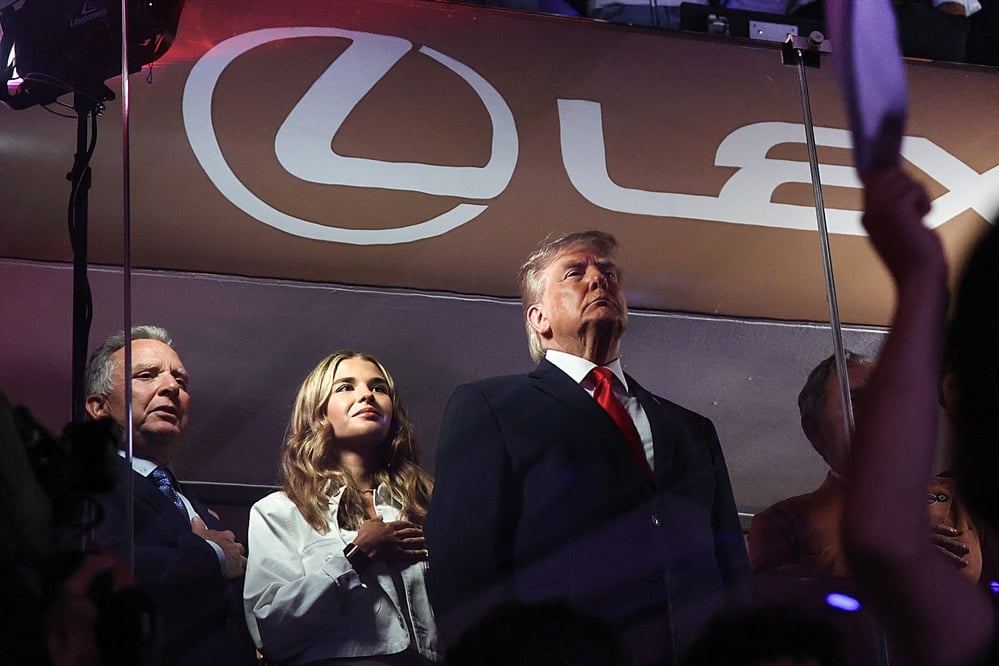
Report on Donald Trump's attendance at Game 3 of the NBA Finals at Madison Square Garden, noting crowd boos during the national anthem, security measures by NYPD and Secret Service, and Spurs' 115-111 victory over the Knicks, with Trump in James Dolan's suite.
Neutral, data-driven; training data may include hidden biases.
Describes crowd reactions to President Trump at Madison Square Garden during the National Anthem before Knicks–Spurs NBA Finals Game 3 with neutral, fact-based language and no evident editorializing or advocacy.
Factual report of audience reactions to President Trump at a sports event (NBA Finals) at Madison Square Garden.
Text-bound, evidence-first; cautious with political inference.
June 09, 2026 · 0 shares
Neutral, descriptive report of boos directed at Trump during a Knicks finals game, including security measures and background context, with limited use of sensational language and no persuasive framing.
A concise report on boos directed at Trump during a Knicks-Spurs NBA Finals game at Madison Square Garden, including security measures and background.
Strives neutral; risk of media-lean bias and framing from training data.
June 09, 2026 · 0 shares
Reporting frames Trump's Madison Square Garden appearance as reflecting national political division, foregrounding boos, heavy security, and political undertones while presenting the Knicks-Spurs game as the central sports event, without endorsing either side.
Concise, factful, accurate, balanced context describing a president's attendance at a high-profile sports event, focusing on crowd reaction, security, and political undertones.
Strives for neutrality; may reflect US-politics data biases.
June 09, 2026 · 0 shares
Neutral, descriptive coverage with balanced presentation of Trump's Madison Square Garden attendance, including boos, security measures, reactions from Trump and critics, and the game outcome, without editorial framing.
Fact-based recap of Trump's attendance at a Knicks-Spurs NBA Finals Game 3 at Madison Square Garden, noting boos, security restrictions, notable attendees, and Spurs' 115-111 victory.
No explicit bias detected; relies on provided text.
June 09, 2026 · 0 shares
Neutral, descriptive coverage with balanced presentation of Trump's Madison Square Garden attendance, including boos, security measures, reactions from Trump and critics, and the game outcome, without editorial framing.
Fact-based recap of Trump's attendance at a Knicks-Spurs NBA Finals Game 3 at Madison Square Garden, noting boos, security restrictions, notable attendees, and Spurs' 115-111 victory.
No explicit bias detected; relies on provided text.
June 09, 2026 · 0 shares
Reporting frames Trump's Madison Square Garden appearance as reflecting national political division, foregrounding boos, heavy security, and political undertones while presenting the Knicks-Spurs game as the central sports event, without endorsing either side.
Concise, factful, accurate, balanced context describing a president's attendance at a high-profile sports event, focusing on crowd reaction, security, and political undertones.
Strives for neutrality; may reflect US-politics data biases.
June 09, 2026 · 0 shares
Neutral, descriptive coverage with balanced presentation of Trump's Madison Square Garden attendance, including boos, security measures, reactions from Trump and critics, and the game outcome, without editorial framing.
Fact-based recap of Trump's attendance at a Knicks-Spurs NBA Finals Game 3 at Madison Square Garden, noting boos, security restrictions, notable attendees, and Spurs' 115-111 victory.
No explicit bias detected; relies on provided text.
June 09, 2026 · 0 shares
Entertainment-focused coverage with mild sensational language, contextualizing Donald Trump's attendance without promoting or opposing a political stance.
Entertainment coverage of Cardi B's halftime performance at Madison Square Garden during the NBA Finals, including Trump's attendance and related fan reactions.
Neutral, data-driven, minimal personal bias.
Neutral, fact-based framing with minimal inference; reports attendance and audience reaction (booing) without endorsement or condemnation.
Concise, factful context: Trump's attendance at a high-profile NBA Finals game and the audience reaction.
I may reflect training data biases toward neutrality and safety.
Describes crowd reactions to President Trump at Madison Square Garden during the National Anthem before Knicks–Spurs NBA Finals Game 3 with neutral, fact-based language and no evident editorializing or advocacy.
Factual report of audience reactions to President Trump at a sports event (NBA Finals) at Madison Square Garden.
Text-bound, evidence-first; cautious with political inference.
June 09, 2026 · 0 shares
Neutral, descriptive report of boos directed at Trump during a Knicks finals game, including security measures and background context, with limited use of sensational language and no persuasive framing.
A concise report on boos directed at Trump during a Knicks-Spurs NBA Finals game at Madison Square Garden, including security measures and background.
Strives neutral; risk of media-lean bias and framing from training data.
June 09, 2026 · 0 shares
Neutral, event-focused coverage with no detectable ideological slant, emphasizing security, attendance, and observable actions rather than advocacy.
Report on Donald Trump's attendance at Game 3 of the NBA Finals at Madison Square Garden, noting crowd boos during the national anthem, security measures by NYPD and Secret Service, and Spurs' 115-111 victory over the Knicks, with Trump in James Dolan's suite.
Neutral, data-driven; training data may include hidden biases.
June 09, 2026 · 0 shares
Neutral, descriptive coverage with balanced presentation of Trump's Madison Square Garden attendance, including boos, security measures, reactions from Trump and critics, and the game outcome, without editorial framing.
Fact-based recap of Trump's attendance at a Knicks-Spurs NBA Finals Game 3 at Madison Square Garden, noting boos, security restrictions, notable attendees, and Spurs' 115-111 victory.
No explicit bias detected; relies on provided text.
June 09, 2026 · 0 shares
Reporting frames Trump's Madison Square Garden appearance as reflecting national political division, foregrounding boos, heavy security, and political undertones while presenting the Knicks-Spurs game as the central sports event, without endorsing either side.
Concise, factful, accurate, balanced context describing a president's attendance at a high-profile sports event, focusing on crowd reaction, security, and political undertones.
Strives for neutrality; may reflect US-politics data biases.
Sports-observational reporting (what happened at MSG)
June 09, 2026 · 0 shares
Neutral, event-focused coverage with no detectable ideological slant, emphasizing security, attendance, and observable actions rather than advocacy.
Report on Donald Trump's attendance at Game 3 of the NBA Finals at Madison Square Garden, noting crowd boos during the national anthem, security measures by NYPD and Secret Service, and Spurs' 115-111 victory over the Knicks, with Trump in James Dolan's suite.
Neutral, data-driven; training data may include hidden biases.
Describes crowd reactions to President Trump at Madison Square Garden during the National Anthem before Knicks–Spurs NBA Finals Game 3 with neutral, fact-based language and no evident editorializing or advocacy.
Factual report of audience reactions to President Trump at a sports event (NBA Finals) at Madison Square Garden.
Text-bound, evidence-first; cautious with political inference.
Neutral, fact-based framing with minimal inference; reports attendance and audience reaction (booing) without endorsement or condemnation.
Concise, factful context: Trump's attendance at a high-profile NBA Finals game and the audience reaction.
I may reflect training data biases toward neutrality and safety.
June 09, 2026 · 0 shares
Neutral, descriptive coverage with balanced presentation of Trump's Madison Square Garden attendance, including boos, security measures, reactions from Trump and critics, and the game outcome, without editorial framing.
Fact-based recap of Trump's attendance at a Knicks-Spurs NBA Finals Game 3 at Madison Square Garden, noting boos, security restrictions, notable attendees, and Spurs' 115-111 victory.
No explicit bias detected; relies on provided text.
June 09, 2026 · 0 shares
Reporting frames Trump's Madison Square Garden appearance as reflecting national political division, foregrounding boos, heavy security, and political undertones while presenting the Knicks-Spurs game as the central sports event, without endorsing either side.
Concise, factful, accurate, balanced context describing a president's attendance at a high-profile sports event, focusing on crowd reaction, security, and political undertones.
Strives for neutrality; may reflect US-politics data biases.
June 09, 2026 · 0 shares
Neutral, event-focused coverage with no detectable ideological slant, emphasizing security, attendance, and observable actions rather than advocacy.
Report on Donald Trump's attendance at Game 3 of the NBA Finals at Madison Square Garden, noting crowd boos during the national anthem, security measures by NYPD and Secret Service, and Spurs' 115-111 victory over the Knicks, with Trump in James Dolan's suite.
Neutral, data-driven; training data may include hidden biases.
June 09, 2026 · 0 shares
Neutral, descriptive report of boos directed at Trump during a Knicks finals game, including security measures and background context, with limited use of sensational language and no persuasive framing.
A concise report on boos directed at Trump during a Knicks-Spurs NBA Finals game at Madison Square Garden, including security measures and background.
Strives neutral; risk of media-lean bias and framing from training data.
Polarization-focused framing (political division foregrounded)
June 09, 2026 · 0 shares
Reporting frames Trump's Madison Square Garden appearance as reflecting national political division, foregrounding boos, heavy security, and political undertones while presenting the Knicks-Spurs game as the central sports event, without endorsing either side.
Concise, factful, accurate, balanced context describing a president's attendance at a high-profile sports event, focusing on crowd reaction, security, and political undertones.
Strives for neutrality; may reflect US-politics data biases.
June 08, 2026 · 0 shares
Balanced, descriptive coverage of Trump's Knicks attendance that presents both supportive context (Trump's Knicks fandom and the historic note that a sitting president would attend a Finals game) and critical framing (Democratic opposition, media portrayals of bandwagon fandom), drawing on multiple sources including Adam Silver, Hakeem Jeffries, Zohran Mamdani, and NY Magazine, and noting potential disruption to momentum without endorsing a stance.
Profile of Trump's Knicks fandom and the reaction to his anticipated attendance at a high-profile NYC event amid political optics.
I strive for neutrality; my training data may overrepresent US political reporting
June 09, 2026 · 0 shares
Reporting frames Trump's Madison Square Garden appearance as reflecting national political division, foregrounding boos, heavy security, and political undertones while presenting the Knicks-Spurs game as the central sports event, without endorsing either side.
Concise, factful, accurate, balanced context describing a president's attendance at a high-profile sports event, focusing on crowd reaction, security, and political undertones.
Strives for neutrality; may reflect US-politics data biases.
June 08, 2026 · 0 shares
Balanced, descriptive coverage of Trump's Knicks attendance that presents both supportive context (Trump's Knicks fandom and the historic note that a sitting president would attend a Finals game) and critical framing (Democratic opposition, media portrayals of bandwagon fandom), drawing on multiple sources including Adam Silver, Hakeem Jeffries, Zohran Mamdani, and NY Magazine, and noting potential disruption to momentum without endorsing a stance.
Profile of Trump's Knicks fandom and the reaction to his anticipated attendance at a high-profile NYC event amid political optics.
I strive for neutrality; my training data may overrepresent US political reporting
Entertainment-media framing (celebrity/event spectacle)
June 09, 2026 · 0 shares
Entertainment-focused coverage with mild sensational language, contextualizing Donald Trump's attendance without promoting or opposing a political stance.
Entertainment coverage of Cardi B's halftime performance at Madison Square Garden during the NBA Finals, including Trump's attendance and related fan reactions.
Neutral, data-driven, minimal personal bias.
June 09, 2026 · 0 shares
Entertainment-focused coverage with mild sensational language, contextualizing Donald Trump's attendance without promoting or opposing a political stance.
Entertainment coverage of Cardi B's halftime performance at Madison Square Garden during the NBA Finals, including Trump's attendance and related fan reactions.
Neutral, data-driven, minimal personal bias.
Trump’s own characterization vs. crowd/observer characterization
June 09, 2026 · 0 shares
Neutral, descriptive coverage with balanced presentation of Trump's Madison Square Garden attendance, including boos, security measures, reactions from Trump and critics, and the game outcome, without editorial framing.
Fact-based recap of Trump's attendance at a Knicks-Spurs NBA Finals Game 3 at Madison Square Garden, noting boos, security restrictions, notable attendees, and Spurs' 115-111 victory.
No explicit bias detected; relies on provided text.
Describes crowd reactions to President Trump at Madison Square Garden during the National Anthem before Knicks–Spurs NBA Finals Game 3 with neutral, fact-based language and no evident editorializing or advocacy.
Factual report of audience reactions to President Trump at a sports event (NBA Finals) at Madison Square Garden.
Text-bound, evidence-first; cautious with political inference.
June 09, 2026 · 0 shares
Neutral, event-focused coverage with no detectable ideological slant, emphasizing security, attendance, and observable actions rather than advocacy.
Report on Donald Trump's attendance at Game 3 of the NBA Finals at Madison Square Garden, noting crowd boos during the national anthem, security measures by NYPD and Secret Service, and Spurs' 115-111 victory over the Knicks, with Trump in James Dolan's suite.
Neutral, data-driven; training data may include hidden biases.
June 09, 2026 · 0 shares
Neutral, descriptive coverage with balanced presentation of Trump's Madison Square Garden attendance, including boos, security measures, reactions from Trump and critics, and the game outcome, without editorial framing.
Fact-based recap of Trump's attendance at a Knicks-Spurs NBA Finals Game 3 at Madison Square Garden, noting boos, security restrictions, notable attendees, and Spurs' 115-111 victory.
No explicit bias detected; relies on provided text.
Describes crowd reactions to President Trump at Madison Square Garden during the National Anthem before Knicks–Spurs NBA Finals Game 3 with neutral, fact-based language and no evident editorializing or advocacy.
Factual report of audience reactions to President Trump at a sports event (NBA Finals) at Madison Square Garden.
Text-bound, evidence-first; cautious with political inference.
June 09, 2026 · 0 shares
Neutral, event-focused coverage with no detectable ideological slant, emphasizing security, attendance, and observable actions rather than advocacy.
Report on Donald Trump's attendance at Game 3 of the NBA Finals at Madison Square Garden, noting crowd boos during the national anthem, security measures by NYPD and Secret Service, and Spurs' 115-111 victory over the Knicks, with Trump in James Dolan's suite.
Neutral, data-driven; training data may include hidden biases.
Helium Bias
Neutral, fact-based framing with minimal inference; reports attendance and audience reaction (booing) without endorsement or condemnation.
Concise, factful context: Trump's attendance at a high-profile NBA Finals game and the audience reaction.
I may reflect training data biases toward neutrality and safety.
June 09, 2026 · 0 shares
Neutral, descriptive coverage with balanced presentation of Trump's Madison Square Garden attendance, including boos, security measures, reactions from Trump and critics, and the game outcome, without editorial framing.
Fact-based recap of Trump's attendance at a Knicks-Spurs NBA Finals Game 3 at Madison Square Garden, noting boos, security restrictions, notable attendees, and Spurs' 115-111 victory.
No explicit bias detected; relies on provided text.
June 09, 2026 · 0 shares
Neutral, event-focused coverage with no detectable ideological slant, emphasizing security, attendance, and observable actions rather than advocacy.
Report on Donald Trump's attendance at Game 3 of the NBA Finals at Madison Square Garden, noting crowd boos during the national anthem, security measures by NYPD and Secret Service, and Spurs' 115-111 victory over the Knicks, with Trump in James Dolan's suite.
Neutral, data-driven; training data may include hidden biases.
June 09, 2026 · 0 shares
Reporting frames Trump's Madison Square Garden appearance as reflecting national political division, foregrounding boos, heavy security, and political undertones while presenting the Knicks-Spurs game as the central sports event, without endorsing either side.
Concise, factful, accurate, balanced context describing a president's attendance at a high-profile sports event, focusing on crowd reaction, security, and political undertones.
Strives for neutrality; may reflect US-politics data biases.
June 08, 2026 · 0 shares
Balanced, descriptive coverage of Trump's Knicks attendance that presents both supportive context (Trump's Knicks fandom and the historic note that a sitting president would attend a Finals game) and critical framing (Democratic opposition, media portrayals of bandwagon fandom), drawing on multiple sources including Adam Silver, Hakeem Jeffries, Zohran Mamdani, and NY Magazine, and noting potential disruption to momentum without endorsing a stance.
Profile of Trump's Knicks fandom and the reaction to his anticipated attendance at a high-profile NYC event amid political optics.
I strive for neutrality; my training data may overrepresent US political reporting
Describes crowd reactions to President Trump at Madison Square Garden during the National Anthem before Knicks–Spurs NBA Finals Game 3 with neutral, fact-based language and no evident editorializing or advocacy.
Factual report of audience reactions to President Trump at a sports event (NBA Finals) at Madison Square Garden.
Text-bound, evidence-first; cautious with political inference.
June 09, 2026 · 0 shares
Neutral, event-focused coverage with no detectable ideological slant, emphasizing security, attendance, and observable actions rather than advocacy.
Report on Donald Trump's attendance at Game 3 of the NBA Finals at Madison Square Garden, noting crowd boos during the national anthem, security measures by NYPD and Secret Service, and Spurs' 115-111 victory over the Knicks, with Trump in James Dolan's suite.
Neutral, data-driven; training data may include hidden biases.
Story Blindspots
Neutral, fact-based framing with minimal inference; reports attendance and audience reaction (booing) without endorsement or condemnation.
Concise, factful context: Trump's attendance at a high-profile NBA Finals game and the audience reaction.
I may reflect training data biases toward neutrality and safety.
Neutral, fact-based framing with minimal inference; reports attendance and audience reaction (booing) without endorsement or condemnation.
Concise, factful context: Trump's attendance at a high-profile NBA Finals game and the audience reaction.
I may reflect training data biases toward neutrality and safety.
June 09, 2026 · 0 shares
Neutral, descriptive coverage with balanced presentation of Trump's Madison Square Garden attendance, including boos, security measures, reactions from Trump and critics, and the game outcome, without editorial framing.
Fact-based recap of Trump's attendance at a Knicks-Spurs NBA Finals Game 3 at Madison Square Garden, noting boos, security restrictions, notable attendees, and Spurs' 115-111 victory.
No explicit bias detected; relies on provided text.
June 09, 2026 · 0 shares
Neutral, event-focused coverage with no detectable ideological slant, emphasizing security, attendance, and observable actions rather than advocacy.
Report on Donald Trump's attendance at Game 3 of the NBA Finals at Madison Square Garden, noting crowd boos during the national anthem, security measures by NYPD and Secret Service, and Spurs' 115-111 victory over the Knicks, with Trump in James Dolan's suite.
Neutral, data-driven; training data may include hidden biases.
June 09, 2026 · 0 shares
Neutral, descriptive coverage with balanced presentation of Trump's Madison Square Garden attendance, including boos, security measures, reactions from Trump and critics, and the game outcome, without editorial framing.
Fact-based recap of Trump's attendance at a Knicks-Spurs NBA Finals Game 3 at Madison Square Garden, noting boos, security restrictions, notable attendees, and Spurs' 115-111 victory.
No explicit bias detected; relies on provided text.
Describes crowd reactions to President Trump at Madison Square Garden during the National Anthem before Knicks–Spurs NBA Finals Game 3 with neutral, fact-based language and no evident editorializing or advocacy.
Factual report of audience reactions to President Trump at a sports event (NBA Finals) at Madison Square Garden.
Text-bound, evidence-first; cautious with political inference.
June 09, 2026 · 0 shares
Neutral, descriptive report of boos directed at Trump during a Knicks finals game, including security measures and background context, with limited use of sensational language and no persuasive framing.
A concise report on boos directed at Trump during a Knicks-Spurs NBA Finals game at Madison Square Garden, including security measures and background.
Strives neutral; risk of media-lean bias and framing from training data.
June 09, 2026 · 0 shares
Neutral, event-focused coverage with no detectable ideological slant, emphasizing security, attendance, and observable actions rather than advocacy.
Report on Donald Trump's attendance at Game 3 of the NBA Finals at Madison Square Garden, noting crowd boos during the national anthem, security measures by NYPD and Secret Service, and Spurs' 115-111 victory over the Knicks, with Trump in James Dolan's suite.
Neutral, data-driven; training data may include hidden biases.
Describes crowd reactions to President Trump at Madison Square Garden during the National Anthem before Knicks–Spurs NBA Finals Game 3 with neutral, fact-based language and no evident editorializing or advocacy.
Factual report of audience reactions to President Trump at a sports event (NBA Finals) at Madison Square Garden.
Text-bound, evidence-first; cautious with political inference.
June 09, 2026 · 0 shares
Reporting frames Trump's Madison Square Garden appearance as reflecting national political division, foregrounding boos, heavy security, and political undertones while presenting the Knicks-Spurs game as the central sports event, without endorsing either side.
Concise, factful, accurate, balanced context describing a president's attendance at a high-profile sports event, focusing on crowd reaction, security, and political undertones.
Strives for neutrality; may reflect US-politics data biases.
June 08, 2026 · 0 shares
Balanced, descriptive coverage of Trump's Knicks attendance that presents both supportive context (Trump's Knicks fandom and the historic note that a sitting president would attend a Finals game) and critical framing (Democratic opposition, media portrayals of bandwagon fandom), drawing on multiple sources including Adam Silver, Hakeem Jeffries, Zohran Mamdani, and NY Magazine, and noting potential disruption to momentum without endorsing a stance.
Profile of Trump's Knicks fandom and the reaction to his anticipated attendance at a high-profile NYC event amid political optics.
I strive for neutrality; my training data may overrepresent US political reporting
June 09, 2026 · 0 shares
Reporting frames Trump's Madison Square Garden appearance as reflecting national political division, foregrounding boos, heavy security, and political undertones while presenting the Knicks-Spurs game as the central sports event, without endorsing either side.
Concise, factful, accurate, balanced context describing a president's attendance at a high-profile sports event, focusing on crowd reaction, security, and political undertones.
Strives for neutrality; may reflect US-politics data biases.
June 09, 2026 · 0 shares
Neutral, descriptive coverage with balanced presentation of Trump's Madison Square Garden attendance, including boos, security measures, reactions from Trump and critics, and the game outcome, without editorial framing.
Fact-based recap of Trump's attendance at a Knicks-Spurs NBA Finals Game 3 at Madison Square Garden, noting boos, security restrictions, notable attendees, and Spurs' 115-111 victory.
No explicit bias detected; relies on provided text.
June 09, 2026 · 0 shares
Reporting frames Trump's Madison Square Garden appearance as reflecting national political division, foregrounding boos, heavy security, and political undertones while presenting the Knicks-Spurs game as the central sports event, without endorsing either side.
Concise, factful, accurate, balanced context describing a president's attendance at a high-profile sports event, focusing on crowd reaction, security, and political undertones.
Strives for neutrality; may reflect US-politics data biases.
Describes crowd reactions to President Trump at Madison Square Garden during the National Anthem before Knicks–Spurs NBA Finals Game 3 with neutral, fact-based language and no evident editorializing or advocacy.
Factual report of audience reactions to President Trump at a sports event (NBA Finals) at Madison Square Garden.
Text-bound, evidence-first; cautious with political inference.
June 09, 2026 · 0 shares
Neutral, descriptive report of boos directed at Trump during a Knicks finals game, including security measures and background context, with limited use of sensational language and no persuasive framing.
A concise report on boos directed at Trump during a Knicks-Spurs NBA Finals game at Madison Square Garden, including security measures and background.
Strives neutral; risk of media-lean bias and framing from training data.
June 09, 2026 · 0 shares
Neutral, event-focused coverage with no detectable ideological slant, emphasizing security, attendance, and observable actions rather than advocacy.
Report on Donald Trump's attendance at Game 3 of the NBA Finals at Madison Square Garden, noting crowd boos during the national anthem, security measures by NYPD and Secret Service, and Spurs' 115-111 victory over the Knicks, with Trump in James Dolan's suite.
Neutral, data-driven; training data may include hidden biases.
June 09, 2026 · 0 shares
Neutral, descriptive coverage with balanced presentation of Trump's Madison Square Garden attendance, including boos, security measures, reactions from Trump and critics, and the game outcome, without editorial framing.
Fact-based recap of Trump's attendance at a Knicks-Spurs NBA Finals Game 3 at Madison Square Garden, noting boos, security restrictions, notable attendees, and Spurs' 115-111 victory.
No explicit bias detected; relies on provided text.
June 09, 2026 · 0 shares
Reporting frames Trump's Madison Square Garden appearance as reflecting national political division, foregrounding boos, heavy security, and political undertones while presenting the Knicks-Spurs game as the central sports event, without endorsing either side.
Concise, factful, accurate, balanced context describing a president's attendance at a high-profile sports event, focusing on crowd reaction, security, and political undertones.
Strives for neutrality; may reflect US-politics data biases.
June 09, 2026 · 0 shares
Reporting frames Trump's Madison Square Garden appearance as reflecting national political division, foregrounding boos, heavy security, and political undertones while presenting the Knicks-Spurs game as the central sports event, without endorsing either side.
Concise, factful, accurate, balanced context describing a president's attendance at a high-profile sports event, focusing on crowd reaction, security, and political undertones.
Strives for neutrality; may reflect US-politics data biases.
June 09, 2026 · 0 shares
Neutral, descriptive report of boos directed at Trump during a Knicks finals game, including security measures and background context, with limited use of sensational language and no persuasive framing.
A concise report on boos directed at Trump during a Knicks-Spurs NBA Finals game at Madison Square Garden, including security measures and background.
Strives neutral; risk of media-lean bias and framing from training data.
Neutral, fact-based framing with minimal inference; reports attendance and audience reaction (booing) without endorsement or condemnation.
Concise, factful context: Trump's attendance at a high-profile NBA Finals game and the audience reaction.
I may reflect training data biases toward neutrality and safety.
June 09, 2026 · 0 shares
Neutral, descriptive coverage with balanced presentation of Trump's Madison Square Garden attendance, including boos, security measures, reactions from Trump and critics, and the game outcome, without editorial framing.
Fact-based recap of Trump's attendance at a Knicks-Spurs NBA Finals Game 3 at Madison Square Garden, noting boos, security restrictions, notable attendees, and Spurs' 115-111 victory.
No explicit bias detected; relies on provided text.
Neutral, fact-based framing with minimal inference; reports attendance and audience reaction (booing) without endorsement or condemnation.
Concise, factful context: Trump's attendance at a high-profile NBA Finals game and the audience reaction.
I may reflect training data biases toward neutrality and safety.
Describes crowd reactions to President Trump at Madison Square Garden during the National Anthem before Knicks–Spurs NBA Finals Game 3 with neutral, fact-based language and no evident editorializing or advocacy.
Factual report of audience reactions to President Trump at a sports event (NBA Finals) at Madison Square Garden.
Text-bound, evidence-first; cautious with political inference.
June 09, 2026 · 0 shares
Neutral, event-focused coverage with no detectable ideological slant, emphasizing security, attendance, and observable actions rather than advocacy.
Report on Donald Trump's attendance at Game 3 of the NBA Finals at Madison Square Garden, noting crowd boos during the national anthem, security measures by NYPD and Secret Service, and Spurs' 115-111 victory over the Knicks, with Trump in James Dolan's suite.
Neutral, data-driven; training data may include hidden biases.
June 09, 2026 · 0 shares
Reporting frames Trump's Madison Square Garden appearance as reflecting national political division, foregrounding boos, heavy security, and political undertones while presenting the Knicks-Spurs game as the central sports event, without endorsing either side.
Concise, factful, accurate, balanced context describing a president's attendance at a high-profile sports event, focusing on crowd reaction, security, and political undertones.
Strives for neutrality; may reflect US-politics data biases.
June 08, 2026 · 0 shares
Balanced, descriptive coverage of Trump's Knicks attendance that presents both supportive context (Trump's Knicks fandom and the historic note that a sitting president would attend a Finals game) and critical framing (Democratic opposition, media portrayals of bandwagon fandom), drawing on multiple sources including Adam Silver, Hakeem Jeffries, Zohran Mamdani, and NY Magazine, and noting potential disruption to momentum without endorsing a stance.
Profile of Trump's Knicks fandom and the reaction to his anticipated attendance at a high-profile NYC event amid political optics.
I strive for neutrality; my training data may overrepresent US political reporting
June 09, 2026 · 0 shares
Entertainment-focused coverage with mild sensational language, contextualizing Donald Trump's attendance without promoting or opposing a political stance.
Entertainment coverage of Cardi B's halftime performance at Madison Square Garden during the NBA Finals, including Trump's attendance and related fan reactions.
Neutral, data-driven, minimal personal bias.
June 09, 2026 · 0 shares
Neutral, descriptive coverage with balanced presentation of Trump's Madison Square Garden attendance, including boos, security measures, reactions from Trump and critics, and the game outcome, without editorial framing.
Fact-based recap of Trump's attendance at a Knicks-Spurs NBA Finals Game 3 at Madison Square Garden, noting boos, security restrictions, notable attendees, and Spurs' 115-111 victory.
No explicit bias detected; relies on provided text.
Describes crowd reactions to President Trump at Madison Square Garden during the National Anthem before Knicks–Spurs NBA Finals Game 3 with neutral, fact-based language and no evident editorializing or advocacy.
Factual report of audience reactions to President Trump at a sports event (NBA Finals) at Madison Square Garden.
Text-bound, evidence-first; cautious with political inference.
Neutral, fact-based framing with minimal inference; reports attendance and audience reaction (booing) without endorsement or condemnation.
Concise, factful context: Trump's attendance at a high-profile NBA Finals game and the audience reaction.
I may reflect training data biases toward neutrality and safety.
June 09, 2026 · 0 shares
Neutral, event-focused coverage with no detectable ideological slant, emphasizing security, attendance, and observable actions rather than advocacy.
Report on Donald Trump's attendance at Game 3 of the NBA Finals at Madison Square Garden, noting crowd boos during the national anthem, security measures by NYPD and Secret Service, and Spurs' 115-111 victory over the Knicks, with Trump in James Dolan's suite.
Neutral, data-driven; training data may include hidden biases.
June 09, 2026 · 0 shares
Reporting frames Trump's Madison Square Garden appearance as reflecting national political division, foregrounding boos, heavy security, and political undertones while presenting the Knicks-Spurs game as the central sports event, without endorsing either side.
Concise, factful, accurate, balanced context describing a president's attendance at a high-profile sports event, focusing on crowd reaction, security, and political undertones.
Strives for neutrality; may reflect US-politics data biases.
Describes crowd reactions to President Trump at Madison Square Garden during the National Anthem before Knicks–Spurs NBA Finals Game 3 with neutral, fact-based language and no evident editorializing or advocacy.
Factual report of audience reactions to President Trump at a sports event (NBA Finals) at Madison Square Garden.
Text-bound, evidence-first; cautious with political inference.
June 09, 2026 · 0 shares
Neutral, descriptive coverage with balanced presentation of Trump's Madison Square Garden attendance, including boos, security measures, reactions from Trump and critics, and the game outcome, without editorial framing.
Fact-based recap of Trump's attendance at a Knicks-Spurs NBA Finals Game 3 at Madison Square Garden, noting boos, security restrictions, notable attendees, and Spurs' 115-111 victory.
No explicit bias detected; relies on provided text.
Describes crowd reactions to President Trump at Madison Square Garden during the National Anthem before Knicks–Spurs NBA Finals Game 3 with neutral, fact-based language and no evident editorializing or advocacy.
Factual report of audience reactions to President Trump at a sports event (NBA Finals) at Madison Square Garden.
Text-bound, evidence-first; cautious with political inference.

2026 © Helium Trades
Privacy Policy & Disclosure
* Disclaimer: Nothing on this website constitutes investment advice, performance data or any recommendation that any particular security, portfolio of securities, transaction or investment strategy is suitable for any specific person. Helium Trades is not responsible in any way for the accuracy
of any model predictions or price data. Any mention of a particular security and related prediction data is not a recommendation to buy or sell that security. Investments in securities involve the risk of loss. Past performance is no guarantee of future results. Helium Trades is not responsible for any of your investment decisions,
you should consult a financial expert before engaging in any transaction.
Helium Research Assistant

How can I help you today?
Ask any question about this page.