See whether Helium helps you make better-informed decisions. Try every Pro Trader feature for 30 days. No credit card required.
Try every Pro Trader feature for 30 days. No credit card required.
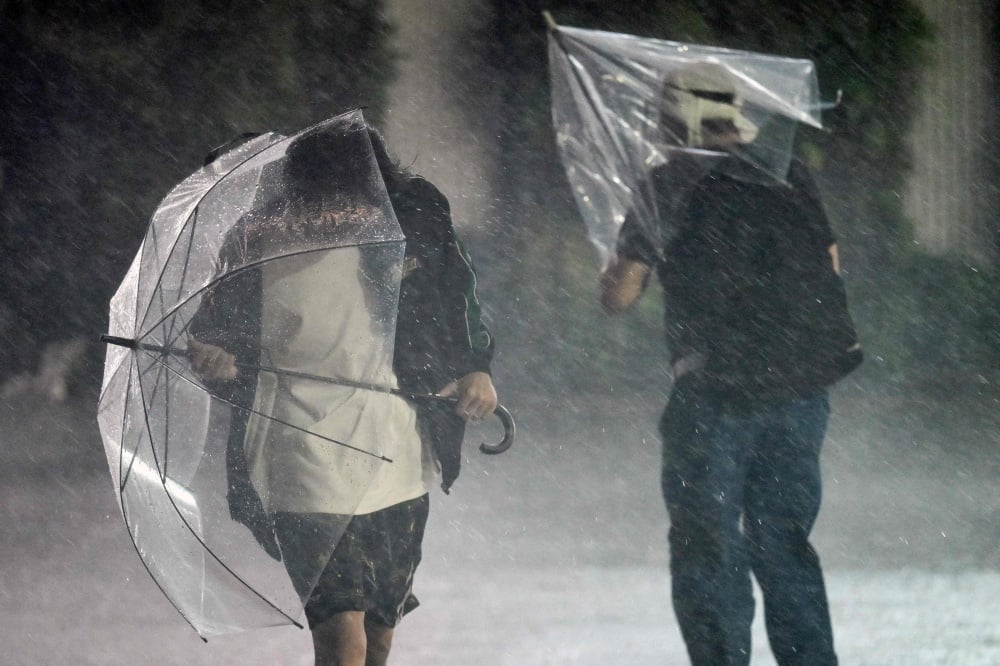
Reporting centers on verified casualty figures, large-scale evacuation orders, and official warnings, producing an objective but impact-focused disaster narrative.
Automated analysis; not human reviewed.
Limitations: No byline, publication date, or external verification was available in the supplied text, so wire-service origin and factual accuracy could not be independently checked.
·
5 of 55 available dimensions scored; omitted dimensions are not treated as neutral.
·
Verified supporting quotes for 4 of 5 scored dimensions.
Claim: The report is written in a factual register using quantified data and attributed official statements rather than opinion or subjective commentary.
“At least two people have been confirmed dead and four missing on Tuesday after Typhoon Dujuan passed Japan’s Pacific coast, bringing record rainfall, triggering landslides and causing widespread transport disruption.” · exact text match
“Police and firefighters are searching for survivors in Kanagawa Prefecture, which saw a series of landslides crushing homes.” · exact text match
Why: The statements present observable events and agency actions with no first-person, evaluative, or emotive language from the publisher.
Claim: The framing is largely factual but selects high-impact details—deaths, mass evacuation, record rainfall—especially in the headline.
“Typhoon Dujuan tracker: Path of 80mph storm as two killed and 1.6 million urged to evacuate in Japan.” · exact text match
“bringing record rainfall, triggering landslides and causing widespread transport disruption.” · exact text match
Why: The headline leads with casualties and evacuation scale, yet the body remains within official reporting and avoids exaggerated or invented claims.
Claim: The article describes events, warnings, and forecasts attributed to officials, without issuing its own instructions or calls to action.
“The JMA warned that conditions would remain dangerous later on Tuesday as heavy rain continued to fall on already saturated ground.” · exact text match
“In Kimitsu City, over 15 inches of rainfall were recorded.” · exact text match
Why: All imperative or cautionary language appears inside attributed quotes or paraphrases of agency warnings, not as the outlet's own prescription.
Claim: Visible sourcing, quantified specifics, and conditional language support a high credibility assessment of the report.
“The JMA warned that conditions would remain dangerous later on Tuesday as heavy rain continued to fall on already saturated ground.” · exact text match
““The total rainfall through Tuesday could exceed the average monthly rainfall for September, resulting in record-breaking heavy rain," the agency said.” · not found in supplied text
Why: Agencies and named officials are cited for key warnings, and the forecast uses the conditional 'could', showing appropriate epistemic caution.
Claim: The publisher demonstrates internally observable fairness by naming sources, using direct quotes, and noting that previous warnings were downgraded.
“Yasuhiro Kaneko, of the Yokosuka city fire department, told the BBC that the woman was believed to have been buried alive and that rescue teams were working at the scene in heavy rain.” · exact text match
“Japan's Meteorological Agency had earlier warned of an “imminent threat to life”, but several warnings have since been downgraded.” · exact text match
Why: Named attribution, direct quotation, and explicit acknowledgment of changed warnings indicate transparent reporting practices rather than concealment.
No byline, publication date, or external verification was available in the supplied text, so wire-service origin and factual accuracy could not be independently checked.
September 22, 2026 · 0 shares
Frames Typhoon Dujuan's impact through official alerts, casualty figures, and event cancellations in a plain, source-attributing news style.
Automated analysis; not human reviewed.
Limitations: The supplied text is truncated and lacks headline and publisher context, so only the visible excerpt is analyzed.
·
2 of 55 available dimensions scored; omitted dimensions are not treated as neutral.
·
Verified supporting quotes for 2 of 2 scored dimensions.
Claim: The report is worded with neutral, attribution-bearing constructions and no evaluative language.
“Two people have been confirmed dead, Kyodo News reported, citing local authorities.” · exact text match
“Dujuan is Japan’s 25th typhoon this year.” · exact text match
Why: The casualty figure is attributed to a news agency and local authorities; the storm count is stated as a plain statistic.
Neither sentence contains subjective appraisal.
Claim: The report visibly attributes information to named and institutional sources.
“Kamakura Mayor Takashi Matsuo said on X.” · exact text match
“Two people have been confirmed dead, Kyodo News reported, citing local authorities.” · exact text match
Why: Direct attribution to a named mayor and to Kyodo News and local authorities supports visible sourcing in the supplied text.
The supplied text is truncated and lacks headline and publisher context, so only the visible excerpt is analyzed.
September 22, 2026 · 0 shares
Typhoon coverage is event-focused and official-source driven, with the headline adding dramatic emphasis to casualties and storm force while the body remains measured.
Automated analysis; not human reviewed.
Limitations: The supplied excerpt is truncated and malformed, containing repeated sentences and an incomplete transition, which limits certainty about the full article's framing.
·
5 of 55 available dimensions scored; omitted dimensions are not treated as neutral.
·
Verified supporting quotes for 5 of 5 scored dimensions.
Claim: The body of the report is largely factual and detached, with minimal editorializing.
“causing extensive flooding, landslides, power outages, flight cancellations and at least four deaths” · exact text match
“Japan Meteorological Agency had warned that the typhoon posed an “imminent threat to life”” · exact text match
Counterevidence:
“Japan begins clean-up after Typhoon Dujuan kills 4, batters east” · exact text match
Why: The body lists impacts without emotive language and attributes the warning, but the headline's forceful wording qualifies the objectivity.
Claim: The report is factual rather than sensational, with only minor dramatic wording in the headline.
“Landslide warnings remained in force on Tuesday after the 25th typhoon of the season left thousands without power” · exact text match
“Nearly 2 million people were instructed to evacuate their homes” · exact text match
Counterevidence:
“Japan begins clean-up after Typhoon Dujuan kills 4, batters east” · exact text match
Why: The body is restrained and specific; the headline's dramatic phrasing qualifies the overall tone.
Claim: The coverage describes events and official warnings without prescribing actions.
“Landslide warnings remained in force on Tuesday” · exact text match
“authorities are still warning residents to beware of landslides” · exact text match
Why: No recommendations or imperatives are offered; the text simply reports status and official warnings.
Claim: The report cites specific figures and a named institution, supporting its credibility.
“Nearly 2 million people were instructed to evacuate their homes” · exact text match
“the 25th typhoon of the season” · exact text match
Why: Precise counts and a named agency give verifiable anchors, though no independent verification or correction notice is present.
Claim: The report uses attribution and uncertainty hedges, indicating careful handling of claims.
“at least four deaths” · exact text match
“Japan Meteorological Agency had warned” · exact text match
Why: The 'at least' hedge and attribution to the meteorological agency show care not to overstate or present unsupported claims.
The supplied excerpt is truncated and malformed, containing repeated sentences and an incomplete transition, which limits certainty about the full article's framing.
September 22, 2026 · 0 shares
A restrained, wire-style disaster account that centers quantified rainfall records, human toll, and attributed official warnings without editorializing.
Dujuan was a typhoon; Silver Week is a Japanese holiday travel period.
The affected areas are in eastern Honshu around Tokyo, including the Izu island chain and Chiba, Kanagawa, Yamanashi and Shizuoka prefectures.
Automated analysis; not human reviewed.
Limitations: The supplied text is truncated with ellipses and stitched fragments, so some referents, sentence boundaries, and full context are ambiguous.
·
1 of 55 available dimensions scored; omitted dimensions are not treated as neutral.
·
Verified supporting quotes for 1 of 1 scored dimensions.
Claim: The text shows visible attribution and preserves uncertainty in reporting casualties and storm effects.
“the agency warned that the threat has not ended because record rainfall had left the ground saturated and rivers swollen.” · exact text match
“A landslide had occurred around the site, and police are investigating the incident.” · exact text match
Why: It attributes the key warning to the agency, notes a police investigation rather than asserting a cause, and uses uncertainty terms such as 'unaccounted for' and 'missing.'
The supplied text is truncated with ellipses and stitched fragments, so some referents, sentence boundaries, and full context are ambiguous.
September 22, 2026 · 0 shares
Neutral, attribution-bound disaster reporting that presents the typhoon's casualties, rainfall records, and the scientific explanation through explicit sourcing without editorializing.
Automated analysis; not human reviewed.
Limitations: The supplied text begins mid-sentence and contains one editorial ellipsis, which prevents full verification of the storm's earlier development and of the phrase containing 'north-east'.
·
7 of 55 available dimensions scored; omitted dimensions are not treated as neutral.
·
Verified supporting quotes for 7 of 7 scored dimensions.
Claim: The report shows no partisan or ideological leaning.
“The Fire and Disaster Management Agency said one person died in Kanagawa prefecture, near Tokyo, while a local official told AFP that another died in Chiba.” · exact text match
Why: The text is confined to attributed casualty figures, rainfall measurements, the storm's track, and the Asian Games context, with no political or ideological content.
Claim: The reporting limits itself to observable events and attributed statements without visible interpretation or opinion.
“The typhoon moved away from Japan’s coast and out into the Pacific by morning, allowing the authorities to lift or downgrade most heavy rain and landslide warnings.” · exact text match
“Oshima, an island about 120km south of central Tokyo, recorded 832mm of rain over 48 hours, more than double its average rainfall for the whole of September, NHK reported.” · exact text match
Why: Verbs describe storm movement, agency actions, and measurements; no evaluative or subjective language is applied to any actor or event.
Claim: Language is unemotional and free of dramatic embellishment despite extreme weather and casualties.
“The typhoon moved away from Japan’s coast and out into the Pacific by morning, allowing the authorities to lift or downgrade most heavy rain and landslide warnings.” · exact text match
“Rainfall in Tokyo’s Edogawa Ward reached a record 282.5mm over 24 hours.” · exact text match
Why: Record rainfall is stated numerically without superlative framing, and the storm's departure is described as a routine meteorological transition.
Claim: The report describes events and gives no recommendations, warnings to readers, or calls to action.
“Dujuan had already led to the early closure in the capital of one of the world’s biggest video game trade fairs.” · exact text match
Why: The sentence narrates a prior effect rather than advising readers what to do, consistent with the rest of the text.
Claim: The tone is effectively neutral even when reporting deaths, missing people, and evacuation-related disruptions.
“The Fire and Disaster Management Agency said one person died in Kanagawa prefecture, near Tokyo, while a local official told AFP that another died in Chiba.” · exact text match
Why: Casualties are reported through source attribution using the unadorned verb 'died,' with no sympathy-laden, alarming, or judgmental wording.
Claim: The report demonstrates strong visible sourcing, attribution, and hedging.
“The Fire and Disaster Management Agency said one person died in Kanagawa prefecture, near Tokyo, while a local official told AFP that another died in Chiba.” · exact text match
“Oshima, an island about 120km south of central Tokyo, recorded 832mm of rain over 48 hours, more than double its average rainfall for the whole of September, NHK reported.” · exact text match
Why: Casualty figures are tied to a named federal agency or 'a local official,' the secondary fatality is hedged as an official's statement rather than confirmed fact, and the rainfall statistic is attributed to NHK.
Claim: Causal reasoning in the report is grounded in an attributed scientific explanation rather than speculation or superstition.
“Scientists say human-driven climate change is intensifying the risk posed by heavy rains because a warmer atmosphere holds more water.” · exact text match
Why: The only causal claim about the event's severity is explicitly deferred to scientists and expressed in physical terms, signaling an evidence-based stance.
The supplied text begins mid-sentence and contains one editorial ellipsis, which prevents full verification of the storm's earlier development and of the phrase containing 'north-east'.
September 21, 2026 · 0 shares
Sober and sourcing-heavy reporting presents the storm's toll and record rainfall as attributed facts, with the only contextual explanation being climate science.
Automated analysis; not human reviewed. Limitations: Casualty, damage, and rainfall figures come from official agencies, NHK, or Reuters/Kyodo and cannot be independently verified from the supplied text.
Casualty, damage, and rainfall figures come from official agencies, NHK, or Reuters/Kyodo and cannot be independently verified from the supplied text.
September 22, 2026 · 0 shares
The report is a neutral, source-attributed wire story that quantifies the typhoon's human and infrastructure toll and adds a brief climate-science context without editorializing.
Automated analysis; not human reviewed.
Limitations: The supplied text interleaves unrelated headline teasers with the AFP wire report; analysis was limited to the substantive Typhoon Dujuan report and excluded sidebar items.
·
8 of 55 available dimensions scored; omitted dimensions are not treated as neutral.
·
Verified supporting quotes for 8 of 8 scored dimensions.
Claim: The report is factual and source-attributed rather than interpretive or opinionated.
“The Fire and Disaster Management Agency said three people died in Chiba prefecture and one in Kanagawa region, both near Tokyo.” · exact text match
Why: Key facts are attributed to authorities and presented as exact figures with no subjective or editorial language.
Claim: The article reports destruction and infrastructure damage with exact numbers and no dramatic or fear-oriented language.
“More than 45,000 households in Chiba near Tokyo were still without electricity on Tuesday afternoon, while over 460 houses were damaged.” · exact text match
Why: The damage is quantified plainly, with no adjectives, emphasis, or emotional appeals.
Claim: The report describes what happened and makes no recommendations or calls to action.
“Typhoon Dujuan left at least four people dead and 22 injured in Japan, while thousands of houses near Tokyo were without power after the storm swept through the region, authorities said Tuesday.” · exact text match
Why: The opening is a factual recap with attribution, and the rest of the report continues in a descriptive mode.
Claim: The tone is unemotional and neutral even when reporting deaths and injuries.
“Typhoon Dujuan left at least four people dead and 22 injured in Japan, while thousands of houses near Tokyo were without power after the storm swept through the region, authorities said Tuesday.” · exact text match
Why: Casualties and infrastructure damage are reported in the same flat, fact-first sentence structure with no emotive vocabulary.
Claim: The report's key facts are attributed to identifiable authorities and sources, with appropriate uncertainty markers.
“The Fire and Disaster Management Agency said three people died in Chiba prefecture and one in Kanagawa region, both near Tokyo.” · exact text match
“Oshima, an island about 120 kilometres (75 miles) south of central Tokyo, recorded 832 millimetres of rain over 48 hours, more than double its average rainfall for the whole of September, public broadcaster NHK reported.” · exact text match
Why: Casualty and rainfall claims are traced to the fire agency and NHK, and the climate claim is attributed to scientists, with no unsupported speculation.
Claim: The report reasons causally from observed storm behavior and meteorological data rather than speculation.
“Although Dujuan weakened as it moved north-east, it dumped record rainfall in parts of the Tokyo area.” · exact text match
Why: The sentence connects the storm's movement to its rainfall effects, and the account is organized around observable weather data.
Claim: The article treats climate science as an explanatory framework for heavier rains.
“Scientists say human-driven climate change is intensifying the risk posed by heavy rains because a warmer atmosphere holds more water.” · exact text match
Why: The mechanism is attributed to scientists and presented as a physical explanation rather than speculation or non-scientific cause.
Claim: The article is transparent about sources and uncertain counts, avoiding overstatement.
“Search operations were continuing for six people missing after landslides triggered by torrential rain, the agency said.” · exact text match
“Typhoon Dujuan left at least four people dead and 22 injured in Japan, while thousands of houses near Tokyo were without power after the storm swept through the region, authorities said Tuesday.” · exact text match
Why: It uses 'at least,' attributes casualty figures to the agency, and flags that searches were ongoing rather than presenting counts as final.
The supplied text interleaves unrelated headline teasers with the AFP wire report; analysis was limited to the substantive Typhoon Dujuan report and excluded sidebar items.
September 21, 2026 · 0 shares
Sober and sourcing-heavy reporting presents the storm's toll and record rainfall as attributed facts, with the only contextual explanation being climate science.
Automated analysis; not human reviewed. Limitations: Casualty, damage, and rainfall figures come from official agencies, NHK, or Reuters/Kyodo and cannot be independently verified from the supplied text.
Casualty, damage, and rainfall figures come from official agencies, NHK, or Reuters/Kyodo and cannot be independently verified from the supplied text.
September 22, 2026 · 0 shares
Frames Typhoon Dujuan's impact through official alerts, casualty figures, and event cancellations in a plain, source-attributing news style.
Automated analysis; not human reviewed.
Limitations: The supplied text is truncated and lacks headline and publisher context, so only the visible excerpt is analyzed.
·
2 of 55 available dimensions scored; omitted dimensions are not treated as neutral.
·
Verified supporting quotes for 2 of 2 scored dimensions.
Claim: The report is worded with neutral, attribution-bearing constructions and no evaluative language.
“Two people have been confirmed dead, Kyodo News reported, citing local authorities.” · exact text match
“Dujuan is Japan’s 25th typhoon this year.” · exact text match
Why: The casualty figure is attributed to a news agency and local authorities; the storm count is stated as a plain statistic.
Neither sentence contains subjective appraisal.
Claim: The report visibly attributes information to named and institutional sources.
“Kamakura Mayor Takashi Matsuo said on X.” · exact text match
“Two people have been confirmed dead, Kyodo News reported, citing local authorities.” · exact text match
Why: Direct attribution to a named mayor and to Kyodo News and local authorities supports visible sourcing in the supplied text.
The supplied text is truncated and lacks headline and publisher context, so only the visible excerpt is analyzed.
September 22, 2026 · 0 shares
A restrained, wire-style disaster account that centers quantified rainfall records, human toll, and attributed official warnings without editorializing.
Dujuan was a typhoon; Silver Week is a Japanese holiday travel period.
The affected areas are in eastern Honshu around Tokyo, including the Izu island chain and Chiba, Kanagawa, Yamanashi and Shizuoka prefectures.
Automated analysis; not human reviewed.
Limitations: The supplied text is truncated with ellipses and stitched fragments, so some referents, sentence boundaries, and full context are ambiguous.
·
1 of 55 available dimensions scored; omitted dimensions are not treated as neutral.
·
Verified supporting quotes for 1 of 1 scored dimensions.
Claim: The text shows visible attribution and preserves uncertainty in reporting casualties and storm effects.
“the agency warned that the threat has not ended because record rainfall had left the ground saturated and rivers swollen.” · exact text match
“A landslide had occurred around the site, and police are investigating the incident.” · exact text match
Why: It attributes the key warning to the agency, notes a police investigation rather than asserting a cause, and uses uncertainty terms such as 'unaccounted for' and 'missing.'
The supplied text is truncated with ellipses and stitched fragments, so some referents, sentence boundaries, and full context are ambiguous.
September 21, 2026 · 0 shares
Source-attributive, fact-led wire reporting keeps evaluative language inside official quotes and warning levels rather than in the publisher’s own voice.
The Japan Meteorological Agency uses a five-level warning scale; Level-5 is the highest alert, indicating an imminent, life-threatening danger.
Kanto-Koshin is the region around Tokyo.
Automated analysis; not human reviewed.
Limitations: The supplied text is partially truncated and mixes attribution phrases, so the classification relies on the clearest body sentences rather than the incomplete remainder.
·
3 of 55 available dimensions scored; omitted dimensions are not treated as neutral.
·
Verified supporting quotes for 3 of 3 scored dimensions.
Claim: Reporting is source-attributive and free of first-person opinion, using institutional citations for factual claims.
“Kyodo News reported, citing local authorities.” · exact text match
“The agency said the typhoon was expected to approach the Kanto-Koshin region by Monday night.” · exact text match
Why: The main factual assertions are tied to Kyodo News, local authorities, or the weather agency rather than presented as the publisher’s own judgments.
Claim: The text describes weather conditions, official warnings, and response actions without using prescriptive language such as “should” or “must.”
“Japan’s weather agency issued its highest, Level-5 landslide warning for the northern part of the Izu island chain.” · exact text match
““Heavy rain is already occurring mainly in the Kanto-Koshin region and the Izu Islands,” the agency said, warning of a risk of “record-breaking heavy rain.”” · exact text match
Why: Even the urgent warning is attributed to the agency and reported as a fact, not issued as a direct instruction by the publisher.
Claim: The piece visibly attributes specific claims to named or identifiable institutional sources.
“Kyodo News reported, citing local authorities.” · exact text match
“The agency said the typhoon was expected to approach the Kanto-Koshin region by Monday night.” · exact text match
Why: Sourcing and direct attribution give a reader a basis for checking the underlying reports, raising credibility on the visible text alone.
The supplied text is partially truncated and mixes attribution phrases, so the classification relies on the clearest body sentences rather than the incomplete remainder.
Reporting centers on verified casualty figures, large-scale evacuation orders, and official warnings, producing an objective but impact-focused disaster narrative.
Automated analysis; not human reviewed.
Limitations: No byline, publication date, or external verification was available in the supplied text, so wire-service origin and factual accuracy could not be independently checked.
·
5 of 55 available dimensions scored; omitted dimensions are not treated as neutral.
·
Verified supporting quotes for 4 of 5 scored dimensions.
Claim: The report is written in a factual register using quantified data and attributed official statements rather than opinion or subjective commentary.
“At least two people have been confirmed dead and four missing on Tuesday after Typhoon Dujuan passed Japan’s Pacific coast, bringing record rainfall, triggering landslides and causing widespread transport disruption.” · exact text match
“Police and firefighters are searching for survivors in Kanagawa Prefecture, which saw a series of landslides crushing homes.” · exact text match
Why: The statements present observable events and agency actions with no first-person, evaluative, or emotive language from the publisher.
Claim: The framing is largely factual but selects high-impact details—deaths, mass evacuation, record rainfall—especially in the headline.
“Typhoon Dujuan tracker: Path of 80mph storm as two killed and 1.6 million urged to evacuate in Japan.” · exact text match
“bringing record rainfall, triggering landslides and causing widespread transport disruption.” · exact text match
Why: The headline leads with casualties and evacuation scale, yet the body remains within official reporting and avoids exaggerated or invented claims.
Claim: The article describes events, warnings, and forecasts attributed to officials, without issuing its own instructions or calls to action.
“The JMA warned that conditions would remain dangerous later on Tuesday as heavy rain continued to fall on already saturated ground.” · exact text match
“In Kimitsu City, over 15 inches of rainfall were recorded.” · exact text match
Why: All imperative or cautionary language appears inside attributed quotes or paraphrases of agency warnings, not as the outlet's own prescription.
Claim: Visible sourcing, quantified specifics, and conditional language support a high credibility assessment of the report.
“The JMA warned that conditions would remain dangerous later on Tuesday as heavy rain continued to fall on already saturated ground.” · exact text match
““The total rainfall through Tuesday could exceed the average monthly rainfall for September, resulting in record-breaking heavy rain," the agency said.” · not found in supplied text
Why: Agencies and named officials are cited for key warnings, and the forecast uses the conditional 'could', showing appropriate epistemic caution.
Claim: The publisher demonstrates internally observable fairness by naming sources, using direct quotes, and noting that previous warnings were downgraded.
“Yasuhiro Kaneko, of the Yokosuka city fire department, told the BBC that the woman was believed to have been buried alive and that rescue teams were working at the scene in heavy rain.” · exact text match
“Japan's Meteorological Agency had earlier warned of an “imminent threat to life”, but several warnings have since been downgraded.” · exact text match
Why: Named attribution, direct quotation, and explicit acknowledgment of changed warnings indicate transparent reporting practices rather than concealment.
No byline, publication date, or external verification was available in the supplied text, so wire-service origin and factual accuracy could not be independently checked.
September 22, 2026 · 0 shares
Typhoon Dujuan's aftermath is framed through attributed official statistics and NHK reports, with climate change added as a closing scientist-attributed context rather than as the main explanation.
Automated analysis; not human reviewed.
Limitations: The supplied text combines a two-death headline/lede with a four-death body and duplicated passages, so the current confirmed toll and exact event timeline are ambiguous.
·
4 of 55 available dimensions scored; omitted dimensions are not treated as neutral.
·
Verified supporting quotes for 3 of 4 scored dimensions.
Claim: The publisher's framing is factual, relying on confirmed events and attributed official figures rather than subjective commentary.
“Typhoon Dujuan has killed at least four people and injured 22 in Japan, while tens of thousands of houses near Tokyo remained without power after the storm swept through the region, authorities said on Tuesday.” · exact text match
Why: The sentence presents casualty and outage data as attributed to authorities, with no evaluative or first-person language.
Claim: Human-impact details are presented dramatically but without clickbait-level exaggeration.
“deaths, destruction and widespread chaos” · exact text match
Why: The phrase 'destruction and widespread chaos' adds vividness, but it appears in a context otherwise dominated by specific figures and official attributions.
Claim: The report describes events and data without prescribing policy or actions.
“The evacuations were not mandatory.” · exact text match
“Although Dujuan weakened as it moved north-east, it dumped record rainfall in parts of the Tokyo area.” · exact text match
Why: Both quotes are descriptive observations; no recommendations, imperatives, or policy judgments are offered.
Claim: The report treats weather data and a scientist-attributed climate explanation as empirical context, not supernatural or conspiratorial causes.
“Scientists say human-driven climate change is intensifying the risk posed by heavy rains because a warmer atmosphere holds more water.” · not found in supplied text
Why: It explicitly anchors the rainfall-risk explanation to scientists and a physical mechanism.
The supplied text combines a two-death headline/lede with a four-death body and duplicated passages, so the current confirmed toll and exact event timeline are ambiguous.
September 22, 2026 · 0 shares
A restrained, wire-style disaster account that centers quantified rainfall records, human toll, and attributed official warnings without editorializing.
Dujuan was a typhoon; Silver Week is a Japanese holiday travel period.
The affected areas are in eastern Honshu around Tokyo, including the Izu island chain and Chiba, Kanagawa, Yamanashi and Shizuoka prefectures.
Automated analysis; not human reviewed.
Limitations: The supplied text is truncated with ellipses and stitched fragments, so some referents, sentence boundaries, and full context are ambiguous.
·
1 of 55 available dimensions scored; omitted dimensions are not treated as neutral.
·
Verified supporting quotes for 1 of 1 scored dimensions.
Claim: The text shows visible attribution and preserves uncertainty in reporting casualties and storm effects.
“the agency warned that the threat has not ended because record rainfall had left the ground saturated and rivers swollen.” · exact text match
“A landslide had occurred around the site, and police are investigating the incident.” · exact text match
Why: It attributes the key warning to the agency, notes a police investigation rather than asserting a cause, and uses uncertainty terms such as 'unaccounted for' and 'missing.'
The supplied text is truncated with ellipses and stitched fragments, so some referents, sentence boundaries, and full context are ambiguous.
September 22, 2026 · 0 shares
Typhoon coverage is event-focused and official-source driven, with the headline adding dramatic emphasis to casualties and storm force while the body remains measured.
Automated analysis; not human reviewed.
Limitations: The supplied excerpt is truncated and malformed, containing repeated sentences and an incomplete transition, which limits certainty about the full article's framing.
·
5 of 55 available dimensions scored; omitted dimensions are not treated as neutral.
·
Verified supporting quotes for 5 of 5 scored dimensions.
Claim: The body of the report is largely factual and detached, with minimal editorializing.
“causing extensive flooding, landslides, power outages, flight cancellations and at least four deaths” · exact text match
“Japan Meteorological Agency had warned that the typhoon posed an “imminent threat to life”” · exact text match
Counterevidence:
“Japan begins clean-up after Typhoon Dujuan kills 4, batters east” · exact text match
Why: The body lists impacts without emotive language and attributes the warning, but the headline's forceful wording qualifies the objectivity.
Claim: The report is factual rather than sensational, with only minor dramatic wording in the headline.
“Landslide warnings remained in force on Tuesday after the 25th typhoon of the season left thousands without power” · exact text match
“Nearly 2 million people were instructed to evacuate their homes” · exact text match
Counterevidence:
“Japan begins clean-up after Typhoon Dujuan kills 4, batters east” · exact text match
Why: The body is restrained and specific; the headline's dramatic phrasing qualifies the overall tone.
Claim: The coverage describes events and official warnings without prescribing actions.
“Landslide warnings remained in force on Tuesday” · exact text match
“authorities are still warning residents to beware of landslides” · exact text match
Why: No recommendations or imperatives are offered; the text simply reports status and official warnings.
Claim: The report cites specific figures and a named institution, supporting its credibility.
“Nearly 2 million people were instructed to evacuate their homes” · exact text match
“the 25th typhoon of the season” · exact text match
Why: Precise counts and a named agency give verifiable anchors, though no independent verification or correction notice is present.
Claim: The report uses attribution and uncertainty hedges, indicating careful handling of claims.
“at least four deaths” · exact text match
“Japan Meteorological Agency had warned” · exact text match
Why: The 'at least' hedge and attribution to the meteorological agency show care not to overstate or present unsupported claims.
The supplied excerpt is truncated and malformed, containing repeated sentences and an incomplete transition, which limits certainty about the full article's framing.
September 21, 2026 · 0 shares
Article content was unavailable; no publisher framing could be analyzed.
Automated analysis; not human reviewed. Limitations: The supplied article text is empty or a placeholder; no article content was available for analysis.
The supplied article text is empty or a placeholder; no article content was available for analysis.
September 22, 2026 · 0 shares
Typhoon Dujuan's aftermath is framed through attributed official statistics and NHK reports, with climate change added as a closing scientist-attributed context rather than as the main explanation.
Automated analysis; not human reviewed.
Limitations: The supplied text combines a two-death headline/lede with a four-death body and duplicated passages, so the current confirmed toll and exact event timeline are ambiguous.
·
4 of 55 available dimensions scored; omitted dimensions are not treated as neutral.
·
Verified supporting quotes for 3 of 4 scored dimensions.
Claim: The publisher's framing is factual, relying on confirmed events and attributed official figures rather than subjective commentary.
“Typhoon Dujuan has killed at least four people and injured 22 in Japan, while tens of thousands of houses near Tokyo remained without power after the storm swept through the region, authorities said on Tuesday.” · exact text match
Why: The sentence presents casualty and outage data as attributed to authorities, with no evaluative or first-person language.
Claim: Human-impact details are presented dramatically but without clickbait-level exaggeration.
“deaths, destruction and widespread chaos” · exact text match
Why: The phrase 'destruction and widespread chaos' adds vividness, but it appears in a context otherwise dominated by specific figures and official attributions.
Claim: The report describes events and data without prescribing policy or actions.
“The evacuations were not mandatory.” · exact text match
“Although Dujuan weakened as it moved north-east, it dumped record rainfall in parts of the Tokyo area.” · exact text match
Why: Both quotes are descriptive observations; no recommendations, imperatives, or policy judgments are offered.
Claim: The report treats weather data and a scientist-attributed climate explanation as empirical context, not supernatural or conspiratorial causes.
“Scientists say human-driven climate change is intensifying the risk posed by heavy rains because a warmer atmosphere holds more water.” · not found in supplied text
Why: It explicitly anchors the rainfall-risk explanation to scientists and a physical mechanism.
The supplied text combines a two-death headline/lede with a four-death body and duplicated passages, so the current confirmed toll and exact event timeline are ambiguous.
September 22, 2026 · 0 shares
Straightforward wire-style disaster reporting frames Typhoon Dujuan through official warnings, casualties, flight disruptions, and event closures, without commentary or ideological slant.
Automated analysis; not human reviewed.
Limitations: The supplied text is fragmented and appears to mix the main report with related headlines or bullet points, so the exact scope of the main article is ambiguous.
·
2 of 55 available dimensions scored; omitted dimensions are not treated as neutral.
·
Verified supporting quotes for 2 of 2 scored dimensions.
Claim: The report uses detached, attributed, third-person language and stays within official warnings and event impacts.
“More than one million people were under evacuation advisories in Japan early Tuesday (Sept 22)” · exact text match
“Landslide warnings were issued for Tokyo as well as for Chiba, Kanagawa and Shizuoka prefectures.” · exact text match
Why: The text is descriptive, attributes casualty and advisory information to NHK and Japanese media, and includes no evaluative or rhetorical commentary.
Claim: Visible sourcing and qualification support the report's credibility as attributed wire journalism.
“Torrential rains brought by Japan typhoon kill two, NHK says” · exact text match
“The evacuations are not mandatory.” · exact text match
Why: Casualty reporting is attributed to NHK, warnings are tied to Japanese media and local governments, and the report includes the qualifying detail that advisories were not mandatory.
The supplied text is fragmented and appears to mix the main report with related headlines or bullet points, so the exact scope of the main article is ambiguous.
September 21, 2026 · 0 shares
Sober and sourcing-heavy reporting presents the storm's toll and record rainfall as attributed facts, with the only contextual explanation being climate science.
Automated analysis; not human reviewed. Limitations: Casualty, damage, and rainfall figures come from official agencies, NHK, or Reuters/Kyodo and cannot be independently verified from the supplied text.
Casualty, damage, and rainfall figures come from official agencies, NHK, or Reuters/Kyodo and cannot be independently verified from the supplied text.
September 22, 2026 · 0 shares
The report is a neutral, source-attributed wire story that quantifies the typhoon's human and infrastructure toll and adds a brief climate-science context without editorializing.
Automated analysis; not human reviewed.
Limitations: The supplied text interleaves unrelated headline teasers with the AFP wire report; analysis was limited to the substantive Typhoon Dujuan report and excluded sidebar items.
·
8 of 55 available dimensions scored; omitted dimensions are not treated as neutral.
·
Verified supporting quotes for 8 of 8 scored dimensions.
Claim: The report is factual and source-attributed rather than interpretive or opinionated.
“The Fire and Disaster Management Agency said three people died in Chiba prefecture and one in Kanagawa region, both near Tokyo.” · exact text match
Why: Key facts are attributed to authorities and presented as exact figures with no subjective or editorial language.
Claim: The article reports destruction and infrastructure damage with exact numbers and no dramatic or fear-oriented language.
“More than 45,000 households in Chiba near Tokyo were still without electricity on Tuesday afternoon, while over 460 houses were damaged.” · exact text match
Why: The damage is quantified plainly, with no adjectives, emphasis, or emotional appeals.
Claim: The report describes what happened and makes no recommendations or calls to action.
“Typhoon Dujuan left at least four people dead and 22 injured in Japan, while thousands of houses near Tokyo were without power after the storm swept through the region, authorities said Tuesday.” · exact text match
Why: The opening is a factual recap with attribution, and the rest of the report continues in a descriptive mode.
Claim: The tone is unemotional and neutral even when reporting deaths and injuries.
“Typhoon Dujuan left at least four people dead and 22 injured in Japan, while thousands of houses near Tokyo were without power after the storm swept through the region, authorities said Tuesday.” · exact text match
Why: Casualties and infrastructure damage are reported in the same flat, fact-first sentence structure with no emotive vocabulary.
Claim: The report's key facts are attributed to identifiable authorities and sources, with appropriate uncertainty markers.
“The Fire and Disaster Management Agency said three people died in Chiba prefecture and one in Kanagawa region, both near Tokyo.” · exact text match
“Oshima, an island about 120 kilometres (75 miles) south of central Tokyo, recorded 832 millimetres of rain over 48 hours, more than double its average rainfall for the whole of September, public broadcaster NHK reported.” · exact text match
Why: Casualty and rainfall claims are traced to the fire agency and NHK, and the climate claim is attributed to scientists, with no unsupported speculation.
Claim: The report reasons causally from observed storm behavior and meteorological data rather than speculation.
“Although Dujuan weakened as it moved north-east, it dumped record rainfall in parts of the Tokyo area.” · exact text match
Why: The sentence connects the storm's movement to its rainfall effects, and the account is organized around observable weather data.
Claim: The article treats climate science as an explanatory framework for heavier rains.
“Scientists say human-driven climate change is intensifying the risk posed by heavy rains because a warmer atmosphere holds more water.” · exact text match
Why: The mechanism is attributed to scientists and presented as a physical explanation rather than speculation or non-scientific cause.
Claim: The article is transparent about sources and uncertain counts, avoiding overstatement.
“Search operations were continuing for six people missing after landslides triggered by torrential rain, the agency said.” · exact text match
“Typhoon Dujuan left at least four people dead and 22 injured in Japan, while thousands of houses near Tokyo were without power after the storm swept through the region, authorities said Tuesday.” · exact text match
Why: It uses 'at least,' attributes casualty figures to the agency, and flags that searches were ongoing rather than presenting counts as final.
The supplied text interleaves unrelated headline teasers with the AFP wire report; analysis was limited to the substantive Typhoon Dujuan report and excluded sidebar items.
September 21, 2026 · 0 shares
Sober and sourcing-heavy reporting presents the storm's toll and record rainfall as attributed facts, with the only contextual explanation being climate science.
Automated analysis; not human reviewed. Limitations: Casualty, damage, and rainfall figures come from official agencies, NHK, or Reuters/Kyodo and cannot be independently verified from the supplied text.
Casualty, damage, and rainfall figures come from official agencies, NHK, or Reuters/Kyodo and cannot be independently verified from the supplied text.
September 21, 2026 · 0 shares
Institution-sourced and fact-first, the report frames the typhoon through official statements and Reuters data, with a secondary national-achievement sports headline described as 'historic'.
Automated analysis; not human reviewed.
Limitations: The supplied text is truncated and mixes a typhoon-disruption report with a separate sports headline, so some exact claims and attributions are uncertain.
·
3 of 55 available dimensions scored; omitted dimensions are not treated as neutral.
·
Verified supporting quotes for 0 of 3 scored dimensions.
Claim: The report's core event reporting is attributed and third-person, using sourced statements for the main facts.
“At least 260 domestic and 15 international flights were cancelled on Sept 21, Reuters reported.” · not found in supplied text
“It said it is continuing to monitor the situation closely for teams already in Japan.” · exact text match
Counterevidence:
“Singapore’s Gan Ching Hwee wins historic 1,500m freestyle silver at Asian Games” · exact text match
Why: The weather and travel facts are attributed to Reuters or SNOC and phrased descriptively, though the sports headline includes the evaluative term 'historic'.
Claim: The text describes reported events and official statements rather than prescribing action.
“At least 260 domestic and 15 international flights were cancelled on Sept 21, Reuters reported.” · not found in supplied text
“It said it is continuing to monitor the situation closely for teams already in Japan.” · exact text match
Why: The language uses 'said,' 'reported,' and passive descriptions; no sentences in the supplied text instruct readers or officials to act.
Claim: The text names a wire service and named organizations as the sources for its principal facts.
“At least 260 domestic and 15 international flights were cancelled on Sept 21, Reuters reported.” · not found in supplied text
“Scoot, the low-cost subsidiary of Singapore Airlines, said four of its flights had been […]” · not found in supplied text
Why: Attributing key facts to Reuters and to named organizations supports visible sourcing, despite truncation.
The supplied text is truncated and mixes a typhoon-disruption report with a separate sports headline, so some exact claims and attributions are uncertain.
September 22, 2026 · 0 shares
A restrained, wire-style disaster account that centers quantified rainfall records, human toll, and attributed official warnings without editorializing.
Dujuan was a typhoon; Silver Week is a Japanese holiday travel period.
The affected areas are in eastern Honshu around Tokyo, including the Izu island chain and Chiba, Kanagawa, Yamanashi and Shizuoka prefectures.
Automated analysis; not human reviewed.
Limitations: The supplied text is truncated with ellipses and stitched fragments, so some referents, sentence boundaries, and full context are ambiguous.
·
1 of 55 available dimensions scored; omitted dimensions are not treated as neutral.
·
Verified supporting quotes for 1 of 1 scored dimensions.
Claim: The text shows visible attribution and preserves uncertainty in reporting casualties and storm effects.
“the agency warned that the threat has not ended because record rainfall had left the ground saturated and rivers swollen.” · exact text match
“A landslide had occurred around the site, and police are investigating the incident.” · exact text match
Why: It attributes the key warning to the agency, notes a police investigation rather than asserting a cause, and uses uncertainty terms such as 'unaccounted for' and 'missing.'
The supplied text is truncated with ellipses and stitched fragments, so some referents, sentence boundaries, and full context are ambiguous.
September 22, 2026 · 0 shares
Straightforward wire-style disaster reporting frames Typhoon Dujuan through official warnings, casualties, flight disruptions, and event closures, without commentary or ideological slant.
Automated analysis; not human reviewed.
Limitations: The supplied text is fragmented and appears to mix the main report with related headlines or bullet points, so the exact scope of the main article is ambiguous.
·
2 of 55 available dimensions scored; omitted dimensions are not treated as neutral.
·
Verified supporting quotes for 2 of 2 scored dimensions.
Claim: The report uses detached, attributed, third-person language and stays within official warnings and event impacts.
“More than one million people were under evacuation advisories in Japan early Tuesday (Sept 22)” · exact text match
“Landslide warnings were issued for Tokyo as well as for Chiba, Kanagawa and Shizuoka prefectures.” · exact text match
Why: The text is descriptive, attributes casualty and advisory information to NHK and Japanese media, and includes no evaluative or rhetorical commentary.
Claim: Visible sourcing and qualification support the report's credibility as attributed wire journalism.
“Torrential rains brought by Japan typhoon kill two, NHK says” · exact text match
“The evacuations are not mandatory.” · exact text match
Why: Casualty reporting is attributed to NHK, warnings are tied to Japanese media and local governments, and the report includes the qualifying detail that advisories were not mandatory.
The supplied text is fragmented and appears to mix the main report with related headlines or bullet points, so the exact scope of the main article is ambiguous.
September 22, 2026 · 0 shares
Frames Typhoon Dujuan's impact through official alerts, casualty figures, and event cancellations in a plain, source-attributing news style.
Automated analysis; not human reviewed.
Limitations: The supplied text is truncated and lacks headline and publisher context, so only the visible excerpt is analyzed.
·
2 of 55 available dimensions scored; omitted dimensions are not treated as neutral.
·
Verified supporting quotes for 2 of 2 scored dimensions.
Claim: The report is worded with neutral, attribution-bearing constructions and no evaluative language.
“Two people have been confirmed dead, Kyodo News reported, citing local authorities.” · exact text match
“Dujuan is Japan’s 25th typhoon this year.” · exact text match
Why: The casualty figure is attributed to a news agency and local authorities; the storm count is stated as a plain statistic.
Neither sentence contains subjective appraisal.
Claim: The report visibly attributes information to named and institutional sources.
“Kamakura Mayor Takashi Matsuo said on X.” · exact text match
“Two people have been confirmed dead, Kyodo News reported, citing local authorities.” · exact text match
Why: Direct attribution to a named mayor and to Kyodo News and local authorities supports visible sourcing in the supplied text.
The supplied text is truncated and lacks headline and publisher context, so only the visible excerpt is analyzed.
September 22, 2026 · 0 shares
Neutral, attribution-bound disaster reporting that presents the typhoon's casualties, rainfall records, and the scientific explanation through explicit sourcing without editorializing.
Automated analysis; not human reviewed.
Limitations: The supplied text begins mid-sentence and contains one editorial ellipsis, which prevents full verification of the storm's earlier development and of the phrase containing 'north-east'.
·
7 of 55 available dimensions scored; omitted dimensions are not treated as neutral.
·
Verified supporting quotes for 7 of 7 scored dimensions.
Claim: The report shows no partisan or ideological leaning.
“The Fire and Disaster Management Agency said one person died in Kanagawa prefecture, near Tokyo, while a local official told AFP that another died in Chiba.” · exact text match
Why: The text is confined to attributed casualty figures, rainfall measurements, the storm's track, and the Asian Games context, with no political or ideological content.
Claim: The reporting limits itself to observable events and attributed statements without visible interpretation or opinion.
“The typhoon moved away from Japan’s coast and out into the Pacific by morning, allowing the authorities to lift or downgrade most heavy rain and landslide warnings.” · exact text match
“Oshima, an island about 120km south of central Tokyo, recorded 832mm of rain over 48 hours, more than double its average rainfall for the whole of September, NHK reported.” · exact text match
Why: Verbs describe storm movement, agency actions, and measurements; no evaluative or subjective language is applied to any actor or event.
Claim: Language is unemotional and free of dramatic embellishment despite extreme weather and casualties.
“The typhoon moved away from Japan’s coast and out into the Pacific by morning, allowing the authorities to lift or downgrade most heavy rain and landslide warnings.” · exact text match
“Rainfall in Tokyo’s Edogawa Ward reached a record 282.5mm over 24 hours.” · exact text match
Why: Record rainfall is stated numerically without superlative framing, and the storm's departure is described as a routine meteorological transition.
Claim: The report describes events and gives no recommendations, warnings to readers, or calls to action.
“Dujuan had already led to the early closure in the capital of one of the world’s biggest video game trade fairs.” · exact text match
Why: The sentence narrates a prior effect rather than advising readers what to do, consistent with the rest of the text.
Claim: The tone is effectively neutral even when reporting deaths, missing people, and evacuation-related disruptions.
“The Fire and Disaster Management Agency said one person died in Kanagawa prefecture, near Tokyo, while a local official told AFP that another died in Chiba.” · exact text match
Why: Casualties are reported through source attribution using the unadorned verb 'died,' with no sympathy-laden, alarming, or judgmental wording.
Claim: The report demonstrates strong visible sourcing, attribution, and hedging.
“The Fire and Disaster Management Agency said one person died in Kanagawa prefecture, near Tokyo, while a local official told AFP that another died in Chiba.” · exact text match
“Oshima, an island about 120km south of central Tokyo, recorded 832mm of rain over 48 hours, more than double its average rainfall for the whole of September, NHK reported.” · exact text match
Why: Casualty figures are tied to a named federal agency or 'a local official,' the secondary fatality is hedged as an official's statement rather than confirmed fact, and the rainfall statistic is attributed to NHK.
Claim: Causal reasoning in the report is grounded in an attributed scientific explanation rather than speculation or superstition.
“Scientists say human-driven climate change is intensifying the risk posed by heavy rains because a warmer atmosphere holds more water.” · exact text match
Why: The only causal claim about the event's severity is explicitly deferred to scientists and expressed in physical terms, signaling an evidence-based stance.
The supplied text begins mid-sentence and contains one editorial ellipsis, which prevents full verification of the storm's earlier development and of the phrase containing 'north-east'.
September 21, 2026 · 0 shares
Institution-sourced and fact-first, the report frames the typhoon through official statements and Reuters data, with a secondary national-achievement sports headline described as 'historic'.
Automated analysis; not human reviewed.
Limitations: The supplied text is truncated and mixes a typhoon-disruption report with a separate sports headline, so some exact claims and attributions are uncertain.
·
3 of 55 available dimensions scored; omitted dimensions are not treated as neutral.
·
Verified supporting quotes for 0 of 3 scored dimensions.
Claim: The report's core event reporting is attributed and third-person, using sourced statements for the main facts.
“At least 260 domestic and 15 international flights were cancelled on Sept 21, Reuters reported.” · not found in supplied text
“It said it is continuing to monitor the situation closely for teams already in Japan.” · exact text match
Counterevidence:
“Singapore’s Gan Ching Hwee wins historic 1,500m freestyle silver at Asian Games” · exact text match
Why: The weather and travel facts are attributed to Reuters or SNOC and phrased descriptively, though the sports headline includes the evaluative term 'historic'.
Claim: The text describes reported events and official statements rather than prescribing action.
“At least 260 domestic and 15 international flights were cancelled on Sept 21, Reuters reported.” · not found in supplied text
“It said it is continuing to monitor the situation closely for teams already in Japan.” · exact text match
Why: The language uses 'said,' 'reported,' and passive descriptions; no sentences in the supplied text instruct readers or officials to act.
Claim: The text names a wire service and named organizations as the sources for its principal facts.
“At least 260 domestic and 15 international flights were cancelled on Sept 21, Reuters reported.” · not found in supplied text
“Scoot, the low-cost subsidiary of Singapore Airlines, said four of its flights had been […]” · not found in supplied text
Why: Attributing key facts to Reuters and to named organizations supports visible sourcing, despite truncation.
The supplied text is truncated and mixes a typhoon-disruption report with a separate sports headline, so some exact claims and attributions are uncertain.
September 22, 2026 · 0 shares
Neutral, attribution-bound disaster reporting that presents the typhoon's casualties, rainfall records, and the scientific explanation through explicit sourcing without editorializing.
Automated analysis; not human reviewed.
Limitations: The supplied text begins mid-sentence and contains one editorial ellipsis, which prevents full verification of the storm's earlier development and of the phrase containing 'north-east'.
·
7 of 55 available dimensions scored; omitted dimensions are not treated as neutral.
·
Verified supporting quotes for 7 of 7 scored dimensions.
Claim: The report shows no partisan or ideological leaning.
“The Fire and Disaster Management Agency said one person died in Kanagawa prefecture, near Tokyo, while a local official told AFP that another died in Chiba.” · exact text match
Why: The text is confined to attributed casualty figures, rainfall measurements, the storm's track, and the Asian Games context, with no political or ideological content.
Claim: The reporting limits itself to observable events and attributed statements without visible interpretation or opinion.
“The typhoon moved away from Japan’s coast and out into the Pacific by morning, allowing the authorities to lift or downgrade most heavy rain and landslide warnings.” · exact text match
“Oshima, an island about 120km south of central Tokyo, recorded 832mm of rain over 48 hours, more than double its average rainfall for the whole of September, NHK reported.” · exact text match
Why: Verbs describe storm movement, agency actions, and measurements; no evaluative or subjective language is applied to any actor or event.
Claim: Language is unemotional and free of dramatic embellishment despite extreme weather and casualties.
“The typhoon moved away from Japan’s coast and out into the Pacific by morning, allowing the authorities to lift or downgrade most heavy rain and landslide warnings.” · exact text match
“Rainfall in Tokyo’s Edogawa Ward reached a record 282.5mm over 24 hours.” · exact text match
Why: Record rainfall is stated numerically without superlative framing, and the storm's departure is described as a routine meteorological transition.
Claim: The report describes events and gives no recommendations, warnings to readers, or calls to action.
“Dujuan had already led to the early closure in the capital of one of the world’s biggest video game trade fairs.” · exact text match
Why: The sentence narrates a prior effect rather than advising readers what to do, consistent with the rest of the text.
Claim: The tone is effectively neutral even when reporting deaths, missing people, and evacuation-related disruptions.
“The Fire and Disaster Management Agency said one person died in Kanagawa prefecture, near Tokyo, while a local official told AFP that another died in Chiba.” · exact text match
Why: Casualties are reported through source attribution using the unadorned verb 'died,' with no sympathy-laden, alarming, or judgmental wording.
Claim: The report demonstrates strong visible sourcing, attribution, and hedging.
“The Fire and Disaster Management Agency said one person died in Kanagawa prefecture, near Tokyo, while a local official told AFP that another died in Chiba.” · exact text match
“Oshima, an island about 120km south of central Tokyo, recorded 832mm of rain over 48 hours, more than double its average rainfall for the whole of September, NHK reported.” · exact text match
Why: Casualty figures are tied to a named federal agency or 'a local official,' the secondary fatality is hedged as an official's statement rather than confirmed fact, and the rainfall statistic is attributed to NHK.
Claim: Causal reasoning in the report is grounded in an attributed scientific explanation rather than speculation or superstition.
“Scientists say human-driven climate change is intensifying the risk posed by heavy rains because a warmer atmosphere holds more water.” · exact text match
Why: The only causal claim about the event's severity is explicitly deferred to scientists and expressed in physical terms, signaling an evidence-based stance.
The supplied text begins mid-sentence and contains one editorial ellipsis, which prevents full verification of the storm's earlier development and of the phrase containing 'north-east'.
September 22, 2026 · 0 shares
A restrained, wire-style disaster account that centers quantified rainfall records, human toll, and attributed official warnings without editorializing.
Dujuan was a typhoon; Silver Week is a Japanese holiday travel period.
The affected areas are in eastern Honshu around Tokyo, including the Izu island chain and Chiba, Kanagawa, Yamanashi and Shizuoka prefectures.
Automated analysis; not human reviewed.
Limitations: The supplied text is truncated with ellipses and stitched fragments, so some referents, sentence boundaries, and full context are ambiguous.
·
1 of 55 available dimensions scored; omitted dimensions are not treated as neutral.
·
Verified supporting quotes for 1 of 1 scored dimensions.
Claim: The text shows visible attribution and preserves uncertainty in reporting casualties and storm effects.
“the agency warned that the threat has not ended because record rainfall had left the ground saturated and rivers swollen.” · exact text match
“A landslide had occurred around the site, and police are investigating the incident.” · exact text match
Why: It attributes the key warning to the agency, notes a police investigation rather than asserting a cause, and uses uncertainty terms such as 'unaccounted for' and 'missing.'
The supplied text is truncated with ellipses and stitched fragments, so some referents, sentence boundaries, and full context are ambiguous.
September 22, 2026 · 0 shares
Reporting centers the storm's human toll and record rainfall while relying on official and Japan Times attributions for casualty and warning details.
Automated analysis; not human reviewed.
Limitations: The supplied text is truncated and mixed with subscription/prompt boilerplate, so scoring is based only on visible substantive passages.
·
1 of 55 available dimensions scored; omitted dimensions are not treated as neutral.
·
Verified supporting quotes for 1 of 1 scored dimensions.
Claim: The reporting visibly attributes casualty details and warnings to named or identifiable sources such as police, the Japan Times, and the Japan Meteorological Agency.
“with police investigating the circumstances, according to The Japan Times.” · exact text match
“The Japan Meteorological Agency had issued its highest-level landslide warning” · exact text match
Why: The text repeatedly identifies sources and leaves some circumstances under investigation, supporting credible journalistic practice.
The supplied text is truncated and mixed with subscription/prompt boilerplate, so scoring is based only on visible substantive passages.
September 22, 2026 · 0 shares
A restrained, wire-style disaster account that centers quantified rainfall records, human toll, and attributed official warnings without editorializing.
Dujuan was a typhoon; Silver Week is a Japanese holiday travel period. The affected areas are in eastern Honshu around Tokyo, including the Izu island chain and Chiba, Kanagawa, Yamanashi and Shizuoka prefectures.
Automated analysis; not human reviewed. Limitations: The supplied text is truncated with ellipses and stitched fragments, so some referents, sentence boundaries, and full context are ambiguous. · 1 of 55 available dimensions scored; omitted dimensions are not treated as neutral. · Verified supporting quotes for 1 of 1 scored dimensions.
Claim: The text shows visible attribution and preserves uncertainty in reporting casualties and storm effects.
“the agency warned that the threat has not ended because record rainfall had left the ground saturated and rivers swollen.” · exact text match
“A landslide had occurred around the site, and police are investigating the incident.” · exact text match
Why: It attributes the key warning to the agency, notes a police investigation rather than asserting a cause, and uses uncertainty terms such as 'unaccounted for' and 'missing.'
The supplied text is truncated with ellipses and stitched fragments, so some referents, sentence boundaries, and full context are ambiguous.
September 22, 2026 · 0 shares
Neutral, attribution-bound disaster reporting that presents the typhoon's casualties, rainfall records, and the scientific explanation through explicit sourcing without editorializing.
Automated analysis; not human reviewed. Limitations: The supplied text begins mid-sentence and contains one editorial ellipsis, which prevents full verification of the storm's earlier development and of the phrase containing 'north-east'. · 7 of 55 available dimensions scored; omitted dimensions are not treated as neutral. · Verified supporting quotes for 7 of 7 scored dimensions.
Claim: The report shows no partisan or ideological leaning.
“The Fire and Disaster Management Agency said one person died in Kanagawa prefecture, near Tokyo, while a local official told AFP that another died in Chiba.” · exact text match
Why: The text is confined to attributed casualty figures, rainfall measurements, the storm's track, and the Asian Games context, with no political or ideological content.
Claim: The reporting limits itself to observable events and attributed statements without visible interpretation or opinion.
“The typhoon moved away from Japan’s coast and out into the Pacific by morning, allowing the authorities to lift or downgrade most heavy rain and landslide warnings.” · exact text match
“Oshima, an island about 120km south of central Tokyo, recorded 832mm of rain over 48 hours, more than double its average rainfall for the whole of September, NHK reported.” · exact text match
Why: Verbs describe storm movement, agency actions, and measurements; no evaluative or subjective language is applied to any actor or event.
Claim: Language is unemotional and free of dramatic embellishment despite extreme weather and casualties.
“The typhoon moved away from Japan’s coast and out into the Pacific by morning, allowing the authorities to lift or downgrade most heavy rain and landslide warnings.” · exact text match
“Rainfall in Tokyo’s Edogawa Ward reached a record 282.5mm over 24 hours.” · exact text match
Why: Record rainfall is stated numerically without superlative framing, and the storm's departure is described as a routine meteorological transition.
Claim: The report describes events and gives no recommendations, warnings to readers, or calls to action.
“Dujuan had already led to the early closure in the capital of one of the world’s biggest video game trade fairs.” · exact text match
Why: The sentence narrates a prior effect rather than advising readers what to do, consistent with the rest of the text.
Claim: The tone is effectively neutral even when reporting deaths, missing people, and evacuation-related disruptions.
“The Fire and Disaster Management Agency said one person died in Kanagawa prefecture, near Tokyo, while a local official told AFP that another died in Chiba.” · exact text match
Why: Casualties are reported through source attribution using the unadorned verb 'died,' with no sympathy-laden, alarming, or judgmental wording.
Claim: The report demonstrates strong visible sourcing, attribution, and hedging.
“The Fire and Disaster Management Agency said one person died in Kanagawa prefecture, near Tokyo, while a local official told AFP that another died in Chiba.” · exact text match
“Oshima, an island about 120km south of central Tokyo, recorded 832mm of rain over 48 hours, more than double its average rainfall for the whole of September, NHK reported.” · exact text match
Why: Casualty figures are tied to a named federal agency or 'a local official,' the secondary fatality is hedged as an official's statement rather than confirmed fact, and the rainfall statistic is attributed to NHK.
Claim: Causal reasoning in the report is grounded in an attributed scientific explanation rather than speculation or superstition.
“Scientists say human-driven climate change is intensifying the risk posed by heavy rains because a warmer atmosphere holds more water.” · exact text match
Why: The only causal claim about the event's severity is explicitly deferred to scientists and expressed in physical terms, signaling an evidence-based stance.
The supplied text begins mid-sentence and contains one editorial ellipsis, which prevents full verification of the storm's earlier development and of the phrase containing 'north-east'.
September 21, 2026 · 0 shares
Sober and sourcing-heavy reporting presents the storm's toll and record rainfall as attributed facts, with the only contextual explanation being climate science.
Automated analysis; not human reviewed. Limitations: Casualty, damage, and rainfall figures come from official agencies, NHK, or Reuters/Kyodo and cannot be independently verified from the supplied text.
Casualty, damage, and rainfall figures come from official agencies, NHK, or Reuters/Kyodo and cannot be independently verified from the supplied text.
September 22, 2026 · 0 shares
Typhoon Dujuan's aftermath is framed through attributed official statistics and NHK reports, with climate change added as a closing scientist-attributed context rather than as the main explanation.
Automated analysis; not human reviewed. Limitations: The supplied text combines a two-death headline/lede with a four-death body and duplicated passages, so the current confirmed toll and exact event timeline are ambiguous. · 4 of 55 available dimensions scored; omitted dimensions are not treated as neutral. · Verified supporting quotes for 3 of 4 scored dimensions.
Claim: The publisher's framing is factual, relying on confirmed events and attributed official figures rather than subjective commentary.
“Typhoon Dujuan has killed at least four people and injured 22 in Japan, while tens of thousands of houses near Tokyo remained without power after the storm swept through the region, authorities said on Tuesday.” · exact text match
Why: The sentence presents casualty and outage data as attributed to authorities, with no evaluative or first-person language.
Claim: Human-impact details are presented dramatically but without clickbait-level exaggeration.
“deaths, destruction and widespread chaos” · exact text match
Why: The phrase 'destruction and widespread chaos' adds vividness, but it appears in a context otherwise dominated by specific figures and official attributions.
Claim: The report describes events and data without prescribing policy or actions.
“The evacuations were not mandatory.” · exact text match
“Although Dujuan weakened as it moved north-east, it dumped record rainfall in parts of the Tokyo area.” · exact text match
Why: Both quotes are descriptive observations; no recommendations, imperatives, or policy judgments are offered.
Claim: The report treats weather data and a scientist-attributed climate explanation as empirical context, not supernatural or conspiratorial causes.
“Scientists say human-driven climate change is intensifying the risk posed by heavy rains because a warmer atmosphere holds more water.” · not found in supplied text
Why: It explicitly anchors the rainfall-risk explanation to scientists and a physical mechanism.
The supplied text combines a two-death headline/lede with a four-death body and duplicated passages, so the current confirmed toll and exact event timeline are ambiguous.
September 22, 2026 · 0 shares
Neutral, attribution-bound disaster reporting that presents the typhoon's casualties, rainfall records, and the scientific explanation through explicit sourcing without editorializing.
Automated analysis; not human reviewed. Limitations: The supplied text begins mid-sentence and contains one editorial ellipsis, which prevents full verification of the storm's earlier development and of the phrase containing 'north-east'. · 7 of 55 available dimensions scored; omitted dimensions are not treated as neutral. · Verified supporting quotes for 7 of 7 scored dimensions.
Claim: The report shows no partisan or ideological leaning.
“The Fire and Disaster Management Agency said one person died in Kanagawa prefecture, near Tokyo, while a local official told AFP that another died in Chiba.” · exact text match
Why: The text is confined to attributed casualty figures, rainfall measurements, the storm's track, and the Asian Games context, with no political or ideological content.
Claim: The reporting limits itself to observable events and attributed statements without visible interpretation or opinion.
“The typhoon moved away from Japan’s coast and out into the Pacific by morning, allowing the authorities to lift or downgrade most heavy rain and landslide warnings.” · exact text match
“Oshima, an island about 120km south of central Tokyo, recorded 832mm of rain over 48 hours, more than double its average rainfall for the whole of September, NHK reported.” · exact text match
Why: Verbs describe storm movement, agency actions, and measurements; no evaluative or subjective language is applied to any actor or event.
Claim: Language is unemotional and free of dramatic embellishment despite extreme weather and casualties.
“The typhoon moved away from Japan’s coast and out into the Pacific by morning, allowing the authorities to lift or downgrade most heavy rain and landslide warnings.” · exact text match
“Rainfall in Tokyo’s Edogawa Ward reached a record 282.5mm over 24 hours.” · exact text match
Why: Record rainfall is stated numerically without superlative framing, and the storm's departure is described as a routine meteorological transition.
Claim: The report describes events and gives no recommendations, warnings to readers, or calls to action.
“Dujuan had already led to the early closure in the capital of one of the world’s biggest video game trade fairs.” · exact text match
Why: The sentence narrates a prior effect rather than advising readers what to do, consistent with the rest of the text.
Claim: The tone is effectively neutral even when reporting deaths, missing people, and evacuation-related disruptions.
“The Fire and Disaster Management Agency said one person died in Kanagawa prefecture, near Tokyo, while a local official told AFP that another died in Chiba.” · exact text match
Why: Casualties are reported through source attribution using the unadorned verb 'died,' with no sympathy-laden, alarming, or judgmental wording.
Claim: The report demonstrates strong visible sourcing, attribution, and hedging.
“The Fire and Disaster Management Agency said one person died in Kanagawa prefecture, near Tokyo, while a local official told AFP that another died in Chiba.” · exact text match
“Oshima, an island about 120km south of central Tokyo, recorded 832mm of rain over 48 hours, more than double its average rainfall for the whole of September, NHK reported.” · exact text match
Why: Casualty figures are tied to a named federal agency or 'a local official,' the secondary fatality is hedged as an official's statement rather than confirmed fact, and the rainfall statistic is attributed to NHK.
Claim: Causal reasoning in the report is grounded in an attributed scientific explanation rather than speculation or superstition.
“Scientists say human-driven climate change is intensifying the risk posed by heavy rains because a warmer atmosphere holds more water.” · exact text match
Why: The only causal claim about the event's severity is explicitly deferred to scientists and expressed in physical terms, signaling an evidence-based stance.
The supplied text begins mid-sentence and contains one editorial ellipsis, which prevents full verification of the storm's earlier development and of the phrase containing 'north-east'.
September 21, 2026 · 0 shares
Sober and sourcing-heavy reporting presents the storm's toll and record rainfall as attributed facts, with the only contextual explanation being climate science.
Automated analysis; not human reviewed. Limitations: Casualty, damage, and rainfall figures come from official agencies, NHK, or Reuters/Kyodo and cannot be independently verified from the supplied text.
Casualty, damage, and rainfall figures come from official agencies, NHK, or Reuters/Kyodo and cannot be independently verified from the supplied text.
September 22, 2026 · 0 shares
The report is a neutral, source-attributed wire story that quantifies the typhoon's human and infrastructure toll and adds a brief climate-science context without editorializing.
Automated analysis; not human reviewed. Limitations: The supplied text interleaves unrelated headline teasers with the AFP wire report; analysis was limited to the substantive Typhoon Dujuan report and excluded sidebar items. · 8 of 55 available dimensions scored; omitted dimensions are not treated as neutral. · Verified supporting quotes for 8 of 8 scored dimensions.
Claim: The report is factual and source-attributed rather than interpretive or opinionated.
“The Fire and Disaster Management Agency said three people died in Chiba prefecture and one in Kanagawa region, both near Tokyo.” · exact text match
Why: Key facts are attributed to authorities and presented as exact figures with no subjective or editorial language.
Claim: The article reports destruction and infrastructure damage with exact numbers and no dramatic or fear-oriented language.
“More than 45,000 households in Chiba near Tokyo were still without electricity on Tuesday afternoon, while over 460 houses were damaged.” · exact text match
Why: The damage is quantified plainly, with no adjectives, emphasis, or emotional appeals.
Claim: The report describes what happened and makes no recommendations or calls to action.
“Typhoon Dujuan left at least four people dead and 22 injured in Japan, while thousands of houses near Tokyo were without power after the storm swept through the region, authorities said Tuesday.” · exact text match
Why: The opening is a factual recap with attribution, and the rest of the report continues in a descriptive mode.
Claim: The tone is unemotional and neutral even when reporting deaths and injuries.
“Typhoon Dujuan left at least four people dead and 22 injured in Japan, while thousands of houses near Tokyo were without power after the storm swept through the region, authorities said Tuesday.” · exact text match
Why: Casualties and infrastructure damage are reported in the same flat, fact-first sentence structure with no emotive vocabulary.
Claim: The report's key facts are attributed to identifiable authorities and sources, with appropriate uncertainty markers.
“The Fire and Disaster Management Agency said three people died in Chiba prefecture and one in Kanagawa region, both near Tokyo.” · exact text match
“Oshima, an island about 120 kilometres (75 miles) south of central Tokyo, recorded 832 millimetres of rain over 48 hours, more than double its average rainfall for the whole of September, public broadcaster NHK reported.” · exact text match
Why: Casualty and rainfall claims are traced to the fire agency and NHK, and the climate claim is attributed to scientists, with no unsupported speculation.
Claim: The report reasons causally from observed storm behavior and meteorological data rather than speculation.
“Although Dujuan weakened as it moved north-east, it dumped record rainfall in parts of the Tokyo area.” · exact text match
Why: The sentence connects the storm's movement to its rainfall effects, and the account is organized around observable weather data.
Claim: The article treats climate science as an explanatory framework for heavier rains.
“Scientists say human-driven climate change is intensifying the risk posed by heavy rains because a warmer atmosphere holds more water.” · exact text match
Why: The mechanism is attributed to scientists and presented as a physical explanation rather than speculation or non-scientific cause.
Claim: The article is transparent about sources and uncertain counts, avoiding overstatement.
“Search operations were continuing for six people missing after landslides triggered by torrential rain, the agency said.” · exact text match
“Typhoon Dujuan left at least four people dead and 22 injured in Japan, while thousands of houses near Tokyo were without power after the storm swept through the region, authorities said Tuesday.” · exact text match
Why: It uses 'at least,' attributes casualty figures to the agency, and flags that searches were ongoing rather than presenting counts as final.
The supplied text interleaves unrelated headline teasers with the AFP wire report; analysis was limited to the substantive Typhoon Dujuan report and excluded sidebar items.
September 22, 2026 · 0 shares
Reporting centers the storm's human toll and record rainfall while relying on official and Japan Times attributions for casualty and warning details.
Automated analysis; not human reviewed. Limitations: The supplied text is truncated and mixed with subscription/prompt boilerplate, so scoring is based only on visible substantive passages. · 1 of 55 available dimensions scored; omitted dimensions are not treated as neutral. · Verified supporting quotes for 1 of 1 scored dimensions.
Claim: The reporting visibly attributes casualty details and warnings to named or identifiable sources such as police, the Japan Times, and the Japan Meteorological Agency.
“with police investigating the circumstances, according to The Japan Times.” · exact text match
“The Japan Meteorological Agency had issued its highest-level landslide warning” · exact text match
Why: The text repeatedly identifies sources and leaves some circumstances under investigation, supporting credible journalistic practice.
The supplied text is truncated and mixed with subscription/prompt boilerplate, so scoring is based only on visible substantive passages.
September 21, 2026 · 0 shares
Source-attributive, fact-led wire reporting keeps evaluative language inside official quotes and warning levels rather than in the publisher’s own voice.
The Japan Meteorological Agency uses a five-level warning scale; Level-5 is the highest alert, indicating an imminent, life-threatening danger. Kanto-Koshin is the region around Tokyo.
Automated analysis; not human reviewed. Limitations: The supplied text is partially truncated and mixes attribution phrases, so the classification relies on the clearest body sentences rather than the incomplete remainder. · 3 of 55 available dimensions scored; omitted dimensions are not treated as neutral. · Verified supporting quotes for 3 of 3 scored dimensions.
Claim: Reporting is source-attributive and free of first-person opinion, using institutional citations for factual claims.
“Kyodo News reported, citing local authorities.” · exact text match
“The agency said the typhoon was expected to approach the Kanto-Koshin region by Monday night.” · exact text match
Why: The main factual assertions are tied to Kyodo News, local authorities, or the weather agency rather than presented as the publisher’s own judgments.
Claim: The text describes weather conditions, official warnings, and response actions without using prescriptive language such as “should” or “must.”
“Japan’s weather agency issued its highest, Level-5 landslide warning for the northern part of the Izu island chain.” · exact text match
““Heavy rain is already occurring mainly in the Kanto-Koshin region and the Izu Islands,” the agency said, warning of a risk of “record-breaking heavy rain.”” · exact text match
Why: Even the urgent warning is attributed to the agency and reported as a fact, not issued as a direct instruction by the publisher.
Claim: The piece visibly attributes specific claims to named or identifiable institutional sources.
“Kyodo News reported, citing local authorities.” · exact text match
“The agency said the typhoon was expected to approach the Kanto-Koshin region by Monday night.” · exact text match
Why: Sourcing and direct attribution give a reader a basis for checking the underlying reports, raising credibility on the visible text alone.
The supplied text is partially truncated and mixes attribution phrases, so the classification relies on the clearest body sentences rather than the incomplete remainder.
September 22, 2026 · 0 shares
The report is a neutral, source-attributed wire story that quantifies the typhoon's human and infrastructure toll and adds a brief climate-science context without editorializing.
Automated analysis; not human reviewed. Limitations: The supplied text interleaves unrelated headline teasers with the AFP wire report; analysis was limited to the substantive Typhoon Dujuan report and excluded sidebar items. · 8 of 55 available dimensions scored; omitted dimensions are not treated as neutral. · Verified supporting quotes for 8 of 8 scored dimensions.
Claim: The report is factual and source-attributed rather than interpretive or opinionated.
“The Fire and Disaster Management Agency said three people died in Chiba prefecture and one in Kanagawa region, both near Tokyo.” · exact text match
Why: Key facts are attributed to authorities and presented as exact figures with no subjective or editorial language.
Claim: The article reports destruction and infrastructure damage with exact numbers and no dramatic or fear-oriented language.
“More than 45,000 households in Chiba near Tokyo were still without electricity on Tuesday afternoon, while over 460 houses were damaged.” · exact text match
Why: The damage is quantified plainly, with no adjectives, emphasis, or emotional appeals.
Claim: The report describes what happened and makes no recommendations or calls to action.
“Typhoon Dujuan left at least four people dead and 22 injured in Japan, while thousands of houses near Tokyo were without power after the storm swept through the region, authorities said Tuesday.” · exact text match
Why: The opening is a factual recap with attribution, and the rest of the report continues in a descriptive mode.
Claim: The tone is unemotional and neutral even when reporting deaths and injuries.
“Typhoon Dujuan left at least four people dead and 22 injured in Japan, while thousands of houses near Tokyo were without power after the storm swept through the region, authorities said Tuesday.” · exact text match
Why: Casualties and infrastructure damage are reported in the same flat, fact-first sentence structure with no emotive vocabulary.
Claim: The report's key facts are attributed to identifiable authorities and sources, with appropriate uncertainty markers.
“The Fire and Disaster Management Agency said three people died in Chiba prefecture and one in Kanagawa region, both near Tokyo.” · exact text match
“Oshima, an island about 120 kilometres (75 miles) south of central Tokyo, recorded 832 millimetres of rain over 48 hours, more than double its average rainfall for the whole of September, public broadcaster NHK reported.” · exact text match
Why: Casualty and rainfall claims are traced to the fire agency and NHK, and the climate claim is attributed to scientists, with no unsupported speculation.
Claim: The report reasons causally from observed storm behavior and meteorological data rather than speculation.
“Although Dujuan weakened as it moved north-east, it dumped record rainfall in parts of the Tokyo area.” · exact text match
Why: The sentence connects the storm's movement to its rainfall effects, and the account is organized around observable weather data.
Claim: The article treats climate science as an explanatory framework for heavier rains.
“Scientists say human-driven climate change is intensifying the risk posed by heavy rains because a warmer atmosphere holds more water.” · exact text match
Why: The mechanism is attributed to scientists and presented as a physical explanation rather than speculation or non-scientific cause.
Claim: The article is transparent about sources and uncertain counts, avoiding overstatement.
“Search operations were continuing for six people missing after landslides triggered by torrential rain, the agency said.” · exact text match
“Typhoon Dujuan left at least four people dead and 22 injured in Japan, while thousands of houses near Tokyo were without power after the storm swept through the region, authorities said Tuesday.” · exact text match
Why: It uses 'at least,' attributes casualty figures to the agency, and flags that searches were ongoing rather than presenting counts as final.
The supplied text interleaves unrelated headline teasers with the AFP wire report; analysis was limited to the substantive Typhoon Dujuan report and excluded sidebar items.
September 21, 2026 · 0 shares
Sober and sourcing-heavy reporting presents the storm's toll and record rainfall as attributed facts, with the only contextual explanation being climate science.
Automated analysis; not human reviewed. Limitations: Casualty, damage, and rainfall figures come from official agencies, NHK, or Reuters/Kyodo and cannot be independently verified from the supplied text.
Casualty, damage, and rainfall figures come from official agencies, NHK, or Reuters/Kyodo and cannot be independently verified from the supplied text.
September 22, 2026 · 0 shares
The report is a neutral, source-attributed wire story that quantifies the typhoon's human and infrastructure toll and adds a brief climate-science context without editorializing.
Automated analysis; not human reviewed. Limitations: The supplied text interleaves unrelated headline teasers with the AFP wire report; analysis was limited to the substantive Typhoon Dujuan report and excluded sidebar items. · 8 of 55 available dimensions scored; omitted dimensions are not treated as neutral. · Verified supporting quotes for 8 of 8 scored dimensions.
Claim: The report is factual and source-attributed rather than interpretive or opinionated.
“The Fire and Disaster Management Agency said three people died in Chiba prefecture and one in Kanagawa region, both near Tokyo.” · exact text match
Why: Key facts are attributed to authorities and presented as exact figures with no subjective or editorial language.
Claim: The article reports destruction and infrastructure damage with exact numbers and no dramatic or fear-oriented language.
“More than 45,000 households in Chiba near Tokyo were still without electricity on Tuesday afternoon, while over 460 houses were damaged.” · exact text match
Why: The damage is quantified plainly, with no adjectives, emphasis, or emotional appeals.
Claim: The report describes what happened and makes no recommendations or calls to action.
“Typhoon Dujuan left at least four people dead and 22 injured in Japan, while thousands of houses near Tokyo were without power after the storm swept through the region, authorities said Tuesday.” · exact text match
Why: The opening is a factual recap with attribution, and the rest of the report continues in a descriptive mode.
Claim: The tone is unemotional and neutral even when reporting deaths and injuries.
“Typhoon Dujuan left at least four people dead and 22 injured in Japan, while thousands of houses near Tokyo were without power after the storm swept through the region, authorities said Tuesday.” · exact text match
Why: Casualties and infrastructure damage are reported in the same flat, fact-first sentence structure with no emotive vocabulary.
Claim: The report's key facts are attributed to identifiable authorities and sources, with appropriate uncertainty markers.
“The Fire and Disaster Management Agency said three people died in Chiba prefecture and one in Kanagawa region, both near Tokyo.” · exact text match
“Oshima, an island about 120 kilometres (75 miles) south of central Tokyo, recorded 832 millimetres of rain over 48 hours, more than double its average rainfall for the whole of September, public broadcaster NHK reported.” · exact text match
Why: Casualty and rainfall claims are traced to the fire agency and NHK, and the climate claim is attributed to scientists, with no unsupported speculation.
Claim: The report reasons causally from observed storm behavior and meteorological data rather than speculation.
“Although Dujuan weakened as it moved north-east, it dumped record rainfall in parts of the Tokyo area.” · exact text match
Why: The sentence connects the storm's movement to its rainfall effects, and the account is organized around observable weather data.
Claim: The article treats climate science as an explanatory framework for heavier rains.
“Scientists say human-driven climate change is intensifying the risk posed by heavy rains because a warmer atmosphere holds more water.” · exact text match
Why: The mechanism is attributed to scientists and presented as a physical explanation rather than speculation or non-scientific cause.
Claim: The article is transparent about sources and uncertain counts, avoiding overstatement.
“Search operations were continuing for six people missing after landslides triggered by torrential rain, the agency said.” · exact text match
“Typhoon Dujuan left at least four people dead and 22 injured in Japan, while thousands of houses near Tokyo were without power after the storm swept through the region, authorities said Tuesday.” · exact text match
Why: It uses 'at least,' attributes casualty figures to the agency, and flags that searches were ongoing rather than presenting counts as final.
The supplied text interleaves unrelated headline teasers with the AFP wire report; analysis was limited to the substantive Typhoon Dujuan report and excluded sidebar items.
September 22, 2026 · 0 shares
Frames Typhoon Dujuan's impact through official alerts, casualty figures, and event cancellations in a plain, source-attributing news style.
Automated analysis; not human reviewed. Limitations: The supplied text is truncated and lacks headline and publisher context, so only the visible excerpt is analyzed. · 2 of 55 available dimensions scored; omitted dimensions are not treated as neutral. · Verified supporting quotes for 2 of 2 scored dimensions.
Claim: The report is worded with neutral, attribution-bearing constructions and no evaluative language.
“Two people have been confirmed dead, Kyodo News reported, citing local authorities.” · exact text match
“Dujuan is Japan’s 25th typhoon this year.” · exact text match
Why: The casualty figure is attributed to a news agency and local authorities; the storm count is stated as a plain statistic. Neither sentence contains subjective appraisal.
Claim: The report visibly attributes information to named and institutional sources.
“Kamakura Mayor Takashi Matsuo said on X.” · exact text match
“Two people have been confirmed dead, Kyodo News reported, citing local authorities.” · exact text match
Why: Direct attribution to a named mayor and to Kyodo News and local authorities supports visible sourcing in the supplied text.
The supplied text is truncated and lacks headline and publisher context, so only the visible excerpt is analyzed.
September 22, 2026 · 0 shares
Straightforward wire-style disaster reporting frames Typhoon Dujuan through official warnings, casualties, flight disruptions, and event closures, without commentary or ideological slant.
Automated analysis; not human reviewed. Limitations: The supplied text is fragmented and appears to mix the main report with related headlines or bullet points, so the exact scope of the main article is ambiguous. · 2 of 55 available dimensions scored; omitted dimensions are not treated as neutral. · Verified supporting quotes for 2 of 2 scored dimensions.
Claim: The report uses detached, attributed, third-person language and stays within official warnings and event impacts.
“More than one million people were under evacuation advisories in Japan early Tuesday (Sept 22)” · exact text match
“Landslide warnings were issued for Tokyo as well as for Chiba, Kanagawa and Shizuoka prefectures.” · exact text match
Why: The text is descriptive, attributes casualty and advisory information to NHK and Japanese media, and includes no evaluative or rhetorical commentary.
Claim: Visible sourcing and qualification support the report's credibility as attributed wire journalism.
“Torrential rains brought by Japan typhoon kill two, NHK says” · exact text match
“The evacuations are not mandatory.” · exact text match
Why: Casualty reporting is attributed to NHK, warnings are tied to Japanese media and local governments, and the report includes the qualifying detail that advisories were not mandatory.
The supplied text is fragmented and appears to mix the main report with related headlines or bullet points, so the exact scope of the main article is ambiguous.
September 22, 2026 · 0 shares
Neutral, attribution-bound disaster reporting that presents the typhoon's casualties, rainfall records, and the scientific explanation through explicit sourcing without editorializing.
Automated analysis; not human reviewed. Limitations: The supplied text begins mid-sentence and contains one editorial ellipsis, which prevents full verification of the storm's earlier development and of the phrase containing 'north-east'. · 7 of 55 available dimensions scored; omitted dimensions are not treated as neutral. · Verified supporting quotes for 7 of 7 scored dimensions.
Claim: The report shows no partisan or ideological leaning.
“The Fire and Disaster Management Agency said one person died in Kanagawa prefecture, near Tokyo, while a local official told AFP that another died in Chiba.” · exact text match
Why: The text is confined to attributed casualty figures, rainfall measurements, the storm's track, and the Asian Games context, with no political or ideological content.
Claim: The reporting limits itself to observable events and attributed statements without visible interpretation or opinion.
“The typhoon moved away from Japan’s coast and out into the Pacific by morning, allowing the authorities to lift or downgrade most heavy rain and landslide warnings.” · exact text match
“Oshima, an island about 120km south of central Tokyo, recorded 832mm of rain over 48 hours, more than double its average rainfall for the whole of September, NHK reported.” · exact text match
Why: Verbs describe storm movement, agency actions, and measurements; no evaluative or subjective language is applied to any actor or event.
Claim: Language is unemotional and free of dramatic embellishment despite extreme weather and casualties.
“The typhoon moved away from Japan’s coast and out into the Pacific by morning, allowing the authorities to lift or downgrade most heavy rain and landslide warnings.” · exact text match
“Rainfall in Tokyo’s Edogawa Ward reached a record 282.5mm over 24 hours.” · exact text match
Why: Record rainfall is stated numerically without superlative framing, and the storm's departure is described as a routine meteorological transition.
Claim: The report describes events and gives no recommendations, warnings to readers, or calls to action.
“Dujuan had already led to the early closure in the capital of one of the world’s biggest video game trade fairs.” · exact text match
Why: The sentence narrates a prior effect rather than advising readers what to do, consistent with the rest of the text.
Claim: The tone is effectively neutral even when reporting deaths, missing people, and evacuation-related disruptions.
“The Fire and Disaster Management Agency said one person died in Kanagawa prefecture, near Tokyo, while a local official told AFP that another died in Chiba.” · exact text match
Why: Casualties are reported through source attribution using the unadorned verb 'died,' with no sympathy-laden, alarming, or judgmental wording.
Claim: The report demonstrates strong visible sourcing, attribution, and hedging.
“The Fire and Disaster Management Agency said one person died in Kanagawa prefecture, near Tokyo, while a local official told AFP that another died in Chiba.” · exact text match
“Oshima, an island about 120km south of central Tokyo, recorded 832mm of rain over 48 hours, more than double its average rainfall for the whole of September, NHK reported.” · exact text match
Why: Casualty figures are tied to a named federal agency or 'a local official,' the secondary fatality is hedged as an official's statement rather than confirmed fact, and the rainfall statistic is attributed to NHK.
Claim: Causal reasoning in the report is grounded in an attributed scientific explanation rather than speculation or superstition.
“Scientists say human-driven climate change is intensifying the risk posed by heavy rains because a warmer atmosphere holds more water.” · exact text match
Why: The only causal claim about the event's severity is explicitly deferred to scientists and expressed in physical terms, signaling an evidence-based stance.
The supplied text begins mid-sentence and contains one editorial ellipsis, which prevents full verification of the storm's earlier development and of the phrase containing 'north-east'.
September 21, 2026 · 0 shares
Source-attributive, fact-led wire reporting keeps evaluative language inside official quotes and warning levels rather than in the publisher’s own voice.
The Japan Meteorological Agency uses a five-level warning scale; Level-5 is the highest alert, indicating an imminent, life-threatening danger. Kanto-Koshin is the region around Tokyo.
Automated analysis; not human reviewed. Limitations: The supplied text is partially truncated and mixes attribution phrases, so the classification relies on the clearest body sentences rather than the incomplete remainder. · 3 of 55 available dimensions scored; omitted dimensions are not treated as neutral. · Verified supporting quotes for 3 of 3 scored dimensions.
Claim: Reporting is source-attributive and free of first-person opinion, using institutional citations for factual claims.
“Kyodo News reported, citing local authorities.” · exact text match
“The agency said the typhoon was expected to approach the Kanto-Koshin region by Monday night.” · exact text match
Why: The main factual assertions are tied to Kyodo News, local authorities, or the weather agency rather than presented as the publisher’s own judgments.
Claim: The text describes weather conditions, official warnings, and response actions without using prescriptive language such as “should” or “must.”
“Japan’s weather agency issued its highest, Level-5 landslide warning for the northern part of the Izu island chain.” · exact text match
““Heavy rain is already occurring mainly in the Kanto-Koshin region and the Izu Islands,” the agency said, warning of a risk of “record-breaking heavy rain.”” · exact text match
Why: Even the urgent warning is attributed to the agency and reported as a fact, not issued as a direct instruction by the publisher.
Claim: The piece visibly attributes specific claims to named or identifiable institutional sources.
“Kyodo News reported, citing local authorities.” · exact text match
“The agency said the typhoon was expected to approach the Kanto-Koshin region by Monday night.” · exact text match
Why: Sourcing and direct attribution give a reader a basis for checking the underlying reports, raising credibility on the visible text alone.
The supplied text is partially truncated and mixes attribution phrases, so the classification relies on the clearest body sentences rather than the incomplete remainder.
September 22, 2026 · 0 shares
A restrained, wire-style disaster account that centers quantified rainfall records, human toll, and attributed official warnings without editorializing.
Dujuan was a typhoon; Silver Week is a Japanese holiday travel period. The affected areas are in eastern Honshu around Tokyo, including the Izu island chain and Chiba, Kanagawa, Yamanashi and Shizuoka prefectures.
Automated analysis; not human reviewed. Limitations: The supplied text is truncated with ellipses and stitched fragments, so some referents, sentence boundaries, and full context are ambiguous. · 1 of 55 available dimensions scored; omitted dimensions are not treated as neutral. · Verified supporting quotes for 1 of 1 scored dimensions.
Claim: The text shows visible attribution and preserves uncertainty in reporting casualties and storm effects.
“the agency warned that the threat has not ended because record rainfall had left the ground saturated and rivers swollen.” · exact text match
“A landslide had occurred around the site, and police are investigating the incident.” · exact text match
Why: It attributes the key warning to the agency, notes a police investigation rather than asserting a cause, and uses uncertainty terms such as 'unaccounted for' and 'missing.'
The supplied text is truncated with ellipses and stitched fragments, so some referents, sentence boundaries, and full context are ambiguous.
Reporting centers on verified casualty figures, large-scale evacuation orders, and official warnings, producing an objective but impact-focused disaster narrative.
Automated analysis; not human reviewed. Limitations: No byline, publication date, or external verification was available in the supplied text, so wire-service origin and factual accuracy could not be independently checked. · 5 of 55 available dimensions scored; omitted dimensions are not treated as neutral. · Verified supporting quotes for 4 of 5 scored dimensions.
Claim: The report is written in a factual register using quantified data and attributed official statements rather than opinion or subjective commentary.
“At least two people have been confirmed dead and four missing on Tuesday after Typhoon Dujuan passed Japan’s Pacific coast, bringing record rainfall, triggering landslides and causing widespread transport disruption.” · exact text match
“Police and firefighters are searching for survivors in Kanagawa Prefecture, which saw a series of landslides crushing homes.” · exact text match
Why: The statements present observable events and agency actions with no first-person, evaluative, or emotive language from the publisher.
Claim: The framing is largely factual but selects high-impact details—deaths, mass evacuation, record rainfall—especially in the headline.
“Typhoon Dujuan tracker: Path of 80mph storm as two killed and 1.6 million urged to evacuate in Japan.” · exact text match
“bringing record rainfall, triggering landslides and causing widespread transport disruption.” · exact text match
Why: The headline leads with casualties and evacuation scale, yet the body remains within official reporting and avoids exaggerated or invented claims.
Claim: The article describes events, warnings, and forecasts attributed to officials, without issuing its own instructions or calls to action.
“The JMA warned that conditions would remain dangerous later on Tuesday as heavy rain continued to fall on already saturated ground.” · exact text match
“In Kimitsu City, over 15 inches of rainfall were recorded.” · exact text match
Why: All imperative or cautionary language appears inside attributed quotes or paraphrases of agency warnings, not as the outlet's own prescription.
Claim: Visible sourcing, quantified specifics, and conditional language support a high credibility assessment of the report.
“The JMA warned that conditions would remain dangerous later on Tuesday as heavy rain continued to fall on already saturated ground.” · exact text match
““The total rainfall through Tuesday could exceed the average monthly rainfall for September, resulting in record-breaking heavy rain," the agency said.” · not found in supplied text
Why: Agencies and named officials are cited for key warnings, and the forecast uses the conditional 'could', showing appropriate epistemic caution.
Claim: The publisher demonstrates internally observable fairness by naming sources, using direct quotes, and noting that previous warnings were downgraded.
“Yasuhiro Kaneko, of the Yokosuka city fire department, told the BBC that the woman was believed to have been buried alive and that rescue teams were working at the scene in heavy rain.” · exact text match
“Japan's Meteorological Agency had earlier warned of an “imminent threat to life”, but several warnings have since been downgraded.” · exact text match
Why: Named attribution, direct quotation, and explicit acknowledgment of changed warnings indicate transparent reporting practices rather than concealment.
No byline, publication date, or external verification was available in the supplied text, so wire-service origin and factual accuracy could not be independently checked.
September 22, 2026 · 0 shares
Typhoon Dujuan's aftermath is framed through attributed official statistics and NHK reports, with climate change added as a closing scientist-attributed context rather than as the main explanation.
Automated analysis; not human reviewed. Limitations: The supplied text combines a two-death headline/lede with a four-death body and duplicated passages, so the current confirmed toll and exact event timeline are ambiguous. · 4 of 55 available dimensions scored; omitted dimensions are not treated as neutral. · Verified supporting quotes for 3 of 4 scored dimensions.
Claim: The publisher's framing is factual, relying on confirmed events and attributed official figures rather than subjective commentary.
“Typhoon Dujuan has killed at least four people and injured 22 in Japan, while tens of thousands of houses near Tokyo remained without power after the storm swept through the region, authorities said on Tuesday.” · exact text match
Why: The sentence presents casualty and outage data as attributed to authorities, with no evaluative or first-person language.
Claim: Human-impact details are presented dramatically but without clickbait-level exaggeration.
“deaths, destruction and widespread chaos” · exact text match
Why: The phrase 'destruction and widespread chaos' adds vividness, but it appears in a context otherwise dominated by specific figures and official attributions.
Claim: The report describes events and data without prescribing policy or actions.
“The evacuations were not mandatory.” · exact text match
“Although Dujuan weakened as it moved north-east, it dumped record rainfall in parts of the Tokyo area.” · exact text match
Why: Both quotes are descriptive observations; no recommendations, imperatives, or policy judgments are offered.
Claim: The report treats weather data and a scientist-attributed climate explanation as empirical context, not supernatural or conspiratorial causes.
“Scientists say human-driven climate change is intensifying the risk posed by heavy rains because a warmer atmosphere holds more water.” · not found in supplied text
Why: It explicitly anchors the rainfall-risk explanation to scientists and a physical mechanism.
The supplied text combines a two-death headline/lede with a four-death body and duplicated passages, so the current confirmed toll and exact event timeline are ambiguous.
September 22, 2026 · 0 shares
A restrained, wire-style disaster account that centers quantified rainfall records, human toll, and attributed official warnings without editorializing.
Dujuan was a typhoon; Silver Week is a Japanese holiday travel period. The affected areas are in eastern Honshu around Tokyo, including the Izu island chain and Chiba, Kanagawa, Yamanashi and Shizuoka prefectures.
Automated analysis; not human reviewed. Limitations: The supplied text is truncated with ellipses and stitched fragments, so some referents, sentence boundaries, and full context are ambiguous. · 1 of 55 available dimensions scored; omitted dimensions are not treated as neutral. · Verified supporting quotes for 1 of 1 scored dimensions.
Claim: The text shows visible attribution and preserves uncertainty in reporting casualties and storm effects.
“the agency warned that the threat has not ended because record rainfall had left the ground saturated and rivers swollen.” · exact text match
“A landslide had occurred around the site, and police are investigating the incident.” · exact text match
Why: It attributes the key warning to the agency, notes a police investigation rather than asserting a cause, and uses uncertainty terms such as 'unaccounted for' and 'missing.'
The supplied text is truncated with ellipses and stitched fragments, so some referents, sentence boundaries, and full context are ambiguous.
Reporting centers on verified casualty figures, large-scale evacuation orders, and official warnings, producing an objective but impact-focused disaster narrative.
Automated analysis; not human reviewed. Limitations: No byline, publication date, or external verification was available in the supplied text, so wire-service origin and factual accuracy could not be independently checked. · 5 of 55 available dimensions scored; omitted dimensions are not treated as neutral. · Verified supporting quotes for 4 of 5 scored dimensions.
Claim: The report is written in a factual register using quantified data and attributed official statements rather than opinion or subjective commentary.
“At least two people have been confirmed dead and four missing on Tuesday after Typhoon Dujuan passed Japan’s Pacific coast, bringing record rainfall, triggering landslides and causing widespread transport disruption.” · exact text match
“Police and firefighters are searching for survivors in Kanagawa Prefecture, which saw a series of landslides crushing homes.” · exact text match
Why: The statements present observable events and agency actions with no first-person, evaluative, or emotive language from the publisher.
Claim: The framing is largely factual but selects high-impact details—deaths, mass evacuation, record rainfall—especially in the headline.
“Typhoon Dujuan tracker: Path of 80mph storm as two killed and 1.6 million urged to evacuate in Japan.” · exact text match
“bringing record rainfall, triggering landslides and causing widespread transport disruption.” · exact text match
Why: The headline leads with casualties and evacuation scale, yet the body remains within official reporting and avoids exaggerated or invented claims.
Claim: The article describes events, warnings, and forecasts attributed to officials, without issuing its own instructions or calls to action.
“The JMA warned that conditions would remain dangerous later on Tuesday as heavy rain continued to fall on already saturated ground.” · exact text match
“In Kimitsu City, over 15 inches of rainfall were recorded.” · exact text match
Why: All imperative or cautionary language appears inside attributed quotes or paraphrases of agency warnings, not as the outlet's own prescription.
Claim: Visible sourcing, quantified specifics, and conditional language support a high credibility assessment of the report.
“The JMA warned that conditions would remain dangerous later on Tuesday as heavy rain continued to fall on already saturated ground.” · exact text match
““The total rainfall through Tuesday could exceed the average monthly rainfall for September, resulting in record-breaking heavy rain," the agency said.” · not found in supplied text
Why: Agencies and named officials are cited for key warnings, and the forecast uses the conditional 'could', showing appropriate epistemic caution.
Claim: The publisher demonstrates internally observable fairness by naming sources, using direct quotes, and noting that previous warnings were downgraded.
“Yasuhiro Kaneko, of the Yokosuka city fire department, told the BBC that the woman was believed to have been buried alive and that rescue teams were working at the scene in heavy rain.” · exact text match
“Japan's Meteorological Agency had earlier warned of an “imminent threat to life”, but several warnings have since been downgraded.” · exact text match
Why: Named attribution, direct quotation, and explicit acknowledgment of changed warnings indicate transparent reporting practices rather than concealment.
No byline, publication date, or external verification was available in the supplied text, so wire-service origin and factual accuracy could not be independently checked.
September 22, 2026 · 0 shares
Typhoon Dujuan's aftermath is framed through attributed official statistics and NHK reports, with climate change added as a closing scientist-attributed context rather than as the main explanation.
Automated analysis; not human reviewed. Limitations: The supplied text combines a two-death headline/lede with a four-death body and duplicated passages, so the current confirmed toll and exact event timeline are ambiguous. · 4 of 55 available dimensions scored; omitted dimensions are not treated as neutral. · Verified supporting quotes for 3 of 4 scored dimensions.
Claim: The publisher's framing is factual, relying on confirmed events and attributed official figures rather than subjective commentary.
“Typhoon Dujuan has killed at least four people and injured 22 in Japan, while tens of thousands of houses near Tokyo remained without power after the storm swept through the region, authorities said on Tuesday.” · exact text match
Why: The sentence presents casualty and outage data as attributed to authorities, with no evaluative or first-person language.
Claim: Human-impact details are presented dramatically but without clickbait-level exaggeration.
“deaths, destruction and widespread chaos” · exact text match
Why: The phrase 'destruction and widespread chaos' adds vividness, but it appears in a context otherwise dominated by specific figures and official attributions.
Claim: The report describes events and data without prescribing policy or actions.
“The evacuations were not mandatory.” · exact text match
“Although Dujuan weakened as it moved north-east, it dumped record rainfall in parts of the Tokyo area.” · exact text match
Why: Both quotes are descriptive observations; no recommendations, imperatives, or policy judgments are offered.
Claim: The report treats weather data and a scientist-attributed climate explanation as empirical context, not supernatural or conspiratorial causes.
“Scientists say human-driven climate change is intensifying the risk posed by heavy rains because a warmer atmosphere holds more water.” · not found in supplied text
Why: It explicitly anchors the rainfall-risk explanation to scientists and a physical mechanism.
The supplied text combines a two-death headline/lede with a four-death body and duplicated passages, so the current confirmed toll and exact event timeline are ambiguous.
September 22, 2026 · 0 shares
A restrained, wire-style disaster account that centers quantified rainfall records, human toll, and attributed official warnings without editorializing.
Dujuan was a typhoon; Silver Week is a Japanese holiday travel period. The affected areas are in eastern Honshu around Tokyo, including the Izu island chain and Chiba, Kanagawa, Yamanashi and Shizuoka prefectures.
Automated analysis; not human reviewed. Limitations: The supplied text is truncated with ellipses and stitched fragments, so some referents, sentence boundaries, and full context are ambiguous. · 1 of 55 available dimensions scored; omitted dimensions are not treated as neutral. · Verified supporting quotes for 1 of 1 scored dimensions.
Claim: The text shows visible attribution and preserves uncertainty in reporting casualties and storm effects.
“the agency warned that the threat has not ended because record rainfall had left the ground saturated and rivers swollen.” · exact text match
“A landslide had occurred around the site, and police are investigating the incident.” · exact text match
Why: It attributes the key warning to the agency, notes a police investigation rather than asserting a cause, and uses uncertainty terms such as 'unaccounted for' and 'missing.'
The supplied text is truncated with ellipses and stitched fragments, so some referents, sentence boundaries, and full context are ambiguous.
September 21, 2026 · 0 shares
The framing is factual and restrained, using specific numbers and a clearly hedged rainfall risk to convey the storm's seriousness without alarmism.
Automated analysis; not human reviewed. Limitations: Analysis is limited to a two-sentence headline and lede, with no full article body or named source attribution. · 2 of 55 available dimensions scored; omitted dimensions are not treated as neutral. · Verified supporting quotes for 2 of 2 scored dimensions.
Claim: The report is confined to verifiable event details and a conditional forecast, with no opinionated or subjective expressions.
“Hundreds of flights were canceled and more than 1 million people were under evacuation advisories in Japan on Monday” · exact text match
Why: The text states specific event facts and a hedged forecast; no evaluative or emotional wording is present.
Claim: The report uses measured, hedged language rather than dramatic or alarmist terms to describe the storm's impact.
“potentially bringing record rainfall” · exact text match
Why: The only risk claim is qualified with 'potentially' and the remaining wording is neutral and event-focused.
Analysis is limited to a two-sentence headline and lede, with no full article body or named source attribution.
September 22, 2026 · 0 shares
Straightforward wire-style disaster reporting frames Typhoon Dujuan through official warnings, casualties, flight disruptions, and event closures, without commentary or ideological slant.
Automated analysis; not human reviewed. Limitations: The supplied text is fragmented and appears to mix the main report with related headlines or bullet points, so the exact scope of the main article is ambiguous. · 2 of 55 available dimensions scored; omitted dimensions are not treated as neutral. · Verified supporting quotes for 2 of 2 scored dimensions.
Claim: The report uses detached, attributed, third-person language and stays within official warnings and event impacts.
“More than one million people were under evacuation advisories in Japan early Tuesday (Sept 22)” · exact text match
“Landslide warnings were issued for Tokyo as well as for Chiba, Kanagawa and Shizuoka prefectures.” · exact text match
Why: The text is descriptive, attributes casualty and advisory information to NHK and Japanese media, and includes no evaluative or rhetorical commentary.
Claim: Visible sourcing and qualification support the report's credibility as attributed wire journalism.
“Torrential rains brought by Japan typhoon kill two, NHK says” · exact text match
“The evacuations are not mandatory.” · exact text match
Why: Casualty reporting is attributed to NHK, warnings are tied to Japanese media and local governments, and the report includes the qualifying detail that advisories were not mandatory.
The supplied text is fragmented and appears to mix the main report with related headlines or bullet points, so the exact scope of the main article is ambiguous.
September 22, 2026 · 0 shares
Framing is straight factual wire reporting, using concrete casualty, flight, and evacuation figures without editorializing.
Automated analysis; not human reviewed. Limitations: Truncated article text ends after 'hundreds', limiting full-context assessment. · 5 of 55 available dimensions scored; omitted dimensions are not treated as neutral. · Verified supporting quotes for 5 of 5 scored dimensions.
Claim: The report conveys facts without subjective evaluation.
“Typhoon Dujuan kills two, disrupts flights and triggers evacuation advisories in Japan.” · exact text match
Why: The sentence lists observable impacts with no emotive or evaluative vocabulary.
Claim: Tone stays measured and newslike, avoiding exaggeration.
“Typhoon Dujuan kills two, disrupts flights and triggers evacuation advisories in Japan.” · exact text match
Why: Though the subject is serious, wording is standard wire style without hyperbole.
Claim: The reporting describes events rather than instructing what should be done.
“More than one million people were under evacuation advisories in Japan early Tuesday” · exact text match
Why: It states what is happening, with no recommendation or moral judgement.
Claim: The framing is emotionally neutral despite the serious subject.
“More than one million people were under evacuation advisories in Japan early Tuesday” · exact text match
Why: The text reports scale and impact without using fear, sympathy, or outrage language.
Claim: The report reasons from clear causes to effects without irrational appeals.
“More than one million people were under evacuation advisories in Japan early Tuesday and hundreds” · exact text match
Why: The report presents concrete storm consequences in a coherent, cause-and-effect manner.
Truncated article text ends after 'hundreds', limiting full-context assessment.
Reporting centers on verified casualty figures, large-scale evacuation orders, and official warnings, producing an objective but impact-focused disaster narrative.
Automated analysis; not human reviewed. Limitations: No byline, publication date, or external verification was available in the supplied text, so wire-service origin and factual accuracy could not be independently checked. · 5 of 55 available dimensions scored; omitted dimensions are not treated as neutral. · Verified supporting quotes for 4 of 5 scored dimensions.
Claim: The report is written in a factual register using quantified data and attributed official statements rather than opinion or subjective commentary.
“At least two people have been confirmed dead and four missing on Tuesday after Typhoon Dujuan passed Japan’s Pacific coast, bringing record rainfall, triggering landslides and causing widespread transport disruption.” · exact text match
“Police and firefighters are searching for survivors in Kanagawa Prefecture, which saw a series of landslides crushing homes.” · exact text match
Why: The statements present observable events and agency actions with no first-person, evaluative, or emotive language from the publisher.
Claim: The framing is largely factual but selects high-impact details—deaths, mass evacuation, record rainfall—especially in the headline.
“Typhoon Dujuan tracker: Path of 80mph storm as two killed and 1.6 million urged to evacuate in Japan.” · exact text match
“bringing record rainfall, triggering landslides and causing widespread transport disruption.” · exact text match
Why: The headline leads with casualties and evacuation scale, yet the body remains within official reporting and avoids exaggerated or invented claims.
Claim: The article describes events, warnings, and forecasts attributed to officials, without issuing its own instructions or calls to action.
“The JMA warned that conditions would remain dangerous later on Tuesday as heavy rain continued to fall on already saturated ground.” · exact text match
“In Kimitsu City, over 15 inches of rainfall were recorded.” · exact text match
Why: All imperative or cautionary language appears inside attributed quotes or paraphrases of agency warnings, not as the outlet's own prescription.
Claim: Visible sourcing, quantified specifics, and conditional language support a high credibility assessment of the report.
“The JMA warned that conditions would remain dangerous later on Tuesday as heavy rain continued to fall on already saturated ground.” · exact text match
““The total rainfall through Tuesday could exceed the average monthly rainfall for September, resulting in record-breaking heavy rain," the agency said.” · not found in supplied text
Why: Agencies and named officials are cited for key warnings, and the forecast uses the conditional 'could', showing appropriate epistemic caution.
Claim: The publisher demonstrates internally observable fairness by naming sources, using direct quotes, and noting that previous warnings were downgraded.
“Yasuhiro Kaneko, of the Yokosuka city fire department, told the BBC that the woman was believed to have been buried alive and that rescue teams were working at the scene in heavy rain.” · exact text match
“Japan's Meteorological Agency had earlier warned of an “imminent threat to life”, but several warnings have since been downgraded.” · exact text match
Why: Named attribution, direct quotation, and explicit acknowledgment of changed warnings indicate transparent reporting practices rather than concealment.
No byline, publication date, or external verification was available in the supplied text, so wire-service origin and factual accuracy could not be independently checked.
September 22, 2026 · 0 shares
Typhoon Dujuan's aftermath is framed through attributed official statistics and NHK reports, with climate change added as a closing scientist-attributed context rather than as the main explanation.
Automated analysis; not human reviewed. Limitations: The supplied text combines a two-death headline/lede with a four-death body and duplicated passages, so the current confirmed toll and exact event timeline are ambiguous. · 4 of 55 available dimensions scored; omitted dimensions are not treated as neutral. · Verified supporting quotes for 3 of 4 scored dimensions.
Claim: The publisher's framing is factual, relying on confirmed events and attributed official figures rather than subjective commentary.
“Typhoon Dujuan has killed at least four people and injured 22 in Japan, while tens of thousands of houses near Tokyo remained without power after the storm swept through the region, authorities said on Tuesday.” · exact text match
Why: The sentence presents casualty and outage data as attributed to authorities, with no evaluative or first-person language.
Claim: Human-impact details are presented dramatically but without clickbait-level exaggeration.
“deaths, destruction and widespread chaos” · exact text match
Why: The phrase 'destruction and widespread chaos' adds vividness, but it appears in a context otherwise dominated by specific figures and official attributions.
Claim: The report describes events and data without prescribing policy or actions.
“The evacuations were not mandatory.” · exact text match
“Although Dujuan weakened as it moved north-east, it dumped record rainfall in parts of the Tokyo area.” · exact text match
Why: Both quotes are descriptive observations; no recommendations, imperatives, or policy judgments are offered.
Claim: The report treats weather data and a scientist-attributed climate explanation as empirical context, not supernatural or conspiratorial causes.
“Scientists say human-driven climate change is intensifying the risk posed by heavy rains because a warmer atmosphere holds more water.” · not found in supplied text
Why: It explicitly anchors the rainfall-risk explanation to scientists and a physical mechanism.
The supplied text combines a two-death headline/lede with a four-death body and duplicated passages, so the current confirmed toll and exact event timeline are ambiguous.
September 21, 2026 · 0 shares
Frames the typhoon as a serious but factually established news event through official casualty counts, evacuation figures, and hedged climate context.
Typhoons are tropical cyclones in the western North Pacific and frequently threaten Japan, where evacuation orders are used to protect residents from wind, storm surge, and landslide hazards.
Automated analysis; not human reviewed. Limitations: The supplied text contains truncation markers and incomplete passages, especially around the prime minister's trip and some casualty details, which limits completeness. · 4 of 55 available dimensions scored; omitted dimensions are not treated as neutral. · Verified supporting quotes for 1 of 4 scored dimensions.
Claim: Reporting is largely neutral and attributed.
“Japan's Meteorological Agency had warned of an "imminent threat to life", but several weather warnings have now been downgraded.” · not found in supplied text
“Some research suggests that Japan has become more exposed to destructive storms, but climate change is not thought to be increasing the number of these storms globally...” · not found in supplied text
Why: The text consistently attributes claims to NHK, meteorological agencies, fire departments, and named scientists rather than presenting them as the publisher's own assertions.
Claim: The report mainly describes events and official statements without telling readers what to do or prescribing policy.
“The country's public broadcaster, NHK, reported that two people had died and four others were missing as a result of the typhoon.” · exact text match
“Separately, Sodegaura City Fire Department in Chiba prefecture told the a man in his 50s was rescued after getting trapped while working to clear debris at a landslide site.” · verified after text normalization
Why: Wording is observational and record-like, focusing on what agencies and officials said rather than on recommendations or demands.
Claim: The text is factual and neutral rather than opinionated.
“NHK reported that two people had died and four others were missing as a result of the typhoon.” · not found in supplied text
“Some research suggests that Japan has become more exposed to destructive storms, but climate change is not thought to be increasing the number of these storms globally...” · not found in supplied text
Why: Claims are attributed and hedged, with no persuasive or evaluative language promoting a viewpoint.
Claim: The report uses attributable sources and careful hedging, supporting substantial credibility.
“Japan's Meteorological Agency had warned of an "imminent threat to life"...” · not found in supplied text
“...according to Dr Samantha Burgess from the European Copernicus climate change service.” · not found in supplied text
Why: The text names agencies, officials, and a scientist, attributes specific claims, and includes uncertainty phrases such as 'not thought to be.'
The supplied text contains truncation markers and incomplete passages, especially around the prime minister's trip and some casualty details, which limits completeness.
September 21, 2026 · 0 shares
Article content was unavailable; no publisher framing could be analyzed.
Automated analysis; not human reviewed. Limitations: The supplied article text is empty or a placeholder; no article content was available for analysis.
The supplied article text is empty or a placeholder; no article content was available for analysis.
September 22, 2026 · 0 shares
Typhoon coverage is event-focused and official-source driven, with the headline adding dramatic emphasis to casualties and storm force while the body remains measured.
Automated analysis; not human reviewed. Limitations: The supplied excerpt is truncated and malformed, containing repeated sentences and an incomplete transition, which limits certainty about the full article's framing. · 5 of 55 available dimensions scored; omitted dimensions are not treated as neutral. · Verified supporting quotes for 5 of 5 scored dimensions.
Claim: The body of the report is largely factual and detached, with minimal editorializing.
“causing extensive flooding, landslides, power outages, flight cancellations and at least four deaths” · exact text match
“Japan Meteorological Agency had warned that the typhoon posed an “imminent threat to life”” · exact text match
Counterevidence:
“Japan begins clean-up after Typhoon Dujuan kills 4, batters east” · exact text match
Why: The body lists impacts without emotive language and attributes the warning, but the headline's forceful wording qualifies the objectivity.
Claim: The report is factual rather than sensational, with only minor dramatic wording in the headline.
“Landslide warnings remained in force on Tuesday after the 25th typhoon of the season left thousands without power” · exact text match
“Nearly 2 million people were instructed to evacuate their homes” · exact text match
Counterevidence:
“Japan begins clean-up after Typhoon Dujuan kills 4, batters east” · exact text match
Why: The body is restrained and specific; the headline's dramatic phrasing qualifies the overall tone.
Claim: The coverage describes events and official warnings without prescribing actions.
“Landslide warnings remained in force on Tuesday” · exact text match
“authorities are still warning residents to beware of landslides” · exact text match
Why: No recommendations or imperatives are offered; the text simply reports status and official warnings.
Claim: The report cites specific figures and a named institution, supporting its credibility.
“Nearly 2 million people were instructed to evacuate their homes” · exact text match
“the 25th typhoon of the season” · exact text match
Why: Precise counts and a named agency give verifiable anchors, though no independent verification or correction notice is present.
Claim: The report uses attribution and uncertainty hedges, indicating careful handling of claims.
“at least four deaths” · exact text match
“Japan Meteorological Agency had warned” · exact text match
Why: The 'at least' hedge and attribution to the meteorological agency show care not to overstate or present unsupported claims.
The supplied excerpt is truncated and malformed, containing repeated sentences and an incomplete transition, which limits certainty about the full article's framing.
September 22, 2026 · 0 shares
Typhoon Dujuan's aftermath is framed through attributed official statistics and NHK reports, with climate change added as a closing scientist-attributed context rather than as the main explanation.
Automated analysis; not human reviewed. Limitations: The supplied text combines a two-death headline/lede with a four-death body and duplicated passages, so the current confirmed toll and exact event timeline are ambiguous. · 4 of 55 available dimensions scored; omitted dimensions are not treated as neutral. · Verified supporting quotes for 3 of 4 scored dimensions.
Claim: The publisher's framing is factual, relying on confirmed events and attributed official figures rather than subjective commentary.
“Typhoon Dujuan has killed at least four people and injured 22 in Japan, while tens of thousands of houses near Tokyo remained without power after the storm swept through the region, authorities said on Tuesday.” · exact text match
Why: The sentence presents casualty and outage data as attributed to authorities, with no evaluative or first-person language.
Claim: Human-impact details are presented dramatically but without clickbait-level exaggeration.
“deaths, destruction and widespread chaos” · exact text match
Why: The phrase 'destruction and widespread chaos' adds vividness, but it appears in a context otherwise dominated by specific figures and official attributions.
Claim: The report describes events and data without prescribing policy or actions.
“The evacuations were not mandatory.” · exact text match
“Although Dujuan weakened as it moved north-east, it dumped record rainfall in parts of the Tokyo area.” · exact text match
Why: Both quotes are descriptive observations; no recommendations, imperatives, or policy judgments are offered.
Claim: The report treats weather data and a scientist-attributed climate explanation as empirical context, not supernatural or conspiratorial causes.
“Scientists say human-driven climate change is intensifying the risk posed by heavy rains because a warmer atmosphere holds more water.” · not found in supplied text
Why: It explicitly anchors the rainfall-risk explanation to scientists and a physical mechanism.
The supplied text combines a two-death headline/lede with a four-death body and duplicated passages, so the current confirmed toll and exact event timeline are ambiguous.
September 22, 2026 · 0 shares
Straightforward wire-style disaster reporting frames Typhoon Dujuan through official warnings, casualties, flight disruptions, and event closures, without commentary or ideological slant.
Automated analysis; not human reviewed. Limitations: The supplied text is fragmented and appears to mix the main report with related headlines or bullet points, so the exact scope of the main article is ambiguous. · 2 of 55 available dimensions scored; omitted dimensions are not treated as neutral. · Verified supporting quotes for 2 of 2 scored dimensions.
Claim: The report uses detached, attributed, third-person language and stays within official warnings and event impacts.
“More than one million people were under evacuation advisories in Japan early Tuesday (Sept 22)” · exact text match
“Landslide warnings were issued for Tokyo as well as for Chiba, Kanagawa and Shizuoka prefectures.” · exact text match
Why: The text is descriptive, attributes casualty and advisory information to NHK and Japanese media, and includes no evaluative or rhetorical commentary.
Claim: Visible sourcing and qualification support the report's credibility as attributed wire journalism.
“Torrential rains brought by Japan typhoon kill two, NHK says” · exact text match
“The evacuations are not mandatory.” · exact text match
Why: Casualty reporting is attributed to NHK, warnings are tied to Japanese media and local governments, and the report includes the qualifying detail that advisories were not mandatory.
The supplied text is fragmented and appears to mix the main report with related headlines or bullet points, so the exact scope of the main article is ambiguous.
September 22, 2026 · 0 shares
Neutral, attribution-bound disaster reporting that presents the typhoon's casualties, rainfall records, and the scientific explanation through explicit sourcing without editorializing.
Automated analysis; not human reviewed. Limitations: The supplied text begins mid-sentence and contains one editorial ellipsis, which prevents full verification of the storm's earlier development and of the phrase containing 'north-east'. · 7 of 55 available dimensions scored; omitted dimensions are not treated as neutral. · Verified supporting quotes for 7 of 7 scored dimensions.
Claim: The report shows no partisan or ideological leaning.
“The Fire and Disaster Management Agency said one person died in Kanagawa prefecture, near Tokyo, while a local official told AFP that another died in Chiba.” · exact text match
Why: The text is confined to attributed casualty figures, rainfall measurements, the storm's track, and the Asian Games context, with no political or ideological content.
Claim: The reporting limits itself to observable events and attributed statements without visible interpretation or opinion.
“The typhoon moved away from Japan’s coast and out into the Pacific by morning, allowing the authorities to lift or downgrade most heavy rain and landslide warnings.” · exact text match
“Oshima, an island about 120km south of central Tokyo, recorded 832mm of rain over 48 hours, more than double its average rainfall for the whole of September, NHK reported.” · exact text match
Why: Verbs describe storm movement, agency actions, and measurements; no evaluative or subjective language is applied to any actor or event.
Claim: Language is unemotional and free of dramatic embellishment despite extreme weather and casualties.
“The typhoon moved away from Japan’s coast and out into the Pacific by morning, allowing the authorities to lift or downgrade most heavy rain and landslide warnings.” · exact text match
“Rainfall in Tokyo’s Edogawa Ward reached a record 282.5mm over 24 hours.” · exact text match
Why: Record rainfall is stated numerically without superlative framing, and the storm's departure is described as a routine meteorological transition.
Claim: The report describes events and gives no recommendations, warnings to readers, or calls to action.
“Dujuan had already led to the early closure in the capital of one of the world’s biggest video game trade fairs.” · exact text match
Why: The sentence narrates a prior effect rather than advising readers what to do, consistent with the rest of the text.
Claim: The tone is effectively neutral even when reporting deaths, missing people, and evacuation-related disruptions.
“The Fire and Disaster Management Agency said one person died in Kanagawa prefecture, near Tokyo, while a local official told AFP that another died in Chiba.” · exact text match
Why: Casualties are reported through source attribution using the unadorned verb 'died,' with no sympathy-laden, alarming, or judgmental wording.
Claim: The report demonstrates strong visible sourcing, attribution, and hedging.
“The Fire and Disaster Management Agency said one person died in Kanagawa prefecture, near Tokyo, while a local official told AFP that another died in Chiba.” · exact text match
“Oshima, an island about 120km south of central Tokyo, recorded 832mm of rain over 48 hours, more than double its average rainfall for the whole of September, NHK reported.” · exact text match
Why: Casualty figures are tied to a named federal agency or 'a local official,' the secondary fatality is hedged as an official's statement rather than confirmed fact, and the rainfall statistic is attributed to NHK.
Claim: Causal reasoning in the report is grounded in an attributed scientific explanation rather than speculation or superstition.
“Scientists say human-driven climate change is intensifying the risk posed by heavy rains because a warmer atmosphere holds more water.” · exact text match
Why: The only causal claim about the event's severity is explicitly deferred to scientists and expressed in physical terms, signaling an evidence-based stance.
The supplied text begins mid-sentence and contains one editorial ellipsis, which prevents full verification of the storm's earlier development and of the phrase containing 'north-east'.
September 21, 2026 · 0 shares
Sober and sourcing-heavy reporting presents the storm's toll and record rainfall as attributed facts, with the only contextual explanation being climate science.
Automated analysis; not human reviewed. Limitations: Casualty, damage, and rainfall figures come from official agencies, NHK, or Reuters/Kyodo and cannot be independently verified from the supplied text.
Casualty, damage, and rainfall figures come from official agencies, NHK, or Reuters/Kyodo and cannot be independently verified from the supplied text.
September 22, 2026 · 0 shares
A restrained, wire-style disaster account that centers quantified rainfall records, human toll, and attributed official warnings without editorializing.
Dujuan was a typhoon; Silver Week is a Japanese holiday travel period. The affected areas are in eastern Honshu around Tokyo, including the Izu island chain and Chiba, Kanagawa, Yamanashi and Shizuoka prefectures.
Automated analysis; not human reviewed. Limitations: The supplied text is truncated with ellipses and stitched fragments, so some referents, sentence boundaries, and full context are ambiguous. · 1 of 55 available dimensions scored; omitted dimensions are not treated as neutral. · Verified supporting quotes for 1 of 1 scored dimensions.
Claim: The text shows visible attribution and preserves uncertainty in reporting casualties and storm effects.
“the agency warned that the threat has not ended because record rainfall had left the ground saturated and rivers swollen.” · exact text match
“A landslide had occurred around the site, and police are investigating the incident.” · exact text match
Why: It attributes the key warning to the agency, notes a police investigation rather than asserting a cause, and uses uncertainty terms such as 'unaccounted for' and 'missing.'
The supplied text is truncated with ellipses and stitched fragments, so some referents, sentence boundaries, and full context are ambiguous.
September 22, 2026 · 0 shares
Reporting centers the storm's human toll and record rainfall while relying on official and Japan Times attributions for casualty and warning details.
Automated analysis; not human reviewed. Limitations: The supplied text is truncated and mixed with subscription/prompt boilerplate, so scoring is based only on visible substantive passages. · 1 of 55 available dimensions scored; omitted dimensions are not treated as neutral. · Verified supporting quotes for 1 of 1 scored dimensions.
Claim: The reporting visibly attributes casualty details and warnings to named or identifiable sources such as police, the Japan Times, and the Japan Meteorological Agency.
“with police investigating the circumstances, according to The Japan Times.” · exact text match
“The Japan Meteorological Agency had issued its highest-level landslide warning” · exact text match
Why: The text repeatedly identifies sources and leaves some circumstances under investigation, supporting credible journalistic practice.
The supplied text is truncated and mixed with subscription/prompt boilerplate, so scoring is based only on visible substantive passages.
September 21, 2026 · 0 shares
Sober and sourcing-heavy reporting presents the storm's toll and record rainfall as attributed facts, with the only contextual explanation being climate science.
Automated analysis; not human reviewed. Limitations: Casualty, damage, and rainfall figures come from official agencies, NHK, or Reuters/Kyodo and cannot be independently verified from the supplied text.
Casualty, damage, and rainfall figures come from official agencies, NHK, or Reuters/Kyodo and cannot be independently verified from the supplied text.
September 22, 2026 · 0 shares
Typhoon Dujuan's aftermath is framed through attributed official statistics and NHK reports, with climate change added as a closing scientist-attributed context rather than as the main explanation.
Automated analysis; not human reviewed. Limitations: The supplied text combines a two-death headline/lede with a four-death body and duplicated passages, so the current confirmed toll and exact event timeline are ambiguous. · 4 of 55 available dimensions scored; omitted dimensions are not treated as neutral. · Verified supporting quotes for 3 of 4 scored dimensions.
Claim: The publisher's framing is factual, relying on confirmed events and attributed official figures rather than subjective commentary.
“Typhoon Dujuan has killed at least four people and injured 22 in Japan, while tens of thousands of houses near Tokyo remained without power after the storm swept through the region, authorities said on Tuesday.” · exact text match
Why: The sentence presents casualty and outage data as attributed to authorities, with no evaluative or first-person language.
Claim: Human-impact details are presented dramatically but without clickbait-level exaggeration.
“deaths, destruction and widespread chaos” · exact text match
Why: The phrase 'destruction and widespread chaos' adds vividness, but it appears in a context otherwise dominated by specific figures and official attributions.
Claim: The report describes events and data without prescribing policy or actions.
“The evacuations were not mandatory.” · exact text match
“Although Dujuan weakened as it moved north-east, it dumped record rainfall in parts of the Tokyo area.” · exact text match
Why: Both quotes are descriptive observations; no recommendations, imperatives, or policy judgments are offered.
Claim: The report treats weather data and a scientist-attributed climate explanation as empirical context, not supernatural or conspiratorial causes.
“Scientists say human-driven climate change is intensifying the risk posed by heavy rains because a warmer atmosphere holds more water.” · not found in supplied text
Why: It explicitly anchors the rainfall-risk explanation to scientists and a physical mechanism.
The supplied text combines a two-death headline/lede with a four-death body and duplicated passages, so the current confirmed toll and exact event timeline are ambiguous.
September 22, 2026 · 0 shares
The report is a neutral, source-attributed wire story that quantifies the typhoon's human and infrastructure toll and adds a brief climate-science context without editorializing.
Automated analysis; not human reviewed. Limitations: The supplied text interleaves unrelated headline teasers with the AFP wire report; analysis was limited to the substantive Typhoon Dujuan report and excluded sidebar items. · 8 of 55 available dimensions scored; omitted dimensions are not treated as neutral. · Verified supporting quotes for 8 of 8 scored dimensions.
Claim: The report is factual and source-attributed rather than interpretive or opinionated.
“The Fire and Disaster Management Agency said three people died in Chiba prefecture and one in Kanagawa region, both near Tokyo.” · exact text match
Why: Key facts are attributed to authorities and presented as exact figures with no subjective or editorial language.
Claim: The article reports destruction and infrastructure damage with exact numbers and no dramatic or fear-oriented language.
“More than 45,000 households in Chiba near Tokyo were still without electricity on Tuesday afternoon, while over 460 houses were damaged.” · exact text match
Why: The damage is quantified plainly, with no adjectives, emphasis, or emotional appeals.
Claim: The report describes what happened and makes no recommendations or calls to action.
“Typhoon Dujuan left at least four people dead and 22 injured in Japan, while thousands of houses near Tokyo were without power after the storm swept through the region, authorities said Tuesday.” · exact text match
Why: The opening is a factual recap with attribution, and the rest of the report continues in a descriptive mode.
Claim: The tone is unemotional and neutral even when reporting deaths and injuries.
“Typhoon Dujuan left at least four people dead and 22 injured in Japan, while thousands of houses near Tokyo were without power after the storm swept through the region, authorities said Tuesday.” · exact text match
Why: Casualties and infrastructure damage are reported in the same flat, fact-first sentence structure with no emotive vocabulary.
Claim: The report's key facts are attributed to identifiable authorities and sources, with appropriate uncertainty markers.
“The Fire and Disaster Management Agency said three people died in Chiba prefecture and one in Kanagawa region, both near Tokyo.” · exact text match
“Oshima, an island about 120 kilometres (75 miles) south of central Tokyo, recorded 832 millimetres of rain over 48 hours, more than double its average rainfall for the whole of September, public broadcaster NHK reported.” · exact text match
Why: Casualty and rainfall claims are traced to the fire agency and NHK, and the climate claim is attributed to scientists, with no unsupported speculation.
Claim: The report reasons causally from observed storm behavior and meteorological data rather than speculation.
“Although Dujuan weakened as it moved north-east, it dumped record rainfall in parts of the Tokyo area.” · exact text match
Why: The sentence connects the storm's movement to its rainfall effects, and the account is organized around observable weather data.
Claim: The article treats climate science as an explanatory framework for heavier rains.
“Scientists say human-driven climate change is intensifying the risk posed by heavy rains because a warmer atmosphere holds more water.” · exact text match
Why: The mechanism is attributed to scientists and presented as a physical explanation rather than speculation or non-scientific cause.
Claim: The article is transparent about sources and uncertain counts, avoiding overstatement.
“Search operations were continuing for six people missing after landslides triggered by torrential rain, the agency said.” · exact text match
“Typhoon Dujuan left at least four people dead and 22 injured in Japan, while thousands of houses near Tokyo were without power after the storm swept through the region, authorities said Tuesday.” · exact text match
Why: It uses 'at least,' attributes casualty figures to the agency, and flags that searches were ongoing rather than presenting counts as final.
The supplied text interleaves unrelated headline teasers with the AFP wire report; analysis was limited to the substantive Typhoon Dujuan report and excluded sidebar items.
September 22, 2026 · 0 shares
A restrained, wire-style disaster account that centers quantified rainfall records, human toll, and attributed official warnings without editorializing.
Dujuan was a typhoon; Silver Week is a Japanese holiday travel period. The affected areas are in eastern Honshu around Tokyo, including the Izu island chain and Chiba, Kanagawa, Yamanashi and Shizuoka prefectures.
Automated analysis; not human reviewed. Limitations: The supplied text is truncated with ellipses and stitched fragments, so some referents, sentence boundaries, and full context are ambiguous. · 1 of 55 available dimensions scored; omitted dimensions are not treated as neutral. · Verified supporting quotes for 1 of 1 scored dimensions.
Claim: The text shows visible attribution and preserves uncertainty in reporting casualties and storm effects.
“the agency warned that the threat has not ended because record rainfall had left the ground saturated and rivers swollen.” · exact text match
“A landslide had occurred around the site, and police are investigating the incident.” · exact text match
Why: It attributes the key warning to the agency, notes a police investigation rather than asserting a cause, and uses uncertainty terms such as 'unaccounted for' and 'missing.'
The supplied text is truncated with ellipses and stitched fragments, so some referents, sentence boundaries, and full context are ambiguous.
September 21, 2026 · 0 shares
Sober and sourcing-heavy reporting presents the storm's toll and record rainfall as attributed facts, with the only contextual explanation being climate science.
Automated analysis; not human reviewed. Limitations: Casualty, damage, and rainfall figures come from official agencies, NHK, or Reuters/Kyodo and cannot be independently verified from the supplied text.
Casualty, damage, and rainfall figures come from official agencies, NHK, or Reuters/Kyodo and cannot be independently verified from the supplied text.
September 21, 2026 · 0 shares
Institution-sourced and fact-first, the report frames the typhoon through official statements and Reuters data, with a secondary national-achievement sports headline described as 'historic'.
Automated analysis; not human reviewed. Limitations: The supplied text is truncated and mixes a typhoon-disruption report with a separate sports headline, so some exact claims and attributions are uncertain. · 3 of 55 available dimensions scored; omitted dimensions are not treated as neutral. · Verified supporting quotes for 0 of 3 scored dimensions.
Claim: The report's core event reporting is attributed and third-person, using sourced statements for the main facts.
“At least 260 domestic and 15 international flights were cancelled on Sept 21, Reuters reported.” · not found in supplied text
“It said it is continuing to monitor the situation closely for teams already in Japan.” · exact text match
Counterevidence:
“Singapore’s Gan Ching Hwee wins historic 1,500m freestyle silver at Asian Games” · exact text match
Why: The weather and travel facts are attributed to Reuters or SNOC and phrased descriptively, though the sports headline includes the evaluative term 'historic'.
Claim: The text describes reported events and official statements rather than prescribing action.
“At least 260 domestic and 15 international flights were cancelled on Sept 21, Reuters reported.” · not found in supplied text
“It said it is continuing to monitor the situation closely for teams already in Japan.” · exact text match
Why: The language uses 'said,' 'reported,' and passive descriptions; no sentences in the supplied text instruct readers or officials to act.
Claim: The text names a wire service and named organizations as the sources for its principal facts.
“At least 260 domestic and 15 international flights were cancelled on Sept 21, Reuters reported.” · not found in supplied text
“Scoot, the low-cost subsidiary of Singapore Airlines, said four of its flights had been […]” · not found in supplied text
Why: Attributing key facts to Reuters and to named organizations supports visible sourcing, despite truncation.
The supplied text is truncated and mixes a typhoon-disruption report with a separate sports headline, so some exact claims and attributions are uncertain.
September 22, 2026 · 0 shares
A restrained, wire-style disaster account that centers quantified rainfall records, human toll, and attributed official warnings without editorializing.
Dujuan was a typhoon; Silver Week is a Japanese holiday travel period. The affected areas are in eastern Honshu around Tokyo, including the Izu island chain and Chiba, Kanagawa, Yamanashi and Shizuoka prefectures.
Automated analysis; not human reviewed. Limitations: The supplied text is truncated with ellipses and stitched fragments, so some referents, sentence boundaries, and full context are ambiguous. · 1 of 55 available dimensions scored; omitted dimensions are not treated as neutral. · Verified supporting quotes for 1 of 1 scored dimensions.
Claim: The text shows visible attribution and preserves uncertainty in reporting casualties and storm effects.
“the agency warned that the threat has not ended because record rainfall had left the ground saturated and rivers swollen.” · exact text match
“A landslide had occurred around the site, and police are investigating the incident.” · exact text match
Why: It attributes the key warning to the agency, notes a police investigation rather than asserting a cause, and uses uncertainty terms such as 'unaccounted for' and 'missing.'
The supplied text is truncated with ellipses and stitched fragments, so some referents, sentence boundaries, and full context are ambiguous.
September 22, 2026 · 0 shares
Straightforward wire-style disaster reporting frames Typhoon Dujuan through official warnings, casualties, flight disruptions, and event closures, without commentary or ideological slant.
Automated analysis; not human reviewed. Limitations: The supplied text is fragmented and appears to mix the main report with related headlines or bullet points, so the exact scope of the main article is ambiguous. · 2 of 55 available dimensions scored; omitted dimensions are not treated as neutral. · Verified supporting quotes for 2 of 2 scored dimensions.
Claim: The report uses detached, attributed, third-person language and stays within official warnings and event impacts.
“More than one million people were under evacuation advisories in Japan early Tuesday (Sept 22)” · exact text match
“Landslide warnings were issued for Tokyo as well as for Chiba, Kanagawa and Shizuoka prefectures.” · exact text match
Why: The text is descriptive, attributes casualty and advisory information to NHK and Japanese media, and includes no evaluative or rhetorical commentary.
Claim: Visible sourcing and qualification support the report's credibility as attributed wire journalism.
“Torrential rains brought by Japan typhoon kill two, NHK says” · exact text match
“The evacuations are not mandatory.” · exact text match
Why: Casualty reporting is attributed to NHK, warnings are tied to Japanese media and local governments, and the report includes the qualifying detail that advisories were not mandatory.
The supplied text is fragmented and appears to mix the main report with related headlines or bullet points, so the exact scope of the main article is ambiguous.
September 22, 2026 · 0 shares
Frames Typhoon Dujuan's impact through official alerts, casualty figures, and event cancellations in a plain, source-attributing news style.
Automated analysis; not human reviewed. Limitations: The supplied text is truncated and lacks headline and publisher context, so only the visible excerpt is analyzed. · 2 of 55 available dimensions scored; omitted dimensions are not treated as neutral. · Verified supporting quotes for 2 of 2 scored dimensions.
Claim: The report is worded with neutral, attribution-bearing constructions and no evaluative language.
“Two people have been confirmed dead, Kyodo News reported, citing local authorities.” · exact text match
“Dujuan is Japan’s 25th typhoon this year.” · exact text match
Why: The casualty figure is attributed to a news agency and local authorities; the storm count is stated as a plain statistic. Neither sentence contains subjective appraisal.
Claim: The report visibly attributes information to named and institutional sources.
“Kamakura Mayor Takashi Matsuo said on X.” · exact text match
“Two people have been confirmed dead, Kyodo News reported, citing local authorities.” · exact text match
Why: Direct attribution to a named mayor and to Kyodo News and local authorities supports visible sourcing in the supplied text.
The supplied text is truncated and lacks headline and publisher context, so only the visible excerpt is analyzed.
September 22, 2026 · 0 shares
Neutral, attribution-bound disaster reporting that presents the typhoon's casualties, rainfall records, and the scientific explanation through explicit sourcing without editorializing.
Automated analysis; not human reviewed. Limitations: The supplied text begins mid-sentence and contains one editorial ellipsis, which prevents full verification of the storm's earlier development and of the phrase containing 'north-east'. · 7 of 55 available dimensions scored; omitted dimensions are not treated as neutral. · Verified supporting quotes for 7 of 7 scored dimensions.
Claim: The report shows no partisan or ideological leaning.
“The Fire and Disaster Management Agency said one person died in Kanagawa prefecture, near Tokyo, while a local official told AFP that another died in Chiba.” · exact text match
Why: The text is confined to attributed casualty figures, rainfall measurements, the storm's track, and the Asian Games context, with no political or ideological content.
Claim: The reporting limits itself to observable events and attributed statements without visible interpretation or opinion.
“The typhoon moved away from Japan’s coast and out into the Pacific by morning, allowing the authorities to lift or downgrade most heavy rain and landslide warnings.” · exact text match
“Oshima, an island about 120km south of central Tokyo, recorded 832mm of rain over 48 hours, more than double its average rainfall for the whole of September, NHK reported.” · exact text match
Why: Verbs describe storm movement, agency actions, and measurements; no evaluative or subjective language is applied to any actor or event.
Claim: Language is unemotional and free of dramatic embellishment despite extreme weather and casualties.
“The typhoon moved away from Japan’s coast and out into the Pacific by morning, allowing the authorities to lift or downgrade most heavy rain and landslide warnings.” · exact text match
“Rainfall in Tokyo’s Edogawa Ward reached a record 282.5mm over 24 hours.” · exact text match
Why: Record rainfall is stated numerically without superlative framing, and the storm's departure is described as a routine meteorological transition.
Claim: The report describes events and gives no recommendations, warnings to readers, or calls to action.
“Dujuan had already led to the early closure in the capital of one of the world’s biggest video game trade fairs.” · exact text match
Why: The sentence narrates a prior effect rather than advising readers what to do, consistent with the rest of the text.
Claim: The tone is effectively neutral even when reporting deaths, missing people, and evacuation-related disruptions.
“The Fire and Disaster Management Agency said one person died in Kanagawa prefecture, near Tokyo, while a local official told AFP that another died in Chiba.” · exact text match
Why: Casualties are reported through source attribution using the unadorned verb 'died,' with no sympathy-laden, alarming, or judgmental wording.
Claim: The report demonstrates strong visible sourcing, attribution, and hedging.
“The Fire and Disaster Management Agency said one person died in Kanagawa prefecture, near Tokyo, while a local official told AFP that another died in Chiba.” · exact text match
“Oshima, an island about 120km south of central Tokyo, recorded 832mm of rain over 48 hours, more than double its average rainfall for the whole of September, NHK reported.” · exact text match
Why: Casualty figures are tied to a named federal agency or 'a local official,' the secondary fatality is hedged as an official's statement rather than confirmed fact, and the rainfall statistic is attributed to NHK.
Claim: Causal reasoning in the report is grounded in an attributed scientific explanation rather than speculation or superstition.
“Scientists say human-driven climate change is intensifying the risk posed by heavy rains because a warmer atmosphere holds more water.” · exact text match
Why: The only causal claim about the event's severity is explicitly deferred to scientists and expressed in physical terms, signaling an evidence-based stance.
The supplied text begins mid-sentence and contains one editorial ellipsis, which prevents full verification of the storm's earlier development and of the phrase containing 'north-east'.
September 22, 2026 · 0 shares
Frames Typhoon Dujuan's impact through official alerts, casualty figures, and event cancellations in a plain, source-attributing news style.
Automated analysis; not human reviewed. Limitations: The supplied text is truncated and lacks headline and publisher context, so only the visible excerpt is analyzed. · 2 of 55 available dimensions scored; omitted dimensions are not treated as neutral. · Verified supporting quotes for 2 of 2 scored dimensions.
Claim: The report is worded with neutral, attribution-bearing constructions and no evaluative language.
“Two people have been confirmed dead, Kyodo News reported, citing local authorities.” · exact text match
“Dujuan is Japan’s 25th typhoon this year.” · exact text match
Why: The casualty figure is attributed to a news agency and local authorities; the storm count is stated as a plain statistic. Neither sentence contains subjective appraisal.
Claim: The report visibly attributes information to named and institutional sources.
“Kamakura Mayor Takashi Matsuo said on X.” · exact text match
“Two people have been confirmed dead, Kyodo News reported, citing local authorities.” · exact text match
Why: Direct attribution to a named mayor and to Kyodo News and local authorities supports visible sourcing in the supplied text.
The supplied text is truncated and lacks headline and publisher context, so only the visible excerpt is analyzed.
September 21, 2026 · 0 shares
Sober and sourcing-heavy reporting presents the storm's toll and record rainfall as attributed facts, with the only contextual explanation being climate science.
Automated analysis; not human reviewed. Limitations: Casualty, damage, and rainfall figures come from official agencies, NHK, or Reuters/Kyodo and cannot be independently verified from the supplied text.
Casualty, damage, and rainfall figures come from official agencies, NHK, or Reuters/Kyodo and cannot be independently verified from the supplied text.
September 21, 2026 · 0 shares
Institution-sourced and fact-first, the report frames the typhoon through official statements and Reuters data, with a secondary national-achievement sports headline described as 'historic'.
Automated analysis; not human reviewed. Limitations: The supplied text is truncated and mixes a typhoon-disruption report with a separate sports headline, so some exact claims and attributions are uncertain. · 3 of 55 available dimensions scored; omitted dimensions are not treated as neutral. · Verified supporting quotes for 0 of 3 scored dimensions.
Claim: The report's core event reporting is attributed and third-person, using sourced statements for the main facts.
“At least 260 domestic and 15 international flights were cancelled on Sept 21, Reuters reported.” · not found in supplied text
“It said it is continuing to monitor the situation closely for teams already in Japan.” · exact text match
Counterevidence:
“Singapore’s Gan Ching Hwee wins historic 1,500m freestyle silver at Asian Games” · exact text match
Why: The weather and travel facts are attributed to Reuters or SNOC and phrased descriptively, though the sports headline includes the evaluative term 'historic'.
Claim: The text describes reported events and official statements rather than prescribing action.
“At least 260 domestic and 15 international flights were cancelled on Sept 21, Reuters reported.” · not found in supplied text
“It said it is continuing to monitor the situation closely for teams already in Japan.” · exact text match
Why: The language uses 'said,' 'reported,' and passive descriptions; no sentences in the supplied text instruct readers or officials to act.
Claim: The text names a wire service and named organizations as the sources for its principal facts.
“At least 260 domestic and 15 international flights were cancelled on Sept 21, Reuters reported.” · not found in supplied text
“Scoot, the low-cost subsidiary of Singapore Airlines, said four of its flights had been […]” · not found in supplied text
Why: Attributing key facts to Reuters and to named organizations supports visible sourcing, despite truncation.
The supplied text is truncated and mixes a typhoon-disruption report with a separate sports headline, so some exact claims and attributions are uncertain.
September 22, 2026 · 0 shares
A restrained, wire-style disaster account that centers quantified rainfall records, human toll, and attributed official warnings without editorializing.
Dujuan was a typhoon; Silver Week is a Japanese holiday travel period. The affected areas are in eastern Honshu around Tokyo, including the Izu island chain and Chiba, Kanagawa, Yamanashi and Shizuoka prefectures.
Automated analysis; not human reviewed. Limitations: The supplied text is truncated with ellipses and stitched fragments, so some referents, sentence boundaries, and full context are ambiguous. · 1 of 55 available dimensions scored; omitted dimensions are not treated as neutral. · Verified supporting quotes for 1 of 1 scored dimensions.
Claim: The text shows visible attribution and preserves uncertainty in reporting casualties and storm effects.
“the agency warned that the threat has not ended because record rainfall had left the ground saturated and rivers swollen.” · exact text match
“A landslide had occurred around the site, and police are investigating the incident.” · exact text match
Why: It attributes the key warning to the agency, notes a police investigation rather than asserting a cause, and uses uncertainty terms such as 'unaccounted for' and 'missing.'
The supplied text is truncated with ellipses and stitched fragments, so some referents, sentence boundaries, and full context are ambiguous.
September 22, 2026 · 0 shares
Typhoon coverage is event-focused and official-source driven, with the headline adding dramatic emphasis to casualties and storm force while the body remains measured.
Automated analysis; not human reviewed. Limitations: The supplied excerpt is truncated and malformed, containing repeated sentences and an incomplete transition, which limits certainty about the full article's framing. · 5 of 55 available dimensions scored; omitted dimensions are not treated as neutral. · Verified supporting quotes for 5 of 5 scored dimensions.
Claim: The body of the report is largely factual and detached, with minimal editorializing.
“causing extensive flooding, landslides, power outages, flight cancellations and at least four deaths” · exact text match
“Japan Meteorological Agency had warned that the typhoon posed an “imminent threat to life”” · exact text match
Counterevidence:
“Japan begins clean-up after Typhoon Dujuan kills 4, batters east” · exact text match
Why: The body lists impacts without emotive language and attributes the warning, but the headline's forceful wording qualifies the objectivity.
Claim: The report is factual rather than sensational, with only minor dramatic wording in the headline.
“Landslide warnings remained in force on Tuesday after the 25th typhoon of the season left thousands without power” · exact text match
“Nearly 2 million people were instructed to evacuate their homes” · exact text match
Counterevidence:
“Japan begins clean-up after Typhoon Dujuan kills 4, batters east” · exact text match
Why: The body is restrained and specific; the headline's dramatic phrasing qualifies the overall tone.
Claim: The coverage describes events and official warnings without prescribing actions.
“Landslide warnings remained in force on Tuesday” · exact text match
“authorities are still warning residents to beware of landslides” · exact text match
Why: No recommendations or imperatives are offered; the text simply reports status and official warnings.
Claim: The report cites specific figures and a named institution, supporting its credibility.
“Nearly 2 million people were instructed to evacuate their homes” · exact text match
“the 25th typhoon of the season” · exact text match
Why: Precise counts and a named agency give verifiable anchors, though no independent verification or correction notice is present.
Claim: The report uses attribution and uncertainty hedges, indicating careful handling of claims.
“at least four deaths” · exact text match
“Japan Meteorological Agency had warned” · exact text match
Why: The 'at least' hedge and attribution to the meteorological agency show care not to overstate or present unsupported claims.
The supplied excerpt is truncated and malformed, containing repeated sentences and an incomplete transition, which limits certainty about the full article's framing.
September 21, 2026 · 0 shares
Frames the typhoon as a serious but factually established news event through official casualty counts, evacuation figures, and hedged climate context.
Typhoons are tropical cyclones in the western North Pacific and frequently threaten Japan, where evacuation orders are used to protect residents from wind, storm surge, and landslide hazards.
Automated analysis; not human reviewed. Limitations: The supplied text contains truncation markers and incomplete passages, especially around the prime minister's trip and some casualty details, which limits completeness. · 4 of 55 available dimensions scored; omitted dimensions are not treated as neutral. · Verified supporting quotes for 1 of 4 scored dimensions.
Claim: Reporting is largely neutral and attributed.
“Japan's Meteorological Agency had warned of an "imminent threat to life", but several weather warnings have now been downgraded.” · not found in supplied text
“Some research suggests that Japan has become more exposed to destructive storms, but climate change is not thought to be increasing the number of these storms globally...” · not found in supplied text
Why: The text consistently attributes claims to NHK, meteorological agencies, fire departments, and named scientists rather than presenting them as the publisher's own assertions.
Claim: The report mainly describes events and official statements without telling readers what to do or prescribing policy.
“The country's public broadcaster, NHK, reported that two people had died and four others were missing as a result of the typhoon.” · exact text match
“Separately, Sodegaura City Fire Department in Chiba prefecture told the a man in his 50s was rescued after getting trapped while working to clear debris at a landslide site.” · verified after text normalization
Why: Wording is observational and record-like, focusing on what agencies and officials said rather than on recommendations or demands.
Claim: The text is factual and neutral rather than opinionated.
“NHK reported that two people had died and four others were missing as a result of the typhoon.” · not found in supplied text
“Some research suggests that Japan has become more exposed to destructive storms, but climate change is not thought to be increasing the number of these storms globally...” · not found in supplied text
Why: Claims are attributed and hedged, with no persuasive or evaluative language promoting a viewpoint.
Claim: The report uses attributable sources and careful hedging, supporting substantial credibility.
“Japan's Meteorological Agency had warned of an "imminent threat to life"...” · not found in supplied text
“...according to Dr Samantha Burgess from the European Copernicus climate change service.” · not found in supplied text
Why: The text names agencies, officials, and a scientist, attributes specific claims, and includes uncertainty phrases such as 'not thought to be.'
The supplied text contains truncation markers and incomplete passages, especially around the prime minister's trip and some casualty details, which limits completeness.
September 22, 2026 · 0 shares
Frames Typhoon Dujuan's impact through official alerts, casualty figures, and event cancellations in a plain, source-attributing news style.
Automated analysis; not human reviewed. Limitations: The supplied text is truncated and lacks headline and publisher context, so only the visible excerpt is analyzed. · 2 of 55 available dimensions scored; omitted dimensions are not treated as neutral. · Verified supporting quotes for 2 of 2 scored dimensions.
Claim: The report is worded with neutral, attribution-bearing constructions and no evaluative language.
“Two people have been confirmed dead, Kyodo News reported, citing local authorities.” · exact text match
“Dujuan is Japan’s 25th typhoon this year.” · exact text match
Why: The casualty figure is attributed to a news agency and local authorities; the storm count is stated as a plain statistic. Neither sentence contains subjective appraisal.
Claim: The report visibly attributes information to named and institutional sources.
“Kamakura Mayor Takashi Matsuo said on X.” · exact text match
“Two people have been confirmed dead, Kyodo News reported, citing local authorities.” · exact text match
Why: Direct attribution to a named mayor and to Kyodo News and local authorities supports visible sourcing in the supplied text.
The supplied text is truncated and lacks headline and publisher context, so only the visible excerpt is analyzed.
September 21, 2026 · 0 shares
Sober and sourcing-heavy reporting presents the storm's toll and record rainfall as attributed facts, with the only contextual explanation being climate science.
Automated analysis; not human reviewed. Limitations: Casualty, damage, and rainfall figures come from official agencies, NHK, or Reuters/Kyodo and cannot be independently verified from the supplied text.
Casualty, damage, and rainfall figures come from official agencies, NHK, or Reuters/Kyodo and cannot be independently verified from the supplied text.
Helium Bias
Story Blindspots
Reporting centers on verified casualty figures, large-scale evacuation orders, and official warnings, producing an objective but impact-focused disaster narrative.
Automated analysis; not human reviewed. Limitations: No byline, publication date, or external verification was available in the supplied text, so wire-service origin and factual accuracy could not be independently checked. · 5 of 55 available dimensions scored; omitted dimensions are not treated as neutral. · Verified supporting quotes for 4 of 5 scored dimensions.
Claim: The report is written in a factual register using quantified data and attributed official statements rather than opinion or subjective commentary.
“At least two people have been confirmed dead and four missing on Tuesday after Typhoon Dujuan passed Japan’s Pacific coast, bringing record rainfall, triggering landslides and causing widespread transport disruption.” · exact text match
“Police and firefighters are searching for survivors in Kanagawa Prefecture, which saw a series of landslides crushing homes.” · exact text match
Why: The statements present observable events and agency actions with no first-person, evaluative, or emotive language from the publisher.
Claim: The framing is largely factual but selects high-impact details—deaths, mass evacuation, record rainfall—especially in the headline.
“Typhoon Dujuan tracker: Path of 80mph storm as two killed and 1.6 million urged to evacuate in Japan.” · exact text match
“bringing record rainfall, triggering landslides and causing widespread transport disruption.” · exact text match
Why: The headline leads with casualties and evacuation scale, yet the body remains within official reporting and avoids exaggerated or invented claims.
Claim: The article describes events, warnings, and forecasts attributed to officials, without issuing its own instructions or calls to action.
“The JMA warned that conditions would remain dangerous later on Tuesday as heavy rain continued to fall on already saturated ground.” · exact text match
“In Kimitsu City, over 15 inches of rainfall were recorded.” · exact text match
Why: All imperative or cautionary language appears inside attributed quotes or paraphrases of agency warnings, not as the outlet's own prescription.
Claim: Visible sourcing, quantified specifics, and conditional language support a high credibility assessment of the report.
“The JMA warned that conditions would remain dangerous later on Tuesday as heavy rain continued to fall on already saturated ground.” · exact text match
““The total rainfall through Tuesday could exceed the average monthly rainfall for September, resulting in record-breaking heavy rain," the agency said.” · not found in supplied text
Why: Agencies and named officials are cited for key warnings, and the forecast uses the conditional 'could', showing appropriate epistemic caution.
Claim: The publisher demonstrates internally observable fairness by naming sources, using direct quotes, and noting that previous warnings were downgraded.
“Yasuhiro Kaneko, of the Yokosuka city fire department, told the BBC that the woman was believed to have been buried alive and that rescue teams were working at the scene in heavy rain.” · exact text match
“Japan's Meteorological Agency had earlier warned of an “imminent threat to life”, but several warnings have since been downgraded.” · exact text match
Why: Named attribution, direct quotation, and explicit acknowledgment of changed warnings indicate transparent reporting practices rather than concealment.
No byline, publication date, or external verification was available in the supplied text, so wire-service origin and factual accuracy could not be independently checked.
September 22, 2026 · 0 shares
The report is a neutral, source-attributed wire story that quantifies the typhoon's human and infrastructure toll and adds a brief climate-science context without editorializing.
Automated analysis; not human reviewed. Limitations: The supplied text interleaves unrelated headline teasers with the AFP wire report; analysis was limited to the substantive Typhoon Dujuan report and excluded sidebar items. · 8 of 55 available dimensions scored; omitted dimensions are not treated as neutral. · Verified supporting quotes for 8 of 8 scored dimensions.
Claim: The report is factual and source-attributed rather than interpretive or opinionated.
“The Fire and Disaster Management Agency said three people died in Chiba prefecture and one in Kanagawa region, both near Tokyo.” · exact text match
Why: Key facts are attributed to authorities and presented as exact figures with no subjective or editorial language.
Claim: The article reports destruction and infrastructure damage with exact numbers and no dramatic or fear-oriented language.
“More than 45,000 households in Chiba near Tokyo were still without electricity on Tuesday afternoon, while over 460 houses were damaged.” · exact text match
Why: The damage is quantified plainly, with no adjectives, emphasis, or emotional appeals.
Claim: The report describes what happened and makes no recommendations or calls to action.
“Typhoon Dujuan left at least four people dead and 22 injured in Japan, while thousands of houses near Tokyo were without power after the storm swept through the region, authorities said Tuesday.” · exact text match
Why: The opening is a factual recap with attribution, and the rest of the report continues in a descriptive mode.
Claim: The tone is unemotional and neutral even when reporting deaths and injuries.
“Typhoon Dujuan left at least four people dead and 22 injured in Japan, while thousands of houses near Tokyo were without power after the storm swept through the region, authorities said Tuesday.” · exact text match
Why: Casualties and infrastructure damage are reported in the same flat, fact-first sentence structure with no emotive vocabulary.
Claim: The report's key facts are attributed to identifiable authorities and sources, with appropriate uncertainty markers.
“The Fire and Disaster Management Agency said three people died in Chiba prefecture and one in Kanagawa region, both near Tokyo.” · exact text match
“Oshima, an island about 120 kilometres (75 miles) south of central Tokyo, recorded 832 millimetres of rain over 48 hours, more than double its average rainfall for the whole of September, public broadcaster NHK reported.” · exact text match
Why: Casualty and rainfall claims are traced to the fire agency and NHK, and the climate claim is attributed to scientists, with no unsupported speculation.
Claim: The report reasons causally from observed storm behavior and meteorological data rather than speculation.
“Although Dujuan weakened as it moved north-east, it dumped record rainfall in parts of the Tokyo area.” · exact text match
Why: The sentence connects the storm's movement to its rainfall effects, and the account is organized around observable weather data.
Claim: The article treats climate science as an explanatory framework for heavier rains.
“Scientists say human-driven climate change is intensifying the risk posed by heavy rains because a warmer atmosphere holds more water.” · exact text match
Why: The mechanism is attributed to scientists and presented as a physical explanation rather than speculation or non-scientific cause.
Claim: The article is transparent about sources and uncertain counts, avoiding overstatement.
“Search operations were continuing for six people missing after landslides triggered by torrential rain, the agency said.” · exact text match
“Typhoon Dujuan left at least four people dead and 22 injured in Japan, while thousands of houses near Tokyo were without power after the storm swept through the region, authorities said Tuesday.” · exact text match
Why: It uses 'at least,' attributes casualty figures to the agency, and flags that searches were ongoing rather than presenting counts as final.
The supplied text interleaves unrelated headline teasers with the AFP wire report; analysis was limited to the substantive Typhoon Dujuan report and excluded sidebar items.
September 22, 2026 · 0 shares
A restrained, wire-style disaster account that centers quantified rainfall records, human toll, and attributed official warnings without editorializing.
Dujuan was a typhoon; Silver Week is a Japanese holiday travel period. The affected areas are in eastern Honshu around Tokyo, including the Izu island chain and Chiba, Kanagawa, Yamanashi and Shizuoka prefectures.
Automated analysis; not human reviewed. Limitations: The supplied text is truncated with ellipses and stitched fragments, so some referents, sentence boundaries, and full context are ambiguous. · 1 of 55 available dimensions scored; omitted dimensions are not treated as neutral. · Verified supporting quotes for 1 of 1 scored dimensions.
Claim: The text shows visible attribution and preserves uncertainty in reporting casualties and storm effects.
“the agency warned that the threat has not ended because record rainfall had left the ground saturated and rivers swollen.” · exact text match
“A landslide had occurred around the site, and police are investigating the incident.” · exact text match
Why: It attributes the key warning to the agency, notes a police investigation rather than asserting a cause, and uses uncertainty terms such as 'unaccounted for' and 'missing.'
The supplied text is truncated with ellipses and stitched fragments, so some referents, sentence boundaries, and full context are ambiguous.
September 22, 2026 · 0 shares
Frames Typhoon Dujuan's impact through official alerts, casualty figures, and event cancellations in a plain, source-attributing news style.
Automated analysis; not human reviewed. Limitations: The supplied text is truncated and lacks headline and publisher context, so only the visible excerpt is analyzed. · 2 of 55 available dimensions scored; omitted dimensions are not treated as neutral. · Verified supporting quotes for 2 of 2 scored dimensions.
Claim: The report is worded with neutral, attribution-bearing constructions and no evaluative language.
“Two people have been confirmed dead, Kyodo News reported, citing local authorities.” · exact text match
“Dujuan is Japan’s 25th typhoon this year.” · exact text match
Why: The casualty figure is attributed to a news agency and local authorities; the storm count is stated as a plain statistic. Neither sentence contains subjective appraisal.
Claim: The report visibly attributes information to named and institutional sources.
“Kamakura Mayor Takashi Matsuo said on X.” · exact text match
“Two people have been confirmed dead, Kyodo News reported, citing local authorities.” · exact text match
Why: Direct attribution to a named mayor and to Kyodo News and local authorities supports visible sourcing in the supplied text.
The supplied text is truncated and lacks headline and publisher context, so only the visible excerpt is analyzed.
September 22, 2026 · 0 shares
Straightforward wire-style disaster reporting frames Typhoon Dujuan through official warnings, casualties, flight disruptions, and event closures, without commentary or ideological slant.
Automated analysis; not human reviewed. Limitations: The supplied text is fragmented and appears to mix the main report with related headlines or bullet points, so the exact scope of the main article is ambiguous. · 2 of 55 available dimensions scored; omitted dimensions are not treated as neutral. · Verified supporting quotes for 2 of 2 scored dimensions.
Claim: The report uses detached, attributed, third-person language and stays within official warnings and event impacts.
“More than one million people were under evacuation advisories in Japan early Tuesday (Sept 22)” · exact text match
“Landslide warnings were issued for Tokyo as well as for Chiba, Kanagawa and Shizuoka prefectures.” · exact text match
Why: The text is descriptive, attributes casualty and advisory information to NHK and Japanese media, and includes no evaluative or rhetorical commentary.
Claim: Visible sourcing and qualification support the report's credibility as attributed wire journalism.
“Torrential rains brought by Japan typhoon kill two, NHK says” · exact text match
“The evacuations are not mandatory.” · exact text match
Why: Casualty reporting is attributed to NHK, warnings are tied to Japanese media and local governments, and the report includes the qualifying detail that advisories were not mandatory.
The supplied text is fragmented and appears to mix the main report with related headlines or bullet points, so the exact scope of the main article is ambiguous.
September 22, 2026 · 0 shares
Framing is straight factual wire reporting, using concrete casualty, flight, and evacuation figures without editorializing.
Automated analysis; not human reviewed. Limitations: Truncated article text ends after 'hundreds', limiting full-context assessment. · 5 of 55 available dimensions scored; omitted dimensions are not treated as neutral. · Verified supporting quotes for 5 of 5 scored dimensions.
Claim: The report conveys facts without subjective evaluation.
“Typhoon Dujuan kills two, disrupts flights and triggers evacuation advisories in Japan.” · exact text match
Why: The sentence lists observable impacts with no emotive or evaluative vocabulary.
Claim: Tone stays measured and newslike, avoiding exaggeration.
“Typhoon Dujuan kills two, disrupts flights and triggers evacuation advisories in Japan.” · exact text match
Why: Though the subject is serious, wording is standard wire style without hyperbole.
Claim: The reporting describes events rather than instructing what should be done.
“More than one million people were under evacuation advisories in Japan early Tuesday” · exact text match
Why: It states what is happening, with no recommendation or moral judgement.
Claim: The framing is emotionally neutral despite the serious subject.
“More than one million people were under evacuation advisories in Japan early Tuesday” · exact text match
Why: The text reports scale and impact without using fear, sympathy, or outrage language.
Claim: The report reasons from clear causes to effects without irrational appeals.
“More than one million people were under evacuation advisories in Japan early Tuesday and hundreds” · exact text match
Why: The report presents concrete storm consequences in a coherent, cause-and-effect manner.
Truncated article text ends after 'hundreds', limiting full-context assessment.
September 22, 2026 · 0 shares
The report is a neutral, source-attributed wire story that quantifies the typhoon's human and infrastructure toll and adds a brief climate-science context without editorializing.
Automated analysis; not human reviewed. Limitations: The supplied text interleaves unrelated headline teasers with the AFP wire report; analysis was limited to the substantive Typhoon Dujuan report and excluded sidebar items. · 8 of 55 available dimensions scored; omitted dimensions are not treated as neutral. · Verified supporting quotes for 8 of 8 scored dimensions.
Claim: The report is factual and source-attributed rather than interpretive or opinionated.
“The Fire and Disaster Management Agency said three people died in Chiba prefecture and one in Kanagawa region, both near Tokyo.” · exact text match
Why: Key facts are attributed to authorities and presented as exact figures with no subjective or editorial language.
Claim: The article reports destruction and infrastructure damage with exact numbers and no dramatic or fear-oriented language.
“More than 45,000 households in Chiba near Tokyo were still without electricity on Tuesday afternoon, while over 460 houses were damaged.” · exact text match
Why: The damage is quantified plainly, with no adjectives, emphasis, or emotional appeals.
Claim: The report describes what happened and makes no recommendations or calls to action.
“Typhoon Dujuan left at least four people dead and 22 injured in Japan, while thousands of houses near Tokyo were without power after the storm swept through the region, authorities said Tuesday.” · exact text match
Why: The opening is a factual recap with attribution, and the rest of the report continues in a descriptive mode.
Claim: The tone is unemotional and neutral even when reporting deaths and injuries.
“Typhoon Dujuan left at least four people dead and 22 injured in Japan, while thousands of houses near Tokyo were without power after the storm swept through the region, authorities said Tuesday.” · exact text match
Why: Casualties and infrastructure damage are reported in the same flat, fact-first sentence structure with no emotive vocabulary.
Claim: The report's key facts are attributed to identifiable authorities and sources, with appropriate uncertainty markers.
“The Fire and Disaster Management Agency said three people died in Chiba prefecture and one in Kanagawa region, both near Tokyo.” · exact text match
“Oshima, an island about 120 kilometres (75 miles) south of central Tokyo, recorded 832 millimetres of rain over 48 hours, more than double its average rainfall for the whole of September, public broadcaster NHK reported.” · exact text match
Why: Casualty and rainfall claims are traced to the fire agency and NHK, and the climate claim is attributed to scientists, with no unsupported speculation.
Claim: The report reasons causally from observed storm behavior and meteorological data rather than speculation.
“Although Dujuan weakened as it moved north-east, it dumped record rainfall in parts of the Tokyo area.” · exact text match
Why: The sentence connects the storm's movement to its rainfall effects, and the account is organized around observable weather data.
Claim: The article treats climate science as an explanatory framework for heavier rains.
“Scientists say human-driven climate change is intensifying the risk posed by heavy rains because a warmer atmosphere holds more water.” · exact text match
Why: The mechanism is attributed to scientists and presented as a physical explanation rather than speculation or non-scientific cause.
Claim: The article is transparent about sources and uncertain counts, avoiding overstatement.
“Search operations were continuing for six people missing after landslides triggered by torrential rain, the agency said.” · exact text match
“Typhoon Dujuan left at least four people dead and 22 injured in Japan, while thousands of houses near Tokyo were without power after the storm swept through the region, authorities said Tuesday.” · exact text match
Why: It uses 'at least,' attributes casualty figures to the agency, and flags that searches were ongoing rather than presenting counts as final.
The supplied text interleaves unrelated headline teasers with the AFP wire report; analysis was limited to the substantive Typhoon Dujuan report and excluded sidebar items.
September 21, 2026 · 0 shares
Sober and sourcing-heavy reporting presents the storm's toll and record rainfall as attributed facts, with the only contextual explanation being climate science.
Automated analysis; not human reviewed. Limitations: Casualty, damage, and rainfall figures come from official agencies, NHK, or Reuters/Kyodo and cannot be independently verified from the supplied text.
Casualty, damage, and rainfall figures come from official agencies, NHK, or Reuters/Kyodo and cannot be independently verified from the supplied text.
September 22, 2026 · 0 shares
A restrained, wire-style disaster account that centers quantified rainfall records, human toll, and attributed official warnings without editorializing.
Dujuan was a typhoon; Silver Week is a Japanese holiday travel period. The affected areas are in eastern Honshu around Tokyo, including the Izu island chain and Chiba, Kanagawa, Yamanashi and Shizuoka prefectures.
Automated analysis; not human reviewed. Limitations: The supplied text is truncated with ellipses and stitched fragments, so some referents, sentence boundaries, and full context are ambiguous. · 1 of 55 available dimensions scored; omitted dimensions are not treated as neutral. · Verified supporting quotes for 1 of 1 scored dimensions.
Claim: The text shows visible attribution and preserves uncertainty in reporting casualties and storm effects.
“the agency warned that the threat has not ended because record rainfall had left the ground saturated and rivers swollen.” · exact text match
“A landslide had occurred around the site, and police are investigating the incident.” · exact text match
Why: It attributes the key warning to the agency, notes a police investigation rather than asserting a cause, and uses uncertainty terms such as 'unaccounted for' and 'missing.'
The supplied text is truncated with ellipses and stitched fragments, so some referents, sentence boundaries, and full context are ambiguous.
September 21, 2026 · 0 shares
Source-attributive, fact-led wire reporting keeps evaluative language inside official quotes and warning levels rather than in the publisher’s own voice.
The Japan Meteorological Agency uses a five-level warning scale; Level-5 is the highest alert, indicating an imminent, life-threatening danger. Kanto-Koshin is the region around Tokyo.
Automated analysis; not human reviewed. Limitations: The supplied text is partially truncated and mixes attribution phrases, so the classification relies on the clearest body sentences rather than the incomplete remainder. · 3 of 55 available dimensions scored; omitted dimensions are not treated as neutral. · Verified supporting quotes for 3 of 3 scored dimensions.
Claim: Reporting is source-attributive and free of first-person opinion, using institutional citations for factual claims.
“Kyodo News reported, citing local authorities.” · exact text match
“The agency said the typhoon was expected to approach the Kanto-Koshin region by Monday night.” · exact text match
Why: The main factual assertions are tied to Kyodo News, local authorities, or the weather agency rather than presented as the publisher’s own judgments.
Claim: The text describes weather conditions, official warnings, and response actions without using prescriptive language such as “should” or “must.”
“Japan’s weather agency issued its highest, Level-5 landslide warning for the northern part of the Izu island chain.” · exact text match
““Heavy rain is already occurring mainly in the Kanto-Koshin region and the Izu Islands,” the agency said, warning of a risk of “record-breaking heavy rain.”” · exact text match
Why: Even the urgent warning is attributed to the agency and reported as a fact, not issued as a direct instruction by the publisher.
Claim: The piece visibly attributes specific claims to named or identifiable institutional sources.
“Kyodo News reported, citing local authorities.” · exact text match
“The agency said the typhoon was expected to approach the Kanto-Koshin region by Monday night.” · exact text match
Why: Sourcing and direct attribution give a reader a basis for checking the underlying reports, raising credibility on the visible text alone.
The supplied text is partially truncated and mixes attribution phrases, so the classification relies on the clearest body sentences rather than the incomplete remainder.
September 22, 2026 · 0 shares
A restrained, wire-style disaster account that centers quantified rainfall records, human toll, and attributed official warnings without editorializing.
Dujuan was a typhoon; Silver Week is a Japanese holiday travel period. The affected areas are in eastern Honshu around Tokyo, including the Izu island chain and Chiba, Kanagawa, Yamanashi and Shizuoka prefectures.
Automated analysis; not human reviewed. Limitations: The supplied text is truncated with ellipses and stitched fragments, so some referents, sentence boundaries, and full context are ambiguous. · 1 of 55 available dimensions scored; omitted dimensions are not treated as neutral. · Verified supporting quotes for 1 of 1 scored dimensions.
Claim: The text shows visible attribution and preserves uncertainty in reporting casualties and storm effects.
“the agency warned that the threat has not ended because record rainfall had left the ground saturated and rivers swollen.” · exact text match
“A landslide had occurred around the site, and police are investigating the incident.” · exact text match
Why: It attributes the key warning to the agency, notes a police investigation rather than asserting a cause, and uses uncertainty terms such as 'unaccounted for' and 'missing.'
The supplied text is truncated with ellipses and stitched fragments, so some referents, sentence boundaries, and full context are ambiguous.
Reporting centers on verified casualty figures, large-scale evacuation orders, and official warnings, producing an objective but impact-focused disaster narrative.
Automated analysis; not human reviewed. Limitations: No byline, publication date, or external verification was available in the supplied text, so wire-service origin and factual accuracy could not be independently checked. · 5 of 55 available dimensions scored; omitted dimensions are not treated as neutral. · Verified supporting quotes for 4 of 5 scored dimensions.
Claim: The report is written in a factual register using quantified data and attributed official statements rather than opinion or subjective commentary.
“At least two people have been confirmed dead and four missing on Tuesday after Typhoon Dujuan passed Japan’s Pacific coast, bringing record rainfall, triggering landslides and causing widespread transport disruption.” · exact text match
“Police and firefighters are searching for survivors in Kanagawa Prefecture, which saw a series of landslides crushing homes.” · exact text match
Why: The statements present observable events and agency actions with no first-person, evaluative, or emotive language from the publisher.
Claim: The framing is largely factual but selects high-impact details—deaths, mass evacuation, record rainfall—especially in the headline.
“Typhoon Dujuan tracker: Path of 80mph storm as two killed and 1.6 million urged to evacuate in Japan.” · exact text match
“bringing record rainfall, triggering landslides and causing widespread transport disruption.” · exact text match
Why: The headline leads with casualties and evacuation scale, yet the body remains within official reporting and avoids exaggerated or invented claims.
Claim: The article describes events, warnings, and forecasts attributed to officials, without issuing its own instructions or calls to action.
“The JMA warned that conditions would remain dangerous later on Tuesday as heavy rain continued to fall on already saturated ground.” · exact text match
“In Kimitsu City, over 15 inches of rainfall were recorded.” · exact text match
Why: All imperative or cautionary language appears inside attributed quotes or paraphrases of agency warnings, not as the outlet's own prescription.
Claim: Visible sourcing, quantified specifics, and conditional language support a high credibility assessment of the report.
“The JMA warned that conditions would remain dangerous later on Tuesday as heavy rain continued to fall on already saturated ground.” · exact text match
““The total rainfall through Tuesday could exceed the average monthly rainfall for September, resulting in record-breaking heavy rain," the agency said.” · not found in supplied text
Why: Agencies and named officials are cited for key warnings, and the forecast uses the conditional 'could', showing appropriate epistemic caution.
Claim: The publisher demonstrates internally observable fairness by naming sources, using direct quotes, and noting that previous warnings were downgraded.
“Yasuhiro Kaneko, of the Yokosuka city fire department, told the BBC that the woman was believed to have been buried alive and that rescue teams were working at the scene in heavy rain.” · exact text match
“Japan's Meteorological Agency had earlier warned of an “imminent threat to life”, but several warnings have since been downgraded.” · exact text match
Why: Named attribution, direct quotation, and explicit acknowledgment of changed warnings indicate transparent reporting practices rather than concealment.
No byline, publication date, or external verification was available in the supplied text, so wire-service origin and factual accuracy could not be independently checked.
September 22, 2026 · 0 shares
Typhoon Dujuan's aftermath is framed through attributed official statistics and NHK reports, with climate change added as a closing scientist-attributed context rather than as the main explanation.
Automated analysis; not human reviewed. Limitations: The supplied text combines a two-death headline/lede with a four-death body and duplicated passages, so the current confirmed toll and exact event timeline are ambiguous. · 4 of 55 available dimensions scored; omitted dimensions are not treated as neutral. · Verified supporting quotes for 3 of 4 scored dimensions.
Claim: The publisher's framing is factual, relying on confirmed events and attributed official figures rather than subjective commentary.
“Typhoon Dujuan has killed at least four people and injured 22 in Japan, while tens of thousands of houses near Tokyo remained without power after the storm swept through the region, authorities said on Tuesday.” · exact text match
Why: The sentence presents casualty and outage data as attributed to authorities, with no evaluative or first-person language.
Claim: Human-impact details are presented dramatically but without clickbait-level exaggeration.
“deaths, destruction and widespread chaos” · exact text match
Why: The phrase 'destruction and widespread chaos' adds vividness, but it appears in a context otherwise dominated by specific figures and official attributions.
Claim: The report describes events and data without prescribing policy or actions.
“The evacuations were not mandatory.” · exact text match
“Although Dujuan weakened as it moved north-east, it dumped record rainfall in parts of the Tokyo area.” · exact text match
Why: Both quotes are descriptive observations; no recommendations, imperatives, or policy judgments are offered.
Claim: The report treats weather data and a scientist-attributed climate explanation as empirical context, not supernatural or conspiratorial causes.
“Scientists say human-driven climate change is intensifying the risk posed by heavy rains because a warmer atmosphere holds more water.” · not found in supplied text
Why: It explicitly anchors the rainfall-risk explanation to scientists and a physical mechanism.
The supplied text combines a two-death headline/lede with a four-death body and duplicated passages, so the current confirmed toll and exact event timeline are ambiguous.
September 22, 2026 · 0 shares
A restrained, wire-style disaster account that centers quantified rainfall records, human toll, and attributed official warnings without editorializing.
Dujuan was a typhoon; Silver Week is a Japanese holiday travel period. The affected areas are in eastern Honshu around Tokyo, including the Izu island chain and Chiba, Kanagawa, Yamanashi and Shizuoka prefectures.
Automated analysis; not human reviewed. Limitations: The supplied text is truncated with ellipses and stitched fragments, so some referents, sentence boundaries, and full context are ambiguous. · 1 of 55 available dimensions scored; omitted dimensions are not treated as neutral. · Verified supporting quotes for 1 of 1 scored dimensions.
Claim: The text shows visible attribution and preserves uncertainty in reporting casualties and storm effects.
“the agency warned that the threat has not ended because record rainfall had left the ground saturated and rivers swollen.” · exact text match
“A landslide had occurred around the site, and police are investigating the incident.” · exact text match
Why: It attributes the key warning to the agency, notes a police investigation rather than asserting a cause, and uses uncertainty terms such as 'unaccounted for' and 'missing.'
The supplied text is truncated with ellipses and stitched fragments, so some referents, sentence boundaries, and full context are ambiguous.
Reporting centers on verified casualty figures, large-scale evacuation orders, and official warnings, producing an objective but impact-focused disaster narrative.
Automated analysis; not human reviewed. Limitations: No byline, publication date, or external verification was available in the supplied text, so wire-service origin and factual accuracy could not be independently checked. · 5 of 55 available dimensions scored; omitted dimensions are not treated as neutral. · Verified supporting quotes for 4 of 5 scored dimensions.
Claim: The report is written in a factual register using quantified data and attributed official statements rather than opinion or subjective commentary.
“At least two people have been confirmed dead and four missing on Tuesday after Typhoon Dujuan passed Japan’s Pacific coast, bringing record rainfall, triggering landslides and causing widespread transport disruption.” · exact text match
“Police and firefighters are searching for survivors in Kanagawa Prefecture, which saw a series of landslides crushing homes.” · exact text match
Why: The statements present observable events and agency actions with no first-person, evaluative, or emotive language from the publisher.
Claim: The framing is largely factual but selects high-impact details—deaths, mass evacuation, record rainfall—especially in the headline.
“Typhoon Dujuan tracker: Path of 80mph storm as two killed and 1.6 million urged to evacuate in Japan.” · exact text match
“bringing record rainfall, triggering landslides and causing widespread transport disruption.” · exact text match
Why: The headline leads with casualties and evacuation scale, yet the body remains within official reporting and avoids exaggerated or invented claims.
Claim: The article describes events, warnings, and forecasts attributed to officials, without issuing its own instructions or calls to action.
“The JMA warned that conditions would remain dangerous later on Tuesday as heavy rain continued to fall on already saturated ground.” · exact text match
“In Kimitsu City, over 15 inches of rainfall were recorded.” · exact text match
Why: All imperative or cautionary language appears inside attributed quotes or paraphrases of agency warnings, not as the outlet's own prescription.
Claim: Visible sourcing, quantified specifics, and conditional language support a high credibility assessment of the report.
“The JMA warned that conditions would remain dangerous later on Tuesday as heavy rain continued to fall on already saturated ground.” · exact text match
““The total rainfall through Tuesday could exceed the average monthly rainfall for September, resulting in record-breaking heavy rain," the agency said.” · not found in supplied text
Why: Agencies and named officials are cited for key warnings, and the forecast uses the conditional 'could', showing appropriate epistemic caution.
Claim: The publisher demonstrates internally observable fairness by naming sources, using direct quotes, and noting that previous warnings were downgraded.
“Yasuhiro Kaneko, of the Yokosuka city fire department, told the BBC that the woman was believed to have been buried alive and that rescue teams were working at the scene in heavy rain.” · exact text match
“Japan's Meteorological Agency had earlier warned of an “imminent threat to life”, but several warnings have since been downgraded.” · exact text match
Why: Named attribution, direct quotation, and explicit acknowledgment of changed warnings indicate transparent reporting practices rather than concealment.
No byline, publication date, or external verification was available in the supplied text, so wire-service origin and factual accuracy could not be independently checked.
September 22, 2026 · 0 shares
The report is a neutral, source-attributed wire story that quantifies the typhoon's human and infrastructure toll and adds a brief climate-science context without editorializing.
Automated analysis; not human reviewed. Limitations: The supplied text interleaves unrelated headline teasers with the AFP wire report; analysis was limited to the substantive Typhoon Dujuan report and excluded sidebar items. · 8 of 55 available dimensions scored; omitted dimensions are not treated as neutral. · Verified supporting quotes for 8 of 8 scored dimensions.
Claim: The report is factual and source-attributed rather than interpretive or opinionated.
“The Fire and Disaster Management Agency said three people died in Chiba prefecture and one in Kanagawa region, both near Tokyo.” · exact text match
Why: Key facts are attributed to authorities and presented as exact figures with no subjective or editorial language.
Claim: The article reports destruction and infrastructure damage with exact numbers and no dramatic or fear-oriented language.
“More than 45,000 households in Chiba near Tokyo were still without electricity on Tuesday afternoon, while over 460 houses were damaged.” · exact text match
Why: The damage is quantified plainly, with no adjectives, emphasis, or emotional appeals.
Claim: The report describes what happened and makes no recommendations or calls to action.
“Typhoon Dujuan left at least four people dead and 22 injured in Japan, while thousands of houses near Tokyo were without power after the storm swept through the region, authorities said Tuesday.” · exact text match
Why: The opening is a factual recap with attribution, and the rest of the report continues in a descriptive mode.
Claim: The tone is unemotional and neutral even when reporting deaths and injuries.
“Typhoon Dujuan left at least four people dead and 22 injured in Japan, while thousands of houses near Tokyo were without power after the storm swept through the region, authorities said Tuesday.” · exact text match
Why: Casualties and infrastructure damage are reported in the same flat, fact-first sentence structure with no emotive vocabulary.
Claim: The report's key facts are attributed to identifiable authorities and sources, with appropriate uncertainty markers.
“The Fire and Disaster Management Agency said three people died in Chiba prefecture and one in Kanagawa region, both near Tokyo.” · exact text match
“Oshima, an island about 120 kilometres (75 miles) south of central Tokyo, recorded 832 millimetres of rain over 48 hours, more than double its average rainfall for the whole of September, public broadcaster NHK reported.” · exact text match
Why: Casualty and rainfall claims are traced to the fire agency and NHK, and the climate claim is attributed to scientists, with no unsupported speculation.
Claim: The report reasons causally from observed storm behavior and meteorological data rather than speculation.
“Although Dujuan weakened as it moved north-east, it dumped record rainfall in parts of the Tokyo area.” · exact text match
Why: The sentence connects the storm's movement to its rainfall effects, and the account is organized around observable weather data.
Claim: The article treats climate science as an explanatory framework for heavier rains.
“Scientists say human-driven climate change is intensifying the risk posed by heavy rains because a warmer atmosphere holds more water.” · exact text match
Why: The mechanism is attributed to scientists and presented as a physical explanation rather than speculation or non-scientific cause.
Claim: The article is transparent about sources and uncertain counts, avoiding overstatement.
“Search operations were continuing for six people missing after landslides triggered by torrential rain, the agency said.” · exact text match
“Typhoon Dujuan left at least four people dead and 22 injured in Japan, while thousands of houses near Tokyo were without power after the storm swept through the region, authorities said Tuesday.” · exact text match
Why: It uses 'at least,' attributes casualty figures to the agency, and flags that searches were ongoing rather than presenting counts as final.
The supplied text interleaves unrelated headline teasers with the AFP wire report; analysis was limited to the substantive Typhoon Dujuan report and excluded sidebar items.
September 22, 2026 · 0 shares
A restrained, wire-style disaster account that centers quantified rainfall records, human toll, and attributed official warnings without editorializing.
Dujuan was a typhoon; Silver Week is a Japanese holiday travel period. The affected areas are in eastern Honshu around Tokyo, including the Izu island chain and Chiba, Kanagawa, Yamanashi and Shizuoka prefectures.
Automated analysis; not human reviewed. Limitations: The supplied text is truncated with ellipses and stitched fragments, so some referents, sentence boundaries, and full context are ambiguous. · 1 of 55 available dimensions scored; omitted dimensions are not treated as neutral. · Verified supporting quotes for 1 of 1 scored dimensions.
Claim: The text shows visible attribution and preserves uncertainty in reporting casualties and storm effects.
“the agency warned that the threat has not ended because record rainfall had left the ground saturated and rivers swollen.” · exact text match
“A landslide had occurred around the site, and police are investigating the incident.” · exact text match
Why: It attributes the key warning to the agency, notes a police investigation rather than asserting a cause, and uses uncertainty terms such as 'unaccounted for' and 'missing.'
The supplied text is truncated with ellipses and stitched fragments, so some referents, sentence boundaries, and full context are ambiguous.
September 22, 2026 · 0 shares
Neutral, attribution-bound disaster reporting that presents the typhoon's casualties, rainfall records, and the scientific explanation through explicit sourcing without editorializing.
Automated analysis; not human reviewed. Limitations: The supplied text begins mid-sentence and contains one editorial ellipsis, which prevents full verification of the storm's earlier development and of the phrase containing 'north-east'. · 7 of 55 available dimensions scored; omitted dimensions are not treated as neutral. · Verified supporting quotes for 7 of 7 scored dimensions.
Claim: The report shows no partisan or ideological leaning.
“The Fire and Disaster Management Agency said one person died in Kanagawa prefecture, near Tokyo, while a local official told AFP that another died in Chiba.” · exact text match
Why: The text is confined to attributed casualty figures, rainfall measurements, the storm's track, and the Asian Games context, with no political or ideological content.
Claim: The reporting limits itself to observable events and attributed statements without visible interpretation or opinion.
“The typhoon moved away from Japan’s coast and out into the Pacific by morning, allowing the authorities to lift or downgrade most heavy rain and landslide warnings.” · exact text match
“Oshima, an island about 120km south of central Tokyo, recorded 832mm of rain over 48 hours, more than double its average rainfall for the whole of September, NHK reported.” · exact text match
Why: Verbs describe storm movement, agency actions, and measurements; no evaluative or subjective language is applied to any actor or event.
Claim: Language is unemotional and free of dramatic embellishment despite extreme weather and casualties.
“The typhoon moved away from Japan’s coast and out into the Pacific by morning, allowing the authorities to lift or downgrade most heavy rain and landslide warnings.” · exact text match
“Rainfall in Tokyo’s Edogawa Ward reached a record 282.5mm over 24 hours.” · exact text match
Why: Record rainfall is stated numerically without superlative framing, and the storm's departure is described as a routine meteorological transition.
Claim: The report describes events and gives no recommendations, warnings to readers, or calls to action.
“Dujuan had already led to the early closure in the capital of one of the world’s biggest video game trade fairs.” · exact text match
Why: The sentence narrates a prior effect rather than advising readers what to do, consistent with the rest of the text.
Claim: The tone is effectively neutral even when reporting deaths, missing people, and evacuation-related disruptions.
“The Fire and Disaster Management Agency said one person died in Kanagawa prefecture, near Tokyo, while a local official told AFP that another died in Chiba.” · exact text match
Why: Casualties are reported through source attribution using the unadorned verb 'died,' with no sympathy-laden, alarming, or judgmental wording.
Claim: The report demonstrates strong visible sourcing, attribution, and hedging.
“The Fire and Disaster Management Agency said one person died in Kanagawa prefecture, near Tokyo, while a local official told AFP that another died in Chiba.” · exact text match
“Oshima, an island about 120km south of central Tokyo, recorded 832mm of rain over 48 hours, more than double its average rainfall for the whole of September, NHK reported.” · exact text match
Why: Casualty figures are tied to a named federal agency or 'a local official,' the secondary fatality is hedged as an official's statement rather than confirmed fact, and the rainfall statistic is attributed to NHK.
Claim: Causal reasoning in the report is grounded in an attributed scientific explanation rather than speculation or superstition.
“Scientists say human-driven climate change is intensifying the risk posed by heavy rains because a warmer atmosphere holds more water.” · exact text match
Why: The only causal claim about the event's severity is explicitly deferred to scientists and expressed in physical terms, signaling an evidence-based stance.
The supplied text begins mid-sentence and contains one editorial ellipsis, which prevents full verification of the storm's earlier development and of the phrase containing 'north-east'.
September 21, 2026 · 0 shares
Sober and sourcing-heavy reporting presents the storm's toll and record rainfall as attributed facts, with the only contextual explanation being climate science.
Automated analysis; not human reviewed. Limitations: Casualty, damage, and rainfall figures come from official agencies, NHK, or Reuters/Kyodo and cannot be independently verified from the supplied text.
Casualty, damage, and rainfall figures come from official agencies, NHK, or Reuters/Kyodo and cannot be independently verified from the supplied text.
September 22, 2026 · 0 shares
Neutral, attribution-bound disaster reporting that presents the typhoon's casualties, rainfall records, and the scientific explanation through explicit sourcing without editorializing.
Automated analysis; not human reviewed. Limitations: The supplied text begins mid-sentence and contains one editorial ellipsis, which prevents full verification of the storm's earlier development and of the phrase containing 'north-east'. · 7 of 55 available dimensions scored; omitted dimensions are not treated as neutral. · Verified supporting quotes for 7 of 7 scored dimensions.
Claim: The report shows no partisan or ideological leaning.
“The Fire and Disaster Management Agency said one person died in Kanagawa prefecture, near Tokyo, while a local official told AFP that another died in Chiba.” · exact text match
Why: The text is confined to attributed casualty figures, rainfall measurements, the storm's track, and the Asian Games context, with no political or ideological content.
Claim: The reporting limits itself to observable events and attributed statements without visible interpretation or opinion.
“The typhoon moved away from Japan’s coast and out into the Pacific by morning, allowing the authorities to lift or downgrade most heavy rain and landslide warnings.” · exact text match
“Oshima, an island about 120km south of central Tokyo, recorded 832mm of rain over 48 hours, more than double its average rainfall for the whole of September, NHK reported.” · exact text match
Why: Verbs describe storm movement, agency actions, and measurements; no evaluative or subjective language is applied to any actor or event.
Claim: Language is unemotional and free of dramatic embellishment despite extreme weather and casualties.
“The typhoon moved away from Japan’s coast and out into the Pacific by morning, allowing the authorities to lift or downgrade most heavy rain and landslide warnings.” · exact text match
“Rainfall in Tokyo’s Edogawa Ward reached a record 282.5mm over 24 hours.” · exact text match
Why: Record rainfall is stated numerically without superlative framing, and the storm's departure is described as a routine meteorological transition.
Claim: The report describes events and gives no recommendations, warnings to readers, or calls to action.
“Dujuan had already led to the early closure in the capital of one of the world’s biggest video game trade fairs.” · exact text match
Why: The sentence narrates a prior effect rather than advising readers what to do, consistent with the rest of the text.
Claim: The tone is effectively neutral even when reporting deaths, missing people, and evacuation-related disruptions.
“The Fire and Disaster Management Agency said one person died in Kanagawa prefecture, near Tokyo, while a local official told AFP that another died in Chiba.” · exact text match
Why: Casualties are reported through source attribution using the unadorned verb 'died,' with no sympathy-laden, alarming, or judgmental wording.
Claim: The report demonstrates strong visible sourcing, attribution, and hedging.
“The Fire and Disaster Management Agency said one person died in Kanagawa prefecture, near Tokyo, while a local official told AFP that another died in Chiba.” · exact text match
“Oshima, an island about 120km south of central Tokyo, recorded 832mm of rain over 48 hours, more than double its average rainfall for the whole of September, NHK reported.” · exact text match
Why: Casualty figures are tied to a named federal agency or 'a local official,' the secondary fatality is hedged as an official's statement rather than confirmed fact, and the rainfall statistic is attributed to NHK.
Claim: Causal reasoning in the report is grounded in an attributed scientific explanation rather than speculation or superstition.
“Scientists say human-driven climate change is intensifying the risk posed by heavy rains because a warmer atmosphere holds more water.” · exact text match
Why: The only causal claim about the event's severity is explicitly deferred to scientists and expressed in physical terms, signaling an evidence-based stance.
The supplied text begins mid-sentence and contains one editorial ellipsis, which prevents full verification of the storm's earlier development and of the phrase containing 'north-east'.
September 21, 2026 · 0 shares
Sober and sourcing-heavy reporting presents the storm's toll and record rainfall as attributed facts, with the only contextual explanation being climate science.
Automated analysis; not human reviewed. Limitations: Casualty, damage, and rainfall figures come from official agencies, NHK, or Reuters/Kyodo and cannot be independently verified from the supplied text.
Casualty, damage, and rainfall figures come from official agencies, NHK, or Reuters/Kyodo and cannot be independently verified from the supplied text.
September 22, 2026 · 0 shares
The report is a neutral, source-attributed wire story that quantifies the typhoon's human and infrastructure toll and adds a brief climate-science context without editorializing.
Automated analysis; not human reviewed. Limitations: The supplied text interleaves unrelated headline teasers with the AFP wire report; analysis was limited to the substantive Typhoon Dujuan report and excluded sidebar items. · 8 of 55 available dimensions scored; omitted dimensions are not treated as neutral. · Verified supporting quotes for 8 of 8 scored dimensions.
Claim: The report is factual and source-attributed rather than interpretive or opinionated.
“The Fire and Disaster Management Agency said three people died in Chiba prefecture and one in Kanagawa region, both near Tokyo.” · exact text match
Why: Key facts are attributed to authorities and presented as exact figures with no subjective or editorial language.
Claim: The article reports destruction and infrastructure damage with exact numbers and no dramatic or fear-oriented language.
“More than 45,000 households in Chiba near Tokyo were still without electricity on Tuesday afternoon, while over 460 houses were damaged.” · exact text match
Why: The damage is quantified plainly, with no adjectives, emphasis, or emotional appeals.
Claim: The report describes what happened and makes no recommendations or calls to action.
“Typhoon Dujuan left at least four people dead and 22 injured in Japan, while thousands of houses near Tokyo were without power after the storm swept through the region, authorities said Tuesday.” · exact text match
Why: The opening is a factual recap with attribution, and the rest of the report continues in a descriptive mode.
Claim: The tone is unemotional and neutral even when reporting deaths and injuries.
“Typhoon Dujuan left at least four people dead and 22 injured in Japan, while thousands of houses near Tokyo were without power after the storm swept through the region, authorities said Tuesday.” · exact text match
Why: Casualties and infrastructure damage are reported in the same flat, fact-first sentence structure with no emotive vocabulary.
Claim: The report's key facts are attributed to identifiable authorities and sources, with appropriate uncertainty markers.
“The Fire and Disaster Management Agency said three people died in Chiba prefecture and one in Kanagawa region, both near Tokyo.” · exact text match
“Oshima, an island about 120 kilometres (75 miles) south of central Tokyo, recorded 832 millimetres of rain over 48 hours, more than double its average rainfall for the whole of September, public broadcaster NHK reported.” · exact text match
Why: Casualty and rainfall claims are traced to the fire agency and NHK, and the climate claim is attributed to scientists, with no unsupported speculation.
Claim: The report reasons causally from observed storm behavior and meteorological data rather than speculation.
“Although Dujuan weakened as it moved north-east, it dumped record rainfall in parts of the Tokyo area.” · exact text match
Why: The sentence connects the storm's movement to its rainfall effects, and the account is organized around observable weather data.
Claim: The article treats climate science as an explanatory framework for heavier rains.
“Scientists say human-driven climate change is intensifying the risk posed by heavy rains because a warmer atmosphere holds more water.” · exact text match
Why: The mechanism is attributed to scientists and presented as a physical explanation rather than speculation or non-scientific cause.
Claim: The article is transparent about sources and uncertain counts, avoiding overstatement.
“Search operations were continuing for six people missing after landslides triggered by torrential rain, the agency said.” · exact text match
“Typhoon Dujuan left at least four people dead and 22 injured in Japan, while thousands of houses near Tokyo were without power after the storm swept through the region, authorities said Tuesday.” · exact text match
Why: It uses 'at least,' attributes casualty figures to the agency, and flags that searches were ongoing rather than presenting counts as final.
The supplied text interleaves unrelated headline teasers with the AFP wire report; analysis was limited to the substantive Typhoon Dujuan report and excluded sidebar items.
September 22, 2026 · 0 shares
Reporting centers the storm's human toll and record rainfall while relying on official and Japan Times attributions for casualty and warning details.
Automated analysis; not human reviewed. Limitations: The supplied text is truncated and mixed with subscription/prompt boilerplate, so scoring is based only on visible substantive passages. · 1 of 55 available dimensions scored; omitted dimensions are not treated as neutral. · Verified supporting quotes for 1 of 1 scored dimensions.
Claim: The reporting visibly attributes casualty details and warnings to named or identifiable sources such as police, the Japan Times, and the Japan Meteorological Agency.
“with police investigating the circumstances, according to The Japan Times.” · exact text match
“The Japan Meteorological Agency had issued its highest-level landslide warning” · exact text match
Why: The text repeatedly identifies sources and leaves some circumstances under investigation, supporting credible journalistic practice.
The supplied text is truncated and mixed with subscription/prompt boilerplate, so scoring is based only on visible substantive passages.
September 21, 2026 · 0 shares
Source-attributive, fact-led wire reporting keeps evaluative language inside official quotes and warning levels rather than in the publisher’s own voice.
The Japan Meteorological Agency uses a five-level warning scale; Level-5 is the highest alert, indicating an imminent, life-threatening danger. Kanto-Koshin is the region around Tokyo.
Automated analysis; not human reviewed. Limitations: The supplied text is partially truncated and mixes attribution phrases, so the classification relies on the clearest body sentences rather than the incomplete remainder. · 3 of 55 available dimensions scored; omitted dimensions are not treated as neutral. · Verified supporting quotes for 3 of 3 scored dimensions.
Claim: Reporting is source-attributive and free of first-person opinion, using institutional citations for factual claims.
“Kyodo News reported, citing local authorities.” · exact text match
“The agency said the typhoon was expected to approach the Kanto-Koshin region by Monday night.” · exact text match
Why: The main factual assertions are tied to Kyodo News, local authorities, or the weather agency rather than presented as the publisher’s own judgments.
Claim: The text describes weather conditions, official warnings, and response actions without using prescriptive language such as “should” or “must.”
“Japan’s weather agency issued its highest, Level-5 landslide warning for the northern part of the Izu island chain.” · exact text match
““Heavy rain is already occurring mainly in the Kanto-Koshin region and the Izu Islands,” the agency said, warning of a risk of “record-breaking heavy rain.”” · exact text match
Why: Even the urgent warning is attributed to the agency and reported as a fact, not issued as a direct instruction by the publisher.
Claim: The piece visibly attributes specific claims to named or identifiable institutional sources.
“Kyodo News reported, citing local authorities.” · exact text match
“The agency said the typhoon was expected to approach the Kanto-Koshin region by Monday night.” · exact text match
Why: Sourcing and direct attribution give a reader a basis for checking the underlying reports, raising credibility on the visible text alone.
The supplied text is partially truncated and mixes attribution phrases, so the classification relies on the clearest body sentences rather than the incomplete remainder.
Reporting centers on verified casualty figures, large-scale evacuation orders, and official warnings, producing an objective but impact-focused disaster narrative.
Automated analysis; not human reviewed. Limitations: No byline, publication date, or external verification was available in the supplied text, so wire-service origin and factual accuracy could not be independently checked. · 5 of 55 available dimensions scored; omitted dimensions are not treated as neutral. · Verified supporting quotes for 4 of 5 scored dimensions.
Claim: The report is written in a factual register using quantified data and attributed official statements rather than opinion or subjective commentary.
“At least two people have been confirmed dead and four missing on Tuesday after Typhoon Dujuan passed Japan’s Pacific coast, bringing record rainfall, triggering landslides and causing widespread transport disruption.” · exact text match
“Police and firefighters are searching for survivors in Kanagawa Prefecture, which saw a series of landslides crushing homes.” · exact text match
Why: The statements present observable events and agency actions with no first-person, evaluative, or emotive language from the publisher.
Claim: The framing is largely factual but selects high-impact details—deaths, mass evacuation, record rainfall—especially in the headline.
“Typhoon Dujuan tracker: Path of 80mph storm as two killed and 1.6 million urged to evacuate in Japan.” · exact text match
“bringing record rainfall, triggering landslides and causing widespread transport disruption.” · exact text match
Why: The headline leads with casualties and evacuation scale, yet the body remains within official reporting and avoids exaggerated or invented claims.
Claim: The article describes events, warnings, and forecasts attributed to officials, without issuing its own instructions or calls to action.
“The JMA warned that conditions would remain dangerous later on Tuesday as heavy rain continued to fall on already saturated ground.” · exact text match
“In Kimitsu City, over 15 inches of rainfall were recorded.” · exact text match
Why: All imperative or cautionary language appears inside attributed quotes or paraphrases of agency warnings, not as the outlet's own prescription.
Claim: Visible sourcing, quantified specifics, and conditional language support a high credibility assessment of the report.
“The JMA warned that conditions would remain dangerous later on Tuesday as heavy rain continued to fall on already saturated ground.” · exact text match
““The total rainfall through Tuesday could exceed the average monthly rainfall for September, resulting in record-breaking heavy rain," the agency said.” · not found in supplied text
Why: Agencies and named officials are cited for key warnings, and the forecast uses the conditional 'could', showing appropriate epistemic caution.
Claim: The publisher demonstrates internally observable fairness by naming sources, using direct quotes, and noting that previous warnings were downgraded.
“Yasuhiro Kaneko, of the Yokosuka city fire department, told the BBC that the woman was believed to have been buried alive and that rescue teams were working at the scene in heavy rain.” · exact text match
“Japan's Meteorological Agency had earlier warned of an “imminent threat to life”, but several warnings have since been downgraded.” · exact text match
Why: Named attribution, direct quotation, and explicit acknowledgment of changed warnings indicate transparent reporting practices rather than concealment.
No byline, publication date, or external verification was available in the supplied text, so wire-service origin and factual accuracy could not be independently checked.
September 21, 2026 · 0 shares
The framing is factual and restrained, using specific numbers and a clearly hedged rainfall risk to convey the storm's seriousness without alarmism.
Automated analysis; not human reviewed. Limitations: Analysis is limited to a two-sentence headline and lede, with no full article body or named source attribution. · 2 of 55 available dimensions scored; omitted dimensions are not treated as neutral. · Verified supporting quotes for 2 of 2 scored dimensions.
Claim: The report is confined to verifiable event details and a conditional forecast, with no opinionated or subjective expressions.
“Hundreds of flights were canceled and more than 1 million people were under evacuation advisories in Japan on Monday” · exact text match
Why: The text states specific event facts and a hedged forecast; no evaluative or emotional wording is present.
Claim: The report uses measured, hedged language rather than dramatic or alarmist terms to describe the storm's impact.
“potentially bringing record rainfall” · exact text match
Why: The only risk claim is qualified with 'potentially' and the remaining wording is neutral and event-focused.
Analysis is limited to a two-sentence headline and lede, with no full article body or named source attribution.
September 22, 2026 · 0 shares
Straightforward wire-style disaster reporting frames Typhoon Dujuan through official warnings, casualties, flight disruptions, and event closures, without commentary or ideological slant.
Automated analysis; not human reviewed. Limitations: The supplied text is fragmented and appears to mix the main report with related headlines or bullet points, so the exact scope of the main article is ambiguous. · 2 of 55 available dimensions scored; omitted dimensions are not treated as neutral. · Verified supporting quotes for 2 of 2 scored dimensions.
Claim: The report uses detached, attributed, third-person language and stays within official warnings and event impacts.
“More than one million people were under evacuation advisories in Japan early Tuesday (Sept 22)” · exact text match
“Landslide warnings were issued for Tokyo as well as for Chiba, Kanagawa and Shizuoka prefectures.” · exact text match
Why: The text is descriptive, attributes casualty and advisory information to NHK and Japanese media, and includes no evaluative or rhetorical commentary.
Claim: Visible sourcing and qualification support the report's credibility as attributed wire journalism.
“Torrential rains brought by Japan typhoon kill two, NHK says” · exact text match
“The evacuations are not mandatory.” · exact text match
Why: Casualty reporting is attributed to NHK, warnings are tied to Japanese media and local governments, and the report includes the qualifying detail that advisories were not mandatory.
The supplied text is fragmented and appears to mix the main report with related headlines or bullet points, so the exact scope of the main article is ambiguous.
September 22, 2026 · 0 shares
Framing is straight factual wire reporting, using concrete casualty, flight, and evacuation figures without editorializing.
Automated analysis; not human reviewed. Limitations: Truncated article text ends after 'hundreds', limiting full-context assessment. · 5 of 55 available dimensions scored; omitted dimensions are not treated as neutral. · Verified supporting quotes for 5 of 5 scored dimensions.
Claim: The report conveys facts without subjective evaluation.
“Typhoon Dujuan kills two, disrupts flights and triggers evacuation advisories in Japan.” · exact text match
Why: The sentence lists observable impacts with no emotive or evaluative vocabulary.
Claim: Tone stays measured and newslike, avoiding exaggeration.
“Typhoon Dujuan kills two, disrupts flights and triggers evacuation advisories in Japan.” · exact text match
Why: Though the subject is serious, wording is standard wire style without hyperbole.
Claim: The reporting describes events rather than instructing what should be done.
“More than one million people were under evacuation advisories in Japan early Tuesday” · exact text match
Why: It states what is happening, with no recommendation or moral judgement.
Claim: The framing is emotionally neutral despite the serious subject.
“More than one million people were under evacuation advisories in Japan early Tuesday” · exact text match
Why: The text reports scale and impact without using fear, sympathy, or outrage language.
Claim: The report reasons from clear causes to effects without irrational appeals.
“More than one million people were under evacuation advisories in Japan early Tuesday and hundreds” · exact text match
Why: The report presents concrete storm consequences in a coherent, cause-and-effect manner.
Truncated article text ends after 'hundreds', limiting full-context assessment.
Reporting centers on verified casualty figures, large-scale evacuation orders, and official warnings, producing an objective but impact-focused disaster narrative.
Automated analysis; not human reviewed. Limitations: No byline, publication date, or external verification was available in the supplied text, so wire-service origin and factual accuracy could not be independently checked. · 5 of 55 available dimensions scored; omitted dimensions are not treated as neutral. · Verified supporting quotes for 4 of 5 scored dimensions.
Claim: The report is written in a factual register using quantified data and attributed official statements rather than opinion or subjective commentary.
“At least two people have been confirmed dead and four missing on Tuesday after Typhoon Dujuan passed Japan’s Pacific coast, bringing record rainfall, triggering landslides and causing widespread transport disruption.” · exact text match
“Police and firefighters are searching for survivors in Kanagawa Prefecture, which saw a series of landslides crushing homes.” · exact text match
Why: The statements present observable events and agency actions with no first-person, evaluative, or emotive language from the publisher.
Claim: The framing is largely factual but selects high-impact details—deaths, mass evacuation, record rainfall—especially in the headline.
“Typhoon Dujuan tracker: Path of 80mph storm as two killed and 1.6 million urged to evacuate in Japan.” · exact text match
“bringing record rainfall, triggering landslides and causing widespread transport disruption.” · exact text match
Why: The headline leads with casualties and evacuation scale, yet the body remains within official reporting and avoids exaggerated or invented claims.
Claim: The article describes events, warnings, and forecasts attributed to officials, without issuing its own instructions or calls to action.
“The JMA warned that conditions would remain dangerous later on Tuesday as heavy rain continued to fall on already saturated ground.” · exact text match
“In Kimitsu City, over 15 inches of rainfall were recorded.” · exact text match
Why: All imperative or cautionary language appears inside attributed quotes or paraphrases of agency warnings, not as the outlet's own prescription.
Claim: Visible sourcing, quantified specifics, and conditional language support a high credibility assessment of the report.
“The JMA warned that conditions would remain dangerous later on Tuesday as heavy rain continued to fall on already saturated ground.” · exact text match
““The total rainfall through Tuesday could exceed the average monthly rainfall for September, resulting in record-breaking heavy rain," the agency said.” · not found in supplied text
Why: Agencies and named officials are cited for key warnings, and the forecast uses the conditional 'could', showing appropriate epistemic caution.
Claim: The publisher demonstrates internally observable fairness by naming sources, using direct quotes, and noting that previous warnings were downgraded.
“Yasuhiro Kaneko, of the Yokosuka city fire department, told the BBC that the woman was believed to have been buried alive and that rescue teams were working at the scene in heavy rain.” · exact text match
“Japan's Meteorological Agency had earlier warned of an “imminent threat to life”, but several warnings have since been downgraded.” · exact text match
Why: Named attribution, direct quotation, and explicit acknowledgment of changed warnings indicate transparent reporting practices rather than concealment.
No byline, publication date, or external verification was available in the supplied text, so wire-service origin and factual accuracy could not be independently checked.
September 22, 2026 · 0 shares
Typhoon Dujuan's aftermath is framed through attributed official statistics and NHK reports, with climate change added as a closing scientist-attributed context rather than as the main explanation.
Automated analysis; not human reviewed. Limitations: The supplied text combines a two-death headline/lede with a four-death body and duplicated passages, so the current confirmed toll and exact event timeline are ambiguous. · 4 of 55 available dimensions scored; omitted dimensions are not treated as neutral. · Verified supporting quotes for 3 of 4 scored dimensions.
Claim: The publisher's framing is factual, relying on confirmed events and attributed official figures rather than subjective commentary.
“Typhoon Dujuan has killed at least four people and injured 22 in Japan, while tens of thousands of houses near Tokyo remained without power after the storm swept through the region, authorities said on Tuesday.” · exact text match
Why: The sentence presents casualty and outage data as attributed to authorities, with no evaluative or first-person language.
Claim: Human-impact details are presented dramatically but without clickbait-level exaggeration.
“deaths, destruction and widespread chaos” · exact text match
Why: The phrase 'destruction and widespread chaos' adds vividness, but it appears in a context otherwise dominated by specific figures and official attributions.
Claim: The report describes events and data without prescribing policy or actions.
“The evacuations were not mandatory.” · exact text match
“Although Dujuan weakened as it moved north-east, it dumped record rainfall in parts of the Tokyo area.” · exact text match
Why: Both quotes are descriptive observations; no recommendations, imperatives, or policy judgments are offered.
Claim: The report treats weather data and a scientist-attributed climate explanation as empirical context, not supernatural or conspiratorial causes.
“Scientists say human-driven climate change is intensifying the risk posed by heavy rains because a warmer atmosphere holds more water.” · not found in supplied text
Why: It explicitly anchors the rainfall-risk explanation to scientists and a physical mechanism.
The supplied text combines a two-death headline/lede with a four-death body and duplicated passages, so the current confirmed toll and exact event timeline are ambiguous.
September 21, 2026 · 0 shares
Frames the typhoon as a serious but factually established news event through official casualty counts, evacuation figures, and hedged climate context.
Typhoons are tropical cyclones in the western North Pacific and frequently threaten Japan, where evacuation orders are used to protect residents from wind, storm surge, and landslide hazards.
Automated analysis; not human reviewed. Limitations: The supplied text contains truncation markers and incomplete passages, especially around the prime minister's trip and some casualty details, which limits completeness. · 4 of 55 available dimensions scored; omitted dimensions are not treated as neutral. · Verified supporting quotes for 1 of 4 scored dimensions.
Claim: Reporting is largely neutral and attributed.
“Japan's Meteorological Agency had warned of an "imminent threat to life", but several weather warnings have now been downgraded.” · not found in supplied text
“Some research suggests that Japan has become more exposed to destructive storms, but climate change is not thought to be increasing the number of these storms globally...” · not found in supplied text
Why: The text consistently attributes claims to NHK, meteorological agencies, fire departments, and named scientists rather than presenting them as the publisher's own assertions.
Claim: The report mainly describes events and official statements without telling readers what to do or prescribing policy.
“The country's public broadcaster, NHK, reported that two people had died and four others were missing as a result of the typhoon.” · exact text match
“Separately, Sodegaura City Fire Department in Chiba prefecture told the a man in his 50s was rescued after getting trapped while working to clear debris at a landslide site.” · verified after text normalization
Why: Wording is observational and record-like, focusing on what agencies and officials said rather than on recommendations or demands.
Claim: The text is factual and neutral rather than opinionated.
“NHK reported that two people had died and four others were missing as a result of the typhoon.” · not found in supplied text
“Some research suggests that Japan has become more exposed to destructive storms, but climate change is not thought to be increasing the number of these storms globally...” · not found in supplied text
Why: Claims are attributed and hedged, with no persuasive or evaluative language promoting a viewpoint.
Claim: The report uses attributable sources and careful hedging, supporting substantial credibility.
“Japan's Meteorological Agency had warned of an "imminent threat to life"...” · not found in supplied text
“...according to Dr Samantha Burgess from the European Copernicus climate change service.” · not found in supplied text
Why: The text names agencies, officials, and a scientist, attributes specific claims, and includes uncertainty phrases such as 'not thought to be.'
The supplied text contains truncation markers and incomplete passages, especially around the prime minister's trip and some casualty details, which limits completeness.
September 21, 2026 · 0 shares
Article content was unavailable; no publisher framing could be analyzed.
Automated analysis; not human reviewed. Limitations: The supplied article text is empty or a placeholder; no article content was available for analysis.
The supplied article text is empty or a placeholder; no article content was available for analysis.
September 22, 2026 · 0 shares
Typhoon coverage is event-focused and official-source driven, with the headline adding dramatic emphasis to casualties and storm force while the body remains measured.
Automated analysis; not human reviewed. Limitations: The supplied excerpt is truncated and malformed, containing repeated sentences and an incomplete transition, which limits certainty about the full article's framing. · 5 of 55 available dimensions scored; omitted dimensions are not treated as neutral. · Verified supporting quotes for 5 of 5 scored dimensions.
Claim: The body of the report is largely factual and detached, with minimal editorializing.
“causing extensive flooding, landslides, power outages, flight cancellations and at least four deaths” · exact text match
“Japan Meteorological Agency had warned that the typhoon posed an “imminent threat to life”” · exact text match
Counterevidence:
“Japan begins clean-up after Typhoon Dujuan kills 4, batters east” · exact text match
Why: The body lists impacts without emotive language and attributes the warning, but the headline's forceful wording qualifies the objectivity.
Claim: The report is factual rather than sensational, with only minor dramatic wording in the headline.
“Landslide warnings remained in force on Tuesday after the 25th typhoon of the season left thousands without power” · exact text match
“Nearly 2 million people were instructed to evacuate their homes” · exact text match
Counterevidence:
“Japan begins clean-up after Typhoon Dujuan kills 4, batters east” · exact text match
Why: The body is restrained and specific; the headline's dramatic phrasing qualifies the overall tone.
Claim: The coverage describes events and official warnings without prescribing actions.
“Landslide warnings remained in force on Tuesday” · exact text match
“authorities are still warning residents to beware of landslides” · exact text match
Why: No recommendations or imperatives are offered; the text simply reports status and official warnings.
Claim: The report cites specific figures and a named institution, supporting its credibility.
“Nearly 2 million people were instructed to evacuate their homes” · exact text match
“the 25th typhoon of the season” · exact text match
Why: Precise counts and a named agency give verifiable anchors, though no independent verification or correction notice is present.
Claim: The report uses attribution and uncertainty hedges, indicating careful handling of claims.
“at least four deaths” · exact text match
“Japan Meteorological Agency had warned” · exact text match
Why: The 'at least' hedge and attribution to the meteorological agency show care not to overstate or present unsupported claims.
The supplied excerpt is truncated and malformed, containing repeated sentences and an incomplete transition, which limits certainty about the full article's framing.
September 22, 2026 · 0 shares
Typhoon Dujuan's aftermath is framed through attributed official statistics and NHK reports, with climate change added as a closing scientist-attributed context rather than as the main explanation.
Automated analysis; not human reviewed. Limitations: The supplied text combines a two-death headline/lede with a four-death body and duplicated passages, so the current confirmed toll and exact event timeline are ambiguous. · 4 of 55 available dimensions scored; omitted dimensions are not treated as neutral. · Verified supporting quotes for 3 of 4 scored dimensions.
Claim: The publisher's framing is factual, relying on confirmed events and attributed official figures rather than subjective commentary.
“Typhoon Dujuan has killed at least four people and injured 22 in Japan, while tens of thousands of houses near Tokyo remained without power after the storm swept through the region, authorities said on Tuesday.” · exact text match
Why: The sentence presents casualty and outage data as attributed to authorities, with no evaluative or first-person language.
Claim: Human-impact details are presented dramatically but without clickbait-level exaggeration.
“deaths, destruction and widespread chaos” · exact text match
Why: The phrase 'destruction and widespread chaos' adds vividness, but it appears in a context otherwise dominated by specific figures and official attributions.
Claim: The report describes events and data without prescribing policy or actions.
“The evacuations were not mandatory.” · exact text match
“Although Dujuan weakened as it moved north-east, it dumped record rainfall in parts of the Tokyo area.” · exact text match
Why: Both quotes are descriptive observations; no recommendations, imperatives, or policy judgments are offered.
Claim: The report treats weather data and a scientist-attributed climate explanation as empirical context, not supernatural or conspiratorial causes.
“Scientists say human-driven climate change is intensifying the risk posed by heavy rains because a warmer atmosphere holds more water.” · not found in supplied text
Why: It explicitly anchors the rainfall-risk explanation to scientists and a physical mechanism.
The supplied text combines a two-death headline/lede with a four-death body and duplicated passages, so the current confirmed toll and exact event timeline are ambiguous.
September 22, 2026 · 0 shares
Straightforward wire-style disaster reporting frames Typhoon Dujuan through official warnings, casualties, flight disruptions, and event closures, without commentary or ideological slant.
Automated analysis; not human reviewed. Limitations: The supplied text is fragmented and appears to mix the main report with related headlines or bullet points, so the exact scope of the main article is ambiguous. · 2 of 55 available dimensions scored; omitted dimensions are not treated as neutral. · Verified supporting quotes for 2 of 2 scored dimensions.
Claim: The report uses detached, attributed, third-person language and stays within official warnings and event impacts.
“More than one million people were under evacuation advisories in Japan early Tuesday (Sept 22)” · exact text match
“Landslide warnings were issued for Tokyo as well as for Chiba, Kanagawa and Shizuoka prefectures.” · exact text match
Why: The text is descriptive, attributes casualty and advisory information to NHK and Japanese media, and includes no evaluative or rhetorical commentary.
Claim: Visible sourcing and qualification support the report's credibility as attributed wire journalism.
“Torrential rains brought by Japan typhoon kill two, NHK says” · exact text match
“The evacuations are not mandatory.” · exact text match
Why: Casualty reporting is attributed to NHK, warnings are tied to Japanese media and local governments, and the report includes the qualifying detail that advisories were not mandatory.
The supplied text is fragmented and appears to mix the main report with related headlines or bullet points, so the exact scope of the main article is ambiguous.
September 21, 2026 · 0 shares
Sober and sourcing-heavy reporting presents the storm's toll and record rainfall as attributed facts, with the only contextual explanation being climate science.
Automated analysis; not human reviewed. Limitations: Casualty, damage, and rainfall figures come from official agencies, NHK, or Reuters/Kyodo and cannot be independently verified from the supplied text.
Casualty, damage, and rainfall figures come from official agencies, NHK, or Reuters/Kyodo and cannot be independently verified from the supplied text.
September 21, 2026 · 0 shares
Institution-sourced and fact-first, the report frames the typhoon through official statements and Reuters data, with a secondary national-achievement sports headline described as 'historic'.
Automated analysis; not human reviewed. Limitations: The supplied text is truncated and mixes a typhoon-disruption report with a separate sports headline, so some exact claims and attributions are uncertain. · 3 of 55 available dimensions scored; omitted dimensions are not treated as neutral. · Verified supporting quotes for 0 of 3 scored dimensions.
Claim: The report's core event reporting is attributed and third-person, using sourced statements for the main facts.
“At least 260 domestic and 15 international flights were cancelled on Sept 21, Reuters reported.” · not found in supplied text
“It said it is continuing to monitor the situation closely for teams already in Japan.” · exact text match
Counterevidence:
“Singapore’s Gan Ching Hwee wins historic 1,500m freestyle silver at Asian Games” · exact text match
Why: The weather and travel facts are attributed to Reuters or SNOC and phrased descriptively, though the sports headline includes the evaluative term 'historic'.
Claim: The text describes reported events and official statements rather than prescribing action.
“At least 260 domestic and 15 international flights were cancelled on Sept 21, Reuters reported.” · not found in supplied text
“It said it is continuing to monitor the situation closely for teams already in Japan.” · exact text match
Why: The language uses 'said,' 'reported,' and passive descriptions; no sentences in the supplied text instruct readers or officials to act.
Claim: The text names a wire service and named organizations as the sources for its principal facts.
“At least 260 domestic and 15 international flights were cancelled on Sept 21, Reuters reported.” · not found in supplied text
“Scoot, the low-cost subsidiary of Singapore Airlines, said four of its flights had been […]” · not found in supplied text
Why: Attributing key facts to Reuters and to named organizations supports visible sourcing, despite truncation.
The supplied text is truncated and mixes a typhoon-disruption report with a separate sports headline, so some exact claims and attributions are uncertain.
September 22, 2026 · 0 shares
A restrained, wire-style disaster account that centers quantified rainfall records, human toll, and attributed official warnings without editorializing.
Dujuan was a typhoon; Silver Week is a Japanese holiday travel period. The affected areas are in eastern Honshu around Tokyo, including the Izu island chain and Chiba, Kanagawa, Yamanashi and Shizuoka prefectures.
Automated analysis; not human reviewed. Limitations: The supplied text is truncated with ellipses and stitched fragments, so some referents, sentence boundaries, and full context are ambiguous. · 1 of 55 available dimensions scored; omitted dimensions are not treated as neutral. · Verified supporting quotes for 1 of 1 scored dimensions.
Claim: The text shows visible attribution and preserves uncertainty in reporting casualties and storm effects.
“the agency warned that the threat has not ended because record rainfall had left the ground saturated and rivers swollen.” · exact text match
“A landslide had occurred around the site, and police are investigating the incident.” · exact text match
Why: It attributes the key warning to the agency, notes a police investigation rather than asserting a cause, and uses uncertainty terms such as 'unaccounted for' and 'missing.'
The supplied text is truncated with ellipses and stitched fragments, so some referents, sentence boundaries, and full context are ambiguous.
September 22, 2026 · 0 shares
A restrained, wire-style disaster account that centers quantified rainfall records, human toll, and attributed official warnings without editorializing.
Dujuan was a typhoon; Silver Week is a Japanese holiday travel period. The affected areas are in eastern Honshu around Tokyo, including the Izu island chain and Chiba, Kanagawa, Yamanashi and Shizuoka prefectures.
Automated analysis; not human reviewed. Limitations: The supplied text is truncated with ellipses and stitched fragments, so some referents, sentence boundaries, and full context are ambiguous. · 1 of 55 available dimensions scored; omitted dimensions are not treated as neutral. · Verified supporting quotes for 1 of 1 scored dimensions.
Claim: The text shows visible attribution and preserves uncertainty in reporting casualties and storm effects.
“the agency warned that the threat has not ended because record rainfall had left the ground saturated and rivers swollen.” · exact text match
“A landslide had occurred around the site, and police are investigating the incident.” · exact text match
Why: It attributes the key warning to the agency, notes a police investigation rather than asserting a cause, and uses uncertainty terms such as 'unaccounted for' and 'missing.'
The supplied text is truncated with ellipses and stitched fragments, so some referents, sentence boundaries, and full context are ambiguous.
September 21, 2026 · 0 shares
Sober and sourcing-heavy reporting presents the storm's toll and record rainfall as attributed facts, with the only contextual explanation being climate science.
Automated analysis; not human reviewed. Limitations: Casualty, damage, and rainfall figures come from official agencies, NHK, or Reuters/Kyodo and cannot be independently verified from the supplied text.
Casualty, damage, and rainfall figures come from official agencies, NHK, or Reuters/Kyodo and cannot be independently verified from the supplied text.
September 22, 2026 · 0 shares
Typhoon Dujuan's aftermath is framed through attributed official statistics and NHK reports, with climate change added as a closing scientist-attributed context rather than as the main explanation.
Automated analysis; not human reviewed. Limitations: The supplied text combines a two-death headline/lede with a four-death body and duplicated passages, so the current confirmed toll and exact event timeline are ambiguous. · 4 of 55 available dimensions scored; omitted dimensions are not treated as neutral. · Verified supporting quotes for 3 of 4 scored dimensions.
Claim: The publisher's framing is factual, relying on confirmed events and attributed official figures rather than subjective commentary.
“Typhoon Dujuan has killed at least four people and injured 22 in Japan, while tens of thousands of houses near Tokyo remained without power after the storm swept through the region, authorities said on Tuesday.” · exact text match
Why: The sentence presents casualty and outage data as attributed to authorities, with no evaluative or first-person language.
Claim: Human-impact details are presented dramatically but without clickbait-level exaggeration.
“deaths, destruction and widespread chaos” · exact text match
Why: The phrase 'destruction and widespread chaos' adds vividness, but it appears in a context otherwise dominated by specific figures and official attributions.
Claim: The report describes events and data without prescribing policy or actions.
“The evacuations were not mandatory.” · exact text match
“Although Dujuan weakened as it moved north-east, it dumped record rainfall in parts of the Tokyo area.” · exact text match
Why: Both quotes are descriptive observations; no recommendations, imperatives, or policy judgments are offered.
Claim: The report treats weather data and a scientist-attributed climate explanation as empirical context, not supernatural or conspiratorial causes.
“Scientists say human-driven climate change is intensifying the risk posed by heavy rains because a warmer atmosphere holds more water.” · not found in supplied text
Why: It explicitly anchors the rainfall-risk explanation to scientists and a physical mechanism.
The supplied text combines a two-death headline/lede with a four-death body and duplicated passages, so the current confirmed toll and exact event timeline are ambiguous.
September 22, 2026 · 0 shares
The report is a neutral, source-attributed wire story that quantifies the typhoon's human and infrastructure toll and adds a brief climate-science context without editorializing.
Automated analysis; not human reviewed. Limitations: The supplied text interleaves unrelated headline teasers with the AFP wire report; analysis was limited to the substantive Typhoon Dujuan report and excluded sidebar items. · 8 of 55 available dimensions scored; omitted dimensions are not treated as neutral. · Verified supporting quotes for 8 of 8 scored dimensions.
Claim: The report is factual and source-attributed rather than interpretive or opinionated.
“The Fire and Disaster Management Agency said three people died in Chiba prefecture and one in Kanagawa region, both near Tokyo.” · exact text match
Why: Key facts are attributed to authorities and presented as exact figures with no subjective or editorial language.
Claim: The article reports destruction and infrastructure damage with exact numbers and no dramatic or fear-oriented language.
“More than 45,000 households in Chiba near Tokyo were still without electricity on Tuesday afternoon, while over 460 houses were damaged.” · exact text match
Why: The damage is quantified plainly, with no adjectives, emphasis, or emotional appeals.
Claim: The report describes what happened and makes no recommendations or calls to action.
“Typhoon Dujuan left at least four people dead and 22 injured in Japan, while thousands of houses near Tokyo were without power after the storm swept through the region, authorities said Tuesday.” · exact text match
Why: The opening is a factual recap with attribution, and the rest of the report continues in a descriptive mode.
Claim: The tone is unemotional and neutral even when reporting deaths and injuries.
“Typhoon Dujuan left at least four people dead and 22 injured in Japan, while thousands of houses near Tokyo were without power after the storm swept through the region, authorities said Tuesday.” · exact text match
Why: Casualties and infrastructure damage are reported in the same flat, fact-first sentence structure with no emotive vocabulary.
Claim: The report's key facts are attributed to identifiable authorities and sources, with appropriate uncertainty markers.
“The Fire and Disaster Management Agency said three people died in Chiba prefecture and one in Kanagawa region, both near Tokyo.” · exact text match
“Oshima, an island about 120 kilometres (75 miles) south of central Tokyo, recorded 832 millimetres of rain over 48 hours, more than double its average rainfall for the whole of September, public broadcaster NHK reported.” · exact text match
Why: Casualty and rainfall claims are traced to the fire agency and NHK, and the climate claim is attributed to scientists, with no unsupported speculation.
Claim: The report reasons causally from observed storm behavior and meteorological data rather than speculation.
“Although Dujuan weakened as it moved north-east, it dumped record rainfall in parts of the Tokyo area.” · exact text match
Why: The sentence connects the storm's movement to its rainfall effects, and the account is organized around observable weather data.
Claim: The article treats climate science as an explanatory framework for heavier rains.
“Scientists say human-driven climate change is intensifying the risk posed by heavy rains because a warmer atmosphere holds more water.” · exact text match
Why: The mechanism is attributed to scientists and presented as a physical explanation rather than speculation or non-scientific cause.
Claim: The article is transparent about sources and uncertain counts, avoiding overstatement.
“Search operations were continuing for six people missing after landslides triggered by torrential rain, the agency said.” · exact text match
“Typhoon Dujuan left at least four people dead and 22 injured in Japan, while thousands of houses near Tokyo were without power after the storm swept through the region, authorities said Tuesday.” · exact text match
Why: It uses 'at least,' attributes casualty figures to the agency, and flags that searches were ongoing rather than presenting counts as final.
The supplied text interleaves unrelated headline teasers with the AFP wire report; analysis was limited to the substantive Typhoon Dujuan report and excluded sidebar items.
September 22, 2026 · 0 shares
Straightforward wire-style disaster reporting frames Typhoon Dujuan through official warnings, casualties, flight disruptions, and event closures, without commentary or ideological slant.
Automated analysis; not human reviewed. Limitations: The supplied text is fragmented and appears to mix the main report with related headlines or bullet points, so the exact scope of the main article is ambiguous. · 2 of 55 available dimensions scored; omitted dimensions are not treated as neutral. · Verified supporting quotes for 2 of 2 scored dimensions.
Claim: The report uses detached, attributed, third-person language and stays within official warnings and event impacts.
“More than one million people were under evacuation advisories in Japan early Tuesday (Sept 22)” · exact text match
“Landslide warnings were issued for Tokyo as well as for Chiba, Kanagawa and Shizuoka prefectures.” · exact text match
Why: The text is descriptive, attributes casualty and advisory information to NHK and Japanese media, and includes no evaluative or rhetorical commentary.
Claim: Visible sourcing and qualification support the report's credibility as attributed wire journalism.
“Torrential rains brought by Japan typhoon kill two, NHK says” · exact text match
“The evacuations are not mandatory.” · exact text match
Why: Casualty reporting is attributed to NHK, warnings are tied to Japanese media and local governments, and the report includes the qualifying detail that advisories were not mandatory.
The supplied text is fragmented and appears to mix the main report with related headlines or bullet points, so the exact scope of the main article is ambiguous.
September 22, 2026 · 0 shares
Frames Typhoon Dujuan's impact through official alerts, casualty figures, and event cancellations in a plain, source-attributing news style.
Automated analysis; not human reviewed. Limitations: The supplied text is truncated and lacks headline and publisher context, so only the visible excerpt is analyzed. · 2 of 55 available dimensions scored; omitted dimensions are not treated as neutral. · Verified supporting quotes for 2 of 2 scored dimensions.
Claim: The report is worded with neutral, attribution-bearing constructions and no evaluative language.
“Two people have been confirmed dead, Kyodo News reported, citing local authorities.” · exact text match
“Dujuan is Japan’s 25th typhoon this year.” · exact text match
Why: The casualty figure is attributed to a news agency and local authorities; the storm count is stated as a plain statistic. Neither sentence contains subjective appraisal.
Claim: The report visibly attributes information to named and institutional sources.
“Kamakura Mayor Takashi Matsuo said on X.” · exact text match
“Two people have been confirmed dead, Kyodo News reported, citing local authorities.” · exact text match
Why: Direct attribution to a named mayor and to Kyodo News and local authorities supports visible sourcing in the supplied text.
The supplied text is truncated and lacks headline and publisher context, so only the visible excerpt is analyzed.
September 22, 2026 · 0 shares
Neutral, attribution-bound disaster reporting that presents the typhoon's casualties, rainfall records, and the scientific explanation through explicit sourcing without editorializing.
Automated analysis; not human reviewed. Limitations: The supplied text begins mid-sentence and contains one editorial ellipsis, which prevents full verification of the storm's earlier development and of the phrase containing 'north-east'. · 7 of 55 available dimensions scored; omitted dimensions are not treated as neutral. · Verified supporting quotes for 7 of 7 scored dimensions.
Claim: The report shows no partisan or ideological leaning.
“The Fire and Disaster Management Agency said one person died in Kanagawa prefecture, near Tokyo, while a local official told AFP that another died in Chiba.” · exact text match
Why: The text is confined to attributed casualty figures, rainfall measurements, the storm's track, and the Asian Games context, with no political or ideological content.
Claim: The reporting limits itself to observable events and attributed statements without visible interpretation or opinion.
“The typhoon moved away from Japan’s coast and out into the Pacific by morning, allowing the authorities to lift or downgrade most heavy rain and landslide warnings.” · exact text match
“Oshima, an island about 120km south of central Tokyo, recorded 832mm of rain over 48 hours, more than double its average rainfall for the whole of September, NHK reported.” · exact text match
Why: Verbs describe storm movement, agency actions, and measurements; no evaluative or subjective language is applied to any actor or event.
Claim: Language is unemotional and free of dramatic embellishment despite extreme weather and casualties.
“The typhoon moved away from Japan’s coast and out into the Pacific by morning, allowing the authorities to lift or downgrade most heavy rain and landslide warnings.” · exact text match
“Rainfall in Tokyo’s Edogawa Ward reached a record 282.5mm over 24 hours.” · exact text match
Why: Record rainfall is stated numerically without superlative framing, and the storm's departure is described as a routine meteorological transition.
Claim: The report describes events and gives no recommendations, warnings to readers, or calls to action.
“Dujuan had already led to the early closure in the capital of one of the world’s biggest video game trade fairs.” · exact text match
Why: The sentence narrates a prior effect rather than advising readers what to do, consistent with the rest of the text.
Claim: The tone is effectively neutral even when reporting deaths, missing people, and evacuation-related disruptions.
“The Fire and Disaster Management Agency said one person died in Kanagawa prefecture, near Tokyo, while a local official told AFP that another died in Chiba.” · exact text match
Why: Casualties are reported through source attribution using the unadorned verb 'died,' with no sympathy-laden, alarming, or judgmental wording.
Claim: The report demonstrates strong visible sourcing, attribution, and hedging.
“The Fire and Disaster Management Agency said one person died in Kanagawa prefecture, near Tokyo, while a local official told AFP that another died in Chiba.” · exact text match
“Oshima, an island about 120km south of central Tokyo, recorded 832mm of rain over 48 hours, more than double its average rainfall for the whole of September, NHK reported.” · exact text match
Why: Casualty figures are tied to a named federal agency or 'a local official,' the secondary fatality is hedged as an official's statement rather than confirmed fact, and the rainfall statistic is attributed to NHK.
Claim: Causal reasoning in the report is grounded in an attributed scientific explanation rather than speculation or superstition.
“Scientists say human-driven climate change is intensifying the risk posed by heavy rains because a warmer atmosphere holds more water.” · exact text match
Why: The only causal claim about the event's severity is explicitly deferred to scientists and expressed in physical terms, signaling an evidence-based stance.
The supplied text begins mid-sentence and contains one editorial ellipsis, which prevents full verification of the storm's earlier development and of the phrase containing 'north-east'.
September 22, 2026 · 0 shares
Frames Typhoon Dujuan's impact through official alerts, casualty figures, and event cancellations in a plain, source-attributing news style.
Automated analysis; not human reviewed. Limitations: The supplied text is truncated and lacks headline and publisher context, so only the visible excerpt is analyzed. · 2 of 55 available dimensions scored; omitted dimensions are not treated as neutral. · Verified supporting quotes for 2 of 2 scored dimensions.
Claim: The report is worded with neutral, attribution-bearing constructions and no evaluative language.
“Two people have been confirmed dead, Kyodo News reported, citing local authorities.” · exact text match
“Dujuan is Japan’s 25th typhoon this year.” · exact text match
Why: The casualty figure is attributed to a news agency and local authorities; the storm count is stated as a plain statistic. Neither sentence contains subjective appraisal.
Claim: The report visibly attributes information to named and institutional sources.
“Kamakura Mayor Takashi Matsuo said on X.” · exact text match
“Two people have been confirmed dead, Kyodo News reported, citing local authorities.” · exact text match
Why: Direct attribution to a named mayor and to Kyodo News and local authorities supports visible sourcing in the supplied text.
The supplied text is truncated and lacks headline and publisher context, so only the visible excerpt is analyzed.
September 21, 2026 · 0 shares
Sober and sourcing-heavy reporting presents the storm's toll and record rainfall as attributed facts, with the only contextual explanation being climate science.
Automated analysis; not human reviewed. Limitations: Casualty, damage, and rainfall figures come from official agencies, NHK, or Reuters/Kyodo and cannot be independently verified from the supplied text.
Casualty, damage, and rainfall figures come from official agencies, NHK, or Reuters/Kyodo and cannot be independently verified from the supplied text.
September 21, 2026 · 0 shares
Institution-sourced and fact-first, the report frames the typhoon through official statements and Reuters data, with a secondary national-achievement sports headline described as 'historic'.
Automated analysis; not human reviewed. Limitations: The supplied text is truncated and mixes a typhoon-disruption report with a separate sports headline, so some exact claims and attributions are uncertain. · 3 of 55 available dimensions scored; omitted dimensions are not treated as neutral. · Verified supporting quotes for 0 of 3 scored dimensions.
Claim: The report's core event reporting is attributed and third-person, using sourced statements for the main facts.
“At least 260 domestic and 15 international flights were cancelled on Sept 21, Reuters reported.” · not found in supplied text
“It said it is continuing to monitor the situation closely for teams already in Japan.” · exact text match
Counterevidence:
“Singapore’s Gan Ching Hwee wins historic 1,500m freestyle silver at Asian Games” · exact text match
Why: The weather and travel facts are attributed to Reuters or SNOC and phrased descriptively, though the sports headline includes the evaluative term 'historic'.
Claim: The text describes reported events and official statements rather than prescribing action.
“At least 260 domestic and 15 international flights were cancelled on Sept 21, Reuters reported.” · not found in supplied text
“It said it is continuing to monitor the situation closely for teams already in Japan.” · exact text match
Why: The language uses 'said,' 'reported,' and passive descriptions; no sentences in the supplied text instruct readers or officials to act.
Claim: The text names a wire service and named organizations as the sources for its principal facts.
“At least 260 domestic and 15 international flights were cancelled on Sept 21, Reuters reported.” · not found in supplied text
“Scoot, the low-cost subsidiary of Singapore Airlines, said four of its flights had been […]” · not found in supplied text
Why: Attributing key facts to Reuters and to named organizations supports visible sourcing, despite truncation.
The supplied text is truncated and mixes a typhoon-disruption report with a separate sports headline, so some exact claims and attributions are uncertain.
September 22, 2026 · 0 shares
Neutral, attribution-bound disaster reporting that presents the typhoon's casualties, rainfall records, and the scientific explanation through explicit sourcing without editorializing.
Automated analysis; not human reviewed. Limitations: The supplied text begins mid-sentence and contains one editorial ellipsis, which prevents full verification of the storm's earlier development and of the phrase containing 'north-east'. · 7 of 55 available dimensions scored; omitted dimensions are not treated as neutral. · Verified supporting quotes for 7 of 7 scored dimensions.
Claim: The report shows no partisan or ideological leaning.
“The Fire and Disaster Management Agency said one person died in Kanagawa prefecture, near Tokyo, while a local official told AFP that another died in Chiba.” · exact text match
Why: The text is confined to attributed casualty figures, rainfall measurements, the storm's track, and the Asian Games context, with no political or ideological content.
Claim: The reporting limits itself to observable events and attributed statements without visible interpretation or opinion.
“The typhoon moved away from Japan’s coast and out into the Pacific by morning, allowing the authorities to lift or downgrade most heavy rain and landslide warnings.” · exact text match
“Oshima, an island about 120km south of central Tokyo, recorded 832mm of rain over 48 hours, more than double its average rainfall for the whole of September, NHK reported.” · exact text match
Why: Verbs describe storm movement, agency actions, and measurements; no evaluative or subjective language is applied to any actor or event.
Claim: Language is unemotional and free of dramatic embellishment despite extreme weather and casualties.
“The typhoon moved away from Japan’s coast and out into the Pacific by morning, allowing the authorities to lift or downgrade most heavy rain and landslide warnings.” · exact text match
“Rainfall in Tokyo’s Edogawa Ward reached a record 282.5mm over 24 hours.” · exact text match
Why: Record rainfall is stated numerically without superlative framing, and the storm's departure is described as a routine meteorological transition.
Claim: The report describes events and gives no recommendations, warnings to readers, or calls to action.
“Dujuan had already led to the early closure in the capital of one of the world’s biggest video game trade fairs.” · exact text match
Why: The sentence narrates a prior effect rather than advising readers what to do, consistent with the rest of the text.
Claim: The tone is effectively neutral even when reporting deaths, missing people, and evacuation-related disruptions.
“The Fire and Disaster Management Agency said one person died in Kanagawa prefecture, near Tokyo, while a local official told AFP that another died in Chiba.” · exact text match
Why: Casualties are reported through source attribution using the unadorned verb 'died,' with no sympathy-laden, alarming, or judgmental wording.
Claim: The report demonstrates strong visible sourcing, attribution, and hedging.
“The Fire and Disaster Management Agency said one person died in Kanagawa prefecture, near Tokyo, while a local official told AFP that another died in Chiba.” · exact text match
“Oshima, an island about 120km south of central Tokyo, recorded 832mm of rain over 48 hours, more than double its average rainfall for the whole of September, NHK reported.” · exact text match
Why: Casualty figures are tied to a named federal agency or 'a local official,' the secondary fatality is hedged as an official's statement rather than confirmed fact, and the rainfall statistic is attributed to NHK.
Claim: Causal reasoning in the report is grounded in an attributed scientific explanation rather than speculation or superstition.
“Scientists say human-driven climate change is intensifying the risk posed by heavy rains because a warmer atmosphere holds more water.” · exact text match
Why: The only causal claim about the event's severity is explicitly deferred to scientists and expressed in physical terms, signaling an evidence-based stance.
The supplied text begins mid-sentence and contains one editorial ellipsis, which prevents full verification of the storm's earlier development and of the phrase containing 'north-east'.
September 21, 2026 · 0 shares
Sober and sourcing-heavy reporting presents the storm's toll and record rainfall as attributed facts, with the only contextual explanation being climate science.
Automated analysis; not human reviewed. Limitations: Casualty, damage, and rainfall figures come from official agencies, NHK, or Reuters/Kyodo and cannot be independently verified from the supplied text.
Casualty, damage, and rainfall figures come from official agencies, NHK, or Reuters/Kyodo and cannot be independently verified from the supplied text.
September 22, 2026 · 0 shares
Neutral, attribution-bound disaster reporting that presents the typhoon's casualties, rainfall records, and the scientific explanation through explicit sourcing without editorializing.
Automated analysis; not human reviewed. Limitations: The supplied text begins mid-sentence and contains one editorial ellipsis, which prevents full verification of the storm's earlier development and of the phrase containing 'north-east'. · 7 of 55 available dimensions scored; omitted dimensions are not treated as neutral. · Verified supporting quotes for 7 of 7 scored dimensions.
Claim: The report shows no partisan or ideological leaning.
“The Fire and Disaster Management Agency said one person died in Kanagawa prefecture, near Tokyo, while a local official told AFP that another died in Chiba.” · exact text match
Why: The text is confined to attributed casualty figures, rainfall measurements, the storm's track, and the Asian Games context, with no political or ideological content.
Claim: The reporting limits itself to observable events and attributed statements without visible interpretation or opinion.
“The typhoon moved away from Japan’s coast and out into the Pacific by morning, allowing the authorities to lift or downgrade most heavy rain and landslide warnings.” · exact text match
“Oshima, an island about 120km south of central Tokyo, recorded 832mm of rain over 48 hours, more than double its average rainfall for the whole of September, NHK reported.” · exact text match
Why: Verbs describe storm movement, agency actions, and measurements; no evaluative or subjective language is applied to any actor or event.
Claim: Language is unemotional and free of dramatic embellishment despite extreme weather and casualties.
“The typhoon moved away from Japan’s coast and out into the Pacific by morning, allowing the authorities to lift or downgrade most heavy rain and landslide warnings.” · exact text match
“Rainfall in Tokyo’s Edogawa Ward reached a record 282.5mm over 24 hours.” · exact text match
Why: Record rainfall is stated numerically without superlative framing, and the storm's departure is described as a routine meteorological transition.
Claim: The report describes events and gives no recommendations, warnings to readers, or calls to action.
“Dujuan had already led to the early closure in the capital of one of the world’s biggest video game trade fairs.” · exact text match
Why: The sentence narrates a prior effect rather than advising readers what to do, consistent with the rest of the text.
Claim: The tone is effectively neutral even when reporting deaths, missing people, and evacuation-related disruptions.
“The Fire and Disaster Management Agency said one person died in Kanagawa prefecture, near Tokyo, while a local official told AFP that another died in Chiba.” · exact text match
Why: Casualties are reported through source attribution using the unadorned verb 'died,' with no sympathy-laden, alarming, or judgmental wording.
Claim: The report demonstrates strong visible sourcing, attribution, and hedging.
“The Fire and Disaster Management Agency said one person died in Kanagawa prefecture, near Tokyo, while a local official told AFP that another died in Chiba.” · exact text match
“Oshima, an island about 120km south of central Tokyo, recorded 832mm of rain over 48 hours, more than double its average rainfall for the whole of September, NHK reported.” · exact text match
Why: Casualty figures are tied to a named federal agency or 'a local official,' the secondary fatality is hedged as an official's statement rather than confirmed fact, and the rainfall statistic is attributed to NHK.
Claim: Causal reasoning in the report is grounded in an attributed scientific explanation rather than speculation or superstition.
“Scientists say human-driven climate change is intensifying the risk posed by heavy rains because a warmer atmosphere holds more water.” · exact text match
Why: The only causal claim about the event's severity is explicitly deferred to scientists and expressed in physical terms, signaling an evidence-based stance.
The supplied text begins mid-sentence and contains one editorial ellipsis, which prevents full verification of the storm's earlier development and of the phrase containing 'north-east'.
September 22, 2026 · 0 shares
The report is a neutral, source-attributed wire story that quantifies the typhoon's human and infrastructure toll and adds a brief climate-science context without editorializing.
Automated analysis; not human reviewed. Limitations: The supplied text interleaves unrelated headline teasers with the AFP wire report; analysis was limited to the substantive Typhoon Dujuan report and excluded sidebar items. · 8 of 55 available dimensions scored; omitted dimensions are not treated as neutral. · Verified supporting quotes for 8 of 8 scored dimensions.
Claim: The report is factual and source-attributed rather than interpretive or opinionated.
“The Fire and Disaster Management Agency said three people died in Chiba prefecture and one in Kanagawa region, both near Tokyo.” · exact text match
Why: Key facts are attributed to authorities and presented as exact figures with no subjective or editorial language.
Claim: The article reports destruction and infrastructure damage with exact numbers and no dramatic or fear-oriented language.
“More than 45,000 households in Chiba near Tokyo were still without electricity on Tuesday afternoon, while over 460 houses were damaged.” · exact text match
Why: The damage is quantified plainly, with no adjectives, emphasis, or emotional appeals.
Claim: The report describes what happened and makes no recommendations or calls to action.
“Typhoon Dujuan left at least four people dead and 22 injured in Japan, while thousands of houses near Tokyo were without power after the storm swept through the region, authorities said Tuesday.” · exact text match
Why: The opening is a factual recap with attribution, and the rest of the report continues in a descriptive mode.
Claim: The tone is unemotional and neutral even when reporting deaths and injuries.
“Typhoon Dujuan left at least four people dead and 22 injured in Japan, while thousands of houses near Tokyo were without power after the storm swept through the region, authorities said Tuesday.” · exact text match
Why: Casualties and infrastructure damage are reported in the same flat, fact-first sentence structure with no emotive vocabulary.
Claim: The report's key facts are attributed to identifiable authorities and sources, with appropriate uncertainty markers.
“The Fire and Disaster Management Agency said three people died in Chiba prefecture and one in Kanagawa region, both near Tokyo.” · exact text match
“Oshima, an island about 120 kilometres (75 miles) south of central Tokyo, recorded 832 millimetres of rain over 48 hours, more than double its average rainfall for the whole of September, public broadcaster NHK reported.” · exact text match
Why: Casualty and rainfall claims are traced to the fire agency and NHK, and the climate claim is attributed to scientists, with no unsupported speculation.
Claim: The report reasons causally from observed storm behavior and meteorological data rather than speculation.
“Although Dujuan weakened as it moved north-east, it dumped record rainfall in parts of the Tokyo area.” · exact text match
Why: The sentence connects the storm's movement to its rainfall effects, and the account is organized around observable weather data.
Claim: The article treats climate science as an explanatory framework for heavier rains.
“Scientists say human-driven climate change is intensifying the risk posed by heavy rains because a warmer atmosphere holds more water.” · exact text match
Why: The mechanism is attributed to scientists and presented as a physical explanation rather than speculation or non-scientific cause.
Claim: The article is transparent about sources and uncertain counts, avoiding overstatement.
“Search operations were continuing for six people missing after landslides triggered by torrential rain, the agency said.” · exact text match
“Typhoon Dujuan left at least four people dead and 22 injured in Japan, while thousands of houses near Tokyo were without power after the storm swept through the region, authorities said Tuesday.” · exact text match
Why: It uses 'at least,' attributes casualty figures to the agency, and flags that searches were ongoing rather than presenting counts as final.
The supplied text interleaves unrelated headline teasers with the AFP wire report; analysis was limited to the substantive Typhoon Dujuan report and excluded sidebar items.
September 22, 2026 · 0 shares
Typhoon Dujuan's aftermath is framed through attributed official statistics and NHK reports, with climate change added as a closing scientist-attributed context rather than as the main explanation.
Automated analysis; not human reviewed. Limitations: The supplied text combines a two-death headline/lede with a four-death body and duplicated passages, so the current confirmed toll and exact event timeline are ambiguous. · 4 of 55 available dimensions scored; omitted dimensions are not treated as neutral. · Verified supporting quotes for 3 of 4 scored dimensions.
Claim: The publisher's framing is factual, relying on confirmed events and attributed official figures rather than subjective commentary.
“Typhoon Dujuan has killed at least four people and injured 22 in Japan, while tens of thousands of houses near Tokyo remained without power after the storm swept through the region, authorities said on Tuesday.” · exact text match
Why: The sentence presents casualty and outage data as attributed to authorities, with no evaluative or first-person language.
Claim: Human-impact details are presented dramatically but without clickbait-level exaggeration.
“deaths, destruction and widespread chaos” · exact text match
Why: The phrase 'destruction and widespread chaos' adds vividness, but it appears in a context otherwise dominated by specific figures and official attributions.
Claim: The report describes events and data without prescribing policy or actions.
“The evacuations were not mandatory.” · exact text match
“Although Dujuan weakened as it moved north-east, it dumped record rainfall in parts of the Tokyo area.” · exact text match
Why: Both quotes are descriptive observations; no recommendations, imperatives, or policy judgments are offered.
Claim: The report treats weather data and a scientist-attributed climate explanation as empirical context, not supernatural or conspiratorial causes.
“Scientists say human-driven climate change is intensifying the risk posed by heavy rains because a warmer atmosphere holds more water.” · not found in supplied text
Why: It explicitly anchors the rainfall-risk explanation to scientists and a physical mechanism.
The supplied text combines a two-death headline/lede with a four-death body and duplicated passages, so the current confirmed toll and exact event timeline are ambiguous.
September 21, 2026 · 0 shares
Frames the typhoon as a serious but factually established news event through official casualty counts, evacuation figures, and hedged climate context.
Typhoons are tropical cyclones in the western North Pacific and frequently threaten Japan, where evacuation orders are used to protect residents from wind, storm surge, and landslide hazards.
Automated analysis; not human reviewed. Limitations: The supplied text contains truncation markers and incomplete passages, especially around the prime minister's trip and some casualty details, which limits completeness. · 4 of 55 available dimensions scored; omitted dimensions are not treated as neutral. · Verified supporting quotes for 1 of 4 scored dimensions.
Claim: Reporting is largely neutral and attributed.
“Japan's Meteorological Agency had warned of an "imminent threat to life", but several weather warnings have now been downgraded.” · not found in supplied text
“Some research suggests that Japan has become more exposed to destructive storms, but climate change is not thought to be increasing the number of these storms globally...” · not found in supplied text
Why: The text consistently attributes claims to NHK, meteorological agencies, fire departments, and named scientists rather than presenting them as the publisher's own assertions.
Claim: The report mainly describes events and official statements without telling readers what to do or prescribing policy.
“The country's public broadcaster, NHK, reported that two people had died and four others were missing as a result of the typhoon.” · exact text match
“Separately, Sodegaura City Fire Department in Chiba prefecture told the a man in his 50s was rescued after getting trapped while working to clear debris at a landslide site.” · verified after text normalization
Why: Wording is observational and record-like, focusing on what agencies and officials said rather than on recommendations or demands.
Claim: The text is factual and neutral rather than opinionated.
“NHK reported that two people had died and four others were missing as a result of the typhoon.” · not found in supplied text
“Some research suggests that Japan has become more exposed to destructive storms, but climate change is not thought to be increasing the number of these storms globally...” · not found in supplied text
Why: Claims are attributed and hedged, with no persuasive or evaluative language promoting a viewpoint.
Claim: The report uses attributable sources and careful hedging, supporting substantial credibility.
“Japan's Meteorological Agency had warned of an "imminent threat to life"...” · not found in supplied text
“...according to Dr Samantha Burgess from the European Copernicus climate change service.” · not found in supplied text
Why: The text names agencies, officials, and a scientist, attributes specific claims, and includes uncertainty phrases such as 'not thought to be.'
The supplied text contains truncation markers and incomplete passages, especially around the prime minister's trip and some casualty details, which limits completeness.
September 21, 2026 · 0 shares
Source-attributive, fact-led wire reporting keeps evaluative language inside official quotes and warning levels rather than in the publisher’s own voice.
The Japan Meteorological Agency uses a five-level warning scale; Level-5 is the highest alert, indicating an imminent, life-threatening danger.
Kanto-Koshin is the region around Tokyo.
Automated analysis; not human reviewed.
Limitations: The supplied text is partially truncated and mixes attribution phrases, so the classification relies on the clearest body sentences rather than the incomplete remainder.
·
3 of 55 available dimensions scored; omitted dimensions are not treated as neutral.
·
Verified supporting quotes for 3 of 3 scored dimensions.
Claim: Reporting is source-attributive and free of first-person opinion, using institutional citations for factual claims.
“Kyodo News reported, citing local authorities.” · exact text match
“The agency said the typhoon was expected to approach the Kanto-Koshin region by Monday night.” · exact text match
Why: The main factual assertions are tied to Kyodo News, local authorities, or the weather agency rather than presented as the publisher’s own judgments.
Claim: The text describes weather conditions, official warnings, and response actions without using prescriptive language such as “should” or “must.”
“Japan’s weather agency issued its highest, Level-5 landslide warning for the northern part of the Izu island chain.” · exact text match
““Heavy rain is already occurring mainly in the Kanto-Koshin region and the Izu Islands,” the agency said, warning of a risk of “record-breaking heavy rain.”” · exact text match
Why: Even the urgent warning is attributed to the agency and reported as a fact, not issued as a direct instruction by the publisher.
Claim: The piece visibly attributes specific claims to named or identifiable institutional sources.
“Kyodo News reported, citing local authorities.” · exact text match
“The agency said the typhoon was expected to approach the Kanto-Koshin region by Monday night.” · exact text match
Why: Sourcing and direct attribution give a reader a basis for checking the underlying reports, raising credibility on the visible text alone.
The supplied text is partially truncated and mixes attribution phrases, so the classification relies on the clearest body sentences rather than the incomplete remainder.
September 22, 2026 · 0 shares
Neutral, attribution-bound disaster reporting that presents the typhoon's casualties, rainfall records, and the scientific explanation through explicit sourcing without editorializing.
Automated analysis; not human reviewed.
Limitations: The supplied text begins mid-sentence and contains one editorial ellipsis, which prevents full verification of the storm's earlier development and of the phrase containing 'north-east'.
·
7 of 55 available dimensions scored; omitted dimensions are not treated as neutral.
·
Verified supporting quotes for 7 of 7 scored dimensions.
Claim: The report shows no partisan or ideological leaning.
“The Fire and Disaster Management Agency said one person died in Kanagawa prefecture, near Tokyo, while a local official told AFP that another died in Chiba.” · exact text match
Why: The text is confined to attributed casualty figures, rainfall measurements, the storm's track, and the Asian Games context, with no political or ideological content.
Claim: The reporting limits itself to observable events and attributed statements without visible interpretation or opinion.
“The typhoon moved away from Japan’s coast and out into the Pacific by morning, allowing the authorities to lift or downgrade most heavy rain and landslide warnings.” · exact text match
“Oshima, an island about 120km south of central Tokyo, recorded 832mm of rain over 48 hours, more than double its average rainfall for the whole of September, NHK reported.” · exact text match
Why: Verbs describe storm movement, agency actions, and measurements; no evaluative or subjective language is applied to any actor or event.
Claim: Language is unemotional and free of dramatic embellishment despite extreme weather and casualties.
“The typhoon moved away from Japan’s coast and out into the Pacific by morning, allowing the authorities to lift or downgrade most heavy rain and landslide warnings.” · exact text match
“Rainfall in Tokyo’s Edogawa Ward reached a record 282.5mm over 24 hours.” · exact text match
Why: Record rainfall is stated numerically without superlative framing, and the storm's departure is described as a routine meteorological transition.
Claim: The report describes events and gives no recommendations, warnings to readers, or calls to action.
“Dujuan had already led to the early closure in the capital of one of the world’s biggest video game trade fairs.” · exact text match
Why: The sentence narrates a prior effect rather than advising readers what to do, consistent with the rest of the text.
Claim: The tone is effectively neutral even when reporting deaths, missing people, and evacuation-related disruptions.
“The Fire and Disaster Management Agency said one person died in Kanagawa prefecture, near Tokyo, while a local official told AFP that another died in Chiba.” · exact text match
Why: Casualties are reported through source attribution using the unadorned verb 'died,' with no sympathy-laden, alarming, or judgmental wording.
Claim: The report demonstrates strong visible sourcing, attribution, and hedging.
“The Fire and Disaster Management Agency said one person died in Kanagawa prefecture, near Tokyo, while a local official told AFP that another died in Chiba.” · exact text match
“Oshima, an island about 120km south of central Tokyo, recorded 832mm of rain over 48 hours, more than double its average rainfall for the whole of September, NHK reported.” · exact text match
Why: Casualty figures are tied to a named federal agency or 'a local official,' the secondary fatality is hedged as an official's statement rather than confirmed fact, and the rainfall statistic is attributed to NHK.
Claim: Causal reasoning in the report is grounded in an attributed scientific explanation rather than speculation or superstition.
“Scientists say human-driven climate change is intensifying the risk posed by heavy rains because a warmer atmosphere holds more water.” · exact text match
Why: The only causal claim about the event's severity is explicitly deferred to scientists and expressed in physical terms, signaling an evidence-based stance.
The supplied text begins mid-sentence and contains one editorial ellipsis, which prevents full verification of the storm's earlier development and of the phrase containing 'north-east'.
September 21, 2026 · 0 shares
Sober and sourcing-heavy reporting presents the storm's toll and record rainfall as attributed facts, with the only contextual explanation being climate science.
Automated analysis; not human reviewed. Limitations: Casualty, damage, and rainfall figures come from official agencies, NHK, or Reuters/Kyodo and cannot be independently verified from the supplied text.
Casualty, damage, and rainfall figures come from official agencies, NHK, or Reuters/Kyodo and cannot be independently verified from the supplied text.
September 22, 2026 · 0 shares
The report is a neutral, source-attributed wire story that quantifies the typhoon's human and infrastructure toll and adds a brief climate-science context without editorializing.
Automated analysis; not human reviewed.
Limitations: The supplied text interleaves unrelated headline teasers with the AFP wire report; analysis was limited to the substantive Typhoon Dujuan report and excluded sidebar items.
·
8 of 55 available dimensions scored; omitted dimensions are not treated as neutral.
·
Verified supporting quotes for 8 of 8 scored dimensions.
Claim: The report is factual and source-attributed rather than interpretive or opinionated.
“The Fire and Disaster Management Agency said three people died in Chiba prefecture and one in Kanagawa region, both near Tokyo.” · exact text match
Why: Key facts are attributed to authorities and presented as exact figures with no subjective or editorial language.
Claim: The article reports destruction and infrastructure damage with exact numbers and no dramatic or fear-oriented language.
“More than 45,000 households in Chiba near Tokyo were still without electricity on Tuesday afternoon, while over 460 houses were damaged.” · exact text match
Why: The damage is quantified plainly, with no adjectives, emphasis, or emotional appeals.
Claim: The report describes what happened and makes no recommendations or calls to action.
“Typhoon Dujuan left at least four people dead and 22 injured in Japan, while thousands of houses near Tokyo were without power after the storm swept through the region, authorities said Tuesday.” · exact text match
Why: The opening is a factual recap with attribution, and the rest of the report continues in a descriptive mode.
Claim: The tone is unemotional and neutral even when reporting deaths and injuries.
“Typhoon Dujuan left at least four people dead and 22 injured in Japan, while thousands of houses near Tokyo were without power after the storm swept through the region, authorities said Tuesday.” · exact text match
Why: Casualties and infrastructure damage are reported in the same flat, fact-first sentence structure with no emotive vocabulary.
Claim: The report's key facts are attributed to identifiable authorities and sources, with appropriate uncertainty markers.
“The Fire and Disaster Management Agency said three people died in Chiba prefecture and one in Kanagawa region, both near Tokyo.” · exact text match
“Oshima, an island about 120 kilometres (75 miles) south of central Tokyo, recorded 832 millimetres of rain over 48 hours, more than double its average rainfall for the whole of September, public broadcaster NHK reported.” · exact text match
Why: Casualty and rainfall claims are traced to the fire agency and NHK, and the climate claim is attributed to scientists, with no unsupported speculation.
Claim: The report reasons causally from observed storm behavior and meteorological data rather than speculation.
“Although Dujuan weakened as it moved north-east, it dumped record rainfall in parts of the Tokyo area.” · exact text match
Why: The sentence connects the storm's movement to its rainfall effects, and the account is organized around observable weather data.
Claim: The article treats climate science as an explanatory framework for heavier rains.
“Scientists say human-driven climate change is intensifying the risk posed by heavy rains because a warmer atmosphere holds more water.” · exact text match
Why: The mechanism is attributed to scientists and presented as a physical explanation rather than speculation or non-scientific cause.
Claim: The article is transparent about sources and uncertain counts, avoiding overstatement.
“Search operations were continuing for six people missing after landslides triggered by torrential rain, the agency said.” · exact text match
“Typhoon Dujuan left at least four people dead and 22 injured in Japan, while thousands of houses near Tokyo were without power after the storm swept through the region, authorities said Tuesday.” · exact text match
Why: It uses 'at least,' attributes casualty figures to the agency, and flags that searches were ongoing rather than presenting counts as final.
The supplied text interleaves unrelated headline teasers with the AFP wire report; analysis was limited to the substantive Typhoon Dujuan report and excluded sidebar items.
September 22, 2026 · 0 shares
Frames Typhoon Dujuan's impact through official alerts, casualty figures, and event cancellations in a plain, source-attributing news style.
Automated analysis; not human reviewed.
Limitations: The supplied text is truncated and lacks headline and publisher context, so only the visible excerpt is analyzed.
·
2 of 55 available dimensions scored; omitted dimensions are not treated as neutral.
·
Verified supporting quotes for 2 of 2 scored dimensions.
Claim: The report is worded with neutral, attribution-bearing constructions and no evaluative language.
“Two people have been confirmed dead, Kyodo News reported, citing local authorities.” · exact text match
“Dujuan is Japan’s 25th typhoon this year.” · exact text match
Why: The casualty figure is attributed to a news agency and local authorities; the storm count is stated as a plain statistic.
Neither sentence contains subjective appraisal.
Claim: The report visibly attributes information to named and institutional sources.
“Kamakura Mayor Takashi Matsuo said on X.” · exact text match
“Two people have been confirmed dead, Kyodo News reported, citing local authorities.” · exact text match
Why: Direct attribution to a named mayor and to Kyodo News and local authorities supports visible sourcing in the supplied text.
The supplied text is truncated and lacks headline and publisher context, so only the visible excerpt is analyzed.
September 22, 2026 · 0 shares
Straightforward wire-style disaster reporting frames Typhoon Dujuan through official warnings, casualties, flight disruptions, and event closures, without commentary or ideological slant.
Automated analysis; not human reviewed.
Limitations: The supplied text is fragmented and appears to mix the main report with related headlines or bullet points, so the exact scope of the main article is ambiguous.
·
2 of 55 available dimensions scored; omitted dimensions are not treated as neutral.
·
Verified supporting quotes for 2 of 2 scored dimensions.
Claim: The report uses detached, attributed, third-person language and stays within official warnings and event impacts.
“More than one million people were under evacuation advisories in Japan early Tuesday (Sept 22)” · exact text match
“Landslide warnings were issued for Tokyo as well as for Chiba, Kanagawa and Shizuoka prefectures.” · exact text match
Why: The text is descriptive, attributes casualty and advisory information to NHK and Japanese media, and includes no evaluative or rhetorical commentary.
Claim: Visible sourcing and qualification support the report's credibility as attributed wire journalism.
“Torrential rains brought by Japan typhoon kill two, NHK says” · exact text match
“The evacuations are not mandatory.” · exact text match
Why: Casualty reporting is attributed to NHK, warnings are tied to Japanese media and local governments, and the report includes the qualifying detail that advisories were not mandatory.
The supplied text is fragmented and appears to mix the main report with related headlines or bullet points, so the exact scope of the main article is ambiguous.
September 22, 2026 · 0 shares
A restrained, wire-style disaster account that centers quantified rainfall records, human toll, and attributed official warnings without editorializing.
Dujuan was a typhoon; Silver Week is a Japanese holiday travel period.
The affected areas are in eastern Honshu around Tokyo, including the Izu island chain and Chiba, Kanagawa, Yamanashi and Shizuoka prefectures.
Automated analysis; not human reviewed.
Limitations: The supplied text is truncated with ellipses and stitched fragments, so some referents, sentence boundaries, and full context are ambiguous.
·
1 of 55 available dimensions scored; omitted dimensions are not treated as neutral.
·
Verified supporting quotes for 1 of 1 scored dimensions.
Claim: The text shows visible attribution and preserves uncertainty in reporting casualties and storm effects.
“the agency warned that the threat has not ended because record rainfall had left the ground saturated and rivers swollen.” · exact text match
“A landslide had occurred around the site, and police are investigating the incident.” · exact text match
Why: It attributes the key warning to the agency, notes a police investigation rather than asserting a cause, and uses uncertainty terms such as 'unaccounted for' and 'missing.'
The supplied text is truncated with ellipses and stitched fragments, so some referents, sentence boundaries, and full context are ambiguous.
September 21, 2026 · 0 shares
Sober and sourcing-heavy reporting presents the storm's toll and record rainfall as attributed facts, with the only contextual explanation being climate science.
Automated analysis; not human reviewed. Limitations: Casualty, damage, and rainfall figures come from official agencies, NHK, or Reuters/Kyodo and cannot be independently verified from the supplied text.
Casualty, damage, and rainfall figures come from official agencies, NHK, or Reuters/Kyodo and cannot be independently verified from the supplied text.
September 22, 2026 · 0 shares
Typhoon Dujuan's aftermath is framed through attributed official statistics and NHK reports, with climate change added as a closing scientist-attributed context rather than as the main explanation.
Automated analysis; not human reviewed.
Limitations: The supplied text combines a two-death headline/lede with a four-death body and duplicated passages, so the current confirmed toll and exact event timeline are ambiguous.
·
4 of 55 available dimensions scored; omitted dimensions are not treated as neutral.
·
Verified supporting quotes for 3 of 4 scored dimensions.
Claim: The publisher's framing is factual, relying on confirmed events and attributed official figures rather than subjective commentary.
“Typhoon Dujuan has killed at least four people and injured 22 in Japan, while tens of thousands of houses near Tokyo remained without power after the storm swept through the region, authorities said on Tuesday.” · exact text match
Why: The sentence presents casualty and outage data as attributed to authorities, with no evaluative or first-person language.
Claim: Human-impact details are presented dramatically but without clickbait-level exaggeration.
“deaths, destruction and widespread chaos” · exact text match
Why: The phrase 'destruction and widespread chaos' adds vividness, but it appears in a context otherwise dominated by specific figures and official attributions.
Claim: The report describes events and data without prescribing policy or actions.
“The evacuations were not mandatory.” · exact text match
“Although Dujuan weakened as it moved north-east, it dumped record rainfall in parts of the Tokyo area.” · exact text match
Why: Both quotes are descriptive observations; no recommendations, imperatives, or policy judgments are offered.
Claim: The report treats weather data and a scientist-attributed climate explanation as empirical context, not supernatural or conspiratorial causes.
“Scientists say human-driven climate change is intensifying the risk posed by heavy rains because a warmer atmosphere holds more water.” · not found in supplied text
Why: It explicitly anchors the rainfall-risk explanation to scientists and a physical mechanism.
The supplied text combines a two-death headline/lede with a four-death body and duplicated passages, so the current confirmed toll and exact event timeline are ambiguous.
September 22, 2026 · 0 shares
Neutral, attribution-bound disaster reporting that presents the typhoon's casualties, rainfall records, and the scientific explanation through explicit sourcing without editorializing.
Automated analysis; not human reviewed.
Limitations: The supplied text begins mid-sentence and contains one editorial ellipsis, which prevents full verification of the storm's earlier development and of the phrase containing 'north-east'.
·
7 of 55 available dimensions scored; omitted dimensions are not treated as neutral.
·
Verified supporting quotes for 7 of 7 scored dimensions.
Claim: The report shows no partisan or ideological leaning.
“The Fire and Disaster Management Agency said one person died in Kanagawa prefecture, near Tokyo, while a local official told AFP that another died in Chiba.” · exact text match
Why: The text is confined to attributed casualty figures, rainfall measurements, the storm's track, and the Asian Games context, with no political or ideological content.
Claim: The reporting limits itself to observable events and attributed statements without visible interpretation or opinion.
“The typhoon moved away from Japan’s coast and out into the Pacific by morning, allowing the authorities to lift or downgrade most heavy rain and landslide warnings.” · exact text match
“Oshima, an island about 120km south of central Tokyo, recorded 832mm of rain over 48 hours, more than double its average rainfall for the whole of September, NHK reported.” · exact text match
Why: Verbs describe storm movement, agency actions, and measurements; no evaluative or subjective language is applied to any actor or event.
Claim: Language is unemotional and free of dramatic embellishment despite extreme weather and casualties.
“The typhoon moved away from Japan’s coast and out into the Pacific by morning, allowing the authorities to lift or downgrade most heavy rain and landslide warnings.” · exact text match
“Rainfall in Tokyo’s Edogawa Ward reached a record 282.5mm over 24 hours.” · exact text match
Why: Record rainfall is stated numerically without superlative framing, and the storm's departure is described as a routine meteorological transition.
Claim: The report describes events and gives no recommendations, warnings to readers, or calls to action.
“Dujuan had already led to the early closure in the capital of one of the world’s biggest video game trade fairs.” · exact text match
Why: The sentence narrates a prior effect rather than advising readers what to do, consistent with the rest of the text.
Claim: The tone is effectively neutral even when reporting deaths, missing people, and evacuation-related disruptions.
“The Fire and Disaster Management Agency said one person died in Kanagawa prefecture, near Tokyo, while a local official told AFP that another died in Chiba.” · exact text match
Why: Casualties are reported through source attribution using the unadorned verb 'died,' with no sympathy-laden, alarming, or judgmental wording.
Claim: The report demonstrates strong visible sourcing, attribution, and hedging.
“The Fire and Disaster Management Agency said one person died in Kanagawa prefecture, near Tokyo, while a local official told AFP that another died in Chiba.” · exact text match
“Oshima, an island about 120km south of central Tokyo, recorded 832mm of rain over 48 hours, more than double its average rainfall for the whole of September, NHK reported.” · exact text match
Why: Casualty figures are tied to a named federal agency or 'a local official,' the secondary fatality is hedged as an official's statement rather than confirmed fact, and the rainfall statistic is attributed to NHK.
Claim: Causal reasoning in the report is grounded in an attributed scientific explanation rather than speculation or superstition.
“Scientists say human-driven climate change is intensifying the risk posed by heavy rains because a warmer atmosphere holds more water.” · exact text match
Why: The only causal claim about the event's severity is explicitly deferred to scientists and expressed in physical terms, signaling an evidence-based stance.
The supplied text begins mid-sentence and contains one editorial ellipsis, which prevents full verification of the storm's earlier development and of the phrase containing 'north-east'.
September 21, 2026 · 0 shares
Frames the typhoon as a serious but factually established news event through official casualty counts, evacuation figures, and hedged climate context.
Typhoons are tropical cyclones in the western North Pacific and frequently threaten Japan, where evacuation orders are used to protect residents from wind, storm surge, and landslide hazards.
Automated analysis; not human reviewed.
Limitations: The supplied text contains truncation markers and incomplete passages, especially around the prime minister's trip and some casualty details, which limits completeness.
·
4 of 55 available dimensions scored; omitted dimensions are not treated as neutral.
·
Verified supporting quotes for 1 of 4 scored dimensions.
Claim: Reporting is largely neutral and attributed.
“Japan's Meteorological Agency had warned of an "imminent threat to life", but several weather warnings have now been downgraded.” · not found in supplied text
“Some research suggests that Japan has become more exposed to destructive storms, but climate change is not thought to be increasing the number of these storms globally...” · not found in supplied text
Why: The text consistently attributes claims to NHK, meteorological agencies, fire departments, and named scientists rather than presenting them as the publisher's own assertions.
Claim: The report mainly describes events and official statements without telling readers what to do or prescribing policy.
“The country's public broadcaster, NHK, reported that two people had died and four others were missing as a result of the typhoon.” · exact text match
“Separately, Sodegaura City Fire Department in Chiba prefecture told the a man in his 50s was rescued after getting trapped while working to clear debris at a landslide site.” · verified after text normalization
Why: Wording is observational and record-like, focusing on what agencies and officials said rather than on recommendations or demands.
Claim: The text is factual and neutral rather than opinionated.
“NHK reported that two people had died and four others were missing as a result of the typhoon.” · not found in supplied text
“Some research suggests that Japan has become more exposed to destructive storms, but climate change is not thought to be increasing the number of these storms globally...” · not found in supplied text
Why: Claims are attributed and hedged, with no persuasive or evaluative language promoting a viewpoint.
Claim: The report uses attributable sources and careful hedging, supporting substantial credibility.
“Japan's Meteorological Agency had warned of an "imminent threat to life"...” · not found in supplied text
“...according to Dr Samantha Burgess from the European Copernicus climate change service.” · not found in supplied text
Why: The text names agencies, officials, and a scientist, attributes specific claims, and includes uncertainty phrases such as 'not thought to be.'
The supplied text contains truncation markers and incomplete passages, especially around the prime minister's trip and some casualty details, which limits completeness.
September 21, 2026 · 0 shares
The framing is factual and restrained, using specific numbers and a clearly hedged rainfall risk to convey the storm's seriousness without alarmism.
Automated analysis; not human reviewed.
Limitations: Analysis is limited to a two-sentence headline and lede, with no full article body or named source attribution.
·
2 of 55 available dimensions scored; omitted dimensions are not treated as neutral.
·
Verified supporting quotes for 2 of 2 scored dimensions.
Claim: The report is confined to verifiable event details and a conditional forecast, with no opinionated or subjective expressions.
“Hundreds of flights were canceled and more than 1 million people were under evacuation advisories in Japan on Monday” · exact text match
Why: The text states specific event facts and a hedged forecast; no evaluative or emotional wording is present.
Claim: The report uses measured, hedged language rather than dramatic or alarmist terms to describe the storm's impact.
“potentially bringing record rainfall” · exact text match
Why: The only risk claim is qualified with 'potentially' and the remaining wording is neutral and event-focused.
Analysis is limited to a two-sentence headline and lede, with no full article body or named source attribution.
September 22, 2026 · 0 shares
Straightforward wire-style disaster reporting frames Typhoon Dujuan through official warnings, casualties, flight disruptions, and event closures, without commentary or ideological slant.
Automated analysis; not human reviewed.
Limitations: The supplied text is fragmented and appears to mix the main report with related headlines or bullet points, so the exact scope of the main article is ambiguous.
·
2 of 55 available dimensions scored; omitted dimensions are not treated as neutral.
·
Verified supporting quotes for 2 of 2 scored dimensions.
Claim: The report uses detached, attributed, third-person language and stays within official warnings and event impacts.
“More than one million people were under evacuation advisories in Japan early Tuesday (Sept 22)” · exact text match
“Landslide warnings were issued for Tokyo as well as for Chiba, Kanagawa and Shizuoka prefectures.” · exact text match
Why: The text is descriptive, attributes casualty and advisory information to NHK and Japanese media, and includes no evaluative or rhetorical commentary.
Claim: Visible sourcing and qualification support the report's credibility as attributed wire journalism.
“Torrential rains brought by Japan typhoon kill two, NHK says” · exact text match
“The evacuations are not mandatory.” · exact text match
Why: Casualty reporting is attributed to NHK, warnings are tied to Japanese media and local governments, and the report includes the qualifying detail that advisories were not mandatory.
The supplied text is fragmented and appears to mix the main report with related headlines or bullet points, so the exact scope of the main article is ambiguous.
September 22, 2026 · 0 shares
Framing is straight factual wire reporting, using concrete casualty, flight, and evacuation figures without editorializing.
Automated analysis; not human reviewed.
Limitations: Truncated article text ends after 'hundreds', limiting full-context assessment.
·
5 of 55 available dimensions scored; omitted dimensions are not treated as neutral.
·
Verified supporting quotes for 5 of 5 scored dimensions.
Claim: The report conveys facts without subjective evaluation.
“Typhoon Dujuan kills two, disrupts flights and triggers evacuation advisories in Japan.” · exact text match
Why: The sentence lists observable impacts with no emotive or evaluative vocabulary.
Claim: Tone stays measured and newslike, avoiding exaggeration.
“Typhoon Dujuan kills two, disrupts flights and triggers evacuation advisories in Japan.” · exact text match
Why: Though the subject is serious, wording is standard wire style without hyperbole.
Claim: The reporting describes events rather than instructing what should be done.
“More than one million people were under evacuation advisories in Japan early Tuesday” · exact text match
Why: It states what is happening, with no recommendation or moral judgement.
Claim: The framing is emotionally neutral despite the serious subject.
“More than one million people were under evacuation advisories in Japan early Tuesday” · exact text match
Why: The text reports scale and impact without using fear, sympathy, or outrage language.
Claim: The report reasons from clear causes to effects without irrational appeals.
“More than one million people were under evacuation advisories in Japan early Tuesday and hundreds” · exact text match
Why: The report presents concrete storm consequences in a coherent, cause-and-effect manner.
Truncated article text ends after 'hundreds', limiting full-context assessment.
September 22, 2026 · 0 shares
Reporting centers the storm's human toll and record rainfall while relying on official and Japan Times attributions for casualty and warning details.
Automated analysis; not human reviewed.
Limitations: The supplied text is truncated and mixed with subscription/prompt boilerplate, so scoring is based only on visible substantive passages.
·
1 of 55 available dimensions scored; omitted dimensions are not treated as neutral.
·
Verified supporting quotes for 1 of 1 scored dimensions.
Claim: The reporting visibly attributes casualty details and warnings to named or identifiable sources such as police, the Japan Times, and the Japan Meteorological Agency.
“with police investigating the circumstances, according to The Japan Times.” · exact text match
“The Japan Meteorological Agency had issued its highest-level landslide warning” · exact text match
Why: The text repeatedly identifies sources and leaves some circumstances under investigation, supporting credible journalistic practice.
The supplied text is truncated and mixed with subscription/prompt boilerplate, so scoring is based only on visible substantive passages.
Reporting centers on verified casualty figures, large-scale evacuation orders, and official warnings, producing an objective but impact-focused disaster narrative.
Automated analysis; not human reviewed.
Limitations: No byline, publication date, or external verification was available in the supplied text, so wire-service origin and factual accuracy could not be independently checked.
·
5 of 55 available dimensions scored; omitted dimensions are not treated as neutral.
·
Verified supporting quotes for 4 of 5 scored dimensions.
Claim: The report is written in a factual register using quantified data and attributed official statements rather than opinion or subjective commentary.
“At least two people have been confirmed dead and four missing on Tuesday after Typhoon Dujuan passed Japan’s Pacific coast, bringing record rainfall, triggering landslides and causing widespread transport disruption.” · exact text match
“Police and firefighters are searching for survivors in Kanagawa Prefecture, which saw a series of landslides crushing homes.” · exact text match
Why: The statements present observable events and agency actions with no first-person, evaluative, or emotive language from the publisher.
Claim: The framing is largely factual but selects high-impact details—deaths, mass evacuation, record rainfall—especially in the headline.
“Typhoon Dujuan tracker: Path of 80mph storm as two killed and 1.6 million urged to evacuate in Japan.” · exact text match
“bringing record rainfall, triggering landslides and causing widespread transport disruption.” · exact text match
Why: The headline leads with casualties and evacuation scale, yet the body remains within official reporting and avoids exaggerated or invented claims.
Claim: The article describes events, warnings, and forecasts attributed to officials, without issuing its own instructions or calls to action.
“The JMA warned that conditions would remain dangerous later on Tuesday as heavy rain continued to fall on already saturated ground.” · exact text match
“In Kimitsu City, over 15 inches of rainfall were recorded.” · exact text match
Why: All imperative or cautionary language appears inside attributed quotes or paraphrases of agency warnings, not as the outlet's own prescription.
Claim: Visible sourcing, quantified specifics, and conditional language support a high credibility assessment of the report.
“The JMA warned that conditions would remain dangerous later on Tuesday as heavy rain continued to fall on already saturated ground.” · exact text match
““The total rainfall through Tuesday could exceed the average monthly rainfall for September, resulting in record-breaking heavy rain," the agency said.” · not found in supplied text
Why: Agencies and named officials are cited for key warnings, and the forecast uses the conditional 'could', showing appropriate epistemic caution.
Claim: The publisher demonstrates internally observable fairness by naming sources, using direct quotes, and noting that previous warnings were downgraded.
“Yasuhiro Kaneko, of the Yokosuka city fire department, told the BBC that the woman was believed to have been buried alive and that rescue teams were working at the scene in heavy rain.” · exact text match
“Japan's Meteorological Agency had earlier warned of an “imminent threat to life”, but several warnings have since been downgraded.” · exact text match
Why: Named attribution, direct quotation, and explicit acknowledgment of changed warnings indicate transparent reporting practices rather than concealment.
No byline, publication date, or external verification was available in the supplied text, so wire-service origin and factual accuracy could not be independently checked.
September 22, 2026 · 0 shares
Typhoon Dujuan's aftermath is framed through attributed official statistics and NHK reports, with climate change added as a closing scientist-attributed context rather than as the main explanation.
Automated analysis; not human reviewed.
Limitations: The supplied text combines a two-death headline/lede with a four-death body and duplicated passages, so the current confirmed toll and exact event timeline are ambiguous.
·
4 of 55 available dimensions scored; omitted dimensions are not treated as neutral.
·
Verified supporting quotes for 3 of 4 scored dimensions.
Claim: The publisher's framing is factual, relying on confirmed events and attributed official figures rather than subjective commentary.
“Typhoon Dujuan has killed at least four people and injured 22 in Japan, while tens of thousands of houses near Tokyo remained without power after the storm swept through the region, authorities said on Tuesday.” · exact text match
Why: The sentence presents casualty and outage data as attributed to authorities, with no evaluative or first-person language.
Claim: Human-impact details are presented dramatically but without clickbait-level exaggeration.
“deaths, destruction and widespread chaos” · exact text match
Why: The phrase 'destruction and widespread chaos' adds vividness, but it appears in a context otherwise dominated by specific figures and official attributions.
Claim: The report describes events and data without prescribing policy or actions.
“The evacuations were not mandatory.” · exact text match
“Although Dujuan weakened as it moved north-east, it dumped record rainfall in parts of the Tokyo area.” · exact text match
Why: Both quotes are descriptive observations; no recommendations, imperatives, or policy judgments are offered.
Claim: The report treats weather data and a scientist-attributed climate explanation as empirical context, not supernatural or conspiratorial causes.
“Scientists say human-driven climate change is intensifying the risk posed by heavy rains because a warmer atmosphere holds more water.” · not found in supplied text
Why: It explicitly anchors the rainfall-risk explanation to scientists and a physical mechanism.
The supplied text combines a two-death headline/lede with a four-death body and duplicated passages, so the current confirmed toll and exact event timeline are ambiguous.
September 21, 2026 · 0 shares
Frames the typhoon as a serious but factually established news event through official casualty counts, evacuation figures, and hedged climate context.
Typhoons are tropical cyclones in the western North Pacific and frequently threaten Japan, where evacuation orders are used to protect residents from wind, storm surge, and landslide hazards.
Automated analysis; not human reviewed.
Limitations: The supplied text contains truncation markers and incomplete passages, especially around the prime minister's trip and some casualty details, which limits completeness.
·
4 of 55 available dimensions scored; omitted dimensions are not treated as neutral.
·
Verified supporting quotes for 1 of 4 scored dimensions.
Claim: Reporting is largely neutral and attributed.
“Japan's Meteorological Agency had warned of an "imminent threat to life", but several weather warnings have now been downgraded.” · not found in supplied text
“Some research suggests that Japan has become more exposed to destructive storms, but climate change is not thought to be increasing the number of these storms globally...” · not found in supplied text
Why: The text consistently attributes claims to NHK, meteorological agencies, fire departments, and named scientists rather than presenting them as the publisher's own assertions.
Claim: The report mainly describes events and official statements without telling readers what to do or prescribing policy.
“The country's public broadcaster, NHK, reported that two people had died and four others were missing as a result of the typhoon.” · exact text match
“Separately, Sodegaura City Fire Department in Chiba prefecture told the a man in his 50s was rescued after getting trapped while working to clear debris at a landslide site.” · verified after text normalization
Why: Wording is observational and record-like, focusing on what agencies and officials said rather than on recommendations or demands.
Claim: The text is factual and neutral rather than opinionated.
“NHK reported that two people had died and four others were missing as a result of the typhoon.” · not found in supplied text
“Some research suggests that Japan has become more exposed to destructive storms, but climate change is not thought to be increasing the number of these storms globally...” · not found in supplied text
Why: Claims are attributed and hedged, with no persuasive or evaluative language promoting a viewpoint.
Claim: The report uses attributable sources and careful hedging, supporting substantial credibility.
“Japan's Meteorological Agency had warned of an "imminent threat to life"...” · not found in supplied text
“...according to Dr Samantha Burgess from the European Copernicus climate change service.” · not found in supplied text
Why: The text names agencies, officials, and a scientist, attributes specific claims, and includes uncertainty phrases such as 'not thought to be.'
The supplied text contains truncation markers and incomplete passages, especially around the prime minister's trip and some casualty details, which limits completeness.
September 21, 2026 · 0 shares
Article content was unavailable; no publisher framing could be analyzed.
Automated analysis; not human reviewed. Limitations: The supplied article text is empty or a placeholder; no article content was available for analysis.
The supplied article text is empty or a placeholder; no article content was available for analysis.
September 22, 2026 · 0 shares
Typhoon coverage is event-focused and official-source driven, with the headline adding dramatic emphasis to casualties and storm force while the body remains measured.
Automated analysis; not human reviewed.
Limitations: The supplied excerpt is truncated and malformed, containing repeated sentences and an incomplete transition, which limits certainty about the full article's framing.
·
5 of 55 available dimensions scored; omitted dimensions are not treated as neutral.
·
Verified supporting quotes for 5 of 5 scored dimensions.
Claim: The body of the report is largely factual and detached, with minimal editorializing.
“causing extensive flooding, landslides, power outages, flight cancellations and at least four deaths” · exact text match
“Japan Meteorological Agency had warned that the typhoon posed an “imminent threat to life”” · exact text match
Counterevidence:
“Japan begins clean-up after Typhoon Dujuan kills 4, batters east” · exact text match
Why: The body lists impacts without emotive language and attributes the warning, but the headline's forceful wording qualifies the objectivity.
Claim: The report is factual rather than sensational, with only minor dramatic wording in the headline.
“Landslide warnings remained in force on Tuesday after the 25th typhoon of the season left thousands without power” · exact text match
“Nearly 2 million people were instructed to evacuate their homes” · exact text match
Counterevidence:
“Japan begins clean-up after Typhoon Dujuan kills 4, batters east” · exact text match
Why: The body is restrained and specific; the headline's dramatic phrasing qualifies the overall tone.
Claim: The coverage describes events and official warnings without prescribing actions.
“Landslide warnings remained in force on Tuesday” · exact text match
“authorities are still warning residents to beware of landslides” · exact text match
Why: No recommendations or imperatives are offered; the text simply reports status and official warnings.
Claim: The report cites specific figures and a named institution, supporting its credibility.
“Nearly 2 million people were instructed to evacuate their homes” · exact text match
“the 25th typhoon of the season” · exact text match
Why: Precise counts and a named agency give verifiable anchors, though no independent verification or correction notice is present.
Claim: The report uses attribution and uncertainty hedges, indicating careful handling of claims.
“at least four deaths” · exact text match
“Japan Meteorological Agency had warned” · exact text match
Why: The 'at least' hedge and attribution to the meteorological agency show care not to overstate or present unsupported claims.
The supplied excerpt is truncated and malformed, containing repeated sentences and an incomplete transition, which limits certainty about the full article's framing.
September 22, 2026 · 0 shares
Frames Typhoon Dujuan's impact through official alerts, casualty figures, and event cancellations in a plain, source-attributing news style.
Automated analysis; not human reviewed.
Limitations: The supplied text is truncated and lacks headline and publisher context, so only the visible excerpt is analyzed.
·
2 of 55 available dimensions scored; omitted dimensions are not treated as neutral.
·
Verified supporting quotes for 2 of 2 scored dimensions.
Claim: The report is worded with neutral, attribution-bearing constructions and no evaluative language.
“Two people have been confirmed dead, Kyodo News reported, citing local authorities.” · exact text match
“Dujuan is Japan’s 25th typhoon this year.” · exact text match
Why: The casualty figure is attributed to a news agency and local authorities; the storm count is stated as a plain statistic.
Neither sentence contains subjective appraisal.
Claim: The report visibly attributes information to named and institutional sources.
“Kamakura Mayor Takashi Matsuo said on X.” · exact text match
“Two people have been confirmed dead, Kyodo News reported, citing local authorities.” · exact text match
Why: Direct attribution to a named mayor and to Kyodo News and local authorities supports visible sourcing in the supplied text.
The supplied text is truncated and lacks headline and publisher context, so only the visible excerpt is analyzed.
September 22, 2026 · 0 shares
Straightforward wire-style disaster reporting frames Typhoon Dujuan through official warnings, casualties, flight disruptions, and event closures, without commentary or ideological slant.
Automated analysis; not human reviewed.
Limitations: The supplied text is fragmented and appears to mix the main report with related headlines or bullet points, so the exact scope of the main article is ambiguous.
·
2 of 55 available dimensions scored; omitted dimensions are not treated as neutral.
·
Verified supporting quotes for 2 of 2 scored dimensions.
Claim: The report uses detached, attributed, third-person language and stays within official warnings and event impacts.
“More than one million people were under evacuation advisories in Japan early Tuesday (Sept 22)” · exact text match
“Landslide warnings were issued for Tokyo as well as for Chiba, Kanagawa and Shizuoka prefectures.” · exact text match
Why: The text is descriptive, attributes casualty and advisory information to NHK and Japanese media, and includes no evaluative or rhetorical commentary.
Claim: Visible sourcing and qualification support the report's credibility as attributed wire journalism.
“Torrential rains brought by Japan typhoon kill two, NHK says” · exact text match
“The evacuations are not mandatory.” · exact text match
Why: Casualty reporting is attributed to NHK, warnings are tied to Japanese media and local governments, and the report includes the qualifying detail that advisories were not mandatory.
The supplied text is fragmented and appears to mix the main report with related headlines or bullet points, so the exact scope of the main article is ambiguous.
September 22, 2026 · 0 shares
The report is a neutral, source-attributed wire story that quantifies the typhoon's human and infrastructure toll and adds a brief climate-science context without editorializing.
Automated analysis; not human reviewed.
Limitations: The supplied text interleaves unrelated headline teasers with the AFP wire report; analysis was limited to the substantive Typhoon Dujuan report and excluded sidebar items.
·
8 of 55 available dimensions scored; omitted dimensions are not treated as neutral.
·
Verified supporting quotes for 8 of 8 scored dimensions.
Claim: The report is factual and source-attributed rather than interpretive or opinionated.
“The Fire and Disaster Management Agency said three people died in Chiba prefecture and one in Kanagawa region, both near Tokyo.” · exact text match
Why: Key facts are attributed to authorities and presented as exact figures with no subjective or editorial language.
Claim: The article reports destruction and infrastructure damage with exact numbers and no dramatic or fear-oriented language.
“More than 45,000 households in Chiba near Tokyo were still without electricity on Tuesday afternoon, while over 460 houses were damaged.” · exact text match
Why: The damage is quantified plainly, with no adjectives, emphasis, or emotional appeals.
Claim: The report describes what happened and makes no recommendations or calls to action.
“Typhoon Dujuan left at least four people dead and 22 injured in Japan, while thousands of houses near Tokyo were without power after the storm swept through the region, authorities said Tuesday.” · exact text match
Why: The opening is a factual recap with attribution, and the rest of the report continues in a descriptive mode.
Claim: The tone is unemotional and neutral even when reporting deaths and injuries.
“Typhoon Dujuan left at least four people dead and 22 injured in Japan, while thousands of houses near Tokyo were without power after the storm swept through the region, authorities said Tuesday.” · exact text match
Why: Casualties and infrastructure damage are reported in the same flat, fact-first sentence structure with no emotive vocabulary.
Claim: The report's key facts are attributed to identifiable authorities and sources, with appropriate uncertainty markers.
“The Fire and Disaster Management Agency said three people died in Chiba prefecture and one in Kanagawa region, both near Tokyo.” · exact text match
“Oshima, an island about 120 kilometres (75 miles) south of central Tokyo, recorded 832 millimetres of rain over 48 hours, more than double its average rainfall for the whole of September, public broadcaster NHK reported.” · exact text match
Why: Casualty and rainfall claims are traced to the fire agency and NHK, and the climate claim is attributed to scientists, with no unsupported speculation.
Claim: The report reasons causally from observed storm behavior and meteorological data rather than speculation.
“Although Dujuan weakened as it moved north-east, it dumped record rainfall in parts of the Tokyo area.” · exact text match
Why: The sentence connects the storm's movement to its rainfall effects, and the account is organized around observable weather data.
Claim: The article treats climate science as an explanatory framework for heavier rains.
“Scientists say human-driven climate change is intensifying the risk posed by heavy rains because a warmer atmosphere holds more water.” · exact text match
Why: The mechanism is attributed to scientists and presented as a physical explanation rather than speculation or non-scientific cause.
Claim: The article is transparent about sources and uncertain counts, avoiding overstatement.
“Search operations were continuing for six people missing after landslides triggered by torrential rain, the agency said.” · exact text match
“Typhoon Dujuan left at least four people dead and 22 injured in Japan, while thousands of houses near Tokyo were without power after the storm swept through the region, authorities said Tuesday.” · exact text match
Why: It uses 'at least,' attributes casualty figures to the agency, and flags that searches were ongoing rather than presenting counts as final.
The supplied text interleaves unrelated headline teasers with the AFP wire report; analysis was limited to the substantive Typhoon Dujuan report and excluded sidebar items.
September 22, 2026 · 0 shares
A restrained, wire-style disaster account that centers quantified rainfall records, human toll, and attributed official warnings without editorializing.
Dujuan was a typhoon; Silver Week is a Japanese holiday travel period.
The affected areas are in eastern Honshu around Tokyo, including the Izu island chain and Chiba, Kanagawa, Yamanashi and Shizuoka prefectures.
Automated analysis; not human reviewed.
Limitations: The supplied text is truncated with ellipses and stitched fragments, so some referents, sentence boundaries, and full context are ambiguous.
·
1 of 55 available dimensions scored; omitted dimensions are not treated as neutral.
·
Verified supporting quotes for 1 of 1 scored dimensions.
Claim: The text shows visible attribution and preserves uncertainty in reporting casualties and storm effects.
“the agency warned that the threat has not ended because record rainfall had left the ground saturated and rivers swollen.” · exact text match
“A landslide had occurred around the site, and police are investigating the incident.” · exact text match
Why: It attributes the key warning to the agency, notes a police investigation rather than asserting a cause, and uses uncertainty terms such as 'unaccounted for' and 'missing.'
The supplied text is truncated with ellipses and stitched fragments, so some referents, sentence boundaries, and full context are ambiguous.
September 21, 2026 · 0 shares
Sober and sourcing-heavy reporting presents the storm's toll and record rainfall as attributed facts, with the only contextual explanation being climate science.
Automated analysis; not human reviewed. Limitations: Casualty, damage, and rainfall figures come from official agencies, NHK, or Reuters/Kyodo and cannot be independently verified from the supplied text.
Casualty, damage, and rainfall figures come from official agencies, NHK, or Reuters/Kyodo and cannot be independently verified from the supplied text.
September 22, 2026 · 0 shares
Reporting centers the storm's human toll and record rainfall while relying on official and Japan Times attributions for casualty and warning details.
Automated analysis; not human reviewed.
Limitations: The supplied text is truncated and mixed with subscription/prompt boilerplate, so scoring is based only on visible substantive passages.
·
1 of 55 available dimensions scored; omitted dimensions are not treated as neutral.
·
Verified supporting quotes for 1 of 1 scored dimensions.
Claim: The reporting visibly attributes casualty details and warnings to named or identifiable sources such as police, the Japan Times, and the Japan Meteorological Agency.
“with police investigating the circumstances, according to The Japan Times.” · exact text match
“The Japan Meteorological Agency had issued its highest-level landslide warning” · exact text match
Why: The text repeatedly identifies sources and leaves some circumstances under investigation, supporting credible journalistic practice.
The supplied text is truncated and mixed with subscription/prompt boilerplate, so scoring is based only on visible substantive passages.
September 21, 2026 · 0 shares
Frames the typhoon as a serious but factually established news event through official casualty counts, evacuation figures, and hedged climate context.
Typhoons are tropical cyclones in the western North Pacific and frequently threaten Japan, where evacuation orders are used to protect residents from wind, storm surge, and landslide hazards.
Automated analysis; not human reviewed.
Limitations: The supplied text contains truncation markers and incomplete passages, especially around the prime minister's trip and some casualty details, which limits completeness.
·
4 of 55 available dimensions scored; omitted dimensions are not treated as neutral.
·
Verified supporting quotes for 1 of 4 scored dimensions.
Claim: Reporting is largely neutral and attributed.
“Japan's Meteorological Agency had warned of an "imminent threat to life", but several weather warnings have now been downgraded.” · not found in supplied text
“Some research suggests that Japan has become more exposed to destructive storms, but climate change is not thought to be increasing the number of these storms globally...” · not found in supplied text
Why: The text consistently attributes claims to NHK, meteorological agencies, fire departments, and named scientists rather than presenting them as the publisher's own assertions.
Claim: The report mainly describes events and official statements without telling readers what to do or prescribing policy.
“The country's public broadcaster, NHK, reported that two people had died and four others were missing as a result of the typhoon.” · exact text match
“Separately, Sodegaura City Fire Department in Chiba prefecture told the a man in his 50s was rescued after getting trapped while working to clear debris at a landslide site.” · verified after text normalization
Why: Wording is observational and record-like, focusing on what agencies and officials said rather than on recommendations or demands.
Claim: The text is factual and neutral rather than opinionated.
“NHK reported that two people had died and four others were missing as a result of the typhoon.” · not found in supplied text
“Some research suggests that Japan has become more exposed to destructive storms, but climate change is not thought to be increasing the number of these storms globally...” · not found in supplied text
Why: Claims are attributed and hedged, with no persuasive or evaluative language promoting a viewpoint.
Claim: The report uses attributable sources and careful hedging, supporting substantial credibility.
“Japan's Meteorological Agency had warned of an "imminent threat to life"...” · not found in supplied text
“...according to Dr Samantha Burgess from the European Copernicus climate change service.” · not found in supplied text
Why: The text names agencies, officials, and a scientist, attributes specific claims, and includes uncertainty phrases such as 'not thought to be.'
The supplied text contains truncation markers and incomplete passages, especially around the prime minister's trip and some casualty details, which limits completeness.
September 21, 2026 · 0 shares
Sober and sourcing-heavy reporting presents the storm's toll and record rainfall as attributed facts, with the only contextual explanation being climate science.
Automated analysis; not human reviewed. Limitations: Casualty, damage, and rainfall figures come from official agencies, NHK, or Reuters/Kyodo and cannot be independently verified from the supplied text.
Casualty, damage, and rainfall figures come from official agencies, NHK, or Reuters/Kyodo and cannot be independently verified from the supplied text.
September 21, 2026 · 0 shares
Frames the typhoon as a serious but factually established news event through official casualty counts, evacuation figures, and hedged climate context.
Typhoons are tropical cyclones in the western North Pacific and frequently threaten Japan, where evacuation orders are used to protect residents from wind, storm surge, and landslide hazards.
Automated analysis; not human reviewed.
Limitations: The supplied text contains truncation markers and incomplete passages, especially around the prime minister's trip and some casualty details, which limits completeness.
·
4 of 55 available dimensions scored; omitted dimensions are not treated as neutral.
·
Verified supporting quotes for 1 of 4 scored dimensions.
Claim: Reporting is largely neutral and attributed.
“Japan's Meteorological Agency had warned of an "imminent threat to life", but several weather warnings have now been downgraded.” · not found in supplied text
“Some research suggests that Japan has become more exposed to destructive storms, but climate change is not thought to be increasing the number of these storms globally...” · not found in supplied text
Why: The text consistently attributes claims to NHK, meteorological agencies, fire departments, and named scientists rather than presenting them as the publisher's own assertions.
Claim: The report mainly describes events and official statements without telling readers what to do or prescribing policy.
“The country's public broadcaster, NHK, reported that two people had died and four others were missing as a result of the typhoon.” · exact text match
“Separately, Sodegaura City Fire Department in Chiba prefecture told the a man in his 50s was rescued after getting trapped while working to clear debris at a landslide site.” · verified after text normalization
Why: Wording is observational and record-like, focusing on what agencies and officials said rather than on recommendations or demands.
Claim: The text is factual and neutral rather than opinionated.
“NHK reported that two people had died and four others were missing as a result of the typhoon.” · not found in supplied text
“Some research suggests that Japan has become more exposed to destructive storms, but climate change is not thought to be increasing the number of these storms globally...” · not found in supplied text
Why: Claims are attributed and hedged, with no persuasive or evaluative language promoting a viewpoint.
Claim: The report uses attributable sources and careful hedging, supporting substantial credibility.
“Japan's Meteorological Agency had warned of an "imminent threat to life"...” · not found in supplied text
“...according to Dr Samantha Burgess from the European Copernicus climate change service.” · not found in supplied text
Why: The text names agencies, officials, and a scientist, attributes specific claims, and includes uncertainty phrases such as 'not thought to be.'
The supplied text contains truncation markers and incomplete passages, especially around the prime minister's trip and some casualty details, which limits completeness.
September 21, 2026 · 0 shares
Sober and sourcing-heavy reporting presents the storm's toll and record rainfall as attributed facts, with the only contextual explanation being climate science.
Automated analysis; not human reviewed. Limitations: Casualty, damage, and rainfall figures come from official agencies, NHK, or Reuters/Kyodo and cannot be independently verified from the supplied text.
Casualty, damage, and rainfall figures come from official agencies, NHK, or Reuters/Kyodo and cannot be independently verified from the supplied text.
September 22, 2026 · 0 shares
Straightforward wire-style disaster reporting frames Typhoon Dujuan through official warnings, casualties, flight disruptions, and event closures, without commentary or ideological slant.
Automated analysis; not human reviewed.
Limitations: The supplied text is fragmented and appears to mix the main report with related headlines or bullet points, so the exact scope of the main article is ambiguous.
·
2 of 55 available dimensions scored; omitted dimensions are not treated as neutral.
·
Verified supporting quotes for 2 of 2 scored dimensions.
Claim: The report uses detached, attributed, third-person language and stays within official warnings and event impacts.
“More than one million people were under evacuation advisories in Japan early Tuesday (Sept 22)” · exact text match
“Landslide warnings were issued for Tokyo as well as for Chiba, Kanagawa and Shizuoka prefectures.” · exact text match
Why: The text is descriptive, attributes casualty and advisory information to NHK and Japanese media, and includes no evaluative or rhetorical commentary.
Claim: Visible sourcing and qualification support the report's credibility as attributed wire journalism.
“Torrential rains brought by Japan typhoon kill two, NHK says” · exact text match
“The evacuations are not mandatory.” · exact text match
Why: Casualty reporting is attributed to NHK, warnings are tied to Japanese media and local governments, and the report includes the qualifying detail that advisories were not mandatory.
The supplied text is fragmented and appears to mix the main report with related headlines or bullet points, so the exact scope of the main article is ambiguous.
September 22, 2026 · 0 shares
Frames Typhoon Dujuan's impact through official alerts, casualty figures, and event cancellations in a plain, source-attributing news style.
Automated analysis; not human reviewed.
Limitations: The supplied text is truncated and lacks headline and publisher context, so only the visible excerpt is analyzed.
·
2 of 55 available dimensions scored; omitted dimensions are not treated as neutral.
·
Verified supporting quotes for 2 of 2 scored dimensions.
Claim: The report is worded with neutral, attribution-bearing constructions and no evaluative language.
“Two people have been confirmed dead, Kyodo News reported, citing local authorities.” · exact text match
“Dujuan is Japan’s 25th typhoon this year.” · exact text match
Why: The casualty figure is attributed to a news agency and local authorities; the storm count is stated as a plain statistic.
Neither sentence contains subjective appraisal.
Claim: The report visibly attributes information to named and institutional sources.
“Kamakura Mayor Takashi Matsuo said on X.” · exact text match
“Two people have been confirmed dead, Kyodo News reported, citing local authorities.” · exact text match
Why: Direct attribution to a named mayor and to Kyodo News and local authorities supports visible sourcing in the supplied text.
The supplied text is truncated and lacks headline and publisher context, so only the visible excerpt is analyzed.
September 21, 2026 · 0 shares
Institution-sourced and fact-first, the report frames the typhoon through official statements and Reuters data, with a secondary national-achievement sports headline described as 'historic'.
Automated analysis; not human reviewed.
Limitations: The supplied text is truncated and mixes a typhoon-disruption report with a separate sports headline, so some exact claims and attributions are uncertain.
·
3 of 55 available dimensions scored; omitted dimensions are not treated as neutral.
·
Verified supporting quotes for 0 of 3 scored dimensions.
Claim: The report's core event reporting is attributed and third-person, using sourced statements for the main facts.
“At least 260 domestic and 15 international flights were cancelled on Sept 21, Reuters reported.” · not found in supplied text
“It said it is continuing to monitor the situation closely for teams already in Japan.” · exact text match
Counterevidence:
“Singapore’s Gan Ching Hwee wins historic 1,500m freestyle silver at Asian Games” · exact text match
Why: The weather and travel facts are attributed to Reuters or SNOC and phrased descriptively, though the sports headline includes the evaluative term 'historic'.
Claim: The text describes reported events and official statements rather than prescribing action.
“At least 260 domestic and 15 international flights were cancelled on Sept 21, Reuters reported.” · not found in supplied text
“It said it is continuing to monitor the situation closely for teams already in Japan.” · exact text match
Why: The language uses 'said,' 'reported,' and passive descriptions; no sentences in the supplied text instruct readers or officials to act.
Claim: The text names a wire service and named organizations as the sources for its principal facts.
“At least 260 domestic and 15 international flights were cancelled on Sept 21, Reuters reported.” · not found in supplied text
“Scoot, the low-cost subsidiary of Singapore Airlines, said four of its flights had been […]” · not found in supplied text
Why: Attributing key facts to Reuters and to named organizations supports visible sourcing, despite truncation.
The supplied text is truncated and mixes a typhoon-disruption report with a separate sports headline, so some exact claims and attributions are uncertain.
September 21, 2026 · 0 shares
Article content was unavailable; no publisher framing could be analyzed.
Automated analysis; not human reviewed. Limitations: The supplied article text is empty or a placeholder; no article content was available for analysis.
The supplied article text is empty or a placeholder; no article content was available for analysis.


2026 © Helium Trades
Privacy Policy & Disclosure
* Disclaimer: Nothing on this website constitutes investment advice, performance data or any recommendation that any particular security, portfolio of securities, transaction or investment strategy is suitable for any specific person. Helium Trades is not responsible in any way for the accuracy
of any model predictions or price data. Any mention of a particular security and related prediction data is not a recommendation to buy or sell that security. Investments in securities involve the risk of loss. Past performance is no guarantee of future results. Helium Trades is not responsible for any of your investment decisions,
you should consult a financial expert before engaging in any transaction.
Helium Research Assistant

How can I help you today?
Ask any question about this page.


