See whether Helium helps you make better-informed decisions. Try every Pro Trader feature for 30 days. No credit card required.
Try every Pro Trader feature for 30 days. No credit card required.
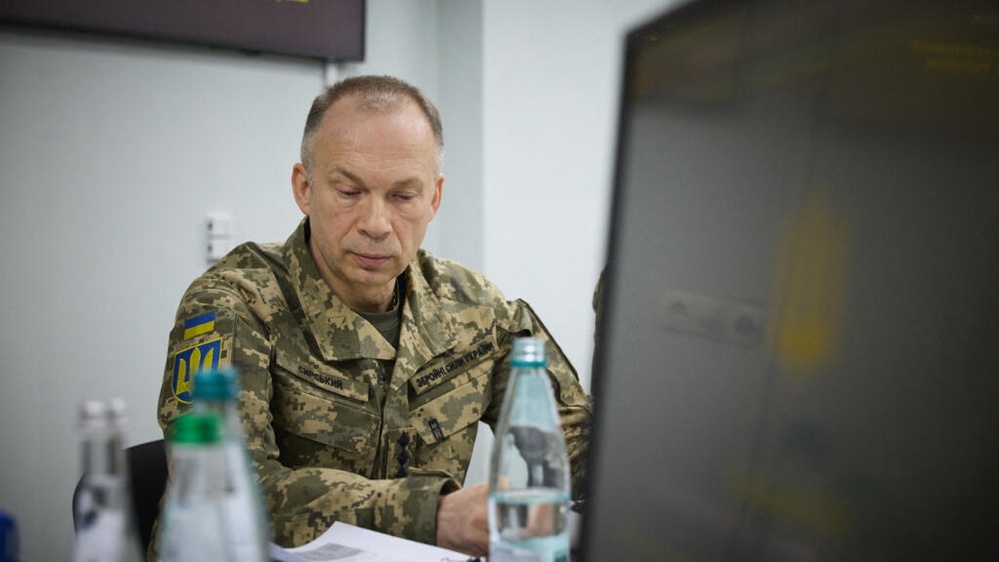
Neutral, event-focused coverage of Zelensky firing Gen. Syrskyi amid nationwide protests, including a protester label for Syrskyi without editorializing.
Brief report about the dismissal of a Ukrainian military leader amid civilian protests calling for leadership change.
Automated analysis; not human reviewed. Limitations: Concise, case-specific limitations and plausible alternative interpretations.
Date not specified; minimal context; neutral framing; protests cited.
July 21, 2026 · 0 shares
Neutral, event-focused reporting on Ukrainian leadership changes with minimal evaluative language and no explicit framing.
A concise, factual context for a news item about Ukrainian leadership changes, including Zelensky's sacking of Syrsky, appointment of Drapaty, and removal of Fedorov amid protests.
Automated analysis; not human reviewed.
Limitations: Case-specific and limited to three-sentence excerpt; lacks sourcing or broader context; alternative interpretations exist but are not evidenced in the text.
·
52 of 52 available dimensions scored; omitted dimensions are not treated as neutral.
·
Verified supporting quotes for 2 of 52 scored dimensions.
Claim: No evident ideological tilt; reporting centers on leadership changes.
“Zelensky sacks army chief Syrsky after days of protests.” · exact text match
“Volodymyr Zelensky announced he was appointing joint forces commander Mykhailo Drapaty in his place.” · exact text match
Why: Text is primarily descriptive with minimal evaluative language; one descriptor is contextual rather than ideological.
Claim: No evident populist or elitist framing; neutral tone.
“Questions over Oleksandr Syrsky's future emerged last week, when Zelensky removed highly popular defense minister Mykhailo Fedorov just six months after appointing him.” · exact text match
Why: Presence of 'highly popular' descriptor is contextual rather than an agenda-driven framing.
Claim: Objective reporting with limited subjectivity.
“Questions over Oleksandr Syrsky's future emerged last week.” · not found in supplied text
Why: Use of neutral terms and absence of argued positions.
Claim: No overt political stance; neutral reportage.
“Zelensky sacks army chief Syrsky...” · not found in supplied text
“appointments and removals described.” · not found in supplied text
Why: Events are reported without ideological framing.
Claim: No evident pro- or anti-establishment framing.
“Zelensky sacks army chief Syrsky...” · not found in supplied text
“Drapaty appointed...” · not found in supplied text
“Fedorov removed after six months.” · not found in supplied text
Why: Descriptive account of official actions without normative language.
Claim: Fair presentation of events.
“Just three sentences summarizing personnel changes.” · not found in supplied text
Why: Concise, fact-focused summary without editorializing.
Ambiguity: limited context and no sourcing; framing could vary with additional details.
Zelensky's sacking of Syrsky is framed as a response to days of public pressure, while presenting Drapaty as a new commander linked to an ousted minister, signaling intra-government factional dynamics.
Context: Military leadership shake-up in Ukraine amid internal political frictions and protests linked to the dismissal of a rival minister.
Automated analysis; not human reviewed.
Limitations: Concise, case-specific limitations and plausible alternative interpretations.
·
1 of 52 available dimensions scored; omitted dimensions are not treated as neutral.
·
Verified supporting quotes for 0 of 1 scored dimensions.
Claim: The article's language signals neutral, descriptive reporting with minimal evaluative framing.
“Zelensky sacks Ukraine army chief Syrsky after protests over rival minister's dismissal.” · exact text match
“President Volodymyr Zelensky on Tuesday dismissed Ukraine's military head Oleksandr Syrsky following days of public pressure and named Major General Drapaty, an ally of ousted defence minister Mykhailo Fedorov, as the new commander-in-chief.” · not found in supplied text
Why: The quotes show straightforward reporting of events with limited normative language.
The publisher frames Ukraine's civil-military tensions as an institutional, war-exacerbated dynamic rooted in historical legal structures, foregrounding empirical interviews and normative democratic-control concepts over personality-driven narratives.
The piece analyzes Ukraine's civil-military relations and the structural dynamics shaping civilian control of the military amid war, using interviews and legal-historical context.
Automated analysis; not human reviewed. Limitations: Concise, case-specific limitations and plausible alternative interpretations.
July 21, 2026 · 0 shares
Protest-centered framing with Syrsky depicted negatively (unpopularity, alleged brutality, corruption) and Fedorov presented by protesters as popular, while Zelensky's actions and protest dynamics are reported with attribution, yielding a nuanced but outwardly protest-friendly bias rather than a strongly partisan stance.
Protests in Ukraine are described as pressing Zelensky to reinstate Defence Minister Fedorov and fire Syrsky, with Syrsky's unpopularity and accusations of brutality and corruption highlighted alongside Zelensky's actions.
Automated analysis; not human reviewed.
Limitations: Case-specific limitations: brief excerpt, no independent verification; alternative interpretations include neutral reporting with emphasis on protests and occasional negative descriptors.
·
1 of 52 available dimensions scored; omitted dimensions are not treated as neutral.
·
Verified supporting quotes for 1 of 1 scored dimensions.
Claim: Neutral-to-moderate framing with pro-protester notes and negative descriptors for Syrsky; no strong ideological stance detected.
“In Ukraine, protesters say they’re giving Volodymyr Zelensky until Friday to re-instate the popular Defence Minister Mykhailo Fedorov, and fire General Oleksandr Syrsky, the military chief of staff.” · exact text match
“The President removed Fedorov from his post last week, citing a clash between the two men.” · exact text match
“The protests have brought Syrsky’s unpopularity to the forefront.” · exact text match
Why: The piece centers on protests and official actions, with Syrsky framed negatively and Fedorov positively relative to protesters, indicating a mild tilt toward protest-centered framing rather than a pure neutrality.
The publisher frames Ukraine's civil-military tensions as an institutional, war-exacerbated dynamic rooted in historical legal structures, foregrounding empirical interviews and normative democratic-control concepts over personality-driven narratives.
The piece analyzes Ukraine's civil-military relations and the structural dynamics shaping civilian control of the military amid war, using interviews and legal-historical context.
Automated analysis; not human reviewed. Limitations: Concise, case-specific limitations and plausible alternative interpretations.
Zelensky's sacking of Syrsky is framed as a response to days of public pressure, while presenting Drapaty as a new commander linked to an ousted minister, signaling intra-government factional dynamics.
Context: Military leadership shake-up in Ukraine amid internal political frictions and protests linked to the dismissal of a rival minister.
Automated analysis; not human reviewed.
Limitations: Concise, case-specific limitations and plausible alternative interpretations.
·
1 of 52 available dimensions scored; omitted dimensions are not treated as neutral.
·
Verified supporting quotes for 0 of 1 scored dimensions.
Claim: The article's language signals neutral, descriptive reporting with minimal evaluative framing.
“Zelensky sacks Ukraine army chief Syrsky after protests over rival minister's dismissal.” · exact text match
“President Volodymyr Zelensky on Tuesday dismissed Ukraine's military head Oleksandr Syrsky following days of public pressure and named Major General Drapaty, an ally of ousted defence minister Mykhailo Fedorov, as the new commander-in-chief.” · not found in supplied text
Why: The quotes show straightforward reporting of events with limited normative language.
July 21, 2026 · 0 shares
Protest-centered framing with Syrsky depicted negatively (unpopularity, alleged brutality, corruption) and Fedorov presented by protesters as popular, while Zelensky's actions and protest dynamics are reported with attribution, yielding a nuanced but outwardly protest-friendly bias rather than a strongly partisan stance.
Protests in Ukraine are described as pressing Zelensky to reinstate Defence Minister Fedorov and fire Syrsky, with Syrsky's unpopularity and accusations of brutality and corruption highlighted alongside Zelensky's actions.
Automated analysis; not human reviewed.
Limitations: Case-specific limitations: brief excerpt, no independent verification; alternative interpretations include neutral reporting with emphasis on protests and occasional negative descriptors.
·
1 of 52 available dimensions scored; omitted dimensions are not treated as neutral.
·
Verified supporting quotes for 1 of 1 scored dimensions.
Claim: Neutral-to-moderate framing with pro-protester notes and negative descriptors for Syrsky; no strong ideological stance detected.
“In Ukraine, protesters say they’re giving Volodymyr Zelensky until Friday to re-instate the popular Defence Minister Mykhailo Fedorov, and fire General Oleksandr Syrsky, the military chief of staff.” · exact text match
“The President removed Fedorov from his post last week, citing a clash between the two men.” · exact text match
“The protests have brought Syrsky’s unpopularity to the forefront.” · exact text match
Why: The piece centers on protests and official actions, with Syrsky framed negatively and Fedorov positively relative to protesters, indicating a mild tilt toward protest-centered framing rather than a pure neutrality.
The publisher frames Ukraine's civil-military tensions as an institutional, war-exacerbated dynamic rooted in historical legal structures, foregrounding empirical interviews and normative democratic-control concepts over personality-driven narratives.
The piece analyzes Ukraine's civil-military relations and the structural dynamics shaping civilian control of the military amid war, using interviews and legal-historical context.
Automated analysis; not human reviewed. Limitations: Concise, case-specific limitations and plausible alternative interpretations.
Balanced reporting with a slight pro-transparency tilt: it cites official Russian sources for the arrest warrant while foregrounding concerns about press freedom and independent journalism.
A political-military news item describing Russia's arrest warrant for Ukraine's newly appointed military commander, set against leadership changes and a crackdown on independent journalism in Russia.
Automated analysis; not human reviewed.
Limitations: Concise, case-specific limitations and plausible alternative interpretations.
·
7 of 52 available dimensions scored; omitted dimensions are not treated as neutral.
·
Verified supporting quotes for 0 of 7 scored dimensions.
Claim: The article shows a slight liberal tilt by foregrounding press-freedom concerns and critical stance toward Russian authorities.
“"These actions are direct attempts to silence independent journalism in Russia.
The authorities claim our work \"discredits the decisions of the Russian leadership.\" We see things differently: we strive to provide accurate, unbiased reporting on Russia."”
· exact text match
“"We strive to provide accurate, unbiased reporting on Russia."” · not found in supplied text
Counterevidence:
“"Russian law enforcement authorities have issued an arrest warrant for the newly appointed commander of Ukraine’s armed forces, Major General Mykhailo Drapatyi, state media reported late Tuesday."” · verified after text normalization
“"The Russian Interior Ministry’s wanted database lists Drapatyi without explicitly specifying the new charges against him, according to the news agency RIA Novosti."” · exact text match
Why: Pro-press-freedom statements exist amid reliance on official Russian sources.
Claim: Slight libertarian tilt due to emphasis on press freedom and independence.
“"These actions are direct attempts to silence independent journalism in Russia."” · not found in supplied text
“"we strive to provide accurate, unbiased reporting on Russia."” · not found in supplied text
Counterevidence:
“"state media reported late Tuesday."” · not found in supplied text
“"The authorities claim our work 'discredits the decisions of the Russian leadership.'"” · not found in supplied text
Why: Defense of independence signals libertarian lean; reliance on state sources tempers that.
Claim: The article presents information with balanced sourcing and explicit defense of journalism.
“"state media reported late Tuesday."” · not found in supplied text
“"We strive to provide accurate, unbiased reporting on Russia."” · not found in supplied text
Counterevidence:
“"These actions are direct attempts to silence independent journalism in Russia."” · not found in supplied text
Why: Mix of official and pro-journalism statements; no heavy normative language.
Claim: Editorial voice appears through quotes defending independence.
“"These actions are direct attempts to silence independent journalism in Russia."” · not found in supplied text
“"We strive to provide accurate, unbiased reporting on Russia."” · not found in supplied text
Counterevidence:
“"state media reported late Tuesday."” · not found in supplied text
Why: Quotes reveal stance toward press freedom.
Claim: Content centers on political-military events and government actions.
“"Russia Issues Arrest Warrant for Ukraine’s New Military Commander Just Hours After Appointment."” · not found in supplied text
“"The leadership shake-up followed days of public street protests triggered by the earlier removal of Mykhailo Fedorov from his post as defense minister."” · exact text match
Counterevidence:
“"We strive to provide accurate, unbiased reporting on Russia."” · not found in supplied text
Why: Political content with minimal partisan commentary.
Claim: Reliance on state sources and official designations indicates establishment framing.
“"state media reported late Tuesday."” · not found in supplied text
“"The Russian Interior Ministry’s wanted database lists Drapatyi... according to the news agency RIA Novosti."” · not found in supplied text
“"Russia’s Investigative Committee, the country’s top investigative body, previously charged Drapatyi in 2023..."” · not found in supplied text
Counterevidence:
“"We strive to provide accurate, unbiased reporting on Russia."” · not found in supplied text
“"These actions are direct attempts to silence independent journalism in Russia."” · not found in supplied text
Why: Official sources are prominent; independent journalism defense counters.
Claim: Promotional content is present via reader-support requests.
“"Your support, no matter how small, makes a world of difference.
If you can, please support us monthly starting from just $2. It's quick to set up, and every contribution makes a significant impact."”
· exact text match
“"By supporting The , you're defending open, independent journalism in the face of repression.
Thank you for standing with us."”
· exact text match
“"If you can, please support us monthly starting from just $2. It's quick to set up, and every contribution makes a significant impact."” · not found in supplied text
Counterevidence:
“"We strive to provide accurate, unbiased reporting on Russia."” · not found in supplied text
“"These actions are direct attempts to silence independent journalism in Russia."” · not found in supplied text
Why: Direct reader solicitation aligns with promotional tone; counterclaims emphasize editorial integrity.
Placeholders and ads; limited charges details; context uncertain.
July 22, 2026 · 0 shares
Neutral, source-based coverage of Zelensky's dialogue with Trump's envoys to restart peace talks, framed by Western defense aid and NATO-related diplomacy without evident advocacy.
Reporting on Zelensky's conversation with Trump's envoys to revive diplomacy, set against Western defense aid and NATO-related diplomacy amid the Ukraine conflict.
Automated analysis; not human reviewed.
Limitations: Case-specific; may not capture all editorial cues; relies on the text provided and its sourcing.
·
1 of 52 available dimensions scored; omitted dimensions are not treated as neutral.
·
Verified supporting quotes for 0 of 1 scored dimensions.
Claim: The report presents information in a balanced, non-editorialized manner about diplomacy and Western involvement, supported by direct quotes and multiple sources.
“Zelensky spoke Wednesday with President Donald Trump's envoys Steve Witkoff and Jared Kushner about how to resume diplomatic efforts to end Russia’s war against Ukraine, according to a report Wednesday.” · verified after text normalization
“'It was a good, important conversation on how to reinvigorate diplomacy and bring peace closer,' he wrote.” · not found in supplied text
Why: Direct quotes and multi-source framing suggest neutral reporting without explicit advocacy; reliance on second-hand sourcing is noted but does not demonstrate bias.
Neutral, event-focused coverage of Zelensky firing Gen. Syrskyi amid nationwide protests, including a protester label for Syrskyi without editorializing.
Brief report about the dismissal of a Ukrainian military leader amid civilian protests calling for leadership change.
Automated analysis; not human reviewed. Limitations: Concise, case-specific limitations and plausible alternative interpretations.
Date not specified; minimal context; neutral framing; protests cited.
July 21, 2026 · 0 shares
Neutral, event-focused reporting on Ukrainian leadership changes with minimal evaluative language and no explicit framing.
A concise, factual context for a news item about Ukrainian leadership changes, including Zelensky's sacking of Syrsky, appointment of Drapaty, and removal of Fedorov amid protests.
Automated analysis; not human reviewed. Limitations: Case-specific and limited to three-sentence excerpt; lacks sourcing or broader context; alternative interpretations exist but are not evidenced in the text. · 52 of 52 available dimensions scored; omitted dimensions are not treated as neutral. · Verified supporting quotes for 2 of 52 scored dimensions.
Claim: No evident ideological tilt; reporting centers on leadership changes.
“Zelensky sacks army chief Syrsky after days of protests.” · exact text match
“Volodymyr Zelensky announced he was appointing joint forces commander Mykhailo Drapaty in his place.” · exact text match
Why: Text is primarily descriptive with minimal evaluative language; one descriptor is contextual rather than ideological.
Claim: No evident populist or elitist framing; neutral tone.
“Questions over Oleksandr Syrsky's future emerged last week, when Zelensky removed highly popular defense minister Mykhailo Fedorov just six months after appointing him.” · exact text match
Why: Presence of 'highly popular' descriptor is contextual rather than an agenda-driven framing.
Claim: Objective reporting with limited subjectivity.
“Questions over Oleksandr Syrsky's future emerged last week.” · not found in supplied text
Why: Use of neutral terms and absence of argued positions.
Claim: No overt political stance; neutral reportage.
“Zelensky sacks army chief Syrsky...” · not found in supplied text
“appointments and removals described.” · not found in supplied text
Why: Events are reported without ideological framing.
Claim: No evident pro- or anti-establishment framing.
“Zelensky sacks army chief Syrsky...” · not found in supplied text
“Drapaty appointed...” · not found in supplied text
“Fedorov removed after six months.” · not found in supplied text
Why: Descriptive account of official actions without normative language.
Claim: Fair presentation of events.
“Just three sentences summarizing personnel changes.” · not found in supplied text
Why: Concise, fact-focused summary without editorializing.
Ambiguity: limited context and no sourcing; framing could vary with additional details.
Zelensky's sacking of Syrsky is framed as a response to days of public pressure, while presenting Drapaty as a new commander linked to an ousted minister, signaling intra-government factional dynamics.
Context: Military leadership shake-up in Ukraine amid internal political frictions and protests linked to the dismissal of a rival minister.
Automated analysis; not human reviewed. Limitations: Concise, case-specific limitations and plausible alternative interpretations. · 1 of 52 available dimensions scored; omitted dimensions are not treated as neutral. · Verified supporting quotes for 0 of 1 scored dimensions.
Claim: The article's language signals neutral, descriptive reporting with minimal evaluative framing.
“Zelensky sacks Ukraine army chief Syrsky after protests over rival minister's dismissal.” · exact text match
“President Volodymyr Zelensky on Tuesday dismissed Ukraine's military head Oleksandr Syrsky following days of public pressure and named Major General Drapaty, an ally of ousted defence minister Mykhailo Fedorov, as the new commander-in-chief.” · not found in supplied text
Why: The quotes show straightforward reporting of events with limited normative language.
The publisher frames Ukraine's civil-military tensions as an institutional, war-exacerbated dynamic rooted in historical legal structures, foregrounding empirical interviews and normative democratic-control concepts over personality-driven narratives.
The piece analyzes Ukraine's civil-military relations and the structural dynamics shaping civilian control of the military amid war, using interviews and legal-historical context.
Automated analysis; not human reviewed. Limitations: Concise, case-specific limitations and plausible alternative interpretations.
July 21, 2026 · 0 shares
Protest-centered framing with Syrsky depicted negatively (unpopularity, alleged brutality, corruption) and Fedorov presented by protesters as popular, while Zelensky's actions and protest dynamics are reported with attribution, yielding a nuanced but outwardly protest-friendly bias rather than a strongly partisan stance.
Protests in Ukraine are described as pressing Zelensky to reinstate Defence Minister Fedorov and fire Syrsky, with Syrsky's unpopularity and accusations of brutality and corruption highlighted alongside Zelensky's actions.
Automated analysis; not human reviewed. Limitations: Case-specific limitations: brief excerpt, no independent verification; alternative interpretations include neutral reporting with emphasis on protests and occasional negative descriptors. · 1 of 52 available dimensions scored; omitted dimensions are not treated as neutral. · Verified supporting quotes for 1 of 1 scored dimensions.
Claim: Neutral-to-moderate framing with pro-protester notes and negative descriptors for Syrsky; no strong ideological stance detected.
“In Ukraine, protesters say they’re giving Volodymyr Zelensky until Friday to re-instate the popular Defence Minister Mykhailo Fedorov, and fire General Oleksandr Syrsky, the military chief of staff.” · exact text match
“The President removed Fedorov from his post last week, citing a clash between the two men.” · exact text match
“The protests have brought Syrsky’s unpopularity to the forefront.” · exact text match
Why: The piece centers on protests and official actions, with Syrsky framed negatively and Fedorov positively relative to protesters, indicating a mild tilt toward protest-centered framing rather than a pure neutrality.
The publisher frames Ukraine's civil-military tensions as an institutional, war-exacerbated dynamic rooted in historical legal structures, foregrounding empirical interviews and normative democratic-control concepts over personality-driven narratives.
The piece analyzes Ukraine's civil-military relations and the structural dynamics shaping civilian control of the military amid war, using interviews and legal-historical context.
Automated analysis; not human reviewed. Limitations: Concise, case-specific limitations and plausible alternative interpretations.
Balanced reporting with a slight pro-transparency tilt: it cites official Russian sources for the arrest warrant while foregrounding concerns about press freedom and independent journalism.
A political-military news item describing Russia's arrest warrant for Ukraine's newly appointed military commander, set against leadership changes and a crackdown on independent journalism in Russia.
Automated analysis; not human reviewed. Limitations: Concise, case-specific limitations and plausible alternative interpretations. · 7 of 52 available dimensions scored; omitted dimensions are not treated as neutral. · Verified supporting quotes for 0 of 7 scored dimensions.
Claim: The article shows a slight liberal tilt by foregrounding press-freedom concerns and critical stance toward Russian authorities.
“"These actions are direct attempts to silence independent journalism in Russia. The authorities claim our work \"discredits the decisions of the Russian leadership.\" We see things differently: we strive to provide accurate, unbiased reporting on Russia."” · exact text match
“"We strive to provide accurate, unbiased reporting on Russia."” · not found in supplied text
Counterevidence:
“"Russian law enforcement authorities have issued an arrest warrant for the newly appointed commander of Ukraine’s armed forces, Major General Mykhailo Drapatyi, state media reported late Tuesday."” · verified after text normalization
“"The Russian Interior Ministry’s wanted database lists Drapatyi without explicitly specifying the new charges against him, according to the news agency RIA Novosti."” · exact text match
Why: Pro-press-freedom statements exist amid reliance on official Russian sources.
Claim: Slight libertarian tilt due to emphasis on press freedom and independence.
“"These actions are direct attempts to silence independent journalism in Russia."” · not found in supplied text
“"we strive to provide accurate, unbiased reporting on Russia."” · not found in supplied text
Counterevidence:
“"state media reported late Tuesday."” · not found in supplied text
“"The authorities claim our work 'discredits the decisions of the Russian leadership.'"” · not found in supplied text
Why: Defense of independence signals libertarian lean; reliance on state sources tempers that.
Claim: The article presents information with balanced sourcing and explicit defense of journalism.
“"state media reported late Tuesday."” · not found in supplied text
“"We strive to provide accurate, unbiased reporting on Russia."” · not found in supplied text
Counterevidence:
“"These actions are direct attempts to silence independent journalism in Russia."” · not found in supplied text
Why: Mix of official and pro-journalism statements; no heavy normative language.
Claim: Editorial voice appears through quotes defending independence.
“"These actions are direct attempts to silence independent journalism in Russia."” · not found in supplied text
“"We strive to provide accurate, unbiased reporting on Russia."” · not found in supplied text
Counterevidence:
“"state media reported late Tuesday."” · not found in supplied text
Why: Quotes reveal stance toward press freedom.
Claim: Content centers on political-military events and government actions.
“"Russia Issues Arrest Warrant for Ukraine’s New Military Commander Just Hours After Appointment."” · not found in supplied text
“"The leadership shake-up followed days of public street protests triggered by the earlier removal of Mykhailo Fedorov from his post as defense minister."” · exact text match
Counterevidence:
“"We strive to provide accurate, unbiased reporting on Russia."” · not found in supplied text
Why: Political content with minimal partisan commentary.
Claim: Reliance on state sources and official designations indicates establishment framing.
“"state media reported late Tuesday."” · not found in supplied text
“"The Russian Interior Ministry’s wanted database lists Drapatyi... according to the news agency RIA Novosti."” · not found in supplied text
“"Russia’s Investigative Committee, the country’s top investigative body, previously charged Drapatyi in 2023..."” · not found in supplied text
Counterevidence:
“"We strive to provide accurate, unbiased reporting on Russia."” · not found in supplied text
“"These actions are direct attempts to silence independent journalism in Russia."” · not found in supplied text
Why: Official sources are prominent; independent journalism defense counters.
Claim: Promotional content is present via reader-support requests.
“"Your support, no matter how small, makes a world of difference. If you can, please support us monthly starting from just $2. It's quick to set up, and every contribution makes a significant impact."” · exact text match
“"By supporting The , you're defending open, independent journalism in the face of repression. Thank you for standing with us."” · exact text match
“"If you can, please support us monthly starting from just $2. It's quick to set up, and every contribution makes a significant impact."” · not found in supplied text
Counterevidence:
“"We strive to provide accurate, unbiased reporting on Russia."” · not found in supplied text
“"These actions are direct attempts to silence independent journalism in Russia."” · not found in supplied text
Why: Direct reader solicitation aligns with promotional tone; counterclaims emphasize editorial integrity.
Placeholders and ads; limited charges details; context uncertain.
July 22, 2026 · 0 shares
Neutral, source-based coverage of Zelensky's dialogue with Trump's envoys to restart peace talks, framed by Western defense aid and NATO-related diplomacy without evident advocacy.
Reporting on Zelensky's conversation with Trump's envoys to revive diplomacy, set against Western defense aid and NATO-related diplomacy amid the Ukraine conflict.
Automated analysis; not human reviewed. Limitations: Case-specific; may not capture all editorial cues; relies on the text provided and its sourcing. · 1 of 52 available dimensions scored; omitted dimensions are not treated as neutral. · Verified supporting quotes for 0 of 1 scored dimensions.
Claim: The report presents information in a balanced, non-editorialized manner about diplomacy and Western involvement, supported by direct quotes and multiple sources.
“Zelensky spoke Wednesday with President Donald Trump's envoys Steve Witkoff and Jared Kushner about how to resume diplomatic efforts to end Russia’s war against Ukraine, according to a report Wednesday.” · verified after text normalization
“'It was a good, important conversation on how to reinvigorate diplomacy and bring peace closer,' he wrote.” · not found in supplied text
Why: Direct quotes and multi-source framing suggest neutral reporting without explicit advocacy; reliance on second-hand sourcing is noted but does not demonstrate bias.
Helium Bias
Neutral, event-focused coverage of Zelensky firing Gen. Syrskyi amid nationwide protests, including a protester label for Syrskyi without editorializing.
Brief report about the dismissal of a Ukrainian military leader amid civilian protests calling for leadership change.
Automated analysis; not human reviewed. Limitations: Concise, case-specific limitations and plausible alternative interpretations.
Date not specified; minimal context; neutral framing; protests cited.
July 21, 2026 · 0 shares
Neutral, event-focused reporting on Ukrainian leadership changes with minimal evaluative language and no explicit framing.
A concise, factual context for a news item about Ukrainian leadership changes, including Zelensky's sacking of Syrsky, appointment of Drapaty, and removal of Fedorov amid protests.
Automated analysis; not human reviewed. Limitations: Case-specific and limited to three-sentence excerpt; lacks sourcing or broader context; alternative interpretations exist but are not evidenced in the text. · 52 of 52 available dimensions scored; omitted dimensions are not treated as neutral. · Verified supporting quotes for 2 of 52 scored dimensions.
Claim: No evident ideological tilt; reporting centers on leadership changes.
“Zelensky sacks army chief Syrsky after days of protests.” · exact text match
“Volodymyr Zelensky announced he was appointing joint forces commander Mykhailo Drapaty in his place.” · exact text match
Why: Text is primarily descriptive with minimal evaluative language; one descriptor is contextual rather than ideological.
Claim: No evident populist or elitist framing; neutral tone.
“Questions over Oleksandr Syrsky's future emerged last week, when Zelensky removed highly popular defense minister Mykhailo Fedorov just six months after appointing him.” · exact text match
Why: Presence of 'highly popular' descriptor is contextual rather than an agenda-driven framing.
Claim: Objective reporting with limited subjectivity.
“Questions over Oleksandr Syrsky's future emerged last week.” · not found in supplied text
Why: Use of neutral terms and absence of argued positions.
Claim: No overt political stance; neutral reportage.
“Zelensky sacks army chief Syrsky...” · not found in supplied text
“appointments and removals described.” · not found in supplied text
Why: Events are reported without ideological framing.
Claim: No evident pro- or anti-establishment framing.
“Zelensky sacks army chief Syrsky...” · not found in supplied text
“Drapaty appointed...” · not found in supplied text
“Fedorov removed after six months.” · not found in supplied text
Why: Descriptive account of official actions without normative language.
Claim: Fair presentation of events.
“Just three sentences summarizing personnel changes.” · not found in supplied text
Why: Concise, fact-focused summary without editorializing.
Ambiguity: limited context and no sourcing; framing could vary with additional details.
Zelensky's sacking of Syrsky is framed as a response to days of public pressure, while presenting Drapaty as a new commander linked to an ousted minister, signaling intra-government factional dynamics.
Context: Military leadership shake-up in Ukraine amid internal political frictions and protests linked to the dismissal of a rival minister.
Automated analysis; not human reviewed. Limitations: Concise, case-specific limitations and plausible alternative interpretations. · 1 of 52 available dimensions scored; omitted dimensions are not treated as neutral. · Verified supporting quotes for 0 of 1 scored dimensions.
Claim: The article's language signals neutral, descriptive reporting with minimal evaluative framing.
“Zelensky sacks Ukraine army chief Syrsky after protests over rival minister's dismissal.” · exact text match
“President Volodymyr Zelensky on Tuesday dismissed Ukraine's military head Oleksandr Syrsky following days of public pressure and named Major General Drapaty, an ally of ousted defence minister Mykhailo Fedorov, as the new commander-in-chief.” · not found in supplied text
Why: The quotes show straightforward reporting of events with limited normative language.
The publisher frames Ukraine's civil-military tensions as an institutional, war-exacerbated dynamic rooted in historical legal structures, foregrounding empirical interviews and normative democratic-control concepts over personality-driven narratives.
The piece analyzes Ukraine's civil-military relations and the structural dynamics shaping civilian control of the military amid war, using interviews and legal-historical context.
Automated analysis; not human reviewed. Limitations: Concise, case-specific limitations and plausible alternative interpretations.
Story Blindspots
July 21, 2026 · 0 shares
Neutral, event-focused reporting on Ukrainian leadership changes with minimal evaluative language and no explicit framing.
A concise, factual context for a news item about Ukrainian leadership changes, including Zelensky's sacking of Syrsky, appointment of Drapaty, and removal of Fedorov amid protests.
Automated analysis; not human reviewed. Limitations: Case-specific and limited to three-sentence excerpt; lacks sourcing or broader context; alternative interpretations exist but are not evidenced in the text. · 52 of 52 available dimensions scored; omitted dimensions are not treated as neutral. · Verified supporting quotes for 2 of 52 scored dimensions.
Claim: No evident ideological tilt; reporting centers on leadership changes.
“Zelensky sacks army chief Syrsky after days of protests.” · exact text match
“Volodymyr Zelensky announced he was appointing joint forces commander Mykhailo Drapaty in his place.” · exact text match
Why: Text is primarily descriptive with minimal evaluative language; one descriptor is contextual rather than ideological.
Claim: No evident populist or elitist framing; neutral tone.
“Questions over Oleksandr Syrsky's future emerged last week, when Zelensky removed highly popular defense minister Mykhailo Fedorov just six months after appointing him.” · exact text match
Why: Presence of 'highly popular' descriptor is contextual rather than an agenda-driven framing.
Claim: Objective reporting with limited subjectivity.
“Questions over Oleksandr Syrsky's future emerged last week.” · not found in supplied text
Why: Use of neutral terms and absence of argued positions.
Claim: No overt political stance; neutral reportage.
“Zelensky sacks army chief Syrsky...” · not found in supplied text
“appointments and removals described.” · not found in supplied text
Why: Events are reported without ideological framing.
Claim: No evident pro- or anti-establishment framing.
“Zelensky sacks army chief Syrsky...” · not found in supplied text
“Drapaty appointed...” · not found in supplied text
“Fedorov removed after six months.” · not found in supplied text
Why: Descriptive account of official actions without normative language.
Claim: Fair presentation of events.
“Just three sentences summarizing personnel changes.” · not found in supplied text
Why: Concise, fact-focused summary without editorializing.
Ambiguity: limited context and no sourcing; framing could vary with additional details.
Zelensky's sacking of Syrsky is framed as a response to days of public pressure, while presenting Drapaty as a new commander linked to an ousted minister, signaling intra-government factional dynamics.
Context: Military leadership shake-up in Ukraine amid internal political frictions and protests linked to the dismissal of a rival minister.
Automated analysis; not human reviewed. Limitations: Concise, case-specific limitations and plausible alternative interpretations. · 1 of 52 available dimensions scored; omitted dimensions are not treated as neutral. · Verified supporting quotes for 0 of 1 scored dimensions.
Claim: The article's language signals neutral, descriptive reporting with minimal evaluative framing.
“Zelensky sacks Ukraine army chief Syrsky after protests over rival minister's dismissal.” · exact text match
“President Volodymyr Zelensky on Tuesday dismissed Ukraine's military head Oleksandr Syrsky following days of public pressure and named Major General Drapaty, an ally of ousted defence minister Mykhailo Fedorov, as the new commander-in-chief.” · not found in supplied text
Why: The quotes show straightforward reporting of events with limited normative language.
July 21, 2026 · 0 shares
Protest-centered framing with Syrsky depicted negatively (unpopularity, alleged brutality, corruption) and Fedorov presented by protesters as popular, while Zelensky's actions and protest dynamics are reported with attribution, yielding a nuanced but outwardly protest-friendly bias rather than a strongly partisan stance.
Protests in Ukraine are described as pressing Zelensky to reinstate Defence Minister Fedorov and fire Syrsky, with Syrsky's unpopularity and accusations of brutality and corruption highlighted alongside Zelensky's actions.
Automated analysis; not human reviewed. Limitations: Case-specific limitations: brief excerpt, no independent verification; alternative interpretations include neutral reporting with emphasis on protests and occasional negative descriptors. · 1 of 52 available dimensions scored; omitted dimensions are not treated as neutral. · Verified supporting quotes for 1 of 1 scored dimensions.
Claim: Neutral-to-moderate framing with pro-protester notes and negative descriptors for Syrsky; no strong ideological stance detected.
“In Ukraine, protesters say they’re giving Volodymyr Zelensky until Friday to re-instate the popular Defence Minister Mykhailo Fedorov, and fire General Oleksandr Syrsky, the military chief of staff.” · exact text match
“The President removed Fedorov from his post last week, citing a clash between the two men.” · exact text match
“The protests have brought Syrsky’s unpopularity to the forefront.” · exact text match
Why: The piece centers on protests and official actions, with Syrsky framed negatively and Fedorov positively relative to protesters, indicating a mild tilt toward protest-centered framing rather than a pure neutrality.
The publisher frames Ukraine's civil-military tensions as an institutional, war-exacerbated dynamic rooted in historical legal structures, foregrounding empirical interviews and normative democratic-control concepts over personality-driven narratives.
The piece analyzes Ukraine's civil-military relations and the structural dynamics shaping civilian control of the military amid war, using interviews and legal-historical context.
Automated analysis; not human reviewed. Limitations: Concise, case-specific limitations and plausible alternative interpretations.
July 21, 2026 · 0 shares
Neutral, event-focused reporting on Ukrainian leadership changes with minimal evaluative language and no explicit framing.
A concise, factual context for a news item about Ukrainian leadership changes, including Zelensky's sacking of Syrsky, appointment of Drapaty, and removal of Fedorov amid protests.
Automated analysis; not human reviewed. Limitations: Case-specific and limited to three-sentence excerpt; lacks sourcing or broader context; alternative interpretations exist but are not evidenced in the text. · 52 of 52 available dimensions scored; omitted dimensions are not treated as neutral. · Verified supporting quotes for 2 of 52 scored dimensions.
Claim: No evident ideological tilt; reporting centers on leadership changes.
“Zelensky sacks army chief Syrsky after days of protests.” · exact text match
“Volodymyr Zelensky announced he was appointing joint forces commander Mykhailo Drapaty in his place.” · exact text match
Why: Text is primarily descriptive with minimal evaluative language; one descriptor is contextual rather than ideological.
Claim: No evident populist or elitist framing; neutral tone.
“Questions over Oleksandr Syrsky's future emerged last week, when Zelensky removed highly popular defense minister Mykhailo Fedorov just six months after appointing him.” · exact text match
Why: Presence of 'highly popular' descriptor is contextual rather than an agenda-driven framing.
Claim: Objective reporting with limited subjectivity.
“Questions over Oleksandr Syrsky's future emerged last week.” · not found in supplied text
Why: Use of neutral terms and absence of argued positions.
Claim: No overt political stance; neutral reportage.
“Zelensky sacks army chief Syrsky...” · not found in supplied text
“appointments and removals described.” · not found in supplied text
Why: Events are reported without ideological framing.
Claim: No evident pro- or anti-establishment framing.
“Zelensky sacks army chief Syrsky...” · not found in supplied text
“Drapaty appointed...” · not found in supplied text
“Fedorov removed after six months.” · not found in supplied text
Why: Descriptive account of official actions without normative language.
Claim: Fair presentation of events.
“Just three sentences summarizing personnel changes.” · not found in supplied text
Why: Concise, fact-focused summary without editorializing.
Ambiguity: limited context and no sourcing; framing could vary with additional details.
Zelensky's sacking of Syrsky is framed as a response to days of public pressure, while presenting Drapaty as a new commander linked to an ousted minister, signaling intra-government factional dynamics.
Context: Military leadership shake-up in Ukraine amid internal political frictions and protests linked to the dismissal of a rival minister.
Automated analysis; not human reviewed. Limitations: Concise, case-specific limitations and plausible alternative interpretations. · 1 of 52 available dimensions scored; omitted dimensions are not treated as neutral. · Verified supporting quotes for 0 of 1 scored dimensions.
Claim: The article's language signals neutral, descriptive reporting with minimal evaluative framing.
“Zelensky sacks Ukraine army chief Syrsky after protests over rival minister's dismissal.” · exact text match
“President Volodymyr Zelensky on Tuesday dismissed Ukraine's military head Oleksandr Syrsky following days of public pressure and named Major General Drapaty, an ally of ousted defence minister Mykhailo Fedorov, as the new commander-in-chief.” · not found in supplied text
Why: The quotes show straightforward reporting of events with limited normative language.
The publisher frames Ukraine's civil-military tensions as an institutional, war-exacerbated dynamic rooted in historical legal structures, foregrounding empirical interviews and normative democratic-control concepts over personality-driven narratives.
The piece analyzes Ukraine's civil-military relations and the structural dynamics shaping civilian control of the military amid war, using interviews and legal-historical context.
Automated analysis; not human reviewed. Limitations: Concise, case-specific limitations and plausible alternative interpretations.
Zelensky's sacking of Syrsky is framed as a response to days of public pressure, while presenting Drapaty as a new commander linked to an ousted minister, signaling intra-government factional dynamics.
Context: Military leadership shake-up in Ukraine amid internal political frictions and protests linked to the dismissal of a rival minister.
Automated analysis; not human reviewed. Limitations: Concise, case-specific limitations and plausible alternative interpretations. · 1 of 52 available dimensions scored; omitted dimensions are not treated as neutral. · Verified supporting quotes for 0 of 1 scored dimensions.
Claim: The article's language signals neutral, descriptive reporting with minimal evaluative framing.
“Zelensky sacks Ukraine army chief Syrsky after protests over rival minister's dismissal.” · exact text match
“President Volodymyr Zelensky on Tuesday dismissed Ukraine's military head Oleksandr Syrsky following days of public pressure and named Major General Drapaty, an ally of ousted defence minister Mykhailo Fedorov, as the new commander-in-chief.” · not found in supplied text
Why: The quotes show straightforward reporting of events with limited normative language.
Zelensky's sacking of Syrsky is framed as a response to days of public pressure, while presenting Drapaty as a new commander linked to an ousted minister, signaling intra-government factional dynamics.
Context: Military leadership shake-up in Ukraine amid internal political frictions and protests linked to the dismissal of a rival minister.
Automated analysis; not human reviewed. Limitations: Concise, case-specific limitations and plausible alternative interpretations. · 1 of 52 available dimensions scored; omitted dimensions are not treated as neutral. · Verified supporting quotes for 0 of 1 scored dimensions.
Claim: The article's language signals neutral, descriptive reporting with minimal evaluative framing.
“Zelensky sacks Ukraine army chief Syrsky after protests over rival minister's dismissal.” · exact text match
“President Volodymyr Zelensky on Tuesday dismissed Ukraine's military head Oleksandr Syrsky following days of public pressure and named Major General Drapaty, an ally of ousted defence minister Mykhailo Fedorov, as the new commander-in-chief.” · not found in supplied text
Why: The quotes show straightforward reporting of events with limited normative language.
The publisher frames Ukraine's civil-military tensions as an institutional, war-exacerbated dynamic rooted in historical legal structures, foregrounding empirical interviews and normative democratic-control concepts over personality-driven narratives.
The piece analyzes Ukraine's civil-military relations and the structural dynamics shaping civilian control of the military amid war, using interviews and legal-historical context.
Automated analysis; not human reviewed. Limitations: Concise, case-specific limitations and plausible alternative interpretations.
July 21, 2026 · 0 shares
Neutral, event-focused reporting on Ukrainian leadership changes with minimal evaluative language and no explicit framing.
A concise, factual context for a news item about Ukrainian leadership changes, including Zelensky's sacking of Syrsky, appointment of Drapaty, and removal of Fedorov amid protests.
Automated analysis; not human reviewed. Limitations: Case-specific and limited to three-sentence excerpt; lacks sourcing or broader context; alternative interpretations exist but are not evidenced in the text. · 52 of 52 available dimensions scored; omitted dimensions are not treated as neutral. · Verified supporting quotes for 2 of 52 scored dimensions.
Claim: No evident ideological tilt; reporting centers on leadership changes.
“Zelensky sacks army chief Syrsky after days of protests.” · exact text match
“Volodymyr Zelensky announced he was appointing joint forces commander Mykhailo Drapaty in his place.” · exact text match
Why: Text is primarily descriptive with minimal evaluative language; one descriptor is contextual rather than ideological.
Claim: No evident populist or elitist framing; neutral tone.
“Questions over Oleksandr Syrsky's future emerged last week, when Zelensky removed highly popular defense minister Mykhailo Fedorov just six months after appointing him.” · exact text match
Why: Presence of 'highly popular' descriptor is contextual rather than an agenda-driven framing.
Claim: Objective reporting with limited subjectivity.
“Questions over Oleksandr Syrsky's future emerged last week.” · not found in supplied text
Why: Use of neutral terms and absence of argued positions.
Claim: No overt political stance; neutral reportage.
“Zelensky sacks army chief Syrsky...” · not found in supplied text
“appointments and removals described.” · not found in supplied text
Why: Events are reported without ideological framing.
Claim: No evident pro- or anti-establishment framing.
“Zelensky sacks army chief Syrsky...” · not found in supplied text
“Drapaty appointed...” · not found in supplied text
“Fedorov removed after six months.” · not found in supplied text
Why: Descriptive account of official actions without normative language.
Claim: Fair presentation of events.
“Just three sentences summarizing personnel changes.” · not found in supplied text
Why: Concise, fact-focused summary without editorializing.
Ambiguity: limited context and no sourcing; framing could vary with additional details.
Zelensky's sacking of Syrsky is framed as a response to days of public pressure, while presenting Drapaty as a new commander linked to an ousted minister, signaling intra-government factional dynamics.
Context: Military leadership shake-up in Ukraine amid internal political frictions and protests linked to the dismissal of a rival minister.
Automated analysis; not human reviewed. Limitations: Concise, case-specific limitations and plausible alternative interpretations. · 1 of 52 available dimensions scored; omitted dimensions are not treated as neutral. · Verified supporting quotes for 0 of 1 scored dimensions.
Claim: The article's language signals neutral, descriptive reporting with minimal evaluative framing.
“Zelensky sacks Ukraine army chief Syrsky after protests over rival minister's dismissal.” · exact text match
“President Volodymyr Zelensky on Tuesday dismissed Ukraine's military head Oleksandr Syrsky following days of public pressure and named Major General Drapaty, an ally of ousted defence minister Mykhailo Fedorov, as the new commander-in-chief.” · not found in supplied text
Why: The quotes show straightforward reporting of events with limited normative language.
The publisher frames Ukraine's civil-military tensions as an institutional, war-exacerbated dynamic rooted in historical legal structures, foregrounding empirical interviews and normative democratic-control concepts over personality-driven narratives.
The piece analyzes Ukraine's civil-military relations and the structural dynamics shaping civilian control of the military amid war, using interviews and legal-historical context.
Automated analysis; not human reviewed. Limitations: Concise, case-specific limitations and plausible alternative interpretations.
July 21, 2026 · 0 shares
Protest-centered framing with Syrsky depicted negatively (unpopularity, alleged brutality, corruption) and Fedorov presented by protesters as popular, while Zelensky's actions and protest dynamics are reported with attribution, yielding a nuanced but outwardly protest-friendly bias rather than a strongly partisan stance.
Protests in Ukraine are described as pressing Zelensky to reinstate Defence Minister Fedorov and fire Syrsky, with Syrsky's unpopularity and accusations of brutality and corruption highlighted alongside Zelensky's actions.
Automated analysis; not human reviewed. Limitations: Case-specific limitations: brief excerpt, no independent verification; alternative interpretations include neutral reporting with emphasis on protests and occasional negative descriptors. · 1 of 52 available dimensions scored; omitted dimensions are not treated as neutral. · Verified supporting quotes for 1 of 1 scored dimensions.
Claim: Neutral-to-moderate framing with pro-protester notes and negative descriptors for Syrsky; no strong ideological stance detected.
“In Ukraine, protesters say they’re giving Volodymyr Zelensky until Friday to re-instate the popular Defence Minister Mykhailo Fedorov, and fire General Oleksandr Syrsky, the military chief of staff.” · exact text match
“The President removed Fedorov from his post last week, citing a clash between the two men.” · exact text match
“The protests have brought Syrsky’s unpopularity to the forefront.” · exact text match
Why: The piece centers on protests and official actions, with Syrsky framed negatively and Fedorov positively relative to protesters, indicating a mild tilt toward protest-centered framing rather than a pure neutrality.
The publisher frames Ukraine's civil-military tensions as an institutional, war-exacerbated dynamic rooted in historical legal structures, foregrounding empirical interviews and normative democratic-control concepts over personality-driven narratives.
The piece analyzes Ukraine's civil-military relations and the structural dynamics shaping civilian control of the military amid war, using interviews and legal-historical context.
Automated analysis; not human reviewed. Limitations: Concise, case-specific limitations and plausible alternative interpretations.
July 21, 2026 · 0 shares
Protest-centered framing with Syrsky depicted negatively (unpopularity, alleged brutality, corruption) and Fedorov presented by protesters as popular, while Zelensky's actions and protest dynamics are reported with attribution, yielding a nuanced but outwardly protest-friendly bias rather than a strongly partisan stance.
Protests in Ukraine are described as pressing Zelensky to reinstate Defence Minister Fedorov and fire Syrsky, with Syrsky's unpopularity and accusations of brutality and corruption highlighted alongside Zelensky's actions.
Automated analysis; not human reviewed. Limitations: Case-specific limitations: brief excerpt, no independent verification; alternative interpretations include neutral reporting with emphasis on protests and occasional negative descriptors. · 1 of 52 available dimensions scored; omitted dimensions are not treated as neutral. · Verified supporting quotes for 1 of 1 scored dimensions.
Claim: Neutral-to-moderate framing with pro-protester notes and negative descriptors for Syrsky; no strong ideological stance detected.
“In Ukraine, protesters say they’re giving Volodymyr Zelensky until Friday to re-instate the popular Defence Minister Mykhailo Fedorov, and fire General Oleksandr Syrsky, the military chief of staff.” · exact text match
“The President removed Fedorov from his post last week, citing a clash between the two men.” · exact text match
“The protests have brought Syrsky’s unpopularity to the forefront.” · exact text match
Why: The piece centers on protests and official actions, with Syrsky framed negatively and Fedorov positively relative to protesters, indicating a mild tilt toward protest-centered framing rather than a pure neutrality.
The publisher frames Ukraine's civil-military tensions as an institutional, war-exacerbated dynamic rooted in historical legal structures, foregrounding empirical interviews and normative democratic-control concepts over personality-driven narratives.
The piece analyzes Ukraine's civil-military relations and the structural dynamics shaping civilian control of the military amid war, using interviews and legal-historical context.
Automated analysis; not human reviewed. Limitations: Concise, case-specific limitations and plausible alternative interpretations.
Balanced reporting with a slight pro-transparency tilt: it cites official Russian sources for the arrest warrant while foregrounding concerns about press freedom and independent journalism.
A political-military news item describing Russia's arrest warrant for Ukraine's newly appointed military commander, set against leadership changes and a crackdown on independent journalism in Russia.
Automated analysis; not human reviewed. Limitations: Concise, case-specific limitations and plausible alternative interpretations. · 7 of 52 available dimensions scored; omitted dimensions are not treated as neutral. · Verified supporting quotes for 0 of 7 scored dimensions.
Claim: The article shows a slight liberal tilt by foregrounding press-freedom concerns and critical stance toward Russian authorities.
“"These actions are direct attempts to silence independent journalism in Russia. The authorities claim our work \"discredits the decisions of the Russian leadership.\" We see things differently: we strive to provide accurate, unbiased reporting on Russia."” · exact text match
“"We strive to provide accurate, unbiased reporting on Russia."” · not found in supplied text
Counterevidence:
“"Russian law enforcement authorities have issued an arrest warrant for the newly appointed commander of Ukraine’s armed forces, Major General Mykhailo Drapatyi, state media reported late Tuesday."” · verified after text normalization
“"The Russian Interior Ministry’s wanted database lists Drapatyi without explicitly specifying the new charges against him, according to the news agency RIA Novosti."” · exact text match
Why: Pro-press-freedom statements exist amid reliance on official Russian sources.
Claim: Slight libertarian tilt due to emphasis on press freedom and independence.
“"These actions are direct attempts to silence independent journalism in Russia."” · not found in supplied text
“"we strive to provide accurate, unbiased reporting on Russia."” · not found in supplied text
Counterevidence:
“"state media reported late Tuesday."” · not found in supplied text
“"The authorities claim our work 'discredits the decisions of the Russian leadership.'"” · not found in supplied text
Why: Defense of independence signals libertarian lean; reliance on state sources tempers that.
Claim: The article presents information with balanced sourcing and explicit defense of journalism.
“"state media reported late Tuesday."” · not found in supplied text
“"We strive to provide accurate, unbiased reporting on Russia."” · not found in supplied text
Counterevidence:
“"These actions are direct attempts to silence independent journalism in Russia."” · not found in supplied text
Why: Mix of official and pro-journalism statements; no heavy normative language.
Claim: Editorial voice appears through quotes defending independence.
“"These actions are direct attempts to silence independent journalism in Russia."” · not found in supplied text
“"We strive to provide accurate, unbiased reporting on Russia."” · not found in supplied text
Counterevidence:
“"state media reported late Tuesday."” · not found in supplied text
Why: Quotes reveal stance toward press freedom.
Claim: Content centers on political-military events and government actions.
“"Russia Issues Arrest Warrant for Ukraine’s New Military Commander Just Hours After Appointment."” · not found in supplied text
“"The leadership shake-up followed days of public street protests triggered by the earlier removal of Mykhailo Fedorov from his post as defense minister."” · exact text match
Counterevidence:
“"We strive to provide accurate, unbiased reporting on Russia."” · not found in supplied text
Why: Political content with minimal partisan commentary.
Claim: Reliance on state sources and official designations indicates establishment framing.
“"state media reported late Tuesday."” · not found in supplied text
“"The Russian Interior Ministry’s wanted database lists Drapatyi... according to the news agency RIA Novosti."” · not found in supplied text
“"Russia’s Investigative Committee, the country’s top investigative body, previously charged Drapatyi in 2023..."” · not found in supplied text
Counterevidence:
“"We strive to provide accurate, unbiased reporting on Russia."” · not found in supplied text
“"These actions are direct attempts to silence independent journalism in Russia."” · not found in supplied text
Why: Official sources are prominent; independent journalism defense counters.
Claim: Promotional content is present via reader-support requests.
“"Your support, no matter how small, makes a world of difference. If you can, please support us monthly starting from just $2. It's quick to set up, and every contribution makes a significant impact."” · exact text match
“"By supporting The , you're defending open, independent journalism in the face of repression. Thank you for standing with us."” · exact text match
“"If you can, please support us monthly starting from just $2. It's quick to set up, and every contribution makes a significant impact."” · not found in supplied text
Counterevidence:
“"We strive to provide accurate, unbiased reporting on Russia."” · not found in supplied text
“"These actions are direct attempts to silence independent journalism in Russia."” · not found in supplied text
Why: Direct reader solicitation aligns with promotional tone; counterclaims emphasize editorial integrity.
Placeholders and ads; limited charges details; context uncertain.
July 22, 2026 · 0 shares
Neutral, source-based coverage of Zelensky's dialogue with Trump's envoys to restart peace talks, framed by Western defense aid and NATO-related diplomacy without evident advocacy.
Reporting on Zelensky's conversation with Trump's envoys to revive diplomacy, set against Western defense aid and NATO-related diplomacy amid the Ukraine conflict.
Automated analysis; not human reviewed. Limitations: Case-specific; may not capture all editorial cues; relies on the text provided and its sourcing. · 1 of 52 available dimensions scored; omitted dimensions are not treated as neutral. · Verified supporting quotes for 0 of 1 scored dimensions.
Claim: The report presents information in a balanced, non-editorialized manner about diplomacy and Western involvement, supported by direct quotes and multiple sources.
“Zelensky spoke Wednesday with President Donald Trump's envoys Steve Witkoff and Jared Kushner about how to resume diplomatic efforts to end Russia’s war against Ukraine, according to a report Wednesday.” · verified after text normalization
“'It was a good, important conversation on how to reinvigorate diplomacy and bring peace closer,' he wrote.” · not found in supplied text
Why: Direct quotes and multi-source framing suggest neutral reporting without explicit advocacy; reliance on second-hand sourcing is noted but does not demonstrate bias.
Neutral, event-focused coverage of Zelensky firing Gen. Syrskyi amid nationwide protests, including a protester label for Syrskyi without editorializing.
Brief report about the dismissal of a Ukrainian military leader amid civilian protests calling for leadership change.
Automated analysis; not human reviewed. Limitations: Concise, case-specific limitations and plausible alternative interpretations.
Date not specified; minimal context; neutral framing; protests cited.
July 21, 2026 · 0 shares
Neutral, event-focused reporting on Ukrainian leadership changes with minimal evaluative language and no explicit framing.
A concise, factual context for a news item about Ukrainian leadership changes, including Zelensky's sacking of Syrsky, appointment of Drapaty, and removal of Fedorov amid protests.
Automated analysis; not human reviewed.
Limitations: Case-specific and limited to three-sentence excerpt; lacks sourcing or broader context; alternative interpretations exist but are not evidenced in the text.
·
52 of 52 available dimensions scored; omitted dimensions are not treated as neutral.
·
Verified supporting quotes for 2 of 52 scored dimensions.
Claim: No evident ideological tilt; reporting centers on leadership changes.
“Zelensky sacks army chief Syrsky after days of protests.” · exact text match
“Volodymyr Zelensky announced he was appointing joint forces commander Mykhailo Drapaty in his place.” · exact text match
Why: Text is primarily descriptive with minimal evaluative language; one descriptor is contextual rather than ideological.
Claim: No evident populist or elitist framing; neutral tone.
“Questions over Oleksandr Syrsky's future emerged last week, when Zelensky removed highly popular defense minister Mykhailo Fedorov just six months after appointing him.” · exact text match
Why: Presence of 'highly popular' descriptor is contextual rather than an agenda-driven framing.
Claim: Objective reporting with limited subjectivity.
“Questions over Oleksandr Syrsky's future emerged last week.” · not found in supplied text
Why: Use of neutral terms and absence of argued positions.
Claim: No overt political stance; neutral reportage.
“Zelensky sacks army chief Syrsky...” · not found in supplied text
“appointments and removals described.” · not found in supplied text
Why: Events are reported without ideological framing.
Claim: No evident pro- or anti-establishment framing.
“Zelensky sacks army chief Syrsky...” · not found in supplied text
“Drapaty appointed...” · not found in supplied text
“Fedorov removed after six months.” · not found in supplied text
Why: Descriptive account of official actions without normative language.
Claim: Fair presentation of events.
“Just three sentences summarizing personnel changes.” · not found in supplied text
Why: Concise, fact-focused summary without editorializing.
Ambiguity: limited context and no sourcing; framing could vary with additional details.
July 21, 2026 · 0 shares
Protest-centered framing with Syrsky depicted negatively (unpopularity, alleged brutality, corruption) and Fedorov presented by protesters as popular, while Zelensky's actions and protest dynamics are reported with attribution, yielding a nuanced but outwardly protest-friendly bias rather than a strongly partisan stance.
Protests in Ukraine are described as pressing Zelensky to reinstate Defence Minister Fedorov and fire Syrsky, with Syrsky's unpopularity and accusations of brutality and corruption highlighted alongside Zelensky's actions.
Automated analysis; not human reviewed.
Limitations: Case-specific limitations: brief excerpt, no independent verification; alternative interpretations include neutral reporting with emphasis on protests and occasional negative descriptors.
·
1 of 52 available dimensions scored; omitted dimensions are not treated as neutral.
·
Verified supporting quotes for 1 of 1 scored dimensions.
Claim: Neutral-to-moderate framing with pro-protester notes and negative descriptors for Syrsky; no strong ideological stance detected.
“In Ukraine, protesters say they’re giving Volodymyr Zelensky until Friday to re-instate the popular Defence Minister Mykhailo Fedorov, and fire General Oleksandr Syrsky, the military chief of staff.” · exact text match
“The President removed Fedorov from his post last week, citing a clash between the two men.” · exact text match
“The protests have brought Syrsky’s unpopularity to the forefront.” · exact text match
Why: The piece centers on protests and official actions, with Syrsky framed negatively and Fedorov positively relative to protesters, indicating a mild tilt toward protest-centered framing rather than a pure neutrality.
The publisher frames Ukraine's civil-military tensions as an institutional, war-exacerbated dynamic rooted in historical legal structures, foregrounding empirical interviews and normative democratic-control concepts over personality-driven narratives.
The piece analyzes Ukraine's civil-military relations and the structural dynamics shaping civilian control of the military amid war, using interviews and legal-historical context.
Automated analysis; not human reviewed. Limitations: Concise, case-specific limitations and plausible alternative interpretations.
July 21, 2026 · 0 shares
Protest-centered framing with Syrsky depicted negatively (unpopularity, alleged brutality, corruption) and Fedorov presented by protesters as popular, while Zelensky's actions and protest dynamics are reported with attribution, yielding a nuanced but outwardly protest-friendly bias rather than a strongly partisan stance.
Protests in Ukraine are described as pressing Zelensky to reinstate Defence Minister Fedorov and fire Syrsky, with Syrsky's unpopularity and accusations of brutality and corruption highlighted alongside Zelensky's actions.
Automated analysis; not human reviewed.
Limitations: Case-specific limitations: brief excerpt, no independent verification; alternative interpretations include neutral reporting with emphasis on protests and occasional negative descriptors.
·
1 of 52 available dimensions scored; omitted dimensions are not treated as neutral.
·
Verified supporting quotes for 1 of 1 scored dimensions.
Claim: Neutral-to-moderate framing with pro-protester notes and negative descriptors for Syrsky; no strong ideological stance detected.
“In Ukraine, protesters say they’re giving Volodymyr Zelensky until Friday to re-instate the popular Defence Minister Mykhailo Fedorov, and fire General Oleksandr Syrsky, the military chief of staff.” · exact text match
“The President removed Fedorov from his post last week, citing a clash between the two men.” · exact text match
“The protests have brought Syrsky’s unpopularity to the forefront.” · exact text match
Why: The piece centers on protests and official actions, with Syrsky framed negatively and Fedorov positively relative to protesters, indicating a mild tilt toward protest-centered framing rather than a pure neutrality.
The publisher frames Ukraine's civil-military tensions as an institutional, war-exacerbated dynamic rooted in historical legal structures, foregrounding empirical interviews and normative democratic-control concepts over personality-driven narratives.
The piece analyzes Ukraine's civil-military relations and the structural dynamics shaping civilian control of the military amid war, using interviews and legal-historical context.
Automated analysis; not human reviewed. Limitations: Concise, case-specific limitations and plausible alternative interpretations.
Balanced reporting with a slight pro-transparency tilt: it cites official Russian sources for the arrest warrant while foregrounding concerns about press freedom and independent journalism.
A political-military news item describing Russia's arrest warrant for Ukraine's newly appointed military commander, set against leadership changes and a crackdown on independent journalism in Russia.
Automated analysis; not human reviewed.
Limitations: Concise, case-specific limitations and plausible alternative interpretations.
·
7 of 52 available dimensions scored; omitted dimensions are not treated as neutral.
·
Verified supporting quotes for 0 of 7 scored dimensions.
Claim: The article shows a slight liberal tilt by foregrounding press-freedom concerns and critical stance toward Russian authorities.
“"These actions are direct attempts to silence independent journalism in Russia.
The authorities claim our work \"discredits the decisions of the Russian leadership.\" We see things differently: we strive to provide accurate, unbiased reporting on Russia."”
· exact text match
“"We strive to provide accurate, unbiased reporting on Russia."” · not found in supplied text
Counterevidence:
“"Russian law enforcement authorities have issued an arrest warrant for the newly appointed commander of Ukraine’s armed forces, Major General Mykhailo Drapatyi, state media reported late Tuesday."” · verified after text normalization
“"The Russian Interior Ministry’s wanted database lists Drapatyi without explicitly specifying the new charges against him, according to the news agency RIA Novosti."” · exact text match
Why: Pro-press-freedom statements exist amid reliance on official Russian sources.
Claim: Slight libertarian tilt due to emphasis on press freedom and independence.
“"These actions are direct attempts to silence independent journalism in Russia."” · not found in supplied text
“"we strive to provide accurate, unbiased reporting on Russia."” · not found in supplied text
Counterevidence:
“"state media reported late Tuesday."” · not found in supplied text
“"The authorities claim our work 'discredits the decisions of the Russian leadership.'"” · not found in supplied text
Why: Defense of independence signals libertarian lean; reliance on state sources tempers that.
Claim: The article presents information with balanced sourcing and explicit defense of journalism.
“"state media reported late Tuesday."” · not found in supplied text
“"We strive to provide accurate, unbiased reporting on Russia."” · not found in supplied text
Counterevidence:
“"These actions are direct attempts to silence independent journalism in Russia."” · not found in supplied text
Why: Mix of official and pro-journalism statements; no heavy normative language.
Claim: Editorial voice appears through quotes defending independence.
“"These actions are direct attempts to silence independent journalism in Russia."” · not found in supplied text
“"We strive to provide accurate, unbiased reporting on Russia."” · not found in supplied text
Counterevidence:
“"state media reported late Tuesday."” · not found in supplied text
Why: Quotes reveal stance toward press freedom.
Claim: Content centers on political-military events and government actions.
“"Russia Issues Arrest Warrant for Ukraine’s New Military Commander Just Hours After Appointment."” · not found in supplied text
“"The leadership shake-up followed days of public street protests triggered by the earlier removal of Mykhailo Fedorov from his post as defense minister."” · exact text match
Counterevidence:
“"We strive to provide accurate, unbiased reporting on Russia."” · not found in supplied text
Why: Political content with minimal partisan commentary.
Claim: Reliance on state sources and official designations indicates establishment framing.
“"state media reported late Tuesday."” · not found in supplied text
“"The Russian Interior Ministry’s wanted database lists Drapatyi... according to the news agency RIA Novosti."” · not found in supplied text
“"Russia’s Investigative Committee, the country’s top investigative body, previously charged Drapatyi in 2023..."” · not found in supplied text
Counterevidence:
“"We strive to provide accurate, unbiased reporting on Russia."” · not found in supplied text
“"These actions are direct attempts to silence independent journalism in Russia."” · not found in supplied text
Why: Official sources are prominent; independent journalism defense counters.
Claim: Promotional content is present via reader-support requests.
“"Your support, no matter how small, makes a world of difference.
If you can, please support us monthly starting from just $2. It's quick to set up, and every contribution makes a significant impact."”
· exact text match
“"By supporting The , you're defending open, independent journalism in the face of repression.
Thank you for standing with us."”
· exact text match
“"If you can, please support us monthly starting from just $2. It's quick to set up, and every contribution makes a significant impact."” · not found in supplied text
Counterevidence:
“"We strive to provide accurate, unbiased reporting on Russia."” · not found in supplied text
“"These actions are direct attempts to silence independent journalism in Russia."” · not found in supplied text
Why: Direct reader solicitation aligns with promotional tone; counterclaims emphasize editorial integrity.
Placeholders and ads; limited charges details; context uncertain.
July 22, 2026 · 0 shares
Neutral, source-based coverage of Zelensky's dialogue with Trump's envoys to restart peace talks, framed by Western defense aid and NATO-related diplomacy without evident advocacy.
Reporting on Zelensky's conversation with Trump's envoys to revive diplomacy, set against Western defense aid and NATO-related diplomacy amid the Ukraine conflict.
Automated analysis; not human reviewed.
Limitations: Case-specific; may not capture all editorial cues; relies on the text provided and its sourcing.
·
1 of 52 available dimensions scored; omitted dimensions are not treated as neutral.
·
Verified supporting quotes for 0 of 1 scored dimensions.
Claim: The report presents information in a balanced, non-editorialized manner about diplomacy and Western involvement, supported by direct quotes and multiple sources.
“Zelensky spoke Wednesday with President Donald Trump's envoys Steve Witkoff and Jared Kushner about how to resume diplomatic efforts to end Russia’s war against Ukraine, according to a report Wednesday.” · verified after text normalization
“'It was a good, important conversation on how to reinvigorate diplomacy and bring peace closer,' he wrote.” · not found in supplied text
Why: Direct quotes and multi-source framing suggest neutral reporting without explicit advocacy; reliance on second-hand sourcing is noted but does not demonstrate bias.
Zelensky's sacking of Syrsky is framed as a response to days of public pressure, while presenting Drapaty as a new commander linked to an ousted minister, signaling intra-government factional dynamics.
Context: Military leadership shake-up in Ukraine amid internal political frictions and protests linked to the dismissal of a rival minister.
Automated analysis; not human reviewed.
Limitations: Concise, case-specific limitations and plausible alternative interpretations.
·
1 of 52 available dimensions scored; omitted dimensions are not treated as neutral.
·
Verified supporting quotes for 0 of 1 scored dimensions.
Claim: The article's language signals neutral, descriptive reporting with minimal evaluative framing.
“Zelensky sacks Ukraine army chief Syrsky after protests over rival minister's dismissal.” · exact text match
“President Volodymyr Zelensky on Tuesday dismissed Ukraine's military head Oleksandr Syrsky following days of public pressure and named Major General Drapaty, an ally of ousted defence minister Mykhailo Fedorov, as the new commander-in-chief.” · not found in supplied text
Why: The quotes show straightforward reporting of events with limited normative language.
Zelensky's sacking of Syrsky is framed as a response to days of public pressure, while presenting Drapaty as a new commander linked to an ousted minister, signaling intra-government factional dynamics.
Context: Military leadership shake-up in Ukraine amid internal political frictions and protests linked to the dismissal of a rival minister.
Automated analysis; not human reviewed.
Limitations: Concise, case-specific limitations and plausible alternative interpretations.
·
1 of 52 available dimensions scored; omitted dimensions are not treated as neutral.
·
Verified supporting quotes for 0 of 1 scored dimensions.
Claim: The article's language signals neutral, descriptive reporting with minimal evaluative framing.
“Zelensky sacks Ukraine army chief Syrsky after protests over rival minister's dismissal.” · exact text match
“President Volodymyr Zelensky on Tuesday dismissed Ukraine's military head Oleksandr Syrsky following days of public pressure and named Major General Drapaty, an ally of ousted defence minister Mykhailo Fedorov, as the new commander-in-chief.” · not found in supplied text
Why: The quotes show straightforward reporting of events with limited normative language.
Zelensky's sacking of Syrsky is framed as a response to days of public pressure, while presenting Drapaty as a new commander linked to an ousted minister, signaling intra-government factional dynamics.
Context: Military leadership shake-up in Ukraine amid internal political frictions and protests linked to the dismissal of a rival minister.
Automated analysis; not human reviewed.
Limitations: Concise, case-specific limitations and plausible alternative interpretations.
·
1 of 52 available dimensions scored; omitted dimensions are not treated as neutral.
·
Verified supporting quotes for 0 of 1 scored dimensions.
Claim: The article's language signals neutral, descriptive reporting with minimal evaluative framing.
“Zelensky sacks Ukraine army chief Syrsky after protests over rival minister's dismissal.” · exact text match
“President Volodymyr Zelensky on Tuesday dismissed Ukraine's military head Oleksandr Syrsky following days of public pressure and named Major General Drapaty, an ally of ousted defence minister Mykhailo Fedorov, as the new commander-in-chief.” · not found in supplied text
Why: The quotes show straightforward reporting of events with limited normative language.
Zelensky's sacking of Syrsky is framed as a response to days of public pressure, while presenting Drapaty as a new commander linked to an ousted minister, signaling intra-government factional dynamics.
Context: Military leadership shake-up in Ukraine amid internal political frictions and protests linked to the dismissal of a rival minister.
Automated analysis; not human reviewed.
Limitations: Concise, case-specific limitations and plausible alternative interpretations.
·
1 of 52 available dimensions scored; omitted dimensions are not treated as neutral.
·
Verified supporting quotes for 0 of 1 scored dimensions.
Claim: The article's language signals neutral, descriptive reporting with minimal evaluative framing.
“Zelensky sacks Ukraine army chief Syrsky after protests over rival minister's dismissal.” · exact text match
“President Volodymyr Zelensky on Tuesday dismissed Ukraine's military head Oleksandr Syrsky following days of public pressure and named Major General Drapaty, an ally of ousted defence minister Mykhailo Fedorov, as the new commander-in-chief.” · not found in supplied text
Why: The quotes show straightforward reporting of events with limited normative language.
Zelensky's sacking of Syrsky is framed as a response to days of public pressure, while presenting Drapaty as a new commander linked to an ousted minister, signaling intra-government factional dynamics.
Context: Military leadership shake-up in Ukraine amid internal political frictions and protests linked to the dismissal of a rival minister.
Automated analysis; not human reviewed. Limitations: Concise, case-specific limitations and plausible alternative interpretations. · 1 of 52 available dimensions scored; omitted dimensions are not treated as neutral. · Verified supporting quotes for 0 of 1 scored dimensions.
Claim: The article's language signals neutral, descriptive reporting with minimal evaluative framing.
“Zelensky sacks Ukraine army chief Syrsky after protests over rival minister's dismissal.” · exact text match
“President Volodymyr Zelensky on Tuesday dismissed Ukraine's military head Oleksandr Syrsky following days of public pressure and named Major General Drapaty, an ally of ousted defence minister Mykhailo Fedorov, as the new commander-in-chief.” · not found in supplied text
Why: The quotes show straightforward reporting of events with limited normative language.
July 21, 2026 · 0 shares
Protest-centered framing with Syrsky depicted negatively (unpopularity, alleged brutality, corruption) and Fedorov presented by protesters as popular, while Zelensky's actions and protest dynamics are reported with attribution, yielding a nuanced but outwardly protest-friendly bias rather than a strongly partisan stance.
Protests in Ukraine are described as pressing Zelensky to reinstate Defence Minister Fedorov and fire Syrsky, with Syrsky's unpopularity and accusations of brutality and corruption highlighted alongside Zelensky's actions.
Automated analysis; not human reviewed. Limitations: Case-specific limitations: brief excerpt, no independent verification; alternative interpretations include neutral reporting with emphasis on protests and occasional negative descriptors. · 1 of 52 available dimensions scored; omitted dimensions are not treated as neutral. · Verified supporting quotes for 1 of 1 scored dimensions.
Claim: Neutral-to-moderate framing with pro-protester notes and negative descriptors for Syrsky; no strong ideological stance detected.
“In Ukraine, protesters say they’re giving Volodymyr Zelensky until Friday to re-instate the popular Defence Minister Mykhailo Fedorov, and fire General Oleksandr Syrsky, the military chief of staff.” · exact text match
“The President removed Fedorov from his post last week, citing a clash between the two men.” · exact text match
“The protests have brought Syrsky’s unpopularity to the forefront.” · exact text match
Why: The piece centers on protests and official actions, with Syrsky framed negatively and Fedorov positively relative to protesters, indicating a mild tilt toward protest-centered framing rather than a pure neutrality.
The publisher frames Ukraine's civil-military tensions as an institutional, war-exacerbated dynamic rooted in historical legal structures, foregrounding empirical interviews and normative democratic-control concepts over personality-driven narratives.
The piece analyzes Ukraine's civil-military relations and the structural dynamics shaping civilian control of the military amid war, using interviews and legal-historical context.
Automated analysis; not human reviewed. Limitations: Concise, case-specific limitations and plausible alternative interpretations.


2026 © Helium Trades
Privacy Policy & Disclosure
* Disclaimer: Nothing on this website constitutes investment advice, performance data or any recommendation that any particular security, portfolio of securities, transaction or investment strategy is suitable for any specific person. Helium Trades is not responsible in any way for the accuracy
of any model predictions or price data. Any mention of a particular security and related prediction data is not a recommendation to buy or sell that security. Investments in securities involve the risk of loss. Past performance is no guarantee of future results. Helium Trades is not responsible for any of your investment decisions,
you should consult a financial expert before engaging in any transaction.
Helium Research Assistant

How can I help you today?
Ask any question about this page.


