See whether Helium helps you make better-informed decisions. Try every Pro Trader feature for 30 days. No credit card required.
Try every Pro Trader feature for 30 days. No credit card required.
July 24, 2026 · 0 shares
The publisher frames Winston-Salem's downtown revival as a long-running, pro-market success rooted in public-private partnerships and institutional investment, while interleaving promotional assurances of neutrality and credibility.
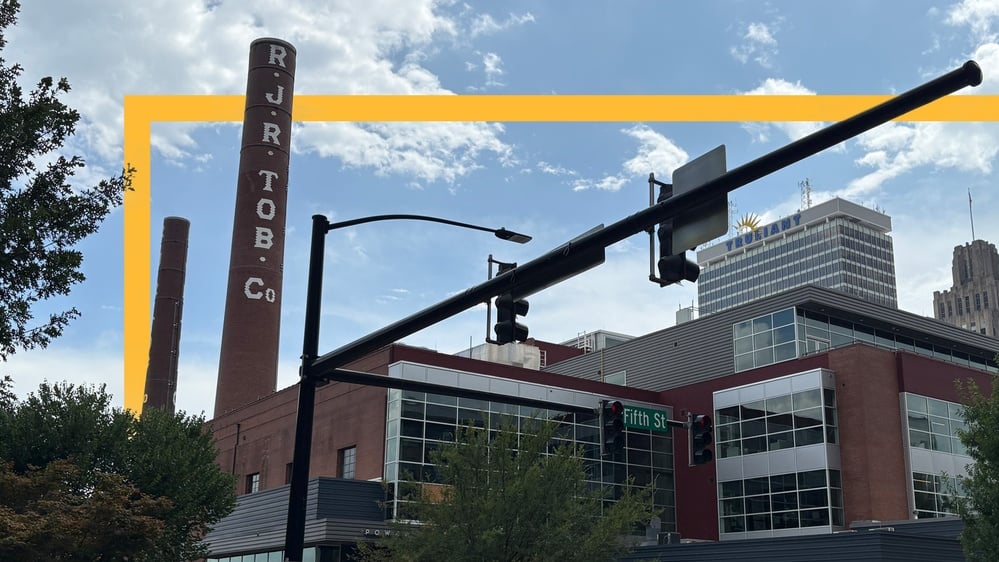
Winston-Salem’s downtown redevelopment centers on the Innovation Quarter as a mixed-use biotech hub built through public-private partnerships, tax incentives, and institutional support.
Automated analysis; not human reviewed.
·
21 of 52 available dimensions scored; omitted dimensions are not treated as neutral.
·
Verified supporting quotes for 0 of 21 scored dimensions.
Claim: Language occasionally conveys positive judgments about the revival.
“\"We’re a community of innovators and leaders and entrepreneurs.\"” · not found in supplied text
“\"The iQ’s transformation is described as a major success story.\"” · not found in supplied text
Counterevidence:
“Despite favorable language, the article includes verifiable data and quotes from officials.” · not found in supplied text
Why: Positive descriptors exist but are balanced by data.
Claim: The piece frames iQ growth as driven by established institutions and long-term partnerships.
“\"Wake Forest Baptist Medical Center (WFBMC) and Wexford Science & Technology are key partners in iQ.\"” · not found in supplied text
“\"In 2010, the city partnered with WFBMC and Wexford Science & Technology.\"” · not found in supplied text
“\"Leaders spent decades creating partnerships among universities, government agencies, investors and private developers.\"” · not found in supplied text
Counterevidence:
“The transformation is described as a long, challenging process, not a simple success story.” · not found in supplied text
Why: Reliance on established institutions supports establishment framing, tempered by notes of difficulty.
Claim: The article signals credibility via credible institutions and third-party validation.
“\"Awarded a perfect reliability rating from NewsGuard\"” · not found in supplied text
“\"The iQ project is described with quantifiable investment and outcomes.\"” · not found in supplied text
Counterevidence:
“Promotional app language could undermine perceived independence.” · not found in supplied text
Why: Third-party validation and institutional references support integrity; promotional content may undermine it.
Ambiguities: promotional content may color framing; data reliability could vary.
July 24, 2026 · 0 shares
The publisher frames Winston-Salem's downtown revival as a long-running, pro-market success rooted in public-private partnerships and institutional investment, while interleaving promotional assurances of neutrality and credibility.
Winston-Salem’s downtown redevelopment centers on the Innovation Quarter as a mixed-use biotech hub built through public-private partnerships, tax incentives, and institutional support.
Automated analysis; not human reviewed.
·
21 of 52 available dimensions scored; omitted dimensions are not treated as neutral.
·
Verified supporting quotes for 0 of 21 scored dimensions.
Claim: Language occasionally conveys positive judgments about the revival.
“\"We’re a community of innovators and leaders and entrepreneurs.\"” · not found in supplied text
“\"The iQ’s transformation is described as a major success story.\"” · not found in supplied text
Counterevidence:
“Despite favorable language, the article includes verifiable data and quotes from officials.” · not found in supplied text
Why: Positive descriptors exist but are balanced by data.
Claim: The piece frames iQ growth as driven by established institutions and long-term partnerships.
“\"Wake Forest Baptist Medical Center (WFBMC) and Wexford Science & Technology are key partners in iQ.\"” · not found in supplied text
“\"In 2010, the city partnered with WFBMC and Wexford Science & Technology.\"” · not found in supplied text
“\"Leaders spent decades creating partnerships among universities, government agencies, investors and private developers.\"” · not found in supplied text
Counterevidence:
“The transformation is described as a long, challenging process, not a simple success story.” · not found in supplied text
Why: Reliance on established institutions supports establishment framing, tempered by notes of difficulty.
Claim: The article signals credibility via credible institutions and third-party validation.
“\"Awarded a perfect reliability rating from NewsGuard\"” · not found in supplied text
“\"The iQ project is described with quantifiable investment and outcomes.\"” · not found in supplied text
Counterevidence:
“Promotional app language could undermine perceived independence.” · not found in supplied text
Why: Third-party validation and institutional references support integrity; promotional content may undermine it.
Ambiguities: promotional content may color framing; data reliability could vary.
Labiotech.eu frames Munich’s biotech ecosystem as a mature, globally competitive hub driven by public investment, university–industry collaboration, and multinational corporate engagement, using quantified success metrics and optimistic projections to justify its growth.
Overview of Munich's emergence as a leading European biotech and life sciences ecosystem, anchored by public investment and world-class research institutions.
Automated analysis; not human reviewed.
Limitations: Case-specific; relies on publisher-sourced data and quotes; independent verification is not provided.
·
8 of 52 available dimensions scored; omitted dimensions are not treated as neutral.
·
Verified supporting quotes for 2 of 8 scored dimensions.
Claim: The framing reflects support for public investment and established institutions, aligning with a conservative-leaning emphasis on stable, enduring infrastructure.
“Bavaria’s long-term commitment to innovation, whereby continuous public investment in research infrastructure like Quantum Valley, the Munich Center for Data Science, or the Pandemic Alliance Munich, combined with strong industry engagement, has created an environment where scientific discoveries can be translated rapidly into commercial success.” · exact text match
Counterevidence:
“To unlock its full potential, Germany and Bavaria should continue improving access to growth capital, accelerate technology transfer, simplify regulatory processes, and strengthen incentives for international talent and R&D savvy biopharmaceutical companies.” · exact text match
Why: Public investment and institutional emphasis imply a pro-establishment stance with mild conservative tilt.
Claim: The publisher frames Munich’s ecosystem as elite, globally connected, and driven by multinational players and large-scale investments.
“their presence creates an ideal environment where innovative startups, top-level academia and multinational companies collaborate closely – accelerating technology transfer, attracting and retaining international talent and reinforcing Munich’s position as one of Europe’s premier life science hubs.” · not found in supplied text
“Roche’s Penzberg campus alone ranks among Europe’s largest biotechnology centers and exemplifies the region’s unique combination of scientific excellence and industrial scale.” · exact text match
Counterevidence:
“To unlock its full potential, Germany and Bavaria should continue improving access to growth capital, accelerate technology transfer, simplify regulatory processes, and strengthen incentives for international talent and R&D savvy biopharmaceutical companies.” · exact text match
Why: References to multinational companies and global investment underscore an elitist frame; growth constraints are acknowledged via a policy suggestion.
Claim: The tone of the piece is bullish about Munich’s biotech growth prospects.
“Munich has long been recognized as one of Germany’s scientific powerhouses, but in recent years it has also emerged as one of Europe’s most dynamic biotech and life sciences ecosystems.” · exact text match
“record company creation, record financing volumes, and continued investments in infrastructure demonstrate that the ecosystem still has significant growth potential.” · exact text match
“We are very confident that the Munich biotech hub will continue to strengthen its position as one of Europe’s leading life science innovation and translation clusters.” · not found in supplied text
Counterevidence:
“To unlock its full potential, Germany and Bavaria should continue improving access to growth capital, accelerate technology transfer, simplify regulatory processes, and strengthen incentives for international talent and R&D savvy biopharmaceutical companies.” · exact text match
Why: Positive language and record metrics indicate bullish framing; policy caveats provide a counterpoint.
Claim: The piece carries normative assessments of livability and international openness as part of the ecosystem’s appeal.
“Munich Metropolitan Region is an exceptionally attractive place to live and work, consistently ranking among Europe’s most livable locations, as it offers an outstanding quality of life, excellent schools and universities, a vibrant international community, and easy access to the Alps and surrounding lakes.” · exact text match
“Combined with its open, international mindset and a highly skilled talent pool in all disciplines, these factors make the Munich Metropolitan Region an attractive destination for both life science and tech companies as well as international professionals.” · exact text match
Why: Explicitly positive rhetoric about livability and openness signals normative framing.
Claim: The article credits public policy and regional investment as drivers of the ecosystem’s success.
“Bavaria’s long-term commitment to innovation, whereby continuous public investment in research infrastructure ... has created an environment where scientific discoveries can be translated rapidly into commercial success.” · not found in supplied text
Counterevidence:
“To unlock its full potential, Germany and Bavaria should continue improving access to growth capital, accelerate technology transfer, simplify regulatory processes, and strengthen incentives for international talent and R&D savvy biopharmaceutical companies.” · exact text match
Why: Policy framing signals political support as a catalyst for growth.
Claim: The article exhibits explicit, unreserved optimism about future growth and leadership of Munich’s biotech hub.
“We are very confident that the Munich biotech hub will continue to strengthen its position as one of Europe’s leading life science innovation and translation clusters.” · not found in supplied text
“These figures demonstrate not only the strength of the underlying science and a scalable innovation base but also growing confidence from international investors and corporates.” · not found in supplied text
“record company creation, record financing volumes, and continued investments in infrastructure demonstrate that the ecosystem still has significant growth potential.” · exact text match
Counterevidence:
“To unlock its full potential, Germany and Bavaria should continue improving access to growth capital, accelerate technology transfer, simplify regulatory processes, and strengthen incentives for international talent and R&D savvy biopharmaceutical companies.” · exact text match
Why: Certainty is voiced in multiple quotes, though policy caveats temper the certainty.
Claim: The article frames the Munich biotech ecosystem as a robust, establishment-driven success story leveraging public investment and traditional institutions.
“Munich has long been recognized as one of Germany’s scientific powerhouses, but in recent years it has also emerged as one of Europe’s most dynamic biotech and life sciences ecosystems.” · exact text match
“their presence creates an ideal environment where innovative startups, top-level academia and multinational companies collaborate closely – accelerating technology transfer, attracting and retaining international talent and reinforcing Munich’s position as one of Europe’s premier life science hubs.” · not found in supplied text
“Munich benefits from a highly diversified innovation portfolio, making the ecosystem – and the companies in it – particularly resilient to financial gaps and therefore attractive for investors.” · exact text match
Counterevidence:
“To unlock its full potential, Germany and Bavaria should continue improving access to growth capital, accelerate technology transfer, simplify regulatory processes, and strengthen incentives for international talent and R&D savvy biopharmaceutical companies.” · exact text match
Why: Multiple statements frame Munich as an established, growth-oriented hub; policy suggestions provide a caveat that external conditions could limit that frame.
Claim: The data and quotes are used to support credible claims about Munich’s ecosystem.
“This ecosystem has created an environment that consistently translates scientific research into commercial innovation.” · not found in supplied text
“These figures demonstrate not only the strength of the underlying science and a scalable innovation base but also growing confidence from international investors and corporates.” · not found in supplied text
Why: Numbers and credible quotes underpin the portrayed credibility; there is no explicit independent verification discussed.
July 21, 2026 · 0 shares
Publisher framing positions Hong Kong as a mature, appealing biotech fundraising hub and casts Axiom's HK-first plan as a contrarian, market-driven move within a broader US–China biotech funding dynamic.
The report frames cross-border biotech listings and funding dynamics, highlighting Hong Kong's rising role as a biotech fundraising hub and contrasting it with the U.S. market through Axiom's HK-first strategy and related data.
Automated analysis; not human reviewed.
Limitations: Case-specific: relies on quoted sources and market data; may underrepresent countervailing views or non-public policy factors.
·
1 of 52 available dimensions scored; omitted dimensions are not treated as neutral.
·
Verified supporting quotes for 0 of 1 scored dimensions.
May overstate HK appeal; relies on few sources.
Promotional framing foregrounds Hewlett Foundation's $100M initiative as a high-impact, cross-cutting technology agenda, using sector names and a large monetary figure to signal credibility while offering minimal critical nuance.
Automated analysis; not human reviewed. Limitations: Concise, case-specific limitations and plausible alternative interpretations.
Publisher framing foregrounds industry promotion and market-based decarbonization by highlighting conferences, partnerships, and investments as authoritative progress in SAF and biomass.
A consolidated feed of industry announcements and conference details from Biomass Magazine and related organizations, highlighting SAF and biomass energy events.
Automated analysis; not human reviewed. Limitations: Relies on promotional press content; may overstate consensus or impact without reader critique.
Date-year gaps; promotional framing; limited critical perspective.
The publisher frames engineered gut-probiotic hydrogen sulfide modulation as precise, region-targeted biotechnology supported by ex vivo and in vivo results, while foregrounding patent and corporate affiliations to signal translational potential.
The study investigates engineered Escherichia coli strains to modulate hydrogen sulfide in the mammalian gut using region-specific metabolic inputs.
Translation to humans and long-term safety remain uncertain; ex vivo/mouse data may not generalize.
Publisher framing emphasizes Ascorbic acid regulation in plants as scientifically grounded and biofortification as a sustainable, promising route to improve human health, foregrounding genetic engineering and agronomic strategies.
Plant physiology review outlining how AsA biosynthesis, transport, degradation, and regeneration regulate plant antioxidant levels and how biofortification may enhance human health.
Automated analysis; not human reviewed.
Limitations: Concise, case-specific limitations and plausible alternative interpretations.
·
46 of 52 available dimensions scored; omitted dimensions are not treated as neutral.
·
Verified supporting quotes for 0 of 46 scored dimensions.
Claim: Subjective language accompanies a pro-biofortification stance.
“"biofortification, the process of augmenting the nutritional quality of food crops through genetic engineering, conventional breeding, or agronomic practices, represents a sustainable and promising strategy to increase AsA levels in staple crops and combat micronutrient malnutrition."” · not found in supplied text
Counterevidence:
“"This paper reviews, from a plant physiological perspective, how AsA accumulation is finely regulated by multiple processes including biosynthesis, transport, degradation, and regeneration cycles."” · not found in supplied text
Why: Inclusion of normative language alongside descriptive framing.
Claim: Framing is optimistic about AsA biofortification.
“"biofortification, the process of augmenting the nutritional quality of food crops... represents a sustainable and promising strategy to increase AsA levels..."” · not found in supplied text
“"Enhancing crop AsA content through genetic engineering and agronomic measures has become a research hotspot."” · not found in supplied text
Counterevidence:
“"Finally, it explores future research directions aimed at overcoming the 'ceiling effect'..."” · not found in supplied text
Why: Multiple pro-biofortification phrases mixed with cautionary notes.
Claim: Content framed as a forward-looking, high-interest topic in plant physiology and nutrition.
“"has become a research hotspot"” · not found in supplied text
“"sustainable and promising strategy"” · not found in supplied text
Counterevidence:
“"keywords" field not included in this excerpt” · not found in supplied text
Why: Hotspot language suggests interest.
Claim: Text mixes descriptive review framing with prescriptive health-oriented language.
“"the goal of promoting human health by enhancing plant health"” · not found in supplied text
“"sustainable and promising strategy"” · not found in supplied text
Counterevidence:
“"This paper reviews" indicates descriptive synthesis.” · not found in supplied text
Why: Presence of normative phrases alongside descriptive framing.
Claim: Article language conveys support for biofortification strategies.
“"represents a sustainable and promising strategy"” · not found in supplied text
“"research hotspot"” · not found in supplied text
Counterevidence:
“"This paper reviews" implies synthesis rather than opinion.” · not found in supplied text
Why: Explicit normative phrasing, albeit within a review.
Claim: Potential simplification of biofortification's impact.
“"sustainable and promising strategy"” · not found in supplied text
Counterevidence:
“"ceiling effect" and redox homeostasis emphasize complexity.” · not found in supplied text
Why: Positive framing may mask complexity.
Claim: Low to moderate confidence in universal success of biofortification.
“"promising"” · not found in supplied text
“"research hotspot"” · not found in supplied text
Counterevidence:
“"ceiling effect"” · not found in supplied text
Why: Mixed language; not definitive.
Claim: Mildly positive framing without emotional intensity.
“"sustainable and promising"” · not found in supplied text
“"research hotspot"” · not found in supplied text
Counterevidence:
“"ceiling effect"” · not found in supplied text
Why: Moderate optimism but not emotional.
Limited excerpt; missing methods/results; potential framing bias.
Geographic bias in halophilic metagenomic data is driven by uneven global investment, quantified by a Gini coefficient of 0.736, with a small number of countries contributing most datasets, alongside metadata gaps and a call for interoperable data frameworks and greater investment in underrepresented Global South regions.
An analysis of halophilic metagenomic research shows a severe geographic bias tied to uneven global investment, with pervasive metadata gaps and a push for interoperable data frameworks and greater investment in underrepresented regions.
Automated analysis; not human reviewed.
Limitations: Concise, case-specific limitations and plausible alternative interpretations.
·
5 of 52 available dimensions scored; omitted dimensions are not treated as neutral.
·
Verified supporting quotes for 4 of 5 scored dimensions.
Claim: The piece describes findings and makes calls for action regarding data interoperability and investment.
“the need for interoperable global data frameworks and more equitable investment in data generation and analysis, especially in underrepresented regions of the Global South.” · exact text match
Why: Explicit prescriptive recommendations alongside descriptive findings.
Claim: Gaps in geographic representation reflect unequal global research investment.
“a severe geographic bias linked to uneven global research investment (Gini coefficient = 0.736), with a small number of countries contributing to many publicly available datasets.” · exact text match
“the geographical bias highlights the need for interoperable global data frameworks and more equitable investment in data generation and analysis, especially in underrepresented regions of the Global South.” · exact text match
Counterevidence:
“environmental distribution of these samples showed moderate ecological uniformity (Pielou's Evenness = 0.818).” · not found in supplied text
Why: Direct data and calls for equitable investment support the claim of geographic bias tied to funding.
Claim: Article uses explicit data sources and a documented curation workflow, supporting data integrity.
“we analyzed PubMed-indexed studies and associated sequencing metadata deposited at the National Center for Biotechnology Information () Sequence Read Archive (SRA) using a curation workflow.” · exact text match
Why: Direct statement of data sources and curation workflow indicates methodological care.
Claim: The article demonstrates analytical rigor with defined metrics and data sources.
“Gini coefficient = 0.736” · exact text match
“Pielou's Evenness = 0.818” · exact text match
Why: Presence of established ecology metrics indicates analytical rigor.
Ambiguities: country counts not provided; Global South framing may affect emphasis.
Publisher framing casts Arcaea's perfume-tech as forward-looking, nature-embracing biotechnology, foregrounding credentials and lab methods to legitimize biotech fragrance creation.
A Boston-based biotech venture blends MIT-trained biology with perfumery to recreate scents from extinct flora using DNA data from Harvard Herbaria.
Automated analysis; not human reviewed. Limitations: Concise, case-specific; limited to provided text and quotes; lacks coverage of risk or regulatory context.
Ambiguities: risk/regulatory context not addressed.
July 24, 2026 · 0 shares
Publisher framing relies on executive quotes and governance-language to present the CFO transition as stable, well-managed, and investor-friendly.
Vir Biotechnology, Inc. is a Nasdaq-listed clinical-stage biopharmaceutical company focused on infectious diseases and cancer.
Automated analysis; not human reviewed.
Limitations: Concise, case-specific limitations and plausible alternative interpretations.
·
2 of 52 available dimensions scored; omitted dimensions are not treated as neutral.
·
Verified supporting quotes for 0 of 2 scored dimensions.
Claim: The piece reinforces established governance norms and investor-facing communications to portray stability.
“"Brent has deep institutional knowledge and financial acumen and has played a significant role in our strategic business development efforts and latest public offering, which helped to establish a strong cash position for the Company,” said Marianne De Backer, Chief Executive Officer of Vir Biotechnology.” · exact text match
“"The Board and I are confident that our financial organization is in good hands as we manage through this transition."” · not found in supplied text
Why: Quotes from CEO and board anchor the narrative in established governance and investor-focused language.
Claim: The article frames the CFO transition as a positive corporate development emphasizing continuity and qualifications.
“"Brent has deep institutional knowledge and financial acumen and has played a significant role in our strategic business development efforts and latest public offering, which helped to establish a strong cash position for the Company,” said Marianne De Backer, Chief Executive Officer of Vir Biotechnology.” · exact text match
“"The Board and I are confident that our financial organization is in good hands as we manage through this transition."” · not found in supplied text
Why: CEO and board endorsements anchor a favorable, continuity-oriented frame.
Year not stated; risk disclosures absent; potential marketing framing.
July 24, 2026 · 0 shares
Publisher framing relies on executive quotes and governance-language to present the CFO transition as stable, well-managed, and investor-friendly.
Vir Biotechnology, Inc. is a Nasdaq-listed clinical-stage biopharmaceutical company focused on infectious diseases and cancer.
Automated analysis; not human reviewed.
Limitations: Concise, case-specific limitations and plausible alternative interpretations.
·
2 of 52 available dimensions scored; omitted dimensions are not treated as neutral.
·
Verified supporting quotes for 0 of 2 scored dimensions.
Claim: The piece reinforces established governance norms and investor-facing communications to portray stability.
“"Brent has deep institutional knowledge and financial acumen and has played a significant role in our strategic business development efforts and latest public offering, which helped to establish a strong cash position for the Company,” said Marianne De Backer, Chief Executive Officer of Vir Biotechnology.” · exact text match
“"The Board and I are confident that our financial organization is in good hands as we manage through this transition."” · not found in supplied text
Why: Quotes from CEO and board anchor the narrative in established governance and investor-focused language.
Claim: The article frames the CFO transition as a positive corporate development emphasizing continuity and qualifications.
“"Brent has deep institutional knowledge and financial acumen and has played a significant role in our strategic business development efforts and latest public offering, which helped to establish a strong cash position for the Company,” said Marianne De Backer, Chief Executive Officer of Vir Biotechnology.” · exact text match
“"The Board and I are confident that our financial organization is in good hands as we manage through this transition."” · not found in supplied text
Why: CEO and board endorsements anchor a favorable, continuity-oriented frame.
Year not stated; risk disclosures absent; potential marketing framing.
Promotional framing foregrounds Hewlett Foundation's $100M initiative as a high-impact, cross-cutting technology agenda, using sector names and a large monetary figure to signal credibility while offering minimal critical nuance.
Automated analysis; not human reviewed. Limitations: Concise, case-specific limitations and plausible alternative interpretations.
Publisher framing foregrounds industry promotion and market-based decarbonization by highlighting conferences, partnerships, and investments as authoritative progress in SAF and biomass.
A consolidated feed of industry announcements and conference details from Biomass Magazine and related organizations, highlighting SAF and biomass energy events.
Automated analysis; not human reviewed. Limitations: Relies on promotional press content; may overstate consensus or impact without reader critique.
Date-year gaps; promotional framing; limited critical perspective.
The publisher frames engineered gut-probiotic hydrogen sulfide modulation as precise, region-targeted biotechnology supported by ex vivo and in vivo results, while foregrounding patent and corporate affiliations to signal translational potential.
The study investigates engineered Escherichia coli strains to modulate hydrogen sulfide in the mammalian gut using region-specific metabolic inputs.
Translation to humans and long-term safety remain uncertain; ex vivo/mouse data may not generalize.
July 24, 2026 · 0 shares
The publisher frames Winston-Salem's downtown revival as a long-running, pro-market success rooted in public-private partnerships and institutional investment, while interleaving promotional assurances of neutrality and credibility.
Winston-Salem’s downtown redevelopment centers on the Innovation Quarter as a mixed-use biotech hub built through public-private partnerships, tax incentives, and institutional support.
Automated analysis; not human reviewed. · 21 of 52 available dimensions scored; omitted dimensions are not treated as neutral. · Verified supporting quotes for 0 of 21 scored dimensions.
Claim: Language occasionally conveys positive judgments about the revival.
“\"We’re a community of innovators and leaders and entrepreneurs.\"” · not found in supplied text
“\"The iQ’s transformation is described as a major success story.\"” · not found in supplied text
Counterevidence:
“Despite favorable language, the article includes verifiable data and quotes from officials.” · not found in supplied text
Why: Positive descriptors exist but are balanced by data.
Claim: The piece frames iQ growth as driven by established institutions and long-term partnerships.
“\"Wake Forest Baptist Medical Center (WFBMC) and Wexford Science & Technology are key partners in iQ.\"” · not found in supplied text
“\"In 2010, the city partnered with WFBMC and Wexford Science & Technology.\"” · not found in supplied text
“\"Leaders spent decades creating partnerships among universities, government agencies, investors and private developers.\"” · not found in supplied text
Counterevidence:
“The transformation is described as a long, challenging process, not a simple success story.” · not found in supplied text
Why: Reliance on established institutions supports establishment framing, tempered by notes of difficulty.
Claim: The article signals credibility via credible institutions and third-party validation.
“\"Awarded a perfect reliability rating from NewsGuard\"” · not found in supplied text
“\"The iQ project is described with quantifiable investment and outcomes.\"” · not found in supplied text
Counterevidence:
“Promotional app language could undermine perceived independence.” · not found in supplied text
Why: Third-party validation and institutional references support integrity; promotional content may undermine it.
Ambiguities: promotional content may color framing; data reliability could vary.
July 24, 2026 · 0 shares
The publisher frames Winston-Salem's downtown revival as a long-running, pro-market success rooted in public-private partnerships and institutional investment, while interleaving promotional assurances of neutrality and credibility.
Winston-Salem’s downtown redevelopment centers on the Innovation Quarter as a mixed-use biotech hub built through public-private partnerships, tax incentives, and institutional support.
Automated analysis; not human reviewed. · 21 of 52 available dimensions scored; omitted dimensions are not treated as neutral. · Verified supporting quotes for 0 of 21 scored dimensions.
Claim: Language occasionally conveys positive judgments about the revival.
“\"We’re a community of innovators and leaders and entrepreneurs.\"” · not found in supplied text
“\"The iQ’s transformation is described as a major success story.\"” · not found in supplied text
Counterevidence:
“Despite favorable language, the article includes verifiable data and quotes from officials.” · not found in supplied text
Why: Positive descriptors exist but are balanced by data.
Claim: The piece frames iQ growth as driven by established institutions and long-term partnerships.
“\"Wake Forest Baptist Medical Center (WFBMC) and Wexford Science & Technology are key partners in iQ.\"” · not found in supplied text
“\"In 2010, the city partnered with WFBMC and Wexford Science & Technology.\"” · not found in supplied text
“\"Leaders spent decades creating partnerships among universities, government agencies, investors and private developers.\"” · not found in supplied text
Counterevidence:
“The transformation is described as a long, challenging process, not a simple success story.” · not found in supplied text
Why: Reliance on established institutions supports establishment framing, tempered by notes of difficulty.
Claim: The article signals credibility via credible institutions and third-party validation.
“\"Awarded a perfect reliability rating from NewsGuard\"” · not found in supplied text
“\"The iQ project is described with quantifiable investment and outcomes.\"” · not found in supplied text
Counterevidence:
“Promotional app language could undermine perceived independence.” · not found in supplied text
Why: Third-party validation and institutional references support integrity; promotional content may undermine it.
Ambiguities: promotional content may color framing; data reliability could vary.
Labiotech.eu frames Munich’s biotech ecosystem as a mature, globally competitive hub driven by public investment, university–industry collaboration, and multinational corporate engagement, using quantified success metrics and optimistic projections to justify its growth.
Overview of Munich's emergence as a leading European biotech and life sciences ecosystem, anchored by public investment and world-class research institutions.
Automated analysis; not human reviewed. Limitations: Case-specific; relies on publisher-sourced data and quotes; independent verification is not provided. · 8 of 52 available dimensions scored; omitted dimensions are not treated as neutral. · Verified supporting quotes for 2 of 8 scored dimensions.
Claim: The framing reflects support for public investment and established institutions, aligning with a conservative-leaning emphasis on stable, enduring infrastructure.
“Bavaria’s long-term commitment to innovation, whereby continuous public investment in research infrastructure like Quantum Valley, the Munich Center for Data Science, or the Pandemic Alliance Munich, combined with strong industry engagement, has created an environment where scientific discoveries can be translated rapidly into commercial success.” · exact text match
Counterevidence:
“To unlock its full potential, Germany and Bavaria should continue improving access to growth capital, accelerate technology transfer, simplify regulatory processes, and strengthen incentives for international talent and R&D savvy biopharmaceutical companies.” · exact text match
Why: Public investment and institutional emphasis imply a pro-establishment stance with mild conservative tilt.
Claim: The publisher frames Munich’s ecosystem as elite, globally connected, and driven by multinational players and large-scale investments.
“their presence creates an ideal environment where innovative startups, top-level academia and multinational companies collaborate closely – accelerating technology transfer, attracting and retaining international talent and reinforcing Munich’s position as one of Europe’s premier life science hubs.” · not found in supplied text
“Roche’s Penzberg campus alone ranks among Europe’s largest biotechnology centers and exemplifies the region’s unique combination of scientific excellence and industrial scale.” · exact text match
Counterevidence:
“To unlock its full potential, Germany and Bavaria should continue improving access to growth capital, accelerate technology transfer, simplify regulatory processes, and strengthen incentives for international talent and R&D savvy biopharmaceutical companies.” · exact text match
Why: References to multinational companies and global investment underscore an elitist frame; growth constraints are acknowledged via a policy suggestion.
Claim: The tone of the piece is bullish about Munich’s biotech growth prospects.
“Munich has long been recognized as one of Germany’s scientific powerhouses, but in recent years it has also emerged as one of Europe’s most dynamic biotech and life sciences ecosystems.” · exact text match
“record company creation, record financing volumes, and continued investments in infrastructure demonstrate that the ecosystem still has significant growth potential.” · exact text match
“We are very confident that the Munich biotech hub will continue to strengthen its position as one of Europe’s leading life science innovation and translation clusters.” · not found in supplied text
Counterevidence:
“To unlock its full potential, Germany and Bavaria should continue improving access to growth capital, accelerate technology transfer, simplify regulatory processes, and strengthen incentives for international talent and R&D savvy biopharmaceutical companies.” · exact text match
Why: Positive language and record metrics indicate bullish framing; policy caveats provide a counterpoint.
Claim: The piece carries normative assessments of livability and international openness as part of the ecosystem’s appeal.
“Munich Metropolitan Region is an exceptionally attractive place to live and work, consistently ranking among Europe’s most livable locations, as it offers an outstanding quality of life, excellent schools and universities, a vibrant international community, and easy access to the Alps and surrounding lakes.” · exact text match
“Combined with its open, international mindset and a highly skilled talent pool in all disciplines, these factors make the Munich Metropolitan Region an attractive destination for both life science and tech companies as well as international professionals.” · exact text match
Why: Explicitly positive rhetoric about livability and openness signals normative framing.
Claim: The article credits public policy and regional investment as drivers of the ecosystem’s success.
“Bavaria’s long-term commitment to innovation, whereby continuous public investment in research infrastructure ... has created an environment where scientific discoveries can be translated rapidly into commercial success.” · not found in supplied text
Counterevidence:
“To unlock its full potential, Germany and Bavaria should continue improving access to growth capital, accelerate technology transfer, simplify regulatory processes, and strengthen incentives for international talent and R&D savvy biopharmaceutical companies.” · exact text match
Why: Policy framing signals political support as a catalyst for growth.
Claim: The article exhibits explicit, unreserved optimism about future growth and leadership of Munich’s biotech hub.
“We are very confident that the Munich biotech hub will continue to strengthen its position as one of Europe’s leading life science innovation and translation clusters.” · not found in supplied text
“These figures demonstrate not only the strength of the underlying science and a scalable innovation base but also growing confidence from international investors and corporates.” · not found in supplied text
“record company creation, record financing volumes, and continued investments in infrastructure demonstrate that the ecosystem still has significant growth potential.” · exact text match
Counterevidence:
“To unlock its full potential, Germany and Bavaria should continue improving access to growth capital, accelerate technology transfer, simplify regulatory processes, and strengthen incentives for international talent and R&D savvy biopharmaceutical companies.” · exact text match
Why: Certainty is voiced in multiple quotes, though policy caveats temper the certainty.
Claim: The article frames the Munich biotech ecosystem as a robust, establishment-driven success story leveraging public investment and traditional institutions.
“Munich has long been recognized as one of Germany’s scientific powerhouses, but in recent years it has also emerged as one of Europe’s most dynamic biotech and life sciences ecosystems.” · exact text match
“their presence creates an ideal environment where innovative startups, top-level academia and multinational companies collaborate closely – accelerating technology transfer, attracting and retaining international talent and reinforcing Munich’s position as one of Europe’s premier life science hubs.” · not found in supplied text
“Munich benefits from a highly diversified innovation portfolio, making the ecosystem – and the companies in it – particularly resilient to financial gaps and therefore attractive for investors.” · exact text match
Counterevidence:
“To unlock its full potential, Germany and Bavaria should continue improving access to growth capital, accelerate technology transfer, simplify regulatory processes, and strengthen incentives for international talent and R&D savvy biopharmaceutical companies.” · exact text match
Why: Multiple statements frame Munich as an established, growth-oriented hub; policy suggestions provide a caveat that external conditions could limit that frame.
Claim: The data and quotes are used to support credible claims about Munich’s ecosystem.
“This ecosystem has created an environment that consistently translates scientific research into commercial innovation.” · not found in supplied text
“These figures demonstrate not only the strength of the underlying science and a scalable innovation base but also growing confidence from international investors and corporates.” · not found in supplied text
Why: Numbers and credible quotes underpin the portrayed credibility; there is no explicit independent verification discussed.
Promotional framing foregrounds Hewlett Foundation's $100M initiative as a high-impact, cross-cutting technology agenda, using sector names and a large monetary figure to signal credibility while offering minimal critical nuance.
Automated analysis; not human reviewed. Limitations: Concise, case-specific limitations and plausible alternative interpretations.
Publisher framing foregrounds industry promotion and market-based decarbonization by highlighting conferences, partnerships, and investments as authoritative progress in SAF and biomass.
A consolidated feed of industry announcements and conference details from Biomass Magazine and related organizations, highlighting SAF and biomass energy events.
Automated analysis; not human reviewed. Limitations: Relies on promotional press content; may overstate consensus or impact without reader critique.
Date-year gaps; promotional framing; limited critical perspective.
Publisher framing emphasizes Ascorbic acid regulation in plants as scientifically grounded and biofortification as a sustainable, promising route to improve human health, foregrounding genetic engineering and agronomic strategies.
Plant physiology review outlining how AsA biosynthesis, transport, degradation, and regeneration regulate plant antioxidant levels and how biofortification may enhance human health.
Automated analysis; not human reviewed. Limitations: Concise, case-specific limitations and plausible alternative interpretations. · 46 of 52 available dimensions scored; omitted dimensions are not treated as neutral. · Verified supporting quotes for 0 of 46 scored dimensions.
Claim: Subjective language accompanies a pro-biofortification stance.
“"biofortification, the process of augmenting the nutritional quality of food crops through genetic engineering, conventional breeding, or agronomic practices, represents a sustainable and promising strategy to increase AsA levels in staple crops and combat micronutrient malnutrition."” · not found in supplied text
Counterevidence:
“"This paper reviews, from a plant physiological perspective, how AsA accumulation is finely regulated by multiple processes including biosynthesis, transport, degradation, and regeneration cycles."” · not found in supplied text
Why: Inclusion of normative language alongside descriptive framing.
Claim: Framing is optimistic about AsA biofortification.
“"biofortification, the process of augmenting the nutritional quality of food crops... represents a sustainable and promising strategy to increase AsA levels..."” · not found in supplied text
“"Enhancing crop AsA content through genetic engineering and agronomic measures has become a research hotspot."” · not found in supplied text
Counterevidence:
“"Finally, it explores future research directions aimed at overcoming the 'ceiling effect'..."” · not found in supplied text
Why: Multiple pro-biofortification phrases mixed with cautionary notes.
Claim: Content framed as a forward-looking, high-interest topic in plant physiology and nutrition.
“"has become a research hotspot"” · not found in supplied text
“"sustainable and promising strategy"” · not found in supplied text
Counterevidence:
“"keywords" field not included in this excerpt” · not found in supplied text
Why: Hotspot language suggests interest.
Claim: Text mixes descriptive review framing with prescriptive health-oriented language.
“"the goal of promoting human health by enhancing plant health"” · not found in supplied text
“"sustainable and promising strategy"” · not found in supplied text
Counterevidence:
“"This paper reviews" indicates descriptive synthesis.” · not found in supplied text
Why: Presence of normative phrases alongside descriptive framing.
Claim: Article language conveys support for biofortification strategies.
“"represents a sustainable and promising strategy"” · not found in supplied text
“"research hotspot"” · not found in supplied text
Counterevidence:
“"This paper reviews" implies synthesis rather than opinion.” · not found in supplied text
Why: Explicit normative phrasing, albeit within a review.
Claim: Potential simplification of biofortification's impact.
“"sustainable and promising strategy"” · not found in supplied text
Counterevidence:
“"ceiling effect" and redox homeostasis emphasize complexity.” · not found in supplied text
Why: Positive framing may mask complexity.
Claim: Low to moderate confidence in universal success of biofortification.
“"promising"” · not found in supplied text
“"research hotspot"” · not found in supplied text
Counterevidence:
“"ceiling effect"” · not found in supplied text
Why: Mixed language; not definitive.
Claim: Mildly positive framing without emotional intensity.
“"sustainable and promising"” · not found in supplied text
“"research hotspot"” · not found in supplied text
Counterevidence:
“"ceiling effect"” · not found in supplied text
Why: Moderate optimism but not emotional.
Limited excerpt; missing methods/results; potential framing bias.
Geographic bias in halophilic metagenomic data is driven by uneven global investment, quantified by a Gini coefficient of 0.736, with a small number of countries contributing most datasets, alongside metadata gaps and a call for interoperable data frameworks and greater investment in underrepresented Global South regions.
An analysis of halophilic metagenomic research shows a severe geographic bias tied to uneven global investment, with pervasive metadata gaps and a push for interoperable data frameworks and greater investment in underrepresented regions.
Automated analysis; not human reviewed. Limitations: Concise, case-specific limitations and plausible alternative interpretations. · 5 of 52 available dimensions scored; omitted dimensions are not treated as neutral. · Verified supporting quotes for 4 of 5 scored dimensions.
Claim: The piece describes findings and makes calls for action regarding data interoperability and investment.
“the need for interoperable global data frameworks and more equitable investment in data generation and analysis, especially in underrepresented regions of the Global South.” · exact text match
Why: Explicit prescriptive recommendations alongside descriptive findings.
Claim: Gaps in geographic representation reflect unequal global research investment.
“a severe geographic bias linked to uneven global research investment (Gini coefficient = 0.736), with a small number of countries contributing to many publicly available datasets.” · exact text match
“the geographical bias highlights the need for interoperable global data frameworks and more equitable investment in data generation and analysis, especially in underrepresented regions of the Global South.” · exact text match
Counterevidence:
“environmental distribution of these samples showed moderate ecological uniformity (Pielou's Evenness = 0.818).” · not found in supplied text
Why: Direct data and calls for equitable investment support the claim of geographic bias tied to funding.
Claim: Article uses explicit data sources and a documented curation workflow, supporting data integrity.
“we analyzed PubMed-indexed studies and associated sequencing metadata deposited at the National Center for Biotechnology Information () Sequence Read Archive (SRA) using a curation workflow.” · exact text match
Why: Direct statement of data sources and curation workflow indicates methodological care.
Claim: The article demonstrates analytical rigor with defined metrics and data sources.
“Gini coefficient = 0.736” · exact text match
“Pielou's Evenness = 0.818” · exact text match
Why: Presence of established ecology metrics indicates analytical rigor.
Ambiguities: country counts not provided; Global South framing may affect emphasis.
The publisher frames engineered gut-probiotic hydrogen sulfide modulation as precise, region-targeted biotechnology supported by ex vivo and in vivo results, while foregrounding patent and corporate affiliations to signal translational potential.
The study investigates engineered Escherichia coli strains to modulate hydrogen sulfide in the mammalian gut using region-specific metabolic inputs.
Translation to humans and long-term safety remain uncertain; ex vivo/mouse data may not generalize.
July 21, 2026 · 0 shares
Publisher framing positions Hong Kong as a mature, appealing biotech fundraising hub and casts Axiom's HK-first plan as a contrarian, market-driven move within a broader US–China biotech funding dynamic.
The report frames cross-border biotech listings and funding dynamics, highlighting Hong Kong's rising role as a biotech fundraising hub and contrasting it with the U.S. market through Axiom's HK-first strategy and related data.
Automated analysis; not human reviewed. Limitations: Case-specific: relies on quoted sources and market data; may underrepresent countervailing views or non-public policy factors. · 1 of 52 available dimensions scored; omitted dimensions are not treated as neutral. · Verified supporting quotes for 0 of 1 scored dimensions.
May overstate HK appeal; relies on few sources.
July 24, 2026 · 0 shares
Publisher framing relies on executive quotes and governance-language to present the CFO transition as stable, well-managed, and investor-friendly.
Vir Biotechnology, Inc. is a Nasdaq-listed clinical-stage biopharmaceutical company focused on infectious diseases and cancer.
Automated analysis; not human reviewed. Limitations: Concise, case-specific limitations and plausible alternative interpretations. · 2 of 52 available dimensions scored; omitted dimensions are not treated as neutral. · Verified supporting quotes for 0 of 2 scored dimensions.
Claim: The piece reinforces established governance norms and investor-facing communications to portray stability.
“"Brent has deep institutional knowledge and financial acumen and has played a significant role in our strategic business development efforts and latest public offering, which helped to establish a strong cash position for the Company,” said Marianne De Backer, Chief Executive Officer of Vir Biotechnology.” · exact text match
“"The Board and I are confident that our financial organization is in good hands as we manage through this transition."” · not found in supplied text
Why: Quotes from CEO and board anchor the narrative in established governance and investor-focused language.
Claim: The article frames the CFO transition as a positive corporate development emphasizing continuity and qualifications.
“"Brent has deep institutional knowledge and financial acumen and has played a significant role in our strategic business development efforts and latest public offering, which helped to establish a strong cash position for the Company,” said Marianne De Backer, Chief Executive Officer of Vir Biotechnology.” · exact text match
“"The Board and I are confident that our financial organization is in good hands as we manage through this transition."” · not found in supplied text
Why: CEO and board endorsements anchor a favorable, continuity-oriented frame.
Year not stated; risk disclosures absent; potential marketing framing.
Helium Bias
Promotional framing foregrounds Hewlett Foundation's $100M initiative as a high-impact, cross-cutting technology agenda, using sector names and a large monetary figure to signal credibility while offering minimal critical nuance.
Automated analysis; not human reviewed. Limitations: Concise, case-specific limitations and plausible alternative interpretations.
Labiotech.eu frames Munich’s biotech ecosystem as a mature, globally competitive hub driven by public investment, university–industry collaboration, and multinational corporate engagement, using quantified success metrics and optimistic projections to justify its growth.
Overview of Munich's emergence as a leading European biotech and life sciences ecosystem, anchored by public investment and world-class research institutions.
Automated analysis; not human reviewed. Limitations: Case-specific; relies on publisher-sourced data and quotes; independent verification is not provided. · 8 of 52 available dimensions scored; omitted dimensions are not treated as neutral. · Verified supporting quotes for 2 of 8 scored dimensions.
Claim: The framing reflects support for public investment and established institutions, aligning with a conservative-leaning emphasis on stable, enduring infrastructure.
“Bavaria’s long-term commitment to innovation, whereby continuous public investment in research infrastructure like Quantum Valley, the Munich Center for Data Science, or the Pandemic Alliance Munich, combined with strong industry engagement, has created an environment where scientific discoveries can be translated rapidly into commercial success.” · exact text match
Counterevidence:
“To unlock its full potential, Germany and Bavaria should continue improving access to growth capital, accelerate technology transfer, simplify regulatory processes, and strengthen incentives for international talent and R&D savvy biopharmaceutical companies.” · exact text match
Why: Public investment and institutional emphasis imply a pro-establishment stance with mild conservative tilt.
Claim: The publisher frames Munich’s ecosystem as elite, globally connected, and driven by multinational players and large-scale investments.
“their presence creates an ideal environment where innovative startups, top-level academia and multinational companies collaborate closely – accelerating technology transfer, attracting and retaining international talent and reinforcing Munich’s position as one of Europe’s premier life science hubs.” · not found in supplied text
“Roche’s Penzberg campus alone ranks among Europe’s largest biotechnology centers and exemplifies the region’s unique combination of scientific excellence and industrial scale.” · exact text match
Counterevidence:
“To unlock its full potential, Germany and Bavaria should continue improving access to growth capital, accelerate technology transfer, simplify regulatory processes, and strengthen incentives for international talent and R&D savvy biopharmaceutical companies.” · exact text match
Why: References to multinational companies and global investment underscore an elitist frame; growth constraints are acknowledged via a policy suggestion.
Claim: The tone of the piece is bullish about Munich’s biotech growth prospects.
“Munich has long been recognized as one of Germany’s scientific powerhouses, but in recent years it has also emerged as one of Europe’s most dynamic biotech and life sciences ecosystems.” · exact text match
“record company creation, record financing volumes, and continued investments in infrastructure demonstrate that the ecosystem still has significant growth potential.” · exact text match
“We are very confident that the Munich biotech hub will continue to strengthen its position as one of Europe’s leading life science innovation and translation clusters.” · not found in supplied text
Counterevidence:
“To unlock its full potential, Germany and Bavaria should continue improving access to growth capital, accelerate technology transfer, simplify regulatory processes, and strengthen incentives for international talent and R&D savvy biopharmaceutical companies.” · exact text match
Why: Positive language and record metrics indicate bullish framing; policy caveats provide a counterpoint.
Claim: The piece carries normative assessments of livability and international openness as part of the ecosystem’s appeal.
“Munich Metropolitan Region is an exceptionally attractive place to live and work, consistently ranking among Europe’s most livable locations, as it offers an outstanding quality of life, excellent schools and universities, a vibrant international community, and easy access to the Alps and surrounding lakes.” · exact text match
“Combined with its open, international mindset and a highly skilled talent pool in all disciplines, these factors make the Munich Metropolitan Region an attractive destination for both life science and tech companies as well as international professionals.” · exact text match
Why: Explicitly positive rhetoric about livability and openness signals normative framing.
Claim: The article credits public policy and regional investment as drivers of the ecosystem’s success.
“Bavaria’s long-term commitment to innovation, whereby continuous public investment in research infrastructure ... has created an environment where scientific discoveries can be translated rapidly into commercial success.” · not found in supplied text
Counterevidence:
“To unlock its full potential, Germany and Bavaria should continue improving access to growth capital, accelerate technology transfer, simplify regulatory processes, and strengthen incentives for international talent and R&D savvy biopharmaceutical companies.” · exact text match
Why: Policy framing signals political support as a catalyst for growth.
Claim: The article exhibits explicit, unreserved optimism about future growth and leadership of Munich’s biotech hub.
“We are very confident that the Munich biotech hub will continue to strengthen its position as one of Europe’s leading life science innovation and translation clusters.” · not found in supplied text
“These figures demonstrate not only the strength of the underlying science and a scalable innovation base but also growing confidence from international investors and corporates.” · not found in supplied text
“record company creation, record financing volumes, and continued investments in infrastructure demonstrate that the ecosystem still has significant growth potential.” · exact text match
Counterevidence:
“To unlock its full potential, Germany and Bavaria should continue improving access to growth capital, accelerate technology transfer, simplify regulatory processes, and strengthen incentives for international talent and R&D savvy biopharmaceutical companies.” · exact text match
Why: Certainty is voiced in multiple quotes, though policy caveats temper the certainty.
Claim: The article frames the Munich biotech ecosystem as a robust, establishment-driven success story leveraging public investment and traditional institutions.
“Munich has long been recognized as one of Germany’s scientific powerhouses, but in recent years it has also emerged as one of Europe’s most dynamic biotech and life sciences ecosystems.” · exact text match
“their presence creates an ideal environment where innovative startups, top-level academia and multinational companies collaborate closely – accelerating technology transfer, attracting and retaining international talent and reinforcing Munich’s position as one of Europe’s premier life science hubs.” · not found in supplied text
“Munich benefits from a highly diversified innovation portfolio, making the ecosystem – and the companies in it – particularly resilient to financial gaps and therefore attractive for investors.” · exact text match
Counterevidence:
“To unlock its full potential, Germany and Bavaria should continue improving access to growth capital, accelerate technology transfer, simplify regulatory processes, and strengthen incentives for international talent and R&D savvy biopharmaceutical companies.” · exact text match
Why: Multiple statements frame Munich as an established, growth-oriented hub; policy suggestions provide a caveat that external conditions could limit that frame.
Claim: The data and quotes are used to support credible claims about Munich’s ecosystem.
“This ecosystem has created an environment that consistently translates scientific research into commercial innovation.” · not found in supplied text
“These figures demonstrate not only the strength of the underlying science and a scalable innovation base but also growing confidence from international investors and corporates.” · not found in supplied text
Why: Numbers and credible quotes underpin the portrayed credibility; there is no explicit independent verification discussed.
Publisher framing foregrounds industry promotion and market-based decarbonization by highlighting conferences, partnerships, and investments as authoritative progress in SAF and biomass.
A consolidated feed of industry announcements and conference details from Biomass Magazine and related organizations, highlighting SAF and biomass energy events.
Automated analysis; not human reviewed. Limitations: Relies on promotional press content; may overstate consensus or impact without reader critique.
Date-year gaps; promotional framing; limited critical perspective.
July 24, 2026 · 0 shares
The publisher frames Winston-Salem's downtown revival as a long-running, pro-market success rooted in public-private partnerships and institutional investment, while interleaving promotional assurances of neutrality and credibility.
Winston-Salem’s downtown redevelopment centers on the Innovation Quarter as a mixed-use biotech hub built through public-private partnerships, tax incentives, and institutional support.
Automated analysis; not human reviewed. · 21 of 52 available dimensions scored; omitted dimensions are not treated as neutral. · Verified supporting quotes for 0 of 21 scored dimensions.
Claim: Language occasionally conveys positive judgments about the revival.
“\"We’re a community of innovators and leaders and entrepreneurs.\"” · not found in supplied text
“\"The iQ’s transformation is described as a major success story.\"” · not found in supplied text
Counterevidence:
“Despite favorable language, the article includes verifiable data and quotes from officials.” · not found in supplied text
Why: Positive descriptors exist but are balanced by data.
Claim: The piece frames iQ growth as driven by established institutions and long-term partnerships.
“\"Wake Forest Baptist Medical Center (WFBMC) and Wexford Science & Technology are key partners in iQ.\"” · not found in supplied text
“\"In 2010, the city partnered with WFBMC and Wexford Science & Technology.\"” · not found in supplied text
“\"Leaders spent decades creating partnerships among universities, government agencies, investors and private developers.\"” · not found in supplied text
Counterevidence:
“The transformation is described as a long, challenging process, not a simple success story.” · not found in supplied text
Why: Reliance on established institutions supports establishment framing, tempered by notes of difficulty.
Claim: The article signals credibility via credible institutions and third-party validation.
“\"Awarded a perfect reliability rating from NewsGuard\"” · not found in supplied text
“\"The iQ project is described with quantifiable investment and outcomes.\"” · not found in supplied text
Counterevidence:
“Promotional app language could undermine perceived independence.” · not found in supplied text
Why: Third-party validation and institutional references support integrity; promotional content may undermine it.
Ambiguities: promotional content may color framing; data reliability could vary.
Publisher frames Bryan Johnson’s anti-aging experiments as a high-stakes, ethically fraught frontier, foregrounding Glenn Beck’s alarmist framing and Frankenstein references to invite caution about emerging biotechnologies.
The piece centers on Bryan Johnson’s high-cost anti-aging program and the cloning claim, with Glenn Beck offering a cautionary view.
Automated analysis; not human reviewed. Limitations: Concise, case-specific limitations and plausible alternative interpretations. · 38 of 52 available dimensions scored; omitted dimensions are not treated as neutral. · Verified supporting quotes for 1 of 38 scored dimensions.
Claim: The framing relies on conservative media anchors and BlazeTV branding.
“Glenn Beck sets the record straight on the reality of Johnson’s cloning experiment.” · not found in supplied text
“subscribe to BlazeTV — the largest multi-platform network of voices who love America, defend the Constitution, and live the American dream.” · exact text match
Counterevidence:
“That's it. There's no baby, no second Bryan, no clone of any real sense. Just a dish with his own cells reset to act young.” · not found in supplied text
Why: Anchors Beck and BlazeTV branding anchor framing in a conservative media context.
Claim: The piece foregrounds the potential dangers and 'dark side' of biotech.
“every technological breakthrough now feels like we're speed-running through the plot of every movie that terrified me as a child” · exact text match
“Frankenstein ... warning that maybe, just maybe, we should spend as much time asking ‘should we?’ as we spend asking ‘can we?’” · not found in supplied text
“technology genuinely could save millions of lives — Parkinson's, blindness, heart disease, kidney failure, cancer — but it’s what else it could do in the hands of the wrong people that troubles Glenn.” · not found in supplied text
Counterevidence:
“The medical implications of this science — regrowing organs, restoring eyesight, reversing disease — are 'really exciting,' he acknowledges.” · not found in supplied text
Why: Beck pairs excitement with warnings about misuse, signaling cautious fear in coverage.
Claim: The outlet embeds content within BlazeTV's branding and Beck’s platform.
“subscribe to BlazeTV — the largest multi-platform network of voices who love America, defend the Constitution, and live the American dream.” · exact text match
Counterevidence:
“Glenn Beck sets the record straight on the reality of Johnson’s cloning experiment.” · not found in supplied text
Why: Branding aligns report with a recognizable conservative media platform.
Ambiguities in framing; limited evidence beyond Beck's perspective.
Story Blindspots
July 24, 2026 · 0 shares
Publisher framing relies on executive quotes and governance-language to present the CFO transition as stable, well-managed, and investor-friendly.
Vir Biotechnology, Inc. is a Nasdaq-listed clinical-stage biopharmaceutical company focused on infectious diseases and cancer.
Automated analysis; not human reviewed. Limitations: Concise, case-specific limitations and plausible alternative interpretations. · 2 of 52 available dimensions scored; omitted dimensions are not treated as neutral. · Verified supporting quotes for 0 of 2 scored dimensions.
Claim: The piece reinforces established governance norms and investor-facing communications to portray stability.
“"Brent has deep institutional knowledge and financial acumen and has played a significant role in our strategic business development efforts and latest public offering, which helped to establish a strong cash position for the Company,” said Marianne De Backer, Chief Executive Officer of Vir Biotechnology.” · exact text match
“"The Board and I are confident that our financial organization is in good hands as we manage through this transition."” · not found in supplied text
Why: Quotes from CEO and board anchor the narrative in established governance and investor-focused language.
Claim: The article frames the CFO transition as a positive corporate development emphasizing continuity and qualifications.
“"Brent has deep institutional knowledge and financial acumen and has played a significant role in our strategic business development efforts and latest public offering, which helped to establish a strong cash position for the Company,” said Marianne De Backer, Chief Executive Officer of Vir Biotechnology.” · exact text match
“"The Board and I are confident that our financial organization is in good hands as we manage through this transition."” · not found in supplied text
Why: CEO and board endorsements anchor a favorable, continuity-oriented frame.
Year not stated; risk disclosures absent; potential marketing framing.
Promotional framing foregrounds Hewlett Foundation's $100M initiative as a high-impact, cross-cutting technology agenda, using sector names and a large monetary figure to signal credibility while offering minimal critical nuance.
Automated analysis; not human reviewed. Limitations: Concise, case-specific limitations and plausible alternative interpretations.
Labiotech.eu frames Munich’s biotech ecosystem as a mature, globally competitive hub driven by public investment, university–industry collaboration, and multinational corporate engagement, using quantified success metrics and optimistic projections to justify its growth.
Overview of Munich's emergence as a leading European biotech and life sciences ecosystem, anchored by public investment and world-class research institutions.
Automated analysis; not human reviewed. Limitations: Case-specific; relies on publisher-sourced data and quotes; independent verification is not provided. · 8 of 52 available dimensions scored; omitted dimensions are not treated as neutral. · Verified supporting quotes for 2 of 8 scored dimensions.
Claim: The framing reflects support for public investment and established institutions, aligning with a conservative-leaning emphasis on stable, enduring infrastructure.
“Bavaria’s long-term commitment to innovation, whereby continuous public investment in research infrastructure like Quantum Valley, the Munich Center for Data Science, or the Pandemic Alliance Munich, combined with strong industry engagement, has created an environment where scientific discoveries can be translated rapidly into commercial success.” · exact text match
Counterevidence:
“To unlock its full potential, Germany and Bavaria should continue improving access to growth capital, accelerate technology transfer, simplify regulatory processes, and strengthen incentives for international talent and R&D savvy biopharmaceutical companies.” · exact text match
Why: Public investment and institutional emphasis imply a pro-establishment stance with mild conservative tilt.
Claim: The publisher frames Munich’s ecosystem as elite, globally connected, and driven by multinational players and large-scale investments.
“their presence creates an ideal environment where innovative startups, top-level academia and multinational companies collaborate closely – accelerating technology transfer, attracting and retaining international talent and reinforcing Munich’s position as one of Europe’s premier life science hubs.” · not found in supplied text
“Roche’s Penzberg campus alone ranks among Europe’s largest biotechnology centers and exemplifies the region’s unique combination of scientific excellence and industrial scale.” · exact text match
Counterevidence:
“To unlock its full potential, Germany and Bavaria should continue improving access to growth capital, accelerate technology transfer, simplify regulatory processes, and strengthen incentives for international talent and R&D savvy biopharmaceutical companies.” · exact text match
Why: References to multinational companies and global investment underscore an elitist frame; growth constraints are acknowledged via a policy suggestion.
Claim: The tone of the piece is bullish about Munich’s biotech growth prospects.
“Munich has long been recognized as one of Germany’s scientific powerhouses, but in recent years it has also emerged as one of Europe’s most dynamic biotech and life sciences ecosystems.” · exact text match
“record company creation, record financing volumes, and continued investments in infrastructure demonstrate that the ecosystem still has significant growth potential.” · exact text match
“We are very confident that the Munich biotech hub will continue to strengthen its position as one of Europe’s leading life science innovation and translation clusters.” · not found in supplied text
Counterevidence:
“To unlock its full potential, Germany and Bavaria should continue improving access to growth capital, accelerate technology transfer, simplify regulatory processes, and strengthen incentives for international talent and R&D savvy biopharmaceutical companies.” · exact text match
Why: Positive language and record metrics indicate bullish framing; policy caveats provide a counterpoint.
Claim: The piece carries normative assessments of livability and international openness as part of the ecosystem’s appeal.
“Munich Metropolitan Region is an exceptionally attractive place to live and work, consistently ranking among Europe’s most livable locations, as it offers an outstanding quality of life, excellent schools and universities, a vibrant international community, and easy access to the Alps and surrounding lakes.” · exact text match
“Combined with its open, international mindset and a highly skilled talent pool in all disciplines, these factors make the Munich Metropolitan Region an attractive destination for both life science and tech companies as well as international professionals.” · exact text match
Why: Explicitly positive rhetoric about livability and openness signals normative framing.
Claim: The article credits public policy and regional investment as drivers of the ecosystem’s success.
“Bavaria’s long-term commitment to innovation, whereby continuous public investment in research infrastructure ... has created an environment where scientific discoveries can be translated rapidly into commercial success.” · not found in supplied text
Counterevidence:
“To unlock its full potential, Germany and Bavaria should continue improving access to growth capital, accelerate technology transfer, simplify regulatory processes, and strengthen incentives for international talent and R&D savvy biopharmaceutical companies.” · exact text match
Why: Policy framing signals political support as a catalyst for growth.
Claim: The article exhibits explicit, unreserved optimism about future growth and leadership of Munich’s biotech hub.
“We are very confident that the Munich biotech hub will continue to strengthen its position as one of Europe’s leading life science innovation and translation clusters.” · not found in supplied text
“These figures demonstrate not only the strength of the underlying science and a scalable innovation base but also growing confidence from international investors and corporates.” · not found in supplied text
“record company creation, record financing volumes, and continued investments in infrastructure demonstrate that the ecosystem still has significant growth potential.” · exact text match
Counterevidence:
“To unlock its full potential, Germany and Bavaria should continue improving access to growth capital, accelerate technology transfer, simplify regulatory processes, and strengthen incentives for international talent and R&D savvy biopharmaceutical companies.” · exact text match
Why: Certainty is voiced in multiple quotes, though policy caveats temper the certainty.
Claim: The article frames the Munich biotech ecosystem as a robust, establishment-driven success story leveraging public investment and traditional institutions.
“Munich has long been recognized as one of Germany’s scientific powerhouses, but in recent years it has also emerged as one of Europe’s most dynamic biotech and life sciences ecosystems.” · exact text match
“their presence creates an ideal environment where innovative startups, top-level academia and multinational companies collaborate closely – accelerating technology transfer, attracting and retaining international talent and reinforcing Munich’s position as one of Europe’s premier life science hubs.” · not found in supplied text
“Munich benefits from a highly diversified innovation portfolio, making the ecosystem – and the companies in it – particularly resilient to financial gaps and therefore attractive for investors.” · exact text match
Counterevidence:
“To unlock its full potential, Germany and Bavaria should continue improving access to growth capital, accelerate technology transfer, simplify regulatory processes, and strengthen incentives for international talent and R&D savvy biopharmaceutical companies.” · exact text match
Why: Multiple statements frame Munich as an established, growth-oriented hub; policy suggestions provide a caveat that external conditions could limit that frame.
Claim: The data and quotes are used to support credible claims about Munich’s ecosystem.
“This ecosystem has created an environment that consistently translates scientific research into commercial innovation.” · not found in supplied text
“These figures demonstrate not only the strength of the underlying science and a scalable innovation base but also growing confidence from international investors and corporates.” · not found in supplied text
Why: Numbers and credible quotes underpin the portrayed credibility; there is no explicit independent verification discussed.
Publisher framing foregrounds industry promotion and market-based decarbonization by highlighting conferences, partnerships, and investments as authoritative progress in SAF and biomass.
A consolidated feed of industry announcements and conference details from Biomass Magazine and related organizations, highlighting SAF and biomass energy events.
Automated analysis; not human reviewed. Limitations: Relies on promotional press content; may overstate consensus or impact without reader critique.
Date-year gaps; promotional framing; limited critical perspective.
Publisher framing casts Arcaea's perfume-tech as forward-looking, nature-embracing biotechnology, foregrounding credentials and lab methods to legitimize biotech fragrance creation.
A Boston-based biotech venture blends MIT-trained biology with perfumery to recreate scents from extinct flora using DNA data from Harvard Herbaria.
Automated analysis; not human reviewed. Limitations: Concise, case-specific; limited to provided text and quotes; lacks coverage of risk or regulatory context.
Ambiguities: risk/regulatory context not addressed.
July 24, 2026 · 0 shares
The publisher frames Winston-Salem's downtown revival as a long-running, pro-market success rooted in public-private partnerships and institutional investment, while interleaving promotional assurances of neutrality and credibility.
Winston-Salem’s downtown redevelopment centers on the Innovation Quarter as a mixed-use biotech hub built through public-private partnerships, tax incentives, and institutional support.
Automated analysis; not human reviewed. · 21 of 52 available dimensions scored; omitted dimensions are not treated as neutral. · Verified supporting quotes for 0 of 21 scored dimensions.
Claim: Language occasionally conveys positive judgments about the revival.
“\"We’re a community of innovators and leaders and entrepreneurs.\"” · not found in supplied text
“\"The iQ’s transformation is described as a major success story.\"” · not found in supplied text
Counterevidence:
“Despite favorable language, the article includes verifiable data and quotes from officials.” · not found in supplied text
Why: Positive descriptors exist but are balanced by data.
Claim: The piece frames iQ growth as driven by established institutions and long-term partnerships.
“\"Wake Forest Baptist Medical Center (WFBMC) and Wexford Science & Technology are key partners in iQ.\"” · not found in supplied text
“\"In 2010, the city partnered with WFBMC and Wexford Science & Technology.\"” · not found in supplied text
“\"Leaders spent decades creating partnerships among universities, government agencies, investors and private developers.\"” · not found in supplied text
Counterevidence:
“The transformation is described as a long, challenging process, not a simple success story.” · not found in supplied text
Why: Reliance on established institutions supports establishment framing, tempered by notes of difficulty.
Claim: The article signals credibility via credible institutions and third-party validation.
“\"Awarded a perfect reliability rating from NewsGuard\"” · not found in supplied text
“\"The iQ project is described with quantifiable investment and outcomes.\"” · not found in supplied text
Counterevidence:
“Promotional app language could undermine perceived independence.” · not found in supplied text
Why: Third-party validation and institutional references support integrity; promotional content may undermine it.
Ambiguities: promotional content may color framing; data reliability could vary.
The publisher frames engineered gut-probiotic hydrogen sulfide modulation as precise, region-targeted biotechnology supported by ex vivo and in vivo results, while foregrounding patent and corporate affiliations to signal translational potential.
The study investigates engineered Escherichia coli strains to modulate hydrogen sulfide in the mammalian gut using region-specific metabolic inputs.
Translation to humans and long-term safety remain uncertain; ex vivo/mouse data may not generalize.
July 24, 2026 · 0 shares
Publisher framing relies on executive quotes and governance-language to present the CFO transition as stable, well-managed, and investor-friendly.
Vir Biotechnology, Inc. is a Nasdaq-listed clinical-stage biopharmaceutical company focused on infectious diseases and cancer.
Automated analysis; not human reviewed. Limitations: Concise, case-specific limitations and plausible alternative interpretations. · 2 of 52 available dimensions scored; omitted dimensions are not treated as neutral. · Verified supporting quotes for 0 of 2 scored dimensions.
Claim: The piece reinforces established governance norms and investor-facing communications to portray stability.
“"Brent has deep institutional knowledge and financial acumen and has played a significant role in our strategic business development efforts and latest public offering, which helped to establish a strong cash position for the Company,” said Marianne De Backer, Chief Executive Officer of Vir Biotechnology.” · exact text match
“"The Board and I are confident that our financial organization is in good hands as we manage through this transition."” · not found in supplied text
Why: Quotes from CEO and board anchor the narrative in established governance and investor-focused language.
Claim: The article frames the CFO transition as a positive corporate development emphasizing continuity and qualifications.
“"Brent has deep institutional knowledge and financial acumen and has played a significant role in our strategic business development efforts and latest public offering, which helped to establish a strong cash position for the Company,” said Marianne De Backer, Chief Executive Officer of Vir Biotechnology.” · exact text match
“"The Board and I are confident that our financial organization is in good hands as we manage through this transition."” · not found in supplied text
Why: CEO and board endorsements anchor a favorable, continuity-oriented frame.
Year not stated; risk disclosures absent; potential marketing framing.
Promotional framing foregrounds Hewlett Foundation's $100M initiative as a high-impact, cross-cutting technology agenda, using sector names and a large monetary figure to signal credibility while offering minimal critical nuance.
Automated analysis; not human reviewed. Limitations: Concise, case-specific limitations and plausible alternative interpretations.
July 24, 2026 · 0 shares
The publisher frames Winston-Salem's downtown revival as a long-running, pro-market success rooted in public-private partnerships and institutional investment, while interleaving promotional assurances of neutrality and credibility.
Winston-Salem’s downtown redevelopment centers on the Innovation Quarter as a mixed-use biotech hub built through public-private partnerships, tax incentives, and institutional support.
Automated analysis; not human reviewed. · 21 of 52 available dimensions scored; omitted dimensions are not treated as neutral. · Verified supporting quotes for 0 of 21 scored dimensions.
Claim: Language occasionally conveys positive judgments about the revival.
“\"We’re a community of innovators and leaders and entrepreneurs.\"” · not found in supplied text
“\"The iQ’s transformation is described as a major success story.\"” · not found in supplied text
Counterevidence:
“Despite favorable language, the article includes verifiable data and quotes from officials.” · not found in supplied text
Why: Positive descriptors exist but are balanced by data.
Claim: The piece frames iQ growth as driven by established institutions and long-term partnerships.
“\"Wake Forest Baptist Medical Center (WFBMC) and Wexford Science & Technology are key partners in iQ.\"” · not found in supplied text
“\"In 2010, the city partnered with WFBMC and Wexford Science & Technology.\"” · not found in supplied text
“\"Leaders spent decades creating partnerships among universities, government agencies, investors and private developers.\"” · not found in supplied text
Counterevidence:
“The transformation is described as a long, challenging process, not a simple success story.” · not found in supplied text
Why: Reliance on established institutions supports establishment framing, tempered by notes of difficulty.
Claim: The article signals credibility via credible institutions and third-party validation.
“\"Awarded a perfect reliability rating from NewsGuard\"” · not found in supplied text
“\"The iQ project is described with quantifiable investment and outcomes.\"” · not found in supplied text
Counterevidence:
“Promotional app language could undermine perceived independence.” · not found in supplied text
Why: Third-party validation and institutional references support integrity; promotional content may undermine it.
Ambiguities: promotional content may color framing; data reliability could vary.
July 24, 2026 · 0 shares
The publisher frames Winston-Salem's downtown revival as a long-running, pro-market success rooted in public-private partnerships and institutional investment, while interleaving promotional assurances of neutrality and credibility.
Winston-Salem’s downtown redevelopment centers on the Innovation Quarter as a mixed-use biotech hub built through public-private partnerships, tax incentives, and institutional support.
Automated analysis; not human reviewed. · 21 of 52 available dimensions scored; omitted dimensions are not treated as neutral. · Verified supporting quotes for 0 of 21 scored dimensions.
Claim: Language occasionally conveys positive judgments about the revival.
“\"We’re a community of innovators and leaders and entrepreneurs.\"” · not found in supplied text
“\"The iQ’s transformation is described as a major success story.\"” · not found in supplied text
Counterevidence:
“Despite favorable language, the article includes verifiable data and quotes from officials.” · not found in supplied text
Why: Positive descriptors exist but are balanced by data.
Claim: The piece frames iQ growth as driven by established institutions and long-term partnerships.
“\"Wake Forest Baptist Medical Center (WFBMC) and Wexford Science & Technology are key partners in iQ.\"” · not found in supplied text
“\"In 2010, the city partnered with WFBMC and Wexford Science & Technology.\"” · not found in supplied text
“\"Leaders spent decades creating partnerships among universities, government agencies, investors and private developers.\"” · not found in supplied text
Counterevidence:
“The transformation is described as a long, challenging process, not a simple success story.” · not found in supplied text
Why: Reliance on established institutions supports establishment framing, tempered by notes of difficulty.
Claim: The article signals credibility via credible institutions and third-party validation.
“\"Awarded a perfect reliability rating from NewsGuard\"” · not found in supplied text
“\"The iQ project is described with quantifiable investment and outcomes.\"” · not found in supplied text
Counterevidence:
“Promotional app language could undermine perceived independence.” · not found in supplied text
Why: Third-party validation and institutional references support integrity; promotional content may undermine it.
Ambiguities: promotional content may color framing; data reliability could vary.
Publisher framing emphasizes Ascorbic acid regulation in plants as scientifically grounded and biofortification as a sustainable, promising route to improve human health, foregrounding genetic engineering and agronomic strategies.
Plant physiology review outlining how AsA biosynthesis, transport, degradation, and regeneration regulate plant antioxidant levels and how biofortification may enhance human health.
Automated analysis; not human reviewed. Limitations: Concise, case-specific limitations and plausible alternative interpretations. · 46 of 52 available dimensions scored; omitted dimensions are not treated as neutral. · Verified supporting quotes for 0 of 46 scored dimensions.
Claim: Subjective language accompanies a pro-biofortification stance.
“"biofortification, the process of augmenting the nutritional quality of food crops through genetic engineering, conventional breeding, or agronomic practices, represents a sustainable and promising strategy to increase AsA levels in staple crops and combat micronutrient malnutrition."” · not found in supplied text
Counterevidence:
“"This paper reviews, from a plant physiological perspective, how AsA accumulation is finely regulated by multiple processes including biosynthesis, transport, degradation, and regeneration cycles."” · not found in supplied text
Why: Inclusion of normative language alongside descriptive framing.
Claim: Framing is optimistic about AsA biofortification.
“"biofortification, the process of augmenting the nutritional quality of food crops... represents a sustainable and promising strategy to increase AsA levels..."” · not found in supplied text
“"Enhancing crop AsA content through genetic engineering and agronomic measures has become a research hotspot."” · not found in supplied text
Counterevidence:
“"Finally, it explores future research directions aimed at overcoming the 'ceiling effect'..."” · not found in supplied text
Why: Multiple pro-biofortification phrases mixed with cautionary notes.
Claim: Content framed as a forward-looking, high-interest topic in plant physiology and nutrition.
“"has become a research hotspot"” · not found in supplied text
“"sustainable and promising strategy"” · not found in supplied text
Counterevidence:
“"keywords" field not included in this excerpt” · not found in supplied text
Why: Hotspot language suggests interest.
Claim: Text mixes descriptive review framing with prescriptive health-oriented language.
“"the goal of promoting human health by enhancing plant health"” · not found in supplied text
“"sustainable and promising strategy"” · not found in supplied text
Counterevidence:
“"This paper reviews" indicates descriptive synthesis.” · not found in supplied text
Why: Presence of normative phrases alongside descriptive framing.
Claim: Article language conveys support for biofortification strategies.
“"represents a sustainable and promising strategy"” · not found in supplied text
“"research hotspot"” · not found in supplied text
Counterevidence:
“"This paper reviews" implies synthesis rather than opinion.” · not found in supplied text
Why: Explicit normative phrasing, albeit within a review.
Claim: Potential simplification of biofortification's impact.
“"sustainable and promising strategy"” · not found in supplied text
Counterevidence:
“"ceiling effect" and redox homeostasis emphasize complexity.” · not found in supplied text
Why: Positive framing may mask complexity.
Claim: Low to moderate confidence in universal success of biofortification.
“"promising"” · not found in supplied text
“"research hotspot"” · not found in supplied text
Counterevidence:
“"ceiling effect"” · not found in supplied text
Why: Mixed language; not definitive.
Claim: Mildly positive framing without emotional intensity.
“"sustainable and promising"” · not found in supplied text
“"research hotspot"” · not found in supplied text
Counterevidence:
“"ceiling effect"” · not found in supplied text
Why: Moderate optimism but not emotional.
Limited excerpt; missing methods/results; potential framing bias.
Geographic bias in halophilic metagenomic data is driven by uneven global investment, quantified by a Gini coefficient of 0.736, with a small number of countries contributing most datasets, alongside metadata gaps and a call for interoperable data frameworks and greater investment in underrepresented Global South regions.
An analysis of halophilic metagenomic research shows a severe geographic bias tied to uneven global investment, with pervasive metadata gaps and a push for interoperable data frameworks and greater investment in underrepresented regions.
Automated analysis; not human reviewed. Limitations: Concise, case-specific limitations and plausible alternative interpretations. · 5 of 52 available dimensions scored; omitted dimensions are not treated as neutral. · Verified supporting quotes for 4 of 5 scored dimensions.
Claim: The piece describes findings and makes calls for action regarding data interoperability and investment.
“the need for interoperable global data frameworks and more equitable investment in data generation and analysis, especially in underrepresented regions of the Global South.” · exact text match
Why: Explicit prescriptive recommendations alongside descriptive findings.
Claim: Gaps in geographic representation reflect unequal global research investment.
“a severe geographic bias linked to uneven global research investment (Gini coefficient = 0.736), with a small number of countries contributing to many publicly available datasets.” · exact text match
“the geographical bias highlights the need for interoperable global data frameworks and more equitable investment in data generation and analysis, especially in underrepresented regions of the Global South.” · exact text match
Counterevidence:
“environmental distribution of these samples showed moderate ecological uniformity (Pielou's Evenness = 0.818).” · not found in supplied text
Why: Direct data and calls for equitable investment support the claim of geographic bias tied to funding.
Claim: Article uses explicit data sources and a documented curation workflow, supporting data integrity.
“we analyzed PubMed-indexed studies and associated sequencing metadata deposited at the National Center for Biotechnology Information () Sequence Read Archive (SRA) using a curation workflow.” · exact text match
Why: Direct statement of data sources and curation workflow indicates methodological care.
Claim: The article demonstrates analytical rigor with defined metrics and data sources.
“Gini coefficient = 0.736” · exact text match
“Pielou's Evenness = 0.818” · exact text match
Why: Presence of established ecology metrics indicates analytical rigor.
Ambiguities: country counts not provided; Global South framing may affect emphasis.
The publisher frames engineered gut-probiotic hydrogen sulfide modulation as precise, region-targeted biotechnology supported by ex vivo and in vivo results, while foregrounding patent and corporate affiliations to signal translational potential.
The study investigates engineered Escherichia coli strains to modulate hydrogen sulfide in the mammalian gut using region-specific metabolic inputs.
Translation to humans and long-term safety remain uncertain; ex vivo/mouse data may not generalize.
July 24, 2026 · 0 shares
The publisher frames Winston-Salem's downtown revival as a long-running, pro-market success rooted in public-private partnerships and institutional investment, while interleaving promotional assurances of neutrality and credibility.
Winston-Salem’s downtown redevelopment centers on the Innovation Quarter as a mixed-use biotech hub built through public-private partnerships, tax incentives, and institutional support.
Automated analysis; not human reviewed. · 21 of 52 available dimensions scored; omitted dimensions are not treated as neutral. · Verified supporting quotes for 0 of 21 scored dimensions.
Claim: Language occasionally conveys positive judgments about the revival.
“\"We’re a community of innovators and leaders and entrepreneurs.\"” · not found in supplied text
“\"The iQ’s transformation is described as a major success story.\"” · not found in supplied text
Counterevidence:
“Despite favorable language, the article includes verifiable data and quotes from officials.” · not found in supplied text
Why: Positive descriptors exist but are balanced by data.
Claim: The piece frames iQ growth as driven by established institutions and long-term partnerships.
“\"Wake Forest Baptist Medical Center (WFBMC) and Wexford Science & Technology are key partners in iQ.\"” · not found in supplied text
“\"In 2010, the city partnered with WFBMC and Wexford Science & Technology.\"” · not found in supplied text
“\"Leaders spent decades creating partnerships among universities, government agencies, investors and private developers.\"” · not found in supplied text
Counterevidence:
“The transformation is described as a long, challenging process, not a simple success story.” · not found in supplied text
Why: Reliance on established institutions supports establishment framing, tempered by notes of difficulty.
Claim: The article signals credibility via credible institutions and third-party validation.
“\"Awarded a perfect reliability rating from NewsGuard\"” · not found in supplied text
“\"The iQ project is described with quantifiable investment and outcomes.\"” · not found in supplied text
Counterevidence:
“Promotional app language could undermine perceived independence.” · not found in supplied text
Why: Third-party validation and institutional references support integrity; promotional content may undermine it.
Ambiguities: promotional content may color framing; data reliability could vary.
July 24, 2026 · 0 shares
The publisher frames Winston-Salem's downtown revival as a long-running, pro-market success rooted in public-private partnerships and institutional investment, while interleaving promotional assurances of neutrality and credibility.
Winston-Salem’s downtown redevelopment centers on the Innovation Quarter as a mixed-use biotech hub built through public-private partnerships, tax incentives, and institutional support.
Automated analysis; not human reviewed. · 21 of 52 available dimensions scored; omitted dimensions are not treated as neutral. · Verified supporting quotes for 0 of 21 scored dimensions.
Claim: Language occasionally conveys positive judgments about the revival.
“\"We’re a community of innovators and leaders and entrepreneurs.\"” · not found in supplied text
“\"The iQ’s transformation is described as a major success story.\"” · not found in supplied text
Counterevidence:
“Despite favorable language, the article includes verifiable data and quotes from officials.” · not found in supplied text
Why: Positive descriptors exist but are balanced by data.
Claim: The piece frames iQ growth as driven by established institutions and long-term partnerships.
“\"Wake Forest Baptist Medical Center (WFBMC) and Wexford Science & Technology are key partners in iQ.\"” · not found in supplied text
“\"In 2010, the city partnered with WFBMC and Wexford Science & Technology.\"” · not found in supplied text
“\"Leaders spent decades creating partnerships among universities, government agencies, investors and private developers.\"” · not found in supplied text
Counterevidence:
“The transformation is described as a long, challenging process, not a simple success story.” · not found in supplied text
Why: Reliance on established institutions supports establishment framing, tempered by notes of difficulty.
Claim: The article signals credibility via credible institutions and third-party validation.
“\"Awarded a perfect reliability rating from NewsGuard\"” · not found in supplied text
“\"The iQ project is described with quantifiable investment and outcomes.\"” · not found in supplied text
Counterevidence:
“Promotional app language could undermine perceived independence.” · not found in supplied text
Why: Third-party validation and institutional references support integrity; promotional content may undermine it.
Ambiguities: promotional content may color framing; data reliability could vary.
Promotional framing foregrounds Hewlett Foundation's $100M initiative as a high-impact, cross-cutting technology agenda, using sector names and a large monetary figure to signal credibility while offering minimal critical nuance.
Automated analysis; not human reviewed. Limitations: Concise, case-specific limitations and plausible alternative interpretations.
Labiotech.eu frames Munich’s biotech ecosystem as a mature, globally competitive hub driven by public investment, university–industry collaboration, and multinational corporate engagement, using quantified success metrics and optimistic projections to justify its growth.
Overview of Munich's emergence as a leading European biotech and life sciences ecosystem, anchored by public investment and world-class research institutions.
Automated analysis; not human reviewed. Limitations: Case-specific; relies on publisher-sourced data and quotes; independent verification is not provided. · 8 of 52 available dimensions scored; omitted dimensions are not treated as neutral. · Verified supporting quotes for 2 of 8 scored dimensions.
Claim: The framing reflects support for public investment and established institutions, aligning with a conservative-leaning emphasis on stable, enduring infrastructure.
“Bavaria’s long-term commitment to innovation, whereby continuous public investment in research infrastructure like Quantum Valley, the Munich Center for Data Science, or the Pandemic Alliance Munich, combined with strong industry engagement, has created an environment where scientific discoveries can be translated rapidly into commercial success.” · exact text match
Counterevidence:
“To unlock its full potential, Germany and Bavaria should continue improving access to growth capital, accelerate technology transfer, simplify regulatory processes, and strengthen incentives for international talent and R&D savvy biopharmaceutical companies.” · exact text match
Why: Public investment and institutional emphasis imply a pro-establishment stance with mild conservative tilt.
Claim: The publisher frames Munich’s ecosystem as elite, globally connected, and driven by multinational players and large-scale investments.
“their presence creates an ideal environment where innovative startups, top-level academia and multinational companies collaborate closely – accelerating technology transfer, attracting and retaining international talent and reinforcing Munich’s position as one of Europe’s premier life science hubs.” · not found in supplied text
“Roche’s Penzberg campus alone ranks among Europe’s largest biotechnology centers and exemplifies the region’s unique combination of scientific excellence and industrial scale.” · exact text match
Counterevidence:
“To unlock its full potential, Germany and Bavaria should continue improving access to growth capital, accelerate technology transfer, simplify regulatory processes, and strengthen incentives for international talent and R&D savvy biopharmaceutical companies.” · exact text match
Why: References to multinational companies and global investment underscore an elitist frame; growth constraints are acknowledged via a policy suggestion.
Claim: The tone of the piece is bullish about Munich’s biotech growth prospects.
“Munich has long been recognized as one of Germany’s scientific powerhouses, but in recent years it has also emerged as one of Europe’s most dynamic biotech and life sciences ecosystems.” · exact text match
“record company creation, record financing volumes, and continued investments in infrastructure demonstrate that the ecosystem still has significant growth potential.” · exact text match
“We are very confident that the Munich biotech hub will continue to strengthen its position as one of Europe’s leading life science innovation and translation clusters.” · not found in supplied text
Counterevidence:
“To unlock its full potential, Germany and Bavaria should continue improving access to growth capital, accelerate technology transfer, simplify regulatory processes, and strengthen incentives for international talent and R&D savvy biopharmaceutical companies.” · exact text match
Why: Positive language and record metrics indicate bullish framing; policy caveats provide a counterpoint.
Claim: The piece carries normative assessments of livability and international openness as part of the ecosystem’s appeal.
“Munich Metropolitan Region is an exceptionally attractive place to live and work, consistently ranking among Europe’s most livable locations, as it offers an outstanding quality of life, excellent schools and universities, a vibrant international community, and easy access to the Alps and surrounding lakes.” · exact text match
“Combined with its open, international mindset and a highly skilled talent pool in all disciplines, these factors make the Munich Metropolitan Region an attractive destination for both life science and tech companies as well as international professionals.” · exact text match
Why: Explicitly positive rhetoric about livability and openness signals normative framing.
Claim: The article credits public policy and regional investment as drivers of the ecosystem’s success.
“Bavaria’s long-term commitment to innovation, whereby continuous public investment in research infrastructure ... has created an environment where scientific discoveries can be translated rapidly into commercial success.” · not found in supplied text
Counterevidence:
“To unlock its full potential, Germany and Bavaria should continue improving access to growth capital, accelerate technology transfer, simplify regulatory processes, and strengthen incentives for international talent and R&D savvy biopharmaceutical companies.” · exact text match
Why: Policy framing signals political support as a catalyst for growth.
Claim: The article exhibits explicit, unreserved optimism about future growth and leadership of Munich’s biotech hub.
“We are very confident that the Munich biotech hub will continue to strengthen its position as one of Europe’s leading life science innovation and translation clusters.” · not found in supplied text
“These figures demonstrate not only the strength of the underlying science and a scalable innovation base but also growing confidence from international investors and corporates.” · not found in supplied text
“record company creation, record financing volumes, and continued investments in infrastructure demonstrate that the ecosystem still has significant growth potential.” · exact text match
Counterevidence:
“To unlock its full potential, Germany and Bavaria should continue improving access to growth capital, accelerate technology transfer, simplify regulatory processes, and strengthen incentives for international talent and R&D savvy biopharmaceutical companies.” · exact text match
Why: Certainty is voiced in multiple quotes, though policy caveats temper the certainty.
Claim: The article frames the Munich biotech ecosystem as a robust, establishment-driven success story leveraging public investment and traditional institutions.
“Munich has long been recognized as one of Germany’s scientific powerhouses, but in recent years it has also emerged as one of Europe’s most dynamic biotech and life sciences ecosystems.” · exact text match
“their presence creates an ideal environment where innovative startups, top-level academia and multinational companies collaborate closely – accelerating technology transfer, attracting and retaining international talent and reinforcing Munich’s position as one of Europe’s premier life science hubs.” · not found in supplied text
“Munich benefits from a highly diversified innovation portfolio, making the ecosystem – and the companies in it – particularly resilient to financial gaps and therefore attractive for investors.” · exact text match
Counterevidence:
“To unlock its full potential, Germany and Bavaria should continue improving access to growth capital, accelerate technology transfer, simplify regulatory processes, and strengthen incentives for international talent and R&D savvy biopharmaceutical companies.” · exact text match
Why: Multiple statements frame Munich as an established, growth-oriented hub; policy suggestions provide a caveat that external conditions could limit that frame.
Claim: The data and quotes are used to support credible claims about Munich’s ecosystem.
“This ecosystem has created an environment that consistently translates scientific research into commercial innovation.” · not found in supplied text
“These figures demonstrate not only the strength of the underlying science and a scalable innovation base but also growing confidence from international investors and corporates.” · not found in supplied text
Why: Numbers and credible quotes underpin the portrayed credibility; there is no explicit independent verification discussed.
Publisher framing foregrounds industry promotion and market-based decarbonization by highlighting conferences, partnerships, and investments as authoritative progress in SAF and biomass.
A consolidated feed of industry announcements and conference details from Biomass Magazine and related organizations, highlighting SAF and biomass energy events.
Automated analysis; not human reviewed. Limitations: Relies on promotional press content; may overstate consensus or impact without reader critique.
Date-year gaps; promotional framing; limited critical perspective.
July 21, 2026 · 0 shares
Publisher framing positions Hong Kong as a mature, appealing biotech fundraising hub and casts Axiom's HK-first plan as a contrarian, market-driven move within a broader US–China biotech funding dynamic.
The report frames cross-border biotech listings and funding dynamics, highlighting Hong Kong's rising role as a biotech fundraising hub and contrasting it with the U.S. market through Axiom's HK-first strategy and related data.
Automated analysis; not human reviewed. Limitations: Case-specific: relies on quoted sources and market data; may underrepresent countervailing views or non-public policy factors. · 1 of 52 available dimensions scored; omitted dimensions are not treated as neutral. · Verified supporting quotes for 0 of 1 scored dimensions.
May overstate HK appeal; relies on few sources.
Publisher framing emphasizes Ascorbic acid regulation in plants as scientifically grounded and biofortification as a sustainable, promising route to improve human health, foregrounding genetic engineering and agronomic strategies.
Plant physiology review outlining how AsA biosynthesis, transport, degradation, and regeneration regulate plant antioxidant levels and how biofortification may enhance human health.
Automated analysis; not human reviewed. Limitations: Concise, case-specific limitations and plausible alternative interpretations. · 46 of 52 available dimensions scored; omitted dimensions are not treated as neutral. · Verified supporting quotes for 0 of 46 scored dimensions.
Claim: Subjective language accompanies a pro-biofortification stance.
“"biofortification, the process of augmenting the nutritional quality of food crops through genetic engineering, conventional breeding, or agronomic practices, represents a sustainable and promising strategy to increase AsA levels in staple crops and combat micronutrient malnutrition."” · not found in supplied text
Counterevidence:
“"This paper reviews, from a plant physiological perspective, how AsA accumulation is finely regulated by multiple processes including biosynthesis, transport, degradation, and regeneration cycles."” · not found in supplied text
Why: Inclusion of normative language alongside descriptive framing.
Claim: Framing is optimistic about AsA biofortification.
“"biofortification, the process of augmenting the nutritional quality of food crops... represents a sustainable and promising strategy to increase AsA levels..."” · not found in supplied text
“"Enhancing crop AsA content through genetic engineering and agronomic measures has become a research hotspot."” · not found in supplied text
Counterevidence:
“"Finally, it explores future research directions aimed at overcoming the 'ceiling effect'..."” · not found in supplied text
Why: Multiple pro-biofortification phrases mixed with cautionary notes.
Claim: Content framed as a forward-looking, high-interest topic in plant physiology and nutrition.
“"has become a research hotspot"” · not found in supplied text
“"sustainable and promising strategy"” · not found in supplied text
Counterevidence:
“"keywords" field not included in this excerpt” · not found in supplied text
Why: Hotspot language suggests interest.
Claim: Text mixes descriptive review framing with prescriptive health-oriented language.
“"the goal of promoting human health by enhancing plant health"” · not found in supplied text
“"sustainable and promising strategy"” · not found in supplied text
Counterevidence:
“"This paper reviews" indicates descriptive synthesis.” · not found in supplied text
Why: Presence of normative phrases alongside descriptive framing.
Claim: Article language conveys support for biofortification strategies.
“"represents a sustainable and promising strategy"” · not found in supplied text
“"research hotspot"” · not found in supplied text
Counterevidence:
“"This paper reviews" implies synthesis rather than opinion.” · not found in supplied text
Why: Explicit normative phrasing, albeit within a review.
Claim: Potential simplification of biofortification's impact.
“"sustainable and promising strategy"” · not found in supplied text
Counterevidence:
“"ceiling effect" and redox homeostasis emphasize complexity.” · not found in supplied text
Why: Positive framing may mask complexity.
Claim: Low to moderate confidence in universal success of biofortification.
“"promising"” · not found in supplied text
“"research hotspot"” · not found in supplied text
Counterevidence:
“"ceiling effect"” · not found in supplied text
Why: Mixed language; not definitive.
Claim: Mildly positive framing without emotional intensity.
“"sustainable and promising"” · not found in supplied text
“"research hotspot"” · not found in supplied text
Counterevidence:
“"ceiling effect"” · not found in supplied text
Why: Moderate optimism but not emotional.
Limited excerpt; missing methods/results; potential framing bias.
Geographic bias in halophilic metagenomic data is driven by uneven global investment, quantified by a Gini coefficient of 0.736, with a small number of countries contributing most datasets, alongside metadata gaps and a call for interoperable data frameworks and greater investment in underrepresented Global South regions.
An analysis of halophilic metagenomic research shows a severe geographic bias tied to uneven global investment, with pervasive metadata gaps and a push for interoperable data frameworks and greater investment in underrepresented regions.
Automated analysis; not human reviewed. Limitations: Concise, case-specific limitations and plausible alternative interpretations. · 5 of 52 available dimensions scored; omitted dimensions are not treated as neutral. · Verified supporting quotes for 4 of 5 scored dimensions.
Claim: The piece describes findings and makes calls for action regarding data interoperability and investment.
“the need for interoperable global data frameworks and more equitable investment in data generation and analysis, especially in underrepresented regions of the Global South.” · exact text match
Why: Explicit prescriptive recommendations alongside descriptive findings.
Claim: Gaps in geographic representation reflect unequal global research investment.
“a severe geographic bias linked to uneven global research investment (Gini coefficient = 0.736), with a small number of countries contributing to many publicly available datasets.” · exact text match
“the geographical bias highlights the need for interoperable global data frameworks and more equitable investment in data generation and analysis, especially in underrepresented regions of the Global South.” · exact text match
Counterevidence:
“environmental distribution of these samples showed moderate ecological uniformity (Pielou's Evenness = 0.818).” · not found in supplied text
Why: Direct data and calls for equitable investment support the claim of geographic bias tied to funding.
Claim: Article uses explicit data sources and a documented curation workflow, supporting data integrity.
“we analyzed PubMed-indexed studies and associated sequencing metadata deposited at the National Center for Biotechnology Information () Sequence Read Archive (SRA) using a curation workflow.” · exact text match
Why: Direct statement of data sources and curation workflow indicates methodological care.
Claim: The article demonstrates analytical rigor with defined metrics and data sources.
“Gini coefficient = 0.736” · exact text match
“Pielou's Evenness = 0.818” · exact text match
Why: Presence of established ecology metrics indicates analytical rigor.
Ambiguities: country counts not provided; Global South framing may affect emphasis.
Publisher framing casts Arcaea's perfume-tech as forward-looking, nature-embracing biotechnology, foregrounding credentials and lab methods to legitimize biotech fragrance creation.
A Boston-based biotech venture blends MIT-trained biology with perfumery to recreate scents from extinct flora using DNA data from Harvard Herbaria.
Automated analysis; not human reviewed. Limitations: Concise, case-specific; limited to provided text and quotes; lacks coverage of risk or regulatory context.
Ambiguities: risk/regulatory context not addressed.
The publisher frames engineered gut-probiotic hydrogen sulfide modulation as precise, region-targeted biotechnology supported by ex vivo and in vivo results, while foregrounding patent and corporate affiliations to signal translational potential.
The study investigates engineered Escherichia coli strains to modulate hydrogen sulfide in the mammalian gut using region-specific metabolic inputs.
Translation to humans and long-term safety remain uncertain; ex vivo/mouse data may not generalize.
July 24, 2026 · 0 shares
The publisher frames Winston-Salem's downtown revival as a long-running, pro-market success rooted in public-private partnerships and institutional investment, while interleaving promotional assurances of neutrality and credibility.
Winston-Salem’s downtown redevelopment centers on the Innovation Quarter as a mixed-use biotech hub built through public-private partnerships, tax incentives, and institutional support.
Automated analysis; not human reviewed. · 21 of 52 available dimensions scored; omitted dimensions are not treated as neutral. · Verified supporting quotes for 0 of 21 scored dimensions.
Claim: Language occasionally conveys positive judgments about the revival.
“\"We’re a community of innovators and leaders and entrepreneurs.\"” · not found in supplied text
“\"The iQ’s transformation is described as a major success story.\"” · not found in supplied text
Counterevidence:
“Despite favorable language, the article includes verifiable data and quotes from officials.” · not found in supplied text
Why: Positive descriptors exist but are balanced by data.
Claim: The piece frames iQ growth as driven by established institutions and long-term partnerships.
“\"Wake Forest Baptist Medical Center (WFBMC) and Wexford Science & Technology are key partners in iQ.\"” · not found in supplied text
“\"In 2010, the city partnered with WFBMC and Wexford Science & Technology.\"” · not found in supplied text
“\"Leaders spent decades creating partnerships among universities, government agencies, investors and private developers.\"” · not found in supplied text
Counterevidence:
“The transformation is described as a long, challenging process, not a simple success story.” · not found in supplied text
Why: Reliance on established institutions supports establishment framing, tempered by notes of difficulty.
Claim: The article signals credibility via credible institutions and third-party validation.
“\"Awarded a perfect reliability rating from NewsGuard\"” · not found in supplied text
“\"The iQ project is described with quantifiable investment and outcomes.\"” · not found in supplied text
Counterevidence:
“Promotional app language could undermine perceived independence.” · not found in supplied text
Why: Third-party validation and institutional references support integrity; promotional content may undermine it.
Ambiguities: promotional content may color framing; data reliability could vary.
July 24, 2026 · 0 shares
The publisher frames Winston-Salem's downtown revival as a long-running, pro-market success rooted in public-private partnerships and institutional investment, while interleaving promotional assurances of neutrality and credibility.
Winston-Salem’s downtown redevelopment centers on the Innovation Quarter as a mixed-use biotech hub built through public-private partnerships, tax incentives, and institutional support.
Automated analysis; not human reviewed. · 21 of 52 available dimensions scored; omitted dimensions are not treated as neutral. · Verified supporting quotes for 0 of 21 scored dimensions.
Claim: Language occasionally conveys positive judgments about the revival.
“\"We’re a community of innovators and leaders and entrepreneurs.\"” · not found in supplied text
“\"The iQ’s transformation is described as a major success story.\"” · not found in supplied text
Counterevidence:
“Despite favorable language, the article includes verifiable data and quotes from officials.” · not found in supplied text
Why: Positive descriptors exist but are balanced by data.
Claim: The piece frames iQ growth as driven by established institutions and long-term partnerships.
“\"Wake Forest Baptist Medical Center (WFBMC) and Wexford Science & Technology are key partners in iQ.\"” · not found in supplied text
“\"In 2010, the city partnered with WFBMC and Wexford Science & Technology.\"” · not found in supplied text
“\"Leaders spent decades creating partnerships among universities, government agencies, investors and private developers.\"” · not found in supplied text
Counterevidence:
“The transformation is described as a long, challenging process, not a simple success story.” · not found in supplied text
Why: Reliance on established institutions supports establishment framing, tempered by notes of difficulty.
Claim: The article signals credibility via credible institutions and third-party validation.
“\"Awarded a perfect reliability rating from NewsGuard\"” · not found in supplied text
“\"The iQ project is described with quantifiable investment and outcomes.\"” · not found in supplied text
Counterevidence:
“Promotional app language could undermine perceived independence.” · not found in supplied text
Why: Third-party validation and institutional references support integrity; promotional content may undermine it.
Ambiguities: promotional content may color framing; data reliability could vary.
Promotional framing foregrounds Hewlett Foundation's $100M initiative as a high-impact, cross-cutting technology agenda, using sector names and a large monetary figure to signal credibility while offering minimal critical nuance.
Automated analysis; not human reviewed. Limitations: Concise, case-specific limitations and plausible alternative interpretations.
Labiotech.eu frames Munich’s biotech ecosystem as a mature, globally competitive hub driven by public investment, university–industry collaboration, and multinational corporate engagement, using quantified success metrics and optimistic projections to justify its growth.
Overview of Munich's emergence as a leading European biotech and life sciences ecosystem, anchored by public investment and world-class research institutions.
Automated analysis; not human reviewed. Limitations: Case-specific; relies on publisher-sourced data and quotes; independent verification is not provided. · 8 of 52 available dimensions scored; omitted dimensions are not treated as neutral. · Verified supporting quotes for 2 of 8 scored dimensions.
Claim: The framing reflects support for public investment and established institutions, aligning with a conservative-leaning emphasis on stable, enduring infrastructure.
“Bavaria’s long-term commitment to innovation, whereby continuous public investment in research infrastructure like Quantum Valley, the Munich Center for Data Science, or the Pandemic Alliance Munich, combined with strong industry engagement, has created an environment where scientific discoveries can be translated rapidly into commercial success.” · exact text match
Counterevidence:
“To unlock its full potential, Germany and Bavaria should continue improving access to growth capital, accelerate technology transfer, simplify regulatory processes, and strengthen incentives for international talent and R&D savvy biopharmaceutical companies.” · exact text match
Why: Public investment and institutional emphasis imply a pro-establishment stance with mild conservative tilt.
Claim: The publisher frames Munich’s ecosystem as elite, globally connected, and driven by multinational players and large-scale investments.
“their presence creates an ideal environment where innovative startups, top-level academia and multinational companies collaborate closely – accelerating technology transfer, attracting and retaining international talent and reinforcing Munich’s position as one of Europe’s premier life science hubs.” · not found in supplied text
“Roche’s Penzberg campus alone ranks among Europe’s largest biotechnology centers and exemplifies the region’s unique combination of scientific excellence and industrial scale.” · exact text match
Counterevidence:
“To unlock its full potential, Germany and Bavaria should continue improving access to growth capital, accelerate technology transfer, simplify regulatory processes, and strengthen incentives for international talent and R&D savvy biopharmaceutical companies.” · exact text match
Why: References to multinational companies and global investment underscore an elitist frame; growth constraints are acknowledged via a policy suggestion.
Claim: The tone of the piece is bullish about Munich’s biotech growth prospects.
“Munich has long been recognized as one of Germany’s scientific powerhouses, but in recent years it has also emerged as one of Europe’s most dynamic biotech and life sciences ecosystems.” · exact text match
“record company creation, record financing volumes, and continued investments in infrastructure demonstrate that the ecosystem still has significant growth potential.” · exact text match
“We are very confident that the Munich biotech hub will continue to strengthen its position as one of Europe’s leading life science innovation and translation clusters.” · not found in supplied text
Counterevidence:
“To unlock its full potential, Germany and Bavaria should continue improving access to growth capital, accelerate technology transfer, simplify regulatory processes, and strengthen incentives for international talent and R&D savvy biopharmaceutical companies.” · exact text match
Why: Positive language and record metrics indicate bullish framing; policy caveats provide a counterpoint.
Claim: The piece carries normative assessments of livability and international openness as part of the ecosystem’s appeal.
“Munich Metropolitan Region is an exceptionally attractive place to live and work, consistently ranking among Europe’s most livable locations, as it offers an outstanding quality of life, excellent schools and universities, a vibrant international community, and easy access to the Alps and surrounding lakes.” · exact text match
“Combined with its open, international mindset and a highly skilled talent pool in all disciplines, these factors make the Munich Metropolitan Region an attractive destination for both life science and tech companies as well as international professionals.” · exact text match
Why: Explicitly positive rhetoric about livability and openness signals normative framing.
Claim: The article credits public policy and regional investment as drivers of the ecosystem’s success.
“Bavaria’s long-term commitment to innovation, whereby continuous public investment in research infrastructure ... has created an environment where scientific discoveries can be translated rapidly into commercial success.” · not found in supplied text
Counterevidence:
“To unlock its full potential, Germany and Bavaria should continue improving access to growth capital, accelerate technology transfer, simplify regulatory processes, and strengthen incentives for international talent and R&D savvy biopharmaceutical companies.” · exact text match
Why: Policy framing signals political support as a catalyst for growth.
Claim: The article exhibits explicit, unreserved optimism about future growth and leadership of Munich’s biotech hub.
“We are very confident that the Munich biotech hub will continue to strengthen its position as one of Europe’s leading life science innovation and translation clusters.” · not found in supplied text
“These figures demonstrate not only the strength of the underlying science and a scalable innovation base but also growing confidence from international investors and corporates.” · not found in supplied text
“record company creation, record financing volumes, and continued investments in infrastructure demonstrate that the ecosystem still has significant growth potential.” · exact text match
Counterevidence:
“To unlock its full potential, Germany and Bavaria should continue improving access to growth capital, accelerate technology transfer, simplify regulatory processes, and strengthen incentives for international talent and R&D savvy biopharmaceutical companies.” · exact text match
Why: Certainty is voiced in multiple quotes, though policy caveats temper the certainty.
Claim: The article frames the Munich biotech ecosystem as a robust, establishment-driven success story leveraging public investment and traditional institutions.
“Munich has long been recognized as one of Germany’s scientific powerhouses, but in recent years it has also emerged as one of Europe’s most dynamic biotech and life sciences ecosystems.” · exact text match
“their presence creates an ideal environment where innovative startups, top-level academia and multinational companies collaborate closely – accelerating technology transfer, attracting and retaining international talent and reinforcing Munich’s position as one of Europe’s premier life science hubs.” · not found in supplied text
“Munich benefits from a highly diversified innovation portfolio, making the ecosystem – and the companies in it – particularly resilient to financial gaps and therefore attractive for investors.” · exact text match
Counterevidence:
“To unlock its full potential, Germany and Bavaria should continue improving access to growth capital, accelerate technology transfer, simplify regulatory processes, and strengthen incentives for international talent and R&D savvy biopharmaceutical companies.” · exact text match
Why: Multiple statements frame Munich as an established, growth-oriented hub; policy suggestions provide a caveat that external conditions could limit that frame.
Claim: The data and quotes are used to support credible claims about Munich’s ecosystem.
“This ecosystem has created an environment that consistently translates scientific research into commercial innovation.” · not found in supplied text
“These figures demonstrate not only the strength of the underlying science and a scalable innovation base but also growing confidence from international investors and corporates.” · not found in supplied text
Why: Numbers and credible quotes underpin the portrayed credibility; there is no explicit independent verification discussed.
Publisher framing foregrounds industry promotion and market-based decarbonization by highlighting conferences, partnerships, and investments as authoritative progress in SAF and biomass.
A consolidated feed of industry announcements and conference details from Biomass Magazine and related organizations, highlighting SAF and biomass energy events.
Automated analysis; not human reviewed. Limitations: Relies on promotional press content; may overstate consensus or impact without reader critique.
Date-year gaps; promotional framing; limited critical perspective.
July 21, 2026 · 0 shares
Publisher framing positions Hong Kong as a mature, appealing biotech fundraising hub and casts Axiom's HK-first plan as a contrarian, market-driven move within a broader US–China biotech funding dynamic.
The report frames cross-border biotech listings and funding dynamics, highlighting Hong Kong's rising role as a biotech fundraising hub and contrasting it with the U.S. market through Axiom's HK-first strategy and related data.
Automated analysis; not human reviewed. Limitations: Case-specific: relies on quoted sources and market data; may underrepresent countervailing views or non-public policy factors. · 1 of 52 available dimensions scored; omitted dimensions are not treated as neutral. · Verified supporting quotes for 0 of 1 scored dimensions.
May overstate HK appeal; relies on few sources.
July 24, 2026 · 0 shares
Publisher framing relies on executive quotes and governance-language to present the CFO transition as stable, well-managed, and investor-friendly.
Vir Biotechnology, Inc. is a Nasdaq-listed clinical-stage biopharmaceutical company focused on infectious diseases and cancer.
Automated analysis; not human reviewed. Limitations: Concise, case-specific limitations and plausible alternative interpretations. · 2 of 52 available dimensions scored; omitted dimensions are not treated as neutral. · Verified supporting quotes for 0 of 2 scored dimensions.
Claim: The piece reinforces established governance norms and investor-facing communications to portray stability.
“"Brent has deep institutional knowledge and financial acumen and has played a significant role in our strategic business development efforts and latest public offering, which helped to establish a strong cash position for the Company,” said Marianne De Backer, Chief Executive Officer of Vir Biotechnology.” · exact text match
“"The Board and I are confident that our financial organization is in good hands as we manage through this transition."” · not found in supplied text
Why: Quotes from CEO and board anchor the narrative in established governance and investor-focused language.
Claim: The article frames the CFO transition as a positive corporate development emphasizing continuity and qualifications.
“"Brent has deep institutional knowledge and financial acumen and has played a significant role in our strategic business development efforts and latest public offering, which helped to establish a strong cash position for the Company,” said Marianne De Backer, Chief Executive Officer of Vir Biotechnology.” · exact text match
“"The Board and I are confident that our financial organization is in good hands as we manage through this transition."” · not found in supplied text
Why: CEO and board endorsements anchor a favorable, continuity-oriented frame.
Year not stated; risk disclosures absent; potential marketing framing.
The publisher frames engineered gut-probiotic hydrogen sulfide modulation as precise, region-targeted biotechnology supported by ex vivo and in vivo results, while foregrounding patent and corporate affiliations to signal translational potential.
The study investigates engineered Escherichia coli strains to modulate hydrogen sulfide in the mammalian gut using region-specific metabolic inputs.
Translation to humans and long-term safety remain uncertain; ex vivo/mouse data may not generalize.
Geographic bias in halophilic metagenomic data is driven by uneven global investment, quantified by a Gini coefficient of 0.736, with a small number of countries contributing most datasets, alongside metadata gaps and a call for interoperable data frameworks and greater investment in underrepresented Global South regions.
An analysis of halophilic metagenomic research shows a severe geographic bias tied to uneven global investment, with pervasive metadata gaps and a push for interoperable data frameworks and greater investment in underrepresented regions.
Automated analysis; not human reviewed. Limitations: Concise, case-specific limitations and plausible alternative interpretations. · 5 of 52 available dimensions scored; omitted dimensions are not treated as neutral. · Verified supporting quotes for 4 of 5 scored dimensions.
Claim: The piece describes findings and makes calls for action regarding data interoperability and investment.
“the need for interoperable global data frameworks and more equitable investment in data generation and analysis, especially in underrepresented regions of the Global South.” · exact text match
Why: Explicit prescriptive recommendations alongside descriptive findings.
Claim: Gaps in geographic representation reflect unequal global research investment.
“a severe geographic bias linked to uneven global research investment (Gini coefficient = 0.736), with a small number of countries contributing to many publicly available datasets.” · exact text match
“the geographical bias highlights the need for interoperable global data frameworks and more equitable investment in data generation and analysis, especially in underrepresented regions of the Global South.” · exact text match
Counterevidence:
“environmental distribution of these samples showed moderate ecological uniformity (Pielou's Evenness = 0.818).” · not found in supplied text
Why: Direct data and calls for equitable investment support the claim of geographic bias tied to funding.
Claim: Article uses explicit data sources and a documented curation workflow, supporting data integrity.
“we analyzed PubMed-indexed studies and associated sequencing metadata deposited at the National Center for Biotechnology Information () Sequence Read Archive (SRA) using a curation workflow.” · exact text match
Why: Direct statement of data sources and curation workflow indicates methodological care.
Claim: The article demonstrates analytical rigor with defined metrics and data sources.
“Gini coefficient = 0.736” · exact text match
“Pielou's Evenness = 0.818” · exact text match
Why: Presence of established ecology metrics indicates analytical rigor.
Ambiguities: country counts not provided; Global South framing may affect emphasis.
Publisher framing emphasizes Ascorbic acid regulation in plants as scientifically grounded and biofortification as a sustainable, promising route to improve human health, foregrounding genetic engineering and agronomic strategies.
Plant physiology review outlining how AsA biosynthesis, transport, degradation, and regeneration regulate plant antioxidant levels and how biofortification may enhance human health.
Automated analysis; not human reviewed. Limitations: Concise, case-specific limitations and plausible alternative interpretations. · 46 of 52 available dimensions scored; omitted dimensions are not treated as neutral. · Verified supporting quotes for 0 of 46 scored dimensions.
Claim: Subjective language accompanies a pro-biofortification stance.
“"biofortification, the process of augmenting the nutritional quality of food crops through genetic engineering, conventional breeding, or agronomic practices, represents a sustainable and promising strategy to increase AsA levels in staple crops and combat micronutrient malnutrition."” · not found in supplied text
Counterevidence:
“"This paper reviews, from a plant physiological perspective, how AsA accumulation is finely regulated by multiple processes including biosynthesis, transport, degradation, and regeneration cycles."” · not found in supplied text
Why: Inclusion of normative language alongside descriptive framing.
Claim: Framing is optimistic about AsA biofortification.
“"biofortification, the process of augmenting the nutritional quality of food crops... represents a sustainable and promising strategy to increase AsA levels..."” · not found in supplied text
“"Enhancing crop AsA content through genetic engineering and agronomic measures has become a research hotspot."” · not found in supplied text
Counterevidence:
“"Finally, it explores future research directions aimed at overcoming the 'ceiling effect'..."” · not found in supplied text
Why: Multiple pro-biofortification phrases mixed with cautionary notes.
Claim: Content framed as a forward-looking, high-interest topic in plant physiology and nutrition.
“"has become a research hotspot"” · not found in supplied text
“"sustainable and promising strategy"” · not found in supplied text
Counterevidence:
“"keywords" field not included in this excerpt” · not found in supplied text
Why: Hotspot language suggests interest.
Claim: Text mixes descriptive review framing with prescriptive health-oriented language.
“"the goal of promoting human health by enhancing plant health"” · not found in supplied text
“"sustainable and promising strategy"” · not found in supplied text
Counterevidence:
“"This paper reviews" indicates descriptive synthesis.” · not found in supplied text
Why: Presence of normative phrases alongside descriptive framing.
Claim: Article language conveys support for biofortification strategies.
“"represents a sustainable and promising strategy"” · not found in supplied text
“"research hotspot"” · not found in supplied text
Counterevidence:
“"This paper reviews" implies synthesis rather than opinion.” · not found in supplied text
Why: Explicit normative phrasing, albeit within a review.
Claim: Potential simplification of biofortification's impact.
“"sustainable and promising strategy"” · not found in supplied text
Counterevidence:
“"ceiling effect" and redox homeostasis emphasize complexity.” · not found in supplied text
Why: Positive framing may mask complexity.
Claim: Low to moderate confidence in universal success of biofortification.
“"promising"” · not found in supplied text
“"research hotspot"” · not found in supplied text
Counterevidence:
“"ceiling effect"” · not found in supplied text
Why: Mixed language; not definitive.
Claim: Mildly positive framing without emotional intensity.
“"sustainable and promising"” · not found in supplied text
“"research hotspot"” · not found in supplied text
Counterevidence:
“"ceiling effect"” · not found in supplied text
Why: Moderate optimism but not emotional.
Limited excerpt; missing methods/results; potential framing bias.
Publisher framing casts Arcaea's perfume-tech as forward-looking, nature-embracing biotechnology, foregrounding credentials and lab methods to legitimize biotech fragrance creation.
A Boston-based biotech venture blends MIT-trained biology with perfumery to recreate scents from extinct flora using DNA data from Harvard Herbaria.
Automated analysis; not human reviewed. Limitations: Concise, case-specific; limited to provided text and quotes; lacks coverage of risk or regulatory context.
Ambiguities: risk/regulatory context not addressed.
Labiotech.eu frames Munich’s biotech ecosystem as a mature, globally competitive hub driven by public investment, university–industry collaboration, and multinational corporate engagement, using quantified success metrics and optimistic projections to justify its growth.
Overview of Munich's emergence as a leading European biotech and life sciences ecosystem, anchored by public investment and world-class research institutions.
Automated analysis; not human reviewed. Limitations: Case-specific; relies on publisher-sourced data and quotes; independent verification is not provided. · 8 of 52 available dimensions scored; omitted dimensions are not treated as neutral. · Verified supporting quotes for 2 of 8 scored dimensions.
Claim: The framing reflects support for public investment and established institutions, aligning with a conservative-leaning emphasis on stable, enduring infrastructure.
“Bavaria’s long-term commitment to innovation, whereby continuous public investment in research infrastructure like Quantum Valley, the Munich Center for Data Science, or the Pandemic Alliance Munich, combined with strong industry engagement, has created an environment where scientific discoveries can be translated rapidly into commercial success.” · exact text match
Counterevidence:
“To unlock its full potential, Germany and Bavaria should continue improving access to growth capital, accelerate technology transfer, simplify regulatory processes, and strengthen incentives for international talent and R&D savvy biopharmaceutical companies.” · exact text match
Why: Public investment and institutional emphasis imply a pro-establishment stance with mild conservative tilt.
Claim: The publisher frames Munich’s ecosystem as elite, globally connected, and driven by multinational players and large-scale investments.
“their presence creates an ideal environment where innovative startups, top-level academia and multinational companies collaborate closely – accelerating technology transfer, attracting and retaining international talent and reinforcing Munich’s position as one of Europe’s premier life science hubs.” · not found in supplied text
“Roche’s Penzberg campus alone ranks among Europe’s largest biotechnology centers and exemplifies the region’s unique combination of scientific excellence and industrial scale.” · exact text match
Counterevidence:
“To unlock its full potential, Germany and Bavaria should continue improving access to growth capital, accelerate technology transfer, simplify regulatory processes, and strengthen incentives for international talent and R&D savvy biopharmaceutical companies.” · exact text match
Why: References to multinational companies and global investment underscore an elitist frame; growth constraints are acknowledged via a policy suggestion.
Claim: The tone of the piece is bullish about Munich’s biotech growth prospects.
“Munich has long been recognized as one of Germany’s scientific powerhouses, but in recent years it has also emerged as one of Europe’s most dynamic biotech and life sciences ecosystems.” · exact text match
“record company creation, record financing volumes, and continued investments in infrastructure demonstrate that the ecosystem still has significant growth potential.” · exact text match
“We are very confident that the Munich biotech hub will continue to strengthen its position as one of Europe’s leading life science innovation and translation clusters.” · not found in supplied text
Counterevidence:
“To unlock its full potential, Germany and Bavaria should continue improving access to growth capital, accelerate technology transfer, simplify regulatory processes, and strengthen incentives for international talent and R&D savvy biopharmaceutical companies.” · exact text match
Why: Positive language and record metrics indicate bullish framing; policy caveats provide a counterpoint.
Claim: The piece carries normative assessments of livability and international openness as part of the ecosystem’s appeal.
“Munich Metropolitan Region is an exceptionally attractive place to live and work, consistently ranking among Europe’s most livable locations, as it offers an outstanding quality of life, excellent schools and universities, a vibrant international community, and easy access to the Alps and surrounding lakes.” · exact text match
“Combined with its open, international mindset and a highly skilled talent pool in all disciplines, these factors make the Munich Metropolitan Region an attractive destination for both life science and tech companies as well as international professionals.” · exact text match
Why: Explicitly positive rhetoric about livability and openness signals normative framing.
Claim: The article credits public policy and regional investment as drivers of the ecosystem’s success.
“Bavaria’s long-term commitment to innovation, whereby continuous public investment in research infrastructure ... has created an environment where scientific discoveries can be translated rapidly into commercial success.” · not found in supplied text
Counterevidence:
“To unlock its full potential, Germany and Bavaria should continue improving access to growth capital, accelerate technology transfer, simplify regulatory processes, and strengthen incentives for international talent and R&D savvy biopharmaceutical companies.” · exact text match
Why: Policy framing signals political support as a catalyst for growth.
Claim: The article exhibits explicit, unreserved optimism about future growth and leadership of Munich’s biotech hub.
“We are very confident that the Munich biotech hub will continue to strengthen its position as one of Europe’s leading life science innovation and translation clusters.” · not found in supplied text
“These figures demonstrate not only the strength of the underlying science and a scalable innovation base but also growing confidence from international investors and corporates.” · not found in supplied text
“record company creation, record financing volumes, and continued investments in infrastructure demonstrate that the ecosystem still has significant growth potential.” · exact text match
Counterevidence:
“To unlock its full potential, Germany and Bavaria should continue improving access to growth capital, accelerate technology transfer, simplify regulatory processes, and strengthen incentives for international talent and R&D savvy biopharmaceutical companies.” · exact text match
Why: Certainty is voiced in multiple quotes, though policy caveats temper the certainty.
Claim: The article frames the Munich biotech ecosystem as a robust, establishment-driven success story leveraging public investment and traditional institutions.
“Munich has long been recognized as one of Germany’s scientific powerhouses, but in recent years it has also emerged as one of Europe’s most dynamic biotech and life sciences ecosystems.” · exact text match
“their presence creates an ideal environment where innovative startups, top-level academia and multinational companies collaborate closely – accelerating technology transfer, attracting and retaining international talent and reinforcing Munich’s position as one of Europe’s premier life science hubs.” · not found in supplied text
“Munich benefits from a highly diversified innovation portfolio, making the ecosystem – and the companies in it – particularly resilient to financial gaps and therefore attractive for investors.” · exact text match
Counterevidence:
“To unlock its full potential, Germany and Bavaria should continue improving access to growth capital, accelerate technology transfer, simplify regulatory processes, and strengthen incentives for international talent and R&D savvy biopharmaceutical companies.” · exact text match
Why: Multiple statements frame Munich as an established, growth-oriented hub; policy suggestions provide a caveat that external conditions could limit that frame.
Claim: The data and quotes are used to support credible claims about Munich’s ecosystem.
“This ecosystem has created an environment that consistently translates scientific research into commercial innovation.” · not found in supplied text
“These figures demonstrate not only the strength of the underlying science and a scalable innovation base but also growing confidence from international investors and corporates.” · not found in supplied text
Why: Numbers and credible quotes underpin the portrayed credibility; there is no explicit independent verification discussed.
July 24, 2026 · 0 shares
The publisher frames Winston-Salem's downtown revival as a long-running, pro-market success rooted in public-private partnerships and institutional investment, while interleaving promotional assurances of neutrality and credibility.
Winston-Salem’s downtown redevelopment centers on the Innovation Quarter as a mixed-use biotech hub built through public-private partnerships, tax incentives, and institutional support.
Automated analysis; not human reviewed. · 21 of 52 available dimensions scored; omitted dimensions are not treated as neutral. · Verified supporting quotes for 0 of 21 scored dimensions.
Claim: Language occasionally conveys positive judgments about the revival.
“\"We’re a community of innovators and leaders and entrepreneurs.\"” · not found in supplied text
“\"The iQ’s transformation is described as a major success story.\"” · not found in supplied text
Counterevidence:
“Despite favorable language, the article includes verifiable data and quotes from officials.” · not found in supplied text
Why: Positive descriptors exist but are balanced by data.
Claim: The piece frames iQ growth as driven by established institutions and long-term partnerships.
“\"Wake Forest Baptist Medical Center (WFBMC) and Wexford Science & Technology are key partners in iQ.\"” · not found in supplied text
“\"In 2010, the city partnered with WFBMC and Wexford Science & Technology.\"” · not found in supplied text
“\"Leaders spent decades creating partnerships among universities, government agencies, investors and private developers.\"” · not found in supplied text
Counterevidence:
“The transformation is described as a long, challenging process, not a simple success story.” · not found in supplied text
Why: Reliance on established institutions supports establishment framing, tempered by notes of difficulty.
Claim: The article signals credibility via credible institutions and third-party validation.
“\"Awarded a perfect reliability rating from NewsGuard\"” · not found in supplied text
“\"The iQ project is described with quantifiable investment and outcomes.\"” · not found in supplied text
Counterevidence:
“Promotional app language could undermine perceived independence.” · not found in supplied text
Why: Third-party validation and institutional references support integrity; promotional content may undermine it.
Ambiguities: promotional content may color framing; data reliability could vary.
July 24, 2026 · 0 shares
The publisher frames Winston-Salem's downtown revival as a long-running, pro-market success rooted in public-private partnerships and institutional investment, while interleaving promotional assurances of neutrality and credibility.
Winston-Salem’s downtown redevelopment centers on the Innovation Quarter as a mixed-use biotech hub built through public-private partnerships, tax incentives, and institutional support.
Automated analysis; not human reviewed. · 21 of 52 available dimensions scored; omitted dimensions are not treated as neutral. · Verified supporting quotes for 0 of 21 scored dimensions.
Claim: Language occasionally conveys positive judgments about the revival.
“\"We’re a community of innovators and leaders and entrepreneurs.\"” · not found in supplied text
“\"The iQ’s transformation is described as a major success story.\"” · not found in supplied text
Counterevidence:
“Despite favorable language, the article includes verifiable data and quotes from officials.” · not found in supplied text
Why: Positive descriptors exist but are balanced by data.
Claim: The piece frames iQ growth as driven by established institutions and long-term partnerships.
“\"Wake Forest Baptist Medical Center (WFBMC) and Wexford Science & Technology are key partners in iQ.\"” · not found in supplied text
“\"In 2010, the city partnered with WFBMC and Wexford Science & Technology.\"” · not found in supplied text
“\"Leaders spent decades creating partnerships among universities, government agencies, investors and private developers.\"” · not found in supplied text
Counterevidence:
“The transformation is described as a long, challenging process, not a simple success story.” · not found in supplied text
Why: Reliance on established institutions supports establishment framing, tempered by notes of difficulty.
Claim: The article signals credibility via credible institutions and third-party validation.
“\"Awarded a perfect reliability rating from NewsGuard\"” · not found in supplied text
“\"The iQ project is described with quantifiable investment and outcomes.\"” · not found in supplied text
Counterevidence:
“Promotional app language could undermine perceived independence.” · not found in supplied text
Why: Third-party validation and institutional references support integrity; promotional content may undermine it.
Ambiguities: promotional content may color framing; data reliability could vary.
Promotional framing foregrounds Hewlett Foundation's $100M initiative as a high-impact, cross-cutting technology agenda, using sector names and a large monetary figure to signal credibility while offering minimal critical nuance.
Automated analysis; not human reviewed. Limitations: Concise, case-specific limitations and plausible alternative interpretations.
Labiotech.eu frames Munich’s biotech ecosystem as a mature, globally competitive hub driven by public investment, university–industry collaboration, and multinational corporate engagement, using quantified success metrics and optimistic projections to justify its growth.
Overview of Munich's emergence as a leading European biotech and life sciences ecosystem, anchored by public investment and world-class research institutions.
Automated analysis; not human reviewed. Limitations: Case-specific; relies on publisher-sourced data and quotes; independent verification is not provided. · 8 of 52 available dimensions scored; omitted dimensions are not treated as neutral. · Verified supporting quotes for 2 of 8 scored dimensions.
Claim: The framing reflects support for public investment and established institutions, aligning with a conservative-leaning emphasis on stable, enduring infrastructure.
“Bavaria’s long-term commitment to innovation, whereby continuous public investment in research infrastructure like Quantum Valley, the Munich Center for Data Science, or the Pandemic Alliance Munich, combined with strong industry engagement, has created an environment where scientific discoveries can be translated rapidly into commercial success.” · exact text match
Counterevidence:
“To unlock its full potential, Germany and Bavaria should continue improving access to growth capital, accelerate technology transfer, simplify regulatory processes, and strengthen incentives for international talent and R&D savvy biopharmaceutical companies.” · exact text match
Why: Public investment and institutional emphasis imply a pro-establishment stance with mild conservative tilt.
Claim: The publisher frames Munich’s ecosystem as elite, globally connected, and driven by multinational players and large-scale investments.
“their presence creates an ideal environment where innovative startups, top-level academia and multinational companies collaborate closely – accelerating technology transfer, attracting and retaining international talent and reinforcing Munich’s position as one of Europe’s premier life science hubs.” · not found in supplied text
“Roche’s Penzberg campus alone ranks among Europe’s largest biotechnology centers and exemplifies the region’s unique combination of scientific excellence and industrial scale.” · exact text match
Counterevidence:
“To unlock its full potential, Germany and Bavaria should continue improving access to growth capital, accelerate technology transfer, simplify regulatory processes, and strengthen incentives for international talent and R&D savvy biopharmaceutical companies.” · exact text match
Why: References to multinational companies and global investment underscore an elitist frame; growth constraints are acknowledged via a policy suggestion.
Claim: The tone of the piece is bullish about Munich’s biotech growth prospects.
“Munich has long been recognized as one of Germany’s scientific powerhouses, but in recent years it has also emerged as one of Europe’s most dynamic biotech and life sciences ecosystems.” · exact text match
“record company creation, record financing volumes, and continued investments in infrastructure demonstrate that the ecosystem still has significant growth potential.” · exact text match
“We are very confident that the Munich biotech hub will continue to strengthen its position as one of Europe’s leading life science innovation and translation clusters.” · not found in supplied text
Counterevidence:
“To unlock its full potential, Germany and Bavaria should continue improving access to growth capital, accelerate technology transfer, simplify regulatory processes, and strengthen incentives for international talent and R&D savvy biopharmaceutical companies.” · exact text match
Why: Positive language and record metrics indicate bullish framing; policy caveats provide a counterpoint.
Claim: The piece carries normative assessments of livability and international openness as part of the ecosystem’s appeal.
“Munich Metropolitan Region is an exceptionally attractive place to live and work, consistently ranking among Europe’s most livable locations, as it offers an outstanding quality of life, excellent schools and universities, a vibrant international community, and easy access to the Alps and surrounding lakes.” · exact text match
“Combined with its open, international mindset and a highly skilled talent pool in all disciplines, these factors make the Munich Metropolitan Region an attractive destination for both life science and tech companies as well as international professionals.” · exact text match
Why: Explicitly positive rhetoric about livability and openness signals normative framing.
Claim: The article credits public policy and regional investment as drivers of the ecosystem’s success.
“Bavaria’s long-term commitment to innovation, whereby continuous public investment in research infrastructure ... has created an environment where scientific discoveries can be translated rapidly into commercial success.” · not found in supplied text
Counterevidence:
“To unlock its full potential, Germany and Bavaria should continue improving access to growth capital, accelerate technology transfer, simplify regulatory processes, and strengthen incentives for international talent and R&D savvy biopharmaceutical companies.” · exact text match
Why: Policy framing signals political support as a catalyst for growth.
Claim: The article exhibits explicit, unreserved optimism about future growth and leadership of Munich’s biotech hub.
“We are very confident that the Munich biotech hub will continue to strengthen its position as one of Europe’s leading life science innovation and translation clusters.” · not found in supplied text
“These figures demonstrate not only the strength of the underlying science and a scalable innovation base but also growing confidence from international investors and corporates.” · not found in supplied text
“record company creation, record financing volumes, and continued investments in infrastructure demonstrate that the ecosystem still has significant growth potential.” · exact text match
Counterevidence:
“To unlock its full potential, Germany and Bavaria should continue improving access to growth capital, accelerate technology transfer, simplify regulatory processes, and strengthen incentives for international talent and R&D savvy biopharmaceutical companies.” · exact text match
Why: Certainty is voiced in multiple quotes, though policy caveats temper the certainty.
Claim: The article frames the Munich biotech ecosystem as a robust, establishment-driven success story leveraging public investment and traditional institutions.
“Munich has long been recognized as one of Germany’s scientific powerhouses, but in recent years it has also emerged as one of Europe’s most dynamic biotech and life sciences ecosystems.” · exact text match
“their presence creates an ideal environment where innovative startups, top-level academia and multinational companies collaborate closely – accelerating technology transfer, attracting and retaining international talent and reinforcing Munich’s position as one of Europe’s premier life science hubs.” · not found in supplied text
“Munich benefits from a highly diversified innovation portfolio, making the ecosystem – and the companies in it – particularly resilient to financial gaps and therefore attractive for investors.” · exact text match
Counterevidence:
“To unlock its full potential, Germany and Bavaria should continue improving access to growth capital, accelerate technology transfer, simplify regulatory processes, and strengthen incentives for international talent and R&D savvy biopharmaceutical companies.” · exact text match
Why: Multiple statements frame Munich as an established, growth-oriented hub; policy suggestions provide a caveat that external conditions could limit that frame.
Claim: The data and quotes are used to support credible claims about Munich’s ecosystem.
“This ecosystem has created an environment that consistently translates scientific research into commercial innovation.” · not found in supplied text
“These figures demonstrate not only the strength of the underlying science and a scalable innovation base but also growing confidence from international investors and corporates.” · not found in supplied text
Why: Numbers and credible quotes underpin the portrayed credibility; there is no explicit independent verification discussed.
Publisher framing foregrounds industry promotion and market-based decarbonization by highlighting conferences, partnerships, and investments as authoritative progress in SAF and biomass.
A consolidated feed of industry announcements and conference details from Biomass Magazine and related organizations, highlighting SAF and biomass energy events.
Automated analysis; not human reviewed. Limitations: Relies on promotional press content; may overstate consensus or impact without reader critique.
Date-year gaps; promotional framing; limited critical perspective.
July 24, 2026 · 0 shares
The publisher frames Winston-Salem's downtown revival as a long-running, pro-market success rooted in public-private partnerships and institutional investment, while interleaving promotional assurances of neutrality and credibility.
Winston-Salem’s downtown redevelopment centers on the Innovation Quarter as a mixed-use biotech hub built through public-private partnerships, tax incentives, and institutional support.
Automated analysis; not human reviewed.
·
21 of 52 available dimensions scored; omitted dimensions are not treated as neutral.
·
Verified supporting quotes for 0 of 21 scored dimensions.
Claim: Language occasionally conveys positive judgments about the revival.
“\"We’re a community of innovators and leaders and entrepreneurs.\"” · not found in supplied text
“\"The iQ’s transformation is described as a major success story.\"” · not found in supplied text
Counterevidence:
“Despite favorable language, the article includes verifiable data and quotes from officials.” · not found in supplied text
Why: Positive descriptors exist but are balanced by data.
Claim: The piece frames iQ growth as driven by established institutions and long-term partnerships.
“\"Wake Forest Baptist Medical Center (WFBMC) and Wexford Science & Technology are key partners in iQ.\"” · not found in supplied text
“\"In 2010, the city partnered with WFBMC and Wexford Science & Technology.\"” · not found in supplied text
“\"Leaders spent decades creating partnerships among universities, government agencies, investors and private developers.\"” · not found in supplied text
Counterevidence:
“The transformation is described as a long, challenging process, not a simple success story.” · not found in supplied text
Why: Reliance on established institutions supports establishment framing, tempered by notes of difficulty.
Claim: The article signals credibility via credible institutions and third-party validation.
“\"Awarded a perfect reliability rating from NewsGuard\"” · not found in supplied text
“\"The iQ project is described with quantifiable investment and outcomes.\"” · not found in supplied text
Counterevidence:
“Promotional app language could undermine perceived independence.” · not found in supplied text
Why: Third-party validation and institutional references support integrity; promotional content may undermine it.
Ambiguities: promotional content may color framing; data reliability could vary.
July 24, 2026 · 0 shares
The publisher frames Winston-Salem's downtown revival as a long-running, pro-market success rooted in public-private partnerships and institutional investment, while interleaving promotional assurances of neutrality and credibility.
Winston-Salem’s downtown redevelopment centers on the Innovation Quarter as a mixed-use biotech hub built through public-private partnerships, tax incentives, and institutional support.
Automated analysis; not human reviewed.
·
21 of 52 available dimensions scored; omitted dimensions are not treated as neutral.
·
Verified supporting quotes for 0 of 21 scored dimensions.
Claim: Language occasionally conveys positive judgments about the revival.
“\"We’re a community of innovators and leaders and entrepreneurs.\"” · not found in supplied text
“\"The iQ’s transformation is described as a major success story.\"” · not found in supplied text
Counterevidence:
“Despite favorable language, the article includes verifiable data and quotes from officials.” · not found in supplied text
Why: Positive descriptors exist but are balanced by data.
Claim: The piece frames iQ growth as driven by established institutions and long-term partnerships.
“\"Wake Forest Baptist Medical Center (WFBMC) and Wexford Science & Technology are key partners in iQ.\"” · not found in supplied text
“\"In 2010, the city partnered with WFBMC and Wexford Science & Technology.\"” · not found in supplied text
“\"Leaders spent decades creating partnerships among universities, government agencies, investors and private developers.\"” · not found in supplied text
Counterevidence:
“The transformation is described as a long, challenging process, not a simple success story.” · not found in supplied text
Why: Reliance on established institutions supports establishment framing, tempered by notes of difficulty.
Claim: The article signals credibility via credible institutions and third-party validation.
“\"Awarded a perfect reliability rating from NewsGuard\"” · not found in supplied text
“\"The iQ project is described with quantifiable investment and outcomes.\"” · not found in supplied text
Counterevidence:
“Promotional app language could undermine perceived independence.” · not found in supplied text
Why: Third-party validation and institutional references support integrity; promotional content may undermine it.
Ambiguities: promotional content may color framing; data reliability could vary.
Labiotech.eu frames Munich’s biotech ecosystem as a mature, globally competitive hub driven by public investment, university–industry collaboration, and multinational corporate engagement, using quantified success metrics and optimistic projections to justify its growth.
Overview of Munich's emergence as a leading European biotech and life sciences ecosystem, anchored by public investment and world-class research institutions.
Automated analysis; not human reviewed.
Limitations: Case-specific; relies on publisher-sourced data and quotes; independent verification is not provided.
·
8 of 52 available dimensions scored; omitted dimensions are not treated as neutral.
·
Verified supporting quotes for 2 of 8 scored dimensions.
Claim: The framing reflects support for public investment and established institutions, aligning with a conservative-leaning emphasis on stable, enduring infrastructure.
“Bavaria’s long-term commitment to innovation, whereby continuous public investment in research infrastructure like Quantum Valley, the Munich Center for Data Science, or the Pandemic Alliance Munich, combined with strong industry engagement, has created an environment where scientific discoveries can be translated rapidly into commercial success.” · exact text match
Counterevidence:
“To unlock its full potential, Germany and Bavaria should continue improving access to growth capital, accelerate technology transfer, simplify regulatory processes, and strengthen incentives for international talent and R&D savvy biopharmaceutical companies.” · exact text match
Why: Public investment and institutional emphasis imply a pro-establishment stance with mild conservative tilt.
Claim: The publisher frames Munich’s ecosystem as elite, globally connected, and driven by multinational players and large-scale investments.
“their presence creates an ideal environment where innovative startups, top-level academia and multinational companies collaborate closely – accelerating technology transfer, attracting and retaining international talent and reinforcing Munich’s position as one of Europe’s premier life science hubs.” · not found in supplied text
“Roche’s Penzberg campus alone ranks among Europe’s largest biotechnology centers and exemplifies the region’s unique combination of scientific excellence and industrial scale.” · exact text match
Counterevidence:
“To unlock its full potential, Germany and Bavaria should continue improving access to growth capital, accelerate technology transfer, simplify regulatory processes, and strengthen incentives for international talent and R&D savvy biopharmaceutical companies.” · exact text match
Why: References to multinational companies and global investment underscore an elitist frame; growth constraints are acknowledged via a policy suggestion.
Claim: The tone of the piece is bullish about Munich’s biotech growth prospects.
“Munich has long been recognized as one of Germany’s scientific powerhouses, but in recent years it has also emerged as one of Europe’s most dynamic biotech and life sciences ecosystems.” · exact text match
“record company creation, record financing volumes, and continued investments in infrastructure demonstrate that the ecosystem still has significant growth potential.” · exact text match
“We are very confident that the Munich biotech hub will continue to strengthen its position as one of Europe’s leading life science innovation and translation clusters.” · not found in supplied text
Counterevidence:
“To unlock its full potential, Germany and Bavaria should continue improving access to growth capital, accelerate technology transfer, simplify regulatory processes, and strengthen incentives for international talent and R&D savvy biopharmaceutical companies.” · exact text match
Why: Positive language and record metrics indicate bullish framing; policy caveats provide a counterpoint.
Claim: The piece carries normative assessments of livability and international openness as part of the ecosystem’s appeal.
“Munich Metropolitan Region is an exceptionally attractive place to live and work, consistently ranking among Europe’s most livable locations, as it offers an outstanding quality of life, excellent schools and universities, a vibrant international community, and easy access to the Alps and surrounding lakes.” · exact text match
“Combined with its open, international mindset and a highly skilled talent pool in all disciplines, these factors make the Munich Metropolitan Region an attractive destination for both life science and tech companies as well as international professionals.” · exact text match
Why: Explicitly positive rhetoric about livability and openness signals normative framing.
Claim: The article credits public policy and regional investment as drivers of the ecosystem’s success.
“Bavaria’s long-term commitment to innovation, whereby continuous public investment in research infrastructure ... has created an environment where scientific discoveries can be translated rapidly into commercial success.” · not found in supplied text
Counterevidence:
“To unlock its full potential, Germany and Bavaria should continue improving access to growth capital, accelerate technology transfer, simplify regulatory processes, and strengthen incentives for international talent and R&D savvy biopharmaceutical companies.” · exact text match
Why: Policy framing signals political support as a catalyst for growth.
Claim: The article exhibits explicit, unreserved optimism about future growth and leadership of Munich’s biotech hub.
“We are very confident that the Munich biotech hub will continue to strengthen its position as one of Europe’s leading life science innovation and translation clusters.” · not found in supplied text
“These figures demonstrate not only the strength of the underlying science and a scalable innovation base but also growing confidence from international investors and corporates.” · not found in supplied text
“record company creation, record financing volumes, and continued investments in infrastructure demonstrate that the ecosystem still has significant growth potential.” · exact text match
Counterevidence:
“To unlock its full potential, Germany and Bavaria should continue improving access to growth capital, accelerate technology transfer, simplify regulatory processes, and strengthen incentives for international talent and R&D savvy biopharmaceutical companies.” · exact text match
Why: Certainty is voiced in multiple quotes, though policy caveats temper the certainty.
Claim: The article frames the Munich biotech ecosystem as a robust, establishment-driven success story leveraging public investment and traditional institutions.
“Munich has long been recognized as one of Germany’s scientific powerhouses, but in recent years it has also emerged as one of Europe’s most dynamic biotech and life sciences ecosystems.” · exact text match
“their presence creates an ideal environment where innovative startups, top-level academia and multinational companies collaborate closely – accelerating technology transfer, attracting and retaining international talent and reinforcing Munich’s position as one of Europe’s premier life science hubs.” · not found in supplied text
“Munich benefits from a highly diversified innovation portfolio, making the ecosystem – and the companies in it – particularly resilient to financial gaps and therefore attractive for investors.” · exact text match
Counterevidence:
“To unlock its full potential, Germany and Bavaria should continue improving access to growth capital, accelerate technology transfer, simplify regulatory processes, and strengthen incentives for international talent and R&D savvy biopharmaceutical companies.” · exact text match
Why: Multiple statements frame Munich as an established, growth-oriented hub; policy suggestions provide a caveat that external conditions could limit that frame.
Claim: The data and quotes are used to support credible claims about Munich’s ecosystem.
“This ecosystem has created an environment that consistently translates scientific research into commercial innovation.” · not found in supplied text
“These figures demonstrate not only the strength of the underlying science and a scalable innovation base but also growing confidence from international investors and corporates.” · not found in supplied text
Why: Numbers and credible quotes underpin the portrayed credibility; there is no explicit independent verification discussed.
Labiotech.eu frames Munich’s biotech ecosystem as a mature, globally competitive hub driven by public investment, university–industry collaboration, and multinational corporate engagement, using quantified success metrics and optimistic projections to justify its growth.
Overview of Munich's emergence as a leading European biotech and life sciences ecosystem, anchored by public investment and world-class research institutions.
Automated analysis; not human reviewed.
Limitations: Case-specific; relies on publisher-sourced data and quotes; independent verification is not provided.
·
8 of 52 available dimensions scored; omitted dimensions are not treated as neutral.
·
Verified supporting quotes for 2 of 8 scored dimensions.
Claim: The framing reflects support for public investment and established institutions, aligning with a conservative-leaning emphasis on stable, enduring infrastructure.
“Bavaria’s long-term commitment to innovation, whereby continuous public investment in research infrastructure like Quantum Valley, the Munich Center for Data Science, or the Pandemic Alliance Munich, combined with strong industry engagement, has created an environment where scientific discoveries can be translated rapidly into commercial success.” · exact text match
Counterevidence:
“To unlock its full potential, Germany and Bavaria should continue improving access to growth capital, accelerate technology transfer, simplify regulatory processes, and strengthen incentives for international talent and R&D savvy biopharmaceutical companies.” · exact text match
Why: Public investment and institutional emphasis imply a pro-establishment stance with mild conservative tilt.
Claim: The publisher frames Munich’s ecosystem as elite, globally connected, and driven by multinational players and large-scale investments.
“their presence creates an ideal environment where innovative startups, top-level academia and multinational companies collaborate closely – accelerating technology transfer, attracting and retaining international talent and reinforcing Munich’s position as one of Europe’s premier life science hubs.” · not found in supplied text
“Roche’s Penzberg campus alone ranks among Europe’s largest biotechnology centers and exemplifies the region’s unique combination of scientific excellence and industrial scale.” · exact text match
Counterevidence:
“To unlock its full potential, Germany and Bavaria should continue improving access to growth capital, accelerate technology transfer, simplify regulatory processes, and strengthen incentives for international talent and R&D savvy biopharmaceutical companies.” · exact text match
Why: References to multinational companies and global investment underscore an elitist frame; growth constraints are acknowledged via a policy suggestion.
Claim: The tone of the piece is bullish about Munich’s biotech growth prospects.
“Munich has long been recognized as one of Germany’s scientific powerhouses, but in recent years it has also emerged as one of Europe’s most dynamic biotech and life sciences ecosystems.” · exact text match
“record company creation, record financing volumes, and continued investments in infrastructure demonstrate that the ecosystem still has significant growth potential.” · exact text match
“We are very confident that the Munich biotech hub will continue to strengthen its position as one of Europe’s leading life science innovation and translation clusters.” · not found in supplied text
Counterevidence:
“To unlock its full potential, Germany and Bavaria should continue improving access to growth capital, accelerate technology transfer, simplify regulatory processes, and strengthen incentives for international talent and R&D savvy biopharmaceutical companies.” · exact text match
Why: Positive language and record metrics indicate bullish framing; policy caveats provide a counterpoint.
Claim: The piece carries normative assessments of livability and international openness as part of the ecosystem’s appeal.
“Munich Metropolitan Region is an exceptionally attractive place to live and work, consistently ranking among Europe’s most livable locations, as it offers an outstanding quality of life, excellent schools and universities, a vibrant international community, and easy access to the Alps and surrounding lakes.” · exact text match
“Combined with its open, international mindset and a highly skilled talent pool in all disciplines, these factors make the Munich Metropolitan Region an attractive destination for both life science and tech companies as well as international professionals.” · exact text match
Why: Explicitly positive rhetoric about livability and openness signals normative framing.
Claim: The article credits public policy and regional investment as drivers of the ecosystem’s success.
“Bavaria’s long-term commitment to innovation, whereby continuous public investment in research infrastructure ... has created an environment where scientific discoveries can be translated rapidly into commercial success.” · not found in supplied text
Counterevidence:
“To unlock its full potential, Germany and Bavaria should continue improving access to growth capital, accelerate technology transfer, simplify regulatory processes, and strengthen incentives for international talent and R&D savvy biopharmaceutical companies.” · exact text match
Why: Policy framing signals political support as a catalyst for growth.
Claim: The article exhibits explicit, unreserved optimism about future growth and leadership of Munich’s biotech hub.
“We are very confident that the Munich biotech hub will continue to strengthen its position as one of Europe’s leading life science innovation and translation clusters.” · not found in supplied text
“These figures demonstrate not only the strength of the underlying science and a scalable innovation base but also growing confidence from international investors and corporates.” · not found in supplied text
“record company creation, record financing volumes, and continued investments in infrastructure demonstrate that the ecosystem still has significant growth potential.” · exact text match
Counterevidence:
“To unlock its full potential, Germany and Bavaria should continue improving access to growth capital, accelerate technology transfer, simplify regulatory processes, and strengthen incentives for international talent and R&D savvy biopharmaceutical companies.” · exact text match
Why: Certainty is voiced in multiple quotes, though policy caveats temper the certainty.
Claim: The article frames the Munich biotech ecosystem as a robust, establishment-driven success story leveraging public investment and traditional institutions.
“Munich has long been recognized as one of Germany’s scientific powerhouses, but in recent years it has also emerged as one of Europe’s most dynamic biotech and life sciences ecosystems.” · exact text match
“their presence creates an ideal environment where innovative startups, top-level academia and multinational companies collaborate closely – accelerating technology transfer, attracting and retaining international talent and reinforcing Munich’s position as one of Europe’s premier life science hubs.” · not found in supplied text
“Munich benefits from a highly diversified innovation portfolio, making the ecosystem – and the companies in it – particularly resilient to financial gaps and therefore attractive for investors.” · exact text match
Counterevidence:
“To unlock its full potential, Germany and Bavaria should continue improving access to growth capital, accelerate technology transfer, simplify regulatory processes, and strengthen incentives for international talent and R&D savvy biopharmaceutical companies.” · exact text match
Why: Multiple statements frame Munich as an established, growth-oriented hub; policy suggestions provide a caveat that external conditions could limit that frame.
Claim: The data and quotes are used to support credible claims about Munich’s ecosystem.
“This ecosystem has created an environment that consistently translates scientific research into commercial innovation.” · not found in supplied text
“These figures demonstrate not only the strength of the underlying science and a scalable innovation base but also growing confidence from international investors and corporates.” · not found in supplied text
Why: Numbers and credible quotes underpin the portrayed credibility; there is no explicit independent verification discussed.
July 24, 2026 · 0 shares
The publisher frames Winston-Salem's downtown revival as a long-running, pro-market success rooted in public-private partnerships and institutional investment, while interleaving promotional assurances of neutrality and credibility.
Winston-Salem’s downtown redevelopment centers on the Innovation Quarter as a mixed-use biotech hub built through public-private partnerships, tax incentives, and institutional support.
Automated analysis; not human reviewed.
·
21 of 52 available dimensions scored; omitted dimensions are not treated as neutral.
·
Verified supporting quotes for 0 of 21 scored dimensions.
Claim: Language occasionally conveys positive judgments about the revival.
“\"We’re a community of innovators and leaders and entrepreneurs.\"” · not found in supplied text
“\"The iQ’s transformation is described as a major success story.\"” · not found in supplied text
Counterevidence:
“Despite favorable language, the article includes verifiable data and quotes from officials.” · not found in supplied text
Why: Positive descriptors exist but are balanced by data.
Claim: The piece frames iQ growth as driven by established institutions and long-term partnerships.
“\"Wake Forest Baptist Medical Center (WFBMC) and Wexford Science & Technology are key partners in iQ.\"” · not found in supplied text
“\"In 2010, the city partnered with WFBMC and Wexford Science & Technology.\"” · not found in supplied text
“\"Leaders spent decades creating partnerships among universities, government agencies, investors and private developers.\"” · not found in supplied text
Counterevidence:
“The transformation is described as a long, challenging process, not a simple success story.” · not found in supplied text
Why: Reliance on established institutions supports establishment framing, tempered by notes of difficulty.
Claim: The article signals credibility via credible institutions and third-party validation.
“\"Awarded a perfect reliability rating from NewsGuard\"” · not found in supplied text
“\"The iQ project is described with quantifiable investment and outcomes.\"” · not found in supplied text
Counterevidence:
“Promotional app language could undermine perceived independence.” · not found in supplied text
Why: Third-party validation and institutional references support integrity; promotional content may undermine it.
Ambiguities: promotional content may color framing; data reliability could vary.
July 21, 2026 · 0 shares
Publisher framing positions Hong Kong as a mature, appealing biotech fundraising hub and casts Axiom's HK-first plan as a contrarian, market-driven move within a broader US–China biotech funding dynamic.
The report frames cross-border biotech listings and funding dynamics, highlighting Hong Kong's rising role as a biotech fundraising hub and contrasting it with the U.S. market through Axiom's HK-first strategy and related data.
Automated analysis; not human reviewed.
Limitations: Case-specific: relies on quoted sources and market data; may underrepresent countervailing views or non-public policy factors.
·
1 of 52 available dimensions scored; omitted dimensions are not treated as neutral.
·
Verified supporting quotes for 0 of 1 scored dimensions.
May overstate HK appeal; relies on few sources.
Promotional framing foregrounds Hewlett Foundation's $100M initiative as a high-impact, cross-cutting technology agenda, using sector names and a large monetary figure to signal credibility while offering minimal critical nuance.
Automated analysis; not human reviewed. Limitations: Concise, case-specific limitations and plausible alternative interpretations.
Publisher framing foregrounds industry promotion and market-based decarbonization by highlighting conferences, partnerships, and investments as authoritative progress in SAF and biomass.
A consolidated feed of industry announcements and conference details from Biomass Magazine and related organizations, highlighting SAF and biomass energy events.
Automated analysis; not human reviewed. Limitations: Relies on promotional press content; may overstate consensus or impact without reader critique.
Date-year gaps; promotional framing; limited critical perspective.
Publisher framing emphasizes Ascorbic acid regulation in plants as scientifically grounded and biofortification as a sustainable, promising route to improve human health, foregrounding genetic engineering and agronomic strategies.
Plant physiology review outlining how AsA biosynthesis, transport, degradation, and regeneration regulate plant antioxidant levels and how biofortification may enhance human health.
Automated analysis; not human reviewed.
Limitations: Concise, case-specific limitations and plausible alternative interpretations.
·
46 of 52 available dimensions scored; omitted dimensions are not treated as neutral.
·
Verified supporting quotes for 0 of 46 scored dimensions.
Claim: Subjective language accompanies a pro-biofortification stance.
“"biofortification, the process of augmenting the nutritional quality of food crops through genetic engineering, conventional breeding, or agronomic practices, represents a sustainable and promising strategy to increase AsA levels in staple crops and combat micronutrient malnutrition."” · not found in supplied text
Counterevidence:
“"This paper reviews, from a plant physiological perspective, how AsA accumulation is finely regulated by multiple processes including biosynthesis, transport, degradation, and regeneration cycles."” · not found in supplied text
Why: Inclusion of normative language alongside descriptive framing.
Claim: Framing is optimistic about AsA biofortification.
“"biofortification, the process of augmenting the nutritional quality of food crops... represents a sustainable and promising strategy to increase AsA levels..."” · not found in supplied text
“"Enhancing crop AsA content through genetic engineering and agronomic measures has become a research hotspot."” · not found in supplied text
Counterevidence:
“"Finally, it explores future research directions aimed at overcoming the 'ceiling effect'..."” · not found in supplied text
Why: Multiple pro-biofortification phrases mixed with cautionary notes.
Claim: Content framed as a forward-looking, high-interest topic in plant physiology and nutrition.
“"has become a research hotspot"” · not found in supplied text
“"sustainable and promising strategy"” · not found in supplied text
Counterevidence:
“"keywords" field not included in this excerpt” · not found in supplied text
Why: Hotspot language suggests interest.
Claim: Text mixes descriptive review framing with prescriptive health-oriented language.
“"the goal of promoting human health by enhancing plant health"” · not found in supplied text
“"sustainable and promising strategy"” · not found in supplied text
Counterevidence:
“"This paper reviews" indicates descriptive synthesis.” · not found in supplied text
Why: Presence of normative phrases alongside descriptive framing.
Claim: Article language conveys support for biofortification strategies.
“"represents a sustainable and promising strategy"” · not found in supplied text
“"research hotspot"” · not found in supplied text
Counterevidence:
“"This paper reviews" implies synthesis rather than opinion.” · not found in supplied text
Why: Explicit normative phrasing, albeit within a review.
Claim: Potential simplification of biofortification's impact.
“"sustainable and promising strategy"” · not found in supplied text
Counterevidence:
“"ceiling effect" and redox homeostasis emphasize complexity.” · not found in supplied text
Why: Positive framing may mask complexity.
Claim: Low to moderate confidence in universal success of biofortification.
“"promising"” · not found in supplied text
“"research hotspot"” · not found in supplied text
Counterevidence:
“"ceiling effect"” · not found in supplied text
Why: Mixed language; not definitive.
Claim: Mildly positive framing without emotional intensity.
“"sustainable and promising"” · not found in supplied text
“"research hotspot"” · not found in supplied text
Counterevidence:
“"ceiling effect"” · not found in supplied text
Why: Moderate optimism but not emotional.
Limited excerpt; missing methods/results; potential framing bias.
Geographic bias in halophilic metagenomic data is driven by uneven global investment, quantified by a Gini coefficient of 0.736, with a small number of countries contributing most datasets, alongside metadata gaps and a call for interoperable data frameworks and greater investment in underrepresented Global South regions.
An analysis of halophilic metagenomic research shows a severe geographic bias tied to uneven global investment, with pervasive metadata gaps and a push for interoperable data frameworks and greater investment in underrepresented regions.
Automated analysis; not human reviewed.
Limitations: Concise, case-specific limitations and plausible alternative interpretations.
·
5 of 52 available dimensions scored; omitted dimensions are not treated as neutral.
·
Verified supporting quotes for 4 of 5 scored dimensions.
Claim: The piece describes findings and makes calls for action regarding data interoperability and investment.
“the need for interoperable global data frameworks and more equitable investment in data generation and analysis, especially in underrepresented regions of the Global South.” · exact text match
Why: Explicit prescriptive recommendations alongside descriptive findings.
Claim: Gaps in geographic representation reflect unequal global research investment.
“a severe geographic bias linked to uneven global research investment (Gini coefficient = 0.736), with a small number of countries contributing to many publicly available datasets.” · exact text match
“the geographical bias highlights the need for interoperable global data frameworks and more equitable investment in data generation and analysis, especially in underrepresented regions of the Global South.” · exact text match
Counterevidence:
“environmental distribution of these samples showed moderate ecological uniformity (Pielou's Evenness = 0.818).” · not found in supplied text
Why: Direct data and calls for equitable investment support the claim of geographic bias tied to funding.
Claim: Article uses explicit data sources and a documented curation workflow, supporting data integrity.
“we analyzed PubMed-indexed studies and associated sequencing metadata deposited at the National Center for Biotechnology Information () Sequence Read Archive (SRA) using a curation workflow.” · exact text match
Why: Direct statement of data sources and curation workflow indicates methodological care.
Claim: The article demonstrates analytical rigor with defined metrics and data sources.
“Gini coefficient = 0.736” · exact text match
“Pielou's Evenness = 0.818” · exact text match
Why: Presence of established ecology metrics indicates analytical rigor.
Ambiguities: country counts not provided; Global South framing may affect emphasis.
The publisher frames engineered gut-probiotic hydrogen sulfide modulation as precise, region-targeted biotechnology supported by ex vivo and in vivo results, while foregrounding patent and corporate affiliations to signal translational potential.
The study investigates engineered Escherichia coli strains to modulate hydrogen sulfide in the mammalian gut using region-specific metabolic inputs.
Translation to humans and long-term safety remain uncertain; ex vivo/mouse data may not generalize.
Publisher framing casts Arcaea's perfume-tech as forward-looking, nature-embracing biotechnology, foregrounding credentials and lab methods to legitimize biotech fragrance creation.
A Boston-based biotech venture blends MIT-trained biology with perfumery to recreate scents from extinct flora using DNA data from Harvard Herbaria.
Automated analysis; not human reviewed. Limitations: Concise, case-specific; limited to provided text and quotes; lacks coverage of risk or regulatory context.
Ambiguities: risk/regulatory context not addressed.
July 24, 2026 · 0 shares
Publisher framing relies on executive quotes and governance-language to present the CFO transition as stable, well-managed, and investor-friendly.
Vir Biotechnology, Inc. is a Nasdaq-listed clinical-stage biopharmaceutical company focused on infectious diseases and cancer.
Automated analysis; not human reviewed.
Limitations: Concise, case-specific limitations and plausible alternative interpretations.
·
2 of 52 available dimensions scored; omitted dimensions are not treated as neutral.
·
Verified supporting quotes for 0 of 2 scored dimensions.
Claim: The piece reinforces established governance norms and investor-facing communications to portray stability.
“"Brent has deep institutional knowledge and financial acumen and has played a significant role in our strategic business development efforts and latest public offering, which helped to establish a strong cash position for the Company,” said Marianne De Backer, Chief Executive Officer of Vir Biotechnology.” · exact text match
“"The Board and I are confident that our financial organization is in good hands as we manage through this transition."” · not found in supplied text
Why: Quotes from CEO and board anchor the narrative in established governance and investor-focused language.
Claim: The article frames the CFO transition as a positive corporate development emphasizing continuity and qualifications.
“"Brent has deep institutional knowledge and financial acumen and has played a significant role in our strategic business development efforts and latest public offering, which helped to establish a strong cash position for the Company,” said Marianne De Backer, Chief Executive Officer of Vir Biotechnology.” · exact text match
“"The Board and I are confident that our financial organization is in good hands as we manage through this transition."” · not found in supplied text
Why: CEO and board endorsements anchor a favorable, continuity-oriented frame.
Year not stated; risk disclosures absent; potential marketing framing.
Publisher frames Bryan Johnson’s anti-aging experiments as a high-stakes, ethically fraught frontier, foregrounding Glenn Beck’s alarmist framing and Frankenstein references to invite caution about emerging biotechnologies.
The piece centers on Bryan Johnson’s high-cost anti-aging program and the cloning claim, with Glenn Beck offering a cautionary view.
Automated analysis; not human reviewed.
Limitations: Concise, case-specific limitations and plausible alternative interpretations.
·
38 of 52 available dimensions scored; omitted dimensions are not treated as neutral.
·
Verified supporting quotes for 1 of 38 scored dimensions.
Claim: The framing relies on conservative media anchors and BlazeTV branding.
“Glenn Beck sets the record straight on the reality of Johnson’s cloning experiment.” · not found in supplied text
“subscribe to BlazeTV — the largest multi-platform network of voices who love America, defend the Constitution, and live the American dream.” · exact text match
Counterevidence:
“That's it. There's no baby, no second Bryan, no clone of any real sense.
Just a dish with his own cells reset to act young.”
· not found in supplied text
Why: Anchors Beck and BlazeTV branding anchor framing in a conservative media context.
Claim: The piece foregrounds the potential dangers and 'dark side' of biotech.
“every technological breakthrough now feels like we're speed-running through the plot of every movie that terrified me as a child” · exact text match
“Frankenstein ... warning that maybe, just maybe, we should spend as much time asking ‘should we?’ as we spend asking ‘can we?’” · not found in supplied text
“technology genuinely could save millions of lives — Parkinson's, blindness, heart disease, kidney failure, cancer — but it’s what else it could do in the hands of the wrong people that troubles Glenn.” · not found in supplied text
Counterevidence:
“The medical implications of this science — regrowing organs, restoring eyesight, reversing disease — are 'really exciting,' he acknowledges.” · not found in supplied text
Why: Beck pairs excitement with warnings about misuse, signaling cautious fear in coverage.
Claim: The outlet embeds content within BlazeTV's branding and Beck’s platform.
“subscribe to BlazeTV — the largest multi-platform network of voices who love America, defend the Constitution, and live the American dream.” · exact text match
Counterevidence:
“Glenn Beck sets the record straight on the reality of Johnson’s cloning experiment.” · not found in supplied text
Why: Branding aligns report with a recognizable conservative media platform.
Ambiguities in framing; limited evidence beyond Beck's perspective.
July 24, 2026 · 0 shares
Publisher framing relies on executive quotes and governance-language to present the CFO transition as stable, well-managed, and investor-friendly.
Vir Biotechnology, Inc. is a Nasdaq-listed clinical-stage biopharmaceutical company focused on infectious diseases and cancer.
Automated analysis; not human reviewed.
Limitations: Concise, case-specific limitations and plausible alternative interpretations.
·
2 of 52 available dimensions scored; omitted dimensions are not treated as neutral.
·
Verified supporting quotes for 0 of 2 scored dimensions.
Claim: The piece reinforces established governance norms and investor-facing communications to portray stability.
“"Brent has deep institutional knowledge and financial acumen and has played a significant role in our strategic business development efforts and latest public offering, which helped to establish a strong cash position for the Company,” said Marianne De Backer, Chief Executive Officer of Vir Biotechnology.” · exact text match
“"The Board and I are confident that our financial organization is in good hands as we manage through this transition."” · not found in supplied text
Why: Quotes from CEO and board anchor the narrative in established governance and investor-focused language.
Claim: The article frames the CFO transition as a positive corporate development emphasizing continuity and qualifications.
“"Brent has deep institutional knowledge and financial acumen and has played a significant role in our strategic business development efforts and latest public offering, which helped to establish a strong cash position for the Company,” said Marianne De Backer, Chief Executive Officer of Vir Biotechnology.” · exact text match
“"The Board and I are confident that our financial organization is in good hands as we manage through this transition."” · not found in supplied text
Why: CEO and board endorsements anchor a favorable, continuity-oriented frame.
Year not stated; risk disclosures absent; potential marketing framing.
Promotional framing foregrounds Hewlett Foundation's $100M initiative as a high-impact, cross-cutting technology agenda, using sector names and a large monetary figure to signal credibility while offering minimal critical nuance.
Automated analysis; not human reviewed. Limitations: Concise, case-specific limitations and plausible alternative interpretations.
Labiotech.eu frames Munich’s biotech ecosystem as a mature, globally competitive hub driven by public investment, university–industry collaboration, and multinational corporate engagement, using quantified success metrics and optimistic projections to justify its growth.
Overview of Munich's emergence as a leading European biotech and life sciences ecosystem, anchored by public investment and world-class research institutions.
Automated analysis; not human reviewed.
Limitations: Case-specific; relies on publisher-sourced data and quotes; independent verification is not provided.
·
8 of 52 available dimensions scored; omitted dimensions are not treated as neutral.
·
Verified supporting quotes for 2 of 8 scored dimensions.
Claim: The framing reflects support for public investment and established institutions, aligning with a conservative-leaning emphasis on stable, enduring infrastructure.
“Bavaria’s long-term commitment to innovation, whereby continuous public investment in research infrastructure like Quantum Valley, the Munich Center for Data Science, or the Pandemic Alliance Munich, combined with strong industry engagement, has created an environment where scientific discoveries can be translated rapidly into commercial success.” · exact text match
Counterevidence:
“To unlock its full potential, Germany and Bavaria should continue improving access to growth capital, accelerate technology transfer, simplify regulatory processes, and strengthen incentives for international talent and R&D savvy biopharmaceutical companies.” · exact text match
Why: Public investment and institutional emphasis imply a pro-establishment stance with mild conservative tilt.
Claim: The publisher frames Munich’s ecosystem as elite, globally connected, and driven by multinational players and large-scale investments.
“their presence creates an ideal environment where innovative startups, top-level academia and multinational companies collaborate closely – accelerating technology transfer, attracting and retaining international talent and reinforcing Munich’s position as one of Europe’s premier life science hubs.” · not found in supplied text
“Roche’s Penzberg campus alone ranks among Europe’s largest biotechnology centers and exemplifies the region’s unique combination of scientific excellence and industrial scale.” · exact text match
Counterevidence:
“To unlock its full potential, Germany and Bavaria should continue improving access to growth capital, accelerate technology transfer, simplify regulatory processes, and strengthen incentives for international talent and R&D savvy biopharmaceutical companies.” · exact text match
Why: References to multinational companies and global investment underscore an elitist frame; growth constraints are acknowledged via a policy suggestion.
Claim: The tone of the piece is bullish about Munich’s biotech growth prospects.
“Munich has long been recognized as one of Germany’s scientific powerhouses, but in recent years it has also emerged as one of Europe’s most dynamic biotech and life sciences ecosystems.” · exact text match
“record company creation, record financing volumes, and continued investments in infrastructure demonstrate that the ecosystem still has significant growth potential.” · exact text match
“We are very confident that the Munich biotech hub will continue to strengthen its position as one of Europe’s leading life science innovation and translation clusters.” · not found in supplied text
Counterevidence:
“To unlock its full potential, Germany and Bavaria should continue improving access to growth capital, accelerate technology transfer, simplify regulatory processes, and strengthen incentives for international talent and R&D savvy biopharmaceutical companies.” · exact text match
Why: Positive language and record metrics indicate bullish framing; policy caveats provide a counterpoint.
Claim: The piece carries normative assessments of livability and international openness as part of the ecosystem’s appeal.
“Munich Metropolitan Region is an exceptionally attractive place to live and work, consistently ranking among Europe’s most livable locations, as it offers an outstanding quality of life, excellent schools and universities, a vibrant international community, and easy access to the Alps and surrounding lakes.” · exact text match
“Combined with its open, international mindset and a highly skilled talent pool in all disciplines, these factors make the Munich Metropolitan Region an attractive destination for both life science and tech companies as well as international professionals.” · exact text match
Why: Explicitly positive rhetoric about livability and openness signals normative framing.
Claim: The article credits public policy and regional investment as drivers of the ecosystem’s success.
“Bavaria’s long-term commitment to innovation, whereby continuous public investment in research infrastructure ... has created an environment where scientific discoveries can be translated rapidly into commercial success.” · not found in supplied text
Counterevidence:
“To unlock its full potential, Germany and Bavaria should continue improving access to growth capital, accelerate technology transfer, simplify regulatory processes, and strengthen incentives for international talent and R&D savvy biopharmaceutical companies.” · exact text match
Why: Policy framing signals political support as a catalyst for growth.
Claim: The article exhibits explicit, unreserved optimism about future growth and leadership of Munich’s biotech hub.
“We are very confident that the Munich biotech hub will continue to strengthen its position as one of Europe’s leading life science innovation and translation clusters.” · not found in supplied text
“These figures demonstrate not only the strength of the underlying science and a scalable innovation base but also growing confidence from international investors and corporates.” · not found in supplied text
“record company creation, record financing volumes, and continued investments in infrastructure demonstrate that the ecosystem still has significant growth potential.” · exact text match
Counterevidence:
“To unlock its full potential, Germany and Bavaria should continue improving access to growth capital, accelerate technology transfer, simplify regulatory processes, and strengthen incentives for international talent and R&D savvy biopharmaceutical companies.” · exact text match
Why: Certainty is voiced in multiple quotes, though policy caveats temper the certainty.
Claim: The article frames the Munich biotech ecosystem as a robust, establishment-driven success story leveraging public investment and traditional institutions.
“Munich has long been recognized as one of Germany’s scientific powerhouses, but in recent years it has also emerged as one of Europe’s most dynamic biotech and life sciences ecosystems.” · exact text match
“their presence creates an ideal environment where innovative startups, top-level academia and multinational companies collaborate closely – accelerating technology transfer, attracting and retaining international talent and reinforcing Munich’s position as one of Europe’s premier life science hubs.” · not found in supplied text
“Munich benefits from a highly diversified innovation portfolio, making the ecosystem – and the companies in it – particularly resilient to financial gaps and therefore attractive for investors.” · exact text match
Counterevidence:
“To unlock its full potential, Germany and Bavaria should continue improving access to growth capital, accelerate technology transfer, simplify regulatory processes, and strengthen incentives for international talent and R&D savvy biopharmaceutical companies.” · exact text match
Why: Multiple statements frame Munich as an established, growth-oriented hub; policy suggestions provide a caveat that external conditions could limit that frame.
Claim: The data and quotes are used to support credible claims about Munich’s ecosystem.
“This ecosystem has created an environment that consistently translates scientific research into commercial innovation.” · not found in supplied text
“These figures demonstrate not only the strength of the underlying science and a scalable innovation base but also growing confidence from international investors and corporates.” · not found in supplied text
Why: Numbers and credible quotes underpin the portrayed credibility; there is no explicit independent verification discussed.
Publisher framing foregrounds industry promotion and market-based decarbonization by highlighting conferences, partnerships, and investments as authoritative progress in SAF and biomass.
A consolidated feed of industry announcements and conference details from Biomass Magazine and related organizations, highlighting SAF and biomass energy events.
Automated analysis; not human reviewed. Limitations: Relies on promotional press content; may overstate consensus or impact without reader critique.
Date-year gaps; promotional framing; limited critical perspective.
Publisher framing casts Arcaea's perfume-tech as forward-looking, nature-embracing biotechnology, foregrounding credentials and lab methods to legitimize biotech fragrance creation.
A Boston-based biotech venture blends MIT-trained biology with perfumery to recreate scents from extinct flora using DNA data from Harvard Herbaria.
Automated analysis; not human reviewed. Limitations: Concise, case-specific; limited to provided text and quotes; lacks coverage of risk or regulatory context.
Ambiguities: risk/regulatory context not addressed.
July 24, 2026 · 0 shares
The publisher frames Winston-Salem's downtown revival as a long-running, pro-market success rooted in public-private partnerships and institutional investment, while interleaving promotional assurances of neutrality and credibility.
Winston-Salem’s downtown redevelopment centers on the Innovation Quarter as a mixed-use biotech hub built through public-private partnerships, tax incentives, and institutional support.
Automated analysis; not human reviewed.
·
21 of 52 available dimensions scored; omitted dimensions are not treated as neutral.
·
Verified supporting quotes for 0 of 21 scored dimensions.
Claim: Language occasionally conveys positive judgments about the revival.
“\"We’re a community of innovators and leaders and entrepreneurs.\"” · not found in supplied text
“\"The iQ’s transformation is described as a major success story.\"” · not found in supplied text
Counterevidence:
“Despite favorable language, the article includes verifiable data and quotes from officials.” · not found in supplied text
Why: Positive descriptors exist but are balanced by data.
Claim: The piece frames iQ growth as driven by established institutions and long-term partnerships.
“\"Wake Forest Baptist Medical Center (WFBMC) and Wexford Science & Technology are key partners in iQ.\"” · not found in supplied text
“\"In 2010, the city partnered with WFBMC and Wexford Science & Technology.\"” · not found in supplied text
“\"Leaders spent decades creating partnerships among universities, government agencies, investors and private developers.\"” · not found in supplied text
Counterevidence:
“The transformation is described as a long, challenging process, not a simple success story.” · not found in supplied text
Why: Reliance on established institutions supports establishment framing, tempered by notes of difficulty.
Claim: The article signals credibility via credible institutions and third-party validation.
“\"Awarded a perfect reliability rating from NewsGuard\"” · not found in supplied text
“\"The iQ project is described with quantifiable investment and outcomes.\"” · not found in supplied text
Counterevidence:
“Promotional app language could undermine perceived independence.” · not found in supplied text
Why: Third-party validation and institutional references support integrity; promotional content may undermine it.
Ambiguities: promotional content may color framing; data reliability could vary.
The publisher frames engineered gut-probiotic hydrogen sulfide modulation as precise, region-targeted biotechnology supported by ex vivo and in vivo results, while foregrounding patent and corporate affiliations to signal translational potential.
The study investigates engineered Escherichia coli strains to modulate hydrogen sulfide in the mammalian gut using region-specific metabolic inputs.
Translation to humans and long-term safety remain uncertain; ex vivo/mouse data may not generalize.
July 24, 2026 · 0 shares
Publisher framing relies on executive quotes and governance-language to present the CFO transition as stable, well-managed, and investor-friendly.
Vir Biotechnology, Inc. is a Nasdaq-listed clinical-stage biopharmaceutical company focused on infectious diseases and cancer.
Automated analysis; not human reviewed. Limitations: Concise, case-specific limitations and plausible alternative interpretations. · 2 of 52 available dimensions scored; omitted dimensions are not treated as neutral. · Verified supporting quotes for 0 of 2 scored dimensions.
Claim: The piece reinforces established governance norms and investor-facing communications to portray stability.
“"Brent has deep institutional knowledge and financial acumen and has played a significant role in our strategic business development efforts and latest public offering, which helped to establish a strong cash position for the Company,” said Marianne De Backer, Chief Executive Officer of Vir Biotechnology.” · exact text match
“"The Board and I are confident that our financial organization is in good hands as we manage through this transition."” · not found in supplied text
Why: Quotes from CEO and board anchor the narrative in established governance and investor-focused language.
Claim: The article frames the CFO transition as a positive corporate development emphasizing continuity and qualifications.
“"Brent has deep institutional knowledge and financial acumen and has played a significant role in our strategic business development efforts and latest public offering, which helped to establish a strong cash position for the Company,” said Marianne De Backer, Chief Executive Officer of Vir Biotechnology.” · exact text match
“"The Board and I are confident that our financial organization is in good hands as we manage through this transition."” · not found in supplied text
Why: CEO and board endorsements anchor a favorable, continuity-oriented frame.
Year not stated; risk disclosures absent; potential marketing framing.
Promotional framing foregrounds Hewlett Foundation's $100M initiative as a high-impact, cross-cutting technology agenda, using sector names and a large monetary figure to signal credibility while offering minimal critical nuance.
Automated analysis; not human reviewed. Limitations: Concise, case-specific limitations and plausible alternative interpretations.
Labiotech.eu frames Munich’s biotech ecosystem as a mature, globally competitive hub driven by public investment, university–industry collaboration, and multinational corporate engagement, using quantified success metrics and optimistic projections to justify its growth.
Overview of Munich's emergence as a leading European biotech and life sciences ecosystem, anchored by public investment and world-class research institutions.
Automated analysis; not human reviewed. Limitations: Case-specific; relies on publisher-sourced data and quotes; independent verification is not provided. · 8 of 52 available dimensions scored; omitted dimensions are not treated as neutral. · Verified supporting quotes for 2 of 8 scored dimensions.
Claim: The framing reflects support for public investment and established institutions, aligning with a conservative-leaning emphasis on stable, enduring infrastructure.
“Bavaria’s long-term commitment to innovation, whereby continuous public investment in research infrastructure like Quantum Valley, the Munich Center for Data Science, or the Pandemic Alliance Munich, combined with strong industry engagement, has created an environment where scientific discoveries can be translated rapidly into commercial success.” · exact text match
Counterevidence:
“To unlock its full potential, Germany and Bavaria should continue improving access to growth capital, accelerate technology transfer, simplify regulatory processes, and strengthen incentives for international talent and R&D savvy biopharmaceutical companies.” · exact text match
Why: Public investment and institutional emphasis imply a pro-establishment stance with mild conservative tilt.
Claim: The publisher frames Munich’s ecosystem as elite, globally connected, and driven by multinational players and large-scale investments.
“their presence creates an ideal environment where innovative startups, top-level academia and multinational companies collaborate closely – accelerating technology transfer, attracting and retaining international talent and reinforcing Munich’s position as one of Europe’s premier life science hubs.” · not found in supplied text
“Roche’s Penzberg campus alone ranks among Europe’s largest biotechnology centers and exemplifies the region’s unique combination of scientific excellence and industrial scale.” · exact text match
Counterevidence:
“To unlock its full potential, Germany and Bavaria should continue improving access to growth capital, accelerate technology transfer, simplify regulatory processes, and strengthen incentives for international talent and R&D savvy biopharmaceutical companies.” · exact text match
Why: References to multinational companies and global investment underscore an elitist frame; growth constraints are acknowledged via a policy suggestion.
Claim: The tone of the piece is bullish about Munich’s biotech growth prospects.
“Munich has long been recognized as one of Germany’s scientific powerhouses, but in recent years it has also emerged as one of Europe’s most dynamic biotech and life sciences ecosystems.” · exact text match
“record company creation, record financing volumes, and continued investments in infrastructure demonstrate that the ecosystem still has significant growth potential.” · exact text match
“We are very confident that the Munich biotech hub will continue to strengthen its position as one of Europe’s leading life science innovation and translation clusters.” · not found in supplied text
Counterevidence:
“To unlock its full potential, Germany and Bavaria should continue improving access to growth capital, accelerate technology transfer, simplify regulatory processes, and strengthen incentives for international talent and R&D savvy biopharmaceutical companies.” · exact text match
Why: Positive language and record metrics indicate bullish framing; policy caveats provide a counterpoint.
Claim: The piece carries normative assessments of livability and international openness as part of the ecosystem’s appeal.
“Munich Metropolitan Region is an exceptionally attractive place to live and work, consistently ranking among Europe’s most livable locations, as it offers an outstanding quality of life, excellent schools and universities, a vibrant international community, and easy access to the Alps and surrounding lakes.” · exact text match
“Combined with its open, international mindset and a highly skilled talent pool in all disciplines, these factors make the Munich Metropolitan Region an attractive destination for both life science and tech companies as well as international professionals.” · exact text match
Why: Explicitly positive rhetoric about livability and openness signals normative framing.
Claim: The article credits public policy and regional investment as drivers of the ecosystem’s success.
“Bavaria’s long-term commitment to innovation, whereby continuous public investment in research infrastructure ... has created an environment where scientific discoveries can be translated rapidly into commercial success.” · not found in supplied text
Counterevidence:
“To unlock its full potential, Germany and Bavaria should continue improving access to growth capital, accelerate technology transfer, simplify regulatory processes, and strengthen incentives for international talent and R&D savvy biopharmaceutical companies.” · exact text match
Why: Policy framing signals political support as a catalyst for growth.
Claim: The article exhibits explicit, unreserved optimism about future growth and leadership of Munich’s biotech hub.
“We are very confident that the Munich biotech hub will continue to strengthen its position as one of Europe’s leading life science innovation and translation clusters.” · not found in supplied text
“These figures demonstrate not only the strength of the underlying science and a scalable innovation base but also growing confidence from international investors and corporates.” · not found in supplied text
“record company creation, record financing volumes, and continued investments in infrastructure demonstrate that the ecosystem still has significant growth potential.” · exact text match
Counterevidence:
“To unlock its full potential, Germany and Bavaria should continue improving access to growth capital, accelerate technology transfer, simplify regulatory processes, and strengthen incentives for international talent and R&D savvy biopharmaceutical companies.” · exact text match
Why: Certainty is voiced in multiple quotes, though policy caveats temper the certainty.
Claim: The article frames the Munich biotech ecosystem as a robust, establishment-driven success story leveraging public investment and traditional institutions.
“Munich has long been recognized as one of Germany’s scientific powerhouses, but in recent years it has also emerged as one of Europe’s most dynamic biotech and life sciences ecosystems.” · exact text match
“their presence creates an ideal environment where innovative startups, top-level academia and multinational companies collaborate closely – accelerating technology transfer, attracting and retaining international talent and reinforcing Munich’s position as one of Europe’s premier life science hubs.” · not found in supplied text
“Munich benefits from a highly diversified innovation portfolio, making the ecosystem – and the companies in it – particularly resilient to financial gaps and therefore attractive for investors.” · exact text match
Counterevidence:
“To unlock its full potential, Germany and Bavaria should continue improving access to growth capital, accelerate technology transfer, simplify regulatory processes, and strengthen incentives for international talent and R&D savvy biopharmaceutical companies.” · exact text match
Why: Multiple statements frame Munich as an established, growth-oriented hub; policy suggestions provide a caveat that external conditions could limit that frame.
Claim: The data and quotes are used to support credible claims about Munich’s ecosystem.
“This ecosystem has created an environment that consistently translates scientific research into commercial innovation.” · not found in supplied text
“These figures demonstrate not only the strength of the underlying science and a scalable innovation base but also growing confidence from international investors and corporates.” · not found in supplied text
Why: Numbers and credible quotes underpin the portrayed credibility; there is no explicit independent verification discussed.
Publisher framing foregrounds industry promotion and market-based decarbonization by highlighting conferences, partnerships, and investments as authoritative progress in SAF and biomass.
A consolidated feed of industry announcements and conference details from Biomass Magazine and related organizations, highlighting SAF and biomass energy events.
Automated analysis; not human reviewed. Limitations: Relies on promotional press content; may overstate consensus or impact without reader critique.
Date-year gaps; promotional framing; limited critical perspective.
The publisher frames engineered gut-probiotic hydrogen sulfide modulation as precise, region-targeted biotechnology supported by ex vivo and in vivo results, while foregrounding patent and corporate affiliations to signal translational potential.
The study investigates engineered Escherichia coli strains to modulate hydrogen sulfide in the mammalian gut using region-specific metabolic inputs.
Translation to humans and long-term safety remain uncertain; ex vivo/mouse data may not generalize.
2026 © Helium Trades
Privacy Policy & Disclosure
* Disclaimer: Nothing on this website constitutes investment advice, performance data or any recommendation that any particular security, portfolio of securities, transaction or investment strategy is suitable for any specific person. Helium Trades is not responsible in any way for the accuracy
of any model predictions or price data. Any mention of a particular security and related prediction data is not a recommendation to buy or sell that security. Investments in securities involve the risk of loss. Past performance is no guarantee of future results. Helium Trades is not responsible for any of your investment decisions,
you should consult a financial expert before engaging in any transaction.
Helium Research Assistant

How can I help you today?
Ask any question about this page.