See whether Helium helps you make better-informed decisions. Try every Pro Trader feature for 30 days. No credit card required.
Try every Pro Trader feature for 30 days. No credit card required.
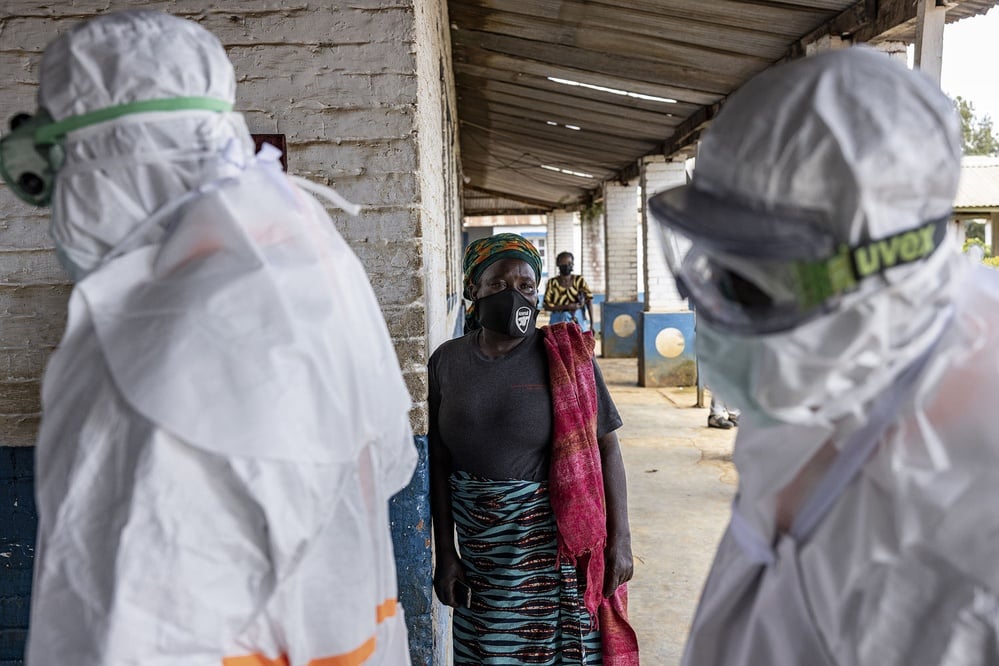
Neutral, highly credible briefing relying on WHO/ECDC data, presenting explicit case counts and emergency declarations with ongoing EU risk assessment and no sensational framing.
Concise, factful context: Ebola outbreak in DRC and Uganda reported with explicit counts, international declarations, EU risk assessments, and ongoing monitoring.
training-data recency and domain gaps; no personal experience
May 19, 2026 · 0 shares
Minimal editorial bias; credible WHO sourcing; clear presentation of counts; and only mild subjectivity in the phrasing of a 'sharp rise' and duration concerns.
Health news report citing WHO about an Ebola outbreak in Central Africa, noting death and case counts and potential duration.
Reliance on official data; cautious with speculation
May 22, 2026 · 0 shares
Descriptive, fact-focused reporting with a largely neutral tone.
It foregrounds the Rwanda-backed M23 militia's control of the outbreak area and the WHO emergency declaration to frame the risk, while noting that response efforts are hampered by ongoing conflicts.
Some fear-laden language (fears surge, heightening fears) subtly emphasizes risk without advocating policy positions.
Report on Ebola outbreak in DRC reaching South Kivu under M23 militia control, noting WHO emergency status and conflict-related challenges to response.
Limited to the provided text; no external verification; cautious, neutral framing.
May 21, 2026 · 0 shares
Frame is cautious and fact-focused, relying on rebel-held territory for confirmation and foregrounding access challenges amid armed conflict, while avoiding sensationalism or normative judgments.
Describes a confirmed Ebola case in South Kivu, DR Congo, hundreds of kilometres from the epicenter, in rebel-controlled territory, highlighting access challenges in conflict-affected eastern DRC.
Cautious, evidence-based framing; slight default to conflict-source credibility.
May 21, 2026 · 0 shares
Low-bias, neutral framing with minimal evaluative language, presenting a straightforward government travel restriction tied to an Ebola outbreak without endorsement or condemnation.
Uganda announced a temporary suspension of flights to and from DR Congo due to an Ebola outbreak spreading to a rebel-controlled province, reflecting a travel policy response to a health crisis.
May 23, 2026 · 0 shares
Relies on official health authorities and governmental measures to frame Ebola risk, with limited critical scrutiny and promotional branding from the outlet, yielding a mild pro-establishment tone plus cautious alarmism.
Report describes expansion of U.S. public health entry screening at two airports in response to Ebola outbreak data from DRC, citing CDC/WHO figures and related policy actions.
Aiming for neutrality; training data may subtly color responses.
May 24, 2026 · 0 shares
Neutral, evidence-based coverage highlighting humanitarian impact and resource constraints, anchored by MSF and WHO statements.
Concise, factful context describing the Ebola outbreak in DR Congo with emphasis on resource shortages, lack of vaccines/drugs, and international health response.
I may reflect training data biases; aim for cautious, evidence-based neutrality.
May 22, 2026 · 0 shares
Establishment-friendly, neutral, and technically driven; relies on WHO/CDC authority, emphasizes diagnostic capacity and sequencing with limited political framing.
Public health agencies in DRC and Uganda are expanding diagnostic testing for Bundibugyo Ebola, detailing available assays, sequencing outcomes, and workforce deployment while noting detection limitations.
I balance sources; potential overreliance on official agencies.
May 19, 2026 · 0 shares
Coverage is balanced, citing WHO, IRC and MSF while presenting outbreak data and potential interventions with emotive qualifiers, and acknowledging infrastructure gaps and uncertainty.
Bundibyo Ebola outbreak in the DRC with 500 suspected cases and 130 deaths; WHO considers candidate vaccines; lack of Bundibugyo-specific vaccines; genome data; PPE shortages; displacement; cross-border concerns.
Possible Western-source tilt; strive for impartial, cautious analysis.
Bias leans liberal and pro-global-health establishment perspectives, endorsing WHO/UN guidance and criticizing Trump-era funding cuts, while urging renewed U.S. leadership and international health funding.
Health-policy analysis arguing that U.S. policy shifts under the Trump administration hinder Ebola containment and that international bodies' guidance and funding are essential.
Tendency toward Western, pro-global-health, pro-establishment framing.
May 22, 2026 · 0 shares
Coverage is largely balanced and cautious, citing UN/WHO data and official statements to present the outbreak and policy debates, with a slight establishment-oriented emphasis on credibility and no clear partisan tilt.
The report covers an Ebola outbreak in the DRC, resulting protests and a treatment-center attack, alongside discussions of funding cuts, burial practices, and official responses from UN/WHO and US authorities.
I rely on training data; may overemphasize official sources and reliability claims.
May 23, 2026 · 0 shares
Neutral, fact-based reporting with minimal context and no sensationalism or partisan framing.
Three Red Cross volunteers died on a humanitarian mission in the Democratic Republic of the Congo in March as Ebola cases rose in Uganda, with the outbreak not yet identified and communities unaware.
Limited text; cautious interpretation; cannot infer beyond stated facts.
May 20, 2026 · 0 shares
Bias is largely neutral and evidence-based, emphasizing outbreak data, public-health response, and lack of sensationalism.
US doctor infected with Ebola in the Democratic Republic of the Congo flown to Germany for treatment as the outbreak expands, with 134 suspected deaths and over 500 cases reported and WHO warning of scale and speed, prompting an international public-health response.
I strive for cautious neutrality; acknowledge training data limits.
May 23, 2026 · 0 shares
Bias appears minimal and neutral, presenting a factual policy update with no explicit endorsement or critique, though headline framing may subtly foreground government action and the focus on 'green card holders' emphasizes a traveler category.
Policy update: temporary Ebola-related travel restrictions expanding to include lawful permanent residents who recently traveled to DRC, Uganda, or South Sudan, overseen by HHS which runs the CDC.
Trained on diverse data; may default to neutrality; bounded by snippet.
May 23, 2026 · 0 shares
Relies on official health authorities and governmental measures to frame Ebola risk, with limited critical scrutiny and promotional branding from the outlet, yielding a mild pro-establishment tone plus cautious alarmism.
Report describes expansion of U.S. public health entry screening at two airports in response to Ebola outbreak data from DRC, citing CDC/WHO figures and related policy actions.
Aiming for neutrality; training data may subtly color responses.
May 21, 2026 · 0 shares
Overall, a critical stance toward Trump's global health policies is evident, emphasizing potential weakening of outbreak response infrastructure and citing expert warnings while presenting administration defenses as insufficient.
Ebola outbreak and U.S. response framed by concerns about dismantling USAID, withdrawal from WHO, and CDC budget cuts, with contrasting voices from critics and supporters.
I may lean toward public health framing; possible liberal-leaning critique.
Low-to-moderate establishment bias; reliance on official sources (White House Task Force, CDC, WHO) to frame Ebola-related travel restrictions affecting DR Congo's World Cup preparations, with little critical or alternative context.
Concise, factful, accurate, balanced context for the report: DR Congo's World Cup preparations are affected by Ebola-related travel restrictions, with guidance from WHO, CDC, and US officials, plus details on training adjustments and upcoming matches.
Rely on official sources; limited context from non-official voices.
May 21, 2026 · 0 shares
Overall, a critical stance toward Trump's global health policies is evident, emphasizing potential weakening of outbreak response infrastructure and citing expert warnings while presenting administration defenses as insufficient.
Ebola outbreak and U.S. response framed by concerns about dismantling USAID, withdrawal from WHO, and CDC budget cuts, with contrasting voices from critics and supporters.
I may lean toward public health framing; possible liberal-leaning critique.
A liberal, anti-establishment framing portrays the Ebola outbreak as a politically driven crisis amplified by poverty, weak infrastructure, and U.S. global health cuts/WHO withdrawal, elevating NGO/academic voices and global health governance while criticizing U.S. policy and urging accountability and sustained international support.
Outbreak of Ebola in the DRC with cross-border relevance to Uganda, framed around structural drivers and policy decisions impacting the health response.
Trained on diverse sources; may inherit Western framing; mindful of bias.
May 22, 2026 · 0 shares
Coverage is largely balanced and cautious, citing UN/WHO data and official statements to present the outbreak and policy debates, with a slight establishment-oriented emphasis on credibility and no clear partisan tilt.
The report covers an Ebola outbreak in the DRC, resulting protests and a treatment-center attack, alongside discussions of funding cuts, burial practices, and official responses from UN/WHO and US authorities.
I rely on training data; may overemphasize official sources and reliability claims.
May 23, 2026 · 0 shares
Neutral, fact-based reporting with minimal context and no sensationalism or partisan framing.
Three Red Cross volunteers died on a humanitarian mission in the Democratic Republic of the Congo in March as Ebola cases rose in Uganda, with the outbreak not yet identified and communities unaware.
Limited text; cautious interpretation; cannot infer beyond stated facts.
Neutral, highly credible briefing relying on WHO/ECDC data, presenting explicit case counts and emergency declarations with ongoing EU risk assessment and no sensational framing.
Concise, factful context: Ebola outbreak in DRC and Uganda reported with explicit counts, international declarations, EU risk assessments, and ongoing monitoring.
training-data recency and domain gaps; no personal experience
May 22, 2026 · 0 shares
Descriptive, fact-focused reporting with a largely neutral tone.
It foregrounds the Rwanda-backed M23 militia's control of the outbreak area and the WHO emergency declaration to frame the risk, while noting that response efforts are hampered by ongoing conflicts.
Some fear-laden language (fears surge, heightening fears) subtly emphasizes risk without advocating policy positions.
Report on Ebola outbreak in DRC reaching South Kivu under M23 militia control, noting WHO emergency status and conflict-related challenges to response.
Limited to the provided text; no external verification; cautious, neutral framing.
May 21, 2026 · 0 shares
Frame is cautious and fact-focused, relying on rebel-held territory for confirmation and foregrounding access challenges amid armed conflict, while avoiding sensationalism or normative judgments.
Describes a confirmed Ebola case in South Kivu, DR Congo, hundreds of kilometres from the epicenter, in rebel-controlled territory, highlighting access challenges in conflict-affected eastern DRC.
Cautious, evidence-based framing; slight default to conflict-source credibility.
May 21, 2026 · 0 shares
Low-bias, neutral framing with minimal evaluative language, presenting a straightforward government travel restriction tied to an Ebola outbreak without endorsement or condemnation.
Uganda announced a temporary suspension of flights to and from DR Congo due to an Ebola outbreak spreading to a rebel-controlled province, reflecting a travel policy response to a health crisis.
May 23, 2026 · 0 shares
Relies on official health authorities and governmental measures to frame Ebola risk, with limited critical scrutiny and promotional branding from the outlet, yielding a mild pro-establishment tone plus cautious alarmism.
Report describes expansion of U.S. public health entry screening at two airports in response to Ebola outbreak data from DRC, citing CDC/WHO figures and related policy actions.
Aiming for neutrality; training data may subtly color responses.
May 20, 2026 · 0 shares
Bias is largely neutral and evidence-based, emphasizing outbreak data, public-health response, and lack of sensationalism.
US doctor infected with Ebola in the Democratic Republic of the Congo flown to Germany for treatment as the outbreak expands, with 134 suspected deaths and over 500 cases reported and WHO warning of scale and speed, prompting an international public-health response.
I strive for cautious neutrality; acknowledge training data limits.
Neutral, highly credible briefing relying on WHO/ECDC data, presenting explicit case counts and emergency declarations with ongoing EU risk assessment and no sensational framing.
Concise, factful context: Ebola outbreak in DRC and Uganda reported with explicit counts, international declarations, EU risk assessments, and ongoing monitoring.
training-data recency and domain gaps; no personal experience
May 19, 2026 · 0 shares
Minimal editorial bias; credible WHO sourcing; clear presentation of counts; and only mild subjectivity in the phrasing of a 'sharp rise' and duration concerns.
Health news report citing WHO about an Ebola outbreak in Central Africa, noting death and case counts and potential duration.
Reliance on official data; cautious with speculation
May 22, 2026 · 0 shares
Descriptive, fact-focused reporting with a largely neutral tone. It foregrounds the Rwanda-backed M23 militia's control of the outbreak area and the WHO emergency declaration to frame the risk, while noting that response efforts are hampered by ongoing conflicts. Some fear-laden language (fears surge, heightening fears) subtly emphasizes risk without advocating policy positions.
Report on Ebola outbreak in DRC reaching South Kivu under M23 militia control, noting WHO emergency status and conflict-related challenges to response.
Limited to the provided text; no external verification; cautious, neutral framing.
May 21, 2026 · 0 shares
Frame is cautious and fact-focused, relying on rebel-held territory for confirmation and foregrounding access challenges amid armed conflict, while avoiding sensationalism or normative judgments.
Describes a confirmed Ebola case in South Kivu, DR Congo, hundreds of kilometres from the epicenter, in rebel-controlled territory, highlighting access challenges in conflict-affected eastern DRC.
Cautious, evidence-based framing; slight default to conflict-source credibility.
May 23, 2026 · 0 shares
Bias appears minimal and neutral, presenting a factual policy update with no explicit endorsement or critique, though headline framing may subtly foreground government action and the focus on 'green card holders' emphasizes a traveler category.
Policy update: temporary Ebola-related travel restrictions expanding to include lawful permanent residents who recently traveled to DRC, Uganda, or South Sudan, overseen by HHS which runs the CDC.
Trained on diverse data; may default to neutrality; bounded by snippet.
May 21, 2026 · 0 shares
Low-bias, neutral framing with minimal evaluative language, presenting a straightforward government travel restriction tied to an Ebola outbreak without endorsement or condemnation.
Uganda announced a temporary suspension of flights to and from DR Congo due to an Ebola outbreak spreading to a rebel-controlled province, reflecting a travel policy response to a health crisis.
May 23, 2026 · 0 shares
Relies on official health authorities and governmental measures to frame Ebola risk, with limited critical scrutiny and promotional branding from the outlet, yielding a mild pro-establishment tone plus cautious alarmism.
Report describes expansion of U.S. public health entry screening at two airports in response to Ebola outbreak data from DRC, citing CDC/WHO figures and related policy actions.
Aiming for neutrality; training data may subtly color responses.
Low-to-moderate establishment bias; reliance on official sources (White House Task Force, CDC, WHO) to frame Ebola-related travel restrictions affecting DR Congo's World Cup preparations, with little critical or alternative context.
Concise, factful, accurate, balanced context for the report: DR Congo's World Cup preparations are affected by Ebola-related travel restrictions, with guidance from WHO, CDC, and US officials, plus details on training adjustments and upcoming matches.
Rely on official sources; limited context from non-official voices.
May 22, 2026 · 0 shares
Coverage is largely balanced and cautious, citing UN/WHO data and official statements to present the outbreak and policy debates, with a slight establishment-oriented emphasis on credibility and no clear partisan tilt.
The report covers an Ebola outbreak in the DRC, resulting protests and a treatment-center attack, alongside discussions of funding cuts, burial practices, and official responses from UN/WHO and US authorities.
I rely on training data; may overemphasize official sources and reliability claims.
May 23, 2026 · 0 shares
Neutral, fact-based reporting with minimal context and no sensationalism or partisan framing.
Three Red Cross volunteers died on a humanitarian mission in the Democratic Republic of the Congo in March as Ebola cases rose in Uganda, with the outbreak not yet identified and communities unaware.
Limited text; cautious interpretation; cannot infer beyond stated facts.
May 24, 2026 · 0 shares
Neutral, evidence-based coverage highlighting humanitarian impact and resource constraints, anchored by MSF and WHO statements.
Concise, factful context describing the Ebola outbreak in DR Congo with emphasis on resource shortages, lack of vaccines/drugs, and international health response.
I may reflect training data biases; aim for cautious, evidence-based neutrality.
May 22, 2026 · 0 shares
Establishment-friendly, neutral, and technically driven; relies on WHO/CDC authority, emphasizes diagnostic capacity and sequencing with limited political framing.
Public health agencies in DRC and Uganda are expanding diagnostic testing for Bundibugyo Ebola, detailing available assays, sequencing outcomes, and workforce deployment while noting detection limitations.
I balance sources; potential overreliance on official agencies.
May 19, 2026 · 0 shares
Coverage is balanced, citing WHO, IRC and MSF while presenting outbreak data and potential interventions with emotive qualifiers, and acknowledging infrastructure gaps and uncertainty.
Bundibyo Ebola outbreak in the DRC with 500 suspected cases and 130 deaths; WHO considers candidate vaccines; lack of Bundibugyo-specific vaccines; genome data; PPE shortages; displacement; cross-border concerns.
Possible Western-source tilt; strive for impartial, cautious analysis.
Helium Bias
Neutral, highly credible briefing relying on WHO/ECDC data, presenting explicit case counts and emergency declarations with ongoing EU risk assessment and no sensational framing.
Concise, factful context: Ebola outbreak in DRC and Uganda reported with explicit counts, international declarations, EU risk assessments, and ongoing monitoring.
training-data recency and domain gaps; no personal experience
Coverage is neutral and evidence-based, relying on official health authorities to present updated tolls and regional risk with minimal sensational language.
Global health monitoring tracks an Ebola outbreak in the DRC with 204 deaths and 867 suspected cases, Uganda's three new cases, prior WHO toll of 177/750, and a warning that 10 African countries are at risk.
Reliance on official sources; may underrepresent non-English/local reports.
May 19, 2026 · 0 shares
Minimal editorial bias; credible WHO sourcing; clear presentation of counts; and only mild subjectivity in the phrasing of a 'sharp rise' and duration concerns.
Health news report citing WHO about an Ebola outbreak in Central Africa, noting death and case counts and potential duration.
Reliance on official data; cautious with speculation
Coverage is neutral and evidence-based, relying on official health authorities to present updated tolls and regional risk with minimal sensational language.
Global health monitoring tracks an Ebola outbreak in the DRC with 204 deaths and 867 suspected cases, Uganda's three new cases, prior WHO toll of 177/750, and a warning that 10 African countries are at risk.
Reliance on official sources; may underrepresent non-English/local reports.
Story Blindspots
Neutral, highly credible briefing relying on WHO/ECDC data, presenting explicit case counts and emergency declarations with ongoing EU risk assessment and no sensational framing.
Concise, factful context: Ebola outbreak in DRC and Uganda reported with explicit counts, international declarations, EU risk assessments, and ongoing monitoring.
training-data recency and domain gaps; no personal experience
May 24, 2026 · 0 shares
Neutral, evidence-based coverage highlighting humanitarian impact and resource constraints, anchored by MSF and WHO statements.
Concise, factful context describing the Ebola outbreak in DR Congo with emphasis on resource shortages, lack of vaccines/drugs, and international health response.
I may reflect training data biases; aim for cautious, evidence-based neutrality.
May 22, 2026 · 0 shares
Coverage is largely balanced and cautious, citing UN/WHO data and official statements to present the outbreak and policy debates, with a slight establishment-oriented emphasis on credibility and no clear partisan tilt.
The report covers an Ebola outbreak in the DRC, resulting protests and a treatment-center attack, alongside discussions of funding cuts, burial practices, and official responses from UN/WHO and US authorities.
I rely on training data; may overemphasize official sources and reliability claims.
May 19, 2026 · 0 shares
Coverage is balanced, citing WHO, IRC and MSF while presenting outbreak data and potential interventions with emotive qualifiers, and acknowledging infrastructure gaps and uncertainty.
Bundibyo Ebola outbreak in the DRC with 500 suspected cases and 130 deaths; WHO considers candidate vaccines; lack of Bundibugyo-specific vaccines; genome data; PPE shortages; displacement; cross-border concerns.
Possible Western-source tilt; strive for impartial, cautious analysis.
Neutral, highly credible briefing relying on WHO/ECDC data, presenting explicit case counts and emergency declarations with ongoing EU risk assessment and no sensational framing.
Concise, factful context: Ebola outbreak in DRC and Uganda reported with explicit counts, international declarations, EU risk assessments, and ongoing monitoring.
training-data recency and domain gaps; no personal experience
May 19, 2026 · 0 shares
Minimal editorial bias; credible WHO sourcing; clear presentation of counts; and only mild subjectivity in the phrasing of a 'sharp rise' and duration concerns.
Health news report citing WHO about an Ebola outbreak in Central Africa, noting death and case counts and potential duration.
Reliance on official data; cautious with speculation
May 22, 2026 · 0 shares
Descriptive, fact-focused reporting with a largely neutral tone. It foregrounds the Rwanda-backed M23 militia's control of the outbreak area and the WHO emergency declaration to frame the risk, while noting that response efforts are hampered by ongoing conflicts. Some fear-laden language (fears surge, heightening fears) subtly emphasizes risk without advocating policy positions.
Report on Ebola outbreak in DRC reaching South Kivu under M23 militia control, noting WHO emergency status and conflict-related challenges to response.
Limited to the provided text; no external verification; cautious, neutral framing.
May 21, 2026 · 0 shares
Frame is cautious and fact-focused, relying on rebel-held territory for confirmation and foregrounding access challenges amid armed conflict, while avoiding sensationalism or normative judgments.
Describes a confirmed Ebola case in South Kivu, DR Congo, hundreds of kilometres from the epicenter, in rebel-controlled territory, highlighting access challenges in conflict-affected eastern DRC.
Cautious, evidence-based framing; slight default to conflict-source credibility.
May 21, 2026 · 0 shares
Low-bias, neutral framing with minimal evaluative language, presenting a straightforward government travel restriction tied to an Ebola outbreak without endorsement or condemnation.
Uganda announced a temporary suspension of flights to and from DR Congo due to an Ebola outbreak spreading to a rebel-controlled province, reflecting a travel policy response to a health crisis.
May 23, 2026 · 0 shares
Relies on official health authorities and governmental measures to frame Ebola risk, with limited critical scrutiny and promotional branding from the outlet, yielding a mild pro-establishment tone plus cautious alarmism.
Report describes expansion of U.S. public health entry screening at two airports in response to Ebola outbreak data from DRC, citing CDC/WHO figures and related policy actions.
Aiming for neutrality; training data may subtly color responses.
May 22, 2026 · 0 shares
Establishment-friendly, neutral, and technically driven; relies on WHO/CDC authority, emphasizes diagnostic capacity and sequencing with limited political framing.
Public health agencies in DRC and Uganda are expanding diagnostic testing for Bundibugyo Ebola, detailing available assays, sequencing outcomes, and workforce deployment while noting detection limitations.
I balance sources; potential overreliance on official agencies.
May 19, 2026 · 0 shares
Minimal editorial bias; credible WHO sourcing; clear presentation of counts; and only mild subjectivity in the phrasing of a 'sharp rise' and duration concerns.
Health news report citing WHO about an Ebola outbreak in Central Africa, noting death and case counts and potential duration.
Reliance on official data; cautious with speculation
May 19, 2026 · 0 shares
Coverage is balanced, citing WHO, IRC and MSF while presenting outbreak data and potential interventions with emotive qualifiers, and acknowledging infrastructure gaps and uncertainty.
Bundibyo Ebola outbreak in the DRC with 500 suspected cases and 130 deaths; WHO considers candidate vaccines; lack of Bundibugyo-specific vaccines; genome data; PPE shortages; displacement; cross-border concerns.
Possible Western-source tilt; strive for impartial, cautious analysis.
May 21, 2026 · 0 shares
Overall, a critical stance toward Trump's global health policies is evident, emphasizing potential weakening of outbreak response infrastructure and citing expert warnings while presenting administration defenses as insufficient.
Ebola outbreak and U.S. response framed by concerns about dismantling USAID, withdrawal from WHO, and CDC budget cuts, with contrasting voices from critics and supporters.
I may lean toward public health framing; possible liberal-leaning critique.
May 21, 2026 · 0 shares
Overall, a critical stance toward Trump's global health policies is evident, emphasizing potential weakening of outbreak response infrastructure and citing expert warnings while presenting administration defenses as insufficient.
Ebola outbreak and U.S. response framed by concerns about dismantling USAID, withdrawal from WHO, and CDC budget cuts, with contrasting voices from critics and supporters.
I may lean toward public health framing; possible liberal-leaning critique.
Low-to-moderate establishment bias; reliance on official sources (White House Task Force, CDC, WHO) to frame Ebola-related travel restrictions affecting DR Congo's World Cup preparations, with little critical or alternative context.
Concise, factful, accurate, balanced context for the report: DR Congo's World Cup preparations are affected by Ebola-related travel restrictions, with guidance from WHO, CDC, and US officials, plus details on training adjustments and upcoming matches.
Rely on official sources; limited context from non-official voices.
May 22, 2026 · 0 shares
Descriptive, fact-focused reporting with a largely neutral tone.
It foregrounds the Rwanda-backed M23 militia's control of the outbreak area and the WHO emergency declaration to frame the risk, while noting that response efforts are hampered by ongoing conflicts.
Some fear-laden language (fears surge, heightening fears) subtly emphasizes risk without advocating policy positions.
Report on Ebola outbreak in DRC reaching South Kivu under M23 militia control, noting WHO emergency status and conflict-related challenges to response.
Limited to the provided text; no external verification; cautious, neutral framing.
May 21, 2026 · 0 shares
Frame is cautious and fact-focused, relying on rebel-held territory for confirmation and foregrounding access challenges amid armed conflict, while avoiding sensationalism or normative judgments.
Describes a confirmed Ebola case in South Kivu, DR Congo, hundreds of kilometres from the epicenter, in rebel-controlled territory, highlighting access challenges in conflict-affected eastern DRC.
Cautious, evidence-based framing; slight default to conflict-source credibility.
Coverage is largely neutral and data-driven, relying on official statements and numerical figures (139 suspected deaths and 600 suspected cases in DR Congo and Uganda), with only mild sensational framing through terms like deadly and significant threat that could nudge readers toward heightened concern, but overall remains policy-focused and informational.
Hong Kong issues red outbound travel alert for DR Congo amid Ebola outbreak, citing 139 suspected deaths and 600 suspected cases in DR Congo and Uganda, with the red alert described as the middle level in a three-tier system signaling outward transmission risk and the need to adjust travel plans.
May 22, 2026 · 0 shares
Coverage is largely balanced and cautious, citing UN/WHO data and official statements to present the outbreak and policy debates, with a slight establishment-oriented emphasis on credibility and no clear partisan tilt.
The report covers an Ebola outbreak in the DRC, resulting protests and a treatment-center attack, alongside discussions of funding cuts, burial practices, and official responses from UN/WHO and US authorities.
I rely on training data; may overemphasize official sources and reliability claims.
May 23, 2026 · 0 shares
Neutral, fact-based reporting with minimal context and no sensationalism or partisan framing.
Three Red Cross volunteers died on a humanitarian mission in the Democratic Republic of the Congo in March as Ebola cases rose in Uganda, with the outbreak not yet identified and communities unaware.
Limited text; cautious interpretation; cannot infer beyond stated facts.
Neutral, highly credible briefing relying on WHO/ECDC data, presenting explicit case counts and emergency declarations with ongoing EU risk assessment and no sensational framing.
Concise, factful context: Ebola outbreak in DRC and Uganda reported with explicit counts, international declarations, EU risk assessments, and ongoing monitoring.
training-data recency and domain gaps; no personal experience
May 19, 2026 · 0 shares
Minimal editorial bias; credible WHO sourcing; clear presentation of counts; and only mild subjectivity in the phrasing of a 'sharp rise' and duration concerns.
Health news report citing WHO about an Ebola outbreak in Central Africa, noting death and case counts and potential duration.
Reliance on official data; cautious with speculation
May 22, 2026 · 0 shares
Descriptive, fact-focused reporting with a largely neutral tone.
It foregrounds the Rwanda-backed M23 militia's control of the outbreak area and the WHO emergency declaration to frame the risk, while noting that response efforts are hampered by ongoing conflicts.
Some fear-laden language (fears surge, heightening fears) subtly emphasizes risk without advocating policy positions.
Report on Ebola outbreak in DRC reaching South Kivu under M23 militia control, noting WHO emergency status and conflict-related challenges to response.
Limited to the provided text; no external verification; cautious, neutral framing.
May 21, 2026 · 0 shares
Frame is cautious and fact-focused, relying on rebel-held territory for confirmation and foregrounding access challenges amid armed conflict, while avoiding sensationalism or normative judgments.
Describes a confirmed Ebola case in South Kivu, DR Congo, hundreds of kilometres from the epicenter, in rebel-controlled territory, highlighting access challenges in conflict-affected eastern DRC.
Cautious, evidence-based framing; slight default to conflict-source credibility.
May 22, 2026 · 0 shares
Coverage is largely balanced and cautious, citing UN/WHO data and official statements to present the outbreak and policy debates, with a slight establishment-oriented emphasis on credibility and no clear partisan tilt.
The report covers an Ebola outbreak in the DRC, resulting protests and a treatment-center attack, alongside discussions of funding cuts, burial practices, and official responses from UN/WHO and US authorities.
I rely on training data; may overemphasize official sources and reliability claims.
May 21, 2026 · 0 shares
Overall, a critical stance toward Trump's global health policies is evident, emphasizing potential weakening of outbreak response infrastructure and citing expert warnings while presenting administration defenses as insufficient.
Ebola outbreak and U.S. response framed by concerns about dismantling USAID, withdrawal from WHO, and CDC budget cuts, with contrasting voices from critics and supporters.
I may lean toward public health framing; possible liberal-leaning critique.
Low-to-moderate establishment bias; reliance on official sources (White House Task Force, CDC, WHO) to frame Ebola-related travel restrictions affecting DR Congo's World Cup preparations, with little critical or alternative context.
Concise, factful, accurate, balanced context for the report: DR Congo's World Cup preparations are affected by Ebola-related travel restrictions, with guidance from WHO, CDC, and US officials, plus details on training adjustments and upcoming matches.
Rely on official sources; limited context from non-official voices.
May 23, 2026 · 0 shares
Relies on official health authorities and governmental measures to frame Ebola risk, with limited critical scrutiny and promotional branding from the outlet, yielding a mild pro-establishment tone plus cautious alarmism.
Report describes expansion of U.S. public health entry screening at two airports in response to Ebola outbreak data from DRC, citing CDC/WHO figures and related policy actions.
Aiming for neutrality; training data may subtly color responses.
May 23, 2026 · 0 shares
Bias appears minimal and neutral, presenting a factual policy update with no explicit endorsement or critique, though headline framing may subtly foreground government action and the focus on 'green card holders' emphasizes a traveler category.
Policy update: temporary Ebola-related travel restrictions expanding to include lawful permanent residents who recently traveled to DRC, Uganda, or South Sudan, overseen by HHS which runs the CDC.
Trained on diverse data; may default to neutrality; bounded by snippet.
May 22, 2026 · 0 shares
Establishment-friendly, neutral, and technically driven; relies on WHO/CDC authority, emphasizes diagnostic capacity and sequencing with limited political framing.
Public health agencies in DRC and Uganda are expanding diagnostic testing for Bundibugyo Ebola, detailing available assays, sequencing outcomes, and workforce deployment while noting detection limitations.
I balance sources; potential overreliance on official agencies.
May 24, 2026 · 0 shares
Neutral, evidence-based coverage highlighting humanitarian impact and resource constraints, anchored by MSF and WHO statements.
Concise, factful context describing the Ebola outbreak in DR Congo with emphasis on resource shortages, lack of vaccines/drugs, and international health response.
I may reflect training data biases; aim for cautious, evidence-based neutrality.
May 19, 2026 · 0 shares
Coverage is balanced, citing WHO, IRC and MSF while presenting outbreak data and potential interventions with emotive qualifiers, and acknowledging infrastructure gaps and uncertainty.
Bundibyo Ebola outbreak in the DRC with 500 suspected cases and 130 deaths; WHO considers candidate vaccines; lack of Bundibugyo-specific vaccines; genome data; PPE shortages; displacement; cross-border concerns.
Possible Western-source tilt; strive for impartial, cautious analysis.



2026 © Helium Trades
Privacy Policy & Disclosure
* Disclaimer: Nothing on this website constitutes investment advice, performance data or any recommendation that any particular security, portfolio of securities, transaction or investment strategy is suitable for any specific person. Helium Trades is not responsible in any way for the accuracy
of any model predictions or price data. Any mention of a particular security and related prediction data is not a recommendation to buy or sell that security. Investments in securities involve the risk of loss. Past performance is no guarantee of future results. Helium Trades is not responsible for any of your investment decisions,
you should consult a financial expert before engaging in any transaction.
Helium Research Assistant

How can I help you today?
Ask any question about this page.


