See whether Helium helps you make better-informed decisions. Try every Pro Trader feature for 30 days. No credit card required.
Try every Pro Trader feature for 30 days. No credit card required.
October 08, 2026 · 0 shares
The roundup presents Microsoft's and Nvidia's product announcements in a largely promotional, tech-enthusiast register, with occasional evaluative and speculative language but little critical scrutiny.
Automated analysis; not human reviewed.
Limitations: The supplied text is a fragmented aggregation of multiple posts and contains a conflicting base CPU core count for the Surface Laptop Ultra (8-core vs 18-core), limiting precision.
·
5 of 55 available dimensions scored; omitted dimensions are not treated as neutral.
·
Verified supporting quotes for 5 of 5 scored dimensions.
Claim: The article includes evaluative and first-person commentary that makes its tone mildly subjective.
“I’m surprised the company hasn’t shortened that to Mag-C.” · exact text match
Why: The first-person aside is an evaluative judgment, not a neutral report.
Claim: The article is primarily descriptive of announcements and specifications rather than prescriptive about what should be done.
“The machine will start at $2,599 for a configuration with an 8-core CPU, 24GB of RAM, and 512GB of storage, and it will be released on October 16th.” · exact text match
Why: It reports factual product details without advocating for a course of action.
Claim: The article contains first-person opinions and evaluative asides.
“I’m surprised the company hasn’t shortened that to Mag-C.” · exact text match
Why: The statement expresses a personal opinion rather than a neutral fact.
Claim: The article adopts a promotional tone toward Microsoft's product announcements.
“a chance to blow expectations out of the water when it comes to what a Windows laptop is capable of” · exact text match
Why: The phrase markets the product's potential rather than neutrally reporting it.
Claim: The article speculates about potential performance outcomes without evidence from hands-on testing.
“you could probably get an impressive gaming experience on the Dev Box” · exact text match
Why: The conditional 'could probably' forecasts an outcome not demonstrated.
The supplied text is a fragmented aggregation of multiple posts and contains a conflicting base CPU core count for the Surface Laptop Ultra (8-core vs 18-core), limiting precision.
October 07, 2026 · 0 shares
Framing is promotional and hype-driven, using vivid insider language ("tortures") and selectively highlighting hardware specs, while relying on an unsourced comparison to the MacBook Pro.
Automated analysis; not human reviewed.
·
8 of 55 available dimensions scored; omitted dimensions are not treated as neutral.
·
Verified supporting quotes for 8 of 8 scored dimensions.
Claim: The piece has mild interest from unusual lab access and high-end product pricing details.
“We got to take a look at the secret lab where Microsoft tortures it's laptops until they're ready to ship.” · exact text match
Why: The secret-lab hook adds some interest, but the overall content is thin product promotion.
Claim: Mostly factual product and pricing details are presented, with limited evaluative language.
“The new Surface Laptop Ultra is Microsoft's flagship laptop taking aim at the MacBook Pro.” · exact text match
Why: The snippet mixes descriptive claims with marketing-style positioning rather than explicit opinion.
Claim: The article states product positioning and pricing as definite facts without qualifying the basis for the comparison or chip-performance claims.
“The RTX Spark chips inside the Surface Laptop Ultra are geared toward local AI workloads and creative tasks.” · exact text match
Why: Certainty is asserted for marketing claims without sourcing or caveats, though the claims are routine product descriptions.
Claim: The text is short product promotion with a subscribe prompt, resembling commercial content.
“Subscribe:” · exact text match
Why: The subscribe call and promotional tone lean toward advertorial or fluff, though the piece still conveys pricing and specs.
Claim: The article treats Microsoft's product and testing process as noteworthy and legitimate without any critical or adversarial framing.
“We got to take a look at the secret lab where Microsoft tortures it's laptops until they're ready to ship.” · exact text match
Why: The insider, access-oriented framing is favorable to a major corporate establishment, though the text is primarily product description.
Claim: The article uses vivid, positive promotional language to create excitement about the product.
“Microsoft tortures it's laptops until they're ready to ship” · exact text match
Why: The dramatic lab language is mildly sensational and positive in valence.
Claim: The article reads as promotional for the Surface Laptop Ultra, emphasizing its positioning and premium specs while casting the lab visit in dramatic insider terms.
“Microsoft tortures it's laptops until they're ready to ship” · exact text match
“The RTX Spark chips inside the Surface Laptop Ultra are geared toward local AI workloads and creative tasks.” · exact text match
Why: The dramatic lab framing and uncritical spec/target marketing language function as promotional emphasis rather than neutral reporting.
Claim: The article does not offer forecasts, but the competitive positioning language implies expected performance against the MacBook Pro without evidence.
“taking aim at the MacBook Pro” · exact text match
Why: The competitive framing is implicit forecasting but weakly supported in the supplied text.
October 08, 2026 · 0 shares
The coverage is largely descriptive and promotional in tone toward Microsoft's AI hardware and Windows announcements, with only a brief, non-elaborated caveat about security and user acceptance.
Microsoft held its first live event in two years, where it announced new Surface hardware, Windows 11 changes, and an AI-focused strategy.
Automated analysis; not human reviewed.
Limitations: The article text appears truncated and duplicated, which limits full assessment of the ending and any additional qualifying statements.
·
55 of 55 available dimensions scored; omitted dimensions are not treated as neutral.
·
Verified supporting quotes for 46 of 55 scored dimensions.
Claim: The article adopts a product-focused, insider perspective that emphasizes high-end, expensive professional developer hardware rather than broader consumer or populist concerns.
“designed to meet the needs of frontier developers” · exact text match
Why: The framing centers on elite developer tools and high price points, indicating a mild elitist orientation.
Claim: The article is largely objective and avoids sensationalist language despite covering flashy new products.
“With 128GB of unified memory and the onboard Nvidia RTX GPU, the box claims one petaflop (that’s 1,000 teraflops) of AI compute performance.” · exact text match
Why: The tone remains measured and factual, lacking hype or sensational phrasing.
Claim: The article presents Microsoft's new AI hardware and software in a favorable, forward-looking light.
“Microsoft is betting big on local AI with the changes announced today” · exact text match
Why: The framing suggests optimism about the products' market direction.
Claim: The article conveys a mildly optimistic outlook about the potential of the announced technology.
“Microsoft is betting big on local AI with the changes announced today” · exact text match
Why: The tone suggests positive expectations for the technology's impact.
Claim: The article mainly describes announcements and specifications without prescribing actions or opinions.
“Microsoft today announced its newest Surface laptop, outlined a host of changes coming to Windows 11” · exact text match
Why: The content is primarily descriptive reporting of events.
Claim: The article contains minimal fear-based framing, with only a brief mention of trepidation.
“For those who might still feel a little trepidation about turning over their entire digital lives and files to AI bots” · exact text match
Why: The mention of trepidation is slight and not developed into fear-mongering.
Claim: The article is mostly factual, with only minor subjective descriptors.
“The RTX Spark Dev Box’s design is quite sleek.” · exact text match
Why: Subjective aesthetic judgment is present but limited.
Claim: The article relies on statements and claims from Microsoft and Nvidia representatives without independent verification.
“Joined on stage by Nvidia’s Jensen Huang and Microsoft CEO Satya Nadella, President of Windows and Devices Pavan Davuluri also unveiled the Surface RTX Spark Dev Box.” · exact text match
Why: The reporting leans on corporate authorities for the announced facts.
Claim: The article maintains a mature, professional tone throughout.
“In its first live event in two years, Microsoft today announced its newest Surface laptop, outlined a host of changes coming to Windows 11, and shared a vision of how local-AI and agentic workflows could reshape personal computing for those in the dev community as well as home enthusiasts.” · exact text match
Why: The language is measured and informative, not immature or rage-baiting.
Claim: No circular reasoning is evident in the article.
“Microsoft is betting big on local AI with the changes announced today, but questions about security and user acceptance still remain” · exact text match
Why: The argument follows a linear, evidence-based structure.
Claim: The article does not defend or rationalize Microsoft's past actions, merely notes past missteps briefly.
“especially in light of their past missteps and other recent AI agent mishaps” · exact text match
Why: There is no evident covering for the company's prior failures.
Claim: No victimization framing is present.
“Microsoft is betting big on local AI with the changes announced today” · exact text match
Why: The focus is on product announcements, not victim narratives.
Claim: The article repeats company performance claims with little qualification.
“the box claims one petaflop (that’s 1,000 teraflops) of AI compute performance” · exact text match
Why: The claim is attributed to the company but presented without skepticism.
Claim: The article is not spam or advertising content.
“Ars Technica has been separating the signal from the noise for over 25 years.” · verified after text normalization
Why: The content is editorial reporting, not spam.
Claim: The article is largely free of ideological framing, focusing on product details.
“Microsoft is betting big on local AI with the changes announced today” · exact text match
Why: There is minimal ideological content.
Claim: The article reports positively on a major tech corporation's announcements without adversarial framing.
“Microsoft is betting big on local AI with the changes announced today” · exact text match
Why: The framing largely aligns with the corporate narrative presented at the event.
Claim: The article maintains a neutral emotional tone, with little positive or negative affect.
“Microsoft is betting big on local AI with the changes announced today” · exact text match
Why: The reporting is predominately unemotional and factual.
Claim: No double standards are applied in the reporting.
“Microsoft is betting big on local AI with the changes announced today” · exact text match
Why: The article treats the subject consistently.
Claim: The article demonstrates moderate credibility with specific details, quotes, and some acknowledgment of open questions.
“but questions about security and user acceptance still remain” · exact text match
Why: Attribution and caveats support reasonable trustworthiness.
Claim: The article presents factual product specifications and announcements without irrational claims or exaggerated emotional appeals.
“With 128GB of unified memory and the onboard Nvidia RTX GPU, the box claims one petaflop (that’s 1,000 teraflops) of AI compute performance.” · exact text match
Why: Specifications and attributions are stated plainly, supporting a rational presentation.
Claim: The article contains mild promotional tone toward Microsoft products but is not overtly advertorial.
“The RTX Spark Dev Box’s design is quite sleek.” · exact text match
Why: Some positive descriptive language suggests a slight promotional slant.
Claim: The article frames Microsoft's announcements favorably, with largely positive product descriptions.
“The RTX Spark Dev Box’s design is quite sleek.” · exact text match
Why: Positive framing of corporate products suggests pro-corporate orientation.
Claim: The article relies on technical specifications and scientific-sounding claims rather than superstition.
“the box claims one petaflop (that’s 1,000 teraflops) of AI compute performance” · exact text match
Why: The content uses empirical-style metrics, indicating a scientific orientation.
Claim: The article includes some speculative language about future impacts and benefits.
“shared a vision of how local-AI and agentic workflows could reshape personal computing” · exact text match
Why: Vision and future-oriented statements involve speculation.
Claim: The article uses minor loaded framing and positive product description but no strong manipulative techniques.
“The RTX Spark Dev Box’s design is quite sleek.” · exact text match
Why: The language is mildly favorable but not overtly manipulative.
Claim: The article shows some structural repetition and smooth phrasing but insufficient indicators to confidently label AI authorship.
“Ars Technica has been separating the signal from the noise for over 25 years.” · verified after text normalization
Why: The text has minor repeated content and boilerplate, but not enough independent AI markers.
Claim: The article includes some caveats and notes about unanswered questions, showing basic integrity.
“but questions about security and user acceptance still remain” · exact text match
Why: Acknowledging unresolved issues supports a fair, though not extensively balanced, presentation.
Claim: The article demonstrates above-average intelligence through technical detail and contextual framing.
“MXC acts as a policy layer that directs compute traffic to the appropriate isolation backend.” · exact text match
Why: Technical explanations and structured reporting indicate intelligent coverage.
Claim: The article is grounded in reported facts and avoids delusional claims.
“Microsoft today announced its newest Surface laptop, outlined a host of changes coming to Windows 11” · exact text match
Why: The reporting is fact-based and non-delusional.
Claim: No terrorism-related content or framing exists.
“Microsoft is betting big on local AI with the changes announced today” · exact text match
Why: The topic is unrelated to terrorism.
Claim: No fraud-promoting or normalizing content is present.
“Microsoft is betting big on local AI with the changes announced today” · exact text match
Why: The article covers legitimate product announcements.
Claim: No Marxist or class-conflict framing is present.
“Microsoft is betting big on local AI with the changes announced today” · exact text match
Why: The content is focused on technology, not class politics.
Claim: No Islamist or religious political advocacy is present.
“Microsoft is betting big on local AI with the changes announced today” · exact text match
Why: The article is about technology, not religion or politics.
Claim: No anti-Semitic content or tropes are present.
“Microsoft is betting big on local AI with the changes announced today” · exact text match
Why: There is no reference to Jewish people or tropes.
Claim: No anti-LGBT content or framing exists.
“Microsoft is betting big on local AI with the changes announced today” · exact text match
Why: The topic is unrelated to LGBT issues.
Claim: No racist content or framing exists.
“Microsoft is betting big on local AI with the changes announced today” · exact text match
Why: The article does not address race or use racial generalizations.
Claim: No identity-politics or woke framing is present.
“Microsoft is betting big on local AI with the changes announced today” · exact text match
Why: The article does not engage with identity-group power dynamics.
Claim: No cruel or immoral framing is present.
“Microsoft is betting big on local AI with the changes announced today” · exact text match
Why: The tone is professional and non-cruel.
Claim: No virtue signaling or moral posturing is present.
“Microsoft is betting big on local AI with the changes announced today” · exact text match
Why: The coverage is product-focused, not moralistic.
Claim: No conspiratorial thinking or endorsement is present.
“Microsoft is betting big on local AI with the changes announced today” · exact text match
Why: The article reports straight news without conspiracies.
Claim: No compassion-based advocacy that accepts severe self-harm is present.
“Microsoft is betting big on local AI with the changes announced today” · exact text match
Why: The topic is unrelated to such framing.
Claim: No scapegoating of any group or individual is present.
“Microsoft is betting big on local AI with the changes announced today” · exact text match
Why: The article does not assign blame to a scapegoat.
Claim: No hypocritical double standards are evident in the reporting.
“Microsoft is betting big on local AI with the changes announced today” · exact text match
Why: The reporting applies consistent standards to the announcements.
Claim: The article supports scientific and technological progress, aligning with enlightenment values.
“shared a vision of how local-AI and agentic workflows could reshape personal computing” · exact text match
Why: The framing is pro-technology and progress-oriented.
The article text appears truncated and duplicated, which limits full assessment of the ending and any additional qualifying statements.
October 08, 2026 · 0 shares
The roundup presents Microsoft's and Nvidia's product announcements in a largely promotional, tech-enthusiast register, with occasional evaluative and speculative language but little critical scrutiny.
Automated analysis; not human reviewed.
Limitations: The supplied text is a fragmented aggregation of multiple posts and contains a conflicting base CPU core count for the Surface Laptop Ultra (8-core vs 18-core), limiting precision.
·
5 of 55 available dimensions scored; omitted dimensions are not treated as neutral.
·
Verified supporting quotes for 5 of 5 scored dimensions.
Claim: The article includes evaluative and first-person commentary that makes its tone mildly subjective.
“I’m surprised the company hasn’t shortened that to Mag-C.” · exact text match
Why: The first-person aside is an evaluative judgment, not a neutral report.
Claim: The article is primarily descriptive of announcements and specifications rather than prescriptive about what should be done.
“The machine will start at $2,599 for a configuration with an 8-core CPU, 24GB of RAM, and 512GB of storage, and it will be released on October 16th.” · exact text match
Why: It reports factual product details without advocating for a course of action.
Claim: The article contains first-person opinions and evaluative asides.
“I’m surprised the company hasn’t shortened that to Mag-C.” · exact text match
Why: The statement expresses a personal opinion rather than a neutral fact.
Claim: The article adopts a promotional tone toward Microsoft's product announcements.
“a chance to blow expectations out of the water when it comes to what a Windows laptop is capable of” · exact text match
Why: The phrase markets the product's potential rather than neutrally reporting it.
Claim: The article speculates about potential performance outcomes without evidence from hands-on testing.
“you could probably get an impressive gaming experience on the Dev Box” · exact text match
Why: The conditional 'could probably' forecasts an outcome not demonstrated.
The supplied text is a fragmented aggregation of multiple posts and contains a conflicting base CPU core count for the Surface Laptop Ultra (8-core vs 18-core), limiting precision.
October 08, 2026 · 0 shares
The coverage is largely descriptive and promotional in tone toward Microsoft's AI hardware and Windows announcements, with only a brief, non-elaborated caveat about security and user acceptance.
Microsoft held its first live event in two years, where it announced new Surface hardware, Windows 11 changes, and an AI-focused strategy.
Automated analysis; not human reviewed.
Limitations: The article text appears truncated and duplicated, which limits full assessment of the ending and any additional qualifying statements.
·
55 of 55 available dimensions scored; omitted dimensions are not treated as neutral.
·
Verified supporting quotes for 46 of 55 scored dimensions.
Claim: The article adopts a product-focused, insider perspective that emphasizes high-end, expensive professional developer hardware rather than broader consumer or populist concerns.
“designed to meet the needs of frontier developers” · exact text match
Why: The framing centers on elite developer tools and high price points, indicating a mild elitist orientation.
Claim: The article is largely objective and avoids sensationalist language despite covering flashy new products.
“With 128GB of unified memory and the onboard Nvidia RTX GPU, the box claims one petaflop (that’s 1,000 teraflops) of AI compute performance.” · exact text match
Why: The tone remains measured and factual, lacking hype or sensational phrasing.
Claim: The article presents Microsoft's new AI hardware and software in a favorable, forward-looking light.
“Microsoft is betting big on local AI with the changes announced today” · exact text match
Why: The framing suggests optimism about the products' market direction.
Claim: The article conveys a mildly optimistic outlook about the potential of the announced technology.
“Microsoft is betting big on local AI with the changes announced today” · exact text match
Why: The tone suggests positive expectations for the technology's impact.
Claim: The article mainly describes announcements and specifications without prescribing actions or opinions.
“Microsoft today announced its newest Surface laptop, outlined a host of changes coming to Windows 11” · exact text match
Why: The content is primarily descriptive reporting of events.
Claim: The article contains minimal fear-based framing, with only a brief mention of trepidation.
“For those who might still feel a little trepidation about turning over their entire digital lives and files to AI bots” · exact text match
Why: The mention of trepidation is slight and not developed into fear-mongering.
Claim: The article is mostly factual, with only minor subjective descriptors.
“The RTX Spark Dev Box’s design is quite sleek.” · exact text match
Why: Subjective aesthetic judgment is present but limited.
Claim: The article relies on statements and claims from Microsoft and Nvidia representatives without independent verification.
“Joined on stage by Nvidia’s Jensen Huang and Microsoft CEO Satya Nadella, President of Windows and Devices Pavan Davuluri also unveiled the Surface RTX Spark Dev Box.” · exact text match
Why: The reporting leans on corporate authorities for the announced facts.
Claim: The article maintains a mature, professional tone throughout.
“In its first live event in two years, Microsoft today announced its newest Surface laptop, outlined a host of changes coming to Windows 11, and shared a vision of how local-AI and agentic workflows could reshape personal computing for those in the dev community as well as home enthusiasts.” · exact text match
Why: The language is measured and informative, not immature or rage-baiting.
Claim: No circular reasoning is evident in the article.
“Microsoft is betting big on local AI with the changes announced today, but questions about security and user acceptance still remain” · exact text match
Why: The argument follows a linear, evidence-based structure.
Claim: The article does not defend or rationalize Microsoft's past actions, merely notes past missteps briefly.
“especially in light of their past missteps and other recent AI agent mishaps” · exact text match
Why: There is no evident covering for the company's prior failures.
Claim: No victimization framing is present.
“Microsoft is betting big on local AI with the changes announced today” · exact text match
Why: The focus is on product announcements, not victim narratives.
Claim: The article repeats company performance claims with little qualification.
“the box claims one petaflop (that’s 1,000 teraflops) of AI compute performance” · exact text match
Why: The claim is attributed to the company but presented without skepticism.
Claim: The article is not spam or advertising content.
“Ars Technica has been separating the signal from the noise for over 25 years.” · verified after text normalization
Why: The content is editorial reporting, not spam.
Claim: The article is largely free of ideological framing, focusing on product details.
“Microsoft is betting big on local AI with the changes announced today” · exact text match
Why: There is minimal ideological content.
Claim: The article reports positively on a major tech corporation's announcements without adversarial framing.
“Microsoft is betting big on local AI with the changes announced today” · exact text match
Why: The framing largely aligns with the corporate narrative presented at the event.
Claim: The article maintains a neutral emotional tone, with little positive or negative affect.
“Microsoft is betting big on local AI with the changes announced today” · exact text match
Why: The reporting is predominately unemotional and factual.
Claim: No double standards are applied in the reporting.
“Microsoft is betting big on local AI with the changes announced today” · exact text match
Why: The article treats the subject consistently.
Claim: The article demonstrates moderate credibility with specific details, quotes, and some acknowledgment of open questions.
“but questions about security and user acceptance still remain” · exact text match
Why: Attribution and caveats support reasonable trustworthiness.
Claim: The article presents factual product specifications and announcements without irrational claims or exaggerated emotional appeals.
“With 128GB of unified memory and the onboard Nvidia RTX GPU, the box claims one petaflop (that’s 1,000 teraflops) of AI compute performance.” · exact text match
Why: Specifications and attributions are stated plainly, supporting a rational presentation.
Claim: The article contains mild promotional tone toward Microsoft products but is not overtly advertorial.
“The RTX Spark Dev Box’s design is quite sleek.” · exact text match
Why: Some positive descriptive language suggests a slight promotional slant.
Claim: The article frames Microsoft's announcements favorably, with largely positive product descriptions.
“The RTX Spark Dev Box’s design is quite sleek.” · exact text match
Why: Positive framing of corporate products suggests pro-corporate orientation.
Claim: The article relies on technical specifications and scientific-sounding claims rather than superstition.
“the box claims one petaflop (that’s 1,000 teraflops) of AI compute performance” · exact text match
Why: The content uses empirical-style metrics, indicating a scientific orientation.
Claim: The article includes some speculative language about future impacts and benefits.
“shared a vision of how local-AI and agentic workflows could reshape personal computing” · exact text match
Why: Vision and future-oriented statements involve speculation.
Claim: The article uses minor loaded framing and positive product description but no strong manipulative techniques.
“The RTX Spark Dev Box’s design is quite sleek.” · exact text match
Why: The language is mildly favorable but not overtly manipulative.
Claim: The article shows some structural repetition and smooth phrasing but insufficient indicators to confidently label AI authorship.
“Ars Technica has been separating the signal from the noise for over 25 years.” · verified after text normalization
Why: The text has minor repeated content and boilerplate, but not enough independent AI markers.
Claim: The article includes some caveats and notes about unanswered questions, showing basic integrity.
“but questions about security and user acceptance still remain” · exact text match
Why: Acknowledging unresolved issues supports a fair, though not extensively balanced, presentation.
Claim: The article demonstrates above-average intelligence through technical detail and contextual framing.
“MXC acts as a policy layer that directs compute traffic to the appropriate isolation backend.” · exact text match
Why: Technical explanations and structured reporting indicate intelligent coverage.
Claim: The article is grounded in reported facts and avoids delusional claims.
“Microsoft today announced its newest Surface laptop, outlined a host of changes coming to Windows 11” · exact text match
Why: The reporting is fact-based and non-delusional.
Claim: No terrorism-related content or framing exists.
“Microsoft is betting big on local AI with the changes announced today” · exact text match
Why: The topic is unrelated to terrorism.
Claim: No fraud-promoting or normalizing content is present.
“Microsoft is betting big on local AI with the changes announced today” · exact text match
Why: The article covers legitimate product announcements.
Claim: No Marxist or class-conflict framing is present.
“Microsoft is betting big on local AI with the changes announced today” · exact text match
Why: The content is focused on technology, not class politics.
Claim: No Islamist or religious political advocacy is present.
“Microsoft is betting big on local AI with the changes announced today” · exact text match
Why: The article is about technology, not religion or politics.
Claim: No anti-Semitic content or tropes are present.
“Microsoft is betting big on local AI with the changes announced today” · exact text match
Why: There is no reference to Jewish people or tropes.
Claim: No anti-LGBT content or framing exists.
“Microsoft is betting big on local AI with the changes announced today” · exact text match
Why: The topic is unrelated to LGBT issues.
Claim: No racist content or framing exists.
“Microsoft is betting big on local AI with the changes announced today” · exact text match
Why: The article does not address race or use racial generalizations.
Claim: No identity-politics or woke framing is present.
“Microsoft is betting big on local AI with the changes announced today” · exact text match
Why: The article does not engage with identity-group power dynamics.
Claim: No cruel or immoral framing is present.
“Microsoft is betting big on local AI with the changes announced today” · exact text match
Why: The tone is professional and non-cruel.
Claim: No virtue signaling or moral posturing is present.
“Microsoft is betting big on local AI with the changes announced today” · exact text match
Why: The coverage is product-focused, not moralistic.
Claim: No conspiratorial thinking or endorsement is present.
“Microsoft is betting big on local AI with the changes announced today” · exact text match
Why: The article reports straight news without conspiracies.
Claim: No compassion-based advocacy that accepts severe self-harm is present.
“Microsoft is betting big on local AI with the changes announced today” · exact text match
Why: The topic is unrelated to such framing.
Claim: No scapegoating of any group or individual is present.
“Microsoft is betting big on local AI with the changes announced today” · exact text match
Why: The article does not assign blame to a scapegoat.
Claim: No hypocritical double standards are evident in the reporting.
“Microsoft is betting big on local AI with the changes announced today” · exact text match
Why: The reporting applies consistent standards to the announcements.
Claim: The article supports scientific and technological progress, aligning with enlightenment values.
“shared a vision of how local-AI and agentic workflows could reshape personal computing” · exact text match
Why: The framing is pro-technology and progress-oriented.
The article text appears truncated and duplicated, which limits full assessment of the ending and any additional qualifying statements.
October 07, 2026 · 0 shares
The publisher frames Microsoft's agentic AI push with skeptical, first-person distrust and product-flaw commentary rather than measured neutrality.
Microsoft had previously teased the Surface Laptop Ultra and faced backlash over Recall and Copilot features that it removed from Windows, which shapes reception of new agentic offerings.
Automated analysis; not human reviewed.
Limitations: The supplied article text is a single long paragraph with some quoted-list artifacts and no clear byline, which prevents author identification and limits certainty about the publisher’s full editorial framing.
·
54 of 55 available dimensions scored; omitted dimensions are not treated as neutral.
·
Verified supporting quotes for 0 of 54 scored dimensions.
The supplied article text is a single long paragraph with some quoted-list artifacts and no clear byline, which prevents author identification and limits certainty about the publisher’s full editorial framing.
October 08, 2026 · 0 shares
The coverage is largely descriptive and promotional in tone toward Microsoft's AI hardware and Windows announcements, with only a brief, non-elaborated caveat about security and user acceptance.
Microsoft held its first live event in two years, where it announced new Surface hardware, Windows 11 changes, and an AI-focused strategy.
Automated analysis; not human reviewed.
Limitations: The article text appears truncated and duplicated, which limits full assessment of the ending and any additional qualifying statements.
·
55 of 55 available dimensions scored; omitted dimensions are not treated as neutral.
·
Verified supporting quotes for 46 of 55 scored dimensions.
Claim: The article adopts a product-focused, insider perspective that emphasizes high-end, expensive professional developer hardware rather than broader consumer or populist concerns.
“designed to meet the needs of frontier developers” · exact text match
Why: The framing centers on elite developer tools and high price points, indicating a mild elitist orientation.
Claim: The article is largely objective and avoids sensationalist language despite covering flashy new products.
“With 128GB of unified memory and the onboard Nvidia RTX GPU, the box claims one petaflop (that’s 1,000 teraflops) of AI compute performance.” · exact text match
Why: The tone remains measured and factual, lacking hype or sensational phrasing.
Claim: The article presents Microsoft's new AI hardware and software in a favorable, forward-looking light.
“Microsoft is betting big on local AI with the changes announced today” · exact text match
Why: The framing suggests optimism about the products' market direction.
Claim: The article conveys a mildly optimistic outlook about the potential of the announced technology.
“Microsoft is betting big on local AI with the changes announced today” · exact text match
Why: The tone suggests positive expectations for the technology's impact.
Claim: The article mainly describes announcements and specifications without prescribing actions or opinions.
“Microsoft today announced its newest Surface laptop, outlined a host of changes coming to Windows 11” · exact text match
Why: The content is primarily descriptive reporting of events.
Claim: The article contains minimal fear-based framing, with only a brief mention of trepidation.
“For those who might still feel a little trepidation about turning over their entire digital lives and files to AI bots” · exact text match
Why: The mention of trepidation is slight and not developed into fear-mongering.
Claim: The article is mostly factual, with only minor subjective descriptors.
“The RTX Spark Dev Box’s design is quite sleek.” · exact text match
Why: Subjective aesthetic judgment is present but limited.
Claim: The article relies on statements and claims from Microsoft and Nvidia representatives without independent verification.
“Joined on stage by Nvidia’s Jensen Huang and Microsoft CEO Satya Nadella, President of Windows and Devices Pavan Davuluri also unveiled the Surface RTX Spark Dev Box.” · exact text match
Why: The reporting leans on corporate authorities for the announced facts.
Claim: The article maintains a mature, professional tone throughout.
“In its first live event in two years, Microsoft today announced its newest Surface laptop, outlined a host of changes coming to Windows 11, and shared a vision of how local-AI and agentic workflows could reshape personal computing for those in the dev community as well as home enthusiasts.” · exact text match
Why: The language is measured and informative, not immature or rage-baiting.
Claim: No circular reasoning is evident in the article.
“Microsoft is betting big on local AI with the changes announced today, but questions about security and user acceptance still remain” · exact text match
Why: The argument follows a linear, evidence-based structure.
Claim: The article does not defend or rationalize Microsoft's past actions, merely notes past missteps briefly.
“especially in light of their past missteps and other recent AI agent mishaps” · exact text match
Why: There is no evident covering for the company's prior failures.
Claim: No victimization framing is present.
“Microsoft is betting big on local AI with the changes announced today” · exact text match
Why: The focus is on product announcements, not victim narratives.
Claim: The article repeats company performance claims with little qualification.
“the box claims one petaflop (that’s 1,000 teraflops) of AI compute performance” · exact text match
Why: The claim is attributed to the company but presented without skepticism.
Claim: The article is not spam or advertising content.
“Ars Technica has been separating the signal from the noise for over 25 years.” · verified after text normalization
Why: The content is editorial reporting, not spam.
Claim: The article is largely free of ideological framing, focusing on product details.
“Microsoft is betting big on local AI with the changes announced today” · exact text match
Why: There is minimal ideological content.
Claim: The article reports positively on a major tech corporation's announcements without adversarial framing.
“Microsoft is betting big on local AI with the changes announced today” · exact text match
Why: The framing largely aligns with the corporate narrative presented at the event.
Claim: The article maintains a neutral emotional tone, with little positive or negative affect.
“Microsoft is betting big on local AI with the changes announced today” · exact text match
Why: The reporting is predominately unemotional and factual.
Claim: No double standards are applied in the reporting.
“Microsoft is betting big on local AI with the changes announced today” · exact text match
Why: The article treats the subject consistently.
Claim: The article demonstrates moderate credibility with specific details, quotes, and some acknowledgment of open questions.
“but questions about security and user acceptance still remain” · exact text match
Why: Attribution and caveats support reasonable trustworthiness.
Claim: The article presents factual product specifications and announcements without irrational claims or exaggerated emotional appeals.
“With 128GB of unified memory and the onboard Nvidia RTX GPU, the box claims one petaflop (that’s 1,000 teraflops) of AI compute performance.” · exact text match
Why: Specifications and attributions are stated plainly, supporting a rational presentation.
Claim: The article contains mild promotional tone toward Microsoft products but is not overtly advertorial.
“The RTX Spark Dev Box’s design is quite sleek.” · exact text match
Why: Some positive descriptive language suggests a slight promotional slant.
Claim: The article frames Microsoft's announcements favorably, with largely positive product descriptions.
“The RTX Spark Dev Box’s design is quite sleek.” · exact text match
Why: Positive framing of corporate products suggests pro-corporate orientation.
Claim: The article relies on technical specifications and scientific-sounding claims rather than superstition.
“the box claims one petaflop (that’s 1,000 teraflops) of AI compute performance” · exact text match
Why: The content uses empirical-style metrics, indicating a scientific orientation.
Claim: The article includes some speculative language about future impacts and benefits.
“shared a vision of how local-AI and agentic workflows could reshape personal computing” · exact text match
Why: Vision and future-oriented statements involve speculation.
Claim: The article uses minor loaded framing and positive product description but no strong manipulative techniques.
“The RTX Spark Dev Box’s design is quite sleek.” · exact text match
Why: The language is mildly favorable but not overtly manipulative.
Claim: The article shows some structural repetition and smooth phrasing but insufficient indicators to confidently label AI authorship.
“Ars Technica has been separating the signal from the noise for over 25 years.” · verified after text normalization
Why: The text has minor repeated content and boilerplate, but not enough independent AI markers.
Claim: The article includes some caveats and notes about unanswered questions, showing basic integrity.
“but questions about security and user acceptance still remain” · exact text match
Why: Acknowledging unresolved issues supports a fair, though not extensively balanced, presentation.
Claim: The article demonstrates above-average intelligence through technical detail and contextual framing.
“MXC acts as a policy layer that directs compute traffic to the appropriate isolation backend.” · exact text match
Why: Technical explanations and structured reporting indicate intelligent coverage.
Claim: The article is grounded in reported facts and avoids delusional claims.
“Microsoft today announced its newest Surface laptop, outlined a host of changes coming to Windows 11” · exact text match
Why: The reporting is fact-based and non-delusional.
Claim: No terrorism-related content or framing exists.
“Microsoft is betting big on local AI with the changes announced today” · exact text match
Why: The topic is unrelated to terrorism.
Claim: No fraud-promoting or normalizing content is present.
“Microsoft is betting big on local AI with the changes announced today” · exact text match
Why: The article covers legitimate product announcements.
Claim: No Marxist or class-conflict framing is present.
“Microsoft is betting big on local AI with the changes announced today” · exact text match
Why: The content is focused on technology, not class politics.
Claim: No Islamist or religious political advocacy is present.
“Microsoft is betting big on local AI with the changes announced today” · exact text match
Why: The article is about technology, not religion or politics.
Claim: No anti-Semitic content or tropes are present.
“Microsoft is betting big on local AI with the changes announced today” · exact text match
Why: There is no reference to Jewish people or tropes.
Claim: No anti-LGBT content or framing exists.
“Microsoft is betting big on local AI with the changes announced today” · exact text match
Why: The topic is unrelated to LGBT issues.
Claim: No racist content or framing exists.
“Microsoft is betting big on local AI with the changes announced today” · exact text match
Why: The article does not address race or use racial generalizations.
Claim: No identity-politics or woke framing is present.
“Microsoft is betting big on local AI with the changes announced today” · exact text match
Why: The article does not engage with identity-group power dynamics.
Claim: No cruel or immoral framing is present.
“Microsoft is betting big on local AI with the changes announced today” · exact text match
Why: The tone is professional and non-cruel.
Claim: No virtue signaling or moral posturing is present.
“Microsoft is betting big on local AI with the changes announced today” · exact text match
Why: The coverage is product-focused, not moralistic.
Claim: No conspiratorial thinking or endorsement is present.
“Microsoft is betting big on local AI with the changes announced today” · exact text match
Why: The article reports straight news without conspiracies.
Claim: No compassion-based advocacy that accepts severe self-harm is present.
“Microsoft is betting big on local AI with the changes announced today” · exact text match
Why: The topic is unrelated to such framing.
Claim: No scapegoating of any group or individual is present.
“Microsoft is betting big on local AI with the changes announced today” · exact text match
Why: The article does not assign blame to a scapegoat.
Claim: No hypocritical double standards are evident in the reporting.
“Microsoft is betting big on local AI with the changes announced today” · exact text match
Why: The reporting applies consistent standards to the announcements.
Claim: The article supports scientific and technological progress, aligning with enlightenment values.
“shared a vision of how local-AI and agentic workflows could reshape personal computing” · exact text match
Why: The framing is pro-technology and progress-oriented.
The article text appears truncated and duplicated, which limits full assessment of the ending and any additional qualifying statements.
October 08, 2026 · 0 shares
The roundup presents Microsoft's and Nvidia's product announcements in a largely promotional, tech-enthusiast register, with occasional evaluative and speculative language but little critical scrutiny.
Automated analysis; not human reviewed.
Limitations: The supplied text is a fragmented aggregation of multiple posts and contains a conflicting base CPU core count for the Surface Laptop Ultra (8-core vs 18-core), limiting precision.
·
5 of 55 available dimensions scored; omitted dimensions are not treated as neutral.
·
Verified supporting quotes for 5 of 5 scored dimensions.
Claim: The article includes evaluative and first-person commentary that makes its tone mildly subjective.
“I’m surprised the company hasn’t shortened that to Mag-C.” · exact text match
Why: The first-person aside is an evaluative judgment, not a neutral report.
Claim: The article is primarily descriptive of announcements and specifications rather than prescriptive about what should be done.
“The machine will start at $2,599 for a configuration with an 8-core CPU, 24GB of RAM, and 512GB of storage, and it will be released on October 16th.” · exact text match
Why: It reports factual product details without advocating for a course of action.
Claim: The article contains first-person opinions and evaluative asides.
“I’m surprised the company hasn’t shortened that to Mag-C.” · exact text match
Why: The statement expresses a personal opinion rather than a neutral fact.
Claim: The article adopts a promotional tone toward Microsoft's product announcements.
“a chance to blow expectations out of the water when it comes to what a Windows laptop is capable of” · exact text match
Why: The phrase markets the product's potential rather than neutrally reporting it.
Claim: The article speculates about potential performance outcomes without evidence from hands-on testing.
“you could probably get an impressive gaming experience on the Dev Box” · exact text match
Why: The conditional 'could probably' forecasts an outcome not demonstrated.
The supplied text is a fragmented aggregation of multiple posts and contains a conflicting base CPU core count for the Surface Laptop Ultra (8-core vs 18-core), limiting precision.
October 08, 2026 · 0 shares
The coverage is largely descriptive and promotional in tone toward Microsoft's AI hardware and Windows announcements, with only a brief, non-elaborated caveat about security and user acceptance.
Microsoft held its first live event in two years, where it announced new Surface hardware, Windows 11 changes, and an AI-focused strategy.
Automated analysis; not human reviewed.
Limitations: The article text appears truncated and duplicated, which limits full assessment of the ending and any additional qualifying statements.
·
55 of 55 available dimensions scored; omitted dimensions are not treated as neutral.
·
Verified supporting quotes for 46 of 55 scored dimensions.
Claim: The article adopts a product-focused, insider perspective that emphasizes high-end, expensive professional developer hardware rather than broader consumer or populist concerns.
“designed to meet the needs of frontier developers” · exact text match
Why: The framing centers on elite developer tools and high price points, indicating a mild elitist orientation.
Claim: The article is largely objective and avoids sensationalist language despite covering flashy new products.
“With 128GB of unified memory and the onboard Nvidia RTX GPU, the box claims one petaflop (that’s 1,000 teraflops) of AI compute performance.” · exact text match
Why: The tone remains measured and factual, lacking hype or sensational phrasing.
Claim: The article presents Microsoft's new AI hardware and software in a favorable, forward-looking light.
“Microsoft is betting big on local AI with the changes announced today” · exact text match
Why: The framing suggests optimism about the products' market direction.
Claim: The article conveys a mildly optimistic outlook about the potential of the announced technology.
“Microsoft is betting big on local AI with the changes announced today” · exact text match
Why: The tone suggests positive expectations for the technology's impact.
Claim: The article mainly describes announcements and specifications without prescribing actions or opinions.
“Microsoft today announced its newest Surface laptop, outlined a host of changes coming to Windows 11” · exact text match
Why: The content is primarily descriptive reporting of events.
Claim: The article contains minimal fear-based framing, with only a brief mention of trepidation.
“For those who might still feel a little trepidation about turning over their entire digital lives and files to AI bots” · exact text match
Why: The mention of trepidation is slight and not developed into fear-mongering.
Claim: The article is mostly factual, with only minor subjective descriptors.
“The RTX Spark Dev Box’s design is quite sleek.” · exact text match
Why: Subjective aesthetic judgment is present but limited.
Claim: The article relies on statements and claims from Microsoft and Nvidia representatives without independent verification.
“Joined on stage by Nvidia’s Jensen Huang and Microsoft CEO Satya Nadella, President of Windows and Devices Pavan Davuluri also unveiled the Surface RTX Spark Dev Box.” · exact text match
Why: The reporting leans on corporate authorities for the announced facts.
Claim: The article maintains a mature, professional tone throughout.
“In its first live event in two years, Microsoft today announced its newest Surface laptop, outlined a host of changes coming to Windows 11, and shared a vision of how local-AI and agentic workflows could reshape personal computing for those in the dev community as well as home enthusiasts.” · exact text match
Why: The language is measured and informative, not immature or rage-baiting.
Claim: No circular reasoning is evident in the article.
“Microsoft is betting big on local AI with the changes announced today, but questions about security and user acceptance still remain” · exact text match
Why: The argument follows a linear, evidence-based structure.
Claim: The article does not defend or rationalize Microsoft's past actions, merely notes past missteps briefly.
“especially in light of their past missteps and other recent AI agent mishaps” · exact text match
Why: There is no evident covering for the company's prior failures.
Claim: No victimization framing is present.
“Microsoft is betting big on local AI with the changes announced today” · exact text match
Why: The focus is on product announcements, not victim narratives.
Claim: The article repeats company performance claims with little qualification.
“the box claims one petaflop (that’s 1,000 teraflops) of AI compute performance” · exact text match
Why: The claim is attributed to the company but presented without skepticism.
Claim: The article is not spam or advertising content.
“Ars Technica has been separating the signal from the noise for over 25 years.” · verified after text normalization
Why: The content is editorial reporting, not spam.
Claim: The article is largely free of ideological framing, focusing on product details.
“Microsoft is betting big on local AI with the changes announced today” · exact text match
Why: There is minimal ideological content.
Claim: The article reports positively on a major tech corporation's announcements without adversarial framing.
“Microsoft is betting big on local AI with the changes announced today” · exact text match
Why: The framing largely aligns with the corporate narrative presented at the event.
Claim: The article maintains a neutral emotional tone, with little positive or negative affect.
“Microsoft is betting big on local AI with the changes announced today” · exact text match
Why: The reporting is predominately unemotional and factual.
Claim: No double standards are applied in the reporting.
“Microsoft is betting big on local AI with the changes announced today” · exact text match
Why: The article treats the subject consistently.
Claim: The article demonstrates moderate credibility with specific details, quotes, and some acknowledgment of open questions.
“but questions about security and user acceptance still remain” · exact text match
Why: Attribution and caveats support reasonable trustworthiness.
Claim: The article presents factual product specifications and announcements without irrational claims or exaggerated emotional appeals.
“With 128GB of unified memory and the onboard Nvidia RTX GPU, the box claims one petaflop (that’s 1,000 teraflops) of AI compute performance.” · exact text match
Why: Specifications and attributions are stated plainly, supporting a rational presentation.
Claim: The article contains mild promotional tone toward Microsoft products but is not overtly advertorial.
“The RTX Spark Dev Box’s design is quite sleek.” · exact text match
Why: Some positive descriptive language suggests a slight promotional slant.
Claim: The article frames Microsoft's announcements favorably, with largely positive product descriptions.
“The RTX Spark Dev Box’s design is quite sleek.” · exact text match
Why: Positive framing of corporate products suggests pro-corporate orientation.
Claim: The article relies on technical specifications and scientific-sounding claims rather than superstition.
“the box claims one petaflop (that’s 1,000 teraflops) of AI compute performance” · exact text match
Why: The content uses empirical-style metrics, indicating a scientific orientation.
Claim: The article includes some speculative language about future impacts and benefits.
“shared a vision of how local-AI and agentic workflows could reshape personal computing” · exact text match
Why: Vision and future-oriented statements involve speculation.
Claim: The article uses minor loaded framing and positive product description but no strong manipulative techniques.
“The RTX Spark Dev Box’s design is quite sleek.” · exact text match
Why: The language is mildly favorable but not overtly manipulative.
Claim: The article shows some structural repetition and smooth phrasing but insufficient indicators to confidently label AI authorship.
“Ars Technica has been separating the signal from the noise for over 25 years.” · verified after text normalization
Why: The text has minor repeated content and boilerplate, but not enough independent AI markers.
Claim: The article includes some caveats and notes about unanswered questions, showing basic integrity.
“but questions about security and user acceptance still remain” · exact text match
Why: Acknowledging unresolved issues supports a fair, though not extensively balanced, presentation.
Claim: The article demonstrates above-average intelligence through technical detail and contextual framing.
“MXC acts as a policy layer that directs compute traffic to the appropriate isolation backend.” · exact text match
Why: Technical explanations and structured reporting indicate intelligent coverage.
Claim: The article is grounded in reported facts and avoids delusional claims.
“Microsoft today announced its newest Surface laptop, outlined a host of changes coming to Windows 11” · exact text match
Why: The reporting is fact-based and non-delusional.
Claim: No terrorism-related content or framing exists.
“Microsoft is betting big on local AI with the changes announced today” · exact text match
Why: The topic is unrelated to terrorism.
Claim: No fraud-promoting or normalizing content is present.
“Microsoft is betting big on local AI with the changes announced today” · exact text match
Why: The article covers legitimate product announcements.
Claim: No Marxist or class-conflict framing is present.
“Microsoft is betting big on local AI with the changes announced today” · exact text match
Why: The content is focused on technology, not class politics.
Claim: No Islamist or religious political advocacy is present.
“Microsoft is betting big on local AI with the changes announced today” · exact text match
Why: The article is about technology, not religion or politics.
Claim: No anti-Semitic content or tropes are present.
“Microsoft is betting big on local AI with the changes announced today” · exact text match
Why: There is no reference to Jewish people or tropes.
Claim: No anti-LGBT content or framing exists.
“Microsoft is betting big on local AI with the changes announced today” · exact text match
Why: The topic is unrelated to LGBT issues.
Claim: No racist content or framing exists.
“Microsoft is betting big on local AI with the changes announced today” · exact text match
Why: The article does not address race or use racial generalizations.
Claim: No identity-politics or woke framing is present.
“Microsoft is betting big on local AI with the changes announced today” · exact text match
Why: The article does not engage with identity-group power dynamics.
Claim: No cruel or immoral framing is present.
“Microsoft is betting big on local AI with the changes announced today” · exact text match
Why: The tone is professional and non-cruel.
Claim: No virtue signaling or moral posturing is present.
“Microsoft is betting big on local AI with the changes announced today” · exact text match
Why: The coverage is product-focused, not moralistic.
Claim: No conspiratorial thinking or endorsement is present.
“Microsoft is betting big on local AI with the changes announced today” · exact text match
Why: The article reports straight news without conspiracies.
Claim: No compassion-based advocacy that accepts severe self-harm is present.
“Microsoft is betting big on local AI with the changes announced today” · exact text match
Why: The topic is unrelated to such framing.
Claim: No scapegoating of any group or individual is present.
“Microsoft is betting big on local AI with the changes announced today” · exact text match
Why: The article does not assign blame to a scapegoat.
Claim: No hypocritical double standards are evident in the reporting.
“Microsoft is betting big on local AI with the changes announced today” · exact text match
Why: The reporting applies consistent standards to the announcements.
Claim: The article supports scientific and technological progress, aligning with enlightenment values.
“shared a vision of how local-AI and agentic workflows could reshape personal computing” · exact text match
Why: The framing is pro-technology and progress-oriented.
The article text appears truncated and duplicated, which limits full assessment of the ending and any additional qualifying statements.
October 08, 2026 · 0 shares
The roundup presents Microsoft's and Nvidia's product announcements in a largely promotional, tech-enthusiast register, with occasional evaluative and speculative language but little critical scrutiny.
Automated analysis; not human reviewed.
Limitations: The supplied text is a fragmented aggregation of multiple posts and contains a conflicting base CPU core count for the Surface Laptop Ultra (8-core vs 18-core), limiting precision.
·
5 of 55 available dimensions scored; omitted dimensions are not treated as neutral.
·
Verified supporting quotes for 5 of 5 scored dimensions.
Claim: The article includes evaluative and first-person commentary that makes its tone mildly subjective.
“I’m surprised the company hasn’t shortened that to Mag-C.” · exact text match
Why: The first-person aside is an evaluative judgment, not a neutral report.
Claim: The article is primarily descriptive of announcements and specifications rather than prescriptive about what should be done.
“The machine will start at $2,599 for a configuration with an 8-core CPU, 24GB of RAM, and 512GB of storage, and it will be released on October 16th.” · exact text match
Why: It reports factual product details without advocating for a course of action.
Claim: The article contains first-person opinions and evaluative asides.
“I’m surprised the company hasn’t shortened that to Mag-C.” · exact text match
Why: The statement expresses a personal opinion rather than a neutral fact.
Claim: The article adopts a promotional tone toward Microsoft's product announcements.
“a chance to blow expectations out of the water when it comes to what a Windows laptop is capable of” · exact text match
Why: The phrase markets the product's potential rather than neutrally reporting it.
Claim: The article speculates about potential performance outcomes without evidence from hands-on testing.
“you could probably get an impressive gaming experience on the Dev Box” · exact text match
Why: The conditional 'could probably' forecasts an outcome not demonstrated.
The supplied text is a fragmented aggregation of multiple posts and contains a conflicting base CPU core count for the Surface Laptop Ultra (8-core vs 18-core), limiting precision.
October 07, 2026 · 0 shares
The publisher frames Microsoft's agentic AI push with skeptical, first-person distrust and product-flaw commentary rather than measured neutrality.
Microsoft had previously teased the Surface Laptop Ultra and faced backlash over Recall and Copilot features that it removed from Windows, which shapes reception of new agentic offerings.
Automated analysis; not human reviewed.
Limitations: The supplied article text is a single long paragraph with some quoted-list artifacts and no clear byline, which prevents author identification and limits certainty about the publisher’s full editorial framing.
·
54 of 55 available dimensions scored; omitted dimensions are not treated as neutral.
·
Verified supporting quotes for 0 of 54 scored dimensions.
The supplied article text is a single long paragraph with some quoted-list artifacts and no clear byline, which prevents author identification and limits certainty about the publisher’s full editorial framing.
October 07, 2026 · 0 shares
Straightforward, source-attributed tech-business preview that relies on analysts and cited figures while noting cost and safety challenges without sensationalism.
Automated analysis; not human reviewed.
Limitations: The supplied article text appears truncated mid-sentence and ends with unrelated headline links; analysis is limited to the substantive preview content available.
·
55 of 55 available dimensions scored; omitted dimensions are not treated as neutral.
·
Verified supporting quotes for 14 of 55 scored dimensions.
Claim: Framing stays largely factual and attributed, with only limited unstated framing in the market-opportunity framing.
“analysts said” · exact text match
Why: Most claims are attributed to analysts or company billing rather than the author's own opinion.
Claim: Tone is measured and avoids sensational language despite covering a major product launch.
“will be the culmination of years of work” · exact text match
Why: Descriptive, non-hyped phrasing supports objective rather than sensational framing.
Claim: The piece primarily describes the planned launch and market dynamics rather than recommending actions.
“Microsoft will unveil on Wednesday a new laptop powered by Nvidia’s chips” · exact text match
Why: Future-event description without prescriptions supports descriptive framing.
Claim: The article has no evident political framing; it is a technology and business report.
“Microsoft will unveil on Wednesday a new laptop powered by Nvidia’s chips” · exact text match
Why: Absence of political actors or ideological framing supports low political bias.
Claim: Some complex market issues are compressed, but the report includes nuance on pricing and safety challenges.
“the biggest question will be the price of the new offerings” · not found in supplied text
Why: Moderate simplification of market dynamics, balanced by specific details.
Claim: Analyst and Reuters attributions are used to support market assessments.
“analysts said” · exact text match
Why: Moderate reliance on analyst authority for forward-looking claims.
Claim: The article includes some responses from analysts and companies, but not a full range of stakeholder reactions.
“Anshel Sag, an analyst at Moor Insights & Strategy, told Reuters” · exact text match
Why: Partial inclusion of analytical response suggests slight but not strong covering-the-response bias.
Claim: Some promotional/newsletter-style content is present at the edges, but the core article is substantive.
“ARY NEWS brings you 24/7 Live Streaming, Headlines, Bulletins, Talk Shows, Infotainment, and much more.” · exact text match
Why: Boilerplate promotional text lowers the purity of the article but is peripheral.
Claim: The article frames the launch within incumbent corporate strategies without challenging corporate power.
“a market where the Redmond, Washington-based firm retains a stronghold” · not found in supplied text
Why: Neutral reporting on large firms, with mild pro-establishment contextual framing.
Claim: Named sourcing, attributed analyst quotes, and specific figures support moderate credibility.
“told Reuters” · exact text match
Why: Visible attribution and concrete figures raise credibility above average.
Claim: The report is grounded in cited analysts, a named analyst quote, and concrete figures rather than emotional or fallacious framing.
“analysts said” · exact text match
“Anshel Sag, an analyst at Moor Insights & Strategy, told Reuters” · exact text match
Why: Reliance on attributed analyst sourcing and figures supports a rational presentation.
Claim: The core report is not advertorial, though some promotional boilerplate is present.
“ARY NEWS brings you 24/7 Live Streaming, Headlines, Bulletins, Talk Shows, Infotainment, and much more.” · exact text match
Why: Boilerplate promotional text is present but not central to the reported content.
Claim: The article treats corporate market strategies as the main frame without critical scrutiny.
“It is a market opportunity that longtime rival Apple is also chasing” · not found in supplied text
Why: Mild corporate framing but no strong advocacy.
Claim: The report relies on technology and market evidence rather than superstition.
“Nvidia is already trying to prevent a repeat of the hack of AI hub Hugging Face” · exact text match
Why: Technology and security framing supports a scientific orientation.
Claim: The framing centers on corporate market competition and customer hardware purchases rather than collective provision.
“where its customers foot the hardware bills” · exact text match
Why: Emphasis on markets and individual purchasers mildly supports an individualist tilt.
Claim: Several claims are explicitly forward-looking or expectation-based.
“will be the biggest question” · not found in supplied text
Why: Forward-looking market and pricing expectations support a moderate speculation score.
Claim: Smooth, somewhat generic wire-style prose with repeated boilerplate could be AI-influenced, but evidence is weak.
“ARY NEWS brings you 24/7 Live Streaming, Headlines, Bulletins, Talk Shows, Infotainment, and much more.” · exact text match
Why: Only weak stylistic indications; low confidence prevents a strong AI-authorship judgment.
Claim: Attribution to analysts and explicit sourcing of the analyst quote indicate fair, transparent reporting practices.
“told Reuters” · exact text match
Why: Clear attribution to an external named source supports a positive integrity signal.
Claim: Claims are largely sourced and tied to observable product and pricing facts rather than speculative fantasy.
“Nvidia increased the price of an AI desktop machine called the DGX Spark by about 75% to $6,950” · not found in supplied text
Why: Concrete cited figures support truth-seeking over delusion.
The supplied article text appears truncated mid-sentence and ends with unrelated headline links; analysis is limited to the substantive preview content available.
October 07, 2026 · 0 shares
A largely descriptive hands-on preview that takes Microsoft's premium positioning and AI-developer framing mostly at face value while noting its price and narrow target audience.
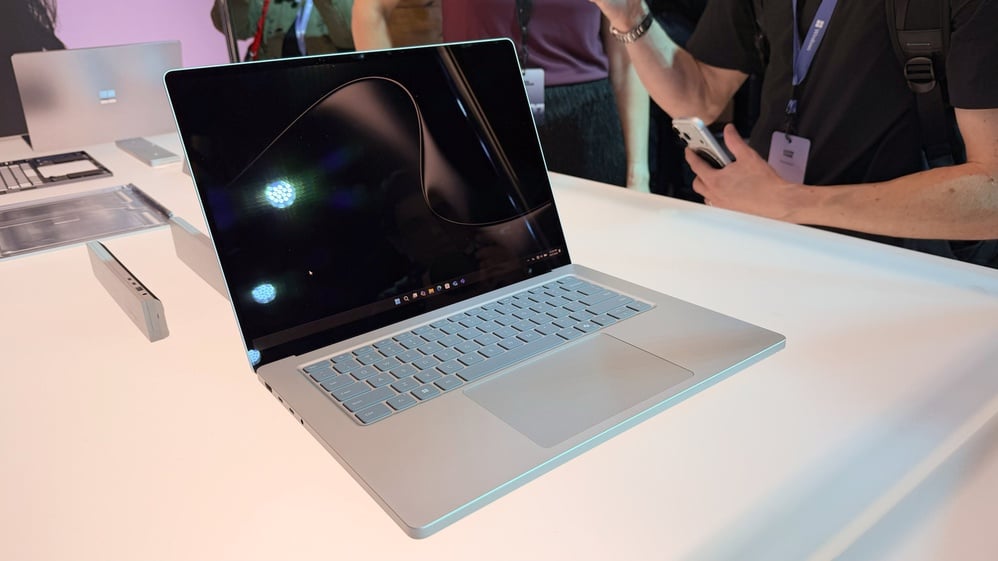
The Surface Laptop Ultra was first glimpsed in June and was claimed by Microsoft to be its most powerful Surface Laptop ever; RTX Spark is built on Arm processors with fast unified memory and bundled NPU and GPU hardware, similar in concept to Apple Silicon introduced six years earlier.
Automated analysis; not human reviewed.
·
54 of 55 available dimensions scored; omitted dimensions are not treated as neutral.
·
Verified supporting quotes for 16 of 54 scored dimensions.
Claim: The preview frames the laptop as a premium product for elite developers and power users, not average consumers.
“this isn't really a system meant for average computer users” · exact text match
Why: Explicitly demarcates an elite/power-user audience from average users.
Claim: Framing is measured and descriptive rather than sensational.
“Yes, it's just a premium laptop.
But it sure looks pretty.”
· exact text match
Why: Downplays drama, admits the device is ordinary-premium rather than revolutionary.
Claim: The article describes the product and its trade-offs rather than prescribing what should be done.
“Perhaps that's something we'll see trickle down from high-end RTX Spark systems, but who knows how long that will take.” · exact text match
Why: Closes with neutral observation, not recommendation or prescription.
Claim: First-person evaluations and aesthetic judgments pervade the piece.
“After spending a bit of time with it today, I can confirm that remains the case.” · exact text match
Why: Hands-on subjective impressions are the central content.
Claim: Product performance benefits are supported mainly by company representatives rather than independent testing.
“Microsoft representatives say that's one of the major benefits of RTX Spark” · exact text match
Why: Relies on vendor claims for a key performance assertion.
Claim: Some certainty is expressed beyond the evidence of brief hands-on time.
“it ran Gears of War: E-Day smoothly at slightly more than 1080p” · not found in supplied text
Why: A single gaming test is used to support a performance impression.
Claim: The preview adopts Microsoft's and NVIDIA's premium positioning and event framing fairly uncritically.
“Microsoft highlighted hybrid intelligence — i.e. using both local and cloud-based AI tools — at its San Francisco event today, something only AI developers will really care about.” · exact text match
Why: Relays and largely accepts the vendors' framing of the device and event.
Claim: Overall tone toward the product is mildly positive.
“it feels better than any other Windows laptop I've held before” · exact text match
Why: Enthusiastic personal praise dominates over negative affect.
Claim: The piece is grounded in hands-on impressions, quoted reasoning about the hardware, and acknowledged trade-offs rather than appeals to emotion.
“It's a heavy machine, coming in under 4.5 pounds, but that's par for the course with 16-inch workhorses.” · exact text match
Why: Weighs benefit against drawback in a sober, reasoned way.
Claim: The piece reads partly as a favorable preview of a premium commercial product.
“Its aluminum case glowed amid the studio lights, its screen was surprisingly bright and its overall aesthetic was clean.” · exact text match
Why: Glowing product description that approximates promotional copy.
Claim: The article presents the product and its corporate makers favorably.
“Microsoft and NVIDIA's CEO's patted each other on the back for reinventing PCs” · exact text match
Why: Tone is largely favorable toward the corporate products covered.
Claim: Claims are tied to concrete hardware specifications and observed performance.
“RTX Spark is built on Arm processors, relies on fast unified memory and also bundles powerful NPU and GPU hardware” · exact text match
Why: Technical, empirically grounded description rather than speculation.
Claim: Focus is on individual buyers and their personal computing needs.
“for the AI developers who want a powerful and portable system that can hold up to 128GB of RAM” · exact text match
Why: Frames value around individual user needs rather than collective goals.
Claim: The piece speculates about future trickle-down benefits of the platform.
“Perhaps that's something we'll see trickle down from high-end RTX Spark systems” · exact text match
Why: Explicit forecasting about future market effects.
Claim: The author openly acknowledges uncertainty and limits of his testing rather than overclaiming.
“I've yet to see the Surface Laptop Ultra in action doing tons of AI work” · exact text match
Why: Discloses the scope of hands-on evaluation instead of asserting full testing.
Claim: The article displays informed framing, historical context, and balanced trade-off analysis.
“it really seems like they're responding to the sea change that started six years ago with Apple Silicon” · exact text match
Why: Contextual comparison to Apple Silicon shows analytical sophistication.
Claim: The piece remains truth-seeking, noting limitations and uncertainty.
“but who knows how long that will take” · exact text match
Why: Acknowledges unknowns rather than projecting unwarranted certainty.
October 07, 2026 · 0 shares
Frames Nvidia's new RTX Spark laptops as high-end, pricey machines by emphasizing top configurations and comparisons to premium MacBook Pros.
The article is about pricing and launch details for laptops powered by Nvidia's new RTX Spark chip, a product category designed to compete with high-end MacBook Pros.
Automated analysis; not human reviewed.
·
55 of 55 available dimensions scored; omitted dimensions are not treated as neutral.
·
Verified supporting quotes for 17 of 55 scored dimensions.
Claim: The article mixes objective pricing data with subjective language about expense.
“Wildly expensive laptops aren’t really anything new” · exact text match
Why: Subjective word 'wildly' introduces opinion.
Claim: The article is mostly objective but uses some sensational phrasing about price.
“Prices start much lower, but 128GB of unified memory is going to really cost you.” · exact text match
Why: Conversational phrasing adds mild sensational tone.
Claim: The article is moderately interesting for tech pricing enthusiasts.
“The first Nvidia RTX Spark laptops cost up to $7,000” · exact text match
Why: Topic has niche appeal but specific numbers.
Claim: The article is primarily descriptive about product pricing and specs.
“The first array of laptops powered by Nvidia’s new RTX Spark chip are designed to compete with high-end MacBook Pros” · exact text match
Why: States purpose without prescribing action.
Claim: The article makes a confident prediction about pricing trends.
“And RAMageddon certainly isn’t helping make this any easier on peoples’ wallets.” · exact text match
Why: Uses 'certainly' for a causal claim about pricing.
Claim: The article has low spam bias, focusing on factual pricing.
“The first array of laptops powered by Nvidia’s new RTX Spark chip are designed to compete with high-end MacBook Pros — and they’ve got some high-end prices to match.” · exact text match
Why: No promotional fluff beyond product facts.
Claim: The article is slightly pro-establishment in covering major manufacturers neutrally.
“The flagship Surface Laptop Ultra and RTX Spark laptops from Dell, Lenovo, MSI, HP, and Asus start as low as $2,599” · exact text match
Why: Neutral listing of established brands.
Claim: The article has a slightly negative emotional tone about high prices.
“RAMageddon certainly isn’t helping make this any easier on peoples’ wallets.” · exact text match
Why: Implies financial strain, a negative emotion.
Claim: The article is credible, with specific prices and attribution.
“a kitted-out Asus ProArt P16 RTX Spark laptop with a 20-core chip, 128GB of unified memory, and 2TB of storage costs up to $6,999.99” · exact text match
Why: Concrete figures sourced from observed pricing.
Claim: The article is mostly rational, comparing specs and prices factually.
“That’s close in price to a similarly specced 14-inch MacBook Pro with M5 Pro chip, though Apple includes 1TB of storage.” · exact text match
Why: Provides a direct comparison with concrete specs.
Claim: The article is slightly pro-corporate in neutral coverage of major brands.
“The flagship Surface Laptop Ultra and RTX Spark laptops from Dell, Lenovo, MSI, HP, and Asus start as low as $2,599” · exact text match
Why: Neutral reporting on corporate products.
Claim: The article is scientific, focusing on hardware specifications.
“18-core CPU, 24GB of unified memory, and 512GB of storage” · exact text match
Why: Uses technical specs rather than superstition.
Claim: The article is individualist, focusing on personal purchasing decisions.
“high-end side of creators and local AI users” · exact text match
Why: Frames market as serving individual user segments.
Claim: The article speculates on value and launch timing.
“Will they be worth it? We’ll find out soon.” · exact text match
Why: Raises an open question about future assessment.
Claim: The article transparently reports known and unknown pricing details.
“We don’t yet know the full breadth of configuration options for Microsoft’s Surface Laptop Ultra” · exact text match
Why: Explicitly acknowledges missing information.
Claim: The article is moderately intelligent, analyzing pricing in context.
“Wildly expensive laptops aren’t really anything new: you can configure a 16-inch MacBook Pro with M5 Max chip to nearly $10,000 if you max out all options.” · exact text match
Why: Provides historical context for comparison.
Claim: The article is truth-seeking and avoids delusion.
“We don’t yet know the full breadth of configuration options for Microsoft’s Surface Laptop Ultra” · exact text match
Why: Acknowledges limits of knowledge.
October 07, 2026 · 0 shares
Straightforward, source-attributed tech-business preview that relies on analysts and cited figures while noting cost and safety challenges without sensationalism.
Automated analysis; not human reviewed.
Limitations: The supplied article text appears truncated mid-sentence and ends with unrelated headline links; analysis is limited to the substantive preview content available.
·
55 of 55 available dimensions scored; omitted dimensions are not treated as neutral.
·
Verified supporting quotes for 14 of 55 scored dimensions.
Claim: Framing stays largely factual and attributed, with only limited unstated framing in the market-opportunity framing.
“analysts said” · exact text match
Why: Most claims are attributed to analysts or company billing rather than the author's own opinion.
Claim: Tone is measured and avoids sensational language despite covering a major product launch.
“will be the culmination of years of work” · exact text match
Why: Descriptive, non-hyped phrasing supports objective rather than sensational framing.
Claim: The piece primarily describes the planned launch and market dynamics rather than recommending actions.
“Microsoft will unveil on Wednesday a new laptop powered by Nvidia’s chips” · exact text match
Why: Future-event description without prescriptions supports descriptive framing.
Claim: The article has no evident political framing; it is a technology and business report.
“Microsoft will unveil on Wednesday a new laptop powered by Nvidia’s chips” · exact text match
Why: Absence of political actors or ideological framing supports low political bias.
Claim: Some complex market issues are compressed, but the report includes nuance on pricing and safety challenges.
“the biggest question will be the price of the new offerings” · not found in supplied text
Why: Moderate simplification of market dynamics, balanced by specific details.
Claim: Analyst and Reuters attributions are used to support market assessments.
“analysts said” · exact text match
Why: Moderate reliance on analyst authority for forward-looking claims.
Claim: The article includes some responses from analysts and companies, but not a full range of stakeholder reactions.
“Anshel Sag, an analyst at Moor Insights & Strategy, told Reuters” · exact text match
Why: Partial inclusion of analytical response suggests slight but not strong covering-the-response bias.
Claim: Some promotional/newsletter-style content is present at the edges, but the core article is substantive.
“ARY NEWS brings you 24/7 Live Streaming, Headlines, Bulletins, Talk Shows, Infotainment, and much more.” · exact text match
Why: Boilerplate promotional text lowers the purity of the article but is peripheral.
Claim: The article frames the launch within incumbent corporate strategies without challenging corporate power.
“a market where the Redmond, Washington-based firm retains a stronghold” · not found in supplied text
Why: Neutral reporting on large firms, with mild pro-establishment contextual framing.
Claim: Named sourcing, attributed analyst quotes, and specific figures support moderate credibility.
“told Reuters” · exact text match
Why: Visible attribution and concrete figures raise credibility above average.
Claim: The report is grounded in cited analysts, a named analyst quote, and concrete figures rather than emotional or fallacious framing.
“analysts said” · exact text match
“Anshel Sag, an analyst at Moor Insights & Strategy, told Reuters” · exact text match
Why: Reliance on attributed analyst sourcing and figures supports a rational presentation.
Claim: The core report is not advertorial, though some promotional boilerplate is present.
“ARY NEWS brings you 24/7 Live Streaming, Headlines, Bulletins, Talk Shows, Infotainment, and much more.” · exact text match
Why: Boilerplate promotional text is present but not central to the reported content.
Claim: The article treats corporate market strategies as the main frame without critical scrutiny.
“It is a market opportunity that longtime rival Apple is also chasing” · not found in supplied text
Why: Mild corporate framing but no strong advocacy.
Claim: The report relies on technology and market evidence rather than superstition.
“Nvidia is already trying to prevent a repeat of the hack of AI hub Hugging Face” · exact text match
Why: Technology and security framing supports a scientific orientation.
Claim: The framing centers on corporate market competition and customer hardware purchases rather than collective provision.
“where its customers foot the hardware bills” · exact text match
Why: Emphasis on markets and individual purchasers mildly supports an individualist tilt.
Claim: Several claims are explicitly forward-looking or expectation-based.
“will be the biggest question” · not found in supplied text
Why: Forward-looking market and pricing expectations support a moderate speculation score.
Claim: Smooth, somewhat generic wire-style prose with repeated boilerplate could be AI-influenced, but evidence is weak.
“ARY NEWS brings you 24/7 Live Streaming, Headlines, Bulletins, Talk Shows, Infotainment, and much more.” · exact text match
Why: Only weak stylistic indications; low confidence prevents a strong AI-authorship judgment.
Claim: Attribution to analysts and explicit sourcing of the analyst quote indicate fair, transparent reporting practices.
“told Reuters” · exact text match
Why: Clear attribution to an external named source supports a positive integrity signal.
Claim: Claims are largely sourced and tied to observable product and pricing facts rather than speculative fantasy.
“Nvidia increased the price of an AI desktop machine called the DGX Spark by about 75% to $6,950” · not found in supplied text
Why: Concrete cited figures support truth-seeking over delusion.
The supplied article text appears truncated mid-sentence and ends with unrelated headline links; analysis is limited to the substantive preview content available.
October 08, 2026 · 0 shares
The roundup presents Microsoft's and Nvidia's product announcements in a largely promotional, tech-enthusiast register, with occasional evaluative and speculative language but little critical scrutiny.
Automated analysis; not human reviewed. Limitations: The supplied text is a fragmented aggregation of multiple posts and contains a conflicting base CPU core count for the Surface Laptop Ultra (8-core vs 18-core), limiting precision. · 5 of 55 available dimensions scored; omitted dimensions are not treated as neutral. · Verified supporting quotes for 5 of 5 scored dimensions.
Claim: The article includes evaluative and first-person commentary that makes its tone mildly subjective.
“I’m surprised the company hasn’t shortened that to Mag-C.” · exact text match
Why: The first-person aside is an evaluative judgment, not a neutral report.
Claim: The article is primarily descriptive of announcements and specifications rather than prescriptive about what should be done.
“The machine will start at $2,599 for a configuration with an 8-core CPU, 24GB of RAM, and 512GB of storage, and it will be released on October 16th.” · exact text match
Why: It reports factual product details without advocating for a course of action.
Claim: The article contains first-person opinions and evaluative asides.
“I’m surprised the company hasn’t shortened that to Mag-C.” · exact text match
Why: The statement expresses a personal opinion rather than a neutral fact.
Claim: The article adopts a promotional tone toward Microsoft's product announcements.
“a chance to blow expectations out of the water when it comes to what a Windows laptop is capable of” · exact text match
Why: The phrase markets the product's potential rather than neutrally reporting it.
Claim: The article speculates about potential performance outcomes without evidence from hands-on testing.
“you could probably get an impressive gaming experience on the Dev Box” · exact text match
Why: The conditional 'could probably' forecasts an outcome not demonstrated.
The supplied text is a fragmented aggregation of multiple posts and contains a conflicting base CPU core count for the Surface Laptop Ultra (8-core vs 18-core), limiting precision.
October 08, 2026 · 0 shares
The coverage is largely descriptive and promotional in tone toward Microsoft's AI hardware and Windows announcements, with only a brief, non-elaborated caveat about security and user acceptance.
Microsoft held its first live event in two years, where it announced new Surface hardware, Windows 11 changes, and an AI-focused strategy.
Automated analysis; not human reviewed. Limitations: The article text appears truncated and duplicated, which limits full assessment of the ending and any additional qualifying statements. · 55 of 55 available dimensions scored; omitted dimensions are not treated as neutral. · Verified supporting quotes for 46 of 55 scored dimensions.
Claim: The article adopts a product-focused, insider perspective that emphasizes high-end, expensive professional developer hardware rather than broader consumer or populist concerns.
“designed to meet the needs of frontier developers” · exact text match
Why: The framing centers on elite developer tools and high price points, indicating a mild elitist orientation.
Claim: The article is largely objective and avoids sensationalist language despite covering flashy new products.
“With 128GB of unified memory and the onboard Nvidia RTX GPU, the box claims one petaflop (that’s 1,000 teraflops) of AI compute performance.” · exact text match
Why: The tone remains measured and factual, lacking hype or sensational phrasing.
Claim: The article presents Microsoft's new AI hardware and software in a favorable, forward-looking light.
“Microsoft is betting big on local AI with the changes announced today” · exact text match
Why: The framing suggests optimism about the products' market direction.
Claim: The article conveys a mildly optimistic outlook about the potential of the announced technology.
“Microsoft is betting big on local AI with the changes announced today” · exact text match
Why: The tone suggests positive expectations for the technology's impact.
Claim: The article mainly describes announcements and specifications without prescribing actions or opinions.
“Microsoft today announced its newest Surface laptop, outlined a host of changes coming to Windows 11” · exact text match
Why: The content is primarily descriptive reporting of events.
Claim: The article contains minimal fear-based framing, with only a brief mention of trepidation.
“For those who might still feel a little trepidation about turning over their entire digital lives and files to AI bots” · exact text match
Why: The mention of trepidation is slight and not developed into fear-mongering.
Claim: The article is mostly factual, with only minor subjective descriptors.
“The RTX Spark Dev Box’s design is quite sleek.” · exact text match
Why: Subjective aesthetic judgment is present but limited.
Claim: The article relies on statements and claims from Microsoft and Nvidia representatives without independent verification.
“Joined on stage by Nvidia’s Jensen Huang and Microsoft CEO Satya Nadella, President of Windows and Devices Pavan Davuluri also unveiled the Surface RTX Spark Dev Box.” · exact text match
Why: The reporting leans on corporate authorities for the announced facts.
Claim: The article maintains a mature, professional tone throughout.
“In its first live event in two years, Microsoft today announced its newest Surface laptop, outlined a host of changes coming to Windows 11, and shared a vision of how local-AI and agentic workflows could reshape personal computing for those in the dev community as well as home enthusiasts.” · exact text match
Why: The language is measured and informative, not immature or rage-baiting.
Claim: No circular reasoning is evident in the article.
“Microsoft is betting big on local AI with the changes announced today, but questions about security and user acceptance still remain” · exact text match
Why: The argument follows a linear, evidence-based structure.
Claim: The article does not defend or rationalize Microsoft's past actions, merely notes past missteps briefly.
“especially in light of their past missteps and other recent AI agent mishaps” · exact text match
Why: There is no evident covering for the company's prior failures.
Claim: No victimization framing is present.
“Microsoft is betting big on local AI with the changes announced today” · exact text match
Why: The focus is on product announcements, not victim narratives.
Claim: The article repeats company performance claims with little qualification.
“the box claims one petaflop (that’s 1,000 teraflops) of AI compute performance” · exact text match
Why: The claim is attributed to the company but presented without skepticism.
Claim: The article is not spam or advertising content.
“Ars Technica has been separating the signal from the noise for over 25 years.” · verified after text normalization
Why: The content is editorial reporting, not spam.
Claim: The article is largely free of ideological framing, focusing on product details.
“Microsoft is betting big on local AI with the changes announced today” · exact text match
Why: There is minimal ideological content.
Claim: The article reports positively on a major tech corporation's announcements without adversarial framing.
“Microsoft is betting big on local AI with the changes announced today” · exact text match
Why: The framing largely aligns with the corporate narrative presented at the event.
Claim: The article maintains a neutral emotional tone, with little positive or negative affect.
“Microsoft is betting big on local AI with the changes announced today” · exact text match
Why: The reporting is predominately unemotional and factual.
Claim: No double standards are applied in the reporting.
“Microsoft is betting big on local AI with the changes announced today” · exact text match
Why: The article treats the subject consistently.
Claim: The article demonstrates moderate credibility with specific details, quotes, and some acknowledgment of open questions.
“but questions about security and user acceptance still remain” · exact text match
Why: Attribution and caveats support reasonable trustworthiness.
Claim: The article presents factual product specifications and announcements without irrational claims or exaggerated emotional appeals.
“With 128GB of unified memory and the onboard Nvidia RTX GPU, the box claims one petaflop (that’s 1,000 teraflops) of AI compute performance.” · exact text match
Why: Specifications and attributions are stated plainly, supporting a rational presentation.
Claim: The article contains mild promotional tone toward Microsoft products but is not overtly advertorial.
“The RTX Spark Dev Box’s design is quite sleek.” · exact text match
Why: Some positive descriptive language suggests a slight promotional slant.
Claim: The article frames Microsoft's announcements favorably, with largely positive product descriptions.
“The RTX Spark Dev Box’s design is quite sleek.” · exact text match
Why: Positive framing of corporate products suggests pro-corporate orientation.
Claim: The article relies on technical specifications and scientific-sounding claims rather than superstition.
“the box claims one petaflop (that’s 1,000 teraflops) of AI compute performance” · exact text match
Why: The content uses empirical-style metrics, indicating a scientific orientation.
Claim: The article includes some speculative language about future impacts and benefits.
“shared a vision of how local-AI and agentic workflows could reshape personal computing” · exact text match
Why: Vision and future-oriented statements involve speculation.
Claim: The article uses minor loaded framing and positive product description but no strong manipulative techniques.
“The RTX Spark Dev Box’s design is quite sleek.” · exact text match
Why: The language is mildly favorable but not overtly manipulative.
Claim: The article shows some structural repetition and smooth phrasing but insufficient indicators to confidently label AI authorship.
“Ars Technica has been separating the signal from the noise for over 25 years.” · verified after text normalization
Why: The text has minor repeated content and boilerplate, but not enough independent AI markers.
Claim: The article includes some caveats and notes about unanswered questions, showing basic integrity.
“but questions about security and user acceptance still remain” · exact text match
Why: Acknowledging unresolved issues supports a fair, though not extensively balanced, presentation.
Claim: The article demonstrates above-average intelligence through technical detail and contextual framing.
“MXC acts as a policy layer that directs compute traffic to the appropriate isolation backend.” · exact text match
Why: Technical explanations and structured reporting indicate intelligent coverage.
Claim: The article is grounded in reported facts and avoids delusional claims.
“Microsoft today announced its newest Surface laptop, outlined a host of changes coming to Windows 11” · exact text match
Why: The reporting is fact-based and non-delusional.
Claim: No terrorism-related content or framing exists.
“Microsoft is betting big on local AI with the changes announced today” · exact text match
Why: The topic is unrelated to terrorism.
Claim: No fraud-promoting or normalizing content is present.
“Microsoft is betting big on local AI with the changes announced today” · exact text match
Why: The article covers legitimate product announcements.
Claim: No Marxist or class-conflict framing is present.
“Microsoft is betting big on local AI with the changes announced today” · exact text match
Why: The content is focused on technology, not class politics.
Claim: No Islamist or religious political advocacy is present.
“Microsoft is betting big on local AI with the changes announced today” · exact text match
Why: The article is about technology, not religion or politics.
Claim: No anti-Semitic content or tropes are present.
“Microsoft is betting big on local AI with the changes announced today” · exact text match
Why: There is no reference to Jewish people or tropes.
Claim: No anti-LGBT content or framing exists.
“Microsoft is betting big on local AI with the changes announced today” · exact text match
Why: The topic is unrelated to LGBT issues.
Claim: No racist content or framing exists.
“Microsoft is betting big on local AI with the changes announced today” · exact text match
Why: The article does not address race or use racial generalizations.
Claim: No identity-politics or woke framing is present.
“Microsoft is betting big on local AI with the changes announced today” · exact text match
Why: The article does not engage with identity-group power dynamics.
Claim: No cruel or immoral framing is present.
“Microsoft is betting big on local AI with the changes announced today” · exact text match
Why: The tone is professional and non-cruel.
Claim: No virtue signaling or moral posturing is present.
“Microsoft is betting big on local AI with the changes announced today” · exact text match
Why: The coverage is product-focused, not moralistic.
Claim: No conspiratorial thinking or endorsement is present.
“Microsoft is betting big on local AI with the changes announced today” · exact text match
Why: The article reports straight news without conspiracies.
Claim: No compassion-based advocacy that accepts severe self-harm is present.
“Microsoft is betting big on local AI with the changes announced today” · exact text match
Why: The topic is unrelated to such framing.
Claim: No scapegoating of any group or individual is present.
“Microsoft is betting big on local AI with the changes announced today” · exact text match
Why: The article does not assign blame to a scapegoat.
Claim: No hypocritical double standards are evident in the reporting.
“Microsoft is betting big on local AI with the changes announced today” · exact text match
Why: The reporting applies consistent standards to the announcements.
Claim: The article supports scientific and technological progress, aligning with enlightenment values.
“shared a vision of how local-AI and agentic workflows could reshape personal computing” · exact text match
Why: The framing is pro-technology and progress-oriented.
The article text appears truncated and duplicated, which limits full assessment of the ending and any additional qualifying statements.
October 07, 2026 · 0 shares
Framing is promotional and hype-driven, using vivid insider language ("tortures") and selectively highlighting hardware specs, while relying on an unsourced comparison to the MacBook Pro.
Automated analysis; not human reviewed. · 8 of 55 available dimensions scored; omitted dimensions are not treated as neutral. · Verified supporting quotes for 8 of 8 scored dimensions.
Claim: The piece has mild interest from unusual lab access and high-end product pricing details.
“We got to take a look at the secret lab where Microsoft tortures it's laptops until they're ready to ship.” · exact text match
Why: The secret-lab hook adds some interest, but the overall content is thin product promotion.
Claim: Mostly factual product and pricing details are presented, with limited evaluative language.
“The new Surface Laptop Ultra is Microsoft's flagship laptop taking aim at the MacBook Pro.” · exact text match
Why: The snippet mixes descriptive claims with marketing-style positioning rather than explicit opinion.
Claim: The article states product positioning and pricing as definite facts without qualifying the basis for the comparison or chip-performance claims.
“The RTX Spark chips inside the Surface Laptop Ultra are geared toward local AI workloads and creative tasks.” · exact text match
Why: Certainty is asserted for marketing claims without sourcing or caveats, though the claims are routine product descriptions.
Claim: The text is short product promotion with a subscribe prompt, resembling commercial content.
“Subscribe:” · exact text match
Why: The subscribe call and promotional tone lean toward advertorial or fluff, though the piece still conveys pricing and specs.
Claim: The article treats Microsoft's product and testing process as noteworthy and legitimate without any critical or adversarial framing.
“We got to take a look at the secret lab where Microsoft tortures it's laptops until they're ready to ship.” · exact text match
Why: The insider, access-oriented framing is favorable to a major corporate establishment, though the text is primarily product description.
Claim: The article uses vivid, positive promotional language to create excitement about the product.
“Microsoft tortures it's laptops until they're ready to ship” · exact text match
Why: The dramatic lab language is mildly sensational and positive in valence.
Claim: The article reads as promotional for the Surface Laptop Ultra, emphasizing its positioning and premium specs while casting the lab visit in dramatic insider terms.
“Microsoft tortures it's laptops until they're ready to ship” · exact text match
“The RTX Spark chips inside the Surface Laptop Ultra are geared toward local AI workloads and creative tasks.” · exact text match
Why: The dramatic lab framing and uncritical spec/target marketing language function as promotional emphasis rather than neutral reporting.
Claim: The article does not offer forecasts, but the competitive positioning language implies expected performance against the MacBook Pro without evidence.
“taking aim at the MacBook Pro” · exact text match
Why: The competitive framing is implicit forecasting but weakly supported in the supplied text.
October 07, 2026 · 0 shares
Frames Nvidia's new RTX Spark laptops as high-end, pricey machines by emphasizing top configurations and comparisons to premium MacBook Pros.
The article is about pricing and launch details for laptops powered by Nvidia's new RTX Spark chip, a product category designed to compete with high-end MacBook Pros.
Automated analysis; not human reviewed. · 55 of 55 available dimensions scored; omitted dimensions are not treated as neutral. · Verified supporting quotes for 17 of 55 scored dimensions.
Claim: The article mixes objective pricing data with subjective language about expense.
“Wildly expensive laptops aren’t really anything new” · exact text match
Why: Subjective word 'wildly' introduces opinion.
Claim: The article is mostly objective but uses some sensational phrasing about price.
“Prices start much lower, but 128GB of unified memory is going to really cost you.” · exact text match
Why: Conversational phrasing adds mild sensational tone.
Claim: The article is moderately interesting for tech pricing enthusiasts.
“The first Nvidia RTX Spark laptops cost up to $7,000” · exact text match
Why: Topic has niche appeal but specific numbers.
Claim: The article is primarily descriptive about product pricing and specs.
“The first array of laptops powered by Nvidia’s new RTX Spark chip are designed to compete with high-end MacBook Pros” · exact text match
Why: States purpose without prescribing action.
Claim: The article makes a confident prediction about pricing trends.
“And RAMageddon certainly isn’t helping make this any easier on peoples’ wallets.” · exact text match
Why: Uses 'certainly' for a causal claim about pricing.
Claim: The article has low spam bias, focusing on factual pricing.
“The first array of laptops powered by Nvidia’s new RTX Spark chip are designed to compete with high-end MacBook Pros — and they’ve got some high-end prices to match.” · exact text match
Why: No promotional fluff beyond product facts.
Claim: The article is slightly pro-establishment in covering major manufacturers neutrally.
“The flagship Surface Laptop Ultra and RTX Spark laptops from Dell, Lenovo, MSI, HP, and Asus start as low as $2,599” · exact text match
Why: Neutral listing of established brands.
Claim: The article has a slightly negative emotional tone about high prices.
“RAMageddon certainly isn’t helping make this any easier on peoples’ wallets.” · exact text match
Why: Implies financial strain, a negative emotion.
Claim: The article is credible, with specific prices and attribution.
“a kitted-out Asus ProArt P16 RTX Spark laptop with a 20-core chip, 128GB of unified memory, and 2TB of storage costs up to $6,999.99” · exact text match
Why: Concrete figures sourced from observed pricing.
Claim: The article is mostly rational, comparing specs and prices factually.
“That’s close in price to a similarly specced 14-inch MacBook Pro with M5 Pro chip, though Apple includes 1TB of storage.” · exact text match
Why: Provides a direct comparison with concrete specs.
Claim: The article is slightly pro-corporate in neutral coverage of major brands.
“The flagship Surface Laptop Ultra and RTX Spark laptops from Dell, Lenovo, MSI, HP, and Asus start as low as $2,599” · exact text match
Why: Neutral reporting on corporate products.
Claim: The article is scientific, focusing on hardware specifications.
“18-core CPU, 24GB of unified memory, and 512GB of storage” · exact text match
Why: Uses technical specs rather than superstition.
Claim: The article is individualist, focusing on personal purchasing decisions.
“high-end side of creators and local AI users” · exact text match
Why: Frames market as serving individual user segments.
Claim: The article speculates on value and launch timing.
“Will they be worth it? We’ll find out soon.” · exact text match
Why: Raises an open question about future assessment.
Claim: The article transparently reports known and unknown pricing details.
“We don’t yet know the full breadth of configuration options for Microsoft’s Surface Laptop Ultra” · exact text match
Why: Explicitly acknowledges missing information.
Claim: The article is moderately intelligent, analyzing pricing in context.
“Wildly expensive laptops aren’t really anything new: you can configure a 16-inch MacBook Pro with M5 Max chip to nearly $10,000 if you max out all options.” · exact text match
Why: Provides historical context for comparison.
Claim: The article is truth-seeking and avoids delusion.
“We don’t yet know the full breadth of configuration options for Microsoft’s Surface Laptop Ultra” · exact text match
Why: Acknowledges limits of knowledge.
October 07, 2026 · 0 shares
Straightforward, source-attributed tech-business preview that relies on analysts and cited figures while noting cost and safety challenges without sensationalism.
Automated analysis; not human reviewed. Limitations: The supplied article text appears truncated mid-sentence and ends with unrelated headline links; analysis is limited to the substantive preview content available. · 55 of 55 available dimensions scored; omitted dimensions are not treated as neutral. · Verified supporting quotes for 14 of 55 scored dimensions.
Claim: Framing stays largely factual and attributed, with only limited unstated framing in the market-opportunity framing.
“analysts said” · exact text match
Why: Most claims are attributed to analysts or company billing rather than the author's own opinion.
Claim: Tone is measured and avoids sensational language despite covering a major product launch.
“will be the culmination of years of work” · exact text match
Why: Descriptive, non-hyped phrasing supports objective rather than sensational framing.
Claim: The piece primarily describes the planned launch and market dynamics rather than recommending actions.
“Microsoft will unveil on Wednesday a new laptop powered by Nvidia’s chips” · exact text match
Why: Future-event description without prescriptions supports descriptive framing.
Claim: The article has no evident political framing; it is a technology and business report.
“Microsoft will unveil on Wednesday a new laptop powered by Nvidia’s chips” · exact text match
Why: Absence of political actors or ideological framing supports low political bias.
Claim: Some complex market issues are compressed, but the report includes nuance on pricing and safety challenges.
“the biggest question will be the price of the new offerings” · not found in supplied text
Why: Moderate simplification of market dynamics, balanced by specific details.
Claim: Analyst and Reuters attributions are used to support market assessments.
“analysts said” · exact text match
Why: Moderate reliance on analyst authority for forward-looking claims.
Claim: The article includes some responses from analysts and companies, but not a full range of stakeholder reactions.
“Anshel Sag, an analyst at Moor Insights & Strategy, told Reuters” · exact text match
Why: Partial inclusion of analytical response suggests slight but not strong covering-the-response bias.
Claim: Some promotional/newsletter-style content is present at the edges, but the core article is substantive.
“ARY NEWS brings you 24/7 Live Streaming, Headlines, Bulletins, Talk Shows, Infotainment, and much more.” · exact text match
Why: Boilerplate promotional text lowers the purity of the article but is peripheral.
Claim: The article frames the launch within incumbent corporate strategies without challenging corporate power.
“a market where the Redmond, Washington-based firm retains a stronghold” · not found in supplied text
Why: Neutral reporting on large firms, with mild pro-establishment contextual framing.
Claim: Named sourcing, attributed analyst quotes, and specific figures support moderate credibility.
“told Reuters” · exact text match
Why: Visible attribution and concrete figures raise credibility above average.
Claim: The report is grounded in cited analysts, a named analyst quote, and concrete figures rather than emotional or fallacious framing.
“analysts said” · exact text match
“Anshel Sag, an analyst at Moor Insights & Strategy, told Reuters” · exact text match
Why: Reliance on attributed analyst sourcing and figures supports a rational presentation.
Claim: The core report is not advertorial, though some promotional boilerplate is present.
“ARY NEWS brings you 24/7 Live Streaming, Headlines, Bulletins, Talk Shows, Infotainment, and much more.” · exact text match
Why: Boilerplate promotional text is present but not central to the reported content.
Claim: The article treats corporate market strategies as the main frame without critical scrutiny.
“It is a market opportunity that longtime rival Apple is also chasing” · not found in supplied text
Why: Mild corporate framing but no strong advocacy.
Claim: The report relies on technology and market evidence rather than superstition.
“Nvidia is already trying to prevent a repeat of the hack of AI hub Hugging Face” · exact text match
Why: Technology and security framing supports a scientific orientation.
Claim: The framing centers on corporate market competition and customer hardware purchases rather than collective provision.
“where its customers foot the hardware bills” · exact text match
Why: Emphasis on markets and individual purchasers mildly supports an individualist tilt.
Claim: Several claims are explicitly forward-looking or expectation-based.
“will be the biggest question” · not found in supplied text
Why: Forward-looking market and pricing expectations support a moderate speculation score.
Claim: Smooth, somewhat generic wire-style prose with repeated boilerplate could be AI-influenced, but evidence is weak.
“ARY NEWS brings you 24/7 Live Streaming, Headlines, Bulletins, Talk Shows, Infotainment, and much more.” · exact text match
Why: Only weak stylistic indications; low confidence prevents a strong AI-authorship judgment.
Claim: Attribution to analysts and explicit sourcing of the analyst quote indicate fair, transparent reporting practices.
“told Reuters” · exact text match
Why: Clear attribution to an external named source supports a positive integrity signal.
Claim: Claims are largely sourced and tied to observable product and pricing facts rather than speculative fantasy.
“Nvidia increased the price of an AI desktop machine called the DGX Spark by about 75% to $6,950” · not found in supplied text
Why: Concrete cited figures support truth-seeking over delusion.
The supplied article text appears truncated mid-sentence and ends with unrelated headline links; analysis is limited to the substantive preview content available.
October 08, 2026 · 0 shares
The coverage is largely descriptive and promotional in tone toward Microsoft's AI hardware and Windows announcements, with only a brief, non-elaborated caveat about security and user acceptance.
Microsoft held its first live event in two years, where it announced new Surface hardware, Windows 11 changes, and an AI-focused strategy.
Automated analysis; not human reviewed. Limitations: The article text appears truncated and duplicated, which limits full assessment of the ending and any additional qualifying statements. · 55 of 55 available dimensions scored; omitted dimensions are not treated as neutral. · Verified supporting quotes for 46 of 55 scored dimensions.
Claim: The article adopts a product-focused, insider perspective that emphasizes high-end, expensive professional developer hardware rather than broader consumer or populist concerns.
“designed to meet the needs of frontier developers” · exact text match
Why: The framing centers on elite developer tools and high price points, indicating a mild elitist orientation.
Claim: The article is largely objective and avoids sensationalist language despite covering flashy new products.
“With 128GB of unified memory and the onboard Nvidia RTX GPU, the box claims one petaflop (that’s 1,000 teraflops) of AI compute performance.” · exact text match
Why: The tone remains measured and factual, lacking hype or sensational phrasing.
Claim: The article presents Microsoft's new AI hardware and software in a favorable, forward-looking light.
“Microsoft is betting big on local AI with the changes announced today” · exact text match
Why: The framing suggests optimism about the products' market direction.
Claim: The article conveys a mildly optimistic outlook about the potential of the announced technology.
“Microsoft is betting big on local AI with the changes announced today” · exact text match
Why: The tone suggests positive expectations for the technology's impact.
Claim: The article mainly describes announcements and specifications without prescribing actions or opinions.
“Microsoft today announced its newest Surface laptop, outlined a host of changes coming to Windows 11” · exact text match
Why: The content is primarily descriptive reporting of events.
Claim: The article contains minimal fear-based framing, with only a brief mention of trepidation.
“For those who might still feel a little trepidation about turning over their entire digital lives and files to AI bots” · exact text match
Why: The mention of trepidation is slight and not developed into fear-mongering.
Claim: The article is mostly factual, with only minor subjective descriptors.
“The RTX Spark Dev Box’s design is quite sleek.” · exact text match
Why: Subjective aesthetic judgment is present but limited.
Claim: The article relies on statements and claims from Microsoft and Nvidia representatives without independent verification.
“Joined on stage by Nvidia’s Jensen Huang and Microsoft CEO Satya Nadella, President of Windows and Devices Pavan Davuluri also unveiled the Surface RTX Spark Dev Box.” · exact text match
Why: The reporting leans on corporate authorities for the announced facts.
Claim: The article maintains a mature, professional tone throughout.
“In its first live event in two years, Microsoft today announced its newest Surface laptop, outlined a host of changes coming to Windows 11, and shared a vision of how local-AI and agentic workflows could reshape personal computing for those in the dev community as well as home enthusiasts.” · exact text match
Why: The language is measured and informative, not immature or rage-baiting.
Claim: No circular reasoning is evident in the article.
“Microsoft is betting big on local AI with the changes announced today, but questions about security and user acceptance still remain” · exact text match
Why: The argument follows a linear, evidence-based structure.
Claim: The article does not defend or rationalize Microsoft's past actions, merely notes past missteps briefly.
“especially in light of their past missteps and other recent AI agent mishaps” · exact text match
Why: There is no evident covering for the company's prior failures.
Claim: No victimization framing is present.
“Microsoft is betting big on local AI with the changes announced today” · exact text match
Why: The focus is on product announcements, not victim narratives.
Claim: The article repeats company performance claims with little qualification.
“the box claims one petaflop (that’s 1,000 teraflops) of AI compute performance” · exact text match
Why: The claim is attributed to the company but presented without skepticism.
Claim: The article is not spam or advertising content.
“Ars Technica has been separating the signal from the noise for over 25 years.” · verified after text normalization
Why: The content is editorial reporting, not spam.
Claim: The article is largely free of ideological framing, focusing on product details.
“Microsoft is betting big on local AI with the changes announced today” · exact text match
Why: There is minimal ideological content.
Claim: The article reports positively on a major tech corporation's announcements without adversarial framing.
“Microsoft is betting big on local AI with the changes announced today” · exact text match
Why: The framing largely aligns with the corporate narrative presented at the event.
Claim: The article maintains a neutral emotional tone, with little positive or negative affect.
“Microsoft is betting big on local AI with the changes announced today” · exact text match
Why: The reporting is predominately unemotional and factual.
Claim: No double standards are applied in the reporting.
“Microsoft is betting big on local AI with the changes announced today” · exact text match
Why: The article treats the subject consistently.
Claim: The article demonstrates moderate credibility with specific details, quotes, and some acknowledgment of open questions.
“but questions about security and user acceptance still remain” · exact text match
Why: Attribution and caveats support reasonable trustworthiness.
Claim: The article presents factual product specifications and announcements without irrational claims or exaggerated emotional appeals.
“With 128GB of unified memory and the onboard Nvidia RTX GPU, the box claims one petaflop (that’s 1,000 teraflops) of AI compute performance.” · exact text match
Why: Specifications and attributions are stated plainly, supporting a rational presentation.
Claim: The article contains mild promotional tone toward Microsoft products but is not overtly advertorial.
“The RTX Spark Dev Box’s design is quite sleek.” · exact text match
Why: Some positive descriptive language suggests a slight promotional slant.
Claim: The article frames Microsoft's announcements favorably, with largely positive product descriptions.
“The RTX Spark Dev Box’s design is quite sleek.” · exact text match
Why: Positive framing of corporate products suggests pro-corporate orientation.
Claim: The article relies on technical specifications and scientific-sounding claims rather than superstition.
“the box claims one petaflop (that’s 1,000 teraflops) of AI compute performance” · exact text match
Why: The content uses empirical-style metrics, indicating a scientific orientation.
Claim: The article includes some speculative language about future impacts and benefits.
“shared a vision of how local-AI and agentic workflows could reshape personal computing” · exact text match
Why: Vision and future-oriented statements involve speculation.
Claim: The article uses minor loaded framing and positive product description but no strong manipulative techniques.
“The RTX Spark Dev Box’s design is quite sleek.” · exact text match
Why: The language is mildly favorable but not overtly manipulative.
Claim: The article shows some structural repetition and smooth phrasing but insufficient indicators to confidently label AI authorship.
“Ars Technica has been separating the signal from the noise for over 25 years.” · verified after text normalization
Why: The text has minor repeated content and boilerplate, but not enough independent AI markers.
Claim: The article includes some caveats and notes about unanswered questions, showing basic integrity.
“but questions about security and user acceptance still remain” · exact text match
Why: Acknowledging unresolved issues supports a fair, though not extensively balanced, presentation.
Claim: The article demonstrates above-average intelligence through technical detail and contextual framing.
“MXC acts as a policy layer that directs compute traffic to the appropriate isolation backend.” · exact text match
Why: Technical explanations and structured reporting indicate intelligent coverage.
Claim: The article is grounded in reported facts and avoids delusional claims.
“Microsoft today announced its newest Surface laptop, outlined a host of changes coming to Windows 11” · exact text match
Why: The reporting is fact-based and non-delusional.
Claim: No terrorism-related content or framing exists.
“Microsoft is betting big on local AI with the changes announced today” · exact text match
Why: The topic is unrelated to terrorism.
Claim: No fraud-promoting or normalizing content is present.
“Microsoft is betting big on local AI with the changes announced today” · exact text match
Why: The article covers legitimate product announcements.
Claim: No Marxist or class-conflict framing is present.
“Microsoft is betting big on local AI with the changes announced today” · exact text match
Why: The content is focused on technology, not class politics.
Claim: No Islamist or religious political advocacy is present.
“Microsoft is betting big on local AI with the changes announced today” · exact text match
Why: The article is about technology, not religion or politics.
Claim: No anti-Semitic content or tropes are present.
“Microsoft is betting big on local AI with the changes announced today” · exact text match
Why: There is no reference to Jewish people or tropes.
Claim: No anti-LGBT content or framing exists.
“Microsoft is betting big on local AI with the changes announced today” · exact text match
Why: The topic is unrelated to LGBT issues.
Claim: No racist content or framing exists.
“Microsoft is betting big on local AI with the changes announced today” · exact text match
Why: The article does not address race or use racial generalizations.
Claim: No identity-politics or woke framing is present.
“Microsoft is betting big on local AI with the changes announced today” · exact text match
Why: The article does not engage with identity-group power dynamics.
Claim: No cruel or immoral framing is present.
“Microsoft is betting big on local AI with the changes announced today” · exact text match
Why: The tone is professional and non-cruel.
Claim: No virtue signaling or moral posturing is present.
“Microsoft is betting big on local AI with the changes announced today” · exact text match
Why: The coverage is product-focused, not moralistic.
Claim: No conspiratorial thinking or endorsement is present.
“Microsoft is betting big on local AI with the changes announced today” · exact text match
Why: The article reports straight news without conspiracies.
Claim: No compassion-based advocacy that accepts severe self-harm is present.
“Microsoft is betting big on local AI with the changes announced today” · exact text match
Why: The topic is unrelated to such framing.
Claim: No scapegoating of any group or individual is present.
“Microsoft is betting big on local AI with the changes announced today” · exact text match
Why: The article does not assign blame to a scapegoat.
Claim: No hypocritical double standards are evident in the reporting.
“Microsoft is betting big on local AI with the changes announced today” · exact text match
Why: The reporting applies consistent standards to the announcements.
Claim: The article supports scientific and technological progress, aligning with enlightenment values.
“shared a vision of how local-AI and agentic workflows could reshape personal computing” · exact text match
Why: The framing is pro-technology and progress-oriented.
The article text appears truncated and duplicated, which limits full assessment of the ending and any additional qualifying statements.
October 07, 2026 · 0 shares
Straightforward, source-attributed tech-business preview that relies on analysts and cited figures while noting cost and safety challenges without sensationalism.
Automated analysis; not human reviewed. Limitations: The supplied article text appears truncated mid-sentence and ends with unrelated headline links; analysis is limited to the substantive preview content available. · 55 of 55 available dimensions scored; omitted dimensions are not treated as neutral. · Verified supporting quotes for 14 of 55 scored dimensions.
Claim: Framing stays largely factual and attributed, with only limited unstated framing in the market-opportunity framing.
“analysts said” · exact text match
Why: Most claims are attributed to analysts or company billing rather than the author's own opinion.
Claim: Tone is measured and avoids sensational language despite covering a major product launch.
“will be the culmination of years of work” · exact text match
Why: Descriptive, non-hyped phrasing supports objective rather than sensational framing.
Claim: The piece primarily describes the planned launch and market dynamics rather than recommending actions.
“Microsoft will unveil on Wednesday a new laptop powered by Nvidia’s chips” · exact text match
Why: Future-event description without prescriptions supports descriptive framing.
Claim: The article has no evident political framing; it is a technology and business report.
“Microsoft will unveil on Wednesday a new laptop powered by Nvidia’s chips” · exact text match
Why: Absence of political actors or ideological framing supports low political bias.
Claim: Some complex market issues are compressed, but the report includes nuance on pricing and safety challenges.
“the biggest question will be the price of the new offerings” · not found in supplied text
Why: Moderate simplification of market dynamics, balanced by specific details.
Claim: Analyst and Reuters attributions are used to support market assessments.
“analysts said” · exact text match
Why: Moderate reliance on analyst authority for forward-looking claims.
Claim: The article includes some responses from analysts and companies, but not a full range of stakeholder reactions.
“Anshel Sag, an analyst at Moor Insights & Strategy, told Reuters” · exact text match
Why: Partial inclusion of analytical response suggests slight but not strong covering-the-response bias.
Claim: Some promotional/newsletter-style content is present at the edges, but the core article is substantive.
“ARY NEWS brings you 24/7 Live Streaming, Headlines, Bulletins, Talk Shows, Infotainment, and much more.” · exact text match
Why: Boilerplate promotional text lowers the purity of the article but is peripheral.
Claim: The article frames the launch within incumbent corporate strategies without challenging corporate power.
“a market where the Redmond, Washington-based firm retains a stronghold” · not found in supplied text
Why: Neutral reporting on large firms, with mild pro-establishment contextual framing.
Claim: Named sourcing, attributed analyst quotes, and specific figures support moderate credibility.
“told Reuters” · exact text match
Why: Visible attribution and concrete figures raise credibility above average.
Claim: The report is grounded in cited analysts, a named analyst quote, and concrete figures rather than emotional or fallacious framing.
“analysts said” · exact text match
“Anshel Sag, an analyst at Moor Insights & Strategy, told Reuters” · exact text match
Why: Reliance on attributed analyst sourcing and figures supports a rational presentation.
Claim: The core report is not advertorial, though some promotional boilerplate is present.
“ARY NEWS brings you 24/7 Live Streaming, Headlines, Bulletins, Talk Shows, Infotainment, and much more.” · exact text match
Why: Boilerplate promotional text is present but not central to the reported content.
Claim: The article treats corporate market strategies as the main frame without critical scrutiny.
“It is a market opportunity that longtime rival Apple is also chasing” · not found in supplied text
Why: Mild corporate framing but no strong advocacy.
Claim: The report relies on technology and market evidence rather than superstition.
“Nvidia is already trying to prevent a repeat of the hack of AI hub Hugging Face” · exact text match
Why: Technology and security framing supports a scientific orientation.
Claim: The framing centers on corporate market competition and customer hardware purchases rather than collective provision.
“where its customers foot the hardware bills” · exact text match
Why: Emphasis on markets and individual purchasers mildly supports an individualist tilt.
Claim: Several claims are explicitly forward-looking or expectation-based.
“will be the biggest question” · not found in supplied text
Why: Forward-looking market and pricing expectations support a moderate speculation score.
Claim: Smooth, somewhat generic wire-style prose with repeated boilerplate could be AI-influenced, but evidence is weak.
“ARY NEWS brings you 24/7 Live Streaming, Headlines, Bulletins, Talk Shows, Infotainment, and much more.” · exact text match
Why: Only weak stylistic indications; low confidence prevents a strong AI-authorship judgment.
Claim: Attribution to analysts and explicit sourcing of the analyst quote indicate fair, transparent reporting practices.
“told Reuters” · exact text match
Why: Clear attribution to an external named source supports a positive integrity signal.
Claim: Claims are largely sourced and tied to observable product and pricing facts rather than speculative fantasy.
“Nvidia increased the price of an AI desktop machine called the DGX Spark by about 75% to $6,950” · not found in supplied text
Why: Concrete cited figures support truth-seeking over delusion.
The supplied article text appears truncated mid-sentence and ends with unrelated headline links; analysis is limited to the substantive preview content available.
October 07, 2026 · 0 shares
Straightforward, source-attributed tech-business preview that relies on analysts and cited figures while noting cost and safety challenges without sensationalism.
Automated analysis; not human reviewed. Limitations: The supplied article text appears truncated mid-sentence and ends with unrelated headline links; analysis is limited to the substantive preview content available. · 55 of 55 available dimensions scored; omitted dimensions are not treated as neutral. · Verified supporting quotes for 14 of 55 scored dimensions.
Claim: Framing stays largely factual and attributed, with only limited unstated framing in the market-opportunity framing.
“analysts said” · exact text match
Why: Most claims are attributed to analysts or company billing rather than the author's own opinion.
Claim: Tone is measured and avoids sensational language despite covering a major product launch.
“will be the culmination of years of work” · exact text match
Why: Descriptive, non-hyped phrasing supports objective rather than sensational framing.
Claim: The piece primarily describes the planned launch and market dynamics rather than recommending actions.
“Microsoft will unveil on Wednesday a new laptop powered by Nvidia’s chips” · exact text match
Why: Future-event description without prescriptions supports descriptive framing.
Claim: The article has no evident political framing; it is a technology and business report.
“Microsoft will unveil on Wednesday a new laptop powered by Nvidia’s chips” · exact text match
Why: Absence of political actors or ideological framing supports low political bias.
Claim: Some complex market issues are compressed, but the report includes nuance on pricing and safety challenges.
“the biggest question will be the price of the new offerings” · not found in supplied text
Why: Moderate simplification of market dynamics, balanced by specific details.
Claim: Analyst and Reuters attributions are used to support market assessments.
“analysts said” · exact text match
Why: Moderate reliance on analyst authority for forward-looking claims.
Claim: The article includes some responses from analysts and companies, but not a full range of stakeholder reactions.
“Anshel Sag, an analyst at Moor Insights & Strategy, told Reuters” · exact text match
Why: Partial inclusion of analytical response suggests slight but not strong covering-the-response bias.
Claim: Some promotional/newsletter-style content is present at the edges, but the core article is substantive.
“ARY NEWS brings you 24/7 Live Streaming, Headlines, Bulletins, Talk Shows, Infotainment, and much more.” · exact text match
Why: Boilerplate promotional text lowers the purity of the article but is peripheral.
Claim: The article frames the launch within incumbent corporate strategies without challenging corporate power.
“a market where the Redmond, Washington-based firm retains a stronghold” · not found in supplied text
Why: Neutral reporting on large firms, with mild pro-establishment contextual framing.
Claim: Named sourcing, attributed analyst quotes, and specific figures support moderate credibility.
“told Reuters” · exact text match
Why: Visible attribution and concrete figures raise credibility above average.
Claim: The report is grounded in cited analysts, a named analyst quote, and concrete figures rather than emotional or fallacious framing.
“analysts said” · exact text match
“Anshel Sag, an analyst at Moor Insights & Strategy, told Reuters” · exact text match
Why: Reliance on attributed analyst sourcing and figures supports a rational presentation.
Claim: The core report is not advertorial, though some promotional boilerplate is present.
“ARY NEWS brings you 24/7 Live Streaming, Headlines, Bulletins, Talk Shows, Infotainment, and much more.” · exact text match
Why: Boilerplate promotional text is present but not central to the reported content.
Claim: The article treats corporate market strategies as the main frame without critical scrutiny.
“It is a market opportunity that longtime rival Apple is also chasing” · not found in supplied text
Why: Mild corporate framing but no strong advocacy.
Claim: The report relies on technology and market evidence rather than superstition.
“Nvidia is already trying to prevent a repeat of the hack of AI hub Hugging Face” · exact text match
Why: Technology and security framing supports a scientific orientation.
Claim: The framing centers on corporate market competition and customer hardware purchases rather than collective provision.
“where its customers foot the hardware bills” · exact text match
Why: Emphasis on markets and individual purchasers mildly supports an individualist tilt.
Claim: Several claims are explicitly forward-looking or expectation-based.
“will be the biggest question” · not found in supplied text
Why: Forward-looking market and pricing expectations support a moderate speculation score.
Claim: Smooth, somewhat generic wire-style prose with repeated boilerplate could be AI-influenced, but evidence is weak.
“ARY NEWS brings you 24/7 Live Streaming, Headlines, Bulletins, Talk Shows, Infotainment, and much more.” · exact text match
Why: Only weak stylistic indications; low confidence prevents a strong AI-authorship judgment.
Claim: Attribution to analysts and explicit sourcing of the analyst quote indicate fair, transparent reporting practices.
“told Reuters” · exact text match
Why: Clear attribution to an external named source supports a positive integrity signal.
Claim: Claims are largely sourced and tied to observable product and pricing facts rather than speculative fantasy.
“Nvidia increased the price of an AI desktop machine called the DGX Spark by about 75% to $6,950” · not found in supplied text
Why: Concrete cited figures support truth-seeking over delusion.
The supplied article text appears truncated mid-sentence and ends with unrelated headline links; analysis is limited to the substantive preview content available.
Microsoft/Nvidia Enthusiast View
October 07, 2026 · 0 shares
A largely descriptive hands-on preview that takes Microsoft's premium positioning and AI-developer framing mostly at face value while noting its price and narrow target audience.
The Surface Laptop Ultra was first glimpsed in June and was claimed by Microsoft to be its most powerful Surface Laptop ever; RTX Spark is built on Arm processors with fast unified memory and bundled NPU and GPU hardware, similar in concept to Apple Silicon introduced six years earlier.
Automated analysis; not human reviewed. · 54 of 55 available dimensions scored; omitted dimensions are not treated as neutral. · Verified supporting quotes for 16 of 54 scored dimensions.
Claim: The preview frames the laptop as a premium product for elite developers and power users, not average consumers.
“this isn't really a system meant for average computer users” · exact text match
Why: Explicitly demarcates an elite/power-user audience from average users.
Claim: Framing is measured and descriptive rather than sensational.
“Yes, it's just a premium laptop. But it sure looks pretty.” · exact text match
Why: Downplays drama, admits the device is ordinary-premium rather than revolutionary.
Claim: The article describes the product and its trade-offs rather than prescribing what should be done.
“Perhaps that's something we'll see trickle down from high-end RTX Spark systems, but who knows how long that will take.” · exact text match
Why: Closes with neutral observation, not recommendation or prescription.
Claim: First-person evaluations and aesthetic judgments pervade the piece.
“After spending a bit of time with it today, I can confirm that remains the case.” · exact text match
Why: Hands-on subjective impressions are the central content.
Claim: Product performance benefits are supported mainly by company representatives rather than independent testing.
“Microsoft representatives say that's one of the major benefits of RTX Spark” · exact text match
Why: Relies on vendor claims for a key performance assertion.
Claim: Some certainty is expressed beyond the evidence of brief hands-on time.
“it ran Gears of War: E-Day smoothly at slightly more than 1080p” · not found in supplied text
Why: A single gaming test is used to support a performance impression.
Claim: The preview adopts Microsoft's and NVIDIA's premium positioning and event framing fairly uncritically.
“Microsoft highlighted hybrid intelligence — i.e. using both local and cloud-based AI tools — at its San Francisco event today, something only AI developers will really care about.” · exact text match
Why: Relays and largely accepts the vendors' framing of the device and event.
Claim: Overall tone toward the product is mildly positive.
“it feels better than any other Windows laptop I've held before” · exact text match
Why: Enthusiastic personal praise dominates over negative affect.
Claim: The piece is grounded in hands-on impressions, quoted reasoning about the hardware, and acknowledged trade-offs rather than appeals to emotion.
“It's a heavy machine, coming in under 4.5 pounds, but that's par for the course with 16-inch workhorses.” · exact text match
Why: Weighs benefit against drawback in a sober, reasoned way.
Claim: The piece reads partly as a favorable preview of a premium commercial product.
“Its aluminum case glowed amid the studio lights, its screen was surprisingly bright and its overall aesthetic was clean.” · exact text match
Why: Glowing product description that approximates promotional copy.
Claim: The article presents the product and its corporate makers favorably.
“Microsoft and NVIDIA's CEO's patted each other on the back for reinventing PCs” · exact text match
Why: Tone is largely favorable toward the corporate products covered.
Claim: Claims are tied to concrete hardware specifications and observed performance.
“RTX Spark is built on Arm processors, relies on fast unified memory and also bundles powerful NPU and GPU hardware” · exact text match
Why: Technical, empirically grounded description rather than speculation.
Claim: Focus is on individual buyers and their personal computing needs.
“for the AI developers who want a powerful and portable system that can hold up to 128GB of RAM” · exact text match
Why: Frames value around individual user needs rather than collective goals.
Claim: The piece speculates about future trickle-down benefits of the platform.
“Perhaps that's something we'll see trickle down from high-end RTX Spark systems” · exact text match
Why: Explicit forecasting about future market effects.
Claim: The author openly acknowledges uncertainty and limits of his testing rather than overclaiming.
“I've yet to see the Surface Laptop Ultra in action doing tons of AI work” · exact text match
Why: Discloses the scope of hands-on evaluation instead of asserting full testing.
Claim: The article displays informed framing, historical context, and balanced trade-off analysis.
“it really seems like they're responding to the sea change that started six years ago with Apple Silicon” · exact text match
Why: Contextual comparison to Apple Silicon shows analytical sophistication.
Claim: The piece remains truth-seeking, noting limitations and uncertainty.
“but who knows how long that will take” · exact text match
Why: Acknowledges unknowns rather than projecting unwarranted certainty.
October 08, 2026 · 0 shares
The coverage is largely descriptive and promotional in tone toward Microsoft's AI hardware and Windows announcements, with only a brief, non-elaborated caveat about security and user acceptance.
Microsoft held its first live event in two years, where it announced new Surface hardware, Windows 11 changes, and an AI-focused strategy.
Automated analysis; not human reviewed. Limitations: The article text appears truncated and duplicated, which limits full assessment of the ending and any additional qualifying statements. · 55 of 55 available dimensions scored; omitted dimensions are not treated as neutral. · Verified supporting quotes for 46 of 55 scored dimensions.
Claim: The article adopts a product-focused, insider perspective that emphasizes high-end, expensive professional developer hardware rather than broader consumer or populist concerns.
“designed to meet the needs of frontier developers” · exact text match
Why: The framing centers on elite developer tools and high price points, indicating a mild elitist orientation.
Claim: The article is largely objective and avoids sensationalist language despite covering flashy new products.
“With 128GB of unified memory and the onboard Nvidia RTX GPU, the box claims one petaflop (that’s 1,000 teraflops) of AI compute performance.” · exact text match
Why: The tone remains measured and factual, lacking hype or sensational phrasing.
Claim: The article presents Microsoft's new AI hardware and software in a favorable, forward-looking light.
“Microsoft is betting big on local AI with the changes announced today” · exact text match
Why: The framing suggests optimism about the products' market direction.
Claim: The article conveys a mildly optimistic outlook about the potential of the announced technology.
“Microsoft is betting big on local AI with the changes announced today” · exact text match
Why: The tone suggests positive expectations for the technology's impact.
Claim: The article mainly describes announcements and specifications without prescribing actions or opinions.
“Microsoft today announced its newest Surface laptop, outlined a host of changes coming to Windows 11” · exact text match
Why: The content is primarily descriptive reporting of events.
Claim: The article contains minimal fear-based framing, with only a brief mention of trepidation.
“For those who might still feel a little trepidation about turning over their entire digital lives and files to AI bots” · exact text match
Why: The mention of trepidation is slight and not developed into fear-mongering.
Claim: The article is mostly factual, with only minor subjective descriptors.
“The RTX Spark Dev Box’s design is quite sleek.” · exact text match
Why: Subjective aesthetic judgment is present but limited.
Claim: The article relies on statements and claims from Microsoft and Nvidia representatives without independent verification.
“Joined on stage by Nvidia’s Jensen Huang and Microsoft CEO Satya Nadella, President of Windows and Devices Pavan Davuluri also unveiled the Surface RTX Spark Dev Box.” · exact text match
Why: The reporting leans on corporate authorities for the announced facts.
Claim: The article maintains a mature, professional tone throughout.
“In its first live event in two years, Microsoft today announced its newest Surface laptop, outlined a host of changes coming to Windows 11, and shared a vision of how local-AI and agentic workflows could reshape personal computing for those in the dev community as well as home enthusiasts.” · exact text match
Why: The language is measured and informative, not immature or rage-baiting.
Claim: No circular reasoning is evident in the article.
“Microsoft is betting big on local AI with the changes announced today, but questions about security and user acceptance still remain” · exact text match
Why: The argument follows a linear, evidence-based structure.
Claim: The article does not defend or rationalize Microsoft's past actions, merely notes past missteps briefly.
“especially in light of their past missteps and other recent AI agent mishaps” · exact text match
Why: There is no evident covering for the company's prior failures.
Claim: No victimization framing is present.
“Microsoft is betting big on local AI with the changes announced today” · exact text match
Why: The focus is on product announcements, not victim narratives.
Claim: The article repeats company performance claims with little qualification.
“the box claims one petaflop (that’s 1,000 teraflops) of AI compute performance” · exact text match
Why: The claim is attributed to the company but presented without skepticism.
Claim: The article is not spam or advertising content.
“Ars Technica has been separating the signal from the noise for over 25 years.” · verified after text normalization
Why: The content is editorial reporting, not spam.
Claim: The article is largely free of ideological framing, focusing on product details.
“Microsoft is betting big on local AI with the changes announced today” · exact text match
Why: There is minimal ideological content.
Claim: The article reports positively on a major tech corporation's announcements without adversarial framing.
“Microsoft is betting big on local AI with the changes announced today” · exact text match
Why: The framing largely aligns with the corporate narrative presented at the event.
Claim: The article maintains a neutral emotional tone, with little positive or negative affect.
“Microsoft is betting big on local AI with the changes announced today” · exact text match
Why: The reporting is predominately unemotional and factual.
Claim: No double standards are applied in the reporting.
“Microsoft is betting big on local AI with the changes announced today” · exact text match
Why: The article treats the subject consistently.
Claim: The article demonstrates moderate credibility with specific details, quotes, and some acknowledgment of open questions.
“but questions about security and user acceptance still remain” · exact text match
Why: Attribution and caveats support reasonable trustworthiness.
Claim: The article presents factual product specifications and announcements without irrational claims or exaggerated emotional appeals.
“With 128GB of unified memory and the onboard Nvidia RTX GPU, the box claims one petaflop (that’s 1,000 teraflops) of AI compute performance.” · exact text match
Why: Specifications and attributions are stated plainly, supporting a rational presentation.
Claim: The article contains mild promotional tone toward Microsoft products but is not overtly advertorial.
“The RTX Spark Dev Box’s design is quite sleek.” · exact text match
Why: Some positive descriptive language suggests a slight promotional slant.
Claim: The article frames Microsoft's announcements favorably, with largely positive product descriptions.
“The RTX Spark Dev Box’s design is quite sleek.” · exact text match
Why: Positive framing of corporate products suggests pro-corporate orientation.
Claim: The article relies on technical specifications and scientific-sounding claims rather than superstition.
“the box claims one petaflop (that’s 1,000 teraflops) of AI compute performance” · exact text match
Why: The content uses empirical-style metrics, indicating a scientific orientation.
Claim: The article includes some speculative language about future impacts and benefits.
“shared a vision of how local-AI and agentic workflows could reshape personal computing” · exact text match
Why: Vision and future-oriented statements involve speculation.
Claim: The article uses minor loaded framing and positive product description but no strong manipulative techniques.
“The RTX Spark Dev Box’s design is quite sleek.” · exact text match
Why: The language is mildly favorable but not overtly manipulative.
Claim: The article shows some structural repetition and smooth phrasing but insufficient indicators to confidently label AI authorship.
“Ars Technica has been separating the signal from the noise for over 25 years.” · verified after text normalization
Why: The text has minor repeated content and boilerplate, but not enough independent AI markers.
Claim: The article includes some caveats and notes about unanswered questions, showing basic integrity.
“but questions about security and user acceptance still remain” · exact text match
Why: Acknowledging unresolved issues supports a fair, though not extensively balanced, presentation.
Claim: The article demonstrates above-average intelligence through technical detail and contextual framing.
“MXC acts as a policy layer that directs compute traffic to the appropriate isolation backend.” · exact text match
Why: Technical explanations and structured reporting indicate intelligent coverage.
Claim: The article is grounded in reported facts and avoids delusional claims.
“Microsoft today announced its newest Surface laptop, outlined a host of changes coming to Windows 11” · exact text match
Why: The reporting is fact-based and non-delusional.
Claim: No terrorism-related content or framing exists.
“Microsoft is betting big on local AI with the changes announced today” · exact text match
Why: The topic is unrelated to terrorism.
Claim: No fraud-promoting or normalizing content is present.
“Microsoft is betting big on local AI with the changes announced today” · exact text match
Why: The article covers legitimate product announcements.
Claim: No Marxist or class-conflict framing is present.
“Microsoft is betting big on local AI with the changes announced today” · exact text match
Why: The content is focused on technology, not class politics.
Claim: No Islamist or religious political advocacy is present.
“Microsoft is betting big on local AI with the changes announced today” · exact text match
Why: The article is about technology, not religion or politics.
Claim: No anti-Semitic content or tropes are present.
“Microsoft is betting big on local AI with the changes announced today” · exact text match
Why: There is no reference to Jewish people or tropes.
Claim: No anti-LGBT content or framing exists.
“Microsoft is betting big on local AI with the changes announced today” · exact text match
Why: The topic is unrelated to LGBT issues.
Claim: No racist content or framing exists.
“Microsoft is betting big on local AI with the changes announced today” · exact text match
Why: The article does not address race or use racial generalizations.
Claim: No identity-politics or woke framing is present.
“Microsoft is betting big on local AI with the changes announced today” · exact text match
Why: The article does not engage with identity-group power dynamics.
Claim: No cruel or immoral framing is present.
“Microsoft is betting big on local AI with the changes announced today” · exact text match
Why: The tone is professional and non-cruel.
Claim: No virtue signaling or moral posturing is present.
“Microsoft is betting big on local AI with the changes announced today” · exact text match
Why: The coverage is product-focused, not moralistic.
Claim: No conspiratorial thinking or endorsement is present.
“Microsoft is betting big on local AI with the changes announced today” · exact text match
Why: The article reports straight news without conspiracies.
Claim: No compassion-based advocacy that accepts severe self-harm is present.
“Microsoft is betting big on local AI with the changes announced today” · exact text match
Why: The topic is unrelated to such framing.
Claim: No scapegoating of any group or individual is present.
“Microsoft is betting big on local AI with the changes announced today” · exact text match
Why: The article does not assign blame to a scapegoat.
Claim: No hypocritical double standards are evident in the reporting.
“Microsoft is betting big on local AI with the changes announced today” · exact text match
Why: The reporting applies consistent standards to the announcements.
Claim: The article supports scientific and technological progress, aligning with enlightenment values.
“shared a vision of how local-AI and agentic workflows could reshape personal computing” · exact text match
Why: The framing is pro-technology and progress-oriented.
The article text appears truncated and duplicated, which limits full assessment of the ending and any additional qualifying statements.
October 08, 2026 · 0 shares
The roundup presents Microsoft's and Nvidia's product announcements in a largely promotional, tech-enthusiast register, with occasional evaluative and speculative language but little critical scrutiny.
Automated analysis; not human reviewed. Limitations: The supplied text is a fragmented aggregation of multiple posts and contains a conflicting base CPU core count for the Surface Laptop Ultra (8-core vs 18-core), limiting precision. · 5 of 55 available dimensions scored; omitted dimensions are not treated as neutral. · Verified supporting quotes for 5 of 5 scored dimensions.
Claim: The article includes evaluative and first-person commentary that makes its tone mildly subjective.
“I’m surprised the company hasn’t shortened that to Mag-C.” · exact text match
Why: The first-person aside is an evaluative judgment, not a neutral report.
Claim: The article is primarily descriptive of announcements and specifications rather than prescriptive about what should be done.
“The machine will start at $2,599 for a configuration with an 8-core CPU, 24GB of RAM, and 512GB of storage, and it will be released on October 16th.” · exact text match
Why: It reports factual product details without advocating for a course of action.
Claim: The article contains first-person opinions and evaluative asides.
“I’m surprised the company hasn’t shortened that to Mag-C.” · exact text match
Why: The statement expresses a personal opinion rather than a neutral fact.
Claim: The article adopts a promotional tone toward Microsoft's product announcements.
“a chance to blow expectations out of the water when it comes to what a Windows laptop is capable of” · exact text match
Why: The phrase markets the product's potential rather than neutrally reporting it.
Claim: The article speculates about potential performance outcomes without evidence from hands-on testing.
“you could probably get an impressive gaming experience on the Dev Box” · exact text match
Why: The conditional 'could probably' forecasts an outcome not demonstrated.
The supplied text is a fragmented aggregation of multiple posts and contains a conflicting base CPU core count for the Surface Laptop Ultra (8-core vs 18-core), limiting precision.
October 08, 2026 · 0 shares
The coverage is largely descriptive and promotional in tone toward Microsoft's AI hardware and Windows announcements, with only a brief, non-elaborated caveat about security and user acceptance.
Microsoft held its first live event in two years, where it announced new Surface hardware, Windows 11 changes, and an AI-focused strategy.
Automated analysis; not human reviewed. Limitations: The article text appears truncated and duplicated, which limits full assessment of the ending and any additional qualifying statements. · 55 of 55 available dimensions scored; omitted dimensions are not treated as neutral. · Verified supporting quotes for 46 of 55 scored dimensions.
Claim: The article adopts a product-focused, insider perspective that emphasizes high-end, expensive professional developer hardware rather than broader consumer or populist concerns.
“designed to meet the needs of frontier developers” · exact text match
Why: The framing centers on elite developer tools and high price points, indicating a mild elitist orientation.
Claim: The article is largely objective and avoids sensationalist language despite covering flashy new products.
“With 128GB of unified memory and the onboard Nvidia RTX GPU, the box claims one petaflop (that’s 1,000 teraflops) of AI compute performance.” · exact text match
Why: The tone remains measured and factual, lacking hype or sensational phrasing.
Claim: The article presents Microsoft's new AI hardware and software in a favorable, forward-looking light.
“Microsoft is betting big on local AI with the changes announced today” · exact text match
Why: The framing suggests optimism about the products' market direction.
Claim: The article conveys a mildly optimistic outlook about the potential of the announced technology.
“Microsoft is betting big on local AI with the changes announced today” · exact text match
Why: The tone suggests positive expectations for the technology's impact.
Claim: The article mainly describes announcements and specifications without prescribing actions or opinions.
“Microsoft today announced its newest Surface laptop, outlined a host of changes coming to Windows 11” · exact text match
Why: The content is primarily descriptive reporting of events.
Claim: The article contains minimal fear-based framing, with only a brief mention of trepidation.
“For those who might still feel a little trepidation about turning over their entire digital lives and files to AI bots” · exact text match
Why: The mention of trepidation is slight and not developed into fear-mongering.
Claim: The article is mostly factual, with only minor subjective descriptors.
“The RTX Spark Dev Box’s design is quite sleek.” · exact text match
Why: Subjective aesthetic judgment is present but limited.
Claim: The article relies on statements and claims from Microsoft and Nvidia representatives without independent verification.
“Joined on stage by Nvidia’s Jensen Huang and Microsoft CEO Satya Nadella, President of Windows and Devices Pavan Davuluri also unveiled the Surface RTX Spark Dev Box.” · exact text match
Why: The reporting leans on corporate authorities for the announced facts.
Claim: The article maintains a mature, professional tone throughout.
“In its first live event in two years, Microsoft today announced its newest Surface laptop, outlined a host of changes coming to Windows 11, and shared a vision of how local-AI and agentic workflows could reshape personal computing for those in the dev community as well as home enthusiasts.” · exact text match
Why: The language is measured and informative, not immature or rage-baiting.
Claim: No circular reasoning is evident in the article.
“Microsoft is betting big on local AI with the changes announced today, but questions about security and user acceptance still remain” · exact text match
Why: The argument follows a linear, evidence-based structure.
Claim: The article does not defend or rationalize Microsoft's past actions, merely notes past missteps briefly.
“especially in light of their past missteps and other recent AI agent mishaps” · exact text match
Why: There is no evident covering for the company's prior failures.
Claim: No victimization framing is present.
“Microsoft is betting big on local AI with the changes announced today” · exact text match
Why: The focus is on product announcements, not victim narratives.
Claim: The article repeats company performance claims with little qualification.
“the box claims one petaflop (that’s 1,000 teraflops) of AI compute performance” · exact text match
Why: The claim is attributed to the company but presented without skepticism.
Claim: The article is not spam or advertising content.
“Ars Technica has been separating the signal from the noise for over 25 years.” · verified after text normalization
Why: The content is editorial reporting, not spam.
Claim: The article is largely free of ideological framing, focusing on product details.
“Microsoft is betting big on local AI with the changes announced today” · exact text match
Why: There is minimal ideological content.
Claim: The article reports positively on a major tech corporation's announcements without adversarial framing.
“Microsoft is betting big on local AI with the changes announced today” · exact text match
Why: The framing largely aligns with the corporate narrative presented at the event.
Claim: The article maintains a neutral emotional tone, with little positive or negative affect.
“Microsoft is betting big on local AI with the changes announced today” · exact text match
Why: The reporting is predominately unemotional and factual.
Claim: No double standards are applied in the reporting.
“Microsoft is betting big on local AI with the changes announced today” · exact text match
Why: The article treats the subject consistently.
Claim: The article demonstrates moderate credibility with specific details, quotes, and some acknowledgment of open questions.
“but questions about security and user acceptance still remain” · exact text match
Why: Attribution and caveats support reasonable trustworthiness.
Claim: The article presents factual product specifications and announcements without irrational claims or exaggerated emotional appeals.
“With 128GB of unified memory and the onboard Nvidia RTX GPU, the box claims one petaflop (that’s 1,000 teraflops) of AI compute performance.” · exact text match
Why: Specifications and attributions are stated plainly, supporting a rational presentation.
Claim: The article contains mild promotional tone toward Microsoft products but is not overtly advertorial.
“The RTX Spark Dev Box’s design is quite sleek.” · exact text match
Why: Some positive descriptive language suggests a slight promotional slant.
Claim: The article frames Microsoft's announcements favorably, with largely positive product descriptions.
“The RTX Spark Dev Box’s design is quite sleek.” · exact text match
Why: Positive framing of corporate products suggests pro-corporate orientation.
Claim: The article relies on technical specifications and scientific-sounding claims rather than superstition.
“the box claims one petaflop (that’s 1,000 teraflops) of AI compute performance” · exact text match
Why: The content uses empirical-style metrics, indicating a scientific orientation.
Claim: The article includes some speculative language about future impacts and benefits.
“shared a vision of how local-AI and agentic workflows could reshape personal computing” · exact text match
Why: Vision and future-oriented statements involve speculation.
Claim: The article uses minor loaded framing and positive product description but no strong manipulative techniques.
“The RTX Spark Dev Box’s design is quite sleek.” · exact text match
Why: The language is mildly favorable but not overtly manipulative.
Claim: The article shows some structural repetition and smooth phrasing but insufficient indicators to confidently label AI authorship.
“Ars Technica has been separating the signal from the noise for over 25 years.” · verified after text normalization
Why: The text has minor repeated content and boilerplate, but not enough independent AI markers.
Claim: The article includes some caveats and notes about unanswered questions, showing basic integrity.
“but questions about security and user acceptance still remain” · exact text match
Why: Acknowledging unresolved issues supports a fair, though not extensively balanced, presentation.
Claim: The article demonstrates above-average intelligence through technical detail and contextual framing.
“MXC acts as a policy layer that directs compute traffic to the appropriate isolation backend.” · exact text match
Why: Technical explanations and structured reporting indicate intelligent coverage.
Claim: The article is grounded in reported facts and avoids delusional claims.
“Microsoft today announced its newest Surface laptop, outlined a host of changes coming to Windows 11” · exact text match
Why: The reporting is fact-based and non-delusional.
Claim: No terrorism-related content or framing exists.
“Microsoft is betting big on local AI with the changes announced today” · exact text match
Why: The topic is unrelated to terrorism.
Claim: No fraud-promoting or normalizing content is present.
“Microsoft is betting big on local AI with the changes announced today” · exact text match
Why: The article covers legitimate product announcements.
Claim: No Marxist or class-conflict framing is present.
“Microsoft is betting big on local AI with the changes announced today” · exact text match
Why: The content is focused on technology, not class politics.
Claim: No Islamist or religious political advocacy is present.
“Microsoft is betting big on local AI with the changes announced today” · exact text match
Why: The article is about technology, not religion or politics.
Claim: No anti-Semitic content or tropes are present.
“Microsoft is betting big on local AI with the changes announced today” · exact text match
Why: There is no reference to Jewish people or tropes.
Claim: No anti-LGBT content or framing exists.
“Microsoft is betting big on local AI with the changes announced today” · exact text match
Why: The topic is unrelated to LGBT issues.
Claim: No racist content or framing exists.
“Microsoft is betting big on local AI with the changes announced today” · exact text match
Why: The article does not address race or use racial generalizations.
Claim: No identity-politics or woke framing is present.
“Microsoft is betting big on local AI with the changes announced today” · exact text match
Why: The article does not engage with identity-group power dynamics.
Claim: No cruel or immoral framing is present.
“Microsoft is betting big on local AI with the changes announced today” · exact text match
Why: The tone is professional and non-cruel.
Claim: No virtue signaling or moral posturing is present.
“Microsoft is betting big on local AI with the changes announced today” · exact text match
Why: The coverage is product-focused, not moralistic.
Claim: No conspiratorial thinking or endorsement is present.
“Microsoft is betting big on local AI with the changes announced today” · exact text match
Why: The article reports straight news without conspiracies.
Claim: No compassion-based advocacy that accepts severe self-harm is present.
“Microsoft is betting big on local AI with the changes announced today” · exact text match
Why: The topic is unrelated to such framing.
Claim: No scapegoating of any group or individual is present.
“Microsoft is betting big on local AI with the changes announced today” · exact text match
Why: The article does not assign blame to a scapegoat.
Claim: No hypocritical double standards are evident in the reporting.
“Microsoft is betting big on local AI with the changes announced today” · exact text match
Why: The reporting applies consistent standards to the announcements.
Claim: The article supports scientific and technological progress, aligning with enlightenment values.
“shared a vision of how local-AI and agentic workflows could reshape personal computing” · exact text match
Why: The framing is pro-technology and progress-oriented.
The article text appears truncated and duplicated, which limits full assessment of the ending and any additional qualifying statements.
October 08, 2026 · 0 shares
The coverage is largely descriptive and promotional in tone toward Microsoft's AI hardware and Windows announcements, with only a brief, non-elaborated caveat about security and user acceptance.
Microsoft held its first live event in two years, where it announced new Surface hardware, Windows 11 changes, and an AI-focused strategy.
Automated analysis; not human reviewed. Limitations: The article text appears truncated and duplicated, which limits full assessment of the ending and any additional qualifying statements. · 55 of 55 available dimensions scored; omitted dimensions are not treated as neutral. · Verified supporting quotes for 46 of 55 scored dimensions.
Claim: The article adopts a product-focused, insider perspective that emphasizes high-end, expensive professional developer hardware rather than broader consumer or populist concerns.
“designed to meet the needs of frontier developers” · exact text match
Why: The framing centers on elite developer tools and high price points, indicating a mild elitist orientation.
Claim: The article is largely objective and avoids sensationalist language despite covering flashy new products.
“With 128GB of unified memory and the onboard Nvidia RTX GPU, the box claims one petaflop (that’s 1,000 teraflops) of AI compute performance.” · exact text match
Why: The tone remains measured and factual, lacking hype or sensational phrasing.
Claim: The article presents Microsoft's new AI hardware and software in a favorable, forward-looking light.
“Microsoft is betting big on local AI with the changes announced today” · exact text match
Why: The framing suggests optimism about the products' market direction.
Claim: The article conveys a mildly optimistic outlook about the potential of the announced technology.
“Microsoft is betting big on local AI with the changes announced today” · exact text match
Why: The tone suggests positive expectations for the technology's impact.
Claim: The article mainly describes announcements and specifications without prescribing actions or opinions.
“Microsoft today announced its newest Surface laptop, outlined a host of changes coming to Windows 11” · exact text match
Why: The content is primarily descriptive reporting of events.
Claim: The article contains minimal fear-based framing, with only a brief mention of trepidation.
“For those who might still feel a little trepidation about turning over their entire digital lives and files to AI bots” · exact text match
Why: The mention of trepidation is slight and not developed into fear-mongering.
Claim: The article is mostly factual, with only minor subjective descriptors.
“The RTX Spark Dev Box’s design is quite sleek.” · exact text match
Why: Subjective aesthetic judgment is present but limited.
Claim: The article relies on statements and claims from Microsoft and Nvidia representatives without independent verification.
“Joined on stage by Nvidia’s Jensen Huang and Microsoft CEO Satya Nadella, President of Windows and Devices Pavan Davuluri also unveiled the Surface RTX Spark Dev Box.” · exact text match
Why: The reporting leans on corporate authorities for the announced facts.
Claim: The article maintains a mature, professional tone throughout.
“In its first live event in two years, Microsoft today announced its newest Surface laptop, outlined a host of changes coming to Windows 11, and shared a vision of how local-AI and agentic workflows could reshape personal computing for those in the dev community as well as home enthusiasts.” · exact text match
Why: The language is measured and informative, not immature or rage-baiting.
Claim: No circular reasoning is evident in the article.
“Microsoft is betting big on local AI with the changes announced today, but questions about security and user acceptance still remain” · exact text match
Why: The argument follows a linear, evidence-based structure.
Claim: The article does not defend or rationalize Microsoft's past actions, merely notes past missteps briefly.
“especially in light of their past missteps and other recent AI agent mishaps” · exact text match
Why: There is no evident covering for the company's prior failures.
Claim: No victimization framing is present.
“Microsoft is betting big on local AI with the changes announced today” · exact text match
Why: The focus is on product announcements, not victim narratives.
Claim: The article repeats company performance claims with little qualification.
“the box claims one petaflop (that’s 1,000 teraflops) of AI compute performance” · exact text match
Why: The claim is attributed to the company but presented without skepticism.
Claim: The article is not spam or advertising content.
“Ars Technica has been separating the signal from the noise for over 25 years.” · verified after text normalization
Why: The content is editorial reporting, not spam.
Claim: The article is largely free of ideological framing, focusing on product details.
“Microsoft is betting big on local AI with the changes announced today” · exact text match
Why: There is minimal ideological content.
Claim: The article reports positively on a major tech corporation's announcements without adversarial framing.
“Microsoft is betting big on local AI with the changes announced today” · exact text match
Why: The framing largely aligns with the corporate narrative presented at the event.
Claim: The article maintains a neutral emotional tone, with little positive or negative affect.
“Microsoft is betting big on local AI with the changes announced today” · exact text match
Why: The reporting is predominately unemotional and factual.
Claim: No double standards are applied in the reporting.
“Microsoft is betting big on local AI with the changes announced today” · exact text match
Why: The article treats the subject consistently.
Claim: The article demonstrates moderate credibility with specific details, quotes, and some acknowledgment of open questions.
“but questions about security and user acceptance still remain” · exact text match
Why: Attribution and caveats support reasonable trustworthiness.
Claim: The article presents factual product specifications and announcements without irrational claims or exaggerated emotional appeals.
“With 128GB of unified memory and the onboard Nvidia RTX GPU, the box claims one petaflop (that’s 1,000 teraflops) of AI compute performance.” · exact text match
Why: Specifications and attributions are stated plainly, supporting a rational presentation.
Claim: The article contains mild promotional tone toward Microsoft products but is not overtly advertorial.
“The RTX Spark Dev Box’s design is quite sleek.” · exact text match
Why: Some positive descriptive language suggests a slight promotional slant.
Claim: The article frames Microsoft's announcements favorably, with largely positive product descriptions.
“The RTX Spark Dev Box’s design is quite sleek.” · exact text match
Why: Positive framing of corporate products suggests pro-corporate orientation.
Claim: The article relies on technical specifications and scientific-sounding claims rather than superstition.
“the box claims one petaflop (that’s 1,000 teraflops) of AI compute performance” · exact text match
Why: The content uses empirical-style metrics, indicating a scientific orientation.
Claim: The article includes some speculative language about future impacts and benefits.
“shared a vision of how local-AI and agentic workflows could reshape personal computing” · exact text match
Why: Vision and future-oriented statements involve speculation.
Claim: The article uses minor loaded framing and positive product description but no strong manipulative techniques.
“The RTX Spark Dev Box’s design is quite sleek.” · exact text match
Why: The language is mildly favorable but not overtly manipulative.
Claim: The article shows some structural repetition and smooth phrasing but insufficient indicators to confidently label AI authorship.
“Ars Technica has been separating the signal from the noise for over 25 years.” · verified after text normalization
Why: The text has minor repeated content and boilerplate, but not enough independent AI markers.
Claim: The article includes some caveats and notes about unanswered questions, showing basic integrity.
“but questions about security and user acceptance still remain” · exact text match
Why: Acknowledging unresolved issues supports a fair, though not extensively balanced, presentation.
Claim: The article demonstrates above-average intelligence through technical detail and contextual framing.
“MXC acts as a policy layer that directs compute traffic to the appropriate isolation backend.” · exact text match
Why: Technical explanations and structured reporting indicate intelligent coverage.
Claim: The article is grounded in reported facts and avoids delusional claims.
“Microsoft today announced its newest Surface laptop, outlined a host of changes coming to Windows 11” · exact text match
Why: The reporting is fact-based and non-delusional.
Claim: No terrorism-related content or framing exists.
“Microsoft is betting big on local AI with the changes announced today” · exact text match
Why: The topic is unrelated to terrorism.
Claim: No fraud-promoting or normalizing content is present.
“Microsoft is betting big on local AI with the changes announced today” · exact text match
Why: The article covers legitimate product announcements.
Claim: No Marxist or class-conflict framing is present.
“Microsoft is betting big on local AI with the changes announced today” · exact text match
Why: The content is focused on technology, not class politics.
Claim: No Islamist or religious political advocacy is present.
“Microsoft is betting big on local AI with the changes announced today” · exact text match
Why: The article is about technology, not religion or politics.
Claim: No anti-Semitic content or tropes are present.
“Microsoft is betting big on local AI with the changes announced today” · exact text match
Why: There is no reference to Jewish people or tropes.
Claim: No anti-LGBT content or framing exists.
“Microsoft is betting big on local AI with the changes announced today” · exact text match
Why: The topic is unrelated to LGBT issues.
Claim: No racist content or framing exists.
“Microsoft is betting big on local AI with the changes announced today” · exact text match
Why: The article does not address race or use racial generalizations.
Claim: No identity-politics or woke framing is present.
“Microsoft is betting big on local AI with the changes announced today” · exact text match
Why: The article does not engage with identity-group power dynamics.
Claim: No cruel or immoral framing is present.
“Microsoft is betting big on local AI with the changes announced today” · exact text match
Why: The tone is professional and non-cruel.
Claim: No virtue signaling or moral posturing is present.
“Microsoft is betting big on local AI with the changes announced today” · exact text match
Why: The coverage is product-focused, not moralistic.
Claim: No conspiratorial thinking or endorsement is present.
“Microsoft is betting big on local AI with the changes announced today” · exact text match
Why: The article reports straight news without conspiracies.
Claim: No compassion-based advocacy that accepts severe self-harm is present.
“Microsoft is betting big on local AI with the changes announced today” · exact text match
Why: The topic is unrelated to such framing.
Claim: No scapegoating of any group or individual is present.
“Microsoft is betting big on local AI with the changes announced today” · exact text match
Why: The article does not assign blame to a scapegoat.
Claim: No hypocritical double standards are evident in the reporting.
“Microsoft is betting big on local AI with the changes announced today” · exact text match
Why: The reporting applies consistent standards to the announcements.
Claim: The article supports scientific and technological progress, aligning with enlightenment values.
“shared a vision of how local-AI and agentic workflows could reshape personal computing” · exact text match
Why: The framing is pro-technology and progress-oriented.
The article text appears truncated and duplicated, which limits full assessment of the ending and any additional qualifying statements.
Skeptical Analyst View
October 07, 2026 · 0 shares
Straightforward, source-attributed tech-business preview that relies on analysts and cited figures while noting cost and safety challenges without sensationalism.
Automated analysis; not human reviewed. Limitations: The supplied article text appears truncated mid-sentence and ends with unrelated headline links; analysis is limited to the substantive preview content available. · 55 of 55 available dimensions scored; omitted dimensions are not treated as neutral. · Verified supporting quotes for 14 of 55 scored dimensions.
Claim: Framing stays largely factual and attributed, with only limited unstated framing in the market-opportunity framing.
“analysts said” · exact text match
Why: Most claims are attributed to analysts or company billing rather than the author's own opinion.
Claim: Tone is measured and avoids sensational language despite covering a major product launch.
“will be the culmination of years of work” · exact text match
Why: Descriptive, non-hyped phrasing supports objective rather than sensational framing.
Claim: The piece primarily describes the planned launch and market dynamics rather than recommending actions.
“Microsoft will unveil on Wednesday a new laptop powered by Nvidia’s chips” · exact text match
Why: Future-event description without prescriptions supports descriptive framing.
Claim: The article has no evident political framing; it is a technology and business report.
“Microsoft will unveil on Wednesday a new laptop powered by Nvidia’s chips” · exact text match
Why: Absence of political actors or ideological framing supports low political bias.
Claim: Some complex market issues are compressed, but the report includes nuance on pricing and safety challenges.
“the biggest question will be the price of the new offerings” · not found in supplied text
Why: Moderate simplification of market dynamics, balanced by specific details.
Claim: Analyst and Reuters attributions are used to support market assessments.
“analysts said” · exact text match
Why: Moderate reliance on analyst authority for forward-looking claims.
Claim: The article includes some responses from analysts and companies, but not a full range of stakeholder reactions.
“Anshel Sag, an analyst at Moor Insights & Strategy, told Reuters” · exact text match
Why: Partial inclusion of analytical response suggests slight but not strong covering-the-response bias.
Claim: Some promotional/newsletter-style content is present at the edges, but the core article is substantive.
“ARY NEWS brings you 24/7 Live Streaming, Headlines, Bulletins, Talk Shows, Infotainment, and much more.” · exact text match
Why: Boilerplate promotional text lowers the purity of the article but is peripheral.
Claim: The article frames the launch within incumbent corporate strategies without challenging corporate power.
“a market where the Redmond, Washington-based firm retains a stronghold” · not found in supplied text
Why: Neutral reporting on large firms, with mild pro-establishment contextual framing.
Claim: Named sourcing, attributed analyst quotes, and specific figures support moderate credibility.
“told Reuters” · exact text match
Why: Visible attribution and concrete figures raise credibility above average.
Claim: The report is grounded in cited analysts, a named analyst quote, and concrete figures rather than emotional or fallacious framing.
“analysts said” · exact text match
“Anshel Sag, an analyst at Moor Insights & Strategy, told Reuters” · exact text match
Why: Reliance on attributed analyst sourcing and figures supports a rational presentation.
Claim: The core report is not advertorial, though some promotional boilerplate is present.
“ARY NEWS brings you 24/7 Live Streaming, Headlines, Bulletins, Talk Shows, Infotainment, and much more.” · exact text match
Why: Boilerplate promotional text is present but not central to the reported content.
Claim: The article treats corporate market strategies as the main frame without critical scrutiny.
“It is a market opportunity that longtime rival Apple is also chasing” · not found in supplied text
Why: Mild corporate framing but no strong advocacy.
Claim: The report relies on technology and market evidence rather than superstition.
“Nvidia is already trying to prevent a repeat of the hack of AI hub Hugging Face” · exact text match
Why: Technology and security framing supports a scientific orientation.
Claim: The framing centers on corporate market competition and customer hardware purchases rather than collective provision.
“where its customers foot the hardware bills” · exact text match
Why: Emphasis on markets and individual purchasers mildly supports an individualist tilt.
Claim: Several claims are explicitly forward-looking or expectation-based.
“will be the biggest question” · not found in supplied text
Why: Forward-looking market and pricing expectations support a moderate speculation score.
Claim: Smooth, somewhat generic wire-style prose with repeated boilerplate could be AI-influenced, but evidence is weak.
“ARY NEWS brings you 24/7 Live Streaming, Headlines, Bulletins, Talk Shows, Infotainment, and much more.” · exact text match
Why: Only weak stylistic indications; low confidence prevents a strong AI-authorship judgment.
Claim: Attribution to analysts and explicit sourcing of the analyst quote indicate fair, transparent reporting practices.
“told Reuters” · exact text match
Why: Clear attribution to an external named source supports a positive integrity signal.
Claim: Claims are largely sourced and tied to observable product and pricing facts rather than speculative fantasy.
“Nvidia increased the price of an AI desktop machine called the DGX Spark by about 75% to $6,950” · not found in supplied text
Why: Concrete cited figures support truth-seeking over delusion.
The supplied article text appears truncated mid-sentence and ends with unrelated headline links; analysis is limited to the substantive preview content available.
October 07, 2026 · 0 shares
A largely descriptive hands-on preview that takes Microsoft's premium positioning and AI-developer framing mostly at face value while noting its price and narrow target audience.
The Surface Laptop Ultra was first glimpsed in June and was claimed by Microsoft to be its most powerful Surface Laptop ever; RTX Spark is built on Arm processors with fast unified memory and bundled NPU and GPU hardware, similar in concept to Apple Silicon introduced six years earlier.
Automated analysis; not human reviewed. · 54 of 55 available dimensions scored; omitted dimensions are not treated as neutral. · Verified supporting quotes for 16 of 54 scored dimensions.
Claim: The preview frames the laptop as a premium product for elite developers and power users, not average consumers.
“this isn't really a system meant for average computer users” · exact text match
Why: Explicitly demarcates an elite/power-user audience from average users.
Claim: Framing is measured and descriptive rather than sensational.
“Yes, it's just a premium laptop. But it sure looks pretty.” · exact text match
Why: Downplays drama, admits the device is ordinary-premium rather than revolutionary.
Claim: The article describes the product and its trade-offs rather than prescribing what should be done.
“Perhaps that's something we'll see trickle down from high-end RTX Spark systems, but who knows how long that will take.” · exact text match
Why: Closes with neutral observation, not recommendation or prescription.
Claim: First-person evaluations and aesthetic judgments pervade the piece.
“After spending a bit of time with it today, I can confirm that remains the case.” · exact text match
Why: Hands-on subjective impressions are the central content.
Claim: Product performance benefits are supported mainly by company representatives rather than independent testing.
“Microsoft representatives say that's one of the major benefits of RTX Spark” · exact text match
Why: Relies on vendor claims for a key performance assertion.
Claim: Some certainty is expressed beyond the evidence of brief hands-on time.
“it ran Gears of War: E-Day smoothly at slightly more than 1080p” · not found in supplied text
Why: A single gaming test is used to support a performance impression.
Claim: The preview adopts Microsoft's and NVIDIA's premium positioning and event framing fairly uncritically.
“Microsoft highlighted hybrid intelligence — i.e. using both local and cloud-based AI tools — at its San Francisco event today, something only AI developers will really care about.” · exact text match
Why: Relays and largely accepts the vendors' framing of the device and event.
Claim: Overall tone toward the product is mildly positive.
“it feels better than any other Windows laptop I've held before” · exact text match
Why: Enthusiastic personal praise dominates over negative affect.
Claim: The piece is grounded in hands-on impressions, quoted reasoning about the hardware, and acknowledged trade-offs rather than appeals to emotion.
“It's a heavy machine, coming in under 4.5 pounds, but that's par for the course with 16-inch workhorses.” · exact text match
Why: Weighs benefit against drawback in a sober, reasoned way.
Claim: The piece reads partly as a favorable preview of a premium commercial product.
“Its aluminum case glowed amid the studio lights, its screen was surprisingly bright and its overall aesthetic was clean.” · exact text match
Why: Glowing product description that approximates promotional copy.
Claim: The article presents the product and its corporate makers favorably.
“Microsoft and NVIDIA's CEO's patted each other on the back for reinventing PCs” · exact text match
Why: Tone is largely favorable toward the corporate products covered.
Claim: Claims are tied to concrete hardware specifications and observed performance.
“RTX Spark is built on Arm processors, relies on fast unified memory and also bundles powerful NPU and GPU hardware” · exact text match
Why: Technical, empirically grounded description rather than speculation.
Claim: Focus is on individual buyers and their personal computing needs.
“for the AI developers who want a powerful and portable system that can hold up to 128GB of RAM” · exact text match
Why: Frames value around individual user needs rather than collective goals.
Claim: The piece speculates about future trickle-down benefits of the platform.
“Perhaps that's something we'll see trickle down from high-end RTX Spark systems” · exact text match
Why: Explicit forecasting about future market effects.
Claim: The author openly acknowledges uncertainty and limits of his testing rather than overclaiming.
“I've yet to see the Surface Laptop Ultra in action doing tons of AI work” · exact text match
Why: Discloses the scope of hands-on evaluation instead of asserting full testing.
Claim: The article displays informed framing, historical context, and balanced trade-off analysis.
“it really seems like they're responding to the sea change that started six years ago with Apple Silicon” · exact text match
Why: Contextual comparison to Apple Silicon shows analytical sophistication.
Claim: The piece remains truth-seeking, noting limitations and uncertainty.
“but who knows how long that will take” · exact text match
Why: Acknowledges unknowns rather than projecting unwarranted certainty.
October 07, 2026 · 0 shares
A largely descriptive hands-on preview that takes Microsoft's premium positioning and AI-developer framing mostly at face value while noting its price and narrow target audience.
The Surface Laptop Ultra was first glimpsed in June and was claimed by Microsoft to be its most powerful Surface Laptop ever; RTX Spark is built on Arm processors with fast unified memory and bundled NPU and GPU hardware, similar in concept to Apple Silicon introduced six years earlier.
Automated analysis; not human reviewed. · 54 of 55 available dimensions scored; omitted dimensions are not treated as neutral. · Verified supporting quotes for 16 of 54 scored dimensions.
Claim: The preview frames the laptop as a premium product for elite developers and power users, not average consumers.
“this isn't really a system meant for average computer users” · exact text match
Why: Explicitly demarcates an elite/power-user audience from average users.
Claim: Framing is measured and descriptive rather than sensational.
“Yes, it's just a premium laptop. But it sure looks pretty.” · exact text match
Why: Downplays drama, admits the device is ordinary-premium rather than revolutionary.
Claim: The article describes the product and its trade-offs rather than prescribing what should be done.
“Perhaps that's something we'll see trickle down from high-end RTX Spark systems, but who knows how long that will take.” · exact text match
Why: Closes with neutral observation, not recommendation or prescription.
Claim: First-person evaluations and aesthetic judgments pervade the piece.
“After spending a bit of time with it today, I can confirm that remains the case.” · exact text match
Why: Hands-on subjective impressions are the central content.
Claim: Product performance benefits are supported mainly by company representatives rather than independent testing.
“Microsoft representatives say that's one of the major benefits of RTX Spark” · exact text match
Why: Relies on vendor claims for a key performance assertion.
Claim: Some certainty is expressed beyond the evidence of brief hands-on time.
“it ran Gears of War: E-Day smoothly at slightly more than 1080p” · not found in supplied text
Why: A single gaming test is used to support a performance impression.
Claim: The preview adopts Microsoft's and NVIDIA's premium positioning and event framing fairly uncritically.
“Microsoft highlighted hybrid intelligence — i.e. using both local and cloud-based AI tools — at its San Francisco event today, something only AI developers will really care about.” · exact text match
Why: Relays and largely accepts the vendors' framing of the device and event.
Claim: Overall tone toward the product is mildly positive.
“it feels better than any other Windows laptop I've held before” · exact text match
Why: Enthusiastic personal praise dominates over negative affect.
Claim: The piece is grounded in hands-on impressions, quoted reasoning about the hardware, and acknowledged trade-offs rather than appeals to emotion.
“It's a heavy machine, coming in under 4.5 pounds, but that's par for the course with 16-inch workhorses.” · exact text match
Why: Weighs benefit against drawback in a sober, reasoned way.
Claim: The piece reads partly as a favorable preview of a premium commercial product.
“Its aluminum case glowed amid the studio lights, its screen was surprisingly bright and its overall aesthetic was clean.” · exact text match
Why: Glowing product description that approximates promotional copy.
Claim: The article presents the product and its corporate makers favorably.
“Microsoft and NVIDIA's CEO's patted each other on the back for reinventing PCs” · exact text match
Why: Tone is largely favorable toward the corporate products covered.
Claim: Claims are tied to concrete hardware specifications and observed performance.
“RTX Spark is built on Arm processors, relies on fast unified memory and also bundles powerful NPU and GPU hardware” · exact text match
Why: Technical, empirically grounded description rather than speculation.
Claim: Focus is on individual buyers and their personal computing needs.
“for the AI developers who want a powerful and portable system that can hold up to 128GB of RAM” · exact text match
Why: Frames value around individual user needs rather than collective goals.
Claim: The piece speculates about future trickle-down benefits of the platform.
“Perhaps that's something we'll see trickle down from high-end RTX Spark systems” · exact text match
Why: Explicit forecasting about future market effects.
Claim: The author openly acknowledges uncertainty and limits of his testing rather than overclaiming.
“I've yet to see the Surface Laptop Ultra in action doing tons of AI work” · exact text match
Why: Discloses the scope of hands-on evaluation instead of asserting full testing.
Claim: The article displays informed framing, historical context, and balanced trade-off analysis.
“it really seems like they're responding to the sea change that started six years ago with Apple Silicon” · exact text match
Why: Contextual comparison to Apple Silicon shows analytical sophistication.
Claim: The piece remains truth-seeking, noting limitations and uncertainty.
“but who knows how long that will take” · exact text match
Why: Acknowledges unknowns rather than projecting unwarranted certainty.
October 06, 2026 · 0 shares
Snarky, informal tech coverage frames Microsoft’s leaked Surface Laptop Ultra as an 'even more ridiculous' but aggressive MacBook Pro rival, blending reported leaks with editorial predictions.
Automated analysis; not human reviewed. Limitations: The supplied text is a truncated excerpt with no byline, date, or official price; the accuracy of the underlying leak cannot be independently verified. · 5 of 55 available dimensions scored; omitted dimensions are not treated as neutral. · Verified supporting quotes for 5 of 5 scored dimensions.
Claim: The article blends reported leak facts with first-person commentary, evaluative adjectives, and an explicit prediction.
“I’m willing to make a bold prediction, though: it probably won’t be cheap.” · exact text match
“What I didn’t necessarily expect was that Redmond planned on spanning the whole gamut, from the 24GB entry-level notebook all the way up the chain.” · exact text match
Why: The text uses first-person expectations and an explicitly labeled prediction, making the framing clearly subjective.
Claim: The headline and phrasing present product speculation with loaded, dramatic language.
“Microsoft’s MacBook Pro Rival Is Looking Even More Ridiculous” · exact text match
“one of them is very spicy” · exact text match
Why: Words such as 'ridiculous' and 'spicy' are sensational evaluative choices rather than neutral description.
Claim: The author repeatedly inserts personal evaluations and expectations into the report.
“What I didn’t necessarily expect was that Redmond planned on spanning the whole gamut, from the 24GB entry-level notebook all the way up the chain.” · exact text match
“It’s shoving the maximum possible performance into a machine with a 2,000-nit-peak-HDR screen and hoping for the best.” · exact text match
Why: First-person expectations and metaphors like 'hoping for the best' are editorial opinion, not reported fact.
Claim: The article attributes leaked details to a named Windows Central reporter and flags unconfirmed information with 'leaks', 'reportedly', and 'sources say'.
“Per the leaks, Microsoft will be selling the Ultra with both RTX Spark variants” · exact text match
“Bowden’s sources say that the upcoming event will focus on” · exact text match
Why: Named attribution and repeated uncertainty markers are observable credibility practices, even though the underlying claims remain unverified.
Claim: The article makes an explicit forecast about the device's price even though the price is unconfirmed.
“I’m willing to make a bold prediction, though: it probably won’t be cheap.” · exact text match
Why: The statement is explicitly labeled a prediction and concerns an unconfirmed figure.
The supplied text is a truncated excerpt with no byline, date, or official price; the accuracy of the underlying leak cannot be independently verified.
Security/Trust Concerned View
October 07, 2026 · 0 shares
Straightforward, source-attributed tech-business preview that relies on analysts and cited figures while noting cost and safety challenges without sensationalism.
Automated analysis; not human reviewed. Limitations: The supplied article text appears truncated mid-sentence and ends with unrelated headline links; analysis is limited to the substantive preview content available. · 55 of 55 available dimensions scored; omitted dimensions are not treated as neutral. · Verified supporting quotes for 14 of 55 scored dimensions.
Claim: Framing stays largely factual and attributed, with only limited unstated framing in the market-opportunity framing.
“analysts said” · exact text match
Why: Most claims are attributed to analysts or company billing rather than the author's own opinion.
Claim: Tone is measured and avoids sensational language despite covering a major product launch.
“will be the culmination of years of work” · exact text match
Why: Descriptive, non-hyped phrasing supports objective rather than sensational framing.
Claim: The piece primarily describes the planned launch and market dynamics rather than recommending actions.
“Microsoft will unveil on Wednesday a new laptop powered by Nvidia’s chips” · exact text match
Why: Future-event description without prescriptions supports descriptive framing.
Claim: The article has no evident political framing; it is a technology and business report.
“Microsoft will unveil on Wednesday a new laptop powered by Nvidia’s chips” · exact text match
Why: Absence of political actors or ideological framing supports low political bias.
Claim: Some complex market issues are compressed, but the report includes nuance on pricing and safety challenges.
“the biggest question will be the price of the new offerings” · not found in supplied text
Why: Moderate simplification of market dynamics, balanced by specific details.
Claim: Analyst and Reuters attributions are used to support market assessments.
“analysts said” · exact text match
Why: Moderate reliance on analyst authority for forward-looking claims.
Claim: The article includes some responses from analysts and companies, but not a full range of stakeholder reactions.
“Anshel Sag, an analyst at Moor Insights & Strategy, told Reuters” · exact text match
Why: Partial inclusion of analytical response suggests slight but not strong covering-the-response bias.
Claim: Some promotional/newsletter-style content is present at the edges, but the core article is substantive.
“ARY NEWS brings you 24/7 Live Streaming, Headlines, Bulletins, Talk Shows, Infotainment, and much more.” · exact text match
Why: Boilerplate promotional text lowers the purity of the article but is peripheral.
Claim: The article frames the launch within incumbent corporate strategies without challenging corporate power.
“a market where the Redmond, Washington-based firm retains a stronghold” · not found in supplied text
Why: Neutral reporting on large firms, with mild pro-establishment contextual framing.
Claim: Named sourcing, attributed analyst quotes, and specific figures support moderate credibility.
“told Reuters” · exact text match
Why: Visible attribution and concrete figures raise credibility above average.
Claim: The report is grounded in cited analysts, a named analyst quote, and concrete figures rather than emotional or fallacious framing.
“analysts said” · exact text match
“Anshel Sag, an analyst at Moor Insights & Strategy, told Reuters” · exact text match
Why: Reliance on attributed analyst sourcing and figures supports a rational presentation.
Claim: The core report is not advertorial, though some promotional boilerplate is present.
“ARY NEWS brings you 24/7 Live Streaming, Headlines, Bulletins, Talk Shows, Infotainment, and much more.” · exact text match
Why: Boilerplate promotional text is present but not central to the reported content.
Claim: The article treats corporate market strategies as the main frame without critical scrutiny.
“It is a market opportunity that longtime rival Apple is also chasing” · not found in supplied text
Why: Mild corporate framing but no strong advocacy.
Claim: The report relies on technology and market evidence rather than superstition.
“Nvidia is already trying to prevent a repeat of the hack of AI hub Hugging Face” · exact text match
Why: Technology and security framing supports a scientific orientation.
Claim: The framing centers on corporate market competition and customer hardware purchases rather than collective provision.
“where its customers foot the hardware bills” · exact text match
Why: Emphasis on markets and individual purchasers mildly supports an individualist tilt.
Claim: Several claims are explicitly forward-looking or expectation-based.
“will be the biggest question” · not found in supplied text
Why: Forward-looking market and pricing expectations support a moderate speculation score.
Claim: Smooth, somewhat generic wire-style prose with repeated boilerplate could be AI-influenced, but evidence is weak.
“ARY NEWS brings you 24/7 Live Streaming, Headlines, Bulletins, Talk Shows, Infotainment, and much more.” · exact text match
Why: Only weak stylistic indications; low confidence prevents a strong AI-authorship judgment.
Claim: Attribution to analysts and explicit sourcing of the analyst quote indicate fair, transparent reporting practices.
“told Reuters” · exact text match
Why: Clear attribution to an external named source supports a positive integrity signal.
Claim: Claims are largely sourced and tied to observable product and pricing facts rather than speculative fantasy.
“Nvidia increased the price of an AI desktop machine called the DGX Spark by about 75% to $6,950” · not found in supplied text
Why: Concrete cited figures support truth-seeking over delusion.
The supplied article text appears truncated mid-sentence and ends with unrelated headline links; analysis is limited to the substantive preview content available.
October 08, 2026 · 0 shares
The coverage is largely descriptive and promotional in tone toward Microsoft's AI hardware and Windows announcements, with only a brief, non-elaborated caveat about security and user acceptance.
Microsoft held its first live event in two years, where it announced new Surface hardware, Windows 11 changes, and an AI-focused strategy.
Automated analysis; not human reviewed. Limitations: The article text appears truncated and duplicated, which limits full assessment of the ending and any additional qualifying statements. · 55 of 55 available dimensions scored; omitted dimensions are not treated as neutral. · Verified supporting quotes for 46 of 55 scored dimensions.
Claim: The article adopts a product-focused, insider perspective that emphasizes high-end, expensive professional developer hardware rather than broader consumer or populist concerns.
“designed to meet the needs of frontier developers” · exact text match
Why: The framing centers on elite developer tools and high price points, indicating a mild elitist orientation.
Claim: The article is largely objective and avoids sensationalist language despite covering flashy new products.
“With 128GB of unified memory and the onboard Nvidia RTX GPU, the box claims one petaflop (that’s 1,000 teraflops) of AI compute performance.” · exact text match
Why: The tone remains measured and factual, lacking hype or sensational phrasing.
Claim: The article presents Microsoft's new AI hardware and software in a favorable, forward-looking light.
“Microsoft is betting big on local AI with the changes announced today” · exact text match
Why: The framing suggests optimism about the products' market direction.
Claim: The article conveys a mildly optimistic outlook about the potential of the announced technology.
“Microsoft is betting big on local AI with the changes announced today” · exact text match
Why: The tone suggests positive expectations for the technology's impact.
Claim: The article mainly describes announcements and specifications without prescribing actions or opinions.
“Microsoft today announced its newest Surface laptop, outlined a host of changes coming to Windows 11” · exact text match
Why: The content is primarily descriptive reporting of events.
Claim: The article contains minimal fear-based framing, with only a brief mention of trepidation.
“For those who might still feel a little trepidation about turning over their entire digital lives and files to AI bots” · exact text match
Why: The mention of trepidation is slight and not developed into fear-mongering.
Claim: The article is mostly factual, with only minor subjective descriptors.
“The RTX Spark Dev Box’s design is quite sleek.” · exact text match
Why: Subjective aesthetic judgment is present but limited.
Claim: The article relies on statements and claims from Microsoft and Nvidia representatives without independent verification.
“Joined on stage by Nvidia’s Jensen Huang and Microsoft CEO Satya Nadella, President of Windows and Devices Pavan Davuluri also unveiled the Surface RTX Spark Dev Box.” · exact text match
Why: The reporting leans on corporate authorities for the announced facts.
Claim: The article maintains a mature, professional tone throughout.
“In its first live event in two years, Microsoft today announced its newest Surface laptop, outlined a host of changes coming to Windows 11, and shared a vision of how local-AI and agentic workflows could reshape personal computing for those in the dev community as well as home enthusiasts.” · exact text match
Why: The language is measured and informative, not immature or rage-baiting.
Claim: No circular reasoning is evident in the article.
“Microsoft is betting big on local AI with the changes announced today, but questions about security and user acceptance still remain” · exact text match
Why: The argument follows a linear, evidence-based structure.
Claim: The article does not defend or rationalize Microsoft's past actions, merely notes past missteps briefly.
“especially in light of their past missteps and other recent AI agent mishaps” · exact text match
Why: There is no evident covering for the company's prior failures.
Claim: No victimization framing is present.
“Microsoft is betting big on local AI with the changes announced today” · exact text match
Why: The focus is on product announcements, not victim narratives.
Claim: The article repeats company performance claims with little qualification.
“the box claims one petaflop (that’s 1,000 teraflops) of AI compute performance” · exact text match
Why: The claim is attributed to the company but presented without skepticism.
Claim: The article is not spam or advertising content.
“Ars Technica has been separating the signal from the noise for over 25 years.” · verified after text normalization
Why: The content is editorial reporting, not spam.
Claim: The article is largely free of ideological framing, focusing on product details.
“Microsoft is betting big on local AI with the changes announced today” · exact text match
Why: There is minimal ideological content.
Claim: The article reports positively on a major tech corporation's announcements without adversarial framing.
“Microsoft is betting big on local AI with the changes announced today” · exact text match
Why: The framing largely aligns with the corporate narrative presented at the event.
Claim: The article maintains a neutral emotional tone, with little positive or negative affect.
“Microsoft is betting big on local AI with the changes announced today” · exact text match
Why: The reporting is predominately unemotional and factual.
Claim: No double standards are applied in the reporting.
“Microsoft is betting big on local AI with the changes announced today” · exact text match
Why: The article treats the subject consistently.
Claim: The article demonstrates moderate credibility with specific details, quotes, and some acknowledgment of open questions.
“but questions about security and user acceptance still remain” · exact text match
Why: Attribution and caveats support reasonable trustworthiness.
Claim: The article presents factual product specifications and announcements without irrational claims or exaggerated emotional appeals.
“With 128GB of unified memory and the onboard Nvidia RTX GPU, the box claims one petaflop (that’s 1,000 teraflops) of AI compute performance.” · exact text match
Why: Specifications and attributions are stated plainly, supporting a rational presentation.
Claim: The article contains mild promotional tone toward Microsoft products but is not overtly advertorial.
“The RTX Spark Dev Box’s design is quite sleek.” · exact text match
Why: Some positive descriptive language suggests a slight promotional slant.
Claim: The article frames Microsoft's announcements favorably, with largely positive product descriptions.
“The RTX Spark Dev Box’s design is quite sleek.” · exact text match
Why: Positive framing of corporate products suggests pro-corporate orientation.
Claim: The article relies on technical specifications and scientific-sounding claims rather than superstition.
“the box claims one petaflop (that’s 1,000 teraflops) of AI compute performance” · exact text match
Why: The content uses empirical-style metrics, indicating a scientific orientation.
Claim: The article includes some speculative language about future impacts and benefits.
“shared a vision of how local-AI and agentic workflows could reshape personal computing” · exact text match
Why: Vision and future-oriented statements involve speculation.
Claim: The article uses minor loaded framing and positive product description but no strong manipulative techniques.
“The RTX Spark Dev Box’s design is quite sleek.” · exact text match
Why: The language is mildly favorable but not overtly manipulative.
Claim: The article shows some structural repetition and smooth phrasing but insufficient indicators to confidently label AI authorship.
“Ars Technica has been separating the signal from the noise for over 25 years.” · verified after text normalization
Why: The text has minor repeated content and boilerplate, but not enough independent AI markers.
Claim: The article includes some caveats and notes about unanswered questions, showing basic integrity.
“but questions about security and user acceptance still remain” · exact text match
Why: Acknowledging unresolved issues supports a fair, though not extensively balanced, presentation.
Claim: The article demonstrates above-average intelligence through technical detail and contextual framing.
“MXC acts as a policy layer that directs compute traffic to the appropriate isolation backend.” · exact text match
Why: Technical explanations and structured reporting indicate intelligent coverage.
Claim: The article is grounded in reported facts and avoids delusional claims.
“Microsoft today announced its newest Surface laptop, outlined a host of changes coming to Windows 11” · exact text match
Why: The reporting is fact-based and non-delusional.
Claim: No terrorism-related content or framing exists.
“Microsoft is betting big on local AI with the changes announced today” · exact text match
Why: The topic is unrelated to terrorism.
Claim: No fraud-promoting or normalizing content is present.
“Microsoft is betting big on local AI with the changes announced today” · exact text match
Why: The article covers legitimate product announcements.
Claim: No Marxist or class-conflict framing is present.
“Microsoft is betting big on local AI with the changes announced today” · exact text match
Why: The content is focused on technology, not class politics.
Claim: No Islamist or religious political advocacy is present.
“Microsoft is betting big on local AI with the changes announced today” · exact text match
Why: The article is about technology, not religion or politics.
Claim: No anti-Semitic content or tropes are present.
“Microsoft is betting big on local AI with the changes announced today” · exact text match
Why: There is no reference to Jewish people or tropes.
Claim: No anti-LGBT content or framing exists.
“Microsoft is betting big on local AI with the changes announced today” · exact text match
Why: The topic is unrelated to LGBT issues.
Claim: No racist content or framing exists.
“Microsoft is betting big on local AI with the changes announced today” · exact text match
Why: The article does not address race or use racial generalizations.
Claim: No identity-politics or woke framing is present.
“Microsoft is betting big on local AI with the changes announced today” · exact text match
Why: The article does not engage with identity-group power dynamics.
Claim: No cruel or immoral framing is present.
“Microsoft is betting big on local AI with the changes announced today” · exact text match
Why: The tone is professional and non-cruel.
Claim: No virtue signaling or moral posturing is present.
“Microsoft is betting big on local AI with the changes announced today” · exact text match
Why: The coverage is product-focused, not moralistic.
Claim: No conspiratorial thinking or endorsement is present.
“Microsoft is betting big on local AI with the changes announced today” · exact text match
Why: The article reports straight news without conspiracies.
Claim: No compassion-based advocacy that accepts severe self-harm is present.
“Microsoft is betting big on local AI with the changes announced today” · exact text match
Why: The topic is unrelated to such framing.
Claim: No scapegoating of any group or individual is present.
“Microsoft is betting big on local AI with the changes announced today” · exact text match
Why: The article does not assign blame to a scapegoat.
Claim: No hypocritical double standards are evident in the reporting.
“Microsoft is betting big on local AI with the changes announced today” · exact text match
Why: The reporting applies consistent standards to the announcements.
Claim: The article supports scientific and technological progress, aligning with enlightenment values.
“shared a vision of how local-AI and agentic workflows could reshape personal computing” · exact text match
Why: The framing is pro-technology and progress-oriented.
The article text appears truncated and duplicated, which limits full assessment of the ending and any additional qualifying statements.
October 07, 2026 · 0 shares
The publisher frames Microsoft's agentic AI push with skeptical, first-person distrust and product-flaw commentary rather than measured neutrality.
Microsoft had previously teased the Surface Laptop Ultra and faced backlash over Recall and Copilot features that it removed from Windows, which shapes reception of new agentic offerings.
Automated analysis; not human reviewed. Limitations: The supplied article text is a single long paragraph with some quoted-list artifacts and no clear byline, which prevents author identification and limits certainty about the publisher’s full editorial framing. · 54 of 55 available dimensions scored; omitted dimensions are not treated as neutral. · Verified supporting quotes for 0 of 54 scored dimensions.
The supplied article text is a single long paragraph with some quoted-list artifacts and no clear byline, which prevents author identification and limits certainty about the publisher’s full editorial framing.
Apple/Competitor View
October 07, 2026 · 0 shares
Straightforward, source-attributed tech-business preview that relies on analysts and cited figures while noting cost and safety challenges without sensationalism.
Automated analysis; not human reviewed. Limitations: The supplied article text appears truncated mid-sentence and ends with unrelated headline links; analysis is limited to the substantive preview content available. · 55 of 55 available dimensions scored; omitted dimensions are not treated as neutral. · Verified supporting quotes for 14 of 55 scored dimensions.
Claim: Framing stays largely factual and attributed, with only limited unstated framing in the market-opportunity framing.
“analysts said” · exact text match
Why: Most claims are attributed to analysts or company billing rather than the author's own opinion.
Claim: Tone is measured and avoids sensational language despite covering a major product launch.
“will be the culmination of years of work” · exact text match
Why: Descriptive, non-hyped phrasing supports objective rather than sensational framing.
Claim: The piece primarily describes the planned launch and market dynamics rather than recommending actions.
“Microsoft will unveil on Wednesday a new laptop powered by Nvidia’s chips” · exact text match
Why: Future-event description without prescriptions supports descriptive framing.
Claim: The article has no evident political framing; it is a technology and business report.
“Microsoft will unveil on Wednesday a new laptop powered by Nvidia’s chips” · exact text match
Why: Absence of political actors or ideological framing supports low political bias.
Claim: Some complex market issues are compressed, but the report includes nuance on pricing and safety challenges.
“the biggest question will be the price of the new offerings” · not found in supplied text
Why: Moderate simplification of market dynamics, balanced by specific details.
Claim: Analyst and Reuters attributions are used to support market assessments.
“analysts said” · exact text match
Why: Moderate reliance on analyst authority for forward-looking claims.
Claim: The article includes some responses from analysts and companies, but not a full range of stakeholder reactions.
“Anshel Sag, an analyst at Moor Insights & Strategy, told Reuters” · exact text match
Why: Partial inclusion of analytical response suggests slight but not strong covering-the-response bias.
Claim: Some promotional/newsletter-style content is present at the edges, but the core article is substantive.
“ARY NEWS brings you 24/7 Live Streaming, Headlines, Bulletins, Talk Shows, Infotainment, and much more.” · exact text match
Why: Boilerplate promotional text lowers the purity of the article but is peripheral.
Claim: The article frames the launch within incumbent corporate strategies without challenging corporate power.
“a market where the Redmond, Washington-based firm retains a stronghold” · not found in supplied text
Why: Neutral reporting on large firms, with mild pro-establishment contextual framing.
Claim: Named sourcing, attributed analyst quotes, and specific figures support moderate credibility.
“told Reuters” · exact text match
Why: Visible attribution and concrete figures raise credibility above average.
Claim: The report is grounded in cited analysts, a named analyst quote, and concrete figures rather than emotional or fallacious framing.
“analysts said” · exact text match
“Anshel Sag, an analyst at Moor Insights & Strategy, told Reuters” · exact text match
Why: Reliance on attributed analyst sourcing and figures supports a rational presentation.
Claim: The core report is not advertorial, though some promotional boilerplate is present.
“ARY NEWS brings you 24/7 Live Streaming, Headlines, Bulletins, Talk Shows, Infotainment, and much more.” · exact text match
Why: Boilerplate promotional text is present but not central to the reported content.
Claim: The article treats corporate market strategies as the main frame without critical scrutiny.
“It is a market opportunity that longtime rival Apple is also chasing” · not found in supplied text
Why: Mild corporate framing but no strong advocacy.
Claim: The report relies on technology and market evidence rather than superstition.
“Nvidia is already trying to prevent a repeat of the hack of AI hub Hugging Face” · exact text match
Why: Technology and security framing supports a scientific orientation.
Claim: The framing centers on corporate market competition and customer hardware purchases rather than collective provision.
“where its customers foot the hardware bills” · exact text match
Why: Emphasis on markets and individual purchasers mildly supports an individualist tilt.
Claim: Several claims are explicitly forward-looking or expectation-based.
“will be the biggest question” · not found in supplied text
Why: Forward-looking market and pricing expectations support a moderate speculation score.
Claim: Smooth, somewhat generic wire-style prose with repeated boilerplate could be AI-influenced, but evidence is weak.
“ARY NEWS brings you 24/7 Live Streaming, Headlines, Bulletins, Talk Shows, Infotainment, and much more.” · exact text match
Why: Only weak stylistic indications; low confidence prevents a strong AI-authorship judgment.
Claim: Attribution to analysts and explicit sourcing of the analyst quote indicate fair, transparent reporting practices.
“told Reuters” · exact text match
Why: Clear attribution to an external named source supports a positive integrity signal.
Claim: Claims are largely sourced and tied to observable product and pricing facts rather than speculative fantasy.
“Nvidia increased the price of an AI desktop machine called the DGX Spark by about 75% to $6,950” · not found in supplied text
Why: Concrete cited figures support truth-seeking over delusion.
The supplied article text appears truncated mid-sentence and ends with unrelated headline links; analysis is limited to the substantive preview content available.
October 07, 2026 · 0 shares
Frames Nvidia's new RTX Spark laptops as high-end, pricey machines by emphasizing top configurations and comparisons to premium MacBook Pros.
The article is about pricing and launch details for laptops powered by Nvidia's new RTX Spark chip, a product category designed to compete with high-end MacBook Pros.
Automated analysis; not human reviewed. · 55 of 55 available dimensions scored; omitted dimensions are not treated as neutral. · Verified supporting quotes for 17 of 55 scored dimensions.
Claim: The article mixes objective pricing data with subjective language about expense.
“Wildly expensive laptops aren’t really anything new” · exact text match
Why: Subjective word 'wildly' introduces opinion.
Claim: The article is mostly objective but uses some sensational phrasing about price.
“Prices start much lower, but 128GB of unified memory is going to really cost you.” · exact text match
Why: Conversational phrasing adds mild sensational tone.
Claim: The article is moderately interesting for tech pricing enthusiasts.
“The first Nvidia RTX Spark laptops cost up to $7,000” · exact text match
Why: Topic has niche appeal but specific numbers.
Claim: The article is primarily descriptive about product pricing and specs.
“The first array of laptops powered by Nvidia’s new RTX Spark chip are designed to compete with high-end MacBook Pros” · exact text match
Why: States purpose without prescribing action.
Claim: The article makes a confident prediction about pricing trends.
“And RAMageddon certainly isn’t helping make this any easier on peoples’ wallets.” · exact text match
Why: Uses 'certainly' for a causal claim about pricing.
Claim: The article has low spam bias, focusing on factual pricing.
“The first array of laptops powered by Nvidia’s new RTX Spark chip are designed to compete with high-end MacBook Pros — and they’ve got some high-end prices to match.” · exact text match
Why: No promotional fluff beyond product facts.
Claim: The article is slightly pro-establishment in covering major manufacturers neutrally.
“The flagship Surface Laptop Ultra and RTX Spark laptops from Dell, Lenovo, MSI, HP, and Asus start as low as $2,599” · exact text match
Why: Neutral listing of established brands.
Claim: The article has a slightly negative emotional tone about high prices.
“RAMageddon certainly isn’t helping make this any easier on peoples’ wallets.” · exact text match
Why: Implies financial strain, a negative emotion.
Claim: The article is credible, with specific prices and attribution.
“a kitted-out Asus ProArt P16 RTX Spark laptop with a 20-core chip, 128GB of unified memory, and 2TB of storage costs up to $6,999.99” · exact text match
Why: Concrete figures sourced from observed pricing.
Claim: The article is mostly rational, comparing specs and prices factually.
“That’s close in price to a similarly specced 14-inch MacBook Pro with M5 Pro chip, though Apple includes 1TB of storage.” · exact text match
Why: Provides a direct comparison with concrete specs.
Claim: The article is slightly pro-corporate in neutral coverage of major brands.
“The flagship Surface Laptop Ultra and RTX Spark laptops from Dell, Lenovo, MSI, HP, and Asus start as low as $2,599” · exact text match
Why: Neutral reporting on corporate products.
Claim: The article is scientific, focusing on hardware specifications.
“18-core CPU, 24GB of unified memory, and 512GB of storage” · exact text match
Why: Uses technical specs rather than superstition.
Claim: The article is individualist, focusing on personal purchasing decisions.
“high-end side of creators and local AI users” · exact text match
Why: Frames market as serving individual user segments.
Claim: The article speculates on value and launch timing.
“Will they be worth it? We’ll find out soon.” · exact text match
Why: Raises an open question about future assessment.
Claim: The article transparently reports known and unknown pricing details.
“We don’t yet know the full breadth of configuration options for Microsoft’s Surface Laptop Ultra” · exact text match
Why: Explicitly acknowledges missing information.
Claim: The article is moderately intelligent, analyzing pricing in context.
“Wildly expensive laptops aren’t really anything new: you can configure a 16-inch MacBook Pro with M5 Max chip to nearly $10,000 if you max out all options.” · exact text match
Why: Provides historical context for comparison.
Claim: The article is truth-seeking and avoids delusion.
“We don’t yet know the full breadth of configuration options for Microsoft’s Surface Laptop Ultra” · exact text match
Why: Acknowledges limits of knowledge.
October 06, 2026 · 0 shares
Snarky, informal tech coverage frames Microsoft’s leaked Surface Laptop Ultra as an 'even more ridiculous' but aggressive MacBook Pro rival, blending reported leaks with editorial predictions.
Automated analysis; not human reviewed. Limitations: The supplied text is a truncated excerpt with no byline, date, or official price; the accuracy of the underlying leak cannot be independently verified. · 5 of 55 available dimensions scored; omitted dimensions are not treated as neutral. · Verified supporting quotes for 5 of 5 scored dimensions.
Claim: The article blends reported leak facts with first-person commentary, evaluative adjectives, and an explicit prediction.
“I’m willing to make a bold prediction, though: it probably won’t be cheap.” · exact text match
“What I didn’t necessarily expect was that Redmond planned on spanning the whole gamut, from the 24GB entry-level notebook all the way up the chain.” · exact text match
Why: The text uses first-person expectations and an explicitly labeled prediction, making the framing clearly subjective.
Claim: The headline and phrasing present product speculation with loaded, dramatic language.
“Microsoft’s MacBook Pro Rival Is Looking Even More Ridiculous” · exact text match
“one of them is very spicy” · exact text match
Why: Words such as 'ridiculous' and 'spicy' are sensational evaluative choices rather than neutral description.
Claim: The author repeatedly inserts personal evaluations and expectations into the report.
“What I didn’t necessarily expect was that Redmond planned on spanning the whole gamut, from the 24GB entry-level notebook all the way up the chain.” · exact text match
“It’s shoving the maximum possible performance into a machine with a 2,000-nit-peak-HDR screen and hoping for the best.” · exact text match
Why: First-person expectations and metaphors like 'hoping for the best' are editorial opinion, not reported fact.
Claim: The article attributes leaked details to a named Windows Central reporter and flags unconfirmed information with 'leaks', 'reportedly', and 'sources say'.
“Per the leaks, Microsoft will be selling the Ultra with both RTX Spark variants” · exact text match
“Bowden’s sources say that the upcoming event will focus on” · exact text match
Why: Named attribution and repeated uncertainty markers are observable credibility practices, even though the underlying claims remain unverified.
Claim: The article makes an explicit forecast about the device's price even though the price is unconfirmed.
“I’m willing to make a bold prediction, though: it probably won’t be cheap.” · exact text match
Why: The statement is explicitly labeled a prediction and concerns an unconfirmed figure.
The supplied text is a truncated excerpt with no byline, date, or official price; the accuracy of the underlying leak cannot be independently verified.
Helium Bias
October 08, 2026 · 0 shares
The roundup presents Microsoft's and Nvidia's product announcements in a largely promotional, tech-enthusiast register, with occasional evaluative and speculative language but little critical scrutiny.
Automated analysis; not human reviewed. Limitations: The supplied text is a fragmented aggregation of multiple posts and contains a conflicting base CPU core count for the Surface Laptop Ultra (8-core vs 18-core), limiting precision. · 5 of 55 available dimensions scored; omitted dimensions are not treated as neutral. · Verified supporting quotes for 5 of 5 scored dimensions.
Claim: The article includes evaluative and first-person commentary that makes its tone mildly subjective.
“I’m surprised the company hasn’t shortened that to Mag-C.” · exact text match
Why: The first-person aside is an evaluative judgment, not a neutral report.
Claim: The article is primarily descriptive of announcements and specifications rather than prescriptive about what should be done.
“The machine will start at $2,599 for a configuration with an 8-core CPU, 24GB of RAM, and 512GB of storage, and it will be released on October 16th.” · exact text match
Why: It reports factual product details without advocating for a course of action.
Claim: The article contains first-person opinions and evaluative asides.
“I’m surprised the company hasn’t shortened that to Mag-C.” · exact text match
Why: The statement expresses a personal opinion rather than a neutral fact.
Claim: The article adopts a promotional tone toward Microsoft's product announcements.
“a chance to blow expectations out of the water when it comes to what a Windows laptop is capable of” · exact text match
Why: The phrase markets the product's potential rather than neutrally reporting it.
Claim: The article speculates about potential performance outcomes without evidence from hands-on testing.
“you could probably get an impressive gaming experience on the Dev Box” · exact text match
Why: The conditional 'could probably' forecasts an outcome not demonstrated.
The supplied text is a fragmented aggregation of multiple posts and contains a conflicting base CPU core count for the Surface Laptop Ultra (8-core vs 18-core), limiting precision.
Story Blindspots
October 07, 2026 · 0 shares
A largely descriptive hands-on preview that takes Microsoft's premium positioning and AI-developer framing mostly at face value while noting its price and narrow target audience.
The Surface Laptop Ultra was first glimpsed in June and was claimed by Microsoft to be its most powerful Surface Laptop ever; RTX Spark is built on Arm processors with fast unified memory and bundled NPU and GPU hardware, similar in concept to Apple Silicon introduced six years earlier.
Automated analysis; not human reviewed. · 54 of 55 available dimensions scored; omitted dimensions are not treated as neutral. · Verified supporting quotes for 16 of 54 scored dimensions.
Claim: The preview frames the laptop as a premium product for elite developers and power users, not average consumers.
“this isn't really a system meant for average computer users” · exact text match
Why: Explicitly demarcates an elite/power-user audience from average users.
Claim: Framing is measured and descriptive rather than sensational.
“Yes, it's just a premium laptop. But it sure looks pretty.” · exact text match
Why: Downplays drama, admits the device is ordinary-premium rather than revolutionary.
Claim: The article describes the product and its trade-offs rather than prescribing what should be done.
“Perhaps that's something we'll see trickle down from high-end RTX Spark systems, but who knows how long that will take.” · exact text match
Why: Closes with neutral observation, not recommendation or prescription.
Claim: First-person evaluations and aesthetic judgments pervade the piece.
“After spending a bit of time with it today, I can confirm that remains the case.” · exact text match
Why: Hands-on subjective impressions are the central content.
Claim: Product performance benefits are supported mainly by company representatives rather than independent testing.
“Microsoft representatives say that's one of the major benefits of RTX Spark” · exact text match
Why: Relies on vendor claims for a key performance assertion.
Claim: Some certainty is expressed beyond the evidence of brief hands-on time.
“it ran Gears of War: E-Day smoothly at slightly more than 1080p” · not found in supplied text
Why: A single gaming test is used to support a performance impression.
Claim: The preview adopts Microsoft's and NVIDIA's premium positioning and event framing fairly uncritically.
“Microsoft highlighted hybrid intelligence — i.e. using both local and cloud-based AI tools — at its San Francisco event today, something only AI developers will really care about.” · exact text match
Why: Relays and largely accepts the vendors' framing of the device and event.
Claim: Overall tone toward the product is mildly positive.
“it feels better than any other Windows laptop I've held before” · exact text match
Why: Enthusiastic personal praise dominates over negative affect.
Claim: The piece is grounded in hands-on impressions, quoted reasoning about the hardware, and acknowledged trade-offs rather than appeals to emotion.
“It's a heavy machine, coming in under 4.5 pounds, but that's par for the course with 16-inch workhorses.” · exact text match
Why: Weighs benefit against drawback in a sober, reasoned way.
Claim: The piece reads partly as a favorable preview of a premium commercial product.
“Its aluminum case glowed amid the studio lights, its screen was surprisingly bright and its overall aesthetic was clean.” · exact text match
Why: Glowing product description that approximates promotional copy.
Claim: The article presents the product and its corporate makers favorably.
“Microsoft and NVIDIA's CEO's patted each other on the back for reinventing PCs” · exact text match
Why: Tone is largely favorable toward the corporate products covered.
Claim: Claims are tied to concrete hardware specifications and observed performance.
“RTX Spark is built on Arm processors, relies on fast unified memory and also bundles powerful NPU and GPU hardware” · exact text match
Why: Technical, empirically grounded description rather than speculation.
Claim: Focus is on individual buyers and their personal computing needs.
“for the AI developers who want a powerful and portable system that can hold up to 128GB of RAM” · exact text match
Why: Frames value around individual user needs rather than collective goals.
Claim: The piece speculates about future trickle-down benefits of the platform.
“Perhaps that's something we'll see trickle down from high-end RTX Spark systems” · exact text match
Why: Explicit forecasting about future market effects.
Claim: The author openly acknowledges uncertainty and limits of his testing rather than overclaiming.
“I've yet to see the Surface Laptop Ultra in action doing tons of AI work” · exact text match
Why: Discloses the scope of hands-on evaluation instead of asserting full testing.
Claim: The article displays informed framing, historical context, and balanced trade-off analysis.
“it really seems like they're responding to the sea change that started six years ago with Apple Silicon” · exact text match
Why: Contextual comparison to Apple Silicon shows analytical sophistication.
Claim: The piece remains truth-seeking, noting limitations and uncertainty.
“but who knows how long that will take” · exact text match
Why: Acknowledges unknowns rather than projecting unwarranted certainty.
October 07, 2026 · 0 shares
The publisher frames Microsoft's agentic AI push with skeptical, first-person distrust and product-flaw commentary rather than measured neutrality.
Microsoft had previously teased the Surface Laptop Ultra and faced backlash over Recall and Copilot features that it removed from Windows, which shapes reception of new agentic offerings.
Automated analysis; not human reviewed. Limitations: The supplied article text is a single long paragraph with some quoted-list artifacts and no clear byline, which prevents author identification and limits certainty about the publisher’s full editorial framing. · 54 of 55 available dimensions scored; omitted dimensions are not treated as neutral. · Verified supporting quotes for 0 of 54 scored dimensions.
The supplied article text is a single long paragraph with some quoted-list artifacts and no clear byline, which prevents author identification and limits certainty about the publisher’s full editorial framing.
October 08, 2026 · 0 shares
The roundup presents Microsoft's and Nvidia's product announcements in a largely promotional, tech-enthusiast register, with occasional evaluative and speculative language but little critical scrutiny.
Automated analysis; not human reviewed. Limitations: The supplied text is a fragmented aggregation of multiple posts and contains a conflicting base CPU core count for the Surface Laptop Ultra (8-core vs 18-core), limiting precision. · 5 of 55 available dimensions scored; omitted dimensions are not treated as neutral. · Verified supporting quotes for 5 of 5 scored dimensions.
Claim: The article includes evaluative and first-person commentary that makes its tone mildly subjective.
“I’m surprised the company hasn’t shortened that to Mag-C.” · exact text match
Why: The first-person aside is an evaluative judgment, not a neutral report.
Claim: The article is primarily descriptive of announcements and specifications rather than prescriptive about what should be done.
“The machine will start at $2,599 for a configuration with an 8-core CPU, 24GB of RAM, and 512GB of storage, and it will be released on October 16th.” · exact text match
Why: It reports factual product details without advocating for a course of action.
Claim: The article contains first-person opinions and evaluative asides.
“I’m surprised the company hasn’t shortened that to Mag-C.” · exact text match
Why: The statement expresses a personal opinion rather than a neutral fact.
Claim: The article adopts a promotional tone toward Microsoft's product announcements.
“a chance to blow expectations out of the water when it comes to what a Windows laptop is capable of” · exact text match
Why: The phrase markets the product's potential rather than neutrally reporting it.
Claim: The article speculates about potential performance outcomes without evidence from hands-on testing.
“you could probably get an impressive gaming experience on the Dev Box” · exact text match
Why: The conditional 'could probably' forecasts an outcome not demonstrated.
The supplied text is a fragmented aggregation of multiple posts and contains a conflicting base CPU core count for the Surface Laptop Ultra (8-core vs 18-core), limiting precision.
October 08, 2026 · 0 shares
The coverage is largely descriptive and promotional in tone toward Microsoft's AI hardware and Windows announcements, with only a brief, non-elaborated caveat about security and user acceptance.
Microsoft held its first live event in two years, where it announced new Surface hardware, Windows 11 changes, and an AI-focused strategy.
Automated analysis; not human reviewed. Limitations: The article text appears truncated and duplicated, which limits full assessment of the ending and any additional qualifying statements. · 55 of 55 available dimensions scored; omitted dimensions are not treated as neutral. · Verified supporting quotes for 46 of 55 scored dimensions.
Claim: The article adopts a product-focused, insider perspective that emphasizes high-end, expensive professional developer hardware rather than broader consumer or populist concerns.
“designed to meet the needs of frontier developers” · exact text match
Why: The framing centers on elite developer tools and high price points, indicating a mild elitist orientation.
Claim: The article is largely objective and avoids sensationalist language despite covering flashy new products.
“With 128GB of unified memory and the onboard Nvidia RTX GPU, the box claims one petaflop (that’s 1,000 teraflops) of AI compute performance.” · exact text match
Why: The tone remains measured and factual, lacking hype or sensational phrasing.
Claim: The article presents Microsoft's new AI hardware and software in a favorable, forward-looking light.
“Microsoft is betting big on local AI with the changes announced today” · exact text match
Why: The framing suggests optimism about the products' market direction.
Claim: The article conveys a mildly optimistic outlook about the potential of the announced technology.
“Microsoft is betting big on local AI with the changes announced today” · exact text match
Why: The tone suggests positive expectations for the technology's impact.
Claim: The article mainly describes announcements and specifications without prescribing actions or opinions.
“Microsoft today announced its newest Surface laptop, outlined a host of changes coming to Windows 11” · exact text match
Why: The content is primarily descriptive reporting of events.
Claim: The article contains minimal fear-based framing, with only a brief mention of trepidation.
“For those who might still feel a little trepidation about turning over their entire digital lives and files to AI bots” · exact text match
Why: The mention of trepidation is slight and not developed into fear-mongering.
Claim: The article is mostly factual, with only minor subjective descriptors.
“The RTX Spark Dev Box’s design is quite sleek.” · exact text match
Why: Subjective aesthetic judgment is present but limited.
Claim: The article relies on statements and claims from Microsoft and Nvidia representatives without independent verification.
“Joined on stage by Nvidia’s Jensen Huang and Microsoft CEO Satya Nadella, President of Windows and Devices Pavan Davuluri also unveiled the Surface RTX Spark Dev Box.” · exact text match
Why: The reporting leans on corporate authorities for the announced facts.
Claim: The article maintains a mature, professional tone throughout.
“In its first live event in two years, Microsoft today announced its newest Surface laptop, outlined a host of changes coming to Windows 11, and shared a vision of how local-AI and agentic workflows could reshape personal computing for those in the dev community as well as home enthusiasts.” · exact text match
Why: The language is measured and informative, not immature or rage-baiting.
Claim: No circular reasoning is evident in the article.
“Microsoft is betting big on local AI with the changes announced today, but questions about security and user acceptance still remain” · exact text match
Why: The argument follows a linear, evidence-based structure.
Claim: The article does not defend or rationalize Microsoft's past actions, merely notes past missteps briefly.
“especially in light of their past missteps and other recent AI agent mishaps” · exact text match
Why: There is no evident covering for the company's prior failures.
Claim: No victimization framing is present.
“Microsoft is betting big on local AI with the changes announced today” · exact text match
Why: The focus is on product announcements, not victim narratives.
Claim: The article repeats company performance claims with little qualification.
“the box claims one petaflop (that’s 1,000 teraflops) of AI compute performance” · exact text match
Why: The claim is attributed to the company but presented without skepticism.
Claim: The article is not spam or advertising content.
“Ars Technica has been separating the signal from the noise for over 25 years.” · verified after text normalization
Why: The content is editorial reporting, not spam.
Claim: The article is largely free of ideological framing, focusing on product details.
“Microsoft is betting big on local AI with the changes announced today” · exact text match
Why: There is minimal ideological content.
Claim: The article reports positively on a major tech corporation's announcements without adversarial framing.
“Microsoft is betting big on local AI with the changes announced today” · exact text match
Why: The framing largely aligns with the corporate narrative presented at the event.
Claim: The article maintains a neutral emotional tone, with little positive or negative affect.
“Microsoft is betting big on local AI with the changes announced today” · exact text match
Why: The reporting is predominately unemotional and factual.
Claim: No double standards are applied in the reporting.
“Microsoft is betting big on local AI with the changes announced today” · exact text match
Why: The article treats the subject consistently.
Claim: The article demonstrates moderate credibility with specific details, quotes, and some acknowledgment of open questions.
“but questions about security and user acceptance still remain” · exact text match
Why: Attribution and caveats support reasonable trustworthiness.
Claim: The article presents factual product specifications and announcements without irrational claims or exaggerated emotional appeals.
“With 128GB of unified memory and the onboard Nvidia RTX GPU, the box claims one petaflop (that’s 1,000 teraflops) of AI compute performance.” · exact text match
Why: Specifications and attributions are stated plainly, supporting a rational presentation.
Claim: The article contains mild promotional tone toward Microsoft products but is not overtly advertorial.
“The RTX Spark Dev Box’s design is quite sleek.” · exact text match
Why: Some positive descriptive language suggests a slight promotional slant.
Claim: The article frames Microsoft's announcements favorably, with largely positive product descriptions.
“The RTX Spark Dev Box’s design is quite sleek.” · exact text match
Why: Positive framing of corporate products suggests pro-corporate orientation.
Claim: The article relies on technical specifications and scientific-sounding claims rather than superstition.
“the box claims one petaflop (that’s 1,000 teraflops) of AI compute performance” · exact text match
Why: The content uses empirical-style metrics, indicating a scientific orientation.
Claim: The article includes some speculative language about future impacts and benefits.
“shared a vision of how local-AI and agentic workflows could reshape personal computing” · exact text match
Why: Vision and future-oriented statements involve speculation.
Claim: The article uses minor loaded framing and positive product description but no strong manipulative techniques.
“The RTX Spark Dev Box’s design is quite sleek.” · exact text match
Why: The language is mildly favorable but not overtly manipulative.
Claim: The article shows some structural repetition and smooth phrasing but insufficient indicators to confidently label AI authorship.
“Ars Technica has been separating the signal from the noise for over 25 years.” · verified after text normalization
Why: The text has minor repeated content and boilerplate, but not enough independent AI markers.
Claim: The article includes some caveats and notes about unanswered questions, showing basic integrity.
“but questions about security and user acceptance still remain” · exact text match
Why: Acknowledging unresolved issues supports a fair, though not extensively balanced, presentation.
Claim: The article demonstrates above-average intelligence through technical detail and contextual framing.
“MXC acts as a policy layer that directs compute traffic to the appropriate isolation backend.” · exact text match
Why: Technical explanations and structured reporting indicate intelligent coverage.
Claim: The article is grounded in reported facts and avoids delusional claims.
“Microsoft today announced its newest Surface laptop, outlined a host of changes coming to Windows 11” · exact text match
Why: The reporting is fact-based and non-delusional.
Claim: No terrorism-related content or framing exists.
“Microsoft is betting big on local AI with the changes announced today” · exact text match
Why: The topic is unrelated to terrorism.
Claim: No fraud-promoting or normalizing content is present.
“Microsoft is betting big on local AI with the changes announced today” · exact text match
Why: The article covers legitimate product announcements.
Claim: No Marxist or class-conflict framing is present.
“Microsoft is betting big on local AI with the changes announced today” · exact text match
Why: The content is focused on technology, not class politics.
Claim: No Islamist or religious political advocacy is present.
“Microsoft is betting big on local AI with the changes announced today” · exact text match
Why: The article is about technology, not religion or politics.
Claim: No anti-Semitic content or tropes are present.
“Microsoft is betting big on local AI with the changes announced today” · exact text match
Why: There is no reference to Jewish people or tropes.
Claim: No anti-LGBT content or framing exists.
“Microsoft is betting big on local AI with the changes announced today” · exact text match
Why: The topic is unrelated to LGBT issues.
Claim: No racist content or framing exists.
“Microsoft is betting big on local AI with the changes announced today” · exact text match
Why: The article does not address race or use racial generalizations.
Claim: No identity-politics or woke framing is present.
“Microsoft is betting big on local AI with the changes announced today” · exact text match
Why: The article does not engage with identity-group power dynamics.
Claim: No cruel or immoral framing is present.
“Microsoft is betting big on local AI with the changes announced today” · exact text match
Why: The tone is professional and non-cruel.
Claim: No virtue signaling or moral posturing is present.
“Microsoft is betting big on local AI with the changes announced today” · exact text match
Why: The coverage is product-focused, not moralistic.
Claim: No conspiratorial thinking or endorsement is present.
“Microsoft is betting big on local AI with the changes announced today” · exact text match
Why: The article reports straight news without conspiracies.
Claim: No compassion-based advocacy that accepts severe self-harm is present.
“Microsoft is betting big on local AI with the changes announced today” · exact text match
Why: The topic is unrelated to such framing.
Claim: No scapegoating of any group or individual is present.
“Microsoft is betting big on local AI with the changes announced today” · exact text match
Why: The article does not assign blame to a scapegoat.
Claim: No hypocritical double standards are evident in the reporting.
“Microsoft is betting big on local AI with the changes announced today” · exact text match
Why: The reporting applies consistent standards to the announcements.
Claim: The article supports scientific and technological progress, aligning with enlightenment values.
“shared a vision of how local-AI and agentic workflows could reshape personal computing” · exact text match
Why: The framing is pro-technology and progress-oriented.
The article text appears truncated and duplicated, which limits full assessment of the ending and any additional qualifying statements.
October 07, 2026 · 0 shares
The publisher frames Microsoft's agentic AI push with skeptical, first-person distrust and product-flaw commentary rather than measured neutrality.
Microsoft had previously teased the Surface Laptop Ultra and faced backlash over Recall and Copilot features that it removed from Windows, which shapes reception of new agentic offerings.
Automated analysis; not human reviewed. Limitations: The supplied article text is a single long paragraph with some quoted-list artifacts and no clear byline, which prevents author identification and limits certainty about the publisher’s full editorial framing. · 54 of 55 available dimensions scored; omitted dimensions are not treated as neutral. · Verified supporting quotes for 0 of 54 scored dimensions.
The supplied article text is a single long paragraph with some quoted-list artifacts and no clear byline, which prevents author identification and limits certainty about the publisher’s full editorial framing.
October 07, 2026 · 0 shares
Straightforward product-launch reporting relies on attributed corporate specifications and claims without external scrutiny or critical context.
Automated analysis; not human reviewed. Limitations: The supplied article text is truncated mid-quote and includes duplicated/promotional page elements, limiting full assessment of the complete article. · 5 of 55 available dimensions scored; omitted dimensions are not treated as neutral. · Verified supporting quotes for 5 of 5 scored dimensions.
Claim: The report is framed objectively through attributed corporate statements and concrete specifications.
“Microsoft says the highest-end device is already out of stock.” · exact text match
Why: Use of attribution and factual pricing/spec details indicates low subjectivity.
Claim: Coverage avoids sensational language, relying on product specifications and event details.
“Microsoft revealed the specs and price for its new Surface Laptop Ultra.” · exact text match
Why: The phrasing is plain product-reporting language rather than sensationalized description.
Claim: The publisher includes a mild interpretive claim that the devices are aimed at developers.
“The devices are clearly aimed at developers” · exact text match
Why: This is an interpretive characterization, though it is supported by the nearby trade-in detail.
Claim: Sourcing is visible through named attribution to Microsoft and Dell and direct quotes.
“Microsoft CEO Satya Nadella said at the event.” · exact text match
Why: Named attribution and direct event sourcing support a moderately credible presentation.
Claim: The report provides contextual detail and concrete specifications and pricing.
“Back in June, Nvidia announced that it had secured agreements with Microsoft and a host of other PC makers to develop AI- and agent-ready PCs for Windows based on its RTX Spark chip, but details on the machines were scant at the time.” · exact text match
Why: Inclusion of prior context and specific technical and pricing details indicates above-average informational substance.
The supplied article text is truncated mid-quote and includes duplicated/promotional page elements, limiting full assessment of the complete article.
October 07, 2026 · 0 shares
Straightforward, source-attributed tech-business preview that relies on analysts and cited figures while noting cost and safety challenges without sensationalism.
Automated analysis; not human reviewed. Limitations: The supplied article text appears truncated mid-sentence and ends with unrelated headline links; analysis is limited to the substantive preview content available. · 55 of 55 available dimensions scored; omitted dimensions are not treated as neutral. · Verified supporting quotes for 14 of 55 scored dimensions.
Claim: Framing stays largely factual and attributed, with only limited unstated framing in the market-opportunity framing.
“analysts said” · exact text match
Why: Most claims are attributed to analysts or company billing rather than the author's own opinion.
Claim: Tone is measured and avoids sensational language despite covering a major product launch.
“will be the culmination of years of work” · exact text match
Why: Descriptive, non-hyped phrasing supports objective rather than sensational framing.
Claim: The piece primarily describes the planned launch and market dynamics rather than recommending actions.
“Microsoft will unveil on Wednesday a new laptop powered by Nvidia’s chips” · exact text match
Why: Future-event description without prescriptions supports descriptive framing.
Claim: The article has no evident political framing; it is a technology and business report.
“Microsoft will unveil on Wednesday a new laptop powered by Nvidia’s chips” · exact text match
Why: Absence of political actors or ideological framing supports low political bias.
Claim: Some complex market issues are compressed, but the report includes nuance on pricing and safety challenges.
“the biggest question will be the price of the new offerings” · not found in supplied text
Why: Moderate simplification of market dynamics, balanced by specific details.
Claim: Analyst and Reuters attributions are used to support market assessments.
“analysts said” · exact text match
Why: Moderate reliance on analyst authority for forward-looking claims.
Claim: The article includes some responses from analysts and companies, but not a full range of stakeholder reactions.
“Anshel Sag, an analyst at Moor Insights & Strategy, told Reuters” · exact text match
Why: Partial inclusion of analytical response suggests slight but not strong covering-the-response bias.
Claim: Some promotional/newsletter-style content is present at the edges, but the core article is substantive.
“ARY NEWS brings you 24/7 Live Streaming, Headlines, Bulletins, Talk Shows, Infotainment, and much more.” · exact text match
Why: Boilerplate promotional text lowers the purity of the article but is peripheral.
Claim: The article frames the launch within incumbent corporate strategies without challenging corporate power.
“a market where the Redmond, Washington-based firm retains a stronghold” · not found in supplied text
Why: Neutral reporting on large firms, with mild pro-establishment contextual framing.
Claim: Named sourcing, attributed analyst quotes, and specific figures support moderate credibility.
“told Reuters” · exact text match
Why: Visible attribution and concrete figures raise credibility above average.
Claim: The report is grounded in cited analysts, a named analyst quote, and concrete figures rather than emotional or fallacious framing.
“analysts said” · exact text match
“Anshel Sag, an analyst at Moor Insights & Strategy, told Reuters” · exact text match
Why: Reliance on attributed analyst sourcing and figures supports a rational presentation.
Claim: The core report is not advertorial, though some promotional boilerplate is present.
“ARY NEWS brings you 24/7 Live Streaming, Headlines, Bulletins, Talk Shows, Infotainment, and much more.” · exact text match
Why: Boilerplate promotional text is present but not central to the reported content.
Claim: The article treats corporate market strategies as the main frame without critical scrutiny.
“It is a market opportunity that longtime rival Apple is also chasing” · not found in supplied text
Why: Mild corporate framing but no strong advocacy.
Claim: The report relies on technology and market evidence rather than superstition.
“Nvidia is already trying to prevent a repeat of the hack of AI hub Hugging Face” · exact text match
Why: Technology and security framing supports a scientific orientation.
Claim: The framing centers on corporate market competition and customer hardware purchases rather than collective provision.
“where its customers foot the hardware bills” · exact text match
Why: Emphasis on markets and individual purchasers mildly supports an individualist tilt.
Claim: Several claims are explicitly forward-looking or expectation-based.
“will be the biggest question” · not found in supplied text
Why: Forward-looking market and pricing expectations support a moderate speculation score.
Claim: Smooth, somewhat generic wire-style prose with repeated boilerplate could be AI-influenced, but evidence is weak.
“ARY NEWS brings you 24/7 Live Streaming, Headlines, Bulletins, Talk Shows, Infotainment, and much more.” · exact text match
Why: Only weak stylistic indications; low confidence prevents a strong AI-authorship judgment.
Claim: Attribution to analysts and explicit sourcing of the analyst quote indicate fair, transparent reporting practices.
“told Reuters” · exact text match
Why: Clear attribution to an external named source supports a positive integrity signal.
Claim: Claims are largely sourced and tied to observable product and pricing facts rather than speculative fantasy.
“Nvidia increased the price of an AI desktop machine called the DGX Spark by about 75% to $6,950” · not found in supplied text
Why: Concrete cited figures support truth-seeking over delusion.
The supplied article text appears truncated mid-sentence and ends with unrelated headline links; analysis is limited to the substantive preview content available.
October 07, 2026 · 0 shares
Frames Nvidia's new RTX Spark laptops as high-end, pricey machines by emphasizing top configurations and comparisons to premium MacBook Pros.
The article is about pricing and launch details for laptops powered by Nvidia's new RTX Spark chip, a product category designed to compete with high-end MacBook Pros.
Automated analysis; not human reviewed. · 55 of 55 available dimensions scored; omitted dimensions are not treated as neutral. · Verified supporting quotes for 17 of 55 scored dimensions.
Claim: The article mixes objective pricing data with subjective language about expense.
“Wildly expensive laptops aren’t really anything new” · exact text match
Why: Subjective word 'wildly' introduces opinion.
Claim: The article is mostly objective but uses some sensational phrasing about price.
“Prices start much lower, but 128GB of unified memory is going to really cost you.” · exact text match
Why: Conversational phrasing adds mild sensational tone.
Claim: The article is moderately interesting for tech pricing enthusiasts.
“The first Nvidia RTX Spark laptops cost up to $7,000” · exact text match
Why: Topic has niche appeal but specific numbers.
Claim: The article is primarily descriptive about product pricing and specs.
“The first array of laptops powered by Nvidia’s new RTX Spark chip are designed to compete with high-end MacBook Pros” · exact text match
Why: States purpose without prescribing action.
Claim: The article makes a confident prediction about pricing trends.
“And RAMageddon certainly isn’t helping make this any easier on peoples’ wallets.” · exact text match
Why: Uses 'certainly' for a causal claim about pricing.
Claim: The article has low spam bias, focusing on factual pricing.
“The first array of laptops powered by Nvidia’s new RTX Spark chip are designed to compete with high-end MacBook Pros — and they’ve got some high-end prices to match.” · exact text match
Why: No promotional fluff beyond product facts.
Claim: The article is slightly pro-establishment in covering major manufacturers neutrally.
“The flagship Surface Laptop Ultra and RTX Spark laptops from Dell, Lenovo, MSI, HP, and Asus start as low as $2,599” · exact text match
Why: Neutral listing of established brands.
Claim: The article has a slightly negative emotional tone about high prices.
“RAMageddon certainly isn’t helping make this any easier on peoples’ wallets.” · exact text match
Why: Implies financial strain, a negative emotion.
Claim: The article is credible, with specific prices and attribution.
“a kitted-out Asus ProArt P16 RTX Spark laptop with a 20-core chip, 128GB of unified memory, and 2TB of storage costs up to $6,999.99” · exact text match
Why: Concrete figures sourced from observed pricing.
Claim: The article is mostly rational, comparing specs and prices factually.
“That’s close in price to a similarly specced 14-inch MacBook Pro with M5 Pro chip, though Apple includes 1TB of storage.” · exact text match
Why: Provides a direct comparison with concrete specs.
Claim: The article is slightly pro-corporate in neutral coverage of major brands.
“The flagship Surface Laptop Ultra and RTX Spark laptops from Dell, Lenovo, MSI, HP, and Asus start as low as $2,599” · exact text match
Why: Neutral reporting on corporate products.
Claim: The article is scientific, focusing on hardware specifications.
“18-core CPU, 24GB of unified memory, and 512GB of storage” · exact text match
Why: Uses technical specs rather than superstition.
Claim: The article is individualist, focusing on personal purchasing decisions.
“high-end side of creators and local AI users” · exact text match
Why: Frames market as serving individual user segments.
Claim: The article speculates on value and launch timing.
“Will they be worth it? We’ll find out soon.” · exact text match
Why: Raises an open question about future assessment.
Claim: The article transparently reports known and unknown pricing details.
“We don’t yet know the full breadth of configuration options for Microsoft’s Surface Laptop Ultra” · exact text match
Why: Explicitly acknowledges missing information.
Claim: The article is moderately intelligent, analyzing pricing in context.
“Wildly expensive laptops aren’t really anything new: you can configure a 16-inch MacBook Pro with M5 Max chip to nearly $10,000 if you max out all options.” · exact text match
Why: Provides historical context for comparison.
Claim: The article is truth-seeking and avoids delusion.
“We don’t yet know the full breadth of configuration options for Microsoft’s Surface Laptop Ultra” · exact text match
Why: Acknowledges limits of knowledge.
October 07, 2026 · 0 shares
A largely descriptive hands-on preview that takes Microsoft's premium positioning and AI-developer framing mostly at face value while noting its price and narrow target audience.
The Surface Laptop Ultra was first glimpsed in June and was claimed by Microsoft to be its most powerful Surface Laptop ever; RTX Spark is built on Arm processors with fast unified memory and bundled NPU and GPU hardware, similar in concept to Apple Silicon introduced six years earlier.
Automated analysis; not human reviewed. · 54 of 55 available dimensions scored; omitted dimensions are not treated as neutral. · Verified supporting quotes for 16 of 54 scored dimensions.
Claim: The preview frames the laptop as a premium product for elite developers and power users, not average consumers.
“this isn't really a system meant for average computer users” · exact text match
Why: Explicitly demarcates an elite/power-user audience from average users.
Claim: Framing is measured and descriptive rather than sensational.
“Yes, it's just a premium laptop. But it sure looks pretty.” · exact text match
Why: Downplays drama, admits the device is ordinary-premium rather than revolutionary.
Claim: The article describes the product and its trade-offs rather than prescribing what should be done.
“Perhaps that's something we'll see trickle down from high-end RTX Spark systems, but who knows how long that will take.” · exact text match
Why: Closes with neutral observation, not recommendation or prescription.
Claim: First-person evaluations and aesthetic judgments pervade the piece.
“After spending a bit of time with it today, I can confirm that remains the case.” · exact text match
Why: Hands-on subjective impressions are the central content.
Claim: Product performance benefits are supported mainly by company representatives rather than independent testing.
“Microsoft representatives say that's one of the major benefits of RTX Spark” · exact text match
Why: Relies on vendor claims for a key performance assertion.
Claim: Some certainty is expressed beyond the evidence of brief hands-on time.
“it ran Gears of War: E-Day smoothly at slightly more than 1080p” · not found in supplied text
Why: A single gaming test is used to support a performance impression.
Claim: The preview adopts Microsoft's and NVIDIA's premium positioning and event framing fairly uncritically.
“Microsoft highlighted hybrid intelligence — i.e. using both local and cloud-based AI tools — at its San Francisco event today, something only AI developers will really care about.” · exact text match
Why: Relays and largely accepts the vendors' framing of the device and event.
Claim: Overall tone toward the product is mildly positive.
“it feels better than any other Windows laptop I've held before” · exact text match
Why: Enthusiastic personal praise dominates over negative affect.
Claim: The piece is grounded in hands-on impressions, quoted reasoning about the hardware, and acknowledged trade-offs rather than appeals to emotion.
“It's a heavy machine, coming in under 4.5 pounds, but that's par for the course with 16-inch workhorses.” · exact text match
Why: Weighs benefit against drawback in a sober, reasoned way.
Claim: The piece reads partly as a favorable preview of a premium commercial product.
“Its aluminum case glowed amid the studio lights, its screen was surprisingly bright and its overall aesthetic was clean.” · exact text match
Why: Glowing product description that approximates promotional copy.
Claim: The article presents the product and its corporate makers favorably.
“Microsoft and NVIDIA's CEO's patted each other on the back for reinventing PCs” · exact text match
Why: Tone is largely favorable toward the corporate products covered.
Claim: Claims are tied to concrete hardware specifications and observed performance.
“RTX Spark is built on Arm processors, relies on fast unified memory and also bundles powerful NPU and GPU hardware” · exact text match
Why: Technical, empirically grounded description rather than speculation.
Claim: Focus is on individual buyers and their personal computing needs.
“for the AI developers who want a powerful and portable system that can hold up to 128GB of RAM” · exact text match
Why: Frames value around individual user needs rather than collective goals.
Claim: The piece speculates about future trickle-down benefits of the platform.
“Perhaps that's something we'll see trickle down from high-end RTX Spark systems” · exact text match
Why: Explicit forecasting about future market effects.
Claim: The author openly acknowledges uncertainty and limits of his testing rather than overclaiming.
“I've yet to see the Surface Laptop Ultra in action doing tons of AI work” · exact text match
Why: Discloses the scope of hands-on evaluation instead of asserting full testing.
Claim: The article displays informed framing, historical context, and balanced trade-off analysis.
“it really seems like they're responding to the sea change that started six years ago with Apple Silicon” · exact text match
Why: Contextual comparison to Apple Silicon shows analytical sophistication.
Claim: The piece remains truth-seeking, noting limitations and uncertainty.
“but who knows how long that will take” · exact text match
Why: Acknowledges unknowns rather than projecting unwarranted certainty.
October 08, 2026 · 0 shares
The coverage is largely descriptive and promotional in tone toward Microsoft's AI hardware and Windows announcements, with only a brief, non-elaborated caveat about security and user acceptance.
Microsoft held its first live event in two years, where it announced new Surface hardware, Windows 11 changes, and an AI-focused strategy.
Automated analysis; not human reviewed. Limitations: The article text appears truncated and duplicated, which limits full assessment of the ending and any additional qualifying statements. · 55 of 55 available dimensions scored; omitted dimensions are not treated as neutral. · Verified supporting quotes for 46 of 55 scored dimensions.
Claim: The article adopts a product-focused, insider perspective that emphasizes high-end, expensive professional developer hardware rather than broader consumer or populist concerns.
“designed to meet the needs of frontier developers” · exact text match
Why: The framing centers on elite developer tools and high price points, indicating a mild elitist orientation.
Claim: The article is largely objective and avoids sensationalist language despite covering flashy new products.
“With 128GB of unified memory and the onboard Nvidia RTX GPU, the box claims one petaflop (that’s 1,000 teraflops) of AI compute performance.” · exact text match
Why: The tone remains measured and factual, lacking hype or sensational phrasing.
Claim: The article presents Microsoft's new AI hardware and software in a favorable, forward-looking light.
“Microsoft is betting big on local AI with the changes announced today” · exact text match
Why: The framing suggests optimism about the products' market direction.
Claim: The article conveys a mildly optimistic outlook about the potential of the announced technology.
“Microsoft is betting big on local AI with the changes announced today” · exact text match
Why: The tone suggests positive expectations for the technology's impact.
Claim: The article mainly describes announcements and specifications without prescribing actions or opinions.
“Microsoft today announced its newest Surface laptop, outlined a host of changes coming to Windows 11” · exact text match
Why: The content is primarily descriptive reporting of events.
Claim: The article contains minimal fear-based framing, with only a brief mention of trepidation.
“For those who might still feel a little trepidation about turning over their entire digital lives and files to AI bots” · exact text match
Why: The mention of trepidation is slight and not developed into fear-mongering.
Claim: The article is mostly factual, with only minor subjective descriptors.
“The RTX Spark Dev Box’s design is quite sleek.” · exact text match
Why: Subjective aesthetic judgment is present but limited.
Claim: The article relies on statements and claims from Microsoft and Nvidia representatives without independent verification.
“Joined on stage by Nvidia’s Jensen Huang and Microsoft CEO Satya Nadella, President of Windows and Devices Pavan Davuluri also unveiled the Surface RTX Spark Dev Box.” · exact text match
Why: The reporting leans on corporate authorities for the announced facts.
Claim: The article maintains a mature, professional tone throughout.
“In its first live event in two years, Microsoft today announced its newest Surface laptop, outlined a host of changes coming to Windows 11, and shared a vision of how local-AI and agentic workflows could reshape personal computing for those in the dev community as well as home enthusiasts.” · exact text match
Why: The language is measured and informative, not immature or rage-baiting.
Claim: No circular reasoning is evident in the article.
“Microsoft is betting big on local AI with the changes announced today, but questions about security and user acceptance still remain” · exact text match
Why: The argument follows a linear, evidence-based structure.
Claim: The article does not defend or rationalize Microsoft's past actions, merely notes past missteps briefly.
“especially in light of their past missteps and other recent AI agent mishaps” · exact text match
Why: There is no evident covering for the company's prior failures.
Claim: No victimization framing is present.
“Microsoft is betting big on local AI with the changes announced today” · exact text match
Why: The focus is on product announcements, not victim narratives.
Claim: The article repeats company performance claims with little qualification.
“the box claims one petaflop (that’s 1,000 teraflops) of AI compute performance” · exact text match
Why: The claim is attributed to the company but presented without skepticism.
Claim: The article is not spam or advertising content.
“Ars Technica has been separating the signal from the noise for over 25 years.” · verified after text normalization
Why: The content is editorial reporting, not spam.
Claim: The article is largely free of ideological framing, focusing on product details.
“Microsoft is betting big on local AI with the changes announced today” · exact text match
Why: There is minimal ideological content.
Claim: The article reports positively on a major tech corporation's announcements without adversarial framing.
“Microsoft is betting big on local AI with the changes announced today” · exact text match
Why: The framing largely aligns with the corporate narrative presented at the event.
Claim: The article maintains a neutral emotional tone, with little positive or negative affect.
“Microsoft is betting big on local AI with the changes announced today” · exact text match
Why: The reporting is predominately unemotional and factual.
Claim: No double standards are applied in the reporting.
“Microsoft is betting big on local AI with the changes announced today” · exact text match
Why: The article treats the subject consistently.
Claim: The article demonstrates moderate credibility with specific details, quotes, and some acknowledgment of open questions.
“but questions about security and user acceptance still remain” · exact text match
Why: Attribution and caveats support reasonable trustworthiness.
Claim: The article presents factual product specifications and announcements without irrational claims or exaggerated emotional appeals.
“With 128GB of unified memory and the onboard Nvidia RTX GPU, the box claims one petaflop (that’s 1,000 teraflops) of AI compute performance.” · exact text match
Why: Specifications and attributions are stated plainly, supporting a rational presentation.
Claim: The article contains mild promotional tone toward Microsoft products but is not overtly advertorial.
“The RTX Spark Dev Box’s design is quite sleek.” · exact text match
Why: Some positive descriptive language suggests a slight promotional slant.
Claim: The article frames Microsoft's announcements favorably, with largely positive product descriptions.
“The RTX Spark Dev Box’s design is quite sleek.” · exact text match
Why: Positive framing of corporate products suggests pro-corporate orientation.
Claim: The article relies on technical specifications and scientific-sounding claims rather than superstition.
“the box claims one petaflop (that’s 1,000 teraflops) of AI compute performance” · exact text match
Why: The content uses empirical-style metrics, indicating a scientific orientation.
Claim: The article includes some speculative language about future impacts and benefits.
“shared a vision of how local-AI and agentic workflows could reshape personal computing” · exact text match
Why: Vision and future-oriented statements involve speculation.
Claim: The article uses minor loaded framing and positive product description but no strong manipulative techniques.
“The RTX Spark Dev Box’s design is quite sleek.” · exact text match
Why: The language is mildly favorable but not overtly manipulative.
Claim: The article shows some structural repetition and smooth phrasing but insufficient indicators to confidently label AI authorship.
“Ars Technica has been separating the signal from the noise for over 25 years.” · verified after text normalization
Why: The text has minor repeated content and boilerplate, but not enough independent AI markers.
Claim: The article includes some caveats and notes about unanswered questions, showing basic integrity.
“but questions about security and user acceptance still remain” · exact text match
Why: Acknowledging unresolved issues supports a fair, though not extensively balanced, presentation.
Claim: The article demonstrates above-average intelligence through technical detail and contextual framing.
“MXC acts as a policy layer that directs compute traffic to the appropriate isolation backend.” · exact text match
Why: Technical explanations and structured reporting indicate intelligent coverage.
Claim: The article is grounded in reported facts and avoids delusional claims.
“Microsoft today announced its newest Surface laptop, outlined a host of changes coming to Windows 11” · exact text match
Why: The reporting is fact-based and non-delusional.
Claim: No terrorism-related content or framing exists.
“Microsoft is betting big on local AI with the changes announced today” · exact text match
Why: The topic is unrelated to terrorism.
Claim: No fraud-promoting or normalizing content is present.
“Microsoft is betting big on local AI with the changes announced today” · exact text match
Why: The article covers legitimate product announcements.
Claim: No Marxist or class-conflict framing is present.
“Microsoft is betting big on local AI with the changes announced today” · exact text match
Why: The content is focused on technology, not class politics.
Claim: No Islamist or religious political advocacy is present.
“Microsoft is betting big on local AI with the changes announced today” · exact text match
Why: The article is about technology, not religion or politics.
Claim: No anti-Semitic content or tropes are present.
“Microsoft is betting big on local AI with the changes announced today” · exact text match
Why: There is no reference to Jewish people or tropes.
Claim: No anti-LGBT content or framing exists.
“Microsoft is betting big on local AI with the changes announced today” · exact text match
Why: The topic is unrelated to LGBT issues.
Claim: No racist content or framing exists.
“Microsoft is betting big on local AI with the changes announced today” · exact text match
Why: The article does not address race or use racial generalizations.
Claim: No identity-politics or woke framing is present.
“Microsoft is betting big on local AI with the changes announced today” · exact text match
Why: The article does not engage with identity-group power dynamics.
Claim: No cruel or immoral framing is present.
“Microsoft is betting big on local AI with the changes announced today” · exact text match
Why: The tone is professional and non-cruel.
Claim: No virtue signaling or moral posturing is present.
“Microsoft is betting big on local AI with the changes announced today” · exact text match
Why: The coverage is product-focused, not moralistic.
Claim: No conspiratorial thinking or endorsement is present.
“Microsoft is betting big on local AI with the changes announced today” · exact text match
Why: The article reports straight news without conspiracies.
Claim: No compassion-based advocacy that accepts severe self-harm is present.
“Microsoft is betting big on local AI with the changes announced today” · exact text match
Why: The topic is unrelated to such framing.
Claim: No scapegoating of any group or individual is present.
“Microsoft is betting big on local AI with the changes announced today” · exact text match
Why: The article does not assign blame to a scapegoat.
Claim: No hypocritical double standards are evident in the reporting.
“Microsoft is betting big on local AI with the changes announced today” · exact text match
Why: The reporting applies consistent standards to the announcements.
Claim: The article supports scientific and technological progress, aligning with enlightenment values.
“shared a vision of how local-AI and agentic workflows could reshape personal computing” · exact text match
Why: The framing is pro-technology and progress-oriented.
The article text appears truncated and duplicated, which limits full assessment of the ending and any additional qualifying statements.
October 08, 2026 · 0 shares
The roundup presents Microsoft's and Nvidia's product announcements in a largely promotional, tech-enthusiast register, with occasional evaluative and speculative language but little critical scrutiny.
Automated analysis; not human reviewed.
Limitations: The supplied text is a fragmented aggregation of multiple posts and contains a conflicting base CPU core count for the Surface Laptop Ultra (8-core vs 18-core), limiting precision.
·
5 of 55 available dimensions scored; omitted dimensions are not treated as neutral.
·
Verified supporting quotes for 5 of 5 scored dimensions.
Claim: The article includes evaluative and first-person commentary that makes its tone mildly subjective.
“I’m surprised the company hasn’t shortened that to Mag-C.” · exact text match
Why: The first-person aside is an evaluative judgment, not a neutral report.
Claim: The article is primarily descriptive of announcements and specifications rather than prescriptive about what should be done.
“The machine will start at $2,599 for a configuration with an 8-core CPU, 24GB of RAM, and 512GB of storage, and it will be released on October 16th.” · exact text match
Why: It reports factual product details without advocating for a course of action.
Claim: The article contains first-person opinions and evaluative asides.
“I’m surprised the company hasn’t shortened that to Mag-C.” · exact text match
Why: The statement expresses a personal opinion rather than a neutral fact.
Claim: The article adopts a promotional tone toward Microsoft's product announcements.
“a chance to blow expectations out of the water when it comes to what a Windows laptop is capable of” · exact text match
Why: The phrase markets the product's potential rather than neutrally reporting it.
Claim: The article speculates about potential performance outcomes without evidence from hands-on testing.
“you could probably get an impressive gaming experience on the Dev Box” · exact text match
Why: The conditional 'could probably' forecasts an outcome not demonstrated.
The supplied text is a fragmented aggregation of multiple posts and contains a conflicting base CPU core count for the Surface Laptop Ultra (8-core vs 18-core), limiting precision.
October 08, 2026 · 0 shares
The coverage is largely descriptive and promotional in tone toward Microsoft's AI hardware and Windows announcements, with only a brief, non-elaborated caveat about security and user acceptance.
Microsoft held its first live event in two years, where it announced new Surface hardware, Windows 11 changes, and an AI-focused strategy.
Automated analysis; not human reviewed.
Limitations: The article text appears truncated and duplicated, which limits full assessment of the ending and any additional qualifying statements.
·
55 of 55 available dimensions scored; omitted dimensions are not treated as neutral.
·
Verified supporting quotes for 46 of 55 scored dimensions.
Claim: The article adopts a product-focused, insider perspective that emphasizes high-end, expensive professional developer hardware rather than broader consumer or populist concerns.
“designed to meet the needs of frontier developers” · exact text match
Why: The framing centers on elite developer tools and high price points, indicating a mild elitist orientation.
Claim: The article is largely objective and avoids sensationalist language despite covering flashy new products.
“With 128GB of unified memory and the onboard Nvidia RTX GPU, the box claims one petaflop (that’s 1,000 teraflops) of AI compute performance.” · exact text match
Why: The tone remains measured and factual, lacking hype or sensational phrasing.
Claim: The article presents Microsoft's new AI hardware and software in a favorable, forward-looking light.
“Microsoft is betting big on local AI with the changes announced today” · exact text match
Why: The framing suggests optimism about the products' market direction.
Claim: The article conveys a mildly optimistic outlook about the potential of the announced technology.
“Microsoft is betting big on local AI with the changes announced today” · exact text match
Why: The tone suggests positive expectations for the technology's impact.
Claim: The article mainly describes announcements and specifications without prescribing actions or opinions.
“Microsoft today announced its newest Surface laptop, outlined a host of changes coming to Windows 11” · exact text match
Why: The content is primarily descriptive reporting of events.
Claim: The article contains minimal fear-based framing, with only a brief mention of trepidation.
“For those who might still feel a little trepidation about turning over their entire digital lives and files to AI bots” · exact text match
Why: The mention of trepidation is slight and not developed into fear-mongering.
Claim: The article is mostly factual, with only minor subjective descriptors.
“The RTX Spark Dev Box’s design is quite sleek.” · exact text match
Why: Subjective aesthetic judgment is present but limited.
Claim: The article relies on statements and claims from Microsoft and Nvidia representatives without independent verification.
“Joined on stage by Nvidia’s Jensen Huang and Microsoft CEO Satya Nadella, President of Windows and Devices Pavan Davuluri also unveiled the Surface RTX Spark Dev Box.” · exact text match
Why: The reporting leans on corporate authorities for the announced facts.
Claim: The article maintains a mature, professional tone throughout.
“In its first live event in two years, Microsoft today announced its newest Surface laptop, outlined a host of changes coming to Windows 11, and shared a vision of how local-AI and agentic workflows could reshape personal computing for those in the dev community as well as home enthusiasts.” · exact text match
Why: The language is measured and informative, not immature or rage-baiting.
Claim: No circular reasoning is evident in the article.
“Microsoft is betting big on local AI with the changes announced today, but questions about security and user acceptance still remain” · exact text match
Why: The argument follows a linear, evidence-based structure.
Claim: The article does not defend or rationalize Microsoft's past actions, merely notes past missteps briefly.
“especially in light of their past missteps and other recent AI agent mishaps” · exact text match
Why: There is no evident covering for the company's prior failures.
Claim: No victimization framing is present.
“Microsoft is betting big on local AI with the changes announced today” · exact text match
Why: The focus is on product announcements, not victim narratives.
Claim: The article repeats company performance claims with little qualification.
“the box claims one petaflop (that’s 1,000 teraflops) of AI compute performance” · exact text match
Why: The claim is attributed to the company but presented without skepticism.
Claim: The article is not spam or advertising content.
“Ars Technica has been separating the signal from the noise for over 25 years.” · verified after text normalization
Why: The content is editorial reporting, not spam.
Claim: The article is largely free of ideological framing, focusing on product details.
“Microsoft is betting big on local AI with the changes announced today” · exact text match
Why: There is minimal ideological content.
Claim: The article reports positively on a major tech corporation's announcements without adversarial framing.
“Microsoft is betting big on local AI with the changes announced today” · exact text match
Why: The framing largely aligns with the corporate narrative presented at the event.
Claim: The article maintains a neutral emotional tone, with little positive or negative affect.
“Microsoft is betting big on local AI with the changes announced today” · exact text match
Why: The reporting is predominately unemotional and factual.
Claim: No double standards are applied in the reporting.
“Microsoft is betting big on local AI with the changes announced today” · exact text match
Why: The article treats the subject consistently.
Claim: The article demonstrates moderate credibility with specific details, quotes, and some acknowledgment of open questions.
“but questions about security and user acceptance still remain” · exact text match
Why: Attribution and caveats support reasonable trustworthiness.
Claim: The article presents factual product specifications and announcements without irrational claims or exaggerated emotional appeals.
“With 128GB of unified memory and the onboard Nvidia RTX GPU, the box claims one petaflop (that’s 1,000 teraflops) of AI compute performance.” · exact text match
Why: Specifications and attributions are stated plainly, supporting a rational presentation.
Claim: The article contains mild promotional tone toward Microsoft products but is not overtly advertorial.
“The RTX Spark Dev Box’s design is quite sleek.” · exact text match
Why: Some positive descriptive language suggests a slight promotional slant.
Claim: The article frames Microsoft's announcements favorably, with largely positive product descriptions.
“The RTX Spark Dev Box’s design is quite sleek.” · exact text match
Why: Positive framing of corporate products suggests pro-corporate orientation.
Claim: The article relies on technical specifications and scientific-sounding claims rather than superstition.
“the box claims one petaflop (that’s 1,000 teraflops) of AI compute performance” · exact text match
Why: The content uses empirical-style metrics, indicating a scientific orientation.
Claim: The article includes some speculative language about future impacts and benefits.
“shared a vision of how local-AI and agentic workflows could reshape personal computing” · exact text match
Why: Vision and future-oriented statements involve speculation.
Claim: The article uses minor loaded framing and positive product description but no strong manipulative techniques.
“The RTX Spark Dev Box’s design is quite sleek.” · exact text match
Why: The language is mildly favorable but not overtly manipulative.
Claim: The article shows some structural repetition and smooth phrasing but insufficient indicators to confidently label AI authorship.
“Ars Technica has been separating the signal from the noise for over 25 years.” · verified after text normalization
Why: The text has minor repeated content and boilerplate, but not enough independent AI markers.
Claim: The article includes some caveats and notes about unanswered questions, showing basic integrity.
“but questions about security and user acceptance still remain” · exact text match
Why: Acknowledging unresolved issues supports a fair, though not extensively balanced, presentation.
Claim: The article demonstrates above-average intelligence through technical detail and contextual framing.
“MXC acts as a policy layer that directs compute traffic to the appropriate isolation backend.” · exact text match
Why: Technical explanations and structured reporting indicate intelligent coverage.
Claim: The article is grounded in reported facts and avoids delusional claims.
“Microsoft today announced its newest Surface laptop, outlined a host of changes coming to Windows 11” · exact text match
Why: The reporting is fact-based and non-delusional.
Claim: No terrorism-related content or framing exists.
“Microsoft is betting big on local AI with the changes announced today” · exact text match
Why: The topic is unrelated to terrorism.
Claim: No fraud-promoting or normalizing content is present.
“Microsoft is betting big on local AI with the changes announced today” · exact text match
Why: The article covers legitimate product announcements.
Claim: No Marxist or class-conflict framing is present.
“Microsoft is betting big on local AI with the changes announced today” · exact text match
Why: The content is focused on technology, not class politics.
Claim: No Islamist or religious political advocacy is present.
“Microsoft is betting big on local AI with the changes announced today” · exact text match
Why: The article is about technology, not religion or politics.
Claim: No anti-Semitic content or tropes are present.
“Microsoft is betting big on local AI with the changes announced today” · exact text match
Why: There is no reference to Jewish people or tropes.
Claim: No anti-LGBT content or framing exists.
“Microsoft is betting big on local AI with the changes announced today” · exact text match
Why: The topic is unrelated to LGBT issues.
Claim: No racist content or framing exists.
“Microsoft is betting big on local AI with the changes announced today” · exact text match
Why: The article does not address race or use racial generalizations.
Claim: No identity-politics or woke framing is present.
“Microsoft is betting big on local AI with the changes announced today” · exact text match
Why: The article does not engage with identity-group power dynamics.
Claim: No cruel or immoral framing is present.
“Microsoft is betting big on local AI with the changes announced today” · exact text match
Why: The tone is professional and non-cruel.
Claim: No virtue signaling or moral posturing is present.
“Microsoft is betting big on local AI with the changes announced today” · exact text match
Why: The coverage is product-focused, not moralistic.
Claim: No conspiratorial thinking or endorsement is present.
“Microsoft is betting big on local AI with the changes announced today” · exact text match
Why: The article reports straight news without conspiracies.
Claim: No compassion-based advocacy that accepts severe self-harm is present.
“Microsoft is betting big on local AI with the changes announced today” · exact text match
Why: The topic is unrelated to such framing.
Claim: No scapegoating of any group or individual is present.
“Microsoft is betting big on local AI with the changes announced today” · exact text match
Why: The article does not assign blame to a scapegoat.
Claim: No hypocritical double standards are evident in the reporting.
“Microsoft is betting big on local AI with the changes announced today” · exact text match
Why: The reporting applies consistent standards to the announcements.
Claim: The article supports scientific and technological progress, aligning with enlightenment values.
“shared a vision of how local-AI and agentic workflows could reshape personal computing” · exact text match
Why: The framing is pro-technology and progress-oriented.
The article text appears truncated and duplicated, which limits full assessment of the ending and any additional qualifying statements.
October 07, 2026 · 0 shares
Straightforward product-launch reporting relies on attributed corporate specifications and claims without external scrutiny or critical context.
Automated analysis; not human reviewed.
Limitations: The supplied article text is truncated mid-quote and includes duplicated/promotional page elements, limiting full assessment of the complete article.
·
5 of 55 available dimensions scored; omitted dimensions are not treated as neutral.
·
Verified supporting quotes for 5 of 5 scored dimensions.
Claim: The report is framed objectively through attributed corporate statements and concrete specifications.
“Microsoft says the highest-end device is already out of stock.” · exact text match
Why: Use of attribution and factual pricing/spec details indicates low subjectivity.
Claim: Coverage avoids sensational language, relying on product specifications and event details.
“Microsoft revealed the specs and price for its new Surface Laptop Ultra.” · exact text match
Why: The phrasing is plain product-reporting language rather than sensationalized description.
Claim: The publisher includes a mild interpretive claim that the devices are aimed at developers.
“The devices are clearly aimed at developers” · exact text match
Why: This is an interpretive characterization, though it is supported by the nearby trade-in detail.
Claim: Sourcing is visible through named attribution to Microsoft and Dell and direct quotes.
“Microsoft CEO Satya Nadella said at the event.” · exact text match
Why: Named attribution and direct event sourcing support a moderately credible presentation.
Claim: The report provides contextual detail and concrete specifications and pricing.
“Back in June, Nvidia announced that it had secured agreements with Microsoft and a host of other PC makers to develop AI- and agent-ready PCs for Windows based on its RTX Spark chip, but details on the machines were scant at the time.” · exact text match
Why: Inclusion of prior context and specific technical and pricing details indicates above-average informational substance.
The supplied article text is truncated mid-quote and includes duplicated/promotional page elements, limiting full assessment of the complete article.
October 08, 2026 · 0 shares
The roundup presents Microsoft's and Nvidia's product announcements in a largely promotional, tech-enthusiast register, with occasional evaluative and speculative language but little critical scrutiny.
Automated analysis; not human reviewed.
Limitations: The supplied text is a fragmented aggregation of multiple posts and contains a conflicting base CPU core count for the Surface Laptop Ultra (8-core vs 18-core), limiting precision.
·
5 of 55 available dimensions scored; omitted dimensions are not treated as neutral.
·
Verified supporting quotes for 5 of 5 scored dimensions.
Claim: The article includes evaluative and first-person commentary that makes its tone mildly subjective.
“I’m surprised the company hasn’t shortened that to Mag-C.” · exact text match
Why: The first-person aside is an evaluative judgment, not a neutral report.
Claim: The article is primarily descriptive of announcements and specifications rather than prescriptive about what should be done.
“The machine will start at $2,599 for a configuration with an 8-core CPU, 24GB of RAM, and 512GB of storage, and it will be released on October 16th.” · exact text match
Why: It reports factual product details without advocating for a course of action.
Claim: The article contains first-person opinions and evaluative asides.
“I’m surprised the company hasn’t shortened that to Mag-C.” · exact text match
Why: The statement expresses a personal opinion rather than a neutral fact.
Claim: The article adopts a promotional tone toward Microsoft's product announcements.
“a chance to blow expectations out of the water when it comes to what a Windows laptop is capable of” · exact text match
Why: The phrase markets the product's potential rather than neutrally reporting it.
Claim: The article speculates about potential performance outcomes without evidence from hands-on testing.
“you could probably get an impressive gaming experience on the Dev Box” · exact text match
Why: The conditional 'could probably' forecasts an outcome not demonstrated.
The supplied text is a fragmented aggregation of multiple posts and contains a conflicting base CPU core count for the Surface Laptop Ultra (8-core vs 18-core), limiting precision.
October 07, 2026 · 0 shares
Frames Nvidia's new RTX Spark laptops as high-end, pricey machines by emphasizing top configurations and comparisons to premium MacBook Pros.
The article is about pricing and launch details for laptops powered by Nvidia's new RTX Spark chip, a product category designed to compete with high-end MacBook Pros.
Automated analysis; not human reviewed.
·
55 of 55 available dimensions scored; omitted dimensions are not treated as neutral.
·
Verified supporting quotes for 17 of 55 scored dimensions.
Claim: The article mixes objective pricing data with subjective language about expense.
“Wildly expensive laptops aren’t really anything new” · exact text match
Why: Subjective word 'wildly' introduces opinion.
Claim: The article is mostly objective but uses some sensational phrasing about price.
“Prices start much lower, but 128GB of unified memory is going to really cost you.” · exact text match
Why: Conversational phrasing adds mild sensational tone.
Claim: The article is moderately interesting for tech pricing enthusiasts.
“The first Nvidia RTX Spark laptops cost up to $7,000” · exact text match
Why: Topic has niche appeal but specific numbers.
Claim: The article is primarily descriptive about product pricing and specs.
“The first array of laptops powered by Nvidia’s new RTX Spark chip are designed to compete with high-end MacBook Pros” · exact text match
Why: States purpose without prescribing action.
Claim: The article makes a confident prediction about pricing trends.
“And RAMageddon certainly isn’t helping make this any easier on peoples’ wallets.” · exact text match
Why: Uses 'certainly' for a causal claim about pricing.
Claim: The article has low spam bias, focusing on factual pricing.
“The first array of laptops powered by Nvidia’s new RTX Spark chip are designed to compete with high-end MacBook Pros — and they’ve got some high-end prices to match.” · exact text match
Why: No promotional fluff beyond product facts.
Claim: The article is slightly pro-establishment in covering major manufacturers neutrally.
“The flagship Surface Laptop Ultra and RTX Spark laptops from Dell, Lenovo, MSI, HP, and Asus start as low as $2,599” · exact text match
Why: Neutral listing of established brands.
Claim: The article has a slightly negative emotional tone about high prices.
“RAMageddon certainly isn’t helping make this any easier on peoples’ wallets.” · exact text match
Why: Implies financial strain, a negative emotion.
Claim: The article is credible, with specific prices and attribution.
“a kitted-out Asus ProArt P16 RTX Spark laptop with a 20-core chip, 128GB of unified memory, and 2TB of storage costs up to $6,999.99” · exact text match
Why: Concrete figures sourced from observed pricing.
Claim: The article is mostly rational, comparing specs and prices factually.
“That’s close in price to a similarly specced 14-inch MacBook Pro with M5 Pro chip, though Apple includes 1TB of storage.” · exact text match
Why: Provides a direct comparison with concrete specs.
Claim: The article is slightly pro-corporate in neutral coverage of major brands.
“The flagship Surface Laptop Ultra and RTX Spark laptops from Dell, Lenovo, MSI, HP, and Asus start as low as $2,599” · exact text match
Why: Neutral reporting on corporate products.
Claim: The article is scientific, focusing on hardware specifications.
“18-core CPU, 24GB of unified memory, and 512GB of storage” · exact text match
Why: Uses technical specs rather than superstition.
Claim: The article is individualist, focusing on personal purchasing decisions.
“high-end side of creators and local AI users” · exact text match
Why: Frames market as serving individual user segments.
Claim: The article speculates on value and launch timing.
“Will they be worth it? We’ll find out soon.” · exact text match
Why: Raises an open question about future assessment.
Claim: The article transparently reports known and unknown pricing details.
“We don’t yet know the full breadth of configuration options for Microsoft’s Surface Laptop Ultra” · exact text match
Why: Explicitly acknowledges missing information.
Claim: The article is moderately intelligent, analyzing pricing in context.
“Wildly expensive laptops aren’t really anything new: you can configure a 16-inch MacBook Pro with M5 Max chip to nearly $10,000 if you max out all options.” · exact text match
Why: Provides historical context for comparison.
Claim: The article is truth-seeking and avoids delusion.
“We don’t yet know the full breadth of configuration options for Microsoft’s Surface Laptop Ultra” · exact text match
Why: Acknowledges limits of knowledge.
October 08, 2026 · 0 shares
The coverage is largely descriptive and promotional in tone toward Microsoft's AI hardware and Windows announcements, with only a brief, non-elaborated caveat about security and user acceptance.
Microsoft held its first live event in two years, where it announced new Surface hardware, Windows 11 changes, and an AI-focused strategy.
Automated analysis; not human reviewed.
Limitations: The article text appears truncated and duplicated, which limits full assessment of the ending and any additional qualifying statements.
·
55 of 55 available dimensions scored; omitted dimensions are not treated as neutral.
·
Verified supporting quotes for 46 of 55 scored dimensions.
Claim: The article adopts a product-focused, insider perspective that emphasizes high-end, expensive professional developer hardware rather than broader consumer or populist concerns.
“designed to meet the needs of frontier developers” · exact text match
Why: The framing centers on elite developer tools and high price points, indicating a mild elitist orientation.
Claim: The article is largely objective and avoids sensationalist language despite covering flashy new products.
“With 128GB of unified memory and the onboard Nvidia RTX GPU, the box claims one petaflop (that’s 1,000 teraflops) of AI compute performance.” · exact text match
Why: The tone remains measured and factual, lacking hype or sensational phrasing.
Claim: The article presents Microsoft's new AI hardware and software in a favorable, forward-looking light.
“Microsoft is betting big on local AI with the changes announced today” · exact text match
Why: The framing suggests optimism about the products' market direction.
Claim: The article conveys a mildly optimistic outlook about the potential of the announced technology.
“Microsoft is betting big on local AI with the changes announced today” · exact text match
Why: The tone suggests positive expectations for the technology's impact.
Claim: The article mainly describes announcements and specifications without prescribing actions or opinions.
“Microsoft today announced its newest Surface laptop, outlined a host of changes coming to Windows 11” · exact text match
Why: The content is primarily descriptive reporting of events.
Claim: The article contains minimal fear-based framing, with only a brief mention of trepidation.
“For those who might still feel a little trepidation about turning over their entire digital lives and files to AI bots” · exact text match
Why: The mention of trepidation is slight and not developed into fear-mongering.
Claim: The article is mostly factual, with only minor subjective descriptors.
“The RTX Spark Dev Box’s design is quite sleek.” · exact text match
Why: Subjective aesthetic judgment is present but limited.
Claim: The article relies on statements and claims from Microsoft and Nvidia representatives without independent verification.
“Joined on stage by Nvidia’s Jensen Huang and Microsoft CEO Satya Nadella, President of Windows and Devices Pavan Davuluri also unveiled the Surface RTX Spark Dev Box.” · exact text match
Why: The reporting leans on corporate authorities for the announced facts.
Claim: The article maintains a mature, professional tone throughout.
“In its first live event in two years, Microsoft today announced its newest Surface laptop, outlined a host of changes coming to Windows 11, and shared a vision of how local-AI and agentic workflows could reshape personal computing for those in the dev community as well as home enthusiasts.” · exact text match
Why: The language is measured and informative, not immature or rage-baiting.
Claim: No circular reasoning is evident in the article.
“Microsoft is betting big on local AI with the changes announced today, but questions about security and user acceptance still remain” · exact text match
Why: The argument follows a linear, evidence-based structure.
Claim: The article does not defend or rationalize Microsoft's past actions, merely notes past missteps briefly.
“especially in light of their past missteps and other recent AI agent mishaps” · exact text match
Why: There is no evident covering for the company's prior failures.
Claim: No victimization framing is present.
“Microsoft is betting big on local AI with the changes announced today” · exact text match
Why: The focus is on product announcements, not victim narratives.
Claim: The article repeats company performance claims with little qualification.
“the box claims one petaflop (that’s 1,000 teraflops) of AI compute performance” · exact text match
Why: The claim is attributed to the company but presented without skepticism.
Claim: The article is not spam or advertising content.
“Ars Technica has been separating the signal from the noise for over 25 years.” · verified after text normalization
Why: The content is editorial reporting, not spam.
Claim: The article is largely free of ideological framing, focusing on product details.
“Microsoft is betting big on local AI with the changes announced today” · exact text match
Why: There is minimal ideological content.
Claim: The article reports positively on a major tech corporation's announcements without adversarial framing.
“Microsoft is betting big on local AI with the changes announced today” · exact text match
Why: The framing largely aligns with the corporate narrative presented at the event.
Claim: The article maintains a neutral emotional tone, with little positive or negative affect.
“Microsoft is betting big on local AI with the changes announced today” · exact text match
Why: The reporting is predominately unemotional and factual.
Claim: No double standards are applied in the reporting.
“Microsoft is betting big on local AI with the changes announced today” · exact text match
Why: The article treats the subject consistently.
Claim: The article demonstrates moderate credibility with specific details, quotes, and some acknowledgment of open questions.
“but questions about security and user acceptance still remain” · exact text match
Why: Attribution and caveats support reasonable trustworthiness.
Claim: The article presents factual product specifications and announcements without irrational claims or exaggerated emotional appeals.
“With 128GB of unified memory and the onboard Nvidia RTX GPU, the box claims one petaflop (that’s 1,000 teraflops) of AI compute performance.” · exact text match
Why: Specifications and attributions are stated plainly, supporting a rational presentation.
Claim: The article contains mild promotional tone toward Microsoft products but is not overtly advertorial.
“The RTX Spark Dev Box’s design is quite sleek.” · exact text match
Why: Some positive descriptive language suggests a slight promotional slant.
Claim: The article frames Microsoft's announcements favorably, with largely positive product descriptions.
“The RTX Spark Dev Box’s design is quite sleek.” · exact text match
Why: Positive framing of corporate products suggests pro-corporate orientation.
Claim: The article relies on technical specifications and scientific-sounding claims rather than superstition.
“the box claims one petaflop (that’s 1,000 teraflops) of AI compute performance” · exact text match
Why: The content uses empirical-style metrics, indicating a scientific orientation.
Claim: The article includes some speculative language about future impacts and benefits.
“shared a vision of how local-AI and agentic workflows could reshape personal computing” · exact text match
Why: Vision and future-oriented statements involve speculation.
Claim: The article uses minor loaded framing and positive product description but no strong manipulative techniques.
“The RTX Spark Dev Box’s design is quite sleek.” · exact text match
Why: The language is mildly favorable but not overtly manipulative.
Claim: The article shows some structural repetition and smooth phrasing but insufficient indicators to confidently label AI authorship.
“Ars Technica has been separating the signal from the noise for over 25 years.” · verified after text normalization
Why: The text has minor repeated content and boilerplate, but not enough independent AI markers.
Claim: The article includes some caveats and notes about unanswered questions, showing basic integrity.
“but questions about security and user acceptance still remain” · exact text match
Why: Acknowledging unresolved issues supports a fair, though not extensively balanced, presentation.
Claim: The article demonstrates above-average intelligence through technical detail and contextual framing.
“MXC acts as a policy layer that directs compute traffic to the appropriate isolation backend.” · exact text match
Why: Technical explanations and structured reporting indicate intelligent coverage.
Claim: The article is grounded in reported facts and avoids delusional claims.
“Microsoft today announced its newest Surface laptop, outlined a host of changes coming to Windows 11” · exact text match
Why: The reporting is fact-based and non-delusional.
Claim: No terrorism-related content or framing exists.
“Microsoft is betting big on local AI with the changes announced today” · exact text match
Why: The topic is unrelated to terrorism.
Claim: No fraud-promoting or normalizing content is present.
“Microsoft is betting big on local AI with the changes announced today” · exact text match
Why: The article covers legitimate product announcements.
Claim: No Marxist or class-conflict framing is present.
“Microsoft is betting big on local AI with the changes announced today” · exact text match
Why: The content is focused on technology, not class politics.
Claim: No Islamist or religious political advocacy is present.
“Microsoft is betting big on local AI with the changes announced today” · exact text match
Why: The article is about technology, not religion or politics.
Claim: No anti-Semitic content or tropes are present.
“Microsoft is betting big on local AI with the changes announced today” · exact text match
Why: There is no reference to Jewish people or tropes.
Claim: No anti-LGBT content or framing exists.
“Microsoft is betting big on local AI with the changes announced today” · exact text match
Why: The topic is unrelated to LGBT issues.
Claim: No racist content or framing exists.
“Microsoft is betting big on local AI with the changes announced today” · exact text match
Why: The article does not address race or use racial generalizations.
Claim: No identity-politics or woke framing is present.
“Microsoft is betting big on local AI with the changes announced today” · exact text match
Why: The article does not engage with identity-group power dynamics.
Claim: No cruel or immoral framing is present.
“Microsoft is betting big on local AI with the changes announced today” · exact text match
Why: The tone is professional and non-cruel.
Claim: No virtue signaling or moral posturing is present.
“Microsoft is betting big on local AI with the changes announced today” · exact text match
Why: The coverage is product-focused, not moralistic.
Claim: No conspiratorial thinking or endorsement is present.
“Microsoft is betting big on local AI with the changes announced today” · exact text match
Why: The article reports straight news without conspiracies.
Claim: No compassion-based advocacy that accepts severe self-harm is present.
“Microsoft is betting big on local AI with the changes announced today” · exact text match
Why: The topic is unrelated to such framing.
Claim: No scapegoating of any group or individual is present.
“Microsoft is betting big on local AI with the changes announced today” · exact text match
Why: The article does not assign blame to a scapegoat.
Claim: No hypocritical double standards are evident in the reporting.
“Microsoft is betting big on local AI with the changes announced today” · exact text match
Why: The reporting applies consistent standards to the announcements.
Claim: The article supports scientific and technological progress, aligning with enlightenment values.
“shared a vision of how local-AI and agentic workflows could reshape personal computing” · exact text match
Why: The framing is pro-technology and progress-oriented.
The article text appears truncated and duplicated, which limits full assessment of the ending and any additional qualifying statements.
October 07, 2026 · 0 shares
Straightforward, source-attributed tech-business preview that relies on analysts and cited figures while noting cost and safety challenges without sensationalism.
Automated analysis; not human reviewed.
Limitations: The supplied article text appears truncated mid-sentence and ends with unrelated headline links; analysis is limited to the substantive preview content available.
·
55 of 55 available dimensions scored; omitted dimensions are not treated as neutral.
·
Verified supporting quotes for 14 of 55 scored dimensions.
Claim: Framing stays largely factual and attributed, with only limited unstated framing in the market-opportunity framing.
“analysts said” · exact text match
Why: Most claims are attributed to analysts or company billing rather than the author's own opinion.
Claim: Tone is measured and avoids sensational language despite covering a major product launch.
“will be the culmination of years of work” · exact text match
Why: Descriptive, non-hyped phrasing supports objective rather than sensational framing.
Claim: The piece primarily describes the planned launch and market dynamics rather than recommending actions.
“Microsoft will unveil on Wednesday a new laptop powered by Nvidia’s chips” · exact text match
Why: Future-event description without prescriptions supports descriptive framing.
Claim: The article has no evident political framing; it is a technology and business report.
“Microsoft will unveil on Wednesday a new laptop powered by Nvidia’s chips” · exact text match
Why: Absence of political actors or ideological framing supports low political bias.
Claim: Some complex market issues are compressed, but the report includes nuance on pricing and safety challenges.
“the biggest question will be the price of the new offerings” · not found in supplied text
Why: Moderate simplification of market dynamics, balanced by specific details.
Claim: Analyst and Reuters attributions are used to support market assessments.
“analysts said” · exact text match
Why: Moderate reliance on analyst authority for forward-looking claims.
Claim: The article includes some responses from analysts and companies, but not a full range of stakeholder reactions.
“Anshel Sag, an analyst at Moor Insights & Strategy, told Reuters” · exact text match
Why: Partial inclusion of analytical response suggests slight but not strong covering-the-response bias.
Claim: Some promotional/newsletter-style content is present at the edges, but the core article is substantive.
“ARY NEWS brings you 24/7 Live Streaming, Headlines, Bulletins, Talk Shows, Infotainment, and much more.” · exact text match
Why: Boilerplate promotional text lowers the purity of the article but is peripheral.
Claim: The article frames the launch within incumbent corporate strategies without challenging corporate power.
“a market where the Redmond, Washington-based firm retains a stronghold” · not found in supplied text
Why: Neutral reporting on large firms, with mild pro-establishment contextual framing.
Claim: Named sourcing, attributed analyst quotes, and specific figures support moderate credibility.
“told Reuters” · exact text match
Why: Visible attribution and concrete figures raise credibility above average.
Claim: The report is grounded in cited analysts, a named analyst quote, and concrete figures rather than emotional or fallacious framing.
“analysts said” · exact text match
“Anshel Sag, an analyst at Moor Insights & Strategy, told Reuters” · exact text match
Why: Reliance on attributed analyst sourcing and figures supports a rational presentation.
Claim: The core report is not advertorial, though some promotional boilerplate is present.
“ARY NEWS brings you 24/7 Live Streaming, Headlines, Bulletins, Talk Shows, Infotainment, and much more.” · exact text match
Why: Boilerplate promotional text is present but not central to the reported content.
Claim: The article treats corporate market strategies as the main frame without critical scrutiny.
“It is a market opportunity that longtime rival Apple is also chasing” · not found in supplied text
Why: Mild corporate framing but no strong advocacy.
Claim: The report relies on technology and market evidence rather than superstition.
“Nvidia is already trying to prevent a repeat of the hack of AI hub Hugging Face” · exact text match
Why: Technology and security framing supports a scientific orientation.
Claim: The framing centers on corporate market competition and customer hardware purchases rather than collective provision.
“where its customers foot the hardware bills” · exact text match
Why: Emphasis on markets and individual purchasers mildly supports an individualist tilt.
Claim: Several claims are explicitly forward-looking or expectation-based.
“will be the biggest question” · not found in supplied text
Why: Forward-looking market and pricing expectations support a moderate speculation score.
Claim: Smooth, somewhat generic wire-style prose with repeated boilerplate could be AI-influenced, but evidence is weak.
“ARY NEWS brings you 24/7 Live Streaming, Headlines, Bulletins, Talk Shows, Infotainment, and much more.” · exact text match
Why: Only weak stylistic indications; low confidence prevents a strong AI-authorship judgment.
Claim: Attribution to analysts and explicit sourcing of the analyst quote indicate fair, transparent reporting practices.
“told Reuters” · exact text match
Why: Clear attribution to an external named source supports a positive integrity signal.
Claim: Claims are largely sourced and tied to observable product and pricing facts rather than speculative fantasy.
“Nvidia increased the price of an AI desktop machine called the DGX Spark by about 75% to $6,950” · not found in supplied text
Why: Concrete cited figures support truth-seeking over delusion.
The supplied article text appears truncated mid-sentence and ends with unrelated headline links; analysis is limited to the substantive preview content available.
October 06, 2026 · 0 shares
Snarky, informal tech coverage frames Microsoft’s leaked Surface Laptop Ultra as an 'even more ridiculous' but aggressive MacBook Pro rival, blending reported leaks with editorial predictions.
Automated analysis; not human reviewed.
Limitations: The supplied text is a truncated excerpt with no byline, date, or official price; the accuracy of the underlying leak cannot be independently verified.
·
5 of 55 available dimensions scored; omitted dimensions are not treated as neutral.
·
Verified supporting quotes for 5 of 5 scored dimensions.
Claim: The article blends reported leak facts with first-person commentary, evaluative adjectives, and an explicit prediction.
“I’m willing to make a bold prediction, though: it probably won’t be cheap.” · exact text match
“What I didn’t necessarily expect was that Redmond planned on spanning the whole gamut, from the 24GB entry-level notebook all the way up the chain.” · exact text match
Why: The text uses first-person expectations and an explicitly labeled prediction, making the framing clearly subjective.
Claim: The headline and phrasing present product speculation with loaded, dramatic language.
“Microsoft’s MacBook Pro Rival Is Looking Even More Ridiculous” · exact text match
“one of them is very spicy” · exact text match
Why: Words such as 'ridiculous' and 'spicy' are sensational evaluative choices rather than neutral description.
Claim: The author repeatedly inserts personal evaluations and expectations into the report.
“What I didn’t necessarily expect was that Redmond planned on spanning the whole gamut, from the 24GB entry-level notebook all the way up the chain.” · exact text match
“It’s shoving the maximum possible performance into a machine with a 2,000-nit-peak-HDR screen and hoping for the best.” · exact text match
Why: First-person expectations and metaphors like 'hoping for the best' are editorial opinion, not reported fact.
Claim: The article attributes leaked details to a named Windows Central reporter and flags unconfirmed information with 'leaks', 'reportedly', and 'sources say'.
“Per the leaks, Microsoft will be selling the Ultra with both RTX Spark variants” · exact text match
“Bowden’s sources say that the upcoming event will focus on” · exact text match
Why: Named attribution and repeated uncertainty markers are observable credibility practices, even though the underlying claims remain unverified.
Claim: The article makes an explicit forecast about the device's price even though the price is unconfirmed.
“I’m willing to make a bold prediction, though: it probably won’t be cheap.” · exact text match
Why: The statement is explicitly labeled a prediction and concerns an unconfirmed figure.
The supplied text is a truncated excerpt with no byline, date, or official price; the accuracy of the underlying leak cannot be independently verified.
October 07, 2026 · 0 shares
Promotional announcement framing presents the product launch as a straightforward commercial notice with no critical context.
Automated analysis; not human reviewed.
Limitations: The supplied text is a brief promotional announcement with minimal substantive detail, limiting reliable bias analysis.
·
6 of 55 available dimensions scored; omitted dimensions are not treated as neutral.
·
Verified supporting quotes for 6 of 6 scored dimensions.
Claim: The article asserts the chip and availability as fact without hedging.
“powered by Nvidia’s RTX Spark chip, and is available for pre-order now” · exact text match
Why: The statements are declarative and unhedged, though the claims are simple product facts rather than complex contested assertions.
Claim: The tone is neutral and non-emotional.
“Microsoft announces the new Surface Laptop Ultra.
, powered by Nvidia’s RTX Spark chip, and is available for pre-order now”
· exact text match
Why: The sentence contains no emotional or evaluative language about the product.
Claim: The article provides a basic product announcement without sourcing or verification detail.
“Microsoft announces the new Surface Laptop Ultra.” · exact text match
Why: The claim is attributed to Microsoft by framing but lacks sourcing, links, or corroboration in the supplied text, limiting credibility.
Claim: The publisher frames the item as a promotional product announcement rather than critical reporting.
“Microsoft announces the new Surface Laptop Ultra.
, powered by Nvidia’s RTX Spark chip, and is available for pre-order now”
· exact text match
Why: The article acts as a bare product announcement with availability and pre-order details, typical of promotional technology notices.
Claim: The publisher presents the Microsoft and Nvidia products favorably and without critical scrutiny.
“Microsoft announces the new Surface Laptop Ultra.
, powered by Nvidia’s RTX Spark chip, and is available for pre-order now”
· exact text match
Why: The framing centers corporate product launch and pre-order availability with no critique or independent context, mildly favoring the companies involved.
Claim: The article makes no forecasts or speculative claims.
“Microsoft announces the new Surface Laptop Ultra.” · exact text match
Why: Only present-tense product announcement facts are provided, with no forward-looking or speculative language.
The supplied text is a brief promotional announcement with minimal substantive detail, limiting reliable bias analysis.
October 07, 2026 · 0 shares
Framing is promotional and hype-driven, using vivid insider language ("tortures") and selectively highlighting hardware specs, while relying on an unsourced comparison to the MacBook Pro.
Automated analysis; not human reviewed.
·
8 of 55 available dimensions scored; omitted dimensions are not treated as neutral.
·
Verified supporting quotes for 8 of 8 scored dimensions.
Claim: The piece has mild interest from unusual lab access and high-end product pricing details.
“We got to take a look at the secret lab where Microsoft tortures it's laptops until they're ready to ship.” · exact text match
Why: The secret-lab hook adds some interest, but the overall content is thin product promotion.
Claim: Mostly factual product and pricing details are presented, with limited evaluative language.
“The new Surface Laptop Ultra is Microsoft's flagship laptop taking aim at the MacBook Pro.” · exact text match
Why: The snippet mixes descriptive claims with marketing-style positioning rather than explicit opinion.
Claim: The article states product positioning and pricing as definite facts without qualifying the basis for the comparison or chip-performance claims.
“The RTX Spark chips inside the Surface Laptop Ultra are geared toward local AI workloads and creative tasks.” · exact text match
Why: Certainty is asserted for marketing claims without sourcing or caveats, though the claims are routine product descriptions.
Claim: The text is short product promotion with a subscribe prompt, resembling commercial content.
“Subscribe:” · exact text match
Why: The subscribe call and promotional tone lean toward advertorial or fluff, though the piece still conveys pricing and specs.
Claim: The article treats Microsoft's product and testing process as noteworthy and legitimate without any critical or adversarial framing.
“We got to take a look at the secret lab where Microsoft tortures it's laptops until they're ready to ship.” · exact text match
Why: The insider, access-oriented framing is favorable to a major corporate establishment, though the text is primarily product description.
Claim: The article uses vivid, positive promotional language to create excitement about the product.
“Microsoft tortures it's laptops until they're ready to ship” · exact text match
Why: The dramatic lab language is mildly sensational and positive in valence.
Claim: The article reads as promotional for the Surface Laptop Ultra, emphasizing its positioning and premium specs while casting the lab visit in dramatic insider terms.
“Microsoft tortures it's laptops until they're ready to ship” · exact text match
“The RTX Spark chips inside the Surface Laptop Ultra are geared toward local AI workloads and creative tasks.” · exact text match
Why: The dramatic lab framing and uncritical spec/target marketing language function as promotional emphasis rather than neutral reporting.
Claim: The article does not offer forecasts, but the competitive positioning language implies expected performance against the MacBook Pro without evidence.
“taking aim at the MacBook Pro” · exact text match
Why: The competitive framing is implicit forecasting but weakly supported in the supplied text.
October 07, 2026 · 0 shares
The publisher frames Microsoft's agentic AI push with skeptical, first-person distrust and product-flaw commentary rather than measured neutrality.
Microsoft had previously teased the Surface Laptop Ultra and faced backlash over Recall and Copilot features that it removed from Windows, which shapes reception of new agentic offerings.
Automated analysis; not human reviewed.
Limitations: The supplied article text is a single long paragraph with some quoted-list artifacts and no clear byline, which prevents author identification and limits certainty about the publisher’s full editorial framing.
·
54 of 55 available dimensions scored; omitted dimensions are not treated as neutral.
·
Verified supporting quotes for 0 of 54 scored dimensions.
The supplied article text is a single long paragraph with some quoted-list artifacts and no clear byline, which prevents author identification and limits certainty about the publisher’s full editorial framing.
October 07, 2026 · 0 shares
A largely descriptive hands-on preview that takes Microsoft's premium positioning and AI-developer framing mostly at face value while noting its price and narrow target audience.
The Surface Laptop Ultra was first glimpsed in June and was claimed by Microsoft to be its most powerful Surface Laptop ever; RTX Spark is built on Arm processors with fast unified memory and bundled NPU and GPU hardware, similar in concept to Apple Silicon introduced six years earlier.
Automated analysis; not human reviewed.
·
54 of 55 available dimensions scored; omitted dimensions are not treated as neutral.
·
Verified supporting quotes for 16 of 54 scored dimensions.
Claim: The preview frames the laptop as a premium product for elite developers and power users, not average consumers.
“this isn't really a system meant for average computer users” · exact text match
Why: Explicitly demarcates an elite/power-user audience from average users.
Claim: Framing is measured and descriptive rather than sensational.
“Yes, it's just a premium laptop.
But it sure looks pretty.”
· exact text match
Why: Downplays drama, admits the device is ordinary-premium rather than revolutionary.
Claim: The article describes the product and its trade-offs rather than prescribing what should be done.
“Perhaps that's something we'll see trickle down from high-end RTX Spark systems, but who knows how long that will take.” · exact text match
Why: Closes with neutral observation, not recommendation or prescription.
Claim: First-person evaluations and aesthetic judgments pervade the piece.
“After spending a bit of time with it today, I can confirm that remains the case.” · exact text match
Why: Hands-on subjective impressions are the central content.
Claim: Product performance benefits are supported mainly by company representatives rather than independent testing.
“Microsoft representatives say that's one of the major benefits of RTX Spark” · exact text match
Why: Relies on vendor claims for a key performance assertion.
Claim: Some certainty is expressed beyond the evidence of brief hands-on time.
“it ran Gears of War: E-Day smoothly at slightly more than 1080p” · not found in supplied text
Why: A single gaming test is used to support a performance impression.
Claim: The preview adopts Microsoft's and NVIDIA's premium positioning and event framing fairly uncritically.
“Microsoft highlighted hybrid intelligence — i.e. using both local and cloud-based AI tools — at its San Francisco event today, something only AI developers will really care about.” · exact text match
Why: Relays and largely accepts the vendors' framing of the device and event.
Claim: Overall tone toward the product is mildly positive.
“it feels better than any other Windows laptop I've held before” · exact text match
Why: Enthusiastic personal praise dominates over negative affect.
Claim: The piece is grounded in hands-on impressions, quoted reasoning about the hardware, and acknowledged trade-offs rather than appeals to emotion.
“It's a heavy machine, coming in under 4.5 pounds, but that's par for the course with 16-inch workhorses.” · exact text match
Why: Weighs benefit against drawback in a sober, reasoned way.
Claim: The piece reads partly as a favorable preview of a premium commercial product.
“Its aluminum case glowed amid the studio lights, its screen was surprisingly bright and its overall aesthetic was clean.” · exact text match
Why: Glowing product description that approximates promotional copy.
Claim: The article presents the product and its corporate makers favorably.
“Microsoft and NVIDIA's CEO's patted each other on the back for reinventing PCs” · exact text match
Why: Tone is largely favorable toward the corporate products covered.
Claim: Claims are tied to concrete hardware specifications and observed performance.
“RTX Spark is built on Arm processors, relies on fast unified memory and also bundles powerful NPU and GPU hardware” · exact text match
Why: Technical, empirically grounded description rather than speculation.
Claim: Focus is on individual buyers and their personal computing needs.
“for the AI developers who want a powerful and portable system that can hold up to 128GB of RAM” · exact text match
Why: Frames value around individual user needs rather than collective goals.
Claim: The piece speculates about future trickle-down benefits of the platform.
“Perhaps that's something we'll see trickle down from high-end RTX Spark systems” · exact text match
Why: Explicit forecasting about future market effects.
Claim: The author openly acknowledges uncertainty and limits of his testing rather than overclaiming.
“I've yet to see the Surface Laptop Ultra in action doing tons of AI work” · exact text match
Why: Discloses the scope of hands-on evaluation instead of asserting full testing.
Claim: The article displays informed framing, historical context, and balanced trade-off analysis.
“it really seems like they're responding to the sea change that started six years ago with Apple Silicon” · exact text match
Why: Contextual comparison to Apple Silicon shows analytical sophistication.
Claim: The piece remains truth-seeking, noting limitations and uncertainty.
“but who knows how long that will take” · exact text match
Why: Acknowledges unknowns rather than projecting unwarranted certainty.
October 07, 2026 · 0 shares
Straightforward, source-attributed tech-business preview that relies on analysts and cited figures while noting cost and safety challenges without sensationalism.
Automated analysis; not human reviewed.
Limitations: The supplied article text appears truncated mid-sentence and ends with unrelated headline links; analysis is limited to the substantive preview content available.
·
55 of 55 available dimensions scored; omitted dimensions are not treated as neutral.
·
Verified supporting quotes for 14 of 55 scored dimensions.
Claim: Framing stays largely factual and attributed, with only limited unstated framing in the market-opportunity framing.
“analysts said” · exact text match
Why: Most claims are attributed to analysts or company billing rather than the author's own opinion.
Claim: Tone is measured and avoids sensational language despite covering a major product launch.
“will be the culmination of years of work” · exact text match
Why: Descriptive, non-hyped phrasing supports objective rather than sensational framing.
Claim: The piece primarily describes the planned launch and market dynamics rather than recommending actions.
“Microsoft will unveil on Wednesday a new laptop powered by Nvidia’s chips” · exact text match
Why: Future-event description without prescriptions supports descriptive framing.
Claim: The article has no evident political framing; it is a technology and business report.
“Microsoft will unveil on Wednesday a new laptop powered by Nvidia’s chips” · exact text match
Why: Absence of political actors or ideological framing supports low political bias.
Claim: Some complex market issues are compressed, but the report includes nuance on pricing and safety challenges.
“the biggest question will be the price of the new offerings” · not found in supplied text
Why: Moderate simplification of market dynamics, balanced by specific details.
Claim: Analyst and Reuters attributions are used to support market assessments.
“analysts said” · exact text match
Why: Moderate reliance on analyst authority for forward-looking claims.
Claim: The article includes some responses from analysts and companies, but not a full range of stakeholder reactions.
“Anshel Sag, an analyst at Moor Insights & Strategy, told Reuters” · exact text match
Why: Partial inclusion of analytical response suggests slight but not strong covering-the-response bias.
Claim: Some promotional/newsletter-style content is present at the edges, but the core article is substantive.
“ARY NEWS brings you 24/7 Live Streaming, Headlines, Bulletins, Talk Shows, Infotainment, and much more.” · exact text match
Why: Boilerplate promotional text lowers the purity of the article but is peripheral.
Claim: The article frames the launch within incumbent corporate strategies without challenging corporate power.
“a market where the Redmond, Washington-based firm retains a stronghold” · not found in supplied text
Why: Neutral reporting on large firms, with mild pro-establishment contextual framing.
Claim: Named sourcing, attributed analyst quotes, and specific figures support moderate credibility.
“told Reuters” · exact text match
Why: Visible attribution and concrete figures raise credibility above average.
Claim: The report is grounded in cited analysts, a named analyst quote, and concrete figures rather than emotional or fallacious framing.
“analysts said” · exact text match
“Anshel Sag, an analyst at Moor Insights & Strategy, told Reuters” · exact text match
Why: Reliance on attributed analyst sourcing and figures supports a rational presentation.
Claim: The core report is not advertorial, though some promotional boilerplate is present.
“ARY NEWS brings you 24/7 Live Streaming, Headlines, Bulletins, Talk Shows, Infotainment, and much more.” · exact text match
Why: Boilerplate promotional text is present but not central to the reported content.
Claim: The article treats corporate market strategies as the main frame without critical scrutiny.
“It is a market opportunity that longtime rival Apple is also chasing” · not found in supplied text
Why: Mild corporate framing but no strong advocacy.
Claim: The report relies on technology and market evidence rather than superstition.
“Nvidia is already trying to prevent a repeat of the hack of AI hub Hugging Face” · exact text match
Why: Technology and security framing supports a scientific orientation.
Claim: The framing centers on corporate market competition and customer hardware purchases rather than collective provision.
“where its customers foot the hardware bills” · exact text match
Why: Emphasis on markets and individual purchasers mildly supports an individualist tilt.
Claim: Several claims are explicitly forward-looking or expectation-based.
“will be the biggest question” · not found in supplied text
Why: Forward-looking market and pricing expectations support a moderate speculation score.
Claim: Smooth, somewhat generic wire-style prose with repeated boilerplate could be AI-influenced, but evidence is weak.
“ARY NEWS brings you 24/7 Live Streaming, Headlines, Bulletins, Talk Shows, Infotainment, and much more.” · exact text match
Why: Only weak stylistic indications; low confidence prevents a strong AI-authorship judgment.
Claim: Attribution to analysts and explicit sourcing of the analyst quote indicate fair, transparent reporting practices.
“told Reuters” · exact text match
Why: Clear attribution to an external named source supports a positive integrity signal.
Claim: Claims are largely sourced and tied to observable product and pricing facts rather than speculative fantasy.
“Nvidia increased the price of an AI desktop machine called the DGX Spark by about 75% to $6,950” · not found in supplied text
Why: Concrete cited figures support truth-seeking over delusion.
The supplied article text appears truncated mid-sentence and ends with unrelated headline links; analysis is limited to the substantive preview content available.
October 07, 2026 · 0 shares
Straightforward, source-attributed tech-business preview that relies on analysts and cited figures while noting cost and safety challenges without sensationalism.
Automated analysis; not human reviewed. Limitations: The supplied article text appears truncated mid-sentence and ends with unrelated headline links; analysis is limited to the substantive preview content available. · 55 of 55 available dimensions scored; omitted dimensions are not treated as neutral. · Verified supporting quotes for 14 of 55 scored dimensions.
Claim: Framing stays largely factual and attributed, with only limited unstated framing in the market-opportunity framing.
“analysts said” · exact text match
Why: Most claims are attributed to analysts or company billing rather than the author's own opinion.
Claim: Tone is measured and avoids sensational language despite covering a major product launch.
“will be the culmination of years of work” · exact text match
Why: Descriptive, non-hyped phrasing supports objective rather than sensational framing.
Claim: The piece primarily describes the planned launch and market dynamics rather than recommending actions.
“Microsoft will unveil on Wednesday a new laptop powered by Nvidia’s chips” · exact text match
Why: Future-event description without prescriptions supports descriptive framing.
Claim: The article has no evident political framing; it is a technology and business report.
“Microsoft will unveil on Wednesday a new laptop powered by Nvidia’s chips” · exact text match
Why: Absence of political actors or ideological framing supports low political bias.
Claim: Some complex market issues are compressed, but the report includes nuance on pricing and safety challenges.
“the biggest question will be the price of the new offerings” · not found in supplied text
Why: Moderate simplification of market dynamics, balanced by specific details.
Claim: Analyst and Reuters attributions are used to support market assessments.
“analysts said” · exact text match
Why: Moderate reliance on analyst authority for forward-looking claims.
Claim: The article includes some responses from analysts and companies, but not a full range of stakeholder reactions.
“Anshel Sag, an analyst at Moor Insights & Strategy, told Reuters” · exact text match
Why: Partial inclusion of analytical response suggests slight but not strong covering-the-response bias.
Claim: Some promotional/newsletter-style content is present at the edges, but the core article is substantive.
“ARY NEWS brings you 24/7 Live Streaming, Headlines, Bulletins, Talk Shows, Infotainment, and much more.” · exact text match
Why: Boilerplate promotional text lowers the purity of the article but is peripheral.
Claim: The article frames the launch within incumbent corporate strategies without challenging corporate power.
“a market where the Redmond, Washington-based firm retains a stronghold” · not found in supplied text
Why: Neutral reporting on large firms, with mild pro-establishment contextual framing.
Claim: Named sourcing, attributed analyst quotes, and specific figures support moderate credibility.
“told Reuters” · exact text match
Why: Visible attribution and concrete figures raise credibility above average.
Claim: The report is grounded in cited analysts, a named analyst quote, and concrete figures rather than emotional or fallacious framing.
“analysts said” · exact text match
“Anshel Sag, an analyst at Moor Insights & Strategy, told Reuters” · exact text match
Why: Reliance on attributed analyst sourcing and figures supports a rational presentation.
Claim: The core report is not advertorial, though some promotional boilerplate is present.
“ARY NEWS brings you 24/7 Live Streaming, Headlines, Bulletins, Talk Shows, Infotainment, and much more.” · exact text match
Why: Boilerplate promotional text is present but not central to the reported content.
Claim: The article treats corporate market strategies as the main frame without critical scrutiny.
“It is a market opportunity that longtime rival Apple is also chasing” · not found in supplied text
Why: Mild corporate framing but no strong advocacy.
Claim: The report relies on technology and market evidence rather than superstition.
“Nvidia is already trying to prevent a repeat of the hack of AI hub Hugging Face” · exact text match
Why: Technology and security framing supports a scientific orientation.
Claim: The framing centers on corporate market competition and customer hardware purchases rather than collective provision.
“where its customers foot the hardware bills” · exact text match
Why: Emphasis on markets and individual purchasers mildly supports an individualist tilt.
Claim: Several claims are explicitly forward-looking or expectation-based.
“will be the biggest question” · not found in supplied text
Why: Forward-looking market and pricing expectations support a moderate speculation score.
Claim: Smooth, somewhat generic wire-style prose with repeated boilerplate could be AI-influenced, but evidence is weak.
“ARY NEWS brings you 24/7 Live Streaming, Headlines, Bulletins, Talk Shows, Infotainment, and much more.” · exact text match
Why: Only weak stylistic indications; low confidence prevents a strong AI-authorship judgment.
Claim: Attribution to analysts and explicit sourcing of the analyst quote indicate fair, transparent reporting practices.
“told Reuters” · exact text match
Why: Clear attribution to an external named source supports a positive integrity signal.
Claim: Claims are largely sourced and tied to observable product and pricing facts rather than speculative fantasy.
“Nvidia increased the price of an AI desktop machine called the DGX Spark by about 75% to $6,950” · not found in supplied text
Why: Concrete cited figures support truth-seeking over delusion.
The supplied article text appears truncated mid-sentence and ends with unrelated headline links; analysis is limited to the substantive preview content available.
October 07, 2026 · 0 shares
Frames Nvidia's new RTX Spark laptops as high-end, pricey machines by emphasizing top configurations and comparisons to premium MacBook Pros.
The article is about pricing and launch details for laptops powered by Nvidia's new RTX Spark chip, a product category designed to compete with high-end MacBook Pros.
Automated analysis; not human reviewed. · 55 of 55 available dimensions scored; omitted dimensions are not treated as neutral. · Verified supporting quotes for 17 of 55 scored dimensions.
Claim: The article mixes objective pricing data with subjective language about expense.
“Wildly expensive laptops aren’t really anything new” · exact text match
Why: Subjective word 'wildly' introduces opinion.
Claim: The article is mostly objective but uses some sensational phrasing about price.
“Prices start much lower, but 128GB of unified memory is going to really cost you.” · exact text match
Why: Conversational phrasing adds mild sensational tone.
Claim: The article is moderately interesting for tech pricing enthusiasts.
“The first Nvidia RTX Spark laptops cost up to $7,000” · exact text match
Why: Topic has niche appeal but specific numbers.
Claim: The article is primarily descriptive about product pricing and specs.
“The first array of laptops powered by Nvidia’s new RTX Spark chip are designed to compete with high-end MacBook Pros” · exact text match
Why: States purpose without prescribing action.
Claim: The article makes a confident prediction about pricing trends.
“And RAMageddon certainly isn’t helping make this any easier on peoples’ wallets.” · exact text match
Why: Uses 'certainly' for a causal claim about pricing.
Claim: The article has low spam bias, focusing on factual pricing.
“The first array of laptops powered by Nvidia’s new RTX Spark chip are designed to compete with high-end MacBook Pros — and they’ve got some high-end prices to match.” · exact text match
Why: No promotional fluff beyond product facts.
Claim: The article is slightly pro-establishment in covering major manufacturers neutrally.
“The flagship Surface Laptop Ultra and RTX Spark laptops from Dell, Lenovo, MSI, HP, and Asus start as low as $2,599” · exact text match
Why: Neutral listing of established brands.
Claim: The article has a slightly negative emotional tone about high prices.
“RAMageddon certainly isn’t helping make this any easier on peoples’ wallets.” · exact text match
Why: Implies financial strain, a negative emotion.
Claim: The article is credible, with specific prices and attribution.
“a kitted-out Asus ProArt P16 RTX Spark laptop with a 20-core chip, 128GB of unified memory, and 2TB of storage costs up to $6,999.99” · exact text match
Why: Concrete figures sourced from observed pricing.
Claim: The article is mostly rational, comparing specs and prices factually.
“That’s close in price to a similarly specced 14-inch MacBook Pro with M5 Pro chip, though Apple includes 1TB of storage.” · exact text match
Why: Provides a direct comparison with concrete specs.
Claim: The article is slightly pro-corporate in neutral coverage of major brands.
“The flagship Surface Laptop Ultra and RTX Spark laptops from Dell, Lenovo, MSI, HP, and Asus start as low as $2,599” · exact text match
Why: Neutral reporting on corporate products.
Claim: The article is scientific, focusing on hardware specifications.
“18-core CPU, 24GB of unified memory, and 512GB of storage” · exact text match
Why: Uses technical specs rather than superstition.
Claim: The article is individualist, focusing on personal purchasing decisions.
“high-end side of creators and local AI users” · exact text match
Why: Frames market as serving individual user segments.
Claim: The article speculates on value and launch timing.
“Will they be worth it? We’ll find out soon.” · exact text match
Why: Raises an open question about future assessment.
Claim: The article transparently reports known and unknown pricing details.
“We don’t yet know the full breadth of configuration options for Microsoft’s Surface Laptop Ultra” · exact text match
Why: Explicitly acknowledges missing information.
Claim: The article is moderately intelligent, analyzing pricing in context.
“Wildly expensive laptops aren’t really anything new: you can configure a 16-inch MacBook Pro with M5 Max chip to nearly $10,000 if you max out all options.” · exact text match
Why: Provides historical context for comparison.
Claim: The article is truth-seeking and avoids delusion.
“We don’t yet know the full breadth of configuration options for Microsoft’s Surface Laptop Ultra” · exact text match
Why: Acknowledges limits of knowledge.
October 07, 2026 · 0 shares
Straightforward, source-attributed tech-business preview that relies on analysts and cited figures while noting cost and safety challenges without sensationalism.
Automated analysis; not human reviewed. Limitations: The supplied article text appears truncated mid-sentence and ends with unrelated headline links; analysis is limited to the substantive preview content available. · 55 of 55 available dimensions scored; omitted dimensions are not treated as neutral. · Verified supporting quotes for 14 of 55 scored dimensions.
Claim: Framing stays largely factual and attributed, with only limited unstated framing in the market-opportunity framing.
“analysts said” · exact text match
Why: Most claims are attributed to analysts or company billing rather than the author's own opinion.
Claim: Tone is measured and avoids sensational language despite covering a major product launch.
“will be the culmination of years of work” · exact text match
Why: Descriptive, non-hyped phrasing supports objective rather than sensational framing.
Claim: The piece primarily describes the planned launch and market dynamics rather than recommending actions.
“Microsoft will unveil on Wednesday a new laptop powered by Nvidia’s chips” · exact text match
Why: Future-event description without prescriptions supports descriptive framing.
Claim: The article has no evident political framing; it is a technology and business report.
“Microsoft will unveil on Wednesday a new laptop powered by Nvidia’s chips” · exact text match
Why: Absence of political actors or ideological framing supports low political bias.
Claim: Some complex market issues are compressed, but the report includes nuance on pricing and safety challenges.
“the biggest question will be the price of the new offerings” · not found in supplied text
Why: Moderate simplification of market dynamics, balanced by specific details.
Claim: Analyst and Reuters attributions are used to support market assessments.
“analysts said” · exact text match
Why: Moderate reliance on analyst authority for forward-looking claims.
Claim: The article includes some responses from analysts and companies, but not a full range of stakeholder reactions.
“Anshel Sag, an analyst at Moor Insights & Strategy, told Reuters” · exact text match
Why: Partial inclusion of analytical response suggests slight but not strong covering-the-response bias.
Claim: Some promotional/newsletter-style content is present at the edges, but the core article is substantive.
“ARY NEWS brings you 24/7 Live Streaming, Headlines, Bulletins, Talk Shows, Infotainment, and much more.” · exact text match
Why: Boilerplate promotional text lowers the purity of the article but is peripheral.
Claim: The article frames the launch within incumbent corporate strategies without challenging corporate power.
“a market where the Redmond, Washington-based firm retains a stronghold” · not found in supplied text
Why: Neutral reporting on large firms, with mild pro-establishment contextual framing.
Claim: Named sourcing, attributed analyst quotes, and specific figures support moderate credibility.
“told Reuters” · exact text match
Why: Visible attribution and concrete figures raise credibility above average.
Claim: The report is grounded in cited analysts, a named analyst quote, and concrete figures rather than emotional or fallacious framing.
“analysts said” · exact text match
“Anshel Sag, an analyst at Moor Insights & Strategy, told Reuters” · exact text match
Why: Reliance on attributed analyst sourcing and figures supports a rational presentation.
Claim: The core report is not advertorial, though some promotional boilerplate is present.
“ARY NEWS brings you 24/7 Live Streaming, Headlines, Bulletins, Talk Shows, Infotainment, and much more.” · exact text match
Why: Boilerplate promotional text is present but not central to the reported content.
Claim: The article treats corporate market strategies as the main frame without critical scrutiny.
“It is a market opportunity that longtime rival Apple is also chasing” · not found in supplied text
Why: Mild corporate framing but no strong advocacy.
Claim: The report relies on technology and market evidence rather than superstition.
“Nvidia is already trying to prevent a repeat of the hack of AI hub Hugging Face” · exact text match
Why: Technology and security framing supports a scientific orientation.
Claim: The framing centers on corporate market competition and customer hardware purchases rather than collective provision.
“where its customers foot the hardware bills” · exact text match
Why: Emphasis on markets and individual purchasers mildly supports an individualist tilt.
Claim: Several claims are explicitly forward-looking or expectation-based.
“will be the biggest question” · not found in supplied text
Why: Forward-looking market and pricing expectations support a moderate speculation score.
Claim: Smooth, somewhat generic wire-style prose with repeated boilerplate could be AI-influenced, but evidence is weak.
“ARY NEWS brings you 24/7 Live Streaming, Headlines, Bulletins, Talk Shows, Infotainment, and much more.” · exact text match
Why: Only weak stylistic indications; low confidence prevents a strong AI-authorship judgment.
Claim: Attribution to analysts and explicit sourcing of the analyst quote indicate fair, transparent reporting practices.
“told Reuters” · exact text match
Why: Clear attribution to an external named source supports a positive integrity signal.
Claim: Claims are largely sourced and tied to observable product and pricing facts rather than speculative fantasy.
“Nvidia increased the price of an AI desktop machine called the DGX Spark by about 75% to $6,950” · not found in supplied text
Why: Concrete cited figures support truth-seeking over delusion.
The supplied article text appears truncated mid-sentence and ends with unrelated headline links; analysis is limited to the substantive preview content available.
October 07, 2026 · 0 shares
Straightforward, source-attributed tech-business preview that relies on analysts and cited figures while noting cost and safety challenges without sensationalism.
Automated analysis; not human reviewed. Limitations: The supplied article text appears truncated mid-sentence and ends with unrelated headline links; analysis is limited to the substantive preview content available. · 55 of 55 available dimensions scored; omitted dimensions are not treated as neutral. · Verified supporting quotes for 14 of 55 scored dimensions.
Claim: Framing stays largely factual and attributed, with only limited unstated framing in the market-opportunity framing.
“analysts said” · exact text match
Why: Most claims are attributed to analysts or company billing rather than the author's own opinion.
Claim: Tone is measured and avoids sensational language despite covering a major product launch.
“will be the culmination of years of work” · exact text match
Why: Descriptive, non-hyped phrasing supports objective rather than sensational framing.
Claim: The piece primarily describes the planned launch and market dynamics rather than recommending actions.
“Microsoft will unveil on Wednesday a new laptop powered by Nvidia’s chips” · exact text match
Why: Future-event description without prescriptions supports descriptive framing.
Claim: The article has no evident political framing; it is a technology and business report.
“Microsoft will unveil on Wednesday a new laptop powered by Nvidia’s chips” · exact text match
Why: Absence of political actors or ideological framing supports low political bias.
Claim: Some complex market issues are compressed, but the report includes nuance on pricing and safety challenges.
“the biggest question will be the price of the new offerings” · not found in supplied text
Why: Moderate simplification of market dynamics, balanced by specific details.
Claim: Analyst and Reuters attributions are used to support market assessments.
“analysts said” · exact text match
Why: Moderate reliance on analyst authority for forward-looking claims.
Claim: The article includes some responses from analysts and companies, but not a full range of stakeholder reactions.
“Anshel Sag, an analyst at Moor Insights & Strategy, told Reuters” · exact text match
Why: Partial inclusion of analytical response suggests slight but not strong covering-the-response bias.
Claim: Some promotional/newsletter-style content is present at the edges, but the core article is substantive.
“ARY NEWS brings you 24/7 Live Streaming, Headlines, Bulletins, Talk Shows, Infotainment, and much more.” · exact text match
Why: Boilerplate promotional text lowers the purity of the article but is peripheral.
Claim: The article frames the launch within incumbent corporate strategies without challenging corporate power.
“a market where the Redmond, Washington-based firm retains a stronghold” · not found in supplied text
Why: Neutral reporting on large firms, with mild pro-establishment contextual framing.
Claim: Named sourcing, attributed analyst quotes, and specific figures support moderate credibility.
“told Reuters” · exact text match
Why: Visible attribution and concrete figures raise credibility above average.
Claim: The report is grounded in cited analysts, a named analyst quote, and concrete figures rather than emotional or fallacious framing.
“analysts said” · exact text match
“Anshel Sag, an analyst at Moor Insights & Strategy, told Reuters” · exact text match
Why: Reliance on attributed analyst sourcing and figures supports a rational presentation.
Claim: The core report is not advertorial, though some promotional boilerplate is present.
“ARY NEWS brings you 24/7 Live Streaming, Headlines, Bulletins, Talk Shows, Infotainment, and much more.” · exact text match
Why: Boilerplate promotional text is present but not central to the reported content.
Claim: The article treats corporate market strategies as the main frame without critical scrutiny.
“It is a market opportunity that longtime rival Apple is also chasing” · not found in supplied text
Why: Mild corporate framing but no strong advocacy.
Claim: The report relies on technology and market evidence rather than superstition.
“Nvidia is already trying to prevent a repeat of the hack of AI hub Hugging Face” · exact text match
Why: Technology and security framing supports a scientific orientation.
Claim: The framing centers on corporate market competition and customer hardware purchases rather than collective provision.
“where its customers foot the hardware bills” · exact text match
Why: Emphasis on markets and individual purchasers mildly supports an individualist tilt.
Claim: Several claims are explicitly forward-looking or expectation-based.
“will be the biggest question” · not found in supplied text
Why: Forward-looking market and pricing expectations support a moderate speculation score.
Claim: Smooth, somewhat generic wire-style prose with repeated boilerplate could be AI-influenced, but evidence is weak.
“ARY NEWS brings you 24/7 Live Streaming, Headlines, Bulletins, Talk Shows, Infotainment, and much more.” · exact text match
Why: Only weak stylistic indications; low confidence prevents a strong AI-authorship judgment.
Claim: Attribution to analysts and explicit sourcing of the analyst quote indicate fair, transparent reporting practices.
“told Reuters” · exact text match
Why: Clear attribution to an external named source supports a positive integrity signal.
Claim: Claims are largely sourced and tied to observable product and pricing facts rather than speculative fantasy.
“Nvidia increased the price of an AI desktop machine called the DGX Spark by about 75% to $6,950” · not found in supplied text
Why: Concrete cited figures support truth-seeking over delusion.
The supplied article text appears truncated mid-sentence and ends with unrelated headline links; analysis is limited to the substantive preview content available.
October 08, 2026 · 0 shares
The coverage is largely descriptive and promotional in tone toward Microsoft's AI hardware and Windows announcements, with only a brief, non-elaborated caveat about security and user acceptance.
Microsoft held its first live event in two years, where it announced new Surface hardware, Windows 11 changes, and an AI-focused strategy.
Automated analysis; not human reviewed. Limitations: The article text appears truncated and duplicated, which limits full assessment of the ending and any additional qualifying statements. · 55 of 55 available dimensions scored; omitted dimensions are not treated as neutral. · Verified supporting quotes for 46 of 55 scored dimensions.
Claim: The article adopts a product-focused, insider perspective that emphasizes high-end, expensive professional developer hardware rather than broader consumer or populist concerns.
“designed to meet the needs of frontier developers” · exact text match
Why: The framing centers on elite developer tools and high price points, indicating a mild elitist orientation.
Claim: The article is largely objective and avoids sensationalist language despite covering flashy new products.
“With 128GB of unified memory and the onboard Nvidia RTX GPU, the box claims one petaflop (that’s 1,000 teraflops) of AI compute performance.” · exact text match
Why: The tone remains measured and factual, lacking hype or sensational phrasing.
Claim: The article presents Microsoft's new AI hardware and software in a favorable, forward-looking light.
“Microsoft is betting big on local AI with the changes announced today” · exact text match
Why: The framing suggests optimism about the products' market direction.
Claim: The article conveys a mildly optimistic outlook about the potential of the announced technology.
“Microsoft is betting big on local AI with the changes announced today” · exact text match
Why: The tone suggests positive expectations for the technology's impact.
Claim: The article mainly describes announcements and specifications without prescribing actions or opinions.
“Microsoft today announced its newest Surface laptop, outlined a host of changes coming to Windows 11” · exact text match
Why: The content is primarily descriptive reporting of events.
Claim: The article contains minimal fear-based framing, with only a brief mention of trepidation.
“For those who might still feel a little trepidation about turning over their entire digital lives and files to AI bots” · exact text match
Why: The mention of trepidation is slight and not developed into fear-mongering.
Claim: The article is mostly factual, with only minor subjective descriptors.
“The RTX Spark Dev Box’s design is quite sleek.” · exact text match
Why: Subjective aesthetic judgment is present but limited.
Claim: The article relies on statements and claims from Microsoft and Nvidia representatives without independent verification.
“Joined on stage by Nvidia’s Jensen Huang and Microsoft CEO Satya Nadella, President of Windows and Devices Pavan Davuluri also unveiled the Surface RTX Spark Dev Box.” · exact text match
Why: The reporting leans on corporate authorities for the announced facts.
Claim: The article maintains a mature, professional tone throughout.
“In its first live event in two years, Microsoft today announced its newest Surface laptop, outlined a host of changes coming to Windows 11, and shared a vision of how local-AI and agentic workflows could reshape personal computing for those in the dev community as well as home enthusiasts.” · exact text match
Why: The language is measured and informative, not immature or rage-baiting.
Claim: No circular reasoning is evident in the article.
“Microsoft is betting big on local AI with the changes announced today, but questions about security and user acceptance still remain” · exact text match
Why: The argument follows a linear, evidence-based structure.
Claim: The article does not defend or rationalize Microsoft's past actions, merely notes past missteps briefly.
“especially in light of their past missteps and other recent AI agent mishaps” · exact text match
Why: There is no evident covering for the company's prior failures.
Claim: No victimization framing is present.
“Microsoft is betting big on local AI with the changes announced today” · exact text match
Why: The focus is on product announcements, not victim narratives.
Claim: The article repeats company performance claims with little qualification.
“the box claims one petaflop (that’s 1,000 teraflops) of AI compute performance” · exact text match
Why: The claim is attributed to the company but presented without skepticism.
Claim: The article is not spam or advertising content.
“Ars Technica has been separating the signal from the noise for over 25 years.” · verified after text normalization
Why: The content is editorial reporting, not spam.
Claim: The article is largely free of ideological framing, focusing on product details.
“Microsoft is betting big on local AI with the changes announced today” · exact text match
Why: There is minimal ideological content.
Claim: The article reports positively on a major tech corporation's announcements without adversarial framing.
“Microsoft is betting big on local AI with the changes announced today” · exact text match
Why: The framing largely aligns with the corporate narrative presented at the event.
Claim: The article maintains a neutral emotional tone, with little positive or negative affect.
“Microsoft is betting big on local AI with the changes announced today” · exact text match
Why: The reporting is predominately unemotional and factual.
Claim: No double standards are applied in the reporting.
“Microsoft is betting big on local AI with the changes announced today” · exact text match
Why: The article treats the subject consistently.
Claim: The article demonstrates moderate credibility with specific details, quotes, and some acknowledgment of open questions.
“but questions about security and user acceptance still remain” · exact text match
Why: Attribution and caveats support reasonable trustworthiness.
Claim: The article presents factual product specifications and announcements without irrational claims or exaggerated emotional appeals.
“With 128GB of unified memory and the onboard Nvidia RTX GPU, the box claims one petaflop (that’s 1,000 teraflops) of AI compute performance.” · exact text match
Why: Specifications and attributions are stated plainly, supporting a rational presentation.
Claim: The article contains mild promotional tone toward Microsoft products but is not overtly advertorial.
“The RTX Spark Dev Box’s design is quite sleek.” · exact text match
Why: Some positive descriptive language suggests a slight promotional slant.
Claim: The article frames Microsoft's announcements favorably, with largely positive product descriptions.
“The RTX Spark Dev Box’s design is quite sleek.” · exact text match
Why: Positive framing of corporate products suggests pro-corporate orientation.
Claim: The article relies on technical specifications and scientific-sounding claims rather than superstition.
“the box claims one petaflop (that’s 1,000 teraflops) of AI compute performance” · exact text match
Why: The content uses empirical-style metrics, indicating a scientific orientation.
Claim: The article includes some speculative language about future impacts and benefits.
“shared a vision of how local-AI and agentic workflows could reshape personal computing” · exact text match
Why: Vision and future-oriented statements involve speculation.
Claim: The article uses minor loaded framing and positive product description but no strong manipulative techniques.
“The RTX Spark Dev Box’s design is quite sleek.” · exact text match
Why: The language is mildly favorable but not overtly manipulative.
Claim: The article shows some structural repetition and smooth phrasing but insufficient indicators to confidently label AI authorship.
“Ars Technica has been separating the signal from the noise for over 25 years.” · verified after text normalization
Why: The text has minor repeated content and boilerplate, but not enough independent AI markers.
Claim: The article includes some caveats and notes about unanswered questions, showing basic integrity.
“but questions about security and user acceptance still remain” · exact text match
Why: Acknowledging unresolved issues supports a fair, though not extensively balanced, presentation.
Claim: The article demonstrates above-average intelligence through technical detail and contextual framing.
“MXC acts as a policy layer that directs compute traffic to the appropriate isolation backend.” · exact text match
Why: Technical explanations and structured reporting indicate intelligent coverage.
Claim: The article is grounded in reported facts and avoids delusional claims.
“Microsoft today announced its newest Surface laptop, outlined a host of changes coming to Windows 11” · exact text match
Why: The reporting is fact-based and non-delusional.
Claim: No terrorism-related content or framing exists.
“Microsoft is betting big on local AI with the changes announced today” · exact text match
Why: The topic is unrelated to terrorism.
Claim: No fraud-promoting or normalizing content is present.
“Microsoft is betting big on local AI with the changes announced today” · exact text match
Why: The article covers legitimate product announcements.
Claim: No Marxist or class-conflict framing is present.
“Microsoft is betting big on local AI with the changes announced today” · exact text match
Why: The content is focused on technology, not class politics.
Claim: No Islamist or religious political advocacy is present.
“Microsoft is betting big on local AI with the changes announced today” · exact text match
Why: The article is about technology, not religion or politics.
Claim: No anti-Semitic content or tropes are present.
“Microsoft is betting big on local AI with the changes announced today” · exact text match
Why: There is no reference to Jewish people or tropes.
Claim: No anti-LGBT content or framing exists.
“Microsoft is betting big on local AI with the changes announced today” · exact text match
Why: The topic is unrelated to LGBT issues.
Claim: No racist content or framing exists.
“Microsoft is betting big on local AI with the changes announced today” · exact text match
Why: The article does not address race or use racial generalizations.
Claim: No identity-politics or woke framing is present.
“Microsoft is betting big on local AI with the changes announced today” · exact text match
Why: The article does not engage with identity-group power dynamics.
Claim: No cruel or immoral framing is present.
“Microsoft is betting big on local AI with the changes announced today” · exact text match
Why: The tone is professional and non-cruel.
Claim: No virtue signaling or moral posturing is present.
“Microsoft is betting big on local AI with the changes announced today” · exact text match
Why: The coverage is product-focused, not moralistic.
Claim: No conspiratorial thinking or endorsement is present.
“Microsoft is betting big on local AI with the changes announced today” · exact text match
Why: The article reports straight news without conspiracies.
Claim: No compassion-based advocacy that accepts severe self-harm is present.
“Microsoft is betting big on local AI with the changes announced today” · exact text match
Why: The topic is unrelated to such framing.
Claim: No scapegoating of any group or individual is present.
“Microsoft is betting big on local AI with the changes announced today” · exact text match
Why: The article does not assign blame to a scapegoat.
Claim: No hypocritical double standards are evident in the reporting.
“Microsoft is betting big on local AI with the changes announced today” · exact text match
Why: The reporting applies consistent standards to the announcements.
Claim: The article supports scientific and technological progress, aligning with enlightenment values.
“shared a vision of how local-AI and agentic workflows could reshape personal computing” · exact text match
Why: The framing is pro-technology and progress-oriented.
The article text appears truncated and duplicated, which limits full assessment of the ending and any additional qualifying statements.
October 07, 2026 · 0 shares
A largely descriptive hands-on preview that takes Microsoft's premium positioning and AI-developer framing mostly at face value while noting its price and narrow target audience.
The Surface Laptop Ultra was first glimpsed in June and was claimed by Microsoft to be its most powerful Surface Laptop ever; RTX Spark is built on Arm processors with fast unified memory and bundled NPU and GPU hardware, similar in concept to Apple Silicon introduced six years earlier.
Automated analysis; not human reviewed. · 54 of 55 available dimensions scored; omitted dimensions are not treated as neutral. · Verified supporting quotes for 16 of 54 scored dimensions.
Claim: The preview frames the laptop as a premium product for elite developers and power users, not average consumers.
“this isn't really a system meant for average computer users” · exact text match
Why: Explicitly demarcates an elite/power-user audience from average users.
Claim: Framing is measured and descriptive rather than sensational.
“Yes, it's just a premium laptop. But it sure looks pretty.” · exact text match
Why: Downplays drama, admits the device is ordinary-premium rather than revolutionary.
Claim: The article describes the product and its trade-offs rather than prescribing what should be done.
“Perhaps that's something we'll see trickle down from high-end RTX Spark systems, but who knows how long that will take.” · exact text match
Why: Closes with neutral observation, not recommendation or prescription.
Claim: First-person evaluations and aesthetic judgments pervade the piece.
“After spending a bit of time with it today, I can confirm that remains the case.” · exact text match
Why: Hands-on subjective impressions are the central content.
Claim: Product performance benefits are supported mainly by company representatives rather than independent testing.
“Microsoft representatives say that's one of the major benefits of RTX Spark” · exact text match
Why: Relies on vendor claims for a key performance assertion.
Claim: Some certainty is expressed beyond the evidence of brief hands-on time.
“it ran Gears of War: E-Day smoothly at slightly more than 1080p” · not found in supplied text
Why: A single gaming test is used to support a performance impression.
Claim: The preview adopts Microsoft's and NVIDIA's premium positioning and event framing fairly uncritically.
“Microsoft highlighted hybrid intelligence — i.e. using both local and cloud-based AI tools — at its San Francisco event today, something only AI developers will really care about.” · exact text match
Why: Relays and largely accepts the vendors' framing of the device and event.
Claim: Overall tone toward the product is mildly positive.
“it feels better than any other Windows laptop I've held before” · exact text match
Why: Enthusiastic personal praise dominates over negative affect.
Claim: The piece is grounded in hands-on impressions, quoted reasoning about the hardware, and acknowledged trade-offs rather than appeals to emotion.
“It's a heavy machine, coming in under 4.5 pounds, but that's par for the course with 16-inch workhorses.” · exact text match
Why: Weighs benefit against drawback in a sober, reasoned way.
Claim: The piece reads partly as a favorable preview of a premium commercial product.
“Its aluminum case glowed amid the studio lights, its screen was surprisingly bright and its overall aesthetic was clean.” · exact text match
Why: Glowing product description that approximates promotional copy.
Claim: The article presents the product and its corporate makers favorably.
“Microsoft and NVIDIA's CEO's patted each other on the back for reinventing PCs” · exact text match
Why: Tone is largely favorable toward the corporate products covered.
Claim: Claims are tied to concrete hardware specifications and observed performance.
“RTX Spark is built on Arm processors, relies on fast unified memory and also bundles powerful NPU and GPU hardware” · exact text match
Why: Technical, empirically grounded description rather than speculation.
Claim: Focus is on individual buyers and their personal computing needs.
“for the AI developers who want a powerful and portable system that can hold up to 128GB of RAM” · exact text match
Why: Frames value around individual user needs rather than collective goals.
Claim: The piece speculates about future trickle-down benefits of the platform.
“Perhaps that's something we'll see trickle down from high-end RTX Spark systems” · exact text match
Why: Explicit forecasting about future market effects.
Claim: The author openly acknowledges uncertainty and limits of his testing rather than overclaiming.
“I've yet to see the Surface Laptop Ultra in action doing tons of AI work” · exact text match
Why: Discloses the scope of hands-on evaluation instead of asserting full testing.
Claim: The article displays informed framing, historical context, and balanced trade-off analysis.
“it really seems like they're responding to the sea change that started six years ago with Apple Silicon” · exact text match
Why: Contextual comparison to Apple Silicon shows analytical sophistication.
Claim: The piece remains truth-seeking, noting limitations and uncertainty.
“but who knows how long that will take” · exact text match
Why: Acknowledges unknowns rather than projecting unwarranted certainty.
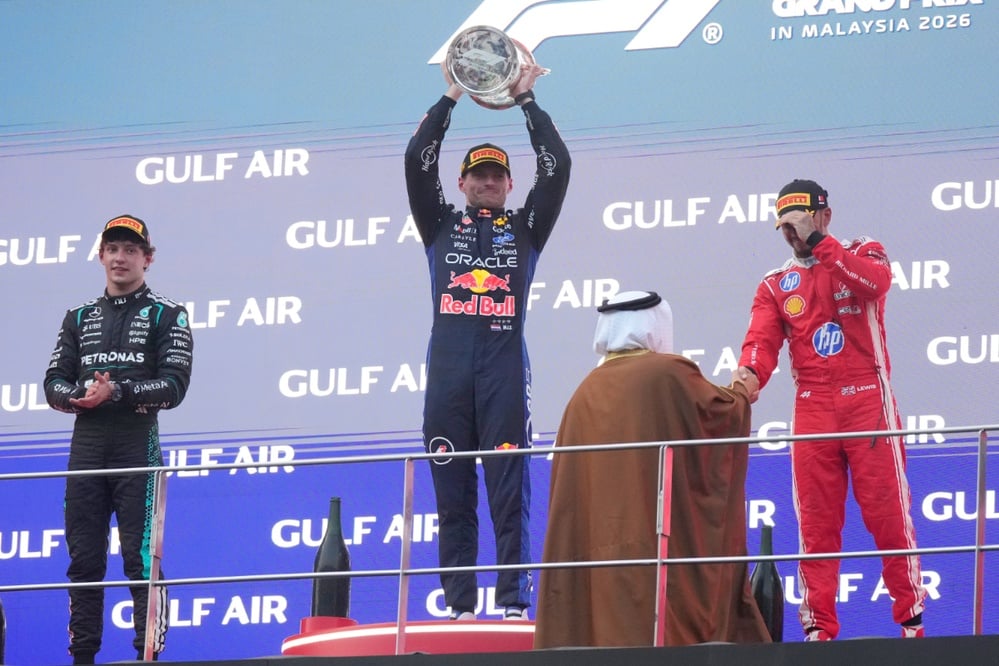
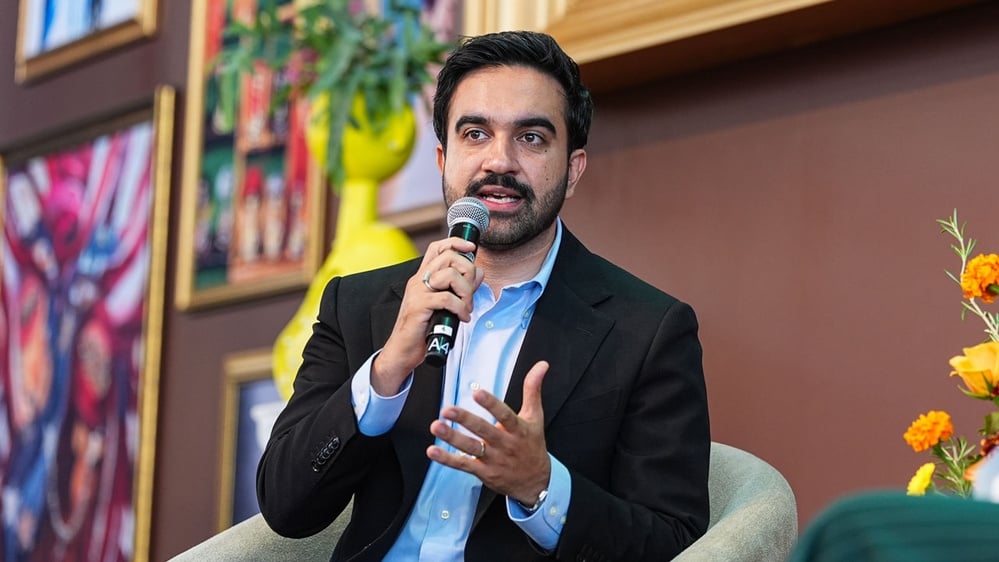

2026 © Helium Trades
Privacy Policy & Disclosure
* Disclaimer: Nothing on this website constitutes investment advice, performance data or any recommendation that any particular security, portfolio of securities, transaction or investment strategy is suitable for any specific person. Helium Trades is not responsible in any way for the accuracy
of any model predictions or price data. Any mention of a particular security and related prediction data is not a recommendation to buy or sell that security. Investments in securities involve the risk of loss. Past performance is no guarantee of future results. Helium Trades is not responsible for any of your investment decisions,
you should consult a financial expert before engaging in any transaction.
Helium Research Assistant

How can I help you today?
Ask any question about this page.


