See whether Helium helps you make better-informed decisions. Try every Pro Trader feature for 30 days. No credit card required.
Try every Pro Trader feature for 30 days. No credit card required.
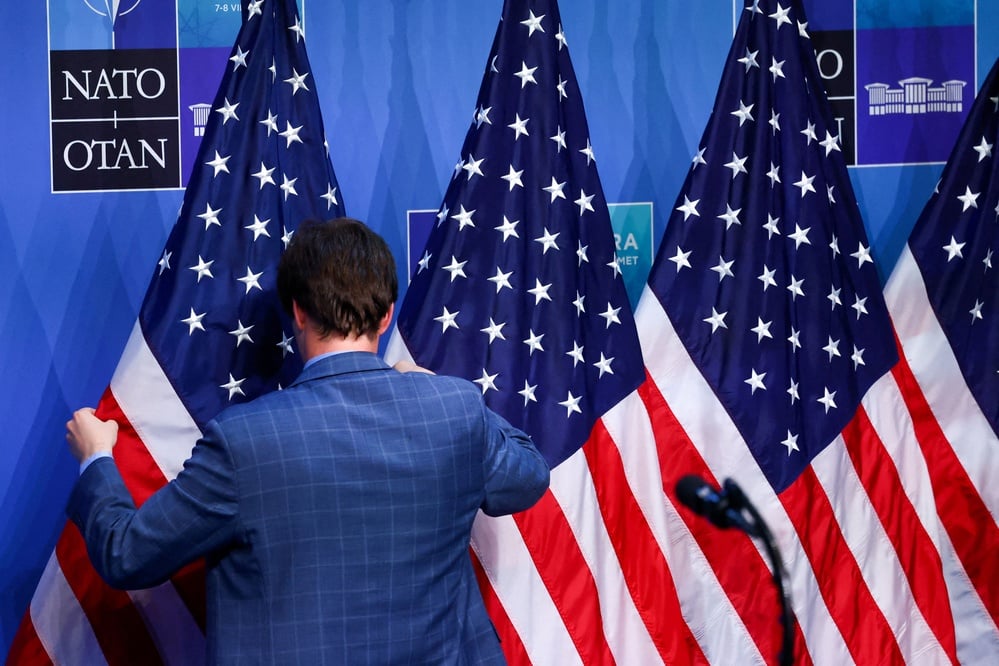
August 26, 2026 · 0 shares
The report delivers the news of the CIA director's Moscow visit with neutral, attributed sourcing and an explicit note of official silence.
Automated analysis; not human reviewed.
Limitations: Limited context: only a short news brief, no external verification or additional reporting available.
·
1 of 54 available dimensions scored; omitted dimensions are not treated as neutral.
·
Verified supporting quotes for 1 of 1 scored dimensions.
Claim: The article shows credible sourcing and acknowledges uncertainty.
“sources familiar with the situation told CBS News” · exact text match
“Neither the U.S. nor Russian governments has commented” · exact text match
Why: The information is attributed to sources and the article notes the absence of official confirmation, supporting trustworthiness.
Limited context: only a short news brief, no external verification or additional reporting available.
August 25, 2026 · 0 shares
The report is strictly attributed and hedged, presenting the visit as fact through unnamed US officials and flight data without overt editorial slant.
Automated analysis; not human reviewed. Limitations: The report depends on anonymous sourcing and unverified flight-tracking data; independent confirmation is not available in the supplied text.
The report depends on anonymous sourcing and unverified flight-tracking data; independent confirmation is not available in the supplied text.
Attributed, neutral news reporting on the CIA-Russia Moscow talks, lacking partisan, sensational, or advocacy framing.
The meeting occurs against a backdrop of US-Russia conflict over the war in Ukraine, stalled peace negotiations, US military action against Iran, and a Russia-Iran strategic partnership.
Automated analysis; not human reviewed.
Limitations: The analysis relies on a single publisher article and cannot independently verify the cited official statements or background claims.
·
1 of 54 available dimensions scored; omitted dimensions are not treated as neutral.
·
Verified supporting quotes for 1 of 1 scored dimensions.
Claim: The publication relies on attributed official sources (Kremlin, AP, Ukrainian official) and a named expert, without fabricating details.
“The Kremlin said Wednesday that CIA Director John Ratcliffe held talks in Moscow with his intelligence counterparts, a rare and secretive visit at a time when relations with Washington remain strained over Russia's war in Ukraine.” · exact text match
“Andrei Soldatov, an expert on Russia’s security services, told AP that visits like the one by Ratcliffe do not “happen every year.”” · exact text match
Why: Sources are consistently named or described with conditions of anonymity stated, and uncertainty is explicitly acknowledged.
The analysis relies on a single publisher article and cannot independently verify the cited official statements or background claims.
August 28, 2026 · 0 shares
The report frames a covert CIA visit to Moscow as an ominous, secretive development, emphasizing the absence of official disclosure and inviting speculative interpretation.
The previous CIA director visit by William Burns in November 2021 was followed weeks later by the start of the conflict referred to in the report as the Special Military Operation, which the report treats as a relevant precedent.
Automated analysis; not human reviewed. Limitations: Substantive article text is truncated mid-sentence; embedded reader comments after the main text were excluded from analysis.
Substantive article text is truncated mid-sentence; embedded reader comments after the main text were excluded from analysis.
August 26, 2026 · 0 shares
Framing is strongly pro-Kremlin, using the pejorative term 'Kiev regime' and presenting Russia's claims about Ukraine's defeat and internal collapse as factual.
Automated analysis; not human reviewed.
·
7 of 54 available dimensions scored; omitted dimensions are not treated as neutral.
·
Verified supporting quotes for 3 of 7 scored dimensions.
Claim: The article presents subjective opinions as objective facts.
“It is unequivocal that Ukraine is losing the conflict.” · exact text match
“The Kiev regime is crumbling from within and losing its stability.” · not found in supplied text
Why: The use of 'unequivocal' and the pejorative 'regime' indicate a subjective stance.
Claim: The article displays a clear pro-Russian, anti-Ukrainian bias.
“CIA chief's visit to Russia, Kiev regime's collapse, Armenia situation: Kremlin's briefing.” · exact text match
“The Kiev regime is crumbling from within and losing its stability.” · not found in supplied text
Why: The headline labels Ukraine as a 'regime' and presents its collapse as a fact, aligning with Kremlin rhetoric.
Claim: The article oversimplifies the Ukraine conflict to a clear defeat of one side.
“It is unequivocal that Ukraine is losing the conflict.” · exact text match
Why: Reduces a complex conflict to a simple assertion of defeat.
Claim: The article expresses certainty beyond available evidence.
“It is unequivocal that Ukraine is losing the conflict.” · exact text match
Why: The word 'unequivocal' asserts absolute certainty about a contested situation.
Claim: The article is strongly ideological, promoting a Kremlin-centric worldview.
“It is unequivocal that Ukraine is losing the conflict.” · exact text match
Why: The uncompromising assertion of Russia's narrative without counterpoint indicates ideological framing.
Claim: The article aligns with the Russian political establishment, presenting its spokesman's statements as authoritative.
“The Kremlin declined to comment on Armenia's domestic political developments.” · not found in supplied text
Why: The article exclusively presents the Kremlin's perspective without independent verification.
Claim: The article uses loaded language and presents opinions as facts to influence readers.
“The Kiev regime is crumbling from within and losing its stability.” · not found in supplied text
Why: Derogatory labeling and unsupported assertions serve a persuasive purpose.
Attributed, neutral news reporting on the CIA-Russia Moscow talks, lacking partisan, sensational, or advocacy framing.
The meeting occurs against a backdrop of US-Russia conflict over the war in Ukraine, stalled peace negotiations, US military action against Iran, and a Russia-Iran strategic partnership.
Automated analysis; not human reviewed.
Limitations: The analysis relies on a single publisher article and cannot independently verify the cited official statements or background claims.
·
1 of 54 available dimensions scored; omitted dimensions are not treated as neutral.
·
Verified supporting quotes for 1 of 1 scored dimensions.
Claim: The publication relies on attributed official sources (Kremlin, AP, Ukrainian official) and a named expert, without fabricating details.
“The Kremlin said Wednesday that CIA Director John Ratcliffe held talks in Moscow with his intelligence counterparts, a rare and secretive visit at a time when relations with Washington remain strained over Russia's war in Ukraine.” · exact text match
“Andrei Soldatov, an expert on Russia’s security services, told AP that visits like the one by Ratcliffe do not “happen every year.”” · exact text match
Why: Sources are consistently named or described with conditions of anonymity stated, and uncertainty is explicitly acknowledged.
The analysis relies on a single publisher article and cannot independently verify the cited official statements or background claims.
August 28, 2026 · 0 shares
The report frames a covert CIA visit to Moscow as an ominous, secretive development, emphasizing the absence of official disclosure and inviting speculative interpretation.
The previous CIA director visit by William Burns in November 2021 was followed weeks later by the start of the conflict referred to in the report as the Special Military Operation, which the report treats as a relevant precedent.
Automated analysis; not human reviewed. Limitations: Substantive article text is truncated mid-sentence; embedded reader comments after the main text were excluded from analysis.
Substantive article text is truncated mid-sentence; embedded reader comments after the main text were excluded from analysis.
August 25, 2026 · 0 shares
The report is strictly attributed and hedged, presenting the visit as fact through unnamed US officials and flight data without overt editorial slant.
Automated analysis; not human reviewed. Limitations: The report depends on anonymous sourcing and unverified flight-tracking data; independent confirmation is not available in the supplied text.
The report depends on anonymous sourcing and unverified flight-tracking data; independent confirmation is not available in the supplied text.
Attributed, neutral news reporting on the CIA-Russia Moscow talks, lacking partisan, sensational, or advocacy framing.
The meeting occurs against a backdrop of US-Russia conflict over the war in Ukraine, stalled peace negotiations, US military action against Iran, and a Russia-Iran strategic partnership.
Automated analysis; not human reviewed.
Limitations: The analysis relies on a single publisher article and cannot independently verify the cited official statements or background claims.
·
1 of 54 available dimensions scored; omitted dimensions are not treated as neutral.
·
Verified supporting quotes for 1 of 1 scored dimensions.
Claim: The publication relies on attributed official sources (Kremlin, AP, Ukrainian official) and a named expert, without fabricating details.
“The Kremlin said Wednesday that CIA Director John Ratcliffe held talks in Moscow with his intelligence counterparts, a rare and secretive visit at a time when relations with Washington remain strained over Russia's war in Ukraine.” · exact text match
“Andrei Soldatov, an expert on Russia’s security services, told AP that visits like the one by Ratcliffe do not “happen every year.”” · exact text match
Why: Sources are consistently named or described with conditions of anonymity stated, and uncertainty is explicitly acknowledged.
The analysis relies on a single publisher article and cannot independently verify the cited official statements or background claims.
August 27, 2026 · 0 shares
A CIA warning to Russia is framed as a firm but so far ineffective deterrent, with attribution to The Wall Street Journal for the core claim.
Automated analysis; not human reviewed.
Limitations: Supplied text is a brief excerpt; headline asserts the warning as fact while body says 'reportedly', and no byline/publication date is available.
·
2 of 54 available dimensions scored; omitted dimensions are not treated as neutral.
·
Verified supporting quotes for 2 of 2 scored dimensions.
Claim: The report stays in an attributed, non-evaluative register, using hedged and sourced wording rather than assertions from the publisher.
“The US CIA chief reportedly warned Russia against attacking NATO” · exact text match
“Estonia, which borders Russia, said its “threat assessment has not changed.”” · exact text match
Why: The main claim is explicitly attributed to a report and the only outcome measure is attributed to an official statement, with no overt opinion or call to action.
Claim: Key claims are attributed to The Wall Street Journal and an Estonian official, but the main report is secondary and details are sparse.
“reported by The Wall Street Journal” · exact text match
“Estonia, which borders Russia, said its “threat assessment has not changed.”” · exact text match
Why: The text names its source for the main claim and quotes an official for the outcome, though it does not provide named Russian officials, direct quotes from the CIA, or publication details.
Supplied text is a brief excerpt; headline asserts the warning as fact while body says 'reportedly', and no byline/publication date is available.
August 28, 2026 · 0 shares
The article's framing emphasizes that President Trump did not brief senior White House officials about CIA Director John Ratcliffe's Moscow visit, highlighting secrecy while attributing details to unnamed sources and major outlets.
Automated analysis; not human reviewed.
Limitations: The article relies heavily on anonymous sources and attributed reports, so the exact nature and purpose of Ratcliffe's visit remain uncertain.
·
1 of 54 available dimensions scored; omitted dimensions are not treated as neutral.
·
Verified supporting quotes for 1 of 1 scored dimensions.
Claim: The article consistently attributes information to named outlets, officials, and a Kremlin spokesperson, demonstrating responsible sourcing.
“U.S. officials told The Wall Street Journal that Trump had sent Ratcliffe personally.” · exact text match
“Kremlin spokesperson Dmitry Peskov confirmed to reporters in Moscow that Ratcliffe had spoken with Russian intelligence officials during his visit.” · exact text match
Why: The article relies on multiple attributed reports and an official confirmation, which supports a modest positive credibility score.
The article relies heavily on anonymous sources and attributed reports, so the exact nature and purpose of Ratcliffe's visit remain uncertain.
August 27, 2026 · 0 shares
A CIA warning to Russia is framed as a firm but so far ineffective deterrent, with attribution to The Wall Street Journal for the core claim.
Automated analysis; not human reviewed.
Limitations: Supplied text is a brief excerpt; headline asserts the warning as fact while body says 'reportedly', and no byline/publication date is available.
·
2 of 54 available dimensions scored; omitted dimensions are not treated as neutral.
·
Verified supporting quotes for 2 of 2 scored dimensions.
Claim: The report stays in an attributed, non-evaluative register, using hedged and sourced wording rather than assertions from the publisher.
“The US CIA chief reportedly warned Russia against attacking NATO” · exact text match
“Estonia, which borders Russia, said its “threat assessment has not changed.”” · exact text match
Why: The main claim is explicitly attributed to a report and the only outcome measure is attributed to an official statement, with no overt opinion or call to action.
Claim: Key claims are attributed to The Wall Street Journal and an Estonian official, but the main report is secondary and details are sparse.
“reported by The Wall Street Journal” · exact text match
“Estonia, which borders Russia, said its “threat assessment has not changed.”” · exact text match
Why: The text names its source for the main claim and quotes an official for the outcome, though it does not provide named Russian officials, direct quotes from the CIA, or publication details.
Supplied text is a brief excerpt; headline asserts the warning as fact while body says 'reportedly', and no byline/publication date is available.
August 28, 2026 · 0 shares
The framing highlights a secretive, grim intelligence encounter, foregrounding the CIA chief's bleak assessment while presenting the visit as a deliberate U.S. push for a peace deal.
Automated analysis; not human reviewed.
Limitations: Only a headline and one-sentence lede were supplied, so deeper editorial framing and sourcing signals cannot be assessed.
·
2 of 54 available dimensions scored; omitted dimensions are not treated as neutral.
·
Verified supporting quotes for 2 of 2 scored dimensions.
Claim: The headline uses evaluative and tonally loaded language rather than purely neutral description.
“Bleak Assessment” · exact text match
“Secretive Moscow Visit” · exact text match
Why: 'Bleak' is an evaluative judgment and 'Secretive' adds atmospheric emphasis, making the presentation partly subjective despite the specific factual details.
Claim: The framing characterizes the CIA chief's assessment as bleak and negative.
“Bleak Assessment” · exact text match
Why: The headline directly uses 'Bleak' to characterize the assessment, marking a pessimistic tone.
Only a headline and one-sentence lede were supplied, so deeper editorial framing and sourcing signals cannot be assessed.
August 27, 2026 · 0 shares
The report relays anonymous-sourced U.S. warnings as straightforward messaging without including Russian response or independent verification, but remains neutral in tone.
Automated analysis; not human reviewed. Limitations: Only one short summary paragraph based on anonymous reporting from other outlets is available; no direct quotes, Russian response, or broader context is included.
Only one short summary paragraph based on anonymous reporting from other outlets is available; no direct quotes, Russian response, or broader context is included.
Attributed, neutral news reporting on the CIA-Russia Moscow talks, lacking partisan, sensational, or advocacy framing.
The meeting occurs against a backdrop of US-Russia conflict over the war in Ukraine, stalled peace negotiations, US military action against Iran, and a Russia-Iran strategic partnership.
Automated analysis; not human reviewed.
Limitations: The analysis relies on a single publisher article and cannot independently verify the cited official statements or background claims.
·
1 of 54 available dimensions scored; omitted dimensions are not treated as neutral.
·
Verified supporting quotes for 1 of 1 scored dimensions.
Claim: The publication relies on attributed official sources (Kremlin, AP, Ukrainian official) and a named expert, without fabricating details.
“The Kremlin said Wednesday that CIA Director John Ratcliffe held talks in Moscow with his intelligence counterparts, a rare and secretive visit at a time when relations with Washington remain strained over Russia's war in Ukraine.” · exact text match
“Andrei Soldatov, an expert on Russia’s security services, told AP that visits like the one by Ratcliffe do not “happen every year.”” · exact text match
Why: Sources are consistently named or described with conditions of anonymity stated, and uncertainty is explicitly acknowledged.
The analysis relies on a single publisher article and cannot independently verify the cited official statements or background claims.
August 26, 2026 · 0 shares
Framing is strongly pro-Kremlin, using the pejorative term 'Kiev regime' and presenting Russia's claims about Ukraine's defeat and internal collapse as factual.
Automated analysis; not human reviewed. · 7 of 54 available dimensions scored; omitted dimensions are not treated as neutral. · Verified supporting quotes for 3 of 7 scored dimensions.
Claim: The article presents subjective opinions as objective facts.
“It is unequivocal that Ukraine is losing the conflict.” · exact text match
“The Kiev regime is crumbling from within and losing its stability.” · not found in supplied text
Why: The use of 'unequivocal' and the pejorative 'regime' indicate a subjective stance.
Claim: The article displays a clear pro-Russian, anti-Ukrainian bias.
“CIA chief's visit to Russia, Kiev regime's collapse, Armenia situation: Kremlin's briefing.” · exact text match
“The Kiev regime is crumbling from within and losing its stability.” · not found in supplied text
Why: The headline labels Ukraine as a 'regime' and presents its collapse as a fact, aligning with Kremlin rhetoric.
Claim: The article oversimplifies the Ukraine conflict to a clear defeat of one side.
“It is unequivocal that Ukraine is losing the conflict.” · exact text match
Why: Reduces a complex conflict to a simple assertion of defeat.
Claim: The article expresses certainty beyond available evidence.
“It is unequivocal that Ukraine is losing the conflict.” · exact text match
Why: The word 'unequivocal' asserts absolute certainty about a contested situation.
Claim: The article is strongly ideological, promoting a Kremlin-centric worldview.
“It is unequivocal that Ukraine is losing the conflict.” · exact text match
Why: The uncompromising assertion of Russia's narrative without counterpoint indicates ideological framing.
Claim: The article aligns with the Russian political establishment, presenting its spokesman's statements as authoritative.
“The Kremlin declined to comment on Armenia's domestic political developments.” · not found in supplied text
Why: The article exclusively presents the Kremlin's perspective without independent verification.
Claim: The article uses loaded language and presents opinions as facts to influence readers.
“The Kiev regime is crumbling from within and losing its stability.” · not found in supplied text
Why: Derogatory labeling and unsupported assertions serve a persuasive purpose.
Attributed, neutral news reporting on the CIA-Russia Moscow talks, lacking partisan, sensational, or advocacy framing.
The meeting occurs against a backdrop of US-Russia conflict over the war in Ukraine, stalled peace negotiations, US military action against Iran, and a Russia-Iran strategic partnership.
Automated analysis; not human reviewed. Limitations: The analysis relies on a single publisher article and cannot independently verify the cited official statements or background claims. · 1 of 54 available dimensions scored; omitted dimensions are not treated as neutral. · Verified supporting quotes for 1 of 1 scored dimensions.
Claim: The publication relies on attributed official sources (Kremlin, AP, Ukrainian official) and a named expert, without fabricating details.
“The Kremlin said Wednesday that CIA Director John Ratcliffe held talks in Moscow with his intelligence counterparts, a rare and secretive visit at a time when relations with Washington remain strained over Russia's war in Ukraine.” · exact text match
“Andrei Soldatov, an expert on Russia’s security services, told AP that visits like the one by Ratcliffe do not “happen every year.”” · exact text match
Why: Sources are consistently named or described with conditions of anonymity stated, and uncertainty is explicitly acknowledged.
The analysis relies on a single publisher article and cannot independently verify the cited official statements or background claims.
August 26, 2026 · 0 shares
The report delivers the news of the CIA director's Moscow visit with neutral, attributed sourcing and an explicit note of official silence.
Automated analysis; not human reviewed. Limitations: Limited context: only a short news brief, no external verification or additional reporting available. · 1 of 54 available dimensions scored; omitted dimensions are not treated as neutral. · Verified supporting quotes for 1 of 1 scored dimensions.
Claim: The article shows credible sourcing and acknowledges uncertainty.
“sources familiar with the situation told CBS News” · exact text match
“Neither the U.S. nor Russian governments has commented” · exact text match
Why: The information is attributed to sources and the article notes the absence of official confirmation, supporting trustworthiness.
Limited context: only a short news brief, no external verification or additional reporting available.
August 25, 2026 · 0 shares
The report is strictly attributed and hedged, presenting the visit as fact through unnamed US officials and flight data without overt editorial slant.
Automated analysis; not human reviewed. Limitations: The report depends on anonymous sourcing and unverified flight-tracking data; independent confirmation is not available in the supplied text.
The report depends on anonymous sourcing and unverified flight-tracking data; independent confirmation is not available in the supplied text.
August 28, 2026 · 0 shares
The report frames a covert CIA visit to Moscow as an ominous, secretive development, emphasizing the absence of official disclosure and inviting speculative interpretation.
The previous CIA director visit by William Burns in November 2021 was followed weeks later by the start of the conflict referred to in the report as the Special Military Operation, which the report treats as a relevant precedent.
Automated analysis; not human reviewed. Limitations: Substantive article text is truncated mid-sentence; embedded reader comments after the main text were excluded from analysis.
Substantive article text is truncated mid-sentence; embedded reader comments after the main text were excluded from analysis.
August 27, 2026 · 0 shares
A CIA warning to Russia is framed as a firm but so far ineffective deterrent, with attribution to The Wall Street Journal for the core claim.
Automated analysis; not human reviewed. Limitations: Supplied text is a brief excerpt; headline asserts the warning as fact while body says 'reportedly', and no byline/publication date is available. · 2 of 54 available dimensions scored; omitted dimensions are not treated as neutral. · Verified supporting quotes for 2 of 2 scored dimensions.
Claim: The report stays in an attributed, non-evaluative register, using hedged and sourced wording rather than assertions from the publisher.
“The US CIA chief reportedly warned Russia against attacking NATO” · exact text match
“Estonia, which borders Russia, said its “threat assessment has not changed.”” · exact text match
Why: The main claim is explicitly attributed to a report and the only outcome measure is attributed to an official statement, with no overt opinion or call to action.
Claim: Key claims are attributed to The Wall Street Journal and an Estonian official, but the main report is secondary and details are sparse.
“reported by The Wall Street Journal” · exact text match
“Estonia, which borders Russia, said its “threat assessment has not changed.”” · exact text match
Why: The text names its source for the main claim and quotes an official for the outcome, though it does not provide named Russian officials, direct quotes from the CIA, or publication details.
Supplied text is a brief excerpt; headline asserts the warning as fact while body says 'reportedly', and no byline/publication date is available.
August 28, 2026 · 0 shares
The article's framing emphasizes that President Trump did not brief senior White House officials about CIA Director John Ratcliffe's Moscow visit, highlighting secrecy while attributing details to unnamed sources and major outlets.
Automated analysis; not human reviewed. Limitations: The article relies heavily on anonymous sources and attributed reports, so the exact nature and purpose of Ratcliffe's visit remain uncertain. · 1 of 54 available dimensions scored; omitted dimensions are not treated as neutral. · Verified supporting quotes for 1 of 1 scored dimensions.
Claim: The article consistently attributes information to named outlets, officials, and a Kremlin spokesperson, demonstrating responsible sourcing.
“U.S. officials told The Wall Street Journal that Trump had sent Ratcliffe personally.” · exact text match
“Kremlin spokesperson Dmitry Peskov confirmed to reporters in Moscow that Ratcliffe had spoken with Russian intelligence officials during his visit.” · exact text match
Why: The article relies on multiple attributed reports and an official confirmation, which supports a modest positive credibility score.
The article relies heavily on anonymous sources and attributed reports, so the exact nature and purpose of Ratcliffe's visit remain uncertain.
August 27, 2026 · 0 shares
A CIA warning to Russia is framed as a firm but so far ineffective deterrent, with attribution to The Wall Street Journal for the core claim.
Automated analysis; not human reviewed. Limitations: Supplied text is a brief excerpt; headline asserts the warning as fact while body says 'reportedly', and no byline/publication date is available. · 2 of 54 available dimensions scored; omitted dimensions are not treated as neutral. · Verified supporting quotes for 2 of 2 scored dimensions.
Claim: The report stays in an attributed, non-evaluative register, using hedged and sourced wording rather than assertions from the publisher.
“The US CIA chief reportedly warned Russia against attacking NATO” · exact text match
“Estonia, which borders Russia, said its “threat assessment has not changed.”” · exact text match
Why: The main claim is explicitly attributed to a report and the only outcome measure is attributed to an official statement, with no overt opinion or call to action.
Claim: Key claims are attributed to The Wall Street Journal and an Estonian official, but the main report is secondary and details are sparse.
“reported by The Wall Street Journal” · exact text match
“Estonia, which borders Russia, said its “threat assessment has not changed.”” · exact text match
Why: The text names its source for the main claim and quotes an official for the outcome, though it does not provide named Russian officials, direct quotes from the CIA, or publication details.
Supplied text is a brief excerpt; headline asserts the warning as fact while body says 'reportedly', and no byline/publication date is available.
August 28, 2026 · 0 shares
The framing highlights a secretive, grim intelligence encounter, foregrounding the CIA chief's bleak assessment while presenting the visit as a deliberate U.S. push for a peace deal.
Automated analysis; not human reviewed. Limitations: Only a headline and one-sentence lede were supplied, so deeper editorial framing and sourcing signals cannot be assessed. · 2 of 54 available dimensions scored; omitted dimensions are not treated as neutral. · Verified supporting quotes for 2 of 2 scored dimensions.
Claim: The headline uses evaluative and tonally loaded language rather than purely neutral description.
“Bleak Assessment” · exact text match
“Secretive Moscow Visit” · exact text match
Why: 'Bleak' is an evaluative judgment and 'Secretive' adds atmospheric emphasis, making the presentation partly subjective despite the specific factual details.
Claim: The framing characterizes the CIA chief's assessment as bleak and negative.
“Bleak Assessment” · exact text match
Why: The headline directly uses 'Bleak' to characterize the assessment, marking a pessimistic tone.
Only a headline and one-sentence lede were supplied, so deeper editorial framing and sourcing signals cannot be assessed.
August 27, 2026 · 0 shares
The report relays anonymous-sourced U.S. warnings as straightforward messaging without including Russian response or independent verification, but remains neutral in tone.
Automated analysis; not human reviewed. Limitations: Only one short summary paragraph based on anonymous reporting from other outlets is available; no direct quotes, Russian response, or broader context is included.
Only one short summary paragraph based on anonymous reporting from other outlets is available; no direct quotes, Russian response, or broader context is included.
Helium Bias
Story Blindspots
August 27, 2026 · 0 shares
A CIA warning to Russia is framed as a firm but so far ineffective deterrent, with attribution to The Wall Street Journal for the core claim.
Automated analysis; not human reviewed. Limitations: Supplied text is a brief excerpt; headline asserts the warning as fact while body says 'reportedly', and no byline/publication date is available. · 2 of 54 available dimensions scored; omitted dimensions are not treated as neutral. · Verified supporting quotes for 2 of 2 scored dimensions.
Claim: The report stays in an attributed, non-evaluative register, using hedged and sourced wording rather than assertions from the publisher.
“The US CIA chief reportedly warned Russia against attacking NATO” · exact text match
“Estonia, which borders Russia, said its “threat assessment has not changed.”” · exact text match
Why: The main claim is explicitly attributed to a report and the only outcome measure is attributed to an official statement, with no overt opinion or call to action.
Claim: Key claims are attributed to The Wall Street Journal and an Estonian official, but the main report is secondary and details are sparse.
“reported by The Wall Street Journal” · exact text match
“Estonia, which borders Russia, said its “threat assessment has not changed.”” · exact text match
Why: The text names its source for the main claim and quotes an official for the outcome, though it does not provide named Russian officials, direct quotes from the CIA, or publication details.
Supplied text is a brief excerpt; headline asserts the warning as fact while body says 'reportedly', and no byline/publication date is available.
August 28, 2026 · 0 shares
The article's framing emphasizes that President Trump did not brief senior White House officials about CIA Director John Ratcliffe's Moscow visit, highlighting secrecy while attributing details to unnamed sources and major outlets.
Automated analysis; not human reviewed. Limitations: The article relies heavily on anonymous sources and attributed reports, so the exact nature and purpose of Ratcliffe's visit remain uncertain. · 1 of 54 available dimensions scored; omitted dimensions are not treated as neutral. · Verified supporting quotes for 1 of 1 scored dimensions.
Claim: The article consistently attributes information to named outlets, officials, and a Kremlin spokesperson, demonstrating responsible sourcing.
“U.S. officials told The Wall Street Journal that Trump had sent Ratcliffe personally.” · exact text match
“Kremlin spokesperson Dmitry Peskov confirmed to reporters in Moscow that Ratcliffe had spoken with Russian intelligence officials during his visit.” · exact text match
Why: The article relies on multiple attributed reports and an official confirmation, which supports a modest positive credibility score.
The article relies heavily on anonymous sources and attributed reports, so the exact nature and purpose of Ratcliffe's visit remain uncertain.
August 27, 2026 · 0 shares
A CIA warning to Russia is framed as a firm but so far ineffective deterrent, with attribution to The Wall Street Journal for the core claim.
Automated analysis; not human reviewed. Limitations: Supplied text is a brief excerpt; headline asserts the warning as fact while body says 'reportedly', and no byline/publication date is available. · 2 of 54 available dimensions scored; omitted dimensions are not treated as neutral. · Verified supporting quotes for 2 of 2 scored dimensions.
Claim: The report stays in an attributed, non-evaluative register, using hedged and sourced wording rather than assertions from the publisher.
“The US CIA chief reportedly warned Russia against attacking NATO” · exact text match
“Estonia, which borders Russia, said its “threat assessment has not changed.”” · exact text match
Why: The main claim is explicitly attributed to a report and the only outcome measure is attributed to an official statement, with no overt opinion or call to action.
Claim: Key claims are attributed to The Wall Street Journal and an Estonian official, but the main report is secondary and details are sparse.
“reported by The Wall Street Journal” · exact text match
“Estonia, which borders Russia, said its “threat assessment has not changed.”” · exact text match
Why: The text names its source for the main claim and quotes an official for the outcome, though it does not provide named Russian officials, direct quotes from the CIA, or publication details.
Supplied text is a brief excerpt; headline asserts the warning as fact while body says 'reportedly', and no byline/publication date is available.
August 28, 2026 · 0 shares
The framing highlights a secretive, grim intelligence encounter, foregrounding the CIA chief's bleak assessment while presenting the visit as a deliberate U.S. push for a peace deal.
Automated analysis; not human reviewed. Limitations: Only a headline and one-sentence lede were supplied, so deeper editorial framing and sourcing signals cannot be assessed. · 2 of 54 available dimensions scored; omitted dimensions are not treated as neutral. · Verified supporting quotes for 2 of 2 scored dimensions.
Claim: The headline uses evaluative and tonally loaded language rather than purely neutral description.
“Bleak Assessment” · exact text match
“Secretive Moscow Visit” · exact text match
Why: 'Bleak' is an evaluative judgment and 'Secretive' adds atmospheric emphasis, making the presentation partly subjective despite the specific factual details.
Claim: The framing characterizes the CIA chief's assessment as bleak and negative.
“Bleak Assessment” · exact text match
Why: The headline directly uses 'Bleak' to characterize the assessment, marking a pessimistic tone.
Only a headline and one-sentence lede were supplied, so deeper editorial framing and sourcing signals cannot be assessed.
August 27, 2026 · 0 shares
The report relays anonymous-sourced U.S. warnings as straightforward messaging without including Russian response or independent verification, but remains neutral in tone.
Automated analysis; not human reviewed. Limitations: Only one short summary paragraph based on anonymous reporting from other outlets is available; no direct quotes, Russian response, or broader context is included.
Only one short summary paragraph based on anonymous reporting from other outlets is available; no direct quotes, Russian response, or broader context is included.
August 25, 2026 · 0 shares
The report is strictly attributed and hedged, presenting the visit as fact through unnamed US officials and flight data without overt editorial slant.
Automated analysis; not human reviewed. Limitations: The report depends on anonymous sourcing and unverified flight-tracking data; independent confirmation is not available in the supplied text.
The report depends on anonymous sourcing and unverified flight-tracking data; independent confirmation is not available in the supplied text.
Attributed, neutral news reporting on the CIA-Russia Moscow talks, lacking partisan, sensational, or advocacy framing.
The meeting occurs against a backdrop of US-Russia conflict over the war in Ukraine, stalled peace negotiations, US military action against Iran, and a Russia-Iran strategic partnership.
Automated analysis; not human reviewed. Limitations: The analysis relies on a single publisher article and cannot independently verify the cited official statements or background claims. · 1 of 54 available dimensions scored; omitted dimensions are not treated as neutral. · Verified supporting quotes for 1 of 1 scored dimensions.
Claim: The publication relies on attributed official sources (Kremlin, AP, Ukrainian official) and a named expert, without fabricating details.
“The Kremlin said Wednesday that CIA Director John Ratcliffe held talks in Moscow with his intelligence counterparts, a rare and secretive visit at a time when relations with Washington remain strained over Russia's war in Ukraine.” · exact text match
“Andrei Soldatov, an expert on Russia’s security services, told AP that visits like the one by Ratcliffe do not “happen every year.”” · exact text match
Why: Sources are consistently named or described with conditions of anonymity stated, and uncertainty is explicitly acknowledged.
The analysis relies on a single publisher article and cannot independently verify the cited official statements or background claims.
August 26, 2026 · 0 shares
The report delivers the news of the CIA director's Moscow visit with neutral, attributed sourcing and an explicit note of official silence.
Automated analysis; not human reviewed. Limitations: Limited context: only a short news brief, no external verification or additional reporting available. · 1 of 54 available dimensions scored; omitted dimensions are not treated as neutral. · Verified supporting quotes for 1 of 1 scored dimensions.
Claim: The article shows credible sourcing and acknowledges uncertainty.
“sources familiar with the situation told CBS News” · exact text match
“Neither the U.S. nor Russian governments has commented” · exact text match
Why: The information is attributed to sources and the article notes the absence of official confirmation, supporting trustworthiness.
Limited context: only a short news brief, no external verification or additional reporting available.
August 25, 2026 · 0 shares
The report is strictly attributed and hedged, presenting the visit as fact through unnamed US officials and flight data without overt editorial slant.
Automated analysis; not human reviewed. Limitations: The report depends on anonymous sourcing and unverified flight-tracking data; independent confirmation is not available in the supplied text.
The report depends on anonymous sourcing and unverified flight-tracking data; independent confirmation is not available in the supplied text.
Attributed, neutral news reporting on the CIA-Russia Moscow talks, lacking partisan, sensational, or advocacy framing.
The meeting occurs against a backdrop of US-Russia conflict over the war in Ukraine, stalled peace negotiations, US military action against Iran, and a Russia-Iran strategic partnership.
Automated analysis; not human reviewed. Limitations: The analysis relies on a single publisher article and cannot independently verify the cited official statements or background claims. · 1 of 54 available dimensions scored; omitted dimensions are not treated as neutral. · Verified supporting quotes for 1 of 1 scored dimensions.
Claim: The publication relies on attributed official sources (Kremlin, AP, Ukrainian official) and a named expert, without fabricating details.
“The Kremlin said Wednesday that CIA Director John Ratcliffe held talks in Moscow with his intelligence counterparts, a rare and secretive visit at a time when relations with Washington remain strained over Russia's war in Ukraine.” · exact text match
“Andrei Soldatov, an expert on Russia’s security services, told AP that visits like the one by Ratcliffe do not “happen every year.”” · exact text match
Why: Sources are consistently named or described with conditions of anonymity stated, and uncertainty is explicitly acknowledged.
The analysis relies on a single publisher article and cannot independently verify the cited official statements or background claims.
August 28, 2026 · 0 shares
The report frames a covert CIA visit to Moscow as an ominous, secretive development, emphasizing the absence of official disclosure and inviting speculative interpretation.
The previous CIA director visit by William Burns in November 2021 was followed weeks later by the start of the conflict referred to in the report as the Special Military Operation, which the report treats as a relevant precedent.
Automated analysis; not human reviewed. Limitations: Substantive article text is truncated mid-sentence; embedded reader comments after the main text were excluded from analysis.
Substantive article text is truncated mid-sentence; embedded reader comments after the main text were excluded from analysis.
August 26, 2026 · 0 shares
Framing is strongly pro-Kremlin, using the pejorative term 'Kiev regime' and presenting Russia's claims about Ukraine's defeat and internal collapse as factual.
Automated analysis; not human reviewed. · 7 of 54 available dimensions scored; omitted dimensions are not treated as neutral. · Verified supporting quotes for 3 of 7 scored dimensions.
Claim: The article presents subjective opinions as objective facts.
“It is unequivocal that Ukraine is losing the conflict.” · exact text match
“The Kiev regime is crumbling from within and losing its stability.” · not found in supplied text
Why: The use of 'unequivocal' and the pejorative 'regime' indicate a subjective stance.
Claim: The article displays a clear pro-Russian, anti-Ukrainian bias.
“CIA chief's visit to Russia, Kiev regime's collapse, Armenia situation: Kremlin's briefing.” · exact text match
“The Kiev regime is crumbling from within and losing its stability.” · not found in supplied text
Why: The headline labels Ukraine as a 'regime' and presents its collapse as a fact, aligning with Kremlin rhetoric.
Claim: The article oversimplifies the Ukraine conflict to a clear defeat of one side.
“It is unequivocal that Ukraine is losing the conflict.” · exact text match
Why: Reduces a complex conflict to a simple assertion of defeat.
Claim: The article expresses certainty beyond available evidence.
“It is unequivocal that Ukraine is losing the conflict.” · exact text match
Why: The word 'unequivocal' asserts absolute certainty about a contested situation.
Claim: The article is strongly ideological, promoting a Kremlin-centric worldview.
“It is unequivocal that Ukraine is losing the conflict.” · exact text match
Why: The uncompromising assertion of Russia's narrative without counterpoint indicates ideological framing.
Claim: The article aligns with the Russian political establishment, presenting its spokesman's statements as authoritative.
“The Kremlin declined to comment on Armenia's domestic political developments.” · not found in supplied text
Why: The article exclusively presents the Kremlin's perspective without independent verification.
Claim: The article uses loaded language and presents opinions as facts to influence readers.
“The Kiev regime is crumbling from within and losing its stability.” · not found in supplied text
Why: Derogatory labeling and unsupported assertions serve a persuasive purpose.
Attributed, neutral news reporting on the CIA-Russia Moscow talks, lacking partisan, sensational, or advocacy framing.
The meeting occurs against a backdrop of US-Russia conflict over the war in Ukraine, stalled peace negotiations, US military action against Iran, and a Russia-Iran strategic partnership.
Automated analysis; not human reviewed. Limitations: The analysis relies on a single publisher article and cannot independently verify the cited official statements or background claims. · 1 of 54 available dimensions scored; omitted dimensions are not treated as neutral. · Verified supporting quotes for 1 of 1 scored dimensions.
Claim: The publication relies on attributed official sources (Kremlin, AP, Ukrainian official) and a named expert, without fabricating details.
“The Kremlin said Wednesday that CIA Director John Ratcliffe held talks in Moscow with his intelligence counterparts, a rare and secretive visit at a time when relations with Washington remain strained over Russia's war in Ukraine.” · exact text match
“Andrei Soldatov, an expert on Russia’s security services, told AP that visits like the one by Ratcliffe do not “happen every year.”” · exact text match
Why: Sources are consistently named or described with conditions of anonymity stated, and uncertainty is explicitly acknowledged.
The analysis relies on a single publisher article and cannot independently verify the cited official statements or background claims.
August 27, 2026 · 0 shares
A CIA warning to Russia is framed as a firm but so far ineffective deterrent, with attribution to The Wall Street Journal for the core claim.
Automated analysis; not human reviewed. Limitations: Supplied text is a brief excerpt; headline asserts the warning as fact while body says 'reportedly', and no byline/publication date is available. · 2 of 54 available dimensions scored; omitted dimensions are not treated as neutral. · Verified supporting quotes for 2 of 2 scored dimensions.
Claim: The report stays in an attributed, non-evaluative register, using hedged and sourced wording rather than assertions from the publisher.
“The US CIA chief reportedly warned Russia against attacking NATO” · exact text match
“Estonia, which borders Russia, said its “threat assessment has not changed.”” · exact text match
Why: The main claim is explicitly attributed to a report and the only outcome measure is attributed to an official statement, with no overt opinion or call to action.
Claim: Key claims are attributed to The Wall Street Journal and an Estonian official, but the main report is secondary and details are sparse.
“reported by The Wall Street Journal” · exact text match
“Estonia, which borders Russia, said its “threat assessment has not changed.”” · exact text match
Why: The text names its source for the main claim and quotes an official for the outcome, though it does not provide named Russian officials, direct quotes from the CIA, or publication details.
Supplied text is a brief excerpt; headline asserts the warning as fact while body says 'reportedly', and no byline/publication date is available.
August 28, 2026 · 0 shares
The article's framing emphasizes that President Trump did not brief senior White House officials about CIA Director John Ratcliffe's Moscow visit, highlighting secrecy while attributing details to unnamed sources and major outlets.
Automated analysis; not human reviewed. Limitations: The article relies heavily on anonymous sources and attributed reports, so the exact nature and purpose of Ratcliffe's visit remain uncertain. · 1 of 54 available dimensions scored; omitted dimensions are not treated as neutral. · Verified supporting quotes for 1 of 1 scored dimensions.
Claim: The article consistently attributes information to named outlets, officials, and a Kremlin spokesperson, demonstrating responsible sourcing.
“U.S. officials told The Wall Street Journal that Trump had sent Ratcliffe personally.” · exact text match
“Kremlin spokesperson Dmitry Peskov confirmed to reporters in Moscow that Ratcliffe had spoken with Russian intelligence officials during his visit.” · exact text match
Why: The article relies on multiple attributed reports and an official confirmation, which supports a modest positive credibility score.
The article relies heavily on anonymous sources and attributed reports, so the exact nature and purpose of Ratcliffe's visit remain uncertain.
August 27, 2026 · 0 shares
A CIA warning to Russia is framed as a firm but so far ineffective deterrent, with attribution to The Wall Street Journal for the core claim.
Automated analysis; not human reviewed. Limitations: Supplied text is a brief excerpt; headline asserts the warning as fact while body says 'reportedly', and no byline/publication date is available. · 2 of 54 available dimensions scored; omitted dimensions are not treated as neutral. · Verified supporting quotes for 2 of 2 scored dimensions.
Claim: The report stays in an attributed, non-evaluative register, using hedged and sourced wording rather than assertions from the publisher.
“The US CIA chief reportedly warned Russia against attacking NATO” · exact text match
“Estonia, which borders Russia, said its “threat assessment has not changed.”” · exact text match
Why: The main claim is explicitly attributed to a report and the only outcome measure is attributed to an official statement, with no overt opinion or call to action.
Claim: Key claims are attributed to The Wall Street Journal and an Estonian official, but the main report is secondary and details are sparse.
“reported by The Wall Street Journal” · exact text match
“Estonia, which borders Russia, said its “threat assessment has not changed.”” · exact text match
Why: The text names its source for the main claim and quotes an official for the outcome, though it does not provide named Russian officials, direct quotes from the CIA, or publication details.
Supplied text is a brief excerpt; headline asserts the warning as fact while body says 'reportedly', and no byline/publication date is available.
August 28, 2026 · 0 shares
The framing highlights a secretive, grim intelligence encounter, foregrounding the CIA chief's bleak assessment while presenting the visit as a deliberate U.S. push for a peace deal.
Automated analysis; not human reviewed. Limitations: Only a headline and one-sentence lede were supplied, so deeper editorial framing and sourcing signals cannot be assessed. · 2 of 54 available dimensions scored; omitted dimensions are not treated as neutral. · Verified supporting quotes for 2 of 2 scored dimensions.
Claim: The headline uses evaluative and tonally loaded language rather than purely neutral description.
“Bleak Assessment” · exact text match
“Secretive Moscow Visit” · exact text match
Why: 'Bleak' is an evaluative judgment and 'Secretive' adds atmospheric emphasis, making the presentation partly subjective despite the specific factual details.
Claim: The framing characterizes the CIA chief's assessment as bleak and negative.
“Bleak Assessment” · exact text match
Why: The headline directly uses 'Bleak' to characterize the assessment, marking a pessimistic tone.
Only a headline and one-sentence lede were supplied, so deeper editorial framing and sourcing signals cannot be assessed.
August 27, 2026 · 0 shares
The report relays anonymous-sourced U.S. warnings as straightforward messaging without including Russian response or independent verification, but remains neutral in tone.
Automated analysis; not human reviewed. Limitations: Only one short summary paragraph based on anonymous reporting from other outlets is available; no direct quotes, Russian response, or broader context is included.
Only one short summary paragraph based on anonymous reporting from other outlets is available; no direct quotes, Russian response, or broader context is included.
August 27, 2026 · 0 shares
A CIA warning to Russia is framed as a firm but so far ineffective deterrent, with attribution to The Wall Street Journal for the core claim.
Automated analysis; not human reviewed. Limitations: Supplied text is a brief excerpt; headline asserts the warning as fact while body says 'reportedly', and no byline/publication date is available. · 2 of 54 available dimensions scored; omitted dimensions are not treated as neutral. · Verified supporting quotes for 2 of 2 scored dimensions.
Claim: The report stays in an attributed, non-evaluative register, using hedged and sourced wording rather than assertions from the publisher.
“The US CIA chief reportedly warned Russia against attacking NATO” · exact text match
“Estonia, which borders Russia, said its “threat assessment has not changed.”” · exact text match
Why: The main claim is explicitly attributed to a report and the only outcome measure is attributed to an official statement, with no overt opinion or call to action.
Claim: Key claims are attributed to The Wall Street Journal and an Estonian official, but the main report is secondary and details are sparse.
“reported by The Wall Street Journal” · exact text match
“Estonia, which borders Russia, said its “threat assessment has not changed.”” · exact text match
Why: The text names its source for the main claim and quotes an official for the outcome, though it does not provide named Russian officials, direct quotes from the CIA, or publication details.
Supplied text is a brief excerpt; headline asserts the warning as fact while body says 'reportedly', and no byline/publication date is available.
Attributed, neutral news reporting on the CIA-Russia Moscow talks, lacking partisan, sensational, or advocacy framing.
The meeting occurs against a backdrop of US-Russia conflict over the war in Ukraine, stalled peace negotiations, US military action against Iran, and a Russia-Iran strategic partnership.
Automated analysis; not human reviewed. Limitations: The analysis relies on a single publisher article and cannot independently verify the cited official statements or background claims. · 1 of 54 available dimensions scored; omitted dimensions are not treated as neutral. · Verified supporting quotes for 1 of 1 scored dimensions.
Claim: The publication relies on attributed official sources (Kremlin, AP, Ukrainian official) and a named expert, without fabricating details.
“The Kremlin said Wednesday that CIA Director John Ratcliffe held talks in Moscow with his intelligence counterparts, a rare and secretive visit at a time when relations with Washington remain strained over Russia's war in Ukraine.” · exact text match
“Andrei Soldatov, an expert on Russia’s security services, told AP that visits like the one by Ratcliffe do not “happen every year.”” · exact text match
Why: Sources are consistently named or described with conditions of anonymity stated, and uncertainty is explicitly acknowledged.
The analysis relies on a single publisher article and cannot independently verify the cited official statements or background claims.
August 26, 2026 · 0 shares
The report delivers the news of the CIA director's Moscow visit with neutral, attributed sourcing and an explicit note of official silence.
Automated analysis; not human reviewed. Limitations: Limited context: only a short news brief, no external verification or additional reporting available. · 1 of 54 available dimensions scored; omitted dimensions are not treated as neutral. · Verified supporting quotes for 1 of 1 scored dimensions.
Claim: The article shows credible sourcing and acknowledges uncertainty.
“sources familiar with the situation told CBS News” · exact text match
“Neither the U.S. nor Russian governments has commented” · exact text match
Why: The information is attributed to sources and the article notes the absence of official confirmation, supporting trustworthiness.
Limited context: only a short news brief, no external verification or additional reporting available.
Attributed, neutral news reporting on the CIA-Russia Moscow talks, lacking partisan, sensational, or advocacy framing.
The meeting occurs against a backdrop of US-Russia conflict over the war in Ukraine, stalled peace negotiations, US military action against Iran, and a Russia-Iran strategic partnership.
Automated analysis; not human reviewed. Limitations: The analysis relies on a single publisher article and cannot independently verify the cited official statements or background claims. · 1 of 54 available dimensions scored; omitted dimensions are not treated as neutral. · Verified supporting quotes for 1 of 1 scored dimensions.
Claim: The publication relies on attributed official sources (Kremlin, AP, Ukrainian official) and a named expert, without fabricating details.
“The Kremlin said Wednesday that CIA Director John Ratcliffe held talks in Moscow with his intelligence counterparts, a rare and secretive visit at a time when relations with Washington remain strained over Russia's war in Ukraine.” · exact text match
“Andrei Soldatov, an expert on Russia’s security services, told AP that visits like the one by Ratcliffe do not “happen every year.”” · exact text match
Why: Sources are consistently named or described with conditions of anonymity stated, and uncertainty is explicitly acknowledged.
The analysis relies on a single publisher article and cannot independently verify the cited official statements or background claims.
August 28, 2026 · 0 shares
The report frames a covert CIA visit to Moscow as an ominous, secretive development, emphasizing the absence of official disclosure and inviting speculative interpretation.
The previous CIA director visit by William Burns in November 2021 was followed weeks later by the start of the conflict referred to in the report as the Special Military Operation, which the report treats as a relevant precedent.
Automated analysis; not human reviewed. Limitations: Substantive article text is truncated mid-sentence; embedded reader comments after the main text were excluded from analysis.
Substantive article text is truncated mid-sentence; embedded reader comments after the main text were excluded from analysis.
August 26, 2026 · 0 shares
The report delivers the news of the CIA director's Moscow visit with neutral, attributed sourcing and an explicit note of official silence.
Automated analysis; not human reviewed.
Limitations: Limited context: only a short news brief, no external verification or additional reporting available.
·
1 of 54 available dimensions scored; omitted dimensions are not treated as neutral.
·
Verified supporting quotes for 1 of 1 scored dimensions.
Claim: The article shows credible sourcing and acknowledges uncertainty.
“sources familiar with the situation told CBS News” · exact text match
“Neither the U.S. nor Russian governments has commented” · exact text match
Why: The information is attributed to sources and the article notes the absence of official confirmation, supporting trustworthiness.
Limited context: only a short news brief, no external verification or additional reporting available.
August 25, 2026 · 0 shares
The report is strictly attributed and hedged, presenting the visit as fact through unnamed US officials and flight data without overt editorial slant.
Automated analysis; not human reviewed. Limitations: The report depends on anonymous sourcing and unverified flight-tracking data; independent confirmation is not available in the supplied text.
The report depends on anonymous sourcing and unverified flight-tracking data; independent confirmation is not available in the supplied text.
August 28, 2026 · 0 shares
The framing highlights a secretive, grim intelligence encounter, foregrounding the CIA chief's bleak assessment while presenting the visit as a deliberate U.S. push for a peace deal.
Automated analysis; not human reviewed.
Limitations: Only a headline and one-sentence lede were supplied, so deeper editorial framing and sourcing signals cannot be assessed.
·
2 of 54 available dimensions scored; omitted dimensions are not treated as neutral.
·
Verified supporting quotes for 2 of 2 scored dimensions.
Claim: The headline uses evaluative and tonally loaded language rather than purely neutral description.
“Bleak Assessment” · exact text match
“Secretive Moscow Visit” · exact text match
Why: 'Bleak' is an evaluative judgment and 'Secretive' adds atmospheric emphasis, making the presentation partly subjective despite the specific factual details.
Claim: The framing characterizes the CIA chief's assessment as bleak and negative.
“Bleak Assessment” · exact text match
Why: The headline directly uses 'Bleak' to characterize the assessment, marking a pessimistic tone.
Only a headline and one-sentence lede were supplied, so deeper editorial framing and sourcing signals cannot be assessed.
August 27, 2026 · 0 shares
A CIA warning to Russia is framed as a firm but so far ineffective deterrent, with attribution to The Wall Street Journal for the core claim.
Automated analysis; not human reviewed.
Limitations: Supplied text is a brief excerpt; headline asserts the warning as fact while body says 'reportedly', and no byline/publication date is available.
·
2 of 54 available dimensions scored; omitted dimensions are not treated as neutral.
·
Verified supporting quotes for 2 of 2 scored dimensions.
Claim: The report stays in an attributed, non-evaluative register, using hedged and sourced wording rather than assertions from the publisher.
“The US CIA chief reportedly warned Russia against attacking NATO” · exact text match
“Estonia, which borders Russia, said its “threat assessment has not changed.”” · exact text match
Why: The main claim is explicitly attributed to a report and the only outcome measure is attributed to an official statement, with no overt opinion or call to action.
Claim: Key claims are attributed to The Wall Street Journal and an Estonian official, but the main report is secondary and details are sparse.
“reported by The Wall Street Journal” · exact text match
“Estonia, which borders Russia, said its “threat assessment has not changed.”” · exact text match
Why: The text names its source for the main claim and quotes an official for the outcome, though it does not provide named Russian officials, direct quotes from the CIA, or publication details.
Supplied text is a brief excerpt; headline asserts the warning as fact while body says 'reportedly', and no byline/publication date is available.
August 27, 2026 · 0 shares
A CIA warning to Russia is framed as a firm but so far ineffective deterrent, with attribution to The Wall Street Journal for the core claim.
Automated analysis; not human reviewed.
Limitations: Supplied text is a brief excerpt; headline asserts the warning as fact while body says 'reportedly', and no byline/publication date is available.
·
2 of 54 available dimensions scored; omitted dimensions are not treated as neutral.
·
Verified supporting quotes for 2 of 2 scored dimensions.
Claim: The report stays in an attributed, non-evaluative register, using hedged and sourced wording rather than assertions from the publisher.
“The US CIA chief reportedly warned Russia against attacking NATO” · exact text match
“Estonia, which borders Russia, said its “threat assessment has not changed.”” · exact text match
Why: The main claim is explicitly attributed to a report and the only outcome measure is attributed to an official statement, with no overt opinion or call to action.
Claim: Key claims are attributed to The Wall Street Journal and an Estonian official, but the main report is secondary and details are sparse.
“reported by The Wall Street Journal” · exact text match
“Estonia, which borders Russia, said its “threat assessment has not changed.”” · exact text match
Why: The text names its source for the main claim and quotes an official for the outcome, though it does not provide named Russian officials, direct quotes from the CIA, or publication details.
Supplied text is a brief excerpt; headline asserts the warning as fact while body says 'reportedly', and no byline/publication date is available.
August 27, 2026 · 0 shares
The report relays anonymous-sourced U.S. warnings as straightforward messaging without including Russian response or independent verification, but remains neutral in tone.
Automated analysis; not human reviewed. Limitations: Only one short summary paragraph based on anonymous reporting from other outlets is available; no direct quotes, Russian response, or broader context is included.
Only one short summary paragraph based on anonymous reporting from other outlets is available; no direct quotes, Russian response, or broader context is included.
Attributed, neutral news reporting on the CIA-Russia Moscow talks, lacking partisan, sensational, or advocacy framing.
The meeting occurs against a backdrop of US-Russia conflict over the war in Ukraine, stalled peace negotiations, US military action against Iran, and a Russia-Iran strategic partnership.
Automated analysis; not human reviewed.
Limitations: The analysis relies on a single publisher article and cannot independently verify the cited official statements or background claims.
·
1 of 54 available dimensions scored; omitted dimensions are not treated as neutral.
·
Verified supporting quotes for 1 of 1 scored dimensions.
Claim: The publication relies on attributed official sources (Kremlin, AP, Ukrainian official) and a named expert, without fabricating details.
“The Kremlin said Wednesday that CIA Director John Ratcliffe held talks in Moscow with his intelligence counterparts, a rare and secretive visit at a time when relations with Washington remain strained over Russia's war in Ukraine.” · exact text match
“Andrei Soldatov, an expert on Russia’s security services, told AP that visits like the one by Ratcliffe do not “happen every year.”” · exact text match
Why: Sources are consistently named or described with conditions of anonymity stated, and uncertainty is explicitly acknowledged.
The analysis relies on a single publisher article and cannot independently verify the cited official statements or background claims.
August 26, 2026 · 0 shares
Framing is strongly pro-Kremlin, using the pejorative term 'Kiev regime' and presenting Russia's claims about Ukraine's defeat and internal collapse as factual.
Automated analysis; not human reviewed.
·
7 of 54 available dimensions scored; omitted dimensions are not treated as neutral.
·
Verified supporting quotes for 3 of 7 scored dimensions.
Claim: The article presents subjective opinions as objective facts.
“It is unequivocal that Ukraine is losing the conflict.” · exact text match
“The Kiev regime is crumbling from within and losing its stability.” · not found in supplied text
Why: The use of 'unequivocal' and the pejorative 'regime' indicate a subjective stance.
Claim: The article displays a clear pro-Russian, anti-Ukrainian bias.
“CIA chief's visit to Russia, Kiev regime's collapse, Armenia situation: Kremlin's briefing.” · exact text match
“The Kiev regime is crumbling from within and losing its stability.” · not found in supplied text
Why: The headline labels Ukraine as a 'regime' and presents its collapse as a fact, aligning with Kremlin rhetoric.
Claim: The article oversimplifies the Ukraine conflict to a clear defeat of one side.
“It is unequivocal that Ukraine is losing the conflict.” · exact text match
Why: Reduces a complex conflict to a simple assertion of defeat.
Claim: The article expresses certainty beyond available evidence.
“It is unequivocal that Ukraine is losing the conflict.” · exact text match
Why: The word 'unequivocal' asserts absolute certainty about a contested situation.
Claim: The article is strongly ideological, promoting a Kremlin-centric worldview.
“It is unequivocal that Ukraine is losing the conflict.” · exact text match
Why: The uncompromising assertion of Russia's narrative without counterpoint indicates ideological framing.
Claim: The article aligns with the Russian political establishment, presenting its spokesman's statements as authoritative.
“The Kremlin declined to comment on Armenia's domestic political developments.” · not found in supplied text
Why: The article exclusively presents the Kremlin's perspective without independent verification.
Claim: The article uses loaded language and presents opinions as facts to influence readers.
“The Kiev regime is crumbling from within and losing its stability.” · not found in supplied text
Why: Derogatory labeling and unsupported assertions serve a persuasive purpose.
August 28, 2026 · 0 shares
The report frames a covert CIA visit to Moscow as an ominous, secretive development, emphasizing the absence of official disclosure and inviting speculative interpretation.
The previous CIA director visit by William Burns in November 2021 was followed weeks later by the start of the conflict referred to in the report as the Special Military Operation, which the report treats as a relevant precedent.
Automated analysis; not human reviewed. Limitations: Substantive article text is truncated mid-sentence; embedded reader comments after the main text were excluded from analysis.
Substantive article text is truncated mid-sentence; embedded reader comments after the main text were excluded from analysis.


2026 © Helium Trades
Privacy Policy & Disclosure
* Disclaimer: Nothing on this website constitutes investment advice, performance data or any recommendation that any particular security, portfolio of securities, transaction or investment strategy is suitable for any specific person. Helium Trades is not responsible in any way for the accuracy
of any model predictions or price data. Any mention of a particular security and related prediction data is not a recommendation to buy or sell that security. Investments in securities involve the risk of loss. Past performance is no guarantee of future results. Helium Trades is not responsible for any of your investment decisions,
you should consult a financial expert before engaging in any transaction.
Helium Research Assistant

How can I help you today?
Ask any question about this page.


