See whether Helium helps you make better-informed decisions. Try every Pro Trader feature for 30 days. No credit card required.
Try every Pro Trader feature for 30 days. No credit card required.
November 20, 2026 · 0 shares
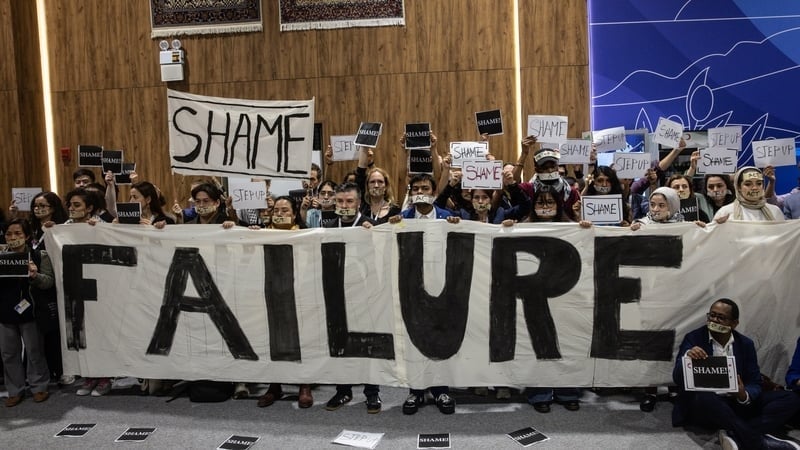
The report is largely factual and attributed, but its selection of EU and environmental-group warnings frames the draft’s omission of fossil fuels as a climate-policy failure.
COP summits aim to produce a consensus cover decision among nearly 200 countries, so objections from major oil and gas producers can block or weaken draft language.
Helium Analysis
Limitations: The supplied text includes duplicated article fragments and related-link headlines; analysis is limited to the substantive COP31 report.
·
11 of 56 available dimensions scored; omitted dimensions are not treated as neutral.
·
Verified supporting quotes for 11 of 11 scored dimensions.
Claim: The report’s selection and wording emphasize pro-climate-action criticism of fossil-fuel producers and the US withdrawal.
“EU warns COP31 risks turning into a ‘fossil summit’ as critical climate commitments are omitted from the draft deal.” · exact text match
“The United States, the largest historical emitter, is absent for a second year after President Donald Trump ended climate cooperation.” · exact text match
Why: These selected warnings and the negative framing of US withdrawal align with liberal environmental priorities.
Claim: The report is predominantly objective, relying on attributed statements and named sources rather than the publisher’s own evaluative assertions.
“A third draft is expected on Saturday, the AFP news agency reported.” · exact text match
“The European Union said the draft “risks turning this climate COP into a fossil summit”.” · exact text match
Why: Attribution to AFP and the EU shows a factual, sourced presentation.
Claim: The lead and headline are factual and measured, without sensationalized language by the publisher.
“The COP31 climate summit has gone into overtime as nearly 200 countries remain deadlocked over a draft deal that no longer mentions fossil fuels.” · exact text match
Why: The lead is a straightforward factual summary; dramatic phrases are quoted from actors.
Claim: The article’s selection emphasizes failure, delay, and insufficient climate action.
““This has been the worst COP ever,” said Mohamed Adow, director of the think tank Power Shift Africa.” · exact text match
“A UN report last month found the world is set to pass the 1.5-degree-Celsius (2.7F) warming limit set under the 2015 Paris Agreement.” · exact text match
Why: The highlighted quotes and findings convey a negative outlook on the summit and climate trajectory.
Claim: The article primarily describes negotiations and quoted positions rather than prescribing an outcome in its own voice.
“The two-week talks in Antalya, Turkiye, were due to end on Friday, when a late closing session approved some technical matters, but not the wider political deal.” · exact text match
Why: The passage reports events and process rather than issuing publisher prescriptions.
Claim: The article is centrally about international climate policy negotiations and political actors.
“The COP31 climate summit has gone into overtime as nearly 200 countries remain deadlocked over a draft deal that no longer mentions fossil fuels.” · exact text match
Why: The core subject is a political negotiation among countries.
Claim: The report conveys a negative tone about the summit through selected quotes and framing.
““This has been the worst COP ever,” said Mohamed Adow, director of the think tank Power Shift Africa.” · exact text match
Why: Negative emotional language is quoted and highlighted in the article.
Claim: The report is credible in its supplied form, with multiple named sources and attributed claims.
“A third draft is expected on Saturday, the AFP news agency reported.” · exact text match
““It is not acceptable to have a COP or a cover document that does not even mention fossil fuels, and we simply will not put up with it,” Panama’s environment minister, Juan Carlos Navarro, told a news conference.” · exact text match
Why: Named attribution and direct quotes support credibility.
Claim: The article relies on climate-science findings and empirical framing rather than superstition.
“A UN report last month found the world is set to pass the 1.5-degree-Celsius (2.7F) warming limit set under the 2015 Paris Agreement.” · exact text match
Why: The article cites a scientific UN report and warming threshold.
Claim: The report visibly attributes claims to named officials, organizations, and a wire service.
“A third draft is expected on Saturday, the AFP news agency reported.” · exact text match
““We didn’t come here to beg,” said Ghana’s environment minister, Zanetor Agyeman-Rawlings.” · exact text match
Why: Clear sourcing and direct attribution support a high-integrity presentation.
Claim: The report provides coherent context and causal explanation for the draft changes.
“An opening draft from cohost and lead negotiator Australia on Monday called for a faster phase-out of fossil fuels.
A slimmer version on Thursday removed every mention of them after Saudi Arabia and other major oil and gas producers objected.”
· exact text match
Why: The passage clearly links the draft revisions to producer objections.
The supplied text includes duplicated article fragments and related-link headlines; analysis is limited to the substantive COP31 report.
November 21, 2026 · 0 shares
Framing foregrounds EU frustration and the urgency of naming fossil fuels, while casting Saudi-led opposition as the main obstacle to a COP31 deal.
Helium Analysis
Limitations: Short news report; some evaluative language ('concern', 'global acceptance') is not directly attributed, limiting certainty on framing.
·
14 of 56 available dimensions scored; omitted dimensions are not treated as neutral.
·
Verified supporting quotes for 14 of 14 scored dimensions.
Claim: Framing is sympathetic to the EU's push for fossil-fuel transition language and casts Saudi-led opposition as resisting even a modest step.
“Much of the frustration on the European side comes down to how little it is now asking of the countries opposing it to mention the transition away from fossil fuels.” · exact text match
“As of last night, however, even that was too much for Saudi Arabia and its allies to accept.” · exact text match
Why: The selection and wording align with pro-climate-action framing often associated with liberal positions.
Claim: Contested developments and quoted positions are attributed rather than asserted as the publisher's own.
“RTÉ understands there were testy exchanges late last night between the European Union and the Turkish and Australian presidencies running the summit.” · exact text match
“Australia’s Chris Bowen, who is chairing the negotiations, said yesterday that he still believed a deal was possible.” · exact text match
Why: Attribution and reported speech keep framing mostly objective.
Claim: Framing includes some conflict language but remains measured and policy-focused.
“There are fears that the COP31 Climate talks in Turkey could end without a deal as a serious dispute over whether even to mention fossil fuels in the final agreement deepens.” · exact text match
“RTÉ understands there were testy exchanges late last night between the European Union and the Turkish and Australian presidencies running the summit.” · exact text match
Why: The language is vivid but restrained rather than lurid or exaggerated.
Claim: The report mainly describes negotiating demands and draft contents rather than prescribing a policy outcome.
“What the EU wants from Antalya is an acknowledgement that some countries have begun acting on that agreement.” · exact text match
“Saudi Arabia wants the fossil fuel reference kept out.” · exact text match
Why: Both sides' positions are described; prescription is minimal.
Claim: Headline and lede foreground fear that talks could end without a deal.
“There are fears that the COP31 Climate talks in Turkey could end without a deal as a serious dispute over whether even to mention fossil fuels in the final agreement deepens.” · exact text match
Why: Fear language is present but restrained.
Claim: Mostly factual, with limited evaluative framing around carbon capture.
“The concern is that oil and gas producers could point to the promise of future carbon capture to justify continuing to extract fossil fuels at current and higher rates for decades.” · exact text match
Why: One evaluative concern is present, but overall fact-focused.
Claim: The report centers on a political negotiation among states and blocs.
“RTÉ understands there were testy exchanges late last night between the European Union and the Turkish and Australian presidencies running the summit.” · exact text match
“The difficulty for him and the Turkish presidency this morning is that any overall agreement needs consensus.” · exact text match
Why: The article's focus is a diplomatic and political dispute.
Claim: Tone is mildly negative and conflict-focused.
“There are fears that the COP31 Climate talks in Turkey could end without a deal as a serious dispute over whether even to mention fossil fuels in the final agreement deepens.” · exact text match
Why: Negative valence is present but restrained.
Claim: Visible attribution, document detail, and inclusion of divergent positions support credibility.
“RTÉ News understands the EU has indicated it can give ground both on electrification and on making funding more accessible to help developing countries adapt to climate change.” · exact text match
“Australia’s Chris Bowen, who is chairing the negotiations, said yesterday that he still believed a deal was possible.” · exact text match
Why: Use of sourcing and uncertainty language supports trustworthiness.
Claim: Report organizes competing positions and draft text details in a reasoned, evidence-oriented manner.
“The draft text on the table this morning is the one issued on Thursday, which dropped all explicit references to fossil fuels.” · exact text match
“Panama has said publicly it cannot accept a deal that leaves it out and wants any agreement to specifically say that global oil production should be capped at current levels.” · exact text match
Why: Specific document details and attributed positions support rational presentation.
Claim: Framing adopts empirical climate-science premises about fossil fuels and warming limits.
“This frustration is being amplified also by the global acceptance now that warming is set to breach the 1.5 degrees Celsius limit set out in the Paris agreement in 2015.” · exact text match
“Yet nowhere in its nine pages does it mention the coal, oil and gas whose use is the main cause of global warming.” · exact text match
Why: The report is grounded in scientific claims, not superstition.
Claim: The report includes conditional forecasts and concerns about future behavior, but these are tied to the negotiations.
“There are fears that the COP31 Climate talks in Turkey could end without a deal as a serious dispute over whether even to mention fossil fuels in the final agreement deepens.” · exact text match
“The concern is that oil and gas producers could point to the promise of future carbon capture to justify continuing to extract fossil fuels at current and higher rates for decades.” · exact text match
Why: Speculation is limited and framed as concern or possibility.
Claim: Sensitive claims are attributed and multiple negotiating positions are included, supporting internal fairness.
“RTÉ News understands the EU has indicated it can give ground both on electrification and on making funding more accessible to help developing countries adapt to climate change.” · exact text match
“Panama has said publicly it cannot accept a deal that leaves it out and wants any agreement to specifically say that global oil production should be capped at current levels.” · exact text match
Why: Use of sourcing and inclusion of divergent positions indicate fair reporting practices.
Claim: The report synthesizes draft text, negotiating positions, and procedural constraints clearly.
“The draft text on the table this morning is the one issued on Thursday, which dropped all explicit references to fossil fuels.” · exact text match
“The difficulty for him and the Turkish presidency this morning is that any overall agreement needs consensus.” · exact text match
Why: Clear explanatory structure and procedural detail.
Short news report; some evaluative language ('concern', 'global acceptance') is not directly attributed, limiting certainty on framing.
November 22, 2026 · 0 shares
The report frames the draft's omission of fossil fuels as the central failure of the climate talks, amplifying objections from climate-action advocates while giving only brief mention to Russia's contrary position.
Helium Analysis
Limitations: Bias assessment is limited to a single AP-style report; several scores reflect source selection and quoted advocacy rather than explicit publisher language.
·
20 of 56 available dimensions scored; omitted dimensions are not treated as neutral.
·
Verified supporting quotes for 20 of 20 scored dimensions.
Claim: Framing treats the omission of fossil fuels from the draft as the central failure of the climate talks.
“failed to mention fossil fuels, the chief cause of global warming” · exact text match
Why: Presents a progressive climate-action priority as the key standard for judging the draft.
Claim: Publisher prose is mostly objective, though it amplifies charged advocacy quotes.
“Russia, however, supported the decision to leave the explicit mention of “fossil fuels” out of the final deal.” · exact text match
Why: Includes the opposing Russian position, but overall selection emphasizes objections.
Claim: Coverage is mostly factual rather than sensational, though it highlights procedural confusion and overtime drama.
“caught on a hot mic telling U.N. climate chief Simon Stiell, “to sit down,”” · verified after text normalization
Why: Dramatic detail is reported neutrally and tied to the negotiations.
Claim: Framing is pessimistic about the prospect of an adequate agreement.
“It would be a real setback if we come out of here with no signal that we were serious about what we agreed to do three years ago” · exact text match
Why: Selects and highlights a warning of setback.
Claim: Article contains high-stakes negotiations, overtime, and a hot-mic moment that make it moderately interesting.
“This is the longest any climate talks have run overtime.” · exact text match
Why: Conveys record-setting procedural drama.
Claim: Article is primarily descriptive, reporting negotiations and quotations rather than prescribing policy in publisher voice.
“Several nations and blocs, including the European Union, the Marshall Islands and Panama, objected to a draft of the final agreement at United Nations climate talks” · exact text match
Why: Central sentence reports an event and positions.
Claim: Includes alarming climate-impact framing but does not use rage-bait or extreme fear language.
“Climate change has intensified disasters this year, including Europe’s deadly heat waves and Nepal’s devastating flooding.” · exact text match
Why: Uses vivid harm examples that heighten concern, though factually attributed.
Claim: Article heavily incorporates opinionated advocacy quotations and evaluative framing.
““It’s unconscionable that we would have a climate act that makes no reference to fossil fuels,”” · exact text match
Why: Leads with charged normative language from an official, shaping reader evaluation.
Claim: Subject and framing are intrinsically political, centered on UN negotiations and national positions.
“Several nations and blocs, including the European Union, the Marshall Islands and Panama, objected to a draft of the final agreement at United Nations climate talks” · exact text match
Why: Describes international policy conflict over a final agreement.
Claim: Frames climate-vulnerable and poor nations as aggrieved recipients of insufficient aid.
“Climate-vulnerable nations want the final agreement to include more details on past pledges to increase financial aid to poor countries to help them adapt to a warmer world.” · exact text match
Why: Focuses on unmet financial obligations to vulnerable groups, though reported rather than editorialized.
Claim: Overall tone is negative and concerned about climate impacts and negotiation failure.
“Europe’s deadly heat waves and Nepal’s devastating flooding” · exact text match
Why: Emotionally weighted disaster language creates a negative valence.
Claim: Article is highly credible in visible sourcing, attribution, and inclusion of contrary positions.
“Fossil fuels went unmentioned in COP final decisions for more than 25 years, said Alden Meyer, with the think tank E3G.” · exact text match
“Russia, however, supported the decision to leave the explicit mention of “fossil fuels” out of the final deal.” · exact text match
Why: Named expert sourcing plus inclusion of opposing state position.
Claim: Report is largely rational, attributing contested claims to named officials and experts and including procedural detail.
“Fossil fuels went unmentioned in COP final decisions for more than 25 years, said Alden Meyer, with the think tank E3G.” · exact text match
Why: Provides sourced historical context rather than unsupported assertion.
Claim: Article is critical of oil-industry influence and fossil fuel interests, though not broadly anti-corporate.
“which is hotly debated and backed by the oil industry” · exact text match
Why: Associates carbon capture with oil-industry backing in a critical context.
Claim: Article is strongly oriented toward climate science and empirical authority.
““Fossil fuels are the root cause of climate change and there is no plausible pathway to limit climate overshoot without rapidly phasing them out,” said Rachel Cleetus of the Union of Concerned Scientists.” · exact text match
Why: Cites scientific expertise for core causal claim.
Claim: Framing emphasizes collective international responsibility and financial transfers.
“Climate-vulnerable nations want the final agreement to include more details on past pledges to increase financial aid to poor countries” · exact text match
Why: Centers collective pledges and cross-national aid.
Claim: Includes some forecasts and risk warnings but most content is reported fact and attributed speculation.
“Carbon capture and storage could be used as an excuse to continue investing in fossil fuels, climate experts have warned.” · exact text match
Why: Presents a future risk claim attributed to experts.
Claim: Uses charged quotes and selective emphasis but does not deploy overt deceptive techniques.
“the talks were being held hostage by a “petroleum mafia”” · exact text match
Why: Prominent loaded quote frames opponents as criminal enterprise, though attributed.
Claim: Report demonstrates high integrity through named sourcing and inclusion of dissenting positions.
“Russia, however, supported the decision to leave the explicit mention of “fossil fuels” out of the final deal.” · exact text match
Why: Includes a position contrary to the article's dominant critical framing.
Claim: Article provides context, sourcing, and technical detail about the draft.
“The proposed COP31 final agreement references the Dubai agreement, but key words and phrases — fossil, oil, coal or phase out — do not appear anywhere in the 10-page text.” · exact text match
Why: Explains specific textual omission and prior agreement linkage.
Bias assessment is limited to a single AP-style report; several scores reflect source selection and quoted advocacy rather than explicit publisher language.
November 22, 2026 · 0 shares
Coverage is a brief, attribution-heavy news account that neutrally notes the draft’s omission of fossil fuels and environmental criticism without endorsing either side.
COP31 is a UN climate conference; the 1.5°C threshold is a widely used global warming limit associated with the Paris Agreement.
Helium Analysis
Limitations: The brief is very short, lacks an author byline, and provides limited sourcing beyond the draft description and attributed reactions, limiting confidence in framing assessments.
·
8 of 56 available dimensions scored; omitted dimensions are not treated as neutral.
·
Verified supporting quotes for 6 of 8 scored dimensions.
Claim: The framing does not adopt a clear liberal or conservative position; it attributes environmental criticism and reports the official consensus rationale.
“drawing criticism from environmental groups who say this could open the door to further fossil fuel development” · exact text match
“COP31 President Murat Kurum said the text had been prepared with the aim of securing agreement from all parties” · exact text match
Why: Both a climate-action critique and an official consensus rationale are presented without endorsement.
Claim: Framing is factual and attributed rather than subjective.
“The draft makes no explicit mention of fossil fuels” · not found in supplied text
“drawing criticism from environmental groups who say this could open the door to further fossil fuel development” · exact text match
Why: The report states draft contents and attributes criticism instead of offering publisher commentary.
Claim: The language is calm and procedural, not sensational.
“UN climate talks in Turkey moved closer to a final deal on Sunday” · exact text match
“Delegations were given time to raise objections ahead of a session scheduled to begin approving the deal” · exact text match
Why: Procedural wording and a measured account of objections indicate low sensationalism.
Claim: The report describes the draft and process without prescribing policy outcomes.
“The draft makes no explicit mention of fossil fuels” · not found in supplied text
“Delegations were given time to raise objections ahead of a session scheduled to begin approving the deal” · exact text match
Why: It reports what the draft does and how delegations will proceed rather than advocating a policy.
Claim: Publisher opinion is minimal; criticism and official rationale are attributed.
“drawing criticism from environmental groups who say this could open the door to further fossil fuel development” · exact text match
“COP31 President Murat Kurum said the text had been prepared with the aim of securing agreement from all parties” · exact text match
Why: The only evaluative statements are attributed to external actors.
Claim: The subject is inherently political: UN climate negotiations over a draft agreement and objections.
“COP31 presidents Australia and Turkey presented a new draft agreement aimed at securing consensus among nearly 200 nations” · exact text match
“Delegations were given time to raise objections ahead of a session scheduled to begin approving the deal” · exact text match
Why: The report centers on multilateral climate diplomacy and objections to a negotiated text.
Claim: The brief has visible attribution and conditional language, though sourcing is limited to the draft description and quoted reactions.
“If approved, the deal would acknowledge that global warming is on course to exceed the 1.5°C threshold” · exact text match
“COP31 President Murat Kurum said the text had been prepared with the aim of securing agreement from all parties” · exact text match
Why: Conditional phrasing and named attribution support moderate credibility, while the very short brief limits corroboration.
Claim: The report uses conditional and attributed language rather than emotional or illogical framing.
“If approved, the deal would acknowledge that global warming is on course to exceed the 1.5°C threshold” · exact text match
“COP31 President Murat Kurum said the text had been prepared with the aim of securing agreement from all parties” · exact text match
Why: Conditional wording and named attribution support a rational rather than irrational presentation.
The brief is very short, lacks an author byline, and provides limited sourcing beyond the draft description and attributed reactions, limiting confidence in framing assessments.
November 21, 2026 · 0 shares
Framing foregrounds EU frustration and the urgency of naming fossil fuels, while casting Saudi-led opposition as the main obstacle to a COP31 deal.
Helium Analysis
Limitations: Short news report; some evaluative language ('concern', 'global acceptance') is not directly attributed, limiting certainty on framing.
·
14 of 56 available dimensions scored; omitted dimensions are not treated as neutral.
·
Verified supporting quotes for 14 of 14 scored dimensions.
Claim: Framing is sympathetic to the EU's push for fossil-fuel transition language and casts Saudi-led opposition as resisting even a modest step.
“Much of the frustration on the European side comes down to how little it is now asking of the countries opposing it to mention the transition away from fossil fuels.” · exact text match
“As of last night, however, even that was too much for Saudi Arabia and its allies to accept.” · exact text match
Why: The selection and wording align with pro-climate-action framing often associated with liberal positions.
Claim: Contested developments and quoted positions are attributed rather than asserted as the publisher's own.
“RTÉ understands there were testy exchanges late last night between the European Union and the Turkish and Australian presidencies running the summit.” · exact text match
“Australia’s Chris Bowen, who is chairing the negotiations, said yesterday that he still believed a deal was possible.” · exact text match
Why: Attribution and reported speech keep framing mostly objective.
Claim: Framing includes some conflict language but remains measured and policy-focused.
“There are fears that the COP31 Climate talks in Turkey could end without a deal as a serious dispute over whether even to mention fossil fuels in the final agreement deepens.” · exact text match
“RTÉ understands there were testy exchanges late last night between the European Union and the Turkish and Australian presidencies running the summit.” · exact text match
Why: The language is vivid but restrained rather than lurid or exaggerated.
Claim: The report mainly describes negotiating demands and draft contents rather than prescribing a policy outcome.
“What the EU wants from Antalya is an acknowledgement that some countries have begun acting on that agreement.” · exact text match
“Saudi Arabia wants the fossil fuel reference kept out.” · exact text match
Why: Both sides' positions are described; prescription is minimal.
Claim: Headline and lede foreground fear that talks could end without a deal.
“There are fears that the COP31 Climate talks in Turkey could end without a deal as a serious dispute over whether even to mention fossil fuels in the final agreement deepens.” · exact text match
Why: Fear language is present but restrained.
Claim: Mostly factual, with limited evaluative framing around carbon capture.
“The concern is that oil and gas producers could point to the promise of future carbon capture to justify continuing to extract fossil fuels at current and higher rates for decades.” · exact text match
Why: One evaluative concern is present, but overall fact-focused.
Claim: The report centers on a political negotiation among states and blocs.
“RTÉ understands there were testy exchanges late last night between the European Union and the Turkish and Australian presidencies running the summit.” · exact text match
“The difficulty for him and the Turkish presidency this morning is that any overall agreement needs consensus.” · exact text match
Why: The article's focus is a diplomatic and political dispute.
Claim: Tone is mildly negative and conflict-focused.
“There are fears that the COP31 Climate talks in Turkey could end without a deal as a serious dispute over whether even to mention fossil fuels in the final agreement deepens.” · exact text match
Why: Negative valence is present but restrained.
Claim: Visible attribution, document detail, and inclusion of divergent positions support credibility.
“RTÉ News understands the EU has indicated it can give ground both on electrification and on making funding more accessible to help developing countries adapt to climate change.” · exact text match
“Australia’s Chris Bowen, who is chairing the negotiations, said yesterday that he still believed a deal was possible.” · exact text match
Why: Use of sourcing and uncertainty language supports trustworthiness.
Claim: Report organizes competing positions and draft text details in a reasoned, evidence-oriented manner.
“The draft text on the table this morning is the one issued on Thursday, which dropped all explicit references to fossil fuels.” · exact text match
“Panama has said publicly it cannot accept a deal that leaves it out and wants any agreement to specifically say that global oil production should be capped at current levels.” · exact text match
Why: Specific document details and attributed positions support rational presentation.
Claim: Framing adopts empirical climate-science premises about fossil fuels and warming limits.
“This frustration is being amplified also by the global acceptance now that warming is set to breach the 1.5 degrees Celsius limit set out in the Paris agreement in 2015.” · exact text match
“Yet nowhere in its nine pages does it mention the coal, oil and gas whose use is the main cause of global warming.” · exact text match
Why: The report is grounded in scientific claims, not superstition.
Claim: The report includes conditional forecasts and concerns about future behavior, but these are tied to the negotiations.
“There are fears that the COP31 Climate talks in Turkey could end without a deal as a serious dispute over whether even to mention fossil fuels in the final agreement deepens.” · exact text match
“The concern is that oil and gas producers could point to the promise of future carbon capture to justify continuing to extract fossil fuels at current and higher rates for decades.” · exact text match
Why: Speculation is limited and framed as concern or possibility.
Claim: Sensitive claims are attributed and multiple negotiating positions are included, supporting internal fairness.
“RTÉ News understands the EU has indicated it can give ground both on electrification and on making funding more accessible to help developing countries adapt to climate change.” · exact text match
“Panama has said publicly it cannot accept a deal that leaves it out and wants any agreement to specifically say that global oil production should be capped at current levels.” · exact text match
Why: Use of sourcing and inclusion of divergent positions indicate fair reporting practices.
Claim: The report synthesizes draft text, negotiating positions, and procedural constraints clearly.
“The draft text on the table this morning is the one issued on Thursday, which dropped all explicit references to fossil fuels.” · exact text match
“The difficulty for him and the Turkish presidency this morning is that any overall agreement needs consensus.” · exact text match
Why: Clear explanatory structure and procedural detail.
Short news report; some evaluative language ('concern', 'global acceptance') is not directly attributed, limiting certainty on framing.
November 22, 2026 · 0 shares
The report frames the draft's omission of fossil fuels as the central failure of the climate talks, amplifying objections from climate-action advocates while giving only brief mention to Russia's contrary position.
Helium Analysis
Limitations: Bias assessment is limited to a single AP-style report; several scores reflect source selection and quoted advocacy rather than explicit publisher language.
·
20 of 56 available dimensions scored; omitted dimensions are not treated as neutral.
·
Verified supporting quotes for 20 of 20 scored dimensions.
Claim: Framing treats the omission of fossil fuels from the draft as the central failure of the climate talks.
“failed to mention fossil fuels, the chief cause of global warming” · exact text match
Why: Presents a progressive climate-action priority as the key standard for judging the draft.
Claim: Publisher prose is mostly objective, though it amplifies charged advocacy quotes.
“Russia, however, supported the decision to leave the explicit mention of “fossil fuels” out of the final deal.” · exact text match
Why: Includes the opposing Russian position, but overall selection emphasizes objections.
Claim: Coverage is mostly factual rather than sensational, though it highlights procedural confusion and overtime drama.
“caught on a hot mic telling U.N. climate chief Simon Stiell, “to sit down,”” · verified after text normalization
Why: Dramatic detail is reported neutrally and tied to the negotiations.
Claim: Framing is pessimistic about the prospect of an adequate agreement.
“It would be a real setback if we come out of here with no signal that we were serious about what we agreed to do three years ago” · exact text match
Why: Selects and highlights a warning of setback.
Claim: Article contains high-stakes negotiations, overtime, and a hot-mic moment that make it moderately interesting.
“This is the longest any climate talks have run overtime.” · exact text match
Why: Conveys record-setting procedural drama.
Claim: Article is primarily descriptive, reporting negotiations and quotations rather than prescribing policy in publisher voice.
“Several nations and blocs, including the European Union, the Marshall Islands and Panama, objected to a draft of the final agreement at United Nations climate talks” · exact text match
Why: Central sentence reports an event and positions.
Claim: Includes alarming climate-impact framing but does not use rage-bait or extreme fear language.
“Climate change has intensified disasters this year, including Europe’s deadly heat waves and Nepal’s devastating flooding.” · exact text match
Why: Uses vivid harm examples that heighten concern, though factually attributed.
Claim: Article heavily incorporates opinionated advocacy quotations and evaluative framing.
““It’s unconscionable that we would have a climate act that makes no reference to fossil fuels,”” · exact text match
Why: Leads with charged normative language from an official, shaping reader evaluation.
Claim: Subject and framing are intrinsically political, centered on UN negotiations and national positions.
“Several nations and blocs, including the European Union, the Marshall Islands and Panama, objected to a draft of the final agreement at United Nations climate talks” · exact text match
Why: Describes international policy conflict over a final agreement.
Claim: Frames climate-vulnerable and poor nations as aggrieved recipients of insufficient aid.
“Climate-vulnerable nations want the final agreement to include more details on past pledges to increase financial aid to poor countries to help them adapt to a warmer world.” · exact text match
Why: Focuses on unmet financial obligations to vulnerable groups, though reported rather than editorialized.
Claim: Overall tone is negative and concerned about climate impacts and negotiation failure.
“Europe’s deadly heat waves and Nepal’s devastating flooding” · exact text match
Why: Emotionally weighted disaster language creates a negative valence.
Claim: Article is highly credible in visible sourcing, attribution, and inclusion of contrary positions.
“Fossil fuels went unmentioned in COP final decisions for more than 25 years, said Alden Meyer, with the think tank E3G.” · exact text match
“Russia, however, supported the decision to leave the explicit mention of “fossil fuels” out of the final deal.” · exact text match
Why: Named expert sourcing plus inclusion of opposing state position.
Claim: Report is largely rational, attributing contested claims to named officials and experts and including procedural detail.
“Fossil fuels went unmentioned in COP final decisions for more than 25 years, said Alden Meyer, with the think tank E3G.” · exact text match
Why: Provides sourced historical context rather than unsupported assertion.
Claim: Article is critical of oil-industry influence and fossil fuel interests, though not broadly anti-corporate.
“which is hotly debated and backed by the oil industry” · exact text match
Why: Associates carbon capture with oil-industry backing in a critical context.
Claim: Article is strongly oriented toward climate science and empirical authority.
““Fossil fuels are the root cause of climate change and there is no plausible pathway to limit climate overshoot without rapidly phasing them out,” said Rachel Cleetus of the Union of Concerned Scientists.” · exact text match
Why: Cites scientific expertise for core causal claim.
Claim: Framing emphasizes collective international responsibility and financial transfers.
“Climate-vulnerable nations want the final agreement to include more details on past pledges to increase financial aid to poor countries” · exact text match
Why: Centers collective pledges and cross-national aid.
Claim: Includes some forecasts and risk warnings but most content is reported fact and attributed speculation.
“Carbon capture and storage could be used as an excuse to continue investing in fossil fuels, climate experts have warned.” · exact text match
Why: Presents a future risk claim attributed to experts.
Claim: Uses charged quotes and selective emphasis but does not deploy overt deceptive techniques.
“the talks were being held hostage by a “petroleum mafia”” · exact text match
Why: Prominent loaded quote frames opponents as criminal enterprise, though attributed.
Claim: Report demonstrates high integrity through named sourcing and inclusion of dissenting positions.
“Russia, however, supported the decision to leave the explicit mention of “fossil fuels” out of the final deal.” · exact text match
Why: Includes a position contrary to the article's dominant critical framing.
Claim: Article provides context, sourcing, and technical detail about the draft.
“The proposed COP31 final agreement references the Dubai agreement, but key words and phrases — fossil, oil, coal or phase out — do not appear anywhere in the 10-page text.” · exact text match
Why: Explains specific textual omission and prior agreement linkage.
Bias assessment is limited to a single AP-style report; several scores reflect source selection and quoted advocacy rather than explicit publisher language.
November 22, 2026 · 0 shares
The report frames the near-collapse through a pro-climate-action lens, emphasizing that the rejected text omitted fossil fuels and 'failed to meet the moment,' while presenting only the EU/UK/developing-world objection.
COP31 is a United Nations climate conference, and whether final texts explicitly reference fossil fuels has been a central fault line in recent climate negotiations.
Helium Analysis
Limitations: The supplied excerpt is very short and one-sided, limiting assessment of omitted perspectives and full article balance.
·
6 of 56 available dimensions scored; omitted dimensions are not treated as neutral.
·
Verified supporting quotes for 6 of 6 scored dimensions.
Claim: The report emphasizes that the rejected deal omitted fossil fuels and did not respond to the science, echoing pro-climate-action priorities.
“failed even to mention fossil fuels” · exact text match
“does not respond to the science” · exact text match
Why: The publisher’s own wording and selection foreground environmental-action priorities commonly associated with liberal framing, though the excerpt lacks explicit left-right labels.
Claim: Evaluative adjectives frame the outcome dramatically rather than in strictly procedural terms.
“dramatic finish” · exact text match
Why: The phrase is an evaluative descriptor, while the core developments are still attributed.
Claim: Collapse and division language heightens the stakes of the negotiations.
“all but collapse” · exact text match
“dramatic finish” · exact text match
Counterevidence:
“some decisions pass” · exact text match
Why: The chosen wording is sensational and emphasizes crisis and division beyond bare procedural reporting.
Claim: The report is mostly factual but lightly evaluative in describing the rejected deal.
“failed even to mention fossil fuels” · exact text match
“dramatic finish” · exact text match
Why: Most content is attributed reporting, but publisher word choices add mild evaluative color.
Claim: The report is centered on intergovernmental climate politics and bloc-based rejection.
“Cop31 UN talks in Turkey” · exact text match
“The EU, the UK and allies in the developing world rejected” · exact text match
Why: The subject is explicitly about UN climate negotiations and clashes among political blocs.
Claim: The excerpt provides named attribution for its central claim but presents only the rejecting side.
“said Ireland’s environment minister Darragh O’Brien, speaking for the EU” · exact text match
Why: Named attribution supports credibility, while the short one-sided selection limits it.
The supplied excerpt is very short and one-sided, limiting assessment of omitted perspectives and full article balance.
November 20, 2026 · 0 shares
The report is largely factual and attributed, but its selection of EU and environmental-group warnings frames the draft’s omission of fossil fuels as a climate-policy failure.
COP summits aim to produce a consensus cover decision among nearly 200 countries, so objections from major oil and gas producers can block or weaken draft language.
Helium Analysis
Limitations: The supplied text includes duplicated article fragments and related-link headlines; analysis is limited to the substantive COP31 report.
·
11 of 56 available dimensions scored; omitted dimensions are not treated as neutral.
·
Verified supporting quotes for 11 of 11 scored dimensions.
Claim: The report’s selection and wording emphasize pro-climate-action criticism of fossil-fuel producers and the US withdrawal.
“EU warns COP31 risks turning into a ‘fossil summit’ as critical climate commitments are omitted from the draft deal.” · exact text match
“The United States, the largest historical emitter, is absent for a second year after President Donald Trump ended climate cooperation.” · exact text match
Why: These selected warnings and the negative framing of US withdrawal align with liberal environmental priorities.
Claim: The report is predominantly objective, relying on attributed statements and named sources rather than the publisher’s own evaluative assertions.
“A third draft is expected on Saturday, the AFP news agency reported.” · exact text match
“The European Union said the draft “risks turning this climate COP into a fossil summit”.” · exact text match
Why: Attribution to AFP and the EU shows a factual, sourced presentation.
Claim: The lead and headline are factual and measured, without sensationalized language by the publisher.
“The COP31 climate summit has gone into overtime as nearly 200 countries remain deadlocked over a draft deal that no longer mentions fossil fuels.” · exact text match
Why: The lead is a straightforward factual summary; dramatic phrases are quoted from actors.
Claim: The article’s selection emphasizes failure, delay, and insufficient climate action.
““This has been the worst COP ever,” said Mohamed Adow, director of the think tank Power Shift Africa.” · exact text match
“A UN report last month found the world is set to pass the 1.5-degree-Celsius (2.7F) warming limit set under the 2015 Paris Agreement.” · exact text match
Why: The highlighted quotes and findings convey a negative outlook on the summit and climate trajectory.
Claim: The article primarily describes negotiations and quoted positions rather than prescribing an outcome in its own voice.
“The two-week talks in Antalya, Turkiye, were due to end on Friday, when a late closing session approved some technical matters, but not the wider political deal.” · exact text match
Why: The passage reports events and process rather than issuing publisher prescriptions.
Claim: The article is centrally about international climate policy negotiations and political actors.
“The COP31 climate summit has gone into overtime as nearly 200 countries remain deadlocked over a draft deal that no longer mentions fossil fuels.” · exact text match
Why: The core subject is a political negotiation among countries.
Claim: The report conveys a negative tone about the summit through selected quotes and framing.
““This has been the worst COP ever,” said Mohamed Adow, director of the think tank Power Shift Africa.” · exact text match
Why: Negative emotional language is quoted and highlighted in the article.
Claim: The report is credible in its supplied form, with multiple named sources and attributed claims.
“A third draft is expected on Saturday, the AFP news agency reported.” · exact text match
““It is not acceptable to have a COP or a cover document that does not even mention fossil fuels, and we simply will not put up with it,” Panama’s environment minister, Juan Carlos Navarro, told a news conference.” · exact text match
Why: Named attribution and direct quotes support credibility.
Claim: The article relies on climate-science findings and empirical framing rather than superstition.
“A UN report last month found the world is set to pass the 1.5-degree-Celsius (2.7F) warming limit set under the 2015 Paris Agreement.” · exact text match
Why: The article cites a scientific UN report and warming threshold.
Claim: The report visibly attributes claims to named officials, organizations, and a wire service.
“A third draft is expected on Saturday, the AFP news agency reported.” · exact text match
““We didn’t come here to beg,” said Ghana’s environment minister, Zanetor Agyeman-Rawlings.” · exact text match
Why: Clear sourcing and direct attribution support a high-integrity presentation.
Claim: The report provides coherent context and causal explanation for the draft changes.
“An opening draft from cohost and lead negotiator Australia on Monday called for a faster phase-out of fossil fuels.
A slimmer version on Thursday removed every mention of them after Saudi Arabia and other major oil and gas producers objected.”
· exact text match
Why: The passage clearly links the draft revisions to producer objections.
The supplied text includes duplicated article fragments and related-link headlines; analysis is limited to the substantive COP31 report.
November 21, 2026 · 0 shares
Framing foregrounds EU frustration and the urgency of naming fossil fuels, while casting Saudi-led opposition as the main obstacle to a COP31 deal.
Helium Analysis
Limitations: Short news report; some evaluative language ('concern', 'global acceptance') is not directly attributed, limiting certainty on framing.
·
14 of 56 available dimensions scored; omitted dimensions are not treated as neutral.
·
Verified supporting quotes for 14 of 14 scored dimensions.
Claim: Framing is sympathetic to the EU's push for fossil-fuel transition language and casts Saudi-led opposition as resisting even a modest step.
“Much of the frustration on the European side comes down to how little it is now asking of the countries opposing it to mention the transition away from fossil fuels.” · exact text match
“As of last night, however, even that was too much for Saudi Arabia and its allies to accept.” · exact text match
Why: The selection and wording align with pro-climate-action framing often associated with liberal positions.
Claim: Contested developments and quoted positions are attributed rather than asserted as the publisher's own.
“RTÉ understands there were testy exchanges late last night between the European Union and the Turkish and Australian presidencies running the summit.” · exact text match
“Australia’s Chris Bowen, who is chairing the negotiations, said yesterday that he still believed a deal was possible.” · exact text match
Why: Attribution and reported speech keep framing mostly objective.
Claim: Framing includes some conflict language but remains measured and policy-focused.
“There are fears that the COP31 Climate talks in Turkey could end without a deal as a serious dispute over whether even to mention fossil fuels in the final agreement deepens.” · exact text match
“RTÉ understands there were testy exchanges late last night between the European Union and the Turkish and Australian presidencies running the summit.” · exact text match
Why: The language is vivid but restrained rather than lurid or exaggerated.
Claim: The report mainly describes negotiating demands and draft contents rather than prescribing a policy outcome.
“What the EU wants from Antalya is an acknowledgement that some countries have begun acting on that agreement.” · exact text match
“Saudi Arabia wants the fossil fuel reference kept out.” · exact text match
Why: Both sides' positions are described; prescription is minimal.
Claim: Headline and lede foreground fear that talks could end without a deal.
“There are fears that the COP31 Climate talks in Turkey could end without a deal as a serious dispute over whether even to mention fossil fuels in the final agreement deepens.” · exact text match
Why: Fear language is present but restrained.
Claim: Mostly factual, with limited evaluative framing around carbon capture.
“The concern is that oil and gas producers could point to the promise of future carbon capture to justify continuing to extract fossil fuels at current and higher rates for decades.” · exact text match
Why: One evaluative concern is present, but overall fact-focused.
Claim: The report centers on a political negotiation among states and blocs.
“RTÉ understands there were testy exchanges late last night between the European Union and the Turkish and Australian presidencies running the summit.” · exact text match
“The difficulty for him and the Turkish presidency this morning is that any overall agreement needs consensus.” · exact text match
Why: The article's focus is a diplomatic and political dispute.
Claim: Tone is mildly negative and conflict-focused.
“There are fears that the COP31 Climate talks in Turkey could end without a deal as a serious dispute over whether even to mention fossil fuels in the final agreement deepens.” · exact text match
Why: Negative valence is present but restrained.
Claim: Visible attribution, document detail, and inclusion of divergent positions support credibility.
“RTÉ News understands the EU has indicated it can give ground both on electrification and on making funding more accessible to help developing countries adapt to climate change.” · exact text match
“Australia’s Chris Bowen, who is chairing the negotiations, said yesterday that he still believed a deal was possible.” · exact text match
Why: Use of sourcing and uncertainty language supports trustworthiness.
Claim: Report organizes competing positions and draft text details in a reasoned, evidence-oriented manner.
“The draft text on the table this morning is the one issued on Thursday, which dropped all explicit references to fossil fuels.” · exact text match
“Panama has said publicly it cannot accept a deal that leaves it out and wants any agreement to specifically say that global oil production should be capped at current levels.” · exact text match
Why: Specific document details and attributed positions support rational presentation.
Claim: Framing adopts empirical climate-science premises about fossil fuels and warming limits.
“This frustration is being amplified also by the global acceptance now that warming is set to breach the 1.5 degrees Celsius limit set out in the Paris agreement in 2015.” · exact text match
“Yet nowhere in its nine pages does it mention the coal, oil and gas whose use is the main cause of global warming.” · exact text match
Why: The report is grounded in scientific claims, not superstition.
Claim: The report includes conditional forecasts and concerns about future behavior, but these are tied to the negotiations.
“There are fears that the COP31 Climate talks in Turkey could end without a deal as a serious dispute over whether even to mention fossil fuels in the final agreement deepens.” · exact text match
“The concern is that oil and gas producers could point to the promise of future carbon capture to justify continuing to extract fossil fuels at current and higher rates for decades.” · exact text match
Why: Speculation is limited and framed as concern or possibility.
Claim: Sensitive claims are attributed and multiple negotiating positions are included, supporting internal fairness.
“RTÉ News understands the EU has indicated it can give ground both on electrification and on making funding more accessible to help developing countries adapt to climate change.” · exact text match
“Panama has said publicly it cannot accept a deal that leaves it out and wants any agreement to specifically say that global oil production should be capped at current levels.” · exact text match
Why: Use of sourcing and inclusion of divergent positions indicate fair reporting practices.
Claim: The report synthesizes draft text, negotiating positions, and procedural constraints clearly.
“The draft text on the table this morning is the one issued on Thursday, which dropped all explicit references to fossil fuels.” · exact text match
“The difficulty for him and the Turkish presidency this morning is that any overall agreement needs consensus.” · exact text match
Why: Clear explanatory structure and procedural detail.
Short news report; some evaluative language ('concern', 'global acceptance') is not directly attributed, limiting certainty on framing.
November 22, 2026 · 0 shares
The report frames the draft's omission of fossil fuels as the central failure of the climate talks, amplifying objections from climate-action advocates while giving only brief mention to Russia's contrary position.
Helium Analysis
Limitations: Bias assessment is limited to a single AP-style report; several scores reflect source selection and quoted advocacy rather than explicit publisher language.
·
20 of 56 available dimensions scored; omitted dimensions are not treated as neutral.
·
Verified supporting quotes for 20 of 20 scored dimensions.
Claim: Framing treats the omission of fossil fuels from the draft as the central failure of the climate talks.
“failed to mention fossil fuels, the chief cause of global warming” · exact text match
Why: Presents a progressive climate-action priority as the key standard for judging the draft.
Claim: Publisher prose is mostly objective, though it amplifies charged advocacy quotes.
“Russia, however, supported the decision to leave the explicit mention of “fossil fuels” out of the final deal.” · exact text match
Why: Includes the opposing Russian position, but overall selection emphasizes objections.
Claim: Coverage is mostly factual rather than sensational, though it highlights procedural confusion and overtime drama.
“caught on a hot mic telling U.N. climate chief Simon Stiell, “to sit down,”” · verified after text normalization
Why: Dramatic detail is reported neutrally and tied to the negotiations.
Claim: Framing is pessimistic about the prospect of an adequate agreement.
“It would be a real setback if we come out of here with no signal that we were serious about what we agreed to do three years ago” · exact text match
Why: Selects and highlights a warning of setback.
Claim: Article contains high-stakes negotiations, overtime, and a hot-mic moment that make it moderately interesting.
“This is the longest any climate talks have run overtime.” · exact text match
Why: Conveys record-setting procedural drama.
Claim: Article is primarily descriptive, reporting negotiations and quotations rather than prescribing policy in publisher voice.
“Several nations and blocs, including the European Union, the Marshall Islands and Panama, objected to a draft of the final agreement at United Nations climate talks” · exact text match
Why: Central sentence reports an event and positions.
Claim: Includes alarming climate-impact framing but does not use rage-bait or extreme fear language.
“Climate change has intensified disasters this year, including Europe’s deadly heat waves and Nepal’s devastating flooding.” · exact text match
Why: Uses vivid harm examples that heighten concern, though factually attributed.
Claim: Article heavily incorporates opinionated advocacy quotations and evaluative framing.
““It’s unconscionable that we would have a climate act that makes no reference to fossil fuels,”” · exact text match
Why: Leads with charged normative language from an official, shaping reader evaluation.
Claim: Subject and framing are intrinsically political, centered on UN negotiations and national positions.
“Several nations and blocs, including the European Union, the Marshall Islands and Panama, objected to a draft of the final agreement at United Nations climate talks” · exact text match
Why: Describes international policy conflict over a final agreement.
Claim: Frames climate-vulnerable and poor nations as aggrieved recipients of insufficient aid.
“Climate-vulnerable nations want the final agreement to include more details on past pledges to increase financial aid to poor countries to help them adapt to a warmer world.” · exact text match
Why: Focuses on unmet financial obligations to vulnerable groups, though reported rather than editorialized.
Claim: Overall tone is negative and concerned about climate impacts and negotiation failure.
“Europe’s deadly heat waves and Nepal’s devastating flooding” · exact text match
Why: Emotionally weighted disaster language creates a negative valence.
Claim: Article is highly credible in visible sourcing, attribution, and inclusion of contrary positions.
“Fossil fuels went unmentioned in COP final decisions for more than 25 years, said Alden Meyer, with the think tank E3G.” · exact text match
“Russia, however, supported the decision to leave the explicit mention of “fossil fuels” out of the final deal.” · exact text match
Why: Named expert sourcing plus inclusion of opposing state position.
Claim: Report is largely rational, attributing contested claims to named officials and experts and including procedural detail.
“Fossil fuels went unmentioned in COP final decisions for more than 25 years, said Alden Meyer, with the think tank E3G.” · exact text match
Why: Provides sourced historical context rather than unsupported assertion.
Claim: Article is critical of oil-industry influence and fossil fuel interests, though not broadly anti-corporate.
“which is hotly debated and backed by the oil industry” · exact text match
Why: Associates carbon capture with oil-industry backing in a critical context.
Claim: Article is strongly oriented toward climate science and empirical authority.
““Fossil fuels are the root cause of climate change and there is no plausible pathway to limit climate overshoot without rapidly phasing them out,” said Rachel Cleetus of the Union of Concerned Scientists.” · exact text match
Why: Cites scientific expertise for core causal claim.
Claim: Framing emphasizes collective international responsibility and financial transfers.
“Climate-vulnerable nations want the final agreement to include more details on past pledges to increase financial aid to poor countries” · exact text match
Why: Centers collective pledges and cross-national aid.
Claim: Includes some forecasts and risk warnings but most content is reported fact and attributed speculation.
“Carbon capture and storage could be used as an excuse to continue investing in fossil fuels, climate experts have warned.” · exact text match
Why: Presents a future risk claim attributed to experts.
Claim: Uses charged quotes and selective emphasis but does not deploy overt deceptive techniques.
“the talks were being held hostage by a “petroleum mafia”” · exact text match
Why: Prominent loaded quote frames opponents as criminal enterprise, though attributed.
Claim: Report demonstrates high integrity through named sourcing and inclusion of dissenting positions.
“Russia, however, supported the decision to leave the explicit mention of “fossil fuels” out of the final deal.” · exact text match
Why: Includes a position contrary to the article's dominant critical framing.
Claim: Article provides context, sourcing, and technical detail about the draft.
“The proposed COP31 final agreement references the Dubai agreement, but key words and phrases — fossil, oil, coal or phase out — do not appear anywhere in the 10-page text.” · exact text match
Why: Explains specific textual omission and prior agreement linkage.
Bias assessment is limited to a single AP-style report; several scores reflect source selection and quoted advocacy rather than explicit publisher language.
November 22, 2026 · 0 shares
The headline and lead frame the stalled COP31 talks as a 'flop' and foreground expert pessimism about the UN climate process, producing a mildly negative, evaluative, and somewhat sensational environmental-negotiation frame.
UN climate summits (COPs) aim to produce consensus deals among countries, and the Paris Agreement's 1.5°C warming target is a key benchmark for vulnerable nations.
Helium Analysis
Limitations: The supplied text includes related-link and newsletter fragments, and much of the evaluative framing is concentrated in the headline and lead.
·
14 of 56 available dimensions scored; omitted dimensions are not treated as neutral.
·
Verified supporting quotes for 11 of 14 scored dimensions.
Claim: The article frames stalled climate talks and the fossil-fuel wording dispute through a pro-climate-action lens.
“COP flop” · exact text match
“Transitioning away from fossil fuels was the "crucial foundation" to any real climate action, Titus said.” · exact text match
Why: The headline treats failure to advance the summit as negative, and the quoted emphasis on fossil-fuel transition aligns with environmental/progressive priorities.
Claim: The headline and lead use evaluative language rather than purely neutral description.
“COP flop” · exact text match
“teetering on collapse” · exact text match
Why: 'COP flop' is an evaluative label, and 'teetering on collapse' dramatizes the talks' status.
Claim: The framing uses somewhat sensational language about the summit's prospects.
“COP flop” · exact text match
“teetering on collapse” · exact text match
Why: Both phrases heighten the sense of crisis beyond a flat procedural report.
Claim: The framing is predominantly pessimistic about COP31's outcome.
“COP flop” · exact text match
“one of the least productive ever” · exact text match
Why: The headline and quoted assessment emphasize failure and low productivity.
Claim: The report is mainly descriptive of negotiations and attributed assessments rather than prescriptive advocacy.
“Fraught negotiations at COP31 in Türkiye have run more than a day over deadline, with international publications reporting a major deadlock overnight.” · exact text match
Why: The passage reports events and sourcing rather than instructing readers or governments to act.
Claim: The article uses some fear-inducing language about climate and summit failure.
“existential threat” · exact text match
“teetering on collapse” · exact text match
Why: These phrases raise alarm about both climate consequences and the negotiating process.
Claim: The headline and lead include evaluative opinion about the summit.
“COP flop” · exact text match
Why: 'Flop' is an opinion-laden characterization rather than a neutral procedural label.
Claim: The story centers on international political negotiations over a UN climate deal.
“EU, Pacific Island and African states were pushing for the wording, while Saudi Arabia was among those understood to be pushing against it.” · exact text match
Why: The reported conflict is between state blocs over diplomatic text, which is inherently political.
Claim: The article relies on named scientific authorities to support its assessment of COP31.
“A New Zealand climate scientist says many countries are losing faith in the UN's annual climate summits” · exact text match
“Victoria University's Professor of Earth Sciences Tim Naish” · not found in supplied text
Why: Expert titles and scientific credentials are used to bolster the negative assessment of the summit.
Claim: The headline labels the summit a 'flop' while the body notes an ongoing draft process, creating some certainty beyond final outcome.
“COP flop” · exact text match
“A third draft of the deal has been sent to delegates in the early hours of the morning.” · exact text match
Why: The strong headline characterization appears somewhat ahead of the unresolved process described in the text.
Claim: The tone is negative and concerned about the summit and climate risk.
“COP flop” · exact text match
“existential threat” · exact text match
Why: The language conveys failure and danger rather than emotional neutrality.
Claim: The report shows strong sourcing and attribution signals.
“The Guardian reported” · exact text match
“he told the BBC” · exact text match
Why: Attribution to named outlets and speakers supports verifiability and transparency.
Claim: The article adopts a scientific/empirical frame, citing climate scientists and warming thresholds.
“Victoria University's Professor of Earth Sciences Tim Naish” · not found in supplied text
“1.5 degrees of global warming” · exact text match
Why: The report grounds its claims in climate science and expert academic credentials.
Claim: The report uses named sourcing and attribution for contested claims.
“The Guardian reported” · exact text match
“Victoria University's Professor of Earth Sciences Tim Naish” · not found in supplied text
Why: Named experts and attribution to other publications provide observable fairness and transparency signals.
The supplied text includes related-link and newsletter fragments, and much of the evaluative framing is concentrated in the headline and lead.
November 20, 2026 · 0 shares
The report is largely factual and attributed, but its selection of EU and environmental-group warnings frames the draft’s omission of fossil fuels as a climate-policy failure.
COP summits aim to produce a consensus cover decision among nearly 200 countries, so objections from major oil and gas producers can block or weaken draft language.
Helium Analysis
Limitations: The supplied text includes duplicated article fragments and related-link headlines; analysis is limited to the substantive COP31 report.
·
11 of 56 available dimensions scored; omitted dimensions are not treated as neutral.
·
Verified supporting quotes for 11 of 11 scored dimensions.
Claim: The report’s selection and wording emphasize pro-climate-action criticism of fossil-fuel producers and the US withdrawal.
“EU warns COP31 risks turning into a ‘fossil summit’ as critical climate commitments are omitted from the draft deal.” · exact text match
“The United States, the largest historical emitter, is absent for a second year after President Donald Trump ended climate cooperation.” · exact text match
Why: These selected warnings and the negative framing of US withdrawal align with liberal environmental priorities.
Claim: The report is predominantly objective, relying on attributed statements and named sources rather than the publisher’s own evaluative assertions.
“A third draft is expected on Saturday, the AFP news agency reported.” · exact text match
“The European Union said the draft “risks turning this climate COP into a fossil summit”.” · exact text match
Why: Attribution to AFP and the EU shows a factual, sourced presentation.
Claim: The lead and headline are factual and measured, without sensationalized language by the publisher.
“The COP31 climate summit has gone into overtime as nearly 200 countries remain deadlocked over a draft deal that no longer mentions fossil fuels.” · exact text match
Why: The lead is a straightforward factual summary; dramatic phrases are quoted from actors.
Claim: The article’s selection emphasizes failure, delay, and insufficient climate action.
““This has been the worst COP ever,” said Mohamed Adow, director of the think tank Power Shift Africa.” · exact text match
“A UN report last month found the world is set to pass the 1.5-degree-Celsius (2.7F) warming limit set under the 2015 Paris Agreement.” · exact text match
Why: The highlighted quotes and findings convey a negative outlook on the summit and climate trajectory.
Claim: The article primarily describes negotiations and quoted positions rather than prescribing an outcome in its own voice.
“The two-week talks in Antalya, Turkiye, were due to end on Friday, when a late closing session approved some technical matters, but not the wider political deal.” · exact text match
Why: The passage reports events and process rather than issuing publisher prescriptions.
Claim: The article is centrally about international climate policy negotiations and political actors.
“The COP31 climate summit has gone into overtime as nearly 200 countries remain deadlocked over a draft deal that no longer mentions fossil fuels.” · exact text match
Why: The core subject is a political negotiation among countries.
Claim: The report conveys a negative tone about the summit through selected quotes and framing.
““This has been the worst COP ever,” said Mohamed Adow, director of the think tank Power Shift Africa.” · exact text match
Why: Negative emotional language is quoted and highlighted in the article.
Claim: The report is credible in its supplied form, with multiple named sources and attributed claims.
“A third draft is expected on Saturday, the AFP news agency reported.” · exact text match
““It is not acceptable to have a COP or a cover document that does not even mention fossil fuels, and we simply will not put up with it,” Panama’s environment minister, Juan Carlos Navarro, told a news conference.” · exact text match
Why: Named attribution and direct quotes support credibility.
Claim: The article relies on climate-science findings and empirical framing rather than superstition.
“A UN report last month found the world is set to pass the 1.5-degree-Celsius (2.7F) warming limit set under the 2015 Paris Agreement.” · exact text match
Why: The article cites a scientific UN report and warming threshold.
Claim: The report visibly attributes claims to named officials, organizations, and a wire service.
“A third draft is expected on Saturday, the AFP news agency reported.” · exact text match
““We didn’t come here to beg,” said Ghana’s environment minister, Zanetor Agyeman-Rawlings.” · exact text match
Why: Clear sourcing and direct attribution support a high-integrity presentation.
Claim: The report provides coherent context and causal explanation for the draft changes.
“An opening draft from cohost and lead negotiator Australia on Monday called for a faster phase-out of fossil fuels.
A slimmer version on Thursday removed every mention of them after Saudi Arabia and other major oil and gas producers objected.”
· exact text match
Why: The passage clearly links the draft revisions to producer objections.
The supplied text includes duplicated article fragments and related-link headlines; analysis is limited to the substantive COP31 report.
November 22, 2026 · 0 shares
The headline and lead frame the stalled COP31 talks as a 'flop' and foreground expert pessimism about the UN climate process, producing a mildly negative, evaluative, and somewhat sensational environmental-negotiation frame.
UN climate summits (COPs) aim to produce consensus deals among countries, and the Paris Agreement's 1.5°C warming target is a key benchmark for vulnerable nations.
Helium Analysis
Limitations: The supplied text includes related-link and newsletter fragments, and much of the evaluative framing is concentrated in the headline and lead.
·
14 of 56 available dimensions scored; omitted dimensions are not treated as neutral.
·
Verified supporting quotes for 11 of 14 scored dimensions.
Claim: The article frames stalled climate talks and the fossil-fuel wording dispute through a pro-climate-action lens.
“COP flop” · exact text match
“Transitioning away from fossil fuels was the "crucial foundation" to any real climate action, Titus said.” · exact text match
Why: The headline treats failure to advance the summit as negative, and the quoted emphasis on fossil-fuel transition aligns with environmental/progressive priorities.
Claim: The headline and lead use evaluative language rather than purely neutral description.
“COP flop” · exact text match
“teetering on collapse” · exact text match
Why: 'COP flop' is an evaluative label, and 'teetering on collapse' dramatizes the talks' status.
Claim: The framing uses somewhat sensational language about the summit's prospects.
“COP flop” · exact text match
“teetering on collapse” · exact text match
Why: Both phrases heighten the sense of crisis beyond a flat procedural report.
Claim: The framing is predominantly pessimistic about COP31's outcome.
“COP flop” · exact text match
“one of the least productive ever” · exact text match
Why: The headline and quoted assessment emphasize failure and low productivity.
Claim: The report is mainly descriptive of negotiations and attributed assessments rather than prescriptive advocacy.
“Fraught negotiations at COP31 in Türkiye have run more than a day over deadline, with international publications reporting a major deadlock overnight.” · exact text match
Why: The passage reports events and sourcing rather than instructing readers or governments to act.
Claim: The article uses some fear-inducing language about climate and summit failure.
“existential threat” · exact text match
“teetering on collapse” · exact text match
Why: These phrases raise alarm about both climate consequences and the negotiating process.
Claim: The headline and lead include evaluative opinion about the summit.
“COP flop” · exact text match
Why: 'Flop' is an opinion-laden characterization rather than a neutral procedural label.
Claim: The story centers on international political negotiations over a UN climate deal.
“EU, Pacific Island and African states were pushing for the wording, while Saudi Arabia was among those understood to be pushing against it.” · exact text match
Why: The reported conflict is between state blocs over diplomatic text, which is inherently political.
Claim: The article relies on named scientific authorities to support its assessment of COP31.
“A New Zealand climate scientist says many countries are losing faith in the UN's annual climate summits” · exact text match
“Victoria University's Professor of Earth Sciences Tim Naish” · not found in supplied text
Why: Expert titles and scientific credentials are used to bolster the negative assessment of the summit.
Claim: The headline labels the summit a 'flop' while the body notes an ongoing draft process, creating some certainty beyond final outcome.
“COP flop” · exact text match
“A third draft of the deal has been sent to delegates in the early hours of the morning.” · exact text match
Why: The strong headline characterization appears somewhat ahead of the unresolved process described in the text.
Claim: The tone is negative and concerned about the summit and climate risk.
“COP flop” · exact text match
“existential threat” · exact text match
Why: The language conveys failure and danger rather than emotional neutrality.
Claim: The report shows strong sourcing and attribution signals.
“The Guardian reported” · exact text match
“he told the BBC” · exact text match
Why: Attribution to named outlets and speakers supports verifiability and transparency.
Claim: The article adopts a scientific/empirical frame, citing climate scientists and warming thresholds.
“Victoria University's Professor of Earth Sciences Tim Naish” · not found in supplied text
“1.5 degrees of global warming” · exact text match
Why: The report grounds its claims in climate science and expert academic credentials.
Claim: The report uses named sourcing and attribution for contested claims.
“The Guardian reported” · exact text match
“Victoria University's Professor of Earth Sciences Tim Naish” · not found in supplied text
Why: Named experts and attribution to other publications provide observable fairness and transparency signals.
The supplied text includes related-link and newsletter fragments, and much of the evaluative framing is concentrated in the headline and lead.
November 20, 2026 · 0 shares
The report is largely factual and attributed, but its selection of EU and environmental-group warnings frames the draft’s omission of fossil fuels as a climate-policy failure.
COP summits aim to produce a consensus cover decision among nearly 200 countries, so objections from major oil and gas producers can block or weaken draft language.
Helium Analysis Limitations: The supplied text includes duplicated article fragments and related-link headlines; analysis is limited to the substantive COP31 report. · 11 of 56 available dimensions scored; omitted dimensions are not treated as neutral. · Verified supporting quotes for 11 of 11 scored dimensions.
Claim: The report’s selection and wording emphasize pro-climate-action criticism of fossil-fuel producers and the US withdrawal.
“EU warns COP31 risks turning into a ‘fossil summit’ as critical climate commitments are omitted from the draft deal.” · exact text match
“The United States, the largest historical emitter, is absent for a second year after President Donald Trump ended climate cooperation.” · exact text match
Why: These selected warnings and the negative framing of US withdrawal align with liberal environmental priorities.
Claim: The report is predominantly objective, relying on attributed statements and named sources rather than the publisher’s own evaluative assertions.
“A third draft is expected on Saturday, the AFP news agency reported.” · exact text match
“The European Union said the draft “risks turning this climate COP into a fossil summit”.” · exact text match
Why: Attribution to AFP and the EU shows a factual, sourced presentation.
Claim: The lead and headline are factual and measured, without sensationalized language by the publisher.
“The COP31 climate summit has gone into overtime as nearly 200 countries remain deadlocked over a draft deal that no longer mentions fossil fuels.” · exact text match
Why: The lead is a straightforward factual summary; dramatic phrases are quoted from actors.
Claim: The article’s selection emphasizes failure, delay, and insufficient climate action.
““This has been the worst COP ever,” said Mohamed Adow, director of the think tank Power Shift Africa.” · exact text match
“A UN report last month found the world is set to pass the 1.5-degree-Celsius (2.7F) warming limit set under the 2015 Paris Agreement.” · exact text match
Why: The highlighted quotes and findings convey a negative outlook on the summit and climate trajectory.
Claim: The article primarily describes negotiations and quoted positions rather than prescribing an outcome in its own voice.
“The two-week talks in Antalya, Turkiye, were due to end on Friday, when a late closing session approved some technical matters, but not the wider political deal.” · exact text match
Why: The passage reports events and process rather than issuing publisher prescriptions.
Claim: The article is centrally about international climate policy negotiations and political actors.
“The COP31 climate summit has gone into overtime as nearly 200 countries remain deadlocked over a draft deal that no longer mentions fossil fuels.” · exact text match
Why: The core subject is a political negotiation among countries.
Claim: The report conveys a negative tone about the summit through selected quotes and framing.
““This has been the worst COP ever,” said Mohamed Adow, director of the think tank Power Shift Africa.” · exact text match
Why: Negative emotional language is quoted and highlighted in the article.
Claim: The report is credible in its supplied form, with multiple named sources and attributed claims.
“A third draft is expected on Saturday, the AFP news agency reported.” · exact text match
““It is not acceptable to have a COP or a cover document that does not even mention fossil fuels, and we simply will not put up with it,” Panama’s environment minister, Juan Carlos Navarro, told a news conference.” · exact text match
Why: Named attribution and direct quotes support credibility.
Claim: The article relies on climate-science findings and empirical framing rather than superstition.
“A UN report last month found the world is set to pass the 1.5-degree-Celsius (2.7F) warming limit set under the 2015 Paris Agreement.” · exact text match
Why: The article cites a scientific UN report and warming threshold.
Claim: The report visibly attributes claims to named officials, organizations, and a wire service.
“A third draft is expected on Saturday, the AFP news agency reported.” · exact text match
““We didn’t come here to beg,” said Ghana’s environment minister, Zanetor Agyeman-Rawlings.” · exact text match
Why: Clear sourcing and direct attribution support a high-integrity presentation.
Claim: The report provides coherent context and causal explanation for the draft changes.
“An opening draft from cohost and lead negotiator Australia on Monday called for a faster phase-out of fossil fuels. A slimmer version on Thursday removed every mention of them after Saudi Arabia and other major oil and gas producers objected.” · exact text match
Why: The passage clearly links the draft revisions to producer objections.
The supplied text includes duplicated article fragments and related-link headlines; analysis is limited to the substantive COP31 report.
November 22, 2026 · 0 shares
The report frames the draft's omission of fossil fuels as the central failure of the climate talks, amplifying objections from climate-action advocates while giving only brief mention to Russia's contrary position.
Helium Analysis Limitations: Bias assessment is limited to a single AP-style report; several scores reflect source selection and quoted advocacy rather than explicit publisher language. · 20 of 56 available dimensions scored; omitted dimensions are not treated as neutral. · Verified supporting quotes for 20 of 20 scored dimensions.
Claim: Framing treats the omission of fossil fuels from the draft as the central failure of the climate talks.
“failed to mention fossil fuels, the chief cause of global warming” · exact text match
Why: Presents a progressive climate-action priority as the key standard for judging the draft.
Claim: Publisher prose is mostly objective, though it amplifies charged advocacy quotes.
“Russia, however, supported the decision to leave the explicit mention of “fossil fuels” out of the final deal.” · exact text match
Why: Includes the opposing Russian position, but overall selection emphasizes objections.
Claim: Coverage is mostly factual rather than sensational, though it highlights procedural confusion and overtime drama.
“caught on a hot mic telling U.N. climate chief Simon Stiell, “to sit down,”” · verified after text normalization
Why: Dramatic detail is reported neutrally and tied to the negotiations.
Claim: Framing is pessimistic about the prospect of an adequate agreement.
“It would be a real setback if we come out of here with no signal that we were serious about what we agreed to do three years ago” · exact text match
Why: Selects and highlights a warning of setback.
Claim: Article contains high-stakes negotiations, overtime, and a hot-mic moment that make it moderately interesting.
“This is the longest any climate talks have run overtime.” · exact text match
Why: Conveys record-setting procedural drama.
Claim: Article is primarily descriptive, reporting negotiations and quotations rather than prescribing policy in publisher voice.
“Several nations and blocs, including the European Union, the Marshall Islands and Panama, objected to a draft of the final agreement at United Nations climate talks” · exact text match
Why: Central sentence reports an event and positions.
Claim: Includes alarming climate-impact framing but does not use rage-bait or extreme fear language.
“Climate change has intensified disasters this year, including Europe’s deadly heat waves and Nepal’s devastating flooding.” · exact text match
Why: Uses vivid harm examples that heighten concern, though factually attributed.
Claim: Article heavily incorporates opinionated advocacy quotations and evaluative framing.
““It’s unconscionable that we would have a climate act that makes no reference to fossil fuels,”” · exact text match
Why: Leads with charged normative language from an official, shaping reader evaluation.
Claim: Subject and framing are intrinsically political, centered on UN negotiations and national positions.
“Several nations and blocs, including the European Union, the Marshall Islands and Panama, objected to a draft of the final agreement at United Nations climate talks” · exact text match
Why: Describes international policy conflict over a final agreement.
Claim: Frames climate-vulnerable and poor nations as aggrieved recipients of insufficient aid.
“Climate-vulnerable nations want the final agreement to include more details on past pledges to increase financial aid to poor countries to help them adapt to a warmer world.” · exact text match
Why: Focuses on unmet financial obligations to vulnerable groups, though reported rather than editorialized.
Claim: Overall tone is negative and concerned about climate impacts and negotiation failure.
“Europe’s deadly heat waves and Nepal’s devastating flooding” · exact text match
Why: Emotionally weighted disaster language creates a negative valence.
Claim: Article is highly credible in visible sourcing, attribution, and inclusion of contrary positions.
“Fossil fuels went unmentioned in COP final decisions for more than 25 years, said Alden Meyer, with the think tank E3G.” · exact text match
“Russia, however, supported the decision to leave the explicit mention of “fossil fuels” out of the final deal.” · exact text match
Why: Named expert sourcing plus inclusion of opposing state position.
Claim: Report is largely rational, attributing contested claims to named officials and experts and including procedural detail.
“Fossil fuels went unmentioned in COP final decisions for more than 25 years, said Alden Meyer, with the think tank E3G.” · exact text match
Why: Provides sourced historical context rather than unsupported assertion.
Claim: Article is critical of oil-industry influence and fossil fuel interests, though not broadly anti-corporate.
“which is hotly debated and backed by the oil industry” · exact text match
Why: Associates carbon capture with oil-industry backing in a critical context.
Claim: Article is strongly oriented toward climate science and empirical authority.
““Fossil fuels are the root cause of climate change and there is no plausible pathway to limit climate overshoot without rapidly phasing them out,” said Rachel Cleetus of the Union of Concerned Scientists.” · exact text match
Why: Cites scientific expertise for core causal claim.
Claim: Framing emphasizes collective international responsibility and financial transfers.
“Climate-vulnerable nations want the final agreement to include more details on past pledges to increase financial aid to poor countries” · exact text match
Why: Centers collective pledges and cross-national aid.
Claim: Includes some forecasts and risk warnings but most content is reported fact and attributed speculation.
“Carbon capture and storage could be used as an excuse to continue investing in fossil fuels, climate experts have warned.” · exact text match
Why: Presents a future risk claim attributed to experts.
Claim: Uses charged quotes and selective emphasis but does not deploy overt deceptive techniques.
“the talks were being held hostage by a “petroleum mafia”” · exact text match
Why: Prominent loaded quote frames opponents as criminal enterprise, though attributed.
Claim: Report demonstrates high integrity through named sourcing and inclusion of dissenting positions.
“Russia, however, supported the decision to leave the explicit mention of “fossil fuels” out of the final deal.” · exact text match
Why: Includes a position contrary to the article's dominant critical framing.
Claim: Article provides context, sourcing, and technical detail about the draft.
“The proposed COP31 final agreement references the Dubai agreement, but key words and phrases — fossil, oil, coal or phase out — do not appear anywhere in the 10-page text.” · exact text match
Why: Explains specific textual omission and prior agreement linkage.
Bias assessment is limited to a single AP-style report; several scores reflect source selection and quoted advocacy rather than explicit publisher language.
November 22, 2026 · 0 shares
Framing emphasizes the draft's omission of fossil fuels, asserts they are the chief cause of global warming, and labels coal, oil, and gas 'climate polluting'.
UN climate talks are multilateral negotiations that produce agreed texts; the wording of those texts is central to how countries commit to climate action.
Helium Analysis Limitations: The supplied text is a two-sentence excerpt with no date, sourcing, or full context; the headline's reference to 'Turkey's final draft' is unexplained in the body. · 4 of 56 available dimensions scored; omitted dimensions are not treated as neutral. · Verified supporting quotes for 4 of 4 scored dimensions.
Claim: The excerpt uses environmental-advocacy framing that aligns with liberal climate priorities.
“the chief cause of global warming” · exact text match
“climate polluting coal, oil and gas” · exact text match
Why: The text foregrounds environmental harm from fossil fuels with evaluative language, a framing more associated with liberal climate action.
Claim: The excerpt includes evaluative descriptors rather than purely neutral wording.
“climate polluting coal, oil and gas” · exact text match
Why: 'Climate polluting' is an evaluative label that pushes the framing toward the subjective end.
Claim: The text blends reported omission with an evaluative characterization of fossil fuels.
“climate polluting coal, oil and gas” · exact text match
Why: The phrase 'climate polluting' is a loaded characterization rather than neutral reporting.
Claim: The report centers on a UN climate negotiation and the political wording of a draft agreement.
“United Nations climate talks” · exact text match
“agreement” · exact text match
Why: The subject is an intergovernmental negotiation over the text of a climate agreement, making the content inherently political.
The supplied text is a two-sentence excerpt with no date, sourcing, or full context; the headline's reference to 'Turkey's final draft' is unexplained in the body.
November 21, 2026 · 0 shares
Framing foregrounds EU frustration and the urgency of naming fossil fuels, while casting Saudi-led opposition as the main obstacle to a COP31 deal.
Helium Analysis Limitations: Short news report; some evaluative language ('concern', 'global acceptance') is not directly attributed, limiting certainty on framing. · 14 of 56 available dimensions scored; omitted dimensions are not treated as neutral. · Verified supporting quotes for 14 of 14 scored dimensions.
Claim: Framing is sympathetic to the EU's push for fossil-fuel transition language and casts Saudi-led opposition as resisting even a modest step.
“Much of the frustration on the European side comes down to how little it is now asking of the countries opposing it to mention the transition away from fossil fuels.” · exact text match
“As of last night, however, even that was too much for Saudi Arabia and its allies to accept.” · exact text match
Why: The selection and wording align with pro-climate-action framing often associated with liberal positions.
Claim: Contested developments and quoted positions are attributed rather than asserted as the publisher's own.
“RTÉ understands there were testy exchanges late last night between the European Union and the Turkish and Australian presidencies running the summit.” · exact text match
“Australia’s Chris Bowen, who is chairing the negotiations, said yesterday that he still believed a deal was possible.” · exact text match
Why: Attribution and reported speech keep framing mostly objective.
Claim: Framing includes some conflict language but remains measured and policy-focused.
“There are fears that the COP31 Climate talks in Turkey could end without a deal as a serious dispute over whether even to mention fossil fuels in the final agreement deepens.” · exact text match
“RTÉ understands there were testy exchanges late last night between the European Union and the Turkish and Australian presidencies running the summit.” · exact text match
Why: The language is vivid but restrained rather than lurid or exaggerated.
Claim: The report mainly describes negotiating demands and draft contents rather than prescribing a policy outcome.
“What the EU wants from Antalya is an acknowledgement that some countries have begun acting on that agreement.” · exact text match
“Saudi Arabia wants the fossil fuel reference kept out.” · exact text match
Why: Both sides' positions are described; prescription is minimal.
Claim: Headline and lede foreground fear that talks could end without a deal.
“There are fears that the COP31 Climate talks in Turkey could end without a deal as a serious dispute over whether even to mention fossil fuels in the final agreement deepens.” · exact text match
Why: Fear language is present but restrained.
Claim: Mostly factual, with limited evaluative framing around carbon capture.
“The concern is that oil and gas producers could point to the promise of future carbon capture to justify continuing to extract fossil fuels at current and higher rates for decades.” · exact text match
Why: One evaluative concern is present, but overall fact-focused.
Claim: The report centers on a political negotiation among states and blocs.
“RTÉ understands there were testy exchanges late last night between the European Union and the Turkish and Australian presidencies running the summit.” · exact text match
“The difficulty for him and the Turkish presidency this morning is that any overall agreement needs consensus.” · exact text match
Why: The article's focus is a diplomatic and political dispute.
Claim: Tone is mildly negative and conflict-focused.
“There are fears that the COP31 Climate talks in Turkey could end without a deal as a serious dispute over whether even to mention fossil fuels in the final agreement deepens.” · exact text match
Why: Negative valence is present but restrained.
Claim: Visible attribution, document detail, and inclusion of divergent positions support credibility.
“RTÉ News understands the EU has indicated it can give ground both on electrification and on making funding more accessible to help developing countries adapt to climate change.” · exact text match
“Australia’s Chris Bowen, who is chairing the negotiations, said yesterday that he still believed a deal was possible.” · exact text match
Why: Use of sourcing and uncertainty language supports trustworthiness.
Claim: Report organizes competing positions and draft text details in a reasoned, evidence-oriented manner.
“The draft text on the table this morning is the one issued on Thursday, which dropped all explicit references to fossil fuels.” · exact text match
“Panama has said publicly it cannot accept a deal that leaves it out and wants any agreement to specifically say that global oil production should be capped at current levels.” · exact text match
Why: Specific document details and attributed positions support rational presentation.
Claim: Framing adopts empirical climate-science premises about fossil fuels and warming limits.
“This frustration is being amplified also by the global acceptance now that warming is set to breach the 1.5 degrees Celsius limit set out in the Paris agreement in 2015.” · exact text match
“Yet nowhere in its nine pages does it mention the coal, oil and gas whose use is the main cause of global warming.” · exact text match
Why: The report is grounded in scientific claims, not superstition.
Claim: The report includes conditional forecasts and concerns about future behavior, but these are tied to the negotiations.
“There are fears that the COP31 Climate talks in Turkey could end without a deal as a serious dispute over whether even to mention fossil fuels in the final agreement deepens.” · exact text match
“The concern is that oil and gas producers could point to the promise of future carbon capture to justify continuing to extract fossil fuels at current and higher rates for decades.” · exact text match
Why: Speculation is limited and framed as concern or possibility.
Claim: Sensitive claims are attributed and multiple negotiating positions are included, supporting internal fairness.
“RTÉ News understands the EU has indicated it can give ground both on electrification and on making funding more accessible to help developing countries adapt to climate change.” · exact text match
“Panama has said publicly it cannot accept a deal that leaves it out and wants any agreement to specifically say that global oil production should be capped at current levels.” · exact text match
Why: Use of sourcing and inclusion of divergent positions indicate fair reporting practices.
Claim: The report synthesizes draft text, negotiating positions, and procedural constraints clearly.
“The draft text on the table this morning is the one issued on Thursday, which dropped all explicit references to fossil fuels.” · exact text match
“The difficulty for him and the Turkish presidency this morning is that any overall agreement needs consensus.” · exact text match
Why: Clear explanatory structure and procedural detail.
Short news report; some evaluative language ('concern', 'global acceptance') is not directly attributed, limiting certainty on framing.
November 22, 2026 · 0 shares
The report frames the near-collapse through a pro-climate-action lens, emphasizing that the rejected text omitted fossil fuels and 'failed to meet the moment,' while presenting only the EU/UK/developing-world objection.
COP31 is a United Nations climate conference, and whether final texts explicitly reference fossil fuels has been a central fault line in recent climate negotiations.
Helium Analysis Limitations: The supplied excerpt is very short and one-sided, limiting assessment of omitted perspectives and full article balance. · 6 of 56 available dimensions scored; omitted dimensions are not treated as neutral. · Verified supporting quotes for 6 of 6 scored dimensions.
Claim: The report emphasizes that the rejected deal omitted fossil fuels and did not respond to the science, echoing pro-climate-action priorities.
“failed even to mention fossil fuels” · exact text match
“does not respond to the science” · exact text match
Why: The publisher’s own wording and selection foreground environmental-action priorities commonly associated with liberal framing, though the excerpt lacks explicit left-right labels.
Claim: Evaluative adjectives frame the outcome dramatically rather than in strictly procedural terms.
“dramatic finish” · exact text match
Why: The phrase is an evaluative descriptor, while the core developments are still attributed.
Claim: Collapse and division language heightens the stakes of the negotiations.
“all but collapse” · exact text match
“dramatic finish” · exact text match
Counterevidence:
“some decisions pass” · exact text match
Why: The chosen wording is sensational and emphasizes crisis and division beyond bare procedural reporting.
Claim: The report is mostly factual but lightly evaluative in describing the rejected deal.
“failed even to mention fossil fuels” · exact text match
“dramatic finish” · exact text match
Why: Most content is attributed reporting, but publisher word choices add mild evaluative color.
Claim: The report is centered on intergovernmental climate politics and bloc-based rejection.
“Cop31 UN talks in Turkey” · exact text match
“The EU, the UK and allies in the developing world rejected” · exact text match
Why: The subject is explicitly about UN climate negotiations and clashes among political blocs.
Claim: The excerpt provides named attribution for its central claim but presents only the rejecting side.
“said Ireland’s environment minister Darragh O’Brien, speaking for the EU” · exact text match
Why: Named attribution supports credibility, while the short one-sided selection limits it.
The supplied excerpt is very short and one-sided, limiting assessment of omitted perspectives and full article balance.
November 22, 2026 · 0 shares
The report frames the draft's omission of fossil fuels as the central failure of the climate talks, amplifying objections from climate-action advocates while giving only brief mention to Russia's contrary position.
Helium Analysis Limitations: Bias assessment is limited to a single AP-style report; several scores reflect source selection and quoted advocacy rather than explicit publisher language. · 20 of 56 available dimensions scored; omitted dimensions are not treated as neutral. · Verified supporting quotes for 20 of 20 scored dimensions.
Claim: Framing treats the omission of fossil fuels from the draft as the central failure of the climate talks.
“failed to mention fossil fuels, the chief cause of global warming” · exact text match
Why: Presents a progressive climate-action priority as the key standard for judging the draft.
Claim: Publisher prose is mostly objective, though it amplifies charged advocacy quotes.
“Russia, however, supported the decision to leave the explicit mention of “fossil fuels” out of the final deal.” · exact text match
Why: Includes the opposing Russian position, but overall selection emphasizes objections.
Claim: Coverage is mostly factual rather than sensational, though it highlights procedural confusion and overtime drama.
“caught on a hot mic telling U.N. climate chief Simon Stiell, “to sit down,”” · verified after text normalization
Why: Dramatic detail is reported neutrally and tied to the negotiations.
Claim: Framing is pessimistic about the prospect of an adequate agreement.
“It would be a real setback if we come out of here with no signal that we were serious about what we agreed to do three years ago” · exact text match
Why: Selects and highlights a warning of setback.
Claim: Article contains high-stakes negotiations, overtime, and a hot-mic moment that make it moderately interesting.
“This is the longest any climate talks have run overtime.” · exact text match
Why: Conveys record-setting procedural drama.
Claim: Article is primarily descriptive, reporting negotiations and quotations rather than prescribing policy in publisher voice.
“Several nations and blocs, including the European Union, the Marshall Islands and Panama, objected to a draft of the final agreement at United Nations climate talks” · exact text match
Why: Central sentence reports an event and positions.
Claim: Includes alarming climate-impact framing but does not use rage-bait or extreme fear language.
“Climate change has intensified disasters this year, including Europe’s deadly heat waves and Nepal’s devastating flooding.” · exact text match
Why: Uses vivid harm examples that heighten concern, though factually attributed.
Claim: Article heavily incorporates opinionated advocacy quotations and evaluative framing.
““It’s unconscionable that we would have a climate act that makes no reference to fossil fuels,”” · exact text match
Why: Leads with charged normative language from an official, shaping reader evaluation.
Claim: Subject and framing are intrinsically political, centered on UN negotiations and national positions.
“Several nations and blocs, including the European Union, the Marshall Islands and Panama, objected to a draft of the final agreement at United Nations climate talks” · exact text match
Why: Describes international policy conflict over a final agreement.
Claim: Frames climate-vulnerable and poor nations as aggrieved recipients of insufficient aid.
“Climate-vulnerable nations want the final agreement to include more details on past pledges to increase financial aid to poor countries to help them adapt to a warmer world.” · exact text match
Why: Focuses on unmet financial obligations to vulnerable groups, though reported rather than editorialized.
Claim: Overall tone is negative and concerned about climate impacts and negotiation failure.
“Europe’s deadly heat waves and Nepal’s devastating flooding” · exact text match
Why: Emotionally weighted disaster language creates a negative valence.
Claim: Article is highly credible in visible sourcing, attribution, and inclusion of contrary positions.
“Fossil fuels went unmentioned in COP final decisions for more than 25 years, said Alden Meyer, with the think tank E3G.” · exact text match
“Russia, however, supported the decision to leave the explicit mention of “fossil fuels” out of the final deal.” · exact text match
Why: Named expert sourcing plus inclusion of opposing state position.
Claim: Report is largely rational, attributing contested claims to named officials and experts and including procedural detail.
“Fossil fuels went unmentioned in COP final decisions for more than 25 years, said Alden Meyer, with the think tank E3G.” · exact text match
Why: Provides sourced historical context rather than unsupported assertion.
Claim: Article is critical of oil-industry influence and fossil fuel interests, though not broadly anti-corporate.
“which is hotly debated and backed by the oil industry” · exact text match
Why: Associates carbon capture with oil-industry backing in a critical context.
Claim: Article is strongly oriented toward climate science and empirical authority.
““Fossil fuels are the root cause of climate change and there is no plausible pathway to limit climate overshoot without rapidly phasing them out,” said Rachel Cleetus of the Union of Concerned Scientists.” · exact text match
Why: Cites scientific expertise for core causal claim.
Claim: Framing emphasizes collective international responsibility and financial transfers.
“Climate-vulnerable nations want the final agreement to include more details on past pledges to increase financial aid to poor countries” · exact text match
Why: Centers collective pledges and cross-national aid.
Claim: Includes some forecasts and risk warnings but most content is reported fact and attributed speculation.
“Carbon capture and storage could be used as an excuse to continue investing in fossil fuels, climate experts have warned.” · exact text match
Why: Presents a future risk claim attributed to experts.
Claim: Uses charged quotes and selective emphasis but does not deploy overt deceptive techniques.
“the talks were being held hostage by a “petroleum mafia”” · exact text match
Why: Prominent loaded quote frames opponents as criminal enterprise, though attributed.
Claim: Report demonstrates high integrity through named sourcing and inclusion of dissenting positions.
“Russia, however, supported the decision to leave the explicit mention of “fossil fuels” out of the final deal.” · exact text match
Why: Includes a position contrary to the article's dominant critical framing.
Claim: Article provides context, sourcing, and technical detail about the draft.
“The proposed COP31 final agreement references the Dubai agreement, but key words and phrases — fossil, oil, coal or phase out — do not appear anywhere in the 10-page text.” · exact text match
Why: Explains specific textual omission and prior agreement linkage.
Bias assessment is limited to a single AP-style report; several scores reflect source selection and quoted advocacy rather than explicit publisher language.
November 22, 2026 · 0 shares
The headline and lead frame the stalled COP31 talks as a 'flop' and foreground expert pessimism about the UN climate process, producing a mildly negative, evaluative, and somewhat sensational environmental-negotiation frame.
UN climate summits (COPs) aim to produce consensus deals among countries, and the Paris Agreement's 1.5°C warming target is a key benchmark for vulnerable nations.
Helium Analysis Limitations: The supplied text includes related-link and newsletter fragments, and much of the evaluative framing is concentrated in the headline and lead. · 14 of 56 available dimensions scored; omitted dimensions are not treated as neutral. · Verified supporting quotes for 11 of 14 scored dimensions.
Claim: The article frames stalled climate talks and the fossil-fuel wording dispute through a pro-climate-action lens.
“COP flop” · exact text match
“Transitioning away from fossil fuels was the "crucial foundation" to any real climate action, Titus said.” · exact text match
Why: The headline treats failure to advance the summit as negative, and the quoted emphasis on fossil-fuel transition aligns with environmental/progressive priorities.
Claim: The headline and lead use evaluative language rather than purely neutral description.
“COP flop” · exact text match
“teetering on collapse” · exact text match
Why: 'COP flop' is an evaluative label, and 'teetering on collapse' dramatizes the talks' status.
Claim: The framing uses somewhat sensational language about the summit's prospects.
“COP flop” · exact text match
“teetering on collapse” · exact text match
Why: Both phrases heighten the sense of crisis beyond a flat procedural report.
Claim: The framing is predominantly pessimistic about COP31's outcome.
“COP flop” · exact text match
“one of the least productive ever” · exact text match
Why: The headline and quoted assessment emphasize failure and low productivity.
Claim: The report is mainly descriptive of negotiations and attributed assessments rather than prescriptive advocacy.
“Fraught negotiations at COP31 in Türkiye have run more than a day over deadline, with international publications reporting a major deadlock overnight.” · exact text match
Why: The passage reports events and sourcing rather than instructing readers or governments to act.
Claim: The article uses some fear-inducing language about climate and summit failure.
“existential threat” · exact text match
“teetering on collapse” · exact text match
Why: These phrases raise alarm about both climate consequences and the negotiating process.
Claim: The headline and lead include evaluative opinion about the summit.
“COP flop” · exact text match
Why: 'Flop' is an opinion-laden characterization rather than a neutral procedural label.
Claim: The story centers on international political negotiations over a UN climate deal.
“EU, Pacific Island and African states were pushing for the wording, while Saudi Arabia was among those understood to be pushing against it.” · exact text match
Why: The reported conflict is between state blocs over diplomatic text, which is inherently political.
Claim: The article relies on named scientific authorities to support its assessment of COP31.
“A New Zealand climate scientist says many countries are losing faith in the UN's annual climate summits” · exact text match
“Victoria University's Professor of Earth Sciences Tim Naish” · not found in supplied text
Why: Expert titles and scientific credentials are used to bolster the negative assessment of the summit.
Claim: The headline labels the summit a 'flop' while the body notes an ongoing draft process, creating some certainty beyond final outcome.
“COP flop” · exact text match
“A third draft of the deal has been sent to delegates in the early hours of the morning.” · exact text match
Why: The strong headline characterization appears somewhat ahead of the unresolved process described in the text.
Claim: The tone is negative and concerned about the summit and climate risk.
“COP flop” · exact text match
“existential threat” · exact text match
Why: The language conveys failure and danger rather than emotional neutrality.
Claim: The report shows strong sourcing and attribution signals.
“The Guardian reported” · exact text match
“he told the BBC” · exact text match
Why: Attribution to named outlets and speakers supports verifiability and transparency.
Claim: The article adopts a scientific/empirical frame, citing climate scientists and warming thresholds.
“Victoria University's Professor of Earth Sciences Tim Naish” · not found in supplied text
“1.5 degrees of global warming” · exact text match
Why: The report grounds its claims in climate science and expert academic credentials.
Claim: The report uses named sourcing and attribution for contested claims.
“The Guardian reported” · exact text match
“Victoria University's Professor of Earth Sciences Tim Naish” · not found in supplied text
Why: Named experts and attribution to other publications provide observable fairness and transparency signals.
The supplied text includes related-link and newsletter fragments, and much of the evaluative framing is concentrated in the headline and lead.
Helium Bias
November 22, 2026 · 0 shares
The report frames the draft's omission of fossil fuels as the central failure of the climate talks, amplifying objections from climate-action advocates while giving only brief mention to Russia's contrary position.
Helium Analysis Limitations: Bias assessment is limited to a single AP-style report; several scores reflect source selection and quoted advocacy rather than explicit publisher language. · 20 of 56 available dimensions scored; omitted dimensions are not treated as neutral. · Verified supporting quotes for 20 of 20 scored dimensions.
Claim: Framing treats the omission of fossil fuels from the draft as the central failure of the climate talks.
“failed to mention fossil fuels, the chief cause of global warming” · exact text match
Why: Presents a progressive climate-action priority as the key standard for judging the draft.
Claim: Publisher prose is mostly objective, though it amplifies charged advocacy quotes.
“Russia, however, supported the decision to leave the explicit mention of “fossil fuels” out of the final deal.” · exact text match
Why: Includes the opposing Russian position, but overall selection emphasizes objections.
Claim: Coverage is mostly factual rather than sensational, though it highlights procedural confusion and overtime drama.
“caught on a hot mic telling U.N. climate chief Simon Stiell, “to sit down,”” · verified after text normalization
Why: Dramatic detail is reported neutrally and tied to the negotiations.
Claim: Framing is pessimistic about the prospect of an adequate agreement.
“It would be a real setback if we come out of here with no signal that we were serious about what we agreed to do three years ago” · exact text match
Why: Selects and highlights a warning of setback.
Claim: Article contains high-stakes negotiations, overtime, and a hot-mic moment that make it moderately interesting.
“This is the longest any climate talks have run overtime.” · exact text match
Why: Conveys record-setting procedural drama.
Claim: Article is primarily descriptive, reporting negotiations and quotations rather than prescribing policy in publisher voice.
“Several nations and blocs, including the European Union, the Marshall Islands and Panama, objected to a draft of the final agreement at United Nations climate talks” · exact text match
Why: Central sentence reports an event and positions.
Claim: Includes alarming climate-impact framing but does not use rage-bait or extreme fear language.
“Climate change has intensified disasters this year, including Europe’s deadly heat waves and Nepal’s devastating flooding.” · exact text match
Why: Uses vivid harm examples that heighten concern, though factually attributed.
Claim: Article heavily incorporates opinionated advocacy quotations and evaluative framing.
““It’s unconscionable that we would have a climate act that makes no reference to fossil fuels,”” · exact text match
Why: Leads with charged normative language from an official, shaping reader evaluation.
Claim: Subject and framing are intrinsically political, centered on UN negotiations and national positions.
“Several nations and blocs, including the European Union, the Marshall Islands and Panama, objected to a draft of the final agreement at United Nations climate talks” · exact text match
Why: Describes international policy conflict over a final agreement.
Claim: Frames climate-vulnerable and poor nations as aggrieved recipients of insufficient aid.
“Climate-vulnerable nations want the final agreement to include more details on past pledges to increase financial aid to poor countries to help them adapt to a warmer world.” · exact text match
Why: Focuses on unmet financial obligations to vulnerable groups, though reported rather than editorialized.
Claim: Overall tone is negative and concerned about climate impacts and negotiation failure.
“Europe’s deadly heat waves and Nepal’s devastating flooding” · exact text match
Why: Emotionally weighted disaster language creates a negative valence.
Claim: Article is highly credible in visible sourcing, attribution, and inclusion of contrary positions.
“Fossil fuels went unmentioned in COP final decisions for more than 25 years, said Alden Meyer, with the think tank E3G.” · exact text match
“Russia, however, supported the decision to leave the explicit mention of “fossil fuels” out of the final deal.” · exact text match
Why: Named expert sourcing plus inclusion of opposing state position.
Claim: Report is largely rational, attributing contested claims to named officials and experts and including procedural detail.
“Fossil fuels went unmentioned in COP final decisions for more than 25 years, said Alden Meyer, with the think tank E3G.” · exact text match
Why: Provides sourced historical context rather than unsupported assertion.
Claim: Article is critical of oil-industry influence and fossil fuel interests, though not broadly anti-corporate.
“which is hotly debated and backed by the oil industry” · exact text match
Why: Associates carbon capture with oil-industry backing in a critical context.
Claim: Article is strongly oriented toward climate science and empirical authority.
““Fossil fuels are the root cause of climate change and there is no plausible pathway to limit climate overshoot without rapidly phasing them out,” said Rachel Cleetus of the Union of Concerned Scientists.” · exact text match
Why: Cites scientific expertise for core causal claim.
Claim: Framing emphasizes collective international responsibility and financial transfers.
“Climate-vulnerable nations want the final agreement to include more details on past pledges to increase financial aid to poor countries” · exact text match
Why: Centers collective pledges and cross-national aid.
Claim: Includes some forecasts and risk warnings but most content is reported fact and attributed speculation.
“Carbon capture and storage could be used as an excuse to continue investing in fossil fuels, climate experts have warned.” · exact text match
Why: Presents a future risk claim attributed to experts.
Claim: Uses charged quotes and selective emphasis but does not deploy overt deceptive techniques.
“the talks were being held hostage by a “petroleum mafia”” · exact text match
Why: Prominent loaded quote frames opponents as criminal enterprise, though attributed.
Claim: Report demonstrates high integrity through named sourcing and inclusion of dissenting positions.
“Russia, however, supported the decision to leave the explicit mention of “fossil fuels” out of the final deal.” · exact text match
Why: Includes a position contrary to the article's dominant critical framing.
Claim: Article provides context, sourcing, and technical detail about the draft.
“The proposed COP31 final agreement references the Dubai agreement, but key words and phrases — fossil, oil, coal or phase out — do not appear anywhere in the 10-page text.” · exact text match
Why: Explains specific textual omission and prior agreement linkage.
Bias assessment is limited to a single AP-style report; several scores reflect source selection and quoted advocacy rather than explicit publisher language.
November 22, 2026 · 0 shares
The report frames the near-collapse through a pro-climate-action lens, emphasizing that the rejected text omitted fossil fuels and 'failed to meet the moment,' while presenting only the EU/UK/developing-world objection.
COP31 is a United Nations climate conference, and whether final texts explicitly reference fossil fuels has been a central fault line in recent climate negotiations.
Helium Analysis Limitations: The supplied excerpt is very short and one-sided, limiting assessment of omitted perspectives and full article balance. · 6 of 56 available dimensions scored; omitted dimensions are not treated as neutral. · Verified supporting quotes for 6 of 6 scored dimensions.
Claim: The report emphasizes that the rejected deal omitted fossil fuels and did not respond to the science, echoing pro-climate-action priorities.
“failed even to mention fossil fuels” · exact text match
“does not respond to the science” · exact text match
Why: The publisher’s own wording and selection foreground environmental-action priorities commonly associated with liberal framing, though the excerpt lacks explicit left-right labels.
Claim: Evaluative adjectives frame the outcome dramatically rather than in strictly procedural terms.
“dramatic finish” · exact text match
Why: The phrase is an evaluative descriptor, while the core developments are still attributed.
Claim: Collapse and division language heightens the stakes of the negotiations.
“all but collapse” · exact text match
“dramatic finish” · exact text match
Counterevidence:
“some decisions pass” · exact text match
Why: The chosen wording is sensational and emphasizes crisis and division beyond bare procedural reporting.
Claim: The report is mostly factual but lightly evaluative in describing the rejected deal.
“failed even to mention fossil fuels” · exact text match
“dramatic finish” · exact text match
Why: Most content is attributed reporting, but publisher word choices add mild evaluative color.
Claim: The report is centered on intergovernmental climate politics and bloc-based rejection.
“Cop31 UN talks in Turkey” · exact text match
“The EU, the UK and allies in the developing world rejected” · exact text match
Why: The subject is explicitly about UN climate negotiations and clashes among political blocs.
Claim: The excerpt provides named attribution for its central claim but presents only the rejecting side.
“said Ireland’s environment minister Darragh O’Brien, speaking for the EU” · exact text match
Why: Named attribution supports credibility, while the short one-sided selection limits it.
The supplied excerpt is very short and one-sided, limiting assessment of omitted perspectives and full article balance.
November 20, 2026 · 0 shares
The report is largely factual and attributed, but its selection of EU and environmental-group warnings frames the draft’s omission of fossil fuels as a climate-policy failure.
COP summits aim to produce a consensus cover decision among nearly 200 countries, so objections from major oil and gas producers can block or weaken draft language.
Helium Analysis Limitations: The supplied text includes duplicated article fragments and related-link headlines; analysis is limited to the substantive COP31 report. · 11 of 56 available dimensions scored; omitted dimensions are not treated as neutral. · Verified supporting quotes for 11 of 11 scored dimensions.
Claim: The report’s selection and wording emphasize pro-climate-action criticism of fossil-fuel producers and the US withdrawal.
“EU warns COP31 risks turning into a ‘fossil summit’ as critical climate commitments are omitted from the draft deal.” · exact text match
“The United States, the largest historical emitter, is absent for a second year after President Donald Trump ended climate cooperation.” · exact text match
Why: These selected warnings and the negative framing of US withdrawal align with liberal environmental priorities.
Claim: The report is predominantly objective, relying on attributed statements and named sources rather than the publisher’s own evaluative assertions.
“A third draft is expected on Saturday, the AFP news agency reported.” · exact text match
“The European Union said the draft “risks turning this climate COP into a fossil summit”.” · exact text match
Why: Attribution to AFP and the EU shows a factual, sourced presentation.
Claim: The lead and headline are factual and measured, without sensationalized language by the publisher.
“The COP31 climate summit has gone into overtime as nearly 200 countries remain deadlocked over a draft deal that no longer mentions fossil fuels.” · exact text match
Why: The lead is a straightforward factual summary; dramatic phrases are quoted from actors.
Claim: The article’s selection emphasizes failure, delay, and insufficient climate action.
““This has been the worst COP ever,” said Mohamed Adow, director of the think tank Power Shift Africa.” · exact text match
“A UN report last month found the world is set to pass the 1.5-degree-Celsius (2.7F) warming limit set under the 2015 Paris Agreement.” · exact text match
Why: The highlighted quotes and findings convey a negative outlook on the summit and climate trajectory.
Claim: The article primarily describes negotiations and quoted positions rather than prescribing an outcome in its own voice.
“The two-week talks in Antalya, Turkiye, were due to end on Friday, when a late closing session approved some technical matters, but not the wider political deal.” · exact text match
Why: The passage reports events and process rather than issuing publisher prescriptions.
Claim: The article is centrally about international climate policy negotiations and political actors.
“The COP31 climate summit has gone into overtime as nearly 200 countries remain deadlocked over a draft deal that no longer mentions fossil fuels.” · exact text match
Why: The core subject is a political negotiation among countries.
Claim: The report conveys a negative tone about the summit through selected quotes and framing.
““This has been the worst COP ever,” said Mohamed Adow, director of the think tank Power Shift Africa.” · exact text match
Why: Negative emotional language is quoted and highlighted in the article.
Claim: The report is credible in its supplied form, with multiple named sources and attributed claims.
“A third draft is expected on Saturday, the AFP news agency reported.” · exact text match
““It is not acceptable to have a COP or a cover document that does not even mention fossil fuels, and we simply will not put up with it,” Panama’s environment minister, Juan Carlos Navarro, told a news conference.” · exact text match
Why: Named attribution and direct quotes support credibility.
Claim: The article relies on climate-science findings and empirical framing rather than superstition.
“A UN report last month found the world is set to pass the 1.5-degree-Celsius (2.7F) warming limit set under the 2015 Paris Agreement.” · exact text match
Why: The article cites a scientific UN report and warming threshold.
Claim: The report visibly attributes claims to named officials, organizations, and a wire service.
“A third draft is expected on Saturday, the AFP news agency reported.” · exact text match
““We didn’t come here to beg,” said Ghana’s environment minister, Zanetor Agyeman-Rawlings.” · exact text match
Why: Clear sourcing and direct attribution support a high-integrity presentation.
Claim: The report provides coherent context and causal explanation for the draft changes.
“An opening draft from cohost and lead negotiator Australia on Monday called for a faster phase-out of fossil fuels. A slimmer version on Thursday removed every mention of them after Saudi Arabia and other major oil and gas producers objected.” · exact text match
Why: The passage clearly links the draft revisions to producer objections.
The supplied text includes duplicated article fragments and related-link headlines; analysis is limited to the substantive COP31 report.
November 21, 2026 · 0 shares
Framing foregrounds EU frustration and the urgency of naming fossil fuels, while casting Saudi-led opposition as the main obstacle to a COP31 deal.
Helium Analysis Limitations: Short news report; some evaluative language ('concern', 'global acceptance') is not directly attributed, limiting certainty on framing. · 14 of 56 available dimensions scored; omitted dimensions are not treated as neutral. · Verified supporting quotes for 14 of 14 scored dimensions.
Claim: Framing is sympathetic to the EU's push for fossil-fuel transition language and casts Saudi-led opposition as resisting even a modest step.
“Much of the frustration on the European side comes down to how little it is now asking of the countries opposing it to mention the transition away from fossil fuels.” · exact text match
“As of last night, however, even that was too much for Saudi Arabia and its allies to accept.” · exact text match
Why: The selection and wording align with pro-climate-action framing often associated with liberal positions.
Claim: Contested developments and quoted positions are attributed rather than asserted as the publisher's own.
“RTÉ understands there were testy exchanges late last night between the European Union and the Turkish and Australian presidencies running the summit.” · exact text match
“Australia’s Chris Bowen, who is chairing the negotiations, said yesterday that he still believed a deal was possible.” · exact text match
Why: Attribution and reported speech keep framing mostly objective.
Claim: Framing includes some conflict language but remains measured and policy-focused.
“There are fears that the COP31 Climate talks in Turkey could end without a deal as a serious dispute over whether even to mention fossil fuels in the final agreement deepens.” · exact text match
“RTÉ understands there were testy exchanges late last night between the European Union and the Turkish and Australian presidencies running the summit.” · exact text match
Why: The language is vivid but restrained rather than lurid or exaggerated.
Claim: The report mainly describes negotiating demands and draft contents rather than prescribing a policy outcome.
“What the EU wants from Antalya is an acknowledgement that some countries have begun acting on that agreement.” · exact text match
“Saudi Arabia wants the fossil fuel reference kept out.” · exact text match
Why: Both sides' positions are described; prescription is minimal.
Claim: Headline and lede foreground fear that talks could end without a deal.
“There are fears that the COP31 Climate talks in Turkey could end without a deal as a serious dispute over whether even to mention fossil fuels in the final agreement deepens.” · exact text match
Why: Fear language is present but restrained.
Claim: Mostly factual, with limited evaluative framing around carbon capture.
“The concern is that oil and gas producers could point to the promise of future carbon capture to justify continuing to extract fossil fuels at current and higher rates for decades.” · exact text match
Why: One evaluative concern is present, but overall fact-focused.
Claim: The report centers on a political negotiation among states and blocs.
“RTÉ understands there were testy exchanges late last night between the European Union and the Turkish and Australian presidencies running the summit.” · exact text match
“The difficulty for him and the Turkish presidency this morning is that any overall agreement needs consensus.” · exact text match
Why: The article's focus is a diplomatic and political dispute.
Claim: Tone is mildly negative and conflict-focused.
“There are fears that the COP31 Climate talks in Turkey could end without a deal as a serious dispute over whether even to mention fossil fuels in the final agreement deepens.” · exact text match
Why: Negative valence is present but restrained.
Claim: Visible attribution, document detail, and inclusion of divergent positions support credibility.
“RTÉ News understands the EU has indicated it can give ground both on electrification and on making funding more accessible to help developing countries adapt to climate change.” · exact text match
“Australia’s Chris Bowen, who is chairing the negotiations, said yesterday that he still believed a deal was possible.” · exact text match
Why: Use of sourcing and uncertainty language supports trustworthiness.
Claim: Report organizes competing positions and draft text details in a reasoned, evidence-oriented manner.
“The draft text on the table this morning is the one issued on Thursday, which dropped all explicit references to fossil fuels.” · exact text match
“Panama has said publicly it cannot accept a deal that leaves it out and wants any agreement to specifically say that global oil production should be capped at current levels.” · exact text match
Why: Specific document details and attributed positions support rational presentation.
Claim: Framing adopts empirical climate-science premises about fossil fuels and warming limits.
“This frustration is being amplified also by the global acceptance now that warming is set to breach the 1.5 degrees Celsius limit set out in the Paris agreement in 2015.” · exact text match
“Yet nowhere in its nine pages does it mention the coal, oil and gas whose use is the main cause of global warming.” · exact text match
Why: The report is grounded in scientific claims, not superstition.
Claim: The report includes conditional forecasts and concerns about future behavior, but these are tied to the negotiations.
“There are fears that the COP31 Climate talks in Turkey could end without a deal as a serious dispute over whether even to mention fossil fuels in the final agreement deepens.” · exact text match
“The concern is that oil and gas producers could point to the promise of future carbon capture to justify continuing to extract fossil fuels at current and higher rates for decades.” · exact text match
Why: Speculation is limited and framed as concern or possibility.
Claim: Sensitive claims are attributed and multiple negotiating positions are included, supporting internal fairness.
“RTÉ News understands the EU has indicated it can give ground both on electrification and on making funding more accessible to help developing countries adapt to climate change.” · exact text match
“Panama has said publicly it cannot accept a deal that leaves it out and wants any agreement to specifically say that global oil production should be capped at current levels.” · exact text match
Why: Use of sourcing and inclusion of divergent positions indicate fair reporting practices.
Claim: The report synthesizes draft text, negotiating positions, and procedural constraints clearly.
“The draft text on the table this morning is the one issued on Thursday, which dropped all explicit references to fossil fuels.” · exact text match
“The difficulty for him and the Turkish presidency this morning is that any overall agreement needs consensus.” · exact text match
Why: Clear explanatory structure and procedural detail.
Short news report; some evaluative language ('concern', 'global acceptance') is not directly attributed, limiting certainty on framing.
November 22, 2026 · 0 shares
The headline and lead frame the stalled COP31 talks as a 'flop' and foreground expert pessimism about the UN climate process, producing a mildly negative, evaluative, and somewhat sensational environmental-negotiation frame.
UN climate summits (COPs) aim to produce consensus deals among countries, and the Paris Agreement's 1.5°C warming target is a key benchmark for vulnerable nations.
Helium Analysis Limitations: The supplied text includes related-link and newsletter fragments, and much of the evaluative framing is concentrated in the headline and lead. · 14 of 56 available dimensions scored; omitted dimensions are not treated as neutral. · Verified supporting quotes for 11 of 14 scored dimensions.
Claim: The article frames stalled climate talks and the fossil-fuel wording dispute through a pro-climate-action lens.
“COP flop” · exact text match
“Transitioning away from fossil fuels was the "crucial foundation" to any real climate action, Titus said.” · exact text match
Why: The headline treats failure to advance the summit as negative, and the quoted emphasis on fossil-fuel transition aligns with environmental/progressive priorities.
Claim: The headline and lead use evaluative language rather than purely neutral description.
“COP flop” · exact text match
“teetering on collapse” · exact text match
Why: 'COP flop' is an evaluative label, and 'teetering on collapse' dramatizes the talks' status.
Claim: The framing uses somewhat sensational language about the summit's prospects.
“COP flop” · exact text match
“teetering on collapse” · exact text match
Why: Both phrases heighten the sense of crisis beyond a flat procedural report.
Claim: The framing is predominantly pessimistic about COP31's outcome.
“COP flop” · exact text match
“one of the least productive ever” · exact text match
Why: The headline and quoted assessment emphasize failure and low productivity.
Claim: The report is mainly descriptive of negotiations and attributed assessments rather than prescriptive advocacy.
“Fraught negotiations at COP31 in Türkiye have run more than a day over deadline, with international publications reporting a major deadlock overnight.” · exact text match
Why: The passage reports events and sourcing rather than instructing readers or governments to act.
Claim: The article uses some fear-inducing language about climate and summit failure.
“existential threat” · exact text match
“teetering on collapse” · exact text match
Why: These phrases raise alarm about both climate consequences and the negotiating process.
Claim: The headline and lead include evaluative opinion about the summit.
“COP flop” · exact text match
Why: 'Flop' is an opinion-laden characterization rather than a neutral procedural label.
Claim: The story centers on international political negotiations over a UN climate deal.
“EU, Pacific Island and African states were pushing for the wording, while Saudi Arabia was among those understood to be pushing against it.” · exact text match
Why: The reported conflict is between state blocs over diplomatic text, which is inherently political.
Claim: The article relies on named scientific authorities to support its assessment of COP31.
“A New Zealand climate scientist says many countries are losing faith in the UN's annual climate summits” · exact text match
“Victoria University's Professor of Earth Sciences Tim Naish” · not found in supplied text
Why: Expert titles and scientific credentials are used to bolster the negative assessment of the summit.
Claim: The headline labels the summit a 'flop' while the body notes an ongoing draft process, creating some certainty beyond final outcome.
“COP flop” · exact text match
“A third draft of the deal has been sent to delegates in the early hours of the morning.” · exact text match
Why: The strong headline characterization appears somewhat ahead of the unresolved process described in the text.
Claim: The tone is negative and concerned about the summit and climate risk.
“COP flop” · exact text match
“existential threat” · exact text match
Why: The language conveys failure and danger rather than emotional neutrality.
Claim: The report shows strong sourcing and attribution signals.
“The Guardian reported” · exact text match
“he told the BBC” · exact text match
Why: Attribution to named outlets and speakers supports verifiability and transparency.
Claim: The article adopts a scientific/empirical frame, citing climate scientists and warming thresholds.
“Victoria University's Professor of Earth Sciences Tim Naish” · not found in supplied text
“1.5 degrees of global warming” · exact text match
Why: The report grounds its claims in climate science and expert academic credentials.
Claim: The report uses named sourcing and attribution for contested claims.
“The Guardian reported” · exact text match
“Victoria University's Professor of Earth Sciences Tim Naish” · not found in supplied text
Why: Named experts and attribution to other publications provide observable fairness and transparency signals.
The supplied text includes related-link and newsletter fragments, and much of the evaluative framing is concentrated in the headline and lead.
Story Blindspots
November 22, 2026 · 0 shares
The report frames the near-collapse through a pro-climate-action lens, emphasizing that the rejected text omitted fossil fuels and 'failed to meet the moment,' while presenting only the EU/UK/developing-world objection.
COP31 is a United Nations climate conference, and whether final texts explicitly reference fossil fuels has been a central fault line in recent climate negotiations.
Helium Analysis Limitations: The supplied excerpt is very short and one-sided, limiting assessment of omitted perspectives and full article balance. · 6 of 56 available dimensions scored; omitted dimensions are not treated as neutral. · Verified supporting quotes for 6 of 6 scored dimensions.
Claim: The report emphasizes that the rejected deal omitted fossil fuels and did not respond to the science, echoing pro-climate-action priorities.
“failed even to mention fossil fuels” · exact text match
“does not respond to the science” · exact text match
Why: The publisher’s own wording and selection foreground environmental-action priorities commonly associated with liberal framing, though the excerpt lacks explicit left-right labels.
Claim: Evaluative adjectives frame the outcome dramatically rather than in strictly procedural terms.
“dramatic finish” · exact text match
Why: The phrase is an evaluative descriptor, while the core developments are still attributed.
Claim: Collapse and division language heightens the stakes of the negotiations.
“all but collapse” · exact text match
“dramatic finish” · exact text match
Counterevidence:
“some decisions pass” · exact text match
Why: The chosen wording is sensational and emphasizes crisis and division beyond bare procedural reporting.
Claim: The report is mostly factual but lightly evaluative in describing the rejected deal.
“failed even to mention fossil fuels” · exact text match
“dramatic finish” · exact text match
Why: Most content is attributed reporting, but publisher word choices add mild evaluative color.
Claim: The report is centered on intergovernmental climate politics and bloc-based rejection.
“Cop31 UN talks in Turkey” · exact text match
“The EU, the UK and allies in the developing world rejected” · exact text match
Why: The subject is explicitly about UN climate negotiations and clashes among political blocs.
Claim: The excerpt provides named attribution for its central claim but presents only the rejecting side.
“said Ireland’s environment minister Darragh O’Brien, speaking for the EU” · exact text match
Why: Named attribution supports credibility, while the short one-sided selection limits it.
The supplied excerpt is very short and one-sided, limiting assessment of omitted perspectives and full article balance.
November 22, 2026 · 0 shares
Coverage is a brief, attribution-heavy news account that neutrally notes the draft’s omission of fossil fuels and environmental criticism without endorsing either side.
COP31 is a UN climate conference; the 1.5°C threshold is a widely used global warming limit associated with the Paris Agreement.
Helium Analysis Limitations: The brief is very short, lacks an author byline, and provides limited sourcing beyond the draft description and attributed reactions, limiting confidence in framing assessments. · 8 of 56 available dimensions scored; omitted dimensions are not treated as neutral. · Verified supporting quotes for 6 of 8 scored dimensions.
Claim: The framing does not adopt a clear liberal or conservative position; it attributes environmental criticism and reports the official consensus rationale.
“drawing criticism from environmental groups who say this could open the door to further fossil fuel development” · exact text match
“COP31 President Murat Kurum said the text had been prepared with the aim of securing agreement from all parties” · exact text match
Why: Both a climate-action critique and an official consensus rationale are presented without endorsement.
Claim: Framing is factual and attributed rather than subjective.
“The draft makes no explicit mention of fossil fuels” · not found in supplied text
“drawing criticism from environmental groups who say this could open the door to further fossil fuel development” · exact text match
Why: The report states draft contents and attributes criticism instead of offering publisher commentary.
Claim: The language is calm and procedural, not sensational.
“UN climate talks in Turkey moved closer to a final deal on Sunday” · exact text match
“Delegations were given time to raise objections ahead of a session scheduled to begin approving the deal” · exact text match
Why: Procedural wording and a measured account of objections indicate low sensationalism.
Claim: The report describes the draft and process without prescribing policy outcomes.
“The draft makes no explicit mention of fossil fuels” · not found in supplied text
“Delegations were given time to raise objections ahead of a session scheduled to begin approving the deal” · exact text match
Why: It reports what the draft does and how delegations will proceed rather than advocating a policy.
Claim: Publisher opinion is minimal; criticism and official rationale are attributed.
“drawing criticism from environmental groups who say this could open the door to further fossil fuel development” · exact text match
“COP31 President Murat Kurum said the text had been prepared with the aim of securing agreement from all parties” · exact text match
Why: The only evaluative statements are attributed to external actors.
Claim: The subject is inherently political: UN climate negotiations over a draft agreement and objections.
“COP31 presidents Australia and Turkey presented a new draft agreement aimed at securing consensus among nearly 200 nations” · exact text match
“Delegations were given time to raise objections ahead of a session scheduled to begin approving the deal” · exact text match
Why: The report centers on multilateral climate diplomacy and objections to a negotiated text.
Claim: The brief has visible attribution and conditional language, though sourcing is limited to the draft description and quoted reactions.
“If approved, the deal would acknowledge that global warming is on course to exceed the 1.5°C threshold” · exact text match
“COP31 President Murat Kurum said the text had been prepared with the aim of securing agreement from all parties” · exact text match
Why: Conditional phrasing and named attribution support moderate credibility, while the very short brief limits corroboration.
Claim: The report uses conditional and attributed language rather than emotional or illogical framing.
“If approved, the deal would acknowledge that global warming is on course to exceed the 1.5°C threshold” · exact text match
“COP31 President Murat Kurum said the text had been prepared with the aim of securing agreement from all parties” · exact text match
Why: Conditional wording and named attribution support a rational rather than irrational presentation.
The brief is very short, lacks an author byline, and provides limited sourcing beyond the draft description and attributed reactions, limiting confidence in framing assessments.
November 21, 2026 · 0 shares
The headline frames COP31 as a failure primarily because its declaration text omits fossil fuels, asserting an evaluative climate-policy claim without naming who declared the failure.
COP31 refers to a UN climate conference; its declaration text is a negotiated outcome document.
Helium Analysis Limitations: Only a single headline/snippet is supplied; no article body, named source, or author attribution is available. · 4 of 56 available dimensions scored; omitted dimensions are not treated as neutral. · Verified supporting quotes for 4 of 4 scored dimensions.
Claim: The headline treats the omission of fossil fuels from COP31's declaration text as grounds for declaring the conference a failure.
“COP31 Declared a Failure as Declaration Text Excludes Mention of Fossil Fuels” · exact text match
Why: This framing aligns with environmental-action priorities that emphasize explicit fossil-fuel language in climate outcomes.
Claim: The headline's central assertion is subjective in its use of 'Declared a Failure' rather than reporting neutral procedural facts.
“COP31 Declared a Failure” · exact text match
Why: The failure characterization is an evaluative judgment rather than a neutral description.
Claim: The headline presents an evaluative 'failure' judgment as the main claim.
“COP31 Declared a Failure” · exact text match
Why: 'Failure' is an evaluative label; the headline does not attribute it to a named source.
Claim: The headline centers a UN climate-conference outcome and fossil-fuel policy language.
“COP31 Declared a Failure as Declaration Text Excludes Mention of Fossil Fuels” · exact text match
Why: COP31 and declaration language about fossil fuels are policy/political matters.
Only a single headline/snippet is supplied; no article body, named source, or author attribution is available.
November 20, 2026 · 0 shares
The report is largely factual and attributed, but its selection of EU and environmental-group warnings frames the draft’s omission of fossil fuels as a climate-policy failure.
COP summits aim to produce a consensus cover decision among nearly 200 countries, so objections from major oil and gas producers can block or weaken draft language.
Helium Analysis Limitations: The supplied text includes duplicated article fragments and related-link headlines; analysis is limited to the substantive COP31 report. · 11 of 56 available dimensions scored; omitted dimensions are not treated as neutral. · Verified supporting quotes for 11 of 11 scored dimensions.
Claim: The report’s selection and wording emphasize pro-climate-action criticism of fossil-fuel producers and the US withdrawal.
“EU warns COP31 risks turning into a ‘fossil summit’ as critical climate commitments are omitted from the draft deal.” · exact text match
“The United States, the largest historical emitter, is absent for a second year after President Donald Trump ended climate cooperation.” · exact text match
Why: These selected warnings and the negative framing of US withdrawal align with liberal environmental priorities.
Claim: The report is predominantly objective, relying on attributed statements and named sources rather than the publisher’s own evaluative assertions.
“A third draft is expected on Saturday, the AFP news agency reported.” · exact text match
“The European Union said the draft “risks turning this climate COP into a fossil summit”.” · exact text match
Why: Attribution to AFP and the EU shows a factual, sourced presentation.
Claim: The lead and headline are factual and measured, without sensationalized language by the publisher.
“The COP31 climate summit has gone into overtime as nearly 200 countries remain deadlocked over a draft deal that no longer mentions fossil fuels.” · exact text match
Why: The lead is a straightforward factual summary; dramatic phrases are quoted from actors.
Claim: The article’s selection emphasizes failure, delay, and insufficient climate action.
““This has been the worst COP ever,” said Mohamed Adow, director of the think tank Power Shift Africa.” · exact text match
“A UN report last month found the world is set to pass the 1.5-degree-Celsius (2.7F) warming limit set under the 2015 Paris Agreement.” · exact text match
Why: The highlighted quotes and findings convey a negative outlook on the summit and climate trajectory.
Claim: The article primarily describes negotiations and quoted positions rather than prescribing an outcome in its own voice.
“The two-week talks in Antalya, Turkiye, were due to end on Friday, when a late closing session approved some technical matters, but not the wider political deal.” · exact text match
Why: The passage reports events and process rather than issuing publisher prescriptions.
Claim: The article is centrally about international climate policy negotiations and political actors.
“The COP31 climate summit has gone into overtime as nearly 200 countries remain deadlocked over a draft deal that no longer mentions fossil fuels.” · exact text match
Why: The core subject is a political negotiation among countries.
Claim: The report conveys a negative tone about the summit through selected quotes and framing.
““This has been the worst COP ever,” said Mohamed Adow, director of the think tank Power Shift Africa.” · exact text match
Why: Negative emotional language is quoted and highlighted in the article.
Claim: The report is credible in its supplied form, with multiple named sources and attributed claims.
“A third draft is expected on Saturday, the AFP news agency reported.” · exact text match
““It is not acceptable to have a COP or a cover document that does not even mention fossil fuels, and we simply will not put up with it,” Panama’s environment minister, Juan Carlos Navarro, told a news conference.” · exact text match
Why: Named attribution and direct quotes support credibility.
Claim: The article relies on climate-science findings and empirical framing rather than superstition.
“A UN report last month found the world is set to pass the 1.5-degree-Celsius (2.7F) warming limit set under the 2015 Paris Agreement.” · exact text match
Why: The article cites a scientific UN report and warming threshold.
Claim: The report visibly attributes claims to named officials, organizations, and a wire service.
“A third draft is expected on Saturday, the AFP news agency reported.” · exact text match
““We didn’t come here to beg,” said Ghana’s environment minister, Zanetor Agyeman-Rawlings.” · exact text match
Why: Clear sourcing and direct attribution support a high-integrity presentation.
Claim: The report provides coherent context and causal explanation for the draft changes.
“An opening draft from cohost and lead negotiator Australia on Monday called for a faster phase-out of fossil fuels. A slimmer version on Thursday removed every mention of them after Saudi Arabia and other major oil and gas producers objected.” · exact text match
Why: The passage clearly links the draft revisions to producer objections.
The supplied text includes duplicated article fragments and related-link headlines; analysis is limited to the substantive COP31 report.
November 22, 2026 · 0 shares
The report frames the draft's omission of fossil fuels as the central failure of the climate talks, amplifying objections from climate-action advocates while giving only brief mention to Russia's contrary position.
Helium Analysis Limitations: Bias assessment is limited to a single AP-style report; several scores reflect source selection and quoted advocacy rather than explicit publisher language. · 20 of 56 available dimensions scored; omitted dimensions are not treated as neutral. · Verified supporting quotes for 20 of 20 scored dimensions.
Claim: Framing treats the omission of fossil fuels from the draft as the central failure of the climate talks.
“failed to mention fossil fuels, the chief cause of global warming” · exact text match
Why: Presents a progressive climate-action priority as the key standard for judging the draft.
Claim: Publisher prose is mostly objective, though it amplifies charged advocacy quotes.
“Russia, however, supported the decision to leave the explicit mention of “fossil fuels” out of the final deal.” · exact text match
Why: Includes the opposing Russian position, but overall selection emphasizes objections.
Claim: Coverage is mostly factual rather than sensational, though it highlights procedural confusion and overtime drama.
“caught on a hot mic telling U.N. climate chief Simon Stiell, “to sit down,”” · verified after text normalization
Why: Dramatic detail is reported neutrally and tied to the negotiations.
Claim: Framing is pessimistic about the prospect of an adequate agreement.
“It would be a real setback if we come out of here with no signal that we were serious about what we agreed to do three years ago” · exact text match
Why: Selects and highlights a warning of setback.
Claim: Article contains high-stakes negotiations, overtime, and a hot-mic moment that make it moderately interesting.
“This is the longest any climate talks have run overtime.” · exact text match
Why: Conveys record-setting procedural drama.
Claim: Article is primarily descriptive, reporting negotiations and quotations rather than prescribing policy in publisher voice.
“Several nations and blocs, including the European Union, the Marshall Islands and Panama, objected to a draft of the final agreement at United Nations climate talks” · exact text match
Why: Central sentence reports an event and positions.
Claim: Includes alarming climate-impact framing but does not use rage-bait or extreme fear language.
“Climate change has intensified disasters this year, including Europe’s deadly heat waves and Nepal’s devastating flooding.” · exact text match
Why: Uses vivid harm examples that heighten concern, though factually attributed.
Claim: Article heavily incorporates opinionated advocacy quotations and evaluative framing.
““It’s unconscionable that we would have a climate act that makes no reference to fossil fuels,”” · exact text match
Why: Leads with charged normative language from an official, shaping reader evaluation.
Claim: Subject and framing are intrinsically political, centered on UN negotiations and national positions.
“Several nations and blocs, including the European Union, the Marshall Islands and Panama, objected to a draft of the final agreement at United Nations climate talks” · exact text match
Why: Describes international policy conflict over a final agreement.
Claim: Frames climate-vulnerable and poor nations as aggrieved recipients of insufficient aid.
“Climate-vulnerable nations want the final agreement to include more details on past pledges to increase financial aid to poor countries to help them adapt to a warmer world.” · exact text match
Why: Focuses on unmet financial obligations to vulnerable groups, though reported rather than editorialized.
Claim: Overall tone is negative and concerned about climate impacts and negotiation failure.
“Europe’s deadly heat waves and Nepal’s devastating flooding” · exact text match
Why: Emotionally weighted disaster language creates a negative valence.
Claim: Article is highly credible in visible sourcing, attribution, and inclusion of contrary positions.
“Fossil fuels went unmentioned in COP final decisions for more than 25 years, said Alden Meyer, with the think tank E3G.” · exact text match
“Russia, however, supported the decision to leave the explicit mention of “fossil fuels” out of the final deal.” · exact text match
Why: Named expert sourcing plus inclusion of opposing state position.
Claim: Report is largely rational, attributing contested claims to named officials and experts and including procedural detail.
“Fossil fuels went unmentioned in COP final decisions for more than 25 years, said Alden Meyer, with the think tank E3G.” · exact text match
Why: Provides sourced historical context rather than unsupported assertion.
Claim: Article is critical of oil-industry influence and fossil fuel interests, though not broadly anti-corporate.
“which is hotly debated and backed by the oil industry” · exact text match
Why: Associates carbon capture with oil-industry backing in a critical context.
Claim: Article is strongly oriented toward climate science and empirical authority.
““Fossil fuels are the root cause of climate change and there is no plausible pathway to limit climate overshoot without rapidly phasing them out,” said Rachel Cleetus of the Union of Concerned Scientists.” · exact text match
Why: Cites scientific expertise for core causal claim.
Claim: Framing emphasizes collective international responsibility and financial transfers.
“Climate-vulnerable nations want the final agreement to include more details on past pledges to increase financial aid to poor countries” · exact text match
Why: Centers collective pledges and cross-national aid.
Claim: Includes some forecasts and risk warnings but most content is reported fact and attributed speculation.
“Carbon capture and storage could be used as an excuse to continue investing in fossil fuels, climate experts have warned.” · exact text match
Why: Presents a future risk claim attributed to experts.
Claim: Uses charged quotes and selective emphasis but does not deploy overt deceptive techniques.
“the talks were being held hostage by a “petroleum mafia”” · exact text match
Why: Prominent loaded quote frames opponents as criminal enterprise, though attributed.
Claim: Report demonstrates high integrity through named sourcing and inclusion of dissenting positions.
“Russia, however, supported the decision to leave the explicit mention of “fossil fuels” out of the final deal.” · exact text match
Why: Includes a position contrary to the article's dominant critical framing.
Claim: Article provides context, sourcing, and technical detail about the draft.
“The proposed COP31 final agreement references the Dubai agreement, but key words and phrases — fossil, oil, coal or phase out — do not appear anywhere in the 10-page text.” · exact text match
Why: Explains specific textual omission and prior agreement linkage.
Bias assessment is limited to a single AP-style report; several scores reflect source selection and quoted advocacy rather than explicit publisher language.
November 22, 2026 · 0 shares
The report frames the draft's omission of fossil fuels as the central failure of the climate talks, amplifying objections from climate-action advocates while giving only brief mention to Russia's contrary position.
Helium Analysis Limitations: Bias assessment is limited to a single AP-style report; several scores reflect source selection and quoted advocacy rather than explicit publisher language. · 20 of 56 available dimensions scored; omitted dimensions are not treated as neutral. · Verified supporting quotes for 20 of 20 scored dimensions.
Claim: Framing treats the omission of fossil fuels from the draft as the central failure of the climate talks.
“failed to mention fossil fuels, the chief cause of global warming” · exact text match
Why: Presents a progressive climate-action priority as the key standard for judging the draft.
Claim: Publisher prose is mostly objective, though it amplifies charged advocacy quotes.
“Russia, however, supported the decision to leave the explicit mention of “fossil fuels” out of the final deal.” · exact text match
Why: Includes the opposing Russian position, but overall selection emphasizes objections.
Claim: Coverage is mostly factual rather than sensational, though it highlights procedural confusion and overtime drama.
“caught on a hot mic telling U.N. climate chief Simon Stiell, “to sit down,”” · verified after text normalization
Why: Dramatic detail is reported neutrally and tied to the negotiations.
Claim: Framing is pessimistic about the prospect of an adequate agreement.
“It would be a real setback if we come out of here with no signal that we were serious about what we agreed to do three years ago” · exact text match
Why: Selects and highlights a warning of setback.
Claim: Article contains high-stakes negotiations, overtime, and a hot-mic moment that make it moderately interesting.
“This is the longest any climate talks have run overtime.” · exact text match
Why: Conveys record-setting procedural drama.
Claim: Article is primarily descriptive, reporting negotiations and quotations rather than prescribing policy in publisher voice.
“Several nations and blocs, including the European Union, the Marshall Islands and Panama, objected to a draft of the final agreement at United Nations climate talks” · exact text match
Why: Central sentence reports an event and positions.
Claim: Includes alarming climate-impact framing but does not use rage-bait or extreme fear language.
“Climate change has intensified disasters this year, including Europe’s deadly heat waves and Nepal’s devastating flooding.” · exact text match
Why: Uses vivid harm examples that heighten concern, though factually attributed.
Claim: Article heavily incorporates opinionated advocacy quotations and evaluative framing.
““It’s unconscionable that we would have a climate act that makes no reference to fossil fuels,”” · exact text match
Why: Leads with charged normative language from an official, shaping reader evaluation.
Claim: Subject and framing are intrinsically political, centered on UN negotiations and national positions.
“Several nations and blocs, including the European Union, the Marshall Islands and Panama, objected to a draft of the final agreement at United Nations climate talks” · exact text match
Why: Describes international policy conflict over a final agreement.
Claim: Frames climate-vulnerable and poor nations as aggrieved recipients of insufficient aid.
“Climate-vulnerable nations want the final agreement to include more details on past pledges to increase financial aid to poor countries to help them adapt to a warmer world.” · exact text match
Why: Focuses on unmet financial obligations to vulnerable groups, though reported rather than editorialized.
Claim: Overall tone is negative and concerned about climate impacts and negotiation failure.
“Europe’s deadly heat waves and Nepal’s devastating flooding” · exact text match
Why: Emotionally weighted disaster language creates a negative valence.
Claim: Article is highly credible in visible sourcing, attribution, and inclusion of contrary positions.
“Fossil fuels went unmentioned in COP final decisions for more than 25 years, said Alden Meyer, with the think tank E3G.” · exact text match
“Russia, however, supported the decision to leave the explicit mention of “fossil fuels” out of the final deal.” · exact text match
Why: Named expert sourcing plus inclusion of opposing state position.
Claim: Report is largely rational, attributing contested claims to named officials and experts and including procedural detail.
“Fossil fuels went unmentioned in COP final decisions for more than 25 years, said Alden Meyer, with the think tank E3G.” · exact text match
Why: Provides sourced historical context rather than unsupported assertion.
Claim: Article is critical of oil-industry influence and fossil fuel interests, though not broadly anti-corporate.
“which is hotly debated and backed by the oil industry” · exact text match
Why: Associates carbon capture with oil-industry backing in a critical context.
Claim: Article is strongly oriented toward climate science and empirical authority.
““Fossil fuels are the root cause of climate change and there is no plausible pathway to limit climate overshoot without rapidly phasing them out,” said Rachel Cleetus of the Union of Concerned Scientists.” · exact text match
Why: Cites scientific expertise for core causal claim.
Claim: Framing emphasizes collective international responsibility and financial transfers.
“Climate-vulnerable nations want the final agreement to include more details on past pledges to increase financial aid to poor countries” · exact text match
Why: Centers collective pledges and cross-national aid.
Claim: Includes some forecasts and risk warnings but most content is reported fact and attributed speculation.
“Carbon capture and storage could be used as an excuse to continue investing in fossil fuels, climate experts have warned.” · exact text match
Why: Presents a future risk claim attributed to experts.
Claim: Uses charged quotes and selective emphasis but does not deploy overt deceptive techniques.
“the talks were being held hostage by a “petroleum mafia”” · exact text match
Why: Prominent loaded quote frames opponents as criminal enterprise, though attributed.
Claim: Report demonstrates high integrity through named sourcing and inclusion of dissenting positions.
“Russia, however, supported the decision to leave the explicit mention of “fossil fuels” out of the final deal.” · exact text match
Why: Includes a position contrary to the article's dominant critical framing.
Claim: Article provides context, sourcing, and technical detail about the draft.
“The proposed COP31 final agreement references the Dubai agreement, but key words and phrases — fossil, oil, coal or phase out — do not appear anywhere in the 10-page text.” · exact text match
Why: Explains specific textual omission and prior agreement linkage.
Bias assessment is limited to a single AP-style report; several scores reflect source selection and quoted advocacy rather than explicit publisher language.
November 20, 2026 · 0 shares
The report is largely factual and attributed, but its selection of EU and environmental-group warnings frames the draft’s omission of fossil fuels as a climate-policy failure.
COP summits aim to produce a consensus cover decision among nearly 200 countries, so objections from major oil and gas producers can block or weaken draft language.
Helium Analysis Limitations: The supplied text includes duplicated article fragments and related-link headlines; analysis is limited to the substantive COP31 report. · 11 of 56 available dimensions scored; omitted dimensions are not treated as neutral. · Verified supporting quotes for 11 of 11 scored dimensions.
Claim: The report’s selection and wording emphasize pro-climate-action criticism of fossil-fuel producers and the US withdrawal.
“EU warns COP31 risks turning into a ‘fossil summit’ as critical climate commitments are omitted from the draft deal.” · exact text match
“The United States, the largest historical emitter, is absent for a second year after President Donald Trump ended climate cooperation.” · exact text match
Why: These selected warnings and the negative framing of US withdrawal align with liberal environmental priorities.
Claim: The report is predominantly objective, relying on attributed statements and named sources rather than the publisher’s own evaluative assertions.
“A third draft is expected on Saturday, the AFP news agency reported.” · exact text match
“The European Union said the draft “risks turning this climate COP into a fossil summit”.” · exact text match
Why: Attribution to AFP and the EU shows a factual, sourced presentation.
Claim: The lead and headline are factual and measured, without sensationalized language by the publisher.
“The COP31 climate summit has gone into overtime as nearly 200 countries remain deadlocked over a draft deal that no longer mentions fossil fuels.” · exact text match
Why: The lead is a straightforward factual summary; dramatic phrases are quoted from actors.
Claim: The article’s selection emphasizes failure, delay, and insufficient climate action.
““This has been the worst COP ever,” said Mohamed Adow, director of the think tank Power Shift Africa.” · exact text match
“A UN report last month found the world is set to pass the 1.5-degree-Celsius (2.7F) warming limit set under the 2015 Paris Agreement.” · exact text match
Why: The highlighted quotes and findings convey a negative outlook on the summit and climate trajectory.
Claim: The article primarily describes negotiations and quoted positions rather than prescribing an outcome in its own voice.
“The two-week talks in Antalya, Turkiye, were due to end on Friday, when a late closing session approved some technical matters, but not the wider political deal.” · exact text match
Why: The passage reports events and process rather than issuing publisher prescriptions.
Claim: The article is centrally about international climate policy negotiations and political actors.
“The COP31 climate summit has gone into overtime as nearly 200 countries remain deadlocked over a draft deal that no longer mentions fossil fuels.” · exact text match
Why: The core subject is a political negotiation among countries.
Claim: The report conveys a negative tone about the summit through selected quotes and framing.
““This has been the worst COP ever,” said Mohamed Adow, director of the think tank Power Shift Africa.” · exact text match
Why: Negative emotional language is quoted and highlighted in the article.
Claim: The report is credible in its supplied form, with multiple named sources and attributed claims.
“A third draft is expected on Saturday, the AFP news agency reported.” · exact text match
““It is not acceptable to have a COP or a cover document that does not even mention fossil fuels, and we simply will not put up with it,” Panama’s environment minister, Juan Carlos Navarro, told a news conference.” · exact text match
Why: Named attribution and direct quotes support credibility.
Claim: The article relies on climate-science findings and empirical framing rather than superstition.
“A UN report last month found the world is set to pass the 1.5-degree-Celsius (2.7F) warming limit set under the 2015 Paris Agreement.” · exact text match
Why: The article cites a scientific UN report and warming threshold.
Claim: The report visibly attributes claims to named officials, organizations, and a wire service.
“A third draft is expected on Saturday, the AFP news agency reported.” · exact text match
““We didn’t come here to beg,” said Ghana’s environment minister, Zanetor Agyeman-Rawlings.” · exact text match
Why: Clear sourcing and direct attribution support a high-integrity presentation.
Claim: The report provides coherent context and causal explanation for the draft changes.
“An opening draft from cohost and lead negotiator Australia on Monday called for a faster phase-out of fossil fuels. A slimmer version on Thursday removed every mention of them after Saudi Arabia and other major oil and gas producers objected.” · exact text match
Why: The passage clearly links the draft revisions to producer objections.
The supplied text includes duplicated article fragments and related-link headlines; analysis is limited to the substantive COP31 report.
November 22, 2026 · 0 shares
The report frames the draft's omission of fossil fuels as the central failure of the climate talks, amplifying objections from climate-action advocates while giving only brief mention to Russia's contrary position.
Helium Analysis Limitations: Bias assessment is limited to a single AP-style report; several scores reflect source selection and quoted advocacy rather than explicit publisher language. · 20 of 56 available dimensions scored; omitted dimensions are not treated as neutral. · Verified supporting quotes for 20 of 20 scored dimensions.
Claim: Framing treats the omission of fossil fuels from the draft as the central failure of the climate talks.
“failed to mention fossil fuels, the chief cause of global warming” · exact text match
Why: Presents a progressive climate-action priority as the key standard for judging the draft.
Claim: Publisher prose is mostly objective, though it amplifies charged advocacy quotes.
“Russia, however, supported the decision to leave the explicit mention of “fossil fuels” out of the final deal.” · exact text match
Why: Includes the opposing Russian position, but overall selection emphasizes objections.
Claim: Coverage is mostly factual rather than sensational, though it highlights procedural confusion and overtime drama.
“caught on a hot mic telling U.N. climate chief Simon Stiell, “to sit down,”” · verified after text normalization
Why: Dramatic detail is reported neutrally and tied to the negotiations.
Claim: Framing is pessimistic about the prospect of an adequate agreement.
“It would be a real setback if we come out of here with no signal that we were serious about what we agreed to do three years ago” · exact text match
Why: Selects and highlights a warning of setback.
Claim: Article contains high-stakes negotiations, overtime, and a hot-mic moment that make it moderately interesting.
“This is the longest any climate talks have run overtime.” · exact text match
Why: Conveys record-setting procedural drama.
Claim: Article is primarily descriptive, reporting negotiations and quotations rather than prescribing policy in publisher voice.
“Several nations and blocs, including the European Union, the Marshall Islands and Panama, objected to a draft of the final agreement at United Nations climate talks” · exact text match
Why: Central sentence reports an event and positions.
Claim: Includes alarming climate-impact framing but does not use rage-bait or extreme fear language.
“Climate change has intensified disasters this year, including Europe’s deadly heat waves and Nepal’s devastating flooding.” · exact text match
Why: Uses vivid harm examples that heighten concern, though factually attributed.
Claim: Article heavily incorporates opinionated advocacy quotations and evaluative framing.
““It’s unconscionable that we would have a climate act that makes no reference to fossil fuels,”” · exact text match
Why: Leads with charged normative language from an official, shaping reader evaluation.
Claim: Subject and framing are intrinsically political, centered on UN negotiations and national positions.
“Several nations and blocs, including the European Union, the Marshall Islands and Panama, objected to a draft of the final agreement at United Nations climate talks” · exact text match
Why: Describes international policy conflict over a final agreement.
Claim: Frames climate-vulnerable and poor nations as aggrieved recipients of insufficient aid.
“Climate-vulnerable nations want the final agreement to include more details on past pledges to increase financial aid to poor countries to help them adapt to a warmer world.” · exact text match
Why: Focuses on unmet financial obligations to vulnerable groups, though reported rather than editorialized.
Claim: Overall tone is negative and concerned about climate impacts and negotiation failure.
“Europe’s deadly heat waves and Nepal’s devastating flooding” · exact text match
Why: Emotionally weighted disaster language creates a negative valence.
Claim: Article is highly credible in visible sourcing, attribution, and inclusion of contrary positions.
“Fossil fuels went unmentioned in COP final decisions for more than 25 years, said Alden Meyer, with the think tank E3G.” · exact text match
“Russia, however, supported the decision to leave the explicit mention of “fossil fuels” out of the final deal.” · exact text match
Why: Named expert sourcing plus inclusion of opposing state position.
Claim: Report is largely rational, attributing contested claims to named officials and experts and including procedural detail.
“Fossil fuels went unmentioned in COP final decisions for more than 25 years, said Alden Meyer, with the think tank E3G.” · exact text match
Why: Provides sourced historical context rather than unsupported assertion.
Claim: Article is critical of oil-industry influence and fossil fuel interests, though not broadly anti-corporate.
“which is hotly debated and backed by the oil industry” · exact text match
Why: Associates carbon capture with oil-industry backing in a critical context.
Claim: Article is strongly oriented toward climate science and empirical authority.
““Fossil fuels are the root cause of climate change and there is no plausible pathway to limit climate overshoot without rapidly phasing them out,” said Rachel Cleetus of the Union of Concerned Scientists.” · exact text match
Why: Cites scientific expertise for core causal claim.
Claim: Framing emphasizes collective international responsibility and financial transfers.
“Climate-vulnerable nations want the final agreement to include more details on past pledges to increase financial aid to poor countries” · exact text match
Why: Centers collective pledges and cross-national aid.
Claim: Includes some forecasts and risk warnings but most content is reported fact and attributed speculation.
“Carbon capture and storage could be used as an excuse to continue investing in fossil fuels, climate experts have warned.” · exact text match
Why: Presents a future risk claim attributed to experts.
Claim: Uses charged quotes and selective emphasis but does not deploy overt deceptive techniques.
“the talks were being held hostage by a “petroleum mafia”” · exact text match
Why: Prominent loaded quote frames opponents as criminal enterprise, though attributed.
Claim: Report demonstrates high integrity through named sourcing and inclusion of dissenting positions.
“Russia, however, supported the decision to leave the explicit mention of “fossil fuels” out of the final deal.” · exact text match
Why: Includes a position contrary to the article's dominant critical framing.
Claim: Article provides context, sourcing, and technical detail about the draft.
“The proposed COP31 final agreement references the Dubai agreement, but key words and phrases — fossil, oil, coal or phase out — do not appear anywhere in the 10-page text.” · exact text match
Why: Explains specific textual omission and prior agreement linkage.
Bias assessment is limited to a single AP-style report; several scores reflect source selection and quoted advocacy rather than explicit publisher language.
November 22, 2026 · 0 shares
Coverage is a brief, attribution-heavy news account that neutrally notes the draft’s omission of fossil fuels and environmental criticism without endorsing either side.
COP31 is a UN climate conference; the 1.5°C threshold is a widely used global warming limit associated with the Paris Agreement.
Helium Analysis Limitations: The brief is very short, lacks an author byline, and provides limited sourcing beyond the draft description and attributed reactions, limiting confidence in framing assessments. · 8 of 56 available dimensions scored; omitted dimensions are not treated as neutral. · Verified supporting quotes for 6 of 8 scored dimensions.
Claim: The framing does not adopt a clear liberal or conservative position; it attributes environmental criticism and reports the official consensus rationale.
“drawing criticism from environmental groups who say this could open the door to further fossil fuel development” · exact text match
“COP31 President Murat Kurum said the text had been prepared with the aim of securing agreement from all parties” · exact text match
Why: Both a climate-action critique and an official consensus rationale are presented without endorsement.
Claim: Framing is factual and attributed rather than subjective.
“The draft makes no explicit mention of fossil fuels” · not found in supplied text
“drawing criticism from environmental groups who say this could open the door to further fossil fuel development” · exact text match
Why: The report states draft contents and attributes criticism instead of offering publisher commentary.
Claim: The language is calm and procedural, not sensational.
“UN climate talks in Turkey moved closer to a final deal on Sunday” · exact text match
“Delegations were given time to raise objections ahead of a session scheduled to begin approving the deal” · exact text match
Why: Procedural wording and a measured account of objections indicate low sensationalism.
Claim: The report describes the draft and process without prescribing policy outcomes.
“The draft makes no explicit mention of fossil fuels” · not found in supplied text
“Delegations were given time to raise objections ahead of a session scheduled to begin approving the deal” · exact text match
Why: It reports what the draft does and how delegations will proceed rather than advocating a policy.
Claim: Publisher opinion is minimal; criticism and official rationale are attributed.
“drawing criticism from environmental groups who say this could open the door to further fossil fuel development” · exact text match
“COP31 President Murat Kurum said the text had been prepared with the aim of securing agreement from all parties” · exact text match
Why: The only evaluative statements are attributed to external actors.
Claim: The subject is inherently political: UN climate negotiations over a draft agreement and objections.
“COP31 presidents Australia and Turkey presented a new draft agreement aimed at securing consensus among nearly 200 nations” · exact text match
“Delegations were given time to raise objections ahead of a session scheduled to begin approving the deal” · exact text match
Why: The report centers on multilateral climate diplomacy and objections to a negotiated text.
Claim: The brief has visible attribution and conditional language, though sourcing is limited to the draft description and quoted reactions.
“If approved, the deal would acknowledge that global warming is on course to exceed the 1.5°C threshold” · exact text match
“COP31 President Murat Kurum said the text had been prepared with the aim of securing agreement from all parties” · exact text match
Why: Conditional phrasing and named attribution support moderate credibility, while the very short brief limits corroboration.
Claim: The report uses conditional and attributed language rather than emotional or illogical framing.
“If approved, the deal would acknowledge that global warming is on course to exceed the 1.5°C threshold” · exact text match
“COP31 President Murat Kurum said the text had been prepared with the aim of securing agreement from all parties” · exact text match
Why: Conditional wording and named attribution support a rational rather than irrational presentation.
The brief is very short, lacks an author byline, and provides limited sourcing beyond the draft description and attributed reactions, limiting confidence in framing assessments.
November 19, 2026 · 0 shares
Coverage foregrounds the removal of fossil-fuel phase-out language as the central controversy while treating key climate-science premises as settled and otherwise remaining procedural.
Helium Analysis Limitations: No author byline or publication context is supplied; credibility and integrity scoring rely only on visible attribution and balance in the excerpt. · 10 of 56 available dimensions scored; omitted dimensions are not treated as neutral. · Verified supporting quotes for 10 of 10 scored dimensions.
Claim: The report foregrounds the omission of fossil-fuel language and frames fossil fuels as the leading climate driver.
“drops any mention of fossil fuels, the leading driver of climate change” · exact text match
Counterevidence:
“Rich nations have resisted calls to increase support for countries struggling to adapt to climate change, citing budget constraints and insisting that big emerging economies also contribute.” · exact text match
Why: This mirrors climate-action framing, though the report remains largely procedural and includes rich-nation constraints.
Claim: Claims are largely attributed to the draft text or negotiating actors rather than asserted as the reporter's personal view.
“The latest text said that taking steps to electrify the global economy” · exact text match
Why: The report repeatedly attributes proposals and language to the draft text or named actors.
Claim: The report uses sober, procedural language rather than sensational phrasing.
“The nearly 200 nations involved in the global climate talks in Turkey have until Friday to strike a final agreement” · exact text match
Why: The dominant register is factual and process-focused rather than dramatic or emotive.
Claim: The report describes the draft's proposals rather than prescribing a preferred outcome.
“The draft also proposes further discussions toward "tripling" finance for climate adaptation measures by 2035 in a nod to a key demand by developing nations.” · exact text match
Why: The language reports what the draft proposes rather than advocating that it be adopted.
Claim: The report includes alarming climate-disaster and temperature-breach context but remains restrained.
“The summit is unfolding against a record-breaking El Nino, disasters fuelled by climate change from Europe to Nepal and a global energy shock triggered by the Iran war.” · exact text match
Why: The disaster and breach language adds mild fear appeal, but it is contextual rather than rage-bait.
Claim: The subject is an international political negotiation with government positions as the core conflict.
“Rich nations have resisted calls to increase support for countries struggling to adapt to climate change, citing budget constraints and insisting that big emerging economies also contribute.” · exact text match
Why: The article centers on state negotiations and competing national positions in a UN climate process.
Claim: Visible attribution to the draft and IPCC provides reasonable credibility signals in the supplied text.
“The draft expresses "deep concern" about the imminent breach of the 1.5C temperature goal set under the Paris accord and underscored the importance of the work of the Intergovernmental Panel on Climate Change (IPCC).” · exact text match
Why: The excerpt ties claims to the draft text and institutional climate science rather than leaving them unattributed.
Claim: The report grounds climate policy in IPCC science rather than superstition.
“underscored the importance of the work of the Intergovernmental Panel on Climate Change (IPCC).” · exact text match
Why: The article explicitly cites the IPCC and empirical climate framing.
Claim: The report includes qualifying positions from wealthy nations instead of presenting only climate-action demands.
“Rich nations have resisted calls to increase support for countries struggling to adapt to climate change, citing budget constraints and insisting that big emerging economies also contribute.” · exact text match
Why: Including the stated constraints of rich nations provides a visible balancing signal in the excerpt.
Claim: The report synthesizes the draft's evolution, contentious topics, and specific proposals.
“A sweeping draft pact unveiled earlier in the week laid out competing positions on flashpoint topics from energy to finance and trade, drawing criticism for its length and complexity.” · exact text match
Why: The article connects the earlier draft, criticism, and the revised slimmed-down text in a coherent way.
No author byline or publication context is supplied; credibility and integrity scoring rely only on visible attribution and balance in the excerpt.
November 22, 2026 · 0 shares
The report frames the draft's omission of fossil fuels as the central failure of the climate talks, amplifying objections from climate-action advocates while giving only brief mention to Russia's contrary position.
Helium Analysis Limitations: Bias assessment is limited to a single AP-style report; several scores reflect source selection and quoted advocacy rather than explicit publisher language. · 20 of 56 available dimensions scored; omitted dimensions are not treated as neutral. · Verified supporting quotes for 20 of 20 scored dimensions.
Claim: Framing treats the omission of fossil fuels from the draft as the central failure of the climate talks.
“failed to mention fossil fuels, the chief cause of global warming” · exact text match
Why: Presents a progressive climate-action priority as the key standard for judging the draft.
Claim: Publisher prose is mostly objective, though it amplifies charged advocacy quotes.
“Russia, however, supported the decision to leave the explicit mention of “fossil fuels” out of the final deal.” · exact text match
Why: Includes the opposing Russian position, but overall selection emphasizes objections.
Claim: Coverage is mostly factual rather than sensational, though it highlights procedural confusion and overtime drama.
“caught on a hot mic telling U.N. climate chief Simon Stiell, “to sit down,”” · verified after text normalization
Why: Dramatic detail is reported neutrally and tied to the negotiations.
Claim: Framing is pessimistic about the prospect of an adequate agreement.
“It would be a real setback if we come out of here with no signal that we were serious about what we agreed to do three years ago” · exact text match
Why: Selects and highlights a warning of setback.
Claim: Article contains high-stakes negotiations, overtime, and a hot-mic moment that make it moderately interesting.
“This is the longest any climate talks have run overtime.” · exact text match
Why: Conveys record-setting procedural drama.
Claim: Article is primarily descriptive, reporting negotiations and quotations rather than prescribing policy in publisher voice.
“Several nations and blocs, including the European Union, the Marshall Islands and Panama, objected to a draft of the final agreement at United Nations climate talks” · exact text match
Why: Central sentence reports an event and positions.
Claim: Includes alarming climate-impact framing but does not use rage-bait or extreme fear language.
“Climate change has intensified disasters this year, including Europe’s deadly heat waves and Nepal’s devastating flooding.” · exact text match
Why: Uses vivid harm examples that heighten concern, though factually attributed.
Claim: Article heavily incorporates opinionated advocacy quotations and evaluative framing.
““It’s unconscionable that we would have a climate act that makes no reference to fossil fuels,”” · exact text match
Why: Leads with charged normative language from an official, shaping reader evaluation.
Claim: Subject and framing are intrinsically political, centered on UN negotiations and national positions.
“Several nations and blocs, including the European Union, the Marshall Islands and Panama, objected to a draft of the final agreement at United Nations climate talks” · exact text match
Why: Describes international policy conflict over a final agreement.
Claim: Frames climate-vulnerable and poor nations as aggrieved recipients of insufficient aid.
“Climate-vulnerable nations want the final agreement to include more details on past pledges to increase financial aid to poor countries to help them adapt to a warmer world.” · exact text match
Why: Focuses on unmet financial obligations to vulnerable groups, though reported rather than editorialized.
Claim: Overall tone is negative and concerned about climate impacts and negotiation failure.
“Europe’s deadly heat waves and Nepal’s devastating flooding” · exact text match
Why: Emotionally weighted disaster language creates a negative valence.
Claim: Article is highly credible in visible sourcing, attribution, and inclusion of contrary positions.
“Fossil fuels went unmentioned in COP final decisions for more than 25 years, said Alden Meyer, with the think tank E3G.” · exact text match
“Russia, however, supported the decision to leave the explicit mention of “fossil fuels” out of the final deal.” · exact text match
Why: Named expert sourcing plus inclusion of opposing state position.
Claim: Report is largely rational, attributing contested claims to named officials and experts and including procedural detail.
“Fossil fuels went unmentioned in COP final decisions for more than 25 years, said Alden Meyer, with the think tank E3G.” · exact text match
Why: Provides sourced historical context rather than unsupported assertion.
Claim: Article is critical of oil-industry influence and fossil fuel interests, though not broadly anti-corporate.
“which is hotly debated and backed by the oil industry” · exact text match
Why: Associates carbon capture with oil-industry backing in a critical context.
Claim: Article is strongly oriented toward climate science and empirical authority.
““Fossil fuels are the root cause of climate change and there is no plausible pathway to limit climate overshoot without rapidly phasing them out,” said Rachel Cleetus of the Union of Concerned Scientists.” · exact text match
Why: Cites scientific expertise for core causal claim.
Claim: Framing emphasizes collective international responsibility and financial transfers.
“Climate-vulnerable nations want the final agreement to include more details on past pledges to increase financial aid to poor countries” · exact text match
Why: Centers collective pledges and cross-national aid.
Claim: Includes some forecasts and risk warnings but most content is reported fact and attributed speculation.
“Carbon capture and storage could be used as an excuse to continue investing in fossil fuels, climate experts have warned.” · exact text match
Why: Presents a future risk claim attributed to experts.
Claim: Uses charged quotes and selective emphasis but does not deploy overt deceptive techniques.
“the talks were being held hostage by a “petroleum mafia”” · exact text match
Why: Prominent loaded quote frames opponents as criminal enterprise, though attributed.
Claim: Report demonstrates high integrity through named sourcing and inclusion of dissenting positions.
“Russia, however, supported the decision to leave the explicit mention of “fossil fuels” out of the final deal.” · exact text match
Why: Includes a position contrary to the article's dominant critical framing.
Claim: Article provides context, sourcing, and technical detail about the draft.
“The proposed COP31 final agreement references the Dubai agreement, but key words and phrases — fossil, oil, coal or phase out — do not appear anywhere in the 10-page text.” · exact text match
Why: Explains specific textual omission and prior agreement linkage.
Bias assessment is limited to a single AP-style report; several scores reflect source selection and quoted advocacy rather than explicit publisher language.
November 22, 2026 · 0 shares
The report frames the near-collapse through a pro-climate-action lens, emphasizing that the rejected text omitted fossil fuels and 'failed to meet the moment,' while presenting only the EU/UK/developing-world objection.
COP31 is a United Nations climate conference, and whether final texts explicitly reference fossil fuels has been a central fault line in recent climate negotiations.
Helium Analysis Limitations: The supplied excerpt is very short and one-sided, limiting assessment of omitted perspectives and full article balance. · 6 of 56 available dimensions scored; omitted dimensions are not treated as neutral. · Verified supporting quotes for 6 of 6 scored dimensions.
Claim: The report emphasizes that the rejected deal omitted fossil fuels and did not respond to the science, echoing pro-climate-action priorities.
“failed even to mention fossil fuels” · exact text match
“does not respond to the science” · exact text match
Why: The publisher’s own wording and selection foreground environmental-action priorities commonly associated with liberal framing, though the excerpt lacks explicit left-right labels.
Claim: Evaluative adjectives frame the outcome dramatically rather than in strictly procedural terms.
“dramatic finish” · exact text match
Why: The phrase is an evaluative descriptor, while the core developments are still attributed.
Claim: Collapse and division language heightens the stakes of the negotiations.
“all but collapse” · exact text match
“dramatic finish” · exact text match
Counterevidence:
“some decisions pass” · exact text match
Why: The chosen wording is sensational and emphasizes crisis and division beyond bare procedural reporting.
Claim: The report is mostly factual but lightly evaluative in describing the rejected deal.
“failed even to mention fossil fuels” · exact text match
“dramatic finish” · exact text match
Why: Most content is attributed reporting, but publisher word choices add mild evaluative color.
Claim: The report is centered on intergovernmental climate politics and bloc-based rejection.
“Cop31 UN talks in Turkey” · exact text match
“The EU, the UK and allies in the developing world rejected” · exact text match
Why: The subject is explicitly about UN climate negotiations and clashes among political blocs.
Claim: The excerpt provides named attribution for its central claim but presents only the rejecting side.
“said Ireland’s environment minister Darragh O’Brien, speaking for the EU” · exact text match
Why: Named attribution supports credibility, while the short one-sided selection limits it.
The supplied excerpt is very short and one-sided, limiting assessment of omitted perspectives and full article balance.
November 21, 2026 · 0 shares
Framing foregrounds EU frustration and the urgency of naming fossil fuels, while casting Saudi-led opposition as the main obstacle to a COP31 deal.
Helium Analysis Limitations: Short news report; some evaluative language ('concern', 'global acceptance') is not directly attributed, limiting certainty on framing. · 14 of 56 available dimensions scored; omitted dimensions are not treated as neutral. · Verified supporting quotes for 14 of 14 scored dimensions.
Claim: Framing is sympathetic to the EU's push for fossil-fuel transition language and casts Saudi-led opposition as resisting even a modest step.
“Much of the frustration on the European side comes down to how little it is now asking of the countries opposing it to mention the transition away from fossil fuels.” · exact text match
“As of last night, however, even that was too much for Saudi Arabia and its allies to accept.” · exact text match
Why: The selection and wording align with pro-climate-action framing often associated with liberal positions.
Claim: Contested developments and quoted positions are attributed rather than asserted as the publisher's own.
“RTÉ understands there were testy exchanges late last night between the European Union and the Turkish and Australian presidencies running the summit.” · exact text match
“Australia’s Chris Bowen, who is chairing the negotiations, said yesterday that he still believed a deal was possible.” · exact text match
Why: Attribution and reported speech keep framing mostly objective.
Claim: Framing includes some conflict language but remains measured and policy-focused.
“There are fears that the COP31 Climate talks in Turkey could end without a deal as a serious dispute over whether even to mention fossil fuels in the final agreement deepens.” · exact text match
“RTÉ understands there were testy exchanges late last night between the European Union and the Turkish and Australian presidencies running the summit.” · exact text match
Why: The language is vivid but restrained rather than lurid or exaggerated.
Claim: The report mainly describes negotiating demands and draft contents rather than prescribing a policy outcome.
“What the EU wants from Antalya is an acknowledgement that some countries have begun acting on that agreement.” · exact text match
“Saudi Arabia wants the fossil fuel reference kept out.” · exact text match
Why: Both sides' positions are described; prescription is minimal.
Claim: Headline and lede foreground fear that talks could end without a deal.
“There are fears that the COP31 Climate talks in Turkey could end without a deal as a serious dispute over whether even to mention fossil fuels in the final agreement deepens.” · exact text match
Why: Fear language is present but restrained.
Claim: Mostly factual, with limited evaluative framing around carbon capture.
“The concern is that oil and gas producers could point to the promise of future carbon capture to justify continuing to extract fossil fuels at current and higher rates for decades.” · exact text match
Why: One evaluative concern is present, but overall fact-focused.
Claim: The report centers on a political negotiation among states and blocs.
“RTÉ understands there were testy exchanges late last night between the European Union and the Turkish and Australian presidencies running the summit.” · exact text match
“The difficulty for him and the Turkish presidency this morning is that any overall agreement needs consensus.” · exact text match
Why: The article's focus is a diplomatic and political dispute.
Claim: Tone is mildly negative and conflict-focused.
“There are fears that the COP31 Climate talks in Turkey could end without a deal as a serious dispute over whether even to mention fossil fuels in the final agreement deepens.” · exact text match
Why: Negative valence is present but restrained.
Claim: Visible attribution, document detail, and inclusion of divergent positions support credibility.
“RTÉ News understands the EU has indicated it can give ground both on electrification and on making funding more accessible to help developing countries adapt to climate change.” · exact text match
“Australia’s Chris Bowen, who is chairing the negotiations, said yesterday that he still believed a deal was possible.” · exact text match
Why: Use of sourcing and uncertainty language supports trustworthiness.
Claim: Report organizes competing positions and draft text details in a reasoned, evidence-oriented manner.
“The draft text on the table this morning is the one issued on Thursday, which dropped all explicit references to fossil fuels.” · exact text match
“Panama has said publicly it cannot accept a deal that leaves it out and wants any agreement to specifically say that global oil production should be capped at current levels.” · exact text match
Why: Specific document details and attributed positions support rational presentation.
Claim: Framing adopts empirical climate-science premises about fossil fuels and warming limits.
“This frustration is being amplified also by the global acceptance now that warming is set to breach the 1.5 degrees Celsius limit set out in the Paris agreement in 2015.” · exact text match
“Yet nowhere in its nine pages does it mention the coal, oil and gas whose use is the main cause of global warming.” · exact text match
Why: The report is grounded in scientific claims, not superstition.
Claim: The report includes conditional forecasts and concerns about future behavior, but these are tied to the negotiations.
“There are fears that the COP31 Climate talks in Turkey could end without a deal as a serious dispute over whether even to mention fossil fuels in the final agreement deepens.” · exact text match
“The concern is that oil and gas producers could point to the promise of future carbon capture to justify continuing to extract fossil fuels at current and higher rates for decades.” · exact text match
Why: Speculation is limited and framed as concern or possibility.
Claim: Sensitive claims are attributed and multiple negotiating positions are included, supporting internal fairness.
“RTÉ News understands the EU has indicated it can give ground both on electrification and on making funding more accessible to help developing countries adapt to climate change.” · exact text match
“Panama has said publicly it cannot accept a deal that leaves it out and wants any agreement to specifically say that global oil production should be capped at current levels.” · exact text match
Why: Use of sourcing and inclusion of divergent positions indicate fair reporting practices.
Claim: The report synthesizes draft text, negotiating positions, and procedural constraints clearly.
“The draft text on the table this morning is the one issued on Thursday, which dropped all explicit references to fossil fuels.” · exact text match
“The difficulty for him and the Turkish presidency this morning is that any overall agreement needs consensus.” · exact text match
Why: Clear explanatory structure and procedural detail.
Short news report; some evaluative language ('concern', 'global acceptance') is not directly attributed, limiting certainty on framing.
November 22, 2026 · 0 shares
The report frames the near-collapse through a pro-climate-action lens, emphasizing that the rejected text omitted fossil fuels and 'failed to meet the moment,' while presenting only the EU/UK/developing-world objection.
COP31 is a United Nations climate conference, and whether final texts explicitly reference fossil fuels has been a central fault line in recent climate negotiations.
Helium Analysis Limitations: The supplied excerpt is very short and one-sided, limiting assessment of omitted perspectives and full article balance. · 6 of 56 available dimensions scored; omitted dimensions are not treated as neutral. · Verified supporting quotes for 6 of 6 scored dimensions.
Claim: The report emphasizes that the rejected deal omitted fossil fuels and did not respond to the science, echoing pro-climate-action priorities.
“failed even to mention fossil fuels” · exact text match
“does not respond to the science” · exact text match
Why: The publisher’s own wording and selection foreground environmental-action priorities commonly associated with liberal framing, though the excerpt lacks explicit left-right labels.
Claim: Evaluative adjectives frame the outcome dramatically rather than in strictly procedural terms.
“dramatic finish” · exact text match
Why: The phrase is an evaluative descriptor, while the core developments are still attributed.
Claim: Collapse and division language heightens the stakes of the negotiations.
“all but collapse” · exact text match
“dramatic finish” · exact text match
Counterevidence:
“some decisions pass” · exact text match
Why: The chosen wording is sensational and emphasizes crisis and division beyond bare procedural reporting.
Claim: The report is mostly factual but lightly evaluative in describing the rejected deal.
“failed even to mention fossil fuels” · exact text match
“dramatic finish” · exact text match
Why: Most content is attributed reporting, but publisher word choices add mild evaluative color.
Claim: The report is centered on intergovernmental climate politics and bloc-based rejection.
“Cop31 UN talks in Turkey” · exact text match
“The EU, the UK and allies in the developing world rejected” · exact text match
Why: The subject is explicitly about UN climate negotiations and clashes among political blocs.
Claim: The excerpt provides named attribution for its central claim but presents only the rejecting side.
“said Ireland’s environment minister Darragh O’Brien, speaking for the EU” · exact text match
Why: Named attribution supports credibility, while the short one-sided selection limits it.
The supplied excerpt is very short and one-sided, limiting assessment of omitted perspectives and full article balance.
November 22, 2026 · 0 shares
The report frames the draft's omission of fossil fuels as the central failure of the climate talks, amplifying objections from climate-action advocates while giving only brief mention to Russia's contrary position.
Helium Analysis Limitations: Bias assessment is limited to a single AP-style report; several scores reflect source selection and quoted advocacy rather than explicit publisher language. · 20 of 56 available dimensions scored; omitted dimensions are not treated as neutral. · Verified supporting quotes for 20 of 20 scored dimensions.
Claim: Framing treats the omission of fossil fuels from the draft as the central failure of the climate talks.
“failed to mention fossil fuels, the chief cause of global warming” · exact text match
Why: Presents a progressive climate-action priority as the key standard for judging the draft.
Claim: Publisher prose is mostly objective, though it amplifies charged advocacy quotes.
“Russia, however, supported the decision to leave the explicit mention of “fossil fuels” out of the final deal.” · exact text match
Why: Includes the opposing Russian position, but overall selection emphasizes objections.
Claim: Coverage is mostly factual rather than sensational, though it highlights procedural confusion and overtime drama.
“caught on a hot mic telling U.N. climate chief Simon Stiell, “to sit down,”” · verified after text normalization
Why: Dramatic detail is reported neutrally and tied to the negotiations.
Claim: Framing is pessimistic about the prospect of an adequate agreement.
“It would be a real setback if we come out of here with no signal that we were serious about what we agreed to do three years ago” · exact text match
Why: Selects and highlights a warning of setback.
Claim: Article contains high-stakes negotiations, overtime, and a hot-mic moment that make it moderately interesting.
“This is the longest any climate talks have run overtime.” · exact text match
Why: Conveys record-setting procedural drama.
Claim: Article is primarily descriptive, reporting negotiations and quotations rather than prescribing policy in publisher voice.
“Several nations and blocs, including the European Union, the Marshall Islands and Panama, objected to a draft of the final agreement at United Nations climate talks” · exact text match
Why: Central sentence reports an event and positions.
Claim: Includes alarming climate-impact framing but does not use rage-bait or extreme fear language.
“Climate change has intensified disasters this year, including Europe’s deadly heat waves and Nepal’s devastating flooding.” · exact text match
Why: Uses vivid harm examples that heighten concern, though factually attributed.
Claim: Article heavily incorporates opinionated advocacy quotations and evaluative framing.
““It’s unconscionable that we would have a climate act that makes no reference to fossil fuels,”” · exact text match
Why: Leads with charged normative language from an official, shaping reader evaluation.
Claim: Subject and framing are intrinsically political, centered on UN negotiations and national positions.
“Several nations and blocs, including the European Union, the Marshall Islands and Panama, objected to a draft of the final agreement at United Nations climate talks” · exact text match
Why: Describes international policy conflict over a final agreement.
Claim: Frames climate-vulnerable and poor nations as aggrieved recipients of insufficient aid.
“Climate-vulnerable nations want the final agreement to include more details on past pledges to increase financial aid to poor countries to help them adapt to a warmer world.” · exact text match
Why: Focuses on unmet financial obligations to vulnerable groups, though reported rather than editorialized.
Claim: Overall tone is negative and concerned about climate impacts and negotiation failure.
“Europe’s deadly heat waves and Nepal’s devastating flooding” · exact text match
Why: Emotionally weighted disaster language creates a negative valence.
Claim: Article is highly credible in visible sourcing, attribution, and inclusion of contrary positions.
“Fossil fuels went unmentioned in COP final decisions for more than 25 years, said Alden Meyer, with the think tank E3G.” · exact text match
“Russia, however, supported the decision to leave the explicit mention of “fossil fuels” out of the final deal.” · exact text match
Why: Named expert sourcing plus inclusion of opposing state position.
Claim: Report is largely rational, attributing contested claims to named officials and experts and including procedural detail.
“Fossil fuels went unmentioned in COP final decisions for more than 25 years, said Alden Meyer, with the think tank E3G.” · exact text match
Why: Provides sourced historical context rather than unsupported assertion.
Claim: Article is critical of oil-industry influence and fossil fuel interests, though not broadly anti-corporate.
“which is hotly debated and backed by the oil industry” · exact text match
Why: Associates carbon capture with oil-industry backing in a critical context.
Claim: Article is strongly oriented toward climate science and empirical authority.
““Fossil fuels are the root cause of climate change and there is no plausible pathway to limit climate overshoot without rapidly phasing them out,” said Rachel Cleetus of the Union of Concerned Scientists.” · exact text match
Why: Cites scientific expertise for core causal claim.
Claim: Framing emphasizes collective international responsibility and financial transfers.
“Climate-vulnerable nations want the final agreement to include more details on past pledges to increase financial aid to poor countries” · exact text match
Why: Centers collective pledges and cross-national aid.
Claim: Includes some forecasts and risk warnings but most content is reported fact and attributed speculation.
“Carbon capture and storage could be used as an excuse to continue investing in fossil fuels, climate experts have warned.” · exact text match
Why: Presents a future risk claim attributed to experts.
Claim: Uses charged quotes and selective emphasis but does not deploy overt deceptive techniques.
“the talks were being held hostage by a “petroleum mafia”” · exact text match
Why: Prominent loaded quote frames opponents as criminal enterprise, though attributed.
Claim: Report demonstrates high integrity through named sourcing and inclusion of dissenting positions.
“Russia, however, supported the decision to leave the explicit mention of “fossil fuels” out of the final deal.” · exact text match
Why: Includes a position contrary to the article's dominant critical framing.
Claim: Article provides context, sourcing, and technical detail about the draft.
“The proposed COP31 final agreement references the Dubai agreement, but key words and phrases — fossil, oil, coal or phase out — do not appear anywhere in the 10-page text.” · exact text match
Why: Explains specific textual omission and prior agreement linkage.
Bias assessment is limited to a single AP-style report; several scores reflect source selection and quoted advocacy rather than explicit publisher language.
November 22, 2026 · 0 shares
The headline and lead frame the stalled COP31 talks as a 'flop' and foreground expert pessimism about the UN climate process, producing a mildly negative, evaluative, and somewhat sensational environmental-negotiation frame.
UN climate summits (COPs) aim to produce consensus deals among countries, and the Paris Agreement's 1.5°C warming target is a key benchmark for vulnerable nations.
Helium Analysis Limitations: The supplied text includes related-link and newsletter fragments, and much of the evaluative framing is concentrated in the headline and lead. · 14 of 56 available dimensions scored; omitted dimensions are not treated as neutral. · Verified supporting quotes for 11 of 14 scored dimensions.
Claim: The article frames stalled climate talks and the fossil-fuel wording dispute through a pro-climate-action lens.
“COP flop” · exact text match
“Transitioning away from fossil fuels was the "crucial foundation" to any real climate action, Titus said.” · exact text match
Why: The headline treats failure to advance the summit as negative, and the quoted emphasis on fossil-fuel transition aligns with environmental/progressive priorities.
Claim: The headline and lead use evaluative language rather than purely neutral description.
“COP flop” · exact text match
“teetering on collapse” · exact text match
Why: 'COP flop' is an evaluative label, and 'teetering on collapse' dramatizes the talks' status.
Claim: The framing uses somewhat sensational language about the summit's prospects.
“COP flop” · exact text match
“teetering on collapse” · exact text match
Why: Both phrases heighten the sense of crisis beyond a flat procedural report.
Claim: The framing is predominantly pessimistic about COP31's outcome.
“COP flop” · exact text match
“one of the least productive ever” · exact text match
Why: The headline and quoted assessment emphasize failure and low productivity.
Claim: The report is mainly descriptive of negotiations and attributed assessments rather than prescriptive advocacy.
“Fraught negotiations at COP31 in Türkiye have run more than a day over deadline, with international publications reporting a major deadlock overnight.” · exact text match
Why: The passage reports events and sourcing rather than instructing readers or governments to act.
Claim: The article uses some fear-inducing language about climate and summit failure.
“existential threat” · exact text match
“teetering on collapse” · exact text match
Why: These phrases raise alarm about both climate consequences and the negotiating process.
Claim: The headline and lead include evaluative opinion about the summit.
“COP flop” · exact text match
Why: 'Flop' is an opinion-laden characterization rather than a neutral procedural label.
Claim: The story centers on international political negotiations over a UN climate deal.
“EU, Pacific Island and African states were pushing for the wording, while Saudi Arabia was among those understood to be pushing against it.” · exact text match
Why: The reported conflict is between state blocs over diplomatic text, which is inherently political.
Claim: The article relies on named scientific authorities to support its assessment of COP31.
“A New Zealand climate scientist says many countries are losing faith in the UN's annual climate summits” · exact text match
“Victoria University's Professor of Earth Sciences Tim Naish” · not found in supplied text
Why: Expert titles and scientific credentials are used to bolster the negative assessment of the summit.
Claim: The headline labels the summit a 'flop' while the body notes an ongoing draft process, creating some certainty beyond final outcome.
“COP flop” · exact text match
“A third draft of the deal has been sent to delegates in the early hours of the morning.” · exact text match
Why: The strong headline characterization appears somewhat ahead of the unresolved process described in the text.
Claim: The tone is negative and concerned about the summit and climate risk.
“COP flop” · exact text match
“existential threat” · exact text match
Why: The language conveys failure and danger rather than emotional neutrality.
Claim: The report shows strong sourcing and attribution signals.
“The Guardian reported” · exact text match
“he told the BBC” · exact text match
Why: Attribution to named outlets and speakers supports verifiability and transparency.
Claim: The article adopts a scientific/empirical frame, citing climate scientists and warming thresholds.
“Victoria University's Professor of Earth Sciences Tim Naish” · not found in supplied text
“1.5 degrees of global warming” · exact text match
Why: The report grounds its claims in climate science and expert academic credentials.
Claim: The report uses named sourcing and attribution for contested claims.
“The Guardian reported” · exact text match
“Victoria University's Professor of Earth Sciences Tim Naish” · not found in supplied text
Why: Named experts and attribution to other publications provide observable fairness and transparency signals.
The supplied text includes related-link and newsletter fragments, and much of the evaluative framing is concentrated in the headline and lead.
November 22, 2026 · 0 shares
The report frames the near-collapse through a pro-climate-action lens, emphasizing that the rejected text omitted fossil fuels and 'failed to meet the moment,' while presenting only the EU/UK/developing-world objection.
COP31 is a United Nations climate conference, and whether final texts explicitly reference fossil fuels has been a central fault line in recent climate negotiations.
Helium Analysis
Limitations: The supplied excerpt is very short and one-sided, limiting assessment of omitted perspectives and full article balance.
·
6 of 56 available dimensions scored; omitted dimensions are not treated as neutral.
·
Verified supporting quotes for 6 of 6 scored dimensions.
Claim: The report emphasizes that the rejected deal omitted fossil fuels and did not respond to the science, echoing pro-climate-action priorities.
“failed even to mention fossil fuels” · exact text match
“does not respond to the science” · exact text match
Why: The publisher’s own wording and selection foreground environmental-action priorities commonly associated with liberal framing, though the excerpt lacks explicit left-right labels.
Claim: Evaluative adjectives frame the outcome dramatically rather than in strictly procedural terms.
“dramatic finish” · exact text match
Why: The phrase is an evaluative descriptor, while the core developments are still attributed.
Claim: Collapse and division language heightens the stakes of the negotiations.
“all but collapse” · exact text match
“dramatic finish” · exact text match
Counterevidence:
“some decisions pass” · exact text match
Why: The chosen wording is sensational and emphasizes crisis and division beyond bare procedural reporting.
Claim: The report is mostly factual but lightly evaluative in describing the rejected deal.
“failed even to mention fossil fuels” · exact text match
“dramatic finish” · exact text match
Why: Most content is attributed reporting, but publisher word choices add mild evaluative color.
Claim: The report is centered on intergovernmental climate politics and bloc-based rejection.
“Cop31 UN talks in Turkey” · exact text match
“The EU, the UK and allies in the developing world rejected” · exact text match
Why: The subject is explicitly about UN climate negotiations and clashes among political blocs.
Claim: The excerpt provides named attribution for its central claim but presents only the rejecting side.
“said Ireland’s environment minister Darragh O’Brien, speaking for the EU” · exact text match
Why: Named attribution supports credibility, while the short one-sided selection limits it.
The supplied excerpt is very short and one-sided, limiting assessment of omitted perspectives and full article balance.
November 20, 2026 · 0 shares
The report is largely factual and attributed, but its selection of EU and environmental-group warnings frames the draft’s omission of fossil fuels as a climate-policy failure.
COP summits aim to produce a consensus cover decision among nearly 200 countries, so objections from major oil and gas producers can block or weaken draft language.
Helium Analysis
Limitations: The supplied text includes duplicated article fragments and related-link headlines; analysis is limited to the substantive COP31 report.
·
11 of 56 available dimensions scored; omitted dimensions are not treated as neutral.
·
Verified supporting quotes for 11 of 11 scored dimensions.
Claim: The report’s selection and wording emphasize pro-climate-action criticism of fossil-fuel producers and the US withdrawal.
“EU warns COP31 risks turning into a ‘fossil summit’ as critical climate commitments are omitted from the draft deal.” · exact text match
“The United States, the largest historical emitter, is absent for a second year after President Donald Trump ended climate cooperation.” · exact text match
Why: These selected warnings and the negative framing of US withdrawal align with liberal environmental priorities.
Claim: The report is predominantly objective, relying on attributed statements and named sources rather than the publisher’s own evaluative assertions.
“A third draft is expected on Saturday, the AFP news agency reported.” · exact text match
“The European Union said the draft “risks turning this climate COP into a fossil summit”.” · exact text match
Why: Attribution to AFP and the EU shows a factual, sourced presentation.
Claim: The lead and headline are factual and measured, without sensationalized language by the publisher.
“The COP31 climate summit has gone into overtime as nearly 200 countries remain deadlocked over a draft deal that no longer mentions fossil fuels.” · exact text match
Why: The lead is a straightforward factual summary; dramatic phrases are quoted from actors.
Claim: The article’s selection emphasizes failure, delay, and insufficient climate action.
““This has been the worst COP ever,” said Mohamed Adow, director of the think tank Power Shift Africa.” · exact text match
“A UN report last month found the world is set to pass the 1.5-degree-Celsius (2.7F) warming limit set under the 2015 Paris Agreement.” · exact text match
Why: The highlighted quotes and findings convey a negative outlook on the summit and climate trajectory.
Claim: The article primarily describes negotiations and quoted positions rather than prescribing an outcome in its own voice.
“The two-week talks in Antalya, Turkiye, were due to end on Friday, when a late closing session approved some technical matters, but not the wider political deal.” · exact text match
Why: The passage reports events and process rather than issuing publisher prescriptions.
Claim: The article is centrally about international climate policy negotiations and political actors.
“The COP31 climate summit has gone into overtime as nearly 200 countries remain deadlocked over a draft deal that no longer mentions fossil fuels.” · exact text match
Why: The core subject is a political negotiation among countries.
Claim: The report conveys a negative tone about the summit through selected quotes and framing.
““This has been the worst COP ever,” said Mohamed Adow, director of the think tank Power Shift Africa.” · exact text match
Why: Negative emotional language is quoted and highlighted in the article.
Claim: The report is credible in its supplied form, with multiple named sources and attributed claims.
“A third draft is expected on Saturday, the AFP news agency reported.” · exact text match
““It is not acceptable to have a COP or a cover document that does not even mention fossil fuels, and we simply will not put up with it,” Panama’s environment minister, Juan Carlos Navarro, told a news conference.” · exact text match
Why: Named attribution and direct quotes support credibility.
Claim: The article relies on climate-science findings and empirical framing rather than superstition.
“A UN report last month found the world is set to pass the 1.5-degree-Celsius (2.7F) warming limit set under the 2015 Paris Agreement.” · exact text match
Why: The article cites a scientific UN report and warming threshold.
Claim: The report visibly attributes claims to named officials, organizations, and a wire service.
“A third draft is expected on Saturday, the AFP news agency reported.” · exact text match
““We didn’t come here to beg,” said Ghana’s environment minister, Zanetor Agyeman-Rawlings.” · exact text match
Why: Clear sourcing and direct attribution support a high-integrity presentation.
Claim: The report provides coherent context and causal explanation for the draft changes.
“An opening draft from cohost and lead negotiator Australia on Monday called for a faster phase-out of fossil fuels.
A slimmer version on Thursday removed every mention of them after Saudi Arabia and other major oil and gas producers objected.”
· exact text match
Why: The passage clearly links the draft revisions to producer objections.
The supplied text includes duplicated article fragments and related-link headlines; analysis is limited to the substantive COP31 report.
The headline-style sentence frames Turkey's draft omission as notable and invokes fossil-fuel causation without attribution, producing a mildly critical environmental framing.
Helium Analysis
Limitations: Only a one-sentence headline/snippet is available; bias judgments are based on minimal text and may not reflect the full article.
·
7 of 56 available dimensions scored; omitted dimensions are not treated as neutral.
·
Verified supporting quotes for 7 of 7 scored dimensions.
Claim: The framing mildly aligns with environmental advocacy by highlighting a draft's omission of fossil fuels.
“doesn't mention the fossil fuels that cause global warming” · exact text match
Why: The emphasis on fossil fuels and climate causation gives a mild environmental-leaning framing, though the text is too brief for a strong ideological classification.
Claim: The phrasing adds an unattributed causal assertion to the omission.
“fossil fuels that cause global warming” · exact text match
Why: The causal clause frames the omission through a broader environmental claim, a mild subjective framing choice.
Claim: The report is stated in plain, non-sensational terms.
“Turkey's final draft at UN climate talks doesn't mention” · exact text match
Why: No emotive or hyperbolic language appears.
Claim: The sentence describes a draft's omission rather than advocating a policy.
“doesn't mention” · exact text match
Why: The text reports a condition, not a prescription.
Claim: The report centers on international climate negotiations and Turkey's draft.
“UN climate talks” · exact text match
Why: The subject is a political negotiation, making the political dimension prominent.
Claim: The sentence is a straightforward factual report without evident fallacy.
“doesn't mention the fossil fuels that cause global warming” · exact text match
Why: The statement is coherent and logical, with no circular or fallacious reasoning visible.
Claim: The text invokes an empirical climate-causation claim.
“fossil fuels that cause global warming” · exact text match
Why: It appeals to a scientific causal relationship rather than superstition.
Only a one-sentence headline/snippet is available; bias judgments are based on minimal text and may not reflect the full article.
November 22, 2026 · 0 shares
Framing emphasizes the draft's omission of fossil fuels, asserts they are the chief cause of global warming, and labels coal, oil, and gas 'climate polluting'.
UN climate talks are multilateral negotiations that produce agreed texts; the wording of those texts is central to how countries commit to climate action.
Helium Analysis
Limitations: The supplied text is a two-sentence excerpt with no date, sourcing, or full context; the headline's reference to 'Turkey's final draft' is unexplained in the body.
·
4 of 56 available dimensions scored; omitted dimensions are not treated as neutral.
·
Verified supporting quotes for 4 of 4 scored dimensions.
Claim: The excerpt uses environmental-advocacy framing that aligns with liberal climate priorities.
“the chief cause of global warming” · exact text match
“climate polluting coal, oil and gas” · exact text match
Why: The text foregrounds environmental harm from fossil fuels with evaluative language, a framing more associated with liberal climate action.
Claim: The excerpt includes evaluative descriptors rather than purely neutral wording.
“climate polluting coal, oil and gas” · exact text match
Why: 'Climate polluting' is an evaluative label that pushes the framing toward the subjective end.
Claim: The text blends reported omission with an evaluative characterization of fossil fuels.
“climate polluting coal, oil and gas” · exact text match
Why: The phrase 'climate polluting' is a loaded characterization rather than neutral reporting.
Claim: The report centers on a UN climate negotiation and the political wording of a draft agreement.
“United Nations climate talks” · exact text match
“agreement” · exact text match
Why: The subject is an intergovernmental negotiation over the text of a climate agreement, making the content inherently political.
The supplied text is a two-sentence excerpt with no date, sourcing, or full context; the headline's reference to 'Turkey's final draft' is unexplained in the body.
November 22, 2026 · 0 shares
The report frames the draft's omission of fossil fuels as the central failure of the climate talks, amplifying objections from climate-action advocates while giving only brief mention to Russia's contrary position.
Helium Analysis
Limitations: Bias assessment is limited to a single AP-style report; several scores reflect source selection and quoted advocacy rather than explicit publisher language.
·
20 of 56 available dimensions scored; omitted dimensions are not treated as neutral.
·
Verified supporting quotes for 20 of 20 scored dimensions.
Claim: Framing treats the omission of fossil fuels from the draft as the central failure of the climate talks.
“failed to mention fossil fuels, the chief cause of global warming” · exact text match
Why: Presents a progressive climate-action priority as the key standard for judging the draft.
Claim: Publisher prose is mostly objective, though it amplifies charged advocacy quotes.
“Russia, however, supported the decision to leave the explicit mention of “fossil fuels” out of the final deal.” · exact text match
Why: Includes the opposing Russian position, but overall selection emphasizes objections.
Claim: Coverage is mostly factual rather than sensational, though it highlights procedural confusion and overtime drama.
“caught on a hot mic telling U.N. climate chief Simon Stiell, “to sit down,”” · verified after text normalization
Why: Dramatic detail is reported neutrally and tied to the negotiations.
Claim: Framing is pessimistic about the prospect of an adequate agreement.
“It would be a real setback if we come out of here with no signal that we were serious about what we agreed to do three years ago” · exact text match
Why: Selects and highlights a warning of setback.
Claim: Article contains high-stakes negotiations, overtime, and a hot-mic moment that make it moderately interesting.
“This is the longest any climate talks have run overtime.” · exact text match
Why: Conveys record-setting procedural drama.
Claim: Article is primarily descriptive, reporting negotiations and quotations rather than prescribing policy in publisher voice.
“Several nations and blocs, including the European Union, the Marshall Islands and Panama, objected to a draft of the final agreement at United Nations climate talks” · exact text match
Why: Central sentence reports an event and positions.
Claim: Includes alarming climate-impact framing but does not use rage-bait or extreme fear language.
“Climate change has intensified disasters this year, including Europe’s deadly heat waves and Nepal’s devastating flooding.” · exact text match
Why: Uses vivid harm examples that heighten concern, though factually attributed.
Claim: Article heavily incorporates opinionated advocacy quotations and evaluative framing.
““It’s unconscionable that we would have a climate act that makes no reference to fossil fuels,”” · exact text match
Why: Leads with charged normative language from an official, shaping reader evaluation.
Claim: Subject and framing are intrinsically political, centered on UN negotiations and national positions.
“Several nations and blocs, including the European Union, the Marshall Islands and Panama, objected to a draft of the final agreement at United Nations climate talks” · exact text match
Why: Describes international policy conflict over a final agreement.
Claim: Frames climate-vulnerable and poor nations as aggrieved recipients of insufficient aid.
“Climate-vulnerable nations want the final agreement to include more details on past pledges to increase financial aid to poor countries to help them adapt to a warmer world.” · exact text match
Why: Focuses on unmet financial obligations to vulnerable groups, though reported rather than editorialized.
Claim: Overall tone is negative and concerned about climate impacts and negotiation failure.
“Europe’s deadly heat waves and Nepal’s devastating flooding” · exact text match
Why: Emotionally weighted disaster language creates a negative valence.
Claim: Article is highly credible in visible sourcing, attribution, and inclusion of contrary positions.
“Fossil fuels went unmentioned in COP final decisions for more than 25 years, said Alden Meyer, with the think tank E3G.” · exact text match
“Russia, however, supported the decision to leave the explicit mention of “fossil fuels” out of the final deal.” · exact text match
Why: Named expert sourcing plus inclusion of opposing state position.
Claim: Report is largely rational, attributing contested claims to named officials and experts and including procedural detail.
“Fossil fuels went unmentioned in COP final decisions for more than 25 years, said Alden Meyer, with the think tank E3G.” · exact text match
Why: Provides sourced historical context rather than unsupported assertion.
Claim: Article is critical of oil-industry influence and fossil fuel interests, though not broadly anti-corporate.
“which is hotly debated and backed by the oil industry” · exact text match
Why: Associates carbon capture with oil-industry backing in a critical context.
Claim: Article is strongly oriented toward climate science and empirical authority.
““Fossil fuels are the root cause of climate change and there is no plausible pathway to limit climate overshoot without rapidly phasing them out,” said Rachel Cleetus of the Union of Concerned Scientists.” · exact text match
Why: Cites scientific expertise for core causal claim.
Claim: Framing emphasizes collective international responsibility and financial transfers.
“Climate-vulnerable nations want the final agreement to include more details on past pledges to increase financial aid to poor countries” · exact text match
Why: Centers collective pledges and cross-national aid.
Claim: Includes some forecasts and risk warnings but most content is reported fact and attributed speculation.
“Carbon capture and storage could be used as an excuse to continue investing in fossil fuels, climate experts have warned.” · exact text match
Why: Presents a future risk claim attributed to experts.
Claim: Uses charged quotes and selective emphasis but does not deploy overt deceptive techniques.
“the talks were being held hostage by a “petroleum mafia”” · exact text match
Why: Prominent loaded quote frames opponents as criminal enterprise, though attributed.
Claim: Report demonstrates high integrity through named sourcing and inclusion of dissenting positions.
“Russia, however, supported the decision to leave the explicit mention of “fossil fuels” out of the final deal.” · exact text match
Why: Includes a position contrary to the article's dominant critical framing.
Claim: Article provides context, sourcing, and technical detail about the draft.
“The proposed COP31 final agreement references the Dubai agreement, but key words and phrases — fossil, oil, coal or phase out — do not appear anywhere in the 10-page text.” · exact text match
Why: Explains specific textual omission and prior agreement linkage.
Bias assessment is limited to a single AP-style report; several scores reflect source selection and quoted advocacy rather than explicit publisher language.
November 21, 2026 · 0 shares
Framing foregrounds EU frustration and the urgency of naming fossil fuels, while casting Saudi-led opposition as the main obstacle to a COP31 deal.
Helium Analysis
Limitations: Short news report; some evaluative language ('concern', 'global acceptance') is not directly attributed, limiting certainty on framing.
·
14 of 56 available dimensions scored; omitted dimensions are not treated as neutral.
·
Verified supporting quotes for 14 of 14 scored dimensions.
Claim: Framing is sympathetic to the EU's push for fossil-fuel transition language and casts Saudi-led opposition as resisting even a modest step.
“Much of the frustration on the European side comes down to how little it is now asking of the countries opposing it to mention the transition away from fossil fuels.” · exact text match
“As of last night, however, even that was too much for Saudi Arabia and its allies to accept.” · exact text match
Why: The selection and wording align with pro-climate-action framing often associated with liberal positions.
Claim: Contested developments and quoted positions are attributed rather than asserted as the publisher's own.
“RTÉ understands there were testy exchanges late last night between the European Union and the Turkish and Australian presidencies running the summit.” · exact text match
“Australia’s Chris Bowen, who is chairing the negotiations, said yesterday that he still believed a deal was possible.” · exact text match
Why: Attribution and reported speech keep framing mostly objective.
Claim: Framing includes some conflict language but remains measured and policy-focused.
“There are fears that the COP31 Climate talks in Turkey could end without a deal as a serious dispute over whether even to mention fossil fuels in the final agreement deepens.” · exact text match
“RTÉ understands there were testy exchanges late last night between the European Union and the Turkish and Australian presidencies running the summit.” · exact text match
Why: The language is vivid but restrained rather than lurid or exaggerated.
Claim: The report mainly describes negotiating demands and draft contents rather than prescribing a policy outcome.
“What the EU wants from Antalya is an acknowledgement that some countries have begun acting on that agreement.” · exact text match
“Saudi Arabia wants the fossil fuel reference kept out.” · exact text match
Why: Both sides' positions are described; prescription is minimal.
Claim: Headline and lede foreground fear that talks could end without a deal.
“There are fears that the COP31 Climate talks in Turkey could end without a deal as a serious dispute over whether even to mention fossil fuels in the final agreement deepens.” · exact text match
Why: Fear language is present but restrained.
Claim: Mostly factual, with limited evaluative framing around carbon capture.
“The concern is that oil and gas producers could point to the promise of future carbon capture to justify continuing to extract fossil fuels at current and higher rates for decades.” · exact text match
Why: One evaluative concern is present, but overall fact-focused.
Claim: The report centers on a political negotiation among states and blocs.
“RTÉ understands there were testy exchanges late last night between the European Union and the Turkish and Australian presidencies running the summit.” · exact text match
“The difficulty for him and the Turkish presidency this morning is that any overall agreement needs consensus.” · exact text match
Why: The article's focus is a diplomatic and political dispute.
Claim: Tone is mildly negative and conflict-focused.
“There are fears that the COP31 Climate talks in Turkey could end without a deal as a serious dispute over whether even to mention fossil fuels in the final agreement deepens.” · exact text match
Why: Negative valence is present but restrained.
Claim: Visible attribution, document detail, and inclusion of divergent positions support credibility.
“RTÉ News understands the EU has indicated it can give ground both on electrification and on making funding more accessible to help developing countries adapt to climate change.” · exact text match
“Australia’s Chris Bowen, who is chairing the negotiations, said yesterday that he still believed a deal was possible.” · exact text match
Why: Use of sourcing and uncertainty language supports trustworthiness.
Claim: Report organizes competing positions and draft text details in a reasoned, evidence-oriented manner.
“The draft text on the table this morning is the one issued on Thursday, which dropped all explicit references to fossil fuels.” · exact text match
“Panama has said publicly it cannot accept a deal that leaves it out and wants any agreement to specifically say that global oil production should be capped at current levels.” · exact text match
Why: Specific document details and attributed positions support rational presentation.
Claim: Framing adopts empirical climate-science premises about fossil fuels and warming limits.
“This frustration is being amplified also by the global acceptance now that warming is set to breach the 1.5 degrees Celsius limit set out in the Paris agreement in 2015.” · exact text match
“Yet nowhere in its nine pages does it mention the coal, oil and gas whose use is the main cause of global warming.” · exact text match
Why: The report is grounded in scientific claims, not superstition.
Claim: The report includes conditional forecasts and concerns about future behavior, but these are tied to the negotiations.
“There are fears that the COP31 Climate talks in Turkey could end without a deal as a serious dispute over whether even to mention fossil fuels in the final agreement deepens.” · exact text match
“The concern is that oil and gas producers could point to the promise of future carbon capture to justify continuing to extract fossil fuels at current and higher rates for decades.” · exact text match
Why: Speculation is limited and framed as concern or possibility.
Claim: Sensitive claims are attributed and multiple negotiating positions are included, supporting internal fairness.
“RTÉ News understands the EU has indicated it can give ground both on electrification and on making funding more accessible to help developing countries adapt to climate change.” · exact text match
“Panama has said publicly it cannot accept a deal that leaves it out and wants any agreement to specifically say that global oil production should be capped at current levels.” · exact text match
Why: Use of sourcing and inclusion of divergent positions indicate fair reporting practices.
Claim: The report synthesizes draft text, negotiating positions, and procedural constraints clearly.
“The draft text on the table this morning is the one issued on Thursday, which dropped all explicit references to fossil fuels.” · exact text match
“The difficulty for him and the Turkish presidency this morning is that any overall agreement needs consensus.” · exact text match
Why: Clear explanatory structure and procedural detail.
Short news report; some evaluative language ('concern', 'global acceptance') is not directly attributed, limiting certainty on framing.
November 22, 2026 · 0 shares
The headline and lead frame the stalled COP31 talks as a 'flop' and foreground expert pessimism about the UN climate process, producing a mildly negative, evaluative, and somewhat sensational environmental-negotiation frame.
UN climate summits (COPs) aim to produce consensus deals among countries, and the Paris Agreement's 1.5°C warming target is a key benchmark for vulnerable nations.
Helium Analysis
Limitations: The supplied text includes related-link and newsletter fragments, and much of the evaluative framing is concentrated in the headline and lead.
·
14 of 56 available dimensions scored; omitted dimensions are not treated as neutral.
·
Verified supporting quotes for 11 of 14 scored dimensions.
Claim: The article frames stalled climate talks and the fossil-fuel wording dispute through a pro-climate-action lens.
“COP flop” · exact text match
“Transitioning away from fossil fuels was the "crucial foundation" to any real climate action, Titus said.” · exact text match
Why: The headline treats failure to advance the summit as negative, and the quoted emphasis on fossil-fuel transition aligns with environmental/progressive priorities.
Claim: The headline and lead use evaluative language rather than purely neutral description.
“COP flop” · exact text match
“teetering on collapse” · exact text match
Why: 'COP flop' is an evaluative label, and 'teetering on collapse' dramatizes the talks' status.
Claim: The framing uses somewhat sensational language about the summit's prospects.
“COP flop” · exact text match
“teetering on collapse” · exact text match
Why: Both phrases heighten the sense of crisis beyond a flat procedural report.
Claim: The framing is predominantly pessimistic about COP31's outcome.
“COP flop” · exact text match
“one of the least productive ever” · exact text match
Why: The headline and quoted assessment emphasize failure and low productivity.
Claim: The report is mainly descriptive of negotiations and attributed assessments rather than prescriptive advocacy.
“Fraught negotiations at COP31 in Türkiye have run more than a day over deadline, with international publications reporting a major deadlock overnight.” · exact text match
Why: The passage reports events and sourcing rather than instructing readers or governments to act.
Claim: The article uses some fear-inducing language about climate and summit failure.
“existential threat” · exact text match
“teetering on collapse” · exact text match
Why: These phrases raise alarm about both climate consequences and the negotiating process.
Claim: The headline and lead include evaluative opinion about the summit.
“COP flop” · exact text match
Why: 'Flop' is an opinion-laden characterization rather than a neutral procedural label.
Claim: The story centers on international political negotiations over a UN climate deal.
“EU, Pacific Island and African states were pushing for the wording, while Saudi Arabia was among those understood to be pushing against it.” · exact text match
Why: The reported conflict is between state blocs over diplomatic text, which is inherently political.
Claim: The article relies on named scientific authorities to support its assessment of COP31.
“A New Zealand climate scientist says many countries are losing faith in the UN's annual climate summits” · exact text match
“Victoria University's Professor of Earth Sciences Tim Naish” · not found in supplied text
Why: Expert titles and scientific credentials are used to bolster the negative assessment of the summit.
Claim: The headline labels the summit a 'flop' while the body notes an ongoing draft process, creating some certainty beyond final outcome.
“COP flop” · exact text match
“A third draft of the deal has been sent to delegates in the early hours of the morning.” · exact text match
Why: The strong headline characterization appears somewhat ahead of the unresolved process described in the text.
Claim: The tone is negative and concerned about the summit and climate risk.
“COP flop” · exact text match
“existential threat” · exact text match
Why: The language conveys failure and danger rather than emotional neutrality.
Claim: The report shows strong sourcing and attribution signals.
“The Guardian reported” · exact text match
“he told the BBC” · exact text match
Why: Attribution to named outlets and speakers supports verifiability and transparency.
Claim: The article adopts a scientific/empirical frame, citing climate scientists and warming thresholds.
“Victoria University's Professor of Earth Sciences Tim Naish” · not found in supplied text
“1.5 degrees of global warming” · exact text match
Why: The report grounds its claims in climate science and expert academic credentials.
Claim: The report uses named sourcing and attribution for contested claims.
“The Guardian reported” · exact text match
“Victoria University's Professor of Earth Sciences Tim Naish” · not found in supplied text
Why: Named experts and attribution to other publications provide observable fairness and transparency signals.
The supplied text includes related-link and newsletter fragments, and much of the evaluative framing is concentrated in the headline and lead.
November 19, 2026 · 0 shares
Coverage foregrounds the removal of fossil-fuel phase-out language as the central controversy while treating key climate-science premises as settled and otherwise remaining procedural.
Helium Analysis
Limitations: No author byline or publication context is supplied; credibility and integrity scoring rely only on visible attribution and balance in the excerpt.
·
10 of 56 available dimensions scored; omitted dimensions are not treated as neutral.
·
Verified supporting quotes for 10 of 10 scored dimensions.
Claim: The report foregrounds the omission of fossil-fuel language and frames fossil fuels as the leading climate driver.
“drops any mention of fossil fuels, the leading driver of climate change” · exact text match
Counterevidence:
“Rich nations have resisted calls to increase support for countries struggling to adapt to climate change, citing budget constraints and insisting that big emerging economies also contribute.” · exact text match
Why: This mirrors climate-action framing, though the report remains largely procedural and includes rich-nation constraints.
Claim: Claims are largely attributed to the draft text or negotiating actors rather than asserted as the reporter's personal view.
“The latest text said that taking steps to electrify the global economy” · exact text match
Why: The report repeatedly attributes proposals and language to the draft text or named actors.
Claim: The report uses sober, procedural language rather than sensational phrasing.
“The nearly 200 nations involved in the global climate talks in Turkey have until Friday to strike a final agreement” · exact text match
Why: The dominant register is factual and process-focused rather than dramatic or emotive.
Claim: The report describes the draft's proposals rather than prescribing a preferred outcome.
“The draft also proposes further discussions toward "tripling" finance for climate adaptation measures by 2035 in a nod to a key demand by developing nations.” · exact text match
Why: The language reports what the draft proposes rather than advocating that it be adopted.
Claim: The report includes alarming climate-disaster and temperature-breach context but remains restrained.
“The summit is unfolding against a record-breaking El Nino, disasters fuelled by climate change from Europe to Nepal and a global energy shock triggered by the Iran war.” · exact text match
Why: The disaster and breach language adds mild fear appeal, but it is contextual rather than rage-bait.
Claim: The subject is an international political negotiation with government positions as the core conflict.
“Rich nations have resisted calls to increase support for countries struggling to adapt to climate change, citing budget constraints and insisting that big emerging economies also contribute.” · exact text match
Why: The article centers on state negotiations and competing national positions in a UN climate process.
Claim: Visible attribution to the draft and IPCC provides reasonable credibility signals in the supplied text.
“The draft expresses "deep concern" about the imminent breach of the 1.5C temperature goal set under the Paris accord and underscored the importance of the work of the Intergovernmental Panel on Climate Change (IPCC).” · exact text match
Why: The excerpt ties claims to the draft text and institutional climate science rather than leaving them unattributed.
Claim: The report grounds climate policy in IPCC science rather than superstition.
“underscored the importance of the work of the Intergovernmental Panel on Climate Change (IPCC).” · exact text match
Why: The article explicitly cites the IPCC and empirical climate framing.
Claim: The report includes qualifying positions from wealthy nations instead of presenting only climate-action demands.
“Rich nations have resisted calls to increase support for countries struggling to adapt to climate change, citing budget constraints and insisting that big emerging economies also contribute.” · exact text match
Why: Including the stated constraints of rich nations provides a visible balancing signal in the excerpt.
Claim: The report synthesizes the draft's evolution, contentious topics, and specific proposals.
“A sweeping draft pact unveiled earlier in the week laid out competing positions on flashpoint topics from energy to finance and trade, drawing criticism for its length and complexity.” · exact text match
Why: The article connects the earlier draft, criticism, and the revised slimmed-down text in a coherent way.
No author byline or publication context is supplied; credibility and integrity scoring rely only on visible attribution and balance in the excerpt.
November 22, 2026 · 0 shares
The headline and lead frame the stalled COP31 talks as a 'flop' and foreground expert pessimism about the UN climate process, producing a mildly negative, evaluative, and somewhat sensational environmental-negotiation frame.
UN climate summits (COPs) aim to produce consensus deals among countries, and the Paris Agreement's 1.5°C warming target is a key benchmark for vulnerable nations.
Helium Analysis
Limitations: The supplied text includes related-link and newsletter fragments, and much of the evaluative framing is concentrated in the headline and lead.
·
14 of 56 available dimensions scored; omitted dimensions are not treated as neutral.
·
Verified supporting quotes for 11 of 14 scored dimensions.
Claim: The article frames stalled climate talks and the fossil-fuel wording dispute through a pro-climate-action lens.
“COP flop” · exact text match
“Transitioning away from fossil fuels was the "crucial foundation" to any real climate action, Titus said.” · exact text match
Why: The headline treats failure to advance the summit as negative, and the quoted emphasis on fossil-fuel transition aligns with environmental/progressive priorities.
Claim: The headline and lead use evaluative language rather than purely neutral description.
“COP flop” · exact text match
“teetering on collapse” · exact text match
Why: 'COP flop' is an evaluative label, and 'teetering on collapse' dramatizes the talks' status.
Claim: The framing uses somewhat sensational language about the summit's prospects.
“COP flop” · exact text match
“teetering on collapse” · exact text match
Why: Both phrases heighten the sense of crisis beyond a flat procedural report.
Claim: The framing is predominantly pessimistic about COP31's outcome.
“COP flop” · exact text match
“one of the least productive ever” · exact text match
Why: The headline and quoted assessment emphasize failure and low productivity.
Claim: The report is mainly descriptive of negotiations and attributed assessments rather than prescriptive advocacy.
“Fraught negotiations at COP31 in Türkiye have run more than a day over deadline, with international publications reporting a major deadlock overnight.” · exact text match
Why: The passage reports events and sourcing rather than instructing readers or governments to act.
Claim: The article uses some fear-inducing language about climate and summit failure.
“existential threat” · exact text match
“teetering on collapse” · exact text match
Why: These phrases raise alarm about both climate consequences and the negotiating process.
Claim: The headline and lead include evaluative opinion about the summit.
“COP flop” · exact text match
Why: 'Flop' is an opinion-laden characterization rather than a neutral procedural label.
Claim: The story centers on international political negotiations over a UN climate deal.
“EU, Pacific Island and African states were pushing for the wording, while Saudi Arabia was among those understood to be pushing against it.” · exact text match
Why: The reported conflict is between state blocs over diplomatic text, which is inherently political.
Claim: The article relies on named scientific authorities to support its assessment of COP31.
“A New Zealand climate scientist says many countries are losing faith in the UN's annual climate summits” · exact text match
“Victoria University's Professor of Earth Sciences Tim Naish” · not found in supplied text
Why: Expert titles and scientific credentials are used to bolster the negative assessment of the summit.
Claim: The headline labels the summit a 'flop' while the body notes an ongoing draft process, creating some certainty beyond final outcome.
“COP flop” · exact text match
“A third draft of the deal has been sent to delegates in the early hours of the morning.” · exact text match
Why: The strong headline characterization appears somewhat ahead of the unresolved process described in the text.
Claim: The tone is negative and concerned about the summit and climate risk.
“COP flop” · exact text match
“existential threat” · exact text match
Why: The language conveys failure and danger rather than emotional neutrality.
Claim: The report shows strong sourcing and attribution signals.
“The Guardian reported” · exact text match
“he told the BBC” · exact text match
Why: Attribution to named outlets and speakers supports verifiability and transparency.
Claim: The article adopts a scientific/empirical frame, citing climate scientists and warming thresholds.
“Victoria University's Professor of Earth Sciences Tim Naish” · not found in supplied text
“1.5 degrees of global warming” · exact text match
Why: The report grounds its claims in climate science and expert academic credentials.
Claim: The report uses named sourcing and attribution for contested claims.
“The Guardian reported” · exact text match
“Victoria University's Professor of Earth Sciences Tim Naish” · not found in supplied text
Why: Named experts and attribution to other publications provide observable fairness and transparency signals.
The supplied text includes related-link and newsletter fragments, and much of the evaluative framing is concentrated in the headline and lead.
November 21, 2026 · 0 shares
The headline frames COP31 as a failure primarily because its declaration text omits fossil fuels, asserting an evaluative climate-policy claim without naming who declared the failure.
COP31 refers to a UN climate conference; its declaration text is a negotiated outcome document.
Helium Analysis
Limitations: Only a single headline/snippet is supplied; no article body, named source, or author attribution is available.
·
4 of 56 available dimensions scored; omitted dimensions are not treated as neutral.
·
Verified supporting quotes for 4 of 4 scored dimensions.
Claim: The headline treats the omission of fossil fuels from COP31's declaration text as grounds for declaring the conference a failure.
“COP31 Declared a Failure as Declaration Text Excludes Mention of Fossil Fuels” · exact text match
Why: This framing aligns with environmental-action priorities that emphasize explicit fossil-fuel language in climate outcomes.
Claim: The headline's central assertion is subjective in its use of 'Declared a Failure' rather than reporting neutral procedural facts.
“COP31 Declared a Failure” · exact text match
Why: The failure characterization is an evaluative judgment rather than a neutral description.
Claim: The headline presents an evaluative 'failure' judgment as the main claim.
“COP31 Declared a Failure” · exact text match
Why: 'Failure' is an evaluative label; the headline does not attribute it to a named source.
Claim: The headline centers a UN climate-conference outcome and fossil-fuel policy language.
“COP31 Declared a Failure as Declaration Text Excludes Mention of Fossil Fuels” · exact text match
Why: COP31 and declaration language about fossil fuels are policy/political matters.
Only a single headline/snippet is supplied; no article body, named source, or author attribution is available.
The headline-style sentence frames Turkey's draft omission as notable and invokes fossil-fuel causation without attribution, producing a mildly critical environmental framing.
Helium Analysis
Limitations: Only a one-sentence headline/snippet is available; bias judgments are based on minimal text and may not reflect the full article.
·
7 of 56 available dimensions scored; omitted dimensions are not treated as neutral.
·
Verified supporting quotes for 7 of 7 scored dimensions.
Claim: The framing mildly aligns with environmental advocacy by highlighting a draft's omission of fossil fuels.
“doesn't mention the fossil fuels that cause global warming” · exact text match
Why: The emphasis on fossil fuels and climate causation gives a mild environmental-leaning framing, though the text is too brief for a strong ideological classification.
Claim: The phrasing adds an unattributed causal assertion to the omission.
“fossil fuels that cause global warming” · exact text match
Why: The causal clause frames the omission through a broader environmental claim, a mild subjective framing choice.
Claim: The report is stated in plain, non-sensational terms.
“Turkey's final draft at UN climate talks doesn't mention” · exact text match
Why: No emotive or hyperbolic language appears.
Claim: The sentence describes a draft's omission rather than advocating a policy.
“doesn't mention” · exact text match
Why: The text reports a condition, not a prescription.
Claim: The report centers on international climate negotiations and Turkey's draft.
“UN climate talks” · exact text match
Why: The subject is a political negotiation, making the political dimension prominent.
Claim: The sentence is a straightforward factual report without evident fallacy.
“doesn't mention the fossil fuels that cause global warming” · exact text match
Why: The statement is coherent and logical, with no circular or fallacious reasoning visible.
Claim: The text invokes an empirical climate-causation claim.
“fossil fuels that cause global warming” · exact text match
Why: It appeals to a scientific causal relationship rather than superstition.
Only a one-sentence headline/snippet is available; bias judgments are based on minimal text and may not reflect the full article.
November 22, 2026 · 0 shares
The report frames the draft's omission of fossil fuels as the central failure of the climate talks, amplifying objections from climate-action advocates while giving only brief mention to Russia's contrary position.
Helium Analysis
Limitations: Bias assessment is limited to a single AP-style report; several scores reflect source selection and quoted advocacy rather than explicit publisher language.
·
20 of 56 available dimensions scored; omitted dimensions are not treated as neutral.
·
Verified supporting quotes for 20 of 20 scored dimensions.
Claim: Framing treats the omission of fossil fuels from the draft as the central failure of the climate talks.
“failed to mention fossil fuels, the chief cause of global warming” · exact text match
Why: Presents a progressive climate-action priority as the key standard for judging the draft.
Claim: Publisher prose is mostly objective, though it amplifies charged advocacy quotes.
“Russia, however, supported the decision to leave the explicit mention of “fossil fuels” out of the final deal.” · exact text match
Why: Includes the opposing Russian position, but overall selection emphasizes objections.
Claim: Coverage is mostly factual rather than sensational, though it highlights procedural confusion and overtime drama.
“caught on a hot mic telling U.N. climate chief Simon Stiell, “to sit down,”” · verified after text normalization
Why: Dramatic detail is reported neutrally and tied to the negotiations.
Claim: Framing is pessimistic about the prospect of an adequate agreement.
“It would be a real setback if we come out of here with no signal that we were serious about what we agreed to do three years ago” · exact text match
Why: Selects and highlights a warning of setback.
Claim: Article contains high-stakes negotiations, overtime, and a hot-mic moment that make it moderately interesting.
“This is the longest any climate talks have run overtime.” · exact text match
Why: Conveys record-setting procedural drama.
Claim: Article is primarily descriptive, reporting negotiations and quotations rather than prescribing policy in publisher voice.
“Several nations and blocs, including the European Union, the Marshall Islands and Panama, objected to a draft of the final agreement at United Nations climate talks” · exact text match
Why: Central sentence reports an event and positions.
Claim: Includes alarming climate-impact framing but does not use rage-bait or extreme fear language.
“Climate change has intensified disasters this year, including Europe’s deadly heat waves and Nepal’s devastating flooding.” · exact text match
Why: Uses vivid harm examples that heighten concern, though factually attributed.
Claim: Article heavily incorporates opinionated advocacy quotations and evaluative framing.
““It’s unconscionable that we would have a climate act that makes no reference to fossil fuels,”” · exact text match
Why: Leads with charged normative language from an official, shaping reader evaluation.
Claim: Subject and framing are intrinsically political, centered on UN negotiations and national positions.
“Several nations and blocs, including the European Union, the Marshall Islands and Panama, objected to a draft of the final agreement at United Nations climate talks” · exact text match
Why: Describes international policy conflict over a final agreement.
Claim: Frames climate-vulnerable and poor nations as aggrieved recipients of insufficient aid.
“Climate-vulnerable nations want the final agreement to include more details on past pledges to increase financial aid to poor countries to help them adapt to a warmer world.” · exact text match
Why: Focuses on unmet financial obligations to vulnerable groups, though reported rather than editorialized.
Claim: Overall tone is negative and concerned about climate impacts and negotiation failure.
“Europe’s deadly heat waves and Nepal’s devastating flooding” · exact text match
Why: Emotionally weighted disaster language creates a negative valence.
Claim: Article is highly credible in visible sourcing, attribution, and inclusion of contrary positions.
“Fossil fuels went unmentioned in COP final decisions for more than 25 years, said Alden Meyer, with the think tank E3G.” · exact text match
“Russia, however, supported the decision to leave the explicit mention of “fossil fuels” out of the final deal.” · exact text match
Why: Named expert sourcing plus inclusion of opposing state position.
Claim: Report is largely rational, attributing contested claims to named officials and experts and including procedural detail.
“Fossil fuels went unmentioned in COP final decisions for more than 25 years, said Alden Meyer, with the think tank E3G.” · exact text match
Why: Provides sourced historical context rather than unsupported assertion.
Claim: Article is critical of oil-industry influence and fossil fuel interests, though not broadly anti-corporate.
“which is hotly debated and backed by the oil industry” · exact text match
Why: Associates carbon capture with oil-industry backing in a critical context.
Claim: Article is strongly oriented toward climate science and empirical authority.
““Fossil fuels are the root cause of climate change and there is no plausible pathway to limit climate overshoot without rapidly phasing them out,” said Rachel Cleetus of the Union of Concerned Scientists.” · exact text match
Why: Cites scientific expertise for core causal claim.
Claim: Framing emphasizes collective international responsibility and financial transfers.
“Climate-vulnerable nations want the final agreement to include more details on past pledges to increase financial aid to poor countries” · exact text match
Why: Centers collective pledges and cross-national aid.
Claim: Includes some forecasts and risk warnings but most content is reported fact and attributed speculation.
“Carbon capture and storage could be used as an excuse to continue investing in fossil fuels, climate experts have warned.” · exact text match
Why: Presents a future risk claim attributed to experts.
Claim: Uses charged quotes and selective emphasis but does not deploy overt deceptive techniques.
“the talks were being held hostage by a “petroleum mafia”” · exact text match
Why: Prominent loaded quote frames opponents as criminal enterprise, though attributed.
Claim: Report demonstrates high integrity through named sourcing and inclusion of dissenting positions.
“Russia, however, supported the decision to leave the explicit mention of “fossil fuels” out of the final deal.” · exact text match
Why: Includes a position contrary to the article's dominant critical framing.
Claim: Article provides context, sourcing, and technical detail about the draft.
“The proposed COP31 final agreement references the Dubai agreement, but key words and phrases — fossil, oil, coal or phase out — do not appear anywhere in the 10-page text.” · exact text match
Why: Explains specific textual omission and prior agreement linkage.
Bias assessment is limited to a single AP-style report; several scores reflect source selection and quoted advocacy rather than explicit publisher language.
November 22, 2026 · 0 shares
The headline and lead frame the stalled COP31 talks as a 'flop' and foreground expert pessimism about the UN climate process, producing a mildly negative, evaluative, and somewhat sensational environmental-negotiation frame.
UN climate summits (COPs) aim to produce consensus deals among countries, and the Paris Agreement's 1.5°C warming target is a key benchmark for vulnerable nations.
Helium Analysis
Limitations: The supplied text includes related-link and newsletter fragments, and much of the evaluative framing is concentrated in the headline and lead.
·
14 of 56 available dimensions scored; omitted dimensions are not treated as neutral.
·
Verified supporting quotes for 11 of 14 scored dimensions.
Claim: The article frames stalled climate talks and the fossil-fuel wording dispute through a pro-climate-action lens.
“COP flop” · exact text match
“Transitioning away from fossil fuels was the "crucial foundation" to any real climate action, Titus said.” · exact text match
Why: The headline treats failure to advance the summit as negative, and the quoted emphasis on fossil-fuel transition aligns with environmental/progressive priorities.
Claim: The headline and lead use evaluative language rather than purely neutral description.
“COP flop” · exact text match
“teetering on collapse” · exact text match
Why: 'COP flop' is an evaluative label, and 'teetering on collapse' dramatizes the talks' status.
Claim: The framing uses somewhat sensational language about the summit's prospects.
“COP flop” · exact text match
“teetering on collapse” · exact text match
Why: Both phrases heighten the sense of crisis beyond a flat procedural report.
Claim: The framing is predominantly pessimistic about COP31's outcome.
“COP flop” · exact text match
“one of the least productive ever” · exact text match
Why: The headline and quoted assessment emphasize failure and low productivity.
Claim: The report is mainly descriptive of negotiations and attributed assessments rather than prescriptive advocacy.
“Fraught negotiations at COP31 in Türkiye have run more than a day over deadline, with international publications reporting a major deadlock overnight.” · exact text match
Why: The passage reports events and sourcing rather than instructing readers or governments to act.
Claim: The article uses some fear-inducing language about climate and summit failure.
“existential threat” · exact text match
“teetering on collapse” · exact text match
Why: These phrases raise alarm about both climate consequences and the negotiating process.
Claim: The headline and lead include evaluative opinion about the summit.
“COP flop” · exact text match
Why: 'Flop' is an opinion-laden characterization rather than a neutral procedural label.
Claim: The story centers on international political negotiations over a UN climate deal.
“EU, Pacific Island and African states were pushing for the wording, while Saudi Arabia was among those understood to be pushing against it.” · exact text match
Why: The reported conflict is between state blocs over diplomatic text, which is inherently political.
Claim: The article relies on named scientific authorities to support its assessment of COP31.
“A New Zealand climate scientist says many countries are losing faith in the UN's annual climate summits” · exact text match
“Victoria University's Professor of Earth Sciences Tim Naish” · not found in supplied text
Why: Expert titles and scientific credentials are used to bolster the negative assessment of the summit.
Claim: The headline labels the summit a 'flop' while the body notes an ongoing draft process, creating some certainty beyond final outcome.
“COP flop” · exact text match
“A third draft of the deal has been sent to delegates in the early hours of the morning.” · exact text match
Why: The strong headline characterization appears somewhat ahead of the unresolved process described in the text.
Claim: The tone is negative and concerned about the summit and climate risk.
“COP flop” · exact text match
“existential threat” · exact text match
Why: The language conveys failure and danger rather than emotional neutrality.
Claim: The report shows strong sourcing and attribution signals.
“The Guardian reported” · exact text match
“he told the BBC” · exact text match
Why: Attribution to named outlets and speakers supports verifiability and transparency.
Claim: The article adopts a scientific/empirical frame, citing climate scientists and warming thresholds.
“Victoria University's Professor of Earth Sciences Tim Naish” · not found in supplied text
“1.5 degrees of global warming” · exact text match
Why: The report grounds its claims in climate science and expert academic credentials.
Claim: The report uses named sourcing and attribution for contested claims.
“The Guardian reported” · exact text match
“Victoria University's Professor of Earth Sciences Tim Naish” · not found in supplied text
Why: Named experts and attribution to other publications provide observable fairness and transparency signals.
The supplied text includes related-link and newsletter fragments, and much of the evaluative framing is concentrated in the headline and lead.
November 21, 2026 · 0 shares
Framing foregrounds EU frustration and the urgency of naming fossil fuels, while casting Saudi-led opposition as the main obstacle to a COP31 deal.
Helium Analysis
Limitations: Short news report; some evaluative language ('concern', 'global acceptance') is not directly attributed, limiting certainty on framing.
·
14 of 56 available dimensions scored; omitted dimensions are not treated as neutral.
·
Verified supporting quotes for 14 of 14 scored dimensions.
Claim: Framing is sympathetic to the EU's push for fossil-fuel transition language and casts Saudi-led opposition as resisting even a modest step.
“Much of the frustration on the European side comes down to how little it is now asking of the countries opposing it to mention the transition away from fossil fuels.” · exact text match
“As of last night, however, even that was too much for Saudi Arabia and its allies to accept.” · exact text match
Why: The selection and wording align with pro-climate-action framing often associated with liberal positions.
Claim: Contested developments and quoted positions are attributed rather than asserted as the publisher's own.
“RTÉ understands there were testy exchanges late last night between the European Union and the Turkish and Australian presidencies running the summit.” · exact text match
“Australia’s Chris Bowen, who is chairing the negotiations, said yesterday that he still believed a deal was possible.” · exact text match
Why: Attribution and reported speech keep framing mostly objective.
Claim: Framing includes some conflict language but remains measured and policy-focused.
“There are fears that the COP31 Climate talks in Turkey could end without a deal as a serious dispute over whether even to mention fossil fuels in the final agreement deepens.” · exact text match
“RTÉ understands there were testy exchanges late last night between the European Union and the Turkish and Australian presidencies running the summit.” · exact text match
Why: The language is vivid but restrained rather than lurid or exaggerated.
Claim: The report mainly describes negotiating demands and draft contents rather than prescribing a policy outcome.
“What the EU wants from Antalya is an acknowledgement that some countries have begun acting on that agreement.” · exact text match
“Saudi Arabia wants the fossil fuel reference kept out.” · exact text match
Why: Both sides' positions are described; prescription is minimal.
Claim: Headline and lede foreground fear that talks could end without a deal.
“There are fears that the COP31 Climate talks in Turkey could end without a deal as a serious dispute over whether even to mention fossil fuels in the final agreement deepens.” · exact text match
Why: Fear language is present but restrained.
Claim: Mostly factual, with limited evaluative framing around carbon capture.
“The concern is that oil and gas producers could point to the promise of future carbon capture to justify continuing to extract fossil fuels at current and higher rates for decades.” · exact text match
Why: One evaluative concern is present, but overall fact-focused.
Claim: The report centers on a political negotiation among states and blocs.
“RTÉ understands there were testy exchanges late last night between the European Union and the Turkish and Australian presidencies running the summit.” · exact text match
“The difficulty for him and the Turkish presidency this morning is that any overall agreement needs consensus.” · exact text match
Why: The article's focus is a diplomatic and political dispute.
Claim: Tone is mildly negative and conflict-focused.
“There are fears that the COP31 Climate talks in Turkey could end without a deal as a serious dispute over whether even to mention fossil fuels in the final agreement deepens.” · exact text match
Why: Negative valence is present but restrained.
Claim: Visible attribution, document detail, and inclusion of divergent positions support credibility.
“RTÉ News understands the EU has indicated it can give ground both on electrification and on making funding more accessible to help developing countries adapt to climate change.” · exact text match
“Australia’s Chris Bowen, who is chairing the negotiations, said yesterday that he still believed a deal was possible.” · exact text match
Why: Use of sourcing and uncertainty language supports trustworthiness.
Claim: Report organizes competing positions and draft text details in a reasoned, evidence-oriented manner.
“The draft text on the table this morning is the one issued on Thursday, which dropped all explicit references to fossil fuels.” · exact text match
“Panama has said publicly it cannot accept a deal that leaves it out and wants any agreement to specifically say that global oil production should be capped at current levels.” · exact text match
Why: Specific document details and attributed positions support rational presentation.
Claim: Framing adopts empirical climate-science premises about fossil fuels and warming limits.
“This frustration is being amplified also by the global acceptance now that warming is set to breach the 1.5 degrees Celsius limit set out in the Paris agreement in 2015.” · exact text match
“Yet nowhere in its nine pages does it mention the coal, oil and gas whose use is the main cause of global warming.” · exact text match
Why: The report is grounded in scientific claims, not superstition.
Claim: The report includes conditional forecasts and concerns about future behavior, but these are tied to the negotiations.
“There are fears that the COP31 Climate talks in Turkey could end without a deal as a serious dispute over whether even to mention fossil fuels in the final agreement deepens.” · exact text match
“The concern is that oil and gas producers could point to the promise of future carbon capture to justify continuing to extract fossil fuels at current and higher rates for decades.” · exact text match
Why: Speculation is limited and framed as concern or possibility.
Claim: Sensitive claims are attributed and multiple negotiating positions are included, supporting internal fairness.
“RTÉ News understands the EU has indicated it can give ground both on electrification and on making funding more accessible to help developing countries adapt to climate change.” · exact text match
“Panama has said publicly it cannot accept a deal that leaves it out and wants any agreement to specifically say that global oil production should be capped at current levels.” · exact text match
Why: Use of sourcing and inclusion of divergent positions indicate fair reporting practices.
Claim: The report synthesizes draft text, negotiating positions, and procedural constraints clearly.
“The draft text on the table this morning is the one issued on Thursday, which dropped all explicit references to fossil fuels.” · exact text match
“The difficulty for him and the Turkish presidency this morning is that any overall agreement needs consensus.” · exact text match
Why: Clear explanatory structure and procedural detail.
Short news report; some evaluative language ('concern', 'global acceptance') is not directly attributed, limiting certainty on framing.
November 22, 2026 · 0 shares
The headline and lead frame the stalled COP31 talks as a 'flop' and foreground expert pessimism about the UN climate process, producing a mildly negative, evaluative, and somewhat sensational environmental-negotiation frame.
UN climate summits (COPs) aim to produce consensus deals among countries, and the Paris Agreement's 1.5°C warming target is a key benchmark for vulnerable nations.
Helium Analysis
Limitations: The supplied text includes related-link and newsletter fragments, and much of the evaluative framing is concentrated in the headline and lead.
·
14 of 56 available dimensions scored; omitted dimensions are not treated as neutral.
·
Verified supporting quotes for 11 of 14 scored dimensions.
Claim: The article frames stalled climate talks and the fossil-fuel wording dispute through a pro-climate-action lens.
“COP flop” · exact text match
“Transitioning away from fossil fuels was the "crucial foundation" to any real climate action, Titus said.” · exact text match
Why: The headline treats failure to advance the summit as negative, and the quoted emphasis on fossil-fuel transition aligns with environmental/progressive priorities.
Claim: The headline and lead use evaluative language rather than purely neutral description.
“COP flop” · exact text match
“teetering on collapse” · exact text match
Why: 'COP flop' is an evaluative label, and 'teetering on collapse' dramatizes the talks' status.
Claim: The framing uses somewhat sensational language about the summit's prospects.
“COP flop” · exact text match
“teetering on collapse” · exact text match
Why: Both phrases heighten the sense of crisis beyond a flat procedural report.
Claim: The framing is predominantly pessimistic about COP31's outcome.
“COP flop” · exact text match
“one of the least productive ever” · exact text match
Why: The headline and quoted assessment emphasize failure and low productivity.
Claim: The report is mainly descriptive of negotiations and attributed assessments rather than prescriptive advocacy.
“Fraught negotiations at COP31 in Türkiye have run more than a day over deadline, with international publications reporting a major deadlock overnight.” · exact text match
Why: The passage reports events and sourcing rather than instructing readers or governments to act.
Claim: The article uses some fear-inducing language about climate and summit failure.
“existential threat” · exact text match
“teetering on collapse” · exact text match
Why: These phrases raise alarm about both climate consequences and the negotiating process.
Claim: The headline and lead include evaluative opinion about the summit.
“COP flop” · exact text match
Why: 'Flop' is an opinion-laden characterization rather than a neutral procedural label.
Claim: The story centers on international political negotiations over a UN climate deal.
“EU, Pacific Island and African states were pushing for the wording, while Saudi Arabia was among those understood to be pushing against it.” · exact text match
Why: The reported conflict is between state blocs over diplomatic text, which is inherently political.
Claim: The article relies on named scientific authorities to support its assessment of COP31.
“A New Zealand climate scientist says many countries are losing faith in the UN's annual climate summits” · exact text match
“Victoria University's Professor of Earth Sciences Tim Naish” · not found in supplied text
Why: Expert titles and scientific credentials are used to bolster the negative assessment of the summit.
Claim: The headline labels the summit a 'flop' while the body notes an ongoing draft process, creating some certainty beyond final outcome.
“COP flop” · exact text match
“A third draft of the deal has been sent to delegates in the early hours of the morning.” · exact text match
Why: The strong headline characterization appears somewhat ahead of the unresolved process described in the text.
Claim: The tone is negative and concerned about the summit and climate risk.
“COP flop” · exact text match
“existential threat” · exact text match
Why: The language conveys failure and danger rather than emotional neutrality.
Claim: The report shows strong sourcing and attribution signals.
“The Guardian reported” · exact text match
“he told the BBC” · exact text match
Why: Attribution to named outlets and speakers supports verifiability and transparency.
Claim: The article adopts a scientific/empirical frame, citing climate scientists and warming thresholds.
“Victoria University's Professor of Earth Sciences Tim Naish” · not found in supplied text
“1.5 degrees of global warming” · exact text match
Why: The report grounds its claims in climate science and expert academic credentials.
Claim: The report uses named sourcing and attribution for contested claims.
“The Guardian reported” · exact text match
“Victoria University's Professor of Earth Sciences Tim Naish” · not found in supplied text
Why: Named experts and attribution to other publications provide observable fairness and transparency signals.
The supplied text includes related-link and newsletter fragments, and much of the evaluative framing is concentrated in the headline and lead.
November 20, 2026 · 0 shares
The report is largely factual and attributed, but its selection of EU and environmental-group warnings frames the draft’s omission of fossil fuels as a climate-policy failure.
COP summits aim to produce a consensus cover decision among nearly 200 countries, so objections from major oil and gas producers can block or weaken draft language.
Helium Analysis
Limitations: The supplied text includes duplicated article fragments and related-link headlines; analysis is limited to the substantive COP31 report.
·
11 of 56 available dimensions scored; omitted dimensions are not treated as neutral.
·
Verified supporting quotes for 11 of 11 scored dimensions.
Claim: The report’s selection and wording emphasize pro-climate-action criticism of fossil-fuel producers and the US withdrawal.
“EU warns COP31 risks turning into a ‘fossil summit’ as critical climate commitments are omitted from the draft deal.” · exact text match
“The United States, the largest historical emitter, is absent for a second year after President Donald Trump ended climate cooperation.” · exact text match
Why: These selected warnings and the negative framing of US withdrawal align with liberal environmental priorities.
Claim: The report is predominantly objective, relying on attributed statements and named sources rather than the publisher’s own evaluative assertions.
“A third draft is expected on Saturday, the AFP news agency reported.” · exact text match
“The European Union said the draft “risks turning this climate COP into a fossil summit”.” · exact text match
Why: Attribution to AFP and the EU shows a factual, sourced presentation.
Claim: The lead and headline are factual and measured, without sensationalized language by the publisher.
“The COP31 climate summit has gone into overtime as nearly 200 countries remain deadlocked over a draft deal that no longer mentions fossil fuels.” · exact text match
Why: The lead is a straightforward factual summary; dramatic phrases are quoted from actors.
Claim: The article’s selection emphasizes failure, delay, and insufficient climate action.
““This has been the worst COP ever,” said Mohamed Adow, director of the think tank Power Shift Africa.” · exact text match
“A UN report last month found the world is set to pass the 1.5-degree-Celsius (2.7F) warming limit set under the 2015 Paris Agreement.” · exact text match
Why: The highlighted quotes and findings convey a negative outlook on the summit and climate trajectory.
Claim: The article primarily describes negotiations and quoted positions rather than prescribing an outcome in its own voice.
“The two-week talks in Antalya, Turkiye, were due to end on Friday, when a late closing session approved some technical matters, but not the wider political deal.” · exact text match
Why: The passage reports events and process rather than issuing publisher prescriptions.
Claim: The article is centrally about international climate policy negotiations and political actors.
“The COP31 climate summit has gone into overtime as nearly 200 countries remain deadlocked over a draft deal that no longer mentions fossil fuels.” · exact text match
Why: The core subject is a political negotiation among countries.
Claim: The report conveys a negative tone about the summit through selected quotes and framing.
““This has been the worst COP ever,” said Mohamed Adow, director of the think tank Power Shift Africa.” · exact text match
Why: Negative emotional language is quoted and highlighted in the article.
Claim: The report is credible in its supplied form, with multiple named sources and attributed claims.
“A third draft is expected on Saturday, the AFP news agency reported.” · exact text match
““It is not acceptable to have a COP or a cover document that does not even mention fossil fuels, and we simply will not put up with it,” Panama’s environment minister, Juan Carlos Navarro, told a news conference.” · exact text match
Why: Named attribution and direct quotes support credibility.
Claim: The article relies on climate-science findings and empirical framing rather than superstition.
“A UN report last month found the world is set to pass the 1.5-degree-Celsius (2.7F) warming limit set under the 2015 Paris Agreement.” · exact text match
Why: The article cites a scientific UN report and warming threshold.
Claim: The report visibly attributes claims to named officials, organizations, and a wire service.
“A third draft is expected on Saturday, the AFP news agency reported.” · exact text match
““We didn’t come here to beg,” said Ghana’s environment minister, Zanetor Agyeman-Rawlings.” · exact text match
Why: Clear sourcing and direct attribution support a high-integrity presentation.
Claim: The report provides coherent context and causal explanation for the draft changes.
“An opening draft from cohost and lead negotiator Australia on Monday called for a faster phase-out of fossil fuels.
A slimmer version on Thursday removed every mention of them after Saudi Arabia and other major oil and gas producers objected.”
· exact text match
Why: The passage clearly links the draft revisions to producer objections.
The supplied text includes duplicated article fragments and related-link headlines; analysis is limited to the substantive COP31 report.
November 22, 2026 · 0 shares
The headline and lead frame the stalled COP31 talks as a 'flop' and foreground expert pessimism about the UN climate process, producing a mildly negative, evaluative, and somewhat sensational environmental-negotiation frame.
UN climate summits (COPs) aim to produce consensus deals among countries, and the Paris Agreement's 1.5°C warming target is a key benchmark for vulnerable nations.
Helium Analysis
Limitations: The supplied text includes related-link and newsletter fragments, and much of the evaluative framing is concentrated in the headline and lead.
·
14 of 56 available dimensions scored; omitted dimensions are not treated as neutral.
·
Verified supporting quotes for 11 of 14 scored dimensions.
Claim: The article frames stalled climate talks and the fossil-fuel wording dispute through a pro-climate-action lens.
“COP flop” · exact text match
“Transitioning away from fossil fuels was the "crucial foundation" to any real climate action, Titus said.” · exact text match
Why: The headline treats failure to advance the summit as negative, and the quoted emphasis on fossil-fuel transition aligns with environmental/progressive priorities.
Claim: The headline and lead use evaluative language rather than purely neutral description.
“COP flop” · exact text match
“teetering on collapse” · exact text match
Why: 'COP flop' is an evaluative label, and 'teetering on collapse' dramatizes the talks' status.
Claim: The framing uses somewhat sensational language about the summit's prospects.
“COP flop” · exact text match
“teetering on collapse” · exact text match
Why: Both phrases heighten the sense of crisis beyond a flat procedural report.
Claim: The framing is predominantly pessimistic about COP31's outcome.
“COP flop” · exact text match
“one of the least productive ever” · exact text match
Why: The headline and quoted assessment emphasize failure and low productivity.
Claim: The report is mainly descriptive of negotiations and attributed assessments rather than prescriptive advocacy.
“Fraught negotiations at COP31 in Türkiye have run more than a day over deadline, with international publications reporting a major deadlock overnight.” · exact text match
Why: The passage reports events and sourcing rather than instructing readers or governments to act.
Claim: The article uses some fear-inducing language about climate and summit failure.
“existential threat” · exact text match
“teetering on collapse” · exact text match
Why: These phrases raise alarm about both climate consequences and the negotiating process.
Claim: The headline and lead include evaluative opinion about the summit.
“COP flop” · exact text match
Why: 'Flop' is an opinion-laden characterization rather than a neutral procedural label.
Claim: The story centers on international political negotiations over a UN climate deal.
“EU, Pacific Island and African states were pushing for the wording, while Saudi Arabia was among those understood to be pushing against it.” · exact text match
Why: The reported conflict is between state blocs over diplomatic text, which is inherently political.
Claim: The article relies on named scientific authorities to support its assessment of COP31.
“A New Zealand climate scientist says many countries are losing faith in the UN's annual climate summits” · exact text match
“Victoria University's Professor of Earth Sciences Tim Naish” · not found in supplied text
Why: Expert titles and scientific credentials are used to bolster the negative assessment of the summit.
Claim: The headline labels the summit a 'flop' while the body notes an ongoing draft process, creating some certainty beyond final outcome.
“COP flop” · exact text match
“A third draft of the deal has been sent to delegates in the early hours of the morning.” · exact text match
Why: The strong headline characterization appears somewhat ahead of the unresolved process described in the text.
Claim: The tone is negative and concerned about the summit and climate risk.
“COP flop” · exact text match
“existential threat” · exact text match
Why: The language conveys failure and danger rather than emotional neutrality.
Claim: The report shows strong sourcing and attribution signals.
“The Guardian reported” · exact text match
“he told the BBC” · exact text match
Why: Attribution to named outlets and speakers supports verifiability and transparency.
Claim: The article adopts a scientific/empirical frame, citing climate scientists and warming thresholds.
“Victoria University's Professor of Earth Sciences Tim Naish” · not found in supplied text
“1.5 degrees of global warming” · exact text match
Why: The report grounds its claims in climate science and expert academic credentials.
Claim: The report uses named sourcing and attribution for contested claims.
“The Guardian reported” · exact text match
“Victoria University's Professor of Earth Sciences Tim Naish” · not found in supplied text
Why: Named experts and attribution to other publications provide observable fairness and transparency signals.
The supplied text includes related-link and newsletter fragments, and much of the evaluative framing is concentrated in the headline and lead.
November 22, 2026 · 0 shares
Coverage is a brief, attribution-heavy news account that neutrally notes the draft’s omission of fossil fuels and environmental criticism without endorsing either side.
COP31 is a UN climate conference; the 1.5°C threshold is a widely used global warming limit associated with the Paris Agreement.
Helium Analysis
Limitations: The brief is very short, lacks an author byline, and provides limited sourcing beyond the draft description and attributed reactions, limiting confidence in framing assessments.
·
8 of 56 available dimensions scored; omitted dimensions are not treated as neutral.
·
Verified supporting quotes for 6 of 8 scored dimensions.
Claim: The framing does not adopt a clear liberal or conservative position; it attributes environmental criticism and reports the official consensus rationale.
“drawing criticism from environmental groups who say this could open the door to further fossil fuel development” · exact text match
“COP31 President Murat Kurum said the text had been prepared with the aim of securing agreement from all parties” · exact text match
Why: Both a climate-action critique and an official consensus rationale are presented without endorsement.
Claim: Framing is factual and attributed rather than subjective.
“The draft makes no explicit mention of fossil fuels” · not found in supplied text
“drawing criticism from environmental groups who say this could open the door to further fossil fuel development” · exact text match
Why: The report states draft contents and attributes criticism instead of offering publisher commentary.
Claim: The language is calm and procedural, not sensational.
“UN climate talks in Turkey moved closer to a final deal on Sunday” · exact text match
“Delegations were given time to raise objections ahead of a session scheduled to begin approving the deal” · exact text match
Why: Procedural wording and a measured account of objections indicate low sensationalism.
Claim: The report describes the draft and process without prescribing policy outcomes.
“The draft makes no explicit mention of fossil fuels” · not found in supplied text
“Delegations were given time to raise objections ahead of a session scheduled to begin approving the deal” · exact text match
Why: It reports what the draft does and how delegations will proceed rather than advocating a policy.
Claim: Publisher opinion is minimal; criticism and official rationale are attributed.
“drawing criticism from environmental groups who say this could open the door to further fossil fuel development” · exact text match
“COP31 President Murat Kurum said the text had been prepared with the aim of securing agreement from all parties” · exact text match
Why: The only evaluative statements are attributed to external actors.
Claim: The subject is inherently political: UN climate negotiations over a draft agreement and objections.
“COP31 presidents Australia and Turkey presented a new draft agreement aimed at securing consensus among nearly 200 nations” · exact text match
“Delegations were given time to raise objections ahead of a session scheduled to begin approving the deal” · exact text match
Why: The report centers on multilateral climate diplomacy and objections to a negotiated text.
Claim: The brief has visible attribution and conditional language, though sourcing is limited to the draft description and quoted reactions.
“If approved, the deal would acknowledge that global warming is on course to exceed the 1.5°C threshold” · exact text match
“COP31 President Murat Kurum said the text had been prepared with the aim of securing agreement from all parties” · exact text match
Why: Conditional phrasing and named attribution support moderate credibility, while the very short brief limits corroboration.
Claim: The report uses conditional and attributed language rather than emotional or illogical framing.
“If approved, the deal would acknowledge that global warming is on course to exceed the 1.5°C threshold” · exact text match
“COP31 President Murat Kurum said the text had been prepared with the aim of securing agreement from all parties” · exact text match
Why: Conditional wording and named attribution support a rational rather than irrational presentation.
The brief is very short, lacks an author byline, and provides limited sourcing beyond the draft description and attributed reactions, limiting confidence in framing assessments.

Click points to explore news by date. News sentiment ranges from -10 (very negative) to +10 (very positive) where 0 is neutral.
2026 © Helium Trades
Privacy Policy & Disclosure
* Disclaimer: Nothing on this website constitutes investment advice, performance data or any recommendation that any particular security, portfolio of securities, transaction or investment strategy is suitable for any specific person. Helium Trades is not responsible in any way for the accuracy
of any model predictions or price data. Any mention of a particular security and related prediction data is not a recommendation to buy or sell that security. Investments in securities involve the risk of loss. Past performance is no guarantee of future results. Helium Trades is not responsible for any of your investment decisions,
you should consult a financial expert before engaging in any transaction.
Helium Research Assistant

How can I help you today?
Ask any question about this page.


