See whether Helium helps you make better-informed decisions. Try every Pro Trader feature for 30 days. No credit card required.
Try every Pro Trader feature for 30 days. No credit card required.
November 14, 2026 · 0 shares
The lead item is a brief, attribution-bound announcement relayed from the White House, framed around an 'unprecedented' trilateral meeting and contextualized by the lapse of US–Russia nuclear arms caps, with no evaluative language beyond those framing choices.
Helium Analysis
Limitations: The supplied text is a scrambled aggregation of unrelated headlines and short snippets from a single outlet, so framing analysis is confined largely to the two-sentence lead item on the Trump–Xi–Putin meeting and a few isolated snippets.
·
11 of 55 available dimensions scored; omitted dimensions are not treated as neutral.
·
Verified supporting quotes for 9 of 11 scored dimensions.
Claim: The lead report is presented through attributed official sourcing rather than the writer's interpretation.
“the White House has said” · exact text match
Why: The central claim is explicitly attributed to an external official source, keeping the framing descriptive.
Claim: Presentation is restrained, with only mild intensification via the word 'unprecedented'.
“are set to hold an unprecedented three-way meeting next week, the White House has said” · exact text match
Why: Aside from one descriptive superlative, the item uses flat announcement language rather than dramatic imagery or urgency cues.
Claim: The reported development is a novel trilateral heads-of-state meeting.
“an unprecedented three-way meeting” · exact text match
Why: Great-power summitry framed as a first-time event carries notable news interest.
Claim: The context paragraph foregrounds a lapse in nuclear arms control.
“leaving the world’s two countries with the largest atomic arsenals without caps for the first time in more than 50 years” · exact text match
Why: The arms-control lapse is stated factually, but its placement adds a mildly ominous frame to the announcement.
Claim: The item is entirely about heads of state and a diplomatic summit.
“US President Donald Trump, Chinese President Xi Jinping and Russian leader Vladimir Putin will meet on the sidelines of the Asia-Pacific Economic Cooperation (APEC) summit” · exact text match
Why: The subject matter is state-level geopolitics, squarely political.
Claim: The report frames the event through official government announcement rather than independent verification or critical scrutiny.
“the White House assistant press secretary confirmed in an announcement” · exact text match
Why: The sole sourcing is an official spokesperson, so the framing aligns with the announcing government's account without additional checks.
Claim: Claims are attributed to named official sources, though sourcing is thin and single-outlet.
“the White House assistant press secretary confirmed in an announcement” · exact text match
Why: Attribution to an official spokesperson is visible, but no named individual, document, or corroboration is provided.
Claim: A future, not-yet-occurred event is reported as settled scheduling.
“are set to hold an unprecedented three-way meeting next week” · exact text match
Why: The item describes a planned future summit without noting confirmation status or logistical uncertainty.
Claim: The report is a short, straightforward announcement with limited analysis.
“Leaders of the United States, China and Russia are set to hold an unprecedented three-way meeting next week, the White House has said.” · exact text match
Why: Simple declarative structure with minimal context or explanatory depth.
The supplied text is a scrambled aggregation of unrelated headlines and short snippets from a single outlet, so framing analysis is confined largely to the two-sentence lead item on the Trump–Xi–Putin meeting and a few isolated snippets.
November 13, 2026 · 0 shares
The report leans on a single New York Post exclusive and an unnamed White House official while framing Trump's prospective summit as a long-sought deal, using heavy hedging ('expected,' 'could') but limited independent confirmation.
APEC is an annual forum of Pacific Rim economies whose leaders’ meetings often host sideline bilateral or multilateral talks.
Helium Analysis
Limitations: The text is a short single-source report; bias scores are constrained by limited independent confirmation and no author byline.
·
55 of 55 available dimensions scored; omitted dimensions are not treated as neutral.
·
Verified supporting quotes for 53 of 55 scored dimensions.
Claim: The report mildly frames Trump’s prospective summit as a longstanding, viable deal without a critical counterpoint.
“a deal he’s long sought” · exact text match
“For Trump, the meeting offers a chance to turn a year-old proposal into negotiations with both Beijing and Moscow.” · exact text match
Why: The headline and body present Trump’s initiative as a persistent and promising negotiation, a mild pro-Trump/conservative framing.
Claim: The report is neutral on populist-versus-elitist framing.
“A White House official told the outlet leaders could also discuss the war in Iran and North Korea.” · exact text match
Why: It cites elite officials but does not adopt a populist or elitist posture.
Claim: The report is neutral on libertarian-versus-authoritarian framing.
“Talks are expected to center on a nuclear arms deal Trump has sought since his first term.” · not found in supplied text
Why: It covers a diplomatic meeting without advocating either libertarian or authoritarian policy.
Claim: The report is predominantly objective, attributing claims to named outlets and officials.
“the New York Post reported in an exclusive Friday” · exact text match
“A White House official told the outlet leaders could also discuss the war in Iran and North Korea.” · exact text match
Why: Direct attribution to a news outlet and an official limits authorial subjectivity.
Claim: The report uses measured, hedged language rather than sensationalism.
“talks expected to center on a nuclear arms deal Trump has sought since his first term” · exact text match
“The sit-down could also delve into other global issues.” · exact text match
Why: The language is descriptive and conditional, without sensational imagery or alarm.
Claim: The report does not take a bearish or bullish market stance.
“The summit is expected to take place on the sidelines of the Asia-Pacific Economic Cooperation conference in Shenzhen.” · exact text match
Why: The content is geopolitical rather than financial, so no market direction is asserted.
Claim: The report is slightly optimistic about the prospects for talks.
“For Trump, the meeting offers a chance to turn a year-old proposal into negotiations with both Beijing and Moscow.” · exact text match
Why: The framing emphasizes opportunity and progress rather than failure or risk.
Claim: The reported first-ever trilateral summit is moderately interesting.
“It will be the first-ever trilateral meeting between leaders of the three countries” · exact text match
Why: The claim of a first-ever leaders’ meeting among three major nuclear powers is notable.
Claim: The report is descriptive rather than prescriptive.
“The summit is expected to take place on the sidelines of the Asia-Pacific Economic Cooperation conference in Shenzhen.” · exact text match
Why: It describes a planned meeting and possible agenda without recommending a policy course.
Claim: The report is mildly dovish in focusing on denuclearization and ending war.
“including denuclearization” · exact text match
“We’re trying to end the war in Iran” · exact text match
Why: The selected quotes emphasize arms reduction and ending conflict, though they are attributed to Trump.
Claim: The report does not use fearful or rage-baiting framing.
“The sit-down could also delve into other global issues.” · exact text match
Why: The tone is calm and speculative rather than fear-inducing.
Claim: The report does not beg the question.
“according to the Post” · exact text match
Why: It attributes claims rather than assuming its conclusion.
Claim: The report is not gossipy.
“talks expected to center on a nuclear arms deal” · exact text match
Why: It focuses on a diplomatic summit rather than personal or celebrity gossip.
Claim: The report has a mild evaluative framing around Trump’s deal.
“a deal he’s long sought” · exact text match
“offers a chance to turn a year-old proposal into negotiations” · exact text match
Why: The headline and body lightly characterize the deal as longstanding and promising, though most content is factual.
Claim: The report is highly political in subject matter.
“President Donald Trump will meet with Chinese President Xi Jinping and Russian President Vladimir Putin next Thursday in China” · exact text match
Why: It concerns heads of state, nuclear diplomacy, and international security.
Claim: The report simplifies a complex summit into a single nuclear-arms deal.
“first-ever summit over a deal he’s long sought” · exact text match
“talks expected to center on a nuclear arms deal” · exact text match
Why: It reduces the meeting’s agenda to a deal without detailing negotiating complexities.
Claim: The report relies moderately on official and media authority.
“the New York Post reported in an exclusive Friday” · exact text match
“A White House official told the outlet” · exact text match
Why: It cites authority sources for claims, but this is standard news sourcing rather than an argumentative appeal.
Claim: The report is mature in tone.
“The sit-down could also delve into other global issues.” · exact text match
Why: It avoids immature or rage-baiting language.
Claim: The report does not use circular reasoning.
“according to the Post” · exact text match
Why: It reports sourced claims rather than reasoning in a circle.
Claim: The report does not show covering-the-response bias.
“Trump previewed the possible meeting Sunday.” · exact text match
Why: It includes Trump’s own preview and official responses.
Claim: The report does not use victimization framing.
“For Trump, the meeting offers a chance to turn a year-old proposal into negotiations” · exact text match
Why: It presents a diplomatic opportunity rather than a grievance narrative.
Claim: The report asserts the summit and its first-ever status with some certainty beyond a single sourced report.
“Trump already all-but confirmed plans for the summit” · exact text match
“It will be the first-ever trilateral meeting between leaders of the three countries” · exact text match
Why: It presents plans and a first-ever claim assertively, though elsewhere it hedges with 'expected' and 'could.'
Claim: The substantive article text is not spam.
“talks expected to center on a nuclear arms deal” · exact text match
Why: The article body reports a diplomatic development rather than promotional fluff.
Claim: The report has only a slight ideological framing.
“a deal he’s long sought” · exact text match
Why: Mostly factual, with a mild pro-Trump dealmaker frame.
Claim: The report is slightly pro-establishment in relying on official sources.
“A White House official told the outlet leaders could also discuss the war in Iran and North Korea.” · exact text match
Why: It centers White House and leader-level perspectives without anti-establishment framing.
Claim: The report is emotionally neutral.
“The sit-down could also delve into other global issues.” · exact text match
Why: The tone is calm and informational.
Claim: The report does not exhibit a double standard.
“Russia’s war in Ukraine could come up as well, though the Post reported the issue was “not a top agenda item.”” · exact text match
Why: It reports agenda status without applying inconsistent standards.
Claim: The report has moderate credibility through named attribution and hedging.
“the New York Post reported in an exclusive Friday” · exact text match
“A White House official told the outlet” · exact text match
Why: It names its outlet and official source and distinguishes reported plans, though it relies on a single exclusive.
Claim: The report is largely rational and factual in tone.
“the New York Post reported in an exclusive Friday” · exact text match
Why: It presents claims through attributed reporting rather than emotional or irrational language.
Claim: The substantive article text is not advertorial.
“the New York Post reported in an exclusive Friday” · exact text match
Why: It is a news report, not marketing content.
Claim: The report is substantially speculative about the summit’s agenda and outcomes.
“expected to center on a nuclear arms deal” · exact text match
“could also delve into other global issues” · exact text match
Why: Multiple agenda items are framed with 'expected' and 'could' based on a report rather than confirmed outcomes.
Claim: The report uses minimal manipulative framing.
“Trump already all-but confirmed plans for the summit” · exact text match
Why: The phrasing is somewhat assertive but largely attributed and hedged.
Claim: The text shows no strong independent indicators of AI authorship.
“the New York Post reported in an exclusive Friday” · exact text match
Why: The prose is short and conventional, with no clear AI-pattern evidence.
Claim: The report shows moderate integrity through clear sourcing and hedging.
“the New York Post reported in an exclusive Friday” · exact text match
“A White House official told the outlet leaders could also discuss the war in Iran and North Korea.” · exact text match
Why: It repeatedly attributes claims and distinguishes reported information from confirmed fact.
Claim: The report is moderately intelligent and coherent.
“The sit-down could also delve into other global issues.” · exact text match
Why: It organizes facts and attributions clearly, though briefly.
Claim: The report is mildly truth-seeking rather than delusional.
“according to the Post” · exact text match
Why: It attributes claims to a source rather than presenting fantasy as fact.
Claim: The report does not endorse or sanitize terrorism.
“leaders could also discuss the war in Iran and North Korea” · exact text match
Why: It mentions wars and diplomacy without justifying intentional violence against civilians.
Claim: The report does not normalize or justify fraud.
“the New York Post reported in an exclusive Friday” · exact text match
Why: It reports a diplomatic meeting and contains no fraud-related framing.
Claim: The report does not promote Marxist class analysis or worker-ownership framing.
“He has argued that maintaining vast nuclear stockpiles is unnecessarily expensive.” · exact text match
Why: It discusses nuclear costs, not class conflict or abolition of private capital.
Claim: The report does not advocate Islamist political governance.
“leaders could also discuss the war in Iran and North Korea” · exact text match
Why: It mentions Iran in a diplomatic context without Islamist advocacy.
Claim: The report contains no anti-Jewish generalization or conspiracy framing.
“the three nations that control most of the world’s nuclear weapons” · exact text match
Why: No Jewish references or collective blame appear.
Claim: The report contains no anti-LGBT framing.
“The summit is expected to take place on the sidelines of the Asia-Pacific Economic Cooperation conference in Shenzhen.” · exact text match
Why: The content is unrelated to LGBT issues.
Claim: The report contains no racist framing.
“President Donald Trump will meet with Chinese President Xi Jinping and Russian President Vladimir Putin” · exact text match
Why: It names national leaders without group generalization or dehumanization.
Claim: The report contains no woke identity-power framing.
“President Donald Trump will meet with Chinese President Xi Jinping and Russian President Vladimir Putin” · exact text match
Why: It focuses on state leaders and nuclear diplomacy, not identity-group power.
Claim: The report does not display cruel framing.
“We’re trying to end the war in Iran” · exact text match
Why: It discusses ending war and diplomacy without cruel language.
Claim: The report does not engage in faux virtue signaling.
“Talks are expected to center on a nuclear arms deal” · not found in supplied text
Why: It reports agenda items without moral posturing.
Claim: The report does not promote conspiratorial thinking.
“the New York Post reported in an exclusive Friday” · exact text match
Why: It attributes a diplomatic report rather than advancing a conspiracy.
Claim: The report does not contain compassion-based advocacy ignoring severe self-harm.
“We’re trying to end the war in Iran” · exact text match
Why: The quote is about ending war and does not present a self-harm tradeoff.
Claim: The report does not scapegoat a group or actor.
“The sit-down could also delve into other global issues.” · exact text match
Why: It describes diplomatic topics without assigning collective blame.
Claim: The report does not apply incompatible standards to comparable cases.
“Russia’s war in Ukraine could come up as well, though the Post reported the issue was “not a top agenda item.”” · exact text match
Why: It notes agenda priorities without evident double standards.
Claim: The report does not reject reason, evidence, or pluralism.
“according to the Post” · exact text match
Why: It relies on attributed reporting and does not attack Enlightenment values.
The text is a short single-source report; bias scores are constrained by limited independent confirmation and no author byline.
November 14, 2026 · 0 shares
A straight-news, source-attributed brief uses mildly elevated wording ('major', 'high-level') and colloquial 'jetting' while offering no agenda or independent confirmation beyond the White House.
Helium Analysis
Limitations: Extremely short two-sentence report leaves most framing dimensions unsupported.
·
5 of 55 available dimensions scored; omitted dimensions are not treated as neutral.
·
Verified supporting quotes for 5 of 5 scored dimensions.
Claim: The report is predominantly factual and attributed, though 'major' adds evaluative framing.
“White House confirms” · exact text match
Counterevidence:
“major trilateral meeting” · exact text match
Why: The confirmation attribution and concrete schedule dominate, with only a mild evaluative descriptor.
Claim: The tone is mostly plain and factual, with only mild colloquial color.
“White House confirms” · exact text match
Counterevidence:
“jetting to Asia” · exact text match
Why: The text reports a confirmed schedule rather than dramatizing it, but 'jetting' is informal color.
Claim: The text describes a scheduled trip and meeting without recommending action.
“President Trump is jetting to Asia on Monday for high-level meetings in the Philippines and China” · exact text match
Why: It states planned events and participants rather than prescribing policy or behavior.
Claim: The report is explicitly about presidential travel and heads-of-state diplomacy.
“President Trump is jetting to Asia on Monday for high-level meetings in the Philippines and China that will conclude with a major trilateral meeting with Chinese President Xi Jinping and Russian President Vladimir Putin.” · exact text match
Why: The subject matter centers on national leaders and international meetings.
Claim: The brief attributes the claim to the White House and names the leaders involved, but supplies no further sourcing.
“White House confirms” · exact text match
“Chinese President Xi Jinping and Russian President Vladimir Putin” · exact text match
Why: Visible official attribution and named actors support credibility, while the shortness limits verification depth.
Extremely short two-sentence report leaves most framing dimensions unsupported.
November 14, 2026 · 0 shares
Straight wire-service reporting with attributed official statements and balanced inclusion of Chinese reservations, showing minimal publisher framing.
Helium Analysis
Limitations: The supplied text includes duplicated blocks and a truncated warhead-stockpile sentence, so some details may be missing.
·
13 of 55 available dimensions scored; omitted dimensions are not treated as neutral.
·
Verified supporting quotes for 13 of 13 scored dimensions.
Claim: The report presents the White House agenda and China's objections without ideological framing.
“Trump’s repeated insistence that the first-of-its-kind meeting of the three leaders focus on nuclear arms reductions has riled China” · exact text match
“China has rebuffed attempts to talk about nuclear arms with Russia and the United States” · exact text match
Why: Including both the US initiative and Chinese resistance shows measured neutrality on the liberal-conservative dimension.
Claim: Official sources dominate the report, but the framing is procedural rather than populist or elitist.
“the White House said on Friday (Nov 14)” · exact text match
“a senior Trump administration official said regarding the nuclear issue” · exact text match
Why: The article relies on official voices without adopting a populist or elitist stance.
Claim: The report relies on official statements and third-party data rather than publisher opinion.
“according to the Stockholm International Peace Research Institute” · exact text match
“the White House said on Friday (Nov 14)” · exact text match
Why: Sourcing and data attribution support an objective classification.
Claim: The language is flat and procedural, without sensational descriptors.
“Putin, Xi and Trump are expected to meet on the sidelines of the Asia-Pacific Economic Cooperation forum in Shenzhen.” · exact text match
Why: Neutral, procedural wording indicates an objective rather than sensational presentation.
Claim: The article describes planned meetings and positions without advocating a policy outcome.
“US President Donald Trump will raise nuclear-arms reduction at a meeting in China next week with Russian President Vladimir Putin and Chinese President Xi Jinping, the White House said on Friday (Nov 14).” · exact text match
Why: The report is descriptive rather than prescriptive.
Claim: The text is almost entirely attributed reporting rather than publisher opinion.
““He will discuss the reduction of nuclear weapons in the world, whose proliferation President Trump believes is very dangerous,” Olivia Wales, a White House spokeswoman, said on a call with reporters.” · exact text match
Why: Opinions are quoted and attributed, not presented as the publisher's own.
Claim: The report centers on presidential diplomacy, summitry, and nuclear-arms policy.
“US President Donald Trump will raise nuclear-arms reduction at a meeting in China next week with Russian President Vladimir Putin and Chinese President Xi Jinping, the White House said on Friday (Nov 14).” · exact text match
Why: The subject matter is explicitly political and diplomatic.
Claim: The report flags uncertainty about whether Russia and China will engage and whether any agreement will be reached.
““We do not expect to get to any kind of agreement,” a senior Trump administration official said regarding the nuclear issue.” · exact text match
“It was not clear whether Russia or China intended to engage in a conversation about arms reductions with Trump.” · exact text match
Why: Explicit uncertainty limits overconfidence.
Claim: The tone is neutral and procedural, with emotional language confined to quotes.
“Trump is leaving on Monday for a four-day trip to Asia that also includes a stop in the Philippines.” · exact text match
Why: Flat factual phrasing indicates low emotional loading.
Claim: Multiple named or official sources, third-party data, and explicit no-comment and uncertainty notes support credibility.
“according to the Stockholm International Peace Research Institute” · exact text match
“The Chinese and Russian embassies in Washington did not immediately respond to emailed requests for comment.” · exact text match
Why: Visible sourcing and transparency support a high credibility score.
Claim: Claims are attributed to named or official sources and uncertainty is acknowledged.
“the White House said on Friday (Nov 14)” · exact text match
“It was not clear whether Russia or China intended to engage in a conversation about arms reductions with Trump.” · exact text match
Why: Attribution and explicit uncertainty indicate rational epistemic practice.
Claim: Future plans and expectations are reported but attributed to officials and framed as expectations.
“Putin, Xi and Trump are expected to meet on the sidelines of the Asia-Pacific Economic Cooperation forum in Shenzhen.” · exact text match
“Trump will also raise the US-Israeli war against Iran in the meeting but is not expected to raise Russia’s war in Ukraine, the official said.” · exact text match
Why: Forward-looking claims are attributed and hedged, indicating moderate rather than high speculation.
Claim: The report includes opposing positions, data attribution, and acknowledgment of unanswered comment requests.
“The Chinese and Russian embassies in Washington did not immediately respond to emailed requests for comment.” · exact text match
“China has rebuffed attempts to talk about nuclear arms with Russia and the United States” · exact text match
Why: Balanced sourcing and transparency about non-responses support high integrity.
The supplied text includes duplicated blocks and a truncated warhead-stockpile sentence, so some details may be missing.
November 18, 2026 · 0 shares
Framing centers on alarmist geopolitical risk, using fears of a great-power carve-up and charged trade-war language to heighten the stakes of the Xi-Putin-Trump summit.
Helium Analysis
Limitations: The supplied text includes repeated unrelated headline fragments after the main report; analysis is limited to the coherent article body.
·
10 of 56 available dimensions scored; omitted dimensions are not treated as neutral.
·
Verified supporting quotes for 10 of 10 scored dimensions.
Claim: The report uses evaluative metaphors that frame the tariff dispute subjectively.
“the spectre of Trump’s ongoing tariff blitz has loomed large.” · exact text match
Why: The 'spectre' and 'blitz' phrasing is interpretive and alarmist rather than neutral description.
Claim: Dramatic language heightens the perceived stakes of the summit and trade conflict.
“Thursday’s trilateral has triggered fears that the three powerful men could decide the fate of Ukraine over the heads of Kyiv and Europe, and seek to carve up the world into 21st-century spheres of influence.” · exact text match
“combative Trump showed no let-up in his trade war with Beijing” · exact text match
Why: The 'carve up the world' image and 'combative' label raise the emotional intensity of the reporting.
Claim: The report’s framing tilts pessimistic about great-power summitry and trade relations.
“Thursday’s trilateral has triggered fears that the three powerful men could decide the fate of Ukraine over the heads of Kyiv and Europe” · exact text match
“the spectre of Trump’s ongoing tariff blitz has loomed large.” · exact text match
Why: The report foregrounds fear and looming conflict rather than optimistic outcomes.
Claim: The article primarily reports events and official statements rather than advocating a specific policy.
“China has said only that the leaders would hold “in-depth exchanges on safeguarding world peace and promoting strategic stability in major-power relations”” · exact text match
Why: The phrasing relays an official position without the publisher prescribing an outcome.
Claim: The report frames the summit and trade tensions through fear and high-stakes risk.
“Thursday’s trilateral has triggered fears that the three powerful men could decide the fate of Ukraine over the heads of Kyiv and Europe, and seek to carve up the world into 21st-century spheres of influence.” · exact text match
“the spectre of Trump’s ongoing tariff blitz has loomed large.” · exact text match
Why: Explicit fear language and 'spectre' imagery dominate the framing of the events.
Claim: The report uses evaluative labels for political actors and disputes.
“combative Trump showed no let-up in his trade war with Beijing” · exact text match
“Chinese Premier Li Qiang on Monday slammed what he called a “countercurrent of unilateralism and protectionism”” · exact text match
Why: Words like 'combative' and 'slammed' add evaluative color beyond neutral reporting.
Claim: The article is centrally concerned with heads of state, summits, sanctions, and trade conflict.
“Chinese President Xi Jinping and Russian President Vladimir Putin met in Shenzhen ahead of a trilateral summit with US President Donald Trump.” · exact text match
Why: The report's core subject is a political and geopolitical summit.
Claim: The report provides named attribution and context for key claims, supporting overall credibility.
“according to Washington” · exact text match
“Russian officials said” · exact text match
Why: Official and agency attributions are present, though some framing remains unsourced.
Claim: The report speculates about possible summit outcomes and future diplomatic alignments.
“Thursday’s trilateral has triggered fears that the three powerful men could decide the fate of Ukraine over the heads of Kyiv and Europe, and seek to carve up the world into 21st-century spheres of influence.” · exact text match
“He said he was eyeing one-on-one talks with Putin and Kim Jong Un at his next stop in Shenzhen” · exact text match
Why: The article discusses feared and anticipated outcomes rather than only confirmed events.
Claim: The report attributes key claims to named officials, agencies, and sources.
“Chinese and Russian news agencies reported at around noon on Wednesday that Xi and Putin had met for talks” · exact text match
“Rubio said in Manila” · exact text match
Why: Attribution to news agencies and named officials signals fair and honest sourcing practices.
The supplied text includes repeated unrelated headline fragments after the main report; analysis is limited to the coherent article body.
November 14, 2026 · 0 shares
Straight wire-service reporting with attributed official statements and balanced inclusion of Chinese reservations, showing minimal publisher framing.
Helium Analysis
Limitations: The supplied text includes duplicated blocks and a truncated warhead-stockpile sentence, so some details may be missing.
·
13 of 55 available dimensions scored; omitted dimensions are not treated as neutral.
·
Verified supporting quotes for 13 of 13 scored dimensions.
Claim: The report presents the White House agenda and China's objections without ideological framing.
“Trump’s repeated insistence that the first-of-its-kind meeting of the three leaders focus on nuclear arms reductions has riled China” · exact text match
“China has rebuffed attempts to talk about nuclear arms with Russia and the United States” · exact text match
Why: Including both the US initiative and Chinese resistance shows measured neutrality on the liberal-conservative dimension.
Claim: Official sources dominate the report, but the framing is procedural rather than populist or elitist.
“the White House said on Friday (Nov 14)” · exact text match
“a senior Trump administration official said regarding the nuclear issue” · exact text match
Why: The article relies on official voices without adopting a populist or elitist stance.
Claim: The report relies on official statements and third-party data rather than publisher opinion.
“according to the Stockholm International Peace Research Institute” · exact text match
“the White House said on Friday (Nov 14)” · exact text match
Why: Sourcing and data attribution support an objective classification.
Claim: The language is flat and procedural, without sensational descriptors.
“Putin, Xi and Trump are expected to meet on the sidelines of the Asia-Pacific Economic Cooperation forum in Shenzhen.” · exact text match
Why: Neutral, procedural wording indicates an objective rather than sensational presentation.
Claim: The article describes planned meetings and positions without advocating a policy outcome.
“US President Donald Trump will raise nuclear-arms reduction at a meeting in China next week with Russian President Vladimir Putin and Chinese President Xi Jinping, the White House said on Friday (Nov 14).” · exact text match
Why: The report is descriptive rather than prescriptive.
Claim: The text is almost entirely attributed reporting rather than publisher opinion.
““He will discuss the reduction of nuclear weapons in the world, whose proliferation President Trump believes is very dangerous,” Olivia Wales, a White House spokeswoman, said on a call with reporters.” · exact text match
Why: Opinions are quoted and attributed, not presented as the publisher's own.
Claim: The report centers on presidential diplomacy, summitry, and nuclear-arms policy.
“US President Donald Trump will raise nuclear-arms reduction at a meeting in China next week with Russian President Vladimir Putin and Chinese President Xi Jinping, the White House said on Friday (Nov 14).” · exact text match
Why: The subject matter is explicitly political and diplomatic.
Claim: The report flags uncertainty about whether Russia and China will engage and whether any agreement will be reached.
““We do not expect to get to any kind of agreement,” a senior Trump administration official said regarding the nuclear issue.” · exact text match
“It was not clear whether Russia or China intended to engage in a conversation about arms reductions with Trump.” · exact text match
Why: Explicit uncertainty limits overconfidence.
Claim: The tone is neutral and procedural, with emotional language confined to quotes.
“Trump is leaving on Monday for a four-day trip to Asia that also includes a stop in the Philippines.” · exact text match
Why: Flat factual phrasing indicates low emotional loading.
Claim: Multiple named or official sources, third-party data, and explicit no-comment and uncertainty notes support credibility.
“according to the Stockholm International Peace Research Institute” · exact text match
“The Chinese and Russian embassies in Washington did not immediately respond to emailed requests for comment.” · exact text match
Why: Visible sourcing and transparency support a high credibility score.
Claim: Claims are attributed to named or official sources and uncertainty is acknowledged.
“the White House said on Friday (Nov 14)” · exact text match
“It was not clear whether Russia or China intended to engage in a conversation about arms reductions with Trump.” · exact text match
Why: Attribution and explicit uncertainty indicate rational epistemic practice.
Claim: Future plans and expectations are reported but attributed to officials and framed as expectations.
“Putin, Xi and Trump are expected to meet on the sidelines of the Asia-Pacific Economic Cooperation forum in Shenzhen.” · exact text match
“Trump will also raise the US-Israeli war against Iran in the meeting but is not expected to raise Russia’s war in Ukraine, the official said.” · exact text match
Why: Forward-looking claims are attributed and hedged, indicating moderate rather than high speculation.
Claim: The report includes opposing positions, data attribution, and acknowledgment of unanswered comment requests.
“The Chinese and Russian embassies in Washington did not immediately respond to emailed requests for comment.” · exact text match
“China has rebuffed attempts to talk about nuclear arms with Russia and the United States” · exact text match
Why: Balanced sourcing and transparency about non-responses support high integrity.
The supplied text includes duplicated blocks and a truncated warhead-stockpile sentence, so some details may be missing.
November 18, 2026 · 0 shares
The framing is largely wire-service-neutral and attribution-driven, but it foregrounds Kyiv and European concerns that a Xi–Putin–Trump summit could settle Ukraine’s future without them.
Helium Analysis
Limitations: The supplied text mixes substantive reporting with extensive boilerplate and related-link content; scores are based only on the article passages about the Xi–Putin talks and planned Trump summit.
·
8 of 56 available dimensions scored; omitted dimensions are not treated as neutral.
·
Verified supporting quotes for 8 of 8 scored dimensions.
Claim: Contested and forward-looking claims are generally attributed to news agencies, governments, or officials rather than presented as the publisher’s opinion.
“Chinese and Russian news agencies reported that the two leaders began talks around midday on Wednesday.” · exact text match
“Beijing has said only that the leaders will hold “in-depth exchanges on safeguarding world peace and promoting strategic stability in major-power relations”” · exact text match
Why: The wording repeatedly credits sources and official statements, though the selection of Western-capital concerns adds a mild subjective frame.
Claim: The prose is largely factual and non-sensational, with routine diplomatic reporting language.
“Chinese and Russian news agencies reported that the two leaders began talks around midday on Wednesday.” · exact text match
“Beijing has said only that the leaders will hold “in-depth exchanges on safeguarding world peace and promoting strategic stability in major-power relations”” · exact text match
Why: It avoids dramatic or alarmist phrasing, though “first-of-its-kind” adds some emphasis.
Claim: The article is predominantly descriptive, reporting talks, agendas, and statements rather than advocating a policy.
“Beijing has said only that the leaders will hold “in-depth exchanges on safeguarding world peace and promoting strategic stability in major-power relations” on the sidelines of the Asia-Pacific Economic Cooperation (APEC) meeting.” · exact text match
Why: It describes official positions and meeting plans without prescribing what should be done.
Claim: The report is centrally about high-level geopolitical summitry involving Xi, Putin, and Trump.
“Chinese President Xi Jinping and Russian President Vladimir Putin are holding talks in Shenzhen, a day before a first-of-its-kind trilateral summit with US President Donald Trump in the southern Chinese city.” · exact text match
Why: The lead and body focus on state leaders, diplomacy, and security agendas, making the content highly political.
Claim: The report primarily relays official government positions and Western-capital concerns rather than anti-establishment perspectives.
“Thursday’s meeting has raised concern in Kyiv and European capitals that the three leaders could settle Ukraine’s future without them and divide the world into modern spheres of influence.” · exact text match
“According to Washington, the Iran war and nuclear disarmament are also on the table after the US-Russia bilateral nuclear weapons treaty expired in February.” · exact text match
Why: Official sources and allied-capital anxieties are prominent, though the article does not explicitly endorse them.
Claim: The report attributes key claims to named institutions and officials and notes unresolved or changing details.
“Secretary of State Marco Rubio, speaking in Manila, stopped short of confirming a Kim meeting but said engagement was the only way to resolve problems with North Korea.” · exact text match
“Washington initially said Ukraine was not expected to be on the agenda, but Trump later said it would be.” · exact text match
Why: Attribution and explicit hedging about agenda and meetings support credibility, despite limited sourcing in a short wire-style report.
Claim: The report highlights a speculative consequence of the summit—that it could settle Ukraine’s future without Kyiv and Europe—while attributing the concern to others.
“Thursday’s meeting has raised concern in Kyiv and European capitals that the three leaders could settle Ukraine’s future without them and divide the world into modern spheres of influence.” · exact text match
Why: Forward-looking “could” framing about geopolitical consequences is present, though it is attributed rather than asserted as fact.
Claim: The report generally distinguishes between official positions, news agency reports, and unconfirmed possibilities.
“Washington initially said Ukraine was not expected to be on the agenda, but Trump later said it would be.” · exact text match
“Beijing has said only that the leaders will hold “in-depth exchanges on safeguarding world peace and promoting strategic stability in major-power relations”” · exact text match
Why: It notes changes and limits in official statements, indicating fair handling rather than suppressing ambiguity.
The supplied text mixes substantive reporting with extensive boilerplate and related-link content; scores are based only on the article passages about the Xi–Putin talks and planned Trump summit.
November 18, 2026 · 0 shares
The headline uses the loaded phrase 'new world order' while the body largely relays official Russian and Chinese statements and attributed analyst speculation.
Helium Analysis
Limitations: The supplied text contains duplicated passages and interleaved unrelated headlines/sidebar links, making the main article’s exact boundaries ambiguous.
·
5 of 56 available dimensions scored; omitted dimensions are not treated as neutral.
·
Verified supporting quotes for 5 of 5 scored dimensions.
Claim: The headline uses a loaded, unattributed phrase that frames the meeting as epochal.
“Russian, Chinese leaders signal commitment to a new world order during China meeting.” · exact text match
Why: The phrase “new world order” adds interpretive framing beyond the attributed official language used in the body.
Claim: The report describes events and attributed statements rather than advocating a policy.
“Chinese President Xi Jinping has met with Russian President Vladimir Putin” · exact text match
“According to Interfax, speaking during expanded-format talks, Putin said that Moscow and Beijing shared “constructive approaches” to building a fairer multipolar world order.” · exact text match
Why: The body recounts a meeting and quotations without issuing prescriptions or calls to action.
Claim: The report is centrally political, concerning heads of state, diplomacy, sanctions, and war.
“Chinese President Xi Jinping has met with Russian President Vladimir Putin” · exact text match
“Analysts believe the Russian president will seek to place the war in Ukraine among the central issues of the discussions.” · exact text match
Why: The article focuses on international summitry and geopolitical conflict, making it highly political.
Claim: The report shows visible sourcing and uncertainty language in its key geopolitical claims.
“According to Interfax, speaking during expanded-format talks, Putin said that Moscow and Beijing shared “constructive approaches” to building a fairer multipolar world order.” · exact text match
“BBC business correspondent Osmond Chia suggested that the APEC summit, together with the anticipated meeting between Xi and Trump, could provide Putin with an opportunity to strengthen Russia’s international standing amid continuing Western sanctions.” · exact text match
Why: Named outlets, correspondents, and hedging terms such as “suggested” and “could” support trustworthiness in the supplied text.
Claim: The report includes multiple attributed forecasts about summit outcomes and Putin’s motives.
“BBC business correspondent Osmond Chia suggested that the APEC summit, together with the anticipated meeting between Xi and Trump, could provide Putin with an opportunity to strengthen Russia’s international standing amid continuing Western sanctions.” · exact text match
“Analysts believe the Russian president will seek to place the war in Ukraine among the central issues of the discussions.” · exact text match
Why: Forecasts and motive-based expectations are present, though mostly attributed to named analysts or correspondents.
The supplied text contains duplicated passages and interleaved unrelated headlines/sidebar links, making the main article’s exact boundaries ambiguous.
November 18, 2026 · 0 shares
The framing is largely wire-service-neutral and attribution-driven, but it foregrounds Kyiv and European concerns that a Xi–Putin–Trump summit could settle Ukraine’s future without them.
Helium Analysis
Limitations: The supplied text mixes substantive reporting with extensive boilerplate and related-link content; scores are based only on the article passages about the Xi–Putin talks and planned Trump summit.
·
8 of 56 available dimensions scored; omitted dimensions are not treated as neutral.
·
Verified supporting quotes for 8 of 8 scored dimensions.
Claim: Contested and forward-looking claims are generally attributed to news agencies, governments, or officials rather than presented as the publisher’s opinion.
“Chinese and Russian news agencies reported that the two leaders began talks around midday on Wednesday.” · exact text match
“Beijing has said only that the leaders will hold “in-depth exchanges on safeguarding world peace and promoting strategic stability in major-power relations”” · exact text match
Why: The wording repeatedly credits sources and official statements, though the selection of Western-capital concerns adds a mild subjective frame.
Claim: The prose is largely factual and non-sensational, with routine diplomatic reporting language.
“Chinese and Russian news agencies reported that the two leaders began talks around midday on Wednesday.” · exact text match
“Beijing has said only that the leaders will hold “in-depth exchanges on safeguarding world peace and promoting strategic stability in major-power relations”” · exact text match
Why: It avoids dramatic or alarmist phrasing, though “first-of-its-kind” adds some emphasis.
Claim: The article is predominantly descriptive, reporting talks, agendas, and statements rather than advocating a policy.
“Beijing has said only that the leaders will hold “in-depth exchanges on safeguarding world peace and promoting strategic stability in major-power relations” on the sidelines of the Asia-Pacific Economic Cooperation (APEC) meeting.” · exact text match
Why: It describes official positions and meeting plans without prescribing what should be done.
Claim: The report is centrally about high-level geopolitical summitry involving Xi, Putin, and Trump.
“Chinese President Xi Jinping and Russian President Vladimir Putin are holding talks in Shenzhen, a day before a first-of-its-kind trilateral summit with US President Donald Trump in the southern Chinese city.” · exact text match
Why: The lead and body focus on state leaders, diplomacy, and security agendas, making the content highly political.
Claim: The report primarily relays official government positions and Western-capital concerns rather than anti-establishment perspectives.
“Thursday’s meeting has raised concern in Kyiv and European capitals that the three leaders could settle Ukraine’s future without them and divide the world into modern spheres of influence.” · exact text match
“According to Washington, the Iran war and nuclear disarmament are also on the table after the US-Russia bilateral nuclear weapons treaty expired in February.” · exact text match
Why: Official sources and allied-capital anxieties are prominent, though the article does not explicitly endorse them.
Claim: The report attributes key claims to named institutions and officials and notes unresolved or changing details.
“Secretary of State Marco Rubio, speaking in Manila, stopped short of confirming a Kim meeting but said engagement was the only way to resolve problems with North Korea.” · exact text match
“Washington initially said Ukraine was not expected to be on the agenda, but Trump later said it would be.” · exact text match
Why: Attribution and explicit hedging about agenda and meetings support credibility, despite limited sourcing in a short wire-style report.
Claim: The report highlights a speculative consequence of the summit—that it could settle Ukraine’s future without Kyiv and Europe—while attributing the concern to others.
“Thursday’s meeting has raised concern in Kyiv and European capitals that the three leaders could settle Ukraine’s future without them and divide the world into modern spheres of influence.” · exact text match
Why: Forward-looking “could” framing about geopolitical consequences is present, though it is attributed rather than asserted as fact.
Claim: The report generally distinguishes between official positions, news agency reports, and unconfirmed possibilities.
“Washington initially said Ukraine was not expected to be on the agenda, but Trump later said it would be.” · exact text match
“Beijing has said only that the leaders will hold “in-depth exchanges on safeguarding world peace and promoting strategic stability in major-power relations”” · exact text match
Why: It notes changes and limits in official statements, indicating fair handling rather than suppressing ambiguity.
The supplied text mixes substantive reporting with extensive boilerplate and related-link content; scores are based only on the article passages about the Xi–Putin talks and planned Trump summit.
November 18, 2026 · 0 shares
Framing centers on alarmist geopolitical risk, using fears of a great-power carve-up and charged trade-war language to heighten the stakes of the Xi-Putin-Trump summit.
Helium Analysis
Limitations: The supplied text includes repeated unrelated headline fragments after the main report; analysis is limited to the coherent article body.
·
10 of 56 available dimensions scored; omitted dimensions are not treated as neutral.
·
Verified supporting quotes for 10 of 10 scored dimensions.
Claim: The report uses evaluative metaphors that frame the tariff dispute subjectively.
“the spectre of Trump’s ongoing tariff blitz has loomed large.” · exact text match
Why: The 'spectre' and 'blitz' phrasing is interpretive and alarmist rather than neutral description.
Claim: Dramatic language heightens the perceived stakes of the summit and trade conflict.
“Thursday’s trilateral has triggered fears that the three powerful men could decide the fate of Ukraine over the heads of Kyiv and Europe, and seek to carve up the world into 21st-century spheres of influence.” · exact text match
“combative Trump showed no let-up in his trade war with Beijing” · exact text match
Why: The 'carve up the world' image and 'combative' label raise the emotional intensity of the reporting.
Claim: The report’s framing tilts pessimistic about great-power summitry and trade relations.
“Thursday’s trilateral has triggered fears that the three powerful men could decide the fate of Ukraine over the heads of Kyiv and Europe” · exact text match
“the spectre of Trump’s ongoing tariff blitz has loomed large.” · exact text match
Why: The report foregrounds fear and looming conflict rather than optimistic outcomes.
Claim: The article primarily reports events and official statements rather than advocating a specific policy.
“China has said only that the leaders would hold “in-depth exchanges on safeguarding world peace and promoting strategic stability in major-power relations”” · exact text match
Why: The phrasing relays an official position without the publisher prescribing an outcome.
Claim: The report frames the summit and trade tensions through fear and high-stakes risk.
“Thursday’s trilateral has triggered fears that the three powerful men could decide the fate of Ukraine over the heads of Kyiv and Europe, and seek to carve up the world into 21st-century spheres of influence.” · exact text match
“the spectre of Trump’s ongoing tariff blitz has loomed large.” · exact text match
Why: Explicit fear language and 'spectre' imagery dominate the framing of the events.
Claim: The report uses evaluative labels for political actors and disputes.
“combative Trump showed no let-up in his trade war with Beijing” · exact text match
“Chinese Premier Li Qiang on Monday slammed what he called a “countercurrent of unilateralism and protectionism”” · exact text match
Why: Words like 'combative' and 'slammed' add evaluative color beyond neutral reporting.
Claim: The article is centrally concerned with heads of state, summits, sanctions, and trade conflict.
“Chinese President Xi Jinping and Russian President Vladimir Putin met in Shenzhen ahead of a trilateral summit with US President Donald Trump.” · exact text match
Why: The report's core subject is a political and geopolitical summit.
Claim: The report provides named attribution and context for key claims, supporting overall credibility.
“according to Washington” · exact text match
“Russian officials said” · exact text match
Why: Official and agency attributions are present, though some framing remains unsourced.
Claim: The report speculates about possible summit outcomes and future diplomatic alignments.
“Thursday’s trilateral has triggered fears that the three powerful men could decide the fate of Ukraine over the heads of Kyiv and Europe, and seek to carve up the world into 21st-century spheres of influence.” · exact text match
“He said he was eyeing one-on-one talks with Putin and Kim Jong Un at his next stop in Shenzhen” · exact text match
Why: The article discusses feared and anticipated outcomes rather than only confirmed events.
Claim: The report attributes key claims to named officials, agencies, and sources.
“Chinese and Russian news agencies reported at around noon on Wednesday that Xi and Putin had met for talks” · exact text match
“Rubio said in Manila” · exact text match
Why: Attribution to news agencies and named officials signals fair and honest sourcing practices.
The supplied text includes repeated unrelated headline fragments after the main report; analysis is limited to the coherent article body.
November 18, 2026 · 0 shares
The report frames the Trump-Xi-Putin meeting through Tokyo and Seoul's anxious, excluded perspective, emphasizing regional security uncertainty.
Helium Analysis
Limitations: The supplied article text is brief and includes subscription boilerplate, limiting assessment of sourcing and full context.
·
7 of 56 available dimensions scored; omitted dimensions are not treated as neutral.
·
Verified supporting quotes for 7 of 7 scored dimensions.
Claim: The report frames the meeting through the anxious perspective of excluded regional powers rather than only recounting logistics.
“with mounting angst” · exact text match
“talks that could tilt the diplomatic balance in Northeast Asia” · exact text match
Why: Subjective emotional characterization and interpretive impact language shape the account.
Claim: The language dramatizes the meeting as a looming, anxiety-producing event.
“The looming prospect hung over” · exact text match
“with mounting angst” · exact text match
Why: Dramatic phrasing heightens the story's emotional stakes beyond neutral event reporting.
Claim: The report emphasizes regional anxiety about the meeting.
“with mounting angst” · exact text match
Why: The explicit reference to mounting angst signals a fear/anxiety frame.
Claim: The report includes evaluative language about the meeting's geopolitical significance.
“talks that could tilt the diplomatic balance in Northeast Asia” · exact text match
Why: The phrase is an interpretive judgment about consequences rather than a purely factual detail.
Claim: The report is centrally about high-level geopolitical leadership and security diplomacy.
“are due to hold a three-way meeting on Thursday” · exact text match
Why: The named heads of state and security-summit setting make the content overwhelmingly political.
Claim: The dominant emotional valence of the framing is anxious and negative.
“The looming prospect hung over” · exact text match
“with mounting angst” · exact text match
Why: The prose centers concern and foreboding rather than neutral affect.
Claim: The report forecasts possible regional consequences of the meeting.
“talks that could tilt the diplomatic balance in Northeast Asia” · exact text match
Why: The word 'could' and the balance-tilting frame explicitly project an uncertain outcome.
The supplied article text is brief and includes subscription boilerplate, limiting assessment of sourcing and full context.
November 18, 2026 · 0 shares
A brief, AFP-attributed wire report presents the airport greeting as a routine ceremonial diplomatic event, with restrained detail and no evaluative framing.
Helium Analysis
Limitations: The supplied text includes unrelated headline links; analysis is limited to the short AFP-attributed report on Xi greeting Trump.
·
6 of 56 available dimensions scored; omitted dimensions are not treated as neutral.
·
Verified supporting quotes for 6 of 6 scored dimensions.
Claim: The account is attributed to AFP footage and describes observable ceremonial actions rather than subjective interpretation.
“AFP footage showed” · exact text match
“After descending from Air Force One, Trump saluted as he stood alongside Xi on a red carpet” · exact text match
Why: Attribution to news footage and neutral description of visible actions indicate strong objectivity.
Claim: The reporting is restrained and ceremonial rather than sensational.
“on a red carpet lined with people waving colourful pom-poms and brandishing Chinese and American national flags” · exact text match
Why: The details are factual and understated, without hyperbolic or alarmist language.
Claim: The item describes an event and planned meeting without prescribing policy or action.
“Chinese President Xi Jinping personally greeted Donald Trump at the airport as the US leader arrived Wednesday ahead of a trilateral meeting in Shenzhen that will also include Russia’s Vladimir Putin, AFP footage showed.” · exact text match
Why: It recounts what happened and what is scheduled, with no recommendations.
Claim: The report contains no evaluative opinion about the greeting or meeting.
“Chinese President Xi Jinping personally greeted Donald Trump at the airport” · exact text match
Why: The sentence reports a factual action without editorial judgment.
Claim: The report centers on a diplomatic encounter among heads of state.
“Chinese President Xi Jinping personally greeted Donald Trump at the airport” · exact text match
“a trilateral meeting in Shenzhen that will also include Russia’s Vladimir Putin” · exact text match
Why: The content is explicitly about international political leaders and a planned summit.
Claim: The report attributes its account to AFP footage and sticks to observable details, though it is very brief.
“AFP footage showed” · exact text match
Why: Named agency attribution supports credibility, but the short item lacks author and fuller sourcing.
The supplied text includes unrelated headline links; analysis is limited to the short AFP-attributed report on Xi greeting Trump.
November 18, 2026 · 0 shares
Minimal, politically focused event bulletin using neutral declarative language and no evaluative or sensational framing.
Helium Analysis
Limitations: The supplied text is a very short headline-style snippet with no sourcing or substantive context, limiting confidence in nuanced bias scores.
·
4 of 56 available dimensions scored; omitted dimensions are not treated as neutral.
·
Verified supporting quotes for 4 of 4 scored dimensions.
Claim: The substantive report is phrased as a neutral event description rather than subjective commentary.
“Chinese President Xi Jinping hosts a gala dinner for leaders attending the Asia-Pacific Economic Cooperation (APEC) Summit in Shenzhen with a family photo expected.” · exact text match
Why: The sentence states who, what, where, and an expectation without evaluative adjectives or opinion.
Claim: The report uses plain event language and avoids sensational or dramatic wording.
“Chinese President Xi Jinping hosts a gala dinner for leaders attending the Asia-Pacific Economic Cooperation (APEC) Summit in Shenzhen with a family photo expected.” · exact text match
Why: The description is procedural and contains no alarming, hyperbolic, or emotive terms.
Claim: The item describes an event without prescribing actions, policies, or preferred outcomes.
“Chinese President Xi Jinping hosts a gala dinner for leaders attending the Asia-Pacific Economic Cooperation (APEC) Summit in Shenzhen with a family photo expected.” · exact text match
Why: No recommendation, imperative, or normative judgment appears in the text.
Claim: The item is focused on national leaders and an international summit.
“Trump and Putin attend gala dinner hosted by Xi.” · exact text match
Why: The central actors are heads of state and the setting is APEC, making the report political in subject matter.
The supplied text is a very short headline-style snippet with no sourcing or substantive context, limiting confidence in nuanced bias scores.
A mildly promotional, ceremonial tone presents the Apec banquet as a carefully curated cultural showcase without sourcing the symbolic intent.
Apec is the Asia-Pacific Economic Cooperation forum; Shenzhen is a city in Guangdong province, China.
Helium Analysis
Limitations: The supplied article text is truncated mid-sentence, limiting assessment of the full framing.
·
3 of 56 available dimensions scored; omitted dimensions are not treated as neutral.
·
Verified supporting quotes for 3 of 3 scored dimensions.
Claim: The article presents the banquet's symbolic curation as a factual description rather than attributed interpretation.
“every dish and musical performance was chosen to tell a story” · exact text match
Why: The wording asserts symbolic intent without sourcing or hedging, leaning subjective.
Claim: The report centers on political heads of government and an Apec diplomatic event.
“Chinese President Xi Jinping and first lady Peng Liyuan welcomed Apec leaders to a gala dinner” · exact text match
Why: The subject is a meeting of political leaders, though the content focuses on ceremony.
Claim: The report frames the banquet in mildly positive, celebratory terms.
“put Guangdong’s famed cuisine centre stage” · exact text match
Why: The phrase carries positive valence and promotional tone.
The supplied article text is truncated mid-sentence, limiting assessment of the full framing.
November 18, 2026 · 0 shares
Wire-service neutrality is the strongest observable feature: Xi’s free-trade appeal is paired with Western criticism and Beijing’s rebuttal, while the trilateral meeting is handled through attributed comparisons and concerns rather than explicit editorial judgment.
Helium Analysis
Limitations: The supplied article appears to be a truncated Reuters wire excerpt; full APEC speech text and independent verification of reported claims are unavailable, so scores reflect only the visible framing.
·
22 of 56 available dimensions scored; omitted dimensions are not treated as neutral.
·
Verified supporting quotes for 22 of 22 scored dimensions.
Claim: No clear left-right ideological frame is applied; the excerpt balances Western criticism with Beijing’s stated rationale.
“Western trade partners have criticized China for running annual trade surpluses in excess of $1 trillion through policies that support its manufacturing sector at the expense of its consumers.” · exact text match
“Beijing says its growth model is appropriate for an economy still catching up with the world’s richest” · exact text match
Why: Both criticism and official Chinese response are reported without ideological labels.
Claim: The report neither champions ordinary people against elites nor advocates elite rule.
“Mr. Xi told an audience of business executives” · exact text match
“But smaller powers in Europe and Asia not at the table fear any deal that might emerge between the three men that disregards their security interests.” · exact text match
Why: Elite summitry is described factually, and concern from smaller states is included without a populist or elitist editorial frame.
Claim: State restrictions and industrial policies are reported descriptively from both Washington and Beijing without endorsing either authority or liberty.
“Washington announced further restrictions on China’s access to advanced artificial intelligence (AI) chips from companies such as Nvidia” · exact text match
“Mr. Xi said China will continue to invest in its industrial complex and develop new technologies that would also benefit other countries.” · exact text match
Why: The excerpt describes state actions on both sides without advocating greater or lesser state power.
Claim: The excerpt is mostly factual and attributive; evaluative statements are quoted from named or institutional sources.
“His “message is likely to resonate with many Global South countries and reinforces Beijing’s effort to contrast its technology strategy with that of Washington,” said George Chen, partner and chair of digital practice at The Asia Group.” · exact text match
“The Kremlin this week dismissed the comparisons as “games of political scientists,” but said the meeting will have a major impact on global affairs.” · exact text match
Why: Subjective assessments are attributed, while the narrative itself stays reportorial.
Claim: Tense developments are described in measured wire-service language rather than sensationalized prose.
“which could further complicate a fragile trade truce with Beijing” · exact text match
“The three leaders are set for high-stakes talks on Thursday on the Iran and Ukraine wars” · exact text match
Why: Conflict and risk are noted with restrained, conventional terminology.
Claim: The report balances restrictive U.S. chip measures and promised Chinese retaliation with analyst expectations of relatively stable U.S.-China ties.
“Washington announced further restrictions on China’s access to advanced artificial intelligence (AI) chips from companies such as Nvidia” · exact text match
“most analysts expect Washington and Beijing to keep ties relatively stable” · exact text match
Why: Negative trade developments and expectations of stability are both present.
Claim: The excerpt mixes warnings about trade and security with expectations of continued stability, without a consistently pessimistic or optimistic frame.
“China has pledged to retaliate.” · exact text match
“most analysts expect Washington and Beijing to keep ties relatively stable” · exact text match
Why: Both risk and stability signals are included in comparable measure.
Claim: The report foregrounds high-stakes summitry, major-power meetings, and a Yalta comparison, making the subject notable.
“The three-way meeting has drawn comparisons with the 1945 Yalta Conference between the US, Britain and the Soviet Union that formalized spheres of influence, set the stage for the post-World War II order and became shorthand for great-power deals imposed on smaller countries.” · exact text match
Why: The Yalta analogy and three-leader meeting are inherently high-interest geopolitical material.
Claim: The excerpt reports statements and scheduled events without prescribing policy choices.
“Mr. Xi said China will continue to invest in its industrial complex and develop new technologies that would also benefit other countries.” · exact text match
“The three leaders are set for high-stakes talks on Thursday on the Iran and Ukraine wars” · exact text match
Why: The text describes claims and events rather than recommending actions.
Claim: Security topics are reported without advocating either military escalation or concession.
“The three leaders are set for high-stakes talks on Thursday on the Iran and Ukraine wars, with flashpoints such as trade, AI and nuclear weapons also on the agenda.” · exact text match
“Beijing said the trilateral is of “groundbreaking significance” and will promote world peace.” · exact text match
Why: War and diplomacy are described, but no dovish or hawkish policy preference is advanced.
Claim: Fear appears only as an attributed concern of smaller states, not as alarmist publisher framing.
“But smaller powers in Europe and Asia not at the table fear any deal that might emerge between the three men that disregards their security interests.” · exact text match
Why: The only explicit fear language is attributed to concerned states and is not amplified.
Claim: Overt evaluative content is limited and mostly attributed to officials or analysts rather than presented as publisher opinion.
“His “message is likely to resonate with many Global South countries and reinforces Beijing’s effort to contrast its technology strategy with that of Washington,” said George Chen” · exact text match
“most analysts expect Washington and Beijing to keep ties relatively stable” · exact text match
Why: Evaluative claims are sourced, and the narrative voice remains fact-oriented.
Claim: The report is centrally focused on trade diplomacy and great-power geopolitics.
“Chinese President Xi Jinping on Wednesday urged support for “free and open trade,” while expressing opposition to “protectionism” in an opening speech at an Asia-Pacific summit” · exact text match
“The three leaders are set for high-stakes talks on Thursday on the Iran and Ukraine wars” · exact text match
Why: The subject matter is explicitly political and diplomatic.
Claim: The report condenses complex trade and security issues but retains competing sides and qualifications.
“Western trade partners have criticized China for running annual trade surpluses in excess of $1 trillion through policies that support its manufacturing sector at the expense of its consumers.” · exact text match
“Beijing says its growth model is appropriate for an economy still catching up with the world’s richest” · exact text match
Why: Complex disputes are summarized but not reduced to a single unchallenged cause.
Claim: Authoritative sources are quoted and named, but their statements are attributed rather than treated as self-validating.
“said George Chen, partner and chair of digital practice at The Asia Group” · exact text match
“The Kremlin this week dismissed the comparisons as “games of political scientists,” but said the meeting will have a major impact on global affairs.” · exact text match
Why: The excerpt relies on officials and experts but identifies them and does not present their views as unassailable.
Claim: The text uses hedges and attributed forecasts rather than asserting future outcomes with certainty.
“which could further complicate a fragile trade truce with Beijing” · exact text match
“most analysts expect Washington and Beijing to keep ties relatively stable” · exact text match
Why: Speculation is qualified with “could” and attributed to analysts.
Claim: Official and expert viewpoints are relayed without either deference or anti-establishment critique.
“The Kremlin this week dismissed the comparisons as “games of political scientists,” but said the meeting will have a major impact on global affairs.” · exact text match
“Beijing said the trilateral is of “groundbreaking significance” and will promote world peace.” · exact text match
Why: Official statements are reported as claims, not endorsed or attacked.
Claim: The excerpt shows high visible credibility through attribution, direct quotes, competing viewpoints, and contextual sourcing.
“Western trade partners have criticized China for running annual trade surpluses in excess of $1 trillion through policies that support its manufacturing sector at the expense of its consumers.” · exact text match
“Beijing says its growth model is appropriate for an economy still catching up with the world’s richest” · exact text match
Why: Multiple sides are quoted and attributed, with wire-service conventions evident in the supplied text.
Claim: The report relies on attributed official statements and analyst expectations, with measured qualifiers rather than emotive reasoning.
“most analysts expect Washington and Beijing to keep ties relatively stable as Mr. Trump and Mr. Xi are due to meet for the fourth time this year at the Group of 20 gathering in Miami in December.” · exact text match
“which could further complicate a fragile trade truce with Beijing” · exact text match
Why: Forecasts are hedged and sourced rather than asserted through emotional or illogical reasoning.
Claim: Forecasts and possible outcomes appear but are limited and generally attributed or hedged.
“most analysts expect Washington and Beijing to keep ties relatively stable” · exact text match
“But smaller powers in Europe and Asia not at the table fear any deal that might emerge between the three men that disregards their security interests.” · exact text match
Why: Speculation is present but framed as analyst expectation or stated concern.
Claim: Fairness signals include direct attribution, inclusion of both U.S./Western and Chinese positions, and named expert comment.
“Western trade partners have criticized China for running annual trade surpluses in excess of $1 trillion through policies that support its manufacturing sector at the expense of its consumers.” · exact text match
“Beijing says its growth model is appropriate for an economy still catching up with the world’s richest” · exact text match
Why: Competing official views and attributed analysis are presented transparently.
Claim: The excerpt connects trade policy, AI-chip restrictions, and summit diplomacy with contextual comparisons.
“Mr. Xi’s remarks came after Washington announced further restrictions on China’s access to advanced artificial intelligence (AI) chips from companies such as Nvidia, which could further complicate a fragile trade truce with Beijing.” · exact text match
“The three-way meeting has drawn comparisons with the 1945 Yalta Conference” · exact text match
Why: It links current trade measures to diplomacy and historical analogy in a coherent way.
The supplied article appears to be a truncated Reuters wire excerpt; full APEC speech text and independent verification of reported claims are unavailable, so scores reflect only the visible framing.
November 18, 2026 · 0 shares
Straight attribution of Xi Jinping’s policy remarks dominates, with neutral declarative language and little editorializing or sensational framing.
APEC is a regional economic forum; the WTO is the global trade body; the Belt and Road is China’s cross-border infrastructure initiative.
Helium Analysis
Limitations: The supplied text is a short attributed report of Xi’s remarks with no byline or independent sourcing, limiting assessment of editorial framing beyond wire-style coverage.
·
5 of 56 available dimensions scored; omitted dimensions are not treated as neutral.
·
Verified supporting quotes for 5 of 5 scored dimensions.
Claim: The report is largely objective, relaying attributed remarks rather than subjective commentary.
“Chinese President Xi Jinping on Wednesday called for upholding the postwar international order” · exact text match
Why: Straight-news attribution and absence of evaluative adjectives indicate low subjectivity.
Claim: The presentation is non-sensational and declarative.
“China's Xi calls for upholding postwar international order at APEC CEO Summit in Shenzhen.” · exact text match
Why: The headline and body use neutral terms rather than alarmist or hyperbolic language.
Claim: The report describes Xi's proposals rather than issuing the publisher's own prescriptions.
“He also called for safeguarding the World Trade Organization (WTO)-centered multilateral trading system” · exact text match
Why: The article recounts what Xi called for, not what the outlet recommends.
Claim: The report centers on a head of state's geopolitical and trade-policy remarks.
“Chinese President Xi Jinping on Wednesday called for upholding the postwar international order and promoting an "equality-based and orderly multipolar world"” · exact text match
Why: The subject is explicitly political and international-policy focused.
Claim: Policy claims are attributed to Xi rather than asserted as verified fact.
“Xi said China had fulfilled its commitments since joining the World Trade Organization in 2001” · exact text match
Why: Clear attribution supports credibility, though the brief report lacks independent sourcing or verification.
The supplied text is a short attributed report of Xi’s remarks with no byline or independent sourcing, limiting assessment of editorial framing beyond wire-style coverage.
November 18, 2026 · 0 shares
Neutral, attribution-led news brief foregrounds Xi Jinping's call for AI and free-trade cooperation while noting expected US-China trade and chip tensions without evaluative language.
APEC is an Asia-Pacific economic forum; US export controls on advanced semiconductors have been a central flashpoint in US-China trade tensions.
Helium Analysis
Limitations: The supplied text is a very brief news snippet, and the forecast about summit agenda prominence lacks named sourcing in the excerpt.
·
5 of 56 available dimensions scored; omitted dimensions are not treated as neutral.
·
Verified supporting quotes for 5 of 5 scored dimensions.
Claim: The report presents Xi's call and the summit agenda in factual, attribution-led terms rather than through evaluative or subjective commentary.
“Chinese President Xi Jinping called on Wednesday for stronger global cooperation on artificial intelligence and free trade” · exact text match
Why: The central statement is attributed to Xi and contains no evaluative adjectives or first-person judgment.
Claim: The article's language is measured and lacks sensational or alarmist framing.
“Trade tensions and new US chip export restrictions are set to feature prominently.” · exact text match
Why: Even the forward-looking agenda line uses restrained, non-emotive wording.
Claim: The article is explicitly political and geopolitical in subject matter.
“Chinese President Xi Jinping called on Wednesday for stronger global cooperation on artificial intelligence and free trade, as he opened the APEC summit in Shenzhen ahead of an expected meeting with US President Donald Trump.” · exact text match
Why: It centers on Chinese and US leaders, a summit, trade tensions, and export restrictions.
Claim: The report's tone is neutral and unemotional.
“Chinese President Xi Jinping called on Wednesday for stronger global cooperation on artificial intelligence and free trade” · exact text match
Why: It reports a call and a setting without positive or negative emotional coloring.
Claim: The article includes a forecast that trade tensions and new US chip export restrictions will feature prominently without naming a source for that forecast.
“Trade tensions and new US chip export restrictions are set to feature prominently.” · exact text match
Why: The phrase 'set to feature prominently' is a forward-looking claim, and the excerpt provides no attribution for it.
The supplied text is a very brief news snippet, and the forecast about summit agenda prominence lacks named sourcing in the excerpt.
November 18, 2026 · 0 shares
Straightforward, attribution-based trade coverage uses neutral wording and exhibits no evident ideological or sensational framing.
Helium Analysis
Limitations: The supplied text includes category-navigation clutter, duplicated passages, and unrelated headlines; only the repeated substantive trade-agreement report was analyzed.
·
56 of 56 available dimensions scored; omitted dimensions are not treated as neutral.
·
Verified supporting quotes for 8 of 56 scored dimensions.
Claim: The report presents the tariff agreement through attributed official statements and concrete terms rather than subjective commentary.
“according to a statement from Carney’s office” · exact text match
“Al Jazeera reported” · exact text match
Why: Named attribution and factual figures support an objective, non-subjective presentation.
Claim: Plain, non-emotive wording is used for the tariff agreement in the headline and body.
“China, Canada agree to reduce tariffs on selected products.” · exact text match
Why: The headline is direct and lacks sensational or emotional cues.
Claim: The report describes reciprocal tariff terms without advocating a policy prescription.
“In return, Canada will extend tariff exemptions for certain Chinese steel and aluminium products for another two years and add 32 more categories of steel and aluminium products to the list of exemptions.” · exact text match
Why: Factual description of measures; no prescriptive language.
Claim: National leaders and trade policy are central, but the report avoids partisan or ideological political framing.
“Canadian Prime Minister Mark Carney and Chinese President Xi Jinping met in Shenzhen, China, on Tuesday and agreed to strengthen trade ties and ease tariffs, Al Jazeera reported.” · exact text match
Why: Political actors are central, yet coverage is diplomatic and trade-focused.
Claim: Named sourcing and specific quantities support credibility, though the account relies on secondary and official statements rather than independent verification.
“Al Jazeera reported” · exact text match
“according to a statement from Carney’s office” · exact text match
Why: Specific attribution raises credibility; reliance on secondary and official statements limits a maximum score.
Claim: The report relies on attributed official statements and concrete tariff terms rather than emotive or irrational claims.
“according to a statement from Carney’s office” · exact text match
“Al Jazeera reported” · exact text match
Why: Sourcing and factual terms support a rational, non-irrational presentation.
Claim: Key claims and figures are attributed to a media report and an official office, with quoted leaders identified.
“Al Jazeera reported” · exact text match
“according to a statement from Carney’s office” · exact text match
Why: Transparent attribution supports internal fairness and honesty signals.
Claim: Specific amounts, dates, categories, and prior-agreement context are presented clearly.
“China will provide tariff relief on Canadian exports worth approximately 400 million Canadian dollars ($280 million), including frozen pork and seafood” · exact text match
Why: Concrete details and context indicate above-average informational clarity.
The supplied text includes category-navigation clutter, duplicated passages, and unrelated headlines; only the repeated substantive trade-agreement report was analyzed.
November 17, 2026 · 0 shares
The report is a brief, attribution-based diplomatic account with restrained language and no evident ideological or sensational framing.
Helium Analysis
Limitations: Article text is truncated mid-sentence, limiting assessment of full framing and omitted context.
·
5 of 56 available dimensions scored; omitted dimensions are not treated as neutral.
·
Verified supporting quotes for 5 of 5 scored dimensions.
Claim: The report uses no left-right ideological framing and presents the agreement as a diplomatic trade development.
“Chinese President Xi Jinping and Canadian Prime Minister Mark Carney have agreed on broader trade concessions as Ottawa seeks to reset relations with Beijing amid growing trade tensions with the United States.” · exact text match
Why: The lead attributes a trade agreement and stated motive without partisan or ideological labels, supporting measured neutrality on the liberal-conservative dimension.
Claim: The report presents the agreement through attributed, factual statements rather than subjective evaluation.
“Chinese President Xi Jinping and Canadian Prime Minister Mark Carney have agreed on broader trade concessions as Ottawa seeks to reset relations with Beijing amid growing trade tensions with the United States.” · exact text match
Why: The sentence reports who agreed and what Ottawa seeks without evaluative adjectives or first-person judgment, supporting a strongly objective classification.
Claim: The headline uses restrained diplomatic language rather than sensationalized terms.
“China and Canada agree on fresh tariff relief as Xi and Carney continue thaw.” · exact text match
Why: The headline states an agreement and a thaw in neutral news terms, without alarmist or hyperbolic wording.
Claim: The report describes the leaders' meeting and discussions without prescribing policy outcomes.
“The two leaders met ahead of the Asia-Pacific Economic Cooperation leaders’ meeting in Shenzhen on Tuesday, where they discussed ways of managing their differences.” · exact text match
Why: The sentence reports a meeting and discussion as events rather than recommending or demanding action, supporting a descriptive classification.
Claim: The report is centrally about a meeting between national leaders and bilateral trade diplomacy.
“Chinese President Xi Jinping and Canadian Prime Minister Mark Carney have agreed on broader trade concessions” · exact text match
Why: The content focuses on heads of government and a bilateral trade agreement, making the political dimension explicit and central.
Article text is truncated mid-sentence, limiting assessment of full framing and omitted context.
The report frames Carney’s China outreach as a pragmatic fallback for Canada’s auto sector while relying heavily on official and anonymous-source accounts and using “protectionist” to characterize U.S. trade policy.
Helium Analysis
Limitations: The supplied text contains duplicated headlines and an incomplete anonymous-source sentence, limiting certainty about the original presentation.
·
8 of 56 available dimensions scored; omitted dimensions are not treated as neutral.
·
Verified supporting quotes for 8 of 8 scored dimensions.
Claim: The report mostly attributes the central “China alternative” framing to Carney, though some narrator language is evaluative.
“Prime Minister Mark Carney said he plans to talk to President Xi Jinping Tuesday about Chinese investment in Canada’s auto sector, saying China offers another option for the future of this country’s industry if the U.S. is no longer interested in an integrated market.” · exact text match
Counterevidence:
“The push to attract Chinese investment is part of an effort by the Carney government to save the Canadian auto industry as it faces an uncertain future because of protectionist U.S. trade policy.” · exact text match
Why: The key claim is attributed to the prime minister, but an evaluative narrator sentence qualifies the otherwise objective presentation.
Claim: The article uses measured, policy-focused prose rather than sensational language.
“He said whether Canada’s sector remains integrated with the U.S. auto sector is an ongoing negotiation with Washington.” · exact text match
Why: The quoted passage is calm and procedural, supporting an objective rather than sensational classification.
Claim: The report includes evaluative narrator language such as describing U.S. policy as “protectionist” and the government effort as trying to “save” the auto industry.
“The push to attract Chinese investment is part of an effort by the Carney government to save the Canadian auto industry as it faces an uncertain future because of protectionist U.S. trade policy.” · exact text match
Why: The narrator uses evaluative framing rather than purely neutral description, though the article remains mostly fact-based.
Claim: The reported development is centrally about political leaders, trade negotiations, and tariff policy.
“Mr. Carney will see Mr. Xi for a short meeting in Shenzhen, China, at the outset of the Asia-Pacific Economic Cooperation Summit.” · exact text match
Why: The meeting of national leaders at a summit is the article’s core news event, making the content highly political.
Claim: The report frames the issue through senior government officials and unnamed insiders familiar with negotiations.
“Prime Minister Mark Carney said he plans to talk to President Xi Jinping Tuesday about Chinese investment in Canada’s auto sector” · exact text match
“One source familiar with Canada-China trade negotiations said Beijing has been insisting on only lowering tariffs on a matching dollar-for-dollar basis” · exact text match
Why: Both official statements and anonymous negotiation sources center establishment perspectives.
Claim: The article uses named officials, specific figures, and transparent anonymous sourcing, supporting a high credibility assessment.
“One source familiar with Canada-China trade negotiations said Beijing has been insisting on only lowering tariffs on a matching dollar-for-dollar basis” · exact text match
“is not identifying the source because they were not authorized to discuss the matter publicly.” · exact text match
Why: Attribution to officials, precise tariff figures, and explained anonymous sourcing support trustworthiness in the supplied text.
Claim: The report presents the auto-sector future in conditional, negotiation-based terms rather than emotional or irrational terms.
““Depending on where that settles, and it’s part of the trade negotiations ... there’ll be other options: European options; Asian options, of course – Chinese, Japanese,” Mr. Carney said.” · exact text match
Why: The conditional, option-based framing supports a rational rather than irrational classification.
Claim: The report includes hedged forward-looking expectations from anonymous sources about future tariff announcements.
“A second source familiar with the Shenzhen talks said they anticipate additional tariff reduction announcements after the Carney-Xi meeting.” · exact text match
Why: This is a forecast attributed to a source and qualified by uncertainty, indicating limited speculation.
The supplied text contains duplicated headlines and an incomplete anonymous-source sentence, limiting certainty about the original presentation.
November 18, 2026 · 0 shares
The report frames the Lee-Xi summit as a positive trade and cultural breakthrough, relying mainly on official briefing language and giving limited independent scrutiny or dissenting context.
Helium Analysis
Limitations: The supplied text contains scrape artifacts and a truncated closed-door passage, but the substantive article content is sufficiently available for framing analysis.
·
6 of 56 available dimensions scored; omitted dimensions are not treated as neutral.
·
Verified supporting quotes for 6 of 6 scored dimensions.
Claim: The report is predominantly factual and attributed, with limited evaluative framing.
“reached a breakthrough in long-running free trade talks” · exact text match
“National Security Adviser Wi Sung-lac said in a written briefing following the summit” · exact text match
Why: Most claims are sourced to official briefings, though the term "breakthrough" adds mild evaluative color.
Claim: Framing is largely measured and policy-focused, with modest use of dramatic language.
“reached a breakthrough in long-running free trade talks” · exact text match
“unprecedented trilateral summit involving Trump, Xi and Russian President Vladimir Putin” · exact text match
Why: The article uses a few heightened terms but does not employ sensational or emotionally charged presentation.
Claim: The report is primarily descriptive, relaying agreements and officials' statements rather than advocating a policy course.
“Lee and Xi agreed to use the breakthrough as a basis for expanding mutually beneficial economic cooperation” · exact text match
“Lee called on the two governments to encourage businesses to expand into each other's markets” · exact text match
Why: Prescriptive language appears mainly inside attributed official statements, while the publisher's own framing remains descriptive.
Claim: The report is centrally political and diplomatic, focused on leaders' negotiations and Korean Peninsula security.
“The leaders of South Korea and China agreed Wednesday to expand cultural exchanges” · exact text match
“requested that China play a constructive role in addressing issues concerning the Korean Peninsula” · exact text match
Why: The content is explicitly about summit diplomacy, trade policy, and regional security rather than non-political subject matter.
Claim: The supplied text is generally credible: it attributes closed-door details to an official briefing and acknowledges unresolved technical provisions.
“National Security Adviser Wi Sung-lac said in a written briefing following the summit” · exact text match
“with some technical provisions still to be finalized before the agreement can be formally signed and brought into force” · exact text match
Why: Clear sourcing and explicit uncertainty support credibility, though reliance on a single official channel limits independent verification.
Claim: The report includes modest, clearly marked speculation about future easing of restrictions and diplomatic openings.
“It could also provide an opening for easing long-standing Chinese restrictions on the import of South Korean cultural products” · exact text match
“renewed speculation about a possible diplomatic opening with Pyongyang” · exact text match
Why: Speculative possibilities are signaled with terms such as "could" and "speculation" rather than presented as settled outcomes.
The supplied text contains scrape artifacts and a truncated closed-door passage, but the substantive article content is sufficiently available for framing analysis.
November 18, 2026 · 0 shares
Framing is predominantly neutral and attribution-bound, presenting Xi's remarks through a named South Korean official while explicitly labeling a possible Trump-Kim meeting as speculation.
Helium Analysis
Limitations: The supplied article text contains duplicated wire-update paragraphs and a future-dated caption, so the analysis is limited to the rendering provided.
·
7 of 56 available dimensions scored; omitted dimensions are not treated as neutral.
·
Verified supporting quotes for 6 of 7 scored dimensions.
Claim: Publisher framing is predominantly objective, relying on attributed official statements and avoiding evaluative language.
“a South Korean presidential official said.” · exact text match
“according to Seoul's National Security Adviser Wi Sung-lac.” · exact text match
Why: The report attributes key claims to a named official and uses neutral reporting verbs rather than publisher commentary.
Claim: The report uses measured, non-sensational language to describe the diplomatic meeting and regional tensions.
“expressed his support for efforts to resume dialogue between North Korea and the United States” · exact text match
“aimed at easing tensions on the Korean Peninsula” · exact text match
Why: No alarmist or hyperbolic language appears; the article states diplomatic claims and context in restrained terms.
Claim: The framing emphasizes dialogue, tension reduction, and peaceful coexistence over coercive or military measures.
“expressed his support for efforts to resume dialogue between North Korea and the United States” · exact text match
“pursue peaceful coexistence on the peninsula” · exact text match
Why: The selected official remarks and context center on diplomatic engagement and peace, with no balancing emphasis on deterrence or military pressure.
Claim: The article is centrally political, covering a heads-of-state summit and Korean Peninsula diplomacy.
“Xi made the remarks during bilateral talks with South Korean President Lee Jae Myung” · exact text match
“The Lee-Xi summit came amid continued speculation over whether U.S. President Donald Trump would meet with North Korean leader Kim Jong-un” · exact text match
Why: The entire report concerns heads of state, security advisers, and Korean Peninsula policy matters.
Claim: The supplied report demonstrates credibility through named attribution and explicit labeling of an unresolved prospect as speculation.
“according to Seoul's National Security Adviser Wi Sung-lac” · exact text match
“continued speculation over whether U.S. President Donald Trump would meet with North Korean leader Kim Jong-un” · exact text match
Why: Key claims are sourced to a named official, and an unconfirmed meeting prospect is framed as speculation rather than fact.
Claim: The report shows named-source attribution and acknowledges limits in the diplomatic outlook.
“according to Seoul's National Security Adviser Wi Sung-lac” · exact text match
“although the North has yet to express direct interest in dialogue” · exact text match
Why: Key claims are tied to a named official, and an unresolved circumstance is explicitly acknowledged.
The supplied article text contains duplicated wire-update paragraphs and a future-dated caption, so the analysis is limited to the rendering provided.
November 18, 2026 · 0 shares
The headline asserts Sheinbaum asked Xi for 'a mate,' while the body only supports a request for 'a panda for the Chapultepec zoo,' a mild headline-body overstatement within otherwise attributed reporting.
Helium Analysis
Limitations: Article text includes Euronews promotional and related-link blocks alongside the substantive report; analysis is limited to the panda-diplomacy content.
·
6 of 56 available dimensions scored; omitted dimensions are not treated as neutral.
·
Verified supporting quotes for 6 of 6 scored dimensions.
Claim: Most reporting is attributed to named officials and government sources rather than presented as the reporter's opinion.
“Sheinbaum, a known environmentalist, told reporters in Shenzhen.” · exact text match
“The Mexico City government has said that this gift was part of a diplomatic agreement that symbolised friendship and cooperation between the two countries.” · exact text match
Why: The claims are framed through explicit attribution and factual description, though some interpretive phrasing remains.
Claim: The headline uses more dramatic relationship framing ('a mate') than the body's reported request for a panda for the zoo.
“President has asked Xi Jinping for a mate.” · exact text match
“we also asked for a panda for the Chapultepec zoo as part of this cooperation” · exact text match
Why: The headline's 'mate' wording is a mild sensational upgrade over the body's general panda request.
Claim: The article describes the diplomatic request and panda-loan history without prescribing a policy or outcome.
“we also asked for a panda for the Chapultepec zoo as part of this cooperation” · exact text match
“In the 1940s China began sending pandas to different countries abroad to strengthen diplomatic ties.” · exact text match
Why: The text is primarily descriptive and historical rather than advocating a course of action.
Claim: The report centers on a meeting between heads of state and bilateral diplomatic relations.
“Claudia Sheinbaum met Chinese president Xi Jinping at the APEC summit.” · exact text match
“Sheinbaum also told Xi on Tuesday that relations between Mexico and China are entering a "new era".” · exact text match
Why: The content is explicitly political, involving presidents and APEC diplomacy.
Claim: The headline states as fact that Sheinbaum asked Xi for a mate, while the body only supports a request for a panda for the zoo.
“President has asked Xi Jinping for a mate.” · exact text match
“we also asked for a panda for the Chapultepec zoo as part of this cooperation” · exact text match
Why: The more specific 'mate' assertion goes beyond the body's attributed wording.
Claim: The report attributes claims to named officials and provides historical context, though the headline overstates the body.
“The Mexico City government has said that this gift was part of a diplomatic agreement that symbolised friendship and cooperation between the two countries.” · exact text match
Counterevidence:
“President has asked Xi Jinping for a mate.” · exact text match
Why: Sourcing and context support credibility, but the headline-body mismatch reduces it.
Article text includes Euronews promotional and related-link blocks alongside the substantive report; analysis is limited to the panda-diplomacy content.
November 14, 2026 · 0 shares
Straight wire-service reporting with attributed official statements and balanced inclusion of Chinese reservations, showing minimal publisher framing.
Helium Analysis Limitations: The supplied text includes duplicated blocks and a truncated warhead-stockpile sentence, so some details may be missing. · 13 of 55 available dimensions scored; omitted dimensions are not treated as neutral. · Verified supporting quotes for 13 of 13 scored dimensions.
Claim: The report presents the White House agenda and China's objections without ideological framing.
“Trump’s repeated insistence that the first-of-its-kind meeting of the three leaders focus on nuclear arms reductions has riled China” · exact text match
“China has rebuffed attempts to talk about nuclear arms with Russia and the United States” · exact text match
Why: Including both the US initiative and Chinese resistance shows measured neutrality on the liberal-conservative dimension.
Claim: Official sources dominate the report, but the framing is procedural rather than populist or elitist.
“the White House said on Friday (Nov 14)” · exact text match
“a senior Trump administration official said regarding the nuclear issue” · exact text match
Why: The article relies on official voices without adopting a populist or elitist stance.
Claim: The report relies on official statements and third-party data rather than publisher opinion.
“according to the Stockholm International Peace Research Institute” · exact text match
“the White House said on Friday (Nov 14)” · exact text match
Why: Sourcing and data attribution support an objective classification.
Claim: The language is flat and procedural, without sensational descriptors.
“Putin, Xi and Trump are expected to meet on the sidelines of the Asia-Pacific Economic Cooperation forum in Shenzhen.” · exact text match
Why: Neutral, procedural wording indicates an objective rather than sensational presentation.
Claim: The article describes planned meetings and positions without advocating a policy outcome.
“US President Donald Trump will raise nuclear-arms reduction at a meeting in China next week with Russian President Vladimir Putin and Chinese President Xi Jinping, the White House said on Friday (Nov 14).” · exact text match
Why: The report is descriptive rather than prescriptive.
Claim: The text is almost entirely attributed reporting rather than publisher opinion.
““He will discuss the reduction of nuclear weapons in the world, whose proliferation President Trump believes is very dangerous,” Olivia Wales, a White House spokeswoman, said on a call with reporters.” · exact text match
Why: Opinions are quoted and attributed, not presented as the publisher's own.
Claim: The report centers on presidential diplomacy, summitry, and nuclear-arms policy.
“US President Donald Trump will raise nuclear-arms reduction at a meeting in China next week with Russian President Vladimir Putin and Chinese President Xi Jinping, the White House said on Friday (Nov 14).” · exact text match
Why: The subject matter is explicitly political and diplomatic.
Claim: The report flags uncertainty about whether Russia and China will engage and whether any agreement will be reached.
““We do not expect to get to any kind of agreement,” a senior Trump administration official said regarding the nuclear issue.” · exact text match
“It was not clear whether Russia or China intended to engage in a conversation about arms reductions with Trump.” · exact text match
Why: Explicit uncertainty limits overconfidence.
Claim: The tone is neutral and procedural, with emotional language confined to quotes.
“Trump is leaving on Monday for a four-day trip to Asia that also includes a stop in the Philippines.” · exact text match
Why: Flat factual phrasing indicates low emotional loading.
Claim: Multiple named or official sources, third-party data, and explicit no-comment and uncertainty notes support credibility.
“according to the Stockholm International Peace Research Institute” · exact text match
“The Chinese and Russian embassies in Washington did not immediately respond to emailed requests for comment.” · exact text match
Why: Visible sourcing and transparency support a high credibility score.
Claim: Claims are attributed to named or official sources and uncertainty is acknowledged.
“the White House said on Friday (Nov 14)” · exact text match
“It was not clear whether Russia or China intended to engage in a conversation about arms reductions with Trump.” · exact text match
Why: Attribution and explicit uncertainty indicate rational epistemic practice.
Claim: Future plans and expectations are reported but attributed to officials and framed as expectations.
“Putin, Xi and Trump are expected to meet on the sidelines of the Asia-Pacific Economic Cooperation forum in Shenzhen.” · exact text match
“Trump will also raise the US-Israeli war against Iran in the meeting but is not expected to raise Russia’s war in Ukraine, the official said.” · exact text match
Why: Forward-looking claims are attributed and hedged, indicating moderate rather than high speculation.
Claim: The report includes opposing positions, data attribution, and acknowledgment of unanswered comment requests.
“The Chinese and Russian embassies in Washington did not immediately respond to emailed requests for comment.” · exact text match
“China has rebuffed attempts to talk about nuclear arms with Russia and the United States” · exact text match
Why: Balanced sourcing and transparency about non-responses support high integrity.
The supplied text includes duplicated blocks and a truncated warhead-stockpile sentence, so some details may be missing.
November 14, 2026 · 0 shares
The lead item is a brief, attribution-bound announcement relayed from the White House, framed around an 'unprecedented' trilateral meeting and contextualized by the lapse of US–Russia nuclear arms caps, with no evaluative language beyond those framing choices.
Helium Analysis Limitations: The supplied text is a scrambled aggregation of unrelated headlines and short snippets from a single outlet, so framing analysis is confined largely to the two-sentence lead item on the Trump–Xi–Putin meeting and a few isolated snippets. · 11 of 55 available dimensions scored; omitted dimensions are not treated as neutral. · Verified supporting quotes for 9 of 11 scored dimensions.
Claim: The lead report is presented through attributed official sourcing rather than the writer's interpretation.
“the White House has said” · exact text match
Why: The central claim is explicitly attributed to an external official source, keeping the framing descriptive.
Claim: Presentation is restrained, with only mild intensification via the word 'unprecedented'.
“are set to hold an unprecedented three-way meeting next week, the White House has said” · exact text match
Why: Aside from one descriptive superlative, the item uses flat announcement language rather than dramatic imagery or urgency cues.
Claim: The reported development is a novel trilateral heads-of-state meeting.
“an unprecedented three-way meeting” · exact text match
Why: Great-power summitry framed as a first-time event carries notable news interest.
Claim: The context paragraph foregrounds a lapse in nuclear arms control.
“leaving the world’s two countries with the largest atomic arsenals without caps for the first time in more than 50 years” · exact text match
Why: The arms-control lapse is stated factually, but its placement adds a mildly ominous frame to the announcement.
Claim: The item is entirely about heads of state and a diplomatic summit.
“US President Donald Trump, Chinese President Xi Jinping and Russian leader Vladimir Putin will meet on the sidelines of the Asia-Pacific Economic Cooperation (APEC) summit” · exact text match
Why: The subject matter is state-level geopolitics, squarely political.
Claim: The report frames the event through official government announcement rather than independent verification or critical scrutiny.
“the White House assistant press secretary confirmed in an announcement” · exact text match
Why: The sole sourcing is an official spokesperson, so the framing aligns with the announcing government's account without additional checks.
Claim: Claims are attributed to named official sources, though sourcing is thin and single-outlet.
“the White House assistant press secretary confirmed in an announcement” · exact text match
Why: Attribution to an official spokesperson is visible, but no named individual, document, or corroboration is provided.
Claim: A future, not-yet-occurred event is reported as settled scheduling.
“are set to hold an unprecedented three-way meeting next week” · exact text match
Why: The item describes a planned future summit without noting confirmation status or logistical uncertainty.
Claim: The report is a short, straightforward announcement with limited analysis.
“Leaders of the United States, China and Russia are set to hold an unprecedented three-way meeting next week, the White House has said.” · exact text match
Why: Simple declarative structure with minimal context or explanatory depth.
The supplied text is a scrambled aggregation of unrelated headlines and short snippets from a single outlet, so framing analysis is confined largely to the two-sentence lead item on the Trump–Xi–Putin meeting and a few isolated snippets.
November 18, 2026 · 0 shares
The framing is largely wire-service-neutral and attribution-driven, but it foregrounds Kyiv and European concerns that a Xi–Putin–Trump summit could settle Ukraine’s future without them.
Helium Analysis Limitations: The supplied text mixes substantive reporting with extensive boilerplate and related-link content; scores are based only on the article passages about the Xi–Putin talks and planned Trump summit. · 8 of 56 available dimensions scored; omitted dimensions are not treated as neutral. · Verified supporting quotes for 8 of 8 scored dimensions.
Claim: Contested and forward-looking claims are generally attributed to news agencies, governments, or officials rather than presented as the publisher’s opinion.
“Chinese and Russian news agencies reported that the two leaders began talks around midday on Wednesday.” · exact text match
“Beijing has said only that the leaders will hold “in-depth exchanges on safeguarding world peace and promoting strategic stability in major-power relations”” · exact text match
Why: The wording repeatedly credits sources and official statements, though the selection of Western-capital concerns adds a mild subjective frame.
Claim: The prose is largely factual and non-sensational, with routine diplomatic reporting language.
“Chinese and Russian news agencies reported that the two leaders began talks around midday on Wednesday.” · exact text match
“Beijing has said only that the leaders will hold “in-depth exchanges on safeguarding world peace and promoting strategic stability in major-power relations”” · exact text match
Why: It avoids dramatic or alarmist phrasing, though “first-of-its-kind” adds some emphasis.
Claim: The article is predominantly descriptive, reporting talks, agendas, and statements rather than advocating a policy.
“Beijing has said only that the leaders will hold “in-depth exchanges on safeguarding world peace and promoting strategic stability in major-power relations” on the sidelines of the Asia-Pacific Economic Cooperation (APEC) meeting.” · exact text match
Why: It describes official positions and meeting plans without prescribing what should be done.
Claim: The report is centrally about high-level geopolitical summitry involving Xi, Putin, and Trump.
“Chinese President Xi Jinping and Russian President Vladimir Putin are holding talks in Shenzhen, a day before a first-of-its-kind trilateral summit with US President Donald Trump in the southern Chinese city.” · exact text match
Why: The lead and body focus on state leaders, diplomacy, and security agendas, making the content highly political.
Claim: The report primarily relays official government positions and Western-capital concerns rather than anti-establishment perspectives.
“Thursday’s meeting has raised concern in Kyiv and European capitals that the three leaders could settle Ukraine’s future without them and divide the world into modern spheres of influence.” · exact text match
“According to Washington, the Iran war and nuclear disarmament are also on the table after the US-Russia bilateral nuclear weapons treaty expired in February.” · exact text match
Why: Official sources and allied-capital anxieties are prominent, though the article does not explicitly endorse them.
Claim: The report attributes key claims to named institutions and officials and notes unresolved or changing details.
“Secretary of State Marco Rubio, speaking in Manila, stopped short of confirming a Kim meeting but said engagement was the only way to resolve problems with North Korea.” · exact text match
“Washington initially said Ukraine was not expected to be on the agenda, but Trump later said it would be.” · exact text match
Why: Attribution and explicit hedging about agenda and meetings support credibility, despite limited sourcing in a short wire-style report.
Claim: The report highlights a speculative consequence of the summit—that it could settle Ukraine’s future without Kyiv and Europe—while attributing the concern to others.
“Thursday’s meeting has raised concern in Kyiv and European capitals that the three leaders could settle Ukraine’s future without them and divide the world into modern spheres of influence.” · exact text match
Why: Forward-looking “could” framing about geopolitical consequences is present, though it is attributed rather than asserted as fact.
Claim: The report generally distinguishes between official positions, news agency reports, and unconfirmed possibilities.
“Washington initially said Ukraine was not expected to be on the agenda, but Trump later said it would be.” · exact text match
“Beijing has said only that the leaders will hold “in-depth exchanges on safeguarding world peace and promoting strategic stability in major-power relations”” · exact text match
Why: It notes changes and limits in official statements, indicating fair handling rather than suppressing ambiguity.
The supplied text mixes substantive reporting with extensive boilerplate and related-link content; scores are based only on the article passages about the Xi–Putin talks and planned Trump summit.
November 18, 2026 · 0 shares
Framing centers on alarmist geopolitical risk, using fears of a great-power carve-up and charged trade-war language to heighten the stakes of the Xi-Putin-Trump summit.
Helium Analysis Limitations: The supplied text includes repeated unrelated headline fragments after the main report; analysis is limited to the coherent article body. · 10 of 56 available dimensions scored; omitted dimensions are not treated as neutral. · Verified supporting quotes for 10 of 10 scored dimensions.
Claim: The report uses evaluative metaphors that frame the tariff dispute subjectively.
“the spectre of Trump’s ongoing tariff blitz has loomed large.” · exact text match
Why: The 'spectre' and 'blitz' phrasing is interpretive and alarmist rather than neutral description.
Claim: Dramatic language heightens the perceived stakes of the summit and trade conflict.
“Thursday’s trilateral has triggered fears that the three powerful men could decide the fate of Ukraine over the heads of Kyiv and Europe, and seek to carve up the world into 21st-century spheres of influence.” · exact text match
“combative Trump showed no let-up in his trade war with Beijing” · exact text match
Why: The 'carve up the world' image and 'combative' label raise the emotional intensity of the reporting.
Claim: The report’s framing tilts pessimistic about great-power summitry and trade relations.
“Thursday’s trilateral has triggered fears that the three powerful men could decide the fate of Ukraine over the heads of Kyiv and Europe” · exact text match
“the spectre of Trump’s ongoing tariff blitz has loomed large.” · exact text match
Why: The report foregrounds fear and looming conflict rather than optimistic outcomes.
Claim: The article primarily reports events and official statements rather than advocating a specific policy.
“China has said only that the leaders would hold “in-depth exchanges on safeguarding world peace and promoting strategic stability in major-power relations”” · exact text match
Why: The phrasing relays an official position without the publisher prescribing an outcome.
Claim: The report frames the summit and trade tensions through fear and high-stakes risk.
“Thursday’s trilateral has triggered fears that the three powerful men could decide the fate of Ukraine over the heads of Kyiv and Europe, and seek to carve up the world into 21st-century spheres of influence.” · exact text match
“the spectre of Trump’s ongoing tariff blitz has loomed large.” · exact text match
Why: Explicit fear language and 'spectre' imagery dominate the framing of the events.
Claim: The report uses evaluative labels for political actors and disputes.
“combative Trump showed no let-up in his trade war with Beijing” · exact text match
“Chinese Premier Li Qiang on Monday slammed what he called a “countercurrent of unilateralism and protectionism”” · exact text match
Why: Words like 'combative' and 'slammed' add evaluative color beyond neutral reporting.
Claim: The article is centrally concerned with heads of state, summits, sanctions, and trade conflict.
“Chinese President Xi Jinping and Russian President Vladimir Putin met in Shenzhen ahead of a trilateral summit with US President Donald Trump.” · exact text match
Why: The report's core subject is a political and geopolitical summit.
Claim: The report provides named attribution and context for key claims, supporting overall credibility.
“according to Washington” · exact text match
“Russian officials said” · exact text match
Why: Official and agency attributions are present, though some framing remains unsourced.
Claim: The report speculates about possible summit outcomes and future diplomatic alignments.
“Thursday’s trilateral has triggered fears that the three powerful men could decide the fate of Ukraine over the heads of Kyiv and Europe, and seek to carve up the world into 21st-century spheres of influence.” · exact text match
“He said he was eyeing one-on-one talks with Putin and Kim Jong Un at his next stop in Shenzhen” · exact text match
Why: The article discusses feared and anticipated outcomes rather than only confirmed events.
Claim: The report attributes key claims to named officials, agencies, and sources.
“Chinese and Russian news agencies reported at around noon on Wednesday that Xi and Putin had met for talks” · exact text match
“Rubio said in Manila” · exact text match
Why: Attribution to news agencies and named officials signals fair and honest sourcing practices.
The supplied text includes repeated unrelated headline fragments after the main report; analysis is limited to the coherent article body.
November 18, 2026 · 0 shares
The headline uses the loaded phrase 'new world order' while the body largely relays official Russian and Chinese statements and attributed analyst speculation.
Helium Analysis Limitations: The supplied text contains duplicated passages and interleaved unrelated headlines/sidebar links, making the main article’s exact boundaries ambiguous. · 5 of 56 available dimensions scored; omitted dimensions are not treated as neutral. · Verified supporting quotes for 5 of 5 scored dimensions.
Claim: The headline uses a loaded, unattributed phrase that frames the meeting as epochal.
“Russian, Chinese leaders signal commitment to a new world order during China meeting.” · exact text match
Why: The phrase “new world order” adds interpretive framing beyond the attributed official language used in the body.
Claim: The report describes events and attributed statements rather than advocating a policy.
“Chinese President Xi Jinping has met with Russian President Vladimir Putin” · exact text match
“According to Interfax, speaking during expanded-format talks, Putin said that Moscow and Beijing shared “constructive approaches” to building a fairer multipolar world order.” · exact text match
Why: The body recounts a meeting and quotations without issuing prescriptions or calls to action.
Claim: The report is centrally political, concerning heads of state, diplomacy, sanctions, and war.
“Chinese President Xi Jinping has met with Russian President Vladimir Putin” · exact text match
“Analysts believe the Russian president will seek to place the war in Ukraine among the central issues of the discussions.” · exact text match
Why: The article focuses on international summitry and geopolitical conflict, making it highly political.
Claim: The report shows visible sourcing and uncertainty language in its key geopolitical claims.
“According to Interfax, speaking during expanded-format talks, Putin said that Moscow and Beijing shared “constructive approaches” to building a fairer multipolar world order.” · exact text match
“BBC business correspondent Osmond Chia suggested that the APEC summit, together with the anticipated meeting between Xi and Trump, could provide Putin with an opportunity to strengthen Russia’s international standing amid continuing Western sanctions.” · exact text match
Why: Named outlets, correspondents, and hedging terms such as “suggested” and “could” support trustworthiness in the supplied text.
Claim: The report includes multiple attributed forecasts about summit outcomes and Putin’s motives.
“BBC business correspondent Osmond Chia suggested that the APEC summit, together with the anticipated meeting between Xi and Trump, could provide Putin with an opportunity to strengthen Russia’s international standing amid continuing Western sanctions.” · exact text match
“Analysts believe the Russian president will seek to place the war in Ukraine among the central issues of the discussions.” · exact text match
Why: Forecasts and motive-based expectations are present, though mostly attributed to named analysts or correspondents.
The supplied text contains duplicated passages and interleaved unrelated headlines/sidebar links, making the main article’s exact boundaries ambiguous.
November 18, 2026 · 0 shares
A brief, AFP-attributed wire report presents the airport greeting as a routine ceremonial diplomatic event, with restrained detail and no evaluative framing.
Helium Analysis Limitations: The supplied text includes unrelated headline links; analysis is limited to the short AFP-attributed report on Xi greeting Trump. · 6 of 56 available dimensions scored; omitted dimensions are not treated as neutral. · Verified supporting quotes for 6 of 6 scored dimensions.
Claim: The account is attributed to AFP footage and describes observable ceremonial actions rather than subjective interpretation.
“AFP footage showed” · exact text match
“After descending from Air Force One, Trump saluted as he stood alongside Xi on a red carpet” · exact text match
Why: Attribution to news footage and neutral description of visible actions indicate strong objectivity.
Claim: The reporting is restrained and ceremonial rather than sensational.
“on a red carpet lined with people waving colourful pom-poms and brandishing Chinese and American national flags” · exact text match
Why: The details are factual and understated, without hyperbolic or alarmist language.
Claim: The item describes an event and planned meeting without prescribing policy or action.
“Chinese President Xi Jinping personally greeted Donald Trump at the airport as the US leader arrived Wednesday ahead of a trilateral meeting in Shenzhen that will also include Russia’s Vladimir Putin, AFP footage showed.” · exact text match
Why: It recounts what happened and what is scheduled, with no recommendations.
Claim: The report contains no evaluative opinion about the greeting or meeting.
“Chinese President Xi Jinping personally greeted Donald Trump at the airport” · exact text match
Why: The sentence reports a factual action without editorial judgment.
Claim: The report centers on a diplomatic encounter among heads of state.
“Chinese President Xi Jinping personally greeted Donald Trump at the airport” · exact text match
“a trilateral meeting in Shenzhen that will also include Russia’s Vladimir Putin” · exact text match
Why: The content is explicitly about international political leaders and a planned summit.
Claim: The report attributes its account to AFP footage and sticks to observable details, though it is very brief.
“AFP footage showed” · exact text match
Why: Named agency attribution supports credibility, but the short item lacks author and fuller sourcing.
The supplied text includes unrelated headline links; analysis is limited to the short AFP-attributed report on Xi greeting Trump.
November 18, 2026 · 0 shares
Minimal, politically focused event bulletin using neutral declarative language and no evaluative or sensational framing.
Helium Analysis Limitations: The supplied text is a very short headline-style snippet with no sourcing or substantive context, limiting confidence in nuanced bias scores. · 4 of 56 available dimensions scored; omitted dimensions are not treated as neutral. · Verified supporting quotes for 4 of 4 scored dimensions.
Claim: The substantive report is phrased as a neutral event description rather than subjective commentary.
“Chinese President Xi Jinping hosts a gala dinner for leaders attending the Asia-Pacific Economic Cooperation (APEC) Summit in Shenzhen with a family photo expected.” · exact text match
Why: The sentence states who, what, where, and an expectation without evaluative adjectives or opinion.
Claim: The report uses plain event language and avoids sensational or dramatic wording.
“Chinese President Xi Jinping hosts a gala dinner for leaders attending the Asia-Pacific Economic Cooperation (APEC) Summit in Shenzhen with a family photo expected.” · exact text match
Why: The description is procedural and contains no alarming, hyperbolic, or emotive terms.
Claim: The item describes an event without prescribing actions, policies, or preferred outcomes.
“Chinese President Xi Jinping hosts a gala dinner for leaders attending the Asia-Pacific Economic Cooperation (APEC) Summit in Shenzhen with a family photo expected.” · exact text match
Why: No recommendation, imperative, or normative judgment appears in the text.
Claim: The item is focused on national leaders and an international summit.
“Trump and Putin attend gala dinner hosted by Xi.” · exact text match
Why: The central actors are heads of state and the setting is APEC, making the report political in subject matter.
The supplied text is a very short headline-style snippet with no sourcing or substantive context, limiting confidence in nuanced bias scores.
November 18, 2026 · 0 shares
Wire-service neutrality is the strongest observable feature: Xi’s free-trade appeal is paired with Western criticism and Beijing’s rebuttal, while the trilateral meeting is handled through attributed comparisons and concerns rather than explicit editorial judgment.
Helium Analysis Limitations: The supplied article appears to be a truncated Reuters wire excerpt; full APEC speech text and independent verification of reported claims are unavailable, so scores reflect only the visible framing. · 22 of 56 available dimensions scored; omitted dimensions are not treated as neutral. · Verified supporting quotes for 22 of 22 scored dimensions.
Claim: No clear left-right ideological frame is applied; the excerpt balances Western criticism with Beijing’s stated rationale.
“Western trade partners have criticized China for running annual trade surpluses in excess of $1 trillion through policies that support its manufacturing sector at the expense of its consumers.” · exact text match
“Beijing says its growth model is appropriate for an economy still catching up with the world’s richest” · exact text match
Why: Both criticism and official Chinese response are reported without ideological labels.
Claim: The report neither champions ordinary people against elites nor advocates elite rule.
“Mr. Xi told an audience of business executives” · exact text match
“But smaller powers in Europe and Asia not at the table fear any deal that might emerge between the three men that disregards their security interests.” · exact text match
Why: Elite summitry is described factually, and concern from smaller states is included without a populist or elitist editorial frame.
Claim: State restrictions and industrial policies are reported descriptively from both Washington and Beijing without endorsing either authority or liberty.
“Washington announced further restrictions on China’s access to advanced artificial intelligence (AI) chips from companies such as Nvidia” · exact text match
“Mr. Xi said China will continue to invest in its industrial complex and develop new technologies that would also benefit other countries.” · exact text match
Why: The excerpt describes state actions on both sides without advocating greater or lesser state power.
Claim: The excerpt is mostly factual and attributive; evaluative statements are quoted from named or institutional sources.
“His “message is likely to resonate with many Global South countries and reinforces Beijing’s effort to contrast its technology strategy with that of Washington,” said George Chen, partner and chair of digital practice at The Asia Group.” · exact text match
“The Kremlin this week dismissed the comparisons as “games of political scientists,” but said the meeting will have a major impact on global affairs.” · exact text match
Why: Subjective assessments are attributed, while the narrative itself stays reportorial.
Claim: Tense developments are described in measured wire-service language rather than sensationalized prose.
“which could further complicate a fragile trade truce with Beijing” · exact text match
“The three leaders are set for high-stakes talks on Thursday on the Iran and Ukraine wars” · exact text match
Why: Conflict and risk are noted with restrained, conventional terminology.
Claim: The report balances restrictive U.S. chip measures and promised Chinese retaliation with analyst expectations of relatively stable U.S.-China ties.
“Washington announced further restrictions on China’s access to advanced artificial intelligence (AI) chips from companies such as Nvidia” · exact text match
“most analysts expect Washington and Beijing to keep ties relatively stable” · exact text match
Why: Negative trade developments and expectations of stability are both present.
Claim: The excerpt mixes warnings about trade and security with expectations of continued stability, without a consistently pessimistic or optimistic frame.
“China has pledged to retaliate.” · exact text match
“most analysts expect Washington and Beijing to keep ties relatively stable” · exact text match
Why: Both risk and stability signals are included in comparable measure.
Claim: The report foregrounds high-stakes summitry, major-power meetings, and a Yalta comparison, making the subject notable.
“The three-way meeting has drawn comparisons with the 1945 Yalta Conference between the US, Britain and the Soviet Union that formalized spheres of influence, set the stage for the post-World War II order and became shorthand for great-power deals imposed on smaller countries.” · exact text match
Why: The Yalta analogy and three-leader meeting are inherently high-interest geopolitical material.
Claim: The excerpt reports statements and scheduled events without prescribing policy choices.
“Mr. Xi said China will continue to invest in its industrial complex and develop new technologies that would also benefit other countries.” · exact text match
“The three leaders are set for high-stakes talks on Thursday on the Iran and Ukraine wars” · exact text match
Why: The text describes claims and events rather than recommending actions.
Claim: Security topics are reported without advocating either military escalation or concession.
“The three leaders are set for high-stakes talks on Thursday on the Iran and Ukraine wars, with flashpoints such as trade, AI and nuclear weapons also on the agenda.” · exact text match
“Beijing said the trilateral is of “groundbreaking significance” and will promote world peace.” · exact text match
Why: War and diplomacy are described, but no dovish or hawkish policy preference is advanced.
Claim: Fear appears only as an attributed concern of smaller states, not as alarmist publisher framing.
“But smaller powers in Europe and Asia not at the table fear any deal that might emerge between the three men that disregards their security interests.” · exact text match
Why: The only explicit fear language is attributed to concerned states and is not amplified.
Claim: Overt evaluative content is limited and mostly attributed to officials or analysts rather than presented as publisher opinion.
“His “message is likely to resonate with many Global South countries and reinforces Beijing’s effort to contrast its technology strategy with that of Washington,” said George Chen” · exact text match
“most analysts expect Washington and Beijing to keep ties relatively stable” · exact text match
Why: Evaluative claims are sourced, and the narrative voice remains fact-oriented.
Claim: The report is centrally focused on trade diplomacy and great-power geopolitics.
“Chinese President Xi Jinping on Wednesday urged support for “free and open trade,” while expressing opposition to “protectionism” in an opening speech at an Asia-Pacific summit” · exact text match
“The three leaders are set for high-stakes talks on Thursday on the Iran and Ukraine wars” · exact text match
Why: The subject matter is explicitly political and diplomatic.
Claim: The report condenses complex trade and security issues but retains competing sides and qualifications.
“Western trade partners have criticized China for running annual trade surpluses in excess of $1 trillion through policies that support its manufacturing sector at the expense of its consumers.” · exact text match
“Beijing says its growth model is appropriate for an economy still catching up with the world’s richest” · exact text match
Why: Complex disputes are summarized but not reduced to a single unchallenged cause.
Claim: Authoritative sources are quoted and named, but their statements are attributed rather than treated as self-validating.
“said George Chen, partner and chair of digital practice at The Asia Group” · exact text match
“The Kremlin this week dismissed the comparisons as “games of political scientists,” but said the meeting will have a major impact on global affairs.” · exact text match
Why: The excerpt relies on officials and experts but identifies them and does not present their views as unassailable.
Claim: The text uses hedges and attributed forecasts rather than asserting future outcomes with certainty.
“which could further complicate a fragile trade truce with Beijing” · exact text match
“most analysts expect Washington and Beijing to keep ties relatively stable” · exact text match
Why: Speculation is qualified with “could” and attributed to analysts.
Claim: Official and expert viewpoints are relayed without either deference or anti-establishment critique.
“The Kremlin this week dismissed the comparisons as “games of political scientists,” but said the meeting will have a major impact on global affairs.” · exact text match
“Beijing said the trilateral is of “groundbreaking significance” and will promote world peace.” · exact text match
Why: Official statements are reported as claims, not endorsed or attacked.
Claim: The excerpt shows high visible credibility through attribution, direct quotes, competing viewpoints, and contextual sourcing.
“Western trade partners have criticized China for running annual trade surpluses in excess of $1 trillion through policies that support its manufacturing sector at the expense of its consumers.” · exact text match
“Beijing says its growth model is appropriate for an economy still catching up with the world’s richest” · exact text match
Why: Multiple sides are quoted and attributed, with wire-service conventions evident in the supplied text.
Claim: The report relies on attributed official statements and analyst expectations, with measured qualifiers rather than emotive reasoning.
“most analysts expect Washington and Beijing to keep ties relatively stable as Mr. Trump and Mr. Xi are due to meet for the fourth time this year at the Group of 20 gathering in Miami in December.” · exact text match
“which could further complicate a fragile trade truce with Beijing” · exact text match
Why: Forecasts are hedged and sourced rather than asserted through emotional or illogical reasoning.
Claim: Forecasts and possible outcomes appear but are limited and generally attributed or hedged.
“most analysts expect Washington and Beijing to keep ties relatively stable” · exact text match
“But smaller powers in Europe and Asia not at the table fear any deal that might emerge between the three men that disregards their security interests.” · exact text match
Why: Speculation is present but framed as analyst expectation or stated concern.
Claim: Fairness signals include direct attribution, inclusion of both U.S./Western and Chinese positions, and named expert comment.
“Western trade partners have criticized China for running annual trade surpluses in excess of $1 trillion through policies that support its manufacturing sector at the expense of its consumers.” · exact text match
“Beijing says its growth model is appropriate for an economy still catching up with the world’s richest” · exact text match
Why: Competing official views and attributed analysis are presented transparently.
Claim: The excerpt connects trade policy, AI-chip restrictions, and summit diplomacy with contextual comparisons.
“Mr. Xi’s remarks came after Washington announced further restrictions on China’s access to advanced artificial intelligence (AI) chips from companies such as Nvidia, which could further complicate a fragile trade truce with Beijing.” · exact text match
“The three-way meeting has drawn comparisons with the 1945 Yalta Conference” · exact text match
Why: It links current trade measures to diplomacy and historical analogy in a coherent way.
The supplied article appears to be a truncated Reuters wire excerpt; full APEC speech text and independent verification of reported claims are unavailable, so scores reflect only the visible framing.
The framing is largely neutral and attribution-heavy, presenting Xi's trade and investment appeal alongside caveats about absent tariff specifics and unimplemented U.S.-China tariff cuts.
Helium Analysis Limitations: The supplied text is a short news excerpt with no byline and mostly a single speech report; classification is limited to visible framing and attribution. · 7 of 56 available dimensions scored; omitted dimensions are not treated as neutral. · Verified supporting quotes for 7 of 7 scored dimensions.
Claim: The report distinguishes Xi's rhetorical framing from omitted concrete measures.
“He did not mention U.S. tariffs or other specific measures.” · exact text match
Why: It objectively notes the limits of Xi's remarks rather than adopting his framing as fact.
Claim: The report's lede is factual and measured, without sensational language.
“Chinese President Xi Jinping opened a key Asia-Pacific Economic Cooperation meeting on Wednesday with calls for removing trade and investment barriers.” · exact text match
Why: The central sentence is attributional and descriptive.
Claim: The text reports Xi's calls rather than prescribing policy in its own voice.
“Xi called for APEC members to deepen coordination in the digital economy and AI, as a way to drive regional economic growth.” · exact text match
Why: The sentence attributes the recommendation to Xi, keeping the article descriptive.
Claim: The report centers heads-of-state diplomacy and international trade policy.
“The leader spoke as he was expected to host Russian President Vladimir Putin and U.S. President Donald Trump this week alongside the APEC CEO and Economic Leaders Summit.” · exact text match
Why: The content is explicitly about political leaders and a diplomatic-economic summit.
Claim: The report supplies a qualifying trade-policy fact that limits Xi's openness message.
“The U.S. and China last year agreed to keep tariffs lower, but the world's two largest economies have yet to implement a planned $30 billion cut in duties on goods from each side.” · exact text match
Why: The inclusion of implementation status and attribution increases visible credibility.
Claim: The report includes an attributed expectation about upcoming leader meetings.
“The leader spoke as he was expected to host Russian President Vladimir Putin and U.S. President Donald Trump this week alongside the APEC CEO and Economic Leaders Summit.” · exact text match
Why: The expected meeting framing is forward-looking but explicitly hedged with 'expected.'
Claim: The report includes external criticism of China's trade position alongside Xi's remarks.
“Chinese exports have steadily grown their share of global manufactured goods, drawing criticism from the European Union and other regions for overcapacity.” · exact text match
Why: Including this contrary context supports a fairness/honesty signal.
The supplied text is a short news excerpt with no byline and mostly a single speech report; classification is limited to visible framing and attribution.
November 18, 2026 · 0 shares
Neutral, attribution-led news brief foregrounds Xi Jinping's call for AI and free-trade cooperation while noting expected US-China trade and chip tensions without evaluative language.
APEC is an Asia-Pacific economic forum; US export controls on advanced semiconductors have been a central flashpoint in US-China trade tensions.
Helium Analysis Limitations: The supplied text is a very brief news snippet, and the forecast about summit agenda prominence lacks named sourcing in the excerpt. · 5 of 56 available dimensions scored; omitted dimensions are not treated as neutral. · Verified supporting quotes for 5 of 5 scored dimensions.
Claim: The report presents Xi's call and the summit agenda in factual, attribution-led terms rather than through evaluative or subjective commentary.
“Chinese President Xi Jinping called on Wednesday for stronger global cooperation on artificial intelligence and free trade” · exact text match
Why: The central statement is attributed to Xi and contains no evaluative adjectives or first-person judgment.
Claim: The article's language is measured and lacks sensational or alarmist framing.
“Trade tensions and new US chip export restrictions are set to feature prominently.” · exact text match
Why: Even the forward-looking agenda line uses restrained, non-emotive wording.
Claim: The article is explicitly political and geopolitical in subject matter.
“Chinese President Xi Jinping called on Wednesday for stronger global cooperation on artificial intelligence and free trade, as he opened the APEC summit in Shenzhen ahead of an expected meeting with US President Donald Trump.” · exact text match
Why: It centers on Chinese and US leaders, a summit, trade tensions, and export restrictions.
Claim: The report's tone is neutral and unemotional.
“Chinese President Xi Jinping called on Wednesday for stronger global cooperation on artificial intelligence and free trade” · exact text match
Why: It reports a call and a setting without positive or negative emotional coloring.
Claim: The article includes a forecast that trade tensions and new US chip export restrictions will feature prominently without naming a source for that forecast.
“Trade tensions and new US chip export restrictions are set to feature prominently.” · exact text match
Why: The phrase 'set to feature prominently' is a forward-looking claim, and the excerpt provides no attribution for it.
The supplied text is a very brief news snippet, and the forecast about summit agenda prominence lacks named sourcing in the excerpt.
November 18, 2026 · 0 shares
Straightforward, attribution-based trade coverage uses neutral wording and exhibits no evident ideological or sensational framing.
Helium Analysis Limitations: The supplied text includes category-navigation clutter, duplicated passages, and unrelated headlines; only the repeated substantive trade-agreement report was analyzed. · 56 of 56 available dimensions scored; omitted dimensions are not treated as neutral. · Verified supporting quotes for 8 of 56 scored dimensions.
Claim: The report presents the tariff agreement through attributed official statements and concrete terms rather than subjective commentary.
“according to a statement from Carney’s office” · exact text match
“Al Jazeera reported” · exact text match
Why: Named attribution and factual figures support an objective, non-subjective presentation.
Claim: Plain, non-emotive wording is used for the tariff agreement in the headline and body.
“China, Canada agree to reduce tariffs on selected products.” · exact text match
Why: The headline is direct and lacks sensational or emotional cues.
Claim: The report describes reciprocal tariff terms without advocating a policy prescription.
“In return, Canada will extend tariff exemptions for certain Chinese steel and aluminium products for another two years and add 32 more categories of steel and aluminium products to the list of exemptions.” · exact text match
Why: Factual description of measures; no prescriptive language.
Claim: National leaders and trade policy are central, but the report avoids partisan or ideological political framing.
“Canadian Prime Minister Mark Carney and Chinese President Xi Jinping met in Shenzhen, China, on Tuesday and agreed to strengthen trade ties and ease tariffs, Al Jazeera reported.” · exact text match
Why: Political actors are central, yet coverage is diplomatic and trade-focused.
Claim: Named sourcing and specific quantities support credibility, though the account relies on secondary and official statements rather than independent verification.
“Al Jazeera reported” · exact text match
“according to a statement from Carney’s office” · exact text match
Why: Specific attribution raises credibility; reliance on secondary and official statements limits a maximum score.
Claim: The report relies on attributed official statements and concrete tariff terms rather than emotive or irrational claims.
“according to a statement from Carney’s office” · exact text match
“Al Jazeera reported” · exact text match
Why: Sourcing and factual terms support a rational, non-irrational presentation.
Claim: Key claims and figures are attributed to a media report and an official office, with quoted leaders identified.
“Al Jazeera reported” · exact text match
“according to a statement from Carney’s office” · exact text match
Why: Transparent attribution supports internal fairness and honesty signals.
Claim: Specific amounts, dates, categories, and prior-agreement context are presented clearly.
“China will provide tariff relief on Canadian exports worth approximately 400 million Canadian dollars ($280 million), including frozen pork and seafood” · exact text match
Why: Concrete details and context indicate above-average informational clarity.
The supplied text includes category-navigation clutter, duplicated passages, and unrelated headlines; only the repeated substantive trade-agreement report was analyzed.
November 17, 2026 · 0 shares
The report is a brief, attribution-based diplomatic account with restrained language and no evident ideological or sensational framing.
Helium Analysis Limitations: Article text is truncated mid-sentence, limiting assessment of full framing and omitted context. · 5 of 56 available dimensions scored; omitted dimensions are not treated as neutral. · Verified supporting quotes for 5 of 5 scored dimensions.
Claim: The report uses no left-right ideological framing and presents the agreement as a diplomatic trade development.
“Chinese President Xi Jinping and Canadian Prime Minister Mark Carney have agreed on broader trade concessions as Ottawa seeks to reset relations with Beijing amid growing trade tensions with the United States.” · exact text match
Why: The lead attributes a trade agreement and stated motive without partisan or ideological labels, supporting measured neutrality on the liberal-conservative dimension.
Claim: The report presents the agreement through attributed, factual statements rather than subjective evaluation.
“Chinese President Xi Jinping and Canadian Prime Minister Mark Carney have agreed on broader trade concessions as Ottawa seeks to reset relations with Beijing amid growing trade tensions with the United States.” · exact text match
Why: The sentence reports who agreed and what Ottawa seeks without evaluative adjectives or first-person judgment, supporting a strongly objective classification.
Claim: The headline uses restrained diplomatic language rather than sensationalized terms.
“China and Canada agree on fresh tariff relief as Xi and Carney continue thaw.” · exact text match
Why: The headline states an agreement and a thaw in neutral news terms, without alarmist or hyperbolic wording.
Claim: The report describes the leaders' meeting and discussions without prescribing policy outcomes.
“The two leaders met ahead of the Asia-Pacific Economic Cooperation leaders’ meeting in Shenzhen on Tuesday, where they discussed ways of managing their differences.” · exact text match
Why: The sentence reports a meeting and discussion as events rather than recommending or demanding action, supporting a descriptive classification.
Claim: The report is centrally about a meeting between national leaders and bilateral trade diplomacy.
“Chinese President Xi Jinping and Canadian Prime Minister Mark Carney have agreed on broader trade concessions” · exact text match
Why: The content focuses on heads of government and a bilateral trade agreement, making the political dimension explicit and central.
Article text is truncated mid-sentence, limiting assessment of full framing and omitted context.
The report frames Carney’s China outreach as a pragmatic fallback for Canada’s auto sector while relying heavily on official and anonymous-source accounts and using “protectionist” to characterize U.S. trade policy.
Helium Analysis Limitations: The supplied text contains duplicated headlines and an incomplete anonymous-source sentence, limiting certainty about the original presentation. · 8 of 56 available dimensions scored; omitted dimensions are not treated as neutral. · Verified supporting quotes for 8 of 8 scored dimensions.
Claim: The report mostly attributes the central “China alternative” framing to Carney, though some narrator language is evaluative.
“Prime Minister Mark Carney said he plans to talk to President Xi Jinping Tuesday about Chinese investment in Canada’s auto sector, saying China offers another option for the future of this country’s industry if the U.S. is no longer interested in an integrated market.” · exact text match
Counterevidence:
“The push to attract Chinese investment is part of an effort by the Carney government to save the Canadian auto industry as it faces an uncertain future because of protectionist U.S. trade policy.” · exact text match
Why: The key claim is attributed to the prime minister, but an evaluative narrator sentence qualifies the otherwise objective presentation.
Claim: The article uses measured, policy-focused prose rather than sensational language.
“He said whether Canada’s sector remains integrated with the U.S. auto sector is an ongoing negotiation with Washington.” · exact text match
Why: The quoted passage is calm and procedural, supporting an objective rather than sensational classification.
Claim: The report includes evaluative narrator language such as describing U.S. policy as “protectionist” and the government effort as trying to “save” the auto industry.
“The push to attract Chinese investment is part of an effort by the Carney government to save the Canadian auto industry as it faces an uncertain future because of protectionist U.S. trade policy.” · exact text match
Why: The narrator uses evaluative framing rather than purely neutral description, though the article remains mostly fact-based.
Claim: The reported development is centrally about political leaders, trade negotiations, and tariff policy.
“Mr. Carney will see Mr. Xi for a short meeting in Shenzhen, China, at the outset of the Asia-Pacific Economic Cooperation Summit.” · exact text match
Why: The meeting of national leaders at a summit is the article’s core news event, making the content highly political.
Claim: The report frames the issue through senior government officials and unnamed insiders familiar with negotiations.
“Prime Minister Mark Carney said he plans to talk to President Xi Jinping Tuesday about Chinese investment in Canada’s auto sector” · exact text match
“One source familiar with Canada-China trade negotiations said Beijing has been insisting on only lowering tariffs on a matching dollar-for-dollar basis” · exact text match
Why: Both official statements and anonymous negotiation sources center establishment perspectives.
Claim: The article uses named officials, specific figures, and transparent anonymous sourcing, supporting a high credibility assessment.
“One source familiar with Canada-China trade negotiations said Beijing has been insisting on only lowering tariffs on a matching dollar-for-dollar basis” · exact text match
“is not identifying the source because they were not authorized to discuss the matter publicly.” · exact text match
Why: Attribution to officials, precise tariff figures, and explained anonymous sourcing support trustworthiness in the supplied text.
Claim: The report presents the auto-sector future in conditional, negotiation-based terms rather than emotional or irrational terms.
““Depending on where that settles, and it’s part of the trade negotiations ... there’ll be other options: European options; Asian options, of course – Chinese, Japanese,” Mr. Carney said.” · exact text match
Why: The conditional, option-based framing supports a rational rather than irrational classification.
Claim: The report includes hedged forward-looking expectations from anonymous sources about future tariff announcements.
“A second source familiar with the Shenzhen talks said they anticipate additional tariff reduction announcements after the Carney-Xi meeting.” · exact text match
Why: This is a forecast attributed to a source and qualified by uncertainty, indicating limited speculation.
The supplied text contains duplicated headlines and an incomplete anonymous-source sentence, limiting certainty about the original presentation.
Helium Bias
Story Blindspots
November 18, 2026 · 0 shares
The framing is largely wire-service-neutral and attribution-driven, but it foregrounds Kyiv and European concerns that a Xi–Putin–Trump summit could settle Ukraine’s future without them.
Helium Analysis Limitations: The supplied text mixes substantive reporting with extensive boilerplate and related-link content; scores are based only on the article passages about the Xi–Putin talks and planned Trump summit. · 8 of 56 available dimensions scored; omitted dimensions are not treated as neutral. · Verified supporting quotes for 8 of 8 scored dimensions.
Claim: Contested and forward-looking claims are generally attributed to news agencies, governments, or officials rather than presented as the publisher’s opinion.
“Chinese and Russian news agencies reported that the two leaders began talks around midday on Wednesday.” · exact text match
“Beijing has said only that the leaders will hold “in-depth exchanges on safeguarding world peace and promoting strategic stability in major-power relations”” · exact text match
Why: The wording repeatedly credits sources and official statements, though the selection of Western-capital concerns adds a mild subjective frame.
Claim: The prose is largely factual and non-sensational, with routine diplomatic reporting language.
“Chinese and Russian news agencies reported that the two leaders began talks around midday on Wednesday.” · exact text match
“Beijing has said only that the leaders will hold “in-depth exchanges on safeguarding world peace and promoting strategic stability in major-power relations”” · exact text match
Why: It avoids dramatic or alarmist phrasing, though “first-of-its-kind” adds some emphasis.
Claim: The article is predominantly descriptive, reporting talks, agendas, and statements rather than advocating a policy.
“Beijing has said only that the leaders will hold “in-depth exchanges on safeguarding world peace and promoting strategic stability in major-power relations” on the sidelines of the Asia-Pacific Economic Cooperation (APEC) meeting.” · exact text match
Why: It describes official positions and meeting plans without prescribing what should be done.
Claim: The report is centrally about high-level geopolitical summitry involving Xi, Putin, and Trump.
“Chinese President Xi Jinping and Russian President Vladimir Putin are holding talks in Shenzhen, a day before a first-of-its-kind trilateral summit with US President Donald Trump in the southern Chinese city.” · exact text match
Why: The lead and body focus on state leaders, diplomacy, and security agendas, making the content highly political.
Claim: The report primarily relays official government positions and Western-capital concerns rather than anti-establishment perspectives.
“Thursday’s meeting has raised concern in Kyiv and European capitals that the three leaders could settle Ukraine’s future without them and divide the world into modern spheres of influence.” · exact text match
“According to Washington, the Iran war and nuclear disarmament are also on the table after the US-Russia bilateral nuclear weapons treaty expired in February.” · exact text match
Why: Official sources and allied-capital anxieties are prominent, though the article does not explicitly endorse them.
Claim: The report attributes key claims to named institutions and officials and notes unresolved or changing details.
“Secretary of State Marco Rubio, speaking in Manila, stopped short of confirming a Kim meeting but said engagement was the only way to resolve problems with North Korea.” · exact text match
“Washington initially said Ukraine was not expected to be on the agenda, but Trump later said it would be.” · exact text match
Why: Attribution and explicit hedging about agenda and meetings support credibility, despite limited sourcing in a short wire-style report.
Claim: The report highlights a speculative consequence of the summit—that it could settle Ukraine’s future without Kyiv and Europe—while attributing the concern to others.
“Thursday’s meeting has raised concern in Kyiv and European capitals that the three leaders could settle Ukraine’s future without them and divide the world into modern spheres of influence.” · exact text match
Why: Forward-looking “could” framing about geopolitical consequences is present, though it is attributed rather than asserted as fact.
Claim: The report generally distinguishes between official positions, news agency reports, and unconfirmed possibilities.
“Washington initially said Ukraine was not expected to be on the agenda, but Trump later said it would be.” · exact text match
“Beijing has said only that the leaders will hold “in-depth exchanges on safeguarding world peace and promoting strategic stability in major-power relations”” · exact text match
Why: It notes changes and limits in official statements, indicating fair handling rather than suppressing ambiguity.
The supplied text mixes substantive reporting with extensive boilerplate and related-link content; scores are based only on the article passages about the Xi–Putin talks and planned Trump summit.
November 14, 2026 · 0 shares
Straight wire-service reporting with attributed official statements and balanced inclusion of Chinese reservations, showing minimal publisher framing.
Helium Analysis Limitations: The supplied text includes duplicated blocks and a truncated warhead-stockpile sentence, so some details may be missing. · 13 of 55 available dimensions scored; omitted dimensions are not treated as neutral. · Verified supporting quotes for 13 of 13 scored dimensions.
Claim: The report presents the White House agenda and China's objections without ideological framing.
“Trump’s repeated insistence that the first-of-its-kind meeting of the three leaders focus on nuclear arms reductions has riled China” · exact text match
“China has rebuffed attempts to talk about nuclear arms with Russia and the United States” · exact text match
Why: Including both the US initiative and Chinese resistance shows measured neutrality on the liberal-conservative dimension.
Claim: Official sources dominate the report, but the framing is procedural rather than populist or elitist.
“the White House said on Friday (Nov 14)” · exact text match
“a senior Trump administration official said regarding the nuclear issue” · exact text match
Why: The article relies on official voices without adopting a populist or elitist stance.
Claim: The report relies on official statements and third-party data rather than publisher opinion.
“according to the Stockholm International Peace Research Institute” · exact text match
“the White House said on Friday (Nov 14)” · exact text match
Why: Sourcing and data attribution support an objective classification.
Claim: The language is flat and procedural, without sensational descriptors.
“Putin, Xi and Trump are expected to meet on the sidelines of the Asia-Pacific Economic Cooperation forum in Shenzhen.” · exact text match
Why: Neutral, procedural wording indicates an objective rather than sensational presentation.
Claim: The article describes planned meetings and positions without advocating a policy outcome.
“US President Donald Trump will raise nuclear-arms reduction at a meeting in China next week with Russian President Vladimir Putin and Chinese President Xi Jinping, the White House said on Friday (Nov 14).” · exact text match
Why: The report is descriptive rather than prescriptive.
Claim: The text is almost entirely attributed reporting rather than publisher opinion.
““He will discuss the reduction of nuclear weapons in the world, whose proliferation President Trump believes is very dangerous,” Olivia Wales, a White House spokeswoman, said on a call with reporters.” · exact text match
Why: Opinions are quoted and attributed, not presented as the publisher's own.
Claim: The report centers on presidential diplomacy, summitry, and nuclear-arms policy.
“US President Donald Trump will raise nuclear-arms reduction at a meeting in China next week with Russian President Vladimir Putin and Chinese President Xi Jinping, the White House said on Friday (Nov 14).” · exact text match
Why: The subject matter is explicitly political and diplomatic.
Claim: The report flags uncertainty about whether Russia and China will engage and whether any agreement will be reached.
““We do not expect to get to any kind of agreement,” a senior Trump administration official said regarding the nuclear issue.” · exact text match
“It was not clear whether Russia or China intended to engage in a conversation about arms reductions with Trump.” · exact text match
Why: Explicit uncertainty limits overconfidence.
Claim: The tone is neutral and procedural, with emotional language confined to quotes.
“Trump is leaving on Monday for a four-day trip to Asia that also includes a stop in the Philippines.” · exact text match
Why: Flat factual phrasing indicates low emotional loading.
Claim: Multiple named or official sources, third-party data, and explicit no-comment and uncertainty notes support credibility.
“according to the Stockholm International Peace Research Institute” · exact text match
“The Chinese and Russian embassies in Washington did not immediately respond to emailed requests for comment.” · exact text match
Why: Visible sourcing and transparency support a high credibility score.
Claim: Claims are attributed to named or official sources and uncertainty is acknowledged.
“the White House said on Friday (Nov 14)” · exact text match
“It was not clear whether Russia or China intended to engage in a conversation about arms reductions with Trump.” · exact text match
Why: Attribution and explicit uncertainty indicate rational epistemic practice.
Claim: Future plans and expectations are reported but attributed to officials and framed as expectations.
“Putin, Xi and Trump are expected to meet on the sidelines of the Asia-Pacific Economic Cooperation forum in Shenzhen.” · exact text match
“Trump will also raise the US-Israeli war against Iran in the meeting but is not expected to raise Russia’s war in Ukraine, the official said.” · exact text match
Why: Forward-looking claims are attributed and hedged, indicating moderate rather than high speculation.
Claim: The report includes opposing positions, data attribution, and acknowledgment of unanswered comment requests.
“The Chinese and Russian embassies in Washington did not immediately respond to emailed requests for comment.” · exact text match
“China has rebuffed attempts to talk about nuclear arms with Russia and the United States” · exact text match
Why: Balanced sourcing and transparency about non-responses support high integrity.
The supplied text includes duplicated blocks and a truncated warhead-stockpile sentence, so some details may be missing.
November 18, 2026 · 0 shares
The framing is largely wire-service-neutral and attribution-driven, but it foregrounds Kyiv and European concerns that a Xi–Putin–Trump summit could settle Ukraine’s future without them.
Helium Analysis Limitations: The supplied text mixes substantive reporting with extensive boilerplate and related-link content; scores are based only on the article passages about the Xi–Putin talks and planned Trump summit. · 8 of 56 available dimensions scored; omitted dimensions are not treated as neutral. · Verified supporting quotes for 8 of 8 scored dimensions.
Claim: Contested and forward-looking claims are generally attributed to news agencies, governments, or officials rather than presented as the publisher’s opinion.
“Chinese and Russian news agencies reported that the two leaders began talks around midday on Wednesday.” · exact text match
“Beijing has said only that the leaders will hold “in-depth exchanges on safeguarding world peace and promoting strategic stability in major-power relations”” · exact text match
Why: The wording repeatedly credits sources and official statements, though the selection of Western-capital concerns adds a mild subjective frame.
Claim: The prose is largely factual and non-sensational, with routine diplomatic reporting language.
“Chinese and Russian news agencies reported that the two leaders began talks around midday on Wednesday.” · exact text match
“Beijing has said only that the leaders will hold “in-depth exchanges on safeguarding world peace and promoting strategic stability in major-power relations”” · exact text match
Why: It avoids dramatic or alarmist phrasing, though “first-of-its-kind” adds some emphasis.
Claim: The article is predominantly descriptive, reporting talks, agendas, and statements rather than advocating a policy.
“Beijing has said only that the leaders will hold “in-depth exchanges on safeguarding world peace and promoting strategic stability in major-power relations” on the sidelines of the Asia-Pacific Economic Cooperation (APEC) meeting.” · exact text match
Why: It describes official positions and meeting plans without prescribing what should be done.
Claim: The report is centrally about high-level geopolitical summitry involving Xi, Putin, and Trump.
“Chinese President Xi Jinping and Russian President Vladimir Putin are holding talks in Shenzhen, a day before a first-of-its-kind trilateral summit with US President Donald Trump in the southern Chinese city.” · exact text match
Why: The lead and body focus on state leaders, diplomacy, and security agendas, making the content highly political.
Claim: The report primarily relays official government positions and Western-capital concerns rather than anti-establishment perspectives.
“Thursday’s meeting has raised concern in Kyiv and European capitals that the three leaders could settle Ukraine’s future without them and divide the world into modern spheres of influence.” · exact text match
“According to Washington, the Iran war and nuclear disarmament are also on the table after the US-Russia bilateral nuclear weapons treaty expired in February.” · exact text match
Why: Official sources and allied-capital anxieties are prominent, though the article does not explicitly endorse them.
Claim: The report attributes key claims to named institutions and officials and notes unresolved or changing details.
“Secretary of State Marco Rubio, speaking in Manila, stopped short of confirming a Kim meeting but said engagement was the only way to resolve problems with North Korea.” · exact text match
“Washington initially said Ukraine was not expected to be on the agenda, but Trump later said it would be.” · exact text match
Why: Attribution and explicit hedging about agenda and meetings support credibility, despite limited sourcing in a short wire-style report.
Claim: The report highlights a speculative consequence of the summit—that it could settle Ukraine’s future without Kyiv and Europe—while attributing the concern to others.
“Thursday’s meeting has raised concern in Kyiv and European capitals that the three leaders could settle Ukraine’s future without them and divide the world into modern spheres of influence.” · exact text match
Why: Forward-looking “could” framing about geopolitical consequences is present, though it is attributed rather than asserted as fact.
Claim: The report generally distinguishes between official positions, news agency reports, and unconfirmed possibilities.
“Washington initially said Ukraine was not expected to be on the agenda, but Trump later said it would be.” · exact text match
“Beijing has said only that the leaders will hold “in-depth exchanges on safeguarding world peace and promoting strategic stability in major-power relations”” · exact text match
Why: It notes changes and limits in official statements, indicating fair handling rather than suppressing ambiguity.
The supplied text mixes substantive reporting with extensive boilerplate and related-link content; scores are based only on the article passages about the Xi–Putin talks and planned Trump summit.
November 18, 2026 · 0 shares
Framing centers on alarmist geopolitical risk, using fears of a great-power carve-up and charged trade-war language to heighten the stakes of the Xi-Putin-Trump summit.
Helium Analysis Limitations: The supplied text includes repeated unrelated headline fragments after the main report; analysis is limited to the coherent article body. · 10 of 56 available dimensions scored; omitted dimensions are not treated as neutral. · Verified supporting quotes for 10 of 10 scored dimensions.
Claim: The report uses evaluative metaphors that frame the tariff dispute subjectively.
“the spectre of Trump’s ongoing tariff blitz has loomed large.” · exact text match
Why: The 'spectre' and 'blitz' phrasing is interpretive and alarmist rather than neutral description.
Claim: Dramatic language heightens the perceived stakes of the summit and trade conflict.
“Thursday’s trilateral has triggered fears that the three powerful men could decide the fate of Ukraine over the heads of Kyiv and Europe, and seek to carve up the world into 21st-century spheres of influence.” · exact text match
“combative Trump showed no let-up in his trade war with Beijing” · exact text match
Why: The 'carve up the world' image and 'combative' label raise the emotional intensity of the reporting.
Claim: The report’s framing tilts pessimistic about great-power summitry and trade relations.
“Thursday’s trilateral has triggered fears that the three powerful men could decide the fate of Ukraine over the heads of Kyiv and Europe” · exact text match
“the spectre of Trump’s ongoing tariff blitz has loomed large.” · exact text match
Why: The report foregrounds fear and looming conflict rather than optimistic outcomes.
Claim: The article primarily reports events and official statements rather than advocating a specific policy.
“China has said only that the leaders would hold “in-depth exchanges on safeguarding world peace and promoting strategic stability in major-power relations”” · exact text match
Why: The phrasing relays an official position without the publisher prescribing an outcome.
Claim: The report frames the summit and trade tensions through fear and high-stakes risk.
“Thursday’s trilateral has triggered fears that the three powerful men could decide the fate of Ukraine over the heads of Kyiv and Europe, and seek to carve up the world into 21st-century spheres of influence.” · exact text match
“the spectre of Trump’s ongoing tariff blitz has loomed large.” · exact text match
Why: Explicit fear language and 'spectre' imagery dominate the framing of the events.
Claim: The report uses evaluative labels for political actors and disputes.
“combative Trump showed no let-up in his trade war with Beijing” · exact text match
“Chinese Premier Li Qiang on Monday slammed what he called a “countercurrent of unilateralism and protectionism”” · exact text match
Why: Words like 'combative' and 'slammed' add evaluative color beyond neutral reporting.
Claim: The article is centrally concerned with heads of state, summits, sanctions, and trade conflict.
“Chinese President Xi Jinping and Russian President Vladimir Putin met in Shenzhen ahead of a trilateral summit with US President Donald Trump.” · exact text match
Why: The report's core subject is a political and geopolitical summit.
Claim: The report provides named attribution and context for key claims, supporting overall credibility.
“according to Washington” · exact text match
“Russian officials said” · exact text match
Why: Official and agency attributions are present, though some framing remains unsourced.
Claim: The report speculates about possible summit outcomes and future diplomatic alignments.
“Thursday’s trilateral has triggered fears that the three powerful men could decide the fate of Ukraine over the heads of Kyiv and Europe, and seek to carve up the world into 21st-century spheres of influence.” · exact text match
“He said he was eyeing one-on-one talks with Putin and Kim Jong Un at his next stop in Shenzhen” · exact text match
Why: The article discusses feared and anticipated outcomes rather than only confirmed events.
Claim: The report attributes key claims to named officials, agencies, and sources.
“Chinese and Russian news agencies reported at around noon on Wednesday that Xi and Putin had met for talks” · exact text match
“Rubio said in Manila” · exact text match
Why: Attribution to news agencies and named officials signals fair and honest sourcing practices.
The supplied text includes repeated unrelated headline fragments after the main report; analysis is limited to the coherent article body.
November 13, 2026 · 0 shares
The report leans on a single New York Post exclusive and an unnamed White House official while framing Trump's prospective summit as a long-sought deal, using heavy hedging ('expected,' 'could') but limited independent confirmation.
APEC is an annual forum of Pacific Rim economies whose leaders’ meetings often host sideline bilateral or multilateral talks.
Helium Analysis Limitations: The text is a short single-source report; bias scores are constrained by limited independent confirmation and no author byline. · 55 of 55 available dimensions scored; omitted dimensions are not treated as neutral. · Verified supporting quotes for 53 of 55 scored dimensions.
Claim: The report mildly frames Trump’s prospective summit as a longstanding, viable deal without a critical counterpoint.
“a deal he’s long sought” · exact text match
“For Trump, the meeting offers a chance to turn a year-old proposal into negotiations with both Beijing and Moscow.” · exact text match
Why: The headline and body present Trump’s initiative as a persistent and promising negotiation, a mild pro-Trump/conservative framing.
Claim: The report is neutral on populist-versus-elitist framing.
“A White House official told the outlet leaders could also discuss the war in Iran and North Korea.” · exact text match
Why: It cites elite officials but does not adopt a populist or elitist posture.
Claim: The report is neutral on libertarian-versus-authoritarian framing.
“Talks are expected to center on a nuclear arms deal Trump has sought since his first term.” · not found in supplied text
Why: It covers a diplomatic meeting without advocating either libertarian or authoritarian policy.
Claim: The report is predominantly objective, attributing claims to named outlets and officials.
“the New York Post reported in an exclusive Friday” · exact text match
“A White House official told the outlet leaders could also discuss the war in Iran and North Korea.” · exact text match
Why: Direct attribution to a news outlet and an official limits authorial subjectivity.
Claim: The report uses measured, hedged language rather than sensationalism.
“talks expected to center on a nuclear arms deal Trump has sought since his first term” · exact text match
“The sit-down could also delve into other global issues.” · exact text match
Why: The language is descriptive and conditional, without sensational imagery or alarm.
Claim: The report does not take a bearish or bullish market stance.
“The summit is expected to take place on the sidelines of the Asia-Pacific Economic Cooperation conference in Shenzhen.” · exact text match
Why: The content is geopolitical rather than financial, so no market direction is asserted.
Claim: The report is slightly optimistic about the prospects for talks.
“For Trump, the meeting offers a chance to turn a year-old proposal into negotiations with both Beijing and Moscow.” · exact text match
Why: The framing emphasizes opportunity and progress rather than failure or risk.
Claim: The reported first-ever trilateral summit is moderately interesting.
“It will be the first-ever trilateral meeting between leaders of the three countries” · exact text match
Why: The claim of a first-ever leaders’ meeting among three major nuclear powers is notable.
Claim: The report is descriptive rather than prescriptive.
“The summit is expected to take place on the sidelines of the Asia-Pacific Economic Cooperation conference in Shenzhen.” · exact text match
Why: It describes a planned meeting and possible agenda without recommending a policy course.
Claim: The report is mildly dovish in focusing on denuclearization and ending war.
“including denuclearization” · exact text match
“We’re trying to end the war in Iran” · exact text match
Why: The selected quotes emphasize arms reduction and ending conflict, though they are attributed to Trump.
Claim: The report does not use fearful or rage-baiting framing.
“The sit-down could also delve into other global issues.” · exact text match
Why: The tone is calm and speculative rather than fear-inducing.
Claim: The report does not beg the question.
“according to the Post” · exact text match
Why: It attributes claims rather than assuming its conclusion.
Claim: The report is not gossipy.
“talks expected to center on a nuclear arms deal” · exact text match
Why: It focuses on a diplomatic summit rather than personal or celebrity gossip.
Claim: The report has a mild evaluative framing around Trump’s deal.
“a deal he’s long sought” · exact text match
“offers a chance to turn a year-old proposal into negotiations” · exact text match
Why: The headline and body lightly characterize the deal as longstanding and promising, though most content is factual.
Claim: The report is highly political in subject matter.
“President Donald Trump will meet with Chinese President Xi Jinping and Russian President Vladimir Putin next Thursday in China” · exact text match
Why: It concerns heads of state, nuclear diplomacy, and international security.
Claim: The report simplifies a complex summit into a single nuclear-arms deal.
“first-ever summit over a deal he’s long sought” · exact text match
“talks expected to center on a nuclear arms deal” · exact text match
Why: It reduces the meeting’s agenda to a deal without detailing negotiating complexities.
Claim: The report relies moderately on official and media authority.
“the New York Post reported in an exclusive Friday” · exact text match
“A White House official told the outlet” · exact text match
Why: It cites authority sources for claims, but this is standard news sourcing rather than an argumentative appeal.
Claim: The report is mature in tone.
“The sit-down could also delve into other global issues.” · exact text match
Why: It avoids immature or rage-baiting language.
Claim: The report does not use circular reasoning.
“according to the Post” · exact text match
Why: It reports sourced claims rather than reasoning in a circle.
Claim: The report does not show covering-the-response bias.
“Trump previewed the possible meeting Sunday.” · exact text match
Why: It includes Trump’s own preview and official responses.
Claim: The report does not use victimization framing.
“For Trump, the meeting offers a chance to turn a year-old proposal into negotiations” · exact text match
Why: It presents a diplomatic opportunity rather than a grievance narrative.
Claim: The report asserts the summit and its first-ever status with some certainty beyond a single sourced report.
“Trump already all-but confirmed plans for the summit” · exact text match
“It will be the first-ever trilateral meeting between leaders of the three countries” · exact text match
Why: It presents plans and a first-ever claim assertively, though elsewhere it hedges with 'expected' and 'could.'
Claim: The substantive article text is not spam.
“talks expected to center on a nuclear arms deal” · exact text match
Why: The article body reports a diplomatic development rather than promotional fluff.
Claim: The report has only a slight ideological framing.
“a deal he’s long sought” · exact text match
Why: Mostly factual, with a mild pro-Trump dealmaker frame.
Claim: The report is slightly pro-establishment in relying on official sources.
“A White House official told the outlet leaders could also discuss the war in Iran and North Korea.” · exact text match
Why: It centers White House and leader-level perspectives without anti-establishment framing.
Claim: The report is emotionally neutral.
“The sit-down could also delve into other global issues.” · exact text match
Why: The tone is calm and informational.
Claim: The report does not exhibit a double standard.
“Russia’s war in Ukraine could come up as well, though the Post reported the issue was “not a top agenda item.”” · exact text match
Why: It reports agenda status without applying inconsistent standards.
Claim: The report has moderate credibility through named attribution and hedging.
“the New York Post reported in an exclusive Friday” · exact text match
“A White House official told the outlet” · exact text match
Why: It names its outlet and official source and distinguishes reported plans, though it relies on a single exclusive.
Claim: The report is largely rational and factual in tone.
“the New York Post reported in an exclusive Friday” · exact text match
Why: It presents claims through attributed reporting rather than emotional or irrational language.
Claim: The substantive article text is not advertorial.
“the New York Post reported in an exclusive Friday” · exact text match
Why: It is a news report, not marketing content.
Claim: The report is substantially speculative about the summit’s agenda and outcomes.
“expected to center on a nuclear arms deal” · exact text match
“could also delve into other global issues” · exact text match
Why: Multiple agenda items are framed with 'expected' and 'could' based on a report rather than confirmed outcomes.
Claim: The report uses minimal manipulative framing.
“Trump already all-but confirmed plans for the summit” · exact text match
Why: The phrasing is somewhat assertive but largely attributed and hedged.
Claim: The text shows no strong independent indicators of AI authorship.
“the New York Post reported in an exclusive Friday” · exact text match
Why: The prose is short and conventional, with no clear AI-pattern evidence.
Claim: The report shows moderate integrity through clear sourcing and hedging.
“the New York Post reported in an exclusive Friday” · exact text match
“A White House official told the outlet leaders could also discuss the war in Iran and North Korea.” · exact text match
Why: It repeatedly attributes claims and distinguishes reported information from confirmed fact.
Claim: The report is moderately intelligent and coherent.
“The sit-down could also delve into other global issues.” · exact text match
Why: It organizes facts and attributions clearly, though briefly.
Claim: The report is mildly truth-seeking rather than delusional.
“according to the Post” · exact text match
Why: It attributes claims to a source rather than presenting fantasy as fact.
Claim: The report does not endorse or sanitize terrorism.
“leaders could also discuss the war in Iran and North Korea” · exact text match
Why: It mentions wars and diplomacy without justifying intentional violence against civilians.
Claim: The report does not normalize or justify fraud.
“the New York Post reported in an exclusive Friday” · exact text match
Why: It reports a diplomatic meeting and contains no fraud-related framing.
Claim: The report does not promote Marxist class analysis or worker-ownership framing.
“He has argued that maintaining vast nuclear stockpiles is unnecessarily expensive.” · exact text match
Why: It discusses nuclear costs, not class conflict or abolition of private capital.
Claim: The report does not advocate Islamist political governance.
“leaders could also discuss the war in Iran and North Korea” · exact text match
Why: It mentions Iran in a diplomatic context without Islamist advocacy.
Claim: The report contains no anti-Jewish generalization or conspiracy framing.
“the three nations that control most of the world’s nuclear weapons” · exact text match
Why: No Jewish references or collective blame appear.
Claim: The report contains no anti-LGBT framing.
“The summit is expected to take place on the sidelines of the Asia-Pacific Economic Cooperation conference in Shenzhen.” · exact text match
Why: The content is unrelated to LGBT issues.
Claim: The report contains no racist framing.
“President Donald Trump will meet with Chinese President Xi Jinping and Russian President Vladimir Putin” · exact text match
Why: It names national leaders without group generalization or dehumanization.
Claim: The report contains no woke identity-power framing.
“President Donald Trump will meet with Chinese President Xi Jinping and Russian President Vladimir Putin” · exact text match
Why: It focuses on state leaders and nuclear diplomacy, not identity-group power.
Claim: The report does not display cruel framing.
“We’re trying to end the war in Iran” · exact text match
Why: It discusses ending war and diplomacy without cruel language.
Claim: The report does not engage in faux virtue signaling.
“Talks are expected to center on a nuclear arms deal” · not found in supplied text
Why: It reports agenda items without moral posturing.
Claim: The report does not promote conspiratorial thinking.
“the New York Post reported in an exclusive Friday” · exact text match
Why: It attributes a diplomatic report rather than advancing a conspiracy.
Claim: The report does not contain compassion-based advocacy ignoring severe self-harm.
“We’re trying to end the war in Iran” · exact text match
Why: The quote is about ending war and does not present a self-harm tradeoff.
Claim: The report does not scapegoat a group or actor.
“The sit-down could also delve into other global issues.” · exact text match
Why: It describes diplomatic topics without assigning collective blame.
Claim: The report does not apply incompatible standards to comparable cases.
“Russia’s war in Ukraine could come up as well, though the Post reported the issue was “not a top agenda item.”” · exact text match
Why: It notes agenda priorities without evident double standards.
Claim: The report does not reject reason, evidence, or pluralism.
“according to the Post” · exact text match
Why: It relies on attributed reporting and does not attack Enlightenment values.
The text is a short single-source report; bias scores are constrained by limited independent confirmation and no author byline.
November 14, 2026 · 0 shares
A straight-news, source-attributed brief uses mildly elevated wording ('major', 'high-level') and colloquial 'jetting' while offering no agenda or independent confirmation beyond the White House.
Helium Analysis Limitations: Extremely short two-sentence report leaves most framing dimensions unsupported. · 5 of 55 available dimensions scored; omitted dimensions are not treated as neutral. · Verified supporting quotes for 5 of 5 scored dimensions.
Claim: The report is predominantly factual and attributed, though 'major' adds evaluative framing.
“White House confirms” · exact text match
Counterevidence:
“major trilateral meeting” · exact text match
Why: The confirmation attribution and concrete schedule dominate, with only a mild evaluative descriptor.
Claim: The tone is mostly plain and factual, with only mild colloquial color.
“White House confirms” · exact text match
Counterevidence:
“jetting to Asia” · exact text match
Why: The text reports a confirmed schedule rather than dramatizing it, but 'jetting' is informal color.
Claim: The text describes a scheduled trip and meeting without recommending action.
“President Trump is jetting to Asia on Monday for high-level meetings in the Philippines and China” · exact text match
Why: It states planned events and participants rather than prescribing policy or behavior.
Claim: The report is explicitly about presidential travel and heads-of-state diplomacy.
“President Trump is jetting to Asia on Monday for high-level meetings in the Philippines and China that will conclude with a major trilateral meeting with Chinese President Xi Jinping and Russian President Vladimir Putin.” · exact text match
Why: The subject matter centers on national leaders and international meetings.
Claim: The brief attributes the claim to the White House and names the leaders involved, but supplies no further sourcing.
“White House confirms” · exact text match
“Chinese President Xi Jinping and Russian President Vladimir Putin” · exact text match
Why: Visible official attribution and named actors support credibility, while the shortness limits verification depth.
Extremely short two-sentence report leaves most framing dimensions unsupported.
The brief report is largely neutral and attributed, though its headline states a plan more firmly than the body's 'not expected' formulation.
Helium Analysis Limitations: Analysis is limited to a one-sentence excerpt; the full article's sourcing and context cannot be assessed. · 6 of 55 available dimensions scored; omitted dimensions are not treated as neutral. · Verified supporting quotes for 6 of 6 scored dimensions.
Claim: The report is presented as an attributed expectation from officials rather than subjective commentary.
“senior U.S. officials said Friday.” · exact text match
Why: The statement is sourced to officials and contains no evaluative or first-person language.
Claim: The wording is measured and avoids emotive or sensational language.
“is not expected to raise allegations” · exact text match
Why: The phrasing is a neutral expectation rather than dramatic or alarmist wording.
Claim: The item is centered on a presidential diplomatic meeting and an intelligence allegation involving China.
“during his upcoming meeting with Chinese President Xi Jinping” · exact text match
Why: The subject matter is explicitly about heads of state and intelligence.
Claim: The headline states a plan more firmly than the body's attributed expectation.
“Trump doesn't plan to raise Nvidia, spy issue during China trip” · exact text match
Counterevidence:
“is not expected to raise allegations” · exact text match
Why: The headline uses a flat plan formulation while the body frames it as an official expectation.
Claim: The report attributes the expectation to senior U.S. officials, though the officials are unnamed.
“senior U.S. officials said Friday.” · exact text match
Why: Clear attribution is present, but the brevity and anonymity limit verifiability.
Claim: The central statement forecasts what Trump will not do at a future meeting.
“is not expected to raise allegations” · exact text match
Why: It reports an expectation about future conduct rather than a completed event.
Analysis is limited to a one-sentence excerpt; the full article's sourcing and context cannot be assessed.
November 15, 2026 · 0 shares
The report uses loaded, negatively evaluative framing—'stonewalls' and 'unjustly detained'—to cast China's handling of the detentions as obstructive and unjust.
Helium Analysis Limitations: Article text is truncated mid-sentence, limiting assessment of context and supporting evidence. · 8 of 55 available dimensions scored; omitted dimensions are not treated as neutral. · Verified supporting quotes for 8 of 8 scored dimensions.
Claim: The framing presents Trump's personal appeals sympathetically while casting China as obstructive.
“despite multiple personal appeals from President Trump and positive signals from Chinese President Xi Jinping” · exact text match
Why: The article emphasizes Trump's appeals and China's non-engagement in a way consistent with conservative foreign-policy framing.
Claim: The article embeds evaluative characterizations of the detention and China's conduct.
“unjustly detained” · exact text match
“China stonewalls” · exact text match
Why: Both phrases assert judgment beyond neutral description, making the framing subjective.
Claim: The headline and lead use loaded, dramatic language.
“China stonewalls on cases of detained Americans” · exact text match
“unjustly detained” · exact text match
Why: 'Stonewalls' and 'unjustly detained' are emotive, sensational terms rather than neutral procedural language.
Claim: The article includes evaluative opinion language in its own voice.
“unjustly detained” · exact text match
Why: Calling the detentions unjust is an evaluative judgment, not a neutral factual report.
Claim: The report centers on U.S.-China diplomacy and presidential intervention.
“despite multiple personal appeals from President Trump and positive signals from Chinese President Xi Jinping” · exact text match
Why: The subject is explicitly political and involves heads of state.
Claim: The article presents the injustice of the detentions as settled fact without supplying supporting evidence.
“two Americans unjustly detained in the country” · exact text match
Why: The unqualified characterization exceeds the evidentiary support visible in the fragment.
Claim: The framing is negative toward China's handling of the detentions.
“China has failed to engage with the U.S. over the fate of two Americans unjustly detained in the country” · exact text match
Why: The language conveys a negative emotional stance by describing failure and injustice.
Claim: The article uses loaded framing to cast China's conduct negatively.
“China stonewalls” · exact text match
“unjustly detained” · exact text match
Why: Loaded terms and evaluative framing are observable techniques that push interpretation.
Article text is truncated mid-sentence, limiting assessment of context and supporting evidence.
November 18, 2026 · 0 shares
The headline asserts Sheinbaum asked Xi for 'a mate,' while the body only supports a request for 'a panda for the Chapultepec zoo,' a mild headline-body overstatement within otherwise attributed reporting.
Helium Analysis Limitations: Article text includes Euronews promotional and related-link blocks alongside the substantive report; analysis is limited to the panda-diplomacy content. · 6 of 56 available dimensions scored; omitted dimensions are not treated as neutral. · Verified supporting quotes for 6 of 6 scored dimensions.
Claim: Most reporting is attributed to named officials and government sources rather than presented as the reporter's opinion.
“Sheinbaum, a known environmentalist, told reporters in Shenzhen.” · exact text match
“The Mexico City government has said that this gift was part of a diplomatic agreement that symbolised friendship and cooperation between the two countries.” · exact text match
Why: The claims are framed through explicit attribution and factual description, though some interpretive phrasing remains.
Claim: The headline uses more dramatic relationship framing ('a mate') than the body's reported request for a panda for the zoo.
“President has asked Xi Jinping for a mate.” · exact text match
“we also asked for a panda for the Chapultepec zoo as part of this cooperation” · exact text match
Why: The headline's 'mate' wording is a mild sensational upgrade over the body's general panda request.
Claim: The article describes the diplomatic request and panda-loan history without prescribing a policy or outcome.
“we also asked for a panda for the Chapultepec zoo as part of this cooperation” · exact text match
“In the 1940s China began sending pandas to different countries abroad to strengthen diplomatic ties.” · exact text match
Why: The text is primarily descriptive and historical rather than advocating a course of action.
Claim: The report centers on a meeting between heads of state and bilateral diplomatic relations.
“Claudia Sheinbaum met Chinese president Xi Jinping at the APEC summit.” · exact text match
“Sheinbaum also told Xi on Tuesday that relations between Mexico and China are entering a "new era".” · exact text match
Why: The content is explicitly political, involving presidents and APEC diplomacy.
Claim: The headline states as fact that Sheinbaum asked Xi for a mate, while the body only supports a request for a panda for the zoo.
“President has asked Xi Jinping for a mate.” · exact text match
“we also asked for a panda for the Chapultepec zoo as part of this cooperation” · exact text match
Why: The more specific 'mate' assertion goes beyond the body's attributed wording.
Claim: The report attributes claims to named officials and provides historical context, though the headline overstates the body.
“The Mexico City government has said that this gift was part of a diplomatic agreement that symbolised friendship and cooperation between the two countries.” · exact text match
Counterevidence:
“President has asked Xi Jinping for a mate.” · exact text match
Why: Sourcing and context support credibility, but the headline-body mismatch reduces it.
Article text includes Euronews promotional and related-link blocks alongside the substantive report; analysis is limited to the panda-diplomacy content.
November 18, 2026 · 0 shares
The report frames the Lee-Xi summit as a positive trade and cultural breakthrough, relying mainly on official briefing language and giving limited independent scrutiny or dissenting context.
Helium Analysis Limitations: The supplied text contains scrape artifacts and a truncated closed-door passage, but the substantive article content is sufficiently available for framing analysis. · 6 of 56 available dimensions scored; omitted dimensions are not treated as neutral. · Verified supporting quotes for 6 of 6 scored dimensions.
Claim: The report is predominantly factual and attributed, with limited evaluative framing.
“reached a breakthrough in long-running free trade talks” · exact text match
“National Security Adviser Wi Sung-lac said in a written briefing following the summit” · exact text match
Why: Most claims are sourced to official briefings, though the term "breakthrough" adds mild evaluative color.
Claim: Framing is largely measured and policy-focused, with modest use of dramatic language.
“reached a breakthrough in long-running free trade talks” · exact text match
“unprecedented trilateral summit involving Trump, Xi and Russian President Vladimir Putin” · exact text match
Why: The article uses a few heightened terms but does not employ sensational or emotionally charged presentation.
Claim: The report is primarily descriptive, relaying agreements and officials' statements rather than advocating a policy course.
“Lee and Xi agreed to use the breakthrough as a basis for expanding mutually beneficial economic cooperation” · exact text match
“Lee called on the two governments to encourage businesses to expand into each other's markets” · exact text match
Why: Prescriptive language appears mainly inside attributed official statements, while the publisher's own framing remains descriptive.
Claim: The report is centrally political and diplomatic, focused on leaders' negotiations and Korean Peninsula security.
“The leaders of South Korea and China agreed Wednesday to expand cultural exchanges” · exact text match
“requested that China play a constructive role in addressing issues concerning the Korean Peninsula” · exact text match
Why: The content is explicitly about summit diplomacy, trade policy, and regional security rather than non-political subject matter.
Claim: The supplied text is generally credible: it attributes closed-door details to an official briefing and acknowledges unresolved technical provisions.
“National Security Adviser Wi Sung-lac said in a written briefing following the summit” · exact text match
“with some technical provisions still to be finalized before the agreement can be formally signed and brought into force” · exact text match
Why: Clear sourcing and explicit uncertainty support credibility, though reliance on a single official channel limits independent verification.
Claim: The report includes modest, clearly marked speculation about future easing of restrictions and diplomatic openings.
“It could also provide an opening for easing long-standing Chinese restrictions on the import of South Korean cultural products” · exact text match
“renewed speculation about a possible diplomatic opening with Pyongyang” · exact text match
Why: Speculative possibilities are signaled with terms such as "could" and "speculation" rather than presented as settled outcomes.
The supplied text contains scrape artifacts and a truncated closed-door passage, but the substantive article content is sufficiently available for framing analysis.
November 14, 2026 · 0 shares
Straight wire-service reporting with attributed official statements and balanced inclusion of Chinese reservations, showing minimal publisher framing.
Helium Analysis Limitations: The supplied text includes duplicated blocks and a truncated warhead-stockpile sentence, so some details may be missing. · 13 of 55 available dimensions scored; omitted dimensions are not treated as neutral. · Verified supporting quotes for 13 of 13 scored dimensions.
Claim: The report presents the White House agenda and China's objections without ideological framing.
“Trump’s repeated insistence that the first-of-its-kind meeting of the three leaders focus on nuclear arms reductions has riled China” · exact text match
“China has rebuffed attempts to talk about nuclear arms with Russia and the United States” · exact text match
Why: Including both the US initiative and Chinese resistance shows measured neutrality on the liberal-conservative dimension.
Claim: Official sources dominate the report, but the framing is procedural rather than populist or elitist.
“the White House said on Friday (Nov 14)” · exact text match
“a senior Trump administration official said regarding the nuclear issue” · exact text match
Why: The article relies on official voices without adopting a populist or elitist stance.
Claim: The report relies on official statements and third-party data rather than publisher opinion.
“according to the Stockholm International Peace Research Institute” · exact text match
“the White House said on Friday (Nov 14)” · exact text match
Why: Sourcing and data attribution support an objective classification.
Claim: The language is flat and procedural, without sensational descriptors.
“Putin, Xi and Trump are expected to meet on the sidelines of the Asia-Pacific Economic Cooperation forum in Shenzhen.” · exact text match
Why: Neutral, procedural wording indicates an objective rather than sensational presentation.
Claim: The article describes planned meetings and positions without advocating a policy outcome.
“US President Donald Trump will raise nuclear-arms reduction at a meeting in China next week with Russian President Vladimir Putin and Chinese President Xi Jinping, the White House said on Friday (Nov 14).” · exact text match
Why: The report is descriptive rather than prescriptive.
Claim: The text is almost entirely attributed reporting rather than publisher opinion.
““He will discuss the reduction of nuclear weapons in the world, whose proliferation President Trump believes is very dangerous,” Olivia Wales, a White House spokeswoman, said on a call with reporters.” · exact text match
Why: Opinions are quoted and attributed, not presented as the publisher's own.
Claim: The report centers on presidential diplomacy, summitry, and nuclear-arms policy.
“US President Donald Trump will raise nuclear-arms reduction at a meeting in China next week with Russian President Vladimir Putin and Chinese President Xi Jinping, the White House said on Friday (Nov 14).” · exact text match
Why: The subject matter is explicitly political and diplomatic.
Claim: The report flags uncertainty about whether Russia and China will engage and whether any agreement will be reached.
““We do not expect to get to any kind of agreement,” a senior Trump administration official said regarding the nuclear issue.” · exact text match
“It was not clear whether Russia or China intended to engage in a conversation about arms reductions with Trump.” · exact text match
Why: Explicit uncertainty limits overconfidence.
Claim: The tone is neutral and procedural, with emotional language confined to quotes.
“Trump is leaving on Monday for a four-day trip to Asia that also includes a stop in the Philippines.” · exact text match
Why: Flat factual phrasing indicates low emotional loading.
Claim: Multiple named or official sources, third-party data, and explicit no-comment and uncertainty notes support credibility.
“according to the Stockholm International Peace Research Institute” · exact text match
“The Chinese and Russian embassies in Washington did not immediately respond to emailed requests for comment.” · exact text match
Why: Visible sourcing and transparency support a high credibility score.
Claim: Claims are attributed to named or official sources and uncertainty is acknowledged.
“the White House said on Friday (Nov 14)” · exact text match
“It was not clear whether Russia or China intended to engage in a conversation about arms reductions with Trump.” · exact text match
Why: Attribution and explicit uncertainty indicate rational epistemic practice.
Claim: Future plans and expectations are reported but attributed to officials and framed as expectations.
“Putin, Xi and Trump are expected to meet on the sidelines of the Asia-Pacific Economic Cooperation forum in Shenzhen.” · exact text match
“Trump will also raise the US-Israeli war against Iran in the meeting but is not expected to raise Russia’s war in Ukraine, the official said.” · exact text match
Why: Forward-looking claims are attributed and hedged, indicating moderate rather than high speculation.
Claim: The report includes opposing positions, data attribution, and acknowledgment of unanswered comment requests.
“The Chinese and Russian embassies in Washington did not immediately respond to emailed requests for comment.” · exact text match
“China has rebuffed attempts to talk about nuclear arms with Russia and the United States” · exact text match
Why: Balanced sourcing and transparency about non-responses support high integrity.
The supplied text includes duplicated blocks and a truncated warhead-stockpile sentence, so some details may be missing.
November 18, 2026 · 0 shares
The framing is largely wire-service-neutral and attribution-driven, but it foregrounds Kyiv and European concerns that a Xi–Putin–Trump summit could settle Ukraine’s future without them.
Helium Analysis Limitations: The supplied text mixes substantive reporting with extensive boilerplate and related-link content; scores are based only on the article passages about the Xi–Putin talks and planned Trump summit. · 8 of 56 available dimensions scored; omitted dimensions are not treated as neutral. · Verified supporting quotes for 8 of 8 scored dimensions.
Claim: Contested and forward-looking claims are generally attributed to news agencies, governments, or officials rather than presented as the publisher’s opinion.
“Chinese and Russian news agencies reported that the two leaders began talks around midday on Wednesday.” · exact text match
“Beijing has said only that the leaders will hold “in-depth exchanges on safeguarding world peace and promoting strategic stability in major-power relations”” · exact text match
Why: The wording repeatedly credits sources and official statements, though the selection of Western-capital concerns adds a mild subjective frame.
Claim: The prose is largely factual and non-sensational, with routine diplomatic reporting language.
“Chinese and Russian news agencies reported that the two leaders began talks around midday on Wednesday.” · exact text match
“Beijing has said only that the leaders will hold “in-depth exchanges on safeguarding world peace and promoting strategic stability in major-power relations”” · exact text match
Why: It avoids dramatic or alarmist phrasing, though “first-of-its-kind” adds some emphasis.
Claim: The article is predominantly descriptive, reporting talks, agendas, and statements rather than advocating a policy.
“Beijing has said only that the leaders will hold “in-depth exchanges on safeguarding world peace and promoting strategic stability in major-power relations” on the sidelines of the Asia-Pacific Economic Cooperation (APEC) meeting.” · exact text match
Why: It describes official positions and meeting plans without prescribing what should be done.
Claim: The report is centrally about high-level geopolitical summitry involving Xi, Putin, and Trump.
“Chinese President Xi Jinping and Russian President Vladimir Putin are holding talks in Shenzhen, a day before a first-of-its-kind trilateral summit with US President Donald Trump in the southern Chinese city.” · exact text match
Why: The lead and body focus on state leaders, diplomacy, and security agendas, making the content highly political.
Claim: The report primarily relays official government positions and Western-capital concerns rather than anti-establishment perspectives.
“Thursday’s meeting has raised concern in Kyiv and European capitals that the three leaders could settle Ukraine’s future without them and divide the world into modern spheres of influence.” · exact text match
“According to Washington, the Iran war and nuclear disarmament are also on the table after the US-Russia bilateral nuclear weapons treaty expired in February.” · exact text match
Why: Official sources and allied-capital anxieties are prominent, though the article does not explicitly endorse them.
Claim: The report attributes key claims to named institutions and officials and notes unresolved or changing details.
“Secretary of State Marco Rubio, speaking in Manila, stopped short of confirming a Kim meeting but said engagement was the only way to resolve problems with North Korea.” · exact text match
“Washington initially said Ukraine was not expected to be on the agenda, but Trump later said it would be.” · exact text match
Why: Attribution and explicit hedging about agenda and meetings support credibility, despite limited sourcing in a short wire-style report.
Claim: The report highlights a speculative consequence of the summit—that it could settle Ukraine’s future without Kyiv and Europe—while attributing the concern to others.
“Thursday’s meeting has raised concern in Kyiv and European capitals that the three leaders could settle Ukraine’s future without them and divide the world into modern spheres of influence.” · exact text match
Why: Forward-looking “could” framing about geopolitical consequences is present, though it is attributed rather than asserted as fact.
Claim: The report generally distinguishes between official positions, news agency reports, and unconfirmed possibilities.
“Washington initially said Ukraine was not expected to be on the agenda, but Trump later said it would be.” · exact text match
“Beijing has said only that the leaders will hold “in-depth exchanges on safeguarding world peace and promoting strategic stability in major-power relations”” · exact text match
Why: It notes changes and limits in official statements, indicating fair handling rather than suppressing ambiguity.
The supplied text mixes substantive reporting with extensive boilerplate and related-link content; scores are based only on the article passages about the Xi–Putin talks and planned Trump summit.
November 18, 2026 · 0 shares
Framing centers on alarmist geopolitical risk, using fears of a great-power carve-up and charged trade-war language to heighten the stakes of the Xi-Putin-Trump summit.
Helium Analysis Limitations: The supplied text includes repeated unrelated headline fragments after the main report; analysis is limited to the coherent article body. · 10 of 56 available dimensions scored; omitted dimensions are not treated as neutral. · Verified supporting quotes for 10 of 10 scored dimensions.
Claim: The report uses evaluative metaphors that frame the tariff dispute subjectively.
“the spectre of Trump’s ongoing tariff blitz has loomed large.” · exact text match
Why: The 'spectre' and 'blitz' phrasing is interpretive and alarmist rather than neutral description.
Claim: Dramatic language heightens the perceived stakes of the summit and trade conflict.
“Thursday’s trilateral has triggered fears that the three powerful men could decide the fate of Ukraine over the heads of Kyiv and Europe, and seek to carve up the world into 21st-century spheres of influence.” · exact text match
“combative Trump showed no let-up in his trade war with Beijing” · exact text match
Why: The 'carve up the world' image and 'combative' label raise the emotional intensity of the reporting.
Claim: The report’s framing tilts pessimistic about great-power summitry and trade relations.
“Thursday’s trilateral has triggered fears that the three powerful men could decide the fate of Ukraine over the heads of Kyiv and Europe” · exact text match
“the spectre of Trump’s ongoing tariff blitz has loomed large.” · exact text match
Why: The report foregrounds fear and looming conflict rather than optimistic outcomes.
Claim: The article primarily reports events and official statements rather than advocating a specific policy.
“China has said only that the leaders would hold “in-depth exchanges on safeguarding world peace and promoting strategic stability in major-power relations”” · exact text match
Why: The phrasing relays an official position without the publisher prescribing an outcome.
Claim: The report frames the summit and trade tensions through fear and high-stakes risk.
“Thursday’s trilateral has triggered fears that the three powerful men could decide the fate of Ukraine over the heads of Kyiv and Europe, and seek to carve up the world into 21st-century spheres of influence.” · exact text match
“the spectre of Trump’s ongoing tariff blitz has loomed large.” · exact text match
Why: Explicit fear language and 'spectre' imagery dominate the framing of the events.
Claim: The report uses evaluative labels for political actors and disputes.
“combative Trump showed no let-up in his trade war with Beijing” · exact text match
“Chinese Premier Li Qiang on Monday slammed what he called a “countercurrent of unilateralism and protectionism”” · exact text match
Why: Words like 'combative' and 'slammed' add evaluative color beyond neutral reporting.
Claim: The article is centrally concerned with heads of state, summits, sanctions, and trade conflict.
“Chinese President Xi Jinping and Russian President Vladimir Putin met in Shenzhen ahead of a trilateral summit with US President Donald Trump.” · exact text match
Why: The report's core subject is a political and geopolitical summit.
Claim: The report provides named attribution and context for key claims, supporting overall credibility.
“according to Washington” · exact text match
“Russian officials said” · exact text match
Why: Official and agency attributions are present, though some framing remains unsourced.
Claim: The report speculates about possible summit outcomes and future diplomatic alignments.
“Thursday’s trilateral has triggered fears that the three powerful men could decide the fate of Ukraine over the heads of Kyiv and Europe, and seek to carve up the world into 21st-century spheres of influence.” · exact text match
“He said he was eyeing one-on-one talks with Putin and Kim Jong Un at his next stop in Shenzhen” · exact text match
Why: The article discusses feared and anticipated outcomes rather than only confirmed events.
Claim: The report attributes key claims to named officials, agencies, and sources.
“Chinese and Russian news agencies reported at around noon on Wednesday that Xi and Putin had met for talks” · exact text match
“Rubio said in Manila” · exact text match
Why: Attribution to news agencies and named officials signals fair and honest sourcing practices.
The supplied text includes repeated unrelated headline fragments after the main report; analysis is limited to the coherent article body.
November 14, 2026 · 0 shares
Straight wire-service reporting with attributed official statements and balanced inclusion of Chinese reservations, showing minimal publisher framing.
Helium Analysis Limitations: The supplied text includes duplicated blocks and a truncated warhead-stockpile sentence, so some details may be missing. · 13 of 55 available dimensions scored; omitted dimensions are not treated as neutral. · Verified supporting quotes for 13 of 13 scored dimensions.
Claim: The report presents the White House agenda and China's objections without ideological framing.
“Trump’s repeated insistence that the first-of-its-kind meeting of the three leaders focus on nuclear arms reductions has riled China” · exact text match
“China has rebuffed attempts to talk about nuclear arms with Russia and the United States” · exact text match
Why: Including both the US initiative and Chinese resistance shows measured neutrality on the liberal-conservative dimension.
Claim: Official sources dominate the report, but the framing is procedural rather than populist or elitist.
“the White House said on Friday (Nov 14)” · exact text match
“a senior Trump administration official said regarding the nuclear issue” · exact text match
Why: The article relies on official voices without adopting a populist or elitist stance.
Claim: The report relies on official statements and third-party data rather than publisher opinion.
“according to the Stockholm International Peace Research Institute” · exact text match
“the White House said on Friday (Nov 14)” · exact text match
Why: Sourcing and data attribution support an objective classification.
Claim: The language is flat and procedural, without sensational descriptors.
“Putin, Xi and Trump are expected to meet on the sidelines of the Asia-Pacific Economic Cooperation forum in Shenzhen.” · exact text match
Why: Neutral, procedural wording indicates an objective rather than sensational presentation.
Claim: The article describes planned meetings and positions without advocating a policy outcome.
“US President Donald Trump will raise nuclear-arms reduction at a meeting in China next week with Russian President Vladimir Putin and Chinese President Xi Jinping, the White House said on Friday (Nov 14).” · exact text match
Why: The report is descriptive rather than prescriptive.
Claim: The text is almost entirely attributed reporting rather than publisher opinion.
““He will discuss the reduction of nuclear weapons in the world, whose proliferation President Trump believes is very dangerous,” Olivia Wales, a White House spokeswoman, said on a call with reporters.” · exact text match
Why: Opinions are quoted and attributed, not presented as the publisher's own.
Claim: The report centers on presidential diplomacy, summitry, and nuclear-arms policy.
“US President Donald Trump will raise nuclear-arms reduction at a meeting in China next week with Russian President Vladimir Putin and Chinese President Xi Jinping, the White House said on Friday (Nov 14).” · exact text match
Why: The subject matter is explicitly political and diplomatic.
Claim: The report flags uncertainty about whether Russia and China will engage and whether any agreement will be reached.
““We do not expect to get to any kind of agreement,” a senior Trump administration official said regarding the nuclear issue.” · exact text match
“It was not clear whether Russia or China intended to engage in a conversation about arms reductions with Trump.” · exact text match
Why: Explicit uncertainty limits overconfidence.
Claim: The tone is neutral and procedural, with emotional language confined to quotes.
“Trump is leaving on Monday for a four-day trip to Asia that also includes a stop in the Philippines.” · exact text match
Why: Flat factual phrasing indicates low emotional loading.
Claim: Multiple named or official sources, third-party data, and explicit no-comment and uncertainty notes support credibility.
“according to the Stockholm International Peace Research Institute” · exact text match
“The Chinese and Russian embassies in Washington did not immediately respond to emailed requests for comment.” · exact text match
Why: Visible sourcing and transparency support a high credibility score.
Claim: Claims are attributed to named or official sources and uncertainty is acknowledged.
“the White House said on Friday (Nov 14)” · exact text match
“It was not clear whether Russia or China intended to engage in a conversation about arms reductions with Trump.” · exact text match
Why: Attribution and explicit uncertainty indicate rational epistemic practice.
Claim: Future plans and expectations are reported but attributed to officials and framed as expectations.
“Putin, Xi and Trump are expected to meet on the sidelines of the Asia-Pacific Economic Cooperation forum in Shenzhen.” · exact text match
“Trump will also raise the US-Israeli war against Iran in the meeting but is not expected to raise Russia’s war in Ukraine, the official said.” · exact text match
Why: Forward-looking claims are attributed and hedged, indicating moderate rather than high speculation.
Claim: The report includes opposing positions, data attribution, and acknowledgment of unanswered comment requests.
“The Chinese and Russian embassies in Washington did not immediately respond to emailed requests for comment.” · exact text match
“China has rebuffed attempts to talk about nuclear arms with Russia and the United States” · exact text match
Why: Balanced sourcing and transparency about non-responses support high integrity.
The supplied text includes duplicated blocks and a truncated warhead-stockpile sentence, so some details may be missing.
November 18, 2026 · 0 shares
The headline uses the loaded phrase 'new world order' while the body largely relays official Russian and Chinese statements and attributed analyst speculation.
Helium Analysis Limitations: The supplied text contains duplicated passages and interleaved unrelated headlines/sidebar links, making the main article’s exact boundaries ambiguous. · 5 of 56 available dimensions scored; omitted dimensions are not treated as neutral. · Verified supporting quotes for 5 of 5 scored dimensions.
Claim: The headline uses a loaded, unattributed phrase that frames the meeting as epochal.
“Russian, Chinese leaders signal commitment to a new world order during China meeting.” · exact text match
Why: The phrase “new world order” adds interpretive framing beyond the attributed official language used in the body.
Claim: The report describes events and attributed statements rather than advocating a policy.
“Chinese President Xi Jinping has met with Russian President Vladimir Putin” · exact text match
“According to Interfax, speaking during expanded-format talks, Putin said that Moscow and Beijing shared “constructive approaches” to building a fairer multipolar world order.” · exact text match
Why: The body recounts a meeting and quotations without issuing prescriptions or calls to action.
Claim: The report is centrally political, concerning heads of state, diplomacy, sanctions, and war.
“Chinese President Xi Jinping has met with Russian President Vladimir Putin” · exact text match
“Analysts believe the Russian president will seek to place the war in Ukraine among the central issues of the discussions.” · exact text match
Why: The article focuses on international summitry and geopolitical conflict, making it highly political.
Claim: The report shows visible sourcing and uncertainty language in its key geopolitical claims.
“According to Interfax, speaking during expanded-format talks, Putin said that Moscow and Beijing shared “constructive approaches” to building a fairer multipolar world order.” · exact text match
“BBC business correspondent Osmond Chia suggested that the APEC summit, together with the anticipated meeting between Xi and Trump, could provide Putin with an opportunity to strengthen Russia’s international standing amid continuing Western sanctions.” · exact text match
Why: Named outlets, correspondents, and hedging terms such as “suggested” and “could” support trustworthiness in the supplied text.
Claim: The report includes multiple attributed forecasts about summit outcomes and Putin’s motives.
“BBC business correspondent Osmond Chia suggested that the APEC summit, together with the anticipated meeting between Xi and Trump, could provide Putin with an opportunity to strengthen Russia’s international standing amid continuing Western sanctions.” · exact text match
“Analysts believe the Russian president will seek to place the war in Ukraine among the central issues of the discussions.” · exact text match
Why: Forecasts and motive-based expectations are present, though mostly attributed to named analysts or correspondents.
The supplied text contains duplicated passages and interleaved unrelated headlines/sidebar links, making the main article’s exact boundaries ambiguous.
November 18, 2026 · 0 shares
The report is wire-style and largely neutral, but it relies heavily on official Chinese and Russian statements and repeats their 'multipolar world' and 'fairer international order' framing with attribution rather than independent scrutiny.
Helium Analysis Limitations: The supplied text is a short, unsigned wire-style report with unrelated headlines and boilerplate; it provides no independent sourcing or full transcript. · 7 of 56 available dimensions scored; omitted dimensions are not treated as neutral. · Verified supporting quotes for 7 of 7 scored dimensions.
Claim: The report attributes the leaders’ characterizations to them and presents meeting details factually rather than narrating from an evaluative viewpoint.
“In their opening remarks, Xi described China-Russia relations as resilient despite changes in the international environment” · exact text match
Counterevidence:
“their shared commitment to shaping a fairer multipolar international order.” · exact text match
Why: The quote shows reported speech and factual attribution, supporting a low-subjectivity rating.
Claim: The report uses dry institutional and diplomatic language rather than emotive or sensational wording.
“The meeting took place on the sidelines of the 33rd Asia-Pacific Economic Cooperation (APEC) Economic Leaders’ Meeting” · exact text match
Why: Institutional meeting detail rather than emotive language supports a strongly objective, non-sensational rating.
Claim: The report recounts talks and scheduled events without recommending a policy course.
“The leaders also addressed international affairs, including major regional and global security issues.” · exact text match
Why: The sentence describes discussion topics rather than urging action, supporting a descriptive rating.
Claim: Editorial opinion is minimal; evaluative phrases are attributed to the leaders or framed as expectations.
“In their opening remarks, Xi described China-Russia relations as resilient despite changes in the international environment” · exact text match
Why: The main evaluative language appears in attributed remarks, supporting a factful rather than opinionated rating.
Claim: The report is centered on heads-of-state diplomacy and international security.
“Chinese President Xi Jinping and Russian President Vladimir Putin held high-level talks in Shenzhen, China, on Wednesday” · exact text match
“The talks come ahead of a planned trilateral summit involving Xi, Putin and United States President Donald Trump in Shenzhen on November 19.” · exact text match
Why: Named heads of state, security issues, and a major-power summit make the content highly political.
Claim: The tone is neutral and unemotional.
“focusing on strengthening bilateral strategic coordination, expanding economic cooperation and addressing major international and regional developments” · exact text match
Why: The quoted language is procedural and diplomatic, supporting a neutral emotional-tone rating.
Claim: The report includes limited forecasting about a planned trilateral summit and its expected focus.
“The meeting is expected to focus on world peace and strategic stability among major powers.” · exact text match
Why: The word 'expected' marks a future-oriented claim, supporting a low but nonzero speculation score.
The supplied text is a short, unsigned wire-style report with unrelated headlines and boilerplate; it provides no independent sourcing or full transcript.
November 18, 2026 · 0 shares
Straightforward, attribution-based trade coverage uses neutral wording and exhibits no evident ideological or sensational framing.
Helium Analysis Limitations: The supplied text includes category-navigation clutter, duplicated passages, and unrelated headlines; only the repeated substantive trade-agreement report was analyzed. · 56 of 56 available dimensions scored; omitted dimensions are not treated as neutral. · Verified supporting quotes for 8 of 56 scored dimensions.
Claim: The report presents the tariff agreement through attributed official statements and concrete terms rather than subjective commentary.
“according to a statement from Carney’s office” · exact text match
“Al Jazeera reported” · exact text match
Why: Named attribution and factual figures support an objective, non-subjective presentation.
Claim: Plain, non-emotive wording is used for the tariff agreement in the headline and body.
“China, Canada agree to reduce tariffs on selected products.” · exact text match
Why: The headline is direct and lacks sensational or emotional cues.
Claim: The report describes reciprocal tariff terms without advocating a policy prescription.
“In return, Canada will extend tariff exemptions for certain Chinese steel and aluminium products for another two years and add 32 more categories of steel and aluminium products to the list of exemptions.” · exact text match
Why: Factual description of measures; no prescriptive language.
Claim: National leaders and trade policy are central, but the report avoids partisan or ideological political framing.
“Canadian Prime Minister Mark Carney and Chinese President Xi Jinping met in Shenzhen, China, on Tuesday and agreed to strengthen trade ties and ease tariffs, Al Jazeera reported.” · exact text match
Why: Political actors are central, yet coverage is diplomatic and trade-focused.
Claim: Named sourcing and specific quantities support credibility, though the account relies on secondary and official statements rather than independent verification.
“Al Jazeera reported” · exact text match
“according to a statement from Carney’s office” · exact text match
Why: Specific attribution raises credibility; reliance on secondary and official statements limits a maximum score.
Claim: The report relies on attributed official statements and concrete tariff terms rather than emotive or irrational claims.
“according to a statement from Carney’s office” · exact text match
“Al Jazeera reported” · exact text match
Why: Sourcing and factual terms support a rational, non-irrational presentation.
Claim: Key claims and figures are attributed to a media report and an official office, with quoted leaders identified.
“Al Jazeera reported” · exact text match
“according to a statement from Carney’s office” · exact text match
Why: Transparent attribution supports internal fairness and honesty signals.
Claim: Specific amounts, dates, categories, and prior-agreement context are presented clearly.
“China will provide tariff relief on Canadian exports worth approximately 400 million Canadian dollars ($280 million), including frozen pork and seafood” · exact text match
Why: Concrete details and context indicate above-average informational clarity.
The supplied text includes category-navigation clutter, duplicated passages, and unrelated headlines; only the repeated substantive trade-agreement report was analyzed.
The report frames Carney’s China outreach as a pragmatic fallback for Canada’s auto sector while relying heavily on official and anonymous-source accounts and using “protectionist” to characterize U.S. trade policy.
Helium Analysis Limitations: The supplied text contains duplicated headlines and an incomplete anonymous-source sentence, limiting certainty about the original presentation. · 8 of 56 available dimensions scored; omitted dimensions are not treated as neutral. · Verified supporting quotes for 8 of 8 scored dimensions.
Claim: The report mostly attributes the central “China alternative” framing to Carney, though some narrator language is evaluative.
“Prime Minister Mark Carney said he plans to talk to President Xi Jinping Tuesday about Chinese investment in Canada’s auto sector, saying China offers another option for the future of this country’s industry if the U.S. is no longer interested in an integrated market.” · exact text match
Counterevidence:
“The push to attract Chinese investment is part of an effort by the Carney government to save the Canadian auto industry as it faces an uncertain future because of protectionist U.S. trade policy.” · exact text match
Why: The key claim is attributed to the prime minister, but an evaluative narrator sentence qualifies the otherwise objective presentation.
Claim: The article uses measured, policy-focused prose rather than sensational language.
“He said whether Canada’s sector remains integrated with the U.S. auto sector is an ongoing negotiation with Washington.” · exact text match
Why: The quoted passage is calm and procedural, supporting an objective rather than sensational classification.
Claim: The report includes evaluative narrator language such as describing U.S. policy as “protectionist” and the government effort as trying to “save” the auto industry.
“The push to attract Chinese investment is part of an effort by the Carney government to save the Canadian auto industry as it faces an uncertain future because of protectionist U.S. trade policy.” · exact text match
Why: The narrator uses evaluative framing rather than purely neutral description, though the article remains mostly fact-based.
Claim: The reported development is centrally about political leaders, trade negotiations, and tariff policy.
“Mr. Carney will see Mr. Xi for a short meeting in Shenzhen, China, at the outset of the Asia-Pacific Economic Cooperation Summit.” · exact text match
Why: The meeting of national leaders at a summit is the article’s core news event, making the content highly political.
Claim: The report frames the issue through senior government officials and unnamed insiders familiar with negotiations.
“Prime Minister Mark Carney said he plans to talk to President Xi Jinping Tuesday about Chinese investment in Canada’s auto sector” · exact text match
“One source familiar with Canada-China trade negotiations said Beijing has been insisting on only lowering tariffs on a matching dollar-for-dollar basis” · exact text match
Why: Both official statements and anonymous negotiation sources center establishment perspectives.
Claim: The article uses named officials, specific figures, and transparent anonymous sourcing, supporting a high credibility assessment.
“One source familiar with Canada-China trade negotiations said Beijing has been insisting on only lowering tariffs on a matching dollar-for-dollar basis” · exact text match
“is not identifying the source because they were not authorized to discuss the matter publicly.” · exact text match
Why: Attribution to officials, precise tariff figures, and explained anonymous sourcing support trustworthiness in the supplied text.
Claim: The report presents the auto-sector future in conditional, negotiation-based terms rather than emotional or irrational terms.
““Depending on where that settles, and it’s part of the trade negotiations ... there’ll be other options: European options; Asian options, of course – Chinese, Japanese,” Mr. Carney said.” · exact text match
Why: The conditional, option-based framing supports a rational rather than irrational classification.
Claim: The report includes hedged forward-looking expectations from anonymous sources about future tariff announcements.
“A second source familiar with the Shenzhen talks said they anticipate additional tariff reduction announcements after the Carney-Xi meeting.” · exact text match
Why: This is a forecast attributed to a source and qualified by uncertainty, indicating limited speculation.
The supplied text contains duplicated headlines and an incomplete anonymous-source sentence, limiting certainty about the original presentation.
November 18, 2026 · 0 shares
The report frames the Lee-Xi summit as a positive trade and cultural breakthrough, relying mainly on official briefing language and giving limited independent scrutiny or dissenting context.
Helium Analysis Limitations: The supplied text contains scrape artifacts and a truncated closed-door passage, but the substantive article content is sufficiently available for framing analysis. · 6 of 56 available dimensions scored; omitted dimensions are not treated as neutral. · Verified supporting quotes for 6 of 6 scored dimensions.
Claim: The report is predominantly factual and attributed, with limited evaluative framing.
“reached a breakthrough in long-running free trade talks” · exact text match
“National Security Adviser Wi Sung-lac said in a written briefing following the summit” · exact text match
Why: Most claims are sourced to official briefings, though the term "breakthrough" adds mild evaluative color.
Claim: Framing is largely measured and policy-focused, with modest use of dramatic language.
“reached a breakthrough in long-running free trade talks” · exact text match
“unprecedented trilateral summit involving Trump, Xi and Russian President Vladimir Putin” · exact text match
Why: The article uses a few heightened terms but does not employ sensational or emotionally charged presentation.
Claim: The report is primarily descriptive, relaying agreements and officials' statements rather than advocating a policy course.
“Lee and Xi agreed to use the breakthrough as a basis for expanding mutually beneficial economic cooperation” · exact text match
“Lee called on the two governments to encourage businesses to expand into each other's markets” · exact text match
Why: Prescriptive language appears mainly inside attributed official statements, while the publisher's own framing remains descriptive.
Claim: The report is centrally political and diplomatic, focused on leaders' negotiations and Korean Peninsula security.
“The leaders of South Korea and China agreed Wednesday to expand cultural exchanges” · exact text match
“requested that China play a constructive role in addressing issues concerning the Korean Peninsula” · exact text match
Why: The content is explicitly about summit diplomacy, trade policy, and regional security rather than non-political subject matter.
Claim: The supplied text is generally credible: it attributes closed-door details to an official briefing and acknowledges unresolved technical provisions.
“National Security Adviser Wi Sung-lac said in a written briefing following the summit” · exact text match
“with some technical provisions still to be finalized before the agreement can be formally signed and brought into force” · exact text match
Why: Clear sourcing and explicit uncertainty support credibility, though reliance on a single official channel limits independent verification.
Claim: The report includes modest, clearly marked speculation about future easing of restrictions and diplomatic openings.
“It could also provide an opening for easing long-standing Chinese restrictions on the import of South Korean cultural products” · exact text match
“renewed speculation about a possible diplomatic opening with Pyongyang” · exact text match
Why: Speculative possibilities are signaled with terms such as "could" and "speculation" rather than presented as settled outcomes.
The supplied text contains scrape artifacts and a truncated closed-door passage, but the substantive article content is sufficiently available for framing analysis.
November 18, 2026 · 0 shares
The headline asserts Sheinbaum asked Xi for 'a mate,' while the body only supports a request for 'a panda for the Chapultepec zoo,' a mild headline-body overstatement within otherwise attributed reporting.
Helium Analysis Limitations: Article text includes Euronews promotional and related-link blocks alongside the substantive report; analysis is limited to the panda-diplomacy content. · 6 of 56 available dimensions scored; omitted dimensions are not treated as neutral. · Verified supporting quotes for 6 of 6 scored dimensions.
Claim: Most reporting is attributed to named officials and government sources rather than presented as the reporter's opinion.
“Sheinbaum, a known environmentalist, told reporters in Shenzhen.” · exact text match
“The Mexico City government has said that this gift was part of a diplomatic agreement that symbolised friendship and cooperation between the two countries.” · exact text match
Why: The claims are framed through explicit attribution and factual description, though some interpretive phrasing remains.
Claim: The headline uses more dramatic relationship framing ('a mate') than the body's reported request for a panda for the zoo.
“President has asked Xi Jinping for a mate.” · exact text match
“we also asked for a panda for the Chapultepec zoo as part of this cooperation” · exact text match
Why: The headline's 'mate' wording is a mild sensational upgrade over the body's general panda request.
Claim: The article describes the diplomatic request and panda-loan history without prescribing a policy or outcome.
“we also asked for a panda for the Chapultepec zoo as part of this cooperation” · exact text match
“In the 1940s China began sending pandas to different countries abroad to strengthen diplomatic ties.” · exact text match
Why: The text is primarily descriptive and historical rather than advocating a course of action.
Claim: The report centers on a meeting between heads of state and bilateral diplomatic relations.
“Claudia Sheinbaum met Chinese president Xi Jinping at the APEC summit.” · exact text match
“Sheinbaum also told Xi on Tuesday that relations between Mexico and China are entering a "new era".” · exact text match
Why: The content is explicitly political, involving presidents and APEC diplomacy.
Claim: The headline states as fact that Sheinbaum asked Xi for a mate, while the body only supports a request for a panda for the zoo.
“President has asked Xi Jinping for a mate.” · exact text match
“we also asked for a panda for the Chapultepec zoo as part of this cooperation” · exact text match
Why: The more specific 'mate' assertion goes beyond the body's attributed wording.
Claim: The report attributes claims to named officials and provides historical context, though the headline overstates the body.
“The Mexico City government has said that this gift was part of a diplomatic agreement that symbolised friendship and cooperation between the two countries.” · exact text match
Counterevidence:
“President has asked Xi Jinping for a mate.” · exact text match
Why: Sourcing and context support credibility, but the headline-body mismatch reduces it.
Article text includes Euronews promotional and related-link blocks alongside the substantive report; analysis is limited to the panda-diplomacy content.
November 16, 2026 · 0 shares
Neutral wire-style attribution presents Trump's prospective Asia diplomacy with modal hedging ('may,' 'could') and no ideological or sensational framing.
Helium Analysis Limitations: The supplied text is a short news brief relying on Trump's statements, with no independent corroboration. · 8 of 56 available dimensions scored; omitted dimensions are not treated as neutral. · Verified supporting quotes for 8 of 8 scored dimensions.
Claim: The report presents Trump's diplomatic plans without liberal or conservative ideological framing.
“US President Donald Trump said Monday that he "may" meet North Korean leader Kim Jong Un in China during an upcoming diplomatic tour of Asia.” · exact text match
Why: The sentence attributes the claim neutrally and uses no ideological descriptors or partisan cues.
Claim: The article is strongly objective, relying on attributed statements and factual itinerary details.
“Trump told reporters about his meetings with Chinese President Xi Jinping and Russian President Vladimir Putin” · exact text match
“The US president said his itinerary will be focused largely on economic issues.” · exact text match
Why: Both sentences attribute claims to Trump or describe stated plans rather than offering the publisher's subjective interpretation.
Claim: The headline and text use measured, non-sensational wording.
“Trump says he 'may' meet North Korean leader Kim Jong Un during Asia trip” · exact text match
Why: The headline uses a modal 'may' and straight attribution, with no alarmist or hyperbolic language.
Claim: The report describes planned travel and talks without prescribing policy or outcomes.
“The US president said his itinerary will be focused largely on economic issues.” · exact text match
“Trump will arrive in the Philippine capital Manila on Tuesday for talks with the Association of Southeast Asian Nations (ASEAN), a regional bloc, and the Quadrilateral Security Dialogue (Quad), a diplomatic partnership made up of the US, Australia, India, and Japan.” · exact text match
Why: It presents itinerary facts and attributed priorities, not recommendations.
Claim: The article is explicitly about political leaders, diplomacy, and regional security groupings.
“US President Donald Trump said Monday that he "may" meet North Korean leader Kim Jong Un in China during an upcoming diplomatic tour of Asia.” · exact text match
“Trump will arrive in the Philippine capital Manila on Tuesday for talks with the Association of Southeast Asian Nations (ASEAN), a regional bloc, and the Quadrilateral Security Dialogue (Quad), a diplomatic partnership made up of the US, Australia, India, and Japan.” · exact text match
Why: The subject matter is official state diplomacy and international political blocs, making the content highly political.
Claim: The report attributes prospective and conditional claims to Trump and distinguishes possibility from certainty.
“Trump told reporters about his meetings with Chinese President Xi Jinping and Russian President Vladimir Putin” · exact text match
“adding that a possible meeting with the North Korean leader depends on Kim and Xi.” · exact text match
Why: Clear attribution and modal qualification support visible credibility, though the brief offers no independent corroboration.
Claim: The report uses conditional, attributed language rather than emotive or fallacious reasoning.
“adding that a possible meeting with the North Korean leader depends on Kim and Xi.” · exact text match
Why: The conditional qualification signals measured reasoning about an uncertain future meeting.
Claim: The report centers on future diplomatic possibilities and planned meetings rather than completed events.
“Trump says he 'may' meet North Korean leader Kim Jong Un during Asia trip” · exact text match
“"We could ... have a chance to accomplish a lot," Trump told reporters about his meetings with Chinese President Xi Jinping and Russian President Vladimir Putin” · exact text match
Why: The core news is a possible future meeting, though the speculation is explicitly attributed to Trump.
The supplied text is a short news brief relying on Trump's statements, with no independent corroboration.
November 18, 2026 · 0 shares
Straightforward diplomatic news brief relies on attributed official statements and hedged language, with no clear ideological or sensational framing.
Helium Analysis Limitations: Short wire-style report with no byline and limited sourcing detail; unrelated headline fragments in the supplied text were excluded. · 6 of 56 available dimensions scored; omitted dimensions are not treated as neutral. · Verified supporting quotes for 6 of 6 scored dimensions.
Claim: Official positions and hopes are reported through attribution rather than the publisher's own evaluative narration.
“South Korea hopes to work together with China to create an era of peaceful coexistence on the Korean Peninsula, President Lee Jae Myung told Chinese President Xi Jinping on Wednesday.” · exact text match
Why: The sentence attributes the hope to Lee's statement, supporting an objective rather than subjective framing.
Claim: The report uses neutral, procedural language without dramatic or emotive embellishment.
“The leaders met on the sidelines of the Asia-Pacific Economic Cooperation gathering.” · exact text match
Why: The plain description of the meeting venue and context is non-sensational.
Claim: The report describes diplomatic statements and positions rather than prescribing policy outcomes.
“US Secretary of State Marco Rubio said on Wednesday that Trump is “prepared” for dialogue with Pyongyang” · exact text match
Why: It relays an official's statement without advocating a course of action.
Claim: The report centers on high-level diplomatic and security politics involving South Korea, China, the U.S., and North Korea.
“President Lee Jae Myung told Chinese President Xi Jinping on Wednesday.” · exact text match
Why: The named heads of state and discussion of Korean Peninsula peace make the content explicitly political and diplomatic.
Claim: The visible sourcing and hedging make the brief credible on its own terms.
“South Korea hopes to work together with China to create an era of peaceful coexistence on the Korean Peninsula, President Lee Jae Myung told Chinese President Xi Jinping on Wednesday.” · exact text match
“China says it has no information about a possible meeting.” · exact text match
Why: Statements are tied to named leaders or officials, and an unconfirmed meeting is explicitly flagged as uncertain.
Claim: The report qualifies unconfirmed possibilities and attributes claims to named officials.
“although it does not mean a meeting will take place during the visit.” · exact text match
“China says it has no information about a possible meeting.” · exact text match
Why: The caveat and contrary official statement show visible care about uncertainty and attribution.
Short wire-style report with no byline and limited sourcing detail; unrelated headline fragments in the supplied text were excluded.
November 18, 2026 · 0 shares
The headline uses the loaded phrase 'new world order' while the body largely relays official Russian and Chinese statements and attributed analyst speculation.
Helium Analysis Limitations: The supplied text contains duplicated passages and interleaved unrelated headlines/sidebar links, making the main article’s exact boundaries ambiguous. · 5 of 56 available dimensions scored; omitted dimensions are not treated as neutral. · Verified supporting quotes for 5 of 5 scored dimensions.
Claim: The headline uses a loaded, unattributed phrase that frames the meeting as epochal.
“Russian, Chinese leaders signal commitment to a new world order during China meeting.” · exact text match
Why: The phrase “new world order” adds interpretive framing beyond the attributed official language used in the body.
Claim: The report describes events and attributed statements rather than advocating a policy.
“Chinese President Xi Jinping has met with Russian President Vladimir Putin” · exact text match
“According to Interfax, speaking during expanded-format talks, Putin said that Moscow and Beijing shared “constructive approaches” to building a fairer multipolar world order.” · exact text match
Why: The body recounts a meeting and quotations without issuing prescriptions or calls to action.
Claim: The report is centrally political, concerning heads of state, diplomacy, sanctions, and war.
“Chinese President Xi Jinping has met with Russian President Vladimir Putin” · exact text match
“Analysts believe the Russian president will seek to place the war in Ukraine among the central issues of the discussions.” · exact text match
Why: The article focuses on international summitry and geopolitical conflict, making it highly political.
Claim: The report shows visible sourcing and uncertainty language in its key geopolitical claims.
“According to Interfax, speaking during expanded-format talks, Putin said that Moscow and Beijing shared “constructive approaches” to building a fairer multipolar world order.” · exact text match
“BBC business correspondent Osmond Chia suggested that the APEC summit, together with the anticipated meeting between Xi and Trump, could provide Putin with an opportunity to strengthen Russia’s international standing amid continuing Western sanctions.” · exact text match
Why: Named outlets, correspondents, and hedging terms such as “suggested” and “could” support trustworthiness in the supplied text.
Claim: The report includes multiple attributed forecasts about summit outcomes and Putin’s motives.
“BBC business correspondent Osmond Chia suggested that the APEC summit, together with the anticipated meeting between Xi and Trump, could provide Putin with an opportunity to strengthen Russia’s international standing amid continuing Western sanctions.” · exact text match
“Analysts believe the Russian president will seek to place the war in Ukraine among the central issues of the discussions.” · exact text match
Why: Forecasts and motive-based expectations are present, though mostly attributed to named analysts or correspondents.
The supplied text contains duplicated passages and interleaved unrelated headlines/sidebar links, making the main article’s exact boundaries ambiguous.
November 18, 2026 · 0 shares
Wire-service neutrality is the strongest observable feature: Xi’s free-trade appeal is paired with Western criticism and Beijing’s rebuttal, while the trilateral meeting is handled through attributed comparisons and concerns rather than explicit editorial judgment.
Helium Analysis Limitations: The supplied article appears to be a truncated Reuters wire excerpt; full APEC speech text and independent verification of reported claims are unavailable, so scores reflect only the visible framing. · 22 of 56 available dimensions scored; omitted dimensions are not treated as neutral. · Verified supporting quotes for 22 of 22 scored dimensions.
Claim: No clear left-right ideological frame is applied; the excerpt balances Western criticism with Beijing’s stated rationale.
“Western trade partners have criticized China for running annual trade surpluses in excess of $1 trillion through policies that support its manufacturing sector at the expense of its consumers.” · exact text match
“Beijing says its growth model is appropriate for an economy still catching up with the world’s richest” · exact text match
Why: Both criticism and official Chinese response are reported without ideological labels.
Claim: The report neither champions ordinary people against elites nor advocates elite rule.
“Mr. Xi told an audience of business executives” · exact text match
“But smaller powers in Europe and Asia not at the table fear any deal that might emerge between the three men that disregards their security interests.” · exact text match
Why: Elite summitry is described factually, and concern from smaller states is included without a populist or elitist editorial frame.
Claim: State restrictions and industrial policies are reported descriptively from both Washington and Beijing without endorsing either authority or liberty.
“Washington announced further restrictions on China’s access to advanced artificial intelligence (AI) chips from companies such as Nvidia” · exact text match
“Mr. Xi said China will continue to invest in its industrial complex and develop new technologies that would also benefit other countries.” · exact text match
Why: The excerpt describes state actions on both sides without advocating greater or lesser state power.
Claim: The excerpt is mostly factual and attributive; evaluative statements are quoted from named or institutional sources.
“His “message is likely to resonate with many Global South countries and reinforces Beijing’s effort to contrast its technology strategy with that of Washington,” said George Chen, partner and chair of digital practice at The Asia Group.” · exact text match
“The Kremlin this week dismissed the comparisons as “games of political scientists,” but said the meeting will have a major impact on global affairs.” · exact text match
Why: Subjective assessments are attributed, while the narrative itself stays reportorial.
Claim: Tense developments are described in measured wire-service language rather than sensationalized prose.
“which could further complicate a fragile trade truce with Beijing” · exact text match
“The three leaders are set for high-stakes talks on Thursday on the Iran and Ukraine wars” · exact text match
Why: Conflict and risk are noted with restrained, conventional terminology.
Claim: The report balances restrictive U.S. chip measures and promised Chinese retaliation with analyst expectations of relatively stable U.S.-China ties.
“Washington announced further restrictions on China’s access to advanced artificial intelligence (AI) chips from companies such as Nvidia” · exact text match
“most analysts expect Washington and Beijing to keep ties relatively stable” · exact text match
Why: Negative trade developments and expectations of stability are both present.
Claim: The excerpt mixes warnings about trade and security with expectations of continued stability, without a consistently pessimistic or optimistic frame.
“China has pledged to retaliate.” · exact text match
“most analysts expect Washington and Beijing to keep ties relatively stable” · exact text match
Why: Both risk and stability signals are included in comparable measure.
Claim: The report foregrounds high-stakes summitry, major-power meetings, and a Yalta comparison, making the subject notable.
“The three-way meeting has drawn comparisons with the 1945 Yalta Conference between the US, Britain and the Soviet Union that formalized spheres of influence, set the stage for the post-World War II order and became shorthand for great-power deals imposed on smaller countries.” · exact text match
Why: The Yalta analogy and three-leader meeting are inherently high-interest geopolitical material.
Claim: The excerpt reports statements and scheduled events without prescribing policy choices.
“Mr. Xi said China will continue to invest in its industrial complex and develop new technologies that would also benefit other countries.” · exact text match
“The three leaders are set for high-stakes talks on Thursday on the Iran and Ukraine wars” · exact text match
Why: The text describes claims and events rather than recommending actions.
Claim: Security topics are reported without advocating either military escalation or concession.
“The three leaders are set for high-stakes talks on Thursday on the Iran and Ukraine wars, with flashpoints such as trade, AI and nuclear weapons also on the agenda.” · exact text match
“Beijing said the trilateral is of “groundbreaking significance” and will promote world peace.” · exact text match
Why: War and diplomacy are described, but no dovish or hawkish policy preference is advanced.
Claim: Fear appears only as an attributed concern of smaller states, not as alarmist publisher framing.
“But smaller powers in Europe and Asia not at the table fear any deal that might emerge between the three men that disregards their security interests.” · exact text match
Why: The only explicit fear language is attributed to concerned states and is not amplified.
Claim: Overt evaluative content is limited and mostly attributed to officials or analysts rather than presented as publisher opinion.
“His “message is likely to resonate with many Global South countries and reinforces Beijing’s effort to contrast its technology strategy with that of Washington,” said George Chen” · exact text match
“most analysts expect Washington and Beijing to keep ties relatively stable” · exact text match
Why: Evaluative claims are sourced, and the narrative voice remains fact-oriented.
Claim: The report is centrally focused on trade diplomacy and great-power geopolitics.
“Chinese President Xi Jinping on Wednesday urged support for “free and open trade,” while expressing opposition to “protectionism” in an opening speech at an Asia-Pacific summit” · exact text match
“The three leaders are set for high-stakes talks on Thursday on the Iran and Ukraine wars” · exact text match
Why: The subject matter is explicitly political and diplomatic.
Claim: The report condenses complex trade and security issues but retains competing sides and qualifications.
“Western trade partners have criticized China for running annual trade surpluses in excess of $1 trillion through policies that support its manufacturing sector at the expense of its consumers.” · exact text match
“Beijing says its growth model is appropriate for an economy still catching up with the world’s richest” · exact text match
Why: Complex disputes are summarized but not reduced to a single unchallenged cause.
Claim: Authoritative sources are quoted and named, but their statements are attributed rather than treated as self-validating.
“said George Chen, partner and chair of digital practice at The Asia Group” · exact text match
“The Kremlin this week dismissed the comparisons as “games of political scientists,” but said the meeting will have a major impact on global affairs.” · exact text match
Why: The excerpt relies on officials and experts but identifies them and does not present their views as unassailable.
Claim: The text uses hedges and attributed forecasts rather than asserting future outcomes with certainty.
“which could further complicate a fragile trade truce with Beijing” · exact text match
“most analysts expect Washington and Beijing to keep ties relatively stable” · exact text match
Why: Speculation is qualified with “could” and attributed to analysts.
Claim: Official and expert viewpoints are relayed without either deference or anti-establishment critique.
“The Kremlin this week dismissed the comparisons as “games of political scientists,” but said the meeting will have a major impact on global affairs.” · exact text match
“Beijing said the trilateral is of “groundbreaking significance” and will promote world peace.” · exact text match
Why: Official statements are reported as claims, not endorsed or attacked.
Claim: The excerpt shows high visible credibility through attribution, direct quotes, competing viewpoints, and contextual sourcing.
“Western trade partners have criticized China for running annual trade surpluses in excess of $1 trillion through policies that support its manufacturing sector at the expense of its consumers.” · exact text match
“Beijing says its growth model is appropriate for an economy still catching up with the world’s richest” · exact text match
Why: Multiple sides are quoted and attributed, with wire-service conventions evident in the supplied text.
Claim: The report relies on attributed official statements and analyst expectations, with measured qualifiers rather than emotive reasoning.
“most analysts expect Washington and Beijing to keep ties relatively stable as Mr. Trump and Mr. Xi are due to meet for the fourth time this year at the Group of 20 gathering in Miami in December.” · exact text match
“which could further complicate a fragile trade truce with Beijing” · exact text match
Why: Forecasts are hedged and sourced rather than asserted through emotional or illogical reasoning.
Claim: Forecasts and possible outcomes appear but are limited and generally attributed or hedged.
“most analysts expect Washington and Beijing to keep ties relatively stable” · exact text match
“But smaller powers in Europe and Asia not at the table fear any deal that might emerge between the three men that disregards their security interests.” · exact text match
Why: Speculation is present but framed as analyst expectation or stated concern.
Claim: Fairness signals include direct attribution, inclusion of both U.S./Western and Chinese positions, and named expert comment.
“Western trade partners have criticized China for running annual trade surpluses in excess of $1 trillion through policies that support its manufacturing sector at the expense of its consumers.” · exact text match
“Beijing says its growth model is appropriate for an economy still catching up with the world’s richest” · exact text match
Why: Competing official views and attributed analysis are presented transparently.
Claim: The excerpt connects trade policy, AI-chip restrictions, and summit diplomacy with contextual comparisons.
“Mr. Xi’s remarks came after Washington announced further restrictions on China’s access to advanced artificial intelligence (AI) chips from companies such as Nvidia, which could further complicate a fragile trade truce with Beijing.” · exact text match
“The three-way meeting has drawn comparisons with the 1945 Yalta Conference” · exact text match
Why: It links current trade measures to diplomacy and historical analogy in a coherent way.
The supplied article appears to be a truncated Reuters wire excerpt; full APEC speech text and independent verification of reported claims are unavailable, so scores reflect only the visible framing.
November 13, 2026 · 0 shares
The report leans on a single New York Post exclusive and an unnamed White House official while framing Trump's prospective summit as a long-sought deal, using heavy hedging ('expected,' 'could') but limited independent confirmation.
APEC is an annual forum of Pacific Rim economies whose leaders’ meetings often host sideline bilateral or multilateral talks.
Helium Analysis
Limitations: The text is a short single-source report; bias scores are constrained by limited independent confirmation and no author byline.
·
55 of 55 available dimensions scored; omitted dimensions are not treated as neutral.
·
Verified supporting quotes for 53 of 55 scored dimensions.
Claim: The report mildly frames Trump’s prospective summit as a longstanding, viable deal without a critical counterpoint.
“a deal he’s long sought” · exact text match
“For Trump, the meeting offers a chance to turn a year-old proposal into negotiations with both Beijing and Moscow.” · exact text match
Why: The headline and body present Trump’s initiative as a persistent and promising negotiation, a mild pro-Trump/conservative framing.
Claim: The report is neutral on populist-versus-elitist framing.
“A White House official told the outlet leaders could also discuss the war in Iran and North Korea.” · exact text match
Why: It cites elite officials but does not adopt a populist or elitist posture.
Claim: The report is neutral on libertarian-versus-authoritarian framing.
“Talks are expected to center on a nuclear arms deal Trump has sought since his first term.” · not found in supplied text
Why: It covers a diplomatic meeting without advocating either libertarian or authoritarian policy.
Claim: The report is predominantly objective, attributing claims to named outlets and officials.
“the New York Post reported in an exclusive Friday” · exact text match
“A White House official told the outlet leaders could also discuss the war in Iran and North Korea.” · exact text match
Why: Direct attribution to a news outlet and an official limits authorial subjectivity.
Claim: The report uses measured, hedged language rather than sensationalism.
“talks expected to center on a nuclear arms deal Trump has sought since his first term” · exact text match
“The sit-down could also delve into other global issues.” · exact text match
Why: The language is descriptive and conditional, without sensational imagery or alarm.
Claim: The report does not take a bearish or bullish market stance.
“The summit is expected to take place on the sidelines of the Asia-Pacific Economic Cooperation conference in Shenzhen.” · exact text match
Why: The content is geopolitical rather than financial, so no market direction is asserted.
Claim: The report is slightly optimistic about the prospects for talks.
“For Trump, the meeting offers a chance to turn a year-old proposal into negotiations with both Beijing and Moscow.” · exact text match
Why: The framing emphasizes opportunity and progress rather than failure or risk.
Claim: The reported first-ever trilateral summit is moderately interesting.
“It will be the first-ever trilateral meeting between leaders of the three countries” · exact text match
Why: The claim of a first-ever leaders’ meeting among three major nuclear powers is notable.
Claim: The report is descriptive rather than prescriptive.
“The summit is expected to take place on the sidelines of the Asia-Pacific Economic Cooperation conference in Shenzhen.” · exact text match
Why: It describes a planned meeting and possible agenda without recommending a policy course.
Claim: The report is mildly dovish in focusing on denuclearization and ending war.
“including denuclearization” · exact text match
“We’re trying to end the war in Iran” · exact text match
Why: The selected quotes emphasize arms reduction and ending conflict, though they are attributed to Trump.
Claim: The report does not use fearful or rage-baiting framing.
“The sit-down could also delve into other global issues.” · exact text match
Why: The tone is calm and speculative rather than fear-inducing.
Claim: The report does not beg the question.
“according to the Post” · exact text match
Why: It attributes claims rather than assuming its conclusion.
Claim: The report is not gossipy.
“talks expected to center on a nuclear arms deal” · exact text match
Why: It focuses on a diplomatic summit rather than personal or celebrity gossip.
Claim: The report has a mild evaluative framing around Trump’s deal.
“a deal he’s long sought” · exact text match
“offers a chance to turn a year-old proposal into negotiations” · exact text match
Why: The headline and body lightly characterize the deal as longstanding and promising, though most content is factual.
Claim: The report is highly political in subject matter.
“President Donald Trump will meet with Chinese President Xi Jinping and Russian President Vladimir Putin next Thursday in China” · exact text match
Why: It concerns heads of state, nuclear diplomacy, and international security.
Claim: The report simplifies a complex summit into a single nuclear-arms deal.
“first-ever summit over a deal he’s long sought” · exact text match
“talks expected to center on a nuclear arms deal” · exact text match
Why: It reduces the meeting’s agenda to a deal without detailing negotiating complexities.
Claim: The report relies moderately on official and media authority.
“the New York Post reported in an exclusive Friday” · exact text match
“A White House official told the outlet” · exact text match
Why: It cites authority sources for claims, but this is standard news sourcing rather than an argumentative appeal.
Claim: The report is mature in tone.
“The sit-down could also delve into other global issues.” · exact text match
Why: It avoids immature or rage-baiting language.
Claim: The report does not use circular reasoning.
“according to the Post” · exact text match
Why: It reports sourced claims rather than reasoning in a circle.
Claim: The report does not show covering-the-response bias.
“Trump previewed the possible meeting Sunday.” · exact text match
Why: It includes Trump’s own preview and official responses.
Claim: The report does not use victimization framing.
“For Trump, the meeting offers a chance to turn a year-old proposal into negotiations” · exact text match
Why: It presents a diplomatic opportunity rather than a grievance narrative.
Claim: The report asserts the summit and its first-ever status with some certainty beyond a single sourced report.
“Trump already all-but confirmed plans for the summit” · exact text match
“It will be the first-ever trilateral meeting between leaders of the three countries” · exact text match
Why: It presents plans and a first-ever claim assertively, though elsewhere it hedges with 'expected' and 'could.'
Claim: The substantive article text is not spam.
“talks expected to center on a nuclear arms deal” · exact text match
Why: The article body reports a diplomatic development rather than promotional fluff.
Claim: The report has only a slight ideological framing.
“a deal he’s long sought” · exact text match
Why: Mostly factual, with a mild pro-Trump dealmaker frame.
Claim: The report is slightly pro-establishment in relying on official sources.
“A White House official told the outlet leaders could also discuss the war in Iran and North Korea.” · exact text match
Why: It centers White House and leader-level perspectives without anti-establishment framing.
Claim: The report is emotionally neutral.
“The sit-down could also delve into other global issues.” · exact text match
Why: The tone is calm and informational.
Claim: The report does not exhibit a double standard.
“Russia’s war in Ukraine could come up as well, though the Post reported the issue was “not a top agenda item.”” · exact text match
Why: It reports agenda status without applying inconsistent standards.
Claim: The report has moderate credibility through named attribution and hedging.
“the New York Post reported in an exclusive Friday” · exact text match
“A White House official told the outlet” · exact text match
Why: It names its outlet and official source and distinguishes reported plans, though it relies on a single exclusive.
Claim: The report is largely rational and factual in tone.
“the New York Post reported in an exclusive Friday” · exact text match
Why: It presents claims through attributed reporting rather than emotional or irrational language.
Claim: The substantive article text is not advertorial.
“the New York Post reported in an exclusive Friday” · exact text match
Why: It is a news report, not marketing content.
Claim: The report is substantially speculative about the summit’s agenda and outcomes.
“expected to center on a nuclear arms deal” · exact text match
“could also delve into other global issues” · exact text match
Why: Multiple agenda items are framed with 'expected' and 'could' based on a report rather than confirmed outcomes.
Claim: The report uses minimal manipulative framing.
“Trump already all-but confirmed plans for the summit” · exact text match
Why: The phrasing is somewhat assertive but largely attributed and hedged.
Claim: The text shows no strong independent indicators of AI authorship.
“the New York Post reported in an exclusive Friday” · exact text match
Why: The prose is short and conventional, with no clear AI-pattern evidence.
Claim: The report shows moderate integrity through clear sourcing and hedging.
“the New York Post reported in an exclusive Friday” · exact text match
“A White House official told the outlet leaders could also discuss the war in Iran and North Korea.” · exact text match
Why: It repeatedly attributes claims and distinguishes reported information from confirmed fact.
Claim: The report is moderately intelligent and coherent.
“The sit-down could also delve into other global issues.” · exact text match
Why: It organizes facts and attributions clearly, though briefly.
Claim: The report is mildly truth-seeking rather than delusional.
“according to the Post” · exact text match
Why: It attributes claims to a source rather than presenting fantasy as fact.
Claim: The report does not endorse or sanitize terrorism.
“leaders could also discuss the war in Iran and North Korea” · exact text match
Why: It mentions wars and diplomacy without justifying intentional violence against civilians.
Claim: The report does not normalize or justify fraud.
“the New York Post reported in an exclusive Friday” · exact text match
Why: It reports a diplomatic meeting and contains no fraud-related framing.
Claim: The report does not promote Marxist class analysis or worker-ownership framing.
“He has argued that maintaining vast nuclear stockpiles is unnecessarily expensive.” · exact text match
Why: It discusses nuclear costs, not class conflict or abolition of private capital.
Claim: The report does not advocate Islamist political governance.
“leaders could also discuss the war in Iran and North Korea” · exact text match
Why: It mentions Iran in a diplomatic context without Islamist advocacy.
Claim: The report contains no anti-Jewish generalization or conspiracy framing.
“the three nations that control most of the world’s nuclear weapons” · exact text match
Why: No Jewish references or collective blame appear.
Claim: The report contains no anti-LGBT framing.
“The summit is expected to take place on the sidelines of the Asia-Pacific Economic Cooperation conference in Shenzhen.” · exact text match
Why: The content is unrelated to LGBT issues.
Claim: The report contains no racist framing.
“President Donald Trump will meet with Chinese President Xi Jinping and Russian President Vladimir Putin” · exact text match
Why: It names national leaders without group generalization or dehumanization.
Claim: The report contains no woke identity-power framing.
“President Donald Trump will meet with Chinese President Xi Jinping and Russian President Vladimir Putin” · exact text match
Why: It focuses on state leaders and nuclear diplomacy, not identity-group power.
Claim: The report does not display cruel framing.
“We’re trying to end the war in Iran” · exact text match
Why: It discusses ending war and diplomacy without cruel language.
Claim: The report does not engage in faux virtue signaling.
“Talks are expected to center on a nuclear arms deal” · not found in supplied text
Why: It reports agenda items without moral posturing.
Claim: The report does not promote conspiratorial thinking.
“the New York Post reported in an exclusive Friday” · exact text match
Why: It attributes a diplomatic report rather than advancing a conspiracy.
Claim: The report does not contain compassion-based advocacy ignoring severe self-harm.
“We’re trying to end the war in Iran” · exact text match
Why: The quote is about ending war and does not present a self-harm tradeoff.
Claim: The report does not scapegoat a group or actor.
“The sit-down could also delve into other global issues.” · exact text match
Why: It describes diplomatic topics without assigning collective blame.
Claim: The report does not apply incompatible standards to comparable cases.
“Russia’s war in Ukraine could come up as well, though the Post reported the issue was “not a top agenda item.”” · exact text match
Why: It notes agenda priorities without evident double standards.
Claim: The report does not reject reason, evidence, or pluralism.
“according to the Post” · exact text match
Why: It relies on attributed reporting and does not attack Enlightenment values.
The text is a short single-source report; bias scores are constrained by limited independent confirmation and no author byline.
November 14, 2026 · 0 shares
A straight-news, source-attributed brief uses mildly elevated wording ('major', 'high-level') and colloquial 'jetting' while offering no agenda or independent confirmation beyond the White House.
Helium Analysis
Limitations: Extremely short two-sentence report leaves most framing dimensions unsupported.
·
5 of 55 available dimensions scored; omitted dimensions are not treated as neutral.
·
Verified supporting quotes for 5 of 5 scored dimensions.
Claim: The report is predominantly factual and attributed, though 'major' adds evaluative framing.
“White House confirms” · exact text match
Counterevidence:
“major trilateral meeting” · exact text match
Why: The confirmation attribution and concrete schedule dominate, with only a mild evaluative descriptor.
Claim: The tone is mostly plain and factual, with only mild colloquial color.
“White House confirms” · exact text match
Counterevidence:
“jetting to Asia” · exact text match
Why: The text reports a confirmed schedule rather than dramatizing it, but 'jetting' is informal color.
Claim: The text describes a scheduled trip and meeting without recommending action.
“President Trump is jetting to Asia on Monday for high-level meetings in the Philippines and China” · exact text match
Why: It states planned events and participants rather than prescribing policy or behavior.
Claim: The report is explicitly about presidential travel and heads-of-state diplomacy.
“President Trump is jetting to Asia on Monday for high-level meetings in the Philippines and China that will conclude with a major trilateral meeting with Chinese President Xi Jinping and Russian President Vladimir Putin.” · exact text match
Why: The subject matter centers on national leaders and international meetings.
Claim: The brief attributes the claim to the White House and names the leaders involved, but supplies no further sourcing.
“White House confirms” · exact text match
“Chinese President Xi Jinping and Russian President Vladimir Putin” · exact text match
Why: Visible official attribution and named actors support credibility, while the shortness limits verification depth.
Extremely short two-sentence report leaves most framing dimensions unsupported.
November 14, 2026 · 0 shares
Frames Trump’s trade policy as disruptive to trade and alliances while grounding most claims in attributed data and named expert commentary.
Helium Analysis
Limitations: The supplied text contains duplicated paragraphs and appended unrelated headlines; only the substantive ASEAN/Trump trade report was analyzed.
·
55 of 55 available dimensions scored; omitted dimensions are not treated as neutral.
·
Verified supporting quotes for 13 of 55 scored dimensions.
Claim: Publisher’s own wording casts Trump’s trade and foreign-policy agenda as disruptive to established trade and alliances.
“his upending of trade and traditional alliances” · exact text match
Counterevidence:
“The Office of the US Trade Representative said it was imposing the tariffs on 60 trade partners over their alleged failure to clamp down on forced labour.” · exact text match
Why: The negative framing of Trump’s trade agenda aligns with an internationalist, left-leaning critique.
Claim: Mostly attributes contested or predictive claims to data sources and named analysts.
“US imports from ASEAN rose more than 29 percent to $453.6bn in 2025, expanding the trade deficit between the sides to $327.4bn, according to the Office of the US Trade Representative.” · exact text match
Why: Official attribution and quantified data indicate an objective reporting mode.
Claim: Uses largely measured policy-reporting language, though occasional metaphor appears.
“US imports from ASEAN rose more than 29 percent to $453.6bn in 2025, expanding the trade deficit between the sides to $327.4bn, according to the Office of the US Trade Representative.” · exact text match
Counterevidence:
“Southeast Asia has weathered Trump’s trade salvoes relatively unscathed until now” · exact text match
Why: Factual, attributed trade data outweighs occasional colorful wording.
Claim: Highlights downside risk to ASEAN exports from tariffs and an AI-driven electronics cycle.
““These shipments are also strongly tied to the AI buildout.
If that falters, ASEAN will feel it,” she said.”
· exact text match
Why: Emphasis on a possible export slowdown gives a mildly bearish selection.
Claim: Presents a cautious outlook on whether ASEAN can sustain its recent tariff resilience.
“Deborah Elms, head of trade policy at the Hinrich Foundation in Singapore, said, however, that Southeast Asian countries cannot guarantee that their luck will continue.” · exact text match
Why: The attributed caveat emphasizes uncertainty and downside, yielding a mildly pessimistic framing.
Claim: Reports summit agenda and expert expectations without prescribing policy.
“While ASEAN leaders have provided few details about the summit agenda, trade is likely to be among the main topics of discussion.” · exact text match
Why: The passage is descriptive rather than advocating a policy course.
Claim: Contains several expert opinions, clearly quoted rather than asserted in the publisher’s voice.
““So far, the recent tariffs appear to have had a limited impact on competitiveness of ASEAN exports.
But this may change in the future, with more sectoral tariffs, in particular, or other measures such as export controls,” Menon told .”
· exact text match
Why: Attributed expert judgments add some opinion content but are not publisher assertions.
Claim: Focuses on summit diplomacy, tariffs, and leadership meetings.
“Leaders of the Association of Southeast Asian Nations (ASEAN) are gathering in Manila, the Philippines, for a series of multilateral and bilateral meetings running from Sunday until Tuesday.” · exact text match
Why: The central subject is intergovernmental diplomacy and trade policy.
Claim: Sourcing is transparent and quantified, with named experts and official trade data.
“US imports from ASEAN rose more than 29 percent to $453.6bn in 2025, expanding the trade deficit between the sides to $327.4bn, according to the Office of the US Trade Representative.” · exact text match
Why: Clear attribution and data support solid credibility in the supplied text.
Claim: Uses quantified trade data and named experts to explain regional trade dynamics.
“US imports from ASEAN rose more than 29 percent to $453.6bn in 2025, expanding the trade deficit between the sides to $327.4bn, according to the Office of the US Trade Representative.” · exact text match
Why: Reliance on official data and expert analysis supports a rational, evidence-based classification.
Claim: Includes attributed forecasts about possible future tariffs and trade measures.
“The Trump administration is also conducting trade probes over alleged national security and “excess” manufacturing concerns that could result in yet more tariffs for Southeast Asian trade partners.” · exact text match
Why: The article reports potential future tariff action, making it somewhat speculative.
Claim: Attributes tariff details and marks contested allegations with ‘alleged’.
“The Office of the US Trade Representative said it was imposing the tariffs on 60 trade partners over their alleged failure to clamp down on forced labour.” · exact text match
Why: Attribution and hedging of contested claims are visible fairness signals.
Claim: Integrates trade data, multiple expert perspectives, and regional context.
““Whether measured from 1970 or 2025, intraregional trade remains paltry at 23 percent.
In contrast, the European Union can cross intraregional trade of 67 percent easily,” Phar told .”
· exact text match
Why: Comparative data and expert analysis indicate above-average analytical depth.
The supplied text contains duplicated paragraphs and appended unrelated headlines; only the substantive ASEAN/Trump trade report was analyzed.
November 18, 2026 · 0 shares
The report frames the Trump-Xi-Putin meeting through Tokyo and Seoul's anxious, excluded perspective, emphasizing regional security uncertainty.
Helium Analysis
Limitations: The supplied article text is brief and includes subscription boilerplate, limiting assessment of sourcing and full context.
·
7 of 56 available dimensions scored; omitted dimensions are not treated as neutral.
·
Verified supporting quotes for 7 of 7 scored dimensions.
Claim: The report frames the meeting through the anxious perspective of excluded regional powers rather than only recounting logistics.
“with mounting angst” · exact text match
“talks that could tilt the diplomatic balance in Northeast Asia” · exact text match
Why: Subjective emotional characterization and interpretive impact language shape the account.
Claim: The language dramatizes the meeting as a looming, anxiety-producing event.
“The looming prospect hung over” · exact text match
“with mounting angst” · exact text match
Why: Dramatic phrasing heightens the story's emotional stakes beyond neutral event reporting.
Claim: The report emphasizes regional anxiety about the meeting.
“with mounting angst” · exact text match
Why: The explicit reference to mounting angst signals a fear/anxiety frame.
Claim: The report includes evaluative language about the meeting's geopolitical significance.
“talks that could tilt the diplomatic balance in Northeast Asia” · exact text match
Why: The phrase is an interpretive judgment about consequences rather than a purely factual detail.
Claim: The report is centrally about high-level geopolitical leadership and security diplomacy.
“are due to hold a three-way meeting on Thursday” · exact text match
Why: The named heads of state and security-summit setting make the content overwhelmingly political.
Claim: The dominant emotional valence of the framing is anxious and negative.
“The looming prospect hung over” · exact text match
“with mounting angst” · exact text match
Why: The prose centers concern and foreboding rather than neutral affect.
Claim: The report forecasts possible regional consequences of the meeting.
“talks that could tilt the diplomatic balance in Northeast Asia” · exact text match
Why: The word 'could' and the balance-tilting frame explicitly project an uncertain outcome.
The supplied article text is brief and includes subscription boilerplate, limiting assessment of sourcing and full context.
November 18, 2026 · 0 shares
The framing is largely wire-service-neutral and attribution-driven, but it foregrounds Kyiv and European concerns that a Xi–Putin–Trump summit could settle Ukraine’s future without them.
Helium Analysis
Limitations: The supplied text mixes substantive reporting with extensive boilerplate and related-link content; scores are based only on the article passages about the Xi–Putin talks and planned Trump summit.
·
8 of 56 available dimensions scored; omitted dimensions are not treated as neutral.
·
Verified supporting quotes for 8 of 8 scored dimensions.
Claim: Contested and forward-looking claims are generally attributed to news agencies, governments, or officials rather than presented as the publisher’s opinion.
“Chinese and Russian news agencies reported that the two leaders began talks around midday on Wednesday.” · exact text match
“Beijing has said only that the leaders will hold “in-depth exchanges on safeguarding world peace and promoting strategic stability in major-power relations”” · exact text match
Why: The wording repeatedly credits sources and official statements, though the selection of Western-capital concerns adds a mild subjective frame.
Claim: The prose is largely factual and non-sensational, with routine diplomatic reporting language.
“Chinese and Russian news agencies reported that the two leaders began talks around midday on Wednesday.” · exact text match
“Beijing has said only that the leaders will hold “in-depth exchanges on safeguarding world peace and promoting strategic stability in major-power relations”” · exact text match
Why: It avoids dramatic or alarmist phrasing, though “first-of-its-kind” adds some emphasis.
Claim: The article is predominantly descriptive, reporting talks, agendas, and statements rather than advocating a policy.
“Beijing has said only that the leaders will hold “in-depth exchanges on safeguarding world peace and promoting strategic stability in major-power relations” on the sidelines of the Asia-Pacific Economic Cooperation (APEC) meeting.” · exact text match
Why: It describes official positions and meeting plans without prescribing what should be done.
Claim: The report is centrally about high-level geopolitical summitry involving Xi, Putin, and Trump.
“Chinese President Xi Jinping and Russian President Vladimir Putin are holding talks in Shenzhen, a day before a first-of-its-kind trilateral summit with US President Donald Trump in the southern Chinese city.” · exact text match
Why: The lead and body focus on state leaders, diplomacy, and security agendas, making the content highly political.
Claim: The report primarily relays official government positions and Western-capital concerns rather than anti-establishment perspectives.
“Thursday’s meeting has raised concern in Kyiv and European capitals that the three leaders could settle Ukraine’s future without them and divide the world into modern spheres of influence.” · exact text match
“According to Washington, the Iran war and nuclear disarmament are also on the table after the US-Russia bilateral nuclear weapons treaty expired in February.” · exact text match
Why: Official sources and allied-capital anxieties are prominent, though the article does not explicitly endorse them.
Claim: The report attributes key claims to named institutions and officials and notes unresolved or changing details.
“Secretary of State Marco Rubio, speaking in Manila, stopped short of confirming a Kim meeting but said engagement was the only way to resolve problems with North Korea.” · exact text match
“Washington initially said Ukraine was not expected to be on the agenda, but Trump later said it would be.” · exact text match
Why: Attribution and explicit hedging about agenda and meetings support credibility, despite limited sourcing in a short wire-style report.
Claim: The report highlights a speculative consequence of the summit—that it could settle Ukraine’s future without Kyiv and Europe—while attributing the concern to others.
“Thursday’s meeting has raised concern in Kyiv and European capitals that the three leaders could settle Ukraine’s future without them and divide the world into modern spheres of influence.” · exact text match
Why: Forward-looking “could” framing about geopolitical consequences is present, though it is attributed rather than asserted as fact.
Claim: The report generally distinguishes between official positions, news agency reports, and unconfirmed possibilities.
“Washington initially said Ukraine was not expected to be on the agenda, but Trump later said it would be.” · exact text match
“Beijing has said only that the leaders will hold “in-depth exchanges on safeguarding world peace and promoting strategic stability in major-power relations”” · exact text match
Why: It notes changes and limits in official statements, indicating fair handling rather than suppressing ambiguity.
The supplied text mixes substantive reporting with extensive boilerplate and related-link content; scores are based only on the article passages about the Xi–Putin talks and planned Trump summit.
November 18, 2026 · 0 shares
Framing centers on alarmist geopolitical risk, using fears of a great-power carve-up and charged trade-war language to heighten the stakes of the Xi-Putin-Trump summit.
Helium Analysis
Limitations: The supplied text includes repeated unrelated headline fragments after the main report; analysis is limited to the coherent article body.
·
10 of 56 available dimensions scored; omitted dimensions are not treated as neutral.
·
Verified supporting quotes for 10 of 10 scored dimensions.
Claim: The report uses evaluative metaphors that frame the tariff dispute subjectively.
“the spectre of Trump’s ongoing tariff blitz has loomed large.” · exact text match
Why: The 'spectre' and 'blitz' phrasing is interpretive and alarmist rather than neutral description.
Claim: Dramatic language heightens the perceived stakes of the summit and trade conflict.
“Thursday’s trilateral has triggered fears that the three powerful men could decide the fate of Ukraine over the heads of Kyiv and Europe, and seek to carve up the world into 21st-century spheres of influence.” · exact text match
“combative Trump showed no let-up in his trade war with Beijing” · exact text match
Why: The 'carve up the world' image and 'combative' label raise the emotional intensity of the reporting.
Claim: The report’s framing tilts pessimistic about great-power summitry and trade relations.
“Thursday’s trilateral has triggered fears that the three powerful men could decide the fate of Ukraine over the heads of Kyiv and Europe” · exact text match
“the spectre of Trump’s ongoing tariff blitz has loomed large.” · exact text match
Why: The report foregrounds fear and looming conflict rather than optimistic outcomes.
Claim: The article primarily reports events and official statements rather than advocating a specific policy.
“China has said only that the leaders would hold “in-depth exchanges on safeguarding world peace and promoting strategic stability in major-power relations”” · exact text match
Why: The phrasing relays an official position without the publisher prescribing an outcome.
Claim: The report frames the summit and trade tensions through fear and high-stakes risk.
“Thursday’s trilateral has triggered fears that the three powerful men could decide the fate of Ukraine over the heads of Kyiv and Europe, and seek to carve up the world into 21st-century spheres of influence.” · exact text match
“the spectre of Trump’s ongoing tariff blitz has loomed large.” · exact text match
Why: Explicit fear language and 'spectre' imagery dominate the framing of the events.
Claim: The report uses evaluative labels for political actors and disputes.
“combative Trump showed no let-up in his trade war with Beijing” · exact text match
“Chinese Premier Li Qiang on Monday slammed what he called a “countercurrent of unilateralism and protectionism”” · exact text match
Why: Words like 'combative' and 'slammed' add evaluative color beyond neutral reporting.
Claim: The article is centrally concerned with heads of state, summits, sanctions, and trade conflict.
“Chinese President Xi Jinping and Russian President Vladimir Putin met in Shenzhen ahead of a trilateral summit with US President Donald Trump.” · exact text match
Why: The report's core subject is a political and geopolitical summit.
Claim: The report provides named attribution and context for key claims, supporting overall credibility.
“according to Washington” · exact text match
“Russian officials said” · exact text match
Why: Official and agency attributions are present, though some framing remains unsourced.
Claim: The report speculates about possible summit outcomes and future diplomatic alignments.
“Thursday’s trilateral has triggered fears that the three powerful men could decide the fate of Ukraine over the heads of Kyiv and Europe, and seek to carve up the world into 21st-century spheres of influence.” · exact text match
“He said he was eyeing one-on-one talks with Putin and Kim Jong Un at his next stop in Shenzhen” · exact text match
Why: The article discusses feared and anticipated outcomes rather than only confirmed events.
Claim: The report attributes key claims to named officials, agencies, and sources.
“Chinese and Russian news agencies reported at around noon on Wednesday that Xi and Putin had met for talks” · exact text match
“Rubio said in Manila” · exact text match
Why: Attribution to news agencies and named officials signals fair and honest sourcing practices.
The supplied text includes repeated unrelated headline fragments after the main report; analysis is limited to the coherent article body.
November 17, 2026 · 0 shares
The report adopts an official, positive diplomatic framing, relying heavily on attributed statements from Xi Jinping and Keiko Fujimori with little independent sourcing or critical context.
Helium Analysis
Limitations: The supplied text is a short diplomatic readout with a stray cookie-policy fragment and no byline; bias scores reflect limited substantive content.
·
7 of 56 available dimensions scored; omitted dimensions are not treated as neutral.
·
Verified supporting quotes for 7 of 7 scored dimensions.
Claim: The publisher presents the meeting through attributed statements and factual assertions rather than subjective commentary.
“Chinese President Xi Jinping on Tuesday said China is ready to work with Peru to elevate the comprehensive strategic partnership between the two countries to new heights and deliver greater benefits to the two peoples.” · exact text match
“Fujimori said Peru firmly adheres to the one-China principle” · exact text match
Why: Direct attribution and factual reporting dominate; no evaluative language from the publisher.
Claim: The tone is measured and non-sensational, focused on diplomatic and economic cooperation.
“He called for enhancing cooperation in culture, education, tourism, archaeology and health to carry forward the traditional friendship.” · exact text match
Why: The language is routine diplomatic reporting without alarmist or sensational terms.
Claim: The selection of official quotes gives the report a positive, cooperation-oriented outlook.
“deliver greater benefits to the two peoples” · exact text match
“has given a strong boost to economic and trade cooperation between Asia and Latin America” · exact text match
“Peru welcomes further investment by Chinese companies” · exact text match
Why: Positive outcomes and investment openness are emphasized through quoted statements.
Claim: The publisher mostly describes the meeting and leaders' statements rather than issuing its own prescriptions.
“Fujimori is in Shenzhen to attend the 33rd Asia-Pacific Economic Cooperation (APEC) Economic Leaders' Meeting, scheduled for November 18-19.” · exact text match
Why: The article is structured as a descriptive report of events and quotations.
Claim: The article is highly political, centered on heads of state, party exchanges, and multilateral coordination.
“Xi called for closer exchanges between the two countries' governments, legislative bodies, political parties and localities to strengthen political mutual trust.” · exact text match
Why: The reported content is explicitly about state-to-state political relations and party exchanges.
Claim: The report centers official government framing and presents bilateral ties through leaders' positive statements without alternative perspectives.
“Xi says China ready to further develop ties with Peru.” · exact text match
“China is ready to work with Peru to elevate the comprehensive strategic partnership between the two countries to new heights” · exact text match
Why: The headline and lead adopt the official diplomatic framing as the news frame.
Claim: The report provides direct attribution for its claims but relies entirely on official statements without independent corroboration.
“China has remained Peru's largest trading partner and largest export destination country for 12 consecutive years, Xi said” · exact text match
“Fujimori said Peru firmly adheres to the one-China principle” · exact text match
Why: Attribution is explicit, but sourcing is limited to the two leaders' statements.
The supplied text is a short diplomatic readout with a stray cookie-policy fragment and no byline; bias scores reflect limited substantive content.
A mildly promotional, ceremonial tone presents the Apec banquet as a carefully curated cultural showcase without sourcing the symbolic intent.
Apec is the Asia-Pacific Economic Cooperation forum; Shenzhen is a city in Guangdong province, China.
Helium Analysis
Limitations: The supplied article text is truncated mid-sentence, limiting assessment of the full framing.
·
3 of 56 available dimensions scored; omitted dimensions are not treated as neutral.
·
Verified supporting quotes for 3 of 3 scored dimensions.
Claim: The article presents the banquet's symbolic curation as a factual description rather than attributed interpretation.
“every dish and musical performance was chosen to tell a story” · exact text match
Why: The wording asserts symbolic intent without sourcing or hedging, leaning subjective.
Claim: The report centers on political heads of government and an Apec diplomatic event.
“Chinese President Xi Jinping and first lady Peng Liyuan welcomed Apec leaders to a gala dinner” · exact text match
Why: The subject is a meeting of political leaders, though the content focuses on ceremony.
Claim: The report frames the banquet in mildly positive, celebratory terms.
“put Guangdong’s famed cuisine centre stage” · exact text match
Why: The phrase carries positive valence and promotional tone.
The supplied article text is truncated mid-sentence, limiting assessment of the full framing.
November 17, 2026 · 0 shares
The report is a brief, attribution-based diplomatic account with restrained language and no evident ideological or sensational framing.
Helium Analysis
Limitations: Article text is truncated mid-sentence, limiting assessment of full framing and omitted context.
·
5 of 56 available dimensions scored; omitted dimensions are not treated as neutral.
·
Verified supporting quotes for 5 of 5 scored dimensions.
Claim: The report uses no left-right ideological framing and presents the agreement as a diplomatic trade development.
“Chinese President Xi Jinping and Canadian Prime Minister Mark Carney have agreed on broader trade concessions as Ottawa seeks to reset relations with Beijing amid growing trade tensions with the United States.” · exact text match
Why: The lead attributes a trade agreement and stated motive without partisan or ideological labels, supporting measured neutrality on the liberal-conservative dimension.
Claim: The report presents the agreement through attributed, factual statements rather than subjective evaluation.
“Chinese President Xi Jinping and Canadian Prime Minister Mark Carney have agreed on broader trade concessions as Ottawa seeks to reset relations with Beijing amid growing trade tensions with the United States.” · exact text match
Why: The sentence reports who agreed and what Ottawa seeks without evaluative adjectives or first-person judgment, supporting a strongly objective classification.
Claim: The headline uses restrained diplomatic language rather than sensationalized terms.
“China and Canada agree on fresh tariff relief as Xi and Carney continue thaw.” · exact text match
Why: The headline states an agreement and a thaw in neutral news terms, without alarmist or hyperbolic wording.
Claim: The report describes the leaders' meeting and discussions without prescribing policy outcomes.
“The two leaders met ahead of the Asia-Pacific Economic Cooperation leaders’ meeting in Shenzhen on Tuesday, where they discussed ways of managing their differences.” · exact text match
Why: The sentence reports a meeting and discussion as events rather than recommending or demanding action, supporting a descriptive classification.
Claim: The report is centrally about a meeting between national leaders and bilateral trade diplomacy.
“Chinese President Xi Jinping and Canadian Prime Minister Mark Carney have agreed on broader trade concessions” · exact text match
Why: The content focuses on heads of government and a bilateral trade agreement, making the political dimension explicit and central.
Article text is truncated mid-sentence, limiting assessment of full framing and omitted context.
The report frames Carney’s China outreach as a pragmatic fallback for Canada’s auto sector while relying heavily on official and anonymous-source accounts and using “protectionist” to characterize U.S. trade policy.
Helium Analysis
Limitations: The supplied text contains duplicated headlines and an incomplete anonymous-source sentence, limiting certainty about the original presentation.
·
8 of 56 available dimensions scored; omitted dimensions are not treated as neutral.
·
Verified supporting quotes for 8 of 8 scored dimensions.
Claim: The report mostly attributes the central “China alternative” framing to Carney, though some narrator language is evaluative.
“Prime Minister Mark Carney said he plans to talk to President Xi Jinping Tuesday about Chinese investment in Canada’s auto sector, saying China offers another option for the future of this country’s industry if the U.S. is no longer interested in an integrated market.” · exact text match
Counterevidence:
“The push to attract Chinese investment is part of an effort by the Carney government to save the Canadian auto industry as it faces an uncertain future because of protectionist U.S. trade policy.” · exact text match
Why: The key claim is attributed to the prime minister, but an evaluative narrator sentence qualifies the otherwise objective presentation.
Claim: The article uses measured, policy-focused prose rather than sensational language.
“He said whether Canada’s sector remains integrated with the U.S. auto sector is an ongoing negotiation with Washington.” · exact text match
Why: The quoted passage is calm and procedural, supporting an objective rather than sensational classification.
Claim: The report includes evaluative narrator language such as describing U.S. policy as “protectionist” and the government effort as trying to “save” the auto industry.
“The push to attract Chinese investment is part of an effort by the Carney government to save the Canadian auto industry as it faces an uncertain future because of protectionist U.S. trade policy.” · exact text match
Why: The narrator uses evaluative framing rather than purely neutral description, though the article remains mostly fact-based.
Claim: The reported development is centrally about political leaders, trade negotiations, and tariff policy.
“Mr. Carney will see Mr. Xi for a short meeting in Shenzhen, China, at the outset of the Asia-Pacific Economic Cooperation Summit.” · exact text match
Why: The meeting of national leaders at a summit is the article’s core news event, making the content highly political.
Claim: The report frames the issue through senior government officials and unnamed insiders familiar with negotiations.
“Prime Minister Mark Carney said he plans to talk to President Xi Jinping Tuesday about Chinese investment in Canada’s auto sector” · exact text match
“One source familiar with Canada-China trade negotiations said Beijing has been insisting on only lowering tariffs on a matching dollar-for-dollar basis” · exact text match
Why: Both official statements and anonymous negotiation sources center establishment perspectives.
Claim: The article uses named officials, specific figures, and transparent anonymous sourcing, supporting a high credibility assessment.
“One source familiar with Canada-China trade negotiations said Beijing has been insisting on only lowering tariffs on a matching dollar-for-dollar basis” · exact text match
“is not identifying the source because they were not authorized to discuss the matter publicly.” · exact text match
Why: Attribution to officials, precise tariff figures, and explained anonymous sourcing support trustworthiness in the supplied text.
Claim: The report presents the auto-sector future in conditional, negotiation-based terms rather than emotional or irrational terms.
““Depending on where that settles, and it’s part of the trade negotiations ... there’ll be other options: European options; Asian options, of course – Chinese, Japanese,” Mr. Carney said.” · exact text match
Why: The conditional, option-based framing supports a rational rather than irrational classification.
Claim: The report includes hedged forward-looking expectations from anonymous sources about future tariff announcements.
“A second source familiar with the Shenzhen talks said they anticipate additional tariff reduction announcements after the Carney-Xi meeting.” · exact text match
Why: This is a forecast attributed to a source and qualified by uncertainty, indicating limited speculation.
The supplied text contains duplicated headlines and an incomplete anonymous-source sentence, limiting certainty about the original presentation.
November 17, 2026 · 0 shares
The framing is politically charged and hawkish on China, using a critical headline about Carney “courts Xi again” while the body supplies security warnings and a qualification limiting a prior quote’s implication.
Helium Analysis
Limitations: Short excerpt; no named intelligence reports and limited detail on the new trade arrangements, though the text includes a qualification limiting a quote’s implication.
·
12 of 56 available dimensions scored; omitted dimensions are not treated as neutral.
·
Verified supporting quotes for 12 of 12 scored dimensions.
Claim: The framing criticizes Carney’s engagement with Xi by emphasizing Chinese interference and security warnings, a right-leaning national-security posture in Canadian politics.
“Chinese interference takes back seat as Carney courts Xi again.” · exact text match
“despite all of the warnings about Chinese interference and meddling” · exact text match
Counterevidence:
“His remarks addressed risks in Canada’s partnerships, not which country posed the greater national security threat.” · exact text match
Why: The headline and lead stress security concerns over a Liberal prime minister’s China engagement, supporting a modest conservative lean.
Claim: The headline uses evaluative, interpretive language to frame the meeting as Carney “courting” Xi.
“Chinese interference takes back seat as Carney courts Xi again.” · exact text match
Why: “Courts” and “takes back seat” are subjective framing devices.
Claim: The headline and lead dramatize the meeting with charged phrasing about interference and warnings.
“Chinese interference takes back seat as Carney courts Xi again.” · exact text match
“despite all of the warnings about Chinese interference and meddling” · exact text match
Why: Loaded terms and repeated security warnings add sensational emphasis.
Claim: The report foregrounds Chinese foreign interference and security-threat warnings in evaluating Carney’s engagement with Xi.
“striking new trade arrangements with Beijing despite years of intelligence warnings about Chinese foreign interference” · exact text match
“he had identified China as a significant security threat during the 2025 federal election campaign” · exact text match
Why: Security-threat and interference emphasis supports a hawkish orientation.
Claim: The framing invokes Chinese interference and security warnings to cast the meeting as risky.
“Chinese interference takes back seat as Carney courts Xi again.” · exact text match
“despite all of the warnings about Chinese interference and meddling” · exact text match
Why: Repeated interference warnings create a fear and security frame, though the body later qualifies a quote.
Claim: The headline and lead are evaluative rather than strictly factual.
“Chinese interference takes back seat as Carney courts Xi again.” · exact text match
“despite all of the warnings about Chinese interference and meddling” · exact text match
Why: Loaded verbs and “despite” framing signal opinionated criticism.
Claim: The article centers on a high-level political meeting and foreign-policy security controversy.
“Prime Minister Mark Carney met Chinese President Xi Jinping for the second time this year” · exact text match
“even as he had identified China as a significant security threat during the 2025 federal election campaign” · exact text match
Why: The subject is explicitly governmental, electoral, and foreign-policy politics.
Claim: The dominant tone is negative and critical toward Carney’s engagement with Xi.
“Chinese interference takes back seat as Carney courts Xi again.” · exact text match
“despite all of the warnings about Chinese interference and meddling” · exact text match
Why: The loaded headline and repeated “despite” create a negative emotional valence.
Claim: The report provides direct quotation and an explicit qualification but relies on unnamed intelligence warnings.
“In terms of the security risks of our partnership, they are much, much, much, much less than the security risks, for example, of the United States,” · exact text match
“His remarks addressed risks in Canada’s partnerships, not which country posed the greater national security threat.” · exact text match
Why: Attribution and clarification support credibility, while vague sourcing limits it.
Claim: The report largely narrates the meeting and includes a clarification that limits a potentially misleading quote.
“His remarks addressed risks in Canada’s partnerships, not which country posed the greater national security threat.” · exact text match
Why: The explicit qualification supports a rational, evidence-qualified framing rather than an irrational one.
Claim: The headline uses loaded framing and omission of nuance that the body later supplies.
“Chinese interference takes back seat as Carney courts Xi again.” · exact text match
Counterevidence:
“His remarks addressed risks in Canada’s partnerships, not which country posed the greater national security threat.” · exact text match
Why: A charged headline can prime interpretation, though the body includes a balancing clarification.
Claim: The text includes a clarification that narrows how a Carney quote should be interpreted.
“His remarks addressed risks in Canada’s partnerships, not which country posed the greater national security threat.” · exact text match
Why: Correcting a potential misreading is a visible fairness and honesty signal.
Short excerpt; no named intelligence reports and limited detail on the new trade arrangements, though the text includes a qualification limiting a quote’s implication.
November 15, 2026 · 0 shares
The report uses loaded, negatively evaluative framing—'stonewalls' and 'unjustly detained'—to cast China's handling of the detentions as obstructive and unjust.
Helium Analysis
Limitations: Article text is truncated mid-sentence, limiting assessment of context and supporting evidence.
·
8 of 55 available dimensions scored; omitted dimensions are not treated as neutral.
·
Verified supporting quotes for 8 of 8 scored dimensions.
Claim: The framing presents Trump's personal appeals sympathetically while casting China as obstructive.
“despite multiple personal appeals from President Trump and positive signals from Chinese President Xi Jinping” · exact text match
Why: The article emphasizes Trump's appeals and China's non-engagement in a way consistent with conservative foreign-policy framing.
Claim: The article embeds evaluative characterizations of the detention and China's conduct.
“unjustly detained” · exact text match
“China stonewalls” · exact text match
Why: Both phrases assert judgment beyond neutral description, making the framing subjective.
Claim: The headline and lead use loaded, dramatic language.
“China stonewalls on cases of detained Americans” · exact text match
“unjustly detained” · exact text match
Why: 'Stonewalls' and 'unjustly detained' are emotive, sensational terms rather than neutral procedural language.
Claim: The article includes evaluative opinion language in its own voice.
“unjustly detained” · exact text match
Why: Calling the detentions unjust is an evaluative judgment, not a neutral factual report.
Claim: The report centers on U.S.-China diplomacy and presidential intervention.
“despite multiple personal appeals from President Trump and positive signals from Chinese President Xi Jinping” · exact text match
Why: The subject is explicitly political and involves heads of state.
Claim: The article presents the injustice of the detentions as settled fact without supplying supporting evidence.
“two Americans unjustly detained in the country” · exact text match
Why: The unqualified characterization exceeds the evidentiary support visible in the fragment.
Claim: The framing is negative toward China's handling of the detentions.
“China has failed to engage with the U.S. over the fate of two Americans unjustly detained in the country” · exact text match
Why: The language conveys a negative emotional stance by describing failure and injustice.
Claim: The article uses loaded framing to cast China's conduct negatively.
“China stonewalls” · exact text match
“unjustly detained” · exact text match
Why: Loaded terms and evaluative framing are observable techniques that push interpretation.
Article text is truncated mid-sentence, limiting assessment of context and supporting evidence.
November 18, 2026 · 0 shares
Framing is predominantly neutral and attribution-bound, presenting Xi's remarks through a named South Korean official while explicitly labeling a possible Trump-Kim meeting as speculation.
Helium Analysis
Limitations: The supplied article text contains duplicated wire-update paragraphs and a future-dated caption, so the analysis is limited to the rendering provided.
·
7 of 56 available dimensions scored; omitted dimensions are not treated as neutral.
·
Verified supporting quotes for 6 of 7 scored dimensions.
Claim: Publisher framing is predominantly objective, relying on attributed official statements and avoiding evaluative language.
“a South Korean presidential official said.” · exact text match
“according to Seoul's National Security Adviser Wi Sung-lac.” · exact text match
Why: The report attributes key claims to a named official and uses neutral reporting verbs rather than publisher commentary.
Claim: The report uses measured, non-sensational language to describe the diplomatic meeting and regional tensions.
“expressed his support for efforts to resume dialogue between North Korea and the United States” · exact text match
“aimed at easing tensions on the Korean Peninsula” · exact text match
Why: No alarmist or hyperbolic language appears; the article states diplomatic claims and context in restrained terms.
Claim: The framing emphasizes dialogue, tension reduction, and peaceful coexistence over coercive or military measures.
“expressed his support for efforts to resume dialogue between North Korea and the United States” · exact text match
“pursue peaceful coexistence on the peninsula” · exact text match
Why: The selected official remarks and context center on diplomatic engagement and peace, with no balancing emphasis on deterrence or military pressure.
Claim: The article is centrally political, covering a heads-of-state summit and Korean Peninsula diplomacy.
“Xi made the remarks during bilateral talks with South Korean President Lee Jae Myung” · exact text match
“The Lee-Xi summit came amid continued speculation over whether U.S. President Donald Trump would meet with North Korean leader Kim Jong-un” · exact text match
Why: The entire report concerns heads of state, security advisers, and Korean Peninsula policy matters.
Claim: The supplied report demonstrates credibility through named attribution and explicit labeling of an unresolved prospect as speculation.
“according to Seoul's National Security Adviser Wi Sung-lac” · exact text match
“continued speculation over whether U.S. President Donald Trump would meet with North Korean leader Kim Jong-un” · exact text match
Why: Key claims are sourced to a named official, and an unconfirmed meeting prospect is framed as speculation rather than fact.
Claim: The report shows named-source attribution and acknowledges limits in the diplomatic outlook.
“according to Seoul's National Security Adviser Wi Sung-lac” · exact text match
“although the North has yet to express direct interest in dialogue” · exact text match
Why: Key claims are tied to a named official, and an unresolved circumstance is explicitly acknowledged.
The supplied article text contains duplicated wire-update paragraphs and a future-dated caption, so the analysis is limited to the rendering provided.
November 18, 2026 · 0 shares
Wire-style reporting is dominated by official statements and a cooperative diplomatic framing, with little independent scrutiny or alternative perspective.
Helium Analysis
Limitations: Short wire report with limited substantive content; several bias dimensions are not meaningfully testable, and official statements are reported without independent analysis.
·
8 of 56 available dimensions scored; omitted dimensions are not treated as neutral.
·
Verified supporting quotes for 8 of 8 scored dimensions.
Claim: The report is predominantly objective, relying on attributed remarks and concrete event details.
“Lee made the remarks during a meeting with South Korean residents in southern China, held in Shenzhen, where he is on a two-day visit to attend the Asia-Pacific Economic Cooperation (APEC) summit.” · exact text match
Why: The sentence supplies verifiable event details without publisher evaluation.
Claim: The report avoids sensational language and presents the diplomatic meeting in measured, factual terms.
“The meeting with compatriots followed Lee's bilateral talks with Chinese President Xi Jinping earlier in the day.” · exact text match
Why: The quoted sentence is a neutral chronological fact rather than sensational framing.
Claim: The text mainly describes Lee's statements and the diplomatic schedule rather than prescribing policy.
“South Korean President Lee Jae Myung on Wednesday called for strengthening the strategic partnership with China as the countries prepare to mark the 35th anniversary of their diplomatic ties next year.” · exact text match
Why: The lead reports a call by an official; it does not itself prescribe outcomes.
Claim: The content is explicitly political, focused on presidential diplomacy and bilateral government relations.
“South Korean President Lee Jae Myung on Wednesday called for strengthening the strategic partnership with China as the countries prepare to mark the 35th anniversary of their diplomatic ties next year.” · exact text match
Why: The subject is a head-of-state diplomatic initiative and bilateral government cooperation.
Claim: Official government statements and leaders' cooperative pledges dominate the report without alternative perspectives.
“During their meeting, the two leaders took note of the upcoming 35th anniversary of the establishment of diplomatic ties, pledging to further advance bilateral cooperation, including in the economic sector.” · exact text match
Why: The report amplifies the official establishment line in a short dispatch, yielding a mild pro-establishment lean.
Claim: The dispatch provides a dateline, named officials, and specific attributions, supporting its credibility.
“SHENZHEN, China, Nov. 18 (Yonhap) --” · exact text match
“The meeting with compatriots followed Lee's bilateral talks with Chinese President Xi Jinping earlier in the day.” · exact text match
Why: Dateline, named actors, and chronological attribution are visible credibility practices.
Claim: The report is factually organized and attributes the central statements to official speakers rather than advancing emotive or irrational reasoning.
“Lee said, referring to the anniversary.” · exact text match
“Lee highlighted advanced industries, including artificial intelligence (AI), renewable energy and biotechnology, as areas in which Seoul plans to pursue mutually beneficial cooperation with China.” · exact text match
Why: Attribution and concrete policy areas indicate a rational, non-irrational presentation.
Claim: The report shows clear attribution and quotes official statements without visible distortion in the supplied text.
“"It is time to further strengthen the South Korea-China strategic partnership based on the mutual trust and friendship the two countries have built so far," Lee said, referring to the anniversary.” · exact text match
Why: Direct quotation and attribution are observable fairness/honesty signals, though the excerpt is short.
Short wire report with limited substantive content; several bias dimensions are not meaningfully testable, and official statements are reported without independent analysis.
November 18, 2026 · 0 shares
Straightforward diplomatic news brief relies on attributed official statements and hedged language, with no clear ideological or sensational framing.
Helium Analysis
Limitations: Short wire-style report with no byline and limited sourcing detail; unrelated headline fragments in the supplied text were excluded.
·
6 of 56 available dimensions scored; omitted dimensions are not treated as neutral.
·
Verified supporting quotes for 6 of 6 scored dimensions.
Claim: Official positions and hopes are reported through attribution rather than the publisher's own evaluative narration.
“South Korea hopes to work together with China to create an era of peaceful coexistence on the Korean Peninsula, President Lee Jae Myung told Chinese President Xi Jinping on Wednesday.” · exact text match
Why: The sentence attributes the hope to Lee's statement, supporting an objective rather than subjective framing.
Claim: The report uses neutral, procedural language without dramatic or emotive embellishment.
“The leaders met on the sidelines of the Asia-Pacific Economic Cooperation gathering.” · exact text match
Why: The plain description of the meeting venue and context is non-sensational.
Claim: The report describes diplomatic statements and positions rather than prescribing policy outcomes.
“US Secretary of State Marco Rubio said on Wednesday that Trump is “prepared” for dialogue with Pyongyang” · exact text match
Why: It relays an official's statement without advocating a course of action.
Claim: The report centers on high-level diplomatic and security politics involving South Korea, China, the U.S., and North Korea.
“President Lee Jae Myung told Chinese President Xi Jinping on Wednesday.” · exact text match
Why: The named heads of state and discussion of Korean Peninsula peace make the content explicitly political and diplomatic.
Claim: The visible sourcing and hedging make the brief credible on its own terms.
“South Korea hopes to work together with China to create an era of peaceful coexistence on the Korean Peninsula, President Lee Jae Myung told Chinese President Xi Jinping on Wednesday.” · exact text match
“China says it has no information about a possible meeting.” · exact text match
Why: Statements are tied to named leaders or officials, and an unconfirmed meeting is explicitly flagged as uncertain.
Claim: The report qualifies unconfirmed possibilities and attributes claims to named officials.
“although it does not mean a meeting will take place during the visit.” · exact text match
“China says it has no information about a possible meeting.” · exact text match
Why: The caveat and contrary official statement show visible care about uncertainty and attribution.
Short wire-style report with no byline and limited sourcing detail; unrelated headline fragments in the supplied text were excluded.
November 18, 2026 · 0 shares
A brief, AFP-attributed wire report presents the airport greeting as a routine ceremonial diplomatic event, with restrained detail and no evaluative framing.
Helium Analysis
Limitations: The supplied text includes unrelated headline links; analysis is limited to the short AFP-attributed report on Xi greeting Trump.
·
6 of 56 available dimensions scored; omitted dimensions are not treated as neutral.
·
Verified supporting quotes for 6 of 6 scored dimensions.
Claim: The account is attributed to AFP footage and describes observable ceremonial actions rather than subjective interpretation.
“AFP footage showed” · exact text match
“After descending from Air Force One, Trump saluted as he stood alongside Xi on a red carpet” · exact text match
Why: Attribution to news footage and neutral description of visible actions indicate strong objectivity.
Claim: The reporting is restrained and ceremonial rather than sensational.
“on a red carpet lined with people waving colourful pom-poms and brandishing Chinese and American national flags” · exact text match
Why: The details are factual and understated, without hyperbolic or alarmist language.
Claim: The item describes an event and planned meeting without prescribing policy or action.
“Chinese President Xi Jinping personally greeted Donald Trump at the airport as the US leader arrived Wednesday ahead of a trilateral meeting in Shenzhen that will also include Russia’s Vladimir Putin, AFP footage showed.” · exact text match
Why: It recounts what happened and what is scheduled, with no recommendations.
Claim: The report contains no evaluative opinion about the greeting or meeting.
“Chinese President Xi Jinping personally greeted Donald Trump at the airport” · exact text match
Why: The sentence reports a factual action without editorial judgment.
Claim: The report centers on a diplomatic encounter among heads of state.
“Chinese President Xi Jinping personally greeted Donald Trump at the airport” · exact text match
“a trilateral meeting in Shenzhen that will also include Russia’s Vladimir Putin” · exact text match
Why: The content is explicitly about international political leaders and a planned summit.
Claim: The report attributes its account to AFP footage and sticks to observable details, though it is very brief.
“AFP footage showed” · exact text match
Why: Named agency attribution supports credibility, but the short item lacks author and fuller sourcing.
The supplied text includes unrelated headline links; analysis is limited to the short AFP-attributed report on Xi greeting Trump.

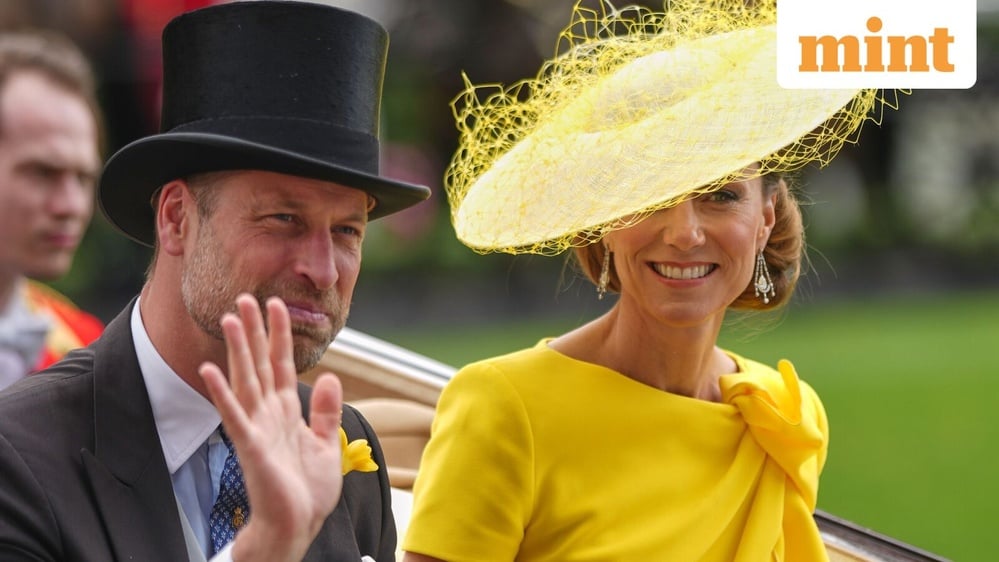
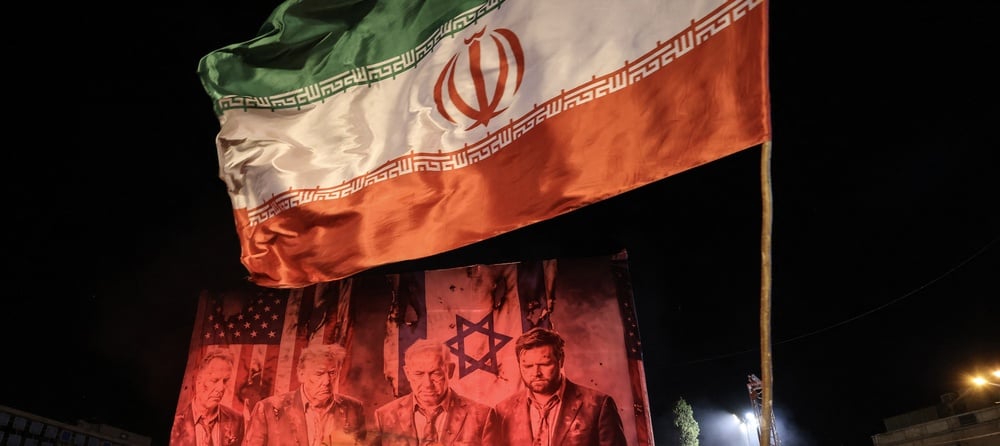
2026 © Helium Trades
Privacy Policy & Disclosure
* Disclaimer: Nothing on this website constitutes investment advice, performance data or any recommendation that any particular security, portfolio of securities, transaction or investment strategy is suitable for any specific person. Helium Trades is not responsible in any way for the accuracy
of any model predictions or price data. Any mention of a particular security and related prediction data is not a recommendation to buy or sell that security. Investments in securities involve the risk of loss. Past performance is no guarantee of future results. Helium Trades is not responsible for any of your investment decisions,
you should consult a financial expert before engaging in any transaction.
Helium Research Assistant

How can I help you today?
Ask any question about this page.


