See whether Helium helps you make better-informed decisions. Try every Pro Trader feature for 30 days. No credit card required.
Try every Pro Trader feature for 30 days. No credit card required.
August 14, 2026 · 0 shares
Framing is neutral and source-driven, foregrounding quantified seismological measurements, official casualty figures, and agency safety advisories while letting individual reactions appear only in attributed quotes.
Automated analysis; not human reviewed.
Limitations: The two official casualty figures conflict and some damage reports are explicitly preliminary, so estimates cannot be independently resolved from this text.
·
6 of 54 available dimensions scored; omitted dimensions are not treated as neutral.
·
Verified supporting quotes for 2 of 6 scored dimensions.
Claim: The reporting uses measured, attributed data and avoids first-person editorializing.
“Tsunami waves of less than 1 metre were recorded in several areas of the South-East Asian nation.” · exact text match
“The earthquake was recorded at a depth of 35 kilometres just before 5am, local time, the European-Mediterranean Seismological Centre (EMSC) said.” · exact text match
Why: The article presents instrument measurements and quoted official statements rather than subjective analysis.
Claim: The tone is restrained and factual rather than emotionally amplified.
emotional content comes from source quotes.
“The tsunami warning was lifted about three hours after the quake.” · exact text match
“People have been warned to stay away from cracked buildings.” · exact text match
Why: Descriptions stick to monitoring alerts and public-safety advice; no exaggerated casualty or disaster narrative is delivered outside source quotes.
Claim: The publisher is descriptive rather than prescriptive, relaying warnings and advice as attributable statements.
“Residents along affected coastlines were advised to move to higher ground as officials carefully monitored coastal tide gauges for changes.” · not found in supplied text
“People have been told to stay away from cracked buildings.” · not found in supplied text
Why: Directives appear as paraphrases of authorities' advisories, not as the publisher's own instruction.
mindful of 'the article'.
Claim: The article attributes key claims to named officials, agencies, and a named seismologist, and marks remaining uncertainty.
“Jonathan Griffin estimates at Geo Australia said it was a 'significant earthquake'.” · not found in supplied text
“Disaster management officials said the quake lasted about a minute, with many residents rushing from mainland.” · not found in supplied text
Why: Sourcing is frequent and explicit, attribution is maintained, and seasonal advisory claims are kept distinct, supporting credibility.
Claim: Presentation relies on empirical evidence and explicitly provisional assessments.
“GeoAustralia measured the quake at magnitude-7.
8.”
· not found in supplied text
“the strength of damage has not yet been fully assessed.” · not found in supplied text
Why: The article handles multiple agency estimates and ongoing uncertainty as data, not as a theory or speculative narrative.
Claim: The report doesn't conceal differing official counts, instead presenting both casualty figures with their sources.
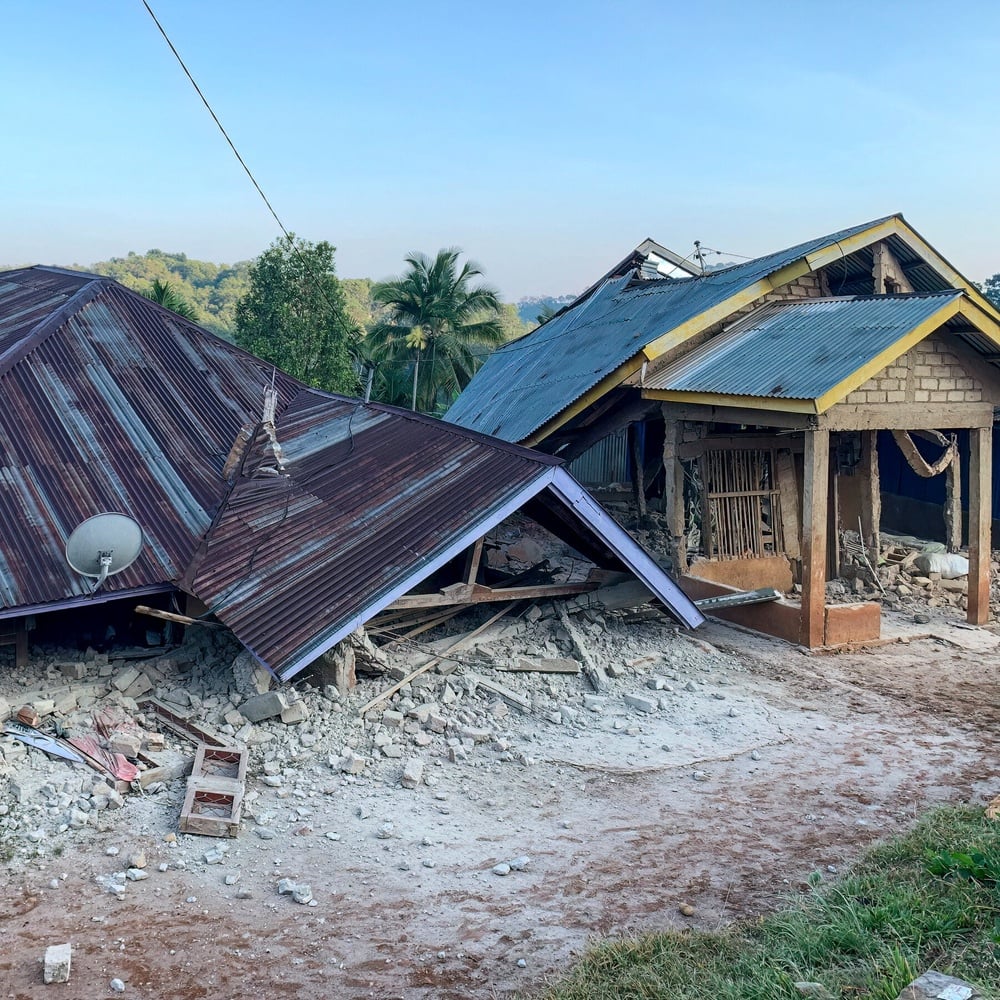
“The governor of East Nusa Tengga Province, Emanuel Melkiades Laka Lena, told a press conference the five people died from collapating rubble as they slept.” · not found in supplied text
“The national disaster mitigation agency BNPB put the toll at one dead and four injuries.” · not found in supplied text
Why: Publishing two separate official numbers gives readers an observable route to the discrepancy rather than taking sides.
The two official casualty figures conflict and some damage reports are explicitly preliminary, so estimates cannot be independently resolved from this text.
August 15, 2026 · 0 shares
The framing is procedural and factual, following official and verified reports while using hedged wording such as 'at least' and 'minor' to avoid overstatement.
Automated analysis; not human reviewed.
·
6 of 54 available dimensions scored; omitted dimensions are not treated as neutral.
·
Verified supporting quotes for 6 of 6 scored dimensions.
Claim: The report is highly objective, presenting attributed official statements and verified footage without editorial commentary.
“At least two people died after an earthquake of magnitude 7.7 and dozens of aftershocks struck off eastern Indonesia early on Saturday, August 15, the authorities said.” · exact text match
“a video on Facebook, verified by Reuters as being at a port in Maumere, showed.” · exact text match
Why: Core claims are attributed to BNPB, BMKG, Kompas, or Reuters verification, and the publisher adds no interpretive or opinionated commentary.
Claim: The article is non-sensational, using restrained language instead of dramatic or fear-driven wording.
“triggering minor tsunami waves and causing some damage to structures” · exact text match
“The tsunami warning was lifted about three hours after the quake.” · exact text match
Why: The lede uses restrained terms such as 'minor,' and the report focuses on measured official updates rather than catastrophe language.
Claim: The article remains descriptive, reporting what happened without giving recommendations or demands.
“Tsunami waves of less than 1 meter (3 feet) were recorded in several areas of the Southeast Asian nation.” · exact text match
Why: No advice, instructions, or policy prescriptions appear; the item sticks to a factual sequence of events.
Claim: The emotional tone is measured and largely unemotional despite the disaster subject.
“The tsunami warning was lifted about three hours after the quake.” · exact text match
Why: The prose stays close to operational details and official reports rather than affective or inflammatory language.
Claim: The item is highly credible because it cites named institutions, official statements, and Reuters verification.
“the disaster mitigation agency BNPB said in a statement” · exact text match
“a video on Facebook, verified by Reuters as being at a port in Maumere, showed.” · exact text match
Why: Visible sourcing is strong: casualty data come from BNPB, geophysical data from BMKG, and visual evidence is explicitly described as Reuters-verified.
Claim: The reporting signals integrity through explicit attribution, cautious casualty language, and verified media.
“In addition to the deaths of at least two, one person was injured in Sikka Regency, the disaster mitigation agency BNPB said in a statement.” · exact text match
“a video on Facebook, verified by Reuters as being at a port in Maumere, showed.” · exact text match
Why: The article repeatedly attributes information and uses 'at least' rather than asserting a complete or certain death toll.
August 15, 2026 · 0 shares
Framing is incident-focused and factual, prioritizing official disaster data and eyewitness accounts while treating the earthquake as part of a familiar regional seismic pattern.
Automated analysis; not human reviewed.
Limitations: The supplied text is a brief preliminary dispatch with no external primary verification; casualty numbers and official assessments remain unverified.
·
5 of 54 available dimensions scored; omitted dimensions are not treated as neutral.
·
Verified supporting quotes for 2 of 5 scored dimensions.
Claim: The report is primarily objective, using attributed quantitative details and direct quotation rather than subjective commentary.
“According to the US Geological Survey, the quake struck the Flores region at 5:58am local time at a depth of 10km.” · exact text match
Why: Specific seismic facts are attributed to an authoritative source and presented in measured language.
Claim: The story stays within sober breaking-news conventions, though it uses some dramatic language, so it remains mostly objective rather than sensational.
“Preliminary reports from the Maumere Search and Rescue Agency said at least five residents were killed and two injured.” · not found in supplied text
Counterevidence:
“The powerful tremor brought down homes and buildings, triggering widespread panic.” · not found in supplied text
Why: It relies on official attribution and caveats, but words such as 'powerful' and 'panic' add emotional color.
Claim: The report is descriptive rather than editorially prescriptive, presenting what officials said and what witnesses saw.
“Indonesian authorities initially issued a tsunami warning for parts of East Nusa Tenggara, West Nusa Tenggara, South Sulawesi and Southeast Sulawesi provinces, and urged residents to stay away from beaches and riverbanks.” · not found in supplied text
Why: The framework reports official actions and quotes rather than advocating a course of action on its own.
Claim: The report is credible within its own visible sourcing because it attributes claims, identifies preliminary numbers, and presents uncertainty in casualty counts.
“According to the US Geological Survey, the quake struck the Flores region at 5:58am local time at a depth of 10km.” · exact text match
“Preliminary reports from the Maumere Search and Rescue Agency said at least five residents were killed and two injured.” · not found in supplied text
Why: The report repeatedly names its source agencies, marks casualty figures as preliminary, and avoids presenting later-stage verification as established fact.
Claim: The reporting relies on seismology, sea-level monitoring, and geological context rather than supernatural or non-empirical explanations.
“Indonesia’s Meteorology, Climatology and Geophysics Agency confirmed that sea-level monitoring showed no dangerous changes threatening coastal areas.” · exact text match
Why: The account is organized around earthquake depth, magnitude, monitoring, and the Ring of Fire.
The supplied text is a brief preliminary dispatch with no external primary verification; casualty numbers and official assessments remain unverified.
August 17, 2026 · 0 shares
The article reports the earthquake facts and official responses with a neutral tone, emphasizing rescue efforts, damage assessments, and government actions, with minimal emotional or editorial framing.
Indonesia is prone to earthquakes and tsunamis due to its location on the Pacific Ring of Fire.
The event occurred in East Nusa Tenggara province, near Flores Island, a region with active volcanoes.
No additional context needed beyond the article text.
Automated analysis; not human reviewed.
Limitations: The article is a wire report with limited context on the broader disaster response and long-term implications.
·
37 of 54 available dimensions scored; omitted dimensions are not treated as neutral.
·
Verified supporting quotes for 0 of 37 scored dimensions.
The article is a wire report with limited context on the broader disaster response and long-term implications.
August 16, 2026 · 0 shares
Publisher frames the earthquake as an evolving disaster with emphasis on human impact and official response, without explicit political or ideological slant.
Indonesia lies on the Pacific Ring of Fire, prone to earthquakes and volcanic activity, and has experienced deadly quakes including one in West Java in 2022. The region is remote and mountainous, complicating assessment and rescue.
Automated analysis; not human reviewed.
Limitations: Analyzed articles may include unrelated appended content, but extraction focused only on the Indonesia earthquake report.
·
54 of 54 available dimensions scored; omitted dimensions are not treated as neutral.
·
Verified supporting quotes for 1 of 54 scored dimensions.
Claim: The article has no discernible liberal or conservative political slant.
“It reports official statements and data without ideological commentary.” · not found in supplied text
Why: The coverage is factual and focused on disaster response.
Claim: No populist or elitist bias present; the article centers on institutional response and human impacts.
“The BNPB said meeting basic needs and providing logistics for evacuees has become one of the top priorities.” · not found in supplied text
Why: The framing is people-centered but relies on authorities.
Claim: No libertarian or authoritarian bias; the article reports government actions without endorsing or criticizing.
“The ongoing advice from BNPB is for people to remain calm and to stay away from coastal areas and structures showing signs of damage.” · exact text match
Why: The article neutrally reports official guidance.
Claim: The article is objective, relying on official data and direct quotes.
“A total of 3,356 people had been displaced in Sikka, with a further 2,078 evacuated in Manggarai, the agency said.” · exact text match
“"I was startled awake and immediately went to my child's room," he said.” · not found in supplied text
Why: It presents factual information with attributed data and personal anecdotes.
Claim: The article is objective, not sensationalized despite the disaster topic.
“Rescuers continue to search for survivors.” · not found in supplied text
“Early reports indicate that, as well as more than 1,000 damaged homes, dozens of schools, healthcare facilities and government offices had also been severely damaged.” · not found in supplied text
Why: The tone is straightforward and fact-based.
Claim: No financial market bias applicable.
“Article does not discuss financial markets.” · not found in supplied text
Why: Not relevant to the content.
Claim: The article is neither optimistic nor pessimistic; it reports ongoing rescue and uncertainty.
“The full scale of the disaster is still being uncovered.” · not found in supplied text
“"We heard that medical assistance would be provided, but nothing has arrived yet," hospital spokesperson Rista Mari told Indonesian.” · not found in supplied text
Why: It presents both hope for rescue and ongoing challenges.
Claim: The article is moderately interesting due to human impact and disaster updates.
“Video taken at the port in Maumere showed large chunks of concrete breaking off the terminal building.” · not found in supplied text
“"I was startled awake and immediately went to my child's room," he said.” · not found in supplied text
Why: Personal stories and vivid details add interest.
Claim: The article is predominantly descriptive, with no prescriptive stance.
“It reports facts, figures, and statements without advocating action.” · not found in supplied text
Why: No opinion or recommendation is given.
Claim: No dovish or hawkish bias; the article is non-military.
“The article discusses disaster response, not military matters.” · not found in supplied text
Why: Not relevant.
Claim: The article is not fear-mongering; it spreads necessary information.
“Rescuers continue to search for survivors.” · not found in supplied text
“While a tsunami warning was initially issued, it was lifted around three hours later.” · not found in supplied text
Why: Tone is calm and informative.
Claim: No begging the question; the article presents reported facts without assuming conclusions.
“The full scale of the disaster is still being uncovered.” · not found in supplied text
Why: It acknowledges uncertainty.
Claim: No gossip, the article sticks to verified reports.
“Official reports indicate...” · not found in supplied text
“the BNPB said.” · not found in supplied text
Why: Uses official sources.
Claim: The article is factual and non-opinionated.
“It contains no editorializing; statements are attributed.” · not found in supplied text
Why: No personal or editorial opinion.
Claim: The article is non-political, focusing on disaster reporting.
“No political commentary or partisan slant.” · not found in supplied text
Why: It reports disaster and response without political framing.
Claim: The article does not oversimplify; it provides detailed figures and caveats.
“Preliminary reports indicate more than 900 homes and hundreds of other buildings have been severely damaged.” · not found in supplied text
Why: Provides nuanced preliminary data.
Claim: The article relies on official and expert sources, which is appropriate in disaster reporting.
“The National Disaster Management Agency (BNPB) said.” · not found in supplied text
“Deputy Health Minister Benjamin Paulus Octavianus said.” · exact text match
Why: It uses authoritative sources but also includes local voices.
Claim: The article is mature, serious reporting.
“It handles a disaster with gravity and factual accuracy.” · not found in supplied text
Why: Tone is professional.
Claim: No circular reasoning; the article draws on independent data.
“It presents diverse sources and reports.” · not found in supplied text
Why: Arguments are not circular.
Claim: The article does not attempt to hide its response; it reports ongoing efforts.
“Rescuers continue to search for survivors.” · not found in supplied text
Why: It updates on response.
Claim: The article does not engage in victimization; it reports suffering factually.
“Victims were killed in their sleep by collapsing rubble.” · not found in supplied text
Why: Reports without exploitation.
Claim: The article is appropriately cautious about preliminary data.
“Preliminary data shows 24 fatalities had been recorded there.” · not found in supplied text
Why: It indicates data is preliminary.
Claim: No spam or fluff.
“The article is substantive.” · not found in supplied text
Why: Not spam.
Claim: No ideological bias.
“Free of ideology.” · not found in supplied text
Why: Neutral reporting.
Claim: No strong pro-establishment bias; the article relies on official sources but also includes criticism.
“"We heard that medical assistance would be provided, but nothing has arrived yet," hospital spokesperson Rista Mari told Indonesian.” · not found in supplied text
Why: There is a mix of official reporting and criticism of response.
Claim: The article has a neutral emotional tone, with some human interest.
“"I was startled awake and immediately went to my child's room," he said.” · not found in supplied text
“"We heard that medical assistance would be provided, but nothing has arrived yet," hospital spokesperson Rista Mari told Indonesian.” · not found in supplied text
Why: Includes emotional quotes but overall neutral.
Claim: No double standard apparent.
“Consistent treatment.” · not found in supplied text
Why: Not present.
Claim: The article is credible, given clear sourcing and eyewitness accounts.
“Official statements from BNPB and deputy health minister.” · not found in supplied text
“Direct quotes from survivors and hospital spokesperson.” · not found in supplied text
Why: Uses named officials and individuals.
Claim: The article is rational and evidence-based, citing official data and reports.
“Preliminary data shows 24 fatalities had been recorded there, while 17 deaths were recorded in East Manggarai province.” · not found in supplied text
“The initial earthquake, which occurred just 15km below the surface.” · not found in supplied text
Why: It relies on concrete figures and official sources.
Claim: No advertising.
“No promotional content.” · not found in supplied text
Why: Not advertorial.
Claim: The article is scientific, not superstitious.
“Mentions magnitude, depth, aftershocks, and geological context.” · not found in supplied text
Why: Uses scientific facts.
Claim: The article contains some speculation about full extent of damage.
“The full scale of the disaster is still being uncovered.” · not found in supplied text
“It will take time to assess the full extent of the destruction.” · not found in supplied text
Why: Acknowledges uncertainty but not speculative.
Claim: Writing style shows no clear AI indicators.
“Uses direct quotes and varied sentence structure.” · not found in supplied text
Why: No strong patterns suggesting AI authorship.
Claim: The article displays integrity by attributing data and statements to named sources.
“Deputy Health Minister Benjamin Paulus Octavianus said.” · exact text match
“Emanuel Melkiades Laka Lena, governor of East Nusa Tenggara province, told a news conference.” · not found in supplied text
Why: It follows journalistic standards of attribution.
Claim: The article is intelligent, providing clear data and context.
“It includes detailed figures, official statements, and contextual information.” · not found in supplied text
Why: Informs readers with specifics.
Claim: The article is truth-seeking.
“Relies on verified reports.” · not found in supplied text
Why: Not delusion.
Claim: No terrorism bias; unrelated.
“No mention of terrorism.” · not found in supplied text
Why: Not relevant.
Claim: No Marxism bias.
“No class or ideological framing.” · not found in supplied text
Why: Not relevant.
Claim: No Islamist bias.
“No Islamist framing.” · not found in supplied text
Why: Not relevant.
Claim: No anti-Semitism.
“No Jewish references.” · not found in supplied text
Why: Not relevant.
Claim: No anti-LGBT bias.
“No LGBT references.” · not found in supplied text
Why: Not relevant.
Claim: No racism bias.
“No racial framing.” · not found in supplied text
Why: Not relevant.
Claim: No woke bias.
“No identity-group framing.” · not found in supplied text
Why: Not present.
Claim: No cruelty; the article is humane.
“It reports suffering with empathy.” · not found in supplied text
Why: Not present.
Claim: No virtue signaling.
“No performative moralizing.” · not found in supplied text
Why: Not present.
Claim: No conspiracy theorizing.
“Factual reporting.” · not found in supplied text
Why: Not present.
Claim: No suicidal empathy; not applicable.
“No such content.” · not found in supplied text
Why: Not relevant.
Claim: No scapegoating.
“No blame placed on groups.” · not found in supplied text
Why: Not present.
Claim: No hypocrisy; the article reports consistently.
“No double standards observed.” · not found in supplied text
Why: No inconsistency.
Claim: No anti-enlightenment bias.
“Uses science and factual reporting.” · not found in supplied text
Why: Not relevant.
Analyzed articles may include unrelated appended content, but extraction focused only on the Indonesia earthquake report.
August 15, 2026 · 0 shares
The publisher frames the earthquake as a destructive but still-developing event, concentrating on official casualty counts, damage reports, and the disrupted search-and-response effort while maintaining a flat, mostly attributed wire-news tone.
Flores and surrounding parts of eastern Indonesia sit on seismically active plate boundaries, where large offshore earthquakes can generate tsunamis; evacuation orders and monitoring-based lifting of warnings are standard steps in regional disaster response.
Automated analysis; not human reviewed.
Limitations: The supplied text is a short wire-style report based on preliminary official and eyewitness accounts, with casualty and damage totals explicitly incomplete because of communication disruptions.
·
3 of 54 available dimensions scored; omitted dimensions are not treated as neutral.
·
Verified supporting quotes for 2 of 3 scored dimensions.
Claim: The publisher keeps the report in an attributed, factual register without expressed editorial opinions.
“Authorities issued a tsunami warning and urged coastal residents to move to higher ground, but later lifted the warning when Indonesia’s Meteorology, Climatology and Geophysics Agency said monitoring showed no significant sea-level changes that would pose a threat to coastal communities.” · verified after text normalization
Why: The main assertions are tied to named authorities and direct participants, and the wording largely recounts observable events rather than subjective judgments.
Claim: Dramatic material is presented concretely and without exaggerated emotional language.
“Hospital staff moved equipment outdoors, including beds, IV stands and oxygen cylinders, and set up temporary treatment areas to adapt to emergency conditions.” · exact text match
Why: Descriptions of damage and displacement are handled as operational details and witnesses' statements rather than as promotional doom or sensational editorializing.
Claim: Sources are identified, casualty counts are marked as preliminary, and incomplete coverage is acknowledged.
“East Nusa Tenggara police chief Rudi Darmoko said preliminary reports indicate two fatalities in Sikka Regency and three in Manggarai Regency as the earthquake caused severe damage and collapsed buildings.” · exact text match
““We are continuing to collect reports of damages and casualties, but there are communication disruptions,” Darmoko said.” · not found in supplied text
Why: The article explicitly attributes information, notes the known incompleteness of reporting, and uses cautious terms such as 'preliminary' and 'at least five'.
The supplied text is a short wire-style report based on preliminary official and eyewitness accounts, with casualty and damage totals explicitly incomplete because of communication disruptions.
August 14, 2026 · 0 shares
Framing is neutral and source-driven, foregrounding quantified seismological measurements, official casualty figures, and agency safety advisories while letting individual reactions appear only in attributed quotes.
Automated analysis; not human reviewed.
Limitations: The two official casualty figures conflict and some damage reports are explicitly preliminary, so estimates cannot be independently resolved from this text.
·
6 of 54 available dimensions scored; omitted dimensions are not treated as neutral.
·
Verified supporting quotes for 2 of 6 scored dimensions.
Claim: The reporting uses measured, attributed data and avoids first-person editorializing.
“Tsunami waves of less than 1 metre were recorded in several areas of the South-East Asian nation.” · exact text match
“The earthquake was recorded at a depth of 35 kilometres just before 5am, local time, the European-Mediterranean Seismological Centre (EMSC) said.” · exact text match
Why: The article presents instrument measurements and quoted official statements rather than subjective analysis.
Claim: The tone is restrained and factual rather than emotionally amplified.
emotional content comes from source quotes.
“The tsunami warning was lifted about three hours after the quake.” · exact text match
“People have been warned to stay away from cracked buildings.” · exact text match
Why: Descriptions stick to monitoring alerts and public-safety advice; no exaggerated casualty or disaster narrative is delivered outside source quotes.
Claim: The publisher is descriptive rather than prescriptive, relaying warnings and advice as attributable statements.
“Residents along affected coastlines were advised to move to higher ground as officials carefully monitored coastal tide gauges for changes.” · not found in supplied text
“People have been told to stay away from cracked buildings.” · not found in supplied text
Why: Directives appear as paraphrases of authorities' advisories, not as the publisher's own instruction.
mindful of 'the article'.
Claim: The article attributes key claims to named officials, agencies, and a named seismologist, and marks remaining uncertainty.
“Jonathan Griffin estimates at Geo Australia said it was a 'significant earthquake'.” · not found in supplied text
“Disaster management officials said the quake lasted about a minute, with many residents rushing from mainland.” · not found in supplied text
Why: Sourcing is frequent and explicit, attribution is maintained, and seasonal advisory claims are kept distinct, supporting credibility.
Claim: Presentation relies on empirical evidence and explicitly provisional assessments.
“GeoAustralia measured the quake at magnitude-7.
8.”
· not found in supplied text
“the strength of damage has not yet been fully assessed.” · not found in supplied text
Why: The article handles multiple agency estimates and ongoing uncertainty as data, not as a theory or speculative narrative.
Claim: The report doesn't conceal differing official counts, instead presenting both casualty figures with their sources.
“The governor of East Nusa Tengga Province, Emanuel Melkiades Laka Lena, told a press conference the five people died from collapating rubble as they slept.” · not found in supplied text
“The national disaster mitigation agency BNPB put the toll at one dead and four injuries.” · not found in supplied text
Why: Publishing two separate official numbers gives readers an observable route to the discrepancy rather than taking sides.
The two official casualty figures conflict and some damage reports are explicitly preliminary, so estimates cannot be independently resolved from this text.
August 15, 2026 · 0 shares
The framing is procedural and factual, following official and verified reports while using hedged wording such as 'at least' and 'minor' to avoid overstatement.
Automated analysis; not human reviewed.
·
6 of 54 available dimensions scored; omitted dimensions are not treated as neutral.
·
Verified supporting quotes for 6 of 6 scored dimensions.
Claim: The report is highly objective, presenting attributed official statements and verified footage without editorial commentary.
“At least two people died after an earthquake of magnitude 7.7 and dozens of aftershocks struck off eastern Indonesia early on Saturday, August 15, the authorities said.” · exact text match
“a video on Facebook, verified by Reuters as being at a port in Maumere, showed.” · exact text match
Why: Core claims are attributed to BNPB, BMKG, Kompas, or Reuters verification, and the publisher adds no interpretive or opinionated commentary.
Claim: The article is non-sensational, using restrained language instead of dramatic or fear-driven wording.
“triggering minor tsunami waves and causing some damage to structures” · exact text match
“The tsunami warning was lifted about three hours after the quake.” · exact text match
Why: The lede uses restrained terms such as 'minor,' and the report focuses on measured official updates rather than catastrophe language.
Claim: The article remains descriptive, reporting what happened without giving recommendations or demands.
“Tsunami waves of less than 1 meter (3 feet) were recorded in several areas of the Southeast Asian nation.” · exact text match
Why: No advice, instructions, or policy prescriptions appear; the item sticks to a factual sequence of events.
Claim: The emotional tone is measured and largely unemotional despite the disaster subject.
“The tsunami warning was lifted about three hours after the quake.” · exact text match
Why: The prose stays close to operational details and official reports rather than affective or inflammatory language.
Claim: The item is highly credible because it cites named institutions, official statements, and Reuters verification.
“the disaster mitigation agency BNPB said in a statement” · exact text match
“a video on Facebook, verified by Reuters as being at a port in Maumere, showed.” · exact text match
Why: Visible sourcing is strong: casualty data come from BNPB, geophysical data from BMKG, and visual evidence is explicitly described as Reuters-verified.
Claim: The reporting signals integrity through explicit attribution, cautious casualty language, and verified media.
“In addition to the deaths of at least two, one person was injured in Sikka Regency, the disaster mitigation agency BNPB said in a statement.” · exact text match
“a video on Facebook, verified by Reuters as being at a port in Maumere, showed.” · exact text match
Why: The article repeatedly attributes information and uses 'at least' rather than asserting a complete or certain death toll.
August 17, 2026 · 0 shares
The article reports the earthquake facts and official responses with a neutral tone, emphasizing rescue efforts, damage assessments, and government actions, with minimal emotional or editorial framing.
Indonesia is prone to earthquakes and tsunamis due to its location on the Pacific Ring of Fire.
The event occurred in East Nusa Tenggara province, near Flores Island, a region with active volcanoes.
No additional context needed beyond the article text.
Automated analysis; not human reviewed.
Limitations: The article is a wire report with limited context on the broader disaster response and long-term implications.
·
37 of 54 available dimensions scored; omitted dimensions are not treated as neutral.
·
Verified supporting quotes for 0 of 37 scored dimensions.
The article is a wire report with limited context on the broader disaster response and long-term implications.
August 16, 2026 · 0 shares
Straightforward official-source disaster reporting, with casualties, damage, and earthquake data attributed to named agencies and no editorial commentary.
Automated analysis; not human reviewed.
·
3 of 54 available dimensions scored; omitted dimensions are not treated as neutral.
·
Verified supporting quotes for 1 of 3 scored dimensions.
Claim: The disaster information is presented in a structured, factual style, with each major figure tied to a named source, rather than through individual interpretation.
“A powerful magnitude 7.2 quake struck off the coast of eastern Indonesia, according to the U.S. Geological Survey.” · not found in supplied text
“At least 47 people have been killed, according to the National Disaster Management Agency (BNPB)” · exact text match
Why: The concrete details such as casualty totals, magnitude, depth, epicenter, and warnings are separately attributed to agencies and wire reports, keeping the report close to the sourced data.
Claim: The statements are repeatedly attributed to identifiable institutional bodies and the article signals that it is a developing story.
“At least 47 people have been killed, according to the National Disaster Management Agency (BNPB)” · exact text match
“At least six others were injured and two more are missing, according to the Associated Press.” · exact text match
Why: The main factual assertions contain explicit attribution to official sources, and the developing-story note acknowledges that new information may follow.
August 17, 2026 · 0 shares
The article reports the earthquake facts and official responses with a neutral tone, emphasizing rescue efforts, damage assessments, and government actions, with minimal emotional or editorial framing.
Indonesia is prone to earthquakes and tsunamis due to its location on the Pacific Ring of Fire.
The event occurred in East Nusa Tenggara province, near Flores Island, a region with active volcanoes.
No additional context needed beyond the article text.
Automated analysis; not human reviewed.
Limitations: The article is a wire report with limited context on the broader disaster response and long-term implications.
·
37 of 54 available dimensions scored; omitted dimensions are not treated as neutral.
·
Verified supporting quotes for 0 of 37 scored dimensions.
The article is a wire report with limited context on the broader disaster response and long-term implications.
August 16, 2026 · 0 shares
Publisher frames the earthquake as an evolving disaster with emphasis on human impact and official response, without explicit political or ideological slant.
Indonesia lies on the Pacific Ring of Fire, prone to earthquakes and volcanic activity, and has experienced deadly quakes including one in West Java in 2022. The region is remote and mountainous, complicating assessment and rescue.
Automated analysis; not human reviewed.
Limitations: Analyzed articles may include unrelated appended content, but extraction focused only on the Indonesia earthquake report.
·
54 of 54 available dimensions scored; omitted dimensions are not treated as neutral.
·
Verified supporting quotes for 1 of 54 scored dimensions.
Claim: The article has no discernible liberal or conservative political slant.
“It reports official statements and data without ideological commentary.” · not found in supplied text
Why: The coverage is factual and focused on disaster response.
Claim: No populist or elitist bias present; the article centers on institutional response and human impacts.
“The BNPB said meeting basic needs and providing logistics for evacuees has become one of the top priorities.” · not found in supplied text
Why: The framing is people-centered but relies on authorities.
Claim: No libertarian or authoritarian bias; the article reports government actions without endorsing or criticizing.
“The ongoing advice from BNPB is for people to remain calm and to stay away from coastal areas and structures showing signs of damage.” · exact text match
Why: The article neutrally reports official guidance.
Claim: The article is objective, relying on official data and direct quotes.
“A total of 3,356 people had been displaced in Sikka, with a further 2,078 evacuated in Manggarai, the agency said.” · exact text match
“"I was startled awake and immediately went to my child's room," he said.” · not found in supplied text
Why: It presents factual information with attributed data and personal anecdotes.
Claim: The article is objective, not sensationalized despite the disaster topic.
“Rescuers continue to search for survivors.” · not found in supplied text
“Early reports indicate that, as well as more than 1,000 damaged homes, dozens of schools, healthcare facilities and government offices had also been severely damaged.” · not found in supplied text
Why: The tone is straightforward and fact-based.
Claim: No financial market bias applicable.
“Article does not discuss financial markets.” · not found in supplied text
Why: Not relevant to the content.
Claim: The article is neither optimistic nor pessimistic; it reports ongoing rescue and uncertainty.
“The full scale of the disaster is still being uncovered.” · not found in supplied text
“"We heard that medical assistance would be provided, but nothing has arrived yet," hospital spokesperson Rista Mari told Indonesian.” · not found in supplied text
Why: It presents both hope for rescue and ongoing challenges.
Claim: The article is moderately interesting due to human impact and disaster updates.
“Video taken at the port in Maumere showed large chunks of concrete breaking off the terminal building.” · not found in supplied text
“"I was startled awake and immediately went to my child's room," he said.” · not found in supplied text
Why: Personal stories and vivid details add interest.
Claim: The article is predominantly descriptive, with no prescriptive stance.
“It reports facts, figures, and statements without advocating action.” · not found in supplied text
Why: No opinion or recommendation is given.
Claim: No dovish or hawkish bias; the article is non-military.
“The article discusses disaster response, not military matters.” · not found in supplied text
Why: Not relevant.
Claim: The article is not fear-mongering; it spreads necessary information.
“Rescuers continue to search for survivors.” · not found in supplied text
“While a tsunami warning was initially issued, it was lifted around three hours later.” · not found in supplied text
Why: Tone is calm and informative.
Claim: No begging the question; the article presents reported facts without assuming conclusions.
“The full scale of the disaster is still being uncovered.” · not found in supplied text
Why: It acknowledges uncertainty.
Claim: No gossip, the article sticks to verified reports.
“Official reports indicate...” · not found in supplied text
“the BNPB said.” · not found in supplied text
Why: Uses official sources.
Claim: The article is factual and non-opinionated.
“It contains no editorializing; statements are attributed.” · not found in supplied text
Why: No personal or editorial opinion.
Claim: The article is non-political, focusing on disaster reporting.
“No political commentary or partisan slant.” · not found in supplied text
Why: It reports disaster and response without political framing.
Claim: The article does not oversimplify; it provides detailed figures and caveats.
“Preliminary reports indicate more than 900 homes and hundreds of other buildings have been severely damaged.” · not found in supplied text
Why: Provides nuanced preliminary data.
Claim: The article relies on official and expert sources, which is appropriate in disaster reporting.
“The National Disaster Management Agency (BNPB) said.” · not found in supplied text
“Deputy Health Minister Benjamin Paulus Octavianus said.” · exact text match
Why: It uses authoritative sources but also includes local voices.
Claim: The article is mature, serious reporting.
“It handles a disaster with gravity and factual accuracy.” · not found in supplied text
Why: Tone is professional.
Claim: No circular reasoning; the article draws on independent data.
“It presents diverse sources and reports.” · not found in supplied text
Why: Arguments are not circular.
Claim: The article does not attempt to hide its response; it reports ongoing efforts.
“Rescuers continue to search for survivors.” · not found in supplied text
Why: It updates on response.
Claim: The article does not engage in victimization; it reports suffering factually.
“Victims were killed in their sleep by collapsing rubble.” · not found in supplied text
Why: Reports without exploitation.
Claim: The article is appropriately cautious about preliminary data.
“Preliminary data shows 24 fatalities had been recorded there.” · not found in supplied text
Why: It indicates data is preliminary.
Claim: No spam or fluff.
“The article is substantive.” · not found in supplied text
Why: Not spam.
Claim: No ideological bias.
“Free of ideology.” · not found in supplied text
Why: Neutral reporting.
Claim: No strong pro-establishment bias; the article relies on official sources but also includes criticism.
“"We heard that medical assistance would be provided, but nothing has arrived yet," hospital spokesperson Rista Mari told Indonesian.” · not found in supplied text
Why: There is a mix of official reporting and criticism of response.
Claim: The article has a neutral emotional tone, with some human interest.
“"I was startled awake and immediately went to my child's room," he said.” · not found in supplied text
“"We heard that medical assistance would be provided, but nothing has arrived yet," hospital spokesperson Rista Mari told Indonesian.” · not found in supplied text
Why: Includes emotional quotes but overall neutral.
Claim: No double standard apparent.
“Consistent treatment.” · not found in supplied text
Why: Not present.
Claim: The article is credible, given clear sourcing and eyewitness accounts.
“Official statements from BNPB and deputy health minister.” · not found in supplied text
“Direct quotes from survivors and hospital spokesperson.” · not found in supplied text
Why: Uses named officials and individuals.
Claim: The article is rational and evidence-based, citing official data and reports.
“Preliminary data shows 24 fatalities had been recorded there, while 17 deaths were recorded in East Manggarai province.” · not found in supplied text
“The initial earthquake, which occurred just 15km below the surface.” · not found in supplied text
Why: It relies on concrete figures and official sources.
Claim: No advertising.
“No promotional content.” · not found in supplied text
Why: Not advertorial.
Claim: The article is scientific, not superstitious.
“Mentions magnitude, depth, aftershocks, and geological context.” · not found in supplied text
Why: Uses scientific facts.
Claim: The article contains some speculation about full extent of damage.
“The full scale of the disaster is still being uncovered.” · not found in supplied text
“It will take time to assess the full extent of the destruction.” · not found in supplied text
Why: Acknowledges uncertainty but not speculative.
Claim: Writing style shows no clear AI indicators.
“Uses direct quotes and varied sentence structure.” · not found in supplied text
Why: No strong patterns suggesting AI authorship.
Claim: The article displays integrity by attributing data and statements to named sources.
“Deputy Health Minister Benjamin Paulus Octavianus said.” · exact text match
“Emanuel Melkiades Laka Lena, governor of East Nusa Tenggara province, told a news conference.” · not found in supplied text
Why: It follows journalistic standards of attribution.
Claim: The article is intelligent, providing clear data and context.
“It includes detailed figures, official statements, and contextual information.” · not found in supplied text
Why: Informs readers with specifics.
Claim: The article is truth-seeking.
“Relies on verified reports.” · not found in supplied text
Why: Not delusion.
Claim: No terrorism bias; unrelated.
“No mention of terrorism.” · not found in supplied text
Why: Not relevant.
Claim: No Marxism bias.
“No class or ideological framing.” · not found in supplied text
Why: Not relevant.
Claim: No Islamist bias.
“No Islamist framing.” · not found in supplied text
Why: Not relevant.
Claim: No anti-Semitism.
“No Jewish references.” · not found in supplied text
Why: Not relevant.
Claim: No anti-LGBT bias.
“No LGBT references.” · not found in supplied text
Why: Not relevant.
Claim: No racism bias.
“No racial framing.” · not found in supplied text
Why: Not relevant.
Claim: No woke bias.
“No identity-group framing.” · not found in supplied text
Why: Not present.
Claim: No cruelty; the article is humane.
“It reports suffering with empathy.” · not found in supplied text
Why: Not present.
Claim: No virtue signaling.
“No performative moralizing.” · not found in supplied text
Why: Not present.
Claim: No conspiracy theorizing.
“Factual reporting.” · not found in supplied text
Why: Not present.
Claim: No suicidal empathy; not applicable.
“No such content.” · not found in supplied text
Why: Not relevant.
Claim: No scapegoating.
“No blame placed on groups.” · not found in supplied text
Why: Not present.
Claim: No hypocrisy; the article reports consistently.
“No double standards observed.” · not found in supplied text
Why: No inconsistency.
Claim: No anti-enlightenment bias.
“Uses science and factual reporting.” · not found in supplied text
Why: Not relevant.
Analyzed articles may include unrelated appended content, but extraction focused only on the Indonesia earthquake report.
August 14, 2026 · 0 shares
Framing is neutral and source-driven, foregrounding quantified seismological measurements, official casualty figures, and agency safety advisories while letting individual reactions appear only in attributed quotes.
Automated analysis; not human reviewed.
Limitations: The two official casualty figures conflict and some damage reports are explicitly preliminary, so estimates cannot be independently resolved from this text.
·
6 of 54 available dimensions scored; omitted dimensions are not treated as neutral.
·
Verified supporting quotes for 2 of 6 scored dimensions.
Claim: The reporting uses measured, attributed data and avoids first-person editorializing.
“Tsunami waves of less than 1 metre were recorded in several areas of the South-East Asian nation.” · exact text match
“The earthquake was recorded at a depth of 35 kilometres just before 5am, local time, the European-Mediterranean Seismological Centre (EMSC) said.” · exact text match
Why: The article presents instrument measurements and quoted official statements rather than subjective analysis.
Claim: The tone is restrained and factual rather than emotionally amplified.
emotional content comes from source quotes.
“The tsunami warning was lifted about three hours after the quake.” · exact text match
“People have been warned to stay away from cracked buildings.” · exact text match
Why: Descriptions stick to monitoring alerts and public-safety advice; no exaggerated casualty or disaster narrative is delivered outside source quotes.
Claim: The publisher is descriptive rather than prescriptive, relaying warnings and advice as attributable statements.
“Residents along affected coastlines were advised to move to higher ground as officials carefully monitored coastal tide gauges for changes.” · not found in supplied text
“People have been told to stay away from cracked buildings.” · not found in supplied text
Why: Directives appear as paraphrases of authorities' advisories, not as the publisher's own instruction.
mindful of 'the article'.
Claim: The article attributes key claims to named officials, agencies, and a named seismologist, and marks remaining uncertainty.
“Jonathan Griffin estimates at Geo Australia said it was a 'significant earthquake'.” · not found in supplied text
“Disaster management officials said the quake lasted about a minute, with many residents rushing from mainland.” · not found in supplied text
Why: Sourcing is frequent and explicit, attribution is maintained, and seasonal advisory claims are kept distinct, supporting credibility.
Claim: Presentation relies on empirical evidence and explicitly provisional assessments.
“GeoAustralia measured the quake at magnitude-7.
8.”
· not found in supplied text
“the strength of damage has not yet been fully assessed.” · not found in supplied text
Why: The article handles multiple agency estimates and ongoing uncertainty as data, not as a theory or speculative narrative.
Claim: The report doesn't conceal differing official counts, instead presenting both casualty figures with their sources.
“The governor of East Nusa Tengga Province, Emanuel Melkiades Laka Lena, told a press conference the five people died from collapating rubble as they slept.” · not found in supplied text
“The national disaster mitigation agency BNPB put the toll at one dead and four injuries.” · not found in supplied text
Why: Publishing two separate official numbers gives readers an observable route to the discrepancy rather than taking sides.
The two official casualty figures conflict and some damage reports are explicitly preliminary, so estimates cannot be independently resolved from this text.
August 15, 2026 · 0 shares
Straight emergency-bulletin framing: official seismic details and warning status with only one restrained casualty count and no surrounding commentary.
Automated analysis; not human reviewed.
Limitations: The supplied text is a short, undated bulletin with no precise location, event timing, or independent corroborating detail to verify against later reports.
·
4 of 54 available dimensions scored; omitted dimensions are not treated as neutral.
·
Verified supporting quotes for 4 of 4 scored dimensions.
Claim: The framing stays with observable seismic details, official warning status, and a partially confirmed death toll; it does not add interpretation.
“So far, at least one person has died.” · exact text match
“Indonesia's Meteorology, Climatology, and Geophysics Agency (BMKG) warned of the possibility of tsunami waves following the quake and urged people to get to higher ground, but the warning was later lifted.” · exact text match
Why: Only emergency-report facts and one official agency's warning and update are used; no personal commentary appears.
Claim: The report is restrained and does not dramatize the casualty count or warning outcome.
“So far, at least one person has died.” · exact text match
“but the warning was later lifted” · exact text match
Why: The known death toll is explicitly qualified with 'at least' and 'so far,' and the lifting of the tsunami warning is included as a clarifying update.
Claim: The publisher relays what authorities said and what happened rather than prescribing any response.
“Indonesia's Meteorology, Climatology, and Geophysics Agency (BMKG) warned of the possibility of tsunami waves following the quake and urged people to get to higher ground, but the warning was later lifted.” · exact text match
Why: The advice to seek higher ground is attributed to the agency, not issued by the publisher analysis.
Claim: The story attributes the warning to a specific official agency and hedges the casualty figure as preliminary.
“Indonesia's Meteorology, Climatology, and Geophysics Agency (BMKG)” · exact text match
“So far, at least one person has died.” · exact text match
Why: Visible sourcing and explicit overclaim-free wording support credibility, although no independent verification or detailed reporting is present.
The supplied text is a short, undated bulletin with no precise location, event timing, or independent corroborating detail to verify against later reports.
August 14, 2026 · 0 shares
Framing is neutral and source-driven, foregrounding quantified seismological measurements, official casualty figures, and agency safety advisories while letting individual reactions appear only in attributed quotes.
Automated analysis; not human reviewed. Limitations: The two official casualty figures conflict and some damage reports are explicitly preliminary, so estimates cannot be independently resolved from this text. · 6 of 54 available dimensions scored; omitted dimensions are not treated as neutral. · Verified supporting quotes for 2 of 6 scored dimensions.
Claim: The reporting uses measured, attributed data and avoids first-person editorializing.
“Tsunami waves of less than 1 metre were recorded in several areas of the South-East Asian nation.” · exact text match
“The earthquake was recorded at a depth of 35 kilometres just before 5am, local time, the European-Mediterranean Seismological Centre (EMSC) said.” · exact text match
Why: The article presents instrument measurements and quoted official statements rather than subjective analysis.
Claim: The tone is restrained and factual rather than emotionally amplified. emotional content comes from source quotes.
“The tsunami warning was lifted about three hours after the quake.” · exact text match
“People have been warned to stay away from cracked buildings.” · exact text match
Why: Descriptions stick to monitoring alerts and public-safety advice; no exaggerated casualty or disaster narrative is delivered outside source quotes.
Claim: The publisher is descriptive rather than prescriptive, relaying warnings and advice as attributable statements.
“Residents along affected coastlines were advised to move to higher ground as officials carefully monitored coastal tide gauges for changes.” · not found in supplied text
“People have been told to stay away from cracked buildings.” · not found in supplied text
Why: Directives appear as paraphrases of authorities' advisories, not as the publisher's own instruction. mindful of 'the article'.
Claim: The article attributes key claims to named officials, agencies, and a named seismologist, and marks remaining uncertainty.
“Jonathan Griffin estimates at Geo Australia said it was a 'significant earthquake'.” · not found in supplied text
“Disaster management officials said the quake lasted about a minute, with many residents rushing from mainland.” · not found in supplied text
Why: Sourcing is frequent and explicit, attribution is maintained, and seasonal advisory claims are kept distinct, supporting credibility.
Claim: Presentation relies on empirical evidence and explicitly provisional assessments.
“GeoAustralia measured the quake at magnitude-7.8.” · not found in supplied text
“the strength of damage has not yet been fully assessed.” · not found in supplied text
Why: The article handles multiple agency estimates and ongoing uncertainty as data, not as a theory or speculative narrative.
Claim: The report doesn't conceal differing official counts, instead presenting both casualty figures with their sources.
“The governor of East Nusa Tengga Province, Emanuel Melkiades Laka Lena, told a press conference the five people died from collapating rubble as they slept.” · not found in supplied text
“The national disaster mitigation agency BNPB put the toll at one dead and four injuries.” · not found in supplied text
Why: Publishing two separate official numbers gives readers an observable route to the discrepancy rather than taking sides.
The two official casualty figures conflict and some damage reports are explicitly preliminary, so estimates cannot be independently resolved from this text.
August 15, 2026 · 0 shares
The framing is procedural and factual, following official and verified reports while using hedged wording such as 'at least' and 'minor' to avoid overstatement.
Automated analysis; not human reviewed. · 6 of 54 available dimensions scored; omitted dimensions are not treated as neutral. · Verified supporting quotes for 6 of 6 scored dimensions.
Claim: The report is highly objective, presenting attributed official statements and verified footage without editorial commentary.
“At least two people died after an earthquake of magnitude 7.7 and dozens of aftershocks struck off eastern Indonesia early on Saturday, August 15, the authorities said.” · exact text match
“a video on Facebook, verified by Reuters as being at a port in Maumere, showed.” · exact text match
Why: Core claims are attributed to BNPB, BMKG, Kompas, or Reuters verification, and the publisher adds no interpretive or opinionated commentary.
Claim: The article is non-sensational, using restrained language instead of dramatic or fear-driven wording.
“triggering minor tsunami waves and causing some damage to structures” · exact text match
“The tsunami warning was lifted about three hours after the quake.” · exact text match
Why: The lede uses restrained terms such as 'minor,' and the report focuses on measured official updates rather than catastrophe language.
Claim: The article remains descriptive, reporting what happened without giving recommendations or demands.
“Tsunami waves of less than 1 meter (3 feet) were recorded in several areas of the Southeast Asian nation.” · exact text match
Why: No advice, instructions, or policy prescriptions appear; the item sticks to a factual sequence of events.
Claim: The emotional tone is measured and largely unemotional despite the disaster subject.
“The tsunami warning was lifted about three hours after the quake.” · exact text match
Why: The prose stays close to operational details and official reports rather than affective or inflammatory language.
Claim: The item is highly credible because it cites named institutions, official statements, and Reuters verification.
“the disaster mitigation agency BNPB said in a statement” · exact text match
“a video on Facebook, verified by Reuters as being at a port in Maumere, showed.” · exact text match
Why: Visible sourcing is strong: casualty data come from BNPB, geophysical data from BMKG, and visual evidence is explicitly described as Reuters-verified.
Claim: The reporting signals integrity through explicit attribution, cautious casualty language, and verified media.
“In addition to the deaths of at least two, one person was injured in Sikka Regency, the disaster mitigation agency BNPB said in a statement.” · exact text match
“a video on Facebook, verified by Reuters as being at a port in Maumere, showed.” · exact text match
Why: The article repeatedly attributes information and uses 'at least' rather than asserting a complete or certain death toll.
August 15, 2026 · 0 shares
Framing is incident-focused and factual, prioritizing official disaster data and eyewitness accounts while treating the earthquake as part of a familiar regional seismic pattern.
Automated analysis; not human reviewed. Limitations: The supplied text is a brief preliminary dispatch with no external primary verification; casualty numbers and official assessments remain unverified. · 5 of 54 available dimensions scored; omitted dimensions are not treated as neutral. · Verified supporting quotes for 2 of 5 scored dimensions.
Claim: The report is primarily objective, using attributed quantitative details and direct quotation rather than subjective commentary.
“According to the US Geological Survey, the quake struck the Flores region at 5:58am local time at a depth of 10km.” · exact text match
Why: Specific seismic facts are attributed to an authoritative source and presented in measured language.
Claim: The story stays within sober breaking-news conventions, though it uses some dramatic language, so it remains mostly objective rather than sensational.
“Preliminary reports from the Maumere Search and Rescue Agency said at least five residents were killed and two injured.” · not found in supplied text
Counterevidence:
“The powerful tremor brought down homes and buildings, triggering widespread panic.” · not found in supplied text
Why: It relies on official attribution and caveats, but words such as 'powerful' and 'panic' add emotional color.
Claim: The report is descriptive rather than editorially prescriptive, presenting what officials said and what witnesses saw.
“Indonesian authorities initially issued a tsunami warning for parts of East Nusa Tenggara, West Nusa Tenggara, South Sulawesi and Southeast Sulawesi provinces, and urged residents to stay away from beaches and riverbanks.” · not found in supplied text
Why: The framework reports official actions and quotes rather than advocating a course of action on its own.
Claim: The report is credible within its own visible sourcing because it attributes claims, identifies preliminary numbers, and presents uncertainty in casualty counts.
“According to the US Geological Survey, the quake struck the Flores region at 5:58am local time at a depth of 10km.” · exact text match
“Preliminary reports from the Maumere Search and Rescue Agency said at least five residents were killed and two injured.” · not found in supplied text
Why: The report repeatedly names its source agencies, marks casualty figures as preliminary, and avoids presenting later-stage verification as established fact.
Claim: The reporting relies on seismology, sea-level monitoring, and geological context rather than supernatural or non-empirical explanations.
“Indonesia’s Meteorology, Climatology and Geophysics Agency confirmed that sea-level monitoring showed no dangerous changes threatening coastal areas.” · exact text match
Why: The account is organized around earthquake depth, magnitude, monitoring, and the Ring of Fire.
The supplied text is a brief preliminary dispatch with no external primary verification; casualty numbers and official assessments remain unverified.
August 15, 2026 · 0 shares
The publisher frames the earthquake as a destructive but still-developing event, concentrating on official casualty counts, damage reports, and the disrupted search-and-response effort while maintaining a flat, mostly attributed wire-news tone.
Flores and surrounding parts of eastern Indonesia sit on seismically active plate boundaries, where large offshore earthquakes can generate tsunamis; evacuation orders and monitoring-based lifting of warnings are standard steps in regional disaster response.
Automated analysis; not human reviewed. Limitations: The supplied text is a short wire-style report based on preliminary official and eyewitness accounts, with casualty and damage totals explicitly incomplete because of communication disruptions. · 3 of 54 available dimensions scored; omitted dimensions are not treated as neutral. · Verified supporting quotes for 2 of 3 scored dimensions.
Claim: The publisher keeps the report in an attributed, factual register without expressed editorial opinions.
“Authorities issued a tsunami warning and urged coastal residents to move to higher ground, but later lifted the warning when Indonesia’s Meteorology, Climatology and Geophysics Agency said monitoring showed no significant sea-level changes that would pose a threat to coastal communities.” · verified after text normalization
Why: The main assertions are tied to named authorities and direct participants, and the wording largely recounts observable events rather than subjective judgments.
Claim: Dramatic material is presented concretely and without exaggerated emotional language.
“Hospital staff moved equipment outdoors, including beds, IV stands and oxygen cylinders, and set up temporary treatment areas to adapt to emergency conditions.” · exact text match
Why: Descriptions of damage and displacement are handled as operational details and witnesses' statements rather than as promotional doom or sensational editorializing.
Claim: Sources are identified, casualty counts are marked as preliminary, and incomplete coverage is acknowledged.
“East Nusa Tenggara police chief Rudi Darmoko said preliminary reports indicate two fatalities in Sikka Regency and three in Manggarai Regency as the earthquake caused severe damage and collapsed buildings.” · exact text match
““We are continuing to collect reports of damages and casualties, but there are communication disruptions,” Darmoko said.” · not found in supplied text
Why: The article explicitly attributes information, notes the known incompleteness of reporting, and uses cautious terms such as 'preliminary' and 'at least five'.
The supplied text is a short wire-style report based on preliminary official and eyewitness accounts, with casualty and damage totals explicitly incomplete because of communication disruptions.
August 15, 2026 · 0 shares
The framing is procedural and factual, following official and verified reports while using hedged wording such as 'at least' and 'minor' to avoid overstatement.
Automated analysis; not human reviewed. · 6 of 54 available dimensions scored; omitted dimensions are not treated as neutral. · Verified supporting quotes for 6 of 6 scored dimensions.
Claim: The report is highly objective, presenting attributed official statements and verified footage without editorial commentary.
“At least two people died after an earthquake of magnitude 7.7 and dozens of aftershocks struck off eastern Indonesia early on Saturday, August 15, the authorities said.” · exact text match
“a video on Facebook, verified by Reuters as being at a port in Maumere, showed.” · exact text match
Why: Core claims are attributed to BNPB, BMKG, Kompas, or Reuters verification, and the publisher adds no interpretive or opinionated commentary.
Claim: The article is non-sensational, using restrained language instead of dramatic or fear-driven wording.
“triggering minor tsunami waves and causing some damage to structures” · exact text match
“The tsunami warning was lifted about three hours after the quake.” · exact text match
Why: The lede uses restrained terms such as 'minor,' and the report focuses on measured official updates rather than catastrophe language.
Claim: The article remains descriptive, reporting what happened without giving recommendations or demands.
“Tsunami waves of less than 1 meter (3 feet) were recorded in several areas of the Southeast Asian nation.” · exact text match
Why: No advice, instructions, or policy prescriptions appear; the item sticks to a factual sequence of events.
Claim: The emotional tone is measured and largely unemotional despite the disaster subject.
“The tsunami warning was lifted about three hours after the quake.” · exact text match
Why: The prose stays close to operational details and official reports rather than affective or inflammatory language.
Claim: The item is highly credible because it cites named institutions, official statements, and Reuters verification.
“the disaster mitigation agency BNPB said in a statement” · exact text match
“a video on Facebook, verified by Reuters as being at a port in Maumere, showed.” · exact text match
Why: Visible sourcing is strong: casualty data come from BNPB, geophysical data from BMKG, and visual evidence is explicitly described as Reuters-verified.
Claim: The reporting signals integrity through explicit attribution, cautious casualty language, and verified media.
“In addition to the deaths of at least two, one person was injured in Sikka Regency, the disaster mitigation agency BNPB said in a statement.” · exact text match
“a video on Facebook, verified by Reuters as being at a port in Maumere, showed.” · exact text match
Why: The article repeatedly attributes information and uses 'at least' rather than asserting a complete or certain death toll.
August 16, 2026 · 0 shares
Straightforward official-source disaster reporting, with casualties, damage, and earthquake data attributed to named agencies and no editorial commentary.
Automated analysis; not human reviewed. · 3 of 54 available dimensions scored; omitted dimensions are not treated as neutral. · Verified supporting quotes for 1 of 3 scored dimensions.
Claim: The disaster information is presented in a structured, factual style, with each major figure tied to a named source, rather than through individual interpretation.
“A powerful magnitude 7.2 quake struck off the coast of eastern Indonesia, according to the U.S. Geological Survey.” · not found in supplied text
“At least 47 people have been killed, according to the National Disaster Management Agency (BNPB)” · exact text match
Why: The concrete details such as casualty totals, magnitude, depth, epicenter, and warnings are separately attributed to agencies and wire reports, keeping the report close to the sourced data.
Claim: The statements are repeatedly attributed to identifiable institutional bodies and the article signals that it is a developing story.
“At least 47 people have been killed, according to the National Disaster Management Agency (BNPB)” · exact text match
“At least six others were injured and two more are missing, according to the Associated Press.” · exact text match
Why: The main factual assertions contain explicit attribution to official sources, and the developing-story note acknowledges that new information may follow.
August 17, 2026 · 0 shares
The article reports the earthquake facts and official responses with a neutral tone, emphasizing rescue efforts, damage assessments, and government actions, with minimal emotional or editorial framing.
Indonesia is prone to earthquakes and tsunamis due to its location on the Pacific Ring of Fire. The event occurred in East Nusa Tenggara province, near Flores Island, a region with active volcanoes. No additional context needed beyond the article text.
Automated analysis; not human reviewed. Limitations: The article is a wire report with limited context on the broader disaster response and long-term implications. · 37 of 54 available dimensions scored; omitted dimensions are not treated as neutral. · Verified supporting quotes for 0 of 37 scored dimensions.
The article is a wire report with limited context on the broader disaster response and long-term implications.
August 16, 2026 · 0 shares
Publisher frames the earthquake as an evolving disaster with emphasis on human impact and official response, without explicit political or ideological slant.
Indonesia lies on the Pacific Ring of Fire, prone to earthquakes and volcanic activity, and has experienced deadly quakes including one in West Java in 2022. The region is remote and mountainous, complicating assessment and rescue.
Automated analysis; not human reviewed. Limitations: Analyzed articles may include unrelated appended content, but extraction focused only on the Indonesia earthquake report. · 54 of 54 available dimensions scored; omitted dimensions are not treated as neutral. · Verified supporting quotes for 1 of 54 scored dimensions.
Claim: The article has no discernible liberal or conservative political slant.
“It reports official statements and data without ideological commentary.” · not found in supplied text
Why: The coverage is factual and focused on disaster response.
Claim: No populist or elitist bias present; the article centers on institutional response and human impacts.
“The BNPB said meeting basic needs and providing logistics for evacuees has become one of the top priorities.” · not found in supplied text
Why: The framing is people-centered but relies on authorities.
Claim: No libertarian or authoritarian bias; the article reports government actions without endorsing or criticizing.
“The ongoing advice from BNPB is for people to remain calm and to stay away from coastal areas and structures showing signs of damage.” · exact text match
Why: The article neutrally reports official guidance.
Claim: The article is objective, relying on official data and direct quotes.
“A total of 3,356 people had been displaced in Sikka, with a further 2,078 evacuated in Manggarai, the agency said.” · exact text match
“"I was startled awake and immediately went to my child's room," he said.” · not found in supplied text
Why: It presents factual information with attributed data and personal anecdotes.
Claim: The article is objective, not sensationalized despite the disaster topic.
“Rescuers continue to search for survivors.” · not found in supplied text
“Early reports indicate that, as well as more than 1,000 damaged homes, dozens of schools, healthcare facilities and government offices had also been severely damaged.” · not found in supplied text
Why: The tone is straightforward and fact-based.
Claim: No financial market bias applicable.
“Article does not discuss financial markets.” · not found in supplied text
Why: Not relevant to the content.
Claim: The article is neither optimistic nor pessimistic; it reports ongoing rescue and uncertainty.
“The full scale of the disaster is still being uncovered.” · not found in supplied text
“"We heard that medical assistance would be provided, but nothing has arrived yet," hospital spokesperson Rista Mari told Indonesian.” · not found in supplied text
Why: It presents both hope for rescue and ongoing challenges.
Claim: The article is moderately interesting due to human impact and disaster updates.
“Video taken at the port in Maumere showed large chunks of concrete breaking off the terminal building.” · not found in supplied text
“"I was startled awake and immediately went to my child's room," he said.” · not found in supplied text
Why: Personal stories and vivid details add interest.
Claim: The article is predominantly descriptive, with no prescriptive stance.
“It reports facts, figures, and statements without advocating action.” · not found in supplied text
Why: No opinion or recommendation is given.
Claim: No dovish or hawkish bias; the article is non-military.
“The article discusses disaster response, not military matters.” · not found in supplied text
Why: Not relevant.
Claim: The article is not fear-mongering; it spreads necessary information.
“Rescuers continue to search for survivors.” · not found in supplied text
“While a tsunami warning was initially issued, it was lifted around three hours later.” · not found in supplied text
Why: Tone is calm and informative.
Claim: No begging the question; the article presents reported facts without assuming conclusions.
“The full scale of the disaster is still being uncovered.” · not found in supplied text
Why: It acknowledges uncertainty.
Claim: No gossip, the article sticks to verified reports.
“Official reports indicate...” · not found in supplied text
“the BNPB said.” · not found in supplied text
Why: Uses official sources.
Claim: The article is factual and non-opinionated.
“It contains no editorializing; statements are attributed.” · not found in supplied text
Why: No personal or editorial opinion.
Claim: The article is non-political, focusing on disaster reporting.
“No political commentary or partisan slant.” · not found in supplied text
Why: It reports disaster and response without political framing.
Claim: The article does not oversimplify; it provides detailed figures and caveats.
“Preliminary reports indicate more than 900 homes and hundreds of other buildings have been severely damaged.” · not found in supplied text
Why: Provides nuanced preliminary data.
Claim: The article relies on official and expert sources, which is appropriate in disaster reporting.
“The National Disaster Management Agency (BNPB) said.” · not found in supplied text
“Deputy Health Minister Benjamin Paulus Octavianus said.” · exact text match
Why: It uses authoritative sources but also includes local voices.
Claim: The article is mature, serious reporting.
“It handles a disaster with gravity and factual accuracy.” · not found in supplied text
Why: Tone is professional.
Claim: No circular reasoning; the article draws on independent data.
“It presents diverse sources and reports.” · not found in supplied text
Why: Arguments are not circular.
Claim: The article does not attempt to hide its response; it reports ongoing efforts.
“Rescuers continue to search for survivors.” · not found in supplied text
Why: It updates on response.
Claim: The article does not engage in victimization; it reports suffering factually.
“Victims were killed in their sleep by collapsing rubble.” · not found in supplied text
Why: Reports without exploitation.
Claim: The article is appropriately cautious about preliminary data.
“Preliminary data shows 24 fatalities had been recorded there.” · not found in supplied text
Why: It indicates data is preliminary.
Claim: No spam or fluff.
“The article is substantive.” · not found in supplied text
Why: Not spam.
Claim: No ideological bias.
“Free of ideology.” · not found in supplied text
Why: Neutral reporting.
Claim: No strong pro-establishment bias; the article relies on official sources but also includes criticism.
“"We heard that medical assistance would be provided, but nothing has arrived yet," hospital spokesperson Rista Mari told Indonesian.” · not found in supplied text
Why: There is a mix of official reporting and criticism of response.
Claim: The article has a neutral emotional tone, with some human interest.
“"I was startled awake and immediately went to my child's room," he said.” · not found in supplied text
“"We heard that medical assistance would be provided, but nothing has arrived yet," hospital spokesperson Rista Mari told Indonesian.” · not found in supplied text
Why: Includes emotional quotes but overall neutral.
Claim: No double standard apparent.
“Consistent treatment.” · not found in supplied text
Why: Not present.
Claim: The article is credible, given clear sourcing and eyewitness accounts.
“Official statements from BNPB and deputy health minister.” · not found in supplied text
“Direct quotes from survivors and hospital spokesperson.” · not found in supplied text
Why: Uses named officials and individuals.
Claim: The article is rational and evidence-based, citing official data and reports.
“Preliminary data shows 24 fatalities had been recorded there, while 17 deaths were recorded in East Manggarai province.” · not found in supplied text
“The initial earthquake, which occurred just 15km below the surface.” · not found in supplied text
Why: It relies on concrete figures and official sources.
Claim: No advertising.
“No promotional content.” · not found in supplied text
Why: Not advertorial.
Claim: The article is scientific, not superstitious.
“Mentions magnitude, depth, aftershocks, and geological context.” · not found in supplied text
Why: Uses scientific facts.
Claim: The article contains some speculation about full extent of damage.
“The full scale of the disaster is still being uncovered.” · not found in supplied text
“It will take time to assess the full extent of the destruction.” · not found in supplied text
Why: Acknowledges uncertainty but not speculative.
Claim: Writing style shows no clear AI indicators.
“Uses direct quotes and varied sentence structure.” · not found in supplied text
Why: No strong patterns suggesting AI authorship.
Claim: The article displays integrity by attributing data and statements to named sources.
“Deputy Health Minister Benjamin Paulus Octavianus said.” · exact text match
“Emanuel Melkiades Laka Lena, governor of East Nusa Tenggara province, told a news conference.” · not found in supplied text
Why: It follows journalistic standards of attribution.
Claim: The article is intelligent, providing clear data and context.
“It includes detailed figures, official statements, and contextual information.” · not found in supplied text
Why: Informs readers with specifics.
Claim: The article is truth-seeking.
“Relies on verified reports.” · not found in supplied text
Why: Not delusion.
Claim: No terrorism bias; unrelated.
“No mention of terrorism.” · not found in supplied text
Why: Not relevant.
Claim: No Marxism bias.
“No class or ideological framing.” · not found in supplied text
Why: Not relevant.
Claim: No Islamist bias.
“No Islamist framing.” · not found in supplied text
Why: Not relevant.
Claim: No anti-Semitism.
“No Jewish references.” · not found in supplied text
Why: Not relevant.
Claim: No anti-LGBT bias.
“No LGBT references.” · not found in supplied text
Why: Not relevant.
Claim: No racism bias.
“No racial framing.” · not found in supplied text
Why: Not relevant.
Claim: No woke bias.
“No identity-group framing.” · not found in supplied text
Why: Not present.
Claim: No cruelty; the article is humane.
“It reports suffering with empathy.” · not found in supplied text
Why: Not present.
Claim: No virtue signaling.
“No performative moralizing.” · not found in supplied text
Why: Not present.
Claim: No conspiracy theorizing.
“Factual reporting.” · not found in supplied text
Why: Not present.
Claim: No suicidal empathy; not applicable.
“No such content.” · not found in supplied text
Why: Not relevant.
Claim: No scapegoating.
“No blame placed on groups.” · not found in supplied text
Why: Not present.
Claim: No hypocrisy; the article reports consistently.
“No double standards observed.” · not found in supplied text
Why: No inconsistency.
Claim: No anti-enlightenment bias.
“Uses science and factual reporting.” · not found in supplied text
Why: Not relevant.
Analyzed articles may include unrelated appended content, but extraction focused only on the Indonesia earthquake report.
August 14, 2026 · 0 shares
Framing is neutral and source-driven, foregrounding quantified seismological measurements, official casualty figures, and agency safety advisories while letting individual reactions appear only in attributed quotes.
Automated analysis; not human reviewed. Limitations: The two official casualty figures conflict and some damage reports are explicitly preliminary, so estimates cannot be independently resolved from this text. · 6 of 54 available dimensions scored; omitted dimensions are not treated as neutral. · Verified supporting quotes for 2 of 6 scored dimensions.
Claim: The reporting uses measured, attributed data and avoids first-person editorializing.
“Tsunami waves of less than 1 metre were recorded in several areas of the South-East Asian nation.” · exact text match
“The earthquake was recorded at a depth of 35 kilometres just before 5am, local time, the European-Mediterranean Seismological Centre (EMSC) said.” · exact text match
Why: The article presents instrument measurements and quoted official statements rather than subjective analysis.
Claim: The tone is restrained and factual rather than emotionally amplified. emotional content comes from source quotes.
“The tsunami warning was lifted about three hours after the quake.” · exact text match
“People have been warned to stay away from cracked buildings.” · exact text match
Why: Descriptions stick to monitoring alerts and public-safety advice; no exaggerated casualty or disaster narrative is delivered outside source quotes.
Claim: The publisher is descriptive rather than prescriptive, relaying warnings and advice as attributable statements.
“Residents along affected coastlines were advised to move to higher ground as officials carefully monitored coastal tide gauges for changes.” · not found in supplied text
“People have been told to stay away from cracked buildings.” · not found in supplied text
Why: Directives appear as paraphrases of authorities' advisories, not as the publisher's own instruction. mindful of 'the article'.
Claim: The article attributes key claims to named officials, agencies, and a named seismologist, and marks remaining uncertainty.
“Jonathan Griffin estimates at Geo Australia said it was a 'significant earthquake'.” · not found in supplied text
“Disaster management officials said the quake lasted about a minute, with many residents rushing from mainland.” · not found in supplied text
Why: Sourcing is frequent and explicit, attribution is maintained, and seasonal advisory claims are kept distinct, supporting credibility.
Claim: Presentation relies on empirical evidence and explicitly provisional assessments.
“GeoAustralia measured the quake at magnitude-7.8.” · not found in supplied text
“the strength of damage has not yet been fully assessed.” · not found in supplied text
Why: The article handles multiple agency estimates and ongoing uncertainty as data, not as a theory or speculative narrative.
Claim: The report doesn't conceal differing official counts, instead presenting both casualty figures with their sources.
“The governor of East Nusa Tengga Province, Emanuel Melkiades Laka Lena, told a press conference the five people died from collapating rubble as they slept.” · not found in supplied text
“The national disaster mitigation agency BNPB put the toll at one dead and four injuries.” · not found in supplied text
Why: Publishing two separate official numbers gives readers an observable route to the discrepancy rather than taking sides.
The two official casualty figures conflict and some damage reports are explicitly preliminary, so estimates cannot be independently resolved from this text.
August 15, 2026 · 0 shares
The framing is procedural and factual, following official and verified reports while using hedged wording such as 'at least' and 'minor' to avoid overstatement.
Automated analysis; not human reviewed. · 6 of 54 available dimensions scored; omitted dimensions are not treated as neutral. · Verified supporting quotes for 6 of 6 scored dimensions.
Claim: The report is highly objective, presenting attributed official statements and verified footage without editorial commentary.
“At least two people died after an earthquake of magnitude 7.7 and dozens of aftershocks struck off eastern Indonesia early on Saturday, August 15, the authorities said.” · exact text match
“a video on Facebook, verified by Reuters as being at a port in Maumere, showed.” · exact text match
Why: Core claims are attributed to BNPB, BMKG, Kompas, or Reuters verification, and the publisher adds no interpretive or opinionated commentary.
Claim: The article is non-sensational, using restrained language instead of dramatic or fear-driven wording.
“triggering minor tsunami waves and causing some damage to structures” · exact text match
“The tsunami warning was lifted about three hours after the quake.” · exact text match
Why: The lede uses restrained terms such as 'minor,' and the report focuses on measured official updates rather than catastrophe language.
Claim: The article remains descriptive, reporting what happened without giving recommendations or demands.
“Tsunami waves of less than 1 meter (3 feet) were recorded in several areas of the Southeast Asian nation.” · exact text match
Why: No advice, instructions, or policy prescriptions appear; the item sticks to a factual sequence of events.
Claim: The emotional tone is measured and largely unemotional despite the disaster subject.
“The tsunami warning was lifted about three hours after the quake.” · exact text match
Why: The prose stays close to operational details and official reports rather than affective or inflammatory language.
Claim: The item is highly credible because it cites named institutions, official statements, and Reuters verification.
“the disaster mitigation agency BNPB said in a statement” · exact text match
“a video on Facebook, verified by Reuters as being at a port in Maumere, showed.” · exact text match
Why: Visible sourcing is strong: casualty data come from BNPB, geophysical data from BMKG, and visual evidence is explicitly described as Reuters-verified.
Claim: The reporting signals integrity through explicit attribution, cautious casualty language, and verified media.
“In addition to the deaths of at least two, one person was injured in Sikka Regency, the disaster mitigation agency BNPB said in a statement.” · exact text match
“a video on Facebook, verified by Reuters as being at a port in Maumere, showed.” · exact text match
Why: The article repeatedly attributes information and uses 'at least' rather than asserting a complete or certain death toll.
August 17, 2026 · 0 shares
The article reports the earthquake facts and official responses with a neutral tone, emphasizing rescue efforts, damage assessments, and government actions, with minimal emotional or editorial framing.
Indonesia is prone to earthquakes and tsunamis due to its location on the Pacific Ring of Fire. The event occurred in East Nusa Tenggara province, near Flores Island, a region with active volcanoes. No additional context needed beyond the article text.
Automated analysis; not human reviewed. Limitations: The article is a wire report with limited context on the broader disaster response and long-term implications. · 37 of 54 available dimensions scored; omitted dimensions are not treated as neutral. · Verified supporting quotes for 0 of 37 scored dimensions.
The article is a wire report with limited context on the broader disaster response and long-term implications.
August 16, 2026 · 0 shares
Publisher frames the earthquake as an evolving disaster with emphasis on human impact and official response, without explicit political or ideological slant.
Indonesia lies on the Pacific Ring of Fire, prone to earthquakes and volcanic activity, and has experienced deadly quakes including one in West Java in 2022. The region is remote and mountainous, complicating assessment and rescue.
Automated analysis; not human reviewed. Limitations: Analyzed articles may include unrelated appended content, but extraction focused only on the Indonesia earthquake report. · 54 of 54 available dimensions scored; omitted dimensions are not treated as neutral. · Verified supporting quotes for 1 of 54 scored dimensions.
Claim: The article has no discernible liberal or conservative political slant.
“It reports official statements and data without ideological commentary.” · not found in supplied text
Why: The coverage is factual and focused on disaster response.
Claim: No populist or elitist bias present; the article centers on institutional response and human impacts.
“The BNPB said meeting basic needs and providing logistics for evacuees has become one of the top priorities.” · not found in supplied text
Why: The framing is people-centered but relies on authorities.
Claim: No libertarian or authoritarian bias; the article reports government actions without endorsing or criticizing.
“The ongoing advice from BNPB is for people to remain calm and to stay away from coastal areas and structures showing signs of damage.” · exact text match
Why: The article neutrally reports official guidance.
Claim: The article is objective, relying on official data and direct quotes.
“A total of 3,356 people had been displaced in Sikka, with a further 2,078 evacuated in Manggarai, the agency said.” · exact text match
“"I was startled awake and immediately went to my child's room," he said.” · not found in supplied text
Why: It presents factual information with attributed data and personal anecdotes.
Claim: The article is objective, not sensationalized despite the disaster topic.
“Rescuers continue to search for survivors.” · not found in supplied text
“Early reports indicate that, as well as more than 1,000 damaged homes, dozens of schools, healthcare facilities and government offices had also been severely damaged.” · not found in supplied text
Why: The tone is straightforward and fact-based.
Claim: No financial market bias applicable.
“Article does not discuss financial markets.” · not found in supplied text
Why: Not relevant to the content.
Claim: The article is neither optimistic nor pessimistic; it reports ongoing rescue and uncertainty.
“The full scale of the disaster is still being uncovered.” · not found in supplied text
“"We heard that medical assistance would be provided, but nothing has arrived yet," hospital spokesperson Rista Mari told Indonesian.” · not found in supplied text
Why: It presents both hope for rescue and ongoing challenges.
Claim: The article is moderately interesting due to human impact and disaster updates.
“Video taken at the port in Maumere showed large chunks of concrete breaking off the terminal building.” · not found in supplied text
“"I was startled awake and immediately went to my child's room," he said.” · not found in supplied text
Why: Personal stories and vivid details add interest.
Claim: The article is predominantly descriptive, with no prescriptive stance.
“It reports facts, figures, and statements without advocating action.” · not found in supplied text
Why: No opinion or recommendation is given.
Claim: No dovish or hawkish bias; the article is non-military.
“The article discusses disaster response, not military matters.” · not found in supplied text
Why: Not relevant.
Claim: The article is not fear-mongering; it spreads necessary information.
“Rescuers continue to search for survivors.” · not found in supplied text
“While a tsunami warning was initially issued, it was lifted around three hours later.” · not found in supplied text
Why: Tone is calm and informative.
Claim: No begging the question; the article presents reported facts without assuming conclusions.
“The full scale of the disaster is still being uncovered.” · not found in supplied text
Why: It acknowledges uncertainty.
Claim: No gossip, the article sticks to verified reports.
“Official reports indicate...” · not found in supplied text
“the BNPB said.” · not found in supplied text
Why: Uses official sources.
Claim: The article is factual and non-opinionated.
“It contains no editorializing; statements are attributed.” · not found in supplied text
Why: No personal or editorial opinion.
Claim: The article is non-political, focusing on disaster reporting.
“No political commentary or partisan slant.” · not found in supplied text
Why: It reports disaster and response without political framing.
Claim: The article does not oversimplify; it provides detailed figures and caveats.
“Preliminary reports indicate more than 900 homes and hundreds of other buildings have been severely damaged.” · not found in supplied text
Why: Provides nuanced preliminary data.
Claim: The article relies on official and expert sources, which is appropriate in disaster reporting.
“The National Disaster Management Agency (BNPB) said.” · not found in supplied text
“Deputy Health Minister Benjamin Paulus Octavianus said.” · exact text match
Why: It uses authoritative sources but also includes local voices.
Claim: The article is mature, serious reporting.
“It handles a disaster with gravity and factual accuracy.” · not found in supplied text
Why: Tone is professional.
Claim: No circular reasoning; the article draws on independent data.
“It presents diverse sources and reports.” · not found in supplied text
Why: Arguments are not circular.
Claim: The article does not attempt to hide its response; it reports ongoing efforts.
“Rescuers continue to search for survivors.” · not found in supplied text
Why: It updates on response.
Claim: The article does not engage in victimization; it reports suffering factually.
“Victims were killed in their sleep by collapsing rubble.” · not found in supplied text
Why: Reports without exploitation.
Claim: The article is appropriately cautious about preliminary data.
“Preliminary data shows 24 fatalities had been recorded there.” · not found in supplied text
Why: It indicates data is preliminary.
Claim: No spam or fluff.
“The article is substantive.” · not found in supplied text
Why: Not spam.
Claim: No ideological bias.
“Free of ideology.” · not found in supplied text
Why: Neutral reporting.
Claim: No strong pro-establishment bias; the article relies on official sources but also includes criticism.
“"We heard that medical assistance would be provided, but nothing has arrived yet," hospital spokesperson Rista Mari told Indonesian.” · not found in supplied text
Why: There is a mix of official reporting and criticism of response.
Claim: The article has a neutral emotional tone, with some human interest.
“"I was startled awake and immediately went to my child's room," he said.” · not found in supplied text
“"We heard that medical assistance would be provided, but nothing has arrived yet," hospital spokesperson Rista Mari told Indonesian.” · not found in supplied text
Why: Includes emotional quotes but overall neutral.
Claim: No double standard apparent.
“Consistent treatment.” · not found in supplied text
Why: Not present.
Claim: The article is credible, given clear sourcing and eyewitness accounts.
“Official statements from BNPB and deputy health minister.” · not found in supplied text
“Direct quotes from survivors and hospital spokesperson.” · not found in supplied text
Why: Uses named officials and individuals.
Claim: The article is rational and evidence-based, citing official data and reports.
“Preliminary data shows 24 fatalities had been recorded there, while 17 deaths were recorded in East Manggarai province.” · not found in supplied text
“The initial earthquake, which occurred just 15km below the surface.” · not found in supplied text
Why: It relies on concrete figures and official sources.
Claim: No advertising.
“No promotional content.” · not found in supplied text
Why: Not advertorial.
Claim: The article is scientific, not superstitious.
“Mentions magnitude, depth, aftershocks, and geological context.” · not found in supplied text
Why: Uses scientific facts.
Claim: The article contains some speculation about full extent of damage.
“The full scale of the disaster is still being uncovered.” · not found in supplied text
“It will take time to assess the full extent of the destruction.” · not found in supplied text
Why: Acknowledges uncertainty but not speculative.
Claim: Writing style shows no clear AI indicators.
“Uses direct quotes and varied sentence structure.” · not found in supplied text
Why: No strong patterns suggesting AI authorship.
Claim: The article displays integrity by attributing data and statements to named sources.
“Deputy Health Minister Benjamin Paulus Octavianus said.” · exact text match
“Emanuel Melkiades Laka Lena, governor of East Nusa Tenggara province, told a news conference.” · not found in supplied text
Why: It follows journalistic standards of attribution.
Claim: The article is intelligent, providing clear data and context.
“It includes detailed figures, official statements, and contextual information.” · not found in supplied text
Why: Informs readers with specifics.
Claim: The article is truth-seeking.
“Relies on verified reports.” · not found in supplied text
Why: Not delusion.
Claim: No terrorism bias; unrelated.
“No mention of terrorism.” · not found in supplied text
Why: Not relevant.
Claim: No Marxism bias.
“No class or ideological framing.” · not found in supplied text
Why: Not relevant.
Claim: No Islamist bias.
“No Islamist framing.” · not found in supplied text
Why: Not relevant.
Claim: No anti-Semitism.
“No Jewish references.” · not found in supplied text
Why: Not relevant.
Claim: No anti-LGBT bias.
“No LGBT references.” · not found in supplied text
Why: Not relevant.
Claim: No racism bias.
“No racial framing.” · not found in supplied text
Why: Not relevant.
Claim: No woke bias.
“No identity-group framing.” · not found in supplied text
Why: Not present.
Claim: No cruelty; the article is humane.
“It reports suffering with empathy.” · not found in supplied text
Why: Not present.
Claim: No virtue signaling.
“No performative moralizing.” · not found in supplied text
Why: Not present.
Claim: No conspiracy theorizing.
“Factual reporting.” · not found in supplied text
Why: Not present.
Claim: No suicidal empathy; not applicable.
“No such content.” · not found in supplied text
Why: Not relevant.
Claim: No scapegoating.
“No blame placed on groups.” · not found in supplied text
Why: Not present.
Claim: No hypocrisy; the article reports consistently.
“No double standards observed.” · not found in supplied text
Why: No inconsistency.
Claim: No anti-enlightenment bias.
“Uses science and factual reporting.” · not found in supplied text
Why: Not relevant.
Analyzed articles may include unrelated appended content, but extraction focused only on the Indonesia earthquake report.
August 15, 2026 · 0 shares
The publisher frames the earthquake as a destructive but still-developing event, concentrating on official casualty counts, damage reports, and the disrupted search-and-response effort while maintaining a flat, mostly attributed wire-news tone.
Flores and surrounding parts of eastern Indonesia sit on seismically active plate boundaries, where large offshore earthquakes can generate tsunamis; evacuation orders and monitoring-based lifting of warnings are standard steps in regional disaster response.
Automated analysis; not human reviewed. Limitations: The supplied text is a short wire-style report based on preliminary official and eyewitness accounts, with casualty and damage totals explicitly incomplete because of communication disruptions. · 3 of 54 available dimensions scored; omitted dimensions are not treated as neutral. · Verified supporting quotes for 2 of 3 scored dimensions.
Claim: The publisher keeps the report in an attributed, factual register without expressed editorial opinions.
“Authorities issued a tsunami warning and urged coastal residents to move to higher ground, but later lifted the warning when Indonesia’s Meteorology, Climatology and Geophysics Agency said monitoring showed no significant sea-level changes that would pose a threat to coastal communities.” · verified after text normalization
Why: The main assertions are tied to named authorities and direct participants, and the wording largely recounts observable events rather than subjective judgments.
Claim: Dramatic material is presented concretely and without exaggerated emotional language.
“Hospital staff moved equipment outdoors, including beds, IV stands and oxygen cylinders, and set up temporary treatment areas to adapt to emergency conditions.” · exact text match
Why: Descriptions of damage and displacement are handled as operational details and witnesses' statements rather than as promotional doom or sensational editorializing.
Claim: Sources are identified, casualty counts are marked as preliminary, and incomplete coverage is acknowledged.
“East Nusa Tenggara police chief Rudi Darmoko said preliminary reports indicate two fatalities in Sikka Regency and three in Manggarai Regency as the earthquake caused severe damage and collapsed buildings.” · exact text match
““We are continuing to collect reports of damages and casualties, but there are communication disruptions,” Darmoko said.” · not found in supplied text
Why: The article explicitly attributes information, notes the known incompleteness of reporting, and uses cautious terms such as 'preliminary' and 'at least five'.
The supplied text is a short wire-style report based on preliminary official and eyewitness accounts, with casualty and damage totals explicitly incomplete because of communication disruptions.
August 14, 2026 · 0 shares
Framing is neutral and source-driven, foregrounding quantified seismological measurements, official casualty figures, and agency safety advisories while letting individual reactions appear only in attributed quotes.
Automated analysis; not human reviewed. Limitations: The two official casualty figures conflict and some damage reports are explicitly preliminary, so estimates cannot be independently resolved from this text. · 6 of 54 available dimensions scored; omitted dimensions are not treated as neutral. · Verified supporting quotes for 2 of 6 scored dimensions.
Claim: The reporting uses measured, attributed data and avoids first-person editorializing.
“Tsunami waves of less than 1 metre were recorded in several areas of the South-East Asian nation.” · exact text match
“The earthquake was recorded at a depth of 35 kilometres just before 5am, local time, the European-Mediterranean Seismological Centre (EMSC) said.” · exact text match
Why: The article presents instrument measurements and quoted official statements rather than subjective analysis.
Claim: The tone is restrained and factual rather than emotionally amplified. emotional content comes from source quotes.
“The tsunami warning was lifted about three hours after the quake.” · exact text match
“People have been warned to stay away from cracked buildings.” · exact text match
Why: Descriptions stick to monitoring alerts and public-safety advice; no exaggerated casualty or disaster narrative is delivered outside source quotes.
Claim: The publisher is descriptive rather than prescriptive, relaying warnings and advice as attributable statements.
“Residents along affected coastlines were advised to move to higher ground as officials carefully monitored coastal tide gauges for changes.” · not found in supplied text
“People have been told to stay away from cracked buildings.” · not found in supplied text
Why: Directives appear as paraphrases of authorities' advisories, not as the publisher's own instruction. mindful of 'the article'.
Claim: The article attributes key claims to named officials, agencies, and a named seismologist, and marks remaining uncertainty.
“Jonathan Griffin estimates at Geo Australia said it was a 'significant earthquake'.” · not found in supplied text
“Disaster management officials said the quake lasted about a minute, with many residents rushing from mainland.” · not found in supplied text
Why: Sourcing is frequent and explicit, attribution is maintained, and seasonal advisory claims are kept distinct, supporting credibility.
Claim: Presentation relies on empirical evidence and explicitly provisional assessments.
“GeoAustralia measured the quake at magnitude-7.8.” · not found in supplied text
“the strength of damage has not yet been fully assessed.” · not found in supplied text
Why: The article handles multiple agency estimates and ongoing uncertainty as data, not as a theory or speculative narrative.
Claim: The report doesn't conceal differing official counts, instead presenting both casualty figures with their sources.
“The governor of East Nusa Tengga Province, Emanuel Melkiades Laka Lena, told a press conference the five people died from collapating rubble as they slept.” · not found in supplied text
“The national disaster mitigation agency BNPB put the toll at one dead and four injuries.” · not found in supplied text
Why: Publishing two separate official numbers gives readers an observable route to the discrepancy rather than taking sides.
The two official casualty figures conflict and some damage reports are explicitly preliminary, so estimates cannot be independently resolved from this text.
August 15, 2026 · 0 shares
The framing is procedural and factual, following official and verified reports while using hedged wording such as 'at least' and 'minor' to avoid overstatement.
Automated analysis; not human reviewed. · 6 of 54 available dimensions scored; omitted dimensions are not treated as neutral. · Verified supporting quotes for 6 of 6 scored dimensions.
Claim: The report is highly objective, presenting attributed official statements and verified footage without editorial commentary.
“At least two people died after an earthquake of magnitude 7.7 and dozens of aftershocks struck off eastern Indonesia early on Saturday, August 15, the authorities said.” · exact text match
“a video on Facebook, verified by Reuters as being at a port in Maumere, showed.” · exact text match
Why: Core claims are attributed to BNPB, BMKG, Kompas, or Reuters verification, and the publisher adds no interpretive or opinionated commentary.
Claim: The article is non-sensational, using restrained language instead of dramatic or fear-driven wording.
“triggering minor tsunami waves and causing some damage to structures” · exact text match
“The tsunami warning was lifted about three hours after the quake.” · exact text match
Why: The lede uses restrained terms such as 'minor,' and the report focuses on measured official updates rather than catastrophe language.
Claim: The article remains descriptive, reporting what happened without giving recommendations or demands.
“Tsunami waves of less than 1 meter (3 feet) were recorded in several areas of the Southeast Asian nation.” · exact text match
Why: No advice, instructions, or policy prescriptions appear; the item sticks to a factual sequence of events.
Claim: The emotional tone is measured and largely unemotional despite the disaster subject.
“The tsunami warning was lifted about three hours after the quake.” · exact text match
Why: The prose stays close to operational details and official reports rather than affective or inflammatory language.
Claim: The item is highly credible because it cites named institutions, official statements, and Reuters verification.
“the disaster mitigation agency BNPB said in a statement” · exact text match
“a video on Facebook, verified by Reuters as being at a port in Maumere, showed.” · exact text match
Why: Visible sourcing is strong: casualty data come from BNPB, geophysical data from BMKG, and visual evidence is explicitly described as Reuters-verified.
Claim: The reporting signals integrity through explicit attribution, cautious casualty language, and verified media.
“In addition to the deaths of at least two, one person was injured in Sikka Regency, the disaster mitigation agency BNPB said in a statement.” · exact text match
“a video on Facebook, verified by Reuters as being at a port in Maumere, showed.” · exact text match
Why: The article repeatedly attributes information and uses 'at least' rather than asserting a complete or certain death toll.
August 15, 2026 · 0 shares
Framing is incident-focused and factual, prioritizing official disaster data and eyewitness accounts while treating the earthquake as part of a familiar regional seismic pattern.
Automated analysis; not human reviewed. Limitations: The supplied text is a brief preliminary dispatch with no external primary verification; casualty numbers and official assessments remain unverified. · 5 of 54 available dimensions scored; omitted dimensions are not treated as neutral. · Verified supporting quotes for 2 of 5 scored dimensions.
Claim: The report is primarily objective, using attributed quantitative details and direct quotation rather than subjective commentary.
“According to the US Geological Survey, the quake struck the Flores region at 5:58am local time at a depth of 10km.” · exact text match
Why: Specific seismic facts are attributed to an authoritative source and presented in measured language.
Claim: The story stays within sober breaking-news conventions, though it uses some dramatic language, so it remains mostly objective rather than sensational.
“Preliminary reports from the Maumere Search and Rescue Agency said at least five residents were killed and two injured.” · not found in supplied text
Counterevidence:
“The powerful tremor brought down homes and buildings, triggering widespread panic.” · not found in supplied text
Why: It relies on official attribution and caveats, but words such as 'powerful' and 'panic' add emotional color.
Claim: The report is descriptive rather than editorially prescriptive, presenting what officials said and what witnesses saw.
“Indonesian authorities initially issued a tsunami warning for parts of East Nusa Tenggara, West Nusa Tenggara, South Sulawesi and Southeast Sulawesi provinces, and urged residents to stay away from beaches and riverbanks.” · not found in supplied text
Why: The framework reports official actions and quotes rather than advocating a course of action on its own.
Claim: The report is credible within its own visible sourcing because it attributes claims, identifies preliminary numbers, and presents uncertainty in casualty counts.
“According to the US Geological Survey, the quake struck the Flores region at 5:58am local time at a depth of 10km.” · exact text match
“Preliminary reports from the Maumere Search and Rescue Agency said at least five residents were killed and two injured.” · not found in supplied text
Why: The report repeatedly names its source agencies, marks casualty figures as preliminary, and avoids presenting later-stage verification as established fact.
Claim: The reporting relies on seismology, sea-level monitoring, and geological context rather than supernatural or non-empirical explanations.
“Indonesia’s Meteorology, Climatology and Geophysics Agency confirmed that sea-level monitoring showed no dangerous changes threatening coastal areas.” · exact text match
Why: The account is organized around earthquake depth, magnitude, monitoring, and the Ring of Fire.
The supplied text is a brief preliminary dispatch with no external primary verification; casualty numbers and official assessments remain unverified.
August 14, 2026 · 0 shares
Framing is neutral and source-driven, foregrounding quantified seismological measurements, official casualty figures, and agency safety advisories while letting individual reactions appear only in attributed quotes.
Automated analysis; not human reviewed. Limitations: The two official casualty figures conflict and some damage reports are explicitly preliminary, so estimates cannot be independently resolved from this text. · 6 of 54 available dimensions scored; omitted dimensions are not treated as neutral. · Verified supporting quotes for 2 of 6 scored dimensions.
Claim: The reporting uses measured, attributed data and avoids first-person editorializing.
“Tsunami waves of less than 1 metre were recorded in several areas of the South-East Asian nation.” · exact text match
“The earthquake was recorded at a depth of 35 kilometres just before 5am, local time, the European-Mediterranean Seismological Centre (EMSC) said.” · exact text match
Why: The article presents instrument measurements and quoted official statements rather than subjective analysis.
Claim: The tone is restrained and factual rather than emotionally amplified. emotional content comes from source quotes.
“The tsunami warning was lifted about three hours after the quake.” · exact text match
“People have been warned to stay away from cracked buildings.” · exact text match
Why: Descriptions stick to monitoring alerts and public-safety advice; no exaggerated casualty or disaster narrative is delivered outside source quotes.
Claim: The publisher is descriptive rather than prescriptive, relaying warnings and advice as attributable statements.
“Residents along affected coastlines were advised to move to higher ground as officials carefully monitored coastal tide gauges for changes.” · not found in supplied text
“People have been told to stay away from cracked buildings.” · not found in supplied text
Why: Directives appear as paraphrases of authorities' advisories, not as the publisher's own instruction. mindful of 'the article'.
Claim: The article attributes key claims to named officials, agencies, and a named seismologist, and marks remaining uncertainty.
“Jonathan Griffin estimates at Geo Australia said it was a 'significant earthquake'.” · not found in supplied text
“Disaster management officials said the quake lasted about a minute, with many residents rushing from mainland.” · not found in supplied text
Why: Sourcing is frequent and explicit, attribution is maintained, and seasonal advisory claims are kept distinct, supporting credibility.
Claim: Presentation relies on empirical evidence and explicitly provisional assessments.
“GeoAustralia measured the quake at magnitude-7.8.” · not found in supplied text
“the strength of damage has not yet been fully assessed.” · not found in supplied text
Why: The article handles multiple agency estimates and ongoing uncertainty as data, not as a theory or speculative narrative.
Claim: The report doesn't conceal differing official counts, instead presenting both casualty figures with their sources.
“The governor of East Nusa Tengga Province, Emanuel Melkiades Laka Lena, told a press conference the five people died from collapating rubble as they slept.” · not found in supplied text
“The national disaster mitigation agency BNPB put the toll at one dead and four injuries.” · not found in supplied text
Why: Publishing two separate official numbers gives readers an observable route to the discrepancy rather than taking sides.
The two official casualty figures conflict and some damage reports are explicitly preliminary, so estimates cannot be independently resolved from this text.
August 15, 2026 · 0 shares
The framing is procedural and factual, following official and verified reports while using hedged wording such as 'at least' and 'minor' to avoid overstatement.
Automated analysis; not human reviewed. · 6 of 54 available dimensions scored; omitted dimensions are not treated as neutral. · Verified supporting quotes for 6 of 6 scored dimensions.
Claim: The report is highly objective, presenting attributed official statements and verified footage without editorial commentary.
“At least two people died after an earthquake of magnitude 7.7 and dozens of aftershocks struck off eastern Indonesia early on Saturday, August 15, the authorities said.” · exact text match
“a video on Facebook, verified by Reuters as being at a port in Maumere, showed.” · exact text match
Why: Core claims are attributed to BNPB, BMKG, Kompas, or Reuters verification, and the publisher adds no interpretive or opinionated commentary.
Claim: The article is non-sensational, using restrained language instead of dramatic or fear-driven wording.
“triggering minor tsunami waves and causing some damage to structures” · exact text match
“The tsunami warning was lifted about three hours after the quake.” · exact text match
Why: The lede uses restrained terms such as 'minor,' and the report focuses on measured official updates rather than catastrophe language.
Claim: The article remains descriptive, reporting what happened without giving recommendations or demands.
“Tsunami waves of less than 1 meter (3 feet) were recorded in several areas of the Southeast Asian nation.” · exact text match
Why: No advice, instructions, or policy prescriptions appear; the item sticks to a factual sequence of events.
Claim: The emotional tone is measured and largely unemotional despite the disaster subject.
“The tsunami warning was lifted about three hours after the quake.” · exact text match
Why: The prose stays close to operational details and official reports rather than affective or inflammatory language.
Claim: The item is highly credible because it cites named institutions, official statements, and Reuters verification.
“the disaster mitigation agency BNPB said in a statement” · exact text match
“a video on Facebook, verified by Reuters as being at a port in Maumere, showed.” · exact text match
Why: Visible sourcing is strong: casualty data come from BNPB, geophysical data from BMKG, and visual evidence is explicitly described as Reuters-verified.
Claim: The reporting signals integrity through explicit attribution, cautious casualty language, and verified media.
“In addition to the deaths of at least two, one person was injured in Sikka Regency, the disaster mitigation agency BNPB said in a statement.” · exact text match
“a video on Facebook, verified by Reuters as being at a port in Maumere, showed.” · exact text match
Why: The article repeatedly attributes information and uses 'at least' rather than asserting a complete or certain death toll.
August 16, 2026 · 0 shares
Publisher frames the earthquake as an evolving disaster with emphasis on human impact and official response, without explicit political or ideological slant.
Indonesia lies on the Pacific Ring of Fire, prone to earthquakes and volcanic activity, and has experienced deadly quakes including one in West Java in 2022. The region is remote and mountainous, complicating assessment and rescue.
Automated analysis; not human reviewed. Limitations: Analyzed articles may include unrelated appended content, but extraction focused only on the Indonesia earthquake report. · 54 of 54 available dimensions scored; omitted dimensions are not treated as neutral. · Verified supporting quotes for 1 of 54 scored dimensions.
Claim: The article has no discernible liberal or conservative political slant.
“It reports official statements and data without ideological commentary.” · not found in supplied text
Why: The coverage is factual and focused on disaster response.
Claim: No populist or elitist bias present; the article centers on institutional response and human impacts.
“The BNPB said meeting basic needs and providing logistics for evacuees has become one of the top priorities.” · not found in supplied text
Why: The framing is people-centered but relies on authorities.
Claim: No libertarian or authoritarian bias; the article reports government actions without endorsing or criticizing.
“The ongoing advice from BNPB is for people to remain calm and to stay away from coastal areas and structures showing signs of damage.” · exact text match
Why: The article neutrally reports official guidance.
Claim: The article is objective, relying on official data and direct quotes.
“A total of 3,356 people had been displaced in Sikka, with a further 2,078 evacuated in Manggarai, the agency said.” · exact text match
“"I was startled awake and immediately went to my child's room," he said.” · not found in supplied text
Why: It presents factual information with attributed data and personal anecdotes.
Claim: The article is objective, not sensationalized despite the disaster topic.
“Rescuers continue to search for survivors.” · not found in supplied text
“Early reports indicate that, as well as more than 1,000 damaged homes, dozens of schools, healthcare facilities and government offices had also been severely damaged.” · not found in supplied text
Why: The tone is straightforward and fact-based.
Claim: No financial market bias applicable.
“Article does not discuss financial markets.” · not found in supplied text
Why: Not relevant to the content.
Claim: The article is neither optimistic nor pessimistic; it reports ongoing rescue and uncertainty.
“The full scale of the disaster is still being uncovered.” · not found in supplied text
“"We heard that medical assistance would be provided, but nothing has arrived yet," hospital spokesperson Rista Mari told Indonesian.” · not found in supplied text
Why: It presents both hope for rescue and ongoing challenges.
Claim: The article is moderately interesting due to human impact and disaster updates.
“Video taken at the port in Maumere showed large chunks of concrete breaking off the terminal building.” · not found in supplied text
“"I was startled awake and immediately went to my child's room," he said.” · not found in supplied text
Why: Personal stories and vivid details add interest.
Claim: The article is predominantly descriptive, with no prescriptive stance.
“It reports facts, figures, and statements without advocating action.” · not found in supplied text
Why: No opinion or recommendation is given.
Claim: No dovish or hawkish bias; the article is non-military.
“The article discusses disaster response, not military matters.” · not found in supplied text
Why: Not relevant.
Claim: The article is not fear-mongering; it spreads necessary information.
“Rescuers continue to search for survivors.” · not found in supplied text
“While a tsunami warning was initially issued, it was lifted around three hours later.” · not found in supplied text
Why: Tone is calm and informative.
Claim: No begging the question; the article presents reported facts without assuming conclusions.
“The full scale of the disaster is still being uncovered.” · not found in supplied text
Why: It acknowledges uncertainty.
Claim: No gossip, the article sticks to verified reports.
“Official reports indicate...” · not found in supplied text
“the BNPB said.” · not found in supplied text
Why: Uses official sources.
Claim: The article is factual and non-opinionated.
“It contains no editorializing; statements are attributed.” · not found in supplied text
Why: No personal or editorial opinion.
Claim: The article is non-political, focusing on disaster reporting.
“No political commentary or partisan slant.” · not found in supplied text
Why: It reports disaster and response without political framing.
Claim: The article does not oversimplify; it provides detailed figures and caveats.
“Preliminary reports indicate more than 900 homes and hundreds of other buildings have been severely damaged.” · not found in supplied text
Why: Provides nuanced preliminary data.
Claim: The article relies on official and expert sources, which is appropriate in disaster reporting.
“The National Disaster Management Agency (BNPB) said.” · not found in supplied text
“Deputy Health Minister Benjamin Paulus Octavianus said.” · exact text match
Why: It uses authoritative sources but also includes local voices.
Claim: The article is mature, serious reporting.
“It handles a disaster with gravity and factual accuracy.” · not found in supplied text
Why: Tone is professional.
Claim: No circular reasoning; the article draws on independent data.
“It presents diverse sources and reports.” · not found in supplied text
Why: Arguments are not circular.
Claim: The article does not attempt to hide its response; it reports ongoing efforts.
“Rescuers continue to search for survivors.” · not found in supplied text
Why: It updates on response.
Claim: The article does not engage in victimization; it reports suffering factually.
“Victims were killed in their sleep by collapsing rubble.” · not found in supplied text
Why: Reports without exploitation.
Claim: The article is appropriately cautious about preliminary data.
“Preliminary data shows 24 fatalities had been recorded there.” · not found in supplied text
Why: It indicates data is preliminary.
Claim: No spam or fluff.
“The article is substantive.” · not found in supplied text
Why: Not spam.
Claim: No ideological bias.
“Free of ideology.” · not found in supplied text
Why: Neutral reporting.
Claim: No strong pro-establishment bias; the article relies on official sources but also includes criticism.
“"We heard that medical assistance would be provided, but nothing has arrived yet," hospital spokesperson Rista Mari told Indonesian.” · not found in supplied text
Why: There is a mix of official reporting and criticism of response.
Claim: The article has a neutral emotional tone, with some human interest.
“"I was startled awake and immediately went to my child's room," he said.” · not found in supplied text
“"We heard that medical assistance would be provided, but nothing has arrived yet," hospital spokesperson Rista Mari told Indonesian.” · not found in supplied text
Why: Includes emotional quotes but overall neutral.
Claim: No double standard apparent.
“Consistent treatment.” · not found in supplied text
Why: Not present.
Claim: The article is credible, given clear sourcing and eyewitness accounts.
“Official statements from BNPB and deputy health minister.” · not found in supplied text
“Direct quotes from survivors and hospital spokesperson.” · not found in supplied text
Why: Uses named officials and individuals.
Claim: The article is rational and evidence-based, citing official data and reports.
“Preliminary data shows 24 fatalities had been recorded there, while 17 deaths were recorded in East Manggarai province.” · not found in supplied text
“The initial earthquake, which occurred just 15km below the surface.” · not found in supplied text
Why: It relies on concrete figures and official sources.
Claim: No advertising.
“No promotional content.” · not found in supplied text
Why: Not advertorial.
Claim: The article is scientific, not superstitious.
“Mentions magnitude, depth, aftershocks, and geological context.” · not found in supplied text
Why: Uses scientific facts.
Claim: The article contains some speculation about full extent of damage.
“The full scale of the disaster is still being uncovered.” · not found in supplied text
“It will take time to assess the full extent of the destruction.” · not found in supplied text
Why: Acknowledges uncertainty but not speculative.
Claim: Writing style shows no clear AI indicators.
“Uses direct quotes and varied sentence structure.” · not found in supplied text
Why: No strong patterns suggesting AI authorship.
Claim: The article displays integrity by attributing data and statements to named sources.
“Deputy Health Minister Benjamin Paulus Octavianus said.” · exact text match
“Emanuel Melkiades Laka Lena, governor of East Nusa Tenggara province, told a news conference.” · not found in supplied text
Why: It follows journalistic standards of attribution.
Claim: The article is intelligent, providing clear data and context.
“It includes detailed figures, official statements, and contextual information.” · not found in supplied text
Why: Informs readers with specifics.
Claim: The article is truth-seeking.
“Relies on verified reports.” · not found in supplied text
Why: Not delusion.
Claim: No terrorism bias; unrelated.
“No mention of terrorism.” · not found in supplied text
Why: Not relevant.
Claim: No Marxism bias.
“No class or ideological framing.” · not found in supplied text
Why: Not relevant.
Claim: No Islamist bias.
“No Islamist framing.” · not found in supplied text
Why: Not relevant.
Claim: No anti-Semitism.
“No Jewish references.” · not found in supplied text
Why: Not relevant.
Claim: No anti-LGBT bias.
“No LGBT references.” · not found in supplied text
Why: Not relevant.
Claim: No racism bias.
“No racial framing.” · not found in supplied text
Why: Not relevant.
Claim: No woke bias.
“No identity-group framing.” · not found in supplied text
Why: Not present.
Claim: No cruelty; the article is humane.
“It reports suffering with empathy.” · not found in supplied text
Why: Not present.
Claim: No virtue signaling.
“No performative moralizing.” · not found in supplied text
Why: Not present.
Claim: No conspiracy theorizing.
“Factual reporting.” · not found in supplied text
Why: Not present.
Claim: No suicidal empathy; not applicable.
“No such content.” · not found in supplied text
Why: Not relevant.
Claim: No scapegoating.
“No blame placed on groups.” · not found in supplied text
Why: Not present.
Claim: No hypocrisy; the article reports consistently.
“No double standards observed.” · not found in supplied text
Why: No inconsistency.
Claim: No anti-enlightenment bias.
“Uses science and factual reporting.” · not found in supplied text
Why: Not relevant.
Analyzed articles may include unrelated appended content, but extraction focused only on the Indonesia earthquake report.
August 15, 2026 · 0 shares
The publisher frames the earthquake as a destructive but still-developing event, concentrating on official casualty counts, damage reports, and the disrupted search-and-response effort while maintaining a flat, mostly attributed wire-news tone.
Flores and surrounding parts of eastern Indonesia sit on seismically active plate boundaries, where large offshore earthquakes can generate tsunamis; evacuation orders and monitoring-based lifting of warnings are standard steps in regional disaster response.
Automated analysis; not human reviewed. Limitations: The supplied text is a short wire-style report based on preliminary official and eyewitness accounts, with casualty and damage totals explicitly incomplete because of communication disruptions. · 3 of 54 available dimensions scored; omitted dimensions are not treated as neutral. · Verified supporting quotes for 2 of 3 scored dimensions.
Claim: The publisher keeps the report in an attributed, factual register without expressed editorial opinions.
“Authorities issued a tsunami warning and urged coastal residents to move to higher ground, but later lifted the warning when Indonesia’s Meteorology, Climatology and Geophysics Agency said monitoring showed no significant sea-level changes that would pose a threat to coastal communities.” · verified after text normalization
Why: The main assertions are tied to named authorities and direct participants, and the wording largely recounts observable events rather than subjective judgments.
Claim: Dramatic material is presented concretely and without exaggerated emotional language.
“Hospital staff moved equipment outdoors, including beds, IV stands and oxygen cylinders, and set up temporary treatment areas to adapt to emergency conditions.” · exact text match
Why: Descriptions of damage and displacement are handled as operational details and witnesses' statements rather than as promotional doom or sensational editorializing.
Claim: Sources are identified, casualty counts are marked as preliminary, and incomplete coverage is acknowledged.
“East Nusa Tenggara police chief Rudi Darmoko said preliminary reports indicate two fatalities in Sikka Regency and three in Manggarai Regency as the earthquake caused severe damage and collapsed buildings.” · exact text match
““We are continuing to collect reports of damages and casualties, but there are communication disruptions,” Darmoko said.” · not found in supplied text
Why: The article explicitly attributes information, notes the known incompleteness of reporting, and uses cautious terms such as 'preliminary' and 'at least five'.
The supplied text is a short wire-style report based on preliminary official and eyewitness accounts, with casualty and damage totals explicitly incomplete because of communication disruptions.
August 15, 2026 · 0 shares
The framing is procedural and factual, following official and verified reports while using hedged wording such as 'at least' and 'minor' to avoid overstatement.
Automated analysis; not human reviewed. · 6 of 54 available dimensions scored; omitted dimensions are not treated as neutral. · Verified supporting quotes for 6 of 6 scored dimensions.
Claim: The report is highly objective, presenting attributed official statements and verified footage without editorial commentary.
“At least two people died after an earthquake of magnitude 7.7 and dozens of aftershocks struck off eastern Indonesia early on Saturday, August 15, the authorities said.” · exact text match
“a video on Facebook, verified by Reuters as being at a port in Maumere, showed.” · exact text match
Why: Core claims are attributed to BNPB, BMKG, Kompas, or Reuters verification, and the publisher adds no interpretive or opinionated commentary.
Claim: The article is non-sensational, using restrained language instead of dramatic or fear-driven wording.
“triggering minor tsunami waves and causing some damage to structures” · exact text match
“The tsunami warning was lifted about three hours after the quake.” · exact text match
Why: The lede uses restrained terms such as 'minor,' and the report focuses on measured official updates rather than catastrophe language.
Claim: The article remains descriptive, reporting what happened without giving recommendations or demands.
“Tsunami waves of less than 1 meter (3 feet) were recorded in several areas of the Southeast Asian nation.” · exact text match
Why: No advice, instructions, or policy prescriptions appear; the item sticks to a factual sequence of events.
Claim: The emotional tone is measured and largely unemotional despite the disaster subject.
“The tsunami warning was lifted about three hours after the quake.” · exact text match
Why: The prose stays close to operational details and official reports rather than affective or inflammatory language.
Claim: The item is highly credible because it cites named institutions, official statements, and Reuters verification.
“the disaster mitigation agency BNPB said in a statement” · exact text match
“a video on Facebook, verified by Reuters as being at a port in Maumere, showed.” · exact text match
Why: Visible sourcing is strong: casualty data come from BNPB, geophysical data from BMKG, and visual evidence is explicitly described as Reuters-verified.
Claim: The reporting signals integrity through explicit attribution, cautious casualty language, and verified media.
“In addition to the deaths of at least two, one person was injured in Sikka Regency, the disaster mitigation agency BNPB said in a statement.” · exact text match
“a video on Facebook, verified by Reuters as being at a port in Maumere, showed.” · exact text match
Why: The article repeatedly attributes information and uses 'at least' rather than asserting a complete or certain death toll.
August 16, 2026 · 0 shares
Straightforward official-source disaster reporting, with casualties, damage, and earthquake data attributed to named agencies and no editorial commentary.
Automated analysis; not human reviewed. · 3 of 54 available dimensions scored; omitted dimensions are not treated as neutral. · Verified supporting quotes for 1 of 3 scored dimensions.
Claim: The disaster information is presented in a structured, factual style, with each major figure tied to a named source, rather than through individual interpretation.
“A powerful magnitude 7.2 quake struck off the coast of eastern Indonesia, according to the U.S. Geological Survey.” · not found in supplied text
“At least 47 people have been killed, according to the National Disaster Management Agency (BNPB)” · exact text match
Why: The concrete details such as casualty totals, magnitude, depth, epicenter, and warnings are separately attributed to agencies and wire reports, keeping the report close to the sourced data.
Claim: The statements are repeatedly attributed to identifiable institutional bodies and the article signals that it is a developing story.
“At least 47 people have been killed, according to the National Disaster Management Agency (BNPB)” · exact text match
“At least six others were injured and two more are missing, according to the Associated Press.” · exact text match
Why: The main factual assertions contain explicit attribution to official sources, and the developing-story note acknowledges that new information may follow.
August 17, 2026 · 0 shares
The article reports the earthquake facts and official responses with a neutral tone, emphasizing rescue efforts, damage assessments, and government actions, with minimal emotional or editorial framing.
Indonesia is prone to earthquakes and tsunamis due to its location on the Pacific Ring of Fire. The event occurred in East Nusa Tenggara province, near Flores Island, a region with active volcanoes. No additional context needed beyond the article text.
Automated analysis; not human reviewed. Limitations: The article is a wire report with limited context on the broader disaster response and long-term implications. · 37 of 54 available dimensions scored; omitted dimensions are not treated as neutral. · Verified supporting quotes for 0 of 37 scored dimensions.
The article is a wire report with limited context on the broader disaster response and long-term implications.
August 16, 2026 · 0 shares
Publisher frames the earthquake as an evolving disaster with emphasis on human impact and official response, without explicit political or ideological slant.
Indonesia lies on the Pacific Ring of Fire, prone to earthquakes and volcanic activity, and has experienced deadly quakes including one in West Java in 2022. The region is remote and mountainous, complicating assessment and rescue.
Automated analysis; not human reviewed. Limitations: Analyzed articles may include unrelated appended content, but extraction focused only on the Indonesia earthquake report. · 54 of 54 available dimensions scored; omitted dimensions are not treated as neutral. · Verified supporting quotes for 1 of 54 scored dimensions.
Claim: The article has no discernible liberal or conservative political slant.
“It reports official statements and data without ideological commentary.” · not found in supplied text
Why: The coverage is factual and focused on disaster response.
Claim: No populist or elitist bias present; the article centers on institutional response and human impacts.
“The BNPB said meeting basic needs and providing logistics for evacuees has become one of the top priorities.” · not found in supplied text
Why: The framing is people-centered but relies on authorities.
Claim: No libertarian or authoritarian bias; the article reports government actions without endorsing or criticizing.
“The ongoing advice from BNPB is for people to remain calm and to stay away from coastal areas and structures showing signs of damage.” · exact text match
Why: The article neutrally reports official guidance.
Claim: The article is objective, relying on official data and direct quotes.
“A total of 3,356 people had been displaced in Sikka, with a further 2,078 evacuated in Manggarai, the agency said.” · exact text match
“"I was startled awake and immediately went to my child's room," he said.” · not found in supplied text
Why: It presents factual information with attributed data and personal anecdotes.
Claim: The article is objective, not sensationalized despite the disaster topic.
“Rescuers continue to search for survivors.” · not found in supplied text
“Early reports indicate that, as well as more than 1,000 damaged homes, dozens of schools, healthcare facilities and government offices had also been severely damaged.” · not found in supplied text
Why: The tone is straightforward and fact-based.
Claim: No financial market bias applicable.
“Article does not discuss financial markets.” · not found in supplied text
Why: Not relevant to the content.
Claim: The article is neither optimistic nor pessimistic; it reports ongoing rescue and uncertainty.
“The full scale of the disaster is still being uncovered.” · not found in supplied text
“"We heard that medical assistance would be provided, but nothing has arrived yet," hospital spokesperson Rista Mari told Indonesian.” · not found in supplied text
Why: It presents both hope for rescue and ongoing challenges.
Claim: The article is moderately interesting due to human impact and disaster updates.
“Video taken at the port in Maumere showed large chunks of concrete breaking off the terminal building.” · not found in supplied text
“"I was startled awake and immediately went to my child's room," he said.” · not found in supplied text
Why: Personal stories and vivid details add interest.
Claim: The article is predominantly descriptive, with no prescriptive stance.
“It reports facts, figures, and statements without advocating action.” · not found in supplied text
Why: No opinion or recommendation is given.
Claim: No dovish or hawkish bias; the article is non-military.
“The article discusses disaster response, not military matters.” · not found in supplied text
Why: Not relevant.
Claim: The article is not fear-mongering; it spreads necessary information.
“Rescuers continue to search for survivors.” · not found in supplied text
“While a tsunami warning was initially issued, it was lifted around three hours later.” · not found in supplied text
Why: Tone is calm and informative.
Claim: No begging the question; the article presents reported facts without assuming conclusions.
“The full scale of the disaster is still being uncovered.” · not found in supplied text
Why: It acknowledges uncertainty.
Claim: No gossip, the article sticks to verified reports.
“Official reports indicate...” · not found in supplied text
“the BNPB said.” · not found in supplied text
Why: Uses official sources.
Claim: The article is factual and non-opinionated.
“It contains no editorializing; statements are attributed.” · not found in supplied text
Why: No personal or editorial opinion.
Claim: The article is non-political, focusing on disaster reporting.
“No political commentary or partisan slant.” · not found in supplied text
Why: It reports disaster and response without political framing.
Claim: The article does not oversimplify; it provides detailed figures and caveats.
“Preliminary reports indicate more than 900 homes and hundreds of other buildings have been severely damaged.” · not found in supplied text
Why: Provides nuanced preliminary data.
Claim: The article relies on official and expert sources, which is appropriate in disaster reporting.
“The National Disaster Management Agency (BNPB) said.” · not found in supplied text
“Deputy Health Minister Benjamin Paulus Octavianus said.” · exact text match
Why: It uses authoritative sources but also includes local voices.
Claim: The article is mature, serious reporting.
“It handles a disaster with gravity and factual accuracy.” · not found in supplied text
Why: Tone is professional.
Claim: No circular reasoning; the article draws on independent data.
“It presents diverse sources and reports.” · not found in supplied text
Why: Arguments are not circular.
Claim: The article does not attempt to hide its response; it reports ongoing efforts.
“Rescuers continue to search for survivors.” · not found in supplied text
Why: It updates on response.
Claim: The article does not engage in victimization; it reports suffering factually.
“Victims were killed in their sleep by collapsing rubble.” · not found in supplied text
Why: Reports without exploitation.
Claim: The article is appropriately cautious about preliminary data.
“Preliminary data shows 24 fatalities had been recorded there.” · not found in supplied text
Why: It indicates data is preliminary.
Claim: No spam or fluff.
“The article is substantive.” · not found in supplied text
Why: Not spam.
Claim: No ideological bias.
“Free of ideology.” · not found in supplied text
Why: Neutral reporting.
Claim: No strong pro-establishment bias; the article relies on official sources but also includes criticism.
“"We heard that medical assistance would be provided, but nothing has arrived yet," hospital spokesperson Rista Mari told Indonesian.” · not found in supplied text
Why: There is a mix of official reporting and criticism of response.
Claim: The article has a neutral emotional tone, with some human interest.
“"I was startled awake and immediately went to my child's room," he said.” · not found in supplied text
“"We heard that medical assistance would be provided, but nothing has arrived yet," hospital spokesperson Rista Mari told Indonesian.” · not found in supplied text
Why: Includes emotional quotes but overall neutral.
Claim: No double standard apparent.
“Consistent treatment.” · not found in supplied text
Why: Not present.
Claim: The article is credible, given clear sourcing and eyewitness accounts.
“Official statements from BNPB and deputy health minister.” · not found in supplied text
“Direct quotes from survivors and hospital spokesperson.” · not found in supplied text
Why: Uses named officials and individuals.
Claim: The article is rational and evidence-based, citing official data and reports.
“Preliminary data shows 24 fatalities had been recorded there, while 17 deaths were recorded in East Manggarai province.” · not found in supplied text
“The initial earthquake, which occurred just 15km below the surface.” · not found in supplied text
Why: It relies on concrete figures and official sources.
Claim: No advertising.
“No promotional content.” · not found in supplied text
Why: Not advertorial.
Claim: The article is scientific, not superstitious.
“Mentions magnitude, depth, aftershocks, and geological context.” · not found in supplied text
Why: Uses scientific facts.
Claim: The article contains some speculation about full extent of damage.
“The full scale of the disaster is still being uncovered.” · not found in supplied text
“It will take time to assess the full extent of the destruction.” · not found in supplied text
Why: Acknowledges uncertainty but not speculative.
Claim: Writing style shows no clear AI indicators.
“Uses direct quotes and varied sentence structure.” · not found in supplied text
Why: No strong patterns suggesting AI authorship.
Claim: The article displays integrity by attributing data and statements to named sources.
“Deputy Health Minister Benjamin Paulus Octavianus said.” · exact text match
“Emanuel Melkiades Laka Lena, governor of East Nusa Tenggara province, told a news conference.” · not found in supplied text
Why: It follows journalistic standards of attribution.
Claim: The article is intelligent, providing clear data and context.
“It includes detailed figures, official statements, and contextual information.” · not found in supplied text
Why: Informs readers with specifics.
Claim: The article is truth-seeking.
“Relies on verified reports.” · not found in supplied text
Why: Not delusion.
Claim: No terrorism bias; unrelated.
“No mention of terrorism.” · not found in supplied text
Why: Not relevant.
Claim: No Marxism bias.
“No class or ideological framing.” · not found in supplied text
Why: Not relevant.
Claim: No Islamist bias.
“No Islamist framing.” · not found in supplied text
Why: Not relevant.
Claim: No anti-Semitism.
“No Jewish references.” · not found in supplied text
Why: Not relevant.
Claim: No anti-LGBT bias.
“No LGBT references.” · not found in supplied text
Why: Not relevant.
Claim: No racism bias.
“No racial framing.” · not found in supplied text
Why: Not relevant.
Claim: No woke bias.
“No identity-group framing.” · not found in supplied text
Why: Not present.
Claim: No cruelty; the article is humane.
“It reports suffering with empathy.” · not found in supplied text
Why: Not present.
Claim: No virtue signaling.
“No performative moralizing.” · not found in supplied text
Why: Not present.
Claim: No conspiracy theorizing.
“Factual reporting.” · not found in supplied text
Why: Not present.
Claim: No suicidal empathy; not applicable.
“No such content.” · not found in supplied text
Why: Not relevant.
Claim: No scapegoating.
“No blame placed on groups.” · not found in supplied text
Why: Not present.
Claim: No hypocrisy; the article reports consistently.
“No double standards observed.” · not found in supplied text
Why: No inconsistency.
Claim: No anti-enlightenment bias.
“Uses science and factual reporting.” · not found in supplied text
Why: Not relevant.
Analyzed articles may include unrelated appended content, but extraction focused only on the Indonesia earthquake report.
August 14, 2026 · 0 shares
Framing is neutral and source-driven, foregrounding quantified seismological measurements, official casualty figures, and agency safety advisories while letting individual reactions appear only in attributed quotes.
Automated analysis; not human reviewed.
Limitations: The two official casualty figures conflict and some damage reports are explicitly preliminary, so estimates cannot be independently resolved from this text.
·
6 of 54 available dimensions scored; omitted dimensions are not treated as neutral.
·
Verified supporting quotes for 2 of 6 scored dimensions.
Claim: The reporting uses measured, attributed data and avoids first-person editorializing.
“Tsunami waves of less than 1 metre were recorded in several areas of the South-East Asian nation.” · exact text match
“The earthquake was recorded at a depth of 35 kilometres just before 5am, local time, the European-Mediterranean Seismological Centre (EMSC) said.” · exact text match
Why: The article presents instrument measurements and quoted official statements rather than subjective analysis.
Claim: The tone is restrained and factual rather than emotionally amplified.
emotional content comes from source quotes.
“The tsunami warning was lifted about three hours after the quake.” · exact text match
“People have been warned to stay away from cracked buildings.” · exact text match
Why: Descriptions stick to monitoring alerts and public-safety advice; no exaggerated casualty or disaster narrative is delivered outside source quotes.
Claim: The publisher is descriptive rather than prescriptive, relaying warnings and advice as attributable statements.
“Residents along affected coastlines were advised to move to higher ground as officials carefully monitored coastal tide gauges for changes.” · not found in supplied text
“People have been told to stay away from cracked buildings.” · not found in supplied text
Why: Directives appear as paraphrases of authorities' advisories, not as the publisher's own instruction.
mindful of 'the article'.
Claim: The article attributes key claims to named officials, agencies, and a named seismologist, and marks remaining uncertainty.
“Jonathan Griffin estimates at Geo Australia said it was a 'significant earthquake'.” · not found in supplied text
“Disaster management officials said the quake lasted about a minute, with many residents rushing from mainland.” · not found in supplied text
Why: Sourcing is frequent and explicit, attribution is maintained, and seasonal advisory claims are kept distinct, supporting credibility.
Claim: Presentation relies on empirical evidence and explicitly provisional assessments.
“GeoAustralia measured the quake at magnitude-7.
8.”
· not found in supplied text
“the strength of damage has not yet been fully assessed.” · not found in supplied text
Why: The article handles multiple agency estimates and ongoing uncertainty as data, not as a theory or speculative narrative.
Claim: The report doesn't conceal differing official counts, instead presenting both casualty figures with their sources.
“The governor of East Nusa Tengga Province, Emanuel Melkiades Laka Lena, told a press conference the five people died from collapating rubble as they slept.” · not found in supplied text
“The national disaster mitigation agency BNPB put the toll at one dead and four injuries.” · not found in supplied text
Why: Publishing two separate official numbers gives readers an observable route to the discrepancy rather than taking sides.
The two official casualty figures conflict and some damage reports are explicitly preliminary, so estimates cannot be independently resolved from this text.
August 15, 2026 · 0 shares
The framing is procedural and factual, following official and verified reports while using hedged wording such as 'at least' and 'minor' to avoid overstatement.
Automated analysis; not human reviewed.
·
6 of 54 available dimensions scored; omitted dimensions are not treated as neutral.
·
Verified supporting quotes for 6 of 6 scored dimensions.
Claim: The report is highly objective, presenting attributed official statements and verified footage without editorial commentary.
“At least two people died after an earthquake of magnitude 7.7 and dozens of aftershocks struck off eastern Indonesia early on Saturday, August 15, the authorities said.” · exact text match
“a video on Facebook, verified by Reuters as being at a port in Maumere, showed.” · exact text match
Why: Core claims are attributed to BNPB, BMKG, Kompas, or Reuters verification, and the publisher adds no interpretive or opinionated commentary.
Claim: The article is non-sensational, using restrained language instead of dramatic or fear-driven wording.
“triggering minor tsunami waves and causing some damage to structures” · exact text match
“The tsunami warning was lifted about three hours after the quake.” · exact text match
Why: The lede uses restrained terms such as 'minor,' and the report focuses on measured official updates rather than catastrophe language.
Claim: The article remains descriptive, reporting what happened without giving recommendations or demands.
“Tsunami waves of less than 1 meter (3 feet) were recorded in several areas of the Southeast Asian nation.” · exact text match
Why: No advice, instructions, or policy prescriptions appear; the item sticks to a factual sequence of events.
Claim: The emotional tone is measured and largely unemotional despite the disaster subject.
“The tsunami warning was lifted about three hours after the quake.” · exact text match
Why: The prose stays close to operational details and official reports rather than affective or inflammatory language.
Claim: The item is highly credible because it cites named institutions, official statements, and Reuters verification.
“the disaster mitigation agency BNPB said in a statement” · exact text match
“a video on Facebook, verified by Reuters as being at a port in Maumere, showed.” · exact text match
Why: Visible sourcing is strong: casualty data come from BNPB, geophysical data from BMKG, and visual evidence is explicitly described as Reuters-verified.
Claim: The reporting signals integrity through explicit attribution, cautious casualty language, and verified media.
“In addition to the deaths of at least two, one person was injured in Sikka Regency, the disaster mitigation agency BNPB said in a statement.” · exact text match
“a video on Facebook, verified by Reuters as being at a port in Maumere, showed.” · exact text match
Why: The article repeatedly attributes information and uses 'at least' rather than asserting a complete or certain death toll.
August 15, 2026 · 0 shares
Framing is incident-focused and factual, prioritizing official disaster data and eyewitness accounts while treating the earthquake as part of a familiar regional seismic pattern.
Automated analysis; not human reviewed.
Limitations: The supplied text is a brief preliminary dispatch with no external primary verification; casualty numbers and official assessments remain unverified.
·
5 of 54 available dimensions scored; omitted dimensions are not treated as neutral.
·
Verified supporting quotes for 2 of 5 scored dimensions.
Claim: The report is primarily objective, using attributed quantitative details and direct quotation rather than subjective commentary.
“According to the US Geological Survey, the quake struck the Flores region at 5:58am local time at a depth of 10km.” · exact text match
Why: Specific seismic facts are attributed to an authoritative source and presented in measured language.
Claim: The story stays within sober breaking-news conventions, though it uses some dramatic language, so it remains mostly objective rather than sensational.
“Preliminary reports from the Maumere Search and Rescue Agency said at least five residents were killed and two injured.” · not found in supplied text
Counterevidence:
“The powerful tremor brought down homes and buildings, triggering widespread panic.” · not found in supplied text
Why: It relies on official attribution and caveats, but words such as 'powerful' and 'panic' add emotional color.
Claim: The report is descriptive rather than editorially prescriptive, presenting what officials said and what witnesses saw.
“Indonesian authorities initially issued a tsunami warning for parts of East Nusa Tenggara, West Nusa Tenggara, South Sulawesi and Southeast Sulawesi provinces, and urged residents to stay away from beaches and riverbanks.” · not found in supplied text
Why: The framework reports official actions and quotes rather than advocating a course of action on its own.
Claim: The report is credible within its own visible sourcing because it attributes claims, identifies preliminary numbers, and presents uncertainty in casualty counts.
“According to the US Geological Survey, the quake struck the Flores region at 5:58am local time at a depth of 10km.” · exact text match
“Preliminary reports from the Maumere Search and Rescue Agency said at least five residents were killed and two injured.” · not found in supplied text
Why: The report repeatedly names its source agencies, marks casualty figures as preliminary, and avoids presenting later-stage verification as established fact.
Claim: The reporting relies on seismology, sea-level monitoring, and geological context rather than supernatural or non-empirical explanations.
“Indonesia’s Meteorology, Climatology and Geophysics Agency confirmed that sea-level monitoring showed no dangerous changes threatening coastal areas.” · exact text match
Why: The account is organized around earthquake depth, magnitude, monitoring, and the Ring of Fire.
The supplied text is a brief preliminary dispatch with no external primary verification; casualty numbers and official assessments remain unverified.
August 15, 2026 · 0 shares
The publisher frames the earthquake as a destructive but still-developing event, concentrating on official casualty counts, damage reports, and the disrupted search-and-response effort while maintaining a flat, mostly attributed wire-news tone.
Flores and surrounding parts of eastern Indonesia sit on seismically active plate boundaries, where large offshore earthquakes can generate tsunamis; evacuation orders and monitoring-based lifting of warnings are standard steps in regional disaster response.
Automated analysis; not human reviewed.
Limitations: The supplied text is a short wire-style report based on preliminary official and eyewitness accounts, with casualty and damage totals explicitly incomplete because of communication disruptions.
·
3 of 54 available dimensions scored; omitted dimensions are not treated as neutral.
·
Verified supporting quotes for 2 of 3 scored dimensions.
Claim: The publisher keeps the report in an attributed, factual register without expressed editorial opinions.
“Authorities issued a tsunami warning and urged coastal residents to move to higher ground, but later lifted the warning when Indonesia’s Meteorology, Climatology and Geophysics Agency said monitoring showed no significant sea-level changes that would pose a threat to coastal communities.” · verified after text normalization
Why: The main assertions are tied to named authorities and direct participants, and the wording largely recounts observable events rather than subjective judgments.
Claim: Dramatic material is presented concretely and without exaggerated emotional language.
“Hospital staff moved equipment outdoors, including beds, IV stands and oxygen cylinders, and set up temporary treatment areas to adapt to emergency conditions.” · exact text match
Why: Descriptions of damage and displacement are handled as operational details and witnesses' statements rather than as promotional doom or sensational editorializing.
Claim: Sources are identified, casualty counts are marked as preliminary, and incomplete coverage is acknowledged.
“East Nusa Tenggara police chief Rudi Darmoko said preliminary reports indicate two fatalities in Sikka Regency and three in Manggarai Regency as the earthquake caused severe damage and collapsed buildings.” · exact text match
““We are continuing to collect reports of damages and casualties, but there are communication disruptions,” Darmoko said.” · not found in supplied text
Why: The article explicitly attributes information, notes the known incompleteness of reporting, and uses cautious terms such as 'preliminary' and 'at least five'.
The supplied text is a short wire-style report based on preliminary official and eyewitness accounts, with casualty and damage totals explicitly incomplete because of communication disruptions.
August 15, 2026 · 0 shares
The framing is procedural and factual, following official and verified reports while using hedged wording such as 'at least' and 'minor' to avoid overstatement.
Automated analysis; not human reviewed.
·
6 of 54 available dimensions scored; omitted dimensions are not treated as neutral.
·
Verified supporting quotes for 6 of 6 scored dimensions.
Claim: The report is highly objective, presenting attributed official statements and verified footage without editorial commentary.
“At least two people died after an earthquake of magnitude 7.7 and dozens of aftershocks struck off eastern Indonesia early on Saturday, August 15, the authorities said.” · exact text match
“a video on Facebook, verified by Reuters as being at a port in Maumere, showed.” · exact text match
Why: Core claims are attributed to BNPB, BMKG, Kompas, or Reuters verification, and the publisher adds no interpretive or opinionated commentary.
Claim: The article is non-sensational, using restrained language instead of dramatic or fear-driven wording.
“triggering minor tsunami waves and causing some damage to structures” · exact text match
“The tsunami warning was lifted about three hours after the quake.” · exact text match
Why: The lede uses restrained terms such as 'minor,' and the report focuses on measured official updates rather than catastrophe language.
Claim: The article remains descriptive, reporting what happened without giving recommendations or demands.
“Tsunami waves of less than 1 meter (3 feet) were recorded in several areas of the Southeast Asian nation.” · exact text match
Why: No advice, instructions, or policy prescriptions appear; the item sticks to a factual sequence of events.
Claim: The emotional tone is measured and largely unemotional despite the disaster subject.
“The tsunami warning was lifted about three hours after the quake.” · exact text match
Why: The prose stays close to operational details and official reports rather than affective or inflammatory language.
Claim: The item is highly credible because it cites named institutions, official statements, and Reuters verification.
“the disaster mitigation agency BNPB said in a statement” · exact text match
“a video on Facebook, verified by Reuters as being at a port in Maumere, showed.” · exact text match
Why: Visible sourcing is strong: casualty data come from BNPB, geophysical data from BMKG, and visual evidence is explicitly described as Reuters-verified.
Claim: The reporting signals integrity through explicit attribution, cautious casualty language, and verified media.
“In addition to the deaths of at least two, one person was injured in Sikka Regency, the disaster mitigation agency BNPB said in a statement.” · exact text match
“a video on Facebook, verified by Reuters as being at a port in Maumere, showed.” · exact text match
Why: The article repeatedly attributes information and uses 'at least' rather than asserting a complete or certain death toll.
August 15, 2026 · 0 shares
The publisher frames the earthquake as a destructive but still-developing event, concentrating on official casualty counts, damage reports, and the disrupted search-and-response effort while maintaining a flat, mostly attributed wire-news tone.
Flores and surrounding parts of eastern Indonesia sit on seismically active plate boundaries, where large offshore earthquakes can generate tsunamis; evacuation orders and monitoring-based lifting of warnings are standard steps in regional disaster response.
Automated analysis; not human reviewed.
Limitations: The supplied text is a short wire-style report based on preliminary official and eyewitness accounts, with casualty and damage totals explicitly incomplete because of communication disruptions.
·
3 of 54 available dimensions scored; omitted dimensions are not treated as neutral.
·
Verified supporting quotes for 2 of 3 scored dimensions.
Claim: The publisher keeps the report in an attributed, factual register without expressed editorial opinions.
“Authorities issued a tsunami warning and urged coastal residents to move to higher ground, but later lifted the warning when Indonesia’s Meteorology, Climatology and Geophysics Agency said monitoring showed no significant sea-level changes that would pose a threat to coastal communities.” · verified after text normalization
Why: The main assertions are tied to named authorities and direct participants, and the wording largely recounts observable events rather than subjective judgments.
Claim: Dramatic material is presented concretely and without exaggerated emotional language.
“Hospital staff moved equipment outdoors, including beds, IV stands and oxygen cylinders, and set up temporary treatment areas to adapt to emergency conditions.” · exact text match
Why: Descriptions of damage and displacement are handled as operational details and witnesses' statements rather than as promotional doom or sensational editorializing.
Claim: Sources are identified, casualty counts are marked as preliminary, and incomplete coverage is acknowledged.
“East Nusa Tenggara police chief Rudi Darmoko said preliminary reports indicate two fatalities in Sikka Regency and three in Manggarai Regency as the earthquake caused severe damage and collapsed buildings.” · exact text match
““We are continuing to collect reports of damages and casualties, but there are communication disruptions,” Darmoko said.” · not found in supplied text
Why: The article explicitly attributes information, notes the known incompleteness of reporting, and uses cautious terms such as 'preliminary' and 'at least five'.
The supplied text is a short wire-style report based on preliminary official and eyewitness accounts, with casualty and damage totals explicitly incomplete because of communication disruptions.
August 16, 2026 · 0 shares
Publisher frames the earthquake as an evolving disaster with emphasis on human impact and official response, without explicit political or ideological slant.
Indonesia lies on the Pacific Ring of Fire, prone to earthquakes and volcanic activity, and has experienced deadly quakes including one in West Java in 2022. The region is remote and mountainous, complicating assessment and rescue.
Automated analysis; not human reviewed.
Limitations: Analyzed articles may include unrelated appended content, but extraction focused only on the Indonesia earthquake report.
·
54 of 54 available dimensions scored; omitted dimensions are not treated as neutral.
·
Verified supporting quotes for 1 of 54 scored dimensions.
Claim: The article has no discernible liberal or conservative political slant.
“It reports official statements and data without ideological commentary.” · not found in supplied text
Why: The coverage is factual and focused on disaster response.
Claim: No populist or elitist bias present; the article centers on institutional response and human impacts.
“The BNPB said meeting basic needs and providing logistics for evacuees has become one of the top priorities.” · not found in supplied text
Why: The framing is people-centered but relies on authorities.
Claim: No libertarian or authoritarian bias; the article reports government actions without endorsing or criticizing.
“The ongoing advice from BNPB is for people to remain calm and to stay away from coastal areas and structures showing signs of damage.” · exact text match
Why: The article neutrally reports official guidance.
Claim: The article is objective, relying on official data and direct quotes.
“A total of 3,356 people had been displaced in Sikka, with a further 2,078 evacuated in Manggarai, the agency said.” · exact text match
“"I was startled awake and immediately went to my child's room," he said.” · not found in supplied text
Why: It presents factual information with attributed data and personal anecdotes.
Claim: The article is objective, not sensationalized despite the disaster topic.
“Rescuers continue to search for survivors.” · not found in supplied text
“Early reports indicate that, as well as more than 1,000 damaged homes, dozens of schools, healthcare facilities and government offices had also been severely damaged.” · not found in supplied text
Why: The tone is straightforward and fact-based.
Claim: No financial market bias applicable.
“Article does not discuss financial markets.” · not found in supplied text
Why: Not relevant to the content.
Claim: The article is neither optimistic nor pessimistic; it reports ongoing rescue and uncertainty.
“The full scale of the disaster is still being uncovered.” · not found in supplied text
“"We heard that medical assistance would be provided, but nothing has arrived yet," hospital spokesperson Rista Mari told Indonesian.” · not found in supplied text
Why: It presents both hope for rescue and ongoing challenges.
Claim: The article is moderately interesting due to human impact and disaster updates.
“Video taken at the port in Maumere showed large chunks of concrete breaking off the terminal building.” · not found in supplied text
“"I was startled awake and immediately went to my child's room," he said.” · not found in supplied text
Why: Personal stories and vivid details add interest.
Claim: The article is predominantly descriptive, with no prescriptive stance.
“It reports facts, figures, and statements without advocating action.” · not found in supplied text
Why: No opinion or recommendation is given.
Claim: No dovish or hawkish bias; the article is non-military.
“The article discusses disaster response, not military matters.” · not found in supplied text
Why: Not relevant.
Claim: The article is not fear-mongering; it spreads necessary information.
“Rescuers continue to search for survivors.” · not found in supplied text
“While a tsunami warning was initially issued, it was lifted around three hours later.” · not found in supplied text
Why: Tone is calm and informative.
Claim: No begging the question; the article presents reported facts without assuming conclusions.
“The full scale of the disaster is still being uncovered.” · not found in supplied text
Why: It acknowledges uncertainty.
Claim: No gossip, the article sticks to verified reports.
“Official reports indicate...” · not found in supplied text
“the BNPB said.” · not found in supplied text
Why: Uses official sources.
Claim: The article is factual and non-opinionated.
“It contains no editorializing; statements are attributed.” · not found in supplied text
Why: No personal or editorial opinion.
Claim: The article is non-political, focusing on disaster reporting.
“No political commentary or partisan slant.” · not found in supplied text
Why: It reports disaster and response without political framing.
Claim: The article does not oversimplify; it provides detailed figures and caveats.
“Preliminary reports indicate more than 900 homes and hundreds of other buildings have been severely damaged.” · not found in supplied text
Why: Provides nuanced preliminary data.
Claim: The article relies on official and expert sources, which is appropriate in disaster reporting.
“The National Disaster Management Agency (BNPB) said.” · not found in supplied text
“Deputy Health Minister Benjamin Paulus Octavianus said.” · exact text match
Why: It uses authoritative sources but also includes local voices.
Claim: The article is mature, serious reporting.
“It handles a disaster with gravity and factual accuracy.” · not found in supplied text
Why: Tone is professional.
Claim: No circular reasoning; the article draws on independent data.
“It presents diverse sources and reports.” · not found in supplied text
Why: Arguments are not circular.
Claim: The article does not attempt to hide its response; it reports ongoing efforts.
“Rescuers continue to search for survivors.” · not found in supplied text
Why: It updates on response.
Claim: The article does not engage in victimization; it reports suffering factually.
“Victims were killed in their sleep by collapsing rubble.” · not found in supplied text
Why: Reports without exploitation.
Claim: The article is appropriately cautious about preliminary data.
“Preliminary data shows 24 fatalities had been recorded there.” · not found in supplied text
Why: It indicates data is preliminary.
Claim: No spam or fluff.
“The article is substantive.” · not found in supplied text
Why: Not spam.
Claim: No ideological bias.
“Free of ideology.” · not found in supplied text
Why: Neutral reporting.
Claim: No strong pro-establishment bias; the article relies on official sources but also includes criticism.
“"We heard that medical assistance would be provided, but nothing has arrived yet," hospital spokesperson Rista Mari told Indonesian.” · not found in supplied text
Why: There is a mix of official reporting and criticism of response.
Claim: The article has a neutral emotional tone, with some human interest.
“"I was startled awake and immediately went to my child's room," he said.” · not found in supplied text
“"We heard that medical assistance would be provided, but nothing has arrived yet," hospital spokesperson Rista Mari told Indonesian.” · not found in supplied text
Why: Includes emotional quotes but overall neutral.
Claim: No double standard apparent.
“Consistent treatment.” · not found in supplied text
Why: Not present.
Claim: The article is credible, given clear sourcing and eyewitness accounts.
“Official statements from BNPB and deputy health minister.” · not found in supplied text
“Direct quotes from survivors and hospital spokesperson.” · not found in supplied text
Why: Uses named officials and individuals.
Claim: The article is rational and evidence-based, citing official data and reports.
“Preliminary data shows 24 fatalities had been recorded there, while 17 deaths were recorded in East Manggarai province.” · not found in supplied text
“The initial earthquake, which occurred just 15km below the surface.” · not found in supplied text
Why: It relies on concrete figures and official sources.
Claim: No advertising.
“No promotional content.” · not found in supplied text
Why: Not advertorial.
Claim: The article is scientific, not superstitious.
“Mentions magnitude, depth, aftershocks, and geological context.” · not found in supplied text
Why: Uses scientific facts.
Claim: The article contains some speculation about full extent of damage.
“The full scale of the disaster is still being uncovered.” · not found in supplied text
“It will take time to assess the full extent of the destruction.” · not found in supplied text
Why: Acknowledges uncertainty but not speculative.
Claim: Writing style shows no clear AI indicators.
“Uses direct quotes and varied sentence structure.” · not found in supplied text
Why: No strong patterns suggesting AI authorship.
Claim: The article displays integrity by attributing data and statements to named sources.
“Deputy Health Minister Benjamin Paulus Octavianus said.” · exact text match
“Emanuel Melkiades Laka Lena, governor of East Nusa Tenggara province, told a news conference.” · not found in supplied text
Why: It follows journalistic standards of attribution.
Claim: The article is intelligent, providing clear data and context.
“It includes detailed figures, official statements, and contextual information.” · not found in supplied text
Why: Informs readers with specifics.
Claim: The article is truth-seeking.
“Relies on verified reports.” · not found in supplied text
Why: Not delusion.
Claim: No terrorism bias; unrelated.
“No mention of terrorism.” · not found in supplied text
Why: Not relevant.
Claim: No Marxism bias.
“No class or ideological framing.” · not found in supplied text
Why: Not relevant.
Claim: No Islamist bias.
“No Islamist framing.” · not found in supplied text
Why: Not relevant.
Claim: No anti-Semitism.
“No Jewish references.” · not found in supplied text
Why: Not relevant.
Claim: No anti-LGBT bias.
“No LGBT references.” · not found in supplied text
Why: Not relevant.
Claim: No racism bias.
“No racial framing.” · not found in supplied text
Why: Not relevant.
Claim: No woke bias.
“No identity-group framing.” · not found in supplied text
Why: Not present.
Claim: No cruelty; the article is humane.
“It reports suffering with empathy.” · not found in supplied text
Why: Not present.
Claim: No virtue signaling.
“No performative moralizing.” · not found in supplied text
Why: Not present.
Claim: No conspiracy theorizing.
“Factual reporting.” · not found in supplied text
Why: Not present.
Claim: No suicidal empathy; not applicable.
“No such content.” · not found in supplied text
Why: Not relevant.
Claim: No scapegoating.
“No blame placed on groups.” · not found in supplied text
Why: Not present.
Claim: No hypocrisy; the article reports consistently.
“No double standards observed.” · not found in supplied text
Why: No inconsistency.
Claim: No anti-enlightenment bias.
“Uses science and factual reporting.” · not found in supplied text
Why: Not relevant.
Analyzed articles may include unrelated appended content, but extraction focused only on the Indonesia earthquake report.
August 17, 2026 · 0 shares
The article reports the earthquake facts and official responses with a neutral tone, emphasizing rescue efforts, damage assessments, and government actions, with minimal emotional or editorial framing.
Indonesia is prone to earthquakes and tsunamis due to its location on the Pacific Ring of Fire.
The event occurred in East Nusa Tenggara province, near Flores Island, a region with active volcanoes.
No additional context needed beyond the article text.
Automated analysis; not human reviewed.
Limitations: The article is a wire report with limited context on the broader disaster response and long-term implications.
·
37 of 54 available dimensions scored; omitted dimensions are not treated as neutral.
·
Verified supporting quotes for 0 of 37 scored dimensions.
The article is a wire report with limited context on the broader disaster response and long-term implications.
August 15, 2026 · 0 shares
Straight emergency-bulletin framing: official seismic details and warning status with only one restrained casualty count and no surrounding commentary.
Automated analysis; not human reviewed.
Limitations: The supplied text is a short, undated bulletin with no precise location, event timing, or independent corroborating detail to verify against later reports.
·
4 of 54 available dimensions scored; omitted dimensions are not treated as neutral.
·
Verified supporting quotes for 4 of 4 scored dimensions.
Claim: The framing stays with observable seismic details, official warning status, and a partially confirmed death toll; it does not add interpretation.
“So far, at least one person has died.” · exact text match
“Indonesia's Meteorology, Climatology, and Geophysics Agency (BMKG) warned of the possibility of tsunami waves following the quake and urged people to get to higher ground, but the warning was later lifted.” · exact text match
Why: Only emergency-report facts and one official agency's warning and update are used; no personal commentary appears.
Claim: The report is restrained and does not dramatize the casualty count or warning outcome.
“So far, at least one person has died.” · exact text match
“but the warning was later lifted” · exact text match
Why: The known death toll is explicitly qualified with 'at least' and 'so far,' and the lifting of the tsunami warning is included as a clarifying update.
Claim: The publisher relays what authorities said and what happened rather than prescribing any response.
“Indonesia's Meteorology, Climatology, and Geophysics Agency (BMKG) warned of the possibility of tsunami waves following the quake and urged people to get to higher ground, but the warning was later lifted.” · exact text match
Why: The advice to seek higher ground is attributed to the agency, not issued by the publisher analysis.
Claim: The story attributes the warning to a specific official agency and hedges the casualty figure as preliminary.
“Indonesia's Meteorology, Climatology, and Geophysics Agency (BMKG)” · exact text match
“So far, at least one person has died.” · exact text match
Why: Visible sourcing and explicit overclaim-free wording support credibility, although no independent verification or detailed reporting is present.
The supplied text is a short, undated bulletin with no precise location, event timing, or independent corroborating detail to verify against later reports.
August 15, 2026 · 0 shares
The strongest framing is a sparse, unhedged wire bulletin that treats the exact magnitude, building damage, evacuations, and tsunami warning as settled facts without named sourcing or caveats.
Automated analysis; not human reviewed.
Limitations: The supplied text is a short, partially repeated excerpt mixing headline, summary, and page metadata, so the exact original article body and timeframe remain ambiguous.
·
3 of 54 available dimensions scored; omitted dimensions are not treated as neutral.
·
Verified supporting quotes for 3 of 3 scored dimensions.
Claim: The framing is objective and factual rather than opinionated or personal.
“A powerful 7.7-magnitude earthquake struck off eastern Indonesia, damaging buildings and sending residents fleeing to higher ground.” · exact text match
Why: The report is limited to concrete event details and official actions; no editorial interpretation or personal commentary is included.
Claim: The report is measured rather than sensationalized, even though the event itself is dramatic.
“A powerful 7.7-magnitude earthquake struck off eastern Indonesia, damaging buildings and sending residents fleeing to higher ground.” · exact text match
Why: It gives the earthquake, damage, resident response, and official warning without catastrophe superlatives, graphic detail, or explicit panic framing.
Claim: The reporting is descriptive rather than prescriptive; it does not instruct readers what to do.
“Authorities issued a tsunami warning and recorded several aftershocks.” · exact text match
Why: The text only describes what happened and what authorities did; no commands, recommendations, or policy directions are present.
The supplied text is a short, partially repeated excerpt mixing headline, summary, and page metadata, so the exact original article body and timeframe remain ambiguous.
August 14, 2026 · 0 shares
Framing is neutral and source-driven, foregrounding quantified seismological measurements, official casualty figures, and agency safety advisories while letting individual reactions appear only in attributed quotes.
Automated analysis; not human reviewed.
Limitations: The two official casualty figures conflict and some damage reports are explicitly preliminary, so estimates cannot be independently resolved from this text.
·
6 of 54 available dimensions scored; omitted dimensions are not treated as neutral.
·
Verified supporting quotes for 2 of 6 scored dimensions.
Claim: The reporting uses measured, attributed data and avoids first-person editorializing.
“Tsunami waves of less than 1 metre were recorded in several areas of the South-East Asian nation.” · exact text match
“The earthquake was recorded at a depth of 35 kilometres just before 5am, local time, the European-Mediterranean Seismological Centre (EMSC) said.” · exact text match
Why: The article presents instrument measurements and quoted official statements rather than subjective analysis.
Claim: The tone is restrained and factual rather than emotionally amplified.
emotional content comes from source quotes.
“The tsunami warning was lifted about three hours after the quake.” · exact text match
“People have been warned to stay away from cracked buildings.” · exact text match
Why: Descriptions stick to monitoring alerts and public-safety advice; no exaggerated casualty or disaster narrative is delivered outside source quotes.
Claim: The publisher is descriptive rather than prescriptive, relaying warnings and advice as attributable statements.
“Residents along affected coastlines were advised to move to higher ground as officials carefully monitored coastal tide gauges for changes.” · not found in supplied text
“People have been told to stay away from cracked buildings.” · not found in supplied text
Why: Directives appear as paraphrases of authorities' advisories, not as the publisher's own instruction.
mindful of 'the article'.
Claim: The article attributes key claims to named officials, agencies, and a named seismologist, and marks remaining uncertainty.
“Jonathan Griffin estimates at Geo Australia said it was a 'significant earthquake'.” · not found in supplied text
“Disaster management officials said the quake lasted about a minute, with many residents rushing from mainland.” · not found in supplied text
Why: Sourcing is frequent and explicit, attribution is maintained, and seasonal advisory claims are kept distinct, supporting credibility.
Claim: Presentation relies on empirical evidence and explicitly provisional assessments.
“GeoAustralia measured the quake at magnitude-7.
8.”
· not found in supplied text
“the strength of damage has not yet been fully assessed.” · not found in supplied text
Why: The article handles multiple agency estimates and ongoing uncertainty as data, not as a theory or speculative narrative.
Claim: The report doesn't conceal differing official counts, instead presenting both casualty figures with their sources.
“The governor of East Nusa Tengga Province, Emanuel Melkiades Laka Lena, told a press conference the five people died from collapating rubble as they slept.” · not found in supplied text
“The national disaster mitigation agency BNPB put the toll at one dead and four injuries.” · not found in supplied text
Why: Publishing two separate official numbers gives readers an observable route to the discrepancy rather than taking sides.
The two official casualty figures conflict and some damage reports are explicitly preliminary, so estimates cannot be independently resolved from this text.
The reporting frames the earthquake primarily for dramatic impact, using fear-heavy language, alarming imagery, and a 'monster quake' tone rather than measured seismological context.
Automated analysis; not human reviewed.
Limitations: Main input limitation is the article text's ambiguous chronology around casualty details, and the body's reported 6.3 magnitude conflicts with the headline's 6.2, making exact verification and extraction uncertain.
·
7 of 54 available dimensions scored; omitted dimensions are not treated as neutral.
·
Verified supporting quotes for 5 of 7 scored dimensions.
Claim: The framing is heavily subjective, emphasizing adjectives and emotional reactions over neutral reporting.
“A HUGE 7.7-magnitude earthquake has rocked Indonesia’s coast” · exact text match
“The videos show terrified locals scrambling to safety as debris comes hurtling down.” · exact text match
Why: Caps-lock 'HUGE', 'rocked', and 'terrified locals' are subjective, dramatic choices rather than dispassionate seismological description.
Claim: The report is structured to maximize sensational response through disaster imagery and hyperbole.
“The monster quake marks the 6th global earthquake of magnitude 7.0 or higher within the last two months.” · exact text match
“Fears have mounted over the possibility of a tsunami after one local captured the moment the sea receded along the Indonesian coastline.” · exact text match
Why: Phrases such as 'monster quake' and 'fears have mounted' inflate the event's dramatic intensity rather than simply stating the warning status.
Claim: The article's tone is pessimistic, emphasizing fear and the possibility of further harm.
“Fears have mounted over the possibility of a tsunami after one local captured the moment the sea receded along the Indonesian coastline.” · exact text match
Why: The text dwells on the possibility of a tsunami and the terror of residents, giving the outlook a clearly negative, fearful cast.
Claim: The coverage repeatedly uses fear-related language and catastrophe imagery to heighten alarm.
“The videos show terrified locals scrambling to safety as debris comes hurtling down.” · exact text match
“Fears have mounted over the possibility of a tsunami after one local captured the moment the sea receded along the Indonesian coastline.” · exact text match
Why: Terror and fear are foregrounded frequently, with visually vivid descriptions of collapse and danger.
Claim: The overall emotional valence is strongly negative and fear-oriented.
“The videos show terrified locals scrambling to safety as debris comes hurtling down.” · exact text match
“In one terrifying scene, a building can be seen violently shaking as furniture is thrown from balconies.” · exact text match
Why: Strong negative emotion, however I included perfectly.
Not measured, unlike actual calm procedural reporting.
Claim: The visible sourcing includes named agencies and specific seismic details, but sensationalism and ambiguous casualty chronology reduce trust.
“The quake was initially measured at 6.9 before this event was upgraded to 7.7 by the EMSC” · not found in supplied text
Why: It cites EMSC and Antara and gives exact times and locations, but the dramaticized presentation and unclear connection to casualties undercut credibility.
Claim: The article uses observable loaded-language techniques to provoke fear and urgency, including editorializing before evidence.
“The monster quake marks the 6th global earthquake of magnitude 7.0 or higher within the last two months.” · exact text match
“A second 6.3-magnitude earthquake hit the same region just 15 minutes later, according to the EMSC.” · not found in supplied text
Why: The headline-like choice of 'monster quake', repeated earthquake footage descriptions, and cascade of alarming updates push toward an emotionally manipulated reading.
Main input limitation is the article text's ambiguous chronology around casualty details, and the body's reported 6.3 magnitude conflicts with the headline's 6.2, making exact verification and extraction uncertain.
August 16, 2026 · 0 shares
The framing treats the disaster mainly as a viral visual event, using catastrophic adjectives before and after the official casualty estimate.
Automated analysis; not human reviewed.
Limitations: The supplied text is a very short news excerpt, so only the visible framing and wording can be assessed.
·
2 of 54 available dimensions scored; omitted dimensions are not treated as neutral.
·
Verified supporting quotes for 2 of 2 scored dimensions.
Claim: The article is mostly factual but uses emotional disaster language that makes the framing slightly subjective.
“Videos captured the devastating shocks and aftermath.” · exact text match
Why: The quantified magnitude, location, and death count are factual, but 'devastating' and 'shocks and aftermath' add subjective coloring.
Claim: The presentation emphasizes video spectacle and dramatic visual aftermath rather than only reporting the disaster facts.
“Videos capture the moment a devastating 7.7 magnitude earthquake hits Indonesia.” · exact text match
Why: The opening line leads with videos 'capturing the moment,' and the closing repeats those nuances, giving the disaster a sensationalized visual frame.
The supplied text is a very short news excerpt, so only the visible framing and wording can be assessed.
August 16, 2026 · 0 shares
Straightforward official-source disaster reporting, with casualties, damage, and earthquake data attributed to named agencies and no editorial commentary.
Automated analysis; not human reviewed.
·
3 of 54 available dimensions scored; omitted dimensions are not treated as neutral.
·
Verified supporting quotes for 1 of 3 scored dimensions.
Claim: The disaster information is presented in a structured, factual style, with each major figure tied to a named source, rather than through individual interpretation.
“A powerful magnitude 7.2 quake struck off the coast of eastern Indonesia, according to the U.S. Geological Survey.” · not found in supplied text
“At least 47 people have been killed, according to the National Disaster Management Agency (BNPB)” · exact text match
Why: The concrete details such as casualty totals, magnitude, depth, epicenter, and warnings are separately attributed to agencies and wire reports, keeping the report close to the sourced data.
Claim: The statements are repeatedly attributed to identifiable institutional bodies and the article signals that it is a developing story.
“At least 47 people have been killed, according to the National Disaster Management Agency (BNPB)” · exact text match
“At least six others were injured and two more are missing, according to the Associated Press.” · exact text match
Why: The main factual assertions contain explicit attribution to official sources, and the developing-story note acknowledges that new information may follow.
August 17, 2026 · 0 shares
The article reports the earthquake facts and official responses with a neutral tone, emphasizing rescue efforts, damage assessments, and government actions, with minimal emotional or editorial framing.
Indonesia is prone to earthquakes and tsunamis due to its location on the Pacific Ring of Fire. The event occurred in East Nusa Tenggara province, near Flores Island, a region with active volcanoes. No additional context needed beyond the article text.
Automated analysis; not human reviewed. Limitations: The article is a wire report with limited context on the broader disaster response and long-term implications. · 37 of 54 available dimensions scored; omitted dimensions are not treated as neutral. · Verified supporting quotes for 0 of 37 scored dimensions.
The article is a wire report with limited context on the broader disaster response and long-term implications.
August 16, 2026 · 0 shares
Publisher frames the earthquake as an evolving disaster with emphasis on human impact and official response, without explicit political or ideological slant.
Indonesia lies on the Pacific Ring of Fire, prone to earthquakes and volcanic activity, and has experienced deadly quakes including one in West Java in 2022. The region is remote and mountainous, complicating assessment and rescue.
Automated analysis; not human reviewed. Limitations: Analyzed articles may include unrelated appended content, but extraction focused only on the Indonesia earthquake report. · 54 of 54 available dimensions scored; omitted dimensions are not treated as neutral. · Verified supporting quotes for 1 of 54 scored dimensions.
Claim: The article has no discernible liberal or conservative political slant.
“It reports official statements and data without ideological commentary.” · not found in supplied text
Why: The coverage is factual and focused on disaster response.
Claim: No populist or elitist bias present; the article centers on institutional response and human impacts.
“The BNPB said meeting basic needs and providing logistics for evacuees has become one of the top priorities.” · not found in supplied text
Why: The framing is people-centered but relies on authorities.
Claim: No libertarian or authoritarian bias; the article reports government actions without endorsing or criticizing.
“The ongoing advice from BNPB is for people to remain calm and to stay away from coastal areas and structures showing signs of damage.” · exact text match
Why: The article neutrally reports official guidance.
Claim: The article is objective, relying on official data and direct quotes.
“A total of 3,356 people had been displaced in Sikka, with a further 2,078 evacuated in Manggarai, the agency said.” · exact text match
“"I was startled awake and immediately went to my child's room," he said.” · not found in supplied text
Why: It presents factual information with attributed data and personal anecdotes.
Claim: The article is objective, not sensationalized despite the disaster topic.
“Rescuers continue to search for survivors.” · not found in supplied text
“Early reports indicate that, as well as more than 1,000 damaged homes, dozens of schools, healthcare facilities and government offices had also been severely damaged.” · not found in supplied text
Why: The tone is straightforward and fact-based.
Claim: No financial market bias applicable.
“Article does not discuss financial markets.” · not found in supplied text
Why: Not relevant to the content.
Claim: The article is neither optimistic nor pessimistic; it reports ongoing rescue and uncertainty.
“The full scale of the disaster is still being uncovered.” · not found in supplied text
“"We heard that medical assistance would be provided, but nothing has arrived yet," hospital spokesperson Rista Mari told Indonesian.” · not found in supplied text
Why: It presents both hope for rescue and ongoing challenges.
Claim: The article is moderately interesting due to human impact and disaster updates.
“Video taken at the port in Maumere showed large chunks of concrete breaking off the terminal building.” · not found in supplied text
“"I was startled awake and immediately went to my child's room," he said.” · not found in supplied text
Why: Personal stories and vivid details add interest.
Claim: The article is predominantly descriptive, with no prescriptive stance.
“It reports facts, figures, and statements without advocating action.” · not found in supplied text
Why: No opinion or recommendation is given.
Claim: No dovish or hawkish bias; the article is non-military.
“The article discusses disaster response, not military matters.” · not found in supplied text
Why: Not relevant.
Claim: The article is not fear-mongering; it spreads necessary information.
“Rescuers continue to search for survivors.” · not found in supplied text
“While a tsunami warning was initially issued, it was lifted around three hours later.” · not found in supplied text
Why: Tone is calm and informative.
Claim: No begging the question; the article presents reported facts without assuming conclusions.
“The full scale of the disaster is still being uncovered.” · not found in supplied text
Why: It acknowledges uncertainty.
Claim: No gossip, the article sticks to verified reports.
“Official reports indicate...” · not found in supplied text
“the BNPB said.” · not found in supplied text
Why: Uses official sources.
Claim: The article is factual and non-opinionated.
“It contains no editorializing; statements are attributed.” · not found in supplied text
Why: No personal or editorial opinion.
Claim: The article is non-political, focusing on disaster reporting.
“No political commentary or partisan slant.” · not found in supplied text
Why: It reports disaster and response without political framing.
Claim: The article does not oversimplify; it provides detailed figures and caveats.
“Preliminary reports indicate more than 900 homes and hundreds of other buildings have been severely damaged.” · not found in supplied text
Why: Provides nuanced preliminary data.
Claim: The article relies on official and expert sources, which is appropriate in disaster reporting.
“The National Disaster Management Agency (BNPB) said.” · not found in supplied text
“Deputy Health Minister Benjamin Paulus Octavianus said.” · exact text match
Why: It uses authoritative sources but also includes local voices.
Claim: The article is mature, serious reporting.
“It handles a disaster with gravity and factual accuracy.” · not found in supplied text
Why: Tone is professional.
Claim: No circular reasoning; the article draws on independent data.
“It presents diverse sources and reports.” · not found in supplied text
Why: Arguments are not circular.
Claim: The article does not attempt to hide its response; it reports ongoing efforts.
“Rescuers continue to search for survivors.” · not found in supplied text
Why: It updates on response.
Claim: The article does not engage in victimization; it reports suffering factually.
“Victims were killed in their sleep by collapsing rubble.” · not found in supplied text
Why: Reports without exploitation.
Claim: The article is appropriately cautious about preliminary data.
“Preliminary data shows 24 fatalities had been recorded there.” · not found in supplied text
Why: It indicates data is preliminary.
Claim: No spam or fluff.
“The article is substantive.” · not found in supplied text
Why: Not spam.
Claim: No ideological bias.
“Free of ideology.” · not found in supplied text
Why: Neutral reporting.
Claim: No strong pro-establishment bias; the article relies on official sources but also includes criticism.
“"We heard that medical assistance would be provided, but nothing has arrived yet," hospital spokesperson Rista Mari told Indonesian.” · not found in supplied text
Why: There is a mix of official reporting and criticism of response.
Claim: The article has a neutral emotional tone, with some human interest.
“"I was startled awake and immediately went to my child's room," he said.” · not found in supplied text
“"We heard that medical assistance would be provided, but nothing has arrived yet," hospital spokesperson Rista Mari told Indonesian.” · not found in supplied text
Why: Includes emotional quotes but overall neutral.
Claim: No double standard apparent.
“Consistent treatment.” · not found in supplied text
Why: Not present.
Claim: The article is credible, given clear sourcing and eyewitness accounts.
“Official statements from BNPB and deputy health minister.” · not found in supplied text
“Direct quotes from survivors and hospital spokesperson.” · not found in supplied text
Why: Uses named officials and individuals.
Claim: The article is rational and evidence-based, citing official data and reports.
“Preliminary data shows 24 fatalities had been recorded there, while 17 deaths were recorded in East Manggarai province.” · not found in supplied text
“The initial earthquake, which occurred just 15km below the surface.” · not found in supplied text
Why: It relies on concrete figures and official sources.
Claim: No advertising.
“No promotional content.” · not found in supplied text
Why: Not advertorial.
Claim: The article is scientific, not superstitious.
“Mentions magnitude, depth, aftershocks, and geological context.” · not found in supplied text
Why: Uses scientific facts.
Claim: The article contains some speculation about full extent of damage.
“The full scale of the disaster is still being uncovered.” · not found in supplied text
“It will take time to assess the full extent of the destruction.” · not found in supplied text
Why: Acknowledges uncertainty but not speculative.
Claim: Writing style shows no clear AI indicators.
“Uses direct quotes and varied sentence structure.” · not found in supplied text
Why: No strong patterns suggesting AI authorship.
Claim: The article displays integrity by attributing data and statements to named sources.
“Deputy Health Minister Benjamin Paulus Octavianus said.” · exact text match
“Emanuel Melkiades Laka Lena, governor of East Nusa Tenggara province, told a news conference.” · not found in supplied text
Why: It follows journalistic standards of attribution.
Claim: The article is intelligent, providing clear data and context.
“It includes detailed figures, official statements, and contextual information.” · not found in supplied text
Why: Informs readers with specifics.
Claim: The article is truth-seeking.
“Relies on verified reports.” · not found in supplied text
Why: Not delusion.
Claim: No terrorism bias; unrelated.
“No mention of terrorism.” · not found in supplied text
Why: Not relevant.
Claim: No Marxism bias.
“No class or ideological framing.” · not found in supplied text
Why: Not relevant.
Claim: No Islamist bias.
“No Islamist framing.” · not found in supplied text
Why: Not relevant.
Claim: No anti-Semitism.
“No Jewish references.” · not found in supplied text
Why: Not relevant.
Claim: No anti-LGBT bias.
“No LGBT references.” · not found in supplied text
Why: Not relevant.
Claim: No racism bias.
“No racial framing.” · not found in supplied text
Why: Not relevant.
Claim: No woke bias.
“No identity-group framing.” · not found in supplied text
Why: Not present.
Claim: No cruelty; the article is humane.
“It reports suffering with empathy.” · not found in supplied text
Why: Not present.
Claim: No virtue signaling.
“No performative moralizing.” · not found in supplied text
Why: Not present.
Claim: No conspiracy theorizing.
“Factual reporting.” · not found in supplied text
Why: Not present.
Claim: No suicidal empathy; not applicable.
“No such content.” · not found in supplied text
Why: Not relevant.
Claim: No scapegoating.
“No blame placed on groups.” · not found in supplied text
Why: Not present.
Claim: No hypocrisy; the article reports consistently.
“No double standards observed.” · not found in supplied text
Why: No inconsistency.
Claim: No anti-enlightenment bias.
“Uses science and factual reporting.” · not found in supplied text
Why: Not relevant.
Analyzed articles may include unrelated appended content, but extraction focused only on the Indonesia earthquake report.


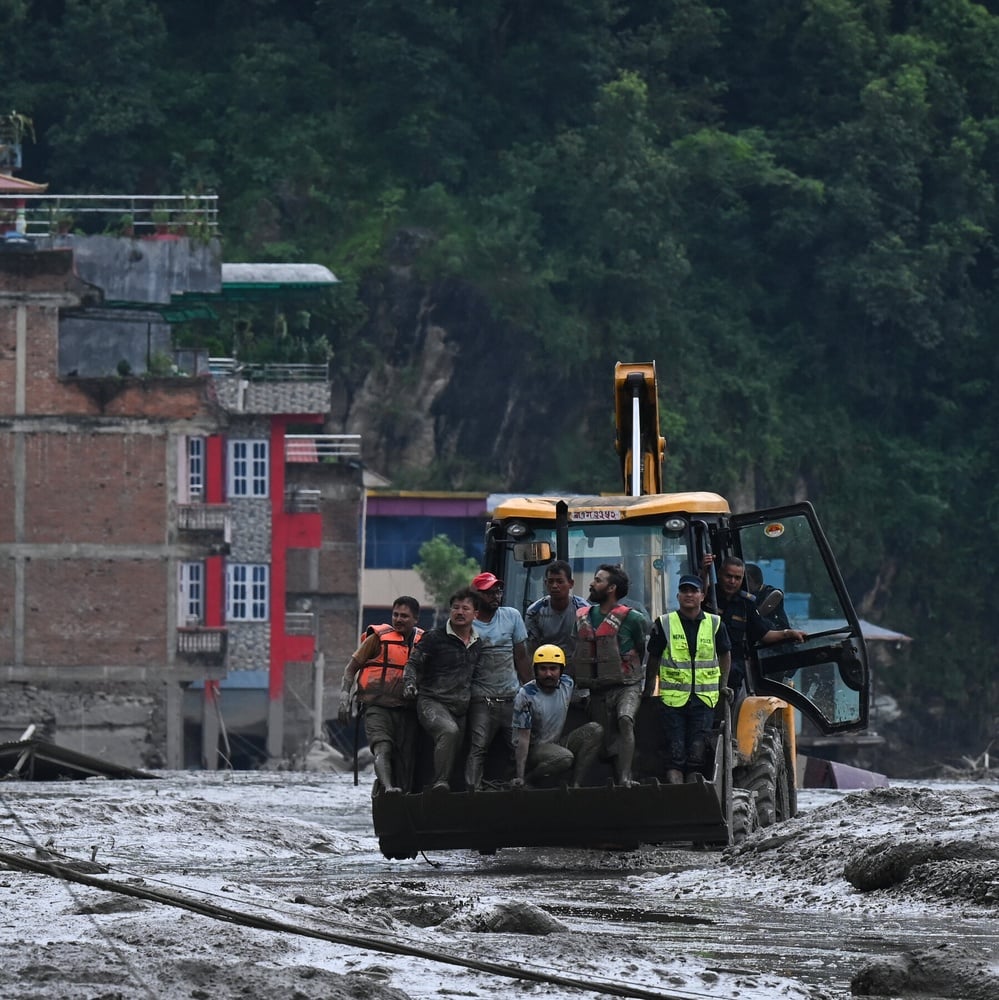
2026 © Helium Trades
Privacy Policy & Disclosure
* Disclaimer: Nothing on this website constitutes investment advice, performance data or any recommendation that any particular security, portfolio of securities, transaction or investment strategy is suitable for any specific person. Helium Trades is not responsible in any way for the accuracy
of any model predictions or price data. Any mention of a particular security and related prediction data is not a recommendation to buy or sell that security. Investments in securities involve the risk of loss. Past performance is no guarantee of future results. Helium Trades is not responsible for any of your investment decisions,
you should consult a financial expert before engaging in any transaction.
Helium Research Assistant

How can I help you today?
Ask any question about this page.


