See whether Helium helps you make better-informed decisions. Try every Pro Trader feature for 30 days. No credit card required.
Try every Pro Trader feature for 30 days. No credit card required.
August 26, 2026 · 0 shares
This is a straightforward disaster report with no discernible editorial slant.
Automated analysis; not human reviewed. Limitations: The article is very short and lacks attributed sources, limiting bias assessment.
The article is very short and lacks attributed sources, limiting bias assessment.
August 27, 2026 · 0 shares
No observable framing or editorial slant; the report is a straightforward factual account.
The article provides no prior context; it is a brief update on rescue operations following a Himalayan flood in Nepal.
Automated analysis; not human reviewed. Limitations: The article text is extremely brief, with no additional detail on the flood's cause, scale, or response, limiting deeper analysis.
The article text is extremely brief, with no additional detail on the flood's cause, scale, or response, limiting deeper analysis.
August 27, 2026 · 0 shares
The reporting is neutral, straightforward, and focused on factual details of the disaster and rescue efforts without evident editorial slant.
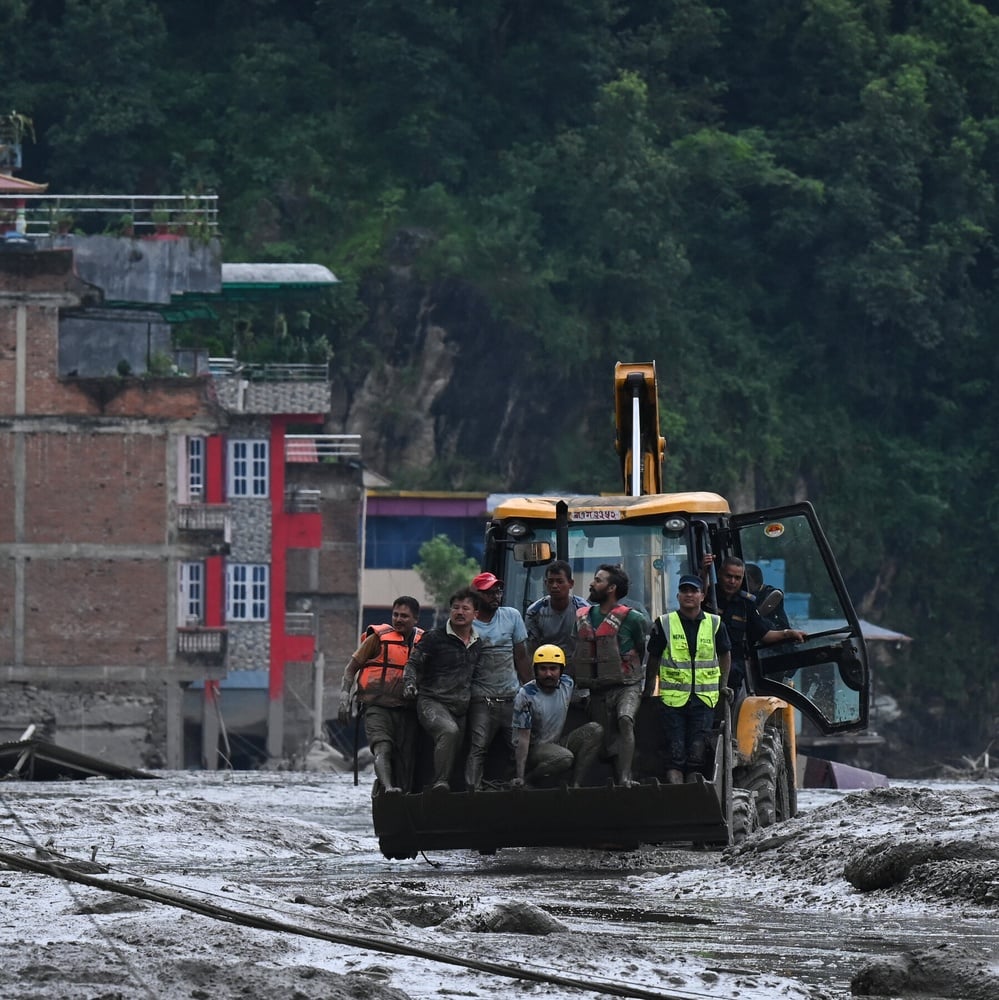
The report includes video descriptions and footage from northern Nepal showing mud rescues and aerial views of the flood, but no additional background or cause analysis is provided in the text.
Automated analysis; not human reviewed. Limitations: The article text is largely composed of video captions and brief descriptive sentences, limiting the depth of analysis and potentially missing contextual details.
The article text is largely composed of video captions and brief descriptive sentences, limiting the depth of analysis and potentially missing contextual details.
An emotive, fear-driven tabloid account that uses caps-lock 'HOPE' language and a British-victim lens to dramatize an unfolding disaster and its possible second wave.
The flood hit the Bhote Koshi/Lende Khola valley north of Kathmandu, near the Gyirong border crossing, a route used by trekkers and Hindu pilgrims going to Mount Kailash and Gosainkunda.
In such high valleys, a landslide dam can pond water upstream; if the dam breaks, the sudden release can cause a destructive flood downstream.
Automated analysis; not human reviewed.
Limitations: The supplied text is a truncated tabloid excerpt containing unrelated promotional links; casualty counts and the dam-breach warning could not be independently verified from the text alone.
·
6 of 54 available dimensions scored; omitted dimensions are not treated as neutral.
·
Verified supporting quotes for 6 of 6 scored dimensions.
Claim: The text combines factual figures with subjective, dramatic interpretation.
“HOPE was fading last night for more than 1,500 people still missing after the monster flash floods that scythed through the Nepal-Tibet border.” · exact text match
“Distraught families in the UK were last night still in the dark, more than 24 hours after the flood of mud, water and debris tore along the Lende Khola river into the Bhote Koshi river, 100 miles north of Nepal’s capital Kathmandu.” · exact text match
Why: Casualty numbers and official warnings are present, but 'hope was fading', 'monster', and 'scythed through' are subjective framing choices.
Claim: The publisher uses dramatic language and catastrophe imagery to intensify the report.
“HOPE was fading last night for more than 1,500 people still missing after the monster flash floods that scythed through the Nepal-Tibet border.” · exact text match
“At least 389 victims are confirmed dead after the 50ft high wall of water” · exact text match
Why: Terms like 'monster flash floods', 'scythed through', and '50ft high wall of water', plus the caps-lock 'HOPE' opener, are sensational rather than neutral.
Claim: The framing emphasizes fading hope, near-zero survival odds, and a rising death toll.
“HOPE was fading last night for more than 1,500 people still missing after the monster flash floods that scythed through the Nepal-Tibet border.” · exact text match
“travel chief warned of a “one per cent” chance of finding any more survivors.” · exact text match
“The grim toll is likely to rocket as whole communities were swept away down the river valley in Rasuwa.” · exact text match
Why: The lead explicitly says hope is fading, an expert estimate puts survival at one percent, and the death toll is predicted to rise sharply.
Claim: The article repeatedly plays on fear of an imminent second disaster.
“Fears grow a SECOND deadly flood could hit Nepal within 48 hours as 33 Brits among 1,500 still missing.” · exact text match
“Fears are also rising of a second tsunami as huge amounts of water flow into two new lakes formed by debris from the first disaster creating an unstable dam.” · exact text match
Why: The headline and lead emphasize 'fears' of a 'deadly flood' and 'second tsunami', framing the situation as an ongoing threat rather than only reporting it.
Claim: The article is emotionally negative, centering grief and distress.
“Distraught families in the UK were last night still in the dark, more than 24 hours after the flood of mud, water and debris tore along the Lende Khola river into the Bhote Koshi river, 100 miles north of Nepal’s capital Kathmandu.” · exact text match
“I keep trying to call her. I have a horrible, horrible feeling.
We hope it’s good news, but don’t know exactly what happened to them.
I’m devastated.”
· exact text match
Why: Phrases like 'distraught families' and the selected quote 'I’m devastated' generate a somber, grief-heavy tone.
Claim: The report forecasts a second flood and a substantially higher death toll as likely outcomes.
“Fears grow a SECOND deadly flood could hit Nepal within 48 hours as 33 Brits among 1,500 still missing.” · exact text match
“The grim toll is likely to rocket as whole communities were swept away down the river valley in Rasuwa.” · exact text match
Why: The headline predicts a possible second flood within a specific window, and the article predicts the death toll will 'rocket', beyond currently confirmed figures.
The supplied text is a truncated tabloid excerpt containing unrelated promotional links; casualty counts and the dam-breach warning could not be independently verified from the text alone.
An emotive, fear-driven tabloid account that uses caps-lock 'HOPE' language and a British-victim lens to dramatize an unfolding disaster and its possible second wave.
The flood hit the Bhote Koshi/Lende Khola valley north of Kathmandu, near the Gyirong border crossing, a route used by trekkers and Hindu pilgrims going to Mount Kailash and Gosainkunda.
In such high valleys, a landslide dam can pond water upstream; if the dam breaks, the sudden release can cause a destructive flood downstream.
Automated analysis; not human reviewed.
Limitations: The supplied text is a truncated tabloid excerpt containing unrelated promotional links; casualty counts and the dam-breach warning could not be independently verified from the text alone.
·
6 of 54 available dimensions scored; omitted dimensions are not treated as neutral.
·
Verified supporting quotes for 6 of 6 scored dimensions.
Claim: The text combines factual figures with subjective, dramatic interpretation.
“HOPE was fading last night for more than 1,500 people still missing after the monster flash floods that scythed through the Nepal-Tibet border.” · exact text match
“Distraught families in the UK were last night still in the dark, more than 24 hours after the flood of mud, water and debris tore along the Lende Khola river into the Bhote Koshi river, 100 miles north of Nepal’s capital Kathmandu.” · exact text match
Why: Casualty numbers and official warnings are present, but 'hope was fading', 'monster', and 'scythed through' are subjective framing choices.
Claim: The publisher uses dramatic language and catastrophe imagery to intensify the report.
“HOPE was fading last night for more than 1,500 people still missing after the monster flash floods that scythed through the Nepal-Tibet border.” · exact text match
“At least 389 victims are confirmed dead after the 50ft high wall of water” · exact text match
Why: Terms like 'monster flash floods', 'scythed through', and '50ft high wall of water', plus the caps-lock 'HOPE' opener, are sensational rather than neutral.
Claim: The framing emphasizes fading hope, near-zero survival odds, and a rising death toll.
“HOPE was fading last night for more than 1,500 people still missing after the monster flash floods that scythed through the Nepal-Tibet border.” · exact text match
“travel chief warned of a “one per cent” chance of finding any more survivors.” · exact text match
“The grim toll is likely to rocket as whole communities were swept away down the river valley in Rasuwa.” · exact text match
Why: The lead explicitly says hope is fading, an expert estimate puts survival at one percent, and the death toll is predicted to rise sharply.
Claim: The article repeatedly plays on fear of an imminent second disaster.
“Fears grow a SECOND deadly flood could hit Nepal within 48 hours as 33 Brits among 1,500 still missing.” · exact text match
“Fears are also rising of a second tsunami as huge amounts of water flow into two new lakes formed by debris from the first disaster creating an unstable dam.” · exact text match
Why: The headline and lead emphasize 'fears' of a 'deadly flood' and 'second tsunami', framing the situation as an ongoing threat rather than only reporting it.
Claim: The article is emotionally negative, centering grief and distress.
“Distraught families in the UK were last night still in the dark, more than 24 hours after the flood of mud, water and debris tore along the Lende Khola river into the Bhote Koshi river, 100 miles north of Nepal’s capital Kathmandu.” · exact text match
“I keep trying to call her. I have a horrible, horrible feeling.
We hope it’s good news, but don’t know exactly what happened to them.
I’m devastated.”
· exact text match
Why: Phrases like 'distraught families' and the selected quote 'I’m devastated' generate a somber, grief-heavy tone.
Claim: The report forecasts a second flood and a substantially higher death toll as likely outcomes.
“Fears grow a SECOND deadly flood could hit Nepal within 48 hours as 33 Brits among 1,500 still missing.” · exact text match
“The grim toll is likely to rocket as whole communities were swept away down the river valley in Rasuwa.” · exact text match
Why: The headline predicts a possible second flood within a specific window, and the article predicts the death toll will 'rocket', beyond currently confirmed figures.
The supplied text is a truncated tabloid excerpt containing unrelated promotional links; casualty counts and the dam-breach warning could not be independently verified from the text alone.
The framing presents the disaster through cautious scientific attribution, foregrounding expert consensus and satellite evidence rather than alarm or policy response.
Automated analysis; not human reviewed.
Limitations: The supplied text is limited to a headline and a one-sentence summary, so deeper framing and full reporting context could not be assessed.
·
6 of 54 available dimensions scored; omitted dimensions are not treated as neutral.
·
Verified supporting quotes for 6 of 6 scored dimensions.
Claim: The report is limited to an attributed, hedged scientific conclusion and observational evidence.
“Rock Landslide and Glacial Collapse Likely Caused Floods in Nepal and Tibet, Scientists Say.” · exact text match
“New satellite imagery added to scientists’ understanding of the events that precipitated the deadly flooding in Nepal and Tibet.” · exact text match
Why: The wording relies on attribution to scientists, an explicit uncertainty qualifier, and satellite observation rather than personal or emotional judgment.
Claim: The event is reported in plain evidentiary language rather than exaggerated or alarmist framing.
“New satellite imagery added to scientists’ understanding of the events that precipitated the deadly flooding in Nepal and Tibet.” · exact text match
Why: The phrasing emphasizes scientific understanding and satellite imagery; 'deadly' is a factual characteristic, not an amplification.
Claim: The text describes a probable cause and evidence without recommending any action.
“New satellite imagery added to scientists’ understanding of the events that precipitated the deadly flooding in Nepal and Tibet.” · exact text match
Why: Both sentences are descriptive statements about causation and evidence, with no imperative, recommendation, or policy demand.
Claim: The brief report shows visible attribution, hedging, and an identifiable evidence source.
“Rock Landslide and Glacial Collapse Likely Caused Floods in Nepal and Tibet, Scientists Say.” · exact text match
“New satellite imagery added to scientists’ understanding of the events that precipitated the deadly flooding in Nepal and Tibet.” · exact text match
Why: The causal claim is attributed to scientists, qualified as likely, and tied to satellite imagery, supporting basic credibility despite the absence of full methodology.
Claim: The causal claim is framed as a reasoned scientific inference with explicit uncertainty.
“Rock Landslide and Glacial Collapse Likely Caused Floods in Nepal and Tibet, Scientists Say.” · exact text match
Why: The word 'likely' and the attribution to scientists signal evidence-based reasoning rather than assertion of certainty.
Claim: The explanation is grounded in empirical observation and expert scientific analysis.
“Rock Landslide and Glacial Collapse Likely Caused Floods in Nepal and Tibet, Scientists Say.” · exact text match
“New satellite imagery added to scientists’ understanding of the events that precipitated the deadly flooding in Nepal and Tibet.” · exact text match
Why: The cause is tied to physical processes and satellite-based investigation, with no non-empirical or supernatural framing.
The supplied text is limited to a headline and a one-sentence summary, so deeper framing and full reporting context could not be assessed.
The framing is alarm-forward and heavily reliant on secondhand reports, using emergency markers and conditional breach forecasts to emphasize imminent danger.
A barrier lake forms when a natural dam—often ice, rock, or debris—blocks a river; sudden failure can release a flood wave.
In the Himalayas, such dams are frequently linked to glacial lake behavior, and downstream risk depends on water inflow and dam stability.
Automated analysis; not human reviewed.
Limitations: The supplied article is an aggregated brief that embeds a tweet and includes an unrelated author bio; casualty and cause details are second-hand via the New York Post and cannot be independently verified from this text.
·
8 of 54 available dimensions scored; omitted dimensions are not treated as neutral.
·
Verified supporting quotes for 8 of 8 scored dimensions.
Claim: The prose is factual and attributed, not opinion-driven.
“The lake was estimated to contain about 2 million cubic metres of water on Thursday morning, while another 3 million cubic metres could enter it over the next three days.” · exact text match
Why: The article relies on quantified estimates and attributed warnings rather than editorial opinion or personal judgment.
Claim: The reporting uses danger-emphasizing and emergency-style language.
“Nepal’s deadly flash floods create dangerous barrier lake, raising fears of another disaster” · exact text match
“🚨🚨🚨#China alerts new barrier lake forms at #Nepal rivers confluence, posing high breach risk over next 3 days.” · exact text match
Why: The headline and embedded alert use words like “deadly,” “dangerous,” and “fears” plus emergency emojis, amplifying drama alongside factual content.
Claim: The article describes existing conditions and official actions instead of recommending a course of action.
“Nepalese authorities have restricted movement along important highways and moved residents away from vulnerable locations as rescue teams recover bodies and search affected districts.” · exact text match
Why: The article reports what officials are doing and what could happen; it does not issue a policy recommendation or tell readers what should be done.
Claim: The article repeatedly uses fear and urgency language.
“Nepal’s deadly flash floods create dangerous barrier lake, raising fears of another disaster” · exact text match
“With the temporary barrier already under pressure, officials face an urgent challenge to assess the danger, protect exposed communities and prepare for the possibility that the lake could suddenly give way.” · exact text match
Why: Phrases such as “fears,” “danger,” “urgent challenge,” and “could suddenly give way” emphasize alarm while still resting on reported facts.
Claim: Sourcing is visible and mostly attributed, but casualty figures are second-hand.
“The New York Post reported that more than 350 people had been killed and over 1,300 remained missing across Nepal and Tibet following the initial flood.” · exact text match
“China’s Ministry of Water Resources is closely tracking the lake and carrying out flood simulations to estimate how a breach could affect downstream areas.” · exact text match
Why: The article names sources for key warnings and casualty figures, but the figures are second-hand through the New York Post and the lede asserts “killing hundreds” without immediate attribution.
Claim: The hazard is framed through measurement, simulation, and hydrological analysis.
“China’s Ministry of Water Resources is closely tracking the lake and carrying out flood simulations to estimate how a breach could affect downstream areas.” · exact text match
Why: The article presents the risk through monitoring, quantitative estimates, and flood simulations rather than supernatural or non-empirical explanations.
Claim: The article centers on projected water inflow and possible breach consequences.
“The lake was estimated to contain about 2 million cubic metres of water on Thursday morning, while another 3 million cubic metres could enter it over the next three days.” · exact text match
“A failure of the natural barrier could send a sudden surge downstream, threatening settlements, roads, bridges and other infrastructure already damaged by Wednesday’s disaster.” · exact text match
Why: A substantial part of the report is forward-looking, using estimates and conditional forecasts about a possible breach rather than confirmed outcomes.
Claim: The publisher attributes expert and casualty claims rather than presenting them as its own verified facts.
“Geologist Bishal Nath Upreti described the event as a “tsunami from the sky,” according to the report.” · exact text match
“It also cited Nepal’s tourism board as saying 54 Americans had been confirmed dead and at least 65 US citizens remained unaccounted for.” · exact text match
Why: The article repeatedly attributes claims to the New York Post, Nepal’s tourism board, and a named geologist, signaling an effort to distinguish second-hand and expert statements.
The supplied article is an aggregated brief that embeds a tweet and includes an unrelated author bio; casualty and cause details are second-hand via the New York Post and cannot be independently verified from this text.
An emotive, fear-driven tabloid account that uses caps-lock 'HOPE' language and a British-victim lens to dramatize an unfolding disaster and its possible second wave.
The flood hit the Bhote Koshi/Lende Khola valley north of Kathmandu, near the Gyirong border crossing, a route used by trekkers and Hindu pilgrims going to Mount Kailash and Gosainkunda.
In such high valleys, a landslide dam can pond water upstream; if the dam breaks, the sudden release can cause a destructive flood downstream.
Automated analysis; not human reviewed.
Limitations: The supplied text is a truncated tabloid excerpt containing unrelated promotional links; casualty counts and the dam-breach warning could not be independently verified from the text alone.
·
6 of 54 available dimensions scored; omitted dimensions are not treated as neutral.
·
Verified supporting quotes for 6 of 6 scored dimensions.
Claim: The text combines factual figures with subjective, dramatic interpretation.
“HOPE was fading last night for more than 1,500 people still missing after the monster flash floods that scythed through the Nepal-Tibet border.” · exact text match
“Distraught families in the UK were last night still in the dark, more than 24 hours after the flood of mud, water and debris tore along the Lende Khola river into the Bhote Koshi river, 100 miles north of Nepal’s capital Kathmandu.” · exact text match
Why: Casualty numbers and official warnings are present, but 'hope was fading', 'monster', and 'scythed through' are subjective framing choices.
Claim: The publisher uses dramatic language and catastrophe imagery to intensify the report.
“HOPE was fading last night for more than 1,500 people still missing after the monster flash floods that scythed through the Nepal-Tibet border.” · exact text match
“At least 389 victims are confirmed dead after the 50ft high wall of water” · exact text match
Why: Terms like 'monster flash floods', 'scythed through', and '50ft high wall of water', plus the caps-lock 'HOPE' opener, are sensational rather than neutral.
Claim: The framing emphasizes fading hope, near-zero survival odds, and a rising death toll.
“HOPE was fading last night for more than 1,500 people still missing after the monster flash floods that scythed through the Nepal-Tibet border.” · exact text match
“travel chief warned of a “one per cent” chance of finding any more survivors.” · exact text match
“The grim toll is likely to rocket as whole communities were swept away down the river valley in Rasuwa.” · exact text match
Why: The lead explicitly says hope is fading, an expert estimate puts survival at one percent, and the death toll is predicted to rise sharply.
Claim: The article repeatedly plays on fear of an imminent second disaster.
“Fears grow a SECOND deadly flood could hit Nepal within 48 hours as 33 Brits among 1,500 still missing.” · exact text match
“Fears are also rising of a second tsunami as huge amounts of water flow into two new lakes formed by debris from the first disaster creating an unstable dam.” · exact text match
Why: The headline and lead emphasize 'fears' of a 'deadly flood' and 'second tsunami', framing the situation as an ongoing threat rather than only reporting it.
Claim: The article is emotionally negative, centering grief and distress.
“Distraught families in the UK were last night still in the dark, more than 24 hours after the flood of mud, water and debris tore along the Lende Khola river into the Bhote Koshi river, 100 miles north of Nepal’s capital Kathmandu.” · exact text match
“I keep trying to call her. I have a horrible, horrible feeling.
We hope it’s good news, but don’t know exactly what happened to them.
I’m devastated.”
· exact text match
Why: Phrases like 'distraught families' and the selected quote 'I’m devastated' generate a somber, grief-heavy tone.
Claim: The report forecasts a second flood and a substantially higher death toll as likely outcomes.
“Fears grow a SECOND deadly flood could hit Nepal within 48 hours as 33 Brits among 1,500 still missing.” · exact text match
“The grim toll is likely to rocket as whole communities were swept away down the river valley in Rasuwa.” · exact text match
Why: The headline predicts a possible second flood within a specific window, and the article predicts the death toll will 'rocket', beyond currently confirmed figures.
The supplied text is a truncated tabloid excerpt containing unrelated promotional links; casualty counts and the dam-breach warning could not be independently verified from the text alone.
August 27, 2026 · 0 shares
The reporting is neutral, straightforward, and focused on factual details of the disaster and rescue efforts without evident editorial slant.
The report includes video descriptions and footage from northern Nepal showing mud rescues and aerial views of the flood, but no additional background or cause analysis is provided in the text.
Automated analysis; not human reviewed. Limitations: The article text is largely composed of video captions and brief descriptive sentences, limiting the depth of analysis and potentially missing contextual details.
The article text is largely composed of video captions and brief descriptive sentences, limiting the depth of analysis and potentially missing contextual details.
August 26, 2026 · 0 shares
This is a straightforward disaster report with no discernible editorial slant.
Automated analysis; not human reviewed. Limitations: The article is very short and lacks attributed sources, limiting bias assessment.
The article is very short and lacks attributed sources, limiting bias assessment.
August 27, 2026 · 0 shares
The reporting is neutral, straightforward, and focused on factual details of the disaster and rescue efforts without evident editorial slant.
The report includes video descriptions and footage from northern Nepal showing mud rescues and aerial views of the flood, but no additional background or cause analysis is provided in the text.
Automated analysis; not human reviewed. Limitations: The article text is largely composed of video captions and brief descriptive sentences, limiting the depth of analysis and potentially missing contextual details.
The article text is largely composed of video captions and brief descriptive sentences, limiting the depth of analysis and potentially missing contextual details.
August 27, 2026 · 0 shares
No observable framing or editorial slant; the report is a straightforward factual account.
The article provides no prior context; it is a brief update on rescue operations following a Himalayan flood in Nepal.
Automated analysis; not human reviewed. Limitations: The article text is extremely brief, with no additional detail on the flood's cause, scale, or response, limiting deeper analysis.
The article text is extremely brief, with no additional detail on the flood's cause, scale, or response, limiting deeper analysis.
The framing presents the disaster through cautious scientific attribution, foregrounding expert consensus and satellite evidence rather than alarm or policy response.
Automated analysis; not human reviewed. Limitations: The supplied text is limited to a headline and a one-sentence summary, so deeper framing and full reporting context could not be assessed. · 6 of 54 available dimensions scored; omitted dimensions are not treated as neutral. · Verified supporting quotes for 6 of 6 scored dimensions.
Claim: The report is limited to an attributed, hedged scientific conclusion and observational evidence.
“Rock Landslide and Glacial Collapse Likely Caused Floods in Nepal and Tibet, Scientists Say.” · exact text match
“New satellite imagery added to scientists’ understanding of the events that precipitated the deadly flooding in Nepal and Tibet.” · exact text match
Why: The wording relies on attribution to scientists, an explicit uncertainty qualifier, and satellite observation rather than personal or emotional judgment.
Claim: The event is reported in plain evidentiary language rather than exaggerated or alarmist framing.
“New satellite imagery added to scientists’ understanding of the events that precipitated the deadly flooding in Nepal and Tibet.” · exact text match
Why: The phrasing emphasizes scientific understanding and satellite imagery; 'deadly' is a factual characteristic, not an amplification.
Claim: The text describes a probable cause and evidence without recommending any action.
“New satellite imagery added to scientists’ understanding of the events that precipitated the deadly flooding in Nepal and Tibet.” · exact text match
Why: Both sentences are descriptive statements about causation and evidence, with no imperative, recommendation, or policy demand.
Claim: The brief report shows visible attribution, hedging, and an identifiable evidence source.
“Rock Landslide and Glacial Collapse Likely Caused Floods in Nepal and Tibet, Scientists Say.” · exact text match
“New satellite imagery added to scientists’ understanding of the events that precipitated the deadly flooding in Nepal and Tibet.” · exact text match
Why: The causal claim is attributed to scientists, qualified as likely, and tied to satellite imagery, supporting basic credibility despite the absence of full methodology.
Claim: The causal claim is framed as a reasoned scientific inference with explicit uncertainty.
“Rock Landslide and Glacial Collapse Likely Caused Floods in Nepal and Tibet, Scientists Say.” · exact text match
Why: The word 'likely' and the attribution to scientists signal evidence-based reasoning rather than assertion of certainty.
Claim: The explanation is grounded in empirical observation and expert scientific analysis.
“Rock Landslide and Glacial Collapse Likely Caused Floods in Nepal and Tibet, Scientists Say.” · exact text match
“New satellite imagery added to scientists’ understanding of the events that precipitated the deadly flooding in Nepal and Tibet.” · exact text match
Why: The cause is tied to physical processes and satellite-based investigation, with no non-empirical or supernatural framing.
The supplied text is limited to a headline and a one-sentence summary, so deeper framing and full reporting context could not be assessed.
The framing is alarm-forward and heavily reliant on secondhand reports, using emergency markers and conditional breach forecasts to emphasize imminent danger.
A barrier lake forms when a natural dam—often ice, rock, or debris—blocks a river; sudden failure can release a flood wave. In the Himalayas, such dams are frequently linked to glacial lake behavior, and downstream risk depends on water inflow and dam stability.
Automated analysis; not human reviewed. Limitations: The supplied article is an aggregated brief that embeds a tweet and includes an unrelated author bio; casualty and cause details are second-hand via the New York Post and cannot be independently verified from this text. · 8 of 54 available dimensions scored; omitted dimensions are not treated as neutral. · Verified supporting quotes for 8 of 8 scored dimensions.
Claim: The prose is factual and attributed, not opinion-driven.
“The lake was estimated to contain about 2 million cubic metres of water on Thursday morning, while another 3 million cubic metres could enter it over the next three days.” · exact text match
Why: The article relies on quantified estimates and attributed warnings rather than editorial opinion or personal judgment.
Claim: The reporting uses danger-emphasizing and emergency-style language.
“Nepal’s deadly flash floods create dangerous barrier lake, raising fears of another disaster” · exact text match
“🚨🚨🚨#China alerts new barrier lake forms at #Nepal rivers confluence, posing high breach risk over next 3 days.” · exact text match
Why: The headline and embedded alert use words like “deadly,” “dangerous,” and “fears” plus emergency emojis, amplifying drama alongside factual content.
Claim: The article describes existing conditions and official actions instead of recommending a course of action.
“Nepalese authorities have restricted movement along important highways and moved residents away from vulnerable locations as rescue teams recover bodies and search affected districts.” · exact text match
Why: The article reports what officials are doing and what could happen; it does not issue a policy recommendation or tell readers what should be done.
Claim: The article repeatedly uses fear and urgency language.
“Nepal’s deadly flash floods create dangerous barrier lake, raising fears of another disaster” · exact text match
“With the temporary barrier already under pressure, officials face an urgent challenge to assess the danger, protect exposed communities and prepare for the possibility that the lake could suddenly give way.” · exact text match
Why: Phrases such as “fears,” “danger,” “urgent challenge,” and “could suddenly give way” emphasize alarm while still resting on reported facts.
Claim: Sourcing is visible and mostly attributed, but casualty figures are second-hand.
“The New York Post reported that more than 350 people had been killed and over 1,300 remained missing across Nepal and Tibet following the initial flood.” · exact text match
“China’s Ministry of Water Resources is closely tracking the lake and carrying out flood simulations to estimate how a breach could affect downstream areas.” · exact text match
Why: The article names sources for key warnings and casualty figures, but the figures are second-hand through the New York Post and the lede asserts “killing hundreds” without immediate attribution.
Claim: The hazard is framed through measurement, simulation, and hydrological analysis.
“China’s Ministry of Water Resources is closely tracking the lake and carrying out flood simulations to estimate how a breach could affect downstream areas.” · exact text match
Why: The article presents the risk through monitoring, quantitative estimates, and flood simulations rather than supernatural or non-empirical explanations.
Claim: The article centers on projected water inflow and possible breach consequences.
“The lake was estimated to contain about 2 million cubic metres of water on Thursday morning, while another 3 million cubic metres could enter it over the next three days.” · exact text match
“A failure of the natural barrier could send a sudden surge downstream, threatening settlements, roads, bridges and other infrastructure already damaged by Wednesday’s disaster.” · exact text match
Why: A substantial part of the report is forward-looking, using estimates and conditional forecasts about a possible breach rather than confirmed outcomes.
Claim: The publisher attributes expert and casualty claims rather than presenting them as its own verified facts.
“Geologist Bishal Nath Upreti described the event as a “tsunami from the sky,” according to the report.” · exact text match
“It also cited Nepal’s tourism board as saying 54 Americans had been confirmed dead and at least 65 US citizens remained unaccounted for.” · exact text match
Why: The article repeatedly attributes claims to the New York Post, Nepal’s tourism board, and a named geologist, signaling an effort to distinguish second-hand and expert statements.
The supplied article is an aggregated brief that embeds a tweet and includes an unrelated author bio; casualty and cause details are second-hand via the New York Post and cannot be independently verified from this text.
An emotive, fear-driven tabloid account that uses caps-lock 'HOPE' language and a British-victim lens to dramatize an unfolding disaster and its possible second wave.
The flood hit the Bhote Koshi/Lende Khola valley north of Kathmandu, near the Gyirong border crossing, a route used by trekkers and Hindu pilgrims going to Mount Kailash and Gosainkunda. In such high valleys, a landslide dam can pond water upstream; if the dam breaks, the sudden release can cause a destructive flood downstream.
Automated analysis; not human reviewed. Limitations: The supplied text is a truncated tabloid excerpt containing unrelated promotional links; casualty counts and the dam-breach warning could not be independently verified from the text alone. · 6 of 54 available dimensions scored; omitted dimensions are not treated as neutral. · Verified supporting quotes for 6 of 6 scored dimensions.
Claim: The text combines factual figures with subjective, dramatic interpretation.
“HOPE was fading last night for more than 1,500 people still missing after the monster flash floods that scythed through the Nepal-Tibet border.” · exact text match
“Distraught families in the UK were last night still in the dark, more than 24 hours after the flood of mud, water and debris tore along the Lende Khola river into the Bhote Koshi river, 100 miles north of Nepal’s capital Kathmandu.” · exact text match
Why: Casualty numbers and official warnings are present, but 'hope was fading', 'monster', and 'scythed through' are subjective framing choices.
Claim: The publisher uses dramatic language and catastrophe imagery to intensify the report.
“HOPE was fading last night for more than 1,500 people still missing after the monster flash floods that scythed through the Nepal-Tibet border.” · exact text match
“At least 389 victims are confirmed dead after the 50ft high wall of water” · exact text match
Why: Terms like 'monster flash floods', 'scythed through', and '50ft high wall of water', plus the caps-lock 'HOPE' opener, are sensational rather than neutral.
Claim: The framing emphasizes fading hope, near-zero survival odds, and a rising death toll.
“HOPE was fading last night for more than 1,500 people still missing after the monster flash floods that scythed through the Nepal-Tibet border.” · exact text match
“travel chief warned of a “one per cent” chance of finding any more survivors.” · exact text match
“The grim toll is likely to rocket as whole communities were swept away down the river valley in Rasuwa.” · exact text match
Why: The lead explicitly says hope is fading, an expert estimate puts survival at one percent, and the death toll is predicted to rise sharply.
Claim: The article repeatedly plays on fear of an imminent second disaster.
“Fears grow a SECOND deadly flood could hit Nepal within 48 hours as 33 Brits among 1,500 still missing.” · exact text match
“Fears are also rising of a second tsunami as huge amounts of water flow into two new lakes formed by debris from the first disaster creating an unstable dam.” · exact text match
Why: The headline and lead emphasize 'fears' of a 'deadly flood' and 'second tsunami', framing the situation as an ongoing threat rather than only reporting it.
Claim: The article is emotionally negative, centering grief and distress.
“Distraught families in the UK were last night still in the dark, more than 24 hours after the flood of mud, water and debris tore along the Lende Khola river into the Bhote Koshi river, 100 miles north of Nepal’s capital Kathmandu.” · exact text match
“I keep trying to call her. I have a horrible, horrible feeling. We hope it’s good news, but don’t know exactly what happened to them. I’m devastated.” · exact text match
Why: Phrases like 'distraught families' and the selected quote 'I’m devastated' generate a somber, grief-heavy tone.
Claim: The report forecasts a second flood and a substantially higher death toll as likely outcomes.
“Fears grow a SECOND deadly flood could hit Nepal within 48 hours as 33 Brits among 1,500 still missing.” · exact text match
“The grim toll is likely to rocket as whole communities were swept away down the river valley in Rasuwa.” · exact text match
Why: The headline predicts a possible second flood within a specific window, and the article predicts the death toll will 'rocket', beyond currently confirmed figures.
The supplied text is a truncated tabloid excerpt containing unrelated promotional links; casualty counts and the dam-breach warning could not be independently verified from the text alone.
August 27, 2026 · 0 shares
The reporting is neutral, straightforward, and focused on factual details of the disaster and rescue efforts without evident editorial slant.
The report includes video descriptions and footage from northern Nepal showing mud rescues and aerial views of the flood, but no additional background or cause analysis is provided in the text.
Automated analysis; not human reviewed. Limitations: The article text is largely composed of video captions and brief descriptive sentences, limiting the depth of analysis and potentially missing contextual details.
The article text is largely composed of video captions and brief descriptive sentences, limiting the depth of analysis and potentially missing contextual details.
An emotive, fear-driven tabloid account that uses caps-lock 'HOPE' language and a British-victim lens to dramatize an unfolding disaster and its possible second wave.
The flood hit the Bhote Koshi/Lende Khola valley north of Kathmandu, near the Gyirong border crossing, a route used by trekkers and Hindu pilgrims going to Mount Kailash and Gosainkunda. In such high valleys, a landslide dam can pond water upstream; if the dam breaks, the sudden release can cause a destructive flood downstream.
Automated analysis; not human reviewed. Limitations: The supplied text is a truncated tabloid excerpt containing unrelated promotional links; casualty counts and the dam-breach warning could not be independently verified from the text alone. · 6 of 54 available dimensions scored; omitted dimensions are not treated as neutral. · Verified supporting quotes for 6 of 6 scored dimensions.
Claim: The text combines factual figures with subjective, dramatic interpretation.
“HOPE was fading last night for more than 1,500 people still missing after the monster flash floods that scythed through the Nepal-Tibet border.” · exact text match
“Distraught families in the UK were last night still in the dark, more than 24 hours after the flood of mud, water and debris tore along the Lende Khola river into the Bhote Koshi river, 100 miles north of Nepal’s capital Kathmandu.” · exact text match
Why: Casualty numbers and official warnings are present, but 'hope was fading', 'monster', and 'scythed through' are subjective framing choices.
Claim: The publisher uses dramatic language and catastrophe imagery to intensify the report.
“HOPE was fading last night for more than 1,500 people still missing after the monster flash floods that scythed through the Nepal-Tibet border.” · exact text match
“At least 389 victims are confirmed dead after the 50ft high wall of water” · exact text match
Why: Terms like 'monster flash floods', 'scythed through', and '50ft high wall of water', plus the caps-lock 'HOPE' opener, are sensational rather than neutral.
Claim: The framing emphasizes fading hope, near-zero survival odds, and a rising death toll.
“HOPE was fading last night for more than 1,500 people still missing after the monster flash floods that scythed through the Nepal-Tibet border.” · exact text match
“travel chief warned of a “one per cent” chance of finding any more survivors.” · exact text match
“The grim toll is likely to rocket as whole communities were swept away down the river valley in Rasuwa.” · exact text match
Why: The lead explicitly says hope is fading, an expert estimate puts survival at one percent, and the death toll is predicted to rise sharply.
Claim: The article repeatedly plays on fear of an imminent second disaster.
“Fears grow a SECOND deadly flood could hit Nepal within 48 hours as 33 Brits among 1,500 still missing.” · exact text match
“Fears are also rising of a second tsunami as huge amounts of water flow into two new lakes formed by debris from the first disaster creating an unstable dam.” · exact text match
Why: The headline and lead emphasize 'fears' of a 'deadly flood' and 'second tsunami', framing the situation as an ongoing threat rather than only reporting it.
Claim: The article is emotionally negative, centering grief and distress.
“Distraught families in the UK were last night still in the dark, more than 24 hours after the flood of mud, water and debris tore along the Lende Khola river into the Bhote Koshi river, 100 miles north of Nepal’s capital Kathmandu.” · exact text match
“I keep trying to call her. I have a horrible, horrible feeling. We hope it’s good news, but don’t know exactly what happened to them. I’m devastated.” · exact text match
Why: Phrases like 'distraught families' and the selected quote 'I’m devastated' generate a somber, grief-heavy tone.
Claim: The report forecasts a second flood and a substantially higher death toll as likely outcomes.
“Fears grow a SECOND deadly flood could hit Nepal within 48 hours as 33 Brits among 1,500 still missing.” · exact text match
“The grim toll is likely to rocket as whole communities were swept away down the river valley in Rasuwa.” · exact text match
Why: The headline predicts a possible second flood within a specific window, and the article predicts the death toll will 'rocket', beyond currently confirmed figures.
The supplied text is a truncated tabloid excerpt containing unrelated promotional links; casualty counts and the dam-breach warning could not be independently verified from the text alone.
Helium Bias
Story Blindspots
August 27, 2026 · 0 shares
The reporting is neutral, straightforward, and focused on factual details of the disaster and rescue efforts without evident editorial slant.
The report includes video descriptions and footage from northern Nepal showing mud rescues and aerial views of the flood, but no additional background or cause analysis is provided in the text.
Automated analysis; not human reviewed. Limitations: The article text is largely composed of video captions and brief descriptive sentences, limiting the depth of analysis and potentially missing contextual details.
The article text is largely composed of video captions and brief descriptive sentences, limiting the depth of analysis and potentially missing contextual details.
An emotive, fear-driven tabloid account that uses caps-lock 'HOPE' language and a British-victim lens to dramatize an unfolding disaster and its possible second wave.
The flood hit the Bhote Koshi/Lende Khola valley north of Kathmandu, near the Gyirong border crossing, a route used by trekkers and Hindu pilgrims going to Mount Kailash and Gosainkunda. In such high valleys, a landslide dam can pond water upstream; if the dam breaks, the sudden release can cause a destructive flood downstream.
Automated analysis; not human reviewed. Limitations: The supplied text is a truncated tabloid excerpt containing unrelated promotional links; casualty counts and the dam-breach warning could not be independently verified from the text alone. · 6 of 54 available dimensions scored; omitted dimensions are not treated as neutral. · Verified supporting quotes for 6 of 6 scored dimensions.
Claim: The text combines factual figures with subjective, dramatic interpretation.
“HOPE was fading last night for more than 1,500 people still missing after the monster flash floods that scythed through the Nepal-Tibet border.” · exact text match
“Distraught families in the UK were last night still in the dark, more than 24 hours after the flood of mud, water and debris tore along the Lende Khola river into the Bhote Koshi river, 100 miles north of Nepal’s capital Kathmandu.” · exact text match
Why: Casualty numbers and official warnings are present, but 'hope was fading', 'monster', and 'scythed through' are subjective framing choices.
Claim: The publisher uses dramatic language and catastrophe imagery to intensify the report.
“HOPE was fading last night for more than 1,500 people still missing after the monster flash floods that scythed through the Nepal-Tibet border.” · exact text match
“At least 389 victims are confirmed dead after the 50ft high wall of water” · exact text match
Why: Terms like 'monster flash floods', 'scythed through', and '50ft high wall of water', plus the caps-lock 'HOPE' opener, are sensational rather than neutral.
Claim: The framing emphasizes fading hope, near-zero survival odds, and a rising death toll.
“HOPE was fading last night for more than 1,500 people still missing after the monster flash floods that scythed through the Nepal-Tibet border.” · exact text match
“travel chief warned of a “one per cent” chance of finding any more survivors.” · exact text match
“The grim toll is likely to rocket as whole communities were swept away down the river valley in Rasuwa.” · exact text match
Why: The lead explicitly says hope is fading, an expert estimate puts survival at one percent, and the death toll is predicted to rise sharply.
Claim: The article repeatedly plays on fear of an imminent second disaster.
“Fears grow a SECOND deadly flood could hit Nepal within 48 hours as 33 Brits among 1,500 still missing.” · exact text match
“Fears are also rising of a second tsunami as huge amounts of water flow into two new lakes formed by debris from the first disaster creating an unstable dam.” · exact text match
Why: The headline and lead emphasize 'fears' of a 'deadly flood' and 'second tsunami', framing the situation as an ongoing threat rather than only reporting it.
Claim: The article is emotionally negative, centering grief and distress.
“Distraught families in the UK were last night still in the dark, more than 24 hours after the flood of mud, water and debris tore along the Lende Khola river into the Bhote Koshi river, 100 miles north of Nepal’s capital Kathmandu.” · exact text match
“I keep trying to call her. I have a horrible, horrible feeling. We hope it’s good news, but don’t know exactly what happened to them. I’m devastated.” · exact text match
Why: Phrases like 'distraught families' and the selected quote 'I’m devastated' generate a somber, grief-heavy tone.
Claim: The report forecasts a second flood and a substantially higher death toll as likely outcomes.
“Fears grow a SECOND deadly flood could hit Nepal within 48 hours as 33 Brits among 1,500 still missing.” · exact text match
“The grim toll is likely to rocket as whole communities were swept away down the river valley in Rasuwa.” · exact text match
Why: The headline predicts a possible second flood within a specific window, and the article predicts the death toll will 'rocket', beyond currently confirmed figures.
The supplied text is a truncated tabloid excerpt containing unrelated promotional links; casualty counts and the dam-breach warning could not be independently verified from the text alone.
An emotive, fear-driven tabloid account that uses caps-lock 'HOPE' language and a British-victim lens to dramatize an unfolding disaster and its possible second wave.
The flood hit the Bhote Koshi/Lende Khola valley north of Kathmandu, near the Gyirong border crossing, a route used by trekkers and Hindu pilgrims going to Mount Kailash and Gosainkunda. In such high valleys, a landslide dam can pond water upstream; if the dam breaks, the sudden release can cause a destructive flood downstream.
Automated analysis; not human reviewed. Limitations: The supplied text is a truncated tabloid excerpt containing unrelated promotional links; casualty counts and the dam-breach warning could not be independently verified from the text alone. · 6 of 54 available dimensions scored; omitted dimensions are not treated as neutral. · Verified supporting quotes for 6 of 6 scored dimensions.
Claim: The text combines factual figures with subjective, dramatic interpretation.
“HOPE was fading last night for more than 1,500 people still missing after the monster flash floods that scythed through the Nepal-Tibet border.” · exact text match
“Distraught families in the UK were last night still in the dark, more than 24 hours after the flood of mud, water and debris tore along the Lende Khola river into the Bhote Koshi river, 100 miles north of Nepal’s capital Kathmandu.” · exact text match
Why: Casualty numbers and official warnings are present, but 'hope was fading', 'monster', and 'scythed through' are subjective framing choices.
Claim: The publisher uses dramatic language and catastrophe imagery to intensify the report.
“HOPE was fading last night for more than 1,500 people still missing after the monster flash floods that scythed through the Nepal-Tibet border.” · exact text match
“At least 389 victims are confirmed dead after the 50ft high wall of water” · exact text match
Why: Terms like 'monster flash floods', 'scythed through', and '50ft high wall of water', plus the caps-lock 'HOPE' opener, are sensational rather than neutral.
Claim: The framing emphasizes fading hope, near-zero survival odds, and a rising death toll.
“HOPE was fading last night for more than 1,500 people still missing after the monster flash floods that scythed through the Nepal-Tibet border.” · exact text match
“travel chief warned of a “one per cent” chance of finding any more survivors.” · exact text match
“The grim toll is likely to rocket as whole communities were swept away down the river valley in Rasuwa.” · exact text match
Why: The lead explicitly says hope is fading, an expert estimate puts survival at one percent, and the death toll is predicted to rise sharply.
Claim: The article repeatedly plays on fear of an imminent second disaster.
“Fears grow a SECOND deadly flood could hit Nepal within 48 hours as 33 Brits among 1,500 still missing.” · exact text match
“Fears are also rising of a second tsunami as huge amounts of water flow into two new lakes formed by debris from the first disaster creating an unstable dam.” · exact text match
Why: The headline and lead emphasize 'fears' of a 'deadly flood' and 'second tsunami', framing the situation as an ongoing threat rather than only reporting it.
Claim: The article is emotionally negative, centering grief and distress.
“Distraught families in the UK were last night still in the dark, more than 24 hours after the flood of mud, water and debris tore along the Lende Khola river into the Bhote Koshi river, 100 miles north of Nepal’s capital Kathmandu.” · exact text match
“I keep trying to call her. I have a horrible, horrible feeling. We hope it’s good news, but don’t know exactly what happened to them. I’m devastated.” · exact text match
Why: Phrases like 'distraught families' and the selected quote 'I’m devastated' generate a somber, grief-heavy tone.
Claim: The report forecasts a second flood and a substantially higher death toll as likely outcomes.
“Fears grow a SECOND deadly flood could hit Nepal within 48 hours as 33 Brits among 1,500 still missing.” · exact text match
“The grim toll is likely to rocket as whole communities were swept away down the river valley in Rasuwa.” · exact text match
Why: The headline predicts a possible second flood within a specific window, and the article predicts the death toll will 'rocket', beyond currently confirmed figures.
The supplied text is a truncated tabloid excerpt containing unrelated promotional links; casualty counts and the dam-breach warning could not be independently verified from the text alone.
The framing presents the disaster through cautious scientific attribution, foregrounding expert consensus and satellite evidence rather than alarm or policy response.
Automated analysis; not human reviewed. Limitations: The supplied text is limited to a headline and a one-sentence summary, so deeper framing and full reporting context could not be assessed. · 6 of 54 available dimensions scored; omitted dimensions are not treated as neutral. · Verified supporting quotes for 6 of 6 scored dimensions.
Claim: The report is limited to an attributed, hedged scientific conclusion and observational evidence.
“Rock Landslide and Glacial Collapse Likely Caused Floods in Nepal and Tibet, Scientists Say.” · exact text match
“New satellite imagery added to scientists’ understanding of the events that precipitated the deadly flooding in Nepal and Tibet.” · exact text match
Why: The wording relies on attribution to scientists, an explicit uncertainty qualifier, and satellite observation rather than personal or emotional judgment.
Claim: The event is reported in plain evidentiary language rather than exaggerated or alarmist framing.
“New satellite imagery added to scientists’ understanding of the events that precipitated the deadly flooding in Nepal and Tibet.” · exact text match
Why: The phrasing emphasizes scientific understanding and satellite imagery; 'deadly' is a factual characteristic, not an amplification.
Claim: The text describes a probable cause and evidence without recommending any action.
“New satellite imagery added to scientists’ understanding of the events that precipitated the deadly flooding in Nepal and Tibet.” · exact text match
Why: Both sentences are descriptive statements about causation and evidence, with no imperative, recommendation, or policy demand.
Claim: The brief report shows visible attribution, hedging, and an identifiable evidence source.
“Rock Landslide and Glacial Collapse Likely Caused Floods in Nepal and Tibet, Scientists Say.” · exact text match
“New satellite imagery added to scientists’ understanding of the events that precipitated the deadly flooding in Nepal and Tibet.” · exact text match
Why: The causal claim is attributed to scientists, qualified as likely, and tied to satellite imagery, supporting basic credibility despite the absence of full methodology.
Claim: The causal claim is framed as a reasoned scientific inference with explicit uncertainty.
“Rock Landslide and Glacial Collapse Likely Caused Floods in Nepal and Tibet, Scientists Say.” · exact text match
Why: The word 'likely' and the attribution to scientists signal evidence-based reasoning rather than assertion of certainty.
Claim: The explanation is grounded in empirical observation and expert scientific analysis.
“Rock Landslide and Glacial Collapse Likely Caused Floods in Nepal and Tibet, Scientists Say.” · exact text match
“New satellite imagery added to scientists’ understanding of the events that precipitated the deadly flooding in Nepal and Tibet.” · exact text match
Why: The cause is tied to physical processes and satellite-based investigation, with no non-empirical or supernatural framing.
The supplied text is limited to a headline and a one-sentence summary, so deeper framing and full reporting context could not be assessed.
An emotive, fear-driven tabloid account that uses caps-lock 'HOPE' language and a British-victim lens to dramatize an unfolding disaster and its possible second wave.
The flood hit the Bhote Koshi/Lende Khola valley north of Kathmandu, near the Gyirong border crossing, a route used by trekkers and Hindu pilgrims going to Mount Kailash and Gosainkunda. In such high valleys, a landslide dam can pond water upstream; if the dam breaks, the sudden release can cause a destructive flood downstream.
Automated analysis; not human reviewed. Limitations: The supplied text is a truncated tabloid excerpt containing unrelated promotional links; casualty counts and the dam-breach warning could not be independently verified from the text alone. · 6 of 54 available dimensions scored; omitted dimensions are not treated as neutral. · Verified supporting quotes for 6 of 6 scored dimensions.
Claim: The text combines factual figures with subjective, dramatic interpretation.
“HOPE was fading last night for more than 1,500 people still missing after the monster flash floods that scythed through the Nepal-Tibet border.” · exact text match
“Distraught families in the UK were last night still in the dark, more than 24 hours after the flood of mud, water and debris tore along the Lende Khola river into the Bhote Koshi river, 100 miles north of Nepal’s capital Kathmandu.” · exact text match
Why: Casualty numbers and official warnings are present, but 'hope was fading', 'monster', and 'scythed through' are subjective framing choices.
Claim: The publisher uses dramatic language and catastrophe imagery to intensify the report.
“HOPE was fading last night for more than 1,500 people still missing after the monster flash floods that scythed through the Nepal-Tibet border.” · exact text match
“At least 389 victims are confirmed dead after the 50ft high wall of water” · exact text match
Why: Terms like 'monster flash floods', 'scythed through', and '50ft high wall of water', plus the caps-lock 'HOPE' opener, are sensational rather than neutral.
Claim: The framing emphasizes fading hope, near-zero survival odds, and a rising death toll.
“HOPE was fading last night for more than 1,500 people still missing after the monster flash floods that scythed through the Nepal-Tibet border.” · exact text match
“travel chief warned of a “one per cent” chance of finding any more survivors.” · exact text match
“The grim toll is likely to rocket as whole communities were swept away down the river valley in Rasuwa.” · exact text match
Why: The lead explicitly says hope is fading, an expert estimate puts survival at one percent, and the death toll is predicted to rise sharply.
Claim: The article repeatedly plays on fear of an imminent second disaster.
“Fears grow a SECOND deadly flood could hit Nepal within 48 hours as 33 Brits among 1,500 still missing.” · exact text match
“Fears are also rising of a second tsunami as huge amounts of water flow into two new lakes formed by debris from the first disaster creating an unstable dam.” · exact text match
Why: The headline and lead emphasize 'fears' of a 'deadly flood' and 'second tsunami', framing the situation as an ongoing threat rather than only reporting it.
Claim: The article is emotionally negative, centering grief and distress.
“Distraught families in the UK were last night still in the dark, more than 24 hours after the flood of mud, water and debris tore along the Lende Khola river into the Bhote Koshi river, 100 miles north of Nepal’s capital Kathmandu.” · exact text match
“I keep trying to call her. I have a horrible, horrible feeling. We hope it’s good news, but don’t know exactly what happened to them. I’m devastated.” · exact text match
Why: Phrases like 'distraught families' and the selected quote 'I’m devastated' generate a somber, grief-heavy tone.
Claim: The report forecasts a second flood and a substantially higher death toll as likely outcomes.
“Fears grow a SECOND deadly flood could hit Nepal within 48 hours as 33 Brits among 1,500 still missing.” · exact text match
“The grim toll is likely to rocket as whole communities were swept away down the river valley in Rasuwa.” · exact text match
Why: The headline predicts a possible second flood within a specific window, and the article predicts the death toll will 'rocket', beyond currently confirmed figures.
The supplied text is a truncated tabloid excerpt containing unrelated promotional links; casualty counts and the dam-breach warning could not be independently verified from the text alone.
The framing is alarm-forward and heavily reliant on secondhand reports, using emergency markers and conditional breach forecasts to emphasize imminent danger.
A barrier lake forms when a natural dam—often ice, rock, or debris—blocks a river; sudden failure can release a flood wave. In the Himalayas, such dams are frequently linked to glacial lake behavior, and downstream risk depends on water inflow and dam stability.
Automated analysis; not human reviewed. Limitations: The supplied article is an aggregated brief that embeds a tweet and includes an unrelated author bio; casualty and cause details are second-hand via the New York Post and cannot be independently verified from this text. · 8 of 54 available dimensions scored; omitted dimensions are not treated as neutral. · Verified supporting quotes for 8 of 8 scored dimensions.
Claim: The prose is factual and attributed, not opinion-driven.
“The lake was estimated to contain about 2 million cubic metres of water on Thursday morning, while another 3 million cubic metres could enter it over the next three days.” · exact text match
Why: The article relies on quantified estimates and attributed warnings rather than editorial opinion or personal judgment.
Claim: The reporting uses danger-emphasizing and emergency-style language.
“Nepal’s deadly flash floods create dangerous barrier lake, raising fears of another disaster” · exact text match
“🚨🚨🚨#China alerts new barrier lake forms at #Nepal rivers confluence, posing high breach risk over next 3 days.” · exact text match
Why: The headline and embedded alert use words like “deadly,” “dangerous,” and “fears” plus emergency emojis, amplifying drama alongside factual content.
Claim: The article describes existing conditions and official actions instead of recommending a course of action.
“Nepalese authorities have restricted movement along important highways and moved residents away from vulnerable locations as rescue teams recover bodies and search affected districts.” · exact text match
Why: The article reports what officials are doing and what could happen; it does not issue a policy recommendation or tell readers what should be done.
Claim: The article repeatedly uses fear and urgency language.
“Nepal’s deadly flash floods create dangerous barrier lake, raising fears of another disaster” · exact text match
“With the temporary barrier already under pressure, officials face an urgent challenge to assess the danger, protect exposed communities and prepare for the possibility that the lake could suddenly give way.” · exact text match
Why: Phrases such as “fears,” “danger,” “urgent challenge,” and “could suddenly give way” emphasize alarm while still resting on reported facts.
Claim: Sourcing is visible and mostly attributed, but casualty figures are second-hand.
“The New York Post reported that more than 350 people had been killed and over 1,300 remained missing across Nepal and Tibet following the initial flood.” · exact text match
“China’s Ministry of Water Resources is closely tracking the lake and carrying out flood simulations to estimate how a breach could affect downstream areas.” · exact text match
Why: The article names sources for key warnings and casualty figures, but the figures are second-hand through the New York Post and the lede asserts “killing hundreds” without immediate attribution.
Claim: The hazard is framed through measurement, simulation, and hydrological analysis.
“China’s Ministry of Water Resources is closely tracking the lake and carrying out flood simulations to estimate how a breach could affect downstream areas.” · exact text match
Why: The article presents the risk through monitoring, quantitative estimates, and flood simulations rather than supernatural or non-empirical explanations.
Claim: The article centers on projected water inflow and possible breach consequences.
“The lake was estimated to contain about 2 million cubic metres of water on Thursday morning, while another 3 million cubic metres could enter it over the next three days.” · exact text match
“A failure of the natural barrier could send a sudden surge downstream, threatening settlements, roads, bridges and other infrastructure already damaged by Wednesday’s disaster.” · exact text match
Why: A substantial part of the report is forward-looking, using estimates and conditional forecasts about a possible breach rather than confirmed outcomes.
Claim: The publisher attributes expert and casualty claims rather than presenting them as its own verified facts.
“Geologist Bishal Nath Upreti described the event as a “tsunami from the sky,” according to the report.” · exact text match
“It also cited Nepal’s tourism board as saying 54 Americans had been confirmed dead and at least 65 US citizens remained unaccounted for.” · exact text match
Why: The article repeatedly attributes claims to the New York Post, Nepal’s tourism board, and a named geologist, signaling an effort to distinguish second-hand and expert statements.
The supplied article is an aggregated brief that embeds a tweet and includes an unrelated author bio; casualty and cause details are second-hand via the New York Post and cannot be independently verified from this text.
An emotive, fear-driven tabloid account that uses caps-lock 'HOPE' language and a British-victim lens to dramatize an unfolding disaster and its possible second wave.
The flood hit the Bhote Koshi/Lende Khola valley north of Kathmandu, near the Gyirong border crossing, a route used by trekkers and Hindu pilgrims going to Mount Kailash and Gosainkunda. In such high valleys, a landslide dam can pond water upstream; if the dam breaks, the sudden release can cause a destructive flood downstream.
Automated analysis; not human reviewed. Limitations: The supplied text is a truncated tabloid excerpt containing unrelated promotional links; casualty counts and the dam-breach warning could not be independently verified from the text alone. · 6 of 54 available dimensions scored; omitted dimensions are not treated as neutral. · Verified supporting quotes for 6 of 6 scored dimensions.
Claim: The text combines factual figures with subjective, dramatic interpretation.
“HOPE was fading last night for more than 1,500 people still missing after the monster flash floods that scythed through the Nepal-Tibet border.” · exact text match
“Distraught families in the UK were last night still in the dark, more than 24 hours after the flood of mud, water and debris tore along the Lende Khola river into the Bhote Koshi river, 100 miles north of Nepal’s capital Kathmandu.” · exact text match
Why: Casualty numbers and official warnings are present, but 'hope was fading', 'monster', and 'scythed through' are subjective framing choices.
Claim: The publisher uses dramatic language and catastrophe imagery to intensify the report.
“HOPE was fading last night for more than 1,500 people still missing after the monster flash floods that scythed through the Nepal-Tibet border.” · exact text match
“At least 389 victims are confirmed dead after the 50ft high wall of water” · exact text match
Why: Terms like 'monster flash floods', 'scythed through', and '50ft high wall of water', plus the caps-lock 'HOPE' opener, are sensational rather than neutral.
Claim: The framing emphasizes fading hope, near-zero survival odds, and a rising death toll.
“HOPE was fading last night for more than 1,500 people still missing after the monster flash floods that scythed through the Nepal-Tibet border.” · exact text match
“travel chief warned of a “one per cent” chance of finding any more survivors.” · exact text match
“The grim toll is likely to rocket as whole communities were swept away down the river valley in Rasuwa.” · exact text match
Why: The lead explicitly says hope is fading, an expert estimate puts survival at one percent, and the death toll is predicted to rise sharply.
Claim: The article repeatedly plays on fear of an imminent second disaster.
“Fears grow a SECOND deadly flood could hit Nepal within 48 hours as 33 Brits among 1,500 still missing.” · exact text match
“Fears are also rising of a second tsunami as huge amounts of water flow into two new lakes formed by debris from the first disaster creating an unstable dam.” · exact text match
Why: The headline and lead emphasize 'fears' of a 'deadly flood' and 'second tsunami', framing the situation as an ongoing threat rather than only reporting it.
Claim: The article is emotionally negative, centering grief and distress.
“Distraught families in the UK were last night still in the dark, more than 24 hours after the flood of mud, water and debris tore along the Lende Khola river into the Bhote Koshi river, 100 miles north of Nepal’s capital Kathmandu.” · exact text match
“I keep trying to call her. I have a horrible, horrible feeling. We hope it’s good news, but don’t know exactly what happened to them. I’m devastated.” · exact text match
Why: Phrases like 'distraught families' and the selected quote 'I’m devastated' generate a somber, grief-heavy tone.
Claim: The report forecasts a second flood and a substantially higher death toll as likely outcomes.
“Fears grow a SECOND deadly flood could hit Nepal within 48 hours as 33 Brits among 1,500 still missing.” · exact text match
“The grim toll is likely to rocket as whole communities were swept away down the river valley in Rasuwa.” · exact text match
Why: The headline predicts a possible second flood within a specific window, and the article predicts the death toll will 'rocket', beyond currently confirmed figures.
The supplied text is a truncated tabloid excerpt containing unrelated promotional links; casualty counts and the dam-breach warning could not be independently verified from the text alone.
August 27, 2026 · 0 shares
The reporting is neutral, straightforward, and focused on factual details of the disaster and rescue efforts without evident editorial slant.
The report includes video descriptions and footage from northern Nepal showing mud rescues and aerial views of the flood, but no additional background or cause analysis is provided in the text.
Automated analysis; not human reviewed. Limitations: The article text is largely composed of video captions and brief descriptive sentences, limiting the depth of analysis and potentially missing contextual details.
The article text is largely composed of video captions and brief descriptive sentences, limiting the depth of analysis and potentially missing contextual details.
August 26, 2026 · 0 shares
This is a straightforward disaster report with no discernible editorial slant.
Automated analysis; not human reviewed. Limitations: The article is very short and lacks attributed sources, limiting bias assessment.
The article is very short and lacks attributed sources, limiting bias assessment.
August 26, 2026 · 0 shares
The reporting is neutral and attribution-based, relaying officials' account of missing tourists with no editorializing or speculation.
This is a brief breaking-news update summarizing official statements about the scale of missing persons after flooding in Nepal; details such as the exact date, death toll, and rescue efforts are not provided.
Automated analysis; not human reviewed.
Limitations: The substantive text is extremely brief, lacking context on timing, region, and verification; the outlet name appears truncated as 'News'.
·
2 of 54 available dimensions scored; omitted dimensions are not treated as neutral.
·
Verified supporting quotes for 2 of 2 scored dimensions.
Claim: The report uses neutral, factual phrasing and explicitly attributes casualty information to officials rather than asserting it as established fact.
“Officials in Nepal say hundreds of tourists, including some Americans, are missing after deadly flash floods devastated a region along the country’s border with China.” · exact text match
Why: The wording is purely descriptive and hedged by attribution to officials, showing no editorial slant.
Claim: The report displays visible sourcing by naming an official source and a specific reporter.
“Officials in Nepal say” · exact text match
“News’ Janis Mackey Frayer reports” · exact text match
Why: Attribution to officials and identification of the reporting journalist support a moderate-to-high credibility read, though the brevity limits verification.
The substantive text is extremely brief, lacking context on timing, region, and verification; the outlet name appears truncated as 'News'.
August 27, 2026 · 0 shares
No observable framing or editorial slant; the report is a straightforward factual account.
The article provides no prior context; it is a brief update on rescue operations following a Himalayan flood in Nepal.
Automated analysis; not human reviewed. Limitations: The article text is extremely brief, with no additional detail on the flood's cause, scale, or response, limiting deeper analysis.
The article text is extremely brief, with no additional detail on the flood's cause, scale, or response, limiting deeper analysis.
The framing presents the disaster through cautious scientific attribution, foregrounding expert consensus and satellite evidence rather than alarm or policy response.
Automated analysis; not human reviewed.
Limitations: The supplied text is limited to a headline and a one-sentence summary, so deeper framing and full reporting context could not be assessed.
·
6 of 54 available dimensions scored; omitted dimensions are not treated as neutral.
·
Verified supporting quotes for 6 of 6 scored dimensions.
Claim: The report is limited to an attributed, hedged scientific conclusion and observational evidence.
“Rock Landslide and Glacial Collapse Likely Caused Floods in Nepal and Tibet, Scientists Say.” · exact text match
“New satellite imagery added to scientists’ understanding of the events that precipitated the deadly flooding in Nepal and Tibet.” · exact text match
Why: The wording relies on attribution to scientists, an explicit uncertainty qualifier, and satellite observation rather than personal or emotional judgment.
Claim: The event is reported in plain evidentiary language rather than exaggerated or alarmist framing.
“New satellite imagery added to scientists’ understanding of the events that precipitated the deadly flooding in Nepal and Tibet.” · exact text match
Why: The phrasing emphasizes scientific understanding and satellite imagery; 'deadly' is a factual characteristic, not an amplification.
Claim: The text describes a probable cause and evidence without recommending any action.
“New satellite imagery added to scientists’ understanding of the events that precipitated the deadly flooding in Nepal and Tibet.” · exact text match
Why: Both sentences are descriptive statements about causation and evidence, with no imperative, recommendation, or policy demand.
Claim: The brief report shows visible attribution, hedging, and an identifiable evidence source.
“Rock Landslide and Glacial Collapse Likely Caused Floods in Nepal and Tibet, Scientists Say.” · exact text match
“New satellite imagery added to scientists’ understanding of the events that precipitated the deadly flooding in Nepal and Tibet.” · exact text match
Why: The causal claim is attributed to scientists, qualified as likely, and tied to satellite imagery, supporting basic credibility despite the absence of full methodology.
Claim: The causal claim is framed as a reasoned scientific inference with explicit uncertainty.
“Rock Landslide and Glacial Collapse Likely Caused Floods in Nepal and Tibet, Scientists Say.” · exact text match
Why: The word 'likely' and the attribution to scientists signal evidence-based reasoning rather than assertion of certainty.
Claim: The explanation is grounded in empirical observation and expert scientific analysis.
“Rock Landslide and Glacial Collapse Likely Caused Floods in Nepal and Tibet, Scientists Say.” · exact text match
“New satellite imagery added to scientists’ understanding of the events that precipitated the deadly flooding in Nepal and Tibet.” · exact text match
Why: The cause is tied to physical processes and satellite-based investigation, with no non-empirical or supernatural framing.
The supplied text is limited to a headline and a one-sentence summary, so deeper framing and full reporting context could not be assessed.
August 27, 2026 · 0 shares
Frames the flood as a 'brutal reminder' of growing Himalayan hazards and foregrounds scientists' climate-change warning, giving the report an alarmed, climate-focused tone.
Automated analysis; not human reviewed.
Limitations: The supplied text is only a headline and subheadline; no body, named sources, or data were available, so classifications are based on a very short sample.
·
3 of 54 available dimensions scored; omitted dimensions are not treated as neutral.
·
Verified supporting quotes for 3 of 3 scored dimensions.
Claim: The publisher uses evaluative and emotionally colored language to characterize the flood.
“Deadly flood a brutal reminder of growing Himalayan hazards” · exact text match
“Torrent that tore through settlements near Nepal’s border with China” · exact text match
Why: 'Brutal reminder' is an editorial judgment about the flood's significance, and 'tore through' adds dramatic force beyond neutral factual description.
Claim: The word choices dramatize the disaster and its implications.
“Torrent that tore through settlements near Nepal’s border with China” · exact text match
“brutal reminder of growing Himalayan hazards” · exact text match
Why: 'Tore through' and 'brutal reminder' are dramatic, vivid phrasings that heighten the event's intensity beyond plain-language reporting.
Claim: The framing evokes fear about Himalayan flood hazards.
“Deadly flood a brutal reminder of growing Himalayan hazards” · exact text match
Why: Combining 'deadly,' 'brutal,' and 'growing hazards' presents the situation as severe and worsening, which is fear-inducing.
The supplied text is only a headline and subheadline; no body, named sources, or data were available, so classifications are based on a very short sample.
An emotive, fear-driven tabloid account that uses caps-lock 'HOPE' language and a British-victim lens to dramatize an unfolding disaster and its possible second wave.
The flood hit the Bhote Koshi/Lende Khola valley north of Kathmandu, near the Gyirong border crossing, a route used by trekkers and Hindu pilgrims going to Mount Kailash and Gosainkunda.
In such high valleys, a landslide dam can pond water upstream; if the dam breaks, the sudden release can cause a destructive flood downstream.
Automated analysis; not human reviewed.
Limitations: The supplied text is a truncated tabloid excerpt containing unrelated promotional links; casualty counts and the dam-breach warning could not be independently verified from the text alone.
·
6 of 54 available dimensions scored; omitted dimensions are not treated as neutral.
·
Verified supporting quotes for 6 of 6 scored dimensions.
Claim: The text combines factual figures with subjective, dramatic interpretation.
“HOPE was fading last night for more than 1,500 people still missing after the monster flash floods that scythed through the Nepal-Tibet border.” · exact text match
“Distraught families in the UK were last night still in the dark, more than 24 hours after the flood of mud, water and debris tore along the Lende Khola river into the Bhote Koshi river, 100 miles north of Nepal’s capital Kathmandu.” · exact text match
Why: Casualty numbers and official warnings are present, but 'hope was fading', 'monster', and 'scythed through' are subjective framing choices.
Claim: The publisher uses dramatic language and catastrophe imagery to intensify the report.
“HOPE was fading last night for more than 1,500 people still missing after the monster flash floods that scythed through the Nepal-Tibet border.” · exact text match
“At least 389 victims are confirmed dead after the 50ft high wall of water” · exact text match
Why: Terms like 'monster flash floods', 'scythed through', and '50ft high wall of water', plus the caps-lock 'HOPE' opener, are sensational rather than neutral.
Claim: The framing emphasizes fading hope, near-zero survival odds, and a rising death toll.
“HOPE was fading last night for more than 1,500 people still missing after the monster flash floods that scythed through the Nepal-Tibet border.” · exact text match
“travel chief warned of a “one per cent” chance of finding any more survivors.” · exact text match
“The grim toll is likely to rocket as whole communities were swept away down the river valley in Rasuwa.” · exact text match
Why: The lead explicitly says hope is fading, an expert estimate puts survival at one percent, and the death toll is predicted to rise sharply.
Claim: The article repeatedly plays on fear of an imminent second disaster.
“Fears grow a SECOND deadly flood could hit Nepal within 48 hours as 33 Brits among 1,500 still missing.” · exact text match
“Fears are also rising of a second tsunami as huge amounts of water flow into two new lakes formed by debris from the first disaster creating an unstable dam.” · exact text match
Why: The headline and lead emphasize 'fears' of a 'deadly flood' and 'second tsunami', framing the situation as an ongoing threat rather than only reporting it.
Claim: The article is emotionally negative, centering grief and distress.
“Distraught families in the UK were last night still in the dark, more than 24 hours after the flood of mud, water and debris tore along the Lende Khola river into the Bhote Koshi river, 100 miles north of Nepal’s capital Kathmandu.” · exact text match
“I keep trying to call her. I have a horrible, horrible feeling.
We hope it’s good news, but don’t know exactly what happened to them.
I’m devastated.”
· exact text match
Why: Phrases like 'distraught families' and the selected quote 'I’m devastated' generate a somber, grief-heavy tone.
Claim: The report forecasts a second flood and a substantially higher death toll as likely outcomes.
“Fears grow a SECOND deadly flood could hit Nepal within 48 hours as 33 Brits among 1,500 still missing.” · exact text match
“The grim toll is likely to rocket as whole communities were swept away down the river valley in Rasuwa.” · exact text match
Why: The headline predicts a possible second flood within a specific window, and the article predicts the death toll will 'rocket', beyond currently confirmed figures.
The supplied text is a truncated tabloid excerpt containing unrelated promotional links; casualty counts and the dam-breach warning could not be independently verified from the text alone.
The framing is alarm-forward and heavily reliant on secondhand reports, using emergency markers and conditional breach forecasts to emphasize imminent danger.
A barrier lake forms when a natural dam—often ice, rock, or debris—blocks a river; sudden failure can release a flood wave.
In the Himalayas, such dams are frequently linked to glacial lake behavior, and downstream risk depends on water inflow and dam stability.
Automated analysis; not human reviewed.
Limitations: The supplied article is an aggregated brief that embeds a tweet and includes an unrelated author bio; casualty and cause details are second-hand via the New York Post and cannot be independently verified from this text.
·
8 of 54 available dimensions scored; omitted dimensions are not treated as neutral.
·
Verified supporting quotes for 8 of 8 scored dimensions.
Claim: The prose is factual and attributed, not opinion-driven.
“The lake was estimated to contain about 2 million cubic metres of water on Thursday morning, while another 3 million cubic metres could enter it over the next three days.” · exact text match
Why: The article relies on quantified estimates and attributed warnings rather than editorial opinion or personal judgment.
Claim: The reporting uses danger-emphasizing and emergency-style language.
“Nepal’s deadly flash floods create dangerous barrier lake, raising fears of another disaster” · exact text match
“🚨🚨🚨#China alerts new barrier lake forms at #Nepal rivers confluence, posing high breach risk over next 3 days.” · exact text match
Why: The headline and embedded alert use words like “deadly,” “dangerous,” and “fears” plus emergency emojis, amplifying drama alongside factual content.
Claim: The article describes existing conditions and official actions instead of recommending a course of action.
“Nepalese authorities have restricted movement along important highways and moved residents away from vulnerable locations as rescue teams recover bodies and search affected districts.” · exact text match
Why: The article reports what officials are doing and what could happen; it does not issue a policy recommendation or tell readers what should be done.
Claim: The article repeatedly uses fear and urgency language.
“Nepal’s deadly flash floods create dangerous barrier lake, raising fears of another disaster” · exact text match
“With the temporary barrier already under pressure, officials face an urgent challenge to assess the danger, protect exposed communities and prepare for the possibility that the lake could suddenly give way.” · exact text match
Why: Phrases such as “fears,” “danger,” “urgent challenge,” and “could suddenly give way” emphasize alarm while still resting on reported facts.
Claim: Sourcing is visible and mostly attributed, but casualty figures are second-hand.
“The New York Post reported that more than 350 people had been killed and over 1,300 remained missing across Nepal and Tibet following the initial flood.” · exact text match
“China’s Ministry of Water Resources is closely tracking the lake and carrying out flood simulations to estimate how a breach could affect downstream areas.” · exact text match
Why: The article names sources for key warnings and casualty figures, but the figures are second-hand through the New York Post and the lede asserts “killing hundreds” without immediate attribution.
Claim: The hazard is framed through measurement, simulation, and hydrological analysis.
“China’s Ministry of Water Resources is closely tracking the lake and carrying out flood simulations to estimate how a breach could affect downstream areas.” · exact text match
Why: The article presents the risk through monitoring, quantitative estimates, and flood simulations rather than supernatural or non-empirical explanations.
Claim: The article centers on projected water inflow and possible breach consequences.
“The lake was estimated to contain about 2 million cubic metres of water on Thursday morning, while another 3 million cubic metres could enter it over the next three days.” · exact text match
“A failure of the natural barrier could send a sudden surge downstream, threatening settlements, roads, bridges and other infrastructure already damaged by Wednesday’s disaster.” · exact text match
Why: A substantial part of the report is forward-looking, using estimates and conditional forecasts about a possible breach rather than confirmed outcomes.
Claim: The publisher attributes expert and casualty claims rather than presenting them as its own verified facts.
“Geologist Bishal Nath Upreti described the event as a “tsunami from the sky,” according to the report.” · exact text match
“It also cited Nepal’s tourism board as saying 54 Americans had been confirmed dead and at least 65 US citizens remained unaccounted for.” · exact text match
Why: The article repeatedly attributes claims to the New York Post, Nepal’s tourism board, and a named geologist, signaling an effort to distinguish second-hand and expert statements.
The supplied article is an aggregated brief that embeds a tweet and includes an unrelated author bio; casualty and cause details are second-hand via the New York Post and cannot be independently verified from this text.
August 28, 2026 · 0 shares
Reporting stays close to official casualty and damage figures and repeatedly flags that damaged communications leave the full scale uncertain.
Automated analysis; not human reviewed.
Limitations: The supplied text is a truncated brief that blends a headline, photo caption, bullet summaries, related-link headlines, and a sponsorship disclosure, making the precise extent of the substantive article ambiguous.
·
7 of 54 available dimensions scored; omitted dimensions are not treated as neutral.
·
Verified supporting quotes for 7 of 7 scored dimensions.
Claim: Coverage is presented as factual news without subjective commentary.
“Because communication networks have been severely damaged, the full extent of the human toll and infrastructure destruction remains unclear.” · exact text match
Why: The sentence is a measured, non-evaluative caveat typical of objective reporting.
Claim: Coverage avoids sensational language despite the deadly subject.
“Nepalese authorities said that 19 bridges and roughly 40 kilometers of roads were washed away.” · exact text match
Why: The detail is reported plainly, with no dramatic embellishment.
Claim: Coverage describes events and conditions without recommending action.
“Nepalese authorities said that 19 bridges and roughly 40 kilometers of roads were washed away.” · exact text match
Why: The sentence states a reported outcome rather than prescribing a response.
Claim: The tone is dispassionate and unemotional.
“as of the 27th, authorities reported at least 359 people dead and 910 missing” · exact text match
Why: A catastrophic toll is conveyed without emotional adjectives or commentary.
Claim: The report shows high visible credibility through attribution to authorities and explicit acknowledgment of limits.
“Chinese authorities said three people had died and 558 were missing.” · exact text match
“Because communication networks have been severely damaged, the full extent of the human toll and infrastructure destruction remains unclear.” · exact text match
Why: Sourcing is explicit and uncertainty is stated rather than concealed.
Claim: Coverage reasons cautiously from incomplete evidence.
“Because communication networks have been severely damaged, the full extent of the human toll and infrastructure destruction remains unclear.” · exact text match
Why: It draws explicit limits around what can be concluded, a hallmark of rational, evidence-bound reporting.
Claim: The report is internally honest: it attributes information to authorities and acknowledges uncertainty.
“According to Nepalese authorities, citizens of India, the U.S., Australia and other countries are among those affected.” · exact text match
“Because communication networks have been severely damaged, the full extent of the human toll and infrastructure destruction remains unclear.” · exact text match
Why: Explicit attribution and stated uncertainty signal an effort not to overstate known facts.
The supplied text is a truncated brief that blends a headline, photo caption, bullet summaries, related-link headlines, and a sponsorship disclosure, making the precise extent of the substantive article ambiguous.

2026 © Helium Trades
Privacy Policy & Disclosure
* Disclaimer: Nothing on this website constitutes investment advice, performance data or any recommendation that any particular security, portfolio of securities, transaction or investment strategy is suitable for any specific person. Helium Trades is not responsible in any way for the accuracy
of any model predictions or price data. Any mention of a particular security and related prediction data is not a recommendation to buy or sell that security. Investments in securities involve the risk of loss. Past performance is no guarantee of future results. Helium Trades is not responsible for any of your investment decisions,
you should consult a financial expert before engaging in any transaction.
Helium Research Assistant

How can I help you today?
Ask any question about this page.


