See whether Helium helps you make better-informed decisions. Try every Pro Trader feature for 30 days. No credit card required.
Try every Pro Trader feature for 30 days. No credit card required.
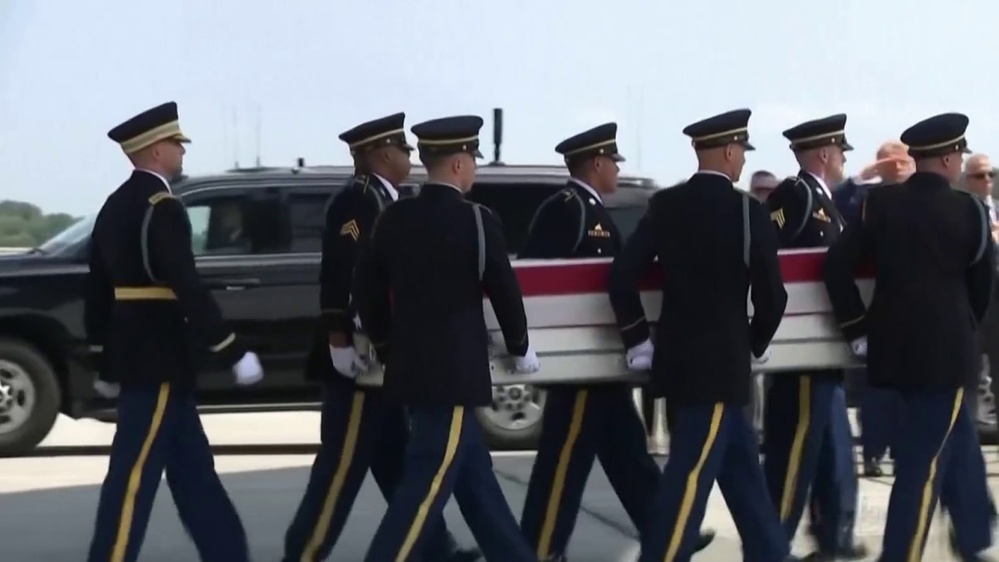
Neutral, fact-focused report with clear sourcing and no evident advocacy or sensationalism.
A concise, factual news brief describing a presidential dignified transfer and related casualties amid Middle East tensions.
Automated analysis; not human reviewed.
Limitations: Concise, case-specific limitations and plausible alternative interpretations.
·
1 of 52 available dimensions scored; omitted dimensions are not treated as neutral.
·
Verified supporting quotes for 0 of 1 scored dimensions.
Case-specific: neutrality assumed; data might mask tone.
July 22, 2026 · 0 shares
Straightforward report of a Trump administration dignified transfer, anchored in White House and Pentagon sourcing and direct quotes that frame the event around national security and ceremonial tribute with minimal critical context.
Dignified transfer coverage ties a presidential appearance and official statements to casualties from Iranian attacks within the broader Iran war context.
Automated analysis; not human reviewed. Limitations: Concise, case-specific limitations and plausible alternative interpretations.
Case-specific self-critique: limited context; relies on official sources; may understate alternative viewpoints.
July 22, 2026 · 0 shares
Neutral, event-focused coverage detailing Trump's Dover visit, casualty figures, and official statements, with a polling reference, without explicit advocacy or framing.
Report on Trump's Dover Air Force Base dignified transfers for service members killed in Iran-related conflict, including casualty totals and official statements.
Automated analysis; not human reviewed.
Limitations: Concise, case-specific limitations and plausible alternative interpretations.
·
52 of 52 available dimensions scored; omitted dimensions are not treated as neutral.
·
Verified supporting quotes for 8 of 52 scored dimensions.
Claim: Neutral stance (0) with no clear tilt toward liberal or conservative framing.
“Polls show a majority of Americans oppose the war.” · exact text match
“But speaking to reporters before his trip, he shot down the idea that Americans are against the war, arguing they are against higher gas prices and Iran getting a nuclear weapon.” · exact text match
“Before Wednesday’s visit, Mr. Trump announced on Truth Social he was heading to Dover to honor our heroes!” · not found in supplied text
Why: Reporting includes both polling context and presidential framing without endorsing either side.
Claim: Neutral (0).
“A White House official said Mr. Trump would privately meet with the families of our fallen heroes before the dignified transfer.” · not found in supplied text
Why: No populist or elitist framing detected.
Claim: Neutral (0).
Why: No discussion of civil liberties or state control.
Claim: Neutral (0).
“"All I am going to say is we love you, we love your child.
There is no games, no nothing, and all you can do is throw out your heart."”
· verified after text normalization
Why: Quotations are descriptive rather than prescriptive or evaluative.
Claim: Neutral (0).
“The latest deaths bring the U.S. toll in the war to 18, and more than 500 have been wounded in action.” · exact text match
Why: Casualty figures are presented as reported data, not sensationalized.
Claim: Neutral (0).
Why: No market outlook or sentiment.
Claim: Neutral (0).
Why: Content is factual and event-driven.
Claim: Neutral (0).
“Mr. Trump would privately meet with the families of our fallen heroes before the dignified transfer.” · not found in supplied text
Why: Describes actions, not normative prescriptions.
Claim: Neutral (0).
“Polls show a majority of Americans oppose the war.” · exact text match
Why: No advocacy for escalation or restraint; presents polling data neutrally.
Claim: Neutral (0).
“The latest deaths bring the U.S. toll in the war to 18, and more than 500 have been wounded in action.” · exact text match
Why: Casualty reporting without fear-mongering framing.
Claim: Neutral (0).
Why: No circular reasoning detected.
Claim: Neutral (0).
Why: No gossip-centric framing.
Claim: Neutral (0).
“Polls show a majority of Americans oppose the war.” · exact text match
Why: Cites polling rather than asserting opinion as fact.
Claim: Neutral (0).
“Polls show a majority of Americans oppose the war.” · exact text match
“"honor our heroes!"” · verified after text normalization
Why: Political context is presented but not biased in favor of a position.
Claim: Neutral (0).
Why: No reduction of complex issues to a single claim.
Claim: Neutral (0).
“A White House official said Mr. Trump would privately meet with the families...” · not found in supplied text
Why: Attribution to authorities does not substitute for argument.
Claim: Neutral (0).
Why: No immature or inflammatory language.
Claim: Neutral (0).
Why: No circular logic present.
Claim: Neutral (0).
Why: No deliberate omission of relevant responses.
Claim: Neutral (0).
“The family of Lt. Feehan joined Mr. Trump aboard Air Force One after the solemn ceremony.” · exact text match
Why: Describes families as recipients of events, not as victims being exploited.
Claim: Neutral (0).
“"All I am going to say is we love you..."” · not found in supplied text
Why: Quotations reflect rhetoric, not overconfident certainty about facts.
Claim: Neutral (0).
Why: No promotional content.
Claim: Neutral (0).
Why: No strong ideological framing.
Claim: Neutral (0).
“A White House official said Mr. Trump would privately meet with the families...” · not found in supplied text
Why: Official-sourced details without systemic favor or critique.
Claim: Neutral (0).
Why: No overt emotional manipulation.
Claim: Neutral (0).
Why: No observed double standard.
Claim: Neutral (0).
“A White House official said Mr. Trump would 'privately meet with the families of our fallen heroes' before the dignified transfer.” · not found in supplied text
“Polls show a majority of Americans oppose the war.” · exact text match
Why: Cites official sourcing and polling, without evident gaps in sourcing or correction.
Claim: Neutral (0).
“President Trump on Wednesday traveled to Delaware's Dover Air Force Base to observe the dignified transfer of U.S. service members killed in the Middle East.” · verified after text normalization
Why: Factual reporting without speculative reasoning.
Claim: Neutral (0).
Why: No promotional content.
Claim: Neutral (0).
Why: No AI-authorship indicators detected.
Claim: Neutral (0).
“A White House official said Mr. Trump would 'privately meet with the families of our fallen heroes' before the dignified transfer.” · not found in supplied text
Why: Use of official sourcing with direct quotes suggests straightforward reporting.
Claim: Neutral (0).
Why: Sufficient clarity in event description.
Claim: Neutral (0).
“Three of the Army soldiers died after Friday’s Iranian drone attack at Muwaffaq Salti Air Base in Jordan.” · not found in supplied text
Why: Describes casualties from conflict without advocacy.
Claim: Neutral (0).
Why: No class-analysis framing present.
Claim: Neutral (0).
Why: No Islamist content.
Claim: Neutral (0).
Why: No anti-Semitic content.
Claim: Neutral (0).
Why: No LGBT content.
Claim: Neutral (0).
Why: No racialized language.
Claim: Neutral (0).
Why: No identity-politics framing.
Claim: Neutral (0).
Why: No cruelty framing.
Claim: Neutral (0).
Why: No faux virtue signaling detected.
Claim: Neutral (0).
Why: No conspiratorial framing.
Claim: Neutral (0).
Why: No self-harm framing.
Claim: Neutral (0).
Why: No scapegoating identified.
Claim: Neutral (0).
Why: No detected hypocrisy in publisher framing.
Claim: Neutral (0).
Why: No anti-Enlightenment sentiment.
Limited data; context beyond Dover is sparse; potential framing via polling could shift interpretation.
Neutral, multi-perspective framing of dignified transfers with policy history and political reactions without clear advocacy.
Overview of dignified transfer procedure at Dover AFB, policy changes over time, and presidential attendance across administrations with diverse reactions.
Automated analysis; not human reviewed. Limitations: Limited to excerpted content; promotional text and ad language may influence perceived neutrality; absence of broader context.
Evidence is fragmentary; promo content may color framing.
July 22, 2026 · 0 shares
Straightforward report of a Trump administration dignified transfer, anchored in White House and Pentagon sourcing and direct quotes that frame the event around national security and ceremonial tribute with minimal critical context.
Dignified transfer coverage ties a presidential appearance and official statements to casualties from Iranian attacks within the broader Iran war context.
Automated analysis; not human reviewed. Limitations: Concise, case-specific limitations and plausible alternative interpretations.
Case-specific self-critique: limited context; relies on official sources; may understate alternative viewpoints.
July 22, 2026 · 0 shares
Neutral, event-focused coverage detailing Trump's Dover visit, casualty figures, and official statements, with a polling reference, without explicit advocacy or framing.
Report on Trump's Dover Air Force Base dignified transfers for service members killed in Iran-related conflict, including casualty totals and official statements.
Automated analysis; not human reviewed.
Limitations: Concise, case-specific limitations and plausible alternative interpretations.
·
52 of 52 available dimensions scored; omitted dimensions are not treated as neutral.
·
Verified supporting quotes for 8 of 52 scored dimensions.
Claim: Neutral stance (0) with no clear tilt toward liberal or conservative framing.
“Polls show a majority of Americans oppose the war.” · exact text match
“But speaking to reporters before his trip, he shot down the idea that Americans are against the war, arguing they are against higher gas prices and Iran getting a nuclear weapon.” · exact text match
“Before Wednesday’s visit, Mr. Trump announced on Truth Social he was heading to Dover to honor our heroes!” · not found in supplied text
Why: Reporting includes both polling context and presidential framing without endorsing either side.
Claim: Neutral (0).
“A White House official said Mr. Trump would privately meet with the families of our fallen heroes before the dignified transfer.” · not found in supplied text
Why: No populist or elitist framing detected.
Claim: Neutral (0).
Why: No discussion of civil liberties or state control.
Claim: Neutral (0).
“"All I am going to say is we love you, we love your child.
There is no games, no nothing, and all you can do is throw out your heart."”
· verified after text normalization
Why: Quotations are descriptive rather than prescriptive or evaluative.
Claim: Neutral (0).
“The latest deaths bring the U.S. toll in the war to 18, and more than 500 have been wounded in action.” · exact text match
Why: Casualty figures are presented as reported data, not sensationalized.
Claim: Neutral (0).
Why: No market outlook or sentiment.
Claim: Neutral (0).
Why: Content is factual and event-driven.
Claim: Neutral (0).
“Mr. Trump would privately meet with the families of our fallen heroes before the dignified transfer.” · not found in supplied text
Why: Describes actions, not normative prescriptions.
Claim: Neutral (0).
“Polls show a majority of Americans oppose the war.” · exact text match
Why: No advocacy for escalation or restraint; presents polling data neutrally.
Claim: Neutral (0).
“The latest deaths bring the U.S. toll in the war to 18, and more than 500 have been wounded in action.” · exact text match
Why: Casualty reporting without fear-mongering framing.
Claim: Neutral (0).
Why: No circular reasoning detected.
Claim: Neutral (0).
Why: No gossip-centric framing.
Claim: Neutral (0).
“Polls show a majority of Americans oppose the war.” · exact text match
Why: Cites polling rather than asserting opinion as fact.
Claim: Neutral (0).
“Polls show a majority of Americans oppose the war.” · exact text match
“"honor our heroes!"” · verified after text normalization
Why: Political context is presented but not biased in favor of a position.
Claim: Neutral (0).
Why: No reduction of complex issues to a single claim.
Claim: Neutral (0).
“A White House official said Mr. Trump would privately meet with the families...” · not found in supplied text
Why: Attribution to authorities does not substitute for argument.
Claim: Neutral (0).
Why: No immature or inflammatory language.
Claim: Neutral (0).
Why: No circular logic present.
Claim: Neutral (0).
Why: No deliberate omission of relevant responses.
Claim: Neutral (0).
“The family of Lt. Feehan joined Mr. Trump aboard Air Force One after the solemn ceremony.” · exact text match
Why: Describes families as recipients of events, not as victims being exploited.
Claim: Neutral (0).
“"All I am going to say is we love you..."” · not found in supplied text
Why: Quotations reflect rhetoric, not overconfident certainty about facts.
Claim: Neutral (0).
Why: No promotional content.
Claim: Neutral (0).
Why: No strong ideological framing.
Claim: Neutral (0).
“A White House official said Mr. Trump would privately meet with the families...” · not found in supplied text
Why: Official-sourced details without systemic favor or critique.
Claim: Neutral (0).
Why: No overt emotional manipulation.
Claim: Neutral (0).
Why: No observed double standard.
Claim: Neutral (0).
“A White House official said Mr. Trump would 'privately meet with the families of our fallen heroes' before the dignified transfer.” · not found in supplied text
“Polls show a majority of Americans oppose the war.” · exact text match
Why: Cites official sourcing and polling, without evident gaps in sourcing or correction.
Claim: Neutral (0).
“President Trump on Wednesday traveled to Delaware's Dover Air Force Base to observe the dignified transfer of U.S. service members killed in the Middle East.” · verified after text normalization
Why: Factual reporting without speculative reasoning.
Claim: Neutral (0).
Why: No promotional content.
Claim: Neutral (0).
Why: No AI-authorship indicators detected.
Claim: Neutral (0).
“A White House official said Mr. Trump would 'privately meet with the families of our fallen heroes' before the dignified transfer.” · not found in supplied text
Why: Use of official sourcing with direct quotes suggests straightforward reporting.
Claim: Neutral (0).
Why: Sufficient clarity in event description.
Claim: Neutral (0).
“Three of the Army soldiers died after Friday’s Iranian drone attack at Muwaffaq Salti Air Base in Jordan.” · not found in supplied text
Why: Describes casualties from conflict without advocacy.
Claim: Neutral (0).
Why: No class-analysis framing present.
Claim: Neutral (0).
Why: No Islamist content.
Claim: Neutral (0).
Why: No anti-Semitic content.
Claim: Neutral (0).
Why: No LGBT content.
Claim: Neutral (0).
Why: No racialized language.
Claim: Neutral (0).
Why: No identity-politics framing.
Claim: Neutral (0).
Why: No cruelty framing.
Claim: Neutral (0).
Why: No faux virtue signaling detected.
Claim: Neutral (0).
Why: No conspiratorial framing.
Claim: Neutral (0).
Why: No self-harm framing.
Claim: Neutral (0).
Why: No scapegoating identified.
Claim: Neutral (0).
Why: No detected hypocrisy in publisher framing.
Claim: Neutral (0).
Why: No anti-Enlightenment sentiment.
Limited data; context beyond Dover is sparse; potential framing via polling could shift interpretation.
July 22, 2026 · 0 shares
Straightforward report of a Trump administration dignified transfer, anchored in White House and Pentagon sourcing and direct quotes that frame the event around national security and ceremonial tribute with minimal critical context.
Dignified transfer coverage ties a presidential appearance and official statements to casualties from Iranian attacks within the broader Iran war context.
Automated analysis; not human reviewed. Limitations: Concise, case-specific limitations and plausible alternative interpretations.
Case-specific self-critique: limited context; relies on official sources; may understate alternative viewpoints.
July 22, 2026 · 0 shares
Neutral, minimal framing that presents Trump's claim on behalf of fallen soldiers and notes public criticism of the war without verification or analysis.
Two-sentence report describing Trump's claim and public sentiment around the Iran War.
Automated analysis; not human reviewed.
Limitations: Case-specific; limited text; might not capture fuller editorial stance or corroboration.
·
1 of 52 available dimensions scored; omitted dimensions are not treated as neutral.
·
Verified supporting quotes for 1 of 1 scored dimensions.
Claim: The report presents Trump's assertion without verification and notes public opinion, indicating neutral framing.
“Speaking for Fallen Soldiers, Trump Says They Supported the Iran War.” · exact text match
“President Trump attended a dignified transfer for the soldiers as Americans were growing increasingly critical of the war.” · exact text match
Why: Quoting Trump's assertion alongside contextual public sentiment without analysis suggests minimal editorial bias.
Limited two-sentence text; no corroboration or counterpoints in text.
Neutral, fact-focused report with clear sourcing and no evident advocacy or sensationalism.
A concise, factual news brief describing a presidential dignified transfer and related casualties amid Middle East tensions.
Automated analysis; not human reviewed.
Limitations: Concise, case-specific limitations and plausible alternative interpretations.
·
1 of 52 available dimensions scored; omitted dimensions are not treated as neutral.
·
Verified supporting quotes for 0 of 1 scored dimensions.
Case-specific: neutrality assumed; data might mask tone.
July 22, 2026 · 0 shares
Neutral, event-focused coverage detailing Trump's Dover visit, casualty figures, and official statements, with a polling reference, without explicit advocacy or framing.
Report on Trump's Dover Air Force Base dignified transfers for service members killed in Iran-related conflict, including casualty totals and official statements.
Automated analysis; not human reviewed.
Limitations: Concise, case-specific limitations and plausible alternative interpretations.
·
52 of 52 available dimensions scored; omitted dimensions are not treated as neutral.
·
Verified supporting quotes for 8 of 52 scored dimensions.
Claim: Neutral stance (0) with no clear tilt toward liberal or conservative framing.
“Polls show a majority of Americans oppose the war.” · exact text match
“But speaking to reporters before his trip, he shot down the idea that Americans are against the war, arguing they are against higher gas prices and Iran getting a nuclear weapon.” · exact text match
“Before Wednesday’s visit, Mr. Trump announced on Truth Social he was heading to Dover to honor our heroes!” · not found in supplied text
Why: Reporting includes both polling context and presidential framing without endorsing either side.
Claim: Neutral (0).
“A White House official said Mr. Trump would privately meet with the families of our fallen heroes before the dignified transfer.” · not found in supplied text
Why: No populist or elitist framing detected.
Claim: Neutral (0).
Why: No discussion of civil liberties or state control.
Claim: Neutral (0).
“"All I am going to say is we love you, we love your child.
There is no games, no nothing, and all you can do is throw out your heart."”
· verified after text normalization
Why: Quotations are descriptive rather than prescriptive or evaluative.
Claim: Neutral (0).
“The latest deaths bring the U.S. toll in the war to 18, and more than 500 have been wounded in action.” · exact text match
Why: Casualty figures are presented as reported data, not sensationalized.
Claim: Neutral (0).
Why: No market outlook or sentiment.
Claim: Neutral (0).
Why: Content is factual and event-driven.
Claim: Neutral (0).
“Mr. Trump would privately meet with the families of our fallen heroes before the dignified transfer.” · not found in supplied text
Why: Describes actions, not normative prescriptions.
Claim: Neutral (0).
“Polls show a majority of Americans oppose the war.” · exact text match
Why: No advocacy for escalation or restraint; presents polling data neutrally.
Claim: Neutral (0).
“The latest deaths bring the U.S. toll in the war to 18, and more than 500 have been wounded in action.” · exact text match
Why: Casualty reporting without fear-mongering framing.
Claim: Neutral (0).
Why: No circular reasoning detected.
Claim: Neutral (0).
Why: No gossip-centric framing.
Claim: Neutral (0).
“Polls show a majority of Americans oppose the war.” · exact text match
Why: Cites polling rather than asserting opinion as fact.
Claim: Neutral (0).
“Polls show a majority of Americans oppose the war.” · exact text match
“"honor our heroes!"” · verified after text normalization
Why: Political context is presented but not biased in favor of a position.
Claim: Neutral (0).
Why: No reduction of complex issues to a single claim.
Claim: Neutral (0).
“A White House official said Mr. Trump would privately meet with the families...” · not found in supplied text
Why: Attribution to authorities does not substitute for argument.
Claim: Neutral (0).
Why: No immature or inflammatory language.
Claim: Neutral (0).
Why: No circular logic present.
Claim: Neutral (0).
Why: No deliberate omission of relevant responses.
Claim: Neutral (0).
“The family of Lt. Feehan joined Mr. Trump aboard Air Force One after the solemn ceremony.” · exact text match
Why: Describes families as recipients of events, not as victims being exploited.
Claim: Neutral (0).
“"All I am going to say is we love you..."” · not found in supplied text
Why: Quotations reflect rhetoric, not overconfident certainty about facts.
Claim: Neutral (0).
Why: No promotional content.
Claim: Neutral (0).
Why: No strong ideological framing.
Claim: Neutral (0).
“A White House official said Mr. Trump would privately meet with the families...” · not found in supplied text
Why: Official-sourced details without systemic favor or critique.
Claim: Neutral (0).
Why: No overt emotional manipulation.
Claim: Neutral (0).
Why: No observed double standard.
Claim: Neutral (0).
“A White House official said Mr. Trump would 'privately meet with the families of our fallen heroes' before the dignified transfer.” · not found in supplied text
“Polls show a majority of Americans oppose the war.” · exact text match
Why: Cites official sourcing and polling, without evident gaps in sourcing or correction.
Claim: Neutral (0).
“President Trump on Wednesday traveled to Delaware's Dover Air Force Base to observe the dignified transfer of U.S. service members killed in the Middle East.” · verified after text normalization
Why: Factual reporting without speculative reasoning.
Claim: Neutral (0).
Why: No promotional content.
Claim: Neutral (0).
Why: No AI-authorship indicators detected.
Claim: Neutral (0).
“A White House official said Mr. Trump would 'privately meet with the families of our fallen heroes' before the dignified transfer.” · not found in supplied text
Why: Use of official sourcing with direct quotes suggests straightforward reporting.
Claim: Neutral (0).
Why: Sufficient clarity in event description.
Claim: Neutral (0).
“Three of the Army soldiers died after Friday’s Iranian drone attack at Muwaffaq Salti Air Base in Jordan.” · not found in supplied text
Why: Describes casualties from conflict without advocacy.
Claim: Neutral (0).
Why: No class-analysis framing present.
Claim: Neutral (0).
Why: No Islamist content.
Claim: Neutral (0).
Why: No anti-Semitic content.
Claim: Neutral (0).
Why: No LGBT content.
Claim: Neutral (0).
Why: No racialized language.
Claim: Neutral (0).
Why: No identity-politics framing.
Claim: Neutral (0).
Why: No cruelty framing.
Claim: Neutral (0).
Why: No faux virtue signaling detected.
Claim: Neutral (0).
Why: No conspiratorial framing.
Claim: Neutral (0).
Why: No self-harm framing.
Claim: Neutral (0).
Why: No scapegoating identified.
Claim: Neutral (0).
Why: No detected hypocrisy in publisher framing.
Claim: Neutral (0).
Why: No anti-Enlightenment sentiment.
Limited data; context beyond Dover is sparse; potential framing via polling could shift interpretation.
July 22, 2026 · 0 shares
Neutral, fact-based reporting of a presidential gesture toward a Gold Star family, anchoring the narrative with quotes and concrete Air Force One details while avoiding editorial commentary.
A concise, fact-based report about Trump offering a Gold Star family a ride on Air Force One after a dignified transfer, with context about the aircraft, its funding, and related political appearances.
Automated analysis; not human reviewed.
·
1 of 52 available dimensions scored; omitted dimensions are not treated as neutral.
·
Verified supporting quotes for 0 of 1 scored dimensions.
Claim: This report presents Trump gesture neutrally with quotes and factual context, avoiding normative analysis.
“I said, 'So if you want, I’ll give you a ride on Air Force One. And they said, 'Wow,' It’s quite nice, I must say.'” · not found in supplied text
“To Sherry and Stephen and David, we will carry Tyler’s memory in our hearts forever, and I just want to thank you. It’s an honor to have you here today, the president said.” · not found in supplied text
Why: Direct quotes from the president and descriptive framing support a descriptive tone rather than opinionated framing.
Limited data; extraneous content; cautious about framing.
Neutral, multi-perspective framing of dignified transfers with policy history and political reactions without clear advocacy.
Overview of dignified transfer procedure at Dover AFB, policy changes over time, and presidential attendance across administrations with diverse reactions.
Automated analysis; not human reviewed. Limitations: Limited to excerpted content; promotional text and ad language may influence perceived neutrality; absence of broader context.
Evidence is fragmentary; promo content may color framing.
July 22, 2026 · 0 shares
Neutral, minimal framing that presents Trump's claim on behalf of fallen soldiers and notes public criticism of the war without verification or analysis.
Two-sentence report describing Trump's claim and public sentiment around the Iran War.
Automated analysis; not human reviewed.
Limitations: Case-specific; limited text; might not capture fuller editorial stance or corroboration.
·
1 of 52 available dimensions scored; omitted dimensions are not treated as neutral.
·
Verified supporting quotes for 1 of 1 scored dimensions.
Claim: The report presents Trump's assertion without verification and notes public opinion, indicating neutral framing.
“Speaking for Fallen Soldiers, Trump Says They Supported the Iran War.” · exact text match
“President Trump attended a dignified transfer for the soldiers as Americans were growing increasingly critical of the war.” · exact text match
Why: Quoting Trump's assertion alongside contextual public sentiment without analysis suggests minimal editorial bias.
Limited two-sentence text; no corroboration or counterpoints in text.
July 22, 2026 · 0 shares
Neutral, event-focused coverage detailing Trump's Dover visit, casualty figures, and official statements, with a polling reference, without explicit advocacy or framing.
Report on Trump's Dover Air Force Base dignified transfers for service members killed in Iran-related conflict, including casualty totals and official statements.
Automated analysis; not human reviewed.
Limitations: Concise, case-specific limitations and plausible alternative interpretations.
·
52 of 52 available dimensions scored; omitted dimensions are not treated as neutral.
·
Verified supporting quotes for 8 of 52 scored dimensions.
Claim: Neutral stance (0) with no clear tilt toward liberal or conservative framing.
“Polls show a majority of Americans oppose the war.” · exact text match
“But speaking to reporters before his trip, he shot down the idea that Americans are against the war, arguing they are against higher gas prices and Iran getting a nuclear weapon.” · exact text match
“Before Wednesday’s visit, Mr. Trump announced on Truth Social he was heading to Dover to honor our heroes!” · not found in supplied text
Why: Reporting includes both polling context and presidential framing without endorsing either side.
Claim: Neutral (0).
“A White House official said Mr. Trump would privately meet with the families of our fallen heroes before the dignified transfer.” · not found in supplied text
Why: No populist or elitist framing detected.
Claim: Neutral (0).
Why: No discussion of civil liberties or state control.
Claim: Neutral (0).
“"All I am going to say is we love you, we love your child.
There is no games, no nothing, and all you can do is throw out your heart."”
· verified after text normalization
Why: Quotations are descriptive rather than prescriptive or evaluative.
Claim: Neutral (0).
“The latest deaths bring the U.S. toll in the war to 18, and more than 500 have been wounded in action.” · exact text match
Why: Casualty figures are presented as reported data, not sensationalized.
Claim: Neutral (0).
Why: No market outlook or sentiment.
Claim: Neutral (0).
Why: Content is factual and event-driven.
Claim: Neutral (0).
“Mr. Trump would privately meet with the families of our fallen heroes before the dignified transfer.” · not found in supplied text
Why: Describes actions, not normative prescriptions.
Claim: Neutral (0).
“Polls show a majority of Americans oppose the war.” · exact text match
Why: No advocacy for escalation or restraint; presents polling data neutrally.
Claim: Neutral (0).
“The latest deaths bring the U.S. toll in the war to 18, and more than 500 have been wounded in action.” · exact text match
Why: Casualty reporting without fear-mongering framing.
Claim: Neutral (0).
Why: No circular reasoning detected.
Claim: Neutral (0).
Why: No gossip-centric framing.
Claim: Neutral (0).
“Polls show a majority of Americans oppose the war.” · exact text match
Why: Cites polling rather than asserting opinion as fact.
Claim: Neutral (0).
“Polls show a majority of Americans oppose the war.” · exact text match
“"honor our heroes!"” · verified after text normalization
Why: Political context is presented but not biased in favor of a position.
Claim: Neutral (0).
Why: No reduction of complex issues to a single claim.
Claim: Neutral (0).
“A White House official said Mr. Trump would privately meet with the families...” · not found in supplied text
Why: Attribution to authorities does not substitute for argument.
Claim: Neutral (0).
Why: No immature or inflammatory language.
Claim: Neutral (0).
Why: No circular logic present.
Claim: Neutral (0).
Why: No deliberate omission of relevant responses.
Claim: Neutral (0).
“The family of Lt. Feehan joined Mr. Trump aboard Air Force One after the solemn ceremony.” · exact text match
Why: Describes families as recipients of events, not as victims being exploited.
Claim: Neutral (0).
“"All I am going to say is we love you..."” · not found in supplied text
Why: Quotations reflect rhetoric, not overconfident certainty about facts.
Claim: Neutral (0).
Why: No promotional content.
Claim: Neutral (0).
Why: No strong ideological framing.
Claim: Neutral (0).
“A White House official said Mr. Trump would privately meet with the families...” · not found in supplied text
Why: Official-sourced details without systemic favor or critique.
Claim: Neutral (0).
Why: No overt emotional manipulation.
Claim: Neutral (0).
Why: No observed double standard.
Claim: Neutral (0).
“A White House official said Mr. Trump would 'privately meet with the families of our fallen heroes' before the dignified transfer.” · not found in supplied text
“Polls show a majority of Americans oppose the war.” · exact text match
Why: Cites official sourcing and polling, without evident gaps in sourcing or correction.
Claim: Neutral (0).
“President Trump on Wednesday traveled to Delaware's Dover Air Force Base to observe the dignified transfer of U.S. service members killed in the Middle East.” · verified after text normalization
Why: Factual reporting without speculative reasoning.
Claim: Neutral (0).
Why: No promotional content.
Claim: Neutral (0).
Why: No AI-authorship indicators detected.
Claim: Neutral (0).
“A White House official said Mr. Trump would 'privately meet with the families of our fallen heroes' before the dignified transfer.” · not found in supplied text
Why: Use of official sourcing with direct quotes suggests straightforward reporting.
Claim: Neutral (0).
Why: Sufficient clarity in event description.
Claim: Neutral (0).
“Three of the Army soldiers died after Friday’s Iranian drone attack at Muwaffaq Salti Air Base in Jordan.” · not found in supplied text
Why: Describes casualties from conflict without advocacy.
Claim: Neutral (0).
Why: No class-analysis framing present.
Claim: Neutral (0).
Why: No Islamist content.
Claim: Neutral (0).
Why: No anti-Semitic content.
Claim: Neutral (0).
Why: No LGBT content.
Claim: Neutral (0).
Why: No racialized language.
Claim: Neutral (0).
Why: No identity-politics framing.
Claim: Neutral (0).
Why: No cruelty framing.
Claim: Neutral (0).
Why: No faux virtue signaling detected.
Claim: Neutral (0).
Why: No conspiratorial framing.
Claim: Neutral (0).
Why: No self-harm framing.
Claim: Neutral (0).
Why: No scapegoating identified.
Claim: Neutral (0).
Why: No detected hypocrisy in publisher framing.
Claim: Neutral (0).
Why: No anti-Enlightenment sentiment.
Limited data; context beyond Dover is sparse; potential framing via polling could shift interpretation.
Neutral, fact-focused report with clear sourcing and no evident advocacy or sensationalism.
A concise, factual news brief describing a presidential dignified transfer and related casualties amid Middle East tensions.
Automated analysis; not human reviewed. Limitations: Concise, case-specific limitations and plausible alternative interpretations. · 1 of 52 available dimensions scored; omitted dimensions are not treated as neutral. · Verified supporting quotes for 0 of 1 scored dimensions.
Case-specific: neutrality assumed; data might mask tone.
July 22, 2026 · 0 shares
Straightforward report of a Trump administration dignified transfer, anchored in White House and Pentagon sourcing and direct quotes that frame the event around national security and ceremonial tribute with minimal critical context.
Dignified transfer coverage ties a presidential appearance and official statements to casualties from Iranian attacks within the broader Iran war context.
Automated analysis; not human reviewed. Limitations: Concise, case-specific limitations and plausible alternative interpretations.
Case-specific self-critique: limited context; relies on official sources; may understate alternative viewpoints.
This report appears largely objective and fact-focused, presenting President Trump's role in a dignified transfer and subsequent strikes with minimal evaluative language, though phrases like 'war on Iran' reflect conventional war-frame terminology.
Factual briefing noting Trump's involvement in a dignified transfer of four soldiers' remains amid a new round of strikes on Iran.
Automated analysis; not human reviewed. Limitations: Concise, case-specific limitations and plausible alternative interpretations. · 1 of 52 available dimensions scored; omitted dimensions are not treated as neutral. · Verified supporting quotes for 1 of 1 scored dimensions.
Claim: The piece reads as objective, presenting events with minimal evaluative language.
“Trump attends dignified transfer for 4 dead U.S. soldiers, 12th night of strikes launched.” · exact text match
“President Trump on Wednesday oversaw the dignified transfer of the remains of four U.S. soldiers killed in the war on Iran.” · exact text match
“The U.S. launched another round of strikes on Iran Wednesday night.” · exact text match
Why: The text primarily states actions and outcomes without opinion; loaded framing is limited to conventional war-reporting terms.
July 22, 2026 · 0 shares
Neutral, fact-focused coverage of Trump's attendance at a dignified transfer, with ancillary promotional language about open-access reporting that does not tilt the framing toward a particular ideology.
Concise, factful report on Trump's attendance at a dignified transfer for four U.S. service members, including casualty details and promotional messaging about open-access reporting.
Automated analysis; not human reviewed. Limitations: Concise, case-specific limitations and plausible alternative interpretations. · 21 of 52 available dimensions scored; omitted dimensions are not treated as neutral. · Verified supporting quotes for 0 of 21 scored dimensions.
Claim: The article presents information neutrally, with minimal evaluative language.
“"Trump attends transfer of fallen U.S. service members, in photos."” · not found in supplied text
“"President Donald Trump attends the dignified transfer of four U.S. service members killed in the Middle East at Dover Air Force Base in Delaware. The troops were killed in attacks in Jordan and Iraq linked to Iranian drones and missiles."” · exact text match
“"At such a critical moment in US history, we need reporters on the ground. Your donation allows us to keep sending journalists to speak to both sides of the story."” · exact text match
Counterevidence:
“"is trusted by Americans across the entire political spectrum. And unlike many other quality news outlets, we choose not to lock Americans out of our reporting and analysis with paywalls. We believe quality journalism should be available to everyone, paid for by those who can afford it."” · not found in supplied text
“"Please refresh the page or navigate to another page on the site to be automatically logged inPlease refresh your browser to be logged in"” · exact text match
Why: The content largely describes events neutrally; promotional/membership language could introduce mild bias.
Embedded promo content; limited context; neutrality uncertain beyond event description.
Neutral, fact-focused report with clear sourcing and no evident advocacy or sensationalism.
A concise, factual news brief describing a presidential dignified transfer and related casualties amid Middle East tensions.
Automated analysis; not human reviewed. Limitations: Concise, case-specific limitations and plausible alternative interpretations. · 1 of 52 available dimensions scored; omitted dimensions are not treated as neutral. · Verified supporting quotes for 0 of 1 scored dimensions.
Case-specific: neutrality assumed; data might mask tone.
July 22, 2026 · 0 shares
Neutral, event-focused coverage detailing Trump's Dover visit, casualty figures, and official statements, with a polling reference, without explicit advocacy or framing.
Report on Trump's Dover Air Force Base dignified transfers for service members killed in Iran-related conflict, including casualty totals and official statements.
Automated analysis; not human reviewed. Limitations: Concise, case-specific limitations and plausible alternative interpretations. · 52 of 52 available dimensions scored; omitted dimensions are not treated as neutral. · Verified supporting quotes for 8 of 52 scored dimensions.
Claim: Neutral stance (0) with no clear tilt toward liberal or conservative framing.
“Polls show a majority of Americans oppose the war.” · exact text match
“But speaking to reporters before his trip, he shot down the idea that Americans are against the war, arguing they are against higher gas prices and Iran getting a nuclear weapon.” · exact text match
“Before Wednesday’s visit, Mr. Trump announced on Truth Social he was heading to Dover to honor our heroes!” · not found in supplied text
Why: Reporting includes both polling context and presidential framing without endorsing either side.
Claim: Neutral (0).
“A White House official said Mr. Trump would privately meet with the families of our fallen heroes before the dignified transfer.” · not found in supplied text
Why: No populist or elitist framing detected.
Claim: Neutral (0).
Why: No discussion of civil liberties or state control.
Claim: Neutral (0).
“"All I am going to say is we love you, we love your child. There is no games, no nothing, and all you can do is throw out your heart."” · verified after text normalization
Why: Quotations are descriptive rather than prescriptive or evaluative.
Claim: Neutral (0).
“The latest deaths bring the U.S. toll in the war to 18, and more than 500 have been wounded in action.” · exact text match
Why: Casualty figures are presented as reported data, not sensationalized.
Claim: Neutral (0).
Why: No market outlook or sentiment.
Claim: Neutral (0).
Why: Content is factual and event-driven.
Claim: Neutral (0).
“Mr. Trump would privately meet with the families of our fallen heroes before the dignified transfer.” · not found in supplied text
Why: Describes actions, not normative prescriptions.
Claim: Neutral (0).
“Polls show a majority of Americans oppose the war.” · exact text match
Why: No advocacy for escalation or restraint; presents polling data neutrally.
Claim: Neutral (0).
“The latest deaths bring the U.S. toll in the war to 18, and more than 500 have been wounded in action.” · exact text match
Why: Casualty reporting without fear-mongering framing.
Claim: Neutral (0).
Why: No circular reasoning detected.
Claim: Neutral (0).
Why: No gossip-centric framing.
Claim: Neutral (0).
“Polls show a majority of Americans oppose the war.” · exact text match
Why: Cites polling rather than asserting opinion as fact.
Claim: Neutral (0).
“Polls show a majority of Americans oppose the war.” · exact text match
“"honor our heroes!"” · verified after text normalization
Why: Political context is presented but not biased in favor of a position.
Claim: Neutral (0).
Why: No reduction of complex issues to a single claim.
Claim: Neutral (0).
“A White House official said Mr. Trump would privately meet with the families...” · not found in supplied text
Why: Attribution to authorities does not substitute for argument.
Claim: Neutral (0).
Why: No immature or inflammatory language.
Claim: Neutral (0).
Why: No circular logic present.
Claim: Neutral (0).
Why: No deliberate omission of relevant responses.
Claim: Neutral (0).
“The family of Lt. Feehan joined Mr. Trump aboard Air Force One after the solemn ceremony.” · exact text match
Why: Describes families as recipients of events, not as victims being exploited.
Claim: Neutral (0).
“"All I am going to say is we love you..."” · not found in supplied text
Why: Quotations reflect rhetoric, not overconfident certainty about facts.
Claim: Neutral (0).
Why: No promotional content.
Claim: Neutral (0).
Why: No strong ideological framing.
Claim: Neutral (0).
“A White House official said Mr. Trump would privately meet with the families...” · not found in supplied text
Why: Official-sourced details without systemic favor or critique.
Claim: Neutral (0).
Why: No overt emotional manipulation.
Claim: Neutral (0).
Why: No observed double standard.
Claim: Neutral (0).
“A White House official said Mr. Trump would 'privately meet with the families of our fallen heroes' before the dignified transfer.” · not found in supplied text
“Polls show a majority of Americans oppose the war.” · exact text match
Why: Cites official sourcing and polling, without evident gaps in sourcing or correction.
Claim: Neutral (0).
“President Trump on Wednesday traveled to Delaware's Dover Air Force Base to observe the dignified transfer of U.S. service members killed in the Middle East.” · verified after text normalization
Why: Factual reporting without speculative reasoning.
Claim: Neutral (0).
Why: No promotional content.
Claim: Neutral (0).
Why: No AI-authorship indicators detected.
Claim: Neutral (0).
“A White House official said Mr. Trump would 'privately meet with the families of our fallen heroes' before the dignified transfer.” · not found in supplied text
Why: Use of official sourcing with direct quotes suggests straightforward reporting.
Claim: Neutral (0).
Why: Sufficient clarity in event description.
Claim: Neutral (0).
“Three of the Army soldiers died after Friday’s Iranian drone attack at Muwaffaq Salti Air Base in Jordan.” · not found in supplied text
Why: Describes casualties from conflict without advocacy.
Claim: Neutral (0).
Why: No class-analysis framing present.
Claim: Neutral (0).
Why: No Islamist content.
Claim: Neutral (0).
Why: No anti-Semitic content.
Claim: Neutral (0).
Why: No LGBT content.
Claim: Neutral (0).
Why: No racialized language.
Claim: Neutral (0).
Why: No identity-politics framing.
Claim: Neutral (0).
Why: No cruelty framing.
Claim: Neutral (0).
Why: No faux virtue signaling detected.
Claim: Neutral (0).
Why: No conspiratorial framing.
Claim: Neutral (0).
Why: No self-harm framing.
Claim: Neutral (0).
Why: No scapegoating identified.
Claim: Neutral (0).
Why: No detected hypocrisy in publisher framing.
Claim: Neutral (0).
Why: No anti-Enlightenment sentiment.
Limited data; context beyond Dover is sparse; potential framing via polling could shift interpretation.
July 22, 2026 · 0 shares
Straightforward report of a Trump administration dignified transfer, anchored in White House and Pentagon sourcing and direct quotes that frame the event around national security and ceremonial tribute with minimal critical context.
Dignified transfer coverage ties a presidential appearance and official statements to casualties from Iranian attacks within the broader Iran war context.
Automated analysis; not human reviewed. Limitations: Concise, case-specific limitations and plausible alternative interpretations.
Case-specific self-critique: limited context; relies on official sources; may understate alternative viewpoints.
July 22, 2026 · 0 shares
Neutral, event-focused coverage detailing Trump's Dover visit, casualty figures, and official statements, with a polling reference, without explicit advocacy or framing.
Report on Trump's Dover Air Force Base dignified transfers for service members killed in Iran-related conflict, including casualty totals and official statements.
Automated analysis; not human reviewed. Limitations: Concise, case-specific limitations and plausible alternative interpretations. · 52 of 52 available dimensions scored; omitted dimensions are not treated as neutral. · Verified supporting quotes for 8 of 52 scored dimensions.
Claim: Neutral stance (0) with no clear tilt toward liberal or conservative framing.
“Polls show a majority of Americans oppose the war.” · exact text match
“But speaking to reporters before his trip, he shot down the idea that Americans are against the war, arguing they are against higher gas prices and Iran getting a nuclear weapon.” · exact text match
“Before Wednesday’s visit, Mr. Trump announced on Truth Social he was heading to Dover to honor our heroes!” · not found in supplied text
Why: Reporting includes both polling context and presidential framing without endorsing either side.
Claim: Neutral (0).
“A White House official said Mr. Trump would privately meet with the families of our fallen heroes before the dignified transfer.” · not found in supplied text
Why: No populist or elitist framing detected.
Claim: Neutral (0).
Why: No discussion of civil liberties or state control.
Claim: Neutral (0).
“"All I am going to say is we love you, we love your child. There is no games, no nothing, and all you can do is throw out your heart."” · verified after text normalization
Why: Quotations are descriptive rather than prescriptive or evaluative.
Claim: Neutral (0).
“The latest deaths bring the U.S. toll in the war to 18, and more than 500 have been wounded in action.” · exact text match
Why: Casualty figures are presented as reported data, not sensationalized.
Claim: Neutral (0).
Why: No market outlook or sentiment.
Claim: Neutral (0).
Why: Content is factual and event-driven.
Claim: Neutral (0).
“Mr. Trump would privately meet with the families of our fallen heroes before the dignified transfer.” · not found in supplied text
Why: Describes actions, not normative prescriptions.
Claim: Neutral (0).
“Polls show a majority of Americans oppose the war.” · exact text match
Why: No advocacy for escalation or restraint; presents polling data neutrally.
Claim: Neutral (0).
“The latest deaths bring the U.S. toll in the war to 18, and more than 500 have been wounded in action.” · exact text match
Why: Casualty reporting without fear-mongering framing.
Claim: Neutral (0).
Why: No circular reasoning detected.
Claim: Neutral (0).
Why: No gossip-centric framing.
Claim: Neutral (0).
“Polls show a majority of Americans oppose the war.” · exact text match
Why: Cites polling rather than asserting opinion as fact.
Claim: Neutral (0).
“Polls show a majority of Americans oppose the war.” · exact text match
“"honor our heroes!"” · verified after text normalization
Why: Political context is presented but not biased in favor of a position.
Claim: Neutral (0).
Why: No reduction of complex issues to a single claim.
Claim: Neutral (0).
“A White House official said Mr. Trump would privately meet with the families...” · not found in supplied text
Why: Attribution to authorities does not substitute for argument.
Claim: Neutral (0).
Why: No immature or inflammatory language.
Claim: Neutral (0).
Why: No circular logic present.
Claim: Neutral (0).
Why: No deliberate omission of relevant responses.
Claim: Neutral (0).
“The family of Lt. Feehan joined Mr. Trump aboard Air Force One after the solemn ceremony.” · exact text match
Why: Describes families as recipients of events, not as victims being exploited.
Claim: Neutral (0).
“"All I am going to say is we love you..."” · not found in supplied text
Why: Quotations reflect rhetoric, not overconfident certainty about facts.
Claim: Neutral (0).
Why: No promotional content.
Claim: Neutral (0).
Why: No strong ideological framing.
Claim: Neutral (0).
“A White House official said Mr. Trump would privately meet with the families...” · not found in supplied text
Why: Official-sourced details without systemic favor or critique.
Claim: Neutral (0).
Why: No overt emotional manipulation.
Claim: Neutral (0).
Why: No observed double standard.
Claim: Neutral (0).
“A White House official said Mr. Trump would 'privately meet with the families of our fallen heroes' before the dignified transfer.” · not found in supplied text
“Polls show a majority of Americans oppose the war.” · exact text match
Why: Cites official sourcing and polling, without evident gaps in sourcing or correction.
Claim: Neutral (0).
“President Trump on Wednesday traveled to Delaware's Dover Air Force Base to observe the dignified transfer of U.S. service members killed in the Middle East.” · verified after text normalization
Why: Factual reporting without speculative reasoning.
Claim: Neutral (0).
Why: No promotional content.
Claim: Neutral (0).
Why: No AI-authorship indicators detected.
Claim: Neutral (0).
“A White House official said Mr. Trump would 'privately meet with the families of our fallen heroes' before the dignified transfer.” · not found in supplied text
Why: Use of official sourcing with direct quotes suggests straightforward reporting.
Claim: Neutral (0).
Why: Sufficient clarity in event description.
Claim: Neutral (0).
“Three of the Army soldiers died after Friday’s Iranian drone attack at Muwaffaq Salti Air Base in Jordan.” · not found in supplied text
Why: Describes casualties from conflict without advocacy.
Claim: Neutral (0).
Why: No class-analysis framing present.
Claim: Neutral (0).
Why: No Islamist content.
Claim: Neutral (0).
Why: No anti-Semitic content.
Claim: Neutral (0).
Why: No LGBT content.
Claim: Neutral (0).
Why: No racialized language.
Claim: Neutral (0).
Why: No identity-politics framing.
Claim: Neutral (0).
Why: No cruelty framing.
Claim: Neutral (0).
Why: No faux virtue signaling detected.
Claim: Neutral (0).
Why: No conspiratorial framing.
Claim: Neutral (0).
Why: No self-harm framing.
Claim: Neutral (0).
Why: No scapegoating identified.
Claim: Neutral (0).
Why: No detected hypocrisy in publisher framing.
Claim: Neutral (0).
Why: No anti-Enlightenment sentiment.
Limited data; context beyond Dover is sparse; potential framing via polling could shift interpretation.
Neutral, multi-perspective framing of dignified transfers with policy history and political reactions without clear advocacy.
Overview of dignified transfer procedure at Dover AFB, policy changes over time, and presidential attendance across administrations with diverse reactions.
Automated analysis; not human reviewed. Limitations: Limited to excerpted content; promotional text and ad language may influence perceived neutrality; absence of broader context.
Evidence is fragmentary; promo content may color framing.
July 22, 2026 · 0 shares
Straightforward report of a Trump administration dignified transfer, anchored in White House and Pentagon sourcing and direct quotes that frame the event around national security and ceremonial tribute with minimal critical context.
Dignified transfer coverage ties a presidential appearance and official statements to casualties from Iranian attacks within the broader Iran war context.
Automated analysis; not human reviewed. Limitations: Concise, case-specific limitations and plausible alternative interpretations.
Case-specific self-critique: limited context; relies on official sources; may understate alternative viewpoints.
July 22, 2026 · 0 shares
Neutral, minimal framing that presents Trump's claim on behalf of fallen soldiers and notes public criticism of the war without verification or analysis.
Two-sentence report describing Trump's claim and public sentiment around the Iran War.
Automated analysis; not human reviewed. Limitations: Case-specific; limited text; might not capture fuller editorial stance or corroboration. · 1 of 52 available dimensions scored; omitted dimensions are not treated as neutral. · Verified supporting quotes for 1 of 1 scored dimensions.
Claim: The report presents Trump's assertion without verification and notes public opinion, indicating neutral framing.
“Speaking for Fallen Soldiers, Trump Says They Supported the Iran War.” · exact text match
“President Trump attended a dignified transfer for the soldiers as Americans were growing increasingly critical of the war.” · exact text match
Why: Quoting Trump's assertion alongside contextual public sentiment without analysis suggests minimal editorial bias.
Limited two-sentence text; no corroboration or counterpoints in text.
Neutral, fact-focused report with clear sourcing and no evident advocacy or sensationalism.
A concise, factual news brief describing a presidential dignified transfer and related casualties amid Middle East tensions.
Automated analysis; not human reviewed. Limitations: Concise, case-specific limitations and plausible alternative interpretations. · 1 of 52 available dimensions scored; omitted dimensions are not treated as neutral. · Verified supporting quotes for 0 of 1 scored dimensions.
Case-specific: neutrality assumed; data might mask tone.
July 22, 2026 · 0 shares
Neutral, event-focused coverage detailing Trump's Dover visit, casualty figures, and official statements, with a polling reference, without explicit advocacy or framing.
Report on Trump's Dover Air Force Base dignified transfers for service members killed in Iran-related conflict, including casualty totals and official statements.
Automated analysis; not human reviewed. Limitations: Concise, case-specific limitations and plausible alternative interpretations. · 52 of 52 available dimensions scored; omitted dimensions are not treated as neutral. · Verified supporting quotes for 8 of 52 scored dimensions.
Claim: Neutral stance (0) with no clear tilt toward liberal or conservative framing.
“Polls show a majority of Americans oppose the war.” · exact text match
“But speaking to reporters before his trip, he shot down the idea that Americans are against the war, arguing they are against higher gas prices and Iran getting a nuclear weapon.” · exact text match
“Before Wednesday’s visit, Mr. Trump announced on Truth Social he was heading to Dover to honor our heroes!” · not found in supplied text
Why: Reporting includes both polling context and presidential framing without endorsing either side.
Claim: Neutral (0).
“A White House official said Mr. Trump would privately meet with the families of our fallen heroes before the dignified transfer.” · not found in supplied text
Why: No populist or elitist framing detected.
Claim: Neutral (0).
Why: No discussion of civil liberties or state control.
Claim: Neutral (0).
“"All I am going to say is we love you, we love your child. There is no games, no nothing, and all you can do is throw out your heart."” · verified after text normalization
Why: Quotations are descriptive rather than prescriptive or evaluative.
Claim: Neutral (0).
“The latest deaths bring the U.S. toll in the war to 18, and more than 500 have been wounded in action.” · exact text match
Why: Casualty figures are presented as reported data, not sensationalized.
Claim: Neutral (0).
Why: No market outlook or sentiment.
Claim: Neutral (0).
Why: Content is factual and event-driven.
Claim: Neutral (0).
“Mr. Trump would privately meet with the families of our fallen heroes before the dignified transfer.” · not found in supplied text
Why: Describes actions, not normative prescriptions.
Claim: Neutral (0).
“Polls show a majority of Americans oppose the war.” · exact text match
Why: No advocacy for escalation or restraint; presents polling data neutrally.
Claim: Neutral (0).
“The latest deaths bring the U.S. toll in the war to 18, and more than 500 have been wounded in action.” · exact text match
Why: Casualty reporting without fear-mongering framing.
Claim: Neutral (0).
Why: No circular reasoning detected.
Claim: Neutral (0).
Why: No gossip-centric framing.
Claim: Neutral (0).
“Polls show a majority of Americans oppose the war.” · exact text match
Why: Cites polling rather than asserting opinion as fact.
Claim: Neutral (0).
“Polls show a majority of Americans oppose the war.” · exact text match
“"honor our heroes!"” · verified after text normalization
Why: Political context is presented but not biased in favor of a position.
Claim: Neutral (0).
Why: No reduction of complex issues to a single claim.
Claim: Neutral (0).
“A White House official said Mr. Trump would privately meet with the families...” · not found in supplied text
Why: Attribution to authorities does not substitute for argument.
Claim: Neutral (0).
Why: No immature or inflammatory language.
Claim: Neutral (0).
Why: No circular logic present.
Claim: Neutral (0).
Why: No deliberate omission of relevant responses.
Claim: Neutral (0).
“The family of Lt. Feehan joined Mr. Trump aboard Air Force One after the solemn ceremony.” · exact text match
Why: Describes families as recipients of events, not as victims being exploited.
Claim: Neutral (0).
“"All I am going to say is we love you..."” · not found in supplied text
Why: Quotations reflect rhetoric, not overconfident certainty about facts.
Claim: Neutral (0).
Why: No promotional content.
Claim: Neutral (0).
Why: No strong ideological framing.
Claim: Neutral (0).
“A White House official said Mr. Trump would privately meet with the families...” · not found in supplied text
Why: Official-sourced details without systemic favor or critique.
Claim: Neutral (0).
Why: No overt emotional manipulation.
Claim: Neutral (0).
Why: No observed double standard.
Claim: Neutral (0).
“A White House official said Mr. Trump would 'privately meet with the families of our fallen heroes' before the dignified transfer.” · not found in supplied text
“Polls show a majority of Americans oppose the war.” · exact text match
Why: Cites official sourcing and polling, without evident gaps in sourcing or correction.
Claim: Neutral (0).
“President Trump on Wednesday traveled to Delaware's Dover Air Force Base to observe the dignified transfer of U.S. service members killed in the Middle East.” · verified after text normalization
Why: Factual reporting without speculative reasoning.
Claim: Neutral (0).
Why: No promotional content.
Claim: Neutral (0).
Why: No AI-authorship indicators detected.
Claim: Neutral (0).
“A White House official said Mr. Trump would 'privately meet with the families of our fallen heroes' before the dignified transfer.” · not found in supplied text
Why: Use of official sourcing with direct quotes suggests straightforward reporting.
Claim: Neutral (0).
Why: Sufficient clarity in event description.
Claim: Neutral (0).
“Three of the Army soldiers died after Friday’s Iranian drone attack at Muwaffaq Salti Air Base in Jordan.” · not found in supplied text
Why: Describes casualties from conflict without advocacy.
Claim: Neutral (0).
Why: No class-analysis framing present.
Claim: Neutral (0).
Why: No Islamist content.
Claim: Neutral (0).
Why: No anti-Semitic content.
Claim: Neutral (0).
Why: No LGBT content.
Claim: Neutral (0).
Why: No racialized language.
Claim: Neutral (0).
Why: No identity-politics framing.
Claim: Neutral (0).
Why: No cruelty framing.
Claim: Neutral (0).
Why: No faux virtue signaling detected.
Claim: Neutral (0).
Why: No conspiratorial framing.
Claim: Neutral (0).
Why: No self-harm framing.
Claim: Neutral (0).
Why: No scapegoating identified.
Claim: Neutral (0).
Why: No detected hypocrisy in publisher framing.
Claim: Neutral (0).
Why: No anti-Enlightenment sentiment.
Limited data; context beyond Dover is sparse; potential framing via polling could shift interpretation.
July 22, 2026 · 0 shares
Neutral, fact-based reporting of a presidential gesture toward a Gold Star family, anchoring the narrative with quotes and concrete Air Force One details while avoiding editorial commentary.
A concise, fact-based report about Trump offering a Gold Star family a ride on Air Force One after a dignified transfer, with context about the aircraft, its funding, and related political appearances.
Automated analysis; not human reviewed. · 1 of 52 available dimensions scored; omitted dimensions are not treated as neutral. · Verified supporting quotes for 0 of 1 scored dimensions.
Claim: This report presents Trump gesture neutrally with quotes and factual context, avoiding normative analysis.
“I said, 'So if you want, I’ll give you a ride on Air Force One. And they said, 'Wow,' It’s quite nice, I must say.'” · not found in supplied text
“To Sherry and Stephen and David, we will carry Tyler’s memory in our hearts forever, and I just want to thank you. It’s an honor to have you here today, the president said.” · not found in supplied text
Why: Direct quotes from the president and descriptive framing support a descriptive tone rather than opinionated framing.
Limited data; extraneous content; cautious about framing.
Helium Bias
Neutral, fact-focused report with clear sourcing and no evident advocacy or sensationalism.
A concise, factual news brief describing a presidential dignified transfer and related casualties amid Middle East tensions.
Automated analysis; not human reviewed. Limitations: Concise, case-specific limitations and plausible alternative interpretations. · 1 of 52 available dimensions scored; omitted dimensions are not treated as neutral. · Verified supporting quotes for 0 of 1 scored dimensions.
Case-specific: neutrality assumed; data might mask tone.
July 22, 2026 · 0 shares
Straightforward report of a Trump administration dignified transfer, anchored in White House and Pentagon sourcing and direct quotes that frame the event around national security and ceremonial tribute with minimal critical context.
Dignified transfer coverage ties a presidential appearance and official statements to casualties from Iranian attacks within the broader Iran war context.
Automated analysis; not human reviewed. Limitations: Concise, case-specific limitations and plausible alternative interpretations.
Case-specific self-critique: limited context; relies on official sources; may understate alternative viewpoints.
July 22, 2026 · 0 shares
Neutral, event-focused coverage detailing Trump's Dover visit, casualty figures, and official statements, with a polling reference, without explicit advocacy or framing.
Report on Trump's Dover Air Force Base dignified transfers for service members killed in Iran-related conflict, including casualty totals and official statements.
Automated analysis; not human reviewed. Limitations: Concise, case-specific limitations and plausible alternative interpretations. · 52 of 52 available dimensions scored; omitted dimensions are not treated as neutral. · Verified supporting quotes for 8 of 52 scored dimensions.
Claim: Neutral stance (0) with no clear tilt toward liberal or conservative framing.
“Polls show a majority of Americans oppose the war.” · exact text match
“But speaking to reporters before his trip, he shot down the idea that Americans are against the war, arguing they are against higher gas prices and Iran getting a nuclear weapon.” · exact text match
“Before Wednesday’s visit, Mr. Trump announced on Truth Social he was heading to Dover to honor our heroes!” · not found in supplied text
Why: Reporting includes both polling context and presidential framing without endorsing either side.
Claim: Neutral (0).
“A White House official said Mr. Trump would privately meet with the families of our fallen heroes before the dignified transfer.” · not found in supplied text
Why: No populist or elitist framing detected.
Claim: Neutral (0).
Why: No discussion of civil liberties or state control.
Claim: Neutral (0).
“"All I am going to say is we love you, we love your child. There is no games, no nothing, and all you can do is throw out your heart."” · verified after text normalization
Why: Quotations are descriptive rather than prescriptive or evaluative.
Claim: Neutral (0).
“The latest deaths bring the U.S. toll in the war to 18, and more than 500 have been wounded in action.” · exact text match
Why: Casualty figures are presented as reported data, not sensationalized.
Claim: Neutral (0).
Why: No market outlook or sentiment.
Claim: Neutral (0).
Why: Content is factual and event-driven.
Claim: Neutral (0).
“Mr. Trump would privately meet with the families of our fallen heroes before the dignified transfer.” · not found in supplied text
Why: Describes actions, not normative prescriptions.
Claim: Neutral (0).
“Polls show a majority of Americans oppose the war.” · exact text match
Why: No advocacy for escalation or restraint; presents polling data neutrally.
Claim: Neutral (0).
“The latest deaths bring the U.S. toll in the war to 18, and more than 500 have been wounded in action.” · exact text match
Why: Casualty reporting without fear-mongering framing.
Claim: Neutral (0).
Why: No circular reasoning detected.
Claim: Neutral (0).
Why: No gossip-centric framing.
Claim: Neutral (0).
“Polls show a majority of Americans oppose the war.” · exact text match
Why: Cites polling rather than asserting opinion as fact.
Claim: Neutral (0).
“Polls show a majority of Americans oppose the war.” · exact text match
“"honor our heroes!"” · verified after text normalization
Why: Political context is presented but not biased in favor of a position.
Claim: Neutral (0).
Why: No reduction of complex issues to a single claim.
Claim: Neutral (0).
“A White House official said Mr. Trump would privately meet with the families...” · not found in supplied text
Why: Attribution to authorities does not substitute for argument.
Claim: Neutral (0).
Why: No immature or inflammatory language.
Claim: Neutral (0).
Why: No circular logic present.
Claim: Neutral (0).
Why: No deliberate omission of relevant responses.
Claim: Neutral (0).
“The family of Lt. Feehan joined Mr. Trump aboard Air Force One after the solemn ceremony.” · exact text match
Why: Describes families as recipients of events, not as victims being exploited.
Claim: Neutral (0).
“"All I am going to say is we love you..."” · not found in supplied text
Why: Quotations reflect rhetoric, not overconfident certainty about facts.
Claim: Neutral (0).
Why: No promotional content.
Claim: Neutral (0).
Why: No strong ideological framing.
Claim: Neutral (0).
“A White House official said Mr. Trump would privately meet with the families...” · not found in supplied text
Why: Official-sourced details without systemic favor or critique.
Claim: Neutral (0).
Why: No overt emotional manipulation.
Claim: Neutral (0).
Why: No observed double standard.
Claim: Neutral (0).
“A White House official said Mr. Trump would 'privately meet with the families of our fallen heroes' before the dignified transfer.” · not found in supplied text
“Polls show a majority of Americans oppose the war.” · exact text match
Why: Cites official sourcing and polling, without evident gaps in sourcing or correction.
Claim: Neutral (0).
“President Trump on Wednesday traveled to Delaware's Dover Air Force Base to observe the dignified transfer of U.S. service members killed in the Middle East.” · verified after text normalization
Why: Factual reporting without speculative reasoning.
Claim: Neutral (0).
Why: No promotional content.
Claim: Neutral (0).
Why: No AI-authorship indicators detected.
Claim: Neutral (0).
“A White House official said Mr. Trump would 'privately meet with the families of our fallen heroes' before the dignified transfer.” · not found in supplied text
Why: Use of official sourcing with direct quotes suggests straightforward reporting.
Claim: Neutral (0).
Why: Sufficient clarity in event description.
Claim: Neutral (0).
“Three of the Army soldiers died after Friday’s Iranian drone attack at Muwaffaq Salti Air Base in Jordan.” · not found in supplied text
Why: Describes casualties from conflict without advocacy.
Claim: Neutral (0).
Why: No class-analysis framing present.
Claim: Neutral (0).
Why: No Islamist content.
Claim: Neutral (0).
Why: No anti-Semitic content.
Claim: Neutral (0).
Why: No LGBT content.
Claim: Neutral (0).
Why: No racialized language.
Claim: Neutral (0).
Why: No identity-politics framing.
Claim: Neutral (0).
Why: No cruelty framing.
Claim: Neutral (0).
Why: No faux virtue signaling detected.
Claim: Neutral (0).
Why: No conspiratorial framing.
Claim: Neutral (0).
Why: No self-harm framing.
Claim: Neutral (0).
Why: No scapegoating identified.
Claim: Neutral (0).
Why: No detected hypocrisy in publisher framing.
Claim: Neutral (0).
Why: No anti-Enlightenment sentiment.
Limited data; context beyond Dover is sparse; potential framing via polling could shift interpretation.
Neutral, fact-focused report with clear sourcing and no evident advocacy or sensationalism.
A concise, factual news brief describing a presidential dignified transfer and related casualties amid Middle East tensions.
Automated analysis; not human reviewed. Limitations: Concise, case-specific limitations and plausible alternative interpretations. · 1 of 52 available dimensions scored; omitted dimensions are not treated as neutral. · Verified supporting quotes for 0 of 1 scored dimensions.
Case-specific: neutrality assumed; data might mask tone.
July 22, 2026 · 0 shares
Straightforward report of a Trump administration dignified transfer, anchored in White House and Pentagon sourcing and direct quotes that frame the event around national security and ceremonial tribute with minimal critical context.
Dignified transfer coverage ties a presidential appearance and official statements to casualties from Iranian attacks within the broader Iran war context.
Automated analysis; not human reviewed. Limitations: Concise, case-specific limitations and plausible alternative interpretations.
Case-specific self-critique: limited context; relies on official sources; may understate alternative viewpoints.
July 22, 2026 · 0 shares
Neutral, event-focused coverage detailing Trump's Dover visit, casualty figures, and official statements, with a polling reference, without explicit advocacy or framing.
Report on Trump's Dover Air Force Base dignified transfers for service members killed in Iran-related conflict, including casualty totals and official statements.
Automated analysis; not human reviewed. Limitations: Concise, case-specific limitations and plausible alternative interpretations. · 52 of 52 available dimensions scored; omitted dimensions are not treated as neutral. · Verified supporting quotes for 8 of 52 scored dimensions.
Claim: Neutral stance (0) with no clear tilt toward liberal or conservative framing.
“Polls show a majority of Americans oppose the war.” · exact text match
“But speaking to reporters before his trip, he shot down the idea that Americans are against the war, arguing they are against higher gas prices and Iran getting a nuclear weapon.” · exact text match
“Before Wednesday’s visit, Mr. Trump announced on Truth Social he was heading to Dover to honor our heroes!” · not found in supplied text
Why: Reporting includes both polling context and presidential framing without endorsing either side.
Claim: Neutral (0).
“A White House official said Mr. Trump would privately meet with the families of our fallen heroes before the dignified transfer.” · not found in supplied text
Why: No populist or elitist framing detected.
Claim: Neutral (0).
Why: No discussion of civil liberties or state control.
Claim: Neutral (0).
“"All I am going to say is we love you, we love your child. There is no games, no nothing, and all you can do is throw out your heart."” · verified after text normalization
Why: Quotations are descriptive rather than prescriptive or evaluative.
Claim: Neutral (0).
“The latest deaths bring the U.S. toll in the war to 18, and more than 500 have been wounded in action.” · exact text match
Why: Casualty figures are presented as reported data, not sensationalized.
Claim: Neutral (0).
Why: No market outlook or sentiment.
Claim: Neutral (0).
Why: Content is factual and event-driven.
Claim: Neutral (0).
“Mr. Trump would privately meet with the families of our fallen heroes before the dignified transfer.” · not found in supplied text
Why: Describes actions, not normative prescriptions.
Claim: Neutral (0).
“Polls show a majority of Americans oppose the war.” · exact text match
Why: No advocacy for escalation or restraint; presents polling data neutrally.
Claim: Neutral (0).
“The latest deaths bring the U.S. toll in the war to 18, and more than 500 have been wounded in action.” · exact text match
Why: Casualty reporting without fear-mongering framing.
Claim: Neutral (0).
Why: No circular reasoning detected.
Claim: Neutral (0).
Why: No gossip-centric framing.
Claim: Neutral (0).
“Polls show a majority of Americans oppose the war.” · exact text match
Why: Cites polling rather than asserting opinion as fact.
Claim: Neutral (0).
“Polls show a majority of Americans oppose the war.” · exact text match
“"honor our heroes!"” · verified after text normalization
Why: Political context is presented but not biased in favor of a position.
Claim: Neutral (0).
Why: No reduction of complex issues to a single claim.
Claim: Neutral (0).
“A White House official said Mr. Trump would privately meet with the families...” · not found in supplied text
Why: Attribution to authorities does not substitute for argument.
Claim: Neutral (0).
Why: No immature or inflammatory language.
Claim: Neutral (0).
Why: No circular logic present.
Claim: Neutral (0).
Why: No deliberate omission of relevant responses.
Claim: Neutral (0).
“The family of Lt. Feehan joined Mr. Trump aboard Air Force One after the solemn ceremony.” · exact text match
Why: Describes families as recipients of events, not as victims being exploited.
Claim: Neutral (0).
“"All I am going to say is we love you..."” · not found in supplied text
Why: Quotations reflect rhetoric, not overconfident certainty about facts.
Claim: Neutral (0).
Why: No promotional content.
Claim: Neutral (0).
Why: No strong ideological framing.
Claim: Neutral (0).
“A White House official said Mr. Trump would privately meet with the families...” · not found in supplied text
Why: Official-sourced details without systemic favor or critique.
Claim: Neutral (0).
Why: No overt emotional manipulation.
Claim: Neutral (0).
Why: No observed double standard.
Claim: Neutral (0).
“A White House official said Mr. Trump would 'privately meet with the families of our fallen heroes' before the dignified transfer.” · not found in supplied text
“Polls show a majority of Americans oppose the war.” · exact text match
Why: Cites official sourcing and polling, without evident gaps in sourcing or correction.
Claim: Neutral (0).
“President Trump on Wednesday traveled to Delaware's Dover Air Force Base to observe the dignified transfer of U.S. service members killed in the Middle East.” · verified after text normalization
Why: Factual reporting without speculative reasoning.
Claim: Neutral (0).
Why: No promotional content.
Claim: Neutral (0).
Why: No AI-authorship indicators detected.
Claim: Neutral (0).
“A White House official said Mr. Trump would 'privately meet with the families of our fallen heroes' before the dignified transfer.” · not found in supplied text
Why: Use of official sourcing with direct quotes suggests straightforward reporting.
Claim: Neutral (0).
Why: Sufficient clarity in event description.
Claim: Neutral (0).
“Three of the Army soldiers died after Friday’s Iranian drone attack at Muwaffaq Salti Air Base in Jordan.” · not found in supplied text
Why: Describes casualties from conflict without advocacy.
Claim: Neutral (0).
Why: No class-analysis framing present.
Claim: Neutral (0).
Why: No Islamist content.
Claim: Neutral (0).
Why: No anti-Semitic content.
Claim: Neutral (0).
Why: No LGBT content.
Claim: Neutral (0).
Why: No racialized language.
Claim: Neutral (0).
Why: No identity-politics framing.
Claim: Neutral (0).
Why: No cruelty framing.
Claim: Neutral (0).
Why: No faux virtue signaling detected.
Claim: Neutral (0).
Why: No conspiratorial framing.
Claim: Neutral (0).
Why: No self-harm framing.
Claim: Neutral (0).
Why: No scapegoating identified.
Claim: Neutral (0).
Why: No detected hypocrisy in publisher framing.
Claim: Neutral (0).
Why: No anti-Enlightenment sentiment.
Limited data; context beyond Dover is sparse; potential framing via polling could shift interpretation.
July 22, 2026 · 0 shares
Neutral, minimal framing that presents Trump's claim on behalf of fallen soldiers and notes public criticism of the war without verification or analysis.
Two-sentence report describing Trump's claim and public sentiment around the Iran War.
Automated analysis; not human reviewed. Limitations: Case-specific; limited text; might not capture fuller editorial stance or corroboration. · 1 of 52 available dimensions scored; omitted dimensions are not treated as neutral. · Verified supporting quotes for 1 of 1 scored dimensions.
Claim: The report presents Trump's assertion without verification and notes public opinion, indicating neutral framing.
“Speaking for Fallen Soldiers, Trump Says They Supported the Iran War.” · exact text match
“President Trump attended a dignified transfer for the soldiers as Americans were growing increasingly critical of the war.” · exact text match
Why: Quoting Trump's assertion alongside contextual public sentiment without analysis suggests minimal editorial bias.
Limited two-sentence text; no corroboration or counterpoints in text.
Story Blindspots
Neutral, multi-perspective framing of dignified transfers with policy history and political reactions without clear advocacy.
Overview of dignified transfer procedure at Dover AFB, policy changes over time, and presidential attendance across administrations with diverse reactions.
Automated analysis; not human reviewed. Limitations: Limited to excerpted content; promotional text and ad language may influence perceived neutrality; absence of broader context.
Evidence is fragmentary; promo content may color framing.
July 22, 2026 · 0 shares
Straightforward report of a Trump administration dignified transfer, anchored in White House and Pentagon sourcing and direct quotes that frame the event around national security and ceremonial tribute with minimal critical context.
Dignified transfer coverage ties a presidential appearance and official statements to casualties from Iranian attacks within the broader Iran war context.
Automated analysis; not human reviewed. Limitations: Concise, case-specific limitations and plausible alternative interpretations.
Case-specific self-critique: limited context; relies on official sources; may understate alternative viewpoints.
July 22, 2026 · 0 shares
Neutral, event-focused coverage detailing Trump's Dover visit, casualty figures, and official statements, with a polling reference, without explicit advocacy or framing.
Report on Trump's Dover Air Force Base dignified transfers for service members killed in Iran-related conflict, including casualty totals and official statements.
Automated analysis; not human reviewed. Limitations: Concise, case-specific limitations and plausible alternative interpretations. · 52 of 52 available dimensions scored; omitted dimensions are not treated as neutral. · Verified supporting quotes for 8 of 52 scored dimensions.
Claim: Neutral stance (0) with no clear tilt toward liberal or conservative framing.
“Polls show a majority of Americans oppose the war.” · exact text match
“But speaking to reporters before his trip, he shot down the idea that Americans are against the war, arguing they are against higher gas prices and Iran getting a nuclear weapon.” · exact text match
“Before Wednesday’s visit, Mr. Trump announced on Truth Social he was heading to Dover to honor our heroes!” · not found in supplied text
Why: Reporting includes both polling context and presidential framing without endorsing either side.
Claim: Neutral (0).
“A White House official said Mr. Trump would privately meet with the families of our fallen heroes before the dignified transfer.” · not found in supplied text
Why: No populist or elitist framing detected.
Claim: Neutral (0).
Why: No discussion of civil liberties or state control.
Claim: Neutral (0).
“"All I am going to say is we love you, we love your child. There is no games, no nothing, and all you can do is throw out your heart."” · verified after text normalization
Why: Quotations are descriptive rather than prescriptive or evaluative.
Claim: Neutral (0).
“The latest deaths bring the U.S. toll in the war to 18, and more than 500 have been wounded in action.” · exact text match
Why: Casualty figures are presented as reported data, not sensationalized.
Claim: Neutral (0).
Why: No market outlook or sentiment.
Claim: Neutral (0).
Why: Content is factual and event-driven.
Claim: Neutral (0).
“Mr. Trump would privately meet with the families of our fallen heroes before the dignified transfer.” · not found in supplied text
Why: Describes actions, not normative prescriptions.
Claim: Neutral (0).
“Polls show a majority of Americans oppose the war.” · exact text match
Why: No advocacy for escalation or restraint; presents polling data neutrally.
Claim: Neutral (0).
“The latest deaths bring the U.S. toll in the war to 18, and more than 500 have been wounded in action.” · exact text match
Why: Casualty reporting without fear-mongering framing.
Claim: Neutral (0).
Why: No circular reasoning detected.
Claim: Neutral (0).
Why: No gossip-centric framing.
Claim: Neutral (0).
“Polls show a majority of Americans oppose the war.” · exact text match
Why: Cites polling rather than asserting opinion as fact.
Claim: Neutral (0).
“Polls show a majority of Americans oppose the war.” · exact text match
“"honor our heroes!"” · verified after text normalization
Why: Political context is presented but not biased in favor of a position.
Claim: Neutral (0).
Why: No reduction of complex issues to a single claim.
Claim: Neutral (0).
“A White House official said Mr. Trump would privately meet with the families...” · not found in supplied text
Why: Attribution to authorities does not substitute for argument.
Claim: Neutral (0).
Why: No immature or inflammatory language.
Claim: Neutral (0).
Why: No circular logic present.
Claim: Neutral (0).
Why: No deliberate omission of relevant responses.
Claim: Neutral (0).
“The family of Lt. Feehan joined Mr. Trump aboard Air Force One after the solemn ceremony.” · exact text match
Why: Describes families as recipients of events, not as victims being exploited.
Claim: Neutral (0).
“"All I am going to say is we love you..."” · not found in supplied text
Why: Quotations reflect rhetoric, not overconfident certainty about facts.
Claim: Neutral (0).
Why: No promotional content.
Claim: Neutral (0).
Why: No strong ideological framing.
Claim: Neutral (0).
“A White House official said Mr. Trump would privately meet with the families...” · not found in supplied text
Why: Official-sourced details without systemic favor or critique.
Claim: Neutral (0).
Why: No overt emotional manipulation.
Claim: Neutral (0).
Why: No observed double standard.
Claim: Neutral (0).
“A White House official said Mr. Trump would 'privately meet with the families of our fallen heroes' before the dignified transfer.” · not found in supplied text
“Polls show a majority of Americans oppose the war.” · exact text match
Why: Cites official sourcing and polling, without evident gaps in sourcing or correction.
Claim: Neutral (0).
“President Trump on Wednesday traveled to Delaware's Dover Air Force Base to observe the dignified transfer of U.S. service members killed in the Middle East.” · verified after text normalization
Why: Factual reporting without speculative reasoning.
Claim: Neutral (0).
Why: No promotional content.
Claim: Neutral (0).
Why: No AI-authorship indicators detected.
Claim: Neutral (0).
“A White House official said Mr. Trump would 'privately meet with the families of our fallen heroes' before the dignified transfer.” · not found in supplied text
Why: Use of official sourcing with direct quotes suggests straightforward reporting.
Claim: Neutral (0).
Why: Sufficient clarity in event description.
Claim: Neutral (0).
“Three of the Army soldiers died after Friday’s Iranian drone attack at Muwaffaq Salti Air Base in Jordan.” · not found in supplied text
Why: Describes casualties from conflict without advocacy.
Claim: Neutral (0).
Why: No class-analysis framing present.
Claim: Neutral (0).
Why: No Islamist content.
Claim: Neutral (0).
Why: No anti-Semitic content.
Claim: Neutral (0).
Why: No LGBT content.
Claim: Neutral (0).
Why: No racialized language.
Claim: Neutral (0).
Why: No identity-politics framing.
Claim: Neutral (0).
Why: No cruelty framing.
Claim: Neutral (0).
Why: No faux virtue signaling detected.
Claim: Neutral (0).
Why: No conspiratorial framing.
Claim: Neutral (0).
Why: No self-harm framing.
Claim: Neutral (0).
Why: No scapegoating identified.
Claim: Neutral (0).
Why: No detected hypocrisy in publisher framing.
Claim: Neutral (0).
Why: No anti-Enlightenment sentiment.
Limited data; context beyond Dover is sparse; potential framing via polling could shift interpretation.
July 22, 2026 · 0 shares
Neutral, event-focused coverage detailing Trump's Dover visit, casualty figures, and official statements, with a polling reference, without explicit advocacy or framing.
Report on Trump's Dover Air Force Base dignified transfers for service members killed in Iran-related conflict, including casualty totals and official statements.
Automated analysis; not human reviewed. Limitations: Concise, case-specific limitations and plausible alternative interpretations. · 52 of 52 available dimensions scored; omitted dimensions are not treated as neutral. · Verified supporting quotes for 8 of 52 scored dimensions.
Claim: Neutral stance (0) with no clear tilt toward liberal or conservative framing.
“Polls show a majority of Americans oppose the war.” · exact text match
“But speaking to reporters before his trip, he shot down the idea that Americans are against the war, arguing they are against higher gas prices and Iran getting a nuclear weapon.” · exact text match
“Before Wednesday’s visit, Mr. Trump announced on Truth Social he was heading to Dover to honor our heroes!” · not found in supplied text
Why: Reporting includes both polling context and presidential framing without endorsing either side.
Claim: Neutral (0).
“A White House official said Mr. Trump would privately meet with the families of our fallen heroes before the dignified transfer.” · not found in supplied text
Why: No populist or elitist framing detected.
Claim: Neutral (0).
Why: No discussion of civil liberties or state control.
Claim: Neutral (0).
“"All I am going to say is we love you, we love your child. There is no games, no nothing, and all you can do is throw out your heart."” · verified after text normalization
Why: Quotations are descriptive rather than prescriptive or evaluative.
Claim: Neutral (0).
“The latest deaths bring the U.S. toll in the war to 18, and more than 500 have been wounded in action.” · exact text match
Why: Casualty figures are presented as reported data, not sensationalized.
Claim: Neutral (0).
Why: No market outlook or sentiment.
Claim: Neutral (0).
Why: Content is factual and event-driven.
Claim: Neutral (0).
“Mr. Trump would privately meet with the families of our fallen heroes before the dignified transfer.” · not found in supplied text
Why: Describes actions, not normative prescriptions.
Claim: Neutral (0).
“Polls show a majority of Americans oppose the war.” · exact text match
Why: No advocacy for escalation or restraint; presents polling data neutrally.
Claim: Neutral (0).
“The latest deaths bring the U.S. toll in the war to 18, and more than 500 have been wounded in action.” · exact text match
Why: Casualty reporting without fear-mongering framing.
Claim: Neutral (0).
Why: No circular reasoning detected.
Claim: Neutral (0).
Why: No gossip-centric framing.
Claim: Neutral (0).
“Polls show a majority of Americans oppose the war.” · exact text match
Why: Cites polling rather than asserting opinion as fact.
Claim: Neutral (0).
“Polls show a majority of Americans oppose the war.” · exact text match
“"honor our heroes!"” · verified after text normalization
Why: Political context is presented but not biased in favor of a position.
Claim: Neutral (0).
Why: No reduction of complex issues to a single claim.
Claim: Neutral (0).
“A White House official said Mr. Trump would privately meet with the families...” · not found in supplied text
Why: Attribution to authorities does not substitute for argument.
Claim: Neutral (0).
Why: No immature or inflammatory language.
Claim: Neutral (0).
Why: No circular logic present.
Claim: Neutral (0).
Why: No deliberate omission of relevant responses.
Claim: Neutral (0).
“The family of Lt. Feehan joined Mr. Trump aboard Air Force One after the solemn ceremony.” · exact text match
Why: Describes families as recipients of events, not as victims being exploited.
Claim: Neutral (0).
“"All I am going to say is we love you..."” · not found in supplied text
Why: Quotations reflect rhetoric, not overconfident certainty about facts.
Claim: Neutral (0).
Why: No promotional content.
Claim: Neutral (0).
Why: No strong ideological framing.
Claim: Neutral (0).
“A White House official said Mr. Trump would privately meet with the families...” · not found in supplied text
Why: Official-sourced details without systemic favor or critique.
Claim: Neutral (0).
Why: No overt emotional manipulation.
Claim: Neutral (0).
Why: No observed double standard.
Claim: Neutral (0).
“A White House official said Mr. Trump would 'privately meet with the families of our fallen heroes' before the dignified transfer.” · not found in supplied text
“Polls show a majority of Americans oppose the war.” · exact text match
Why: Cites official sourcing and polling, without evident gaps in sourcing or correction.
Claim: Neutral (0).
“President Trump on Wednesday traveled to Delaware's Dover Air Force Base to observe the dignified transfer of U.S. service members killed in the Middle East.” · verified after text normalization
Why: Factual reporting without speculative reasoning.
Claim: Neutral (0).
Why: No promotional content.
Claim: Neutral (0).
Why: No AI-authorship indicators detected.
Claim: Neutral (0).
“A White House official said Mr. Trump would 'privately meet with the families of our fallen heroes' before the dignified transfer.” · not found in supplied text
Why: Use of official sourcing with direct quotes suggests straightforward reporting.
Claim: Neutral (0).
Why: Sufficient clarity in event description.
Claim: Neutral (0).
“Three of the Army soldiers died after Friday’s Iranian drone attack at Muwaffaq Salti Air Base in Jordan.” · not found in supplied text
Why: Describes casualties from conflict without advocacy.
Claim: Neutral (0).
Why: No class-analysis framing present.
Claim: Neutral (0).
Why: No Islamist content.
Claim: Neutral (0).
Why: No anti-Semitic content.
Claim: Neutral (0).
Why: No LGBT content.
Claim: Neutral (0).
Why: No racialized language.
Claim: Neutral (0).
Why: No identity-politics framing.
Claim: Neutral (0).
Why: No cruelty framing.
Claim: Neutral (0).
Why: No faux virtue signaling detected.
Claim: Neutral (0).
Why: No conspiratorial framing.
Claim: Neutral (0).
Why: No self-harm framing.
Claim: Neutral (0).
Why: No scapegoating identified.
Claim: Neutral (0).
Why: No detected hypocrisy in publisher framing.
Claim: Neutral (0).
Why: No anti-Enlightenment sentiment.
Limited data; context beyond Dover is sparse; potential framing via polling could shift interpretation.
July 22, 2026 · 0 shares
Neutral, fact-based reporting of a presidential gesture toward a Gold Star family, anchoring the narrative with quotes and concrete Air Force One details while avoiding editorial commentary.
A concise, fact-based report about Trump offering a Gold Star family a ride on Air Force One after a dignified transfer, with context about the aircraft, its funding, and related political appearances.
Automated analysis; not human reviewed. · 1 of 52 available dimensions scored; omitted dimensions are not treated as neutral. · Verified supporting quotes for 0 of 1 scored dimensions.
Claim: This report presents Trump gesture neutrally with quotes and factual context, avoiding normative analysis.
“I said, 'So if you want, I’ll give you a ride on Air Force One. And they said, 'Wow,' It’s quite nice, I must say.'” · not found in supplied text
“To Sherry and Stephen and David, we will carry Tyler’s memory in our hearts forever, and I just want to thank you. It’s an honor to have you here today, the president said.” · not found in supplied text
Why: Direct quotes from the president and descriptive framing support a descriptive tone rather than opinionated framing.
Limited data; extraneous content; cautious about framing.
July 22, 2026 · 0 shares
Straightforward report of a Trump administration dignified transfer, anchored in White House and Pentagon sourcing and direct quotes that frame the event around national security and ceremonial tribute with minimal critical context.
Dignified transfer coverage ties a presidential appearance and official statements to casualties from Iranian attacks within the broader Iran war context.
Automated analysis; not human reviewed. Limitations: Concise, case-specific limitations and plausible alternative interpretations.
Case-specific self-critique: limited context; relies on official sources; may understate alternative viewpoints.
Neutral, fact-focused report with clear sourcing and no evident advocacy or sensationalism.
A concise, factual news brief describing a presidential dignified transfer and related casualties amid Middle East tensions.
Automated analysis; not human reviewed. Limitations: Concise, case-specific limitations and plausible alternative interpretations. · 1 of 52 available dimensions scored; omitted dimensions are not treated as neutral. · Verified supporting quotes for 0 of 1 scored dimensions.
Case-specific: neutrality assumed; data might mask tone.
July 22, 2026 · 0 shares
Straightforward report of a Trump administration dignified transfer, anchored in White House and Pentagon sourcing and direct quotes that frame the event around national security and ceremonial tribute with minimal critical context.
Dignified transfer coverage ties a presidential appearance and official statements to casualties from Iranian attacks within the broader Iran war context.
Automated analysis; not human reviewed. Limitations: Concise, case-specific limitations and plausible alternative interpretations.
Case-specific self-critique: limited context; relies on official sources; may understate alternative viewpoints.
July 22, 2026 · 0 shares
Neutral, event-focused coverage detailing Trump's Dover visit, casualty figures, and official statements, with a polling reference, without explicit advocacy or framing.
Report on Trump's Dover Air Force Base dignified transfers for service members killed in Iran-related conflict, including casualty totals and official statements.
Automated analysis; not human reviewed. Limitations: Concise, case-specific limitations and plausible alternative interpretations. · 52 of 52 available dimensions scored; omitted dimensions are not treated as neutral. · Verified supporting quotes for 8 of 52 scored dimensions.
Claim: Neutral stance (0) with no clear tilt toward liberal or conservative framing.
“Polls show a majority of Americans oppose the war.” · exact text match
“But speaking to reporters before his trip, he shot down the idea that Americans are against the war, arguing they are against higher gas prices and Iran getting a nuclear weapon.” · exact text match
“Before Wednesday’s visit, Mr. Trump announced on Truth Social he was heading to Dover to honor our heroes!” · not found in supplied text
Why: Reporting includes both polling context and presidential framing without endorsing either side.
Claim: Neutral (0).
“A White House official said Mr. Trump would privately meet with the families of our fallen heroes before the dignified transfer.” · not found in supplied text
Why: No populist or elitist framing detected.
Claim: Neutral (0).
Why: No discussion of civil liberties or state control.
Claim: Neutral (0).
“"All I am going to say is we love you, we love your child. There is no games, no nothing, and all you can do is throw out your heart."” · verified after text normalization
Why: Quotations are descriptive rather than prescriptive or evaluative.
Claim: Neutral (0).
“The latest deaths bring the U.S. toll in the war to 18, and more than 500 have been wounded in action.” · exact text match
Why: Casualty figures are presented as reported data, not sensationalized.
Claim: Neutral (0).
Why: No market outlook or sentiment.
Claim: Neutral (0).
Why: Content is factual and event-driven.
Claim: Neutral (0).
“Mr. Trump would privately meet with the families of our fallen heroes before the dignified transfer.” · not found in supplied text
Why: Describes actions, not normative prescriptions.
Claim: Neutral (0).
“Polls show a majority of Americans oppose the war.” · exact text match
Why: No advocacy for escalation or restraint; presents polling data neutrally.
Claim: Neutral (0).
“The latest deaths bring the U.S. toll in the war to 18, and more than 500 have been wounded in action.” · exact text match
Why: Casualty reporting without fear-mongering framing.
Claim: Neutral (0).
Why: No circular reasoning detected.
Claim: Neutral (0).
Why: No gossip-centric framing.
Claim: Neutral (0).
“Polls show a majority of Americans oppose the war.” · exact text match
Why: Cites polling rather than asserting opinion as fact.
Claim: Neutral (0).
“Polls show a majority of Americans oppose the war.” · exact text match
“"honor our heroes!"” · verified after text normalization
Why: Political context is presented but not biased in favor of a position.
Claim: Neutral (0).
Why: No reduction of complex issues to a single claim.
Claim: Neutral (0).
“A White House official said Mr. Trump would privately meet with the families...” · not found in supplied text
Why: Attribution to authorities does not substitute for argument.
Claim: Neutral (0).
Why: No immature or inflammatory language.
Claim: Neutral (0).
Why: No circular logic present.
Claim: Neutral (0).
Why: No deliberate omission of relevant responses.
Claim: Neutral (0).
“The family of Lt. Feehan joined Mr. Trump aboard Air Force One after the solemn ceremony.” · exact text match
Why: Describes families as recipients of events, not as victims being exploited.
Claim: Neutral (0).
“"All I am going to say is we love you..."” · not found in supplied text
Why: Quotations reflect rhetoric, not overconfident certainty about facts.
Claim: Neutral (0).
Why: No promotional content.
Claim: Neutral (0).
Why: No strong ideological framing.
Claim: Neutral (0).
“A White House official said Mr. Trump would privately meet with the families...” · not found in supplied text
Why: Official-sourced details without systemic favor or critique.
Claim: Neutral (0).
Why: No overt emotional manipulation.
Claim: Neutral (0).
Why: No observed double standard.
Claim: Neutral (0).
“A White House official said Mr. Trump would 'privately meet with the families of our fallen heroes' before the dignified transfer.” · not found in supplied text
“Polls show a majority of Americans oppose the war.” · exact text match
Why: Cites official sourcing and polling, without evident gaps in sourcing or correction.
Claim: Neutral (0).
“President Trump on Wednesday traveled to Delaware's Dover Air Force Base to observe the dignified transfer of U.S. service members killed in the Middle East.” · verified after text normalization
Why: Factual reporting without speculative reasoning.
Claim: Neutral (0).
Why: No promotional content.
Claim: Neutral (0).
Why: No AI-authorship indicators detected.
Claim: Neutral (0).
“A White House official said Mr. Trump would 'privately meet with the families of our fallen heroes' before the dignified transfer.” · not found in supplied text
Why: Use of official sourcing with direct quotes suggests straightforward reporting.
Claim: Neutral (0).
Why: Sufficient clarity in event description.
Claim: Neutral (0).
“Three of the Army soldiers died after Friday’s Iranian drone attack at Muwaffaq Salti Air Base in Jordan.” · not found in supplied text
Why: Describes casualties from conflict without advocacy.
Claim: Neutral (0).
Why: No class-analysis framing present.
Claim: Neutral (0).
Why: No Islamist content.
Claim: Neutral (0).
Why: No anti-Semitic content.
Claim: Neutral (0).
Why: No LGBT content.
Claim: Neutral (0).
Why: No racialized language.
Claim: Neutral (0).
Why: No identity-politics framing.
Claim: Neutral (0).
Why: No cruelty framing.
Claim: Neutral (0).
Why: No faux virtue signaling detected.
Claim: Neutral (0).
Why: No conspiratorial framing.
Claim: Neutral (0).
Why: No self-harm framing.
Claim: Neutral (0).
Why: No scapegoating identified.
Claim: Neutral (0).
Why: No detected hypocrisy in publisher framing.
Claim: Neutral (0).
Why: No anti-Enlightenment sentiment.
Limited data; context beyond Dover is sparse; potential framing via polling could shift interpretation.
This digest centers on Trump-related national-security and election- integrity stories while also highlighting governance concerns and DoJ investigations, presenting a framing that leans toward conservative political topics and emphasizes accountability, yet occasional language flags false claims and calls for scrutiny.
Political and international-news digest branded as unbiased updates, weaving coverage of Iran conflict, U.S. politics, and governance issues with quotes and official statements.
Automated analysis; not human reviewed. Limitations: Conciseness constraints; potential alternative readings exist; reliance on quoted passages and self-description of neutrality may color interpretation. · 5 of 52 available dimensions scored; omitted dimensions are not treated as neutral. · Verified supporting quotes for 2 of 5 scored dimensions.
Claim: Mild conservative tilt evidenced by focus on Trump-related topics and Republican candidates.
“Trump signals possible strike on Iran nuclear site; Pentagon reveals soaring war cost.” · exact text match
“Two election fraud accusers win governor, secretary of state primary races in Arizona” · exact text match
“Trump-backed Rep. Andy Biggs has captured the Republican nomination for Arizona governor. A staunch Trump ally, Biggs refused to certify the 2020 presidential election and echoed the president’s false claims that the election was stolen.” · exact text match
Counterevidence:
“The article labels certain claims as false (e.g., the president’s false claims that the election was stolen).” · not found in supplied text
Why: Concentration of Trump-related political items and Republican candidates suggests a conservative-leaning framing, tempered by explicit rejection of some Trump claims.
Claim: Significant political framing around elections, DoJ actions, and partisan actors.
“Two election fraud accusers win governor, secretary of state primary races in Arizona” · exact text match
“The Justice Department has reportedly launched a criminal investigation into embattled Florida Rep. Cory Mills.” · exact text match
Counterevidence:
“The piece includes quotes from multiple political sides and cites official sources, indicating attempts at balance.” · not found in supplied text
Why: Heavy emphasis on partisan elections and investigations signals political framing rather than purely neutral reporting.
Claim: Statements implying imminent action or cost trajectories beyond current data.
“"we’ll be hitting that area pretty soon, and very heavily."” · not found in supplied text
“"the cost has now cost an estimated $37.5 billion — up roughly $12 billion from the Pentagon’s last public estimate"” · not found in supplied text
Counterevidence:
“Officials acknowledge ongoing uncertainty and discuss future costs.” · not found in supplied text
Why: Direct future-action language and a rising-cost figure reflect certainty beyond the fixed data.
Claim: Some governance-critique signals mixed with reliance on official statements, suggesting nuanced stance on establishment.
“I am appalled by the reckless failures that allowed this to happen and the lack of transparency shown by those in charge at the time” · exact text match
“The governor is explaining how it happened” · not found in supplied text
Counterevidence:
“Official responses and statements are cited, which can reflect adherence to established institutions.” · not found in supplied text
Why: Critiques of governance exist alongside references to official accountability, indicating neither strong anti- nor pro-establishment bias.
Neutral, fact-focused report with clear sourcing and no evident advocacy or sensationalism.
A concise, factual news brief describing a presidential dignified transfer and related casualties amid Middle East tensions.
Automated analysis; not human reviewed. Limitations: Concise, case-specific limitations and plausible alternative interpretations. · 1 of 52 available dimensions scored; omitted dimensions are not treated as neutral. · Verified supporting quotes for 0 of 1 scored dimensions.
Case-specific: neutrality assumed; data might mask tone.
This report appears largely objective and fact-focused, presenting President Trump's role in a dignified transfer and subsequent strikes with minimal evaluative language, though phrases like 'war on Iran' reflect conventional war-frame terminology.
Factual briefing noting Trump's involvement in a dignified transfer of four soldiers' remains amid a new round of strikes on Iran.
Automated analysis; not human reviewed. Limitations: Concise, case-specific limitations and plausible alternative interpretations. · 1 of 52 available dimensions scored; omitted dimensions are not treated as neutral. · Verified supporting quotes for 1 of 1 scored dimensions.
Claim: The piece reads as objective, presenting events with minimal evaluative language.
“Trump attends dignified transfer for 4 dead U.S. soldiers, 12th night of strikes launched.” · exact text match
“President Trump on Wednesday oversaw the dignified transfer of the remains of four U.S. soldiers killed in the war on Iran.” · exact text match
“The U.S. launched another round of strikes on Iran Wednesday night.” · exact text match
Why: The text primarily states actions and outcomes without opinion; loaded framing is limited to conventional war-reporting terms.
July 22, 2026 · 0 shares
Neutral, fact-focused coverage of Trump's attendance at a dignified transfer, with ancillary promotional language about open-access reporting that does not tilt the framing toward a particular ideology.
Concise, factful report on Trump's attendance at a dignified transfer for four U.S. service members, including casualty details and promotional messaging about open-access reporting.
Automated analysis; not human reviewed. Limitations: Concise, case-specific limitations and plausible alternative interpretations. · 21 of 52 available dimensions scored; omitted dimensions are not treated as neutral. · Verified supporting quotes for 0 of 21 scored dimensions.
Claim: The article presents information neutrally, with minimal evaluative language.
“"Trump attends transfer of fallen U.S. service members, in photos."” · not found in supplied text
“"President Donald Trump attends the dignified transfer of four U.S. service members killed in the Middle East at Dover Air Force Base in Delaware. The troops were killed in attacks in Jordan and Iraq linked to Iranian drones and missiles."” · exact text match
“"At such a critical moment in US history, we need reporters on the ground. Your donation allows us to keep sending journalists to speak to both sides of the story."” · exact text match
Counterevidence:
“"is trusted by Americans across the entire political spectrum. And unlike many other quality news outlets, we choose not to lock Americans out of our reporting and analysis with paywalls. We believe quality journalism should be available to everyone, paid for by those who can afford it."” · not found in supplied text
“"Please refresh the page or navigate to another page on the site to be automatically logged inPlease refresh your browser to be logged in"” · exact text match
Why: The content largely describes events neutrally; promotional/membership language could introduce mild bias.
Embedded promo content; limited context; neutrality uncertain beyond event description.
Neutral, fact-focused report with clear sourcing and no evident advocacy or sensationalism.
A concise, factual news brief describing a presidential dignified transfer and related casualties amid Middle East tensions.
Automated analysis; not human reviewed. Limitations: Concise, case-specific limitations and plausible alternative interpretations. · 1 of 52 available dimensions scored; omitted dimensions are not treated as neutral. · Verified supporting quotes for 0 of 1 scored dimensions.
Case-specific: neutrality assumed; data might mask tone.
July 22, 2026 · 0 shares
Straightforward report of a Trump administration dignified transfer, anchored in White House and Pentagon sourcing and direct quotes that frame the event around national security and ceremonial tribute with minimal critical context.
Dignified transfer coverage ties a presidential appearance and official statements to casualties from Iranian attacks within the broader Iran war context.
Automated analysis; not human reviewed. Limitations: Concise, case-specific limitations and plausible alternative interpretations.
Case-specific self-critique: limited context; relies on official sources; may understate alternative viewpoints.
July 22, 2026 · 0 shares
Neutral, event-focused coverage detailing Trump's Dover visit, casualty figures, and official statements, with a polling reference, without explicit advocacy or framing.
Report on Trump's Dover Air Force Base dignified transfers for service members killed in Iran-related conflict, including casualty totals and official statements.
Automated analysis; not human reviewed. Limitations: Concise, case-specific limitations and plausible alternative interpretations. · 52 of 52 available dimensions scored; omitted dimensions are not treated as neutral. · Verified supporting quotes for 8 of 52 scored dimensions.
Claim: Neutral stance (0) with no clear tilt toward liberal or conservative framing.
“Polls show a majority of Americans oppose the war.” · exact text match
“But speaking to reporters before his trip, he shot down the idea that Americans are against the war, arguing they are against higher gas prices and Iran getting a nuclear weapon.” · exact text match
“Before Wednesday’s visit, Mr. Trump announced on Truth Social he was heading to Dover to honor our heroes!” · not found in supplied text
Why: Reporting includes both polling context and presidential framing without endorsing either side.
Claim: Neutral (0).
“A White House official said Mr. Trump would privately meet with the families of our fallen heroes before the dignified transfer.” · not found in supplied text
Why: No populist or elitist framing detected.
Claim: Neutral (0).
Why: No discussion of civil liberties or state control.
Claim: Neutral (0).
“"All I am going to say is we love you, we love your child. There is no games, no nothing, and all you can do is throw out your heart."” · verified after text normalization
Why: Quotations are descriptive rather than prescriptive or evaluative.
Claim: Neutral (0).
“The latest deaths bring the U.S. toll in the war to 18, and more than 500 have been wounded in action.” · exact text match
Why: Casualty figures are presented as reported data, not sensationalized.
Claim: Neutral (0).
Why: No market outlook or sentiment.
Claim: Neutral (0).
Why: Content is factual and event-driven.
Claim: Neutral (0).
“Mr. Trump would privately meet with the families of our fallen heroes before the dignified transfer.” · not found in supplied text
Why: Describes actions, not normative prescriptions.
Claim: Neutral (0).
“Polls show a majority of Americans oppose the war.” · exact text match
Why: No advocacy for escalation or restraint; presents polling data neutrally.
Claim: Neutral (0).
“The latest deaths bring the U.S. toll in the war to 18, and more than 500 have been wounded in action.” · exact text match
Why: Casualty reporting without fear-mongering framing.
Claim: Neutral (0).
Why: No circular reasoning detected.
Claim: Neutral (0).
Why: No gossip-centric framing.
Claim: Neutral (0).
“Polls show a majority of Americans oppose the war.” · exact text match
Why: Cites polling rather than asserting opinion as fact.
Claim: Neutral (0).
“Polls show a majority of Americans oppose the war.” · exact text match
“"honor our heroes!"” · verified after text normalization
Why: Political context is presented but not biased in favor of a position.
Claim: Neutral (0).
Why: No reduction of complex issues to a single claim.
Claim: Neutral (0).
“A White House official said Mr. Trump would privately meet with the families...” · not found in supplied text
Why: Attribution to authorities does not substitute for argument.
Claim: Neutral (0).
Why: No immature or inflammatory language.
Claim: Neutral (0).
Why: No circular logic present.
Claim: Neutral (0).
Why: No deliberate omission of relevant responses.
Claim: Neutral (0).
“The family of Lt. Feehan joined Mr. Trump aboard Air Force One after the solemn ceremony.” · exact text match
Why: Describes families as recipients of events, not as victims being exploited.
Claim: Neutral (0).
“"All I am going to say is we love you..."” · not found in supplied text
Why: Quotations reflect rhetoric, not overconfident certainty about facts.
Claim: Neutral (0).
Why: No promotional content.
Claim: Neutral (0).
Why: No strong ideological framing.
Claim: Neutral (0).
“A White House official said Mr. Trump would privately meet with the families...” · not found in supplied text
Why: Official-sourced details without systemic favor or critique.
Claim: Neutral (0).
Why: No overt emotional manipulation.
Claim: Neutral (0).
Why: No observed double standard.
Claim: Neutral (0).
“A White House official said Mr. Trump would 'privately meet with the families of our fallen heroes' before the dignified transfer.” · not found in supplied text
“Polls show a majority of Americans oppose the war.” · exact text match
Why: Cites official sourcing and polling, without evident gaps in sourcing or correction.
Claim: Neutral (0).
“President Trump on Wednesday traveled to Delaware's Dover Air Force Base to observe the dignified transfer of U.S. service members killed in the Middle East.” · verified after text normalization
Why: Factual reporting without speculative reasoning.
Claim: Neutral (0).
Why: No promotional content.
Claim: Neutral (0).
Why: No AI-authorship indicators detected.
Claim: Neutral (0).
“A White House official said Mr. Trump would 'privately meet with the families of our fallen heroes' before the dignified transfer.” · not found in supplied text
Why: Use of official sourcing with direct quotes suggests straightforward reporting.
Claim: Neutral (0).
Why: Sufficient clarity in event description.
Claim: Neutral (0).
“Three of the Army soldiers died after Friday’s Iranian drone attack at Muwaffaq Salti Air Base in Jordan.” · not found in supplied text
Why: Describes casualties from conflict without advocacy.
Claim: Neutral (0).
Why: No class-analysis framing present.
Claim: Neutral (0).
Why: No Islamist content.
Claim: Neutral (0).
Why: No anti-Semitic content.
Claim: Neutral (0).
Why: No LGBT content.
Claim: Neutral (0).
Why: No racialized language.
Claim: Neutral (0).
Why: No identity-politics framing.
Claim: Neutral (0).
Why: No cruelty framing.
Claim: Neutral (0).
Why: No faux virtue signaling detected.
Claim: Neutral (0).
Why: No conspiratorial framing.
Claim: Neutral (0).
Why: No self-harm framing.
Claim: Neutral (0).
Why: No scapegoating identified.
Claim: Neutral (0).
Why: No detected hypocrisy in publisher framing.
Claim: Neutral (0).
Why: No anti-Enlightenment sentiment.
Limited data; context beyond Dover is sparse; potential framing via polling could shift interpretation.
Neutral, multi-perspective framing of dignified transfers with policy history and political reactions without clear advocacy.
Overview of dignified transfer procedure at Dover AFB, policy changes over time, and presidential attendance across administrations with diverse reactions.
Automated analysis; not human reviewed. Limitations: Limited to excerpted content; promotional text and ad language may influence perceived neutrality; absence of broader context.
Evidence is fragmentary; promo content may color framing.
July 22, 2026 · 0 shares
Straightforward report of a Trump administration dignified transfer, anchored in White House and Pentagon sourcing and direct quotes that frame the event around national security and ceremonial tribute with minimal critical context.
Dignified transfer coverage ties a presidential appearance and official statements to casualties from Iranian attacks within the broader Iran war context.
Automated analysis; not human reviewed. Limitations: Concise, case-specific limitations and plausible alternative interpretations.
Case-specific self-critique: limited context; relies on official sources; may understate alternative viewpoints.
July 22, 2026 · 0 shares
Neutral, event-focused coverage detailing Trump's Dover visit, casualty figures, and official statements, with a polling reference, without explicit advocacy or framing.
Report on Trump's Dover Air Force Base dignified transfers for service members killed in Iran-related conflict, including casualty totals and official statements.
Automated analysis; not human reviewed. Limitations: Concise, case-specific limitations and plausible alternative interpretations. · 52 of 52 available dimensions scored; omitted dimensions are not treated as neutral. · Verified supporting quotes for 8 of 52 scored dimensions.
Claim: Neutral stance (0) with no clear tilt toward liberal or conservative framing.
“Polls show a majority of Americans oppose the war.” · exact text match
“But speaking to reporters before his trip, he shot down the idea that Americans are against the war, arguing they are against higher gas prices and Iran getting a nuclear weapon.” · exact text match
“Before Wednesday’s visit, Mr. Trump announced on Truth Social he was heading to Dover to honor our heroes!” · not found in supplied text
Why: Reporting includes both polling context and presidential framing without endorsing either side.
Claim: Neutral (0).
“A White House official said Mr. Trump would privately meet with the families of our fallen heroes before the dignified transfer.” · not found in supplied text
Why: No populist or elitist framing detected.
Claim: Neutral (0).
Why: No discussion of civil liberties or state control.
Claim: Neutral (0).
“"All I am going to say is we love you, we love your child. There is no games, no nothing, and all you can do is throw out your heart."” · verified after text normalization
Why: Quotations are descriptive rather than prescriptive or evaluative.
Claim: Neutral (0).
“The latest deaths bring the U.S. toll in the war to 18, and more than 500 have been wounded in action.” · exact text match
Why: Casualty figures are presented as reported data, not sensationalized.
Claim: Neutral (0).
Why: No market outlook or sentiment.
Claim: Neutral (0).
Why: Content is factual and event-driven.
Claim: Neutral (0).
“Mr. Trump would privately meet with the families of our fallen heroes before the dignified transfer.” · not found in supplied text
Why: Describes actions, not normative prescriptions.
Claim: Neutral (0).
“Polls show a majority of Americans oppose the war.” · exact text match
Why: No advocacy for escalation or restraint; presents polling data neutrally.
Claim: Neutral (0).
“The latest deaths bring the U.S. toll in the war to 18, and more than 500 have been wounded in action.” · exact text match
Why: Casualty reporting without fear-mongering framing.
Claim: Neutral (0).
Why: No circular reasoning detected.
Claim: Neutral (0).
Why: No gossip-centric framing.
Claim: Neutral (0).
“Polls show a majority of Americans oppose the war.” · exact text match
Why: Cites polling rather than asserting opinion as fact.
Claim: Neutral (0).
“Polls show a majority of Americans oppose the war.” · exact text match
“"honor our heroes!"” · verified after text normalization
Why: Political context is presented but not biased in favor of a position.
Claim: Neutral (0).
Why: No reduction of complex issues to a single claim.
Claim: Neutral (0).
“A White House official said Mr. Trump would privately meet with the families...” · not found in supplied text
Why: Attribution to authorities does not substitute for argument.
Claim: Neutral (0).
Why: No immature or inflammatory language.
Claim: Neutral (0).
Why: No circular logic present.
Claim: Neutral (0).
Why: No deliberate omission of relevant responses.
Claim: Neutral (0).
“The family of Lt. Feehan joined Mr. Trump aboard Air Force One after the solemn ceremony.” · exact text match
Why: Describes families as recipients of events, not as victims being exploited.
Claim: Neutral (0).
“"All I am going to say is we love you..."” · not found in supplied text
Why: Quotations reflect rhetoric, not overconfident certainty about facts.
Claim: Neutral (0).
Why: No promotional content.
Claim: Neutral (0).
Why: No strong ideological framing.
Claim: Neutral (0).
“A White House official said Mr. Trump would privately meet with the families...” · not found in supplied text
Why: Official-sourced details without systemic favor or critique.
Claim: Neutral (0).
Why: No overt emotional manipulation.
Claim: Neutral (0).
Why: No observed double standard.
Claim: Neutral (0).
“A White House official said Mr. Trump would 'privately meet with the families of our fallen heroes' before the dignified transfer.” · not found in supplied text
“Polls show a majority of Americans oppose the war.” · exact text match
Why: Cites official sourcing and polling, without evident gaps in sourcing or correction.
Claim: Neutral (0).
“President Trump on Wednesday traveled to Delaware's Dover Air Force Base to observe the dignified transfer of U.S. service members killed in the Middle East.” · verified after text normalization
Why: Factual reporting without speculative reasoning.
Claim: Neutral (0).
Why: No promotional content.
Claim: Neutral (0).
Why: No AI-authorship indicators detected.
Claim: Neutral (0).
“A White House official said Mr. Trump would 'privately meet with the families of our fallen heroes' before the dignified transfer.” · not found in supplied text
Why: Use of official sourcing with direct quotes suggests straightforward reporting.
Claim: Neutral (0).
Why: Sufficient clarity in event description.
Claim: Neutral (0).
“Three of the Army soldiers died after Friday’s Iranian drone attack at Muwaffaq Salti Air Base in Jordan.” · not found in supplied text
Why: Describes casualties from conflict without advocacy.
Claim: Neutral (0).
Why: No class-analysis framing present.
Claim: Neutral (0).
Why: No Islamist content.
Claim: Neutral (0).
Why: No anti-Semitic content.
Claim: Neutral (0).
Why: No LGBT content.
Claim: Neutral (0).
Why: No racialized language.
Claim: Neutral (0).
Why: No identity-politics framing.
Claim: Neutral (0).
Why: No cruelty framing.
Claim: Neutral (0).
Why: No faux virtue signaling detected.
Claim: Neutral (0).
Why: No conspiratorial framing.
Claim: Neutral (0).
Why: No self-harm framing.
Claim: Neutral (0).
Why: No scapegoating identified.
Claim: Neutral (0).
Why: No detected hypocrisy in publisher framing.
Claim: Neutral (0).
Why: No anti-Enlightenment sentiment.
Limited data; context beyond Dover is sparse; potential framing via polling could shift interpretation.
July 22, 2026 · 0 shares
Straightforward report of a Trump administration dignified transfer, anchored in White House and Pentagon sourcing and direct quotes that frame the event around national security and ceremonial tribute with minimal critical context.
Dignified transfer coverage ties a presidential appearance and official statements to casualties from Iranian attacks within the broader Iran war context.
Automated analysis; not human reviewed. Limitations: Concise, case-specific limitations and plausible alternative interpretations.
Case-specific self-critique: limited context; relies on official sources; may understate alternative viewpoints.
July 22, 2026 · 0 shares
Neutral, minimal framing that presents Trump's claim on behalf of fallen soldiers and notes public criticism of the war without verification or analysis.
Two-sentence report describing Trump's claim and public sentiment around the Iran War.
Automated analysis; not human reviewed. Limitations: Case-specific; limited text; might not capture fuller editorial stance or corroboration. · 1 of 52 available dimensions scored; omitted dimensions are not treated as neutral. · Verified supporting quotes for 1 of 1 scored dimensions.
Claim: The report presents Trump's assertion without verification and notes public opinion, indicating neutral framing.
“Speaking for Fallen Soldiers, Trump Says They Supported the Iran War.” · exact text match
“President Trump attended a dignified transfer for the soldiers as Americans were growing increasingly critical of the war.” · exact text match
Why: Quoting Trump's assertion alongside contextual public sentiment without analysis suggests minimal editorial bias.
Limited two-sentence text; no corroboration or counterpoints in text.
July 22, 2026 · 0 shares
Straightforward report of a Trump administration dignified transfer, anchored in White House and Pentagon sourcing and direct quotes that frame the event around national security and ceremonial tribute with minimal critical context.
Dignified transfer coverage ties a presidential appearance and official statements to casualties from Iranian attacks within the broader Iran war context.
Automated analysis; not human reviewed. Limitations: Concise, case-specific limitations and plausible alternative interpretations.
Case-specific self-critique: limited context; relies on official sources; may understate alternative viewpoints.
July 22, 2026 · 0 shares
Neutral, minimal framing that presents Trump's claim on behalf of fallen soldiers and notes public criticism of the war without verification or analysis.
Two-sentence report describing Trump's claim and public sentiment around the Iran War.
Automated analysis; not human reviewed. Limitations: Case-specific; limited text; might not capture fuller editorial stance or corroboration. · 1 of 52 available dimensions scored; omitted dimensions are not treated as neutral. · Verified supporting quotes for 1 of 1 scored dimensions.
Claim: The report presents Trump's assertion without verification and notes public opinion, indicating neutral framing.
“Speaking for Fallen Soldiers, Trump Says They Supported the Iran War.” · exact text match
“President Trump attended a dignified transfer for the soldiers as Americans were growing increasingly critical of the war.” · exact text match
Why: Quoting Trump's assertion alongside contextual public sentiment without analysis suggests minimal editorial bias.
Limited two-sentence text; no corroboration or counterpoints in text.
Neutral, fact-focused report with clear sourcing and no evident advocacy or sensationalism.
A concise, factual news brief describing a presidential dignified transfer and related casualties amid Middle East tensions.
Automated analysis; not human reviewed. Limitations: Concise, case-specific limitations and plausible alternative interpretations. · 1 of 52 available dimensions scored; omitted dimensions are not treated as neutral. · Verified supporting quotes for 0 of 1 scored dimensions.
Case-specific: neutrality assumed; data might mask tone.
July 22, 2026 · 0 shares
Neutral, event-focused coverage detailing Trump's Dover visit, casualty figures, and official statements, with a polling reference, without explicit advocacy or framing.
Report on Trump's Dover Air Force Base dignified transfers for service members killed in Iran-related conflict, including casualty totals and official statements.
Automated analysis; not human reviewed. Limitations: Concise, case-specific limitations and plausible alternative interpretations. · 52 of 52 available dimensions scored; omitted dimensions are not treated as neutral. · Verified supporting quotes for 8 of 52 scored dimensions.
Claim: Neutral stance (0) with no clear tilt toward liberal or conservative framing.
“Polls show a majority of Americans oppose the war.” · exact text match
“But speaking to reporters before his trip, he shot down the idea that Americans are against the war, arguing they are against higher gas prices and Iran getting a nuclear weapon.” · exact text match
“Before Wednesday’s visit, Mr. Trump announced on Truth Social he was heading to Dover to honor our heroes!” · not found in supplied text
Why: Reporting includes both polling context and presidential framing without endorsing either side.
Claim: Neutral (0).
“A White House official said Mr. Trump would privately meet with the families of our fallen heroes before the dignified transfer.” · not found in supplied text
Why: No populist or elitist framing detected.
Claim: Neutral (0).
Why: No discussion of civil liberties or state control.
Claim: Neutral (0).
“"All I am going to say is we love you, we love your child. There is no games, no nothing, and all you can do is throw out your heart."” · verified after text normalization
Why: Quotations are descriptive rather than prescriptive or evaluative.
Claim: Neutral (0).
“The latest deaths bring the U.S. toll in the war to 18, and more than 500 have been wounded in action.” · exact text match
Why: Casualty figures are presented as reported data, not sensationalized.
Claim: Neutral (0).
Why: No market outlook or sentiment.
Claim: Neutral (0).
Why: Content is factual and event-driven.
Claim: Neutral (0).
“Mr. Trump would privately meet with the families of our fallen heroes before the dignified transfer.” · not found in supplied text
Why: Describes actions, not normative prescriptions.
Claim: Neutral (0).
“Polls show a majority of Americans oppose the war.” · exact text match
Why: No advocacy for escalation or restraint; presents polling data neutrally.
Claim: Neutral (0).
“The latest deaths bring the U.S. toll in the war to 18, and more than 500 have been wounded in action.” · exact text match
Why: Casualty reporting without fear-mongering framing.
Claim: Neutral (0).
Why: No circular reasoning detected.
Claim: Neutral (0).
Why: No gossip-centric framing.
Claim: Neutral (0).
“Polls show a majority of Americans oppose the war.” · exact text match
Why: Cites polling rather than asserting opinion as fact.
Claim: Neutral (0).
“Polls show a majority of Americans oppose the war.” · exact text match
“"honor our heroes!"” · verified after text normalization
Why: Political context is presented but not biased in favor of a position.
Claim: Neutral (0).
Why: No reduction of complex issues to a single claim.
Claim: Neutral (0).
“A White House official said Mr. Trump would privately meet with the families...” · not found in supplied text
Why: Attribution to authorities does not substitute for argument.
Claim: Neutral (0).
Why: No immature or inflammatory language.
Claim: Neutral (0).
Why: No circular logic present.
Claim: Neutral (0).
Why: No deliberate omission of relevant responses.
Claim: Neutral (0).
“The family of Lt. Feehan joined Mr. Trump aboard Air Force One after the solemn ceremony.” · exact text match
Why: Describes families as recipients of events, not as victims being exploited.
Claim: Neutral (0).
“"All I am going to say is we love you..."” · not found in supplied text
Why: Quotations reflect rhetoric, not overconfident certainty about facts.
Claim: Neutral (0).
Why: No promotional content.
Claim: Neutral (0).
Why: No strong ideological framing.
Claim: Neutral (0).
“A White House official said Mr. Trump would privately meet with the families...” · not found in supplied text
Why: Official-sourced details without systemic favor or critique.
Claim: Neutral (0).
Why: No overt emotional manipulation.
Claim: Neutral (0).
Why: No observed double standard.
Claim: Neutral (0).
“A White House official said Mr. Trump would 'privately meet with the families of our fallen heroes' before the dignified transfer.” · not found in supplied text
“Polls show a majority of Americans oppose the war.” · exact text match
Why: Cites official sourcing and polling, without evident gaps in sourcing or correction.
Claim: Neutral (0).
“President Trump on Wednesday traveled to Delaware's Dover Air Force Base to observe the dignified transfer of U.S. service members killed in the Middle East.” · verified after text normalization
Why: Factual reporting without speculative reasoning.
Claim: Neutral (0).
Why: No promotional content.
Claim: Neutral (0).
Why: No AI-authorship indicators detected.
Claim: Neutral (0).
“A White House official said Mr. Trump would 'privately meet with the families of our fallen heroes' before the dignified transfer.” · not found in supplied text
Why: Use of official sourcing with direct quotes suggests straightforward reporting.
Claim: Neutral (0).
Why: Sufficient clarity in event description.
Claim: Neutral (0).
“Three of the Army soldiers died after Friday’s Iranian drone attack at Muwaffaq Salti Air Base in Jordan.” · not found in supplied text
Why: Describes casualties from conflict without advocacy.
Claim: Neutral (0).
Why: No class-analysis framing present.
Claim: Neutral (0).
Why: No Islamist content.
Claim: Neutral (0).
Why: No anti-Semitic content.
Claim: Neutral (0).
Why: No LGBT content.
Claim: Neutral (0).
Why: No racialized language.
Claim: Neutral (0).
Why: No identity-politics framing.
Claim: Neutral (0).
Why: No cruelty framing.
Claim: Neutral (0).
Why: No faux virtue signaling detected.
Claim: Neutral (0).
Why: No conspiratorial framing.
Claim: Neutral (0).
Why: No self-harm framing.
Claim: Neutral (0).
Why: No scapegoating identified.
Claim: Neutral (0).
Why: No detected hypocrisy in publisher framing.
Claim: Neutral (0).
Why: No anti-Enlightenment sentiment.
Limited data; context beyond Dover is sparse; potential framing via polling could shift interpretation.
July 22, 2026 · 0 shares
Neutral, fact-based reporting of a presidential gesture toward a Gold Star family, anchoring the narrative with quotes and concrete Air Force One details while avoiding editorial commentary.
A concise, fact-based report about Trump offering a Gold Star family a ride on Air Force One after a dignified transfer, with context about the aircraft, its funding, and related political appearances.
Automated analysis; not human reviewed. · 1 of 52 available dimensions scored; omitted dimensions are not treated as neutral. · Verified supporting quotes for 0 of 1 scored dimensions.
Claim: This report presents Trump gesture neutrally with quotes and factual context, avoiding normative analysis.
“I said, 'So if you want, I’ll give you a ride on Air Force One. And they said, 'Wow,' It’s quite nice, I must say.'” · not found in supplied text
“To Sherry and Stephen and David, we will carry Tyler’s memory in our hearts forever, and I just want to thank you. It’s an honor to have you here today, the president said.” · not found in supplied text
Why: Direct quotes from the president and descriptive framing support a descriptive tone rather than opinionated framing.
Limited data; extraneous content; cautious about framing.
July 22, 2026 · 0 shares
Neutral, event-focused coverage detailing Trump's Dover visit, casualty figures, and official statements, with a polling reference, without explicit advocacy or framing.
Report on Trump's Dover Air Force Base dignified transfers for service members killed in Iran-related conflict, including casualty totals and official statements.
Automated analysis; not human reviewed. Limitations: Concise, case-specific limitations and plausible alternative interpretations. · 52 of 52 available dimensions scored; omitted dimensions are not treated as neutral. · Verified supporting quotes for 8 of 52 scored dimensions.
Claim: Neutral stance (0) with no clear tilt toward liberal or conservative framing.
“Polls show a majority of Americans oppose the war.” · exact text match
“But speaking to reporters before his trip, he shot down the idea that Americans are against the war, arguing they are against higher gas prices and Iran getting a nuclear weapon.” · exact text match
“Before Wednesday’s visit, Mr. Trump announced on Truth Social he was heading to Dover to honor our heroes!” · not found in supplied text
Why: Reporting includes both polling context and presidential framing without endorsing either side.
Claim: Neutral (0).
“A White House official said Mr. Trump would privately meet with the families of our fallen heroes before the dignified transfer.” · not found in supplied text
Why: No populist or elitist framing detected.
Claim: Neutral (0).
Why: No discussion of civil liberties or state control.
Claim: Neutral (0).
“"All I am going to say is we love you, we love your child. There is no games, no nothing, and all you can do is throw out your heart."” · verified after text normalization
Why: Quotations are descriptive rather than prescriptive or evaluative.
Claim: Neutral (0).
“The latest deaths bring the U.S. toll in the war to 18, and more than 500 have been wounded in action.” · exact text match
Why: Casualty figures are presented as reported data, not sensationalized.
Claim: Neutral (0).
Why: No market outlook or sentiment.
Claim: Neutral (0).
Why: Content is factual and event-driven.
Claim: Neutral (0).
“Mr. Trump would privately meet with the families of our fallen heroes before the dignified transfer.” · not found in supplied text
Why: Describes actions, not normative prescriptions.
Claim: Neutral (0).
“Polls show a majority of Americans oppose the war.” · exact text match
Why: No advocacy for escalation or restraint; presents polling data neutrally.
Claim: Neutral (0).
“The latest deaths bring the U.S. toll in the war to 18, and more than 500 have been wounded in action.” · exact text match
Why: Casualty reporting without fear-mongering framing.
Claim: Neutral (0).
Why: No circular reasoning detected.
Claim: Neutral (0).
Why: No gossip-centric framing.
Claim: Neutral (0).
“Polls show a majority of Americans oppose the war.” · exact text match
Why: Cites polling rather than asserting opinion as fact.
Claim: Neutral (0).
“Polls show a majority of Americans oppose the war.” · exact text match
“"honor our heroes!"” · verified after text normalization
Why: Political context is presented but not biased in favor of a position.
Claim: Neutral (0).
Why: No reduction of complex issues to a single claim.
Claim: Neutral (0).
“A White House official said Mr. Trump would privately meet with the families...” · not found in supplied text
Why: Attribution to authorities does not substitute for argument.
Claim: Neutral (0).
Why: No immature or inflammatory language.
Claim: Neutral (0).
Why: No circular logic present.
Claim: Neutral (0).
Why: No deliberate omission of relevant responses.
Claim: Neutral (0).
“The family of Lt. Feehan joined Mr. Trump aboard Air Force One after the solemn ceremony.” · exact text match
Why: Describes families as recipients of events, not as victims being exploited.
Claim: Neutral (0).
“"All I am going to say is we love you..."” · not found in supplied text
Why: Quotations reflect rhetoric, not overconfident certainty about facts.
Claim: Neutral (0).
Why: No promotional content.
Claim: Neutral (0).
Why: No strong ideological framing.
Claim: Neutral (0).
“A White House official said Mr. Trump would privately meet with the families...” · not found in supplied text
Why: Official-sourced details without systemic favor or critique.
Claim: Neutral (0).
Why: No overt emotional manipulation.
Claim: Neutral (0).
Why: No observed double standard.
Claim: Neutral (0).
“A White House official said Mr. Trump would 'privately meet with the families of our fallen heroes' before the dignified transfer.” · not found in supplied text
“Polls show a majority of Americans oppose the war.” · exact text match
Why: Cites official sourcing and polling, without evident gaps in sourcing or correction.
Claim: Neutral (0).
“President Trump on Wednesday traveled to Delaware's Dover Air Force Base to observe the dignified transfer of U.S. service members killed in the Middle East.” · verified after text normalization
Why: Factual reporting without speculative reasoning.
Claim: Neutral (0).
Why: No promotional content.
Claim: Neutral (0).
Why: No AI-authorship indicators detected.
Claim: Neutral (0).
“A White House official said Mr. Trump would 'privately meet with the families of our fallen heroes' before the dignified transfer.” · not found in supplied text
Why: Use of official sourcing with direct quotes suggests straightforward reporting.
Claim: Neutral (0).
Why: Sufficient clarity in event description.
Claim: Neutral (0).
“Three of the Army soldiers died after Friday’s Iranian drone attack at Muwaffaq Salti Air Base in Jordan.” · not found in supplied text
Why: Describes casualties from conflict without advocacy.
Claim: Neutral (0).
Why: No class-analysis framing present.
Claim: Neutral (0).
Why: No Islamist content.
Claim: Neutral (0).
Why: No anti-Semitic content.
Claim: Neutral (0).
Why: No LGBT content.
Claim: Neutral (0).
Why: No racialized language.
Claim: Neutral (0).
Why: No identity-politics framing.
Claim: Neutral (0).
Why: No cruelty framing.
Claim: Neutral (0).
Why: No faux virtue signaling detected.
Claim: Neutral (0).
Why: No conspiratorial framing.
Claim: Neutral (0).
Why: No self-harm framing.
Claim: Neutral (0).
Why: No scapegoating identified.
Claim: Neutral (0).
Why: No detected hypocrisy in publisher framing.
Claim: Neutral (0).
Why: No anti-Enlightenment sentiment.
Limited data; context beyond Dover is sparse; potential framing via polling could shift interpretation.
July 22, 2026 · 0 shares
Neutral, fact-based reporting of a presidential gesture toward a Gold Star family, anchoring the narrative with quotes and concrete Air Force One details while avoiding editorial commentary.
A concise, fact-based report about Trump offering a Gold Star family a ride on Air Force One after a dignified transfer, with context about the aircraft, its funding, and related political appearances.
Automated analysis; not human reviewed. · 1 of 52 available dimensions scored; omitted dimensions are not treated as neutral. · Verified supporting quotes for 0 of 1 scored dimensions.
Claim: This report presents Trump gesture neutrally with quotes and factual context, avoiding normative analysis.
“I said, 'So if you want, I’ll give you a ride on Air Force One. And they said, 'Wow,' It’s quite nice, I must say.'” · not found in supplied text
“To Sherry and Stephen and David, we will carry Tyler’s memory in our hearts forever, and I just want to thank you. It’s an honor to have you here today, the president said.” · not found in supplied text
Why: Direct quotes from the president and descriptive framing support a descriptive tone rather than opinionated framing.
Limited data; extraneous content; cautious about framing.
Neutral, fact-focused report with clear sourcing and no evident advocacy or sensationalism.
A concise, factual news brief describing a presidential dignified transfer and related casualties amid Middle East tensions.
Automated analysis; not human reviewed. Limitations: Concise, case-specific limitations and plausible alternative interpretations. · 1 of 52 available dimensions scored; omitted dimensions are not treated as neutral. · Verified supporting quotes for 0 of 1 scored dimensions.
Case-specific: neutrality assumed; data might mask tone.
July 22, 2026 · 0 shares
Neutral, event-focused coverage detailing Trump's Dover visit, casualty figures, and official statements, with a polling reference, without explicit advocacy or framing.
Report on Trump's Dover Air Force Base dignified transfers for service members killed in Iran-related conflict, including casualty totals and official statements.
Automated analysis; not human reviewed. Limitations: Concise, case-specific limitations and plausible alternative interpretations. · 52 of 52 available dimensions scored; omitted dimensions are not treated as neutral. · Verified supporting quotes for 8 of 52 scored dimensions.
Claim: Neutral stance (0) with no clear tilt toward liberal or conservative framing.
“Polls show a majority of Americans oppose the war.” · exact text match
“But speaking to reporters before his trip, he shot down the idea that Americans are against the war, arguing they are against higher gas prices and Iran getting a nuclear weapon.” · exact text match
“Before Wednesday’s visit, Mr. Trump announced on Truth Social he was heading to Dover to honor our heroes!” · not found in supplied text
Why: Reporting includes both polling context and presidential framing without endorsing either side.
Claim: Neutral (0).
“A White House official said Mr. Trump would privately meet with the families of our fallen heroes before the dignified transfer.” · not found in supplied text
Why: No populist or elitist framing detected.
Claim: Neutral (0).
Why: No discussion of civil liberties or state control.
Claim: Neutral (0).
“"All I am going to say is we love you, we love your child. There is no games, no nothing, and all you can do is throw out your heart."” · verified after text normalization
Why: Quotations are descriptive rather than prescriptive or evaluative.
Claim: Neutral (0).
“The latest deaths bring the U.S. toll in the war to 18, and more than 500 have been wounded in action.” · exact text match
Why: Casualty figures are presented as reported data, not sensationalized.
Claim: Neutral (0).
Why: No market outlook or sentiment.
Claim: Neutral (0).
Why: Content is factual and event-driven.
Claim: Neutral (0).
“Mr. Trump would privately meet with the families of our fallen heroes before the dignified transfer.” · not found in supplied text
Why: Describes actions, not normative prescriptions.
Claim: Neutral (0).
“Polls show a majority of Americans oppose the war.” · exact text match
Why: No advocacy for escalation or restraint; presents polling data neutrally.
Claim: Neutral (0).
“The latest deaths bring the U.S. toll in the war to 18, and more than 500 have been wounded in action.” · exact text match
Why: Casualty reporting without fear-mongering framing.
Claim: Neutral (0).
Why: No circular reasoning detected.
Claim: Neutral (0).
Why: No gossip-centric framing.
Claim: Neutral (0).
“Polls show a majority of Americans oppose the war.” · exact text match
Why: Cites polling rather than asserting opinion as fact.
Claim: Neutral (0).
“Polls show a majority of Americans oppose the war.” · exact text match
“"honor our heroes!"” · verified after text normalization
Why: Political context is presented but not biased in favor of a position.
Claim: Neutral (0).
Why: No reduction of complex issues to a single claim.
Claim: Neutral (0).
“A White House official said Mr. Trump would privately meet with the families...” · not found in supplied text
Why: Attribution to authorities does not substitute for argument.
Claim: Neutral (0).
Why: No immature or inflammatory language.
Claim: Neutral (0).
Why: No circular logic present.
Claim: Neutral (0).
Why: No deliberate omission of relevant responses.
Claim: Neutral (0).
“The family of Lt. Feehan joined Mr. Trump aboard Air Force One after the solemn ceremony.” · exact text match
Why: Describes families as recipients of events, not as victims being exploited.
Claim: Neutral (0).
“"All I am going to say is we love you..."” · not found in supplied text
Why: Quotations reflect rhetoric, not overconfident certainty about facts.
Claim: Neutral (0).
Why: No promotional content.
Claim: Neutral (0).
Why: No strong ideological framing.
Claim: Neutral (0).
“A White House official said Mr. Trump would privately meet with the families...” · not found in supplied text
Why: Official-sourced details without systemic favor or critique.
Claim: Neutral (0).
Why: No overt emotional manipulation.
Claim: Neutral (0).
Why: No observed double standard.
Claim: Neutral (0).
“A White House official said Mr. Trump would 'privately meet with the families of our fallen heroes' before the dignified transfer.” · not found in supplied text
“Polls show a majority of Americans oppose the war.” · exact text match
Why: Cites official sourcing and polling, without evident gaps in sourcing or correction.
Claim: Neutral (0).
“President Trump on Wednesday traveled to Delaware's Dover Air Force Base to observe the dignified transfer of U.S. service members killed in the Middle East.” · verified after text normalization
Why: Factual reporting without speculative reasoning.
Claim: Neutral (0).
Why: No promotional content.
Claim: Neutral (0).
Why: No AI-authorship indicators detected.
Claim: Neutral (0).
“A White House official said Mr. Trump would 'privately meet with the families of our fallen heroes' before the dignified transfer.” · not found in supplied text
Why: Use of official sourcing with direct quotes suggests straightforward reporting.
Claim: Neutral (0).
Why: Sufficient clarity in event description.
Claim: Neutral (0).
“Three of the Army soldiers died after Friday’s Iranian drone attack at Muwaffaq Salti Air Base in Jordan.” · not found in supplied text
Why: Describes casualties from conflict without advocacy.
Claim: Neutral (0).
Why: No class-analysis framing present.
Claim: Neutral (0).
Why: No Islamist content.
Claim: Neutral (0).
Why: No anti-Semitic content.
Claim: Neutral (0).
Why: No LGBT content.
Claim: Neutral (0).
Why: No racialized language.
Claim: Neutral (0).
Why: No identity-politics framing.
Claim: Neutral (0).
Why: No cruelty framing.
Claim: Neutral (0).
Why: No faux virtue signaling detected.
Claim: Neutral (0).
Why: No conspiratorial framing.
Claim: Neutral (0).
Why: No self-harm framing.
Claim: Neutral (0).
Why: No scapegoating identified.
Claim: Neutral (0).
Why: No detected hypocrisy in publisher framing.
Claim: Neutral (0).
Why: No anti-Enlightenment sentiment.
Limited data; context beyond Dover is sparse; potential framing via polling could shift interpretation.
Neutral, multi-perspective framing of dignified transfers with policy history and political reactions without clear advocacy.
Overview of dignified transfer procedure at Dover AFB, policy changes over time, and presidential attendance across administrations with diverse reactions.
Automated analysis; not human reviewed. Limitations: Limited to excerpted content; promotional text and ad language may influence perceived neutrality; absence of broader context.
Evidence is fragmentary; promo content may color framing.
July 22, 2026 · 0 shares
Neutral, event-focused coverage detailing Trump's Dover visit, casualty figures, and official statements, with a polling reference, without explicit advocacy or framing.
Report on Trump's Dover Air Force Base dignified transfers for service members killed in Iran-related conflict, including casualty totals and official statements.
Automated analysis; not human reviewed. Limitations: Concise, case-specific limitations and plausible alternative interpretations. · 52 of 52 available dimensions scored; omitted dimensions are not treated as neutral. · Verified supporting quotes for 8 of 52 scored dimensions.
Claim: Neutral stance (0) with no clear tilt toward liberal or conservative framing.
“Polls show a majority of Americans oppose the war.” · exact text match
“But speaking to reporters before his trip, he shot down the idea that Americans are against the war, arguing they are against higher gas prices and Iran getting a nuclear weapon.” · exact text match
“Before Wednesday’s visit, Mr. Trump announced on Truth Social he was heading to Dover to honor our heroes!” · not found in supplied text
Why: Reporting includes both polling context and presidential framing without endorsing either side.
Claim: Neutral (0).
“A White House official said Mr. Trump would privately meet with the families of our fallen heroes before the dignified transfer.” · not found in supplied text
Why: No populist or elitist framing detected.
Claim: Neutral (0).
Why: No discussion of civil liberties or state control.
Claim: Neutral (0).
“"All I am going to say is we love you, we love your child. There is no games, no nothing, and all you can do is throw out your heart."” · verified after text normalization
Why: Quotations are descriptive rather than prescriptive or evaluative.
Claim: Neutral (0).
“The latest deaths bring the U.S. toll in the war to 18, and more than 500 have been wounded in action.” · exact text match
Why: Casualty figures are presented as reported data, not sensationalized.
Claim: Neutral (0).
Why: No market outlook or sentiment.
Claim: Neutral (0).
Why: Content is factual and event-driven.
Claim: Neutral (0).
“Mr. Trump would privately meet with the families of our fallen heroes before the dignified transfer.” · not found in supplied text
Why: Describes actions, not normative prescriptions.
Claim: Neutral (0).
“Polls show a majority of Americans oppose the war.” · exact text match
Why: No advocacy for escalation or restraint; presents polling data neutrally.
Claim: Neutral (0).
“The latest deaths bring the U.S. toll in the war to 18, and more than 500 have been wounded in action.” · exact text match
Why: Casualty reporting without fear-mongering framing.
Claim: Neutral (0).
Why: No circular reasoning detected.
Claim: Neutral (0).
Why: No gossip-centric framing.
Claim: Neutral (0).
“Polls show a majority of Americans oppose the war.” · exact text match
Why: Cites polling rather than asserting opinion as fact.
Claim: Neutral (0).
“Polls show a majority of Americans oppose the war.” · exact text match
“"honor our heroes!"” · verified after text normalization
Why: Political context is presented but not biased in favor of a position.
Claim: Neutral (0).
Why: No reduction of complex issues to a single claim.
Claim: Neutral (0).
“A White House official said Mr. Trump would privately meet with the families...” · not found in supplied text
Why: Attribution to authorities does not substitute for argument.
Claim: Neutral (0).
Why: No immature or inflammatory language.
Claim: Neutral (0).
Why: No circular logic present.
Claim: Neutral (0).
Why: No deliberate omission of relevant responses.
Claim: Neutral (0).
“The family of Lt. Feehan joined Mr. Trump aboard Air Force One after the solemn ceremony.” · exact text match
Why: Describes families as recipients of events, not as victims being exploited.
Claim: Neutral (0).
“"All I am going to say is we love you..."” · not found in supplied text
Why: Quotations reflect rhetoric, not overconfident certainty about facts.
Claim: Neutral (0).
Why: No promotional content.
Claim: Neutral (0).
Why: No strong ideological framing.
Claim: Neutral (0).
“A White House official said Mr. Trump would privately meet with the families...” · not found in supplied text
Why: Official-sourced details without systemic favor or critique.
Claim: Neutral (0).
Why: No overt emotional manipulation.
Claim: Neutral (0).
Why: No observed double standard.
Claim: Neutral (0).
“A White House official said Mr. Trump would 'privately meet with the families of our fallen heroes' before the dignified transfer.” · not found in supplied text
“Polls show a majority of Americans oppose the war.” · exact text match
Why: Cites official sourcing and polling, without evident gaps in sourcing or correction.
Claim: Neutral (0).
“President Trump on Wednesday traveled to Delaware's Dover Air Force Base to observe the dignified transfer of U.S. service members killed in the Middle East.” · verified after text normalization
Why: Factual reporting without speculative reasoning.
Claim: Neutral (0).
Why: No promotional content.
Claim: Neutral (0).
Why: No AI-authorship indicators detected.
Claim: Neutral (0).
“A White House official said Mr. Trump would 'privately meet with the families of our fallen heroes' before the dignified transfer.” · not found in supplied text
Why: Use of official sourcing with direct quotes suggests straightforward reporting.
Claim: Neutral (0).
Why: Sufficient clarity in event description.
Claim: Neutral (0).
“Three of the Army soldiers died after Friday’s Iranian drone attack at Muwaffaq Salti Air Base in Jordan.” · not found in supplied text
Why: Describes casualties from conflict without advocacy.
Claim: Neutral (0).
Why: No class-analysis framing present.
Claim: Neutral (0).
Why: No Islamist content.
Claim: Neutral (0).
Why: No anti-Semitic content.
Claim: Neutral (0).
Why: No LGBT content.
Claim: Neutral (0).
Why: No racialized language.
Claim: Neutral (0).
Why: No identity-politics framing.
Claim: Neutral (0).
Why: No cruelty framing.
Claim: Neutral (0).
Why: No faux virtue signaling detected.
Claim: Neutral (0).
Why: No conspiratorial framing.
Claim: Neutral (0).
Why: No self-harm framing.
Claim: Neutral (0).
Why: No scapegoating identified.
Claim: Neutral (0).
Why: No detected hypocrisy in publisher framing.
Claim: Neutral (0).
Why: No anti-Enlightenment sentiment.
Limited data; context beyond Dover is sparse; potential framing via polling could shift interpretation.
July 22, 2026 · 0 shares
Neutral, minimal framing that presents Trump's claim on behalf of fallen soldiers and notes public criticism of the war without verification or analysis.
Two-sentence report describing Trump's claim and public sentiment around the Iran War.
Automated analysis; not human reviewed. Limitations: Case-specific; limited text; might not capture fuller editorial stance or corroboration. · 1 of 52 available dimensions scored; omitted dimensions are not treated as neutral. · Verified supporting quotes for 1 of 1 scored dimensions.
Claim: The report presents Trump's assertion without verification and notes public opinion, indicating neutral framing.
“Speaking for Fallen Soldiers, Trump Says They Supported the Iran War.” · exact text match
“President Trump attended a dignified transfer for the soldiers as Americans were growing increasingly critical of the war.” · exact text match
Why: Quoting Trump's assertion alongside contextual public sentiment without analysis suggests minimal editorial bias.
Limited two-sentence text; no corroboration or counterpoints in text.
This digest centers on Trump-related national-security and election- integrity stories while also highlighting governance concerns and DoJ investigations, presenting a framing that leans toward conservative political topics and emphasizes accountability, yet occasional language flags false claims and calls for scrutiny.
Political and international-news digest branded as unbiased updates, weaving coverage of Iran conflict, U.S. politics, and governance issues with quotes and official statements.
Automated analysis; not human reviewed. Limitations: Conciseness constraints; potential alternative readings exist; reliance on quoted passages and self-description of neutrality may color interpretation. · 5 of 52 available dimensions scored; omitted dimensions are not treated as neutral. · Verified supporting quotes for 2 of 5 scored dimensions.
Claim: Mild conservative tilt evidenced by focus on Trump-related topics and Republican candidates.
“Trump signals possible strike on Iran nuclear site; Pentagon reveals soaring war cost.” · exact text match
“Two election fraud accusers win governor, secretary of state primary races in Arizona” · exact text match
“Trump-backed Rep. Andy Biggs has captured the Republican nomination for Arizona governor. A staunch Trump ally, Biggs refused to certify the 2020 presidential election and echoed the president’s false claims that the election was stolen.” · exact text match
Counterevidence:
“The article labels certain claims as false (e.g., the president’s false claims that the election was stolen).” · not found in supplied text
Why: Concentration of Trump-related political items and Republican candidates suggests a conservative-leaning framing, tempered by explicit rejection of some Trump claims.
Claim: Significant political framing around elections, DoJ actions, and partisan actors.
“Two election fraud accusers win governor, secretary of state primary races in Arizona” · exact text match
“The Justice Department has reportedly launched a criminal investigation into embattled Florida Rep. Cory Mills.” · exact text match
Counterevidence:
“The piece includes quotes from multiple political sides and cites official sources, indicating attempts at balance.” · not found in supplied text
Why: Heavy emphasis on partisan elections and investigations signals political framing rather than purely neutral reporting.
Claim: Statements implying imminent action or cost trajectories beyond current data.
“"we’ll be hitting that area pretty soon, and very heavily."” · not found in supplied text
“"the cost has now cost an estimated $37.5 billion — up roughly $12 billion from the Pentagon’s last public estimate"” · not found in supplied text
Counterevidence:
“Officials acknowledge ongoing uncertainty and discuss future costs.” · not found in supplied text
Why: Direct future-action language and a rising-cost figure reflect certainty beyond the fixed data.
Claim: Some governance-critique signals mixed with reliance on official statements, suggesting nuanced stance on establishment.
“I am appalled by the reckless failures that allowed this to happen and the lack of transparency shown by those in charge at the time” · exact text match
“The governor is explaining how it happened” · not found in supplied text
Counterevidence:
“Official responses and statements are cited, which can reflect adherence to established institutions.” · not found in supplied text
Why: Critiques of governance exist alongside references to official accountability, indicating neither strong anti- nor pro-establishment bias.
July 22, 2026 · 0 shares
Neutral, event-focused coverage detailing Trump's Dover visit, casualty figures, and official statements, with a polling reference, without explicit advocacy or framing.
Report on Trump's Dover Air Force Base dignified transfers for service members killed in Iran-related conflict, including casualty totals and official statements.
Automated analysis; not human reviewed. Limitations: Concise, case-specific limitations and plausible alternative interpretations. · 52 of 52 available dimensions scored; omitted dimensions are not treated as neutral. · Verified supporting quotes for 8 of 52 scored dimensions.
Claim: Neutral stance (0) with no clear tilt toward liberal or conservative framing.
“Polls show a majority of Americans oppose the war.” · exact text match
“But speaking to reporters before his trip, he shot down the idea that Americans are against the war, arguing they are against higher gas prices and Iran getting a nuclear weapon.” · exact text match
“Before Wednesday’s visit, Mr. Trump announced on Truth Social he was heading to Dover to honor our heroes!” · not found in supplied text
Why: Reporting includes both polling context and presidential framing without endorsing either side.
Claim: Neutral (0).
“A White House official said Mr. Trump would privately meet with the families of our fallen heroes before the dignified transfer.” · not found in supplied text
Why: No populist or elitist framing detected.
Claim: Neutral (0).
Why: No discussion of civil liberties or state control.
Claim: Neutral (0).
“"All I am going to say is we love you, we love your child. There is no games, no nothing, and all you can do is throw out your heart."” · verified after text normalization
Why: Quotations are descriptive rather than prescriptive or evaluative.
Claim: Neutral (0).
“The latest deaths bring the U.S. toll in the war to 18, and more than 500 have been wounded in action.” · exact text match
Why: Casualty figures are presented as reported data, not sensationalized.
Claim: Neutral (0).
Why: No market outlook or sentiment.
Claim: Neutral (0).
Why: Content is factual and event-driven.
Claim: Neutral (0).
“Mr. Trump would privately meet with the families of our fallen heroes before the dignified transfer.” · not found in supplied text
Why: Describes actions, not normative prescriptions.
Claim: Neutral (0).
“Polls show a majority of Americans oppose the war.” · exact text match
Why: No advocacy for escalation or restraint; presents polling data neutrally.
Claim: Neutral (0).
“The latest deaths bring the U.S. toll in the war to 18, and more than 500 have been wounded in action.” · exact text match
Why: Casualty reporting without fear-mongering framing.
Claim: Neutral (0).
Why: No circular reasoning detected.
Claim: Neutral (0).
Why: No gossip-centric framing.
Claim: Neutral (0).
“Polls show a majority of Americans oppose the war.” · exact text match
Why: Cites polling rather than asserting opinion as fact.
Claim: Neutral (0).
“Polls show a majority of Americans oppose the war.” · exact text match
“"honor our heroes!"” · verified after text normalization
Why: Political context is presented but not biased in favor of a position.
Claim: Neutral (0).
Why: No reduction of complex issues to a single claim.
Claim: Neutral (0).
“A White House official said Mr. Trump would privately meet with the families...” · not found in supplied text
Why: Attribution to authorities does not substitute for argument.
Claim: Neutral (0).
Why: No immature or inflammatory language.
Claim: Neutral (0).
Why: No circular logic present.
Claim: Neutral (0).
Why: No deliberate omission of relevant responses.
Claim: Neutral (0).
“The family of Lt. Feehan joined Mr. Trump aboard Air Force One after the solemn ceremony.” · exact text match
Why: Describes families as recipients of events, not as victims being exploited.
Claim: Neutral (0).
“"All I am going to say is we love you..."” · not found in supplied text
Why: Quotations reflect rhetoric, not overconfident certainty about facts.
Claim: Neutral (0).
Why: No promotional content.
Claim: Neutral (0).
Why: No strong ideological framing.
Claim: Neutral (0).
“A White House official said Mr. Trump would privately meet with the families...” · not found in supplied text
Why: Official-sourced details without systemic favor or critique.
Claim: Neutral (0).
Why: No overt emotional manipulation.
Claim: Neutral (0).
Why: No observed double standard.
Claim: Neutral (0).
“A White House official said Mr. Trump would 'privately meet with the families of our fallen heroes' before the dignified transfer.” · not found in supplied text
“Polls show a majority of Americans oppose the war.” · exact text match
Why: Cites official sourcing and polling, without evident gaps in sourcing or correction.
Claim: Neutral (0).
“President Trump on Wednesday traveled to Delaware's Dover Air Force Base to observe the dignified transfer of U.S. service members killed in the Middle East.” · verified after text normalization
Why: Factual reporting without speculative reasoning.
Claim: Neutral (0).
Why: No promotional content.
Claim: Neutral (0).
Why: No AI-authorship indicators detected.
Claim: Neutral (0).
“A White House official said Mr. Trump would 'privately meet with the families of our fallen heroes' before the dignified transfer.” · not found in supplied text
Why: Use of official sourcing with direct quotes suggests straightforward reporting.
Claim: Neutral (0).
Why: Sufficient clarity in event description.
Claim: Neutral (0).
“Three of the Army soldiers died after Friday’s Iranian drone attack at Muwaffaq Salti Air Base in Jordan.” · not found in supplied text
Why: Describes casualties from conflict without advocacy.
Claim: Neutral (0).
Why: No class-analysis framing present.
Claim: Neutral (0).
Why: No Islamist content.
Claim: Neutral (0).
Why: No anti-Semitic content.
Claim: Neutral (0).
Why: No LGBT content.
Claim: Neutral (0).
Why: No racialized language.
Claim: Neutral (0).
Why: No identity-politics framing.
Claim: Neutral (0).
Why: No cruelty framing.
Claim: Neutral (0).
Why: No faux virtue signaling detected.
Claim: Neutral (0).
Why: No conspiratorial framing.
Claim: Neutral (0).
Why: No self-harm framing.
Claim: Neutral (0).
Why: No scapegoating identified.
Claim: Neutral (0).
Why: No detected hypocrisy in publisher framing.
Claim: Neutral (0).
Why: No anti-Enlightenment sentiment.
Limited data; context beyond Dover is sparse; potential framing via polling could shift interpretation.
July 22, 2026 · 0 shares
Neutral, minimal framing that presents Trump's claim on behalf of fallen soldiers and notes public criticism of the war without verification or analysis.
Two-sentence report describing Trump's claim and public sentiment around the Iran War.
Automated analysis; not human reviewed. Limitations: Case-specific; limited text; might not capture fuller editorial stance or corroboration. · 1 of 52 available dimensions scored; omitted dimensions are not treated as neutral. · Verified supporting quotes for 1 of 1 scored dimensions.
Claim: The report presents Trump's assertion without verification and notes public opinion, indicating neutral framing.
“Speaking for Fallen Soldiers, Trump Says They Supported the Iran War.” · exact text match
“President Trump attended a dignified transfer for the soldiers as Americans were growing increasingly critical of the war.” · exact text match
Why: Quoting Trump's assertion alongside contextual public sentiment without analysis suggests minimal editorial bias.
Limited two-sentence text; no corroboration or counterpoints in text.
This digest centers on Trump-related national-security and election- integrity stories while also highlighting governance concerns and DoJ investigations, presenting a framing that leans toward conservative political topics and emphasizes accountability, yet occasional language flags false claims and calls for scrutiny.
Political and international-news digest branded as unbiased updates, weaving coverage of Iran conflict, U.S. politics, and governance issues with quotes and official statements.
Automated analysis; not human reviewed. Limitations: Conciseness constraints; potential alternative readings exist; reliance on quoted passages and self-description of neutrality may color interpretation. · 5 of 52 available dimensions scored; omitted dimensions are not treated as neutral. · Verified supporting quotes for 2 of 5 scored dimensions.
Claim: Mild conservative tilt evidenced by focus on Trump-related topics and Republican candidates.
“Trump signals possible strike on Iran nuclear site; Pentagon reveals soaring war cost.” · exact text match
“Two election fraud accusers win governor, secretary of state primary races in Arizona” · exact text match
“Trump-backed Rep. Andy Biggs has captured the Republican nomination for Arizona governor. A staunch Trump ally, Biggs refused to certify the 2020 presidential election and echoed the president’s false claims that the election was stolen.” · exact text match
Counterevidence:
“The article labels certain claims as false (e.g., the president’s false claims that the election was stolen).” · not found in supplied text
Why: Concentration of Trump-related political items and Republican candidates suggests a conservative-leaning framing, tempered by explicit rejection of some Trump claims.
Claim: Significant political framing around elections, DoJ actions, and partisan actors.
“Two election fraud accusers win governor, secretary of state primary races in Arizona” · exact text match
“The Justice Department has reportedly launched a criminal investigation into embattled Florida Rep. Cory Mills.” · exact text match
Counterevidence:
“The piece includes quotes from multiple political sides and cites official sources, indicating attempts at balance.” · not found in supplied text
Why: Heavy emphasis on partisan elections and investigations signals political framing rather than purely neutral reporting.
Claim: Statements implying imminent action or cost trajectories beyond current data.
“"we’ll be hitting that area pretty soon, and very heavily."” · not found in supplied text
“"the cost has now cost an estimated $37.5 billion — up roughly $12 billion from the Pentagon’s last public estimate"” · not found in supplied text
Counterevidence:
“Officials acknowledge ongoing uncertainty and discuss future costs.” · not found in supplied text
Why: Direct future-action language and a rising-cost figure reflect certainty beyond the fixed data.
Claim: Some governance-critique signals mixed with reliance on official statements, suggesting nuanced stance on establishment.
“I am appalled by the reckless failures that allowed this to happen and the lack of transparency shown by those in charge at the time” · exact text match
“The governor is explaining how it happened” · not found in supplied text
Counterevidence:
“Official responses and statements are cited, which can reflect adherence to established institutions.” · not found in supplied text
Why: Critiques of governance exist alongside references to official accountability, indicating neither strong anti- nor pro-establishment bias.
July 22, 2026 · 0 shares
Straightforward report of a Trump administration dignified transfer, anchored in White House and Pentagon sourcing and direct quotes that frame the event around national security and ceremonial tribute with minimal critical context.
Dignified transfer coverage ties a presidential appearance and official statements to casualties from Iranian attacks within the broader Iran war context.
Automated analysis; not human reviewed. Limitations: Concise, case-specific limitations and plausible alternative interpretations.
Case-specific self-critique: limited context; relies on official sources; may understate alternative viewpoints.
July 22, 2026 · 0 shares
Neutral, event-focused coverage detailing Trump's Dover visit, casualty figures, and official statements, with a polling reference, without explicit advocacy or framing.
Report on Trump's Dover Air Force Base dignified transfers for service members killed in Iran-related conflict, including casualty totals and official statements.
Automated analysis; not human reviewed. Limitations: Concise, case-specific limitations and plausible alternative interpretations. · 52 of 52 available dimensions scored; omitted dimensions are not treated as neutral. · Verified supporting quotes for 8 of 52 scored dimensions.
Claim: Neutral stance (0) with no clear tilt toward liberal or conservative framing.
“Polls show a majority of Americans oppose the war.” · exact text match
“But speaking to reporters before his trip, he shot down the idea that Americans are against the war, arguing they are against higher gas prices and Iran getting a nuclear weapon.” · exact text match
“Before Wednesday’s visit, Mr. Trump announced on Truth Social he was heading to Dover to honor our heroes!” · not found in supplied text
Why: Reporting includes both polling context and presidential framing without endorsing either side.
Claim: Neutral (0).
“A White House official said Mr. Trump would privately meet with the families of our fallen heroes before the dignified transfer.” · not found in supplied text
Why: No populist or elitist framing detected.
Claim: Neutral (0).
Why: No discussion of civil liberties or state control.
Claim: Neutral (0).
“"All I am going to say is we love you, we love your child. There is no games, no nothing, and all you can do is throw out your heart."” · verified after text normalization
Why: Quotations are descriptive rather than prescriptive or evaluative.
Claim: Neutral (0).
“The latest deaths bring the U.S. toll in the war to 18, and more than 500 have been wounded in action.” · exact text match
Why: Casualty figures are presented as reported data, not sensationalized.
Claim: Neutral (0).
Why: No market outlook or sentiment.
Claim: Neutral (0).
Why: Content is factual and event-driven.
Claim: Neutral (0).
“Mr. Trump would privately meet with the families of our fallen heroes before the dignified transfer.” · not found in supplied text
Why: Describes actions, not normative prescriptions.
Claim: Neutral (0).
“Polls show a majority of Americans oppose the war.” · exact text match
Why: No advocacy for escalation or restraint; presents polling data neutrally.
Claim: Neutral (0).
“The latest deaths bring the U.S. toll in the war to 18, and more than 500 have been wounded in action.” · exact text match
Why: Casualty reporting without fear-mongering framing.
Claim: Neutral (0).
Why: No circular reasoning detected.
Claim: Neutral (0).
Why: No gossip-centric framing.
Claim: Neutral (0).
“Polls show a majority of Americans oppose the war.” · exact text match
Why: Cites polling rather than asserting opinion as fact.
Claim: Neutral (0).
“Polls show a majority of Americans oppose the war.” · exact text match
“"honor our heroes!"” · verified after text normalization
Why: Political context is presented but not biased in favor of a position.
Claim: Neutral (0).
Why: No reduction of complex issues to a single claim.
Claim: Neutral (0).
“A White House official said Mr. Trump would privately meet with the families...” · not found in supplied text
Why: Attribution to authorities does not substitute for argument.
Claim: Neutral (0).
Why: No immature or inflammatory language.
Claim: Neutral (0).
Why: No circular logic present.
Claim: Neutral (0).
Why: No deliberate omission of relevant responses.
Claim: Neutral (0).
“The family of Lt. Feehan joined Mr. Trump aboard Air Force One after the solemn ceremony.” · exact text match
Why: Describes families as recipients of events, not as victims being exploited.
Claim: Neutral (0).
“"All I am going to say is we love you..."” · not found in supplied text
Why: Quotations reflect rhetoric, not overconfident certainty about facts.
Claim: Neutral (0).
Why: No promotional content.
Claim: Neutral (0).
Why: No strong ideological framing.
Claim: Neutral (0).
“A White House official said Mr. Trump would privately meet with the families...” · not found in supplied text
Why: Official-sourced details without systemic favor or critique.
Claim: Neutral (0).
Why: No overt emotional manipulation.
Claim: Neutral (0).
Why: No observed double standard.
Claim: Neutral (0).
“A White House official said Mr. Trump would 'privately meet with the families of our fallen heroes' before the dignified transfer.” · not found in supplied text
“Polls show a majority of Americans oppose the war.” · exact text match
Why: Cites official sourcing and polling, without evident gaps in sourcing or correction.
Claim: Neutral (0).
“President Trump on Wednesday traveled to Delaware's Dover Air Force Base to observe the dignified transfer of U.S. service members killed in the Middle East.” · verified after text normalization
Why: Factual reporting without speculative reasoning.
Claim: Neutral (0).
Why: No promotional content.
Claim: Neutral (0).
Why: No AI-authorship indicators detected.
Claim: Neutral (0).
“A White House official said Mr. Trump would 'privately meet with the families of our fallen heroes' before the dignified transfer.” · not found in supplied text
Why: Use of official sourcing with direct quotes suggests straightforward reporting.
Claim: Neutral (0).
Why: Sufficient clarity in event description.
Claim: Neutral (0).
“Three of the Army soldiers died after Friday’s Iranian drone attack at Muwaffaq Salti Air Base in Jordan.” · not found in supplied text
Why: Describes casualties from conflict without advocacy.
Claim: Neutral (0).
Why: No class-analysis framing present.
Claim: Neutral (0).
Why: No Islamist content.
Claim: Neutral (0).
Why: No anti-Semitic content.
Claim: Neutral (0).
Why: No LGBT content.
Claim: Neutral (0).
Why: No racialized language.
Claim: Neutral (0).
Why: No identity-politics framing.
Claim: Neutral (0).
Why: No cruelty framing.
Claim: Neutral (0).
Why: No faux virtue signaling detected.
Claim: Neutral (0).
Why: No conspiratorial framing.
Claim: Neutral (0).
Why: No self-harm framing.
Claim: Neutral (0).
Why: No scapegoating identified.
Claim: Neutral (0).
Why: No detected hypocrisy in publisher framing.
Claim: Neutral (0).
Why: No anti-Enlightenment sentiment.
Limited data; context beyond Dover is sparse; potential framing via polling could shift interpretation.
Neutral, multi-perspective framing of dignified transfers with policy history and political reactions without clear advocacy.
Overview of dignified transfer procedure at Dover AFB, policy changes over time, and presidential attendance across administrations with diverse reactions.
Automated analysis; not human reviewed. Limitations: Limited to excerpted content; promotional text and ad language may influence perceived neutrality; absence of broader context.
Evidence is fragmentary; promo content may color framing.
Neutral, fact-focused report with clear sourcing and no evident advocacy or sensationalism.
A concise, factual news brief describing a presidential dignified transfer and related casualties amid Middle East tensions.
Automated analysis; not human reviewed.
Limitations: Concise, case-specific limitations and plausible alternative interpretations.
·
1 of 52 available dimensions scored; omitted dimensions are not treated as neutral.
·
Verified supporting quotes for 0 of 1 scored dimensions.
Case-specific: neutrality assumed; data might mask tone.
July 22, 2026 · 0 shares
Straightforward report of a Trump administration dignified transfer, anchored in White House and Pentagon sourcing and direct quotes that frame the event around national security and ceremonial tribute with minimal critical context.
Dignified transfer coverage ties a presidential appearance and official statements to casualties from Iranian attacks within the broader Iran war context.
Automated analysis; not human reviewed. Limitations: Concise, case-specific limitations and plausible alternative interpretations.
Case-specific self-critique: limited context; relies on official sources; may understate alternative viewpoints.
This report appears largely objective and fact-focused, presenting President Trump's role in a dignified transfer and subsequent strikes with minimal evaluative language, though phrases like 'war on Iran' reflect conventional war-frame terminology.
Factual briefing noting Trump's involvement in a dignified transfer of four soldiers' remains amid a new round of strikes on Iran.
Automated analysis; not human reviewed.
Limitations: Concise, case-specific limitations and plausible alternative interpretations.
·
1 of 52 available dimensions scored; omitted dimensions are not treated as neutral.
·
Verified supporting quotes for 1 of 1 scored dimensions.
Claim: The piece reads as objective, presenting events with minimal evaluative language.
“Trump attends dignified transfer for 4 dead U.S. soldiers, 12th night of strikes launched.” · exact text match
“President Trump on Wednesday oversaw the dignified transfer of the remains of four U.S. soldiers killed in the war on Iran.” · exact text match
“The U.S. launched another round of strikes on Iran Wednesday night.” · exact text match
Why: The text primarily states actions and outcomes without opinion; loaded framing is limited to conventional war-reporting terms.
July 22, 2026 · 0 shares
Neutral, fact-focused coverage of Trump's attendance at a dignified transfer, with ancillary promotional language about open-access reporting that does not tilt the framing toward a particular ideology.
Concise, factful report on Trump's attendance at a dignified transfer for four U.S. service members, including casualty details and promotional messaging about open-access reporting.
Automated analysis; not human reviewed.
Limitations: Concise, case-specific limitations and plausible alternative interpretations.
·
21 of 52 available dimensions scored; omitted dimensions are not treated as neutral.
·
Verified supporting quotes for 0 of 21 scored dimensions.
Claim: The article presents information neutrally, with minimal evaluative language.
“"Trump attends transfer of fallen U.S. service members, in photos."” · not found in supplied text
“"President Donald Trump attends the dignified transfer of four U.S. service members killed in the Middle East at Dover Air Force Base in Delaware.
The troops were killed in attacks in Jordan and Iraq linked to Iranian drones and missiles."”
· exact text match
“"At such a critical moment in US history, we need reporters on the ground.
Your donation allows us to keep sending journalists to speak to both sides of the story."”
· exact text match
Counterevidence:
“"is trusted by Americans across the entire political spectrum.
And unlike many other quality news outlets, we choose not to lock Americans out of our reporting and analysis with paywalls.
We believe quality journalism should be available to everyone, paid for by those who can afford it."”
· not found in supplied text
“"Please refresh the page or navigate to another page on the site to be automatically logged inPlease refresh your browser to be logged in"” · exact text match
Why: The content largely describes events neutrally; promotional/membership language could introduce mild bias.
Embedded promo content; limited context; neutrality uncertain beyond event description.
Neutral, fact-focused report with clear sourcing and no evident advocacy or sensationalism.
A concise, factual news brief describing a presidential dignified transfer and related casualties amid Middle East tensions.
Automated analysis; not human reviewed.
Limitations: Concise, case-specific limitations and plausible alternative interpretations.
·
1 of 52 available dimensions scored; omitted dimensions are not treated as neutral.
·
Verified supporting quotes for 0 of 1 scored dimensions.
Case-specific: neutrality assumed; data might mask tone.
July 22, 2026 · 0 shares
Neutral, event-focused coverage detailing Trump's Dover visit, casualty figures, and official statements, with a polling reference, without explicit advocacy or framing.
Report on Trump's Dover Air Force Base dignified transfers for service members killed in Iran-related conflict, including casualty totals and official statements.
Automated analysis; not human reviewed.
Limitations: Concise, case-specific limitations and plausible alternative interpretations.
·
52 of 52 available dimensions scored; omitted dimensions are not treated as neutral.
·
Verified supporting quotes for 8 of 52 scored dimensions.
Claim: Neutral stance (0) with no clear tilt toward liberal or conservative framing.
“Polls show a majority of Americans oppose the war.” · exact text match
“But speaking to reporters before his trip, he shot down the idea that Americans are against the war, arguing they are against higher gas prices and Iran getting a nuclear weapon.” · exact text match
“Before Wednesday’s visit, Mr. Trump announced on Truth Social he was heading to Dover to honor our heroes!” · not found in supplied text
Why: Reporting includes both polling context and presidential framing without endorsing either side.
Claim: Neutral (0).
“A White House official said Mr. Trump would privately meet with the families of our fallen heroes before the dignified transfer.” · not found in supplied text
Why: No populist or elitist framing detected.
Claim: Neutral (0).
Why: No discussion of civil liberties or state control.
Claim: Neutral (0).
“"All I am going to say is we love you, we love your child.
There is no games, no nothing, and all you can do is throw out your heart."”
· verified after text normalization
Why: Quotations are descriptive rather than prescriptive or evaluative.
Claim: Neutral (0).
“The latest deaths bring the U.S. toll in the war to 18, and more than 500 have been wounded in action.” · exact text match
Why: Casualty figures are presented as reported data, not sensationalized.
Claim: Neutral (0).
Why: No market outlook or sentiment.
Claim: Neutral (0).
Why: Content is factual and event-driven.
Claim: Neutral (0).
“Mr. Trump would privately meet with the families of our fallen heroes before the dignified transfer.” · not found in supplied text
Why: Describes actions, not normative prescriptions.
Claim: Neutral (0).
“Polls show a majority of Americans oppose the war.” · exact text match
Why: No advocacy for escalation or restraint; presents polling data neutrally.
Claim: Neutral (0).
“The latest deaths bring the U.S. toll in the war to 18, and more than 500 have been wounded in action.” · exact text match
Why: Casualty reporting without fear-mongering framing.
Claim: Neutral (0).
Why: No circular reasoning detected.
Claim: Neutral (0).
Why: No gossip-centric framing.
Claim: Neutral (0).
“Polls show a majority of Americans oppose the war.” · exact text match
Why: Cites polling rather than asserting opinion as fact.
Claim: Neutral (0).
“Polls show a majority of Americans oppose the war.” · exact text match
“"honor our heroes!"” · verified after text normalization
Why: Political context is presented but not biased in favor of a position.
Claim: Neutral (0).
Why: No reduction of complex issues to a single claim.
Claim: Neutral (0).
“A White House official said Mr. Trump would privately meet with the families...” · not found in supplied text
Why: Attribution to authorities does not substitute for argument.
Claim: Neutral (0).
Why: No immature or inflammatory language.
Claim: Neutral (0).
Why: No circular logic present.
Claim: Neutral (0).
Why: No deliberate omission of relevant responses.
Claim: Neutral (0).
“The family of Lt. Feehan joined Mr. Trump aboard Air Force One after the solemn ceremony.” · exact text match
Why: Describes families as recipients of events, not as victims being exploited.
Claim: Neutral (0).
“"All I am going to say is we love you..."” · not found in supplied text
Why: Quotations reflect rhetoric, not overconfident certainty about facts.
Claim: Neutral (0).
Why: No promotional content.
Claim: Neutral (0).
Why: No strong ideological framing.
Claim: Neutral (0).
“A White House official said Mr. Trump would privately meet with the families...” · not found in supplied text
Why: Official-sourced details without systemic favor or critique.
Claim: Neutral (0).
Why: No overt emotional manipulation.
Claim: Neutral (0).
Why: No observed double standard.
Claim: Neutral (0).
“A White House official said Mr. Trump would 'privately meet with the families of our fallen heroes' before the dignified transfer.” · not found in supplied text
“Polls show a majority of Americans oppose the war.” · exact text match
Why: Cites official sourcing and polling, without evident gaps in sourcing or correction.
Claim: Neutral (0).
“President Trump on Wednesday traveled to Delaware's Dover Air Force Base to observe the dignified transfer of U.S. service members killed in the Middle East.” · verified after text normalization
Why: Factual reporting without speculative reasoning.
Claim: Neutral (0).
Why: No promotional content.
Claim: Neutral (0).
Why: No AI-authorship indicators detected.
Claim: Neutral (0).
“A White House official said Mr. Trump would 'privately meet with the families of our fallen heroes' before the dignified transfer.” · not found in supplied text
Why: Use of official sourcing with direct quotes suggests straightforward reporting.
Claim: Neutral (0).
Why: Sufficient clarity in event description.
Claim: Neutral (0).
“Three of the Army soldiers died after Friday’s Iranian drone attack at Muwaffaq Salti Air Base in Jordan.” · not found in supplied text
Why: Describes casualties from conflict without advocacy.
Claim: Neutral (0).
Why: No class-analysis framing present.
Claim: Neutral (0).
Why: No Islamist content.
Claim: Neutral (0).
Why: No anti-Semitic content.
Claim: Neutral (0).
Why: No LGBT content.
Claim: Neutral (0).
Why: No racialized language.
Claim: Neutral (0).
Why: No identity-politics framing.
Claim: Neutral (0).
Why: No cruelty framing.
Claim: Neutral (0).
Why: No faux virtue signaling detected.
Claim: Neutral (0).
Why: No conspiratorial framing.
Claim: Neutral (0).
Why: No self-harm framing.
Claim: Neutral (0).
Why: No scapegoating identified.
Claim: Neutral (0).
Why: No detected hypocrisy in publisher framing.
Claim: Neutral (0).
Why: No anti-Enlightenment sentiment.
Limited data; context beyond Dover is sparse; potential framing via polling could shift interpretation.
July 22, 2026 · 0 shares
Straightforward report of a Trump administration dignified transfer, anchored in White House and Pentagon sourcing and direct quotes that frame the event around national security and ceremonial tribute with minimal critical context.
Dignified transfer coverage ties a presidential appearance and official statements to casualties from Iranian attacks within the broader Iran war context.
Automated analysis; not human reviewed. Limitations: Concise, case-specific limitations and plausible alternative interpretations.
Case-specific self-critique: limited context; relies on official sources; may understate alternative viewpoints.
July 22, 2026 · 0 shares
Neutral, event-focused coverage detailing Trump's Dover visit, casualty figures, and official statements, with a polling reference, without explicit advocacy or framing.
Report on Trump's Dover Air Force Base dignified transfers for service members killed in Iran-related conflict, including casualty totals and official statements.
Automated analysis; not human reviewed.
Limitations: Concise, case-specific limitations and plausible alternative interpretations.
·
52 of 52 available dimensions scored; omitted dimensions are not treated as neutral.
·
Verified supporting quotes for 8 of 52 scored dimensions.
Claim: Neutral stance (0) with no clear tilt toward liberal or conservative framing.
“Polls show a majority of Americans oppose the war.” · exact text match
“But speaking to reporters before his trip, he shot down the idea that Americans are against the war, arguing they are against higher gas prices and Iran getting a nuclear weapon.” · exact text match
“Before Wednesday’s visit, Mr. Trump announced on Truth Social he was heading to Dover to honor our heroes!” · not found in supplied text
Why: Reporting includes both polling context and presidential framing without endorsing either side.
Claim: Neutral (0).
“A White House official said Mr. Trump would privately meet with the families of our fallen heroes before the dignified transfer.” · not found in supplied text
Why: No populist or elitist framing detected.
Claim: Neutral (0).
Why: No discussion of civil liberties or state control.
Claim: Neutral (0).
“"All I am going to say is we love you, we love your child.
There is no games, no nothing, and all you can do is throw out your heart."”
· verified after text normalization
Why: Quotations are descriptive rather than prescriptive or evaluative.
Claim: Neutral (0).
“The latest deaths bring the U.S. toll in the war to 18, and more than 500 have been wounded in action.” · exact text match
Why: Casualty figures are presented as reported data, not sensationalized.
Claim: Neutral (0).
Why: No market outlook or sentiment.
Claim: Neutral (0).
Why: Content is factual and event-driven.
Claim: Neutral (0).
“Mr. Trump would privately meet with the families of our fallen heroes before the dignified transfer.” · not found in supplied text
Why: Describes actions, not normative prescriptions.
Claim: Neutral (0).
“Polls show a majority of Americans oppose the war.” · exact text match
Why: No advocacy for escalation or restraint; presents polling data neutrally.
Claim: Neutral (0).
“The latest deaths bring the U.S. toll in the war to 18, and more than 500 have been wounded in action.” · exact text match
Why: Casualty reporting without fear-mongering framing.
Claim: Neutral (0).
Why: No circular reasoning detected.
Claim: Neutral (0).
Why: No gossip-centric framing.
Claim: Neutral (0).
“Polls show a majority of Americans oppose the war.” · exact text match
Why: Cites polling rather than asserting opinion as fact.
Claim: Neutral (0).
“Polls show a majority of Americans oppose the war.” · exact text match
“"honor our heroes!"” · verified after text normalization
Why: Political context is presented but not biased in favor of a position.
Claim: Neutral (0).
Why: No reduction of complex issues to a single claim.
Claim: Neutral (0).
“A White House official said Mr. Trump would privately meet with the families...” · not found in supplied text
Why: Attribution to authorities does not substitute for argument.
Claim: Neutral (0).
Why: No immature or inflammatory language.
Claim: Neutral (0).
Why: No circular logic present.
Claim: Neutral (0).
Why: No deliberate omission of relevant responses.
Claim: Neutral (0).
“The family of Lt. Feehan joined Mr. Trump aboard Air Force One after the solemn ceremony.” · exact text match
Why: Describes families as recipients of events, not as victims being exploited.
Claim: Neutral (0).
“"All I am going to say is we love you..."” · not found in supplied text
Why: Quotations reflect rhetoric, not overconfident certainty about facts.
Claim: Neutral (0).
Why: No promotional content.
Claim: Neutral (0).
Why: No strong ideological framing.
Claim: Neutral (0).
“A White House official said Mr. Trump would privately meet with the families...” · not found in supplied text
Why: Official-sourced details without systemic favor or critique.
Claim: Neutral (0).
Why: No overt emotional manipulation.
Claim: Neutral (0).
Why: No observed double standard.
Claim: Neutral (0).
“A White House official said Mr. Trump would 'privately meet with the families of our fallen heroes' before the dignified transfer.” · not found in supplied text
“Polls show a majority of Americans oppose the war.” · exact text match
Why: Cites official sourcing and polling, without evident gaps in sourcing or correction.
Claim: Neutral (0).
“President Trump on Wednesday traveled to Delaware's Dover Air Force Base to observe the dignified transfer of U.S. service members killed in the Middle East.” · verified after text normalization
Why: Factual reporting without speculative reasoning.
Claim: Neutral (0).
Why: No promotional content.
Claim: Neutral (0).
Why: No AI-authorship indicators detected.
Claim: Neutral (0).
“A White House official said Mr. Trump would 'privately meet with the families of our fallen heroes' before the dignified transfer.” · not found in supplied text
Why: Use of official sourcing with direct quotes suggests straightforward reporting.
Claim: Neutral (0).
Why: Sufficient clarity in event description.
Claim: Neutral (0).
“Three of the Army soldiers died after Friday’s Iranian drone attack at Muwaffaq Salti Air Base in Jordan.” · not found in supplied text
Why: Describes casualties from conflict without advocacy.
Claim: Neutral (0).
Why: No class-analysis framing present.
Claim: Neutral (0).
Why: No Islamist content.
Claim: Neutral (0).
Why: No anti-Semitic content.
Claim: Neutral (0).
Why: No LGBT content.
Claim: Neutral (0).
Why: No racialized language.
Claim: Neutral (0).
Why: No identity-politics framing.
Claim: Neutral (0).
Why: No cruelty framing.
Claim: Neutral (0).
Why: No faux virtue signaling detected.
Claim: Neutral (0).
Why: No conspiratorial framing.
Claim: Neutral (0).
Why: No self-harm framing.
Claim: Neutral (0).
Why: No scapegoating identified.
Claim: Neutral (0).
Why: No detected hypocrisy in publisher framing.
Claim: Neutral (0).
Why: No anti-Enlightenment sentiment.
Limited data; context beyond Dover is sparse; potential framing via polling could shift interpretation.
July 22, 2026 · 0 shares
Straightforward report of a Trump administration dignified transfer, anchored in White House and Pentagon sourcing and direct quotes that frame the event around national security and ceremonial tribute with minimal critical context.
Dignified transfer coverage ties a presidential appearance and official statements to casualties from Iranian attacks within the broader Iran war context.
Automated analysis; not human reviewed. Limitations: Concise, case-specific limitations and plausible alternative interpretations.
Case-specific self-critique: limited context; relies on official sources; may understate alternative viewpoints.
July 22, 2026 · 0 shares
Neutral, event-focused coverage detailing Trump's Dover visit, casualty figures, and official statements, with a polling reference, without explicit advocacy or framing.
Report on Trump's Dover Air Force Base dignified transfers for service members killed in Iran-related conflict, including casualty totals and official statements.
Automated analysis; not human reviewed.
Limitations: Concise, case-specific limitations and plausible alternative interpretations.
·
52 of 52 available dimensions scored; omitted dimensions are not treated as neutral.
·
Verified supporting quotes for 8 of 52 scored dimensions.
Claim: Neutral stance (0) with no clear tilt toward liberal or conservative framing.
“Polls show a majority of Americans oppose the war.” · exact text match
“But speaking to reporters before his trip, he shot down the idea that Americans are against the war, arguing they are against higher gas prices and Iran getting a nuclear weapon.” · exact text match
“Before Wednesday’s visit, Mr. Trump announced on Truth Social he was heading to Dover to honor our heroes!” · not found in supplied text
Why: Reporting includes both polling context and presidential framing without endorsing either side.
Claim: Neutral (0).
“A White House official said Mr. Trump would privately meet with the families of our fallen heroes before the dignified transfer.” · not found in supplied text
Why: No populist or elitist framing detected.
Claim: Neutral (0).
Why: No discussion of civil liberties or state control.
Claim: Neutral (0).
“"All I am going to say is we love you, we love your child.
There is no games, no nothing, and all you can do is throw out your heart."”
· verified after text normalization
Why: Quotations are descriptive rather than prescriptive or evaluative.
Claim: Neutral (0).
“The latest deaths bring the U.S. toll in the war to 18, and more than 500 have been wounded in action.” · exact text match
Why: Casualty figures are presented as reported data, not sensationalized.
Claim: Neutral (0).
Why: No market outlook or sentiment.
Claim: Neutral (0).
Why: Content is factual and event-driven.
Claim: Neutral (0).
“Mr. Trump would privately meet with the families of our fallen heroes before the dignified transfer.” · not found in supplied text
Why: Describes actions, not normative prescriptions.
Claim: Neutral (0).
“Polls show a majority of Americans oppose the war.” · exact text match
Why: No advocacy for escalation or restraint; presents polling data neutrally.
Claim: Neutral (0).
“The latest deaths bring the U.S. toll in the war to 18, and more than 500 have been wounded in action.” · exact text match
Why: Casualty reporting without fear-mongering framing.
Claim: Neutral (0).
Why: No circular reasoning detected.
Claim: Neutral (0).
Why: No gossip-centric framing.
Claim: Neutral (0).
“Polls show a majority of Americans oppose the war.” · exact text match
Why: Cites polling rather than asserting opinion as fact.
Claim: Neutral (0).
“Polls show a majority of Americans oppose the war.” · exact text match
“"honor our heroes!"” · verified after text normalization
Why: Political context is presented but not biased in favor of a position.
Claim: Neutral (0).
Why: No reduction of complex issues to a single claim.
Claim: Neutral (0).
“A White House official said Mr. Trump would privately meet with the families...” · not found in supplied text
Why: Attribution to authorities does not substitute for argument.
Claim: Neutral (0).
Why: No immature or inflammatory language.
Claim: Neutral (0).
Why: No circular logic present.
Claim: Neutral (0).
Why: No deliberate omission of relevant responses.
Claim: Neutral (0).
“The family of Lt. Feehan joined Mr. Trump aboard Air Force One after the solemn ceremony.” · exact text match
Why: Describes families as recipients of events, not as victims being exploited.
Claim: Neutral (0).
“"All I am going to say is we love you..."” · not found in supplied text
Why: Quotations reflect rhetoric, not overconfident certainty about facts.
Claim: Neutral (0).
Why: No promotional content.
Claim: Neutral (0).
Why: No strong ideological framing.
Claim: Neutral (0).
“A White House official said Mr. Trump would privately meet with the families...” · not found in supplied text
Why: Official-sourced details without systemic favor or critique.
Claim: Neutral (0).
Why: No overt emotional manipulation.
Claim: Neutral (0).
Why: No observed double standard.
Claim: Neutral (0).
“A White House official said Mr. Trump would 'privately meet with the families of our fallen heroes' before the dignified transfer.” · not found in supplied text
“Polls show a majority of Americans oppose the war.” · exact text match
Why: Cites official sourcing and polling, without evident gaps in sourcing or correction.
Claim: Neutral (0).
“President Trump on Wednesday traveled to Delaware's Dover Air Force Base to observe the dignified transfer of U.S. service members killed in the Middle East.” · verified after text normalization
Why: Factual reporting without speculative reasoning.
Claim: Neutral (0).
Why: No promotional content.
Claim: Neutral (0).
Why: No AI-authorship indicators detected.
Claim: Neutral (0).
“A White House official said Mr. Trump would 'privately meet with the families of our fallen heroes' before the dignified transfer.” · not found in supplied text
Why: Use of official sourcing with direct quotes suggests straightforward reporting.
Claim: Neutral (0).
Why: Sufficient clarity in event description.
Claim: Neutral (0).
“Three of the Army soldiers died after Friday’s Iranian drone attack at Muwaffaq Salti Air Base in Jordan.” · not found in supplied text
Why: Describes casualties from conflict without advocacy.
Claim: Neutral (0).
Why: No class-analysis framing present.
Claim: Neutral (0).
Why: No Islamist content.
Claim: Neutral (0).
Why: No anti-Semitic content.
Claim: Neutral (0).
Why: No LGBT content.
Claim: Neutral (0).
Why: No racialized language.
Claim: Neutral (0).
Why: No identity-politics framing.
Claim: Neutral (0).
Why: No cruelty framing.
Claim: Neutral (0).
Why: No faux virtue signaling detected.
Claim: Neutral (0).
Why: No conspiratorial framing.
Claim: Neutral (0).
Why: No self-harm framing.
Claim: Neutral (0).
Why: No scapegoating identified.
Claim: Neutral (0).
Why: No detected hypocrisy in publisher framing.
Claim: Neutral (0).
Why: No anti-Enlightenment sentiment.
Limited data; context beyond Dover is sparse; potential framing via polling could shift interpretation.
July 22, 2026 · 0 shares
Neutral, minimal framing that presents Trump's claim on behalf of fallen soldiers and notes public criticism of the war without verification or analysis.
Two-sentence report describing Trump's claim and public sentiment around the Iran War.
Automated analysis; not human reviewed.
Limitations: Case-specific; limited text; might not capture fuller editorial stance or corroboration.
·
1 of 52 available dimensions scored; omitted dimensions are not treated as neutral.
·
Verified supporting quotes for 1 of 1 scored dimensions.
Claim: The report presents Trump's assertion without verification and notes public opinion, indicating neutral framing.
“Speaking for Fallen Soldiers, Trump Says They Supported the Iran War.” · exact text match
“President Trump attended a dignified transfer for the soldiers as Americans were growing increasingly critical of the war.” · exact text match
Why: Quoting Trump's assertion alongside contextual public sentiment without analysis suggests minimal editorial bias.
Limited two-sentence text; no corroboration or counterpoints in text.
July 22, 2026 · 0 shares
Neutral, event-focused coverage detailing Trump's Dover visit, casualty figures, and official statements, with a polling reference, without explicit advocacy or framing.
Report on Trump's Dover Air Force Base dignified transfers for service members killed in Iran-related conflict, including casualty totals and official statements.
Automated analysis; not human reviewed.
Limitations: Concise, case-specific limitations and plausible alternative interpretations.
·
52 of 52 available dimensions scored; omitted dimensions are not treated as neutral.
·
Verified supporting quotes for 8 of 52 scored dimensions.
Claim: Neutral stance (0) with no clear tilt toward liberal or conservative framing.
“Polls show a majority of Americans oppose the war.” · exact text match
“But speaking to reporters before his trip, he shot down the idea that Americans are against the war, arguing they are against higher gas prices and Iran getting a nuclear weapon.” · exact text match
“Before Wednesday’s visit, Mr. Trump announced on Truth Social he was heading to Dover to honor our heroes!” · not found in supplied text
Why: Reporting includes both polling context and presidential framing without endorsing either side.
Claim: Neutral (0).
“A White House official said Mr. Trump would privately meet with the families of our fallen heroes before the dignified transfer.” · not found in supplied text
Why: No populist or elitist framing detected.
Claim: Neutral (0).
Why: No discussion of civil liberties or state control.
Claim: Neutral (0).
“"All I am going to say is we love you, we love your child.
There is no games, no nothing, and all you can do is throw out your heart."”
· verified after text normalization
Why: Quotations are descriptive rather than prescriptive or evaluative.
Claim: Neutral (0).
“The latest deaths bring the U.S. toll in the war to 18, and more than 500 have been wounded in action.” · exact text match
Why: Casualty figures are presented as reported data, not sensationalized.
Claim: Neutral (0).
Why: No market outlook or sentiment.
Claim: Neutral (0).
Why: Content is factual and event-driven.
Claim: Neutral (0).
“Mr. Trump would privately meet with the families of our fallen heroes before the dignified transfer.” · not found in supplied text
Why: Describes actions, not normative prescriptions.
Claim: Neutral (0).
“Polls show a majority of Americans oppose the war.” · exact text match
Why: No advocacy for escalation or restraint; presents polling data neutrally.
Claim: Neutral (0).
“The latest deaths bring the U.S. toll in the war to 18, and more than 500 have been wounded in action.” · exact text match
Why: Casualty reporting without fear-mongering framing.
Claim: Neutral (0).
Why: No circular reasoning detected.
Claim: Neutral (0).
Why: No gossip-centric framing.
Claim: Neutral (0).
“Polls show a majority of Americans oppose the war.” · exact text match
Why: Cites polling rather than asserting opinion as fact.
Claim: Neutral (0).
“Polls show a majority of Americans oppose the war.” · exact text match
“"honor our heroes!"” · verified after text normalization
Why: Political context is presented but not biased in favor of a position.
Claim: Neutral (0).
Why: No reduction of complex issues to a single claim.
Claim: Neutral (0).
“A White House official said Mr. Trump would privately meet with the families...” · not found in supplied text
Why: Attribution to authorities does not substitute for argument.
Claim: Neutral (0).
Why: No immature or inflammatory language.
Claim: Neutral (0).
Why: No circular logic present.
Claim: Neutral (0).
Why: No deliberate omission of relevant responses.
Claim: Neutral (0).
“The family of Lt. Feehan joined Mr. Trump aboard Air Force One after the solemn ceremony.” · exact text match
Why: Describes families as recipients of events, not as victims being exploited.
Claim: Neutral (0).
“"All I am going to say is we love you..."” · not found in supplied text
Why: Quotations reflect rhetoric, not overconfident certainty about facts.
Claim: Neutral (0).
Why: No promotional content.
Claim: Neutral (0).
Why: No strong ideological framing.
Claim: Neutral (0).
“A White House official said Mr. Trump would privately meet with the families...” · not found in supplied text
Why: Official-sourced details without systemic favor or critique.
Claim: Neutral (0).
Why: No overt emotional manipulation.
Claim: Neutral (0).
Why: No observed double standard.
Claim: Neutral (0).
“A White House official said Mr. Trump would 'privately meet with the families of our fallen heroes' before the dignified transfer.” · not found in supplied text
“Polls show a majority of Americans oppose the war.” · exact text match
Why: Cites official sourcing and polling, without evident gaps in sourcing or correction.
Claim: Neutral (0).
“President Trump on Wednesday traveled to Delaware's Dover Air Force Base to observe the dignified transfer of U.S. service members killed in the Middle East.” · verified after text normalization
Why: Factual reporting without speculative reasoning.
Claim: Neutral (0).
Why: No promotional content.
Claim: Neutral (0).
Why: No AI-authorship indicators detected.
Claim: Neutral (0).
“A White House official said Mr. Trump would 'privately meet with the families of our fallen heroes' before the dignified transfer.” · not found in supplied text
Why: Use of official sourcing with direct quotes suggests straightforward reporting.
Claim: Neutral (0).
Why: Sufficient clarity in event description.
Claim: Neutral (0).
“Three of the Army soldiers died after Friday’s Iranian drone attack at Muwaffaq Salti Air Base in Jordan.” · not found in supplied text
Why: Describes casualties from conflict without advocacy.
Claim: Neutral (0).
Why: No class-analysis framing present.
Claim: Neutral (0).
Why: No Islamist content.
Claim: Neutral (0).
Why: No anti-Semitic content.
Claim: Neutral (0).
Why: No LGBT content.
Claim: Neutral (0).
Why: No racialized language.
Claim: Neutral (0).
Why: No identity-politics framing.
Claim: Neutral (0).
Why: No cruelty framing.
Claim: Neutral (0).
Why: No faux virtue signaling detected.
Claim: Neutral (0).
Why: No conspiratorial framing.
Claim: Neutral (0).
Why: No self-harm framing.
Claim: Neutral (0).
Why: No scapegoating identified.
Claim: Neutral (0).
Why: No detected hypocrisy in publisher framing.
Claim: Neutral (0).
Why: No anti-Enlightenment sentiment.
Limited data; context beyond Dover is sparse; potential framing via polling could shift interpretation.
Neutral, multi-perspective framing of dignified transfers with policy history and political reactions without clear advocacy.
Overview of dignified transfer procedure at Dover AFB, policy changes over time, and presidential attendance across administrations with diverse reactions.
Automated analysis; not human reviewed. Limitations: Limited to excerpted content; promotional text and ad language may influence perceived neutrality; absence of broader context.
Evidence is fragmentary; promo content may color framing.
July 22, 2026 · 0 shares
Neutral, minimal framing that presents Trump's claim on behalf of fallen soldiers and notes public criticism of the war without verification or analysis.
Two-sentence report describing Trump's claim and public sentiment around the Iran War.
Automated analysis; not human reviewed.
Limitations: Case-specific; limited text; might not capture fuller editorial stance or corroboration.
·
1 of 52 available dimensions scored; omitted dimensions are not treated as neutral.
·
Verified supporting quotes for 1 of 1 scored dimensions.
Claim: The report presents Trump's assertion without verification and notes public opinion, indicating neutral framing.
“Speaking for Fallen Soldiers, Trump Says They Supported the Iran War.” · exact text match
“President Trump attended a dignified transfer for the soldiers as Americans were growing increasingly critical of the war.” · exact text match
Why: Quoting Trump's assertion alongside contextual public sentiment without analysis suggests minimal editorial bias.
Limited two-sentence text; no corroboration or counterpoints in text.
Neutral, multi-perspective framing of dignified transfers with policy history and political reactions without clear advocacy.
Overview of dignified transfer procedure at Dover AFB, policy changes over time, and presidential attendance across administrations with diverse reactions.
Automated analysis; not human reviewed. Limitations: Limited to excerpted content; promotional text and ad language may influence perceived neutrality; absence of broader context.
Evidence is fragmentary; promo content may color framing.
This digest centers on Trump-related national-security and election- integrity stories while also highlighting governance concerns and DoJ investigations, presenting a framing that leans toward conservative political topics and emphasizes accountability, yet occasional language flags false claims and calls for scrutiny.
Political and international-news digest branded as unbiased updates, weaving coverage of Iran conflict, U.S. politics, and governance issues with quotes and official statements.
Automated analysis; not human reviewed.
Limitations: Conciseness constraints; potential alternative readings exist; reliance on quoted passages and self-description of neutrality may color interpretation.
·
5 of 52 available dimensions scored; omitted dimensions are not treated as neutral.
·
Verified supporting quotes for 2 of 5 scored dimensions.
Claim: Mild conservative tilt evidenced by focus on Trump-related topics and Republican candidates.
“Trump signals possible strike on Iran nuclear site; Pentagon reveals soaring war cost.” · exact text match
“Two election fraud accusers win governor, secretary of state primary races in Arizona” · exact text match
“Trump-backed Rep. Andy Biggs has captured the Republican nomination for Arizona governor.
A staunch Trump ally, Biggs refused to certify the 2020 presidential election and echoed the president’s false claims that the election was stolen.”
· exact text match
Counterevidence:
“The article labels certain claims as false (e.g., the president’s false claims that the election was stolen).” · not found in supplied text
Why: Concentration of Trump-related political items and Republican candidates suggests a conservative-leaning framing, tempered by explicit rejection of some Trump claims.
Claim: Significant political framing around elections, DoJ actions, and partisan actors.
“Two election fraud accusers win governor, secretary of state primary races in Arizona” · exact text match
“The Justice Department has reportedly launched a criminal investigation into embattled Florida Rep. Cory Mills.” · exact text match
Counterevidence:
“The piece includes quotes from multiple political sides and cites official sources, indicating attempts at balance.” · not found in supplied text
Why: Heavy emphasis on partisan elections and investigations signals political framing rather than purely neutral reporting.
Claim: Statements implying imminent action or cost trajectories beyond current data.
“"we’ll be hitting that area pretty soon, and very heavily."” · not found in supplied text
“"the cost has now cost an estimated $37.5 billion — up roughly $12 billion from the Pentagon’s last public estimate"” · not found in supplied text
Counterevidence:
“Officials acknowledge ongoing uncertainty and discuss future costs.” · not found in supplied text
Why: Direct future-action language and a rising-cost figure reflect certainty beyond the fixed data.
Claim: Some governance-critique signals mixed with reliance on official statements, suggesting nuanced stance on establishment.
“I am appalled by the reckless failures that allowed this to happen and the lack of transparency shown by those in charge at the time” · exact text match
“The governor is explaining how it happened” · not found in supplied text
Counterevidence:
“Official responses and statements are cited, which can reflect adherence to established institutions.” · not found in supplied text
Why: Critiques of governance exist alongside references to official accountability, indicating neither strong anti- nor pro-establishment bias.
July 22, 2026 · 0 shares
Neutral, fact-based reporting of a presidential gesture toward a Gold Star family, anchoring the narrative with quotes and concrete Air Force One details while avoiding editorial commentary.
A concise, fact-based report about Trump offering a Gold Star family a ride on Air Force One after a dignified transfer, with context about the aircraft, its funding, and related political appearances.
Automated analysis; not human reviewed.
·
1 of 52 available dimensions scored; omitted dimensions are not treated as neutral.
·
Verified supporting quotes for 0 of 1 scored dimensions.
Claim: This report presents Trump gesture neutrally with quotes and factual context, avoiding normative analysis.
“I said, 'So if you want, I’ll give you a ride on Air Force One. And they said, 'Wow,' It’s quite nice, I must say.'” · not found in supplied text
“To Sherry and Stephen and David, we will carry Tyler’s memory in our hearts forever, and I just want to thank you. It’s an honor to have you here today, the president said.” · not found in supplied text
Why: Direct quotes from the president and descriptive framing support a descriptive tone rather than opinionated framing.
Limited data; extraneous content; cautious about framing.
July 22, 2026 · 0 shares
Straightforward report of a Trump administration dignified transfer, anchored in White House and Pentagon sourcing and direct quotes that frame the event around national security and ceremonial tribute with minimal critical context.
Dignified transfer coverage ties a presidential appearance and official statements to casualties from Iranian attacks within the broader Iran war context.
Automated analysis; not human reviewed. Limitations: Concise, case-specific limitations and plausible alternative interpretations.
Case-specific self-critique: limited context; relies on official sources; may understate alternative viewpoints.
July 22, 2026 · 0 shares
Neutral, event-focused coverage detailing Trump's Dover visit, casualty figures, and official statements, with a polling reference, without explicit advocacy or framing.
Report on Trump's Dover Air Force Base dignified transfers for service members killed in Iran-related conflict, including casualty totals and official statements.
Automated analysis; not human reviewed.
Limitations: Concise, case-specific limitations and plausible alternative interpretations.
·
52 of 52 available dimensions scored; omitted dimensions are not treated as neutral.
·
Verified supporting quotes for 8 of 52 scored dimensions.
Claim: Neutral stance (0) with no clear tilt toward liberal or conservative framing.
“Polls show a majority of Americans oppose the war.” · exact text match
“But speaking to reporters before his trip, he shot down the idea that Americans are against the war, arguing they are against higher gas prices and Iran getting a nuclear weapon.” · exact text match
“Before Wednesday’s visit, Mr. Trump announced on Truth Social he was heading to Dover to honor our heroes!” · not found in supplied text
Why: Reporting includes both polling context and presidential framing without endorsing either side.
Claim: Neutral (0).
“A White House official said Mr. Trump would privately meet with the families of our fallen heroes before the dignified transfer.” · not found in supplied text
Why: No populist or elitist framing detected.
Claim: Neutral (0).
Why: No discussion of civil liberties or state control.
Claim: Neutral (0).
“"All I am going to say is we love you, we love your child.
There is no games, no nothing, and all you can do is throw out your heart."”
· verified after text normalization
Why: Quotations are descriptive rather than prescriptive or evaluative.
Claim: Neutral (0).
“The latest deaths bring the U.S. toll in the war to 18, and more than 500 have been wounded in action.” · exact text match
Why: Casualty figures are presented as reported data, not sensationalized.
Claim: Neutral (0).
Why: No market outlook or sentiment.
Claim: Neutral (0).
Why: Content is factual and event-driven.
Claim: Neutral (0).
“Mr. Trump would privately meet with the families of our fallen heroes before the dignified transfer.” · not found in supplied text
Why: Describes actions, not normative prescriptions.
Claim: Neutral (0).
“Polls show a majority of Americans oppose the war.” · exact text match
Why: No advocacy for escalation or restraint; presents polling data neutrally.
Claim: Neutral (0).
“The latest deaths bring the U.S. toll in the war to 18, and more than 500 have been wounded in action.” · exact text match
Why: Casualty reporting without fear-mongering framing.
Claim: Neutral (0).
Why: No circular reasoning detected.
Claim: Neutral (0).
Why: No gossip-centric framing.
Claim: Neutral (0).
“Polls show a majority of Americans oppose the war.” · exact text match
Why: Cites polling rather than asserting opinion as fact.
Claim: Neutral (0).
“Polls show a majority of Americans oppose the war.” · exact text match
“"honor our heroes!"” · verified after text normalization
Why: Political context is presented but not biased in favor of a position.
Claim: Neutral (0).
Why: No reduction of complex issues to a single claim.
Claim: Neutral (0).
“A White House official said Mr. Trump would privately meet with the families...” · not found in supplied text
Why: Attribution to authorities does not substitute for argument.
Claim: Neutral (0).
Why: No immature or inflammatory language.
Claim: Neutral (0).
Why: No circular logic present.
Claim: Neutral (0).
Why: No deliberate omission of relevant responses.
Claim: Neutral (0).
“The family of Lt. Feehan joined Mr. Trump aboard Air Force One after the solemn ceremony.” · exact text match
Why: Describes families as recipients of events, not as victims being exploited.
Claim: Neutral (0).
“"All I am going to say is we love you..."” · not found in supplied text
Why: Quotations reflect rhetoric, not overconfident certainty about facts.
Claim: Neutral (0).
Why: No promotional content.
Claim: Neutral (0).
Why: No strong ideological framing.
Claim: Neutral (0).
“A White House official said Mr. Trump would privately meet with the families...” · not found in supplied text
Why: Official-sourced details without systemic favor or critique.
Claim: Neutral (0).
Why: No overt emotional manipulation.
Claim: Neutral (0).
Why: No observed double standard.
Claim: Neutral (0).
“A White House official said Mr. Trump would 'privately meet with the families of our fallen heroes' before the dignified transfer.” · not found in supplied text
“Polls show a majority of Americans oppose the war.” · exact text match
Why: Cites official sourcing and polling, without evident gaps in sourcing or correction.
Claim: Neutral (0).
“President Trump on Wednesday traveled to Delaware's Dover Air Force Base to observe the dignified transfer of U.S. service members killed in the Middle East.” · verified after text normalization
Why: Factual reporting without speculative reasoning.
Claim: Neutral (0).
Why: No promotional content.
Claim: Neutral (0).
Why: No AI-authorship indicators detected.
Claim: Neutral (0).
“A White House official said Mr. Trump would 'privately meet with the families of our fallen heroes' before the dignified transfer.” · not found in supplied text
Why: Use of official sourcing with direct quotes suggests straightforward reporting.
Claim: Neutral (0).
Why: Sufficient clarity in event description.
Claim: Neutral (0).
“Three of the Army soldiers died after Friday’s Iranian drone attack at Muwaffaq Salti Air Base in Jordan.” · not found in supplied text
Why: Describes casualties from conflict without advocacy.
Claim: Neutral (0).
Why: No class-analysis framing present.
Claim: Neutral (0).
Why: No Islamist content.
Claim: Neutral (0).
Why: No anti-Semitic content.
Claim: Neutral (0).
Why: No LGBT content.
Claim: Neutral (0).
Why: No racialized language.
Claim: Neutral (0).
Why: No identity-politics framing.
Claim: Neutral (0).
Why: No cruelty framing.
Claim: Neutral (0).
Why: No faux virtue signaling detected.
Claim: Neutral (0).
Why: No conspiratorial framing.
Claim: Neutral (0).
Why: No self-harm framing.
Claim: Neutral (0).
Why: No scapegoating identified.
Claim: Neutral (0).
Why: No detected hypocrisy in publisher framing.
Claim: Neutral (0).
Why: No anti-Enlightenment sentiment.
Limited data; context beyond Dover is sparse; potential framing via polling could shift interpretation.
Neutral, multi-perspective framing of dignified transfers with policy history and political reactions without clear advocacy.
Overview of dignified transfer procedure at Dover AFB, policy changes over time, and presidential attendance across administrations with diverse reactions.
Automated analysis; not human reviewed. Limitations: Limited to excerpted content; promotional text and ad language may influence perceived neutrality; absence of broader context.
Evidence is fragmentary; promo content may color framing.
July 22, 2026 · 0 shares
Neutral, minimal framing that presents Trump's claim on behalf of fallen soldiers and notes public criticism of the war without verification or analysis.
Two-sentence report describing Trump's claim and public sentiment around the Iran War.
Automated analysis; not human reviewed.
Limitations: Case-specific; limited text; might not capture fuller editorial stance or corroboration.
·
1 of 52 available dimensions scored; omitted dimensions are not treated as neutral.
·
Verified supporting quotes for 1 of 1 scored dimensions.
Claim: The report presents Trump's assertion without verification and notes public opinion, indicating neutral framing.
“Speaking for Fallen Soldiers, Trump Says They Supported the Iran War.” · exact text match
“President Trump attended a dignified transfer for the soldiers as Americans were growing increasingly critical of the war.” · exact text match
Why: Quoting Trump's assertion alongside contextual public sentiment without analysis suggests minimal editorial bias.
Limited two-sentence text; no corroboration or counterpoints in text.
This digest centers on Trump-related national-security and election- integrity stories while also highlighting governance concerns and DoJ investigations, presenting a framing that leans toward conservative political topics and emphasizes accountability, yet occasional language flags false claims and calls for scrutiny.
Political and international-news digest branded as unbiased updates, weaving coverage of Iran conflict, U.S. politics, and governance issues with quotes and official statements.
Automated analysis; not human reviewed.
Limitations: Conciseness constraints; potential alternative readings exist; reliance on quoted passages and self-description of neutrality may color interpretation.
·
5 of 52 available dimensions scored; omitted dimensions are not treated as neutral.
·
Verified supporting quotes for 2 of 5 scored dimensions.
Claim: Mild conservative tilt evidenced by focus on Trump-related topics and Republican candidates.
“Trump signals possible strike on Iran nuclear site; Pentagon reveals soaring war cost.” · exact text match
“Two election fraud accusers win governor, secretary of state primary races in Arizona” · exact text match
“Trump-backed Rep. Andy Biggs has captured the Republican nomination for Arizona governor.
A staunch Trump ally, Biggs refused to certify the 2020 presidential election and echoed the president’s false claims that the election was stolen.”
· exact text match
Counterevidence:
“The article labels certain claims as false (e.g., the president’s false claims that the election was stolen).” · not found in supplied text
Why: Concentration of Trump-related political items and Republican candidates suggests a conservative-leaning framing, tempered by explicit rejection of some Trump claims.
Claim: Significant political framing around elections, DoJ actions, and partisan actors.
“Two election fraud accusers win governor, secretary of state primary races in Arizona” · exact text match
“The Justice Department has reportedly launched a criminal investigation into embattled Florida Rep. Cory Mills.” · exact text match
Counterevidence:
“The piece includes quotes from multiple political sides and cites official sources, indicating attempts at balance.” · not found in supplied text
Why: Heavy emphasis on partisan elections and investigations signals political framing rather than purely neutral reporting.
Claim: Statements implying imminent action or cost trajectories beyond current data.
“"we’ll be hitting that area pretty soon, and very heavily."” · not found in supplied text
“"the cost has now cost an estimated $37.5 billion — up roughly $12 billion from the Pentagon’s last public estimate"” · not found in supplied text
Counterevidence:
“Officials acknowledge ongoing uncertainty and discuss future costs.” · not found in supplied text
Why: Direct future-action language and a rising-cost figure reflect certainty beyond the fixed data.
Claim: Some governance-critique signals mixed with reliance on official statements, suggesting nuanced stance on establishment.
“I am appalled by the reckless failures that allowed this to happen and the lack of transparency shown by those in charge at the time” · exact text match
“The governor is explaining how it happened” · not found in supplied text
Counterevidence:
“Official responses and statements are cited, which can reflect adherence to established institutions.” · not found in supplied text
Why: Critiques of governance exist alongside references to official accountability, indicating neither strong anti- nor pro-establishment bias.
July 22, 2026 · 0 shares
Neutral, event-focused coverage detailing Trump's Dover visit, casualty figures, and official statements, with a polling reference, without explicit advocacy or framing.
Report on Trump's Dover Air Force Base dignified transfers for service members killed in Iran-related conflict, including casualty totals and official statements.
Automated analysis; not human reviewed. Limitations: Concise, case-specific limitations and plausible alternative interpretations. · 52 of 52 available dimensions scored; omitted dimensions are not treated as neutral. · Verified supporting quotes for 8 of 52 scored dimensions.
Claim: Neutral stance (0) with no clear tilt toward liberal or conservative framing.
“Polls show a majority of Americans oppose the war.” · exact text match
“But speaking to reporters before his trip, he shot down the idea that Americans are against the war, arguing they are against higher gas prices and Iran getting a nuclear weapon.” · exact text match
“Before Wednesday’s visit, Mr. Trump announced on Truth Social he was heading to Dover to honor our heroes!” · not found in supplied text
Why: Reporting includes both polling context and presidential framing without endorsing either side.
Claim: Neutral (0).
“A White House official said Mr. Trump would privately meet with the families of our fallen heroes before the dignified transfer.” · not found in supplied text
Why: No populist or elitist framing detected.
Claim: Neutral (0).
Why: No discussion of civil liberties or state control.
Claim: Neutral (0).
“"All I am going to say is we love you, we love your child. There is no games, no nothing, and all you can do is throw out your heart."” · verified after text normalization
Why: Quotations are descriptive rather than prescriptive or evaluative.
Claim: Neutral (0).
“The latest deaths bring the U.S. toll in the war to 18, and more than 500 have been wounded in action.” · exact text match
Why: Casualty figures are presented as reported data, not sensationalized.
Claim: Neutral (0).
Why: No market outlook or sentiment.
Claim: Neutral (0).
Why: Content is factual and event-driven.
Claim: Neutral (0).
“Mr. Trump would privately meet with the families of our fallen heroes before the dignified transfer.” · not found in supplied text
Why: Describes actions, not normative prescriptions.
Claim: Neutral (0).
“Polls show a majority of Americans oppose the war.” · exact text match
Why: No advocacy for escalation or restraint; presents polling data neutrally.
Claim: Neutral (0).
“The latest deaths bring the U.S. toll in the war to 18, and more than 500 have been wounded in action.” · exact text match
Why: Casualty reporting without fear-mongering framing.
Claim: Neutral (0).
Why: No circular reasoning detected.
Claim: Neutral (0).
Why: No gossip-centric framing.
Claim: Neutral (0).
“Polls show a majority of Americans oppose the war.” · exact text match
Why: Cites polling rather than asserting opinion as fact.
Claim: Neutral (0).
“Polls show a majority of Americans oppose the war.” · exact text match
“"honor our heroes!"” · verified after text normalization
Why: Political context is presented but not biased in favor of a position.
Claim: Neutral (0).
Why: No reduction of complex issues to a single claim.
Claim: Neutral (0).
“A White House official said Mr. Trump would privately meet with the families...” · not found in supplied text
Why: Attribution to authorities does not substitute for argument.
Claim: Neutral (0).
Why: No immature or inflammatory language.
Claim: Neutral (0).
Why: No circular logic present.
Claim: Neutral (0).
Why: No deliberate omission of relevant responses.
Claim: Neutral (0).
“The family of Lt. Feehan joined Mr. Trump aboard Air Force One after the solemn ceremony.” · exact text match
Why: Describes families as recipients of events, not as victims being exploited.
Claim: Neutral (0).
“"All I am going to say is we love you..."” · not found in supplied text
Why: Quotations reflect rhetoric, not overconfident certainty about facts.
Claim: Neutral (0).
Why: No promotional content.
Claim: Neutral (0).
Why: No strong ideological framing.
Claim: Neutral (0).
“A White House official said Mr. Trump would privately meet with the families...” · not found in supplied text
Why: Official-sourced details without systemic favor or critique.
Claim: Neutral (0).
Why: No overt emotional manipulation.
Claim: Neutral (0).
Why: No observed double standard.
Claim: Neutral (0).
“A White House official said Mr. Trump would 'privately meet with the families of our fallen heroes' before the dignified transfer.” · not found in supplied text
“Polls show a majority of Americans oppose the war.” · exact text match
Why: Cites official sourcing and polling, without evident gaps in sourcing or correction.
Claim: Neutral (0).
“President Trump on Wednesday traveled to Delaware's Dover Air Force Base to observe the dignified transfer of U.S. service members killed in the Middle East.” · verified after text normalization
Why: Factual reporting without speculative reasoning.
Claim: Neutral (0).
Why: No promotional content.
Claim: Neutral (0).
Why: No AI-authorship indicators detected.
Claim: Neutral (0).
“A White House official said Mr. Trump would 'privately meet with the families of our fallen heroes' before the dignified transfer.” · not found in supplied text
Why: Use of official sourcing with direct quotes suggests straightforward reporting.
Claim: Neutral (0).
Why: Sufficient clarity in event description.
Claim: Neutral (0).
“Three of the Army soldiers died after Friday’s Iranian drone attack at Muwaffaq Salti Air Base in Jordan.” · not found in supplied text
Why: Describes casualties from conflict without advocacy.
Claim: Neutral (0).
Why: No class-analysis framing present.
Claim: Neutral (0).
Why: No Islamist content.
Claim: Neutral (0).
Why: No anti-Semitic content.
Claim: Neutral (0).
Why: No LGBT content.
Claim: Neutral (0).
Why: No racialized language.
Claim: Neutral (0).
Why: No identity-politics framing.
Claim: Neutral (0).
Why: No cruelty framing.
Claim: Neutral (0).
Why: No faux virtue signaling detected.
Claim: Neutral (0).
Why: No conspiratorial framing.
Claim: Neutral (0).
Why: No self-harm framing.
Claim: Neutral (0).
Why: No scapegoating identified.
Claim: Neutral (0).
Why: No detected hypocrisy in publisher framing.
Claim: Neutral (0).
Why: No anti-Enlightenment sentiment.
Limited data; context beyond Dover is sparse; potential framing via polling could shift interpretation.
Neutral, multi-perspective framing of dignified transfers with policy history and political reactions without clear advocacy.
Overview of dignified transfer procedure at Dover AFB, policy changes over time, and presidential attendance across administrations with diverse reactions.
Automated analysis; not human reviewed. Limitations: Limited to excerpted content; promotional text and ad language may influence perceived neutrality; absence of broader context.
Evidence is fragmentary; promo content may color framing.
July 22, 2026 · 0 shares
Neutral, minimal framing that presents Trump's claim on behalf of fallen soldiers and notes public criticism of the war without verification or analysis.
Two-sentence report describing Trump's claim and public sentiment around the Iran War.
Automated analysis; not human reviewed. Limitations: Case-specific; limited text; might not capture fuller editorial stance or corroboration. · 1 of 52 available dimensions scored; omitted dimensions are not treated as neutral. · Verified supporting quotes for 1 of 1 scored dimensions.
Claim: The report presents Trump's assertion without verification and notes public opinion, indicating neutral framing.
“Speaking for Fallen Soldiers, Trump Says They Supported the Iran War.” · exact text match
“President Trump attended a dignified transfer for the soldiers as Americans were growing increasingly critical of the war.” · exact text match
Why: Quoting Trump's assertion alongside contextual public sentiment without analysis suggests minimal editorial bias.
Limited two-sentence text; no corroboration or counterpoints in text.
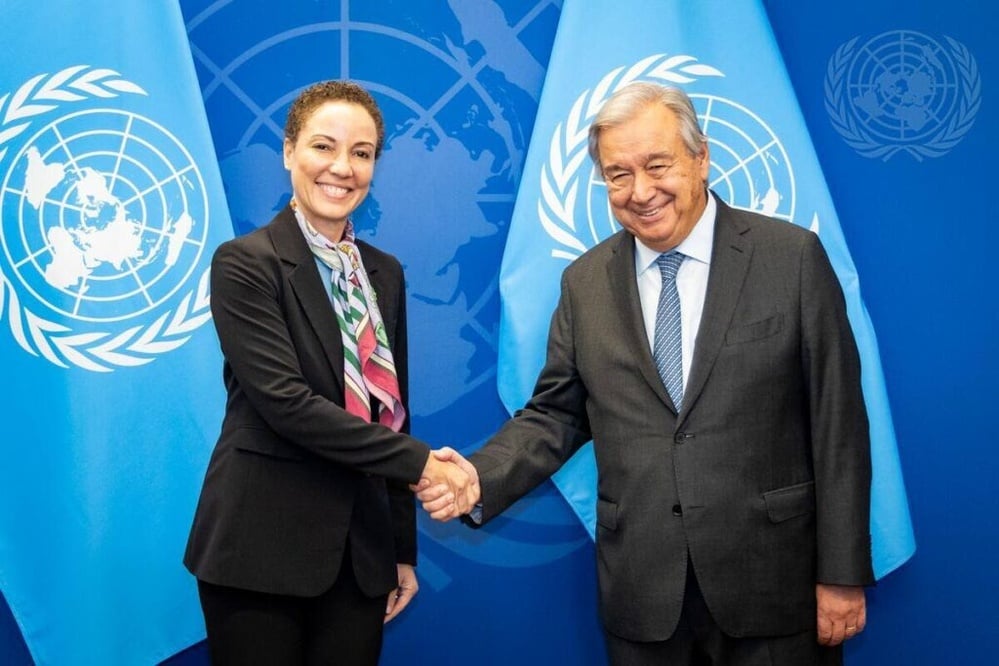
2026 © Helium Trades
Privacy Policy & Disclosure
* Disclaimer: Nothing on this website constitutes investment advice, performance data or any recommendation that any particular security, portfolio of securities, transaction or investment strategy is suitable for any specific person. Helium Trades is not responsible in any way for the accuracy
of any model predictions or price data. Any mention of a particular security and related prediction data is not a recommendation to buy or sell that security. Investments in securities involve the risk of loss. Past performance is no guarantee of future results. Helium Trades is not responsible for any of your investment decisions,
you should consult a financial expert before engaging in any transaction.
Helium Research Assistant

How can I help you today?
Ask any question about this page.