See whether Helium helps you make better-informed decisions. Try every Pro Trader feature for 30 days. No credit card required.
Try every Pro Trader feature for 30 days. No credit card required.

July 21, 2026 · 0 shares
Neutral framing centers on a Senate hearing about a large Pentagon supplemental funding request, juxtaposing defense officials' justification with lawmakers' anger over costs and underreporting claims regarding the Iran war.
Report on a Senate appropriations hearing about a large Pentagon supplemental funding request, with $67.1 billion earmarked for the war effort, as lawmakers express cost concerns.
Automated analysis; not human reviewed. Limitations: Concise, case-specific limitations and plausible alternative interpretations.
Ambiguity: limited text; no clear stance evident.
July 21, 2026 · 0 shares
Neutral, evidence-based coverage of a Senate hearing on Iran war costs and testosterone policy, presenting Republican and Democratic perspectives and protest coverage with budget context.
A Reuters report on US Defense Secretary Pete Hegseth's Senate hearing about Iran war costs, testosterone policy, protests, and budget considerations.
Automated analysis; not human reviewed.
Limitations: Concise, case-specific limitations and plausible alternative interpretations.
·
2 of 52 available dimensions scored; omitted dimensions are not treated as neutral.
·
Verified supporting quotes for 0 of 2 scored dimensions.
Claim: No partisan tilt detected; coverage presents Republican and Democratic perspectives.
“Republicans push a $US95 billion ($136 billion) budget package to fund the military, along with aid to farmers and voting law changes that are top White House priorities.” · exact text match
“"This war is now spiralling out of control again," said Senator Patty Murray, the top Democrat on the panel, who warned that the conflict with Iran 'could be another forever war'.” · not found in supplied text
Counterevidence:
“Most Americans continue to disapprove of how Mr Trump is handling Iran, according to an AP-NORC poll.” · exact text match
Why: The piece presents voices from both major parties and frames budget details without clear tilt.
Claim: High credibility due to credible sourcing and explicit attributions.
“This service may include material from Agence France-Presse (AFP), APTN, Reuters and the BBC World Service which is copyright and cannot be reproduced.” · not found in supplied text
Why: Attribution to Reuters and other agencies supports credibility; no contradictions are presented in-text.
Ambiguity in numbers; quotes indicate multiple viewpoints; risk of selective emphasis.
July 21, 2026 · 0 shares
Neutral, evidence-based coverage of a Senate hearing on Iran war costs and testosterone policy, presenting Republican and Democratic perspectives and protest coverage with budget context.
A Reuters report on US Defense Secretary Pete Hegseth's Senate hearing about Iran war costs, testosterone policy, protests, and budget considerations.
Automated analysis; not human reviewed.
Limitations: Concise, case-specific limitations and plausible alternative interpretations.
·
2 of 52 available dimensions scored; omitted dimensions are not treated as neutral.
·
Verified supporting quotes for 0 of 2 scored dimensions.
Claim: No partisan tilt detected; coverage presents Republican and Democratic perspectives.
“Republicans push a $US95 billion ($136 billion) budget package to fund the military, along with aid to farmers and voting law changes that are top White House priorities.” · exact text match
“"This war is now spiralling out of control again," said Senator Patty Murray, the top Democrat on the panel, who warned that the conflict with Iran 'could be another forever war'.” · not found in supplied text
Counterevidence:
“Most Americans continue to disapprove of how Mr Trump is handling Iran, according to an AP-NORC poll.” · exact text match
Why: The piece presents voices from both major parties and frames budget details without clear tilt.
Claim: High credibility due to credible sourcing and explicit attributions.
“This service may include material from Agence France-Presse (AFP), APTN, Reuters and the BBC World Service which is copyright and cannot be reproduced.” · not found in supplied text
Why: Attribution to Reuters and other agencies supports credibility; no contradictions are presented in-text.
Ambiguity in numbers; quotes indicate multiple viewpoints; risk of selective emphasis.
Descriptive, largely neutral coverage of a Senate hearing where Hegseth cites a revised Iran-war cost estimate of $37.5 billion and a $95 billion funding package, noting casualties and protests with minimal editorializing.
Concise, fact-focused report on a hearing about Iran-war costs, funding, casualties, and protests.
Ambiguity: mislabeling of Hegseth's role; data may be single-sourced.
July 22, 2026 · 0 shares
Balanced, multi-perspective coverage of a bipartisan Senate hearing scrutinizing the Iran war strategy and emergency funding, citing officials, lawmakers, and think tanks to illustrate concerns about costs, objectives, and congressional authorization without endorsing a position.
Report on a bipartisan Senate hearing scrutinizing the White House's Iran war strategy and emergency funding request, including official figures, lawmakers' criticisms and defense analysts' perspectives.
Automated analysis; not human reviewed.
Limitations: Concise excerpt; context beyond this article isn't included; quotes could be selectively edited; potential multiple interpretations exist.
·
1 of 52 available dimensions scored; omitted dimensions are not treated as neutral.
·
Verified supporting quotes for 0 of 1 scored dimensions.
Claim: The article presents credible reporting with diverse sources and balanced framing.
“According to Defense Department figures presented during the hearing, 17 American service members have now been killed since the conflict began, while more than 100 troops have been wounded.” · exact text match
“Defense analysts at the Center for Strategic and International Studies (CSIS) argued that although the administration has framed the supplemental request as wartime spending, much of the proposed funding reflects longer-term Pentagon modernization priorities rather than immediate operational costs, raising questions about how much of the package is directly linked to combat requirements.” · exact text match
“Some lawmakers argued that the Constitution grants Congress—not the executive branch—the authority to declare war, insisting that any prolonged military campaign against Iran requires formal legislative approval.” · not found in supplied text
Counterevidence:
“Under fire on Capitol Hill: Hegseth faces bipartisan scrutiny over Iran war.” · exact text match
“Patty Murray likewise criticized what she described as the administration's request for a 'blank check,' arguing that Congress should not approve tens of billions of dollars in additional funding without a detailed explanation of how the conflict would end.” · not found in supplied text
Why: Diversity of sources (official data, think tank, and lawmakers) and explicit cross-party critique support a neutral portrayal rather than partisan slant.
Ambiguity: limited excerpt; context beyond text may shift interpretation.
Neutral report of a partisan clash during a Senate hearing on the Pentagon budget for the Iran war, presenting quotes from both sides and noting a loaded slogan used by the secretary, without endorsing either side.
Concise, factful, accurate, balanced context for the article in one sentence.
Automated analysis; not human reviewed.
Limitations: Concise, case-specific limitations and plausible alternative interpretations.
·
52 of 52 available dimensions scored; omitted dimensions are not treated as neutral.
·
Verified supporting quotes for 0 of 52 scored dimensions.
Claim: Neutral framing with balanced sourcing.
“The post ‘Trump Derangement Syndrome’: Pete Hegseth Clashes with Sen. Peters During Hearing Over Military Budget” · exact text match
“‘Shame on you and others who call this a quagmire and a failure, and then you want to turn around and say you support the warfighter,’ he added.” · not found in supplied text
“‘Political cowardice of Democrats who won’t fund the troops,’” · not found in supplied text
Counterevidence:
“The headline and phrase 'Trump Derangement Syndrome' may signal a framing that aligns with partisan rhetoric.” · not found in supplied text
Why: Presence of a loaded slogan in the headline alongside balanced quotes suggests potential framing, though the body quotes both sides.
Claim: Reporting appears objective and event-focused, without overt editorialization.
“The article describes a shouting match and cites direct quotes from both sides.” · not found in supplied text
“It provides cost figures and policy context rather than normative judgments.” · not found in supplied text
Counterevidence:
“The headline includes a loaded political phrase which could color perception.” · not found in supplied text
Why: Direct quotes and event description support objectivity, but the headline's phrasing introduces potential subjective framing.
Claim: Minimal sensationalism beyond standard news framing; emphasis is on quotes and event details.
“Headline contains the provocative phrase 'Trump Derangement Syndrome'.” · not found in supplied text
“Descriptions like 'shouting match' and 'clash' signal drama but are part of reportage.” · not found in supplied text
Counterevidence:
“Most of the article centers on factual details (cost estimates, policy items) rather than overt sensationalism.” · not found in supplied text
Why: The phrase in the headline adds a sensational note, but body content remains focused on reported facts.
Claim: Low to moderate political framing, centered on a budget hearing and partisan exchanges.
“Quotations reflect partisan rhetoric (e.g., 'Trump derangement syndrome', 'Political cowardice of Democrats who won’t fund the troops'),” · not found in supplied text
“Discussion of cost and policy allocations tied to political actors.” · not found in supplied text
Counterevidence:
“The article presents both sides' arguments and avoids endorsing either position.” · not found in supplied text
Why: The content is inherently political but is framed as reporting of a hearing with direct quotes from both sides.
Claim: No strong tilt toward establishment or anti-establishment perspectives.
“References to a White House-backed proposal indicate alignment with official policy positions.” · not found in supplied text
“Opposing views (Peters) are presented and quoted, maintaining balance.” · not found in supplied text
Counterevidence:
“The phrase 'White House-backed' could subtly privilege an administration stance.” · not found in supplied text
Why: Balanced presentation with a nod to official policy, yet still quotes opposing viewpoints.
Ambiguity about numbers and sourcing; limited corroboration beyond quotes.
Conservative-leaning outlet framing with anti-mainstream rhetoric and promotional content that foregrounds protest voices while presenting budget details and official statements.
A concise report on protesters interrupting War Secretary Pete Hegseth's Senate Appropriations Committee testimony about the Pentagon budget, including figures and quotes from protesters and officials, with promotional material from the outlet.
Automated analysis; not human reviewed.
Limitations: Concise, case-specific limitations and plausible alternative interpretations.
·
21 of 52 available dimensions scored; omitted dimensions are not treated as neutral.
·
Verified supporting quotes for 3 of 21 scored dimensions.
Claim: Score suggests conservative framing in outlet's reporting.
“"As the mainstream media repeatedly fails and loses public trust, TGP has continued to offer accurate and timely reporting for almost two decades.
Visit TGP FactCheck to see how we get it right."”
· exact text match
“"EXCLUSIVE… BELFAST: A NEW MENACE RISING: Enrique Tarrio Captures a Story the Mainstream Media Won’t Touch – Northern Ireland Enters Unexpected Frontline in Broader Battle to Save the West"” · exact text match
“"Visit GatewayHispanic.com to read news of interest to the hispanic community."” · exact text match
Counterevidence:
“"Not even one minute into Hegseth’s opening statement before the committee, multiple interruptions from protesters were staged."” · exact text match
“"This is against the Iranian people, 90 million people," she continued.” · verified after text normalization
Why: Prominent anti-mainstream rhetoric and promotional content suggest a conservative-leaning framing.
Claim: Slight subjectivity due to editorial framing and promotional content.
“"As the mainstream media repeatedly fails and loses public trust, TGP has continued to offer accurate and timely reporting for almost two decades.
Visit TGP FactCheck to see how we get it right."”
· exact text match
“"EXCLUSIVE… BELFAST: A NEW MENACE RISING: Enrique Tarrio Captures a Story the Mainstream Media Won’t Touch – Northern Ireland Enters Unexpected Frontline in Broader Battle to Save the West"” · exact text match
Counterevidence:
“"Rest assured that every dollar appropriated to the Department of War will be focused on building the lethality of our joint force, and reinforcing peace through strength."” · not found in supplied text
“"The secretary did not mention Iran directly in his opening remarks but said the supplemental request includes $21 billion for readiness..."” · not found in supplied text
Why: Mix of reporting with promotional/interpretive language indicates slight subjectivity.
Claim: Headlines and phrases employ sensational framing.
“"EXCLUSIVE… BELFAST: A NEW MENACE RISING: Enrique Tarrio Captures a Story the Mainstream Media Won’t Touch – Northern Ireland Enters Unexpected Frontline in Broader Battle to Save the West"” · exact text match
“"A NEW MENACE RISING"” · not found in supplied text
Counterevidence:
“"Rest assured that every dollar..."” · not found in supplied text
Why: Sensational wording and 'EXCLUSIVE' framing heighten dramatic tone.
Claim: No market orientation detected; article is political news.
Why: No explicit market or investor sentiment content in the text.
Claim: The piece covers political issues (defense budget and protests) with a tilt toward arguments supporting defense funding.
“"67 billion" budget figure; "21 billion for readiness"; quotes about 'peace through strength'” · not found in supplied text
“"No War on Iran"; "Stop bombing our children"” · not found in supplied text
Counterevidence:
“Protesters' quotes illustrate anti-war stance and critical view of war policy.” · not found in supplied text
Why: Budget emphasis and quotes reflect a political stance around defense policy and anti-war sentiment.
Claim: Evidence of anti-establishment stance via mainstream media critique.
“"As the mainstream media repeatedly fails and loses public trust, TGP has continued to offer accurate and timely reporting for almost two decades.
Visit TGP FactCheck to see how we get it right."”
· exact text match
“"EXCLUSIVE… BELFAST: A NEW MENACE RISING: Enrique Tarrio Captures a Story the Mainstream Media Won’t Touch – Northern Ireland Enters Unexpected Frontline in Broader Battle to Save the West"” · exact text match
“"Visit GatewayHispanic.com to read news of interest to the hispanic community."” · exact text match
Counterevidence:
“"Rest assured that every dollar appropriated to the Department of War will be focused on building the lethality of our joint force, and reinforcing peace through strength."” · not found in supplied text
Why: Quoted anti-mainstream rhetoric and promotional material indicate anti-establishment framing.
Possible anti-establishment tilt; ad content may bias; evidence gaps.
July 22, 2026 · 0 shares
Framing is balanced, presenting protesters' criticisms, a defense secretary's funding proposal, and procedural pauses without endorsing either side or advancing a specific viewpoint.
Report on protests during a war funding hearing in Washington, DC, including a defense secretary's push for military funding and parliamentary pauses.
Automated analysis; not human reviewed.
Limitations: Case-specific context limited to this hearing report; embedded noise in article_text could affect interpretation; quotes reflect participants but not a stated editorial stance.
·
52 of 52 available dimensions scored; omitted dimensions are not treated as neutral.
·
Verified supporting quotes for 0 of 52 scored dimensions.
Claim: Neutral framing with quotes from protesters and lawmakers, not skewed toward any ideology.
“Hegseth heckled by protesters during Iran war funding hearing.” · exact text match
“During his opening remarks in Washington DC, on Tuesday (21 July), Mr Hegseth was accused of having 'blood on his hands' by a protester outside the room.” · not found in supplied text
“'Stop bombing our children in Iran and Palestine - this is illegal,' a protester said again, in a second outburst just moments later.” · not found in supplied text
Counterevidence:
“In his first testimony on the conflict in more than two months, the defense secretary urged senators to approve what he is calling 'an urgent, necessary injection' of $67bn into the US military.” · not found in supplied text
Why: The text presents multiple viewpoints (protesters and officials) and describes procedural conduct, indicating a balanced framing rather than ideological tilt.
Embedded junk text; context uncertain, may bias interpretation.
July 21, 2026 · 0 shares
Neutral, evidence-based coverage of a Senate hearing on Iran war costs and testosterone policy, presenting Republican and Democratic perspectives and protest coverage with budget context.
A Reuters report on US Defense Secretary Pete Hegseth's Senate hearing about Iran war costs, testosterone policy, protests, and budget considerations.
Automated analysis; not human reviewed.
Limitations: Concise, case-specific limitations and plausible alternative interpretations.
·
2 of 52 available dimensions scored; omitted dimensions are not treated as neutral.
·
Verified supporting quotes for 0 of 2 scored dimensions.
Claim: No partisan tilt detected; coverage presents Republican and Democratic perspectives.
“Republicans push a $US95 billion ($136 billion) budget package to fund the military, along with aid to farmers and voting law changes that are top White House priorities.” · exact text match
“"This war is now spiralling out of control again," said Senator Patty Murray, the top Democrat on the panel, who warned that the conflict with Iran 'could be another forever war'.” · not found in supplied text
Counterevidence:
“Most Americans continue to disapprove of how Mr Trump is handling Iran, according to an AP-NORC poll.” · exact text match
Why: The piece presents voices from both major parties and frames budget details without clear tilt.
Claim: High credibility due to credible sourcing and explicit attributions.
“This service may include material from Agence France-Presse (AFP), APTN, Reuters and the BBC World Service which is copyright and cannot be reproduced.” · not found in supplied text
Why: Attribution to Reuters and other agencies supports credibility; no contradictions are presented in-text.
Ambiguity in numbers; quotes indicate multiple viewpoints; risk of selective emphasis.
July 21, 2026 · 0 shares
Bias summary: A critical framing of Pentagon spending on the Iran war emphasizes disputed costs, budget reallocations, and public opposition, signaling an oversight-oriented bias toward defense spending.
A budget-focused report detailing Pentagon funding requests for the Iran war, citing contested cost estimates, budget reallocations, and public opposition.
Automated analysis; not human reviewed.
Limitations: Concise, case-specific limitations and plausible alternative interpretations.
·
1 of 52 available dimensions scored; omitted dimensions are not treated as neutral.
·
Verified supporting quotes for 0 of 1 scored dimensions.
Limited excerpt; quotes may be selective; context may alter interpretation.
Left-leaning tilt evident through emphasis on antiwar critique, independent-media framing, and activist protest coverage, with Democratic objections to war funding foregrounded while defense officials' arguments are included, resulting in a politically charged and somewhat sensational presentation.
Democracy Now. coverage of Defense Secretary Pete Hegseth's Senate Appropriations Committee hearing on the cost and funding of the Iran war amid rising costs and antiwar protests.
Automated analysis; not human reviewed.
·
52 of 52 available dimensions scored; omitted dimensions are not treated as neutral.
·
Verified supporting quotes for 0 of 52 scored dimensions.
Claim: Left-leaning framing through emphasis on antiwar critique and independent-media framing.
“"Unlimited Money for Bombs": Democrats Slam Hegseth for Seeking $67B for Iran War” · exact text match
“"You’re requesting billions of dollars in supplemental funding for a war that you said would last for weeks and that the president has no plan or ability to end," said Senator Kirsten Gillibrand, a Democrat from New York, during the hearing.
"You are asking for unlimited money for bombs when people can’t feed their families."”
· verified after text normalization
“"this still-unauthorized and extremely unpopular war has caused gas, diesel, fertilizer and other essentials that New Yorkers and our farmers need."” · not found in supplied text
Counterevidence:
“"Not unlimited bombs, Senator.
I’m asking for the right bombs at the right time to ensure we can deter our adversaries into the future."”
· not found in supplied text
“"generational investment.
And it was the previous administration that didn’t fund this department."”
· not found in supplied text
Why: Quotations and framing indicate a coverage tilt toward antiwar, liberal viewpoints, with some balancing quotes from the defense secretary.
Claim: Anti-elite, populist framing through emphasis on independent media and donor-driven funding.
“"Commercial media consolidation is already devastating newsrooms across the country.
That is why we need to keep fighting for an independent press.
We must build an independent media that includes diverse perspectives and keeps the public empowered with reliable information."”
· not found in supplied text
“"For the only time this month, a group of generous donors will TRIPLE all donations made today, which means your $15 gift is worth $45. Please donate today, so we can keep bringing you fearless reporting from authentic voices and help keep our democracy intact."” · not found in supplied text
“"We rely on contributions from you, our viewers and listeners to do our work.
If you visit us daily or weekly or even just once a month, now is a great time to make your monthly contribution."”
· exact text match
Counterevidence:
“"Not unlimited bombs, Senator.
I’m asking for the right bombs at the right time to ensure we can deter our adversaries into the future."”
· not found in supplied text
Why: Text promotes independent media and donor support, signaling anti-elite framing; counterquotes show other perspective.
Claim: Occasional normative language indicating subjectivity, interspersed with objective figures.
“"The cost of the war on Iran has soared to over $37 billion"” · not found in supplied text
“"independent estimates and media reports based on internal leaks suggest the true figure is much higher."” · not found in supplied text
“"this still-unauthorized and extremely unpopular war"” · not found in supplied text
Counterevidence:
“"Not unlimited bombs, Senator.
I’m asking for the right bombs at the right time to ensure we can deter our adversaries into the future."”
· not found in supplied text
Why: Numbers and quotes are mixed with normative descriptors, creating a balance but with subjective framing.
Claim: Some sensational framing in the headline and language.
“"Unlimited Money for Bombs": Democrats Slam Hegseth for Seeking $67B for Iran War” · exact text match
“the 11th straight day of bombing” · not found in supplied text
“the cost has soared to over $37 billion” · not found in supplied text
Counterevidence:
“"Not unlimited bombs, Senator.
I’m asking for the right bombs at the right time"”
· not found in supplied text
Why: Headlines and phrases frame the issue with strong, provocative language, indicating heightened sensational framing.
Claim: High degree of political framing around Democratic objections to war funding and Republican defense.
“"Democrats Slam Hegseth for Seeking $67B for Iran War"” · not found in supplied text
“"You are asking for unlimited money for bombs when people can’t feed their families."” · verified after text normalization
“the war is described as unpopular and unauthorized” · not found in supplied text
Counterevidence:
“"Not unlimited bombs... right bombs at the right time"” · not found in supplied text
Why: Framing revolves around political dispute over war funding and party lines.
Claim: The coverage centers on formal political processes, with emphasis on official statements and hearings.
“"The U.S. is continuing to strike Iran for an 11th straight day."” · not found in supplied text
“"Defense Secretary Pete Hegseth on Tuesday revealed the cost..."” · not found in supplied text
“"SEN.
KIRSTEN GILLIBRAND" quotes”
· not found in supplied text
Counterevidence:
“"the still-unauthorized and extremely unpopular war".” · not found in supplied text
Why: Focus on government actions and official statements with antiwar critique in the foreground.
Claim: Inclusion of emotionally charged phrases and civilian impact concerns.
“"people can’t feed their families"” · not found in supplied text
“"extremely unpopular war"” · not found in supplied text
“"gas, diesel, fertilizer and other essentials"” · not found in supplied text
Counterevidence:
“"Not unlimited bombs"” · not found in supplied text
Why: Emotional language accompanies factual data, shaping reader response.
Claim: Donor-driven fundraising language appears within the article, giving advertorial tone.
“"For the only time this month, a group of generous donors will TRIPLE all donations..."” · not found in supplied text
Counterevidence:
“"We rely on contributions to do our work."” · not found in supplied text
Why: Within-article fundraising language can create advertorial impression.
Claim: Use of loaded framing (bold headline, donor appeals) as manipulative techniques.
“"Unlimited Money for Bombs"” · exact text match
“advertisement-style donor language” · not found in supplied text
Counterevidence:
“quotes from officials presenting policy details” · not found in supplied text
Why: Loaded framing and fundraising language may steer reader perception.
Claim: Potentially compromised by advertising content and ad-like fundraising asks embedded in the article.
“"For the only time this month, a group of generous donors will TRIPLE all donations made today, which means your $15 gift is worth $45."” · not found in supplied text
“"We rely on contributions from you, our viewers and listeners to do our work."” · not found in supplied text
Counterevidence:
“"This is democracy now. I’m Amy Goodman."” · not found in supplied text
Why: Donation solicitations embedded within the article content may influence perceived integrity.
Ambiguities in numbers and donor content; potential left-leaning tilt; case-specific limitations.
July 21, 2026 · 0 shares
Neutral framing centers on a Senate hearing about a large Pentagon supplemental funding request, juxtaposing defense officials' justification with lawmakers' anger over costs and underreporting claims regarding the Iran war.
Report on a Senate appropriations hearing about a large Pentagon supplemental funding request, with $67.1 billion earmarked for the war effort, as lawmakers express cost concerns.
Automated analysis; not human reviewed. Limitations: Concise, case-specific limitations and plausible alternative interpretations.
Ambiguity: limited text; no clear stance evident.
July 22, 2026 · 0 shares
Balanced, multi-perspective coverage of a bipartisan Senate hearing scrutinizing the Iran war strategy and emergency funding, citing officials, lawmakers, and think tanks to illustrate concerns about costs, objectives, and congressional authorization without endorsing a position.
Report on a bipartisan Senate hearing scrutinizing the White House's Iran war strategy and emergency funding request, including official figures, lawmakers' criticisms and defense analysts' perspectives.
Automated analysis; not human reviewed. Limitations: Concise excerpt; context beyond this article isn't included; quotes could be selectively edited; potential multiple interpretations exist. · 1 of 52 available dimensions scored; omitted dimensions are not treated as neutral. · Verified supporting quotes for 0 of 1 scored dimensions.
Claim: The article presents credible reporting with diverse sources and balanced framing.
“According to Defense Department figures presented during the hearing, 17 American service members have now been killed since the conflict began, while more than 100 troops have been wounded.” · exact text match
“Defense analysts at the Center for Strategic and International Studies (CSIS) argued that although the administration has framed the supplemental request as wartime spending, much of the proposed funding reflects longer-term Pentagon modernization priorities rather than immediate operational costs, raising questions about how much of the package is directly linked to combat requirements.” · exact text match
“Some lawmakers argued that the Constitution grants Congress—not the executive branch—the authority to declare war, insisting that any prolonged military campaign against Iran requires formal legislative approval.” · not found in supplied text
Counterevidence:
“Under fire on Capitol Hill: Hegseth faces bipartisan scrutiny over Iran war.” · exact text match
“Patty Murray likewise criticized what she described as the administration's request for a 'blank check,' arguing that Congress should not approve tens of billions of dollars in additional funding without a detailed explanation of how the conflict would end.” · not found in supplied text
Why: Diversity of sources (official data, think tank, and lawmakers) and explicit cross-party critique support a neutral portrayal rather than partisan slant.
Ambiguity: limited excerpt; context beyond text may shift interpretation.
July 21, 2026 · 0 shares
Neutral, evidence-based coverage of a Senate hearing on Iran war costs and testosterone policy, presenting Republican and Democratic perspectives and protest coverage with budget context.
A Reuters report on US Defense Secretary Pete Hegseth's Senate hearing about Iran war costs, testosterone policy, protests, and budget considerations.
Automated analysis; not human reviewed. Limitations: Concise, case-specific limitations and plausible alternative interpretations. · 2 of 52 available dimensions scored; omitted dimensions are not treated as neutral. · Verified supporting quotes for 0 of 2 scored dimensions.
Claim: No partisan tilt detected; coverage presents Republican and Democratic perspectives.
“Republicans push a $US95 billion ($136 billion) budget package to fund the military, along with aid to farmers and voting law changes that are top White House priorities.” · exact text match
“"This war is now spiralling out of control again," said Senator Patty Murray, the top Democrat on the panel, who warned that the conflict with Iran 'could be another forever war'.” · not found in supplied text
Counterevidence:
“Most Americans continue to disapprove of how Mr Trump is handling Iran, according to an AP-NORC poll.” · exact text match
Why: The piece presents voices from both major parties and frames budget details without clear tilt.
Claim: High credibility due to credible sourcing and explicit attributions.
“This service may include material from Agence France-Presse (AFP), APTN, Reuters and the BBC World Service which is copyright and cannot be reproduced.” · not found in supplied text
Why: Attribution to Reuters and other agencies supports credibility; no contradictions are presented in-text.
Ambiguity in numbers; quotes indicate multiple viewpoints; risk of selective emphasis.
Neutral overall with a mild pro-defense spending tilt and hawkish framing through emphasis on costs, budget requests, and defense modernization while including Democratic criticisms.
Concise briefing on the cost of the U.S. war against Iran, the request for additional defense funding, and the ensuing political debate between Republican defense advocates and Democratic critics.
Automated analysis; not human reviewed. · 52 of 52 available dimensions scored; omitted dimensions are not treated as neutral. · Verified supporting quotes for 2 of 52 scored dimensions.
Claim: Article shows a mild conservative tilt emphasizing defense spending and modernization.
“"the large defence budget requests were a 'generational' investment required to modernize the Defense Department’s weapons and capabilities"” · not found in supplied text
“"Do you want radical Islamists to have a nuclear bomb?"” · verified after text normalization
Counterevidence:
“"Democrats have repeatedly suggested the big funding requests signalled the administration was planning for a longer conflict."” · not found in supplied text
Why: Framing includes defense-spending language alongside bipartisan debate.
Claim: No strong populist or anti-elite framing detected; coverage centers on official proceedings.
“"Senate Appropriations Committee"” · not found in supplied text
“"Defense Secretary" testifying” · not found in supplied text
Counterevidence:
“"generational investment" framing is policy-elite language, not populist rhetoric.” · not found in supplied text
Why: Institutional framing dominates; no populist rhetoric.
Claim: Mild tilt toward state-centric policy given emphasis on defense spending and war decisions.
“"generational investment" in modernization of the Defense Department” · not found in supplied text
“discussion of escalation and war strategy” · not found in supplied text
Counterevidence:
“No explicit civil-liberties restriction rhetoric.” · not found in supplied text
Why: Defense-policy emphasis without broader civil-liberties framing.
Claim: Overall balance between pro-spending viewpoints and critical commentary.
“"Hegseth rejected their negative characterizations"” · not found in supplied text
“"Patty Murray" critique quotes” · not found in supplied text
Counterevidence:
“Descriptive language like 'unpopular conflict' appears in context of criticism.” · not found in supplied text
Why: Quoted voices from both sides support objective balance.
Claim: Not sensationalist; presents figures and hearing context.
“"US$37.5 billion"” · not found in supplied text
“"three-hour hearing"” · not found in supplied text
Counterevidence:
“"unpopular conflict" descriptor by Democrats could be seen as evaluative.” · not found in supplied text
Why: Factual reporting with occasional charged descriptors.
Claim: Slight bullish tilt toward defense spending and modernization.
“"generational investment" in modernization” · not found in supplied text
“detailed funding breakdowns for missiles, drones, etc.” · not found in supplied text
Counterevidence:
“Democratic criticisms noted.” · not found in supplied text
Why: Net effect modestly supportive of funding amid debate.
Claim: Moderately interesting due to concrete cost figures and political clash.
“"US$37.5 billion" and breakdowns” · not found in supplied text
“"US$21 billion" for missiles and munitions” · not found in supplied text
Counterevidence:
“Topic is typical political funding debate.” · not found in supplied text
Why: Data points and quotes sustain interest but are within standard coverage.
Claim: Primarily descriptive; no prescriptive policy prescriptions from author.
“"reported as" and breakdowns of costs and funding” · not found in supplied text
Counterevidence:
“"generational investment" phrase could imply normative stance.” · not found in supplied text
Why: Predominantly descriptive with occasional normative phrasing from participants.
Claim: Mixed hawkish voices (defense spending) and dovish criticisms (opposition commentary).
“"generational investment" in defense” · not found in supplied text
“Murray's criticisms about escalation” · not found in supplied text
Counterevidence:
“Hegseth's defense-advocacy quotes.” · not found in supplied text
Why: Balanced but leans toward hawkish framing through funding emphasis.
Claim: No sustained fear-based framing; occasional war-crimes language appears in a quote.
“"war crimes"” · not found in supplied text
Counterevidence:
“Primarily a cost/funding discussion.” · not found in supplied text
Why: Fear-related language is limited to a single critic's remark.
Claim: No clear evidence of circular argumentation.
“Diverse statements and counterstatements are presented.” · not found in supplied text
Counterevidence:
“No explicit circular logic observed.” · not found in supplied text
Why: No explicit begging-the-question pattern detected.
Claim: No gossip or tabloid-like framing detected.
“Newswire-style quotes and official figures.” · not found in supplied text
Counterevidence:
“N/A” · not found in supplied text
Why: Professional reporting with official context.
Claim: Minimal authorial opinion; quotes and cost data predominate.
“"Would you rather..." rhetorical questions quoted” · not found in supplied text
“"generational investment" language from a official source” · not found in supplied text
Counterevidence:
“Editorial tone is restrained; but some evaluative language appears in quotes.” · not found in supplied text
Why: Authorial voice appears minimal; quotes drive narrative.
Claim: Balanced political coverage with both GOP and Democratic perspectives.
“Hegseth (Republican defense advocate) quote” · not found in supplied text
“Patty Murray (Democrat) quote” · not found in supplied text
Counterevidence:
“Article highlights costs and funding without ideological framing beyond reporting.” · not found in supplied text
Why: Dual-perspective presentation reduces political tilt.
Claim: No clear oversimplification; multiple cost figures and policy details provided.
“"US$37.5B" cost; "US$29B" prior estimate; 3-hour hearing; breakdowns.” · not found in supplied text
Counterevidence:
“Narrative reduces to costs and funding, excluding broader geopolitical context.” · not found in supplied text
Why: Data-rich but may omit broader context; not obviously oversimplified.
Claim: Use of authority figures to frame cost and policy questions.
“"Defense Secretary Pete Hegseth" testified” · not found in supplied text
“"General Dan Caine" commented” · not found in supplied text
Counterevidence:
“Democratic critique is presented alongside.” · not found in supplied text
Why: Authorities cited to ground the discussion.
Claim: No immature framing detected.
“"calm and composed" description of Hegseth” · not found in supplied text
Why: Professional tone observed.
Claim: No circular reasoning identified.
“Duel perspectives presented; no self-referential argument.” · not found in supplied text
Why: No circular argumentative structure detected.
Claim: Balanced coverage across sides with direct quotes and counterquotes.
“"Hegseth rejected their negative characterizations"” · not found in supplied text
“"Patty Murray" criticisms” · not found in supplied text
Counterevidence:
“N/A” · not found in supplied text
Why: Multiple viewpoints are included.
Claim: No targeted victimization framing; rhetoric used is policy-focused.
“"Do you want radical Islamists to have a nuclear bomb?"” · verified after text normalization
Counterevidence:
“No systemic portrayal of a protected group as victims.” · not found in supplied text
Why: Rhetorical device rather than victimization frame.
Claim: No overconfident assertions beyond attributed statements.
“"No one ever stated that every single missile was gone"” · not found in supplied text
Counterevidence:
“"Victory" claim by Hegseth is attributed to his own statement.” · not found in supplied text
Why: Several assertions are clearly attributed to speakers.
Claim: Establishment-aligned framing given focus on official testimony and committee proceedings.
“Senate Appropriations Committee hearing” · not found in supplied text
“Defense Secretary's statements” · not found in supplied text
Counterevidence:
“Democratic counterpoints are included.” · not found in supplied text
Why: Aligned with official-government process framing.
Claim: Predominantly rational framing with numeric data; some charged rhetoric present.
“"US$37.5 billion"” · not found in supplied text
“"US$67 billion" funding request” · not found in supplied text
“"US$29 billion" previous estimate” · not found in supplied text
Counterevidence:
“"This war is now spiraling out of control again"” · not found in supplied text
Why: Data-driven reporting with occasional opinionated framing from participants.
Claim: Fair treatment of multiple sides; quotes from both sides are included.
“"the committee’s top Democrat, Senator Patty Murray"” · not found in supplied text
“"Hegseth grew combative" during exchange” · not found in supplied text
Counterevidence:
“No evidence of misrepresentation; quotes attributed.” · not found in supplied text
Why: Balanced sourcing and attribution suggest integrity.
Claim: Article demonstrates solid reporting with factual grounding.
“"US$37.5 billion"; "US$21 billion"; quotes; committee context” · not found in supplied text
Counterevidence:
“Some quotes may imply normative judgments, not just facts.” · not found in supplied text
Why: Data-rich and sourced from named officials.
Claim: No endorsement or justification of violence; framing is about policy and rhetoric.
“"Do you want radical Islamists to have a nuclear bomb?"” · verified after text normalization
“"war crimes"” · not found in supplied text
Counterevidence:
“No pro-violence stance; critical commentary is present.” · not found in supplied text
Why: Discourse about terrorism risk, not endorsement.
Claim: No Marxist framing detected.
“No mention of class struggle or Marxist theory.” · not found in supplied text
Why: Topic stays within defense policy/political debate.
Claim: No advocacy for Islamist governance; reference to 'radical Islamists' as a framing device.
“"Do you want radical Islamists to have a nuclear bomb?"” · verified after text normalization
Counterevidence:
“No policy advocacy for Islamist groups.” · not found in supplied text
Why: Contextual usage rather than ideological advocacy.
Claim: No anti-Semitic framing detected.
“No references to Jewish groups or stereotypes.” · not found in supplied text
Counterevidence:
“N/A” · not found in supplied text
Why: No content suggesting anti-Semitism.
Ambiguities: year of the war not explicit; reliance on quotes; mixed coverage.
July 21, 2026 · 0 shares
Neutral, evidence-based coverage of a Senate hearing on Iran war costs and testosterone policy, presenting Republican and Democratic perspectives and protest coverage with budget context.
A Reuters report on US Defense Secretary Pete Hegseth's Senate hearing about Iran war costs, testosterone policy, protests, and budget considerations.
Automated analysis; not human reviewed. Limitations: Concise, case-specific limitations and plausible alternative interpretations. · 2 of 52 available dimensions scored; omitted dimensions are not treated as neutral. · Verified supporting quotes for 0 of 2 scored dimensions.
Claim: No partisan tilt detected; coverage presents Republican and Democratic perspectives.
“Republicans push a $US95 billion ($136 billion) budget package to fund the military, along with aid to farmers and voting law changes that are top White House priorities.” · exact text match
“"This war is now spiralling out of control again," said Senator Patty Murray, the top Democrat on the panel, who warned that the conflict with Iran 'could be another forever war'.” · not found in supplied text
Counterevidence:
“Most Americans continue to disapprove of how Mr Trump is handling Iran, according to an AP-NORC poll.” · exact text match
Why: The piece presents voices from both major parties and frames budget details without clear tilt.
Claim: High credibility due to credible sourcing and explicit attributions.
“This service may include material from Agence France-Presse (AFP), APTN, Reuters and the BBC World Service which is copyright and cannot be reproduced.” · not found in supplied text
Why: Attribution to Reuters and other agencies supports credibility; no contradictions are presented in-text.
Ambiguity in numbers; quotes indicate multiple viewpoints; risk of selective emphasis.
July 21, 2026 · 0 shares
Bias summary: A critical framing of Pentagon spending on the Iran war emphasizes disputed costs, budget reallocations, and public opposition, signaling an oversight-oriented bias toward defense spending.
A budget-focused report detailing Pentagon funding requests for the Iran war, citing contested cost estimates, budget reallocations, and public opposition.
Automated analysis; not human reviewed. Limitations: Concise, case-specific limitations and plausible alternative interpretations. · 1 of 52 available dimensions scored; omitted dimensions are not treated as neutral. · Verified supporting quotes for 0 of 1 scored dimensions.
Limited excerpt; quotes may be selective; context may alter interpretation.
July 22, 2026 · 0 shares
Balanced, multi-perspective coverage of a bipartisan Senate hearing scrutinizing the Iran war strategy and emergency funding, citing officials, lawmakers, and think tanks to illustrate concerns about costs, objectives, and congressional authorization without endorsing a position.
Report on a bipartisan Senate hearing scrutinizing the White House's Iran war strategy and emergency funding request, including official figures, lawmakers' criticisms and defense analysts' perspectives.
Automated analysis; not human reviewed. Limitations: Concise excerpt; context beyond this article isn't included; quotes could be selectively edited; potential multiple interpretations exist. · 1 of 52 available dimensions scored; omitted dimensions are not treated as neutral. · Verified supporting quotes for 0 of 1 scored dimensions.
Claim: The article presents credible reporting with diverse sources and balanced framing.
“According to Defense Department figures presented during the hearing, 17 American service members have now been killed since the conflict began, while more than 100 troops have been wounded.” · exact text match
“Defense analysts at the Center for Strategic and International Studies (CSIS) argued that although the administration has framed the supplemental request as wartime spending, much of the proposed funding reflects longer-term Pentagon modernization priorities rather than immediate operational costs, raising questions about how much of the package is directly linked to combat requirements.” · exact text match
“Some lawmakers argued that the Constitution grants Congress—not the executive branch—the authority to declare war, insisting that any prolonged military campaign against Iran requires formal legislative approval.” · not found in supplied text
Counterevidence:
“Under fire on Capitol Hill: Hegseth faces bipartisan scrutiny over Iran war.” · exact text match
“Patty Murray likewise criticized what she described as the administration's request for a 'blank check,' arguing that Congress should not approve tens of billions of dollars in additional funding without a detailed explanation of how the conflict would end.” · not found in supplied text
Why: Diversity of sources (official data, think tank, and lawmakers) and explicit cross-party critique support a neutral portrayal rather than partisan slant.
Ambiguity: limited excerpt; context beyond text may shift interpretation.
July 22, 2026 · 0 shares
Neutral, event-driven compilation of geopolitical headlines with cross-regional coverage and reliance on official statements and reported incidents, without evident editorial framing.
A collection of headlines about ongoing geopolitical tensions and conflicts across the US-Iran, Israeli-Palestinian, Ukrainian, and Lebanese contexts.
Automated analysis; not human reviewed. Limitations: Concise, case-specific limitations and plausible alternative interpretations. · 52 of 52 available dimensions scored; omitted dimensions are not treated as neutral. · Verified supporting quotes for 4 of 52 scored dimensions.
Claim: Neutral, non-ideological framing across political content.
“Ossoff challenges Hegseth on cost and duration of Iran war.” · exact text match
“Senator Jon Ossoff challenges Defense Secretary Pete Hegseth over past claims that Iran’s military had been ‘destroyed’ and rendered ‘combat ineffective,’ questioning whether those claims were accurate as US forces continue operations against Iran.” · exact text match
“Settlers attack Palestinian towns in occupied West Bank” · exact text match
Counterevidence:
“Israeli strike leaves two Palestinians burnt beyond recognition” · exact text match
“US Secretary of State say Iran is in ‘a lot of trouble’” · exact text match
Why: Coverage spans different actors and events without clear editorial stance.
Claim: Descriptive headlines reflect events with minimal interpretation.
“The Indian football tournament where goats replace trophies” · exact text match
“Zelenskyy replaces Ukraine’s commander-in-chief after days of protests” · exact text match
“Lebanese army deployed in ‘pilot zone’ as families wait to return home” · exact text match
Counterevidence:
“Israeli strike leaves two Palestinians burnt beyond recognition” · exact text match
Why: The chosen headlines reflect events rather than opinions, but sensational phrasing in some items suggests emotive framing.
Claim: Slightly sensational phrasing is present in some headlines.
“Israeli strike leaves two Palestinians burnt beyond recognition” · exact text match
“The Indian football tournament where goats replace trophies” · exact text match
Counterevidence:
“Ossoff challenges Hegseth on cost and duration of Iran war.” · exact text match
Why: Dramatic phrasing appears in select headlines but not a sustained editorial tilt.
Claim: Relies on reported events and quotes without obvious editorializing.
“Senator Jon Ossoff challenges Defense Secretary Pete Hegseth over past claims that Iran’s military had been ‘destroyed’ and rendered ‘combat ineffective,’” · exact text match
“US Secretary of State say Iran is in ‘a lot of trouble’” · exact text match
Counterevidence:
“The article uses sensational language 'burnt beyond recognition' as content.” · not found in supplied text
Why: Utilizes official quotes and reported events; limited opportunity for editorializing.
Glimpse-based, uncertain context; structured data could miss nuances.
Conservative-leaning outlet framing with anti-mainstream rhetoric and promotional content that foregrounds protest voices while presenting budget details and official statements.
A concise report on protesters interrupting War Secretary Pete Hegseth's Senate Appropriations Committee testimony about the Pentagon budget, including figures and quotes from protesters and officials, with promotional material from the outlet.
Automated analysis; not human reviewed. Limitations: Concise, case-specific limitations and plausible alternative interpretations. · 21 of 52 available dimensions scored; omitted dimensions are not treated as neutral. · Verified supporting quotes for 3 of 21 scored dimensions.
Claim: Score suggests conservative framing in outlet's reporting.
“"As the mainstream media repeatedly fails and loses public trust, TGP has continued to offer accurate and timely reporting for almost two decades. Visit TGP FactCheck to see how we get it right."” · exact text match
“"EXCLUSIVE… BELFAST: A NEW MENACE RISING: Enrique Tarrio Captures a Story the Mainstream Media Won’t Touch – Northern Ireland Enters Unexpected Frontline in Broader Battle to Save the West"” · exact text match
“"Visit GatewayHispanic.com to read news of interest to the hispanic community."” · exact text match
Counterevidence:
“"Not even one minute into Hegseth’s opening statement before the committee, multiple interruptions from protesters were staged."” · exact text match
“"This is against the Iranian people, 90 million people," she continued.” · verified after text normalization
Why: Prominent anti-mainstream rhetoric and promotional content suggest a conservative-leaning framing.
Claim: Slight subjectivity due to editorial framing and promotional content.
“"As the mainstream media repeatedly fails and loses public trust, TGP has continued to offer accurate and timely reporting for almost two decades. Visit TGP FactCheck to see how we get it right."” · exact text match
“"EXCLUSIVE… BELFAST: A NEW MENACE RISING: Enrique Tarrio Captures a Story the Mainstream Media Won’t Touch – Northern Ireland Enters Unexpected Frontline in Broader Battle to Save the West"” · exact text match
Counterevidence:
“"Rest assured that every dollar appropriated to the Department of War will be focused on building the lethality of our joint force, and reinforcing peace through strength."” · not found in supplied text
“"The secretary did not mention Iran directly in his opening remarks but said the supplemental request includes $21 billion for readiness..."” · not found in supplied text
Why: Mix of reporting with promotional/interpretive language indicates slight subjectivity.
Claim: Headlines and phrases employ sensational framing.
“"EXCLUSIVE… BELFAST: A NEW MENACE RISING: Enrique Tarrio Captures a Story the Mainstream Media Won’t Touch – Northern Ireland Enters Unexpected Frontline in Broader Battle to Save the West"” · exact text match
“"A NEW MENACE RISING"” · not found in supplied text
Counterevidence:
“"Rest assured that every dollar..."” · not found in supplied text
Why: Sensational wording and 'EXCLUSIVE' framing heighten dramatic tone.
Claim: No market orientation detected; article is political news.
Why: No explicit market or investor sentiment content in the text.
Claim: The piece covers political issues (defense budget and protests) with a tilt toward arguments supporting defense funding.
“"67 billion" budget figure; "21 billion for readiness"; quotes about 'peace through strength'” · not found in supplied text
“"No War on Iran"; "Stop bombing our children"” · not found in supplied text
Counterevidence:
“Protesters' quotes illustrate anti-war stance and critical view of war policy.” · not found in supplied text
Why: Budget emphasis and quotes reflect a political stance around defense policy and anti-war sentiment.
Claim: Evidence of anti-establishment stance via mainstream media critique.
“"As the mainstream media repeatedly fails and loses public trust, TGP has continued to offer accurate and timely reporting for almost two decades. Visit TGP FactCheck to see how we get it right."” · exact text match
“"EXCLUSIVE… BELFAST: A NEW MENACE RISING: Enrique Tarrio Captures a Story the Mainstream Media Won’t Touch – Northern Ireland Enters Unexpected Frontline in Broader Battle to Save the West"” · exact text match
“"Visit GatewayHispanic.com to read news of interest to the hispanic community."” · exact text match
Counterevidence:
“"Rest assured that every dollar appropriated to the Department of War will be focused on building the lethality of our joint force, and reinforcing peace through strength."” · not found in supplied text
Why: Quoted anti-mainstream rhetoric and promotional material indicate anti-establishment framing.
Possible anti-establishment tilt; ad content may bias; evidence gaps.
Helium Bias
July 21, 2026 · 0 shares
Neutral, data-forward framing presents cost estimates and spending requests attributed to a named official with no evaluative language.
A two-sentence report attributing a cost estimate to an ongoing Iran-related war and a defense spending request to a named official, with no accompanying analysis.
Automated analysis; not human reviewed. Limitations: Concise, case-specific limitations and plausible alternative interpretations. · 1 of 52 available dimensions scored; omitted dimensions are not treated as neutral. · Verified supporting quotes for 1 of 1 scored dimensions.
Claim: Neutral presentation of cost estimates and spending request without editorializing.
“Hegseth Estimates Iran War Has Cost $37.5 Billion.” · exact text match
“Defense Secretary Pete Hegseth is requesting as much as $70 billion in emergency military spending after nearly five months of war.” · exact text match
Why: Two sentences report figures and a spending request without evaluative language.
Ambiguity: two-sentence excerpt; no sources; cannot verify figures or roles.
July 21, 2026 · 0 shares
Neutral, evidence-based coverage of a Senate hearing on Iran war costs and testosterone policy, presenting Republican and Democratic perspectives and protest coverage with budget context.
A Reuters report on US Defense Secretary Pete Hegseth's Senate hearing about Iran war costs, testosterone policy, protests, and budget considerations.
Automated analysis; not human reviewed. Limitations: Concise, case-specific limitations and plausible alternative interpretations. · 2 of 52 available dimensions scored; omitted dimensions are not treated as neutral. · Verified supporting quotes for 0 of 2 scored dimensions.
Claim: No partisan tilt detected; coverage presents Republican and Democratic perspectives.
“Republicans push a $US95 billion ($136 billion) budget package to fund the military, along with aid to farmers and voting law changes that are top White House priorities.” · exact text match
“"This war is now spiralling out of control again," said Senator Patty Murray, the top Democrat on the panel, who warned that the conflict with Iran 'could be another forever war'.” · not found in supplied text
Counterevidence:
“Most Americans continue to disapprove of how Mr Trump is handling Iran, according to an AP-NORC poll.” · exact text match
Why: The piece presents voices from both major parties and frames budget details without clear tilt.
Claim: High credibility due to credible sourcing and explicit attributions.
“This service may include material from Agence France-Presse (AFP), APTN, Reuters and the BBC World Service which is copyright and cannot be reproduced.” · not found in supplied text
Why: Attribution to Reuters and other agencies supports credibility; no contradictions are presented in-text.
Ambiguity in numbers; quotes indicate multiple viewpoints; risk of selective emphasis.
Story Blindspots
July 22, 2026 · 0 shares
Balanced, multi-perspective coverage of a bipartisan Senate hearing scrutinizing the Iran war strategy and emergency funding, citing officials, lawmakers, and think tanks to illustrate concerns about costs, objectives, and congressional authorization without endorsing a position.
Report on a bipartisan Senate hearing scrutinizing the White House's Iran war strategy and emergency funding request, including official figures, lawmakers' criticisms and defense analysts' perspectives.
Automated analysis; not human reviewed. Limitations: Concise excerpt; context beyond this article isn't included; quotes could be selectively edited; potential multiple interpretations exist. · 1 of 52 available dimensions scored; omitted dimensions are not treated as neutral. · Verified supporting quotes for 0 of 1 scored dimensions.
Claim: The article presents credible reporting with diverse sources and balanced framing.
“According to Defense Department figures presented during the hearing, 17 American service members have now been killed since the conflict began, while more than 100 troops have been wounded.” · exact text match
“Defense analysts at the Center for Strategic and International Studies (CSIS) argued that although the administration has framed the supplemental request as wartime spending, much of the proposed funding reflects longer-term Pentagon modernization priorities rather than immediate operational costs, raising questions about how much of the package is directly linked to combat requirements.” · exact text match
“Some lawmakers argued that the Constitution grants Congress—not the executive branch—the authority to declare war, insisting that any prolonged military campaign against Iran requires formal legislative approval.” · not found in supplied text
Counterevidence:
“Under fire on Capitol Hill: Hegseth faces bipartisan scrutiny over Iran war.” · exact text match
“Patty Murray likewise criticized what she described as the administration's request for a 'blank check,' arguing that Congress should not approve tens of billions of dollars in additional funding without a detailed explanation of how the conflict would end.” · not found in supplied text
Why: Diversity of sources (official data, think tank, and lawmakers) and explicit cross-party critique support a neutral portrayal rather than partisan slant.
Ambiguity: limited excerpt; context beyond text may shift interpretation.
July 21, 2026 · 0 shares
Neutral, evidence-based coverage of a Senate hearing on Iran war costs and testosterone policy, presenting Republican and Democratic perspectives and protest coverage with budget context.
A Reuters report on US Defense Secretary Pete Hegseth's Senate hearing about Iran war costs, testosterone policy, protests, and budget considerations.
Automated analysis; not human reviewed. Limitations: Concise, case-specific limitations and plausible alternative interpretations. · 2 of 52 available dimensions scored; omitted dimensions are not treated as neutral. · Verified supporting quotes for 0 of 2 scored dimensions.
Claim: No partisan tilt detected; coverage presents Republican and Democratic perspectives.
“Republicans push a $US95 billion ($136 billion) budget package to fund the military, along with aid to farmers and voting law changes that are top White House priorities.” · exact text match
“"This war is now spiralling out of control again," said Senator Patty Murray, the top Democrat on the panel, who warned that the conflict with Iran 'could be another forever war'.” · not found in supplied text
Counterevidence:
“Most Americans continue to disapprove of how Mr Trump is handling Iran, according to an AP-NORC poll.” · exact text match
Why: The piece presents voices from both major parties and frames budget details without clear tilt.
Claim: High credibility due to credible sourcing and explicit attributions.
“This service may include material from Agence France-Presse (AFP), APTN, Reuters and the BBC World Service which is copyright and cannot be reproduced.” · not found in supplied text
Why: Attribution to Reuters and other agencies supports credibility; no contradictions are presented in-text.
Ambiguity in numbers; quotes indicate multiple viewpoints; risk of selective emphasis.
July 21, 2026 · 0 shares
Bias summary: A critical framing of Pentagon spending on the Iran war emphasizes disputed costs, budget reallocations, and public opposition, signaling an oversight-oriented bias toward defense spending.
A budget-focused report detailing Pentagon funding requests for the Iran war, citing contested cost estimates, budget reallocations, and public opposition.
Automated analysis; not human reviewed. Limitations: Concise, case-specific limitations and plausible alternative interpretations. · 1 of 52 available dimensions scored; omitted dimensions are not treated as neutral. · Verified supporting quotes for 0 of 1 scored dimensions.
Limited excerpt; quotes may be selective; context may alter interpretation.
Descriptive, largely neutral coverage of a Senate hearing where Hegseth cites a revised Iran-war cost estimate of $37.5 billion and a $95 billion funding package, noting casualties and protests with minimal editorializing.
Concise, fact-focused report on a hearing about Iran-war costs, funding, casualties, and protests.
Ambiguity: mislabeling of Hegseth's role; data may be single-sourced.
July 21, 2026 · 0 shares
Neutral, evidence-based coverage of a Senate hearing on Iran war costs and testosterone policy, presenting Republican and Democratic perspectives and protest coverage with budget context.
A Reuters report on US Defense Secretary Pete Hegseth's Senate hearing about Iran war costs, testosterone policy, protests, and budget considerations.
Automated analysis; not human reviewed. Limitations: Concise, case-specific limitations and plausible alternative interpretations. · 2 of 52 available dimensions scored; omitted dimensions are not treated as neutral. · Verified supporting quotes for 0 of 2 scored dimensions.
Claim: No partisan tilt detected; coverage presents Republican and Democratic perspectives.
“Republicans push a $US95 billion ($136 billion) budget package to fund the military, along with aid to farmers and voting law changes that are top White House priorities.” · exact text match
“"This war is now spiralling out of control again," said Senator Patty Murray, the top Democrat on the panel, who warned that the conflict with Iran 'could be another forever war'.” · not found in supplied text
Counterevidence:
“Most Americans continue to disapprove of how Mr Trump is handling Iran, according to an AP-NORC poll.” · exact text match
Why: The piece presents voices from both major parties and frames budget details without clear tilt.
Claim: High credibility due to credible sourcing and explicit attributions.
“This service may include material from Agence France-Presse (AFP), APTN, Reuters and the BBC World Service which is copyright and cannot be reproduced.” · not found in supplied text
Why: Attribution to Reuters and other agencies supports credibility; no contradictions are presented in-text.
Ambiguity in numbers; quotes indicate multiple viewpoints; risk of selective emphasis.
July 21, 2026 · 0 shares
Neutral framing centers on a Senate hearing about a large Pentagon supplemental funding request, juxtaposing defense officials' justification with lawmakers' anger over costs and underreporting claims regarding the Iran war.
Report on a Senate appropriations hearing about a large Pentagon supplemental funding request, with $67.1 billion earmarked for the war effort, as lawmakers express cost concerns.
Automated analysis; not human reviewed. Limitations: Concise, case-specific limitations and plausible alternative interpretations.
Ambiguity: limited text; no clear stance evident.
July 22, 2026 · 0 shares
Balanced, multi-perspective coverage of a bipartisan Senate hearing scrutinizing the Iran war strategy and emergency funding, citing officials, lawmakers, and think tanks to illustrate concerns about costs, objectives, and congressional authorization without endorsing a position.
Report on a bipartisan Senate hearing scrutinizing the White House's Iran war strategy and emergency funding request, including official figures, lawmakers' criticisms and defense analysts' perspectives.
Automated analysis; not human reviewed. Limitations: Concise excerpt; context beyond this article isn't included; quotes could be selectively edited; potential multiple interpretations exist. · 1 of 52 available dimensions scored; omitted dimensions are not treated as neutral. · Verified supporting quotes for 0 of 1 scored dimensions.
Claim: The article presents credible reporting with diverse sources and balanced framing.
“According to Defense Department figures presented during the hearing, 17 American service members have now been killed since the conflict began, while more than 100 troops have been wounded.” · exact text match
“Defense analysts at the Center for Strategic and International Studies (CSIS) argued that although the administration has framed the supplemental request as wartime spending, much of the proposed funding reflects longer-term Pentagon modernization priorities rather than immediate operational costs, raising questions about how much of the package is directly linked to combat requirements.” · exact text match
“Some lawmakers argued that the Constitution grants Congress—not the executive branch—the authority to declare war, insisting that any prolonged military campaign against Iran requires formal legislative approval.” · not found in supplied text
Counterevidence:
“Under fire on Capitol Hill: Hegseth faces bipartisan scrutiny over Iran war.” · exact text match
“Patty Murray likewise criticized what she described as the administration's request for a 'blank check,' arguing that Congress should not approve tens of billions of dollars in additional funding without a detailed explanation of how the conflict would end.” · not found in supplied text
Why: Diversity of sources (official data, think tank, and lawmakers) and explicit cross-party critique support a neutral portrayal rather than partisan slant.
Ambiguity: limited excerpt; context beyond text may shift interpretation.
July 21, 2026 · 0 shares
Neutral, evidence-based coverage of a Senate hearing on Iran war costs and testosterone policy, presenting Republican and Democratic perspectives and protest coverage with budget context.
A Reuters report on US Defense Secretary Pete Hegseth's Senate hearing about Iran war costs, testosterone policy, protests, and budget considerations.
Automated analysis; not human reviewed. Limitations: Concise, case-specific limitations and plausible alternative interpretations. · 2 of 52 available dimensions scored; omitted dimensions are not treated as neutral. · Verified supporting quotes for 0 of 2 scored dimensions.
Claim: No partisan tilt detected; coverage presents Republican and Democratic perspectives.
“Republicans push a $US95 billion ($136 billion) budget package to fund the military, along with aid to farmers and voting law changes that are top White House priorities.” · exact text match
“"This war is now spiralling out of control again," said Senator Patty Murray, the top Democrat on the panel, who warned that the conflict with Iran 'could be another forever war'.” · not found in supplied text
Counterevidence:
“Most Americans continue to disapprove of how Mr Trump is handling Iran, according to an AP-NORC poll.” · exact text match
Why: The piece presents voices from both major parties and frames budget details without clear tilt.
Claim: High credibility due to credible sourcing and explicit attributions.
“This service may include material from Agence France-Presse (AFP), APTN, Reuters and the BBC World Service which is copyright and cannot be reproduced.” · not found in supplied text
Why: Attribution to Reuters and other agencies supports credibility; no contradictions are presented in-text.
Ambiguity in numbers; quotes indicate multiple viewpoints; risk of selective emphasis.
Framing emphasizes urgent Pentagon funding and threat rhetoric with limited counterpoints, indicating a mild conservative, hawkish, and emotionally charged presentation.
Report on defense funding in which War Secretary Pete Hegseth requests $67B in supplemental Pentagon funding before the Senate Appropriations Committee amid the Iran war, framing the request as urgent and necessary.
Automated analysis; not human reviewed. Limitations: Concise, case-specific limitations and plausible alternative interpretations. · 4 of 52 available dimensions scored; omitted dimensions are not treated as neutral. · Verified supporting quotes for 0 of 4 scored dimensions.
Claim: Framing indicates a conservative tilt toward defense spending by emphasizing urgency and threats.
“"Urgent, necessary injection"” · not found in supplied text
“"address the immediate needs of our department"” · not found in supplied text
“"We live in a dangerous world that requires bold and swift action"” · not found in supplied text
Why: Loaded defense-framing language suggests pro-defense spending orientation.
Claim: The article presents defense funding as necessary action in response to threats.
“"bold and swift action"” · not found in supplied text
“"urgent, necessary injection"” · exact text match
“"to approve $67 billion in supplemental funding for the Pentagon"” · not found in supplied text
Why: Emphasis on quick, decisive action signals hawkish stance.
Claim: Emotive language intends to evoke fear and support for funding.
“"dangerous world"” · not found in supplied text
“"urgent, necessary injection"” · exact text match
“"bold and swift action"” · not found in supplied text
Why: Rhetorical phrases aim to provoke emotional response rather than neutral analysis.
Claim: Use of loaded terms and urgency cues suggests manipulative framing.
“"urgent, necessary injection"” · exact text match
“"dangerous world"” · not found in supplied text
“"bold and swift action"” · not found in supplied text
Why: Loaded framing and urgency signals indicate potential manipulation techniques.
Ambiguity in framing; lacks counterpoints; mild conservative tilt.
July 21, 2026 · 0 shares
Neutral, evidence-based coverage of a Senate hearing on Iran war costs and testosterone policy, presenting Republican and Democratic perspectives and protest coverage with budget context.
A Reuters report on US Defense Secretary Pete Hegseth's Senate hearing about Iran war costs, testosterone policy, protests, and budget considerations.
Automated analysis; not human reviewed. Limitations: Concise, case-specific limitations and plausible alternative interpretations. · 2 of 52 available dimensions scored; omitted dimensions are not treated as neutral. · Verified supporting quotes for 0 of 2 scored dimensions.
Claim: No partisan tilt detected; coverage presents Republican and Democratic perspectives.
“Republicans push a $US95 billion ($136 billion) budget package to fund the military, along with aid to farmers and voting law changes that are top White House priorities.” · exact text match
“"This war is now spiralling out of control again," said Senator Patty Murray, the top Democrat on the panel, who warned that the conflict with Iran 'could be another forever war'.” · not found in supplied text
Counterevidence:
“Most Americans continue to disapprove of how Mr Trump is handling Iran, according to an AP-NORC poll.” · exact text match
Why: The piece presents voices from both major parties and frames budget details without clear tilt.
Claim: High credibility due to credible sourcing and explicit attributions.
“This service may include material from Agence France-Presse (AFP), APTN, Reuters and the BBC World Service which is copyright and cannot be reproduced.” · not found in supplied text
Why: Attribution to Reuters and other agencies supports credibility; no contradictions are presented in-text.
Ambiguity in numbers; quotes indicate multiple viewpoints; risk of selective emphasis.
July 21, 2026 · 0 shares
Neutral, evidence-based coverage of a Senate hearing on Iran war costs and testosterone policy, presenting Republican and Democratic perspectives and protest coverage with budget context.
A Reuters report on US Defense Secretary Pete Hegseth's Senate hearing about Iran war costs, testosterone policy, protests, and budget considerations.
Automated analysis; not human reviewed. Limitations: Concise, case-specific limitations and plausible alternative interpretations. · 2 of 52 available dimensions scored; omitted dimensions are not treated as neutral. · Verified supporting quotes for 0 of 2 scored dimensions.
Claim: No partisan tilt detected; coverage presents Republican and Democratic perspectives.
“Republicans push a $US95 billion ($136 billion) budget package to fund the military, along with aid to farmers and voting law changes that are top White House priorities.” · exact text match
“"This war is now spiralling out of control again," said Senator Patty Murray, the top Democrat on the panel, who warned that the conflict with Iran 'could be another forever war'.” · not found in supplied text
Counterevidence:
“Most Americans continue to disapprove of how Mr Trump is handling Iran, according to an AP-NORC poll.” · exact text match
Why: The piece presents voices from both major parties and frames budget details without clear tilt.
Claim: High credibility due to credible sourcing and explicit attributions.
“This service may include material from Agence France-Presse (AFP), APTN, Reuters and the BBC World Service which is copyright and cannot be reproduced.” · not found in supplied text
Why: Attribution to Reuters and other agencies supports credibility; no contradictions are presented in-text.
Ambiguity in numbers; quotes indicate multiple viewpoints; risk of selective emphasis.
Neutral overall with a mild pro-defense spending tilt and hawkish framing through emphasis on costs, budget requests, and defense modernization while including Democratic criticisms.
Concise briefing on the cost of the U.S. war against Iran, the request for additional defense funding, and the ensuing political debate between Republican defense advocates and Democratic critics.
Automated analysis; not human reviewed. · 52 of 52 available dimensions scored; omitted dimensions are not treated as neutral. · Verified supporting quotes for 2 of 52 scored dimensions.
Claim: Article shows a mild conservative tilt emphasizing defense spending and modernization.
“"the large defence budget requests were a 'generational' investment required to modernize the Defense Department’s weapons and capabilities"” · not found in supplied text
“"Do you want radical Islamists to have a nuclear bomb?"” · verified after text normalization
Counterevidence:
“"Democrats have repeatedly suggested the big funding requests signalled the administration was planning for a longer conflict."” · not found in supplied text
Why: Framing includes defense-spending language alongside bipartisan debate.
Claim: No strong populist or anti-elite framing detected; coverage centers on official proceedings.
“"Senate Appropriations Committee"” · not found in supplied text
“"Defense Secretary" testifying” · not found in supplied text
Counterevidence:
“"generational investment" framing is policy-elite language, not populist rhetoric.” · not found in supplied text
Why: Institutional framing dominates; no populist rhetoric.
Claim: Mild tilt toward state-centric policy given emphasis on defense spending and war decisions.
“"generational investment" in modernization of the Defense Department” · not found in supplied text
“discussion of escalation and war strategy” · not found in supplied text
Counterevidence:
“No explicit civil-liberties restriction rhetoric.” · not found in supplied text
Why: Defense-policy emphasis without broader civil-liberties framing.
Claim: Overall balance between pro-spending viewpoints and critical commentary.
“"Hegseth rejected their negative characterizations"” · not found in supplied text
“"Patty Murray" critique quotes” · not found in supplied text
Counterevidence:
“Descriptive language like 'unpopular conflict' appears in context of criticism.” · not found in supplied text
Why: Quoted voices from both sides support objective balance.
Claim: Not sensationalist; presents figures and hearing context.
“"US$37.5 billion"” · not found in supplied text
“"three-hour hearing"” · not found in supplied text
Counterevidence:
“"unpopular conflict" descriptor by Democrats could be seen as evaluative.” · not found in supplied text
Why: Factual reporting with occasional charged descriptors.
Claim: Slight bullish tilt toward defense spending and modernization.
“"generational investment" in modernization” · not found in supplied text
“detailed funding breakdowns for missiles, drones, etc.” · not found in supplied text
Counterevidence:
“Democratic criticisms noted.” · not found in supplied text
Why: Net effect modestly supportive of funding amid debate.
Claim: Moderately interesting due to concrete cost figures and political clash.
“"US$37.5 billion" and breakdowns” · not found in supplied text
“"US$21 billion" for missiles and munitions” · not found in supplied text
Counterevidence:
“Topic is typical political funding debate.” · not found in supplied text
Why: Data points and quotes sustain interest but are within standard coverage.
Claim: Primarily descriptive; no prescriptive policy prescriptions from author.
“"reported as" and breakdowns of costs and funding” · not found in supplied text
Counterevidence:
“"generational investment" phrase could imply normative stance.” · not found in supplied text
Why: Predominantly descriptive with occasional normative phrasing from participants.
Claim: Mixed hawkish voices (defense spending) and dovish criticisms (opposition commentary).
“"generational investment" in defense” · not found in supplied text
“Murray's criticisms about escalation” · not found in supplied text
Counterevidence:
“Hegseth's defense-advocacy quotes.” · not found in supplied text
Why: Balanced but leans toward hawkish framing through funding emphasis.
Claim: No sustained fear-based framing; occasional war-crimes language appears in a quote.
“"war crimes"” · not found in supplied text
Counterevidence:
“Primarily a cost/funding discussion.” · not found in supplied text
Why: Fear-related language is limited to a single critic's remark.
Claim: No clear evidence of circular argumentation.
“Diverse statements and counterstatements are presented.” · not found in supplied text
Counterevidence:
“No explicit circular logic observed.” · not found in supplied text
Why: No explicit begging-the-question pattern detected.
Claim: No gossip or tabloid-like framing detected.
“Newswire-style quotes and official figures.” · not found in supplied text
Counterevidence:
“N/A” · not found in supplied text
Why: Professional reporting with official context.
Claim: Minimal authorial opinion; quotes and cost data predominate.
“"Would you rather..." rhetorical questions quoted” · not found in supplied text
“"generational investment" language from a official source” · not found in supplied text
Counterevidence:
“Editorial tone is restrained; but some evaluative language appears in quotes.” · not found in supplied text
Why: Authorial voice appears minimal; quotes drive narrative.
Claim: Balanced political coverage with both GOP and Democratic perspectives.
“Hegseth (Republican defense advocate) quote” · not found in supplied text
“Patty Murray (Democrat) quote” · not found in supplied text
Counterevidence:
“Article highlights costs and funding without ideological framing beyond reporting.” · not found in supplied text
Why: Dual-perspective presentation reduces political tilt.
Claim: No clear oversimplification; multiple cost figures and policy details provided.
“"US$37.5B" cost; "US$29B" prior estimate; 3-hour hearing; breakdowns.” · not found in supplied text
Counterevidence:
“Narrative reduces to costs and funding, excluding broader geopolitical context.” · not found in supplied text
Why: Data-rich but may omit broader context; not obviously oversimplified.
Claim: Use of authority figures to frame cost and policy questions.
“"Defense Secretary Pete Hegseth" testified” · not found in supplied text
“"General Dan Caine" commented” · not found in supplied text
Counterevidence:
“Democratic critique is presented alongside.” · not found in supplied text
Why: Authorities cited to ground the discussion.
Claim: No immature framing detected.
“"calm and composed" description of Hegseth” · not found in supplied text
Why: Professional tone observed.
Claim: No circular reasoning identified.
“Duel perspectives presented; no self-referential argument.” · not found in supplied text
Why: No circular argumentative structure detected.
Claim: Balanced coverage across sides with direct quotes and counterquotes.
“"Hegseth rejected their negative characterizations"” · not found in supplied text
“"Patty Murray" criticisms” · not found in supplied text
Counterevidence:
“N/A” · not found in supplied text
Why: Multiple viewpoints are included.
Claim: No targeted victimization framing; rhetoric used is policy-focused.
“"Do you want radical Islamists to have a nuclear bomb?"” · verified after text normalization
Counterevidence:
“No systemic portrayal of a protected group as victims.” · not found in supplied text
Why: Rhetorical device rather than victimization frame.
Claim: No overconfident assertions beyond attributed statements.
“"No one ever stated that every single missile was gone"” · not found in supplied text
Counterevidence:
“"Victory" claim by Hegseth is attributed to his own statement.” · not found in supplied text
Why: Several assertions are clearly attributed to speakers.
Claim: Establishment-aligned framing given focus on official testimony and committee proceedings.
“Senate Appropriations Committee hearing” · not found in supplied text
“Defense Secretary's statements” · not found in supplied text
Counterevidence:
“Democratic counterpoints are included.” · not found in supplied text
Why: Aligned with official-government process framing.
Claim: Predominantly rational framing with numeric data; some charged rhetoric present.
“"US$37.5 billion"” · not found in supplied text
“"US$67 billion" funding request” · not found in supplied text
“"US$29 billion" previous estimate” · not found in supplied text
Counterevidence:
“"This war is now spiraling out of control again"” · not found in supplied text
Why: Data-driven reporting with occasional opinionated framing from participants.
Claim: Fair treatment of multiple sides; quotes from both sides are included.
“"the committee’s top Democrat, Senator Patty Murray"” · not found in supplied text
“"Hegseth grew combative" during exchange” · not found in supplied text
Counterevidence:
“No evidence of misrepresentation; quotes attributed.” · not found in supplied text
Why: Balanced sourcing and attribution suggest integrity.
Claim: Article demonstrates solid reporting with factual grounding.
“"US$37.5 billion"; "US$21 billion"; quotes; committee context” · not found in supplied text
Counterevidence:
“Some quotes may imply normative judgments, not just facts.” · not found in supplied text
Why: Data-rich and sourced from named officials.
Claim: No endorsement or justification of violence; framing is about policy and rhetoric.
“"Do you want radical Islamists to have a nuclear bomb?"” · verified after text normalization
“"war crimes"” · not found in supplied text
Counterevidence:
“No pro-violence stance; critical commentary is present.” · not found in supplied text
Why: Discourse about terrorism risk, not endorsement.
Claim: No Marxist framing detected.
“No mention of class struggle or Marxist theory.” · not found in supplied text
Why: Topic stays within defense policy/political debate.
Claim: No advocacy for Islamist governance; reference to 'radical Islamists' as a framing device.
“"Do you want radical Islamists to have a nuclear bomb?"” · verified after text normalization
Counterevidence:
“No policy advocacy for Islamist groups.” · not found in supplied text
Why: Contextual usage rather than ideological advocacy.
Claim: No anti-Semitic framing detected.
“No references to Jewish groups or stereotypes.” · not found in supplied text
Counterevidence:
“N/A” · not found in supplied text
Why: No content suggesting anti-Semitism.
Ambiguities: year of the war not explicit; reliance on quotes; mixed coverage.
July 21, 2026 · 0 shares
Neutral, evidence-based coverage of a Senate hearing on Iran war costs and testosterone policy, presenting Republican and Democratic perspectives and protest coverage with budget context.
A Reuters report on US Defense Secretary Pete Hegseth's Senate hearing about Iran war costs, testosterone policy, protests, and budget considerations.
Automated analysis; not human reviewed. Limitations: Concise, case-specific limitations and plausible alternative interpretations. · 2 of 52 available dimensions scored; omitted dimensions are not treated as neutral. · Verified supporting quotes for 0 of 2 scored dimensions.
Claim: No partisan tilt detected; coverage presents Republican and Democratic perspectives.
“Republicans push a $US95 billion ($136 billion) budget package to fund the military, along with aid to farmers and voting law changes that are top White House priorities.” · exact text match
“"This war is now spiralling out of control again," said Senator Patty Murray, the top Democrat on the panel, who warned that the conflict with Iran 'could be another forever war'.” · not found in supplied text
Counterevidence:
“Most Americans continue to disapprove of how Mr Trump is handling Iran, according to an AP-NORC poll.” · exact text match
Why: The piece presents voices from both major parties and frames budget details without clear tilt.
Claim: High credibility due to credible sourcing and explicit attributions.
“This service may include material from Agence France-Presse (AFP), APTN, Reuters and the BBC World Service which is copyright and cannot be reproduced.” · not found in supplied text
Why: Attribution to Reuters and other agencies supports credibility; no contradictions are presented in-text.
Ambiguity in numbers; quotes indicate multiple viewpoints; risk of selective emphasis.
July 21, 2026 · 0 shares
Bias summary: A critical framing of Pentagon spending on the Iran war emphasizes disputed costs, budget reallocations, and public opposition, signaling an oversight-oriented bias toward defense spending.
A budget-focused report detailing Pentagon funding requests for the Iran war, citing contested cost estimates, budget reallocations, and public opposition.
Automated analysis; not human reviewed. Limitations: Concise, case-specific limitations and plausible alternative interpretations. · 1 of 52 available dimensions scored; omitted dimensions are not treated as neutral. · Verified supporting quotes for 0 of 1 scored dimensions.
Limited excerpt; quotes may be selective; context may alter interpretation.
July 21, 2026 · 0 shares
Neutral framing centers on a Senate hearing about a large Pentagon supplemental funding request, juxtaposing defense officials' justification with lawmakers' anger over costs and underreporting claims regarding the Iran war.
Report on a Senate appropriations hearing about a large Pentagon supplemental funding request, with $67.1 billion earmarked for the war effort, as lawmakers express cost concerns.
Automated analysis; not human reviewed. Limitations: Concise, case-specific limitations and plausible alternative interpretations.
Ambiguity: limited text; no clear stance evident.
July 22, 2026 · 0 shares
Balanced, multi-perspective coverage of a bipartisan Senate hearing scrutinizing the Iran war strategy and emergency funding, citing officials, lawmakers, and think tanks to illustrate concerns about costs, objectives, and congressional authorization without endorsing a position.
Report on a bipartisan Senate hearing scrutinizing the White House's Iran war strategy and emergency funding request, including official figures, lawmakers' criticisms and defense analysts' perspectives.
Automated analysis; not human reviewed. Limitations: Concise excerpt; context beyond this article isn't included; quotes could be selectively edited; potential multiple interpretations exist. · 1 of 52 available dimensions scored; omitted dimensions are not treated as neutral. · Verified supporting quotes for 0 of 1 scored dimensions.
Claim: The article presents credible reporting with diverse sources and balanced framing.
“According to Defense Department figures presented during the hearing, 17 American service members have now been killed since the conflict began, while more than 100 troops have been wounded.” · exact text match
“Defense analysts at the Center for Strategic and International Studies (CSIS) argued that although the administration has framed the supplemental request as wartime spending, much of the proposed funding reflects longer-term Pentagon modernization priorities rather than immediate operational costs, raising questions about how much of the package is directly linked to combat requirements.” · exact text match
“Some lawmakers argued that the Constitution grants Congress—not the executive branch—the authority to declare war, insisting that any prolonged military campaign against Iran requires formal legislative approval.” · not found in supplied text
Counterevidence:
“Under fire on Capitol Hill: Hegseth faces bipartisan scrutiny over Iran war.” · exact text match
“Patty Murray likewise criticized what she described as the administration's request for a 'blank check,' arguing that Congress should not approve tens of billions of dollars in additional funding without a detailed explanation of how the conflict would end.” · not found in supplied text
Why: Diversity of sources (official data, think tank, and lawmakers) and explicit cross-party critique support a neutral portrayal rather than partisan slant.
Ambiguity: limited excerpt; context beyond text may shift interpretation.
Neutral report of a partisan clash during a Senate hearing on the Pentagon budget for the Iran war, presenting quotes from both sides and noting a loaded slogan used by the secretary, without endorsing either side.
Concise, factful, accurate, balanced context for the article in one sentence.
Automated analysis; not human reviewed. Limitations: Concise, case-specific limitations and plausible alternative interpretations. · 52 of 52 available dimensions scored; omitted dimensions are not treated as neutral. · Verified supporting quotes for 0 of 52 scored dimensions.
Claim: Neutral framing with balanced sourcing.
“The post ‘Trump Derangement Syndrome’: Pete Hegseth Clashes with Sen. Peters During Hearing Over Military Budget” · exact text match
“‘Shame on you and others who call this a quagmire and a failure, and then you want to turn around and say you support the warfighter,’ he added.” · not found in supplied text
“‘Political cowardice of Democrats who won’t fund the troops,’” · not found in supplied text
Counterevidence:
“The headline and phrase 'Trump Derangement Syndrome' may signal a framing that aligns with partisan rhetoric.” · not found in supplied text
Why: Presence of a loaded slogan in the headline alongside balanced quotes suggests potential framing, though the body quotes both sides.
Claim: Reporting appears objective and event-focused, without overt editorialization.
“The article describes a shouting match and cites direct quotes from both sides.” · not found in supplied text
“It provides cost figures and policy context rather than normative judgments.” · not found in supplied text
Counterevidence:
“The headline includes a loaded political phrase which could color perception.” · not found in supplied text
Why: Direct quotes and event description support objectivity, but the headline's phrasing introduces potential subjective framing.
Claim: Minimal sensationalism beyond standard news framing; emphasis is on quotes and event details.
“Headline contains the provocative phrase 'Trump Derangement Syndrome'.” · not found in supplied text
“Descriptions like 'shouting match' and 'clash' signal drama but are part of reportage.” · not found in supplied text
Counterevidence:
“Most of the article centers on factual details (cost estimates, policy items) rather than overt sensationalism.” · not found in supplied text
Why: The phrase in the headline adds a sensational note, but body content remains focused on reported facts.
Claim: Low to moderate political framing, centered on a budget hearing and partisan exchanges.
“Quotations reflect partisan rhetoric (e.g., 'Trump derangement syndrome', 'Political cowardice of Democrats who won’t fund the troops'),” · not found in supplied text
“Discussion of cost and policy allocations tied to political actors.” · not found in supplied text
Counterevidence:
“The article presents both sides' arguments and avoids endorsing either position.” · not found in supplied text
Why: The content is inherently political but is framed as reporting of a hearing with direct quotes from both sides.
Claim: No strong tilt toward establishment or anti-establishment perspectives.
“References to a White House-backed proposal indicate alignment with official policy positions.” · not found in supplied text
“Opposing views (Peters) are presented and quoted, maintaining balance.” · not found in supplied text
Counterevidence:
“The phrase 'White House-backed' could subtly privilege an administration stance.” · not found in supplied text
Why: Balanced presentation with a nod to official policy, yet still quotes opposing viewpoints.
Ambiguity about numbers and sourcing; limited corroboration beyond quotes.
July 22, 2026 · 0 shares
Balanced, multi-perspective coverage of a bipartisan Senate hearing scrutinizing the Iran war strategy and emergency funding, citing officials, lawmakers, and think tanks to illustrate concerns about costs, objectives, and congressional authorization without endorsing a position.
Report on a bipartisan Senate hearing scrutinizing the White House's Iran war strategy and emergency funding request, including official figures, lawmakers' criticisms and defense analysts' perspectives.
Automated analysis; not human reviewed. Limitations: Concise excerpt; context beyond this article isn't included; quotes could be selectively edited; potential multiple interpretations exist. · 1 of 52 available dimensions scored; omitted dimensions are not treated as neutral. · Verified supporting quotes for 0 of 1 scored dimensions.
Claim: The article presents credible reporting with diverse sources and balanced framing.
“According to Defense Department figures presented during the hearing, 17 American service members have now been killed since the conflict began, while more than 100 troops have been wounded.” · exact text match
“Defense analysts at the Center for Strategic and International Studies (CSIS) argued that although the administration has framed the supplemental request as wartime spending, much of the proposed funding reflects longer-term Pentagon modernization priorities rather than immediate operational costs, raising questions about how much of the package is directly linked to combat requirements.” · exact text match
“Some lawmakers argued that the Constitution grants Congress—not the executive branch—the authority to declare war, insisting that any prolonged military campaign against Iran requires formal legislative approval.” · not found in supplied text
Counterevidence:
“Under fire on Capitol Hill: Hegseth faces bipartisan scrutiny over Iran war.” · exact text match
“Patty Murray likewise criticized what she described as the administration's request for a 'blank check,' arguing that Congress should not approve tens of billions of dollars in additional funding without a detailed explanation of how the conflict would end.” · not found in supplied text
Why: Diversity of sources (official data, think tank, and lawmakers) and explicit cross-party critique support a neutral portrayal rather than partisan slant.
Ambiguity: limited excerpt; context beyond text may shift interpretation.
July 22, 2026 · 0 shares
Neutral, event-driven compilation of geopolitical headlines with cross-regional coverage and reliance on official statements and reported incidents, without evident editorial framing.
A collection of headlines about ongoing geopolitical tensions and conflicts across the US-Iran, Israeli-Palestinian, Ukrainian, and Lebanese contexts.
Automated analysis; not human reviewed. Limitations: Concise, case-specific limitations and plausible alternative interpretations. · 52 of 52 available dimensions scored; omitted dimensions are not treated as neutral. · Verified supporting quotes for 4 of 52 scored dimensions.
Claim: Neutral, non-ideological framing across political content.
“Ossoff challenges Hegseth on cost and duration of Iran war.” · exact text match
“Senator Jon Ossoff challenges Defense Secretary Pete Hegseth over past claims that Iran’s military had been ‘destroyed’ and rendered ‘combat ineffective,’ questioning whether those claims were accurate as US forces continue operations against Iran.” · exact text match
“Settlers attack Palestinian towns in occupied West Bank” · exact text match
Counterevidence:
“Israeli strike leaves two Palestinians burnt beyond recognition” · exact text match
“US Secretary of State say Iran is in ‘a lot of trouble’” · exact text match
Why: Coverage spans different actors and events without clear editorial stance.
Claim: Descriptive headlines reflect events with minimal interpretation.
“The Indian football tournament where goats replace trophies” · exact text match
“Zelenskyy replaces Ukraine’s commander-in-chief after days of protests” · exact text match
“Lebanese army deployed in ‘pilot zone’ as families wait to return home” · exact text match
Counterevidence:
“Israeli strike leaves two Palestinians burnt beyond recognition” · exact text match
Why: The chosen headlines reflect events rather than opinions, but sensational phrasing in some items suggests emotive framing.
Claim: Slightly sensational phrasing is present in some headlines.
“Israeli strike leaves two Palestinians burnt beyond recognition” · exact text match
“The Indian football tournament where goats replace trophies” · exact text match
Counterevidence:
“Ossoff challenges Hegseth on cost and duration of Iran war.” · exact text match
Why: Dramatic phrasing appears in select headlines but not a sustained editorial tilt.
Claim: Relies on reported events and quotes without obvious editorializing.
“Senator Jon Ossoff challenges Defense Secretary Pete Hegseth over past claims that Iran’s military had been ‘destroyed’ and rendered ‘combat ineffective,’” · exact text match
“US Secretary of State say Iran is in ‘a lot of trouble’” · exact text match
Counterevidence:
“The article uses sensational language 'burnt beyond recognition' as content.” · not found in supplied text
Why: Utilizes official quotes and reported events; limited opportunity for editorializing.
Glimpse-based, uncertain context; structured data could miss nuances.
July 22, 2026 · 0 shares
Balanced, multi-perspective coverage of a bipartisan Senate hearing scrutinizing the Iran war strategy and emergency funding, citing officials, lawmakers, and think tanks to illustrate concerns about costs, objectives, and congressional authorization without endorsing a position.
Report on a bipartisan Senate hearing scrutinizing the White House's Iran war strategy and emergency funding request, including official figures, lawmakers' criticisms and defense analysts' perspectives.
Automated analysis; not human reviewed. Limitations: Concise excerpt; context beyond this article isn't included; quotes could be selectively edited; potential multiple interpretations exist. · 1 of 52 available dimensions scored; omitted dimensions are not treated as neutral. · Verified supporting quotes for 0 of 1 scored dimensions.
Claim: The article presents credible reporting with diverse sources and balanced framing.
“According to Defense Department figures presented during the hearing, 17 American service members have now been killed since the conflict began, while more than 100 troops have been wounded.” · exact text match
“Defense analysts at the Center for Strategic and International Studies (CSIS) argued that although the administration has framed the supplemental request as wartime spending, much of the proposed funding reflects longer-term Pentagon modernization priorities rather than immediate operational costs, raising questions about how much of the package is directly linked to combat requirements.” · exact text match
“Some lawmakers argued that the Constitution grants Congress—not the executive branch—the authority to declare war, insisting that any prolonged military campaign against Iran requires formal legislative approval.” · not found in supplied text
Counterevidence:
“Under fire on Capitol Hill: Hegseth faces bipartisan scrutiny over Iran war.” · exact text match
“Patty Murray likewise criticized what she described as the administration's request for a 'blank check,' arguing that Congress should not approve tens of billions of dollars in additional funding without a detailed explanation of how the conflict would end.” · not found in supplied text
Why: Diversity of sources (official data, think tank, and lawmakers) and explicit cross-party critique support a neutral portrayal rather than partisan slant.
Ambiguity: limited excerpt; context beyond text may shift interpretation.
July 22, 2026 · 0 shares
The reporting adopts a hawkish, defense‑focused framing that amplifies US military capability and the need for large defense funding, relies heavily on official sources, and foregrounds partisan funding battles, while offering limited critical scrutiny of alternative policy options.
Report on a Senate Appropriations Committee hearing where Defense Secretary Hegseth discusses potential U.S. military action against Iran's underground Pickaxe Mountain site and the accompanying defense funding debates.
Automated analysis; not human reviewed. Limitations: Concise, case-specific limitations and plausible alternative interpretations. · 1 of 52 available dimensions scored; omitted dimensions are not treated as neutral. · Verified supporting quotes for 0 of 1 scored dimensions.
Claim: Support for aggressive defense spending and strong military language reflects a conservative, establishment-leaning framing.
“"This request is an urgent, necessary injection of resources to address the immediate needs of our department. The supplemental funding request is not a substitute for the president’s full $1.5 trillion base budget request"” · not found in supplied text
“"$1.5 trillion is what the president seeks and what we need to defend the country."” · not found in supplied text
“The administration continues to believe it has the authorities necessary to continue the war without congressional authorization” · not found in supplied text
Counterevidence:
“Senate Democrats largely rejected the $1.15 trillion topline; House Republicans contemplate additional reconciliation bills.” · not found in supplied text
Why: Prominent defense-budget framing and reliance on executive-branch justificatory language indicate a conservative, establishment-friendly tilt.
July 21, 2026 · 0 shares
Neutral framing centers on a Senate hearing about a large Pentagon supplemental funding request, juxtaposing defense officials' justification with lawmakers' anger over costs and underreporting claims regarding the Iran war.
Report on a Senate appropriations hearing about a large Pentagon supplemental funding request, with $67.1 billion earmarked for the war effort, as lawmakers express cost concerns.
Automated analysis; not human reviewed. Limitations: Concise, case-specific limitations and plausible alternative interpretations.
Ambiguity: limited text; no clear stance evident.
July 22, 2026 · 0 shares
Framing is balanced, presenting protesters' criticisms, a defense secretary's funding proposal, and procedural pauses without endorsing either side or advancing a specific viewpoint.
Report on protests during a war funding hearing in Washington, DC, including a defense secretary's push for military funding and parliamentary pauses.
Automated analysis; not human reviewed. Limitations: Case-specific context limited to this hearing report; embedded noise in article_text could affect interpretation; quotes reflect participants but not a stated editorial stance. · 52 of 52 available dimensions scored; omitted dimensions are not treated as neutral. · Verified supporting quotes for 0 of 52 scored dimensions.
Claim: Neutral framing with quotes from protesters and lawmakers, not skewed toward any ideology.
“Hegseth heckled by protesters during Iran war funding hearing.” · exact text match
“During his opening remarks in Washington DC, on Tuesday (21 July), Mr Hegseth was accused of having 'blood on his hands' by a protester outside the room.” · not found in supplied text
“'Stop bombing our children in Iran and Palestine - this is illegal,' a protester said again, in a second outburst just moments later.” · not found in supplied text
Counterevidence:
“In his first testimony on the conflict in more than two months, the defense secretary urged senators to approve what he is calling 'an urgent, necessary injection' of $67bn into the US military.” · not found in supplied text
Why: The text presents multiple viewpoints (protesters and officials) and describes procedural conduct, indicating a balanced framing rather than ideological tilt.
Embedded junk text; context uncertain, may bias interpretation.
July 21, 2026 · 0 shares
Neutral, evidence-based coverage of a Senate hearing on Iran war costs and testosterone policy, presenting Republican and Democratic perspectives and protest coverage with budget context.
A Reuters report on US Defense Secretary Pete Hegseth's Senate hearing about Iran war costs, testosterone policy, protests, and budget considerations.
Automated analysis; not human reviewed. Limitations: Concise, case-specific limitations and plausible alternative interpretations. · 2 of 52 available dimensions scored; omitted dimensions are not treated as neutral. · Verified supporting quotes for 0 of 2 scored dimensions.
Claim: No partisan tilt detected; coverage presents Republican and Democratic perspectives.
“Republicans push a $US95 billion ($136 billion) budget package to fund the military, along with aid to farmers and voting law changes that are top White House priorities.” · exact text match
“"This war is now spiralling out of control again," said Senator Patty Murray, the top Democrat on the panel, who warned that the conflict with Iran 'could be another forever war'.” · not found in supplied text
Counterevidence:
“Most Americans continue to disapprove of how Mr Trump is handling Iran, according to an AP-NORC poll.” · exact text match
Why: The piece presents voices from both major parties and frames budget details without clear tilt.
Claim: High credibility due to credible sourcing and explicit attributions.
“This service may include material from Agence France-Presse (AFP), APTN, Reuters and the BBC World Service which is copyright and cannot be reproduced.” · not found in supplied text
Why: Attribution to Reuters and other agencies supports credibility; no contradictions are presented in-text.
Ambiguity in numbers; quotes indicate multiple viewpoints; risk of selective emphasis.
Left-leaning tilt evident through emphasis on antiwar critique, independent-media framing, and activist protest coverage, with Democratic objections to war funding foregrounded while defense officials' arguments are included, resulting in a politically charged and somewhat sensational presentation.
Democracy Now. coverage of Defense Secretary Pete Hegseth's Senate Appropriations Committee hearing on the cost and funding of the Iran war amid rising costs and antiwar protests.
Automated analysis; not human reviewed. · 52 of 52 available dimensions scored; omitted dimensions are not treated as neutral. · Verified supporting quotes for 0 of 52 scored dimensions.
Claim: Left-leaning framing through emphasis on antiwar critique and independent-media framing.
“"Unlimited Money for Bombs": Democrats Slam Hegseth for Seeking $67B for Iran War” · exact text match
“"You’re requesting billions of dollars in supplemental funding for a war that you said would last for weeks and that the president has no plan or ability to end," said Senator Kirsten Gillibrand, a Democrat from New York, during the hearing. "You are asking for unlimited money for bombs when people can’t feed their families."” · verified after text normalization
“"this still-unauthorized and extremely unpopular war has caused gas, diesel, fertilizer and other essentials that New Yorkers and our farmers need."” · not found in supplied text
Counterevidence:
“"Not unlimited bombs, Senator. I’m asking for the right bombs at the right time to ensure we can deter our adversaries into the future."” · not found in supplied text
“"generational investment. And it was the previous administration that didn’t fund this department."” · not found in supplied text
Why: Quotations and framing indicate a coverage tilt toward antiwar, liberal viewpoints, with some balancing quotes from the defense secretary.
Claim: Anti-elite, populist framing through emphasis on independent media and donor-driven funding.
“"Commercial media consolidation is already devastating newsrooms across the country. That is why we need to keep fighting for an independent press. We must build an independent media that includes diverse perspectives and keeps the public empowered with reliable information."” · not found in supplied text
“"For the only time this month, a group of generous donors will TRIPLE all donations made today, which means your $15 gift is worth $45. Please donate today, so we can keep bringing you fearless reporting from authentic voices and help keep our democracy intact."” · not found in supplied text
“"We rely on contributions from you, our viewers and listeners to do our work. If you visit us daily or weekly or even just once a month, now is a great time to make your monthly contribution."” · exact text match
Counterevidence:
“"Not unlimited bombs, Senator. I’m asking for the right bombs at the right time to ensure we can deter our adversaries into the future."” · not found in supplied text
Why: Text promotes independent media and donor support, signaling anti-elite framing; counterquotes show other perspective.
Claim: Occasional normative language indicating subjectivity, interspersed with objective figures.
“"The cost of the war on Iran has soared to over $37 billion"” · not found in supplied text
“"independent estimates and media reports based on internal leaks suggest the true figure is much higher."” · not found in supplied text
“"this still-unauthorized and extremely unpopular war"” · not found in supplied text
Counterevidence:
“"Not unlimited bombs, Senator. I’m asking for the right bombs at the right time to ensure we can deter our adversaries into the future."” · not found in supplied text
Why: Numbers and quotes are mixed with normative descriptors, creating a balance but with subjective framing.
Claim: Some sensational framing in the headline and language.
“"Unlimited Money for Bombs": Democrats Slam Hegseth for Seeking $67B for Iran War” · exact text match
“the 11th straight day of bombing” · not found in supplied text
“the cost has soared to over $37 billion” · not found in supplied text
Counterevidence:
“"Not unlimited bombs, Senator. I’m asking for the right bombs at the right time"” · not found in supplied text
Why: Headlines and phrases frame the issue with strong, provocative language, indicating heightened sensational framing.
Claim: High degree of political framing around Democratic objections to war funding and Republican defense.
“"Democrats Slam Hegseth for Seeking $67B for Iran War"” · not found in supplied text
“"You are asking for unlimited money for bombs when people can’t feed their families."” · verified after text normalization
“the war is described as unpopular and unauthorized” · not found in supplied text
Counterevidence:
“"Not unlimited bombs... right bombs at the right time"” · not found in supplied text
Why: Framing revolves around political dispute over war funding and party lines.
Claim: The coverage centers on formal political processes, with emphasis on official statements and hearings.
“"The U.S. is continuing to strike Iran for an 11th straight day."” · not found in supplied text
“"Defense Secretary Pete Hegseth on Tuesday revealed the cost..."” · not found in supplied text
“"SEN. KIRSTEN GILLIBRAND" quotes” · not found in supplied text
Counterevidence:
“"the still-unauthorized and extremely unpopular war".” · not found in supplied text
Why: Focus on government actions and official statements with antiwar critique in the foreground.
Claim: Inclusion of emotionally charged phrases and civilian impact concerns.
“"people can’t feed their families"” · not found in supplied text
“"extremely unpopular war"” · not found in supplied text
“"gas, diesel, fertilizer and other essentials"” · not found in supplied text
Counterevidence:
“"Not unlimited bombs"” · not found in supplied text
Why: Emotional language accompanies factual data, shaping reader response.
Claim: Donor-driven fundraising language appears within the article, giving advertorial tone.
“"For the only time this month, a group of generous donors will TRIPLE all donations..."” · not found in supplied text
Counterevidence:
“"We rely on contributions to do our work."” · not found in supplied text
Why: Within-article fundraising language can create advertorial impression.
Claim: Use of loaded framing (bold headline, donor appeals) as manipulative techniques.
“"Unlimited Money for Bombs"” · exact text match
“advertisement-style donor language” · not found in supplied text
Counterevidence:
“quotes from officials presenting policy details” · not found in supplied text
Why: Loaded framing and fundraising language may steer reader perception.
Claim: Potentially compromised by advertising content and ad-like fundraising asks embedded in the article.
“"For the only time this month, a group of generous donors will TRIPLE all donations made today, which means your $15 gift is worth $45."” · not found in supplied text
“"We rely on contributions from you, our viewers and listeners to do our work."” · not found in supplied text
Counterevidence:
“"This is democracy now. I’m Amy Goodman."” · not found in supplied text
Why: Donation solicitations embedded within the article content may influence perceived integrity.
Ambiguities in numbers and donor content; potential left-leaning tilt; case-specific limitations.
July 22, 2026 · 0 shares
Balanced, multi-perspective coverage of a bipartisan Senate hearing scrutinizing the Iran war strategy and emergency funding, citing officials, lawmakers, and think tanks to illustrate concerns about costs, objectives, and congressional authorization without endorsing a position.
Report on a bipartisan Senate hearing scrutinizing the White House's Iran war strategy and emergency funding request, including official figures, lawmakers' criticisms and defense analysts' perspectives.
Automated analysis; not human reviewed. Limitations: Concise excerpt; context beyond this article isn't included; quotes could be selectively edited; potential multiple interpretations exist. · 1 of 52 available dimensions scored; omitted dimensions are not treated as neutral. · Verified supporting quotes for 0 of 1 scored dimensions.
Claim: The article presents credible reporting with diverse sources and balanced framing.
“According to Defense Department figures presented during the hearing, 17 American service members have now been killed since the conflict began, while more than 100 troops have been wounded.” · exact text match
“Defense analysts at the Center for Strategic and International Studies (CSIS) argued that although the administration has framed the supplemental request as wartime spending, much of the proposed funding reflects longer-term Pentagon modernization priorities rather than immediate operational costs, raising questions about how much of the package is directly linked to combat requirements.” · exact text match
“Some lawmakers argued that the Constitution grants Congress—not the executive branch—the authority to declare war, insisting that any prolonged military campaign against Iran requires formal legislative approval.” · not found in supplied text
Counterevidence:
“Under fire on Capitol Hill: Hegseth faces bipartisan scrutiny over Iran war.” · exact text match
“Patty Murray likewise criticized what she described as the administration's request for a 'blank check,' arguing that Congress should not approve tens of billions of dollars in additional funding without a detailed explanation of how the conflict would end.” · not found in supplied text
Why: Diversity of sources (official data, think tank, and lawmakers) and explicit cross-party critique support a neutral portrayal rather than partisan slant.
Ambiguity: limited excerpt; context beyond text may shift interpretation.
July 21, 2026 · 0 shares
Bias summary: A critical framing of Pentagon spending on the Iran war emphasizes disputed costs, budget reallocations, and public opposition, signaling an oversight-oriented bias toward defense spending.
A budget-focused report detailing Pentagon funding requests for the Iran war, citing contested cost estimates, budget reallocations, and public opposition.
Automated analysis; not human reviewed. Limitations: Concise, case-specific limitations and plausible alternative interpretations. · 1 of 52 available dimensions scored; omitted dimensions are not treated as neutral. · Verified supporting quotes for 0 of 1 scored dimensions.
Limited excerpt; quotes may be selective; context may alter interpretation.
July 21, 2026 · 0 shares
Bias summary: A critical framing of Pentagon spending on the Iran war emphasizes disputed costs, budget reallocations, and public opposition, signaling an oversight-oriented bias toward defense spending.
A budget-focused report detailing Pentagon funding requests for the Iran war, citing contested cost estimates, budget reallocations, and public opposition.
Automated analysis; not human reviewed. Limitations: Concise, case-specific limitations and plausible alternative interpretations. · 1 of 52 available dimensions scored; omitted dimensions are not treated as neutral. · Verified supporting quotes for 0 of 1 scored dimensions.
Limited excerpt; quotes may be selective; context may alter interpretation.
July 22, 2026 · 0 shares
Balanced, multi-perspective coverage of a bipartisan Senate hearing scrutinizing the Iran war strategy and emergency funding, citing officials, lawmakers, and think tanks to illustrate concerns about costs, objectives, and congressional authorization without endorsing a position.
Report on a bipartisan Senate hearing scrutinizing the White House's Iran war strategy and emergency funding request, including official figures, lawmakers' criticisms and defense analysts' perspectives.
Automated analysis; not human reviewed. Limitations: Concise excerpt; context beyond this article isn't included; quotes could be selectively edited; potential multiple interpretations exist. · 1 of 52 available dimensions scored; omitted dimensions are not treated as neutral. · Verified supporting quotes for 0 of 1 scored dimensions.
Claim: The article presents credible reporting with diverse sources and balanced framing.
“According to Defense Department figures presented during the hearing, 17 American service members have now been killed since the conflict began, while more than 100 troops have been wounded.” · exact text match
“Defense analysts at the Center for Strategic and International Studies (CSIS) argued that although the administration has framed the supplemental request as wartime spending, much of the proposed funding reflects longer-term Pentagon modernization priorities rather than immediate operational costs, raising questions about how much of the package is directly linked to combat requirements.” · exact text match
“Some lawmakers argued that the Constitution grants Congress—not the executive branch—the authority to declare war, insisting that any prolonged military campaign against Iran requires formal legislative approval.” · not found in supplied text
Counterevidence:
“Under fire on Capitol Hill: Hegseth faces bipartisan scrutiny over Iran war.” · exact text match
“Patty Murray likewise criticized what she described as the administration's request for a 'blank check,' arguing that Congress should not approve tens of billions of dollars in additional funding without a detailed explanation of how the conflict would end.” · not found in supplied text
Why: Diversity of sources (official data, think tank, and lawmakers) and explicit cross-party critique support a neutral portrayal rather than partisan slant.
Ambiguity: limited excerpt; context beyond text may shift interpretation.
July 21, 2026 · 0 shares
Neutral, evidence-based coverage of a Senate hearing on Iran war costs and testosterone policy, presenting Republican and Democratic perspectives and protest coverage with budget context.
A Reuters report on US Defense Secretary Pete Hegseth's Senate hearing about Iran war costs, testosterone policy, protests, and budget considerations.
Automated analysis; not human reviewed. Limitations: Concise, case-specific limitations and plausible alternative interpretations. · 2 of 52 available dimensions scored; omitted dimensions are not treated as neutral. · Verified supporting quotes for 0 of 2 scored dimensions.
Claim: No partisan tilt detected; coverage presents Republican and Democratic perspectives.
“Republicans push a $US95 billion ($136 billion) budget package to fund the military, along with aid to farmers and voting law changes that are top White House priorities.” · exact text match
“"This war is now spiralling out of control again," said Senator Patty Murray, the top Democrat on the panel, who warned that the conflict with Iran 'could be another forever war'.” · not found in supplied text
Counterevidence:
“Most Americans continue to disapprove of how Mr Trump is handling Iran, according to an AP-NORC poll.” · exact text match
Why: The piece presents voices from both major parties and frames budget details without clear tilt.
Claim: High credibility due to credible sourcing and explicit attributions.
“This service may include material from Agence France-Presse (AFP), APTN, Reuters and the BBC World Service which is copyright and cannot be reproduced.” · not found in supplied text
Why: Attribution to Reuters and other agencies supports credibility; no contradictions are presented in-text.
Ambiguity in numbers; quotes indicate multiple viewpoints; risk of selective emphasis.
A defense-spending proponent framing dominates the piece, mixing anti-establishment media critique and promotional language for an independent outlet while presenting Democratic critique as opposition to security policy.
Coverage of Pete Hegseth's Senate testimony defending Pentagon spending, critiques of Biden Iran policy, and embedded promotional messaging for The Post Millennial.
Automated analysis; not human reviewed.
Limitations: Concise, case-specific limitations and plausible alternative interpretations.
·
12 of 52 available dimensions scored; omitted dimensions are not treated as neutral.
·
Verified supporting quotes for 1 of 12 scored dimensions.
Claim: The report centers defense spending and portrays criticism of the administration, aligning with conservative defense-policy framing.
“Pete Hegseth defends Pentagon spending as 'generational investment' following negligence of Biden admin.” · exact text match
“There were threats that were ignored around the world.
You're looking at a lot of negligence and a lot of deferred maintenance.”
· exact text match
“Either we invest in our warriors at this moment of step change on the battlefield and growing threats, or this is all just talk,” · exact text match
Counterevidence:
“Gillibrand, D-N.Y., accused the administration of offering contradictory statements about Iran's nuclear program, News Nation reports.” · exact text match
“The president made the same claim, yet eight months later, in February of 2026, the president launched an active war claiming Iran was within two weeks of having a weapon.” · exact text match
Why: Direct quotes foreground defense-first framing; Democratic quotes provide explicit counterpoints, indicating partial balance but a conservative tilt in emphasis.
Claim: The article blends reporting with subjective promotional material.
“"The establishment media is increasingly dedicated to divisive cancel culture..."” · not found in supplied text
“"Join the ranks of independent, free thinkers by supporting us today..."” · not found in supplied text
Counterevidence:
“"Pete Hegseth testified before a Senate panel"” · not found in supplied text
“"Gillibrand also questioned Hegseth"” · not found in supplied text
Why: Editorialized language coexists with reporting on events, signaling subjectivity.
Claim: The text prescribes funding actions and capabilities as necessary.
“"That requires funding and supplementals and this budget and next-generation capabilities, and that's why we're here today."” · not found in supplied text
Counterevidence:
“"Gillibrand also questioned Hegseth about asking Congress for additional funding..."” · not found in supplied text
Why: Prescribes funding while presenting accompanying analysis, blending description with advocacy.
Claim: The article portrays defense spending and threat mitigation as essential, indicating a hawkish posture.
“"Not funding the Department of War at $1.5 trillion dollars was the greatest threat the nation faced."” · not found in supplied text
“"Either we invest in our warriors... or this is all just talk,"” · not found in supplied text
“"We look at the cost of a nuclear Iran, and we want to prevent that for future generations,"” · not found in supplied text
Counterevidence:
“Gillibrand accused the administration of offering contradictory statements about Iran's nuclear program.” · not found in supplied text
Why: Emphasis on investing in military capabilities and preventing nuclear threats aligns with hawkish framing; Democratic concerns provide counterbalance.
Claim: Threat framing and cost concerns are used to justify policy actions.
“"There were threats that were ignored around the world..."” · not found in supplied text
“"not funding the Department of War... was the greatest threat the nation faced"” · not found in supplied text
“"the cost of a nuclear Iran"” · not found in supplied text
Counterevidence:
“"The New York Senator continued by pressing him on the President saying the U.S. has 'already won'"” · not found in supplied text
Why: Threat and cost framing is used to motivate policy positions; Democratic pushback provides a counterbalance.
Claim: The text contains opinionated framing and promotional language rather than neutral reporting.
“"The establishment media is increasingly dedicated to divisive cancel culture, corporate wokeism, and political correctness"” · not found in supplied text
“"Join the ranks of independent, free thinkers by supporting us today for as little as $1."” · not found in supplied text
“"When you support The Post Millennial, you support freedom of the press"” · not found in supplied text
Counterevidence:
“"The need for fact-based journalism and thoughtful analysis has never been greater."” · not found in supplied text
Why: Editorial language and calls to action indicate opinion-driven framing.
Claim: The piece frames defense spending and anti-establishment rhetoric in a way that suggests conservative political leaning.
“"generational investment"” · not found in supplied text
“"greatest threat the nation faced"” · not found in supplied text
“"cost of a nuclear Iran"” · not found in supplied text
Counterevidence:
“"Gillibrand... accused the administration of offering contradictory statements"” · not found in supplied text
“"American people don’t know who to believe"” · not found in supplied text
Why: Combination of defense-first framing and anti-establishment rhetoric signals political leaning toward conservative viewpoints.
Claim: Uses absolute phrasing that may oversimplify complex geopolitical issues.
“"greatest threat the nation faced"” · not found in supplied text
“"Iran was within two weeks of having a weapon"” · not found in supplied text
Counterevidence:
“"costs and policy details" (implied in text)” · not found in supplied text
Why: Absolute framings can oversimplify nuanced geopolitical dynamics.
Claim: The piece positions establishment media as biased while elevating independent media, signaling anti-establishment framing.
“"The establishment media is increasingly dedicated to divisive cancel culture, corporate wokeism, and political correctness, all while covering up corruption from the corridors of power."” · not found in supplied text
“"We’re independent and can’t be cancelled."” · not found in supplied text
“"Join the ranks of independent, free thinkers by supporting us today for as little as $1."” · not found in supplied text
Counterevidence:
“"The need for fact-based journalism and thoughtful analysis has never been greater."” · not found in supplied text
Why: Prominent anti-establishment rhetoric paired with explicit promotion of independence signals anti-establishment framing; a single statement about fact-based journalism provides limited counterbalance.
Claim: Embedded promotional and promotional-like language indicates advertising/internal promotion bias.
“"We’re independent and can’t be cancelled.
The establishment media is increasingly dedicated to divisive cancel culture, corporate wokeism, and political correctness, all while covering up corruption from the corridors of power."”
· not found in supplied text
“"Join the ranks of independent, free thinkers by supporting us today for as little as $1."” · not found in supplied text
“"When you support The Post Millennial, you support freedom of the press at a time when it's under direct attack."” · not found in supplied text
Counterevidence:
“"The need for fact-based journalism and thoughtful analysis has never been greater."” · not found in supplied text
Why: Direct promotional calls-to-action and independence rhetoric indicate advertising/influence within the piece.
Claim: The piece includes numeric data alongside promotional material, potentially affecting objectivity.
“"$1.5 trillion"” · not found in supplied text
“"$37.5 billion"” · not found in supplied text
“"eight months later, in February of 2026"” · not found in supplied text
Counterevidence:
“"The need for fact-based journalism and thoughtful analysis has never been greater."” · not found in supplied text
Why: Quantitative data is present but embedded with promotional/editorial content, complicating objectivity.
July 21, 2026 · 0 shares
Conservative-leaning framing emphasizes defense funding and critiques left-wing activism, using loaded terms to portray opponents and promote military spending.
Concise, factful, accurate context for the article in one sentence.
Automated analysis; not human reviewed.
·
1 of 52 available dimensions scored; omitted dimensions are not treated as neutral.
·
Verified supporting quotes for 0 of 1 scored dimensions.
July 21, 2026 · 0 shares
Conservative-leaning framing appears through emphasis on Hegseth's criticisms of Lloyd Austin, hawkish Iran policy language, and Trump-supporting rhetoric in coverage of a defense funding hearing.
During a Senate Appropriations Committee hearing on a defense funding package, Pete Hegseth attacked Lloyd Austin and argued for the Iran-related portion of the funding to prevent nuclear development.
Automated analysis; not human reviewed. Limitations: Concise, case-specific limitations and plausible alternative interpretations.
One-sided quotes; limited context; potential conservative framing; no opposing view.
Neutral report of a partisan clash during a Senate hearing on the Pentagon budget for the Iran war, presenting quotes from both sides and noting a loaded slogan used by the secretary, without endorsing either side.
Concise, factful, accurate, balanced context for the article in one sentence.
Automated analysis; not human reviewed.
Limitations: Concise, case-specific limitations and plausible alternative interpretations.
·
52 of 52 available dimensions scored; omitted dimensions are not treated as neutral.
·
Verified supporting quotes for 0 of 52 scored dimensions.
Claim: Neutral framing with balanced sourcing.
“The post ‘Trump Derangement Syndrome’: Pete Hegseth Clashes with Sen. Peters During Hearing Over Military Budget” · exact text match
“‘Shame on you and others who call this a quagmire and a failure, and then you want to turn around and say you support the warfighter,’ he added.” · not found in supplied text
“‘Political cowardice of Democrats who won’t fund the troops,’” · not found in supplied text
Counterevidence:
“The headline and phrase 'Trump Derangement Syndrome' may signal a framing that aligns with partisan rhetoric.” · not found in supplied text
Why: Presence of a loaded slogan in the headline alongside balanced quotes suggests potential framing, though the body quotes both sides.
Claim: Reporting appears objective and event-focused, without overt editorialization.
“The article describes a shouting match and cites direct quotes from both sides.” · not found in supplied text
“It provides cost figures and policy context rather than normative judgments.” · not found in supplied text
Counterevidence:
“The headline includes a loaded political phrase which could color perception.” · not found in supplied text
Why: Direct quotes and event description support objectivity, but the headline's phrasing introduces potential subjective framing.
Claim: Minimal sensationalism beyond standard news framing; emphasis is on quotes and event details.
“Headline contains the provocative phrase 'Trump Derangement Syndrome'.” · not found in supplied text
“Descriptions like 'shouting match' and 'clash' signal drama but are part of reportage.” · not found in supplied text
Counterevidence:
“Most of the article centers on factual details (cost estimates, policy items) rather than overt sensationalism.” · not found in supplied text
Why: The phrase in the headline adds a sensational note, but body content remains focused on reported facts.
Claim: Low to moderate political framing, centered on a budget hearing and partisan exchanges.
“Quotations reflect partisan rhetoric (e.g., 'Trump derangement syndrome', 'Political cowardice of Democrats who won’t fund the troops'),” · not found in supplied text
“Discussion of cost and policy allocations tied to political actors.” · not found in supplied text
Counterevidence:
“The article presents both sides' arguments and avoids endorsing either position.” · not found in supplied text
Why: The content is inherently political but is framed as reporting of a hearing with direct quotes from both sides.
Claim: No strong tilt toward establishment or anti-establishment perspectives.
“References to a White House-backed proposal indicate alignment with official policy positions.” · not found in supplied text
“Opposing views (Peters) are presented and quoted, maintaining balance.” · not found in supplied text
Counterevidence:
“The phrase 'White House-backed' could subtly privilege an administration stance.” · not found in supplied text
Why: Balanced presentation with a nod to official policy, yet still quotes opposing viewpoints.
Ambiguity about numbers and sourcing; limited corroboration beyond quotes.
July 21, 2026 · 0 shares
Neutral framing centers on a Senate hearing about a large Pentagon supplemental funding request, juxtaposing defense officials' justification with lawmakers' anger over costs and underreporting claims regarding the Iran war.
Report on a Senate appropriations hearing about a large Pentagon supplemental funding request, with $67.1 billion earmarked for the war effort, as lawmakers express cost concerns.
Automated analysis; not human reviewed. Limitations: Concise, case-specific limitations and plausible alternative interpretations.
Ambiguity: limited text; no clear stance evident.
July 21, 2026 · 0 shares
Neutral, data-forward framing presents cost estimates and spending requests attributed to a named official with no evaluative language.
A two-sentence report attributing a cost estimate to an ongoing Iran-related war and a defense spending request to a named official, with no accompanying analysis.
Automated analysis; not human reviewed.
Limitations: Concise, case-specific limitations and plausible alternative interpretations.
·
1 of 52 available dimensions scored; omitted dimensions are not treated as neutral.
·
Verified supporting quotes for 1 of 1 scored dimensions.
Claim: Neutral presentation of cost estimates and spending request without editorializing.
“Hegseth Estimates Iran War Has Cost $37.5 Billion.” · exact text match
“Defense Secretary Pete Hegseth is requesting as much as $70 billion in emergency military spending after nearly five months of war.” · exact text match
Why: Two sentences report figures and a spending request without evaluative language.
Ambiguity: two-sentence excerpt; no sources; cannot verify figures or roles.
July 21, 2026 · 0 shares
Neutral, evidence-based coverage of a Senate hearing on Iran war costs and testosterone policy, presenting Republican and Democratic perspectives and protest coverage with budget context.
A Reuters report on US Defense Secretary Pete Hegseth's Senate hearing about Iran war costs, testosterone policy, protests, and budget considerations.
Automated analysis; not human reviewed.
Limitations: Concise, case-specific limitations and plausible alternative interpretations.
·
2 of 52 available dimensions scored; omitted dimensions are not treated as neutral.
·
Verified supporting quotes for 0 of 2 scored dimensions.
Claim: No partisan tilt detected; coverage presents Republican and Democratic perspectives.
“Republicans push a $US95 billion ($136 billion) budget package to fund the military, along with aid to farmers and voting law changes that are top White House priorities.” · exact text match
“"This war is now spiralling out of control again," said Senator Patty Murray, the top Democrat on the panel, who warned that the conflict with Iran 'could be another forever war'.” · not found in supplied text
Counterevidence:
“Most Americans continue to disapprove of how Mr Trump is handling Iran, according to an AP-NORC poll.” · exact text match
Why: The piece presents voices from both major parties and frames budget details without clear tilt.
Claim: High credibility due to credible sourcing and explicit attributions.
“This service may include material from Agence France-Presse (AFP), APTN, Reuters and the BBC World Service which is copyright and cannot be reproduced.” · not found in supplied text
Why: Attribution to Reuters and other agencies supports credibility; no contradictions are presented in-text.
Ambiguity in numbers; quotes indicate multiple viewpoints; risk of selective emphasis.
July 21, 2026 · 0 shares
Reporting uses a News Analysis framing to present the Iran war funding as a contested policy issue, balancing defense officials' urgency with lawmakers' skepticism, foregrounding costs and oversight while citing both hawkish and critical voices in a cautious, establishment-oriented analysis.
Los Angeles Times report on the Pentagon's request for roughly $70B in emergency defense funding amid escalating U.S.-Iran hostilities, detailing cost estimates, congressional skepticism, and related geopolitical impacts.
Automated analysis; not human reviewed.
Limitations: Case-specific; may under-represent non-English sources, alternative framings, or longer-term historical context; quotes chosen may bias emphasis.
·
4 of 52 available dimensions scored; omitted dimensions are not treated as neutral.
·
Verified supporting quotes for 1 of 4 scored dimensions.
Claim: The piece blends analysis with quoted statements, signaling subjectivity within a balanced sourcing framework.
“News Analysis: Trump, long a critic of ‘forever wars,’ may be stumbling into one with Iran” · exact text match
“Yet the administration is facing bipartisan skepticism from lawmakers over the continuation of a war unpopular with a vast majority of Americans” · exact text match
“Democrats will not support more funding for the war.” · exact text match
Counterevidence:
“Hegseth told senators the United States is at a “moment where we cannot afford inaction,”” · exact text match
““If we left right now, it would take Iran 20 to 25 years to rebuild.
We are not finished at all,” Trump said.
“We are not leaving right now.””
· exact text match
Why: Presence of a labeled analysis and diverse viewpoints suggests some subjectivity, but the piece also relies on direct quotes and cost data.
Claim: The piece exhibits interpretive framing typical of opinion-backed analysis, signaling a tilt toward accountability and oversight.
“News Analysis: Trump, long a critic of ‘forever wars,’ may be stumbling into one with Iran” · exact text match
“bipartisan skepticism from lawmakers over the continuation of a war unpopular with a vast majority of Americans” · exact text match
“Murkowski’s remarks come just weeks after Republicans joined Democrats in both the House and Senate in voting to reassert Congress’ constitutional role over the war.” · not found in supplied text
Counterevidence:
“The article quotes both hawkish and skeptical voices, and cites cost estimates and official testimony.” · not found in supplied text
Why: Presence of analysis labeling and a focus on oversight and costs indicate some opinionated framing, though supported by data.
Claim: The reporting frames the Iran war funding as a contentious political issue with partisan dynamics (Democrats vs. Republicans) and congressional oversight debates.
“bipartisan skepticism from lawmakers over the continuation of a war” · exact text match
“Sen.
Patty Murray ... Democrats will not support more funding for the war.”
· not found in supplied text
“Murkowski’s remarks come just weeks after Republicans joined Democrats in both the House and Senate in voting to reassert Congress’ constitutional role over the war.” · not found in supplied text
Counterevidence:
“Hegseth told senators the United States is at a “moment where we cannot afford inaction,”” · exact text match
“Trump downplayed concerns over the war’s effect on the midterm elections.” · not found in supplied text
Why: Highlights partisan dynamics and oversight considerations, signaling political framing rather than a neutral stance.
Claim: The reporting foregrounds official institutions (Pentagon, Joint Chiefs, Congress) and formal processes (authorization, oversight) as central actors.
“Hegseth told senators the United States is at a “moment where we cannot afford inaction,”” · exact text match
“‘Senator, I know there’s a long-standing legal debate on this particular topic, but we certainly at the department share the position with the White House that we have all the necessary authorities at this moment,’” · not found in supplied text
“‘need some proper answers and some straight talk’ about the administration’s plans to ensure Iran does not choke traffic through the Strait of Hormuz.” · not found in supplied text
Counterevidence:
“Democrats will not support more funding for the war.” · exact text match
“This administration’s refusal to explain what it is doing... is disrespectful.” · not found in supplied text
Why: Emphasizes institutional actors and formal processes, with limited citizen-centered framing.
Ambiguity remains about the overall neutral tone; evidence relies on selected quotes and specific cost figures.
July 21, 2026 · 0 shares
Neutral, evidence-based coverage of a Senate hearing on Iran war costs and testosterone policy, presenting Republican and Democratic perspectives and protest coverage with budget context.
A Reuters report on US Defense Secretary Pete Hegseth's Senate hearing about Iran war costs, testosterone policy, protests, and budget considerations.
Automated analysis; not human reviewed.
Limitations: Concise, case-specific limitations and plausible alternative interpretations.
·
2 of 52 available dimensions scored; omitted dimensions are not treated as neutral.
·
Verified supporting quotes for 0 of 2 scored dimensions.
Claim: No partisan tilt detected; coverage presents Republican and Democratic perspectives.
“Republicans push a $US95 billion ($136 billion) budget package to fund the military, along with aid to farmers and voting law changes that are top White House priorities.” · exact text match
“"This war is now spiralling out of control again," said Senator Patty Murray, the top Democrat on the panel, who warned that the conflict with Iran 'could be another forever war'.” · not found in supplied text
Counterevidence:
“Most Americans continue to disapprove of how Mr Trump is handling Iran, according to an AP-NORC poll.” · exact text match
Why: The piece presents voices from both major parties and frames budget details without clear tilt.
Claim: High credibility due to credible sourcing and explicit attributions.
“This service may include material from Agence France-Presse (AFP), APTN, Reuters and the BBC World Service which is copyright and cannot be reproduced.” · not found in supplied text
Why: Attribution to Reuters and other agencies supports credibility; no contradictions are presented in-text.
Ambiguity in numbers; quotes indicate multiple viewpoints; risk of selective emphasis.
Descriptive, event-focused report describing an interruption of U.S. Defense Secretary Pete Hegseth by anti-war protesters during a Senate hearing, with minimal framing or opinion and no evident advocacy.
Concise, factful report describing an interruption of Pete Hegseth by anti-war protesters during a Senate hearing on a White House supplemental budget request.
Automated analysis; not human reviewed.
Limitations: Concise, case-specific limitations and plausible alternative interpretations.
·
47 of 52 available dimensions scored; omitted dimensions are not treated as neutral.
·
Verified supporting quotes for 4 of 47 scored dimensions.
Claim: 0 indicates measured neutrality on political leaning
“Protesters interrupt Pete Hegseth during hearing.” · exact text match
“U.S. Secretary of Defense Pete Hegseth was interrupted by anti-war protesters during a Senate hearing on a White House supplemental budget request on Tuesday, July 21. Watch below.” · exact text match
Why: Descriptive reporting of a political event without evaluative framing.
Claim: 0 neutrality toward populist vs elitist framing
“Protesters interrupt Pete Hegseth during hearing.” · exact text match
Why: No framing that privileged elites or populists; reports interruption.
Claim: 0 neutrality in objectivity/subjectivity
“Protesters interrupt Pete Hegseth during hearing.” · exact text match
Why: Descriptive language with no opinion or judgement.
Claim: 0 neutrality toward establishment framing
“U.S. Secretary of Defense Pete Hegseth was interrupted by anti-war protesters during a Senate hearing on a White House supplemental budget request.” · not found in supplied text
Why: No advocacy; mentions both sides within institutional context.
Claim: 0 neutrality on rational vs irrational framing
“U.S. Secretary of Defense Pete Hegseth was interrupted by anti-war protesters during a Senate hearing on a White House supplemental budget request on Tuesday, July 21. Watch below.” · exact text match
Why: Factual event description without judgement or reasoning frame.
Yr not stated; limited context; single-event report.
July 21, 2026 · 0 shares
A highly partisan, negative framing of Pete Hegseth's Capitol Hill funding request, portraying the event as a culture-war stunt and criticizing Biden administration policies through sensational, emotionally charged rhetoric.
A critical opinion piece portraying Pete Hegseth's Capitol Hill funding appearance as a culture-war performance and portraying Democratic lawmakers as skeptical voices against a war funding request.
Automated analysis; not human reviewed.
Limitations: Concise, case-specific limitations and plausible alternative interpretations.
·
1 of 52 available dimensions scored; omitted dimensions are not treated as neutral.
·
Verified supporting quotes for 0 of 1 scored dimensions.
Claim: Negative framing of GOP actor and Republicans, with emphasis on Biden administration criticisms.
““Pete Hegseth is floundering.
His desperate Senate appearance just proved that.””
· not found in supplied text
“The War-Not-Defense Secretary was making a request for an additional $87.6 billion for the Pentagon, over $70 billion of which appeared to be headed straight to the war he started in Iran.” · exact text match
““The gross negligence of the Biden administration,” who ran the department “like a bureaucracy,”” · not found in supplied text
Why: Repeated negative framing toward GOP figure and Biden-era policy indicates liberal-leaning framing.
Left-leaning tilt evident through emphasis on antiwar critique, independent-media framing, and activist protest coverage, with Democratic objections to war funding foregrounded while defense officials' arguments are included, resulting in a politically charged and somewhat sensational presentation.
Democracy Now. coverage of Defense Secretary Pete Hegseth's Senate Appropriations Committee hearing on the cost and funding of the Iran war amid rising costs and antiwar protests.
Automated analysis; not human reviewed.
·
52 of 52 available dimensions scored; omitted dimensions are not treated as neutral.
·
Verified supporting quotes for 0 of 52 scored dimensions.
Claim: Left-leaning framing through emphasis on antiwar critique and independent-media framing.
“"Unlimited Money for Bombs": Democrats Slam Hegseth for Seeking $67B for Iran War” · exact text match
“"You’re requesting billions of dollars in supplemental funding for a war that you said would last for weeks and that the president has no plan or ability to end," said Senator Kirsten Gillibrand, a Democrat from New York, during the hearing.
"You are asking for unlimited money for bombs when people can’t feed their families."”
· verified after text normalization
“"this still-unauthorized and extremely unpopular war has caused gas, diesel, fertilizer and other essentials that New Yorkers and our farmers need."” · not found in supplied text
Counterevidence:
“"Not unlimited bombs, Senator.
I’m asking for the right bombs at the right time to ensure we can deter our adversaries into the future."”
· not found in supplied text
“"generational investment.
And it was the previous administration that didn’t fund this department."”
· not found in supplied text
Why: Quotations and framing indicate a coverage tilt toward antiwar, liberal viewpoints, with some balancing quotes from the defense secretary.
Claim: Anti-elite, populist framing through emphasis on independent media and donor-driven funding.
“"Commercial media consolidation is already devastating newsrooms across the country.
That is why we need to keep fighting for an independent press.
We must build an independent media that includes diverse perspectives and keeps the public empowered with reliable information."”
· not found in supplied text
“"For the only time this month, a group of generous donors will TRIPLE all donations made today, which means your $15 gift is worth $45. Please donate today, so we can keep bringing you fearless reporting from authentic voices and help keep our democracy intact."” · not found in supplied text
“"We rely on contributions from you, our viewers and listeners to do our work.
If you visit us daily or weekly or even just once a month, now is a great time to make your monthly contribution."”
· exact text match
Counterevidence:
“"Not unlimited bombs, Senator.
I’m asking for the right bombs at the right time to ensure we can deter our adversaries into the future."”
· not found in supplied text
Why: Text promotes independent media and donor support, signaling anti-elite framing; counterquotes show other perspective.
Claim: Occasional normative language indicating subjectivity, interspersed with objective figures.
“"The cost of the war on Iran has soared to over $37 billion"” · not found in supplied text
“"independent estimates and media reports based on internal leaks suggest the true figure is much higher."” · not found in supplied text
“"this still-unauthorized and extremely unpopular war"” · not found in supplied text
Counterevidence:
“"Not unlimited bombs, Senator.
I’m asking for the right bombs at the right time to ensure we can deter our adversaries into the future."”
· not found in supplied text
Why: Numbers and quotes are mixed with normative descriptors, creating a balance but with subjective framing.
Claim: Some sensational framing in the headline and language.
“"Unlimited Money for Bombs": Democrats Slam Hegseth for Seeking $67B for Iran War” · exact text match
“the 11th straight day of bombing” · not found in supplied text
“the cost has soared to over $37 billion” · not found in supplied text
Counterevidence:
“"Not unlimited bombs, Senator.
I’m asking for the right bombs at the right time"”
· not found in supplied text
Why: Headlines and phrases frame the issue with strong, provocative language, indicating heightened sensational framing.
Claim: High degree of political framing around Democratic objections to war funding and Republican defense.
“"Democrats Slam Hegseth for Seeking $67B for Iran War"” · not found in supplied text
“"You are asking for unlimited money for bombs when people can’t feed their families."” · verified after text normalization
“the war is described as unpopular and unauthorized” · not found in supplied text
Counterevidence:
“"Not unlimited bombs... right bombs at the right time"” · not found in supplied text
Why: Framing revolves around political dispute over war funding and party lines.
Claim: The coverage centers on formal political processes, with emphasis on official statements and hearings.
“"The U.S. is continuing to strike Iran for an 11th straight day."” · not found in supplied text
“"Defense Secretary Pete Hegseth on Tuesday revealed the cost..."” · not found in supplied text
“"SEN.
KIRSTEN GILLIBRAND" quotes”
· not found in supplied text
Counterevidence:
“"the still-unauthorized and extremely unpopular war".” · not found in supplied text
Why: Focus on government actions and official statements with antiwar critique in the foreground.
Claim: Inclusion of emotionally charged phrases and civilian impact concerns.
“"people can’t feed their families"” · not found in supplied text
“"extremely unpopular war"” · not found in supplied text
“"gas, diesel, fertilizer and other essentials"” · not found in supplied text
Counterevidence:
“"Not unlimited bombs"” · not found in supplied text
Why: Emotional language accompanies factual data, shaping reader response.
Claim: Donor-driven fundraising language appears within the article, giving advertorial tone.
“"For the only time this month, a group of generous donors will TRIPLE all donations..."” · not found in supplied text
Counterevidence:
“"We rely on contributions to do our work."” · not found in supplied text
Why: Within-article fundraising language can create advertorial impression.
Claim: Use of loaded framing (bold headline, donor appeals) as manipulative techniques.
“"Unlimited Money for Bombs"” · exact text match
“advertisement-style donor language” · not found in supplied text
Counterevidence:
“quotes from officials presenting policy details” · not found in supplied text
Why: Loaded framing and fundraising language may steer reader perception.
Claim: Potentially compromised by advertising content and ad-like fundraising asks embedded in the article.
“"For the only time this month, a group of generous donors will TRIPLE all donations made today, which means your $15 gift is worth $45."” · not found in supplied text
“"We rely on contributions from you, our viewers and listeners to do our work."” · not found in supplied text
Counterevidence:
“"This is democracy now. I’m Amy Goodman."” · not found in supplied text
Why: Donation solicitations embedded within the article content may influence perceived integrity.
Ambiguities in numbers and donor content; potential left-leaning tilt; case-specific limitations.
July 22, 2026 · 0 shares
Framing is balanced, presenting protesters' criticisms, a defense secretary's funding proposal, and procedural pauses without endorsing either side or advancing a specific viewpoint.
Report on protests during a war funding hearing in Washington, DC, including a defense secretary's push for military funding and parliamentary pauses.
Automated analysis; not human reviewed.
Limitations: Case-specific context limited to this hearing report; embedded noise in article_text could affect interpretation; quotes reflect participants but not a stated editorial stance.
·
52 of 52 available dimensions scored; omitted dimensions are not treated as neutral.
·
Verified supporting quotes for 0 of 52 scored dimensions.
Claim: Neutral framing with quotes from protesters and lawmakers, not skewed toward any ideology.
“Hegseth heckled by protesters during Iran war funding hearing.” · exact text match
“During his opening remarks in Washington DC, on Tuesday (21 July), Mr Hegseth was accused of having 'blood on his hands' by a protester outside the room.” · not found in supplied text
“'Stop bombing our children in Iran and Palestine - this is illegal,' a protester said again, in a second outburst just moments later.” · not found in supplied text
Counterevidence:
“In his first testimony on the conflict in more than two months, the defense secretary urged senators to approve what he is calling 'an urgent, necessary injection' of $67bn into the US military.” · not found in supplied text
Why: The text presents multiple viewpoints (protesters and officials) and describes procedural conduct, indicating a balanced framing rather than ideological tilt.
Embedded junk text; context uncertain, may bias interpretation.
Descriptive, event-focused report describing an interruption of U.S. Defense Secretary Pete Hegseth by anti-war protesters during a Senate hearing, with minimal framing or opinion and no evident advocacy.
Concise, factful report describing an interruption of Pete Hegseth by anti-war protesters during a Senate hearing on a White House supplemental budget request.
Automated analysis; not human reviewed.
Limitations: Concise, case-specific limitations and plausible alternative interpretations.
·
47 of 52 available dimensions scored; omitted dimensions are not treated as neutral.
·
Verified supporting quotes for 4 of 47 scored dimensions.
Claim: 0 indicates measured neutrality on political leaning
“Protesters interrupt Pete Hegseth during hearing.” · exact text match
“U.S. Secretary of Defense Pete Hegseth was interrupted by anti-war protesters during a Senate hearing on a White House supplemental budget request on Tuesday, July 21. Watch below.” · exact text match
Why: Descriptive reporting of a political event without evaluative framing.
Claim: 0 neutrality toward populist vs elitist framing
“Protesters interrupt Pete Hegseth during hearing.” · exact text match
Why: No framing that privileged elites or populists; reports interruption.
Claim: 0 neutrality in objectivity/subjectivity
“Protesters interrupt Pete Hegseth during hearing.” · exact text match
Why: Descriptive language with no opinion or judgement.
Claim: 0 neutrality toward establishment framing
“U.S. Secretary of Defense Pete Hegseth was interrupted by anti-war protesters during a Senate hearing on a White House supplemental budget request.” · not found in supplied text
Why: No advocacy; mentions both sides within institutional context.
Claim: 0 neutrality on rational vs irrational framing
“U.S. Secretary of Defense Pete Hegseth was interrupted by anti-war protesters during a Senate hearing on a White House supplemental budget request on Tuesday, July 21. Watch below.” · exact text match
Why: Factual event description without judgement or reasoning frame.
Yr not stated; limited context; single-event report.
Conservative-leaning outlet framing with anti-mainstream rhetoric and promotional content that foregrounds protest voices while presenting budget details and official statements.
A concise report on protesters interrupting War Secretary Pete Hegseth's Senate Appropriations Committee testimony about the Pentagon budget, including figures and quotes from protesters and officials, with promotional material from the outlet.
Automated analysis; not human reviewed.
Limitations: Concise, case-specific limitations and plausible alternative interpretations.
·
21 of 52 available dimensions scored; omitted dimensions are not treated as neutral.
·
Verified supporting quotes for 3 of 21 scored dimensions.
Claim: Score suggests conservative framing in outlet's reporting.
“"As the mainstream media repeatedly fails and loses public trust, TGP has continued to offer accurate and timely reporting for almost two decades.
Visit TGP FactCheck to see how we get it right."”
· exact text match
“"EXCLUSIVE… BELFAST: A NEW MENACE RISING: Enrique Tarrio Captures a Story the Mainstream Media Won’t Touch – Northern Ireland Enters Unexpected Frontline in Broader Battle to Save the West"” · exact text match
“"Visit GatewayHispanic.com to read news of interest to the hispanic community."” · exact text match
Counterevidence:
“"Not even one minute into Hegseth’s opening statement before the committee, multiple interruptions from protesters were staged."” · exact text match
“"This is against the Iranian people, 90 million people," she continued.” · verified after text normalization
Why: Prominent anti-mainstream rhetoric and promotional content suggest a conservative-leaning framing.
Claim: Slight subjectivity due to editorial framing and promotional content.
“"As the mainstream media repeatedly fails and loses public trust, TGP has continued to offer accurate and timely reporting for almost two decades.
Visit TGP FactCheck to see how we get it right."”
· exact text match
“"EXCLUSIVE… BELFAST: A NEW MENACE RISING: Enrique Tarrio Captures a Story the Mainstream Media Won’t Touch – Northern Ireland Enters Unexpected Frontline in Broader Battle to Save the West"” · exact text match
Counterevidence:
“"Rest assured that every dollar appropriated to the Department of War will be focused on building the lethality of our joint force, and reinforcing peace through strength."” · not found in supplied text
“"The secretary did not mention Iran directly in his opening remarks but said the supplemental request includes $21 billion for readiness..."” · not found in supplied text
Why: Mix of reporting with promotional/interpretive language indicates slight subjectivity.
Claim: Headlines and phrases employ sensational framing.
“"EXCLUSIVE… BELFAST: A NEW MENACE RISING: Enrique Tarrio Captures a Story the Mainstream Media Won’t Touch – Northern Ireland Enters Unexpected Frontline in Broader Battle to Save the West"” · exact text match
“"A NEW MENACE RISING"” · not found in supplied text
Counterevidence:
“"Rest assured that every dollar..."” · not found in supplied text
Why: Sensational wording and 'EXCLUSIVE' framing heighten dramatic tone.
Claim: No market orientation detected; article is political news.
Why: No explicit market or investor sentiment content in the text.
Claim: The piece covers political issues (defense budget and protests) with a tilt toward arguments supporting defense funding.
“"67 billion" budget figure; "21 billion for readiness"; quotes about 'peace through strength'” · not found in supplied text
“"No War on Iran"; "Stop bombing our children"” · not found in supplied text
Counterevidence:
“Protesters' quotes illustrate anti-war stance and critical view of war policy.” · not found in supplied text
Why: Budget emphasis and quotes reflect a political stance around defense policy and anti-war sentiment.
Claim: Evidence of anti-establishment stance via mainstream media critique.
“"As the mainstream media repeatedly fails and loses public trust, TGP has continued to offer accurate and timely reporting for almost two decades.
Visit TGP FactCheck to see how we get it right."”
· exact text match
“"EXCLUSIVE… BELFAST: A NEW MENACE RISING: Enrique Tarrio Captures a Story the Mainstream Media Won’t Touch – Northern Ireland Enters Unexpected Frontline in Broader Battle to Save the West"” · exact text match
“"Visit GatewayHispanic.com to read news of interest to the hispanic community."” · exact text match
Counterevidence:
“"Rest assured that every dollar appropriated to the Department of War will be focused on building the lethality of our joint force, and reinforcing peace through strength."” · not found in supplied text
Why: Quoted anti-mainstream rhetoric and promotional material indicate anti-establishment framing.
Possible anti-establishment tilt; ad content may bias; evidence gaps.
July 22, 2026 · 0 shares
Coverage of a Senate hearing foregrounds hawkish funding arguments for Iran war while documenting Democratic criticisms, signaling a modest pro-war/establishment tilt despite balance from multiple voices.
RT.com coverage of a US Senate Appropriations Committee hearing where Hegseth seeks additional funding for Middle East operations amid Democratic criticisms and protests.
Automated analysis; not human reviewed.
Limitations: Concise, case-specific limitations and plausible alternative interpretations.
·
47 of 52 available dimensions scored; omitted dimensions are not treated as neutral.
·
Verified supporting quotes for 2 of 47 scored dimensions.
Claim: No clear tilt to liberal or conservative orientation; article presents both sides.
“Senate Democrats grill Hegseth as he seeks more funding for Iran war.” · exact text match
“Democrats argued that Trump had failed to achieve his stated war goals and accused the secretary of misleading the public.” · exact text match
Counterevidence:
“That consternation is why so many New Yorkers are perplexed, stressed out and find this war to be incredibly unpopular.” · not found in supplied text
“Militarily, Iran has been completely overmatched and crushed from the beginning.” · not found in supplied text
Why: Presence of both Democratic critique and hawkish counterclaims suggests neutral framing with no clear ideological tilt.
Claim: Slight elitist tilt due to focus on elites (Senate, White House, Pentagon).
“Senate Appropriations Committee hearing” · not found in supplied text
“the White House requested additional funding for operations in the Middle East.” · exact text match
Counterevidence:
“During opening, protesters interrupted Hegseth’s statement.” · not found in supplied text
Why: Emphasis on elite institutions and funding decisions indicates an elitist framing, tempered by public protest.
Claim: Primarily descriptive, event-focused reporting rather than prescriptive guidance.
“In a series of tense exchanges, Democrats argued that Trump had failed to achieve his stated war goals and accused the secretary of misleading the public.” · exact text match
“the campaign launched by US President Donald Trump together with Israel on February 28 has so far cost an estimated $37.5 billion.” · not found in supplied text
Counterevidence:
“Hegseth defended the campaign as highly effective, saying that, unlike previous US administrations, Trump would not allow the country to be dragged into 'stupid wars.'” · not found in supplied text
Why: Predominantly reports statements and events without normative guidance.
Claim: Hawkish tilt due to hawkish policy positions and funding pursuit.
“Not fighting stupid wars like [Iraq and Afghanistan] again” · not found in supplied text
“Militarily, Iran has been completely overmatched and crushed from the beginning” · exact text match
“America First” · exact text match
Counterevidence:
“Protesters interrupted Hegseth's opening statement.” · not found in supplied text
“Gillibrand's criticisms.” · not found in supplied text
Why: Hegseth's rhetoric emphasizes decisive action; public protest provides counterbalance.
Claim: Political framing evident; focus on policy debate and funding decisions.
“funding for the Pentagon” · exact text match
“the truce collapsed” · not found in supplied text
“cost of the campaign” · not found in supplied text
Counterevidence:
“Democratic criticisms and protesters” · not found in supplied text
Why: Policy-focused with competing voices.
Claim: Emphasizes official institutions (Senate, Pentagon, White House).
“Senate Appropriations Committee” · exact text match
“Hegseth told the Senate Appropriations Committee on Tuesday” · exact text match
“the Pentagon chief replied” · exact text match
Counterevidence:
“Protesters interrupting; opposition voices” · not found in supplied text
Why: Narrative centers on establishment actors and policy decisions.
Single-RT piece; limited context; potential bias; need cross-check.
July 21, 2026 · 0 shares
A highly partisan, negative framing of Pete Hegseth's Capitol Hill funding request, portraying the event as a culture-war stunt and criticizing Biden administration policies through sensational, emotionally charged rhetoric.
A critical opinion piece portraying Pete Hegseth's Capitol Hill funding appearance as a culture-war performance and portraying Democratic lawmakers as skeptical voices against a war funding request.
Automated analysis; not human reviewed.
Limitations: Concise, case-specific limitations and plausible alternative interpretations.
·
1 of 52 available dimensions scored; omitted dimensions are not treated as neutral.
·
Verified supporting quotes for 0 of 1 scored dimensions.
Claim: Negative framing of GOP actor and Republicans, with emphasis on Biden administration criticisms.
““Pete Hegseth is floundering.
His desperate Senate appearance just proved that.””
· not found in supplied text
“The War-Not-Defense Secretary was making a request for an additional $87.6 billion for the Pentagon, over $70 billion of which appeared to be headed straight to the war he started in Iran.” · exact text match
““The gross negligence of the Biden administration,” who ran the department “like a bureaucracy,”” · not found in supplied text
Why: Repeated negative framing toward GOP figure and Biden-era policy indicates liberal-leaning framing.
July 22, 2026 · 0 shares
Conservative-leaning framing foregrounds Pete Hegseth's critique of 'woke' college curricula and Ivy League policies, while reporting UNC-Chapel Hill and Virginia Tech hosting military fellowships and quoting university and commentator voices to support a hawkish, establishment-skeptical narrative.
A concise report on Hegseth's criticism of 'woke' policies in top universities and the hosting of military fellowships at UNC-Chapel Hill and Virginia Tech, including quotes from Hegseth and UNC-Chapel Hill's chancellor.
Automated analysis; not human reviewed.
Limitations: Concise, case-specific limitations and plausible alternative interpretations.
·
52 of 52 available dimensions scored; omitted dimensions are not treated as neutral.
·
Verified supporting quotes for 3 of 52 scored dimensions.
Claim: Reporting foregrounds conservative critique of 'woke' policies and Ivy League schools.
“Chapel Hill, VT to host military fellowships after Hegseth ditches Ivy League.” · exact text match
“Earlier this year, Hegseth ended programs with Harvard and several other Ivy League schools over concerns about their \"woke\" policies.” · exact text match
“\"We demand curriculums grounded in the founding principles of this republic, principles that champion the enduring ideals of peace through strength and putting American interests first.\"” · not found in supplied text
Counterevidence:
“\"the program fits well within the context of our mission of service, and we take tremendous pride in our deep, longstanding relationship with the United States military,\" according to The Hill.” · not found in supplied text
Why: Presence of multiple conservative framing cues (Hegseth, 'woke' critique) with limited counter-voice.
Claim: Raises populist angle by criticizing elite Ivy League institutions.
“Earlier this year, Hegseth ended programs with Harvard and several other Ivy League schools over concerns about their \"woke\" policies.” · exact text match
Counterevidence:
“UNC-Chapel Hill chancellor's quote about mission of service and longstanding relationship with the U.S. military.” · not found in supplied text
Why: Ivy League criticisms suggest populist framing; limited balance.
Claim: Use of opinionated quotes yields subjective framing.
“\"We demand senior service colleges work to sharpen our war fighters on genuine national security issues, not social justice activism,\"” · not found in supplied text
“\"We demand curriculums grounded in the founding principles of this republic, principles that champion the enduring ideals of peace through strength and putting American interests first.\"” · not found in supplied text
Counterevidence:
“\"the program fits well within the context of our mission of service, and we take tremendous pride in our deep, longstanding relationship with the United States military.\"” · not found in supplied text
Why: Quotes carrying normative language indicate subjectivity; some counterpoint present.
Claim: Phrasing like 'Chapel Hill, VT to host military fellowships after Hegseth ditches Ivy League' adds sensational framing.
“Chapel Hill, VT to host military fellowships after Hegseth ditches Ivy League.” · exact text match
Counterevidence:
“UNC-Chapel Hill chancellor quote about mission of service.” · not found in supplied text
Why: Dramatic phrasing is present; some balancing quotes exist.
Claim: Quotations express explicit policy prescriptions.
“\"We demand that senior service colleges work to sharpen our war fighters on genuine national security issues, not social justice activism,\"” · not found in supplied text
“\"We demand curriculums grounded in the founding principles of this republic...\"” · not found in supplied text
Counterevidence:
“\"the program fits well within the context of our mission of service...\"” · not found in supplied text
Why: Contains explicit normative prescriptions in quotes.
Claim: Includes hawkish language such as 'peace through strength' and 'putting American interests first'.
“\"We demand curriculums grounded in the founding principles of this republic, principles that champion the enduring ideals of peace through strength and putting American interests first.\"” · not found in supplied text
Counterevidence:
“\"the program fits well within the context of our mission of service, and we take tremendous pride in our deep, longstanding relationship with the United States military.\"” · not found in supplied text
Why: Direct hawkish framing present in Hegseth's quote; counterpoint is a neutral UNC chancellor quote.
Claim: Reliance on opinionated quotes yields non-neutral framing.
“\"We demand...\"” · not found in supplied text
Counterevidence:
“UNC-Chapel Hill chancellor quote.” · not found in supplied text
Why: Heavily weighted by opinionated statements; counterpoints present but limited.
Claim: Frame around conservative critique of higher-education 'woke' policies and defense education.
“references to 'woke' policies and criticisms of top universities; quotes from Hegseth.” · not found in supplied text
Counterevidence:
“UNC chancellor quote supports the program.” · not found in supplied text
Why: Political angle is present; counterpoint present.
Claim: Reduces complex debates to 'woke' vs. founding principles.
“ended programs with Harvard due to 'woke' policies.” · not found in supplied text
“demand curriculums grounded in founding principles.” · not found in supplied text
Counterevidence:
“The Hill's reporting of UNC chancellor's statement.” · not found in supplied text
Why: Binary framing; limited nuance in given quotes.
Claim: Shows consistent ideological tilt by foregrounding conservative arguments about education and national security.
“We demand curriculums grounded in the founding principles...” · not found in supplied text
Counterevidence:
“UNC-chancellor's supportive quote.” · not found in supplied text
Why: Conservative ideological cues dominate with some counterpoint.
Claim: Frames Ivy League as the target of criticism, suggesting anti-establishment sentiment toward elite universities.
“ended programs with Harvard and several other Ivy League schools over concerns about their \"woke\" policies.” · exact text match
“Chapel Hill, VT to host military fellowships after Hegseth ditches Ivy League.” · exact text match
Counterevidence:
“UNC-Chapel Hill chancellor's quote about mission.” · not found in supplied text
Why: Negative framing of Ivy League indicates anti-establishment tilt, with some balancing quotes.
Claim: Centers critique of 'woke' policies in higher education as cause for actions.
“concerns about their 'woke' policies” · not found in supplied text
“"We demand curriculums grounded in the founding principles..."” · not found in supplied text
Counterevidence:
“"the program fits well within the context of our mission of service..."” · not found in supplied text
Why: The narrative heavily features 'woke' policy critique, with some balancing quotes.
Case-specific: limited context; potential confirmation bias toward conservative framing.
Frames the testosterone screening plan as culture-war fodder and gender-affirming care, using loaded language and presenting skeptical hosts/panelists while highlighting opposition to mainstream media framing; exhibits anti-establishment, opinionated tendencies in coverage.
Concise description: a CNN This Morning segment about Pete Hegseth's plan to test troops for testosterone deficiency and offer treatment, framed as culture-war controversy with skeptical host and panelist commentary.
Automated analysis; not human reviewed.
Limitations: Concise, case-specific limitations and plausible alternative interpretations.
·
52 of 52 available dimensions scored; omitted dimensions are not treated as neutral.
·
Verified supporting quotes for 4 of 52 scored dimensions.
Claim: Frames the testosterone screening as culture-war fodder and uses loaded descriptors.
“CNN Mocks Hegseth's Testosterone Program As 'Looksmaxxing, Gender-Affirming Care'.” · exact text match
“Group Chat turned Defense Secretary Pete Hegseth’s proposal to screen troops for testosterone deficiency and offer treatment into fresh culture-war fodder.” · exact text match
“CNN showed itself incapable of discussing basic military readiness without injecting identity politics and hyperbole.” · exact text match
Counterevidence:
“CORNISH was clearly skeptical about the program.” · not found in supplied text
“The initiative is simple enough: service members 30 and older would be required to test, those under 30 could volunteer, and anyone diagnosed with a deficiency could choose treatment.” · exact text match
Why: Loaded framing and descriptors indicate editorial tone leaning toward liberal critique of conservative framing.
Claim: Uses subjective framing via loaded terms and quoted rhetoric.
“Group Chat turned Defense Secretary Pete Hegseth’s proposal to screen troops for testosterone deficiency and offer treatment into fresh culture-war fodder.” · exact text match
“Even more outrageous was panelist Harrison Mann's description of the program as 'gender-affirming care.'” · not found in supplied text
“Mann snidely mocked: 'Is it good to offer everybody in the military gender-affirming care who wants it? Absolutely.
I don't think that privilege should only be reserved for Pete Hegseth's conception of his ideal man.'”
· not found in supplied text
Counterevidence:
“CORNISH was clearly skeptical about the program.” · not found in supplied text
“The initiative is simple enough: service members 30 and older would be required to test, those under 30 could volunteer, and anyone diagnosed with a deficiency could choose treatment.” · exact text match
Why: Direct quotes demonstrate opinionated framing, balanced by neutral policy details.
Claim: Uses sensational language around 'culture-war' framing.
“Group Chat turned Defense Secretary Pete Hegseth’s proposal to screen troops for testosterone deficiency and offer treatment into fresh culture-war fodder.” · exact text match
“Even more outrageous was panelist Harrison Mann's description of the program as 'gender-affirming care.'” · not found in supplied text
Counterevidence:
“The initiative is simple enough: service members 30 and older would be required to test, those under 30 could volunteer, and anyone diagnosed with a deficiency could choose treatment.” · exact text match
“No one would be obliged to take treatment.” · exact text match
Why: Loaded phrases pair with culture-war framing to evoke emotion.
Claim: Emphasizes stronger, fitter troops as hawkish objective but tempered by criticism.
“Hegseth’s focus on stronger, fitter troops was mocked as extremism, while gender surgeries were cast as essential “care.”” · exact text match
“Republican strategist Mike Dubke injected—excuse the pun—a note of realism.
He cast the program as part of the Trump administration's obvious goal of recruiting young men to the military.”
· exact text match
Counterevidence:
“The initiative is simple enough: service members 30 and older would be required to test, those under 30 could volunteer, and anyone diagnosed with a deficiency could choose treatment.” · exact text match
Why: Hawkish emphasis on military strength contrasted with critical framing.
Claim: Normative framing appears via mission statements and host-panel discourse.
“The mission of the Media Research Center is to document and combat the falsehoods and censorship of the news media, entertainment media and Big Tech in order to defend and preserve America's founding principles and Judeo-Christian values.” · exact text match
Counterevidence:
“Policy details describing testing requirements are presented.” · not found in supplied text
Why: Normative framing indicated by slogans and organizational mission statements.
Claim: Conservative-leaning framing supported by conservative voices and media-critique context.
“The Trump administration's obvious goal of recruiting young men to the military.” · not found in supplied text
“Mann’s critique of 'gender-affirming care' and calls to 'sweaty masculinity' imagery.” · not found in supplied text
Counterevidence:
“CORNISH was clearly skeptical about the program.” · not found in supplied text
Why: References to conservative figures and frames signal ideological tilt.
Claim: Critique of mainstream media indicates anti-establishment alignment.
“CNN showed itself incapable of discussing basic military readiness without injecting identity politics and hyperbole.” · exact text match
“The mission of the Media Research Center is to document and combat the falsehoods and censorship of the news media, entertainment media and Big Tech in order to defend and preserve America's founding principles and Judeo-Christian values.” · exact text match
Counterevidence:
“The transcript provides direct quotes showing policy details and positions from multiple viewpoints.” · not found in supplied text
Why: Media critique and watchdog rhetoric suggest anti-establishment framing.
Context limited; quotes highlight opposing views more than support.
July 22, 2026 · 0 shares
Balanced, multi-perspective coverage of a bipartisan Senate hearing scrutinizing the Iran war strategy and emergency funding, citing officials, lawmakers, and think tanks to illustrate concerns about costs, objectives, and congressional authorization without endorsing a position.
Report on a bipartisan Senate hearing scrutinizing the White House's Iran war strategy and emergency funding request, including official figures, lawmakers' criticisms and defense analysts' perspectives.
Automated analysis; not human reviewed.
Limitations: Concise excerpt; context beyond this article isn't included; quotes could be selectively edited; potential multiple interpretations exist.
·
1 of 52 available dimensions scored; omitted dimensions are not treated as neutral.
·
Verified supporting quotes for 0 of 1 scored dimensions.
Claim: The article presents credible reporting with diverse sources and balanced framing.
“According to Defense Department figures presented during the hearing, 17 American service members have now been killed since the conflict began, while more than 100 troops have been wounded.” · exact text match
“Defense analysts at the Center for Strategic and International Studies (CSIS) argued that although the administration has framed the supplemental request as wartime spending, much of the proposed funding reflects longer-term Pentagon modernization priorities rather than immediate operational costs, raising questions about how much of the package is directly linked to combat requirements.” · exact text match
“Some lawmakers argued that the Constitution grants Congress—not the executive branch—the authority to declare war, insisting that any prolonged military campaign against Iran requires formal legislative approval.” · not found in supplied text
Counterevidence:
“Under fire on Capitol Hill: Hegseth faces bipartisan scrutiny over Iran war.” · exact text match
“Patty Murray likewise criticized what she described as the administration's request for a 'blank check,' arguing that Congress should not approve tens of billions of dollars in additional funding without a detailed explanation of how the conflict would end.” · not found in supplied text
Why: Diversity of sources (official data, think tank, and lawmakers) and explicit cross-party critique support a neutral portrayal rather than partisan slant.
Ambiguity: limited excerpt; context beyond text may shift interpretation.
July 21, 2026 · 0 shares
Neutral, evidence-based coverage of a Senate hearing on Iran war costs and testosterone policy, presenting Republican and Democratic perspectives and protest coverage with budget context.
A Reuters report on US Defense Secretary Pete Hegseth's Senate hearing about Iran war costs, testosterone policy, protests, and budget considerations.
Automated analysis; not human reviewed.
Limitations: Concise, case-specific limitations and plausible alternative interpretations.
·
2 of 52 available dimensions scored; omitted dimensions are not treated as neutral.
·
Verified supporting quotes for 0 of 2 scored dimensions.
Claim: No partisan tilt detected; coverage presents Republican and Democratic perspectives.
“Republicans push a $US95 billion ($136 billion) budget package to fund the military, along with aid to farmers and voting law changes that are top White House priorities.” · exact text match
“"This war is now spiralling out of control again," said Senator Patty Murray, the top Democrat on the panel, who warned that the conflict with Iran 'could be another forever war'.” · not found in supplied text
Counterevidence:
“Most Americans continue to disapprove of how Mr Trump is handling Iran, according to an AP-NORC poll.” · exact text match
Why: The piece presents voices from both major parties and frames budget details without clear tilt.
Claim: High credibility due to credible sourcing and explicit attributions.
“This service may include material from Agence France-Presse (AFP), APTN, Reuters and the BBC World Service which is copyright and cannot be reproduced.” · not found in supplied text
Why: Attribution to Reuters and other agencies supports credibility; no contradictions are presented in-text.
Ambiguity in numbers; quotes indicate multiple viewpoints; risk of selective emphasis.
July 21, 2026 · 0 shares
Bias summary: A critical framing of Pentagon spending on the Iran war emphasizes disputed costs, budget reallocations, and public opposition, signaling an oversight-oriented bias toward defense spending.
A budget-focused report detailing Pentagon funding requests for the Iran war, citing contested cost estimates, budget reallocations, and public opposition.
Automated analysis; not human reviewed.
Limitations: Concise, case-specific limitations and plausible alternative interpretations.
·
1 of 52 available dimensions scored; omitted dimensions are not treated as neutral.
·
Verified supporting quotes for 0 of 1 scored dimensions.
Limited excerpt; quotes may be selective; context may alter interpretation.
July 22, 2026 · 0 shares
Balanced, multi-perspective coverage of a bipartisan Senate hearing scrutinizing the Iran war strategy and emergency funding, citing officials, lawmakers, and think tanks to illustrate concerns about costs, objectives, and congressional authorization without endorsing a position.
Report on a bipartisan Senate hearing scrutinizing the White House's Iran war strategy and emergency funding request, including official figures, lawmakers' criticisms and defense analysts' perspectives.
Automated analysis; not human reviewed. Limitations: Concise excerpt; context beyond this article isn't included; quotes could be selectively edited; potential multiple interpretations exist. · 1 of 52 available dimensions scored; omitted dimensions are not treated as neutral. · Verified supporting quotes for 0 of 1 scored dimensions.
Claim: The article presents credible reporting with diverse sources and balanced framing.
“According to Defense Department figures presented during the hearing, 17 American service members have now been killed since the conflict began, while more than 100 troops have been wounded.” · exact text match
“Defense analysts at the Center for Strategic and International Studies (CSIS) argued that although the administration has framed the supplemental request as wartime spending, much of the proposed funding reflects longer-term Pentagon modernization priorities rather than immediate operational costs, raising questions about how much of the package is directly linked to combat requirements.” · exact text match
“Some lawmakers argued that the Constitution grants Congress—not the executive branch—the authority to declare war, insisting that any prolonged military campaign against Iran requires formal legislative approval.” · not found in supplied text
Counterevidence:
“Under fire on Capitol Hill: Hegseth faces bipartisan scrutiny over Iran war.” · exact text match
“Patty Murray likewise criticized what she described as the administration's request for a 'blank check,' arguing that Congress should not approve tens of billions of dollars in additional funding without a detailed explanation of how the conflict would end.” · not found in supplied text
Why: Diversity of sources (official data, think tank, and lawmakers) and explicit cross-party critique support a neutral portrayal rather than partisan slant.
Ambiguity: limited excerpt; context beyond text may shift interpretation.
July 21, 2026 · 0 shares
Neutral, evidence-based coverage of a Senate hearing on Iran war costs and testosterone policy, presenting Republican and Democratic perspectives and protest coverage with budget context.
A Reuters report on US Defense Secretary Pete Hegseth's Senate hearing about Iran war costs, testosterone policy, protests, and budget considerations.
Automated analysis; not human reviewed. Limitations: Concise, case-specific limitations and plausible alternative interpretations. · 2 of 52 available dimensions scored; omitted dimensions are not treated as neutral. · Verified supporting quotes for 0 of 2 scored dimensions.
Claim: No partisan tilt detected; coverage presents Republican and Democratic perspectives.
“Republicans push a $US95 billion ($136 billion) budget package to fund the military, along with aid to farmers and voting law changes that are top White House priorities.” · exact text match
“"This war is now spiralling out of control again," said Senator Patty Murray, the top Democrat on the panel, who warned that the conflict with Iran 'could be another forever war'.” · not found in supplied text
Counterevidence:
“Most Americans continue to disapprove of how Mr Trump is handling Iran, according to an AP-NORC poll.” · exact text match
Why: The piece presents voices from both major parties and frames budget details without clear tilt.
Claim: High credibility due to credible sourcing and explicit attributions.
“This service may include material from Agence France-Presse (AFP), APTN, Reuters and the BBC World Service which is copyright and cannot be reproduced.” · not found in supplied text
Why: Attribution to Reuters and other agencies supports credibility; no contradictions are presented in-text.
Ambiguity in numbers; quotes indicate multiple viewpoints; risk of selective emphasis.
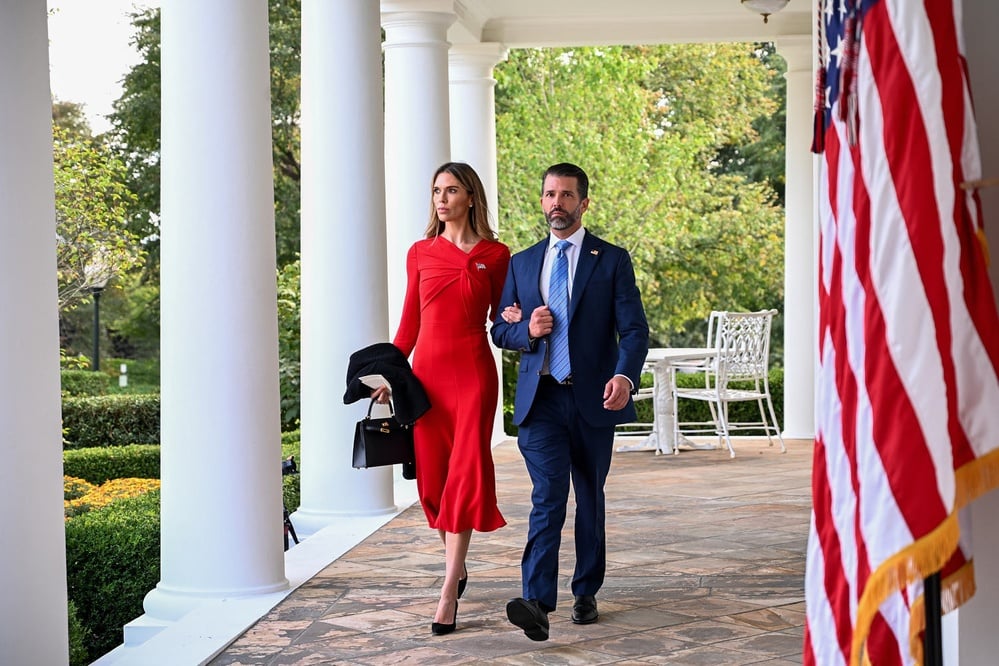

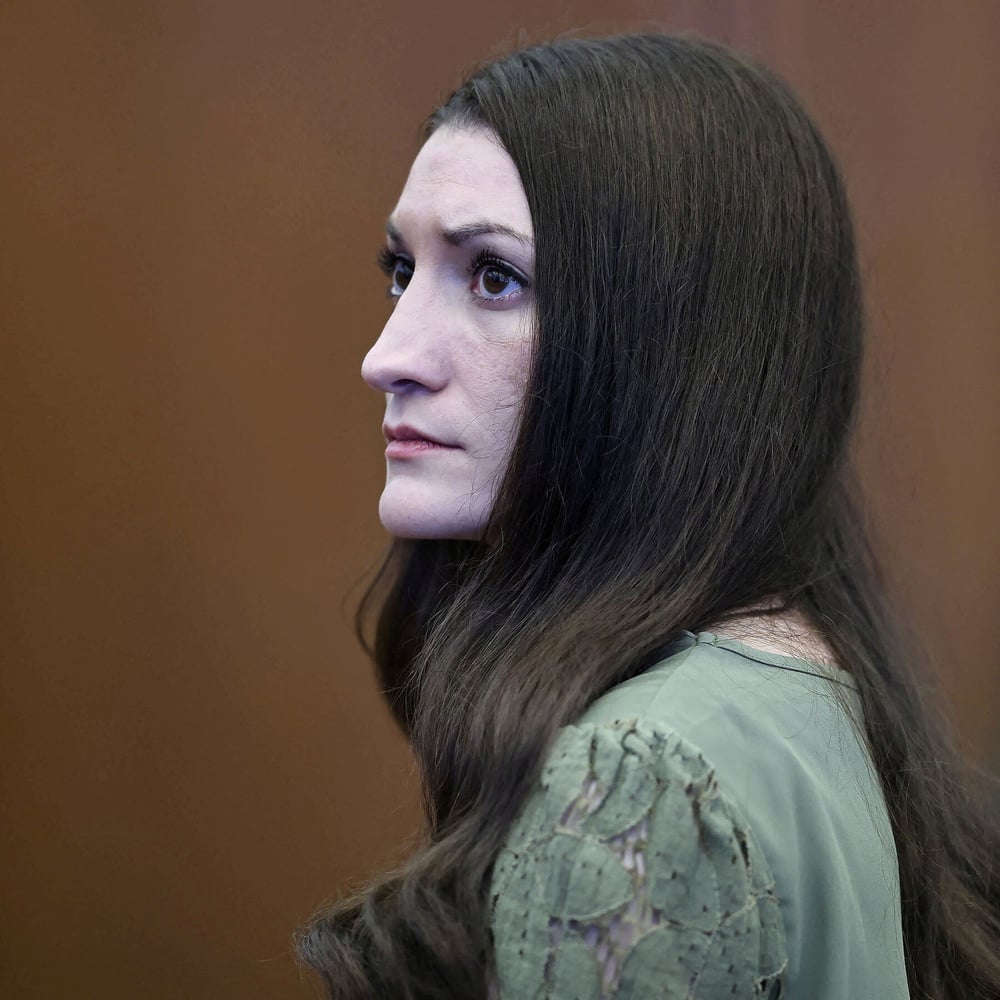
2026 © Helium Trades
Privacy Policy & Disclosure
* Disclaimer: Nothing on this website constitutes investment advice, performance data or any recommendation that any particular security, portfolio of securities, transaction or investment strategy is suitable for any specific person. Helium Trades is not responsible in any way for the accuracy
of any model predictions or price data. Any mention of a particular security and related prediction data is not a recommendation to buy or sell that security. Investments in securities involve the risk of loss. Past performance is no guarantee of future results. Helium Trades is not responsible for any of your investment decisions,
you should consult a financial expert before engaging in any transaction.
Helium Research Assistant

How can I help you today?
Ask any question about this page.


