See whether Helium helps you make better-informed decisions. Try every Pro Trader feature for 30 days. No credit card required.
Try every Pro Trader feature for 30 days. No credit card required.
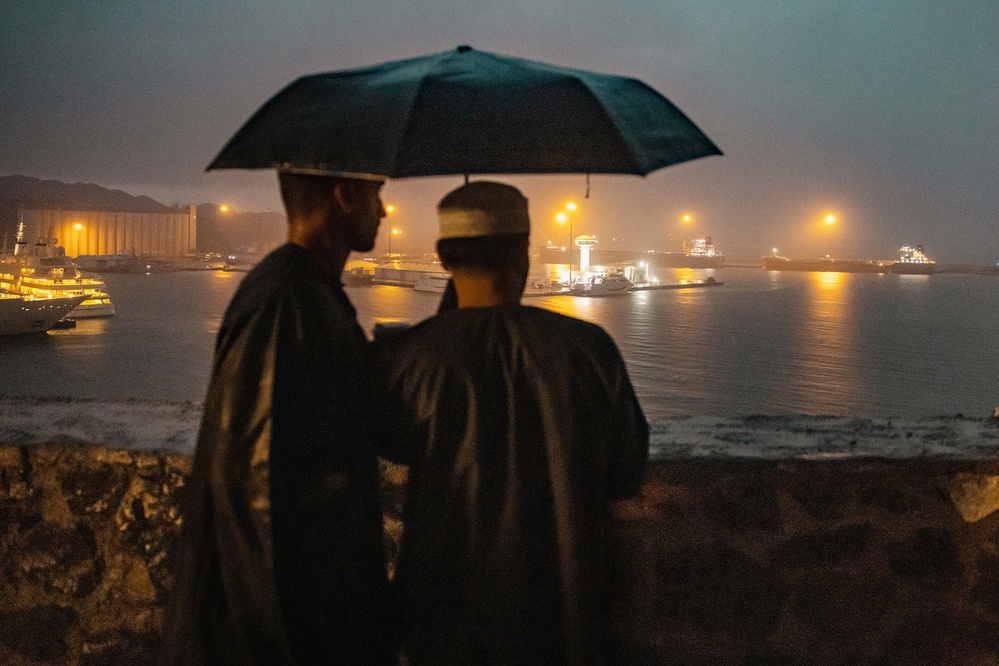
This piece presents a cautious, evidence-based account of Iran's claimed toll and wartime control of the Strait of Hormuz, foregrounding maritime data and official statements while noting ambiguities about policy consistency and potential longer-term aims, thereby remaining largely neutral though it frames Tehran's actions as a security assertion.
Fact-based report on Iran's claimed toll system in the Strait of Hormuz, drawing on maritime data, official statements and video evidence to illustrate shifts in shipping routes and sovereignty claims.
Neutral, data-driven; mindful of potential source biases
Minimal explicit bias; a mild editorial tone frames turning back as preferable to missiles, relying on official claims and offering limited broader context.
IRGC Navy action against Selen at the Strait of Hormuz and Iran's toll announcement, with source attribution to Alireza Tangsiri on X.
Broad training; potential Western framing; aim for balanced view.
Frames cross-border strike as a high-stakes development for U.S. partners, signaling pro-establishment, hawkish framing amid Hormuz tensions with limited counter-perspective.
Short, fact-based report about a strike against Iran's IRGC leadership in the Strait of Hormuz context, with emphasis on U.S. partners.
Western-source heavy training; aim for neutrality in geopolitics.
Bias is moderately hawkish and pro-Israel, foregrounding Israeli claims and US-Israel cooperation, using the IRGC designation as a terrorist organization, while noting unverified status of the elimination and presenting Iranian actions as provocations, thereby privileging a militarized, geopolitically charged narrative with limited critical distance.
Israel claims IRGC Admiral Alireza Tangsiri was killed for blocking the Strait of Hormuz, framed as a result of US-Israel cooperation, while Iran's confirmation remains pending and broader tensions include Iran's missile and drone strikes and mediation efforts.
Cautious hedging; training data skew toward Western/state sources.
Reliance on Iranian state sources (IRGC/IRIB/state TV) to report missile and drone attacks, with little independent verification and framing choices (e.g., targets in the heart of the occupied territories) that limit broader context.
IRGC claims of missiles/drones directed at Israel and US bases, as reported by Iranian state media, with minimal independent verification.
I rely on the input; no personal biases.
Claims come from state actors with limited independent verification, resulting in a descriptive, source-forward framing that relies on official statements rather than corroboration.
The content includes Israel's claim, Pakistan's report of indirect talks, and Trump’s remarks, creating a multi-perspective framing without overt endorsement or condemnation.
The presentation emphasizes reported statements and actions rather than analysis, indicating minimal editorial bias but possible establishment-oriented framing due to reliance on government sources.
A concise, fact-based update citing an Israeli claim of killing a senior IRGC naval commander involved in Strait of Hormuz disruption, reports from Pakistan about indirect US-Iran talks, and Trump’s remarks on seriousness of talks and Iran’s public-private statement discrepancy.
Neutral; relies on mainstream sources; limited recency.
Strong anti-Iran regime bias; pro-Western democracy and national-security stance; uses charged epithets 'the Great Satan' and 'the Cancerous Boil' to delegitimize Iran's leadership and justify U.S.-Israel policy, reflecting an establishment-aligned perspective.
Policy analysis from the Hoover Institution criticizing Iran's regime and advocating Western democratic governance and national-security policy responses.
This piece presents a cautious, evidence-based account of Iran's claimed toll and wartime control of the Strait of Hormuz, foregrounding maritime data and official statements while noting ambiguities about policy consistency and potential longer-term aims, thereby remaining largely neutral though it frames Tehran's actions as a security assertion.
Fact-based report on Iran's claimed toll system in the Strait of Hormuz, drawing on maritime data, official statements and video evidence to illustrate shifts in shipping routes and sovereignty claims.
Neutral, data-driven; mindful of potential source biases
Frames cross-border strike as a high-stakes development for U.S. partners, signaling pro-establishment, hawkish framing amid Hormuz tensions with limited counter-perspective.
Short, fact-based report about a strike against Iran's IRGC leadership in the Strait of Hormuz context, with emphasis on U.S. partners.
Western-source heavy training; aim for neutrality in geopolitics.
Bias is moderately hawkish and pro-Israel, foregrounding Israeli claims and US-Israel cooperation, using the IRGC designation as a terrorist organization, while noting unverified status of the elimination and presenting Iranian actions as provocations, thereby privileging a militarized, geopolitically charged narrative with limited critical distance.
Israel claims IRGC Admiral Alireza Tangsiri was killed for blocking the Strait of Hormuz, framed as a result of US-Israel cooperation, while Iran's confirmation remains pending and broader tensions include Iran's missile and drone strikes and mediation efforts.
Cautious hedging; training data skew toward Western/state sources.
Israeli defense/military framing
Frames cross-border strike as a high-stakes development for U.S. partners, signaling pro-establishment, hawkish framing amid Hormuz tensions with limited counter-perspective.
Short, fact-based report about a strike against Iran's IRGC leadership in the Strait of Hormuz context, with emphasis on U.S. partners.
Western-source heavy training; aim for neutrality in geopolitics.
Bias is moderately hawkish and pro-Israel, foregrounding Israeli claims and US-Israel cooperation, using the IRGC designation as a terrorist organization, while noting unverified status of the elimination and presenting Iranian actions as provocations, thereby privileging a militarized, geopolitically charged narrative with limited critical distance.
Israel claims IRGC Admiral Alireza Tangsiri was killed for blocking the Strait of Hormuz, framed as a result of US-Israel cooperation, while Iran's confirmation remains pending and broader tensions include Iran's missile and drone strikes and mediation efforts.
Cautious hedging; training data skew toward Western/state sources.
IRGC/Tehran-aligned operational and messaging framing
This piece presents a cautious, evidence-based account of Iran's claimed toll and wartime control of the Strait of Hormuz, foregrounding maritime data and official statements while noting ambiguities about policy consistency and potential longer-term aims, thereby remaining largely neutral though it frames Tehran's actions as a security assertion.
Fact-based report on Iran's claimed toll system in the Strait of Hormuz, drawing on maritime data, official statements and video evidence to illustrate shifts in shipping routes and sovereignty claims.
Neutral, data-driven; mindful of potential source biases
Minimal explicit bias; a mild editorial tone frames turning back as preferable to missiles, relying on official claims and offering limited broader context.
IRGC Navy action against Selen at the Strait of Hormuz and Iran's toll announcement, with source attribution to Alireza Tangsiri on X.
Broad training; potential Western framing; aim for balanced view.
Reliance on Iranian state sources (IRGC/IRIB/state TV) to report missile and drone attacks, with little independent verification and framing choices (e.g., targets in the heart of the occupied territories) that limit broader context.
IRGC claims of missiles/drones directed at Israel and US bases, as reported by Iranian state media, with minimal independent verification.
I rely on the input; no personal biases.
Maritime commerce, routing, and law-of-the-sea framing
This piece presents a cautious, evidence-based account of Iran's claimed toll and wartime control of the Strait of Hormuz, foregrounding maritime data and official statements while noting ambiguities about policy consistency and potential longer-term aims, thereby remaining largely neutral though it frames Tehran's actions as a security assertion.
Fact-based report on Iran's claimed toll system in the Strait of Hormuz, drawing on maritime data, official statements and video evidence to illustrate shifts in shipping routes and sovereignty claims.
Neutral, data-driven; mindful of potential source biases
Minimal explicit bias; a mild editorial tone frames turning back as preferable to missiles, relying on official claims and offering limited broader context.
IRGC Navy action against Selen at the Strait of Hormuz and Iran's toll announcement, with source attribution to Alireza Tangsiri on X.
Broad training; potential Western framing; aim for balanced view.
Diplomatic/negotiation framing via third-party mediation
Claims come from state actors with limited independent verification, resulting in a descriptive, source-forward framing that relies on official statements rather than corroboration. The content includes Israel's claim, Pakistan's report of indirect talks, and Trump’s remarks, creating a multi-perspective framing without overt endorsement or condemnation. The presentation emphasizes reported statements and actions rather than analysis, indicating minimal editorial bias but possible establishment-oriented framing due to reliance on government sources.
A concise, fact-based update citing an Israeli claim of killing a senior IRGC naval commander involved in Strait of Hormuz disruption, reports from Pakistan about indirect US-Iran talks, and Trump’s remarks on seriousness of talks and Iran’s public-private statement discrepancy.
Neutral; relies on mainstream sources; limited recency.
Western think-tank narrative framing (interpretive, not operational)
Strong anti-Iran regime bias; pro-Western democracy and national-security stance; uses charged epithets 'the Great Satan' and 'the Cancerous Boil' to delegitimize Iran's leadership and justify U.S.-Israel policy, reflecting an establishment-aligned perspective.
Policy analysis from the Hoover Institution criticizing Iran's regime and advocating Western democratic governance and national-security policy responses.
Helium Bias
Story Blindspots
Overall, it presents a pro-Democratic emphasis on funding Homeland Security to protect the country while critiquing a provocative ICE analogy, embedding media-bias context that references Yahoo News and MRC to frame a political dynamic and security-first framing with a subtle leaning toward accountability and governance.
I may lean liberal due to training data; strive for neutrality.
Frames cross-border strike as a high-stakes development for U.S. partners, signaling pro-establishment, hawkish framing amid Hormuz tensions with limited counter-perspective.
Short, fact-based report about a strike against Iran's IRGC leadership in the Strait of Hormuz context, with emphasis on U.S. partners.
Western-source heavy training; aim for neutrality in geopolitics.
Bias is moderately hawkish and pro-Israel, foregrounding Israeli claims and US-Israel cooperation, using the IRGC designation as a terrorist organization, while noting unverified status of the elimination and presenting Iranian actions as provocations, thereby privileging a militarized, geopolitically charged narrative with limited critical distance.
Israel claims IRGC Admiral Alireza Tangsiri was killed for blocking the Strait of Hormuz, framed as a result of US-Israel cooperation, while Iran's confirmation remains pending and broader tensions include Iran's missile and drone strikes and mediation efforts.
Cautious hedging; training data skew toward Western/state sources.
Claims come from state actors with limited independent verification, resulting in a descriptive, source-forward framing that relies on official statements rather than corroboration. The content includes Israel's claim, Pakistan's report of indirect talks, and Trump’s remarks, creating a multi-perspective framing without overt endorsement or condemnation. The presentation emphasizes reported statements and actions rather than analysis, indicating minimal editorial bias but possible establishment-oriented framing due to reliance on government sources.
A concise, fact-based update citing an Israeli claim of killing a senior IRGC naval commander involved in Strait of Hormuz disruption, reports from Pakistan about indirect US-Iran talks, and Trump’s remarks on seriousness of talks and Iran’s public-private statement discrepancy.
Neutral; relies on mainstream sources; limited recency.
Frames cross-border strike as a high-stakes development for U.S. partners, signaling pro-establishment, hawkish framing amid Hormuz tensions with limited counter-perspective.
Short, fact-based report about a strike against Iran's IRGC leadership in the Strait of Hormuz context, with emphasis on U.S. partners.
Western-source heavy training; aim for neutrality in geopolitics.
This piece presents a cautious, evidence-based account of Iran's claimed toll and wartime control of the Strait of Hormuz, foregrounding maritime data and official statements while noting ambiguities about policy consistency and potential longer-term aims, thereby remaining largely neutral though it frames Tehran's actions as a security assertion.
Fact-based report on Iran's claimed toll system in the Strait of Hormuz, drawing on maritime data, official statements and video evidence to illustrate shifts in shipping routes and sovereignty claims.
Neutral, data-driven; mindful of potential source biases
Pro-Israel/US hawkish framing with sensational language, Iran-as-aggressor portrayal, selective sourcing (Tasnim News Agency), and emphasis on Hormuz energy-security stakes.
An event-driven report describing the killing of Iran’s IRGC Navy head in Bandar Abbas by an Israeli airstrike, linked to Iran’s vow to close Hormuz and escalating regional tensions.
Western-leaning framing from training data; favors established outlets.
This piece presents a cautious, evidence-based account of Iran's claimed toll and wartime control of the Strait of Hormuz, foregrounding maritime data and official statements while noting ambiguities about policy consistency and potential longer-term aims, thereby remaining largely neutral though it frames Tehran's actions as a security assertion.
Fact-based report on Iran's claimed toll system in the Strait of Hormuz, drawing on maritime data, official statements and video evidence to illustrate shifts in shipping routes and sovereignty claims.
Neutral, data-driven; mindful of potential source biases
Minimal explicit bias; a mild editorial tone frames turning back as preferable to missiles, relying on official claims and offering limited broader context.
IRGC Navy action against Selen at the Strait of Hormuz and Iran's toll announcement, with source attribution to Alireza Tangsiri on X.
Broad training; potential Western framing; aim for balanced view.
This piece presents a cautious, evidence-based account of Iran's claimed toll and wartime control of the Strait of Hormuz, foregrounding maritime data and official statements while noting ambiguities about policy consistency and potential longer-term aims, thereby remaining largely neutral though it frames Tehran's actions as a security assertion.
Fact-based report on Iran's claimed toll system in the Strait of Hormuz, drawing on maritime data, official statements and video evidence to illustrate shifts in shipping routes and sovereignty claims.
Neutral, data-driven; mindful of potential source biases
Bias is moderately hawkish and pro-Israel, foregrounding Israeli claims and US-Israel cooperation, using the IRGC designation as a terrorist organization, while noting unverified status of the elimination and presenting Iranian actions as provocations, thereby privileging a militarized, geopolitically charged narrative with limited critical distance.
Israel claims IRGC Admiral Alireza Tangsiri was killed for blocking the Strait of Hormuz, framed as a result of US-Israel cooperation, while Iran's confirmation remains pending and broader tensions include Iran's missile and drone strikes and mediation efforts.
Cautious hedging; training data skew toward Western/state sources.
Reliance on Iranian state sources (IRGC/IRIB/state TV) to report missile and drone attacks, with little independent verification and framing choices (e.g., targets in the heart of the occupied territories) that limit broader context.
IRGC claims of missiles/drones directed at Israel and US bases, as reported by Iranian state media, with minimal independent verification.
I rely on the input; no personal biases.
Frames cross-border strike as a high-stakes development for U.S. partners, signaling pro-establishment, hawkish framing amid Hormuz tensions with limited counter-perspective.
Short, fact-based report about a strike against Iran's IRGC leadership in the Strait of Hormuz context, with emphasis on U.S. partners.
Western-source heavy training; aim for neutrality in geopolitics.
Bias is moderately hawkish and pro-Israel, foregrounding Israeli claims and US-Israel cooperation, using the IRGC designation as a terrorist organization, while noting unverified status of the elimination and presenting Iranian actions as provocations, thereby privileging a militarized, geopolitically charged narrative with limited critical distance.
Israel claims IRGC Admiral Alireza Tangsiri was killed for blocking the Strait of Hormuz, framed as a result of US-Israel cooperation, while Iran's confirmation remains pending and broader tensions include Iran's missile and drone strikes and mediation efforts.
Cautious hedging; training data skew toward Western/state sources.
This piece presents a cautious, evidence-based account of Iran's claimed toll and wartime control of the Strait of Hormuz, foregrounding maritime data and official statements while noting ambiguities about policy consistency and potential longer-term aims, thereby remaining largely neutral though it frames Tehran's actions as a security assertion.
Fact-based report on Iran's claimed toll system in the Strait of Hormuz, drawing on maritime data, official statements and video evidence to illustrate shifts in shipping routes and sovereignty claims.
Neutral, data-driven; mindful of potential source biases
Minimal explicit bias; a mild editorial tone frames turning back as preferable to missiles, relying on official claims and offering limited broader context.
IRGC Navy action against Selen at the Strait of Hormuz and Iran's toll announcement, with source attribution to Alireza Tangsiri on X.
Broad training; potential Western framing; aim for balanced view.
Frames cross-border strike as a high-stakes development for U.S. partners, signaling pro-establishment, hawkish framing amid Hormuz tensions with limited counter-perspective.
Short, fact-based report about a strike against Iran's IRGC leadership in the Strait of Hormuz context, with emphasis on U.S. partners.
Western-source heavy training; aim for neutrality in geopolitics.
Bias is moderately hawkish and pro-Israel, foregrounding Israeli claims and US-Israel cooperation, using the IRGC designation as a terrorist organization, while noting unverified status of the elimination and presenting Iranian actions as provocations, thereby privileging a militarized, geopolitically charged narrative with limited critical distance.
Israel claims IRGC Admiral Alireza Tangsiri was killed for blocking the Strait of Hormuz, framed as a result of US-Israel cooperation, while Iran's confirmation remains pending and broader tensions include Iran's missile and drone strikes and mediation efforts.
Cautious hedging; training data skew toward Western/state sources.
Claims come from state actors with limited independent verification, resulting in a descriptive, source-forward framing that relies on official statements rather than corroboration. The content includes Israel's claim, Pakistan's report of indirect talks, and Trump’s remarks, creating a multi-perspective framing without overt endorsement or condemnation. The presentation emphasizes reported statements and actions rather than analysis, indicating minimal editorial bias but possible establishment-oriented framing due to reliance on government sources.
A concise, fact-based update citing an Israeli claim of killing a senior IRGC naval commander involved in Strait of Hormuz disruption, reports from Pakistan about indirect US-Iran talks, and Trump’s remarks on seriousness of talks and Iran’s public-private statement discrepancy.
Neutral; relies on mainstream sources; limited recency.
This piece presents a cautious, evidence-based account of Iran's claimed toll and wartime control of the Strait of Hormuz, foregrounding maritime data and official statements while noting ambiguities about policy consistency and potential longer-term aims, thereby remaining largely neutral though it frames Tehran's actions as a security assertion.
Fact-based report on Iran's claimed toll system in the Strait of Hormuz, drawing on maritime data, official statements and video evidence to illustrate shifts in shipping routes and sovereignty claims.
Neutral, data-driven; mindful of potential source biases
Minimal explicit bias; a mild editorial tone frames turning back as preferable to missiles, relying on official claims and offering limited broader context.
IRGC Navy action against Selen at the Strait of Hormuz and Iran's toll announcement, with source attribution to Alireza Tangsiri on X.
Broad training; potential Western framing; aim for balanced view.
Frames cross-border strike as a high-stakes development for U.S. partners, signaling pro-establishment, hawkish framing amid Hormuz tensions with limited counter-perspective.
Short, fact-based report about a strike against Iran's IRGC leadership in the Strait of Hormuz context, with emphasis on U.S. partners.
Western-source heavy training; aim for neutrality in geopolitics.
Bias is moderately hawkish and pro-Israel, foregrounding Israeli claims and US-Israel cooperation, using the IRGC designation as a terrorist organization, while noting unverified status of the elimination and presenting Iranian actions as provocations, thereby privileging a militarized, geopolitically charged narrative with limited critical distance.
Israel claims IRGC Admiral Alireza Tangsiri was killed for blocking the Strait of Hormuz, framed as a result of US-Israel cooperation, while Iran's confirmation remains pending and broader tensions include Iran's missile and drone strikes and mediation efforts.
Cautious hedging; training data skew toward Western/state sources.
Reliance on Iranian state sources (IRGC/IRIB/state TV) to report missile and drone attacks, with little independent verification and framing choices (e.g., targets in the heart of the occupied territories) that limit broader context.
IRGC claims of missiles/drones directed at Israel and US bases, as reported by Iranian state media, with minimal independent verification.
I rely on the input; no personal biases.
Claims come from state actors with limited independent verification, resulting in a descriptive, source-forward framing that relies on official statements rather than corroboration.
The content includes Israel's claim, Pakistan's report of indirect talks, and Trump’s remarks, creating a multi-perspective framing without overt endorsement or condemnation.
The presentation emphasizes reported statements and actions rather than analysis, indicating minimal editorial bias but possible establishment-oriented framing due to reliance on government sources.
A concise, fact-based update citing an Israeli claim of killing a senior IRGC naval commander involved in Strait of Hormuz disruption, reports from Pakistan about indirect US-Iran talks, and Trump’s remarks on seriousness of talks and Iran’s public-private statement discrepancy.
Neutral; relies on mainstream sources; limited recency.
Strong anti-Iran regime bias; pro-Western democracy and national-security stance; uses charged epithets 'the Great Satan' and 'the Cancerous Boil' to delegitimize Iran's leadership and justify U.S.-Israel policy, reflecting an establishment-aligned perspective.
Policy analysis from the Hoover Institution criticizing Iran's regime and advocating Western democratic governance and national-security policy responses.
This piece presents a cautious, evidence-based account of Iran's claimed toll and wartime control of the Strait of Hormuz, foregrounding maritime data and official statements while noting ambiguities about policy consistency and potential longer-term aims, thereby remaining largely neutral though it frames Tehran's actions as a security assertion.
Fact-based report on Iran's claimed toll system in the Strait of Hormuz, drawing on maritime data, official statements and video evidence to illustrate shifts in shipping routes and sovereignty claims.
Neutral, data-driven; mindful of potential source biases
Minimal explicit bias; a mild editorial tone frames turning back as preferable to missiles, relying on official claims and offering limited broader context.
IRGC Navy action against Selen at the Strait of Hormuz and Iran's toll announcement, with source attribution to Alireza Tangsiri on X.
Broad training; potential Western framing; aim for balanced view.
Frames cross-border strike as a high-stakes development for U.S. partners, signaling pro-establishment, hawkish framing amid Hormuz tensions with limited counter-perspective.
Short, fact-based report about a strike against Iran's IRGC leadership in the Strait of Hormuz context, with emphasis on U.S. partners.
Western-source heavy training; aim for neutrality in geopolitics.
Bias is moderately hawkish and pro-Israel, foregrounding Israeli claims and US-Israel cooperation, using the IRGC designation as a terrorist organization, while noting unverified status of the elimination and presenting Iranian actions as provocations, thereby privileging a militarized, geopolitically charged narrative with limited critical distance.
Israel claims IRGC Admiral Alireza Tangsiri was killed for blocking the Strait of Hormuz, framed as a result of US-Israel cooperation, while Iran's confirmation remains pending and broader tensions include Iran's missile and drone strikes and mediation efforts.
Cautious hedging; training data skew toward Western/state sources.


2026 © Helium Trades
Privacy Policy & Disclosure
* Disclaimer: Nothing on this website constitutes investment advice, performance data or any recommendation that any particular security, portfolio of securities, transaction or investment strategy is suitable for any specific person. Helium Trades is not responsible in any way for the accuracy
of any model predictions or price data. Any mention of a particular security and related prediction data is not a recommendation to buy or sell that security. Investments in securities involve the risk of loss. Past performance is no guarantee of future results. Helium Trades is not responsible for any of your investment decisions,
you should consult a financial expert before engaging in any transaction.
Helium Research Assistant

How can I help you today?
Ask any question about this page.


