See whether Helium helps you make better-informed decisions. Try every Pro Trader feature for 30 days. No credit card required.
Try every Pro Trader feature for 30 days. No credit card required.
October 14, 2026 · 0 shares
Sourced courtroom reporting that foregrounds the judge's viewpoint-discrimination finding and Trump's own quoted statements while still airing the administration's national-security and privilege arguments, yet closes with the plaintiffs' attorney's condemnation of the ban.
Automated analysis; not human reviewed.
Limitations: Supplied text contains scrape artifacts - publisher name truncated ('politics reporter for News'), an incomplete antitrust sentence ('including CNN and ,'), and duplicated subscriber-teaser blocks - limiting attribution and completeness verification.
·
13 of 55 available dimensions scored; omitted dimensions are not treated as neutral.
·
Verified supporting quotes for 13 of 13 scored dimensions.
Claim: Publisher framing tilts mildly toward the press-plaintiffs' account, leading with the anti-administration ruling and ending on the plaintiffs' attorney's condemnation.
“Federal judge issues longer-term decision blocking Trump's White House media ban” · exact text match
“"The President has repeatedly, candidly, and consistently admitted in public that he banned our clients from the White House to punish reporting he doesn't like," he said in a statement.” · verified after text normalization
Counterevidence:
“the administration contended it imposed the ban in part because of national security concerns” · exact text match
Why: The headline frames the ban as Trump's personally and the closing quote comes from one side, but administration arguments and the judge's caveat are also reported, supporting only a mild lean.
Claim: The story frames executive exclusion of journalists from the White House as the rights-restricting act being judicially blocked.
“A federal judge issued an order late Tuesday blocking the Trump administration from banning CNN, Politico and MS NOW from the White House complex while the organizations' lawsuit over access proceeds.” · verified after text normalization
Counterevidence:
“"Access to the White House is a privilege — not a right," Velchik said.” · verified after text normalization
Why: The framing centers on restraining government exclusion of the press, a mildly anti-state-control angle, while still quoting the administration's privilege argument; low intensity.
Claim: Substantive claims are attributed to the court, parties, and filings with little unattributed publisher assertion.
“U.S. District Judge Timothy Kelly of Washington, D.C., issued the preliminary injunction in the wake of a hearing Thursday at which the administration contended it imposed the ban in part because of national security concerns” · exact text match
Counterevidence:
“"The President has repeatedly, candidly, and consistently admitted in public that he banned our clients from the White House to punish reporting he doesn't like," he said in a statement.” · verified after text normalization
Why: Both sides' contentions are presented as attributed positions; mild subjectivity from ending on one side's statement without a matching administration response.
Claim: Publisher wording stays procedural and factual, with charged language confined to attributed quotes.
“A federal judge issued an order late Tuesday blocking the Trump administration from banning CNN, Politico and MS NOW from the White House complex while the organizations' lawsuit over access proceeds.” · verified after text normalization
Why: Emotive terms such as 'FAKE NEWS!' and 'direct assault on the First Amendment' appear only inside quotes from Trump and the lawsuit, not in the publisher's voice.
Claim: Layered developments - the injunction, appeal threat, and a DOJ antitrust probe - add newsworthiness.
“Separately, the Justice Department said last week that it was investigating five major TV networks” · exact text match
Why: Beyond the ruling, the piece introduces a related probe and pool-coverage dispute that deepen the story.
Claim: Content reports events, quotes, and procedural effects without prescribing policy or outcomes.
“His order will give the outlets access to the White House until the underlying lawsuit challenging the ban is resolved.” · exact text match
Why: Purely descriptive account of the injunction's scope and litigation status; no prescriptive claims from the publisher.
Claim: Publisher voice remains near-factual with only slight emphasis tilt toward the anti-ban outcome.
“Federal judge issues longer-term decision blocking Trump's White House media ban” · exact text match
Why: The possessive headline framing and one-sided closing quote add minimal evaluative emphasis; nearly all opinionated language is attributed.
Claim: Subject matter centers on presidential power, First Amendment litigation, and a Justice Department probe.
“The outlets filed a lawsuit alleging Trump's action violated their due process rights and First Amendment protections for newsgathering and speech.” · verified after text normalization
Why: The dispute involves the President, White House press access, and constitutional claims, making the content inherently political.
Claim: Publisher's own prose is unemotional, with charged wording confined to attributed quotes.
“A federal judge issued an order late Tuesday blocking the Trump administration from banning CNN, Politico and MS NOW from the White House complex while the organizations' lawsuit over access proceeds.” · verified after text normalization
Why: Procedural, attribution-heavy sentences carry no publisher-generated emotive language, supporting a neutral emotional tone.
Claim: Named sources, quoted documents, specific figures, and disclosed non-response support strong credibility signals.
“In court filings, the three news organizations said the ban affected 78 journalists who had "hard passes," meaning they had been previously screened and credentialed to work at the White House.” · verified after text normalization
“"There is practically nothing national security-related in the record connected to the President's decision to revoke Plaintiffs' hard passes to which the Court can defer," Kelly wrote in his 26-page opinion.” · verified after text normalization
Why: Claims are tied to named officials, filings, and a written opinion, letting readers verify; uncertainty is flagged rather than masked.
Claim: Reporting rests on documented judicial findings and attributed party arguments rather than unsupported assertion.
“"There is practically nothing national security-related in the record connected to the President's decision to revoke Plaintiffs' hard passes to which the Court can defer," Kelly wrote in his 26-page opinion.” · verified after text normalization
Why: Core conclusions are tied to a quoted written opinion and record-based reasoning, indicating an evidence-anchored presentation.
Claim: The report preserves exculpatory caveats and discloses the administration's non-response.
“The White House didn't immediately respond to a request for comment following the ruling.” · verified after text normalization
“his decision doesn't concede that Trump's concerns about accuracy and fairness are unfounded” · verified after text normalization
Why: Flagging the absent comment and the judge's own qualification are observable fairness and completeness signals.
Claim: The report coherently integrates procedural history, quoted findings, precedent, and both parties' arguments.
“Kelly had issued a temporary restraining order lifting the ban while he weighed whether to issue an injunction.” · exact text match
“"Maybe—but this Court is bound by D.C. Circuit precedent, full stop," Kelly wrote.” · verified after text normalization
Why: Sequencing the TRO, injunction, precedent dispute, and related antitrust probe shows competent legal synthesis.
Supplied text contains scrape artifacts - publisher name truncated ('politics reporter for News'), an incomplete antitrust sentence ('including CNN and ,'), and duplicated subscriber-teaser blocks - limiting attribution and completeness verification.
October 14, 2026 · 0 shares
Balanced wire-style court reporting tilts mildly against Trump through an unsourced background passage branding his media campaign 'unprecedented', while still quoting the administration's defense and the judge's mitigation of Trump's complaints.
Automated analysis; not human reviewed.
Limitations: The publisher is not identified in the supplied text, the copy reads as agency wire style, and trailing duplicated unrelated headlines appear to be scraping artifacts, limiting attribution of framing to a specific outlet.
·
14 of 55 available dimensions scored; omitted dimensions are not treated as neutral.
·
Verified supporting quotes for 12 of 14 scored dimensions.
Claim: Background framing in publisher voice characterizes the Republican president's media conduct as historically exceptional, tilting coverage against Trump though both sides are quoted.
“Past presidents have battled with the press, but Trump's campaign against the media has been unprecedented.” · exact text match
Counterevidence:
“no one should read this decision as suggesting that President Trump's complaints are meritless.” · not found in supplied text
Why: An unsourced superlative judgment against Trump in publisher voice leans the framing away from the conservative side; the body otherwise quotes both parties.
Claim: Publisher framing treats government restriction of press access as a norm violation, aligning with liberty-protective framing.
“denying basic access to many major news organisations” · exact text match
Why: Framing access denial as a transgression of basic access privileges press freedom over state control of media access, a mildly libertarian lean.
Claim: Reporting is mostly attributed, with one unsourced evaluative characterization in publisher voice.
“Past presidents have battled with the press, but Trump's campaign against the media has been unprecedented.” · exact text match
Why: Nearly all other claims carry named attribution to the judge, lawyers, or parties; the 'unprecedented' superlative is the main unattributed evaluation.
Claim: Calm procedural language without alarmist or loaded wording.
“US District Judge Timothy Kelly issued a written decision that elaborated on his September 24 emergency order that reinstated access for the journalists.” · exact text match
Why: Plain procedural description with dates and no emotive amplification or urgency framing.
Claim: The story has a notable twist: a Trump-appointed judge ruling against Trump on press access.
“The judge, who Trump appointed in 2017 during his first presidential term, also raised doubts about the US Justice Department's national security arguments for justifying the ban” · exact text match
Why: The appointee's adverse ruling and motive analysis lift the story above routine legal news.
Claim: The report describes the ruling and case history without prescribing outcomes or policy.
“The judge issued a preliminary injunction on Tuesday that will remain in effect until he makes a final judgment in the lawsuit brought by the news organisations, unless an appeals court lifts his order.” · exact text match
Why: Purely descriptive procedural reporting; no recommendations or normative demands appear.
Claim: A brief evaluative publisher-voice passage appears amid otherwise attributed reporting.
“Past presidents have battled with the press, but Trump's campaign against the media has been unprecedented.” · exact text match
Why: One unsourced characterization stands out against predominantly attributed factual claims.
Claim: The story's subject is a high-stakes conflict between the president and major news outlets over press access.
“deciding President Donald Trump likely broke the law when he tried to ban them, in the latest ruling against him in the press freedom dispute” · exact text match
Why: Centered on presidential power, First Amendment litigation, and a contested administration.
Claim: Framing defends legacy-press norms and institutional process against the administration's challenge.
“He has upended decades of tradition by denying basic access to many major news organisations, launching personal attacks on journalists for their reporting and elevating media outlets seen as more sympathetic to the administration.” · exact text match
Why: Treating established press-access tradition as the baseline and its breach as exceptional reflects a mildly pro-establishment institutional perspective.
Claim: Flat, unemotional tone with both sides' positions relayed without emotive coloring.
“The Justice Department defended the bans as fair and justified.” · exact text match
Why: The publisher relays the administration's position and the court's criticism in neutral register, with no emotive diction in its own voice.
Claim: Named on-record sources for both sides, specific dates, and preserved uncertainty.
“"Here we have the unusual situation where the president himself has said he wants to chill speech.
He wants to coerce better coverage," Theodore Boutrous, a lawyer for the outlets, told Kelly during the hearing.”
· exact text match
“The White House on September 24 reinstated the CNN, MS NOW and Politico journalists after the judge decided the ban "likely violated their constitutional due process rights," and ordered their access immediately restored.” · exact text match
Why: Direct quotes with named lawyers, exact dates, and hedged judicial language ('likely') indicate careful sourcing and attribution.
Claim: Central claims are tied to documented judicial reasoning and attributed statements from both parties.
“Kelly wrote Trump's public remarks made clear that he banned the news outlets because he considered their reporting biased and inaccurate, and not because of national security concerns as government lawyers later asserted in court.” · exact text match
Why: The report grounds its core claim in the judge's written reasoning while preserving the government's alternative argument, an evidence-based structure.
Claim: The report includes material unfavorable to its apparent narrative, including the judge's mitigation of Trump's complaints and the administration's on-record defense.
“no one should read this decision as suggesting that President Trump's complaints are meritless.” · not found in supplied text
“"CNN, MS NOW and Politico engaged in apparently indefensible conduct," Justice Department lawyer Michael Velchik said.” · exact text match
Why: Including exculpatory and administration-side quotes signals fair handling rather than selective omission.
Claim: The report concisely captures the legal nuance separating the judge's motive finding from his explicit caveat about Trump's complaints.
“"Simply put, that is unlawful viewpoint discrimination," the judge wrote, adding that "no one should read this decision as suggesting that President Trump's complaints are meritless."” · not found in supplied text
Why: Conveying both the ruling's rationale and its limiting language in one passage shows efficient, nuanced legal reporting.
The publisher is not identified in the supplied text, the copy reads as agency wire style, and trailing duplicated unrelated headlines appear to be scraping artifacts, limiting attribution of framing to a specific outlet.
October 14, 2026 · 0 shares
A wire-style report that foregrounds a federal judge's retaliation findings against Trump's press ban with extensive quoted rulings while still carrying the administration's professionalism and national-security defenses and its planned appeal, producing only a mild tilt against the president.
The dispute concerns 'hard passes' — credentials giving reporters routine physical access to White House grounds — whose revocation prevents in-person presidential coverage; a preliminary injunction is an interim order preserving the prior access arrangement while the underlying constitutional lawsuit is decided.
Automated analysis; not human reviewed.
Limitations: The supplied text repeats large blocks verbatim (likely a scrape artifact) and contains a truncated phrase ('published s'), and no publisher name or byline is given, limiting wording- and outlet-level framing analysis.
·
11 of 55 available dimensions scored; omitted dimensions are not treated as neutral.
·
Verified supporting quotes for 8 of 11 scored dimensions.
Claim: The framing leans mildly against Trump by branding the policy 'Trump's press ban' and foregrounding the judicial rebuke.
“US Judge blocks Trump's White House press ban on CNN, MS NOW, Politico” · exact text match
Counterevidence:
“The White House maintained that the journalists had failed to meet standards of professionalism” · exact text match
Why: The headline and lead present the restriction as Trump's personal ban and open with the ruling against him, while the administration's defense is carried later and briefly, leaving only a small tilt.
Claim: Contested characterizations are attributed to their sources rather than adopted by the publisher.
“The outlets also alleged that the administration violated their Fifth Amendment due process rights” · exact text match
Why: Claims are framed as the outlets' allegations, and the White House's position is likewise attributed rather than endorsed.
Claim: The headline and prose are plain and unembellished.
“A US federal judge on Tuesday blocked President Donald Trump's attempt to bar journalists from CNN, MS NOW and Politico from the White House” · exact text match
Why: Declarative wording without charged adjectives or urgency markers.
Claim: A president's press ban blocked by his own judicial appointee is a moderately notable governance story.
“US District Judge Timothy Kelly, who was appointed by Trump, granted a preliminary injunction” · exact text match
Why: The appointee-ruling-against-appointer dynamic adds newsworthiness beyond a routine injunction.
Claim: The report narrates events and positions without prescribing outcomes or policy.
“The preliminary injunction will remain in effect as the legal proceedings continue, allowing reporters from CNN, MS NOW and Politico to access the White House while the court considers the broader constitutional questions raised by the dispute.” · exact text match
Why: The piece closes on process description rather than any recommendation.
Claim: The entire report concerns a president's action, press-freedom litigation, and constitutional claims.
“blocked President Donald Trump's attempt to bar journalists from CNN, MS NOW and Politico from the White House” · exact text match
Why: Executive-versus-press conflict over credentials makes the content inherently political.
Claim: Publisher prose is unemotional; charged language appears only inside attributed quotes.
“what he described as "constant 'reporting' FAKE NEWS."” · not found in supplied text
Why: Loaded terms like 'FAKE NEWS' are marked as Trump's description, not adopted by the report.
Claim: The report cites a named ruling with dates, direct quotes, and both parties' positions.
“CNN, MS NOW and Politico filed a lawsuit on September 21” · exact text match
Why: Specific dates and attributions aid verification, though no publisher name or byline is supplied to confirm provenance.
Claim: The account rests on a documented court ruling with hedged, attributed language rather than assertion.
“Kelly found that the revocation of the journalists' hard passes likely infringed their rights under the First and Fifth Amendments to the US Constitution.” · not found in supplied text
Why: Hedged 'likely' findings, a named judge, and dated filings keep the reporting evidence-bound.
Claim: The report discloses the judge's Trump appointment and presents the administration's justification despite the adverse ruling.
“US District Judge Timothy Kelly, who was appointed by Trump, granted a preliminary injunction” · exact text match
Why: Disclosing the appointee relationship pre-empts an obvious conflict objection and signals even-handed sourcing.
Claim: The report organizes a multi-step legal timeline coherently with precise legal detail.
“In a 26-page ruling, Kelly found that the revocation of the journalists' hard passes likely infringed their rights under the First and Fifth Amendments to the US Constitution.” · not found in supplied text
Why: Structured chronology and accurate constitutional framing indicate above-average craft for wire copy.
The supplied text repeats large blocks verbatim (likely a scrape artifact) and contains a truncated phrase ('published s'), and no publisher name or byline is given, limiting wording- and outlet-level framing analysis.
October 14, 2026 · 0 shares
Sourced courtroom reporting that foregrounds the judge's viewpoint-discrimination finding and Trump's own quoted statements while still airing the administration's national-security and privilege arguments, yet closes with the plaintiffs' attorney's condemnation of the ban.
Automated analysis; not human reviewed.
Limitations: Supplied text contains scrape artifacts - publisher name truncated ('politics reporter for News'), an incomplete antitrust sentence ('including CNN and ,'), and duplicated subscriber-teaser blocks - limiting attribution and completeness verification.
·
13 of 55 available dimensions scored; omitted dimensions are not treated as neutral.
·
Verified supporting quotes for 13 of 13 scored dimensions.
Claim: Publisher framing tilts mildly toward the press-plaintiffs' account, leading with the anti-administration ruling and ending on the plaintiffs' attorney's condemnation.
“Federal judge issues longer-term decision blocking Trump's White House media ban” · exact text match
“"The President has repeatedly, candidly, and consistently admitted in public that he banned our clients from the White House to punish reporting he doesn't like," he said in a statement.” · verified after text normalization
Counterevidence:
“the administration contended it imposed the ban in part because of national security concerns” · exact text match
Why: The headline frames the ban as Trump's personally and the closing quote comes from one side, but administration arguments and the judge's caveat are also reported, supporting only a mild lean.
Claim: The story frames executive exclusion of journalists from the White House as the rights-restricting act being judicially blocked.
“A federal judge issued an order late Tuesday blocking the Trump administration from banning CNN, Politico and MS NOW from the White House complex while the organizations' lawsuit over access proceeds.” · verified after text normalization
Counterevidence:
“"Access to the White House is a privilege — not a right," Velchik said.” · verified after text normalization
Why: The framing centers on restraining government exclusion of the press, a mildly anti-state-control angle, while still quoting the administration's privilege argument; low intensity.
Claim: Substantive claims are attributed to the court, parties, and filings with little unattributed publisher assertion.
“U.S. District Judge Timothy Kelly of Washington, D.C., issued the preliminary injunction in the wake of a hearing Thursday at which the administration contended it imposed the ban in part because of national security concerns” · exact text match
Counterevidence:
“"The President has repeatedly, candidly, and consistently admitted in public that he banned our clients from the White House to punish reporting he doesn't like," he said in a statement.” · verified after text normalization
Why: Both sides' contentions are presented as attributed positions; mild subjectivity from ending on one side's statement without a matching administration response.
Claim: Publisher wording stays procedural and factual, with charged language confined to attributed quotes.
“A federal judge issued an order late Tuesday blocking the Trump administration from banning CNN, Politico and MS NOW from the White House complex while the organizations' lawsuit over access proceeds.” · verified after text normalization
Why: Emotive terms such as 'FAKE NEWS!' and 'direct assault on the First Amendment' appear only inside quotes from Trump and the lawsuit, not in the publisher's voice.
Claim: Layered developments - the injunction, appeal threat, and a DOJ antitrust probe - add newsworthiness.
“Separately, the Justice Department said last week that it was investigating five major TV networks” · exact text match
Why: Beyond the ruling, the piece introduces a related probe and pool-coverage dispute that deepen the story.
Claim: Content reports events, quotes, and procedural effects without prescribing policy or outcomes.
“His order will give the outlets access to the White House until the underlying lawsuit challenging the ban is resolved.” · exact text match
Why: Purely descriptive account of the injunction's scope and litigation status; no prescriptive claims from the publisher.
Claim: Publisher voice remains near-factual with only slight emphasis tilt toward the anti-ban outcome.
“Federal judge issues longer-term decision blocking Trump's White House media ban” · exact text match
Why: The possessive headline framing and one-sided closing quote add minimal evaluative emphasis; nearly all opinionated language is attributed.
Claim: Subject matter centers on presidential power, First Amendment litigation, and a Justice Department probe.
“The outlets filed a lawsuit alleging Trump's action violated their due process rights and First Amendment protections for newsgathering and speech.” · verified after text normalization
Why: The dispute involves the President, White House press access, and constitutional claims, making the content inherently political.
Claim: Publisher's own prose is unemotional, with charged wording confined to attributed quotes.
“A federal judge issued an order late Tuesday blocking the Trump administration from banning CNN, Politico and MS NOW from the White House complex while the organizations' lawsuit over access proceeds.” · verified after text normalization
Why: Procedural, attribution-heavy sentences carry no publisher-generated emotive language, supporting a neutral emotional tone.
Claim: Named sources, quoted documents, specific figures, and disclosed non-response support strong credibility signals.
“In court filings, the three news organizations said the ban affected 78 journalists who had "hard passes," meaning they had been previously screened and credentialed to work at the White House.” · verified after text normalization
“"There is practically nothing national security-related in the record connected to the President's decision to revoke Plaintiffs' hard passes to which the Court can defer," Kelly wrote in his 26-page opinion.” · verified after text normalization
Why: Claims are tied to named officials, filings, and a written opinion, letting readers verify; uncertainty is flagged rather than masked.
Claim: Reporting rests on documented judicial findings and attributed party arguments rather than unsupported assertion.
“"There is practically nothing national security-related in the record connected to the President's decision to revoke Plaintiffs' hard passes to which the Court can defer," Kelly wrote in his 26-page opinion.” · verified after text normalization
Why: Core conclusions are tied to a quoted written opinion and record-based reasoning, indicating an evidence-anchored presentation.
Claim: The report preserves exculpatory caveats and discloses the administration's non-response.
“The White House didn't immediately respond to a request for comment following the ruling.” · verified after text normalization
“his decision doesn't concede that Trump's concerns about accuracy and fairness are unfounded” · verified after text normalization
Why: Flagging the absent comment and the judge's own qualification are observable fairness and completeness signals.
Claim: The report coherently integrates procedural history, quoted findings, precedent, and both parties' arguments.
“Kelly had issued a temporary restraining order lifting the ban while he weighed whether to issue an injunction.” · exact text match
“"Maybe—but this Court is bound by D.C. Circuit precedent, full stop," Kelly wrote.” · verified after text normalization
Why: Sequencing the TRO, injunction, precedent dispute, and related antitrust probe shows competent legal synthesis.
Supplied text contains scrape artifacts - publisher name truncated ('politics reporter for News'), an incomplete antitrust sentence ('including CNN and ,'), and duplicated subscriber-teaser blocks - limiting attribution and completeness verification.
October 14, 2026 · 0 shares
Framing is attribution-led straight news that relays the judge's findings and even his caveat validating Trump's stated media concerns, with little publisher editorializing on a politically charged press-access dispute.
Automated analysis; not human reviewed.
Limitations: The supplied text is truncated mid-sentence and interleaved with unrelated entertainment headlines; the credential-revocation date reads 'September 18, 2026' (possible transcription inconsistency), and a quoted order referencing the Temporary Restraining Order is attributed to the new ruling.
·
11 of 55 available dimensions scored; omitted dimensions are not treated as neutral.
·
Verified supporting quotes for 11 of 11 scored dimensions.
Claim: The report pairs the ruling adverse to Trump with the judge's caveat validating Trump's stated media concerns and Trump's own quoted announcement, indicating no directional political framing.
“no one should interpret the Court's decision to suggest that President Trump's concerns about accuracy and fairness in the media's reporting are unfounded” · verified after text normalization
“Trump posted on social media that he was “proud to announce that, effective immediately,” he was “banning” the three outlets” · exact text match
Why: Both the adverse ruling and material sympathetic to Trump's stated concerns appear with attribution, supporting measured neutrality rather than a partisan lean.
Claim: Characterizations are consistently attributed to the judge, the lawsuit, or Trump's post, with minimal publisher voice.
“U.S. District Judge Timothy J. Kelly wrote in the ruling issued Tuesday evening” · exact text match
“alleging it violates the First Amendment and “brazenly discriminates based on editorial viewpoint.”” · exact text match
Why: Allegations are marked as allegations and findings as the judge's, keeping the reporting objective.
Claim: The headline and body state the court action plainly without alarming or embellished language.
“Judge Extends Block on Trump’s White House Ban on CNN, MS NOW and Politico” · exact text match
Why: 'Ban' mirrors Trump's own announced action, and the headline reports a procedural development directly rather than dramatizing it.
Claim: A federal injunction extending a block on a sitting president's exclusion of major news outlets is a high-salience press-freedom development.
“likely to succeed not only on their due process claim, but also on their two First Amendment claims” · exact text match
Why: Direct judicial restraint on a president's press-access action is an uncommon and consequential event.
Claim: The piece describes the ruling and case history without advocating outcomes or policy.
“Thus, the Court granted their motion for a preliminary injunction and extended the previously awarded relief, which will continue to preserve the status quo as the case proceeds.” · exact text match
Why: The text stays within procedural description of the court's action with no prescriptions.
Claim: The story's subject is an inherently political conflict between the president and major news organizations, though the publisher's framing is procedural.
“Following President Donald Trump’s White House ban on CNN, MS NOW and Politico last month, a federal judge has once again blocked him from doing so.” · exact text match
Why: Presidential action and First Amendment litigation make the content political, while the framing stays procedural rather than partisan.
Claim: The tone is dry and procedural, with charged language confined to attributed quotations.
“the Court granted their motion for a preliminary injunction and extended the previously awarded relief” · exact text match
Why: Neutral procedural wording shows an unemotional register.
Claim: The report cites the written ruling, quotes it, names the judge and defendants, and dates each procedural step.
“U.S. District Judge Timothy J. Kelly wrote in the ruling issued Tuesday evening” · exact text match
“Kelly granted the news orgs’ motion for a temporary restraining order in their lawsuit against Trump and three White House officials” · exact text match
Why: Specific sourcing to the court's written order with verbatim quotation and dated events supports credibility.
Claim: The report anchors the development in the court's written findings and the procedural record rather than opinion.
“likely to succeed not only on their due process claim, but also on their two First Amendment claims” · exact text match
Why: Grounding the story in the judge's stated legal standard reflects rational, evidence-based framing.
Claim: The report attributes the legal claims to the plaintiffs, the findings to the judge, and the ban announcement to Trump's own words.
“alleging the ban violated the First Amendment” · exact text match
“Trump posted on social media that he was “proud to announce that, effective immediately,” he was “banning” the three outlets” · exact text match
Why: Consistent attribution and direct quotation of the president's own words are visible fairness and honesty signals.
Claim: The report efficiently conveys the ruling, its legal basis, the case history, and both sides' positions in compact form.
“Kelly granted the news orgs’ motion for a temporary restraining order in their lawsuit against Trump and three White House officials” · exact text match
Why: Clear compression of the procedural sequence and claims indicates above-average clarity despite the brief, partially truncated text.
The supplied text is truncated mid-sentence and interleaved with unrelated entertainment headlines; the credential-revocation date reads 'September 18, 2026' (possible transcription inconsistency), and a quoted order referencing the Temporary Restraining Order is attributed to the new ruling.
October 14, 2026 · 0 shares
Balanced wire-style court reporting tilts mildly against Trump through an unsourced background passage branding his media campaign 'unprecedented', while still quoting the administration's defense and the judge's mitigation of Trump's complaints.
Automated analysis; not human reviewed.
Limitations: The publisher is not identified in the supplied text, the copy reads as agency wire style, and trailing duplicated unrelated headlines appear to be scraping artifacts, limiting attribution of framing to a specific outlet.
·
14 of 55 available dimensions scored; omitted dimensions are not treated as neutral.
·
Verified supporting quotes for 12 of 14 scored dimensions.
Claim: Background framing in publisher voice characterizes the Republican president's media conduct as historically exceptional, tilting coverage against Trump though both sides are quoted.
“Past presidents have battled with the press, but Trump's campaign against the media has been unprecedented.” · exact text match
Counterevidence:
“no one should read this decision as suggesting that President Trump's complaints are meritless.” · not found in supplied text
Why: An unsourced superlative judgment against Trump in publisher voice leans the framing away from the conservative side; the body otherwise quotes both parties.
Claim: Publisher framing treats government restriction of press access as a norm violation, aligning with liberty-protective framing.
“denying basic access to many major news organisations” · exact text match
Why: Framing access denial as a transgression of basic access privileges press freedom over state control of media access, a mildly libertarian lean.
Claim: Reporting is mostly attributed, with one unsourced evaluative characterization in publisher voice.
“Past presidents have battled with the press, but Trump's campaign against the media has been unprecedented.” · exact text match
Why: Nearly all other claims carry named attribution to the judge, lawyers, or parties; the 'unprecedented' superlative is the main unattributed evaluation.
Claim: Calm procedural language without alarmist or loaded wording.
“US District Judge Timothy Kelly issued a written decision that elaborated on his September 24 emergency order that reinstated access for the journalists.” · exact text match
Why: Plain procedural description with dates and no emotive amplification or urgency framing.
Claim: The story has a notable twist: a Trump-appointed judge ruling against Trump on press access.
“The judge, who Trump appointed in 2017 during his first presidential term, also raised doubts about the US Justice Department's national security arguments for justifying the ban” · exact text match
Why: The appointee's adverse ruling and motive analysis lift the story above routine legal news.
Claim: The report describes the ruling and case history without prescribing outcomes or policy.
“The judge issued a preliminary injunction on Tuesday that will remain in effect until he makes a final judgment in the lawsuit brought by the news organisations, unless an appeals court lifts his order.” · exact text match
Why: Purely descriptive procedural reporting; no recommendations or normative demands appear.
Claim: A brief evaluative publisher-voice passage appears amid otherwise attributed reporting.
“Past presidents have battled with the press, but Trump's campaign against the media has been unprecedented.” · exact text match
Why: One unsourced characterization stands out against predominantly attributed factual claims.
Claim: The story's subject is a high-stakes conflict between the president and major news outlets over press access.
“deciding President Donald Trump likely broke the law when he tried to ban them, in the latest ruling against him in the press freedom dispute” · exact text match
Why: Centered on presidential power, First Amendment litigation, and a contested administration.
Claim: Framing defends legacy-press norms and institutional process against the administration's challenge.
“He has upended decades of tradition by denying basic access to many major news organisations, launching personal attacks on journalists for their reporting and elevating media outlets seen as more sympathetic to the administration.” · exact text match
Why: Treating established press-access tradition as the baseline and its breach as exceptional reflects a mildly pro-establishment institutional perspective.
Claim: Flat, unemotional tone with both sides' positions relayed without emotive coloring.
“The Justice Department defended the bans as fair and justified.” · exact text match
Why: The publisher relays the administration's position and the court's criticism in neutral register, with no emotive diction in its own voice.
Claim: Named on-record sources for both sides, specific dates, and preserved uncertainty.
“"Here we have the unusual situation where the president himself has said he wants to chill speech.
He wants to coerce better coverage," Theodore Boutrous, a lawyer for the outlets, told Kelly during the hearing.”
· exact text match
“The White House on September 24 reinstated the CNN, MS NOW and Politico journalists after the judge decided the ban "likely violated their constitutional due process rights," and ordered their access immediately restored.” · exact text match
Why: Direct quotes with named lawyers, exact dates, and hedged judicial language ('likely') indicate careful sourcing and attribution.
Claim: Central claims are tied to documented judicial reasoning and attributed statements from both parties.
“Kelly wrote Trump's public remarks made clear that he banned the news outlets because he considered their reporting biased and inaccurate, and not because of national security concerns as government lawyers later asserted in court.” · exact text match
Why: The report grounds its core claim in the judge's written reasoning while preserving the government's alternative argument, an evidence-based structure.
Claim: The report includes material unfavorable to its apparent narrative, including the judge's mitigation of Trump's complaints and the administration's on-record defense.
“no one should read this decision as suggesting that President Trump's complaints are meritless.” · not found in supplied text
“"CNN, MS NOW and Politico engaged in apparently indefensible conduct," Justice Department lawyer Michael Velchik said.” · exact text match
Why: Including exculpatory and administration-side quotes signals fair handling rather than selective omission.
Claim: The report concisely captures the legal nuance separating the judge's motive finding from his explicit caveat about Trump's complaints.
“"Simply put, that is unlawful viewpoint discrimination," the judge wrote, adding that "no one should read this decision as suggesting that President Trump's complaints are meritless."” · not found in supplied text
Why: Conveying both the ruling's rationale and its limiting language in one passage shows efficient, nuanced legal reporting.
The publisher is not identified in the supplied text, the copy reads as agency wire style, and trailing duplicated unrelated headlines appear to be scraping artifacts, limiting attribution of framing to a specific outlet.
October 14, 2026 · 0 shares
A wire-style report that foregrounds a federal judge's retaliation findings against Trump's press ban with extensive quoted rulings while still carrying the administration's professionalism and national-security defenses and its planned appeal, producing only a mild tilt against the president.
The dispute concerns 'hard passes' — credentials giving reporters routine physical access to White House grounds — whose revocation prevents in-person presidential coverage; a preliminary injunction is an interim order preserving the prior access arrangement while the underlying constitutional lawsuit is decided.
Automated analysis; not human reviewed.
Limitations: The supplied text repeats large blocks verbatim (likely a scrape artifact) and contains a truncated phrase ('published s'), and no publisher name or byline is given, limiting wording- and outlet-level framing analysis.
·
11 of 55 available dimensions scored; omitted dimensions are not treated as neutral.
·
Verified supporting quotes for 8 of 11 scored dimensions.
Claim: The framing leans mildly against Trump by branding the policy 'Trump's press ban' and foregrounding the judicial rebuke.
“US Judge blocks Trump's White House press ban on CNN, MS NOW, Politico” · exact text match
Counterevidence:
“The White House maintained that the journalists had failed to meet standards of professionalism” · exact text match
Why: The headline and lead present the restriction as Trump's personal ban and open with the ruling against him, while the administration's defense is carried later and briefly, leaving only a small tilt.
Claim: Contested characterizations are attributed to their sources rather than adopted by the publisher.
“The outlets also alleged that the administration violated their Fifth Amendment due process rights” · exact text match
Why: Claims are framed as the outlets' allegations, and the White House's position is likewise attributed rather than endorsed.
Claim: The headline and prose are plain and unembellished.
“A US federal judge on Tuesday blocked President Donald Trump's attempt to bar journalists from CNN, MS NOW and Politico from the White House” · exact text match
Why: Declarative wording without charged adjectives or urgency markers.
Claim: A president's press ban blocked by his own judicial appointee is a moderately notable governance story.
“US District Judge Timothy Kelly, who was appointed by Trump, granted a preliminary injunction” · exact text match
Why: The appointee-ruling-against-appointer dynamic adds newsworthiness beyond a routine injunction.
Claim: The report narrates events and positions without prescribing outcomes or policy.
“The preliminary injunction will remain in effect as the legal proceedings continue, allowing reporters from CNN, MS NOW and Politico to access the White House while the court considers the broader constitutional questions raised by the dispute.” · exact text match
Why: The piece closes on process description rather than any recommendation.
Claim: The entire report concerns a president's action, press-freedom litigation, and constitutional claims.
“blocked President Donald Trump's attempt to bar journalists from CNN, MS NOW and Politico from the White House” · exact text match
Why: Executive-versus-press conflict over credentials makes the content inherently political.
Claim: Publisher prose is unemotional; charged language appears only inside attributed quotes.
“what he described as "constant 'reporting' FAKE NEWS."” · not found in supplied text
Why: Loaded terms like 'FAKE NEWS' are marked as Trump's description, not adopted by the report.
Claim: The report cites a named ruling with dates, direct quotes, and both parties' positions.
“CNN, MS NOW and Politico filed a lawsuit on September 21” · exact text match
Why: Specific dates and attributions aid verification, though no publisher name or byline is supplied to confirm provenance.
Claim: The account rests on a documented court ruling with hedged, attributed language rather than assertion.
“Kelly found that the revocation of the journalists' hard passes likely infringed their rights under the First and Fifth Amendments to the US Constitution.” · not found in supplied text
Why: Hedged 'likely' findings, a named judge, and dated filings keep the reporting evidence-bound.
Claim: The report discloses the judge's Trump appointment and presents the administration's justification despite the adverse ruling.
“US District Judge Timothy Kelly, who was appointed by Trump, granted a preliminary injunction” · exact text match
Why: Disclosing the appointee relationship pre-empts an obvious conflict objection and signals even-handed sourcing.
Claim: The report organizes a multi-step legal timeline coherently with precise legal detail.
“In a 26-page ruling, Kelly found that the revocation of the journalists' hard passes likely infringed their rights under the First and Fifth Amendments to the US Constitution.” · not found in supplied text
Why: Structured chronology and accurate constitutional framing indicate above-average craft for wire copy.
The supplied text repeats large blocks verbatim (likely a scrape artifact) and contains a truncated phrase ('published s'), and no publisher name or byline is given, limiting wording- and outlet-level framing analysis.
October 14, 2026 · 0 shares
Sourced courtroom reporting that foregrounds the judge's viewpoint-discrimination finding and Trump's own quoted statements while still airing the administration's national-security and privilege arguments, yet closes with the plaintiffs' attorney's condemnation of the ban.
Automated analysis; not human reviewed.
Limitations: Supplied text contains scrape artifacts - publisher name truncated ('politics reporter for News'), an incomplete antitrust sentence ('including CNN and ,'), and duplicated subscriber-teaser blocks - limiting attribution and completeness verification.
·
13 of 55 available dimensions scored; omitted dimensions are not treated as neutral.
·
Verified supporting quotes for 13 of 13 scored dimensions.
Claim: Publisher framing tilts mildly toward the press-plaintiffs' account, leading with the anti-administration ruling and ending on the plaintiffs' attorney's condemnation.
“Federal judge issues longer-term decision blocking Trump's White House media ban” · exact text match
“"The President has repeatedly, candidly, and consistently admitted in public that he banned our clients from the White House to punish reporting he doesn't like," he said in a statement.” · verified after text normalization
Counterevidence:
“the administration contended it imposed the ban in part because of national security concerns” · exact text match
Why: The headline frames the ban as Trump's personally and the closing quote comes from one side, but administration arguments and the judge's caveat are also reported, supporting only a mild lean.
Claim: The story frames executive exclusion of journalists from the White House as the rights-restricting act being judicially blocked.
“A federal judge issued an order late Tuesday blocking the Trump administration from banning CNN, Politico and MS NOW from the White House complex while the organizations' lawsuit over access proceeds.” · verified after text normalization
Counterevidence:
“"Access to the White House is a privilege — not a right," Velchik said.” · verified after text normalization
Why: The framing centers on restraining government exclusion of the press, a mildly anti-state-control angle, while still quoting the administration's privilege argument; low intensity.
Claim: Substantive claims are attributed to the court, parties, and filings with little unattributed publisher assertion.
“U.S. District Judge Timothy Kelly of Washington, D.C., issued the preliminary injunction in the wake of a hearing Thursday at which the administration contended it imposed the ban in part because of national security concerns” · exact text match
Counterevidence:
“"The President has repeatedly, candidly, and consistently admitted in public that he banned our clients from the White House to punish reporting he doesn't like," he said in a statement.” · verified after text normalization
Why: Both sides' contentions are presented as attributed positions; mild subjectivity from ending on one side's statement without a matching administration response.
Claim: Publisher wording stays procedural and factual, with charged language confined to attributed quotes.
“A federal judge issued an order late Tuesday blocking the Trump administration from banning CNN, Politico and MS NOW from the White House complex while the organizations' lawsuit over access proceeds.” · verified after text normalization
Why: Emotive terms such as 'FAKE NEWS!' and 'direct assault on the First Amendment' appear only inside quotes from Trump and the lawsuit, not in the publisher's voice.
Claim: Layered developments - the injunction, appeal threat, and a DOJ antitrust probe - add newsworthiness.
“Separately, the Justice Department said last week that it was investigating five major TV networks” · exact text match
Why: Beyond the ruling, the piece introduces a related probe and pool-coverage dispute that deepen the story.
Claim: Content reports events, quotes, and procedural effects without prescribing policy or outcomes.
“His order will give the outlets access to the White House until the underlying lawsuit challenging the ban is resolved.” · exact text match
Why: Purely descriptive account of the injunction's scope and litigation status; no prescriptive claims from the publisher.
Claim: Publisher voice remains near-factual with only slight emphasis tilt toward the anti-ban outcome.
“Federal judge issues longer-term decision blocking Trump's White House media ban” · exact text match
Why: The possessive headline framing and one-sided closing quote add minimal evaluative emphasis; nearly all opinionated language is attributed.
Claim: Subject matter centers on presidential power, First Amendment litigation, and a Justice Department probe.
“The outlets filed a lawsuit alleging Trump's action violated their due process rights and First Amendment protections for newsgathering and speech.” · verified after text normalization
Why: The dispute involves the President, White House press access, and constitutional claims, making the content inherently political.
Claim: Publisher's own prose is unemotional, with charged wording confined to attributed quotes.
“A federal judge issued an order late Tuesday blocking the Trump administration from banning CNN, Politico and MS NOW from the White House complex while the organizations' lawsuit over access proceeds.” · verified after text normalization
Why: Procedural, attribution-heavy sentences carry no publisher-generated emotive language, supporting a neutral emotional tone.
Claim: Named sources, quoted documents, specific figures, and disclosed non-response support strong credibility signals.
“In court filings, the three news organizations said the ban affected 78 journalists who had "hard passes," meaning they had been previously screened and credentialed to work at the White House.” · verified after text normalization
“"There is practically nothing national security-related in the record connected to the President's decision to revoke Plaintiffs' hard passes to which the Court can defer," Kelly wrote in his 26-page opinion.” · verified after text normalization
Why: Claims are tied to named officials, filings, and a written opinion, letting readers verify; uncertainty is flagged rather than masked.
Claim: Reporting rests on documented judicial findings and attributed party arguments rather than unsupported assertion.
“"There is practically nothing national security-related in the record connected to the President's decision to revoke Plaintiffs' hard passes to which the Court can defer," Kelly wrote in his 26-page opinion.” · verified after text normalization
Why: Core conclusions are tied to a quoted written opinion and record-based reasoning, indicating an evidence-anchored presentation.
Claim: The report preserves exculpatory caveats and discloses the administration's non-response.
“The White House didn't immediately respond to a request for comment following the ruling.” · verified after text normalization
“his decision doesn't concede that Trump's concerns about accuracy and fairness are unfounded” · verified after text normalization
Why: Flagging the absent comment and the judge's own qualification are observable fairness and completeness signals.
Claim: The report coherently integrates procedural history, quoted findings, precedent, and both parties' arguments.
“Kelly had issued a temporary restraining order lifting the ban while he weighed whether to issue an injunction.” · exact text match
“"Maybe—but this Court is bound by D.C. Circuit precedent, full stop," Kelly wrote.” · verified after text normalization
Why: Sequencing the TRO, injunction, precedent dispute, and related antitrust probe shows competent legal synthesis.
Supplied text contains scrape artifacts - publisher name truncated ('politics reporter for News'), an incomplete antitrust sentence ('including CNN and ,'), and duplicated subscriber-teaser blocks - limiting attribution and completeness verification.
October 14, 2026 · 0 shares
Sourced courtroom reporting that foregrounds the judge's viewpoint-discrimination finding and Trump's own quoted statements while still airing the administration's national-security and privilege arguments, yet closes with the plaintiffs' attorney's condemnation of the ban.
Automated analysis; not human reviewed.
Limitations: Supplied text contains scrape artifacts - publisher name truncated ('politics reporter for News'), an incomplete antitrust sentence ('including CNN and ,'), and duplicated subscriber-teaser blocks - limiting attribution and completeness verification.
·
13 of 55 available dimensions scored; omitted dimensions are not treated as neutral.
·
Verified supporting quotes for 13 of 13 scored dimensions.
Claim: Publisher framing tilts mildly toward the press-plaintiffs' account, leading with the anti-administration ruling and ending on the plaintiffs' attorney's condemnation.
“Federal judge issues longer-term decision blocking Trump's White House media ban” · exact text match
“"The President has repeatedly, candidly, and consistently admitted in public that he banned our clients from the White House to punish reporting he doesn't like," he said in a statement.” · verified after text normalization
Counterevidence:
“the administration contended it imposed the ban in part because of national security concerns” · exact text match
Why: The headline frames the ban as Trump's personally and the closing quote comes from one side, but administration arguments and the judge's caveat are also reported, supporting only a mild lean.
Claim: The story frames executive exclusion of journalists from the White House as the rights-restricting act being judicially blocked.
“A federal judge issued an order late Tuesday blocking the Trump administration from banning CNN, Politico and MS NOW from the White House complex while the organizations' lawsuit over access proceeds.” · verified after text normalization
Counterevidence:
“"Access to the White House is a privilege — not a right," Velchik said.” · verified after text normalization
Why: The framing centers on restraining government exclusion of the press, a mildly anti-state-control angle, while still quoting the administration's privilege argument; low intensity.
Claim: Substantive claims are attributed to the court, parties, and filings with little unattributed publisher assertion.
“U.S. District Judge Timothy Kelly of Washington, D.C., issued the preliminary injunction in the wake of a hearing Thursday at which the administration contended it imposed the ban in part because of national security concerns” · exact text match
Counterevidence:
“"The President has repeatedly, candidly, and consistently admitted in public that he banned our clients from the White House to punish reporting he doesn't like," he said in a statement.” · verified after text normalization
Why: Both sides' contentions are presented as attributed positions; mild subjectivity from ending on one side's statement without a matching administration response.
Claim: Publisher wording stays procedural and factual, with charged language confined to attributed quotes.
“A federal judge issued an order late Tuesday blocking the Trump administration from banning CNN, Politico and MS NOW from the White House complex while the organizations' lawsuit over access proceeds.” · verified after text normalization
Why: Emotive terms such as 'FAKE NEWS!' and 'direct assault on the First Amendment' appear only inside quotes from Trump and the lawsuit, not in the publisher's voice.
Claim: Layered developments - the injunction, appeal threat, and a DOJ antitrust probe - add newsworthiness.
“Separately, the Justice Department said last week that it was investigating five major TV networks” · exact text match
Why: Beyond the ruling, the piece introduces a related probe and pool-coverage dispute that deepen the story.
Claim: Content reports events, quotes, and procedural effects without prescribing policy or outcomes.
“His order will give the outlets access to the White House until the underlying lawsuit challenging the ban is resolved.” · exact text match
Why: Purely descriptive account of the injunction's scope and litigation status; no prescriptive claims from the publisher.
Claim: Publisher voice remains near-factual with only slight emphasis tilt toward the anti-ban outcome.
“Federal judge issues longer-term decision blocking Trump's White House media ban” · exact text match
Why: The possessive headline framing and one-sided closing quote add minimal evaluative emphasis; nearly all opinionated language is attributed.
Claim: Subject matter centers on presidential power, First Amendment litigation, and a Justice Department probe.
“The outlets filed a lawsuit alleging Trump's action violated their due process rights and First Amendment protections for newsgathering and speech.” · verified after text normalization
Why: The dispute involves the President, White House press access, and constitutional claims, making the content inherently political.
Claim: Publisher's own prose is unemotional, with charged wording confined to attributed quotes.
“A federal judge issued an order late Tuesday blocking the Trump administration from banning CNN, Politico and MS NOW from the White House complex while the organizations' lawsuit over access proceeds.” · verified after text normalization
Why: Procedural, attribution-heavy sentences carry no publisher-generated emotive language, supporting a neutral emotional tone.
Claim: Named sources, quoted documents, specific figures, and disclosed non-response support strong credibility signals.
“In court filings, the three news organizations said the ban affected 78 journalists who had "hard passes," meaning they had been previously screened and credentialed to work at the White House.” · verified after text normalization
“"There is practically nothing national security-related in the record connected to the President's decision to revoke Plaintiffs' hard passes to which the Court can defer," Kelly wrote in his 26-page opinion.” · verified after text normalization
Why: Claims are tied to named officials, filings, and a written opinion, letting readers verify; uncertainty is flagged rather than masked.
Claim: Reporting rests on documented judicial findings and attributed party arguments rather than unsupported assertion.
“"There is practically nothing national security-related in the record connected to the President's decision to revoke Plaintiffs' hard passes to which the Court can defer," Kelly wrote in his 26-page opinion.” · verified after text normalization
Why: Core conclusions are tied to a quoted written opinion and record-based reasoning, indicating an evidence-anchored presentation.
Claim: The report preserves exculpatory caveats and discloses the administration's non-response.
“The White House didn't immediately respond to a request for comment following the ruling.” · verified after text normalization
“his decision doesn't concede that Trump's concerns about accuracy and fairness are unfounded” · verified after text normalization
Why: Flagging the absent comment and the judge's own qualification are observable fairness and completeness signals.
Claim: The report coherently integrates procedural history, quoted findings, precedent, and both parties' arguments.
“Kelly had issued a temporary restraining order lifting the ban while he weighed whether to issue an injunction.” · exact text match
“"Maybe—but this Court is bound by D.C. Circuit precedent, full stop," Kelly wrote.” · verified after text normalization
Why: Sequencing the TRO, injunction, precedent dispute, and related antitrust probe shows competent legal synthesis.
Supplied text contains scrape artifacts - publisher name truncated ('politics reporter for News'), an incomplete antitrust sentence ('including CNN and ,'), and duplicated subscriber-teaser blocks - limiting attribution and completeness verification.
October 14, 2026 · 0 shares
A wire-style report that foregrounds a federal judge's retaliation findings against Trump's press ban with extensive quoted rulings while still carrying the administration's professionalism and national-security defenses and its planned appeal, producing only a mild tilt against the president.
The dispute concerns 'hard passes' — credentials giving reporters routine physical access to White House grounds — whose revocation prevents in-person presidential coverage; a preliminary injunction is an interim order preserving the prior access arrangement while the underlying constitutional lawsuit is decided.
Automated analysis; not human reviewed.
Limitations: The supplied text repeats large blocks verbatim (likely a scrape artifact) and contains a truncated phrase ('published s'), and no publisher name or byline is given, limiting wording- and outlet-level framing analysis.
·
11 of 55 available dimensions scored; omitted dimensions are not treated as neutral.
·
Verified supporting quotes for 8 of 11 scored dimensions.
Claim: The framing leans mildly against Trump by branding the policy 'Trump's press ban' and foregrounding the judicial rebuke.
“US Judge blocks Trump's White House press ban on CNN, MS NOW, Politico” · exact text match
Counterevidence:
“The White House maintained that the journalists had failed to meet standards of professionalism” · exact text match
Why: The headline and lead present the restriction as Trump's personal ban and open with the ruling against him, while the administration's defense is carried later and briefly, leaving only a small tilt.
Claim: Contested characterizations are attributed to their sources rather than adopted by the publisher.
“The outlets also alleged that the administration violated their Fifth Amendment due process rights” · exact text match
Why: Claims are framed as the outlets' allegations, and the White House's position is likewise attributed rather than endorsed.
Claim: The headline and prose are plain and unembellished.
“A US federal judge on Tuesday blocked President Donald Trump's attempt to bar journalists from CNN, MS NOW and Politico from the White House” · exact text match
Why: Declarative wording without charged adjectives or urgency markers.
Claim: A president's press ban blocked by his own judicial appointee is a moderately notable governance story.
“US District Judge Timothy Kelly, who was appointed by Trump, granted a preliminary injunction” · exact text match
Why: The appointee-ruling-against-appointer dynamic adds newsworthiness beyond a routine injunction.
Claim: The report narrates events and positions without prescribing outcomes or policy.
“The preliminary injunction will remain in effect as the legal proceedings continue, allowing reporters from CNN, MS NOW and Politico to access the White House while the court considers the broader constitutional questions raised by the dispute.” · exact text match
Why: The piece closes on process description rather than any recommendation.
Claim: The entire report concerns a president's action, press-freedom litigation, and constitutional claims.
“blocked President Donald Trump's attempt to bar journalists from CNN, MS NOW and Politico from the White House” · exact text match
Why: Executive-versus-press conflict over credentials makes the content inherently political.
Claim: Publisher prose is unemotional; charged language appears only inside attributed quotes.
“what he described as "constant 'reporting' FAKE NEWS."” · not found in supplied text
Why: Loaded terms like 'FAKE NEWS' are marked as Trump's description, not adopted by the report.
Claim: The report cites a named ruling with dates, direct quotes, and both parties' positions.
“CNN, MS NOW and Politico filed a lawsuit on September 21” · exact text match
Why: Specific dates and attributions aid verification, though no publisher name or byline is supplied to confirm provenance.
Claim: The account rests on a documented court ruling with hedged, attributed language rather than assertion.
“Kelly found that the revocation of the journalists' hard passes likely infringed their rights under the First and Fifth Amendments to the US Constitution.” · not found in supplied text
Why: Hedged 'likely' findings, a named judge, and dated filings keep the reporting evidence-bound.
Claim: The report discloses the judge's Trump appointment and presents the administration's justification despite the adverse ruling.
“US District Judge Timothy Kelly, who was appointed by Trump, granted a preliminary injunction” · exact text match
Why: Disclosing the appointee relationship pre-empts an obvious conflict objection and signals even-handed sourcing.
Claim: The report organizes a multi-step legal timeline coherently with precise legal detail.
“In a 26-page ruling, Kelly found that the revocation of the journalists' hard passes likely infringed their rights under the First and Fifth Amendments to the US Constitution.” · not found in supplied text
Why: Structured chronology and accurate constitutional framing indicate above-average craft for wire copy.
The supplied text repeats large blocks verbatim (likely a scrape artifact) and contains a truncated phrase ('published s'), and no publisher name or byline is given, limiting wording- and outlet-level framing analysis.
Neutral wire-service attribution predominates, but the report frames the DOJ antitrust probe as adding legal and financial pressure on networks to cover Trump, subtly casting the administration’s action as coercive.
Automated analysis; not human reviewed.
Limitations: The supplied text contains duplicated headlines and related-link snippets; analysis is limited to the substantive wire-report paragraphs.
·
10 of 55 available dimensions scored; omitted dimensions are not treated as neutral.
·
Verified supporting quotes for 10 of 10 scored dimensions.
Claim: The report subtly frames the DOJ antitrust probe as coercive pressure on media to cover the president.
“The action also puts legal and potentially financial pressure on the media to continue coverage of the president even when they disagree with how the White House handles them.” · exact text match
Counterevidence:
“The Antitrust Division is simply investigating to determine whether these news organizations have violated the antitrust laws.” · exact text match
Why: The pressure framing is mildly anti-administration, but the article also includes neutral DOJ justification.
Claim: The report is predominantly objective, with transparent sourcing and no authorial opinion.
“The networks did not immediately respond to requests from Reuters for comment.
The New York Times was first to report about the probe.”
· exact text match
Why: It notes non-response and credits the original reporting source rather than asserting unsourced claims.
Claim: The report uses measured official language rather than sensational framing.
“"Group boycotts among commercial competitors can violate the Sherman Act," a Justice Department spokesperson said.” · verified after text normalization
Why: The key characterization comes from a quoted official source and is not presented with sensational language.
Claim: The report is descriptive, recounting events and legal actions without prescribing policy outcomes.
“On Sept.
19, the White House blocked reporters from CNN, Politico, and MS NOW from entering the building, revoking their credentials.”
· exact text match
Why: The article reports what happened rather than advocating what should be done.
Claim: The report contains a mild interpretive judgment about the probe’s pressure effect on media coverage.
“The action also puts legal and potentially financial pressure on the media to continue coverage of the president even when they disagree with how the White House handles them.” · exact text match
Why: This sentence goes beyond straight description by characterizing the investigation's practical effect.
Claim: The article is centrally political, concerning the DOJ, President Trump, White House access, and news organizations.
“The investigation is the latest in a series of clashes between the Trump administration and major news organizations.” · exact text match
Why: The subject matter is a politically charged conflict involving federal law enforcement and the president.
Claim: The report shows high credibility through named institutions, attributed quotes, and transparent sourcing.
“The New York Times was first to report about the probe.” · exact text match
Why: It credits the originating report and relies on official statements, supporting trustworthiness.
Claim: The report is rational, using attributed official statements and a clear factual sequence.
“The U.S. Justice Department said on Saturday it is investigating whether television networks violated federal antitrust laws over their decision to boycott covering the White House following its decision to pull the credentials of reporters from three news organizations, including CNN.” · exact text match
Why: The central claim is attributed to the Justice Department and avoids irrational framing.
Claim: The report distinguishes allegations from established facts and attributes legal claims to the parties making them.
“The outlets sued the administration, alleging the exclusions violated the First Amendment and that the White House was retaliating over their coverage.” · exact text match
Why: It clearly labels the outlets' First Amendment and retaliation claims as allegations.
Claim: The article is intelligent, supplying relevant legal context and a coherent sequence of events.
“"Group boycotts among commercial competitors can violate the Sherman Act," a Justice Department spokesperson said.” · verified after text normalization
Why: It includes the specific antitrust statute context and links the investigation to the underlying access dispute.
The supplied text contains duplicated headlines and related-link snippets; analysis is limited to the substantive wire-report paragraphs.
October 14, 2026 · 0 shares
Publisher framing leans mildly against Trump through an unattributed judgment that his media campaign is 'unprecedented,' while still quoting the administration's defense and disclosing that the ruling judge was his own appointee.
Automated analysis; not human reviewed.
Limitations: The supplied text is a single wire-style report without court documents or the underlying disputed coverage; the outlet name 'MS NOW' and case specifics cannot be independently verified beyond the text.
·
15 of 55 available dimensions scored; omitted dimensions are not treated as neutral.
·
Verified supporting quotes for 7 of 15 scored dimensions.
Claim: Publisher-voice framing casts Trump's media campaign in strongly negative terms while still reporting the administration's defense.
“Trump's campaign against the media has been unprecedented” · not found in supplied text
“He has upended decades of tradition by denying basic access to many major news organisations” · exact text match
Counterevidence:
“The Justice Department has emphasised Trump's contention that the ban is legally justified on national security grounds.” · not found in supplied text
Why: Unattributed evaluative language critical of the president tilts the framing leftward, though both sides' arguments are presented.
Claim: Framing treats denial of press access as a rights violation, tilting against state control over journalists.
“upended decades of tradition by denying basic access to many major news organisations” · exact text match
Counterevidence:
“The Justice Department defended the bans as fair and justified.” · exact text match
Why: Calling access 'basic' and its denial an upending of tradition frames the government's restriction unfavorably from a press-liberty standpoint.
Claim: Reporting is predominantly attributed and hedged, with a single unattributed editorial judgment.
“ruling on Tuesday that President Donald Trump likely broke the law when he tried to ban them” · exact text match
“Trump's campaign against the media has been unprecedented” · not found in supplied text
Why: The court's 'likely' qualifier is preserved and quotes are attributed, but one editorializing sentence injects publisher opinion.
Claim: Language is measured legal-affairs reporting without alarmism.
“Judge extends White House access for CNN, MS NOW, Politico amid legal fight” · exact text match
Why: The neutral, descriptive headline matches the restrained body text.
Claim: The story combines a sitting president, press-freedom litigation, and imminent elections.
“The legal battle is being waged just weeks before the November 3 US midterm elections in which Trump's fellow Republicans are fighting to retain control of Congress.” · exact text match
Why: Layered political and legal stakes make the development broadly noteworthy.
Claim: The report describes rulings, arguments, and procedure without advocating outcomes.
“The judge issued a preliminary injunction on Tuesday that will remain in effect until he issues a final judgment in the lawsuit brought by the news organisations, unless an appeals court lifts it.” · not found in supplied text
Why: Process-focused reporting with no prescriptions for action.
Claim: One unattributed evaluative judgment appears amid otherwise attributed reporting.
“Trump's campaign against the media has been unprecedented” · not found in supplied text
Why: A comparative superlative asserted in publisher voice rather than attributed to a source.
Claim: The content centers on presidential power, press-freedom litigation, and elections.
“just weeks before the November 3 US midterm elections in which Trump's fellow Republicans are fighting to retain control of Congress” · exact text match
Why: The subject matter and framing are inherently and heavily political.
Claim: A mild pro-press-freedom normative stance is embedded in publisher voice.
“Trump's campaign against the media has been unprecedented” · not found in supplied text
Why: The evaluative framing aligns the report with press-freedom orthodoxy without extended advocacy.
Claim: Framing defends access norms of major established media organisations.
“denying basic access to many major news organisations” · exact text match
Why: Treating mainstream outlets' access as a settled tradition tilts toward institutional continuity.
Claim: Tone is professional but carries mild negative valence toward the president.
“launching personal attacks on journalists for their reporting” · not found in supplied text
Why: Publisher-voice characterization of the president's conduct is critical yet restrained.
Claim: Strong attribution, named sources, dates, and preserved legal qualifiers.
“likely violated their constitutional due process rights” · exact text match
“The outlets have said the revocation of their White House passes was unlawful retaliation for their news coverage” · not found in supplied text
Why: Claims are attributed to the court, the Justice Department, and the outlets, with hedges and allegation status preserved.
Claim: The report foregrounds the logical tension between the stated security rationale and the president's own words.
“noting that Trump himself had said the action was due to what the president alleged was false or negative coverage” · exact text match
Why: Reason-based juxtaposition of justifications, alongside both parties' legal arguments, marks analytical rather than emotive framing.
Claim: Discloses facts cutting against a one-sided narrative and quotes both parties.
“The judge, who Trump appointed in 2017 during his first presidential term” · exact text match
“"CNN, MS NOW and Politico engaged in apparently indefensible conduct," Justice Department lawyer Michael Velchik said.” · not found in supplied text
Why: Disclosing the judge's Trump appointment and airing the administration's harshest characterization are observable fairness signals.
Claim: The report sequences the legal timeline and both parties' arguments coherently.
“Kelly issued a written decision elaborating on his September 24 emergency order reinstating access for the journalists” · exact text match
“The judge held a hearing on October 8 to hear arguments from the news outlets and the Justice Department” · exact text match
Why: Clear chronology, named actors, and both sides' legal positions show competent synthesis.
The supplied text is a single wire-style report without court documents or the underlying disputed coverage; the outlet name 'MS NOW' and case specifics cannot be independently verified beyond the text.
October 14, 2026 · 0 shares
Publisher framing leans mildly against Trump through an unattributed judgment that his media campaign is 'unprecedented,' while still quoting the administration's defense and disclosing that the ruling judge was his own appointee.
Automated analysis; not human reviewed.
Limitations: The supplied text is a single wire-style report without court documents or the underlying disputed coverage; the outlet name 'MS NOW' and case specifics cannot be independently verified beyond the text.
·
15 of 55 available dimensions scored; omitted dimensions are not treated as neutral.
·
Verified supporting quotes for 7 of 15 scored dimensions.
Claim: Publisher-voice framing casts Trump's media campaign in strongly negative terms while still reporting the administration's defense.
“Trump's campaign against the media has been unprecedented” · not found in supplied text
“He has upended decades of tradition by denying basic access to many major news organisations” · exact text match
Counterevidence:
“The Justice Department has emphasised Trump's contention that the ban is legally justified on national security grounds.” · not found in supplied text
Why: Unattributed evaluative language critical of the president tilts the framing leftward, though both sides' arguments are presented.
Claim: Framing treats denial of press access as a rights violation, tilting against state control over journalists.
“upended decades of tradition by denying basic access to many major news organisations” · exact text match
Counterevidence:
“The Justice Department defended the bans as fair and justified.” · exact text match
Why: Calling access 'basic' and its denial an upending of tradition frames the government's restriction unfavorably from a press-liberty standpoint.
Claim: Reporting is predominantly attributed and hedged, with a single unattributed editorial judgment.
“ruling on Tuesday that President Donald Trump likely broke the law when he tried to ban them” · exact text match
“Trump's campaign against the media has been unprecedented” · not found in supplied text
Why: The court's 'likely' qualifier is preserved and quotes are attributed, but one editorializing sentence injects publisher opinion.
Claim: Language is measured legal-affairs reporting without alarmism.
“Judge extends White House access for CNN, MS NOW, Politico amid legal fight” · exact text match
Why: The neutral, descriptive headline matches the restrained body text.
Claim: The story combines a sitting president, press-freedom litigation, and imminent elections.
“The legal battle is being waged just weeks before the November 3 US midterm elections in which Trump's fellow Republicans are fighting to retain control of Congress.” · exact text match
Why: Layered political and legal stakes make the development broadly noteworthy.
Claim: The report describes rulings, arguments, and procedure without advocating outcomes.
“The judge issued a preliminary injunction on Tuesday that will remain in effect until he issues a final judgment in the lawsuit brought by the news organisations, unless an appeals court lifts it.” · not found in supplied text
Why: Process-focused reporting with no prescriptions for action.
Claim: One unattributed evaluative judgment appears amid otherwise attributed reporting.
“Trump's campaign against the media has been unprecedented” · not found in supplied text
Why: A comparative superlative asserted in publisher voice rather than attributed to a source.
Claim: The content centers on presidential power, press-freedom litigation, and elections.
“just weeks before the November 3 US midterm elections in which Trump's fellow Republicans are fighting to retain control of Congress” · exact text match
Why: The subject matter and framing are inherently and heavily political.
Claim: A mild pro-press-freedom normative stance is embedded in publisher voice.
“Trump's campaign against the media has been unprecedented” · not found in supplied text
Why: The evaluative framing aligns the report with press-freedom orthodoxy without extended advocacy.
Claim: Framing defends access norms of major established media organisations.
“denying basic access to many major news organisations” · exact text match
Why: Treating mainstream outlets' access as a settled tradition tilts toward institutional continuity.
Claim: Tone is professional but carries mild negative valence toward the president.
“launching personal attacks on journalists for their reporting” · not found in supplied text
Why: Publisher-voice characterization of the president's conduct is critical yet restrained.
Claim: Strong attribution, named sources, dates, and preserved legal qualifiers.
“likely violated their constitutional due process rights” · exact text match
“The outlets have said the revocation of their White House passes was unlawful retaliation for their news coverage” · not found in supplied text
Why: Claims are attributed to the court, the Justice Department, and the outlets, with hedges and allegation status preserved.
Claim: The report foregrounds the logical tension between the stated security rationale and the president's own words.
“noting that Trump himself had said the action was due to what the president alleged was false or negative coverage” · exact text match
Why: Reason-based juxtaposition of justifications, alongside both parties' legal arguments, marks analytical rather than emotive framing.
Claim: Discloses facts cutting against a one-sided narrative and quotes both parties.
“The judge, who Trump appointed in 2017 during his first presidential term” · exact text match
“"CNN, MS NOW and Politico engaged in apparently indefensible conduct," Justice Department lawyer Michael Velchik said.” · not found in supplied text
Why: Disclosing the judge's Trump appointment and airing the administration's harshest characterization are observable fairness signals.
Claim: The report sequences the legal timeline and both parties' arguments coherently.
“Kelly issued a written decision elaborating on his September 24 emergency order reinstating access for the journalists” · exact text match
“The judge held a hearing on October 8 to hear arguments from the news outlets and the Justice Department” · exact text match
Why: Clear chronology, named actors, and both sides' legal positions show competent synthesis.
The supplied text is a single wire-style report without court documents or the underlying disputed coverage; the outlet name 'MS NOW' and case specifics cannot be independently verified beyond the text.
October 14, 2026 · 0 shares
Sourced courtroom reporting that foregrounds the judge's viewpoint-discrimination finding and Trump's own quoted statements while still airing the administration's national-security and privilege arguments, yet closes with the plaintiffs' attorney's condemnation of the ban.
Automated analysis; not human reviewed. Limitations: Supplied text contains scrape artifacts - publisher name truncated ('politics reporter for News'), an incomplete antitrust sentence ('including CNN and ,'), and duplicated subscriber-teaser blocks - limiting attribution and completeness verification. · 13 of 55 available dimensions scored; omitted dimensions are not treated as neutral. · Verified supporting quotes for 13 of 13 scored dimensions.
Claim: Publisher framing tilts mildly toward the press-plaintiffs' account, leading with the anti-administration ruling and ending on the plaintiffs' attorney's condemnation.
“Federal judge issues longer-term decision blocking Trump's White House media ban” · exact text match
“"The President has repeatedly, candidly, and consistently admitted in public that he banned our clients from the White House to punish reporting he doesn't like," he said in a statement.” · verified after text normalization
Counterevidence:
“the administration contended it imposed the ban in part because of national security concerns” · exact text match
Why: The headline frames the ban as Trump's personally and the closing quote comes from one side, but administration arguments and the judge's caveat are also reported, supporting only a mild lean.
Claim: The story frames executive exclusion of journalists from the White House as the rights-restricting act being judicially blocked.
“A federal judge issued an order late Tuesday blocking the Trump administration from banning CNN, Politico and MS NOW from the White House complex while the organizations' lawsuit over access proceeds.” · verified after text normalization
Counterevidence:
“"Access to the White House is a privilege — not a right," Velchik said.” · verified after text normalization
Why: The framing centers on restraining government exclusion of the press, a mildly anti-state-control angle, while still quoting the administration's privilege argument; low intensity.
Claim: Substantive claims are attributed to the court, parties, and filings with little unattributed publisher assertion.
“U.S. District Judge Timothy Kelly of Washington, D.C., issued the preliminary injunction in the wake of a hearing Thursday at which the administration contended it imposed the ban in part because of national security concerns” · exact text match
Counterevidence:
“"The President has repeatedly, candidly, and consistently admitted in public that he banned our clients from the White House to punish reporting he doesn't like," he said in a statement.” · verified after text normalization
Why: Both sides' contentions are presented as attributed positions; mild subjectivity from ending on one side's statement without a matching administration response.
Claim: Publisher wording stays procedural and factual, with charged language confined to attributed quotes.
“A federal judge issued an order late Tuesday blocking the Trump administration from banning CNN, Politico and MS NOW from the White House complex while the organizations' lawsuit over access proceeds.” · verified after text normalization
Why: Emotive terms such as 'FAKE NEWS!' and 'direct assault on the First Amendment' appear only inside quotes from Trump and the lawsuit, not in the publisher's voice.
Claim: Layered developments - the injunction, appeal threat, and a DOJ antitrust probe - add newsworthiness.
“Separately, the Justice Department said last week that it was investigating five major TV networks” · exact text match
Why: Beyond the ruling, the piece introduces a related probe and pool-coverage dispute that deepen the story.
Claim: Content reports events, quotes, and procedural effects without prescribing policy or outcomes.
“His order will give the outlets access to the White House until the underlying lawsuit challenging the ban is resolved.” · exact text match
Why: Purely descriptive account of the injunction's scope and litigation status; no prescriptive claims from the publisher.
Claim: Publisher voice remains near-factual with only slight emphasis tilt toward the anti-ban outcome.
“Federal judge issues longer-term decision blocking Trump's White House media ban” · exact text match
Why: The possessive headline framing and one-sided closing quote add minimal evaluative emphasis; nearly all opinionated language is attributed.
Claim: Subject matter centers on presidential power, First Amendment litigation, and a Justice Department probe.
“The outlets filed a lawsuit alleging Trump's action violated their due process rights and First Amendment protections for newsgathering and speech.” · verified after text normalization
Why: The dispute involves the President, White House press access, and constitutional claims, making the content inherently political.
Claim: Publisher's own prose is unemotional, with charged wording confined to attributed quotes.
“A federal judge issued an order late Tuesday blocking the Trump administration from banning CNN, Politico and MS NOW from the White House complex while the organizations' lawsuit over access proceeds.” · verified after text normalization
Why: Procedural, attribution-heavy sentences carry no publisher-generated emotive language, supporting a neutral emotional tone.
Claim: Named sources, quoted documents, specific figures, and disclosed non-response support strong credibility signals.
“In court filings, the three news organizations said the ban affected 78 journalists who had "hard passes," meaning they had been previously screened and credentialed to work at the White House.” · verified after text normalization
“"There is practically nothing national security-related in the record connected to the President's decision to revoke Plaintiffs' hard passes to which the Court can defer," Kelly wrote in his 26-page opinion.” · verified after text normalization
Why: Claims are tied to named officials, filings, and a written opinion, letting readers verify; uncertainty is flagged rather than masked.
Claim: Reporting rests on documented judicial findings and attributed party arguments rather than unsupported assertion.
“"There is practically nothing national security-related in the record connected to the President's decision to revoke Plaintiffs' hard passes to which the Court can defer," Kelly wrote in his 26-page opinion.” · verified after text normalization
Why: Core conclusions are tied to a quoted written opinion and record-based reasoning, indicating an evidence-anchored presentation.
Claim: The report preserves exculpatory caveats and discloses the administration's non-response.
“The White House didn't immediately respond to a request for comment following the ruling.” · verified after text normalization
“his decision doesn't concede that Trump's concerns about accuracy and fairness are unfounded” · verified after text normalization
Why: Flagging the absent comment and the judge's own qualification are observable fairness and completeness signals.
Claim: The report coherently integrates procedural history, quoted findings, precedent, and both parties' arguments.
“Kelly had issued a temporary restraining order lifting the ban while he weighed whether to issue an injunction.” · exact text match
“"Maybe—but this Court is bound by D.C. Circuit precedent, full stop," Kelly wrote.” · verified after text normalization
Why: Sequencing the TRO, injunction, precedent dispute, and related antitrust probe shows competent legal synthesis.
Supplied text contains scrape artifacts - publisher name truncated ('politics reporter for News'), an incomplete antitrust sentence ('including CNN and ,'), and duplicated subscriber-teaser blocks - limiting attribution and completeness verification.
October 14, 2026 · 0 shares
Balanced wire-style court reporting tilts mildly against Trump through an unsourced background passage branding his media campaign 'unprecedented', while still quoting the administration's defense and the judge's mitigation of Trump's complaints.
Automated analysis; not human reviewed. Limitations: The publisher is not identified in the supplied text, the copy reads as agency wire style, and trailing duplicated unrelated headlines appear to be scraping artifacts, limiting attribution of framing to a specific outlet. · 14 of 55 available dimensions scored; omitted dimensions are not treated as neutral. · Verified supporting quotes for 12 of 14 scored dimensions.
Claim: Background framing in publisher voice characterizes the Republican president's media conduct as historically exceptional, tilting coverage against Trump though both sides are quoted.
“Past presidents have battled with the press, but Trump's campaign against the media has been unprecedented.” · exact text match
Counterevidence:
“no one should read this decision as suggesting that President Trump's complaints are meritless.” · not found in supplied text
Why: An unsourced superlative judgment against Trump in publisher voice leans the framing away from the conservative side; the body otherwise quotes both parties.
Claim: Publisher framing treats government restriction of press access as a norm violation, aligning with liberty-protective framing.
“denying basic access to many major news organisations” · exact text match
Why: Framing access denial as a transgression of basic access privileges press freedom over state control of media access, a mildly libertarian lean.
Claim: Reporting is mostly attributed, with one unsourced evaluative characterization in publisher voice.
“Past presidents have battled with the press, but Trump's campaign against the media has been unprecedented.” · exact text match
Why: Nearly all other claims carry named attribution to the judge, lawyers, or parties; the 'unprecedented' superlative is the main unattributed evaluation.
Claim: Calm procedural language without alarmist or loaded wording.
“US District Judge Timothy Kelly issued a written decision that elaborated on his September 24 emergency order that reinstated access for the journalists.” · exact text match
Why: Plain procedural description with dates and no emotive amplification or urgency framing.
Claim: The story has a notable twist: a Trump-appointed judge ruling against Trump on press access.
“The judge, who Trump appointed in 2017 during his first presidential term, also raised doubts about the US Justice Department's national security arguments for justifying the ban” · exact text match
Why: The appointee's adverse ruling and motive analysis lift the story above routine legal news.
Claim: The report describes the ruling and case history without prescribing outcomes or policy.
“The judge issued a preliminary injunction on Tuesday that will remain in effect until he makes a final judgment in the lawsuit brought by the news organisations, unless an appeals court lifts his order.” · exact text match
Why: Purely descriptive procedural reporting; no recommendations or normative demands appear.
Claim: A brief evaluative publisher-voice passage appears amid otherwise attributed reporting.
“Past presidents have battled with the press, but Trump's campaign against the media has been unprecedented.” · exact text match
Why: One unsourced characterization stands out against predominantly attributed factual claims.
Claim: The story's subject is a high-stakes conflict between the president and major news outlets over press access.
“deciding President Donald Trump likely broke the law when he tried to ban them, in the latest ruling against him in the press freedom dispute” · exact text match
Why: Centered on presidential power, First Amendment litigation, and a contested administration.
Claim: Framing defends legacy-press norms and institutional process against the administration's challenge.
“He has upended decades of tradition by denying basic access to many major news organisations, launching personal attacks on journalists for their reporting and elevating media outlets seen as more sympathetic to the administration.” · exact text match
Why: Treating established press-access tradition as the baseline and its breach as exceptional reflects a mildly pro-establishment institutional perspective.
Claim: Flat, unemotional tone with both sides' positions relayed without emotive coloring.
“The Justice Department defended the bans as fair and justified.” · exact text match
Why: The publisher relays the administration's position and the court's criticism in neutral register, with no emotive diction in its own voice.
Claim: Named on-record sources for both sides, specific dates, and preserved uncertainty.
“"Here we have the unusual situation where the president himself has said he wants to chill speech. He wants to coerce better coverage," Theodore Boutrous, a lawyer for the outlets, told Kelly during the hearing.” · exact text match
“The White House on September 24 reinstated the CNN, MS NOW and Politico journalists after the judge decided the ban "likely violated their constitutional due process rights," and ordered their access immediately restored.” · exact text match
Why: Direct quotes with named lawyers, exact dates, and hedged judicial language ('likely') indicate careful sourcing and attribution.
Claim: Central claims are tied to documented judicial reasoning and attributed statements from both parties.
“Kelly wrote Trump's public remarks made clear that he banned the news outlets because he considered their reporting biased and inaccurate, and not because of national security concerns as government lawyers later asserted in court.” · exact text match
Why: The report grounds its core claim in the judge's written reasoning while preserving the government's alternative argument, an evidence-based structure.
Claim: The report includes material unfavorable to its apparent narrative, including the judge's mitigation of Trump's complaints and the administration's on-record defense.
“no one should read this decision as suggesting that President Trump's complaints are meritless.” · not found in supplied text
“"CNN, MS NOW and Politico engaged in apparently indefensible conduct," Justice Department lawyer Michael Velchik said.” · exact text match
Why: Including exculpatory and administration-side quotes signals fair handling rather than selective omission.
Claim: The report concisely captures the legal nuance separating the judge's motive finding from his explicit caveat about Trump's complaints.
“"Simply put, that is unlawful viewpoint discrimination," the judge wrote, adding that "no one should read this decision as suggesting that President Trump's complaints are meritless."” · not found in supplied text
Why: Conveying both the ruling's rationale and its limiting language in one passage shows efficient, nuanced legal reporting.
The publisher is not identified in the supplied text, the copy reads as agency wire style, and trailing duplicated unrelated headlines appear to be scraping artifacts, limiting attribution of framing to a specific outlet.
October 14, 2026 · 0 shares
A wire-style report that foregrounds a federal judge's retaliation findings against Trump's press ban with extensive quoted rulings while still carrying the administration's professionalism and national-security defenses and its planned appeal, producing only a mild tilt against the president.
The dispute concerns 'hard passes' — credentials giving reporters routine physical access to White House grounds — whose revocation prevents in-person presidential coverage; a preliminary injunction is an interim order preserving the prior access arrangement while the underlying constitutional lawsuit is decided.
Automated analysis; not human reviewed. Limitations: The supplied text repeats large blocks verbatim (likely a scrape artifact) and contains a truncated phrase ('published s'), and no publisher name or byline is given, limiting wording- and outlet-level framing analysis. · 11 of 55 available dimensions scored; omitted dimensions are not treated as neutral. · Verified supporting quotes for 8 of 11 scored dimensions.
Claim: The framing leans mildly against Trump by branding the policy 'Trump's press ban' and foregrounding the judicial rebuke.
“US Judge blocks Trump's White House press ban on CNN, MS NOW, Politico” · exact text match
Counterevidence:
“The White House maintained that the journalists had failed to meet standards of professionalism” · exact text match
Why: The headline and lead present the restriction as Trump's personal ban and open with the ruling against him, while the administration's defense is carried later and briefly, leaving only a small tilt.
Claim: Contested characterizations are attributed to their sources rather than adopted by the publisher.
“The outlets also alleged that the administration violated their Fifth Amendment due process rights” · exact text match
Why: Claims are framed as the outlets' allegations, and the White House's position is likewise attributed rather than endorsed.
Claim: The headline and prose are plain and unembellished.
“A US federal judge on Tuesday blocked President Donald Trump's attempt to bar journalists from CNN, MS NOW and Politico from the White House” · exact text match
Why: Declarative wording without charged adjectives or urgency markers.
Claim: A president's press ban blocked by his own judicial appointee is a moderately notable governance story.
“US District Judge Timothy Kelly, who was appointed by Trump, granted a preliminary injunction” · exact text match
Why: The appointee-ruling-against-appointer dynamic adds newsworthiness beyond a routine injunction.
Claim: The report narrates events and positions without prescribing outcomes or policy.
“The preliminary injunction will remain in effect as the legal proceedings continue, allowing reporters from CNN, MS NOW and Politico to access the White House while the court considers the broader constitutional questions raised by the dispute.” · exact text match
Why: The piece closes on process description rather than any recommendation.
Claim: The entire report concerns a president's action, press-freedom litigation, and constitutional claims.
“blocked President Donald Trump's attempt to bar journalists from CNN, MS NOW and Politico from the White House” · exact text match
Why: Executive-versus-press conflict over credentials makes the content inherently political.
Claim: Publisher prose is unemotional; charged language appears only inside attributed quotes.
“what he described as "constant 'reporting' FAKE NEWS."” · not found in supplied text
Why: Loaded terms like 'FAKE NEWS' are marked as Trump's description, not adopted by the report.
Claim: The report cites a named ruling with dates, direct quotes, and both parties' positions.
“CNN, MS NOW and Politico filed a lawsuit on September 21” · exact text match
Why: Specific dates and attributions aid verification, though no publisher name or byline is supplied to confirm provenance.
Claim: The account rests on a documented court ruling with hedged, attributed language rather than assertion.
“Kelly found that the revocation of the journalists' hard passes likely infringed their rights under the First and Fifth Amendments to the US Constitution.” · not found in supplied text
Why: Hedged 'likely' findings, a named judge, and dated filings keep the reporting evidence-bound.
Claim: The report discloses the judge's Trump appointment and presents the administration's justification despite the adverse ruling.
“US District Judge Timothy Kelly, who was appointed by Trump, granted a preliminary injunction” · exact text match
Why: Disclosing the appointee relationship pre-empts an obvious conflict objection and signals even-handed sourcing.
Claim: The report organizes a multi-step legal timeline coherently with precise legal detail.
“In a 26-page ruling, Kelly found that the revocation of the journalists' hard passes likely infringed their rights under the First and Fifth Amendments to the US Constitution.” · not found in supplied text
Why: Structured chronology and accurate constitutional framing indicate above-average craft for wire copy.
The supplied text repeats large blocks verbatim (likely a scrape artifact) and contains a truncated phrase ('published s'), and no publisher name or byline is given, limiting wording- and outlet-level framing analysis.
October 14, 2026 · 0 shares
Framing is attribution-led straight news that relays the judge's findings and even his caveat validating Trump's stated media concerns, with little publisher editorializing on a politically charged press-access dispute.
Automated analysis; not human reviewed. Limitations: The supplied text is truncated mid-sentence and interleaved with unrelated entertainment headlines; the credential-revocation date reads 'September 18, 2026' (possible transcription inconsistency), and a quoted order referencing the Temporary Restraining Order is attributed to the new ruling. · 11 of 55 available dimensions scored; omitted dimensions are not treated as neutral. · Verified supporting quotes for 11 of 11 scored dimensions.
Claim: The report pairs the ruling adverse to Trump with the judge's caveat validating Trump's stated media concerns and Trump's own quoted announcement, indicating no directional political framing.
“no one should interpret the Court's decision to suggest that President Trump's concerns about accuracy and fairness in the media's reporting are unfounded” · verified after text normalization
“Trump posted on social media that he was “proud to announce that, effective immediately,” he was “banning” the three outlets” · exact text match
Why: Both the adverse ruling and material sympathetic to Trump's stated concerns appear with attribution, supporting measured neutrality rather than a partisan lean.
Claim: Characterizations are consistently attributed to the judge, the lawsuit, or Trump's post, with minimal publisher voice.
“U.S. District Judge Timothy J. Kelly wrote in the ruling issued Tuesday evening” · exact text match
“alleging it violates the First Amendment and “brazenly discriminates based on editorial viewpoint.”” · exact text match
Why: Allegations are marked as allegations and findings as the judge's, keeping the reporting objective.
Claim: The headline and body state the court action plainly without alarming or embellished language.
“Judge Extends Block on Trump’s White House Ban on CNN, MS NOW and Politico” · exact text match
Why: 'Ban' mirrors Trump's own announced action, and the headline reports a procedural development directly rather than dramatizing it.
Claim: A federal injunction extending a block on a sitting president's exclusion of major news outlets is a high-salience press-freedom development.
“likely to succeed not only on their due process claim, but also on their two First Amendment claims” · exact text match
Why: Direct judicial restraint on a president's press-access action is an uncommon and consequential event.
Claim: The piece describes the ruling and case history without advocating outcomes or policy.
“Thus, the Court granted their motion for a preliminary injunction and extended the previously awarded relief, which will continue to preserve the status quo as the case proceeds.” · exact text match
Why: The text stays within procedural description of the court's action with no prescriptions.
Claim: The story's subject is an inherently political conflict between the president and major news organizations, though the publisher's framing is procedural.
“Following President Donald Trump’s White House ban on CNN, MS NOW and Politico last month, a federal judge has once again blocked him from doing so.” · exact text match
Why: Presidential action and First Amendment litigation make the content political, while the framing stays procedural rather than partisan.
Claim: The tone is dry and procedural, with charged language confined to attributed quotations.
“the Court granted their motion for a preliminary injunction and extended the previously awarded relief” · exact text match
Why: Neutral procedural wording shows an unemotional register.
Claim: The report cites the written ruling, quotes it, names the judge and defendants, and dates each procedural step.
“U.S. District Judge Timothy J. Kelly wrote in the ruling issued Tuesday evening” · exact text match
“Kelly granted the news orgs’ motion for a temporary restraining order in their lawsuit against Trump and three White House officials” · exact text match
Why: Specific sourcing to the court's written order with verbatim quotation and dated events supports credibility.
Claim: The report anchors the development in the court's written findings and the procedural record rather than opinion.
“likely to succeed not only on their due process claim, but also on their two First Amendment claims” · exact text match
Why: Grounding the story in the judge's stated legal standard reflects rational, evidence-based framing.
Claim: The report attributes the legal claims to the plaintiffs, the findings to the judge, and the ban announcement to Trump's own words.
“alleging the ban violated the First Amendment” · exact text match
“Trump posted on social media that he was “proud to announce that, effective immediately,” he was “banning” the three outlets” · exact text match
Why: Consistent attribution and direct quotation of the president's own words are visible fairness and honesty signals.
Claim: The report efficiently conveys the ruling, its legal basis, the case history, and both sides' positions in compact form.
“Kelly granted the news orgs’ motion for a temporary restraining order in their lawsuit against Trump and three White House officials” · exact text match
Why: Clear compression of the procedural sequence and claims indicates above-average clarity despite the brief, partially truncated text.
The supplied text is truncated mid-sentence and interleaved with unrelated entertainment headlines; the credential-revocation date reads 'September 18, 2026' (possible transcription inconsistency), and a quoted order referencing the Temporary Restraining Order is attributed to the new ruling.
October 14, 2026 · 0 shares
A wire-style report that foregrounds a federal judge's retaliation findings against Trump's press ban with extensive quoted rulings while still carrying the administration's professionalism and national-security defenses and its planned appeal, producing only a mild tilt against the president.
The dispute concerns 'hard passes' — credentials giving reporters routine physical access to White House grounds — whose revocation prevents in-person presidential coverage; a preliminary injunction is an interim order preserving the prior access arrangement while the underlying constitutional lawsuit is decided.
Automated analysis; not human reviewed. Limitations: The supplied text repeats large blocks verbatim (likely a scrape artifact) and contains a truncated phrase ('published s'), and no publisher name or byline is given, limiting wording- and outlet-level framing analysis. · 11 of 55 available dimensions scored; omitted dimensions are not treated as neutral. · Verified supporting quotes for 8 of 11 scored dimensions.
Claim: The framing leans mildly against Trump by branding the policy 'Trump's press ban' and foregrounding the judicial rebuke.
“US Judge blocks Trump's White House press ban on CNN, MS NOW, Politico” · exact text match
Counterevidence:
“The White House maintained that the journalists had failed to meet standards of professionalism” · exact text match
Why: The headline and lead present the restriction as Trump's personal ban and open with the ruling against him, while the administration's defense is carried later and briefly, leaving only a small tilt.
Claim: Contested characterizations are attributed to their sources rather than adopted by the publisher.
“The outlets also alleged that the administration violated their Fifth Amendment due process rights” · exact text match
Why: Claims are framed as the outlets' allegations, and the White House's position is likewise attributed rather than endorsed.
Claim: The headline and prose are plain and unembellished.
“A US federal judge on Tuesday blocked President Donald Trump's attempt to bar journalists from CNN, MS NOW and Politico from the White House” · exact text match
Why: Declarative wording without charged adjectives or urgency markers.
Claim: A president's press ban blocked by his own judicial appointee is a moderately notable governance story.
“US District Judge Timothy Kelly, who was appointed by Trump, granted a preliminary injunction” · exact text match
Why: The appointee-ruling-against-appointer dynamic adds newsworthiness beyond a routine injunction.
Claim: The report narrates events and positions without prescribing outcomes or policy.
“The preliminary injunction will remain in effect as the legal proceedings continue, allowing reporters from CNN, MS NOW and Politico to access the White House while the court considers the broader constitutional questions raised by the dispute.” · exact text match
Why: The piece closes on process description rather than any recommendation.
Claim: The entire report concerns a president's action, press-freedom litigation, and constitutional claims.
“blocked President Donald Trump's attempt to bar journalists from CNN, MS NOW and Politico from the White House” · exact text match
Why: Executive-versus-press conflict over credentials makes the content inherently political.
Claim: Publisher prose is unemotional; charged language appears only inside attributed quotes.
“what he described as "constant 'reporting' FAKE NEWS."” · not found in supplied text
Why: Loaded terms like 'FAKE NEWS' are marked as Trump's description, not adopted by the report.
Claim: The report cites a named ruling with dates, direct quotes, and both parties' positions.
“CNN, MS NOW and Politico filed a lawsuit on September 21” · exact text match
Why: Specific dates and attributions aid verification, though no publisher name or byline is supplied to confirm provenance.
Claim: The account rests on a documented court ruling with hedged, attributed language rather than assertion.
“Kelly found that the revocation of the journalists' hard passes likely infringed their rights under the First and Fifth Amendments to the US Constitution.” · not found in supplied text
Why: Hedged 'likely' findings, a named judge, and dated filings keep the reporting evidence-bound.
Claim: The report discloses the judge's Trump appointment and presents the administration's justification despite the adverse ruling.
“US District Judge Timothy Kelly, who was appointed by Trump, granted a preliminary injunction” · exact text match
Why: Disclosing the appointee relationship pre-empts an obvious conflict objection and signals even-handed sourcing.
Claim: The report organizes a multi-step legal timeline coherently with precise legal detail.
“In a 26-page ruling, Kelly found that the revocation of the journalists' hard passes likely infringed their rights under the First and Fifth Amendments to the US Constitution.” · not found in supplied text
Why: Structured chronology and accurate constitutional framing indicate above-average craft for wire copy.
The supplied text repeats large blocks verbatim (likely a scrape artifact) and contains a truncated phrase ('published s'), and no publisher name or byline is given, limiting wording- and outlet-level framing analysis.
Neutral wire-service attribution predominates, but the report frames the DOJ antitrust probe as adding legal and financial pressure on networks to cover Trump, subtly casting the administration’s action as coercive.
Automated analysis; not human reviewed. Limitations: The supplied text contains duplicated headlines and related-link snippets; analysis is limited to the substantive wire-report paragraphs. · 10 of 55 available dimensions scored; omitted dimensions are not treated as neutral. · Verified supporting quotes for 10 of 10 scored dimensions.
Claim: The report subtly frames the DOJ antitrust probe as coercive pressure on media to cover the president.
“The action also puts legal and potentially financial pressure on the media to continue coverage of the president even when they disagree with how the White House handles them.” · exact text match
Counterevidence:
“The Antitrust Division is simply investigating to determine whether these news organizations have violated the antitrust laws.” · exact text match
Why: The pressure framing is mildly anti-administration, but the article also includes neutral DOJ justification.
Claim: The report is predominantly objective, with transparent sourcing and no authorial opinion.
“The networks did not immediately respond to requests from Reuters for comment. The New York Times was first to report about the probe.” · exact text match
Why: It notes non-response and credits the original reporting source rather than asserting unsourced claims.
Claim: The report uses measured official language rather than sensational framing.
“"Group boycotts among commercial competitors can violate the Sherman Act," a Justice Department spokesperson said.” · verified after text normalization
Why: The key characterization comes from a quoted official source and is not presented with sensational language.
Claim: The report is descriptive, recounting events and legal actions without prescribing policy outcomes.
“On Sept. 19, the White House blocked reporters from CNN, Politico, and MS NOW from entering the building, revoking their credentials.” · exact text match
Why: The article reports what happened rather than advocating what should be done.
Claim: The report contains a mild interpretive judgment about the probe’s pressure effect on media coverage.
“The action also puts legal and potentially financial pressure on the media to continue coverage of the president even when they disagree with how the White House handles them.” · exact text match
Why: This sentence goes beyond straight description by characterizing the investigation's practical effect.
Claim: The article is centrally political, concerning the DOJ, President Trump, White House access, and news organizations.
“The investigation is the latest in a series of clashes between the Trump administration and major news organizations.” · exact text match
Why: The subject matter is a politically charged conflict involving federal law enforcement and the president.
Claim: The report shows high credibility through named institutions, attributed quotes, and transparent sourcing.
“The New York Times was first to report about the probe.” · exact text match
Why: It credits the originating report and relies on official statements, supporting trustworthiness.
Claim: The report is rational, using attributed official statements and a clear factual sequence.
“The U.S. Justice Department said on Saturday it is investigating whether television networks violated federal antitrust laws over their decision to boycott covering the White House following its decision to pull the credentials of reporters from three news organizations, including CNN.” · exact text match
Why: The central claim is attributed to the Justice Department and avoids irrational framing.
Claim: The report distinguishes allegations from established facts and attributes legal claims to the parties making them.
“The outlets sued the administration, alleging the exclusions violated the First Amendment and that the White House was retaliating over their coverage.” · exact text match
Why: It clearly labels the outlets' First Amendment and retaliation claims as allegations.
Claim: The article is intelligent, supplying relevant legal context and a coherent sequence of events.
“"Group boycotts among commercial competitors can violate the Sherman Act," a Justice Department spokesperson said.” · verified after text normalization
Why: It includes the specific antitrust statute context and links the investigation to the underlying access dispute.
The supplied text contains duplicated headlines and related-link snippets; analysis is limited to the substantive wire-report paragraphs.
October 14, 2026 · 0 shares
Sourced courtroom reporting that foregrounds the judge's viewpoint-discrimination finding and Trump's own quoted statements while still airing the administration's national-security and privilege arguments, yet closes with the plaintiffs' attorney's condemnation of the ban.
Automated analysis; not human reviewed. Limitations: Supplied text contains scrape artifacts - publisher name truncated ('politics reporter for News'), an incomplete antitrust sentence ('including CNN and ,'), and duplicated subscriber-teaser blocks - limiting attribution and completeness verification. · 13 of 55 available dimensions scored; omitted dimensions are not treated as neutral. · Verified supporting quotes for 13 of 13 scored dimensions.
Claim: Publisher framing tilts mildly toward the press-plaintiffs' account, leading with the anti-administration ruling and ending on the plaintiffs' attorney's condemnation.
“Federal judge issues longer-term decision blocking Trump's White House media ban” · exact text match
“"The President has repeatedly, candidly, and consistently admitted in public that he banned our clients from the White House to punish reporting he doesn't like," he said in a statement.” · verified after text normalization
Counterevidence:
“the administration contended it imposed the ban in part because of national security concerns” · exact text match
Why: The headline frames the ban as Trump's personally and the closing quote comes from one side, but administration arguments and the judge's caveat are also reported, supporting only a mild lean.
Claim: The story frames executive exclusion of journalists from the White House as the rights-restricting act being judicially blocked.
“A federal judge issued an order late Tuesday blocking the Trump administration from banning CNN, Politico and MS NOW from the White House complex while the organizations' lawsuit over access proceeds.” · verified after text normalization
Counterevidence:
“"Access to the White House is a privilege — not a right," Velchik said.” · verified after text normalization
Why: The framing centers on restraining government exclusion of the press, a mildly anti-state-control angle, while still quoting the administration's privilege argument; low intensity.
Claim: Substantive claims are attributed to the court, parties, and filings with little unattributed publisher assertion.
“U.S. District Judge Timothy Kelly of Washington, D.C., issued the preliminary injunction in the wake of a hearing Thursday at which the administration contended it imposed the ban in part because of national security concerns” · exact text match
Counterevidence:
“"The President has repeatedly, candidly, and consistently admitted in public that he banned our clients from the White House to punish reporting he doesn't like," he said in a statement.” · verified after text normalization
Why: Both sides' contentions are presented as attributed positions; mild subjectivity from ending on one side's statement without a matching administration response.
Claim: Publisher wording stays procedural and factual, with charged language confined to attributed quotes.
“A federal judge issued an order late Tuesday blocking the Trump administration from banning CNN, Politico and MS NOW from the White House complex while the organizations' lawsuit over access proceeds.” · verified after text normalization
Why: Emotive terms such as 'FAKE NEWS!' and 'direct assault on the First Amendment' appear only inside quotes from Trump and the lawsuit, not in the publisher's voice.
Claim: Layered developments - the injunction, appeal threat, and a DOJ antitrust probe - add newsworthiness.
“Separately, the Justice Department said last week that it was investigating five major TV networks” · exact text match
Why: Beyond the ruling, the piece introduces a related probe and pool-coverage dispute that deepen the story.
Claim: Content reports events, quotes, and procedural effects without prescribing policy or outcomes.
“His order will give the outlets access to the White House until the underlying lawsuit challenging the ban is resolved.” · exact text match
Why: Purely descriptive account of the injunction's scope and litigation status; no prescriptive claims from the publisher.
Claim: Publisher voice remains near-factual with only slight emphasis tilt toward the anti-ban outcome.
“Federal judge issues longer-term decision blocking Trump's White House media ban” · exact text match
Why: The possessive headline framing and one-sided closing quote add minimal evaluative emphasis; nearly all opinionated language is attributed.
Claim: Subject matter centers on presidential power, First Amendment litigation, and a Justice Department probe.
“The outlets filed a lawsuit alleging Trump's action violated their due process rights and First Amendment protections for newsgathering and speech.” · verified after text normalization
Why: The dispute involves the President, White House press access, and constitutional claims, making the content inherently political.
Claim: Publisher's own prose is unemotional, with charged wording confined to attributed quotes.
“A federal judge issued an order late Tuesday blocking the Trump administration from banning CNN, Politico and MS NOW from the White House complex while the organizations' lawsuit over access proceeds.” · verified after text normalization
Why: Procedural, attribution-heavy sentences carry no publisher-generated emotive language, supporting a neutral emotional tone.
Claim: Named sources, quoted documents, specific figures, and disclosed non-response support strong credibility signals.
“In court filings, the three news organizations said the ban affected 78 journalists who had "hard passes," meaning they had been previously screened and credentialed to work at the White House.” · verified after text normalization
“"There is practically nothing national security-related in the record connected to the President's decision to revoke Plaintiffs' hard passes to which the Court can defer," Kelly wrote in his 26-page opinion.” · verified after text normalization
Why: Claims are tied to named officials, filings, and a written opinion, letting readers verify; uncertainty is flagged rather than masked.
Claim: Reporting rests on documented judicial findings and attributed party arguments rather than unsupported assertion.
“"There is practically nothing national security-related in the record connected to the President's decision to revoke Plaintiffs' hard passes to which the Court can defer," Kelly wrote in his 26-page opinion.” · verified after text normalization
Why: Core conclusions are tied to a quoted written opinion and record-based reasoning, indicating an evidence-anchored presentation.
Claim: The report preserves exculpatory caveats and discloses the administration's non-response.
“The White House didn't immediately respond to a request for comment following the ruling.” · verified after text normalization
“his decision doesn't concede that Trump's concerns about accuracy and fairness are unfounded” · verified after text normalization
Why: Flagging the absent comment and the judge's own qualification are observable fairness and completeness signals.
Claim: The report coherently integrates procedural history, quoted findings, precedent, and both parties' arguments.
“Kelly had issued a temporary restraining order lifting the ban while he weighed whether to issue an injunction.” · exact text match
“"Maybe—but this Court is bound by D.C. Circuit precedent, full stop," Kelly wrote.” · verified after text normalization
Why: Sequencing the TRO, injunction, precedent dispute, and related antitrust probe shows competent legal synthesis.
Supplied text contains scrape artifacts - publisher name truncated ('politics reporter for News'), an incomplete antitrust sentence ('including CNN and ,'), and duplicated subscriber-teaser blocks - limiting attribution and completeness verification.
Free-Press / Constitutional-Liberty View
October 14, 2026 · 0 shares
Sourced courtroom reporting that foregrounds the judge's viewpoint-discrimination finding and Trump's own quoted statements while still airing the administration's national-security and privilege arguments, yet closes with the plaintiffs' attorney's condemnation of the ban.
Automated analysis; not human reviewed. Limitations: Supplied text contains scrape artifacts - publisher name truncated ('politics reporter for News'), an incomplete antitrust sentence ('including CNN and ,'), and duplicated subscriber-teaser blocks - limiting attribution and completeness verification. · 13 of 55 available dimensions scored; omitted dimensions are not treated as neutral. · Verified supporting quotes for 13 of 13 scored dimensions.
Claim: Publisher framing tilts mildly toward the press-plaintiffs' account, leading with the anti-administration ruling and ending on the plaintiffs' attorney's condemnation.
“Federal judge issues longer-term decision blocking Trump's White House media ban” · exact text match
“"The President has repeatedly, candidly, and consistently admitted in public that he banned our clients from the White House to punish reporting he doesn't like," he said in a statement.” · verified after text normalization
Counterevidence:
“the administration contended it imposed the ban in part because of national security concerns” · exact text match
Why: The headline frames the ban as Trump's personally and the closing quote comes from one side, but administration arguments and the judge's caveat are also reported, supporting only a mild lean.
Claim: The story frames executive exclusion of journalists from the White House as the rights-restricting act being judicially blocked.
“A federal judge issued an order late Tuesday blocking the Trump administration from banning CNN, Politico and MS NOW from the White House complex while the organizations' lawsuit over access proceeds.” · verified after text normalization
Counterevidence:
“"Access to the White House is a privilege — not a right," Velchik said.” · verified after text normalization
Why: The framing centers on restraining government exclusion of the press, a mildly anti-state-control angle, while still quoting the administration's privilege argument; low intensity.
Claim: Substantive claims are attributed to the court, parties, and filings with little unattributed publisher assertion.
“U.S. District Judge Timothy Kelly of Washington, D.C., issued the preliminary injunction in the wake of a hearing Thursday at which the administration contended it imposed the ban in part because of national security concerns” · exact text match
Counterevidence:
“"The President has repeatedly, candidly, and consistently admitted in public that he banned our clients from the White House to punish reporting he doesn't like," he said in a statement.” · verified after text normalization
Why: Both sides' contentions are presented as attributed positions; mild subjectivity from ending on one side's statement without a matching administration response.
Claim: Publisher wording stays procedural and factual, with charged language confined to attributed quotes.
“A federal judge issued an order late Tuesday blocking the Trump administration from banning CNN, Politico and MS NOW from the White House complex while the organizations' lawsuit over access proceeds.” · verified after text normalization
Why: Emotive terms such as 'FAKE NEWS!' and 'direct assault on the First Amendment' appear only inside quotes from Trump and the lawsuit, not in the publisher's voice.
Claim: Layered developments - the injunction, appeal threat, and a DOJ antitrust probe - add newsworthiness.
“Separately, the Justice Department said last week that it was investigating five major TV networks” · exact text match
Why: Beyond the ruling, the piece introduces a related probe and pool-coverage dispute that deepen the story.
Claim: Content reports events, quotes, and procedural effects without prescribing policy or outcomes.
“His order will give the outlets access to the White House until the underlying lawsuit challenging the ban is resolved.” · exact text match
Why: Purely descriptive account of the injunction's scope and litigation status; no prescriptive claims from the publisher.
Claim: Publisher voice remains near-factual with only slight emphasis tilt toward the anti-ban outcome.
“Federal judge issues longer-term decision blocking Trump's White House media ban” · exact text match
Why: The possessive headline framing and one-sided closing quote add minimal evaluative emphasis; nearly all opinionated language is attributed.
Claim: Subject matter centers on presidential power, First Amendment litigation, and a Justice Department probe.
“The outlets filed a lawsuit alleging Trump's action violated their due process rights and First Amendment protections for newsgathering and speech.” · verified after text normalization
Why: The dispute involves the President, White House press access, and constitutional claims, making the content inherently political.
Claim: Publisher's own prose is unemotional, with charged wording confined to attributed quotes.
“A federal judge issued an order late Tuesday blocking the Trump administration from banning CNN, Politico and MS NOW from the White House complex while the organizations' lawsuit over access proceeds.” · verified after text normalization
Why: Procedural, attribution-heavy sentences carry no publisher-generated emotive language, supporting a neutral emotional tone.
Claim: Named sources, quoted documents, specific figures, and disclosed non-response support strong credibility signals.
“In court filings, the three news organizations said the ban affected 78 journalists who had "hard passes," meaning they had been previously screened and credentialed to work at the White House.” · verified after text normalization
“"There is practically nothing national security-related in the record connected to the President's decision to revoke Plaintiffs' hard passes to which the Court can defer," Kelly wrote in his 26-page opinion.” · verified after text normalization
Why: Claims are tied to named officials, filings, and a written opinion, letting readers verify; uncertainty is flagged rather than masked.
Claim: Reporting rests on documented judicial findings and attributed party arguments rather than unsupported assertion.
“"There is practically nothing national security-related in the record connected to the President's decision to revoke Plaintiffs' hard passes to which the Court can defer," Kelly wrote in his 26-page opinion.” · verified after text normalization
Why: Core conclusions are tied to a quoted written opinion and record-based reasoning, indicating an evidence-anchored presentation.
Claim: The report preserves exculpatory caveats and discloses the administration's non-response.
“The White House didn't immediately respond to a request for comment following the ruling.” · verified after text normalization
“his decision doesn't concede that Trump's concerns about accuracy and fairness are unfounded” · verified after text normalization
Why: Flagging the absent comment and the judge's own qualification are observable fairness and completeness signals.
Claim: The report coherently integrates procedural history, quoted findings, precedent, and both parties' arguments.
“Kelly had issued a temporary restraining order lifting the ban while he weighed whether to issue an injunction.” · exact text match
“"Maybe—but this Court is bound by D.C. Circuit precedent, full stop," Kelly wrote.” · verified after text normalization
Why: Sequencing the TRO, injunction, precedent dispute, and related antitrust probe shows competent legal synthesis.
Supplied text contains scrape artifacts - publisher name truncated ('politics reporter for News'), an incomplete antitrust sentence ('including CNN and ,'), and duplicated subscriber-teaser blocks - limiting attribution and completeness verification.
October 14, 2026 · 0 shares
Balanced wire-style court reporting tilts mildly against Trump through an unsourced background passage branding his media campaign 'unprecedented', while still quoting the administration's defense and the judge's mitigation of Trump's complaints.
Automated analysis; not human reviewed. Limitations: The publisher is not identified in the supplied text, the copy reads as agency wire style, and trailing duplicated unrelated headlines appear to be scraping artifacts, limiting attribution of framing to a specific outlet. · 14 of 55 available dimensions scored; omitted dimensions are not treated as neutral. · Verified supporting quotes for 12 of 14 scored dimensions.
Claim: Background framing in publisher voice characterizes the Republican president's media conduct as historically exceptional, tilting coverage against Trump though both sides are quoted.
“Past presidents have battled with the press, but Trump's campaign against the media has been unprecedented.” · exact text match
Counterevidence:
“no one should read this decision as suggesting that President Trump's complaints are meritless.” · not found in supplied text
Why: An unsourced superlative judgment against Trump in publisher voice leans the framing away from the conservative side; the body otherwise quotes both parties.
Claim: Publisher framing treats government restriction of press access as a norm violation, aligning with liberty-protective framing.
“denying basic access to many major news organisations” · exact text match
Why: Framing access denial as a transgression of basic access privileges press freedom over state control of media access, a mildly libertarian lean.
Claim: Reporting is mostly attributed, with one unsourced evaluative characterization in publisher voice.
“Past presidents have battled with the press, but Trump's campaign against the media has been unprecedented.” · exact text match
Why: Nearly all other claims carry named attribution to the judge, lawyers, or parties; the 'unprecedented' superlative is the main unattributed evaluation.
Claim: Calm procedural language without alarmist or loaded wording.
“US District Judge Timothy Kelly issued a written decision that elaborated on his September 24 emergency order that reinstated access for the journalists.” · exact text match
Why: Plain procedural description with dates and no emotive amplification or urgency framing.
Claim: The story has a notable twist: a Trump-appointed judge ruling against Trump on press access.
“The judge, who Trump appointed in 2017 during his first presidential term, also raised doubts about the US Justice Department's national security arguments for justifying the ban” · exact text match
Why: The appointee's adverse ruling and motive analysis lift the story above routine legal news.
Claim: The report describes the ruling and case history without prescribing outcomes or policy.
“The judge issued a preliminary injunction on Tuesday that will remain in effect until he makes a final judgment in the lawsuit brought by the news organisations, unless an appeals court lifts his order.” · exact text match
Why: Purely descriptive procedural reporting; no recommendations or normative demands appear.
Claim: A brief evaluative publisher-voice passage appears amid otherwise attributed reporting.
“Past presidents have battled with the press, but Trump's campaign against the media has been unprecedented.” · exact text match
Why: One unsourced characterization stands out against predominantly attributed factual claims.
Claim: The story's subject is a high-stakes conflict between the president and major news outlets over press access.
“deciding President Donald Trump likely broke the law when he tried to ban them, in the latest ruling against him in the press freedom dispute” · exact text match
Why: Centered on presidential power, First Amendment litigation, and a contested administration.
Claim: Framing defends legacy-press norms and institutional process against the administration's challenge.
“He has upended decades of tradition by denying basic access to many major news organisations, launching personal attacks on journalists for their reporting and elevating media outlets seen as more sympathetic to the administration.” · exact text match
Why: Treating established press-access tradition as the baseline and its breach as exceptional reflects a mildly pro-establishment institutional perspective.
Claim: Flat, unemotional tone with both sides' positions relayed without emotive coloring.
“The Justice Department defended the bans as fair and justified.” · exact text match
Why: The publisher relays the administration's position and the court's criticism in neutral register, with no emotive diction in its own voice.
Claim: Named on-record sources for both sides, specific dates, and preserved uncertainty.
“"Here we have the unusual situation where the president himself has said he wants to chill speech. He wants to coerce better coverage," Theodore Boutrous, a lawyer for the outlets, told Kelly during the hearing.” · exact text match
“The White House on September 24 reinstated the CNN, MS NOW and Politico journalists after the judge decided the ban "likely violated their constitutional due process rights," and ordered their access immediately restored.” · exact text match
Why: Direct quotes with named lawyers, exact dates, and hedged judicial language ('likely') indicate careful sourcing and attribution.
Claim: Central claims are tied to documented judicial reasoning and attributed statements from both parties.
“Kelly wrote Trump's public remarks made clear that he banned the news outlets because he considered their reporting biased and inaccurate, and not because of national security concerns as government lawyers later asserted in court.” · exact text match
Why: The report grounds its core claim in the judge's written reasoning while preserving the government's alternative argument, an evidence-based structure.
Claim: The report includes material unfavorable to its apparent narrative, including the judge's mitigation of Trump's complaints and the administration's on-record defense.
“no one should read this decision as suggesting that President Trump's complaints are meritless.” · not found in supplied text
“"CNN, MS NOW and Politico engaged in apparently indefensible conduct," Justice Department lawyer Michael Velchik said.” · exact text match
Why: Including exculpatory and administration-side quotes signals fair handling rather than selective omission.
Claim: The report concisely captures the legal nuance separating the judge's motive finding from his explicit caveat about Trump's complaints.
“"Simply put, that is unlawful viewpoint discrimination," the judge wrote, adding that "no one should read this decision as suggesting that President Trump's complaints are meritless."” · not found in supplied text
Why: Conveying both the ruling's rationale and its limiting language in one passage shows efficient, nuanced legal reporting.
The publisher is not identified in the supplied text, the copy reads as agency wire style, and trailing duplicated unrelated headlines appear to be scraping artifacts, limiting attribution of framing to a specific outlet.
October 14, 2026 · 0 shares
Publisher framing leans mildly against Trump through an unattributed judgment that his media campaign is 'unprecedented,' while still quoting the administration's defense and disclosing that the ruling judge was his own appointee.
Automated analysis; not human reviewed. Limitations: The supplied text is a single wire-style report without court documents or the underlying disputed coverage; the outlet name 'MS NOW' and case specifics cannot be independently verified beyond the text. · 15 of 55 available dimensions scored; omitted dimensions are not treated as neutral. · Verified supporting quotes for 7 of 15 scored dimensions.
Claim: Publisher-voice framing casts Trump's media campaign in strongly negative terms while still reporting the administration's defense.
“Trump's campaign against the media has been unprecedented” · not found in supplied text
“He has upended decades of tradition by denying basic access to many major news organisations” · exact text match
Counterevidence:
“The Justice Department has emphasised Trump's contention that the ban is legally justified on national security grounds.” · not found in supplied text
Why: Unattributed evaluative language critical of the president tilts the framing leftward, though both sides' arguments are presented.
Claim: Framing treats denial of press access as a rights violation, tilting against state control over journalists.
“upended decades of tradition by denying basic access to many major news organisations” · exact text match
Counterevidence:
“The Justice Department defended the bans as fair and justified.” · exact text match
Why: Calling access 'basic' and its denial an upending of tradition frames the government's restriction unfavorably from a press-liberty standpoint.
Claim: Reporting is predominantly attributed and hedged, with a single unattributed editorial judgment.
“ruling on Tuesday that President Donald Trump likely broke the law when he tried to ban them” · exact text match
“Trump's campaign against the media has been unprecedented” · not found in supplied text
Why: The court's 'likely' qualifier is preserved and quotes are attributed, but one editorializing sentence injects publisher opinion.
Claim: Language is measured legal-affairs reporting without alarmism.
“Judge extends White House access for CNN, MS NOW, Politico amid legal fight” · exact text match
Why: The neutral, descriptive headline matches the restrained body text.
Claim: The story combines a sitting president, press-freedom litigation, and imminent elections.
“The legal battle is being waged just weeks before the November 3 US midterm elections in which Trump's fellow Republicans are fighting to retain control of Congress.” · exact text match
Why: Layered political and legal stakes make the development broadly noteworthy.
Claim: The report describes rulings, arguments, and procedure without advocating outcomes.
“The judge issued a preliminary injunction on Tuesday that will remain in effect until he issues a final judgment in the lawsuit brought by the news organisations, unless an appeals court lifts it.” · not found in supplied text
Why: Process-focused reporting with no prescriptions for action.
Claim: One unattributed evaluative judgment appears amid otherwise attributed reporting.
“Trump's campaign against the media has been unprecedented” · not found in supplied text
Why: A comparative superlative asserted in publisher voice rather than attributed to a source.
Claim: The content centers on presidential power, press-freedom litigation, and elections.
“just weeks before the November 3 US midterm elections in which Trump's fellow Republicans are fighting to retain control of Congress” · exact text match
Why: The subject matter and framing are inherently and heavily political.
Claim: A mild pro-press-freedom normative stance is embedded in publisher voice.
“Trump's campaign against the media has been unprecedented” · not found in supplied text
Why: The evaluative framing aligns the report with press-freedom orthodoxy without extended advocacy.
Claim: Framing defends access norms of major established media organisations.
“denying basic access to many major news organisations” · exact text match
Why: Treating mainstream outlets' access as a settled tradition tilts toward institutional continuity.
Claim: Tone is professional but carries mild negative valence toward the president.
“launching personal attacks on journalists for their reporting” · not found in supplied text
Why: Publisher-voice characterization of the president's conduct is critical yet restrained.
Claim: Strong attribution, named sources, dates, and preserved legal qualifiers.
“likely violated their constitutional due process rights” · exact text match
“The outlets have said the revocation of their White House passes was unlawful retaliation for their news coverage” · not found in supplied text
Why: Claims are attributed to the court, the Justice Department, and the outlets, with hedges and allegation status preserved.
Claim: The report foregrounds the logical tension between the stated security rationale and the president's own words.
“noting that Trump himself had said the action was due to what the president alleged was false or negative coverage” · exact text match
Why: Reason-based juxtaposition of justifications, alongside both parties' legal arguments, marks analytical rather than emotive framing.
Claim: Discloses facts cutting against a one-sided narrative and quotes both parties.
“The judge, who Trump appointed in 2017 during his first presidential term” · exact text match
“"CNN, MS NOW and Politico engaged in apparently indefensible conduct," Justice Department lawyer Michael Velchik said.” · not found in supplied text
Why: Disclosing the judge's Trump appointment and airing the administration's harshest characterization are observable fairness signals.
Claim: The report sequences the legal timeline and both parties' arguments coherently.
“Kelly issued a written decision elaborating on his September 24 emergency order reinstating access for the journalists” · exact text match
“The judge held a hearing on October 8 to hear arguments from the news outlets and the Justice Department” · exact text match
Why: Clear chronology, named actors, and both sides' legal positions show competent synthesis.
The supplied text is a single wire-style report without court documents or the underlying disputed coverage; the outlet name 'MS NOW' and case specifics cannot be independently verified beyond the text.
October 14, 2026 · 0 shares
A wire-style report that foregrounds a federal judge's retaliation findings against Trump's press ban with extensive quoted rulings while still carrying the administration's professionalism and national-security defenses and its planned appeal, producing only a mild tilt against the president.
The dispute concerns 'hard passes' — credentials giving reporters routine physical access to White House grounds — whose revocation prevents in-person presidential coverage; a preliminary injunction is an interim order preserving the prior access arrangement while the underlying constitutional lawsuit is decided.
Automated analysis; not human reviewed. Limitations: The supplied text repeats large blocks verbatim (likely a scrape artifact) and contains a truncated phrase ('published s'), and no publisher name or byline is given, limiting wording- and outlet-level framing analysis. · 11 of 55 available dimensions scored; omitted dimensions are not treated as neutral. · Verified supporting quotes for 8 of 11 scored dimensions.
Claim: The framing leans mildly against Trump by branding the policy 'Trump's press ban' and foregrounding the judicial rebuke.
“US Judge blocks Trump's White House press ban on CNN, MS NOW, Politico” · exact text match
Counterevidence:
“The White House maintained that the journalists had failed to meet standards of professionalism” · exact text match
Why: The headline and lead present the restriction as Trump's personal ban and open with the ruling against him, while the administration's defense is carried later and briefly, leaving only a small tilt.
Claim: Contested characterizations are attributed to their sources rather than adopted by the publisher.
“The outlets also alleged that the administration violated their Fifth Amendment due process rights” · exact text match
Why: Claims are framed as the outlets' allegations, and the White House's position is likewise attributed rather than endorsed.
Claim: The headline and prose are plain and unembellished.
“A US federal judge on Tuesday blocked President Donald Trump's attempt to bar journalists from CNN, MS NOW and Politico from the White House” · exact text match
Why: Declarative wording without charged adjectives or urgency markers.
Claim: A president's press ban blocked by his own judicial appointee is a moderately notable governance story.
“US District Judge Timothy Kelly, who was appointed by Trump, granted a preliminary injunction” · exact text match
Why: The appointee-ruling-against-appointer dynamic adds newsworthiness beyond a routine injunction.
Claim: The report narrates events and positions without prescribing outcomes or policy.
“The preliminary injunction will remain in effect as the legal proceedings continue, allowing reporters from CNN, MS NOW and Politico to access the White House while the court considers the broader constitutional questions raised by the dispute.” · exact text match
Why: The piece closes on process description rather than any recommendation.
Claim: The entire report concerns a president's action, press-freedom litigation, and constitutional claims.
“blocked President Donald Trump's attempt to bar journalists from CNN, MS NOW and Politico from the White House” · exact text match
Why: Executive-versus-press conflict over credentials makes the content inherently political.
Claim: Publisher prose is unemotional; charged language appears only inside attributed quotes.
“what he described as "constant 'reporting' FAKE NEWS."” · not found in supplied text
Why: Loaded terms like 'FAKE NEWS' are marked as Trump's description, not adopted by the report.
Claim: The report cites a named ruling with dates, direct quotes, and both parties' positions.
“CNN, MS NOW and Politico filed a lawsuit on September 21” · exact text match
Why: Specific dates and attributions aid verification, though no publisher name or byline is supplied to confirm provenance.
Claim: The account rests on a documented court ruling with hedged, attributed language rather than assertion.
“Kelly found that the revocation of the journalists' hard passes likely infringed their rights under the First and Fifth Amendments to the US Constitution.” · not found in supplied text
Why: Hedged 'likely' findings, a named judge, and dated filings keep the reporting evidence-bound.
Claim: The report discloses the judge's Trump appointment and presents the administration's justification despite the adverse ruling.
“US District Judge Timothy Kelly, who was appointed by Trump, granted a preliminary injunction” · exact text match
Why: Disclosing the appointee relationship pre-empts an obvious conflict objection and signals even-handed sourcing.
Claim: The report organizes a multi-step legal timeline coherently with precise legal detail.
“In a 26-page ruling, Kelly found that the revocation of the journalists' hard passes likely infringed their rights under the First and Fifth Amendments to the US Constitution.” · not found in supplied text
Why: Structured chronology and accurate constitutional framing indicate above-average craft for wire copy.
The supplied text repeats large blocks verbatim (likely a scrape artifact) and contains a truncated phrase ('published s'), and no publisher name or byline is given, limiting wording- and outlet-level framing analysis.
October 14, 2026 · 0 shares
Balanced wire-style court reporting tilts mildly against Trump through an unsourced background passage branding his media campaign 'unprecedented', while still quoting the administration's defense and the judge's mitigation of Trump's complaints.
Automated analysis; not human reviewed. Limitations: The publisher is not identified in the supplied text, the copy reads as agency wire style, and trailing duplicated unrelated headlines appear to be scraping artifacts, limiting attribution of framing to a specific outlet. · 14 of 55 available dimensions scored; omitted dimensions are not treated as neutral. · Verified supporting quotes for 12 of 14 scored dimensions.
Claim: Background framing in publisher voice characterizes the Republican president's media conduct as historically exceptional, tilting coverage against Trump though both sides are quoted.
“Past presidents have battled with the press, but Trump's campaign against the media has been unprecedented.” · exact text match
Counterevidence:
“no one should read this decision as suggesting that President Trump's complaints are meritless.” · not found in supplied text
Why: An unsourced superlative judgment against Trump in publisher voice leans the framing away from the conservative side; the body otherwise quotes both parties.
Claim: Publisher framing treats government restriction of press access as a norm violation, aligning with liberty-protective framing.
“denying basic access to many major news organisations” · exact text match
Why: Framing access denial as a transgression of basic access privileges press freedom over state control of media access, a mildly libertarian lean.
Claim: Reporting is mostly attributed, with one unsourced evaluative characterization in publisher voice.
“Past presidents have battled with the press, but Trump's campaign against the media has been unprecedented.” · exact text match
Why: Nearly all other claims carry named attribution to the judge, lawyers, or parties; the 'unprecedented' superlative is the main unattributed evaluation.
Claim: Calm procedural language without alarmist or loaded wording.
“US District Judge Timothy Kelly issued a written decision that elaborated on his September 24 emergency order that reinstated access for the journalists.” · exact text match
Why: Plain procedural description with dates and no emotive amplification or urgency framing.
Claim: The story has a notable twist: a Trump-appointed judge ruling against Trump on press access.
“The judge, who Trump appointed in 2017 during his first presidential term, also raised doubts about the US Justice Department's national security arguments for justifying the ban” · exact text match
Why: The appointee's adverse ruling and motive analysis lift the story above routine legal news.
Claim: The report describes the ruling and case history without prescribing outcomes or policy.
“The judge issued a preliminary injunction on Tuesday that will remain in effect until he makes a final judgment in the lawsuit brought by the news organisations, unless an appeals court lifts his order.” · exact text match
Why: Purely descriptive procedural reporting; no recommendations or normative demands appear.
Claim: A brief evaluative publisher-voice passage appears amid otherwise attributed reporting.
“Past presidents have battled with the press, but Trump's campaign against the media has been unprecedented.” · exact text match
Why: One unsourced characterization stands out against predominantly attributed factual claims.
Claim: The story's subject is a high-stakes conflict between the president and major news outlets over press access.
“deciding President Donald Trump likely broke the law when he tried to ban them, in the latest ruling against him in the press freedom dispute” · exact text match
Why: Centered on presidential power, First Amendment litigation, and a contested administration.
Claim: Framing defends legacy-press norms and institutional process against the administration's challenge.
“He has upended decades of tradition by denying basic access to many major news organisations, launching personal attacks on journalists for their reporting and elevating media outlets seen as more sympathetic to the administration.” · exact text match
Why: Treating established press-access tradition as the baseline and its breach as exceptional reflects a mildly pro-establishment institutional perspective.
Claim: Flat, unemotional tone with both sides' positions relayed without emotive coloring.
“The Justice Department defended the bans as fair and justified.” · exact text match
Why: The publisher relays the administration's position and the court's criticism in neutral register, with no emotive diction in its own voice.
Claim: Named on-record sources for both sides, specific dates, and preserved uncertainty.
“"Here we have the unusual situation where the president himself has said he wants to chill speech. He wants to coerce better coverage," Theodore Boutrous, a lawyer for the outlets, told Kelly during the hearing.” · exact text match
“The White House on September 24 reinstated the CNN, MS NOW and Politico journalists after the judge decided the ban "likely violated their constitutional due process rights," and ordered their access immediately restored.” · exact text match
Why: Direct quotes with named lawyers, exact dates, and hedged judicial language ('likely') indicate careful sourcing and attribution.
Claim: Central claims are tied to documented judicial reasoning and attributed statements from both parties.
“Kelly wrote Trump's public remarks made clear that he banned the news outlets because he considered their reporting biased and inaccurate, and not because of national security concerns as government lawyers later asserted in court.” · exact text match
Why: The report grounds its core claim in the judge's written reasoning while preserving the government's alternative argument, an evidence-based structure.
Claim: The report includes material unfavorable to its apparent narrative, including the judge's mitigation of Trump's complaints and the administration's on-record defense.
“no one should read this decision as suggesting that President Trump's complaints are meritless.” · not found in supplied text
“"CNN, MS NOW and Politico engaged in apparently indefensible conduct," Justice Department lawyer Michael Velchik said.” · exact text match
Why: Including exculpatory and administration-side quotes signals fair handling rather than selective omission.
Claim: The report concisely captures the legal nuance separating the judge's motive finding from his explicit caveat about Trump's complaints.
“"Simply put, that is unlawful viewpoint discrimination," the judge wrote, adding that "no one should read this decision as suggesting that President Trump's complaints are meritless."” · not found in supplied text
Why: Conveying both the ruling's rationale and its limiting language in one passage shows efficient, nuanced legal reporting.
The publisher is not identified in the supplied text, the copy reads as agency wire style, and trailing duplicated unrelated headlines appear to be scraping artifacts, limiting attribution of framing to a specific outlet.
Executive Authority / Trump-Aligned View
Neutral wire-service attribution predominates, but the report frames the DOJ antitrust probe as adding legal and financial pressure on networks to cover Trump, subtly casting the administration’s action as coercive.
Automated analysis; not human reviewed. Limitations: The supplied text contains duplicated headlines and related-link snippets; analysis is limited to the substantive wire-report paragraphs. · 10 of 55 available dimensions scored; omitted dimensions are not treated as neutral. · Verified supporting quotes for 10 of 10 scored dimensions.
Claim: The report subtly frames the DOJ antitrust probe as coercive pressure on media to cover the president.
“The action also puts legal and potentially financial pressure on the media to continue coverage of the president even when they disagree with how the White House handles them.” · exact text match
Counterevidence:
“The Antitrust Division is simply investigating to determine whether these news organizations have violated the antitrust laws.” · exact text match
Why: The pressure framing is mildly anti-administration, but the article also includes neutral DOJ justification.
Claim: The report is predominantly objective, with transparent sourcing and no authorial opinion.
“The networks did not immediately respond to requests from Reuters for comment. The New York Times was first to report about the probe.” · exact text match
Why: It notes non-response and credits the original reporting source rather than asserting unsourced claims.
Claim: The report uses measured official language rather than sensational framing.
“"Group boycotts among commercial competitors can violate the Sherman Act," a Justice Department spokesperson said.” · verified after text normalization
Why: The key characterization comes from a quoted official source and is not presented with sensational language.
Claim: The report is descriptive, recounting events and legal actions without prescribing policy outcomes.
“On Sept. 19, the White House blocked reporters from CNN, Politico, and MS NOW from entering the building, revoking their credentials.” · exact text match
Why: The article reports what happened rather than advocating what should be done.
Claim: The report contains a mild interpretive judgment about the probe’s pressure effect on media coverage.
“The action also puts legal and potentially financial pressure on the media to continue coverage of the president even when they disagree with how the White House handles them.” · exact text match
Why: This sentence goes beyond straight description by characterizing the investigation's practical effect.
Claim: The article is centrally political, concerning the DOJ, President Trump, White House access, and news organizations.
“The investigation is the latest in a series of clashes between the Trump administration and major news organizations.” · exact text match
Why: The subject matter is a politically charged conflict involving federal law enforcement and the president.
Claim: The report shows high credibility through named institutions, attributed quotes, and transparent sourcing.
“The New York Times was first to report about the probe.” · exact text match
Why: It credits the originating report and relies on official statements, supporting trustworthiness.
Claim: The report is rational, using attributed official statements and a clear factual sequence.
“The U.S. Justice Department said on Saturday it is investigating whether television networks violated federal antitrust laws over their decision to boycott covering the White House following its decision to pull the credentials of reporters from three news organizations, including CNN.” · exact text match
Why: The central claim is attributed to the Justice Department and avoids irrational framing.
Claim: The report distinguishes allegations from established facts and attributes legal claims to the parties making them.
“The outlets sued the administration, alleging the exclusions violated the First Amendment and that the White House was retaliating over their coverage.” · exact text match
Why: It clearly labels the outlets' First Amendment and retaliation claims as allegations.
Claim: The article is intelligent, supplying relevant legal context and a coherent sequence of events.
“"Group boycotts among commercial competitors can violate the Sherman Act," a Justice Department spokesperson said.” · verified after text normalization
Why: It includes the specific antitrust statute context and links the investigation to the underlying access dispute.
The supplied text contains duplicated headlines and related-link snippets; analysis is limited to the substantive wire-report paragraphs.
October 14, 2026 · 0 shares
Balanced wire-style court reporting tilts mildly against Trump through an unsourced background passage branding his media campaign 'unprecedented', while still quoting the administration's defense and the judge's mitigation of Trump's complaints.
Automated analysis; not human reviewed. Limitations: The publisher is not identified in the supplied text, the copy reads as agency wire style, and trailing duplicated unrelated headlines appear to be scraping artifacts, limiting attribution of framing to a specific outlet. · 14 of 55 available dimensions scored; omitted dimensions are not treated as neutral. · Verified supporting quotes for 12 of 14 scored dimensions.
Claim: Background framing in publisher voice characterizes the Republican president's media conduct as historically exceptional, tilting coverage against Trump though both sides are quoted.
“Past presidents have battled with the press, but Trump's campaign against the media has been unprecedented.” · exact text match
Counterevidence:
“no one should read this decision as suggesting that President Trump's complaints are meritless.” · not found in supplied text
Why: An unsourced superlative judgment against Trump in publisher voice leans the framing away from the conservative side; the body otherwise quotes both parties.
Claim: Publisher framing treats government restriction of press access as a norm violation, aligning with liberty-protective framing.
“denying basic access to many major news organisations” · exact text match
Why: Framing access denial as a transgression of basic access privileges press freedom over state control of media access, a mildly libertarian lean.
Claim: Reporting is mostly attributed, with one unsourced evaluative characterization in publisher voice.
“Past presidents have battled with the press, but Trump's campaign against the media has been unprecedented.” · exact text match
Why: Nearly all other claims carry named attribution to the judge, lawyers, or parties; the 'unprecedented' superlative is the main unattributed evaluation.
Claim: Calm procedural language without alarmist or loaded wording.
“US District Judge Timothy Kelly issued a written decision that elaborated on his September 24 emergency order that reinstated access for the journalists.” · exact text match
Why: Plain procedural description with dates and no emotive amplification or urgency framing.
Claim: The story has a notable twist: a Trump-appointed judge ruling against Trump on press access.
“The judge, who Trump appointed in 2017 during his first presidential term, also raised doubts about the US Justice Department's national security arguments for justifying the ban” · exact text match
Why: The appointee's adverse ruling and motive analysis lift the story above routine legal news.
Claim: The report describes the ruling and case history without prescribing outcomes or policy.
“The judge issued a preliminary injunction on Tuesday that will remain in effect until he makes a final judgment in the lawsuit brought by the news organisations, unless an appeals court lifts his order.” · exact text match
Why: Purely descriptive procedural reporting; no recommendations or normative demands appear.
Claim: A brief evaluative publisher-voice passage appears amid otherwise attributed reporting.
“Past presidents have battled with the press, but Trump's campaign against the media has been unprecedented.” · exact text match
Why: One unsourced characterization stands out against predominantly attributed factual claims.
Claim: The story's subject is a high-stakes conflict between the president and major news outlets over press access.
“deciding President Donald Trump likely broke the law when he tried to ban them, in the latest ruling against him in the press freedom dispute” · exact text match
Why: Centered on presidential power, First Amendment litigation, and a contested administration.
Claim: Framing defends legacy-press norms and institutional process against the administration's challenge.
“He has upended decades of tradition by denying basic access to many major news organisations, launching personal attacks on journalists for their reporting and elevating media outlets seen as more sympathetic to the administration.” · exact text match
Why: Treating established press-access tradition as the baseline and its breach as exceptional reflects a mildly pro-establishment institutional perspective.
Claim: Flat, unemotional tone with both sides' positions relayed without emotive coloring.
“The Justice Department defended the bans as fair and justified.” · exact text match
Why: The publisher relays the administration's position and the court's criticism in neutral register, with no emotive diction in its own voice.
Claim: Named on-record sources for both sides, specific dates, and preserved uncertainty.
“"Here we have the unusual situation where the president himself has said he wants to chill speech. He wants to coerce better coverage," Theodore Boutrous, a lawyer for the outlets, told Kelly during the hearing.” · exact text match
“The White House on September 24 reinstated the CNN, MS NOW and Politico journalists after the judge decided the ban "likely violated their constitutional due process rights," and ordered their access immediately restored.” · exact text match
Why: Direct quotes with named lawyers, exact dates, and hedged judicial language ('likely') indicate careful sourcing and attribution.
Claim: Central claims are tied to documented judicial reasoning and attributed statements from both parties.
“Kelly wrote Trump's public remarks made clear that he banned the news outlets because he considered their reporting biased and inaccurate, and not because of national security concerns as government lawyers later asserted in court.” · exact text match
Why: The report grounds its core claim in the judge's written reasoning while preserving the government's alternative argument, an evidence-based structure.
Claim: The report includes material unfavorable to its apparent narrative, including the judge's mitigation of Trump's complaints and the administration's on-record defense.
“no one should read this decision as suggesting that President Trump's complaints are meritless.” · not found in supplied text
“"CNN, MS NOW and Politico engaged in apparently indefensible conduct," Justice Department lawyer Michael Velchik said.” · exact text match
Why: Including exculpatory and administration-side quotes signals fair handling rather than selective omission.
Claim: The report concisely captures the legal nuance separating the judge's motive finding from his explicit caveat about Trump's complaints.
“"Simply put, that is unlawful viewpoint discrimination," the judge wrote, adding that "no one should read this decision as suggesting that President Trump's complaints are meritless."” · not found in supplied text
Why: Conveying both the ruling's rationale and its limiting language in one passage shows efficient, nuanced legal reporting.
The publisher is not identified in the supplied text, the copy reads as agency wire style, and trailing duplicated unrelated headlines appear to be scraping artifacts, limiting attribution of framing to a specific outlet.
October 14, 2026 · 0 shares
A wire-style report that foregrounds a federal judge's retaliation findings against Trump's press ban with extensive quoted rulings while still carrying the administration's professionalism and national-security defenses and its planned appeal, producing only a mild tilt against the president.
The dispute concerns 'hard passes' — credentials giving reporters routine physical access to White House grounds — whose revocation prevents in-person presidential coverage; a preliminary injunction is an interim order preserving the prior access arrangement while the underlying constitutional lawsuit is decided.
Automated analysis; not human reviewed. Limitations: The supplied text repeats large blocks verbatim (likely a scrape artifact) and contains a truncated phrase ('published s'), and no publisher name or byline is given, limiting wording- and outlet-level framing analysis. · 11 of 55 available dimensions scored; omitted dimensions are not treated as neutral. · Verified supporting quotes for 8 of 11 scored dimensions.
Claim: The framing leans mildly against Trump by branding the policy 'Trump's press ban' and foregrounding the judicial rebuke.
“US Judge blocks Trump's White House press ban on CNN, MS NOW, Politico” · exact text match
Counterevidence:
“The White House maintained that the journalists had failed to meet standards of professionalism” · exact text match
Why: The headline and lead present the restriction as Trump's personal ban and open with the ruling against him, while the administration's defense is carried later and briefly, leaving only a small tilt.
Claim: Contested characterizations are attributed to their sources rather than adopted by the publisher.
“The outlets also alleged that the administration violated their Fifth Amendment due process rights” · exact text match
Why: Claims are framed as the outlets' allegations, and the White House's position is likewise attributed rather than endorsed.
Claim: The headline and prose are plain and unembellished.
“A US federal judge on Tuesday blocked President Donald Trump's attempt to bar journalists from CNN, MS NOW and Politico from the White House” · exact text match
Why: Declarative wording without charged adjectives or urgency markers.
Claim: A president's press ban blocked by his own judicial appointee is a moderately notable governance story.
“US District Judge Timothy Kelly, who was appointed by Trump, granted a preliminary injunction” · exact text match
Why: The appointee-ruling-against-appointer dynamic adds newsworthiness beyond a routine injunction.
Claim: The report narrates events and positions without prescribing outcomes or policy.
“The preliminary injunction will remain in effect as the legal proceedings continue, allowing reporters from CNN, MS NOW and Politico to access the White House while the court considers the broader constitutional questions raised by the dispute.” · exact text match
Why: The piece closes on process description rather than any recommendation.
Claim: The entire report concerns a president's action, press-freedom litigation, and constitutional claims.
“blocked President Donald Trump's attempt to bar journalists from CNN, MS NOW and Politico from the White House” · exact text match
Why: Executive-versus-press conflict over credentials makes the content inherently political.
Claim: Publisher prose is unemotional; charged language appears only inside attributed quotes.
“what he described as "constant 'reporting' FAKE NEWS."” · not found in supplied text
Why: Loaded terms like 'FAKE NEWS' are marked as Trump's description, not adopted by the report.
Claim: The report cites a named ruling with dates, direct quotes, and both parties' positions.
“CNN, MS NOW and Politico filed a lawsuit on September 21” · exact text match
Why: Specific dates and attributions aid verification, though no publisher name or byline is supplied to confirm provenance.
Claim: The account rests on a documented court ruling with hedged, attributed language rather than assertion.
“Kelly found that the revocation of the journalists' hard passes likely infringed their rights under the First and Fifth Amendments to the US Constitution.” · not found in supplied text
Why: Hedged 'likely' findings, a named judge, and dated filings keep the reporting evidence-bound.
Claim: The report discloses the judge's Trump appointment and presents the administration's justification despite the adverse ruling.
“US District Judge Timothy Kelly, who was appointed by Trump, granted a preliminary injunction” · exact text match
Why: Disclosing the appointee relationship pre-empts an obvious conflict objection and signals even-handed sourcing.
Claim: The report organizes a multi-step legal timeline coherently with precise legal detail.
“In a 26-page ruling, Kelly found that the revocation of the journalists' hard passes likely infringed their rights under the First and Fifth Amendments to the US Constitution.” · not found in supplied text
Why: Structured chronology and accurate constitutional framing indicate above-average craft for wire copy.
The supplied text repeats large blocks verbatim (likely a scrape artifact) and contains a truncated phrase ('published s'), and no publisher name or byline is given, limiting wording- and outlet-level framing analysis.
October 14, 2026 · 0 shares
Publisher framing leans mildly against Trump through an unattributed judgment that his media campaign is 'unprecedented,' while still quoting the administration's defense and disclosing that the ruling judge was his own appointee.
Automated analysis; not human reviewed. Limitations: The supplied text is a single wire-style report without court documents or the underlying disputed coverage; the outlet name 'MS NOW' and case specifics cannot be independently verified beyond the text. · 15 of 55 available dimensions scored; omitted dimensions are not treated as neutral. · Verified supporting quotes for 7 of 15 scored dimensions.
Claim: Publisher-voice framing casts Trump's media campaign in strongly negative terms while still reporting the administration's defense.
“Trump's campaign against the media has been unprecedented” · not found in supplied text
“He has upended decades of tradition by denying basic access to many major news organisations” · exact text match
Counterevidence:
“The Justice Department has emphasised Trump's contention that the ban is legally justified on national security grounds.” · not found in supplied text
Why: Unattributed evaluative language critical of the president tilts the framing leftward, though both sides' arguments are presented.
Claim: Framing treats denial of press access as a rights violation, tilting against state control over journalists.
“upended decades of tradition by denying basic access to many major news organisations” · exact text match
Counterevidence:
“The Justice Department defended the bans as fair and justified.” · exact text match
Why: Calling access 'basic' and its denial an upending of tradition frames the government's restriction unfavorably from a press-liberty standpoint.
Claim: Reporting is predominantly attributed and hedged, with a single unattributed editorial judgment.
“ruling on Tuesday that President Donald Trump likely broke the law when he tried to ban them” · exact text match
“Trump's campaign against the media has been unprecedented” · not found in supplied text
Why: The court's 'likely' qualifier is preserved and quotes are attributed, but one editorializing sentence injects publisher opinion.
Claim: Language is measured legal-affairs reporting without alarmism.
“Judge extends White House access for CNN, MS NOW, Politico amid legal fight” · exact text match
Why: The neutral, descriptive headline matches the restrained body text.
Claim: The story combines a sitting president, press-freedom litigation, and imminent elections.
“The legal battle is being waged just weeks before the November 3 US midterm elections in which Trump's fellow Republicans are fighting to retain control of Congress.” · exact text match
Why: Layered political and legal stakes make the development broadly noteworthy.
Claim: The report describes rulings, arguments, and procedure without advocating outcomes.
“The judge issued a preliminary injunction on Tuesday that will remain in effect until he issues a final judgment in the lawsuit brought by the news organisations, unless an appeals court lifts it.” · not found in supplied text
Why: Process-focused reporting with no prescriptions for action.
Claim: One unattributed evaluative judgment appears amid otherwise attributed reporting.
“Trump's campaign against the media has been unprecedented” · not found in supplied text
Why: A comparative superlative asserted in publisher voice rather than attributed to a source.
Claim: The content centers on presidential power, press-freedom litigation, and elections.
“just weeks before the November 3 US midterm elections in which Trump's fellow Republicans are fighting to retain control of Congress” · exact text match
Why: The subject matter and framing are inherently and heavily political.
Claim: A mild pro-press-freedom normative stance is embedded in publisher voice.
“Trump's campaign against the media has been unprecedented” · not found in supplied text
Why: The evaluative framing aligns the report with press-freedom orthodoxy without extended advocacy.
Claim: Framing defends access norms of major established media organisations.
“denying basic access to many major news organisations” · exact text match
Why: Treating mainstream outlets' access as a settled tradition tilts toward institutional continuity.
Claim: Tone is professional but carries mild negative valence toward the president.
“launching personal attacks on journalists for their reporting” · not found in supplied text
Why: Publisher-voice characterization of the president's conduct is critical yet restrained.
Claim: Strong attribution, named sources, dates, and preserved legal qualifiers.
“likely violated their constitutional due process rights” · exact text match
“The outlets have said the revocation of their White House passes was unlawful retaliation for their news coverage” · not found in supplied text
Why: Claims are attributed to the court, the Justice Department, and the outlets, with hedges and allegation status preserved.
Claim: The report foregrounds the logical tension between the stated security rationale and the president's own words.
“noting that Trump himself had said the action was due to what the president alleged was false or negative coverage” · exact text match
Why: Reason-based juxtaposition of justifications, alongside both parties' legal arguments, marks analytical rather than emotive framing.
Claim: Discloses facts cutting against a one-sided narrative and quotes both parties.
“The judge, who Trump appointed in 2017 during his first presidential term” · exact text match
“"CNN, MS NOW and Politico engaged in apparently indefensible conduct," Justice Department lawyer Michael Velchik said.” · not found in supplied text
Why: Disclosing the judge's Trump appointment and airing the administration's harshest characterization are observable fairness signals.
Claim: The report sequences the legal timeline and both parties' arguments coherently.
“Kelly issued a written decision elaborating on his September 24 emergency order reinstating access for the journalists” · exact text match
“The judge held a hearing on October 8 to hear arguments from the news outlets and the Justice Department” · exact text match
Why: Clear chronology, named actors, and both sides' legal positions show competent synthesis.
The supplied text is a single wire-style report without court documents or the underlying disputed coverage; the outlet name 'MS NOW' and case specifics cannot be independently verified beyond the text.
October 14, 2026 · 0 shares
Framing is attribution-led straight news that relays the judge's findings and even his caveat validating Trump's stated media concerns, with little publisher editorializing on a politically charged press-access dispute.
Automated analysis; not human reviewed. Limitations: The supplied text is truncated mid-sentence and interleaved with unrelated entertainment headlines; the credential-revocation date reads 'September 18, 2026' (possible transcription inconsistency), and a quoted order referencing the Temporary Restraining Order is attributed to the new ruling. · 11 of 55 available dimensions scored; omitted dimensions are not treated as neutral. · Verified supporting quotes for 11 of 11 scored dimensions.
Claim: The report pairs the ruling adverse to Trump with the judge's caveat validating Trump's stated media concerns and Trump's own quoted announcement, indicating no directional political framing.
“no one should interpret the Court's decision to suggest that President Trump's concerns about accuracy and fairness in the media's reporting are unfounded” · verified after text normalization
“Trump posted on social media that he was “proud to announce that, effective immediately,” he was “banning” the three outlets” · exact text match
Why: Both the adverse ruling and material sympathetic to Trump's stated concerns appear with attribution, supporting measured neutrality rather than a partisan lean.
Claim: Characterizations are consistently attributed to the judge, the lawsuit, or Trump's post, with minimal publisher voice.
“U.S. District Judge Timothy J. Kelly wrote in the ruling issued Tuesday evening” · exact text match
“alleging it violates the First Amendment and “brazenly discriminates based on editorial viewpoint.”” · exact text match
Why: Allegations are marked as allegations and findings as the judge's, keeping the reporting objective.
Claim: The headline and body state the court action plainly without alarming or embellished language.
“Judge Extends Block on Trump’s White House Ban on CNN, MS NOW and Politico” · exact text match
Why: 'Ban' mirrors Trump's own announced action, and the headline reports a procedural development directly rather than dramatizing it.
Claim: A federal injunction extending a block on a sitting president's exclusion of major news outlets is a high-salience press-freedom development.
“likely to succeed not only on their due process claim, but also on their two First Amendment claims” · exact text match
Why: Direct judicial restraint on a president's press-access action is an uncommon and consequential event.
Claim: The piece describes the ruling and case history without advocating outcomes or policy.
“Thus, the Court granted their motion for a preliminary injunction and extended the previously awarded relief, which will continue to preserve the status quo as the case proceeds.” · exact text match
Why: The text stays within procedural description of the court's action with no prescriptions.
Claim: The story's subject is an inherently political conflict between the president and major news organizations, though the publisher's framing is procedural.
“Following President Donald Trump’s White House ban on CNN, MS NOW and Politico last month, a federal judge has once again blocked him from doing so.” · exact text match
Why: Presidential action and First Amendment litigation make the content political, while the framing stays procedural rather than partisan.
Claim: The tone is dry and procedural, with charged language confined to attributed quotations.
“the Court granted their motion for a preliminary injunction and extended the previously awarded relief” · exact text match
Why: Neutral procedural wording shows an unemotional register.
Claim: The report cites the written ruling, quotes it, names the judge and defendants, and dates each procedural step.
“U.S. District Judge Timothy J. Kelly wrote in the ruling issued Tuesday evening” · exact text match
“Kelly granted the news orgs’ motion for a temporary restraining order in their lawsuit against Trump and three White House officials” · exact text match
Why: Specific sourcing to the court's written order with verbatim quotation and dated events supports credibility.
Claim: The report anchors the development in the court's written findings and the procedural record rather than opinion.
“likely to succeed not only on their due process claim, but also on their two First Amendment claims” · exact text match
Why: Grounding the story in the judge's stated legal standard reflects rational, evidence-based framing.
Claim: The report attributes the legal claims to the plaintiffs, the findings to the judge, and the ban announcement to Trump's own words.
“alleging the ban violated the First Amendment” · exact text match
“Trump posted on social media that he was “proud to announce that, effective immediately,” he was “banning” the three outlets” · exact text match
Why: Consistent attribution and direct quotation of the president's own words are visible fairness and honesty signals.
Claim: The report efficiently conveys the ruling, its legal basis, the case history, and both sides' positions in compact form.
“Kelly granted the news orgs’ motion for a temporary restraining order in their lawsuit against Trump and three White House officials” · exact text match
Why: Clear compression of the procedural sequence and claims indicates above-average clarity despite the brief, partially truncated text.
The supplied text is truncated mid-sentence and interleaved with unrelated entertainment headlines; the credential-revocation date reads 'September 18, 2026' (possible transcription inconsistency), and a quoted order referencing the Temporary Restraining Order is attributed to the new ruling.
October 14, 2026 · 0 shares
Sourced courtroom reporting that foregrounds the judge's viewpoint-discrimination finding and Trump's own quoted statements while still airing the administration's national-security and privilege arguments, yet closes with the plaintiffs' attorney's condemnation of the ban.
Automated analysis; not human reviewed. Limitations: Supplied text contains scrape artifacts - publisher name truncated ('politics reporter for News'), an incomplete antitrust sentence ('including CNN and ,'), and duplicated subscriber-teaser blocks - limiting attribution and completeness verification. · 13 of 55 available dimensions scored; omitted dimensions are not treated as neutral. · Verified supporting quotes for 13 of 13 scored dimensions.
Claim: Publisher framing tilts mildly toward the press-plaintiffs' account, leading with the anti-administration ruling and ending on the plaintiffs' attorney's condemnation.
“Federal judge issues longer-term decision blocking Trump's White House media ban” · exact text match
“"The President has repeatedly, candidly, and consistently admitted in public that he banned our clients from the White House to punish reporting he doesn't like," he said in a statement.” · verified after text normalization
Counterevidence:
“the administration contended it imposed the ban in part because of national security concerns” · exact text match
Why: The headline frames the ban as Trump's personally and the closing quote comes from one side, but administration arguments and the judge's caveat are also reported, supporting only a mild lean.
Claim: The story frames executive exclusion of journalists from the White House as the rights-restricting act being judicially blocked.
“A federal judge issued an order late Tuesday blocking the Trump administration from banning CNN, Politico and MS NOW from the White House complex while the organizations' lawsuit over access proceeds.” · verified after text normalization
Counterevidence:
“"Access to the White House is a privilege — not a right," Velchik said.” · verified after text normalization
Why: The framing centers on restraining government exclusion of the press, a mildly anti-state-control angle, while still quoting the administration's privilege argument; low intensity.
Claim: Substantive claims are attributed to the court, parties, and filings with little unattributed publisher assertion.
“U.S. District Judge Timothy Kelly of Washington, D.C., issued the preliminary injunction in the wake of a hearing Thursday at which the administration contended it imposed the ban in part because of national security concerns” · exact text match
Counterevidence:
“"The President has repeatedly, candidly, and consistently admitted in public that he banned our clients from the White House to punish reporting he doesn't like," he said in a statement.” · verified after text normalization
Why: Both sides' contentions are presented as attributed positions; mild subjectivity from ending on one side's statement without a matching administration response.
Claim: Publisher wording stays procedural and factual, with charged language confined to attributed quotes.
“A federal judge issued an order late Tuesday blocking the Trump administration from banning CNN, Politico and MS NOW from the White House complex while the organizations' lawsuit over access proceeds.” · verified after text normalization
Why: Emotive terms such as 'FAKE NEWS!' and 'direct assault on the First Amendment' appear only inside quotes from Trump and the lawsuit, not in the publisher's voice.
Claim: Layered developments - the injunction, appeal threat, and a DOJ antitrust probe - add newsworthiness.
“Separately, the Justice Department said last week that it was investigating five major TV networks” · exact text match
Why: Beyond the ruling, the piece introduces a related probe and pool-coverage dispute that deepen the story.
Claim: Content reports events, quotes, and procedural effects without prescribing policy or outcomes.
“His order will give the outlets access to the White House until the underlying lawsuit challenging the ban is resolved.” · exact text match
Why: Purely descriptive account of the injunction's scope and litigation status; no prescriptive claims from the publisher.
Claim: Publisher voice remains near-factual with only slight emphasis tilt toward the anti-ban outcome.
“Federal judge issues longer-term decision blocking Trump's White House media ban” · exact text match
Why: The possessive headline framing and one-sided closing quote add minimal evaluative emphasis; nearly all opinionated language is attributed.
Claim: Subject matter centers on presidential power, First Amendment litigation, and a Justice Department probe.
“The outlets filed a lawsuit alleging Trump's action violated their due process rights and First Amendment protections for newsgathering and speech.” · verified after text normalization
Why: The dispute involves the President, White House press access, and constitutional claims, making the content inherently political.
Claim: Publisher's own prose is unemotional, with charged wording confined to attributed quotes.
“A federal judge issued an order late Tuesday blocking the Trump administration from banning CNN, Politico and MS NOW from the White House complex while the organizations' lawsuit over access proceeds.” · verified after text normalization
Why: Procedural, attribution-heavy sentences carry no publisher-generated emotive language, supporting a neutral emotional tone.
Claim: Named sources, quoted documents, specific figures, and disclosed non-response support strong credibility signals.
“In court filings, the three news organizations said the ban affected 78 journalists who had "hard passes," meaning they had been previously screened and credentialed to work at the White House.” · verified after text normalization
“"There is practically nothing national security-related in the record connected to the President's decision to revoke Plaintiffs' hard passes to which the Court can defer," Kelly wrote in his 26-page opinion.” · verified after text normalization
Why: Claims are tied to named officials, filings, and a written opinion, letting readers verify; uncertainty is flagged rather than masked.
Claim: Reporting rests on documented judicial findings and attributed party arguments rather than unsupported assertion.
“"There is practically nothing national security-related in the record connected to the President's decision to revoke Plaintiffs' hard passes to which the Court can defer," Kelly wrote in his 26-page opinion.” · verified after text normalization
Why: Core conclusions are tied to a quoted written opinion and record-based reasoning, indicating an evidence-anchored presentation.
Claim: The report preserves exculpatory caveats and discloses the administration's non-response.
“The White House didn't immediately respond to a request for comment following the ruling.” · verified after text normalization
“his decision doesn't concede that Trump's concerns about accuracy and fairness are unfounded” · verified after text normalization
Why: Flagging the absent comment and the judge's own qualification are observable fairness and completeness signals.
Claim: The report coherently integrates procedural history, quoted findings, precedent, and both parties' arguments.
“Kelly had issued a temporary restraining order lifting the ban while he weighed whether to issue an injunction.” · exact text match
“"Maybe—but this Court is bound by D.C. Circuit precedent, full stop," Kelly wrote.” · verified after text normalization
Why: Sequencing the TRO, injunction, precedent dispute, and related antitrust probe shows competent legal synthesis.
Supplied text contains scrape artifacts - publisher name truncated ('politics reporter for News'), an incomplete antitrust sentence ('including CNN and ,'), and duplicated subscriber-teaser blocks - limiting attribution and completeness verification.
Legal-Institutionalist View
October 14, 2026 · 0 shares
Sourced courtroom reporting that foregrounds the judge's viewpoint-discrimination finding and Trump's own quoted statements while still airing the administration's national-security and privilege arguments, yet closes with the plaintiffs' attorney's condemnation of the ban.
Automated analysis; not human reviewed. Limitations: Supplied text contains scrape artifacts - publisher name truncated ('politics reporter for News'), an incomplete antitrust sentence ('including CNN and ,'), and duplicated subscriber-teaser blocks - limiting attribution and completeness verification. · 13 of 55 available dimensions scored; omitted dimensions are not treated as neutral. · Verified supporting quotes for 13 of 13 scored dimensions.
Claim: Publisher framing tilts mildly toward the press-plaintiffs' account, leading with the anti-administration ruling and ending on the plaintiffs' attorney's condemnation.
“Federal judge issues longer-term decision blocking Trump's White House media ban” · exact text match
“"The President has repeatedly, candidly, and consistently admitted in public that he banned our clients from the White House to punish reporting he doesn't like," he said in a statement.” · verified after text normalization
Counterevidence:
“the administration contended it imposed the ban in part because of national security concerns” · exact text match
Why: The headline frames the ban as Trump's personally and the closing quote comes from one side, but administration arguments and the judge's caveat are also reported, supporting only a mild lean.
Claim: The story frames executive exclusion of journalists from the White House as the rights-restricting act being judicially blocked.
“A federal judge issued an order late Tuesday blocking the Trump administration from banning CNN, Politico and MS NOW from the White House complex while the organizations' lawsuit over access proceeds.” · verified after text normalization
Counterevidence:
“"Access to the White House is a privilege — not a right," Velchik said.” · verified after text normalization
Why: The framing centers on restraining government exclusion of the press, a mildly anti-state-control angle, while still quoting the administration's privilege argument; low intensity.
Claim: Substantive claims are attributed to the court, parties, and filings with little unattributed publisher assertion.
“U.S. District Judge Timothy Kelly of Washington, D.C., issued the preliminary injunction in the wake of a hearing Thursday at which the administration contended it imposed the ban in part because of national security concerns” · exact text match
Counterevidence:
“"The President has repeatedly, candidly, and consistently admitted in public that he banned our clients from the White House to punish reporting he doesn't like," he said in a statement.” · verified after text normalization
Why: Both sides' contentions are presented as attributed positions; mild subjectivity from ending on one side's statement without a matching administration response.
Claim: Publisher wording stays procedural and factual, with charged language confined to attributed quotes.
“A federal judge issued an order late Tuesday blocking the Trump administration from banning CNN, Politico and MS NOW from the White House complex while the organizations' lawsuit over access proceeds.” · verified after text normalization
Why: Emotive terms such as 'FAKE NEWS!' and 'direct assault on the First Amendment' appear only inside quotes from Trump and the lawsuit, not in the publisher's voice.
Claim: Layered developments - the injunction, appeal threat, and a DOJ antitrust probe - add newsworthiness.
“Separately, the Justice Department said last week that it was investigating five major TV networks” · exact text match
Why: Beyond the ruling, the piece introduces a related probe and pool-coverage dispute that deepen the story.
Claim: Content reports events, quotes, and procedural effects without prescribing policy or outcomes.
“His order will give the outlets access to the White House until the underlying lawsuit challenging the ban is resolved.” · exact text match
Why: Purely descriptive account of the injunction's scope and litigation status; no prescriptive claims from the publisher.
Claim: Publisher voice remains near-factual with only slight emphasis tilt toward the anti-ban outcome.
“Federal judge issues longer-term decision blocking Trump's White House media ban” · exact text match
Why: The possessive headline framing and one-sided closing quote add minimal evaluative emphasis; nearly all opinionated language is attributed.
Claim: Subject matter centers on presidential power, First Amendment litigation, and a Justice Department probe.
“The outlets filed a lawsuit alleging Trump's action violated their due process rights and First Amendment protections for newsgathering and speech.” · verified after text normalization
Why: The dispute involves the President, White House press access, and constitutional claims, making the content inherently political.
Claim: Publisher's own prose is unemotional, with charged wording confined to attributed quotes.
“A federal judge issued an order late Tuesday blocking the Trump administration from banning CNN, Politico and MS NOW from the White House complex while the organizations' lawsuit over access proceeds.” · verified after text normalization
Why: Procedural, attribution-heavy sentences carry no publisher-generated emotive language, supporting a neutral emotional tone.
Claim: Named sources, quoted documents, specific figures, and disclosed non-response support strong credibility signals.
“In court filings, the three news organizations said the ban affected 78 journalists who had "hard passes," meaning they had been previously screened and credentialed to work at the White House.” · verified after text normalization
“"There is practically nothing national security-related in the record connected to the President's decision to revoke Plaintiffs' hard passes to which the Court can defer," Kelly wrote in his 26-page opinion.” · verified after text normalization
Why: Claims are tied to named officials, filings, and a written opinion, letting readers verify; uncertainty is flagged rather than masked.
Claim: Reporting rests on documented judicial findings and attributed party arguments rather than unsupported assertion.
“"There is practically nothing national security-related in the record connected to the President's decision to revoke Plaintiffs' hard passes to which the Court can defer," Kelly wrote in his 26-page opinion.” · verified after text normalization
Why: Core conclusions are tied to a quoted written opinion and record-based reasoning, indicating an evidence-anchored presentation.
Claim: The report preserves exculpatory caveats and discloses the administration's non-response.
“The White House didn't immediately respond to a request for comment following the ruling.” · verified after text normalization
“his decision doesn't concede that Trump's concerns about accuracy and fairness are unfounded” · verified after text normalization
Why: Flagging the absent comment and the judge's own qualification are observable fairness and completeness signals.
Claim: The report coherently integrates procedural history, quoted findings, precedent, and both parties' arguments.
“Kelly had issued a temporary restraining order lifting the ban while he weighed whether to issue an injunction.” · exact text match
“"Maybe—but this Court is bound by D.C. Circuit precedent, full stop," Kelly wrote.” · verified after text normalization
Why: Sequencing the TRO, injunction, precedent dispute, and related antitrust probe shows competent legal synthesis.
Supplied text contains scrape artifacts - publisher name truncated ('politics reporter for News'), an incomplete antitrust sentence ('including CNN and ,'), and duplicated subscriber-teaser blocks - limiting attribution and completeness verification.
October 14, 2026 · 0 shares
Framing is attribution-led straight news that relays the judge's findings and even his caveat validating Trump's stated media concerns, with little publisher editorializing on a politically charged press-access dispute.
Automated analysis; not human reviewed. Limitations: The supplied text is truncated mid-sentence and interleaved with unrelated entertainment headlines; the credential-revocation date reads 'September 18, 2026' (possible transcription inconsistency), and a quoted order referencing the Temporary Restraining Order is attributed to the new ruling. · 11 of 55 available dimensions scored; omitted dimensions are not treated as neutral. · Verified supporting quotes for 11 of 11 scored dimensions.
Claim: The report pairs the ruling adverse to Trump with the judge's caveat validating Trump's stated media concerns and Trump's own quoted announcement, indicating no directional political framing.
“no one should interpret the Court's decision to suggest that President Trump's concerns about accuracy and fairness in the media's reporting are unfounded” · verified after text normalization
“Trump posted on social media that he was “proud to announce that, effective immediately,” he was “banning” the three outlets” · exact text match
Why: Both the adverse ruling and material sympathetic to Trump's stated concerns appear with attribution, supporting measured neutrality rather than a partisan lean.
Claim: Characterizations are consistently attributed to the judge, the lawsuit, or Trump's post, with minimal publisher voice.
“U.S. District Judge Timothy J. Kelly wrote in the ruling issued Tuesday evening” · exact text match
“alleging it violates the First Amendment and “brazenly discriminates based on editorial viewpoint.”” · exact text match
Why: Allegations are marked as allegations and findings as the judge's, keeping the reporting objective.
Claim: The headline and body state the court action plainly without alarming or embellished language.
“Judge Extends Block on Trump’s White House Ban on CNN, MS NOW and Politico” · exact text match
Why: 'Ban' mirrors Trump's own announced action, and the headline reports a procedural development directly rather than dramatizing it.
Claim: A federal injunction extending a block on a sitting president's exclusion of major news outlets is a high-salience press-freedom development.
“likely to succeed not only on their due process claim, but also on their two First Amendment claims” · exact text match
Why: Direct judicial restraint on a president's press-access action is an uncommon and consequential event.
Claim: The piece describes the ruling and case history without advocating outcomes or policy.
“Thus, the Court granted their motion for a preliminary injunction and extended the previously awarded relief, which will continue to preserve the status quo as the case proceeds.” · exact text match
Why: The text stays within procedural description of the court's action with no prescriptions.
Claim: The story's subject is an inherently political conflict between the president and major news organizations, though the publisher's framing is procedural.
“Following President Donald Trump’s White House ban on CNN, MS NOW and Politico last month, a federal judge has once again blocked him from doing so.” · exact text match
Why: Presidential action and First Amendment litigation make the content political, while the framing stays procedural rather than partisan.
Claim: The tone is dry and procedural, with charged language confined to attributed quotations.
“the Court granted their motion for a preliminary injunction and extended the previously awarded relief” · exact text match
Why: Neutral procedural wording shows an unemotional register.
Claim: The report cites the written ruling, quotes it, names the judge and defendants, and dates each procedural step.
“U.S. District Judge Timothy J. Kelly wrote in the ruling issued Tuesday evening” · exact text match
“Kelly granted the news orgs’ motion for a temporary restraining order in their lawsuit against Trump and three White House officials” · exact text match
Why: Specific sourcing to the court's written order with verbatim quotation and dated events supports credibility.
Claim: The report anchors the development in the court's written findings and the procedural record rather than opinion.
“likely to succeed not only on their due process claim, but also on their two First Amendment claims” · exact text match
Why: Grounding the story in the judge's stated legal standard reflects rational, evidence-based framing.
Claim: The report attributes the legal claims to the plaintiffs, the findings to the judge, and the ban announcement to Trump's own words.
“alleging the ban violated the First Amendment” · exact text match
“Trump posted on social media that he was “proud to announce that, effective immediately,” he was “banning” the three outlets” · exact text match
Why: Consistent attribution and direct quotation of the president's own words are visible fairness and honesty signals.
Claim: The report efficiently conveys the ruling, its legal basis, the case history, and both sides' positions in compact form.
“Kelly granted the news orgs’ motion for a temporary restraining order in their lawsuit against Trump and three White House officials” · exact text match
Why: Clear compression of the procedural sequence and claims indicates above-average clarity despite the brief, partially truncated text.
The supplied text is truncated mid-sentence and interleaved with unrelated entertainment headlines; the credential-revocation date reads 'September 18, 2026' (possible transcription inconsistency), and a quoted order referencing the Temporary Restraining Order is attributed to the new ruling.
Neutral wire-service attribution predominates, but the report frames the DOJ antitrust probe as adding legal and financial pressure on networks to cover Trump, subtly casting the administration’s action as coercive.
Automated analysis; not human reviewed. Limitations: The supplied text contains duplicated headlines and related-link snippets; analysis is limited to the substantive wire-report paragraphs. · 10 of 55 available dimensions scored; omitted dimensions are not treated as neutral. · Verified supporting quotes for 10 of 10 scored dimensions.
Claim: The report subtly frames the DOJ antitrust probe as coercive pressure on media to cover the president.
“The action also puts legal and potentially financial pressure on the media to continue coverage of the president even when they disagree with how the White House handles them.” · exact text match
Counterevidence:
“The Antitrust Division is simply investigating to determine whether these news organizations have violated the antitrust laws.” · exact text match
Why: The pressure framing is mildly anti-administration, but the article also includes neutral DOJ justification.
Claim: The report is predominantly objective, with transparent sourcing and no authorial opinion.
“The networks did not immediately respond to requests from Reuters for comment. The New York Times was first to report about the probe.” · exact text match
Why: It notes non-response and credits the original reporting source rather than asserting unsourced claims.
Claim: The report uses measured official language rather than sensational framing.
“"Group boycotts among commercial competitors can violate the Sherman Act," a Justice Department spokesperson said.” · verified after text normalization
Why: The key characterization comes from a quoted official source and is not presented with sensational language.
Claim: The report is descriptive, recounting events and legal actions without prescribing policy outcomes.
“On Sept. 19, the White House blocked reporters from CNN, Politico, and MS NOW from entering the building, revoking their credentials.” · exact text match
Why: The article reports what happened rather than advocating what should be done.
Claim: The report contains a mild interpretive judgment about the probe’s pressure effect on media coverage.
“The action also puts legal and potentially financial pressure on the media to continue coverage of the president even when they disagree with how the White House handles them.” · exact text match
Why: This sentence goes beyond straight description by characterizing the investigation's practical effect.
Claim: The article is centrally political, concerning the DOJ, President Trump, White House access, and news organizations.
“The investigation is the latest in a series of clashes between the Trump administration and major news organizations.” · exact text match
Why: The subject matter is a politically charged conflict involving federal law enforcement and the president.
Claim: The report shows high credibility through named institutions, attributed quotes, and transparent sourcing.
“The New York Times was first to report about the probe.” · exact text match
Why: It credits the originating report and relies on official statements, supporting trustworthiness.
Claim: The report is rational, using attributed official statements and a clear factual sequence.
“The U.S. Justice Department said on Saturday it is investigating whether television networks violated federal antitrust laws over their decision to boycott covering the White House following its decision to pull the credentials of reporters from three news organizations, including CNN.” · exact text match
Why: The central claim is attributed to the Justice Department and avoids irrational framing.
Claim: The report distinguishes allegations from established facts and attributes legal claims to the parties making them.
“The outlets sued the administration, alleging the exclusions violated the First Amendment and that the White House was retaliating over their coverage.” · exact text match
Why: It clearly labels the outlets' First Amendment and retaliation claims as allegations.
Claim: The article is intelligent, supplying relevant legal context and a coherent sequence of events.
“"Group boycotts among commercial competitors can violate the Sherman Act," a Justice Department spokesperson said.” · verified after text normalization
Why: It includes the specific antitrust statute context and links the investigation to the underlying access dispute.
The supplied text contains duplicated headlines and related-link snippets; analysis is limited to the substantive wire-report paragraphs.
Neutral wire-service attribution predominates, but the report frames the DOJ antitrust probe as adding legal and financial pressure on networks to cover Trump, subtly casting the administration’s action as coercive.
Automated analysis; not human reviewed. Limitations: The supplied text contains duplicated headlines and related-link snippets; analysis is limited to the substantive wire-report paragraphs. · 10 of 55 available dimensions scored; omitted dimensions are not treated as neutral. · Verified supporting quotes for 10 of 10 scored dimensions.
Claim: The report subtly frames the DOJ antitrust probe as coercive pressure on media to cover the president.
“The action also puts legal and potentially financial pressure on the media to continue coverage of the president even when they disagree with how the White House handles them.” · exact text match
Counterevidence:
“The Antitrust Division is simply investigating to determine whether these news organizations have violated the antitrust laws.” · exact text match
Why: The pressure framing is mildly anti-administration, but the article also includes neutral DOJ justification.
Claim: The report is predominantly objective, with transparent sourcing and no authorial opinion.
“The networks did not immediately respond to requests from Reuters for comment. The New York Times was first to report about the probe.” · exact text match
Why: It notes non-response and credits the original reporting source rather than asserting unsourced claims.
Claim: The report uses measured official language rather than sensational framing.
“"Group boycotts among commercial competitors can violate the Sherman Act," a Justice Department spokesperson said.” · verified after text normalization
Why: The key characterization comes from a quoted official source and is not presented with sensational language.
Claim: The report is descriptive, recounting events and legal actions without prescribing policy outcomes.
“On Sept. 19, the White House blocked reporters from CNN, Politico, and MS NOW from entering the building, revoking their credentials.” · exact text match
Why: The article reports what happened rather than advocating what should be done.
Claim: The report contains a mild interpretive judgment about the probe’s pressure effect on media coverage.
“The action also puts legal and potentially financial pressure on the media to continue coverage of the president even when they disagree with how the White House handles them.” · exact text match
Why: This sentence goes beyond straight description by characterizing the investigation's practical effect.
Claim: The article is centrally political, concerning the DOJ, President Trump, White House access, and news organizations.
“The investigation is the latest in a series of clashes between the Trump administration and major news organizations.” · exact text match
Why: The subject matter is a politically charged conflict involving federal law enforcement and the president.
Claim: The report shows high credibility through named institutions, attributed quotes, and transparent sourcing.
“The New York Times was first to report about the probe.” · exact text match
Why: It credits the originating report and relies on official statements, supporting trustworthiness.
Claim: The report is rational, using attributed official statements and a clear factual sequence.
“The U.S. Justice Department said on Saturday it is investigating whether television networks violated federal antitrust laws over their decision to boycott covering the White House following its decision to pull the credentials of reporters from three news organizations, including CNN.” · exact text match
Why: The central claim is attributed to the Justice Department and avoids irrational framing.
Claim: The report distinguishes allegations from established facts and attributes legal claims to the parties making them.
“The outlets sued the administration, alleging the exclusions violated the First Amendment and that the White House was retaliating over their coverage.” · exact text match
Why: It clearly labels the outlets' First Amendment and retaliation claims as allegations.
Claim: The article is intelligent, supplying relevant legal context and a coherent sequence of events.
“"Group boycotts among commercial competitors can violate the Sherman Act," a Justice Department spokesperson said.” · verified after text normalization
Why: It includes the specific antitrust statute context and links the investigation to the underlying access dispute.
The supplied text contains duplicated headlines and related-link snippets; analysis is limited to the substantive wire-report paragraphs.
October 14, 2026 · 0 shares
A wire-style report that foregrounds a federal judge's retaliation findings against Trump's press ban with extensive quoted rulings while still carrying the administration's professionalism and national-security defenses and its planned appeal, producing only a mild tilt against the president.
The dispute concerns 'hard passes' — credentials giving reporters routine physical access to White House grounds — whose revocation prevents in-person presidential coverage; a preliminary injunction is an interim order preserving the prior access arrangement while the underlying constitutional lawsuit is decided.
Automated analysis; not human reviewed. Limitations: The supplied text repeats large blocks verbatim (likely a scrape artifact) and contains a truncated phrase ('published s'), and no publisher name or byline is given, limiting wording- and outlet-level framing analysis. · 11 of 55 available dimensions scored; omitted dimensions are not treated as neutral. · Verified supporting quotes for 8 of 11 scored dimensions.
Claim: The framing leans mildly against Trump by branding the policy 'Trump's press ban' and foregrounding the judicial rebuke.
“US Judge blocks Trump's White House press ban on CNN, MS NOW, Politico” · exact text match
Counterevidence:
“The White House maintained that the journalists had failed to meet standards of professionalism” · exact text match
Why: The headline and lead present the restriction as Trump's personal ban and open with the ruling against him, while the administration's defense is carried later and briefly, leaving only a small tilt.
Claim: Contested characterizations are attributed to their sources rather than adopted by the publisher.
“The outlets also alleged that the administration violated their Fifth Amendment due process rights” · exact text match
Why: Claims are framed as the outlets' allegations, and the White House's position is likewise attributed rather than endorsed.
Claim: The headline and prose are plain and unembellished.
“A US federal judge on Tuesday blocked President Donald Trump's attempt to bar journalists from CNN, MS NOW and Politico from the White House” · exact text match
Why: Declarative wording without charged adjectives or urgency markers.
Claim: A president's press ban blocked by his own judicial appointee is a moderately notable governance story.
“US District Judge Timothy Kelly, who was appointed by Trump, granted a preliminary injunction” · exact text match
Why: The appointee-ruling-against-appointer dynamic adds newsworthiness beyond a routine injunction.
Claim: The report narrates events and positions without prescribing outcomes or policy.
“The preliminary injunction will remain in effect as the legal proceedings continue, allowing reporters from CNN, MS NOW and Politico to access the White House while the court considers the broader constitutional questions raised by the dispute.” · exact text match
Why: The piece closes on process description rather than any recommendation.
Claim: The entire report concerns a president's action, press-freedom litigation, and constitutional claims.
“blocked President Donald Trump's attempt to bar journalists from CNN, MS NOW and Politico from the White House” · exact text match
Why: Executive-versus-press conflict over credentials makes the content inherently political.
Claim: Publisher prose is unemotional; charged language appears only inside attributed quotes.
“what he described as "constant 'reporting' FAKE NEWS."” · not found in supplied text
Why: Loaded terms like 'FAKE NEWS' are marked as Trump's description, not adopted by the report.
Claim: The report cites a named ruling with dates, direct quotes, and both parties' positions.
“CNN, MS NOW and Politico filed a lawsuit on September 21” · exact text match
Why: Specific dates and attributions aid verification, though no publisher name or byline is supplied to confirm provenance.
Claim: The account rests on a documented court ruling with hedged, attributed language rather than assertion.
“Kelly found that the revocation of the journalists' hard passes likely infringed their rights under the First and Fifth Amendments to the US Constitution.” · not found in supplied text
Why: Hedged 'likely' findings, a named judge, and dated filings keep the reporting evidence-bound.
Claim: The report discloses the judge's Trump appointment and presents the administration's justification despite the adverse ruling.
“US District Judge Timothy Kelly, who was appointed by Trump, granted a preliminary injunction” · exact text match
Why: Disclosing the appointee relationship pre-empts an obvious conflict objection and signals even-handed sourcing.
Claim: The report organizes a multi-step legal timeline coherently with precise legal detail.
“In a 26-page ruling, Kelly found that the revocation of the journalists' hard passes likely infringed their rights under the First and Fifth Amendments to the US Constitution.” · not found in supplied text
Why: Structured chronology and accurate constitutional framing indicate above-average craft for wire copy.
The supplied text repeats large blocks verbatim (likely a scrape artifact) and contains a truncated phrase ('published s'), and no publisher name or byline is given, limiting wording- and outlet-level framing analysis.
Media-Establishment Skeptic View
Neutral wire-service attribution predominates, but the report frames the DOJ antitrust probe as adding legal and financial pressure on networks to cover Trump, subtly casting the administration’s action as coercive.
Automated analysis; not human reviewed. Limitations: The supplied text contains duplicated headlines and related-link snippets; analysis is limited to the substantive wire-report paragraphs. · 10 of 55 available dimensions scored; omitted dimensions are not treated as neutral. · Verified supporting quotes for 10 of 10 scored dimensions.
Claim: The report subtly frames the DOJ antitrust probe as coercive pressure on media to cover the president.
“The action also puts legal and potentially financial pressure on the media to continue coverage of the president even when they disagree with how the White House handles them.” · exact text match
Counterevidence:
“The Antitrust Division is simply investigating to determine whether these news organizations have violated the antitrust laws.” · exact text match
Why: The pressure framing is mildly anti-administration, but the article also includes neutral DOJ justification.
Claim: The report is predominantly objective, with transparent sourcing and no authorial opinion.
“The networks did not immediately respond to requests from Reuters for comment. The New York Times was first to report about the probe.” · exact text match
Why: It notes non-response and credits the original reporting source rather than asserting unsourced claims.
Claim: The report uses measured official language rather than sensational framing.
“"Group boycotts among commercial competitors can violate the Sherman Act," a Justice Department spokesperson said.” · verified after text normalization
Why: The key characterization comes from a quoted official source and is not presented with sensational language.
Claim: The report is descriptive, recounting events and legal actions without prescribing policy outcomes.
“On Sept. 19, the White House blocked reporters from CNN, Politico, and MS NOW from entering the building, revoking their credentials.” · exact text match
Why: The article reports what happened rather than advocating what should be done.
Claim: The report contains a mild interpretive judgment about the probe’s pressure effect on media coverage.
“The action also puts legal and potentially financial pressure on the media to continue coverage of the president even when they disagree with how the White House handles them.” · exact text match
Why: This sentence goes beyond straight description by characterizing the investigation's practical effect.
Claim: The article is centrally political, concerning the DOJ, President Trump, White House access, and news organizations.
“The investigation is the latest in a series of clashes between the Trump administration and major news organizations.” · exact text match
Why: The subject matter is a politically charged conflict involving federal law enforcement and the president.
Claim: The report shows high credibility through named institutions, attributed quotes, and transparent sourcing.
“The New York Times was first to report about the probe.” · exact text match
Why: It credits the originating report and relies on official statements, supporting trustworthiness.
Claim: The report is rational, using attributed official statements and a clear factual sequence.
“The U.S. Justice Department said on Saturday it is investigating whether television networks violated federal antitrust laws over their decision to boycott covering the White House following its decision to pull the credentials of reporters from three news organizations, including CNN.” · exact text match
Why: The central claim is attributed to the Justice Department and avoids irrational framing.
Claim: The report distinguishes allegations from established facts and attributes legal claims to the parties making them.
“The outlets sued the administration, alleging the exclusions violated the First Amendment and that the White House was retaliating over their coverage.” · exact text match
Why: It clearly labels the outlets' First Amendment and retaliation claims as allegations.
Claim: The article is intelligent, supplying relevant legal context and a coherent sequence of events.
“"Group boycotts among commercial competitors can violate the Sherman Act," a Justice Department spokesperson said.” · verified after text normalization
Why: It includes the specific antitrust statute context and links the investigation to the underlying access dispute.
The supplied text contains duplicated headlines and related-link snippets; analysis is limited to the substantive wire-report paragraphs.
Neutral wire-service attribution predominates, but the report frames the DOJ antitrust probe as adding legal and financial pressure on networks to cover Trump, subtly casting the administration’s action as coercive.
Automated analysis; not human reviewed. Limitations: The supplied text contains duplicated headlines and related-link snippets; analysis is limited to the substantive wire-report paragraphs. · 10 of 55 available dimensions scored; omitted dimensions are not treated as neutral. · Verified supporting quotes for 10 of 10 scored dimensions.
Claim: The report subtly frames the DOJ antitrust probe as coercive pressure on media to cover the president.
“The action also puts legal and potentially financial pressure on the media to continue coverage of the president even when they disagree with how the White House handles them.” · exact text match
Counterevidence:
“The Antitrust Division is simply investigating to determine whether these news organizations have violated the antitrust laws.” · exact text match
Why: The pressure framing is mildly anti-administration, but the article also includes neutral DOJ justification.
Claim: The report is predominantly objective, with transparent sourcing and no authorial opinion.
“The networks did not immediately respond to requests from Reuters for comment. The New York Times was first to report about the probe.” · exact text match
Why: It notes non-response and credits the original reporting source rather than asserting unsourced claims.
Claim: The report uses measured official language rather than sensational framing.
“"Group boycotts among commercial competitors can violate the Sherman Act," a Justice Department spokesperson said.” · verified after text normalization
Why: The key characterization comes from a quoted official source and is not presented with sensational language.
Claim: The report is descriptive, recounting events and legal actions without prescribing policy outcomes.
“On Sept. 19, the White House blocked reporters from CNN, Politico, and MS NOW from entering the building, revoking their credentials.” · exact text match
Why: The article reports what happened rather than advocating what should be done.
Claim: The report contains a mild interpretive judgment about the probe’s pressure effect on media coverage.
“The action also puts legal and potentially financial pressure on the media to continue coverage of the president even when they disagree with how the White House handles them.” · exact text match
Why: This sentence goes beyond straight description by characterizing the investigation's practical effect.
Claim: The article is centrally political, concerning the DOJ, President Trump, White House access, and news organizations.
“The investigation is the latest in a series of clashes between the Trump administration and major news organizations.” · exact text match
Why: The subject matter is a politically charged conflict involving federal law enforcement and the president.
Claim: The report shows high credibility through named institutions, attributed quotes, and transparent sourcing.
“The New York Times was first to report about the probe.” · exact text match
Why: It credits the originating report and relies on official statements, supporting trustworthiness.
Claim: The report is rational, using attributed official statements and a clear factual sequence.
“The U.S. Justice Department said on Saturday it is investigating whether television networks violated federal antitrust laws over their decision to boycott covering the White House following its decision to pull the credentials of reporters from three news organizations, including CNN.” · exact text match
Why: The central claim is attributed to the Justice Department and avoids irrational framing.
Claim: The report distinguishes allegations from established facts and attributes legal claims to the parties making them.
“The outlets sued the administration, alleging the exclusions violated the First Amendment and that the White House was retaliating over their coverage.” · exact text match
Why: It clearly labels the outlets' First Amendment and retaliation claims as allegations.
Claim: The article is intelligent, supplying relevant legal context and a coherent sequence of events.
“"Group boycotts among commercial competitors can violate the Sherman Act," a Justice Department spokesperson said.” · verified after text normalization
Why: It includes the specific antitrust statute context and links the investigation to the underlying access dispute.
The supplied text contains duplicated headlines and related-link snippets; analysis is limited to the substantive wire-report paragraphs.
Helium Bias
Story Blindspots
October 14, 2026 · 0 shares
Sourced courtroom reporting that foregrounds the judge's viewpoint-discrimination finding and Trump's own quoted statements while still airing the administration's national-security and privilege arguments, yet closes with the plaintiffs' attorney's condemnation of the ban.
Automated analysis; not human reviewed. Limitations: Supplied text contains scrape artifacts - publisher name truncated ('politics reporter for News'), an incomplete antitrust sentence ('including CNN and ,'), and duplicated subscriber-teaser blocks - limiting attribution and completeness verification. · 13 of 55 available dimensions scored; omitted dimensions are not treated as neutral. · Verified supporting quotes for 13 of 13 scored dimensions.
Claim: Publisher framing tilts mildly toward the press-plaintiffs' account, leading with the anti-administration ruling and ending on the plaintiffs' attorney's condemnation.
“Federal judge issues longer-term decision blocking Trump's White House media ban” · exact text match
“"The President has repeatedly, candidly, and consistently admitted in public that he banned our clients from the White House to punish reporting he doesn't like," he said in a statement.” · verified after text normalization
Counterevidence:
“the administration contended it imposed the ban in part because of national security concerns” · exact text match
Why: The headline frames the ban as Trump's personally and the closing quote comes from one side, but administration arguments and the judge's caveat are also reported, supporting only a mild lean.
Claim: The story frames executive exclusion of journalists from the White House as the rights-restricting act being judicially blocked.
“A federal judge issued an order late Tuesday blocking the Trump administration from banning CNN, Politico and MS NOW from the White House complex while the organizations' lawsuit over access proceeds.” · verified after text normalization
Counterevidence:
“"Access to the White House is a privilege — not a right," Velchik said.” · verified after text normalization
Why: The framing centers on restraining government exclusion of the press, a mildly anti-state-control angle, while still quoting the administration's privilege argument; low intensity.
Claim: Substantive claims are attributed to the court, parties, and filings with little unattributed publisher assertion.
“U.S. District Judge Timothy Kelly of Washington, D.C., issued the preliminary injunction in the wake of a hearing Thursday at which the administration contended it imposed the ban in part because of national security concerns” · exact text match
Counterevidence:
“"The President has repeatedly, candidly, and consistently admitted in public that he banned our clients from the White House to punish reporting he doesn't like," he said in a statement.” · verified after text normalization
Why: Both sides' contentions are presented as attributed positions; mild subjectivity from ending on one side's statement without a matching administration response.
Claim: Publisher wording stays procedural and factual, with charged language confined to attributed quotes.
“A federal judge issued an order late Tuesday blocking the Trump administration from banning CNN, Politico and MS NOW from the White House complex while the organizations' lawsuit over access proceeds.” · verified after text normalization
Why: Emotive terms such as 'FAKE NEWS!' and 'direct assault on the First Amendment' appear only inside quotes from Trump and the lawsuit, not in the publisher's voice.
Claim: Layered developments - the injunction, appeal threat, and a DOJ antitrust probe - add newsworthiness.
“Separately, the Justice Department said last week that it was investigating five major TV networks” · exact text match
Why: Beyond the ruling, the piece introduces a related probe and pool-coverage dispute that deepen the story.
Claim: Content reports events, quotes, and procedural effects without prescribing policy or outcomes.
“His order will give the outlets access to the White House until the underlying lawsuit challenging the ban is resolved.” · exact text match
Why: Purely descriptive account of the injunction's scope and litigation status; no prescriptive claims from the publisher.
Claim: Publisher voice remains near-factual with only slight emphasis tilt toward the anti-ban outcome.
“Federal judge issues longer-term decision blocking Trump's White House media ban” · exact text match
Why: The possessive headline framing and one-sided closing quote add minimal evaluative emphasis; nearly all opinionated language is attributed.
Claim: Subject matter centers on presidential power, First Amendment litigation, and a Justice Department probe.
“The outlets filed a lawsuit alleging Trump's action violated their due process rights and First Amendment protections for newsgathering and speech.” · verified after text normalization
Why: The dispute involves the President, White House press access, and constitutional claims, making the content inherently political.
Claim: Publisher's own prose is unemotional, with charged wording confined to attributed quotes.
“A federal judge issued an order late Tuesday blocking the Trump administration from banning CNN, Politico and MS NOW from the White House complex while the organizations' lawsuit over access proceeds.” · verified after text normalization
Why: Procedural, attribution-heavy sentences carry no publisher-generated emotive language, supporting a neutral emotional tone.
Claim: Named sources, quoted documents, specific figures, and disclosed non-response support strong credibility signals.
“In court filings, the three news organizations said the ban affected 78 journalists who had "hard passes," meaning they had been previously screened and credentialed to work at the White House.” · verified after text normalization
“"There is practically nothing national security-related in the record connected to the President's decision to revoke Plaintiffs' hard passes to which the Court can defer," Kelly wrote in his 26-page opinion.” · verified after text normalization
Why: Claims are tied to named officials, filings, and a written opinion, letting readers verify; uncertainty is flagged rather than masked.
Claim: Reporting rests on documented judicial findings and attributed party arguments rather than unsupported assertion.
“"There is practically nothing national security-related in the record connected to the President's decision to revoke Plaintiffs' hard passes to which the Court can defer," Kelly wrote in his 26-page opinion.” · verified after text normalization
Why: Core conclusions are tied to a quoted written opinion and record-based reasoning, indicating an evidence-anchored presentation.
Claim: The report preserves exculpatory caveats and discloses the administration's non-response.
“The White House didn't immediately respond to a request for comment following the ruling.” · verified after text normalization
“his decision doesn't concede that Trump's concerns about accuracy and fairness are unfounded” · verified after text normalization
Why: Flagging the absent comment and the judge's own qualification are observable fairness and completeness signals.
Claim: The report coherently integrates procedural history, quoted findings, precedent, and both parties' arguments.
“Kelly had issued a temporary restraining order lifting the ban while he weighed whether to issue an injunction.” · exact text match
“"Maybe—but this Court is bound by D.C. Circuit precedent, full stop," Kelly wrote.” · verified after text normalization
Why: Sequencing the TRO, injunction, precedent dispute, and related antitrust probe shows competent legal synthesis.
Supplied text contains scrape artifacts - publisher name truncated ('politics reporter for News'), an incomplete antitrust sentence ('including CNN and ,'), and duplicated subscriber-teaser blocks - limiting attribution and completeness verification.
Neutral wire-service attribution predominates, but the report frames the DOJ antitrust probe as adding legal and financial pressure on networks to cover Trump, subtly casting the administration’s action as coercive.
Automated analysis; not human reviewed. Limitations: The supplied text contains duplicated headlines and related-link snippets; analysis is limited to the substantive wire-report paragraphs. · 10 of 55 available dimensions scored; omitted dimensions are not treated as neutral. · Verified supporting quotes for 10 of 10 scored dimensions.
Claim: The report subtly frames the DOJ antitrust probe as coercive pressure on media to cover the president.
“The action also puts legal and potentially financial pressure on the media to continue coverage of the president even when they disagree with how the White House handles them.” · exact text match
Counterevidence:
“The Antitrust Division is simply investigating to determine whether these news organizations have violated the antitrust laws.” · exact text match
Why: The pressure framing is mildly anti-administration, but the article also includes neutral DOJ justification.
Claim: The report is predominantly objective, with transparent sourcing and no authorial opinion.
“The networks did not immediately respond to requests from Reuters for comment. The New York Times was first to report about the probe.” · exact text match
Why: It notes non-response and credits the original reporting source rather than asserting unsourced claims.
Claim: The report uses measured official language rather than sensational framing.
“"Group boycotts among commercial competitors can violate the Sherman Act," a Justice Department spokesperson said.” · verified after text normalization
Why: The key characterization comes from a quoted official source and is not presented with sensational language.
Claim: The report is descriptive, recounting events and legal actions without prescribing policy outcomes.
“On Sept. 19, the White House blocked reporters from CNN, Politico, and MS NOW from entering the building, revoking their credentials.” · exact text match
Why: The article reports what happened rather than advocating what should be done.
Claim: The report contains a mild interpretive judgment about the probe’s pressure effect on media coverage.
“The action also puts legal and potentially financial pressure on the media to continue coverage of the president even when they disagree with how the White House handles them.” · exact text match
Why: This sentence goes beyond straight description by characterizing the investigation's practical effect.
Claim: The article is centrally political, concerning the DOJ, President Trump, White House access, and news organizations.
“The investigation is the latest in a series of clashes between the Trump administration and major news organizations.” · exact text match
Why: The subject matter is a politically charged conflict involving federal law enforcement and the president.
Claim: The report shows high credibility through named institutions, attributed quotes, and transparent sourcing.
“The New York Times was first to report about the probe.” · exact text match
Why: It credits the originating report and relies on official statements, supporting trustworthiness.
Claim: The report is rational, using attributed official statements and a clear factual sequence.
“The U.S. Justice Department said on Saturday it is investigating whether television networks violated federal antitrust laws over their decision to boycott covering the White House following its decision to pull the credentials of reporters from three news organizations, including CNN.” · exact text match
Why: The central claim is attributed to the Justice Department and avoids irrational framing.
Claim: The report distinguishes allegations from established facts and attributes legal claims to the parties making them.
“The outlets sued the administration, alleging the exclusions violated the First Amendment and that the White House was retaliating over their coverage.” · exact text match
Why: It clearly labels the outlets' First Amendment and retaliation claims as allegations.
Claim: The article is intelligent, supplying relevant legal context and a coherent sequence of events.
“"Group boycotts among commercial competitors can violate the Sherman Act," a Justice Department spokesperson said.” · verified after text normalization
Why: It includes the specific antitrust statute context and links the investigation to the underlying access dispute.
The supplied text contains duplicated headlines and related-link snippets; analysis is limited to the substantive wire-report paragraphs.
Neutral wire-service attribution predominates, but the report frames the DOJ antitrust probe as adding legal and financial pressure on networks to cover Trump, subtly casting the administration’s action as coercive.
Automated analysis; not human reviewed. Limitations: The supplied text contains duplicated headlines and related-link snippets; analysis is limited to the substantive wire-report paragraphs. · 10 of 55 available dimensions scored; omitted dimensions are not treated as neutral. · Verified supporting quotes for 10 of 10 scored dimensions.
Claim: The report subtly frames the DOJ antitrust probe as coercive pressure on media to cover the president.
“The action also puts legal and potentially financial pressure on the media to continue coverage of the president even when they disagree with how the White House handles them.” · exact text match
Counterevidence:
“The Antitrust Division is simply investigating to determine whether these news organizations have violated the antitrust laws.” · exact text match
Why: The pressure framing is mildly anti-administration, but the article also includes neutral DOJ justification.
Claim: The report is predominantly objective, with transparent sourcing and no authorial opinion.
“The networks did not immediately respond to requests from Reuters for comment. The New York Times was first to report about the probe.” · exact text match
Why: It notes non-response and credits the original reporting source rather than asserting unsourced claims.
Claim: The report uses measured official language rather than sensational framing.
“"Group boycotts among commercial competitors can violate the Sherman Act," a Justice Department spokesperson said.” · verified after text normalization
Why: The key characterization comes from a quoted official source and is not presented with sensational language.
Claim: The report is descriptive, recounting events and legal actions without prescribing policy outcomes.
“On Sept. 19, the White House blocked reporters from CNN, Politico, and MS NOW from entering the building, revoking their credentials.” · exact text match
Why: The article reports what happened rather than advocating what should be done.
Claim: The report contains a mild interpretive judgment about the probe’s pressure effect on media coverage.
“The action also puts legal and potentially financial pressure on the media to continue coverage of the president even when they disagree with how the White House handles them.” · exact text match
Why: This sentence goes beyond straight description by characterizing the investigation's practical effect.
Claim: The article is centrally political, concerning the DOJ, President Trump, White House access, and news organizations.
“The investigation is the latest in a series of clashes between the Trump administration and major news organizations.” · exact text match
Why: The subject matter is a politically charged conflict involving federal law enforcement and the president.
Claim: The report shows high credibility through named institutions, attributed quotes, and transparent sourcing.
“The New York Times was first to report about the probe.” · exact text match
Why: It credits the originating report and relies on official statements, supporting trustworthiness.
Claim: The report is rational, using attributed official statements and a clear factual sequence.
“The U.S. Justice Department said on Saturday it is investigating whether television networks violated federal antitrust laws over their decision to boycott covering the White House following its decision to pull the credentials of reporters from three news organizations, including CNN.” · exact text match
Why: The central claim is attributed to the Justice Department and avoids irrational framing.
Claim: The report distinguishes allegations from established facts and attributes legal claims to the parties making them.
“The outlets sued the administration, alleging the exclusions violated the First Amendment and that the White House was retaliating over their coverage.” · exact text match
Why: It clearly labels the outlets' First Amendment and retaliation claims as allegations.
Claim: The article is intelligent, supplying relevant legal context and a coherent sequence of events.
“"Group boycotts among commercial competitors can violate the Sherman Act," a Justice Department spokesperson said.” · verified after text normalization
Why: It includes the specific antitrust statute context and links the investigation to the underlying access dispute.
The supplied text contains duplicated headlines and related-link snippets; analysis is limited to the substantive wire-report paragraphs.
October 14, 2026 · 0 shares
Sourced courtroom reporting that foregrounds the judge's viewpoint-discrimination finding and Trump's own quoted statements while still airing the administration's national-security and privilege arguments, yet closes with the plaintiffs' attorney's condemnation of the ban.
Automated analysis; not human reviewed. Limitations: Supplied text contains scrape artifacts - publisher name truncated ('politics reporter for News'), an incomplete antitrust sentence ('including CNN and ,'), and duplicated subscriber-teaser blocks - limiting attribution and completeness verification. · 13 of 55 available dimensions scored; omitted dimensions are not treated as neutral. · Verified supporting quotes for 13 of 13 scored dimensions.
Claim: Publisher framing tilts mildly toward the press-plaintiffs' account, leading with the anti-administration ruling and ending on the plaintiffs' attorney's condemnation.
“Federal judge issues longer-term decision blocking Trump's White House media ban” · exact text match
“"The President has repeatedly, candidly, and consistently admitted in public that he banned our clients from the White House to punish reporting he doesn't like," he said in a statement.” · verified after text normalization
Counterevidence:
“the administration contended it imposed the ban in part because of national security concerns” · exact text match
Why: The headline frames the ban as Trump's personally and the closing quote comes from one side, but administration arguments and the judge's caveat are also reported, supporting only a mild lean.
Claim: The story frames executive exclusion of journalists from the White House as the rights-restricting act being judicially blocked.
“A federal judge issued an order late Tuesday blocking the Trump administration from banning CNN, Politico and MS NOW from the White House complex while the organizations' lawsuit over access proceeds.” · verified after text normalization
Counterevidence:
“"Access to the White House is a privilege — not a right," Velchik said.” · verified after text normalization
Why: The framing centers on restraining government exclusion of the press, a mildly anti-state-control angle, while still quoting the administration's privilege argument; low intensity.
Claim: Substantive claims are attributed to the court, parties, and filings with little unattributed publisher assertion.
“U.S. District Judge Timothy Kelly of Washington, D.C., issued the preliminary injunction in the wake of a hearing Thursday at which the administration contended it imposed the ban in part because of national security concerns” · exact text match
Counterevidence:
“"The President has repeatedly, candidly, and consistently admitted in public that he banned our clients from the White House to punish reporting he doesn't like," he said in a statement.” · verified after text normalization
Why: Both sides' contentions are presented as attributed positions; mild subjectivity from ending on one side's statement without a matching administration response.
Claim: Publisher wording stays procedural and factual, with charged language confined to attributed quotes.
“A federal judge issued an order late Tuesday blocking the Trump administration from banning CNN, Politico and MS NOW from the White House complex while the organizations' lawsuit over access proceeds.” · verified after text normalization
Why: Emotive terms such as 'FAKE NEWS!' and 'direct assault on the First Amendment' appear only inside quotes from Trump and the lawsuit, not in the publisher's voice.
Claim: Layered developments - the injunction, appeal threat, and a DOJ antitrust probe - add newsworthiness.
“Separately, the Justice Department said last week that it was investigating five major TV networks” · exact text match
Why: Beyond the ruling, the piece introduces a related probe and pool-coverage dispute that deepen the story.
Claim: Content reports events, quotes, and procedural effects without prescribing policy or outcomes.
“His order will give the outlets access to the White House until the underlying lawsuit challenging the ban is resolved.” · exact text match
Why: Purely descriptive account of the injunction's scope and litigation status; no prescriptive claims from the publisher.
Claim: Publisher voice remains near-factual with only slight emphasis tilt toward the anti-ban outcome.
“Federal judge issues longer-term decision blocking Trump's White House media ban” · exact text match
Why: The possessive headline framing and one-sided closing quote add minimal evaluative emphasis; nearly all opinionated language is attributed.
Claim: Subject matter centers on presidential power, First Amendment litigation, and a Justice Department probe.
“The outlets filed a lawsuit alleging Trump's action violated their due process rights and First Amendment protections for newsgathering and speech.” · verified after text normalization
Why: The dispute involves the President, White House press access, and constitutional claims, making the content inherently political.
Claim: Publisher's own prose is unemotional, with charged wording confined to attributed quotes.
“A federal judge issued an order late Tuesday blocking the Trump administration from banning CNN, Politico and MS NOW from the White House complex while the organizations' lawsuit over access proceeds.” · verified after text normalization
Why: Procedural, attribution-heavy sentences carry no publisher-generated emotive language, supporting a neutral emotional tone.
Claim: Named sources, quoted documents, specific figures, and disclosed non-response support strong credibility signals.
“In court filings, the three news organizations said the ban affected 78 journalists who had "hard passes," meaning they had been previously screened and credentialed to work at the White House.” · verified after text normalization
“"There is practically nothing national security-related in the record connected to the President's decision to revoke Plaintiffs' hard passes to which the Court can defer," Kelly wrote in his 26-page opinion.” · verified after text normalization
Why: Claims are tied to named officials, filings, and a written opinion, letting readers verify; uncertainty is flagged rather than masked.
Claim: Reporting rests on documented judicial findings and attributed party arguments rather than unsupported assertion.
“"There is practically nothing national security-related in the record connected to the President's decision to revoke Plaintiffs' hard passes to which the Court can defer," Kelly wrote in his 26-page opinion.” · verified after text normalization
Why: Core conclusions are tied to a quoted written opinion and record-based reasoning, indicating an evidence-anchored presentation.
Claim: The report preserves exculpatory caveats and discloses the administration's non-response.
“The White House didn't immediately respond to a request for comment following the ruling.” · verified after text normalization
“his decision doesn't concede that Trump's concerns about accuracy and fairness are unfounded” · verified after text normalization
Why: Flagging the absent comment and the judge's own qualification are observable fairness and completeness signals.
Claim: The report coherently integrates procedural history, quoted findings, precedent, and both parties' arguments.
“Kelly had issued a temporary restraining order lifting the ban while he weighed whether to issue an injunction.” · exact text match
“"Maybe—but this Court is bound by D.C. Circuit precedent, full stop," Kelly wrote.” · verified after text normalization
Why: Sequencing the TRO, injunction, precedent dispute, and related antitrust probe shows competent legal synthesis.
Supplied text contains scrape artifacts - publisher name truncated ('politics reporter for News'), an incomplete antitrust sentence ('including CNN and ,'), and duplicated subscriber-teaser blocks - limiting attribution and completeness verification.
October 14, 2026 · 0 shares
Sourced courtroom reporting that foregrounds the judge's viewpoint-discrimination finding and Trump's own quoted statements while still airing the administration's national-security and privilege arguments, yet closes with the plaintiffs' attorney's condemnation of the ban.
Automated analysis; not human reviewed. Limitations: Supplied text contains scrape artifacts - publisher name truncated ('politics reporter for News'), an incomplete antitrust sentence ('including CNN and ,'), and duplicated subscriber-teaser blocks - limiting attribution and completeness verification. · 13 of 55 available dimensions scored; omitted dimensions are not treated as neutral. · Verified supporting quotes for 13 of 13 scored dimensions.
Claim: Publisher framing tilts mildly toward the press-plaintiffs' account, leading with the anti-administration ruling and ending on the plaintiffs' attorney's condemnation.
“Federal judge issues longer-term decision blocking Trump's White House media ban” · exact text match
“"The President has repeatedly, candidly, and consistently admitted in public that he banned our clients from the White House to punish reporting he doesn't like," he said in a statement.” · verified after text normalization
Counterevidence:
“the administration contended it imposed the ban in part because of national security concerns” · exact text match
Why: The headline frames the ban as Trump's personally and the closing quote comes from one side, but administration arguments and the judge's caveat are also reported, supporting only a mild lean.
Claim: The story frames executive exclusion of journalists from the White House as the rights-restricting act being judicially blocked.
“A federal judge issued an order late Tuesday blocking the Trump administration from banning CNN, Politico and MS NOW from the White House complex while the organizations' lawsuit over access proceeds.” · verified after text normalization
Counterevidence:
“"Access to the White House is a privilege — not a right," Velchik said.” · verified after text normalization
Why: The framing centers on restraining government exclusion of the press, a mildly anti-state-control angle, while still quoting the administration's privilege argument; low intensity.
Claim: Substantive claims are attributed to the court, parties, and filings with little unattributed publisher assertion.
“U.S. District Judge Timothy Kelly of Washington, D.C., issued the preliminary injunction in the wake of a hearing Thursday at which the administration contended it imposed the ban in part because of national security concerns” · exact text match
Counterevidence:
“"The President has repeatedly, candidly, and consistently admitted in public that he banned our clients from the White House to punish reporting he doesn't like," he said in a statement.” · verified after text normalization
Why: Both sides' contentions are presented as attributed positions; mild subjectivity from ending on one side's statement without a matching administration response.
Claim: Publisher wording stays procedural and factual, with charged language confined to attributed quotes.
“A federal judge issued an order late Tuesday blocking the Trump administration from banning CNN, Politico and MS NOW from the White House complex while the organizations' lawsuit over access proceeds.” · verified after text normalization
Why: Emotive terms such as 'FAKE NEWS!' and 'direct assault on the First Amendment' appear only inside quotes from Trump and the lawsuit, not in the publisher's voice.
Claim: Layered developments - the injunction, appeal threat, and a DOJ antitrust probe - add newsworthiness.
“Separately, the Justice Department said last week that it was investigating five major TV networks” · exact text match
Why: Beyond the ruling, the piece introduces a related probe and pool-coverage dispute that deepen the story.
Claim: Content reports events, quotes, and procedural effects without prescribing policy or outcomes.
“His order will give the outlets access to the White House until the underlying lawsuit challenging the ban is resolved.” · exact text match
Why: Purely descriptive account of the injunction's scope and litigation status; no prescriptive claims from the publisher.
Claim: Publisher voice remains near-factual with only slight emphasis tilt toward the anti-ban outcome.
“Federal judge issues longer-term decision blocking Trump's White House media ban” · exact text match
Why: The possessive headline framing and one-sided closing quote add minimal evaluative emphasis; nearly all opinionated language is attributed.
Claim: Subject matter centers on presidential power, First Amendment litigation, and a Justice Department probe.
“The outlets filed a lawsuit alleging Trump's action violated their due process rights and First Amendment protections for newsgathering and speech.” · verified after text normalization
Why: The dispute involves the President, White House press access, and constitutional claims, making the content inherently political.
Claim: Publisher's own prose is unemotional, with charged wording confined to attributed quotes.
“A federal judge issued an order late Tuesday blocking the Trump administration from banning CNN, Politico and MS NOW from the White House complex while the organizations' lawsuit over access proceeds.” · verified after text normalization
Why: Procedural, attribution-heavy sentences carry no publisher-generated emotive language, supporting a neutral emotional tone.
Claim: Named sources, quoted documents, specific figures, and disclosed non-response support strong credibility signals.
“In court filings, the three news organizations said the ban affected 78 journalists who had "hard passes," meaning they had been previously screened and credentialed to work at the White House.” · verified after text normalization
“"There is practically nothing national security-related in the record connected to the President's decision to revoke Plaintiffs' hard passes to which the Court can defer," Kelly wrote in his 26-page opinion.” · verified after text normalization
Why: Claims are tied to named officials, filings, and a written opinion, letting readers verify; uncertainty is flagged rather than masked.
Claim: Reporting rests on documented judicial findings and attributed party arguments rather than unsupported assertion.
“"There is practically nothing national security-related in the record connected to the President's decision to revoke Plaintiffs' hard passes to which the Court can defer," Kelly wrote in his 26-page opinion.” · verified after text normalization
Why: Core conclusions are tied to a quoted written opinion and record-based reasoning, indicating an evidence-anchored presentation.
Claim: The report preserves exculpatory caveats and discloses the administration's non-response.
“The White House didn't immediately respond to a request for comment following the ruling.” · verified after text normalization
“his decision doesn't concede that Trump's concerns about accuracy and fairness are unfounded” · verified after text normalization
Why: Flagging the absent comment and the judge's own qualification are observable fairness and completeness signals.
Claim: The report coherently integrates procedural history, quoted findings, precedent, and both parties' arguments.
“Kelly had issued a temporary restraining order lifting the ban while he weighed whether to issue an injunction.” · exact text match
“"Maybe—but this Court is bound by D.C. Circuit precedent, full stop," Kelly wrote.” · verified after text normalization
Why: Sequencing the TRO, injunction, precedent dispute, and related antitrust probe shows competent legal synthesis.
Supplied text contains scrape artifacts - publisher name truncated ('politics reporter for News'), an incomplete antitrust sentence ('including CNN and ,'), and duplicated subscriber-teaser blocks - limiting attribution and completeness verification.
October 14, 2026 · 0 shares
Balanced wire-style court reporting tilts mildly against Trump through an unsourced background passage branding his media campaign 'unprecedented', while still quoting the administration's defense and the judge's mitigation of Trump's complaints.
Automated analysis; not human reviewed. Limitations: The publisher is not identified in the supplied text, the copy reads as agency wire style, and trailing duplicated unrelated headlines appear to be scraping artifacts, limiting attribution of framing to a specific outlet. · 14 of 55 available dimensions scored; omitted dimensions are not treated as neutral. · Verified supporting quotes for 12 of 14 scored dimensions.
Claim: Background framing in publisher voice characterizes the Republican president's media conduct as historically exceptional, tilting coverage against Trump though both sides are quoted.
“Past presidents have battled with the press, but Trump's campaign against the media has been unprecedented.” · exact text match
Counterevidence:
“no one should read this decision as suggesting that President Trump's complaints are meritless.” · not found in supplied text
Why: An unsourced superlative judgment against Trump in publisher voice leans the framing away from the conservative side; the body otherwise quotes both parties.
Claim: Publisher framing treats government restriction of press access as a norm violation, aligning with liberty-protective framing.
“denying basic access to many major news organisations” · exact text match
Why: Framing access denial as a transgression of basic access privileges press freedom over state control of media access, a mildly libertarian lean.
Claim: Reporting is mostly attributed, with one unsourced evaluative characterization in publisher voice.
“Past presidents have battled with the press, but Trump's campaign against the media has been unprecedented.” · exact text match
Why: Nearly all other claims carry named attribution to the judge, lawyers, or parties; the 'unprecedented' superlative is the main unattributed evaluation.
Claim: Calm procedural language without alarmist or loaded wording.
“US District Judge Timothy Kelly issued a written decision that elaborated on his September 24 emergency order that reinstated access for the journalists.” · exact text match
Why: Plain procedural description with dates and no emotive amplification or urgency framing.
Claim: The story has a notable twist: a Trump-appointed judge ruling against Trump on press access.
“The judge, who Trump appointed in 2017 during his first presidential term, also raised doubts about the US Justice Department's national security arguments for justifying the ban” · exact text match
Why: The appointee's adverse ruling and motive analysis lift the story above routine legal news.
Claim: The report describes the ruling and case history without prescribing outcomes or policy.
“The judge issued a preliminary injunction on Tuesday that will remain in effect until he makes a final judgment in the lawsuit brought by the news organisations, unless an appeals court lifts his order.” · exact text match
Why: Purely descriptive procedural reporting; no recommendations or normative demands appear.
Claim: A brief evaluative publisher-voice passage appears amid otherwise attributed reporting.
“Past presidents have battled with the press, but Trump's campaign against the media has been unprecedented.” · exact text match
Why: One unsourced characterization stands out against predominantly attributed factual claims.
Claim: The story's subject is a high-stakes conflict between the president and major news outlets over press access.
“deciding President Donald Trump likely broke the law when he tried to ban them, in the latest ruling against him in the press freedom dispute” · exact text match
Why: Centered on presidential power, First Amendment litigation, and a contested administration.
Claim: Framing defends legacy-press norms and institutional process against the administration's challenge.
“He has upended decades of tradition by denying basic access to many major news organisations, launching personal attacks on journalists for their reporting and elevating media outlets seen as more sympathetic to the administration.” · exact text match
Why: Treating established press-access tradition as the baseline and its breach as exceptional reflects a mildly pro-establishment institutional perspective.
Claim: Flat, unemotional tone with both sides' positions relayed without emotive coloring.
“The Justice Department defended the bans as fair and justified.” · exact text match
Why: The publisher relays the administration's position and the court's criticism in neutral register, with no emotive diction in its own voice.
Claim: Named on-record sources for both sides, specific dates, and preserved uncertainty.
“"Here we have the unusual situation where the president himself has said he wants to chill speech. He wants to coerce better coverage," Theodore Boutrous, a lawyer for the outlets, told Kelly during the hearing.” · exact text match
“The White House on September 24 reinstated the CNN, MS NOW and Politico journalists after the judge decided the ban "likely violated their constitutional due process rights," and ordered their access immediately restored.” · exact text match
Why: Direct quotes with named lawyers, exact dates, and hedged judicial language ('likely') indicate careful sourcing and attribution.
Claim: Central claims are tied to documented judicial reasoning and attributed statements from both parties.
“Kelly wrote Trump's public remarks made clear that he banned the news outlets because he considered their reporting biased and inaccurate, and not because of national security concerns as government lawyers later asserted in court.” · exact text match
Why: The report grounds its core claim in the judge's written reasoning while preserving the government's alternative argument, an evidence-based structure.
Claim: The report includes material unfavorable to its apparent narrative, including the judge's mitigation of Trump's complaints and the administration's on-record defense.
“no one should read this decision as suggesting that President Trump's complaints are meritless.” · not found in supplied text
“"CNN, MS NOW and Politico engaged in apparently indefensible conduct," Justice Department lawyer Michael Velchik said.” · exact text match
Why: Including exculpatory and administration-side quotes signals fair handling rather than selective omission.
Claim: The report concisely captures the legal nuance separating the judge's motive finding from his explicit caveat about Trump's complaints.
“"Simply put, that is unlawful viewpoint discrimination," the judge wrote, adding that "no one should read this decision as suggesting that President Trump's complaints are meritless."” · not found in supplied text
Why: Conveying both the ruling's rationale and its limiting language in one passage shows efficient, nuanced legal reporting.
The publisher is not identified in the supplied text, the copy reads as agency wire style, and trailing duplicated unrelated headlines appear to be scraping artifacts, limiting attribution of framing to a specific outlet.
October 14, 2026 · 0 shares
A wire-style report that foregrounds a federal judge's retaliation findings against Trump's press ban with extensive quoted rulings while still carrying the administration's professionalism and national-security defenses and its planned appeal, producing only a mild tilt against the president.
The dispute concerns 'hard passes' — credentials giving reporters routine physical access to White House grounds — whose revocation prevents in-person presidential coverage; a preliminary injunction is an interim order preserving the prior access arrangement while the underlying constitutional lawsuit is decided.
Automated analysis; not human reviewed. Limitations: The supplied text repeats large blocks verbatim (likely a scrape artifact) and contains a truncated phrase ('published s'), and no publisher name or byline is given, limiting wording- and outlet-level framing analysis. · 11 of 55 available dimensions scored; omitted dimensions are not treated as neutral. · Verified supporting quotes for 8 of 11 scored dimensions.
Claim: The framing leans mildly against Trump by branding the policy 'Trump's press ban' and foregrounding the judicial rebuke.
“US Judge blocks Trump's White House press ban on CNN, MS NOW, Politico” · exact text match
Counterevidence:
“The White House maintained that the journalists had failed to meet standards of professionalism” · exact text match
Why: The headline and lead present the restriction as Trump's personal ban and open with the ruling against him, while the administration's defense is carried later and briefly, leaving only a small tilt.
Claim: Contested characterizations are attributed to their sources rather than adopted by the publisher.
“The outlets also alleged that the administration violated their Fifth Amendment due process rights” · exact text match
Why: Claims are framed as the outlets' allegations, and the White House's position is likewise attributed rather than endorsed.
Claim: The headline and prose are plain and unembellished.
“A US federal judge on Tuesday blocked President Donald Trump's attempt to bar journalists from CNN, MS NOW and Politico from the White House” · exact text match
Why: Declarative wording without charged adjectives or urgency markers.
Claim: A president's press ban blocked by his own judicial appointee is a moderately notable governance story.
“US District Judge Timothy Kelly, who was appointed by Trump, granted a preliminary injunction” · exact text match
Why: The appointee-ruling-against-appointer dynamic adds newsworthiness beyond a routine injunction.
Claim: The report narrates events and positions without prescribing outcomes or policy.
“The preliminary injunction will remain in effect as the legal proceedings continue, allowing reporters from CNN, MS NOW and Politico to access the White House while the court considers the broader constitutional questions raised by the dispute.” · exact text match
Why: The piece closes on process description rather than any recommendation.
Claim: The entire report concerns a president's action, press-freedom litigation, and constitutional claims.
“blocked President Donald Trump's attempt to bar journalists from CNN, MS NOW and Politico from the White House” · exact text match
Why: Executive-versus-press conflict over credentials makes the content inherently political.
Claim: Publisher prose is unemotional; charged language appears only inside attributed quotes.
“what he described as "constant 'reporting' FAKE NEWS."” · not found in supplied text
Why: Loaded terms like 'FAKE NEWS' are marked as Trump's description, not adopted by the report.
Claim: The report cites a named ruling with dates, direct quotes, and both parties' positions.
“CNN, MS NOW and Politico filed a lawsuit on September 21” · exact text match
Why: Specific dates and attributions aid verification, though no publisher name or byline is supplied to confirm provenance.
Claim: The account rests on a documented court ruling with hedged, attributed language rather than assertion.
“Kelly found that the revocation of the journalists' hard passes likely infringed their rights under the First and Fifth Amendments to the US Constitution.” · not found in supplied text
Why: Hedged 'likely' findings, a named judge, and dated filings keep the reporting evidence-bound.
Claim: The report discloses the judge's Trump appointment and presents the administration's justification despite the adverse ruling.
“US District Judge Timothy Kelly, who was appointed by Trump, granted a preliminary injunction” · exact text match
Why: Disclosing the appointee relationship pre-empts an obvious conflict objection and signals even-handed sourcing.
Claim: The report organizes a multi-step legal timeline coherently with precise legal detail.
“In a 26-page ruling, Kelly found that the revocation of the journalists' hard passes likely infringed their rights under the First and Fifth Amendments to the US Constitution.” · not found in supplied text
Why: Structured chronology and accurate constitutional framing indicate above-average craft for wire copy.
The supplied text repeats large blocks verbatim (likely a scrape artifact) and contains a truncated phrase ('published s'), and no publisher name or byline is given, limiting wording- and outlet-level framing analysis.
October 14, 2026 · 0 shares
Sourced courtroom reporting that foregrounds the judge's viewpoint-discrimination finding and Trump's own quoted statements while still airing the administration's national-security and privilege arguments, yet closes with the plaintiffs' attorney's condemnation of the ban.
Automated analysis; not human reviewed. Limitations: Supplied text contains scrape artifacts - publisher name truncated ('politics reporter for News'), an incomplete antitrust sentence ('including CNN and ,'), and duplicated subscriber-teaser blocks - limiting attribution and completeness verification. · 13 of 55 available dimensions scored; omitted dimensions are not treated as neutral. · Verified supporting quotes for 13 of 13 scored dimensions.
Claim: Publisher framing tilts mildly toward the press-plaintiffs' account, leading with the anti-administration ruling and ending on the plaintiffs' attorney's condemnation.
“Federal judge issues longer-term decision blocking Trump's White House media ban” · exact text match
“"The President has repeatedly, candidly, and consistently admitted in public that he banned our clients from the White House to punish reporting he doesn't like," he said in a statement.” · verified after text normalization
Counterevidence:
“the administration contended it imposed the ban in part because of national security concerns” · exact text match
Why: The headline frames the ban as Trump's personally and the closing quote comes from one side, but administration arguments and the judge's caveat are also reported, supporting only a mild lean.
Claim: The story frames executive exclusion of journalists from the White House as the rights-restricting act being judicially blocked.
“A federal judge issued an order late Tuesday blocking the Trump administration from banning CNN, Politico and MS NOW from the White House complex while the organizations' lawsuit over access proceeds.” · verified after text normalization
Counterevidence:
“"Access to the White House is a privilege — not a right," Velchik said.” · verified after text normalization
Why: The framing centers on restraining government exclusion of the press, a mildly anti-state-control angle, while still quoting the administration's privilege argument; low intensity.
Claim: Substantive claims are attributed to the court, parties, and filings with little unattributed publisher assertion.
“U.S. District Judge Timothy Kelly of Washington, D.C., issued the preliminary injunction in the wake of a hearing Thursday at which the administration contended it imposed the ban in part because of national security concerns” · exact text match
Counterevidence:
“"The President has repeatedly, candidly, and consistently admitted in public that he banned our clients from the White House to punish reporting he doesn't like," he said in a statement.” · verified after text normalization
Why: Both sides' contentions are presented as attributed positions; mild subjectivity from ending on one side's statement without a matching administration response.
Claim: Publisher wording stays procedural and factual, with charged language confined to attributed quotes.
“A federal judge issued an order late Tuesday blocking the Trump administration from banning CNN, Politico and MS NOW from the White House complex while the organizations' lawsuit over access proceeds.” · verified after text normalization
Why: Emotive terms such as 'FAKE NEWS!' and 'direct assault on the First Amendment' appear only inside quotes from Trump and the lawsuit, not in the publisher's voice.
Claim: Layered developments - the injunction, appeal threat, and a DOJ antitrust probe - add newsworthiness.
“Separately, the Justice Department said last week that it was investigating five major TV networks” · exact text match
Why: Beyond the ruling, the piece introduces a related probe and pool-coverage dispute that deepen the story.
Claim: Content reports events, quotes, and procedural effects without prescribing policy or outcomes.
“His order will give the outlets access to the White House until the underlying lawsuit challenging the ban is resolved.” · exact text match
Why: Purely descriptive account of the injunction's scope and litigation status; no prescriptive claims from the publisher.
Claim: Publisher voice remains near-factual with only slight emphasis tilt toward the anti-ban outcome.
“Federal judge issues longer-term decision blocking Trump's White House media ban” · exact text match
Why: The possessive headline framing and one-sided closing quote add minimal evaluative emphasis; nearly all opinionated language is attributed.
Claim: Subject matter centers on presidential power, First Amendment litigation, and a Justice Department probe.
“The outlets filed a lawsuit alleging Trump's action violated their due process rights and First Amendment protections for newsgathering and speech.” · verified after text normalization
Why: The dispute involves the President, White House press access, and constitutional claims, making the content inherently political.
Claim: Publisher's own prose is unemotional, with charged wording confined to attributed quotes.
“A federal judge issued an order late Tuesday blocking the Trump administration from banning CNN, Politico and MS NOW from the White House complex while the organizations' lawsuit over access proceeds.” · verified after text normalization
Why: Procedural, attribution-heavy sentences carry no publisher-generated emotive language, supporting a neutral emotional tone.
Claim: Named sources, quoted documents, specific figures, and disclosed non-response support strong credibility signals.
“In court filings, the three news organizations said the ban affected 78 journalists who had "hard passes," meaning they had been previously screened and credentialed to work at the White House.” · verified after text normalization
“"There is practically nothing national security-related in the record connected to the President's decision to revoke Plaintiffs' hard passes to which the Court can defer," Kelly wrote in his 26-page opinion.” · verified after text normalization
Why: Claims are tied to named officials, filings, and a written opinion, letting readers verify; uncertainty is flagged rather than masked.
Claim: Reporting rests on documented judicial findings and attributed party arguments rather than unsupported assertion.
“"There is practically nothing national security-related in the record connected to the President's decision to revoke Plaintiffs' hard passes to which the Court can defer," Kelly wrote in his 26-page opinion.” · verified after text normalization
Why: Core conclusions are tied to a quoted written opinion and record-based reasoning, indicating an evidence-anchored presentation.
Claim: The report preserves exculpatory caveats and discloses the administration's non-response.
“The White House didn't immediately respond to a request for comment following the ruling.” · verified after text normalization
“his decision doesn't concede that Trump's concerns about accuracy and fairness are unfounded” · verified after text normalization
Why: Flagging the absent comment and the judge's own qualification are observable fairness and completeness signals.
Claim: The report coherently integrates procedural history, quoted findings, precedent, and both parties' arguments.
“Kelly had issued a temporary restraining order lifting the ban while he weighed whether to issue an injunction.” · exact text match
“"Maybe—but this Court is bound by D.C. Circuit precedent, full stop," Kelly wrote.” · verified after text normalization
Why: Sequencing the TRO, injunction, precedent dispute, and related antitrust probe shows competent legal synthesis.
Supplied text contains scrape artifacts - publisher name truncated ('politics reporter for News'), an incomplete antitrust sentence ('including CNN and ,'), and duplicated subscriber-teaser blocks - limiting attribution and completeness verification.
Neutral wire-service attribution predominates, but the report frames the DOJ antitrust probe as adding legal and financial pressure on networks to cover Trump, subtly casting the administration’s action as coercive.
Automated analysis; not human reviewed. Limitations: The supplied text contains duplicated headlines and related-link snippets; analysis is limited to the substantive wire-report paragraphs. · 10 of 55 available dimensions scored; omitted dimensions are not treated as neutral. · Verified supporting quotes for 10 of 10 scored dimensions.
Claim: The report subtly frames the DOJ antitrust probe as coercive pressure on media to cover the president.
“The action also puts legal and potentially financial pressure on the media to continue coverage of the president even when they disagree with how the White House handles them.” · exact text match
Counterevidence:
“The Antitrust Division is simply investigating to determine whether these news organizations have violated the antitrust laws.” · exact text match
Why: The pressure framing is mildly anti-administration, but the article also includes neutral DOJ justification.
Claim: The report is predominantly objective, with transparent sourcing and no authorial opinion.
“The networks did not immediately respond to requests from Reuters for comment. The New York Times was first to report about the probe.” · exact text match
Why: It notes non-response and credits the original reporting source rather than asserting unsourced claims.
Claim: The report uses measured official language rather than sensational framing.
“"Group boycotts among commercial competitors can violate the Sherman Act," a Justice Department spokesperson said.” · verified after text normalization
Why: The key characterization comes from a quoted official source and is not presented with sensational language.
Claim: The report is descriptive, recounting events and legal actions without prescribing policy outcomes.
“On Sept. 19, the White House blocked reporters from CNN, Politico, and MS NOW from entering the building, revoking their credentials.” · exact text match
Why: The article reports what happened rather than advocating what should be done.
Claim: The report contains a mild interpretive judgment about the probe’s pressure effect on media coverage.
“The action also puts legal and potentially financial pressure on the media to continue coverage of the president even when they disagree with how the White House handles them.” · exact text match
Why: This sentence goes beyond straight description by characterizing the investigation's practical effect.
Claim: The article is centrally political, concerning the DOJ, President Trump, White House access, and news organizations.
“The investigation is the latest in a series of clashes between the Trump administration and major news organizations.” · exact text match
Why: The subject matter is a politically charged conflict involving federal law enforcement and the president.
Claim: The report shows high credibility through named institutions, attributed quotes, and transparent sourcing.
“The New York Times was first to report about the probe.” · exact text match
Why: It credits the originating report and relies on official statements, supporting trustworthiness.
Claim: The report is rational, using attributed official statements and a clear factual sequence.
“The U.S. Justice Department said on Saturday it is investigating whether television networks violated federal antitrust laws over their decision to boycott covering the White House following its decision to pull the credentials of reporters from three news organizations, including CNN.” · exact text match
Why: The central claim is attributed to the Justice Department and avoids irrational framing.
Claim: The report distinguishes allegations from established facts and attributes legal claims to the parties making them.
“The outlets sued the administration, alleging the exclusions violated the First Amendment and that the White House was retaliating over their coverage.” · exact text match
Why: It clearly labels the outlets' First Amendment and retaliation claims as allegations.
Claim: The article is intelligent, supplying relevant legal context and a coherent sequence of events.
“"Group boycotts among commercial competitors can violate the Sherman Act," a Justice Department spokesperson said.” · verified after text normalization
Why: It includes the specific antitrust statute context and links the investigation to the underlying access dispute.
The supplied text contains duplicated headlines and related-link snippets; analysis is limited to the substantive wire-report paragraphs.
Neutral wire-service attribution predominates, but the report frames the DOJ antitrust probe as adding legal and financial pressure on networks to cover Trump, subtly casting the administration’s action as coercive.
Automated analysis; not human reviewed. Limitations: The supplied text contains duplicated headlines and related-link snippets; analysis is limited to the substantive wire-report paragraphs. · 10 of 55 available dimensions scored; omitted dimensions are not treated as neutral. · Verified supporting quotes for 10 of 10 scored dimensions.
Claim: The report subtly frames the DOJ antitrust probe as coercive pressure on media to cover the president.
“The action also puts legal and potentially financial pressure on the media to continue coverage of the president even when they disagree with how the White House handles them.” · exact text match
Counterevidence:
“The Antitrust Division is simply investigating to determine whether these news organizations have violated the antitrust laws.” · exact text match
Why: The pressure framing is mildly anti-administration, but the article also includes neutral DOJ justification.
Claim: The report is predominantly objective, with transparent sourcing and no authorial opinion.
“The networks did not immediately respond to requests from Reuters for comment. The New York Times was first to report about the probe.” · exact text match
Why: It notes non-response and credits the original reporting source rather than asserting unsourced claims.
Claim: The report uses measured official language rather than sensational framing.
“"Group boycotts among commercial competitors can violate the Sherman Act," a Justice Department spokesperson said.” · verified after text normalization
Why: The key characterization comes from a quoted official source and is not presented with sensational language.
Claim: The report is descriptive, recounting events and legal actions without prescribing policy outcomes.
“On Sept. 19, the White House blocked reporters from CNN, Politico, and MS NOW from entering the building, revoking their credentials.” · exact text match
Why: The article reports what happened rather than advocating what should be done.
Claim: The report contains a mild interpretive judgment about the probe’s pressure effect on media coverage.
“The action also puts legal and potentially financial pressure on the media to continue coverage of the president even when they disagree with how the White House handles them.” · exact text match
Why: This sentence goes beyond straight description by characterizing the investigation's practical effect.
Claim: The article is centrally political, concerning the DOJ, President Trump, White House access, and news organizations.
“The investigation is the latest in a series of clashes between the Trump administration and major news organizations.” · exact text match
Why: The subject matter is a politically charged conflict involving federal law enforcement and the president.
Claim: The report shows high credibility through named institutions, attributed quotes, and transparent sourcing.
“The New York Times was first to report about the probe.” · exact text match
Why: It credits the originating report and relies on official statements, supporting trustworthiness.
Claim: The report is rational, using attributed official statements and a clear factual sequence.
“The U.S. Justice Department said on Saturday it is investigating whether television networks violated federal antitrust laws over their decision to boycott covering the White House following its decision to pull the credentials of reporters from three news organizations, including CNN.” · exact text match
Why: The central claim is attributed to the Justice Department and avoids irrational framing.
Claim: The report distinguishes allegations from established facts and attributes legal claims to the parties making them.
“The outlets sued the administration, alleging the exclusions violated the First Amendment and that the White House was retaliating over their coverage.” · exact text match
Why: It clearly labels the outlets' First Amendment and retaliation claims as allegations.
Claim: The article is intelligent, supplying relevant legal context and a coherent sequence of events.
“"Group boycotts among commercial competitors can violate the Sherman Act," a Justice Department spokesperson said.” · verified after text normalization
Why: It includes the specific antitrust statute context and links the investigation to the underlying access dispute.
The supplied text contains duplicated headlines and related-link snippets; analysis is limited to the substantive wire-report paragraphs.
October 14, 2026 · 0 shares
Sourced courtroom reporting that foregrounds the judge's viewpoint-discrimination finding and Trump's own quoted statements while still airing the administration's national-security and privilege arguments, yet closes with the plaintiffs' attorney's condemnation of the ban.
Automated analysis; not human reviewed. Limitations: Supplied text contains scrape artifacts - publisher name truncated ('politics reporter for News'), an incomplete antitrust sentence ('including CNN and ,'), and duplicated subscriber-teaser blocks - limiting attribution and completeness verification. · 13 of 55 available dimensions scored; omitted dimensions are not treated as neutral. · Verified supporting quotes for 13 of 13 scored dimensions.
Claim: Publisher framing tilts mildly toward the press-plaintiffs' account, leading with the anti-administration ruling and ending on the plaintiffs' attorney's condemnation.
“Federal judge issues longer-term decision blocking Trump's White House media ban” · exact text match
“"The President has repeatedly, candidly, and consistently admitted in public that he banned our clients from the White House to punish reporting he doesn't like," he said in a statement.” · verified after text normalization
Counterevidence:
“the administration contended it imposed the ban in part because of national security concerns” · exact text match
Why: The headline frames the ban as Trump's personally and the closing quote comes from one side, but administration arguments and the judge's caveat are also reported, supporting only a mild lean.
Claim: The story frames executive exclusion of journalists from the White House as the rights-restricting act being judicially blocked.
“A federal judge issued an order late Tuesday blocking the Trump administration from banning CNN, Politico and MS NOW from the White House complex while the organizations' lawsuit over access proceeds.” · verified after text normalization
Counterevidence:
“"Access to the White House is a privilege — not a right," Velchik said.” · verified after text normalization
Why: The framing centers on restraining government exclusion of the press, a mildly anti-state-control angle, while still quoting the administration's privilege argument; low intensity.
Claim: Substantive claims are attributed to the court, parties, and filings with little unattributed publisher assertion.
“U.S. District Judge Timothy Kelly of Washington, D.C., issued the preliminary injunction in the wake of a hearing Thursday at which the administration contended it imposed the ban in part because of national security concerns” · exact text match
Counterevidence:
“"The President has repeatedly, candidly, and consistently admitted in public that he banned our clients from the White House to punish reporting he doesn't like," he said in a statement.” · verified after text normalization
Why: Both sides' contentions are presented as attributed positions; mild subjectivity from ending on one side's statement without a matching administration response.
Claim: Publisher wording stays procedural and factual, with charged language confined to attributed quotes.
“A federal judge issued an order late Tuesday blocking the Trump administration from banning CNN, Politico and MS NOW from the White House complex while the organizations' lawsuit over access proceeds.” · verified after text normalization
Why: Emotive terms such as 'FAKE NEWS!' and 'direct assault on the First Amendment' appear only inside quotes from Trump and the lawsuit, not in the publisher's voice.
Claim: Layered developments - the injunction, appeal threat, and a DOJ antitrust probe - add newsworthiness.
“Separately, the Justice Department said last week that it was investigating five major TV networks” · exact text match
Why: Beyond the ruling, the piece introduces a related probe and pool-coverage dispute that deepen the story.
Claim: Content reports events, quotes, and procedural effects without prescribing policy or outcomes.
“His order will give the outlets access to the White House until the underlying lawsuit challenging the ban is resolved.” · exact text match
Why: Purely descriptive account of the injunction's scope and litigation status; no prescriptive claims from the publisher.
Claim: Publisher voice remains near-factual with only slight emphasis tilt toward the anti-ban outcome.
“Federal judge issues longer-term decision blocking Trump's White House media ban” · exact text match
Why: The possessive headline framing and one-sided closing quote add minimal evaluative emphasis; nearly all opinionated language is attributed.
Claim: Subject matter centers on presidential power, First Amendment litigation, and a Justice Department probe.
“The outlets filed a lawsuit alleging Trump's action violated their due process rights and First Amendment protections for newsgathering and speech.” · verified after text normalization
Why: The dispute involves the President, White House press access, and constitutional claims, making the content inherently political.
Claim: Publisher's own prose is unemotional, with charged wording confined to attributed quotes.
“A federal judge issued an order late Tuesday blocking the Trump administration from banning CNN, Politico and MS NOW from the White House complex while the organizations' lawsuit over access proceeds.” · verified after text normalization
Why: Procedural, attribution-heavy sentences carry no publisher-generated emotive language, supporting a neutral emotional tone.
Claim: Named sources, quoted documents, specific figures, and disclosed non-response support strong credibility signals.
“In court filings, the three news organizations said the ban affected 78 journalists who had "hard passes," meaning they had been previously screened and credentialed to work at the White House.” · verified after text normalization
“"There is practically nothing national security-related in the record connected to the President's decision to revoke Plaintiffs' hard passes to which the Court can defer," Kelly wrote in his 26-page opinion.” · verified after text normalization
Why: Claims are tied to named officials, filings, and a written opinion, letting readers verify; uncertainty is flagged rather than masked.
Claim: Reporting rests on documented judicial findings and attributed party arguments rather than unsupported assertion.
“"There is practically nothing national security-related in the record connected to the President's decision to revoke Plaintiffs' hard passes to which the Court can defer," Kelly wrote in his 26-page opinion.” · verified after text normalization
Why: Core conclusions are tied to a quoted written opinion and record-based reasoning, indicating an evidence-anchored presentation.
Claim: The report preserves exculpatory caveats and discloses the administration's non-response.
“The White House didn't immediately respond to a request for comment following the ruling.” · verified after text normalization
“his decision doesn't concede that Trump's concerns about accuracy and fairness are unfounded” · verified after text normalization
Why: Flagging the absent comment and the judge's own qualification are observable fairness and completeness signals.
Claim: The report coherently integrates procedural history, quoted findings, precedent, and both parties' arguments.
“Kelly had issued a temporary restraining order lifting the ban while he weighed whether to issue an injunction.” · exact text match
“"Maybe—but this Court is bound by D.C. Circuit precedent, full stop," Kelly wrote.” · verified after text normalization
Why: Sequencing the TRO, injunction, precedent dispute, and related antitrust probe shows competent legal synthesis.
Supplied text contains scrape artifacts - publisher name truncated ('politics reporter for News'), an incomplete antitrust sentence ('including CNN and ,'), and duplicated subscriber-teaser blocks - limiting attribution and completeness verification.
October 14, 2026 · 0 shares
Sourced courtroom reporting that foregrounds the judge's viewpoint-discrimination finding and Trump's own quoted statements while still airing the administration's national-security and privilege arguments, yet closes with the plaintiffs' attorney's condemnation of the ban.
Automated analysis; not human reviewed.
Limitations: Supplied text contains scrape artifacts - publisher name truncated ('politics reporter for News'), an incomplete antitrust sentence ('including CNN and ,'), and duplicated subscriber-teaser blocks - limiting attribution and completeness verification.
·
13 of 55 available dimensions scored; omitted dimensions are not treated as neutral.
·
Verified supporting quotes for 13 of 13 scored dimensions.
Claim: Publisher framing tilts mildly toward the press-plaintiffs' account, leading with the anti-administration ruling and ending on the plaintiffs' attorney's condemnation.
“Federal judge issues longer-term decision blocking Trump's White House media ban” · exact text match
“"The President has repeatedly, candidly, and consistently admitted in public that he banned our clients from the White House to punish reporting he doesn't like," he said in a statement.” · verified after text normalization
Counterevidence:
“the administration contended it imposed the ban in part because of national security concerns” · exact text match
Why: The headline frames the ban as Trump's personally and the closing quote comes from one side, but administration arguments and the judge's caveat are also reported, supporting only a mild lean.
Claim: The story frames executive exclusion of journalists from the White House as the rights-restricting act being judicially blocked.
“A federal judge issued an order late Tuesday blocking the Trump administration from banning CNN, Politico and MS NOW from the White House complex while the organizations' lawsuit over access proceeds.” · verified after text normalization
Counterevidence:
“"Access to the White House is a privilege — not a right," Velchik said.” · verified after text normalization
Why: The framing centers on restraining government exclusion of the press, a mildly anti-state-control angle, while still quoting the administration's privilege argument; low intensity.
Claim: Substantive claims are attributed to the court, parties, and filings with little unattributed publisher assertion.
“U.S. District Judge Timothy Kelly of Washington, D.C., issued the preliminary injunction in the wake of a hearing Thursday at which the administration contended it imposed the ban in part because of national security concerns” · exact text match
Counterevidence:
“"The President has repeatedly, candidly, and consistently admitted in public that he banned our clients from the White House to punish reporting he doesn't like," he said in a statement.” · verified after text normalization
Why: Both sides' contentions are presented as attributed positions; mild subjectivity from ending on one side's statement without a matching administration response.
Claim: Publisher wording stays procedural and factual, with charged language confined to attributed quotes.
“A federal judge issued an order late Tuesday blocking the Trump administration from banning CNN, Politico and MS NOW from the White House complex while the organizations' lawsuit over access proceeds.” · verified after text normalization
Why: Emotive terms such as 'FAKE NEWS!' and 'direct assault on the First Amendment' appear only inside quotes from Trump and the lawsuit, not in the publisher's voice.
Claim: Layered developments - the injunction, appeal threat, and a DOJ antitrust probe - add newsworthiness.
“Separately, the Justice Department said last week that it was investigating five major TV networks” · exact text match
Why: Beyond the ruling, the piece introduces a related probe and pool-coverage dispute that deepen the story.
Claim: Content reports events, quotes, and procedural effects without prescribing policy or outcomes.
“His order will give the outlets access to the White House until the underlying lawsuit challenging the ban is resolved.” · exact text match
Why: Purely descriptive account of the injunction's scope and litigation status; no prescriptive claims from the publisher.
Claim: Publisher voice remains near-factual with only slight emphasis tilt toward the anti-ban outcome.
“Federal judge issues longer-term decision blocking Trump's White House media ban” · exact text match
Why: The possessive headline framing and one-sided closing quote add minimal evaluative emphasis; nearly all opinionated language is attributed.
Claim: Subject matter centers on presidential power, First Amendment litigation, and a Justice Department probe.
“The outlets filed a lawsuit alleging Trump's action violated their due process rights and First Amendment protections for newsgathering and speech.” · verified after text normalization
Why: The dispute involves the President, White House press access, and constitutional claims, making the content inherently political.
Claim: Publisher's own prose is unemotional, with charged wording confined to attributed quotes.
“A federal judge issued an order late Tuesday blocking the Trump administration from banning CNN, Politico and MS NOW from the White House complex while the organizations' lawsuit over access proceeds.” · verified after text normalization
Why: Procedural, attribution-heavy sentences carry no publisher-generated emotive language, supporting a neutral emotional tone.
Claim: Named sources, quoted documents, specific figures, and disclosed non-response support strong credibility signals.
“In court filings, the three news organizations said the ban affected 78 journalists who had "hard passes," meaning they had been previously screened and credentialed to work at the White House.” · verified after text normalization
“"There is practically nothing national security-related in the record connected to the President's decision to revoke Plaintiffs' hard passes to which the Court can defer," Kelly wrote in his 26-page opinion.” · verified after text normalization
Why: Claims are tied to named officials, filings, and a written opinion, letting readers verify; uncertainty is flagged rather than masked.
Claim: Reporting rests on documented judicial findings and attributed party arguments rather than unsupported assertion.
“"There is practically nothing national security-related in the record connected to the President's decision to revoke Plaintiffs' hard passes to which the Court can defer," Kelly wrote in his 26-page opinion.” · verified after text normalization
Why: Core conclusions are tied to a quoted written opinion and record-based reasoning, indicating an evidence-anchored presentation.
Claim: The report preserves exculpatory caveats and discloses the administration's non-response.
“The White House didn't immediately respond to a request for comment following the ruling.” · verified after text normalization
“his decision doesn't concede that Trump's concerns about accuracy and fairness are unfounded” · verified after text normalization
Why: Flagging the absent comment and the judge's own qualification are observable fairness and completeness signals.
Claim: The report coherently integrates procedural history, quoted findings, precedent, and both parties' arguments.
“Kelly had issued a temporary restraining order lifting the ban while he weighed whether to issue an injunction.” · exact text match
“"Maybe—but this Court is bound by D.C. Circuit precedent, full stop," Kelly wrote.” · verified after text normalization
Why: Sequencing the TRO, injunction, precedent dispute, and related antitrust probe shows competent legal synthesis.
Supplied text contains scrape artifacts - publisher name truncated ('politics reporter for News'), an incomplete antitrust sentence ('including CNN and ,'), and duplicated subscriber-teaser blocks - limiting attribution and completeness verification.
Neutral wire-service attribution predominates, but the report frames the DOJ antitrust probe as adding legal and financial pressure on networks to cover Trump, subtly casting the administration’s action as coercive.
Automated analysis; not human reviewed.
Limitations: The supplied text contains duplicated headlines and related-link snippets; analysis is limited to the substantive wire-report paragraphs.
·
10 of 55 available dimensions scored; omitted dimensions are not treated as neutral.
·
Verified supporting quotes for 10 of 10 scored dimensions.
Claim: The report subtly frames the DOJ antitrust probe as coercive pressure on media to cover the president.
“The action also puts legal and potentially financial pressure on the media to continue coverage of the president even when they disagree with how the White House handles them.” · exact text match
Counterevidence:
“The Antitrust Division is simply investigating to determine whether these news organizations have violated the antitrust laws.” · exact text match
Why: The pressure framing is mildly anti-administration, but the article also includes neutral DOJ justification.
Claim: The report is predominantly objective, with transparent sourcing and no authorial opinion.
“The networks did not immediately respond to requests from Reuters for comment.
The New York Times was first to report about the probe.”
· exact text match
Why: It notes non-response and credits the original reporting source rather than asserting unsourced claims.
Claim: The report uses measured official language rather than sensational framing.
“"Group boycotts among commercial competitors can violate the Sherman Act," a Justice Department spokesperson said.” · verified after text normalization
Why: The key characterization comes from a quoted official source and is not presented with sensational language.
Claim: The report is descriptive, recounting events and legal actions without prescribing policy outcomes.
“On Sept.
19, the White House blocked reporters from CNN, Politico, and MS NOW from entering the building, revoking their credentials.”
· exact text match
Why: The article reports what happened rather than advocating what should be done.
Claim: The report contains a mild interpretive judgment about the probe’s pressure effect on media coverage.
“The action also puts legal and potentially financial pressure on the media to continue coverage of the president even when they disagree with how the White House handles them.” · exact text match
Why: This sentence goes beyond straight description by characterizing the investigation's practical effect.
Claim: The article is centrally political, concerning the DOJ, President Trump, White House access, and news organizations.
“The investigation is the latest in a series of clashes between the Trump administration and major news organizations.” · exact text match
Why: The subject matter is a politically charged conflict involving federal law enforcement and the president.
Claim: The report shows high credibility through named institutions, attributed quotes, and transparent sourcing.
“The New York Times was first to report about the probe.” · exact text match
Why: It credits the originating report and relies on official statements, supporting trustworthiness.
Claim: The report is rational, using attributed official statements and a clear factual sequence.
“The U.S. Justice Department said on Saturday it is investigating whether television networks violated federal antitrust laws over their decision to boycott covering the White House following its decision to pull the credentials of reporters from three news organizations, including CNN.” · exact text match
Why: The central claim is attributed to the Justice Department and avoids irrational framing.
Claim: The report distinguishes allegations from established facts and attributes legal claims to the parties making them.
“The outlets sued the administration, alleging the exclusions violated the First Amendment and that the White House was retaliating over their coverage.” · exact text match
Why: It clearly labels the outlets' First Amendment and retaliation claims as allegations.
Claim: The article is intelligent, supplying relevant legal context and a coherent sequence of events.
“"Group boycotts among commercial competitors can violate the Sherman Act," a Justice Department spokesperson said.” · verified after text normalization
Why: It includes the specific antitrust statute context and links the investigation to the underlying access dispute.
The supplied text contains duplicated headlines and related-link snippets; analysis is limited to the substantive wire-report paragraphs.
A terse, purely factual wire-style sentence reports the judicial action and the September ban with no evaluative, partisan, or sensational framing.
MS NOW is the rebranded MSNBC; presidential exclusions of reporters from the White House are commonly contested in federal court, where judges can issue orders affecting access while cases proceed.
Automated analysis; not human reviewed.
Limitations: The supplied text is a single truncated sentence appearing twice (once cut off mid-phrase, once completed), so the exact nature of the judge's ruling and any omitted context cannot be verified beyond the snippet.
·
9 of 55 available dimensions scored; omitted dimensions are not treated as neutral.
·
Verified supporting quotes for 9 of 9 scored dimensions.
Claim: The snippet names Trump's ban and the judge's response in neutral, non-evaluative wording, favoring neither side.
“A federal judge on Tuesday extended CNN, MS NOW and Politico’s access to the White House following President Trump’s decision in September to ban the news outlets.” · exact text match
Why: Plain attribution and dates with no evaluative modifiers; no partisan framing appears anywhere in the supplied text.
Claim: Every clause asserts dated, checkable events without opinion or interpretation.
“A federal judge on Tuesday extended CNN, MS NOW and Politico’s access to the White House following President Trump’s decision in September to ban the news outlets.” · exact text match
Why: Declarative factual style with no subjective or evaluative diction.
Claim: No intensifiers, urgency cues, or dramatic wording appear in the snippet.
“A federal judge on Tuesday extended CNN, MS NOW and Politico’s access to the White House following President Trump’s decision in September to ban the news outlets.” · exact text match
Why: The action and the ban are stated plainly, in standard wire register.
Claim: Court intervention in a president's exclusion of major national outlets is a notable press-freedom development.
“A federal judge on Tuesday extended CNN, MS NOW and Politico’s access to the White House following President Trump’s decision in September to ban the news outlets.” · exact text match
Why: The subject is of broad public interest, but the thin one-sentence snippet limits depth.
Claim: The snippet only reports events and dates and contains no recommendation or normative language.
“A federal judge on Tuesday extended CNN, MS NOW and Politico’s access to the White House following President Trump’s decision in September to ban the news outlets.” · exact text match
Why: Pure event reporting places the text at the descriptive end of the dimension.
Claim: The subject is a politically charged dispute between the White House and major news outlets, though the wording itself stays neutral.
“A federal judge on Tuesday extended CNN, MS NOW and Politico’s access to the White House following President Trump’s decision in September to ban the news outlets.” · exact text match
Why: The topic involves the president, the White House, the press, and a federal judge; the neutral wording prevents a higher score.
Claim: The snippet uses affect-free, neutral diction throughout.
“A federal judge on Tuesday extended CNN, MS NOW and Politico’s access to the White House following President Trump’s decision in September to ban the news outlets.” · exact text match
Why: No charged, valenced, or emotive terms are present.
Claim: The snippet is dated, specific, and attributed to a federal judge, but names no judge, court, or source.
“A federal judge on Tuesday extended CNN, MS NOW and Politico’s access to the White House following President Trump’s decision in September to ban the news outlets.” · exact text match
Why: Basic specificity and attribution support mild credibility; minimal visible sourcing and truncation cap the score.
Claim: The snippet is a competent, conventional one-sentence news report without added analysis.
“A federal judge on Tuesday extended CNN, MS NOW and Politico’s access to the White House following President Trump’s decision in September to ban the news outlets.” · exact text match
Why: Standard wire-style construction; average for the genre.
The supplied text is a single truncated sentence appearing twice (once cut off mid-phrase, once completed), so the exact nature of the judge's ruling and any omitted context cannot be verified beyond the snippet.
October 14, 2026 · 0 shares
Balanced wire-style court reporting tilts mildly against Trump through an unsourced background passage branding his media campaign 'unprecedented', while still quoting the administration's defense and the judge's mitigation of Trump's complaints.
Automated analysis; not human reviewed.
Limitations: The publisher is not identified in the supplied text, the copy reads as agency wire style, and trailing duplicated unrelated headlines appear to be scraping artifacts, limiting attribution of framing to a specific outlet.
·
14 of 55 available dimensions scored; omitted dimensions are not treated as neutral.
·
Verified supporting quotes for 12 of 14 scored dimensions.
Claim: Background framing in publisher voice characterizes the Republican president's media conduct as historically exceptional, tilting coverage against Trump though both sides are quoted.
“Past presidents have battled with the press, but Trump's campaign against the media has been unprecedented.” · exact text match
Counterevidence:
“no one should read this decision as suggesting that President Trump's complaints are meritless.” · not found in supplied text
Why: An unsourced superlative judgment against Trump in publisher voice leans the framing away from the conservative side; the body otherwise quotes both parties.
Claim: Publisher framing treats government restriction of press access as a norm violation, aligning with liberty-protective framing.
“denying basic access to many major news organisations” · exact text match
Why: Framing access denial as a transgression of basic access privileges press freedom over state control of media access, a mildly libertarian lean.
Claim: Reporting is mostly attributed, with one unsourced evaluative characterization in publisher voice.
“Past presidents have battled with the press, but Trump's campaign against the media has been unprecedented.” · exact text match
Why: Nearly all other claims carry named attribution to the judge, lawyers, or parties; the 'unprecedented' superlative is the main unattributed evaluation.
Claim: Calm procedural language without alarmist or loaded wording.
“US District Judge Timothy Kelly issued a written decision that elaborated on his September 24 emergency order that reinstated access for the journalists.” · exact text match
Why: Plain procedural description with dates and no emotive amplification or urgency framing.
Claim: The story has a notable twist: a Trump-appointed judge ruling against Trump on press access.
“The judge, who Trump appointed in 2017 during his first presidential term, also raised doubts about the US Justice Department's national security arguments for justifying the ban” · exact text match
Why: The appointee's adverse ruling and motive analysis lift the story above routine legal news.
Claim: The report describes the ruling and case history without prescribing outcomes or policy.
“The judge issued a preliminary injunction on Tuesday that will remain in effect until he makes a final judgment in the lawsuit brought by the news organisations, unless an appeals court lifts his order.” · exact text match
Why: Purely descriptive procedural reporting; no recommendations or normative demands appear.
Claim: A brief evaluative publisher-voice passage appears amid otherwise attributed reporting.
“Past presidents have battled with the press, but Trump's campaign against the media has been unprecedented.” · exact text match
Why: One unsourced characterization stands out against predominantly attributed factual claims.
Claim: The story's subject is a high-stakes conflict between the president and major news outlets over press access.
“deciding President Donald Trump likely broke the law when he tried to ban them, in the latest ruling against him in the press freedom dispute” · exact text match
Why: Centered on presidential power, First Amendment litigation, and a contested administration.
Claim: Framing defends legacy-press norms and institutional process against the administration's challenge.
“He has upended decades of tradition by denying basic access to many major news organisations, launching personal attacks on journalists for their reporting and elevating media outlets seen as more sympathetic to the administration.” · exact text match
Why: Treating established press-access tradition as the baseline and its breach as exceptional reflects a mildly pro-establishment institutional perspective.
Claim: Flat, unemotional tone with both sides' positions relayed without emotive coloring.
“The Justice Department defended the bans as fair and justified.” · exact text match
Why: The publisher relays the administration's position and the court's criticism in neutral register, with no emotive diction in its own voice.
Claim: Named on-record sources for both sides, specific dates, and preserved uncertainty.
“"Here we have the unusual situation where the president himself has said he wants to chill speech.
He wants to coerce better coverage," Theodore Boutrous, a lawyer for the outlets, told Kelly during the hearing.”
· exact text match
“The White House on September 24 reinstated the CNN, MS NOW and Politico journalists after the judge decided the ban "likely violated their constitutional due process rights," and ordered their access immediately restored.” · exact text match
Why: Direct quotes with named lawyers, exact dates, and hedged judicial language ('likely') indicate careful sourcing and attribution.
Claim: Central claims are tied to documented judicial reasoning and attributed statements from both parties.
“Kelly wrote Trump's public remarks made clear that he banned the news outlets because he considered their reporting biased and inaccurate, and not because of national security concerns as government lawyers later asserted in court.” · exact text match
Why: The report grounds its core claim in the judge's written reasoning while preserving the government's alternative argument, an evidence-based structure.
Claim: The report includes material unfavorable to its apparent narrative, including the judge's mitigation of Trump's complaints and the administration's on-record defense.
“no one should read this decision as suggesting that President Trump's complaints are meritless.” · not found in supplied text
“"CNN, MS NOW and Politico engaged in apparently indefensible conduct," Justice Department lawyer Michael Velchik said.” · exact text match
Why: Including exculpatory and administration-side quotes signals fair handling rather than selective omission.
Claim: The report concisely captures the legal nuance separating the judge's motive finding from his explicit caveat about Trump's complaints.
“"Simply put, that is unlawful viewpoint discrimination," the judge wrote, adding that "no one should read this decision as suggesting that President Trump's complaints are meritless."” · not found in supplied text
Why: Conveying both the ruling's rationale and its limiting language in one passage shows efficient, nuanced legal reporting.
The publisher is not identified in the supplied text, the copy reads as agency wire style, and trailing duplicated unrelated headlines appear to be scraping artifacts, limiting attribution of framing to a specific outlet.
October 14, 2026 · 0 shares
Publisher framing leans mildly against Trump through an unattributed judgment that his media campaign is 'unprecedented,' while still quoting the administration's defense and disclosing that the ruling judge was his own appointee.
Automated analysis; not human reviewed.
Limitations: The supplied text is a single wire-style report without court documents or the underlying disputed coverage; the outlet name 'MS NOW' and case specifics cannot be independently verified beyond the text.
·
15 of 55 available dimensions scored; omitted dimensions are not treated as neutral.
·
Verified supporting quotes for 7 of 15 scored dimensions.
Claim: Publisher-voice framing casts Trump's media campaign in strongly negative terms while still reporting the administration's defense.
“Trump's campaign against the media has been unprecedented” · not found in supplied text
“He has upended decades of tradition by denying basic access to many major news organisations” · exact text match
Counterevidence:
“The Justice Department has emphasised Trump's contention that the ban is legally justified on national security grounds.” · not found in supplied text
Why: Unattributed evaluative language critical of the president tilts the framing leftward, though both sides' arguments are presented.
Claim: Framing treats denial of press access as a rights violation, tilting against state control over journalists.
“upended decades of tradition by denying basic access to many major news organisations” · exact text match
Counterevidence:
“The Justice Department defended the bans as fair and justified.” · exact text match
Why: Calling access 'basic' and its denial an upending of tradition frames the government's restriction unfavorably from a press-liberty standpoint.
Claim: Reporting is predominantly attributed and hedged, with a single unattributed editorial judgment.
“ruling on Tuesday that President Donald Trump likely broke the law when he tried to ban them” · exact text match
“Trump's campaign against the media has been unprecedented” · not found in supplied text
Why: The court's 'likely' qualifier is preserved and quotes are attributed, but one editorializing sentence injects publisher opinion.
Claim: Language is measured legal-affairs reporting without alarmism.
“Judge extends White House access for CNN, MS NOW, Politico amid legal fight” · exact text match
Why: The neutral, descriptive headline matches the restrained body text.
Claim: The story combines a sitting president, press-freedom litigation, and imminent elections.
“The legal battle is being waged just weeks before the November 3 US midterm elections in which Trump's fellow Republicans are fighting to retain control of Congress.” · exact text match
Why: Layered political and legal stakes make the development broadly noteworthy.
Claim: The report describes rulings, arguments, and procedure without advocating outcomes.
“The judge issued a preliminary injunction on Tuesday that will remain in effect until he issues a final judgment in the lawsuit brought by the news organisations, unless an appeals court lifts it.” · not found in supplied text
Why: Process-focused reporting with no prescriptions for action.
Claim: One unattributed evaluative judgment appears amid otherwise attributed reporting.
“Trump's campaign against the media has been unprecedented” · not found in supplied text
Why: A comparative superlative asserted in publisher voice rather than attributed to a source.
Claim: The content centers on presidential power, press-freedom litigation, and elections.
“just weeks before the November 3 US midterm elections in which Trump's fellow Republicans are fighting to retain control of Congress” · exact text match
Why: The subject matter and framing are inherently and heavily political.
Claim: A mild pro-press-freedom normative stance is embedded in publisher voice.
“Trump's campaign against the media has been unprecedented” · not found in supplied text
Why: The evaluative framing aligns the report with press-freedom orthodoxy without extended advocacy.
Claim: Framing defends access norms of major established media organisations.
“denying basic access to many major news organisations” · exact text match
Why: Treating mainstream outlets' access as a settled tradition tilts toward institutional continuity.
Claim: Tone is professional but carries mild negative valence toward the president.
“launching personal attacks on journalists for their reporting” · not found in supplied text
Why: Publisher-voice characterization of the president's conduct is critical yet restrained.
Claim: Strong attribution, named sources, dates, and preserved legal qualifiers.
“likely violated their constitutional due process rights” · exact text match
“The outlets have said the revocation of their White House passes was unlawful retaliation for their news coverage” · not found in supplied text
Why: Claims are attributed to the court, the Justice Department, and the outlets, with hedges and allegation status preserved.
Claim: The report foregrounds the logical tension between the stated security rationale and the president's own words.
“noting that Trump himself had said the action was due to what the president alleged was false or negative coverage” · exact text match
Why: Reason-based juxtaposition of justifications, alongside both parties' legal arguments, marks analytical rather than emotive framing.
Claim: Discloses facts cutting against a one-sided narrative and quotes both parties.
“The judge, who Trump appointed in 2017 during his first presidential term” · exact text match
“"CNN, MS NOW and Politico engaged in apparently indefensible conduct," Justice Department lawyer Michael Velchik said.” · not found in supplied text
Why: Disclosing the judge's Trump appointment and airing the administration's harshest characterization are observable fairness signals.
Claim: The report sequences the legal timeline and both parties' arguments coherently.
“Kelly issued a written decision elaborating on his September 24 emergency order reinstating access for the journalists” · exact text match
“The judge held a hearing on October 8 to hear arguments from the news outlets and the Justice Department” · exact text match
Why: Clear chronology, named actors, and both sides' legal positions show competent synthesis.
The supplied text is a single wire-style report without court documents or the underlying disputed coverage; the outlet name 'MS NOW' and case specifics cannot be independently verified beyond the text.
October 14, 2026 · 0 shares
Publisher framing leans mildly against Trump through an unattributed judgment that his media campaign is 'unprecedented,' while still quoting the administration's defense and disclosing that the ruling judge was his own appointee.
Automated analysis; not human reviewed.
Limitations: The supplied text is a single wire-style report without court documents or the underlying disputed coverage; the outlet name 'MS NOW' and case specifics cannot be independently verified beyond the text.
·
15 of 55 available dimensions scored; omitted dimensions are not treated as neutral.
·
Verified supporting quotes for 7 of 15 scored dimensions.
Claim: Publisher-voice framing casts Trump's media campaign in strongly negative terms while still reporting the administration's defense.
“Trump's campaign against the media has been unprecedented” · not found in supplied text
“He has upended decades of tradition by denying basic access to many major news organisations” · exact text match
Counterevidence:
“The Justice Department has emphasised Trump's contention that the ban is legally justified on national security grounds.” · not found in supplied text
Why: Unattributed evaluative language critical of the president tilts the framing leftward, though both sides' arguments are presented.
Claim: Framing treats denial of press access as a rights violation, tilting against state control over journalists.
“upended decades of tradition by denying basic access to many major news organisations” · exact text match
Counterevidence:
“The Justice Department defended the bans as fair and justified.” · exact text match
Why: Calling access 'basic' and its denial an upending of tradition frames the government's restriction unfavorably from a press-liberty standpoint.
Claim: Reporting is predominantly attributed and hedged, with a single unattributed editorial judgment.
“ruling on Tuesday that President Donald Trump likely broke the law when he tried to ban them” · exact text match
“Trump's campaign against the media has been unprecedented” · not found in supplied text
Why: The court's 'likely' qualifier is preserved and quotes are attributed, but one editorializing sentence injects publisher opinion.
Claim: Language is measured legal-affairs reporting without alarmism.
“Judge extends White House access for CNN, MS NOW, Politico amid legal fight” · exact text match
Why: The neutral, descriptive headline matches the restrained body text.
Claim: The story combines a sitting president, press-freedom litigation, and imminent elections.
“The legal battle is being waged just weeks before the November 3 US midterm elections in which Trump's fellow Republicans are fighting to retain control of Congress.” · exact text match
Why: Layered political and legal stakes make the development broadly noteworthy.
Claim: The report describes rulings, arguments, and procedure without advocating outcomes.
“The judge issued a preliminary injunction on Tuesday that will remain in effect until he issues a final judgment in the lawsuit brought by the news organisations, unless an appeals court lifts it.” · not found in supplied text
Why: Process-focused reporting with no prescriptions for action.
Claim: One unattributed evaluative judgment appears amid otherwise attributed reporting.
“Trump's campaign against the media has been unprecedented” · not found in supplied text
Why: A comparative superlative asserted in publisher voice rather than attributed to a source.
Claim: The content centers on presidential power, press-freedom litigation, and elections.
“just weeks before the November 3 US midterm elections in which Trump's fellow Republicans are fighting to retain control of Congress” · exact text match
Why: The subject matter and framing are inherently and heavily political.
Claim: A mild pro-press-freedom normative stance is embedded in publisher voice.
“Trump's campaign against the media has been unprecedented” · not found in supplied text
Why: The evaluative framing aligns the report with press-freedom orthodoxy without extended advocacy.
Claim: Framing defends access norms of major established media organisations.
“denying basic access to many major news organisations” · exact text match
Why: Treating mainstream outlets' access as a settled tradition tilts toward institutional continuity.
Claim: Tone is professional but carries mild negative valence toward the president.
“launching personal attacks on journalists for their reporting” · not found in supplied text
Why: Publisher-voice characterization of the president's conduct is critical yet restrained.
Claim: Strong attribution, named sources, dates, and preserved legal qualifiers.
“likely violated their constitutional due process rights” · exact text match
“The outlets have said the revocation of their White House passes was unlawful retaliation for their news coverage” · not found in supplied text
Why: Claims are attributed to the court, the Justice Department, and the outlets, with hedges and allegation status preserved.
Claim: The report foregrounds the logical tension between the stated security rationale and the president's own words.
“noting that Trump himself had said the action was due to what the president alleged was false or negative coverage” · exact text match
Why: Reason-based juxtaposition of justifications, alongside both parties' legal arguments, marks analytical rather than emotive framing.
Claim: Discloses facts cutting against a one-sided narrative and quotes both parties.
“The judge, who Trump appointed in 2017 during his first presidential term” · exact text match
“"CNN, MS NOW and Politico engaged in apparently indefensible conduct," Justice Department lawyer Michael Velchik said.” · not found in supplied text
Why: Disclosing the judge's Trump appointment and airing the administration's harshest characterization are observable fairness signals.
Claim: The report sequences the legal timeline and both parties' arguments coherently.
“Kelly issued a written decision elaborating on his September 24 emergency order reinstating access for the journalists” · exact text match
“The judge held a hearing on October 8 to hear arguments from the news outlets and the Justice Department” · exact text match
Why: Clear chronology, named actors, and both sides' legal positions show competent synthesis.
The supplied text is a single wire-style report without court documents or the underlying disputed coverage; the outlet name 'MS NOW' and case specifics cannot be independently verified beyond the text.
October 14, 2026 · 0 shares
Mildly anti-administration headline framing — 'Trump's White House ban targeting' the named outlets — sits atop an otherwise dry, fully attributed court report.
Automated analysis; not human reviewed.
Limitations: The supplied text is only a headline plus one sentence, so the administration's rationale and full ruling details are absent, making framing and omission judgments provisional.
·
12 of 55 available dimensions scored; omitted dimensions are not treated as neutral.
·
Verified supporting quotes for 12 of 12 scored dimensions.
Claim: Headline framing personally attributes the pass revocations to Trump and characterizes them as a ban targeting named outlets, while the body itself is neutral.
“Judge blocks Trump's White House ban targeting CNN, MS NOW and Politico.” · exact text match
Counterevidence:
“the White House's revocation of hard passes for CNN, MS NOW and Politico journalists” · exact text match
Why: 'Trump's ... ban targeting' is an oppositional characterization with no administration rationale included, but the body reports the ruling factually, so the lean is mild.
Claim: The body consists of attributed fact; interpretive wording is confined to the headline.
“U.S. District Judge Timothy Kelly said the White House's revocation of hard passes for CNN, MS NOW and Politico journalists likely violated their First and Fifth Amendment rights.” · exact text match
Why: The report states who did what with proper attribution; only 'ban' and 'targeting' are interpretive choices.
Claim: Plain wire-style report without dramatic, urgent, or alarm-driven language.
“U.S. District Judge Timothy Kelly said the White House's revocation of hard passes for CNN, MS NOW and Politico journalists likely violated their First and Fifth Amendment rights.” · exact text match
Why: No loaded adjectives or urgency framing beyond the routine headline verb 'blocks'.
Claim: A federal judge blocking a White House press-access action against three major outlets is a substantive press-freedom development.
“Judge blocks Trump's White House ban targeting CNN, MS NOW and Politico.” · exact text match
Why: The subject is consequential for government-press relations, though the supplied snippet is bare-bones.
Claim: The report only describes a court action and the judge's stated basis, offering no recommendations.
“U.S. District Judge Timothy Kelly said the White House's revocation of hard passes for CNN, MS NOW and Politico journalists likely violated their First and Fifth Amendment rights.” · exact text match
Why: Content is confined to reporting what happened and the judge's stated reason.
Claim: The central subject is a constitutional dispute between the executive branch and news organizations.
“the White House's revocation of hard passes for CNN, MS NOW and Politico journalists” · exact text match
Why: The subject matter is inherently political (White House, First and Fifth Amendment rights), while the report stops short of partisanship.
Claim: The two-sentence report omits the administration's rationale and the scope or procedural posture of the ruling.
“Judge blocks Trump's White House ban targeting CNN, MS NOW and Politico.” · exact text match
Why: The entire supplied text is a headline plus one sentence, so readers get no government-side justification or detail on what was enjoined; mild because the core finding is stated accurately.
Claim: Flat, unemotional register throughout.
“U.S. District Judge Timothy Kelly said the White House's revocation of hard passes for CNN, MS NOW and Politico journalists likely violated their First and Fifth Amendment rights.” · exact text match
Why: No emotive vocabulary or charged descriptors; tone is procedural and neutral.
Claim: Named judge, court level, and hedged attribution support the reliability of the supplied report.
“U.S. District Judge Timothy Kelly said the White House's revocation of hard passes for CNN, MS NOW and Politico journalists likely violated their First and Fifth Amendment rights.” · exact text match
Why: Specific, checkable attribution and preserved uncertainty ('likely') raise credibility; brevity limits deeper assessment.
Claim: The report states the court action with a named judge, court level, and preserved legal hedge, staying within supplied facts.
“U.S. District Judge Timothy Kelly said the White House's revocation of hard passes for CNN, MS NOW and Politico journalists likely violated their First and Fifth Amendment rights.” · exact text match
Why: Specific attribution plus the 'likely' hedge reflects careful, evidence-bound reporting rather than assertion.
Claim: The legal conclusion is hedged and attributed to the judge rather than asserted as settled fact.
“U.S. District Judge Timothy Kelly said the White House's revocation of hard passes for CNN, MS NOW and Politico journalists likely violated their First and Fifth Amendment rights.” · exact text match
Why: Preserving 'likely' and naming the source are honesty-positive signals, though no administration response is included.
Claim: Concise, precise summary that preserves the governing legal standard.
“likely violated their First and Fifth Amendment rights” · exact text match
Why: Correctly conveying the 'likely' standard and naming judge and forum shows competence, though depth is minimal.
The supplied text is only a headline plus one sentence, so the administration's rationale and full ruling details are absent, making framing and omission judgments provisional.
October 14, 2026 · 0 shares
Framing is attribution-led straight news that relays the judge's findings and even his caveat validating Trump's stated media concerns, with little publisher editorializing on a politically charged press-access dispute.
Automated analysis; not human reviewed.
Limitations: The supplied text is truncated mid-sentence and interleaved with unrelated entertainment headlines; the credential-revocation date reads 'September 18, 2026' (possible transcription inconsistency), and a quoted order referencing the Temporary Restraining Order is attributed to the new ruling.
·
11 of 55 available dimensions scored; omitted dimensions are not treated as neutral.
·
Verified supporting quotes for 11 of 11 scored dimensions.
Claim: The report pairs the ruling adverse to Trump with the judge's caveat validating Trump's stated media concerns and Trump's own quoted announcement, indicating no directional political framing.
“no one should interpret the Court's decision to suggest that President Trump's concerns about accuracy and fairness in the media's reporting are unfounded” · verified after text normalization
“Trump posted on social media that he was “proud to announce that, effective immediately,” he was “banning” the three outlets” · exact text match
Why: Both the adverse ruling and material sympathetic to Trump's stated concerns appear with attribution, supporting measured neutrality rather than a partisan lean.
Claim: Characterizations are consistently attributed to the judge, the lawsuit, or Trump's post, with minimal publisher voice.
“U.S. District Judge Timothy J. Kelly wrote in the ruling issued Tuesday evening” · exact text match
“alleging it violates the First Amendment and “brazenly discriminates based on editorial viewpoint.”” · exact text match
Why: Allegations are marked as allegations and findings as the judge's, keeping the reporting objective.
Claim: The headline and body state the court action plainly without alarming or embellished language.
“Judge Extends Block on Trump’s White House Ban on CNN, MS NOW and Politico” · exact text match
Why: 'Ban' mirrors Trump's own announced action, and the headline reports a procedural development directly rather than dramatizing it.
Claim: A federal injunction extending a block on a sitting president's exclusion of major news outlets is a high-salience press-freedom development.
“likely to succeed not only on their due process claim, but also on their two First Amendment claims” · exact text match
Why: Direct judicial restraint on a president's press-access action is an uncommon and consequential event.
Claim: The piece describes the ruling and case history without advocating outcomes or policy.
“Thus, the Court granted their motion for a preliminary injunction and extended the previously awarded relief, which will continue to preserve the status quo as the case proceeds.” · exact text match
Why: The text stays within procedural description of the court's action with no prescriptions.
Claim: The story's subject is an inherently political conflict between the president and major news organizations, though the publisher's framing is procedural.
“Following President Donald Trump’s White House ban on CNN, MS NOW and Politico last month, a federal judge has once again blocked him from doing so.” · exact text match
Why: Presidential action and First Amendment litigation make the content political, while the framing stays procedural rather than partisan.
Claim: The tone is dry and procedural, with charged language confined to attributed quotations.
“the Court granted their motion for a preliminary injunction and extended the previously awarded relief” · exact text match
Why: Neutral procedural wording shows an unemotional register.
Claim: The report cites the written ruling, quotes it, names the judge and defendants, and dates each procedural step.
“U.S. District Judge Timothy J. Kelly wrote in the ruling issued Tuesday evening” · exact text match
“Kelly granted the news orgs’ motion for a temporary restraining order in their lawsuit against Trump and three White House officials” · exact text match
Why: Specific sourcing to the court's written order with verbatim quotation and dated events supports credibility.
Claim: The report anchors the development in the court's written findings and the procedural record rather than opinion.
“likely to succeed not only on their due process claim, but also on their two First Amendment claims” · exact text match
Why: Grounding the story in the judge's stated legal standard reflects rational, evidence-based framing.
Claim: The report attributes the legal claims to the plaintiffs, the findings to the judge, and the ban announcement to Trump's own words.
“alleging the ban violated the First Amendment” · exact text match
“Trump posted on social media that he was “proud to announce that, effective immediately,” he was “banning” the three outlets” · exact text match
Why: Consistent attribution and direct quotation of the president's own words are visible fairness and honesty signals.
Claim: The report efficiently conveys the ruling, its legal basis, the case history, and both sides' positions in compact form.
“Kelly granted the news orgs’ motion for a temporary restraining order in their lawsuit against Trump and three White House officials” · exact text match
Why: Clear compression of the procedural sequence and claims indicates above-average clarity despite the brief, partially truncated text.
The supplied text is truncated mid-sentence and interleaved with unrelated entertainment headlines; the credential-revocation date reads 'September 18, 2026' (possible transcription inconsistency), and a quoted order referencing the Temporary Restraining Order is attributed to the new ruling.
Neutral wire-service attribution predominates, but the report frames the DOJ antitrust probe as adding legal and financial pressure on networks to cover Trump, subtly casting the administration’s action as coercive.
Automated analysis; not human reviewed.
Limitations: The supplied text contains duplicated headlines and related-link snippets; analysis is limited to the substantive wire-report paragraphs.
·
10 of 55 available dimensions scored; omitted dimensions are not treated as neutral.
·
Verified supporting quotes for 10 of 10 scored dimensions.
Claim: The report subtly frames the DOJ antitrust probe as coercive pressure on media to cover the president.
“The action also puts legal and potentially financial pressure on the media to continue coverage of the president even when they disagree with how the White House handles them.” · exact text match
Counterevidence:
“The Antitrust Division is simply investigating to determine whether these news organizations have violated the antitrust laws.” · exact text match
Why: The pressure framing is mildly anti-administration, but the article also includes neutral DOJ justification.
Claim: The report is predominantly objective, with transparent sourcing and no authorial opinion.
“The networks did not immediately respond to requests from Reuters for comment.
The New York Times was first to report about the probe.”
· exact text match
Why: It notes non-response and credits the original reporting source rather than asserting unsourced claims.
Claim: The report uses measured official language rather than sensational framing.
“"Group boycotts among commercial competitors can violate the Sherman Act," a Justice Department spokesperson said.” · verified after text normalization
Why: The key characterization comes from a quoted official source and is not presented with sensational language.
Claim: The report is descriptive, recounting events and legal actions without prescribing policy outcomes.
“On Sept.
19, the White House blocked reporters from CNN, Politico, and MS NOW from entering the building, revoking their credentials.”
· exact text match
Why: The article reports what happened rather than advocating what should be done.
Claim: The report contains a mild interpretive judgment about the probe’s pressure effect on media coverage.
“The action also puts legal and potentially financial pressure on the media to continue coverage of the president even when they disagree with how the White House handles them.” · exact text match
Why: This sentence goes beyond straight description by characterizing the investigation's practical effect.
Claim: The article is centrally political, concerning the DOJ, President Trump, White House access, and news organizations.
“The investigation is the latest in a series of clashes between the Trump administration and major news organizations.” · exact text match
Why: The subject matter is a politically charged conflict involving federal law enforcement and the president.
Claim: The report shows high credibility through named institutions, attributed quotes, and transparent sourcing.
“The New York Times was first to report about the probe.” · exact text match
Why: It credits the originating report and relies on official statements, supporting trustworthiness.
Claim: The report is rational, using attributed official statements and a clear factual sequence.
“The U.S. Justice Department said on Saturday it is investigating whether television networks violated federal antitrust laws over their decision to boycott covering the White House following its decision to pull the credentials of reporters from three news organizations, including CNN.” · exact text match
Why: The central claim is attributed to the Justice Department and avoids irrational framing.
Claim: The report distinguishes allegations from established facts and attributes legal claims to the parties making them.
“The outlets sued the administration, alleging the exclusions violated the First Amendment and that the White House was retaliating over their coverage.” · exact text match
Why: It clearly labels the outlets' First Amendment and retaliation claims as allegations.
Claim: The article is intelligent, supplying relevant legal context and a coherent sequence of events.
“"Group boycotts among commercial competitors can violate the Sherman Act," a Justice Department spokesperson said.” · verified after text normalization
Why: It includes the specific antitrust statute context and links the investigation to the underlying access dispute.
The supplied text contains duplicated headlines and related-link snippets; analysis is limited to the substantive wire-report paragraphs.
October 14, 2026 · 0 shares
Sourced courtroom reporting that foregrounds the judge's viewpoint-discrimination finding and Trump's own quoted statements while still airing the administration's national-security and privilege arguments, yet closes with the plaintiffs' attorney's condemnation of the ban.
Automated analysis; not human reviewed. Limitations: Supplied text contains scrape artifacts - publisher name truncated ('politics reporter for News'), an incomplete antitrust sentence ('including CNN and ,'), and duplicated subscriber-teaser blocks - limiting attribution and completeness verification. · 13 of 55 available dimensions scored; omitted dimensions are not treated as neutral. · Verified supporting quotes for 13 of 13 scored dimensions.
Claim: Publisher framing tilts mildly toward the press-plaintiffs' account, leading with the anti-administration ruling and ending on the plaintiffs' attorney's condemnation.
“Federal judge issues longer-term decision blocking Trump's White House media ban” · exact text match
“"The President has repeatedly, candidly, and consistently admitted in public that he banned our clients from the White House to punish reporting he doesn't like," he said in a statement.” · verified after text normalization
Counterevidence:
“the administration contended it imposed the ban in part because of national security concerns” · exact text match
Why: The headline frames the ban as Trump's personally and the closing quote comes from one side, but administration arguments and the judge's caveat are also reported, supporting only a mild lean.
Claim: The story frames executive exclusion of journalists from the White House as the rights-restricting act being judicially blocked.
“A federal judge issued an order late Tuesday blocking the Trump administration from banning CNN, Politico and MS NOW from the White House complex while the organizations' lawsuit over access proceeds.” · verified after text normalization
Counterevidence:
“"Access to the White House is a privilege — not a right," Velchik said.” · verified after text normalization
Why: The framing centers on restraining government exclusion of the press, a mildly anti-state-control angle, while still quoting the administration's privilege argument; low intensity.
Claim: Substantive claims are attributed to the court, parties, and filings with little unattributed publisher assertion.
“U.S. District Judge Timothy Kelly of Washington, D.C., issued the preliminary injunction in the wake of a hearing Thursday at which the administration contended it imposed the ban in part because of national security concerns” · exact text match
Counterevidence:
“"The President has repeatedly, candidly, and consistently admitted in public that he banned our clients from the White House to punish reporting he doesn't like," he said in a statement.” · verified after text normalization
Why: Both sides' contentions are presented as attributed positions; mild subjectivity from ending on one side's statement without a matching administration response.
Claim: Publisher wording stays procedural and factual, with charged language confined to attributed quotes.
“A federal judge issued an order late Tuesday blocking the Trump administration from banning CNN, Politico and MS NOW from the White House complex while the organizations' lawsuit over access proceeds.” · verified after text normalization
Why: Emotive terms such as 'FAKE NEWS!' and 'direct assault on the First Amendment' appear only inside quotes from Trump and the lawsuit, not in the publisher's voice.
Claim: Layered developments - the injunction, appeal threat, and a DOJ antitrust probe - add newsworthiness.
“Separately, the Justice Department said last week that it was investigating five major TV networks” · exact text match
Why: Beyond the ruling, the piece introduces a related probe and pool-coverage dispute that deepen the story.
Claim: Content reports events, quotes, and procedural effects without prescribing policy or outcomes.
“His order will give the outlets access to the White House until the underlying lawsuit challenging the ban is resolved.” · exact text match
Why: Purely descriptive account of the injunction's scope and litigation status; no prescriptive claims from the publisher.
Claim: Publisher voice remains near-factual with only slight emphasis tilt toward the anti-ban outcome.
“Federal judge issues longer-term decision blocking Trump's White House media ban” · exact text match
Why: The possessive headline framing and one-sided closing quote add minimal evaluative emphasis; nearly all opinionated language is attributed.
Claim: Subject matter centers on presidential power, First Amendment litigation, and a Justice Department probe.
“The outlets filed a lawsuit alleging Trump's action violated their due process rights and First Amendment protections for newsgathering and speech.” · verified after text normalization
Why: The dispute involves the President, White House press access, and constitutional claims, making the content inherently political.
Claim: Publisher's own prose is unemotional, with charged wording confined to attributed quotes.
“A federal judge issued an order late Tuesday blocking the Trump administration from banning CNN, Politico and MS NOW from the White House complex while the organizations' lawsuit over access proceeds.” · verified after text normalization
Why: Procedural, attribution-heavy sentences carry no publisher-generated emotive language, supporting a neutral emotional tone.
Claim: Named sources, quoted documents, specific figures, and disclosed non-response support strong credibility signals.
“In court filings, the three news organizations said the ban affected 78 journalists who had "hard passes," meaning they had been previously screened and credentialed to work at the White House.” · verified after text normalization
“"There is practically nothing national security-related in the record connected to the President's decision to revoke Plaintiffs' hard passes to which the Court can defer," Kelly wrote in his 26-page opinion.” · verified after text normalization
Why: Claims are tied to named officials, filings, and a written opinion, letting readers verify; uncertainty is flagged rather than masked.
Claim: Reporting rests on documented judicial findings and attributed party arguments rather than unsupported assertion.
“"There is practically nothing national security-related in the record connected to the President's decision to revoke Plaintiffs' hard passes to which the Court can defer," Kelly wrote in his 26-page opinion.” · verified after text normalization
Why: Core conclusions are tied to a quoted written opinion and record-based reasoning, indicating an evidence-anchored presentation.
Claim: The report preserves exculpatory caveats and discloses the administration's non-response.
“The White House didn't immediately respond to a request for comment following the ruling.” · verified after text normalization
“his decision doesn't concede that Trump's concerns about accuracy and fairness are unfounded” · verified after text normalization
Why: Flagging the absent comment and the judge's own qualification are observable fairness and completeness signals.
Claim: The report coherently integrates procedural history, quoted findings, precedent, and both parties' arguments.
“Kelly had issued a temporary restraining order lifting the ban while he weighed whether to issue an injunction.” · exact text match
“"Maybe—but this Court is bound by D.C. Circuit precedent, full stop," Kelly wrote.” · verified after text normalization
Why: Sequencing the TRO, injunction, precedent dispute, and related antitrust probe shows competent legal synthesis.
Supplied text contains scrape artifacts - publisher name truncated ('politics reporter for News'), an incomplete antitrust sentence ('including CNN and ,'), and duplicated subscriber-teaser blocks - limiting attribution and completeness verification.
Neutral wire-service attribution predominates, but the report frames the DOJ antitrust probe as adding legal and financial pressure on networks to cover Trump, subtly casting the administration’s action as coercive.
Automated analysis; not human reviewed. Limitations: The supplied text contains duplicated headlines and related-link snippets; analysis is limited to the substantive wire-report paragraphs. · 10 of 55 available dimensions scored; omitted dimensions are not treated as neutral. · Verified supporting quotes for 10 of 10 scored dimensions.
Claim: The report subtly frames the DOJ antitrust probe as coercive pressure on media to cover the president.
“The action also puts legal and potentially financial pressure on the media to continue coverage of the president even when they disagree with how the White House handles them.” · exact text match
Counterevidence:
“The Antitrust Division is simply investigating to determine whether these news organizations have violated the antitrust laws.” · exact text match
Why: The pressure framing is mildly anti-administration, but the article also includes neutral DOJ justification.
Claim: The report is predominantly objective, with transparent sourcing and no authorial opinion.
“The networks did not immediately respond to requests from Reuters for comment. The New York Times was first to report about the probe.” · exact text match
Why: It notes non-response and credits the original reporting source rather than asserting unsourced claims.
Claim: The report uses measured official language rather than sensational framing.
“"Group boycotts among commercial competitors can violate the Sherman Act," a Justice Department spokesperson said.” · verified after text normalization
Why: The key characterization comes from a quoted official source and is not presented with sensational language.
Claim: The report is descriptive, recounting events and legal actions without prescribing policy outcomes.
“On Sept. 19, the White House blocked reporters from CNN, Politico, and MS NOW from entering the building, revoking their credentials.” · exact text match
Why: The article reports what happened rather than advocating what should be done.
Claim: The report contains a mild interpretive judgment about the probe’s pressure effect on media coverage.
“The action also puts legal and potentially financial pressure on the media to continue coverage of the president even when they disagree with how the White House handles them.” · exact text match
Why: This sentence goes beyond straight description by characterizing the investigation's practical effect.
Claim: The article is centrally political, concerning the DOJ, President Trump, White House access, and news organizations.
“The investigation is the latest in a series of clashes between the Trump administration and major news organizations.” · exact text match
Why: The subject matter is a politically charged conflict involving federal law enforcement and the president.
Claim: The report shows high credibility through named institutions, attributed quotes, and transparent sourcing.
“The New York Times was first to report about the probe.” · exact text match
Why: It credits the originating report and relies on official statements, supporting trustworthiness.
Claim: The report is rational, using attributed official statements and a clear factual sequence.
“The U.S. Justice Department said on Saturday it is investigating whether television networks violated federal antitrust laws over their decision to boycott covering the White House following its decision to pull the credentials of reporters from three news organizations, including CNN.” · exact text match
Why: The central claim is attributed to the Justice Department and avoids irrational framing.
Claim: The report distinguishes allegations from established facts and attributes legal claims to the parties making them.
“The outlets sued the administration, alleging the exclusions violated the First Amendment and that the White House was retaliating over their coverage.” · exact text match
Why: It clearly labels the outlets' First Amendment and retaliation claims as allegations.
Claim: The article is intelligent, supplying relevant legal context and a coherent sequence of events.
“"Group boycotts among commercial competitors can violate the Sherman Act," a Justice Department spokesperson said.” · verified after text normalization
Why: It includes the specific antitrust statute context and links the investigation to the underlying access dispute.
The supplied text contains duplicated headlines and related-link snippets; analysis is limited to the substantive wire-report paragraphs.
October 14, 2026 · 0 shares
A wire-style report that foregrounds a federal judge's retaliation findings against Trump's press ban with extensive quoted rulings while still carrying the administration's professionalism and national-security defenses and its planned appeal, producing only a mild tilt against the president.
The dispute concerns 'hard passes' — credentials giving reporters routine physical access to White House grounds — whose revocation prevents in-person presidential coverage; a preliminary injunction is an interim order preserving the prior access arrangement while the underlying constitutional lawsuit is decided.
Automated analysis; not human reviewed. Limitations: The supplied text repeats large blocks verbatim (likely a scrape artifact) and contains a truncated phrase ('published s'), and no publisher name or byline is given, limiting wording- and outlet-level framing analysis. · 11 of 55 available dimensions scored; omitted dimensions are not treated as neutral. · Verified supporting quotes for 8 of 11 scored dimensions.
Claim: The framing leans mildly against Trump by branding the policy 'Trump's press ban' and foregrounding the judicial rebuke.
“US Judge blocks Trump's White House press ban on CNN, MS NOW, Politico” · exact text match
Counterevidence:
“The White House maintained that the journalists had failed to meet standards of professionalism” · exact text match
Why: The headline and lead present the restriction as Trump's personal ban and open with the ruling against him, while the administration's defense is carried later and briefly, leaving only a small tilt.
Claim: Contested characterizations are attributed to their sources rather than adopted by the publisher.
“The outlets also alleged that the administration violated their Fifth Amendment due process rights” · exact text match
Why: Claims are framed as the outlets' allegations, and the White House's position is likewise attributed rather than endorsed.
Claim: The headline and prose are plain and unembellished.
“A US federal judge on Tuesday blocked President Donald Trump's attempt to bar journalists from CNN, MS NOW and Politico from the White House” · exact text match
Why: Declarative wording without charged adjectives or urgency markers.
Claim: A president's press ban blocked by his own judicial appointee is a moderately notable governance story.
“US District Judge Timothy Kelly, who was appointed by Trump, granted a preliminary injunction” · exact text match
Why: The appointee-ruling-against-appointer dynamic adds newsworthiness beyond a routine injunction.
Claim: The report narrates events and positions without prescribing outcomes or policy.
“The preliminary injunction will remain in effect as the legal proceedings continue, allowing reporters from CNN, MS NOW and Politico to access the White House while the court considers the broader constitutional questions raised by the dispute.” · exact text match
Why: The piece closes on process description rather than any recommendation.
Claim: The entire report concerns a president's action, press-freedom litigation, and constitutional claims.
“blocked President Donald Trump's attempt to bar journalists from CNN, MS NOW and Politico from the White House” · exact text match
Why: Executive-versus-press conflict over credentials makes the content inherently political.
Claim: Publisher prose is unemotional; charged language appears only inside attributed quotes.
“what he described as "constant 'reporting' FAKE NEWS."” · not found in supplied text
Why: Loaded terms like 'FAKE NEWS' are marked as Trump's description, not adopted by the report.
Claim: The report cites a named ruling with dates, direct quotes, and both parties' positions.
“CNN, MS NOW and Politico filed a lawsuit on September 21” · exact text match
Why: Specific dates and attributions aid verification, though no publisher name or byline is supplied to confirm provenance.
Claim: The account rests on a documented court ruling with hedged, attributed language rather than assertion.
“Kelly found that the revocation of the journalists' hard passes likely infringed their rights under the First and Fifth Amendments to the US Constitution.” · not found in supplied text
Why: Hedged 'likely' findings, a named judge, and dated filings keep the reporting evidence-bound.
Claim: The report discloses the judge's Trump appointment and presents the administration's justification despite the adverse ruling.
“US District Judge Timothy Kelly, who was appointed by Trump, granted a preliminary injunction” · exact text match
Why: Disclosing the appointee relationship pre-empts an obvious conflict objection and signals even-handed sourcing.
Claim: The report organizes a multi-step legal timeline coherently with precise legal detail.
“In a 26-page ruling, Kelly found that the revocation of the journalists' hard passes likely infringed their rights under the First and Fifth Amendments to the US Constitution.” · not found in supplied text
Why: Structured chronology and accurate constitutional framing indicate above-average craft for wire copy.
The supplied text repeats large blocks verbatim (likely a scrape artifact) and contains a truncated phrase ('published s'), and no publisher name or byline is given, limiting wording- and outlet-level framing analysis.
Neutral wire-service attribution predominates, but the report frames the DOJ antitrust probe as adding legal and financial pressure on networks to cover Trump, subtly casting the administration’s action as coercive.
Automated analysis; not human reviewed. Limitations: The supplied text contains duplicated headlines and related-link snippets; analysis is limited to the substantive wire-report paragraphs. · 10 of 55 available dimensions scored; omitted dimensions are not treated as neutral. · Verified supporting quotes for 10 of 10 scored dimensions.
Claim: The report subtly frames the DOJ antitrust probe as coercive pressure on media to cover the president.
“The action also puts legal and potentially financial pressure on the media to continue coverage of the president even when they disagree with how the White House handles them.” · exact text match
Counterevidence:
“The Antitrust Division is simply investigating to determine whether these news organizations have violated the antitrust laws.” · exact text match
Why: The pressure framing is mildly anti-administration, but the article also includes neutral DOJ justification.
Claim: The report is predominantly objective, with transparent sourcing and no authorial opinion.
“The networks did not immediately respond to requests from Reuters for comment. The New York Times was first to report about the probe.” · exact text match
Why: It notes non-response and credits the original reporting source rather than asserting unsourced claims.
Claim: The report uses measured official language rather than sensational framing.
“"Group boycotts among commercial competitors can violate the Sherman Act," a Justice Department spokesperson said.” · verified after text normalization
Why: The key characterization comes from a quoted official source and is not presented with sensational language.
Claim: The report is descriptive, recounting events and legal actions without prescribing policy outcomes.
“On Sept. 19, the White House blocked reporters from CNN, Politico, and MS NOW from entering the building, revoking their credentials.” · exact text match
Why: The article reports what happened rather than advocating what should be done.
Claim: The report contains a mild interpretive judgment about the probe’s pressure effect on media coverage.
“The action also puts legal and potentially financial pressure on the media to continue coverage of the president even when they disagree with how the White House handles them.” · exact text match
Why: This sentence goes beyond straight description by characterizing the investigation's practical effect.
Claim: The article is centrally political, concerning the DOJ, President Trump, White House access, and news organizations.
“The investigation is the latest in a series of clashes between the Trump administration and major news organizations.” · exact text match
Why: The subject matter is a politically charged conflict involving federal law enforcement and the president.
Claim: The report shows high credibility through named institutions, attributed quotes, and transparent sourcing.
“The New York Times was first to report about the probe.” · exact text match
Why: It credits the originating report and relies on official statements, supporting trustworthiness.
Claim: The report is rational, using attributed official statements and a clear factual sequence.
“The U.S. Justice Department said on Saturday it is investigating whether television networks violated federal antitrust laws over their decision to boycott covering the White House following its decision to pull the credentials of reporters from three news organizations, including CNN.” · exact text match
Why: The central claim is attributed to the Justice Department and avoids irrational framing.
Claim: The report distinguishes allegations from established facts and attributes legal claims to the parties making them.
“The outlets sued the administration, alleging the exclusions violated the First Amendment and that the White House was retaliating over their coverage.” · exact text match
Why: It clearly labels the outlets' First Amendment and retaliation claims as allegations.
Claim: The article is intelligent, supplying relevant legal context and a coherent sequence of events.
“"Group boycotts among commercial competitors can violate the Sherman Act," a Justice Department spokesperson said.” · verified after text normalization
Why: It includes the specific antitrust statute context and links the investigation to the underlying access dispute.
The supplied text contains duplicated headlines and related-link snippets; analysis is limited to the substantive wire-report paragraphs.

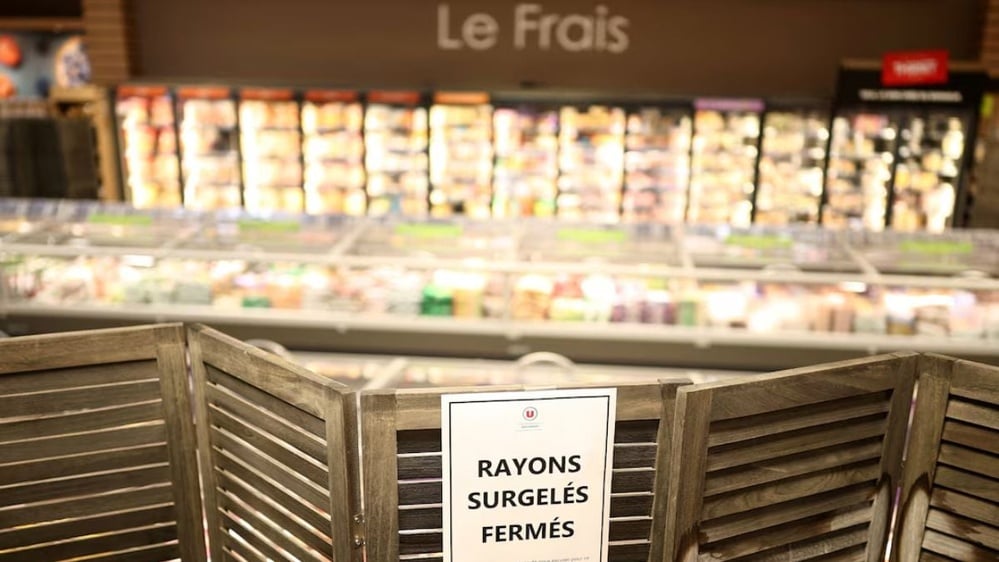
2026 © Helium Trades
Privacy Policy & Disclosure
* Disclaimer: Nothing on this website constitutes investment advice, performance data or any recommendation that any particular security, portfolio of securities, transaction or investment strategy is suitable for any specific person. Helium Trades is not responsible in any way for the accuracy
of any model predictions or price data. Any mention of a particular security and related prediction data is not a recommendation to buy or sell that security. Investments in securities involve the risk of loss. Past performance is no guarantee of future results. Helium Trades is not responsible for any of your investment decisions,
you should consult a financial expert before engaging in any transaction.
Helium Research Assistant

How can I help you today?
Ask any question about this page.


