See whether Helium helps you make better-informed decisions. Try every Pro Trader feature for 30 days. No credit card required.
Try every Pro Trader feature for 30 days. No credit card required.

November 05, 2026 · 0 shares
The report is largely descriptive and balanced, but its framing highlights Trump-appointed commissioners approving the arch over broad public opposition and legal challenges.
Automated analysis; not human reviewed.
Limitations: The supplied text includes unrelated subscription teasers and a duplicated/truncated passage; bias scores are based on the substantive article body.
·
55 of 55 available dimensions scored; omitted dimensions are not treated as neutral.
·
Verified supporting quotes for 8 of 55 scored dimensions.
Claim: The report frames the approval by juxtaposing Trump-appointed commissioners with broad public opposition and a partisan vote split.
“The commission, led by Trump appointees, gave the project a green light after a hearing at which scores of area residents lined up to voice their opposition to the project” · exact text match
“The motion to approve final site building plans passed 8-4, with the four votes in opposition coming from commissioners who were not appointed by Trump.” · exact text match
Why: This framing emphasizes appointee politics and public opposition, a mild anti-Trump/liberal tilt.
Claim: Contested claims are attributed to the commission, opponents, or administration rather than asserted as the publisher’s own conclusions.
“Opponents of the project, including the governments of Virginia and the District of Columbia, are seeking an emergency court order blocking the construction from moving forward, arguing the project is illegal.” · exact text match
“In court filings, the administration countered that the city and state don’t have standing to sue” · exact text match
Why: The report presents opposing legal positions with clear attribution.
Claim: The report describes the approval and litigation without recommending whether the arch should be built.
“The National Capital Planning Commission voted Thursday to approve President Donald Trump’s massive — and controversial — “Triumphal Arch” for Washington, with construction scheduled to begin almost immediately.” · exact text match
“Opponents of the project, including the governments of Virginia and the District of Columbia, are seeking an emergency court order blocking the construction from moving forward, arguing the project is illegal.” · exact text match
Why: It reports events and competing claims rather than prescribing an outcome.
Claim: The publisher uses a mild evaluative label in describing the arch as 'controversial,' while most evaluative language is attributed.
“President Donald Trump’s massive — and controversial — “Triumphal Arch” for Washington” · exact text match
Why: The word 'controversial' is an evaluative characterization, though it is supported by reported opposition.
Claim: The report centers on a federal commission vote, presidential project, congressional reactions, and litigation by D.C. and Virginia.
“The National Capital Planning Commission voted Thursday to approve President Donald Trump’s massive — and controversial — “Triumphal Arch” for Washington” · exact text match
“Virginia and the District of Columbia filed their own action to stop the project last week, contending it “defies at least five federal statutes,” including one that “generally limits buildings in the District to a maximum height of 130 feet.”” · exact text match
Why: The subject matter is explicitly governmental and legal.
Claim: The report supplies named officials, precise vote counts, and attributed court filings.
“Paoletta, who is general counsel at the Office of Management and Budget and was appointed chairman of the commission in August” · exact text match
“The motion to approve final site building plans passed 8-4” · exact text match
Why: Specific, attributable details support high visible credibility.
Claim: The report grounds claims in vote counts and attributed court filings.
“The motion to approve final site building plans passed 8-4” · exact text match
“In court filings, the administration countered that the city and state don’t have standing to sue” · exact text match
Why: Specific counts and attributed legal positions indicate factual, reasoned presentation.
Claim: The report includes contextual legal detail such as statutory height limits and procedural history.
“Virginia and the District of Columbia filed their own action to stop the project last week, contending it “defies at least five federal statutes,” including one that “generally limits buildings in the District to a maximum height of 130 feet.”” · exact text match
Why: Detailed legal and procedural context indicates high article intelligence.
The supplied text includes unrelated subscription teasers and a duplicated/truncated passage; bias scores are based on the substantive article body.
November 06, 2026 · 0 shares
The report frames the arch as a legally contested Trump personal-stamp project, foregrounding opponents’ objections and the approving commission’s Trump ties while giving limited space to administration arguments.
Automated analysis; not human reviewed.
Limitations: The supplied text includes unrelated headlines and boilerplate and lacks a byline; analysis is limited to the substantive report on the arch project.
·
55 of 55 available dimensions scored; omitted dimensions are not treated as neutral.
·
Verified supporting quotes for 9 of 55 scored dimensions.
Claim: The report frames Trump's arch project through anti-Trump/partisan-critical language, including a personal-aggrandizement characterization and emphasis on Democratic opposition.
“The arch is one of several projects launched by Trump in a bid to put his personal stamp on the capital, many of which have prompted legal challenges.” · exact text match
“But the majority on the panel, which is controlled by Trump allies, voted against a delay” · exact text match
Counterevidence:
“Proponents claim that Congress approved the construction of a monument at the site over a century ago.” · exact text match
Why: The publisher's own prose characterizes the project as a personal stamp and stresses Trump-allied control, while selecting a Democratic congressman's condemnation; this is a modest liberal/anti-Trump framing slant.
Claim: The report uses subjective, evaluative language that frames the arch and its setting rather than remaining strictly neutral.
“massive triumphal arch project” · exact text match
“furious opponents” · exact text match
“hallowed Arlington National Cemetery” · exact text match
Why: Loaded adjectives like 'massive,' 'furious,' and 'hallowed' introduce evaluative framing beyond neutral description.
Claim: The report has a mild sensational edge through dramatic adjectives and scale comparisons.
“furious opponents” · exact text match
“The giant arch would be much taller than the Arc de Triomphe in Paris, its inspiration.” · exact text match
Why: Dramatic wording and scale comparisons slightly heighten the presentation, though the overall tone remains news-reporting.
Claim: The report is overwhelmingly descriptive, recounting the ruling, commission vote, and competing claims rather than prescribing a policy outcome.
“District Judge Tanya Chutkan, who is overseeing the case, ruled that the Trump administration cannot start construction on the arch for two weeks while the court considers challenges to its legality.” · exact text match
Why: The central content reports institutional actions and attributed claims, with no explicit recommendation or advocacy.
Claim: The report contains some opinionated framing, especially the characterization of Trump's projects as a personal-stamp effort.
“The arch is one of several projects launched by Trump in a bid to put his personal stamp on the capital, many of which have prompted legal challenges.” · exact text match
“adjacent to the hallowed Arlington National Cemetery” · exact text match
Why: Phrases such as 'personal stamp' and 'hallowed' go beyond bare factual description and color the report.
Claim: The report is highly political, centered on a Trump administration project, a federal judicial ruling, a commission vote, and partisan and electoral context.
“But the majority on the panel, which is controlled by Trump allies, voted against a delay and the Trump administration said it aimed to start work right away.” · exact text match
“referring to the Democrats’ winning control of Congress in Tuesday’s midterm elections” · exact text match
Why: The article's actors, conflict, and quoted framing are explicitly political and electoral.
Claim: The report's tone toward the project is mildly negative, using emotional language and highlighting condemnation.
“furious opponents” · exact text match
“This arch would dishonor America, our ideals and our laws” · exact text match
Why: 'Furious' and the quoted 'dishonor' language create a negative emotional charge, though the report also includes proponent claims.
Claim: The report shows moderate credibility through named officials, specific vote counts, court actions, and attributed claims, with some loaded framing.
“The National Capital Planning Commission (NCPC) had voted 8-4 to approve the project earlier Thursday” · exact text match
“District Judge Tanya Chutkan, who is overseeing the case, ruled that the Trump administration cannot start construction on the arch for two weeks while the court considers challenges to its legality.” · exact text match
Why: Specific institutional details and direct attribution support reliability, but subjective adjectives and one-sided quote selection reduce confidence.
Claim: The report is largely rational and evidence-oriented, citing a court ruling, vote tally, legal concerns, and funding questions.
“District Judge Tanya Chutkan, who is overseeing the case, ruled that the Trump administration cannot start construction on the arch for two weeks while the court considers challenges to its legality.” · exact text match
“The four dissenting commissioners had called for the decision to be delayed, noting there were legal concerns, a lack of congressional appropriation to fund the project and questions about Defense Secretary Pete Hegseth’s claims of the arch’s military use.” · exact text match
Why: Specific institutional actions, named officials, and stated concerns support a rational/factual presentation rather than irrationality.
The supplied text includes unrelated headlines and boilerplate and lacks a byline; analysis is limited to the substantive report on the arch project.
November 06, 2026 · 0 shares
The report is a neutral, attribution-based news brief that presents the court order and prior planning approval in factual terms without characterizing either side.
Automated analysis; not human reviewed.
Limitations: The supplied text is a very short snippet with no author or full article context, limiting confidence in finer-grained bias scores.
·
9 of 55 available dimensions scored; omitted dimensions are not treated as neutral.
·
Verified supporting quotes for 9 of 9 scored dimensions.
Claim: The report presents the court order and prior planning approval without liberal or conservative ideological framing.
“Federal judge temporarily blocks Trump's 250-foot arch construction” · exact text match
“hours after the National Capital Planning Commission approved the project” · exact text match
Why: It reports both the judicial block and the commission approval in neutral, procedural terms; no partisan labels or ideological characterization appears.
Claim: The report is predominantly factual and attributed rather than subjective.
“U.S. District Judge Tanya Chutkan issued a 14-day restraining order halting construction” · exact text match
Why: The central sentence states a specific actor, legal action, and duration without evaluative commentary.
Claim: The headline and text use neutral, non-sensational language.
“Federal judge temporarily blocks Trump's 250-foot arch construction” · exact text match
Why: The verb 'blocks' is factual and the details are stated plainly; no dramatic or emotionally charged wording appears.
Claim: The report is descriptive and contains no policy recommendation or prescriptive judgment.
“issued a 14-day restraining order halting construction” · exact text match
Why: It describes a legal action and its effect rather than urging a course of action.
Claim: The report is highly political in subject matter, involving President Trump, a federal judge, and a federal planning commission.
“President Trump's proposed 250-foot triumphal arch” · exact text match
“U.S. District Judge Tanya Chutkan” · exact text match
Why: Named political and governmental actors are central to the reported development.
Claim: The report presents actions by both a federal judge and a federal planning commission without endorsing or attacking establishment institutions.
“U.S. District Judge Tanya Chutkan issued a 14-day restraining order” · exact text match
“National Capital Planning Commission approved the project” · exact text match
Why: Institutional actions are reported as procedural facts; no pro- or anti-establishment framing is evident.
Claim: The language is unemotional and neutral in valence.
“Federal judge temporarily blocks Trump's 250-foot arch construction” · exact text match
“National Capital Planning Commission approved the project” · exact text match
Why: Both the block and approval are stated as procedural facts without emotive adjectives.
Claim: The report names specific institutional actors and actions, supporting visible credibility.
“U.S. District Judge Tanya Chutkan” · exact text match
“National Capital Planning Commission” · exact text match
Why: Attribution to a named judge and commission is present, though the snippet is too short to assess broader sourcing or corrections.
Claim: The report includes the prior commission approval, giving a fair procedural context to the court order.
“hours after the National Capital Planning Commission approved the project” · exact text match
Why: Mentioning the approval immediately after the block reduces one-sidedness and shows an effort at internal fairness.
The supplied text is a very short snippet with no author or full article context, limiting confidence in finer-grained bias scores.
November 06, 2026 · 0 shares
The report frames the arch as a legally contested Trump personal-stamp project, foregrounding opponents’ objections and the approving commission’s Trump ties while giving limited space to administration arguments.
Automated analysis; not human reviewed.
Limitations: The supplied text includes unrelated headlines and boilerplate and lacks a byline; analysis is limited to the substantive report on the arch project.
·
55 of 55 available dimensions scored; omitted dimensions are not treated as neutral.
·
Verified supporting quotes for 9 of 55 scored dimensions.
Claim: The report frames Trump's arch project through anti-Trump/partisan-critical language, including a personal-aggrandizement characterization and emphasis on Democratic opposition.
“The arch is one of several projects launched by Trump in a bid to put his personal stamp on the capital, many of which have prompted legal challenges.” · exact text match
“But the majority on the panel, which is controlled by Trump allies, voted against a delay” · exact text match
Counterevidence:
“Proponents claim that Congress approved the construction of a monument at the site over a century ago.” · exact text match
Why: The publisher's own prose characterizes the project as a personal stamp and stresses Trump-allied control, while selecting a Democratic congressman's condemnation; this is a modest liberal/anti-Trump framing slant.
Claim: The report uses subjective, evaluative language that frames the arch and its setting rather than remaining strictly neutral.
“massive triumphal arch project” · exact text match
“furious opponents” · exact text match
“hallowed Arlington National Cemetery” · exact text match
Why: Loaded adjectives like 'massive,' 'furious,' and 'hallowed' introduce evaluative framing beyond neutral description.
Claim: The report has a mild sensational edge through dramatic adjectives and scale comparisons.
“furious opponents” · exact text match
“The giant arch would be much taller than the Arc de Triomphe in Paris, its inspiration.” · exact text match
Why: Dramatic wording and scale comparisons slightly heighten the presentation, though the overall tone remains news-reporting.
Claim: The report is overwhelmingly descriptive, recounting the ruling, commission vote, and competing claims rather than prescribing a policy outcome.
“District Judge Tanya Chutkan, who is overseeing the case, ruled that the Trump administration cannot start construction on the arch for two weeks while the court considers challenges to its legality.” · exact text match
Why: The central content reports institutional actions and attributed claims, with no explicit recommendation or advocacy.
Claim: The report contains some opinionated framing, especially the characterization of Trump's projects as a personal-stamp effort.
“The arch is one of several projects launched by Trump in a bid to put his personal stamp on the capital, many of which have prompted legal challenges.” · exact text match
“adjacent to the hallowed Arlington National Cemetery” · exact text match
Why: Phrases such as 'personal stamp' and 'hallowed' go beyond bare factual description and color the report.
Claim: The report is highly political, centered on a Trump administration project, a federal judicial ruling, a commission vote, and partisan and electoral context.
“But the majority on the panel, which is controlled by Trump allies, voted against a delay and the Trump administration said it aimed to start work right away.” · exact text match
“referring to the Democrats’ winning control of Congress in Tuesday’s midterm elections” · exact text match
Why: The article's actors, conflict, and quoted framing are explicitly political and electoral.
Claim: The report's tone toward the project is mildly negative, using emotional language and highlighting condemnation.
“furious opponents” · exact text match
“This arch would dishonor America, our ideals and our laws” · exact text match
Why: 'Furious' and the quoted 'dishonor' language create a negative emotional charge, though the report also includes proponent claims.
Claim: The report shows moderate credibility through named officials, specific vote counts, court actions, and attributed claims, with some loaded framing.
“The National Capital Planning Commission (NCPC) had voted 8-4 to approve the project earlier Thursday” · exact text match
“District Judge Tanya Chutkan, who is overseeing the case, ruled that the Trump administration cannot start construction on the arch for two weeks while the court considers challenges to its legality.” · exact text match
Why: Specific institutional details and direct attribution support reliability, but subjective adjectives and one-sided quote selection reduce confidence.
Claim: The report is largely rational and evidence-oriented, citing a court ruling, vote tally, legal concerns, and funding questions.
“District Judge Tanya Chutkan, who is overseeing the case, ruled that the Trump administration cannot start construction on the arch for two weeks while the court considers challenges to its legality.” · exact text match
“The four dissenting commissioners had called for the decision to be delayed, noting there were legal concerns, a lack of congressional appropriation to fund the project and questions about Defense Secretary Pete Hegseth’s claims of the arch’s military use.” · exact text match
Why: Specific institutional actions, named officials, and stated concerns support a rational/factual presentation rather than irrationality.
The supplied text includes unrelated headlines and boilerplate and lacks a byline; analysis is limited to the substantive report on the arch project.
November 06, 2026 · 0 shares
The report is largely factual and attributed, using procedural details and direct quotation to qualify Trump’s characterization of the Oval Office proclamation.
Automated analysis; not human reviewed.
Limitations: The supplied text includes extensive unrelated headline aggregation and promotional/archive material; analysis focused on the main article body and embedded transcript, excluding page chrome and boilerplate.
·
9 of 55 available dimensions scored; omitted dimensions are not treated as neutral.
·
Verified supporting quotes for 7 of 9 scored dimensions.
Claim: The report presents both the planning commission’s approval and the judge’s block, and juxtaposes Trump’s rationale with the proclamation’s limits, without clear left-right advocacy.
“The ruling came shortly after the National Capital Planning Commission approved the arch in an 8-to-4 vote” · exact text match
“But the proclamation doesn’t go that far.” · exact text match
Why: It gives procedural wins and losses plus a textual check, supporting measured neutrality rather than a clear ideological direction.
Claim: The report distinguishes attributed arguments from the publisher’s own assertions.
“The judge sided with D.C. and Virginia officials, who argue the project lacks proper authorization and would cause major traffic disruptions.” · exact text match
Why: The phrase 'who argue' marks the officials' position as their claim, supporting objective attribution.
Claim: The report uses measured procedural language rather than sensational or emotive framing.
“The ruling came shortly after the National Capital Planning Commission approved the arch in an 8-to-4 vote” · exact text match
Why: The vote and ruling are described in factual terms without dramatic embellishment.
Claim: The report describes events and disputes without prescribing what policymakers should do.
“The ruling came shortly after the National Capital Planning Commission approved the arch in an 8-to-4 vote” · exact text match
Why: It reports procedural facts rather than advocating a policy outcome.
Claim: The report is centrally concerned with a presidential construction project, federal approval, and judicial review.
“President Donald Trump’s plans for a massive triumphal arch in Washington just hit a major roadblock.” · exact text match
Why: The subject matter and actors are explicitly political and governmental.
Claim: The report attributes key claims to named institutions and quotes the governing text while noting limits on Trump’s claim.
“Judge Tanya Chutkan ordered a 14-day construction halt” · exact text match
“The National Park Service has said the arch would have “adverse effects” on the surrounding historic landscape and views.” · not found in supplied text
Why: Named court and agency sourcing plus textual quotation support visible credibility.
Claim: The report relies on specific legal actions, vote counts, and attributed agency findings rather than emotional or illogical appeals.
“Judge Tanya Chutkan ordered a 14-day construction halt” · exact text match
“The National Park Service has said the arch would have “adverse effects” on the surrounding historic landscape and views.” · not found in supplied text
Why: Specific actors, numbers, and attributed findings support a rational presentation.
Claim: The report transparently notes that the proclamation’s text does not match Trump’s broad characterization.
“But the proclamation doesn’t go that far.” · exact text match
“It explicitly states that the designation won’t “restrict the President’s authority to redecorate the monument, select furnishings, or make ordinary operational and security modifications.”” · exact text match
Why: Direct textual quotation qualifies a quoted claim, indicating fair and honest handling.
Claim: The report synthesizes legal, planning, and historical-designation details with specific numbers and direct textual evidence.
“The ruling came shortly after the National Capital Planning Commission approved the arch in an 8-to-4 vote” · exact text match
“It explicitly states that the designation won’t “restrict the President’s authority to redecorate the monument, select furnishings, or make ordinary operational and security modifications.”” · exact text match
Why: Specific vote counts and quoted legal text show a competent synthesis of the reported developments.
The supplied text includes extensive unrelated headline aggregation and promotional/archive material; analysis focused on the main article body and embedded transcript, excluding page chrome and boilerplate.
November 06, 2026 · 0 shares
The headline applies the unquoted label “Fascist” and the verb “Slam” to a Trump-linked project, producing a loaded, politically critical, and mildly sensational frame while the body reports the protest and legal developments in attributed terms.
Automated analysis; not human reviewed.
Limitations: The substantive text is truncated by a subscription prompt after the opening paragraphs, so the analysis is limited to the headline, dek, and available body text.
·
8 of 55 available dimensions scored; omitted dimensions are not treated as neutral.
·
Verified supporting quotes for 8 of 8 scored dimensions.
Claim: The headline uses a left-coded “Fascist” label to frame Trump’s proposed arch negatively.
“DC Protesters Slam Trump's Fascist Triumphal Arch.” · exact text match
Why: The unquoted “Fascist” epithet applies a strong anti-Trump political characterization rather than a neutral descriptor.
Claim: The headline presents a subjective judgment by labeling the proposed arch “Fascist” and using “Slam.”
“DC Protesters Slam Trump's Fascist Triumphal Arch.” · exact text match
Why: Both terms are evaluative and loaded rather than neutral reporting language.
Claim: The headline is sensational through the words “Slam” and “Fascist.”
“DC Protesters Slam Trump's Fascist Triumphal Arch.” · exact text match
Why: The wording heightens drama and conflict beyond a plain report of the protest.
Claim: The headline expresses an opinion by calling the arch “Fascist” rather than using a neutral descriptor.
“DC Protesters Slam Trump's Fascist Triumphal Arch.” · exact text match
Why: The label is evaluative and appears unquoted in the headline.
Claim: The report centers on a political protest and legal fight over a Trump-linked federal project.
“more than 50 protesters gathered yesterday, November 5, to oppose Trump’s proposed 250-foot Triumphal Arch ahead of the National Capital Planning Commission’s (NCPC) final meeting to vote on the project.” · exact text match
Why: The event is explicitly political, involving federal approval and litigation.
Claim: The headline frames the dispute in ideological terms by calling the arch “Fascist.”
“DC Protesters Slam Trump's Fascist Triumphal Arch.” · exact text match
Why: The unquoted “Fascist” label imposes a strong ideological characterization on the project.
Claim: The framing carries a negative emotional charge via “Fascist” and “Slam.”
“DC Protesters Slam Trump's Fascist Triumphal Arch.” · exact text match
Why: The headline uses negatively valenced, confrontational language.
Claim: The body provides specific, attributed details about the protest, NCPC vote, and court order, but the headline uses loaded framing.
“Hours after the NCPC approved the arch in an 8–4 vote, a district court judge granted the District of Columbia and Virginia a 14-day restraining order to halt construction.” · exact text match
Counterevidence:
“DC Protesters Slam Trump's Fascist Triumphal Arch.” · exact text match
Why: Concrete procedural details and attribution support credibility, while the unquoted headline label reduces it.
The substantive text is truncated by a subscription prompt after the opening paragraphs, so the analysis is limited to the headline, dek, and available body text.
November 06, 2026 · 0 shares
Framing is mildly pro-Trump/right-leaning, giving space to the White House’s “activist district court” criticism and celebratory project language while still recounting the judge’s stated harms.
Automated analysis; not human reviewed.
Limitations: The supplied text includes scrape artifacts and a truncated outlet reference (“News reported”), limiting certainty about sourcing and full article framing.
·
9 of 55 available dimensions scored; omitted dimensions are not treated as neutral.
·
Verified supporting quotes for 9 of 9 scored dimensions.
Claim: The article gives mild favorable framing to Trump’s arch through the White House’s celebratory language and its 'activist district court' criticism.
“An activist district court thereafter blocked the construction of the project.” · exact text match
“a much needed Triumphal Arch” · exact text match
Why: These quoted characterizations are presented without an opposing evaluative label, though the judge’s detailed rationale is also included.
Claim: The report separates factual narration from attributed opinion by quoting the judge and White House spokesperson directly.
“In response to Chutkan’s ruling, White House spokesperson Davis Ingle said” · exact text match
Why: Direct attribution shows objective reporting rather than publisher subjectivity.
Claim: The headline and lead use restrained, procedural language.
“A federal judge has temporarily halted construction of the arch President Donald Trump planned to build” · exact text match
Why: The phrasing is neutral and procedural rather than sensational.
Claim: The text describes legal and administrative developments without prescribing a preferred outcome.
“U.S. District Judge Tanya Chutkan issued the order not long after the National Capital Planning Commission (NCPC) voted to approve plans for the arch” · exact text match
Why: It reports actions and claims rather than advocating a policy.
Claim: The report concerns a dispute over a presidential construction project and judicial review.
“A federal judge has temporarily halted construction of the arch President Donald Trump planned to build in Washington, DC, between the Lincoln Memorial and Arlington National Cemetery.” · exact text match
Why: The subject matter is explicitly political and governmental.
Claim: The report attributes key claims to named officials and outlets and supplies direct quotes.
“U.S. District Judge Tanya Chutkan issued the order not long after the National Capital Planning Commission (NCPC) voted to approve plans for the arch, the Hill reported Friday, noting the pause was set for 14 days.” · exact text match
Why: Named actors and attributed reporting support credibility.
Claim: The report structures the account around a court opinion and official responses rather than emotive assertion.
“In a memorandum opinion filed with the order, Chutkan wrote” · exact text match
Why: The central account is organized around legal reasoning and official statements.
Claim: The report includes the judge’s written rationale and the White House’s response, supporting fair presentation.
“In a memorandum opinion filed with the order, Chutkan wrote” · exact text match
“In response to Chutkan’s ruling, White House spokesperson Davis Ingle said” · exact text match
Why: Presenting both the court’s reasoning and the administration’s reaction indicates internal fairness.
Claim: The article conveys legal and administrative details with clear chronology and attribution.
“U.S. District Judge Tanya Chutkan issued the order not long after the National Capital Planning Commission (NCPC) voted to approve plans for the arch” · exact text match
Why: It includes specific institutional actors and procedural facts.
The supplied text includes scrape artifacts and a truncated outlet reference (“News reported”), limiting certainty about sourcing and full article framing.
November 06, 2026 · 0 shares
Heavy anti-Trump editorial framing uses loaded language and unsupported assertions of bad faith to present the court ruling as a deserved rebuke.
Automated analysis; not human reviewed.
Limitations: The supplied text contains duplicated paragraphs, embedded navigation/trending links, and future-dated claims such as a 2026 midterm loss; analysis is limited to the available article prose.
·
55 of 55 available dimensions scored; omitted dimensions are not treated as neutral.
·
Verified supporting quotes for 14 of 55 scored dimensions.
Claim: The article frames Trump through consistently hostile, left-coded characterizations.
“After his party suffered a brutal loss in the 2026 midterms, Donald Trump has tried to find solace in his attempts to remake Washington, D.C.” · exact text match
“whether they be sweeping aside sexual assault allegations, dodging taxes, or finding ways to enrich himself from the Oval Office” · exact text match
Why: The language aligns with liberal anti-Trump critique and presents a one-sided negative portrait.
Claim: The report is heavily evaluative rather than neutral.
“brought one of Trump’s prize beautification projects to a screeching halt” · exact text match
“Trump and his cronies made up some utter flimflam” · exact text match
Why: Loaded adjectives and insults replace neutral description.
Claim: Dramatic phrasing heightens the conflict and stakes.
“to a screeching halt” · exact text match
“The timing of Chutkan’s ruling couldn’t have been worse” · exact text match
Why: Sensational wording emphasizes abruptness and bad timing.
Claim: The publisher inserts direct opinions and ridicule into the report.
“In less-legal terms, Chutkan is basically noting that, as opponents of the arch have suggested for months, Trump and his cronies made up some utter flimflam” · exact text match
“it’s very likely that building an arch or an unnecessary ballroom is the only solace he has left” · exact text match
Why: The prose openly editorializes about Trump’s motives and character.
Claim: The article is structured around Trump’s political power and legal conflicts.
“After his party suffered a brutal loss in the 2026 midterms” · exact text match
“with Trump’s mandate across the government eroding by the hour” · exact text match
Why: Political loss, mandate, and legal battles dominate the framing.
Claim: A complex legal dispute is reduced to a story of fabricated excuses.
“made up some utter flimflam” · exact text match
“the administration’s lawyers can’t be trusted because they are making up whatever excuse they can” · exact text match
Why: The article collapses nuanced legal questions into bad-faith motive.
Claim: The article uses mockery and personal insult.
“cronies” · exact text match
“made up some utter flimflam” · exact text match
Why: Derisive terms are used in place of measured analysis.
Claim: The article states Trump’s bad faith and future legal defeat with more certainty than the supplied evidence supports.
“Trump and his cronies made up some utter flimflam” · exact text match
“it seems unlikely any justice with a gavel is going to allow him an inch” · exact text match
Why: It treats an inference of fabrication and a forecast as near-certain.
Claim: The report is organized by a consistently anti-Trump ideological frame.
“Trump and his cronies made up some utter flimflam” · exact text match
“whether they be sweeping aside sexual assault allegations, dodging taxes, or finding ways to enrich himself from the Oval Office” · exact text match
Why: The selection and wording repeatedly advance an anti-Trump line.
Claim: The tone is strongly negative toward Trump and his administration.
“brought one of Trump’s prize beautification projects to a screeching halt” · exact text match
“the only solace he has left” · exact text match
Why: Negative sentiment and mockery dominate the prose.
Claim: Credibility is mixed: official quotes and attribution appear alongside unsupported characterizations.
“The White House commends the National Capital Planning Commission’s decision to fully approve President Trump’s historic vision to build a much-needed Triumphal Arch in Washington, D.C.” · exact text match
“made up some utter flimflam” · exact text match
Why: The article includes direct official response and ruling quotes but also asserts bad faith without evidence.
Claim: The argument relies on loaded assertions of bad faith rather than evidence-bound legal reasoning.
“made up some utter flimflam” · exact text match
“can’t be trusted because they are making up whatever excuse they can to enact the president’s will” · exact text match
Why: The article asserts fabrication and untrustworthiness without substantiating intent.
Claim: The article forecasts judicial outcomes and Trump’s motives.
“it seems unlikely any justice with a gavel is going to allow him an inch” · exact text match
“it’s very likely that building an arch or an unnecessary ballroom is the only solace he has left” · exact text match
Why: These are speculative predictions about future rulings and private motivation.
Claim: Loaded framing and assertive character attacks shape the reader’s interpretation.
“Trump and his cronies made up some utter flimflam” · exact text match
“as we all know, someone who is used to getting what he wants” · exact text match
Why: The prose uses derisive labels and presupposed common knowledge to steer judgment.
The supplied text contains duplicated paragraphs, embedded navigation/trending links, and future-dated claims such as a 2026 midterm loss; analysis is limited to the available article prose.
November 06, 2026 · 0 shares
Skeptical framing of Trump’s arch as a costly personal 'pet project' is combined with mostly attributed reporting on legal and planning opposition.
Automated analysis; not human reviewed.
Limitations: The supplied text contains apparent scrape-link artifacts and inconsistent contextual details, so scores are limited to the visible article prose.
·
55 of 55 available dimensions scored; omitted dimensions are not treated as neutral.
·
Verified supporting quotes for 7 of 55 scored dimensions.
Claim: The report uses evaluative language that casts Trump’s Washington projects as costly personal projects and emphasizes opposition.
“costly projects Trump is pushing in Washington despite opposition from local officials and preservationists” · exact text match
“fixated on his pet projects in Washington” · exact text match
Why: Loaded descriptors and opposition emphasis tilt mildly against Trump/Republican framing.
Claim: The prose mixes attributed facts with subjective characterizations of the project and Trump’s décor.
“costly projects Trump is pushing” · exact text match
“filled to the brim with gold flourishes” · exact text match
Why: 'Costly' without figures and 'gold flourishes' are evaluative or descriptive beyond neutral reporting.
Claim: The article reports events and claims without recommending actions or policies.
“The National Capital Planning Commission voted late on Thursday to approve the proposed 76 metre arch in Washington, after hearing from about 100 opponents including Democratic lawmakers.” · exact text match
Why: The content is event reporting rather than prescriptive advocacy.
Claim: Evaluative phrasing signals the publisher’s viewpoint rather than pure fact reporting.
“fixated on his pet projects in Washington” · exact text match
“massive White House ballroom” · exact text match
Why: 'Fixated,' 'pet projects,' and 'massive' are opinion-laden evaluative terms.
Claim: The report is framed around a political and legal conflict over a Trump administration project.
“Judge blocks Trump's arch build after key approval win.” · exact text match
Why: The headline centers Trump, a judge, and an approval conflict, and the article discusses partisan and electoral context.
Claim: The report attributes key claims and flags uncertainty about unauthorized work.
“apparently without authorisation from the National Park Service” · exact text match
“The department has said an initial six to eight months of construction focused on excavation and foundation work could begin within days.” · exact text match
Why: Attribution to the Justice Department and use of 'apparently' indicate visible sourcing and uncertainty.
Claim: The article includes opposing institutional and public voices and attributes contested claims.
“after hearing from about 100 opponents including Democratic lawmakers” · exact text match
“D.C. City Council member Phil Mendelson, who also serves on the planning panel, said the project had not received required approval from Congress” · exact text match
Why: Inclusion of dissent and attribution supports fairness and honesty signals.
The supplied text contains apparent scrape-link artifacts and inconsistent contextual details, so scores are limited to the visible article prose.
November 05, 2026 · 0 shares
The report is largely descriptive and balanced, but its framing highlights Trump-appointed commissioners approving the arch over broad public opposition and legal challenges.
Automated analysis; not human reviewed.
Limitations: The supplied text includes unrelated subscription teasers and a duplicated/truncated passage; bias scores are based on the substantive article body.
·
55 of 55 available dimensions scored; omitted dimensions are not treated as neutral.
·
Verified supporting quotes for 8 of 55 scored dimensions.
Claim: The report frames the approval by juxtaposing Trump-appointed commissioners with broad public opposition and a partisan vote split.
“The commission, led by Trump appointees, gave the project a green light after a hearing at which scores of area residents lined up to voice their opposition to the project” · exact text match
“The motion to approve final site building plans passed 8-4, with the four votes in opposition coming from commissioners who were not appointed by Trump.” · exact text match
Why: This framing emphasizes appointee politics and public opposition, a mild anti-Trump/liberal tilt.
Claim: Contested claims are attributed to the commission, opponents, or administration rather than asserted as the publisher’s own conclusions.
“Opponents of the project, including the governments of Virginia and the District of Columbia, are seeking an emergency court order blocking the construction from moving forward, arguing the project is illegal.” · exact text match
“In court filings, the administration countered that the city and state don’t have standing to sue” · exact text match
Why: The report presents opposing legal positions with clear attribution.
Claim: The report describes the approval and litigation without recommending whether the arch should be built.
“The National Capital Planning Commission voted Thursday to approve President Donald Trump’s massive — and controversial — “Triumphal Arch” for Washington, with construction scheduled to begin almost immediately.” · exact text match
“Opponents of the project, including the governments of Virginia and the District of Columbia, are seeking an emergency court order blocking the construction from moving forward, arguing the project is illegal.” · exact text match
Why: It reports events and competing claims rather than prescribing an outcome.
Claim: The publisher uses a mild evaluative label in describing the arch as 'controversial,' while most evaluative language is attributed.
“President Donald Trump’s massive — and controversial — “Triumphal Arch” for Washington” · exact text match
Why: The word 'controversial' is an evaluative characterization, though it is supported by reported opposition.
Claim: The report centers on a federal commission vote, presidential project, congressional reactions, and litigation by D.C. and Virginia.
“The National Capital Planning Commission voted Thursday to approve President Donald Trump’s massive — and controversial — “Triumphal Arch” for Washington” · exact text match
“Virginia and the District of Columbia filed their own action to stop the project last week, contending it “defies at least five federal statutes,” including one that “generally limits buildings in the District to a maximum height of 130 feet.”” · exact text match
Why: The subject matter is explicitly governmental and legal.
Claim: The report supplies named officials, precise vote counts, and attributed court filings.
“Paoletta, who is general counsel at the Office of Management and Budget and was appointed chairman of the commission in August” · exact text match
“The motion to approve final site building plans passed 8-4” · exact text match
Why: Specific, attributable details support high visible credibility.
Claim: The report grounds claims in vote counts and attributed court filings.
“The motion to approve final site building plans passed 8-4” · exact text match
“In court filings, the administration countered that the city and state don’t have standing to sue” · exact text match
Why: Specific counts and attributed legal positions indicate factual, reasoned presentation.
Claim: The report includes contextual legal detail such as statutory height limits and procedural history.
“Virginia and the District of Columbia filed their own action to stop the project last week, contending it “defies at least five federal statutes,” including one that “generally limits buildings in the District to a maximum height of 130 feet.”” · exact text match
Why: Detailed legal and procedural context indicates high article intelligence.
The supplied text includes unrelated subscription teasers and a duplicated/truncated passage; bias scores are based on the substantive article body.
November 06, 2026 · 0 shares
Heavy anti-Trump editorial framing uses loaded language and unsupported assertions of bad faith to present the court ruling as a deserved rebuke.
Automated analysis; not human reviewed.
Limitations: The supplied text contains duplicated paragraphs, embedded navigation/trending links, and future-dated claims such as a 2026 midterm loss; analysis is limited to the available article prose.
·
55 of 55 available dimensions scored; omitted dimensions are not treated as neutral.
·
Verified supporting quotes for 14 of 55 scored dimensions.
Claim: The article frames Trump through consistently hostile, left-coded characterizations.
“After his party suffered a brutal loss in the 2026 midterms, Donald Trump has tried to find solace in his attempts to remake Washington, D.C.” · exact text match
“whether they be sweeping aside sexual assault allegations, dodging taxes, or finding ways to enrich himself from the Oval Office” · exact text match
Why: The language aligns with liberal anti-Trump critique and presents a one-sided negative portrait.
Claim: The report is heavily evaluative rather than neutral.
“brought one of Trump’s prize beautification projects to a screeching halt” · exact text match
“Trump and his cronies made up some utter flimflam” · exact text match
Why: Loaded adjectives and insults replace neutral description.
Claim: Dramatic phrasing heightens the conflict and stakes.
“to a screeching halt” · exact text match
“The timing of Chutkan’s ruling couldn’t have been worse” · exact text match
Why: Sensational wording emphasizes abruptness and bad timing.
Claim: The publisher inserts direct opinions and ridicule into the report.
“In less-legal terms, Chutkan is basically noting that, as opponents of the arch have suggested for months, Trump and his cronies made up some utter flimflam” · exact text match
“it’s very likely that building an arch or an unnecessary ballroom is the only solace he has left” · exact text match
Why: The prose openly editorializes about Trump’s motives and character.
Claim: The article is structured around Trump’s political power and legal conflicts.
“After his party suffered a brutal loss in the 2026 midterms” · exact text match
“with Trump’s mandate across the government eroding by the hour” · exact text match
Why: Political loss, mandate, and legal battles dominate the framing.
Claim: A complex legal dispute is reduced to a story of fabricated excuses.
“made up some utter flimflam” · exact text match
“the administration’s lawyers can’t be trusted because they are making up whatever excuse they can” · exact text match
Why: The article collapses nuanced legal questions into bad-faith motive.
Claim: The article uses mockery and personal insult.
“cronies” · exact text match
“made up some utter flimflam” · exact text match
Why: Derisive terms are used in place of measured analysis.
Claim: The article states Trump’s bad faith and future legal defeat with more certainty than the supplied evidence supports.
“Trump and his cronies made up some utter flimflam” · exact text match
“it seems unlikely any justice with a gavel is going to allow him an inch” · exact text match
Why: It treats an inference of fabrication and a forecast as near-certain.
Claim: The report is organized by a consistently anti-Trump ideological frame.
“Trump and his cronies made up some utter flimflam” · exact text match
“whether they be sweeping aside sexual assault allegations, dodging taxes, or finding ways to enrich himself from the Oval Office” · exact text match
Why: The selection and wording repeatedly advance an anti-Trump line.
Claim: The tone is strongly negative toward Trump and his administration.
“brought one of Trump’s prize beautification projects to a screeching halt” · exact text match
“the only solace he has left” · exact text match
Why: Negative sentiment and mockery dominate the prose.
Claim: Credibility is mixed: official quotes and attribution appear alongside unsupported characterizations.
“The White House commends the National Capital Planning Commission’s decision to fully approve President Trump’s historic vision to build a much-needed Triumphal Arch in Washington, D.C.” · exact text match
“made up some utter flimflam” · exact text match
Why: The article includes direct official response and ruling quotes but also asserts bad faith without evidence.
Claim: The argument relies on loaded assertions of bad faith rather than evidence-bound legal reasoning.
“made up some utter flimflam” · exact text match
“can’t be trusted because they are making up whatever excuse they can to enact the president’s will” · exact text match
Why: The article asserts fabrication and untrustworthiness without substantiating intent.
Claim: The article forecasts judicial outcomes and Trump’s motives.
“it seems unlikely any justice with a gavel is going to allow him an inch” · exact text match
“it’s very likely that building an arch or an unnecessary ballroom is the only solace he has left” · exact text match
Why: These are speculative predictions about future rulings and private motivation.
Claim: Loaded framing and assertive character attacks shape the reader’s interpretation.
“Trump and his cronies made up some utter flimflam” · exact text match
“as we all know, someone who is used to getting what he wants” · exact text match
Why: The prose uses derisive labels and presupposed common knowledge to steer judgment.
The supplied text contains duplicated paragraphs, embedded navigation/trending links, and future-dated claims such as a 2026 midterm loss; analysis is limited to the available article prose.
November 06, 2026 · 0 shares
The report is largely factual and attributed, using procedural details and direct quotation to qualify Trump’s characterization of the Oval Office proclamation.
Automated analysis; not human reviewed.
Limitations: The supplied text includes extensive unrelated headline aggregation and promotional/archive material; analysis focused on the main article body and embedded transcript, excluding page chrome and boilerplate.
·
9 of 55 available dimensions scored; omitted dimensions are not treated as neutral.
·
Verified supporting quotes for 7 of 9 scored dimensions.
Claim: The report presents both the planning commission’s approval and the judge’s block, and juxtaposes Trump’s rationale with the proclamation’s limits, without clear left-right advocacy.
“The ruling came shortly after the National Capital Planning Commission approved the arch in an 8-to-4 vote” · exact text match
“But the proclamation doesn’t go that far.” · exact text match
Why: It gives procedural wins and losses plus a textual check, supporting measured neutrality rather than a clear ideological direction.
Claim: The report distinguishes attributed arguments from the publisher’s own assertions.
“The judge sided with D.C. and Virginia officials, who argue the project lacks proper authorization and would cause major traffic disruptions.” · exact text match
Why: The phrase 'who argue' marks the officials' position as their claim, supporting objective attribution.
Claim: The report uses measured procedural language rather than sensational or emotive framing.
“The ruling came shortly after the National Capital Planning Commission approved the arch in an 8-to-4 vote” · exact text match
Why: The vote and ruling are described in factual terms without dramatic embellishment.
Claim: The report describes events and disputes without prescribing what policymakers should do.
“The ruling came shortly after the National Capital Planning Commission approved the arch in an 8-to-4 vote” · exact text match
Why: It reports procedural facts rather than advocating a policy outcome.
Claim: The report is centrally concerned with a presidential construction project, federal approval, and judicial review.
“President Donald Trump’s plans for a massive triumphal arch in Washington just hit a major roadblock.” · exact text match
Why: The subject matter and actors are explicitly political and governmental.
Claim: The report attributes key claims to named institutions and quotes the governing text while noting limits on Trump’s claim.
“Judge Tanya Chutkan ordered a 14-day construction halt” · exact text match
“The National Park Service has said the arch would have “adverse effects” on the surrounding historic landscape and views.” · not found in supplied text
Why: Named court and agency sourcing plus textual quotation support visible credibility.
Claim: The report relies on specific legal actions, vote counts, and attributed agency findings rather than emotional or illogical appeals.
“Judge Tanya Chutkan ordered a 14-day construction halt” · exact text match
“The National Park Service has said the arch would have “adverse effects” on the surrounding historic landscape and views.” · not found in supplied text
Why: Specific actors, numbers, and attributed findings support a rational presentation.
Claim: The report transparently notes that the proclamation’s text does not match Trump’s broad characterization.
“But the proclamation doesn’t go that far.” · exact text match
“It explicitly states that the designation won’t “restrict the President’s authority to redecorate the monument, select furnishings, or make ordinary operational and security modifications.”” · exact text match
Why: Direct textual quotation qualifies a quoted claim, indicating fair and honest handling.
Claim: The report synthesizes legal, planning, and historical-designation details with specific numbers and direct textual evidence.
“The ruling came shortly after the National Capital Planning Commission approved the arch in an 8-to-4 vote” · exact text match
“It explicitly states that the designation won’t “restrict the President’s authority to redecorate the monument, select furnishings, or make ordinary operational and security modifications.”” · exact text match
Why: Specific vote counts and quoted legal text show a competent synthesis of the reported developments.
The supplied text includes extensive unrelated headline aggregation and promotional/archive material; analysis focused on the main article body and embedded transcript, excluding page chrome and boilerplate.
November 11, 2026 · 0 shares
Frames the cemetery visit through conflict by foregrounding 'growing opposition' and an 'expanding legal fight' without supplying details about either.
Automated analysis; not human reviewed.
Limitations: Only a headline and one-sentence summary are available; sourcing, details, and broader framing cannot be assessed.
·
3 of 55 available dimensions scored; omitted dimensions are not treated as neutral.
·
Verified supporting quotes for 3 of 3 scored dimensions.
Claim: The report is mostly descriptive, with limited evaluative language.
“An expanding legal fight over the proposed site of President Trump’s 250-foot triumphal arch looms over his visit to Arlington National Cemetery on Veterans Day.” · exact text match
Counterevidence:
“looms over his visit” · exact text match
Why: The sentence presents a concrete event and dispute, though 'looms' adds slight evaluative color.
Claim: The verb 'looms' adds dramatic tension to the scheduled visit.
“looms over his visit” · exact text match
Why: 'Looms' is a dramatic word choice that heightens the stakes beyond a plain schedule report.
Claim: The item is explicitly about a presidential project, a legal dispute, and a Veterans Day visit.
“President Trump’s 250-foot triumphal arch” · exact text match
“An expanding legal fight over the proposed site” · exact text match
Why: The subject matter is a sitting president's proposal and legal conflict, making the item highly political.
Only a headline and one-sentence summary are available; sourcing, details, and broader framing cannot be assessed.
November 05, 2026 · 0 shares
The report is largely descriptive and balanced, but its framing highlights Trump-appointed commissioners approving the arch over broad public opposition and legal challenges.
Automated analysis; not human reviewed. Limitations: The supplied text includes unrelated subscription teasers and a duplicated/truncated passage; bias scores are based on the substantive article body. · 55 of 55 available dimensions scored; omitted dimensions are not treated as neutral. · Verified supporting quotes for 8 of 55 scored dimensions.
Claim: The report frames the approval by juxtaposing Trump-appointed commissioners with broad public opposition and a partisan vote split.
“The commission, led by Trump appointees, gave the project a green light after a hearing at which scores of area residents lined up to voice their opposition to the project” · exact text match
“The motion to approve final site building plans passed 8-4, with the four votes in opposition coming from commissioners who were not appointed by Trump.” · exact text match
Why: This framing emphasizes appointee politics and public opposition, a mild anti-Trump/liberal tilt.
Claim: Contested claims are attributed to the commission, opponents, or administration rather than asserted as the publisher’s own conclusions.
“Opponents of the project, including the governments of Virginia and the District of Columbia, are seeking an emergency court order blocking the construction from moving forward, arguing the project is illegal.” · exact text match
“In court filings, the administration countered that the city and state don’t have standing to sue” · exact text match
Why: The report presents opposing legal positions with clear attribution.
Claim: The report describes the approval and litigation without recommending whether the arch should be built.
“The National Capital Planning Commission voted Thursday to approve President Donald Trump’s massive — and controversial — “Triumphal Arch” for Washington, with construction scheduled to begin almost immediately.” · exact text match
“Opponents of the project, including the governments of Virginia and the District of Columbia, are seeking an emergency court order blocking the construction from moving forward, arguing the project is illegal.” · exact text match
Why: It reports events and competing claims rather than prescribing an outcome.
Claim: The publisher uses a mild evaluative label in describing the arch as 'controversial,' while most evaluative language is attributed.
“President Donald Trump’s massive — and controversial — “Triumphal Arch” for Washington” · exact text match
Why: The word 'controversial' is an evaluative characterization, though it is supported by reported opposition.
Claim: The report centers on a federal commission vote, presidential project, congressional reactions, and litigation by D.C. and Virginia.
“The National Capital Planning Commission voted Thursday to approve President Donald Trump’s massive — and controversial — “Triumphal Arch” for Washington” · exact text match
“Virginia and the District of Columbia filed their own action to stop the project last week, contending it “defies at least five federal statutes,” including one that “generally limits buildings in the District to a maximum height of 130 feet.”” · exact text match
Why: The subject matter is explicitly governmental and legal.
Claim: The report supplies named officials, precise vote counts, and attributed court filings.
“Paoletta, who is general counsel at the Office of Management and Budget and was appointed chairman of the commission in August” · exact text match
“The motion to approve final site building plans passed 8-4” · exact text match
Why: Specific, attributable details support high visible credibility.
Claim: The report grounds claims in vote counts and attributed court filings.
“The motion to approve final site building plans passed 8-4” · exact text match
“In court filings, the administration countered that the city and state don’t have standing to sue” · exact text match
Why: Specific counts and attributed legal positions indicate factual, reasoned presentation.
Claim: The report includes contextual legal detail such as statutory height limits and procedural history.
“Virginia and the District of Columbia filed their own action to stop the project last week, contending it “defies at least five federal statutes,” including one that “generally limits buildings in the District to a maximum height of 130 feet.”” · exact text match
Why: Detailed legal and procedural context indicates high article intelligence.
The supplied text includes unrelated subscription teasers and a duplicated/truncated passage; bias scores are based on the substantive article body.
November 06, 2026 · 0 shares
The report frames the arch as a legally contested Trump personal-stamp project, foregrounding opponents’ objections and the approving commission’s Trump ties while giving limited space to administration arguments.
Automated analysis; not human reviewed. Limitations: The supplied text includes unrelated headlines and boilerplate and lacks a byline; analysis is limited to the substantive report on the arch project. · 55 of 55 available dimensions scored; omitted dimensions are not treated as neutral. · Verified supporting quotes for 9 of 55 scored dimensions.
Claim: The report frames Trump's arch project through anti-Trump/partisan-critical language, including a personal-aggrandizement characterization and emphasis on Democratic opposition.
“The arch is one of several projects launched by Trump in a bid to put his personal stamp on the capital, many of which have prompted legal challenges.” · exact text match
“But the majority on the panel, which is controlled by Trump allies, voted against a delay” · exact text match
Counterevidence:
“Proponents claim that Congress approved the construction of a monument at the site over a century ago.” · exact text match
Why: The publisher's own prose characterizes the project as a personal stamp and stresses Trump-allied control, while selecting a Democratic congressman's condemnation; this is a modest liberal/anti-Trump framing slant.
Claim: The report uses subjective, evaluative language that frames the arch and its setting rather than remaining strictly neutral.
“massive triumphal arch project” · exact text match
“furious opponents” · exact text match
“hallowed Arlington National Cemetery” · exact text match
Why: Loaded adjectives like 'massive,' 'furious,' and 'hallowed' introduce evaluative framing beyond neutral description.
Claim: The report has a mild sensational edge through dramatic adjectives and scale comparisons.
“furious opponents” · exact text match
“The giant arch would be much taller than the Arc de Triomphe in Paris, its inspiration.” · exact text match
Why: Dramatic wording and scale comparisons slightly heighten the presentation, though the overall tone remains news-reporting.
Claim: The report is overwhelmingly descriptive, recounting the ruling, commission vote, and competing claims rather than prescribing a policy outcome.
“District Judge Tanya Chutkan, who is overseeing the case, ruled that the Trump administration cannot start construction on the arch for two weeks while the court considers challenges to its legality.” · exact text match
Why: The central content reports institutional actions and attributed claims, with no explicit recommendation or advocacy.
Claim: The report contains some opinionated framing, especially the characterization of Trump's projects as a personal-stamp effort.
“The arch is one of several projects launched by Trump in a bid to put his personal stamp on the capital, many of which have prompted legal challenges.” · exact text match
“adjacent to the hallowed Arlington National Cemetery” · exact text match
Why: Phrases such as 'personal stamp' and 'hallowed' go beyond bare factual description and color the report.
Claim: The report is highly political, centered on a Trump administration project, a federal judicial ruling, a commission vote, and partisan and electoral context.
“But the majority on the panel, which is controlled by Trump allies, voted against a delay and the Trump administration said it aimed to start work right away.” · exact text match
“referring to the Democrats’ winning control of Congress in Tuesday’s midterm elections” · exact text match
Why: The article's actors, conflict, and quoted framing are explicitly political and electoral.
Claim: The report's tone toward the project is mildly negative, using emotional language and highlighting condemnation.
“furious opponents” · exact text match
“This arch would dishonor America, our ideals and our laws” · exact text match
Why: 'Furious' and the quoted 'dishonor' language create a negative emotional charge, though the report also includes proponent claims.
Claim: The report shows moderate credibility through named officials, specific vote counts, court actions, and attributed claims, with some loaded framing.
“The National Capital Planning Commission (NCPC) had voted 8-4 to approve the project earlier Thursday” · exact text match
“District Judge Tanya Chutkan, who is overseeing the case, ruled that the Trump administration cannot start construction on the arch for two weeks while the court considers challenges to its legality.” · exact text match
Why: Specific institutional details and direct attribution support reliability, but subjective adjectives and one-sided quote selection reduce confidence.
Claim: The report is largely rational and evidence-oriented, citing a court ruling, vote tally, legal concerns, and funding questions.
“District Judge Tanya Chutkan, who is overseeing the case, ruled that the Trump administration cannot start construction on the arch for two weeks while the court considers challenges to its legality.” · exact text match
“The four dissenting commissioners had called for the decision to be delayed, noting there were legal concerns, a lack of congressional appropriation to fund the project and questions about Defense Secretary Pete Hegseth’s claims of the arch’s military use.” · exact text match
Why: Specific institutional actions, named officials, and stated concerns support a rational/factual presentation rather than irrationality.
The supplied text includes unrelated headlines and boilerplate and lacks a byline; analysis is limited to the substantive report on the arch project.
November 06, 2026 · 0 shares
The report is a neutral, attribution-based news brief that presents the court order and prior planning approval in factual terms without characterizing either side.
Automated analysis; not human reviewed. Limitations: The supplied text is a very short snippet with no author or full article context, limiting confidence in finer-grained bias scores. · 9 of 55 available dimensions scored; omitted dimensions are not treated as neutral. · Verified supporting quotes for 9 of 9 scored dimensions.
Claim: The report presents the court order and prior planning approval without liberal or conservative ideological framing.
“Federal judge temporarily blocks Trump's 250-foot arch construction” · exact text match
“hours after the National Capital Planning Commission approved the project” · exact text match
Why: It reports both the judicial block and the commission approval in neutral, procedural terms; no partisan labels or ideological characterization appears.
Claim: The report is predominantly factual and attributed rather than subjective.
“U.S. District Judge Tanya Chutkan issued a 14-day restraining order halting construction” · exact text match
Why: The central sentence states a specific actor, legal action, and duration without evaluative commentary.
Claim: The headline and text use neutral, non-sensational language.
“Federal judge temporarily blocks Trump's 250-foot arch construction” · exact text match
Why: The verb 'blocks' is factual and the details are stated plainly; no dramatic or emotionally charged wording appears.
Claim: The report is descriptive and contains no policy recommendation or prescriptive judgment.
“issued a 14-day restraining order halting construction” · exact text match
Why: It describes a legal action and its effect rather than urging a course of action.
Claim: The report is highly political in subject matter, involving President Trump, a federal judge, and a federal planning commission.
“President Trump's proposed 250-foot triumphal arch” · exact text match
“U.S. District Judge Tanya Chutkan” · exact text match
Why: Named political and governmental actors are central to the reported development.
Claim: The report presents actions by both a federal judge and a federal planning commission without endorsing or attacking establishment institutions.
“U.S. District Judge Tanya Chutkan issued a 14-day restraining order” · exact text match
“National Capital Planning Commission approved the project” · exact text match
Why: Institutional actions are reported as procedural facts; no pro- or anti-establishment framing is evident.
Claim: The language is unemotional and neutral in valence.
“Federal judge temporarily blocks Trump's 250-foot arch construction” · exact text match
“National Capital Planning Commission approved the project” · exact text match
Why: Both the block and approval are stated as procedural facts without emotive adjectives.
Claim: The report names specific institutional actors and actions, supporting visible credibility.
“U.S. District Judge Tanya Chutkan” · exact text match
“National Capital Planning Commission” · exact text match
Why: Attribution to a named judge and commission is present, though the snippet is too short to assess broader sourcing or corrections.
Claim: The report includes the prior commission approval, giving a fair procedural context to the court order.
“hours after the National Capital Planning Commission approved the project” · exact text match
Why: Mentioning the approval immediately after the block reduces one-sidedness and shows an effort at internal fairness.
The supplied text is a very short snippet with no author or full article context, limiting confidence in finer-grained bias scores.
November 06, 2026 · 0 shares
Framing is mildly pro-Trump/right-leaning, giving space to the White House’s “activist district court” criticism and celebratory project language while still recounting the judge’s stated harms.
Automated analysis; not human reviewed. Limitations: The supplied text includes scrape artifacts and a truncated outlet reference (“News reported”), limiting certainty about sourcing and full article framing. · 9 of 55 available dimensions scored; omitted dimensions are not treated as neutral. · Verified supporting quotes for 9 of 9 scored dimensions.
Claim: The article gives mild favorable framing to Trump’s arch through the White House’s celebratory language and its 'activist district court' criticism.
“An activist district court thereafter blocked the construction of the project.” · exact text match
“a much needed Triumphal Arch” · exact text match
Why: These quoted characterizations are presented without an opposing evaluative label, though the judge’s detailed rationale is also included.
Claim: The report separates factual narration from attributed opinion by quoting the judge and White House spokesperson directly.
“In response to Chutkan’s ruling, White House spokesperson Davis Ingle said” · exact text match
Why: Direct attribution shows objective reporting rather than publisher subjectivity.
Claim: The headline and lead use restrained, procedural language.
“A federal judge has temporarily halted construction of the arch President Donald Trump planned to build” · exact text match
Why: The phrasing is neutral and procedural rather than sensational.
Claim: The text describes legal and administrative developments without prescribing a preferred outcome.
“U.S. District Judge Tanya Chutkan issued the order not long after the National Capital Planning Commission (NCPC) voted to approve plans for the arch” · exact text match
Why: It reports actions and claims rather than advocating a policy.
Claim: The report concerns a dispute over a presidential construction project and judicial review.
“A federal judge has temporarily halted construction of the arch President Donald Trump planned to build in Washington, DC, between the Lincoln Memorial and Arlington National Cemetery.” · exact text match
Why: The subject matter is explicitly political and governmental.
Claim: The report attributes key claims to named officials and outlets and supplies direct quotes.
“U.S. District Judge Tanya Chutkan issued the order not long after the National Capital Planning Commission (NCPC) voted to approve plans for the arch, the Hill reported Friday, noting the pause was set for 14 days.” · exact text match
Why: Named actors and attributed reporting support credibility.
Claim: The report structures the account around a court opinion and official responses rather than emotive assertion.
“In a memorandum opinion filed with the order, Chutkan wrote” · exact text match
Why: The central account is organized around legal reasoning and official statements.
Claim: The report includes the judge’s written rationale and the White House’s response, supporting fair presentation.
“In a memorandum opinion filed with the order, Chutkan wrote” · exact text match
“In response to Chutkan’s ruling, White House spokesperson Davis Ingle said” · exact text match
Why: Presenting both the court’s reasoning and the administration’s reaction indicates internal fairness.
Claim: The article conveys legal and administrative details with clear chronology and attribution.
“U.S. District Judge Tanya Chutkan issued the order not long after the National Capital Planning Commission (NCPC) voted to approve plans for the arch” · exact text match
Why: It includes specific institutional actors and procedural facts.
The supplied text includes scrape artifacts and a truncated outlet reference (“News reported”), limiting certainty about sourcing and full article framing.
November 06, 2026 · 0 shares
Skeptical framing of Trump’s arch as a costly personal 'pet project' is combined with mostly attributed reporting on legal and planning opposition.
Automated analysis; not human reviewed. Limitations: The supplied text contains apparent scrape-link artifacts and inconsistent contextual details, so scores are limited to the visible article prose. · 55 of 55 available dimensions scored; omitted dimensions are not treated as neutral. · Verified supporting quotes for 7 of 55 scored dimensions.
Claim: The report uses evaluative language that casts Trump’s Washington projects as costly personal projects and emphasizes opposition.
“costly projects Trump is pushing in Washington despite opposition from local officials and preservationists” · exact text match
“fixated on his pet projects in Washington” · exact text match
Why: Loaded descriptors and opposition emphasis tilt mildly against Trump/Republican framing.
Claim: The prose mixes attributed facts with subjective characterizations of the project and Trump’s décor.
“costly projects Trump is pushing” · exact text match
“filled to the brim with gold flourishes” · exact text match
Why: 'Costly' without figures and 'gold flourishes' are evaluative or descriptive beyond neutral reporting.
Claim: The article reports events and claims without recommending actions or policies.
“The National Capital Planning Commission voted late on Thursday to approve the proposed 76 metre arch in Washington, after hearing from about 100 opponents including Democratic lawmakers.” · exact text match
Why: The content is event reporting rather than prescriptive advocacy.
Claim: Evaluative phrasing signals the publisher’s viewpoint rather than pure fact reporting.
“fixated on his pet projects in Washington” · exact text match
“massive White House ballroom” · exact text match
Why: 'Fixated,' 'pet projects,' and 'massive' are opinion-laden evaluative terms.
Claim: The report is framed around a political and legal conflict over a Trump administration project.
“Judge blocks Trump's arch build after key approval win.” · exact text match
Why: The headline centers Trump, a judge, and an approval conflict, and the article discusses partisan and electoral context.
Claim: The report attributes key claims and flags uncertainty about unauthorized work.
“apparently without authorisation from the National Park Service” · exact text match
“The department has said an initial six to eight months of construction focused on excavation and foundation work could begin within days.” · exact text match
Why: Attribution to the Justice Department and use of 'apparently' indicate visible sourcing and uncertainty.
Claim: The article includes opposing institutional and public voices and attributes contested claims.
“after hearing from about 100 opponents including Democratic lawmakers” · exact text match
“D.C. City Council member Phil Mendelson, who also serves on the planning panel, said the project had not received required approval from Congress” · exact text match
Why: Inclusion of dissent and attribution supports fairness and honesty signals.
The supplied text contains apparent scrape-link artifacts and inconsistent contextual details, so scores are limited to the visible article prose.
November 06, 2026 · 0 shares
Heavy anti-Trump editorial framing uses loaded language and unsupported assertions of bad faith to present the court ruling as a deserved rebuke.
Automated analysis; not human reviewed. Limitations: The supplied text contains duplicated paragraphs, embedded navigation/trending links, and future-dated claims such as a 2026 midterm loss; analysis is limited to the available article prose. · 55 of 55 available dimensions scored; omitted dimensions are not treated as neutral. · Verified supporting quotes for 14 of 55 scored dimensions.
Claim: The article frames Trump through consistently hostile, left-coded characterizations.
“After his party suffered a brutal loss in the 2026 midterms, Donald Trump has tried to find solace in his attempts to remake Washington, D.C.” · exact text match
“whether they be sweeping aside sexual assault allegations, dodging taxes, or finding ways to enrich himself from the Oval Office” · exact text match
Why: The language aligns with liberal anti-Trump critique and presents a one-sided negative portrait.
Claim: The report is heavily evaluative rather than neutral.
“brought one of Trump’s prize beautification projects to a screeching halt” · exact text match
“Trump and his cronies made up some utter flimflam” · exact text match
Why: Loaded adjectives and insults replace neutral description.
Claim: Dramatic phrasing heightens the conflict and stakes.
“to a screeching halt” · exact text match
“The timing of Chutkan’s ruling couldn’t have been worse” · exact text match
Why: Sensational wording emphasizes abruptness and bad timing.
Claim: The publisher inserts direct opinions and ridicule into the report.
“In less-legal terms, Chutkan is basically noting that, as opponents of the arch have suggested for months, Trump and his cronies made up some utter flimflam” · exact text match
“it’s very likely that building an arch or an unnecessary ballroom is the only solace he has left” · exact text match
Why: The prose openly editorializes about Trump’s motives and character.
Claim: The article is structured around Trump’s political power and legal conflicts.
“After his party suffered a brutal loss in the 2026 midterms” · exact text match
“with Trump’s mandate across the government eroding by the hour” · exact text match
Why: Political loss, mandate, and legal battles dominate the framing.
Claim: A complex legal dispute is reduced to a story of fabricated excuses.
“made up some utter flimflam” · exact text match
“the administration’s lawyers can’t be trusted because they are making up whatever excuse they can” · exact text match
Why: The article collapses nuanced legal questions into bad-faith motive.
Claim: The article uses mockery and personal insult.
“cronies” · exact text match
“made up some utter flimflam” · exact text match
Why: Derisive terms are used in place of measured analysis.
Claim: The article states Trump’s bad faith and future legal defeat with more certainty than the supplied evidence supports.
“Trump and his cronies made up some utter flimflam” · exact text match
“it seems unlikely any justice with a gavel is going to allow him an inch” · exact text match
Why: It treats an inference of fabrication and a forecast as near-certain.
Claim: The report is organized by a consistently anti-Trump ideological frame.
“Trump and his cronies made up some utter flimflam” · exact text match
“whether they be sweeping aside sexual assault allegations, dodging taxes, or finding ways to enrich himself from the Oval Office” · exact text match
Why: The selection and wording repeatedly advance an anti-Trump line.
Claim: The tone is strongly negative toward Trump and his administration.
“brought one of Trump’s prize beautification projects to a screeching halt” · exact text match
“the only solace he has left” · exact text match
Why: Negative sentiment and mockery dominate the prose.
Claim: Credibility is mixed: official quotes and attribution appear alongside unsupported characterizations.
“The White House commends the National Capital Planning Commission’s decision to fully approve President Trump’s historic vision to build a much-needed Triumphal Arch in Washington, D.C.” · exact text match
“made up some utter flimflam” · exact text match
Why: The article includes direct official response and ruling quotes but also asserts bad faith without evidence.
Claim: The argument relies on loaded assertions of bad faith rather than evidence-bound legal reasoning.
“made up some utter flimflam” · exact text match
“can’t be trusted because they are making up whatever excuse they can to enact the president’s will” · exact text match
Why: The article asserts fabrication and untrustworthiness without substantiating intent.
Claim: The article forecasts judicial outcomes and Trump’s motives.
“it seems unlikely any justice with a gavel is going to allow him an inch” · exact text match
“it’s very likely that building an arch or an unnecessary ballroom is the only solace he has left” · exact text match
Why: These are speculative predictions about future rulings and private motivation.
Claim: Loaded framing and assertive character attacks shape the reader’s interpretation.
“Trump and his cronies made up some utter flimflam” · exact text match
“as we all know, someone who is used to getting what he wants” · exact text match
Why: The prose uses derisive labels and presupposed common knowledge to steer judgment.
The supplied text contains duplicated paragraphs, embedded navigation/trending links, and future-dated claims such as a 2026 midterm loss; analysis is limited to the available article prose.
Story Blindspots
November 05, 2026 · 0 shares
Framing presents Trump's arch as a legally and aesthetically contested project, using loaded metaphors and foregrounding critics' lawlessness and safety claims while still quoting administration defenses.
Automated analysis; not human reviewed. Limitations: The supplied text includes unrelated promotional/related-article fragments and relies on vague secondhand attribution ('Washington, D.C., media reported'), limiting certainty about the original presentation. · 12 of 55 available dimensions scored; omitted dimensions are not treated as neutral. · Verified supporting quotes for 12 of 12 scored dimensions.
Claim: The publisher uses an adversarial metaphor to frame Trump's project as forced over broad opposition.
“after he bulldozed a mountain of opposition to secure a final review by a federal commission.” · exact text match
Counterevidence:
“The Trump administration maintains that the arch is authorized by century-old plans approved by Congress to commemorate the nation’s reunification after the Civil War.” · exact text match
Why: Loaded framing of a Republican president's project as overcoming a mountain of opposition is consistent with a negative/liberal-leaning portrayal.
Claim: The publisher blends factual reporting with evaluative metaphors.
“after he bulldozed a mountain of opposition to secure a final review by a federal commission.” · exact text match
“in seismic midterm elections” · exact text match
Why: These are dramatic, evaluative descriptors rather than neutral procedural language.
Claim: The report highlights dramatic militarized and safety imagery.
“In recent weeks, the president has reimagined the project as a “military complex,” complete with a sniper’s nest.” · exact text match
“Using the Arch to store large stockpiles of ammunition and as a staging point for drones and snipers, so close to commuters and tourists, will dramatically worsen these public-safety harms and the risk of accidents” · exact text match
Why: Selection of sniper, ammunition, and accident language heightens the sensational tone.
Claim: The prose includes evaluative characterizations alongside reported facts.
“after he bulldozed a mountain of opposition to secure a final review by a federal commission.” · exact text match
“seismic midterm elections” · exact text match
Why: Loaded metaphors and dramatic political characterization make the report more opinionated than neutral.
Claim: The report is structured around partisan and governmental conflict.
“just two days after Republicans lost control of the Senate and the House of Representatives in seismic midterm elections.” · exact text match
“A project of this magnitude would traditionally require congressional approval, which the president has not sought.” · exact text match
Why: References to GOP midterm losses, congressional approval, and federal commission/court conflict make the framing intensely political.
Claim: The report frames the project as bypassing traditional congressional authorization and facing institutional legal challenge.
“A project of this magnitude would traditionally require congressional approval, which the president has not sought.” · exact text match
““The Court should not allow this lawless project to evade scrutiny,” Brian Schwalb and Jay Jones, the attorneys general of D.C. and Virginia, respectively, wrote in a joint court filing on Wednesday, as reported by the Washington Post.” · exact text match
Why: Emphasis on congressional approval and attorneys general defending legal process supports a pro-establishment framing.
Claim: The publisher's wording carries a negative, adversarial tone toward the project.
“after he bulldozed a mountain of opposition to secure a final review by a federal commission.” · exact text match
“In recent weeks, the president has reimagined the project as a “military complex,” complete with a sniper’s nest.” · exact text match
Why: Adversarial metaphor and militarized description create negative affect.
Claim: The report uses attributable sources and includes an administration response.
“as reported by the Washington Post” · exact text match
“The Trump administration maintains that the arch is authorized by century-old plans approved by Congress to commemorate the nation’s reunification after the Civil War.” · exact text match
Why: Named outlet attribution and inclusion of the administration's defense support moderate credibility.
Claim: The report hedges procedural outcomes and attributes expectations rather than asserting them as certain.
“could win approval as soon as Thursday” · exact text match
“The commission is expected to approve the plans following lengthy public testimony.” · exact text match
Why: Use of modal and attributed expectation supports a rational, evidence-bound classification.
Claim: The report forecasts approval and possible judicial intervention as open possibilities.
“could win approval as soon as Thursday” · exact text match
“though a federal judge could still block the project” · exact text match
Why: Forward-looking modal language about procedural outcomes indicates mild speculation.
Claim: The report includes named legal filings and administration defenses despite critical framing.
“as reported by the Washington Post” · exact text match
“The Trump administration maintains that the arch is authorized by century-old plans approved by Congress to commemorate the nation’s reunification after the Civil War.” · exact text match
Why: Attribution to a named outlet and inclusion of the administration's position indicate observable fairness.
Claim: The report juxtaposes administration and critical legal positions with relevant context.
“The Trump administration maintains that the arch is authorized by century-old plans approved by Congress to commemorate the nation’s reunification after the Civil War.” · exact text match
“Critics, however, have pointed out that the lawmakers’ plans called for a pair of columns, not a triumphal arch” · exact text match
Why: Structured presentation of competing claims and historical context indicates above-average article intelligence.
The supplied text includes unrelated promotional/related-article fragments and relies on vague secondhand attribution ('Washington, D.C., media reported'), limiting certainty about the original presentation.
November 05, 2026 · 0 shares
The report is largely descriptive and balanced, but its framing highlights Trump-appointed commissioners approving the arch over broad public opposition and legal challenges.
Automated analysis; not human reviewed. Limitations: The supplied text includes unrelated subscription teasers and a duplicated/truncated passage; bias scores are based on the substantive article body. · 55 of 55 available dimensions scored; omitted dimensions are not treated as neutral. · Verified supporting quotes for 8 of 55 scored dimensions.
Claim: The report frames the approval by juxtaposing Trump-appointed commissioners with broad public opposition and a partisan vote split.
“The commission, led by Trump appointees, gave the project a green light after a hearing at which scores of area residents lined up to voice their opposition to the project” · exact text match
“The motion to approve final site building plans passed 8-4, with the four votes in opposition coming from commissioners who were not appointed by Trump.” · exact text match
Why: This framing emphasizes appointee politics and public opposition, a mild anti-Trump/liberal tilt.
Claim: Contested claims are attributed to the commission, opponents, or administration rather than asserted as the publisher’s own conclusions.
“Opponents of the project, including the governments of Virginia and the District of Columbia, are seeking an emergency court order blocking the construction from moving forward, arguing the project is illegal.” · exact text match
“In court filings, the administration countered that the city and state don’t have standing to sue” · exact text match
Why: The report presents opposing legal positions with clear attribution.
Claim: The report describes the approval and litigation without recommending whether the arch should be built.
“The National Capital Planning Commission voted Thursday to approve President Donald Trump’s massive — and controversial — “Triumphal Arch” for Washington, with construction scheduled to begin almost immediately.” · exact text match
“Opponents of the project, including the governments of Virginia and the District of Columbia, are seeking an emergency court order blocking the construction from moving forward, arguing the project is illegal.” · exact text match
Why: It reports events and competing claims rather than prescribing an outcome.
Claim: The publisher uses a mild evaluative label in describing the arch as 'controversial,' while most evaluative language is attributed.
“President Donald Trump’s massive — and controversial — “Triumphal Arch” for Washington” · exact text match
Why: The word 'controversial' is an evaluative characterization, though it is supported by reported opposition.
Claim: The report centers on a federal commission vote, presidential project, congressional reactions, and litigation by D.C. and Virginia.
“The National Capital Planning Commission voted Thursday to approve President Donald Trump’s massive — and controversial — “Triumphal Arch” for Washington” · exact text match
“Virginia and the District of Columbia filed their own action to stop the project last week, contending it “defies at least five federal statutes,” including one that “generally limits buildings in the District to a maximum height of 130 feet.”” · exact text match
Why: The subject matter is explicitly governmental and legal.
Claim: The report supplies named officials, precise vote counts, and attributed court filings.
“Paoletta, who is general counsel at the Office of Management and Budget and was appointed chairman of the commission in August” · exact text match
“The motion to approve final site building plans passed 8-4” · exact text match
Why: Specific, attributable details support high visible credibility.
Claim: The report grounds claims in vote counts and attributed court filings.
“The motion to approve final site building plans passed 8-4” · exact text match
“In court filings, the administration countered that the city and state don’t have standing to sue” · exact text match
Why: Specific counts and attributed legal positions indicate factual, reasoned presentation.
Claim: The report includes contextual legal detail such as statutory height limits and procedural history.
“Virginia and the District of Columbia filed their own action to stop the project last week, contending it “defies at least five federal statutes,” including one that “generally limits buildings in the District to a maximum height of 130 feet.”” · exact text match
Why: Detailed legal and procedural context indicates high article intelligence.
The supplied text includes unrelated subscription teasers and a duplicated/truncated passage; bias scores are based on the substantive article body.
November 06, 2026 · 0 shares
Heavy anti-Trump editorial framing uses loaded language and unsupported assertions of bad faith to present the court ruling as a deserved rebuke.
Automated analysis; not human reviewed. Limitations: The supplied text contains duplicated paragraphs, embedded navigation/trending links, and future-dated claims such as a 2026 midterm loss; analysis is limited to the available article prose. · 55 of 55 available dimensions scored; omitted dimensions are not treated as neutral. · Verified supporting quotes for 14 of 55 scored dimensions.
Claim: The article frames Trump through consistently hostile, left-coded characterizations.
“After his party suffered a brutal loss in the 2026 midterms, Donald Trump has tried to find solace in his attempts to remake Washington, D.C.” · exact text match
“whether they be sweeping aside sexual assault allegations, dodging taxes, or finding ways to enrich himself from the Oval Office” · exact text match
Why: The language aligns with liberal anti-Trump critique and presents a one-sided negative portrait.
Claim: The report is heavily evaluative rather than neutral.
“brought one of Trump’s prize beautification projects to a screeching halt” · exact text match
“Trump and his cronies made up some utter flimflam” · exact text match
Why: Loaded adjectives and insults replace neutral description.
Claim: Dramatic phrasing heightens the conflict and stakes.
“to a screeching halt” · exact text match
“The timing of Chutkan’s ruling couldn’t have been worse” · exact text match
Why: Sensational wording emphasizes abruptness and bad timing.
Claim: The publisher inserts direct opinions and ridicule into the report.
“In less-legal terms, Chutkan is basically noting that, as opponents of the arch have suggested for months, Trump and his cronies made up some utter flimflam” · exact text match
“it’s very likely that building an arch or an unnecessary ballroom is the only solace he has left” · exact text match
Why: The prose openly editorializes about Trump’s motives and character.
Claim: The article is structured around Trump’s political power and legal conflicts.
“After his party suffered a brutal loss in the 2026 midterms” · exact text match
“with Trump’s mandate across the government eroding by the hour” · exact text match
Why: Political loss, mandate, and legal battles dominate the framing.
Claim: A complex legal dispute is reduced to a story of fabricated excuses.
“made up some utter flimflam” · exact text match
“the administration’s lawyers can’t be trusted because they are making up whatever excuse they can” · exact text match
Why: The article collapses nuanced legal questions into bad-faith motive.
Claim: The article uses mockery and personal insult.
“cronies” · exact text match
“made up some utter flimflam” · exact text match
Why: Derisive terms are used in place of measured analysis.
Claim: The article states Trump’s bad faith and future legal defeat with more certainty than the supplied evidence supports.
“Trump and his cronies made up some utter flimflam” · exact text match
“it seems unlikely any justice with a gavel is going to allow him an inch” · exact text match
Why: It treats an inference of fabrication and a forecast as near-certain.
Claim: The report is organized by a consistently anti-Trump ideological frame.
“Trump and his cronies made up some utter flimflam” · exact text match
“whether they be sweeping aside sexual assault allegations, dodging taxes, or finding ways to enrich himself from the Oval Office” · exact text match
Why: The selection and wording repeatedly advance an anti-Trump line.
Claim: The tone is strongly negative toward Trump and his administration.
“brought one of Trump’s prize beautification projects to a screeching halt” · exact text match
“the only solace he has left” · exact text match
Why: Negative sentiment and mockery dominate the prose.
Claim: Credibility is mixed: official quotes and attribution appear alongside unsupported characterizations.
“The White House commends the National Capital Planning Commission’s decision to fully approve President Trump’s historic vision to build a much-needed Triumphal Arch in Washington, D.C.” · exact text match
“made up some utter flimflam” · exact text match
Why: The article includes direct official response and ruling quotes but also asserts bad faith without evidence.
Claim: The argument relies on loaded assertions of bad faith rather than evidence-bound legal reasoning.
“made up some utter flimflam” · exact text match
“can’t be trusted because they are making up whatever excuse they can to enact the president’s will” · exact text match
Why: The article asserts fabrication and untrustworthiness without substantiating intent.
Claim: The article forecasts judicial outcomes and Trump’s motives.
“it seems unlikely any justice with a gavel is going to allow him an inch” · exact text match
“it’s very likely that building an arch or an unnecessary ballroom is the only solace he has left” · exact text match
Why: These are speculative predictions about future rulings and private motivation.
Claim: Loaded framing and assertive character attacks shape the reader’s interpretation.
“Trump and his cronies made up some utter flimflam” · exact text match
“as we all know, someone who is used to getting what he wants” · exact text match
Why: The prose uses derisive labels and presupposed common knowledge to steer judgment.
The supplied text contains duplicated paragraphs, embedded navigation/trending links, and future-dated claims such as a 2026 midterm loss; analysis is limited to the available article prose.
November 06, 2026 · 0 shares
Framing is mildly pro-Trump/right-leaning, giving space to the White House’s “activist district court” criticism and celebratory project language while still recounting the judge’s stated harms.
Automated analysis; not human reviewed. Limitations: The supplied text includes scrape artifacts and a truncated outlet reference (“News reported”), limiting certainty about sourcing and full article framing. · 9 of 55 available dimensions scored; omitted dimensions are not treated as neutral. · Verified supporting quotes for 9 of 9 scored dimensions.
Claim: The article gives mild favorable framing to Trump’s arch through the White House’s celebratory language and its 'activist district court' criticism.
“An activist district court thereafter blocked the construction of the project.” · exact text match
“a much needed Triumphal Arch” · exact text match
Why: These quoted characterizations are presented without an opposing evaluative label, though the judge’s detailed rationale is also included.
Claim: The report separates factual narration from attributed opinion by quoting the judge and White House spokesperson directly.
“In response to Chutkan’s ruling, White House spokesperson Davis Ingle said” · exact text match
Why: Direct attribution shows objective reporting rather than publisher subjectivity.
Claim: The headline and lead use restrained, procedural language.
“A federal judge has temporarily halted construction of the arch President Donald Trump planned to build” · exact text match
Why: The phrasing is neutral and procedural rather than sensational.
Claim: The text describes legal and administrative developments without prescribing a preferred outcome.
“U.S. District Judge Tanya Chutkan issued the order not long after the National Capital Planning Commission (NCPC) voted to approve plans for the arch” · exact text match
Why: It reports actions and claims rather than advocating a policy.
Claim: The report concerns a dispute over a presidential construction project and judicial review.
“A federal judge has temporarily halted construction of the arch President Donald Trump planned to build in Washington, DC, between the Lincoln Memorial and Arlington National Cemetery.” · exact text match
Why: The subject matter is explicitly political and governmental.
Claim: The report attributes key claims to named officials and outlets and supplies direct quotes.
“U.S. District Judge Tanya Chutkan issued the order not long after the National Capital Planning Commission (NCPC) voted to approve plans for the arch, the Hill reported Friday, noting the pause was set for 14 days.” · exact text match
Why: Named actors and attributed reporting support credibility.
Claim: The report structures the account around a court opinion and official responses rather than emotive assertion.
“In a memorandum opinion filed with the order, Chutkan wrote” · exact text match
Why: The central account is organized around legal reasoning and official statements.
Claim: The report includes the judge’s written rationale and the White House’s response, supporting fair presentation.
“In a memorandum opinion filed with the order, Chutkan wrote” · exact text match
“In response to Chutkan’s ruling, White House spokesperson Davis Ingle said” · exact text match
Why: Presenting both the court’s reasoning and the administration’s reaction indicates internal fairness.
Claim: The article conveys legal and administrative details with clear chronology and attribution.
“U.S. District Judge Tanya Chutkan issued the order not long after the National Capital Planning Commission (NCPC) voted to approve plans for the arch” · exact text match
Why: It includes specific institutional actors and procedural facts.
The supplied text includes scrape artifacts and a truncated outlet reference (“News reported”), limiting certainty about sourcing and full article framing.
November 08, 2026 · 0 shares
A terse official-source framing records a state commemoration and attendee list without context or alternative perspectives.
The Milli Majlis is Azerbaijan’s parliament, and November 8 is observed in Azerbaijan as Victory Day.
Automated analysis; not human reviewed. Limitations: Very short official event brief; no byline or independent sourcing beyond Report, so bias assessment has limited evidentiary basis. · 7 of 55 available dimensions scored; omitted dimensions are not treated as neutral. · Verified supporting quotes for 7 of 7 scored dimensions.
Claim: The brief reports the event and attendee list with attributed, non-evaluative language.
“According to Report, those in attendance included Speaker of the Milli Majlis Sahiba Gafarova, Head of the Presidential Administration Samir Nuriyev, Prime Minister Ali Asadov, department heads and members of parliament.” · exact text match
Why: The sentence attributes the attendee list to Report and uses factual naming without subjective commentary.
Claim: The language is procedural and non-sensational.
“State and government officials visited the Triumphal Arch monument to mark November 8 – Victory Day.” · exact text match
Why: The brief uses a plain event description with no emotive or dramatic terms.
Claim: The item is a routine official event brief with limited detail.
“State and government officials visited the Triumphal Arch monument to mark November 8 – Victory Day.” · exact text match
Why: Short official visit announcement with little context or novelty.
Claim: The report describes an official event rather than prescribing action or policy.
“State and government officials visited the Triumphal Arch monument to mark November 8 – Victory Day.” · exact text match
Why: It states who visited and why, with no recommendation or advocacy.
Claim: The item concerns government officials and a state commemoration, giving it a political/state focus.
“State and government officials visited the Triumphal Arch monument to mark November 8 – Victory Day.” · exact text match
Why: The central actors and event are governmental and officially commemorative.
Claim: The report centers senior state officials and an official commemoration without other perspectives.
“State and government officials visited the Triumphal Arch monument to mark November 8 – Victory Day.” · exact text match
Why: The brief foregrounds official state actors and an official holiday, consistent with a mild pro-establishment selection.
Claim: The brief provides attribution and specific names but relies on a single cited source.
“According to Report, those in attendance included Speaker of the Milli Majlis Sahiba Gafarova, Head of the Presidential Administration Samir Nuriyev, Prime Minister Ali Asadov, department heads and members of parliament.” · exact text match
Why: Specific attribution and names support credibility, though there is no independent corroboration.
Very short official event brief; no byline or independent sourcing beyond Report, so bias assessment has limited evidentiary basis.
November 05, 2026 · 0 shares
The report is largely descriptive and balanced, but its framing highlights Trump-appointed commissioners approving the arch over broad public opposition and legal challenges.
Automated analysis; not human reviewed. Limitations: The supplied text includes unrelated subscription teasers and a duplicated/truncated passage; bias scores are based on the substantive article body. · 55 of 55 available dimensions scored; omitted dimensions are not treated as neutral. · Verified supporting quotes for 8 of 55 scored dimensions.
Claim: The report frames the approval by juxtaposing Trump-appointed commissioners with broad public opposition and a partisan vote split.
“The commission, led by Trump appointees, gave the project a green light after a hearing at which scores of area residents lined up to voice their opposition to the project” · exact text match
“The motion to approve final site building plans passed 8-4, with the four votes in opposition coming from commissioners who were not appointed by Trump.” · exact text match
Why: This framing emphasizes appointee politics and public opposition, a mild anti-Trump/liberal tilt.
Claim: Contested claims are attributed to the commission, opponents, or administration rather than asserted as the publisher’s own conclusions.
“Opponents of the project, including the governments of Virginia and the District of Columbia, are seeking an emergency court order blocking the construction from moving forward, arguing the project is illegal.” · exact text match
“In court filings, the administration countered that the city and state don’t have standing to sue” · exact text match
Why: The report presents opposing legal positions with clear attribution.
Claim: The report describes the approval and litigation without recommending whether the arch should be built.
“The National Capital Planning Commission voted Thursday to approve President Donald Trump’s massive — and controversial — “Triumphal Arch” for Washington, with construction scheduled to begin almost immediately.” · exact text match
“Opponents of the project, including the governments of Virginia and the District of Columbia, are seeking an emergency court order blocking the construction from moving forward, arguing the project is illegal.” · exact text match
Why: It reports events and competing claims rather than prescribing an outcome.
Claim: The publisher uses a mild evaluative label in describing the arch as 'controversial,' while most evaluative language is attributed.
“President Donald Trump’s massive — and controversial — “Triumphal Arch” for Washington” · exact text match
Why: The word 'controversial' is an evaluative characterization, though it is supported by reported opposition.
Claim: The report centers on a federal commission vote, presidential project, congressional reactions, and litigation by D.C. and Virginia.
“The National Capital Planning Commission voted Thursday to approve President Donald Trump’s massive — and controversial — “Triumphal Arch” for Washington” · exact text match
“Virginia and the District of Columbia filed their own action to stop the project last week, contending it “defies at least five federal statutes,” including one that “generally limits buildings in the District to a maximum height of 130 feet.”” · exact text match
Why: The subject matter is explicitly governmental and legal.
Claim: The report supplies named officials, precise vote counts, and attributed court filings.
“Paoletta, who is general counsel at the Office of Management and Budget and was appointed chairman of the commission in August” · exact text match
“The motion to approve final site building plans passed 8-4” · exact text match
Why: Specific, attributable details support high visible credibility.
Claim: The report grounds claims in vote counts and attributed court filings.
“The motion to approve final site building plans passed 8-4” · exact text match
“In court filings, the administration countered that the city and state don’t have standing to sue” · exact text match
Why: Specific counts and attributed legal positions indicate factual, reasoned presentation.
Claim: The report includes contextual legal detail such as statutory height limits and procedural history.
“Virginia and the District of Columbia filed their own action to stop the project last week, contending it “defies at least five federal statutes,” including one that “generally limits buildings in the District to a maximum height of 130 feet.”” · exact text match
Why: Detailed legal and procedural context indicates high article intelligence.
The supplied text includes unrelated subscription teasers and a duplicated/truncated passage; bias scores are based on the substantive article body.
November 06, 2026 · 0 shares
The report frames the arch as a legally contested Trump personal-stamp project, foregrounding opponents’ objections and the approving commission’s Trump ties while giving limited space to administration arguments.
Automated analysis; not human reviewed. Limitations: The supplied text includes unrelated headlines and boilerplate and lacks a byline; analysis is limited to the substantive report on the arch project. · 55 of 55 available dimensions scored; omitted dimensions are not treated as neutral. · Verified supporting quotes for 9 of 55 scored dimensions.
Claim: The report frames Trump's arch project through anti-Trump/partisan-critical language, including a personal-aggrandizement characterization and emphasis on Democratic opposition.
“The arch is one of several projects launched by Trump in a bid to put his personal stamp on the capital, many of which have prompted legal challenges.” · exact text match
“But the majority on the panel, which is controlled by Trump allies, voted against a delay” · exact text match
Counterevidence:
“Proponents claim that Congress approved the construction of a monument at the site over a century ago.” · exact text match
Why: The publisher's own prose characterizes the project as a personal stamp and stresses Trump-allied control, while selecting a Democratic congressman's condemnation; this is a modest liberal/anti-Trump framing slant.
Claim: The report uses subjective, evaluative language that frames the arch and its setting rather than remaining strictly neutral.
“massive triumphal arch project” · exact text match
“furious opponents” · exact text match
“hallowed Arlington National Cemetery” · exact text match
Why: Loaded adjectives like 'massive,' 'furious,' and 'hallowed' introduce evaluative framing beyond neutral description.
Claim: The report has a mild sensational edge through dramatic adjectives and scale comparisons.
“furious opponents” · exact text match
“The giant arch would be much taller than the Arc de Triomphe in Paris, its inspiration.” · exact text match
Why: Dramatic wording and scale comparisons slightly heighten the presentation, though the overall tone remains news-reporting.
Claim: The report is overwhelmingly descriptive, recounting the ruling, commission vote, and competing claims rather than prescribing a policy outcome.
“District Judge Tanya Chutkan, who is overseeing the case, ruled that the Trump administration cannot start construction on the arch for two weeks while the court considers challenges to its legality.” · exact text match
Why: The central content reports institutional actions and attributed claims, with no explicit recommendation or advocacy.
Claim: The report contains some opinionated framing, especially the characterization of Trump's projects as a personal-stamp effort.
“The arch is one of several projects launched by Trump in a bid to put his personal stamp on the capital, many of which have prompted legal challenges.” · exact text match
“adjacent to the hallowed Arlington National Cemetery” · exact text match
Why: Phrases such as 'personal stamp' and 'hallowed' go beyond bare factual description and color the report.
Claim: The report is highly political, centered on a Trump administration project, a federal judicial ruling, a commission vote, and partisan and electoral context.
“But the majority on the panel, which is controlled by Trump allies, voted against a delay and the Trump administration said it aimed to start work right away.” · exact text match
“referring to the Democrats’ winning control of Congress in Tuesday’s midterm elections” · exact text match
Why: The article's actors, conflict, and quoted framing are explicitly political and electoral.
Claim: The report's tone toward the project is mildly negative, using emotional language and highlighting condemnation.
“furious opponents” · exact text match
“This arch would dishonor America, our ideals and our laws” · exact text match
Why: 'Furious' and the quoted 'dishonor' language create a negative emotional charge, though the report also includes proponent claims.
Claim: The report shows moderate credibility through named officials, specific vote counts, court actions, and attributed claims, with some loaded framing.
“The National Capital Planning Commission (NCPC) had voted 8-4 to approve the project earlier Thursday” · exact text match
“District Judge Tanya Chutkan, who is overseeing the case, ruled that the Trump administration cannot start construction on the arch for two weeks while the court considers challenges to its legality.” · exact text match
Why: Specific institutional details and direct attribution support reliability, but subjective adjectives and one-sided quote selection reduce confidence.
Claim: The report is largely rational and evidence-oriented, citing a court ruling, vote tally, legal concerns, and funding questions.
“District Judge Tanya Chutkan, who is overseeing the case, ruled that the Trump administration cannot start construction on the arch for two weeks while the court considers challenges to its legality.” · exact text match
“The four dissenting commissioners had called for the decision to be delayed, noting there were legal concerns, a lack of congressional appropriation to fund the project and questions about Defense Secretary Pete Hegseth’s claims of the arch’s military use.” · exact text match
Why: Specific institutional actions, named officials, and stated concerns support a rational/factual presentation rather than irrationality.
The supplied text includes unrelated headlines and boilerplate and lacks a byline; analysis is limited to the substantive report on the arch project.
November 06, 2026 · 0 shares
Framing is mildly pro-Trump/right-leaning, giving space to the White House’s “activist district court” criticism and celebratory project language while still recounting the judge’s stated harms.
Automated analysis; not human reviewed. Limitations: The supplied text includes scrape artifacts and a truncated outlet reference (“News reported”), limiting certainty about sourcing and full article framing. · 9 of 55 available dimensions scored; omitted dimensions are not treated as neutral. · Verified supporting quotes for 9 of 9 scored dimensions.
Claim: The article gives mild favorable framing to Trump’s arch through the White House’s celebratory language and its 'activist district court' criticism.
“An activist district court thereafter blocked the construction of the project.” · exact text match
“a much needed Triumphal Arch” · exact text match
Why: These quoted characterizations are presented without an opposing evaluative label, though the judge’s detailed rationale is also included.
Claim: The report separates factual narration from attributed opinion by quoting the judge and White House spokesperson directly.
“In response to Chutkan’s ruling, White House spokesperson Davis Ingle said” · exact text match
Why: Direct attribution shows objective reporting rather than publisher subjectivity.
Claim: The headline and lead use restrained, procedural language.
“A federal judge has temporarily halted construction of the arch President Donald Trump planned to build” · exact text match
Why: The phrasing is neutral and procedural rather than sensational.
Claim: The text describes legal and administrative developments without prescribing a preferred outcome.
“U.S. District Judge Tanya Chutkan issued the order not long after the National Capital Planning Commission (NCPC) voted to approve plans for the arch” · exact text match
Why: It reports actions and claims rather than advocating a policy.
Claim: The report concerns a dispute over a presidential construction project and judicial review.
“A federal judge has temporarily halted construction of the arch President Donald Trump planned to build in Washington, DC, between the Lincoln Memorial and Arlington National Cemetery.” · exact text match
Why: The subject matter is explicitly political and governmental.
Claim: The report attributes key claims to named officials and outlets and supplies direct quotes.
“U.S. District Judge Tanya Chutkan issued the order not long after the National Capital Planning Commission (NCPC) voted to approve plans for the arch, the Hill reported Friday, noting the pause was set for 14 days.” · exact text match
Why: Named actors and attributed reporting support credibility.
Claim: The report structures the account around a court opinion and official responses rather than emotive assertion.
“In a memorandum opinion filed with the order, Chutkan wrote” · exact text match
Why: The central account is organized around legal reasoning and official statements.
Claim: The report includes the judge’s written rationale and the White House’s response, supporting fair presentation.
“In a memorandum opinion filed with the order, Chutkan wrote” · exact text match
“In response to Chutkan’s ruling, White House spokesperson Davis Ingle said” · exact text match
Why: Presenting both the court’s reasoning and the administration’s reaction indicates internal fairness.
Claim: The article conveys legal and administrative details with clear chronology and attribution.
“U.S. District Judge Tanya Chutkan issued the order not long after the National Capital Planning Commission (NCPC) voted to approve plans for the arch” · exact text match
Why: It includes specific institutional actors and procedural facts.
The supplied text includes scrape artifacts and a truncated outlet reference (“News reported”), limiting certainty about sourcing and full article framing.
November 06, 2026 · 0 shares
Skeptical framing of Trump’s arch as a costly personal 'pet project' is combined with mostly attributed reporting on legal and planning opposition.
Automated analysis; not human reviewed. Limitations: The supplied text contains apparent scrape-link artifacts and inconsistent contextual details, so scores are limited to the visible article prose. · 55 of 55 available dimensions scored; omitted dimensions are not treated as neutral. · Verified supporting quotes for 7 of 55 scored dimensions.
Claim: The report uses evaluative language that casts Trump’s Washington projects as costly personal projects and emphasizes opposition.
“costly projects Trump is pushing in Washington despite opposition from local officials and preservationists” · exact text match
“fixated on his pet projects in Washington” · exact text match
Why: Loaded descriptors and opposition emphasis tilt mildly against Trump/Republican framing.
Claim: The prose mixes attributed facts with subjective characterizations of the project and Trump’s décor.
“costly projects Trump is pushing” · exact text match
“filled to the brim with gold flourishes” · exact text match
Why: 'Costly' without figures and 'gold flourishes' are evaluative or descriptive beyond neutral reporting.
Claim: The article reports events and claims without recommending actions or policies.
“The National Capital Planning Commission voted late on Thursday to approve the proposed 76 metre arch in Washington, after hearing from about 100 opponents including Democratic lawmakers.” · exact text match
Why: The content is event reporting rather than prescriptive advocacy.
Claim: Evaluative phrasing signals the publisher’s viewpoint rather than pure fact reporting.
“fixated on his pet projects in Washington” · exact text match
“massive White House ballroom” · exact text match
Why: 'Fixated,' 'pet projects,' and 'massive' are opinion-laden evaluative terms.
Claim: The report is framed around a political and legal conflict over a Trump administration project.
“Judge blocks Trump's arch build after key approval win.” · exact text match
Why: The headline centers Trump, a judge, and an approval conflict, and the article discusses partisan and electoral context.
Claim: The report attributes key claims and flags uncertainty about unauthorized work.
“apparently without authorisation from the National Park Service” · exact text match
“The department has said an initial six to eight months of construction focused on excavation and foundation work could begin within days.” · exact text match
Why: Attribution to the Justice Department and use of 'apparently' indicate visible sourcing and uncertainty.
Claim: The article includes opposing institutional and public voices and attributes contested claims.
“after hearing from about 100 opponents including Democratic lawmakers” · exact text match
“D.C. City Council member Phil Mendelson, who also serves on the planning panel, said the project had not received required approval from Congress” · exact text match
Why: Inclusion of dissent and attribution supports fairness and honesty signals.
The supplied text contains apparent scrape-link artifacts and inconsistent contextual details, so scores are limited to the visible article prose.
November 06, 2026 · 0 shares
Heavy anti-Trump editorial framing uses loaded language and unsupported assertions of bad faith to present the court ruling as a deserved rebuke.
Automated analysis; not human reviewed. Limitations: The supplied text contains duplicated paragraphs, embedded navigation/trending links, and future-dated claims such as a 2026 midterm loss; analysis is limited to the available article prose. · 55 of 55 available dimensions scored; omitted dimensions are not treated as neutral. · Verified supporting quotes for 14 of 55 scored dimensions.
Claim: The article frames Trump through consistently hostile, left-coded characterizations.
“After his party suffered a brutal loss in the 2026 midterms, Donald Trump has tried to find solace in his attempts to remake Washington, D.C.” · exact text match
“whether they be sweeping aside sexual assault allegations, dodging taxes, or finding ways to enrich himself from the Oval Office” · exact text match
Why: The language aligns with liberal anti-Trump critique and presents a one-sided negative portrait.
Claim: The report is heavily evaluative rather than neutral.
“brought one of Trump’s prize beautification projects to a screeching halt” · exact text match
“Trump and his cronies made up some utter flimflam” · exact text match
Why: Loaded adjectives and insults replace neutral description.
Claim: Dramatic phrasing heightens the conflict and stakes.
“to a screeching halt” · exact text match
“The timing of Chutkan’s ruling couldn’t have been worse” · exact text match
Why: Sensational wording emphasizes abruptness and bad timing.
Claim: The publisher inserts direct opinions and ridicule into the report.
“In less-legal terms, Chutkan is basically noting that, as opponents of the arch have suggested for months, Trump and his cronies made up some utter flimflam” · exact text match
“it’s very likely that building an arch or an unnecessary ballroom is the only solace he has left” · exact text match
Why: The prose openly editorializes about Trump’s motives and character.
Claim: The article is structured around Trump’s political power and legal conflicts.
“After his party suffered a brutal loss in the 2026 midterms” · exact text match
“with Trump’s mandate across the government eroding by the hour” · exact text match
Why: Political loss, mandate, and legal battles dominate the framing.
Claim: A complex legal dispute is reduced to a story of fabricated excuses.
“made up some utter flimflam” · exact text match
“the administration’s lawyers can’t be trusted because they are making up whatever excuse they can” · exact text match
Why: The article collapses nuanced legal questions into bad-faith motive.
Claim: The article uses mockery and personal insult.
“cronies” · exact text match
“made up some utter flimflam” · exact text match
Why: Derisive terms are used in place of measured analysis.
Claim: The article states Trump’s bad faith and future legal defeat with more certainty than the supplied evidence supports.
“Trump and his cronies made up some utter flimflam” · exact text match
“it seems unlikely any justice with a gavel is going to allow him an inch” · exact text match
Why: It treats an inference of fabrication and a forecast as near-certain.
Claim: The report is organized by a consistently anti-Trump ideological frame.
“Trump and his cronies made up some utter flimflam” · exact text match
“whether they be sweeping aside sexual assault allegations, dodging taxes, or finding ways to enrich himself from the Oval Office” · exact text match
Why: The selection and wording repeatedly advance an anti-Trump line.
Claim: The tone is strongly negative toward Trump and his administration.
“brought one of Trump’s prize beautification projects to a screeching halt” · exact text match
“the only solace he has left” · exact text match
Why: Negative sentiment and mockery dominate the prose.
Claim: Credibility is mixed: official quotes and attribution appear alongside unsupported characterizations.
“The White House commends the National Capital Planning Commission’s decision to fully approve President Trump’s historic vision to build a much-needed Triumphal Arch in Washington, D.C.” · exact text match
“made up some utter flimflam” · exact text match
Why: The article includes direct official response and ruling quotes but also asserts bad faith without evidence.
Claim: The argument relies on loaded assertions of bad faith rather than evidence-bound legal reasoning.
“made up some utter flimflam” · exact text match
“can’t be trusted because they are making up whatever excuse they can to enact the president’s will” · exact text match
Why: The article asserts fabrication and untrustworthiness without substantiating intent.
Claim: The article forecasts judicial outcomes and Trump’s motives.
“it seems unlikely any justice with a gavel is going to allow him an inch” · exact text match
“it’s very likely that building an arch or an unnecessary ballroom is the only solace he has left” · exact text match
Why: These are speculative predictions about future rulings and private motivation.
Claim: Loaded framing and assertive character attacks shape the reader’s interpretation.
“Trump and his cronies made up some utter flimflam” · exact text match
“as we all know, someone who is used to getting what he wants” · exact text match
Why: The prose uses derisive labels and presupposed common knowledge to steer judgment.
The supplied text contains duplicated paragraphs, embedded navigation/trending links, and future-dated claims such as a 2026 midterm loss; analysis is limited to the available article prose.
November 05, 2026 · 0 shares
The report is largely descriptive and balanced, but its framing highlights Trump-appointed commissioners approving the arch over broad public opposition and legal challenges.
Automated analysis; not human reviewed. Limitations: The supplied text includes unrelated subscription teasers and a duplicated/truncated passage; bias scores are based on the substantive article body. · 55 of 55 available dimensions scored; omitted dimensions are not treated as neutral. · Verified supporting quotes for 8 of 55 scored dimensions.
Claim: The report frames the approval by juxtaposing Trump-appointed commissioners with broad public opposition and a partisan vote split.
“The commission, led by Trump appointees, gave the project a green light after a hearing at which scores of area residents lined up to voice their opposition to the project” · exact text match
“The motion to approve final site building plans passed 8-4, with the four votes in opposition coming from commissioners who were not appointed by Trump.” · exact text match
Why: This framing emphasizes appointee politics and public opposition, a mild anti-Trump/liberal tilt.
Claim: Contested claims are attributed to the commission, opponents, or administration rather than asserted as the publisher’s own conclusions.
“Opponents of the project, including the governments of Virginia and the District of Columbia, are seeking an emergency court order blocking the construction from moving forward, arguing the project is illegal.” · exact text match
“In court filings, the administration countered that the city and state don’t have standing to sue” · exact text match
Why: The report presents opposing legal positions with clear attribution.
Claim: The report describes the approval and litigation without recommending whether the arch should be built.
“The National Capital Planning Commission voted Thursday to approve President Donald Trump’s massive — and controversial — “Triumphal Arch” for Washington, with construction scheduled to begin almost immediately.” · exact text match
“Opponents of the project, including the governments of Virginia and the District of Columbia, are seeking an emergency court order blocking the construction from moving forward, arguing the project is illegal.” · exact text match
Why: It reports events and competing claims rather than prescribing an outcome.
Claim: The publisher uses a mild evaluative label in describing the arch as 'controversial,' while most evaluative language is attributed.
“President Donald Trump’s massive — and controversial — “Triumphal Arch” for Washington” · exact text match
Why: The word 'controversial' is an evaluative characterization, though it is supported by reported opposition.
Claim: The report centers on a federal commission vote, presidential project, congressional reactions, and litigation by D.C. and Virginia.
“The National Capital Planning Commission voted Thursday to approve President Donald Trump’s massive — and controversial — “Triumphal Arch” for Washington” · exact text match
“Virginia and the District of Columbia filed their own action to stop the project last week, contending it “defies at least five federal statutes,” including one that “generally limits buildings in the District to a maximum height of 130 feet.”” · exact text match
Why: The subject matter is explicitly governmental and legal.
Claim: The report supplies named officials, precise vote counts, and attributed court filings.
“Paoletta, who is general counsel at the Office of Management and Budget and was appointed chairman of the commission in August” · exact text match
“The motion to approve final site building plans passed 8-4” · exact text match
Why: Specific, attributable details support high visible credibility.
Claim: The report grounds claims in vote counts and attributed court filings.
“The motion to approve final site building plans passed 8-4” · exact text match
“In court filings, the administration countered that the city and state don’t have standing to sue” · exact text match
Why: Specific counts and attributed legal positions indicate factual, reasoned presentation.
Claim: The report includes contextual legal detail such as statutory height limits and procedural history.
“Virginia and the District of Columbia filed their own action to stop the project last week, contending it “defies at least five federal statutes,” including one that “generally limits buildings in the District to a maximum height of 130 feet.”” · exact text match
Why: Detailed legal and procedural context indicates high article intelligence.
The supplied text includes unrelated subscription teasers and a duplicated/truncated passage; bias scores are based on the substantive article body.
November 06, 2026 · 0 shares
Skeptical framing of Trump’s arch as a costly personal 'pet project' is combined with mostly attributed reporting on legal and planning opposition.
Automated analysis; not human reviewed. Limitations: The supplied text contains apparent scrape-link artifacts and inconsistent contextual details, so scores are limited to the visible article prose. · 55 of 55 available dimensions scored; omitted dimensions are not treated as neutral. · Verified supporting quotes for 7 of 55 scored dimensions.
Claim: The report uses evaluative language that casts Trump’s Washington projects as costly personal projects and emphasizes opposition.
“costly projects Trump is pushing in Washington despite opposition from local officials and preservationists” · exact text match
“fixated on his pet projects in Washington” · exact text match
Why: Loaded descriptors and opposition emphasis tilt mildly against Trump/Republican framing.
Claim: The prose mixes attributed facts with subjective characterizations of the project and Trump’s décor.
“costly projects Trump is pushing” · exact text match
“filled to the brim with gold flourishes” · exact text match
Why: 'Costly' without figures and 'gold flourishes' are evaluative or descriptive beyond neutral reporting.
Claim: The article reports events and claims without recommending actions or policies.
“The National Capital Planning Commission voted late on Thursday to approve the proposed 76 metre arch in Washington, after hearing from about 100 opponents including Democratic lawmakers.” · exact text match
Why: The content is event reporting rather than prescriptive advocacy.
Claim: Evaluative phrasing signals the publisher’s viewpoint rather than pure fact reporting.
“fixated on his pet projects in Washington” · exact text match
“massive White House ballroom” · exact text match
Why: 'Fixated,' 'pet projects,' and 'massive' are opinion-laden evaluative terms.
Claim: The report is framed around a political and legal conflict over a Trump administration project.
“Judge blocks Trump's arch build after key approval win.” · exact text match
Why: The headline centers Trump, a judge, and an approval conflict, and the article discusses partisan and electoral context.
Claim: The report attributes key claims and flags uncertainty about unauthorized work.
“apparently without authorisation from the National Park Service” · exact text match
“The department has said an initial six to eight months of construction focused on excavation and foundation work could begin within days.” · exact text match
Why: Attribution to the Justice Department and use of 'apparently' indicate visible sourcing and uncertainty.
Claim: The article includes opposing institutional and public voices and attributes contested claims.
“after hearing from about 100 opponents including Democratic lawmakers” · exact text match
“D.C. City Council member Phil Mendelson, who also serves on the planning panel, said the project had not received required approval from Congress” · exact text match
Why: Inclusion of dissent and attribution supports fairness and honesty signals.
The supplied text contains apparent scrape-link artifacts and inconsistent contextual details, so scores are limited to the visible article prose.
November 05, 2026 · 0 shares
The report is largely descriptive and balanced, but its framing highlights Trump-appointed commissioners approving the arch over broad public opposition and legal challenges.
Automated analysis; not human reviewed. Limitations: The supplied text includes unrelated subscription teasers and a duplicated/truncated passage; bias scores are based on the substantive article body. · 55 of 55 available dimensions scored; omitted dimensions are not treated as neutral. · Verified supporting quotes for 8 of 55 scored dimensions.
Claim: The report frames the approval by juxtaposing Trump-appointed commissioners with broad public opposition and a partisan vote split.
“The commission, led by Trump appointees, gave the project a green light after a hearing at which scores of area residents lined up to voice their opposition to the project” · exact text match
“The motion to approve final site building plans passed 8-4, with the four votes in opposition coming from commissioners who were not appointed by Trump.” · exact text match
Why: This framing emphasizes appointee politics and public opposition, a mild anti-Trump/liberal tilt.
Claim: Contested claims are attributed to the commission, opponents, or administration rather than asserted as the publisher’s own conclusions.
“Opponents of the project, including the governments of Virginia and the District of Columbia, are seeking an emergency court order blocking the construction from moving forward, arguing the project is illegal.” · exact text match
“In court filings, the administration countered that the city and state don’t have standing to sue” · exact text match
Why: The report presents opposing legal positions with clear attribution.
Claim: The report describes the approval and litigation without recommending whether the arch should be built.
“The National Capital Planning Commission voted Thursday to approve President Donald Trump’s massive — and controversial — “Triumphal Arch” for Washington, with construction scheduled to begin almost immediately.” · exact text match
“Opponents of the project, including the governments of Virginia and the District of Columbia, are seeking an emergency court order blocking the construction from moving forward, arguing the project is illegal.” · exact text match
Why: It reports events and competing claims rather than prescribing an outcome.
Claim: The publisher uses a mild evaluative label in describing the arch as 'controversial,' while most evaluative language is attributed.
“President Donald Trump’s massive — and controversial — “Triumphal Arch” for Washington” · exact text match
Why: The word 'controversial' is an evaluative characterization, though it is supported by reported opposition.
Claim: The report centers on a federal commission vote, presidential project, congressional reactions, and litigation by D.C. and Virginia.
“The National Capital Planning Commission voted Thursday to approve President Donald Trump’s massive — and controversial — “Triumphal Arch” for Washington” · exact text match
“Virginia and the District of Columbia filed their own action to stop the project last week, contending it “defies at least five federal statutes,” including one that “generally limits buildings in the District to a maximum height of 130 feet.”” · exact text match
Why: The subject matter is explicitly governmental and legal.
Claim: The report supplies named officials, precise vote counts, and attributed court filings.
“Paoletta, who is general counsel at the Office of Management and Budget and was appointed chairman of the commission in August” · exact text match
“The motion to approve final site building plans passed 8-4” · exact text match
Why: Specific, attributable details support high visible credibility.
Claim: The report grounds claims in vote counts and attributed court filings.
“The motion to approve final site building plans passed 8-4” · exact text match
“In court filings, the administration countered that the city and state don’t have standing to sue” · exact text match
Why: Specific counts and attributed legal positions indicate factual, reasoned presentation.
Claim: The report includes contextual legal detail such as statutory height limits and procedural history.
“Virginia and the District of Columbia filed their own action to stop the project last week, contending it “defies at least five federal statutes,” including one that “generally limits buildings in the District to a maximum height of 130 feet.”” · exact text match
Why: Detailed legal and procedural context indicates high article intelligence.
The supplied text includes unrelated subscription teasers and a duplicated/truncated passage; bias scores are based on the substantive article body.
November 06, 2026 · 0 shares
Heavy anti-Trump editorial framing uses loaded language and unsupported assertions of bad faith to present the court ruling as a deserved rebuke.
Automated analysis; not human reviewed. Limitations: The supplied text contains duplicated paragraphs, embedded navigation/trending links, and future-dated claims such as a 2026 midterm loss; analysis is limited to the available article prose. · 55 of 55 available dimensions scored; omitted dimensions are not treated as neutral. · Verified supporting quotes for 14 of 55 scored dimensions.
Claim: The article frames Trump through consistently hostile, left-coded characterizations.
“After his party suffered a brutal loss in the 2026 midterms, Donald Trump has tried to find solace in his attempts to remake Washington, D.C.” · exact text match
“whether they be sweeping aside sexual assault allegations, dodging taxes, or finding ways to enrich himself from the Oval Office” · exact text match
Why: The language aligns with liberal anti-Trump critique and presents a one-sided negative portrait.
Claim: The report is heavily evaluative rather than neutral.
“brought one of Trump’s prize beautification projects to a screeching halt” · exact text match
“Trump and his cronies made up some utter flimflam” · exact text match
Why: Loaded adjectives and insults replace neutral description.
Claim: Dramatic phrasing heightens the conflict and stakes.
“to a screeching halt” · exact text match
“The timing of Chutkan’s ruling couldn’t have been worse” · exact text match
Why: Sensational wording emphasizes abruptness and bad timing.
Claim: The publisher inserts direct opinions and ridicule into the report.
“In less-legal terms, Chutkan is basically noting that, as opponents of the arch have suggested for months, Trump and his cronies made up some utter flimflam” · exact text match
“it’s very likely that building an arch or an unnecessary ballroom is the only solace he has left” · exact text match
Why: The prose openly editorializes about Trump’s motives and character.
Claim: The article is structured around Trump’s political power and legal conflicts.
“After his party suffered a brutal loss in the 2026 midterms” · exact text match
“with Trump’s mandate across the government eroding by the hour” · exact text match
Why: Political loss, mandate, and legal battles dominate the framing.
Claim: A complex legal dispute is reduced to a story of fabricated excuses.
“made up some utter flimflam” · exact text match
“the administration’s lawyers can’t be trusted because they are making up whatever excuse they can” · exact text match
Why: The article collapses nuanced legal questions into bad-faith motive.
Claim: The article uses mockery and personal insult.
“cronies” · exact text match
“made up some utter flimflam” · exact text match
Why: Derisive terms are used in place of measured analysis.
Claim: The article states Trump’s bad faith and future legal defeat with more certainty than the supplied evidence supports.
“Trump and his cronies made up some utter flimflam” · exact text match
“it seems unlikely any justice with a gavel is going to allow him an inch” · exact text match
Why: It treats an inference of fabrication and a forecast as near-certain.
Claim: The report is organized by a consistently anti-Trump ideological frame.
“Trump and his cronies made up some utter flimflam” · exact text match
“whether they be sweeping aside sexual assault allegations, dodging taxes, or finding ways to enrich himself from the Oval Office” · exact text match
Why: The selection and wording repeatedly advance an anti-Trump line.
Claim: The tone is strongly negative toward Trump and his administration.
“brought one of Trump’s prize beautification projects to a screeching halt” · exact text match
“the only solace he has left” · exact text match
Why: Negative sentiment and mockery dominate the prose.
Claim: Credibility is mixed: official quotes and attribution appear alongside unsupported characterizations.
“The White House commends the National Capital Planning Commission’s decision to fully approve President Trump’s historic vision to build a much-needed Triumphal Arch in Washington, D.C.” · exact text match
“made up some utter flimflam” · exact text match
Why: The article includes direct official response and ruling quotes but also asserts bad faith without evidence.
Claim: The argument relies on loaded assertions of bad faith rather than evidence-bound legal reasoning.
“made up some utter flimflam” · exact text match
“can’t be trusted because they are making up whatever excuse they can to enact the president’s will” · exact text match
Why: The article asserts fabrication and untrustworthiness without substantiating intent.
Claim: The article forecasts judicial outcomes and Trump’s motives.
“it seems unlikely any justice with a gavel is going to allow him an inch” · exact text match
“it’s very likely that building an arch or an unnecessary ballroom is the only solace he has left” · exact text match
Why: These are speculative predictions about future rulings and private motivation.
Claim: Loaded framing and assertive character attacks shape the reader’s interpretation.
“Trump and his cronies made up some utter flimflam” · exact text match
“as we all know, someone who is used to getting what he wants” · exact text match
Why: The prose uses derisive labels and presupposed common knowledge to steer judgment.
The supplied text contains duplicated paragraphs, embedded navigation/trending links, and future-dated claims such as a 2026 midterm loss; analysis is limited to the available article prose.
November 06, 2026 · 0 shares
Skeptical framing of Trump’s arch as a costly personal 'pet project' is combined with mostly attributed reporting on legal and planning opposition.
Automated analysis; not human reviewed. Limitations: The supplied text contains apparent scrape-link artifacts and inconsistent contextual details, so scores are limited to the visible article prose. · 55 of 55 available dimensions scored; omitted dimensions are not treated as neutral. · Verified supporting quotes for 7 of 55 scored dimensions.
Claim: The report uses evaluative language that casts Trump’s Washington projects as costly personal projects and emphasizes opposition.
“costly projects Trump is pushing in Washington despite opposition from local officials and preservationists” · exact text match
“fixated on his pet projects in Washington” · exact text match
Why: Loaded descriptors and opposition emphasis tilt mildly against Trump/Republican framing.
Claim: The prose mixes attributed facts with subjective characterizations of the project and Trump’s décor.
“costly projects Trump is pushing” · exact text match
“filled to the brim with gold flourishes” · exact text match
Why: 'Costly' without figures and 'gold flourishes' are evaluative or descriptive beyond neutral reporting.
Claim: The article reports events and claims without recommending actions or policies.
“The National Capital Planning Commission voted late on Thursday to approve the proposed 76 metre arch in Washington, after hearing from about 100 opponents including Democratic lawmakers.” · exact text match
Why: The content is event reporting rather than prescriptive advocacy.
Claim: Evaluative phrasing signals the publisher’s viewpoint rather than pure fact reporting.
“fixated on his pet projects in Washington” · exact text match
“massive White House ballroom” · exact text match
Why: 'Fixated,' 'pet projects,' and 'massive' are opinion-laden evaluative terms.
Claim: The report is framed around a political and legal conflict over a Trump administration project.
“Judge blocks Trump's arch build after key approval win.” · exact text match
Why: The headline centers Trump, a judge, and an approval conflict, and the article discusses partisan and electoral context.
Claim: The report attributes key claims and flags uncertainty about unauthorized work.
“apparently without authorisation from the National Park Service” · exact text match
“The department has said an initial six to eight months of construction focused on excavation and foundation work could begin within days.” · exact text match
Why: Attribution to the Justice Department and use of 'apparently' indicate visible sourcing and uncertainty.
Claim: The article includes opposing institutional and public voices and attributes contested claims.
“after hearing from about 100 opponents including Democratic lawmakers” · exact text match
“D.C. City Council member Phil Mendelson, who also serves on the planning panel, said the project had not received required approval from Congress” · exact text match
Why: Inclusion of dissent and attribution supports fairness and honesty signals.
The supplied text contains apparent scrape-link artifacts and inconsistent contextual details, so scores are limited to the visible article prose.
November 06, 2026 · 0 shares
Heavy anti-Trump editorial framing uses loaded language and unsupported assertions of bad faith to present the court ruling as a deserved rebuke.
Automated analysis; not human reviewed.
Limitations: The supplied text contains duplicated paragraphs, embedded navigation/trending links, and future-dated claims such as a 2026 midterm loss; analysis is limited to the available article prose.
·
55 of 55 available dimensions scored; omitted dimensions are not treated as neutral.
·
Verified supporting quotes for 14 of 55 scored dimensions.
Claim: The article frames Trump through consistently hostile, left-coded characterizations.
“After his party suffered a brutal loss in the 2026 midterms, Donald Trump has tried to find solace in his attempts to remake Washington, D.C.” · exact text match
“whether they be sweeping aside sexual assault allegations, dodging taxes, or finding ways to enrich himself from the Oval Office” · exact text match
Why: The language aligns with liberal anti-Trump critique and presents a one-sided negative portrait.
Claim: The report is heavily evaluative rather than neutral.
“brought one of Trump’s prize beautification projects to a screeching halt” · exact text match
“Trump and his cronies made up some utter flimflam” · exact text match
Why: Loaded adjectives and insults replace neutral description.
Claim: Dramatic phrasing heightens the conflict and stakes.
“to a screeching halt” · exact text match
“The timing of Chutkan’s ruling couldn’t have been worse” · exact text match
Why: Sensational wording emphasizes abruptness and bad timing.
Claim: The publisher inserts direct opinions and ridicule into the report.
“In less-legal terms, Chutkan is basically noting that, as opponents of the arch have suggested for months, Trump and his cronies made up some utter flimflam” · exact text match
“it’s very likely that building an arch or an unnecessary ballroom is the only solace he has left” · exact text match
Why: The prose openly editorializes about Trump’s motives and character.
Claim: The article is structured around Trump’s political power and legal conflicts.
“After his party suffered a brutal loss in the 2026 midterms” · exact text match
“with Trump’s mandate across the government eroding by the hour” · exact text match
Why: Political loss, mandate, and legal battles dominate the framing.
Claim: A complex legal dispute is reduced to a story of fabricated excuses.
“made up some utter flimflam” · exact text match
“the administration’s lawyers can’t be trusted because they are making up whatever excuse they can” · exact text match
Why: The article collapses nuanced legal questions into bad-faith motive.
Claim: The article uses mockery and personal insult.
“cronies” · exact text match
“made up some utter flimflam” · exact text match
Why: Derisive terms are used in place of measured analysis.
Claim: The article states Trump’s bad faith and future legal defeat with more certainty than the supplied evidence supports.
“Trump and his cronies made up some utter flimflam” · exact text match
“it seems unlikely any justice with a gavel is going to allow him an inch” · exact text match
Why: It treats an inference of fabrication and a forecast as near-certain.
Claim: The report is organized by a consistently anti-Trump ideological frame.
“Trump and his cronies made up some utter flimflam” · exact text match
“whether they be sweeping aside sexual assault allegations, dodging taxes, or finding ways to enrich himself from the Oval Office” · exact text match
Why: The selection and wording repeatedly advance an anti-Trump line.
Claim: The tone is strongly negative toward Trump and his administration.
“brought one of Trump’s prize beautification projects to a screeching halt” · exact text match
“the only solace he has left” · exact text match
Why: Negative sentiment and mockery dominate the prose.
Claim: Credibility is mixed: official quotes and attribution appear alongside unsupported characterizations.
“The White House commends the National Capital Planning Commission’s decision to fully approve President Trump’s historic vision to build a much-needed Triumphal Arch in Washington, D.C.” · exact text match
“made up some utter flimflam” · exact text match
Why: The article includes direct official response and ruling quotes but also asserts bad faith without evidence.
Claim: The argument relies on loaded assertions of bad faith rather than evidence-bound legal reasoning.
“made up some utter flimflam” · exact text match
“can’t be trusted because they are making up whatever excuse they can to enact the president’s will” · exact text match
Why: The article asserts fabrication and untrustworthiness without substantiating intent.
Claim: The article forecasts judicial outcomes and Trump’s motives.
“it seems unlikely any justice with a gavel is going to allow him an inch” · exact text match
“it’s very likely that building an arch or an unnecessary ballroom is the only solace he has left” · exact text match
Why: These are speculative predictions about future rulings and private motivation.
Claim: Loaded framing and assertive character attacks shape the reader’s interpretation.
“Trump and his cronies made up some utter flimflam” · exact text match
“as we all know, someone who is used to getting what he wants” · exact text match
Why: The prose uses derisive labels and presupposed common knowledge to steer judgment.
The supplied text contains duplicated paragraphs, embedded navigation/trending links, and future-dated claims such as a 2026 midterm loss; analysis is limited to the available article prose.
November 06, 2026 · 0 shares
The headline applies the unquoted label “Fascist” and the verb “Slam” to a Trump-linked project, producing a loaded, politically critical, and mildly sensational frame while the body reports the protest and legal developments in attributed terms.
Automated analysis; not human reviewed.
Limitations: The substantive text is truncated by a subscription prompt after the opening paragraphs, so the analysis is limited to the headline, dek, and available body text.
·
8 of 55 available dimensions scored; omitted dimensions are not treated as neutral.
·
Verified supporting quotes for 8 of 8 scored dimensions.
Claim: The headline uses a left-coded “Fascist” label to frame Trump’s proposed arch negatively.
“DC Protesters Slam Trump's Fascist Triumphal Arch.” · exact text match
Why: The unquoted “Fascist” epithet applies a strong anti-Trump political characterization rather than a neutral descriptor.
Claim: The headline presents a subjective judgment by labeling the proposed arch “Fascist” and using “Slam.”
“DC Protesters Slam Trump's Fascist Triumphal Arch.” · exact text match
Why: Both terms are evaluative and loaded rather than neutral reporting language.
Claim: The headline is sensational through the words “Slam” and “Fascist.”
“DC Protesters Slam Trump's Fascist Triumphal Arch.” · exact text match
Why: The wording heightens drama and conflict beyond a plain report of the protest.
Claim: The headline expresses an opinion by calling the arch “Fascist” rather than using a neutral descriptor.
“DC Protesters Slam Trump's Fascist Triumphal Arch.” · exact text match
Why: The label is evaluative and appears unquoted in the headline.
Claim: The report centers on a political protest and legal fight over a Trump-linked federal project.
“more than 50 protesters gathered yesterday, November 5, to oppose Trump’s proposed 250-foot Triumphal Arch ahead of the National Capital Planning Commission’s (NCPC) final meeting to vote on the project.” · exact text match
Why: The event is explicitly political, involving federal approval and litigation.
Claim: The headline frames the dispute in ideological terms by calling the arch “Fascist.”
“DC Protesters Slam Trump's Fascist Triumphal Arch.” · exact text match
Why: The unquoted “Fascist” label imposes a strong ideological characterization on the project.
Claim: The framing carries a negative emotional charge via “Fascist” and “Slam.”
“DC Protesters Slam Trump's Fascist Triumphal Arch.” · exact text match
Why: The headline uses negatively valenced, confrontational language.
Claim: The body provides specific, attributed details about the protest, NCPC vote, and court order, but the headline uses loaded framing.
“Hours after the NCPC approved the arch in an 8–4 vote, a district court judge granted the District of Columbia and Virginia a 14-day restraining order to halt construction.” · exact text match
Counterevidence:
“DC Protesters Slam Trump's Fascist Triumphal Arch.” · exact text match
Why: Concrete procedural details and attribution support credibility, while the unquoted headline label reduces it.
The substantive text is truncated by a subscription prompt after the opening paragraphs, so the analysis is limited to the headline, dek, and available body text.
November 06, 2026 · 0 shares
Framing is mildly pro-Trump/right-leaning, giving space to the White House’s “activist district court” criticism and celebratory project language while still recounting the judge’s stated harms.
Automated analysis; not human reviewed.
Limitations: The supplied text includes scrape artifacts and a truncated outlet reference (“News reported”), limiting certainty about sourcing and full article framing.
·
9 of 55 available dimensions scored; omitted dimensions are not treated as neutral.
·
Verified supporting quotes for 9 of 9 scored dimensions.
Claim: The article gives mild favorable framing to Trump’s arch through the White House’s celebratory language and its 'activist district court' criticism.
“An activist district court thereafter blocked the construction of the project.” · exact text match
“a much needed Triumphal Arch” · exact text match
Why: These quoted characterizations are presented without an opposing evaluative label, though the judge’s detailed rationale is also included.
Claim: The report separates factual narration from attributed opinion by quoting the judge and White House spokesperson directly.
“In response to Chutkan’s ruling, White House spokesperson Davis Ingle said” · exact text match
Why: Direct attribution shows objective reporting rather than publisher subjectivity.
Claim: The headline and lead use restrained, procedural language.
“A federal judge has temporarily halted construction of the arch President Donald Trump planned to build” · exact text match
Why: The phrasing is neutral and procedural rather than sensational.
Claim: The text describes legal and administrative developments without prescribing a preferred outcome.
“U.S. District Judge Tanya Chutkan issued the order not long after the National Capital Planning Commission (NCPC) voted to approve plans for the arch” · exact text match
Why: It reports actions and claims rather than advocating a policy.
Claim: The report concerns a dispute over a presidential construction project and judicial review.
“A federal judge has temporarily halted construction of the arch President Donald Trump planned to build in Washington, DC, between the Lincoln Memorial and Arlington National Cemetery.” · exact text match
Why: The subject matter is explicitly political and governmental.
Claim: The report attributes key claims to named officials and outlets and supplies direct quotes.
“U.S. District Judge Tanya Chutkan issued the order not long after the National Capital Planning Commission (NCPC) voted to approve plans for the arch, the Hill reported Friday, noting the pause was set for 14 days.” · exact text match
Why: Named actors and attributed reporting support credibility.
Claim: The report structures the account around a court opinion and official responses rather than emotive assertion.
“In a memorandum opinion filed with the order, Chutkan wrote” · exact text match
Why: The central account is organized around legal reasoning and official statements.
Claim: The report includes the judge’s written rationale and the White House’s response, supporting fair presentation.
“In a memorandum opinion filed with the order, Chutkan wrote” · exact text match
“In response to Chutkan’s ruling, White House spokesperson Davis Ingle said” · exact text match
Why: Presenting both the court’s reasoning and the administration’s reaction indicates internal fairness.
Claim: The article conveys legal and administrative details with clear chronology and attribution.
“U.S. District Judge Tanya Chutkan issued the order not long after the National Capital Planning Commission (NCPC) voted to approve plans for the arch” · exact text match
Why: It includes specific institutional actors and procedural facts.
The supplied text includes scrape artifacts and a truncated outlet reference (“News reported”), limiting certainty about sourcing and full article framing.
November 06, 2026 · 0 shares
The report is a neutral, attribution-based news brief that presents the court order and prior planning approval in factual terms without characterizing either side.
Automated analysis; not human reviewed.
Limitations: The supplied text is a very short snippet with no author or full article context, limiting confidence in finer-grained bias scores.
·
9 of 55 available dimensions scored; omitted dimensions are not treated as neutral.
·
Verified supporting quotes for 9 of 9 scored dimensions.
Claim: The report presents the court order and prior planning approval without liberal or conservative ideological framing.
“Federal judge temporarily blocks Trump's 250-foot arch construction” · exact text match
“hours after the National Capital Planning Commission approved the project” · exact text match
Why: It reports both the judicial block and the commission approval in neutral, procedural terms; no partisan labels or ideological characterization appears.
Claim: The report is predominantly factual and attributed rather than subjective.
“U.S. District Judge Tanya Chutkan issued a 14-day restraining order halting construction” · exact text match
Why: The central sentence states a specific actor, legal action, and duration without evaluative commentary.
Claim: The headline and text use neutral, non-sensational language.
“Federal judge temporarily blocks Trump's 250-foot arch construction” · exact text match
Why: The verb 'blocks' is factual and the details are stated plainly; no dramatic or emotionally charged wording appears.
Claim: The report is descriptive and contains no policy recommendation or prescriptive judgment.
“issued a 14-day restraining order halting construction” · exact text match
Why: It describes a legal action and its effect rather than urging a course of action.
Claim: The report is highly political in subject matter, involving President Trump, a federal judge, and a federal planning commission.
“President Trump's proposed 250-foot triumphal arch” · exact text match
“U.S. District Judge Tanya Chutkan” · exact text match
Why: Named political and governmental actors are central to the reported development.
Claim: The report presents actions by both a federal judge and a federal planning commission without endorsing or attacking establishment institutions.
“U.S. District Judge Tanya Chutkan issued a 14-day restraining order” · exact text match
“National Capital Planning Commission approved the project” · exact text match
Why: Institutional actions are reported as procedural facts; no pro- or anti-establishment framing is evident.
Claim: The language is unemotional and neutral in valence.
“Federal judge temporarily blocks Trump's 250-foot arch construction” · exact text match
“National Capital Planning Commission approved the project” · exact text match
Why: Both the block and approval are stated as procedural facts without emotive adjectives.
Claim: The report names specific institutional actors and actions, supporting visible credibility.
“U.S. District Judge Tanya Chutkan” · exact text match
“National Capital Planning Commission” · exact text match
Why: Attribution to a named judge and commission is present, though the snippet is too short to assess broader sourcing or corrections.
Claim: The report includes the prior commission approval, giving a fair procedural context to the court order.
“hours after the National Capital Planning Commission approved the project” · exact text match
Why: Mentioning the approval immediately after the block reduces one-sidedness and shows an effort at internal fairness.
The supplied text is a very short snippet with no author or full article context, limiting confidence in finer-grained bias scores.
November 05, 2026 · 0 shares
The report is largely descriptive and balanced, but its framing highlights Trump-appointed commissioners approving the arch over broad public opposition and legal challenges.
Automated analysis; not human reviewed.
Limitations: The supplied text includes unrelated subscription teasers and a duplicated/truncated passage; bias scores are based on the substantive article body.
·
55 of 55 available dimensions scored; omitted dimensions are not treated as neutral.
·
Verified supporting quotes for 8 of 55 scored dimensions.
Claim: The report frames the approval by juxtaposing Trump-appointed commissioners with broad public opposition and a partisan vote split.
“The commission, led by Trump appointees, gave the project a green light after a hearing at which scores of area residents lined up to voice their opposition to the project” · exact text match
“The motion to approve final site building plans passed 8-4, with the four votes in opposition coming from commissioners who were not appointed by Trump.” · exact text match
Why: This framing emphasizes appointee politics and public opposition, a mild anti-Trump/liberal tilt.
Claim: Contested claims are attributed to the commission, opponents, or administration rather than asserted as the publisher’s own conclusions.
“Opponents of the project, including the governments of Virginia and the District of Columbia, are seeking an emergency court order blocking the construction from moving forward, arguing the project is illegal.” · exact text match
“In court filings, the administration countered that the city and state don’t have standing to sue” · exact text match
Why: The report presents opposing legal positions with clear attribution.
Claim: The report describes the approval and litigation without recommending whether the arch should be built.
“The National Capital Planning Commission voted Thursday to approve President Donald Trump’s massive — and controversial — “Triumphal Arch” for Washington, with construction scheduled to begin almost immediately.” · exact text match
“Opponents of the project, including the governments of Virginia and the District of Columbia, are seeking an emergency court order blocking the construction from moving forward, arguing the project is illegal.” · exact text match
Why: It reports events and competing claims rather than prescribing an outcome.
Claim: The publisher uses a mild evaluative label in describing the arch as 'controversial,' while most evaluative language is attributed.
“President Donald Trump’s massive — and controversial — “Triumphal Arch” for Washington” · exact text match
Why: The word 'controversial' is an evaluative characterization, though it is supported by reported opposition.
Claim: The report centers on a federal commission vote, presidential project, congressional reactions, and litigation by D.C. and Virginia.
“The National Capital Planning Commission voted Thursday to approve President Donald Trump’s massive — and controversial — “Triumphal Arch” for Washington” · exact text match
“Virginia and the District of Columbia filed their own action to stop the project last week, contending it “defies at least five federal statutes,” including one that “generally limits buildings in the District to a maximum height of 130 feet.”” · exact text match
Why: The subject matter is explicitly governmental and legal.
Claim: The report supplies named officials, precise vote counts, and attributed court filings.
“Paoletta, who is general counsel at the Office of Management and Budget and was appointed chairman of the commission in August” · exact text match
“The motion to approve final site building plans passed 8-4” · exact text match
Why: Specific, attributable details support high visible credibility.
Claim: The report grounds claims in vote counts and attributed court filings.
“The motion to approve final site building plans passed 8-4” · exact text match
“In court filings, the administration countered that the city and state don’t have standing to sue” · exact text match
Why: Specific counts and attributed legal positions indicate factual, reasoned presentation.
Claim: The report includes contextual legal detail such as statutory height limits and procedural history.
“Virginia and the District of Columbia filed their own action to stop the project last week, contending it “defies at least five federal statutes,” including one that “generally limits buildings in the District to a maximum height of 130 feet.”” · exact text match
Why: Detailed legal and procedural context indicates high article intelligence.
The supplied text includes unrelated subscription teasers and a duplicated/truncated passage; bias scores are based on the substantive article body.
November 06, 2026 · 0 shares
Concise, attributive news brief presents a court block on a Trump project and midterm results without overt partisan language.
Automated analysis; not human reviewed.
Limitations: The supplied article is a one-sentence news brief, limiting assessment of sourcing, context, and fuller framing.
·
7 of 55 available dimensions scored; omitted dimensions are not treated as neutral.
·
Verified supporting quotes for 7 of 7 scored dimensions.
Claim: The supplied text reports the court action and midterm results without partisan labels or ideological characterization.
“ABC News' Rachel Scott reports on a federal judge’s decision to block construction of President Trump’s triumphal arch for at least 14 days and where the midterm results stand.” · exact text match
Why: The wording attributes a factual court action and election coverage without praising or condemning either side, supporting measured neutrality.
Claim: The brief is predominantly objective, attributing a specific court action to a named reporter rather than offering interpretation.
“ABC News' Rachel Scott reports on a federal judge’s decision to block construction of President Trump’s triumphal arch for at least 14 days” · exact text match
Why: It reports an attributed development and duration, with no personal opinion or subjective analysis.
Claim: The body text is factual and attributed; the headline's 'ripple through DC' is only mildly dramatic.
“ABC News' Rachel Scott reports on a federal judge’s decision to block construction of President Trump’s triumphal arch for at least 14 days” · exact text match
Why: The supplied body is a straightforward report with no lurid or emotive language, supporting an objective classification despite mild headline color.
Claim: The text describes a court action and coverage scope rather than prescribing a policy or outcome.
“ABC News' Rachel Scott reports on a federal judge’s decision to block construction of President Trump’s triumphal arch for at least 14 days and where the midterm results stand.” · exact text match
Why: It uses reporting language about a decision and coverage, not advocacy or recommendations.
Claim: The content is explicitly political, referencing President Trump, a federal court action, and midterm results.
“Midterm results ripple through DC as judge temporarily blocks Trump arch construction.” · exact text match
Why: The central subjects are elections, a president, and a court ruling, making the item highly political.
Claim: The brief is attributed to ABC News and a named reporter, though the supplied text is too short to assess fuller sourcing or correction practices.
“ABC News' Rachel Scott reports on a federal judge’s decision to block construction of President Trump’s triumphal arch for at least 14 days” · exact text match
Why: Named attribution supports credibility, but limited text prevents a very high score.
Claim: The brief names ABC News and correspondent Rachel Scott and makes no unsupported claims in the supplied text.
“ABC News' Rachel Scott reports on a federal judge’s decision to block construction of President Trump’s triumphal arch for at least 14 days” · exact text match
Why: Attribution to a named correspondent and absence of unsupported assertions support a moderately high integrity score.
The supplied article is a one-sentence news brief, limiting assessment of sourcing, context, and fuller framing.
November 06, 2026 · 0 shares
The report is largely factual and attributed, using procedural details and direct quotation to qualify Trump’s characterization of the Oval Office proclamation.
Automated analysis; not human reviewed.
Limitations: The supplied text includes extensive unrelated headline aggregation and promotional/archive material; analysis focused on the main article body and embedded transcript, excluding page chrome and boilerplate.
·
9 of 55 available dimensions scored; omitted dimensions are not treated as neutral.
·
Verified supporting quotes for 7 of 9 scored dimensions.
Claim: The report presents both the planning commission’s approval and the judge’s block, and juxtaposes Trump’s rationale with the proclamation’s limits, without clear left-right advocacy.
“The ruling came shortly after the National Capital Planning Commission approved the arch in an 8-to-4 vote” · exact text match
“But the proclamation doesn’t go that far.” · exact text match
Why: It gives procedural wins and losses plus a textual check, supporting measured neutrality rather than a clear ideological direction.
Claim: The report distinguishes attributed arguments from the publisher’s own assertions.
“The judge sided with D.C. and Virginia officials, who argue the project lacks proper authorization and would cause major traffic disruptions.” · exact text match
Why: The phrase 'who argue' marks the officials' position as their claim, supporting objective attribution.
Claim: The report uses measured procedural language rather than sensational or emotive framing.
“The ruling came shortly after the National Capital Planning Commission approved the arch in an 8-to-4 vote” · exact text match
Why: The vote and ruling are described in factual terms without dramatic embellishment.
Claim: The report describes events and disputes without prescribing what policymakers should do.
“The ruling came shortly after the National Capital Planning Commission approved the arch in an 8-to-4 vote” · exact text match
Why: It reports procedural facts rather than advocating a policy outcome.
Claim: The report is centrally concerned with a presidential construction project, federal approval, and judicial review.
“President Donald Trump’s plans for a massive triumphal arch in Washington just hit a major roadblock.” · exact text match
Why: The subject matter and actors are explicitly political and governmental.
Claim: The report attributes key claims to named institutions and quotes the governing text while noting limits on Trump’s claim.
“Judge Tanya Chutkan ordered a 14-day construction halt” · exact text match
“The National Park Service has said the arch would have “adverse effects” on the surrounding historic landscape and views.” · not found in supplied text
Why: Named court and agency sourcing plus textual quotation support visible credibility.
Claim: The report relies on specific legal actions, vote counts, and attributed agency findings rather than emotional or illogical appeals.
“Judge Tanya Chutkan ordered a 14-day construction halt” · exact text match
“The National Park Service has said the arch would have “adverse effects” on the surrounding historic landscape and views.” · not found in supplied text
Why: Specific actors, numbers, and attributed findings support a rational presentation.
Claim: The report transparently notes that the proclamation’s text does not match Trump’s broad characterization.
“But the proclamation doesn’t go that far.” · exact text match
“It explicitly states that the designation won’t “restrict the President’s authority to redecorate the monument, select furnishings, or make ordinary operational and security modifications.”” · exact text match
Why: Direct textual quotation qualifies a quoted claim, indicating fair and honest handling.
Claim: The report synthesizes legal, planning, and historical-designation details with specific numbers and direct textual evidence.
“The ruling came shortly after the National Capital Planning Commission approved the arch in an 8-to-4 vote” · exact text match
“It explicitly states that the designation won’t “restrict the President’s authority to redecorate the monument, select furnishings, or make ordinary operational and security modifications.”” · exact text match
Why: Specific vote counts and quoted legal text show a competent synthesis of the reported developments.
The supplied text includes extensive unrelated headline aggregation and promotional/archive material; analysis focused on the main article body and embedded transcript, excluding page chrome and boilerplate.
November 06, 2026 · 0 shares
Skeptical framing of Trump’s arch as a costly personal 'pet project' is combined with mostly attributed reporting on legal and planning opposition.
Automated analysis; not human reviewed.
Limitations: The supplied text contains apparent scrape-link artifacts and inconsistent contextual details, so scores are limited to the visible article prose.
·
55 of 55 available dimensions scored; omitted dimensions are not treated as neutral.
·
Verified supporting quotes for 7 of 55 scored dimensions.
Claim: The report uses evaluative language that casts Trump’s Washington projects as costly personal projects and emphasizes opposition.
“costly projects Trump is pushing in Washington despite opposition from local officials and preservationists” · exact text match
“fixated on his pet projects in Washington” · exact text match
Why: Loaded descriptors and opposition emphasis tilt mildly against Trump/Republican framing.
Claim: The prose mixes attributed facts with subjective characterizations of the project and Trump’s décor.
“costly projects Trump is pushing” · exact text match
“filled to the brim with gold flourishes” · exact text match
Why: 'Costly' without figures and 'gold flourishes' are evaluative or descriptive beyond neutral reporting.
Claim: The article reports events and claims without recommending actions or policies.
“The National Capital Planning Commission voted late on Thursday to approve the proposed 76 metre arch in Washington, after hearing from about 100 opponents including Democratic lawmakers.” · exact text match
Why: The content is event reporting rather than prescriptive advocacy.
Claim: Evaluative phrasing signals the publisher’s viewpoint rather than pure fact reporting.
“fixated on his pet projects in Washington” · exact text match
“massive White House ballroom” · exact text match
Why: 'Fixated,' 'pet projects,' and 'massive' are opinion-laden evaluative terms.
Claim: The report is framed around a political and legal conflict over a Trump administration project.
“Judge blocks Trump's arch build after key approval win.” · exact text match
Why: The headline centers Trump, a judge, and an approval conflict, and the article discusses partisan and electoral context.
Claim: The report attributes key claims and flags uncertainty about unauthorized work.
“apparently without authorisation from the National Park Service” · exact text match
“The department has said an initial six to eight months of construction focused on excavation and foundation work could begin within days.” · exact text match
Why: Attribution to the Justice Department and use of 'apparently' indicate visible sourcing and uncertainty.
Claim: The article includes opposing institutional and public voices and attributes contested claims.
“after hearing from about 100 opponents including Democratic lawmakers” · exact text match
“D.C. City Council member Phil Mendelson, who also serves on the planning panel, said the project had not received required approval from Congress” · exact text match
Why: Inclusion of dissent and attribution supports fairness and honesty signals.
The supplied text contains apparent scrape-link artifacts and inconsistent contextual details, so scores are limited to the visible article prose.
November 06, 2026 · 0 shares
Framing centers on a short-lived political win, with mildly dramatic reversal language and attributed institutional actions but no overt ideological labels.
Automated analysis; not human reviewed.
Limitations: The supplied text is a brief excerpt with no byline or full article context; bias scores reflect only the visible report.
·
55 of 55 available dimensions scored; omitted dimensions are not treated as neutral.
·
Verified supporting quotes for 10 of 55 scored dimensions.
Claim: The report presents the commission approval and the judicial block without liberal or conservative labels or ideological characterization.
“The National Capital Planning Commission approved President Trump’s triumphal arch by an 8-4 vote late Thursday” · exact text match
“U.S. District Judge Tanya Chutkan blocked the Trump administration from breaking ground on a towering memorial arch for 14 days.” · exact text match
Why: Both institutional actions are reported in neutral procedural terms, supporting measured neutrality on the liberal-conservative dimension.
Claim: The report uses mild evaluative framing around Trump's win while otherwise reporting attributed actions.
“a key win for Trump and his continued beautification projects in the nation’s capital.
But that win was short-lived.”
· exact text match
Why: “Key win” and “short-lived” add modest subjective framing to otherwise factual reporting.
Claim: The reversal is framed with mildly dramatic language.
“But that win was short-lived.” · exact text match
Why: The short sentence emphasizes dramatic reversal, but no extreme language or sensational detail appears.
Claim: The report recounts institutional actions and a court rationale without prescribing policy.
“Chutkan said Virginia and Washington, D.C., had shown in their challenge that the immediacy of the construction would cause real harm.” · exact text match
Why: The passage is descriptive reporting of a legal finding rather than advocacy.
Claim: The report includes limited evaluative language about the approval's political significance.
“a key win for Trump” · exact text match
“But that win was short-lived” · exact text match
Why: These phrases are evaluative but brief, so opinion content is low.
Claim: The report is explicitly political, centered on a Trump project and a court action against his administration.
“President Trump’s triumphal arch” · exact text match
“blocked the Trump administration” · exact text match
Why: The subject and actors are political, making the report highly political in content.
Claim: The report is largely neutral in emotional tone, with only mild dramatic framing.
“The National Capital Planning Commission approved President Trump’s triumphal arch by an 8-4 vote late Thursday” · exact text match
“But that win was short-lived.” · exact text match
Why: Most language is procedural; the “short-lived” phrase is a minor dramatic touch, not strong emotional bias.
Claim: The report provides a specific vote count and attributes the judge's rationale, supporting credibility.
“The National Capital Planning Commission approved President Trump’s triumphal arch by an 8-4 vote late Thursday” · exact text match
“Chutkan said Virginia and Washington, D.C., had shown in their challenge that the immediacy of the construction would cause real harm.” · exact text match
Why: Specific numbers and clear attribution are visible; the excerpt is short but procedurally sourced.
Claim: The report relies on factual institutional actions and a stated legal rationale rather than emotive or illogical claims.
“The National Capital Planning Commission approved President Trump’s triumphal arch by an 8-4 vote late Thursday” · exact text match
“Chutkan said Virginia and Washington, D.C., had shown in their challenge that the immediacy of the construction would cause real harm.” · exact text match
Why: Specific vote and attributed rationale make the report rational in structure.
Claim: The report attributes the court rationale and gives a specific vote count, indicating fair presentation.
“by an 8-4 vote late Thursday” · exact text match
“Chutkan said Virginia and Washington, D.C., had shown in their challenge that the immediacy of the construction would cause real harm.” · exact text match
Why: Attribution and precise vote count support internal fairness and honesty signals.
The supplied text is a brief excerpt with no byline or full article context; bias scores reflect only the visible report.
November 06, 2026 · 0 shares
The report frames the arch as a legally contested Trump personal-stamp project, foregrounding opponents’ objections and the approving commission’s Trump ties while giving limited space to administration arguments.
Automated analysis; not human reviewed.
Limitations: The supplied text includes unrelated headlines and boilerplate and lacks a byline; analysis is limited to the substantive report on the arch project.
·
55 of 55 available dimensions scored; omitted dimensions are not treated as neutral.
·
Verified supporting quotes for 9 of 55 scored dimensions.
Claim: The report frames Trump's arch project through anti-Trump/partisan-critical language, including a personal-aggrandizement characterization and emphasis on Democratic opposition.
“The arch is one of several projects launched by Trump in a bid to put his personal stamp on the capital, many of which have prompted legal challenges.” · exact text match
“But the majority on the panel, which is controlled by Trump allies, voted against a delay” · exact text match
Counterevidence:
“Proponents claim that Congress approved the construction of a monument at the site over a century ago.” · exact text match
Why: The publisher's own prose characterizes the project as a personal stamp and stresses Trump-allied control, while selecting a Democratic congressman's condemnation; this is a modest liberal/anti-Trump framing slant.
Claim: The report uses subjective, evaluative language that frames the arch and its setting rather than remaining strictly neutral.
“massive triumphal arch project” · exact text match
“furious opponents” · exact text match
“hallowed Arlington National Cemetery” · exact text match
Why: Loaded adjectives like 'massive,' 'furious,' and 'hallowed' introduce evaluative framing beyond neutral description.
Claim: The report has a mild sensational edge through dramatic adjectives and scale comparisons.
“furious opponents” · exact text match
“The giant arch would be much taller than the Arc de Triomphe in Paris, its inspiration.” · exact text match
Why: Dramatic wording and scale comparisons slightly heighten the presentation, though the overall tone remains news-reporting.
Claim: The report is overwhelmingly descriptive, recounting the ruling, commission vote, and competing claims rather than prescribing a policy outcome.
“District Judge Tanya Chutkan, who is overseeing the case, ruled that the Trump administration cannot start construction on the arch for two weeks while the court considers challenges to its legality.” · exact text match
Why: The central content reports institutional actions and attributed claims, with no explicit recommendation or advocacy.
Claim: The report contains some opinionated framing, especially the characterization of Trump's projects as a personal-stamp effort.
“The arch is one of several projects launched by Trump in a bid to put his personal stamp on the capital, many of which have prompted legal challenges.” · exact text match
“adjacent to the hallowed Arlington National Cemetery” · exact text match
Why: Phrases such as 'personal stamp' and 'hallowed' go beyond bare factual description and color the report.
Claim: The report is highly political, centered on a Trump administration project, a federal judicial ruling, a commission vote, and partisan and electoral context.
“But the majority on the panel, which is controlled by Trump allies, voted against a delay and the Trump administration said it aimed to start work right away.” · exact text match
“referring to the Democrats’ winning control of Congress in Tuesday’s midterm elections” · exact text match
Why: The article's actors, conflict, and quoted framing are explicitly political and electoral.
Claim: The report's tone toward the project is mildly negative, using emotional language and highlighting condemnation.
“furious opponents” · exact text match
“This arch would dishonor America, our ideals and our laws” · exact text match
Why: 'Furious' and the quoted 'dishonor' language create a negative emotional charge, though the report also includes proponent claims.
Claim: The report shows moderate credibility through named officials, specific vote counts, court actions, and attributed claims, with some loaded framing.
“The National Capital Planning Commission (NCPC) had voted 8-4 to approve the project earlier Thursday” · exact text match
“District Judge Tanya Chutkan, who is overseeing the case, ruled that the Trump administration cannot start construction on the arch for two weeks while the court considers challenges to its legality.” · exact text match
Why: Specific institutional details and direct attribution support reliability, but subjective adjectives and one-sided quote selection reduce confidence.
Claim: The report is largely rational and evidence-oriented, citing a court ruling, vote tally, legal concerns, and funding questions.
“District Judge Tanya Chutkan, who is overseeing the case, ruled that the Trump administration cannot start construction on the arch for two weeks while the court considers challenges to its legality.” · exact text match
“The four dissenting commissioners had called for the decision to be delayed, noting there were legal concerns, a lack of congressional appropriation to fund the project and questions about Defense Secretary Pete Hegseth’s claims of the arch’s military use.” · exact text match
Why: Specific institutional actions, named officials, and stated concerns support a rational/factual presentation rather than irrationality.
The supplied text includes unrelated headlines and boilerplate and lacks a byline; analysis is limited to the substantive report on the arch project.
November 11, 2026 · 0 shares
Frames the cemetery visit through conflict by foregrounding 'growing opposition' and an 'expanding legal fight' without supplying details about either.
Automated analysis; not human reviewed.
Limitations: Only a headline and one-sentence summary are available; sourcing, details, and broader framing cannot be assessed.
·
3 of 55 available dimensions scored; omitted dimensions are not treated as neutral.
·
Verified supporting quotes for 3 of 3 scored dimensions.
Claim: The report is mostly descriptive, with limited evaluative language.
“An expanding legal fight over the proposed site of President Trump’s 250-foot triumphal arch looms over his visit to Arlington National Cemetery on Veterans Day.” · exact text match
Counterevidence:
“looms over his visit” · exact text match
Why: The sentence presents a concrete event and dispute, though 'looms' adds slight evaluative color.
Claim: The verb 'looms' adds dramatic tension to the scheduled visit.
“looms over his visit” · exact text match
Why: 'Looms' is a dramatic word choice that heightens the stakes beyond a plain schedule report.
Claim: The item is explicitly about a presidential project, a legal dispute, and a Veterans Day visit.
“President Trump’s 250-foot triumphal arch” · exact text match
“An expanding legal fight over the proposed site” · exact text match
Why: The subject matter is a sitting president's proposal and legal conflict, making the item highly political.
Only a headline and one-sentence summary are available; sourcing, details, and broader framing cannot be assessed.
November 06, 2026 · 0 shares
The report is largely factual and attributed, using procedural details and direct quotation to qualify Trump’s characterization of the Oval Office proclamation.
Automated analysis; not human reviewed.
Limitations: The supplied text includes extensive unrelated headline aggregation and promotional/archive material; analysis focused on the main article body and embedded transcript, excluding page chrome and boilerplate.
·
9 of 55 available dimensions scored; omitted dimensions are not treated as neutral.
·
Verified supporting quotes for 7 of 9 scored dimensions.
Claim: The report presents both the planning commission’s approval and the judge’s block, and juxtaposes Trump’s rationale with the proclamation’s limits, without clear left-right advocacy.
“The ruling came shortly after the National Capital Planning Commission approved the arch in an 8-to-4 vote” · exact text match
“But the proclamation doesn’t go that far.” · exact text match
Why: It gives procedural wins and losses plus a textual check, supporting measured neutrality rather than a clear ideological direction.
Claim: The report distinguishes attributed arguments from the publisher’s own assertions.
“The judge sided with D.C. and Virginia officials, who argue the project lacks proper authorization and would cause major traffic disruptions.” · exact text match
Why: The phrase 'who argue' marks the officials' position as their claim, supporting objective attribution.
Claim: The report uses measured procedural language rather than sensational or emotive framing.
“The ruling came shortly after the National Capital Planning Commission approved the arch in an 8-to-4 vote” · exact text match
Why: The vote and ruling are described in factual terms without dramatic embellishment.
Claim: The report describes events and disputes without prescribing what policymakers should do.
“The ruling came shortly after the National Capital Planning Commission approved the arch in an 8-to-4 vote” · exact text match
Why: It reports procedural facts rather than advocating a policy outcome.
Claim: The report is centrally concerned with a presidential construction project, federal approval, and judicial review.
“President Donald Trump’s plans for a massive triumphal arch in Washington just hit a major roadblock.” · exact text match
Why: The subject matter and actors are explicitly political and governmental.
Claim: The report attributes key claims to named institutions and quotes the governing text while noting limits on Trump’s claim.
“Judge Tanya Chutkan ordered a 14-day construction halt” · exact text match
“The National Park Service has said the arch would have “adverse effects” on the surrounding historic landscape and views.” · not found in supplied text
Why: Named court and agency sourcing plus textual quotation support visible credibility.
Claim: The report relies on specific legal actions, vote counts, and attributed agency findings rather than emotional or illogical appeals.
“Judge Tanya Chutkan ordered a 14-day construction halt” · exact text match
“The National Park Service has said the arch would have “adverse effects” on the surrounding historic landscape and views.” · not found in supplied text
Why: Specific actors, numbers, and attributed findings support a rational presentation.
Claim: The report transparently notes that the proclamation’s text does not match Trump’s broad characterization.
“But the proclamation doesn’t go that far.” · exact text match
“It explicitly states that the designation won’t “restrict the President’s authority to redecorate the monument, select furnishings, or make ordinary operational and security modifications.”” · exact text match
Why: Direct textual quotation qualifies a quoted claim, indicating fair and honest handling.
Claim: The report synthesizes legal, planning, and historical-designation details with specific numbers and direct textual evidence.
“The ruling came shortly after the National Capital Planning Commission approved the arch in an 8-to-4 vote” · exact text match
“It explicitly states that the designation won’t “restrict the President’s authority to redecorate the monument, select furnishings, or make ordinary operational and security modifications.”” · exact text match
Why: Specific vote counts and quoted legal text show a competent synthesis of the reported developments.
The supplied text includes extensive unrelated headline aggregation and promotional/archive material; analysis focused on the main article body and embedded transcript, excluding page chrome and boilerplate.
November 06, 2026 · 0 shares
The report is largely factual and attributed, using procedural details and direct quotation to qualify Trump’s characterization of the Oval Office proclamation.
Automated analysis; not human reviewed.
Limitations: The supplied text includes extensive unrelated headline aggregation and promotional/archive material; analysis focused on the main article body and embedded transcript, excluding page chrome and boilerplate.
·
9 of 55 available dimensions scored; omitted dimensions are not treated as neutral.
·
Verified supporting quotes for 7 of 9 scored dimensions.
Claim: The report presents both the planning commission’s approval and the judge’s block, and juxtaposes Trump’s rationale with the proclamation’s limits, without clear left-right advocacy.
“The ruling came shortly after the National Capital Planning Commission approved the arch in an 8-to-4 vote” · exact text match
“But the proclamation doesn’t go that far.” · exact text match
Why: It gives procedural wins and losses plus a textual check, supporting measured neutrality rather than a clear ideological direction.
Claim: The report distinguishes attributed arguments from the publisher’s own assertions.
“The judge sided with D.C. and Virginia officials, who argue the project lacks proper authorization and would cause major traffic disruptions.” · exact text match
Why: The phrase 'who argue' marks the officials' position as their claim, supporting objective attribution.
Claim: The report uses measured procedural language rather than sensational or emotive framing.
“The ruling came shortly after the National Capital Planning Commission approved the arch in an 8-to-4 vote” · exact text match
Why: The vote and ruling are described in factual terms without dramatic embellishment.
Claim: The report describes events and disputes without prescribing what policymakers should do.
“The ruling came shortly after the National Capital Planning Commission approved the arch in an 8-to-4 vote” · exact text match
Why: It reports procedural facts rather than advocating a policy outcome.
Claim: The report is centrally concerned with a presidential construction project, federal approval, and judicial review.
“President Donald Trump’s plans for a massive triumphal arch in Washington just hit a major roadblock.” · exact text match
Why: The subject matter and actors are explicitly political and governmental.
Claim: The report attributes key claims to named institutions and quotes the governing text while noting limits on Trump’s claim.
“Judge Tanya Chutkan ordered a 14-day construction halt” · exact text match
“The National Park Service has said the arch would have “adverse effects” on the surrounding historic landscape and views.” · not found in supplied text
Why: Named court and agency sourcing plus textual quotation support visible credibility.
Claim: The report relies on specific legal actions, vote counts, and attributed agency findings rather than emotional or illogical appeals.
“Judge Tanya Chutkan ordered a 14-day construction halt” · exact text match
“The National Park Service has said the arch would have “adverse effects” on the surrounding historic landscape and views.” · not found in supplied text
Why: Specific actors, numbers, and attributed findings support a rational presentation.
Claim: The report transparently notes that the proclamation’s text does not match Trump’s broad characterization.
“But the proclamation doesn’t go that far.” · exact text match
“It explicitly states that the designation won’t “restrict the President’s authority to redecorate the monument, select furnishings, or make ordinary operational and security modifications.”” · exact text match
Why: Direct textual quotation qualifies a quoted claim, indicating fair and honest handling.
Claim: The report synthesizes legal, planning, and historical-designation details with specific numbers and direct textual evidence.
“The ruling came shortly after the National Capital Planning Commission approved the arch in an 8-to-4 vote” · exact text match
“It explicitly states that the designation won’t “restrict the President’s authority to redecorate the monument, select furnishings, or make ordinary operational and security modifications.”” · exact text match
Why: Specific vote counts and quoted legal text show a competent synthesis of the reported developments.
The supplied text includes extensive unrelated headline aggregation and promotional/archive material; analysis focused on the main article body and embedded transcript, excluding page chrome and boilerplate.
November 05, 2026 · 0 shares
The report is largely descriptive and balanced, but its framing highlights Trump-appointed commissioners approving the arch over broad public opposition and legal challenges.
Automated analysis; not human reviewed.
Limitations: The supplied text includes unrelated subscription teasers and a duplicated/truncated passage; bias scores are based on the substantive article body.
·
55 of 55 available dimensions scored; omitted dimensions are not treated as neutral.
·
Verified supporting quotes for 8 of 55 scored dimensions.
Claim: The report frames the approval by juxtaposing Trump-appointed commissioners with broad public opposition and a partisan vote split.
“The commission, led by Trump appointees, gave the project a green light after a hearing at which scores of area residents lined up to voice their opposition to the project” · exact text match
“The motion to approve final site building plans passed 8-4, with the four votes in opposition coming from commissioners who were not appointed by Trump.” · exact text match
Why: This framing emphasizes appointee politics and public opposition, a mild anti-Trump/liberal tilt.
Claim: Contested claims are attributed to the commission, opponents, or administration rather than asserted as the publisher’s own conclusions.
“Opponents of the project, including the governments of Virginia and the District of Columbia, are seeking an emergency court order blocking the construction from moving forward, arguing the project is illegal.” · exact text match
“In court filings, the administration countered that the city and state don’t have standing to sue” · exact text match
Why: The report presents opposing legal positions with clear attribution.
Claim: The report describes the approval and litigation without recommending whether the arch should be built.
“The National Capital Planning Commission voted Thursday to approve President Donald Trump’s massive — and controversial — “Triumphal Arch” for Washington, with construction scheduled to begin almost immediately.” · exact text match
“Opponents of the project, including the governments of Virginia and the District of Columbia, are seeking an emergency court order blocking the construction from moving forward, arguing the project is illegal.” · exact text match
Why: It reports events and competing claims rather than prescribing an outcome.
Claim: The publisher uses a mild evaluative label in describing the arch as 'controversial,' while most evaluative language is attributed.
“President Donald Trump’s massive — and controversial — “Triumphal Arch” for Washington” · exact text match
Why: The word 'controversial' is an evaluative characterization, though it is supported by reported opposition.
Claim: The report centers on a federal commission vote, presidential project, congressional reactions, and litigation by D.C. and Virginia.
“The National Capital Planning Commission voted Thursday to approve President Donald Trump’s massive — and controversial — “Triumphal Arch” for Washington” · exact text match
“Virginia and the District of Columbia filed their own action to stop the project last week, contending it “defies at least five federal statutes,” including one that “generally limits buildings in the District to a maximum height of 130 feet.”” · exact text match
Why: The subject matter is explicitly governmental and legal.
Claim: The report supplies named officials, precise vote counts, and attributed court filings.
“Paoletta, who is general counsel at the Office of Management and Budget and was appointed chairman of the commission in August” · exact text match
“The motion to approve final site building plans passed 8-4” · exact text match
Why: Specific, attributable details support high visible credibility.
Claim: The report grounds claims in vote counts and attributed court filings.
“The motion to approve final site building plans passed 8-4” · exact text match
“In court filings, the administration countered that the city and state don’t have standing to sue” · exact text match
Why: Specific counts and attributed legal positions indicate factual, reasoned presentation.
Claim: The report includes contextual legal detail such as statutory height limits and procedural history.
“Virginia and the District of Columbia filed their own action to stop the project last week, contending it “defies at least five federal statutes,” including one that “generally limits buildings in the District to a maximum height of 130 feet.”” · exact text match
Why: Detailed legal and procedural context indicates high article intelligence.
The supplied text includes unrelated subscription teasers and a duplicated/truncated passage; bias scores are based on the substantive article body.
November 06, 2026 · 0 shares
The report frames the arch as a legally contested Trump personal-stamp project, foregrounding opponents’ objections and the approving commission’s Trump ties while giving limited space to administration arguments.
Automated analysis; not human reviewed.
Limitations: The supplied text includes unrelated headlines and boilerplate and lacks a byline; analysis is limited to the substantive report on the arch project.
·
55 of 55 available dimensions scored; omitted dimensions are not treated as neutral.
·
Verified supporting quotes for 9 of 55 scored dimensions.
Claim: The report frames Trump's arch project through anti-Trump/partisan-critical language, including a personal-aggrandizement characterization and emphasis on Democratic opposition.
“The arch is one of several projects launched by Trump in a bid to put his personal stamp on the capital, many of which have prompted legal challenges.” · exact text match
“But the majority on the panel, which is controlled by Trump allies, voted against a delay” · exact text match
Counterevidence:
“Proponents claim that Congress approved the construction of a monument at the site over a century ago.” · exact text match
Why: The publisher's own prose characterizes the project as a personal stamp and stresses Trump-allied control, while selecting a Democratic congressman's condemnation; this is a modest liberal/anti-Trump framing slant.
Claim: The report uses subjective, evaluative language that frames the arch and its setting rather than remaining strictly neutral.
“massive triumphal arch project” · exact text match
“furious opponents” · exact text match
“hallowed Arlington National Cemetery” · exact text match
Why: Loaded adjectives like 'massive,' 'furious,' and 'hallowed' introduce evaluative framing beyond neutral description.
Claim: The report has a mild sensational edge through dramatic adjectives and scale comparisons.
“furious opponents” · exact text match
“The giant arch would be much taller than the Arc de Triomphe in Paris, its inspiration.” · exact text match
Why: Dramatic wording and scale comparisons slightly heighten the presentation, though the overall tone remains news-reporting.
Claim: The report is overwhelmingly descriptive, recounting the ruling, commission vote, and competing claims rather than prescribing a policy outcome.
“District Judge Tanya Chutkan, who is overseeing the case, ruled that the Trump administration cannot start construction on the arch for two weeks while the court considers challenges to its legality.” · exact text match
Why: The central content reports institutional actions and attributed claims, with no explicit recommendation or advocacy.
Claim: The report contains some opinionated framing, especially the characterization of Trump's projects as a personal-stamp effort.
“The arch is one of several projects launched by Trump in a bid to put his personal stamp on the capital, many of which have prompted legal challenges.” · exact text match
“adjacent to the hallowed Arlington National Cemetery” · exact text match
Why: Phrases such as 'personal stamp' and 'hallowed' go beyond bare factual description and color the report.
Claim: The report is highly political, centered on a Trump administration project, a federal judicial ruling, a commission vote, and partisan and electoral context.
“But the majority on the panel, which is controlled by Trump allies, voted against a delay and the Trump administration said it aimed to start work right away.” · exact text match
“referring to the Democrats’ winning control of Congress in Tuesday’s midterm elections” · exact text match
Why: The article's actors, conflict, and quoted framing are explicitly political and electoral.
Claim: The report's tone toward the project is mildly negative, using emotional language and highlighting condemnation.
“furious opponents” · exact text match
“This arch would dishonor America, our ideals and our laws” · exact text match
Why: 'Furious' and the quoted 'dishonor' language create a negative emotional charge, though the report also includes proponent claims.
Claim: The report shows moderate credibility through named officials, specific vote counts, court actions, and attributed claims, with some loaded framing.
“The National Capital Planning Commission (NCPC) had voted 8-4 to approve the project earlier Thursday” · exact text match
“District Judge Tanya Chutkan, who is overseeing the case, ruled that the Trump administration cannot start construction on the arch for two weeks while the court considers challenges to its legality.” · exact text match
Why: Specific institutional details and direct attribution support reliability, but subjective adjectives and one-sided quote selection reduce confidence.
Claim: The report is largely rational and evidence-oriented, citing a court ruling, vote tally, legal concerns, and funding questions.
“District Judge Tanya Chutkan, who is overseeing the case, ruled that the Trump administration cannot start construction on the arch for two weeks while the court considers challenges to its legality.” · exact text match
“The four dissenting commissioners had called for the decision to be delayed, noting there were legal concerns, a lack of congressional appropriation to fund the project and questions about Defense Secretary Pete Hegseth’s claims of the arch’s military use.” · exact text match
Why: Specific institutional actions, named officials, and stated concerns support a rational/factual presentation rather than irrationality.
The supplied text includes unrelated headlines and boilerplate and lacks a byline; analysis is limited to the substantive report on the arch project.
November 06, 2026 · 0 shares
Framing centers on a short-lived political win, with mildly dramatic reversal language and attributed institutional actions but no overt ideological labels.
Automated analysis; not human reviewed.
Limitations: The supplied text is a brief excerpt with no byline or full article context; bias scores reflect only the visible report.
·
55 of 55 available dimensions scored; omitted dimensions are not treated as neutral.
·
Verified supporting quotes for 10 of 55 scored dimensions.
Claim: The report presents the commission approval and the judicial block without liberal or conservative labels or ideological characterization.
“The National Capital Planning Commission approved President Trump’s triumphal arch by an 8-4 vote late Thursday” · exact text match
“U.S. District Judge Tanya Chutkan blocked the Trump administration from breaking ground on a towering memorial arch for 14 days.” · exact text match
Why: Both institutional actions are reported in neutral procedural terms, supporting measured neutrality on the liberal-conservative dimension.
Claim: The report uses mild evaluative framing around Trump's win while otherwise reporting attributed actions.
“a key win for Trump and his continued beautification projects in the nation’s capital.
But that win was short-lived.”
· exact text match
Why: “Key win” and “short-lived” add modest subjective framing to otherwise factual reporting.
Claim: The reversal is framed with mildly dramatic language.
“But that win was short-lived.” · exact text match
Why: The short sentence emphasizes dramatic reversal, but no extreme language or sensational detail appears.
Claim: The report recounts institutional actions and a court rationale without prescribing policy.
“Chutkan said Virginia and Washington, D.C., had shown in their challenge that the immediacy of the construction would cause real harm.” · exact text match
Why: The passage is descriptive reporting of a legal finding rather than advocacy.
Claim: The report includes limited evaluative language about the approval's political significance.
“a key win for Trump” · exact text match
“But that win was short-lived” · exact text match
Why: These phrases are evaluative but brief, so opinion content is low.
Claim: The report is explicitly political, centered on a Trump project and a court action against his administration.
“President Trump’s triumphal arch” · exact text match
“blocked the Trump administration” · exact text match
Why: The subject and actors are political, making the report highly political in content.
Claim: The report is largely neutral in emotional tone, with only mild dramatic framing.
“The National Capital Planning Commission approved President Trump’s triumphal arch by an 8-4 vote late Thursday” · exact text match
“But that win was short-lived.” · exact text match
Why: Most language is procedural; the “short-lived” phrase is a minor dramatic touch, not strong emotional bias.
Claim: The report provides a specific vote count and attributes the judge's rationale, supporting credibility.
“The National Capital Planning Commission approved President Trump’s triumphal arch by an 8-4 vote late Thursday” · exact text match
“Chutkan said Virginia and Washington, D.C., had shown in their challenge that the immediacy of the construction would cause real harm.” · exact text match
Why: Specific numbers and clear attribution are visible; the excerpt is short but procedurally sourced.
Claim: The report relies on factual institutional actions and a stated legal rationale rather than emotive or illogical claims.
“The National Capital Planning Commission approved President Trump’s triumphal arch by an 8-4 vote late Thursday” · exact text match
“Chutkan said Virginia and Washington, D.C., had shown in their challenge that the immediacy of the construction would cause real harm.” · exact text match
Why: Specific vote and attributed rationale make the report rational in structure.
Claim: The report attributes the court rationale and gives a specific vote count, indicating fair presentation.
“by an 8-4 vote late Thursday” · exact text match
“Chutkan said Virginia and Washington, D.C., had shown in their challenge that the immediacy of the construction would cause real harm.” · exact text match
Why: Attribution and precise vote count support internal fairness and honesty signals.
The supplied text is a brief excerpt with no byline or full article context; bias scores reflect only the visible report.
November 06, 2026 · 0 shares
Heavy anti-Trump editorial framing uses loaded language and unsupported assertions of bad faith to present the court ruling as a deserved rebuke.
Automated analysis; not human reviewed.
Limitations: The supplied text contains duplicated paragraphs, embedded navigation/trending links, and future-dated claims such as a 2026 midterm loss; analysis is limited to the available article prose.
·
55 of 55 available dimensions scored; omitted dimensions are not treated as neutral.
·
Verified supporting quotes for 14 of 55 scored dimensions.
Claim: The article frames Trump through consistently hostile, left-coded characterizations.
“After his party suffered a brutal loss in the 2026 midterms, Donald Trump has tried to find solace in his attempts to remake Washington, D.C.” · exact text match
“whether they be sweeping aside sexual assault allegations, dodging taxes, or finding ways to enrich himself from the Oval Office” · exact text match
Why: The language aligns with liberal anti-Trump critique and presents a one-sided negative portrait.
Claim: The report is heavily evaluative rather than neutral.
“brought one of Trump’s prize beautification projects to a screeching halt” · exact text match
“Trump and his cronies made up some utter flimflam” · exact text match
Why: Loaded adjectives and insults replace neutral description.
Claim: Dramatic phrasing heightens the conflict and stakes.
“to a screeching halt” · exact text match
“The timing of Chutkan’s ruling couldn’t have been worse” · exact text match
Why: Sensational wording emphasizes abruptness and bad timing.
Claim: The publisher inserts direct opinions and ridicule into the report.
“In less-legal terms, Chutkan is basically noting that, as opponents of the arch have suggested for months, Trump and his cronies made up some utter flimflam” · exact text match
“it’s very likely that building an arch or an unnecessary ballroom is the only solace he has left” · exact text match
Why: The prose openly editorializes about Trump’s motives and character.
Claim: The article is structured around Trump’s political power and legal conflicts.
“After his party suffered a brutal loss in the 2026 midterms” · exact text match
“with Trump’s mandate across the government eroding by the hour” · exact text match
Why: Political loss, mandate, and legal battles dominate the framing.
Claim: A complex legal dispute is reduced to a story of fabricated excuses.
“made up some utter flimflam” · exact text match
“the administration’s lawyers can’t be trusted because they are making up whatever excuse they can” · exact text match
Why: The article collapses nuanced legal questions into bad-faith motive.
Claim: The article uses mockery and personal insult.
“cronies” · exact text match
“made up some utter flimflam” · exact text match
Why: Derisive terms are used in place of measured analysis.
Claim: The article states Trump’s bad faith and future legal defeat with more certainty than the supplied evidence supports.
“Trump and his cronies made up some utter flimflam” · exact text match
“it seems unlikely any justice with a gavel is going to allow him an inch” · exact text match
Why: It treats an inference of fabrication and a forecast as near-certain.
Claim: The report is organized by a consistently anti-Trump ideological frame.
“Trump and his cronies made up some utter flimflam” · exact text match
“whether they be sweeping aside sexual assault allegations, dodging taxes, or finding ways to enrich himself from the Oval Office” · exact text match
Why: The selection and wording repeatedly advance an anti-Trump line.
Claim: The tone is strongly negative toward Trump and his administration.
“brought one of Trump’s prize beautification projects to a screeching halt” · exact text match
“the only solace he has left” · exact text match
Why: Negative sentiment and mockery dominate the prose.
Claim: Credibility is mixed: official quotes and attribution appear alongside unsupported characterizations.
“The White House commends the National Capital Planning Commission’s decision to fully approve President Trump’s historic vision to build a much-needed Triumphal Arch in Washington, D.C.” · exact text match
“made up some utter flimflam” · exact text match
Why: The article includes direct official response and ruling quotes but also asserts bad faith without evidence.
Claim: The argument relies on loaded assertions of bad faith rather than evidence-bound legal reasoning.
“made up some utter flimflam” · exact text match
“can’t be trusted because they are making up whatever excuse they can to enact the president’s will” · exact text match
Why: The article asserts fabrication and untrustworthiness without substantiating intent.
Claim: The article forecasts judicial outcomes and Trump’s motives.
“it seems unlikely any justice with a gavel is going to allow him an inch” · exact text match
“it’s very likely that building an arch or an unnecessary ballroom is the only solace he has left” · exact text match
Why: These are speculative predictions about future rulings and private motivation.
Claim: Loaded framing and assertive character attacks shape the reader’s interpretation.
“Trump and his cronies made up some utter flimflam” · exact text match
“as we all know, someone who is used to getting what he wants” · exact text match
Why: The prose uses derisive labels and presupposed common knowledge to steer judgment.
The supplied text contains duplicated paragraphs, embedded navigation/trending links, and future-dated claims such as a 2026 midterm loss; analysis is limited to the available article prose.
November 05, 2026 · 0 shares
The report is largely descriptive and balanced, but its framing highlights Trump-appointed commissioners approving the arch over broad public opposition and legal challenges.
Automated analysis; not human reviewed.
Limitations: The supplied text includes unrelated subscription teasers and a duplicated/truncated passage; bias scores are based on the substantive article body.
·
55 of 55 available dimensions scored; omitted dimensions are not treated as neutral.
·
Verified supporting quotes for 8 of 55 scored dimensions.
Claim: The report frames the approval by juxtaposing Trump-appointed commissioners with broad public opposition and a partisan vote split.
“The commission, led by Trump appointees, gave the project a green light after a hearing at which scores of area residents lined up to voice their opposition to the project” · exact text match
“The motion to approve final site building plans passed 8-4, with the four votes in opposition coming from commissioners who were not appointed by Trump.” · exact text match
Why: This framing emphasizes appointee politics and public opposition, a mild anti-Trump/liberal tilt.
Claim: Contested claims are attributed to the commission, opponents, or administration rather than asserted as the publisher’s own conclusions.
“Opponents of the project, including the governments of Virginia and the District of Columbia, are seeking an emergency court order blocking the construction from moving forward, arguing the project is illegal.” · exact text match
“In court filings, the administration countered that the city and state don’t have standing to sue” · exact text match
Why: The report presents opposing legal positions with clear attribution.
Claim: The report describes the approval and litigation without recommending whether the arch should be built.
“The National Capital Planning Commission voted Thursday to approve President Donald Trump’s massive — and controversial — “Triumphal Arch” for Washington, with construction scheduled to begin almost immediately.” · exact text match
“Opponents of the project, including the governments of Virginia and the District of Columbia, are seeking an emergency court order blocking the construction from moving forward, arguing the project is illegal.” · exact text match
Why: It reports events and competing claims rather than prescribing an outcome.
Claim: The publisher uses a mild evaluative label in describing the arch as 'controversial,' while most evaluative language is attributed.
“President Donald Trump’s massive — and controversial — “Triumphal Arch” for Washington” · exact text match
Why: The word 'controversial' is an evaluative characterization, though it is supported by reported opposition.
Claim: The report centers on a federal commission vote, presidential project, congressional reactions, and litigation by D.C. and Virginia.
“The National Capital Planning Commission voted Thursday to approve President Donald Trump’s massive — and controversial — “Triumphal Arch” for Washington” · exact text match
“Virginia and the District of Columbia filed their own action to stop the project last week, contending it “defies at least five federal statutes,” including one that “generally limits buildings in the District to a maximum height of 130 feet.”” · exact text match
Why: The subject matter is explicitly governmental and legal.
Claim: The report supplies named officials, precise vote counts, and attributed court filings.
“Paoletta, who is general counsel at the Office of Management and Budget and was appointed chairman of the commission in August” · exact text match
“The motion to approve final site building plans passed 8-4” · exact text match
Why: Specific, attributable details support high visible credibility.
Claim: The report grounds claims in vote counts and attributed court filings.
“The motion to approve final site building plans passed 8-4” · exact text match
“In court filings, the administration countered that the city and state don’t have standing to sue” · exact text match
Why: Specific counts and attributed legal positions indicate factual, reasoned presentation.
Claim: The report includes contextual legal detail such as statutory height limits and procedural history.
“Virginia and the District of Columbia filed their own action to stop the project last week, contending it “defies at least five federal statutes,” including one that “generally limits buildings in the District to a maximum height of 130 feet.”” · exact text match
Why: Detailed legal and procedural context indicates high article intelligence.
The supplied text includes unrelated subscription teasers and a duplicated/truncated passage; bias scores are based on the substantive article body.
November 08, 2026 · 0 shares
A terse official-source framing records a state commemoration and attendee list without context or alternative perspectives.
The Milli Majlis is Azerbaijan’s parliament, and November 8 is observed in Azerbaijan as Victory Day.
Automated analysis; not human reviewed.
Limitations: Very short official event brief; no byline or independent sourcing beyond Report, so bias assessment has limited evidentiary basis.
·
7 of 55 available dimensions scored; omitted dimensions are not treated as neutral.
·
Verified supporting quotes for 7 of 7 scored dimensions.
Claim: The brief reports the event and attendee list with attributed, non-evaluative language.
“According to Report, those in attendance included Speaker of the Milli Majlis Sahiba Gafarova, Head of the Presidential Administration Samir Nuriyev, Prime Minister Ali Asadov, department heads and members of parliament.” · exact text match
Why: The sentence attributes the attendee list to Report and uses factual naming without subjective commentary.
Claim: The language is procedural and non-sensational.
“State and government officials visited the Triumphal Arch monument to mark November 8 – Victory Day.” · exact text match
Why: The brief uses a plain event description with no emotive or dramatic terms.
Claim: The item is a routine official event brief with limited detail.
“State and government officials visited the Triumphal Arch monument to mark November 8 – Victory Day.” · exact text match
Why: Short official visit announcement with little context or novelty.
Claim: The report describes an official event rather than prescribing action or policy.
“State and government officials visited the Triumphal Arch monument to mark November 8 – Victory Day.” · exact text match
Why: It states who visited and why, with no recommendation or advocacy.
Claim: The item concerns government officials and a state commemoration, giving it a political/state focus.
“State and government officials visited the Triumphal Arch monument to mark November 8 – Victory Day.” · exact text match
Why: The central actors and event are governmental and officially commemorative.
Claim: The report centers senior state officials and an official commemoration without other perspectives.
“State and government officials visited the Triumphal Arch monument to mark November 8 – Victory Day.” · exact text match
Why: The brief foregrounds official state actors and an official holiday, consistent with a mild pro-establishment selection.
Claim: The brief provides attribution and specific names but relies on a single cited source.
“According to Report, those in attendance included Speaker of the Milli Majlis Sahiba Gafarova, Head of the Presidential Administration Samir Nuriyev, Prime Minister Ali Asadov, department heads and members of parliament.” · exact text match
Why: Specific attribution and names support credibility, though there is no independent corroboration.
Very short official event brief; no byline or independent sourcing beyond Report, so bias assessment has limited evidentiary basis.
November 05, 2026 · 0 shares
The report is largely descriptive and balanced, but its framing highlights Trump-appointed commissioners approving the arch over broad public opposition and legal challenges.
Automated analysis; not human reviewed. Limitations: The supplied text includes unrelated subscription teasers and a duplicated/truncated passage; bias scores are based on the substantive article body. · 55 of 55 available dimensions scored; omitted dimensions are not treated as neutral. · Verified supporting quotes for 8 of 55 scored dimensions.
Claim: The report frames the approval by juxtaposing Trump-appointed commissioners with broad public opposition and a partisan vote split.
“The commission, led by Trump appointees, gave the project a green light after a hearing at which scores of area residents lined up to voice their opposition to the project” · exact text match
“The motion to approve final site building plans passed 8-4, with the four votes in opposition coming from commissioners who were not appointed by Trump.” · exact text match
Why: This framing emphasizes appointee politics and public opposition, a mild anti-Trump/liberal tilt.
Claim: Contested claims are attributed to the commission, opponents, or administration rather than asserted as the publisher’s own conclusions.
“Opponents of the project, including the governments of Virginia and the District of Columbia, are seeking an emergency court order blocking the construction from moving forward, arguing the project is illegal.” · exact text match
“In court filings, the administration countered that the city and state don’t have standing to sue” · exact text match
Why: The report presents opposing legal positions with clear attribution.
Claim: The report describes the approval and litigation without recommending whether the arch should be built.
“The National Capital Planning Commission voted Thursday to approve President Donald Trump’s massive — and controversial — “Triumphal Arch” for Washington, with construction scheduled to begin almost immediately.” · exact text match
“Opponents of the project, including the governments of Virginia and the District of Columbia, are seeking an emergency court order blocking the construction from moving forward, arguing the project is illegal.” · exact text match
Why: It reports events and competing claims rather than prescribing an outcome.
Claim: The publisher uses a mild evaluative label in describing the arch as 'controversial,' while most evaluative language is attributed.
“President Donald Trump’s massive — and controversial — “Triumphal Arch” for Washington” · exact text match
Why: The word 'controversial' is an evaluative characterization, though it is supported by reported opposition.
Claim: The report centers on a federal commission vote, presidential project, congressional reactions, and litigation by D.C. and Virginia.
“The National Capital Planning Commission voted Thursday to approve President Donald Trump’s massive — and controversial — “Triumphal Arch” for Washington” · exact text match
“Virginia and the District of Columbia filed their own action to stop the project last week, contending it “defies at least five federal statutes,” including one that “generally limits buildings in the District to a maximum height of 130 feet.”” · exact text match
Why: The subject matter is explicitly governmental and legal.
Claim: The report supplies named officials, precise vote counts, and attributed court filings.
“Paoletta, who is general counsel at the Office of Management and Budget and was appointed chairman of the commission in August” · exact text match
“The motion to approve final site building plans passed 8-4” · exact text match
Why: Specific, attributable details support high visible credibility.
Claim: The report grounds claims in vote counts and attributed court filings.
“The motion to approve final site building plans passed 8-4” · exact text match
“In court filings, the administration countered that the city and state don’t have standing to sue” · exact text match
Why: Specific counts and attributed legal positions indicate factual, reasoned presentation.
Claim: The report includes contextual legal detail such as statutory height limits and procedural history.
“Virginia and the District of Columbia filed their own action to stop the project last week, contending it “defies at least five federal statutes,” including one that “generally limits buildings in the District to a maximum height of 130 feet.”” · exact text match
Why: Detailed legal and procedural context indicates high article intelligence.
The supplied text includes unrelated subscription teasers and a duplicated/truncated passage; bias scores are based on the substantive article body.
November 06, 2026 · 0 shares
The report is a neutral, attribution-based news brief that presents the court order and prior planning approval in factual terms without characterizing either side.
Automated analysis; not human reviewed. Limitations: The supplied text is a very short snippet with no author or full article context, limiting confidence in finer-grained bias scores. · 9 of 55 available dimensions scored; omitted dimensions are not treated as neutral. · Verified supporting quotes for 9 of 9 scored dimensions.
Claim: The report presents the court order and prior planning approval without liberal or conservative ideological framing.
“Federal judge temporarily blocks Trump's 250-foot arch construction” · exact text match
“hours after the National Capital Planning Commission approved the project” · exact text match
Why: It reports both the judicial block and the commission approval in neutral, procedural terms; no partisan labels or ideological characterization appears.
Claim: The report is predominantly factual and attributed rather than subjective.
“U.S. District Judge Tanya Chutkan issued a 14-day restraining order halting construction” · exact text match
Why: The central sentence states a specific actor, legal action, and duration without evaluative commentary.
Claim: The headline and text use neutral, non-sensational language.
“Federal judge temporarily blocks Trump's 250-foot arch construction” · exact text match
Why: The verb 'blocks' is factual and the details are stated plainly; no dramatic or emotionally charged wording appears.
Claim: The report is descriptive and contains no policy recommendation or prescriptive judgment.
“issued a 14-day restraining order halting construction” · exact text match
Why: It describes a legal action and its effect rather than urging a course of action.
Claim: The report is highly political in subject matter, involving President Trump, a federal judge, and a federal planning commission.
“President Trump's proposed 250-foot triumphal arch” · exact text match
“U.S. District Judge Tanya Chutkan” · exact text match
Why: Named political and governmental actors are central to the reported development.
Claim: The report presents actions by both a federal judge and a federal planning commission without endorsing or attacking establishment institutions.
“U.S. District Judge Tanya Chutkan issued a 14-day restraining order” · exact text match
“National Capital Planning Commission approved the project” · exact text match
Why: Institutional actions are reported as procedural facts; no pro- or anti-establishment framing is evident.
Claim: The language is unemotional and neutral in valence.
“Federal judge temporarily blocks Trump's 250-foot arch construction” · exact text match
“National Capital Planning Commission approved the project” · exact text match
Why: Both the block and approval are stated as procedural facts without emotive adjectives.
Claim: The report names specific institutional actors and actions, supporting visible credibility.
“U.S. District Judge Tanya Chutkan” · exact text match
“National Capital Planning Commission” · exact text match
Why: Attribution to a named judge and commission is present, though the snippet is too short to assess broader sourcing or corrections.
Claim: The report includes the prior commission approval, giving a fair procedural context to the court order.
“hours after the National Capital Planning Commission approved the project” · exact text match
Why: Mentioning the approval immediately after the block reduces one-sidedness and shows an effort at internal fairness.
The supplied text is a very short snippet with no author or full article context, limiting confidence in finer-grained bias scores.
November 06, 2026 · 0 shares
Heavy anti-Trump editorial framing uses loaded language and unsupported assertions of bad faith to present the court ruling as a deserved rebuke.
Automated analysis; not human reviewed. Limitations: The supplied text contains duplicated paragraphs, embedded navigation/trending links, and future-dated claims such as a 2026 midterm loss; analysis is limited to the available article prose. · 55 of 55 available dimensions scored; omitted dimensions are not treated as neutral. · Verified supporting quotes for 14 of 55 scored dimensions.
Claim: The article frames Trump through consistently hostile, left-coded characterizations.
“After his party suffered a brutal loss in the 2026 midterms, Donald Trump has tried to find solace in his attempts to remake Washington, D.C.” · exact text match
“whether they be sweeping aside sexual assault allegations, dodging taxes, or finding ways to enrich himself from the Oval Office” · exact text match
Why: The language aligns with liberal anti-Trump critique and presents a one-sided negative portrait.
Claim: The report is heavily evaluative rather than neutral.
“brought one of Trump’s prize beautification projects to a screeching halt” · exact text match
“Trump and his cronies made up some utter flimflam” · exact text match
Why: Loaded adjectives and insults replace neutral description.
Claim: Dramatic phrasing heightens the conflict and stakes.
“to a screeching halt” · exact text match
“The timing of Chutkan’s ruling couldn’t have been worse” · exact text match
Why: Sensational wording emphasizes abruptness and bad timing.
Claim: The publisher inserts direct opinions and ridicule into the report.
“In less-legal terms, Chutkan is basically noting that, as opponents of the arch have suggested for months, Trump and his cronies made up some utter flimflam” · exact text match
“it’s very likely that building an arch or an unnecessary ballroom is the only solace he has left” · exact text match
Why: The prose openly editorializes about Trump’s motives and character.
Claim: The article is structured around Trump’s political power and legal conflicts.
“After his party suffered a brutal loss in the 2026 midterms” · exact text match
“with Trump’s mandate across the government eroding by the hour” · exact text match
Why: Political loss, mandate, and legal battles dominate the framing.
Claim: A complex legal dispute is reduced to a story of fabricated excuses.
“made up some utter flimflam” · exact text match
“the administration’s lawyers can’t be trusted because they are making up whatever excuse they can” · exact text match
Why: The article collapses nuanced legal questions into bad-faith motive.
Claim: The article uses mockery and personal insult.
“cronies” · exact text match
“made up some utter flimflam” · exact text match
Why: Derisive terms are used in place of measured analysis.
Claim: The article states Trump’s bad faith and future legal defeat with more certainty than the supplied evidence supports.
“Trump and his cronies made up some utter flimflam” · exact text match
“it seems unlikely any justice with a gavel is going to allow him an inch” · exact text match
Why: It treats an inference of fabrication and a forecast as near-certain.
Claim: The report is organized by a consistently anti-Trump ideological frame.
“Trump and his cronies made up some utter flimflam” · exact text match
“whether they be sweeping aside sexual assault allegations, dodging taxes, or finding ways to enrich himself from the Oval Office” · exact text match
Why: The selection and wording repeatedly advance an anti-Trump line.
Claim: The tone is strongly negative toward Trump and his administration.
“brought one of Trump’s prize beautification projects to a screeching halt” · exact text match
“the only solace he has left” · exact text match
Why: Negative sentiment and mockery dominate the prose.
Claim: Credibility is mixed: official quotes and attribution appear alongside unsupported characterizations.
“The White House commends the National Capital Planning Commission’s decision to fully approve President Trump’s historic vision to build a much-needed Triumphal Arch in Washington, D.C.” · exact text match
“made up some utter flimflam” · exact text match
Why: The article includes direct official response and ruling quotes but also asserts bad faith without evidence.
Claim: The argument relies on loaded assertions of bad faith rather than evidence-bound legal reasoning.
“made up some utter flimflam” · exact text match
“can’t be trusted because they are making up whatever excuse they can to enact the president’s will” · exact text match
Why: The article asserts fabrication and untrustworthiness without substantiating intent.
Claim: The article forecasts judicial outcomes and Trump’s motives.
“it seems unlikely any justice with a gavel is going to allow him an inch” · exact text match
“it’s very likely that building an arch or an unnecessary ballroom is the only solace he has left” · exact text match
Why: These are speculative predictions about future rulings and private motivation.
Claim: Loaded framing and assertive character attacks shape the reader’s interpretation.
“Trump and his cronies made up some utter flimflam” · exact text match
“as we all know, someone who is used to getting what he wants” · exact text match
Why: The prose uses derisive labels and presupposed common knowledge to steer judgment.
The supplied text contains duplicated paragraphs, embedded navigation/trending links, and future-dated claims such as a 2026 midterm loss; analysis is limited to the available article prose.
November 06, 2026 · 0 shares
Framing is mildly pro-Trump/right-leaning, giving space to the White House’s “activist district court” criticism and celebratory project language while still recounting the judge’s stated harms.
Automated analysis; not human reviewed. Limitations: The supplied text includes scrape artifacts and a truncated outlet reference (“News reported”), limiting certainty about sourcing and full article framing. · 9 of 55 available dimensions scored; omitted dimensions are not treated as neutral. · Verified supporting quotes for 9 of 9 scored dimensions.
Claim: The article gives mild favorable framing to Trump’s arch through the White House’s celebratory language and its 'activist district court' criticism.
“An activist district court thereafter blocked the construction of the project.” · exact text match
“a much needed Triumphal Arch” · exact text match
Why: These quoted characterizations are presented without an opposing evaluative label, though the judge’s detailed rationale is also included.
Claim: The report separates factual narration from attributed opinion by quoting the judge and White House spokesperson directly.
“In response to Chutkan’s ruling, White House spokesperson Davis Ingle said” · exact text match
Why: Direct attribution shows objective reporting rather than publisher subjectivity.
Claim: The headline and lead use restrained, procedural language.
“A federal judge has temporarily halted construction of the arch President Donald Trump planned to build” · exact text match
Why: The phrasing is neutral and procedural rather than sensational.
Claim: The text describes legal and administrative developments without prescribing a preferred outcome.
“U.S. District Judge Tanya Chutkan issued the order not long after the National Capital Planning Commission (NCPC) voted to approve plans for the arch” · exact text match
Why: It reports actions and claims rather than advocating a policy.
Claim: The report concerns a dispute over a presidential construction project and judicial review.
“A federal judge has temporarily halted construction of the arch President Donald Trump planned to build in Washington, DC, between the Lincoln Memorial and Arlington National Cemetery.” · exact text match
Why: The subject matter is explicitly political and governmental.
Claim: The report attributes key claims to named officials and outlets and supplies direct quotes.
“U.S. District Judge Tanya Chutkan issued the order not long after the National Capital Planning Commission (NCPC) voted to approve plans for the arch, the Hill reported Friday, noting the pause was set for 14 days.” · exact text match
Why: Named actors and attributed reporting support credibility.
Claim: The report structures the account around a court opinion and official responses rather than emotive assertion.
“In a memorandum opinion filed with the order, Chutkan wrote” · exact text match
Why: The central account is organized around legal reasoning and official statements.
Claim: The report includes the judge’s written rationale and the White House’s response, supporting fair presentation.
“In a memorandum opinion filed with the order, Chutkan wrote” · exact text match
“In response to Chutkan’s ruling, White House spokesperson Davis Ingle said” · exact text match
Why: Presenting both the court’s reasoning and the administration’s reaction indicates internal fairness.
Claim: The article conveys legal and administrative details with clear chronology and attribution.
“U.S. District Judge Tanya Chutkan issued the order not long after the National Capital Planning Commission (NCPC) voted to approve plans for the arch” · exact text match
Why: It includes specific institutional actors and procedural facts.
The supplied text includes scrape artifacts and a truncated outlet reference (“News reported”), limiting certainty about sourcing and full article framing.
November 05, 2026 · 0 shares
Framing presents Trump's arch as a legally and aesthetically contested project, using loaded metaphors and foregrounding critics' lawlessness and safety claims while still quoting administration defenses.
Automated analysis; not human reviewed. Limitations: The supplied text includes unrelated promotional/related-article fragments and relies on vague secondhand attribution ('Washington, D.C., media reported'), limiting certainty about the original presentation. · 12 of 55 available dimensions scored; omitted dimensions are not treated as neutral. · Verified supporting quotes for 12 of 12 scored dimensions.
Claim: The publisher uses an adversarial metaphor to frame Trump's project as forced over broad opposition.
“after he bulldozed a mountain of opposition to secure a final review by a federal commission.” · exact text match
Counterevidence:
“The Trump administration maintains that the arch is authorized by century-old plans approved by Congress to commemorate the nation’s reunification after the Civil War.” · exact text match
Why: Loaded framing of a Republican president's project as overcoming a mountain of opposition is consistent with a negative/liberal-leaning portrayal.
Claim: The publisher blends factual reporting with evaluative metaphors.
“after he bulldozed a mountain of opposition to secure a final review by a federal commission.” · exact text match
“in seismic midterm elections” · exact text match
Why: These are dramatic, evaluative descriptors rather than neutral procedural language.
Claim: The report highlights dramatic militarized and safety imagery.
“In recent weeks, the president has reimagined the project as a “military complex,” complete with a sniper’s nest.” · exact text match
“Using the Arch to store large stockpiles of ammunition and as a staging point for drones and snipers, so close to commuters and tourists, will dramatically worsen these public-safety harms and the risk of accidents” · exact text match
Why: Selection of sniper, ammunition, and accident language heightens the sensational tone.
Claim: The prose includes evaluative characterizations alongside reported facts.
“after he bulldozed a mountain of opposition to secure a final review by a federal commission.” · exact text match
“seismic midterm elections” · exact text match
Why: Loaded metaphors and dramatic political characterization make the report more opinionated than neutral.
Claim: The report is structured around partisan and governmental conflict.
“just two days after Republicans lost control of the Senate and the House of Representatives in seismic midterm elections.” · exact text match
“A project of this magnitude would traditionally require congressional approval, which the president has not sought.” · exact text match
Why: References to GOP midterm losses, congressional approval, and federal commission/court conflict make the framing intensely political.
Claim: The report frames the project as bypassing traditional congressional authorization and facing institutional legal challenge.
“A project of this magnitude would traditionally require congressional approval, which the president has not sought.” · exact text match
““The Court should not allow this lawless project to evade scrutiny,” Brian Schwalb and Jay Jones, the attorneys general of D.C. and Virginia, respectively, wrote in a joint court filing on Wednesday, as reported by the Washington Post.” · exact text match
Why: Emphasis on congressional approval and attorneys general defending legal process supports a pro-establishment framing.
Claim: The publisher's wording carries a negative, adversarial tone toward the project.
“after he bulldozed a mountain of opposition to secure a final review by a federal commission.” · exact text match
“In recent weeks, the president has reimagined the project as a “military complex,” complete with a sniper’s nest.” · exact text match
Why: Adversarial metaphor and militarized description create negative affect.
Claim: The report uses attributable sources and includes an administration response.
“as reported by the Washington Post” · exact text match
“The Trump administration maintains that the arch is authorized by century-old plans approved by Congress to commemorate the nation’s reunification after the Civil War.” · exact text match
Why: Named outlet attribution and inclusion of the administration's defense support moderate credibility.
Claim: The report hedges procedural outcomes and attributes expectations rather than asserting them as certain.
“could win approval as soon as Thursday” · exact text match
“The commission is expected to approve the plans following lengthy public testimony.” · exact text match
Why: Use of modal and attributed expectation supports a rational, evidence-bound classification.
Claim: The report forecasts approval and possible judicial intervention as open possibilities.
“could win approval as soon as Thursday” · exact text match
“though a federal judge could still block the project” · exact text match
Why: Forward-looking modal language about procedural outcomes indicates mild speculation.
Claim: The report includes named legal filings and administration defenses despite critical framing.
“as reported by the Washington Post” · exact text match
“The Trump administration maintains that the arch is authorized by century-old plans approved by Congress to commemorate the nation’s reunification after the Civil War.” · exact text match
Why: Attribution to a named outlet and inclusion of the administration's position indicate observable fairness.
Claim: The report juxtaposes administration and critical legal positions with relevant context.
“The Trump administration maintains that the arch is authorized by century-old plans approved by Congress to commemorate the nation’s reunification after the Civil War.” · exact text match
“Critics, however, have pointed out that the lawmakers’ plans called for a pair of columns, not a triumphal arch” · exact text match
Why: Structured presentation of competing claims and historical context indicates above-average article intelligence.
The supplied text includes unrelated promotional/related-article fragments and relies on vague secondhand attribution ('Washington, D.C., media reported'), limiting certainty about the original presentation.

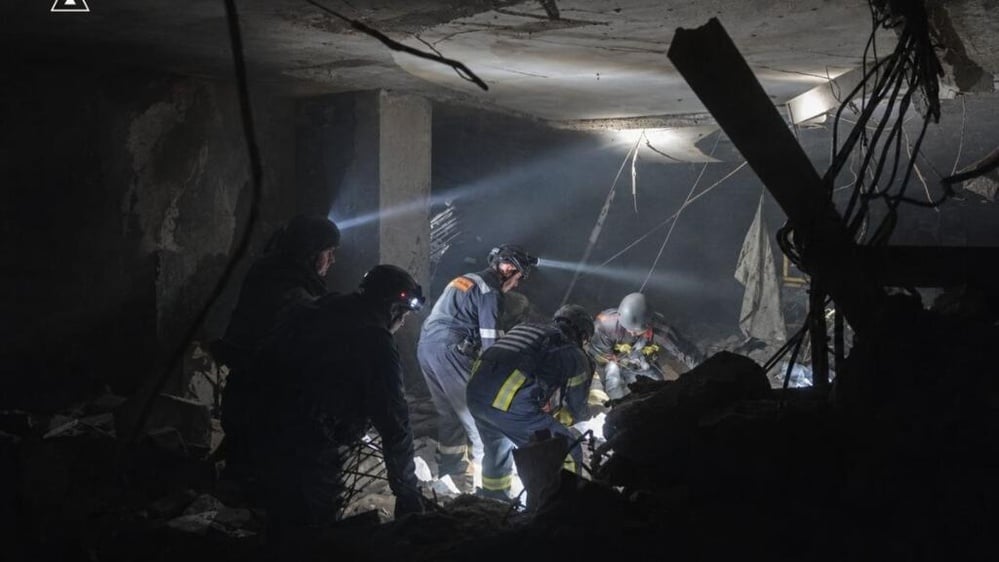

2026 © Helium Trades
Privacy Policy & Disclosure
* Disclaimer: Nothing on this website constitutes investment advice, performance data or any recommendation that any particular security, portfolio of securities, transaction or investment strategy is suitable for any specific person. Helium Trades is not responsible in any way for the accuracy
of any model predictions or price data. Any mention of a particular security and related prediction data is not a recommendation to buy or sell that security. Investments in securities involve the risk of loss. Past performance is no guarantee of future results. Helium Trades is not responsible for any of your investment decisions,
you should consult a financial expert before engaging in any transaction.
Helium Research Assistant

How can I help you today?
Ask any question about this page.


