See whether Helium helps you make better-informed decisions. Try every Pro Trader feature for 30 days. No credit card required.
Try every Pro Trader feature for 30 days. No credit card required.
July 26, 2026 · 0 shares
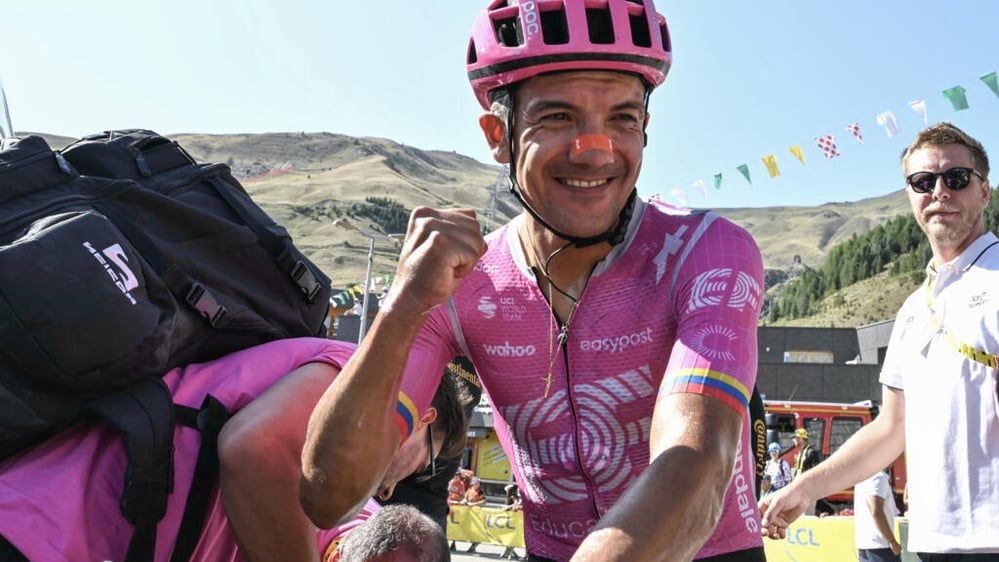
Headline and coverage frame Pogacar's fifth Tour de France as a record-equaling milestone, foregrounding celebratory language and praise from Eddy Merckx and a forward-looking projection of further dominance rather than critical context.
The article reports Pogacar's record-equaling fifth Tour de France win, notes Merckx's praise and prediction of a sixth victory, and mentions van der Poel's final-stage win and the Champs-Élysées finale.
Automated analysis; not human reviewed. Limitations: Assessment relies on the article's language; neutral sports framing may understate any critical or contextual considerations outside the piece.
Coverage casts Pogacar’s record-equaling fifth Tour de France title as a milestone achievement, foregrounding dramatic mountain attacks and celebratory team context while rendering rivals' crashes and logistical changes as background factors.
Pogacar's fifth Tour de France title was secured on the final Paris stage (the 21st), with a 6:26 lead over Remco Evenepoel after a stage featuring Montmartre climbs.
Automated analysis; not human reviewed. Limitations: Concise, case-specific limitations and plausible alternative interpretations.
Ambiguities: year label 'this year's race' without explicit year; wrapper content may affect interpretation.
AP frames Pogacar's fifth Tour de France as an all-time achievement, foregrounding dramatic stage drama and celebratory atmosphere while citing selective details to present a narrative-rich, positive portrait of the victory.
AP's report describes Pogacar's victory in Paris (2026), including the final-stage drama, stage length, and safety-driven route changes.
Automated analysis; not human reviewed.
Limitations: Case-specific: relies on a single AP-published article; may not reflect broader AP coverage or other outlets; some quotes are evaluative but anchored by results.
·
2 of 52 available dimensions scored; omitted dimensions are not treated as neutral.
·
Verified supporting quotes for 1 of 2 scored dimensions.
Claim: The article blends evaluative language with numeric reporting to frame Pogacar's victory as a subjective achievement.
“I’m speechless.
It’s an incredible day, there was an incredible atmosphere,” Pogacar said.”
· exact text match
“I’ve ridden seven Tours already and I’ve always finished on the podium.
You might think this is a fairytale, it’s incredible for me too.”
· exact text match
Counterevidence:
“Sunday’s 88.7-kilometer (55-mile) stage looped around Paris and was mostly processional.” · not found in supplied text
“The stage was shortened from 133 kilometers and its starting point in Thoiry, west of the capital, was changed to Paris so as to reduce pressure on emergency services combating wildfires in the southwest.” · exact text match
Why: Subjective language about greatness and atmosphere coexists with numeric results; quotes indicate evaluative tone.
Claim: The reporting uses a bullish frame, highlighting Pogacar’s historic status and dramatic stage achievements.
“I’m speechless.
It’s an incredible day, there was an incredible atmosphere,” Pogacar said.”
· exact text match
“Daring mountain attacks from deep, multiple stage wins and an ice-cool temperament all helped the 27-year-old Slovenian seal his victory.” · not found in supplied text
Counterevidence:
“Let’s just not jump ahead of ourselves, and enjoy this moment.” · exact text match
Why: Laudatory framing with emphasis on historic status; counterweight shows restraint in quotes.
Case-specific: uncertainties about how much the framing reflects editorial decisions vs. standard coverage.
AP frames Pogacar's fifth Tour de France as an all-time achievement, foregrounding dramatic stage drama and celebratory atmosphere while citing selective details to present a narrative-rich, positive portrait of the victory.
AP's report describes Pogacar's victory in Paris (2026), including the final-stage drama, stage length, and safety-driven route changes.
Automated analysis; not human reviewed.
Limitations: Case-specific: relies on a single AP-published article; may not reflect broader AP coverage or other outlets; some quotes are evaluative but anchored by results.
·
2 of 52 available dimensions scored; omitted dimensions are not treated as neutral.
·
Verified supporting quotes for 1 of 2 scored dimensions.
Claim: The article blends evaluative language with numeric reporting to frame Pogacar's victory as a subjective achievement.
“I’m speechless.
It’s an incredible day, there was an incredible atmosphere,” Pogacar said.”
· exact text match
“I’ve ridden seven Tours already and I’ve always finished on the podium.
You might think this is a fairytale, it’s incredible for me too.”
· exact text match
Counterevidence:
“Sunday’s 88.7-kilometer (55-mile) stage looped around Paris and was mostly processional.” · not found in supplied text
“The stage was shortened from 133 kilometers and its starting point in Thoiry, west of the capital, was changed to Paris so as to reduce pressure on emergency services combating wildfires in the southwest.” · exact text match
Why: Subjective language about greatness and atmosphere coexists with numeric results; quotes indicate evaluative tone.
Claim: The reporting uses a bullish frame, highlighting Pogacar’s historic status and dramatic stage achievements.
“I’m speechless.
It’s an incredible day, there was an incredible atmosphere,” Pogacar said.”
· exact text match
“Daring mountain attacks from deep, multiple stage wins and an ice-cool temperament all helped the 27-year-old Slovenian seal his victory.” · not found in supplied text
Counterevidence:
“Let’s just not jump ahead of ourselves, and enjoy this moment.” · exact text match
Why: Laudatory framing with emphasis on historic status; counterweight shows restraint in quotes.
Case-specific: uncertainties about how much the framing reflects editorial decisions vs. standard coverage.
Reporting framing is neutral and fact-focused, emphasizing stage results, timings, and records with minimal editorial commentary.
Stage 19 concluded with Pogacar extending his Tour lead after a record-breaking Alpe d'Huez climb, as a large breakaway dissolved and Martinez finished runner-up.
Publisher framing foregrounds Pogacar's illness and UAE Team Emirates' virus as the narrative hinge, juxtaposed with Carapaz's breakaway stage win to emphasize drama and disruption in the Tour de France.
Stage 18 of the Tour de France took place at Orcières-Merlette and centers on Pogacar's illness in his team and a teammate's withdrawal.
Automated analysis; not human reviewed. Limitations: Concise, case-specific limitations and plausible alternative interpretations.
Publisher framing remains neutral and event-focused, highlighting Carapaz's decisive Stage 18 win and Pogacar's setback with minimal interpretive framing.
Stage 18 of the Tour de France concluded with Carapaz's victory on the Orcieres-Merlette climb, and McNulty's withdrawal described as a blow to Pogacar's lead.
Automated analysis; not human reviewed. Limitations: Concise, case-specific limitations and plausible alternative interpretations.
July 22, 2026 · 0 shares
Neutral, fact-focused sports reporting with no evident ideological framing.
Report on Stage 17 results of the 2026 Tour de France: Philipsen wins ahead of Schmid and Kooij; Pogacar retains the overall lead amid a stomach issue.
Automated analysis; not human reviewed. Limitations: Concise, case-specific limitations and plausible alternative interpretations.
AP frames Pogacar's fifth Tour de France as an all-time achievement, foregrounding dramatic stage drama and celebratory atmosphere while citing selective details to present a narrative-rich, positive portrait of the victory.
AP's report describes Pogacar's victory in Paris (2026), including the final-stage drama, stage length, and safety-driven route changes.
Automated analysis; not human reviewed.
Limitations: Case-specific: relies on a single AP-published article; may not reflect broader AP coverage or other outlets; some quotes are evaluative but anchored by results.
·
2 of 52 available dimensions scored; omitted dimensions are not treated as neutral.
·
Verified supporting quotes for 1 of 2 scored dimensions.
Claim: The article blends evaluative language with numeric reporting to frame Pogacar's victory as a subjective achievement.
“I’m speechless.
It’s an incredible day, there was an incredible atmosphere,” Pogacar said.”
· exact text match
“I’ve ridden seven Tours already and I’ve always finished on the podium.
You might think this is a fairytale, it’s incredible for me too.”
· exact text match
Counterevidence:
“Sunday’s 88.7-kilometer (55-mile) stage looped around Paris and was mostly processional.” · not found in supplied text
“The stage was shortened from 133 kilometers and its starting point in Thoiry, west of the capital, was changed to Paris so as to reduce pressure on emergency services combating wildfires in the southwest.” · exact text match
Why: Subjective language about greatness and atmosphere coexists with numeric results; quotes indicate evaluative tone.
Claim: The reporting uses a bullish frame, highlighting Pogacar’s historic status and dramatic stage achievements.
“I’m speechless.
It’s an incredible day, there was an incredible atmosphere,” Pogacar said.”
· exact text match
“Daring mountain attacks from deep, multiple stage wins and an ice-cool temperament all helped the 27-year-old Slovenian seal his victory.” · not found in supplied text
Counterevidence:
“Let’s just not jump ahead of ourselves, and enjoy this moment.” · exact text match
Why: Laudatory framing with emphasis on historic status; counterweight shows restraint in quotes.
Case-specific: uncertainties about how much the framing reflects editorial decisions vs. standard coverage.
Publisher framing foregrounds Pogacar's illness and UAE Team Emirates' virus as the narrative hinge, juxtaposed with Carapaz's breakaway stage win to emphasize drama and disruption in the Tour de France.
Stage 18 of the Tour de France took place at Orcières-Merlette and centers on Pogacar's illness in his team and a teammate's withdrawal.
Automated analysis; not human reviewed. Limitations: Concise, case-specific limitations and plausible alternative interpretations.
Coverage casts Pogacar’s record-equaling fifth Tour de France title as a milestone achievement, foregrounding dramatic mountain attacks and celebratory team context while rendering rivals' crashes and logistical changes as background factors.
Pogacar's fifth Tour de France title was secured on the final Paris stage (the 21st), with a 6:26 lead over Remco Evenepoel after a stage featuring Montmartre climbs.
Automated analysis; not human reviewed. Limitations: Concise, case-specific limitations and plausible alternative interpretations.
Ambiguities: year label 'this year's race' without explicit year; wrapper content may affect interpretation.
AP frames Pogacar's fifth Tour de France as an all-time achievement, foregrounding dramatic stage drama and celebratory atmosphere while citing selective details to present a narrative-rich, positive portrait of the victory.
AP's report describes Pogacar's victory in Paris (2026), including the final-stage drama, stage length, and safety-driven route changes.
Automated analysis; not human reviewed.
Limitations: Case-specific: relies on a single AP-published article; may not reflect broader AP coverage or other outlets; some quotes are evaluative but anchored by results.
·
2 of 52 available dimensions scored; omitted dimensions are not treated as neutral.
·
Verified supporting quotes for 1 of 2 scored dimensions.
Claim: The article blends evaluative language with numeric reporting to frame Pogacar's victory as a subjective achievement.
“I’m speechless.
It’s an incredible day, there was an incredible atmosphere,” Pogacar said.”
· exact text match
“I’ve ridden seven Tours already and I’ve always finished on the podium.
You might think this is a fairytale, it’s incredible for me too.”
· exact text match
Counterevidence:
“Sunday’s 88.7-kilometer (55-mile) stage looped around Paris and was mostly processional.” · not found in supplied text
“The stage was shortened from 133 kilometers and its starting point in Thoiry, west of the capital, was changed to Paris so as to reduce pressure on emergency services combating wildfires in the southwest.” · exact text match
Why: Subjective language about greatness and atmosphere coexists with numeric results; quotes indicate evaluative tone.
Claim: The reporting uses a bullish frame, highlighting Pogacar’s historic status and dramatic stage achievements.
“I’m speechless.
It’s an incredible day, there was an incredible atmosphere,” Pogacar said.”
· exact text match
“Daring mountain attacks from deep, multiple stage wins and an ice-cool temperament all helped the 27-year-old Slovenian seal his victory.” · not found in supplied text
Counterevidence:
“Let’s just not jump ahead of ourselves, and enjoy this moment.” · exact text match
Why: Laudatory framing with emphasis on historic status; counterweight shows restraint in quotes.
Case-specific: uncertainties about how much the framing reflects editorial decisions vs. standard coverage.
Reporting framing is neutral and fact-focused, emphasizing stage results, timings, and records with minimal editorial commentary.
Stage 19 concluded with Pogacar extending his Tour lead after a record-breaking Alpe d'Huez climb, as a large breakaway dissolved and Martinez finished runner-up.
AP frames Pogacar's fifth Tour de France as an all-time achievement, foregrounding dramatic stage drama and celebratory atmosphere while citing selective details to present a narrative-rich, positive portrait of the victory.
AP's report describes Pogacar's victory in Paris (2026), including the final-stage drama, stage length, and safety-driven route changes.
Automated analysis; not human reviewed. Limitations: Case-specific: relies on a single AP-published article; may not reflect broader AP coverage or other outlets; some quotes are evaluative but anchored by results. · 2 of 52 available dimensions scored; omitted dimensions are not treated as neutral. · Verified supporting quotes for 1 of 2 scored dimensions.
Claim: The article blends evaluative language with numeric reporting to frame Pogacar's victory as a subjective achievement.
“I’m speechless. It’s an incredible day, there was an incredible atmosphere,” Pogacar said.” · exact text match
“I’ve ridden seven Tours already and I’ve always finished on the podium. You might think this is a fairytale, it’s incredible for me too.” · exact text match
Counterevidence:
“Sunday’s 88.7-kilometer (55-mile) stage looped around Paris and was mostly processional.” · not found in supplied text
“The stage was shortened from 133 kilometers and its starting point in Thoiry, west of the capital, was changed to Paris so as to reduce pressure on emergency services combating wildfires in the southwest.” · exact text match
Why: Subjective language about greatness and atmosphere coexists with numeric results; quotes indicate evaluative tone.
Claim: The reporting uses a bullish frame, highlighting Pogacar’s historic status and dramatic stage achievements.
“I’m speechless. It’s an incredible day, there was an incredible atmosphere,” Pogacar said.” · exact text match
“Daring mountain attacks from deep, multiple stage wins and an ice-cool temperament all helped the 27-year-old Slovenian seal his victory.” · not found in supplied text
Counterevidence:
“Let’s just not jump ahead of ourselves, and enjoy this moment.” · exact text match
Why: Laudatory framing with emphasis on historic status; counterweight shows restraint in quotes.
Case-specific: uncertainties about how much the framing reflects editorial decisions vs. standard coverage.
Publisher framing foregrounds Pogacar's illness and UAE Team Emirates' virus as the narrative hinge, juxtaposed with Carapaz's breakaway stage win to emphasize drama and disruption in the Tour de France.
Stage 18 of the Tour de France took place at Orcières-Merlette and centers on Pogacar's illness in his team and a teammate's withdrawal.
Automated analysis; not human reviewed. Limitations: Concise, case-specific limitations and plausible alternative interpretations.
Publisher framing remains neutral and event-focused, highlighting Carapaz's decisive Stage 18 win and Pogacar's setback with minimal interpretive framing.
Stage 18 of the Tour de France concluded with Carapaz's victory on the Orcieres-Merlette climb, and McNulty's withdrawal described as a blow to Pogacar's lead.
Automated analysis; not human reviewed. Limitations: Concise, case-specific limitations and plausible alternative interpretations.
July 22, 2026 · 0 shares
Neutral, fact-focused sports reporting with no evident ideological framing.
Report on Stage 17 results of the 2026 Tour de France: Philipsen wins ahead of Schmid and Kooij; Pogacar retains the overall lead amid a stomach issue.
Automated analysis; not human reviewed. Limitations: Concise, case-specific limitations and plausible alternative interpretations.
Coverage casts Pogacar’s record-equaling fifth Tour de France title as a milestone achievement, foregrounding dramatic mountain attacks and celebratory team context while rendering rivals' crashes and logistical changes as background factors.
Pogacar's fifth Tour de France title was secured on the final Paris stage (the 21st), with a 6:26 lead over Remco Evenepoel after a stage featuring Montmartre climbs.
Automated analysis; not human reviewed. Limitations: Concise, case-specific limitations and plausible alternative interpretations.
Ambiguities: year label 'this year's race' without explicit year; wrapper content may affect interpretation.
AP frames Pogacar's fifth Tour de France as an all-time achievement, foregrounding dramatic stage drama and celebratory atmosphere while citing selective details to present a narrative-rich, positive portrait of the victory.
AP's report describes Pogacar's victory in Paris (2026), including the final-stage drama, stage length, and safety-driven route changes.
Automated analysis; not human reviewed. Limitations: Case-specific: relies on a single AP-published article; may not reflect broader AP coverage or other outlets; some quotes are evaluative but anchored by results. · 2 of 52 available dimensions scored; omitted dimensions are not treated as neutral. · Verified supporting quotes for 1 of 2 scored dimensions.
Claim: The article blends evaluative language with numeric reporting to frame Pogacar's victory as a subjective achievement.
“I’m speechless. It’s an incredible day, there was an incredible atmosphere,” Pogacar said.” · exact text match
“I’ve ridden seven Tours already and I’ve always finished on the podium. You might think this is a fairytale, it’s incredible for me too.” · exact text match
Counterevidence:
“Sunday’s 88.7-kilometer (55-mile) stage looped around Paris and was mostly processional.” · not found in supplied text
“The stage was shortened from 133 kilometers and its starting point in Thoiry, west of the capital, was changed to Paris so as to reduce pressure on emergency services combating wildfires in the southwest.” · exact text match
Why: Subjective language about greatness and atmosphere coexists with numeric results; quotes indicate evaluative tone.
Claim: The reporting uses a bullish frame, highlighting Pogacar’s historic status and dramatic stage achievements.
“I’m speechless. It’s an incredible day, there was an incredible atmosphere,” Pogacar said.” · exact text match
“Daring mountain attacks from deep, multiple stage wins and an ice-cool temperament all helped the 27-year-old Slovenian seal his victory.” · not found in supplied text
Counterevidence:
“Let’s just not jump ahead of ourselves, and enjoy this moment.” · exact text match
Why: Laudatory framing with emphasis on historic status; counterweight shows restraint in quotes.
Case-specific: uncertainties about how much the framing reflects editorial decisions vs. standard coverage.
Reporting framing is neutral and fact-focused, emphasizing stage results, timings, and records with minimal editorial commentary.
Stage 19 concluded with Pogacar extending his Tour lead after a record-breaking Alpe d'Huez climb, as a large breakaway dissolved and Martinez finished runner-up.
Helium Bias
July 26, 2026 · 0 shares
Headline and coverage frame Pogacar's fifth Tour de France as a record-equaling milestone, foregrounding celebratory language and praise from Eddy Merckx and a forward-looking projection of further dominance rather than critical context.
The article reports Pogacar's record-equaling fifth Tour de France win, notes Merckx's praise and prediction of a sixth victory, and mentions van der Poel's final-stage win and the Champs-Élysées finale.
Automated analysis; not human reviewed. Limitations: Assessment relies on the article's language; neutral sports framing may understate any critical or contextual considerations outside the piece.
Coverage casts Pogacar’s record-equaling fifth Tour de France title as a milestone achievement, foregrounding dramatic mountain attacks and celebratory team context while rendering rivals' crashes and logistical changes as background factors.
Pogacar's fifth Tour de France title was secured on the final Paris stage (the 21st), with a 6:26 lead over Remco Evenepoel after a stage featuring Montmartre climbs.
Automated analysis; not human reviewed. Limitations: Concise, case-specific limitations and plausible alternative interpretations.
Ambiguities: year label 'this year's race' without explicit year; wrapper content may affect interpretation.
AP frames Pogacar's fifth Tour de France as an all-time achievement, foregrounding dramatic stage drama and celebratory atmosphere while citing selective details to present a narrative-rich, positive portrait of the victory.
AP's report describes Pogacar's victory in Paris (2026), including the final-stage drama, stage length, and safety-driven route changes.
Automated analysis; not human reviewed. Limitations: Case-specific: relies on a single AP-published article; may not reflect broader AP coverage or other outlets; some quotes are evaluative but anchored by results. · 2 of 52 available dimensions scored; omitted dimensions are not treated as neutral. · Verified supporting quotes for 1 of 2 scored dimensions.
Claim: The article blends evaluative language with numeric reporting to frame Pogacar's victory as a subjective achievement.
“I’m speechless. It’s an incredible day, there was an incredible atmosphere,” Pogacar said.” · exact text match
“I’ve ridden seven Tours already and I’ve always finished on the podium. You might think this is a fairytale, it’s incredible for me too.” · exact text match
Counterevidence:
“Sunday’s 88.7-kilometer (55-mile) stage looped around Paris and was mostly processional.” · not found in supplied text
“The stage was shortened from 133 kilometers and its starting point in Thoiry, west of the capital, was changed to Paris so as to reduce pressure on emergency services combating wildfires in the southwest.” · exact text match
Why: Subjective language about greatness and atmosphere coexists with numeric results; quotes indicate evaluative tone.
Claim: The reporting uses a bullish frame, highlighting Pogacar’s historic status and dramatic stage achievements.
“I’m speechless. It’s an incredible day, there was an incredible atmosphere,” Pogacar said.” · exact text match
“Daring mountain attacks from deep, multiple stage wins and an ice-cool temperament all helped the 27-year-old Slovenian seal his victory.” · not found in supplied text
Counterevidence:
“Let’s just not jump ahead of ourselves, and enjoy this moment.” · exact text match
Why: Laudatory framing with emphasis on historic status; counterweight shows restraint in quotes.
Case-specific: uncertainties about how much the framing reflects editorial decisions vs. standard coverage.
Reporting framing is neutral and fact-focused, emphasizing stage results, timings, and records with minimal editorial commentary.
Stage 19 concluded with Pogacar extending his Tour lead after a record-breaking Alpe d'Huez climb, as a large breakaway dissolved and Martinez finished runner-up.
AP frames Pogacar's fifth Tour de France as an all-time achievement, foregrounding dramatic stage drama and celebratory atmosphere while citing selective details to present a narrative-rich, positive portrait of the victory.
AP's report describes Pogacar's victory in Paris (2026), including the final-stage drama, stage length, and safety-driven route changes.
Automated analysis; not human reviewed. Limitations: Case-specific: relies on a single AP-published article; may not reflect broader AP coverage or other outlets; some quotes are evaluative but anchored by results. · 2 of 52 available dimensions scored; omitted dimensions are not treated as neutral. · Verified supporting quotes for 1 of 2 scored dimensions.
Claim: The article blends evaluative language with numeric reporting to frame Pogacar's victory as a subjective achievement.
“I’m speechless. It’s an incredible day, there was an incredible atmosphere,” Pogacar said.” · exact text match
“I’ve ridden seven Tours already and I’ve always finished on the podium. You might think this is a fairytale, it’s incredible for me too.” · exact text match
Counterevidence:
“Sunday’s 88.7-kilometer (55-mile) stage looped around Paris and was mostly processional.” · not found in supplied text
“The stage was shortened from 133 kilometers and its starting point in Thoiry, west of the capital, was changed to Paris so as to reduce pressure on emergency services combating wildfires in the southwest.” · exact text match
Why: Subjective language about greatness and atmosphere coexists with numeric results; quotes indicate evaluative tone.
Claim: The reporting uses a bullish frame, highlighting Pogacar’s historic status and dramatic stage achievements.
“I’m speechless. It’s an incredible day, there was an incredible atmosphere,” Pogacar said.” · exact text match
“Daring mountain attacks from deep, multiple stage wins and an ice-cool temperament all helped the 27-year-old Slovenian seal his victory.” · not found in supplied text
Counterevidence:
“Let’s just not jump ahead of ourselves, and enjoy this moment.” · exact text match
Why: Laudatory framing with emphasis on historic status; counterweight shows restraint in quotes.
Case-specific: uncertainties about how much the framing reflects editorial decisions vs. standard coverage.
Reporting framing is neutral and fact-focused, emphasizing stage results, timings, and records with minimal editorial commentary.
Stage 19 concluded with Pogacar extending his Tour lead after a record-breaking Alpe d'Huez climb, as a large breakaway dissolved and Martinez finished runner-up.
Publisher framing foregrounds Pogacar's illness and UAE Team Emirates' virus as the narrative hinge, juxtaposed with Carapaz's breakaway stage win to emphasize drama and disruption in the Tour de France.
Stage 18 of the Tour de France took place at Orcières-Merlette and centers on Pogacar's illness in his team and a teammate's withdrawal.
Automated analysis; not human reviewed. Limitations: Concise, case-specific limitations and plausible alternative interpretations.
Story Blindspots
Coverage casts Pogacar’s record-equaling fifth Tour de France title as a milestone achievement, foregrounding dramatic mountain attacks and celebratory team context while rendering rivals' crashes and logistical changes as background factors.
Pogacar's fifth Tour de France title was secured on the final Paris stage (the 21st), with a 6:26 lead over Remco Evenepoel after a stage featuring Montmartre climbs.
Automated analysis; not human reviewed. Limitations: Concise, case-specific limitations and plausible alternative interpretations.
Ambiguities: year label 'this year's race' without explicit year; wrapper content may affect interpretation.
AP frames Pogacar's fifth Tour de France as an all-time achievement, foregrounding dramatic stage drama and celebratory atmosphere while citing selective details to present a narrative-rich, positive portrait of the victory.
AP's report describes Pogacar's victory in Paris (2026), including the final-stage drama, stage length, and safety-driven route changes.
Automated analysis; not human reviewed. Limitations: Case-specific: relies on a single AP-published article; may not reflect broader AP coverage or other outlets; some quotes are evaluative but anchored by results. · 2 of 52 available dimensions scored; omitted dimensions are not treated as neutral. · Verified supporting quotes for 1 of 2 scored dimensions.
Claim: The article blends evaluative language with numeric reporting to frame Pogacar's victory as a subjective achievement.
“I’m speechless. It’s an incredible day, there was an incredible atmosphere,” Pogacar said.” · exact text match
“I’ve ridden seven Tours already and I’ve always finished on the podium. You might think this is a fairytale, it’s incredible for me too.” · exact text match
Counterevidence:
“Sunday’s 88.7-kilometer (55-mile) stage looped around Paris and was mostly processional.” · not found in supplied text
“The stage was shortened from 133 kilometers and its starting point in Thoiry, west of the capital, was changed to Paris so as to reduce pressure on emergency services combating wildfires in the southwest.” · exact text match
Why: Subjective language about greatness and atmosphere coexists with numeric results; quotes indicate evaluative tone.
Claim: The reporting uses a bullish frame, highlighting Pogacar’s historic status and dramatic stage achievements.
“I’m speechless. It’s an incredible day, there was an incredible atmosphere,” Pogacar said.” · exact text match
“Daring mountain attacks from deep, multiple stage wins and an ice-cool temperament all helped the 27-year-old Slovenian seal his victory.” · not found in supplied text
Counterevidence:
“Let’s just not jump ahead of ourselves, and enjoy this moment.” · exact text match
Why: Laudatory framing with emphasis on historic status; counterweight shows restraint in quotes.
Case-specific: uncertainties about how much the framing reflects editorial decisions vs. standard coverage.
Publisher framing foregrounds Pogacar's illness and UAE Team Emirates' virus as the narrative hinge, juxtaposed with Carapaz's breakaway stage win to emphasize drama and disruption in the Tour de France.
Stage 18 of the Tour de France took place at Orcières-Merlette and centers on Pogacar's illness in his team and a teammate's withdrawal.
Automated analysis; not human reviewed. Limitations: Concise, case-specific limitations and plausible alternative interpretations.
Coverage casts Pogacar’s record-equaling fifth Tour de France title as a milestone achievement, foregrounding dramatic mountain attacks and celebratory team context while rendering rivals' crashes and logistical changes as background factors.
Pogacar's fifth Tour de France title was secured on the final Paris stage (the 21st), with a 6:26 lead over Remco Evenepoel after a stage featuring Montmartre climbs.
Automated analysis; not human reviewed. Limitations: Concise, case-specific limitations and plausible alternative interpretations.
Ambiguities: year label 'this year's race' without explicit year; wrapper content may affect interpretation.
AP frames Pogacar's fifth Tour de France as an all-time achievement, foregrounding dramatic stage drama and celebratory atmosphere while citing selective details to present a narrative-rich, positive portrait of the victory.
AP's report describes Pogacar's victory in Paris (2026), including the final-stage drama, stage length, and safety-driven route changes.
Automated analysis; not human reviewed. Limitations: Case-specific: relies on a single AP-published article; may not reflect broader AP coverage or other outlets; some quotes are evaluative but anchored by results. · 2 of 52 available dimensions scored; omitted dimensions are not treated as neutral. · Verified supporting quotes for 1 of 2 scored dimensions.
Claim: The article blends evaluative language with numeric reporting to frame Pogacar's victory as a subjective achievement.
“I’m speechless. It’s an incredible day, there was an incredible atmosphere,” Pogacar said.” · exact text match
“I’ve ridden seven Tours already and I’ve always finished on the podium. You might think this is a fairytale, it’s incredible for me too.” · exact text match
Counterevidence:
“Sunday’s 88.7-kilometer (55-mile) stage looped around Paris and was mostly processional.” · not found in supplied text
“The stage was shortened from 133 kilometers and its starting point in Thoiry, west of the capital, was changed to Paris so as to reduce pressure on emergency services combating wildfires in the southwest.” · exact text match
Why: Subjective language about greatness and atmosphere coexists with numeric results; quotes indicate evaluative tone.
Claim: The reporting uses a bullish frame, highlighting Pogacar’s historic status and dramatic stage achievements.
“I’m speechless. It’s an incredible day, there was an incredible atmosphere,” Pogacar said.” · exact text match
“Daring mountain attacks from deep, multiple stage wins and an ice-cool temperament all helped the 27-year-old Slovenian seal his victory.” · not found in supplied text
Counterevidence:
“Let’s just not jump ahead of ourselves, and enjoy this moment.” · exact text match
Why: Laudatory framing with emphasis on historic status; counterweight shows restraint in quotes.
Case-specific: uncertainties about how much the framing reflects editorial decisions vs. standard coverage.
Reporting framing is neutral and fact-focused, emphasizing stage results, timings, and records with minimal editorial commentary.
Stage 19 concluded with Pogacar extending his Tour lead after a record-breaking Alpe d'Huez climb, as a large breakaway dissolved and Martinez finished runner-up.
Publisher framing remains neutral and event-focused, highlighting Carapaz's decisive Stage 18 win and Pogacar's setback with minimal interpretive framing.
Stage 18 of the Tour de France concluded with Carapaz's victory on the Orcieres-Merlette climb, and McNulty's withdrawal described as a blow to Pogacar's lead.
Automated analysis; not human reviewed. Limitations: Concise, case-specific limitations and plausible alternative interpretations.
Publisher framing remains neutral and event-focused, highlighting Carapaz's decisive Stage 18 win and Pogacar's setback with minimal interpretive framing.
Stage 18 of the Tour de France concluded with Carapaz's victory on the Orcieres-Merlette climb, and McNulty's withdrawal described as a blow to Pogacar's lead.
Automated analysis; not human reviewed. Limitations: Concise, case-specific limitations and plausible alternative interpretations.
Publisher framing foregrounds Pogacar's illness and UAE Team Emirates' virus as the narrative hinge, juxtaposed with Carapaz's breakaway stage win to emphasize drama and disruption in the Tour de France.
Stage 18 of the Tour de France took place at Orcières-Merlette and centers on Pogacar's illness in his team and a teammate's withdrawal.
Automated analysis; not human reviewed. Limitations: Concise, case-specific limitations and plausible alternative interpretations.
July 22, 2026 · 0 shares
Neutral, fact-focused sports reporting with no evident ideological framing.
Report on Stage 17 results of the 2026 Tour de France: Philipsen wins ahead of Schmid and Kooij; Pogacar retains the overall lead amid a stomach issue.
Automated analysis; not human reviewed. Limitations: Concise, case-specific limitations and plausible alternative interpretations.
AP frames Pogacar's fifth Tour de France as an all-time achievement, foregrounding dramatic stage drama and celebratory atmosphere while citing selective details to present a narrative-rich, positive portrait of the victory.
AP's report describes Pogacar's victory in Paris (2026), including the final-stage drama, stage length, and safety-driven route changes.
Automated analysis; not human reviewed. Limitations: Case-specific: relies on a single AP-published article; may not reflect broader AP coverage or other outlets; some quotes are evaluative but anchored by results. · 2 of 52 available dimensions scored; omitted dimensions are not treated as neutral. · Verified supporting quotes for 1 of 2 scored dimensions.
Claim: The article blends evaluative language with numeric reporting to frame Pogacar's victory as a subjective achievement.
“I’m speechless. It’s an incredible day, there was an incredible atmosphere,” Pogacar said.” · exact text match
“I’ve ridden seven Tours already and I’ve always finished on the podium. You might think this is a fairytale, it’s incredible for me too.” · exact text match
Counterevidence:
“Sunday’s 88.7-kilometer (55-mile) stage looped around Paris and was mostly processional.” · not found in supplied text
“The stage was shortened from 133 kilometers and its starting point in Thoiry, west of the capital, was changed to Paris so as to reduce pressure on emergency services combating wildfires in the southwest.” · exact text match
Why: Subjective language about greatness and atmosphere coexists with numeric results; quotes indicate evaluative tone.
Claim: The reporting uses a bullish frame, highlighting Pogacar’s historic status and dramatic stage achievements.
“I’m speechless. It’s an incredible day, there was an incredible atmosphere,” Pogacar said.” · exact text match
“Daring mountain attacks from deep, multiple stage wins and an ice-cool temperament all helped the 27-year-old Slovenian seal his victory.” · not found in supplied text
Counterevidence:
“Let’s just not jump ahead of ourselves, and enjoy this moment.” · exact text match
Why: Laudatory framing with emphasis on historic status; counterweight shows restraint in quotes.
Case-specific: uncertainties about how much the framing reflects editorial decisions vs. standard coverage.
Publisher framing foregrounds Pogacar's illness and UAE Team Emirates' virus as the narrative hinge, juxtaposed with Carapaz's breakaway stage win to emphasize drama and disruption in the Tour de France.
Stage 18 of the Tour de France took place at Orcières-Merlette and centers on Pogacar's illness in his team and a teammate's withdrawal.
Automated analysis; not human reviewed. Limitations: Concise, case-specific limitations and plausible alternative interpretations.
Coverage casts Pogacar’s record-equaling fifth Tour de France title as a milestone achievement, foregrounding dramatic mountain attacks and celebratory team context while rendering rivals' crashes and logistical changes as background factors.
Pogacar's fifth Tour de France title was secured on the final Paris stage (the 21st), with a 6:26 lead over Remco Evenepoel after a stage featuring Montmartre climbs.
Automated analysis; not human reviewed. Limitations: Concise, case-specific limitations and plausible alternative interpretations.
Ambiguities: year label 'this year's race' without explicit year; wrapper content may affect interpretation.
AP frames Pogacar's fifth Tour de France as an all-time achievement, foregrounding dramatic stage drama and celebratory atmosphere while citing selective details to present a narrative-rich, positive portrait of the victory.
AP's report describes Pogacar's victory in Paris (2026), including the final-stage drama, stage length, and safety-driven route changes.
Automated analysis; not human reviewed. Limitations: Case-specific: relies on a single AP-published article; may not reflect broader AP coverage or other outlets; some quotes are evaluative but anchored by results. · 2 of 52 available dimensions scored; omitted dimensions are not treated as neutral. · Verified supporting quotes for 1 of 2 scored dimensions.
Claim: The article blends evaluative language with numeric reporting to frame Pogacar's victory as a subjective achievement.
“I’m speechless. It’s an incredible day, there was an incredible atmosphere,” Pogacar said.” · exact text match
“I’ve ridden seven Tours already and I’ve always finished on the podium. You might think this is a fairytale, it’s incredible for me too.” · exact text match
Counterevidence:
“Sunday’s 88.7-kilometer (55-mile) stage looped around Paris and was mostly processional.” · not found in supplied text
“The stage was shortened from 133 kilometers and its starting point in Thoiry, west of the capital, was changed to Paris so as to reduce pressure on emergency services combating wildfires in the southwest.” · exact text match
Why: Subjective language about greatness and atmosphere coexists with numeric results; quotes indicate evaluative tone.
Claim: The reporting uses a bullish frame, highlighting Pogacar’s historic status and dramatic stage achievements.
“I’m speechless. It’s an incredible day, there was an incredible atmosphere,” Pogacar said.” · exact text match
“Daring mountain attacks from deep, multiple stage wins and an ice-cool temperament all helped the 27-year-old Slovenian seal his victory.” · not found in supplied text
Counterevidence:
“Let’s just not jump ahead of ourselves, and enjoy this moment.” · exact text match
Why: Laudatory framing with emphasis on historic status; counterweight shows restraint in quotes.
Case-specific: uncertainties about how much the framing reflects editorial decisions vs. standard coverage.
Reporting framing is neutral and fact-focused, emphasizing stage results, timings, and records with minimal editorial commentary.
Stage 19 concluded with Pogacar extending his Tour lead after a record-breaking Alpe d'Huez climb, as a large breakaway dissolved and Martinez finished runner-up.
July 26, 2026 · 0 shares
Headline and coverage frame Pogacar's fifth Tour de France as a record-equaling milestone, foregrounding celebratory language and praise from Eddy Merckx and a forward-looking projection of further dominance rather than critical context.
The article reports Pogacar's record-equaling fifth Tour de France win, notes Merckx's praise and prediction of a sixth victory, and mentions van der Poel's final-stage win and the Champs-Élysées finale.
Automated analysis; not human reviewed. Limitations: Assessment relies on the article's language; neutral sports framing may understate any critical or contextual considerations outside the piece.
Coverage casts Pogacar’s record-equaling fifth Tour de France title as a milestone achievement, foregrounding dramatic mountain attacks and celebratory team context while rendering rivals' crashes and logistical changes as background factors.
Pogacar's fifth Tour de France title was secured on the final Paris stage (the 21st), with a 6:26 lead over Remco Evenepoel after a stage featuring Montmartre climbs.
Automated analysis; not human reviewed. Limitations: Concise, case-specific limitations and plausible alternative interpretations.
Ambiguities: year label 'this year's race' without explicit year; wrapper content may affect interpretation.
AP frames Pogacar's fifth Tour de France as an all-time achievement, foregrounding dramatic stage drama and celebratory atmosphere while citing selective details to present a narrative-rich, positive portrait of the victory.
AP's report describes Pogacar's victory in Paris (2026), including the final-stage drama, stage length, and safety-driven route changes.
Automated analysis; not human reviewed.
Limitations: Case-specific: relies on a single AP-published article; may not reflect broader AP coverage or other outlets; some quotes are evaluative but anchored by results.
·
2 of 52 available dimensions scored; omitted dimensions are not treated as neutral.
·
Verified supporting quotes for 1 of 2 scored dimensions.
Claim: The article blends evaluative language with numeric reporting to frame Pogacar's victory as a subjective achievement.
“I’m speechless.
It’s an incredible day, there was an incredible atmosphere,” Pogacar said.”
· exact text match
“I’ve ridden seven Tours already and I’ve always finished on the podium.
You might think this is a fairytale, it’s incredible for me too.”
· exact text match
Counterevidence:
“Sunday’s 88.7-kilometer (55-mile) stage looped around Paris and was mostly processional.” · not found in supplied text
“The stage was shortened from 133 kilometers and its starting point in Thoiry, west of the capital, was changed to Paris so as to reduce pressure on emergency services combating wildfires in the southwest.” · exact text match
Why: Subjective language about greatness and atmosphere coexists with numeric results; quotes indicate evaluative tone.
Claim: The reporting uses a bullish frame, highlighting Pogacar’s historic status and dramatic stage achievements.
“I’m speechless.
It’s an incredible day, there was an incredible atmosphere,” Pogacar said.”
· exact text match
“Daring mountain attacks from deep, multiple stage wins and an ice-cool temperament all helped the 27-year-old Slovenian seal his victory.” · not found in supplied text
Counterevidence:
“Let’s just not jump ahead of ourselves, and enjoy this moment.” · exact text match
Why: Laudatory framing with emphasis on historic status; counterweight shows restraint in quotes.
Case-specific: uncertainties about how much the framing reflects editorial decisions vs. standard coverage.
July 27, 2026 · 0 shares
Publisher framing highlights Pogacar's record-equaling fifth Tour de France title as a historic achievement, emphasizes a third consecutive crown, and humanizes him with a nickname while embedding promotional or wrapper content in the piece.
Automated analysis; not human reviewed.
Limitations: Concise, case-specific limitations and plausible alternative interpretations.
·
1 of 52 available dimensions scored; omitted dimensions are not treated as neutral.
·
Verified supporting quotes for 1 of 1 scored dimensions.
Claim: The report uses evaluative language ('cycling’s greatest race') to frame the Tour as a superior event and Pogacar’s achievement as historic.
“cycling’s greatest race.” · exact text match
“record-equaling fifth Tour de France title” · exact text match
“a third consecutive crown” · exact text match
Why: Explicit evaluative phrasing shows normative framing around the event and champion.
Wrapper content uncertainty; focus on core report.
July 26, 2026 · 0 shares
Headline and coverage frame Pogacar's fifth Tour de France as a record-equaling milestone, foregrounding celebratory language and praise from Eddy Merckx and a forward-looking projection of further dominance rather than critical context.
The article reports Pogacar's record-equaling fifth Tour de France win, notes Merckx's praise and prediction of a sixth victory, and mentions van der Poel's final-stage win and the Champs-Élysées finale.
Automated analysis; not human reviewed. Limitations: Assessment relies on the article's language; neutral sports framing may understate any critical or contextual considerations outside the piece.
AP frames Pogacar's fifth Tour de France as an all-time achievement, foregrounding dramatic stage drama and celebratory atmosphere while citing selective details to present a narrative-rich, positive portrait of the victory.
AP's report describes Pogacar's victory in Paris (2026), including the final-stage drama, stage length, and safety-driven route changes.
Automated analysis; not human reviewed.
Limitations: Case-specific: relies on a single AP-published article; may not reflect broader AP coverage or other outlets; some quotes are evaluative but anchored by results.
·
2 of 52 available dimensions scored; omitted dimensions are not treated as neutral.
·
Verified supporting quotes for 1 of 2 scored dimensions.
Claim: The article blends evaluative language with numeric reporting to frame Pogacar's victory as a subjective achievement.
“I’m speechless.
It’s an incredible day, there was an incredible atmosphere,” Pogacar said.”
· exact text match
“I’ve ridden seven Tours already and I’ve always finished on the podium.
You might think this is a fairytale, it’s incredible for me too.”
· exact text match
Counterevidence:
“Sunday’s 88.7-kilometer (55-mile) stage looped around Paris and was mostly processional.” · not found in supplied text
“The stage was shortened from 133 kilometers and its starting point in Thoiry, west of the capital, was changed to Paris so as to reduce pressure on emergency services combating wildfires in the southwest.” · exact text match
Why: Subjective language about greatness and atmosphere coexists with numeric results; quotes indicate evaluative tone.
Claim: The reporting uses a bullish frame, highlighting Pogacar’s historic status and dramatic stage achievements.
“I’m speechless.
It’s an incredible day, there was an incredible atmosphere,” Pogacar said.”
· exact text match
“Daring mountain attacks from deep, multiple stage wins and an ice-cool temperament all helped the 27-year-old Slovenian seal his victory.” · not found in supplied text
Counterevidence:
“Let’s just not jump ahead of ourselves, and enjoy this moment.” · exact text match
Why: Laudatory framing with emphasis on historic status; counterweight shows restraint in quotes.
Case-specific: uncertainties about how much the framing reflects editorial decisions vs. standard coverage.
Publisher framing foregrounds Pogacar's illness and UAE Team Emirates' virus as the narrative hinge, juxtaposed with Carapaz's breakaway stage win to emphasize drama and disruption in the Tour de France.
Stage 18 of the Tour de France took place at Orcières-Merlette and centers on Pogacar's illness in his team and a teammate's withdrawal.
Automated analysis; not human reviewed. Limitations: Concise, case-specific limitations and plausible alternative interpretations.
Publisher framing remains neutral and event-focused, highlighting Carapaz's decisive Stage 18 win and Pogacar's setback with minimal interpretive framing.
Stage 18 of the Tour de France concluded with Carapaz's victory on the Orcieres-Merlette climb, and McNulty's withdrawal described as a blow to Pogacar's lead.
Automated analysis; not human reviewed. Limitations: Concise, case-specific limitations and plausible alternative interpretations.
Publisher framing remains neutral and event-focused, highlighting Carapaz's decisive Stage 18 win and Pogacar's setback with minimal interpretive framing.
Stage 18 of the Tour de France concluded with Carapaz's victory on the Orcieres-Merlette climb, and McNulty's withdrawal described as a blow to Pogacar's lead.
Automated analysis; not human reviewed. Limitations: Concise, case-specific limitations and plausible alternative interpretations.
July 22, 2026 · 0 shares
Neutral, fact-focused sports reporting with no evident ideological framing.
Report on Stage 17 results of the 2026 Tour de France: Philipsen wins ahead of Schmid and Kooij; Pogacar retains the overall lead amid a stomach issue.
Automated analysis; not human reviewed. Limitations: Concise, case-specific limitations and plausible alternative interpretations.
Reporting framing is neutral and fact-focused, emphasizing stage results, timings, and records with minimal editorial commentary.
Stage 19 concluded with Pogacar extending his Tour lead after a record-breaking Alpe d'Huez climb, as a large breakaway dissolved and Martinez finished runner-up.
Coverage casts Pogacar’s record-equaling fifth Tour de France title as a milestone achievement, foregrounding dramatic mountain attacks and celebratory team context while rendering rivals' crashes and logistical changes as background factors.
Pogacar's fifth Tour de France title was secured on the final Paris stage (the 21st), with a 6:26 lead over Remco Evenepoel after a stage featuring Montmartre climbs.
Automated analysis; not human reviewed. Limitations: Concise, case-specific limitations and plausible alternative interpretations.
Ambiguities: year label 'this year's race' without explicit year; wrapper content may affect interpretation.
Coverage casts Pogacar’s record-equaling fifth Tour de France title as a milestone achievement, foregrounding dramatic mountain attacks and celebratory team context while rendering rivals' crashes and logistical changes as background factors.
Pogacar's fifth Tour de France title was secured on the final Paris stage (the 21st), with a 6:26 lead over Remco Evenepoel after a stage featuring Montmartre climbs.
Automated analysis; not human reviewed. Limitations: Concise, case-specific limitations and plausible alternative interpretations.
Ambiguities: year label 'this year's race' without explicit year; wrapper content may affect interpretation.
AP frames Pogacar's fifth Tour de France as an all-time achievement, foregrounding dramatic stage drama and celebratory atmosphere while citing selective details to present a narrative-rich, positive portrait of the victory.
AP's report describes Pogacar's victory in Paris (2026), including the final-stage drama, stage length, and safety-driven route changes.
Automated analysis; not human reviewed.
Limitations: Case-specific: relies on a single AP-published article; may not reflect broader AP coverage or other outlets; some quotes are evaluative but anchored by results.
·
2 of 52 available dimensions scored; omitted dimensions are not treated as neutral.
·
Verified supporting quotes for 1 of 2 scored dimensions.
Claim: The article blends evaluative language with numeric reporting to frame Pogacar's victory as a subjective achievement.
“I’m speechless.
It’s an incredible day, there was an incredible atmosphere,” Pogacar said.”
· exact text match
“I’ve ridden seven Tours already and I’ve always finished on the podium.
You might think this is a fairytale, it’s incredible for me too.”
· exact text match
Counterevidence:
“Sunday’s 88.7-kilometer (55-mile) stage looped around Paris and was mostly processional.” · not found in supplied text
“The stage was shortened from 133 kilometers and its starting point in Thoiry, west of the capital, was changed to Paris so as to reduce pressure on emergency services combating wildfires in the southwest.” · exact text match
Why: Subjective language about greatness and atmosphere coexists with numeric results; quotes indicate evaluative tone.
Claim: The reporting uses a bullish frame, highlighting Pogacar’s historic status and dramatic stage achievements.
“I’m speechless.
It’s an incredible day, there was an incredible atmosphere,” Pogacar said.”
· exact text match
“Daring mountain attacks from deep, multiple stage wins and an ice-cool temperament all helped the 27-year-old Slovenian seal his victory.” · not found in supplied text
Counterevidence:
“Let’s just not jump ahead of ourselves, and enjoy this moment.” · exact text match
Why: Laudatory framing with emphasis on historic status; counterweight shows restraint in quotes.
Case-specific: uncertainties about how much the framing reflects editorial decisions vs. standard coverage.
Reporting framing is neutral and fact-focused, emphasizing stage results, timings, and records with minimal editorial commentary.
Stage 19 concluded with Pogacar extending his Tour lead after a record-breaking Alpe d'Huez climb, as a large breakaway dissolved and Martinez finished runner-up.
Publisher framing foregrounds Pogacar's illness and UAE Team Emirates' virus as the narrative hinge, juxtaposed with Carapaz's breakaway stage win to emphasize drama and disruption in the Tour de France.
Stage 18 of the Tour de France took place at Orcières-Merlette and centers on Pogacar's illness in his team and a teammate's withdrawal.
Automated analysis; not human reviewed. Limitations: Concise, case-specific limitations and plausible alternative interpretations.
Publisher framing remains neutral and event-focused, highlighting Carapaz's decisive Stage 18 win and Pogacar's setback with minimal interpretive framing.
Stage 18 of the Tour de France concluded with Carapaz's victory on the Orcieres-Merlette climb, and McNulty's withdrawal described as a blow to Pogacar's lead.
Automated analysis; not human reviewed. Limitations: Concise, case-specific limitations and plausible alternative interpretations.
Publisher framing remains neutral and event-focused, highlighting Carapaz's decisive Stage 18 win and Pogacar's setback with minimal interpretive framing.
Stage 18 of the Tour de France concluded with Carapaz's victory on the Orcieres-Merlette climb, and McNulty's withdrawal described as a blow to Pogacar's lead.
Automated analysis; not human reviewed. Limitations: Concise, case-specific limitations and plausible alternative interpretations.
Coverage casts Pogacar’s record-equaling fifth Tour de France title as a milestone achievement, foregrounding dramatic mountain attacks and celebratory team context while rendering rivals' crashes and logistical changes as background factors.
Pogacar's fifth Tour de France title was secured on the final Paris stage (the 21st), with a 6:26 lead over Remco Evenepoel after a stage featuring Montmartre climbs.
Automated analysis; not human reviewed. Limitations: Concise, case-specific limitations and plausible alternative interpretations.
Ambiguities: year label 'this year's race' without explicit year; wrapper content may affect interpretation.
AP frames Pogacar's fifth Tour de France as an all-time achievement, foregrounding dramatic stage drama and celebratory atmosphere while citing selective details to present a narrative-rich, positive portrait of the victory.
AP's report describes Pogacar's victory in Paris (2026), including the final-stage drama, stage length, and safety-driven route changes.
Automated analysis; not human reviewed.
Limitations: Case-specific: relies on a single AP-published article; may not reflect broader AP coverage or other outlets; some quotes are evaluative but anchored by results.
·
2 of 52 available dimensions scored; omitted dimensions are not treated as neutral.
·
Verified supporting quotes for 1 of 2 scored dimensions.
Claim: The article blends evaluative language with numeric reporting to frame Pogacar's victory as a subjective achievement.
“I’m speechless.
It’s an incredible day, there was an incredible atmosphere,” Pogacar said.”
· exact text match
“I’ve ridden seven Tours already and I’ve always finished on the podium.
You might think this is a fairytale, it’s incredible for me too.”
· exact text match
Counterevidence:
“Sunday’s 88.7-kilometer (55-mile) stage looped around Paris and was mostly processional.” · not found in supplied text
“The stage was shortened from 133 kilometers and its starting point in Thoiry, west of the capital, was changed to Paris so as to reduce pressure on emergency services combating wildfires in the southwest.” · exact text match
Why: Subjective language about greatness and atmosphere coexists with numeric results; quotes indicate evaluative tone.
Claim: The reporting uses a bullish frame, highlighting Pogacar’s historic status and dramatic stage achievements.
“I’m speechless.
It’s an incredible day, there was an incredible atmosphere,” Pogacar said.”
· exact text match
“Daring mountain attacks from deep, multiple stage wins and an ice-cool temperament all helped the 27-year-old Slovenian seal his victory.” · not found in supplied text
Counterevidence:
“Let’s just not jump ahead of ourselves, and enjoy this moment.” · exact text match
Why: Laudatory framing with emphasis on historic status; counterweight shows restraint in quotes.
Case-specific: uncertainties about how much the framing reflects editorial decisions vs. standard coverage.
Reporting framing is neutral and fact-focused, emphasizing stage results, timings, and records with minimal editorial commentary.
Stage 19 concluded with Pogacar extending his Tour lead after a record-breaking Alpe d'Huez climb, as a large breakaway dissolved and Martinez finished runner-up.
Coverage casts Pogacar’s record-equaling fifth Tour de France title as a milestone achievement, foregrounding dramatic mountain attacks and celebratory team context while rendering rivals' crashes and logistical changes as background factors.
Pogacar's fifth Tour de France title was secured on the final Paris stage (the 21st), with a 6:26 lead over Remco Evenepoel after a stage featuring Montmartre climbs.
Automated analysis; not human reviewed. Limitations: Concise, case-specific limitations and plausible alternative interpretations.
Ambiguities: year label 'this year's race' without explicit year; wrapper content may affect interpretation.
AP frames Pogacar's fifth Tour de France as an all-time achievement, foregrounding dramatic stage drama and celebratory atmosphere while citing selective details to present a narrative-rich, positive portrait of the victory.
AP's report describes Pogacar's victory in Paris (2026), including the final-stage drama, stage length, and safety-driven route changes.
Automated analysis; not human reviewed. Limitations: Case-specific: relies on a single AP-published article; may not reflect broader AP coverage or other outlets; some quotes are evaluative but anchored by results. · 2 of 52 available dimensions scored; omitted dimensions are not treated as neutral. · Verified supporting quotes for 1 of 2 scored dimensions.
Claim: The article blends evaluative language with numeric reporting to frame Pogacar's victory as a subjective achievement.
“I’m speechless. It’s an incredible day, there was an incredible atmosphere,” Pogacar said.” · exact text match
“I’ve ridden seven Tours already and I’ve always finished on the podium. You might think this is a fairytale, it’s incredible for me too.” · exact text match
Counterevidence:
“Sunday’s 88.7-kilometer (55-mile) stage looped around Paris and was mostly processional.” · not found in supplied text
“The stage was shortened from 133 kilometers and its starting point in Thoiry, west of the capital, was changed to Paris so as to reduce pressure on emergency services combating wildfires in the southwest.” · exact text match
Why: Subjective language about greatness and atmosphere coexists with numeric results; quotes indicate evaluative tone.
Claim: The reporting uses a bullish frame, highlighting Pogacar’s historic status and dramatic stage achievements.
“I’m speechless. It’s an incredible day, there was an incredible atmosphere,” Pogacar said.” · exact text match
“Daring mountain attacks from deep, multiple stage wins and an ice-cool temperament all helped the 27-year-old Slovenian seal his victory.” · not found in supplied text
Counterevidence:
“Let’s just not jump ahead of ourselves, and enjoy this moment.” · exact text match
Why: Laudatory framing with emphasis on historic status; counterweight shows restraint in quotes.
Case-specific: uncertainties about how much the framing reflects editorial decisions vs. standard coverage.
Reporting framing is neutral and fact-focused, emphasizing stage results, timings, and records with minimal editorial commentary.
Stage 19 concluded with Pogacar extending his Tour lead after a record-breaking Alpe d'Huez climb, as a large breakaway dissolved and Martinez finished runner-up.
Publisher framing foregrounds Pogacar's illness and UAE Team Emirates' virus as the narrative hinge, juxtaposed with Carapaz's breakaway stage win to emphasize drama and disruption in the Tour de France.
Stage 18 of the Tour de France took place at Orcières-Merlette and centers on Pogacar's illness in his team and a teammate's withdrawal.
Automated analysis; not human reviewed. Limitations: Concise, case-specific limitations and plausible alternative interpretations.
Coverage casts Pogacar’s record-equaling fifth Tour de France title as a milestone achievement, foregrounding dramatic mountain attacks and celebratory team context while rendering rivals' crashes and logistical changes as background factors.
Pogacar's fifth Tour de France title was secured on the final Paris stage (the 21st), with a 6:26 lead over Remco Evenepoel after a stage featuring Montmartre climbs.
Automated analysis; not human reviewed. Limitations: Concise, case-specific limitations and plausible alternative interpretations.
Ambiguities: year label 'this year's race' without explicit year; wrapper content may affect interpretation.
AP frames Pogacar's fifth Tour de France as an all-time achievement, foregrounding dramatic stage drama and celebratory atmosphere while citing selective details to present a narrative-rich, positive portrait of the victory.
AP's report describes Pogacar's victory in Paris (2026), including the final-stage drama, stage length, and safety-driven route changes.
Automated analysis; not human reviewed. Limitations: Case-specific: relies on a single AP-published article; may not reflect broader AP coverage or other outlets; some quotes are evaluative but anchored by results. · 2 of 52 available dimensions scored; omitted dimensions are not treated as neutral. · Verified supporting quotes for 1 of 2 scored dimensions.
Claim: The article blends evaluative language with numeric reporting to frame Pogacar's victory as a subjective achievement.
“I’m speechless. It’s an incredible day, there was an incredible atmosphere,” Pogacar said.” · exact text match
“I’ve ridden seven Tours already and I’ve always finished on the podium. You might think this is a fairytale, it’s incredible for me too.” · exact text match
Counterevidence:
“Sunday’s 88.7-kilometer (55-mile) stage looped around Paris and was mostly processional.” · not found in supplied text
“The stage was shortened from 133 kilometers and its starting point in Thoiry, west of the capital, was changed to Paris so as to reduce pressure on emergency services combating wildfires in the southwest.” · exact text match
Why: Subjective language about greatness and atmosphere coexists with numeric results; quotes indicate evaluative tone.
Claim: The reporting uses a bullish frame, highlighting Pogacar’s historic status and dramatic stage achievements.
“I’m speechless. It’s an incredible day, there was an incredible atmosphere,” Pogacar said.” · exact text match
“Daring mountain attacks from deep, multiple stage wins and an ice-cool temperament all helped the 27-year-old Slovenian seal his victory.” · not found in supplied text
Counterevidence:
“Let’s just not jump ahead of ourselves, and enjoy this moment.” · exact text match
Why: Laudatory framing with emphasis on historic status; counterweight shows restraint in quotes.
Case-specific: uncertainties about how much the framing reflects editorial decisions vs. standard coverage.
July 26, 2026 · 0 shares
Headline and coverage frame Pogacar's fifth Tour de France as a record-equaling milestone, foregrounding celebratory language and praise from Eddy Merckx and a forward-looking projection of further dominance rather than critical context.
The article reports Pogacar's record-equaling fifth Tour de France win, notes Merckx's praise and prediction of a sixth victory, and mentions van der Poel's final-stage win and the Champs-Élysées finale.
Automated analysis; not human reviewed. Limitations: Assessment relies on the article's language; neutral sports framing may understate any critical or contextual considerations outside the piece.
AP frames Pogacar's fifth Tour de France as an all-time achievement, foregrounding dramatic stage drama and celebratory atmosphere while citing selective details to present a narrative-rich, positive portrait of the victory.
AP's report describes Pogacar's victory in Paris (2026), including the final-stage drama, stage length, and safety-driven route changes.
Automated analysis; not human reviewed. Limitations: Case-specific: relies on a single AP-published article; may not reflect broader AP coverage or other outlets; some quotes are evaluative but anchored by results. · 2 of 52 available dimensions scored; omitted dimensions are not treated as neutral. · Verified supporting quotes for 1 of 2 scored dimensions.
Claim: The article blends evaluative language with numeric reporting to frame Pogacar's victory as a subjective achievement.
“I’m speechless. It’s an incredible day, there was an incredible atmosphere,” Pogacar said.” · exact text match
“I’ve ridden seven Tours already and I’ve always finished on the podium. You might think this is a fairytale, it’s incredible for me too.” · exact text match
Counterevidence:
“Sunday’s 88.7-kilometer (55-mile) stage looped around Paris and was mostly processional.” · not found in supplied text
“The stage was shortened from 133 kilometers and its starting point in Thoiry, west of the capital, was changed to Paris so as to reduce pressure on emergency services combating wildfires in the southwest.” · exact text match
Why: Subjective language about greatness and atmosphere coexists with numeric results; quotes indicate evaluative tone.
Claim: The reporting uses a bullish frame, highlighting Pogacar’s historic status and dramatic stage achievements.
“I’m speechless. It’s an incredible day, there was an incredible atmosphere,” Pogacar said.” · exact text match
“Daring mountain attacks from deep, multiple stage wins and an ice-cool temperament all helped the 27-year-old Slovenian seal his victory.” · not found in supplied text
Counterevidence:
“Let’s just not jump ahead of ourselves, and enjoy this moment.” · exact text match
Why: Laudatory framing with emphasis on historic status; counterweight shows restraint in quotes.
Case-specific: uncertainties about how much the framing reflects editorial decisions vs. standard coverage.
Publisher framing foregrounds Pogacar's illness and UAE Team Emirates' virus as the narrative hinge, juxtaposed with Carapaz's breakaway stage win to emphasize drama and disruption in the Tour de France.
Stage 18 of the Tour de France took place at Orcières-Merlette and centers on Pogacar's illness in his team and a teammate's withdrawal.
Automated analysis; not human reviewed. Limitations: Concise, case-specific limitations and plausible alternative interpretations.


2026 © Helium Trades
Privacy Policy & Disclosure
* Disclaimer: Nothing on this website constitutes investment advice, performance data or any recommendation that any particular security, portfolio of securities, transaction or investment strategy is suitable for any specific person. Helium Trades is not responsible in any way for the accuracy
of any model predictions or price data. Any mention of a particular security and related prediction data is not a recommendation to buy or sell that security. Investments in securities involve the risk of loss. Past performance is no guarantee of future results. Helium Trades is not responsible for any of your investment decisions,
you should consult a financial expert before engaging in any transaction.
Helium Research Assistant

How can I help you today?
Ask any question about this page.