See whether Helium helps you make better-informed decisions. Try every Pro Trader feature for 30 days. No credit card required.
Try every Pro Trader feature for 30 days. No credit card required.
Publisher framing foregrounds hawkish coverage of US-Iran conflict, asserts objectivity and reliability, and embeds promotional 'Unbiased Updates Off Script' content to appear impartial.
Ongoing U.S.-Iran military exchanges with escalation talk and casualty reports, framed with publisher claims of objectivity and reliability.
Automated analysis; not human reviewed.
Limitations: Case-specific; relies on quoted content within a single article; may reflect deliberate self-presentation.
·
7 of 52 available dimensions scored; omitted dimensions are not treated as neutral.
·
Verified supporting quotes for 0 of 7 scored dimensions.
Claim: The reporting frames the conflict with hawkish, pro-U.S. escalation cues.
“"This is the 13th consecutive night of strikes aimed to hold Iran accountable and diminish threats from the Islamic Revolutionary Guard Corps to commercial shipping."” · not found in supplied text
“"President Donald Trump says he's 'close to making a decision' on whether to strike Iran 'bigger than ever before'.” · not found in supplied text
“"They haven’t received enough pain yet," Trump said.” · verified after text normalization
Counterevidence:
“The piece also documents warnings from Iran and emphasizes diplomacy (e.g., Iran says it reserves its right to self-defense).” · not found in supplied text
Why: Recurrent hawkish phrases and calls for accountability indicate a pro-escalation framing, though opposing Iran statements are present.
Claim: The publisher positions itself as objective with no spin or agenda.
“"No spin or agenda."” · not found in supplied text
“"Unbiased Updates Off Script" promotional text in the article” · not found in supplied text
“"Download the Straight Arrow app today to get the stories that matter free from manipulation, bias or agenda."” · not found in supplied text
Counterevidence:
“The article includes promotional lines that may undermine claims of objective reporting.” · not found in supplied text
Why: Presence of 'No spin' and 'Off Script' branding suggests an attempt at objectivity, but promotional content undermines neutrality.
Claim: Framing favors escalation and accountability of Iran.
“"This is the 13th consecutive night of strikes aimed to hold Iran accountable and diminish threats"” · not found in supplied text
“"massive attack"” · not found in supplied text
“"They haven’t received enough pain yet"” · not found in supplied text
Counterevidence:
“Iran's warnings offer a counterpoint to escalation.” · not found in supplied text
Why: Hawkish language and calls for accountability indicate hawkish framing.
Claim: The article leans into fear of escalation and casualties.
“"killed at least four people"” · not found in supplied text
“"threat to civilian mariners and commercial vessels transiting the Strait of Hormuz"” · not found in supplied text
“"massive attack"” · not found in supplied text
Counterevidence:
“Casualty reporting and threat emphasis are common in conflict reporting and not exclusive to bias.” · not found in supplied text
Why: Casualty and threat framing contribute to fear-based framing.
Claim: Promotional content accompanies reporting, indicating advertising bias.
“"Download the Straight Arrow app today to get the stories that matter free from manipulation, bias or agenda."” · not found in supplied text
“"There’s always more to the story.
That’s why we created ‘Off Script’"”
· exact text match
“"No spin or agenda."” · not found in supplied text
Counterevidence:
“Content includes news reporting alongside marketing; not necessarily editorial bias on the news content.” · not found in supplied text
Why: Direct promotional language alongside news content signals promotional bias.
Claim: Future actions are framed as likely or imminent.
“"close to making a decision"” · exact text match
“"massive attack" being considered” · not found in supplied text
“"Trump said he’s considering launching a massive attack"” · not found in supplied text
Counterevidence:
“Some quotes indicate deliberation rather than certainty.” · not found in supplied text
Why: Quotations about decisions under consideration imply near-term escalation rather than firm conclusions.
Claim: Publisher signals high integrity via reliability endorsements and anti-spin branding.
“"Awarded a perfect reliability rating from NewsGuard"” · exact text match
“"Unbiased Updates Off Script... No spin or agenda"” · not found in supplied text
Counterevidence:
“Self-promotional reliability claims lack external corroboration within the article.” · not found in supplied text
Why: Reliability branding suggests integrity framing, but is self-contained within the article.
Promotional framing and hawkish cues; evidence-based only for key claims.
July 24, 2026 · 0 shares
Publisher frames Netanyahu’s White House visit as a sign of unwavering US support for Israel amid an Iran-driven conflict and a Gaza war described as genocidal, foregrounding casualty data and humanitarian framing to condemn Israeli actions.
Netanyahu's White House visit is framed within a conflict narrative emphasizing Gaza casualties, Iran escalation, humanitarian data, and ICC politics alongside US-Israel security alignment.
Automated analysis; not human reviewed.
·
1 of 52 available dimensions scored; omitted dimensions are not treated as neutral.
·
Verified supporting quotes for 0 of 1 scored dimensions.
July 25, 2026 · 0 shares
The publisher frames the US-Iran conflict as a potential negotiation by foregrounding Trump's willingness to hear Iranian proposals while presenting Tehran's denial of pursuing nuclear weapons, using quotes and a TASS dateline to signal an attribution-heavy, event-driven framing.
Background: The report outlines Trump's openness to Iranian proposals to resolve the conflict, juxtaposed with Iran's denial of pursuing nuclear weapons and a chronology of US-Israeli actions, a June ceasefire MoU, and a July 8 strike resumption.
Automated analysis; not human reviewed.
Limitations: Concise, case-specific limitations and plausible alternative interpretations.
·
11 of 52 available dimensions scored; omitted dimensions are not treated as neutral.
·
Verified supporting quotes for 0 of 11 scored dimensions.
Claim: Neutral framing with balanced sourcing and quotes from both sides.
“"By the way, they [Iranian authorities] are talking to us right now. They would like to make a deal.
I don’t think they are ready, I don’t think it is time yet. But I am willing to listen [to them].
But they can’t have a nuclear weapon," Trump said Friday at a reception for the White House Correspondents' Association.”
· not found in supplied text
“"Iranian authorities have repeatedly stated that they do not seek to acquire nuclear weapons."” · exact text match
“"The US and Israel launched a military campaign against Iran on February 28."” · not found in supplied text
Counterevidence:
“"However, on the night of July 8, the US resumed large-scale strikes against Iran, accusing Tehran of violating the terms of the agreement regarding the Strait of Hormuz."” · not found in supplied text
“"In June, Washington and Tehran signed a memorandum of understanding providing for an immediate cessation of hostilities on all fronts, including Lebanon."” · not found in supplied text
Why: The article presents direct quotes and both sides' positions, suggesting balanced coverage rather than a strong tilt.
Case-specific: year unspecified; limited content; avoid overinterpretation.
Balanced, cautious, and quote-driven coverage that emphasizes diplomacy and de-escalation amid UK-US tensions over Iran, with no clear ideological tilt evident in framing.
Diplomatic coverage of a UK leadership transition and ongoing Iran tensions, emphasizing de-escalation and freedom of navigation.
Automated analysis; not human reviewed.
Limitations: Concise, case-specific limitations and plausible alternative interpretations.
·
4 of 52 available dimensions scored; omitted dimensions are not treated as neutral.
·
Verified supporting quotes for 0 of 4 scored dimensions.
Claim: The reporting prescribes de-escalation and freedom of navigation as essential outcomes.
“Any solution must include reopening the Strait of Hormuz and upholding the fundamental principle of freedom of navigation” · not found in supplied text
“The Foreign Secretary added London “will work intensively with others to seek to de-escalate this conflict”” · not found in supplied text
Counterevidence:
“At times, quotes about military action and threats appear, indicating escalation rhetoric.” · not found in supplied text
Why: Explicit normative statements anchor policy outcomes as necessary.
Claim: Subtle tilt toward de-escalation in foreign policy framing.
“The Foreign Secretary added London “will work intensively with others to seek to de-escalate this conflict”.” · not found in supplied text
“You are feeling as much as anyone across the world the daily impact on your economies and the living standards of your citizens.” · not found in supplied text
Counterevidence:
“At the same time, hawkish threats are reported, such as Trump’s statements and escalatory rhetoric.” · not found in supplied text
Why: De-escalation emphasis coexists with escalation rhetoric in quotes.
Claim: The piece demonstrates multi-source, issue-spanning coverage with quoted material.
“The White House is said to be 'deeply concerned' about Mr Miliband's appointment.” · not found in supplied text
“The new Prime Minister has already spoken to the American leader, and his spokesman said their call was 'extremely warm'.” · not found in supplied text
Why: Quoted statements show breadth of sourcing and cross-context references.
Ambiguity in framing; limited context; avoid inference about intent.
July 23, 2026 · 0 shares
Publisher framing emphasizes a high-stakes, bipartisan clash over presidential war powers in the Iran conflict, foregrounding vote tallies, cross-party defections, and forceful rhetoric to signal accountability and urgency.
Context: Ongoing U.S.–Iran hostilities since February, a ceasefire collapse earlier this month, and multiple votes on war powers measures.
Automated analysis; not human reviewed. Limitations: Concise, case-specific limitations and plausible alternative interpretations.
Limited article content; possible framing bias from selective quotes; no independent verification.
July 23, 2026 · 0 shares
Report frames the House war powers vote as a largely symbolic, constitutionally contested move, foregrounding bipartisan tension, party-line voting, and official positions from both sides while noting the administration's opposition.
The report covers the House vote on a war powers resolution regarding Iran, the Senate's rejection of a similar measure, and related defense spending actions amid ongoing Middle East tensions.
Automated analysis; not human reviewed. Limitations: Concise, case-specific limitations and plausible alternative interpretations.
Ambiguity; relies on quotes; limited context.
This digest centers on Trump-related national-security and election- integrity stories while also highlighting governance concerns and DoJ investigations, presenting a framing that leans toward conservative political topics and emphasizes accountability, yet occasional language flags false claims and calls for scrutiny.
Political and international-news digest branded as unbiased updates, weaving coverage of Iran conflict, U.S. politics, and governance issues with quotes and official statements.
Automated analysis; not human reviewed.
Limitations: Conciseness constraints; potential alternative readings exist; reliance on quoted passages and self-description of neutrality may color interpretation.
·
5 of 52 available dimensions scored; omitted dimensions are not treated as neutral.
·
Verified supporting quotes for 2 of 5 scored dimensions.
Claim: Mild conservative tilt evidenced by focus on Trump-related topics and Republican candidates.
“Trump signals possible strike on Iran nuclear site; Pentagon reveals soaring war cost.” · exact text match
“Two election fraud accusers win governor, secretary of state primary races in Arizona” · exact text match
“Trump-backed Rep. Andy Biggs has captured the Republican nomination for Arizona governor.
A staunch Trump ally, Biggs refused to certify the 2020 presidential election and echoed the president’s false claims that the election was stolen.”
· exact text match
Counterevidence:
“The article labels certain claims as false (e.g., the president’s false claims that the election was stolen).” · not found in supplied text
Why: Concentration of Trump-related political items and Republican candidates suggests a conservative-leaning framing, tempered by explicit rejection of some Trump claims.
Claim: Significant political framing around elections, DoJ actions, and partisan actors.
“Two election fraud accusers win governor, secretary of state primary races in Arizona” · exact text match
“The Justice Department has reportedly launched a criminal investigation into embattled Florida Rep. Cory Mills.” · exact text match
Counterevidence:
“The piece includes quotes from multiple political sides and cites official sources, indicating attempts at balance.” · not found in supplied text
Why: Heavy emphasis on partisan elections and investigations signals political framing rather than purely neutral reporting.
Claim: Statements implying imminent action or cost trajectories beyond current data.
“"we’ll be hitting that area pretty soon, and very heavily."” · not found in supplied text
“"the cost has now cost an estimated $37.5 billion — up roughly $12 billion from the Pentagon’s last public estimate"” · not found in supplied text
Counterevidence:
“Officials acknowledge ongoing uncertainty and discuss future costs.” · not found in supplied text
Why: Direct future-action language and a rising-cost figure reflect certainty beyond the fixed data.
Claim: Some governance-critique signals mixed with reliance on official statements, suggesting nuanced stance on establishment.
“I am appalled by the reckless failures that allowed this to happen and the lack of transparency shown by those in charge at the time” · exact text match
“The governor is explaining how it happened” · not found in supplied text
Counterevidence:
“Official responses and statements are cited, which can reflect adherence to established institutions.” · not found in supplied text
Why: Critiques of governance exist alongside references to official accountability, indicating neither strong anti- nor pro-establishment bias.
July 22, 2026 · 0 shares
Neutral, fact-focused coverage of a substantial funding request to sustain strikes on Iran, with subtle hawkish framing via phrases like 'keep fighting Iran' and 'expanding conflict' and noting bipartisan oversight concerns.
Automated analysis; not human reviewed. Limitations: Case-specific limitations; text-only excerpt; no external corroboration included.
Ambiguity: limited sourcing; possible misattribution; not enough context to judge truth.
July 21, 2026 · 0 shares
Framing appears neutral: reporting an IEA warning about energy-supply risks from Iran-conflict escalation uses direct quotes and avoids editorializing.
IEA warns of risk to energy supplies stemming from escalation of Iran conflict, noting tightness in refined-product markets.
Automated analysis; not human reviewed. Limitations: Concise, case-specific limitations and plausible alternative interpretations.
July 24, 2026 · 0 shares
Publisher frames oil-market disruption and equity moves as a geopolitically driven macro narrative, tying Brent crude above $100 to an ongoing Iran conflict and linking Asia stock declines to a U.S. sell-off driven by soaring oil prices, rising borrowing costs, and tech-sector concerns.
Market brief tying a Brent crude price spike to an ongoing Iran-related conflict and noting Asia equities down after a U.S. sell-off driven by oil, borrowing costs, and tech worries.
Automated analysis; not human reviewed. Limitations: Concise, case-specific limitations and plausible alternative interpretations.
Content is brief; limited framing signals; potential but not explicit biases.
July 24, 2026 · 0 shares
Framing presents the ECB as cautious and data-driven, foregrounding energy-price shocks from the Iran conflict as the main inflation driver while citing official statements and maintaining a neutral, factual tone.
The report covers the ECB’s decision to hold rates, the energy-price shock from the Iran war, and eurozone inflation metrics, including Lagarde’s comments.
Automated analysis; not human reviewed.
Limitations: Concise, case-specific limitations and plausible alternative interpretations.
·
47 of 52 available dimensions scored; omitted dimensions are not treated as neutral.
·
Verified supporting quotes for 0 of 47 scored dimensions.
Ambiguity in neutrality due to energy-focus; data-limited interpretation.
Publisher framing foregrounds hawkish coverage of US-Iran conflict, asserts objectivity and reliability, and embeds promotional 'Unbiased Updates Off Script' content to appear impartial.
Ongoing U.S.-Iran military exchanges with escalation talk and casualty reports, framed with publisher claims of objectivity and reliability.
Automated analysis; not human reviewed.
Limitations: Case-specific; relies on quoted content within a single article; may reflect deliberate self-presentation.
·
7 of 52 available dimensions scored; omitted dimensions are not treated as neutral.
·
Verified supporting quotes for 0 of 7 scored dimensions.
Claim: The reporting frames the conflict with hawkish, pro-U.S. escalation cues.
“"This is the 13th consecutive night of strikes aimed to hold Iran accountable and diminish threats from the Islamic Revolutionary Guard Corps to commercial shipping."” · not found in supplied text
“"President Donald Trump says he's 'close to making a decision' on whether to strike Iran 'bigger than ever before'.” · not found in supplied text
“"They haven’t received enough pain yet," Trump said.” · verified after text normalization
Counterevidence:
“The piece also documents warnings from Iran and emphasizes diplomacy (e.g., Iran says it reserves its right to self-defense).” · not found in supplied text
Why: Recurrent hawkish phrases and calls for accountability indicate a pro-escalation framing, though opposing Iran statements are present.
Claim: The publisher positions itself as objective with no spin or agenda.
“"No spin or agenda."” · not found in supplied text
“"Unbiased Updates Off Script" promotional text in the article” · not found in supplied text
“"Download the Straight Arrow app today to get the stories that matter free from manipulation, bias or agenda."” · not found in supplied text
Counterevidence:
“The article includes promotional lines that may undermine claims of objective reporting.” · not found in supplied text
Why: Presence of 'No spin' and 'Off Script' branding suggests an attempt at objectivity, but promotional content undermines neutrality.
Claim: Framing favors escalation and accountability of Iran.
“"This is the 13th consecutive night of strikes aimed to hold Iran accountable and diminish threats"” · not found in supplied text
“"massive attack"” · not found in supplied text
“"They haven’t received enough pain yet"” · not found in supplied text
Counterevidence:
“Iran's warnings offer a counterpoint to escalation.” · not found in supplied text
Why: Hawkish language and calls for accountability indicate hawkish framing.
Claim: The article leans into fear of escalation and casualties.
“"killed at least four people"” · not found in supplied text
“"threat to civilian mariners and commercial vessels transiting the Strait of Hormuz"” · not found in supplied text
“"massive attack"” · not found in supplied text
Counterevidence:
“Casualty reporting and threat emphasis are common in conflict reporting and not exclusive to bias.” · not found in supplied text
Why: Casualty and threat framing contribute to fear-based framing.
Claim: Promotional content accompanies reporting, indicating advertising bias.
“"Download the Straight Arrow app today to get the stories that matter free from manipulation, bias or agenda."” · not found in supplied text
“"There’s always more to the story.
That’s why we created ‘Off Script’"”
· exact text match
“"No spin or agenda."” · not found in supplied text
Counterevidence:
“Content includes news reporting alongside marketing; not necessarily editorial bias on the news content.” · not found in supplied text
Why: Direct promotional language alongside news content signals promotional bias.
Claim: Future actions are framed as likely or imminent.
“"close to making a decision"” · exact text match
“"massive attack" being considered” · not found in supplied text
“"Trump said he’s considering launching a massive attack"” · not found in supplied text
Counterevidence:
“Some quotes indicate deliberation rather than certainty.” · not found in supplied text
Why: Quotations about decisions under consideration imply near-term escalation rather than firm conclusions.
Claim: Publisher signals high integrity via reliability endorsements and anti-spin branding.
“"Awarded a perfect reliability rating from NewsGuard"” · exact text match
“"Unbiased Updates Off Script... No spin or agenda"” · not found in supplied text
Counterevidence:
“Self-promotional reliability claims lack external corroboration within the article.” · not found in supplied text
Why: Reliability branding suggests integrity framing, but is self-contained within the article.
Promotional framing and hawkish cues; evidence-based only for key claims.
Publisher framing foregrounds hawkish coverage of US-Iran conflict, asserts objectivity and reliability, and embeds promotional 'Unbiased Updates Off Script' content to appear impartial.
Ongoing U.S.-Iran military exchanges with escalation talk and casualty reports, framed with publisher claims of objectivity and reliability.
Automated analysis; not human reviewed. Limitations: Case-specific; relies on quoted content within a single article; may reflect deliberate self-presentation. · 7 of 52 available dimensions scored; omitted dimensions are not treated as neutral. · Verified supporting quotes for 0 of 7 scored dimensions.
Claim: The reporting frames the conflict with hawkish, pro-U.S. escalation cues.
“"This is the 13th consecutive night of strikes aimed to hold Iran accountable and diminish threats from the Islamic Revolutionary Guard Corps to commercial shipping."” · not found in supplied text
“"President Donald Trump says he's 'close to making a decision' on whether to strike Iran 'bigger than ever before'.” · not found in supplied text
“"They haven’t received enough pain yet," Trump said.” · verified after text normalization
Counterevidence:
“The piece also documents warnings from Iran and emphasizes diplomacy (e.g., Iran says it reserves its right to self-defense).” · not found in supplied text
Why: Recurrent hawkish phrases and calls for accountability indicate a pro-escalation framing, though opposing Iran statements are present.
Claim: The publisher positions itself as objective with no spin or agenda.
“"No spin or agenda."” · not found in supplied text
“"Unbiased Updates Off Script" promotional text in the article” · not found in supplied text
“"Download the Straight Arrow app today to get the stories that matter free from manipulation, bias or agenda."” · not found in supplied text
Counterevidence:
“The article includes promotional lines that may undermine claims of objective reporting.” · not found in supplied text
Why: Presence of 'No spin' and 'Off Script' branding suggests an attempt at objectivity, but promotional content undermines neutrality.
Claim: Framing favors escalation and accountability of Iran.
“"This is the 13th consecutive night of strikes aimed to hold Iran accountable and diminish threats"” · not found in supplied text
“"massive attack"” · not found in supplied text
“"They haven’t received enough pain yet"” · not found in supplied text
Counterevidence:
“Iran's warnings offer a counterpoint to escalation.” · not found in supplied text
Why: Hawkish language and calls for accountability indicate hawkish framing.
Claim: The article leans into fear of escalation and casualties.
“"killed at least four people"” · not found in supplied text
“"threat to civilian mariners and commercial vessels transiting the Strait of Hormuz"” · not found in supplied text
“"massive attack"” · not found in supplied text
Counterevidence:
“Casualty reporting and threat emphasis are common in conflict reporting and not exclusive to bias.” · not found in supplied text
Why: Casualty and threat framing contribute to fear-based framing.
Claim: Promotional content accompanies reporting, indicating advertising bias.
“"Download the Straight Arrow app today to get the stories that matter free from manipulation, bias or agenda."” · not found in supplied text
“"There’s always more to the story. That’s why we created ‘Off Script’"” · exact text match
“"No spin or agenda."” · not found in supplied text
Counterevidence:
“Content includes news reporting alongside marketing; not necessarily editorial bias on the news content.” · not found in supplied text
Why: Direct promotional language alongside news content signals promotional bias.
Claim: Future actions are framed as likely or imminent.
“"close to making a decision"” · exact text match
“"massive attack" being considered” · not found in supplied text
“"Trump said he’s considering launching a massive attack"” · not found in supplied text
Counterevidence:
“Some quotes indicate deliberation rather than certainty.” · not found in supplied text
Why: Quotations about decisions under consideration imply near-term escalation rather than firm conclusions.
Claim: Publisher signals high integrity via reliability endorsements and anti-spin branding.
“"Awarded a perfect reliability rating from NewsGuard"” · exact text match
“"Unbiased Updates Off Script... No spin or agenda"” · not found in supplied text
Counterevidence:
“Self-promotional reliability claims lack external corroboration within the article.” · not found in supplied text
Why: Reliability branding suggests integrity framing, but is self-contained within the article.
Promotional framing and hawkish cues; evidence-based only for key claims.
July 24, 2026 · 0 shares
Publisher frames Netanyahu’s White House visit as a sign of unwavering US support for Israel amid an Iran-driven conflict and a Gaza war described as genocidal, foregrounding casualty data and humanitarian framing to condemn Israeli actions.
Netanyahu's White House visit is framed within a conflict narrative emphasizing Gaza casualties, Iran escalation, humanitarian data, and ICC politics alongside US-Israel security alignment.
Automated analysis; not human reviewed. · 1 of 52 available dimensions scored; omitted dimensions are not treated as neutral. · Verified supporting quotes for 0 of 1 scored dimensions.
July 21, 2026 · 0 shares
Framing appears neutral: reporting an IEA warning about energy-supply risks from Iran-conflict escalation uses direct quotes and avoids editorializing.
IEA warns of risk to energy supplies stemming from escalation of Iran conflict, noting tightness in refined-product markets.
Automated analysis; not human reviewed. Limitations: Concise, case-specific limitations and plausible alternative interpretations.
July 24, 2026 · 0 shares
Publisher frames oil-market disruption and equity moves as a geopolitically driven macro narrative, tying Brent crude above $100 to an ongoing Iran conflict and linking Asia stock declines to a U.S. sell-off driven by soaring oil prices, rising borrowing costs, and tech-sector concerns.
Market brief tying a Brent crude price spike to an ongoing Iran-related conflict and noting Asia equities down after a U.S. sell-off driven by oil, borrowing costs, and tech worries.
Automated analysis; not human reviewed. Limitations: Concise, case-specific limitations and plausible alternative interpretations.
Content is brief; limited framing signals; potential but not explicit biases.
July 26, 2026 · 0 shares
Publisher frames energy costs as an immediate American hardship tied to an escalating Iran conflict, foregrounding consumer sentiment and emotive wording ('I'm getting shafted at the pump') to signal threat and relevance.
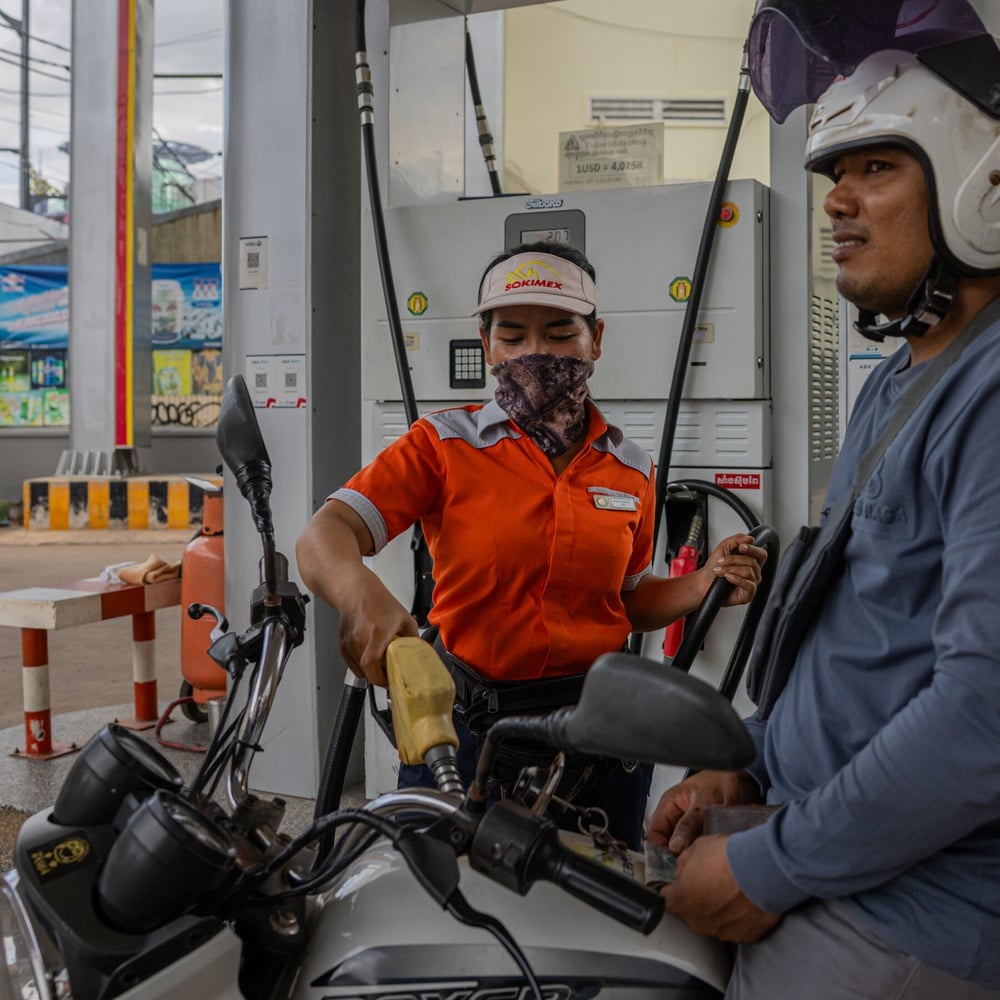
Context: The report links rising energy prices to geopolitical tensions with Iran and notes affordability challenges among Americans.
Automated analysis; not human reviewed. Limitations: Concise, case-specific limitations and plausible alternative interpretations. · 2 of 52 available dimensions scored; omitted dimensions are not treated as neutral. · Verified supporting quotes for 0 of 2 scored dimensions.
Date/context limited; relies on one quote; lacks broader sourcing.
July 24, 2026 · 0 shares
Framing presents the ECB as cautious and data-driven, foregrounding energy-price shocks from the Iran conflict as the main inflation driver while citing official statements and maintaining a neutral, factual tone.
The report covers the ECB’s decision to hold rates, the energy-price shock from the Iran war, and eurozone inflation metrics, including Lagarde’s comments.
Automated analysis; not human reviewed. Limitations: Concise, case-specific limitations and plausible alternative interpretations. · 47 of 52 available dimensions scored; omitted dimensions are not treated as neutral. · Verified supporting quotes for 0 of 47 scored dimensions.
Ambiguity in neutrality due to energy-focus; data-limited interpretation.
Helium Bias
Story Blindspots
July 25, 2026 · 0 shares
The publisher frames the US-Iran conflict as a potential negotiation by foregrounding Trump's willingness to hear Iranian proposals while presenting Tehran's denial of pursuing nuclear weapons, using quotes and a TASS dateline to signal an attribution-heavy, event-driven framing.
Background: The report outlines Trump's openness to Iranian proposals to resolve the conflict, juxtaposed with Iran's denial of pursuing nuclear weapons and a chronology of US-Israeli actions, a June ceasefire MoU, and a July 8 strike resumption.
Automated analysis; not human reviewed. Limitations: Concise, case-specific limitations and plausible alternative interpretations. · 11 of 52 available dimensions scored; omitted dimensions are not treated as neutral. · Verified supporting quotes for 0 of 11 scored dimensions.
Claim: Neutral framing with balanced sourcing and quotes from both sides.
“"By the way, they [Iranian authorities] are talking to us right now. They would like to make a deal. I don’t think they are ready, I don’t think it is time yet. But I am willing to listen [to them]. But they can’t have a nuclear weapon," Trump said Friday at a reception for the White House Correspondents' Association.” · not found in supplied text
“"Iranian authorities have repeatedly stated that they do not seek to acquire nuclear weapons."” · exact text match
“"The US and Israel launched a military campaign against Iran on February 28."” · not found in supplied text
Counterevidence:
“"However, on the night of July 8, the US resumed large-scale strikes against Iran, accusing Tehran of violating the terms of the agreement regarding the Strait of Hormuz."” · not found in supplied text
“"In June, Washington and Tehran signed a memorandum of understanding providing for an immediate cessation of hostilities on all fronts, including Lebanon."” · not found in supplied text
Why: The article presents direct quotes and both sides' positions, suggesting balanced coverage rather than a strong tilt.
Case-specific: year unspecified; limited content; avoid overinterpretation.
Publisher framing foregrounds hawkish coverage of US-Iran conflict, asserts objectivity and reliability, and embeds promotional 'Unbiased Updates Off Script' content to appear impartial.
Ongoing U.S.-Iran military exchanges with escalation talk and casualty reports, framed with publisher claims of objectivity and reliability.
Automated analysis; not human reviewed. Limitations: Case-specific; relies on quoted content within a single article; may reflect deliberate self-presentation. · 7 of 52 available dimensions scored; omitted dimensions are not treated as neutral. · Verified supporting quotes for 0 of 7 scored dimensions.
Claim: The reporting frames the conflict with hawkish, pro-U.S. escalation cues.
“"This is the 13th consecutive night of strikes aimed to hold Iran accountable and diminish threats from the Islamic Revolutionary Guard Corps to commercial shipping."” · not found in supplied text
“"President Donald Trump says he's 'close to making a decision' on whether to strike Iran 'bigger than ever before'.” · not found in supplied text
“"They haven’t received enough pain yet," Trump said.” · verified after text normalization
Counterevidence:
“The piece also documents warnings from Iran and emphasizes diplomacy (e.g., Iran says it reserves its right to self-defense).” · not found in supplied text
Why: Recurrent hawkish phrases and calls for accountability indicate a pro-escalation framing, though opposing Iran statements are present.
Claim: The publisher positions itself as objective with no spin or agenda.
“"No spin or agenda."” · not found in supplied text
“"Unbiased Updates Off Script" promotional text in the article” · not found in supplied text
“"Download the Straight Arrow app today to get the stories that matter free from manipulation, bias or agenda."” · not found in supplied text
Counterevidence:
“The article includes promotional lines that may undermine claims of objective reporting.” · not found in supplied text
Why: Presence of 'No spin' and 'Off Script' branding suggests an attempt at objectivity, but promotional content undermines neutrality.
Claim: Framing favors escalation and accountability of Iran.
“"This is the 13th consecutive night of strikes aimed to hold Iran accountable and diminish threats"” · not found in supplied text
“"massive attack"” · not found in supplied text
“"They haven’t received enough pain yet"” · not found in supplied text
Counterevidence:
“Iran's warnings offer a counterpoint to escalation.” · not found in supplied text
Why: Hawkish language and calls for accountability indicate hawkish framing.
Claim: The article leans into fear of escalation and casualties.
“"killed at least four people"” · not found in supplied text
“"threat to civilian mariners and commercial vessels transiting the Strait of Hormuz"” · not found in supplied text
“"massive attack"” · not found in supplied text
Counterevidence:
“Casualty reporting and threat emphasis are common in conflict reporting and not exclusive to bias.” · not found in supplied text
Why: Casualty and threat framing contribute to fear-based framing.
Claim: Promotional content accompanies reporting, indicating advertising bias.
“"Download the Straight Arrow app today to get the stories that matter free from manipulation, bias or agenda."” · not found in supplied text
“"There’s always more to the story. That’s why we created ‘Off Script’"” · exact text match
“"No spin or agenda."” · not found in supplied text
Counterevidence:
“Content includes news reporting alongside marketing; not necessarily editorial bias on the news content.” · not found in supplied text
Why: Direct promotional language alongside news content signals promotional bias.
Claim: Future actions are framed as likely or imminent.
“"close to making a decision"” · exact text match
“"massive attack" being considered” · not found in supplied text
“"Trump said he’s considering launching a massive attack"” · not found in supplied text
Counterevidence:
“Some quotes indicate deliberation rather than certainty.” · not found in supplied text
Why: Quotations about decisions under consideration imply near-term escalation rather than firm conclusions.
Claim: Publisher signals high integrity via reliability endorsements and anti-spin branding.
“"Awarded a perfect reliability rating from NewsGuard"” · exact text match
“"Unbiased Updates Off Script... No spin or agenda"” · not found in supplied text
Counterevidence:
“Self-promotional reliability claims lack external corroboration within the article.” · not found in supplied text
Why: Reliability branding suggests integrity framing, but is self-contained within the article.
Promotional framing and hawkish cues; evidence-based only for key claims.
This digest centers on Trump-related national-security and election- integrity stories while also highlighting governance concerns and DoJ investigations, presenting a framing that leans toward conservative political topics and emphasizes accountability, yet occasional language flags false claims and calls for scrutiny.
Political and international-news digest branded as unbiased updates, weaving coverage of Iran conflict, U.S. politics, and governance issues with quotes and official statements.
Automated analysis; not human reviewed. Limitations: Conciseness constraints; potential alternative readings exist; reliance on quoted passages and self-description of neutrality may color interpretation. · 5 of 52 available dimensions scored; omitted dimensions are not treated as neutral. · Verified supporting quotes for 2 of 5 scored dimensions.
Claim: Mild conservative tilt evidenced by focus on Trump-related topics and Republican candidates.
“Trump signals possible strike on Iran nuclear site; Pentagon reveals soaring war cost.” · exact text match
“Two election fraud accusers win governor, secretary of state primary races in Arizona” · exact text match
“Trump-backed Rep. Andy Biggs has captured the Republican nomination for Arizona governor. A staunch Trump ally, Biggs refused to certify the 2020 presidential election and echoed the president’s false claims that the election was stolen.” · exact text match
Counterevidence:
“The article labels certain claims as false (e.g., the president’s false claims that the election was stolen).” · not found in supplied text
Why: Concentration of Trump-related political items and Republican candidates suggests a conservative-leaning framing, tempered by explicit rejection of some Trump claims.
Claim: Significant political framing around elections, DoJ actions, and partisan actors.
“Two election fraud accusers win governor, secretary of state primary races in Arizona” · exact text match
“The Justice Department has reportedly launched a criminal investigation into embattled Florida Rep. Cory Mills.” · exact text match
Counterevidence:
“The piece includes quotes from multiple political sides and cites official sources, indicating attempts at balance.” · not found in supplied text
Why: Heavy emphasis on partisan elections and investigations signals political framing rather than purely neutral reporting.
Claim: Statements implying imminent action or cost trajectories beyond current data.
“"we’ll be hitting that area pretty soon, and very heavily."” · not found in supplied text
“"the cost has now cost an estimated $37.5 billion — up roughly $12 billion from the Pentagon’s last public estimate"” · not found in supplied text
Counterevidence:
“Officials acknowledge ongoing uncertainty and discuss future costs.” · not found in supplied text
Why: Direct future-action language and a rising-cost figure reflect certainty beyond the fixed data.
Claim: Some governance-critique signals mixed with reliance on official statements, suggesting nuanced stance on establishment.
“I am appalled by the reckless failures that allowed this to happen and the lack of transparency shown by those in charge at the time” · exact text match
“The governor is explaining how it happened” · not found in supplied text
Counterevidence:
“Official responses and statements are cited, which can reflect adherence to established institutions.” · not found in supplied text
Why: Critiques of governance exist alongside references to official accountability, indicating neither strong anti- nor pro-establishment bias.
July 22, 2026 · 0 shares
Neutral, fact-focused coverage of a substantial funding request to sustain strikes on Iran, with subtle hawkish framing via phrases like 'keep fighting Iran' and 'expanding conflict' and noting bipartisan oversight concerns.
Automated analysis; not human reviewed. Limitations: Case-specific limitations; text-only excerpt; no external corroboration included.
Ambiguity: limited sourcing; possible misattribution; not enough context to judge truth.
Publisher framing foregrounds hawkish coverage of US-Iran conflict, asserts objectivity and reliability, and embeds promotional 'Unbiased Updates Off Script' content to appear impartial.
Ongoing U.S.-Iran military exchanges with escalation talk and casualty reports, framed with publisher claims of objectivity and reliability.
Automated analysis; not human reviewed. Limitations: Case-specific; relies on quoted content within a single article; may reflect deliberate self-presentation. · 7 of 52 available dimensions scored; omitted dimensions are not treated as neutral. · Verified supporting quotes for 0 of 7 scored dimensions.
Claim: The reporting frames the conflict with hawkish, pro-U.S. escalation cues.
“"This is the 13th consecutive night of strikes aimed to hold Iran accountable and diminish threats from the Islamic Revolutionary Guard Corps to commercial shipping."” · not found in supplied text
“"President Donald Trump says he's 'close to making a decision' on whether to strike Iran 'bigger than ever before'.” · not found in supplied text
“"They haven’t received enough pain yet," Trump said.” · verified after text normalization
Counterevidence:
“The piece also documents warnings from Iran and emphasizes diplomacy (e.g., Iran says it reserves its right to self-defense).” · not found in supplied text
Why: Recurrent hawkish phrases and calls for accountability indicate a pro-escalation framing, though opposing Iran statements are present.
Claim: The publisher positions itself as objective with no spin or agenda.
“"No spin or agenda."” · not found in supplied text
“"Unbiased Updates Off Script" promotional text in the article” · not found in supplied text
“"Download the Straight Arrow app today to get the stories that matter free from manipulation, bias or agenda."” · not found in supplied text
Counterevidence:
“The article includes promotional lines that may undermine claims of objective reporting.” · not found in supplied text
Why: Presence of 'No spin' and 'Off Script' branding suggests an attempt at objectivity, but promotional content undermines neutrality.
Claim: Framing favors escalation and accountability of Iran.
“"This is the 13th consecutive night of strikes aimed to hold Iran accountable and diminish threats"” · not found in supplied text
“"massive attack"” · not found in supplied text
“"They haven’t received enough pain yet"” · not found in supplied text
Counterevidence:
“Iran's warnings offer a counterpoint to escalation.” · not found in supplied text
Why: Hawkish language and calls for accountability indicate hawkish framing.
Claim: The article leans into fear of escalation and casualties.
“"killed at least four people"” · not found in supplied text
“"threat to civilian mariners and commercial vessels transiting the Strait of Hormuz"” · not found in supplied text
“"massive attack"” · not found in supplied text
Counterevidence:
“Casualty reporting and threat emphasis are common in conflict reporting and not exclusive to bias.” · not found in supplied text
Why: Casualty and threat framing contribute to fear-based framing.
Claim: Promotional content accompanies reporting, indicating advertising bias.
“"Download the Straight Arrow app today to get the stories that matter free from manipulation, bias or agenda."” · not found in supplied text
“"There’s always more to the story. That’s why we created ‘Off Script’"” · exact text match
“"No spin or agenda."” · not found in supplied text
Counterevidence:
“Content includes news reporting alongside marketing; not necessarily editorial bias on the news content.” · not found in supplied text
Why: Direct promotional language alongside news content signals promotional bias.
Claim: Future actions are framed as likely or imminent.
“"close to making a decision"” · exact text match
“"massive attack" being considered” · not found in supplied text
“"Trump said he’s considering launching a massive attack"” · not found in supplied text
Counterevidence:
“Some quotes indicate deliberation rather than certainty.” · not found in supplied text
Why: Quotations about decisions under consideration imply near-term escalation rather than firm conclusions.
Claim: Publisher signals high integrity via reliability endorsements and anti-spin branding.
“"Awarded a perfect reliability rating from NewsGuard"” · exact text match
“"Unbiased Updates Off Script... No spin or agenda"” · not found in supplied text
Counterevidence:
“Self-promotional reliability claims lack external corroboration within the article.” · not found in supplied text
Why: Reliability branding suggests integrity framing, but is self-contained within the article.
Promotional framing and hawkish cues; evidence-based only for key claims.
July 24, 2026 · 0 shares
Publisher frames Netanyahu’s White House visit as a sign of unwavering US support for Israel amid an Iran-driven conflict and a Gaza war described as genocidal, foregrounding casualty data and humanitarian framing to condemn Israeli actions.
Netanyahu's White House visit is framed within a conflict narrative emphasizing Gaza casualties, Iran escalation, humanitarian data, and ICC politics alongside US-Israel security alignment.
Automated analysis; not human reviewed. · 1 of 52 available dimensions scored; omitted dimensions are not treated as neutral. · Verified supporting quotes for 0 of 1 scored dimensions.
July 21, 2026 · 0 shares
Framing appears neutral: reporting an IEA warning about energy-supply risks from Iran-conflict escalation uses direct quotes and avoids editorializing.
IEA warns of risk to energy supplies stemming from escalation of Iran conflict, noting tightness in refined-product markets.
Automated analysis; not human reviewed. Limitations: Concise, case-specific limitations and plausible alternative interpretations.
July 24, 2026 · 0 shares
Publisher frames oil-market disruption and equity moves as a geopolitically driven macro narrative, tying Brent crude above $100 to an ongoing Iran conflict and linking Asia stock declines to a U.S. sell-off driven by soaring oil prices, rising borrowing costs, and tech-sector concerns.
Market brief tying a Brent crude price spike to an ongoing Iran-related conflict and noting Asia equities down after a U.S. sell-off driven by oil, borrowing costs, and tech worries.
Automated analysis; not human reviewed. Limitations: Concise, case-specific limitations and plausible alternative interpretations.
Content is brief; limited framing signals; potential but not explicit biases.
Publisher framing foregrounds hawkish coverage of US-Iran conflict, asserts objectivity and reliability, and embeds promotional 'Unbiased Updates Off Script' content to appear impartial.
Ongoing U.S.-Iran military exchanges with escalation talk and casualty reports, framed with publisher claims of objectivity and reliability.
Automated analysis; not human reviewed. Limitations: Case-specific; relies on quoted content within a single article; may reflect deliberate self-presentation. · 7 of 52 available dimensions scored; omitted dimensions are not treated as neutral. · Verified supporting quotes for 0 of 7 scored dimensions.
Claim: The reporting frames the conflict with hawkish, pro-U.S. escalation cues.
“"This is the 13th consecutive night of strikes aimed to hold Iran accountable and diminish threats from the Islamic Revolutionary Guard Corps to commercial shipping."” · not found in supplied text
“"President Donald Trump says he's 'close to making a decision' on whether to strike Iran 'bigger than ever before'.” · not found in supplied text
“"They haven’t received enough pain yet," Trump said.” · verified after text normalization
Counterevidence:
“The piece also documents warnings from Iran and emphasizes diplomacy (e.g., Iran says it reserves its right to self-defense).” · not found in supplied text
Why: Recurrent hawkish phrases and calls for accountability indicate a pro-escalation framing, though opposing Iran statements are present.
Claim: The publisher positions itself as objective with no spin or agenda.
“"No spin or agenda."” · not found in supplied text
“"Unbiased Updates Off Script" promotional text in the article” · not found in supplied text
“"Download the Straight Arrow app today to get the stories that matter free from manipulation, bias or agenda."” · not found in supplied text
Counterevidence:
“The article includes promotional lines that may undermine claims of objective reporting.” · not found in supplied text
Why: Presence of 'No spin' and 'Off Script' branding suggests an attempt at objectivity, but promotional content undermines neutrality.
Claim: Framing favors escalation and accountability of Iran.
“"This is the 13th consecutive night of strikes aimed to hold Iran accountable and diminish threats"” · not found in supplied text
“"massive attack"” · not found in supplied text
“"They haven’t received enough pain yet"” · not found in supplied text
Counterevidence:
“Iran's warnings offer a counterpoint to escalation.” · not found in supplied text
Why: Hawkish language and calls for accountability indicate hawkish framing.
Claim: The article leans into fear of escalation and casualties.
“"killed at least four people"” · not found in supplied text
“"threat to civilian mariners and commercial vessels transiting the Strait of Hormuz"” · not found in supplied text
“"massive attack"” · not found in supplied text
Counterevidence:
“Casualty reporting and threat emphasis are common in conflict reporting and not exclusive to bias.” · not found in supplied text
Why: Casualty and threat framing contribute to fear-based framing.
Claim: Promotional content accompanies reporting, indicating advertising bias.
“"Download the Straight Arrow app today to get the stories that matter free from manipulation, bias or agenda."” · not found in supplied text
“"There’s always more to the story. That’s why we created ‘Off Script’"” · exact text match
“"No spin or agenda."” · not found in supplied text
Counterevidence:
“Content includes news reporting alongside marketing; not necessarily editorial bias on the news content.” · not found in supplied text
Why: Direct promotional language alongside news content signals promotional bias.
Claim: Future actions are framed as likely or imminent.
“"close to making a decision"” · exact text match
“"massive attack" being considered” · not found in supplied text
“"Trump said he’s considering launching a massive attack"” · not found in supplied text
Counterevidence:
“Some quotes indicate deliberation rather than certainty.” · not found in supplied text
Why: Quotations about decisions under consideration imply near-term escalation rather than firm conclusions.
Claim: Publisher signals high integrity via reliability endorsements and anti-spin branding.
“"Awarded a perfect reliability rating from NewsGuard"” · exact text match
“"Unbiased Updates Off Script... No spin or agenda"” · not found in supplied text
Counterevidence:
“Self-promotional reliability claims lack external corroboration within the article.” · not found in supplied text
Why: Reliability branding suggests integrity framing, but is self-contained within the article.
Promotional framing and hawkish cues; evidence-based only for key claims.
Balanced, cautious, and quote-driven coverage that emphasizes diplomacy and de-escalation amid UK-US tensions over Iran, with no clear ideological tilt evident in framing.
Diplomatic coverage of a UK leadership transition and ongoing Iran tensions, emphasizing de-escalation and freedom of navigation.
Automated analysis; not human reviewed. Limitations: Concise, case-specific limitations and plausible alternative interpretations. · 4 of 52 available dimensions scored; omitted dimensions are not treated as neutral. · Verified supporting quotes for 0 of 4 scored dimensions.
Claim: The reporting prescribes de-escalation and freedom of navigation as essential outcomes.
“Any solution must include reopening the Strait of Hormuz and upholding the fundamental principle of freedom of navigation” · not found in supplied text
“The Foreign Secretary added London “will work intensively with others to seek to de-escalate this conflict”” · not found in supplied text
Counterevidence:
“At times, quotes about military action and threats appear, indicating escalation rhetoric.” · not found in supplied text
Why: Explicit normative statements anchor policy outcomes as necessary.
Claim: Subtle tilt toward de-escalation in foreign policy framing.
“The Foreign Secretary added London “will work intensively with others to seek to de-escalate this conflict”.” · not found in supplied text
“You are feeling as much as anyone across the world the daily impact on your economies and the living standards of your citizens.” · not found in supplied text
Counterevidence:
“At the same time, hawkish threats are reported, such as Trump’s statements and escalatory rhetoric.” · not found in supplied text
Why: De-escalation emphasis coexists with escalation rhetoric in quotes.
Claim: The piece demonstrates multi-source, issue-spanning coverage with quoted material.
“The White House is said to be 'deeply concerned' about Mr Miliband's appointment.” · not found in supplied text
“The new Prime Minister has already spoken to the American leader, and his spokesman said their call was 'extremely warm'.” · not found in supplied text
Why: Quoted statements show breadth of sourcing and cross-context references.
Ambiguity in framing; limited context; avoid inference about intent.
July 23, 2026 · 0 shares
Publisher framing emphasizes a high-stakes, bipartisan clash over presidential war powers in the Iran conflict, foregrounding vote tallies, cross-party defections, and forceful rhetoric to signal accountability and urgency.
Context: Ongoing U.S.–Iran hostilities since February, a ceasefire collapse earlier this month, and multiple votes on war powers measures.
Automated analysis; not human reviewed. Limitations: Concise, case-specific limitations and plausible alternative interpretations.
Limited article content; possible framing bias from selective quotes; no independent verification.
July 23, 2026 · 0 shares
Report frames the House war powers vote as a largely symbolic, constitutionally contested move, foregrounding bipartisan tension, party-line voting, and official positions from both sides while noting the administration's opposition.
The report covers the House vote on a war powers resolution regarding Iran, the Senate's rejection of a similar measure, and related defense spending actions amid ongoing Middle East tensions.
Automated analysis; not human reviewed. Limitations: Concise, case-specific limitations and plausible alternative interpretations.
Ambiguity; relies on quotes; limited context.
This digest centers on Trump-related national-security and election- integrity stories while also highlighting governance concerns and DoJ investigations, presenting a framing that leans toward conservative political topics and emphasizes accountability, yet occasional language flags false claims and calls for scrutiny.
Political and international-news digest branded as unbiased updates, weaving coverage of Iran conflict, U.S. politics, and governance issues with quotes and official statements.
Automated analysis; not human reviewed. Limitations: Conciseness constraints; potential alternative readings exist; reliance on quoted passages and self-description of neutrality may color interpretation. · 5 of 52 available dimensions scored; omitted dimensions are not treated as neutral. · Verified supporting quotes for 2 of 5 scored dimensions.
Claim: Mild conservative tilt evidenced by focus on Trump-related topics and Republican candidates.
“Trump signals possible strike on Iran nuclear site; Pentagon reveals soaring war cost.” · exact text match
“Two election fraud accusers win governor, secretary of state primary races in Arizona” · exact text match
“Trump-backed Rep. Andy Biggs has captured the Republican nomination for Arizona governor. A staunch Trump ally, Biggs refused to certify the 2020 presidential election and echoed the president’s false claims that the election was stolen.” · exact text match
Counterevidence:
“The article labels certain claims as false (e.g., the president’s false claims that the election was stolen).” · not found in supplied text
Why: Concentration of Trump-related political items and Republican candidates suggests a conservative-leaning framing, tempered by explicit rejection of some Trump claims.
Claim: Significant political framing around elections, DoJ actions, and partisan actors.
“Two election fraud accusers win governor, secretary of state primary races in Arizona” · exact text match
“The Justice Department has reportedly launched a criminal investigation into embattled Florida Rep. Cory Mills.” · exact text match
Counterevidence:
“The piece includes quotes from multiple political sides and cites official sources, indicating attempts at balance.” · not found in supplied text
Why: Heavy emphasis on partisan elections and investigations signals political framing rather than purely neutral reporting.
Claim: Statements implying imminent action or cost trajectories beyond current data.
“"we’ll be hitting that area pretty soon, and very heavily."” · not found in supplied text
“"the cost has now cost an estimated $37.5 billion — up roughly $12 billion from the Pentagon’s last public estimate"” · not found in supplied text
Counterevidence:
“Officials acknowledge ongoing uncertainty and discuss future costs.” · not found in supplied text
Why: Direct future-action language and a rising-cost figure reflect certainty beyond the fixed data.
Claim: Some governance-critique signals mixed with reliance on official statements, suggesting nuanced stance on establishment.
“I am appalled by the reckless failures that allowed this to happen and the lack of transparency shown by those in charge at the time” · exact text match
“The governor is explaining how it happened” · not found in supplied text
Counterevidence:
“Official responses and statements are cited, which can reflect adherence to established institutions.” · not found in supplied text
Why: Critiques of governance exist alongside references to official accountability, indicating neither strong anti- nor pro-establishment bias.
July 22, 2026 · 0 shares
Neutral, fact-focused coverage of a substantial funding request to sustain strikes on Iran, with subtle hawkish framing via phrases like 'keep fighting Iran' and 'expanding conflict' and noting bipartisan oversight concerns.
Automated analysis; not human reviewed. Limitations: Case-specific limitations; text-only excerpt; no external corroboration included.
Ambiguity: limited sourcing; possible misattribution; not enough context to judge truth.
July 25, 2026 · 0 shares
The publisher frames the US-Iran conflict as a potential negotiation by foregrounding Trump's willingness to hear Iranian proposals while presenting Tehran's denial of pursuing nuclear weapons, using quotes and a TASS dateline to signal an attribution-heavy, event-driven framing.
Background: The report outlines Trump's openness to Iranian proposals to resolve the conflict, juxtaposed with Iran's denial of pursuing nuclear weapons and a chronology of US-Israeli actions, a June ceasefire MoU, and a July 8 strike resumption.
Automated analysis; not human reviewed. Limitations: Concise, case-specific limitations and plausible alternative interpretations. · 11 of 52 available dimensions scored; omitted dimensions are not treated as neutral. · Verified supporting quotes for 0 of 11 scored dimensions.
Claim: Neutral framing with balanced sourcing and quotes from both sides.
“"By the way, they [Iranian authorities] are talking to us right now. They would like to make a deal. I don’t think they are ready, I don’t think it is time yet. But I am willing to listen [to them]. But they can’t have a nuclear weapon," Trump said Friday at a reception for the White House Correspondents' Association.” · not found in supplied text
“"Iranian authorities have repeatedly stated that they do not seek to acquire nuclear weapons."” · exact text match
“"The US and Israel launched a military campaign against Iran on February 28."” · not found in supplied text
Counterevidence:
“"However, on the night of July 8, the US resumed large-scale strikes against Iran, accusing Tehran of violating the terms of the agreement regarding the Strait of Hormuz."” · not found in supplied text
“"In June, Washington and Tehran signed a memorandum of understanding providing for an immediate cessation of hostilities on all fronts, including Lebanon."” · not found in supplied text
Why: The article presents direct quotes and both sides' positions, suggesting balanced coverage rather than a strong tilt.
Case-specific: year unspecified; limited content; avoid overinterpretation.
Publisher framing foregrounds hawkish coverage of US-Iran conflict, asserts objectivity and reliability, and embeds promotional 'Unbiased Updates Off Script' content to appear impartial.
Ongoing U.S.-Iran military exchanges with escalation talk and casualty reports, framed with publisher claims of objectivity and reliability.
Automated analysis; not human reviewed. Limitations: Case-specific; relies on quoted content within a single article; may reflect deliberate self-presentation. · 7 of 52 available dimensions scored; omitted dimensions are not treated as neutral. · Verified supporting quotes for 0 of 7 scored dimensions.
Claim: The reporting frames the conflict with hawkish, pro-U.S. escalation cues.
“"This is the 13th consecutive night of strikes aimed to hold Iran accountable and diminish threats from the Islamic Revolutionary Guard Corps to commercial shipping."” · not found in supplied text
“"President Donald Trump says he's 'close to making a decision' on whether to strike Iran 'bigger than ever before'.” · not found in supplied text
“"They haven’t received enough pain yet," Trump said.” · verified after text normalization
Counterevidence:
“The piece also documents warnings from Iran and emphasizes diplomacy (e.g., Iran says it reserves its right to self-defense).” · not found in supplied text
Why: Recurrent hawkish phrases and calls for accountability indicate a pro-escalation framing, though opposing Iran statements are present.
Claim: The publisher positions itself as objective with no spin or agenda.
“"No spin or agenda."” · not found in supplied text
“"Unbiased Updates Off Script" promotional text in the article” · not found in supplied text
“"Download the Straight Arrow app today to get the stories that matter free from manipulation, bias or agenda."” · not found in supplied text
Counterevidence:
“The article includes promotional lines that may undermine claims of objective reporting.” · not found in supplied text
Why: Presence of 'No spin' and 'Off Script' branding suggests an attempt at objectivity, but promotional content undermines neutrality.
Claim: Framing favors escalation and accountability of Iran.
“"This is the 13th consecutive night of strikes aimed to hold Iran accountable and diminish threats"” · not found in supplied text
“"massive attack"” · not found in supplied text
“"They haven’t received enough pain yet"” · not found in supplied text
Counterevidence:
“Iran's warnings offer a counterpoint to escalation.” · not found in supplied text
Why: Hawkish language and calls for accountability indicate hawkish framing.
Claim: The article leans into fear of escalation and casualties.
“"killed at least four people"” · not found in supplied text
“"threat to civilian mariners and commercial vessels transiting the Strait of Hormuz"” · not found in supplied text
“"massive attack"” · not found in supplied text
Counterevidence:
“Casualty reporting and threat emphasis are common in conflict reporting and not exclusive to bias.” · not found in supplied text
Why: Casualty and threat framing contribute to fear-based framing.
Claim: Promotional content accompanies reporting, indicating advertising bias.
“"Download the Straight Arrow app today to get the stories that matter free from manipulation, bias or agenda."” · not found in supplied text
“"There’s always more to the story. That’s why we created ‘Off Script’"” · exact text match
“"No spin or agenda."” · not found in supplied text
Counterevidence:
“Content includes news reporting alongside marketing; not necessarily editorial bias on the news content.” · not found in supplied text
Why: Direct promotional language alongside news content signals promotional bias.
Claim: Future actions are framed as likely or imminent.
“"close to making a decision"” · exact text match
“"massive attack" being considered” · not found in supplied text
“"Trump said he’s considering launching a massive attack"” · not found in supplied text
Counterevidence:
“Some quotes indicate deliberation rather than certainty.” · not found in supplied text
Why: Quotations about decisions under consideration imply near-term escalation rather than firm conclusions.
Claim: Publisher signals high integrity via reliability endorsements and anti-spin branding.
“"Awarded a perfect reliability rating from NewsGuard"” · exact text match
“"Unbiased Updates Off Script... No spin or agenda"” · not found in supplied text
Counterevidence:
“Self-promotional reliability claims lack external corroboration within the article.” · not found in supplied text
Why: Reliability branding suggests integrity framing, but is self-contained within the article.
Promotional framing and hawkish cues; evidence-based only for key claims.
Balanced, cautious, and quote-driven coverage that emphasizes diplomacy and de-escalation amid UK-US tensions over Iran, with no clear ideological tilt evident in framing.
Diplomatic coverage of a UK leadership transition and ongoing Iran tensions, emphasizing de-escalation and freedom of navigation.
Automated analysis; not human reviewed. Limitations: Concise, case-specific limitations and plausible alternative interpretations. · 4 of 52 available dimensions scored; omitted dimensions are not treated as neutral. · Verified supporting quotes for 0 of 4 scored dimensions.
Claim: The reporting prescribes de-escalation and freedom of navigation as essential outcomes.
“Any solution must include reopening the Strait of Hormuz and upholding the fundamental principle of freedom of navigation” · not found in supplied text
“The Foreign Secretary added London “will work intensively with others to seek to de-escalate this conflict”” · not found in supplied text
Counterevidence:
“At times, quotes about military action and threats appear, indicating escalation rhetoric.” · not found in supplied text
Why: Explicit normative statements anchor policy outcomes as necessary.
Claim: Subtle tilt toward de-escalation in foreign policy framing.
“The Foreign Secretary added London “will work intensively with others to seek to de-escalate this conflict”.” · not found in supplied text
“You are feeling as much as anyone across the world the daily impact on your economies and the living standards of your citizens.” · not found in supplied text
Counterevidence:
“At the same time, hawkish threats are reported, such as Trump’s statements and escalatory rhetoric.” · not found in supplied text
Why: De-escalation emphasis coexists with escalation rhetoric in quotes.
Claim: The piece demonstrates multi-source, issue-spanning coverage with quoted material.
“The White House is said to be 'deeply concerned' about Mr Miliband's appointment.” · not found in supplied text
“The new Prime Minister has already spoken to the American leader, and his spokesman said their call was 'extremely warm'.” · not found in supplied text
Why: Quoted statements show breadth of sourcing and cross-context references.
Ambiguity in framing; limited context; avoid inference about intent.
July 24, 2026 · 0 shares
Publisher frames oil-market disruption and equity moves as a geopolitically driven macro narrative, tying Brent crude above $100 to an ongoing Iran conflict and linking Asia stock declines to a U.S. sell-off driven by soaring oil prices, rising borrowing costs, and tech-sector concerns.
Market brief tying a Brent crude price spike to an ongoing Iran-related conflict and noting Asia equities down after a U.S. sell-off driven by oil, borrowing costs, and tech worries.
Automated analysis; not human reviewed. Limitations: Concise, case-specific limitations and plausible alternative interpretations.
Content is brief; limited framing signals; potential but not explicit biases.
July 24, 2026 · 0 shares
Publisher frames the rise in the 10-year Treasury yield as a crucial, high-stakes market development, linking it to Iran-related conflict, intensified government spending worries, and AI spending, using Trump’s second-term timeframe to imply causal significance.
Context: A rise in the 10-year yield is framed as linked to Iran conflict, fiscal concerns, and AI investment within a Trump-era timeframe.
Automated analysis; not human reviewed. Limitations: Case excerpt; lacks sourcing and numeric data; potential alternative interpretations exist.
Ambiguity about causal magnitude; no numeric data to quantify links.
July 21, 2026 · 0 shares
Framing appears neutral: reporting an IEA warning about energy-supply risks from Iran-conflict escalation uses direct quotes and avoids editorializing.
IEA warns of risk to energy supplies stemming from escalation of Iran conflict, noting tightness in refined-product markets.
Automated analysis; not human reviewed. Limitations: Concise, case-specific limitations and plausible alternative interpretations.
July 24, 2026 · 0 shares
Framing presents the ECB as cautious and data-driven, foregrounding energy-price shocks from the Iran conflict as the main inflation driver while citing official statements and maintaining a neutral, factual tone.
The report covers the ECB’s decision to hold rates, the energy-price shock from the Iran war, and eurozone inflation metrics, including Lagarde’s comments.
Automated analysis; not human reviewed.
Limitations: Concise, case-specific limitations and plausible alternative interpretations.
·
47 of 52 available dimensions scored; omitted dimensions are not treated as neutral.
·
Verified supporting quotes for 0 of 47 scored dimensions.
Ambiguity in neutrality due to energy-focus; data-limited interpretation.
July 23, 2026 · 0 shares
Publisher framing emphasizes a high-stakes, bipartisan clash over presidential war powers in the Iran conflict, foregrounding vote tallies, cross-party defections, and forceful rhetoric to signal accountability and urgency.
Context: Ongoing U.S.–Iran hostilities since February, a ceasefire collapse earlier this month, and multiple votes on war powers measures.
Automated analysis; not human reviewed. Limitations: Concise, case-specific limitations and plausible alternative interpretations.
Limited article content; possible framing bias from selective quotes; no independent verification.
July 26, 2026 · 0 shares
Publisher frames energy costs as an immediate American hardship tied to an escalating Iran conflict, foregrounding consumer sentiment and emotive wording ('I'm getting shafted at the pump') to signal threat and relevance.
Context: The report links rising energy prices to geopolitical tensions with Iran and notes affordability challenges among Americans.
Automated analysis; not human reviewed.
Limitations: Concise, case-specific limitations and plausible alternative interpretations.
·
2 of 52 available dimensions scored; omitted dimensions are not treated as neutral.
·
Verified supporting quotes for 0 of 2 scored dimensions.
Date/context limited; relies on one quote; lacks broader sourcing.
July 23, 2026 · 0 shares
Report frames the House war powers vote as a largely symbolic, constitutionally contested move, foregrounding bipartisan tension, party-line voting, and official positions from both sides while noting the administration's opposition.
The report covers the House vote on a war powers resolution regarding Iran, the Senate's rejection of a similar measure, and related defense spending actions amid ongoing Middle East tensions.
Automated analysis; not human reviewed. Limitations: Concise, case-specific limitations and plausible alternative interpretations.
Ambiguity; relies on quotes; limited context.
Balanced, cautious, and quote-driven coverage that emphasizes diplomacy and de-escalation amid UK-US tensions over Iran, with no clear ideological tilt evident in framing.
Diplomatic coverage of a UK leadership transition and ongoing Iran tensions, emphasizing de-escalation and freedom of navigation.
Automated analysis; not human reviewed.
Limitations: Concise, case-specific limitations and plausible alternative interpretations.
·
4 of 52 available dimensions scored; omitted dimensions are not treated as neutral.
·
Verified supporting quotes for 0 of 4 scored dimensions.
Claim: The reporting prescribes de-escalation and freedom of navigation as essential outcomes.
“Any solution must include reopening the Strait of Hormuz and upholding the fundamental principle of freedom of navigation” · not found in supplied text
“The Foreign Secretary added London “will work intensively with others to seek to de-escalate this conflict”” · not found in supplied text
Counterevidence:
“At times, quotes about military action and threats appear, indicating escalation rhetoric.” · not found in supplied text
Why: Explicit normative statements anchor policy outcomes as necessary.
Claim: Subtle tilt toward de-escalation in foreign policy framing.
“The Foreign Secretary added London “will work intensively with others to seek to de-escalate this conflict”.” · not found in supplied text
“You are feeling as much as anyone across the world the daily impact on your economies and the living standards of your citizens.” · not found in supplied text
Counterevidence:
“At the same time, hawkish threats are reported, such as Trump’s statements and escalatory rhetoric.” · not found in supplied text
Why: De-escalation emphasis coexists with escalation rhetoric in quotes.
Claim: The piece demonstrates multi-source, issue-spanning coverage with quoted material.
“The White House is said to be 'deeply concerned' about Mr Miliband's appointment.” · not found in supplied text
“The new Prime Minister has already spoken to the American leader, and his spokesman said their call was 'extremely warm'.” · not found in supplied text
Why: Quoted statements show breadth of sourcing and cross-context references.
Ambiguity in framing; limited context; avoid inference about intent.
July 24, 2026 · 0 shares
Publisher frames Netanyahu’s White House visit as a sign of unwavering US support for Israel amid an Iran-driven conflict and a Gaza war described as genocidal, foregrounding casualty data and humanitarian framing to condemn Israeli actions.
Netanyahu's White House visit is framed within a conflict narrative emphasizing Gaza casualties, Iran escalation, humanitarian data, and ICC politics alongside US-Israel security alignment.
Automated analysis; not human reviewed.
·
1 of 52 available dimensions scored; omitted dimensions are not treated as neutral.
·
Verified supporting quotes for 0 of 1 scored dimensions.
July 25, 2026 · 0 shares
The publisher frames the US-Iran conflict as a potential negotiation by foregrounding Trump's willingness to hear Iranian proposals while presenting Tehran's denial of pursuing nuclear weapons, using quotes and a TASS dateline to signal an attribution-heavy, event-driven framing.
Background: The report outlines Trump's openness to Iranian proposals to resolve the conflict, juxtaposed with Iran's denial of pursuing nuclear weapons and a chronology of US-Israeli actions, a June ceasefire MoU, and a July 8 strike resumption.
Automated analysis; not human reviewed.
Limitations: Concise, case-specific limitations and plausible alternative interpretations.
·
11 of 52 available dimensions scored; omitted dimensions are not treated as neutral.
·
Verified supporting quotes for 0 of 11 scored dimensions.
Claim: Neutral framing with balanced sourcing and quotes from both sides.
“"By the way, they [Iranian authorities] are talking to us right now. They would like to make a deal.
I don’t think they are ready, I don’t think it is time yet. But I am willing to listen [to them].
But they can’t have a nuclear weapon," Trump said Friday at a reception for the White House Correspondents' Association.”
· not found in supplied text
“"Iranian authorities have repeatedly stated that they do not seek to acquire nuclear weapons."” · exact text match
“"The US and Israel launched a military campaign against Iran on February 28."” · not found in supplied text
Counterevidence:
“"However, on the night of July 8, the US resumed large-scale strikes against Iran, accusing Tehran of violating the terms of the agreement regarding the Strait of Hormuz."” · not found in supplied text
“"In June, Washington and Tehran signed a memorandum of understanding providing for an immediate cessation of hostilities on all fronts, including Lebanon."” · not found in supplied text
Why: The article presents direct quotes and both sides' positions, suggesting balanced coverage rather than a strong tilt.
Case-specific: year unspecified; limited content; avoid overinterpretation.
Framing presents a scenario-based risk assessment of Israel-Iran conflict, foregrounding official warnings and policy rhetoric while outlining multiple potential paths without normative judgments.
An analysis of potential Israel-Iran conflict scenarios prompted by Trump’s threats and Western intelligence warnings.
Automated analysis; not human reviewed. Limitations: Concise, case-specific limitations and plausible alternative interpretations.
Text is too short to judge broader editorial stance; limited excerpt.
Publisher framing foregrounds hawkish coverage of US-Iran conflict, asserts objectivity and reliability, and embeds promotional 'Unbiased Updates Off Script' content to appear impartial.
Ongoing U.S.-Iran military exchanges with escalation talk and casualty reports, framed with publisher claims of objectivity and reliability.
Automated analysis; not human reviewed.
Limitations: Case-specific; relies on quoted content within a single article; may reflect deliberate self-presentation.
·
7 of 52 available dimensions scored; omitted dimensions are not treated as neutral.
·
Verified supporting quotes for 0 of 7 scored dimensions.
Claim: The reporting frames the conflict with hawkish, pro-U.S. escalation cues.
“"This is the 13th consecutive night of strikes aimed to hold Iran accountable and diminish threats from the Islamic Revolutionary Guard Corps to commercial shipping."” · not found in supplied text
“"President Donald Trump says he's 'close to making a decision' on whether to strike Iran 'bigger than ever before'.” · not found in supplied text
“"They haven’t received enough pain yet," Trump said.” · verified after text normalization
Counterevidence:
“The piece also documents warnings from Iran and emphasizes diplomacy (e.g., Iran says it reserves its right to self-defense).” · not found in supplied text
Why: Recurrent hawkish phrases and calls for accountability indicate a pro-escalation framing, though opposing Iran statements are present.
Claim: The publisher positions itself as objective with no spin or agenda.
“"No spin or agenda."” · not found in supplied text
“"Unbiased Updates Off Script" promotional text in the article” · not found in supplied text
“"Download the Straight Arrow app today to get the stories that matter free from manipulation, bias or agenda."” · not found in supplied text
Counterevidence:
“The article includes promotional lines that may undermine claims of objective reporting.” · not found in supplied text
Why: Presence of 'No spin' and 'Off Script' branding suggests an attempt at objectivity, but promotional content undermines neutrality.
Claim: Framing favors escalation and accountability of Iran.
“"This is the 13th consecutive night of strikes aimed to hold Iran accountable and diminish threats"” · not found in supplied text
“"massive attack"” · not found in supplied text
“"They haven’t received enough pain yet"” · not found in supplied text
Counterevidence:
“Iran's warnings offer a counterpoint to escalation.” · not found in supplied text
Why: Hawkish language and calls for accountability indicate hawkish framing.
Claim: The article leans into fear of escalation and casualties.
“"killed at least four people"” · not found in supplied text
“"threat to civilian mariners and commercial vessels transiting the Strait of Hormuz"” · not found in supplied text
“"massive attack"” · not found in supplied text
Counterevidence:
“Casualty reporting and threat emphasis are common in conflict reporting and not exclusive to bias.” · not found in supplied text
Why: Casualty and threat framing contribute to fear-based framing.
Claim: Promotional content accompanies reporting, indicating advertising bias.
“"Download the Straight Arrow app today to get the stories that matter free from manipulation, bias or agenda."” · not found in supplied text
“"There’s always more to the story.
That’s why we created ‘Off Script’"”
· exact text match
“"No spin or agenda."” · not found in supplied text
Counterevidence:
“Content includes news reporting alongside marketing; not necessarily editorial bias on the news content.” · not found in supplied text
Why: Direct promotional language alongside news content signals promotional bias.
Claim: Future actions are framed as likely or imminent.
“"close to making a decision"” · exact text match
“"massive attack" being considered” · not found in supplied text
“"Trump said he’s considering launching a massive attack"” · not found in supplied text
Counterevidence:
“Some quotes indicate deliberation rather than certainty.” · not found in supplied text
Why: Quotations about decisions under consideration imply near-term escalation rather than firm conclusions.
Claim: Publisher signals high integrity via reliability endorsements and anti-spin branding.
“"Awarded a perfect reliability rating from NewsGuard"” · exact text match
“"Unbiased Updates Off Script... No spin or agenda"” · not found in supplied text
Counterevidence:
“Self-promotional reliability claims lack external corroboration within the article.” · not found in supplied text
Why: Reliability branding suggests integrity framing, but is self-contained within the article.
Promotional framing and hawkish cues; evidence-based only for key claims.
This digest centers on Trump-related national-security and election- integrity stories while also highlighting governance concerns and DoJ investigations, presenting a framing that leans toward conservative political topics and emphasizes accountability, yet occasional language flags false claims and calls for scrutiny.
Political and international-news digest branded as unbiased updates, weaving coverage of Iran conflict, U.S. politics, and governance issues with quotes and official statements.
Automated analysis; not human reviewed.
Limitations: Conciseness constraints; potential alternative readings exist; reliance on quoted passages and self-description of neutrality may color interpretation.
·
5 of 52 available dimensions scored; omitted dimensions are not treated as neutral.
·
Verified supporting quotes for 2 of 5 scored dimensions.
Claim: Mild conservative tilt evidenced by focus on Trump-related topics and Republican candidates.
“Trump signals possible strike on Iran nuclear site; Pentagon reveals soaring war cost.” · exact text match
“Two election fraud accusers win governor, secretary of state primary races in Arizona” · exact text match
“Trump-backed Rep. Andy Biggs has captured the Republican nomination for Arizona governor.
A staunch Trump ally, Biggs refused to certify the 2020 presidential election and echoed the president’s false claims that the election was stolen.”
· exact text match
Counterevidence:
“The article labels certain claims as false (e.g., the president’s false claims that the election was stolen).” · not found in supplied text
Why: Concentration of Trump-related political items and Republican candidates suggests a conservative-leaning framing, tempered by explicit rejection of some Trump claims.
Claim: Significant political framing around elections, DoJ actions, and partisan actors.
“Two election fraud accusers win governor, secretary of state primary races in Arizona” · exact text match
“The Justice Department has reportedly launched a criminal investigation into embattled Florida Rep. Cory Mills.” · exact text match
Counterevidence:
“The piece includes quotes from multiple political sides and cites official sources, indicating attempts at balance.” · not found in supplied text
Why: Heavy emphasis on partisan elections and investigations signals political framing rather than purely neutral reporting.
Claim: Statements implying imminent action or cost trajectories beyond current data.
“"we’ll be hitting that area pretty soon, and very heavily."” · not found in supplied text
“"the cost has now cost an estimated $37.5 billion — up roughly $12 billion from the Pentagon’s last public estimate"” · not found in supplied text
Counterevidence:
“Officials acknowledge ongoing uncertainty and discuss future costs.” · not found in supplied text
Why: Direct future-action language and a rising-cost figure reflect certainty beyond the fixed data.
Claim: Some governance-critique signals mixed with reliance on official statements, suggesting nuanced stance on establishment.
“I am appalled by the reckless failures that allowed this to happen and the lack of transparency shown by those in charge at the time” · exact text match
“The governor is explaining how it happened” · not found in supplied text
Counterevidence:
“Official responses and statements are cited, which can reflect adherence to established institutions.” · not found in supplied text
Why: Critiques of governance exist alongside references to official accountability, indicating neither strong anti- nor pro-establishment bias.
July 22, 2026 · 0 shares
Neutral, fact-focused coverage of a substantial funding request to sustain strikes on Iran, with subtle hawkish framing via phrases like 'keep fighting Iran' and 'expanding conflict' and noting bipartisan oversight concerns.
Automated analysis; not human reviewed. Limitations: Case-specific limitations; text-only excerpt; no external corroboration included.
Ambiguity: limited sourcing; possible misattribution; not enough context to judge truth.
Publisher frames the Iran conflict through a pro-troop, accountability-centered lens, portraying civilian leadership as responsible for war decisions and employing charged, moralizing language to delegitimize political excuses.
Publisher frames accountability of civilian leadership as essential to honoring troops amid the Iran conflict.
Automated analysis; not human reviewed.
Limitations: The analysis is limited to the provided text; contextual background outside the article is not considered; multiple interpretations exist.
·
1 of 52 available dimensions scored; omitted dimensions are not treated as neutral.
·
Verified supporting quotes for 1 of 1 scored dimensions.
Claim: The article displays high subjectivity through emotive language and moral judgments while acknowledging constitutional constraints.
“It is a cynical ploy by Hegseth and the administration to hide behind respect for the troops.” · exact text match
“The sacrifice of those in uniform should never become a shield protecting policymakers from legitimate scrutiny.” · exact text match
“We also owe ourselves, as citizens of a great republic, a government that is responsive to our needs and expectations.” · exact text match
Counterevidence:
“In our constitutional system, the military does not choose the wars it fights.” · exact text match
“Soldiers, sailors, airmen, marines, guardians, and coasties execute lawful orders issued by civilian leaders.” · exact text match
Why: Emotive framing indicates subjectivity, but explicit references to constitutional constraints provide objective checks.
Ambiguities: date/context unclear; quotes may reflect editorial stance.
July 25, 2026 · 0 shares
The publisher frames the US-Iran conflict as a potential negotiation by foregrounding Trump's willingness to hear Iranian proposals while presenting Tehran's denial of pursuing nuclear weapons, using quotes and a TASS dateline to signal an attribution-heavy, event-driven framing.
Background: The report outlines Trump's openness to Iranian proposals to resolve the conflict, juxtaposed with Iran's denial of pursuing nuclear weapons and a chronology of US-Israeli actions, a June ceasefire MoU, and a July 8 strike resumption.
Automated analysis; not human reviewed. Limitations: Concise, case-specific limitations and plausible alternative interpretations. · 11 of 52 available dimensions scored; omitted dimensions are not treated as neutral. · Verified supporting quotes for 0 of 11 scored dimensions.
Claim: Neutral framing with balanced sourcing and quotes from both sides.
“"By the way, they [Iranian authorities] are talking to us right now. They would like to make a deal. I don’t think they are ready, I don’t think it is time yet. But I am willing to listen [to them]. But they can’t have a nuclear weapon," Trump said Friday at a reception for the White House Correspondents' Association.” · not found in supplied text
“"Iranian authorities have repeatedly stated that they do not seek to acquire nuclear weapons."” · exact text match
“"The US and Israel launched a military campaign against Iran on February 28."” · not found in supplied text
Counterevidence:
“"However, on the night of July 8, the US resumed large-scale strikes against Iran, accusing Tehran of violating the terms of the agreement regarding the Strait of Hormuz."” · not found in supplied text
“"In June, Washington and Tehran signed a memorandum of understanding providing for an immediate cessation of hostilities on all fronts, including Lebanon."” · not found in supplied text
Why: The article presents direct quotes and both sides' positions, suggesting balanced coverage rather than a strong tilt.
Case-specific: year unspecified; limited content; avoid overinterpretation.
Publisher framing foregrounds hawkish coverage of US-Iran conflict, asserts objectivity and reliability, and embeds promotional 'Unbiased Updates Off Script' content to appear impartial.
Ongoing U.S.-Iran military exchanges with escalation talk and casualty reports, framed with publisher claims of objectivity and reliability.
Automated analysis; not human reviewed. Limitations: Case-specific; relies on quoted content within a single article; may reflect deliberate self-presentation. · 7 of 52 available dimensions scored; omitted dimensions are not treated as neutral. · Verified supporting quotes for 0 of 7 scored dimensions.
Claim: The reporting frames the conflict with hawkish, pro-U.S. escalation cues.
“"This is the 13th consecutive night of strikes aimed to hold Iran accountable and diminish threats from the Islamic Revolutionary Guard Corps to commercial shipping."” · not found in supplied text
“"President Donald Trump says he's 'close to making a decision' on whether to strike Iran 'bigger than ever before'.” · not found in supplied text
“"They haven’t received enough pain yet," Trump said.” · verified after text normalization
Counterevidence:
“The piece also documents warnings from Iran and emphasizes diplomacy (e.g., Iran says it reserves its right to self-defense).” · not found in supplied text
Why: Recurrent hawkish phrases and calls for accountability indicate a pro-escalation framing, though opposing Iran statements are present.
Claim: The publisher positions itself as objective with no spin or agenda.
“"No spin or agenda."” · not found in supplied text
“"Unbiased Updates Off Script" promotional text in the article” · not found in supplied text
“"Download the Straight Arrow app today to get the stories that matter free from manipulation, bias or agenda."” · not found in supplied text
Counterevidence:
“The article includes promotional lines that may undermine claims of objective reporting.” · not found in supplied text
Why: Presence of 'No spin' and 'Off Script' branding suggests an attempt at objectivity, but promotional content undermines neutrality.
Claim: Framing favors escalation and accountability of Iran.
“"This is the 13th consecutive night of strikes aimed to hold Iran accountable and diminish threats"” · not found in supplied text
“"massive attack"” · not found in supplied text
“"They haven’t received enough pain yet"” · not found in supplied text
Counterevidence:
“Iran's warnings offer a counterpoint to escalation.” · not found in supplied text
Why: Hawkish language and calls for accountability indicate hawkish framing.
Claim: The article leans into fear of escalation and casualties.
“"killed at least four people"” · not found in supplied text
“"threat to civilian mariners and commercial vessels transiting the Strait of Hormuz"” · not found in supplied text
“"massive attack"” · not found in supplied text
Counterevidence:
“Casualty reporting and threat emphasis are common in conflict reporting and not exclusive to bias.” · not found in supplied text
Why: Casualty and threat framing contribute to fear-based framing.
Claim: Promotional content accompanies reporting, indicating advertising bias.
“"Download the Straight Arrow app today to get the stories that matter free from manipulation, bias or agenda."” · not found in supplied text
“"There’s always more to the story. That’s why we created ‘Off Script’"” · exact text match
“"No spin or agenda."” · not found in supplied text
Counterevidence:
“Content includes news reporting alongside marketing; not necessarily editorial bias on the news content.” · not found in supplied text
Why: Direct promotional language alongside news content signals promotional bias.
Claim: Future actions are framed as likely or imminent.
“"close to making a decision"” · exact text match
“"massive attack" being considered” · not found in supplied text
“"Trump said he’s considering launching a massive attack"” · not found in supplied text
Counterevidence:
“Some quotes indicate deliberation rather than certainty.” · not found in supplied text
Why: Quotations about decisions under consideration imply near-term escalation rather than firm conclusions.
Claim: Publisher signals high integrity via reliability endorsements and anti-spin branding.
“"Awarded a perfect reliability rating from NewsGuard"” · exact text match
“"Unbiased Updates Off Script... No spin or agenda"” · not found in supplied text
Counterevidence:
“Self-promotional reliability claims lack external corroboration within the article.” · not found in supplied text
Why: Reliability branding suggests integrity framing, but is self-contained within the article.
Promotional framing and hawkish cues; evidence-based only for key claims.
July 23, 2026 · 0 shares
Report frames the House war powers vote as a largely symbolic, constitutionally contested move, foregrounding bipartisan tension, party-line voting, and official positions from both sides while noting the administration's opposition.
The report covers the House vote on a war powers resolution regarding Iran, the Senate's rejection of a similar measure, and related defense spending actions amid ongoing Middle East tensions.
Automated analysis; not human reviewed. Limitations: Concise, case-specific limitations and plausible alternative interpretations.
Ambiguity; relies on quotes; limited context.


2026 © Helium Trades
Privacy Policy & Disclosure
* Disclaimer: Nothing on this website constitutes investment advice, performance data or any recommendation that any particular security, portfolio of securities, transaction or investment strategy is suitable for any specific person. Helium Trades is not responsible in any way for the accuracy
of any model predictions or price data. Any mention of a particular security and related prediction data is not a recommendation to buy or sell that security. Investments in securities involve the risk of loss. Past performance is no guarantee of future results. Helium Trades is not responsible for any of your investment decisions,
you should consult a financial expert before engaging in any transaction.
Helium Research Assistant

How can I help you today?
Ask any question about this page.