See whether Helium helps you make better-informed decisions. Try every Pro Trader feature for 30 days. No credit card required.
Try every Pro Trader feature for 30 days. No credit card required.
August 08, 2026 · 0 shares
Reports a defense pact without framing or editorial commentary.
Automated analysis; not human reviewed. Limitations: The article is a short headline and snippet, limiting the depth of analysis.
The article is a short headline and snippet, limiting the depth of analysis.
August 07, 2026 · 0 shares
Frames the trilateral defense pact among Pakistan, Saudi Arabia, and Turkey as a NATO-style alliance that strengthens collective deterrence against aggression, highlighting Iran's missile attacks and Pakistan's nuclear capability.
Automated analysis; not human reviewed.
Limitations: The article is a single-snippet excerpt; full context and subsequent framing not available.
·
3 of 53 available dimensions scored; omitted dimensions are not treated as neutral.
·
Verified supporting quotes for 2 of 3 scored dimensions.
Claim: The article highlights notable elements such as Pakistan's nuclear status and the geopolitical context of Iran.
“Pakistan, the world’s only nuclear-armed Muslim state” · exact text match
Why: These facts make the report more engaging to readers interested in geopolitics.
Claim: The article attributes claims to authoritative sources and acknowledges unknowns.
“a statement issued by Pakistan’s foreign ministry echoed the language of Article 5” · exact text match
Why: Clear sourcing and transparency about uncertainty support high credibility.
Claim: The article provides context from multiple geopolitical dimensions, showing analytical depth.
“Pakistan is also in an ongoing 'open war' with Taliban-controlled Afghanistan, in addition to its long history of wars and border clashes with India” · not found in supplied text
Why: Including these details demonstrates an understanding of the broader strategic landscape.
The article is a single-snippet excerpt; full context and subsequent framing not available.
Defense pact framed as purely defensive, with denial of any adversarial intent toward Iran, relying on official Turkish statements.
Automated analysis; not human reviewed.
Limitations: Publisher identity and editorial stance are not discernible from the supplied text.
·
4 of 53 available dimensions scored; omitted dimensions are not treated as neutral.
·
Verified supporting quotes for 3 of 4 scored dimensions.
Claim: The article reports on a political event without partisan slant.
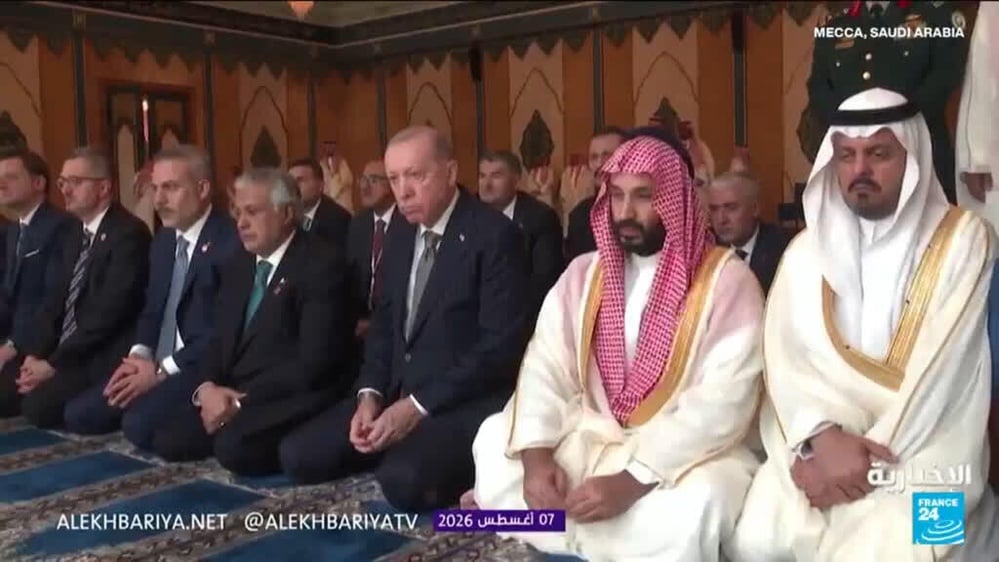
“Saudi Crown Prince Mohammed bin Salman, Turkish President Recep Tayyip Erdogan and Pakistan’s Prime Minister Shehbaz Sharif signed the agreement in the Saudi holy city of Mecca on Friday.” · exact text match
Why: The article covers a diplomatic event neutrally, with no partisan cues.
Claim: The article relies heavily on the Turkish foreign minister's statements as the primary source.
“In an interview with Turkey’s state-run Anadolu Agency, Turkey’s Foreign Minister Hakan Fidan insisted that the three countries do not view any particular state as an adversary” · exact text match
Why: The minister is the main source, but this is standard journalistic practice for such reports.
Claim: The article uncritically reports official statements and the pact as beneficial.
“ANKARA, Turkey — A defense agreement between Saudi Arabia, Pakistan and Turkey is not aimed against Iran or any other country, Turkey’s foreign minister said Saturday, describing the pact as an important step toward regional stability.” · exact text match
Why: The article takes the minister's denial at face value without questioning or providing alternative perspectives, but the evidence is weak.
Claim: The article has clear attribution and specific quotes, but lacks independent verification.
“The Turkish minister described the agreement’s clause on mutual defense as being “technically the same” as NATO’s Article 5.” · not found in supplied text
Why: Quotes are precise and attributed, but the article is short and relies on a single official source.
Publisher identity and editorial stance are not discernible from the supplied text.
August 08, 2026 · 0 shares
Reports a defense pact without framing or editorial commentary.
Automated analysis; not human reviewed. Limitations: The article is a short headline and snippet, limiting the depth of analysis.
The article is a short headline and snippet, limiting the depth of analysis.
August 07, 2026 · 0 shares
Frames the trilateral defense pact among Pakistan, Saudi Arabia, and Turkey as a NATO-style alliance that strengthens collective deterrence against aggression, highlighting Iran's missile attacks and Pakistan's nuclear capability.
Automated analysis; not human reviewed.
Limitations: The article is a single-snippet excerpt; full context and subsequent framing not available.
·
3 of 53 available dimensions scored; omitted dimensions are not treated as neutral.
·
Verified supporting quotes for 2 of 3 scored dimensions.
Claim: The article highlights notable elements such as Pakistan's nuclear status and the geopolitical context of Iran.
“Pakistan, the world’s only nuclear-armed Muslim state” · exact text match
Why: These facts make the report more engaging to readers interested in geopolitics.
Claim: The article attributes claims to authoritative sources and acknowledges unknowns.
“a statement issued by Pakistan’s foreign ministry echoed the language of Article 5” · exact text match
Why: Clear sourcing and transparency about uncertainty support high credibility.
Claim: The article provides context from multiple geopolitical dimensions, showing analytical depth.
“Pakistan is also in an ongoing 'open war' with Taliban-controlled Afghanistan, in addition to its long history of wars and border clashes with India” · not found in supplied text
Why: Including these details demonstrates an understanding of the broader strategic landscape.
The article is a single-snippet excerpt; full context and subsequent framing not available.
August 08, 2026 · 0 shares
Factually reports a mutual defence pact signing while noting the absence of specified military commitments.
Automated analysis; not human reviewed.
Limitations: Limited article length; only a headline and two sentences available for analysis.
·
4 of 53 available dimensions scored; omitted dimensions are not treated as neutral.
·
Verified supporting quotes for 4 of 4 scored dimensions.
Claim: The article reports facts without subjective language.
“Adjunct Senior Fellow for Middle East studies at Council on Foreign Relations, Henry Barkey, shares further insights.” · exact text match
Why: The article is purely factual, stating the signing of a pact and a caveat without any evaluative or opinionated wording.
Claim: The article describes events without prescribing any action.
“Saudi Arabia, Pakistan and Turkey signed a mutual defence pact on Friday that would treat any act of aggression on one of the three nations as an attack on all of them, the allies said in a joint statement.” · exact text match
Why: The entire text is descriptive, no directives or recommendations.
Claim: The article uses neutral, unemotional language.
“Saudi Arabia, Pakistan and Turkey signed a mutual defence pact on Friday” · exact text match
Why: No emotional adjectives or hyperbolic terms; straightforward reporting.
Claim: The article presents information logically and coherently.
“However, it did not specify if the agreement would bind them to any particular military action in each other's defence.” · exact text match
Why: The article follows a logical structure: announces the pact, then immediately notes the lack of specifics.
Limited article length; only a headline and two sentences available for analysis.
August 08, 2026 · 0 shares
Neutral clarification of diplomatic intent with no evaluative language.
Automated analysis; not human reviewed. Limitations: Only a headline and lead paragraph were available; full article context is missing.
Only a headline and lead paragraph were available; full article context is missing.
Defense pact framed as purely defensive, with denial of any adversarial intent toward Iran, relying on official Turkish statements.
Automated analysis; not human reviewed.
Limitations: Publisher identity and editorial stance are not discernible from the supplied text.
·
4 of 53 available dimensions scored; omitted dimensions are not treated as neutral.
·
Verified supporting quotes for 3 of 4 scored dimensions.
Claim: The article reports on a political event without partisan slant.
“Saudi Crown Prince Mohammed bin Salman, Turkish President Recep Tayyip Erdogan and Pakistan’s Prime Minister Shehbaz Sharif signed the agreement in the Saudi holy city of Mecca on Friday.” · exact text match
Why: The article covers a diplomatic event neutrally, with no partisan cues.
Claim: The article relies heavily on the Turkish foreign minister's statements as the primary source.
“In an interview with Turkey’s state-run Anadolu Agency, Turkey’s Foreign Minister Hakan Fidan insisted that the three countries do not view any particular state as an adversary” · exact text match
Why: The minister is the main source, but this is standard journalistic practice for such reports.
Claim: The article uncritically reports official statements and the pact as beneficial.
“ANKARA, Turkey — A defense agreement between Saudi Arabia, Pakistan and Turkey is not aimed against Iran or any other country, Turkey’s foreign minister said Saturday, describing the pact as an important step toward regional stability.” · exact text match
Why: The article takes the minister's denial at face value without questioning or providing alternative perspectives, but the evidence is weak.
Claim: The article has clear attribution and specific quotes, but lacks independent verification.
“The Turkish minister described the agreement’s clause on mutual defense as being “technically the same” as NATO’s Article 5.” · not found in supplied text
Why: Quotes are precise and attributed, but the article is short and relies on a single official source.
Publisher identity and editorial stance are not discernible from the supplied text.
August 07, 2026 · 0 shares
Frames the triple defence pact as a reaction to regional war and Iran's assertiveness, with balanced attribution to officials and analysts.
Automated analysis; not human reviewed.
Limitations: No notable limitations; the article is straightforward news reporting from AFP with multiple attributed sources.
·
1 of 53 available dimensions scored; omitted dimensions are not treated as neutral.
·
Verified supporting quotes for 0 of 1 scored dimensions.
No notable limitations; the article is straightforward news reporting from AFP with multiple attributed sources.
August 07, 2026 · 0 shares
Frames the trilateral defense pact among Pakistan, Saudi Arabia, and Turkey as a NATO-style alliance that strengthens collective deterrence against aggression, highlighting Iran's missile attacks and Pakistan's nuclear capability.
Automated analysis; not human reviewed.
Limitations: The article is a single-snippet excerpt; full context and subsequent framing not available.
·
3 of 53 available dimensions scored; omitted dimensions are not treated as neutral.
·
Verified supporting quotes for 2 of 3 scored dimensions.
Claim: The article highlights notable elements such as Pakistan's nuclear status and the geopolitical context of Iran.
“Pakistan, the world’s only nuclear-armed Muslim state” · exact text match
Why: These facts make the report more engaging to readers interested in geopolitics.
Claim: The article attributes claims to authoritative sources and acknowledges unknowns.
“a statement issued by Pakistan’s foreign ministry echoed the language of Article 5” · exact text match
Why: Clear sourcing and transparency about uncertainty support high credibility.
Claim: The article provides context from multiple geopolitical dimensions, showing analytical depth.
“Pakistan is also in an ongoing 'open war' with Taliban-controlled Afghanistan, in addition to its long history of wars and border clashes with India” · not found in supplied text
Why: Including these details demonstrates an understanding of the broader strategic landscape.
The article is a single-snippet excerpt; full context and subsequent framing not available.
August 07, 2026 · 0 shares
Frames the triple defence pact as a reaction to regional war and Iran's assertiveness, with balanced attribution to officials and analysts.
Automated analysis; not human reviewed.
Limitations: No notable limitations; the article is straightforward news reporting from AFP with multiple attributed sources.
·
1 of 53 available dimensions scored; omitted dimensions are not treated as neutral.
·
Verified supporting quotes for 0 of 1 scored dimensions.
No notable limitations; the article is straightforward news reporting from AFP with multiple attributed sources.
August 07, 2026 · 0 shares
Neutral factual reporting of a planned defense agreement, relying on anonymous official sources.
Automated analysis; not human reviewed. Limitations: Article is a short aggregated news snippet; full AFP original not available for verification of sourcing details.
Article is a short aggregated news snippet; full AFP original not available for verification of sourcing details.
August 07, 2026 · 0 shares
Frames the triple defence pact as a reaction to regional war and Iran's assertiveness, with balanced attribution to officials and analysts.
Automated analysis; not human reviewed.
Limitations: No notable limitations; the article is straightforward news reporting from AFP with multiple attributed sources.
·
1 of 53 available dimensions scored; omitted dimensions are not treated as neutral.
·
Verified supporting quotes for 0 of 1 scored dimensions.
No notable limitations; the article is straightforward news reporting from AFP with multiple attributed sources.
August 08, 2026 · 0 shares
Reports a defense pact without framing or editorial commentary.
Automated analysis; not human reviewed. Limitations: The article is a short headline and snippet, limiting the depth of analysis.
The article is a short headline and snippet, limiting the depth of analysis.
August 07, 2026 · 0 shares
Frames the trilateral defense pact among Pakistan, Saudi Arabia, and Turkey as a NATO-style alliance that strengthens collective deterrence against aggression, highlighting Iran's missile attacks and Pakistan's nuclear capability.
Automated analysis; not human reviewed. Limitations: The article is a single-snippet excerpt; full context and subsequent framing not available. · 3 of 53 available dimensions scored; omitted dimensions are not treated as neutral. · Verified supporting quotes for 2 of 3 scored dimensions.
Claim: The article highlights notable elements such as Pakistan's nuclear status and the geopolitical context of Iran.
“Pakistan, the world’s only nuclear-armed Muslim state” · exact text match
Why: These facts make the report more engaging to readers interested in geopolitics.
Claim: The article attributes claims to authoritative sources and acknowledges unknowns.
“a statement issued by Pakistan’s foreign ministry echoed the language of Article 5” · exact text match
Why: Clear sourcing and transparency about uncertainty support high credibility.
Claim: The article provides context from multiple geopolitical dimensions, showing analytical depth.
“Pakistan is also in an ongoing 'open war' with Taliban-controlled Afghanistan, in addition to its long history of wars and border clashes with India” · not found in supplied text
Why: Including these details demonstrates an understanding of the broader strategic landscape.
The article is a single-snippet excerpt; full context and subsequent framing not available.
Defense pact framed as purely defensive, with denial of any adversarial intent toward Iran, relying on official Turkish statements.
Automated analysis; not human reviewed. Limitations: Publisher identity and editorial stance are not discernible from the supplied text. · 4 of 53 available dimensions scored; omitted dimensions are not treated as neutral. · Verified supporting quotes for 3 of 4 scored dimensions.
Claim: The article reports on a political event without partisan slant.
“Saudi Crown Prince Mohammed bin Salman, Turkish President Recep Tayyip Erdogan and Pakistan’s Prime Minister Shehbaz Sharif signed the agreement in the Saudi holy city of Mecca on Friday.” · exact text match
Why: The article covers a diplomatic event neutrally, with no partisan cues.
Claim: The article relies heavily on the Turkish foreign minister's statements as the primary source.
“In an interview with Turkey’s state-run Anadolu Agency, Turkey’s Foreign Minister Hakan Fidan insisted that the three countries do not view any particular state as an adversary” · exact text match
Why: The minister is the main source, but this is standard journalistic practice for such reports.
Claim: The article uncritically reports official statements and the pact as beneficial.
“ANKARA, Turkey — A defense agreement between Saudi Arabia, Pakistan and Turkey is not aimed against Iran or any other country, Turkey’s foreign minister said Saturday, describing the pact as an important step toward regional stability.” · exact text match
Why: The article takes the minister's denial at face value without questioning or providing alternative perspectives, but the evidence is weak.
Claim: The article has clear attribution and specific quotes, but lacks independent verification.
“The Turkish minister described the agreement’s clause on mutual defense as being “technically the same” as NATO’s Article 5.” · not found in supplied text
Why: Quotes are precise and attributed, but the article is short and relies on a single official source.
Publisher identity and editorial stance are not discernible from the supplied text.
August 07, 2026 · 0 shares
Frames the trilateral defense pact among Pakistan, Saudi Arabia, and Turkey as a NATO-style alliance that strengthens collective deterrence against aggression, highlighting Iran's missile attacks and Pakistan's nuclear capability.
Automated analysis; not human reviewed. Limitations: The article is a single-snippet excerpt; full context and subsequent framing not available. · 3 of 53 available dimensions scored; omitted dimensions are not treated as neutral. · Verified supporting quotes for 2 of 3 scored dimensions.
Claim: The article highlights notable elements such as Pakistan's nuclear status and the geopolitical context of Iran.
“Pakistan, the world’s only nuclear-armed Muslim state” · exact text match
Why: These facts make the report more engaging to readers interested in geopolitics.
Claim: The article attributes claims to authoritative sources and acknowledges unknowns.
“a statement issued by Pakistan’s foreign ministry echoed the language of Article 5” · exact text match
Why: Clear sourcing and transparency about uncertainty support high credibility.
Claim: The article provides context from multiple geopolitical dimensions, showing analytical depth.
“Pakistan is also in an ongoing 'open war' with Taliban-controlled Afghanistan, in addition to its long history of wars and border clashes with India” · not found in supplied text
Why: Including these details demonstrates an understanding of the broader strategic landscape.
The article is a single-snippet excerpt; full context and subsequent framing not available.
August 08, 2026 · 0 shares
Factually reports a mutual defence pact signing while noting the absence of specified military commitments.
Automated analysis; not human reviewed. Limitations: Limited article length; only a headline and two sentences available for analysis. · 4 of 53 available dimensions scored; omitted dimensions are not treated as neutral. · Verified supporting quotes for 4 of 4 scored dimensions.
Claim: The article reports facts without subjective language.
“Adjunct Senior Fellow for Middle East studies at Council on Foreign Relations, Henry Barkey, shares further insights.” · exact text match
Why: The article is purely factual, stating the signing of a pact and a caveat without any evaluative or opinionated wording.
Claim: The article describes events without prescribing any action.
“Saudi Arabia, Pakistan and Turkey signed a mutual defence pact on Friday that would treat any act of aggression on one of the three nations as an attack on all of them, the allies said in a joint statement.” · exact text match
Why: The entire text is descriptive, no directives or recommendations.
Claim: The article uses neutral, unemotional language.
“Saudi Arabia, Pakistan and Turkey signed a mutual defence pact on Friday” · exact text match
Why: No emotional adjectives or hyperbolic terms; straightforward reporting.
Claim: The article presents information logically and coherently.
“However, it did not specify if the agreement would bind them to any particular military action in each other's defence.” · exact text match
Why: The article follows a logical structure: announces the pact, then immediately notes the lack of specifics.
Limited article length; only a headline and two sentences available for analysis.
August 08, 2026 · 0 shares
Neutral clarification of diplomatic intent with no evaluative language.
Automated analysis; not human reviewed. Limitations: Only a headline and lead paragraph were available; full article context is missing.
Only a headline and lead paragraph were available; full article context is missing.
Defense pact framed as purely defensive, with denial of any adversarial intent toward Iran, relying on official Turkish statements.
Automated analysis; not human reviewed. Limitations: Publisher identity and editorial stance are not discernible from the supplied text. · 4 of 53 available dimensions scored; omitted dimensions are not treated as neutral. · Verified supporting quotes for 3 of 4 scored dimensions.
Claim: The article reports on a political event without partisan slant.
“Saudi Crown Prince Mohammed bin Salman, Turkish President Recep Tayyip Erdogan and Pakistan’s Prime Minister Shehbaz Sharif signed the agreement in the Saudi holy city of Mecca on Friday.” · exact text match
Why: The article covers a diplomatic event neutrally, with no partisan cues.
Claim: The article relies heavily on the Turkish foreign minister's statements as the primary source.
“In an interview with Turkey’s state-run Anadolu Agency, Turkey’s Foreign Minister Hakan Fidan insisted that the three countries do not view any particular state as an adversary” · exact text match
Why: The minister is the main source, but this is standard journalistic practice for such reports.
Claim: The article uncritically reports official statements and the pact as beneficial.
“ANKARA, Turkey — A defense agreement between Saudi Arabia, Pakistan and Turkey is not aimed against Iran or any other country, Turkey’s foreign minister said Saturday, describing the pact as an important step toward regional stability.” · exact text match
Why: The article takes the minister's denial at face value without questioning or providing alternative perspectives, but the evidence is weak.
Claim: The article has clear attribution and specific quotes, but lacks independent verification.
“The Turkish minister described the agreement’s clause on mutual defense as being “technically the same” as NATO’s Article 5.” · not found in supplied text
Why: Quotes are precise and attributed, but the article is short and relies on a single official source.
Publisher identity and editorial stance are not discernible from the supplied text.
August 07, 2026 · 0 shares
Frames the triple defence pact as a reaction to regional war and Iran's assertiveness, with balanced attribution to officials and analysts.
Automated analysis; not human reviewed. Limitations: No notable limitations; the article is straightforward news reporting from AFP with multiple attributed sources. · 1 of 53 available dimensions scored; omitted dimensions are not treated as neutral. · Verified supporting quotes for 0 of 1 scored dimensions.
No notable limitations; the article is straightforward news reporting from AFP with multiple attributed sources.
Helium Bias
Story Blindspots
August 07, 2026 · 0 shares
Frames the trilateral defense pact among Pakistan, Saudi Arabia, and Turkey as a NATO-style alliance that strengthens collective deterrence against aggression, highlighting Iran's missile attacks and Pakistan's nuclear capability.
Automated analysis; not human reviewed. Limitations: The article is a single-snippet excerpt; full context and subsequent framing not available. · 3 of 53 available dimensions scored; omitted dimensions are not treated as neutral. · Verified supporting quotes for 2 of 3 scored dimensions.
Claim: The article highlights notable elements such as Pakistan's nuclear status and the geopolitical context of Iran.
“Pakistan, the world’s only nuclear-armed Muslim state” · exact text match
Why: These facts make the report more engaging to readers interested in geopolitics.
Claim: The article attributes claims to authoritative sources and acknowledges unknowns.
“a statement issued by Pakistan’s foreign ministry echoed the language of Article 5” · exact text match
Why: Clear sourcing and transparency about uncertainty support high credibility.
Claim: The article provides context from multiple geopolitical dimensions, showing analytical depth.
“Pakistan is also in an ongoing 'open war' with Taliban-controlled Afghanistan, in addition to its long history of wars and border clashes with India” · not found in supplied text
Why: Including these details demonstrates an understanding of the broader strategic landscape.
The article is a single-snippet excerpt; full context and subsequent framing not available.
Defense pact framed as purely defensive, with denial of any adversarial intent toward Iran, relying on official Turkish statements.
Automated analysis; not human reviewed. Limitations: Publisher identity and editorial stance are not discernible from the supplied text. · 4 of 53 available dimensions scored; omitted dimensions are not treated as neutral. · Verified supporting quotes for 3 of 4 scored dimensions.
Claim: The article reports on a political event without partisan slant.
“Saudi Crown Prince Mohammed bin Salman, Turkish President Recep Tayyip Erdogan and Pakistan’s Prime Minister Shehbaz Sharif signed the agreement in the Saudi holy city of Mecca on Friday.” · exact text match
Why: The article covers a diplomatic event neutrally, with no partisan cues.
Claim: The article relies heavily on the Turkish foreign minister's statements as the primary source.
“In an interview with Turkey’s state-run Anadolu Agency, Turkey’s Foreign Minister Hakan Fidan insisted that the three countries do not view any particular state as an adversary” · exact text match
Why: The minister is the main source, but this is standard journalistic practice for such reports.
Claim: The article uncritically reports official statements and the pact as beneficial.
“ANKARA, Turkey — A defense agreement between Saudi Arabia, Pakistan and Turkey is not aimed against Iran or any other country, Turkey’s foreign minister said Saturday, describing the pact as an important step toward regional stability.” · exact text match
Why: The article takes the minister's denial at face value without questioning or providing alternative perspectives, but the evidence is weak.
Claim: The article has clear attribution and specific quotes, but lacks independent verification.
“The Turkish minister described the agreement’s clause on mutual defense as being “technically the same” as NATO’s Article 5.” · not found in supplied text
Why: Quotes are precise and attributed, but the article is short and relies on a single official source.
Publisher identity and editorial stance are not discernible from the supplied text.
August 07, 2026 · 0 shares
The article reports the upcoming defense pact in a straightforward, factual manner without editorial commentary or bias.
Automated analysis; not human reviewed. Limitations: The article text is extremely short (three sentences), limiting the depth of bias analysis. · 5 of 53 available dimensions scored; omitted dimensions are not treated as neutral. · Verified supporting quotes for 5 of 5 scored dimensions.
Claim: The article shows no political slant.
“Turkey, Saudi Arabia and Pakistan to sign joint defense pact amid Iran tensions.” · exact text match
Why: The opening sentence is a straightforward factual headline without any partisan wording or evaluative language.
Claim: The article is purely objective, reporting facts without subjective commentary.
“The agreement follows months of talks and recent regional developments that accelerated the process, sources told AFP” · exact text match
Why: The article attributes the information to sources and avoids any personal opinion or subjective framing.
Claim: The article maintains an emotionally neutral tone.
“amid Iran tensions” · exact text match
Why: The phrase 'amid Iran tensions' is descriptive and does not carry positive or negative emotional charge beyond the factual context.
Claim: The article is moderately credible due to source attribution.
“sources told AFP” · exact text match
Why: Attribution to unnamed sources is a standard journalistic practice, but the lack of named sources slightly reduces maximum credibility. AFP is a reputable wire service.
Claim: The article presents a rational, evidence-based report.
“Turkey, Saudi Arabia and Pakistan to sign joint defense pact amid Iran tensions.” · exact text match
Why: The content is a logical sequence of reported facts with no appeal to emotion or irrational claims.
The article text is extremely short (three sentences), limiting the depth of bias analysis.
August 07, 2026 · 0 shares
Neutral factual reporting of a planned defense agreement, relying on anonymous official sources.
Automated analysis; not human reviewed. Limitations: Article is a short aggregated news snippet; full AFP original not available for verification of sourcing details.
Article is a short aggregated news snippet; full AFP original not available for verification of sourcing details.
August 07, 2026 · 0 shares
Frames the trilateral defense pact among Pakistan, Saudi Arabia, and Turkey as a NATO-style alliance that strengthens collective deterrence against aggression, highlighting Iran's missile attacks and Pakistan's nuclear capability.
Automated analysis; not human reviewed. Limitations: The article is a single-snippet excerpt; full context and subsequent framing not available. · 3 of 53 available dimensions scored; omitted dimensions are not treated as neutral. · Verified supporting quotes for 2 of 3 scored dimensions.
Claim: The article highlights notable elements such as Pakistan's nuclear status and the geopolitical context of Iran.
“Pakistan, the world’s only nuclear-armed Muslim state” · exact text match
Why: These facts make the report more engaging to readers interested in geopolitics.
Claim: The article attributes claims to authoritative sources and acknowledges unknowns.
“a statement issued by Pakistan’s foreign ministry echoed the language of Article 5” · exact text match
Why: Clear sourcing and transparency about uncertainty support high credibility.
Claim: The article provides context from multiple geopolitical dimensions, showing analytical depth.
“Pakistan is also in an ongoing 'open war' with Taliban-controlled Afghanistan, in addition to its long history of wars and border clashes with India” · not found in supplied text
Why: Including these details demonstrates an understanding of the broader strategic landscape.
The article is a single-snippet excerpt; full context and subsequent framing not available.
Defense pact framed as purely defensive, with denial of any adversarial intent toward Iran, relying on official Turkish statements.
Automated analysis; not human reviewed. Limitations: Publisher identity and editorial stance are not discernible from the supplied text. · 4 of 53 available dimensions scored; omitted dimensions are not treated as neutral. · Verified supporting quotes for 3 of 4 scored dimensions.
Claim: The article reports on a political event without partisan slant.
“Saudi Crown Prince Mohammed bin Salman, Turkish President Recep Tayyip Erdogan and Pakistan’s Prime Minister Shehbaz Sharif signed the agreement in the Saudi holy city of Mecca on Friday.” · exact text match
Why: The article covers a diplomatic event neutrally, with no partisan cues.
Claim: The article relies heavily on the Turkish foreign minister's statements as the primary source.
“In an interview with Turkey’s state-run Anadolu Agency, Turkey’s Foreign Minister Hakan Fidan insisted that the three countries do not view any particular state as an adversary” · exact text match
Why: The minister is the main source, but this is standard journalistic practice for such reports.
Claim: The article uncritically reports official statements and the pact as beneficial.
“ANKARA, Turkey — A defense agreement between Saudi Arabia, Pakistan and Turkey is not aimed against Iran or any other country, Turkey’s foreign minister said Saturday, describing the pact as an important step toward regional stability.” · exact text match
Why: The article takes the minister's denial at face value without questioning or providing alternative perspectives, but the evidence is weak.
Claim: The article has clear attribution and specific quotes, but lacks independent verification.
“The Turkish minister described the agreement’s clause on mutual defense as being “technically the same” as NATO’s Article 5.” · not found in supplied text
Why: Quotes are precise and attributed, but the article is short and relies on a single official source.
Publisher identity and editorial stance are not discernible from the supplied text.
August 08, 2026 · 0 shares
Reports a defense pact without framing or editorial commentary.
Automated analysis; not human reviewed. Limitations: The article is a short headline and snippet, limiting the depth of analysis.
The article is a short headline and snippet, limiting the depth of analysis.
August 07, 2026 · 0 shares
Frames the trilateral defense pact among Pakistan, Saudi Arabia, and Turkey as a NATO-style alliance that strengthens collective deterrence against aggression, highlighting Iran's missile attacks and Pakistan's nuclear capability.
Automated analysis; not human reviewed. Limitations: The article is a single-snippet excerpt; full context and subsequent framing not available. · 3 of 53 available dimensions scored; omitted dimensions are not treated as neutral. · Verified supporting quotes for 2 of 3 scored dimensions.
Claim: The article highlights notable elements such as Pakistan's nuclear status and the geopolitical context of Iran.
“Pakistan, the world’s only nuclear-armed Muslim state” · exact text match
Why: These facts make the report more engaging to readers interested in geopolitics.
Claim: The article attributes claims to authoritative sources and acknowledges unknowns.
“a statement issued by Pakistan’s foreign ministry echoed the language of Article 5” · exact text match
Why: Clear sourcing and transparency about uncertainty support high credibility.
Claim: The article provides context from multiple geopolitical dimensions, showing analytical depth.
“Pakistan is also in an ongoing 'open war' with Taliban-controlled Afghanistan, in addition to its long history of wars and border clashes with India” · not found in supplied text
Why: Including these details demonstrates an understanding of the broader strategic landscape.
The article is a single-snippet excerpt; full context and subsequent framing not available.
August 08, 2026 · 0 shares
Factually reports a mutual defence pact signing while noting the absence of specified military commitments.
Automated analysis; not human reviewed. Limitations: Limited article length; only a headline and two sentences available for analysis. · 4 of 53 available dimensions scored; omitted dimensions are not treated as neutral. · Verified supporting quotes for 4 of 4 scored dimensions.
Claim: The article reports facts without subjective language.
“Adjunct Senior Fellow for Middle East studies at Council on Foreign Relations, Henry Barkey, shares further insights.” · exact text match
Why: The article is purely factual, stating the signing of a pact and a caveat without any evaluative or opinionated wording.
Claim: The article describes events without prescribing any action.
“Saudi Arabia, Pakistan and Turkey signed a mutual defence pact on Friday that would treat any act of aggression on one of the three nations as an attack on all of them, the allies said in a joint statement.” · exact text match
Why: The entire text is descriptive, no directives or recommendations.
Claim: The article uses neutral, unemotional language.
“Saudi Arabia, Pakistan and Turkey signed a mutual defence pact on Friday” · exact text match
Why: No emotional adjectives or hyperbolic terms; straightforward reporting.
Claim: The article presents information logically and coherently.
“However, it did not specify if the agreement would bind them to any particular military action in each other's defence.” · exact text match
Why: The article follows a logical structure: announces the pact, then immediately notes the lack of specifics.
Limited article length; only a headline and two sentences available for analysis.
August 08, 2026 · 0 shares
Neutral clarification of diplomatic intent with no evaluative language.
Automated analysis; not human reviewed. Limitations: Only a headline and lead paragraph were available; full article context is missing.
Only a headline and lead paragraph were available; full article context is missing.
Defense pact framed as purely defensive, with denial of any adversarial intent toward Iran, relying on official Turkish statements.
Automated analysis; not human reviewed. Limitations: Publisher identity and editorial stance are not discernible from the supplied text. · 4 of 53 available dimensions scored; omitted dimensions are not treated as neutral. · Verified supporting quotes for 3 of 4 scored dimensions.
Claim: The article reports on a political event without partisan slant.
“Saudi Crown Prince Mohammed bin Salman, Turkish President Recep Tayyip Erdogan and Pakistan’s Prime Minister Shehbaz Sharif signed the agreement in the Saudi holy city of Mecca on Friday.” · exact text match
Why: The article covers a diplomatic event neutrally, with no partisan cues.
Claim: The article relies heavily on the Turkish foreign minister's statements as the primary source.
“In an interview with Turkey’s state-run Anadolu Agency, Turkey’s Foreign Minister Hakan Fidan insisted that the three countries do not view any particular state as an adversary” · exact text match
Why: The minister is the main source, but this is standard journalistic practice for such reports.
Claim: The article uncritically reports official statements and the pact as beneficial.
“ANKARA, Turkey — A defense agreement between Saudi Arabia, Pakistan and Turkey is not aimed against Iran or any other country, Turkey’s foreign minister said Saturday, describing the pact as an important step toward regional stability.” · exact text match
Why: The article takes the minister's denial at face value without questioning or providing alternative perspectives, but the evidence is weak.
Claim: The article has clear attribution and specific quotes, but lacks independent verification.
“The Turkish minister described the agreement’s clause on mutual defense as being “technically the same” as NATO’s Article 5.” · not found in supplied text
Why: Quotes are precise and attributed, but the article is short and relies on a single official source.
Publisher identity and editorial stance are not discernible from the supplied text.
August 07, 2026 · 0 shares
Frames the trilateral defense pact among Pakistan, Saudi Arabia, and Turkey as a NATO-style alliance that strengthens collective deterrence against aggression, highlighting Iran's missile attacks and Pakistan's nuclear capability.
Automated analysis; not human reviewed. Limitations: The article is a single-snippet excerpt; full context and subsequent framing not available. · 3 of 53 available dimensions scored; omitted dimensions are not treated as neutral. · Verified supporting quotes for 2 of 3 scored dimensions.
Claim: The article highlights notable elements such as Pakistan's nuclear status and the geopolitical context of Iran.
“Pakistan, the world’s only nuclear-armed Muslim state” · exact text match
Why: These facts make the report more engaging to readers interested in geopolitics.
Claim: The article attributes claims to authoritative sources and acknowledges unknowns.
“a statement issued by Pakistan’s foreign ministry echoed the language of Article 5” · exact text match
Why: Clear sourcing and transparency about uncertainty support high credibility.
Claim: The article provides context from multiple geopolitical dimensions, showing analytical depth.
“Pakistan is also in an ongoing 'open war' with Taliban-controlled Afghanistan, in addition to its long history of wars and border clashes with India” · not found in supplied text
Why: Including these details demonstrates an understanding of the broader strategic landscape.
The article is a single-snippet excerpt; full context and subsequent framing not available.
August 07, 2026 · 0 shares
Frames the triple defence pact as a reaction to regional war and Iran's assertiveness, with balanced attribution to officials and analysts.
Automated analysis; not human reviewed. Limitations: No notable limitations; the article is straightforward news reporting from AFP with multiple attributed sources. · 1 of 53 available dimensions scored; omitted dimensions are not treated as neutral. · Verified supporting quotes for 0 of 1 scored dimensions.
No notable limitations; the article is straightforward news reporting from AFP with multiple attributed sources.
August 08, 2026 · 0 shares
Reports a defense pact without framing or editorial commentary.
Automated analysis; not human reviewed. Limitations: The article is a short headline and snippet, limiting the depth of analysis.
The article is a short headline and snippet, limiting the depth of analysis.
August 07, 2026 · 0 shares
Frames the trilateral defense pact among Pakistan, Saudi Arabia, and Turkey as a NATO-style alliance that strengthens collective deterrence against aggression, highlighting Iran's missile attacks and Pakistan's nuclear capability.
Automated analysis; not human reviewed.
Limitations: The article is a single-snippet excerpt; full context and subsequent framing not available.
·
3 of 53 available dimensions scored; omitted dimensions are not treated as neutral.
·
Verified supporting quotes for 2 of 3 scored dimensions.
Claim: The article highlights notable elements such as Pakistan's nuclear status and the geopolitical context of Iran.
“Pakistan, the world’s only nuclear-armed Muslim state” · exact text match
Why: These facts make the report more engaging to readers interested in geopolitics.
Claim: The article attributes claims to authoritative sources and acknowledges unknowns.
“a statement issued by Pakistan’s foreign ministry echoed the language of Article 5” · exact text match
Why: Clear sourcing and transparency about uncertainty support high credibility.
Claim: The article provides context from multiple geopolitical dimensions, showing analytical depth.
“Pakistan is also in an ongoing 'open war' with Taliban-controlled Afghanistan, in addition to its long history of wars and border clashes with India” · not found in supplied text
Why: Including these details demonstrates an understanding of the broader strategic landscape.
The article is a single-snippet excerpt; full context and subsequent framing not available.
August 08, 2026 · 0 shares
Neutral clarification of diplomatic intent with no evaluative language.
Automated analysis; not human reviewed. Limitations: Only a headline and lead paragraph were available; full article context is missing.
Only a headline and lead paragraph were available; full article context is missing.
August 07, 2026 · 0 shares
The article reports the upcoming defense pact in a straightforward, factual manner without editorial commentary or bias.
Automated analysis; not human reviewed.
Limitations: The article text is extremely short (three sentences), limiting the depth of bias analysis.
·
5 of 53 available dimensions scored; omitted dimensions are not treated as neutral.
·
Verified supporting quotes for 5 of 5 scored dimensions.
Claim: The article shows no political slant.
“Turkey, Saudi Arabia and Pakistan to sign joint defense pact amid Iran tensions.” · exact text match
Why: The opening sentence is a straightforward factual headline without any partisan wording or evaluative language.
Claim: The article is purely objective, reporting facts without subjective commentary.
“The agreement follows months of talks and recent regional developments that accelerated the process, sources told AFP” · exact text match
Why: The article attributes the information to sources and avoids any personal opinion or subjective framing.
Claim: The article maintains an emotionally neutral tone.
“amid Iran tensions” · exact text match
Why: The phrase 'amid Iran tensions' is descriptive and does not carry positive or negative emotional charge beyond the factual context.
Claim: The article is moderately credible due to source attribution.
“sources told AFP” · exact text match
Why: Attribution to unnamed sources is a standard journalistic practice, but the lack of named sources slightly reduces maximum credibility.
AFP is a reputable wire service.
Claim: The article presents a rational, evidence-based report.
“Turkey, Saudi Arabia and Pakistan to sign joint defense pact amid Iran tensions.” · exact text match
Why: The content is a logical sequence of reported facts with no appeal to emotion or irrational claims.
The article text is extremely short (three sentences), limiting the depth of bias analysis.
August 08, 2026 · 0 shares
Reports a defense pact without framing or editorial commentary.
Automated analysis; not human reviewed. Limitations: The article is a short headline and snippet, limiting the depth of analysis.
The article is a short headline and snippet, limiting the depth of analysis.
August 08, 2026 · 0 shares
Factually reports a mutual defence pact signing while noting the absence of specified military commitments.
Automated analysis; not human reviewed.
Limitations: Limited article length; only a headline and two sentences available for analysis.
·
4 of 53 available dimensions scored; omitted dimensions are not treated as neutral.
·
Verified supporting quotes for 4 of 4 scored dimensions.
Claim: The article reports facts without subjective language.
“Adjunct Senior Fellow for Middle East studies at Council on Foreign Relations, Henry Barkey, shares further insights.” · exact text match
Why: The article is purely factual, stating the signing of a pact and a caveat without any evaluative or opinionated wording.
Claim: The article describes events without prescribing any action.
“Saudi Arabia, Pakistan and Turkey signed a mutual defence pact on Friday that would treat any act of aggression on one of the three nations as an attack on all of them, the allies said in a joint statement.” · exact text match
Why: The entire text is descriptive, no directives or recommendations.
Claim: The article uses neutral, unemotional language.
“Saudi Arabia, Pakistan and Turkey signed a mutual defence pact on Friday” · exact text match
Why: No emotional adjectives or hyperbolic terms; straightforward reporting.
Claim: The article presents information logically and coherently.
“However, it did not specify if the agreement would bind them to any particular military action in each other's defence.” · exact text match
Why: The article follows a logical structure: announces the pact, then immediately notes the lack of specifics.
Limited article length; only a headline and two sentences available for analysis.
August 07, 2026 · 0 shares
Frames the triple defence pact as a reaction to regional war and Iran's assertiveness, with balanced attribution to officials and analysts.
Automated analysis; not human reviewed.
Limitations: No notable limitations; the article is straightforward news reporting from AFP with multiple attributed sources.
·
1 of 53 available dimensions scored; omitted dimensions are not treated as neutral.
·
Verified supporting quotes for 0 of 1 scored dimensions.
No notable limitations; the article is straightforward news reporting from AFP with multiple attributed sources.
August 07, 2026 · 0 shares
Frames the trilateral defense pact among Pakistan, Saudi Arabia, and Turkey as a NATO-style alliance that strengthens collective deterrence against aggression, highlighting Iran's missile attacks and Pakistan's nuclear capability.
Automated analysis; not human reviewed.
Limitations: The article is a single-snippet excerpt; full context and subsequent framing not available.
·
3 of 53 available dimensions scored; omitted dimensions are not treated as neutral.
·
Verified supporting quotes for 2 of 3 scored dimensions.
Claim: The article highlights notable elements such as Pakistan's nuclear status and the geopolitical context of Iran.
“Pakistan, the world’s only nuclear-armed Muslim state” · exact text match
Why: These facts make the report more engaging to readers interested in geopolitics.
Claim: The article attributes claims to authoritative sources and acknowledges unknowns.
“a statement issued by Pakistan’s foreign ministry echoed the language of Article 5” · exact text match
Why: Clear sourcing and transparency about uncertainty support high credibility.
Claim: The article provides context from multiple geopolitical dimensions, showing analytical depth.
“Pakistan is also in an ongoing 'open war' with Taliban-controlled Afghanistan, in addition to its long history of wars and border clashes with India” · not found in supplied text
Why: Including these details demonstrates an understanding of the broader strategic landscape.
The article is a single-snippet excerpt; full context and subsequent framing not available.
August 08, 2026 · 0 shares
Neutral clarification of diplomatic intent with no evaluative language.
Automated analysis; not human reviewed. Limitations: Only a headline and lead paragraph were available; full article context is missing.
Only a headline and lead paragraph were available; full article context is missing.
Defense pact framed as purely defensive, with denial of any adversarial intent toward Iran, relying on official Turkish statements.
Automated analysis; not human reviewed.
Limitations: Publisher identity and editorial stance are not discernible from the supplied text.
·
4 of 53 available dimensions scored; omitted dimensions are not treated as neutral.
·
Verified supporting quotes for 3 of 4 scored dimensions.
Claim: The article reports on a political event without partisan slant.
“Saudi Crown Prince Mohammed bin Salman, Turkish President Recep Tayyip Erdogan and Pakistan’s Prime Minister Shehbaz Sharif signed the agreement in the Saudi holy city of Mecca on Friday.” · exact text match
Why: The article covers a diplomatic event neutrally, with no partisan cues.
Claim: The article relies heavily on the Turkish foreign minister's statements as the primary source.
“In an interview with Turkey’s state-run Anadolu Agency, Turkey’s Foreign Minister Hakan Fidan insisted that the three countries do not view any particular state as an adversary” · exact text match
Why: The minister is the main source, but this is standard journalistic practice for such reports.
Claim: The article uncritically reports official statements and the pact as beneficial.
“ANKARA, Turkey — A defense agreement between Saudi Arabia, Pakistan and Turkey is not aimed against Iran or any other country, Turkey’s foreign minister said Saturday, describing the pact as an important step toward regional stability.” · exact text match
Why: The article takes the minister's denial at face value without questioning or providing alternative perspectives, but the evidence is weak.
Claim: The article has clear attribution and specific quotes, but lacks independent verification.
“The Turkish minister described the agreement’s clause on mutual defense as being “technically the same” as NATO’s Article 5.” · not found in supplied text
Why: Quotes are precise and attributed, but the article is short and relies on a single official source.
Publisher identity and editorial stance are not discernible from the supplied text.
August 07, 2026 · 0 shares
The article reports the upcoming defense pact in a straightforward, factual manner without editorial commentary or bias.
Automated analysis; not human reviewed.
Limitations: The article text is extremely short (three sentences), limiting the depth of bias analysis.
·
5 of 53 available dimensions scored; omitted dimensions are not treated as neutral.
·
Verified supporting quotes for 5 of 5 scored dimensions.
Claim: The article shows no political slant.
“Turkey, Saudi Arabia and Pakistan to sign joint defense pact amid Iran tensions.” · exact text match
Why: The opening sentence is a straightforward factual headline without any partisan wording or evaluative language.
Claim: The article is purely objective, reporting facts without subjective commentary.
“The agreement follows months of talks and recent regional developments that accelerated the process, sources told AFP” · exact text match
Why: The article attributes the information to sources and avoids any personal opinion or subjective framing.
Claim: The article maintains an emotionally neutral tone.
“amid Iran tensions” · exact text match
Why: The phrase 'amid Iran tensions' is descriptive and does not carry positive or negative emotional charge beyond the factual context.
Claim: The article is moderately credible due to source attribution.
“sources told AFP” · exact text match
Why: Attribution to unnamed sources is a standard journalistic practice, but the lack of named sources slightly reduces maximum credibility.
AFP is a reputable wire service.
Claim: The article presents a rational, evidence-based report.
“Turkey, Saudi Arabia and Pakistan to sign joint defense pact amid Iran tensions.” · exact text match
Why: The content is a logical sequence of reported facts with no appeal to emotion or irrational claims.
The article text is extremely short (three sentences), limiting the depth of bias analysis.
August 07, 2026 · 0 shares
Neutral factual reporting of a planned defense agreement, relying on anonymous official sources.
Automated analysis; not human reviewed. Limitations: Article is a short aggregated news snippet; full AFP original not available for verification of sourcing details.
Article is a short aggregated news snippet; full AFP original not available for verification of sourcing details.
August 07, 2026 · 0 shares
Frames the triple defence pact as a reaction to regional war and Iran's assertiveness, with balanced attribution to officials and analysts.
Automated analysis; not human reviewed.
Limitations: No notable limitations; the article is straightforward news reporting from AFP with multiple attributed sources.
·
1 of 53 available dimensions scored; omitted dimensions are not treated as neutral.
·
Verified supporting quotes for 0 of 1 scored dimensions.
No notable limitations; the article is straightforward news reporting from AFP with multiple attributed sources.
August 07, 2026 · 0 shares
Frames defense pact as driven by regional threats and U.S. unreliability.
Automated analysis; not human reviewed. Limitations: The article text is short and includes minimal details; framing may be incomplete.
The article text is short and includes minimal details; framing may be incomplete.
August 07, 2026 · 0 shares
Frames the trilateral defense pact among Pakistan, Saudi Arabia, and Turkey as a NATO-style alliance that strengthens collective deterrence against aggression, highlighting Iran's missile attacks and Pakistan's nuclear capability.
Automated analysis; not human reviewed.
Limitations: The article is a single-snippet excerpt; full context and subsequent framing not available.
·
3 of 53 available dimensions scored; omitted dimensions are not treated as neutral.
·
Verified supporting quotes for 2 of 3 scored dimensions.
Claim: The article highlights notable elements such as Pakistan's nuclear status and the geopolitical context of Iran.
“Pakistan, the world’s only nuclear-armed Muslim state” · exact text match
Why: These facts make the report more engaging to readers interested in geopolitics.
Claim: The article attributes claims to authoritative sources and acknowledges unknowns.
“a statement issued by Pakistan’s foreign ministry echoed the language of Article 5” · exact text match
Why: Clear sourcing and transparency about uncertainty support high credibility.
Claim: The article provides context from multiple geopolitical dimensions, showing analytical depth.
“Pakistan is also in an ongoing 'open war' with Taliban-controlled Afghanistan, in addition to its long history of wars and border clashes with India” · not found in supplied text
Why: Including these details demonstrates an understanding of the broader strategic landscape.
The article is a single-snippet excerpt; full context and subsequent framing not available.
August 08, 2026 · 0 shares
Factually reports a mutual defence pact signing while noting the absence of specified military commitments.
Automated analysis; not human reviewed.
Limitations: Limited article length; only a headline and two sentences available for analysis.
·
4 of 53 available dimensions scored; omitted dimensions are not treated as neutral.
·
Verified supporting quotes for 4 of 4 scored dimensions.
Claim: The article reports facts without subjective language.
“Adjunct Senior Fellow for Middle East studies at Council on Foreign Relations, Henry Barkey, shares further insights.” · exact text match
Why: The article is purely factual, stating the signing of a pact and a caveat without any evaluative or opinionated wording.
Claim: The article describes events without prescribing any action.
“Saudi Arabia, Pakistan and Turkey signed a mutual defence pact on Friday that would treat any act of aggression on one of the three nations as an attack on all of them, the allies said in a joint statement.” · exact text match
Why: The entire text is descriptive, no directives or recommendations.
Claim: The article uses neutral, unemotional language.
“Saudi Arabia, Pakistan and Turkey signed a mutual defence pact on Friday” · exact text match
Why: No emotional adjectives or hyperbolic terms; straightforward reporting.
Claim: The article presents information logically and coherently.
“However, it did not specify if the agreement would bind them to any particular military action in each other's defence.” · exact text match
Why: The article follows a logical structure: announces the pact, then immediately notes the lack of specifics.
Limited article length; only a headline and two sentences available for analysis.
August 07, 2026 · 0 shares
Frames the trilateral defense pact among Pakistan, Saudi Arabia, and Turkey as a NATO-style alliance that strengthens collective deterrence against aggression, highlighting Iran's missile attacks and Pakistan's nuclear capability.
Automated analysis; not human reviewed. Limitations: The article is a single-snippet excerpt; full context and subsequent framing not available. · 3 of 53 available dimensions scored; omitted dimensions are not treated as neutral. · Verified supporting quotes for 2 of 3 scored dimensions.
Claim: The article highlights notable elements such as Pakistan's nuclear status and the geopolitical context of Iran.
“Pakistan, the world’s only nuclear-armed Muslim state” · exact text match
Why: These facts make the report more engaging to readers interested in geopolitics.
Claim: The article attributes claims to authoritative sources and acknowledges unknowns.
“a statement issued by Pakistan’s foreign ministry echoed the language of Article 5” · exact text match
Why: Clear sourcing and transparency about uncertainty support high credibility.
Claim: The article provides context from multiple geopolitical dimensions, showing analytical depth.
“Pakistan is also in an ongoing 'open war' with Taliban-controlled Afghanistan, in addition to its long history of wars and border clashes with India” · not found in supplied text
Why: Including these details demonstrates an understanding of the broader strategic landscape.
The article is a single-snippet excerpt; full context and subsequent framing not available.
August 08, 2026 · 0 shares
Neutral clarification of diplomatic intent with no evaluative language.
Automated analysis; not human reviewed. Limitations: Only a headline and lead paragraph were available; full article context is missing.
Only a headline and lead paragraph were available; full article context is missing.
Defense pact framed as purely defensive, with denial of any adversarial intent toward Iran, relying on official Turkish statements.
Automated analysis; not human reviewed. Limitations: Publisher identity and editorial stance are not discernible from the supplied text. · 4 of 53 available dimensions scored; omitted dimensions are not treated as neutral. · Verified supporting quotes for 3 of 4 scored dimensions.
Claim: The article reports on a political event without partisan slant.
“Saudi Crown Prince Mohammed bin Salman, Turkish President Recep Tayyip Erdogan and Pakistan’s Prime Minister Shehbaz Sharif signed the agreement in the Saudi holy city of Mecca on Friday.” · exact text match
Why: The article covers a diplomatic event neutrally, with no partisan cues.
Claim: The article relies heavily on the Turkish foreign minister's statements as the primary source.
“In an interview with Turkey’s state-run Anadolu Agency, Turkey’s Foreign Minister Hakan Fidan insisted that the three countries do not view any particular state as an adversary” · exact text match
Why: The minister is the main source, but this is standard journalistic practice for such reports.
Claim: The article uncritically reports official statements and the pact as beneficial.
“ANKARA, Turkey — A defense agreement between Saudi Arabia, Pakistan and Turkey is not aimed against Iran or any other country, Turkey’s foreign minister said Saturday, describing the pact as an important step toward regional stability.” · exact text match
Why: The article takes the minister's denial at face value without questioning or providing alternative perspectives, but the evidence is weak.
Claim: The article has clear attribution and specific quotes, but lacks independent verification.
“The Turkish minister described the agreement’s clause on mutual defense as being “technically the same” as NATO’s Article 5.” · not found in supplied text
Why: Quotes are precise and attributed, but the article is short and relies on a single official source.
Publisher identity and editorial stance are not discernible from the supplied text.
2026 © Helium Trades
Privacy Policy & Disclosure
* Disclaimer: Nothing on this website constitutes investment advice, performance data or any recommendation that any particular security, portfolio of securities, transaction or investment strategy is suitable for any specific person. Helium Trades is not responsible in any way for the accuracy
of any model predictions or price data. Any mention of a particular security and related prediction data is not a recommendation to buy or sell that security. Investments in securities involve the risk of loss. Past performance is no guarantee of future results. Helium Trades is not responsible for any of your investment decisions,
you should consult a financial expert before engaging in any transaction.
Helium Research Assistant

How can I help you today?
Ask any question about this page.