See whether Helium helps you make better-informed decisions. Try every Pro Trader feature for 30 days. No credit card required.
Try every Pro Trader feature for 30 days. No credit card required.
October 27, 2026 · 0 shares
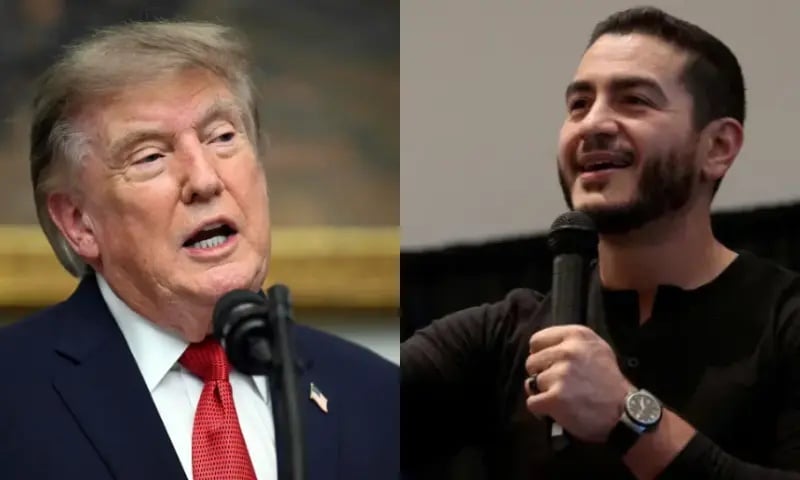
Framing foregrounds Trump's anti-Muslim rhetoric as inflammatory escalation while giving El-Sayed and Obama space to rebut and highlighting hostile rally-crowd jeers.
Michigan hosts one of the most competitive US Senate contests ahead of the Nov 3 midterms; Republicans hold narrow 53-47 Senate and 218-214 House majorities, and the seat is open.
Automated analysis; not human reviewed.
Limitations: The pasted text duplicates paragraphs and includes unrelated sidebar headlines; analysis is confined to the news article portion.
·
10 of 55 available dimensions scored; omitted dimensions are not treated as neutral.
·
Verified supporting quotes for 6 of 10 scored dimensions.
Claim: The report frames Trump's remarks as inflammatory escalation aimed at painting El-Sayed as a radical, and foregrounds hostile crowd jeers.
“Trump has sought to paint him as an anti-American Muslim radical” · exact text match
Why: Critical framing of a Republican president's rhetoric and emphasis on hostile crowd behavior leans against the conservative figure.
Claim: Generally measured reporting with attribution, though the lede stresses an escalated, provocative comparison.
“ratcheted up his push to link US Senate candidate Abdul El-Sayed to Muslim extremists” · exact text match
Why: Modest dramatic framing in the lede while remaining largely quote-driven.
Claim: The article is entirely about partisan electoral politics and campaign rhetoric.
“Michigan has one of the nation’s most competitive US Senate contests going into the Nov 3 midterm elections” · exact text match
Why: Subject matter is a midterm Senate race and presidential campaigning.
Claim: Tone is slightly negative, highlighting hostile jeers and accusations.
“Some attendees yelled traitor and others yelled deport” · exact text match
Why: Negative crowd behavior is given prominent placement but reported factually.
Claim: Sourcing is attributed to named events, quotes and a television interview, with allegations flagged as unsubstantiated.
““I’ve never called him a terrorist,” Rogers told NBC.” · exact text match
Why: Direct quotation and clear attribution support credibility.
Claim: Little forecasting; one conditional projection about Senate impact is stated plainly.
“an open seat that will help to decide control of the chamber” · exact text match
Why: Minor forward-looking framing without prediction.
Claim: No deceptive framing evident; allegations are labeled as unevidenced.
“Rogers has alleged without evidence that El Sayed has ties to the Muslim Brotherhood” · not found in supplied text
Why: Epistemic status of the claim is explicitly flagged rather than asserted.
The pasted text duplicates paragraphs and includes unrelated sidebar headlines; analysis is confined to the news article portion.
October 27, 2026 · 0 shares
The framing amplifies Trump’s “jihadist Muslim Brotherhood” label in the headline and treats El-Sayed’s alleged Brotherhood ties as an “avalanche” of criticism without giving his response.
Automated analysis; not human reviewed.
Limitations: The supplied text omits El-Sayed’s response and some source names are blank, limiting verification of the “avalanche of criticism” characterization.
·
8 of 55 available dimensions scored; omitted dimensions are not treated as neutral.
·
Verified supporting quotes for 8 of 8 scored dimensions.
Claim: The report frames El-Sayed through Trump’s “jihadist Muslim Brotherhood” attack and presents Brotherhood criticism as an “avalanche,” aligning with a conservative partisan frame.
“El-Sayed has faced an avalanche of criticism over his ties to the Muslim Brotherhood.” · exact text match
Why: The article’s own wording adopts a critical characterization of the Democratic nominee while favorably quoting Trump’s praise of the Republican nominee.
Claim: The report uses subjective characterization in its own narration rather than strictly neutral description.
“Trump painted a stark picture between El-Sayed and Rogers, who nearly won the U.S. Senate race in the Wolverine State in 2024.” · exact text match
Why: “Painted a stark picture” is an evaluative framing choice rather than a bare factual statement.
Claim: The headline foregrounds the inflammatory “jihadist Muslim Brotherhood” label.
“Trump Calls El-Sayed 'Jihadist Muslim Brotherhood Member'.” · exact text match
Why: Repeating the charged label in the headline increases sensational impact beyond neutral reporting of the rally.
Claim: The framing emphasizes a security and religious threat from El-Sayed.
“I’m here today in Michigan for a very important reason, I’m here to keep a jihadist Muslim Brotherhood member from becoming a United States senator” · exact text match
Why: The quoted language is presented prominently and invokes a threat label tied to terrorism and the Muslim Brotherhood.
Claim: The article uses evaluative language in its own voice.
“El-Sayed has faced an avalanche of criticism over his ties to the Muslim Brotherhood.” · exact text match
Why: “Avalanche” is loaded evaluative wording rather than a neutral description of criticism.
Claim: The report centers a partisan campaign attack and candidate contrast.
“I’m here today in Michigan for a very important reason, I’m here to keep a jihadist Muslim Brotherhood member from becoming a United States senator, and that’s the fact.” · exact text match
Why: The article is built around electoral conflict and a president’s partisan endorsement.
Claim: Loaded wording and an asserted “ties” characterization present a contested allegation without immediate qualification.
“El-Sayed has faced an avalanche of criticism over his ties to the Muslim Brotherhood.” · exact text match
Why: The phrase combines hyperbolic framing with an unqualified assertion of ties, shaping interpretation of the allegation.
Claim: The article asserts contested “ties” and uses hyperbolic “avalanche” language without including El-Sayed’s response.
“El-Sayed has faced an avalanche of criticism over his ties to the Muslim Brotherhood.” · exact text match
Why: The omission of a response and unqualified characterization reduce observable fairness in the supplied text.
The supplied text omits El-Sayed’s response and some source names are blank, limiting verification of the “avalanche of criticism” characterization.
October 22, 2026 · 0 shares
Attribution-heavy, balanced debate coverage that presents both candidates’ attacks and rebuttals without adopting either campaign’s framing.
Automated analysis; not human reviewed.
Limitations: The outlet name is stripped and repeated paywalled teasers are interleaved; analysis is limited to the supplied debate text.
·
9 of 55 available dimensions scored; omitted dimensions are not treated as neutral.
·
Verified supporting quotes for 9 of 9 scored dimensions.
Claim: The report presents both candidates’ central attack lines in comparable, attributed terms.
“El-Sayed sought to tie Rogers to President Donald Trump at every turn and painted his opponent as a corporate sellout.” · exact text match
“Rogers aimed to tie El-Sayed to Islamic fundamentalist groups overseas while questioning his résumé and trustworthiness.” · exact text match
Why: Symmetrical attribution of each campaign’s attacks indicates measured neutrality on the liberal-conservative dimension.
Claim: The report relies mainly on attributed quotes and factual race details rather than the reporter’s own evaluative framing.
“Polls show a neck-and-neck contest to replace retiring Sen. Gary Peters, a Democrat.” · exact text match
Why: Factual race context and attributed claims support an objective classification.
Claim: Coverage remains largely factual but uses mild dramatic descriptors.
“though it was far tamer than an explosive first meeting this month.” · exact text match
Why: Limited dramatic wording such as “explosive” supports a slight sensational lean rather than high sensationalism.
Claim: The article describes candidates’ stated positions rather than prescribing outcomes.
“The candidates also laid out their visions on artificial intelligence.” · exact text match
Why: Position-reporting language supports a descriptive rather than prescriptive classification.
Claim: The report presents both anti-war and pro-war justifications without endorsing either.
“this war that made no sense when it started and certainly makes no sense now” · exact text match
“he has also said there was good reason for Trump to go to war initially to target Iran’s nuclear program.” · exact text match
Why: Balanced quotation of dovish and hawkish positions supports measured neutrality.
Claim: The article is centrally about a U.S. Senate debate and election contest.
“The second Michigan Senate debate Wednesday featured several heated clashes between Democratic nominee Abdul El-Sayed and Republican former Rep. Mike Rogers” · exact text match
Why: The subject is explicitly electoral and partisan politics.
Claim: Direct quotations, named candidates, and contextual caveats support credible reporting.
“Elkomy was never accused of wrongdoing.” · exact text match
““I have no ties, we have no ties,”” · exact text match
Why: Attribution and contextual caveats are visible credibility signals in the supplied text.
Claim: The report includes exculpatory context and repeated denials around sensitive accusations.
“Elkomy was never accused of wrongdoing.” · exact text match
““I have no ties, we have no ties,”” · exact text match
Why: Supplying exculpatory context and denials signals fairness and honesty in framing.
Claim: Coverage is broad and issue-specific across multiple policy areas.
“They addressed healthcare, immigration, crime, Social Security and tariffs, among other issues.” · exact text match
Why: Substantive issue coverage supports an above-average intelligence rating.
The outlet name is stripped and repeated paywalled teasers are interleaved; analysis is limited to the supplied debate text.
October 26, 2026 · 0 shares
Repeatedly stressing that Trump’s accusation lacked evidence and amplifying a former ally’s criticism frames the remarks as an evidence-free religious attack.
Automated analysis; not human reviewed.
Limitations: Substantive framing is interspersed with promotional and related-link clutter; those non-article elements were excluded.
·
9 of 55 available dimensions scored; omitted dimensions are not treated as neutral.
·
Verified supporting quotes for 9 of 9 scored dimensions.
Claim: Frames Trump’s remarks critically by foregrounding criticism and the absence of evidence.
“President Donald Trump is drawing criticism, including from a former political ally, after calling Michigan Democratic Senate candidate Abdul El-Sayed a “jihadist” and accusing him of ties to the Muslim Brotherhood without evidence.” · exact text match
Counterevidence:
“Rogers has also questioned El-Sayed’s alleged connections to the Muslim Brotherhood, although he said Sunday that he has never called his opponent a terrorist.” · exact text match
Why: Critical framing of a Republican president and a Democratic candidate’s denial suggests a modest liberal lean, while inclusion of Rogers’ position limits it.
Claim: Mostly attributes claims and supplies campaign context rather than asserting a personal judgment.
“Trump made the remarks Sunday at a rally in Port Huron, where he was campaigning for Republican Mike Rogers, El-Sayed’s opponent in a closely contested Senate race.” · exact text match
Why: Factual context and attribution make the report largely objective, though selection emphasizes criticism.
Claim: Uses measured language and evidentiary caveats rather than sensational escalation.
“El-Sayed has repeatedly denied any connection to the Muslim Brotherhood, and no evidence has emerged establishing that he’s a member.” · exact text match
Why: Calm qualification of the accusation supports low sensationalism.
Claim: Reports what was said and done rather than prescribing a political conclusion.
“Trump made the remarks Sunday at a rally in Port Huron, where he was campaigning for Republican Mike Rogers, El-Sayed’s opponent in a closely contested Senate race.” · exact text match
Why: The framing is primarily descriptive campaign reporting.
Claim: The report centers on a U.S. Senate campaign and presidential political rhetoric.
“President Donald Trump is drawing criticism, including from a former political ally, after calling Michigan Democratic Senate candidate Abdul El-Sayed a “jihadist” and accusing him of ties to the Muslim Brotherhood without evidence.” · exact text match
Why: The subject is explicitly electoral politics and campaign rhetoric.
Claim: Attributes criticism to named sources and notes the absence of evidence.
“Bahbah told The Associated Press.” · exact text match
“no evidence has emerged establishing that he’s a member” · exact text match
Why: Named sourcing and explicit evidentiary caveats support credibility.
Claim: Explicitly flags the evidentiary status of the accusation rather than treating it as established.
“El-Sayed has repeatedly denied any connection to the Muslim Brotherhood, and no evidence has emerged establishing that he’s a member.” · exact text match
Why: The article notes the denial and absence of evidence, supporting a rational, evidence-oriented framing.
Claim: Includes the candidate’s denial and distinguishes Rogers’ stated position without adopting the accusation as fact.
“El-Sayed has repeatedly denied any connection to the Muslim Brotherhood, and no evidence has emerged establishing that he’s a member.” · exact text match
“Rogers has also questioned El-Sayed’s alleged connections to the Muslim Brotherhood, although he said Sunday that he has never called his opponent a terrorist.” · exact text match
Why: Fair inclusion of denial and opposing-candidate nuance supports high integrity.
Claim: Provides context and distinctions beyond a bare repetition of the accusation.
“Rogers has also questioned El-Sayed’s alleged connections to the Muslim Brotherhood, although he said Sunday that he has never called his opponent a terrorist.” · exact text match
Why: Nuanced attribution and candidate distinctions indicate above-average reporting intelligence.
Substantive framing is interspersed with promotional and related-link clutter; those non-article elements were excluded.
October 22, 2026 · 0 shares
Framing is strongly conservative and opinionated, favorably assessing Republican prospects while treating Democratic and progressive-aligned figures as liabilities.
Automated analysis; not human reviewed.
Limitations: The supplied text is a short podcast episode summary/show notes rather than a full article or transcript, so some claims are secondhand and lack detailed sourcing.
·
9 of 55 available dimensions scored; omitted dimensions are not treated as neutral.
·
Verified supporting quotes for 9 of 9 scored dimensions.
Claim: The summary presents Republican claims as vindicated and progressive Democrats as a threat.
“The New York Times confirms what Republicans said all along” · exact text match
“Democratic Socialists of America hijacking the party is a wake-up call” · exact text match
Why: The first quote frames Republicans as correct; the second uses 'hijacking' and 'wake-up call' to cast left-wing influence negatively.
Claim: The summary relies on the host's evaluative judgments rather than neutral description.
“Erick breaks down early voting in Texas, where Greg Abbott looks strong and James Talarico is a problem” · exact text match
Why: 'Looks strong' and 'is a problem' are subjective assessments, not neutral facts.
Claim: The summary uses loaded, dramatic language to heighten political stakes.
“Democratic Socialists of America hijacking the party is a wake-up call” · exact text match
“Europe is furious” · exact text match
Why: 'Hijacking,' 'wake-up call,' and 'furious' are emotive/loaded terms, indicating mild sensational framing.
Claim: The summary includes explicit civic advice about how to vote.
“Vote the whole ballot” · exact text match
“why leaving a line blank beats staying home” · exact text match
Why: Both phrases prescribe voter behavior, making the text partly prescriptive.
Claim: The summary is heavily opinionated and evaluative about candidates and races.
“Greg Abbott looks strong and James Talarico is a problem” · exact text match
“Democratic Socialists of America hijacking the party is a wake-up call” · exact text match
Why: Candidate assessments and loaded political warnings are opinion-driven rather than neutral.
Claim: The content is overwhelmingly focused on electoral politics and partisan strategy.
“Michigan Senate race” · exact text match
“Texas early voting” · exact text match
“Susan Collins in Maine” · exact text match
Why: All quoted topics concern elections, candidates, and partisan implications.
Claim: The summary compresses complex races into brief winner/loser and liability judgments.
“Greg Abbott looks strong and James Talarico is a problem” · exact text match
“Mike Rogers may win on early voting data” · exact text match
Why: The text offers simple evaluative conclusions without detailing evidence or nuances.
Claim: The summary filters political developments through a clear conservative ideological frame.
“The New York Times confirms what Republicans said all along” · exact text match
“Democratic Socialists of America hijacking the party is a wake-up call” · exact text match
Why: Vindicating Republicans and warning about socialist influence reflects an ideological lens.
Claim: The summary includes predictive or strategic speculation about election outcomes.
“Mike Rogers may win on early voting data” · exact text match
“Greg Abbott looks strong” · exact text match
Why: These phrases forecast or assess likely political outcomes rather than report confirmed results.
The supplied text is a short podcast episode summary/show notes rather than a full article or transcript, so some claims are secondhand and lack detailed sourcing.
October 22, 2026 · 0 shares
Attribution-heavy, balanced debate coverage that presents both candidates’ attacks and rebuttals without adopting either campaign’s framing.
Automated analysis; not human reviewed.
Limitations: The outlet name is stripped and repeated paywalled teasers are interleaved; analysis is limited to the supplied debate text.
·
9 of 55 available dimensions scored; omitted dimensions are not treated as neutral.
·
Verified supporting quotes for 9 of 9 scored dimensions.
Claim: The report presents both candidates’ central attack lines in comparable, attributed terms.
“El-Sayed sought to tie Rogers to President Donald Trump at every turn and painted his opponent as a corporate sellout.” · exact text match
“Rogers aimed to tie El-Sayed to Islamic fundamentalist groups overseas while questioning his résumé and trustworthiness.” · exact text match
Why: Symmetrical attribution of each campaign’s attacks indicates measured neutrality on the liberal-conservative dimension.
Claim: The report relies mainly on attributed quotes and factual race details rather than the reporter’s own evaluative framing.
“Polls show a neck-and-neck contest to replace retiring Sen. Gary Peters, a Democrat.” · exact text match
Why: Factual race context and attributed claims support an objective classification.
Claim: Coverage remains largely factual but uses mild dramatic descriptors.
“though it was far tamer than an explosive first meeting this month.” · exact text match
Why: Limited dramatic wording such as “explosive” supports a slight sensational lean rather than high sensationalism.
Claim: The article describes candidates’ stated positions rather than prescribing outcomes.
“The candidates also laid out their visions on artificial intelligence.” · exact text match
Why: Position-reporting language supports a descriptive rather than prescriptive classification.
Claim: The report presents both anti-war and pro-war justifications without endorsing either.
“this war that made no sense when it started and certainly makes no sense now” · exact text match
“he has also said there was good reason for Trump to go to war initially to target Iran’s nuclear program.” · exact text match
Why: Balanced quotation of dovish and hawkish positions supports measured neutrality.
Claim: The article is centrally about a U.S. Senate debate and election contest.
“The second Michigan Senate debate Wednesday featured several heated clashes between Democratic nominee Abdul El-Sayed and Republican former Rep. Mike Rogers” · exact text match
Why: The subject is explicitly electoral and partisan politics.
Claim: Direct quotations, named candidates, and contextual caveats support credible reporting.
“Elkomy was never accused of wrongdoing.” · exact text match
““I have no ties, we have no ties,”” · exact text match
Why: Attribution and contextual caveats are visible credibility signals in the supplied text.
Claim: The report includes exculpatory context and repeated denials around sensitive accusations.
“Elkomy was never accused of wrongdoing.” · exact text match
““I have no ties, we have no ties,”” · exact text match
Why: Supplying exculpatory context and denials signals fairness and honesty in framing.
Claim: Coverage is broad and issue-specific across multiple policy areas.
“They addressed healthcare, immigration, crime, Social Security and tariffs, among other issues.” · exact text match
Why: Substantive issue coverage supports an above-average intelligence rating.
The outlet name is stripped and repeated paywalled teasers are interleaved; analysis is limited to the supplied debate text.
October 25, 2026 · 0 shares
Framing is sharply partisan media criticism that presents CNN as falsely shielding a Democratic candidate while treating alleged Muslim Brotherhood ties as a serious terrorism question.
The segment concerned the second and final Michigan Senate debate between Democrat Abdul El-Sayed and Republican Mike Rogers, where Rogers raised allegations of El-Sayed's ties to the Muslim Brotherhood.
Automated analysis; not human reviewed.
Limitations: Substantive article content is present, but supplied text includes duplicated scrape metadata and footer boilerplate; some claims rely on quoted panelists rather than publisher narration.
·
14 of 55 available dimensions scored; omitted dimensions are not treated as neutral.
·
Verified supporting quotes for 11 of 14 scored dimensions.
Claim: Publisher frames CNN and 'liberal media' as falsely shielding a Democratic candidate while amplifying Republican allegations about terrorism ties.
“CNN's Collins Falsely Claims El-Sayed Has 'Denounced' The Muslim Brotherhood” · exact text match
“many in the liberal media have wrongly claimed El-Sayed has condemned” · exact text match
Why: The headline and framing align with a conservative media-criticism posture against CNN and toward a Democratic candidate.
Claim: Publisher uses evaluative, opinionated language rather than neutral description.
“That's sloppy spin.” · not found in supplied text
“Seemingly shocked, Collins asked” · exact text match
Why: Direct judgments and subjective characterizations dominate the narration.
Claim: Headline and framing use sensational accusation language.
“CNN's Collins Falsely Claims El-Sayed Has 'Denounced' The Muslim Brotherhood” · exact text match
“where the host falsely claimed El-Sayed has previously denounced the Muslim Brotherhood” · exact text match
Why: The 'Falsely Claims' framing and repeated falsehood language heighten the sensational tone.
Claim: Publisher endorses a prescriptive test for El-Sayed's answer.
“That would actually be a condemnation.” · exact text match
Why: The narration treats a particular condemnatory statement as the required response, moving beyond description.
Claim: Publisher's own evaluative judgments dominate the piece.
“That's sloppy spin.” · not found in supplied text
“This is CNN!” · exact text match
Why: The text is largely media criticism with explicit judgments rather than neutral reporting.
Claim: Story is centered on partisan Senate politics and media politics.
“second and final debate between Michigan Senate candidates, Democrat Abdul El-Sayed and Republican Mike Rogers” · exact text match
Why: The report concerns a partisan election debate and media coverage of it.
Claim: Publisher reduces the issue to whether El-Sayed used a specific condemnatory word.
“That would actually be a condemnation.” · exact text match
Why: The framing presents a narrow verbal test as the decisive answer to a contested association question.
Claim: Publisher uses a snarky closing taunt.
“No Kaitlan, not even with the false claims of El Sayed having denounced the Muslim Brotherhood, and of Islamophobia from Rogers.
This is CNN!”
· exact text match
Why: The direct address and exclamation are mocking in tone.
Claim: Publisher asserts falsehood and evasiveness with high certainty.
“where the host falsely claimed El-Sayed has previously denounced the Muslim Brotherhood” · exact text match
“He has not done that either.” · exact text match
Why: Strong certainty is expressed about wording and intent beyond the quoted exchange.
Claim: Story is structured by a conservative media-watchdog ideology.
“many in the liberal media have wrongly claimed El-Sayed has condemned” · exact text match
“This is CNN!” · exact text match
Why: The narrative consistently frames CNN and liberal media as the ideological opponent.
Claim: Publisher adopts an anti-mainstream-media stance.
“This is CNN!” · exact text match
“many in the liberal media have wrongly claimed El-Sayed has condemned” · exact text match
Why: The closing jeer and 'liberal media' framing position the outlet against CNN as establishment media.
Claim: Adversarial negative language is directed at CNN and El-Sayed.
“That's sloppy spin.” · not found in supplied text
“This is CNN!” · exact text match
Why: The tone is negative and combative rather than neutral.
Claim: Publisher speculates about Collins's reference and panelist reactions.
“Presumably, Collins was referring to last Saturday's town hall in Michigan” · exact text match
“Seemingly shocked, Collins asked” · exact text match
Why: The text infers context and reactions not directly established by quoted material.
Claim: Publisher uses loaded framing and selective omission to shape interpretation.
“many in the liberal media have wrongly claimed” · exact text match
“Collins never mentioned that” · exact text match
Why: Loaded labels and emphasis on an omission shape reader interpretation; this is observable framing, not inferred intent.
Substantive article content is present, but supplied text includes duplicated scrape metadata and footer boilerplate; some claims rely on quoted panelists rather than publisher narration.
The transcript presents a strongly left-progressive, anti-Trump, and anti-AIPAC frame through alarmed guest commentary and loaded characterizations of political opponents.
Automated analysis; not human reviewed.
Limitations: The text is a rush transcript of a one-guest interview, so publisher framing is partly mediated through quoted opinions and selected questions.
·
21 of 55 available dimensions scored; omitted dimensions are not treated as neutral.
·
Verified supporting quotes for 19 of 21 scored dimensions.
Claim: The segment frames the race through a progressive-left lens and criticizes Trump and Rogers from the left.
“Trump's Targeting of Ilhan Omar” · exact text match
“if Abdul El-Sayed wins, it will be a reminder that the left can win in a swing state like Michigan” · exact text match
Why: The title uses adversarial language about Trump, and the guest framing celebrates a left victory.
Claim: The segment uses an anti-money and anti-elite frame against AIPAC, corporate donors, and weapons manufacturers.
“getting corporate money out of politics” · exact text match
“AIPAC is super unpopular.
It’s super toxic.”
· exact text match
Why: Corporate and AIPAC influence are cast as corrupting forces opposed to the popular interest.
Claim: The presentation is dominated by subjective judgments about candidates and Trump rather than detached description.
“his campaign is nothing but bigotry” · exact text match
“He’s a wannabe dictator.” · exact text match
Why: Both are direct evaluative characterizations.
Claim: The language is highly sensational, using dictator, neo-Nazi, and dumpster-diving framing.
“He’s a wannabe dictator.” · exact text match
“just basically neo-Nazi rhetoric” · exact text match
Why: These are inflammatory labels applied to political actors.
Claim: The segment moves from description to explicit prescriptions for Democratic Party funding rules.
“the Democratic Party should ban AIPAC from taking — you know, ban candidates from taking money from AIPAC in Democratic primaries.” · exact text match
Why: It directly recommends a policy change.
Claim: The segment adopts an anti-war, anti-military-aid framing.
“ending military aid to Israel” · exact text match
“a war we never should have fought in the first place.” · exact text match
Why: These formulations criticize military aid and past war involvement.
Claim: The segment uses existential and intimidation framing around Trump and the race.
“it’s a really existential moment” · exact text match
“it’s intimidation: “Watch out! This is what the federal government can do to a member of Congress.”” · exact text match
Why: These phrases heighten threat and urgency.
Claim: The segment is overwhelmingly opinionated about the candidates and Trump.
“his campaign is nothing but bigotry” · exact text match
“He’s a wannabe dictator.” · exact text match
Why: The statements are evaluative and not merely factual reporting.
Claim: The entire segment is framed around electoral politics and political conflict.
“One of the most closely watched races in the midterm elections” · exact text match
“If Abdul El-Sayed wins, it will be a reminder that the left can win in a swing state like Michigan” · exact text match
Why: The content is explicitly about election stakes and ideological control of the Senate.
Claim: The segment reduces Rogers’s campaign and the race to bigotry and AIPAC money.
“his campaign is nothing but bigotry” · exact text match
“Americans rejected Islamophobia” · exact text match
Why: It offers a simplified moral contrast rather than a detailed account of the campaign.
Claim: The segment uses derisive slang and insults.
“what a load of nonsense” · exact text match
“dumpster diving” · exact text match
Why: The phrasing is dismissive and mocking.
Claim: The segment frames El-Sayed and Omar as victims of Islamophobia and authoritarian intimidation.
“Americans rejected Islamophobia” · exact text match
“it’s intimidation: “Watch out! This is what the federal government can do to a member of Congress.”” · exact text match
Why: It emphasizes group-targeted hostility and government intimidation.
Claim: The segment makes sweeping assertions about Trump’s abilities and motives with little qualification.
“Donald Trump has only two skills in life” · exact text match
“He’s a wannabe dictator.” · exact text match
Why: These are categorical claims beyond the factual reporting provided.
Claim: The segment advances a clear left-progressive ideological interpretation of the race.
“it will be a reminder that the left can win in a swing state like Michigan” · exact text match
“Medicare for All” · exact text match
Why: The preferred outcome and policy agenda are explicitly framed as the left’s cause.
Claim: The segment casts AIPAC and big donors as a shadowy establishment operating against voters.
“They operate in the dark.
They operate in the shadows”
· not found in supplied text
“AIPAC is super unpopular.
It’s super toxic.”
· exact text match
Why: It presents an entrenched influence network as illegitimate and secretive.
Claim: The segment is emotionally negative toward Trump, Rogers, and AIPAC.
“his campaign is nothing but bigotry” · exact text match
“He’s a wannabe dictator.” · exact text match
Why: The language is strongly negative and affect-laden.
Claim: Attribution and sourcing appear, but one-sided loaded commentary weakens credibility.
“The New York Times reported” · exact text match
“his campaign is nothing but bigotry” · exact text match
Why: There is named sourcing alongside sweeping unsupported character judgment.
Claim: The segment mixes reporting with sweeping, emotionally charged character judgments that exceed the stated evidence.
“Donald Trump has only two skills in life” · exact text match
“what a load of nonsense” · exact text match
Why: These are categorical and dismissive formulations rather than measured analysis.
Claim: The segment is hostile to corporate and weapons-manufacturer money in politics.
“getting corporate money out of politics” · exact text match
“He’s bought off by the same weapons manufacturers.” · exact text match
Why: Corporate and defense-industry money are framed as corrupting.
Claim: The segment speculates about the electoral consequences of an El-Sayed win or loss.
“If Abdul El-Sayed wins, it will be a reminder that the left can win in a swing state like Michigan” · exact text match
“If Abdul El-Sayed loses” · exact text match
Why: It forecasts future political interpretations rather than reporting settled events.
Claim: The segment uses loaded framing and asymmetrical presentation to steer judgment.
“his campaign is nothing but bigotry” · exact text match
“They operate in the dark.
They operate in the shadows”
· not found in supplied text
Why: Loaded labels and shadowy imagery are used without balancing evidence in the quoted framing.
The text is a rush transcript of a one-guest interview, so publisher framing is partly mediated through quoted opinions and selected questions.
October 26, 2026 · 0 shares
Repeatedly stressing that Trump’s accusation lacked evidence and amplifying a former ally’s criticism frames the remarks as an evidence-free religious attack.
Automated analysis; not human reviewed.
Limitations: Substantive framing is interspersed with promotional and related-link clutter; those non-article elements were excluded.
·
9 of 55 available dimensions scored; omitted dimensions are not treated as neutral.
·
Verified supporting quotes for 9 of 9 scored dimensions.
Claim: Frames Trump’s remarks critically by foregrounding criticism and the absence of evidence.
“President Donald Trump is drawing criticism, including from a former political ally, after calling Michigan Democratic Senate candidate Abdul El-Sayed a “jihadist” and accusing him of ties to the Muslim Brotherhood without evidence.” · exact text match
Counterevidence:
“Rogers has also questioned El-Sayed’s alleged connections to the Muslim Brotherhood, although he said Sunday that he has never called his opponent a terrorist.” · exact text match
Why: Critical framing of a Republican president and a Democratic candidate’s denial suggests a modest liberal lean, while inclusion of Rogers’ position limits it.
Claim: Mostly attributes claims and supplies campaign context rather than asserting a personal judgment.
“Trump made the remarks Sunday at a rally in Port Huron, where he was campaigning for Republican Mike Rogers, El-Sayed’s opponent in a closely contested Senate race.” · exact text match
Why: Factual context and attribution make the report largely objective, though selection emphasizes criticism.
Claim: Uses measured language and evidentiary caveats rather than sensational escalation.
“El-Sayed has repeatedly denied any connection to the Muslim Brotherhood, and no evidence has emerged establishing that he’s a member.” · exact text match
Why: Calm qualification of the accusation supports low sensationalism.
Claim: Reports what was said and done rather than prescribing a political conclusion.
“Trump made the remarks Sunday at a rally in Port Huron, where he was campaigning for Republican Mike Rogers, El-Sayed’s opponent in a closely contested Senate race.” · exact text match
Why: The framing is primarily descriptive campaign reporting.
Claim: The report centers on a U.S. Senate campaign and presidential political rhetoric.
“President Donald Trump is drawing criticism, including from a former political ally, after calling Michigan Democratic Senate candidate Abdul El-Sayed a “jihadist” and accusing him of ties to the Muslim Brotherhood without evidence.” · exact text match
Why: The subject is explicitly electoral politics and campaign rhetoric.
Claim: Attributes criticism to named sources and notes the absence of evidence.
“Bahbah told The Associated Press.” · exact text match
“no evidence has emerged establishing that he’s a member” · exact text match
Why: Named sourcing and explicit evidentiary caveats support credibility.
Claim: Explicitly flags the evidentiary status of the accusation rather than treating it as established.
“El-Sayed has repeatedly denied any connection to the Muslim Brotherhood, and no evidence has emerged establishing that he’s a member.” · exact text match
Why: The article notes the denial and absence of evidence, supporting a rational, evidence-oriented framing.
Claim: Includes the candidate’s denial and distinguishes Rogers’ stated position without adopting the accusation as fact.
“El-Sayed has repeatedly denied any connection to the Muslim Brotherhood, and no evidence has emerged establishing that he’s a member.” · exact text match
“Rogers has also questioned El-Sayed’s alleged connections to the Muslim Brotherhood, although he said Sunday that he has never called his opponent a terrorist.” · exact text match
Why: Fair inclusion of denial and opposing-candidate nuance supports high integrity.
Claim: Provides context and distinctions beyond a bare repetition of the accusation.
“Rogers has also questioned El-Sayed’s alleged connections to the Muslim Brotherhood, although he said Sunday that he has never called his opponent a terrorist.” · exact text match
Why: Nuanced attribution and candidate distinctions indicate above-average reporting intelligence.
Substantive framing is interspersed with promotional and related-link clutter; those non-article elements were excluded.
October 22, 2026 · 0 shares
Attribution-heavy, balanced debate coverage that presents both candidates’ attacks and rebuttals without adopting either campaign’s framing.
Automated analysis; not human reviewed.
Limitations: The outlet name is stripped and repeated paywalled teasers are interleaved; analysis is limited to the supplied debate text.
·
9 of 55 available dimensions scored; omitted dimensions are not treated as neutral.
·
Verified supporting quotes for 9 of 9 scored dimensions.
Claim: The report presents both candidates’ central attack lines in comparable, attributed terms.
“El-Sayed sought to tie Rogers to President Donald Trump at every turn and painted his opponent as a corporate sellout.” · exact text match
“Rogers aimed to tie El-Sayed to Islamic fundamentalist groups overseas while questioning his résumé and trustworthiness.” · exact text match
Why: Symmetrical attribution of each campaign’s attacks indicates measured neutrality on the liberal-conservative dimension.
Claim: The report relies mainly on attributed quotes and factual race details rather than the reporter’s own evaluative framing.
“Polls show a neck-and-neck contest to replace retiring Sen. Gary Peters, a Democrat.” · exact text match
Why: Factual race context and attributed claims support an objective classification.
Claim: Coverage remains largely factual but uses mild dramatic descriptors.
“though it was far tamer than an explosive first meeting this month.” · exact text match
Why: Limited dramatic wording such as “explosive” supports a slight sensational lean rather than high sensationalism.
Claim: The article describes candidates’ stated positions rather than prescribing outcomes.
“The candidates also laid out their visions on artificial intelligence.” · exact text match
Why: Position-reporting language supports a descriptive rather than prescriptive classification.
Claim: The report presents both anti-war and pro-war justifications without endorsing either.
“this war that made no sense when it started and certainly makes no sense now” · exact text match
“he has also said there was good reason for Trump to go to war initially to target Iran’s nuclear program.” · exact text match
Why: Balanced quotation of dovish and hawkish positions supports measured neutrality.
Claim: The article is centrally about a U.S. Senate debate and election contest.
“The second Michigan Senate debate Wednesday featured several heated clashes between Democratic nominee Abdul El-Sayed and Republican former Rep. Mike Rogers” · exact text match
Why: The subject is explicitly electoral and partisan politics.
Claim: Direct quotations, named candidates, and contextual caveats support credible reporting.
“Elkomy was never accused of wrongdoing.” · exact text match
““I have no ties, we have no ties,”” · exact text match
Why: Attribution and contextual caveats are visible credibility signals in the supplied text.
Claim: The report includes exculpatory context and repeated denials around sensitive accusations.
“Elkomy was never accused of wrongdoing.” · exact text match
““I have no ties, we have no ties,”” · exact text match
Why: Supplying exculpatory context and denials signals fairness and honesty in framing.
Claim: Coverage is broad and issue-specific across multiple policy areas.
“They addressed healthcare, immigration, crime, Social Security and tariffs, among other issues.” · exact text match
Why: Substantive issue coverage supports an above-average intelligence rating.
The outlet name is stripped and repeated paywalled teasers are interleaved; analysis is limited to the supplied debate text.
October 27, 2026 · 0 shares
Framing foregrounds Trump's anti-Muslim rhetoric as inflammatory escalation while giving El-Sayed and Obama space to rebut and highlighting hostile rally-crowd jeers.
Michigan hosts one of the most competitive US Senate contests ahead of the Nov 3 midterms; Republicans hold narrow 53-47 Senate and 218-214 House majorities, and the seat is open.
Automated analysis; not human reviewed. Limitations: The pasted text duplicates paragraphs and includes unrelated sidebar headlines; analysis is confined to the news article portion. · 10 of 55 available dimensions scored; omitted dimensions are not treated as neutral. · Verified supporting quotes for 6 of 10 scored dimensions.
Claim: The report frames Trump's remarks as inflammatory escalation aimed at painting El-Sayed as a radical, and foregrounds hostile crowd jeers.
“Trump has sought to paint him as an anti-American Muslim radical” · exact text match
Why: Critical framing of a Republican president's rhetoric and emphasis on hostile crowd behavior leans against the conservative figure.
Claim: Generally measured reporting with attribution, though the lede stresses an escalated, provocative comparison.
“ratcheted up his push to link US Senate candidate Abdul El-Sayed to Muslim extremists” · exact text match
Why: Modest dramatic framing in the lede while remaining largely quote-driven.
Claim: The article is entirely about partisan electoral politics and campaign rhetoric.
“Michigan has one of the nation’s most competitive US Senate contests going into the Nov 3 midterm elections” · exact text match
Why: Subject matter is a midterm Senate race and presidential campaigning.
Claim: Tone is slightly negative, highlighting hostile jeers and accusations.
“Some attendees yelled traitor and others yelled deport” · exact text match
Why: Negative crowd behavior is given prominent placement but reported factually.
Claim: Sourcing is attributed to named events, quotes and a television interview, with allegations flagged as unsubstantiated.
““I’ve never called him a terrorist,” Rogers told NBC.” · exact text match
Why: Direct quotation and clear attribution support credibility.
Claim: Little forecasting; one conditional projection about Senate impact is stated plainly.
“an open seat that will help to decide control of the chamber” · exact text match
Why: Minor forward-looking framing without prediction.
Claim: No deceptive framing evident; allegations are labeled as unevidenced.
“Rogers has alleged without evidence that El Sayed has ties to the Muslim Brotherhood” · not found in supplied text
Why: Epistemic status of the claim is explicitly flagged rather than asserted.
The pasted text duplicates paragraphs and includes unrelated sidebar headlines; analysis is confined to the news article portion.
October 27, 2026 · 0 shares
The framing amplifies Trump’s “jihadist Muslim Brotherhood” label in the headline and treats El-Sayed’s alleged Brotherhood ties as an “avalanche” of criticism without giving his response.
Automated analysis; not human reviewed. Limitations: The supplied text omits El-Sayed’s response and some source names are blank, limiting verification of the “avalanche of criticism” characterization. · 8 of 55 available dimensions scored; omitted dimensions are not treated as neutral. · Verified supporting quotes for 8 of 8 scored dimensions.
Claim: The report frames El-Sayed through Trump’s “jihadist Muslim Brotherhood” attack and presents Brotherhood criticism as an “avalanche,” aligning with a conservative partisan frame.
“El-Sayed has faced an avalanche of criticism over his ties to the Muslim Brotherhood.” · exact text match
Why: The article’s own wording adopts a critical characterization of the Democratic nominee while favorably quoting Trump’s praise of the Republican nominee.
Claim: The report uses subjective characterization in its own narration rather than strictly neutral description.
“Trump painted a stark picture between El-Sayed and Rogers, who nearly won the U.S. Senate race in the Wolverine State in 2024.” · exact text match
Why: “Painted a stark picture” is an evaluative framing choice rather than a bare factual statement.
Claim: The headline foregrounds the inflammatory “jihadist Muslim Brotherhood” label.
“Trump Calls El-Sayed 'Jihadist Muslim Brotherhood Member'.” · exact text match
Why: Repeating the charged label in the headline increases sensational impact beyond neutral reporting of the rally.
Claim: The framing emphasizes a security and religious threat from El-Sayed.
“I’m here today in Michigan for a very important reason, I’m here to keep a jihadist Muslim Brotherhood member from becoming a United States senator” · exact text match
Why: The quoted language is presented prominently and invokes a threat label tied to terrorism and the Muslim Brotherhood.
Claim: The article uses evaluative language in its own voice.
“El-Sayed has faced an avalanche of criticism over his ties to the Muslim Brotherhood.” · exact text match
Why: “Avalanche” is loaded evaluative wording rather than a neutral description of criticism.
Claim: The report centers a partisan campaign attack and candidate contrast.
“I’m here today in Michigan for a very important reason, I’m here to keep a jihadist Muslim Brotherhood member from becoming a United States senator, and that’s the fact.” · exact text match
Why: The article is built around electoral conflict and a president’s partisan endorsement.
Claim: Loaded wording and an asserted “ties” characterization present a contested allegation without immediate qualification.
“El-Sayed has faced an avalanche of criticism over his ties to the Muslim Brotherhood.” · exact text match
Why: The phrase combines hyperbolic framing with an unqualified assertion of ties, shaping interpretation of the allegation.
Claim: The article asserts contested “ties” and uses hyperbolic “avalanche” language without including El-Sayed’s response.
“El-Sayed has faced an avalanche of criticism over his ties to the Muslim Brotherhood.” · exact text match
Why: The omission of a response and unqualified characterization reduce observable fairness in the supplied text.
The supplied text omits El-Sayed’s response and some source names are blank, limiting verification of the “avalanche of criticism” characterization.
The transcript presents a strongly left-progressive, anti-Trump, and anti-AIPAC frame through alarmed guest commentary and loaded characterizations of political opponents.
Automated analysis; not human reviewed. Limitations: The text is a rush transcript of a one-guest interview, so publisher framing is partly mediated through quoted opinions and selected questions. · 21 of 55 available dimensions scored; omitted dimensions are not treated as neutral. · Verified supporting quotes for 19 of 21 scored dimensions.
Claim: The segment frames the race through a progressive-left lens and criticizes Trump and Rogers from the left.
“Trump's Targeting of Ilhan Omar” · exact text match
“if Abdul El-Sayed wins, it will be a reminder that the left can win in a swing state like Michigan” · exact text match
Why: The title uses adversarial language about Trump, and the guest framing celebrates a left victory.
Claim: The segment uses an anti-money and anti-elite frame against AIPAC, corporate donors, and weapons manufacturers.
“getting corporate money out of politics” · exact text match
“AIPAC is super unpopular. It’s super toxic.” · exact text match
Why: Corporate and AIPAC influence are cast as corrupting forces opposed to the popular interest.
Claim: The presentation is dominated by subjective judgments about candidates and Trump rather than detached description.
“his campaign is nothing but bigotry” · exact text match
“He’s a wannabe dictator.” · exact text match
Why: Both are direct evaluative characterizations.
Claim: The language is highly sensational, using dictator, neo-Nazi, and dumpster-diving framing.
“He’s a wannabe dictator.” · exact text match
“just basically neo-Nazi rhetoric” · exact text match
Why: These are inflammatory labels applied to political actors.
Claim: The segment moves from description to explicit prescriptions for Democratic Party funding rules.
“the Democratic Party should ban AIPAC from taking — you know, ban candidates from taking money from AIPAC in Democratic primaries.” · exact text match
Why: It directly recommends a policy change.
Claim: The segment adopts an anti-war, anti-military-aid framing.
“ending military aid to Israel” · exact text match
“a war we never should have fought in the first place.” · exact text match
Why: These formulations criticize military aid and past war involvement.
Claim: The segment uses existential and intimidation framing around Trump and the race.
“it’s a really existential moment” · exact text match
“it’s intimidation: “Watch out! This is what the federal government can do to a member of Congress.”” · exact text match
Why: These phrases heighten threat and urgency.
Claim: The segment is overwhelmingly opinionated about the candidates and Trump.
“his campaign is nothing but bigotry” · exact text match
“He’s a wannabe dictator.” · exact text match
Why: The statements are evaluative and not merely factual reporting.
Claim: The entire segment is framed around electoral politics and political conflict.
“One of the most closely watched races in the midterm elections” · exact text match
“If Abdul El-Sayed wins, it will be a reminder that the left can win in a swing state like Michigan” · exact text match
Why: The content is explicitly about election stakes and ideological control of the Senate.
Claim: The segment reduces Rogers’s campaign and the race to bigotry and AIPAC money.
“his campaign is nothing but bigotry” · exact text match
“Americans rejected Islamophobia” · exact text match
Why: It offers a simplified moral contrast rather than a detailed account of the campaign.
Claim: The segment uses derisive slang and insults.
“what a load of nonsense” · exact text match
“dumpster diving” · exact text match
Why: The phrasing is dismissive and mocking.
Claim: The segment frames El-Sayed and Omar as victims of Islamophobia and authoritarian intimidation.
“Americans rejected Islamophobia” · exact text match
“it’s intimidation: “Watch out! This is what the federal government can do to a member of Congress.”” · exact text match
Why: It emphasizes group-targeted hostility and government intimidation.
Claim: The segment makes sweeping assertions about Trump’s abilities and motives with little qualification.
“Donald Trump has only two skills in life” · exact text match
“He’s a wannabe dictator.” · exact text match
Why: These are categorical claims beyond the factual reporting provided.
Claim: The segment advances a clear left-progressive ideological interpretation of the race.
“it will be a reminder that the left can win in a swing state like Michigan” · exact text match
“Medicare for All” · exact text match
Why: The preferred outcome and policy agenda are explicitly framed as the left’s cause.
Claim: The segment casts AIPAC and big donors as a shadowy establishment operating against voters.
“They operate in the dark. They operate in the shadows” · not found in supplied text
“AIPAC is super unpopular. It’s super toxic.” · exact text match
Why: It presents an entrenched influence network as illegitimate and secretive.
Claim: The segment is emotionally negative toward Trump, Rogers, and AIPAC.
“his campaign is nothing but bigotry” · exact text match
“He’s a wannabe dictator.” · exact text match
Why: The language is strongly negative and affect-laden.
Claim: Attribution and sourcing appear, but one-sided loaded commentary weakens credibility.
“The New York Times reported” · exact text match
“his campaign is nothing but bigotry” · exact text match
Why: There is named sourcing alongside sweeping unsupported character judgment.
Claim: The segment mixes reporting with sweeping, emotionally charged character judgments that exceed the stated evidence.
“Donald Trump has only two skills in life” · exact text match
“what a load of nonsense” · exact text match
Why: These are categorical and dismissive formulations rather than measured analysis.
Claim: The segment is hostile to corporate and weapons-manufacturer money in politics.
“getting corporate money out of politics” · exact text match
“He’s bought off by the same weapons manufacturers.” · exact text match
Why: Corporate and defense-industry money are framed as corrupting.
Claim: The segment speculates about the electoral consequences of an El-Sayed win or loss.
“If Abdul El-Sayed wins, it will be a reminder that the left can win in a swing state like Michigan” · exact text match
“If Abdul El-Sayed loses” · exact text match
Why: It forecasts future political interpretations rather than reporting settled events.
Claim: The segment uses loaded framing and asymmetrical presentation to steer judgment.
“his campaign is nothing but bigotry” · exact text match
“They operate in the dark. They operate in the shadows” · not found in supplied text
Why: Loaded labels and shadowy imagery are used without balancing evidence in the quoted framing.
The text is a rush transcript of a one-guest interview, so publisher framing is partly mediated through quoted opinions and selected questions.
October 27, 2026 · 0 shares
The framing amplifies Trump’s “jihadist Muslim Brotherhood” label in the headline and treats El-Sayed’s alleged Brotherhood ties as an “avalanche” of criticism without giving his response.
Automated analysis; not human reviewed. Limitations: The supplied text omits El-Sayed’s response and some source names are blank, limiting verification of the “avalanche of criticism” characterization. · 8 of 55 available dimensions scored; omitted dimensions are not treated as neutral. · Verified supporting quotes for 8 of 8 scored dimensions.
Claim: The report frames El-Sayed through Trump’s “jihadist Muslim Brotherhood” attack and presents Brotherhood criticism as an “avalanche,” aligning with a conservative partisan frame.
“El-Sayed has faced an avalanche of criticism over his ties to the Muslim Brotherhood.” · exact text match
Why: The article’s own wording adopts a critical characterization of the Democratic nominee while favorably quoting Trump’s praise of the Republican nominee.
Claim: The report uses subjective characterization in its own narration rather than strictly neutral description.
“Trump painted a stark picture between El-Sayed and Rogers, who nearly won the U.S. Senate race in the Wolverine State in 2024.” · exact text match
Why: “Painted a stark picture” is an evaluative framing choice rather than a bare factual statement.
Claim: The headline foregrounds the inflammatory “jihadist Muslim Brotherhood” label.
“Trump Calls El-Sayed 'Jihadist Muslim Brotherhood Member'.” · exact text match
Why: Repeating the charged label in the headline increases sensational impact beyond neutral reporting of the rally.
Claim: The framing emphasizes a security and religious threat from El-Sayed.
“I’m here today in Michigan for a very important reason, I’m here to keep a jihadist Muslim Brotherhood member from becoming a United States senator” · exact text match
Why: The quoted language is presented prominently and invokes a threat label tied to terrorism and the Muslim Brotherhood.
Claim: The article uses evaluative language in its own voice.
“El-Sayed has faced an avalanche of criticism over his ties to the Muslim Brotherhood.” · exact text match
Why: “Avalanche” is loaded evaluative wording rather than a neutral description of criticism.
Claim: The report centers a partisan campaign attack and candidate contrast.
“I’m here today in Michigan for a very important reason, I’m here to keep a jihadist Muslim Brotherhood member from becoming a United States senator, and that’s the fact.” · exact text match
Why: The article is built around electoral conflict and a president’s partisan endorsement.
Claim: Loaded wording and an asserted “ties” characterization present a contested allegation without immediate qualification.
“El-Sayed has faced an avalanche of criticism over his ties to the Muslim Brotherhood.” · exact text match
Why: The phrase combines hyperbolic framing with an unqualified assertion of ties, shaping interpretation of the allegation.
Claim: The article asserts contested “ties” and uses hyperbolic “avalanche” language without including El-Sayed’s response.
“El-Sayed has faced an avalanche of criticism over his ties to the Muslim Brotherhood.” · exact text match
Why: The omission of a response and unqualified characterization reduce observable fairness in the supplied text.
The supplied text omits El-Sayed’s response and some source names are blank, limiting verification of the “avalanche of criticism” characterization.
October 22, 2026 · 0 shares
Framing is strongly conservative and opinionated, favorably assessing Republican prospects while treating Democratic and progressive-aligned figures as liabilities.
Automated analysis; not human reviewed. Limitations: The supplied text is a short podcast episode summary/show notes rather than a full article or transcript, so some claims are secondhand and lack detailed sourcing. · 9 of 55 available dimensions scored; omitted dimensions are not treated as neutral. · Verified supporting quotes for 9 of 9 scored dimensions.
Claim: The summary presents Republican claims as vindicated and progressive Democrats as a threat.
“The New York Times confirms what Republicans said all along” · exact text match
“Democratic Socialists of America hijacking the party is a wake-up call” · exact text match
Why: The first quote frames Republicans as correct; the second uses 'hijacking' and 'wake-up call' to cast left-wing influence negatively.
Claim: The summary relies on the host's evaluative judgments rather than neutral description.
“Erick breaks down early voting in Texas, where Greg Abbott looks strong and James Talarico is a problem” · exact text match
Why: 'Looks strong' and 'is a problem' are subjective assessments, not neutral facts.
Claim: The summary uses loaded, dramatic language to heighten political stakes.
“Democratic Socialists of America hijacking the party is a wake-up call” · exact text match
“Europe is furious” · exact text match
Why: 'Hijacking,' 'wake-up call,' and 'furious' are emotive/loaded terms, indicating mild sensational framing.
Claim: The summary includes explicit civic advice about how to vote.
“Vote the whole ballot” · exact text match
“why leaving a line blank beats staying home” · exact text match
Why: Both phrases prescribe voter behavior, making the text partly prescriptive.
Claim: The summary is heavily opinionated and evaluative about candidates and races.
“Greg Abbott looks strong and James Talarico is a problem” · exact text match
“Democratic Socialists of America hijacking the party is a wake-up call” · exact text match
Why: Candidate assessments and loaded political warnings are opinion-driven rather than neutral.
Claim: The content is overwhelmingly focused on electoral politics and partisan strategy.
“Michigan Senate race” · exact text match
“Texas early voting” · exact text match
“Susan Collins in Maine” · exact text match
Why: All quoted topics concern elections, candidates, and partisan implications.
Claim: The summary compresses complex races into brief winner/loser and liability judgments.
“Greg Abbott looks strong and James Talarico is a problem” · exact text match
“Mike Rogers may win on early voting data” · exact text match
Why: The text offers simple evaluative conclusions without detailing evidence or nuances.
Claim: The summary filters political developments through a clear conservative ideological frame.
“The New York Times confirms what Republicans said all along” · exact text match
“Democratic Socialists of America hijacking the party is a wake-up call” · exact text match
Why: Vindicating Republicans and warning about socialist influence reflects an ideological lens.
Claim: The summary includes predictive or strategic speculation about election outcomes.
“Mike Rogers may win on early voting data” · exact text match
“Greg Abbott looks strong” · exact text match
Why: These phrases forecast or assess likely political outcomes rather than report confirmed results.
The supplied text is a short podcast episode summary/show notes rather than a full article or transcript, so some claims are secondhand and lack detailed sourcing.
Progressive/Liberal (e.g., Mehdi Hasan interview, Nation of Change)
The transcript presents a strongly left-progressive, anti-Trump, and anti-AIPAC frame through alarmed guest commentary and loaded characterizations of political opponents.
Automated analysis; not human reviewed. Limitations: The text is a rush transcript of a one-guest interview, so publisher framing is partly mediated through quoted opinions and selected questions. · 21 of 55 available dimensions scored; omitted dimensions are not treated as neutral. · Verified supporting quotes for 19 of 21 scored dimensions.
Claim: The segment frames the race through a progressive-left lens and criticizes Trump and Rogers from the left.
“Trump's Targeting of Ilhan Omar” · exact text match
“if Abdul El-Sayed wins, it will be a reminder that the left can win in a swing state like Michigan” · exact text match
Why: The title uses adversarial language about Trump, and the guest framing celebrates a left victory.
Claim: The segment uses an anti-money and anti-elite frame against AIPAC, corporate donors, and weapons manufacturers.
“getting corporate money out of politics” · exact text match
“AIPAC is super unpopular. It’s super toxic.” · exact text match
Why: Corporate and AIPAC influence are cast as corrupting forces opposed to the popular interest.
Claim: The presentation is dominated by subjective judgments about candidates and Trump rather than detached description.
“his campaign is nothing but bigotry” · exact text match
“He’s a wannabe dictator.” · exact text match
Why: Both are direct evaluative characterizations.
Claim: The language is highly sensational, using dictator, neo-Nazi, and dumpster-diving framing.
“He’s a wannabe dictator.” · exact text match
“just basically neo-Nazi rhetoric” · exact text match
Why: These are inflammatory labels applied to political actors.
Claim: The segment moves from description to explicit prescriptions for Democratic Party funding rules.
“the Democratic Party should ban AIPAC from taking — you know, ban candidates from taking money from AIPAC in Democratic primaries.” · exact text match
Why: It directly recommends a policy change.
Claim: The segment adopts an anti-war, anti-military-aid framing.
“ending military aid to Israel” · exact text match
“a war we never should have fought in the first place.” · exact text match
Why: These formulations criticize military aid and past war involvement.
Claim: The segment uses existential and intimidation framing around Trump and the race.
“it’s a really existential moment” · exact text match
“it’s intimidation: “Watch out! This is what the federal government can do to a member of Congress.”” · exact text match
Why: These phrases heighten threat and urgency.
Claim: The segment is overwhelmingly opinionated about the candidates and Trump.
“his campaign is nothing but bigotry” · exact text match
“He’s a wannabe dictator.” · exact text match
Why: The statements are evaluative and not merely factual reporting.
Claim: The entire segment is framed around electoral politics and political conflict.
“One of the most closely watched races in the midterm elections” · exact text match
“If Abdul El-Sayed wins, it will be a reminder that the left can win in a swing state like Michigan” · exact text match
Why: The content is explicitly about election stakes and ideological control of the Senate.
Claim: The segment reduces Rogers’s campaign and the race to bigotry and AIPAC money.
“his campaign is nothing but bigotry” · exact text match
“Americans rejected Islamophobia” · exact text match
Why: It offers a simplified moral contrast rather than a detailed account of the campaign.
Claim: The segment uses derisive slang and insults.
“what a load of nonsense” · exact text match
“dumpster diving” · exact text match
Why: The phrasing is dismissive and mocking.
Claim: The segment frames El-Sayed and Omar as victims of Islamophobia and authoritarian intimidation.
“Americans rejected Islamophobia” · exact text match
“it’s intimidation: “Watch out! This is what the federal government can do to a member of Congress.”” · exact text match
Why: It emphasizes group-targeted hostility and government intimidation.
Claim: The segment makes sweeping assertions about Trump’s abilities and motives with little qualification.
“Donald Trump has only two skills in life” · exact text match
“He’s a wannabe dictator.” · exact text match
Why: These are categorical claims beyond the factual reporting provided.
Claim: The segment advances a clear left-progressive ideological interpretation of the race.
“it will be a reminder that the left can win in a swing state like Michigan” · exact text match
“Medicare for All” · exact text match
Why: The preferred outcome and policy agenda are explicitly framed as the left’s cause.
Claim: The segment casts AIPAC and big donors as a shadowy establishment operating against voters.
“They operate in the dark. They operate in the shadows” · not found in supplied text
“AIPAC is super unpopular. It’s super toxic.” · exact text match
Why: It presents an entrenched influence network as illegitimate and secretive.
Claim: The segment is emotionally negative toward Trump, Rogers, and AIPAC.
“his campaign is nothing but bigotry” · exact text match
“He’s a wannabe dictator.” · exact text match
Why: The language is strongly negative and affect-laden.
Claim: Attribution and sourcing appear, but one-sided loaded commentary weakens credibility.
“The New York Times reported” · exact text match
“his campaign is nothing but bigotry” · exact text match
Why: There is named sourcing alongside sweeping unsupported character judgment.
Claim: The segment mixes reporting with sweeping, emotionally charged character judgments that exceed the stated evidence.
“Donald Trump has only two skills in life” · exact text match
“what a load of nonsense” · exact text match
Why: These are categorical and dismissive formulations rather than measured analysis.
Claim: The segment is hostile to corporate and weapons-manufacturer money in politics.
“getting corporate money out of politics” · exact text match
“He’s bought off by the same weapons manufacturers.” · exact text match
Why: Corporate and defense-industry money are framed as corrupting.
Claim: The segment speculates about the electoral consequences of an El-Sayed win or loss.
“If Abdul El-Sayed wins, it will be a reminder that the left can win in a swing state like Michigan” · exact text match
“If Abdul El-Sayed loses” · exact text match
Why: It forecasts future political interpretations rather than reporting settled events.
Claim: The segment uses loaded framing and asymmetrical presentation to steer judgment.
“his campaign is nothing but bigotry” · exact text match
“They operate in the dark. They operate in the shadows” · not found in supplied text
Why: Loaded labels and shadowy imagery are used without balancing evidence in the quoted framing.
The text is a rush transcript of a one-guest interview, so publisher framing is partly mediated through quoted opinions and selected questions.
October 26, 2026 · 0 shares
Repeatedly stressing that Trump’s accusation lacked evidence and amplifying a former ally’s criticism frames the remarks as an evidence-free religious attack.
Automated analysis; not human reviewed. Limitations: Substantive framing is interspersed with promotional and related-link clutter; those non-article elements were excluded. · 9 of 55 available dimensions scored; omitted dimensions are not treated as neutral. · Verified supporting quotes for 9 of 9 scored dimensions.
Claim: Frames Trump’s remarks critically by foregrounding criticism and the absence of evidence.
“President Donald Trump is drawing criticism, including from a former political ally, after calling Michigan Democratic Senate candidate Abdul El-Sayed a “jihadist” and accusing him of ties to the Muslim Brotherhood without evidence.” · exact text match
Counterevidence:
“Rogers has also questioned El-Sayed’s alleged connections to the Muslim Brotherhood, although he said Sunday that he has never called his opponent a terrorist.” · exact text match
Why: Critical framing of a Republican president and a Democratic candidate’s denial suggests a modest liberal lean, while inclusion of Rogers’ position limits it.
Claim: Mostly attributes claims and supplies campaign context rather than asserting a personal judgment.
“Trump made the remarks Sunday at a rally in Port Huron, where he was campaigning for Republican Mike Rogers, El-Sayed’s opponent in a closely contested Senate race.” · exact text match
Why: Factual context and attribution make the report largely objective, though selection emphasizes criticism.
Claim: Uses measured language and evidentiary caveats rather than sensational escalation.
“El-Sayed has repeatedly denied any connection to the Muslim Brotherhood, and no evidence has emerged establishing that he’s a member.” · exact text match
Why: Calm qualification of the accusation supports low sensationalism.
Claim: Reports what was said and done rather than prescribing a political conclusion.
“Trump made the remarks Sunday at a rally in Port Huron, where he was campaigning for Republican Mike Rogers, El-Sayed’s opponent in a closely contested Senate race.” · exact text match
Why: The framing is primarily descriptive campaign reporting.
Claim: The report centers on a U.S. Senate campaign and presidential political rhetoric.
“President Donald Trump is drawing criticism, including from a former political ally, after calling Michigan Democratic Senate candidate Abdul El-Sayed a “jihadist” and accusing him of ties to the Muslim Brotherhood without evidence.” · exact text match
Why: The subject is explicitly electoral politics and campaign rhetoric.
Claim: Attributes criticism to named sources and notes the absence of evidence.
“Bahbah told The Associated Press.” · exact text match
“no evidence has emerged establishing that he’s a member” · exact text match
Why: Named sourcing and explicit evidentiary caveats support credibility.
Claim: Explicitly flags the evidentiary status of the accusation rather than treating it as established.
“El-Sayed has repeatedly denied any connection to the Muslim Brotherhood, and no evidence has emerged establishing that he’s a member.” · exact text match
Why: The article notes the denial and absence of evidence, supporting a rational, evidence-oriented framing.
Claim: Includes the candidate’s denial and distinguishes Rogers’ stated position without adopting the accusation as fact.
“El-Sayed has repeatedly denied any connection to the Muslim Brotherhood, and no evidence has emerged establishing that he’s a member.” · exact text match
“Rogers has also questioned El-Sayed’s alleged connections to the Muslim Brotherhood, although he said Sunday that he has never called his opponent a terrorist.” · exact text match
Why: Fair inclusion of denial and opposing-candidate nuance supports high integrity.
Claim: Provides context and distinctions beyond a bare repetition of the accusation.
“Rogers has also questioned El-Sayed’s alleged connections to the Muslim Brotherhood, although he said Sunday that he has never called his opponent a terrorist.” · exact text match
Why: Nuanced attribution and candidate distinctions indicate above-average reporting intelligence.
Substantive framing is interspersed with promotional and related-link clutter; those non-article elements were excluded.
October 27, 2026 · 0 shares
Framing foregrounds Trump's anti-Muslim rhetoric as inflammatory escalation while giving El-Sayed and Obama space to rebut and highlighting hostile rally-crowd jeers.
Michigan hosts one of the most competitive US Senate contests ahead of the Nov 3 midterms; Republicans hold narrow 53-47 Senate and 218-214 House majorities, and the seat is open.
Automated analysis; not human reviewed. Limitations: The pasted text duplicates paragraphs and includes unrelated sidebar headlines; analysis is confined to the news article portion. · 10 of 55 available dimensions scored; omitted dimensions are not treated as neutral. · Verified supporting quotes for 6 of 10 scored dimensions.
Claim: The report frames Trump's remarks as inflammatory escalation aimed at painting El-Sayed as a radical, and foregrounds hostile crowd jeers.
“Trump has sought to paint him as an anti-American Muslim radical” · exact text match
Why: Critical framing of a Republican president's rhetoric and emphasis on hostile crowd behavior leans against the conservative figure.
Claim: Generally measured reporting with attribution, though the lede stresses an escalated, provocative comparison.
“ratcheted up his push to link US Senate candidate Abdul El-Sayed to Muslim extremists” · exact text match
Why: Modest dramatic framing in the lede while remaining largely quote-driven.
Claim: The article is entirely about partisan electoral politics and campaign rhetoric.
“Michigan has one of the nation’s most competitive US Senate contests going into the Nov 3 midterm elections” · exact text match
Why: Subject matter is a midterm Senate race and presidential campaigning.
Claim: Tone is slightly negative, highlighting hostile jeers and accusations.
“Some attendees yelled traitor and others yelled deport” · exact text match
Why: Negative crowd behavior is given prominent placement but reported factually.
Claim: Sourcing is attributed to named events, quotes and a television interview, with allegations flagged as unsubstantiated.
““I’ve never called him a terrorist,” Rogers told NBC.” · exact text match
Why: Direct quotation and clear attribution support credibility.
Claim: Little forecasting; one conditional projection about Senate impact is stated plainly.
“an open seat that will help to decide control of the chamber” · exact text match
Why: Minor forward-looking framing without prediction.
Claim: No deceptive framing evident; allegations are labeled as unevidenced.
“Rogers has alleged without evidence that El Sayed has ties to the Muslim Brotherhood” · not found in supplied text
Why: Epistemic status of the claim is explicitly flagged rather than asserted.
The pasted text duplicates paragraphs and includes unrelated sidebar headlines; analysis is confined to the news article portion.
Conservative/MAGA
October 22, 2026 · 0 shares
Framing is strongly conservative and opinionated, favorably assessing Republican prospects while treating Democratic and progressive-aligned figures as liabilities.
Automated analysis; not human reviewed. Limitations: The supplied text is a short podcast episode summary/show notes rather than a full article or transcript, so some claims are secondhand and lack detailed sourcing. · 9 of 55 available dimensions scored; omitted dimensions are not treated as neutral. · Verified supporting quotes for 9 of 9 scored dimensions.
Claim: The summary presents Republican claims as vindicated and progressive Democrats as a threat.
“The New York Times confirms what Republicans said all along” · exact text match
“Democratic Socialists of America hijacking the party is a wake-up call” · exact text match
Why: The first quote frames Republicans as correct; the second uses 'hijacking' and 'wake-up call' to cast left-wing influence negatively.
Claim: The summary relies on the host's evaluative judgments rather than neutral description.
“Erick breaks down early voting in Texas, where Greg Abbott looks strong and James Talarico is a problem” · exact text match
Why: 'Looks strong' and 'is a problem' are subjective assessments, not neutral facts.
Claim: The summary uses loaded, dramatic language to heighten political stakes.
“Democratic Socialists of America hijacking the party is a wake-up call” · exact text match
“Europe is furious” · exact text match
Why: 'Hijacking,' 'wake-up call,' and 'furious' are emotive/loaded terms, indicating mild sensational framing.
Claim: The summary includes explicit civic advice about how to vote.
“Vote the whole ballot” · exact text match
“why leaving a line blank beats staying home” · exact text match
Why: Both phrases prescribe voter behavior, making the text partly prescriptive.
Claim: The summary is heavily opinionated and evaluative about candidates and races.
“Greg Abbott looks strong and James Talarico is a problem” · exact text match
“Democratic Socialists of America hijacking the party is a wake-up call” · exact text match
Why: Candidate assessments and loaded political warnings are opinion-driven rather than neutral.
Claim: The content is overwhelmingly focused on electoral politics and partisan strategy.
“Michigan Senate race” · exact text match
“Texas early voting” · exact text match
“Susan Collins in Maine” · exact text match
Why: All quoted topics concern elections, candidates, and partisan implications.
Claim: The summary compresses complex races into brief winner/loser and liability judgments.
“Greg Abbott looks strong and James Talarico is a problem” · exact text match
“Mike Rogers may win on early voting data” · exact text match
Why: The text offers simple evaluative conclusions without detailing evidence or nuances.
Claim: The summary filters political developments through a clear conservative ideological frame.
“The New York Times confirms what Republicans said all along” · exact text match
“Democratic Socialists of America hijacking the party is a wake-up call” · exact text match
Why: Vindicating Republicans and warning about socialist influence reflects an ideological lens.
Claim: The summary includes predictive or strategic speculation about election outcomes.
“Mike Rogers may win on early voting data” · exact text match
“Greg Abbott looks strong” · exact text match
Why: These phrases forecast or assess likely political outcomes rather than report confirmed results.
The supplied text is a short podcast episode summary/show notes rather than a full article or transcript, so some claims are secondhand and lack detailed sourcing.
October 25, 2026 · 0 shares
Framing is sharply partisan media criticism that presents CNN as falsely shielding a Democratic candidate while treating alleged Muslim Brotherhood ties as a serious terrorism question.
The segment concerned the second and final Michigan Senate debate between Democrat Abdul El-Sayed and Republican Mike Rogers, where Rogers raised allegations of El-Sayed's ties to the Muslim Brotherhood.
Automated analysis; not human reviewed. Limitations: Substantive article content is present, but supplied text includes duplicated scrape metadata and footer boilerplate; some claims rely on quoted panelists rather than publisher narration. · 14 of 55 available dimensions scored; omitted dimensions are not treated as neutral. · Verified supporting quotes for 11 of 14 scored dimensions.
Claim: Publisher frames CNN and 'liberal media' as falsely shielding a Democratic candidate while amplifying Republican allegations about terrorism ties.
“CNN's Collins Falsely Claims El-Sayed Has 'Denounced' The Muslim Brotherhood” · exact text match
“many in the liberal media have wrongly claimed El-Sayed has condemned” · exact text match
Why: The headline and framing align with a conservative media-criticism posture against CNN and toward a Democratic candidate.
Claim: Publisher uses evaluative, opinionated language rather than neutral description.
“That's sloppy spin.” · not found in supplied text
“Seemingly shocked, Collins asked” · exact text match
Why: Direct judgments and subjective characterizations dominate the narration.
Claim: Headline and framing use sensational accusation language.
“CNN's Collins Falsely Claims El-Sayed Has 'Denounced' The Muslim Brotherhood” · exact text match
“where the host falsely claimed El-Sayed has previously denounced the Muslim Brotherhood” · exact text match
Why: The 'Falsely Claims' framing and repeated falsehood language heighten the sensational tone.
Claim: Publisher endorses a prescriptive test for El-Sayed's answer.
“That would actually be a condemnation.” · exact text match
Why: The narration treats a particular condemnatory statement as the required response, moving beyond description.
Claim: Publisher's own evaluative judgments dominate the piece.
“That's sloppy spin.” · not found in supplied text
“This is CNN!” · exact text match
Why: The text is largely media criticism with explicit judgments rather than neutral reporting.
Claim: Story is centered on partisan Senate politics and media politics.
“second and final debate between Michigan Senate candidates, Democrat Abdul El-Sayed and Republican Mike Rogers” · exact text match
Why: The report concerns a partisan election debate and media coverage of it.
Claim: Publisher reduces the issue to whether El-Sayed used a specific condemnatory word.
“That would actually be a condemnation.” · exact text match
Why: The framing presents a narrow verbal test as the decisive answer to a contested association question.
Claim: Publisher uses a snarky closing taunt.
“No Kaitlan, not even with the false claims of El Sayed having denounced the Muslim Brotherhood, and of Islamophobia from Rogers. This is CNN!” · exact text match
Why: The direct address and exclamation are mocking in tone.
Claim: Publisher asserts falsehood and evasiveness with high certainty.
“where the host falsely claimed El-Sayed has previously denounced the Muslim Brotherhood” · exact text match
“He has not done that either.” · exact text match
Why: Strong certainty is expressed about wording and intent beyond the quoted exchange.
Claim: Story is structured by a conservative media-watchdog ideology.
“many in the liberal media have wrongly claimed El-Sayed has condemned” · exact text match
“This is CNN!” · exact text match
Why: The narrative consistently frames CNN and liberal media as the ideological opponent.
Claim: Publisher adopts an anti-mainstream-media stance.
“This is CNN!” · exact text match
“many in the liberal media have wrongly claimed El-Sayed has condemned” · exact text match
Why: The closing jeer and 'liberal media' framing position the outlet against CNN as establishment media.
Claim: Adversarial negative language is directed at CNN and El-Sayed.
“That's sloppy spin.” · not found in supplied text
“This is CNN!” · exact text match
Why: The tone is negative and combative rather than neutral.
Claim: Publisher speculates about Collins's reference and panelist reactions.
“Presumably, Collins was referring to last Saturday's town hall in Michigan” · exact text match
“Seemingly shocked, Collins asked” · exact text match
Why: The text infers context and reactions not directly established by quoted material.
Claim: Publisher uses loaded framing and selective omission to shape interpretation.
“many in the liberal media have wrongly claimed” · exact text match
“Collins never mentioned that” · exact text match
Why: Loaded labels and emphasis on an omission shape reader interpretation; this is observable framing, not inferred intent.
Substantive article content is present, but supplied text includes duplicated scrape metadata and footer boilerplate; some claims rely on quoted panelists rather than publisher narration.
October 27, 2026 · 0 shares
The framing amplifies Trump’s “jihadist Muslim Brotherhood” label in the headline and treats El-Sayed’s alleged Brotherhood ties as an “avalanche” of criticism without giving his response.
Automated analysis; not human reviewed. Limitations: The supplied text omits El-Sayed’s response and some source names are blank, limiting verification of the “avalanche of criticism” characterization. · 8 of 55 available dimensions scored; omitted dimensions are not treated as neutral. · Verified supporting quotes for 8 of 8 scored dimensions.
Claim: The report frames El-Sayed through Trump’s “jihadist Muslim Brotherhood” attack and presents Brotherhood criticism as an “avalanche,” aligning with a conservative partisan frame.
“El-Sayed has faced an avalanche of criticism over his ties to the Muslim Brotherhood.” · exact text match
Why: The article’s own wording adopts a critical characterization of the Democratic nominee while favorably quoting Trump’s praise of the Republican nominee.
Claim: The report uses subjective characterization in its own narration rather than strictly neutral description.
“Trump painted a stark picture between El-Sayed and Rogers, who nearly won the U.S. Senate race in the Wolverine State in 2024.” · exact text match
Why: “Painted a stark picture” is an evaluative framing choice rather than a bare factual statement.
Claim: The headline foregrounds the inflammatory “jihadist Muslim Brotherhood” label.
“Trump Calls El-Sayed 'Jihadist Muslim Brotherhood Member'.” · exact text match
Why: Repeating the charged label in the headline increases sensational impact beyond neutral reporting of the rally.
Claim: The framing emphasizes a security and religious threat from El-Sayed.
“I’m here today in Michigan for a very important reason, I’m here to keep a jihadist Muslim Brotherhood member from becoming a United States senator” · exact text match
Why: The quoted language is presented prominently and invokes a threat label tied to terrorism and the Muslim Brotherhood.
Claim: The article uses evaluative language in its own voice.
“El-Sayed has faced an avalanche of criticism over his ties to the Muslim Brotherhood.” · exact text match
Why: “Avalanche” is loaded evaluative wording rather than a neutral description of criticism.
Claim: The report centers a partisan campaign attack and candidate contrast.
“I’m here today in Michigan for a very important reason, I’m here to keep a jihadist Muslim Brotherhood member from becoming a United States senator, and that’s the fact.” · exact text match
Why: The article is built around electoral conflict and a president’s partisan endorsement.
Claim: Loaded wording and an asserted “ties” characterization present a contested allegation without immediate qualification.
“El-Sayed has faced an avalanche of criticism over his ties to the Muslim Brotherhood.” · exact text match
Why: The phrase combines hyperbolic framing with an unqualified assertion of ties, shaping interpretation of the allegation.
Claim: The article asserts contested “ties” and uses hyperbolic “avalanche” language without including El-Sayed’s response.
“El-Sayed has faced an avalanche of criticism over his ties to the Muslim Brotherhood.” · exact text match
Why: The omission of a response and unqualified characterization reduce observable fairness in the supplied text.
The supplied text omits El-Sayed’s response and some source names are blank, limiting verification of the “avalanche of criticism” characterization.
Neutral/Mainstream (NBC, AP via SAN)
October 22, 2026 · 0 shares
Attribution-heavy, balanced debate coverage that presents both candidates’ attacks and rebuttals without adopting either campaign’s framing.
Automated analysis; not human reviewed. Limitations: The outlet name is stripped and repeated paywalled teasers are interleaved; analysis is limited to the supplied debate text. · 9 of 55 available dimensions scored; omitted dimensions are not treated as neutral. · Verified supporting quotes for 9 of 9 scored dimensions.
Claim: The report presents both candidates’ central attack lines in comparable, attributed terms.
“El-Sayed sought to tie Rogers to President Donald Trump at every turn and painted his opponent as a corporate sellout.” · exact text match
“Rogers aimed to tie El-Sayed to Islamic fundamentalist groups overseas while questioning his résumé and trustworthiness.” · exact text match
Why: Symmetrical attribution of each campaign’s attacks indicates measured neutrality on the liberal-conservative dimension.
Claim: The report relies mainly on attributed quotes and factual race details rather than the reporter’s own evaluative framing.
“Polls show a neck-and-neck contest to replace retiring Sen. Gary Peters, a Democrat.” · exact text match
Why: Factual race context and attributed claims support an objective classification.
Claim: Coverage remains largely factual but uses mild dramatic descriptors.
“though it was far tamer than an explosive first meeting this month.” · exact text match
Why: Limited dramatic wording such as “explosive” supports a slight sensational lean rather than high sensationalism.
Claim: The article describes candidates’ stated positions rather than prescribing outcomes.
“The candidates also laid out their visions on artificial intelligence.” · exact text match
Why: Position-reporting language supports a descriptive rather than prescriptive classification.
Claim: The report presents both anti-war and pro-war justifications without endorsing either.
“this war that made no sense when it started and certainly makes no sense now” · exact text match
“he has also said there was good reason for Trump to go to war initially to target Iran’s nuclear program.” · exact text match
Why: Balanced quotation of dovish and hawkish positions supports measured neutrality.
Claim: The article is centrally about a U.S. Senate debate and election contest.
“The second Michigan Senate debate Wednesday featured several heated clashes between Democratic nominee Abdul El-Sayed and Republican former Rep. Mike Rogers” · exact text match
Why: The subject is explicitly electoral and partisan politics.
Claim: Direct quotations, named candidates, and contextual caveats support credible reporting.
“Elkomy was never accused of wrongdoing.” · exact text match
““I have no ties, we have no ties,”” · exact text match
Why: Attribution and contextual caveats are visible credibility signals in the supplied text.
Claim: The report includes exculpatory context and repeated denials around sensitive accusations.
“Elkomy was never accused of wrongdoing.” · exact text match
““I have no ties, we have no ties,”” · exact text match
Why: Supplying exculpatory context and denials signals fairness and honesty in framing.
Claim: Coverage is broad and issue-specific across multiple policy areas.
“They addressed healthcare, immigration, crime, Social Security and tariffs, among other issues.” · exact text match
Why: Substantive issue coverage supports an above-average intelligence rating.
The outlet name is stripped and repeated paywalled teasers are interleaved; analysis is limited to the supplied debate text.
October 26, 2026 · 0 shares
Repeatedly stressing that Trump’s accusation lacked evidence and amplifying a former ally’s criticism frames the remarks as an evidence-free religious attack.
Automated analysis; not human reviewed. Limitations: Substantive framing is interspersed with promotional and related-link clutter; those non-article elements were excluded. · 9 of 55 available dimensions scored; omitted dimensions are not treated as neutral. · Verified supporting quotes for 9 of 9 scored dimensions.
Claim: Frames Trump’s remarks critically by foregrounding criticism and the absence of evidence.
“President Donald Trump is drawing criticism, including from a former political ally, after calling Michigan Democratic Senate candidate Abdul El-Sayed a “jihadist” and accusing him of ties to the Muslim Brotherhood without evidence.” · exact text match
Counterevidence:
“Rogers has also questioned El-Sayed’s alleged connections to the Muslim Brotherhood, although he said Sunday that he has never called his opponent a terrorist.” · exact text match
Why: Critical framing of a Republican president and a Democratic candidate’s denial suggests a modest liberal lean, while inclusion of Rogers’ position limits it.
Claim: Mostly attributes claims and supplies campaign context rather than asserting a personal judgment.
“Trump made the remarks Sunday at a rally in Port Huron, where he was campaigning for Republican Mike Rogers, El-Sayed’s opponent in a closely contested Senate race.” · exact text match
Why: Factual context and attribution make the report largely objective, though selection emphasizes criticism.
Claim: Uses measured language and evidentiary caveats rather than sensational escalation.
“El-Sayed has repeatedly denied any connection to the Muslim Brotherhood, and no evidence has emerged establishing that he’s a member.” · exact text match
Why: Calm qualification of the accusation supports low sensationalism.
Claim: Reports what was said and done rather than prescribing a political conclusion.
“Trump made the remarks Sunday at a rally in Port Huron, where he was campaigning for Republican Mike Rogers, El-Sayed’s opponent in a closely contested Senate race.” · exact text match
Why: The framing is primarily descriptive campaign reporting.
Claim: The report centers on a U.S. Senate campaign and presidential political rhetoric.
“President Donald Trump is drawing criticism, including from a former political ally, after calling Michigan Democratic Senate candidate Abdul El-Sayed a “jihadist” and accusing him of ties to the Muslim Brotherhood without evidence.” · exact text match
Why: The subject is explicitly electoral politics and campaign rhetoric.
Claim: Attributes criticism to named sources and notes the absence of evidence.
“Bahbah told The Associated Press.” · exact text match
“no evidence has emerged establishing that he’s a member” · exact text match
Why: Named sourcing and explicit evidentiary caveats support credibility.
Claim: Explicitly flags the evidentiary status of the accusation rather than treating it as established.
“El-Sayed has repeatedly denied any connection to the Muslim Brotherhood, and no evidence has emerged establishing that he’s a member.” · exact text match
Why: The article notes the denial and absence of evidence, supporting a rational, evidence-oriented framing.
Claim: Includes the candidate’s denial and distinguishes Rogers’ stated position without adopting the accusation as fact.
“El-Sayed has repeatedly denied any connection to the Muslim Brotherhood, and no evidence has emerged establishing that he’s a member.” · exact text match
“Rogers has also questioned El-Sayed’s alleged connections to the Muslim Brotherhood, although he said Sunday that he has never called his opponent a terrorist.” · exact text match
Why: Fair inclusion of denial and opposing-candidate nuance supports high integrity.
Claim: Provides context and distinctions beyond a bare repetition of the accusation.
“Rogers has also questioned El-Sayed’s alleged connections to the Muslim Brotherhood, although he said Sunday that he has never called his opponent a terrorist.” · exact text match
Why: Nuanced attribution and candidate distinctions indicate above-average reporting intelligence.
Substantive framing is interspersed with promotional and related-link clutter; those non-article elements were excluded.
Media Watchdog (NewsBusters)
October 25, 2026 · 0 shares
Framing is sharply partisan media criticism that presents CNN as falsely shielding a Democratic candidate while treating alleged Muslim Brotherhood ties as a serious terrorism question.
The segment concerned the second and final Michigan Senate debate between Democrat Abdul El-Sayed and Republican Mike Rogers, where Rogers raised allegations of El-Sayed's ties to the Muslim Brotherhood.
Automated analysis; not human reviewed. Limitations: Substantive article content is present, but supplied text includes duplicated scrape metadata and footer boilerplate; some claims rely on quoted panelists rather than publisher narration. · 14 of 55 available dimensions scored; omitted dimensions are not treated as neutral. · Verified supporting quotes for 11 of 14 scored dimensions.
Claim: Publisher frames CNN and 'liberal media' as falsely shielding a Democratic candidate while amplifying Republican allegations about terrorism ties.
“CNN's Collins Falsely Claims El-Sayed Has 'Denounced' The Muslim Brotherhood” · exact text match
“many in the liberal media have wrongly claimed El-Sayed has condemned” · exact text match
Why: The headline and framing align with a conservative media-criticism posture against CNN and toward a Democratic candidate.
Claim: Publisher uses evaluative, opinionated language rather than neutral description.
“That's sloppy spin.” · not found in supplied text
“Seemingly shocked, Collins asked” · exact text match
Why: Direct judgments and subjective characterizations dominate the narration.
Claim: Headline and framing use sensational accusation language.
“CNN's Collins Falsely Claims El-Sayed Has 'Denounced' The Muslim Brotherhood” · exact text match
“where the host falsely claimed El-Sayed has previously denounced the Muslim Brotherhood” · exact text match
Why: The 'Falsely Claims' framing and repeated falsehood language heighten the sensational tone.
Claim: Publisher endorses a prescriptive test for El-Sayed's answer.
“That would actually be a condemnation.” · exact text match
Why: The narration treats a particular condemnatory statement as the required response, moving beyond description.
Claim: Publisher's own evaluative judgments dominate the piece.
“That's sloppy spin.” · not found in supplied text
“This is CNN!” · exact text match
Why: The text is largely media criticism with explicit judgments rather than neutral reporting.
Claim: Story is centered on partisan Senate politics and media politics.
“second and final debate between Michigan Senate candidates, Democrat Abdul El-Sayed and Republican Mike Rogers” · exact text match
Why: The report concerns a partisan election debate and media coverage of it.
Claim: Publisher reduces the issue to whether El-Sayed used a specific condemnatory word.
“That would actually be a condemnation.” · exact text match
Why: The framing presents a narrow verbal test as the decisive answer to a contested association question.
Claim: Publisher uses a snarky closing taunt.
“No Kaitlan, not even with the false claims of El Sayed having denounced the Muslim Brotherhood, and of Islamophobia from Rogers. This is CNN!” · exact text match
Why: The direct address and exclamation are mocking in tone.
Claim: Publisher asserts falsehood and evasiveness with high certainty.
“where the host falsely claimed El-Sayed has previously denounced the Muslim Brotherhood” · exact text match
“He has not done that either.” · exact text match
Why: Strong certainty is expressed about wording and intent beyond the quoted exchange.
Claim: Story is structured by a conservative media-watchdog ideology.
“many in the liberal media have wrongly claimed El-Sayed has condemned” · exact text match
“This is CNN!” · exact text match
Why: The narrative consistently frames CNN and liberal media as the ideological opponent.
Claim: Publisher adopts an anti-mainstream-media stance.
“This is CNN!” · exact text match
“many in the liberal media have wrongly claimed El-Sayed has condemned” · exact text match
Why: The closing jeer and 'liberal media' framing position the outlet against CNN as establishment media.
Claim: Adversarial negative language is directed at CNN and El-Sayed.
“That's sloppy spin.” · not found in supplied text
“This is CNN!” · exact text match
Why: The tone is negative and combative rather than neutral.
Claim: Publisher speculates about Collins's reference and panelist reactions.
“Presumably, Collins was referring to last Saturday's town hall in Michigan” · exact text match
“Seemingly shocked, Collins asked” · exact text match
Why: The text infers context and reactions not directly established by quoted material.
Claim: Publisher uses loaded framing and selective omission to shape interpretation.
“many in the liberal media have wrongly claimed” · exact text match
“Collins never mentioned that” · exact text match
Why: Loaded labels and emphasis on an omission shape reader interpretation; this is observable framing, not inferred intent.
Substantive article content is present, but supplied text includes duplicated scrape metadata and footer boilerplate; some claims rely on quoted panelists rather than publisher narration.
October 23, 2026 · 0 shares
A conservative media-watchdog framing uses loaded verbs to portray an MS NOW segment as fawning over a Democratic Senate candidate while omitting relevant family ties.
The Muslim Brotherhood is an Islamist political and social movement.
Automated analysis; not human reviewed. Limitations: The supplied text is a conservative media-watchdog critique of an MS NOW segment; the author byline is not clearly stated, and the family-ties claim lacks sourcing within the excerpt. · 9 of 55 available dimensions scored; omitted dimensions are not treated as neutral. · Verified supporting quotes for 9 of 9 scored dimensions.
Claim: The article frames an MS NOW segment as liberal media fawning over a Democratic candidate and treats the Muslim Brotherhood question as warranted by omitted family ties.
“MS NOW's Jason Johnson Gushes Over Abdul el-Sayed's Response to Muslim Question” · exact text match
“It was not mentioned that the rationale for why el-Sayed is being asked about the Muslim Brotherhood is because he has close family members with a history of supporting the group” · exact text match
Why: Loaded headline plus emphasis on omitted ties align with conservative media criticism of liberal outlets and a Democratic candidate.
Claim: The publisher uses evaluative, subjective language to characterize the segment.
“MS NOW's Jason Johnson Gushes Over Abdul el-Sayed's Response to Muslim Question” · exact text match
“The MS NOW contributor invoked former President Barack Obama as she oozed:” · exact text match
Why: Terms like 'Gushes' and 'oozed' are subjective judgments, not neutral description.
Claim: The headline and prose heighten the episode with dramatic, loaded wording.
“MS NOW's Jason Johnson Gushes Over Abdul el-Sayed's Response to Muslim Question” · exact text match
“The MS NOW contributor invoked former President Barack Obama as she oozed:” · exact text match
Why: The language dramatizes the exchange beyond a plain report of what was said.
Claim: The publisher openly editorializes about the MS NOW contributors' reactions.
“It's the usual wishcasting.” · exact text match
“Happy with el-Sayed's response, Johnson began by gloating:” · exact text match
Why: The article directly characterizes the segment as 'wishcasting' and Johnson as 'gloating,' making its judgment explicit.
Claim: The report is centered on a partisan Senate campaign and a national-security/religious controversy.
“MS NOW host Alicia Menendez and contributor Jason Johnson marveled over Michigan Democratic Senate nominee Abdul el-Sayed's response to a question about whether he has sympathy for the Muslim Brotherhood.” · exact text match
Why: The subject is a Democratic Senate nominee, a Republican former staffer, and a controversial Islamist group.
Claim: The publisher interprets the media segment through a conservative ideological frame.
“It's the usual wishcasting.” · exact text match
“It was not mentioned that the rationale for why el-Sayed is being asked about the Muslim Brotherhood is because he has close family members with a history of supporting the group” · exact text match
Why: The piece selects and evaluates facts to support a conservative critique of liberal-media coverage.
Claim: The framing carries a negative emotional charge toward MS NOW's coverage.
“MS NOW's Jason Johnson Gushes Over Abdul el-Sayed's Response to Muslim Question” · exact text match
“as she oozed:” · exact text match
Why: 'Gushes' and 'oozed' convey contempt and negative affect rather than neutral description.
Claim: The report includes direct quotations and a stated omitted context, but its credibility is qualified by loaded framing and an unsourced family-ties assertion.
“The show played a clip of an audience member, whom Menendez later identified as a former employee of Senator Josh Hawley (R-MO)” · exact text match
“It was not mentioned that the rationale for why el-Sayed is being asked about the Muslim Brotherhood is because he has close family members with a history of supporting the group” · exact text match
Why: Verbatim transcript excerpts aid verification, while the framing and lack of sourcing for the family claim limit trustworthiness.
Claim: The publisher uses loaded framing and asymmetric characterization to shape reader judgment.
“It's the usual wishcasting.” · exact text match
“as she oozed:” · exact text match
Why: These are observable loaded descriptors that frame the subjects negatively without added factual detail.
The supplied text is a conservative media-watchdog critique of an MS NOW segment; the author byline is not clearly stated, and the family-ties claim lacks sourcing within the excerpt.
Jewish/Advocacy (JNS)
October 23, 2026 · 0 shares
The framing is advocacy-driven, using victims’ emotive testimony and loaded characterizations of El-Sayed’s denials to demand a detailed public condemnation of jihadist groups.
Automated analysis; not human reviewed. Limitations: No byline is present, and the article gives no response from El-Sayed to the coalition’s specific questions; scores reflect the supplied advocacy text. · 14 of 55 available dimensions scored; omitted dimensions are not treated as neutral. · Verified supporting quotes for 14 of 14 scored dimensions.
Claim: The publisher selects a source criticizing the international left and frames the Democratic candidate as evasive on jihad, yielding a conservative-leaning presentation.
“the international left has never once marched for us” · exact text match
Why: The chosen quote advances a right-coded critique of left indifference to persecuted Christians.
Claim: The text is an advocacy argument that explicitly recommends a course of action.
“There is a better approach to evaluating his sympathies; one that actually matters to those whom the Muslim Brotherhood’s allies are killing and enslaving right now.” · exact text match
Why: The sentence asserts an evaluative method and moral priority rather than neutrally reporting facts.
Claim: The article uses emotive, loaded language and graphic victim testimony to dramatize the stakes.
“That’s the verbal equivalent of a shrug.” · exact text match
“Hamas raped, tortured and murdered my people simply for being Jewish, in their own homes.” · exact text match
Why: The combination of dismissive characterization and graphic violence heightens the emotional impact.
Claim: The publisher prescribes a detailed public condemnation as the required response.
“He just needs to tell Michigan, in detail, what he thinks of the jihadists who are murdering and enslaving so many innocents across the Middle East and Africa.” · exact text match
Why: The text moves beyond description to state what the candidate must do.
Claim: The article adopts a hawkish demand for an unflinching denunciation of global jihad.
“He needs to end his silence on the global jihad.” · exact text match
Why: The demand frames the candidate’s stance through a security-oriented, confrontational lens.
Claim: The article emphasizes enslavement, massacre, rape, torture, and murder by jihadist groups.
“Jihadist militias armed by Khartoum enslaved and massacred my people in Sudan and Darfur for decades.” · exact text match
“Hamas raped, tortured and murdered my people simply for being Jewish, in their own homes.” · exact text match
Why: The selected testimony foregrounds extreme violence and victimization to heighten fear and urgency.
Claim: The publisher interjects evaluative characterizations of El-Sayed’s answers.
“That’s the verbal equivalent of a shrug.” · exact text match
Why: This is a subjective judgment about the candidate’s response rather than a neutral description.
Claim: The article centers on a U.S. Senate campaign and demands a candidate take a public stance.
“Dr. Abdul El-Sayed, the Democratic candidate for a Michigan Senate seat” · exact text match
“He needs to end his silence on the global jihad.” · exact text match
Why: The text is explicitly about electoral politics and political positioning.
Claim: The article treats a complex set of foreign-policy and association questions as settled by a single expected condemnation.
“A Senate candidate who answers both Oct. 7 and the Muslim Brotherhood question with a shrug has already told us what we need to know.” · exact text match
Why: The sentence reduces the dispute to an evasive shrug as sufficient proof of the candidate’s stance.
Claim: The argument relies on named coalition representatives and a scholar to press its demand.
“Our vice president, the Middle East scholar Dr. Walid Phares, said” · exact text match
“We at the International Coalition for Freedom have gathered victims of jihad across the Middle East and Africa.” · exact text match
Why: The text invokes organizational standing and scholarly testimony as grounding for its conclusion.
Claim: The article foregrounds victim suffering as the central basis for its political demand.
“Hamas raped, tortured and murdered my people simply for being Jewish, in their own homes.” · exact text match
“Jihadist militias armed by Khartoum enslaved and massacred my people in Sudan and Darfur for decades.” · exact text match
Why: Victim testimony is not merely reported but used to structure the article’s appeal.
Claim: The publisher asserts certainty that El-Sayed’s evasive answers reveal enough to judge him.
“A Senate candidate who answers both Oct. 7 and the Muslim Brotherhood question with a shrug has already told us what we need to know.” · exact text match
Why: The phrase “has already told us what we need to know” expresses certainty beyond the supplied evidence.
Claim: The article organizes its judgment around a fixed anti-jihadist ideological lens.
“If El-Sayed has no sympathy for the Brotherhood or the jihadist movements it has fostered across the Middle East and Africa, then he should make a full, detailed condemnation” · exact text match
Why: The conditional frames the candidate’s legitimacy through a predetermined ideological test.
Claim: The publisher uses loaded summary characterizations and a binary test to pressure the candidate.
“That’s the verbal equivalent of a shrug.” · exact text match
“A Senate candidate who answers both Oct. 7 and the Muslim Brotherhood question with a shrug has already told us what we need to know.” · exact text match
Why: Repeated dismissive framing narrows the acceptable response to a detailed denunciation.
No byline is present, and the article gives no response from El-Sayed to the coalition’s specific questions; scores reflect the supplied advocacy text.
October 22, 2026 · 0 shares
Framing is strongly conservative and opinionated, favorably assessing Republican prospects while treating Democratic and progressive-aligned figures as liabilities.
Automated analysis; not human reviewed. Limitations: The supplied text is a short podcast episode summary/show notes rather than a full article or transcript, so some claims are secondhand and lack detailed sourcing. · 9 of 55 available dimensions scored; omitted dimensions are not treated as neutral. · Verified supporting quotes for 9 of 9 scored dimensions.
Claim: The summary presents Republican claims as vindicated and progressive Democrats as a threat.
“The New York Times confirms what Republicans said all along” · exact text match
“Democratic Socialists of America hijacking the party is a wake-up call” · exact text match
Why: The first quote frames Republicans as correct; the second uses 'hijacking' and 'wake-up call' to cast left-wing influence negatively.
Claim: The summary relies on the host's evaluative judgments rather than neutral description.
“Erick breaks down early voting in Texas, where Greg Abbott looks strong and James Talarico is a problem” · exact text match
Why: 'Looks strong' and 'is a problem' are subjective assessments, not neutral facts.
Claim: The summary uses loaded, dramatic language to heighten political stakes.
“Democratic Socialists of America hijacking the party is a wake-up call” · exact text match
“Europe is furious” · exact text match
Why: 'Hijacking,' 'wake-up call,' and 'furious' are emotive/loaded terms, indicating mild sensational framing.
Claim: The summary includes explicit civic advice about how to vote.
“Vote the whole ballot” · exact text match
“why leaving a line blank beats staying home” · exact text match
Why: Both phrases prescribe voter behavior, making the text partly prescriptive.
Claim: The summary is heavily opinionated and evaluative about candidates and races.
“Greg Abbott looks strong and James Talarico is a problem” · exact text match
“Democratic Socialists of America hijacking the party is a wake-up call” · exact text match
Why: Candidate assessments and loaded political warnings are opinion-driven rather than neutral.
Claim: The content is overwhelmingly focused on electoral politics and partisan strategy.
“Michigan Senate race” · exact text match
“Texas early voting” · exact text match
“Susan Collins in Maine” · exact text match
Why: All quoted topics concern elections, candidates, and partisan implications.
Claim: The summary compresses complex races into brief winner/loser and liability judgments.
“Greg Abbott looks strong and James Talarico is a problem” · exact text match
“Mike Rogers may win on early voting data” · exact text match
Why: The text offers simple evaluative conclusions without detailing evidence or nuances.
Claim: The summary filters political developments through a clear conservative ideological frame.
“The New York Times confirms what Republicans said all along” · exact text match
“Democratic Socialists of America hijacking the party is a wake-up call” · exact text match
Why: Vindicating Republicans and warning about socialist influence reflects an ideological lens.
Claim: The summary includes predictive or strategic speculation about election outcomes.
“Mike Rogers may win on early voting data” · exact text match
“Greg Abbott looks strong” · exact text match
Why: These phrases forecast or assess likely political outcomes rather than report confirmed results.
The supplied text is a short podcast episode summary/show notes rather than a full article or transcript, so some claims are secondhand and lack detailed sourcing.
October 27, 2026 · 0 shares
The framing amplifies Trump’s “jihadist Muslim Brotherhood” label in the headline and treats El-Sayed’s alleged Brotherhood ties as an “avalanche” of criticism without giving his response.
Automated analysis; not human reviewed. Limitations: The supplied text omits El-Sayed’s response and some source names are blank, limiting verification of the “avalanche of criticism” characterization. · 8 of 55 available dimensions scored; omitted dimensions are not treated as neutral. · Verified supporting quotes for 8 of 8 scored dimensions.
Claim: The report frames El-Sayed through Trump’s “jihadist Muslim Brotherhood” attack and presents Brotherhood criticism as an “avalanche,” aligning with a conservative partisan frame.
“El-Sayed has faced an avalanche of criticism over his ties to the Muslim Brotherhood.” · exact text match
Why: The article’s own wording adopts a critical characterization of the Democratic nominee while favorably quoting Trump’s praise of the Republican nominee.
Claim: The report uses subjective characterization in its own narration rather than strictly neutral description.
“Trump painted a stark picture between El-Sayed and Rogers, who nearly won the U.S. Senate race in the Wolverine State in 2024.” · exact text match
Why: “Painted a stark picture” is an evaluative framing choice rather than a bare factual statement.
Claim: The headline foregrounds the inflammatory “jihadist Muslim Brotherhood” label.
“Trump Calls El-Sayed 'Jihadist Muslim Brotherhood Member'.” · exact text match
Why: Repeating the charged label in the headline increases sensational impact beyond neutral reporting of the rally.
Claim: The framing emphasizes a security and religious threat from El-Sayed.
“I’m here today in Michigan for a very important reason, I’m here to keep a jihadist Muslim Brotherhood member from becoming a United States senator” · exact text match
Why: The quoted language is presented prominently and invokes a threat label tied to terrorism and the Muslim Brotherhood.
Claim: The article uses evaluative language in its own voice.
“El-Sayed has faced an avalanche of criticism over his ties to the Muslim Brotherhood.” · exact text match
Why: “Avalanche” is loaded evaluative wording rather than a neutral description of criticism.
Claim: The report centers a partisan campaign attack and candidate contrast.
“I’m here today in Michigan for a very important reason, I’m here to keep a jihadist Muslim Brotherhood member from becoming a United States senator, and that’s the fact.” · exact text match
Why: The article is built around electoral conflict and a president’s partisan endorsement.
Claim: Loaded wording and an asserted “ties” characterization present a contested allegation without immediate qualification.
“El-Sayed has faced an avalanche of criticism over his ties to the Muslim Brotherhood.” · exact text match
Why: The phrase combines hyperbolic framing with an unqualified assertion of ties, shaping interpretation of the allegation.
Claim: The article asserts contested “ties” and uses hyperbolic “avalanche” language without including El-Sayed’s response.
“El-Sayed has faced an avalanche of criticism over his ties to the Muslim Brotherhood.” · exact text match
Why: The omission of a response and unqualified characterization reduce observable fairness in the supplied text.
The supplied text omits El-Sayed’s response and some source names are blank, limiting verification of the “avalanche of criticism” characterization.
October 26, 2026 · 0 shares
Repeatedly stressing that Trump’s accusation lacked evidence and amplifying a former ally’s criticism frames the remarks as an evidence-free religious attack.
Automated analysis; not human reviewed. Limitations: Substantive framing is interspersed with promotional and related-link clutter; those non-article elements were excluded. · 9 of 55 available dimensions scored; omitted dimensions are not treated as neutral. · Verified supporting quotes for 9 of 9 scored dimensions.
Claim: Frames Trump’s remarks critically by foregrounding criticism and the absence of evidence.
“President Donald Trump is drawing criticism, including from a former political ally, after calling Michigan Democratic Senate candidate Abdul El-Sayed a “jihadist” and accusing him of ties to the Muslim Brotherhood without evidence.” · exact text match
Counterevidence:
“Rogers has also questioned El-Sayed’s alleged connections to the Muslim Brotherhood, although he said Sunday that he has never called his opponent a terrorist.” · exact text match
Why: Critical framing of a Republican president and a Democratic candidate’s denial suggests a modest liberal lean, while inclusion of Rogers’ position limits it.
Claim: Mostly attributes claims and supplies campaign context rather than asserting a personal judgment.
“Trump made the remarks Sunday at a rally in Port Huron, where he was campaigning for Republican Mike Rogers, El-Sayed’s opponent in a closely contested Senate race.” · exact text match
Why: Factual context and attribution make the report largely objective, though selection emphasizes criticism.
Claim: Uses measured language and evidentiary caveats rather than sensational escalation.
“El-Sayed has repeatedly denied any connection to the Muslim Brotherhood, and no evidence has emerged establishing that he’s a member.” · exact text match
Why: Calm qualification of the accusation supports low sensationalism.
Claim: Reports what was said and done rather than prescribing a political conclusion.
“Trump made the remarks Sunday at a rally in Port Huron, where he was campaigning for Republican Mike Rogers, El-Sayed’s opponent in a closely contested Senate race.” · exact text match
Why: The framing is primarily descriptive campaign reporting.
Claim: The report centers on a U.S. Senate campaign and presidential political rhetoric.
“President Donald Trump is drawing criticism, including from a former political ally, after calling Michigan Democratic Senate candidate Abdul El-Sayed a “jihadist” and accusing him of ties to the Muslim Brotherhood without evidence.” · exact text match
Why: The subject is explicitly electoral politics and campaign rhetoric.
Claim: Attributes criticism to named sources and notes the absence of evidence.
“Bahbah told The Associated Press.” · exact text match
“no evidence has emerged establishing that he’s a member” · exact text match
Why: Named sourcing and explicit evidentiary caveats support credibility.
Claim: Explicitly flags the evidentiary status of the accusation rather than treating it as established.
“El-Sayed has repeatedly denied any connection to the Muslim Brotherhood, and no evidence has emerged establishing that he’s a member.” · exact text match
Why: The article notes the denial and absence of evidence, supporting a rational, evidence-oriented framing.
Claim: Includes the candidate’s denial and distinguishes Rogers’ stated position without adopting the accusation as fact.
“El-Sayed has repeatedly denied any connection to the Muslim Brotherhood, and no evidence has emerged establishing that he’s a member.” · exact text match
“Rogers has also questioned El-Sayed’s alleged connections to the Muslim Brotherhood, although he said Sunday that he has never called his opponent a terrorist.” · exact text match
Why: Fair inclusion of denial and opposing-candidate nuance supports high integrity.
Claim: Provides context and distinctions beyond a bare repetition of the accusation.
“Rogers has also questioned El-Sayed’s alleged connections to the Muslim Brotherhood, although he said Sunday that he has never called his opponent a terrorist.” · exact text match
Why: Nuanced attribution and candidate distinctions indicate above-average reporting intelligence.
Substantive framing is interspersed with promotional and related-link clutter; those non-article elements were excluded.
October 27, 2026 · 0 shares
Framing foregrounds Trump's anti-Muslim rhetoric as inflammatory escalation while giving El-Sayed and Obama space to rebut and highlighting hostile rally-crowd jeers.
Michigan hosts one of the most competitive US Senate contests ahead of the Nov 3 midterms; Republicans hold narrow 53-47 Senate and 218-214 House majorities, and the seat is open.
Automated analysis; not human reviewed. Limitations: The pasted text duplicates paragraphs and includes unrelated sidebar headlines; analysis is confined to the news article portion. · 10 of 55 available dimensions scored; omitted dimensions are not treated as neutral. · Verified supporting quotes for 6 of 10 scored dimensions.
Claim: The report frames Trump's remarks as inflammatory escalation aimed at painting El-Sayed as a radical, and foregrounds hostile crowd jeers.
“Trump has sought to paint him as an anti-American Muslim radical” · exact text match
Why: Critical framing of a Republican president's rhetoric and emphasis on hostile crowd behavior leans against the conservative figure.
Claim: Generally measured reporting with attribution, though the lede stresses an escalated, provocative comparison.
“ratcheted up his push to link US Senate candidate Abdul El-Sayed to Muslim extremists” · exact text match
Why: Modest dramatic framing in the lede while remaining largely quote-driven.
Claim: The article is entirely about partisan electoral politics and campaign rhetoric.
“Michigan has one of the nation’s most competitive US Senate contests going into the Nov 3 midterm elections” · exact text match
Why: Subject matter is a midterm Senate race and presidential campaigning.
Claim: Tone is slightly negative, highlighting hostile jeers and accusations.
“Some attendees yelled traitor and others yelled deport” · exact text match
Why: Negative crowd behavior is given prominent placement but reported factually.
Claim: Sourcing is attributed to named events, quotes and a television interview, with allegations flagged as unsubstantiated.
““I’ve never called him a terrorist,” Rogers told NBC.” · exact text match
Why: Direct quotation and clear attribution support credibility.
Claim: Little forecasting; one conditional projection about Senate impact is stated plainly.
“an open seat that will help to decide control of the chamber” · exact text match
Why: Minor forward-looking framing without prediction.
Claim: No deceptive framing evident; allegations are labeled as unevidenced.
“Rogers has alleged without evidence that El Sayed has ties to the Muslim Brotherhood” · not found in supplied text
Why: Epistemic status of the claim is explicitly flagged rather than asserted.
The pasted text duplicates paragraphs and includes unrelated sidebar headlines; analysis is confined to the news article portion.
October 22, 2026 · 0 shares
Framing is strongly conservative and opinionated, favorably assessing Republican prospects while treating Democratic and progressive-aligned figures as liabilities.
Automated analysis; not human reviewed.
Limitations: The supplied text is a short podcast episode summary/show notes rather than a full article or transcript, so some claims are secondhand and lack detailed sourcing.
·
9 of 55 available dimensions scored; omitted dimensions are not treated as neutral.
·
Verified supporting quotes for 9 of 9 scored dimensions.
Claim: The summary presents Republican claims as vindicated and progressive Democrats as a threat.
“The New York Times confirms what Republicans said all along” · exact text match
“Democratic Socialists of America hijacking the party is a wake-up call” · exact text match
Why: The first quote frames Republicans as correct; the second uses 'hijacking' and 'wake-up call' to cast left-wing influence negatively.
Claim: The summary relies on the host's evaluative judgments rather than neutral description.
“Erick breaks down early voting in Texas, where Greg Abbott looks strong and James Talarico is a problem” · exact text match
Why: 'Looks strong' and 'is a problem' are subjective assessments, not neutral facts.
Claim: The summary uses loaded, dramatic language to heighten political stakes.
“Democratic Socialists of America hijacking the party is a wake-up call” · exact text match
“Europe is furious” · exact text match
Why: 'Hijacking,' 'wake-up call,' and 'furious' are emotive/loaded terms, indicating mild sensational framing.
Claim: The summary includes explicit civic advice about how to vote.
“Vote the whole ballot” · exact text match
“why leaving a line blank beats staying home” · exact text match
Why: Both phrases prescribe voter behavior, making the text partly prescriptive.
Claim: The summary is heavily opinionated and evaluative about candidates and races.
“Greg Abbott looks strong and James Talarico is a problem” · exact text match
“Democratic Socialists of America hijacking the party is a wake-up call” · exact text match
Why: Candidate assessments and loaded political warnings are opinion-driven rather than neutral.
Claim: The content is overwhelmingly focused on electoral politics and partisan strategy.
“Michigan Senate race” · exact text match
“Texas early voting” · exact text match
“Susan Collins in Maine” · exact text match
Why: All quoted topics concern elections, candidates, and partisan implications.
Claim: The summary compresses complex races into brief winner/loser and liability judgments.
“Greg Abbott looks strong and James Talarico is a problem” · exact text match
“Mike Rogers may win on early voting data” · exact text match
Why: The text offers simple evaluative conclusions without detailing evidence or nuances.
Claim: The summary filters political developments through a clear conservative ideological frame.
“The New York Times confirms what Republicans said all along” · exact text match
“Democratic Socialists of America hijacking the party is a wake-up call” · exact text match
Why: Vindicating Republicans and warning about socialist influence reflects an ideological lens.
Claim: The summary includes predictive or strategic speculation about election outcomes.
“Mike Rogers may win on early voting data” · exact text match
“Greg Abbott looks strong” · exact text match
Why: These phrases forecast or assess likely political outcomes rather than report confirmed results.
The supplied text is a short podcast episode summary/show notes rather than a full article or transcript, so some claims are secondhand and lack detailed sourcing.
October 27, 2026 · 0 shares
The framing amplifies Trump’s “jihadist Muslim Brotherhood” label in the headline and treats El-Sayed’s alleged Brotherhood ties as an “avalanche” of criticism without giving his response.
Automated analysis; not human reviewed.
Limitations: The supplied text omits El-Sayed’s response and some source names are blank, limiting verification of the “avalanche of criticism” characterization.
·
8 of 55 available dimensions scored; omitted dimensions are not treated as neutral.
·
Verified supporting quotes for 8 of 8 scored dimensions.
Claim: The report frames El-Sayed through Trump’s “jihadist Muslim Brotherhood” attack and presents Brotherhood criticism as an “avalanche,” aligning with a conservative partisan frame.
“El-Sayed has faced an avalanche of criticism over his ties to the Muslim Brotherhood.” · exact text match
Why: The article’s own wording adopts a critical characterization of the Democratic nominee while favorably quoting Trump’s praise of the Republican nominee.
Claim: The report uses subjective characterization in its own narration rather than strictly neutral description.
“Trump painted a stark picture between El-Sayed and Rogers, who nearly won the U.S. Senate race in the Wolverine State in 2024.” · exact text match
Why: “Painted a stark picture” is an evaluative framing choice rather than a bare factual statement.
Claim: The headline foregrounds the inflammatory “jihadist Muslim Brotherhood” label.
“Trump Calls El-Sayed 'Jihadist Muslim Brotherhood Member'.” · exact text match
Why: Repeating the charged label in the headline increases sensational impact beyond neutral reporting of the rally.
Claim: The framing emphasizes a security and religious threat from El-Sayed.
“I’m here today in Michigan for a very important reason, I’m here to keep a jihadist Muslim Brotherhood member from becoming a United States senator” · exact text match
Why: The quoted language is presented prominently and invokes a threat label tied to terrorism and the Muslim Brotherhood.
Claim: The article uses evaluative language in its own voice.
“El-Sayed has faced an avalanche of criticism over his ties to the Muslim Brotherhood.” · exact text match
Why: “Avalanche” is loaded evaluative wording rather than a neutral description of criticism.
Claim: The report centers a partisan campaign attack and candidate contrast.
“I’m here today in Michigan for a very important reason, I’m here to keep a jihadist Muslim Brotherhood member from becoming a United States senator, and that’s the fact.” · exact text match
Why: The article is built around electoral conflict and a president’s partisan endorsement.
Claim: Loaded wording and an asserted “ties” characterization present a contested allegation without immediate qualification.
“El-Sayed has faced an avalanche of criticism over his ties to the Muslim Brotherhood.” · exact text match
Why: The phrase combines hyperbolic framing with an unqualified assertion of ties, shaping interpretation of the allegation.
Claim: The article asserts contested “ties” and uses hyperbolic “avalanche” language without including El-Sayed’s response.
“El-Sayed has faced an avalanche of criticism over his ties to the Muslim Brotherhood.” · exact text match
Why: The omission of a response and unqualified characterization reduce observable fairness in the supplied text.
The supplied text omits El-Sayed’s response and some source names are blank, limiting verification of the “avalanche of criticism” characterization.
October 25, 2026 · 0 shares
Framing is sharply partisan media criticism that presents CNN as falsely shielding a Democratic candidate while treating alleged Muslim Brotherhood ties as a serious terrorism question.
The segment concerned the second and final Michigan Senate debate between Democrat Abdul El-Sayed and Republican Mike Rogers, where Rogers raised allegations of El-Sayed's ties to the Muslim Brotherhood.
Automated analysis; not human reviewed.
Limitations: Substantive article content is present, but supplied text includes duplicated scrape metadata and footer boilerplate; some claims rely on quoted panelists rather than publisher narration.
·
14 of 55 available dimensions scored; omitted dimensions are not treated as neutral.
·
Verified supporting quotes for 11 of 14 scored dimensions.
Claim: Publisher frames CNN and 'liberal media' as falsely shielding a Democratic candidate while amplifying Republican allegations about terrorism ties.
“CNN's Collins Falsely Claims El-Sayed Has 'Denounced' The Muslim Brotherhood” · exact text match
“many in the liberal media have wrongly claimed El-Sayed has condemned” · exact text match
Why: The headline and framing align with a conservative media-criticism posture against CNN and toward a Democratic candidate.
Claim: Publisher uses evaluative, opinionated language rather than neutral description.
“That's sloppy spin.” · not found in supplied text
“Seemingly shocked, Collins asked” · exact text match
Why: Direct judgments and subjective characterizations dominate the narration.
Claim: Headline and framing use sensational accusation language.
“CNN's Collins Falsely Claims El-Sayed Has 'Denounced' The Muslim Brotherhood” · exact text match
“where the host falsely claimed El-Sayed has previously denounced the Muslim Brotherhood” · exact text match
Why: The 'Falsely Claims' framing and repeated falsehood language heighten the sensational tone.
Claim: Publisher endorses a prescriptive test for El-Sayed's answer.
“That would actually be a condemnation.” · exact text match
Why: The narration treats a particular condemnatory statement as the required response, moving beyond description.
Claim: Publisher's own evaluative judgments dominate the piece.
“That's sloppy spin.” · not found in supplied text
“This is CNN!” · exact text match
Why: The text is largely media criticism with explicit judgments rather than neutral reporting.
Claim: Story is centered on partisan Senate politics and media politics.
“second and final debate between Michigan Senate candidates, Democrat Abdul El-Sayed and Republican Mike Rogers” · exact text match
Why: The report concerns a partisan election debate and media coverage of it.
Claim: Publisher reduces the issue to whether El-Sayed used a specific condemnatory word.
“That would actually be a condemnation.” · exact text match
Why: The framing presents a narrow verbal test as the decisive answer to a contested association question.
Claim: Publisher uses a snarky closing taunt.
“No Kaitlan, not even with the false claims of El Sayed having denounced the Muslim Brotherhood, and of Islamophobia from Rogers.
This is CNN!”
· exact text match
Why: The direct address and exclamation are mocking in tone.
Claim: Publisher asserts falsehood and evasiveness with high certainty.
“where the host falsely claimed El-Sayed has previously denounced the Muslim Brotherhood” · exact text match
“He has not done that either.” · exact text match
Why: Strong certainty is expressed about wording and intent beyond the quoted exchange.
Claim: Story is structured by a conservative media-watchdog ideology.
“many in the liberal media have wrongly claimed El-Sayed has condemned” · exact text match
“This is CNN!” · exact text match
Why: The narrative consistently frames CNN and liberal media as the ideological opponent.
Claim: Publisher adopts an anti-mainstream-media stance.
“This is CNN!” · exact text match
“many in the liberal media have wrongly claimed El-Sayed has condemned” · exact text match
Why: The closing jeer and 'liberal media' framing position the outlet against CNN as establishment media.
Claim: Adversarial negative language is directed at CNN and El-Sayed.
“That's sloppy spin.” · not found in supplied text
“This is CNN!” · exact text match
Why: The tone is negative and combative rather than neutral.
Claim: Publisher speculates about Collins's reference and panelist reactions.
“Presumably, Collins was referring to last Saturday's town hall in Michigan” · exact text match
“Seemingly shocked, Collins asked” · exact text match
Why: The text infers context and reactions not directly established by quoted material.
Claim: Publisher uses loaded framing and selective omission to shape interpretation.
“many in the liberal media have wrongly claimed” · exact text match
“Collins never mentioned that” · exact text match
Why: Loaded labels and emphasis on an omission shape reader interpretation; this is observable framing, not inferred intent.
Substantive article content is present, but supplied text includes duplicated scrape metadata and footer boilerplate; some claims rely on quoted panelists rather than publisher narration.
The transcript presents a strongly left-progressive, anti-Trump, and anti-AIPAC frame through alarmed guest commentary and loaded characterizations of political opponents.
Automated analysis; not human reviewed.
Limitations: The text is a rush transcript of a one-guest interview, so publisher framing is partly mediated through quoted opinions and selected questions.
·
21 of 55 available dimensions scored; omitted dimensions are not treated as neutral.
·
Verified supporting quotes for 19 of 21 scored dimensions.
Claim: The segment frames the race through a progressive-left lens and criticizes Trump and Rogers from the left.
“Trump's Targeting of Ilhan Omar” · exact text match
“if Abdul El-Sayed wins, it will be a reminder that the left can win in a swing state like Michigan” · exact text match
Why: The title uses adversarial language about Trump, and the guest framing celebrates a left victory.
Claim: The segment uses an anti-money and anti-elite frame against AIPAC, corporate donors, and weapons manufacturers.
“getting corporate money out of politics” · exact text match
“AIPAC is super unpopular.
It’s super toxic.”
· exact text match
Why: Corporate and AIPAC influence are cast as corrupting forces opposed to the popular interest.
Claim: The presentation is dominated by subjective judgments about candidates and Trump rather than detached description.
“his campaign is nothing but bigotry” · exact text match
“He’s a wannabe dictator.” · exact text match
Why: Both are direct evaluative characterizations.
Claim: The language is highly sensational, using dictator, neo-Nazi, and dumpster-diving framing.
“He’s a wannabe dictator.” · exact text match
“just basically neo-Nazi rhetoric” · exact text match
Why: These are inflammatory labels applied to political actors.
Claim: The segment moves from description to explicit prescriptions for Democratic Party funding rules.
“the Democratic Party should ban AIPAC from taking — you know, ban candidates from taking money from AIPAC in Democratic primaries.” · exact text match
Why: It directly recommends a policy change.
Claim: The segment adopts an anti-war, anti-military-aid framing.
“ending military aid to Israel” · exact text match
“a war we never should have fought in the first place.” · exact text match
Why: These formulations criticize military aid and past war involvement.
Claim: The segment uses existential and intimidation framing around Trump and the race.
“it’s a really existential moment” · exact text match
“it’s intimidation: “Watch out! This is what the federal government can do to a member of Congress.”” · exact text match
Why: These phrases heighten threat and urgency.
Claim: The segment is overwhelmingly opinionated about the candidates and Trump.
“his campaign is nothing but bigotry” · exact text match
“He’s a wannabe dictator.” · exact text match
Why: The statements are evaluative and not merely factual reporting.
Claim: The entire segment is framed around electoral politics and political conflict.
“One of the most closely watched races in the midterm elections” · exact text match
“If Abdul El-Sayed wins, it will be a reminder that the left can win in a swing state like Michigan” · exact text match
Why: The content is explicitly about election stakes and ideological control of the Senate.
Claim: The segment reduces Rogers’s campaign and the race to bigotry and AIPAC money.
“his campaign is nothing but bigotry” · exact text match
“Americans rejected Islamophobia” · exact text match
Why: It offers a simplified moral contrast rather than a detailed account of the campaign.
Claim: The segment uses derisive slang and insults.
“what a load of nonsense” · exact text match
“dumpster diving” · exact text match
Why: The phrasing is dismissive and mocking.
Claim: The segment frames El-Sayed and Omar as victims of Islamophobia and authoritarian intimidation.
“Americans rejected Islamophobia” · exact text match
“it’s intimidation: “Watch out! This is what the federal government can do to a member of Congress.”” · exact text match
Why: It emphasizes group-targeted hostility and government intimidation.
Claim: The segment makes sweeping assertions about Trump’s abilities and motives with little qualification.
“Donald Trump has only two skills in life” · exact text match
“He’s a wannabe dictator.” · exact text match
Why: These are categorical claims beyond the factual reporting provided.
Claim: The segment advances a clear left-progressive ideological interpretation of the race.
“it will be a reminder that the left can win in a swing state like Michigan” · exact text match
“Medicare for All” · exact text match
Why: The preferred outcome and policy agenda are explicitly framed as the left’s cause.
Claim: The segment casts AIPAC and big donors as a shadowy establishment operating against voters.
“They operate in the dark.
They operate in the shadows”
· not found in supplied text
“AIPAC is super unpopular.
It’s super toxic.”
· exact text match
Why: It presents an entrenched influence network as illegitimate and secretive.
Claim: The segment is emotionally negative toward Trump, Rogers, and AIPAC.
“his campaign is nothing but bigotry” · exact text match
“He’s a wannabe dictator.” · exact text match
Why: The language is strongly negative and affect-laden.
Claim: Attribution and sourcing appear, but one-sided loaded commentary weakens credibility.
“The New York Times reported” · exact text match
“his campaign is nothing but bigotry” · exact text match
Why: There is named sourcing alongside sweeping unsupported character judgment.
Claim: The segment mixes reporting with sweeping, emotionally charged character judgments that exceed the stated evidence.
“Donald Trump has only two skills in life” · exact text match
“what a load of nonsense” · exact text match
Why: These are categorical and dismissive formulations rather than measured analysis.
Claim: The segment is hostile to corporate and weapons-manufacturer money in politics.
“getting corporate money out of politics” · exact text match
“He’s bought off by the same weapons manufacturers.” · exact text match
Why: Corporate and defense-industry money are framed as corrupting.
Claim: The segment speculates about the electoral consequences of an El-Sayed win or loss.
“If Abdul El-Sayed wins, it will be a reminder that the left can win in a swing state like Michigan” · exact text match
“If Abdul El-Sayed loses” · exact text match
Why: It forecasts future political interpretations rather than reporting settled events.
Claim: The segment uses loaded framing and asymmetrical presentation to steer judgment.
“his campaign is nothing but bigotry” · exact text match
“They operate in the dark.
They operate in the shadows”
· not found in supplied text
Why: Loaded labels and shadowy imagery are used without balancing evidence in the quoted framing.
The text is a rush transcript of a one-guest interview, so publisher framing is partly mediated through quoted opinions and selected questions.
October 27, 2026 · 0 shares
Framing foregrounds Trump's anti-Muslim rhetoric as inflammatory escalation while giving El-Sayed and Obama space to rebut and highlighting hostile rally-crowd jeers.
Michigan hosts one of the most competitive US Senate contests ahead of the Nov 3 midterms; Republicans hold narrow 53-47 Senate and 218-214 House majorities, and the seat is open.
Automated analysis; not human reviewed.
Limitations: The pasted text duplicates paragraphs and includes unrelated sidebar headlines; analysis is confined to the news article portion.
·
10 of 55 available dimensions scored; omitted dimensions are not treated as neutral.
·
Verified supporting quotes for 6 of 10 scored dimensions.
Claim: The report frames Trump's remarks as inflammatory escalation aimed at painting El-Sayed as a radical, and foregrounds hostile crowd jeers.
“Trump has sought to paint him as an anti-American Muslim radical” · exact text match
Why: Critical framing of a Republican president's rhetoric and emphasis on hostile crowd behavior leans against the conservative figure.
Claim: Generally measured reporting with attribution, though the lede stresses an escalated, provocative comparison.
“ratcheted up his push to link US Senate candidate Abdul El-Sayed to Muslim extremists” · exact text match
Why: Modest dramatic framing in the lede while remaining largely quote-driven.
Claim: The article is entirely about partisan electoral politics and campaign rhetoric.
“Michigan has one of the nation’s most competitive US Senate contests going into the Nov 3 midterm elections” · exact text match
Why: Subject matter is a midterm Senate race and presidential campaigning.
Claim: Tone is slightly negative, highlighting hostile jeers and accusations.
“Some attendees yelled traitor and others yelled deport” · exact text match
Why: Negative crowd behavior is given prominent placement but reported factually.
Claim: Sourcing is attributed to named events, quotes and a television interview, with allegations flagged as unsubstantiated.
““I’ve never called him a terrorist,” Rogers told NBC.” · exact text match
Why: Direct quotation and clear attribution support credibility.
Claim: Little forecasting; one conditional projection about Senate impact is stated plainly.
“an open seat that will help to decide control of the chamber” · exact text match
Why: Minor forward-looking framing without prediction.
Claim: No deceptive framing evident; allegations are labeled as unevidenced.
“Rogers has alleged without evidence that El Sayed has ties to the Muslim Brotherhood” · not found in supplied text
Why: Epistemic status of the claim is explicitly flagged rather than asserted.
The pasted text duplicates paragraphs and includes unrelated sidebar headlines; analysis is confined to the news article portion.
October 27, 2026 · 0 shares
Framing foregrounds Trump's anti-Muslim rhetoric as inflammatory escalation while giving El-Sayed and Obama space to rebut and highlighting hostile rally-crowd jeers.
Michigan hosts one of the most competitive US Senate contests ahead of the Nov 3 midterms; Republicans hold narrow 53-47 Senate and 218-214 House majorities, and the seat is open.
Automated analysis; not human reviewed.
Limitations: The pasted text duplicates paragraphs and includes unrelated sidebar headlines; analysis is confined to the news article portion.
·
10 of 55 available dimensions scored; omitted dimensions are not treated as neutral.
·
Verified supporting quotes for 6 of 10 scored dimensions.
Claim: The report frames Trump's remarks as inflammatory escalation aimed at painting El-Sayed as a radical, and foregrounds hostile crowd jeers.
“Trump has sought to paint him as an anti-American Muslim radical” · exact text match
Why: Critical framing of a Republican president's rhetoric and emphasis on hostile crowd behavior leans against the conservative figure.
Claim: Generally measured reporting with attribution, though the lede stresses an escalated, provocative comparison.
“ratcheted up his push to link US Senate candidate Abdul El-Sayed to Muslim extremists” · exact text match
Why: Modest dramatic framing in the lede while remaining largely quote-driven.
Claim: The article is entirely about partisan electoral politics and campaign rhetoric.
“Michigan has one of the nation’s most competitive US Senate contests going into the Nov 3 midterm elections” · exact text match
Why: Subject matter is a midterm Senate race and presidential campaigning.
Claim: Tone is slightly negative, highlighting hostile jeers and accusations.
“Some attendees yelled traitor and others yelled deport” · exact text match
Why: Negative crowd behavior is given prominent placement but reported factually.
Claim: Sourcing is attributed to named events, quotes and a television interview, with allegations flagged as unsubstantiated.
““I’ve never called him a terrorist,” Rogers told NBC.” · exact text match
Why: Direct quotation and clear attribution support credibility.
Claim: Little forecasting; one conditional projection about Senate impact is stated plainly.
“an open seat that will help to decide control of the chamber” · exact text match
Why: Minor forward-looking framing without prediction.
Claim: No deceptive framing evident; allegations are labeled as unevidenced.
“Rogers has alleged without evidence that El Sayed has ties to the Muslim Brotherhood” · not found in supplied text
Why: Epistemic status of the claim is explicitly flagged rather than asserted.
The pasted text duplicates paragraphs and includes unrelated sidebar headlines; analysis is confined to the news article portion.
October 22, 2026 · 0 shares
Attribution-heavy, balanced debate coverage that presents both candidates’ attacks and rebuttals without adopting either campaign’s framing.
Automated analysis; not human reviewed.
Limitations: The outlet name is stripped and repeated paywalled teasers are interleaved; analysis is limited to the supplied debate text.
·
9 of 55 available dimensions scored; omitted dimensions are not treated as neutral.
·
Verified supporting quotes for 9 of 9 scored dimensions.
Claim: The report presents both candidates’ central attack lines in comparable, attributed terms.
“El-Sayed sought to tie Rogers to President Donald Trump at every turn and painted his opponent as a corporate sellout.” · exact text match
“Rogers aimed to tie El-Sayed to Islamic fundamentalist groups overseas while questioning his résumé and trustworthiness.” · exact text match
Why: Symmetrical attribution of each campaign’s attacks indicates measured neutrality on the liberal-conservative dimension.
Claim: The report relies mainly on attributed quotes and factual race details rather than the reporter’s own evaluative framing.
“Polls show a neck-and-neck contest to replace retiring Sen. Gary Peters, a Democrat.” · exact text match
Why: Factual race context and attributed claims support an objective classification.
Claim: Coverage remains largely factual but uses mild dramatic descriptors.
“though it was far tamer than an explosive first meeting this month.” · exact text match
Why: Limited dramatic wording such as “explosive” supports a slight sensational lean rather than high sensationalism.
Claim: The article describes candidates’ stated positions rather than prescribing outcomes.
“The candidates also laid out their visions on artificial intelligence.” · exact text match
Why: Position-reporting language supports a descriptive rather than prescriptive classification.
Claim: The report presents both anti-war and pro-war justifications without endorsing either.
“this war that made no sense when it started and certainly makes no sense now” · exact text match
“he has also said there was good reason for Trump to go to war initially to target Iran’s nuclear program.” · exact text match
Why: Balanced quotation of dovish and hawkish positions supports measured neutrality.
Claim: The article is centrally about a U.S. Senate debate and election contest.
“The second Michigan Senate debate Wednesday featured several heated clashes between Democratic nominee Abdul El-Sayed and Republican former Rep. Mike Rogers” · exact text match
Why: The subject is explicitly electoral and partisan politics.
Claim: Direct quotations, named candidates, and contextual caveats support credible reporting.
“Elkomy was never accused of wrongdoing.” · exact text match
““I have no ties, we have no ties,”” · exact text match
Why: Attribution and contextual caveats are visible credibility signals in the supplied text.
Claim: The report includes exculpatory context and repeated denials around sensitive accusations.
“Elkomy was never accused of wrongdoing.” · exact text match
““I have no ties, we have no ties,”” · exact text match
Why: Supplying exculpatory context and denials signals fairness and honesty in framing.
Claim: Coverage is broad and issue-specific across multiple policy areas.
“They addressed healthcare, immigration, crime, Social Security and tariffs, among other issues.” · exact text match
Why: Substantive issue coverage supports an above-average intelligence rating.
The outlet name is stripped and repeated paywalled teasers are interleaved; analysis is limited to the supplied debate text.
October 26, 2026 · 0 shares
Repeatedly stressing that Trump’s accusation lacked evidence and amplifying a former ally’s criticism frames the remarks as an evidence-free religious attack.
Automated analysis; not human reviewed.
Limitations: Substantive framing is interspersed with promotional and related-link clutter; those non-article elements were excluded.
·
9 of 55 available dimensions scored; omitted dimensions are not treated as neutral.
·
Verified supporting quotes for 9 of 9 scored dimensions.
Claim: Frames Trump’s remarks critically by foregrounding criticism and the absence of evidence.
“President Donald Trump is drawing criticism, including from a former political ally, after calling Michigan Democratic Senate candidate Abdul El-Sayed a “jihadist” and accusing him of ties to the Muslim Brotherhood without evidence.” · exact text match
Counterevidence:
“Rogers has also questioned El-Sayed’s alleged connections to the Muslim Brotherhood, although he said Sunday that he has never called his opponent a terrorist.” · exact text match
Why: Critical framing of a Republican president and a Democratic candidate’s denial suggests a modest liberal lean, while inclusion of Rogers’ position limits it.
Claim: Mostly attributes claims and supplies campaign context rather than asserting a personal judgment.
“Trump made the remarks Sunday at a rally in Port Huron, where he was campaigning for Republican Mike Rogers, El-Sayed’s opponent in a closely contested Senate race.” · exact text match
Why: Factual context and attribution make the report largely objective, though selection emphasizes criticism.
Claim: Uses measured language and evidentiary caveats rather than sensational escalation.
“El-Sayed has repeatedly denied any connection to the Muslim Brotherhood, and no evidence has emerged establishing that he’s a member.” · exact text match
Why: Calm qualification of the accusation supports low sensationalism.
Claim: Reports what was said and done rather than prescribing a political conclusion.
“Trump made the remarks Sunday at a rally in Port Huron, where he was campaigning for Republican Mike Rogers, El-Sayed’s opponent in a closely contested Senate race.” · exact text match
Why: The framing is primarily descriptive campaign reporting.
Claim: The report centers on a U.S. Senate campaign and presidential political rhetoric.
“President Donald Trump is drawing criticism, including from a former political ally, after calling Michigan Democratic Senate candidate Abdul El-Sayed a “jihadist” and accusing him of ties to the Muslim Brotherhood without evidence.” · exact text match
Why: The subject is explicitly electoral politics and campaign rhetoric.
Claim: Attributes criticism to named sources and notes the absence of evidence.
“Bahbah told The Associated Press.” · exact text match
“no evidence has emerged establishing that he’s a member” · exact text match
Why: Named sourcing and explicit evidentiary caveats support credibility.
Claim: Explicitly flags the evidentiary status of the accusation rather than treating it as established.
“El-Sayed has repeatedly denied any connection to the Muslim Brotherhood, and no evidence has emerged establishing that he’s a member.” · exact text match
Why: The article notes the denial and absence of evidence, supporting a rational, evidence-oriented framing.
Claim: Includes the candidate’s denial and distinguishes Rogers’ stated position without adopting the accusation as fact.
“El-Sayed has repeatedly denied any connection to the Muslim Brotherhood, and no evidence has emerged establishing that he’s a member.” · exact text match
“Rogers has also questioned El-Sayed’s alleged connections to the Muslim Brotherhood, although he said Sunday that he has never called his opponent a terrorist.” · exact text match
Why: Fair inclusion of denial and opposing-candidate nuance supports high integrity.
Claim: Provides context and distinctions beyond a bare repetition of the accusation.
“Rogers has also questioned El-Sayed’s alleged connections to the Muslim Brotherhood, although he said Sunday that he has never called his opponent a terrorist.” · exact text match
Why: Nuanced attribution and candidate distinctions indicate above-average reporting intelligence.
Substantive framing is interspersed with promotional and related-link clutter; those non-article elements were excluded.
October 23, 2026 · 0 shares
The framing is advocacy-driven, using victims’ emotive testimony and loaded characterizations of El-Sayed’s denials to demand a detailed public condemnation of jihadist groups.
Automated analysis; not human reviewed.
Limitations: No byline is present, and the article gives no response from El-Sayed to the coalition’s specific questions; scores reflect the supplied advocacy text.
·
14 of 55 available dimensions scored; omitted dimensions are not treated as neutral.
·
Verified supporting quotes for 14 of 14 scored dimensions.
Claim: The publisher selects a source criticizing the international left and frames the Democratic candidate as evasive on jihad, yielding a conservative-leaning presentation.
“the international left has never once marched for us” · exact text match
Why: The chosen quote advances a right-coded critique of left indifference to persecuted Christians.
Claim: The text is an advocacy argument that explicitly recommends a course of action.
“There is a better approach to evaluating his sympathies; one that actually matters to those whom the Muslim Brotherhood’s allies are killing and enslaving right now.” · exact text match
Why: The sentence asserts an evaluative method and moral priority rather than neutrally reporting facts.
Claim: The article uses emotive, loaded language and graphic victim testimony to dramatize the stakes.
“That’s the verbal equivalent of a shrug.” · exact text match
“Hamas raped, tortured and murdered my people simply for being Jewish, in their own homes.” · exact text match
Why: The combination of dismissive characterization and graphic violence heightens the emotional impact.
Claim: The publisher prescribes a detailed public condemnation as the required response.
“He just needs to tell Michigan, in detail, what he thinks of the jihadists who are murdering and enslaving so many innocents across the Middle East and Africa.” · exact text match
Why: The text moves beyond description to state what the candidate must do.
Claim: The article adopts a hawkish demand for an unflinching denunciation of global jihad.
“He needs to end his silence on the global jihad.” · exact text match
Why: The demand frames the candidate’s stance through a security-oriented, confrontational lens.
Claim: The article emphasizes enslavement, massacre, rape, torture, and murder by jihadist groups.
“Jihadist militias armed by Khartoum enslaved and massacred my people in Sudan and Darfur for decades.” · exact text match
“Hamas raped, tortured and murdered my people simply for being Jewish, in their own homes.” · exact text match
Why: The selected testimony foregrounds extreme violence and victimization to heighten fear and urgency.
Claim: The publisher interjects evaluative characterizations of El-Sayed’s answers.
“That’s the verbal equivalent of a shrug.” · exact text match
Why: This is a subjective judgment about the candidate’s response rather than a neutral description.
Claim: The article centers on a U.S. Senate campaign and demands a candidate take a public stance.
“Dr. Abdul El-Sayed, the Democratic candidate for a Michigan Senate seat” · exact text match
“He needs to end his silence on the global jihad.” · exact text match
Why: The text is explicitly about electoral politics and political positioning.
Claim: The article treats a complex set of foreign-policy and association questions as settled by a single expected condemnation.
“A Senate candidate who answers both Oct. 7 and the Muslim Brotherhood question with a shrug has already told us what we need to know.” · exact text match
Why: The sentence reduces the dispute to an evasive shrug as sufficient proof of the candidate’s stance.
Claim: The argument relies on named coalition representatives and a scholar to press its demand.
“Our vice president, the Middle East scholar Dr. Walid Phares, said” · exact text match
“We at the International Coalition for Freedom have gathered victims of jihad across the Middle East and Africa.” · exact text match
Why: The text invokes organizational standing and scholarly testimony as grounding for its conclusion.
Claim: The article foregrounds victim suffering as the central basis for its political demand.
“Hamas raped, tortured and murdered my people simply for being Jewish, in their own homes.” · exact text match
“Jihadist militias armed by Khartoum enslaved and massacred my people in Sudan and Darfur for decades.” · exact text match
Why: Victim testimony is not merely reported but used to structure the article’s appeal.
Claim: The publisher asserts certainty that El-Sayed’s evasive answers reveal enough to judge him.
“A Senate candidate who answers both Oct. 7 and the Muslim Brotherhood question with a shrug has already told us what we need to know.” · exact text match
Why: The phrase “has already told us what we need to know” expresses certainty beyond the supplied evidence.
Claim: The article organizes its judgment around a fixed anti-jihadist ideological lens.
“If El-Sayed has no sympathy for the Brotherhood or the jihadist movements it has fostered across the Middle East and Africa, then he should make a full, detailed condemnation” · exact text match
Why: The conditional frames the candidate’s legitimacy through a predetermined ideological test.
Claim: The publisher uses loaded summary characterizations and a binary test to pressure the candidate.
“That’s the verbal equivalent of a shrug.” · exact text match
“A Senate candidate who answers both Oct. 7 and the Muslim Brotherhood question with a shrug has already told us what we need to know.” · exact text match
Why: Repeated dismissive framing narrows the acceptable response to a detailed denunciation.
No byline is present, and the article gives no response from El-Sayed to the coalition’s specific questions; scores reflect the supplied advocacy text.
The post frames the Georgetown Law student government’s resolution as an attempt to silence conservative criticism of militant Islamism, relying on embedded denunciations and loaded labels while omitting the group’s full rationale.
The Muslim Brotherhood is a transnational Islamist movement whose terrorist designation varies by country; Georgetown Law is a prominent U.S. law school.
Automated analysis; not human reviewed.
Limitations: The supplied text is fragmented and mixes headline, embedded tweets, and apparent comments; the student group's full resolution and response are absent, limiting confidence in publisher-intent scoring.
·
10 of 55 available dimensions scored; omitted dimensions are not treated as neutral.
·
Verified supporting quotes for 10 of 10 scored dimensions.
Claim: The curated content frames the campus dispute in partisan terms favorable to the right and critical of the left.
“The left simply does not want to allow people on the right to speak on college campuses.
We see it all the time.”
· exact text match
Why: This selected quote presents a broad anti-left generalization without balancing counter-framing.
Claim: The article amplifies a free-speech critique of the student government’s resolution as censorial.
“trying to silence criticism of militant Islamism” · exact text match
Why: Opposition to alleged campus speech restrictions sits toward the libertarian end of this dimension.
Claim: The post relies heavily on evaluative and denunciatory language rather than neutral exposition.
“Absolutely disgraceful conduct by the supposed student government” · exact text match
“trying to silence criticism of militant Islamism” · exact text match
Why: Both quoted phrases are subjective judgments about the student government’s conduct.
Claim: The framing heightens the dispute with all-caps accusation and sensational wording.
“released a resolution ATTACKING Erielle Azerrad” · exact text match
“Absolutely disgraceful conduct” · exact text match
Why: All-caps 'ATTACKING' and 'disgraceful' intensify the presentation beyond neutral description.
Claim: The article is dominated by opinionated denunciations rather than a balanced factual account.
“The left simply does not want to allow people on the right to speak on college campuses.
We see it all the time.”
· exact text match
“Absolutely disgraceful conduct by the supposed student government” · exact text match
Why: These are explicit evaluative and partisan judgments included in the article content.
Claim: The report is centered on an explicitly political conflict involving a senator's staffer, student government, and Islamism.
“Student Law Group at Georgetown Condemns Talk on Muslim Brotherhood by Ted Cruz Staffer.” · exact text match
“trying to silence criticism of militant Islamism” · exact text match
Why: The headline and selected framing directly concern political speech and ideological conflict.
Claim: The post reduces the dispute to a simple left-versus-right campus censorship narrative.
“The left simply does not want to allow people on the right to speak on college campuses.
We see it all the time.”
· exact text match
Why: A broad partisan explanation is offered without presenting the student group’s full rationale or qualifying context.
Claim: The article presents the speaker and her defenders as victims of censorship by the student government.
“trying to silence criticism of militant Islamism” · exact text match
“Georgetown Law’s student government is attacking my deputy chief counsel, Erielle Azerrad, for detailing the evidence about the Muslim Brotherhood.” · exact text match
Why: The selected statements cast the speaker as targeted for her speech rather than merely reported as subject to criticism.
Claim: The article is structured by a conservative/anti-left ideological conflict narrative.
“The left simply does not want to allow people on the right to speak on college campuses.
We see it all the time.”
· exact text match
Why: A broad left-versus-right lens shapes the selection and presentation.
Claim: The tone toward the student government is strongly negative.
“Absolutely disgraceful conduct by the supposed student government” · exact text match
“released a resolution ATTACKING Erielle Azerrad” · exact text match
Why: Denunciatory and adversarial terms convey a negative emotional valence.
The supplied text is fragmented and mixes headline, embedded tweets, and apparent comments; the student group's full resolution and response are absent, limiting confidence in publisher-intent scoring.
The transcript presents a strongly left-progressive, anti-Trump, and anti-AIPAC frame through alarmed guest commentary and loaded characterizations of political opponents.
Automated analysis; not human reviewed.
Limitations: The text is a rush transcript of a one-guest interview, so publisher framing is partly mediated through quoted opinions and selected questions.
·
21 of 55 available dimensions scored; omitted dimensions are not treated as neutral.
·
Verified supporting quotes for 19 of 21 scored dimensions.
Claim: The segment frames the race through a progressive-left lens and criticizes Trump and Rogers from the left.
“Trump's Targeting of Ilhan Omar” · exact text match
“if Abdul El-Sayed wins, it will be a reminder that the left can win in a swing state like Michigan” · exact text match
Why: The title uses adversarial language about Trump, and the guest framing celebrates a left victory.
Claim: The segment uses an anti-money and anti-elite frame against AIPAC, corporate donors, and weapons manufacturers.
“getting corporate money out of politics” · exact text match
“AIPAC is super unpopular.
It’s super toxic.”
· exact text match
Why: Corporate and AIPAC influence are cast as corrupting forces opposed to the popular interest.
Claim: The presentation is dominated by subjective judgments about candidates and Trump rather than detached description.
“his campaign is nothing but bigotry” · exact text match
“He’s a wannabe dictator.” · exact text match
Why: Both are direct evaluative characterizations.
Claim: The language is highly sensational, using dictator, neo-Nazi, and dumpster-diving framing.
“He’s a wannabe dictator.” · exact text match
“just basically neo-Nazi rhetoric” · exact text match
Why: These are inflammatory labels applied to political actors.
Claim: The segment moves from description to explicit prescriptions for Democratic Party funding rules.
“the Democratic Party should ban AIPAC from taking — you know, ban candidates from taking money from AIPAC in Democratic primaries.” · exact text match
Why: It directly recommends a policy change.
Claim: The segment adopts an anti-war, anti-military-aid framing.
“ending military aid to Israel” · exact text match
“a war we never should have fought in the first place.” · exact text match
Why: These formulations criticize military aid and past war involvement.
Claim: The segment uses existential and intimidation framing around Trump and the race.
“it’s a really existential moment” · exact text match
“it’s intimidation: “Watch out! This is what the federal government can do to a member of Congress.”” · exact text match
Why: These phrases heighten threat and urgency.
Claim: The segment is overwhelmingly opinionated about the candidates and Trump.
“his campaign is nothing but bigotry” · exact text match
“He’s a wannabe dictator.” · exact text match
Why: The statements are evaluative and not merely factual reporting.
Claim: The entire segment is framed around electoral politics and political conflict.
“One of the most closely watched races in the midterm elections” · exact text match
“If Abdul El-Sayed wins, it will be a reminder that the left can win in a swing state like Michigan” · exact text match
Why: The content is explicitly about election stakes and ideological control of the Senate.
Claim: The segment reduces Rogers’s campaign and the race to bigotry and AIPAC money.
“his campaign is nothing but bigotry” · exact text match
“Americans rejected Islamophobia” · exact text match
Why: It offers a simplified moral contrast rather than a detailed account of the campaign.
Claim: The segment uses derisive slang and insults.
“what a load of nonsense” · exact text match
“dumpster diving” · exact text match
Why: The phrasing is dismissive and mocking.
Claim: The segment frames El-Sayed and Omar as victims of Islamophobia and authoritarian intimidation.
“Americans rejected Islamophobia” · exact text match
“it’s intimidation: “Watch out! This is what the federal government can do to a member of Congress.”” · exact text match
Why: It emphasizes group-targeted hostility and government intimidation.
Claim: The segment makes sweeping assertions about Trump’s abilities and motives with little qualification.
“Donald Trump has only two skills in life” · exact text match
“He’s a wannabe dictator.” · exact text match
Why: These are categorical claims beyond the factual reporting provided.
Claim: The segment advances a clear left-progressive ideological interpretation of the race.
“it will be a reminder that the left can win in a swing state like Michigan” · exact text match
“Medicare for All” · exact text match
Why: The preferred outcome and policy agenda are explicitly framed as the left’s cause.
Claim: The segment casts AIPAC and big donors as a shadowy establishment operating against voters.
“They operate in the dark.
They operate in the shadows”
· not found in supplied text
“AIPAC is super unpopular.
It’s super toxic.”
· exact text match
Why: It presents an entrenched influence network as illegitimate and secretive.
Claim: The segment is emotionally negative toward Trump, Rogers, and AIPAC.
“his campaign is nothing but bigotry” · exact text match
“He’s a wannabe dictator.” · exact text match
Why: The language is strongly negative and affect-laden.
Claim: Attribution and sourcing appear, but one-sided loaded commentary weakens credibility.
“The New York Times reported” · exact text match
“his campaign is nothing but bigotry” · exact text match
Why: There is named sourcing alongside sweeping unsupported character judgment.
Claim: The segment mixes reporting with sweeping, emotionally charged character judgments that exceed the stated evidence.
“Donald Trump has only two skills in life” · exact text match
“what a load of nonsense” · exact text match
Why: These are categorical and dismissive formulations rather than measured analysis.
Claim: The segment is hostile to corporate and weapons-manufacturer money in politics.
“getting corporate money out of politics” · exact text match
“He’s bought off by the same weapons manufacturers.” · exact text match
Why: Corporate and defense-industry money are framed as corrupting.
Claim: The segment speculates about the electoral consequences of an El-Sayed win or loss.
“If Abdul El-Sayed wins, it will be a reminder that the left can win in a swing state like Michigan” · exact text match
“If Abdul El-Sayed loses” · exact text match
Why: It forecasts future political interpretations rather than reporting settled events.
Claim: The segment uses loaded framing and asymmetrical presentation to steer judgment.
“his campaign is nothing but bigotry” · exact text match
“They operate in the dark.
They operate in the shadows”
· not found in supplied text
Why: Loaded labels and shadowy imagery are used without balancing evidence in the quoted framing.
The text is a rush transcript of a one-guest interview, so publisher framing is partly mediated through quoted opinions and selected questions.

2026 © Helium Trades
Privacy Policy & Disclosure
* Disclaimer: Nothing on this website constitutes investment advice, performance data or any recommendation that any particular security, portfolio of securities, transaction or investment strategy is suitable for any specific person. Helium Trades is not responsible in any way for the accuracy
of any model predictions or price data. Any mention of a particular security and related prediction data is not a recommendation to buy or sell that security. Investments in securities involve the risk of loss. Past performance is no guarantee of future results. Helium Trades is not responsible for any of your investment decisions,
you should consult a financial expert before engaging in any transaction.
Helium Research Assistant

How can I help you today?
Ask any question about this page.