See whether Helium helps you make better-informed decisions. Try every Pro Trader feature for 30 days. No credit card required.
Try every Pro Trader feature for 30 days. No credit card required.
Publisher frames the White House Correspondents’ Association Dinner as a high-security, pro-press event foregrounding official security measures and First Amendment defense while interspersing right-lean promotional content.
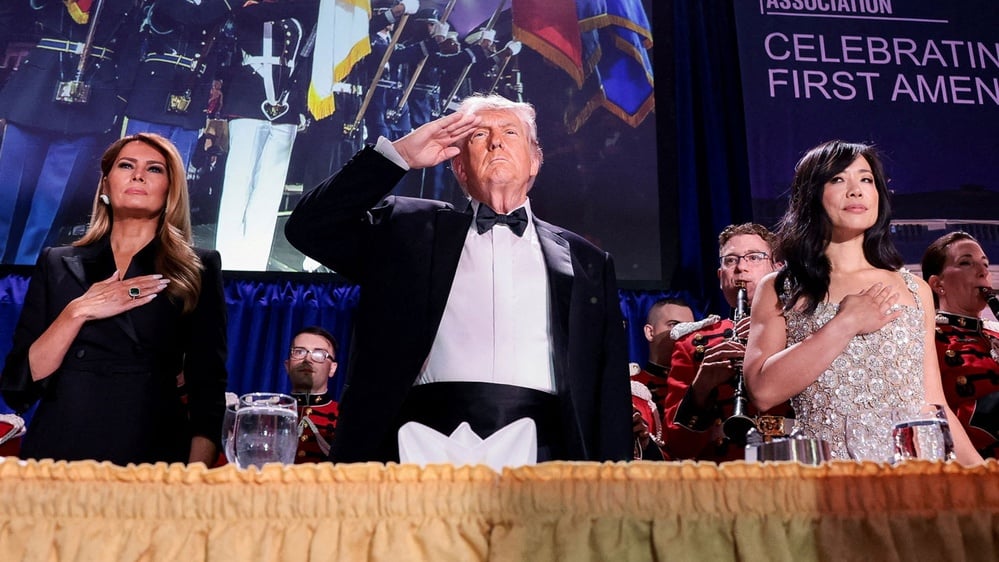
An annual Washington, D.C., journalism fundraiser, the WHCA Dinner was interrupted by an April 25, 2026 shooting outside the Washington Hilton and relocated with enhanced security.
Automated analysis; not human reviewed.
Limitations: Concise, case-specific limitations and plausible alternative interpretations.
·
11 of 52 available dimensions scored; omitted dimensions are not treated as neutral.
·
Verified supporting quotes for 0 of 11 scored dimensions.
Ad-heavy page; anti-left framing; context could shift with full article.
July 25, 2026 · 0 shares
Fox News framing casts Trump’s 2026 WHCA Dinner as a unity-focused event after an assassination attempt, foregrounding his conciliatory tone while highlighting jabs at Democrats and the press and praising Secret Service protection.
Coverage centers on Trump's 2026 WHCA Dinner remarks following an assassination attempt, highlighting security, unity rhetoric, and his jabs at Democrats and the press.
Automated analysis; not human reviewed.
Limitations: Based on a subset of the article; other sections may yield different indications; cultural and political context may influence interpretation.
·
4 of 52 available dimensions scored; omitted dimensions are not treated as neutral.
·
Verified supporting quotes for 0 of 4 scored dimensions.
Text-based; may miss broader context.
Publisher frames the White House Correspondents’ Association Dinner as a high-security, pro-press event foregrounding official security measures and First Amendment defense while interspersing right-lean promotional content.
An annual Washington, D.C., journalism fundraiser, the WHCA Dinner was interrupted by an April 25, 2026 shooting outside the Washington Hilton and relocated with enhanced security.
Automated analysis; not human reviewed.
Limitations: Concise, case-specific limitations and plausible alternative interpretations.
·
11 of 52 available dimensions scored; omitted dimensions are not treated as neutral.
·
Verified supporting quotes for 0 of 11 scored dimensions.
Ad-heavy page; anti-left framing; context could shift with full article.
Framing centers on continuity of a high-profile political event under heightened security, foregrounding Trump’s 'vicious' yet 'unifying' speech and a venue shift to the Waldorf Astoria to signal controlled, security-conscious spectacle.
Context: The White House Correspondents’ Dinner, historically held at the Washington Hilton, was derailed in April by a would-be assassin, leading to a venue switch to the Waldorf Astoria and heightened security for this year's event.
Automated analysis; not human reviewed.
Limitations: Concise, case-specific limitations and plausible alternative interpretations.
·
1 of 52 available dimensions scored; omitted dimensions are not treated as neutral.
·
Verified supporting quotes for 1 of 1 scored dimensions.
Claim: The article presents information in a neutral, fact-based frame with quotes from officials and verifiable details, avoiding overt editorialization.
““The president’s speech will be a combination of unifying yet vicious, and serious yet hilarious, all at the same time, if you can imagine that,” Leavitt told NBC News.” · exact text match
““One thing I can assure you, it will be entertaining.”” · exact text match
““There are enhanced security measures.
We have a private security firm that has worked closely with Secret Service.
There are new measures that every single dinner guest has to take,” she said.”
· exact text match
Counterevidence:
““Honestly, the program is very much the same as April.
What will be different is the size,” Jinag said.”
· not found in supplied text
Why: Direct quotes from officials and specific logistical details support a descriptive, non-editorial framing.
July 25, 2026 · 0 shares
Fox News framing casts Trump’s 2026 WHCA Dinner as a unity-focused event after an assassination attempt, foregrounding his conciliatory tone while highlighting jabs at Democrats and the press and praising Secret Service protection.
Coverage centers on Trump's 2026 WHCA Dinner remarks following an assassination attempt, highlighting security, unity rhetoric, and his jabs at Democrats and the press.
Automated analysis; not human reviewed.
Limitations: Based on a subset of the article; other sections may yield different indications; cultural and political context may influence interpretation.
·
4 of 52 available dimensions scored; omitted dimensions are not treated as neutral.
·
Verified supporting quotes for 0 of 4 scored dimensions.
Text-based; may miss broader context.
Publisher framing centers on Trump's 'fake news' rhetoric and a rescheduled WHCD, presenting the event in a chronological, context-rich report-style frame that foregrounds the assassination-attempt context and a joke about a 2028 run.
The White House Correspondents' Dinner is an annual White House press event; this report concerns its rescheduled edition after an assassination attempt halted the previous gathering.
Automated analysis; not human reviewed. Limitations: Concise, case-specific limitations and plausible alternative interpretations.
Ambiguity from brief piece; lacks broader context.
July 24, 2026 · 0 shares
Publisher framing centers on a tension-filled, security-tightened White House Correspondents’ Dinner, foregrounding Trump's attendance and press–administration friction while embedding promotional language and reliability claims that shape reader perception.
Context: The report covers the rescheduled WHCD with tighter security, attendee sentiment, and related political-media tensions.
Automated analysis; not human reviewed.
Limitations: Case-specific, text-based assessment; presence of promotional lines may reflect embedded marketing rather than pure reporting; date specificity is lacking.
·
43 of 52 available dimensions scored; omitted dimensions are not treated as neutral.
·
Verified supporting quotes for 0 of 43 scored dimensions.
Date unspecified; promotional language; limited sourcing.
Publisher frames the White House Correspondents’ Association Dinner as a high-security, pro-press event foregrounding official security measures and First Amendment defense while interspersing right-lean promotional content.
An annual Washington, D.C., journalism fundraiser, the WHCA Dinner was interrupted by an April 25, 2026 shooting outside the Washington Hilton and relocated with enhanced security.
Automated analysis; not human reviewed.
Limitations: Concise, case-specific limitations and plausible alternative interpretations.
·
11 of 52 available dimensions scored; omitted dimensions are not treated as neutral.
·
Verified supporting quotes for 0 of 11 scored dimensions.
Ad-heavy page; anti-left framing; context could shift with full article.
July 25, 2026 · 0 shares
Fox News framing casts Trump’s 2026 WHCA Dinner as a unity-focused event after an assassination attempt, foregrounding his conciliatory tone while highlighting jabs at Democrats and the press and praising Secret Service protection.
Coverage centers on Trump's 2026 WHCA Dinner remarks following an assassination attempt, highlighting security, unity rhetoric, and his jabs at Democrats and the press.
Automated analysis; not human reviewed.
Limitations: Based on a subset of the article; other sections may yield different indications; cultural and political context may influence interpretation.
·
4 of 52 available dimensions scored; omitted dimensions are not treated as neutral.
·
Verified supporting quotes for 0 of 4 scored dimensions.
Text-based; may miss broader context.
Publisher frames the White House Correspondents’ Association Dinner as a high-security, pro-press event foregrounding official security measures and First Amendment defense while interspersing right-lean promotional content.
An annual Washington, D.C., journalism fundraiser, the WHCA Dinner was interrupted by an April 25, 2026 shooting outside the Washington Hilton and relocated with enhanced security.
Automated analysis; not human reviewed.
Limitations: Concise, case-specific limitations and plausible alternative interpretations.
·
11 of 52 available dimensions scored; omitted dimensions are not treated as neutral.
·
Verified supporting quotes for 0 of 11 scored dimensions.
Ad-heavy page; anti-left framing; context could shift with full article.
Framing centers on continuity of a high-profile political event under heightened security, foregrounding Trump’s 'vicious' yet 'unifying' speech and a venue shift to the Waldorf Astoria to signal controlled, security-conscious spectacle.
Context: The White House Correspondents’ Dinner, historically held at the Washington Hilton, was derailed in April by a would-be assassin, leading to a venue switch to the Waldorf Astoria and heightened security for this year's event.
Automated analysis; not human reviewed.
Limitations: Concise, case-specific limitations and plausible alternative interpretations.
·
1 of 52 available dimensions scored; omitted dimensions are not treated as neutral.
·
Verified supporting quotes for 1 of 1 scored dimensions.
Claim: The article presents information in a neutral, fact-based frame with quotes from officials and verifiable details, avoiding overt editorialization.
““The president’s speech will be a combination of unifying yet vicious, and serious yet hilarious, all at the same time, if you can imagine that,” Leavitt told NBC News.” · exact text match
““One thing I can assure you, it will be entertaining.”” · exact text match
““There are enhanced security measures.
We have a private security firm that has worked closely with Secret Service.
There are new measures that every single dinner guest has to take,” she said.”
· exact text match
Counterevidence:
““Honestly, the program is very much the same as April.
What will be different is the size,” Jinag said.”
· not found in supplied text
Why: Direct quotes from officials and specific logistical details support a descriptive, non-editorial framing.
Framing centers on continuity of a high-profile political event under heightened security, foregrounding Trump’s 'vicious' yet 'unifying' speech and a venue shift to the Waldorf Astoria to signal controlled, security-conscious spectacle.
Context: The White House Correspondents’ Dinner, historically held at the Washington Hilton, was derailed in April by a would-be assassin, leading to a venue switch to the Waldorf Astoria and heightened security for this year's event.
Automated analysis; not human reviewed. Limitations: Concise, case-specific limitations and plausible alternative interpretations. · 1 of 52 available dimensions scored; omitted dimensions are not treated as neutral. · Verified supporting quotes for 1 of 1 scored dimensions.
Claim: The article presents information in a neutral, fact-based frame with quotes from officials and verifiable details, avoiding overt editorialization.
““The president’s speech will be a combination of unifying yet vicious, and serious yet hilarious, all at the same time, if you can imagine that,” Leavitt told NBC News.” · exact text match
““One thing I can assure you, it will be entertaining.”” · exact text match
““There are enhanced security measures. We have a private security firm that has worked closely with Secret Service. There are new measures that every single dinner guest has to take,” she said.” · exact text match
Counterevidence:
““Honestly, the program is very much the same as April. What will be different is the size,” Jinag said.” · not found in supplied text
Why: Direct quotes from officials and specific logistical details support a descriptive, non-editorial framing.
Publisher frames the White House Correspondents’ Association Dinner as a high-security, pro-press event foregrounding official security measures and First Amendment defense while interspersing right-lean promotional content.
An annual Washington, D.C., journalism fundraiser, the WHCA Dinner was interrupted by an April 25, 2026 shooting outside the Washington Hilton and relocated with enhanced security.
Automated analysis; not human reviewed. Limitations: Concise, case-specific limitations and plausible alternative interpretations. · 11 of 52 available dimensions scored; omitted dimensions are not treated as neutral. · Verified supporting quotes for 0 of 11 scored dimensions.
Ad-heavy page; anti-left framing; context could shift with full article.
July 25, 2026 · 0 shares
Fox News framing casts Trump’s 2026 WHCA Dinner as a unity-focused event after an assassination attempt, foregrounding his conciliatory tone while highlighting jabs at Democrats and the press and praising Secret Service protection.
Coverage centers on Trump's 2026 WHCA Dinner remarks following an assassination attempt, highlighting security, unity rhetoric, and his jabs at Democrats and the press.
Automated analysis; not human reviewed. Limitations: Based on a subset of the article; other sections may yield different indications; cultural and political context may influence interpretation. · 4 of 52 available dimensions scored; omitted dimensions are not treated as neutral. · Verified supporting quotes for 0 of 4 scored dimensions.
Text-based; may miss broader context.
Publisher frames the White House Correspondents’ Association Dinner as a high-security, pro-press event foregrounding official security measures and First Amendment defense while interspersing right-lean promotional content.
An annual Washington, D.C., journalism fundraiser, the WHCA Dinner was interrupted by an April 25, 2026 shooting outside the Washington Hilton and relocated with enhanced security.
Automated analysis; not human reviewed. Limitations: Concise, case-specific limitations and plausible alternative interpretations. · 11 of 52 available dimensions scored; omitted dimensions are not treated as neutral. · Verified supporting quotes for 0 of 11 scored dimensions.
Ad-heavy page; anti-left framing; context could shift with full article.
Framing centers on continuity of a high-profile political event under heightened security, foregrounding Trump’s 'vicious' yet 'unifying' speech and a venue shift to the Waldorf Astoria to signal controlled, security-conscious spectacle.
Context: The White House Correspondents’ Dinner, historically held at the Washington Hilton, was derailed in April by a would-be assassin, leading to a venue switch to the Waldorf Astoria and heightened security for this year's event.
Automated analysis; not human reviewed. Limitations: Concise, case-specific limitations and plausible alternative interpretations. · 1 of 52 available dimensions scored; omitted dimensions are not treated as neutral. · Verified supporting quotes for 1 of 1 scored dimensions.
Claim: The article presents information in a neutral, fact-based frame with quotes from officials and verifiable details, avoiding overt editorialization.
““The president’s speech will be a combination of unifying yet vicious, and serious yet hilarious, all at the same time, if you can imagine that,” Leavitt told NBC News.” · exact text match
““One thing I can assure you, it will be entertaining.”” · exact text match
““There are enhanced security measures. We have a private security firm that has worked closely with Secret Service. There are new measures that every single dinner guest has to take,” she said.” · exact text match
Counterevidence:
““Honestly, the program is very much the same as April. What will be different is the size,” Jinag said.” · not found in supplied text
Why: Direct quotes from officials and specific logistical details support a descriptive, non-editorial framing.
July 25, 2026 · 0 shares
Fox News framing casts Trump’s 2026 WHCA Dinner as a unity-focused event after an assassination attempt, foregrounding his conciliatory tone while highlighting jabs at Democrats and the press and praising Secret Service protection.
Coverage centers on Trump's 2026 WHCA Dinner remarks following an assassination attempt, highlighting security, unity rhetoric, and his jabs at Democrats and the press.
Automated analysis; not human reviewed. Limitations: Based on a subset of the article; other sections may yield different indications; cultural and political context may influence interpretation. · 4 of 52 available dimensions scored; omitted dimensions are not treated as neutral. · Verified supporting quotes for 0 of 4 scored dimensions.
Text-based; may miss broader context.
Publisher framing centers on Trump's 'fake news' rhetoric and a rescheduled WHCD, presenting the event in a chronological, context-rich report-style frame that foregrounds the assassination-attempt context and a joke about a 2028 run.
The White House Correspondents' Dinner is an annual White House press event; this report concerns its rescheduled edition after an assassination attempt halted the previous gathering.
Automated analysis; not human reviewed. Limitations: Concise, case-specific limitations and plausible alternative interpretations.
Ambiguity from brief piece; lacks broader context.
July 24, 2026 · 0 shares
Publisher framing centers on a tension-filled, security-tightened White House Correspondents’ Dinner, foregrounding Trump's attendance and press–administration friction while embedding promotional language and reliability claims that shape reader perception.
Context: The report covers the rescheduled WHCD with tighter security, attendee sentiment, and related political-media tensions.
Automated analysis; not human reviewed. Limitations: Case-specific, text-based assessment; presence of promotional lines may reflect embedded marketing rather than pure reporting; date specificity is lacking. · 43 of 52 available dimensions scored; omitted dimensions are not treated as neutral. · Verified supporting quotes for 0 of 43 scored dimensions.
Date unspecified; promotional language; limited sourcing.
July 23, 2026 · 0 shares
NewsBusters, an outlet of the Media Research Center (MRC), frames WHCD coverage as biased against conservatives by foregrounding selective joke-count data and era-based comparisons to portray liberal critics as distorters and to defend traditional American values.
NewsBusters (MRC) analyzes WHCD joke counts across presidencies to argue conservatives are disproportionately targeted in WHCD humor.
Automated analysis; not human reviewed. Limitations: Based on a single partisan outlet's dataset; selection bias potential; quotes may reflect selective framing; no independent cross-check provided. · 7 of 52 available dimensions scored; omitted dimensions are not treated as neutral. · Verified supporting quotes for 0 of 7 scored dimensions.
Case-specific ambiguities: text is from a partisan outlet; data may reflect selection bias.
Institutional continuity and security
Framing centers on continuity of a high-profile political event under heightened security, foregrounding Trump’s 'vicious' yet 'unifying' speech and a venue shift to the Waldorf Astoria to signal controlled, security-conscious spectacle.
Context: The White House Correspondents’ Dinner, historically held at the Washington Hilton, was derailed in April by a would-be assassin, leading to a venue switch to the Waldorf Astoria and heightened security for this year's event.
Automated analysis; not human reviewed. Limitations: Concise, case-specific limitations and plausible alternative interpretations. · 1 of 52 available dimensions scored; omitted dimensions are not treated as neutral. · Verified supporting quotes for 1 of 1 scored dimensions.
Claim: The article presents information in a neutral, fact-based frame with quotes from officials and verifiable details, avoiding overt editorialization.
““The president’s speech will be a combination of unifying yet vicious, and serious yet hilarious, all at the same time, if you can imagine that,” Leavitt told NBC News.” · exact text match
““One thing I can assure you, it will be entertaining.”” · exact text match
““There are enhanced security measures. We have a private security firm that has worked closely with Secret Service. There are new measures that every single dinner guest has to take,” she said.” · exact text match
Counterevidence:
““Honestly, the program is very much the same as April. What will be different is the size,” Jinag said.” · not found in supplied text
Why: Direct quotes from officials and specific logistical details support a descriptive, non-editorial framing.
July 24, 2026 · 0 shares
Publisher framing centers on a tension-filled, security-tightened White House Correspondents’ Dinner, foregrounding Trump's attendance and press–administration friction while embedding promotional language and reliability claims that shape reader perception.
Context: The report covers the rescheduled WHCD with tighter security, attendee sentiment, and related political-media tensions.
Automated analysis; not human reviewed. Limitations: Case-specific, text-based assessment; presence of promotional lines may reflect embedded marketing rather than pure reporting; date specificity is lacking. · 43 of 52 available dimensions scored; omitted dimensions are not treated as neutral. · Verified supporting quotes for 0 of 43 scored dimensions.
Date unspecified; promotional language; limited sourcing.
Framing centers on continuity of a high-profile political event under heightened security, foregrounding Trump’s 'vicious' yet 'unifying' speech and a venue shift to the Waldorf Astoria to signal controlled, security-conscious spectacle.
Context: The White House Correspondents’ Dinner, historically held at the Washington Hilton, was derailed in April by a would-be assassin, leading to a venue switch to the Waldorf Astoria and heightened security for this year's event.
Automated analysis; not human reviewed. Limitations: Concise, case-specific limitations and plausible alternative interpretations. · 1 of 52 available dimensions scored; omitted dimensions are not treated as neutral. · Verified supporting quotes for 1 of 1 scored dimensions.
Claim: The article presents information in a neutral, fact-based frame with quotes from officials and verifiable details, avoiding overt editorialization.
““The president’s speech will be a combination of unifying yet vicious, and serious yet hilarious, all at the same time, if you can imagine that,” Leavitt told NBC News.” · exact text match
““One thing I can assure you, it will be entertaining.”” · exact text match
““There are enhanced security measures. We have a private security firm that has worked closely with Secret Service. There are new measures that every single dinner guest has to take,” she said.” · exact text match
Counterevidence:
““Honestly, the program is very much the same as April. What will be different is the size,” Jinag said.” · not found in supplied text
Why: Direct quotes from officials and specific logistical details support a descriptive, non-editorial framing.
July 24, 2026 · 0 shares
Publisher framing centers on a tension-filled, security-tightened White House Correspondents’ Dinner, foregrounding Trump's attendance and press–administration friction while embedding promotional language and reliability claims that shape reader perception.
Context: The report covers the rescheduled WHCD with tighter security, attendee sentiment, and related political-media tensions.
Automated analysis; not human reviewed. Limitations: Case-specific, text-based assessment; presence of promotional lines may reflect embedded marketing rather than pure reporting; date specificity is lacking. · 43 of 52 available dimensions scored; omitted dimensions are not treated as neutral. · Verified supporting quotes for 0 of 43 scored dimensions.
Date unspecified; promotional language; limited sourcing.
Helium Bias
Publisher frames the White House Correspondents’ Association Dinner as a high-security, pro-press event foregrounding official security measures and First Amendment defense while interspersing right-lean promotional content.
An annual Washington, D.C., journalism fundraiser, the WHCA Dinner was interrupted by an April 25, 2026 shooting outside the Washington Hilton and relocated with enhanced security.
Automated analysis; not human reviewed. Limitations: Concise, case-specific limitations and plausible alternative interpretations. · 11 of 52 available dimensions scored; omitted dimensions are not treated as neutral. · Verified supporting quotes for 0 of 11 scored dimensions.
Ad-heavy page; anti-left framing; context could shift with full article.
Publisher frames the White House Correspondents’ Association Dinner as a high-security, pro-press event foregrounding official security measures and First Amendment defense while interspersing right-lean promotional content.
An annual Washington, D.C., journalism fundraiser, the WHCA Dinner was interrupted by an April 25, 2026 shooting outside the Washington Hilton and relocated with enhanced security.
Automated analysis; not human reviewed. Limitations: Concise, case-specific limitations and plausible alternative interpretations. · 11 of 52 available dimensions scored; omitted dimensions are not treated as neutral. · Verified supporting quotes for 0 of 11 scored dimensions.
Ad-heavy page; anti-left framing; context could shift with full article.
Publisher frames the White House Correspondents’ Association Dinner as a high-security, pro-press event foregrounding official security measures and First Amendment defense while interspersing right-lean promotional content.
An annual Washington, D.C., journalism fundraiser, the WHCA Dinner was interrupted by an April 25, 2026 shooting outside the Washington Hilton and relocated with enhanced security.
Automated analysis; not human reviewed. Limitations: Concise, case-specific limitations and plausible alternative interpretations. · 11 of 52 available dimensions scored; omitted dimensions are not treated as neutral. · Verified supporting quotes for 0 of 11 scored dimensions.
Ad-heavy page; anti-left framing; context could shift with full article.
July 25, 2026 · 0 shares
Fox News framing casts Trump’s 2026 WHCA Dinner as a unity-focused event after an assassination attempt, foregrounding his conciliatory tone while highlighting jabs at Democrats and the press and praising Secret Service protection.
Coverage centers on Trump's 2026 WHCA Dinner remarks following an assassination attempt, highlighting security, unity rhetoric, and his jabs at Democrats and the press.
Automated analysis; not human reviewed. Limitations: Based on a subset of the article; other sections may yield different indications; cultural and political context may influence interpretation. · 4 of 52 available dimensions scored; omitted dimensions are not treated as neutral. · Verified supporting quotes for 0 of 4 scored dimensions.
Text-based; may miss broader context.
Framing centers on continuity of a high-profile political event under heightened security, foregrounding Trump’s 'vicious' yet 'unifying' speech and a venue shift to the Waldorf Astoria to signal controlled, security-conscious spectacle.
Context: The White House Correspondents’ Dinner, historically held at the Washington Hilton, was derailed in April by a would-be assassin, leading to a venue switch to the Waldorf Astoria and heightened security for this year's event.
Automated analysis; not human reviewed. Limitations: Concise, case-specific limitations and plausible alternative interpretations. · 1 of 52 available dimensions scored; omitted dimensions are not treated as neutral. · Verified supporting quotes for 1 of 1 scored dimensions.
Claim: The article presents information in a neutral, fact-based frame with quotes from officials and verifiable details, avoiding overt editorialization.
““The president’s speech will be a combination of unifying yet vicious, and serious yet hilarious, all at the same time, if you can imagine that,” Leavitt told NBC News.” · exact text match
““One thing I can assure you, it will be entertaining.”” · exact text match
““There are enhanced security measures. We have a private security firm that has worked closely with Secret Service. There are new measures that every single dinner guest has to take,” she said.” · exact text match
Counterevidence:
““Honestly, the program is very much the same as April. What will be different is the size,” Jinag said.” · not found in supplied text
Why: Direct quotes from officials and specific logistical details support a descriptive, non-editorial framing.
July 25, 2026 · 0 shares
Fox News framing casts Trump’s 2026 WHCA Dinner as a unity-focused event after an assassination attempt, foregrounding his conciliatory tone while highlighting jabs at Democrats and the press and praising Secret Service protection.
Coverage centers on Trump's 2026 WHCA Dinner remarks following an assassination attempt, highlighting security, unity rhetoric, and his jabs at Democrats and the press.
Automated analysis; not human reviewed. Limitations: Based on a subset of the article; other sections may yield different indications; cultural and political context may influence interpretation. · 4 of 52 available dimensions scored; omitted dimensions are not treated as neutral. · Verified supporting quotes for 0 of 4 scored dimensions.
Text-based; may miss broader context.
Framing centers on continuity of a high-profile political event under heightened security, foregrounding Trump’s 'vicious' yet 'unifying' speech and a venue shift to the Waldorf Astoria to signal controlled, security-conscious spectacle.
Context: The White House Correspondents’ Dinner, historically held at the Washington Hilton, was derailed in April by a would-be assassin, leading to a venue switch to the Waldorf Astoria and heightened security for this year's event.
Automated analysis; not human reviewed. Limitations: Concise, case-specific limitations and plausible alternative interpretations. · 1 of 52 available dimensions scored; omitted dimensions are not treated as neutral. · Verified supporting quotes for 1 of 1 scored dimensions.
Claim: The article presents information in a neutral, fact-based frame with quotes from officials and verifiable details, avoiding overt editorialization.
““The president’s speech will be a combination of unifying yet vicious, and serious yet hilarious, all at the same time, if you can imagine that,” Leavitt told NBC News.” · exact text match
““One thing I can assure you, it will be entertaining.”” · exact text match
““There are enhanced security measures. We have a private security firm that has worked closely with Secret Service. There are new measures that every single dinner guest has to take,” she said.” · exact text match
Counterevidence:
““Honestly, the program is very much the same as April. What will be different is the size,” Jinag said.” · not found in supplied text
Why: Direct quotes from officials and specific logistical details support a descriptive, non-editorial framing.
Publisher framing centers on Trump's 'fake news' rhetoric and a rescheduled WHCD, presenting the event in a chronological, context-rich report-style frame that foregrounds the assassination-attempt context and a joke about a 2028 run.
The White House Correspondents' Dinner is an annual White House press event; this report concerns its rescheduled edition after an assassination attempt halted the previous gathering.
Automated analysis; not human reviewed. Limitations: Concise, case-specific limitations and plausible alternative interpretations.
Ambiguity from brief piece; lacks broader context.
Story Blindspots
Publisher frames the White House Correspondents’ Association Dinner as a high-security, pro-press event foregrounding official security measures and First Amendment defense while interspersing right-lean promotional content.
An annual Washington, D.C., journalism fundraiser, the WHCA Dinner was interrupted by an April 25, 2026 shooting outside the Washington Hilton and relocated with enhanced security.
Automated analysis; not human reviewed. Limitations: Concise, case-specific limitations and plausible alternative interpretations. · 11 of 52 available dimensions scored; omitted dimensions are not treated as neutral. · Verified supporting quotes for 0 of 11 scored dimensions.
Ad-heavy page; anti-left framing; context could shift with full article.
July 25, 2026 · 0 shares
Fox News framing casts Trump’s 2026 WHCA Dinner as a unity-focused event after an assassination attempt, foregrounding his conciliatory tone while highlighting jabs at Democrats and the press and praising Secret Service protection.
Coverage centers on Trump's 2026 WHCA Dinner remarks following an assassination attempt, highlighting security, unity rhetoric, and his jabs at Democrats and the press.
Automated analysis; not human reviewed. Limitations: Based on a subset of the article; other sections may yield different indications; cultural and political context may influence interpretation. · 4 of 52 available dimensions scored; omitted dimensions are not treated as neutral. · Verified supporting quotes for 0 of 4 scored dimensions.
Text-based; may miss broader context.
Publisher frames the White House Correspondents’ Association Dinner as a high-security, pro-press event foregrounding official security measures and First Amendment defense while interspersing right-lean promotional content.
An annual Washington, D.C., journalism fundraiser, the WHCA Dinner was interrupted by an April 25, 2026 shooting outside the Washington Hilton and relocated with enhanced security.
Automated analysis; not human reviewed. Limitations: Concise, case-specific limitations and plausible alternative interpretations. · 11 of 52 available dimensions scored; omitted dimensions are not treated as neutral. · Verified supporting quotes for 0 of 11 scored dimensions.
Ad-heavy page; anti-left framing; context could shift with full article.
Framing centers on continuity of a high-profile political event under heightened security, foregrounding Trump’s 'vicious' yet 'unifying' speech and a venue shift to the Waldorf Astoria to signal controlled, security-conscious spectacle.
Context: The White House Correspondents’ Dinner, historically held at the Washington Hilton, was derailed in April by a would-be assassin, leading to a venue switch to the Waldorf Astoria and heightened security for this year's event.
Automated analysis; not human reviewed. Limitations: Concise, case-specific limitations and plausible alternative interpretations. · 1 of 52 available dimensions scored; omitted dimensions are not treated as neutral. · Verified supporting quotes for 1 of 1 scored dimensions.
Claim: The article presents information in a neutral, fact-based frame with quotes from officials and verifiable details, avoiding overt editorialization.
““The president’s speech will be a combination of unifying yet vicious, and serious yet hilarious, all at the same time, if you can imagine that,” Leavitt told NBC News.” · exact text match
““One thing I can assure you, it will be entertaining.”” · exact text match
““There are enhanced security measures. We have a private security firm that has worked closely with Secret Service. There are new measures that every single dinner guest has to take,” she said.” · exact text match
Counterevidence:
““Honestly, the program is very much the same as April. What will be different is the size,” Jinag said.” · not found in supplied text
Why: Direct quotes from officials and specific logistical details support a descriptive, non-editorial framing.
July 25, 2026 · 0 shares
Fox News framing casts Trump’s 2026 WHCA Dinner as a unity-focused event after an assassination attempt, foregrounding his conciliatory tone while highlighting jabs at Democrats and the press and praising Secret Service protection.
Coverage centers on Trump's 2026 WHCA Dinner remarks following an assassination attempt, highlighting security, unity rhetoric, and his jabs at Democrats and the press.
Automated analysis; not human reviewed. Limitations: Based on a subset of the article; other sections may yield different indications; cultural and political context may influence interpretation. · 4 of 52 available dimensions scored; omitted dimensions are not treated as neutral. · Verified supporting quotes for 0 of 4 scored dimensions.
Text-based; may miss broader context.
Framing centers on continuity of a high-profile political event under heightened security, foregrounding Trump’s 'vicious' yet 'unifying' speech and a venue shift to the Waldorf Astoria to signal controlled, security-conscious spectacle.
Context: The White House Correspondents’ Dinner, historically held at the Washington Hilton, was derailed in April by a would-be assassin, leading to a venue switch to the Waldorf Astoria and heightened security for this year's event.
Automated analysis; not human reviewed. Limitations: Concise, case-specific limitations and plausible alternative interpretations. · 1 of 52 available dimensions scored; omitted dimensions are not treated as neutral. · Verified supporting quotes for 1 of 1 scored dimensions.
Claim: The article presents information in a neutral, fact-based frame with quotes from officials and verifiable details, avoiding overt editorialization.
““The president’s speech will be a combination of unifying yet vicious, and serious yet hilarious, all at the same time, if you can imagine that,” Leavitt told NBC News.” · exact text match
““One thing I can assure you, it will be entertaining.”” · exact text match
““There are enhanced security measures. We have a private security firm that has worked closely with Secret Service. There are new measures that every single dinner guest has to take,” she said.” · exact text match
Counterevidence:
““Honestly, the program is very much the same as April. What will be different is the size,” Jinag said.” · not found in supplied text
Why: Direct quotes from officials and specific logistical details support a descriptive, non-editorial framing.
Publisher frames the White House Correspondents’ Association Dinner as a high-security, pro-press event foregrounding official security measures and First Amendment defense while interspersing right-lean promotional content.
An annual Washington, D.C., journalism fundraiser, the WHCA Dinner was interrupted by an April 25, 2026 shooting outside the Washington Hilton and relocated with enhanced security.
Automated analysis; not human reviewed. Limitations: Concise, case-specific limitations and plausible alternative interpretations. · 11 of 52 available dimensions scored; omitted dimensions are not treated as neutral. · Verified supporting quotes for 0 of 11 scored dimensions.
Ad-heavy page; anti-left framing; context could shift with full article.
Publisher frames the White House Correspondents’ Association Dinner as a high-security, pro-press event foregrounding official security measures and First Amendment defense while interspersing right-lean promotional content.
An annual Washington, D.C., journalism fundraiser, the WHCA Dinner was interrupted by an April 25, 2026 shooting outside the Washington Hilton and relocated with enhanced security.
Automated analysis; not human reviewed. Limitations: Concise, case-specific limitations and plausible alternative interpretations. · 11 of 52 available dimensions scored; omitted dimensions are not treated as neutral. · Verified supporting quotes for 0 of 11 scored dimensions.
Ad-heavy page; anti-left framing; context could shift with full article.
Framing centers on continuity of a high-profile political event under heightened security, foregrounding Trump’s 'vicious' yet 'unifying' speech and a venue shift to the Waldorf Astoria to signal controlled, security-conscious spectacle.
Context: The White House Correspondents’ Dinner, historically held at the Washington Hilton, was derailed in April by a would-be assassin, leading to a venue switch to the Waldorf Astoria and heightened security for this year's event.
Automated analysis; not human reviewed. Limitations: Concise, case-specific limitations and plausible alternative interpretations. · 1 of 52 available dimensions scored; omitted dimensions are not treated as neutral. · Verified supporting quotes for 1 of 1 scored dimensions.
Claim: The article presents information in a neutral, fact-based frame with quotes from officials and verifiable details, avoiding overt editorialization.
““The president’s speech will be a combination of unifying yet vicious, and serious yet hilarious, all at the same time, if you can imagine that,” Leavitt told NBC News.” · exact text match
““One thing I can assure you, it will be entertaining.”” · exact text match
““There are enhanced security measures. We have a private security firm that has worked closely with Secret Service. There are new measures that every single dinner guest has to take,” she said.” · exact text match
Counterevidence:
““Honestly, the program is very much the same as April. What will be different is the size,” Jinag said.” · not found in supplied text
Why: Direct quotes from officials and specific logistical details support a descriptive, non-editorial framing.
Publisher framing centers on Trump's 'fake news' rhetoric and a rescheduled WHCD, presenting the event in a chronological, context-rich report-style frame that foregrounds the assassination-attempt context and a joke about a 2028 run.
The White House Correspondents' Dinner is an annual White House press event; this report concerns its rescheduled edition after an assassination attempt halted the previous gathering.
Automated analysis; not human reviewed. Limitations: Concise, case-specific limitations and plausible alternative interpretations.
Ambiguity from brief piece; lacks broader context.
Publisher frames the White House Correspondents’ Association Dinner as a high-security, pro-press event foregrounding official security measures and First Amendment defense while interspersing right-lean promotional content.
An annual Washington, D.C., journalism fundraiser, the WHCA Dinner was interrupted by an April 25, 2026 shooting outside the Washington Hilton and relocated with enhanced security.
Automated analysis; not human reviewed. Limitations: Concise, case-specific limitations and plausible alternative interpretations. · 11 of 52 available dimensions scored; omitted dimensions are not treated as neutral. · Verified supporting quotes for 0 of 11 scored dimensions.
Ad-heavy page; anti-left framing; context could shift with full article.
Publisher frames the White House Correspondents’ Association Dinner as a high-security, pro-press event foregrounding official security measures and First Amendment defense while interspersing right-lean promotional content.
An annual Washington, D.C., journalism fundraiser, the WHCA Dinner was interrupted by an April 25, 2026 shooting outside the Washington Hilton and relocated with enhanced security.
Automated analysis; not human reviewed. Limitations: Concise, case-specific limitations and plausible alternative interpretations. · 11 of 52 available dimensions scored; omitted dimensions are not treated as neutral. · Verified supporting quotes for 0 of 11 scored dimensions.
Ad-heavy page; anti-left framing; context could shift with full article.
Framing centers on continuity of a high-profile political event under heightened security, foregrounding Trump’s 'vicious' yet 'unifying' speech and a venue shift to the Waldorf Astoria to signal controlled, security-conscious spectacle.
Context: The White House Correspondents’ Dinner, historically held at the Washington Hilton, was derailed in April by a would-be assassin, leading to a venue switch to the Waldorf Astoria and heightened security for this year's event.
Automated analysis; not human reviewed. Limitations: Concise, case-specific limitations and plausible alternative interpretations. · 1 of 52 available dimensions scored; omitted dimensions are not treated as neutral. · Verified supporting quotes for 1 of 1 scored dimensions.
Claim: The article presents information in a neutral, fact-based frame with quotes from officials and verifiable details, avoiding overt editorialization.
““The president’s speech will be a combination of unifying yet vicious, and serious yet hilarious, all at the same time, if you can imagine that,” Leavitt told NBC News.” · exact text match
““One thing I can assure you, it will be entertaining.”” · exact text match
““There are enhanced security measures. We have a private security firm that has worked closely with Secret Service. There are new measures that every single dinner guest has to take,” she said.” · exact text match
Counterevidence:
““Honestly, the program is very much the same as April. What will be different is the size,” Jinag said.” · not found in supplied text
Why: Direct quotes from officials and specific logistical details support a descriptive, non-editorial framing.
Publisher frames the White House Correspondents’ Association Dinner as a high-security, pro-press event foregrounding official security measures and First Amendment defense while interspersing right-lean promotional content.
An annual Washington, D.C., journalism fundraiser, the WHCA Dinner was interrupted by an April 25, 2026 shooting outside the Washington Hilton and relocated with enhanced security.
Automated analysis; not human reviewed. Limitations: Concise, case-specific limitations and plausible alternative interpretations. · 11 of 52 available dimensions scored; omitted dimensions are not treated as neutral. · Verified supporting quotes for 0 of 11 scored dimensions.
Ad-heavy page; anti-left framing; context could shift with full article.
July 25, 2026 · 0 shares
Fox News framing casts Trump’s 2026 WHCA Dinner as a unity-focused event after an assassination attempt, foregrounding his conciliatory tone while highlighting jabs at Democrats and the press and praising Secret Service protection.
Coverage centers on Trump's 2026 WHCA Dinner remarks following an assassination attempt, highlighting security, unity rhetoric, and his jabs at Democrats and the press.
Automated analysis; not human reviewed. Limitations: Based on a subset of the article; other sections may yield different indications; cultural and political context may influence interpretation. · 4 of 52 available dimensions scored; omitted dimensions are not treated as neutral. · Verified supporting quotes for 0 of 4 scored dimensions.
Text-based; may miss broader context.
Publisher frames the White House Correspondents’ Association Dinner as a high-security, pro-press event foregrounding official security measures and First Amendment defense while interspersing right-lean promotional content.
An annual Washington, D.C., journalism fundraiser, the WHCA Dinner was interrupted by an April 25, 2026 shooting outside the Washington Hilton and relocated with enhanced security.
Automated analysis; not human reviewed. Limitations: Concise, case-specific limitations and plausible alternative interpretations. · 11 of 52 available dimensions scored; omitted dimensions are not treated as neutral. · Verified supporting quotes for 0 of 11 scored dimensions.
Ad-heavy page; anti-left framing; context could shift with full article.
Framing centers on continuity of a high-profile political event under heightened security, foregrounding Trump’s 'vicious' yet 'unifying' speech and a venue shift to the Waldorf Astoria to signal controlled, security-conscious spectacle.
Context: The White House Correspondents’ Dinner, historically held at the Washington Hilton, was derailed in April by a would-be assassin, leading to a venue switch to the Waldorf Astoria and heightened security for this year's event.
Automated analysis; not human reviewed. Limitations: Concise, case-specific limitations and plausible alternative interpretations. · 1 of 52 available dimensions scored; omitted dimensions are not treated as neutral. · Verified supporting quotes for 1 of 1 scored dimensions.
Claim: The article presents information in a neutral, fact-based frame with quotes from officials and verifiable details, avoiding overt editorialization.
““The president’s speech will be a combination of unifying yet vicious, and serious yet hilarious, all at the same time, if you can imagine that,” Leavitt told NBC News.” · exact text match
““One thing I can assure you, it will be entertaining.”” · exact text match
““There are enhanced security measures. We have a private security firm that has worked closely with Secret Service. There are new measures that every single dinner guest has to take,” she said.” · exact text match
Counterevidence:
““Honestly, the program is very much the same as April. What will be different is the size,” Jinag said.” · not found in supplied text
Why: Direct quotes from officials and specific logistical details support a descriptive, non-editorial framing.
Framing centers on continuity of a high-profile political event under heightened security, foregrounding Trump’s 'vicious' yet 'unifying' speech and a venue shift to the Waldorf Astoria to signal controlled, security-conscious spectacle.
Context: The White House Correspondents’ Dinner, historically held at the Washington Hilton, was derailed in April by a would-be assassin, leading to a venue switch to the Waldorf Astoria and heightened security for this year's event.
Automated analysis; not human reviewed. Limitations: Concise, case-specific limitations and plausible alternative interpretations. · 1 of 52 available dimensions scored; omitted dimensions are not treated as neutral. · Verified supporting quotes for 1 of 1 scored dimensions.
Claim: The article presents information in a neutral, fact-based frame with quotes from officials and verifiable details, avoiding overt editorialization.
““The president’s speech will be a combination of unifying yet vicious, and serious yet hilarious, all at the same time, if you can imagine that,” Leavitt told NBC News.” · exact text match
““One thing I can assure you, it will be entertaining.”” · exact text match
““There are enhanced security measures. We have a private security firm that has worked closely with Secret Service. There are new measures that every single dinner guest has to take,” she said.” · exact text match
Counterevidence:
““Honestly, the program is very much the same as April. What will be different is the size,” Jinag said.” · not found in supplied text
Why: Direct quotes from officials and specific logistical details support a descriptive, non-editorial framing.
July 24, 2026 · 0 shares
Publisher framing centers on a tension-filled, security-tightened White House Correspondents’ Dinner, foregrounding Trump's attendance and press–administration friction while embedding promotional language and reliability claims that shape reader perception.
Context: The report covers the rescheduled WHCD with tighter security, attendee sentiment, and related political-media tensions.
Automated analysis; not human reviewed. Limitations: Case-specific, text-based assessment; presence of promotional lines may reflect embedded marketing rather than pure reporting; date specificity is lacking. · 43 of 52 available dimensions scored; omitted dimensions are not treated as neutral. · Verified supporting quotes for 0 of 43 scored dimensions.
Date unspecified; promotional language; limited sourcing.
July 25, 2026 · 0 shares
Fox News framing casts Trump’s 2026 WHCA Dinner as a unity-focused event after an assassination attempt, foregrounding his conciliatory tone while highlighting jabs at Democrats and the press and praising Secret Service protection.
Coverage centers on Trump's 2026 WHCA Dinner remarks following an assassination attempt, highlighting security, unity rhetoric, and his jabs at Democrats and the press.
Automated analysis; not human reviewed. Limitations: Based on a subset of the article; other sections may yield different indications; cultural and political context may influence interpretation. · 4 of 52 available dimensions scored; omitted dimensions are not treated as neutral. · Verified supporting quotes for 0 of 4 scored dimensions.
Text-based; may miss broader context.
Publisher framing centers on Trump's 'fake news' rhetoric and a rescheduled WHCD, presenting the event in a chronological, context-rich report-style frame that foregrounds the assassination-attempt context and a joke about a 2028 run.
The White House Correspondents' Dinner is an annual White House press event; this report concerns its rescheduled edition after an assassination attempt halted the previous gathering.
Automated analysis; not human reviewed. Limitations: Concise, case-specific limitations and plausible alternative interpretations.
Ambiguity from brief piece; lacks broader context.
July 25, 2026 · 0 shares
Fox News framing casts Trump’s 2026 WHCA Dinner as a unity-focused event after an assassination attempt, foregrounding his conciliatory tone while highlighting jabs at Democrats and the press and praising Secret Service protection.
Coverage centers on Trump's 2026 WHCA Dinner remarks following an assassination attempt, highlighting security, unity rhetoric, and his jabs at Democrats and the press.
Automated analysis; not human reviewed. Limitations: Based on a subset of the article; other sections may yield different indications; cultural and political context may influence interpretation. · 4 of 52 available dimensions scored; omitted dimensions are not treated as neutral. · Verified supporting quotes for 0 of 4 scored dimensions.
Text-based; may miss broader context.
Publisher framing centers on Trump's 'fake news' rhetoric and a rescheduled WHCD, presenting the event in a chronological, context-rich report-style frame that foregrounds the assassination-attempt context and a joke about a 2028 run.
The White House Correspondents' Dinner is an annual White House press event; this report concerns its rescheduled edition after an assassination attempt halted the previous gathering.
Automated analysis; not human reviewed. Limitations: Concise, case-specific limitations and plausible alternative interpretations.
Ambiguity from brief piece; lacks broader context.
Publisher frames the White House Correspondents’ Association Dinner as a high-security, pro-press event foregrounding official security measures and First Amendment defense while interspersing right-lean promotional content.
An annual Washington, D.C., journalism fundraiser, the WHCA Dinner was interrupted by an April 25, 2026 shooting outside the Washington Hilton and relocated with enhanced security.
Automated analysis; not human reviewed. Limitations: Concise, case-specific limitations and plausible alternative interpretations. · 11 of 52 available dimensions scored; omitted dimensions are not treated as neutral. · Verified supporting quotes for 0 of 11 scored dimensions.
Ad-heavy page; anti-left framing; context could shift with full article.
July 25, 2026 · 0 shares
Fox News framing casts Trump’s 2026 WHCA Dinner as a unity-focused event after an assassination attempt, foregrounding his conciliatory tone while highlighting jabs at Democrats and the press and praising Secret Service protection.
Coverage centers on Trump's 2026 WHCA Dinner remarks following an assassination attempt, highlighting security, unity rhetoric, and his jabs at Democrats and the press.
Automated analysis; not human reviewed. Limitations: Based on a subset of the article; other sections may yield different indications; cultural and political context may influence interpretation. · 4 of 52 available dimensions scored; omitted dimensions are not treated as neutral. · Verified supporting quotes for 0 of 4 scored dimensions.
Text-based; may miss broader context.
Publisher frames the White House Correspondents’ Association Dinner as a high-security, pro-press event foregrounding official security measures and First Amendment defense while interspersing right-lean promotional content.
An annual Washington, D.C., journalism fundraiser, the WHCA Dinner was interrupted by an April 25, 2026 shooting outside the Washington Hilton and relocated with enhanced security.
Automated analysis; not human reviewed. Limitations: Concise, case-specific limitations and plausible alternative interpretations. · 11 of 52 available dimensions scored; omitted dimensions are not treated as neutral. · Verified supporting quotes for 0 of 11 scored dimensions.
Ad-heavy page; anti-left framing; context could shift with full article.
Framing centers on continuity of a high-profile political event under heightened security, foregrounding Trump’s 'vicious' yet 'unifying' speech and a venue shift to the Waldorf Astoria to signal controlled, security-conscious spectacle.
Context: The White House Correspondents’ Dinner, historically held at the Washington Hilton, was derailed in April by a would-be assassin, leading to a venue switch to the Waldorf Astoria and heightened security for this year's event.
Automated analysis; not human reviewed. Limitations: Concise, case-specific limitations and plausible alternative interpretations. · 1 of 52 available dimensions scored; omitted dimensions are not treated as neutral. · Verified supporting quotes for 1 of 1 scored dimensions.
Claim: The article presents information in a neutral, fact-based frame with quotes from officials and verifiable details, avoiding overt editorialization.
““The president’s speech will be a combination of unifying yet vicious, and serious yet hilarious, all at the same time, if you can imagine that,” Leavitt told NBC News.” · exact text match
““One thing I can assure you, it will be entertaining.”” · exact text match
““There are enhanced security measures. We have a private security firm that has worked closely with Secret Service. There are new measures that every single dinner guest has to take,” she said.” · exact text match
Counterevidence:
““Honestly, the program is very much the same as April. What will be different is the size,” Jinag said.” · not found in supplied text
Why: Direct quotes from officials and specific logistical details support a descriptive, non-editorial framing.
Framing centers on continuity of a high-profile political event under heightened security, foregrounding Trump’s 'vicious' yet 'unifying' speech and a venue shift to the Waldorf Astoria to signal controlled, security-conscious spectacle.
Context: The White House Correspondents’ Dinner, historically held at the Washington Hilton, was derailed in April by a would-be assassin, leading to a venue switch to the Waldorf Astoria and heightened security for this year's event.
Automated analysis; not human reviewed. Limitations: Concise, case-specific limitations and plausible alternative interpretations. · 1 of 52 available dimensions scored; omitted dimensions are not treated as neutral. · Verified supporting quotes for 1 of 1 scored dimensions.
Claim: The article presents information in a neutral, fact-based frame with quotes from officials and verifiable details, avoiding overt editorialization.
““The president’s speech will be a combination of unifying yet vicious, and serious yet hilarious, all at the same time, if you can imagine that,” Leavitt told NBC News.” · exact text match
““One thing I can assure you, it will be entertaining.”” · exact text match
““There are enhanced security measures. We have a private security firm that has worked closely with Secret Service. There are new measures that every single dinner guest has to take,” she said.” · exact text match
Counterevidence:
““Honestly, the program is very much the same as April. What will be different is the size,” Jinag said.” · not found in supplied text
Why: Direct quotes from officials and specific logistical details support a descriptive, non-editorial framing.
Publisher framing centers on Trump's 'fake news' rhetoric and a rescheduled WHCD, presenting the event in a chronological, context-rich report-style frame that foregrounds the assassination-attempt context and a joke about a 2028 run.
The White House Correspondents' Dinner is an annual White House press event; this report concerns its rescheduled edition after an assassination attempt halted the previous gathering.
Automated analysis; not human reviewed. Limitations: Concise, case-specific limitations and plausible alternative interpretations.
Ambiguity from brief piece; lacks broader context.
July 24, 2026 · 0 shares
Publisher framing centers on a tension-filled, security-tightened White House Correspondents’ Dinner, foregrounding Trump's attendance and press–administration friction while embedding promotional language and reliability claims that shape reader perception.
Context: The report covers the rescheduled WHCD with tighter security, attendee sentiment, and related political-media tensions.
Automated analysis; not human reviewed. Limitations: Case-specific, text-based assessment; presence of promotional lines may reflect embedded marketing rather than pure reporting; date specificity is lacking. · 43 of 52 available dimensions scored; omitted dimensions are not treated as neutral. · Verified supporting quotes for 0 of 43 scored dimensions.
Date unspecified; promotional language; limited sourcing.
Publisher frames the White House Correspondents’ Association Dinner as a high-security, pro-press event foregrounding official security measures and First Amendment defense while interspersing right-lean promotional content.
An annual Washington, D.C., journalism fundraiser, the WHCA Dinner was interrupted by an April 25, 2026 shooting outside the Washington Hilton and relocated with enhanced security.
Automated analysis; not human reviewed.
Limitations: Concise, case-specific limitations and plausible alternative interpretations.
·
11 of 52 available dimensions scored; omitted dimensions are not treated as neutral.
·
Verified supporting quotes for 0 of 11 scored dimensions.
Ad-heavy page; anti-left framing; context could shift with full article.
Publisher frames the White House Correspondents’ Association Dinner as a high-security, pro-press event foregrounding official security measures and First Amendment defense while interspersing right-lean promotional content.
An annual Washington, D.C., journalism fundraiser, the WHCA Dinner was interrupted by an April 25, 2026 shooting outside the Washington Hilton and relocated with enhanced security.
Automated analysis; not human reviewed.
Limitations: Concise, case-specific limitations and plausible alternative interpretations.
·
11 of 52 available dimensions scored; omitted dimensions are not treated as neutral.
·
Verified supporting quotes for 0 of 11 scored dimensions.
Ad-heavy page; anti-left framing; context could shift with full article.
July 25, 2026 · 0 shares
Fox News framing casts Trump’s 2026 WHCA Dinner as a unity-focused event after an assassination attempt, foregrounding his conciliatory tone while highlighting jabs at Democrats and the press and praising Secret Service protection.
Coverage centers on Trump's 2026 WHCA Dinner remarks following an assassination attempt, highlighting security, unity rhetoric, and his jabs at Democrats and the press.
Automated analysis; not human reviewed.
Limitations: Based on a subset of the article; other sections may yield different indications; cultural and political context may influence interpretation.
·
4 of 52 available dimensions scored; omitted dimensions are not treated as neutral.
·
Verified supporting quotes for 0 of 4 scored dimensions.
Text-based; may miss broader context.
Publisher framing centers on Trump's 'fake news' rhetoric and a rescheduled WHCD, presenting the event in a chronological, context-rich report-style frame that foregrounds the assassination-attempt context and a joke about a 2028 run.
The White House Correspondents' Dinner is an annual White House press event; this report concerns its rescheduled edition after an assassination attempt halted the previous gathering.
Automated analysis; not human reviewed. Limitations: Concise, case-specific limitations and plausible alternative interpretations.
Ambiguity from brief piece; lacks broader context.
July 24, 2026 · 0 shares
Publisher framing centers on a tension-filled, security-tightened White House Correspondents’ Dinner, foregrounding Trump's attendance and press–administration friction while embedding promotional language and reliability claims that shape reader perception.
Context: The report covers the rescheduled WHCD with tighter security, attendee sentiment, and related political-media tensions.
Automated analysis; not human reviewed.
Limitations: Case-specific, text-based assessment; presence of promotional lines may reflect embedded marketing rather than pure reporting; date specificity is lacking.
·
43 of 52 available dimensions scored; omitted dimensions are not treated as neutral.
·
Verified supporting quotes for 0 of 43 scored dimensions.
Date unspecified; promotional language; limited sourcing.
July 23, 2026 · 0 shares
NewsBusters, an outlet of the Media Research Center (MRC), frames WHCD coverage as biased against conservatives by foregrounding selective joke-count data and era-based comparisons to portray liberal critics as distorters and to defend traditional American values.
NewsBusters (MRC) analyzes WHCD joke counts across presidencies to argue conservatives are disproportionately targeted in WHCD humor.
Automated analysis; not human reviewed.
Limitations: Based on a single partisan outlet's dataset; selection bias potential; quotes may reflect selective framing; no independent cross-check provided.
·
7 of 52 available dimensions scored; omitted dimensions are not treated as neutral.
·
Verified supporting quotes for 0 of 7 scored dimensions.
Case-specific ambiguities: text is from a partisan outlet; data may reflect selection bias.
Publisher frames the White House Correspondents’ Association Dinner as a high-security, pro-press event foregrounding official security measures and First Amendment defense while interspersing right-lean promotional content.
An annual Washington, D.C., journalism fundraiser, the WHCA Dinner was interrupted by an April 25, 2026 shooting outside the Washington Hilton and relocated with enhanced security.
Automated analysis; not human reviewed.
Limitations: Concise, case-specific limitations and plausible alternative interpretations.
·
11 of 52 available dimensions scored; omitted dimensions are not treated as neutral.
·
Verified supporting quotes for 0 of 11 scored dimensions.
Ad-heavy page; anti-left framing; context could shift with full article.
Publisher frames the White House Correspondents’ Association Dinner as a high-security, pro-press event foregrounding official security measures and First Amendment defense while interspersing right-lean promotional content.
An annual Washington, D.C., journalism fundraiser, the WHCA Dinner was interrupted by an April 25, 2026 shooting outside the Washington Hilton and relocated with enhanced security.
Automated analysis; not human reviewed.
Limitations: Concise, case-specific limitations and plausible alternative interpretations.
·
11 of 52 available dimensions scored; omitted dimensions are not treated as neutral.
·
Verified supporting quotes for 0 of 11 scored dimensions.
Ad-heavy page; anti-left framing; context could shift with full article.
Publisher frames the White House Correspondents’ Association Dinner as a high-security, pro-press event foregrounding official security measures and First Amendment defense while interspersing right-lean promotional content.
An annual Washington, D.C., journalism fundraiser, the WHCA Dinner was interrupted by an April 25, 2026 shooting outside the Washington Hilton and relocated with enhanced security.
Automated analysis; not human reviewed.
Limitations: Concise, case-specific limitations and plausible alternative interpretations.
·
11 of 52 available dimensions scored; omitted dimensions are not treated as neutral.
·
Verified supporting quotes for 0 of 11 scored dimensions.
Ad-heavy page; anti-left framing; context could shift with full article.
July 25, 2026 · 0 shares
Fox News framing casts Trump’s 2026 WHCA Dinner as a unity-focused event after an assassination attempt, foregrounding his conciliatory tone while highlighting jabs at Democrats and the press and praising Secret Service protection.
Coverage centers on Trump's 2026 WHCA Dinner remarks following an assassination attempt, highlighting security, unity rhetoric, and his jabs at Democrats and the press.
Automated analysis; not human reviewed.
Limitations: Based on a subset of the article; other sections may yield different indications; cultural and political context may influence interpretation.
·
4 of 52 available dimensions scored; omitted dimensions are not treated as neutral.
·
Verified supporting quotes for 0 of 4 scored dimensions.
Text-based; may miss broader context.
Publisher frames the White House Correspondents’ Association Dinner as a high-security, pro-press event foregrounding official security measures and First Amendment defense while interspersing right-lean promotional content.
An annual Washington, D.C., journalism fundraiser, the WHCA Dinner was interrupted by an April 25, 2026 shooting outside the Washington Hilton and relocated with enhanced security.
Automated analysis; not human reviewed.
Limitations: Concise, case-specific limitations and plausible alternative interpretations.
·
11 of 52 available dimensions scored; omitted dimensions are not treated as neutral.
·
Verified supporting quotes for 0 of 11 scored dimensions.
Ad-heavy page; anti-left framing; context could shift with full article.
Framing centers on continuity of a high-profile political event under heightened security, foregrounding Trump’s 'vicious' yet 'unifying' speech and a venue shift to the Waldorf Astoria to signal controlled, security-conscious spectacle.
Context: The White House Correspondents’ Dinner, historically held at the Washington Hilton, was derailed in April by a would-be assassin, leading to a venue switch to the Waldorf Astoria and heightened security for this year's event.
Automated analysis; not human reviewed.
Limitations: Concise, case-specific limitations and plausible alternative interpretations.
·
1 of 52 available dimensions scored; omitted dimensions are not treated as neutral.
·
Verified supporting quotes for 1 of 1 scored dimensions.
Claim: The article presents information in a neutral, fact-based frame with quotes from officials and verifiable details, avoiding overt editorialization.
““The president’s speech will be a combination of unifying yet vicious, and serious yet hilarious, all at the same time, if you can imagine that,” Leavitt told NBC News.” · exact text match
““One thing I can assure you, it will be entertaining.”” · exact text match
““There are enhanced security measures.
We have a private security firm that has worked closely with Secret Service.
There are new measures that every single dinner guest has to take,” she said.”
· exact text match
Counterevidence:
““Honestly, the program is very much the same as April.
What will be different is the size,” Jinag said.”
· not found in supplied text
Why: Direct quotes from officials and specific logistical details support a descriptive, non-editorial framing.
Publisher framing centers on Trump's 'fake news' rhetoric and a rescheduled WHCD, presenting the event in a chronological, context-rich report-style frame that foregrounds the assassination-attempt context and a joke about a 2028 run.
The White House Correspondents' Dinner is an annual White House press event; this report concerns its rescheduled edition after an assassination attempt halted the previous gathering.
Automated analysis; not human reviewed. Limitations: Concise, case-specific limitations and plausible alternative interpretations.
Ambiguity from brief piece; lacks broader context.
July 24, 2026 · 0 shares
Publisher framing centers on a tension-filled, security-tightened White House Correspondents’ Dinner, foregrounding Trump's attendance and press–administration friction while embedding promotional language and reliability claims that shape reader perception.
Context: The report covers the rescheduled WHCD with tighter security, attendee sentiment, and related political-media tensions.
Automated analysis; not human reviewed.
Limitations: Case-specific, text-based assessment; presence of promotional lines may reflect embedded marketing rather than pure reporting; date specificity is lacking.
·
43 of 52 available dimensions scored; omitted dimensions are not treated as neutral.
·
Verified supporting quotes for 0 of 43 scored dimensions.
Date unspecified; promotional language; limited sourcing.
July 23, 2026 · 0 shares
NewsBusters, an outlet of the Media Research Center (MRC), frames WHCD coverage as biased against conservatives by foregrounding selective joke-count data and era-based comparisons to portray liberal critics as distorters and to defend traditional American values.
NewsBusters (MRC) analyzes WHCD joke counts across presidencies to argue conservatives are disproportionately targeted in WHCD humor.
Automated analysis; not human reviewed.
Limitations: Based on a single partisan outlet's dataset; selection bias potential; quotes may reflect selective framing; no independent cross-check provided.
·
7 of 52 available dimensions scored; omitted dimensions are not treated as neutral.
·
Verified supporting quotes for 0 of 7 scored dimensions.
Case-specific ambiguities: text is from a partisan outlet; data may reflect selection bias.
Publisher frames the White House Correspondents’ Association Dinner as a high-security, pro-press event foregrounding official security measures and First Amendment defense while interspersing right-lean promotional content.
An annual Washington, D.C., journalism fundraiser, the WHCA Dinner was interrupted by an April 25, 2026 shooting outside the Washington Hilton and relocated with enhanced security.
Automated analysis; not human reviewed. Limitations: Concise, case-specific limitations and plausible alternative interpretations. · 11 of 52 available dimensions scored; omitted dimensions are not treated as neutral. · Verified supporting quotes for 0 of 11 scored dimensions.
Ad-heavy page; anti-left framing; context could shift with full article.
July 25, 2026 · 0 shares
Fox News framing casts Trump’s 2026 WHCA Dinner as a unity-focused event after an assassination attempt, foregrounding his conciliatory tone while highlighting jabs at Democrats and the press and praising Secret Service protection.
Coverage centers on Trump's 2026 WHCA Dinner remarks following an assassination attempt, highlighting security, unity rhetoric, and his jabs at Democrats and the press.
Automated analysis; not human reviewed. Limitations: Based on a subset of the article; other sections may yield different indications; cultural and political context may influence interpretation. · 4 of 52 available dimensions scored; omitted dimensions are not treated as neutral. · Verified supporting quotes for 0 of 4 scored dimensions.
Text-based; may miss broader context.
Framing centers on continuity of a high-profile political event under heightened security, foregrounding Trump’s 'vicious' yet 'unifying' speech and a venue shift to the Waldorf Astoria to signal controlled, security-conscious spectacle.
Context: The White House Correspondents’ Dinner, historically held at the Washington Hilton, was derailed in April by a would-be assassin, leading to a venue switch to the Waldorf Astoria and heightened security for this year's event.
Automated analysis; not human reviewed. Limitations: Concise, case-specific limitations and plausible alternative interpretations. · 1 of 52 available dimensions scored; omitted dimensions are not treated as neutral. · Verified supporting quotes for 1 of 1 scored dimensions.
Claim: The article presents information in a neutral, fact-based frame with quotes from officials and verifiable details, avoiding overt editorialization.
““The president’s speech will be a combination of unifying yet vicious, and serious yet hilarious, all at the same time, if you can imagine that,” Leavitt told NBC News.” · exact text match
““One thing I can assure you, it will be entertaining.”” · exact text match
““There are enhanced security measures. We have a private security firm that has worked closely with Secret Service. There are new measures that every single dinner guest has to take,” she said.” · exact text match
Counterevidence:
““Honestly, the program is very much the same as April. What will be different is the size,” Jinag said.” · not found in supplied text
Why: Direct quotes from officials and specific logistical details support a descriptive, non-editorial framing.
Publisher framing centers on Trump's 'fake news' rhetoric and a rescheduled WHCD, presenting the event in a chronological, context-rich report-style frame that foregrounds the assassination-attempt context and a joke about a 2028 run.
The White House Correspondents' Dinner is an annual White House press event; this report concerns its rescheduled edition after an assassination attempt halted the previous gathering.
Automated analysis; not human reviewed. Limitations: Concise, case-specific limitations and plausible alternative interpretations.
Ambiguity from brief piece; lacks broader context.
July 24, 2026 · 0 shares
Publisher framing centers on a tension-filled, security-tightened White House Correspondents’ Dinner, foregrounding Trump's attendance and press–administration friction while embedding promotional language and reliability claims that shape reader perception.
Context: The report covers the rescheduled WHCD with tighter security, attendee sentiment, and related political-media tensions.
Automated analysis; not human reviewed. Limitations: Case-specific, text-based assessment; presence of promotional lines may reflect embedded marketing rather than pure reporting; date specificity is lacking. · 43 of 52 available dimensions scored; omitted dimensions are not treated as neutral. · Verified supporting quotes for 0 of 43 scored dimensions.
Date unspecified; promotional language; limited sourcing.

2026 © Helium Trades
Privacy Policy & Disclosure
* Disclaimer: Nothing on this website constitutes investment advice, performance data or any recommendation that any particular security, portfolio of securities, transaction or investment strategy is suitable for any specific person. Helium Trades is not responsible in any way for the accuracy
of any model predictions or price data. Any mention of a particular security and related prediction data is not a recommendation to buy or sell that security. Investments in securities involve the risk of loss. Past performance is no guarantee of future results. Helium Trades is not responsible for any of your investment decisions,
you should consult a financial expert before engaging in any transaction.
Helium Research Assistant

How can I help you today?
Ask any question about this page.