See whether Helium helps you make better-informed decisions. Try every Pro Trader feature for 30 days. No credit card required.
Try every Pro Trader feature for 30 days. No credit card required.
Publisher frames the U.S.-Saudi civil nuclear cooperation as a civilian, pro-market partnership grounded in official assurances and strategic alliance, while noting international alarm and Israel-related sensitivities.
Background context within the report emphasizes civilian intent, potential American economic and security benefits, and a framework that includes nonproliferation standards, while noting regional tensions and Israel-related concerns.
Automated analysis; not human reviewed.
Limitations: Analysis limited to the article's text; quotes reflect the publisher's framing and may not capture broader debate or independent verification.
·
1 of 52 available dimensions scored; omitted dimensions are not treated as neutral.
·
Verified supporting quotes for 0 of 1 scored dimensions.
Ambiguities: date is relative; relies on official sources; could reflect selective emphasis.
July 23, 2026 · 0 shares
Framing centers on a Trump-announced conditional U.S.-Saudi civilian nuclear deal tied to the Abraham Accords, foregrounding White House confirmations and potential disruption while offering limited critical context.
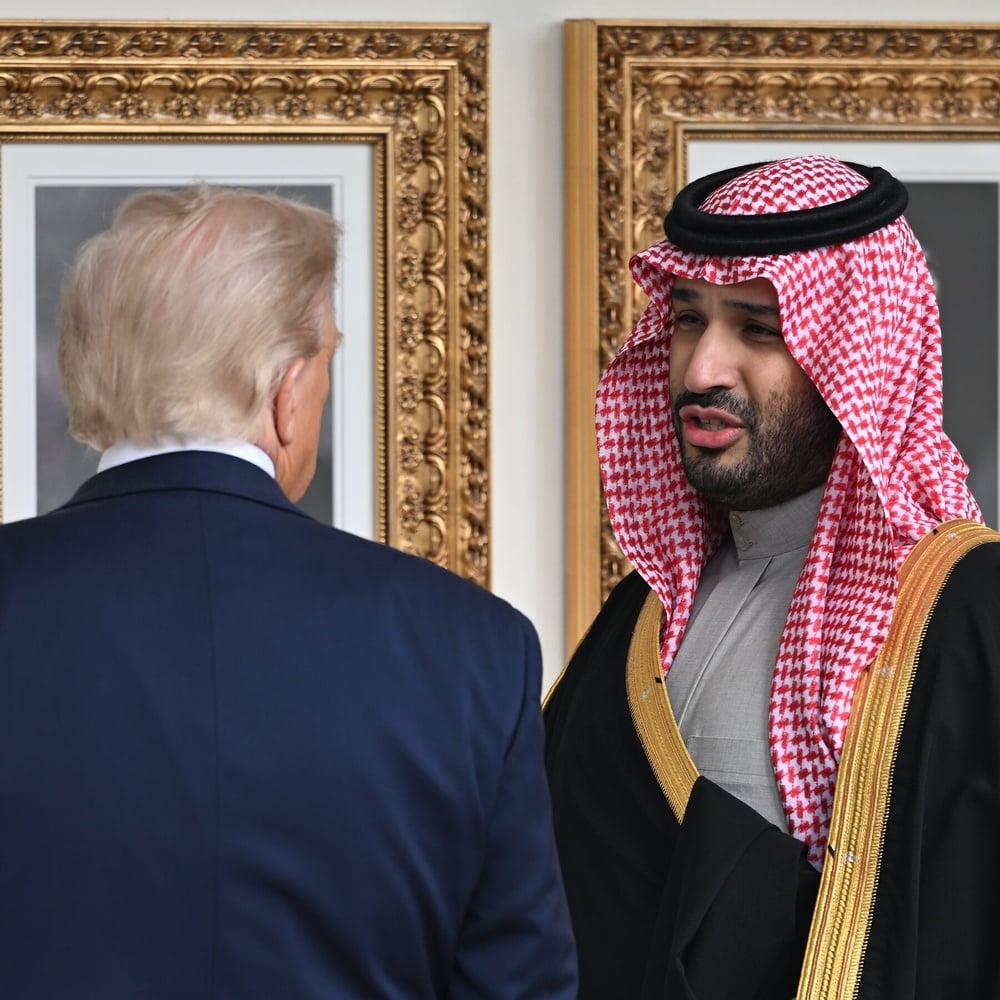
The report describes a conditional revision to a previously signed U.S.-Saudi civilian nuclear cooperation agreement tied to Saudi Arabia joining the Abraham Accords.
Automated analysis; not human reviewed. Limitations: Concise, case-specific limitations and plausible alternative interpretations.
The report presents Trump's conditional stance on the US-Saudi nuclear deal as a straightforward factual claim, foregrounding direct quotes and Israel-Gaza context without explicit editorializing.
This coverage describes Trump's conditional stance tying a recently signed US-Saudi nuclear deal to Saudi-Israel normalization under the Abraham Accords, with reference to the Gaza conflict.
Automated analysis; not human reviewed.
Limitations: Concise, case-specific limitations and plausible alternative interpretations.
·
1 of 52 available dimensions scored; omitted dimensions are not treated as neutral.
·
Verified supporting quotes for 0 of 1 scored dimensions.
Limited context; quotes drive interpretation; broader framing not captured.
Publisher relies on attribution-heavy quotation of official rhetoric and unnamed sources to outline Trump conditioning a civil nuclear deal with Saudi Arabia on Saudi joining the Abraham Accords, with minimal editorial framing.
Trump's claim that the Civil Nuclear Deal with Saudi Arabia would be conditioned on Saudi joining the Abraham Accords is presented alongside background on the Accords and media coverage from outlets such as WSJ and Reuters.
Automated analysis; not human reviewed. Limitations: Case-specific; quotes and unnamed sources mark attribution-heavy framing.
Ambiguities in sourcing; quotes and unnamed sources cloud assertions.
July 23, 2026 · 0 shares
Publisher framing emphasizes Trump's linkage of a Saudi civilian nuclear deal to Israel normalization, highlighting stated non-military facility restrictions, no uranium enrichment, and conditional approval tied to the Abraham Accords.
The report ties a Saudi civilian nuclear deal to Israel normalization, presenting policy restrictions and conditional approval as stated by the president.
Automated analysis; not human reviewed. Limitations: Short excerpt; lacks corroborating sources; framing could reflect editor's choices beyond the president's statements.
Ambiguity due to lack of date and corroboration; single-source framing.
July 23, 2026 · 0 shares
Publisher framing foregrounds Trump's conditional claim tying the Saudi-US nuclear deal to Abraham Accords, juxtaposes official statements with non-proliferation criticisms, and treats the agreement as opaque and contested.
Background: The U.S. Department of Energy announced a nuclear cooperation framework with Saudi Arabia, while Trump linked the deal to Saudi-Israel normalization under the Abraham Accords, amid non-proliferation criticisms.
Automated analysis; not human reviewed.
Limitations: Evidence derives from a single article; quotes may reflect a specific editorial stance or timing; no reader-response data.
·
3 of 52 available dimensions scored; omitted dimensions are not treated as neutral.
·
Verified supporting quotes for 0 of 3 scored dimensions.
Ambiguity in deal terms; limited public details; relies on Trump/DOE statements.
July 23, 2026 · 0 shares
Publisher framing foregrounds Trump's conditional claim on a Saudi nuclear deal tied to Abraham Accords, relying on direct quotes from the White House, Netanyahu's office, WSJ, and MEE to present a contested negotiation narrative.
News report about Trump's conditional nuclear deal with Saudi Arabia and competing claims about whether normalization was a negotiated condition.
Automated analysis; not human reviewed.
Limitations: Case-specific limitations include reliance on quotes and a subset of sources; alternative frames could emphasize policy or security implications.
·
20 of 52 available dimensions scored; omitted dimensions are not treated as neutral.
·
Verified supporting quotes for 0 of 20 scored dimensions.
Claim: The reporting presents a balanced, multi-sourced frame rather than a partisan editorial stance.
“In a post on Truth Social Thursday, Trump said that the recently announced 'Civil Nuclear Deal' to provide Saudi Arabia with a nuclear program 'pertains only to non-military use' and 'is totally subject to Saudi Arabia joining the very respected and successful Abraham Accords.'” · not found in supplied text
“Netanyahu's office posted on X that 'Saudi Arabia’s joining of the Abraham Accords would be an historic leap forward for peace in the Middle East.'” · not found in supplied text
“'Normalization was never listed as a condition,' one of the sources told MEE. 'Not once.'” · not found in supplied text
Counterevidence:
“'The President is always the final deal maker.
He has said if they don't join the Abraham Accords the deal is off.'”
· not found in supplied text
“'the deal that has been discussed thus far…absolutely puts America first.'” · not found in supplied text
Why: The piece strings together statements from multiple actors, suggesting an attempt at balanced framing rather than ideological slant.
Claim: The coverage features nationalist/elite framing terms (America First, Abraham Accords) that could tilt toward establishment priorities.
“Leavitt: 'the deal that has been discussed thus far…absolutely puts America first'.” · not found in supplied text
“Netanyahu's 'historic leap forward for peace' framing of acculturation through accords.” · not found in supplied text
Counterevidence:
“MEE quotes that normalization was never mentioned as a condition, implying a contested process rather than a fixed elite consensus.” · not found in supplied text
Why: Presence of 'America first' and elite diplomatic framing indicates lean toward establishment nationalism, with counterpoints from MEE.
Claim: The report centers on political actors and policy consequences, signaling political framing.
“Trump's conditional framing, Leavitt's pro-America statements, Netanyahu's pro-accord quote.” · not found in supplied text
Counterevidence:
“MEE's report that normalization was not listed as a condition counters the finality of the framing.” · not found in supplied text
Why: Focus on political actors and policy claims reflects political framing rather than a neutrally descriptive piece.
Claim: The article maintains cautious language, avoiding definitive judgments about final outcomes.
“Multiple attributions (Trump, Leavitt, Netanyahu's office, MEE, WSJ) show uncertain, contested framing.” · not found in supplied text
“The MEE quote says 'Normalization was never listed as a condition' (not once).” · not found in supplied text
Counterevidence:
“Some phrases in quotes like 'historic leap forward' could imply more certainty.” · not found in supplied text
Why: The text uses attributions to manage certainty, though some phrases suggest optimism.
Ambiguities: source reliability and exact dates; evidence depends on quoted material.
Publisher framing emphasizes a conditional, politically charged linkage between a US-Saudi civil nuclear deal and Saudi recognition of Israel via the Abraham Accords, foregrounding White House statements and analysts' skepticism to suggest a strategic, not purely technical, decision.
The report discusses a US-Saudi civil nuclear deal conditioned on Saudi recognition of Israel via the Abraham Accords, citing Trump’s social-media claim and White House spokesperson comments alongside analysts.
Automated analysis; not human reviewed. Limitations: Concise, case-specific limitations and plausible alternative interpretations.
Analyst-centric framing; limited context could bias interpretation.
Publisher framing foregrounds Trump’s conditional Saudi-Israel normalization tied to a civilian nuclear deal, balancing official assertions with critics’ cautions and noting potential economic and regional-security stakes.
The report centers on a Saudi civilian nuclear deal tied to Israel normalization via the Abraham Accords, citing Trump, White House, Netanyahu's office, critics, and proliferation concerns.
Automated analysis; not human reviewed.
Limitations: Based on a single article excerpt; broader site context could shift interpretation.
·
47 of 52 available dimensions scored; omitted dimensions are not treated as neutral.
·
Verified supporting quotes for 0 of 47 scored dimensions.
Claim: The score indicates a neutral framing with exposure to multiple perspectives.
“"The White House insisted that the Saudis knew the deal was contingent on recognizing Israel, despite the fact that it was not mentioned when the deal was announced."” · exact text match
“"Critics have also insisted that the deal could precipitate a nuclear race in a region already battered by war."” · exact text match
“"Netanyahu's office said Saudi joining of the Abraham Accords would be an historic leap forward for peace in the Middle East."” · not found in supplied text
Counterevidence:
“"Saudi Arabia’s joining of the Abraham Accords would be an historic leap forward for peace in the Middle East"” · exact text match
Why: The article presents both official voices and critics, suggesting balanced framing but with some positive framing from allied sources.
Claim: Framing appears centrist, including officials and critics without a clear tilt.
“"The White House insisted the Saudis knew the deal was contingent on recognizing Israel."” · not found in supplied text
“"Critics have also insisted that the deal could precipitate a nuclear race in a region already battered by war."” · exact text match
“"Netanyahu's office described Saudi joining the Abraham Accords as an historic leap forward for peace in the Middle East."” · not found in supplied text
Counterevidence:
“"The deal will be submitted to Congress for review."” · exact text match
Why: Multiple viewpoints are cited; no single narrative dominates.
Claim: No excessive certainty beyond the reported statements.
“"On Thursday, Trump posted on Truth Social that the Saudi deal 'will be approved, but is totally subject to Saudi Arabia joining the very respected and successful Abraham Accords'"” · not found in supplied text
“"The deal will be submitted to Congress for review."” · exact text match
Counterevidence:
“"Saudi Arabia’s joining of the Abraham Accords would be an historic leap forward for peace in the Middle East"” · exact text match
Why: Reliance on contemporaneous quotes; no single assertion of fact beyond reported claims.
Claim: Moderate credibility due to diverse sourcing and explicit attribution.
“"The Wall Street Journal reported a provision that could see U.S. companies build a uranium enrichment facility in Saudi Arabia."” · not found in supplied text
“"The White House insisted the Saudis knew the deal was contingent on recognizing Israel."” · not found in supplied text
“"The deal will be submitted to Congress for review."” · exact text match
Counterevidence:
“"The U.S. Energy Department did not mention the enrichment provision and did not offer comment when asked by AFP."” · not found in supplied text
Why: Sourcing includes White House, Netanyahu's office, WSJ, and Congress references; some items rely on third-party reports.
Ambiguities persist; cross-source verification would sharpen conclusions.
July 23, 2026 · 0 shares
Publisher framing foregrounds a White House conditional claim about a Saudi nuclear deal tied to joining the Abraham Accords, citing a White House press briefing and echoing a Trump post.
The report describes a White House conditionality claim tying a Saudi nuclear deal to joining the Abraham Accords, sourced to a White House press briefing and amplified by a Trump post.
Automated analysis; not human reviewed. Limitations: Concise, case-specific limitations and plausible alternative interpretations.
July 23, 2026 · 0 shares
Publisher framing foregrounds Trump's conditional claim tying the Saudi-US nuclear deal to Abraham Accords, juxtaposes official statements with non-proliferation criticisms, and treats the agreement as opaque and contested.
Background: The U.S. Department of Energy announced a nuclear cooperation framework with Saudi Arabia, while Trump linked the deal to Saudi-Israel normalization under the Abraham Accords, amid non-proliferation criticisms.
Automated analysis; not human reviewed.
Limitations: Evidence derives from a single article; quotes may reflect a specific editorial stance or timing; no reader-response data.
·
3 of 52 available dimensions scored; omitted dimensions are not treated as neutral.
·
Verified supporting quotes for 0 of 3 scored dimensions.
Ambiguity in deal terms; limited public details; relies on Trump/DOE statements.
Publisher frames the U.S.-Saudi civil nuclear cooperation as a civilian, pro-market partnership grounded in official assurances and strategic alliance, while noting international alarm and Israel-related sensitivities.
Background context within the report emphasizes civilian intent, potential American economic and security benefits, and a framework that includes nonproliferation standards, while noting regional tensions and Israel-related concerns.
Automated analysis; not human reviewed.
Limitations: Analysis limited to the article's text; quotes reflect the publisher's framing and may not capture broader debate or independent verification.
·
1 of 52 available dimensions scored; omitted dimensions are not treated as neutral.
·
Verified supporting quotes for 0 of 1 scored dimensions.
Ambiguities: date is relative; relies on official sources; could reflect selective emphasis.
July 23, 2026 · 0 shares
Framing centers on a Trump-announced conditional U.S.-Saudi civilian nuclear deal tied to the Abraham Accords, foregrounding White House confirmations and potential disruption while offering limited critical context.
The report describes a conditional revision to a previously signed U.S.-Saudi civilian nuclear cooperation agreement tied to Saudi Arabia joining the Abraham Accords.
Automated analysis; not human reviewed. Limitations: Concise, case-specific limitations and plausible alternative interpretations.
Publisher frames the U.S.-Saudi civil nuclear cooperation as a civilian, pro-market partnership grounded in official assurances and strategic alliance, while noting international alarm and Israel-related sensitivities.
Background context within the report emphasizes civilian intent, potential American economic and security benefits, and a framework that includes nonproliferation standards, while noting regional tensions and Israel-related concerns.
Automated analysis; not human reviewed. Limitations: Analysis limited to the article's text; quotes reflect the publisher's framing and may not capture broader debate or independent verification. · 1 of 52 available dimensions scored; omitted dimensions are not treated as neutral. · Verified supporting quotes for 0 of 1 scored dimensions.
Ambiguities: date is relative; relies on official sources; could reflect selective emphasis.
The report presents Trump's conditional stance on the US-Saudi nuclear deal as a straightforward factual claim, foregrounding direct quotes and Israel-Gaza context without explicit editorializing.
This coverage describes Trump's conditional stance tying a recently signed US-Saudi nuclear deal to Saudi-Israel normalization under the Abraham Accords, with reference to the Gaza conflict.
Automated analysis; not human reviewed. Limitations: Concise, case-specific limitations and plausible alternative interpretations. · 1 of 52 available dimensions scored; omitted dimensions are not treated as neutral. · Verified supporting quotes for 0 of 1 scored dimensions.
Limited context; quotes drive interpretation; broader framing not captured.
July 23, 2026 · 0 shares
Publisher framing foregrounds Trump's conditional claim tying the Saudi-US nuclear deal to Abraham Accords, juxtaposes official statements with non-proliferation criticisms, and treats the agreement as opaque and contested.
Background: The U.S. Department of Energy announced a nuclear cooperation framework with Saudi Arabia, while Trump linked the deal to Saudi-Israel normalization under the Abraham Accords, amid non-proliferation criticisms.
Automated analysis; not human reviewed. Limitations: Evidence derives from a single article; quotes may reflect a specific editorial stance or timing; no reader-response data. · 3 of 52 available dimensions scored; omitted dimensions are not treated as neutral. · Verified supporting quotes for 0 of 3 scored dimensions.
Ambiguity in deal terms; limited public details; relies on Trump/DOE statements.
Publisher relies on attribution-heavy quotation of official rhetoric and unnamed sources to outline Trump conditioning a civil nuclear deal with Saudi Arabia on Saudi joining the Abraham Accords, with minimal editorial framing.
Trump's claim that the Civil Nuclear Deal with Saudi Arabia would be conditioned on Saudi joining the Abraham Accords is presented alongside background on the Accords and media coverage from outlets such as WSJ and Reuters.
Automated analysis; not human reviewed. Limitations: Case-specific; quotes and unnamed sources mark attribution-heavy framing.
Ambiguities in sourcing; quotes and unnamed sources cloud assertions.
July 23, 2026 · 0 shares
Publisher framing foregrounds Trump's conditional claim on a Saudi nuclear deal tied to Abraham Accords, relying on direct quotes from the White House, Netanyahu's office, WSJ, and MEE to present a contested negotiation narrative.
News report about Trump's conditional nuclear deal with Saudi Arabia and competing claims about whether normalization was a negotiated condition.
Automated analysis; not human reviewed. Limitations: Case-specific limitations include reliance on quotes and a subset of sources; alternative frames could emphasize policy or security implications. · 20 of 52 available dimensions scored; omitted dimensions are not treated as neutral. · Verified supporting quotes for 0 of 20 scored dimensions.
Claim: The reporting presents a balanced, multi-sourced frame rather than a partisan editorial stance.
“In a post on Truth Social Thursday, Trump said that the recently announced 'Civil Nuclear Deal' to provide Saudi Arabia with a nuclear program 'pertains only to non-military use' and 'is totally subject to Saudi Arabia joining the very respected and successful Abraham Accords.'” · not found in supplied text
“Netanyahu's office posted on X that 'Saudi Arabia’s joining of the Abraham Accords would be an historic leap forward for peace in the Middle East.'” · not found in supplied text
“'Normalization was never listed as a condition,' one of the sources told MEE. 'Not once.'” · not found in supplied text
Counterevidence:
“'The President is always the final deal maker. He has said if they don't join the Abraham Accords the deal is off.'” · not found in supplied text
“'the deal that has been discussed thus far…absolutely puts America first.'” · not found in supplied text
Why: The piece strings together statements from multiple actors, suggesting an attempt at balanced framing rather than ideological slant.
Claim: The coverage features nationalist/elite framing terms (America First, Abraham Accords) that could tilt toward establishment priorities.
“Leavitt: 'the deal that has been discussed thus far…absolutely puts America first'.” · not found in supplied text
“Netanyahu's 'historic leap forward for peace' framing of acculturation through accords.” · not found in supplied text
Counterevidence:
“MEE quotes that normalization was never mentioned as a condition, implying a contested process rather than a fixed elite consensus.” · not found in supplied text
Why: Presence of 'America first' and elite diplomatic framing indicates lean toward establishment nationalism, with counterpoints from MEE.
Claim: The report centers on political actors and policy consequences, signaling political framing.
“Trump's conditional framing, Leavitt's pro-America statements, Netanyahu's pro-accord quote.” · not found in supplied text
Counterevidence:
“MEE's report that normalization was not listed as a condition counters the finality of the framing.” · not found in supplied text
Why: Focus on political actors and policy claims reflects political framing rather than a neutrally descriptive piece.
Claim: The article maintains cautious language, avoiding definitive judgments about final outcomes.
“Multiple attributions (Trump, Leavitt, Netanyahu's office, MEE, WSJ) show uncertain, contested framing.” · not found in supplied text
“The MEE quote says 'Normalization was never listed as a condition' (not once).” · not found in supplied text
Counterevidence:
“Some phrases in quotes like 'historic leap forward' could imply more certainty.” · not found in supplied text
Why: The text uses attributions to manage certainty, though some phrases suggest optimism.
Ambiguities: source reliability and exact dates; evidence depends on quoted material.
July 23, 2026 · 0 shares
Publisher framing emphasizes Trump's linkage of a Saudi civilian nuclear deal to Israel normalization, highlighting stated non-military facility restrictions, no uranium enrichment, and conditional approval tied to the Abraham Accords.
The report ties a Saudi civilian nuclear deal to Israel normalization, presenting policy restrictions and conditional approval as stated by the president.
Automated analysis; not human reviewed. Limitations: Short excerpt; lacks corroborating sources; framing could reflect editor's choices beyond the president's statements.
Ambiguity due to lack of date and corroboration; single-source framing.
Helium Bias
July 23, 2026 · 0 shares
Framing centers on a Trump-announced conditional U.S.-Saudi civilian nuclear deal tied to the Abraham Accords, foregrounding White House confirmations and potential disruption while offering limited critical context.
The report describes a conditional revision to a previously signed U.S.-Saudi civilian nuclear cooperation agreement tied to Saudi Arabia joining the Abraham Accords.
Automated analysis; not human reviewed. Limitations: Concise, case-specific limitations and plausible alternative interpretations.
Publisher frames the U.S.-Saudi civil nuclear cooperation as a civilian, pro-market partnership grounded in official assurances and strategic alliance, while noting international alarm and Israel-related sensitivities.
Background context within the report emphasizes civilian intent, potential American economic and security benefits, and a framework that includes nonproliferation standards, while noting regional tensions and Israel-related concerns.
Automated analysis; not human reviewed. Limitations: Analysis limited to the article's text; quotes reflect the publisher's framing and may not capture broader debate or independent verification. · 1 of 52 available dimensions scored; omitted dimensions are not treated as neutral. · Verified supporting quotes for 0 of 1 scored dimensions.
Ambiguities: date is relative; relies on official sources; could reflect selective emphasis.
The report presents Trump's conditional stance on the US-Saudi nuclear deal as a straightforward factual claim, foregrounding direct quotes and Israel-Gaza context without explicit editorializing.
This coverage describes Trump's conditional stance tying a recently signed US-Saudi nuclear deal to Saudi-Israel normalization under the Abraham Accords, with reference to the Gaza conflict.
Automated analysis; not human reviewed. Limitations: Concise, case-specific limitations and plausible alternative interpretations. · 1 of 52 available dimensions scored; omitted dimensions are not treated as neutral. · Verified supporting quotes for 0 of 1 scored dimensions.
Limited context; quotes drive interpretation; broader framing not captured.
July 23, 2026 · 0 shares
Publisher framing foregrounds a White House conditional claim about a Saudi nuclear deal tied to joining the Abraham Accords, citing a White House press briefing and echoing a Trump post.
The report describes a White House conditionality claim tying a Saudi nuclear deal to joining the Abraham Accords, sourced to a White House press briefing and amplified by a Trump post.
Automated analysis; not human reviewed. Limitations: Concise, case-specific limitations and plausible alternative interpretations.
July 23, 2026 · 0 shares
Publisher framing foregrounds Trump's conditional claim on a Saudi nuclear deal tied to Abraham Accords, relying on direct quotes from the White House, Netanyahu's office, WSJ, and MEE to present a contested negotiation narrative.
News report about Trump's conditional nuclear deal with Saudi Arabia and competing claims about whether normalization was a negotiated condition.
Automated analysis; not human reviewed. Limitations: Case-specific limitations include reliance on quotes and a subset of sources; alternative frames could emphasize policy or security implications. · 20 of 52 available dimensions scored; omitted dimensions are not treated as neutral. · Verified supporting quotes for 0 of 20 scored dimensions.
Claim: The reporting presents a balanced, multi-sourced frame rather than a partisan editorial stance.
“In a post on Truth Social Thursday, Trump said that the recently announced 'Civil Nuclear Deal' to provide Saudi Arabia with a nuclear program 'pertains only to non-military use' and 'is totally subject to Saudi Arabia joining the very respected and successful Abraham Accords.'” · not found in supplied text
“Netanyahu's office posted on X that 'Saudi Arabia’s joining of the Abraham Accords would be an historic leap forward for peace in the Middle East.'” · not found in supplied text
“'Normalization was never listed as a condition,' one of the sources told MEE. 'Not once.'” · not found in supplied text
Counterevidence:
“'The President is always the final deal maker. He has said if they don't join the Abraham Accords the deal is off.'” · not found in supplied text
“'the deal that has been discussed thus far…absolutely puts America first.'” · not found in supplied text
Why: The piece strings together statements from multiple actors, suggesting an attempt at balanced framing rather than ideological slant.
Claim: The coverage features nationalist/elite framing terms (America First, Abraham Accords) that could tilt toward establishment priorities.
“Leavitt: 'the deal that has been discussed thus far…absolutely puts America first'.” · not found in supplied text
“Netanyahu's 'historic leap forward for peace' framing of acculturation through accords.” · not found in supplied text
Counterevidence:
“MEE quotes that normalization was never mentioned as a condition, implying a contested process rather than a fixed elite consensus.” · not found in supplied text
Why: Presence of 'America first' and elite diplomatic framing indicates lean toward establishment nationalism, with counterpoints from MEE.
Claim: The report centers on political actors and policy consequences, signaling political framing.
“Trump's conditional framing, Leavitt's pro-America statements, Netanyahu's pro-accord quote.” · not found in supplied text
Counterevidence:
“MEE's report that normalization was not listed as a condition counters the finality of the framing.” · not found in supplied text
Why: Focus on political actors and policy claims reflects political framing rather than a neutrally descriptive piece.
Claim: The article maintains cautious language, avoiding definitive judgments about final outcomes.
“Multiple attributions (Trump, Leavitt, Netanyahu's office, MEE, WSJ) show uncertain, contested framing.” · not found in supplied text
“The MEE quote says 'Normalization was never listed as a condition' (not once).” · not found in supplied text
Counterevidence:
“Some phrases in quotes like 'historic leap forward' could imply more certainty.” · not found in supplied text
Why: The text uses attributions to manage certainty, though some phrases suggest optimism.
Ambiguities: source reliability and exact dates; evidence depends on quoted material.
July 23, 2026 · 0 shares
Publisher framing foregrounds Trump's conditional claim tying the Saudi-US nuclear deal to Abraham Accords, juxtaposes official statements with non-proliferation criticisms, and treats the agreement as opaque and contested.
Background: The U.S. Department of Energy announced a nuclear cooperation framework with Saudi Arabia, while Trump linked the deal to Saudi-Israel normalization under the Abraham Accords, amid non-proliferation criticisms.
Automated analysis; not human reviewed. Limitations: Evidence derives from a single article; quotes may reflect a specific editorial stance or timing; no reader-response data. · 3 of 52 available dimensions scored; omitted dimensions are not treated as neutral. · Verified supporting quotes for 0 of 3 scored dimensions.
Ambiguity in deal terms; limited public details; relies on Trump/DOE statements.
July 23, 2026 · 0 shares
Publisher framing foregrounds Trump's conditional claim on a Saudi nuclear deal tied to Abraham Accords, relying on direct quotes from the White House, Netanyahu's office, WSJ, and MEE to present a contested negotiation narrative.
News report about Trump's conditional nuclear deal with Saudi Arabia and competing claims about whether normalization was a negotiated condition.
Automated analysis; not human reviewed. Limitations: Case-specific limitations include reliance on quotes and a subset of sources; alternative frames could emphasize policy or security implications. · 20 of 52 available dimensions scored; omitted dimensions are not treated as neutral. · Verified supporting quotes for 0 of 20 scored dimensions.
Claim: The reporting presents a balanced, multi-sourced frame rather than a partisan editorial stance.
“In a post on Truth Social Thursday, Trump said that the recently announced 'Civil Nuclear Deal' to provide Saudi Arabia with a nuclear program 'pertains only to non-military use' and 'is totally subject to Saudi Arabia joining the very respected and successful Abraham Accords.'” · not found in supplied text
“Netanyahu's office posted on X that 'Saudi Arabia’s joining of the Abraham Accords would be an historic leap forward for peace in the Middle East.'” · not found in supplied text
“'Normalization was never listed as a condition,' one of the sources told MEE. 'Not once.'” · not found in supplied text
Counterevidence:
“'The President is always the final deal maker. He has said if they don't join the Abraham Accords the deal is off.'” · not found in supplied text
“'the deal that has been discussed thus far…absolutely puts America first.'” · not found in supplied text
Why: The piece strings together statements from multiple actors, suggesting an attempt at balanced framing rather than ideological slant.
Claim: The coverage features nationalist/elite framing terms (America First, Abraham Accords) that could tilt toward establishment priorities.
“Leavitt: 'the deal that has been discussed thus far…absolutely puts America first'.” · not found in supplied text
“Netanyahu's 'historic leap forward for peace' framing of acculturation through accords.” · not found in supplied text
Counterevidence:
“MEE quotes that normalization was never mentioned as a condition, implying a contested process rather than a fixed elite consensus.” · not found in supplied text
Why: Presence of 'America first' and elite diplomatic framing indicates lean toward establishment nationalism, with counterpoints from MEE.
Claim: The report centers on political actors and policy consequences, signaling political framing.
“Trump's conditional framing, Leavitt's pro-America statements, Netanyahu's pro-accord quote.” · not found in supplied text
Counterevidence:
“MEE's report that normalization was not listed as a condition counters the finality of the framing.” · not found in supplied text
Why: Focus on political actors and policy claims reflects political framing rather than a neutrally descriptive piece.
Claim: The article maintains cautious language, avoiding definitive judgments about final outcomes.
“Multiple attributions (Trump, Leavitt, Netanyahu's office, MEE, WSJ) show uncertain, contested framing.” · not found in supplied text
“The MEE quote says 'Normalization was never listed as a condition' (not once).” · not found in supplied text
Counterevidence:
“Some phrases in quotes like 'historic leap forward' could imply more certainty.” · not found in supplied text
Why: The text uses attributions to manage certainty, though some phrases suggest optimism.
Ambiguities: source reliability and exact dates; evidence depends on quoted material.
Story Blindspots
July 23, 2026 · 0 shares
Publisher framing foregrounds Trump's conditional claim tying the Saudi-US nuclear deal to Abraham Accords, juxtaposes official statements with non-proliferation criticisms, and treats the agreement as opaque and contested.
Background: The U.S. Department of Energy announced a nuclear cooperation framework with Saudi Arabia, while Trump linked the deal to Saudi-Israel normalization under the Abraham Accords, amid non-proliferation criticisms.
Automated analysis; not human reviewed. Limitations: Evidence derives from a single article; quotes may reflect a specific editorial stance or timing; no reader-response data. · 3 of 52 available dimensions scored; omitted dimensions are not treated as neutral. · Verified supporting quotes for 0 of 3 scored dimensions.
Ambiguity in deal terms; limited public details; relies on Trump/DOE statements.
July 23, 2026 · 0 shares
Publisher framing foregrounds Trump's conditional claim on a Saudi nuclear deal tied to Abraham Accords, relying on direct quotes from the White House, Netanyahu's office, WSJ, and MEE to present a contested negotiation narrative.
News report about Trump's conditional nuclear deal with Saudi Arabia and competing claims about whether normalization was a negotiated condition.
Automated analysis; not human reviewed. Limitations: Case-specific limitations include reliance on quotes and a subset of sources; alternative frames could emphasize policy or security implications. · 20 of 52 available dimensions scored; omitted dimensions are not treated as neutral. · Verified supporting quotes for 0 of 20 scored dimensions.
Claim: The reporting presents a balanced, multi-sourced frame rather than a partisan editorial stance.
“In a post on Truth Social Thursday, Trump said that the recently announced 'Civil Nuclear Deal' to provide Saudi Arabia with a nuclear program 'pertains only to non-military use' and 'is totally subject to Saudi Arabia joining the very respected and successful Abraham Accords.'” · not found in supplied text
“Netanyahu's office posted on X that 'Saudi Arabia’s joining of the Abraham Accords would be an historic leap forward for peace in the Middle East.'” · not found in supplied text
“'Normalization was never listed as a condition,' one of the sources told MEE. 'Not once.'” · not found in supplied text
Counterevidence:
“'The President is always the final deal maker. He has said if they don't join the Abraham Accords the deal is off.'” · not found in supplied text
“'the deal that has been discussed thus far…absolutely puts America first.'” · not found in supplied text
Why: The piece strings together statements from multiple actors, suggesting an attempt at balanced framing rather than ideological slant.
Claim: The coverage features nationalist/elite framing terms (America First, Abraham Accords) that could tilt toward establishment priorities.
“Leavitt: 'the deal that has been discussed thus far…absolutely puts America first'.” · not found in supplied text
“Netanyahu's 'historic leap forward for peace' framing of acculturation through accords.” · not found in supplied text
Counterevidence:
“MEE quotes that normalization was never mentioned as a condition, implying a contested process rather than a fixed elite consensus.” · not found in supplied text
Why: Presence of 'America first' and elite diplomatic framing indicates lean toward establishment nationalism, with counterpoints from MEE.
Claim: The report centers on political actors and policy consequences, signaling political framing.
“Trump's conditional framing, Leavitt's pro-America statements, Netanyahu's pro-accord quote.” · not found in supplied text
Counterevidence:
“MEE's report that normalization was not listed as a condition counters the finality of the framing.” · not found in supplied text
Why: Focus on political actors and policy claims reflects political framing rather than a neutrally descriptive piece.
Claim: The article maintains cautious language, avoiding definitive judgments about final outcomes.
“Multiple attributions (Trump, Leavitt, Netanyahu's office, MEE, WSJ) show uncertain, contested framing.” · not found in supplied text
“The MEE quote says 'Normalization was never listed as a condition' (not once).” · not found in supplied text
Counterevidence:
“Some phrases in quotes like 'historic leap forward' could imply more certainty.” · not found in supplied text
Why: The text uses attributions to manage certainty, though some phrases suggest optimism.
Ambiguities: source reliability and exact dates; evidence depends on quoted material.
Publisher frames the U.S.-Saudi civil nuclear cooperation as a civilian, pro-market partnership grounded in official assurances and strategic alliance, while noting international alarm and Israel-related sensitivities.
Background context within the report emphasizes civilian intent, potential American economic and security benefits, and a framework that includes nonproliferation standards, while noting regional tensions and Israel-related concerns.
Automated analysis; not human reviewed. Limitations: Analysis limited to the article's text; quotes reflect the publisher's framing and may not capture broader debate or independent verification. · 1 of 52 available dimensions scored; omitted dimensions are not treated as neutral. · Verified supporting quotes for 0 of 1 scored dimensions.
Ambiguities: date is relative; relies on official sources; could reflect selective emphasis.
July 23, 2026 · 0 shares
Publisher framing foregrounds Trump's conditional claim tying the Saudi-US nuclear deal to Abraham Accords, juxtaposes official statements with non-proliferation criticisms, and treats the agreement as opaque and contested.
Background: The U.S. Department of Energy announced a nuclear cooperation framework with Saudi Arabia, while Trump linked the deal to Saudi-Israel normalization under the Abraham Accords, amid non-proliferation criticisms.
Automated analysis; not human reviewed. Limitations: Evidence derives from a single article; quotes may reflect a specific editorial stance or timing; no reader-response data. · 3 of 52 available dimensions scored; omitted dimensions are not treated as neutral. · Verified supporting quotes for 0 of 3 scored dimensions.
Ambiguity in deal terms; limited public details; relies on Trump/DOE statements.
Publisher relies on attribution-heavy quotation of official rhetoric and unnamed sources to outline Trump conditioning a civil nuclear deal with Saudi Arabia on Saudi joining the Abraham Accords, with minimal editorial framing.
Trump's claim that the Civil Nuclear Deal with Saudi Arabia would be conditioned on Saudi joining the Abraham Accords is presented alongside background on the Accords and media coverage from outlets such as WSJ and Reuters.
Automated analysis; not human reviewed. Limitations: Case-specific; quotes and unnamed sources mark attribution-heavy framing.
Ambiguities in sourcing; quotes and unnamed sources cloud assertions.
July 23, 2026 · 0 shares
Publisher framing foregrounds Trump's conditional claim on a Saudi nuclear deal tied to Abraham Accords, relying on direct quotes from the White House, Netanyahu's office, WSJ, and MEE to present a contested negotiation narrative.
News report about Trump's conditional nuclear deal with Saudi Arabia and competing claims about whether normalization was a negotiated condition.
Automated analysis; not human reviewed. Limitations: Case-specific limitations include reliance on quotes and a subset of sources; alternative frames could emphasize policy or security implications. · 20 of 52 available dimensions scored; omitted dimensions are not treated as neutral. · Verified supporting quotes for 0 of 20 scored dimensions.
Claim: The reporting presents a balanced, multi-sourced frame rather than a partisan editorial stance.
“In a post on Truth Social Thursday, Trump said that the recently announced 'Civil Nuclear Deal' to provide Saudi Arabia with a nuclear program 'pertains only to non-military use' and 'is totally subject to Saudi Arabia joining the very respected and successful Abraham Accords.'” · not found in supplied text
“Netanyahu's office posted on X that 'Saudi Arabia’s joining of the Abraham Accords would be an historic leap forward for peace in the Middle East.'” · not found in supplied text
“'Normalization was never listed as a condition,' one of the sources told MEE. 'Not once.'” · not found in supplied text
Counterevidence:
“'The President is always the final deal maker. He has said if they don't join the Abraham Accords the deal is off.'” · not found in supplied text
“'the deal that has been discussed thus far…absolutely puts America first.'” · not found in supplied text
Why: The piece strings together statements from multiple actors, suggesting an attempt at balanced framing rather than ideological slant.
Claim: The coverage features nationalist/elite framing terms (America First, Abraham Accords) that could tilt toward establishment priorities.
“Leavitt: 'the deal that has been discussed thus far…absolutely puts America first'.” · not found in supplied text
“Netanyahu's 'historic leap forward for peace' framing of acculturation through accords.” · not found in supplied text
Counterevidence:
“MEE quotes that normalization was never mentioned as a condition, implying a contested process rather than a fixed elite consensus.” · not found in supplied text
Why: Presence of 'America first' and elite diplomatic framing indicates lean toward establishment nationalism, with counterpoints from MEE.
Claim: The report centers on political actors and policy consequences, signaling political framing.
“Trump's conditional framing, Leavitt's pro-America statements, Netanyahu's pro-accord quote.” · not found in supplied text
Counterevidence:
“MEE's report that normalization was not listed as a condition counters the finality of the framing.” · not found in supplied text
Why: Focus on political actors and policy claims reflects political framing rather than a neutrally descriptive piece.
Claim: The article maintains cautious language, avoiding definitive judgments about final outcomes.
“Multiple attributions (Trump, Leavitt, Netanyahu's office, MEE, WSJ) show uncertain, contested framing.” · not found in supplied text
“The MEE quote says 'Normalization was never listed as a condition' (not once).” · not found in supplied text
Counterevidence:
“Some phrases in quotes like 'historic leap forward' could imply more certainty.” · not found in supplied text
Why: The text uses attributions to manage certainty, though some phrases suggest optimism.
Ambiguities: source reliability and exact dates; evidence depends on quoted material.
July 23, 2026 · 0 shares
Publisher framing foregrounds a White House conditional claim about a Saudi nuclear deal tied to joining the Abraham Accords, citing a White House press briefing and echoing a Trump post.
The report describes a White House conditionality claim tying a Saudi nuclear deal to joining the Abraham Accords, sourced to a White House press briefing and amplified by a Trump post.
Automated analysis; not human reviewed. Limitations: Concise, case-specific limitations and plausible alternative interpretations.
July 23, 2026 · 0 shares
Framing centers on a Trump-announced conditional U.S.-Saudi civilian nuclear deal tied to the Abraham Accords, foregrounding White House confirmations and potential disruption while offering limited critical context.
The report describes a conditional revision to a previously signed U.S.-Saudi civilian nuclear cooperation agreement tied to Saudi Arabia joining the Abraham Accords.
Automated analysis; not human reviewed. Limitations: Concise, case-specific limitations and plausible alternative interpretations.
The report presents Trump's conditional stance on the US-Saudi nuclear deal as a straightforward factual claim, foregrounding direct quotes and Israel-Gaza context without explicit editorializing.
This coverage describes Trump's conditional stance tying a recently signed US-Saudi nuclear deal to Saudi-Israel normalization under the Abraham Accords, with reference to the Gaza conflict.
Automated analysis; not human reviewed. Limitations: Concise, case-specific limitations and plausible alternative interpretations. · 1 of 52 available dimensions scored; omitted dimensions are not treated as neutral. · Verified supporting quotes for 0 of 1 scored dimensions.
Limited context; quotes drive interpretation; broader framing not captured.
Publisher frames the U.S.-Saudi civil nuclear cooperation as a civilian, pro-market partnership grounded in official assurances and strategic alliance, while noting international alarm and Israel-related sensitivities.
Background context within the report emphasizes civilian intent, potential American economic and security benefits, and a framework that includes nonproliferation standards, while noting regional tensions and Israel-related concerns.
Automated analysis; not human reviewed. Limitations: Analysis limited to the article's text; quotes reflect the publisher's framing and may not capture broader debate or independent verification. · 1 of 52 available dimensions scored; omitted dimensions are not treated as neutral. · Verified supporting quotes for 0 of 1 scored dimensions.
Ambiguities: date is relative; relies on official sources; could reflect selective emphasis.
July 23, 2026 · 0 shares
Framing centers on a Trump-announced conditional U.S.-Saudi civilian nuclear deal tied to the Abraham Accords, foregrounding White House confirmations and potential disruption while offering limited critical context.
The report describes a conditional revision to a previously signed U.S.-Saudi civilian nuclear cooperation agreement tied to Saudi Arabia joining the Abraham Accords.
Automated analysis; not human reviewed. Limitations: Concise, case-specific limitations and plausible alternative interpretations.
July 23, 2026 · 0 shares
Framing centers on a Trump-announced conditional U.S.-Saudi civilian nuclear deal tied to the Abraham Accords, foregrounding White House confirmations and potential disruption while offering limited critical context.
The report describes a conditional revision to a previously signed U.S.-Saudi civilian nuclear cooperation agreement tied to Saudi Arabia joining the Abraham Accords.
Automated analysis; not human reviewed. Limitations: Concise, case-specific limitations and plausible alternative interpretations.
The report presents Trump's conditional stance on the US-Saudi nuclear deal as a straightforward factual claim, foregrounding direct quotes and Israel-Gaza context without explicit editorializing.
This coverage describes Trump's conditional stance tying a recently signed US-Saudi nuclear deal to Saudi-Israel normalization under the Abraham Accords, with reference to the Gaza conflict.
Automated analysis; not human reviewed. Limitations: Concise, case-specific limitations and plausible alternative interpretations. · 1 of 52 available dimensions scored; omitted dimensions are not treated as neutral. · Verified supporting quotes for 0 of 1 scored dimensions.
Limited context; quotes drive interpretation; broader framing not captured.
Publisher framing emphasizes a conditional, politically charged linkage between a US-Saudi civil nuclear deal and Saudi recognition of Israel via the Abraham Accords, foregrounding White House statements and analysts' skepticism to suggest a strategic, not purely technical, decision.
The report discusses a US-Saudi civil nuclear deal conditioned on Saudi recognition of Israel via the Abraham Accords, citing Trump’s social-media claim and White House spokesperson comments alongside analysts.
Automated analysis; not human reviewed. Limitations: Concise, case-specific limitations and plausible alternative interpretations.
Analyst-centric framing; limited context could bias interpretation.
Publisher framing foregrounds Trump’s conditional Saudi-Israel normalization tied to a civilian nuclear deal, balancing official assertions with critics’ cautions and noting potential economic and regional-security stakes.
The report centers on a Saudi civilian nuclear deal tied to Israel normalization via the Abraham Accords, citing Trump, White House, Netanyahu's office, critics, and proliferation concerns.
Automated analysis; not human reviewed. Limitations: Based on a single article excerpt; broader site context could shift interpretation. · 47 of 52 available dimensions scored; omitted dimensions are not treated as neutral. · Verified supporting quotes for 0 of 47 scored dimensions.
Claim: The score indicates a neutral framing with exposure to multiple perspectives.
“"The White House insisted that the Saudis knew the deal was contingent on recognizing Israel, despite the fact that it was not mentioned when the deal was announced."” · exact text match
“"Critics have also insisted that the deal could precipitate a nuclear race in a region already battered by war."” · exact text match
“"Netanyahu's office said Saudi joining of the Abraham Accords would be an historic leap forward for peace in the Middle East."” · not found in supplied text
Counterevidence:
“"Saudi Arabia’s joining of the Abraham Accords would be an historic leap forward for peace in the Middle East"” · exact text match
Why: The article presents both official voices and critics, suggesting balanced framing but with some positive framing from allied sources.
Claim: Framing appears centrist, including officials and critics without a clear tilt.
“"The White House insisted the Saudis knew the deal was contingent on recognizing Israel."” · not found in supplied text
“"Critics have also insisted that the deal could precipitate a nuclear race in a region already battered by war."” · exact text match
“"Netanyahu's office described Saudi joining the Abraham Accords as an historic leap forward for peace in the Middle East."” · not found in supplied text
Counterevidence:
“"The deal will be submitted to Congress for review."” · exact text match
Why: Multiple viewpoints are cited; no single narrative dominates.
Claim: No excessive certainty beyond the reported statements.
“"On Thursday, Trump posted on Truth Social that the Saudi deal 'will be approved, but is totally subject to Saudi Arabia joining the very respected and successful Abraham Accords'"” · not found in supplied text
“"The deal will be submitted to Congress for review."” · exact text match
Counterevidence:
“"Saudi Arabia’s joining of the Abraham Accords would be an historic leap forward for peace in the Middle East"” · exact text match
Why: Reliance on contemporaneous quotes; no single assertion of fact beyond reported claims.
Claim: Moderate credibility due to diverse sourcing and explicit attribution.
“"The Wall Street Journal reported a provision that could see U.S. companies build a uranium enrichment facility in Saudi Arabia."” · not found in supplied text
“"The White House insisted the Saudis knew the deal was contingent on recognizing Israel."” · not found in supplied text
“"The deal will be submitted to Congress for review."” · exact text match
Counterevidence:
“"The U.S. Energy Department did not mention the enrichment provision and did not offer comment when asked by AFP."” · not found in supplied text
Why: Sourcing includes White House, Netanyahu's office, WSJ, and Congress references; some items rely on third-party reports.
Ambiguities persist; cross-source verification would sharpen conclusions.
Publisher framing emphasizes a conditional, politically charged linkage between a US-Saudi civil nuclear deal and Saudi recognition of Israel via the Abraham Accords, foregrounding White House statements and analysts' skepticism to suggest a strategic, not purely technical, decision.
The report discusses a US-Saudi civil nuclear deal conditioned on Saudi recognition of Israel via the Abraham Accords, citing Trump’s social-media claim and White House spokesperson comments alongside analysts.
Automated analysis; not human reviewed. Limitations: Concise, case-specific limitations and plausible alternative interpretations.
Analyst-centric framing; limited context could bias interpretation.
July 23, 2026 · 0 shares
Publisher framing foregrounds Trump's conditional claim tying the Saudi-US nuclear deal to Abraham Accords, juxtaposes official statements with non-proliferation criticisms, and treats the agreement as opaque and contested.
Background: The U.S. Department of Energy announced a nuclear cooperation framework with Saudi Arabia, while Trump linked the deal to Saudi-Israel normalization under the Abraham Accords, amid non-proliferation criticisms.
Automated analysis; not human reviewed. Limitations: Evidence derives from a single article; quotes may reflect a specific editorial stance or timing; no reader-response data. · 3 of 52 available dimensions scored; omitted dimensions are not treated as neutral. · Verified supporting quotes for 0 of 3 scored dimensions.
Ambiguity in deal terms; limited public details; relies on Trump/DOE statements.
Publisher relies on attribution-heavy quotation of official rhetoric and unnamed sources to outline Trump conditioning a civil nuclear deal with Saudi Arabia on Saudi joining the Abraham Accords, with minimal editorial framing.
Trump's claim that the Civil Nuclear Deal with Saudi Arabia would be conditioned on Saudi joining the Abraham Accords is presented alongside background on the Accords and media coverage from outlets such as WSJ and Reuters.
Automated analysis; not human reviewed. Limitations: Case-specific; quotes and unnamed sources mark attribution-heavy framing.
Ambiguities in sourcing; quotes and unnamed sources cloud assertions.
July 23, 2026 · 0 shares
Publisher framing emphasizes Trump's linkage of a Saudi civilian nuclear deal to Israel normalization, highlighting stated non-military facility restrictions, no uranium enrichment, and conditional approval tied to the Abraham Accords.
The report ties a Saudi civilian nuclear deal to Israel normalization, presenting policy restrictions and conditional approval as stated by the president.
Automated analysis; not human reviewed. Limitations: Short excerpt; lacks corroborating sources; framing could reflect editor's choices beyond the president's statements.
Ambiguity due to lack of date and corroboration; single-source framing.
July 23, 2026 · 0 shares
Publisher framing foregrounds Trump's conditional claim tying the Saudi-US nuclear deal to Abraham Accords, juxtaposes official statements with non-proliferation criticisms, and treats the agreement as opaque and contested.
Background: The U.S. Department of Energy announced a nuclear cooperation framework with Saudi Arabia, while Trump linked the deal to Saudi-Israel normalization under the Abraham Accords, amid non-proliferation criticisms.
Automated analysis; not human reviewed. Limitations: Evidence derives from a single article; quotes may reflect a specific editorial stance or timing; no reader-response data. · 3 of 52 available dimensions scored; omitted dimensions are not treated as neutral. · Verified supporting quotes for 0 of 3 scored dimensions.
Ambiguity in deal terms; limited public details; relies on Trump/DOE statements.
July 23, 2026 · 0 shares
Publisher framing foregrounds Trump's conditional claim on a Saudi nuclear deal tied to Abraham Accords, relying on direct quotes from the White House, Netanyahu's office, WSJ, and MEE to present a contested negotiation narrative.
News report about Trump's conditional nuclear deal with Saudi Arabia and competing claims about whether normalization was a negotiated condition.
Automated analysis; not human reviewed. Limitations: Case-specific limitations include reliance on quotes and a subset of sources; alternative frames could emphasize policy or security implications. · 20 of 52 available dimensions scored; omitted dimensions are not treated as neutral. · Verified supporting quotes for 0 of 20 scored dimensions.
Claim: The reporting presents a balanced, multi-sourced frame rather than a partisan editorial stance.
“In a post on Truth Social Thursday, Trump said that the recently announced 'Civil Nuclear Deal' to provide Saudi Arabia with a nuclear program 'pertains only to non-military use' and 'is totally subject to Saudi Arabia joining the very respected and successful Abraham Accords.'” · not found in supplied text
“Netanyahu's office posted on X that 'Saudi Arabia’s joining of the Abraham Accords would be an historic leap forward for peace in the Middle East.'” · not found in supplied text
“'Normalization was never listed as a condition,' one of the sources told MEE. 'Not once.'” · not found in supplied text
Counterevidence:
“'The President is always the final deal maker. He has said if they don't join the Abraham Accords the deal is off.'” · not found in supplied text
“'the deal that has been discussed thus far…absolutely puts America first.'” · not found in supplied text
Why: The piece strings together statements from multiple actors, suggesting an attempt at balanced framing rather than ideological slant.
Claim: The coverage features nationalist/elite framing terms (America First, Abraham Accords) that could tilt toward establishment priorities.
“Leavitt: 'the deal that has been discussed thus far…absolutely puts America first'.” · not found in supplied text
“Netanyahu's 'historic leap forward for peace' framing of acculturation through accords.” · not found in supplied text
Counterevidence:
“MEE quotes that normalization was never mentioned as a condition, implying a contested process rather than a fixed elite consensus.” · not found in supplied text
Why: Presence of 'America first' and elite diplomatic framing indicates lean toward establishment nationalism, with counterpoints from MEE.
Claim: The report centers on political actors and policy consequences, signaling political framing.
“Trump's conditional framing, Leavitt's pro-America statements, Netanyahu's pro-accord quote.” · not found in supplied text
Counterevidence:
“MEE's report that normalization was not listed as a condition counters the finality of the framing.” · not found in supplied text
Why: Focus on political actors and policy claims reflects political framing rather than a neutrally descriptive piece.
Claim: The article maintains cautious language, avoiding definitive judgments about final outcomes.
“Multiple attributions (Trump, Leavitt, Netanyahu's office, MEE, WSJ) show uncertain, contested framing.” · not found in supplied text
“The MEE quote says 'Normalization was never listed as a condition' (not once).” · not found in supplied text
Counterevidence:
“Some phrases in quotes like 'historic leap forward' could imply more certainty.” · not found in supplied text
Why: The text uses attributions to manage certainty, though some phrases suggest optimism.
Ambiguities: source reliability and exact dates; evidence depends on quoted material.
July 23, 2026 · 0 shares
Publisher framing foregrounds Trump's conditional claim tying the Saudi-US nuclear deal to Abraham Accords, juxtaposes official statements with non-proliferation criticisms, and treats the agreement as opaque and contested.
Background: The U.S. Department of Energy announced a nuclear cooperation framework with Saudi Arabia, while Trump linked the deal to Saudi-Israel normalization under the Abraham Accords, amid non-proliferation criticisms.
Automated analysis; not human reviewed. Limitations: Evidence derives from a single article; quotes may reflect a specific editorial stance or timing; no reader-response data. · 3 of 52 available dimensions scored; omitted dimensions are not treated as neutral. · Verified supporting quotes for 0 of 3 scored dimensions.
Ambiguity in deal terms; limited public details; relies on Trump/DOE statements.
July 23, 2026 · 0 shares
Publisher framing foregrounds Trump's conditional claim tying the Saudi-US nuclear deal to Abraham Accords, juxtaposes official statements with non-proliferation criticisms, and treats the agreement as opaque and contested.
Background: The U.S. Department of Energy announced a nuclear cooperation framework with Saudi Arabia, while Trump linked the deal to Saudi-Israel normalization under the Abraham Accords, amid non-proliferation criticisms.
Automated analysis; not human reviewed. Limitations: Evidence derives from a single article; quotes may reflect a specific editorial stance or timing; no reader-response data. · 3 of 52 available dimensions scored; omitted dimensions are not treated as neutral. · Verified supporting quotes for 0 of 3 scored dimensions.
Ambiguity in deal terms; limited public details; relies on Trump/DOE statements.
July 23, 2026 · 0 shares
Publisher framing foregrounds Trump's conditional claim on a Saudi nuclear deal tied to Abraham Accords, relying on direct quotes from the White House, Netanyahu's office, WSJ, and MEE to present a contested negotiation narrative.
News report about Trump's conditional nuclear deal with Saudi Arabia and competing claims about whether normalization was a negotiated condition.
Automated analysis; not human reviewed. Limitations: Case-specific limitations include reliance on quotes and a subset of sources; alternative frames could emphasize policy or security implications. · 20 of 52 available dimensions scored; omitted dimensions are not treated as neutral. · Verified supporting quotes for 0 of 20 scored dimensions.
Claim: The reporting presents a balanced, multi-sourced frame rather than a partisan editorial stance.
“In a post on Truth Social Thursday, Trump said that the recently announced 'Civil Nuclear Deal' to provide Saudi Arabia with a nuclear program 'pertains only to non-military use' and 'is totally subject to Saudi Arabia joining the very respected and successful Abraham Accords.'” · not found in supplied text
“Netanyahu's office posted on X that 'Saudi Arabia’s joining of the Abraham Accords would be an historic leap forward for peace in the Middle East.'” · not found in supplied text
“'Normalization was never listed as a condition,' one of the sources told MEE. 'Not once.'” · not found in supplied text
Counterevidence:
“'The President is always the final deal maker. He has said if they don't join the Abraham Accords the deal is off.'” · not found in supplied text
“'the deal that has been discussed thus far…absolutely puts America first.'” · not found in supplied text
Why: The piece strings together statements from multiple actors, suggesting an attempt at balanced framing rather than ideological slant.
Claim: The coverage features nationalist/elite framing terms (America First, Abraham Accords) that could tilt toward establishment priorities.
“Leavitt: 'the deal that has been discussed thus far…absolutely puts America first'.” · not found in supplied text
“Netanyahu's 'historic leap forward for peace' framing of acculturation through accords.” · not found in supplied text
Counterevidence:
“MEE quotes that normalization was never mentioned as a condition, implying a contested process rather than a fixed elite consensus.” · not found in supplied text
Why: Presence of 'America first' and elite diplomatic framing indicates lean toward establishment nationalism, with counterpoints from MEE.
Claim: The report centers on political actors and policy consequences, signaling political framing.
“Trump's conditional framing, Leavitt's pro-America statements, Netanyahu's pro-accord quote.” · not found in supplied text
Counterevidence:
“MEE's report that normalization was not listed as a condition counters the finality of the framing.” · not found in supplied text
Why: Focus on political actors and policy claims reflects political framing rather than a neutrally descriptive piece.
Claim: The article maintains cautious language, avoiding definitive judgments about final outcomes.
“Multiple attributions (Trump, Leavitt, Netanyahu's office, MEE, WSJ) show uncertain, contested framing.” · not found in supplied text
“The MEE quote says 'Normalization was never listed as a condition' (not once).” · not found in supplied text
Counterevidence:
“Some phrases in quotes like 'historic leap forward' could imply more certainty.” · not found in supplied text
Why: The text uses attributions to manage certainty, though some phrases suggest optimism.
Ambiguities: source reliability and exact dates; evidence depends on quoted material.
Publisher frames the U.S.-Saudi civil nuclear cooperation as a civilian, pro-market partnership grounded in official assurances and strategic alliance, while noting international alarm and Israel-related sensitivities.
Background context within the report emphasizes civilian intent, potential American economic and security benefits, and a framework that includes nonproliferation standards, while noting regional tensions and Israel-related concerns.
Automated analysis; not human reviewed. Limitations: Analysis limited to the article's text; quotes reflect the publisher's framing and may not capture broader debate or independent verification. · 1 of 52 available dimensions scored; omitted dimensions are not treated as neutral. · Verified supporting quotes for 0 of 1 scored dimensions.
Ambiguities: date is relative; relies on official sources; could reflect selective emphasis.
July 23, 2026 · 0 shares
Framing centers on a Trump-announced conditional U.S.-Saudi civilian nuclear deal tied to the Abraham Accords, foregrounding White House confirmations and potential disruption while offering limited critical context.
The report describes a conditional revision to a previously signed U.S.-Saudi civilian nuclear cooperation agreement tied to Saudi Arabia joining the Abraham Accords.
Automated analysis; not human reviewed. Limitations: Concise, case-specific limitations and plausible alternative interpretations.
The report presents Trump's conditional stance on the US-Saudi nuclear deal as a straightforward factual claim, foregrounding direct quotes and Israel-Gaza context without explicit editorializing.
This coverage describes Trump's conditional stance tying a recently signed US-Saudi nuclear deal to Saudi-Israel normalization under the Abraham Accords, with reference to the Gaza conflict.
Automated analysis; not human reviewed. Limitations: Concise, case-specific limitations and plausible alternative interpretations. · 1 of 52 available dimensions scored; omitted dimensions are not treated as neutral. · Verified supporting quotes for 0 of 1 scored dimensions.
Limited context; quotes drive interpretation; broader framing not captured.
Publisher frames the U.S.-Saudi civil nuclear cooperation as a civilian, pro-market partnership grounded in official assurances and strategic alliance, while noting international alarm and Israel-related sensitivities.
Background context within the report emphasizes civilian intent, potential American economic and security benefits, and a framework that includes nonproliferation standards, while noting regional tensions and Israel-related concerns.
Automated analysis; not human reviewed.
Limitations: Analysis limited to the article's text; quotes reflect the publisher's framing and may not capture broader debate or independent verification.
·
1 of 52 available dimensions scored; omitted dimensions are not treated as neutral.
·
Verified supporting quotes for 0 of 1 scored dimensions.
Ambiguities: date is relative; relies on official sources; could reflect selective emphasis.
July 23, 2026 · 0 shares
Publisher framing foregrounds a White House conditional claim about a Saudi nuclear deal tied to joining the Abraham Accords, citing a White House press briefing and echoing a Trump post.
The report describes a White House conditionality claim tying a Saudi nuclear deal to joining the Abraham Accords, sourced to a White House press briefing and amplified by a Trump post.
Automated analysis; not human reviewed. Limitations: Concise, case-specific limitations and plausible alternative interpretations.
July 23, 2026 · 0 shares
Framing centers on a Trump-announced conditional U.S.-Saudi civilian nuclear deal tied to the Abraham Accords, foregrounding White House confirmations and potential disruption while offering limited critical context.
The report describes a conditional revision to a previously signed U.S.-Saudi civilian nuclear cooperation agreement tied to Saudi Arabia joining the Abraham Accords.
Automated analysis; not human reviewed. Limitations: Concise, case-specific limitations and plausible alternative interpretations.
The report presents Trump's conditional stance on the US-Saudi nuclear deal as a straightforward factual claim, foregrounding direct quotes and Israel-Gaza context without explicit editorializing.
This coverage describes Trump's conditional stance tying a recently signed US-Saudi nuclear deal to Saudi-Israel normalization under the Abraham Accords, with reference to the Gaza conflict.
Automated analysis; not human reviewed.
Limitations: Concise, case-specific limitations and plausible alternative interpretations.
·
1 of 52 available dimensions scored; omitted dimensions are not treated as neutral.
·
Verified supporting quotes for 0 of 1 scored dimensions.
Limited context; quotes drive interpretation; broader framing not captured.
July 23, 2026 · 0 shares
The report frames Trump's demand for Saudi Arabia to join the Abraham Accords as a condition for a nuclear deal, casting it as a potential roadblock to an administration-announced agreement this week.
The report links U.S. nuclear diplomacy to Middle East normalization efforts through the Abraham Accords.
Automated analysis; not human reviewed. Limitations: Based on a single excerpt; lacks broader context; may not capture editorial stance beyond this item.
Limited excerpt; broader framing may alter interpretation.
July 23, 2026 · 0 shares
Publisher framing foregrounds a White House conditional claim about a Saudi nuclear deal tied to joining the Abraham Accords, citing a White House press briefing and echoing a Trump post.
The report describes a White House conditionality claim tying a Saudi nuclear deal to joining the Abraham Accords, sourced to a White House press briefing and amplified by a Trump post.
Automated analysis; not human reviewed. Limitations: Concise, case-specific limitations and plausible alternative interpretations.
July 23, 2026 · 0 shares
Publisher framing foregrounds Trump's conditional claim tying the Saudi-US nuclear deal to Abraham Accords, juxtaposes official statements with non-proliferation criticisms, and treats the agreement as opaque and contested.
Background: The U.S. Department of Energy announced a nuclear cooperation framework with Saudi Arabia, while Trump linked the deal to Saudi-Israel normalization under the Abraham Accords, amid non-proliferation criticisms.
Automated analysis; not human reviewed.
Limitations: Evidence derives from a single article; quotes may reflect a specific editorial stance or timing; no reader-response data.
·
3 of 52 available dimensions scored; omitted dimensions are not treated as neutral.
·
Verified supporting quotes for 0 of 3 scored dimensions.
Ambiguity in deal terms; limited public details; relies on Trump/DOE statements.
July 23, 2026 · 0 shares
France 24 frames the Trump-Saudi nuclear deal as contingent on Riyadh recognizing Israel, employing sensational language about upheaval and tying it to Israel-Abraham Accords and Gaza-state discourse to shape geopolitics.
Riyadh has long resisted joining the so-called Abraham Accords with Israel, and the Gaza conflict context frames the push for a Palestinian state.
Automated analysis; not human reviewed. Limitations: Concise, case-specific limitations and plausible alternative interpretations.
Limited excerpt; context framing uncertain.
Publisher framing emphasizes a conditional, politically charged linkage between a US-Saudi civil nuclear deal and Saudi recognition of Israel via the Abraham Accords, foregrounding White House statements and analysts' skepticism to suggest a strategic, not purely technical, decision.
The report discusses a US-Saudi civil nuclear deal conditioned on Saudi recognition of Israel via the Abraham Accords, citing Trump’s social-media claim and White House spokesperson comments alongside analysts.
Automated analysis; not human reviewed. Limitations: Concise, case-specific limitations and plausible alternative interpretations.
Analyst-centric framing; limited context could bias interpretation.
The report presents Trump's conditional stance on the US-Saudi nuclear deal as a straightforward factual claim, foregrounding direct quotes and Israel-Gaza context without explicit editorializing.
This coverage describes Trump's conditional stance tying a recently signed US-Saudi nuclear deal to Saudi-Israel normalization under the Abraham Accords, with reference to the Gaza conflict.
Automated analysis; not human reviewed.
Limitations: Concise, case-specific limitations and plausible alternative interpretations.
·
1 of 52 available dimensions scored; omitted dimensions are not treated as neutral.
·
Verified supporting quotes for 0 of 1 scored dimensions.
Limited context; quotes drive interpretation; broader framing not captured.
Publisher relies on attribution-heavy quotation of official rhetoric and unnamed sources to outline Trump conditioning a civil nuclear deal with Saudi Arabia on Saudi joining the Abraham Accords, with minimal editorial framing.
Trump's claim that the Civil Nuclear Deal with Saudi Arabia would be conditioned on Saudi joining the Abraham Accords is presented alongside background on the Accords and media coverage from outlets such as WSJ and Reuters.
Automated analysis; not human reviewed. Limitations: Case-specific; quotes and unnamed sources mark attribution-heavy framing.
Ambiguities in sourcing; quotes and unnamed sources cloud assertions.
July 23, 2026 · 0 shares
Publisher framing foregrounds Trump's conditional claim on a Saudi nuclear deal tied to Abraham Accords, relying on direct quotes from the White House, Netanyahu's office, WSJ, and MEE to present a contested negotiation narrative.
News report about Trump's conditional nuclear deal with Saudi Arabia and competing claims about whether normalization was a negotiated condition.
Automated analysis; not human reviewed.
Limitations: Case-specific limitations include reliance on quotes and a subset of sources; alternative frames could emphasize policy or security implications.
·
20 of 52 available dimensions scored; omitted dimensions are not treated as neutral.
·
Verified supporting quotes for 0 of 20 scored dimensions.
Claim: The reporting presents a balanced, multi-sourced frame rather than a partisan editorial stance.
“In a post on Truth Social Thursday, Trump said that the recently announced 'Civil Nuclear Deal' to provide Saudi Arabia with a nuclear program 'pertains only to non-military use' and 'is totally subject to Saudi Arabia joining the very respected and successful Abraham Accords.'” · not found in supplied text
“Netanyahu's office posted on X that 'Saudi Arabia’s joining of the Abraham Accords would be an historic leap forward for peace in the Middle East.'” · not found in supplied text
“'Normalization was never listed as a condition,' one of the sources told MEE. 'Not once.'” · not found in supplied text
Counterevidence:
“'The President is always the final deal maker.
He has said if they don't join the Abraham Accords the deal is off.'”
· not found in supplied text
“'the deal that has been discussed thus far…absolutely puts America first.'” · not found in supplied text
Why: The piece strings together statements from multiple actors, suggesting an attempt at balanced framing rather than ideological slant.
Claim: The coverage features nationalist/elite framing terms (America First, Abraham Accords) that could tilt toward establishment priorities.
“Leavitt: 'the deal that has been discussed thus far…absolutely puts America first'.” · not found in supplied text
“Netanyahu's 'historic leap forward for peace' framing of acculturation through accords.” · not found in supplied text
Counterevidence:
“MEE quotes that normalization was never mentioned as a condition, implying a contested process rather than a fixed elite consensus.” · not found in supplied text
Why: Presence of 'America first' and elite diplomatic framing indicates lean toward establishment nationalism, with counterpoints from MEE.
Claim: The report centers on political actors and policy consequences, signaling political framing.
“Trump's conditional framing, Leavitt's pro-America statements, Netanyahu's pro-accord quote.” · not found in supplied text
Counterevidence:
“MEE's report that normalization was not listed as a condition counters the finality of the framing.” · not found in supplied text
Why: Focus on political actors and policy claims reflects political framing rather than a neutrally descriptive piece.
Claim: The article maintains cautious language, avoiding definitive judgments about final outcomes.
“Multiple attributions (Trump, Leavitt, Netanyahu's office, MEE, WSJ) show uncertain, contested framing.” · not found in supplied text
“The MEE quote says 'Normalization was never listed as a condition' (not once).” · not found in supplied text
Counterevidence:
“Some phrases in quotes like 'historic leap forward' could imply more certainty.” · not found in supplied text
Why: The text uses attributions to manage certainty, though some phrases suggest optimism.
Ambiguities: source reliability and exact dates; evidence depends on quoted material.
Publisher frames the U.S.-Saudi civil nuclear cooperation as a civilian, pro-market partnership grounded in official assurances and strategic alliance, while noting international alarm and Israel-related sensitivities.
Background context within the report emphasizes civilian intent, potential American economic and security benefits, and a framework that includes nonproliferation standards, while noting regional tensions and Israel-related concerns.
Automated analysis; not human reviewed.
Limitations: Analysis limited to the article's text; quotes reflect the publisher's framing and may not capture broader debate or independent verification.
·
1 of 52 available dimensions scored; omitted dimensions are not treated as neutral.
·
Verified supporting quotes for 0 of 1 scored dimensions.
Ambiguities: date is relative; relies on official sources; could reflect selective emphasis.
July 23, 2026 · 0 shares
Publisher framing foregrounds Trump's conditional claim on a Saudi nuclear deal tied to Abraham Accords, relying on direct quotes from the White House, Netanyahu's office, WSJ, and MEE to present a contested negotiation narrative.
News report about Trump's conditional nuclear deal with Saudi Arabia and competing claims about whether normalization was a negotiated condition.
Automated analysis; not human reviewed.
Limitations: Case-specific limitations include reliance on quotes and a subset of sources; alternative frames could emphasize policy or security implications.
·
20 of 52 available dimensions scored; omitted dimensions are not treated as neutral.
·
Verified supporting quotes for 0 of 20 scored dimensions.
Claim: The reporting presents a balanced, multi-sourced frame rather than a partisan editorial stance.
“In a post on Truth Social Thursday, Trump said that the recently announced 'Civil Nuclear Deal' to provide Saudi Arabia with a nuclear program 'pertains only to non-military use' and 'is totally subject to Saudi Arabia joining the very respected and successful Abraham Accords.'” · not found in supplied text
“Netanyahu's office posted on X that 'Saudi Arabia’s joining of the Abraham Accords would be an historic leap forward for peace in the Middle East.'” · not found in supplied text
“'Normalization was never listed as a condition,' one of the sources told MEE. 'Not once.'” · not found in supplied text
Counterevidence:
“'The President is always the final deal maker.
He has said if they don't join the Abraham Accords the deal is off.'”
· not found in supplied text
“'the deal that has been discussed thus far…absolutely puts America first.'” · not found in supplied text
Why: The piece strings together statements from multiple actors, suggesting an attempt at balanced framing rather than ideological slant.
Claim: The coverage features nationalist/elite framing terms (America First, Abraham Accords) that could tilt toward establishment priorities.
“Leavitt: 'the deal that has been discussed thus far…absolutely puts America first'.” · not found in supplied text
“Netanyahu's 'historic leap forward for peace' framing of acculturation through accords.” · not found in supplied text
Counterevidence:
“MEE quotes that normalization was never mentioned as a condition, implying a contested process rather than a fixed elite consensus.” · not found in supplied text
Why: Presence of 'America first' and elite diplomatic framing indicates lean toward establishment nationalism, with counterpoints from MEE.
Claim: The report centers on political actors and policy consequences, signaling political framing.
“Trump's conditional framing, Leavitt's pro-America statements, Netanyahu's pro-accord quote.” · not found in supplied text
Counterevidence:
“MEE's report that normalization was not listed as a condition counters the finality of the framing.” · not found in supplied text
Why: Focus on political actors and policy claims reflects political framing rather than a neutrally descriptive piece.
Claim: The article maintains cautious language, avoiding definitive judgments about final outcomes.
“Multiple attributions (Trump, Leavitt, Netanyahu's office, MEE, WSJ) show uncertain, contested framing.” · not found in supplied text
“The MEE quote says 'Normalization was never listed as a condition' (not once).” · not found in supplied text
Counterevidence:
“Some phrases in quotes like 'historic leap forward' could imply more certainty.” · not found in supplied text
Why: The text uses attributions to manage certainty, though some phrases suggest optimism.
Ambiguities: source reliability and exact dates; evidence depends on quoted material.
July 23, 2026 · 0 shares
Publisher framing foregrounds Trump's conditional claim tying the Saudi-US nuclear deal to Abraham Accords, juxtaposes official statements with non-proliferation criticisms, and treats the agreement as opaque and contested.
Background: The U.S. Department of Energy announced a nuclear cooperation framework with Saudi Arabia, while Trump linked the deal to Saudi-Israel normalization under the Abraham Accords, amid non-proliferation criticisms.
Automated analysis; not human reviewed.
Limitations: Evidence derives from a single article; quotes may reflect a specific editorial stance or timing; no reader-response data.
·
3 of 52 available dimensions scored; omitted dimensions are not treated as neutral.
·
Verified supporting quotes for 0 of 3 scored dimensions.
Ambiguity in deal terms; limited public details; relies on Trump/DOE statements.
Publisher relies on attribution-heavy quotation of official rhetoric and unnamed sources to outline Trump conditioning a civil nuclear deal with Saudi Arabia on Saudi joining the Abraham Accords, with minimal editorial framing.
Trump's claim that the Civil Nuclear Deal with Saudi Arabia would be conditioned on Saudi joining the Abraham Accords is presented alongside background on the Accords and media coverage from outlets such as WSJ and Reuters.
Automated analysis; not human reviewed. Limitations: Case-specific; quotes and unnamed sources mark attribution-heavy framing.
Ambiguities in sourcing; quotes and unnamed sources cloud assertions.
July 23, 2026 · 0 shares
Publisher framing foregrounds Trump's conditional claim on a Saudi nuclear deal tied to Abraham Accords, relying on direct quotes from the White House, Netanyahu's office, WSJ, and MEE to present a contested negotiation narrative.
News report about Trump's conditional nuclear deal with Saudi Arabia and competing claims about whether normalization was a negotiated condition.
Automated analysis; not human reviewed.
Limitations: Case-specific limitations include reliance on quotes and a subset of sources; alternative frames could emphasize policy or security implications.
·
20 of 52 available dimensions scored; omitted dimensions are not treated as neutral.
·
Verified supporting quotes for 0 of 20 scored dimensions.
Claim: The reporting presents a balanced, multi-sourced frame rather than a partisan editorial stance.
“In a post on Truth Social Thursday, Trump said that the recently announced 'Civil Nuclear Deal' to provide Saudi Arabia with a nuclear program 'pertains only to non-military use' and 'is totally subject to Saudi Arabia joining the very respected and successful Abraham Accords.'” · not found in supplied text
“Netanyahu's office posted on X that 'Saudi Arabia’s joining of the Abraham Accords would be an historic leap forward for peace in the Middle East.'” · not found in supplied text
“'Normalization was never listed as a condition,' one of the sources told MEE. 'Not once.'” · not found in supplied text
Counterevidence:
“'The President is always the final deal maker.
He has said if they don't join the Abraham Accords the deal is off.'”
· not found in supplied text
“'the deal that has been discussed thus far…absolutely puts America first.'” · not found in supplied text
Why: The piece strings together statements from multiple actors, suggesting an attempt at balanced framing rather than ideological slant.
Claim: The coverage features nationalist/elite framing terms (America First, Abraham Accords) that could tilt toward establishment priorities.
“Leavitt: 'the deal that has been discussed thus far…absolutely puts America first'.” · not found in supplied text
“Netanyahu's 'historic leap forward for peace' framing of acculturation through accords.” · not found in supplied text
Counterevidence:
“MEE quotes that normalization was never mentioned as a condition, implying a contested process rather than a fixed elite consensus.” · not found in supplied text
Why: Presence of 'America first' and elite diplomatic framing indicates lean toward establishment nationalism, with counterpoints from MEE.
Claim: The report centers on political actors and policy consequences, signaling political framing.
“Trump's conditional framing, Leavitt's pro-America statements, Netanyahu's pro-accord quote.” · not found in supplied text
Counterevidence:
“MEE's report that normalization was not listed as a condition counters the finality of the framing.” · not found in supplied text
Why: Focus on political actors and policy claims reflects political framing rather than a neutrally descriptive piece.
Claim: The article maintains cautious language, avoiding definitive judgments about final outcomes.
“Multiple attributions (Trump, Leavitt, Netanyahu's office, MEE, WSJ) show uncertain, contested framing.” · not found in supplied text
“The MEE quote says 'Normalization was never listed as a condition' (not once).” · not found in supplied text
Counterevidence:
“Some phrases in quotes like 'historic leap forward' could imply more certainty.” · not found in supplied text
Why: The text uses attributions to manage certainty, though some phrases suggest optimism.
Ambiguities: source reliability and exact dates; evidence depends on quoted material.
Establishment-aligned, evidence-based analysis skeptical of transactional diplomacy in the Middle East, advocating a broader, multilateral, long-term security framework supported by historical context and policy prescriptions.
A CFR-affiliated analysis arguing that transactional diplomacy in US–Iran and broader Middle East contexts is insufficient for durable peace and that a broader, multilateral security architecture is preferable.
Automated analysis; not human reviewed.
Limitations: Concise, case-specific limitations and plausible alternative interpretations.
·
52 of 52 available dimensions scored; omitted dimensions are not treated as neutral.
·
Verified supporting quotes for 1 of 52 scored dimensions.
Claim: Preference for broad, multilateral, institutional security frameworks over narrow, transactional deals.
“There is nothing inherently wrong with a limited diplomatic bargain, such as those that produce a cease-fire or hostage exchange.
But such discrete deals can accomplish only so much.”
· exact text match
“A broader framework can tackle the underlying security concerns of all parties at the same time, creating incentives that narrower arrangements lack.” · not found in supplied text
Counterevidence:
“Transactional diplomacy can therefore contribute to conflict management and create diplomatic openings that would otherwise be difficult to secure.” · not found in supplied text
Why: Text repeatedly privileges longer-term, systemic approaches over isolated bargains.
Claim: Explicit normative judgments about policy outcomes and methods.
“"There is nothing inherently wrong with a limited diplomatic bargain... But such discrete deals can accomplish only so much."” · not found in supplied text
“"It is now obvious that leaving the Palestinian issue to fester was not a winning solution."” · not found in supplied text
Counterevidence:
“"Transactional diplomacy can support a settlement when embedded in a broader process."” · not found in supplied text
Why: Policy conclusions are clearly presented alongside analysis.
Claim: Some conclusions are stated with strong certainty.
“"The Iran Cease-Fire Was Doomed to Fail."” · not found in supplied text
“"It is now obvious that leaving the Palestinian issue to fester was not a winning solution."” · not found in supplied text
Counterevidence:
“"A broader framework can tackle the underlying security concerns of all parties at the same time..."” · not found in supplied text
Why: Definitive claims are balanced by acknowledgment of broader alternatives.
Claim: High credibility due to referencing historical context, policy specifics, and expert framing (Chatham House, CFR).
“"The Abraham Accords offer the clearest illustration of both the value and the limitations of these kinds of transactional arrangements."” · not found in supplied text
“"The International Atomic Energy Agency could verify the nuclear provisions..."” · not found in supplied text
“"Regional mediators such as Oman, Qatar, and Pakistan could help contain tensions..."” · not found in supplied text
Counterevidence:
“"Subscribe to CFR to get unlimited access."” · not found in supplied text
Why: Sourcing and policy detail bolster trust, promotional content is ancillary.
Claim: Uses historical analogies and evidence-based reasoning rather than unfounded speculation.
“What might have been a regional dispute between the Austro-Hungarian Empire and Serbia spiraled into a wider European war.” · exact text match
“Today, the international order is undergoing a change similar to the one Europe experienced in the late nineteenth century.” · exact text match
“By the early twentieth century, European leaders had fully jettisoned the rules of the concert in favor of a more opportunistic and transactional style of diplomacy.” · exact text match
Counterevidence:
“The memorandum between the United States and Iran is already in tatters, as the two countries are once again at each other’s throats.” · exact text match
Why: Leverages historical analysis to ground claims in reasoned assessment.
Claim: Promotional and cookie-policy content embedded in the article.
“"Subscribe to to get unlimited access."” · verified after text normalization
“"We and third parties may collect data using cookies and similar technologies for site functionality and advertising."” · not found in supplied text
“Privacy Policy.” · exact text match
Why: Advertising/cookie notices accompany the article but are ancillary to argument.
Ambiguities about year and timeline; mixed normative claims and evidence; alternative interpretations possible.
July 23, 2026 · 0 shares
Publisher framing foregrounds Trump's conditional claim tying the Saudi-US nuclear deal to Abraham Accords, juxtaposes official statements with non-proliferation criticisms, and treats the agreement as opaque and contested.
Background: The U.S. Department of Energy announced a nuclear cooperation framework with Saudi Arabia, while Trump linked the deal to Saudi-Israel normalization under the Abraham Accords, amid non-proliferation criticisms.
Automated analysis; not human reviewed. Limitations: Evidence derives from a single article; quotes may reflect a specific editorial stance or timing; no reader-response data. · 3 of 52 available dimensions scored; omitted dimensions are not treated as neutral. · Verified supporting quotes for 0 of 3 scored dimensions.
Ambiguity in deal terms; limited public details; relies on Trump/DOE statements.
July 23, 2026 · 0 shares
Framing centers on a Trump-announced conditional U.S.-Saudi civilian nuclear deal tied to the Abraham Accords, foregrounding White House confirmations and potential disruption while offering limited critical context.
The report describes a conditional revision to a previously signed U.S.-Saudi civilian nuclear cooperation agreement tied to Saudi Arabia joining the Abraham Accords.
Automated analysis; not human reviewed. Limitations: Concise, case-specific limitations and plausible alternative interpretations.
Publisher frames the U.S.-Saudi civil nuclear cooperation as a civilian, pro-market partnership grounded in official assurances and strategic alliance, while noting international alarm and Israel-related sensitivities.
Background context within the report emphasizes civilian intent, potential American economic and security benefits, and a framework that includes nonproliferation standards, while noting regional tensions and Israel-related concerns.
Automated analysis; not human reviewed. Limitations: Analysis limited to the article's text; quotes reflect the publisher's framing and may not capture broader debate or independent verification. · 1 of 52 available dimensions scored; omitted dimensions are not treated as neutral. · Verified supporting quotes for 0 of 1 scored dimensions.
Ambiguities: date is relative; relies on official sources; could reflect selective emphasis.


2026 © Helium Trades
Privacy Policy & Disclosure
* Disclaimer: Nothing on this website constitutes investment advice, performance data or any recommendation that any particular security, portfolio of securities, transaction or investment strategy is suitable for any specific person. Helium Trades is not responsible in any way for the accuracy
of any model predictions or price data. Any mention of a particular security and related prediction data is not a recommendation to buy or sell that security. Investments in securities involve the risk of loss. Past performance is no guarantee of future results. Helium Trades is not responsible for any of your investment decisions,
you should consult a financial expert before engaging in any transaction.
Helium Research Assistant

How can I help you today?
Ask any question about this page.