See whether Helium helps you make better-informed decisions. Try every Pro Trader feature for 30 days. No credit card required.
Try every Pro Trader feature for 30 days. No credit card required.
September 21, 2026 · 0 shares
Consists only of an attributed quotation repeated with no discernible editorial framing.
Automated analysis; not human reviewed. Limitations: Only a headline-like two-sentence text was supplied, so framing analysis is limited to that snippet.
Only a headline-like two-sentence text was supplied, so framing analysis is limited to that snippet.
Presents Patrick Clancy's account sympathetically while labeling his online critics' views as conspiracy theories.
Automated analysis; not human reviewed.
Limitations: The supplied text is a very short, possibly truncated news brief with no direct quotes, so the analysis relies heavily on a few framing phrases.
·
1 of 55 available dimensions scored; omitted dimensions are not treated as neutral.
·
Verified supporting quotes for 1 of 1 scored dimensions.
Claim: The publisher uses an interpretive characterization of online criticism as 'conspiracy theories.'
“Patrick Clancy responded to online criticism and conspiracy theories from people who supported Lindsay Clancy and believed he did not provide enough care to his wife at the time.” · exact text match
Why: Calling the response 'conspiracy theories' is a subjective characterization rather than a neutral report of criticism, tilting the framing toward Patrick Clancy's perspective.
The supplied text is a very short, possibly truncated news brief with no direct quotes, so the analysis relies heavily on a few framing phrases.
September 21, 2026 · 0 shares
Sympathetic human-interest framing centered on Patrick Clancy's grief and mental-health message, while retaining neutral court reporting.
Automated analysis; not human reviewed.
Limitations: Analysis is limited to the supplied recap, not the full 60 Minutes interview or trial transcript; the publisher's own framing may be obscured by excerpt formatting.
·
5 of 55 available dimensions scored; omitted dimensions are not treated as neutral.
·
Verified supporting quotes for 4 of 5 scored dimensions.
Claim: Reporting is factual and attributed, with subjective content confined to quoted remarks.
“Lindsay Clancy was charged with three counts of first-degree murder over the deaths of her three children Cora, Dawson and Callan on January 24, 2023.” · exact text match
Why: The article leads with concrete charges and dates, and personal reflections are presented as direct quotes rather than editorial assertions.
Claim: Graphic crime details are stated plainly, without dramatic adjectives or editorializing.
“He then discovered the pair's three children strangled in the basement.” · exact text match
“The eight-month-old died in hospital four days later.” · exact text match
Why: The disturbing facts are reported in straightforward declarative sentences, not heightened or embellished language.
Claim: The piece recounts events and procedures without urging a course of action.
“The matter will return to court on September 29, where the prosecution and defence will be able to request a retrial or for the case to be dismissed.” · exact text match
Why: It describes the next legal step rather than recommending what the court or parties should do.
Claim: The report is transparent about sources, attributions, and legal uncertainty.
“Judge William Sullivan declared a mistrial when a jury was unable to come to a unanimous decision” · exact text match
“The matter will return to court on September 29” · exact text match
Why: Named participants, specific dates, a named judge, and direct quotes provide verifiable specifics and preserve uncertainty about the retrial decision.
Claim: The report gives space to the defense position, disputed social-media claims, and unresolved legal status.
“But her defence team argued she had been suffering from postpartum psychosis” · exact text match
“Mr Clancy's lawyers called the theories "outright falsehoods" and said they would be pursuing legal action.” · not found in supplied text
Why: Opposing legal arguments and the unresolved mistrial are included, so the reporting is not presented as one-sided.
Analysis is limited to the supplied recap, not the full 60 Minutes interview or trial transcript; the publisher's own framing may be obscured by excerpt formatting.
September 21, 2026 · 0 shares
Frames the triple tragedy through the father's first-person grief and forgiveness, treating postpartum psychosis as a mitigating reality and rejecting tabloid 'monster' labels.
Automated analysis; not human reviewed.
Limitations: The supplied article text is truncated and interleaved with unrelated headlines and boilerplate, so the analysis relies on the substantive passages only; the publisher's full byline and complete narrative context were not available.
·
5 of 55 available dimensions scored; omitted dimensions are not treated as neutral.
·
Verified supporting quotes for 3 of 5 scored dimensions.
Claim: The framing humanizes both parents by foregrounding untreated mental illness and disputing tabloid condemnation, a culturally liberal narrative stance.
“I saw headlines that said, you know, ‘Killer Mom,’ and ‘Baby Murderer,’ ‘Monster.’ And none of ‘em were accurate,” · exact text match
“Clancy’s legal team argued that she could not be held criminally responsible for the killings because she suffered from severe undiagnosed postpartum psychosis at the time.” · exact text match
Why: Quoting Patrick's rejection of 'Killer Mom' labels and giving sympathetic, non-judgmental space to the postpartum-psychosis defense suggests a left-of-center cultural framing.
Claim: The story is told largely through the father's emotional first-person recollections rather than a detached factual reconstruction.
“I was just a girl that met a guy running in Central Park on a really cold Saturday.” · exact text match
“I’m so grateful for those four days that I had […] .He died in my arms.” · not found in supplied text
Why: Sustained use of direct, emotionally charged quotations from Patrick gives the piece a subjective, personal-essay quality despite underlying factual reporting.
Claim: The reporting keeps disturbing details anchored to court testimony and attributed quotes, avoiding tabloid embellishment.
“Patrick went to the basement, where he found his children and screamed, “She killed the fucking kids!” a Duxbury police officer testified.” · exact text match
Counterevidence:
“The raw 'She killed the fucking kids!' quote is a dramatic selection, but it is explicitly sourced to a police officer's trial testimony.” · not found in supplied text
Why: The most dramatic language is attributed to a police officer's testimony, indicating a documentary rather than sensational method.
Claim: The article is steeped in grief and love, producing a distinctly somber emotional register.
“I remember just thinking, ‘Just gimme one kid, and I would raise him as best as I could, and I would give him the best life I possibly could.’” · not found in supplied text
“He died in my arms.” · exact text match
Why: Direct quotations about a dying child and the father's desperate plea dominate the piece, making negative emotional valence the dominant framing.
Claim: The piece shows strong sourcing, with courtroom testimony, named institutions, and attributed quotes.
“Patrick took the stand as the prosecution’s first witness.” · exact text match
“Lindsay is being held in Tewksbury Hospital in Massachusetts, where she awaits a potential retrial.” · exact text match
Why: Legal facts are tied to testimony, specific medical facilities are named, and no unsourced claims are visible in the text.
The supplied article text is truncated and interleaved with unrelated headlines and boilerplate, so the analysis relies on the substantive passages only; the publisher's full byline and complete narrative context were not available.
September 21, 2026 · 0 shares
Coverage foregrounds a grieving father's recurring dreams as the emotional core, states the children's deaths by his former wife as fact, and treats the mistrial only as context.
A mistrial is a trial that is invalidated before a verdict, leaving the case without a final determination of guilt or innocence.
Automated analysis; not human reviewed.
Limitations: Only a short excerpt was provided, limiting analysis of the publisher's broader framing and the surrounding article.
·
4 of 55 available dimensions scored; omitted dimensions are not treated as neutral.
·
Verified supporting quotes for 4 of 4 scored dimensions.
Claim: The report uses attributed, plain-language description rather than first-person judgment or evaluation.
“Mr. Clancy said in a ‘60 Minutes’ interview that he dreams “all the time” about his three children” · exact text match
Why: The sentence attributes the emotional claim to Mr. Clancy and presents no subjective evaluation from the publisher.
Claim: The excerpt describes an event and a quoted statement without making recommendations or demands.
“Patrick Clancy Describes Grief in First Interview Since Mistrial.” · exact text match
Why: The verb 'describes' and the attributed quote confine the report to description rather than prescription.
Claim: The negative emotional valence comes from the subject matter—a parent's grief and children's violent deaths—rather than from added positive framing.
“Patrick Clancy Describes Grief in First Interview Since Mistrial.” · exact text match
“who were strangled to death in 2023 by his former wife, Lindsay Clancy.” · exact text match
Why: The words 'grief' and 'strangled to death' give the excerpt a negative emotional valence, although the tone remains restrained.
Claim: The excerpt provides attribution for the central emotional claim and identifies the source as a '60 Minutes' interview.
“Mr. Clancy said in a ‘60 Minutes’ interview that he dreams “all the time” about his three children” · exact text match
Why: Attribution to a named broadcast interview and direct quotation support the credibility of the reporting, though the short excerpt does not allow assessment of broader correction or corroboration practices.
Only a short excerpt was provided, limiting analysis of the publisher's broader framing and the surrounding article.
September 21, 2026 · 0 shares
Sympathetic human-interest framing centered on Patrick Clancy's grief and mental-health message, while retaining neutral court reporting.
Automated analysis; not human reviewed.
Limitations: Analysis is limited to the supplied recap, not the full 60 Minutes interview or trial transcript; the publisher's own framing may be obscured by excerpt formatting.
·
5 of 55 available dimensions scored; omitted dimensions are not treated as neutral.
·
Verified supporting quotes for 4 of 5 scored dimensions.
Claim: Reporting is factual and attributed, with subjective content confined to quoted remarks.
“Lindsay Clancy was charged with three counts of first-degree murder over the deaths of her three children Cora, Dawson and Callan on January 24, 2023.” · exact text match
Why: The article leads with concrete charges and dates, and personal reflections are presented as direct quotes rather than editorial assertions.
Claim: Graphic crime details are stated plainly, without dramatic adjectives or editorializing.
“He then discovered the pair's three children strangled in the basement.” · exact text match
“The eight-month-old died in hospital four days later.” · exact text match
Why: The disturbing facts are reported in straightforward declarative sentences, not heightened or embellished language.
Claim: The piece recounts events and procedures without urging a course of action.
“The matter will return to court on September 29, where the prosecution and defence will be able to request a retrial or for the case to be dismissed.” · exact text match
Why: It describes the next legal step rather than recommending what the court or parties should do.
Claim: The report is transparent about sources, attributions, and legal uncertainty.
“Judge William Sullivan declared a mistrial when a jury was unable to come to a unanimous decision” · exact text match
“The matter will return to court on September 29” · exact text match
Why: Named participants, specific dates, a named judge, and direct quotes provide verifiable specifics and preserve uncertainty about the retrial decision.
Claim: The report gives space to the defense position, disputed social-media claims, and unresolved legal status.
“But her defence team argued she had been suffering from postpartum psychosis” · exact text match
“Mr Clancy's lawyers called the theories "outright falsehoods" and said they would be pursuing legal action.” · not found in supplied text
Why: Opposing legal arguments and the unresolved mistrial are included, so the reporting is not presented as one-sided.
Analysis is limited to the supplied recap, not the full 60 Minutes interview or trial transcript; the publisher's own framing may be obscured by excerpt formatting.
September 21, 2026 · 0 shares
Frames the triple tragedy through the father's first-person grief and forgiveness, treating postpartum psychosis as a mitigating reality and rejecting tabloid 'monster' labels.
Automated analysis; not human reviewed.
Limitations: The supplied article text is truncated and interleaved with unrelated headlines and boilerplate, so the analysis relies on the substantive passages only; the publisher's full byline and complete narrative context were not available.
·
5 of 55 available dimensions scored; omitted dimensions are not treated as neutral.
·
Verified supporting quotes for 3 of 5 scored dimensions.
Claim: The framing humanizes both parents by foregrounding untreated mental illness and disputing tabloid condemnation, a culturally liberal narrative stance.
“I saw headlines that said, you know, ‘Killer Mom,’ and ‘Baby Murderer,’ ‘Monster.’ And none of ‘em were accurate,” · exact text match
“Clancy’s legal team argued that she could not be held criminally responsible for the killings because she suffered from severe undiagnosed postpartum psychosis at the time.” · exact text match
Why: Quoting Patrick's rejection of 'Killer Mom' labels and giving sympathetic, non-judgmental space to the postpartum-psychosis defense suggests a left-of-center cultural framing.
Claim: The story is told largely through the father's emotional first-person recollections rather than a detached factual reconstruction.
“I was just a girl that met a guy running in Central Park on a really cold Saturday.” · exact text match
“I’m so grateful for those four days that I had […] .He died in my arms.” · not found in supplied text
Why: Sustained use of direct, emotionally charged quotations from Patrick gives the piece a subjective, personal-essay quality despite underlying factual reporting.
Claim: The reporting keeps disturbing details anchored to court testimony and attributed quotes, avoiding tabloid embellishment.
“Patrick went to the basement, where he found his children and screamed, “She killed the fucking kids!” a Duxbury police officer testified.” · exact text match
Counterevidence:
“The raw 'She killed the fucking kids!' quote is a dramatic selection, but it is explicitly sourced to a police officer's trial testimony.” · not found in supplied text
Why: The most dramatic language is attributed to a police officer's testimony, indicating a documentary rather than sensational method.
Claim: The article is steeped in grief and love, producing a distinctly somber emotional register.
“I remember just thinking, ‘Just gimme one kid, and I would raise him as best as I could, and I would give him the best life I possibly could.’” · not found in supplied text
“He died in my arms.” · exact text match
Why: Direct quotations about a dying child and the father's desperate plea dominate the piece, making negative emotional valence the dominant framing.
Claim: The piece shows strong sourcing, with courtroom testimony, named institutions, and attributed quotes.
“Patrick took the stand as the prosecution’s first witness.” · exact text match
“Lindsay is being held in Tewksbury Hospital in Massachusetts, where she awaits a potential retrial.” · exact text match
Why: Legal facts are tied to testimony, specific medical facilities are named, and no unsourced claims are visible in the text.
The supplied article text is truncated and interleaved with unrelated headlines and boilerplate, so the analysis relies on the substantive passages only; the publisher's full byline and complete narrative context were not available.
September 21, 2026 · 0 shares
Sympathetic human-interest framing centered on Patrick Clancy's grief and mental-health message, while retaining neutral court reporting.
Automated analysis; not human reviewed.
Limitations: Analysis is limited to the supplied recap, not the full 60 Minutes interview or trial transcript; the publisher's own framing may be obscured by excerpt formatting.
·
5 of 55 available dimensions scored; omitted dimensions are not treated as neutral.
·
Verified supporting quotes for 4 of 5 scored dimensions.
Claim: Reporting is factual and attributed, with subjective content confined to quoted remarks.
“Lindsay Clancy was charged with three counts of first-degree murder over the deaths of her three children Cora, Dawson and Callan on January 24, 2023.” · exact text match
Why: The article leads with concrete charges and dates, and personal reflections are presented as direct quotes rather than editorial assertions.
Claim: Graphic crime details are stated plainly, without dramatic adjectives or editorializing.
“He then discovered the pair's three children strangled in the basement.” · exact text match
“The eight-month-old died in hospital four days later.” · exact text match
Why: The disturbing facts are reported in straightforward declarative sentences, not heightened or embellished language.
Claim: The piece recounts events and procedures without urging a course of action.
“The matter will return to court on September 29, where the prosecution and defence will be able to request a retrial or for the case to be dismissed.” · exact text match
Why: It describes the next legal step rather than recommending what the court or parties should do.
Claim: The report is transparent about sources, attributions, and legal uncertainty.
“Judge William Sullivan declared a mistrial when a jury was unable to come to a unanimous decision” · exact text match
“The matter will return to court on September 29” · exact text match
Why: Named participants, specific dates, a named judge, and direct quotes provide verifiable specifics and preserve uncertainty about the retrial decision.
Claim: The report gives space to the defense position, disputed social-media claims, and unresolved legal status.
“But her defence team argued she had been suffering from postpartum psychosis” · exact text match
“Mr Clancy's lawyers called the theories "outright falsehoods" and said they would be pursuing legal action.” · not found in supplied text
Why: Opposing legal arguments and the unresolved mistrial are included, so the reporting is not presented as one-sided.
Analysis is limited to the supplied recap, not the full 60 Minutes interview or trial transcript; the publisher's own framing may be obscured by excerpt formatting.
September 21, 2026 · 0 shares
Framing foregrounds a father’s emotional forgiveness quote and personal catharsis, while the judicial proceeding is reduced to a brief backdrop.
Automated analysis; not human reviewed. Limitations: Only a two-sentence headline/subheadline was supplied, so the analysis is limited to that framing and cannot assess the full article’s sourcing or additional context.
Only a two-sentence headline/subheadline was supplied, so the analysis is limited to that framing and cannot assess the full article’s sourcing or additional context.
Article content was unavailable; the supplied text contains only headlines, a quote, and site boilerplate, so no coherent publisher framing could be analyzed.
Automated analysis; not human reviewed. Limitations: Only non-substantive fragments—a brief quote, headlines, and subscription/privacy boilerplate—were supplied, with no article body present to classify.
Only non-substantive fragments—a brief quote, headlines, and subscription/privacy boilerplate—were supplied, with no article body present to classify.
September 21, 2026 · 0 shares
No substantive article content was present; only site boilerplate, a funding appeal, privacy notices, and truncated headline fragments remained, so no publisher framing could be assessed.
Automated analysis; not human reviewed. Limitations: Input consisted almost entirely of wrapper text (donation appeal, privacy notice, mailing-list prompt) and truncated headlines; no analyzable article body was supplied.
Input consisted almost entirely of wrapper text (donation appeal, privacy notice, mailing-list prompt) and truncated headlines; no analyzable article body was supplied.
September 21, 2026 · 0 shares
Frames the triple tragedy through the father's first-person grief and forgiveness, treating postpartum psychosis as a mitigating reality and rejecting tabloid 'monster' labels.
Automated analysis; not human reviewed.
Limitations: The supplied article text is truncated and interleaved with unrelated headlines and boilerplate, so the analysis relies on the substantive passages only; the publisher's full byline and complete narrative context were not available.
·
5 of 55 available dimensions scored; omitted dimensions are not treated as neutral.
·
Verified supporting quotes for 3 of 5 scored dimensions.
Claim: The framing humanizes both parents by foregrounding untreated mental illness and disputing tabloid condemnation, a culturally liberal narrative stance.
“I saw headlines that said, you know, ‘Killer Mom,’ and ‘Baby Murderer,’ ‘Monster.’ And none of ‘em were accurate,” · exact text match
“Clancy’s legal team argued that she could not be held criminally responsible for the killings because she suffered from severe undiagnosed postpartum psychosis at the time.” · exact text match
Why: Quoting Patrick's rejection of 'Killer Mom' labels and giving sympathetic, non-judgmental space to the postpartum-psychosis defense suggests a left-of-center cultural framing.
Claim: The story is told largely through the father's emotional first-person recollections rather than a detached factual reconstruction.
“I was just a girl that met a guy running in Central Park on a really cold Saturday.” · exact text match
“I’m so grateful for those four days that I had […] .He died in my arms.” · not found in supplied text
Why: Sustained use of direct, emotionally charged quotations from Patrick gives the piece a subjective, personal-essay quality despite underlying factual reporting.
Claim: The reporting keeps disturbing details anchored to court testimony and attributed quotes, avoiding tabloid embellishment.
“Patrick went to the basement, where he found his children and screamed, “She killed the fucking kids!” a Duxbury police officer testified.” · exact text match
Counterevidence:
“The raw 'She killed the fucking kids!' quote is a dramatic selection, but it is explicitly sourced to a police officer's trial testimony.” · not found in supplied text
Why: The most dramatic language is attributed to a police officer's testimony, indicating a documentary rather than sensational method.
Claim: The article is steeped in grief and love, producing a distinctly somber emotional register.
“I remember just thinking, ‘Just gimme one kid, and I would raise him as best as I could, and I would give him the best life I possibly could.’” · not found in supplied text
“He died in my arms.” · exact text match
Why: Direct quotations about a dying child and the father's desperate plea dominate the piece, making negative emotional valence the dominant framing.
Claim: The piece shows strong sourcing, with courtroom testimony, named institutions, and attributed quotes.
“Patrick took the stand as the prosecution’s first witness.” · exact text match
“Lindsay is being held in Tewksbury Hospital in Massachusetts, where she awaits a potential retrial.” · exact text match
Why: Legal facts are tied to testimony, specific medical facilities are named, and no unsourced claims are visible in the text.
The supplied article text is truncated and interleaved with unrelated headlines and boilerplate, so the analysis relies on the substantive passages only; the publisher's full byline and complete narrative context were not available.
September 21, 2026 · 0 shares
Consists only of an attributed quotation repeated with no discernible editorial framing.
Automated analysis; not human reviewed. Limitations: Only a headline-like two-sentence text was supplied, so framing analysis is limited to that snippet.
Only a headline-like two-sentence text was supplied, so framing analysis is limited to that snippet.
September 21, 2026 · 0 shares
Sympathetic human-interest framing centered on Patrick Clancy's grief and mental-health message, while retaining neutral court reporting.
Automated analysis; not human reviewed.
Limitations: Analysis is limited to the supplied recap, not the full 60 Minutes interview or trial transcript; the publisher's own framing may be obscured by excerpt formatting.
·
5 of 55 available dimensions scored; omitted dimensions are not treated as neutral.
·
Verified supporting quotes for 4 of 5 scored dimensions.
Claim: Reporting is factual and attributed, with subjective content confined to quoted remarks.
“Lindsay Clancy was charged with three counts of first-degree murder over the deaths of her three children Cora, Dawson and Callan on January 24, 2023.” · exact text match
Why: The article leads with concrete charges and dates, and personal reflections are presented as direct quotes rather than editorial assertions.
Claim: Graphic crime details are stated plainly, without dramatic adjectives or editorializing.
“He then discovered the pair's three children strangled in the basement.” · exact text match
“The eight-month-old died in hospital four days later.” · exact text match
Why: The disturbing facts are reported in straightforward declarative sentences, not heightened or embellished language.
Claim: The piece recounts events and procedures without urging a course of action.
“The matter will return to court on September 29, where the prosecution and defence will be able to request a retrial or for the case to be dismissed.” · exact text match
Why: It describes the next legal step rather than recommending what the court or parties should do.
Claim: The report is transparent about sources, attributions, and legal uncertainty.
“Judge William Sullivan declared a mistrial when a jury was unable to come to a unanimous decision” · exact text match
“The matter will return to court on September 29” · exact text match
Why: Named participants, specific dates, a named judge, and direct quotes provide verifiable specifics and preserve uncertainty about the retrial decision.
Claim: The report gives space to the defense position, disputed social-media claims, and unresolved legal status.
“But her defence team argued she had been suffering from postpartum psychosis” · exact text match
“Mr Clancy's lawyers called the theories "outright falsehoods" and said they would be pursuing legal action.” · not found in supplied text
Why: Opposing legal arguments and the unresolved mistrial are included, so the reporting is not presented as one-sided.
Analysis is limited to the supplied recap, not the full 60 Minutes interview or trial transcript; the publisher's own framing may be obscured by excerpt formatting.
September 21, 2026 · 0 shares
Frames the triple tragedy through the father's first-person grief and forgiveness, treating postpartum psychosis as a mitigating reality and rejecting tabloid 'monster' labels.
Automated analysis; not human reviewed.
Limitations: The supplied article text is truncated and interleaved with unrelated headlines and boilerplate, so the analysis relies on the substantive passages only; the publisher's full byline and complete narrative context were not available.
·
5 of 55 available dimensions scored; omitted dimensions are not treated as neutral.
·
Verified supporting quotes for 3 of 5 scored dimensions.
Claim: The framing humanizes both parents by foregrounding untreated mental illness and disputing tabloid condemnation, a culturally liberal narrative stance.
“I saw headlines that said, you know, ‘Killer Mom,’ and ‘Baby Murderer,’ ‘Monster.’ And none of ‘em were accurate,” · exact text match
“Clancy’s legal team argued that she could not be held criminally responsible for the killings because she suffered from severe undiagnosed postpartum psychosis at the time.” · exact text match
Why: Quoting Patrick's rejection of 'Killer Mom' labels and giving sympathetic, non-judgmental space to the postpartum-psychosis defense suggests a left-of-center cultural framing.
Claim: The story is told largely through the father's emotional first-person recollections rather than a detached factual reconstruction.
“I was just a girl that met a guy running in Central Park on a really cold Saturday.” · exact text match
“I’m so grateful for those four days that I had […] .He died in my arms.” · not found in supplied text
Why: Sustained use of direct, emotionally charged quotations from Patrick gives the piece a subjective, personal-essay quality despite underlying factual reporting.
Claim: The reporting keeps disturbing details anchored to court testimony and attributed quotes, avoiding tabloid embellishment.
“Patrick went to the basement, where he found his children and screamed, “She killed the fucking kids!” a Duxbury police officer testified.” · exact text match
Counterevidence:
“The raw 'She killed the fucking kids!' quote is a dramatic selection, but it is explicitly sourced to a police officer's trial testimony.” · not found in supplied text
Why: The most dramatic language is attributed to a police officer's testimony, indicating a documentary rather than sensational method.
Claim: The article is steeped in grief and love, producing a distinctly somber emotional register.
“I remember just thinking, ‘Just gimme one kid, and I would raise him as best as I could, and I would give him the best life I possibly could.’” · not found in supplied text
“He died in my arms.” · exact text match
Why: Direct quotations about a dying child and the father's desperate plea dominate the piece, making negative emotional valence the dominant framing.
Claim: The piece shows strong sourcing, with courtroom testimony, named institutions, and attributed quotes.
“Patrick took the stand as the prosecution’s first witness.” · exact text match
“Lindsay is being held in Tewksbury Hospital in Massachusetts, where she awaits a potential retrial.” · exact text match
Why: Legal facts are tied to testimony, specific medical facilities are named, and no unsourced claims are visible in the text.
The supplied article text is truncated and interleaved with unrelated headlines and boilerplate, so the analysis relies on the substantive passages only; the publisher's full byline and complete narrative context were not available.
September 21, 2026 · 0 shares
Sympathetic human-interest framing centered on Patrick Clancy's grief and mental-health message, while retaining neutral court reporting.
Automated analysis; not human reviewed.
Limitations: Analysis is limited to the supplied recap, not the full 60 Minutes interview or trial transcript; the publisher's own framing may be obscured by excerpt formatting.
·
5 of 55 available dimensions scored; omitted dimensions are not treated as neutral.
·
Verified supporting quotes for 4 of 5 scored dimensions.
Claim: Reporting is factual and attributed, with subjective content confined to quoted remarks.
“Lindsay Clancy was charged with three counts of first-degree murder over the deaths of her three children Cora, Dawson and Callan on January 24, 2023.” · exact text match
Why: The article leads with concrete charges and dates, and personal reflections are presented as direct quotes rather than editorial assertions.
Claim: Graphic crime details are stated plainly, without dramatic adjectives or editorializing.
“He then discovered the pair's three children strangled in the basement.” · exact text match
“The eight-month-old died in hospital four days later.” · exact text match
Why: The disturbing facts are reported in straightforward declarative sentences, not heightened or embellished language.
Claim: The piece recounts events and procedures without urging a course of action.
“The matter will return to court on September 29, where the prosecution and defence will be able to request a retrial or for the case to be dismissed.” · exact text match
Why: It describes the next legal step rather than recommending what the court or parties should do.
Claim: The report is transparent about sources, attributions, and legal uncertainty.
“Judge William Sullivan declared a mistrial when a jury was unable to come to a unanimous decision” · exact text match
“The matter will return to court on September 29” · exact text match
Why: Named participants, specific dates, a named judge, and direct quotes provide verifiable specifics and preserve uncertainty about the retrial decision.
Claim: The report gives space to the defense position, disputed social-media claims, and unresolved legal status.
“But her defence team argued she had been suffering from postpartum psychosis” · exact text match
“Mr Clancy's lawyers called the theories "outright falsehoods" and said they would be pursuing legal action.” · not found in supplied text
Why: Opposing legal arguments and the unresolved mistrial are included, so the reporting is not presented as one-sided.
Analysis is limited to the supplied recap, not the full 60 Minutes interview or trial transcript; the publisher's own framing may be obscured by excerpt formatting.
Presents Patrick Clancy's account sympathetically while labeling his online critics' views as conspiracy theories.
Automated analysis; not human reviewed.
Limitations: The supplied text is a very short, possibly truncated news brief with no direct quotes, so the analysis relies heavily on a few framing phrases.
·
1 of 55 available dimensions scored; omitted dimensions are not treated as neutral.
·
Verified supporting quotes for 1 of 1 scored dimensions.
Claim: The publisher uses an interpretive characterization of online criticism as 'conspiracy theories.'
“Patrick Clancy responded to online criticism and conspiracy theories from people who supported Lindsay Clancy and believed he did not provide enough care to his wife at the time.” · exact text match
Why: Calling the response 'conspiracy theories' is a subjective characterization rather than a neutral report of criticism, tilting the framing toward Patrick Clancy's perspective.
The supplied text is a very short, possibly truncated news brief with no direct quotes, so the analysis relies heavily on a few framing phrases.
September 20, 2026 · 0 shares
Framing casts Patrick Clancy as a grief-stricken father whose account will counter unfounded social-media theories, while referring to the mother's trial and actions as settled fact.
Automated analysis; not human reviewed. Limitations: The supplied article text is heavily truncated and mixed with donation-subscription and page-refresh artifacts, leaving only a short excerpt for analysis.
The supplied article text is heavily truncated and mixed with donation-subscription and page-refresh artifacts, leaving only a short excerpt for analysis.
September 21, 2026 · 0 shares
Sympathetic human-interest framing centered on Patrick Clancy's grief and mental-health message, while retaining neutral court reporting.
Automated analysis; not human reviewed. Limitations: Analysis is limited to the supplied recap, not the full 60 Minutes interview or trial transcript; the publisher's own framing may be obscured by excerpt formatting. · 5 of 55 available dimensions scored; omitted dimensions are not treated as neutral. · Verified supporting quotes for 4 of 5 scored dimensions.
Claim: Reporting is factual and attributed, with subjective content confined to quoted remarks.
“Lindsay Clancy was charged with three counts of first-degree murder over the deaths of her three children Cora, Dawson and Callan on January 24, 2023.” · exact text match
Why: The article leads with concrete charges and dates, and personal reflections are presented as direct quotes rather than editorial assertions.
Claim: Graphic crime details are stated plainly, without dramatic adjectives or editorializing.
“He then discovered the pair's three children strangled in the basement.” · exact text match
“The eight-month-old died in hospital four days later.” · exact text match
Why: The disturbing facts are reported in straightforward declarative sentences, not heightened or embellished language.
Claim: The piece recounts events and procedures without urging a course of action.
“The matter will return to court on September 29, where the prosecution and defence will be able to request a retrial or for the case to be dismissed.” · exact text match
Why: It describes the next legal step rather than recommending what the court or parties should do.
Claim: The report is transparent about sources, attributions, and legal uncertainty.
“Judge William Sullivan declared a mistrial when a jury was unable to come to a unanimous decision” · exact text match
“The matter will return to court on September 29” · exact text match
Why: Named participants, specific dates, a named judge, and direct quotes provide verifiable specifics and preserve uncertainty about the retrial decision.
Claim: The report gives space to the defense position, disputed social-media claims, and unresolved legal status.
“But her defence team argued she had been suffering from postpartum psychosis” · exact text match
“Mr Clancy's lawyers called the theories "outright falsehoods" and said they would be pursuing legal action.” · not found in supplied text
Why: Opposing legal arguments and the unresolved mistrial are included, so the reporting is not presented as one-sided.
Analysis is limited to the supplied recap, not the full 60 Minutes interview or trial transcript; the publisher's own framing may be obscured by excerpt formatting.
September 21, 2026 · 0 shares
Frames the triple tragedy through the father's first-person grief and forgiveness, treating postpartum psychosis as a mitigating reality and rejecting tabloid 'monster' labels.
Automated analysis; not human reviewed. Limitations: The supplied article text is truncated and interleaved with unrelated headlines and boilerplate, so the analysis relies on the substantive passages only; the publisher's full byline and complete narrative context were not available. · 5 of 55 available dimensions scored; omitted dimensions are not treated as neutral. · Verified supporting quotes for 3 of 5 scored dimensions.
Claim: The framing humanizes both parents by foregrounding untreated mental illness and disputing tabloid condemnation, a culturally liberal narrative stance.
“I saw headlines that said, you know, ‘Killer Mom,’ and ‘Baby Murderer,’ ‘Monster.’ And none of ‘em were accurate,” · exact text match
“Clancy’s legal team argued that she could not be held criminally responsible for the killings because she suffered from severe undiagnosed postpartum psychosis at the time.” · exact text match
Why: Quoting Patrick's rejection of 'Killer Mom' labels and giving sympathetic, non-judgmental space to the postpartum-psychosis defense suggests a left-of-center cultural framing.
Claim: The story is told largely through the father's emotional first-person recollections rather than a detached factual reconstruction.
“I was just a girl that met a guy running in Central Park on a really cold Saturday.” · exact text match
“I’m so grateful for those four days that I had […] .He died in my arms.” · not found in supplied text
Why: Sustained use of direct, emotionally charged quotations from Patrick gives the piece a subjective, personal-essay quality despite underlying factual reporting.
Claim: The reporting keeps disturbing details anchored to court testimony and attributed quotes, avoiding tabloid embellishment.
“Patrick went to the basement, where he found his children and screamed, “She killed the fucking kids!” a Duxbury police officer testified.” · exact text match
Counterevidence:
“The raw 'She killed the fucking kids!' quote is a dramatic selection, but it is explicitly sourced to a police officer's trial testimony.” · not found in supplied text
Why: The most dramatic language is attributed to a police officer's testimony, indicating a documentary rather than sensational method.
Claim: The article is steeped in grief and love, producing a distinctly somber emotional register.
“I remember just thinking, ‘Just gimme one kid, and I would raise him as best as I could, and I would give him the best life I possibly could.’” · not found in supplied text
“He died in my arms.” · exact text match
Why: Direct quotations about a dying child and the father's desperate plea dominate the piece, making negative emotional valence the dominant framing.
Claim: The piece shows strong sourcing, with courtroom testimony, named institutions, and attributed quotes.
“Patrick took the stand as the prosecution’s first witness.” · exact text match
“Lindsay is being held in Tewksbury Hospital in Massachusetts, where she awaits a potential retrial.” · exact text match
Why: Legal facts are tied to testimony, specific medical facilities are named, and no unsourced claims are visible in the text.
The supplied article text is truncated and interleaved with unrelated headlines and boilerplate, so the analysis relies on the substantive passages only; the publisher's full byline and complete narrative context were not available.
September 21, 2026 · 0 shares
Frames the triple tragedy through the father's first-person grief and forgiveness, treating postpartum psychosis as a mitigating reality and rejecting tabloid 'monster' labels.
Automated analysis; not human reviewed. Limitations: The supplied article text is truncated and interleaved with unrelated headlines and boilerplate, so the analysis relies on the substantive passages only; the publisher's full byline and complete narrative context were not available. · 5 of 55 available dimensions scored; omitted dimensions are not treated as neutral. · Verified supporting quotes for 3 of 5 scored dimensions.
Claim: The framing humanizes both parents by foregrounding untreated mental illness and disputing tabloid condemnation, a culturally liberal narrative stance.
“I saw headlines that said, you know, ‘Killer Mom,’ and ‘Baby Murderer,’ ‘Monster.’ And none of ‘em were accurate,” · exact text match
“Clancy’s legal team argued that she could not be held criminally responsible for the killings because she suffered from severe undiagnosed postpartum psychosis at the time.” · exact text match
Why: Quoting Patrick's rejection of 'Killer Mom' labels and giving sympathetic, non-judgmental space to the postpartum-psychosis defense suggests a left-of-center cultural framing.
Claim: The story is told largely through the father's emotional first-person recollections rather than a detached factual reconstruction.
“I was just a girl that met a guy running in Central Park on a really cold Saturday.” · exact text match
“I’m so grateful for those four days that I had […] .He died in my arms.” · not found in supplied text
Why: Sustained use of direct, emotionally charged quotations from Patrick gives the piece a subjective, personal-essay quality despite underlying factual reporting.
Claim: The reporting keeps disturbing details anchored to court testimony and attributed quotes, avoiding tabloid embellishment.
“Patrick went to the basement, where he found his children and screamed, “She killed the fucking kids!” a Duxbury police officer testified.” · exact text match
Counterevidence:
“The raw 'She killed the fucking kids!' quote is a dramatic selection, but it is explicitly sourced to a police officer's trial testimony.” · not found in supplied text
Why: The most dramatic language is attributed to a police officer's testimony, indicating a documentary rather than sensational method.
Claim: The article is steeped in grief and love, producing a distinctly somber emotional register.
“I remember just thinking, ‘Just gimme one kid, and I would raise him as best as I could, and I would give him the best life I possibly could.’” · not found in supplied text
“He died in my arms.” · exact text match
Why: Direct quotations about a dying child and the father's desperate plea dominate the piece, making negative emotional valence the dominant framing.
Claim: The piece shows strong sourcing, with courtroom testimony, named institutions, and attributed quotes.
“Patrick took the stand as the prosecution’s first witness.” · exact text match
“Lindsay is being held in Tewksbury Hospital in Massachusetts, where she awaits a potential retrial.” · exact text match
Why: Legal facts are tied to testimony, specific medical facilities are named, and no unsourced claims are visible in the text.
The supplied article text is truncated and interleaved with unrelated headlines and boilerplate, so the analysis relies on the substantive passages only; the publisher's full byline and complete narrative context were not available.
September 21, 2026 · 0 shares
Sympathetic human-interest framing centered on Patrick Clancy's grief and mental-health message, while retaining neutral court reporting.
Automated analysis; not human reviewed. Limitations: Analysis is limited to the supplied recap, not the full 60 Minutes interview or trial transcript; the publisher's own framing may be obscured by excerpt formatting. · 5 of 55 available dimensions scored; omitted dimensions are not treated as neutral. · Verified supporting quotes for 4 of 5 scored dimensions.
Claim: Reporting is factual and attributed, with subjective content confined to quoted remarks.
“Lindsay Clancy was charged with three counts of first-degree murder over the deaths of her three children Cora, Dawson and Callan on January 24, 2023.” · exact text match
Why: The article leads with concrete charges and dates, and personal reflections are presented as direct quotes rather than editorial assertions.
Claim: Graphic crime details are stated plainly, without dramatic adjectives or editorializing.
“He then discovered the pair's three children strangled in the basement.” · exact text match
“The eight-month-old died in hospital four days later.” · exact text match
Why: The disturbing facts are reported in straightforward declarative sentences, not heightened or embellished language.
Claim: The piece recounts events and procedures without urging a course of action.
“The matter will return to court on September 29, where the prosecution and defence will be able to request a retrial or for the case to be dismissed.” · exact text match
Why: It describes the next legal step rather than recommending what the court or parties should do.
Claim: The report is transparent about sources, attributions, and legal uncertainty.
“Judge William Sullivan declared a mistrial when a jury was unable to come to a unanimous decision” · exact text match
“The matter will return to court on September 29” · exact text match
Why: Named participants, specific dates, a named judge, and direct quotes provide verifiable specifics and preserve uncertainty about the retrial decision.
Claim: The report gives space to the defense position, disputed social-media claims, and unresolved legal status.
“But her defence team argued she had been suffering from postpartum psychosis” · exact text match
“Mr Clancy's lawyers called the theories "outright falsehoods" and said they would be pursuing legal action.” · not found in supplied text
Why: Opposing legal arguments and the unresolved mistrial are included, so the reporting is not presented as one-sided.
Analysis is limited to the supplied recap, not the full 60 Minutes interview or trial transcript; the publisher's own framing may be obscured by excerpt formatting.
September 21, 2026 · 0 shares
Consists only of an attributed quotation repeated with no discernible editorial framing.
Automated analysis; not human reviewed. Limitations: Only a headline-like two-sentence text was supplied, so framing analysis is limited to that snippet.
Only a headline-like two-sentence text was supplied, so framing analysis is limited to that snippet.
Presents Patrick Clancy's account sympathetically while labeling his online critics' views as conspiracy theories.
Automated analysis; not human reviewed. Limitations: The supplied text is a very short, possibly truncated news brief with no direct quotes, so the analysis relies heavily on a few framing phrases. · 1 of 55 available dimensions scored; omitted dimensions are not treated as neutral. · Verified supporting quotes for 1 of 1 scored dimensions.
Claim: The publisher uses an interpretive characterization of online criticism as 'conspiracy theories.'
“Patrick Clancy responded to online criticism and conspiracy theories from people who supported Lindsay Clancy and believed he did not provide enough care to his wife at the time.” · exact text match
Why: Calling the response 'conspiracy theories' is a subjective characterization rather than a neutral report of criticism, tilting the framing toward Patrick Clancy's perspective.
The supplied text is a very short, possibly truncated news brief with no direct quotes, so the analysis relies heavily on a few framing phrases.
September 21, 2026 · 0 shares
Frames the triple tragedy through the father's first-person grief and forgiveness, treating postpartum psychosis as a mitigating reality and rejecting tabloid 'monster' labels.
Automated analysis; not human reviewed. Limitations: The supplied article text is truncated and interleaved with unrelated headlines and boilerplate, so the analysis relies on the substantive passages only; the publisher's full byline and complete narrative context were not available. · 5 of 55 available dimensions scored; omitted dimensions are not treated as neutral. · Verified supporting quotes for 3 of 5 scored dimensions.
Claim: The framing humanizes both parents by foregrounding untreated mental illness and disputing tabloid condemnation, a culturally liberal narrative stance.
“I saw headlines that said, you know, ‘Killer Mom,’ and ‘Baby Murderer,’ ‘Monster.’ And none of ‘em were accurate,” · exact text match
“Clancy’s legal team argued that she could not be held criminally responsible for the killings because she suffered from severe undiagnosed postpartum psychosis at the time.” · exact text match
Why: Quoting Patrick's rejection of 'Killer Mom' labels and giving sympathetic, non-judgmental space to the postpartum-psychosis defense suggests a left-of-center cultural framing.
Claim: The story is told largely through the father's emotional first-person recollections rather than a detached factual reconstruction.
“I was just a girl that met a guy running in Central Park on a really cold Saturday.” · exact text match
“I’m so grateful for those four days that I had […] .He died in my arms.” · not found in supplied text
Why: Sustained use of direct, emotionally charged quotations from Patrick gives the piece a subjective, personal-essay quality despite underlying factual reporting.
Claim: The reporting keeps disturbing details anchored to court testimony and attributed quotes, avoiding tabloid embellishment.
“Patrick went to the basement, where he found his children and screamed, “She killed the fucking kids!” a Duxbury police officer testified.” · exact text match
Counterevidence:
“The raw 'She killed the fucking kids!' quote is a dramatic selection, but it is explicitly sourced to a police officer's trial testimony.” · not found in supplied text
Why: The most dramatic language is attributed to a police officer's testimony, indicating a documentary rather than sensational method.
Claim: The article is steeped in grief and love, producing a distinctly somber emotional register.
“I remember just thinking, ‘Just gimme one kid, and I would raise him as best as I could, and I would give him the best life I possibly could.’” · not found in supplied text
“He died in my arms.” · exact text match
Why: Direct quotations about a dying child and the father's desperate plea dominate the piece, making negative emotional valence the dominant framing.
Claim: The piece shows strong sourcing, with courtroom testimony, named institutions, and attributed quotes.
“Patrick took the stand as the prosecution’s first witness.” · exact text match
“Lindsay is being held in Tewksbury Hospital in Massachusetts, where she awaits a potential retrial.” · exact text match
Why: Legal facts are tied to testimony, specific medical facilities are named, and no unsourced claims are visible in the text.
The supplied article text is truncated and interleaved with unrelated headlines and boilerplate, so the analysis relies on the substantive passages only; the publisher's full byline and complete narrative context were not available.
September 21, 2026 · 0 shares
Sympathetic human-interest framing centered on Patrick Clancy's grief and mental-health message, while retaining neutral court reporting.
Automated analysis; not human reviewed. Limitations: Analysis is limited to the supplied recap, not the full 60 Minutes interview or trial transcript; the publisher's own framing may be obscured by excerpt formatting. · 5 of 55 available dimensions scored; omitted dimensions are not treated as neutral. · Verified supporting quotes for 4 of 5 scored dimensions.
Claim: Reporting is factual and attributed, with subjective content confined to quoted remarks.
“Lindsay Clancy was charged with three counts of first-degree murder over the deaths of her three children Cora, Dawson and Callan on January 24, 2023.” · exact text match
Why: The article leads with concrete charges and dates, and personal reflections are presented as direct quotes rather than editorial assertions.
Claim: Graphic crime details are stated plainly, without dramatic adjectives or editorializing.
“He then discovered the pair's three children strangled in the basement.” · exact text match
“The eight-month-old died in hospital four days later.” · exact text match
Why: The disturbing facts are reported in straightforward declarative sentences, not heightened or embellished language.
Claim: The piece recounts events and procedures without urging a course of action.
“The matter will return to court on September 29, where the prosecution and defence will be able to request a retrial or for the case to be dismissed.” · exact text match
Why: It describes the next legal step rather than recommending what the court or parties should do.
Claim: The report is transparent about sources, attributions, and legal uncertainty.
“Judge William Sullivan declared a mistrial when a jury was unable to come to a unanimous decision” · exact text match
“The matter will return to court on September 29” · exact text match
Why: Named participants, specific dates, a named judge, and direct quotes provide verifiable specifics and preserve uncertainty about the retrial decision.
Claim: The report gives space to the defense position, disputed social-media claims, and unresolved legal status.
“But her defence team argued she had been suffering from postpartum psychosis” · exact text match
“Mr Clancy's lawyers called the theories "outright falsehoods" and said they would be pursuing legal action.” · not found in supplied text
Why: Opposing legal arguments and the unresolved mistrial are included, so the reporting is not presented as one-sided.
Analysis is limited to the supplied recap, not the full 60 Minutes interview or trial transcript; the publisher's own framing may be obscured by excerpt formatting.
September 21, 2026 · 0 shares
Coverage foregrounds a grieving father's recurring dreams as the emotional core, states the children's deaths by his former wife as fact, and treats the mistrial only as context.
A mistrial is a trial that is invalidated before a verdict, leaving the case without a final determination of guilt or innocence.
Automated analysis; not human reviewed. Limitations: Only a short excerpt was provided, limiting analysis of the publisher's broader framing and the surrounding article. · 4 of 55 available dimensions scored; omitted dimensions are not treated as neutral. · Verified supporting quotes for 4 of 4 scored dimensions.
Claim: The report uses attributed, plain-language description rather than first-person judgment or evaluation.
“Mr. Clancy said in a ‘60 Minutes’ interview that he dreams “all the time” about his three children” · exact text match
Why: The sentence attributes the emotional claim to Mr. Clancy and presents no subjective evaluation from the publisher.
Claim: The excerpt describes an event and a quoted statement without making recommendations or demands.
“Patrick Clancy Describes Grief in First Interview Since Mistrial.” · exact text match
Why: The verb 'describes' and the attributed quote confine the report to description rather than prescription.
Claim: The negative emotional valence comes from the subject matter—a parent's grief and children's violent deaths—rather than from added positive framing.
“Patrick Clancy Describes Grief in First Interview Since Mistrial.” · exact text match
“who were strangled to death in 2023 by his former wife, Lindsay Clancy.” · exact text match
Why: The words 'grief' and 'strangled to death' give the excerpt a negative emotional valence, although the tone remains restrained.
Claim: The excerpt provides attribution for the central emotional claim and identifies the source as a '60 Minutes' interview.
“Mr. Clancy said in a ‘60 Minutes’ interview that he dreams “all the time” about his three children” · exact text match
Why: Attribution to a named broadcast interview and direct quotation support the credibility of the reporting, though the short excerpt does not allow assessment of broader correction or corroboration practices.
Only a short excerpt was provided, limiting analysis of the publisher's broader framing and the surrounding article.
September 21, 2026 · 0 shares
Coverage foregrounds a grieving father's recurring dreams as the emotional core, states the children's deaths by his former wife as fact, and treats the mistrial only as context.
A mistrial is a trial that is invalidated before a verdict, leaving the case without a final determination of guilt or innocence.
Automated analysis; not human reviewed. Limitations: Only a short excerpt was provided, limiting analysis of the publisher's broader framing and the surrounding article. · 4 of 55 available dimensions scored; omitted dimensions are not treated as neutral. · Verified supporting quotes for 4 of 4 scored dimensions.
Claim: The report uses attributed, plain-language description rather than first-person judgment or evaluation.
“Mr. Clancy said in a ‘60 Minutes’ interview that he dreams “all the time” about his three children” · exact text match
Why: The sentence attributes the emotional claim to Mr. Clancy and presents no subjective evaluation from the publisher.
Claim: The excerpt describes an event and a quoted statement without making recommendations or demands.
“Patrick Clancy Describes Grief in First Interview Since Mistrial.” · exact text match
Why: The verb 'describes' and the attributed quote confine the report to description rather than prescription.
Claim: The negative emotional valence comes from the subject matter—a parent's grief and children's violent deaths—rather than from added positive framing.
“Patrick Clancy Describes Grief in First Interview Since Mistrial.” · exact text match
“who were strangled to death in 2023 by his former wife, Lindsay Clancy.” · exact text match
Why: The words 'grief' and 'strangled to death' give the excerpt a negative emotional valence, although the tone remains restrained.
Claim: The excerpt provides attribution for the central emotional claim and identifies the source as a '60 Minutes' interview.
“Mr. Clancy said in a ‘60 Minutes’ interview that he dreams “all the time” about his three children” · exact text match
Why: Attribution to a named broadcast interview and direct quotation support the credibility of the reporting, though the short excerpt does not allow assessment of broader correction or corroboration practices.
Only a short excerpt was provided, limiting analysis of the publisher's broader framing and the surrounding article.
September 21, 2026 · 0 shares
Coverage foregrounds a grieving father's recurring dreams as the emotional core, states the children's deaths by his former wife as fact, and treats the mistrial only as context.
A mistrial is a trial that is invalidated before a verdict, leaving the case without a final determination of guilt or innocence.
Automated analysis; not human reviewed. Limitations: Only a short excerpt was provided, limiting analysis of the publisher's broader framing and the surrounding article. · 4 of 55 available dimensions scored; omitted dimensions are not treated as neutral. · Verified supporting quotes for 4 of 4 scored dimensions.
Claim: The report uses attributed, plain-language description rather than first-person judgment or evaluation.
“Mr. Clancy said in a ‘60 Minutes’ interview that he dreams “all the time” about his three children” · exact text match
Why: The sentence attributes the emotional claim to Mr. Clancy and presents no subjective evaluation from the publisher.
Claim: The excerpt describes an event and a quoted statement without making recommendations or demands.
“Patrick Clancy Describes Grief in First Interview Since Mistrial.” · exact text match
Why: The verb 'describes' and the attributed quote confine the report to description rather than prescription.
Claim: The negative emotional valence comes from the subject matter—a parent's grief and children's violent deaths—rather than from added positive framing.
“Patrick Clancy Describes Grief in First Interview Since Mistrial.” · exact text match
“who were strangled to death in 2023 by his former wife, Lindsay Clancy.” · exact text match
Why: The words 'grief' and 'strangled to death' give the excerpt a negative emotional valence, although the tone remains restrained.
Claim: The excerpt provides attribution for the central emotional claim and identifies the source as a '60 Minutes' interview.
“Mr. Clancy said in a ‘60 Minutes’ interview that he dreams “all the time” about his three children” · exact text match
Why: Attribution to a named broadcast interview and direct quotation support the credibility of the reporting, though the short excerpt does not allow assessment of broader correction or corroboration practices.
Only a short excerpt was provided, limiting analysis of the publisher's broader framing and the surrounding article.
September 21, 2026 · 0 shares
Coverage foregrounds a grieving father's recurring dreams as the emotional core, states the children's deaths by his former wife as fact, and treats the mistrial only as context.
A mistrial is a trial that is invalidated before a verdict, leaving the case without a final determination of guilt or innocence.
Automated analysis; not human reviewed. Limitations: Only a short excerpt was provided, limiting analysis of the publisher's broader framing and the surrounding article. · 4 of 55 available dimensions scored; omitted dimensions are not treated as neutral. · Verified supporting quotes for 4 of 4 scored dimensions.
Claim: The report uses attributed, plain-language description rather than first-person judgment or evaluation.
“Mr. Clancy said in a ‘60 Minutes’ interview that he dreams “all the time” about his three children” · exact text match
Why: The sentence attributes the emotional claim to Mr. Clancy and presents no subjective evaluation from the publisher.
Claim: The excerpt describes an event and a quoted statement without making recommendations or demands.
“Patrick Clancy Describes Grief in First Interview Since Mistrial.” · exact text match
Why: The verb 'describes' and the attributed quote confine the report to description rather than prescription.
Claim: The negative emotional valence comes from the subject matter—a parent's grief and children's violent deaths—rather than from added positive framing.
“Patrick Clancy Describes Grief in First Interview Since Mistrial.” · exact text match
“who were strangled to death in 2023 by his former wife, Lindsay Clancy.” · exact text match
Why: The words 'grief' and 'strangled to death' give the excerpt a negative emotional valence, although the tone remains restrained.
Claim: The excerpt provides attribution for the central emotional claim and identifies the source as a '60 Minutes' interview.
“Mr. Clancy said in a ‘60 Minutes’ interview that he dreams “all the time” about his three children” · exact text match
Why: Attribution to a named broadcast interview and direct quotation support the credibility of the reporting, though the short excerpt does not allow assessment of broader correction or corroboration practices.
Only a short excerpt was provided, limiting analysis of the publisher's broader framing and the surrounding article.
September 21, 2026 · 0 shares
Framing foregrounds a father’s emotional forgiveness quote and personal catharsis, while the judicial proceeding is reduced to a brief backdrop.
Automated analysis; not human reviewed. Limitations: Only a two-sentence headline/subheadline was supplied, so the analysis is limited to that framing and cannot assess the full article’s sourcing or additional context.
Only a two-sentence headline/subheadline was supplied, so the analysis is limited to that framing and cannot assess the full article’s sourcing or additional context.
September 21, 2026 · 0 shares
Sympathetic human-interest framing centered on Patrick Clancy's grief and mental-health message, while retaining neutral court reporting.
Automated analysis; not human reviewed. Limitations: Analysis is limited to the supplied recap, not the full 60 Minutes interview or trial transcript; the publisher's own framing may be obscured by excerpt formatting. · 5 of 55 available dimensions scored; omitted dimensions are not treated as neutral. · Verified supporting quotes for 4 of 5 scored dimensions.
Claim: Reporting is factual and attributed, with subjective content confined to quoted remarks.
“Lindsay Clancy was charged with three counts of first-degree murder over the deaths of her three children Cora, Dawson and Callan on January 24, 2023.” · exact text match
Why: The article leads with concrete charges and dates, and personal reflections are presented as direct quotes rather than editorial assertions.
Claim: Graphic crime details are stated plainly, without dramatic adjectives or editorializing.
“He then discovered the pair's three children strangled in the basement.” · exact text match
“The eight-month-old died in hospital four days later.” · exact text match
Why: The disturbing facts are reported in straightforward declarative sentences, not heightened or embellished language.
Claim: The piece recounts events and procedures without urging a course of action.
“The matter will return to court on September 29, where the prosecution and defence will be able to request a retrial or for the case to be dismissed.” · exact text match
Why: It describes the next legal step rather than recommending what the court or parties should do.
Claim: The report is transparent about sources, attributions, and legal uncertainty.
“Judge William Sullivan declared a mistrial when a jury was unable to come to a unanimous decision” · exact text match
“The matter will return to court on September 29” · exact text match
Why: Named participants, specific dates, a named judge, and direct quotes provide verifiable specifics and preserve uncertainty about the retrial decision.
Claim: The report gives space to the defense position, disputed social-media claims, and unresolved legal status.
“But her defence team argued she had been suffering from postpartum psychosis” · exact text match
“Mr Clancy's lawyers called the theories "outright falsehoods" and said they would be pursuing legal action.” · not found in supplied text
Why: Opposing legal arguments and the unresolved mistrial are included, so the reporting is not presented as one-sided.
Analysis is limited to the supplied recap, not the full 60 Minutes interview or trial transcript; the publisher's own framing may be obscured by excerpt formatting.
September 21, 2026 · 0 shares
Sympathetic human-interest framing centered on Patrick Clancy's grief and mental-health message, while retaining neutral court reporting.
Automated analysis; not human reviewed. Limitations: Analysis is limited to the supplied recap, not the full 60 Minutes interview or trial transcript; the publisher's own framing may be obscured by excerpt formatting. · 5 of 55 available dimensions scored; omitted dimensions are not treated as neutral. · Verified supporting quotes for 4 of 5 scored dimensions.
Claim: Reporting is factual and attributed, with subjective content confined to quoted remarks.
“Lindsay Clancy was charged with three counts of first-degree murder over the deaths of her three children Cora, Dawson and Callan on January 24, 2023.” · exact text match
Why: The article leads with concrete charges and dates, and personal reflections are presented as direct quotes rather than editorial assertions.
Claim: Graphic crime details are stated plainly, without dramatic adjectives or editorializing.
“He then discovered the pair's three children strangled in the basement.” · exact text match
“The eight-month-old died in hospital four days later.” · exact text match
Why: The disturbing facts are reported in straightforward declarative sentences, not heightened or embellished language.
Claim: The piece recounts events and procedures without urging a course of action.
“The matter will return to court on September 29, where the prosecution and defence will be able to request a retrial or for the case to be dismissed.” · exact text match
Why: It describes the next legal step rather than recommending what the court or parties should do.
Claim: The report is transparent about sources, attributions, and legal uncertainty.
“Judge William Sullivan declared a mistrial when a jury was unable to come to a unanimous decision” · exact text match
“The matter will return to court on September 29” · exact text match
Why: Named participants, specific dates, a named judge, and direct quotes provide verifiable specifics and preserve uncertainty about the retrial decision.
Claim: The report gives space to the defense position, disputed social-media claims, and unresolved legal status.
“But her defence team argued she had been suffering from postpartum psychosis” · exact text match
“Mr Clancy's lawyers called the theories "outright falsehoods" and said they would be pursuing legal action.” · not found in supplied text
Why: Opposing legal arguments and the unresolved mistrial are included, so the reporting is not presented as one-sided.
Analysis is limited to the supplied recap, not the full 60 Minutes interview or trial transcript; the publisher's own framing may be obscured by excerpt formatting.
Article content was unavailable; the supplied text contains only headlines, a quote, and site boilerplate, so no coherent publisher framing could be analyzed.
Automated analysis; not human reviewed. Limitations: Only non-substantive fragments—a brief quote, headlines, and subscription/privacy boilerplate—were supplied, with no article body present to classify.
Only non-substantive fragments—a brief quote, headlines, and subscription/privacy boilerplate—were supplied, with no article body present to classify.
September 21, 2026 · 0 shares
Human-interest framing foregrounds a father's grief and resilience, using 'opens up' and 'moving forward' to shift focus from criminal proceedings to emotional recovery.
Automated analysis; not human reviewed. Limitations: The supplied text is a two-sentence preview with no named publisher or article body, so framing classification rests on minimal wording and may not generalize to the full report. · 2 of 55 available dimensions scored; omitted dimensions are not treated as neutral. · Verified supporting quotes for 2 of 2 scored dimensions.
Claim: The framing presents the subject through an emotional personal narrative rather than legal or factual analysis.
“Patrick Clancy opens up about grief, his children and moving forward.” · exact text match
“how he handled his grief in the aftermath” · exact text match
Why: The wording 'opens up about grief' and 'handled his grief' foregrounds psychological and emotional content instead of trial facts or allegations.
Claim: The emotional valence of the presentation is negative and grief-focused.
“Patrick Clancy opens up about grief, his children and moving forward.” · exact text match
“before his children were killed and how he handled his grief in the aftermath” · exact text match
Why: The blurb repeatedly uses 'grief' and references children being killed, which are emotionally negative, and balances no corrective positive evidence.
The supplied text is a two-sentence preview with no named publisher or article body, so framing classification rests on minimal wording and may not generalize to the full report.
No substantive article content was supplied; only a transcript title and descriptor, so framing cannot be assessed.
Automated analysis; not human reviewed. Limitations: Input was limited to a descriptor sentence with no substantive article text.
Input was limited to a descriptor sentence with no substantive article text.
September 21, 2026 · 0 shares
No substantive article content was present; only site boilerplate, a funding appeal, privacy notices, and truncated headline fragments remained, so no publisher framing could be assessed.
Automated analysis; not human reviewed. Limitations: Input consisted almost entirely of wrapper text (donation appeal, privacy notice, mailing-list prompt) and truncated headlines; no analyzable article body was supplied.
Input consisted almost entirely of wrapper text (donation appeal, privacy notice, mailing-list prompt) and truncated headlines; no analyzable article body was supplied.
September 21, 2026 · 0 shares
Frames the triple tragedy through the father's first-person grief and forgiveness, treating postpartum psychosis as a mitigating reality and rejecting tabloid 'monster' labels.
Automated analysis; not human reviewed. Limitations: The supplied article text is truncated and interleaved with unrelated headlines and boilerplate, so the analysis relies on the substantive passages only; the publisher's full byline and complete narrative context were not available. · 5 of 55 available dimensions scored; omitted dimensions are not treated as neutral. · Verified supporting quotes for 3 of 5 scored dimensions.
Claim: The framing humanizes both parents by foregrounding untreated mental illness and disputing tabloid condemnation, a culturally liberal narrative stance.
“I saw headlines that said, you know, ‘Killer Mom,’ and ‘Baby Murderer,’ ‘Monster.’ And none of ‘em were accurate,” · exact text match
“Clancy’s legal team argued that she could not be held criminally responsible for the killings because she suffered from severe undiagnosed postpartum psychosis at the time.” · exact text match
Why: Quoting Patrick's rejection of 'Killer Mom' labels and giving sympathetic, non-judgmental space to the postpartum-psychosis defense suggests a left-of-center cultural framing.
Claim: The story is told largely through the father's emotional first-person recollections rather than a detached factual reconstruction.
“I was just a girl that met a guy running in Central Park on a really cold Saturday.” · exact text match
“I’m so grateful for those four days that I had […] .He died in my arms.” · not found in supplied text
Why: Sustained use of direct, emotionally charged quotations from Patrick gives the piece a subjective, personal-essay quality despite underlying factual reporting.
Claim: The reporting keeps disturbing details anchored to court testimony and attributed quotes, avoiding tabloid embellishment.
“Patrick went to the basement, where he found his children and screamed, “She killed the fucking kids!” a Duxbury police officer testified.” · exact text match
Counterevidence:
“The raw 'She killed the fucking kids!' quote is a dramatic selection, but it is explicitly sourced to a police officer's trial testimony.” · not found in supplied text
Why: The most dramatic language is attributed to a police officer's testimony, indicating a documentary rather than sensational method.
Claim: The article is steeped in grief and love, producing a distinctly somber emotional register.
“I remember just thinking, ‘Just gimme one kid, and I would raise him as best as I could, and I would give him the best life I possibly could.’” · not found in supplied text
“He died in my arms.” · exact text match
Why: Direct quotations about a dying child and the father's desperate plea dominate the piece, making negative emotional valence the dominant framing.
Claim: The piece shows strong sourcing, with courtroom testimony, named institutions, and attributed quotes.
“Patrick took the stand as the prosecution’s first witness.” · exact text match
“Lindsay is being held in Tewksbury Hospital in Massachusetts, where she awaits a potential retrial.” · exact text match
Why: Legal facts are tied to testimony, specific medical facilities are named, and no unsourced claims are visible in the text.
The supplied article text is truncated and interleaved with unrelated headlines and boilerplate, so the analysis relies on the substantive passages only; the publisher's full byline and complete narrative context were not available.
September 21, 2026 · 0 shares
Consists only of an attributed quotation repeated with no discernible editorial framing.
Automated analysis; not human reviewed. Limitations: Only a headline-like two-sentence text was supplied, so framing analysis is limited to that snippet.
Only a headline-like two-sentence text was supplied, so framing analysis is limited to that snippet.
September 21, 2026 · 0 shares
Sympathetic human-interest framing centered on Patrick Clancy's grief and mental-health message, while retaining neutral court reporting.
Automated analysis; not human reviewed. Limitations: Analysis is limited to the supplied recap, not the full 60 Minutes interview or trial transcript; the publisher's own framing may be obscured by excerpt formatting. · 5 of 55 available dimensions scored; omitted dimensions are not treated as neutral. · Verified supporting quotes for 4 of 5 scored dimensions.
Claim: Reporting is factual and attributed, with subjective content confined to quoted remarks.
“Lindsay Clancy was charged with three counts of first-degree murder over the deaths of her three children Cora, Dawson and Callan on January 24, 2023.” · exact text match
Why: The article leads with concrete charges and dates, and personal reflections are presented as direct quotes rather than editorial assertions.
Claim: Graphic crime details are stated plainly, without dramatic adjectives or editorializing.
“He then discovered the pair's three children strangled in the basement.” · exact text match
“The eight-month-old died in hospital four days later.” · exact text match
Why: The disturbing facts are reported in straightforward declarative sentences, not heightened or embellished language.
Claim: The piece recounts events and procedures without urging a course of action.
“The matter will return to court on September 29, where the prosecution and defence will be able to request a retrial or for the case to be dismissed.” · exact text match
Why: It describes the next legal step rather than recommending what the court or parties should do.
Claim: The report is transparent about sources, attributions, and legal uncertainty.
“Judge William Sullivan declared a mistrial when a jury was unable to come to a unanimous decision” · exact text match
“The matter will return to court on September 29” · exact text match
Why: Named participants, specific dates, a named judge, and direct quotes provide verifiable specifics and preserve uncertainty about the retrial decision.
Claim: The report gives space to the defense position, disputed social-media claims, and unresolved legal status.
“But her defence team argued she had been suffering from postpartum psychosis” · exact text match
“Mr Clancy's lawyers called the theories "outright falsehoods" and said they would be pursuing legal action.” · not found in supplied text
Why: Opposing legal arguments and the unresolved mistrial are included, so the reporting is not presented as one-sided.
Analysis is limited to the supplied recap, not the full 60 Minutes interview or trial transcript; the publisher's own framing may be obscured by excerpt formatting.
Presents Patrick Clancy's account sympathetically while labeling his online critics' views as conspiracy theories.
Automated analysis; not human reviewed. Limitations: The supplied text is a very short, possibly truncated news brief with no direct quotes, so the analysis relies heavily on a few framing phrases. · 1 of 55 available dimensions scored; omitted dimensions are not treated as neutral. · Verified supporting quotes for 1 of 1 scored dimensions.
Claim: The publisher uses an interpretive characterization of online criticism as 'conspiracy theories.'
“Patrick Clancy responded to online criticism and conspiracy theories from people who supported Lindsay Clancy and believed he did not provide enough care to his wife at the time.” · exact text match
Why: Calling the response 'conspiracy theories' is a subjective characterization rather than a neutral report of criticism, tilting the framing toward Patrick Clancy's perspective.
The supplied text is a very short, possibly truncated news brief with no direct quotes, so the analysis relies heavily on a few framing phrases.
September 20, 2026 · 0 shares
Framing casts Patrick Clancy as a grief-stricken father whose account will counter unfounded social-media theories, while referring to the mother's trial and actions as settled fact.
Automated analysis; not human reviewed. Limitations: The supplied article text is heavily truncated and mixed with donation-subscription and page-refresh artifacts, leaving only a short excerpt for analysis.
The supplied article text is heavily truncated and mixed with donation-subscription and page-refresh artifacts, leaving only a short excerpt for analysis.
September 21, 2026 · 0 shares
Sympathetic human-interest framing centered on Patrick Clancy's grief and mental-health message, while retaining neutral court reporting.
Automated analysis; not human reviewed. Limitations: Analysis is limited to the supplied recap, not the full 60 Minutes interview or trial transcript; the publisher's own framing may be obscured by excerpt formatting. · 5 of 55 available dimensions scored; omitted dimensions are not treated as neutral. · Verified supporting quotes for 4 of 5 scored dimensions.
Claim: Reporting is factual and attributed, with subjective content confined to quoted remarks.
“Lindsay Clancy was charged with three counts of first-degree murder over the deaths of her three children Cora, Dawson and Callan on January 24, 2023.” · exact text match
Why: The article leads with concrete charges and dates, and personal reflections are presented as direct quotes rather than editorial assertions.
Claim: Graphic crime details are stated plainly, without dramatic adjectives or editorializing.
“He then discovered the pair's three children strangled in the basement.” · exact text match
“The eight-month-old died in hospital four days later.” · exact text match
Why: The disturbing facts are reported in straightforward declarative sentences, not heightened or embellished language.
Claim: The piece recounts events and procedures without urging a course of action.
“The matter will return to court on September 29, where the prosecution and defence will be able to request a retrial or for the case to be dismissed.” · exact text match
Why: It describes the next legal step rather than recommending what the court or parties should do.
Claim: The report is transparent about sources, attributions, and legal uncertainty.
“Judge William Sullivan declared a mistrial when a jury was unable to come to a unanimous decision” · exact text match
“The matter will return to court on September 29” · exact text match
Why: Named participants, specific dates, a named judge, and direct quotes provide verifiable specifics and preserve uncertainty about the retrial decision.
Claim: The report gives space to the defense position, disputed social-media claims, and unresolved legal status.
“But her defence team argued she had been suffering from postpartum psychosis” · exact text match
“Mr Clancy's lawyers called the theories "outright falsehoods" and said they would be pursuing legal action.” · not found in supplied text
Why: Opposing legal arguments and the unresolved mistrial are included, so the reporting is not presented as one-sided.
Analysis is limited to the supplied recap, not the full 60 Minutes interview or trial transcript; the publisher's own framing may be obscured by excerpt formatting.
September 21, 2026 · 0 shares
Frames the triple tragedy through the father's first-person grief and forgiveness, treating postpartum psychosis as a mitigating reality and rejecting tabloid 'monster' labels.
Automated analysis; not human reviewed. Limitations: The supplied article text is truncated and interleaved with unrelated headlines and boilerplate, so the analysis relies on the substantive passages only; the publisher's full byline and complete narrative context were not available. · 5 of 55 available dimensions scored; omitted dimensions are not treated as neutral. · Verified supporting quotes for 3 of 5 scored dimensions.
Claim: The framing humanizes both parents by foregrounding untreated mental illness and disputing tabloid condemnation, a culturally liberal narrative stance.
“I saw headlines that said, you know, ‘Killer Mom,’ and ‘Baby Murderer,’ ‘Monster.’ And none of ‘em were accurate,” · exact text match
“Clancy’s legal team argued that she could not be held criminally responsible for the killings because she suffered from severe undiagnosed postpartum psychosis at the time.” · exact text match
Why: Quoting Patrick's rejection of 'Killer Mom' labels and giving sympathetic, non-judgmental space to the postpartum-psychosis defense suggests a left-of-center cultural framing.
Claim: The story is told largely through the father's emotional first-person recollections rather than a detached factual reconstruction.
“I was just a girl that met a guy running in Central Park on a really cold Saturday.” · exact text match
“I’m so grateful for those four days that I had […] .He died in my arms.” · not found in supplied text
Why: Sustained use of direct, emotionally charged quotations from Patrick gives the piece a subjective, personal-essay quality despite underlying factual reporting.
Claim: The reporting keeps disturbing details anchored to court testimony and attributed quotes, avoiding tabloid embellishment.
“Patrick went to the basement, where he found his children and screamed, “She killed the fucking kids!” a Duxbury police officer testified.” · exact text match
Counterevidence:
“The raw 'She killed the fucking kids!' quote is a dramatic selection, but it is explicitly sourced to a police officer's trial testimony.” · not found in supplied text
Why: The most dramatic language is attributed to a police officer's testimony, indicating a documentary rather than sensational method.
Claim: The article is steeped in grief and love, producing a distinctly somber emotional register.
“I remember just thinking, ‘Just gimme one kid, and I would raise him as best as I could, and I would give him the best life I possibly could.’” · not found in supplied text
“He died in my arms.” · exact text match
Why: Direct quotations about a dying child and the father's desperate plea dominate the piece, making negative emotional valence the dominant framing.
Claim: The piece shows strong sourcing, with courtroom testimony, named institutions, and attributed quotes.
“Patrick took the stand as the prosecution’s first witness.” · exact text match
“Lindsay is being held in Tewksbury Hospital in Massachusetts, where she awaits a potential retrial.” · exact text match
Why: Legal facts are tied to testimony, specific medical facilities are named, and no unsourced claims are visible in the text.
The supplied article text is truncated and interleaved with unrelated headlines and boilerplate, so the analysis relies on the substantive passages only; the publisher's full byline and complete narrative context were not available.
September 21, 2026 · 0 shares
Frames the triple tragedy through the father's first-person grief and forgiveness, treating postpartum psychosis as a mitigating reality and rejecting tabloid 'monster' labels.
Automated analysis; not human reviewed. Limitations: The supplied article text is truncated and interleaved with unrelated headlines and boilerplate, so the analysis relies on the substantive passages only; the publisher's full byline and complete narrative context were not available. · 5 of 55 available dimensions scored; omitted dimensions are not treated as neutral. · Verified supporting quotes for 3 of 5 scored dimensions.
Claim: The framing humanizes both parents by foregrounding untreated mental illness and disputing tabloid condemnation, a culturally liberal narrative stance.
“I saw headlines that said, you know, ‘Killer Mom,’ and ‘Baby Murderer,’ ‘Monster.’ And none of ‘em were accurate,” · exact text match
“Clancy’s legal team argued that she could not be held criminally responsible for the killings because she suffered from severe undiagnosed postpartum psychosis at the time.” · exact text match
Why: Quoting Patrick's rejection of 'Killer Mom' labels and giving sympathetic, non-judgmental space to the postpartum-psychosis defense suggests a left-of-center cultural framing.
Claim: The story is told largely through the father's emotional first-person recollections rather than a detached factual reconstruction.
“I was just a girl that met a guy running in Central Park on a really cold Saturday.” · exact text match
“I’m so grateful for those four days that I had […] .He died in my arms.” · not found in supplied text
Why: Sustained use of direct, emotionally charged quotations from Patrick gives the piece a subjective, personal-essay quality despite underlying factual reporting.
Claim: The reporting keeps disturbing details anchored to court testimony and attributed quotes, avoiding tabloid embellishment.
“Patrick went to the basement, where he found his children and screamed, “She killed the fucking kids!” a Duxbury police officer testified.” · exact text match
Counterevidence:
“The raw 'She killed the fucking kids!' quote is a dramatic selection, but it is explicitly sourced to a police officer's trial testimony.” · not found in supplied text
Why: The most dramatic language is attributed to a police officer's testimony, indicating a documentary rather than sensational method.
Claim: The article is steeped in grief and love, producing a distinctly somber emotional register.
“I remember just thinking, ‘Just gimme one kid, and I would raise him as best as I could, and I would give him the best life I possibly could.’” · not found in supplied text
“He died in my arms.” · exact text match
Why: Direct quotations about a dying child and the father's desperate plea dominate the piece, making negative emotional valence the dominant framing.
Claim: The piece shows strong sourcing, with courtroom testimony, named institutions, and attributed quotes.
“Patrick took the stand as the prosecution’s first witness.” · exact text match
“Lindsay is being held in Tewksbury Hospital in Massachusetts, where she awaits a potential retrial.” · exact text match
Why: Legal facts are tied to testimony, specific medical facilities are named, and no unsourced claims are visible in the text.
The supplied article text is truncated and interleaved with unrelated headlines and boilerplate, so the analysis relies on the substantive passages only; the publisher's full byline and complete narrative context were not available.
September 21, 2026 · 0 shares
Sympathetic human-interest framing centered on Patrick Clancy's grief and mental-health message, while retaining neutral court reporting.
Automated analysis; not human reviewed. Limitations: Analysis is limited to the supplied recap, not the full 60 Minutes interview or trial transcript; the publisher's own framing may be obscured by excerpt formatting. · 5 of 55 available dimensions scored; omitted dimensions are not treated as neutral. · Verified supporting quotes for 4 of 5 scored dimensions.
Claim: Reporting is factual and attributed, with subjective content confined to quoted remarks.
“Lindsay Clancy was charged with three counts of first-degree murder over the deaths of her three children Cora, Dawson and Callan on January 24, 2023.” · exact text match
Why: The article leads with concrete charges and dates, and personal reflections are presented as direct quotes rather than editorial assertions.
Claim: Graphic crime details are stated plainly, without dramatic adjectives or editorializing.
“He then discovered the pair's three children strangled in the basement.” · exact text match
“The eight-month-old died in hospital four days later.” · exact text match
Why: The disturbing facts are reported in straightforward declarative sentences, not heightened or embellished language.
Claim: The piece recounts events and procedures without urging a course of action.
“The matter will return to court on September 29, where the prosecution and defence will be able to request a retrial or for the case to be dismissed.” · exact text match
Why: It describes the next legal step rather than recommending what the court or parties should do.
Claim: The report is transparent about sources, attributions, and legal uncertainty.
“Judge William Sullivan declared a mistrial when a jury was unable to come to a unanimous decision” · exact text match
“The matter will return to court on September 29” · exact text match
Why: Named participants, specific dates, a named judge, and direct quotes provide verifiable specifics and preserve uncertainty about the retrial decision.
Claim: The report gives space to the defense position, disputed social-media claims, and unresolved legal status.
“But her defence team argued she had been suffering from postpartum psychosis” · exact text match
“Mr Clancy's lawyers called the theories "outright falsehoods" and said they would be pursuing legal action.” · not found in supplied text
Why: Opposing legal arguments and the unresolved mistrial are included, so the reporting is not presented as one-sided.
Analysis is limited to the supplied recap, not the full 60 Minutes interview or trial transcript; the publisher's own framing may be obscured by excerpt formatting.
Mainstream Grieving-Father Framing
September 21, 2026 · 0 shares
Coverage foregrounds a grieving father's recurring dreams as the emotional core, states the children's deaths by his former wife as fact, and treats the mistrial only as context.
A mistrial is a trial that is invalidated before a verdict, leaving the case without a final determination of guilt or innocence.
Automated analysis; not human reviewed. Limitations: Only a short excerpt was provided, limiting analysis of the publisher's broader framing and the surrounding article. · 4 of 55 available dimensions scored; omitted dimensions are not treated as neutral. · Verified supporting quotes for 4 of 4 scored dimensions.
Claim: The report uses attributed, plain-language description rather than first-person judgment or evaluation.
“Mr. Clancy said in a ‘60 Minutes’ interview that he dreams “all the time” about his three children” · exact text match
Why: The sentence attributes the emotional claim to Mr. Clancy and presents no subjective evaluation from the publisher.
Claim: The excerpt describes an event and a quoted statement without making recommendations or demands.
“Patrick Clancy Describes Grief in First Interview Since Mistrial.” · exact text match
Why: The verb 'describes' and the attributed quote confine the report to description rather than prescription.
Claim: The negative emotional valence comes from the subject matter—a parent's grief and children's violent deaths—rather than from added positive framing.
“Patrick Clancy Describes Grief in First Interview Since Mistrial.” · exact text match
“who were strangled to death in 2023 by his former wife, Lindsay Clancy.” · exact text match
Why: The words 'grief' and 'strangled to death' give the excerpt a negative emotional valence, although the tone remains restrained.
Claim: The excerpt provides attribution for the central emotional claim and identifies the source as a '60 Minutes' interview.
“Mr. Clancy said in a ‘60 Minutes’ interview that he dreams “all the time” about his three children” · exact text match
Why: Attribution to a named broadcast interview and direct quotation support the credibility of the reporting, though the short excerpt does not allow assessment of broader correction or corroboration practices.
Only a short excerpt was provided, limiting analysis of the publisher's broader framing and the surrounding article.
September 21, 2026 · 0 shares
Coverage foregrounds a grieving father's recurring dreams as the emotional core, states the children's deaths by his former wife as fact, and treats the mistrial only as context.
A mistrial is a trial that is invalidated before a verdict, leaving the case without a final determination of guilt or innocence.
Automated analysis; not human reviewed. Limitations: Only a short excerpt was provided, limiting analysis of the publisher's broader framing and the surrounding article. · 4 of 55 available dimensions scored; omitted dimensions are not treated as neutral. · Verified supporting quotes for 4 of 4 scored dimensions.
Claim: The report uses attributed, plain-language description rather than first-person judgment or evaluation.
“Mr. Clancy said in a ‘60 Minutes’ interview that he dreams “all the time” about his three children” · exact text match
Why: The sentence attributes the emotional claim to Mr. Clancy and presents no subjective evaluation from the publisher.
Claim: The excerpt describes an event and a quoted statement without making recommendations or demands.
“Patrick Clancy Describes Grief in First Interview Since Mistrial.” · exact text match
Why: The verb 'describes' and the attributed quote confine the report to description rather than prescription.
Claim: The negative emotional valence comes from the subject matter—a parent's grief and children's violent deaths—rather than from added positive framing.
“Patrick Clancy Describes Grief in First Interview Since Mistrial.” · exact text match
“who were strangled to death in 2023 by his former wife, Lindsay Clancy.” · exact text match
Why: The words 'grief' and 'strangled to death' give the excerpt a negative emotional valence, although the tone remains restrained.
Claim: The excerpt provides attribution for the central emotional claim and identifies the source as a '60 Minutes' interview.
“Mr. Clancy said in a ‘60 Minutes’ interview that he dreams “all the time” about his three children” · exact text match
Why: Attribution to a named broadcast interview and direct quotation support the credibility of the reporting, though the short excerpt does not allow assessment of broader correction or corroboration practices.
Only a short excerpt was provided, limiting analysis of the publisher's broader framing and the surrounding article.
September 21, 2026 · 0 shares
Human-interest framing foregrounds a father's grief and resilience, using 'opens up' and 'moving forward' to shift focus from criminal proceedings to emotional recovery.
Automated analysis; not human reviewed. Limitations: The supplied text is a two-sentence preview with no named publisher or article body, so framing classification rests on minimal wording and may not generalize to the full report. · 2 of 55 available dimensions scored; omitted dimensions are not treated as neutral. · Verified supporting quotes for 2 of 2 scored dimensions.
Claim: The framing presents the subject through an emotional personal narrative rather than legal or factual analysis.
“Patrick Clancy opens up about grief, his children and moving forward.” · exact text match
“how he handled his grief in the aftermath” · exact text match
Why: The wording 'opens up about grief' and 'handled his grief' foregrounds psychological and emotional content instead of trial facts or allegations.
Claim: The emotional valence of the presentation is negative and grief-focused.
“Patrick Clancy opens up about grief, his children and moving forward.” · exact text match
“before his children were killed and how he handled his grief in the aftermath” · exact text match
Why: The blurb repeatedly uses 'grief' and references children being killed, which are emotionally negative, and balances no corrective positive evidence.
The supplied text is a two-sentence preview with no named publisher or article body, so framing classification rests on minimal wording and may not generalize to the full report.
September 21, 2026 · 0 shares
Framing foregrounds a father’s emotional forgiveness quote and personal catharsis, while the judicial proceeding is reduced to a brief backdrop.
Automated analysis; not human reviewed. Limitations: Only a two-sentence headline/subheadline was supplied, so the analysis is limited to that framing and cannot assess the full article’s sourcing or additional context.
Only a two-sentence headline/subheadline was supplied, so the analysis is limited to that framing and cannot assess the full article’s sourcing or additional context.
September 21, 2026 · 0 shares
Sympathetic human-interest framing centered on Patrick Clancy's grief and mental-health message, while retaining neutral court reporting.
Automated analysis; not human reviewed. Limitations: Analysis is limited to the supplied recap, not the full 60 Minutes interview or trial transcript; the publisher's own framing may be obscured by excerpt formatting. · 5 of 55 available dimensions scored; omitted dimensions are not treated as neutral. · Verified supporting quotes for 4 of 5 scored dimensions.
Claim: Reporting is factual and attributed, with subjective content confined to quoted remarks.
“Lindsay Clancy was charged with three counts of first-degree murder over the deaths of her three children Cora, Dawson and Callan on January 24, 2023.” · exact text match
Why: The article leads with concrete charges and dates, and personal reflections are presented as direct quotes rather than editorial assertions.
Claim: Graphic crime details are stated plainly, without dramatic adjectives or editorializing.
“He then discovered the pair's three children strangled in the basement.” · exact text match
“The eight-month-old died in hospital four days later.” · exact text match
Why: The disturbing facts are reported in straightforward declarative sentences, not heightened or embellished language.
Claim: The piece recounts events and procedures without urging a course of action.
“The matter will return to court on September 29, where the prosecution and defence will be able to request a retrial or for the case to be dismissed.” · exact text match
Why: It describes the next legal step rather than recommending what the court or parties should do.
Claim: The report is transparent about sources, attributions, and legal uncertainty.
“Judge William Sullivan declared a mistrial when a jury was unable to come to a unanimous decision” · exact text match
“The matter will return to court on September 29” · exact text match
Why: Named participants, specific dates, a named judge, and direct quotes provide verifiable specifics and preserve uncertainty about the retrial decision.
Claim: The report gives space to the defense position, disputed social-media claims, and unresolved legal status.
“But her defence team argued she had been suffering from postpartum psychosis” · exact text match
“Mr Clancy's lawyers called the theories "outright falsehoods" and said they would be pursuing legal action.” · not found in supplied text
Why: Opposing legal arguments and the unresolved mistrial are included, so the reporting is not presented as one-sided.
Analysis is limited to the supplied recap, not the full 60 Minutes interview or trial transcript; the publisher's own framing may be obscured by excerpt formatting.
Article content was unavailable; the supplied text contains only headlines, a quote, and site boilerplate, so no coherent publisher framing could be analyzed.
Automated analysis; not human reviewed. Limitations: Only non-substantive fragments—a brief quote, headlines, and subscription/privacy boilerplate—were supplied, with no article body present to classify.
Only non-substantive fragments—a brief quote, headlines, and subscription/privacy boilerplate—were supplied, with no article body present to classify.
September 21, 2026 · 0 shares
Coverage foregrounds a grieving father's recurring dreams as the emotional core, states the children's deaths by his former wife as fact, and treats the mistrial only as context.
A mistrial is a trial that is invalidated before a verdict, leaving the case without a final determination of guilt or innocence.
Automated analysis; not human reviewed. Limitations: Only a short excerpt was provided, limiting analysis of the publisher's broader framing and the surrounding article. · 4 of 55 available dimensions scored; omitted dimensions are not treated as neutral. · Verified supporting quotes for 4 of 4 scored dimensions.
Claim: The report uses attributed, plain-language description rather than first-person judgment or evaluation.
“Mr. Clancy said in a ‘60 Minutes’ interview that he dreams “all the time” about his three children” · exact text match
Why: The sentence attributes the emotional claim to Mr. Clancy and presents no subjective evaluation from the publisher.
Claim: The excerpt describes an event and a quoted statement without making recommendations or demands.
“Patrick Clancy Describes Grief in First Interview Since Mistrial.” · exact text match
Why: The verb 'describes' and the attributed quote confine the report to description rather than prescription.
Claim: The negative emotional valence comes from the subject matter—a parent's grief and children's violent deaths—rather than from added positive framing.
“Patrick Clancy Describes Grief in First Interview Since Mistrial.” · exact text match
“who were strangled to death in 2023 by his former wife, Lindsay Clancy.” · exact text match
Why: The words 'grief' and 'strangled to death' give the excerpt a negative emotional valence, although the tone remains restrained.
Claim: The excerpt provides attribution for the central emotional claim and identifies the source as a '60 Minutes' interview.
“Mr. Clancy said in a ‘60 Minutes’ interview that he dreams “all the time” about his three children” · exact text match
Why: Attribution to a named broadcast interview and direct quotation support the credibility of the reporting, though the short excerpt does not allow assessment of broader correction or corroboration practices.
Only a short excerpt was provided, limiting analysis of the publisher's broader framing and the surrounding article.
September 21, 2026 · 0 shares
Sympathetic human-interest framing centered on Patrick Clancy's grief and mental-health message, while retaining neutral court reporting.
Automated analysis; not human reviewed. Limitations: Analysis is limited to the supplied recap, not the full 60 Minutes interview or trial transcript; the publisher's own framing may be obscured by excerpt formatting. · 5 of 55 available dimensions scored; omitted dimensions are not treated as neutral. · Verified supporting quotes for 4 of 5 scored dimensions.
Claim: Reporting is factual and attributed, with subjective content confined to quoted remarks.
“Lindsay Clancy was charged with three counts of first-degree murder over the deaths of her three children Cora, Dawson and Callan on January 24, 2023.” · exact text match
Why: The article leads with concrete charges and dates, and personal reflections are presented as direct quotes rather than editorial assertions.
Claim: Graphic crime details are stated plainly, without dramatic adjectives or editorializing.
“He then discovered the pair's three children strangled in the basement.” · exact text match
“The eight-month-old died in hospital four days later.” · exact text match
Why: The disturbing facts are reported in straightforward declarative sentences, not heightened or embellished language.
Claim: The piece recounts events and procedures without urging a course of action.
“The matter will return to court on September 29, where the prosecution and defence will be able to request a retrial or for the case to be dismissed.” · exact text match
Why: It describes the next legal step rather than recommending what the court or parties should do.
Claim: The report is transparent about sources, attributions, and legal uncertainty.
“Judge William Sullivan declared a mistrial when a jury was unable to come to a unanimous decision” · exact text match
“The matter will return to court on September 29” · exact text match
Why: Named participants, specific dates, a named judge, and direct quotes provide verifiable specifics and preserve uncertainty about the retrial decision.
Claim: The report gives space to the defense position, disputed social-media claims, and unresolved legal status.
“But her defence team argued she had been suffering from postpartum psychosis” · exact text match
“Mr Clancy's lawyers called the theories "outright falsehoods" and said they would be pursuing legal action.” · not found in supplied text
Why: Opposing legal arguments and the unresolved mistrial are included, so the reporting is not presented as one-sided.
Analysis is limited to the supplied recap, not the full 60 Minutes interview or trial transcript; the publisher's own framing may be obscured by excerpt formatting.
September 20, 2026 · 0 shares
Framing casts Patrick Clancy as a grief-stricken father whose account will counter unfounded social-media theories, while referring to the mother's trial and actions as settled fact.
Automated analysis; not human reviewed. Limitations: The supplied article text is heavily truncated and mixed with donation-subscription and page-refresh artifacts, leaving only a short excerpt for analysis.
The supplied article text is heavily truncated and mixed with donation-subscription and page-refresh artifacts, leaving only a short excerpt for analysis.
No substantive article content was supplied; only a transcript title and descriptor, so framing cannot be assessed.
Automated analysis; not human reviewed. Limitations: Input was limited to a descriptor sentence with no substantive article text.
Input was limited to a descriptor sentence with no substantive article text.
No substantive article content was supplied; only a transcript title and descriptor, so framing cannot be assessed.
Automated analysis; not human reviewed. Limitations: Input was limited to a descriptor sentence with no substantive article text.
Input was limited to a descriptor sentence with no substantive article text.
Framing centers Patrick Clancy's personal account and emotional journey, presenting him as a grieving figure who is moving forward while under public scrutiny.
Automated analysis; not human reviewed. Limitations: Only a single headline/summary sentence was supplied, so bias judgments rely on the visible framing words rather than the full article text. · 1 of 55 available dimensions scored; omitted dimensions are not treated as neutral. · Verified supporting quotes for 1 of 1 scored dimensions.
Claim: The framing is subjective because it centers Patrick Clancy's personal narrative and emotions rather than neutral trial reporting.
“Patrick Clancy Tells His Story.” · exact text match
“Patrick Clancy speaks about his ex-wife Lindsay's trial, his grief and moving forward while facing intense public scrutiny.” · exact text match
Why: The headline uses 'Tells His Story' and the summary focuses on 'grief' and 'moving forward,' marking the piece as a first-person human-interest account rather than dispassionate court coverage.
Only a single headline/summary sentence was supplied, so bias judgments rely on the visible framing words rather than the full article text.
September 21, 2026 · 0 shares
Sympathetic human-interest framing centered on Patrick Clancy's grief and mental-health message, while retaining neutral court reporting.
Automated analysis; not human reviewed. Limitations: Analysis is limited to the supplied recap, not the full 60 Minutes interview or trial transcript; the publisher's own framing may be obscured by excerpt formatting. · 5 of 55 available dimensions scored; omitted dimensions are not treated as neutral. · Verified supporting quotes for 4 of 5 scored dimensions.
Claim: Reporting is factual and attributed, with subjective content confined to quoted remarks.
“Lindsay Clancy was charged with three counts of first-degree murder over the deaths of her three children Cora, Dawson and Callan on January 24, 2023.” · exact text match
Why: The article leads with concrete charges and dates, and personal reflections are presented as direct quotes rather than editorial assertions.
Claim: Graphic crime details are stated plainly, without dramatic adjectives or editorializing.
“He then discovered the pair's three children strangled in the basement.” · exact text match
“The eight-month-old died in hospital four days later.” · exact text match
Why: The disturbing facts are reported in straightforward declarative sentences, not heightened or embellished language.
Claim: The piece recounts events and procedures without urging a course of action.
“The matter will return to court on September 29, where the prosecution and defence will be able to request a retrial or for the case to be dismissed.” · exact text match
Why: It describes the next legal step rather than recommending what the court or parties should do.
Claim: The report is transparent about sources, attributions, and legal uncertainty.
“Judge William Sullivan declared a mistrial when a jury was unable to come to a unanimous decision” · exact text match
“The matter will return to court on September 29” · exact text match
Why: Named participants, specific dates, a named judge, and direct quotes provide verifiable specifics and preserve uncertainty about the retrial decision.
Claim: The report gives space to the defense position, disputed social-media claims, and unresolved legal status.
“But her defence team argued she had been suffering from postpartum psychosis” · exact text match
“Mr Clancy's lawyers called the theories "outright falsehoods" and said they would be pursuing legal action.” · not found in supplied text
Why: Opposing legal arguments and the unresolved mistrial are included, so the reporting is not presented as one-sided.
Analysis is limited to the supplied recap, not the full 60 Minutes interview or trial transcript; the publisher's own framing may be obscured by excerpt formatting.
Helium Bias
Story Blindspots
September 21, 2026 · 0 shares
Sympathetic human-interest framing centered on Patrick Clancy's grief and mental-health message, while retaining neutral court reporting.
Automated analysis; not human reviewed. Limitations: Analysis is limited to the supplied recap, not the full 60 Minutes interview or trial transcript; the publisher's own framing may be obscured by excerpt formatting. · 5 of 55 available dimensions scored; omitted dimensions are not treated as neutral. · Verified supporting quotes for 4 of 5 scored dimensions.
Claim: Reporting is factual and attributed, with subjective content confined to quoted remarks.
“Lindsay Clancy was charged with three counts of first-degree murder over the deaths of her three children Cora, Dawson and Callan on January 24, 2023.” · exact text match
Why: The article leads with concrete charges and dates, and personal reflections are presented as direct quotes rather than editorial assertions.
Claim: Graphic crime details are stated plainly, without dramatic adjectives or editorializing.
“He then discovered the pair's three children strangled in the basement.” · exact text match
“The eight-month-old died in hospital four days later.” · exact text match
Why: The disturbing facts are reported in straightforward declarative sentences, not heightened or embellished language.
Claim: The piece recounts events and procedures without urging a course of action.
“The matter will return to court on September 29, where the prosecution and defence will be able to request a retrial or for the case to be dismissed.” · exact text match
Why: It describes the next legal step rather than recommending what the court or parties should do.
Claim: The report is transparent about sources, attributions, and legal uncertainty.
“Judge William Sullivan declared a mistrial when a jury was unable to come to a unanimous decision” · exact text match
“The matter will return to court on September 29” · exact text match
Why: Named participants, specific dates, a named judge, and direct quotes provide verifiable specifics and preserve uncertainty about the retrial decision.
Claim: The report gives space to the defense position, disputed social-media claims, and unresolved legal status.
“But her defence team argued she had been suffering from postpartum psychosis” · exact text match
“Mr Clancy's lawyers called the theories "outright falsehoods" and said they would be pursuing legal action.” · not found in supplied text
Why: Opposing legal arguments and the unresolved mistrial are included, so the reporting is not presented as one-sided.
Analysis is limited to the supplied recap, not the full 60 Minutes interview or trial transcript; the publisher's own framing may be obscured by excerpt formatting.
September 21, 2026 · 0 shares
Sympathetic human-interest framing centered on Patrick Clancy's grief and mental-health message, while retaining neutral court reporting.
Automated analysis; not human reviewed. Limitations: Analysis is limited to the supplied recap, not the full 60 Minutes interview or trial transcript; the publisher's own framing may be obscured by excerpt formatting. · 5 of 55 available dimensions scored; omitted dimensions are not treated as neutral. · Verified supporting quotes for 4 of 5 scored dimensions.
Claim: Reporting is factual and attributed, with subjective content confined to quoted remarks.
“Lindsay Clancy was charged with three counts of first-degree murder over the deaths of her three children Cora, Dawson and Callan on January 24, 2023.” · exact text match
Why: The article leads with concrete charges and dates, and personal reflections are presented as direct quotes rather than editorial assertions.
Claim: Graphic crime details are stated plainly, without dramatic adjectives or editorializing.
“He then discovered the pair's three children strangled in the basement.” · exact text match
“The eight-month-old died in hospital four days later.” · exact text match
Why: The disturbing facts are reported in straightforward declarative sentences, not heightened or embellished language.
Claim: The piece recounts events and procedures without urging a course of action.
“The matter will return to court on September 29, where the prosecution and defence will be able to request a retrial or for the case to be dismissed.” · exact text match
Why: It describes the next legal step rather than recommending what the court or parties should do.
Claim: The report is transparent about sources, attributions, and legal uncertainty.
“Judge William Sullivan declared a mistrial when a jury was unable to come to a unanimous decision” · exact text match
“The matter will return to court on September 29” · exact text match
Why: Named participants, specific dates, a named judge, and direct quotes provide verifiable specifics and preserve uncertainty about the retrial decision.
Claim: The report gives space to the defense position, disputed social-media claims, and unresolved legal status.
“But her defence team argued she had been suffering from postpartum psychosis” · exact text match
“Mr Clancy's lawyers called the theories "outright falsehoods" and said they would be pursuing legal action.” · not found in supplied text
Why: Opposing legal arguments and the unresolved mistrial are included, so the reporting is not presented as one-sided.
Analysis is limited to the supplied recap, not the full 60 Minutes interview or trial transcript; the publisher's own framing may be obscured by excerpt formatting.
No substantive article content was supplied; only a transcript title and descriptor, so framing cannot be assessed.
Automated analysis; not human reviewed. Limitations: Input was limited to a descriptor sentence with no substantive article text.
Input was limited to a descriptor sentence with no substantive article text.
September 21, 2026 · 0 shares
Sympathetic human-interest framing centered on Patrick Clancy's grief and mental-health message, while retaining neutral court reporting.
Automated analysis; not human reviewed. Limitations: Analysis is limited to the supplied recap, not the full 60 Minutes interview or trial transcript; the publisher's own framing may be obscured by excerpt formatting. · 5 of 55 available dimensions scored; omitted dimensions are not treated as neutral. · Verified supporting quotes for 4 of 5 scored dimensions.
Claim: Reporting is factual and attributed, with subjective content confined to quoted remarks.
“Lindsay Clancy was charged with three counts of first-degree murder over the deaths of her three children Cora, Dawson and Callan on January 24, 2023.” · exact text match
Why: The article leads with concrete charges and dates, and personal reflections are presented as direct quotes rather than editorial assertions.
Claim: Graphic crime details are stated plainly, without dramatic adjectives or editorializing.
“He then discovered the pair's three children strangled in the basement.” · exact text match
“The eight-month-old died in hospital four days later.” · exact text match
Why: The disturbing facts are reported in straightforward declarative sentences, not heightened or embellished language.
Claim: The piece recounts events and procedures without urging a course of action.
“The matter will return to court on September 29, where the prosecution and defence will be able to request a retrial or for the case to be dismissed.” · exact text match
Why: It describes the next legal step rather than recommending what the court or parties should do.
Claim: The report is transparent about sources, attributions, and legal uncertainty.
“Judge William Sullivan declared a mistrial when a jury was unable to come to a unanimous decision” · exact text match
“The matter will return to court on September 29” · exact text match
Why: Named participants, specific dates, a named judge, and direct quotes provide verifiable specifics and preserve uncertainty about the retrial decision.
Claim: The report gives space to the defense position, disputed social-media claims, and unresolved legal status.
“But her defence team argued she had been suffering from postpartum psychosis” · exact text match
“Mr Clancy's lawyers called the theories "outright falsehoods" and said they would be pursuing legal action.” · not found in supplied text
Why: Opposing legal arguments and the unresolved mistrial are included, so the reporting is not presented as one-sided.
Analysis is limited to the supplied recap, not the full 60 Minutes interview or trial transcript; the publisher's own framing may be obscured by excerpt formatting.
September 21, 2026 · 0 shares
Frames the triple tragedy through the father's first-person grief and forgiveness, treating postpartum psychosis as a mitigating reality and rejecting tabloid 'monster' labels.
Automated analysis; not human reviewed. Limitations: The supplied article text is truncated and interleaved with unrelated headlines and boilerplate, so the analysis relies on the substantive passages only; the publisher's full byline and complete narrative context were not available. · 5 of 55 available dimensions scored; omitted dimensions are not treated as neutral. · Verified supporting quotes for 3 of 5 scored dimensions.
Claim: The framing humanizes both parents by foregrounding untreated mental illness and disputing tabloid condemnation, a culturally liberal narrative stance.
“I saw headlines that said, you know, ‘Killer Mom,’ and ‘Baby Murderer,’ ‘Monster.’ And none of ‘em were accurate,” · exact text match
“Clancy’s legal team argued that she could not be held criminally responsible for the killings because she suffered from severe undiagnosed postpartum psychosis at the time.” · exact text match
Why: Quoting Patrick's rejection of 'Killer Mom' labels and giving sympathetic, non-judgmental space to the postpartum-psychosis defense suggests a left-of-center cultural framing.
Claim: The story is told largely through the father's emotional first-person recollections rather than a detached factual reconstruction.
“I was just a girl that met a guy running in Central Park on a really cold Saturday.” · exact text match
“I’m so grateful for those four days that I had […] .He died in my arms.” · not found in supplied text
Why: Sustained use of direct, emotionally charged quotations from Patrick gives the piece a subjective, personal-essay quality despite underlying factual reporting.
Claim: The reporting keeps disturbing details anchored to court testimony and attributed quotes, avoiding tabloid embellishment.
“Patrick went to the basement, where he found his children and screamed, “She killed the fucking kids!” a Duxbury police officer testified.” · exact text match
Counterevidence:
“The raw 'She killed the fucking kids!' quote is a dramatic selection, but it is explicitly sourced to a police officer's trial testimony.” · not found in supplied text
Why: The most dramatic language is attributed to a police officer's testimony, indicating a documentary rather than sensational method.
Claim: The article is steeped in grief and love, producing a distinctly somber emotional register.
“I remember just thinking, ‘Just gimme one kid, and I would raise him as best as I could, and I would give him the best life I possibly could.’” · not found in supplied text
“He died in my arms.” · exact text match
Why: Direct quotations about a dying child and the father's desperate plea dominate the piece, making negative emotional valence the dominant framing.
Claim: The piece shows strong sourcing, with courtroom testimony, named institutions, and attributed quotes.
“Patrick took the stand as the prosecution’s first witness.” · exact text match
“Lindsay is being held in Tewksbury Hospital in Massachusetts, where she awaits a potential retrial.” · exact text match
Why: Legal facts are tied to testimony, specific medical facilities are named, and no unsourced claims are visible in the text.
The supplied article text is truncated and interleaved with unrelated headlines and boilerplate, so the analysis relies on the substantive passages only; the publisher's full byline and complete narrative context were not available.
September 21, 2026 · 0 shares
No substantive article content was present; only site boilerplate, a funding appeal, privacy notices, and truncated headline fragments remained, so no publisher framing could be assessed.
Automated analysis; not human reviewed. Limitations: Input consisted almost entirely of wrapper text (donation appeal, privacy notice, mailing-list prompt) and truncated headlines; no analyzable article body was supplied.
Input consisted almost entirely of wrapper text (donation appeal, privacy notice, mailing-list prompt) and truncated headlines; no analyzable article body was supplied.
September 20, 2026 · 0 shares
Framing casts Patrick Clancy as a grief-stricken father whose account will counter unfounded social-media theories, while referring to the mother's trial and actions as settled fact.
Automated analysis; not human reviewed. Limitations: The supplied article text is heavily truncated and mixed with donation-subscription and page-refresh artifacts, leaving only a short excerpt for analysis.
The supplied article text is heavily truncated and mixed with donation-subscription and page-refresh artifacts, leaving only a short excerpt for analysis.
September 21, 2026 · 0 shares
Consists only of an attributed quotation repeated with no discernible editorial framing.
Automated analysis; not human reviewed. Limitations: Only a headline-like two-sentence text was supplied, so framing analysis is limited to that snippet.
Only a headline-like two-sentence text was supplied, so framing analysis is limited to that snippet.
Presents Patrick Clancy's account sympathetically while labeling his online critics' views as conspiracy theories.
Automated analysis; not human reviewed. Limitations: The supplied text is a very short, possibly truncated news brief with no direct quotes, so the analysis relies heavily on a few framing phrases. · 1 of 55 available dimensions scored; omitted dimensions are not treated as neutral. · Verified supporting quotes for 1 of 1 scored dimensions.
Claim: The publisher uses an interpretive characterization of online criticism as 'conspiracy theories.'
“Patrick Clancy responded to online criticism and conspiracy theories from people who supported Lindsay Clancy and believed he did not provide enough care to his wife at the time.” · exact text match
Why: Calling the response 'conspiracy theories' is a subjective characterization rather than a neutral report of criticism, tilting the framing toward Patrick Clancy's perspective.
The supplied text is a very short, possibly truncated news brief with no direct quotes, so the analysis relies heavily on a few framing phrases.
September 21, 2026 · 0 shares
Sympathetic human-interest framing centered on Patrick Clancy's grief and mental-health message, while retaining neutral court reporting.
Automated analysis; not human reviewed. Limitations: Analysis is limited to the supplied recap, not the full 60 Minutes interview or trial transcript; the publisher's own framing may be obscured by excerpt formatting. · 5 of 55 available dimensions scored; omitted dimensions are not treated as neutral. · Verified supporting quotes for 4 of 5 scored dimensions.
Claim: Reporting is factual and attributed, with subjective content confined to quoted remarks.
“Lindsay Clancy was charged with three counts of first-degree murder over the deaths of her three children Cora, Dawson and Callan on January 24, 2023.” · exact text match
Why: The article leads with concrete charges and dates, and personal reflections are presented as direct quotes rather than editorial assertions.
Claim: Graphic crime details are stated plainly, without dramatic adjectives or editorializing.
“He then discovered the pair's three children strangled in the basement.” · exact text match
“The eight-month-old died in hospital four days later.” · exact text match
Why: The disturbing facts are reported in straightforward declarative sentences, not heightened or embellished language.
Claim: The piece recounts events and procedures without urging a course of action.
“The matter will return to court on September 29, where the prosecution and defence will be able to request a retrial or for the case to be dismissed.” · exact text match
Why: It describes the next legal step rather than recommending what the court or parties should do.
Claim: The report is transparent about sources, attributions, and legal uncertainty.
“Judge William Sullivan declared a mistrial when a jury was unable to come to a unanimous decision” · exact text match
“The matter will return to court on September 29” · exact text match
Why: Named participants, specific dates, a named judge, and direct quotes provide verifiable specifics and preserve uncertainty about the retrial decision.
Claim: The report gives space to the defense position, disputed social-media claims, and unresolved legal status.
“But her defence team argued she had been suffering from postpartum psychosis” · exact text match
“Mr Clancy's lawyers called the theories "outright falsehoods" and said they would be pursuing legal action.” · not found in supplied text
Why: Opposing legal arguments and the unresolved mistrial are included, so the reporting is not presented as one-sided.
Analysis is limited to the supplied recap, not the full 60 Minutes interview or trial transcript; the publisher's own framing may be obscured by excerpt formatting.
September 21, 2026 · 0 shares
Frames the triple tragedy through the father's first-person grief and forgiveness, treating postpartum psychosis as a mitigating reality and rejecting tabloid 'monster' labels.
Automated analysis; not human reviewed. Limitations: The supplied article text is truncated and interleaved with unrelated headlines and boilerplate, so the analysis relies on the substantive passages only; the publisher's full byline and complete narrative context were not available. · 5 of 55 available dimensions scored; omitted dimensions are not treated as neutral. · Verified supporting quotes for 3 of 5 scored dimensions.
Claim: The framing humanizes both parents by foregrounding untreated mental illness and disputing tabloid condemnation, a culturally liberal narrative stance.
“I saw headlines that said, you know, ‘Killer Mom,’ and ‘Baby Murderer,’ ‘Monster.’ And none of ‘em were accurate,” · exact text match
“Clancy’s legal team argued that she could not be held criminally responsible for the killings because she suffered from severe undiagnosed postpartum psychosis at the time.” · exact text match
Why: Quoting Patrick's rejection of 'Killer Mom' labels and giving sympathetic, non-judgmental space to the postpartum-psychosis defense suggests a left-of-center cultural framing.
Claim: The story is told largely through the father's emotional first-person recollections rather than a detached factual reconstruction.
“I was just a girl that met a guy running in Central Park on a really cold Saturday.” · exact text match
“I’m so grateful for those four days that I had […] .He died in my arms.” · not found in supplied text
Why: Sustained use of direct, emotionally charged quotations from Patrick gives the piece a subjective, personal-essay quality despite underlying factual reporting.
Claim: The reporting keeps disturbing details anchored to court testimony and attributed quotes, avoiding tabloid embellishment.
“Patrick went to the basement, where he found his children and screamed, “She killed the fucking kids!” a Duxbury police officer testified.” · exact text match
Counterevidence:
“The raw 'She killed the fucking kids!' quote is a dramatic selection, but it is explicitly sourced to a police officer's trial testimony.” · not found in supplied text
Why: The most dramatic language is attributed to a police officer's testimony, indicating a documentary rather than sensational method.
Claim: The article is steeped in grief and love, producing a distinctly somber emotional register.
“I remember just thinking, ‘Just gimme one kid, and I would raise him as best as I could, and I would give him the best life I possibly could.’” · not found in supplied text
“He died in my arms.” · exact text match
Why: Direct quotations about a dying child and the father's desperate plea dominate the piece, making negative emotional valence the dominant framing.
Claim: The piece shows strong sourcing, with courtroom testimony, named institutions, and attributed quotes.
“Patrick took the stand as the prosecution’s first witness.” · exact text match
“Lindsay is being held in Tewksbury Hospital in Massachusetts, where she awaits a potential retrial.” · exact text match
Why: Legal facts are tied to testimony, specific medical facilities are named, and no unsourced claims are visible in the text.
The supplied article text is truncated and interleaved with unrelated headlines and boilerplate, so the analysis relies on the substantive passages only; the publisher's full byline and complete narrative context were not available.
September 21, 2026 · 0 shares
Coverage foregrounds a grieving father's recurring dreams as the emotional core, states the children's deaths by his former wife as fact, and treats the mistrial only as context.
A mistrial is a trial that is invalidated before a verdict, leaving the case without a final determination of guilt or innocence.
Automated analysis; not human reviewed. Limitations: Only a short excerpt was provided, limiting analysis of the publisher's broader framing and the surrounding article. · 4 of 55 available dimensions scored; omitted dimensions are not treated as neutral. · Verified supporting quotes for 4 of 4 scored dimensions.
Claim: The report uses attributed, plain-language description rather than first-person judgment or evaluation.
“Mr. Clancy said in a ‘60 Minutes’ interview that he dreams “all the time” about his three children” · exact text match
Why: The sentence attributes the emotional claim to Mr. Clancy and presents no subjective evaluation from the publisher.
Claim: The excerpt describes an event and a quoted statement without making recommendations or demands.
“Patrick Clancy Describes Grief in First Interview Since Mistrial.” · exact text match
Why: The verb 'describes' and the attributed quote confine the report to description rather than prescription.
Claim: The negative emotional valence comes from the subject matter—a parent's grief and children's violent deaths—rather than from added positive framing.
“Patrick Clancy Describes Grief in First Interview Since Mistrial.” · exact text match
“who were strangled to death in 2023 by his former wife, Lindsay Clancy.” · exact text match
Why: The words 'grief' and 'strangled to death' give the excerpt a negative emotional valence, although the tone remains restrained.
Claim: The excerpt provides attribution for the central emotional claim and identifies the source as a '60 Minutes' interview.
“Mr. Clancy said in a ‘60 Minutes’ interview that he dreams “all the time” about his three children” · exact text match
Why: Attribution to a named broadcast interview and direct quotation support the credibility of the reporting, though the short excerpt does not allow assessment of broader correction or corroboration practices.
Only a short excerpt was provided, limiting analysis of the publisher's broader framing and the surrounding article.
September 21, 2026 · 0 shares
Coverage foregrounds a grieving father's recurring dreams as the emotional core, states the children's deaths by his former wife as fact, and treats the mistrial only as context.
A mistrial is a trial that is invalidated before a verdict, leaving the case without a final determination of guilt or innocence.
Automated analysis; not human reviewed. Limitations: Only a short excerpt was provided, limiting analysis of the publisher's broader framing and the surrounding article. · 4 of 55 available dimensions scored; omitted dimensions are not treated as neutral. · Verified supporting quotes for 4 of 4 scored dimensions.
Claim: The report uses attributed, plain-language description rather than first-person judgment or evaluation.
“Mr. Clancy said in a ‘60 Minutes’ interview that he dreams “all the time” about his three children” · exact text match
Why: The sentence attributes the emotional claim to Mr. Clancy and presents no subjective evaluation from the publisher.
Claim: The excerpt describes an event and a quoted statement without making recommendations or demands.
“Patrick Clancy Describes Grief in First Interview Since Mistrial.” · exact text match
Why: The verb 'describes' and the attributed quote confine the report to description rather than prescription.
Claim: The negative emotional valence comes from the subject matter—a parent's grief and children's violent deaths—rather than from added positive framing.
“Patrick Clancy Describes Grief in First Interview Since Mistrial.” · exact text match
“who were strangled to death in 2023 by his former wife, Lindsay Clancy.” · exact text match
Why: The words 'grief' and 'strangled to death' give the excerpt a negative emotional valence, although the tone remains restrained.
Claim: The excerpt provides attribution for the central emotional claim and identifies the source as a '60 Minutes' interview.
“Mr. Clancy said in a ‘60 Minutes’ interview that he dreams “all the time” about his three children” · exact text match
Why: Attribution to a named broadcast interview and direct quotation support the credibility of the reporting, though the short excerpt does not allow assessment of broader correction or corroboration practices.
Only a short excerpt was provided, limiting analysis of the publisher's broader framing and the surrounding article.
September 21, 2026 · 0 shares
Sympathetic human-interest framing centered on Patrick Clancy's grief and mental-health message, while retaining neutral court reporting.
Automated analysis; not human reviewed. Limitations: Analysis is limited to the supplied recap, not the full 60 Minutes interview or trial transcript; the publisher's own framing may be obscured by excerpt formatting. · 5 of 55 available dimensions scored; omitted dimensions are not treated as neutral. · Verified supporting quotes for 4 of 5 scored dimensions.
Claim: Reporting is factual and attributed, with subjective content confined to quoted remarks.
“Lindsay Clancy was charged with three counts of first-degree murder over the deaths of her three children Cora, Dawson and Callan on January 24, 2023.” · exact text match
Why: The article leads with concrete charges and dates, and personal reflections are presented as direct quotes rather than editorial assertions.
Claim: Graphic crime details are stated plainly, without dramatic adjectives or editorializing.
“He then discovered the pair's three children strangled in the basement.” · exact text match
“The eight-month-old died in hospital four days later.” · exact text match
Why: The disturbing facts are reported in straightforward declarative sentences, not heightened or embellished language.
Claim: The piece recounts events and procedures without urging a course of action.
“The matter will return to court on September 29, where the prosecution and defence will be able to request a retrial or for the case to be dismissed.” · exact text match
Why: It describes the next legal step rather than recommending what the court or parties should do.
Claim: The report is transparent about sources, attributions, and legal uncertainty.
“Judge William Sullivan declared a mistrial when a jury was unable to come to a unanimous decision” · exact text match
“The matter will return to court on September 29” · exact text match
Why: Named participants, specific dates, a named judge, and direct quotes provide verifiable specifics and preserve uncertainty about the retrial decision.
Claim: The report gives space to the defense position, disputed social-media claims, and unresolved legal status.
“But her defence team argued she had been suffering from postpartum psychosis” · exact text match
“Mr Clancy's lawyers called the theories "outright falsehoods" and said they would be pursuing legal action.” · not found in supplied text
Why: Opposing legal arguments and the unresolved mistrial are included, so the reporting is not presented as one-sided.
Analysis is limited to the supplied recap, not the full 60 Minutes interview or trial transcript; the publisher's own framing may be obscured by excerpt formatting.
September 21, 2026 · 0 shares
Sympathetic human-interest framing centered on Patrick Clancy's grief and mental-health message, while retaining neutral court reporting.
Automated analysis; not human reviewed. Limitations: Analysis is limited to the supplied recap, not the full 60 Minutes interview or trial transcript; the publisher's own framing may be obscured by excerpt formatting. · 5 of 55 available dimensions scored; omitted dimensions are not treated as neutral. · Verified supporting quotes for 4 of 5 scored dimensions.
Claim: Reporting is factual and attributed, with subjective content confined to quoted remarks.
“Lindsay Clancy was charged with three counts of first-degree murder over the deaths of her three children Cora, Dawson and Callan on January 24, 2023.” · exact text match
Why: The article leads with concrete charges and dates, and personal reflections are presented as direct quotes rather than editorial assertions.
Claim: Graphic crime details are stated plainly, without dramatic adjectives or editorializing.
“He then discovered the pair's three children strangled in the basement.” · exact text match
“The eight-month-old died in hospital four days later.” · exact text match
Why: The disturbing facts are reported in straightforward declarative sentences, not heightened or embellished language.
Claim: The piece recounts events and procedures without urging a course of action.
“The matter will return to court on September 29, where the prosecution and defence will be able to request a retrial or for the case to be dismissed.” · exact text match
Why: It describes the next legal step rather than recommending what the court or parties should do.
Claim: The report is transparent about sources, attributions, and legal uncertainty.
“Judge William Sullivan declared a mistrial when a jury was unable to come to a unanimous decision” · exact text match
“The matter will return to court on September 29” · exact text match
Why: Named participants, specific dates, a named judge, and direct quotes provide verifiable specifics and preserve uncertainty about the retrial decision.
Claim: The report gives space to the defense position, disputed social-media claims, and unresolved legal status.
“But her defence team argued she had been suffering from postpartum psychosis” · exact text match
“Mr Clancy's lawyers called the theories "outright falsehoods" and said they would be pursuing legal action.” · not found in supplied text
Why: Opposing legal arguments and the unresolved mistrial are included, so the reporting is not presented as one-sided.
Analysis is limited to the supplied recap, not the full 60 Minutes interview or trial transcript; the publisher's own framing may be obscured by excerpt formatting.
September 21, 2026 · 0 shares
Frames the triple tragedy through the father's first-person grief and forgiveness, treating postpartum psychosis as a mitigating reality and rejecting tabloid 'monster' labels.
Automated analysis; not human reviewed. Limitations: The supplied article text is truncated and interleaved with unrelated headlines and boilerplate, so the analysis relies on the substantive passages only; the publisher's full byline and complete narrative context were not available. · 5 of 55 available dimensions scored; omitted dimensions are not treated as neutral. · Verified supporting quotes for 3 of 5 scored dimensions.
Claim: The framing humanizes both parents by foregrounding untreated mental illness and disputing tabloid condemnation, a culturally liberal narrative stance.
“I saw headlines that said, you know, ‘Killer Mom,’ and ‘Baby Murderer,’ ‘Monster.’ And none of ‘em were accurate,” · exact text match
“Clancy’s legal team argued that she could not be held criminally responsible for the killings because she suffered from severe undiagnosed postpartum psychosis at the time.” · exact text match
Why: Quoting Patrick's rejection of 'Killer Mom' labels and giving sympathetic, non-judgmental space to the postpartum-psychosis defense suggests a left-of-center cultural framing.
Claim: The story is told largely through the father's emotional first-person recollections rather than a detached factual reconstruction.
“I was just a girl that met a guy running in Central Park on a really cold Saturday.” · exact text match
“I’m so grateful for those four days that I had […] .He died in my arms.” · not found in supplied text
Why: Sustained use of direct, emotionally charged quotations from Patrick gives the piece a subjective, personal-essay quality despite underlying factual reporting.
Claim: The reporting keeps disturbing details anchored to court testimony and attributed quotes, avoiding tabloid embellishment.
“Patrick went to the basement, where he found his children and screamed, “She killed the fucking kids!” a Duxbury police officer testified.” · exact text match
Counterevidence:
“The raw 'She killed the fucking kids!' quote is a dramatic selection, but it is explicitly sourced to a police officer's trial testimony.” · not found in supplied text
Why: The most dramatic language is attributed to a police officer's testimony, indicating a documentary rather than sensational method.
Claim: The article is steeped in grief and love, producing a distinctly somber emotional register.
“I remember just thinking, ‘Just gimme one kid, and I would raise him as best as I could, and I would give him the best life I possibly could.’” · not found in supplied text
“He died in my arms.” · exact text match
Why: Direct quotations about a dying child and the father's desperate plea dominate the piece, making negative emotional valence the dominant framing.
Claim: The piece shows strong sourcing, with courtroom testimony, named institutions, and attributed quotes.
“Patrick took the stand as the prosecution’s first witness.” · exact text match
“Lindsay is being held in Tewksbury Hospital in Massachusetts, where she awaits a potential retrial.” · exact text match
Why: Legal facts are tied to testimony, specific medical facilities are named, and no unsourced claims are visible in the text.
The supplied article text is truncated and interleaved with unrelated headlines and boilerplate, so the analysis relies on the substantive passages only; the publisher's full byline and complete narrative context were not available.
September 21, 2026 · 0 shares
Sympathetic human-interest framing centered on Patrick Clancy's grief and mental-health message, while retaining neutral court reporting.
Automated analysis; not human reviewed. Limitations: Analysis is limited to the supplied recap, not the full 60 Minutes interview or trial transcript; the publisher's own framing may be obscured by excerpt formatting. · 5 of 55 available dimensions scored; omitted dimensions are not treated as neutral. · Verified supporting quotes for 4 of 5 scored dimensions.
Claim: Reporting is factual and attributed, with subjective content confined to quoted remarks.
“Lindsay Clancy was charged with three counts of first-degree murder over the deaths of her three children Cora, Dawson and Callan on January 24, 2023.” · exact text match
Why: The article leads with concrete charges and dates, and personal reflections are presented as direct quotes rather than editorial assertions.
Claim: Graphic crime details are stated plainly, without dramatic adjectives or editorializing.
“He then discovered the pair's three children strangled in the basement.” · exact text match
“The eight-month-old died in hospital four days later.” · exact text match
Why: The disturbing facts are reported in straightforward declarative sentences, not heightened or embellished language.
Claim: The piece recounts events and procedures without urging a course of action.
“The matter will return to court on September 29, where the prosecution and defence will be able to request a retrial or for the case to be dismissed.” · exact text match
Why: It describes the next legal step rather than recommending what the court or parties should do.
Claim: The report is transparent about sources, attributions, and legal uncertainty.
“Judge William Sullivan declared a mistrial when a jury was unable to come to a unanimous decision” · exact text match
“The matter will return to court on September 29” · exact text match
Why: Named participants, specific dates, a named judge, and direct quotes provide verifiable specifics and preserve uncertainty about the retrial decision.
Claim: The report gives space to the defense position, disputed social-media claims, and unresolved legal status.
“But her defence team argued she had been suffering from postpartum psychosis” · exact text match
“Mr Clancy's lawyers called the theories "outright falsehoods" and said they would be pursuing legal action.” · not found in supplied text
Why: Opposing legal arguments and the unresolved mistrial are included, so the reporting is not presented as one-sided.
Analysis is limited to the supplied recap, not the full 60 Minutes interview or trial transcript; the publisher's own framing may be obscured by excerpt formatting.
September 21, 2026 · 0 shares
Frames the triple tragedy through the father's first-person grief and forgiveness, treating postpartum psychosis as a mitigating reality and rejecting tabloid 'monster' labels.
Automated analysis; not human reviewed. Limitations: The supplied article text is truncated and interleaved with unrelated headlines and boilerplate, so the analysis relies on the substantive passages only; the publisher's full byline and complete narrative context were not available. · 5 of 55 available dimensions scored; omitted dimensions are not treated as neutral. · Verified supporting quotes for 3 of 5 scored dimensions.
Claim: The framing humanizes both parents by foregrounding untreated mental illness and disputing tabloid condemnation, a culturally liberal narrative stance.
“I saw headlines that said, you know, ‘Killer Mom,’ and ‘Baby Murderer,’ ‘Monster.’ And none of ‘em were accurate,” · exact text match
“Clancy’s legal team argued that she could not be held criminally responsible for the killings because she suffered from severe undiagnosed postpartum psychosis at the time.” · exact text match
Why: Quoting Patrick's rejection of 'Killer Mom' labels and giving sympathetic, non-judgmental space to the postpartum-psychosis defense suggests a left-of-center cultural framing.
Claim: The story is told largely through the father's emotional first-person recollections rather than a detached factual reconstruction.
“I was just a girl that met a guy running in Central Park on a really cold Saturday.” · exact text match
“I’m so grateful for those four days that I had […] .He died in my arms.” · not found in supplied text
Why: Sustained use of direct, emotionally charged quotations from Patrick gives the piece a subjective, personal-essay quality despite underlying factual reporting.
Claim: The reporting keeps disturbing details anchored to court testimony and attributed quotes, avoiding tabloid embellishment.
“Patrick went to the basement, where he found his children and screamed, “She killed the fucking kids!” a Duxbury police officer testified.” · exact text match
Counterevidence:
“The raw 'She killed the fucking kids!' quote is a dramatic selection, but it is explicitly sourced to a police officer's trial testimony.” · not found in supplied text
Why: The most dramatic language is attributed to a police officer's testimony, indicating a documentary rather than sensational method.
Claim: The article is steeped in grief and love, producing a distinctly somber emotional register.
“I remember just thinking, ‘Just gimme one kid, and I would raise him as best as I could, and I would give him the best life I possibly could.’” · not found in supplied text
“He died in my arms.” · exact text match
Why: Direct quotations about a dying child and the father's desperate plea dominate the piece, making negative emotional valence the dominant framing.
Claim: The piece shows strong sourcing, with courtroom testimony, named institutions, and attributed quotes.
“Patrick took the stand as the prosecution’s first witness.” · exact text match
“Lindsay is being held in Tewksbury Hospital in Massachusetts, where she awaits a potential retrial.” · exact text match
Why: Legal facts are tied to testimony, specific medical facilities are named, and no unsourced claims are visible in the text.
The supplied article text is truncated and interleaved with unrelated headlines and boilerplate, so the analysis relies on the substantive passages only; the publisher's full byline and complete narrative context were not available.
September 21, 2026 · 0 shares
Sympathetic human-interest framing centered on Patrick Clancy's grief and mental-health message, while retaining neutral court reporting.
Automated analysis; not human reviewed. Limitations: Analysis is limited to the supplied recap, not the full 60 Minutes interview or trial transcript; the publisher's own framing may be obscured by excerpt formatting. · 5 of 55 available dimensions scored; omitted dimensions are not treated as neutral. · Verified supporting quotes for 4 of 5 scored dimensions.
Claim: Reporting is factual and attributed, with subjective content confined to quoted remarks.
“Lindsay Clancy was charged with three counts of first-degree murder over the deaths of her three children Cora, Dawson and Callan on January 24, 2023.” · exact text match
Why: The article leads with concrete charges and dates, and personal reflections are presented as direct quotes rather than editorial assertions.
Claim: Graphic crime details are stated plainly, without dramatic adjectives or editorializing.
“He then discovered the pair's three children strangled in the basement.” · exact text match
“The eight-month-old died in hospital four days later.” · exact text match
Why: The disturbing facts are reported in straightforward declarative sentences, not heightened or embellished language.
Claim: The piece recounts events and procedures without urging a course of action.
“The matter will return to court on September 29, where the prosecution and defence will be able to request a retrial or for the case to be dismissed.” · exact text match
Why: It describes the next legal step rather than recommending what the court or parties should do.
Claim: The report is transparent about sources, attributions, and legal uncertainty.
“Judge William Sullivan declared a mistrial when a jury was unable to come to a unanimous decision” · exact text match
“The matter will return to court on September 29” · exact text match
Why: Named participants, specific dates, a named judge, and direct quotes provide verifiable specifics and preserve uncertainty about the retrial decision.
Claim: The report gives space to the defense position, disputed social-media claims, and unresolved legal status.
“But her defence team argued she had been suffering from postpartum psychosis” · exact text match
“Mr Clancy's lawyers called the theories "outright falsehoods" and said they would be pursuing legal action.” · not found in supplied text
Why: Opposing legal arguments and the unresolved mistrial are included, so the reporting is not presented as one-sided.
Analysis is limited to the supplied recap, not the full 60 Minutes interview or trial transcript; the publisher's own framing may be obscured by excerpt formatting.
September 21, 2026 · 0 shares
Frames the triple tragedy through the father's first-person grief and forgiveness, treating postpartum psychosis as a mitigating reality and rejecting tabloid 'monster' labels.
Automated analysis; not human reviewed. Limitations: The supplied article text is truncated and interleaved with unrelated headlines and boilerplate, so the analysis relies on the substantive passages only; the publisher's full byline and complete narrative context were not available. · 5 of 55 available dimensions scored; omitted dimensions are not treated as neutral. · Verified supporting quotes for 3 of 5 scored dimensions.
Claim: The framing humanizes both parents by foregrounding untreated mental illness and disputing tabloid condemnation, a culturally liberal narrative stance.
“I saw headlines that said, you know, ‘Killer Mom,’ and ‘Baby Murderer,’ ‘Monster.’ And none of ‘em were accurate,” · exact text match
“Clancy’s legal team argued that she could not be held criminally responsible for the killings because she suffered from severe undiagnosed postpartum psychosis at the time.” · exact text match
Why: Quoting Patrick's rejection of 'Killer Mom' labels and giving sympathetic, non-judgmental space to the postpartum-psychosis defense suggests a left-of-center cultural framing.
Claim: The story is told largely through the father's emotional first-person recollections rather than a detached factual reconstruction.
“I was just a girl that met a guy running in Central Park on a really cold Saturday.” · exact text match
“I’m so grateful for those four days that I had […] .He died in my arms.” · not found in supplied text
Why: Sustained use of direct, emotionally charged quotations from Patrick gives the piece a subjective, personal-essay quality despite underlying factual reporting.
Claim: The reporting keeps disturbing details anchored to court testimony and attributed quotes, avoiding tabloid embellishment.
“Patrick went to the basement, where he found his children and screamed, “She killed the fucking kids!” a Duxbury police officer testified.” · exact text match
Counterevidence:
“The raw 'She killed the fucking kids!' quote is a dramatic selection, but it is explicitly sourced to a police officer's trial testimony.” · not found in supplied text
Why: The most dramatic language is attributed to a police officer's testimony, indicating a documentary rather than sensational method.
Claim: The article is steeped in grief and love, producing a distinctly somber emotional register.
“I remember just thinking, ‘Just gimme one kid, and I would raise him as best as I could, and I would give him the best life I possibly could.’” · not found in supplied text
“He died in my arms.” · exact text match
Why: Direct quotations about a dying child and the father's desperate plea dominate the piece, making negative emotional valence the dominant framing.
Claim: The piece shows strong sourcing, with courtroom testimony, named institutions, and attributed quotes.
“Patrick took the stand as the prosecution’s first witness.” · exact text match
“Lindsay is being held in Tewksbury Hospital in Massachusetts, where she awaits a potential retrial.” · exact text match
Why: Legal facts are tied to testimony, specific medical facilities are named, and no unsourced claims are visible in the text.
The supplied article text is truncated and interleaved with unrelated headlines and boilerplate, so the analysis relies on the substantive passages only; the publisher's full byline and complete narrative context were not available.
September 21, 2026 · 0 shares
Framing foregrounds a father’s emotional forgiveness quote and personal catharsis, while the judicial proceeding is reduced to a brief backdrop.
Automated analysis; not human reviewed. Limitations: Only a two-sentence headline/subheadline was supplied, so the analysis is limited to that framing and cannot assess the full article’s sourcing or additional context.
Only a two-sentence headline/subheadline was supplied, so the analysis is limited to that framing and cannot assess the full article’s sourcing or additional context.
September 21, 2026 · 0 shares
Sympathetic human-interest framing centered on Patrick Clancy's grief and mental-health message, while retaining neutral court reporting.
Automated analysis; not human reviewed. Limitations: Analysis is limited to the supplied recap, not the full 60 Minutes interview or trial transcript; the publisher's own framing may be obscured by excerpt formatting. · 5 of 55 available dimensions scored; omitted dimensions are not treated as neutral. · Verified supporting quotes for 4 of 5 scored dimensions.
Claim: Reporting is factual and attributed, with subjective content confined to quoted remarks.
“Lindsay Clancy was charged with three counts of first-degree murder over the deaths of her three children Cora, Dawson and Callan on January 24, 2023.” · exact text match
Why: The article leads with concrete charges and dates, and personal reflections are presented as direct quotes rather than editorial assertions.
Claim: Graphic crime details are stated plainly, without dramatic adjectives or editorializing.
“He then discovered the pair's three children strangled in the basement.” · exact text match
“The eight-month-old died in hospital four days later.” · exact text match
Why: The disturbing facts are reported in straightforward declarative sentences, not heightened or embellished language.
Claim: The piece recounts events and procedures without urging a course of action.
“The matter will return to court on September 29, where the prosecution and defence will be able to request a retrial or for the case to be dismissed.” · exact text match
Why: It describes the next legal step rather than recommending what the court or parties should do.
Claim: The report is transparent about sources, attributions, and legal uncertainty.
“Judge William Sullivan declared a mistrial when a jury was unable to come to a unanimous decision” · exact text match
“The matter will return to court on September 29” · exact text match
Why: Named participants, specific dates, a named judge, and direct quotes provide verifiable specifics and preserve uncertainty about the retrial decision.
Claim: The report gives space to the defense position, disputed social-media claims, and unresolved legal status.
“But her defence team argued she had been suffering from postpartum psychosis” · exact text match
“Mr Clancy's lawyers called the theories "outright falsehoods" and said they would be pursuing legal action.” · not found in supplied text
Why: Opposing legal arguments and the unresolved mistrial are included, so the reporting is not presented as one-sided.
Analysis is limited to the supplied recap, not the full 60 Minutes interview or trial transcript; the publisher's own framing may be obscured by excerpt formatting.
Article content was unavailable; the supplied text contains only headlines, a quote, and site boilerplate, so no coherent publisher framing could be analyzed.
Automated analysis; not human reviewed. Limitations: Only non-substantive fragments—a brief quote, headlines, and subscription/privacy boilerplate—were supplied, with no article body present to classify.
Only non-substantive fragments—a brief quote, headlines, and subscription/privacy boilerplate—were supplied, with no article body present to classify.
September 21, 2026 · 0 shares
Sympathetic human-interest framing centered on Patrick Clancy's grief and mental-health message, while retaining neutral court reporting.
Automated analysis; not human reviewed. Limitations: Analysis is limited to the supplied recap, not the full 60 Minutes interview or trial transcript; the publisher's own framing may be obscured by excerpt formatting. · 5 of 55 available dimensions scored; omitted dimensions are not treated as neutral. · Verified supporting quotes for 4 of 5 scored dimensions.
Claim: Reporting is factual and attributed, with subjective content confined to quoted remarks.
“Lindsay Clancy was charged with three counts of first-degree murder over the deaths of her three children Cora, Dawson and Callan on January 24, 2023.” · exact text match
Why: The article leads with concrete charges and dates, and personal reflections are presented as direct quotes rather than editorial assertions.
Claim: Graphic crime details are stated plainly, without dramatic adjectives or editorializing.
“He then discovered the pair's three children strangled in the basement.” · exact text match
“The eight-month-old died in hospital four days later.” · exact text match
Why: The disturbing facts are reported in straightforward declarative sentences, not heightened or embellished language.
Claim: The piece recounts events and procedures without urging a course of action.
“The matter will return to court on September 29, where the prosecution and defence will be able to request a retrial or for the case to be dismissed.” · exact text match
Why: It describes the next legal step rather than recommending what the court or parties should do.
Claim: The report is transparent about sources, attributions, and legal uncertainty.
“Judge William Sullivan declared a mistrial when a jury was unable to come to a unanimous decision” · exact text match
“The matter will return to court on September 29” · exact text match
Why: Named participants, specific dates, a named judge, and direct quotes provide verifiable specifics and preserve uncertainty about the retrial decision.
Claim: The report gives space to the defense position, disputed social-media claims, and unresolved legal status.
“But her defence team argued she had been suffering from postpartum psychosis” · exact text match
“Mr Clancy's lawyers called the theories "outright falsehoods" and said they would be pursuing legal action.” · not found in supplied text
Why: Opposing legal arguments and the unresolved mistrial are included, so the reporting is not presented as one-sided.
Analysis is limited to the supplied recap, not the full 60 Minutes interview or trial transcript; the publisher's own framing may be obscured by excerpt formatting.
September 21, 2026 · 0 shares
Coverage foregrounds a grieving father's recurring dreams as the emotional core, states the children's deaths by his former wife as fact, and treats the mistrial only as context.
A mistrial is a trial that is invalidated before a verdict, leaving the case without a final determination of guilt or innocence.
Automated analysis; not human reviewed. Limitations: Only a short excerpt was provided, limiting analysis of the publisher's broader framing and the surrounding article. · 4 of 55 available dimensions scored; omitted dimensions are not treated as neutral. · Verified supporting quotes for 4 of 4 scored dimensions.
Claim: The report uses attributed, plain-language description rather than first-person judgment or evaluation.
“Mr. Clancy said in a ‘60 Minutes’ interview that he dreams “all the time” about his three children” · exact text match
Why: The sentence attributes the emotional claim to Mr. Clancy and presents no subjective evaluation from the publisher.
Claim: The excerpt describes an event and a quoted statement without making recommendations or demands.
“Patrick Clancy Describes Grief in First Interview Since Mistrial.” · exact text match
Why: The verb 'describes' and the attributed quote confine the report to description rather than prescription.
Claim: The negative emotional valence comes from the subject matter—a parent's grief and children's violent deaths—rather than from added positive framing.
“Patrick Clancy Describes Grief in First Interview Since Mistrial.” · exact text match
“who were strangled to death in 2023 by his former wife, Lindsay Clancy.” · exact text match
Why: The words 'grief' and 'strangled to death' give the excerpt a negative emotional valence, although the tone remains restrained.
Claim: The excerpt provides attribution for the central emotional claim and identifies the source as a '60 Minutes' interview.
“Mr. Clancy said in a ‘60 Minutes’ interview that he dreams “all the time” about his three children” · exact text match
Why: Attribution to a named broadcast interview and direct quotation support the credibility of the reporting, though the short excerpt does not allow assessment of broader correction or corroboration practices.
Only a short excerpt was provided, limiting analysis of the publisher's broader framing and the surrounding article.
September 21, 2026 · 0 shares
Coverage foregrounds a grieving father's recurring dreams as the emotional core, states the children's deaths by his former wife as fact, and treats the mistrial only as context.
A mistrial is a trial that is invalidated before a verdict, leaving the case without a final determination of guilt or innocence.
Automated analysis; not human reviewed. Limitations: Only a short excerpt was provided, limiting analysis of the publisher's broader framing and the surrounding article. · 4 of 55 available dimensions scored; omitted dimensions are not treated as neutral. · Verified supporting quotes for 4 of 4 scored dimensions.
Claim: The report uses attributed, plain-language description rather than first-person judgment or evaluation.
“Mr. Clancy said in a ‘60 Minutes’ interview that he dreams “all the time” about his three children” · exact text match
Why: The sentence attributes the emotional claim to Mr. Clancy and presents no subjective evaluation from the publisher.
Claim: The excerpt describes an event and a quoted statement without making recommendations or demands.
“Patrick Clancy Describes Grief in First Interview Since Mistrial.” · exact text match
Why: The verb 'describes' and the attributed quote confine the report to description rather than prescription.
Claim: The negative emotional valence comes from the subject matter—a parent's grief and children's violent deaths—rather than from added positive framing.
“Patrick Clancy Describes Grief in First Interview Since Mistrial.” · exact text match
“who were strangled to death in 2023 by his former wife, Lindsay Clancy.” · exact text match
Why: The words 'grief' and 'strangled to death' give the excerpt a negative emotional valence, although the tone remains restrained.
Claim: The excerpt provides attribution for the central emotional claim and identifies the source as a '60 Minutes' interview.
“Mr. Clancy said in a ‘60 Minutes’ interview that he dreams “all the time” about his three children” · exact text match
Why: Attribution to a named broadcast interview and direct quotation support the credibility of the reporting, though the short excerpt does not allow assessment of broader correction or corroboration practices.
Only a short excerpt was provided, limiting analysis of the publisher's broader framing and the surrounding article.
September 21, 2026 · 0 shares
Consists only of an attributed quotation repeated with no discernible editorial framing.
Automated analysis; not human reviewed. Limitations: Only a headline-like two-sentence text was supplied, so framing analysis is limited to that snippet.
Only a headline-like two-sentence text was supplied, so framing analysis is limited to that snippet.
September 21, 2026 · 0 shares
No substantive article content was present; only site boilerplate, a funding appeal, privacy notices, and truncated headline fragments remained, so no publisher framing could be assessed.
Automated analysis; not human reviewed. Limitations: Input consisted almost entirely of wrapper text (donation appeal, privacy notice, mailing-list prompt) and truncated headlines; no analyzable article body was supplied.
Input consisted almost entirely of wrapper text (donation appeal, privacy notice, mailing-list prompt) and truncated headlines; no analyzable article body was supplied.
September 21, 2026 · 0 shares
Frames the triple tragedy through the father's first-person grief and forgiveness, treating postpartum psychosis as a mitigating reality and rejecting tabloid 'monster' labels.
Automated analysis; not human reviewed. Limitations: The supplied article text is truncated and interleaved with unrelated headlines and boilerplate, so the analysis relies on the substantive passages only; the publisher's full byline and complete narrative context were not available. · 5 of 55 available dimensions scored; omitted dimensions are not treated as neutral. · Verified supporting quotes for 3 of 5 scored dimensions.
Claim: The framing humanizes both parents by foregrounding untreated mental illness and disputing tabloid condemnation, a culturally liberal narrative stance.
“I saw headlines that said, you know, ‘Killer Mom,’ and ‘Baby Murderer,’ ‘Monster.’ And none of ‘em were accurate,” · exact text match
“Clancy’s legal team argued that she could not be held criminally responsible for the killings because she suffered from severe undiagnosed postpartum psychosis at the time.” · exact text match
Why: Quoting Patrick's rejection of 'Killer Mom' labels and giving sympathetic, non-judgmental space to the postpartum-psychosis defense suggests a left-of-center cultural framing.
Claim: The story is told largely through the father's emotional first-person recollections rather than a detached factual reconstruction.
“I was just a girl that met a guy running in Central Park on a really cold Saturday.” · exact text match
“I’m so grateful for those four days that I had […] .He died in my arms.” · not found in supplied text
Why: Sustained use of direct, emotionally charged quotations from Patrick gives the piece a subjective, personal-essay quality despite underlying factual reporting.
Claim: The reporting keeps disturbing details anchored to court testimony and attributed quotes, avoiding tabloid embellishment.
“Patrick went to the basement, where he found his children and screamed, “She killed the fucking kids!” a Duxbury police officer testified.” · exact text match
Counterevidence:
“The raw 'She killed the fucking kids!' quote is a dramatic selection, but it is explicitly sourced to a police officer's trial testimony.” · not found in supplied text
Why: The most dramatic language is attributed to a police officer's testimony, indicating a documentary rather than sensational method.
Claim: The article is steeped in grief and love, producing a distinctly somber emotional register.
“I remember just thinking, ‘Just gimme one kid, and I would raise him as best as I could, and I would give him the best life I possibly could.’” · not found in supplied text
“He died in my arms.” · exact text match
Why: Direct quotations about a dying child and the father's desperate plea dominate the piece, making negative emotional valence the dominant framing.
Claim: The piece shows strong sourcing, with courtroom testimony, named institutions, and attributed quotes.
“Patrick took the stand as the prosecution’s first witness.” · exact text match
“Lindsay is being held in Tewksbury Hospital in Massachusetts, where she awaits a potential retrial.” · exact text match
Why: Legal facts are tied to testimony, specific medical facilities are named, and no unsourced claims are visible in the text.
The supplied article text is truncated and interleaved with unrelated headlines and boilerplate, so the analysis relies on the substantive passages only; the publisher's full byline and complete narrative context were not available.
Presents Patrick Clancy's account sympathetically while labeling his online critics' views as conspiracy theories.
Automated analysis; not human reviewed. Limitations: The supplied text is a very short, possibly truncated news brief with no direct quotes, so the analysis relies heavily on a few framing phrases. · 1 of 55 available dimensions scored; omitted dimensions are not treated as neutral. · Verified supporting quotes for 1 of 1 scored dimensions.
Claim: The publisher uses an interpretive characterization of online criticism as 'conspiracy theories.'
“Patrick Clancy responded to online criticism and conspiracy theories from people who supported Lindsay Clancy and believed he did not provide enough care to his wife at the time.” · exact text match
Why: Calling the response 'conspiracy theories' is a subjective characterization rather than a neutral report of criticism, tilting the framing toward Patrick Clancy's perspective.
The supplied text is a very short, possibly truncated news brief with no direct quotes, so the analysis relies heavily on a few framing phrases.
September 21, 2026 · 0 shares
Sympathetic human-interest framing centered on Patrick Clancy's grief and mental-health message, while retaining neutral court reporting.
Automated analysis; not human reviewed. Limitations: Analysis is limited to the supplied recap, not the full 60 Minutes interview or trial transcript; the publisher's own framing may be obscured by excerpt formatting. · 5 of 55 available dimensions scored; omitted dimensions are not treated as neutral. · Verified supporting quotes for 4 of 5 scored dimensions.
Claim: Reporting is factual and attributed, with subjective content confined to quoted remarks.
“Lindsay Clancy was charged with three counts of first-degree murder over the deaths of her three children Cora, Dawson and Callan on January 24, 2023.” · exact text match
Why: The article leads with concrete charges and dates, and personal reflections are presented as direct quotes rather than editorial assertions.
Claim: Graphic crime details are stated plainly, without dramatic adjectives or editorializing.
“He then discovered the pair's three children strangled in the basement.” · exact text match
“The eight-month-old died in hospital four days later.” · exact text match
Why: The disturbing facts are reported in straightforward declarative sentences, not heightened or embellished language.
Claim: The piece recounts events and procedures without urging a course of action.
“The matter will return to court on September 29, where the prosecution and defence will be able to request a retrial or for the case to be dismissed.” · exact text match
Why: It describes the next legal step rather than recommending what the court or parties should do.
Claim: The report is transparent about sources, attributions, and legal uncertainty.
“Judge William Sullivan declared a mistrial when a jury was unable to come to a unanimous decision” · exact text match
“The matter will return to court on September 29” · exact text match
Why: Named participants, specific dates, a named judge, and direct quotes provide verifiable specifics and preserve uncertainty about the retrial decision.
Claim: The report gives space to the defense position, disputed social-media claims, and unresolved legal status.
“But her defence team argued she had been suffering from postpartum psychosis” · exact text match
“Mr Clancy's lawyers called the theories "outright falsehoods" and said they would be pursuing legal action.” · not found in supplied text
Why: Opposing legal arguments and the unresolved mistrial are included, so the reporting is not presented as one-sided.
Analysis is limited to the supplied recap, not the full 60 Minutes interview or trial transcript; the publisher's own framing may be obscured by excerpt formatting.
September 20, 2026 · 0 shares
Framing casts Patrick Clancy as a grief-stricken father whose account will counter unfounded social-media theories, while referring to the mother's trial and actions as settled fact.
Automated analysis; not human reviewed. Limitations: The supplied article text is heavily truncated and mixed with donation-subscription and page-refresh artifacts, leaving only a short excerpt for analysis.
The supplied article text is heavily truncated and mixed with donation-subscription and page-refresh artifacts, leaving only a short excerpt for analysis.
September 21, 2026 · 0 shares
Frames the triple tragedy through the father's first-person grief and forgiveness, treating postpartum psychosis as a mitigating reality and rejecting tabloid 'monster' labels.
Automated analysis; not human reviewed. Limitations: The supplied article text is truncated and interleaved with unrelated headlines and boilerplate, so the analysis relies on the substantive passages only; the publisher's full byline and complete narrative context were not available. · 5 of 55 available dimensions scored; omitted dimensions are not treated as neutral. · Verified supporting quotes for 3 of 5 scored dimensions.
Claim: The framing humanizes both parents by foregrounding untreated mental illness and disputing tabloid condemnation, a culturally liberal narrative stance.
“I saw headlines that said, you know, ‘Killer Mom,’ and ‘Baby Murderer,’ ‘Monster.’ And none of ‘em were accurate,” · exact text match
“Clancy’s legal team argued that she could not be held criminally responsible for the killings because she suffered from severe undiagnosed postpartum psychosis at the time.” · exact text match
Why: Quoting Patrick's rejection of 'Killer Mom' labels and giving sympathetic, non-judgmental space to the postpartum-psychosis defense suggests a left-of-center cultural framing.
Claim: The story is told largely through the father's emotional first-person recollections rather than a detached factual reconstruction.
“I was just a girl that met a guy running in Central Park on a really cold Saturday.” · exact text match
“I’m so grateful for those four days that I had […] .He died in my arms.” · not found in supplied text
Why: Sustained use of direct, emotionally charged quotations from Patrick gives the piece a subjective, personal-essay quality despite underlying factual reporting.
Claim: The reporting keeps disturbing details anchored to court testimony and attributed quotes, avoiding tabloid embellishment.
“Patrick went to the basement, where he found his children and screamed, “She killed the fucking kids!” a Duxbury police officer testified.” · exact text match
Counterevidence:
“The raw 'She killed the fucking kids!' quote is a dramatic selection, but it is explicitly sourced to a police officer's trial testimony.” · not found in supplied text
Why: The most dramatic language is attributed to a police officer's testimony, indicating a documentary rather than sensational method.
Claim: The article is steeped in grief and love, producing a distinctly somber emotional register.
“I remember just thinking, ‘Just gimme one kid, and I would raise him as best as I could, and I would give him the best life I possibly could.’” · not found in supplied text
“He died in my arms.” · exact text match
Why: Direct quotations about a dying child and the father's desperate plea dominate the piece, making negative emotional valence the dominant framing.
Claim: The piece shows strong sourcing, with courtroom testimony, named institutions, and attributed quotes.
“Patrick took the stand as the prosecution’s first witness.” · exact text match
“Lindsay is being held in Tewksbury Hospital in Massachusetts, where she awaits a potential retrial.” · exact text match
Why: Legal facts are tied to testimony, specific medical facilities are named, and no unsourced claims are visible in the text.
The supplied article text is truncated and interleaved with unrelated headlines and boilerplate, so the analysis relies on the substantive passages only; the publisher's full byline and complete narrative context were not available.
September 21, 2026 · 0 shares
Sympathetic human-interest framing centered on Patrick Clancy's grief and mental-health message, while retaining neutral court reporting.
Automated analysis; not human reviewed. Limitations: Analysis is limited to the supplied recap, not the full 60 Minutes interview or trial transcript; the publisher's own framing may be obscured by excerpt formatting. · 5 of 55 available dimensions scored; omitted dimensions are not treated as neutral. · Verified supporting quotes for 4 of 5 scored dimensions.
Claim: Reporting is factual and attributed, with subjective content confined to quoted remarks.
“Lindsay Clancy was charged with three counts of first-degree murder over the deaths of her three children Cora, Dawson and Callan on January 24, 2023.” · exact text match
Why: The article leads with concrete charges and dates, and personal reflections are presented as direct quotes rather than editorial assertions.
Claim: Graphic crime details are stated plainly, without dramatic adjectives or editorializing.
“He then discovered the pair's three children strangled in the basement.” · exact text match
“The eight-month-old died in hospital four days later.” · exact text match
Why: The disturbing facts are reported in straightforward declarative sentences, not heightened or embellished language.
Claim: The piece recounts events and procedures without urging a course of action.
“The matter will return to court on September 29, where the prosecution and defence will be able to request a retrial or for the case to be dismissed.” · exact text match
Why: It describes the next legal step rather than recommending what the court or parties should do.
Claim: The report is transparent about sources, attributions, and legal uncertainty.
“Judge William Sullivan declared a mistrial when a jury was unable to come to a unanimous decision” · exact text match
“The matter will return to court on September 29” · exact text match
Why: Named participants, specific dates, a named judge, and direct quotes provide verifiable specifics and preserve uncertainty about the retrial decision.
Claim: The report gives space to the defense position, disputed social-media claims, and unresolved legal status.
“But her defence team argued she had been suffering from postpartum psychosis” · exact text match
“Mr Clancy's lawyers called the theories "outright falsehoods" and said they would be pursuing legal action.” · not found in supplied text
Why: Opposing legal arguments and the unresolved mistrial are included, so the reporting is not presented as one-sided.
Analysis is limited to the supplied recap, not the full 60 Minutes interview or trial transcript; the publisher's own framing may be obscured by excerpt formatting.
September 21, 2026 · 0 shares
Sympathetic human-interest framing centered on Patrick Clancy's grief and mental-health message, while retaining neutral court reporting.
Automated analysis; not human reviewed. Limitations: Analysis is limited to the supplied recap, not the full 60 Minutes interview or trial transcript; the publisher's own framing may be obscured by excerpt formatting. · 5 of 55 available dimensions scored; omitted dimensions are not treated as neutral. · Verified supporting quotes for 4 of 5 scored dimensions.
Claim: Reporting is factual and attributed, with subjective content confined to quoted remarks.
“Lindsay Clancy was charged with three counts of first-degree murder over the deaths of her three children Cora, Dawson and Callan on January 24, 2023.” · exact text match
Why: The article leads with concrete charges and dates, and personal reflections are presented as direct quotes rather than editorial assertions.
Claim: Graphic crime details are stated plainly, without dramatic adjectives or editorializing.
“He then discovered the pair's three children strangled in the basement.” · exact text match
“The eight-month-old died in hospital four days later.” · exact text match
Why: The disturbing facts are reported in straightforward declarative sentences, not heightened or embellished language.
Claim: The piece recounts events and procedures without urging a course of action.
“The matter will return to court on September 29, where the prosecution and defence will be able to request a retrial or for the case to be dismissed.” · exact text match
Why: It describes the next legal step rather than recommending what the court or parties should do.
Claim: The report is transparent about sources, attributions, and legal uncertainty.
“Judge William Sullivan declared a mistrial when a jury was unable to come to a unanimous decision” · exact text match
“The matter will return to court on September 29” · exact text match
Why: Named participants, specific dates, a named judge, and direct quotes provide verifiable specifics and preserve uncertainty about the retrial decision.
Claim: The report gives space to the defense position, disputed social-media claims, and unresolved legal status.
“But her defence team argued she had been suffering from postpartum psychosis” · exact text match
“Mr Clancy's lawyers called the theories "outright falsehoods" and said they would be pursuing legal action.” · not found in supplied text
Why: Opposing legal arguments and the unresolved mistrial are included, so the reporting is not presented as one-sided.
Analysis is limited to the supplied recap, not the full 60 Minutes interview or trial transcript; the publisher's own framing may be obscured by excerpt formatting.
September 21, 2026 · 0 shares
Frames the triple tragedy through the father's first-person grief and forgiveness, treating postpartum psychosis as a mitigating reality and rejecting tabloid 'monster' labels.
Automated analysis; not human reviewed. Limitations: The supplied article text is truncated and interleaved with unrelated headlines and boilerplate, so the analysis relies on the substantive passages only; the publisher's full byline and complete narrative context were not available. · 5 of 55 available dimensions scored; omitted dimensions are not treated as neutral. · Verified supporting quotes for 3 of 5 scored dimensions.
Claim: The framing humanizes both parents by foregrounding untreated mental illness and disputing tabloid condemnation, a culturally liberal narrative stance.
“I saw headlines that said, you know, ‘Killer Mom,’ and ‘Baby Murderer,’ ‘Monster.’ And none of ‘em were accurate,” · exact text match
“Clancy’s legal team argued that she could not be held criminally responsible for the killings because she suffered from severe undiagnosed postpartum psychosis at the time.” · exact text match
Why: Quoting Patrick's rejection of 'Killer Mom' labels and giving sympathetic, non-judgmental space to the postpartum-psychosis defense suggests a left-of-center cultural framing.
Claim: The story is told largely through the father's emotional first-person recollections rather than a detached factual reconstruction.
“I was just a girl that met a guy running in Central Park on a really cold Saturday.” · exact text match
“I’m so grateful for those four days that I had […] .He died in my arms.” · not found in supplied text
Why: Sustained use of direct, emotionally charged quotations from Patrick gives the piece a subjective, personal-essay quality despite underlying factual reporting.
Claim: The reporting keeps disturbing details anchored to court testimony and attributed quotes, avoiding tabloid embellishment.
“Patrick went to the basement, where he found his children and screamed, “She killed the fucking kids!” a Duxbury police officer testified.” · exact text match
Counterevidence:
“The raw 'She killed the fucking kids!' quote is a dramatic selection, but it is explicitly sourced to a police officer's trial testimony.” · not found in supplied text
Why: The most dramatic language is attributed to a police officer's testimony, indicating a documentary rather than sensational method.
Claim: The article is steeped in grief and love, producing a distinctly somber emotional register.
“I remember just thinking, ‘Just gimme one kid, and I would raise him as best as I could, and I would give him the best life I possibly could.’” · not found in supplied text
“He died in my arms.” · exact text match
Why: Direct quotations about a dying child and the father's desperate plea dominate the piece, making negative emotional valence the dominant framing.
Claim: The piece shows strong sourcing, with courtroom testimony, named institutions, and attributed quotes.
“Patrick took the stand as the prosecution’s first witness.” · exact text match
“Lindsay is being held in Tewksbury Hospital in Massachusetts, where she awaits a potential retrial.” · exact text match
Why: Legal facts are tied to testimony, specific medical facilities are named, and no unsourced claims are visible in the text.
The supplied article text is truncated and interleaved with unrelated headlines and boilerplate, so the analysis relies on the substantive passages only; the publisher's full byline and complete narrative context were not available.
No substantive article content was supplied; only a transcript title and descriptor, so framing cannot be assessed.
Automated analysis; not human reviewed. Limitations: Input was limited to a descriptor sentence with no substantive article text.
Input was limited to a descriptor sentence with no substantive article text.
Framing centers Patrick Clancy's personal account and emotional journey, presenting him as a grieving figure who is moving forward while under public scrutiny.
Automated analysis; not human reviewed. Limitations: Only a single headline/summary sentence was supplied, so bias judgments rely on the visible framing words rather than the full article text. · 1 of 55 available dimensions scored; omitted dimensions are not treated as neutral. · Verified supporting quotes for 1 of 1 scored dimensions.
Claim: The framing is subjective because it centers Patrick Clancy's personal narrative and emotions rather than neutral trial reporting.
“Patrick Clancy Tells His Story.” · exact text match
“Patrick Clancy speaks about his ex-wife Lindsay's trial, his grief and moving forward while facing intense public scrutiny.” · exact text match
Why: The headline uses 'Tells His Story' and the summary focuses on 'grief' and 'moving forward,' marking the piece as a first-person human-interest account rather than dispassionate court coverage.
Only a single headline/summary sentence was supplied, so bias judgments rely on the visible framing words rather than the full article text.
September 21, 2026 · 0 shares
Coverage foregrounds a grieving father's recurring dreams as the emotional core, states the children's deaths by his former wife as fact, and treats the mistrial only as context.
A mistrial is a trial that is invalidated before a verdict, leaving the case without a final determination of guilt or innocence.
Automated analysis; not human reviewed. Limitations: Only a short excerpt was provided, limiting analysis of the publisher's broader framing and the surrounding article. · 4 of 55 available dimensions scored; omitted dimensions are not treated as neutral. · Verified supporting quotes for 4 of 4 scored dimensions.
Claim: The report uses attributed, plain-language description rather than first-person judgment or evaluation.
“Mr. Clancy said in a ‘60 Minutes’ interview that he dreams “all the time” about his three children” · exact text match
Why: The sentence attributes the emotional claim to Mr. Clancy and presents no subjective evaluation from the publisher.
Claim: The excerpt describes an event and a quoted statement without making recommendations or demands.
“Patrick Clancy Describes Grief in First Interview Since Mistrial.” · exact text match
Why: The verb 'describes' and the attributed quote confine the report to description rather than prescription.
Claim: The negative emotional valence comes from the subject matter—a parent's grief and children's violent deaths—rather than from added positive framing.
“Patrick Clancy Describes Grief in First Interview Since Mistrial.” · exact text match
“who were strangled to death in 2023 by his former wife, Lindsay Clancy.” · exact text match
Why: The words 'grief' and 'strangled to death' give the excerpt a negative emotional valence, although the tone remains restrained.
Claim: The excerpt provides attribution for the central emotional claim and identifies the source as a '60 Minutes' interview.
“Mr. Clancy said in a ‘60 Minutes’ interview that he dreams “all the time” about his three children” · exact text match
Why: Attribution to a named broadcast interview and direct quotation support the credibility of the reporting, though the short excerpt does not allow assessment of broader correction or corroboration practices.
Only a short excerpt was provided, limiting analysis of the publisher's broader framing and the surrounding article.
September 21, 2026 · 0 shares
Coverage foregrounds a grieving father's recurring dreams as the emotional core, states the children's deaths by his former wife as fact, and treats the mistrial only as context.
A mistrial is a trial that is invalidated before a verdict, leaving the case without a final determination of guilt or innocence.
Automated analysis; not human reviewed.
Limitations: Only a short excerpt was provided, limiting analysis of the publisher's broader framing and the surrounding article.
·
4 of 55 available dimensions scored; omitted dimensions are not treated as neutral.
·
Verified supporting quotes for 4 of 4 scored dimensions.
Claim: The report uses attributed, plain-language description rather than first-person judgment or evaluation.
“Mr. Clancy said in a ‘60 Minutes’ interview that he dreams “all the time” about his three children” · exact text match
Why: The sentence attributes the emotional claim to Mr. Clancy and presents no subjective evaluation from the publisher.
Claim: The excerpt describes an event and a quoted statement without making recommendations or demands.
“Patrick Clancy Describes Grief in First Interview Since Mistrial.” · exact text match
Why: The verb 'describes' and the attributed quote confine the report to description rather than prescription.
Claim: The negative emotional valence comes from the subject matter—a parent's grief and children's violent deaths—rather than from added positive framing.
“Patrick Clancy Describes Grief in First Interview Since Mistrial.” · exact text match
“who were strangled to death in 2023 by his former wife, Lindsay Clancy.” · exact text match
Why: The words 'grief' and 'strangled to death' give the excerpt a negative emotional valence, although the tone remains restrained.
Claim: The excerpt provides attribution for the central emotional claim and identifies the source as a '60 Minutes' interview.
“Mr. Clancy said in a ‘60 Minutes’ interview that he dreams “all the time” about his three children” · exact text match
Why: Attribution to a named broadcast interview and direct quotation support the credibility of the reporting, though the short excerpt does not allow assessment of broader correction or corroboration practices.
Only a short excerpt was provided, limiting analysis of the publisher's broader framing and the surrounding article.
September 21, 2026 · 0 shares
Coverage foregrounds a grieving father's recurring dreams as the emotional core, states the children's deaths by his former wife as fact, and treats the mistrial only as context.
A mistrial is a trial that is invalidated before a verdict, leaving the case without a final determination of guilt or innocence.
Automated analysis; not human reviewed.
Limitations: Only a short excerpt was provided, limiting analysis of the publisher's broader framing and the surrounding article.
·
4 of 55 available dimensions scored; omitted dimensions are not treated as neutral.
·
Verified supporting quotes for 4 of 4 scored dimensions.
Claim: The report uses attributed, plain-language description rather than first-person judgment or evaluation.
“Mr. Clancy said in a ‘60 Minutes’ interview that he dreams “all the time” about his three children” · exact text match
Why: The sentence attributes the emotional claim to Mr. Clancy and presents no subjective evaluation from the publisher.
Claim: The excerpt describes an event and a quoted statement without making recommendations or demands.
“Patrick Clancy Describes Grief in First Interview Since Mistrial.” · exact text match
Why: The verb 'describes' and the attributed quote confine the report to description rather than prescription.
Claim: The negative emotional valence comes from the subject matter—a parent's grief and children's violent deaths—rather than from added positive framing.
“Patrick Clancy Describes Grief in First Interview Since Mistrial.” · exact text match
“who were strangled to death in 2023 by his former wife, Lindsay Clancy.” · exact text match
Why: The words 'grief' and 'strangled to death' give the excerpt a negative emotional valence, although the tone remains restrained.
Claim: The excerpt provides attribution for the central emotional claim and identifies the source as a '60 Minutes' interview.
“Mr. Clancy said in a ‘60 Minutes’ interview that he dreams “all the time” about his three children” · exact text match
Why: Attribution to a named broadcast interview and direct quotation support the credibility of the reporting, though the short excerpt does not allow assessment of broader correction or corroboration practices.
Only a short excerpt was provided, limiting analysis of the publisher's broader framing and the surrounding article.
September 21, 2026 · 0 shares
Human-interest framing foregrounds a father's grief and resilience, using 'opens up' and 'moving forward' to shift focus from criminal proceedings to emotional recovery.
Automated analysis; not human reviewed.
Limitations: The supplied text is a two-sentence preview with no named publisher or article body, so framing classification rests on minimal wording and may not generalize to the full report.
·
2 of 55 available dimensions scored; omitted dimensions are not treated as neutral.
·
Verified supporting quotes for 2 of 2 scored dimensions.
Claim: The framing presents the subject through an emotional personal narrative rather than legal or factual analysis.
“Patrick Clancy opens up about grief, his children and moving forward.” · exact text match
“how he handled his grief in the aftermath” · exact text match
Why: The wording 'opens up about grief' and 'handled his grief' foregrounds psychological and emotional content instead of trial facts or allegations.
Claim: The emotional valence of the presentation is negative and grief-focused.
“Patrick Clancy opens up about grief, his children and moving forward.” · exact text match
“before his children were killed and how he handled his grief in the aftermath” · exact text match
Why: The blurb repeatedly uses 'grief' and references children being killed, which are emotionally negative, and balances no corrective positive evidence.
The supplied text is a two-sentence preview with no named publisher or article body, so framing classification rests on minimal wording and may not generalize to the full report.
September 21, 2026 · 0 shares
Framing foregrounds a father’s emotional forgiveness quote and personal catharsis, while the judicial proceeding is reduced to a brief backdrop.
Automated analysis; not human reviewed. Limitations: Only a two-sentence headline/subheadline was supplied, so the analysis is limited to that framing and cannot assess the full article’s sourcing or additional context.
Only a two-sentence headline/subheadline was supplied, so the analysis is limited to that framing and cannot assess the full article’s sourcing or additional context.
September 21, 2026 · 0 shares
Sympathetic human-interest framing centered on Patrick Clancy's grief and mental-health message, while retaining neutral court reporting.
Automated analysis; not human reviewed.
Limitations: Analysis is limited to the supplied recap, not the full 60 Minutes interview or trial transcript; the publisher's own framing may be obscured by excerpt formatting.
·
5 of 55 available dimensions scored; omitted dimensions are not treated as neutral.
·
Verified supporting quotes for 4 of 5 scored dimensions.
Claim: Reporting is factual and attributed, with subjective content confined to quoted remarks.
“Lindsay Clancy was charged with three counts of first-degree murder over the deaths of her three children Cora, Dawson and Callan on January 24, 2023.” · exact text match
Why: The article leads with concrete charges and dates, and personal reflections are presented as direct quotes rather than editorial assertions.
Claim: Graphic crime details are stated plainly, without dramatic adjectives or editorializing.
“He then discovered the pair's three children strangled in the basement.” · exact text match
“The eight-month-old died in hospital four days later.” · exact text match
Why: The disturbing facts are reported in straightforward declarative sentences, not heightened or embellished language.
Claim: The piece recounts events and procedures without urging a course of action.
“The matter will return to court on September 29, where the prosecution and defence will be able to request a retrial or for the case to be dismissed.” · exact text match
Why: It describes the next legal step rather than recommending what the court or parties should do.
Claim: The report is transparent about sources, attributions, and legal uncertainty.
“Judge William Sullivan declared a mistrial when a jury was unable to come to a unanimous decision” · exact text match
“The matter will return to court on September 29” · exact text match
Why: Named participants, specific dates, a named judge, and direct quotes provide verifiable specifics and preserve uncertainty about the retrial decision.
Claim: The report gives space to the defense position, disputed social-media claims, and unresolved legal status.
“But her defence team argued she had been suffering from postpartum psychosis” · exact text match
“Mr Clancy's lawyers called the theories "outright falsehoods" and said they would be pursuing legal action.” · not found in supplied text
Why: Opposing legal arguments and the unresolved mistrial are included, so the reporting is not presented as one-sided.
Analysis is limited to the supplied recap, not the full 60 Minutes interview or trial transcript; the publisher's own framing may be obscured by excerpt formatting.
Article content was unavailable; the supplied text contains only headlines, a quote, and site boilerplate, so no coherent publisher framing could be analyzed.
Automated analysis; not human reviewed. Limitations: Only non-substantive fragments—a brief quote, headlines, and subscription/privacy boilerplate—were supplied, with no article body present to classify.
Only non-substantive fragments—a brief quote, headlines, and subscription/privacy boilerplate—were supplied, with no article body present to classify.
September 21, 2026 · 0 shares
Coverage foregrounds a grieving father's recurring dreams as the emotional core, states the children's deaths by his former wife as fact, and treats the mistrial only as context.
A mistrial is a trial that is invalidated before a verdict, leaving the case without a final determination of guilt or innocence.
Automated analysis; not human reviewed.
Limitations: Only a short excerpt was provided, limiting analysis of the publisher's broader framing and the surrounding article.
·
4 of 55 available dimensions scored; omitted dimensions are not treated as neutral.
·
Verified supporting quotes for 4 of 4 scored dimensions.
Claim: The report uses attributed, plain-language description rather than first-person judgment or evaluation.
“Mr. Clancy said in a ‘60 Minutes’ interview that he dreams “all the time” about his three children” · exact text match
Why: The sentence attributes the emotional claim to Mr. Clancy and presents no subjective evaluation from the publisher.
Claim: The excerpt describes an event and a quoted statement without making recommendations or demands.
“Patrick Clancy Describes Grief in First Interview Since Mistrial.” · exact text match
Why: The verb 'describes' and the attributed quote confine the report to description rather than prescription.
Claim: The negative emotional valence comes from the subject matter—a parent's grief and children's violent deaths—rather than from added positive framing.
“Patrick Clancy Describes Grief in First Interview Since Mistrial.” · exact text match
“who were strangled to death in 2023 by his former wife, Lindsay Clancy.” · exact text match
Why: The words 'grief' and 'strangled to death' give the excerpt a negative emotional valence, although the tone remains restrained.
Claim: The excerpt provides attribution for the central emotional claim and identifies the source as a '60 Minutes' interview.
“Mr. Clancy said in a ‘60 Minutes’ interview that he dreams “all the time” about his three children” · exact text match
Why: Attribution to a named broadcast interview and direct quotation support the credibility of the reporting, though the short excerpt does not allow assessment of broader correction or corroboration practices.
Only a short excerpt was provided, limiting analysis of the publisher's broader framing and the surrounding article.
September 21, 2026 · 0 shares
Sympathetic human-interest framing centered on Patrick Clancy's grief and mental-health message, while retaining neutral court reporting.
Automated analysis; not human reviewed.
Limitations: Analysis is limited to the supplied recap, not the full 60 Minutes interview or trial transcript; the publisher's own framing may be obscured by excerpt formatting.
·
5 of 55 available dimensions scored; omitted dimensions are not treated as neutral.
·
Verified supporting quotes for 4 of 5 scored dimensions.
Claim: Reporting is factual and attributed, with subjective content confined to quoted remarks.
“Lindsay Clancy was charged with three counts of first-degree murder over the deaths of her three children Cora, Dawson and Callan on January 24, 2023.” · exact text match
Why: The article leads with concrete charges and dates, and personal reflections are presented as direct quotes rather than editorial assertions.
Claim: Graphic crime details are stated plainly, without dramatic adjectives or editorializing.
“He then discovered the pair's three children strangled in the basement.” · exact text match
“The eight-month-old died in hospital four days later.” · exact text match
Why: The disturbing facts are reported in straightforward declarative sentences, not heightened or embellished language.
Claim: The piece recounts events and procedures without urging a course of action.
“The matter will return to court on September 29, where the prosecution and defence will be able to request a retrial or for the case to be dismissed.” · exact text match
Why: It describes the next legal step rather than recommending what the court or parties should do.
Claim: The report is transparent about sources, attributions, and legal uncertainty.
“Judge William Sullivan declared a mistrial when a jury was unable to come to a unanimous decision” · exact text match
“The matter will return to court on September 29” · exact text match
Why: Named participants, specific dates, a named judge, and direct quotes provide verifiable specifics and preserve uncertainty about the retrial decision.
Claim: The report gives space to the defense position, disputed social-media claims, and unresolved legal status.
“But her defence team argued she had been suffering from postpartum psychosis” · exact text match
“Mr Clancy's lawyers called the theories "outright falsehoods" and said they would be pursuing legal action.” · not found in supplied text
Why: Opposing legal arguments and the unresolved mistrial are included, so the reporting is not presented as one-sided.
Analysis is limited to the supplied recap, not the full 60 Minutes interview or trial transcript; the publisher's own framing may be obscured by excerpt formatting.
September 21, 2026 · 0 shares
Frames the triple tragedy through the father's first-person grief and forgiveness, treating postpartum psychosis as a mitigating reality and rejecting tabloid 'monster' labels.
Automated analysis; not human reviewed.
Limitations: The supplied article text is truncated and interleaved with unrelated headlines and boilerplate, so the analysis relies on the substantive passages only; the publisher's full byline and complete narrative context were not available.
·
5 of 55 available dimensions scored; omitted dimensions are not treated as neutral.
·
Verified supporting quotes for 3 of 5 scored dimensions.
Claim: The framing humanizes both parents by foregrounding untreated mental illness and disputing tabloid condemnation, a culturally liberal narrative stance.
“I saw headlines that said, you know, ‘Killer Mom,’ and ‘Baby Murderer,’ ‘Monster.’ And none of ‘em were accurate,” · exact text match
“Clancy’s legal team argued that she could not be held criminally responsible for the killings because she suffered from severe undiagnosed postpartum psychosis at the time.” · exact text match
Why: Quoting Patrick's rejection of 'Killer Mom' labels and giving sympathetic, non-judgmental space to the postpartum-psychosis defense suggests a left-of-center cultural framing.
Claim: The story is told largely through the father's emotional first-person recollections rather than a detached factual reconstruction.
“I was just a girl that met a guy running in Central Park on a really cold Saturday.” · exact text match
“I’m so grateful for those four days that I had […] .He died in my arms.” · not found in supplied text
Why: Sustained use of direct, emotionally charged quotations from Patrick gives the piece a subjective, personal-essay quality despite underlying factual reporting.
Claim: The reporting keeps disturbing details anchored to court testimony and attributed quotes, avoiding tabloid embellishment.
“Patrick went to the basement, where he found his children and screamed, “She killed the fucking kids!” a Duxbury police officer testified.” · exact text match
Counterevidence:
“The raw 'She killed the fucking kids!' quote is a dramatic selection, but it is explicitly sourced to a police officer's trial testimony.” · not found in supplied text
Why: The most dramatic language is attributed to a police officer's testimony, indicating a documentary rather than sensational method.
Claim: The article is steeped in grief and love, producing a distinctly somber emotional register.
“I remember just thinking, ‘Just gimme one kid, and I would raise him as best as I could, and I would give him the best life I possibly could.’” · not found in supplied text
“He died in my arms.” · exact text match
Why: Direct quotations about a dying child and the father's desperate plea dominate the piece, making negative emotional valence the dominant framing.
Claim: The piece shows strong sourcing, with courtroom testimony, named institutions, and attributed quotes.
“Patrick took the stand as the prosecution’s first witness.” · exact text match
“Lindsay is being held in Tewksbury Hospital in Massachusetts, where she awaits a potential retrial.” · exact text match
Why: Legal facts are tied to testimony, specific medical facilities are named, and no unsourced claims are visible in the text.
The supplied article text is truncated and interleaved with unrelated headlines and boilerplate, so the analysis relies on the substantive passages only; the publisher's full byline and complete narrative context were not available.
September 21, 2026 · 0 shares
Sympathetic human-interest framing centered on Patrick Clancy's grief and mental-health message, while retaining neutral court reporting.
Automated analysis; not human reviewed.
Limitations: Analysis is limited to the supplied recap, not the full 60 Minutes interview or trial transcript; the publisher's own framing may be obscured by excerpt formatting.
·
5 of 55 available dimensions scored; omitted dimensions are not treated as neutral.
·
Verified supporting quotes for 4 of 5 scored dimensions.
Claim: Reporting is factual and attributed, with subjective content confined to quoted remarks.
“Lindsay Clancy was charged with three counts of first-degree murder over the deaths of her three children Cora, Dawson and Callan on January 24, 2023.” · exact text match
Why: The article leads with concrete charges and dates, and personal reflections are presented as direct quotes rather than editorial assertions.
Claim: Graphic crime details are stated plainly, without dramatic adjectives or editorializing.
“He then discovered the pair's three children strangled in the basement.” · exact text match
“The eight-month-old died in hospital four days later.” · exact text match
Why: The disturbing facts are reported in straightforward declarative sentences, not heightened or embellished language.
Claim: The piece recounts events and procedures without urging a course of action.
“The matter will return to court on September 29, where the prosecution and defence will be able to request a retrial or for the case to be dismissed.” · exact text match
Why: It describes the next legal step rather than recommending what the court or parties should do.
Claim: The report is transparent about sources, attributions, and legal uncertainty.
“Judge William Sullivan declared a mistrial when a jury was unable to come to a unanimous decision” · exact text match
“The matter will return to court on September 29” · exact text match
Why: Named participants, specific dates, a named judge, and direct quotes provide verifiable specifics and preserve uncertainty about the retrial decision.
Claim: The report gives space to the defense position, disputed social-media claims, and unresolved legal status.
“But her defence team argued she had been suffering from postpartum psychosis” · exact text match
“Mr Clancy's lawyers called the theories "outright falsehoods" and said they would be pursuing legal action.” · not found in supplied text
Why: Opposing legal arguments and the unresolved mistrial are included, so the reporting is not presented as one-sided.
Analysis is limited to the supplied recap, not the full 60 Minutes interview or trial transcript; the publisher's own framing may be obscured by excerpt formatting.
September 21, 2026 · 0 shares
Frames the triple tragedy through the father's first-person grief and forgiveness, treating postpartum psychosis as a mitigating reality and rejecting tabloid 'monster' labels.
Automated analysis; not human reviewed.
Limitations: The supplied article text is truncated and interleaved with unrelated headlines and boilerplate, so the analysis relies on the substantive passages only; the publisher's full byline and complete narrative context were not available.
·
5 of 55 available dimensions scored; omitted dimensions are not treated as neutral.
·
Verified supporting quotes for 3 of 5 scored dimensions.
Claim: The framing humanizes both parents by foregrounding untreated mental illness and disputing tabloid condemnation, a culturally liberal narrative stance.
“I saw headlines that said, you know, ‘Killer Mom,’ and ‘Baby Murderer,’ ‘Monster.’ And none of ‘em were accurate,” · exact text match
“Clancy’s legal team argued that she could not be held criminally responsible for the killings because she suffered from severe undiagnosed postpartum psychosis at the time.” · exact text match
Why: Quoting Patrick's rejection of 'Killer Mom' labels and giving sympathetic, non-judgmental space to the postpartum-psychosis defense suggests a left-of-center cultural framing.
Claim: The story is told largely through the father's emotional first-person recollections rather than a detached factual reconstruction.
“I was just a girl that met a guy running in Central Park on a really cold Saturday.” · exact text match
“I’m so grateful for those four days that I had […] .He died in my arms.” · not found in supplied text
Why: Sustained use of direct, emotionally charged quotations from Patrick gives the piece a subjective, personal-essay quality despite underlying factual reporting.
Claim: The reporting keeps disturbing details anchored to court testimony and attributed quotes, avoiding tabloid embellishment.
“Patrick went to the basement, where he found his children and screamed, “She killed the fucking kids!” a Duxbury police officer testified.” · exact text match
Counterevidence:
“The raw 'She killed the fucking kids!' quote is a dramatic selection, but it is explicitly sourced to a police officer's trial testimony.” · not found in supplied text
Why: The most dramatic language is attributed to a police officer's testimony, indicating a documentary rather than sensational method.
Claim: The article is steeped in grief and love, producing a distinctly somber emotional register.
“I remember just thinking, ‘Just gimme one kid, and I would raise him as best as I could, and I would give him the best life I possibly could.’” · not found in supplied text
“He died in my arms.” · exact text match
Why: Direct quotations about a dying child and the father's desperate plea dominate the piece, making negative emotional valence the dominant framing.
Claim: The piece shows strong sourcing, with courtroom testimony, named institutions, and attributed quotes.
“Patrick took the stand as the prosecution’s first witness.” · exact text match
“Lindsay is being held in Tewksbury Hospital in Massachusetts, where she awaits a potential retrial.” · exact text match
Why: Legal facts are tied to testimony, specific medical facilities are named, and no unsourced claims are visible in the text.
The supplied article text is truncated and interleaved with unrelated headlines and boilerplate, so the analysis relies on the substantive passages only; the publisher's full byline and complete narrative context were not available.
Presents Patrick Clancy's account sympathetically while labeling his online critics' views as conspiracy theories.
Automated analysis; not human reviewed.
Limitations: The supplied text is a very short, possibly truncated news brief with no direct quotes, so the analysis relies heavily on a few framing phrases.
·
1 of 55 available dimensions scored; omitted dimensions are not treated as neutral.
·
Verified supporting quotes for 1 of 1 scored dimensions.
Claim: The publisher uses an interpretive characterization of online criticism as 'conspiracy theories.'
“Patrick Clancy responded to online criticism and conspiracy theories from people who supported Lindsay Clancy and believed he did not provide enough care to his wife at the time.” · exact text match
Why: Calling the response 'conspiracy theories' is a subjective characterization rather than a neutral report of criticism, tilting the framing toward Patrick Clancy's perspective.
The supplied text is a very short, possibly truncated news brief with no direct quotes, so the analysis relies heavily on a few framing phrases.
September 21, 2026 · 0 shares
Sympathetic human-interest framing centered on Patrick Clancy's grief and mental-health message, while retaining neutral court reporting.
Automated analysis; not human reviewed.
Limitations: Analysis is limited to the supplied recap, not the full 60 Minutes interview or trial transcript; the publisher's own framing may be obscured by excerpt formatting.
·
5 of 55 available dimensions scored; omitted dimensions are not treated as neutral.
·
Verified supporting quotes for 4 of 5 scored dimensions.
Claim: Reporting is factual and attributed, with subjective content confined to quoted remarks.
“Lindsay Clancy was charged with three counts of first-degree murder over the deaths of her three children Cora, Dawson and Callan on January 24, 2023.” · exact text match
Why: The article leads with concrete charges and dates, and personal reflections are presented as direct quotes rather than editorial assertions.
Claim: Graphic crime details are stated plainly, without dramatic adjectives or editorializing.
“He then discovered the pair's three children strangled in the basement.” · exact text match
“The eight-month-old died in hospital four days later.” · exact text match
Why: The disturbing facts are reported in straightforward declarative sentences, not heightened or embellished language.
Claim: The piece recounts events and procedures without urging a course of action.
“The matter will return to court on September 29, where the prosecution and defence will be able to request a retrial or for the case to be dismissed.” · exact text match
Why: It describes the next legal step rather than recommending what the court or parties should do.
Claim: The report is transparent about sources, attributions, and legal uncertainty.
“Judge William Sullivan declared a mistrial when a jury was unable to come to a unanimous decision” · exact text match
“The matter will return to court on September 29” · exact text match
Why: Named participants, specific dates, a named judge, and direct quotes provide verifiable specifics and preserve uncertainty about the retrial decision.
Claim: The report gives space to the defense position, disputed social-media claims, and unresolved legal status.
“But her defence team argued she had been suffering from postpartum psychosis” · exact text match
“Mr Clancy's lawyers called the theories "outright falsehoods" and said they would be pursuing legal action.” · not found in supplied text
Why: Opposing legal arguments and the unresolved mistrial are included, so the reporting is not presented as one-sided.
Analysis is limited to the supplied recap, not the full 60 Minutes interview or trial transcript; the publisher's own framing may be obscured by excerpt formatting.
September 20, 2026 · 0 shares
Framing casts Patrick Clancy as a grief-stricken father whose account will counter unfounded social-media theories, while referring to the mother's trial and actions as settled fact.
Automated analysis; not human reviewed. Limitations: The supplied article text is heavily truncated and mixed with donation-subscription and page-refresh artifacts, leaving only a short excerpt for analysis.
The supplied article text is heavily truncated and mixed with donation-subscription and page-refresh artifacts, leaving only a short excerpt for analysis.
September 21, 2026 · 0 shares
No substantive article content was present; only site boilerplate, a funding appeal, privacy notices, and truncated headline fragments remained, so no publisher framing could be assessed.
Automated analysis; not human reviewed. Limitations: Input consisted almost entirely of wrapper text (donation appeal, privacy notice, mailing-list prompt) and truncated headlines; no analyzable article body was supplied.
Input consisted almost entirely of wrapper text (donation appeal, privacy notice, mailing-list prompt) and truncated headlines; no analyzable article body was supplied.
Article content was unavailable; the supplied text contains only headlines, a quote, and site boilerplate, so no coherent publisher framing could be analyzed.
Automated analysis; not human reviewed. Limitations: Only non-substantive fragments—a brief quote, headlines, and subscription/privacy boilerplate—were supplied, with no article body present to classify.
Only non-substantive fragments—a brief quote, headlines, and subscription/privacy boilerplate—were supplied, with no article body present to classify.
September 21, 2026 · 0 shares
Sympathetic human-interest framing centered on Patrick Clancy's grief and mental-health message, while retaining neutral court reporting.
Automated analysis; not human reviewed.
Limitations: Analysis is limited to the supplied recap, not the full 60 Minutes interview or trial transcript; the publisher's own framing may be obscured by excerpt formatting.
·
5 of 55 available dimensions scored; omitted dimensions are not treated as neutral.
·
Verified supporting quotes for 4 of 5 scored dimensions.
Claim: Reporting is factual and attributed, with subjective content confined to quoted remarks.
“Lindsay Clancy was charged with three counts of first-degree murder over the deaths of her three children Cora, Dawson and Callan on January 24, 2023.” · exact text match
Why: The article leads with concrete charges and dates, and personal reflections are presented as direct quotes rather than editorial assertions.
Claim: Graphic crime details are stated plainly, without dramatic adjectives or editorializing.
“He then discovered the pair's three children strangled in the basement.” · exact text match
“The eight-month-old died in hospital four days later.” · exact text match
Why: The disturbing facts are reported in straightforward declarative sentences, not heightened or embellished language.
Claim: The piece recounts events and procedures without urging a course of action.
“The matter will return to court on September 29, where the prosecution and defence will be able to request a retrial or for the case to be dismissed.” · exact text match
Why: It describes the next legal step rather than recommending what the court or parties should do.
Claim: The report is transparent about sources, attributions, and legal uncertainty.
“Judge William Sullivan declared a mistrial when a jury was unable to come to a unanimous decision” · exact text match
“The matter will return to court on September 29” · exact text match
Why: Named participants, specific dates, a named judge, and direct quotes provide verifiable specifics and preserve uncertainty about the retrial decision.
Claim: The report gives space to the defense position, disputed social-media claims, and unresolved legal status.
“But her defence team argued she had been suffering from postpartum psychosis” · exact text match
“Mr Clancy's lawyers called the theories "outright falsehoods" and said they would be pursuing legal action.” · not found in supplied text
Why: Opposing legal arguments and the unresolved mistrial are included, so the reporting is not presented as one-sided.
Analysis is limited to the supplied recap, not the full 60 Minutes interview or trial transcript; the publisher's own framing may be obscured by excerpt formatting.
September 21, 2026 · 0 shares
Frames the triple tragedy through the father's first-person grief and forgiveness, treating postpartum psychosis as a mitigating reality and rejecting tabloid 'monster' labels.
Automated analysis; not human reviewed.
Limitations: The supplied article text is truncated and interleaved with unrelated headlines and boilerplate, so the analysis relies on the substantive passages only; the publisher's full byline and complete narrative context were not available.
·
5 of 55 available dimensions scored; omitted dimensions are not treated as neutral.
·
Verified supporting quotes for 3 of 5 scored dimensions.
Claim: The framing humanizes both parents by foregrounding untreated mental illness and disputing tabloid condemnation, a culturally liberal narrative stance.
“I saw headlines that said, you know, ‘Killer Mom,’ and ‘Baby Murderer,’ ‘Monster.’ And none of ‘em were accurate,” · exact text match
“Clancy’s legal team argued that she could not be held criminally responsible for the killings because she suffered from severe undiagnosed postpartum psychosis at the time.” · exact text match
Why: Quoting Patrick's rejection of 'Killer Mom' labels and giving sympathetic, non-judgmental space to the postpartum-psychosis defense suggests a left-of-center cultural framing.
Claim: The story is told largely through the father's emotional first-person recollections rather than a detached factual reconstruction.
“I was just a girl that met a guy running in Central Park on a really cold Saturday.” · exact text match
“I’m so grateful for those four days that I had […] .He died in my arms.” · not found in supplied text
Why: Sustained use of direct, emotionally charged quotations from Patrick gives the piece a subjective, personal-essay quality despite underlying factual reporting.
Claim: The reporting keeps disturbing details anchored to court testimony and attributed quotes, avoiding tabloid embellishment.
“Patrick went to the basement, where he found his children and screamed, “She killed the fucking kids!” a Duxbury police officer testified.” · exact text match
Counterevidence:
“The raw 'She killed the fucking kids!' quote is a dramatic selection, but it is explicitly sourced to a police officer's trial testimony.” · not found in supplied text
Why: The most dramatic language is attributed to a police officer's testimony, indicating a documentary rather than sensational method.
Claim: The article is steeped in grief and love, producing a distinctly somber emotional register.
“I remember just thinking, ‘Just gimme one kid, and I would raise him as best as I could, and I would give him the best life I possibly could.’” · not found in supplied text
“He died in my arms.” · exact text match
Why: Direct quotations about a dying child and the father's desperate plea dominate the piece, making negative emotional valence the dominant framing.
Claim: The piece shows strong sourcing, with courtroom testimony, named institutions, and attributed quotes.
“Patrick took the stand as the prosecution’s first witness.” · exact text match
“Lindsay is being held in Tewksbury Hospital in Massachusetts, where she awaits a potential retrial.” · exact text match
Why: Legal facts are tied to testimony, specific medical facilities are named, and no unsourced claims are visible in the text.
The supplied article text is truncated and interleaved with unrelated headlines and boilerplate, so the analysis relies on the substantive passages only; the publisher's full byline and complete narrative context were not available.
Framing centers Patrick Clancy's personal account and emotional journey, presenting him as a grieving figure who is moving forward while under public scrutiny.
Automated analysis; not human reviewed.
Limitations: Only a single headline/summary sentence was supplied, so bias judgments rely on the visible framing words rather than the full article text.
·
1 of 55 available dimensions scored; omitted dimensions are not treated as neutral.
·
Verified supporting quotes for 1 of 1 scored dimensions.
Claim: The framing is subjective because it centers Patrick Clancy's personal narrative and emotions rather than neutral trial reporting.
“Patrick Clancy Tells His Story.” · exact text match
“Patrick Clancy speaks about his ex-wife Lindsay's trial, his grief and moving forward while facing intense public scrutiny.” · exact text match
Why: The headline uses 'Tells His Story' and the summary focuses on 'grief' and 'moving forward,' marking the piece as a first-person human-interest account rather than dispassionate court coverage.
Only a single headline/summary sentence was supplied, so bias judgments rely on the visible framing words rather than the full article text.
September 20, 2026 · 0 shares
Framing casts Patrick Clancy as a grief-stricken father whose account will counter unfounded social-media theories, while referring to the mother's trial and actions as settled fact.
Automated analysis; not human reviewed. Limitations: The supplied article text is heavily truncated and mixed with donation-subscription and page-refresh artifacts, leaving only a short excerpt for analysis.
The supplied article text is heavily truncated and mixed with donation-subscription and page-refresh artifacts, leaving only a short excerpt for analysis.
No substantive article content was supplied; only a transcript title and descriptor, so framing cannot be assessed.
Automated analysis; not human reviewed. Limitations: Input was limited to a descriptor sentence with no substantive article text.
Input was limited to a descriptor sentence with no substantive article text.
September 21, 2026 · 0 shares
Human-interest framing foregrounds a father's grief and resilience, using 'opens up' and 'moving forward' to shift focus from criminal proceedings to emotional recovery.
Automated analysis; not human reviewed.
Limitations: The supplied text is a two-sentence preview with no named publisher or article body, so framing classification rests on minimal wording and may not generalize to the full report.
·
2 of 55 available dimensions scored; omitted dimensions are not treated as neutral.
·
Verified supporting quotes for 2 of 2 scored dimensions.
Claim: The framing presents the subject through an emotional personal narrative rather than legal or factual analysis.
“Patrick Clancy opens up about grief, his children and moving forward.” · exact text match
“how he handled his grief in the aftermath” · exact text match
Why: The wording 'opens up about grief' and 'handled his grief' foregrounds psychological and emotional content instead of trial facts or allegations.
Claim: The emotional valence of the presentation is negative and grief-focused.
“Patrick Clancy opens up about grief, his children and moving forward.” · exact text match
“before his children were killed and how he handled his grief in the aftermath” · exact text match
Why: The blurb repeatedly uses 'grief' and references children being killed, which are emotionally negative, and balances no corrective positive evidence.
The supplied text is a two-sentence preview with no named publisher or article body, so framing classification rests on minimal wording and may not generalize to the full report.
September 21, 2026 · 0 shares
Frames the triple tragedy through the father's first-person grief and forgiveness, treating postpartum psychosis as a mitigating reality and rejecting tabloid 'monster' labels.
Automated analysis; not human reviewed.
Limitations: The supplied article text is truncated and interleaved with unrelated headlines and boilerplate, so the analysis relies on the substantive passages only; the publisher's full byline and complete narrative context were not available.
·
5 of 55 available dimensions scored; omitted dimensions are not treated as neutral.
·
Verified supporting quotes for 3 of 5 scored dimensions.
Claim: The framing humanizes both parents by foregrounding untreated mental illness and disputing tabloid condemnation, a culturally liberal narrative stance.
“I saw headlines that said, you know, ‘Killer Mom,’ and ‘Baby Murderer,’ ‘Monster.’ And none of ‘em were accurate,” · exact text match
“Clancy’s legal team argued that she could not be held criminally responsible for the killings because she suffered from severe undiagnosed postpartum psychosis at the time.” · exact text match
Why: Quoting Patrick's rejection of 'Killer Mom' labels and giving sympathetic, non-judgmental space to the postpartum-psychosis defense suggests a left-of-center cultural framing.
Claim: The story is told largely through the father's emotional first-person recollections rather than a detached factual reconstruction.
“I was just a girl that met a guy running in Central Park on a really cold Saturday.” · exact text match
“I’m so grateful for those four days that I had […] .He died in my arms.” · not found in supplied text
Why: Sustained use of direct, emotionally charged quotations from Patrick gives the piece a subjective, personal-essay quality despite underlying factual reporting.
Claim: The reporting keeps disturbing details anchored to court testimony and attributed quotes, avoiding tabloid embellishment.
“Patrick went to the basement, where he found his children and screamed, “She killed the fucking kids!” a Duxbury police officer testified.” · exact text match
Counterevidence:
“The raw 'She killed the fucking kids!' quote is a dramatic selection, but it is explicitly sourced to a police officer's trial testimony.” · not found in supplied text
Why: The most dramatic language is attributed to a police officer's testimony, indicating a documentary rather than sensational method.
Claim: The article is steeped in grief and love, producing a distinctly somber emotional register.
“I remember just thinking, ‘Just gimme one kid, and I would raise him as best as I could, and I would give him the best life I possibly could.’” · not found in supplied text
“He died in my arms.” · exact text match
Why: Direct quotations about a dying child and the father's desperate plea dominate the piece, making negative emotional valence the dominant framing.
Claim: The piece shows strong sourcing, with courtroom testimony, named institutions, and attributed quotes.
“Patrick took the stand as the prosecution’s first witness.” · exact text match
“Lindsay is being held in Tewksbury Hospital in Massachusetts, where she awaits a potential retrial.” · exact text match
Why: Legal facts are tied to testimony, specific medical facilities are named, and no unsourced claims are visible in the text.
The supplied article text is truncated and interleaved with unrelated headlines and boilerplate, so the analysis relies on the substantive passages only; the publisher's full byline and complete narrative context were not available.
September 21, 2026 · 0 shares
Sympathetic human-interest framing centered on Patrick Clancy's grief and mental-health message, while retaining neutral court reporting.
Automated analysis; not human reviewed.
Limitations: Analysis is limited to the supplied recap, not the full 60 Minutes interview or trial transcript; the publisher's own framing may be obscured by excerpt formatting.
·
5 of 55 available dimensions scored; omitted dimensions are not treated as neutral.
·
Verified supporting quotes for 4 of 5 scored dimensions.
Claim: Reporting is factual and attributed, with subjective content confined to quoted remarks.
“Lindsay Clancy was charged with three counts of first-degree murder over the deaths of her three children Cora, Dawson and Callan on January 24, 2023.” · exact text match
Why: The article leads with concrete charges and dates, and personal reflections are presented as direct quotes rather than editorial assertions.
Claim: Graphic crime details are stated plainly, without dramatic adjectives or editorializing.
“He then discovered the pair's three children strangled in the basement.” · exact text match
“The eight-month-old died in hospital four days later.” · exact text match
Why: The disturbing facts are reported in straightforward declarative sentences, not heightened or embellished language.
Claim: The piece recounts events and procedures without urging a course of action.
“The matter will return to court on September 29, where the prosecution and defence will be able to request a retrial or for the case to be dismissed.” · exact text match
Why: It describes the next legal step rather than recommending what the court or parties should do.
Claim: The report is transparent about sources, attributions, and legal uncertainty.
“Judge William Sullivan declared a mistrial when a jury was unable to come to a unanimous decision” · exact text match
“The matter will return to court on September 29” · exact text match
Why: Named participants, specific dates, a named judge, and direct quotes provide verifiable specifics and preserve uncertainty about the retrial decision.
Claim: The report gives space to the defense position, disputed social-media claims, and unresolved legal status.
“But her defence team argued she had been suffering from postpartum psychosis” · exact text match
“Mr Clancy's lawyers called the theories "outright falsehoods" and said they would be pursuing legal action.” · not found in supplied text
Why: Opposing legal arguments and the unresolved mistrial are included, so the reporting is not presented as one-sided.
Analysis is limited to the supplied recap, not the full 60 Minutes interview or trial transcript; the publisher's own framing may be obscured by excerpt formatting.

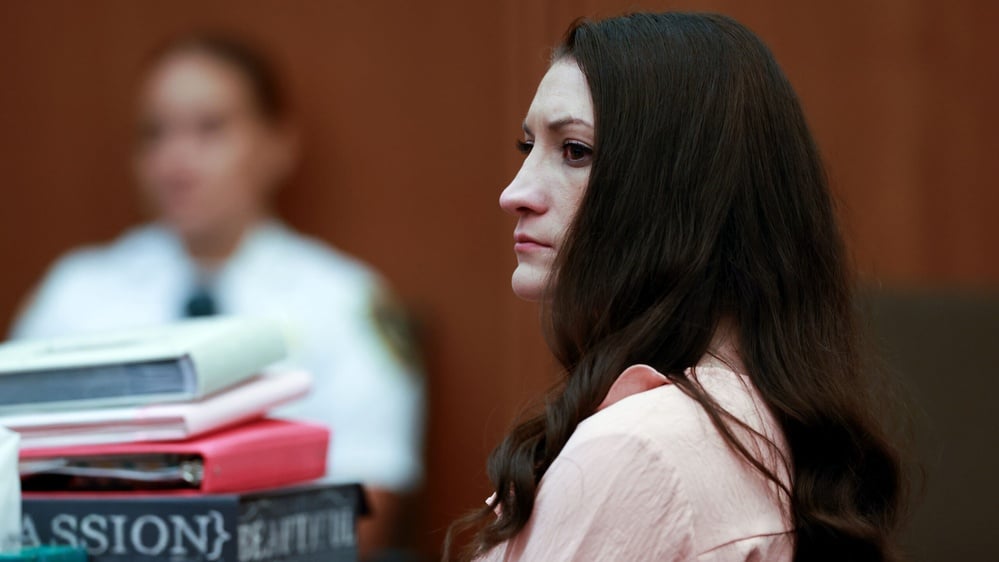
2026 © Helium Trades
Privacy Policy & Disclosure
* Disclaimer: Nothing on this website constitutes investment advice, performance data or any recommendation that any particular security, portfolio of securities, transaction or investment strategy is suitable for any specific person. Helium Trades is not responsible in any way for the accuracy
of any model predictions or price data. Any mention of a particular security and related prediction data is not a recommendation to buy or sell that security. Investments in securities involve the risk of loss. Past performance is no guarantee of future results. Helium Trades is not responsible for any of your investment decisions,
you should consult a financial expert before engaging in any transaction.
Helium Research Assistant

How can I help you today?
Ask any question about this page.