See whether Helium helps you make better-informed decisions. Try every Pro Trader feature for 30 days. No credit card required.
Try every Pro Trader feature for 30 days. No credit card required.
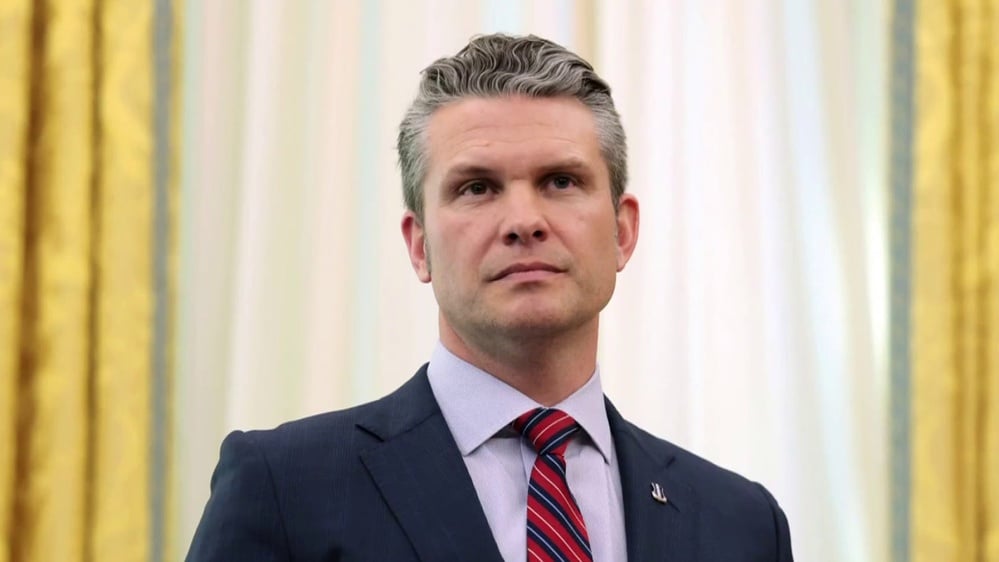
Resignation is framed as a consequence of Defense Secretary Pete Hegseth's personnel actions, while the White House's favorable statement is reported without independent scrutiny.
Automated analysis; not human reviewed.
Limitations: The supplied text is a short, brief item with repeated 'News' placeholders; key explanations rely on anonymous sourcing, and the outcome of Driscoll's White House meeting is unresolved.
·
5 of 54 available dimensions scored; omitted dimensions are not treated as neutral.
·
Verified supporting quotes for 5 of 5 scored dimensions.
Claim: The report is predominantly factual and attributed but includes some un-attributed characterization.
“Driscoll is expected to step down in the coming days after the White House accepted his resignation, according to a person familiar with the matter and a White House official.” · exact text match
“Driscoll, who has been well regarded by many Republicans and Democrats, has been rumored to be leaving the administration for months.” · exact text match
Why: Most claims are attributed and hedged, but 'well regarded by many Republicans and Democrats' and 'pushed out' are publisher characterizations rather than fully sourced facts.
Claim: The presentation is restrained and avoids alarmist or exaggerated language.
“Driscoll visited the White House last week to discuss his future, according to three U.S. officials, but it wasn't clear what came of the meeting.” · verified after text normalization
Why: The notable uncertainty about the meeting outcome is stated plainly rather than sensationalized.
Claim: The report describes events and statements without offering recommendations or calls to action.
“Driscoll is the latest high-profile official at the Defense Department to depart; Navy Secretary John Phelan and the Army chief of staff, Gen. Randy George, were pushed out this spring.” · exact text match
Why: Sentences state events and attributions rather than urging a course of action.
Claim: The report uses multiple attributed sources and notes a lack of response from the Army.
“Driscoll visited the White House last week to discuss his future, according to three U.S. officials, but it wasn't clear what came of the meeting.” · verified after text normalization
“The Pentagon directed any questions about Driscoll to the Army, which didn't immediately respond to a request for comment.” · verified after text normalization
Why: Visible sourcing includes a person familiar, three U.S. officials,a source familiar, and an official statement; the article also records the Pentagon's referral and the Army's lack of immediate response.
Claim: The report is transparent about sourcing and uncertainty.
“according to a person familiar with the matter and a White House official” · exact text match
“but it wasn't clear what came of the meeting” · verified after text normalization
Why: Internally observable honesty signals include explicit attribution and acknowledgment of unresolved details.
The supplied text is a short, brief item with repeated 'News' placeholders; key explanations rely on anonymous sourcing, and the outcome of Driscoll's White House meeting is unresolved.
September 01, 2026 · 0 shares
The resignation is presented as straight Washington personnel news, pairing anonymous-official accounts of friction with an uncritically repeated White House endorsement, while an interpretative aside gently colors the departing secretary in a sympathetic light.
Automated analysis; not human reviewed.
Limitations: The analysis is based on a single short article that relies on anonymous sourcing; lack of access to the live page or related coverage may limit context, particularly regarding the full text after the article's final sentence and any continued coverage.
·
10 of 54 available dimensions scored; omitted dimensions are not treated as neutral.
·
Verified supporting quotes for 10 of 10 scored dimensions.
Claim: The article reports factual developments with attributed sourcing while including a few interpretive judgments.
“Driscoll has submitted his resignation to President Donald Trump amid growing tension between him and Defense Secretary Pete Hegseth, sources told ABC News.” · exact text match
Counterevidence:
“In a statement Monday, the White House thanked Driscoll for his work and praised him for being "highly effective."” · not found in supplied text
Why: The lead attributes claims to sources and includes the White House's positive account, reflecting mostly objective reporting with minimal editorializing.
Claim: The article reports the resignation in measured, non-sensational language.
“Driscoll has submitted his resignation to President Donald Trump amid growing tension between him and Defense Secretary Pete Hegseth, sources told ABC News.” · exact text match
Why: The reporting is calm and fact-based, avoiding dramatic language despite the sensitive topic of a Cabinet-level resignation.
Claim: The article mostly reports facts but contains a few opinionated or interpretive statements.
“An assignment like that was beyond the scope of the duties of a service secretary whose main task is to oversee the training and equipping of a service.” · exact text match
Why: The claim that the assignment exceeded his duties is presented as a statement of fact rather than attributed opinion.
Claim: The article is entirely within the political/governance domain, covering executive-branch personnel and partisan dynamics.
“Secretary Driscoll has been highly effective in advancing President Trump’s agenda to Make America Strong Again at the Department of the Army” · exact text match
Why: The report covers the White House, Pentagon leadership, and political infighting, which is inherently political content.
Claim: The article relies heavily on unnamed officials and an official White House statement for its factual claims.
“Driscoll has submitted his resignation to President Donald Trump amid growing tension between him and Defense Secretary Pete Hegseth, sources told ABC News.” · exact text match
Why: All claims about the reasons for the resignation rest on anonymous sources and a White House statement rather than independent verification.
Claim: The article devotes substantial focus to the White House's and insiders' reactions to the resignation.
“Secretary Driscoll has been highly effective in advancing President Trump’s agenda to Make America Strong Again at the Department of the Army” · exact text match
Why: The inclusion of the full White House statement, without independent commentary, emphasizes the official response over the underlying event details.
Claim: The article almost always qualifies claims, though it occasionally presents interpretive material with more certainty than the source basis might warrant.
“Driscoll and Hegseth differed on several matters since taking over their roles in 2025, according to various U.S. officials.” · exact text match
Why: The attribution 'according to various U.S. officials' limits overconfidence, but the statement is presented as fact rather than as an allegation.
Claim: The article demonstrates credible journalistic practices, attributing claims and hedging appropriately.
“Driscoll has submitted his resignation to President Donald Trump amid growing tension between him and Defense Secretary Pete Hegseth, sources told ABC News.” · exact text match
Counterevidence:
“It was noteworthy late last year that Trump chose Driscoll to head a diplomatic initiative last fall to restart the Ukraine-Russia peace talks.” · exact text match
Why: The piece consistently attributes claims to named or unnamed sources and correctly flags opinion ('It was noteworthy'), adding to its credibility.
Claim: The article includes a brief interpretive judgment about the significance of Driscoll's diplomatic assignment.
“It was noteworthy late last year that Trump chose Driscoll to head a diplomatic initiative last fall to restart the Ukraine-Russia peace talks.” · exact text match
Why: The phrase 'It was noteworthy' and the subsequent commentary on the scope of the assignment is the publisher's interpretation rather than a sourced fact.
Claim: The article demonstrates above-average analytical quality by adding contextual judgment about Driscoll's role.
“An assignment like that was beyond the scope of the duties of a service secretary whose main task is to oversee the training and equipping of a service.” · exact text match
Why: The comment reflects an understanding of the formal role of the Army secretary and compares it with actual events, indicating analytical depth.
The analysis is based on a single short article that relies on anonymous sourcing; lack of access to the live page or related coverage may limit context, particularly regarding the full text after the article's final sentence and any continued coverage.
Resignation is framed as a consequence of Defense Secretary Pete Hegseth's personnel actions, while the White House's favorable statement is reported without independent scrutiny.
Automated analysis; not human reviewed.
Limitations: The supplied text is a short, brief item with repeated 'News' placeholders; key explanations rely on anonymous sourcing, and the outcome of Driscoll's White House meeting is unresolved.
·
5 of 54 available dimensions scored; omitted dimensions are not treated as neutral.
·
Verified supporting quotes for 5 of 5 scored dimensions.
Claim: The report is predominantly factual and attributed but includes some un-attributed characterization.
“Driscoll is expected to step down in the coming days after the White House accepted his resignation, according to a person familiar with the matter and a White House official.” · exact text match
“Driscoll, who has been well regarded by many Republicans and Democrats, has been rumored to be leaving the administration for months.” · exact text match
Why: Most claims are attributed and hedged, but 'well regarded by many Republicans and Democrats' and 'pushed out' are publisher characterizations rather than fully sourced facts.
Claim: The presentation is restrained and avoids alarmist or exaggerated language.
“Driscoll visited the White House last week to discuss his future, according to three U.S. officials, but it wasn't clear what came of the meeting.” · verified after text normalization
Why: The notable uncertainty about the meeting outcome is stated plainly rather than sensationalized.
Claim: The report describes events and statements without offering recommendations or calls to action.
“Driscoll is the latest high-profile official at the Defense Department to depart; Navy Secretary John Phelan and the Army chief of staff, Gen. Randy George, were pushed out this spring.” · exact text match
Why: Sentences state events and attributions rather than urging a course of action.
Claim: The report uses multiple attributed sources and notes a lack of response from the Army.
“Driscoll visited the White House last week to discuss his future, according to three U.S. officials, but it wasn't clear what came of the meeting.” · verified after text normalization
“The Pentagon directed any questions about Driscoll to the Army, which didn't immediately respond to a request for comment.” · verified after text normalization
Why: Visible sourcing includes a person familiar, three U.S. officials,a source familiar, and an official statement; the article also records the Pentagon's referral and the Army's lack of immediate response.
Claim: The report is transparent about sourcing and uncertainty.
“according to a person familiar with the matter and a White House official” · exact text match
“but it wasn't clear what came of the meeting” · verified after text normalization
Why: Internally observable honesty signals include explicit attribution and acknowledgment of unresolved details.
The supplied text is a short, brief item with repeated 'News' placeholders; key explanations rely on anonymous sourcing, and the outcome of Driscoll's White House meeting is unresolved.
September 01, 2026 · 0 shares
The resignation is presented as straight Washington personnel news, pairing anonymous-official accounts of friction with an uncritically repeated White House endorsement, while an interpretative aside gently colors the departing secretary in a sympathetic light.
Automated analysis; not human reviewed.
Limitations: The analysis is based on a single short article that relies on anonymous sourcing; lack of access to the live page or related coverage may limit context, particularly regarding the full text after the article's final sentence and any continued coverage.
·
10 of 54 available dimensions scored; omitted dimensions are not treated as neutral.
·
Verified supporting quotes for 10 of 10 scored dimensions.
Claim: The article reports factual developments with attributed sourcing while including a few interpretive judgments.
“Driscoll has submitted his resignation to President Donald Trump amid growing tension between him and Defense Secretary Pete Hegseth, sources told ABC News.” · exact text match
Counterevidence:
“In a statement Monday, the White House thanked Driscoll for his work and praised him for being "highly effective."” · not found in supplied text
Why: The lead attributes claims to sources and includes the White House's positive account, reflecting mostly objective reporting with minimal editorializing.
Claim: The article reports the resignation in measured, non-sensational language.
“Driscoll has submitted his resignation to President Donald Trump amid growing tension between him and Defense Secretary Pete Hegseth, sources told ABC News.” · exact text match
Why: The reporting is calm and fact-based, avoiding dramatic language despite the sensitive topic of a Cabinet-level resignation.
Claim: The article mostly reports facts but contains a few opinionated or interpretive statements.
“An assignment like that was beyond the scope of the duties of a service secretary whose main task is to oversee the training and equipping of a service.” · exact text match
Why: The claim that the assignment exceeded his duties is presented as a statement of fact rather than attributed opinion.
Claim: The article is entirely within the political/governance domain, covering executive-branch personnel and partisan dynamics.
“Secretary Driscoll has been highly effective in advancing President Trump’s agenda to Make America Strong Again at the Department of the Army” · exact text match
Why: The report covers the White House, Pentagon leadership, and political infighting, which is inherently political content.
Claim: The article relies heavily on unnamed officials and an official White House statement for its factual claims.
“Driscoll has submitted his resignation to President Donald Trump amid growing tension between him and Defense Secretary Pete Hegseth, sources told ABC News.” · exact text match
Why: All claims about the reasons for the resignation rest on anonymous sources and a White House statement rather than independent verification.
Claim: The article devotes substantial focus to the White House's and insiders' reactions to the resignation.
“Secretary Driscoll has been highly effective in advancing President Trump’s agenda to Make America Strong Again at the Department of the Army” · exact text match
Why: The inclusion of the full White House statement, without independent commentary, emphasizes the official response over the underlying event details.
Claim: The article almost always qualifies claims, though it occasionally presents interpretive material with more certainty than the source basis might warrant.
“Driscoll and Hegseth differed on several matters since taking over their roles in 2025, according to various U.S. officials.” · exact text match
Why: The attribution 'according to various U.S. officials' limits overconfidence, but the statement is presented as fact rather than as an allegation.
Claim: The article demonstrates credible journalistic practices, attributing claims and hedging appropriately.
“Driscoll has submitted his resignation to President Donald Trump amid growing tension between him and Defense Secretary Pete Hegseth, sources told ABC News.” · exact text match
Counterevidence:
“It was noteworthy late last year that Trump chose Driscoll to head a diplomatic initiative last fall to restart the Ukraine-Russia peace talks.” · exact text match
Why: The piece consistently attributes claims to named or unnamed sources and correctly flags opinion ('It was noteworthy'), adding to its credibility.
Claim: The article includes a brief interpretive judgment about the significance of Driscoll's diplomatic assignment.
“It was noteworthy late last year that Trump chose Driscoll to head a diplomatic initiative last fall to restart the Ukraine-Russia peace talks.” · exact text match
Why: The phrase 'It was noteworthy' and the subsequent commentary on the scope of the assignment is the publisher's interpretation rather than a sourced fact.
Claim: The article demonstrates above-average analytical quality by adding contextual judgment about Driscoll's role.
“An assignment like that was beyond the scope of the duties of a service secretary whose main task is to oversee the training and equipping of a service.” · exact text match
Why: The comment reflects an understanding of the formal role of the Army secretary and compares it with actual events, indicating analytical depth.
The analysis is based on a single short article that relies on anonymous sourcing; lack of access to the live page or related coverage may limit context, particularly regarding the full text after the article's final sentence and any continued coverage.
August 31, 2026 · 0 shares
A source-attributed lede is paired with a headline that asserts the resignation as settled fact, framing the exit as the outcome of a months-long turf war with Hegseth.
The Army Secretary is a civilian service secretary within the Department of Defense who administers the Army under the Secretary of Defense.
Automated analysis; not human reviewed.
Limitations: The supplied article text is truncated mid-sentence after the lede, limiting analysis to the headline and opening framing.
·
1 of 54 available dimensions scored; omitted dimensions are not treated as neutral.
·
Verified supporting quotes for 1 of 1 scored dimensions.
Claim: The headline states the resignation as settled fact, while the lede qualifies it as a source-attributed expected departure.
“Army Secretary Driscoll resigns after months-long turf war with Hegseth.” · exact text match
“Army Secretary Dan Driscoll is set to depart his role at the Pentagon in the coming days, leaving the Trump administration after being embroiled in a months-long turf war with Defense Secretary Pete Hegseth, according to two sources familiar with internal deliberations.” · exact text match
Why: The categorical headline tense exceeds the source-attributed, future-oriented framing in the lede, though the gap is modest and common in headline style.
The supplied article text is truncated mid-sentence after the lede, limiting analysis to the headline and opening framing.
Framing portrays Driscoll's exit as a loss of an 'Army Transformation' reformer, with Hegseth's 'suspicious and paranoid' behavior and 'chaos' from general firings as the backdrop.
Army Secretary is the senior civilian leader of the U.S. Army; the Army Chief of Staff is the senior uniformed officer.
Both positions normally require Senate confirmation.
The article's 'midterms' refers to the 2026 U.S. congressional elections.
Automated analysis; not human reviewed.
Limitations: The main input limitation is reliance on anonymous sources and a one-word characterization; the reasons for resignation and Hegseth's attitude cannot be independently verified from the supplied text.
·
7 of 54 available dimensions scored; omitted dimensions are not treated as neutral.
·
Verified supporting quotes for 7 of 7 scored dimensions.
Claim: The report mixes attributed facts with evaluative insider language.
“Another person described the situation to simply: "Sad."” · verified after text normalization
“Driscoll's juice was boosted partly by his willingness to engage media outside the Pentagon's preferred conservative press pool and an expansive travel circuit.” · exact text match
Why: The 'Sad' characterization and colloquial 'juice' add subjective color to what is otherwise a sourced news brief.
Claim: Personal, unnamed insider color about Hegseth's feelings and an anonymous 'Sad' reaction is presented as meaningful detail.
“Another person described the situation to simply: "Sad."” · verified after text normalization
“Some U.S. officials say the defense secretary "was suspicious and paranoid" toward Driscoll, partly because of Driscoll's close relationship with Vice President JD Vance, a classmate at Yale Law.” · exact text match
Why: The report includes an anonymous one-word emotional reaction and an unnamed characterization of Hegseth's personal suspicions.
Claim: The publisher states an interpretive causal framing in its own voice.
“Two key reasons led to Army Secretary Dan Driscoll's resignation, announced Monday: the feeling that his modernization initiatives were being blocked, and the chaos created by Defense Secretary Pete Hegseth's firing of senior generals.” · exact text match
Why: Calling the firings 'chaos' frames the cause as disorder rather than simply reporting a stated reason.
Claim: The report is centered on a U.S. military leadership change driven by internal Trump-administration politics.
“Driscoll's wartime resignation, on top of Hegseth's firing of Army Chief of Staff Gen. Randy George this spring, leaves the military's largest service without Senate-confirmed leadership, civilian or uniformed.” · exact text match
Why: The core subject is a political appointment and conflict involving the president, defense secretary, vice president, and midterm timing.
Claim: Explains a resignation through two stated reasons and an anonymous one-word summary.
“Two key reasons led to Army Secretary Dan Driscoll's resignation, announced Monday: the feeling that his modernization initiatives were being blocked, and the chaos created by Defense Secretary Pete Hegseth's firing of senior generals.” · exact text match
“Another person described the situation to simply: "Sad."” · verified after text normalization
Why: The brief reduces a complex resignation to two bullet points and an anonymous 'Sad' take.
Claim: The article's word choices convey negative emotional valence about the leadership situation.
“Another person described the situation to simply: "Sad."” · verified after text normalization
“Driscoll's wartime resignation, on top of Hegseth's firing of Army Chief of Staff Gen. Randy George this spring, leaves the military's largest service without Senate-confirmed leadership, civilian or uniformed.” · exact text match
Why: The 'Sad' quote and the warning of no Senate-confirmed leadership give the report a negative emotional undertone.
Claim: Sourcing is attributed but mostly anonymous and dependent on one prior report.
“Driscoll is expected to leave the Pentagon in the coming days, according to The Wall Street Journal, which first reported his resignation.” · exact text match
“A White House official said Driscoll was asked to stay longer, until after midterms.” · exact text match
Why: The story attributes key details to WSJ and an official, but does not name sources or provide documentation.
The main input limitation is reliance on anonymous sources and a one-word characterization; the reasons for resignation and Hegseth's attitude cannot be independently verified from the supplied text.
Resignation is framed as a consequence of Defense Secretary Pete Hegseth's personnel actions, while the White House's favorable statement is reported without independent scrutiny.
Automated analysis; not human reviewed.
Limitations: The supplied text is a short, brief item with repeated 'News' placeholders; key explanations rely on anonymous sourcing, and the outcome of Driscoll's White House meeting is unresolved.
·
5 of 54 available dimensions scored; omitted dimensions are not treated as neutral.
·
Verified supporting quotes for 5 of 5 scored dimensions.
Claim: The report is predominantly factual and attributed but includes some un-attributed characterization.
“Driscoll is expected to step down in the coming days after the White House accepted his resignation, according to a person familiar with the matter and a White House official.” · exact text match
“Driscoll, who has been well regarded by many Republicans and Democrats, has been rumored to be leaving the administration for months.” · exact text match
Why: Most claims are attributed and hedged, but 'well regarded by many Republicans and Democrats' and 'pushed out' are publisher characterizations rather than fully sourced facts.
Claim: The presentation is restrained and avoids alarmist or exaggerated language.
“Driscoll visited the White House last week to discuss his future, according to three U.S. officials, but it wasn't clear what came of the meeting.” · verified after text normalization
Why: The notable uncertainty about the meeting outcome is stated plainly rather than sensationalized.
Claim: The report describes events and statements without offering recommendations or calls to action.
“Driscoll is the latest high-profile official at the Defense Department to depart; Navy Secretary John Phelan and the Army chief of staff, Gen. Randy George, were pushed out this spring.” · exact text match
Why: Sentences state events and attributions rather than urging a course of action.
Claim: The report uses multiple attributed sources and notes a lack of response from the Army.
“Driscoll visited the White House last week to discuss his future, according to three U.S. officials, but it wasn't clear what came of the meeting.” · verified after text normalization
“The Pentagon directed any questions about Driscoll to the Army, which didn't immediately respond to a request for comment.” · verified after text normalization
Why: Visible sourcing includes a person familiar, three U.S. officials,a source familiar, and an official statement; the article also records the Pentagon's referral and the Army's lack of immediate response.
Claim: The report is transparent about sourcing and uncertainty.
“according to a person familiar with the matter and a White House official” · exact text match
“but it wasn't clear what came of the meeting” · verified after text normalization
Why: Internally observable honesty signals include explicit attribution and acknowledgment of unresolved details.
The supplied text is a short, brief item with repeated 'News' placeholders; key explanations rely on anonymous sourcing, and the outcome of Driscoll's White House meeting is unresolved.
September 01, 2026 · 0 shares
The resignation is presented as straight Washington personnel news, pairing anonymous-official accounts of friction with an uncritically repeated White House endorsement, while an interpretative aside gently colors the departing secretary in a sympathetic light.
Automated analysis; not human reviewed.
Limitations: The analysis is based on a single short article that relies on anonymous sourcing; lack of access to the live page or related coverage may limit context, particularly regarding the full text after the article's final sentence and any continued coverage.
·
10 of 54 available dimensions scored; omitted dimensions are not treated as neutral.
·
Verified supporting quotes for 10 of 10 scored dimensions.
Claim: The article reports factual developments with attributed sourcing while including a few interpretive judgments.
“Driscoll has submitted his resignation to President Donald Trump amid growing tension between him and Defense Secretary Pete Hegseth, sources told ABC News.” · exact text match
Counterevidence:
“In a statement Monday, the White House thanked Driscoll for his work and praised him for being "highly effective."” · not found in supplied text
Why: The lead attributes claims to sources and includes the White House's positive account, reflecting mostly objective reporting with minimal editorializing.
Claim: The article reports the resignation in measured, non-sensational language.
“Driscoll has submitted his resignation to President Donald Trump amid growing tension between him and Defense Secretary Pete Hegseth, sources told ABC News.” · exact text match
Why: The reporting is calm and fact-based, avoiding dramatic language despite the sensitive topic of a Cabinet-level resignation.
Claim: The article mostly reports facts but contains a few opinionated or interpretive statements.
“An assignment like that was beyond the scope of the duties of a service secretary whose main task is to oversee the training and equipping of a service.” · exact text match
Why: The claim that the assignment exceeded his duties is presented as a statement of fact rather than attributed opinion.
Claim: The article is entirely within the political/governance domain, covering executive-branch personnel and partisan dynamics.
“Secretary Driscoll has been highly effective in advancing President Trump’s agenda to Make America Strong Again at the Department of the Army” · exact text match
Why: The report covers the White House, Pentagon leadership, and political infighting, which is inherently political content.
Claim: The article relies heavily on unnamed officials and an official White House statement for its factual claims.
“Driscoll has submitted his resignation to President Donald Trump amid growing tension between him and Defense Secretary Pete Hegseth, sources told ABC News.” · exact text match
Why: All claims about the reasons for the resignation rest on anonymous sources and a White House statement rather than independent verification.
Claim: The article devotes substantial focus to the White House's and insiders' reactions to the resignation.
“Secretary Driscoll has been highly effective in advancing President Trump’s agenda to Make America Strong Again at the Department of the Army” · exact text match
Why: The inclusion of the full White House statement, without independent commentary, emphasizes the official response over the underlying event details.
Claim: The article almost always qualifies claims, though it occasionally presents interpretive material with more certainty than the source basis might warrant.
“Driscoll and Hegseth differed on several matters since taking over their roles in 2025, according to various U.S. officials.” · exact text match
Why: The attribution 'according to various U.S. officials' limits overconfidence, but the statement is presented as fact rather than as an allegation.
Claim: The article demonstrates credible journalistic practices, attributing claims and hedging appropriately.
“Driscoll has submitted his resignation to President Donald Trump amid growing tension between him and Defense Secretary Pete Hegseth, sources told ABC News.” · exact text match
Counterevidence:
“It was noteworthy late last year that Trump chose Driscoll to head a diplomatic initiative last fall to restart the Ukraine-Russia peace talks.” · exact text match
Why: The piece consistently attributes claims to named or unnamed sources and correctly flags opinion ('It was noteworthy'), adding to its credibility.
Claim: The article includes a brief interpretive judgment about the significance of Driscoll's diplomatic assignment.
“It was noteworthy late last year that Trump chose Driscoll to head a diplomatic initiative last fall to restart the Ukraine-Russia peace talks.” · exact text match
Why: The phrase 'It was noteworthy' and the subsequent commentary on the scope of the assignment is the publisher's interpretation rather than a sourced fact.
Claim: The article demonstrates above-average analytical quality by adding contextual judgment about Driscoll's role.
“An assignment like that was beyond the scope of the duties of a service secretary whose main task is to oversee the training and equipping of a service.” · exact text match
Why: The comment reflects an understanding of the formal role of the Army secretary and compares it with actual events, indicating analytical depth.
The analysis is based on a single short article that relies on anonymous sourcing; lack of access to the live page or related coverage may limit context, particularly regarding the full text after the article's final sentence and any continued coverage.
The framing treats the resignation as a consequential but under-explained leadership shake-up, emphasizing unresolved Hegseth friction and the resulting vacancies while keeping the tone factual.
The Army Secretary is the civilian head of the U.S. Army, and the Army Chief of Staff is the senior uniformed officer; both are Senate-confirmed positions.
The reported events occur after Gen. Randy George’s ouster, which was connected to Defense Secretary Hegseth’s personnel changes, and amid an unresolved succession for the Army’s top uniformed leadership.
Automated analysis; not human reviewed.
Limitations: No publication date is supplied, so the timing of the 'Monday' resignation and any subsequent developments cannot be independently checked.
·
5 of 54 available dimensions scored; omitted dimensions are not treated as neutral.
·
Verified supporting quotes for 4 of 5 scored dimensions.
Claim: The report is objective rather than subjective, using attribution and explicit unknowns.
“No reason was given for the resignation, and Pentagon officials did not comment about the matter.” · exact text match
“There have been reports of friction between Mr. Driscoll and Mr. Hegseth over high-level personnel shakeups in the Army, including the ouster of Gen. Randy George, the former Army Chief of Staff.” · exact text match
Why: The wording separates the fact of the resignation, the explicitly absent reason, and third-party reported friction without adding editorial characterization of Driscoll or Hegseth.
Claim: The report is non-sensational and avoids dramatic urgency or emotional appeals.
“No reason was given for the resignation, and Pentagon officials did not comment about the matter.” · exact text match
Why: The main development is presented plainly, and the article notes what officials did not say rather than treating the resignation as a scandal or crisis.
Claim: The article describes events and consequences without prescribing remedies or advocating outcomes.
“Mr. Driscoll’s exit would leave the service without a top civilian leader and a Senate-confirmed uniformed chief.” · exact text match
Why: The conditional statement about leadership vacancies is a descriptive consequence, not a policy recommendation or call to action.
Claim: The article is centered on executive-branch personnel politics and Senate confirmation maneuvering.
“Some Republicans in the Senate are said to be hesitant about giving Mr. Hegseth’s former military aide the top position.” · exact text match
Why: The story’s substance is a cabinet-level resignation, reported friction with the Defense Secretary, and Senate confirmation politics, rather than policy, operations, or non-political news.
Claim: The report is internally fair and transparent about what is known, reported, and unconfirmed.
“Anna Kelly, a White House spokesperson, released a statement about Mr. Driscoll but did not directly address his status as Army Secretary.” · not found in supplied text
“There have been reports of friction between Mr. Driscoll and Mr. Hegseth over high-level personnel shakeups in the Army, including the ouster of Gen. Randy George, the former Army Chief of Staff.” · exact text match
Why: The publisher names a source, notes the limits of her statement, labels friction as reported, and states that no reason was given instead of filling the gap.
No publication date is supplied, so the timing of the 'Monday' resignation and any subsequent developments cannot be independently checked.
Resignation is framed as a consequence of Defense Secretary Pete Hegseth's personnel actions, while the White House's favorable statement is reported without independent scrutiny.
Automated analysis; not human reviewed.
Limitations: The supplied text is a short, brief item with repeated 'News' placeholders; key explanations rely on anonymous sourcing, and the outcome of Driscoll's White House meeting is unresolved.
·
5 of 54 available dimensions scored; omitted dimensions are not treated as neutral.
·
Verified supporting quotes for 5 of 5 scored dimensions.
Claim: The report is predominantly factual and attributed but includes some un-attributed characterization.
“Driscoll is expected to step down in the coming days after the White House accepted his resignation, according to a person familiar with the matter and a White House official.” · exact text match
“Driscoll, who has been well regarded by many Republicans and Democrats, has been rumored to be leaving the administration for months.” · exact text match
Why: Most claims are attributed and hedged, but 'well regarded by many Republicans and Democrats' and 'pushed out' are publisher characterizations rather than fully sourced facts.
Claim: The presentation is restrained and avoids alarmist or exaggerated language.
“Driscoll visited the White House last week to discuss his future, according to three U.S. officials, but it wasn't clear what came of the meeting.” · verified after text normalization
Why: The notable uncertainty about the meeting outcome is stated plainly rather than sensationalized.
Claim: The report describes events and statements without offering recommendations or calls to action.
“Driscoll is the latest high-profile official at the Defense Department to depart; Navy Secretary John Phelan and the Army chief of staff, Gen. Randy George, were pushed out this spring.” · exact text match
Why: Sentences state events and attributions rather than urging a course of action.
Claim: The report uses multiple attributed sources and notes a lack of response from the Army.
“Driscoll visited the White House last week to discuss his future, according to three U.S. officials, but it wasn't clear what came of the meeting.” · verified after text normalization
“The Pentagon directed any questions about Driscoll to the Army, which didn't immediately respond to a request for comment.” · verified after text normalization
Why: Visible sourcing includes a person familiar, three U.S. officials,a source familiar, and an official statement; the article also records the Pentagon's referral and the Army's lack of immediate response.
Claim: The report is transparent about sourcing and uncertainty.
“according to a person familiar with the matter and a White House official” · exact text match
“but it wasn't clear what came of the meeting” · verified after text normalization
Why: Internally observable honesty signals include explicit attribution and acknowledgment of unresolved details.
The supplied text is a short, brief item with repeated 'News' placeholders; key explanations rely on anonymous sourcing, and the outcome of Driscoll's White House meeting is unresolved.
Framing portrays Driscoll's exit as a loss of an 'Army Transformation' reformer, with Hegseth's 'suspicious and paranoid' behavior and 'chaos' from general firings as the backdrop.
Army Secretary is the senior civilian leader of the U.S. Army; the Army Chief of Staff is the senior uniformed officer.
Both positions normally require Senate confirmation.
The article's 'midterms' refers to the 2026 U.S. congressional elections.
Automated analysis; not human reviewed.
Limitations: The main input limitation is reliance on anonymous sources and a one-word characterization; the reasons for resignation and Hegseth's attitude cannot be independently verified from the supplied text.
·
7 of 54 available dimensions scored; omitted dimensions are not treated as neutral.
·
Verified supporting quotes for 7 of 7 scored dimensions.
Claim: The report mixes attributed facts with evaluative insider language.
“Another person described the situation to simply: "Sad."” · verified after text normalization
“Driscoll's juice was boosted partly by his willingness to engage media outside the Pentagon's preferred conservative press pool and an expansive travel circuit.” · exact text match
Why: The 'Sad' characterization and colloquial 'juice' add subjective color to what is otherwise a sourced news brief.
Claim: Personal, unnamed insider color about Hegseth's feelings and an anonymous 'Sad' reaction is presented as meaningful detail.
“Another person described the situation to simply: "Sad."” · verified after text normalization
“Some U.S. officials say the defense secretary "was suspicious and paranoid" toward Driscoll, partly because of Driscoll's close relationship with Vice President JD Vance, a classmate at Yale Law.” · exact text match
Why: The report includes an anonymous one-word emotional reaction and an unnamed characterization of Hegseth's personal suspicions.
Claim: The publisher states an interpretive causal framing in its own voice.
“Two key reasons led to Army Secretary Dan Driscoll's resignation, announced Monday: the feeling that his modernization initiatives were being blocked, and the chaos created by Defense Secretary Pete Hegseth's firing of senior generals.” · exact text match
Why: Calling the firings 'chaos' frames the cause as disorder rather than simply reporting a stated reason.
Claim: The report is centered on a U.S. military leadership change driven by internal Trump-administration politics.
“Driscoll's wartime resignation, on top of Hegseth's firing of Army Chief of Staff Gen. Randy George this spring, leaves the military's largest service without Senate-confirmed leadership, civilian or uniformed.” · exact text match
Why: The core subject is a political appointment and conflict involving the president, defense secretary, vice president, and midterm timing.
Claim: Explains a resignation through two stated reasons and an anonymous one-word summary.
“Two key reasons led to Army Secretary Dan Driscoll's resignation, announced Monday: the feeling that his modernization initiatives were being blocked, and the chaos created by Defense Secretary Pete Hegseth's firing of senior generals.” · exact text match
“Another person described the situation to simply: "Sad."” · verified after text normalization
Why: The brief reduces a complex resignation to two bullet points and an anonymous 'Sad' take.
Claim: The article's word choices convey negative emotional valence about the leadership situation.
“Another person described the situation to simply: "Sad."” · verified after text normalization
“Driscoll's wartime resignation, on top of Hegseth's firing of Army Chief of Staff Gen. Randy George this spring, leaves the military's largest service without Senate-confirmed leadership, civilian or uniformed.” · exact text match
Why: The 'Sad' quote and the warning of no Senate-confirmed leadership give the report a negative emotional undertone.
Claim: Sourcing is attributed but mostly anonymous and dependent on one prior report.
“Driscoll is expected to leave the Pentagon in the coming days, according to The Wall Street Journal, which first reported his resignation.” · exact text match
“A White House official said Driscoll was asked to stay longer, until after midterms.” · exact text match
Why: The story attributes key details to WSJ and an official, but does not name sources or provide documentation.
The main input limitation is reliance on anonymous sources and a one-word characterization; the reasons for resignation and Hegseth's attitude cannot be independently verified from the supplied text.
The framing treats the resignation as a consequential but under-explained leadership shake-up, emphasizing unresolved Hegseth friction and the resulting vacancies while keeping the tone factual.
The Army Secretary is the civilian head of the U.S. Army, and the Army Chief of Staff is the senior uniformed officer; both are Senate-confirmed positions.
The reported events occur after Gen. Randy George’s ouster, which was connected to Defense Secretary Hegseth’s personnel changes, and amid an unresolved succession for the Army’s top uniformed leadership.
Automated analysis; not human reviewed.
Limitations: No publication date is supplied, so the timing of the 'Monday' resignation and any subsequent developments cannot be independently checked.
·
5 of 54 available dimensions scored; omitted dimensions are not treated as neutral.
·
Verified supporting quotes for 4 of 5 scored dimensions.
Claim: The report is objective rather than subjective, using attribution and explicit unknowns.
“No reason was given for the resignation, and Pentagon officials did not comment about the matter.” · exact text match
“There have been reports of friction between Mr. Driscoll and Mr. Hegseth over high-level personnel shakeups in the Army, including the ouster of Gen. Randy George, the former Army Chief of Staff.” · exact text match
Why: The wording separates the fact of the resignation, the explicitly absent reason, and third-party reported friction without adding editorial characterization of Driscoll or Hegseth.
Claim: The report is non-sensational and avoids dramatic urgency or emotional appeals.
“No reason was given for the resignation, and Pentagon officials did not comment about the matter.” · exact text match
Why: The main development is presented plainly, and the article notes what officials did not say rather than treating the resignation as a scandal or crisis.
Claim: The article describes events and consequences without prescribing remedies or advocating outcomes.
“Mr. Driscoll’s exit would leave the service without a top civilian leader and a Senate-confirmed uniformed chief.” · exact text match
Why: The conditional statement about leadership vacancies is a descriptive consequence, not a policy recommendation or call to action.
Claim: The article is centered on executive-branch personnel politics and Senate confirmation maneuvering.
“Some Republicans in the Senate are said to be hesitant about giving Mr. Hegseth’s former military aide the top position.” · exact text match
Why: The story’s substance is a cabinet-level resignation, reported friction with the Defense Secretary, and Senate confirmation politics, rather than policy, operations, or non-political news.
Claim: The report is internally fair and transparent about what is known, reported, and unconfirmed.
“Anna Kelly, a White House spokesperson, released a statement about Mr. Driscoll but did not directly address his status as Army Secretary.” · not found in supplied text
“There have been reports of friction between Mr. Driscoll and Mr. Hegseth over high-level personnel shakeups in the Army, including the ouster of Gen. Randy George, the former Army Chief of Staff.” · exact text match
Why: The publisher names a source, notes the limits of her statement, labels friction as reported, and states that no reason was given instead of filling the gap.
No publication date is supplied, so the timing of the 'Monday' resignation and any subsequent developments cannot be independently checked.
Framing portrays Driscoll's exit as a loss of an 'Army Transformation' reformer, with Hegseth's 'suspicious and paranoid' behavior and 'chaos' from general firings as the backdrop.
Army Secretary is the senior civilian leader of the U.S. Army; the Army Chief of Staff is the senior uniformed officer.
Both positions normally require Senate confirmation.
The article's 'midterms' refers to the 2026 U.S. congressional elections.
Automated analysis; not human reviewed.
Limitations: The main input limitation is reliance on anonymous sources and a one-word characterization; the reasons for resignation and Hegseth's attitude cannot be independently verified from the supplied text.
·
7 of 54 available dimensions scored; omitted dimensions are not treated as neutral.
·
Verified supporting quotes for 7 of 7 scored dimensions.
Claim: The report mixes attributed facts with evaluative insider language.
“Another person described the situation to simply: "Sad."” · verified after text normalization
“Driscoll's juice was boosted partly by his willingness to engage media outside the Pentagon's preferred conservative press pool and an expansive travel circuit.” · exact text match
Why: The 'Sad' characterization and colloquial 'juice' add subjective color to what is otherwise a sourced news brief.
Claim: Personal, unnamed insider color about Hegseth's feelings and an anonymous 'Sad' reaction is presented as meaningful detail.
“Another person described the situation to simply: "Sad."” · verified after text normalization
“Some U.S. officials say the defense secretary "was suspicious and paranoid" toward Driscoll, partly because of Driscoll's close relationship with Vice President JD Vance, a classmate at Yale Law.” · exact text match
Why: The report includes an anonymous one-word emotional reaction and an unnamed characterization of Hegseth's personal suspicions.
Claim: The publisher states an interpretive causal framing in its own voice.
“Two key reasons led to Army Secretary Dan Driscoll's resignation, announced Monday: the feeling that his modernization initiatives were being blocked, and the chaos created by Defense Secretary Pete Hegseth's firing of senior generals.” · exact text match
Why: Calling the firings 'chaos' frames the cause as disorder rather than simply reporting a stated reason.
Claim: The report is centered on a U.S. military leadership change driven by internal Trump-administration politics.
“Driscoll's wartime resignation, on top of Hegseth's firing of Army Chief of Staff Gen. Randy George this spring, leaves the military's largest service without Senate-confirmed leadership, civilian or uniformed.” · exact text match
Why: The core subject is a political appointment and conflict involving the president, defense secretary, vice president, and midterm timing.
Claim: Explains a resignation through two stated reasons and an anonymous one-word summary.
“Two key reasons led to Army Secretary Dan Driscoll's resignation, announced Monday: the feeling that his modernization initiatives were being blocked, and the chaos created by Defense Secretary Pete Hegseth's firing of senior generals.” · exact text match
“Another person described the situation to simply: "Sad."” · verified after text normalization
Why: The brief reduces a complex resignation to two bullet points and an anonymous 'Sad' take.
Claim: The article's word choices convey negative emotional valence about the leadership situation.
“Another person described the situation to simply: "Sad."” · verified after text normalization
“Driscoll's wartime resignation, on top of Hegseth's firing of Army Chief of Staff Gen. Randy George this spring, leaves the military's largest service without Senate-confirmed leadership, civilian or uniformed.” · exact text match
Why: The 'Sad' quote and the warning of no Senate-confirmed leadership give the report a negative emotional undertone.
Claim: Sourcing is attributed but mostly anonymous and dependent on one prior report.
“Driscoll is expected to leave the Pentagon in the coming days, according to The Wall Street Journal, which first reported his resignation.” · exact text match
“A White House official said Driscoll was asked to stay longer, until after midterms.” · exact text match
Why: The story attributes key details to WSJ and an official, but does not name sources or provide documentation.
The main input limitation is reliance on anonymous sources and a one-word characterization; the reasons for resignation and Hegseth's attitude cannot be independently verified from the supplied text.
The framing treats the resignation as a consequential but under-explained leadership shake-up, emphasizing unresolved Hegseth friction and the resulting vacancies while keeping the tone factual.
The Army Secretary is the civilian head of the U.S. Army, and the Army Chief of Staff is the senior uniformed officer; both are Senate-confirmed positions.
The reported events occur after Gen. Randy George’s ouster, which was connected to Defense Secretary Hegseth’s personnel changes, and amid an unresolved succession for the Army’s top uniformed leadership.
Automated analysis; not human reviewed.
Limitations: No publication date is supplied, so the timing of the 'Monday' resignation and any subsequent developments cannot be independently checked.
·
5 of 54 available dimensions scored; omitted dimensions are not treated as neutral.
·
Verified supporting quotes for 4 of 5 scored dimensions.
Claim: The report is objective rather than subjective, using attribution and explicit unknowns.
“No reason was given for the resignation, and Pentagon officials did not comment about the matter.” · exact text match
“There have been reports of friction between Mr. Driscoll and Mr. Hegseth over high-level personnel shakeups in the Army, including the ouster of Gen. Randy George, the former Army Chief of Staff.” · exact text match
Why: The wording separates the fact of the resignation, the explicitly absent reason, and third-party reported friction without adding editorial characterization of Driscoll or Hegseth.
Claim: The report is non-sensational and avoids dramatic urgency or emotional appeals.
“No reason was given for the resignation, and Pentagon officials did not comment about the matter.” · exact text match
Why: The main development is presented plainly, and the article notes what officials did not say rather than treating the resignation as a scandal or crisis.
Claim: The article describes events and consequences without prescribing remedies or advocating outcomes.
“Mr. Driscoll’s exit would leave the service without a top civilian leader and a Senate-confirmed uniformed chief.” · exact text match
Why: The conditional statement about leadership vacancies is a descriptive consequence, not a policy recommendation or call to action.
Claim: The article is centered on executive-branch personnel politics and Senate confirmation maneuvering.
“Some Republicans in the Senate are said to be hesitant about giving Mr. Hegseth’s former military aide the top position.” · exact text match
Why: The story’s substance is a cabinet-level resignation, reported friction with the Defense Secretary, and Senate confirmation politics, rather than policy, operations, or non-political news.
Claim: The report is internally fair and transparent about what is known, reported, and unconfirmed.
“Anna Kelly, a White House spokesperson, released a statement about Mr. Driscoll but did not directly address his status as Army Secretary.” · not found in supplied text
“There have been reports of friction between Mr. Driscoll and Mr. Hegseth over high-level personnel shakeups in the Army, including the ouster of Gen. Randy George, the former Army Chief of Staff.” · exact text match
Why: The publisher names a source, notes the limits of her statement, labels friction as reported, and states that no reason was given instead of filling the gap.
No publication date is supplied, so the timing of the 'Monday' resignation and any subsequent developments cannot be independently checked.
Resignation is framed as a consequence of Defense Secretary Pete Hegseth's personnel actions, while the White House's favorable statement is reported without independent scrutiny.
Automated analysis; not human reviewed.
Limitations: The supplied text is a short, brief item with repeated 'News' placeholders; key explanations rely on anonymous sourcing, and the outcome of Driscoll's White House meeting is unresolved.
·
5 of 54 available dimensions scored; omitted dimensions are not treated as neutral.
·
Verified supporting quotes for 5 of 5 scored dimensions.
Claim: The report is predominantly factual and attributed but includes some un-attributed characterization.
“Driscoll is expected to step down in the coming days after the White House accepted his resignation, according to a person familiar with the matter and a White House official.” · exact text match
“Driscoll, who has been well regarded by many Republicans and Democrats, has been rumored to be leaving the administration for months.” · exact text match
Why: Most claims are attributed and hedged, but 'well regarded by many Republicans and Democrats' and 'pushed out' are publisher characterizations rather than fully sourced facts.
Claim: The presentation is restrained and avoids alarmist or exaggerated language.
“Driscoll visited the White House last week to discuss his future, according to three U.S. officials, but it wasn't clear what came of the meeting.” · verified after text normalization
Why: The notable uncertainty about the meeting outcome is stated plainly rather than sensationalized.
Claim: The report describes events and statements without offering recommendations or calls to action.
“Driscoll is the latest high-profile official at the Defense Department to depart; Navy Secretary John Phelan and the Army chief of staff, Gen. Randy George, were pushed out this spring.” · exact text match
Why: Sentences state events and attributions rather than urging a course of action.
Claim: The report uses multiple attributed sources and notes a lack of response from the Army.
“Driscoll visited the White House last week to discuss his future, according to three U.S. officials, but it wasn't clear what came of the meeting.” · verified after text normalization
“The Pentagon directed any questions about Driscoll to the Army, which didn't immediately respond to a request for comment.” · verified after text normalization
Why: Visible sourcing includes a person familiar, three U.S. officials,a source familiar, and an official statement; the article also records the Pentagon's referral and the Army's lack of immediate response.
Claim: The report is transparent about sourcing and uncertainty.
“according to a person familiar with the matter and a White House official” · exact text match
“but it wasn't clear what came of the meeting” · verified after text normalization
Why: Internally observable honesty signals include explicit attribution and acknowledgment of unresolved details.
The supplied text is a short, brief item with repeated 'News' placeholders; key explanations rely on anonymous sourcing, and the outcome of Driscoll's White House meeting is unresolved.
September 01, 2026 · 0 shares
The resignation is presented as straight Washington personnel news, pairing anonymous-official accounts of friction with an uncritically repeated White House endorsement, while an interpretative aside gently colors the departing secretary in a sympathetic light.
Automated analysis; not human reviewed.
Limitations: The analysis is based on a single short article that relies on anonymous sourcing; lack of access to the live page or related coverage may limit context, particularly regarding the full text after the article's final sentence and any continued coverage.
·
10 of 54 available dimensions scored; omitted dimensions are not treated as neutral.
·
Verified supporting quotes for 10 of 10 scored dimensions.
Claim: The article reports factual developments with attributed sourcing while including a few interpretive judgments.
“Driscoll has submitted his resignation to President Donald Trump amid growing tension between him and Defense Secretary Pete Hegseth, sources told ABC News.” · exact text match
Counterevidence:
“In a statement Monday, the White House thanked Driscoll for his work and praised him for being "highly effective."” · not found in supplied text
Why: The lead attributes claims to sources and includes the White House's positive account, reflecting mostly objective reporting with minimal editorializing.
Claim: The article reports the resignation in measured, non-sensational language.
“Driscoll has submitted his resignation to President Donald Trump amid growing tension between him and Defense Secretary Pete Hegseth, sources told ABC News.” · exact text match
Why: The reporting is calm and fact-based, avoiding dramatic language despite the sensitive topic of a Cabinet-level resignation.
Claim: The article mostly reports facts but contains a few opinionated or interpretive statements.
“An assignment like that was beyond the scope of the duties of a service secretary whose main task is to oversee the training and equipping of a service.” · exact text match
Why: The claim that the assignment exceeded his duties is presented as a statement of fact rather than attributed opinion.
Claim: The article is entirely within the political/governance domain, covering executive-branch personnel and partisan dynamics.
“Secretary Driscoll has been highly effective in advancing President Trump’s agenda to Make America Strong Again at the Department of the Army” · exact text match
Why: The report covers the White House, Pentagon leadership, and political infighting, which is inherently political content.
Claim: The article relies heavily on unnamed officials and an official White House statement for its factual claims.
“Driscoll has submitted his resignation to President Donald Trump amid growing tension between him and Defense Secretary Pete Hegseth, sources told ABC News.” · exact text match
Why: All claims about the reasons for the resignation rest on anonymous sources and a White House statement rather than independent verification.
Claim: The article devotes substantial focus to the White House's and insiders' reactions to the resignation.
“Secretary Driscoll has been highly effective in advancing President Trump’s agenda to Make America Strong Again at the Department of the Army” · exact text match
Why: The inclusion of the full White House statement, without independent commentary, emphasizes the official response over the underlying event details.
Claim: The article almost always qualifies claims, though it occasionally presents interpretive material with more certainty than the source basis might warrant.
“Driscoll and Hegseth differed on several matters since taking over their roles in 2025, according to various U.S. officials.” · exact text match
Why: The attribution 'according to various U.S. officials' limits overconfidence, but the statement is presented as fact rather than as an allegation.
Claim: The article demonstrates credible journalistic practices, attributing claims and hedging appropriately.
“Driscoll has submitted his resignation to President Donald Trump amid growing tension between him and Defense Secretary Pete Hegseth, sources told ABC News.” · exact text match
Counterevidence:
“It was noteworthy late last year that Trump chose Driscoll to head a diplomatic initiative last fall to restart the Ukraine-Russia peace talks.” · exact text match
Why: The piece consistently attributes claims to named or unnamed sources and correctly flags opinion ('It was noteworthy'), adding to its credibility.
Claim: The article includes a brief interpretive judgment about the significance of Driscoll's diplomatic assignment.
“It was noteworthy late last year that Trump chose Driscoll to head a diplomatic initiative last fall to restart the Ukraine-Russia peace talks.” · exact text match
Why: The phrase 'It was noteworthy' and the subsequent commentary on the scope of the assignment is the publisher's interpretation rather than a sourced fact.
Claim: The article demonstrates above-average analytical quality by adding contextual judgment about Driscoll's role.
“An assignment like that was beyond the scope of the duties of a service secretary whose main task is to oversee the training and equipping of a service.” · exact text match
Why: The comment reflects an understanding of the formal role of the Army secretary and compares it with actual events, indicating analytical depth.
The analysis is based on a single short article that relies on anonymous sourcing; lack of access to the live page or related coverage may limit context, particularly regarding the full text after the article's final sentence and any continued coverage.
August 28, 2026 · 0 shares
The report frames a private consideration of a 2028 run as news, relying on anonymous insider sources and highlighting Hegseth's perceived Trump-like appeal to the MAGA movement.
Automated analysis; not human reviewed. Limitations: The supplied text is a short excerpt with no independent confirmation; all substantive claims depend on anonymous sourcing.
The supplied text is a short excerpt with no independent confirmation; all substantive claims depend on anonymous sourcing.
Resignation is framed as a consequence of Defense Secretary Pete Hegseth's personnel actions, while the White House's favorable statement is reported without independent scrutiny.
Automated analysis; not human reviewed. Limitations: The supplied text is a short, brief item with repeated 'News' placeholders; key explanations rely on anonymous sourcing, and the outcome of Driscoll's White House meeting is unresolved. · 5 of 54 available dimensions scored; omitted dimensions are not treated as neutral. · Verified supporting quotes for 5 of 5 scored dimensions.
Claim: The report is predominantly factual and attributed but includes some un-attributed characterization.
“Driscoll is expected to step down in the coming days after the White House accepted his resignation, according to a person familiar with the matter and a White House official.” · exact text match
“Driscoll, who has been well regarded by many Republicans and Democrats, has been rumored to be leaving the administration for months.” · exact text match
Why: Most claims are attributed and hedged, but 'well regarded by many Republicans and Democrats' and 'pushed out' are publisher characterizations rather than fully sourced facts.
Claim: The presentation is restrained and avoids alarmist or exaggerated language.
“Driscoll visited the White House last week to discuss his future, according to three U.S. officials, but it wasn't clear what came of the meeting.” · verified after text normalization
Why: The notable uncertainty about the meeting outcome is stated plainly rather than sensationalized.
Claim: The report describes events and statements without offering recommendations or calls to action.
“Driscoll is the latest high-profile official at the Defense Department to depart; Navy Secretary John Phelan and the Army chief of staff, Gen. Randy George, were pushed out this spring.” · exact text match
Why: Sentences state events and attributions rather than urging a course of action.
Claim: The report uses multiple attributed sources and notes a lack of response from the Army.
“Driscoll visited the White House last week to discuss his future, according to three U.S. officials, but it wasn't clear what came of the meeting.” · verified after text normalization
“The Pentagon directed any questions about Driscoll to the Army, which didn't immediately respond to a request for comment.” · verified after text normalization
Why: Visible sourcing includes a person familiar, three U.S. officials,a source familiar, and an official statement; the article also records the Pentagon's referral and the Army's lack of immediate response.
Claim: The report is transparent about sourcing and uncertainty.
“according to a person familiar with the matter and a White House official” · exact text match
“but it wasn't clear what came of the meeting” · verified after text normalization
Why: Internally observable honesty signals include explicit attribution and acknowledgment of unresolved details.
The supplied text is a short, brief item with repeated 'News' placeholders; key explanations rely on anonymous sourcing, and the outcome of Driscoll's White House meeting is unresolved.
September 01, 2026 · 0 shares
The resignation is presented as straight Washington personnel news, pairing anonymous-official accounts of friction with an uncritically repeated White House endorsement, while an interpretative aside gently colors the departing secretary in a sympathetic light.
Automated analysis; not human reviewed. Limitations: The analysis is based on a single short article that relies on anonymous sourcing; lack of access to the live page or related coverage may limit context, particularly regarding the full text after the article's final sentence and any continued coverage. · 10 of 54 available dimensions scored; omitted dimensions are not treated as neutral. · Verified supporting quotes for 10 of 10 scored dimensions.
Claim: The article reports factual developments with attributed sourcing while including a few interpretive judgments.
“Driscoll has submitted his resignation to President Donald Trump amid growing tension between him and Defense Secretary Pete Hegseth, sources told ABC News.” · exact text match
Counterevidence:
“In a statement Monday, the White House thanked Driscoll for his work and praised him for being "highly effective."” · not found in supplied text
Why: The lead attributes claims to sources and includes the White House's positive account, reflecting mostly objective reporting with minimal editorializing.
Claim: The article reports the resignation in measured, non-sensational language.
“Driscoll has submitted his resignation to President Donald Trump amid growing tension between him and Defense Secretary Pete Hegseth, sources told ABC News.” · exact text match
Why: The reporting is calm and fact-based, avoiding dramatic language despite the sensitive topic of a Cabinet-level resignation.
Claim: The article mostly reports facts but contains a few opinionated or interpretive statements.
“An assignment like that was beyond the scope of the duties of a service secretary whose main task is to oversee the training and equipping of a service.” · exact text match
Why: The claim that the assignment exceeded his duties is presented as a statement of fact rather than attributed opinion.
Claim: The article is entirely within the political/governance domain, covering executive-branch personnel and partisan dynamics.
“Secretary Driscoll has been highly effective in advancing President Trump’s agenda to Make America Strong Again at the Department of the Army” · exact text match
Why: The report covers the White House, Pentagon leadership, and political infighting, which is inherently political content.
Claim: The article relies heavily on unnamed officials and an official White House statement for its factual claims.
“Driscoll has submitted his resignation to President Donald Trump amid growing tension between him and Defense Secretary Pete Hegseth, sources told ABC News.” · exact text match
Why: All claims about the reasons for the resignation rest on anonymous sources and a White House statement rather than independent verification.
Claim: The article devotes substantial focus to the White House's and insiders' reactions to the resignation.
“Secretary Driscoll has been highly effective in advancing President Trump’s agenda to Make America Strong Again at the Department of the Army” · exact text match
Why: The inclusion of the full White House statement, without independent commentary, emphasizes the official response over the underlying event details.
Claim: The article almost always qualifies claims, though it occasionally presents interpretive material with more certainty than the source basis might warrant.
“Driscoll and Hegseth differed on several matters since taking over their roles in 2025, according to various U.S. officials.” · exact text match
Why: The attribution 'according to various U.S. officials' limits overconfidence, but the statement is presented as fact rather than as an allegation.
Claim: The article demonstrates credible journalistic practices, attributing claims and hedging appropriately.
“Driscoll has submitted his resignation to President Donald Trump amid growing tension between him and Defense Secretary Pete Hegseth, sources told ABC News.” · exact text match
Counterevidence:
“It was noteworthy late last year that Trump chose Driscoll to head a diplomatic initiative last fall to restart the Ukraine-Russia peace talks.” · exact text match
Why: The piece consistently attributes claims to named or unnamed sources and correctly flags opinion ('It was noteworthy'), adding to its credibility.
Claim: The article includes a brief interpretive judgment about the significance of Driscoll's diplomatic assignment.
“It was noteworthy late last year that Trump chose Driscoll to head a diplomatic initiative last fall to restart the Ukraine-Russia peace talks.” · exact text match
Why: The phrase 'It was noteworthy' and the subsequent commentary on the scope of the assignment is the publisher's interpretation rather than a sourced fact.
Claim: The article demonstrates above-average analytical quality by adding contextual judgment about Driscoll's role.
“An assignment like that was beyond the scope of the duties of a service secretary whose main task is to oversee the training and equipping of a service.” · exact text match
Why: The comment reflects an understanding of the formal role of the Army secretary and compares it with actual events, indicating analytical depth.
The analysis is based on a single short article that relies on anonymous sourcing; lack of access to the live page or related coverage may limit context, particularly regarding the full text after the article's final sentence and any continued coverage.
August 31, 2026 · 0 shares
A source-attributed lede is paired with a headline that asserts the resignation as settled fact, framing the exit as the outcome of a months-long turf war with Hegseth.
The Army Secretary is a civilian service secretary within the Department of Defense who administers the Army under the Secretary of Defense.
Automated analysis; not human reviewed. Limitations: The supplied article text is truncated mid-sentence after the lede, limiting analysis to the headline and opening framing. · 1 of 54 available dimensions scored; omitted dimensions are not treated as neutral. · Verified supporting quotes for 1 of 1 scored dimensions.
Claim: The headline states the resignation as settled fact, while the lede qualifies it as a source-attributed expected departure.
“Army Secretary Driscoll resigns after months-long turf war with Hegseth.” · exact text match
“Army Secretary Dan Driscoll is set to depart his role at the Pentagon in the coming days, leaving the Trump administration after being embroiled in a months-long turf war with Defense Secretary Pete Hegseth, according to two sources familiar with internal deliberations.” · exact text match
Why: The categorical headline tense exceeds the source-attributed, future-oriented framing in the lede, though the gap is modest and common in headline style.
The supplied article text is truncated mid-sentence after the lede, limiting analysis to the headline and opening framing.
Resignation is framed as a consequence of Defense Secretary Pete Hegseth's personnel actions, while the White House's favorable statement is reported without independent scrutiny.
Automated analysis; not human reviewed. Limitations: The supplied text is a short, brief item with repeated 'News' placeholders; key explanations rely on anonymous sourcing, and the outcome of Driscoll's White House meeting is unresolved. · 5 of 54 available dimensions scored; omitted dimensions are not treated as neutral. · Verified supporting quotes for 5 of 5 scored dimensions.
Claim: The report is predominantly factual and attributed but includes some un-attributed characterization.
“Driscoll is expected to step down in the coming days after the White House accepted his resignation, according to a person familiar with the matter and a White House official.” · exact text match
“Driscoll, who has been well regarded by many Republicans and Democrats, has been rumored to be leaving the administration for months.” · exact text match
Why: Most claims are attributed and hedged, but 'well regarded by many Republicans and Democrats' and 'pushed out' are publisher characterizations rather than fully sourced facts.
Claim: The presentation is restrained and avoids alarmist or exaggerated language.
“Driscoll visited the White House last week to discuss his future, according to three U.S. officials, but it wasn't clear what came of the meeting.” · verified after text normalization
Why: The notable uncertainty about the meeting outcome is stated plainly rather than sensationalized.
Claim: The report describes events and statements without offering recommendations or calls to action.
“Driscoll is the latest high-profile official at the Defense Department to depart; Navy Secretary John Phelan and the Army chief of staff, Gen. Randy George, were pushed out this spring.” · exact text match
Why: Sentences state events and attributions rather than urging a course of action.
Claim: The report uses multiple attributed sources and notes a lack of response from the Army.
“Driscoll visited the White House last week to discuss his future, according to three U.S. officials, but it wasn't clear what came of the meeting.” · verified after text normalization
“The Pentagon directed any questions about Driscoll to the Army, which didn't immediately respond to a request for comment.” · verified after text normalization
Why: Visible sourcing includes a person familiar, three U.S. officials,a source familiar, and an official statement; the article also records the Pentagon's referral and the Army's lack of immediate response.
Claim: The report is transparent about sourcing and uncertainty.
“according to a person familiar with the matter and a White House official” · exact text match
“but it wasn't clear what came of the meeting” · verified after text normalization
Why: Internally observable honesty signals include explicit attribution and acknowledgment of unresolved details.
The supplied text is a short, brief item with repeated 'News' placeholders; key explanations rely on anonymous sourcing, and the outcome of Driscoll's White House meeting is unresolved.
Framing portrays Driscoll's exit as a loss of an 'Army Transformation' reformer, with Hegseth's 'suspicious and paranoid' behavior and 'chaos' from general firings as the backdrop.
Army Secretary is the senior civilian leader of the U.S. Army; the Army Chief of Staff is the senior uniformed officer. Both positions normally require Senate confirmation. The article's 'midterms' refers to the 2026 U.S. congressional elections.
Automated analysis; not human reviewed. Limitations: The main input limitation is reliance on anonymous sources and a one-word characterization; the reasons for resignation and Hegseth's attitude cannot be independently verified from the supplied text. · 7 of 54 available dimensions scored; omitted dimensions are not treated as neutral. · Verified supporting quotes for 7 of 7 scored dimensions.
Claim: The report mixes attributed facts with evaluative insider language.
“Another person described the situation to simply: "Sad."” · verified after text normalization
“Driscoll's juice was boosted partly by his willingness to engage media outside the Pentagon's preferred conservative press pool and an expansive travel circuit.” · exact text match
Why: The 'Sad' characterization and colloquial 'juice' add subjective color to what is otherwise a sourced news brief.
Claim: Personal, unnamed insider color about Hegseth's feelings and an anonymous 'Sad' reaction is presented as meaningful detail.
“Another person described the situation to simply: "Sad."” · verified after text normalization
“Some U.S. officials say the defense secretary "was suspicious and paranoid" toward Driscoll, partly because of Driscoll's close relationship with Vice President JD Vance, a classmate at Yale Law.” · exact text match
Why: The report includes an anonymous one-word emotional reaction and an unnamed characterization of Hegseth's personal suspicions.
Claim: The publisher states an interpretive causal framing in its own voice.
“Two key reasons led to Army Secretary Dan Driscoll's resignation, announced Monday: the feeling that his modernization initiatives were being blocked, and the chaos created by Defense Secretary Pete Hegseth's firing of senior generals.” · exact text match
Why: Calling the firings 'chaos' frames the cause as disorder rather than simply reporting a stated reason.
Claim: The report is centered on a U.S. military leadership change driven by internal Trump-administration politics.
“Driscoll's wartime resignation, on top of Hegseth's firing of Army Chief of Staff Gen. Randy George this spring, leaves the military's largest service without Senate-confirmed leadership, civilian or uniformed.” · exact text match
Why: The core subject is a political appointment and conflict involving the president, defense secretary, vice president, and midterm timing.
Claim: Explains a resignation through two stated reasons and an anonymous one-word summary.
“Two key reasons led to Army Secretary Dan Driscoll's resignation, announced Monday: the feeling that his modernization initiatives were being blocked, and the chaos created by Defense Secretary Pete Hegseth's firing of senior generals.” · exact text match
“Another person described the situation to simply: "Sad."” · verified after text normalization
Why: The brief reduces a complex resignation to two bullet points and an anonymous 'Sad' take.
Claim: The article's word choices convey negative emotional valence about the leadership situation.
“Another person described the situation to simply: "Sad."” · verified after text normalization
“Driscoll's wartime resignation, on top of Hegseth's firing of Army Chief of Staff Gen. Randy George this spring, leaves the military's largest service without Senate-confirmed leadership, civilian or uniformed.” · exact text match
Why: The 'Sad' quote and the warning of no Senate-confirmed leadership give the report a negative emotional undertone.
Claim: Sourcing is attributed but mostly anonymous and dependent on one prior report.
“Driscoll is expected to leave the Pentagon in the coming days, according to The Wall Street Journal, which first reported his resignation.” · exact text match
“A White House official said Driscoll was asked to stay longer, until after midterms.” · exact text match
Why: The story attributes key details to WSJ and an official, but does not name sources or provide documentation.
The main input limitation is reliance on anonymous sources and a one-word characterization; the reasons for resignation and Hegseth's attitude cannot be independently verified from the supplied text.
The framing treats the resignation as a consequential but under-explained leadership shake-up, emphasizing unresolved Hegseth friction and the resulting vacancies while keeping the tone factual.
The Army Secretary is the civilian head of the U.S. Army, and the Army Chief of Staff is the senior uniformed officer; both are Senate-confirmed positions. The reported events occur after Gen. Randy George’s ouster, which was connected to Defense Secretary Hegseth’s personnel changes, and amid an unresolved succession for the Army’s top uniformed leadership.
Automated analysis; not human reviewed. Limitations: No publication date is supplied, so the timing of the 'Monday' resignation and any subsequent developments cannot be independently checked. · 5 of 54 available dimensions scored; omitted dimensions are not treated as neutral. · Verified supporting quotes for 4 of 5 scored dimensions.
Claim: The report is objective rather than subjective, using attribution and explicit unknowns.
“No reason was given for the resignation, and Pentagon officials did not comment about the matter.” · exact text match
“There have been reports of friction between Mr. Driscoll and Mr. Hegseth over high-level personnel shakeups in the Army, including the ouster of Gen. Randy George, the former Army Chief of Staff.” · exact text match
Why: The wording separates the fact of the resignation, the explicitly absent reason, and third-party reported friction without adding editorial characterization of Driscoll or Hegseth.
Claim: The report is non-sensational and avoids dramatic urgency or emotional appeals.
“No reason was given for the resignation, and Pentagon officials did not comment about the matter.” · exact text match
Why: The main development is presented plainly, and the article notes what officials did not say rather than treating the resignation as a scandal or crisis.
Claim: The article describes events and consequences without prescribing remedies or advocating outcomes.
“Mr. Driscoll’s exit would leave the service without a top civilian leader and a Senate-confirmed uniformed chief.” · exact text match
Why: The conditional statement about leadership vacancies is a descriptive consequence, not a policy recommendation or call to action.
Claim: The article is centered on executive-branch personnel politics and Senate confirmation maneuvering.
“Some Republicans in the Senate are said to be hesitant about giving Mr. Hegseth’s former military aide the top position.” · exact text match
Why: The story’s substance is a cabinet-level resignation, reported friction with the Defense Secretary, and Senate confirmation politics, rather than policy, operations, or non-political news.
Claim: The report is internally fair and transparent about what is known, reported, and unconfirmed.
“Anna Kelly, a White House spokesperson, released a statement about Mr. Driscoll but did not directly address his status as Army Secretary.” · not found in supplied text
“There have been reports of friction between Mr. Driscoll and Mr. Hegseth over high-level personnel shakeups in the Army, including the ouster of Gen. Randy George, the former Army Chief of Staff.” · exact text match
Why: The publisher names a source, notes the limits of her statement, labels friction as reported, and states that no reason was given instead of filling the gap.
No publication date is supplied, so the timing of the 'Monday' resignation and any subsequent developments cannot be independently checked.
Framing portrays Driscoll's exit as a loss of an 'Army Transformation' reformer, with Hegseth's 'suspicious and paranoid' behavior and 'chaos' from general firings as the backdrop.
Army Secretary is the senior civilian leader of the U.S. Army; the Army Chief of Staff is the senior uniformed officer. Both positions normally require Senate confirmation. The article's 'midterms' refers to the 2026 U.S. congressional elections.
Automated analysis; not human reviewed. Limitations: The main input limitation is reliance on anonymous sources and a one-word characterization; the reasons for resignation and Hegseth's attitude cannot be independently verified from the supplied text. · 7 of 54 available dimensions scored; omitted dimensions are not treated as neutral. · Verified supporting quotes for 7 of 7 scored dimensions.
Claim: The report mixes attributed facts with evaluative insider language.
“Another person described the situation to simply: "Sad."” · verified after text normalization
“Driscoll's juice was boosted partly by his willingness to engage media outside the Pentagon's preferred conservative press pool and an expansive travel circuit.” · exact text match
Why: The 'Sad' characterization and colloquial 'juice' add subjective color to what is otherwise a sourced news brief.
Claim: Personal, unnamed insider color about Hegseth's feelings and an anonymous 'Sad' reaction is presented as meaningful detail.
“Another person described the situation to simply: "Sad."” · verified after text normalization
“Some U.S. officials say the defense secretary "was suspicious and paranoid" toward Driscoll, partly because of Driscoll's close relationship with Vice President JD Vance, a classmate at Yale Law.” · exact text match
Why: The report includes an anonymous one-word emotional reaction and an unnamed characterization of Hegseth's personal suspicions.
Claim: The publisher states an interpretive causal framing in its own voice.
“Two key reasons led to Army Secretary Dan Driscoll's resignation, announced Monday: the feeling that his modernization initiatives were being blocked, and the chaos created by Defense Secretary Pete Hegseth's firing of senior generals.” · exact text match
Why: Calling the firings 'chaos' frames the cause as disorder rather than simply reporting a stated reason.
Claim: The report is centered on a U.S. military leadership change driven by internal Trump-administration politics.
“Driscoll's wartime resignation, on top of Hegseth's firing of Army Chief of Staff Gen. Randy George this spring, leaves the military's largest service without Senate-confirmed leadership, civilian or uniformed.” · exact text match
Why: The core subject is a political appointment and conflict involving the president, defense secretary, vice president, and midterm timing.
Claim: Explains a resignation through two stated reasons and an anonymous one-word summary.
“Two key reasons led to Army Secretary Dan Driscoll's resignation, announced Monday: the feeling that his modernization initiatives were being blocked, and the chaos created by Defense Secretary Pete Hegseth's firing of senior generals.” · exact text match
“Another person described the situation to simply: "Sad."” · verified after text normalization
Why: The brief reduces a complex resignation to two bullet points and an anonymous 'Sad' take.
Claim: The article's word choices convey negative emotional valence about the leadership situation.
“Another person described the situation to simply: "Sad."” · verified after text normalization
“Driscoll's wartime resignation, on top of Hegseth's firing of Army Chief of Staff Gen. Randy George this spring, leaves the military's largest service without Senate-confirmed leadership, civilian or uniformed.” · exact text match
Why: The 'Sad' quote and the warning of no Senate-confirmed leadership give the report a negative emotional undertone.
Claim: Sourcing is attributed but mostly anonymous and dependent on one prior report.
“Driscoll is expected to leave the Pentagon in the coming days, according to The Wall Street Journal, which first reported his resignation.” · exact text match
“A White House official said Driscoll was asked to stay longer, until after midterms.” · exact text match
Why: The story attributes key details to WSJ and an official, but does not name sources or provide documentation.
The main input limitation is reliance on anonymous sources and a one-word characterization; the reasons for resignation and Hegseth's attitude cannot be independently verified from the supplied text.
The framing treats the resignation as a consequential but under-explained leadership shake-up, emphasizing unresolved Hegseth friction and the resulting vacancies while keeping the tone factual.
The Army Secretary is the civilian head of the U.S. Army, and the Army Chief of Staff is the senior uniformed officer; both are Senate-confirmed positions. The reported events occur after Gen. Randy George’s ouster, which was connected to Defense Secretary Hegseth’s personnel changes, and amid an unresolved succession for the Army’s top uniformed leadership.
Automated analysis; not human reviewed. Limitations: No publication date is supplied, so the timing of the 'Monday' resignation and any subsequent developments cannot be independently checked. · 5 of 54 available dimensions scored; omitted dimensions are not treated as neutral. · Verified supporting quotes for 4 of 5 scored dimensions.
Claim: The report is objective rather than subjective, using attribution and explicit unknowns.
“No reason was given for the resignation, and Pentagon officials did not comment about the matter.” · exact text match
“There have been reports of friction between Mr. Driscoll and Mr. Hegseth over high-level personnel shakeups in the Army, including the ouster of Gen. Randy George, the former Army Chief of Staff.” · exact text match
Why: The wording separates the fact of the resignation, the explicitly absent reason, and third-party reported friction without adding editorial characterization of Driscoll or Hegseth.
Claim: The report is non-sensational and avoids dramatic urgency or emotional appeals.
“No reason was given for the resignation, and Pentagon officials did not comment about the matter.” · exact text match
Why: The main development is presented plainly, and the article notes what officials did not say rather than treating the resignation as a scandal or crisis.
Claim: The article describes events and consequences without prescribing remedies or advocating outcomes.
“Mr. Driscoll’s exit would leave the service without a top civilian leader and a Senate-confirmed uniformed chief.” · exact text match
Why: The conditional statement about leadership vacancies is a descriptive consequence, not a policy recommendation or call to action.
Claim: The article is centered on executive-branch personnel politics and Senate confirmation maneuvering.
“Some Republicans in the Senate are said to be hesitant about giving Mr. Hegseth’s former military aide the top position.” · exact text match
Why: The story’s substance is a cabinet-level resignation, reported friction with the Defense Secretary, and Senate confirmation politics, rather than policy, operations, or non-political news.
Claim: The report is internally fair and transparent about what is known, reported, and unconfirmed.
“Anna Kelly, a White House spokesperson, released a statement about Mr. Driscoll but did not directly address his status as Army Secretary.” · not found in supplied text
“There have been reports of friction between Mr. Driscoll and Mr. Hegseth over high-level personnel shakeups in the Army, including the ouster of Gen. Randy George, the former Army Chief of Staff.” · exact text match
Why: The publisher names a source, notes the limits of her statement, labels friction as reported, and states that no reason was given instead of filling the gap.
No publication date is supplied, so the timing of the 'Monday' resignation and any subsequent developments cannot be independently checked.
Helium Bias
Story Blindspots
Resignation is framed as a consequence of Defense Secretary Pete Hegseth's personnel actions, while the White House's favorable statement is reported without independent scrutiny.
Automated analysis; not human reviewed. Limitations: The supplied text is a short, brief item with repeated 'News' placeholders; key explanations rely on anonymous sourcing, and the outcome of Driscoll's White House meeting is unresolved. · 5 of 54 available dimensions scored; omitted dimensions are not treated as neutral. · Verified supporting quotes for 5 of 5 scored dimensions.
Claim: The report is predominantly factual and attributed but includes some un-attributed characterization.
“Driscoll is expected to step down in the coming days after the White House accepted his resignation, according to a person familiar with the matter and a White House official.” · exact text match
“Driscoll, who has been well regarded by many Republicans and Democrats, has been rumored to be leaving the administration for months.” · exact text match
Why: Most claims are attributed and hedged, but 'well regarded by many Republicans and Democrats' and 'pushed out' are publisher characterizations rather than fully sourced facts.
Claim: The presentation is restrained and avoids alarmist or exaggerated language.
“Driscoll visited the White House last week to discuss his future, according to three U.S. officials, but it wasn't clear what came of the meeting.” · verified after text normalization
Why: The notable uncertainty about the meeting outcome is stated plainly rather than sensationalized.
Claim: The report describes events and statements without offering recommendations or calls to action.
“Driscoll is the latest high-profile official at the Defense Department to depart; Navy Secretary John Phelan and the Army chief of staff, Gen. Randy George, were pushed out this spring.” · exact text match
Why: Sentences state events and attributions rather than urging a course of action.
Claim: The report uses multiple attributed sources and notes a lack of response from the Army.
“Driscoll visited the White House last week to discuss his future, according to three U.S. officials, but it wasn't clear what came of the meeting.” · verified after text normalization
“The Pentagon directed any questions about Driscoll to the Army, which didn't immediately respond to a request for comment.” · verified after text normalization
Why: Visible sourcing includes a person familiar, three U.S. officials,a source familiar, and an official statement; the article also records the Pentagon's referral and the Army's lack of immediate response.
Claim: The report is transparent about sourcing and uncertainty.
“according to a person familiar with the matter and a White House official” · exact text match
“but it wasn't clear what came of the meeting” · verified after text normalization
Why: Internally observable honesty signals include explicit attribution and acknowledgment of unresolved details.
The supplied text is a short, brief item with repeated 'News' placeholders; key explanations rely on anonymous sourcing, and the outcome of Driscoll's White House meeting is unresolved.
September 01, 2026 · 0 shares
The resignation is presented as straight Washington personnel news, pairing anonymous-official accounts of friction with an uncritically repeated White House endorsement, while an interpretative aside gently colors the departing secretary in a sympathetic light.
Automated analysis; not human reviewed. Limitations: The analysis is based on a single short article that relies on anonymous sourcing; lack of access to the live page or related coverage may limit context, particularly regarding the full text after the article's final sentence and any continued coverage. · 10 of 54 available dimensions scored; omitted dimensions are not treated as neutral. · Verified supporting quotes for 10 of 10 scored dimensions.
Claim: The article reports factual developments with attributed sourcing while including a few interpretive judgments.
“Driscoll has submitted his resignation to President Donald Trump amid growing tension between him and Defense Secretary Pete Hegseth, sources told ABC News.” · exact text match
Counterevidence:
“In a statement Monday, the White House thanked Driscoll for his work and praised him for being "highly effective."” · not found in supplied text
Why: The lead attributes claims to sources and includes the White House's positive account, reflecting mostly objective reporting with minimal editorializing.
Claim: The article reports the resignation in measured, non-sensational language.
“Driscoll has submitted his resignation to President Donald Trump amid growing tension between him and Defense Secretary Pete Hegseth, sources told ABC News.” · exact text match
Why: The reporting is calm and fact-based, avoiding dramatic language despite the sensitive topic of a Cabinet-level resignation.
Claim: The article mostly reports facts but contains a few opinionated or interpretive statements.
“An assignment like that was beyond the scope of the duties of a service secretary whose main task is to oversee the training and equipping of a service.” · exact text match
Why: The claim that the assignment exceeded his duties is presented as a statement of fact rather than attributed opinion.
Claim: The article is entirely within the political/governance domain, covering executive-branch personnel and partisan dynamics.
“Secretary Driscoll has been highly effective in advancing President Trump’s agenda to Make America Strong Again at the Department of the Army” · exact text match
Why: The report covers the White House, Pentagon leadership, and political infighting, which is inherently political content.
Claim: The article relies heavily on unnamed officials and an official White House statement for its factual claims.
“Driscoll has submitted his resignation to President Donald Trump amid growing tension between him and Defense Secretary Pete Hegseth, sources told ABC News.” · exact text match
Why: All claims about the reasons for the resignation rest on anonymous sources and a White House statement rather than independent verification.
Claim: The article devotes substantial focus to the White House's and insiders' reactions to the resignation.
“Secretary Driscoll has been highly effective in advancing President Trump’s agenda to Make America Strong Again at the Department of the Army” · exact text match
Why: The inclusion of the full White House statement, without independent commentary, emphasizes the official response over the underlying event details.
Claim: The article almost always qualifies claims, though it occasionally presents interpretive material with more certainty than the source basis might warrant.
“Driscoll and Hegseth differed on several matters since taking over their roles in 2025, according to various U.S. officials.” · exact text match
Why: The attribution 'according to various U.S. officials' limits overconfidence, but the statement is presented as fact rather than as an allegation.
Claim: The article demonstrates credible journalistic practices, attributing claims and hedging appropriately.
“Driscoll has submitted his resignation to President Donald Trump amid growing tension between him and Defense Secretary Pete Hegseth, sources told ABC News.” · exact text match
Counterevidence:
“It was noteworthy late last year that Trump chose Driscoll to head a diplomatic initiative last fall to restart the Ukraine-Russia peace talks.” · exact text match
Why: The piece consistently attributes claims to named or unnamed sources and correctly flags opinion ('It was noteworthy'), adding to its credibility.
Claim: The article includes a brief interpretive judgment about the significance of Driscoll's diplomatic assignment.
“It was noteworthy late last year that Trump chose Driscoll to head a diplomatic initiative last fall to restart the Ukraine-Russia peace talks.” · exact text match
Why: The phrase 'It was noteworthy' and the subsequent commentary on the scope of the assignment is the publisher's interpretation rather than a sourced fact.
Claim: The article demonstrates above-average analytical quality by adding contextual judgment about Driscoll's role.
“An assignment like that was beyond the scope of the duties of a service secretary whose main task is to oversee the training and equipping of a service.” · exact text match
Why: The comment reflects an understanding of the formal role of the Army secretary and compares it with actual events, indicating analytical depth.
The analysis is based on a single short article that relies on anonymous sourcing; lack of access to the live page or related coverage may limit context, particularly regarding the full text after the article's final sentence and any continued coverage.
Framing portrays Driscoll's exit as a loss of an 'Army Transformation' reformer, with Hegseth's 'suspicious and paranoid' behavior and 'chaos' from general firings as the backdrop.
Army Secretary is the senior civilian leader of the U.S. Army; the Army Chief of Staff is the senior uniformed officer. Both positions normally require Senate confirmation. The article's 'midterms' refers to the 2026 U.S. congressional elections.
Automated analysis; not human reviewed. Limitations: The main input limitation is reliance on anonymous sources and a one-word characterization; the reasons for resignation and Hegseth's attitude cannot be independently verified from the supplied text. · 7 of 54 available dimensions scored; omitted dimensions are not treated as neutral. · Verified supporting quotes for 7 of 7 scored dimensions.
Claim: The report mixes attributed facts with evaluative insider language.
“Another person described the situation to simply: "Sad."” · verified after text normalization
“Driscoll's juice was boosted partly by his willingness to engage media outside the Pentagon's preferred conservative press pool and an expansive travel circuit.” · exact text match
Why: The 'Sad' characterization and colloquial 'juice' add subjective color to what is otherwise a sourced news brief.
Claim: Personal, unnamed insider color about Hegseth's feelings and an anonymous 'Sad' reaction is presented as meaningful detail.
“Another person described the situation to simply: "Sad."” · verified after text normalization
“Some U.S. officials say the defense secretary "was suspicious and paranoid" toward Driscoll, partly because of Driscoll's close relationship with Vice President JD Vance, a classmate at Yale Law.” · exact text match
Why: The report includes an anonymous one-word emotional reaction and an unnamed characterization of Hegseth's personal suspicions.
Claim: The publisher states an interpretive causal framing in its own voice.
“Two key reasons led to Army Secretary Dan Driscoll's resignation, announced Monday: the feeling that his modernization initiatives were being blocked, and the chaos created by Defense Secretary Pete Hegseth's firing of senior generals.” · exact text match
Why: Calling the firings 'chaos' frames the cause as disorder rather than simply reporting a stated reason.
Claim: The report is centered on a U.S. military leadership change driven by internal Trump-administration politics.
“Driscoll's wartime resignation, on top of Hegseth's firing of Army Chief of Staff Gen. Randy George this spring, leaves the military's largest service without Senate-confirmed leadership, civilian or uniformed.” · exact text match
Why: The core subject is a political appointment and conflict involving the president, defense secretary, vice president, and midterm timing.
Claim: Explains a resignation through two stated reasons and an anonymous one-word summary.
“Two key reasons led to Army Secretary Dan Driscoll's resignation, announced Monday: the feeling that his modernization initiatives were being blocked, and the chaos created by Defense Secretary Pete Hegseth's firing of senior generals.” · exact text match
“Another person described the situation to simply: "Sad."” · verified after text normalization
Why: The brief reduces a complex resignation to two bullet points and an anonymous 'Sad' take.
Claim: The article's word choices convey negative emotional valence about the leadership situation.
“Another person described the situation to simply: "Sad."” · verified after text normalization
“Driscoll's wartime resignation, on top of Hegseth's firing of Army Chief of Staff Gen. Randy George this spring, leaves the military's largest service without Senate-confirmed leadership, civilian or uniformed.” · exact text match
Why: The 'Sad' quote and the warning of no Senate-confirmed leadership give the report a negative emotional undertone.
Claim: Sourcing is attributed but mostly anonymous and dependent on one prior report.
“Driscoll is expected to leave the Pentagon in the coming days, according to The Wall Street Journal, which first reported his resignation.” · exact text match
“A White House official said Driscoll was asked to stay longer, until after midterms.” · exact text match
Why: The story attributes key details to WSJ and an official, but does not name sources or provide documentation.
The main input limitation is reliance on anonymous sources and a one-word characterization; the reasons for resignation and Hegseth's attitude cannot be independently verified from the supplied text.
Framing portrays Driscoll's exit as a loss of an 'Army Transformation' reformer, with Hegseth's 'suspicious and paranoid' behavior and 'chaos' from general firings as the backdrop.
Army Secretary is the senior civilian leader of the U.S. Army; the Army Chief of Staff is the senior uniformed officer. Both positions normally require Senate confirmation. The article's 'midterms' refers to the 2026 U.S. congressional elections.
Automated analysis; not human reviewed. Limitations: The main input limitation is reliance on anonymous sources and a one-word characterization; the reasons for resignation and Hegseth's attitude cannot be independently verified from the supplied text. · 7 of 54 available dimensions scored; omitted dimensions are not treated as neutral. · Verified supporting quotes for 7 of 7 scored dimensions.
Claim: The report mixes attributed facts with evaluative insider language.
“Another person described the situation to simply: "Sad."” · verified after text normalization
“Driscoll's juice was boosted partly by his willingness to engage media outside the Pentagon's preferred conservative press pool and an expansive travel circuit.” · exact text match
Why: The 'Sad' characterization and colloquial 'juice' add subjective color to what is otherwise a sourced news brief.
Claim: Personal, unnamed insider color about Hegseth's feelings and an anonymous 'Sad' reaction is presented as meaningful detail.
“Another person described the situation to simply: "Sad."” · verified after text normalization
“Some U.S. officials say the defense secretary "was suspicious and paranoid" toward Driscoll, partly because of Driscoll's close relationship with Vice President JD Vance, a classmate at Yale Law.” · exact text match
Why: The report includes an anonymous one-word emotional reaction and an unnamed characterization of Hegseth's personal suspicions.
Claim: The publisher states an interpretive causal framing in its own voice.
“Two key reasons led to Army Secretary Dan Driscoll's resignation, announced Monday: the feeling that his modernization initiatives were being blocked, and the chaos created by Defense Secretary Pete Hegseth's firing of senior generals.” · exact text match
Why: Calling the firings 'chaos' frames the cause as disorder rather than simply reporting a stated reason.
Claim: The report is centered on a U.S. military leadership change driven by internal Trump-administration politics.
“Driscoll's wartime resignation, on top of Hegseth's firing of Army Chief of Staff Gen. Randy George this spring, leaves the military's largest service without Senate-confirmed leadership, civilian or uniformed.” · exact text match
Why: The core subject is a political appointment and conflict involving the president, defense secretary, vice president, and midterm timing.
Claim: Explains a resignation through two stated reasons and an anonymous one-word summary.
“Two key reasons led to Army Secretary Dan Driscoll's resignation, announced Monday: the feeling that his modernization initiatives were being blocked, and the chaos created by Defense Secretary Pete Hegseth's firing of senior generals.” · exact text match
“Another person described the situation to simply: "Sad."” · verified after text normalization
Why: The brief reduces a complex resignation to two bullet points and an anonymous 'Sad' take.
Claim: The article's word choices convey negative emotional valence about the leadership situation.
“Another person described the situation to simply: "Sad."” · verified after text normalization
“Driscoll's wartime resignation, on top of Hegseth's firing of Army Chief of Staff Gen. Randy George this spring, leaves the military's largest service without Senate-confirmed leadership, civilian or uniformed.” · exact text match
Why: The 'Sad' quote and the warning of no Senate-confirmed leadership give the report a negative emotional undertone.
Claim: Sourcing is attributed but mostly anonymous and dependent on one prior report.
“Driscoll is expected to leave the Pentagon in the coming days, according to The Wall Street Journal, which first reported his resignation.” · exact text match
“A White House official said Driscoll was asked to stay longer, until after midterms.” · exact text match
Why: The story attributes key details to WSJ and an official, but does not name sources or provide documentation.
The main input limitation is reliance on anonymous sources and a one-word characterization; the reasons for resignation and Hegseth's attitude cannot be independently verified from the supplied text.
The framing treats the resignation as a consequential but under-explained leadership shake-up, emphasizing unresolved Hegseth friction and the resulting vacancies while keeping the tone factual.
The Army Secretary is the civilian head of the U.S. Army, and the Army Chief of Staff is the senior uniformed officer; both are Senate-confirmed positions. The reported events occur after Gen. Randy George’s ouster, which was connected to Defense Secretary Hegseth’s personnel changes, and amid an unresolved succession for the Army’s top uniformed leadership.
Automated analysis; not human reviewed. Limitations: No publication date is supplied, so the timing of the 'Monday' resignation and any subsequent developments cannot be independently checked. · 5 of 54 available dimensions scored; omitted dimensions are not treated as neutral. · Verified supporting quotes for 4 of 5 scored dimensions.
Claim: The report is objective rather than subjective, using attribution and explicit unknowns.
“No reason was given for the resignation, and Pentagon officials did not comment about the matter.” · exact text match
“There have been reports of friction between Mr. Driscoll and Mr. Hegseth over high-level personnel shakeups in the Army, including the ouster of Gen. Randy George, the former Army Chief of Staff.” · exact text match
Why: The wording separates the fact of the resignation, the explicitly absent reason, and third-party reported friction without adding editorial characterization of Driscoll or Hegseth.
Claim: The report is non-sensational and avoids dramatic urgency or emotional appeals.
“No reason was given for the resignation, and Pentagon officials did not comment about the matter.” · exact text match
Why: The main development is presented plainly, and the article notes what officials did not say rather than treating the resignation as a scandal or crisis.
Claim: The article describes events and consequences without prescribing remedies or advocating outcomes.
“Mr. Driscoll’s exit would leave the service without a top civilian leader and a Senate-confirmed uniformed chief.” · exact text match
Why: The conditional statement about leadership vacancies is a descriptive consequence, not a policy recommendation or call to action.
Claim: The article is centered on executive-branch personnel politics and Senate confirmation maneuvering.
“Some Republicans in the Senate are said to be hesitant about giving Mr. Hegseth’s former military aide the top position.” · exact text match
Why: The story’s substance is a cabinet-level resignation, reported friction with the Defense Secretary, and Senate confirmation politics, rather than policy, operations, or non-political news.
Claim: The report is internally fair and transparent about what is known, reported, and unconfirmed.
“Anna Kelly, a White House spokesperson, released a statement about Mr. Driscoll but did not directly address his status as Army Secretary.” · not found in supplied text
“There have been reports of friction between Mr. Driscoll and Mr. Hegseth over high-level personnel shakeups in the Army, including the ouster of Gen. Randy George, the former Army Chief of Staff.” · exact text match
Why: The publisher names a source, notes the limits of her statement, labels friction as reported, and states that no reason was given instead of filling the gap.
No publication date is supplied, so the timing of the 'Monday' resignation and any subsequent developments cannot be independently checked.
August 31, 2026 · 0 shares
Framing centers on U.S. decision-making through anonymous national-security sources, presenting possible strikes as a protective response to Iran's attempts to rebuild attack capabilities in the Strait of Hormuz.
The Strait of Hormuz is a critical waterway for global oil exports, and past Iranian threats or attacks on shipping there have drawn U.S. military responses.
Automated analysis; not human reviewed. Limitations: The supplied text includes duplicated and possibly truncated formatting; analysis treats the repeated full-text block as substantive and cannot independently verify anonymous official claims. · 4 of 54 available dimensions scored; omitted dimensions are not treated as neutral. · Verified supporting quotes for 4 of 4 scored dimensions.
Claim: The article is written in an attributed, non-opinionated style rather than expressing subjective commentary.
“according to three U.S. officials” · exact text match
“a U.S. official said” · exact text match
Why: Claims are attributed to named or anonymous officials and hedged with conditional language, with no first-person evaluation.
Claim: The framing treats limited U.S. strikes as a protective option against an Iranian threat.
“to prevent Iran from reconstituting its radar and missile capabilities to attack ships” · exact text match
“U.S. struck Iranian troops who were preparing to launch rockets with mines into the strait” · exact text match
Counterevidence:
“last week the White House was leaning against approving the strikes to avoid escalating with Iran” · exact text match
Why: The stated purpose of the strikes is defensive and the sequence describes the U.S. action as preemptive, though internal debate about escalation is reported.
Claim: The report relies almost entirely on U.S. official and administration sources and repeats their framing.
“according to three U.S. officials” · exact text match
“A White House said” · exact text match
Why: Sourcing is limited to U.S. national-security officials and a White House statement, with no independent or Iranian perspective included.
Claim: The report shows visible sourcing, attribution, and uncertainty about the decision.
“according to three U.S. officials” · exact text match
“had not been approved by Trump ahead of this weekend's exchange of fire with Iran” · exact text match
Why: It identifies a number of sources, attributes claims, and explicitly notes the plan was not approved, though the sources are anonymous and unverified.
The supplied text includes duplicated and possibly truncated formatting; analysis treats the repeated full-text block as substantive and cannot independently verify anonymous official claims.
Resignation is framed as a consequence of Defense Secretary Pete Hegseth's personnel actions, while the White House's favorable statement is reported without independent scrutiny.
Automated analysis; not human reviewed. Limitations: The supplied text is a short, brief item with repeated 'News' placeholders; key explanations rely on anonymous sourcing, and the outcome of Driscoll's White House meeting is unresolved. · 5 of 54 available dimensions scored; omitted dimensions are not treated as neutral. · Verified supporting quotes for 5 of 5 scored dimensions.
Claim: The report is predominantly factual and attributed but includes some un-attributed characterization.
“Driscoll is expected to step down in the coming days after the White House accepted his resignation, according to a person familiar with the matter and a White House official.” · exact text match
“Driscoll, who has been well regarded by many Republicans and Democrats, has been rumored to be leaving the administration for months.” · exact text match
Why: Most claims are attributed and hedged, but 'well regarded by many Republicans and Democrats' and 'pushed out' are publisher characterizations rather than fully sourced facts.
Claim: The presentation is restrained and avoids alarmist or exaggerated language.
“Driscoll visited the White House last week to discuss his future, according to three U.S. officials, but it wasn't clear what came of the meeting.” · verified after text normalization
Why: The notable uncertainty about the meeting outcome is stated plainly rather than sensationalized.
Claim: The report describes events and statements without offering recommendations or calls to action.
“Driscoll is the latest high-profile official at the Defense Department to depart; Navy Secretary John Phelan and the Army chief of staff, Gen. Randy George, were pushed out this spring.” · exact text match
Why: Sentences state events and attributions rather than urging a course of action.
Claim: The report uses multiple attributed sources and notes a lack of response from the Army.
“Driscoll visited the White House last week to discuss his future, according to three U.S. officials, but it wasn't clear what came of the meeting.” · verified after text normalization
“The Pentagon directed any questions about Driscoll to the Army, which didn't immediately respond to a request for comment.” · verified after text normalization
Why: Visible sourcing includes a person familiar, three U.S. officials,a source familiar, and an official statement; the article also records the Pentagon's referral and the Army's lack of immediate response.
Claim: The report is transparent about sourcing and uncertainty.
“according to a person familiar with the matter and a White House official” · exact text match
“but it wasn't clear what came of the meeting” · verified after text normalization
Why: Internally observable honesty signals include explicit attribution and acknowledgment of unresolved details.
The supplied text is a short, brief item with repeated 'News' placeholders; key explanations rely on anonymous sourcing, and the outcome of Driscoll's White House meeting is unresolved.
September 01, 2026 · 0 shares
The resignation is presented as straight Washington personnel news, pairing anonymous-official accounts of friction with an uncritically repeated White House endorsement, while an interpretative aside gently colors the departing secretary in a sympathetic light.
Automated analysis; not human reviewed. Limitations: The analysis is based on a single short article that relies on anonymous sourcing; lack of access to the live page or related coverage may limit context, particularly regarding the full text after the article's final sentence and any continued coverage. · 10 of 54 available dimensions scored; omitted dimensions are not treated as neutral. · Verified supporting quotes for 10 of 10 scored dimensions.
Claim: The article reports factual developments with attributed sourcing while including a few interpretive judgments.
“Driscoll has submitted his resignation to President Donald Trump amid growing tension between him and Defense Secretary Pete Hegseth, sources told ABC News.” · exact text match
Counterevidence:
“In a statement Monday, the White House thanked Driscoll for his work and praised him for being "highly effective."” · not found in supplied text
Why: The lead attributes claims to sources and includes the White House's positive account, reflecting mostly objective reporting with minimal editorializing.
Claim: The article reports the resignation in measured, non-sensational language.
“Driscoll has submitted his resignation to President Donald Trump amid growing tension between him and Defense Secretary Pete Hegseth, sources told ABC News.” · exact text match
Why: The reporting is calm and fact-based, avoiding dramatic language despite the sensitive topic of a Cabinet-level resignation.
Claim: The article mostly reports facts but contains a few opinionated or interpretive statements.
“An assignment like that was beyond the scope of the duties of a service secretary whose main task is to oversee the training and equipping of a service.” · exact text match
Why: The claim that the assignment exceeded his duties is presented as a statement of fact rather than attributed opinion.
Claim: The article is entirely within the political/governance domain, covering executive-branch personnel and partisan dynamics.
“Secretary Driscoll has been highly effective in advancing President Trump’s agenda to Make America Strong Again at the Department of the Army” · exact text match
Why: The report covers the White House, Pentagon leadership, and political infighting, which is inherently political content.
Claim: The article relies heavily on unnamed officials and an official White House statement for its factual claims.
“Driscoll has submitted his resignation to President Donald Trump amid growing tension between him and Defense Secretary Pete Hegseth, sources told ABC News.” · exact text match
Why: All claims about the reasons for the resignation rest on anonymous sources and a White House statement rather than independent verification.
Claim: The article devotes substantial focus to the White House's and insiders' reactions to the resignation.
“Secretary Driscoll has been highly effective in advancing President Trump’s agenda to Make America Strong Again at the Department of the Army” · exact text match
Why: The inclusion of the full White House statement, without independent commentary, emphasizes the official response over the underlying event details.
Claim: The article almost always qualifies claims, though it occasionally presents interpretive material with more certainty than the source basis might warrant.
“Driscoll and Hegseth differed on several matters since taking over their roles in 2025, according to various U.S. officials.” · exact text match
Why: The attribution 'according to various U.S. officials' limits overconfidence, but the statement is presented as fact rather than as an allegation.
Claim: The article demonstrates credible journalistic practices, attributing claims and hedging appropriately.
“Driscoll has submitted his resignation to President Donald Trump amid growing tension between him and Defense Secretary Pete Hegseth, sources told ABC News.” · exact text match
Counterevidence:
“It was noteworthy late last year that Trump chose Driscoll to head a diplomatic initiative last fall to restart the Ukraine-Russia peace talks.” · exact text match
Why: The piece consistently attributes claims to named or unnamed sources and correctly flags opinion ('It was noteworthy'), adding to its credibility.
Claim: The article includes a brief interpretive judgment about the significance of Driscoll's diplomatic assignment.
“It was noteworthy late last year that Trump chose Driscoll to head a diplomatic initiative last fall to restart the Ukraine-Russia peace talks.” · exact text match
Why: The phrase 'It was noteworthy' and the subsequent commentary on the scope of the assignment is the publisher's interpretation rather than a sourced fact.
Claim: The article demonstrates above-average analytical quality by adding contextual judgment about Driscoll's role.
“An assignment like that was beyond the scope of the duties of a service secretary whose main task is to oversee the training and equipping of a service.” · exact text match
Why: The comment reflects an understanding of the formal role of the Army secretary and compares it with actual events, indicating analytical depth.
The analysis is based on a single short article that relies on anonymous sourcing; lack of access to the live page or related coverage may limit context, particularly regarding the full text after the article's final sentence and any continued coverage.
Resignation is framed as a consequence of Defense Secretary Pete Hegseth's personnel actions, while the White House's favorable statement is reported without independent scrutiny.
Automated analysis; not human reviewed. Limitations: The supplied text is a short, brief item with repeated 'News' placeholders; key explanations rely on anonymous sourcing, and the outcome of Driscoll's White House meeting is unresolved. · 5 of 54 available dimensions scored; omitted dimensions are not treated as neutral. · Verified supporting quotes for 5 of 5 scored dimensions.
Claim: The report is predominantly factual and attributed but includes some un-attributed characterization.
“Driscoll is expected to step down in the coming days after the White House accepted his resignation, according to a person familiar with the matter and a White House official.” · exact text match
“Driscoll, who has been well regarded by many Republicans and Democrats, has been rumored to be leaving the administration for months.” · exact text match
Why: Most claims are attributed and hedged, but 'well regarded by many Republicans and Democrats' and 'pushed out' are publisher characterizations rather than fully sourced facts.
Claim: The presentation is restrained and avoids alarmist or exaggerated language.
“Driscoll visited the White House last week to discuss his future, according to three U.S. officials, but it wasn't clear what came of the meeting.” · verified after text normalization
Why: The notable uncertainty about the meeting outcome is stated plainly rather than sensationalized.
Claim: The report describes events and statements without offering recommendations or calls to action.
“Driscoll is the latest high-profile official at the Defense Department to depart; Navy Secretary John Phelan and the Army chief of staff, Gen. Randy George, were pushed out this spring.” · exact text match
Why: Sentences state events and attributions rather than urging a course of action.
Claim: The report uses multiple attributed sources and notes a lack of response from the Army.
“Driscoll visited the White House last week to discuss his future, according to three U.S. officials, but it wasn't clear what came of the meeting.” · verified after text normalization
“The Pentagon directed any questions about Driscoll to the Army, which didn't immediately respond to a request for comment.” · verified after text normalization
Why: Visible sourcing includes a person familiar, three U.S. officials,a source familiar, and an official statement; the article also records the Pentagon's referral and the Army's lack of immediate response.
Claim: The report is transparent about sourcing and uncertainty.
“according to a person familiar with the matter and a White House official” · exact text match
“but it wasn't clear what came of the meeting” · verified after text normalization
Why: Internally observable honesty signals include explicit attribution and acknowledgment of unresolved details.
The supplied text is a short, brief item with repeated 'News' placeholders; key explanations rely on anonymous sourcing, and the outcome of Driscoll's White House meeting is unresolved.
Framing portrays Driscoll's exit as a loss of an 'Army Transformation' reformer, with Hegseth's 'suspicious and paranoid' behavior and 'chaos' from general firings as the backdrop.
Army Secretary is the senior civilian leader of the U.S. Army; the Army Chief of Staff is the senior uniformed officer. Both positions normally require Senate confirmation. The article's 'midterms' refers to the 2026 U.S. congressional elections.
Automated analysis; not human reviewed. Limitations: The main input limitation is reliance on anonymous sources and a one-word characterization; the reasons for resignation and Hegseth's attitude cannot be independently verified from the supplied text. · 7 of 54 available dimensions scored; omitted dimensions are not treated as neutral. · Verified supporting quotes for 7 of 7 scored dimensions.
Claim: The report mixes attributed facts with evaluative insider language.
“Another person described the situation to simply: "Sad."” · verified after text normalization
“Driscoll's juice was boosted partly by his willingness to engage media outside the Pentagon's preferred conservative press pool and an expansive travel circuit.” · exact text match
Why: The 'Sad' characterization and colloquial 'juice' add subjective color to what is otherwise a sourced news brief.
Claim: Personal, unnamed insider color about Hegseth's feelings and an anonymous 'Sad' reaction is presented as meaningful detail.
“Another person described the situation to simply: "Sad."” · verified after text normalization
“Some U.S. officials say the defense secretary "was suspicious and paranoid" toward Driscoll, partly because of Driscoll's close relationship with Vice President JD Vance, a classmate at Yale Law.” · exact text match
Why: The report includes an anonymous one-word emotional reaction and an unnamed characterization of Hegseth's personal suspicions.
Claim: The publisher states an interpretive causal framing in its own voice.
“Two key reasons led to Army Secretary Dan Driscoll's resignation, announced Monday: the feeling that his modernization initiatives were being blocked, and the chaos created by Defense Secretary Pete Hegseth's firing of senior generals.” · exact text match
Why: Calling the firings 'chaos' frames the cause as disorder rather than simply reporting a stated reason.
Claim: The report is centered on a U.S. military leadership change driven by internal Trump-administration politics.
“Driscoll's wartime resignation, on top of Hegseth's firing of Army Chief of Staff Gen. Randy George this spring, leaves the military's largest service without Senate-confirmed leadership, civilian or uniformed.” · exact text match
Why: The core subject is a political appointment and conflict involving the president, defense secretary, vice president, and midterm timing.
Claim: Explains a resignation through two stated reasons and an anonymous one-word summary.
“Two key reasons led to Army Secretary Dan Driscoll's resignation, announced Monday: the feeling that his modernization initiatives were being blocked, and the chaos created by Defense Secretary Pete Hegseth's firing of senior generals.” · exact text match
“Another person described the situation to simply: "Sad."” · verified after text normalization
Why: The brief reduces a complex resignation to two bullet points and an anonymous 'Sad' take.
Claim: The article's word choices convey negative emotional valence about the leadership situation.
“Another person described the situation to simply: "Sad."” · verified after text normalization
“Driscoll's wartime resignation, on top of Hegseth's firing of Army Chief of Staff Gen. Randy George this spring, leaves the military's largest service without Senate-confirmed leadership, civilian or uniformed.” · exact text match
Why: The 'Sad' quote and the warning of no Senate-confirmed leadership give the report a negative emotional undertone.
Claim: Sourcing is attributed but mostly anonymous and dependent on one prior report.
“Driscoll is expected to leave the Pentagon in the coming days, according to The Wall Street Journal, which first reported his resignation.” · exact text match
“A White House official said Driscoll was asked to stay longer, until after midterms.” · exact text match
Why: The story attributes key details to WSJ and an official, but does not name sources or provide documentation.
The main input limitation is reliance on anonymous sources and a one-word characterization; the reasons for resignation and Hegseth's attitude cannot be independently verified from the supplied text.
Resignation is framed as a consequence of Defense Secretary Pete Hegseth's personnel actions, while the White House's favorable statement is reported without independent scrutiny.
Automated analysis; not human reviewed. Limitations: The supplied text is a short, brief item with repeated 'News' placeholders; key explanations rely on anonymous sourcing, and the outcome of Driscoll's White House meeting is unresolved. · 5 of 54 available dimensions scored; omitted dimensions are not treated as neutral. · Verified supporting quotes for 5 of 5 scored dimensions.
Claim: The report is predominantly factual and attributed but includes some un-attributed characterization.
“Driscoll is expected to step down in the coming days after the White House accepted his resignation, according to a person familiar with the matter and a White House official.” · exact text match
“Driscoll, who has been well regarded by many Republicans and Democrats, has been rumored to be leaving the administration for months.” · exact text match
Why: Most claims are attributed and hedged, but 'well regarded by many Republicans and Democrats' and 'pushed out' are publisher characterizations rather than fully sourced facts.
Claim: The presentation is restrained and avoids alarmist or exaggerated language.
“Driscoll visited the White House last week to discuss his future, according to three U.S. officials, but it wasn't clear what came of the meeting.” · verified after text normalization
Why: The notable uncertainty about the meeting outcome is stated plainly rather than sensationalized.
Claim: The report describes events and statements without offering recommendations or calls to action.
“Driscoll is the latest high-profile official at the Defense Department to depart; Navy Secretary John Phelan and the Army chief of staff, Gen. Randy George, were pushed out this spring.” · exact text match
Why: Sentences state events and attributions rather than urging a course of action.
Claim: The report uses multiple attributed sources and notes a lack of response from the Army.
“Driscoll visited the White House last week to discuss his future, according to three U.S. officials, but it wasn't clear what came of the meeting.” · verified after text normalization
“The Pentagon directed any questions about Driscoll to the Army, which didn't immediately respond to a request for comment.” · verified after text normalization
Why: Visible sourcing includes a person familiar, three U.S. officials,a source familiar, and an official statement; the article also records the Pentagon's referral and the Army's lack of immediate response.
Claim: The report is transparent about sourcing and uncertainty.
“according to a person familiar with the matter and a White House official” · exact text match
“but it wasn't clear what came of the meeting” · verified after text normalization
Why: Internally observable honesty signals include explicit attribution and acknowledgment of unresolved details.
The supplied text is a short, brief item with repeated 'News' placeholders; key explanations rely on anonymous sourcing, and the outcome of Driscoll's White House meeting is unresolved.
September 01, 2026 · 0 shares
The resignation is presented as straight Washington personnel news, pairing anonymous-official accounts of friction with an uncritically repeated White House endorsement, while an interpretative aside gently colors the departing secretary in a sympathetic light.
Automated analysis; not human reviewed. Limitations: The analysis is based on a single short article that relies on anonymous sourcing; lack of access to the live page or related coverage may limit context, particularly regarding the full text after the article's final sentence and any continued coverage. · 10 of 54 available dimensions scored; omitted dimensions are not treated as neutral. · Verified supporting quotes for 10 of 10 scored dimensions.
Claim: The article reports factual developments with attributed sourcing while including a few interpretive judgments.
“Driscoll has submitted his resignation to President Donald Trump amid growing tension between him and Defense Secretary Pete Hegseth, sources told ABC News.” · exact text match
Counterevidence:
“In a statement Monday, the White House thanked Driscoll for his work and praised him for being "highly effective."” · not found in supplied text
Why: The lead attributes claims to sources and includes the White House's positive account, reflecting mostly objective reporting with minimal editorializing.
Claim: The article reports the resignation in measured, non-sensational language.
“Driscoll has submitted his resignation to President Donald Trump amid growing tension between him and Defense Secretary Pete Hegseth, sources told ABC News.” · exact text match
Why: The reporting is calm and fact-based, avoiding dramatic language despite the sensitive topic of a Cabinet-level resignation.
Claim: The article mostly reports facts but contains a few opinionated or interpretive statements.
“An assignment like that was beyond the scope of the duties of a service secretary whose main task is to oversee the training and equipping of a service.” · exact text match
Why: The claim that the assignment exceeded his duties is presented as a statement of fact rather than attributed opinion.
Claim: The article is entirely within the political/governance domain, covering executive-branch personnel and partisan dynamics.
“Secretary Driscoll has been highly effective in advancing President Trump’s agenda to Make America Strong Again at the Department of the Army” · exact text match
Why: The report covers the White House, Pentagon leadership, and political infighting, which is inherently political content.
Claim: The article relies heavily on unnamed officials and an official White House statement for its factual claims.
“Driscoll has submitted his resignation to President Donald Trump amid growing tension between him and Defense Secretary Pete Hegseth, sources told ABC News.” · exact text match
Why: All claims about the reasons for the resignation rest on anonymous sources and a White House statement rather than independent verification.
Claim: The article devotes substantial focus to the White House's and insiders' reactions to the resignation.
“Secretary Driscoll has been highly effective in advancing President Trump’s agenda to Make America Strong Again at the Department of the Army” · exact text match
Why: The inclusion of the full White House statement, without independent commentary, emphasizes the official response over the underlying event details.
Claim: The article almost always qualifies claims, though it occasionally presents interpretive material with more certainty than the source basis might warrant.
“Driscoll and Hegseth differed on several matters since taking over their roles in 2025, according to various U.S. officials.” · exact text match
Why: The attribution 'according to various U.S. officials' limits overconfidence, but the statement is presented as fact rather than as an allegation.
Claim: The article demonstrates credible journalistic practices, attributing claims and hedging appropriately.
“Driscoll has submitted his resignation to President Donald Trump amid growing tension between him and Defense Secretary Pete Hegseth, sources told ABC News.” · exact text match
Counterevidence:
“It was noteworthy late last year that Trump chose Driscoll to head a diplomatic initiative last fall to restart the Ukraine-Russia peace talks.” · exact text match
Why: The piece consistently attributes claims to named or unnamed sources and correctly flags opinion ('It was noteworthy'), adding to its credibility.
Claim: The article includes a brief interpretive judgment about the significance of Driscoll's diplomatic assignment.
“It was noteworthy late last year that Trump chose Driscoll to head a diplomatic initiative last fall to restart the Ukraine-Russia peace talks.” · exact text match
Why: The phrase 'It was noteworthy' and the subsequent commentary on the scope of the assignment is the publisher's interpretation rather than a sourced fact.
Claim: The article demonstrates above-average analytical quality by adding contextual judgment about Driscoll's role.
“An assignment like that was beyond the scope of the duties of a service secretary whose main task is to oversee the training and equipping of a service.” · exact text match
Why: The comment reflects an understanding of the formal role of the Army secretary and compares it with actual events, indicating analytical depth.
The analysis is based on a single short article that relies on anonymous sourcing; lack of access to the live page or related coverage may limit context, particularly regarding the full text after the article's final sentence and any continued coverage.
The framing treats the resignation as a consequential but under-explained leadership shake-up, emphasizing unresolved Hegseth friction and the resulting vacancies while keeping the tone factual.
The Army Secretary is the civilian head of the U.S. Army, and the Army Chief of Staff is the senior uniformed officer; both are Senate-confirmed positions. The reported events occur after Gen. Randy George’s ouster, which was connected to Defense Secretary Hegseth’s personnel changes, and amid an unresolved succession for the Army’s top uniformed leadership.
Automated analysis; not human reviewed. Limitations: No publication date is supplied, so the timing of the 'Monday' resignation and any subsequent developments cannot be independently checked. · 5 of 54 available dimensions scored; omitted dimensions are not treated as neutral. · Verified supporting quotes for 4 of 5 scored dimensions.
Claim: The report is objective rather than subjective, using attribution and explicit unknowns.
“No reason was given for the resignation, and Pentagon officials did not comment about the matter.” · exact text match
“There have been reports of friction between Mr. Driscoll and Mr. Hegseth over high-level personnel shakeups in the Army, including the ouster of Gen. Randy George, the former Army Chief of Staff.” · exact text match
Why: The wording separates the fact of the resignation, the explicitly absent reason, and third-party reported friction without adding editorial characterization of Driscoll or Hegseth.
Claim: The report is non-sensational and avoids dramatic urgency or emotional appeals.
“No reason was given for the resignation, and Pentagon officials did not comment about the matter.” · exact text match
Why: The main development is presented plainly, and the article notes what officials did not say rather than treating the resignation as a scandal or crisis.
Claim: The article describes events and consequences without prescribing remedies or advocating outcomes.
“Mr. Driscoll’s exit would leave the service without a top civilian leader and a Senate-confirmed uniformed chief.” · exact text match
Why: The conditional statement about leadership vacancies is a descriptive consequence, not a policy recommendation or call to action.
Claim: The article is centered on executive-branch personnel politics and Senate confirmation maneuvering.
“Some Republicans in the Senate are said to be hesitant about giving Mr. Hegseth’s former military aide the top position.” · exact text match
Why: The story’s substance is a cabinet-level resignation, reported friction with the Defense Secretary, and Senate confirmation politics, rather than policy, operations, or non-political news.
Claim: The report is internally fair and transparent about what is known, reported, and unconfirmed.
“Anna Kelly, a White House spokesperson, released a statement about Mr. Driscoll but did not directly address his status as Army Secretary.” · not found in supplied text
“There have been reports of friction between Mr. Driscoll and Mr. Hegseth over high-level personnel shakeups in the Army, including the ouster of Gen. Randy George, the former Army Chief of Staff.” · exact text match
Why: The publisher names a source, notes the limits of her statement, labels friction as reported, and states that no reason was given instead of filling the gap.
No publication date is supplied, so the timing of the 'Monday' resignation and any subsequent developments cannot be independently checked.
Framing portrays Driscoll's exit as a loss of an 'Army Transformation' reformer, with Hegseth's 'suspicious and paranoid' behavior and 'chaos' from general firings as the backdrop.
Army Secretary is the senior civilian leader of the U.S. Army; the Army Chief of Staff is the senior uniformed officer. Both positions normally require Senate confirmation. The article's 'midterms' refers to the 2026 U.S. congressional elections.
Automated analysis; not human reviewed. Limitations: The main input limitation is reliance on anonymous sources and a one-word characterization; the reasons for resignation and Hegseth's attitude cannot be independently verified from the supplied text. · 7 of 54 available dimensions scored; omitted dimensions are not treated as neutral. · Verified supporting quotes for 7 of 7 scored dimensions.
Claim: The report mixes attributed facts with evaluative insider language.
“Another person described the situation to simply: "Sad."” · verified after text normalization
“Driscoll's juice was boosted partly by his willingness to engage media outside the Pentagon's preferred conservative press pool and an expansive travel circuit.” · exact text match
Why: The 'Sad' characterization and colloquial 'juice' add subjective color to what is otherwise a sourced news brief.
Claim: Personal, unnamed insider color about Hegseth's feelings and an anonymous 'Sad' reaction is presented as meaningful detail.
“Another person described the situation to simply: "Sad."” · verified after text normalization
“Some U.S. officials say the defense secretary "was suspicious and paranoid" toward Driscoll, partly because of Driscoll's close relationship with Vice President JD Vance, a classmate at Yale Law.” · exact text match
Why: The report includes an anonymous one-word emotional reaction and an unnamed characterization of Hegseth's personal suspicions.
Claim: The publisher states an interpretive causal framing in its own voice.
“Two key reasons led to Army Secretary Dan Driscoll's resignation, announced Monday: the feeling that his modernization initiatives were being blocked, and the chaos created by Defense Secretary Pete Hegseth's firing of senior generals.” · exact text match
Why: Calling the firings 'chaos' frames the cause as disorder rather than simply reporting a stated reason.
Claim: The report is centered on a U.S. military leadership change driven by internal Trump-administration politics.
“Driscoll's wartime resignation, on top of Hegseth's firing of Army Chief of Staff Gen. Randy George this spring, leaves the military's largest service without Senate-confirmed leadership, civilian or uniformed.” · exact text match
Why: The core subject is a political appointment and conflict involving the president, defense secretary, vice president, and midterm timing.
Claim: Explains a resignation through two stated reasons and an anonymous one-word summary.
“Two key reasons led to Army Secretary Dan Driscoll's resignation, announced Monday: the feeling that his modernization initiatives were being blocked, and the chaos created by Defense Secretary Pete Hegseth's firing of senior generals.” · exact text match
“Another person described the situation to simply: "Sad."” · verified after text normalization
Why: The brief reduces a complex resignation to two bullet points and an anonymous 'Sad' take.
Claim: The article's word choices convey negative emotional valence about the leadership situation.
“Another person described the situation to simply: "Sad."” · verified after text normalization
“Driscoll's wartime resignation, on top of Hegseth's firing of Army Chief of Staff Gen. Randy George this spring, leaves the military's largest service without Senate-confirmed leadership, civilian or uniformed.” · exact text match
Why: The 'Sad' quote and the warning of no Senate-confirmed leadership give the report a negative emotional undertone.
Claim: Sourcing is attributed but mostly anonymous and dependent on one prior report.
“Driscoll is expected to leave the Pentagon in the coming days, according to The Wall Street Journal, which first reported his resignation.” · exact text match
“A White House official said Driscoll was asked to stay longer, until after midterms.” · exact text match
Why: The story attributes key details to WSJ and an official, but does not name sources or provide documentation.
The main input limitation is reliance on anonymous sources and a one-word characterization; the reasons for resignation and Hegseth's attitude cannot be independently verified from the supplied text.
The framing treats the resignation as a consequential but under-explained leadership shake-up, emphasizing unresolved Hegseth friction and the resulting vacancies while keeping the tone factual.
The Army Secretary is the civilian head of the U.S. Army, and the Army Chief of Staff is the senior uniformed officer; both are Senate-confirmed positions. The reported events occur after Gen. Randy George’s ouster, which was connected to Defense Secretary Hegseth’s personnel changes, and amid an unresolved succession for the Army’s top uniformed leadership.
Automated analysis; not human reviewed. Limitations: No publication date is supplied, so the timing of the 'Monday' resignation and any subsequent developments cannot be independently checked. · 5 of 54 available dimensions scored; omitted dimensions are not treated as neutral. · Verified supporting quotes for 4 of 5 scored dimensions.
Claim: The report is objective rather than subjective, using attribution and explicit unknowns.
“No reason was given for the resignation, and Pentagon officials did not comment about the matter.” · exact text match
“There have been reports of friction between Mr. Driscoll and Mr. Hegseth over high-level personnel shakeups in the Army, including the ouster of Gen. Randy George, the former Army Chief of Staff.” · exact text match
Why: The wording separates the fact of the resignation, the explicitly absent reason, and third-party reported friction without adding editorial characterization of Driscoll or Hegseth.
Claim: The report is non-sensational and avoids dramatic urgency or emotional appeals.
“No reason was given for the resignation, and Pentagon officials did not comment about the matter.” · exact text match
Why: The main development is presented plainly, and the article notes what officials did not say rather than treating the resignation as a scandal or crisis.
Claim: The article describes events and consequences without prescribing remedies or advocating outcomes.
“Mr. Driscoll’s exit would leave the service without a top civilian leader and a Senate-confirmed uniformed chief.” · exact text match
Why: The conditional statement about leadership vacancies is a descriptive consequence, not a policy recommendation or call to action.
Claim: The article is centered on executive-branch personnel politics and Senate confirmation maneuvering.
“Some Republicans in the Senate are said to be hesitant about giving Mr. Hegseth’s former military aide the top position.” · exact text match
Why: The story’s substance is a cabinet-level resignation, reported friction with the Defense Secretary, and Senate confirmation politics, rather than policy, operations, or non-political news.
Claim: The report is internally fair and transparent about what is known, reported, and unconfirmed.
“Anna Kelly, a White House spokesperson, released a statement about Mr. Driscoll but did not directly address his status as Army Secretary.” · not found in supplied text
“There have been reports of friction between Mr. Driscoll and Mr. Hegseth over high-level personnel shakeups in the Army, including the ouster of Gen. Randy George, the former Army Chief of Staff.” · exact text match
Why: The publisher names a source, notes the limits of her statement, labels friction as reported, and states that no reason was given instead of filling the gap.
No publication date is supplied, so the timing of the 'Monday' resignation and any subsequent developments cannot be independently checked.
August 28, 2026 · 0 shares
The report frames a private consideration of a 2028 run as news, relying on anonymous insider sources and highlighting Hegseth's perceived Trump-like appeal to the MAGA movement.
Automated analysis; not human reviewed. Limitations: The supplied text is a short excerpt with no independent confirmation; all substantive claims depend on anonymous sourcing.
The supplied text is a short excerpt with no independent confirmation; all substantive claims depend on anonymous sourcing.
Resignation is framed as a consequence of Defense Secretary Pete Hegseth's personnel actions, while the White House's favorable statement is reported without independent scrutiny.
Automated analysis; not human reviewed.
Limitations: The supplied text is a short, brief item with repeated 'News' placeholders; key explanations rely on anonymous sourcing, and the outcome of Driscoll's White House meeting is unresolved.
·
5 of 54 available dimensions scored; omitted dimensions are not treated as neutral.
·
Verified supporting quotes for 5 of 5 scored dimensions.
Claim: The report is predominantly factual and attributed but includes some un-attributed characterization.
“Driscoll is expected to step down in the coming days after the White House accepted his resignation, according to a person familiar with the matter and a White House official.” · exact text match
“Driscoll, who has been well regarded by many Republicans and Democrats, has been rumored to be leaving the administration for months.” · exact text match
Why: Most claims are attributed and hedged, but 'well regarded by many Republicans and Democrats' and 'pushed out' are publisher characterizations rather than fully sourced facts.
Claim: The presentation is restrained and avoids alarmist or exaggerated language.
“Driscoll visited the White House last week to discuss his future, according to three U.S. officials, but it wasn't clear what came of the meeting.” · verified after text normalization
Why: The notable uncertainty about the meeting outcome is stated plainly rather than sensationalized.
Claim: The report describes events and statements without offering recommendations or calls to action.
“Driscoll is the latest high-profile official at the Defense Department to depart; Navy Secretary John Phelan and the Army chief of staff, Gen. Randy George, were pushed out this spring.” · exact text match
Why: Sentences state events and attributions rather than urging a course of action.
Claim: The report uses multiple attributed sources and notes a lack of response from the Army.
“Driscoll visited the White House last week to discuss his future, according to three U.S. officials, but it wasn't clear what came of the meeting.” · verified after text normalization
“The Pentagon directed any questions about Driscoll to the Army, which didn't immediately respond to a request for comment.” · verified after text normalization
Why: Visible sourcing includes a person familiar, three U.S. officials,a source familiar, and an official statement; the article also records the Pentagon's referral and the Army's lack of immediate response.
Claim: The report is transparent about sourcing and uncertainty.
“according to a person familiar with the matter and a White House official” · exact text match
“but it wasn't clear what came of the meeting” · verified after text normalization
Why: Internally observable honesty signals include explicit attribution and acknowledgment of unresolved details.
The supplied text is a short, brief item with repeated 'News' placeholders; key explanations rely on anonymous sourcing, and the outcome of Driscoll's White House meeting is unresolved.
September 01, 2026 · 0 shares
The resignation is presented as straight Washington personnel news, pairing anonymous-official accounts of friction with an uncritically repeated White House endorsement, while an interpretative aside gently colors the departing secretary in a sympathetic light.
Automated analysis; not human reviewed.
Limitations: The analysis is based on a single short article that relies on anonymous sourcing; lack of access to the live page or related coverage may limit context, particularly regarding the full text after the article's final sentence and any continued coverage.
·
10 of 54 available dimensions scored; omitted dimensions are not treated as neutral.
·
Verified supporting quotes for 10 of 10 scored dimensions.
Claim: The article reports factual developments with attributed sourcing while including a few interpretive judgments.
“Driscoll has submitted his resignation to President Donald Trump amid growing tension between him and Defense Secretary Pete Hegseth, sources told ABC News.” · exact text match
Counterevidence:
“In a statement Monday, the White House thanked Driscoll for his work and praised him for being "highly effective."” · not found in supplied text
Why: The lead attributes claims to sources and includes the White House's positive account, reflecting mostly objective reporting with minimal editorializing.
Claim: The article reports the resignation in measured, non-sensational language.
“Driscoll has submitted his resignation to President Donald Trump amid growing tension between him and Defense Secretary Pete Hegseth, sources told ABC News.” · exact text match
Why: The reporting is calm and fact-based, avoiding dramatic language despite the sensitive topic of a Cabinet-level resignation.
Claim: The article mostly reports facts but contains a few opinionated or interpretive statements.
“An assignment like that was beyond the scope of the duties of a service secretary whose main task is to oversee the training and equipping of a service.” · exact text match
Why: The claim that the assignment exceeded his duties is presented as a statement of fact rather than attributed opinion.
Claim: The article is entirely within the political/governance domain, covering executive-branch personnel and partisan dynamics.
“Secretary Driscoll has been highly effective in advancing President Trump’s agenda to Make America Strong Again at the Department of the Army” · exact text match
Why: The report covers the White House, Pentagon leadership, and political infighting, which is inherently political content.
Claim: The article relies heavily on unnamed officials and an official White House statement for its factual claims.
“Driscoll has submitted his resignation to President Donald Trump amid growing tension between him and Defense Secretary Pete Hegseth, sources told ABC News.” · exact text match
Why: All claims about the reasons for the resignation rest on anonymous sources and a White House statement rather than independent verification.
Claim: The article devotes substantial focus to the White House's and insiders' reactions to the resignation.
“Secretary Driscoll has been highly effective in advancing President Trump’s agenda to Make America Strong Again at the Department of the Army” · exact text match
Why: The inclusion of the full White House statement, without independent commentary, emphasizes the official response over the underlying event details.
Claim: The article almost always qualifies claims, though it occasionally presents interpretive material with more certainty than the source basis might warrant.
“Driscoll and Hegseth differed on several matters since taking over their roles in 2025, according to various U.S. officials.” · exact text match
Why: The attribution 'according to various U.S. officials' limits overconfidence, but the statement is presented as fact rather than as an allegation.
Claim: The article demonstrates credible journalistic practices, attributing claims and hedging appropriately.
“Driscoll has submitted his resignation to President Donald Trump amid growing tension between him and Defense Secretary Pete Hegseth, sources told ABC News.” · exact text match
Counterevidence:
“It was noteworthy late last year that Trump chose Driscoll to head a diplomatic initiative last fall to restart the Ukraine-Russia peace talks.” · exact text match
Why: The piece consistently attributes claims to named or unnamed sources and correctly flags opinion ('It was noteworthy'), adding to its credibility.
Claim: The article includes a brief interpretive judgment about the significance of Driscoll's diplomatic assignment.
“It was noteworthy late last year that Trump chose Driscoll to head a diplomatic initiative last fall to restart the Ukraine-Russia peace talks.” · exact text match
Why: The phrase 'It was noteworthy' and the subsequent commentary on the scope of the assignment is the publisher's interpretation rather than a sourced fact.
Claim: The article demonstrates above-average analytical quality by adding contextual judgment about Driscoll's role.
“An assignment like that was beyond the scope of the duties of a service secretary whose main task is to oversee the training and equipping of a service.” · exact text match
Why: The comment reflects an understanding of the formal role of the Army secretary and compares it with actual events, indicating analytical depth.
The analysis is based on a single short article that relies on anonymous sourcing; lack of access to the live page or related coverage may limit context, particularly regarding the full text after the article's final sentence and any continued coverage.
August 31, 2026 · 0 shares
A source-attributed lede is paired with a headline that asserts the resignation as settled fact, framing the exit as the outcome of a months-long turf war with Hegseth.
The Army Secretary is a civilian service secretary within the Department of Defense who administers the Army under the Secretary of Defense.
Automated analysis; not human reviewed.
Limitations: The supplied article text is truncated mid-sentence after the lede, limiting analysis to the headline and opening framing.
·
1 of 54 available dimensions scored; omitted dimensions are not treated as neutral.
·
Verified supporting quotes for 1 of 1 scored dimensions.
Claim: The headline states the resignation as settled fact, while the lede qualifies it as a source-attributed expected departure.
“Army Secretary Driscoll resigns after months-long turf war with Hegseth.” · exact text match
“Army Secretary Dan Driscoll is set to depart his role at the Pentagon in the coming days, leaving the Trump administration after being embroiled in a months-long turf war with Defense Secretary Pete Hegseth, according to two sources familiar with internal deliberations.” · exact text match
Why: The categorical headline tense exceeds the source-attributed, future-oriented framing in the lede, though the gap is modest and common in headline style.
The supplied article text is truncated mid-sentence after the lede, limiting analysis to the headline and opening framing.
Framing portrays Driscoll's exit as a loss of an 'Army Transformation' reformer, with Hegseth's 'suspicious and paranoid' behavior and 'chaos' from general firings as the backdrop.
Army Secretary is the senior civilian leader of the U.S. Army; the Army Chief of Staff is the senior uniformed officer.
Both positions normally require Senate confirmation.
The article's 'midterms' refers to the 2026 U.S. congressional elections.
Automated analysis; not human reviewed.
Limitations: The main input limitation is reliance on anonymous sources and a one-word characterization; the reasons for resignation and Hegseth's attitude cannot be independently verified from the supplied text.
·
7 of 54 available dimensions scored; omitted dimensions are not treated as neutral.
·
Verified supporting quotes for 7 of 7 scored dimensions.
Claim: The report mixes attributed facts with evaluative insider language.
“Another person described the situation to simply: "Sad."” · verified after text normalization
“Driscoll's juice was boosted partly by his willingness to engage media outside the Pentagon's preferred conservative press pool and an expansive travel circuit.” · exact text match
Why: The 'Sad' characterization and colloquial 'juice' add subjective color to what is otherwise a sourced news brief.
Claim: Personal, unnamed insider color about Hegseth's feelings and an anonymous 'Sad' reaction is presented as meaningful detail.
“Another person described the situation to simply: "Sad."” · verified after text normalization
“Some U.S. officials say the defense secretary "was suspicious and paranoid" toward Driscoll, partly because of Driscoll's close relationship with Vice President JD Vance, a classmate at Yale Law.” · exact text match
Why: The report includes an anonymous one-word emotional reaction and an unnamed characterization of Hegseth's personal suspicions.
Claim: The publisher states an interpretive causal framing in its own voice.
“Two key reasons led to Army Secretary Dan Driscoll's resignation, announced Monday: the feeling that his modernization initiatives were being blocked, and the chaos created by Defense Secretary Pete Hegseth's firing of senior generals.” · exact text match
Why: Calling the firings 'chaos' frames the cause as disorder rather than simply reporting a stated reason.
Claim: The report is centered on a U.S. military leadership change driven by internal Trump-administration politics.
“Driscoll's wartime resignation, on top of Hegseth's firing of Army Chief of Staff Gen. Randy George this spring, leaves the military's largest service without Senate-confirmed leadership, civilian or uniformed.” · exact text match
Why: The core subject is a political appointment and conflict involving the president, defense secretary, vice president, and midterm timing.
Claim: Explains a resignation through two stated reasons and an anonymous one-word summary.
“Two key reasons led to Army Secretary Dan Driscoll's resignation, announced Monday: the feeling that his modernization initiatives were being blocked, and the chaos created by Defense Secretary Pete Hegseth's firing of senior generals.” · exact text match
“Another person described the situation to simply: "Sad."” · verified after text normalization
Why: The brief reduces a complex resignation to two bullet points and an anonymous 'Sad' take.
Claim: The article's word choices convey negative emotional valence about the leadership situation.
“Another person described the situation to simply: "Sad."” · verified after text normalization
“Driscoll's wartime resignation, on top of Hegseth's firing of Army Chief of Staff Gen. Randy George this spring, leaves the military's largest service without Senate-confirmed leadership, civilian or uniformed.” · exact text match
Why: The 'Sad' quote and the warning of no Senate-confirmed leadership give the report a negative emotional undertone.
Claim: Sourcing is attributed but mostly anonymous and dependent on one prior report.
“Driscoll is expected to leave the Pentagon in the coming days, according to The Wall Street Journal, which first reported his resignation.” · exact text match
“A White House official said Driscoll was asked to stay longer, until after midterms.” · exact text match
Why: The story attributes key details to WSJ and an official, but does not name sources or provide documentation.
The main input limitation is reliance on anonymous sources and a one-word characterization; the reasons for resignation and Hegseth's attitude cannot be independently verified from the supplied text.
The framing treats the resignation as a consequential but under-explained leadership shake-up, emphasizing unresolved Hegseth friction and the resulting vacancies while keeping the tone factual.
The Army Secretary is the civilian head of the U.S. Army, and the Army Chief of Staff is the senior uniformed officer; both are Senate-confirmed positions.
The reported events occur after Gen. Randy George’s ouster, which was connected to Defense Secretary Hegseth’s personnel changes, and amid an unresolved succession for the Army’s top uniformed leadership.
Automated analysis; not human reviewed.
Limitations: No publication date is supplied, so the timing of the 'Monday' resignation and any subsequent developments cannot be independently checked.
·
5 of 54 available dimensions scored; omitted dimensions are not treated as neutral.
·
Verified supporting quotes for 4 of 5 scored dimensions.
Claim: The report is objective rather than subjective, using attribution and explicit unknowns.
“No reason was given for the resignation, and Pentagon officials did not comment about the matter.” · exact text match
“There have been reports of friction between Mr. Driscoll and Mr. Hegseth over high-level personnel shakeups in the Army, including the ouster of Gen. Randy George, the former Army Chief of Staff.” · exact text match
Why: The wording separates the fact of the resignation, the explicitly absent reason, and third-party reported friction without adding editorial characterization of Driscoll or Hegseth.
Claim: The report is non-sensational and avoids dramatic urgency or emotional appeals.
“No reason was given for the resignation, and Pentagon officials did not comment about the matter.” · exact text match
Why: The main development is presented plainly, and the article notes what officials did not say rather than treating the resignation as a scandal or crisis.
Claim: The article describes events and consequences without prescribing remedies or advocating outcomes.
“Mr. Driscoll’s exit would leave the service without a top civilian leader and a Senate-confirmed uniformed chief.” · exact text match
Why: The conditional statement about leadership vacancies is a descriptive consequence, not a policy recommendation or call to action.
Claim: The article is centered on executive-branch personnel politics and Senate confirmation maneuvering.
“Some Republicans in the Senate are said to be hesitant about giving Mr. Hegseth’s former military aide the top position.” · exact text match
Why: The story’s substance is a cabinet-level resignation, reported friction with the Defense Secretary, and Senate confirmation politics, rather than policy, operations, or non-political news.
Claim: The report is internally fair and transparent about what is known, reported, and unconfirmed.
“Anna Kelly, a White House spokesperson, released a statement about Mr. Driscoll but did not directly address his status as Army Secretary.” · not found in supplied text
“There have been reports of friction between Mr. Driscoll and Mr. Hegseth over high-level personnel shakeups in the Army, including the ouster of Gen. Randy George, the former Army Chief of Staff.” · exact text match
Why: The publisher names a source, notes the limits of her statement, labels friction as reported, and states that no reason was given instead of filling the gap.
No publication date is supplied, so the timing of the 'Monday' resignation and any subsequent developments cannot be independently checked.
Resignation is framed as a consequence of Defense Secretary Pete Hegseth's personnel actions, while the White House's favorable statement is reported without independent scrutiny.
Automated analysis; not human reviewed.
Limitations: The supplied text is a short, brief item with repeated 'News' placeholders; key explanations rely on anonymous sourcing, and the outcome of Driscoll's White House meeting is unresolved.
·
5 of 54 available dimensions scored; omitted dimensions are not treated as neutral.
·
Verified supporting quotes for 5 of 5 scored dimensions.
Claim: The report is predominantly factual and attributed but includes some un-attributed characterization.
“Driscoll is expected to step down in the coming days after the White House accepted his resignation, according to a person familiar with the matter and a White House official.” · exact text match
“Driscoll, who has been well regarded by many Republicans and Democrats, has been rumored to be leaving the administration for months.” · exact text match
Why: Most claims are attributed and hedged, but 'well regarded by many Republicans and Democrats' and 'pushed out' are publisher characterizations rather than fully sourced facts.
Claim: The presentation is restrained and avoids alarmist or exaggerated language.
“Driscoll visited the White House last week to discuss his future, according to three U.S. officials, but it wasn't clear what came of the meeting.” · verified after text normalization
Why: The notable uncertainty about the meeting outcome is stated plainly rather than sensationalized.
Claim: The report describes events and statements without offering recommendations or calls to action.
“Driscoll is the latest high-profile official at the Defense Department to depart; Navy Secretary John Phelan and the Army chief of staff, Gen. Randy George, were pushed out this spring.” · exact text match
Why: Sentences state events and attributions rather than urging a course of action.
Claim: The report uses multiple attributed sources and notes a lack of response from the Army.
“Driscoll visited the White House last week to discuss his future, according to three U.S. officials, but it wasn't clear what came of the meeting.” · verified after text normalization
“The Pentagon directed any questions about Driscoll to the Army, which didn't immediately respond to a request for comment.” · verified after text normalization
Why: Visible sourcing includes a person familiar, three U.S. officials,a source familiar, and an official statement; the article also records the Pentagon's referral and the Army's lack of immediate response.
Claim: The report is transparent about sourcing and uncertainty.
“according to a person familiar with the matter and a White House official” · exact text match
“but it wasn't clear what came of the meeting” · verified after text normalization
Why: Internally observable honesty signals include explicit attribution and acknowledgment of unresolved details.
The supplied text is a short, brief item with repeated 'News' placeholders; key explanations rely on anonymous sourcing, and the outcome of Driscoll's White House meeting is unresolved.
August 31, 2026 · 0 shares
A source-attributed lede is paired with a headline that asserts the resignation as settled fact, framing the exit as the outcome of a months-long turf war with Hegseth.
The Army Secretary is a civilian service secretary within the Department of Defense who administers the Army under the Secretary of Defense.
Automated analysis; not human reviewed.
Limitations: The supplied article text is truncated mid-sentence after the lede, limiting analysis to the headline and opening framing.
·
1 of 54 available dimensions scored; omitted dimensions are not treated as neutral.
·
Verified supporting quotes for 1 of 1 scored dimensions.
Claim: The headline states the resignation as settled fact, while the lede qualifies it as a source-attributed expected departure.
“Army Secretary Driscoll resigns after months-long turf war with Hegseth.” · exact text match
“Army Secretary Dan Driscoll is set to depart his role at the Pentagon in the coming days, leaving the Trump administration after being embroiled in a months-long turf war with Defense Secretary Pete Hegseth, according to two sources familiar with internal deliberations.” · exact text match
Why: The categorical headline tense exceeds the source-attributed, future-oriented framing in the lede, though the gap is modest and common in headline style.
The supplied article text is truncated mid-sentence after the lede, limiting analysis to the headline and opening framing.
Framing portrays Driscoll's exit as a loss of an 'Army Transformation' reformer, with Hegseth's 'suspicious and paranoid' behavior and 'chaos' from general firings as the backdrop.
Army Secretary is the senior civilian leader of the U.S. Army; the Army Chief of Staff is the senior uniformed officer.
Both positions normally require Senate confirmation.
The article's 'midterms' refers to the 2026 U.S. congressional elections.
Automated analysis; not human reviewed.
Limitations: The main input limitation is reliance on anonymous sources and a one-word characterization; the reasons for resignation and Hegseth's attitude cannot be independently verified from the supplied text.
·
7 of 54 available dimensions scored; omitted dimensions are not treated as neutral.
·
Verified supporting quotes for 7 of 7 scored dimensions.
Claim: The report mixes attributed facts with evaluative insider language.
“Another person described the situation to simply: "Sad."” · verified after text normalization
“Driscoll's juice was boosted partly by his willingness to engage media outside the Pentagon's preferred conservative press pool and an expansive travel circuit.” · exact text match
Why: The 'Sad' characterization and colloquial 'juice' add subjective color to what is otherwise a sourced news brief.
Claim: Personal, unnamed insider color about Hegseth's feelings and an anonymous 'Sad' reaction is presented as meaningful detail.
“Another person described the situation to simply: "Sad."” · verified after text normalization
“Some U.S. officials say the defense secretary "was suspicious and paranoid" toward Driscoll, partly because of Driscoll's close relationship with Vice President JD Vance, a classmate at Yale Law.” · exact text match
Why: The report includes an anonymous one-word emotional reaction and an unnamed characterization of Hegseth's personal suspicions.
Claim: The publisher states an interpretive causal framing in its own voice.
“Two key reasons led to Army Secretary Dan Driscoll's resignation, announced Monday: the feeling that his modernization initiatives were being blocked, and the chaos created by Defense Secretary Pete Hegseth's firing of senior generals.” · exact text match
Why: Calling the firings 'chaos' frames the cause as disorder rather than simply reporting a stated reason.
Claim: The report is centered on a U.S. military leadership change driven by internal Trump-administration politics.
“Driscoll's wartime resignation, on top of Hegseth's firing of Army Chief of Staff Gen. Randy George this spring, leaves the military's largest service without Senate-confirmed leadership, civilian or uniformed.” · exact text match
Why: The core subject is a political appointment and conflict involving the president, defense secretary, vice president, and midterm timing.
Claim: Explains a resignation through two stated reasons and an anonymous one-word summary.
“Two key reasons led to Army Secretary Dan Driscoll's resignation, announced Monday: the feeling that his modernization initiatives were being blocked, and the chaos created by Defense Secretary Pete Hegseth's firing of senior generals.” · exact text match
“Another person described the situation to simply: "Sad."” · verified after text normalization
Why: The brief reduces a complex resignation to two bullet points and an anonymous 'Sad' take.
Claim: The article's word choices convey negative emotional valence about the leadership situation.
“Another person described the situation to simply: "Sad."” · verified after text normalization
“Driscoll's wartime resignation, on top of Hegseth's firing of Army Chief of Staff Gen. Randy George this spring, leaves the military's largest service without Senate-confirmed leadership, civilian or uniformed.” · exact text match
Why: The 'Sad' quote and the warning of no Senate-confirmed leadership give the report a negative emotional undertone.
Claim: Sourcing is attributed but mostly anonymous and dependent on one prior report.
“Driscoll is expected to leave the Pentagon in the coming days, according to The Wall Street Journal, which first reported his resignation.” · exact text match
“A White House official said Driscoll was asked to stay longer, until after midterms.” · exact text match
Why: The story attributes key details to WSJ and an official, but does not name sources or provide documentation.
The main input limitation is reliance on anonymous sources and a one-word characterization; the reasons for resignation and Hegseth's attitude cannot be independently verified from the supplied text.
Resignation is framed as a consequence of Defense Secretary Pete Hegseth's personnel actions, while the White House's favorable statement is reported without independent scrutiny.
Automated analysis; not human reviewed.
Limitations: The supplied text is a short, brief item with repeated 'News' placeholders; key explanations rely on anonymous sourcing, and the outcome of Driscoll's White House meeting is unresolved.
·
5 of 54 available dimensions scored; omitted dimensions are not treated as neutral.
·
Verified supporting quotes for 5 of 5 scored dimensions.
Claim: The report is predominantly factual and attributed but includes some un-attributed characterization.
“Driscoll is expected to step down in the coming days after the White House accepted his resignation, according to a person familiar with the matter and a White House official.” · exact text match
“Driscoll, who has been well regarded by many Republicans and Democrats, has been rumored to be leaving the administration for months.” · exact text match
Why: Most claims are attributed and hedged, but 'well regarded by many Republicans and Democrats' and 'pushed out' are publisher characterizations rather than fully sourced facts.
Claim: The presentation is restrained and avoids alarmist or exaggerated language.
“Driscoll visited the White House last week to discuss his future, according to three U.S. officials, but it wasn't clear what came of the meeting.” · verified after text normalization
Why: The notable uncertainty about the meeting outcome is stated plainly rather than sensationalized.
Claim: The report describes events and statements without offering recommendations or calls to action.
“Driscoll is the latest high-profile official at the Defense Department to depart; Navy Secretary John Phelan and the Army chief of staff, Gen. Randy George, were pushed out this spring.” · exact text match
Why: Sentences state events and attributions rather than urging a course of action.
Claim: The report uses multiple attributed sources and notes a lack of response from the Army.
“Driscoll visited the White House last week to discuss his future, according to three U.S. officials, but it wasn't clear what came of the meeting.” · verified after text normalization
“The Pentagon directed any questions about Driscoll to the Army, which didn't immediately respond to a request for comment.” · verified after text normalization
Why: Visible sourcing includes a person familiar, three U.S. officials,a source familiar, and an official statement; the article also records the Pentagon's referral and the Army's lack of immediate response.
Claim: The report is transparent about sourcing and uncertainty.
“according to a person familiar with the matter and a White House official” · exact text match
“but it wasn't clear what came of the meeting” · verified after text normalization
Why: Internally observable honesty signals include explicit attribution and acknowledgment of unresolved details.
The supplied text is a short, brief item with repeated 'News' placeholders; key explanations rely on anonymous sourcing, and the outcome of Driscoll's White House meeting is unresolved.
September 01, 2026 · 0 shares
The resignation is presented as straight Washington personnel news, pairing anonymous-official accounts of friction with an uncritically repeated White House endorsement, while an interpretative aside gently colors the departing secretary in a sympathetic light.
Automated analysis; not human reviewed.
Limitations: The analysis is based on a single short article that relies on anonymous sourcing; lack of access to the live page or related coverage may limit context, particularly regarding the full text after the article's final sentence and any continued coverage.
·
10 of 54 available dimensions scored; omitted dimensions are not treated as neutral.
·
Verified supporting quotes for 10 of 10 scored dimensions.
Claim: The article reports factual developments with attributed sourcing while including a few interpretive judgments.
“Driscoll has submitted his resignation to President Donald Trump amid growing tension between him and Defense Secretary Pete Hegseth, sources told ABC News.” · exact text match
Counterevidence:
“In a statement Monday, the White House thanked Driscoll for his work and praised him for being "highly effective."” · not found in supplied text
Why: The lead attributes claims to sources and includes the White House's positive account, reflecting mostly objective reporting with minimal editorializing.
Claim: The article reports the resignation in measured, non-sensational language.
“Driscoll has submitted his resignation to President Donald Trump amid growing tension between him and Defense Secretary Pete Hegseth, sources told ABC News.” · exact text match
Why: The reporting is calm and fact-based, avoiding dramatic language despite the sensitive topic of a Cabinet-level resignation.
Claim: The article mostly reports facts but contains a few opinionated or interpretive statements.
“An assignment like that was beyond the scope of the duties of a service secretary whose main task is to oversee the training and equipping of a service.” · exact text match
Why: The claim that the assignment exceeded his duties is presented as a statement of fact rather than attributed opinion.
Claim: The article is entirely within the political/governance domain, covering executive-branch personnel and partisan dynamics.
“Secretary Driscoll has been highly effective in advancing President Trump’s agenda to Make America Strong Again at the Department of the Army” · exact text match
Why: The report covers the White House, Pentagon leadership, and political infighting, which is inherently political content.
Claim: The article relies heavily on unnamed officials and an official White House statement for its factual claims.
“Driscoll has submitted his resignation to President Donald Trump amid growing tension between him and Defense Secretary Pete Hegseth, sources told ABC News.” · exact text match
Why: All claims about the reasons for the resignation rest on anonymous sources and a White House statement rather than independent verification.
Claim: The article devotes substantial focus to the White House's and insiders' reactions to the resignation.
“Secretary Driscoll has been highly effective in advancing President Trump’s agenda to Make America Strong Again at the Department of the Army” · exact text match
Why: The inclusion of the full White House statement, without independent commentary, emphasizes the official response over the underlying event details.
Claim: The article almost always qualifies claims, though it occasionally presents interpretive material with more certainty than the source basis might warrant.
“Driscoll and Hegseth differed on several matters since taking over their roles in 2025, according to various U.S. officials.” · exact text match
Why: The attribution 'according to various U.S. officials' limits overconfidence, but the statement is presented as fact rather than as an allegation.
Claim: The article demonstrates credible journalistic practices, attributing claims and hedging appropriately.
“Driscoll has submitted his resignation to President Donald Trump amid growing tension between him and Defense Secretary Pete Hegseth, sources told ABC News.” · exact text match
Counterevidence:
“It was noteworthy late last year that Trump chose Driscoll to head a diplomatic initiative last fall to restart the Ukraine-Russia peace talks.” · exact text match
Why: The piece consistently attributes claims to named or unnamed sources and correctly flags opinion ('It was noteworthy'), adding to its credibility.
Claim: The article includes a brief interpretive judgment about the significance of Driscoll's diplomatic assignment.
“It was noteworthy late last year that Trump chose Driscoll to head a diplomatic initiative last fall to restart the Ukraine-Russia peace talks.” · exact text match
Why: The phrase 'It was noteworthy' and the subsequent commentary on the scope of the assignment is the publisher's interpretation rather than a sourced fact.
Claim: The article demonstrates above-average analytical quality by adding contextual judgment about Driscoll's role.
“An assignment like that was beyond the scope of the duties of a service secretary whose main task is to oversee the training and equipping of a service.” · exact text match
Why: The comment reflects an understanding of the formal role of the Army secretary and compares it with actual events, indicating analytical depth.
The analysis is based on a single short article that relies on anonymous sourcing; lack of access to the live page or related coverage may limit context, particularly regarding the full text after the article's final sentence and any continued coverage.
Resignation is framed as a consequence of Defense Secretary Pete Hegseth's personnel actions, while the White House's favorable statement is reported without independent scrutiny.
Automated analysis; not human reviewed.
Limitations: The supplied text is a short, brief item with repeated 'News' placeholders; key explanations rely on anonymous sourcing, and the outcome of Driscoll's White House meeting is unresolved.
·
5 of 54 available dimensions scored; omitted dimensions are not treated as neutral.
·
Verified supporting quotes for 5 of 5 scored dimensions.
Claim: The report is predominantly factual and attributed but includes some un-attributed characterization.
“Driscoll is expected to step down in the coming days after the White House accepted his resignation, according to a person familiar with the matter and a White House official.” · exact text match
“Driscoll, who has been well regarded by many Republicans and Democrats, has been rumored to be leaving the administration for months.” · exact text match
Why: Most claims are attributed and hedged, but 'well regarded by many Republicans and Democrats' and 'pushed out' are publisher characterizations rather than fully sourced facts.
Claim: The presentation is restrained and avoids alarmist or exaggerated language.
“Driscoll visited the White House last week to discuss his future, according to three U.S. officials, but it wasn't clear what came of the meeting.” · verified after text normalization
Why: The notable uncertainty about the meeting outcome is stated plainly rather than sensationalized.
Claim: The report describes events and statements without offering recommendations or calls to action.
“Driscoll is the latest high-profile official at the Defense Department to depart; Navy Secretary John Phelan and the Army chief of staff, Gen. Randy George, were pushed out this spring.” · exact text match
Why: Sentences state events and attributions rather than urging a course of action.
Claim: The report uses multiple attributed sources and notes a lack of response from the Army.
“Driscoll visited the White House last week to discuss his future, according to three U.S. officials, but it wasn't clear what came of the meeting.” · verified after text normalization
“The Pentagon directed any questions about Driscoll to the Army, which didn't immediately respond to a request for comment.” · verified after text normalization
Why: Visible sourcing includes a person familiar, three U.S. officials,a source familiar, and an official statement; the article also records the Pentagon's referral and the Army's lack of immediate response.
Claim: The report is transparent about sourcing and uncertainty.
“according to a person familiar with the matter and a White House official” · exact text match
“but it wasn't clear what came of the meeting” · verified after text normalization
Why: Internally observable honesty signals include explicit attribution and acknowledgment of unresolved details.
The supplied text is a short, brief item with repeated 'News' placeholders; key explanations rely on anonymous sourcing, and the outcome of Driscoll's White House meeting is unresolved.
The framing treats the resignation as a consequential but under-explained leadership shake-up, emphasizing unresolved Hegseth friction and the resulting vacancies while keeping the tone factual.
The Army Secretary is the civilian head of the U.S. Army, and the Army Chief of Staff is the senior uniformed officer; both are Senate-confirmed positions.
The reported events occur after Gen. Randy George’s ouster, which was connected to Defense Secretary Hegseth’s personnel changes, and amid an unresolved succession for the Army’s top uniformed leadership.
Automated analysis; not human reviewed.
Limitations: No publication date is supplied, so the timing of the 'Monday' resignation and any subsequent developments cannot be independently checked.
·
5 of 54 available dimensions scored; omitted dimensions are not treated as neutral.
·
Verified supporting quotes for 4 of 5 scored dimensions.
Claim: The report is objective rather than subjective, using attribution and explicit unknowns.
“No reason was given for the resignation, and Pentagon officials did not comment about the matter.” · exact text match
“There have been reports of friction between Mr. Driscoll and Mr. Hegseth over high-level personnel shakeups in the Army, including the ouster of Gen. Randy George, the former Army Chief of Staff.” · exact text match
Why: The wording separates the fact of the resignation, the explicitly absent reason, and third-party reported friction without adding editorial characterization of Driscoll or Hegseth.
Claim: The report is non-sensational and avoids dramatic urgency or emotional appeals.
“No reason was given for the resignation, and Pentagon officials did not comment about the matter.” · exact text match
Why: The main development is presented plainly, and the article notes what officials did not say rather than treating the resignation as a scandal or crisis.
Claim: The article describes events and consequences without prescribing remedies or advocating outcomes.
“Mr. Driscoll’s exit would leave the service without a top civilian leader and a Senate-confirmed uniformed chief.” · exact text match
Why: The conditional statement about leadership vacancies is a descriptive consequence, not a policy recommendation or call to action.
Claim: The article is centered on executive-branch personnel politics and Senate confirmation maneuvering.
“Some Republicans in the Senate are said to be hesitant about giving Mr. Hegseth’s former military aide the top position.” · exact text match
Why: The story’s substance is a cabinet-level resignation, reported friction with the Defense Secretary, and Senate confirmation politics, rather than policy, operations, or non-political news.
Claim: The report is internally fair and transparent about what is known, reported, and unconfirmed.
“Anna Kelly, a White House spokesperson, released a statement about Mr. Driscoll but did not directly address his status as Army Secretary.” · not found in supplied text
“There have been reports of friction between Mr. Driscoll and Mr. Hegseth over high-level personnel shakeups in the Army, including the ouster of Gen. Randy George, the former Army Chief of Staff.” · exact text match
Why: The publisher names a source, notes the limits of her statement, labels friction as reported, and states that no reason was given instead of filling the gap.
No publication date is supplied, so the timing of the 'Monday' resignation and any subsequent developments cannot be independently checked.
September 01, 2026 · 0 shares
Frames a news segment featuring only the subject's critics as a dereliction of journalistic duty, implying media bias by omission of opposing views.
Pete Hegseth has fired or forced out several senior military leaders during his tenure as Secretary of Defense, including the Army Chief of Staff, there is an ongoing war in Iran, and his own reported relationship with the President is under scrutiny, which amplifies the significance of these high-level departures.
Automated analysis; not human reviewed.
Limitations: The article is dated September 1, 2026, and references events outside my training data, so I cannot verify the events described; my analysis is based solely on the text provided.
·
25 of 54 available dimensions scored; omitted dimensions are not treated as neutral.
·
Verified supporting quotes for 18 of 25 scored dimensions.
Claim: The media watchdog criticizes CNN's coverage for being biased against the current administration, particularly the president.
“the lineup that host Audie Cornish chose to discuss it” · exact text match
“Cornish treated that as expert diagnosis.” · exact text match
Why: The article explicitly frames the anchor's choice as intentional and uses critical wording to depict the network's coverage as ideologically one-sided.
Claim: The publication is aligned with elites by attacking media elites rather than the public itself.
“the lineup that host Audie Cornish chose to discuss it” · exact text match
Why: The criticism of an elite news network is presented from a self-awareness of being a media insider, but this is not a major theme.
Claim: The writing mixes reported facts with opinionated language.
“unleashed this anti-Hegseth salvo” · exact text match
“Cornish treated that as expert diagnosis.” · exact text match
Why: Uses pointed adjectives and assumes intent (e.g., 'to stack'), which goes beyond neutral reporting of the episode.
Claim: The tone is largely measured but includes a mocking headline designed to attract attention.
“Bad Manner[s], Audie!” · exact text match
Why: The title and closing line use satire and exaggeration, indicating a deliberate effort to provoke a reaction.
Claim: The tone is pessimistic toward the state of media objectivity.
“unleashed this anti-Hegseth salvo” · exact text match
Why: The overall framing suggests a decline in journalism standards, reflecting a pessimistic outlook on the media landscape.
Claim: The piece is somewhat engaging for media analysts but relies on insider baseball.
“Here's the transcript.” · exact text match
Why: Rich with details about newsroom selection and media bias, but the topic is narrow and may not appeal to the general public.
Claim: The article moves from describing the episode to implying what should have been done—i.e., included a pro-Hegseth voice.
“Her notion of balance” · not found in supplied text
Why: The criticism that the segment 'chose' a certain lineup clearly compares the chosen format to a prescribed standard of balance.
Claim: The article does not argue for military intervention but seems to advocate for stronger national security statements.
“we are literally in a much, much more dangerous situation.
We are much weaker than we were even before 9/11”
· exact text match
Why: The quoted general suggests the need for a stronger military, and the article does not push back, implying agreement with a hawkkish perspective.
Claim: The article assumes the intent to stack the deck rather than a simple journalistic lapse.
“stacked the deck against Hegseth” · not found in supplied text
Why: The conclusion of intentional bias is embedded in the headline's phrasing, making the supporting argument circular.
Claim: The text is heavily opinionated and frequently editorializes.
“unleashed this anti-Hegseth salvo” · exact text match
“Bad Manner[s], Audie!” · exact text match
Why: Strong subjective language, satire, and direct address to the anchor make the opinionated nature of the piece undeniable.
Claim: High political relevance is present.
“three anti-Hegseth voices — a Kamala-endorsing general, Reed, and Olszewski” · exact text match
Why: The focus is on high-level government affairs and policy implementation, and it frames events in terms of partisan conflict.
Claim: The article condenses a media segment into a simple narrative of 'us' versus 'them.'
“three anti-Hegseth voices” · exact text match
Why: It treats 'balance' as the only legitimate standard and oversimplifies the range of opinions covered in the segment.
Claim: Certainty is high, presented without caveat.
“what gave him standing to condemn Loomer when 'there are plenty of voices online on the left who have been saying anti-Semitic things'” · not found in supplied text
Why: Supports a specific interpretation of events with a definitive conclusion about the network's motives, without considering alternative explanations.
Claim: The mission is explicitly ideological, aimed at defending 'founding principles and Judeo-Christian values.'
“defend and preserve America's founding principles and Judeo-Christian values” · exact text match
Why: The publication explicitly states its purpose is to 'combat' falsehoods from a specific cultural framework, making its ideological stance clear.
Claim: The source is critical of a major news network and the military bureaucracy.
“the lineup that host Audie Cornish chose to discuss it” · exact text match
Why: The article positions the news organization as the aggressor and questions its integrity, which aligns with an adversarial role toward elite media institutions.
Claim: The overall tone is negative toward the media, with a slightly negative emotional valence.
“It’s a crisis of leadership even within this administration” · exact text match
Why: The article contains a sense of disappointment and concern about the state of military leadership, which is more than mere neutrality.
Claim: Despite its clear bias, the article provides a full source transcript, allowing independent verification.
“Here's the transcript.” · exact text match
Why: The practice of including the complete unedited dialogue is a strong signal of a willingness to be held accountable, which enhances credibility despite the publication's editorial stance.
Claim: The article is rationally argued, supported by quoted evidence.
“Here's the transcript.” · exact text match
“multiple sources telling CNN” · not found in supplied text
Why: The criticism is supported by quoting a substantial portion of the transcript and citing official sources, providing a logical chain of argument beyond just emotionalism.
Claim: The perspective emphasizes individual rights over collectivist outcomes.
“defend and preserve America's founding principles” · exact text match
Why: The concept of 'founding principles' often carries an individualist connotation in policy debates, and the article appears to prioritize the individual over the collective.
Claim: The article contains speculation about the host's reasoning and the administration's motivations.
“what gave him standing to condemn Loomer when 'there are plenty of voices online on the left who have been saying anti-Semitic things'” · not found in supplied text
Why: It speculates about the thoughts and motives of the President, the Secretary of Defense, and the host, moving beyond what can be directly observed into the realm of inference.
Claim: Employs biased language to influence the reader's perception of the segment.
“stacked the deck against Hegseth” · not found in supplied text
Why: The headline directly accuses the host of bias, a deliberate choice of words intended to frame reader perception, though the full transcript with context and balance is provided, mitigating the impact.
Claim: The text shows no obvious signs of AI authorship.
“Bad Manner[s], Audie!” · exact text match
Why: The writing style is opinionated and includes tone-shifting (satire, direct address) that is uncommon in current AI models; the text appears authentic and human-written.
Claim: Presents itself as an honest broker by quoting a full transcript of the episode.
“Here's the transcript.” · exact text match
Why: The publication includes the complete, unedited dialogue, enhancing its transparency and allowing readers to verify the claims, despite its critical editorial voice.
Claim: The article remains grounded in reality.
“Here's the transcript.” · exact text match
Why: While it interprets events, it does not fabricate facts; the inclusion of the actual transcript limits the potential for delusion.
The article is dated September 1, 2026, and references events outside my training data, so I cannot verify the events described; my analysis is based solely on the text provided.
Resignation is framed as a consequence of Defense Secretary Pete Hegseth's personnel actions, while the White House's favorable statement is reported without independent scrutiny.
Automated analysis; not human reviewed.
Limitations: The supplied text is a short, brief item with repeated 'News' placeholders; key explanations rely on anonymous sourcing, and the outcome of Driscoll's White House meeting is unresolved.
·
5 of 54 available dimensions scored; omitted dimensions are not treated as neutral.
·
Verified supporting quotes for 5 of 5 scored dimensions.
Claim: The report is predominantly factual and attributed but includes some un-attributed characterization.
“Driscoll is expected to step down in the coming days after the White House accepted his resignation, according to a person familiar with the matter and a White House official.” · exact text match
“Driscoll, who has been well regarded by many Republicans and Democrats, has been rumored to be leaving the administration for months.” · exact text match
Why: Most claims are attributed and hedged, but 'well regarded by many Republicans and Democrats' and 'pushed out' are publisher characterizations rather than fully sourced facts.
Claim: The presentation is restrained and avoids alarmist or exaggerated language.
“Driscoll visited the White House last week to discuss his future, according to three U.S. officials, but it wasn't clear what came of the meeting.” · verified after text normalization
Why: The notable uncertainty about the meeting outcome is stated plainly rather than sensationalized.
Claim: The report describes events and statements without offering recommendations or calls to action.
“Driscoll is the latest high-profile official at the Defense Department to depart; Navy Secretary John Phelan and the Army chief of staff, Gen. Randy George, were pushed out this spring.” · exact text match
Why: Sentences state events and attributions rather than urging a course of action.
Claim: The report uses multiple attributed sources and notes a lack of response from the Army.
“Driscoll visited the White House last week to discuss his future, according to three U.S. officials, but it wasn't clear what came of the meeting.” · verified after text normalization
“The Pentagon directed any questions about Driscoll to the Army, which didn't immediately respond to a request for comment.” · verified after text normalization
Why: Visible sourcing includes a person familiar, three U.S. officials,a source familiar, and an official statement; the article also records the Pentagon's referral and the Army's lack of immediate response.
Claim: The report is transparent about sourcing and uncertainty.
“according to a person familiar with the matter and a White House official” · exact text match
“but it wasn't clear what came of the meeting” · verified after text normalization
Why: Internally observable honesty signals include explicit attribution and acknowledgment of unresolved details.
The supplied text is a short, brief item with repeated 'News' placeholders; key explanations rely on anonymous sourcing, and the outcome of Driscoll's White House meeting is unresolved.
Framing portrays Driscoll's exit as a loss of an 'Army Transformation' reformer, with Hegseth's 'suspicious and paranoid' behavior and 'chaos' from general firings as the backdrop.
Army Secretary is the senior civilian leader of the U.S. Army; the Army Chief of Staff is the senior uniformed officer.
Both positions normally require Senate confirmation.
The article's 'midterms' refers to the 2026 U.S. congressional elections.
Automated analysis; not human reviewed.
Limitations: The main input limitation is reliance on anonymous sources and a one-word characterization; the reasons for resignation and Hegseth's attitude cannot be independently verified from the supplied text.
·
7 of 54 available dimensions scored; omitted dimensions are not treated as neutral.
·
Verified supporting quotes for 7 of 7 scored dimensions.
Claim: The report mixes attributed facts with evaluative insider language.
“Another person described the situation to simply: "Sad."” · verified after text normalization
“Driscoll's juice was boosted partly by his willingness to engage media outside the Pentagon's preferred conservative press pool and an expansive travel circuit.” · exact text match
Why: The 'Sad' characterization and colloquial 'juice' add subjective color to what is otherwise a sourced news brief.
Claim: Personal, unnamed insider color about Hegseth's feelings and an anonymous 'Sad' reaction is presented as meaningful detail.
“Another person described the situation to simply: "Sad."” · verified after text normalization
“Some U.S. officials say the defense secretary "was suspicious and paranoid" toward Driscoll, partly because of Driscoll's close relationship with Vice President JD Vance, a classmate at Yale Law.” · exact text match
Why: The report includes an anonymous one-word emotional reaction and an unnamed characterization of Hegseth's personal suspicions.
Claim: The publisher states an interpretive causal framing in its own voice.
“Two key reasons led to Army Secretary Dan Driscoll's resignation, announced Monday: the feeling that his modernization initiatives were being blocked, and the chaos created by Defense Secretary Pete Hegseth's firing of senior generals.” · exact text match
Why: Calling the firings 'chaos' frames the cause as disorder rather than simply reporting a stated reason.
Claim: The report is centered on a U.S. military leadership change driven by internal Trump-administration politics.
“Driscoll's wartime resignation, on top of Hegseth's firing of Army Chief of Staff Gen. Randy George this spring, leaves the military's largest service without Senate-confirmed leadership, civilian or uniformed.” · exact text match
Why: The core subject is a political appointment and conflict involving the president, defense secretary, vice president, and midterm timing.
Claim: Explains a resignation through two stated reasons and an anonymous one-word summary.
“Two key reasons led to Army Secretary Dan Driscoll's resignation, announced Monday: the feeling that his modernization initiatives were being blocked, and the chaos created by Defense Secretary Pete Hegseth's firing of senior generals.” · exact text match
“Another person described the situation to simply: "Sad."” · verified after text normalization
Why: The brief reduces a complex resignation to two bullet points and an anonymous 'Sad' take.
Claim: The article's word choices convey negative emotional valence about the leadership situation.
“Another person described the situation to simply: "Sad."” · verified after text normalization
“Driscoll's wartime resignation, on top of Hegseth's firing of Army Chief of Staff Gen. Randy George this spring, leaves the military's largest service without Senate-confirmed leadership, civilian or uniformed.” · exact text match
Why: The 'Sad' quote and the warning of no Senate-confirmed leadership give the report a negative emotional undertone.
Claim: Sourcing is attributed but mostly anonymous and dependent on one prior report.
“Driscoll is expected to leave the Pentagon in the coming days, according to The Wall Street Journal, which first reported his resignation.” · exact text match
“A White House official said Driscoll was asked to stay longer, until after midterms.” · exact text match
Why: The story attributes key details to WSJ and an official, but does not name sources or provide documentation.
The main input limitation is reliance on anonymous sources and a one-word characterization; the reasons for resignation and Hegseth's attitude cannot be independently verified from the supplied text.
August 28, 2026 · 0 shares
The report frames a private consideration of a 2028 run as news, relying on anonymous insider sources and highlighting Hegseth's perceived Trump-like appeal to the MAGA movement.
Automated analysis; not human reviewed. Limitations: The supplied text is a short excerpt with no independent confirmation; all substantive claims depend on anonymous sourcing.
The supplied text is a short excerpt with no independent confirmation; all substantive claims depend on anonymous sourcing.
August 31, 2026 · 0 shares
Framing centers on U.S. decision-making through anonymous national-security sources, presenting possible strikes as a protective response to Iran's attempts to rebuild attack capabilities in the Strait of Hormuz.
The Strait of Hormuz is a critical waterway for global oil exports, and past Iranian threats or attacks on shipping there have drawn U.S. military responses.
Automated analysis; not human reviewed.
Limitations: The supplied text includes duplicated and possibly truncated formatting; analysis treats the repeated full-text block as substantive and cannot independently verify anonymous official claims.
·
4 of 54 available dimensions scored; omitted dimensions are not treated as neutral.
·
Verified supporting quotes for 4 of 4 scored dimensions.
Claim: The article is written in an attributed, non-opinionated style rather than expressing subjective commentary.
“according to three U.S. officials” · exact text match
“a U.S. official said” · exact text match
Why: Claims are attributed to named or anonymous officials and hedged with conditional language, with no first-person evaluation.
Claim: The framing treats limited U.S. strikes as a protective option against an Iranian threat.
“to prevent Iran from reconstituting its radar and missile capabilities to attack ships” · exact text match
“U.S. struck Iranian troops who were preparing to launch rockets with mines into the strait” · exact text match
Counterevidence:
“last week the White House was leaning against approving the strikes to avoid escalating with Iran” · exact text match
Why: The stated purpose of the strikes is defensive and the sequence describes the U.S. action as preemptive, though internal debate about escalation is reported.
Claim: The report relies almost entirely on U.S. official and administration sources and repeats their framing.
“according to three U.S. officials” · exact text match
“A White House said” · exact text match
Why: Sourcing is limited to U.S. national-security officials and a White House statement, with no independent or Iranian perspective included.
Claim: The report shows visible sourcing, attribution, and uncertainty about the decision.
“according to three U.S. officials” · exact text match
“had not been approved by Trump ahead of this weekend's exchange of fire with Iran” · exact text match
Why: It identifies a number of sources, attributes claims, and explicitly notes the plan was not approved, though the sources are anonymous and unverified.
The supplied text includes duplicated and possibly truncated formatting; analysis treats the repeated full-text block as substantive and cannot independently verify anonymous official claims.
Resignation is framed as a consequence of Defense Secretary Pete Hegseth's personnel actions, while the White House's favorable statement is reported without independent scrutiny.
Automated analysis; not human reviewed. Limitations: The supplied text is a short, brief item with repeated 'News' placeholders; key explanations rely on anonymous sourcing, and the outcome of Driscoll's White House meeting is unresolved. · 5 of 54 available dimensions scored; omitted dimensions are not treated as neutral. · Verified supporting quotes for 5 of 5 scored dimensions.
Claim: The report is predominantly factual and attributed but includes some un-attributed characterization.
“Driscoll is expected to step down in the coming days after the White House accepted his resignation, according to a person familiar with the matter and a White House official.” · exact text match
“Driscoll, who has been well regarded by many Republicans and Democrats, has been rumored to be leaving the administration for months.” · exact text match
Why: Most claims are attributed and hedged, but 'well regarded by many Republicans and Democrats' and 'pushed out' are publisher characterizations rather than fully sourced facts.
Claim: The presentation is restrained and avoids alarmist or exaggerated language.
“Driscoll visited the White House last week to discuss his future, according to three U.S. officials, but it wasn't clear what came of the meeting.” · verified after text normalization
Why: The notable uncertainty about the meeting outcome is stated plainly rather than sensationalized.
Claim: The report describes events and statements without offering recommendations or calls to action.
“Driscoll is the latest high-profile official at the Defense Department to depart; Navy Secretary John Phelan and the Army chief of staff, Gen. Randy George, were pushed out this spring.” · exact text match
Why: Sentences state events and attributions rather than urging a course of action.
Claim: The report uses multiple attributed sources and notes a lack of response from the Army.
“Driscoll visited the White House last week to discuss his future, according to three U.S. officials, but it wasn't clear what came of the meeting.” · verified after text normalization
“The Pentagon directed any questions about Driscoll to the Army, which didn't immediately respond to a request for comment.” · verified after text normalization
Why: Visible sourcing includes a person familiar, three U.S. officials,a source familiar, and an official statement; the article also records the Pentagon's referral and the Army's lack of immediate response.
Claim: The report is transparent about sourcing and uncertainty.
“according to a person familiar with the matter and a White House official” · exact text match
“but it wasn't clear what came of the meeting” · verified after text normalization
Why: Internally observable honesty signals include explicit attribution and acknowledgment of unresolved details.
The supplied text is a short, brief item with repeated 'News' placeholders; key explanations rely on anonymous sourcing, and the outcome of Driscoll's White House meeting is unresolved.
September 01, 2026 · 0 shares
The resignation is presented as straight Washington personnel news, pairing anonymous-official accounts of friction with an uncritically repeated White House endorsement, while an interpretative aside gently colors the departing secretary in a sympathetic light.
Automated analysis; not human reviewed. Limitations: The analysis is based on a single short article that relies on anonymous sourcing; lack of access to the live page or related coverage may limit context, particularly regarding the full text after the article's final sentence and any continued coverage. · 10 of 54 available dimensions scored; omitted dimensions are not treated as neutral. · Verified supporting quotes for 10 of 10 scored dimensions.
Claim: The article reports factual developments with attributed sourcing while including a few interpretive judgments.
“Driscoll has submitted his resignation to President Donald Trump amid growing tension between him and Defense Secretary Pete Hegseth, sources told ABC News.” · exact text match
Counterevidence:
“In a statement Monday, the White House thanked Driscoll for his work and praised him for being "highly effective."” · not found in supplied text
Why: The lead attributes claims to sources and includes the White House's positive account, reflecting mostly objective reporting with minimal editorializing.
Claim: The article reports the resignation in measured, non-sensational language.
“Driscoll has submitted his resignation to President Donald Trump amid growing tension between him and Defense Secretary Pete Hegseth, sources told ABC News.” · exact text match
Why: The reporting is calm and fact-based, avoiding dramatic language despite the sensitive topic of a Cabinet-level resignation.
Claim: The article mostly reports facts but contains a few opinionated or interpretive statements.
“An assignment like that was beyond the scope of the duties of a service secretary whose main task is to oversee the training and equipping of a service.” · exact text match
Why: The claim that the assignment exceeded his duties is presented as a statement of fact rather than attributed opinion.
Claim: The article is entirely within the political/governance domain, covering executive-branch personnel and partisan dynamics.
“Secretary Driscoll has been highly effective in advancing President Trump’s agenda to Make America Strong Again at the Department of the Army” · exact text match
Why: The report covers the White House, Pentagon leadership, and political infighting, which is inherently political content.
Claim: The article relies heavily on unnamed officials and an official White House statement for its factual claims.
“Driscoll has submitted his resignation to President Donald Trump amid growing tension between him and Defense Secretary Pete Hegseth, sources told ABC News.” · exact text match
Why: All claims about the reasons for the resignation rest on anonymous sources and a White House statement rather than independent verification.
Claim: The article devotes substantial focus to the White House's and insiders' reactions to the resignation.
“Secretary Driscoll has been highly effective in advancing President Trump’s agenda to Make America Strong Again at the Department of the Army” · exact text match
Why: The inclusion of the full White House statement, without independent commentary, emphasizes the official response over the underlying event details.
Claim: The article almost always qualifies claims, though it occasionally presents interpretive material with more certainty than the source basis might warrant.
“Driscoll and Hegseth differed on several matters since taking over their roles in 2025, according to various U.S. officials.” · exact text match
Why: The attribution 'according to various U.S. officials' limits overconfidence, but the statement is presented as fact rather than as an allegation.
Claim: The article demonstrates credible journalistic practices, attributing claims and hedging appropriately.
“Driscoll has submitted his resignation to President Donald Trump amid growing tension between him and Defense Secretary Pete Hegseth, sources told ABC News.” · exact text match
Counterevidence:
“It was noteworthy late last year that Trump chose Driscoll to head a diplomatic initiative last fall to restart the Ukraine-Russia peace talks.” · exact text match
Why: The piece consistently attributes claims to named or unnamed sources and correctly flags opinion ('It was noteworthy'), adding to its credibility.
Claim: The article includes a brief interpretive judgment about the significance of Driscoll's diplomatic assignment.
“It was noteworthy late last year that Trump chose Driscoll to head a diplomatic initiative last fall to restart the Ukraine-Russia peace talks.” · exact text match
Why: The phrase 'It was noteworthy' and the subsequent commentary on the scope of the assignment is the publisher's interpretation rather than a sourced fact.
Claim: The article demonstrates above-average analytical quality by adding contextual judgment about Driscoll's role.
“An assignment like that was beyond the scope of the duties of a service secretary whose main task is to oversee the training and equipping of a service.” · exact text match
Why: The comment reflects an understanding of the formal role of the Army secretary and compares it with actual events, indicating analytical depth.
The analysis is based on a single short article that relies on anonymous sourcing; lack of access to the live page or related coverage may limit context, particularly regarding the full text after the article's final sentence and any continued coverage.
Framing portrays Driscoll's exit as a loss of an 'Army Transformation' reformer, with Hegseth's 'suspicious and paranoid' behavior and 'chaos' from general firings as the backdrop.
Army Secretary is the senior civilian leader of the U.S. Army; the Army Chief of Staff is the senior uniformed officer. Both positions normally require Senate confirmation. The article's 'midterms' refers to the 2026 U.S. congressional elections.
Automated analysis; not human reviewed. Limitations: The main input limitation is reliance on anonymous sources and a one-word characterization; the reasons for resignation and Hegseth's attitude cannot be independently verified from the supplied text. · 7 of 54 available dimensions scored; omitted dimensions are not treated as neutral. · Verified supporting quotes for 7 of 7 scored dimensions.
Claim: The report mixes attributed facts with evaluative insider language.
“Another person described the situation to simply: "Sad."” · verified after text normalization
“Driscoll's juice was boosted partly by his willingness to engage media outside the Pentagon's preferred conservative press pool and an expansive travel circuit.” · exact text match
Why: The 'Sad' characterization and colloquial 'juice' add subjective color to what is otherwise a sourced news brief.
Claim: Personal, unnamed insider color about Hegseth's feelings and an anonymous 'Sad' reaction is presented as meaningful detail.
“Another person described the situation to simply: "Sad."” · verified after text normalization
“Some U.S. officials say the defense secretary "was suspicious and paranoid" toward Driscoll, partly because of Driscoll's close relationship with Vice President JD Vance, a classmate at Yale Law.” · exact text match
Why: The report includes an anonymous one-word emotional reaction and an unnamed characterization of Hegseth's personal suspicions.
Claim: The publisher states an interpretive causal framing in its own voice.
“Two key reasons led to Army Secretary Dan Driscoll's resignation, announced Monday: the feeling that his modernization initiatives were being blocked, and the chaos created by Defense Secretary Pete Hegseth's firing of senior generals.” · exact text match
Why: Calling the firings 'chaos' frames the cause as disorder rather than simply reporting a stated reason.
Claim: The report is centered on a U.S. military leadership change driven by internal Trump-administration politics.
“Driscoll's wartime resignation, on top of Hegseth's firing of Army Chief of Staff Gen. Randy George this spring, leaves the military's largest service without Senate-confirmed leadership, civilian or uniformed.” · exact text match
Why: The core subject is a political appointment and conflict involving the president, defense secretary, vice president, and midterm timing.
Claim: Explains a resignation through two stated reasons and an anonymous one-word summary.
“Two key reasons led to Army Secretary Dan Driscoll's resignation, announced Monday: the feeling that his modernization initiatives were being blocked, and the chaos created by Defense Secretary Pete Hegseth's firing of senior generals.” · exact text match
“Another person described the situation to simply: "Sad."” · verified after text normalization
Why: The brief reduces a complex resignation to two bullet points and an anonymous 'Sad' take.
Claim: The article's word choices convey negative emotional valence about the leadership situation.
“Another person described the situation to simply: "Sad."” · verified after text normalization
“Driscoll's wartime resignation, on top of Hegseth's firing of Army Chief of Staff Gen. Randy George this spring, leaves the military's largest service without Senate-confirmed leadership, civilian or uniformed.” · exact text match
Why: The 'Sad' quote and the warning of no Senate-confirmed leadership give the report a negative emotional undertone.
Claim: Sourcing is attributed but mostly anonymous and dependent on one prior report.
“Driscoll is expected to leave the Pentagon in the coming days, according to The Wall Street Journal, which first reported his resignation.” · exact text match
“A White House official said Driscoll was asked to stay longer, until after midterms.” · exact text match
Why: The story attributes key details to WSJ and an official, but does not name sources or provide documentation.
The main input limitation is reliance on anonymous sources and a one-word characterization; the reasons for resignation and Hegseth's attitude cannot be independently verified from the supplied text.
The framing treats the resignation as a consequential but under-explained leadership shake-up, emphasizing unresolved Hegseth friction and the resulting vacancies while keeping the tone factual.
The Army Secretary is the civilian head of the U.S. Army, and the Army Chief of Staff is the senior uniformed officer; both are Senate-confirmed positions. The reported events occur after Gen. Randy George’s ouster, which was connected to Defense Secretary Hegseth’s personnel changes, and amid an unresolved succession for the Army’s top uniformed leadership.
Automated analysis; not human reviewed. Limitations: No publication date is supplied, so the timing of the 'Monday' resignation and any subsequent developments cannot be independently checked. · 5 of 54 available dimensions scored; omitted dimensions are not treated as neutral. · Verified supporting quotes for 4 of 5 scored dimensions.
Claim: The report is objective rather than subjective, using attribution and explicit unknowns.
“No reason was given for the resignation, and Pentagon officials did not comment about the matter.” · exact text match
“There have been reports of friction between Mr. Driscoll and Mr. Hegseth over high-level personnel shakeups in the Army, including the ouster of Gen. Randy George, the former Army Chief of Staff.” · exact text match
Why: The wording separates the fact of the resignation, the explicitly absent reason, and third-party reported friction without adding editorial characterization of Driscoll or Hegseth.
Claim: The report is non-sensational and avoids dramatic urgency or emotional appeals.
“No reason was given for the resignation, and Pentagon officials did not comment about the matter.” · exact text match
Why: The main development is presented plainly, and the article notes what officials did not say rather than treating the resignation as a scandal or crisis.
Claim: The article describes events and consequences without prescribing remedies or advocating outcomes.
“Mr. Driscoll’s exit would leave the service without a top civilian leader and a Senate-confirmed uniformed chief.” · exact text match
Why: The conditional statement about leadership vacancies is a descriptive consequence, not a policy recommendation or call to action.
Claim: The article is centered on executive-branch personnel politics and Senate confirmation maneuvering.
“Some Republicans in the Senate are said to be hesitant about giving Mr. Hegseth’s former military aide the top position.” · exact text match
Why: The story’s substance is a cabinet-level resignation, reported friction with the Defense Secretary, and Senate confirmation politics, rather than policy, operations, or non-political news.
Claim: The report is internally fair and transparent about what is known, reported, and unconfirmed.
“Anna Kelly, a White House spokesperson, released a statement about Mr. Driscoll but did not directly address his status as Army Secretary.” · not found in supplied text
“There have been reports of friction between Mr. Driscoll and Mr. Hegseth over high-level personnel shakeups in the Army, including the ouster of Gen. Randy George, the former Army Chief of Staff.” · exact text match
Why: The publisher names a source, notes the limits of her statement, labels friction as reported, and states that no reason was given instead of filling the gap.
No publication date is supplied, so the timing of the 'Monday' resignation and any subsequent developments cannot be independently checked.


2026 © Helium Trades
Privacy Policy & Disclosure
* Disclaimer: Nothing on this website constitutes investment advice, performance data or any recommendation that any particular security, portfolio of securities, transaction or investment strategy is suitable for any specific person. Helium Trades is not responsible in any way for the accuracy
of any model predictions or price data. Any mention of a particular security and related prediction data is not a recommendation to buy or sell that security. Investments in securities involve the risk of loss. Past performance is no guarantee of future results. Helium Trades is not responsible for any of your investment decisions,
you should consult a financial expert before engaging in any transaction.
Helium Research Assistant

How can I help you today?
Ask any question about this page.


