See whether Helium helps you make better-informed decisions. Try every Pro Trader feature for 30 days. No credit card required.
Try every Pro Trader feature for 30 days. No credit card required.
November 22, 2026 · 0 shares
COP31's failure is framed as a setback for climate action, with fossil fuels centered as the problem and pro-action officials and environmentalists amplified.
Helium Analysis
Limitations: Several evaluative phrases are direct quotes from officials and activists, so scores reflect the report's selection and framing rather than those quoted views.
·
14 of 56 available dimensions scored; omitted dimensions are not treated as neutral.
·
Verified supporting quotes for 10 of 14 scored dimensions.
Claim: The report frames the failure to agree on climate policy as a setback and centers fossil fuel reduction as necessary.
“The lack of a deal means there will be no new action on climate disaster and adaptation financing for developing countries hardest hit by the impacts of climate change” · exact text match
“despite scientific consensus that they drive global warming” · exact text match
Why: The selection and emphasis align with pro-climate-action framing often associated with liberal politics, though the piece remains largely reportorial.
Claim: The report attributes disputed or evaluative claims to named officials and delegations.
“Multiple members said the proposed agreement didn't go far enough to match the gravity of the climate crisis” · exact text match
“said a joint European Union statement, delivered by Ireland's Environment Minister Darragh O'Brien and Wopke Hoekstra” · not found in supplied text
Why: Key judgments are presented as attributed statements, supporting an objective rather than subjective presentation.
Claim: The summit collapse is reported in factual, restrained terms rather than sensational language.
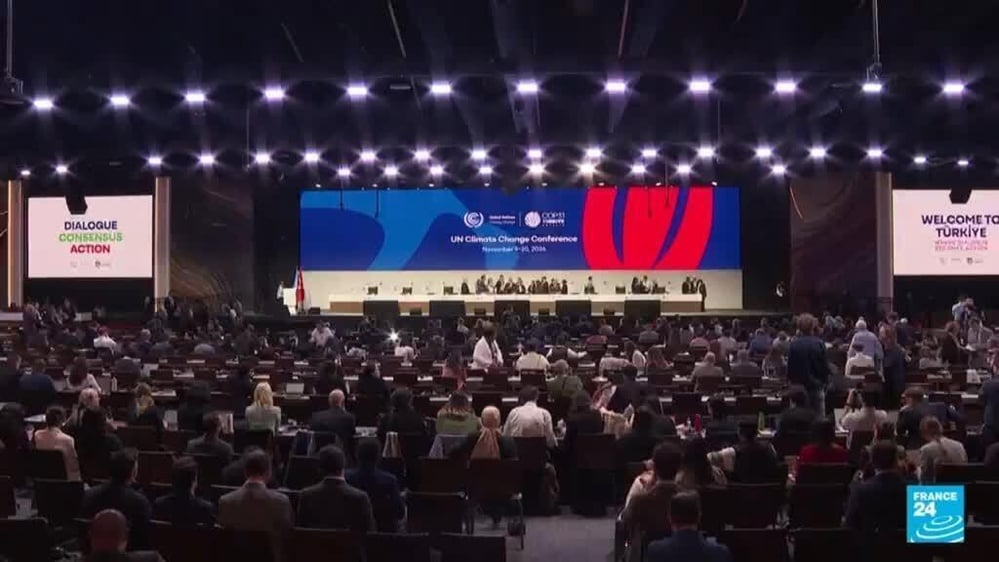
“Climate talks collapsed on Sunday at COP31 in Turkey, ending the longest-ever United Nations climate summit with no deal to show for it.” · exact text match
Why: The lead states the outcome plainly, without exclamation, fear-mongering, or dramatic imagery.
Claim: The report emphasizes failure, disappointment, and missed climate action.
“The lack of a deal means there will be no new action on climate disaster and adaptation financing for developing countries hardest hit by the impacts of climate change” · exact text match
“The UN Secretary General António Guterres wrote on X that he's "deeply disappointed" that COP31 ended without consensus.” · not found in supplied text
Why: The selection and tone lean toward a pessimistic assessment of the outcome, though the negativity is tied to reported events and quotes.
Claim: The report primarily describes the negotiations and consequences rather than issuing explicit prescriptions.
“The lack of a deal means there will be no new action on climate disaster and adaptation financing for developing countries hardest hit by the impacts of climate change” · exact text match
Why: The sentence explains consequences descriptively, and prescriptive language appears mainly in quotes.
Claim: The report includes warnings of overshooting 1.5 C and intensifying extreme weather.
“beyond which extreme weather impacts intensify, including through heat waves, floods and droughts.” · exact text match
Why: This factual warning can induce concern, though it is not framed as panic or rage-bait.
Claim: The report is centrally about governmental negotiations over climate policy.
“The annual UN Climate Change Conference brings together member states to negotiate — and ideally commit to — climate policies that aim to curb global warming.” · exact text match
Why: The subject is explicitly intergovernmental policy negotiation, making the article highly political in content.
Claim: The UN climate process is presented as the central legitimate venue for coordinating climate action.
“It's the main vehicle through which countries co-ordinate climate action.” · exact text match
Why: Calling the UN conference the main vehicle frames the multilateral institution positively as the primary mechanism.
Claim: The report relies on named officials, delegations, and attributable statements.
“said a joint European Union statement, delivered by Ireland's Environment Minister Darragh O'Brien and Wopke Hoekstra” · not found in supplied text
“Kenya's delegation said” · not found in supplied text
Why: Multiple named and attributable sources support the account, though unsupported claims like Saudi lobbying are marked as reported.
Claim: The report grounds its climate claims in scientific consensus and expert warning.
“despite scientific consensus that they drive global warming” · exact text match
“Experts have also warned that carbon capture, while important, can't roll back global warming on its own.” · exact text match
Why: It cites scientific consensus and expert assessment rather than emotional or mystical reasoning.
Claim: The report adopts an empirical, science-based framing of climate change.
“despite scientific consensus that they drive global warming” · exact text match
“Experts have also warned that carbon capture, while important, can't roll back global warming on its own.” · exact text match
Why: It explicitly invokes scientific consensus and expert caution rather than superstition or denial.
Claim: The report frames climate action through collective, multilateral negotiation and shared financing.
“The annual UN Climate Change Conference brings together member states to negotiate — and ideally commit to — climate policies that aim to curb global warming.” · exact text match
“commitment to the Paris Agreement, multilateralism and international institutions remains steadfast” · exact text match
Why: The emphasis on coordinated international commitments and collective finance is more collectivist than individualist, though this reflects the subject matter.
Claim: The report names sources, attributes statements, and includes multiple national perspectives.
“said a joint European Union statement, delivered by Ireland's Environment Minister Darragh O'Brien and Wopke Hoekstra” · not found in supplied text
“Kenya echoed the concern and said Africa wasn't adequately represented.” · exact text match
Why: Named officials and delegations are quoted, and opposing oil-producing states are also included, indicating fair sourcing.
Claim: The report explains the consensus rule, competing blocs, and consequences of failure.
“The annual summit requires consensus when finalizing agreements.
That means: no consensus, no deal.”
· exact text match
“Existing frameworks and agreements established in previous years are still in effect.” · exact text match
Why: It provides procedural context and distinguishes the current failure from existing frameworks, showing analytical clarity.
Several evaluative phrases are direct quotes from officials and activists, so scores reflect the report's selection and framing rather than those quoted views.
November 23, 2026 · 0 shares
Sympathetically frames the COP31 collapse as a failure driven by fossil-fuel intransigence, amplifying dismay from climate advocates and vulnerable Pacific nations through named official quotations.
Helium Analysis
·
20 of 56 available dimensions scored; omitted dimensions are not treated as neutral.
·
Verified supporting quotes for 20 of 20 scored dimensions.
Claim: The framing is sympathetic to climate-action advocates and critical of fossil-fuel resistance at COP31.
“Climate advocates have reacted with indignation to the COP31 summit ending in failure, with contentious talks collapsing over fossil fuels” · exact text match
Why: This aligns the report with environmental-action priorities and frames fossil-fuel opposition as the cause of failure.
Claim: Mostly factual reporting is punctuated by evaluative language such as 'chaotic finale.'
“The final agreement was rejected yesterday in a chaotic finale to the UN climate summit” · exact text match
Why: The adjective 'chaotic' is the publisher's own evaluative framing, though much of the article remains attributed.
Claim: The report uses dramatic verbs and labels to heighten the sense of collapse.
“the target was ultimately torpedoed, along with the rest of the doomed Antalya Pact” · exact text match
Why: 'torpedoed' and 'doomed' add dramatic emphasis beyond neutral description.
Claim: The report frames the outcome as a failure and raises doubts about climate diplomacy.
“The outcome revived memories of the failed Copenhagen summit of 2009 and raised fresh doubts about the effectiveness of climate diplomacy.” · exact text match
Why: Focus on failure and doubts gives the account a pessimistic valence about climate negotiations.
Claim: The report mainly describes negotiations and quoted reactions rather than issuing its own policy prescription.
“Pacific island nations, which are facing rising sea levels and other existential threats from climate change, expressed deep disappointment.” · exact text match
Why: This is descriptive reporting of reactions, though later quoted advocates offer prescriptions.
Claim: The framing stresses existential climate threats and failure, producing a moderately alarming tone.
“Pacific island nations, which are facing rising sea levels and other existential threats from climate change, expressed deep disappointment.” · exact text match
Why: 'existential threats' and 'deep disappointment' foreground danger and loss.
Claim: The report includes brief evaluative judgments about the effectiveness of climate diplomacy.
“The outcome revived memories of the failed Copenhagen summit of 2009 and raised fresh doubts about the effectiveness of climate diplomacy.” · exact text match
Why: The phrase 'raised fresh doubts' is an interpretive judgment beyond bare event reporting.
Claim: The article centers a political negotiation among states and blocs over climate policy.
“the EU and Saudi Arabia locking horns over the pace of the shift away from coal, oil and gas” · exact text match
Why: The core conflict is explicitly framed as a political dispute between state actors.
Claim: The report at one point reduces the summit to a divide between major polluters and vulnerable smaller nations.
“As always, the summit laid bare the divide between major polluters driving climate change and smaller nations bearing the brunt of its impact.” · exact text match
Why: This broad binary framing simplifies a complex multi-actor negotiation.
Claim: The report leans on scientific and institutional authorities to establish climate claims.
“the oil, gas, and coal that scientists say drive global warming” · exact text match
Why: Citing scientists as the authority for the warming link shows reliance on scientific authority.
Claim: The framing emphasizes vulnerable nations as let down and bearing disproportionate climate impacts.
“As always, the summit laid bare the divide between major polluters driving climate change and smaller nations bearing the brunt of its impact.” · exact text match
Why: The phrase 'bearing the brunt' casts smaller nations as victims of larger polluters.
Claim: The article's tone is strongly negative, centered on dismay, frustration, and disappointment.
“Climate advocates have reacted with indignation to the COP31 summit ending in failure” · exact text match
Why: The publisher's own sentence foregrounds indignation and failure, giving a negative emotional valence.
Claim: The report is highly sourced through named officials and direct quotations.
“"It certainly fell short today," said UN climate chief Simon Stiell.” · exact text match
Why: Named attribution and direct quotation are strong credibility signals in the supplied text.
Claim: The report grounds its account in attributed statements, named negotiators, and acknowledged constraints rather than speculation.
“COP31 negotiations chair Chris Bowen, who unsuccessfully sought to broker consensus among nearly 200 nations, conceded he could not overcome what he called "unbridgeable red lines".” · exact text match
Why: Direct attribution and concession of limits indicate rational, evidence-bound reporting.
Claim: The report is mildly critical of the fossil-fuel industry, specifically carbon capture championed by it.
“a costly technology championed by the fossil fuel industry” · exact text match
Why: The phrase portrays an industry-backed technology skeptically, indicating mild anti-fossil-fuel-corporate framing.
Claim: The report is strongly oriented toward climate science and scientific institutions.
“The summit also widened fault lines over science, with a fight over the work of the Intergovernmental Panel on Climate Change (IPCC) spilling into the negotiations.” · exact text match
Why: Science and the IPCC are treated as central reference points, indicating a scientific rather than superstitious orientation.
Claim: The report highlights collective international action to phase out fossil fuels.
“Around 60 countries joined a first-of-its-kind conference in April on phasing out fossil fuels while several nations at COP31 unveiled their own plans to exit coal, oil and gas.” · exact text match
Why: The emphasis on countries joining collective phase-out efforts indicates a mild collectivist orientation.
Claim: The report includes a forecast about overshooting the 1.5C target, attributed to scientists.
“scientists expect the world to overshoot in a few years as carbon-cutting goals fall short” · exact text match
Why: This is an explicit future projection, though it is attributed rather than presented as the publisher's own prediction.
Claim: The report includes named officials, direct quotations, and a Saudi negotiator's viewpoint alongside EU criticism.
“"We believe that climate change requires all solutions on the table," said Mohammad Ayoub, a climate negotiator for oil giant Saudi Arabia.” · exact text match
Why: Including opposing actors and named attribution signals fair, honest reporting practices.
Claim: The report integrates multiple national positions, scientific claims, and procedural details into a coherent account.
“The EU, several small island states, and other nations particularly vulnerable to climate change said they could not accept a text that failed to mention the oil, gas, and coal that scientists say drive global warming.” · exact text match
Why: This sentence connects actors, policy text, scientific attribution, and the dispute clearly, indicating high article intelligence.
November 23, 2026 · 0 shares
Framing treats the COP31 collapse as a blow to climate action, casts fossil-fuel producers as obstructionist, and treats accelerated phase-out as an imperative.
Helium Analysis
Limitations: The supplied text contains duplicated paragraphs, truncated quote attributions such as 'told .', and appended related-link headlines; scoring is restricted to the substantive COP31 report.
·
26 of 56 available dimensions scored; omitted dimensions are not treated as neutral.
·
Verified supporting quotes for 26 of 26 scored dimensions.
Claim: The coverage aligns with international climate action and climate-finance obligations rather than conservative skepticism.
“main driver of global warming” · exact text match
“required to provide financial support to developing nations” · exact text match
Why: Stronger climate action and wealthier-state finance are framed as necessary benchmarks.
Claim: The narrative relies on credentialed NGO, legal, and academic experts as principal interpreters.
“programme lead in Climate Diplomacy and Geopolitics” · exact text match
“senior attorney at the Center for International Environmental Law (CIEL)” · exact text match
Why: Expert voices structure the explanation, giving it an institutional rather than populist cast.
Claim: The coverage treats binding international obligations and collective climate finance as required responses.
“states have a binding legal obligation to combat climate change” · exact text match
“must deliver on their existing legal obligations and climate finance commitments” · exact text match
Why: Emphasis on legal mandates and collective state obligations points toward an institutional-authority approach.
Claim: Evaluative framing presents the failed talks as a setback and fossil fuels as the central problem.
“in blow to climate agenda” · exact text match
“planet-warming fossil fuels” · exact text match
Why: These phrases add evaluative color beyond neutral description.
Claim: Conflict and failure are rendered in dramatic terms.
“United Nations climate talks have ended in collapse” · exact text match
“was angrily rejected” · exact text match
Why: Dramatic verbs and emotional attribution heighten the story’s impact.
Claim: The dominant assessment is pessimistic about the UN process and warming trajectory.
“failure risks further delaying meaningful global emissions reductions” · exact text match
“bearing the greatest consequences” · exact text match
Why: The report stresses failure, delay, and severe consequences for vulnerable populations.
Claim: The report is structured around high-stakes conflict and a looming climate deadline.
“brought to the fore the divide between major polluters driving climate change and smaller nations bearing the brunt of its impact” · exact text match
Why: The clash and deadline give the account narrative interest.
Claim: The text shifts from reporting to explicit obligations and required actions.
“global greenhouse gas emissions must decline to slow the rate of global warming” · exact text match
“All major economies, particularly the wealthiest, must deliver” · exact text match
Why: Direct 'must' language makes the framing prescriptive.
Claim: Severe climate consequences are foregrounded to convey urgency.
“the poorest and most vulnerable countries and communities bearing the greatest consequences” · exact text match
Why: The language emphasizes serious harm, though it remains tied to expert assessment rather than rage-bait.
Claim: The coverage selects evaluative expert judgments that frame the outcome as minority obstruction.
“A small group of blockers set the outcome against the clear position of a large majority” · exact text match
Why: The quoted judgment is used to organize the report’s interpretation of the collapse.
Claim: The report is centered on state negotiations, policy obligations, and geopolitical alignments.
“oil-producing states blocked any mention of phasing out fossil fuels” · exact text match
“The European Union and several nations particularly vulnerable to climate change” · exact text match
Why: Its subject matter and framing are explicitly political and policy-focused.
Claim: The blocking-minority versus majority frame simplifies a multiparty negotiation.
“A small group of blockers set the outcome against the clear position of a large majority” · exact text match
Why: The quote reduces the deadlock to a binary conflict, though the article also notes finance disputes.
Claim: Named experts and institutions carry much of the interpretive weight.
“Cosima Cassel, programme lead in Climate Diplomacy and Geopolitics” · exact text match
“Sebastien Duyck, senior attorney at the Center for International Environmental Law (CIEL)” · exact text match
Why: Repeated reliance on expert quotes makes authority central to the argument.
Claim: Vulnerable nations are portrayed as bearing disproportionate harm and blocked by others.
“smaller nations bearing the brunt of its impact” · exact text match
“the poorest and most vulnerable countries and communities bearing the greatest consequences” · exact text match
Why: The framing repeatedly centers vulnerability and harm to poorer nations.
Claim: The report is shaped by an environmentalist framework treating rapid decarbonization as imperative.
“A fair and orderly transition away from fossil fuels remains both an imperative and a collective responsibility” · exact text match
“global greenhouse gas emissions must decline” · exact text match
Why: The language asserts a clear policy imperative rather than a purely neutral description.
Claim: The UN climate process is defended as a legitimate forum worth preserving.
“The UN process remains the only forum where every country has a voice and a chance to shape outcomes and it is worth protecting and fighting for” · exact text match
Why: This is explicit support for the existing multilateral institution.
Claim: The overall tone is negative toward the collapse and its consequences.
“failure risks further delaying meaningful global emissions reductions” · exact text match
“the world’s inability to keep the Paris Agreement pledge” · exact text match
Why: Repeated failure and loss language produce a negative emotional valence.
Claim: The report shows named sourcing, attribution, and inclusion of critical perspectives.
“Cosima Cassel, programme lead in Climate Diplomacy and Geopolitics” · exact text match
“Sebastien Duyck, senior attorney at the Center for International Environmental Law (CIEL)” · exact text match
Why: Visible attribution and multiple expert perspectives support credibility.
Claim: Causal claims are tied to quantified scientific and policy findings attributed to experts.
“UN Environment Programme last year said the world would exceed the 1.5C (2.7F) mark” · exact text match
“Joeri Rogelj, professor of climate science and Policy at Imperial College London” · exact text match
Why: The report uses data, attribution, and expert reasoning rather than emotional assertion alone.
Claim: Fossil-fuel producers are depicted as obstructionist interests slowing transition.
“petrostates attempted to slow momentum on the energy transition” · exact text match
“fossil fuel producers wield more power than those who want to accelerate the transition” · exact text match
Why: The framing is adversarial toward fossil-fuel industry actors, though not uniformly anti-business.
Claim: Scientific and institutional climate findings are treated as authoritative baselines.
“scientists expect to overshoot in a few years” · exact text match
“UN Environment Programme last year said the world would exceed the 1.5C (2.7F) mark” · exact text match
Why: The report is grounded in empirical claims and expert institutions rather than superstition.
Claim: Solutions are framed as collective international obligations and burden-sharing.
“collective responsibility” · exact text match
“All major economies, particularly the wealthiest, must deliver on their existing legal obligations” · exact text match
Why: The remedies emphasize shared state obligations rather than individual action.
Claim: Future scenarios and next steps are prominent, though largely attributed to experts.
“So what’s next for the fraught UN process” · exact text match
“the planet will warm 2.3 to 2.5C (4.1 to 4.5F) by 2100” · exact text match
Why: Forecasting and next-step questions form a substantial part of the report.
Claim: Loaded conflict framing and selective expert criticism simplify blame for the collapse.
“A small group of blockers set the outcome against the clear position of a large majority” · exact text match
“in blow to climate agenda” · exact text match
Why: The wording is persuasive and conflict-oriented, though not overtly deceptive.
Claim: The report names expert sources and includes criticism of wealthy states as well as oil producers.
“showed “considerable hypocrisy”” · exact text match
“Joeri Rogelj, professor of climate science and Policy at Imperial College London” · exact text match
Why: Attribution and inclusion of cross-cutting criticism are observable fairness signals.
Claim: The piece integrates scientific projections, legal context, and cross-cutting criticism.
“the planet will warm 2.3 to 2.5C (4.1 to 4.5F) by 2100” · exact text match
“showed “considerable hypocrisy”” · exact text match
Why: It combines quantitative and legal detail with competing accountability claims.
The supplied text contains duplicated paragraphs, truncated quote attributions such as 'told .', and appended related-link headlines; scoring is restricted to the substantive COP31 report.
November 23, 2026 · 0 shares
Coverage frames the COP31 collapse through a pro-climate-action, anti-fossil-fuel lens, treating rejection of a weak package as justified while giving little space to defenders of the deal.
Helium Analysis
Limitations: The supplied text contains duplicated passages and unrelated appended snippets; analysis focused on the substantive COP31 climate article.
·
15 of 56 available dimensions scored; omitted dimensions are not treated as neutral.
·
Verified supporting quotes for 14 of 15 scored dimensions.
Claim: Coverage frames the COP31 rejection through a pro-climate-action, anti-fossil-fuel lens.
“rejected a deal they saw as pandering to the fossil fuel industry.” · exact text match
“a climate solution favored by oil and gas producers, but which has so far done little to reduce planet-warming pollution.” · exact text match
Why: The narrative presents fossil-fuel opposition as justified and omits defenses of the rejected package, supporting a left-leaning environmental framing.
Claim: Mostly factual reporting is qualified by evaluative characterizations of fossil fuels and carbon capture.
“a climate solution favored by oil and gas producers, but which has so far done little to reduce planet-warming pollution.” · exact text match
Why: The evaluative qualifier moves the framing slightly away from strict neutrality.
Claim: The tone is sober and procedural rather than sensational.
“The two-week event overran by two days as parties sought to eke out a deal, becoming the longest-ever session of the annual conference.” · exact text match
Why: Measured procedural detail dominates over sensational language.
Claim: The report is pessimistic about the current outcome and climate target.
“recent UN reports have for the first time acknowledged that the most stringent target of the 2015 Paris Agreement — a commitment to limit the increase in global temperatures to 1.5°C — is all but out of reach.” · exact text match
Counterevidence:
“The breakdown of past UN climate summits has helped pave the way for major breakthroughs in subsequent conferences” · exact text match
Why: The current assessment is pessimistic, though historical context provides some optimism.
Claim: The report is predominantly descriptive of negotiations rather than prescriptive.
“The failure of the UN-convened COP31 negotiations in Antalya, Turkey, followed disputes over the shift away from polluting fuels and the role of carbon capture technology” · exact text match
Why: The focus is on explaining events and disputes rather than advocating a policy prescription.
Claim: Climate consequences are referenced in alarming but restrained terms.
“Wildfires, extreme heat and floods have contributed to thousands of deaths this year” · exact text match
Why: The report includes fear-inducing harms, but the language remains comparatively restrained.
Claim: Evaluative language is present but largely attributed or tied to reported disputes.
“rejected a deal they saw as pandering to the fossil fuel industry.” · exact text match
Why: The framing carries evaluative weight, though it is mediated by attribution to delegations.
Claim: The report centers international political negotiations and government delegations.
“International climate talks yesterday collapsed without any major agreement after delegations including the EU rejected a deal” · exact text match
Why: The core subject is political diplomacy among state actors.
Claim: Complex negotiations are condensed into a fossil-fuel versus climate-action dispute.
“rejected a deal they saw as pandering to the fossil fuel industry.” · exact text match
Why: The article later notes finance and report disputes, but the lead framing simplifies the conflict.
Claim: The overall tone is negative about the collapse and disappointed in the outcome.
“That delivered a fatal blow to negotiations that had been encouraged to produce a more decisive global response to escalating climate threats.” · exact text match
“It is immensely disappointing we have been unable to do so.” · exact text match
Why: The negative and disappointed framing is clear in the narrative and quoted reaction.
Claim: Sourcing and contextual caveats are present, though the report is one-sided on the rejected package.
“There is no obligation the UN summits end in a sweeping agreement.” · exact text match
Why: The contextual caveat supports credibility, while limited counter-sourcing tempers the score.
Claim: The report mostly uses evidence, attribution, and historical context rather than pure emotional assertion.
“There is no obligation the UN summits end in a sweeping agreement.” · exact text match
“The breakdown of past UN climate summits has helped pave the way for major breakthroughs in subsequent conferences” · exact text match
Why: Contextual caveats and historical precedent support a mostly rational presentation, though quoted disappointment adds emotion.
Claim: The report relies on UN scientific reports and treats climate science as authoritative.
“recent UN reports have for the first time acknowledged that the most stringent target of the 2015 Paris Agreement — a commitment to limit the increase in global temperatures to 1.5°C — is all but out of reach.” · exact text match
Why: Empirical and scientific authority is central to the climate framing.
Claim: The report attributes key claims and acknowledges procedural context.
“There is no obligation the UN summits end in a sweeping agreement.” · exact text match
“Norway, Vanuatu, Panama and EU nations refused to endorse the package” · exact text match
Why: Attribution and contextual caveats support moderate integrity, despite one-sided sourcing on the rejected package.
The supplied text contains duplicated passages and unrelated appended snippets; analysis focused on the substantive COP31 climate article.
November 22, 2026 · 0 shares
The climate-negotiation coverage frames the COP31 collapse through an alarmist, pro-action lens, using loaded language to criticize oil-producing holdouts and emphasize catastrophic warming risks.
Helium Analysis
Limitations: The supplied text mixes a climate-negotiation article with unrelated Mehr News headlines and site boilerplate; analysis is limited to the climate-negotiation content.
·
25 of 56 available dimensions scored; omitted dimensions are not treated as neutral.
·
Verified supporting quotes for 25 of 25 scored dimensions.
Claim: The coverage aligns with environmentalist/left-of-center priorities by treating failure to mention fossil fuels as central and noting Trump's withdrawal from international climate action.
“stunning failure of leadership at a time when the climate crisis is accelerating” · exact text match
“under President Donald Trump, has pulled out of international climate action” · exact text match
Why: Publisher narration adopts climate-action framing and negatively contextualizes the Trump withdrawal, though it chiefly reports official statements.
Claim: The article centers expert, UN, and ministerial authority rather than populist grievance.
“Experts criticized the conference as a stunning failure of leadership” · exact text match
“A sobering recent UN report confirmed” · exact text match
Why: Relies on expert and institutional voices to frame the negotiations, with little populist framing.
Claim: The framing favors global collective action and financial support over a neutral treatment of sovereignty and market choice.
“including language that the world would need to move away from fossil fuels” · exact text match
“increasing financial support for countries already grappling with climate catastrophes” · exact text match
Why: The subject is a top-down UN deal involving coordinated fossil-fuel transition and finance, but the article does not explicitly advocate mandates.
Claim: Publisher narration uses evaluative labels rather than purely neutral description.
“hold the dubious honor of being the longest COP in history” · exact text match
“stunning failure of leadership” · exact text match
Why: Loaded phrasing and judgments shape the account.
Claim: Sensational and alarmist language heightens the stakes.
“worst ever COP” · exact text match
“potentially catastrophic 2.8 degrees” · exact text match
Why: Quoted and narrated phrases use dramatic, high-stakes descriptors.
Claim: The article's dominant tone is pessimistic about climate progress and future warming.
“the climate crisis is accelerating with increasingly deadly consequences” · exact text match
“the world will overshoot its target of limiting global warming to 1.5 degrees Celsius” · exact text match
Why: Focuses on failure, overshoot, and severe consequences.
Claim: Beyond describing the collapse, the article endorses urgent action through quoted prescriptions.
“its collapse needs to be a wakeup call for the world” · exact text match
“the world would need to move away from fossil fuels” · exact text match
Why: Includes normative calls and policy direction.
Claim: The framing emphasizes catastrophic and deadly climate consequences.
“increasingly deadly consequences” · exact text match
“potentially catastrophic 2.8 degrees” · exact text match
Why: Uses fear-inducing language about climate harm.
Claim: The article includes clear evaluative judgments about the conference.
“hold the dubious honor of being the longest COP in history” · exact text match
“worst ever COP” · exact text match
Why: Substantial opinionated phrasing beyond neutral reporting.
Claim: The report is centrally about international climate politics and national positions.
“UN climate talks break down over bitter disagreements on fossil fuels” · exact text match
“under President Donald Trump, has pulled out of international climate action” · exact text match
Why: Focuses on negotiations, state positions, and political withdrawal.
Claim: The account frames the dispute as a clear contest between climate action and oil-rich obstruction.
“The breaking point was over the very cause of climate change itself: fossil fuels” · exact text match
“oil-rich nations pushing back” · exact text match
Why: Condenses complex negotiations into a fossil-fuel blocker narrative.
Claim: The article leans on named experts, UN reports, and ministers to establish credibility.
“Experts criticized the conference as a stunning failure of leadership” · exact text match
“said Mohamed Adow, director of the energy think tank Power Shift Africa, CNN reported” · exact text match
Why: Authority citations are prominent in framing the failure.
Claim: Climate-vulnerable countries are presented as the harmed party in the negotiations.
“increasing financial support for countries already grappling with climate catastrophes” · exact text match
“most climate-vulnerable countries” · exact text match
Why: Uses vulnerability framing to interpret the talks.
Claim: The article uses confident declarative language for forecasts and outcomes.
“A sobering recent UN report confirmed the world will overshoot its target” · exact text match
“it is clear that there are parties in this hall who oppose this text” · exact text match
Why: Certainty is stronger than the underlying forecast and negotiation complexity strictly support, though some is quoted.
Claim: The coverage is shaped by an environmentalist policy framework.
“the world would need to move away from fossil fuels” · exact text match
“the climate crisis is accelerating” · exact text match
Why: Policy assumptions and framing follow a coherent climate-action ideology.
Claim: The article generally validates international climate institutions and expert consensus while criticizing the failure of the conference.
“Experts criticized the conference as a stunning failure of leadership” · exact text match
“A sobering recent UN report confirmed” · exact text match
Why: Pro-establishment in its reliance on UN/expert authority, though it criticizes the outcome.
Claim: The article's emotional valence is strongly negative.
“stunning failure of leadership” · exact text match
“increasingly deadly consequences” · exact text match
Why: Language conveys failure, danger, and catastrophe.
Claim: The article provides named sources and quotes but uses loaded framing and some mixed-source material.
“COP31 president Murat Kurum acknowledged support was not there to gavel through the pact” · exact text match
“A sobering recent UN report confirmed” · exact text match
Why: Attribution supports credibility, though evaluative language and mixed text reduce neutrality.
Claim: The report is largely evidence-based but uses evaluative adjectives and catastrophic framing.
“A sobering recent UN report confirmed the world will overshoot its target” · exact text match
“potentially catastrophic 2.8 degrees” · exact text match
Why: Contains attributed data and named sources, yet the adjectives and framing lean away from neutral rationality.
Claim: The report relies on climate science and UN assessments rather than superstition.
“A sobering recent UN report confirmed the world will overshoot its target” · exact text match
“limiting global warming to 1.5 degrees Celsius above pre-industrial levels” · exact text match
Why: Scientific authority and quantitative warming thresholds frame the report.
Claim: The framing favors collective global climate action and financial transfers over individualist or market-based framing.
“increasing financial support for countries already grappling with climate catastrophes” · exact text match
“the world would need to move away from fossil fuels” · exact text match
Why: Collective international obligations and support are central.
Claim: The article includes forecasts about future warming under current policies.
“On current policies temperatures are expected to rise to a potentially catastrophic 2.8 degrees” · exact text match
“the world will overshoot its target of limiting global warming to 1.5 degrees Celsius” · exact text match
Why: Future-oriented climate projections are a key part of the account.
Claim: Loaded wording and a stark good-versus-obstruction frame shape reader interpretation.
“hold the dubious honor of being the longest COP in history” · exact text match
“The breaking point was over the very cause of climate change itself: fossil fuels” · exact text match
Why: Uses evaluative language and simplification, though mostly through attributed reporting.
Claim: The report attributes claims to named sources and documents, though it also uses loaded narration.
“said Mohamed Adow, director of the energy think tank Power Shift Africa, CNN reported” · exact text match
“COP31 president Murat Kurum acknowledged support was not there to gavel through the pact” · exact text match
Why: Visible sourcing and direct quotations support integrity, notwithstanding biased adjectives.
Claim: The article attributes the collapse chiefly to oil-rich states resisting fossil-fuel language.
“Russia and Saudi Arabia sought to keep fossil fuels out of the document” · exact text match
“oil-rich nations pushing back” · exact text match
Why: Singles out fossil-fuel producers as the obstacle, though it also cites broad divisions.
The supplied text mixes a climate-negotiation article with unrelated Mehr News headlines and site boilerplate; analysis is limited to the climate-negotiation content.
November 23, 2026 · 0 shares
The report frames the COP31 collapse through climate-activist dismay, casting fossil-fuel-producing states as blockers and the failed deal as a dangerous omission of fossil fuels.
Helium Analysis
Limitations: The analysis is limited to the supplied article text; no byline, publication date, or external context is provided.
·
20 of 56 available dimensions scored; omitted dimensions are not treated as neutral.
·
Verified supporting quotes for 20 of 20 scored dimensions.
Claim: The report foregrounds climate-activist indignation and fossil-fuel phase-out demands.
“reacted with indignation to the COP31 summit ending in failure” · exact text match
“we will not accept a COP that greenwashes fossil fuel” · exact text match
Why: The selected quotes and framing align with environmentalist, left-liberal climate politics.
Claim: The report's perspective is dominated by UN, ministerial, and negotiator voices rather than popular or grassroots actors.
“COP31 negotiations chair Chris Bowen, who unsuccessfully sought to broker consensus among nearly 200 nations” · exact text match
“UN climate chief Simon Stiell” · exact text match
Why: Elite diplomatic voices predominate in the account.
Claim: The report's own prose uses evaluative, dramatic labels about the summit outcome.
“in a chaotic finale to the UN climate summit” · exact text match
“along with the rest of the doomed Antalya Pact” · exact text match
Why: Chaotic and doomed are subjective evaluative descriptors.
Claim: The report uses dramatic verbs and metaphors to characterize the negotiating collapse.
“as the deal imploded” · exact text match
“the target was ultimately torpedoed” · exact text match
Why: Imploded and torpedoed intensify the account beyond neutral description.
Claim: The report frames the outcome as a failure that casts doubt on climate diplomacy.
“raised fresh doubts about the effectiveness of climate diplomacy” · exact text match
“revived memories of the failed Copenhagen summit of 2009” · exact text match
Why: The chosen phrases emphasize setback and pessimism.
Claim: The report is largely descriptive of negotiations and quotes prescriptions rather than issuing its own.
“The final agreement was rejected on Sunday” · exact text match
“said Ireland’s climate minister, Darragh O’Brien” · exact text match
Why: The publisher reports events and attributed demands, not its own policy prescription.
Claim: The report uses crisis and disaster framing around climate change.
“a year of climate-linked disasters from Europe to Nepal” · exact text match
“the climate crisis demands” · exact text match
Why: Disaster and crisis language heightens fear.
Claim: The report's own prose contains evaluative judgments about the failed pact.
“in a chaotic finale to the UN climate summit” · exact text match
“along with the rest of the doomed Antalya Pact” · exact text match
Why: Evaluative descriptors indicate an opinionated framing within the reporting.
Claim: The central subject is a UN climate negotiation and a fossil-fuel policy conflict.
“climate talks collapse at COP31” · exact text match
“oil-producing states blocked any mention of phasing out fossil fuels in the final deal” · exact text match
Why: International climate policy and fossil-fuel phase-out are political matters.
Claim: The report relies on senior officials and prominent advocates to establish the significance of the failure.
“UN Secretary-General António Guterres, who urged nations to send fossil fuels “the way of the dinosaurs”” · exact text match
“Former US vice-president and climate advocate Al Gore said” · exact text match
Why: Multiple high-status voices are used to condemn the outcome.
Claim: The report adopts an environmentalist frame that treats fossil-fuel phase-out as the central test of climate seriousness.
“we will not accept a COP that greenwashes fossil fuel” · exact text match
“the single biggest contributor to climate change” · exact text match
Why: The selected quotes and structure privilege an environmentalist policy framework.
Claim: The report centers UN and ministerial authority as the legitimate frame for assessing the summit.
“UN Secretary-General António Guterres, who urged nations to send fossil fuels “the way of the dinosaurs”” · exact text match
“COP31 negotiations chair Chris Bowen, who unsuccessfully sought to broker consensus among nearly 200 nations” · exact text match
Why: The narrative relies on senior UN and government officials as primary voices.
Claim: The report foregrounds negative emotional reactions to the collapse.
“profound frustration” · exact text match
“outrageous that a handful of petrostates have veto power over any mention of fossil fuels” · exact text match
Why: The selected emotional language conveys negative affect.
Claim: The report provides named sources, direct quotes, and procedural detail.
“COP31 negotiations chair Chris Bowen, who unsuccessfully sought to broker consensus among nearly 200 nations” · exact text match
“said Mohammad Ayoub, a climate negotiator for oil giant Saudi Arabia” · exact text match
Why: Attribution and procedural specifics support credibility.
Claim: The report describes the collapse through named procedural actors and attributed limits rather than irrational assertions.
“COP31 negotiations chair Chris Bowen, who unsuccessfully sought to broker consensus among nearly 200 nations, conceded he could not overcome what he called “unbridgeable red lines”.” · exact text match
Why: The account is grounded in procedural detail and direct attribution.
Claim: The report presents fossil-fuel industry involvement in carbon capture negatively.
“a costly technology championed by the fossil fuel industry” · exact text match
Why: Costly and industry association frame corporate fossil-fuel interests critically.
Claim: The report aligns with scientific authority on climate change and fossil fuels.
“scientists expect the world to overshoot in a few years” · exact text match
“It moves us backwards on the science” · exact text match
Why: Scientific consensus is treated as the baseline for evaluating the deal.
Claim: The report frames climate action as a collective global endeavor.
“a global goal to electrify the world economy” · exact text match
“bold collective ambition on climate action” · exact text match
Why: Collective global goals and ambition are emphasized.
Claim: The report attributes claims to named officials and includes a contrasting Saudi negotiator quote.
“said in a statement” · exact text match
“said Mohammad Ayoub, a climate negotiator for oil giant Saudi Arabia” · exact text match
Why: Named sourcing and inclusion of an opposing actor are visible fairness signals.
Claim: The report provides contextual detail and multiple attributed perspectives on the collapse.
“underscoring the strains on diplomacy in an increasingly fractured world” · exact text match
“familiar fault lines emerged over fossil fuels, with the EU and Saudi Arabia locking horns over the pace of the shift away from coal, oil and gas” · exact text match
Why: Complex procedural and geopolitical context is synthesized clearly.
The analysis is limited to the supplied article text; no byline, publication date, or external context is provided.
November 22, 2026 · 0 shares
COP31's failure is framed as a setback for climate action, with fossil fuels centered as the problem and pro-action officials and environmentalists amplified.
Helium Analysis
Limitations: Several evaluative phrases are direct quotes from officials and activists, so scores reflect the report's selection and framing rather than those quoted views.
·
14 of 56 available dimensions scored; omitted dimensions are not treated as neutral.
·
Verified supporting quotes for 10 of 14 scored dimensions.
Claim: The report frames the failure to agree on climate policy as a setback and centers fossil fuel reduction as necessary.
“The lack of a deal means there will be no new action on climate disaster and adaptation financing for developing countries hardest hit by the impacts of climate change” · exact text match
“despite scientific consensus that they drive global warming” · exact text match
Why: The selection and emphasis align with pro-climate-action framing often associated with liberal politics, though the piece remains largely reportorial.
Claim: The report attributes disputed or evaluative claims to named officials and delegations.
“Multiple members said the proposed agreement didn't go far enough to match the gravity of the climate crisis” · exact text match
“said a joint European Union statement, delivered by Ireland's Environment Minister Darragh O'Brien and Wopke Hoekstra” · not found in supplied text
Why: Key judgments are presented as attributed statements, supporting an objective rather than subjective presentation.
Claim: The summit collapse is reported in factual, restrained terms rather than sensational language.
“Climate talks collapsed on Sunday at COP31 in Turkey, ending the longest-ever United Nations climate summit with no deal to show for it.” · exact text match
Why: The lead states the outcome plainly, without exclamation, fear-mongering, or dramatic imagery.
Claim: The report emphasizes failure, disappointment, and missed climate action.
“The lack of a deal means there will be no new action on climate disaster and adaptation financing for developing countries hardest hit by the impacts of climate change” · exact text match
“The UN Secretary General António Guterres wrote on X that he's "deeply disappointed" that COP31 ended without consensus.” · not found in supplied text
Why: The selection and tone lean toward a pessimistic assessment of the outcome, though the negativity is tied to reported events and quotes.
Claim: The report primarily describes the negotiations and consequences rather than issuing explicit prescriptions.
“The lack of a deal means there will be no new action on climate disaster and adaptation financing for developing countries hardest hit by the impacts of climate change” · exact text match
Why: The sentence explains consequences descriptively, and prescriptive language appears mainly in quotes.
Claim: The report includes warnings of overshooting 1.5 C and intensifying extreme weather.
“beyond which extreme weather impacts intensify, including through heat waves, floods and droughts.” · exact text match
Why: This factual warning can induce concern, though it is not framed as panic or rage-bait.
Claim: The report is centrally about governmental negotiations over climate policy.
“The annual UN Climate Change Conference brings together member states to negotiate — and ideally commit to — climate policies that aim to curb global warming.” · exact text match
Why: The subject is explicitly intergovernmental policy negotiation, making the article highly political in content.
Claim: The UN climate process is presented as the central legitimate venue for coordinating climate action.
“It's the main vehicle through which countries co-ordinate climate action.” · exact text match
Why: Calling the UN conference the main vehicle frames the multilateral institution positively as the primary mechanism.
Claim: The report relies on named officials, delegations, and attributable statements.
“said a joint European Union statement, delivered by Ireland's Environment Minister Darragh O'Brien and Wopke Hoekstra” · not found in supplied text
“Kenya's delegation said” · not found in supplied text
Why: Multiple named and attributable sources support the account, though unsupported claims like Saudi lobbying are marked as reported.
Claim: The report grounds its climate claims in scientific consensus and expert warning.
“despite scientific consensus that they drive global warming” · exact text match
“Experts have also warned that carbon capture, while important, can't roll back global warming on its own.” · exact text match
Why: It cites scientific consensus and expert assessment rather than emotional or mystical reasoning.
Claim: The report adopts an empirical, science-based framing of climate change.
“despite scientific consensus that they drive global warming” · exact text match
“Experts have also warned that carbon capture, while important, can't roll back global warming on its own.” · exact text match
Why: It explicitly invokes scientific consensus and expert caution rather than superstition or denial.
Claim: The report frames climate action through collective, multilateral negotiation and shared financing.
“The annual UN Climate Change Conference brings together member states to negotiate — and ideally commit to — climate policies that aim to curb global warming.” · exact text match
“commitment to the Paris Agreement, multilateralism and international institutions remains steadfast” · exact text match
Why: The emphasis on coordinated international commitments and collective finance is more collectivist than individualist, though this reflects the subject matter.
Claim: The report names sources, attributes statements, and includes multiple national perspectives.
“said a joint European Union statement, delivered by Ireland's Environment Minister Darragh O'Brien and Wopke Hoekstra” · not found in supplied text
“Kenya echoed the concern and said Africa wasn't adequately represented.” · exact text match
Why: Named officials and delegations are quoted, and opposing oil-producing states are also included, indicating fair sourcing.
Claim: The report explains the consensus rule, competing blocs, and consequences of failure.
“The annual summit requires consensus when finalizing agreements.
That means: no consensus, no deal.”
· exact text match
“Existing frameworks and agreements established in previous years are still in effect.” · exact text match
Why: It provides procedural context and distinguishes the current failure from existing frameworks, showing analytical clarity.
Several evaluative phrases are direct quotes from officials and activists, so scores reflect the report's selection and framing rather than those quoted views.
November 23, 2026 · 0 shares
Framing treats the COP31 collapse as a blow to climate action, casts fossil-fuel producers as obstructionist, and treats accelerated phase-out as an imperative.
Helium Analysis
Limitations: The supplied text contains duplicated paragraphs, truncated quote attributions such as 'told .', and appended related-link headlines; scoring is restricted to the substantive COP31 report.
·
26 of 56 available dimensions scored; omitted dimensions are not treated as neutral.
·
Verified supporting quotes for 26 of 26 scored dimensions.
Claim: The coverage aligns with international climate action and climate-finance obligations rather than conservative skepticism.
“main driver of global warming” · exact text match
“required to provide financial support to developing nations” · exact text match
Why: Stronger climate action and wealthier-state finance are framed as necessary benchmarks.
Claim: The narrative relies on credentialed NGO, legal, and academic experts as principal interpreters.
“programme lead in Climate Diplomacy and Geopolitics” · exact text match
“senior attorney at the Center for International Environmental Law (CIEL)” · exact text match
Why: Expert voices structure the explanation, giving it an institutional rather than populist cast.
Claim: The coverage treats binding international obligations and collective climate finance as required responses.
“states have a binding legal obligation to combat climate change” · exact text match
“must deliver on their existing legal obligations and climate finance commitments” · exact text match
Why: Emphasis on legal mandates and collective state obligations points toward an institutional-authority approach.
Claim: Evaluative framing presents the failed talks as a setback and fossil fuels as the central problem.
“in blow to climate agenda” · exact text match
“planet-warming fossil fuels” · exact text match
Why: These phrases add evaluative color beyond neutral description.
Claim: Conflict and failure are rendered in dramatic terms.
“United Nations climate talks have ended in collapse” · exact text match
“was angrily rejected” · exact text match
Why: Dramatic verbs and emotional attribution heighten the story’s impact.
Claim: The dominant assessment is pessimistic about the UN process and warming trajectory.
“failure risks further delaying meaningful global emissions reductions” · exact text match
“bearing the greatest consequences” · exact text match
Why: The report stresses failure, delay, and severe consequences for vulnerable populations.
Claim: The report is structured around high-stakes conflict and a looming climate deadline.
“brought to the fore the divide between major polluters driving climate change and smaller nations bearing the brunt of its impact” · exact text match
Why: The clash and deadline give the account narrative interest.
Claim: The text shifts from reporting to explicit obligations and required actions.
“global greenhouse gas emissions must decline to slow the rate of global warming” · exact text match
“All major economies, particularly the wealthiest, must deliver” · exact text match
Why: Direct 'must' language makes the framing prescriptive.
Claim: Severe climate consequences are foregrounded to convey urgency.
“the poorest and most vulnerable countries and communities bearing the greatest consequences” · exact text match
Why: The language emphasizes serious harm, though it remains tied to expert assessment rather than rage-bait.
Claim: The coverage selects evaluative expert judgments that frame the outcome as minority obstruction.
“A small group of blockers set the outcome against the clear position of a large majority” · exact text match
Why: The quoted judgment is used to organize the report’s interpretation of the collapse.
Claim: The report is centered on state negotiations, policy obligations, and geopolitical alignments.
“oil-producing states blocked any mention of phasing out fossil fuels” · exact text match
“The European Union and several nations particularly vulnerable to climate change” · exact text match
Why: Its subject matter and framing are explicitly political and policy-focused.
Claim: The blocking-minority versus majority frame simplifies a multiparty negotiation.
“A small group of blockers set the outcome against the clear position of a large majority” · exact text match
Why: The quote reduces the deadlock to a binary conflict, though the article also notes finance disputes.
Claim: Named experts and institutions carry much of the interpretive weight.
“Cosima Cassel, programme lead in Climate Diplomacy and Geopolitics” · exact text match
“Sebastien Duyck, senior attorney at the Center for International Environmental Law (CIEL)” · exact text match
Why: Repeated reliance on expert quotes makes authority central to the argument.
Claim: Vulnerable nations are portrayed as bearing disproportionate harm and blocked by others.
“smaller nations bearing the brunt of its impact” · exact text match
“the poorest and most vulnerable countries and communities bearing the greatest consequences” · exact text match
Why: The framing repeatedly centers vulnerability and harm to poorer nations.
Claim: The report is shaped by an environmentalist framework treating rapid decarbonization as imperative.
“A fair and orderly transition away from fossil fuels remains both an imperative and a collective responsibility” · exact text match
“global greenhouse gas emissions must decline” · exact text match
Why: The language asserts a clear policy imperative rather than a purely neutral description.
Claim: The UN climate process is defended as a legitimate forum worth preserving.
“The UN process remains the only forum where every country has a voice and a chance to shape outcomes and it is worth protecting and fighting for” · exact text match
Why: This is explicit support for the existing multilateral institution.
Claim: The overall tone is negative toward the collapse and its consequences.
“failure risks further delaying meaningful global emissions reductions” · exact text match
“the world’s inability to keep the Paris Agreement pledge” · exact text match
Why: Repeated failure and loss language produce a negative emotional valence.
Claim: The report shows named sourcing, attribution, and inclusion of critical perspectives.
“Cosima Cassel, programme lead in Climate Diplomacy and Geopolitics” · exact text match
“Sebastien Duyck, senior attorney at the Center for International Environmental Law (CIEL)” · exact text match
Why: Visible attribution and multiple expert perspectives support credibility.
Claim: Causal claims are tied to quantified scientific and policy findings attributed to experts.
“UN Environment Programme last year said the world would exceed the 1.5C (2.7F) mark” · exact text match
“Joeri Rogelj, professor of climate science and Policy at Imperial College London” · exact text match
Why: The report uses data, attribution, and expert reasoning rather than emotional assertion alone.
Claim: Fossil-fuel producers are depicted as obstructionist interests slowing transition.
“petrostates attempted to slow momentum on the energy transition” · exact text match
“fossil fuel producers wield more power than those who want to accelerate the transition” · exact text match
Why: The framing is adversarial toward fossil-fuel industry actors, though not uniformly anti-business.
Claim: Scientific and institutional climate findings are treated as authoritative baselines.
“scientists expect to overshoot in a few years” · exact text match
“UN Environment Programme last year said the world would exceed the 1.5C (2.7F) mark” · exact text match
Why: The report is grounded in empirical claims and expert institutions rather than superstition.
Claim: Solutions are framed as collective international obligations and burden-sharing.
“collective responsibility” · exact text match
“All major economies, particularly the wealthiest, must deliver on their existing legal obligations” · exact text match
Why: The remedies emphasize shared state obligations rather than individual action.
Claim: Future scenarios and next steps are prominent, though largely attributed to experts.
“So what’s next for the fraught UN process” · exact text match
“the planet will warm 2.3 to 2.5C (4.1 to 4.5F) by 2100” · exact text match
Why: Forecasting and next-step questions form a substantial part of the report.
Claim: Loaded conflict framing and selective expert criticism simplify blame for the collapse.
“A small group of blockers set the outcome against the clear position of a large majority” · exact text match
“in blow to climate agenda” · exact text match
Why: The wording is persuasive and conflict-oriented, though not overtly deceptive.
Claim: The report names expert sources and includes criticism of wealthy states as well as oil producers.
“showed “considerable hypocrisy”” · exact text match
“Joeri Rogelj, professor of climate science and Policy at Imperial College London” · exact text match
Why: Attribution and inclusion of cross-cutting criticism are observable fairness signals.
Claim: The piece integrates scientific projections, legal context, and cross-cutting criticism.
“the planet will warm 2.3 to 2.5C (4.1 to 4.5F) by 2100” · exact text match
“showed “considerable hypocrisy”” · exact text match
Why: It combines quantitative and legal detail with competing accountability claims.
The supplied text contains duplicated paragraphs, truncated quote attributions such as 'told .', and appended related-link headlines; scoring is restricted to the substantive COP31 report.
November 23, 2026 · 0 shares
The report frames the COP31 collapse through climate-activist dismay, casting fossil-fuel-producing states as blockers and the failed deal as a dangerous omission of fossil fuels.
Helium Analysis
Limitations: The analysis is limited to the supplied article text; no byline, publication date, or external context is provided.
·
20 of 56 available dimensions scored; omitted dimensions are not treated as neutral.
·
Verified supporting quotes for 20 of 20 scored dimensions.
Claim: The report foregrounds climate-activist indignation and fossil-fuel phase-out demands.
“reacted with indignation to the COP31 summit ending in failure” · exact text match
“we will not accept a COP that greenwashes fossil fuel” · exact text match
Why: The selected quotes and framing align with environmentalist, left-liberal climate politics.
Claim: The report's perspective is dominated by UN, ministerial, and negotiator voices rather than popular or grassroots actors.
“COP31 negotiations chair Chris Bowen, who unsuccessfully sought to broker consensus among nearly 200 nations” · exact text match
“UN climate chief Simon Stiell” · exact text match
Why: Elite diplomatic voices predominate in the account.
Claim: The report's own prose uses evaluative, dramatic labels about the summit outcome.
“in a chaotic finale to the UN climate summit” · exact text match
“along with the rest of the doomed Antalya Pact” · exact text match
Why: Chaotic and doomed are subjective evaluative descriptors.
Claim: The report uses dramatic verbs and metaphors to characterize the negotiating collapse.
“as the deal imploded” · exact text match
“the target was ultimately torpedoed” · exact text match
Why: Imploded and torpedoed intensify the account beyond neutral description.
Claim: The report frames the outcome as a failure that casts doubt on climate diplomacy.
“raised fresh doubts about the effectiveness of climate diplomacy” · exact text match
“revived memories of the failed Copenhagen summit of 2009” · exact text match
Why: The chosen phrases emphasize setback and pessimism.
Claim: The report is largely descriptive of negotiations and quotes prescriptions rather than issuing its own.
“The final agreement was rejected on Sunday” · exact text match
“said Ireland’s climate minister, Darragh O’Brien” · exact text match
Why: The publisher reports events and attributed demands, not its own policy prescription.
Claim: The report uses crisis and disaster framing around climate change.
“a year of climate-linked disasters from Europe to Nepal” · exact text match
“the climate crisis demands” · exact text match
Why: Disaster and crisis language heightens fear.
Claim: The report's own prose contains evaluative judgments about the failed pact.
“in a chaotic finale to the UN climate summit” · exact text match
“along with the rest of the doomed Antalya Pact” · exact text match
Why: Evaluative descriptors indicate an opinionated framing within the reporting.
Claim: The central subject is a UN climate negotiation and a fossil-fuel policy conflict.
“climate talks collapse at COP31” · exact text match
“oil-producing states blocked any mention of phasing out fossil fuels in the final deal” · exact text match
Why: International climate policy and fossil-fuel phase-out are political matters.
Claim: The report relies on senior officials and prominent advocates to establish the significance of the failure.
“UN Secretary-General António Guterres, who urged nations to send fossil fuels “the way of the dinosaurs”” · exact text match
“Former US vice-president and climate advocate Al Gore said” · exact text match
Why: Multiple high-status voices are used to condemn the outcome.
Claim: The report adopts an environmentalist frame that treats fossil-fuel phase-out as the central test of climate seriousness.
“we will not accept a COP that greenwashes fossil fuel” · exact text match
“the single biggest contributor to climate change” · exact text match
Why: The selected quotes and structure privilege an environmentalist policy framework.
Claim: The report centers UN and ministerial authority as the legitimate frame for assessing the summit.
“UN Secretary-General António Guterres, who urged nations to send fossil fuels “the way of the dinosaurs”” · exact text match
“COP31 negotiations chair Chris Bowen, who unsuccessfully sought to broker consensus among nearly 200 nations” · exact text match
Why: The narrative relies on senior UN and government officials as primary voices.
Claim: The report foregrounds negative emotional reactions to the collapse.
“profound frustration” · exact text match
“outrageous that a handful of petrostates have veto power over any mention of fossil fuels” · exact text match
Why: The selected emotional language conveys negative affect.
Claim: The report provides named sources, direct quotes, and procedural detail.
“COP31 negotiations chair Chris Bowen, who unsuccessfully sought to broker consensus among nearly 200 nations” · exact text match
“said Mohammad Ayoub, a climate negotiator for oil giant Saudi Arabia” · exact text match
Why: Attribution and procedural specifics support credibility.
Claim: The report describes the collapse through named procedural actors and attributed limits rather than irrational assertions.
“COP31 negotiations chair Chris Bowen, who unsuccessfully sought to broker consensus among nearly 200 nations, conceded he could not overcome what he called “unbridgeable red lines”.” · exact text match
Why: The account is grounded in procedural detail and direct attribution.
Claim: The report presents fossil-fuel industry involvement in carbon capture negatively.
“a costly technology championed by the fossil fuel industry” · exact text match
Why: Costly and industry association frame corporate fossil-fuel interests critically.
Claim: The report aligns with scientific authority on climate change and fossil fuels.
“scientists expect the world to overshoot in a few years” · exact text match
“It moves us backwards on the science” · exact text match
Why: Scientific consensus is treated as the baseline for evaluating the deal.
Claim: The report frames climate action as a collective global endeavor.
“a global goal to electrify the world economy” · exact text match
“bold collective ambition on climate action” · exact text match
Why: Collective global goals and ambition are emphasized.
Claim: The report attributes claims to named officials and includes a contrasting Saudi negotiator quote.
“said in a statement” · exact text match
“said Mohammad Ayoub, a climate negotiator for oil giant Saudi Arabia” · exact text match
Why: Named sourcing and inclusion of an opposing actor are visible fairness signals.
Claim: The report provides contextual detail and multiple attributed perspectives on the collapse.
“underscoring the strains on diplomacy in an increasingly fractured world” · exact text match
“familiar fault lines emerged over fossil fuels, with the EU and Saudi Arabia locking horns over the pace of the shift away from coal, oil and gas” · exact text match
Why: Complex procedural and geopolitical context is synthesized clearly.
The analysis is limited to the supplied article text; no byline, publication date, or external context is provided.
November 23, 2026 · 0 shares
Sympathetically frames the COP31 collapse as a failure driven by fossil-fuel intransigence, amplifying dismay from climate advocates and vulnerable Pacific nations through named official quotations.
Helium Analysis
·
20 of 56 available dimensions scored; omitted dimensions are not treated as neutral.
·
Verified supporting quotes for 20 of 20 scored dimensions.
Claim: The framing is sympathetic to climate-action advocates and critical of fossil-fuel resistance at COP31.
“Climate advocates have reacted with indignation to the COP31 summit ending in failure, with contentious talks collapsing over fossil fuels” · exact text match
Why: This aligns the report with environmental-action priorities and frames fossil-fuel opposition as the cause of failure.
Claim: Mostly factual reporting is punctuated by evaluative language such as 'chaotic finale.'
“The final agreement was rejected yesterday in a chaotic finale to the UN climate summit” · exact text match
Why: The adjective 'chaotic' is the publisher's own evaluative framing, though much of the article remains attributed.
Claim: The report uses dramatic verbs and labels to heighten the sense of collapse.
“the target was ultimately torpedoed, along with the rest of the doomed Antalya Pact” · exact text match
Why: 'torpedoed' and 'doomed' add dramatic emphasis beyond neutral description.
Claim: The report frames the outcome as a failure and raises doubts about climate diplomacy.
“The outcome revived memories of the failed Copenhagen summit of 2009 and raised fresh doubts about the effectiveness of climate diplomacy.” · exact text match
Why: Focus on failure and doubts gives the account a pessimistic valence about climate negotiations.
Claim: The report mainly describes negotiations and quoted reactions rather than issuing its own policy prescription.
“Pacific island nations, which are facing rising sea levels and other existential threats from climate change, expressed deep disappointment.” · exact text match
Why: This is descriptive reporting of reactions, though later quoted advocates offer prescriptions.
Claim: The framing stresses existential climate threats and failure, producing a moderately alarming tone.
“Pacific island nations, which are facing rising sea levels and other existential threats from climate change, expressed deep disappointment.” · exact text match
Why: 'existential threats' and 'deep disappointment' foreground danger and loss.
Claim: The report includes brief evaluative judgments about the effectiveness of climate diplomacy.
“The outcome revived memories of the failed Copenhagen summit of 2009 and raised fresh doubts about the effectiveness of climate diplomacy.” · exact text match
Why: The phrase 'raised fresh doubts' is an interpretive judgment beyond bare event reporting.
Claim: The article centers a political negotiation among states and blocs over climate policy.
“the EU and Saudi Arabia locking horns over the pace of the shift away from coal, oil and gas” · exact text match
Why: The core conflict is explicitly framed as a political dispute between state actors.
Claim: The report at one point reduces the summit to a divide between major polluters and vulnerable smaller nations.
“As always, the summit laid bare the divide between major polluters driving climate change and smaller nations bearing the brunt of its impact.” · exact text match
Why: This broad binary framing simplifies a complex multi-actor negotiation.
Claim: The report leans on scientific and institutional authorities to establish climate claims.
“the oil, gas, and coal that scientists say drive global warming” · exact text match
Why: Citing scientists as the authority for the warming link shows reliance on scientific authority.
Claim: The framing emphasizes vulnerable nations as let down and bearing disproportionate climate impacts.
“As always, the summit laid bare the divide between major polluters driving climate change and smaller nations bearing the brunt of its impact.” · exact text match
Why: The phrase 'bearing the brunt' casts smaller nations as victims of larger polluters.
Claim: The article's tone is strongly negative, centered on dismay, frustration, and disappointment.
“Climate advocates have reacted with indignation to the COP31 summit ending in failure” · exact text match
Why: The publisher's own sentence foregrounds indignation and failure, giving a negative emotional valence.
Claim: The report is highly sourced through named officials and direct quotations.
“"It certainly fell short today," said UN climate chief Simon Stiell.” · exact text match
Why: Named attribution and direct quotation are strong credibility signals in the supplied text.
Claim: The report grounds its account in attributed statements, named negotiators, and acknowledged constraints rather than speculation.
“COP31 negotiations chair Chris Bowen, who unsuccessfully sought to broker consensus among nearly 200 nations, conceded he could not overcome what he called "unbridgeable red lines".” · exact text match
Why: Direct attribution and concession of limits indicate rational, evidence-bound reporting.
Claim: The report is mildly critical of the fossil-fuel industry, specifically carbon capture championed by it.
“a costly technology championed by the fossil fuel industry” · exact text match
Why: The phrase portrays an industry-backed technology skeptically, indicating mild anti-fossil-fuel-corporate framing.
Claim: The report is strongly oriented toward climate science and scientific institutions.
“The summit also widened fault lines over science, with a fight over the work of the Intergovernmental Panel on Climate Change (IPCC) spilling into the negotiations.” · exact text match
Why: Science and the IPCC are treated as central reference points, indicating a scientific rather than superstitious orientation.
Claim: The report highlights collective international action to phase out fossil fuels.
“Around 60 countries joined a first-of-its-kind conference in April on phasing out fossil fuels while several nations at COP31 unveiled their own plans to exit coal, oil and gas.” · exact text match
Why: The emphasis on countries joining collective phase-out efforts indicates a mild collectivist orientation.
Claim: The report includes a forecast about overshooting the 1.5C target, attributed to scientists.
“scientists expect the world to overshoot in a few years as carbon-cutting goals fall short” · exact text match
Why: This is an explicit future projection, though it is attributed rather than presented as the publisher's own prediction.
Claim: The report includes named officials, direct quotations, and a Saudi negotiator's viewpoint alongside EU criticism.
“"We believe that climate change requires all solutions on the table," said Mohammad Ayoub, a climate negotiator for oil giant Saudi Arabia.” · exact text match
Why: Including opposing actors and named attribution signals fair, honest reporting practices.
Claim: The report integrates multiple national positions, scientific claims, and procedural details into a coherent account.
“The EU, several small island states, and other nations particularly vulnerable to climate change said they could not accept a text that failed to mention the oil, gas, and coal that scientists say drive global warming.” · exact text match
Why: This sentence connects actors, policy text, scientific attribution, and the dispute clearly, indicating high article intelligence.
November 23, 2026 · 0 shares
The report frames the COP31 collapse through climate-activist dismay, casting fossil-fuel-producing states as blockers and the failed deal as a dangerous omission of fossil fuels.
Helium Analysis
Limitations: The analysis is limited to the supplied article text; no byline, publication date, or external context is provided.
·
20 of 56 available dimensions scored; omitted dimensions are not treated as neutral.
·
Verified supporting quotes for 20 of 20 scored dimensions.
Claim: The report foregrounds climate-activist indignation and fossil-fuel phase-out demands.
“reacted with indignation to the COP31 summit ending in failure” · exact text match
“we will not accept a COP that greenwashes fossil fuel” · exact text match
Why: The selected quotes and framing align with environmentalist, left-liberal climate politics.
Claim: The report's perspective is dominated by UN, ministerial, and negotiator voices rather than popular or grassroots actors.
“COP31 negotiations chair Chris Bowen, who unsuccessfully sought to broker consensus among nearly 200 nations” · exact text match
“UN climate chief Simon Stiell” · exact text match
Why: Elite diplomatic voices predominate in the account.
Claim: The report's own prose uses evaluative, dramatic labels about the summit outcome.
“in a chaotic finale to the UN climate summit” · exact text match
“along with the rest of the doomed Antalya Pact” · exact text match
Why: Chaotic and doomed are subjective evaluative descriptors.
Claim: The report uses dramatic verbs and metaphors to characterize the negotiating collapse.
“as the deal imploded” · exact text match
“the target was ultimately torpedoed” · exact text match
Why: Imploded and torpedoed intensify the account beyond neutral description.
Claim: The report frames the outcome as a failure that casts doubt on climate diplomacy.
“raised fresh doubts about the effectiveness of climate diplomacy” · exact text match
“revived memories of the failed Copenhagen summit of 2009” · exact text match
Why: The chosen phrases emphasize setback and pessimism.
Claim: The report is largely descriptive of negotiations and quotes prescriptions rather than issuing its own.
“The final agreement was rejected on Sunday” · exact text match
“said Ireland’s climate minister, Darragh O’Brien” · exact text match
Why: The publisher reports events and attributed demands, not its own policy prescription.
Claim: The report uses crisis and disaster framing around climate change.
“a year of climate-linked disasters from Europe to Nepal” · exact text match
“the climate crisis demands” · exact text match
Why: Disaster and crisis language heightens fear.
Claim: The report's own prose contains evaluative judgments about the failed pact.
“in a chaotic finale to the UN climate summit” · exact text match
“along with the rest of the doomed Antalya Pact” · exact text match
Why: Evaluative descriptors indicate an opinionated framing within the reporting.
Claim: The central subject is a UN climate negotiation and a fossil-fuel policy conflict.
“climate talks collapse at COP31” · exact text match
“oil-producing states blocked any mention of phasing out fossil fuels in the final deal” · exact text match
Why: International climate policy and fossil-fuel phase-out are political matters.
Claim: The report relies on senior officials and prominent advocates to establish the significance of the failure.
“UN Secretary-General António Guterres, who urged nations to send fossil fuels “the way of the dinosaurs”” · exact text match
“Former US vice-president and climate advocate Al Gore said” · exact text match
Why: Multiple high-status voices are used to condemn the outcome.
Claim: The report adopts an environmentalist frame that treats fossil-fuel phase-out as the central test of climate seriousness.
“we will not accept a COP that greenwashes fossil fuel” · exact text match
“the single biggest contributor to climate change” · exact text match
Why: The selected quotes and structure privilege an environmentalist policy framework.
Claim: The report centers UN and ministerial authority as the legitimate frame for assessing the summit.
“UN Secretary-General António Guterres, who urged nations to send fossil fuels “the way of the dinosaurs”” · exact text match
“COP31 negotiations chair Chris Bowen, who unsuccessfully sought to broker consensus among nearly 200 nations” · exact text match
Why: The narrative relies on senior UN and government officials as primary voices.
Claim: The report foregrounds negative emotional reactions to the collapse.
“profound frustration” · exact text match
“outrageous that a handful of petrostates have veto power over any mention of fossil fuels” · exact text match
Why: The selected emotional language conveys negative affect.
Claim: The report provides named sources, direct quotes, and procedural detail.
“COP31 negotiations chair Chris Bowen, who unsuccessfully sought to broker consensus among nearly 200 nations” · exact text match
“said Mohammad Ayoub, a climate negotiator for oil giant Saudi Arabia” · exact text match
Why: Attribution and procedural specifics support credibility.
Claim: The report describes the collapse through named procedural actors and attributed limits rather than irrational assertions.
“COP31 negotiations chair Chris Bowen, who unsuccessfully sought to broker consensus among nearly 200 nations, conceded he could not overcome what he called “unbridgeable red lines”.” · exact text match
Why: The account is grounded in procedural detail and direct attribution.
Claim: The report presents fossil-fuel industry involvement in carbon capture negatively.
“a costly technology championed by the fossil fuel industry” · exact text match
Why: Costly and industry association frame corporate fossil-fuel interests critically.
Claim: The report aligns with scientific authority on climate change and fossil fuels.
“scientists expect the world to overshoot in a few years” · exact text match
“It moves us backwards on the science” · exact text match
Why: Scientific consensus is treated as the baseline for evaluating the deal.
Claim: The report frames climate action as a collective global endeavor.
“a global goal to electrify the world economy” · exact text match
“bold collective ambition on climate action” · exact text match
Why: Collective global goals and ambition are emphasized.
Claim: The report attributes claims to named officials and includes a contrasting Saudi negotiator quote.
“said in a statement” · exact text match
“said Mohammad Ayoub, a climate negotiator for oil giant Saudi Arabia” · exact text match
Why: Named sourcing and inclusion of an opposing actor are visible fairness signals.
Claim: The report provides contextual detail and multiple attributed perspectives on the collapse.
“underscoring the strains on diplomacy in an increasingly fractured world” · exact text match
“familiar fault lines emerged over fossil fuels, with the EU and Saudi Arabia locking horns over the pace of the shift away from coal, oil and gas” · exact text match
Why: Complex procedural and geopolitical context is synthesized clearly.
The analysis is limited to the supplied article text; no byline, publication date, or external context is provided.
November 23, 2026 · 0 shares
Sympathetically frames the COP31 collapse as a failure driven by fossil-fuel intransigence, amplifying dismay from climate advocates and vulnerable Pacific nations through named official quotations.
Helium Analysis
·
20 of 56 available dimensions scored; omitted dimensions are not treated as neutral.
·
Verified supporting quotes for 20 of 20 scored dimensions.
Claim: The framing is sympathetic to climate-action advocates and critical of fossil-fuel resistance at COP31.
“Climate advocates have reacted with indignation to the COP31 summit ending in failure, with contentious talks collapsing over fossil fuels” · exact text match
Why: This aligns the report with environmental-action priorities and frames fossil-fuel opposition as the cause of failure.
Claim: Mostly factual reporting is punctuated by evaluative language such as 'chaotic finale.'
“The final agreement was rejected yesterday in a chaotic finale to the UN climate summit” · exact text match
Why: The adjective 'chaotic' is the publisher's own evaluative framing, though much of the article remains attributed.
Claim: The report uses dramatic verbs and labels to heighten the sense of collapse.
“the target was ultimately torpedoed, along with the rest of the doomed Antalya Pact” · exact text match
Why: 'torpedoed' and 'doomed' add dramatic emphasis beyond neutral description.
Claim: The report frames the outcome as a failure and raises doubts about climate diplomacy.
“The outcome revived memories of the failed Copenhagen summit of 2009 and raised fresh doubts about the effectiveness of climate diplomacy.” · exact text match
Why: Focus on failure and doubts gives the account a pessimistic valence about climate negotiations.
Claim: The report mainly describes negotiations and quoted reactions rather than issuing its own policy prescription.
“Pacific island nations, which are facing rising sea levels and other existential threats from climate change, expressed deep disappointment.” · exact text match
Why: This is descriptive reporting of reactions, though later quoted advocates offer prescriptions.
Claim: The framing stresses existential climate threats and failure, producing a moderately alarming tone.
“Pacific island nations, which are facing rising sea levels and other existential threats from climate change, expressed deep disappointment.” · exact text match
Why: 'existential threats' and 'deep disappointment' foreground danger and loss.
Claim: The report includes brief evaluative judgments about the effectiveness of climate diplomacy.
“The outcome revived memories of the failed Copenhagen summit of 2009 and raised fresh doubts about the effectiveness of climate diplomacy.” · exact text match
Why: The phrase 'raised fresh doubts' is an interpretive judgment beyond bare event reporting.
Claim: The article centers a political negotiation among states and blocs over climate policy.
“the EU and Saudi Arabia locking horns over the pace of the shift away from coal, oil and gas” · exact text match
Why: The core conflict is explicitly framed as a political dispute between state actors.
Claim: The report at one point reduces the summit to a divide between major polluters and vulnerable smaller nations.
“As always, the summit laid bare the divide between major polluters driving climate change and smaller nations bearing the brunt of its impact.” · exact text match
Why: This broad binary framing simplifies a complex multi-actor negotiation.
Claim: The report leans on scientific and institutional authorities to establish climate claims.
“the oil, gas, and coal that scientists say drive global warming” · exact text match
Why: Citing scientists as the authority for the warming link shows reliance on scientific authority.
Claim: The framing emphasizes vulnerable nations as let down and bearing disproportionate climate impacts.
“As always, the summit laid bare the divide between major polluters driving climate change and smaller nations bearing the brunt of its impact.” · exact text match
Why: The phrase 'bearing the brunt' casts smaller nations as victims of larger polluters.
Claim: The article's tone is strongly negative, centered on dismay, frustration, and disappointment.
“Climate advocates have reacted with indignation to the COP31 summit ending in failure” · exact text match
Why: The publisher's own sentence foregrounds indignation and failure, giving a negative emotional valence.
Claim: The report is highly sourced through named officials and direct quotations.
“"It certainly fell short today," said UN climate chief Simon Stiell.” · exact text match
Why: Named attribution and direct quotation are strong credibility signals in the supplied text.
Claim: The report grounds its account in attributed statements, named negotiators, and acknowledged constraints rather than speculation.
“COP31 negotiations chair Chris Bowen, who unsuccessfully sought to broker consensus among nearly 200 nations, conceded he could not overcome what he called "unbridgeable red lines".” · exact text match
Why: Direct attribution and concession of limits indicate rational, evidence-bound reporting.
Claim: The report is mildly critical of the fossil-fuel industry, specifically carbon capture championed by it.
“a costly technology championed by the fossil fuel industry” · exact text match
Why: The phrase portrays an industry-backed technology skeptically, indicating mild anti-fossil-fuel-corporate framing.
Claim: The report is strongly oriented toward climate science and scientific institutions.
“The summit also widened fault lines over science, with a fight over the work of the Intergovernmental Panel on Climate Change (IPCC) spilling into the negotiations.” · exact text match
Why: Science and the IPCC are treated as central reference points, indicating a scientific rather than superstitious orientation.
Claim: The report highlights collective international action to phase out fossil fuels.
“Around 60 countries joined a first-of-its-kind conference in April on phasing out fossil fuels while several nations at COP31 unveiled their own plans to exit coal, oil and gas.” · exact text match
Why: The emphasis on countries joining collective phase-out efforts indicates a mild collectivist orientation.
Claim: The report includes a forecast about overshooting the 1.5C target, attributed to scientists.
“scientists expect the world to overshoot in a few years as carbon-cutting goals fall short” · exact text match
Why: This is an explicit future projection, though it is attributed rather than presented as the publisher's own prediction.
Claim: The report includes named officials, direct quotations, and a Saudi negotiator's viewpoint alongside EU criticism.
“"We believe that climate change requires all solutions on the table," said Mohammad Ayoub, a climate negotiator for oil giant Saudi Arabia.” · exact text match
Why: Including opposing actors and named attribution signals fair, honest reporting practices.
Claim: The report integrates multiple national positions, scientific claims, and procedural details into a coherent account.
“The EU, several small island states, and other nations particularly vulnerable to climate change said they could not accept a text that failed to mention the oil, gas, and coal that scientists say drive global warming.” · exact text match
Why: This sentence connects actors, policy text, scientific attribution, and the dispute clearly, indicating high article intelligence.
November 22, 2026 · 0 shares
COP31's failure is framed as a setback for climate action, with fossil fuels centered as the problem and pro-action officials and environmentalists amplified.
Helium Analysis
Limitations: Several evaluative phrases are direct quotes from officials and activists, so scores reflect the report's selection and framing rather than those quoted views.
·
14 of 56 available dimensions scored; omitted dimensions are not treated as neutral.
·
Verified supporting quotes for 10 of 14 scored dimensions.
Claim: The report frames the failure to agree on climate policy as a setback and centers fossil fuel reduction as necessary.
“The lack of a deal means there will be no new action on climate disaster and adaptation financing for developing countries hardest hit by the impacts of climate change” · exact text match
“despite scientific consensus that they drive global warming” · exact text match
Why: The selection and emphasis align with pro-climate-action framing often associated with liberal politics, though the piece remains largely reportorial.
Claim: The report attributes disputed or evaluative claims to named officials and delegations.
“Multiple members said the proposed agreement didn't go far enough to match the gravity of the climate crisis” · exact text match
“said a joint European Union statement, delivered by Ireland's Environment Minister Darragh O'Brien and Wopke Hoekstra” · not found in supplied text
Why: Key judgments are presented as attributed statements, supporting an objective rather than subjective presentation.
Claim: The summit collapse is reported in factual, restrained terms rather than sensational language.
“Climate talks collapsed on Sunday at COP31 in Turkey, ending the longest-ever United Nations climate summit with no deal to show for it.” · exact text match
Why: The lead states the outcome plainly, without exclamation, fear-mongering, or dramatic imagery.
Claim: The report emphasizes failure, disappointment, and missed climate action.
“The lack of a deal means there will be no new action on climate disaster and adaptation financing for developing countries hardest hit by the impacts of climate change” · exact text match
“The UN Secretary General António Guterres wrote on X that he's "deeply disappointed" that COP31 ended without consensus.” · not found in supplied text
Why: The selection and tone lean toward a pessimistic assessment of the outcome, though the negativity is tied to reported events and quotes.
Claim: The report primarily describes the negotiations and consequences rather than issuing explicit prescriptions.
“The lack of a deal means there will be no new action on climate disaster and adaptation financing for developing countries hardest hit by the impacts of climate change” · exact text match
Why: The sentence explains consequences descriptively, and prescriptive language appears mainly in quotes.
Claim: The report includes warnings of overshooting 1.5 C and intensifying extreme weather.
“beyond which extreme weather impacts intensify, including through heat waves, floods and droughts.” · exact text match
Why: This factual warning can induce concern, though it is not framed as panic or rage-bait.
Claim: The report is centrally about governmental negotiations over climate policy.
“The annual UN Climate Change Conference brings together member states to negotiate — and ideally commit to — climate policies that aim to curb global warming.” · exact text match
Why: The subject is explicitly intergovernmental policy negotiation, making the article highly political in content.
Claim: The UN climate process is presented as the central legitimate venue for coordinating climate action.
“It's the main vehicle through which countries co-ordinate climate action.” · exact text match
Why: Calling the UN conference the main vehicle frames the multilateral institution positively as the primary mechanism.
Claim: The report relies on named officials, delegations, and attributable statements.
“said a joint European Union statement, delivered by Ireland's Environment Minister Darragh O'Brien and Wopke Hoekstra” · not found in supplied text
“Kenya's delegation said” · not found in supplied text
Why: Multiple named and attributable sources support the account, though unsupported claims like Saudi lobbying are marked as reported.
Claim: The report grounds its climate claims in scientific consensus and expert warning.
“despite scientific consensus that they drive global warming” · exact text match
“Experts have also warned that carbon capture, while important, can't roll back global warming on its own.” · exact text match
Why: It cites scientific consensus and expert assessment rather than emotional or mystical reasoning.
Claim: The report adopts an empirical, science-based framing of climate change.
“despite scientific consensus that they drive global warming” · exact text match
“Experts have also warned that carbon capture, while important, can't roll back global warming on its own.” · exact text match
Why: It explicitly invokes scientific consensus and expert caution rather than superstition or denial.
Claim: The report frames climate action through collective, multilateral negotiation and shared financing.
“The annual UN Climate Change Conference brings together member states to negotiate — and ideally commit to — climate policies that aim to curb global warming.” · exact text match
“commitment to the Paris Agreement, multilateralism and international institutions remains steadfast” · exact text match
Why: The emphasis on coordinated international commitments and collective finance is more collectivist than individualist, though this reflects the subject matter.
Claim: The report names sources, attributes statements, and includes multiple national perspectives.
“said a joint European Union statement, delivered by Ireland's Environment Minister Darragh O'Brien and Wopke Hoekstra” · not found in supplied text
“Kenya echoed the concern and said Africa wasn't adequately represented.” · exact text match
Why: Named officials and delegations are quoted, and opposing oil-producing states are also included, indicating fair sourcing.
Claim: The report explains the consensus rule, competing blocs, and consequences of failure.
“The annual summit requires consensus when finalizing agreements.
That means: no consensus, no deal.”
· exact text match
“Existing frameworks and agreements established in previous years are still in effect.” · exact text match
Why: It provides procedural context and distinguishes the current failure from existing frameworks, showing analytical clarity.
Several evaluative phrases are direct quotes from officials and activists, so scores reflect the report's selection and framing rather than those quoted views.
November 23, 2026 · 0 shares
Reassuring expert framing dominates the COP31 collapse story, emphasizing that the clean-energy transition will continue despite diplomatic failure.
COP31 is a UN climate summit where nations negotiate climate policy; the reported dispute concerned fossil fuels.
Helium Analysis
Limitations: Very short, expert-interview summary with limited detail; bias scores reflect only the supplied text.
·
9 of 56 available dimensions scored; omitted dimensions are not treated as neutral.
·
Verified supporting quotes for 9 of 9 scored dimensions.
Claim: The report is mainly attributed and descriptive, though it includes a loaded reaction term.
“says Frank Jotzo, an environmental and climate change economics professor at the Australian National University’s Crawford School of Public Policy.” · exact text match
Counterevidence:
“Climate advocates reacted with indignation on Monday (Nov 23) to the collapse of COP31 talks in Turkiye over fossil fuels.” · exact text match
Why: The central claim is attributed to a named expert, but the reaction wording is mildly loaded.
Claim: The article's framing is mildly optimistic about the clean-energy transition after the COP31 failure.
“COP31 failure unlikely to derail global clean energy transition: Expert.” · exact text match
“he says the world economy is decarbonising as renewable energy technologies and electric transport options become more affordable.” · exact text match
Why: The headline and selected expert quotes emphasize continuity and affordability-driven decarbonization rather than setback.
Claim: The article reports events and an expert assessment without advocating a policy prescription.
“he says the world economy is decarbonising as renewable energy technologies and electric transport options become more affordable.” · exact text match
Why: The text describes a claimed trend rather than telling readers or governments what should be done.
Claim: The article centers on a single expert's forecast about the future energy transition.
“says Frank Jotzo, an environmental and climate change economics professor at the Australian National University’s Crawford School of Public Policy.” · exact text match
Why: The substantive claim is attributed expert opinion rather than a multi-source factual finding.
Claim: The reported development is a failure of international climate negotiations.
“collapse of COP31 talks in Turkiye over fossil fuels” · exact text match
Why: COP31 talks are political negotiations over climate and fossil-fuel policy.
Claim: The central reassessment rests on a named academic authority.
“says Frank Jotzo, an environmental and climate change economics professor at the Australian National University’s Crawford School of Public Policy.” · exact text match
Why: The expert's title and institution are used to support the forecast without additional data.
Claim: The brief report has moderate credibility because its substantive claim is attributed to a named university expert, but it provides no independent data or corroboration.
“says Frank Jotzo, an environmental and climate change economics professor at the Australian National University’s Crawford School of Public Policy.” · exact text match
Why: Named attribution supports credibility; the very short format limits verification detail.
Claim: The report uses technology-affordability and economics reasoning rather than supernatural explanation.
“renewable energy technologies and electric transport options become more affordable.” · exact text match
Why: The cited mechanism is technological cost change, consistent with empirical framing.
Claim: The article includes forecasts about the global transition and future COP progress.
“unlikely to set back the global transition towards cleaner energy” · exact text match
“prospects for progress at future COP summits” · exact text match
Why: The central claims concern future outcomes rather than completed events.
Very short, expert-interview summary with limited detail; bias scores reflect only the supplied text.
November 22, 2026 · 0 shares
COP31's failure is framed as a setback for climate action, with fossil fuels centered as the problem and pro-action officials and environmentalists amplified.
Helium Analysis Limitations: Several evaluative phrases are direct quotes from officials and activists, so scores reflect the report's selection and framing rather than those quoted views. · 14 of 56 available dimensions scored; omitted dimensions are not treated as neutral. · Verified supporting quotes for 10 of 14 scored dimensions.
Claim: The report frames the failure to agree on climate policy as a setback and centers fossil fuel reduction as necessary.
“The lack of a deal means there will be no new action on climate disaster and adaptation financing for developing countries hardest hit by the impacts of climate change” · exact text match
“despite scientific consensus that they drive global warming” · exact text match
Why: The selection and emphasis align with pro-climate-action framing often associated with liberal politics, though the piece remains largely reportorial.
Claim: The report attributes disputed or evaluative claims to named officials and delegations.
“Multiple members said the proposed agreement didn't go far enough to match the gravity of the climate crisis” · exact text match
“said a joint European Union statement, delivered by Ireland's Environment Minister Darragh O'Brien and Wopke Hoekstra” · not found in supplied text
Why: Key judgments are presented as attributed statements, supporting an objective rather than subjective presentation.
Claim: The summit collapse is reported in factual, restrained terms rather than sensational language.
“Climate talks collapsed on Sunday at COP31 in Turkey, ending the longest-ever United Nations climate summit with no deal to show for it.” · exact text match
Why: The lead states the outcome plainly, without exclamation, fear-mongering, or dramatic imagery.
Claim: The report emphasizes failure, disappointment, and missed climate action.
“The lack of a deal means there will be no new action on climate disaster and adaptation financing for developing countries hardest hit by the impacts of climate change” · exact text match
“The UN Secretary General António Guterres wrote on X that he's "deeply disappointed" that COP31 ended without consensus.” · not found in supplied text
Why: The selection and tone lean toward a pessimistic assessment of the outcome, though the negativity is tied to reported events and quotes.
Claim: The report primarily describes the negotiations and consequences rather than issuing explicit prescriptions.
“The lack of a deal means there will be no new action on climate disaster and adaptation financing for developing countries hardest hit by the impacts of climate change” · exact text match
Why: The sentence explains consequences descriptively, and prescriptive language appears mainly in quotes.
Claim: The report includes warnings of overshooting 1.5 C and intensifying extreme weather.
“beyond which extreme weather impacts intensify, including through heat waves, floods and droughts.” · exact text match
Why: This factual warning can induce concern, though it is not framed as panic or rage-bait.
Claim: The report is centrally about governmental negotiations over climate policy.
“The annual UN Climate Change Conference brings together member states to negotiate — and ideally commit to — climate policies that aim to curb global warming.” · exact text match
Why: The subject is explicitly intergovernmental policy negotiation, making the article highly political in content.
Claim: The UN climate process is presented as the central legitimate venue for coordinating climate action.
“It's the main vehicle through which countries co-ordinate climate action.” · exact text match
Why: Calling the UN conference the main vehicle frames the multilateral institution positively as the primary mechanism.
Claim: The report relies on named officials, delegations, and attributable statements.
“said a joint European Union statement, delivered by Ireland's Environment Minister Darragh O'Brien and Wopke Hoekstra” · not found in supplied text
“Kenya's delegation said” · not found in supplied text
Why: Multiple named and attributable sources support the account, though unsupported claims like Saudi lobbying are marked as reported.
Claim: The report grounds its climate claims in scientific consensus and expert warning.
“despite scientific consensus that they drive global warming” · exact text match
“Experts have also warned that carbon capture, while important, can't roll back global warming on its own.” · exact text match
Why: It cites scientific consensus and expert assessment rather than emotional or mystical reasoning.
Claim: The report adopts an empirical, science-based framing of climate change.
“despite scientific consensus that they drive global warming” · exact text match
“Experts have also warned that carbon capture, while important, can't roll back global warming on its own.” · exact text match
Why: It explicitly invokes scientific consensus and expert caution rather than superstition or denial.
Claim: The report frames climate action through collective, multilateral negotiation and shared financing.
“The annual UN Climate Change Conference brings together member states to negotiate — and ideally commit to — climate policies that aim to curb global warming.” · exact text match
“commitment to the Paris Agreement, multilateralism and international institutions remains steadfast” · exact text match
Why: The emphasis on coordinated international commitments and collective finance is more collectivist than individualist, though this reflects the subject matter.
Claim: The report names sources, attributes statements, and includes multiple national perspectives.
“said a joint European Union statement, delivered by Ireland's Environment Minister Darragh O'Brien and Wopke Hoekstra” · not found in supplied text
“Kenya echoed the concern and said Africa wasn't adequately represented.” · exact text match
Why: Named officials and delegations are quoted, and opposing oil-producing states are also included, indicating fair sourcing.
Claim: The report explains the consensus rule, competing blocs, and consequences of failure.
“The annual summit requires consensus when finalizing agreements. That means: no consensus, no deal.” · exact text match
“Existing frameworks and agreements established in previous years are still in effect.” · exact text match
Why: It provides procedural context and distinguishes the current failure from existing frameworks, showing analytical clarity.
Several evaluative phrases are direct quotes from officials and activists, so scores reflect the report's selection and framing rather than those quoted views.
November 22, 2026 · 0 shares
The climate-negotiation coverage frames the COP31 collapse through an alarmist, pro-action lens, using loaded language to criticize oil-producing holdouts and emphasize catastrophic warming risks.
Helium Analysis Limitations: The supplied text mixes a climate-negotiation article with unrelated Mehr News headlines and site boilerplate; analysis is limited to the climate-negotiation content. · 25 of 56 available dimensions scored; omitted dimensions are not treated as neutral. · Verified supporting quotes for 25 of 25 scored dimensions.
Claim: The coverage aligns with environmentalist/left-of-center priorities by treating failure to mention fossil fuels as central and noting Trump's withdrawal from international climate action.
“stunning failure of leadership at a time when the climate crisis is accelerating” · exact text match
“under President Donald Trump, has pulled out of international climate action” · exact text match
Why: Publisher narration adopts climate-action framing and negatively contextualizes the Trump withdrawal, though it chiefly reports official statements.
Claim: The article centers expert, UN, and ministerial authority rather than populist grievance.
“Experts criticized the conference as a stunning failure of leadership” · exact text match
“A sobering recent UN report confirmed” · exact text match
Why: Relies on expert and institutional voices to frame the negotiations, with little populist framing.
Claim: The framing favors global collective action and financial support over a neutral treatment of sovereignty and market choice.
“including language that the world would need to move away from fossil fuels” · exact text match
“increasing financial support for countries already grappling with climate catastrophes” · exact text match
Why: The subject is a top-down UN deal involving coordinated fossil-fuel transition and finance, but the article does not explicitly advocate mandates.
Claim: Publisher narration uses evaluative labels rather than purely neutral description.
“hold the dubious honor of being the longest COP in history” · exact text match
“stunning failure of leadership” · exact text match
Why: Loaded phrasing and judgments shape the account.
Claim: Sensational and alarmist language heightens the stakes.
“worst ever COP” · exact text match
“potentially catastrophic 2.8 degrees” · exact text match
Why: Quoted and narrated phrases use dramatic, high-stakes descriptors.
Claim: The article's dominant tone is pessimistic about climate progress and future warming.
“the climate crisis is accelerating with increasingly deadly consequences” · exact text match
“the world will overshoot its target of limiting global warming to 1.5 degrees Celsius” · exact text match
Why: Focuses on failure, overshoot, and severe consequences.
Claim: Beyond describing the collapse, the article endorses urgent action through quoted prescriptions.
“its collapse needs to be a wakeup call for the world” · exact text match
“the world would need to move away from fossil fuels” · exact text match
Why: Includes normative calls and policy direction.
Claim: The framing emphasizes catastrophic and deadly climate consequences.
“increasingly deadly consequences” · exact text match
“potentially catastrophic 2.8 degrees” · exact text match
Why: Uses fear-inducing language about climate harm.
Claim: The article includes clear evaluative judgments about the conference.
“hold the dubious honor of being the longest COP in history” · exact text match
“worst ever COP” · exact text match
Why: Substantial opinionated phrasing beyond neutral reporting.
Claim: The report is centrally about international climate politics and national positions.
“UN climate talks break down over bitter disagreements on fossil fuels” · exact text match
“under President Donald Trump, has pulled out of international climate action” · exact text match
Why: Focuses on negotiations, state positions, and political withdrawal.
Claim: The account frames the dispute as a clear contest between climate action and oil-rich obstruction.
“The breaking point was over the very cause of climate change itself: fossil fuels” · exact text match
“oil-rich nations pushing back” · exact text match
Why: Condenses complex negotiations into a fossil-fuel blocker narrative.
Claim: The article leans on named experts, UN reports, and ministers to establish credibility.
“Experts criticized the conference as a stunning failure of leadership” · exact text match
“said Mohamed Adow, director of the energy think tank Power Shift Africa, CNN reported” · exact text match
Why: Authority citations are prominent in framing the failure.
Claim: Climate-vulnerable countries are presented as the harmed party in the negotiations.
“increasing financial support for countries already grappling with climate catastrophes” · exact text match
“most climate-vulnerable countries” · exact text match
Why: Uses vulnerability framing to interpret the talks.
Claim: The article uses confident declarative language for forecasts and outcomes.
“A sobering recent UN report confirmed the world will overshoot its target” · exact text match
“it is clear that there are parties in this hall who oppose this text” · exact text match
Why: Certainty is stronger than the underlying forecast and negotiation complexity strictly support, though some is quoted.
Claim: The coverage is shaped by an environmentalist policy framework.
“the world would need to move away from fossil fuels” · exact text match
“the climate crisis is accelerating” · exact text match
Why: Policy assumptions and framing follow a coherent climate-action ideology.
Claim: The article generally validates international climate institutions and expert consensus while criticizing the failure of the conference.
“Experts criticized the conference as a stunning failure of leadership” · exact text match
“A sobering recent UN report confirmed” · exact text match
Why: Pro-establishment in its reliance on UN/expert authority, though it criticizes the outcome.
Claim: The article's emotional valence is strongly negative.
“stunning failure of leadership” · exact text match
“increasingly deadly consequences” · exact text match
Why: Language conveys failure, danger, and catastrophe.
Claim: The article provides named sources and quotes but uses loaded framing and some mixed-source material.
“COP31 president Murat Kurum acknowledged support was not there to gavel through the pact” · exact text match
“A sobering recent UN report confirmed” · exact text match
Why: Attribution supports credibility, though evaluative language and mixed text reduce neutrality.
Claim: The report is largely evidence-based but uses evaluative adjectives and catastrophic framing.
“A sobering recent UN report confirmed the world will overshoot its target” · exact text match
“potentially catastrophic 2.8 degrees” · exact text match
Why: Contains attributed data and named sources, yet the adjectives and framing lean away from neutral rationality.
Claim: The report relies on climate science and UN assessments rather than superstition.
“A sobering recent UN report confirmed the world will overshoot its target” · exact text match
“limiting global warming to 1.5 degrees Celsius above pre-industrial levels” · exact text match
Why: Scientific authority and quantitative warming thresholds frame the report.
Claim: The framing favors collective global climate action and financial transfers over individualist or market-based framing.
“increasing financial support for countries already grappling with climate catastrophes” · exact text match
“the world would need to move away from fossil fuels” · exact text match
Why: Collective international obligations and support are central.
Claim: The article includes forecasts about future warming under current policies.
“On current policies temperatures are expected to rise to a potentially catastrophic 2.8 degrees” · exact text match
“the world will overshoot its target of limiting global warming to 1.5 degrees Celsius” · exact text match
Why: Future-oriented climate projections are a key part of the account.
Claim: Loaded wording and a stark good-versus-obstruction frame shape reader interpretation.
“hold the dubious honor of being the longest COP in history” · exact text match
“The breaking point was over the very cause of climate change itself: fossil fuels” · exact text match
Why: Uses evaluative language and simplification, though mostly through attributed reporting.
Claim: The report attributes claims to named sources and documents, though it also uses loaded narration.
“said Mohamed Adow, director of the energy think tank Power Shift Africa, CNN reported” · exact text match
“COP31 president Murat Kurum acknowledged support was not there to gavel through the pact” · exact text match
Why: Visible sourcing and direct quotations support integrity, notwithstanding biased adjectives.
Claim: The article attributes the collapse chiefly to oil-rich states resisting fossil-fuel language.
“Russia and Saudi Arabia sought to keep fossil fuels out of the document” · exact text match
“oil-rich nations pushing back” · exact text match
Why: Singles out fossil-fuel producers as the obstacle, though it also cites broad divisions.
The supplied text mixes a climate-negotiation article with unrelated Mehr News headlines and site boilerplate; analysis is limited to the climate-negotiation content.
November 23, 2026 · 0 shares
Framing treats the COP31 collapse as a blow to climate action, casts fossil-fuel producers as obstructionist, and treats accelerated phase-out as an imperative.
Helium Analysis Limitations: The supplied text contains duplicated paragraphs, truncated quote attributions such as 'told .', and appended related-link headlines; scoring is restricted to the substantive COP31 report. · 26 of 56 available dimensions scored; omitted dimensions are not treated as neutral. · Verified supporting quotes for 26 of 26 scored dimensions.
Claim: The coverage aligns with international climate action and climate-finance obligations rather than conservative skepticism.
“main driver of global warming” · exact text match
“required to provide financial support to developing nations” · exact text match
Why: Stronger climate action and wealthier-state finance are framed as necessary benchmarks.
Claim: The narrative relies on credentialed NGO, legal, and academic experts as principal interpreters.
“programme lead in Climate Diplomacy and Geopolitics” · exact text match
“senior attorney at the Center for International Environmental Law (CIEL)” · exact text match
Why: Expert voices structure the explanation, giving it an institutional rather than populist cast.
Claim: The coverage treats binding international obligations and collective climate finance as required responses.
“states have a binding legal obligation to combat climate change” · exact text match
“must deliver on their existing legal obligations and climate finance commitments” · exact text match
Why: Emphasis on legal mandates and collective state obligations points toward an institutional-authority approach.
Claim: Evaluative framing presents the failed talks as a setback and fossil fuels as the central problem.
“in blow to climate agenda” · exact text match
“planet-warming fossil fuels” · exact text match
Why: These phrases add evaluative color beyond neutral description.
Claim: Conflict and failure are rendered in dramatic terms.
“United Nations climate talks have ended in collapse” · exact text match
“was angrily rejected” · exact text match
Why: Dramatic verbs and emotional attribution heighten the story’s impact.
Claim: The dominant assessment is pessimistic about the UN process and warming trajectory.
“failure risks further delaying meaningful global emissions reductions” · exact text match
“bearing the greatest consequences” · exact text match
Why: The report stresses failure, delay, and severe consequences for vulnerable populations.
Claim: The report is structured around high-stakes conflict and a looming climate deadline.
“brought to the fore the divide between major polluters driving climate change and smaller nations bearing the brunt of its impact” · exact text match
Why: The clash and deadline give the account narrative interest.
Claim: The text shifts from reporting to explicit obligations and required actions.
“global greenhouse gas emissions must decline to slow the rate of global warming” · exact text match
“All major economies, particularly the wealthiest, must deliver” · exact text match
Why: Direct 'must' language makes the framing prescriptive.
Claim: Severe climate consequences are foregrounded to convey urgency.
“the poorest and most vulnerable countries and communities bearing the greatest consequences” · exact text match
Why: The language emphasizes serious harm, though it remains tied to expert assessment rather than rage-bait.
Claim: The coverage selects evaluative expert judgments that frame the outcome as minority obstruction.
“A small group of blockers set the outcome against the clear position of a large majority” · exact text match
Why: The quoted judgment is used to organize the report’s interpretation of the collapse.
Claim: The report is centered on state negotiations, policy obligations, and geopolitical alignments.
“oil-producing states blocked any mention of phasing out fossil fuels” · exact text match
“The European Union and several nations particularly vulnerable to climate change” · exact text match
Why: Its subject matter and framing are explicitly political and policy-focused.
Claim: The blocking-minority versus majority frame simplifies a multiparty negotiation.
“A small group of blockers set the outcome against the clear position of a large majority” · exact text match
Why: The quote reduces the deadlock to a binary conflict, though the article also notes finance disputes.
Claim: Named experts and institutions carry much of the interpretive weight.
“Cosima Cassel, programme lead in Climate Diplomacy and Geopolitics” · exact text match
“Sebastien Duyck, senior attorney at the Center for International Environmental Law (CIEL)” · exact text match
Why: Repeated reliance on expert quotes makes authority central to the argument.
Claim: Vulnerable nations are portrayed as bearing disproportionate harm and blocked by others.
“smaller nations bearing the brunt of its impact” · exact text match
“the poorest and most vulnerable countries and communities bearing the greatest consequences” · exact text match
Why: The framing repeatedly centers vulnerability and harm to poorer nations.
Claim: The report is shaped by an environmentalist framework treating rapid decarbonization as imperative.
“A fair and orderly transition away from fossil fuels remains both an imperative and a collective responsibility” · exact text match
“global greenhouse gas emissions must decline” · exact text match
Why: The language asserts a clear policy imperative rather than a purely neutral description.
Claim: The UN climate process is defended as a legitimate forum worth preserving.
“The UN process remains the only forum where every country has a voice and a chance to shape outcomes and it is worth protecting and fighting for” · exact text match
Why: This is explicit support for the existing multilateral institution.
Claim: The overall tone is negative toward the collapse and its consequences.
“failure risks further delaying meaningful global emissions reductions” · exact text match
“the world’s inability to keep the Paris Agreement pledge” · exact text match
Why: Repeated failure and loss language produce a negative emotional valence.
Claim: The report shows named sourcing, attribution, and inclusion of critical perspectives.
“Cosima Cassel, programme lead in Climate Diplomacy and Geopolitics” · exact text match
“Sebastien Duyck, senior attorney at the Center for International Environmental Law (CIEL)” · exact text match
Why: Visible attribution and multiple expert perspectives support credibility.
Claim: Causal claims are tied to quantified scientific and policy findings attributed to experts.
“UN Environment Programme last year said the world would exceed the 1.5C (2.7F) mark” · exact text match
“Joeri Rogelj, professor of climate science and Policy at Imperial College London” · exact text match
Why: The report uses data, attribution, and expert reasoning rather than emotional assertion alone.
Claim: Fossil-fuel producers are depicted as obstructionist interests slowing transition.
“petrostates attempted to slow momentum on the energy transition” · exact text match
“fossil fuel producers wield more power than those who want to accelerate the transition” · exact text match
Why: The framing is adversarial toward fossil-fuel industry actors, though not uniformly anti-business.
Claim: Scientific and institutional climate findings are treated as authoritative baselines.
“scientists expect to overshoot in a few years” · exact text match
“UN Environment Programme last year said the world would exceed the 1.5C (2.7F) mark” · exact text match
Why: The report is grounded in empirical claims and expert institutions rather than superstition.
Claim: Solutions are framed as collective international obligations and burden-sharing.
“collective responsibility” · exact text match
“All major economies, particularly the wealthiest, must deliver on their existing legal obligations” · exact text match
Why: The remedies emphasize shared state obligations rather than individual action.
Claim: Future scenarios and next steps are prominent, though largely attributed to experts.
“So what’s next for the fraught UN process” · exact text match
“the planet will warm 2.3 to 2.5C (4.1 to 4.5F) by 2100” · exact text match
Why: Forecasting and next-step questions form a substantial part of the report.
Claim: Loaded conflict framing and selective expert criticism simplify blame for the collapse.
“A small group of blockers set the outcome against the clear position of a large majority” · exact text match
“in blow to climate agenda” · exact text match
Why: The wording is persuasive and conflict-oriented, though not overtly deceptive.
Claim: The report names expert sources and includes criticism of wealthy states as well as oil producers.
“showed “considerable hypocrisy”” · exact text match
“Joeri Rogelj, professor of climate science and Policy at Imperial College London” · exact text match
Why: Attribution and inclusion of cross-cutting criticism are observable fairness signals.
Claim: The piece integrates scientific projections, legal context, and cross-cutting criticism.
“the planet will warm 2.3 to 2.5C (4.1 to 4.5F) by 2100” · exact text match
“showed “considerable hypocrisy”” · exact text match
Why: It combines quantitative and legal detail with competing accountability claims.
The supplied text contains duplicated paragraphs, truncated quote attributions such as 'told .', and appended related-link headlines; scoring is restricted to the substantive COP31 report.
November 23, 2026 · 0 shares
The report frames the COP31 collapse through climate-activist dismay, casting fossil-fuel-producing states as blockers and the failed deal as a dangerous omission of fossil fuels.
Helium Analysis Limitations: The analysis is limited to the supplied article text; no byline, publication date, or external context is provided. · 20 of 56 available dimensions scored; omitted dimensions are not treated as neutral. · Verified supporting quotes for 20 of 20 scored dimensions.
Claim: The report foregrounds climate-activist indignation and fossil-fuel phase-out demands.
“reacted with indignation to the COP31 summit ending in failure” · exact text match
“we will not accept a COP that greenwashes fossil fuel” · exact text match
Why: The selected quotes and framing align with environmentalist, left-liberal climate politics.
Claim: The report's perspective is dominated by UN, ministerial, and negotiator voices rather than popular or grassroots actors.
“COP31 negotiations chair Chris Bowen, who unsuccessfully sought to broker consensus among nearly 200 nations” · exact text match
“UN climate chief Simon Stiell” · exact text match
Why: Elite diplomatic voices predominate in the account.
Claim: The report's own prose uses evaluative, dramatic labels about the summit outcome.
“in a chaotic finale to the UN climate summit” · exact text match
“along with the rest of the doomed Antalya Pact” · exact text match
Why: Chaotic and doomed are subjective evaluative descriptors.
Claim: The report uses dramatic verbs and metaphors to characterize the negotiating collapse.
“as the deal imploded” · exact text match
“the target was ultimately torpedoed” · exact text match
Why: Imploded and torpedoed intensify the account beyond neutral description.
Claim: The report frames the outcome as a failure that casts doubt on climate diplomacy.
“raised fresh doubts about the effectiveness of climate diplomacy” · exact text match
“revived memories of the failed Copenhagen summit of 2009” · exact text match
Why: The chosen phrases emphasize setback and pessimism.
Claim: The report is largely descriptive of negotiations and quotes prescriptions rather than issuing its own.
“The final agreement was rejected on Sunday” · exact text match
“said Ireland’s climate minister, Darragh O’Brien” · exact text match
Why: The publisher reports events and attributed demands, not its own policy prescription.
Claim: The report uses crisis and disaster framing around climate change.
“a year of climate-linked disasters from Europe to Nepal” · exact text match
“the climate crisis demands” · exact text match
Why: Disaster and crisis language heightens fear.
Claim: The report's own prose contains evaluative judgments about the failed pact.
“in a chaotic finale to the UN climate summit” · exact text match
“along with the rest of the doomed Antalya Pact” · exact text match
Why: Evaluative descriptors indicate an opinionated framing within the reporting.
Claim: The central subject is a UN climate negotiation and a fossil-fuel policy conflict.
“climate talks collapse at COP31” · exact text match
“oil-producing states blocked any mention of phasing out fossil fuels in the final deal” · exact text match
Why: International climate policy and fossil-fuel phase-out are political matters.
Claim: The report relies on senior officials and prominent advocates to establish the significance of the failure.
“UN Secretary-General António Guterres, who urged nations to send fossil fuels “the way of the dinosaurs”” · exact text match
“Former US vice-president and climate advocate Al Gore said” · exact text match
Why: Multiple high-status voices are used to condemn the outcome.
Claim: The report adopts an environmentalist frame that treats fossil-fuel phase-out as the central test of climate seriousness.
“we will not accept a COP that greenwashes fossil fuel” · exact text match
“the single biggest contributor to climate change” · exact text match
Why: The selected quotes and structure privilege an environmentalist policy framework.
Claim: The report centers UN and ministerial authority as the legitimate frame for assessing the summit.
“UN Secretary-General António Guterres, who urged nations to send fossil fuels “the way of the dinosaurs”” · exact text match
“COP31 negotiations chair Chris Bowen, who unsuccessfully sought to broker consensus among nearly 200 nations” · exact text match
Why: The narrative relies on senior UN and government officials as primary voices.
Claim: The report foregrounds negative emotional reactions to the collapse.
“profound frustration” · exact text match
“outrageous that a handful of petrostates have veto power over any mention of fossil fuels” · exact text match
Why: The selected emotional language conveys negative affect.
Claim: The report provides named sources, direct quotes, and procedural detail.
“COP31 negotiations chair Chris Bowen, who unsuccessfully sought to broker consensus among nearly 200 nations” · exact text match
“said Mohammad Ayoub, a climate negotiator for oil giant Saudi Arabia” · exact text match
Why: Attribution and procedural specifics support credibility.
Claim: The report describes the collapse through named procedural actors and attributed limits rather than irrational assertions.
“COP31 negotiations chair Chris Bowen, who unsuccessfully sought to broker consensus among nearly 200 nations, conceded he could not overcome what he called “unbridgeable red lines”.” · exact text match
Why: The account is grounded in procedural detail and direct attribution.
Claim: The report presents fossil-fuel industry involvement in carbon capture negatively.
“a costly technology championed by the fossil fuel industry” · exact text match
Why: Costly and industry association frame corporate fossil-fuel interests critically.
Claim: The report aligns with scientific authority on climate change and fossil fuels.
“scientists expect the world to overshoot in a few years” · exact text match
“It moves us backwards on the science” · exact text match
Why: Scientific consensus is treated as the baseline for evaluating the deal.
Claim: The report frames climate action as a collective global endeavor.
“a global goal to electrify the world economy” · exact text match
“bold collective ambition on climate action” · exact text match
Why: Collective global goals and ambition are emphasized.
Claim: The report attributes claims to named officials and includes a contrasting Saudi negotiator quote.
“said in a statement” · exact text match
“said Mohammad Ayoub, a climate negotiator for oil giant Saudi Arabia” · exact text match
Why: Named sourcing and inclusion of an opposing actor are visible fairness signals.
Claim: The report provides contextual detail and multiple attributed perspectives on the collapse.
“underscoring the strains on diplomacy in an increasingly fractured world” · exact text match
“familiar fault lines emerged over fossil fuels, with the EU and Saudi Arabia locking horns over the pace of the shift away from coal, oil and gas” · exact text match
Why: Complex procedural and geopolitical context is synthesized clearly.
The analysis is limited to the supplied article text; no byline, publication date, or external context is provided.
November 23, 2026 · 0 shares
Sympathetically frames the COP31 collapse as a failure driven by fossil-fuel intransigence, amplifying dismay from climate advocates and vulnerable Pacific nations through named official quotations.
Helium Analysis · 20 of 56 available dimensions scored; omitted dimensions are not treated as neutral. · Verified supporting quotes for 20 of 20 scored dimensions.
Claim: The framing is sympathetic to climate-action advocates and critical of fossil-fuel resistance at COP31.
“Climate advocates have reacted with indignation to the COP31 summit ending in failure, with contentious talks collapsing over fossil fuels” · exact text match
Why: This aligns the report with environmental-action priorities and frames fossil-fuel opposition as the cause of failure.
Claim: Mostly factual reporting is punctuated by evaluative language such as 'chaotic finale.'
“The final agreement was rejected yesterday in a chaotic finale to the UN climate summit” · exact text match
Why: The adjective 'chaotic' is the publisher's own evaluative framing, though much of the article remains attributed.
Claim: The report uses dramatic verbs and labels to heighten the sense of collapse.
“the target was ultimately torpedoed, along with the rest of the doomed Antalya Pact” · exact text match
Why: 'torpedoed' and 'doomed' add dramatic emphasis beyond neutral description.
Claim: The report frames the outcome as a failure and raises doubts about climate diplomacy.
“The outcome revived memories of the failed Copenhagen summit of 2009 and raised fresh doubts about the effectiveness of climate diplomacy.” · exact text match
Why: Focus on failure and doubts gives the account a pessimistic valence about climate negotiations.
Claim: The report mainly describes negotiations and quoted reactions rather than issuing its own policy prescription.
“Pacific island nations, which are facing rising sea levels and other existential threats from climate change, expressed deep disappointment.” · exact text match
Why: This is descriptive reporting of reactions, though later quoted advocates offer prescriptions.
Claim: The framing stresses existential climate threats and failure, producing a moderately alarming tone.
“Pacific island nations, which are facing rising sea levels and other existential threats from climate change, expressed deep disappointment.” · exact text match
Why: 'existential threats' and 'deep disappointment' foreground danger and loss.
Claim: The report includes brief evaluative judgments about the effectiveness of climate diplomacy.
“The outcome revived memories of the failed Copenhagen summit of 2009 and raised fresh doubts about the effectiveness of climate diplomacy.” · exact text match
Why: The phrase 'raised fresh doubts' is an interpretive judgment beyond bare event reporting.
Claim: The article centers a political negotiation among states and blocs over climate policy.
“the EU and Saudi Arabia locking horns over the pace of the shift away from coal, oil and gas” · exact text match
Why: The core conflict is explicitly framed as a political dispute between state actors.
Claim: The report at one point reduces the summit to a divide between major polluters and vulnerable smaller nations.
“As always, the summit laid bare the divide between major polluters driving climate change and smaller nations bearing the brunt of its impact.” · exact text match
Why: This broad binary framing simplifies a complex multi-actor negotiation.
Claim: The report leans on scientific and institutional authorities to establish climate claims.
“the oil, gas, and coal that scientists say drive global warming” · exact text match
Why: Citing scientists as the authority for the warming link shows reliance on scientific authority.
Claim: The framing emphasizes vulnerable nations as let down and bearing disproportionate climate impacts.
“As always, the summit laid bare the divide between major polluters driving climate change and smaller nations bearing the brunt of its impact.” · exact text match
Why: The phrase 'bearing the brunt' casts smaller nations as victims of larger polluters.
Claim: The article's tone is strongly negative, centered on dismay, frustration, and disappointment.
“Climate advocates have reacted with indignation to the COP31 summit ending in failure” · exact text match
Why: The publisher's own sentence foregrounds indignation and failure, giving a negative emotional valence.
Claim: The report is highly sourced through named officials and direct quotations.
“"It certainly fell short today," said UN climate chief Simon Stiell.” · exact text match
Why: Named attribution and direct quotation are strong credibility signals in the supplied text.
Claim: The report grounds its account in attributed statements, named negotiators, and acknowledged constraints rather than speculation.
“COP31 negotiations chair Chris Bowen, who unsuccessfully sought to broker consensus among nearly 200 nations, conceded he could not overcome what he called "unbridgeable red lines".” · exact text match
Why: Direct attribution and concession of limits indicate rational, evidence-bound reporting.
Claim: The report is mildly critical of the fossil-fuel industry, specifically carbon capture championed by it.
“a costly technology championed by the fossil fuel industry” · exact text match
Why: The phrase portrays an industry-backed technology skeptically, indicating mild anti-fossil-fuel-corporate framing.
Claim: The report is strongly oriented toward climate science and scientific institutions.
“The summit also widened fault lines over science, with a fight over the work of the Intergovernmental Panel on Climate Change (IPCC) spilling into the negotiations.” · exact text match
Why: Science and the IPCC are treated as central reference points, indicating a scientific rather than superstitious orientation.
Claim: The report highlights collective international action to phase out fossil fuels.
“Around 60 countries joined a first-of-its-kind conference in April on phasing out fossil fuels while several nations at COP31 unveiled their own plans to exit coal, oil and gas.” · exact text match
Why: The emphasis on countries joining collective phase-out efforts indicates a mild collectivist orientation.
Claim: The report includes a forecast about overshooting the 1.5C target, attributed to scientists.
“scientists expect the world to overshoot in a few years as carbon-cutting goals fall short” · exact text match
Why: This is an explicit future projection, though it is attributed rather than presented as the publisher's own prediction.
Claim: The report includes named officials, direct quotations, and a Saudi negotiator's viewpoint alongside EU criticism.
“"We believe that climate change requires all solutions on the table," said Mohammad Ayoub, a climate negotiator for oil giant Saudi Arabia.” · exact text match
Why: Including opposing actors and named attribution signals fair, honest reporting practices.
Claim: The report integrates multiple national positions, scientific claims, and procedural details into a coherent account.
“The EU, several small island states, and other nations particularly vulnerable to climate change said they could not accept a text that failed to mention the oil, gas, and coal that scientists say drive global warming.” · exact text match
Why: This sentence connects actors, policy text, scientific attribution, and the dispute clearly, indicating high article intelligence.
November 22, 2026 · 0 shares
COP31's failure is framed as a setback for climate action, with fossil fuels centered as the problem and pro-action officials and environmentalists amplified.
Helium Analysis Limitations: Several evaluative phrases are direct quotes from officials and activists, so scores reflect the report's selection and framing rather than those quoted views. · 14 of 56 available dimensions scored; omitted dimensions are not treated as neutral. · Verified supporting quotes for 10 of 14 scored dimensions.
Claim: The report frames the failure to agree on climate policy as a setback and centers fossil fuel reduction as necessary.
“The lack of a deal means there will be no new action on climate disaster and adaptation financing for developing countries hardest hit by the impacts of climate change” · exact text match
“despite scientific consensus that they drive global warming” · exact text match
Why: The selection and emphasis align with pro-climate-action framing often associated with liberal politics, though the piece remains largely reportorial.
Claim: The report attributes disputed or evaluative claims to named officials and delegations.
“Multiple members said the proposed agreement didn't go far enough to match the gravity of the climate crisis” · exact text match
“said a joint European Union statement, delivered by Ireland's Environment Minister Darragh O'Brien and Wopke Hoekstra” · not found in supplied text
Why: Key judgments are presented as attributed statements, supporting an objective rather than subjective presentation.
Claim: The summit collapse is reported in factual, restrained terms rather than sensational language.
“Climate talks collapsed on Sunday at COP31 in Turkey, ending the longest-ever United Nations climate summit with no deal to show for it.” · exact text match
Why: The lead states the outcome plainly, without exclamation, fear-mongering, or dramatic imagery.
Claim: The report emphasizes failure, disappointment, and missed climate action.
“The lack of a deal means there will be no new action on climate disaster and adaptation financing for developing countries hardest hit by the impacts of climate change” · exact text match
“The UN Secretary General António Guterres wrote on X that he's "deeply disappointed" that COP31 ended without consensus.” · not found in supplied text
Why: The selection and tone lean toward a pessimistic assessment of the outcome, though the negativity is tied to reported events and quotes.
Claim: The report primarily describes the negotiations and consequences rather than issuing explicit prescriptions.
“The lack of a deal means there will be no new action on climate disaster and adaptation financing for developing countries hardest hit by the impacts of climate change” · exact text match
Why: The sentence explains consequences descriptively, and prescriptive language appears mainly in quotes.
Claim: The report includes warnings of overshooting 1.5 C and intensifying extreme weather.
“beyond which extreme weather impacts intensify, including through heat waves, floods and droughts.” · exact text match
Why: This factual warning can induce concern, though it is not framed as panic or rage-bait.
Claim: The report is centrally about governmental negotiations over climate policy.
“The annual UN Climate Change Conference brings together member states to negotiate — and ideally commit to — climate policies that aim to curb global warming.” · exact text match
Why: The subject is explicitly intergovernmental policy negotiation, making the article highly political in content.
Claim: The UN climate process is presented as the central legitimate venue for coordinating climate action.
“It's the main vehicle through which countries co-ordinate climate action.” · exact text match
Why: Calling the UN conference the main vehicle frames the multilateral institution positively as the primary mechanism.
Claim: The report relies on named officials, delegations, and attributable statements.
“said a joint European Union statement, delivered by Ireland's Environment Minister Darragh O'Brien and Wopke Hoekstra” · not found in supplied text
“Kenya's delegation said” · not found in supplied text
Why: Multiple named and attributable sources support the account, though unsupported claims like Saudi lobbying are marked as reported.
Claim: The report grounds its climate claims in scientific consensus and expert warning.
“despite scientific consensus that they drive global warming” · exact text match
“Experts have also warned that carbon capture, while important, can't roll back global warming on its own.” · exact text match
Why: It cites scientific consensus and expert assessment rather than emotional or mystical reasoning.
Claim: The report adopts an empirical, science-based framing of climate change.
“despite scientific consensus that they drive global warming” · exact text match
“Experts have also warned that carbon capture, while important, can't roll back global warming on its own.” · exact text match
Why: It explicitly invokes scientific consensus and expert caution rather than superstition or denial.
Claim: The report frames climate action through collective, multilateral negotiation and shared financing.
“The annual UN Climate Change Conference brings together member states to negotiate — and ideally commit to — climate policies that aim to curb global warming.” · exact text match
“commitment to the Paris Agreement, multilateralism and international institutions remains steadfast” · exact text match
Why: The emphasis on coordinated international commitments and collective finance is more collectivist than individualist, though this reflects the subject matter.
Claim: The report names sources, attributes statements, and includes multiple national perspectives.
“said a joint European Union statement, delivered by Ireland's Environment Minister Darragh O'Brien and Wopke Hoekstra” · not found in supplied text
“Kenya echoed the concern and said Africa wasn't adequately represented.” · exact text match
Why: Named officials and delegations are quoted, and opposing oil-producing states are also included, indicating fair sourcing.
Claim: The report explains the consensus rule, competing blocs, and consequences of failure.
“The annual summit requires consensus when finalizing agreements. That means: no consensus, no deal.” · exact text match
“Existing frameworks and agreements established in previous years are still in effect.” · exact text match
Why: It provides procedural context and distinguishes the current failure from existing frameworks, showing analytical clarity.
Several evaluative phrases are direct quotes from officials and activists, so scores reflect the report's selection and framing rather than those quoted views.
November 23, 2026 · 0 shares
Reassuring expert framing dominates the COP31 collapse story, emphasizing that the clean-energy transition will continue despite diplomatic failure.
COP31 is a UN climate summit where nations negotiate climate policy; the reported dispute concerned fossil fuels.
Helium Analysis Limitations: Very short, expert-interview summary with limited detail; bias scores reflect only the supplied text. · 9 of 56 available dimensions scored; omitted dimensions are not treated as neutral. · Verified supporting quotes for 9 of 9 scored dimensions.
Claim: The report is mainly attributed and descriptive, though it includes a loaded reaction term.
“says Frank Jotzo, an environmental and climate change economics professor at the Australian National University’s Crawford School of Public Policy.” · exact text match
Counterevidence:
“Climate advocates reacted with indignation on Monday (Nov 23) to the collapse of COP31 talks in Turkiye over fossil fuels.” · exact text match
Why: The central claim is attributed to a named expert, but the reaction wording is mildly loaded.
Claim: The article's framing is mildly optimistic about the clean-energy transition after the COP31 failure.
“COP31 failure unlikely to derail global clean energy transition: Expert.” · exact text match
“he says the world economy is decarbonising as renewable energy technologies and electric transport options become more affordable.” · exact text match
Why: The headline and selected expert quotes emphasize continuity and affordability-driven decarbonization rather than setback.
Claim: The article reports events and an expert assessment without advocating a policy prescription.
“he says the world economy is decarbonising as renewable energy technologies and electric transport options become more affordable.” · exact text match
Why: The text describes a claimed trend rather than telling readers or governments what should be done.
Claim: The article centers on a single expert's forecast about the future energy transition.
“says Frank Jotzo, an environmental and climate change economics professor at the Australian National University’s Crawford School of Public Policy.” · exact text match
Why: The substantive claim is attributed expert opinion rather than a multi-source factual finding.
Claim: The reported development is a failure of international climate negotiations.
“collapse of COP31 talks in Turkiye over fossil fuels” · exact text match
Why: COP31 talks are political negotiations over climate and fossil-fuel policy.
Claim: The central reassessment rests on a named academic authority.
“says Frank Jotzo, an environmental and climate change economics professor at the Australian National University’s Crawford School of Public Policy.” · exact text match
Why: The expert's title and institution are used to support the forecast without additional data.
Claim: The brief report has moderate credibility because its substantive claim is attributed to a named university expert, but it provides no independent data or corroboration.
“says Frank Jotzo, an environmental and climate change economics professor at the Australian National University’s Crawford School of Public Policy.” · exact text match
Why: Named attribution supports credibility; the very short format limits verification detail.
Claim: The report uses technology-affordability and economics reasoning rather than supernatural explanation.
“renewable energy technologies and electric transport options become more affordable.” · exact text match
Why: The cited mechanism is technological cost change, consistent with empirical framing.
Claim: The article includes forecasts about the global transition and future COP progress.
“unlikely to set back the global transition towards cleaner energy” · exact text match
“prospects for progress at future COP summits” · exact text match
Why: The central claims concern future outcomes rather than completed events.
Very short, expert-interview summary with limited detail; bias scores reflect only the supplied text.
November 23, 2026 · 0 shares
The report frames the COP31 collapse through climate-activist dismay, casting fossil-fuel-producing states as blockers and the failed deal as a dangerous omission of fossil fuels.
Helium Analysis Limitations: The analysis is limited to the supplied article text; no byline, publication date, or external context is provided. · 20 of 56 available dimensions scored; omitted dimensions are not treated as neutral. · Verified supporting quotes for 20 of 20 scored dimensions.
Claim: The report foregrounds climate-activist indignation and fossil-fuel phase-out demands.
“reacted with indignation to the COP31 summit ending in failure” · exact text match
“we will not accept a COP that greenwashes fossil fuel” · exact text match
Why: The selected quotes and framing align with environmentalist, left-liberal climate politics.
Claim: The report's perspective is dominated by UN, ministerial, and negotiator voices rather than popular or grassroots actors.
“COP31 negotiations chair Chris Bowen, who unsuccessfully sought to broker consensus among nearly 200 nations” · exact text match
“UN climate chief Simon Stiell” · exact text match
Why: Elite diplomatic voices predominate in the account.
Claim: The report's own prose uses evaluative, dramatic labels about the summit outcome.
“in a chaotic finale to the UN climate summit” · exact text match
“along with the rest of the doomed Antalya Pact” · exact text match
Why: Chaotic and doomed are subjective evaluative descriptors.
Claim: The report uses dramatic verbs and metaphors to characterize the negotiating collapse.
“as the deal imploded” · exact text match
“the target was ultimately torpedoed” · exact text match
Why: Imploded and torpedoed intensify the account beyond neutral description.
Claim: The report frames the outcome as a failure that casts doubt on climate diplomacy.
“raised fresh doubts about the effectiveness of climate diplomacy” · exact text match
“revived memories of the failed Copenhagen summit of 2009” · exact text match
Why: The chosen phrases emphasize setback and pessimism.
Claim: The report is largely descriptive of negotiations and quotes prescriptions rather than issuing its own.
“The final agreement was rejected on Sunday” · exact text match
“said Ireland’s climate minister, Darragh O’Brien” · exact text match
Why: The publisher reports events and attributed demands, not its own policy prescription.
Claim: The report uses crisis and disaster framing around climate change.
“a year of climate-linked disasters from Europe to Nepal” · exact text match
“the climate crisis demands” · exact text match
Why: Disaster and crisis language heightens fear.
Claim: The report's own prose contains evaluative judgments about the failed pact.
“in a chaotic finale to the UN climate summit” · exact text match
“along with the rest of the doomed Antalya Pact” · exact text match
Why: Evaluative descriptors indicate an opinionated framing within the reporting.
Claim: The central subject is a UN climate negotiation and a fossil-fuel policy conflict.
“climate talks collapse at COP31” · exact text match
“oil-producing states blocked any mention of phasing out fossil fuels in the final deal” · exact text match
Why: International climate policy and fossil-fuel phase-out are political matters.
Claim: The report relies on senior officials and prominent advocates to establish the significance of the failure.
“UN Secretary-General António Guterres, who urged nations to send fossil fuels “the way of the dinosaurs”” · exact text match
“Former US vice-president and climate advocate Al Gore said” · exact text match
Why: Multiple high-status voices are used to condemn the outcome.
Claim: The report adopts an environmentalist frame that treats fossil-fuel phase-out as the central test of climate seriousness.
“we will not accept a COP that greenwashes fossil fuel” · exact text match
“the single biggest contributor to climate change” · exact text match
Why: The selected quotes and structure privilege an environmentalist policy framework.
Claim: The report centers UN and ministerial authority as the legitimate frame for assessing the summit.
“UN Secretary-General António Guterres, who urged nations to send fossil fuels “the way of the dinosaurs”” · exact text match
“COP31 negotiations chair Chris Bowen, who unsuccessfully sought to broker consensus among nearly 200 nations” · exact text match
Why: The narrative relies on senior UN and government officials as primary voices.
Claim: The report foregrounds negative emotional reactions to the collapse.
“profound frustration” · exact text match
“outrageous that a handful of petrostates have veto power over any mention of fossil fuels” · exact text match
Why: The selected emotional language conveys negative affect.
Claim: The report provides named sources, direct quotes, and procedural detail.
“COP31 negotiations chair Chris Bowen, who unsuccessfully sought to broker consensus among nearly 200 nations” · exact text match
“said Mohammad Ayoub, a climate negotiator for oil giant Saudi Arabia” · exact text match
Why: Attribution and procedural specifics support credibility.
Claim: The report describes the collapse through named procedural actors and attributed limits rather than irrational assertions.
“COP31 negotiations chair Chris Bowen, who unsuccessfully sought to broker consensus among nearly 200 nations, conceded he could not overcome what he called “unbridgeable red lines”.” · exact text match
Why: The account is grounded in procedural detail and direct attribution.
Claim: The report presents fossil-fuel industry involvement in carbon capture negatively.
“a costly technology championed by the fossil fuel industry” · exact text match
Why: Costly and industry association frame corporate fossil-fuel interests critically.
Claim: The report aligns with scientific authority on climate change and fossil fuels.
“scientists expect the world to overshoot in a few years” · exact text match
“It moves us backwards on the science” · exact text match
Why: Scientific consensus is treated as the baseline for evaluating the deal.
Claim: The report frames climate action as a collective global endeavor.
“a global goal to electrify the world economy” · exact text match
“bold collective ambition on climate action” · exact text match
Why: Collective global goals and ambition are emphasized.
Claim: The report attributes claims to named officials and includes a contrasting Saudi negotiator quote.
“said in a statement” · exact text match
“said Mohammad Ayoub, a climate negotiator for oil giant Saudi Arabia” · exact text match
Why: Named sourcing and inclusion of an opposing actor are visible fairness signals.
Claim: The report provides contextual detail and multiple attributed perspectives on the collapse.
“underscoring the strains on diplomacy in an increasingly fractured world” · exact text match
“familiar fault lines emerged over fossil fuels, with the EU and Saudi Arabia locking horns over the pace of the shift away from coal, oil and gas” · exact text match
Why: Complex procedural and geopolitical context is synthesized clearly.
The analysis is limited to the supplied article text; no byline, publication date, or external context is provided.
November 22, 2026 · 0 shares
The climate-negotiation coverage frames the COP31 collapse through an alarmist, pro-action lens, using loaded language to criticize oil-producing holdouts and emphasize catastrophic warming risks.
Helium Analysis Limitations: The supplied text mixes a climate-negotiation article with unrelated Mehr News headlines and site boilerplate; analysis is limited to the climate-negotiation content. · 25 of 56 available dimensions scored; omitted dimensions are not treated as neutral. · Verified supporting quotes for 25 of 25 scored dimensions.
Claim: The coverage aligns with environmentalist/left-of-center priorities by treating failure to mention fossil fuels as central and noting Trump's withdrawal from international climate action.
“stunning failure of leadership at a time when the climate crisis is accelerating” · exact text match
“under President Donald Trump, has pulled out of international climate action” · exact text match
Why: Publisher narration adopts climate-action framing and negatively contextualizes the Trump withdrawal, though it chiefly reports official statements.
Claim: The article centers expert, UN, and ministerial authority rather than populist grievance.
“Experts criticized the conference as a stunning failure of leadership” · exact text match
“A sobering recent UN report confirmed” · exact text match
Why: Relies on expert and institutional voices to frame the negotiations, with little populist framing.
Claim: The framing favors global collective action and financial support over a neutral treatment of sovereignty and market choice.
“including language that the world would need to move away from fossil fuels” · exact text match
“increasing financial support for countries already grappling with climate catastrophes” · exact text match
Why: The subject is a top-down UN deal involving coordinated fossil-fuel transition and finance, but the article does not explicitly advocate mandates.
Claim: Publisher narration uses evaluative labels rather than purely neutral description.
“hold the dubious honor of being the longest COP in history” · exact text match
“stunning failure of leadership” · exact text match
Why: Loaded phrasing and judgments shape the account.
Claim: Sensational and alarmist language heightens the stakes.
“worst ever COP” · exact text match
“potentially catastrophic 2.8 degrees” · exact text match
Why: Quoted and narrated phrases use dramatic, high-stakes descriptors.
Claim: The article's dominant tone is pessimistic about climate progress and future warming.
“the climate crisis is accelerating with increasingly deadly consequences” · exact text match
“the world will overshoot its target of limiting global warming to 1.5 degrees Celsius” · exact text match
Why: Focuses on failure, overshoot, and severe consequences.
Claim: Beyond describing the collapse, the article endorses urgent action through quoted prescriptions.
“its collapse needs to be a wakeup call for the world” · exact text match
“the world would need to move away from fossil fuels” · exact text match
Why: Includes normative calls and policy direction.
Claim: The framing emphasizes catastrophic and deadly climate consequences.
“increasingly deadly consequences” · exact text match
“potentially catastrophic 2.8 degrees” · exact text match
Why: Uses fear-inducing language about climate harm.
Claim: The article includes clear evaluative judgments about the conference.
“hold the dubious honor of being the longest COP in history” · exact text match
“worst ever COP” · exact text match
Why: Substantial opinionated phrasing beyond neutral reporting.
Claim: The report is centrally about international climate politics and national positions.
“UN climate talks break down over bitter disagreements on fossil fuels” · exact text match
“under President Donald Trump, has pulled out of international climate action” · exact text match
Why: Focuses on negotiations, state positions, and political withdrawal.
Claim: The account frames the dispute as a clear contest between climate action and oil-rich obstruction.
“The breaking point was over the very cause of climate change itself: fossil fuels” · exact text match
“oil-rich nations pushing back” · exact text match
Why: Condenses complex negotiations into a fossil-fuel blocker narrative.
Claim: The article leans on named experts, UN reports, and ministers to establish credibility.
“Experts criticized the conference as a stunning failure of leadership” · exact text match
“said Mohamed Adow, director of the energy think tank Power Shift Africa, CNN reported” · exact text match
Why: Authority citations are prominent in framing the failure.
Claim: Climate-vulnerable countries are presented as the harmed party in the negotiations.
“increasing financial support for countries already grappling with climate catastrophes” · exact text match
“most climate-vulnerable countries” · exact text match
Why: Uses vulnerability framing to interpret the talks.
Claim: The article uses confident declarative language for forecasts and outcomes.
“A sobering recent UN report confirmed the world will overshoot its target” · exact text match
“it is clear that there are parties in this hall who oppose this text” · exact text match
Why: Certainty is stronger than the underlying forecast and negotiation complexity strictly support, though some is quoted.
Claim: The coverage is shaped by an environmentalist policy framework.
“the world would need to move away from fossil fuels” · exact text match
“the climate crisis is accelerating” · exact text match
Why: Policy assumptions and framing follow a coherent climate-action ideology.
Claim: The article generally validates international climate institutions and expert consensus while criticizing the failure of the conference.
“Experts criticized the conference as a stunning failure of leadership” · exact text match
“A sobering recent UN report confirmed” · exact text match
Why: Pro-establishment in its reliance on UN/expert authority, though it criticizes the outcome.
Claim: The article's emotional valence is strongly negative.
“stunning failure of leadership” · exact text match
“increasingly deadly consequences” · exact text match
Why: Language conveys failure, danger, and catastrophe.
Claim: The article provides named sources and quotes but uses loaded framing and some mixed-source material.
“COP31 president Murat Kurum acknowledged support was not there to gavel through the pact” · exact text match
“A sobering recent UN report confirmed” · exact text match
Why: Attribution supports credibility, though evaluative language and mixed text reduce neutrality.
Claim: The report is largely evidence-based but uses evaluative adjectives and catastrophic framing.
“A sobering recent UN report confirmed the world will overshoot its target” · exact text match
“potentially catastrophic 2.8 degrees” · exact text match
Why: Contains attributed data and named sources, yet the adjectives and framing lean away from neutral rationality.
Claim: The report relies on climate science and UN assessments rather than superstition.
“A sobering recent UN report confirmed the world will overshoot its target” · exact text match
“limiting global warming to 1.5 degrees Celsius above pre-industrial levels” · exact text match
Why: Scientific authority and quantitative warming thresholds frame the report.
Claim: The framing favors collective global climate action and financial transfers over individualist or market-based framing.
“increasing financial support for countries already grappling with climate catastrophes” · exact text match
“the world would need to move away from fossil fuels” · exact text match
Why: Collective international obligations and support are central.
Claim: The article includes forecasts about future warming under current policies.
“On current policies temperatures are expected to rise to a potentially catastrophic 2.8 degrees” · exact text match
“the world will overshoot its target of limiting global warming to 1.5 degrees Celsius” · exact text match
Why: Future-oriented climate projections are a key part of the account.
Claim: Loaded wording and a stark good-versus-obstruction frame shape reader interpretation.
“hold the dubious honor of being the longest COP in history” · exact text match
“The breaking point was over the very cause of climate change itself: fossil fuels” · exact text match
Why: Uses evaluative language and simplification, though mostly through attributed reporting.
Claim: The report attributes claims to named sources and documents, though it also uses loaded narration.
“said Mohamed Adow, director of the energy think tank Power Shift Africa, CNN reported” · exact text match
“COP31 president Murat Kurum acknowledged support was not there to gavel through the pact” · exact text match
Why: Visible sourcing and direct quotations support integrity, notwithstanding biased adjectives.
Claim: The article attributes the collapse chiefly to oil-rich states resisting fossil-fuel language.
“Russia and Saudi Arabia sought to keep fossil fuels out of the document” · exact text match
“oil-rich nations pushing back” · exact text match
Why: Singles out fossil-fuel producers as the obstacle, though it also cites broad divisions.
The supplied text mixes a climate-negotiation article with unrelated Mehr News headlines and site boilerplate; analysis is limited to the climate-negotiation content.
Helium Bias
November 23, 2026 · 0 shares
Framing treats the COP31 collapse as a blow to climate action, casts fossil-fuel producers as obstructionist, and treats accelerated phase-out as an imperative.
Helium Analysis Limitations: The supplied text contains duplicated paragraphs, truncated quote attributions such as 'told .', and appended related-link headlines; scoring is restricted to the substantive COP31 report. · 26 of 56 available dimensions scored; omitted dimensions are not treated as neutral. · Verified supporting quotes for 26 of 26 scored dimensions.
Claim: The coverage aligns with international climate action and climate-finance obligations rather than conservative skepticism.
“main driver of global warming” · exact text match
“required to provide financial support to developing nations” · exact text match
Why: Stronger climate action and wealthier-state finance are framed as necessary benchmarks.
Claim: The narrative relies on credentialed NGO, legal, and academic experts as principal interpreters.
“programme lead in Climate Diplomacy and Geopolitics” · exact text match
“senior attorney at the Center for International Environmental Law (CIEL)” · exact text match
Why: Expert voices structure the explanation, giving it an institutional rather than populist cast.
Claim: The coverage treats binding international obligations and collective climate finance as required responses.
“states have a binding legal obligation to combat climate change” · exact text match
“must deliver on their existing legal obligations and climate finance commitments” · exact text match
Why: Emphasis on legal mandates and collective state obligations points toward an institutional-authority approach.
Claim: Evaluative framing presents the failed talks as a setback and fossil fuels as the central problem.
“in blow to climate agenda” · exact text match
“planet-warming fossil fuels” · exact text match
Why: These phrases add evaluative color beyond neutral description.
Claim: Conflict and failure are rendered in dramatic terms.
“United Nations climate talks have ended in collapse” · exact text match
“was angrily rejected” · exact text match
Why: Dramatic verbs and emotional attribution heighten the story’s impact.
Claim: The dominant assessment is pessimistic about the UN process and warming trajectory.
“failure risks further delaying meaningful global emissions reductions” · exact text match
“bearing the greatest consequences” · exact text match
Why: The report stresses failure, delay, and severe consequences for vulnerable populations.
Claim: The report is structured around high-stakes conflict and a looming climate deadline.
“brought to the fore the divide between major polluters driving climate change and smaller nations bearing the brunt of its impact” · exact text match
Why: The clash and deadline give the account narrative interest.
Claim: The text shifts from reporting to explicit obligations and required actions.
“global greenhouse gas emissions must decline to slow the rate of global warming” · exact text match
“All major economies, particularly the wealthiest, must deliver” · exact text match
Why: Direct 'must' language makes the framing prescriptive.
Claim: Severe climate consequences are foregrounded to convey urgency.
“the poorest and most vulnerable countries and communities bearing the greatest consequences” · exact text match
Why: The language emphasizes serious harm, though it remains tied to expert assessment rather than rage-bait.
Claim: The coverage selects evaluative expert judgments that frame the outcome as minority obstruction.
“A small group of blockers set the outcome against the clear position of a large majority” · exact text match
Why: The quoted judgment is used to organize the report’s interpretation of the collapse.
Claim: The report is centered on state negotiations, policy obligations, and geopolitical alignments.
“oil-producing states blocked any mention of phasing out fossil fuels” · exact text match
“The European Union and several nations particularly vulnerable to climate change” · exact text match
Why: Its subject matter and framing are explicitly political and policy-focused.
Claim: The blocking-minority versus majority frame simplifies a multiparty negotiation.
“A small group of blockers set the outcome against the clear position of a large majority” · exact text match
Why: The quote reduces the deadlock to a binary conflict, though the article also notes finance disputes.
Claim: Named experts and institutions carry much of the interpretive weight.
“Cosima Cassel, programme lead in Climate Diplomacy and Geopolitics” · exact text match
“Sebastien Duyck, senior attorney at the Center for International Environmental Law (CIEL)” · exact text match
Why: Repeated reliance on expert quotes makes authority central to the argument.
Claim: Vulnerable nations are portrayed as bearing disproportionate harm and blocked by others.
“smaller nations bearing the brunt of its impact” · exact text match
“the poorest and most vulnerable countries and communities bearing the greatest consequences” · exact text match
Why: The framing repeatedly centers vulnerability and harm to poorer nations.
Claim: The report is shaped by an environmentalist framework treating rapid decarbonization as imperative.
“A fair and orderly transition away from fossil fuels remains both an imperative and a collective responsibility” · exact text match
“global greenhouse gas emissions must decline” · exact text match
Why: The language asserts a clear policy imperative rather than a purely neutral description.
Claim: The UN climate process is defended as a legitimate forum worth preserving.
“The UN process remains the only forum where every country has a voice and a chance to shape outcomes and it is worth protecting and fighting for” · exact text match
Why: This is explicit support for the existing multilateral institution.
Claim: The overall tone is negative toward the collapse and its consequences.
“failure risks further delaying meaningful global emissions reductions” · exact text match
“the world’s inability to keep the Paris Agreement pledge” · exact text match
Why: Repeated failure and loss language produce a negative emotional valence.
Claim: The report shows named sourcing, attribution, and inclusion of critical perspectives.
“Cosima Cassel, programme lead in Climate Diplomacy and Geopolitics” · exact text match
“Sebastien Duyck, senior attorney at the Center for International Environmental Law (CIEL)” · exact text match
Why: Visible attribution and multiple expert perspectives support credibility.
Claim: Causal claims are tied to quantified scientific and policy findings attributed to experts.
“UN Environment Programme last year said the world would exceed the 1.5C (2.7F) mark” · exact text match
“Joeri Rogelj, professor of climate science and Policy at Imperial College London” · exact text match
Why: The report uses data, attribution, and expert reasoning rather than emotional assertion alone.
Claim: Fossil-fuel producers are depicted as obstructionist interests slowing transition.
“petrostates attempted to slow momentum on the energy transition” · exact text match
“fossil fuel producers wield more power than those who want to accelerate the transition” · exact text match
Why: The framing is adversarial toward fossil-fuel industry actors, though not uniformly anti-business.
Claim: Scientific and institutional climate findings are treated as authoritative baselines.
“scientists expect to overshoot in a few years” · exact text match
“UN Environment Programme last year said the world would exceed the 1.5C (2.7F) mark” · exact text match
Why: The report is grounded in empirical claims and expert institutions rather than superstition.
Claim: Solutions are framed as collective international obligations and burden-sharing.
“collective responsibility” · exact text match
“All major economies, particularly the wealthiest, must deliver on their existing legal obligations” · exact text match
Why: The remedies emphasize shared state obligations rather than individual action.
Claim: Future scenarios and next steps are prominent, though largely attributed to experts.
“So what’s next for the fraught UN process” · exact text match
“the planet will warm 2.3 to 2.5C (4.1 to 4.5F) by 2100” · exact text match
Why: Forecasting and next-step questions form a substantial part of the report.
Claim: Loaded conflict framing and selective expert criticism simplify blame for the collapse.
“A small group of blockers set the outcome against the clear position of a large majority” · exact text match
“in blow to climate agenda” · exact text match
Why: The wording is persuasive and conflict-oriented, though not overtly deceptive.
Claim: The report names expert sources and includes criticism of wealthy states as well as oil producers.
“showed “considerable hypocrisy”” · exact text match
“Joeri Rogelj, professor of climate science and Policy at Imperial College London” · exact text match
Why: Attribution and inclusion of cross-cutting criticism are observable fairness signals.
Claim: The piece integrates scientific projections, legal context, and cross-cutting criticism.
“the planet will warm 2.3 to 2.5C (4.1 to 4.5F) by 2100” · exact text match
“showed “considerable hypocrisy”” · exact text match
Why: It combines quantitative and legal detail with competing accountability claims.
The supplied text contains duplicated paragraphs, truncated quote attributions such as 'told .', and appended related-link headlines; scoring is restricted to the substantive COP31 report.
November 23, 2026 · 0 shares
The roundup is predominantly attributional and descriptive, with dramatic or emotional language largely confined to quoted newspaper headlines.
Helium Analysis Limitations: The text is a multi-story newspaper review, so most framing originates in quoted front pages rather than a single substantive report. · 12 of 56 available dimensions scored; omitted dimensions are not treated as neutral. · Verified supporting quotes for 9 of 12 scored dimensions.
Claim: The roundup includes right-leaning and left-leaning newspaper framings without adopting a clear ideological line.
“The Daily Mail splashes on "five ex-PMs" warning Andy Burnham to not rejoin the EU” · exact text match
“the Daily Mirror, external says the PM will today "face down his Brexiteer critics"” · exact text match
Why: Quoting both Mail and Mirror perspectives supports measured neutrality on left-right framing, though the selection is not a formal balance test.
Claim: The publisher's own prose is predominantly attributive and factual, with newspaper characterizations kept as quotes or attributed claims.
“according to the Metro” · exact text match
“the paper reports” · exact text match
Why: Consistent attribution supports an objective classification; the review still selects dramatic front-page material.
Claim: Sensational wording is mostly confined to quoted newspaper headlines and attributed summaries.
“who has spoken in a "bombshell documentary" ahead of a major bout with Anthony Joshua next month, according to the Sun.” · exact text match
“headlines on the Furys' "baby hell"” · not found in supplied text
Why: The dramatic terms are not adopted as publisher prose, supporting an objective rather than sensational score.
Claim: The report describes policy plans and newspaper contents without prescribing a policy outcome.
“New plans to "reform how universal credit works" are being drawn up, The i Paper reports” · exact text match
“will help shape its next steps on welfare reform” · exact text match
Why: The framing reports proposals and attributed intentions rather than advocating them.
Claim: Celebrity personal disclosures and royal-adjacent coverage are present but not dominant.
“Several newspapers headline on personal revelations from boxer Tyson Fury” · exact text match
“A few papers carry pictures of the actor Sir Idris Elba walking next to King Charles III.” · exact text match
Why: The Tyson Fury and Idris Elba items add personal/celebrity content, though most stories are public affairs.
Claim: The front-page selection is dominated by UK and international political controversies.
“The collapse of the COP31 climate talks in Turkey dominate Monday's front pages” · not found in supplied text
“New plans to "reform how universal credit works" are being drawn up” · exact text match
Why: Climate negotiations, welfare reform, and Brexit disputes make political content prominent.
Claim: The report includes official responses and notes where comment was sought.
“The Express says it has contacted Burnham for comment.” · exact text match
“The Department for Work and Pensions says tomorrow's report, by the disability minister, Sir Stephen Timms, and the recently published Milburn Review, will help shape its next steps on welfare reform.” · not found in supplied text
Why: Inclusion of institutional response and comment-seeking supports a high covering-the-response score.
Claim: The selected stories skew toward negative and emotionally charged developments, while the publisher's prose remains attributed.
“The Independent says the COP summit ended in "disarray and disappointment".” · exact text match
“Fury has spoken about the "torment" he suffered” · exact text match
Why: The roundup highlights failure and personal trauma, supporting a modest negative emotional skew.
Claim: The roundup provides clear attribution, named sources, and response disclosures.
“according to the Guardian” · exact text match
“The Express says it has contacted Burnham for comment.” · exact text match
Why: Visible sourcing and comment-seeking support high credibility within the supplied text.
Claim: Newspaper claims are reported through attributed summaries rather than emotive assertion.
“according to the Metro” · exact text match
“the paper reports” · exact text match
Why: Repeated attribution indicates rational, evidence-bound reporting; quoted dramatic language slightly qualifies full neutrality.
Claim: Some future effects are reported through attributed forecasts and conditional language.
“could open the door to new conditions for claimants” · exact text match
“will "boost the economy by £17bn by 2040"” · exact text match
Why: Forecasts and conditional policy effects appear, but they are attributed and limited relative to the roundup.
Claim: The report notes comment requests and official responses for contested matters.
“The Express says it has contacted Burnham for comment.” · exact text match
“The firm has declined to comment.” · exact text match
Why: Visible comment-seeking and disclosure of non-response indicate high internal fairness/transparency.
The text is a multi-story newspaper review, so most framing originates in quoted front pages rather than a single substantive report.
Story Blindspots
November 23, 2026 · 0 shares
Framing treats the COP31 collapse as a blow to climate action, casts fossil-fuel producers as obstructionist, and treats accelerated phase-out as an imperative.
Helium Analysis Limitations: The supplied text contains duplicated paragraphs, truncated quote attributions such as 'told .', and appended related-link headlines; scoring is restricted to the substantive COP31 report. · 26 of 56 available dimensions scored; omitted dimensions are not treated as neutral. · Verified supporting quotes for 26 of 26 scored dimensions.
Claim: The coverage aligns with international climate action and climate-finance obligations rather than conservative skepticism.
“main driver of global warming” · exact text match
“required to provide financial support to developing nations” · exact text match
Why: Stronger climate action and wealthier-state finance are framed as necessary benchmarks.
Claim: The narrative relies on credentialed NGO, legal, and academic experts as principal interpreters.
“programme lead in Climate Diplomacy and Geopolitics” · exact text match
“senior attorney at the Center for International Environmental Law (CIEL)” · exact text match
Why: Expert voices structure the explanation, giving it an institutional rather than populist cast.
Claim: The coverage treats binding international obligations and collective climate finance as required responses.
“states have a binding legal obligation to combat climate change” · exact text match
“must deliver on their existing legal obligations and climate finance commitments” · exact text match
Why: Emphasis on legal mandates and collective state obligations points toward an institutional-authority approach.
Claim: Evaluative framing presents the failed talks as a setback and fossil fuels as the central problem.
“in blow to climate agenda” · exact text match
“planet-warming fossil fuels” · exact text match
Why: These phrases add evaluative color beyond neutral description.
Claim: Conflict and failure are rendered in dramatic terms.
“United Nations climate talks have ended in collapse” · exact text match
“was angrily rejected” · exact text match
Why: Dramatic verbs and emotional attribution heighten the story’s impact.
Claim: The dominant assessment is pessimistic about the UN process and warming trajectory.
“failure risks further delaying meaningful global emissions reductions” · exact text match
“bearing the greatest consequences” · exact text match
Why: The report stresses failure, delay, and severe consequences for vulnerable populations.
Claim: The report is structured around high-stakes conflict and a looming climate deadline.
“brought to the fore the divide between major polluters driving climate change and smaller nations bearing the brunt of its impact” · exact text match
Why: The clash and deadline give the account narrative interest.
Claim: The text shifts from reporting to explicit obligations and required actions.
“global greenhouse gas emissions must decline to slow the rate of global warming” · exact text match
“All major economies, particularly the wealthiest, must deliver” · exact text match
Why: Direct 'must' language makes the framing prescriptive.
Claim: Severe climate consequences are foregrounded to convey urgency.
“the poorest and most vulnerable countries and communities bearing the greatest consequences” · exact text match
Why: The language emphasizes serious harm, though it remains tied to expert assessment rather than rage-bait.
Claim: The coverage selects evaluative expert judgments that frame the outcome as minority obstruction.
“A small group of blockers set the outcome against the clear position of a large majority” · exact text match
Why: The quoted judgment is used to organize the report’s interpretation of the collapse.
Claim: The report is centered on state negotiations, policy obligations, and geopolitical alignments.
“oil-producing states blocked any mention of phasing out fossil fuels” · exact text match
“The European Union and several nations particularly vulnerable to climate change” · exact text match
Why: Its subject matter and framing are explicitly political and policy-focused.
Claim: The blocking-minority versus majority frame simplifies a multiparty negotiation.
“A small group of blockers set the outcome against the clear position of a large majority” · exact text match
Why: The quote reduces the deadlock to a binary conflict, though the article also notes finance disputes.
Claim: Named experts and institutions carry much of the interpretive weight.
“Cosima Cassel, programme lead in Climate Diplomacy and Geopolitics” · exact text match
“Sebastien Duyck, senior attorney at the Center for International Environmental Law (CIEL)” · exact text match
Why: Repeated reliance on expert quotes makes authority central to the argument.
Claim: Vulnerable nations are portrayed as bearing disproportionate harm and blocked by others.
“smaller nations bearing the brunt of its impact” · exact text match
“the poorest and most vulnerable countries and communities bearing the greatest consequences” · exact text match
Why: The framing repeatedly centers vulnerability and harm to poorer nations.
Claim: The report is shaped by an environmentalist framework treating rapid decarbonization as imperative.
“A fair and orderly transition away from fossil fuels remains both an imperative and a collective responsibility” · exact text match
“global greenhouse gas emissions must decline” · exact text match
Why: The language asserts a clear policy imperative rather than a purely neutral description.
Claim: The UN climate process is defended as a legitimate forum worth preserving.
“The UN process remains the only forum where every country has a voice and a chance to shape outcomes and it is worth protecting and fighting for” · exact text match
Why: This is explicit support for the existing multilateral institution.
Claim: The overall tone is negative toward the collapse and its consequences.
“failure risks further delaying meaningful global emissions reductions” · exact text match
“the world’s inability to keep the Paris Agreement pledge” · exact text match
Why: Repeated failure and loss language produce a negative emotional valence.
Claim: The report shows named sourcing, attribution, and inclusion of critical perspectives.
“Cosima Cassel, programme lead in Climate Diplomacy and Geopolitics” · exact text match
“Sebastien Duyck, senior attorney at the Center for International Environmental Law (CIEL)” · exact text match
Why: Visible attribution and multiple expert perspectives support credibility.
Claim: Causal claims are tied to quantified scientific and policy findings attributed to experts.
“UN Environment Programme last year said the world would exceed the 1.5C (2.7F) mark” · exact text match
“Joeri Rogelj, professor of climate science and Policy at Imperial College London” · exact text match
Why: The report uses data, attribution, and expert reasoning rather than emotional assertion alone.
Claim: Fossil-fuel producers are depicted as obstructionist interests slowing transition.
“petrostates attempted to slow momentum on the energy transition” · exact text match
“fossil fuel producers wield more power than those who want to accelerate the transition” · exact text match
Why: The framing is adversarial toward fossil-fuel industry actors, though not uniformly anti-business.
Claim: Scientific and institutional climate findings are treated as authoritative baselines.
“scientists expect to overshoot in a few years” · exact text match
“UN Environment Programme last year said the world would exceed the 1.5C (2.7F) mark” · exact text match
Why: The report is grounded in empirical claims and expert institutions rather than superstition.
Claim: Solutions are framed as collective international obligations and burden-sharing.
“collective responsibility” · exact text match
“All major economies, particularly the wealthiest, must deliver on their existing legal obligations” · exact text match
Why: The remedies emphasize shared state obligations rather than individual action.
Claim: Future scenarios and next steps are prominent, though largely attributed to experts.
“So what’s next for the fraught UN process” · exact text match
“the planet will warm 2.3 to 2.5C (4.1 to 4.5F) by 2100” · exact text match
Why: Forecasting and next-step questions form a substantial part of the report.
Claim: Loaded conflict framing and selective expert criticism simplify blame for the collapse.
“A small group of blockers set the outcome against the clear position of a large majority” · exact text match
“in blow to climate agenda” · exact text match
Why: The wording is persuasive and conflict-oriented, though not overtly deceptive.
Claim: The report names expert sources and includes criticism of wealthy states as well as oil producers.
“showed “considerable hypocrisy”” · exact text match
“Joeri Rogelj, professor of climate science and Policy at Imperial College London” · exact text match
Why: Attribution and inclusion of cross-cutting criticism are observable fairness signals.
Claim: The piece integrates scientific projections, legal context, and cross-cutting criticism.
“the planet will warm 2.3 to 2.5C (4.1 to 4.5F) by 2100” · exact text match
“showed “considerable hypocrisy”” · exact text match
Why: It combines quantitative and legal detail with competing accountability claims.
The supplied text contains duplicated paragraphs, truncated quote attributions such as 'told .', and appended related-link headlines; scoring is restricted to the substantive COP31 report.
November 23, 2026 · 0 shares
Sympathetically frames the COP31 collapse as a failure driven by fossil-fuel intransigence, amplifying dismay from climate advocates and vulnerable Pacific nations through named official quotations.
Helium Analysis · 20 of 56 available dimensions scored; omitted dimensions are not treated as neutral. · Verified supporting quotes for 20 of 20 scored dimensions.
Claim: The framing is sympathetic to climate-action advocates and critical of fossil-fuel resistance at COP31.
“Climate advocates have reacted with indignation to the COP31 summit ending in failure, with contentious talks collapsing over fossil fuels” · exact text match
Why: This aligns the report with environmental-action priorities and frames fossil-fuel opposition as the cause of failure.
Claim: Mostly factual reporting is punctuated by evaluative language such as 'chaotic finale.'
“The final agreement was rejected yesterday in a chaotic finale to the UN climate summit” · exact text match
Why: The adjective 'chaotic' is the publisher's own evaluative framing, though much of the article remains attributed.
Claim: The report uses dramatic verbs and labels to heighten the sense of collapse.
“the target was ultimately torpedoed, along with the rest of the doomed Antalya Pact” · exact text match
Why: 'torpedoed' and 'doomed' add dramatic emphasis beyond neutral description.
Claim: The report frames the outcome as a failure and raises doubts about climate diplomacy.
“The outcome revived memories of the failed Copenhagen summit of 2009 and raised fresh doubts about the effectiveness of climate diplomacy.” · exact text match
Why: Focus on failure and doubts gives the account a pessimistic valence about climate negotiations.
Claim: The report mainly describes negotiations and quoted reactions rather than issuing its own policy prescription.
“Pacific island nations, which are facing rising sea levels and other existential threats from climate change, expressed deep disappointment.” · exact text match
Why: This is descriptive reporting of reactions, though later quoted advocates offer prescriptions.
Claim: The framing stresses existential climate threats and failure, producing a moderately alarming tone.
“Pacific island nations, which are facing rising sea levels and other existential threats from climate change, expressed deep disappointment.” · exact text match
Why: 'existential threats' and 'deep disappointment' foreground danger and loss.
Claim: The report includes brief evaluative judgments about the effectiveness of climate diplomacy.
“The outcome revived memories of the failed Copenhagen summit of 2009 and raised fresh doubts about the effectiveness of climate diplomacy.” · exact text match
Why: The phrase 'raised fresh doubts' is an interpretive judgment beyond bare event reporting.
Claim: The article centers a political negotiation among states and blocs over climate policy.
“the EU and Saudi Arabia locking horns over the pace of the shift away from coal, oil and gas” · exact text match
Why: The core conflict is explicitly framed as a political dispute between state actors.
Claim: The report at one point reduces the summit to a divide between major polluters and vulnerable smaller nations.
“As always, the summit laid bare the divide between major polluters driving climate change and smaller nations bearing the brunt of its impact.” · exact text match
Why: This broad binary framing simplifies a complex multi-actor negotiation.
Claim: The report leans on scientific and institutional authorities to establish climate claims.
“the oil, gas, and coal that scientists say drive global warming” · exact text match
Why: Citing scientists as the authority for the warming link shows reliance on scientific authority.
Claim: The framing emphasizes vulnerable nations as let down and bearing disproportionate climate impacts.
“As always, the summit laid bare the divide between major polluters driving climate change and smaller nations bearing the brunt of its impact.” · exact text match
Why: The phrase 'bearing the brunt' casts smaller nations as victims of larger polluters.
Claim: The article's tone is strongly negative, centered on dismay, frustration, and disappointment.
“Climate advocates have reacted with indignation to the COP31 summit ending in failure” · exact text match
Why: The publisher's own sentence foregrounds indignation and failure, giving a negative emotional valence.
Claim: The report is highly sourced through named officials and direct quotations.
“"It certainly fell short today," said UN climate chief Simon Stiell.” · exact text match
Why: Named attribution and direct quotation are strong credibility signals in the supplied text.
Claim: The report grounds its account in attributed statements, named negotiators, and acknowledged constraints rather than speculation.
“COP31 negotiations chair Chris Bowen, who unsuccessfully sought to broker consensus among nearly 200 nations, conceded he could not overcome what he called "unbridgeable red lines".” · exact text match
Why: Direct attribution and concession of limits indicate rational, evidence-bound reporting.
Claim: The report is mildly critical of the fossil-fuel industry, specifically carbon capture championed by it.
“a costly technology championed by the fossil fuel industry” · exact text match
Why: The phrase portrays an industry-backed technology skeptically, indicating mild anti-fossil-fuel-corporate framing.
Claim: The report is strongly oriented toward climate science and scientific institutions.
“The summit also widened fault lines over science, with a fight over the work of the Intergovernmental Panel on Climate Change (IPCC) spilling into the negotiations.” · exact text match
Why: Science and the IPCC are treated as central reference points, indicating a scientific rather than superstitious orientation.
Claim: The report highlights collective international action to phase out fossil fuels.
“Around 60 countries joined a first-of-its-kind conference in April on phasing out fossil fuels while several nations at COP31 unveiled their own plans to exit coal, oil and gas.” · exact text match
Why: The emphasis on countries joining collective phase-out efforts indicates a mild collectivist orientation.
Claim: The report includes a forecast about overshooting the 1.5C target, attributed to scientists.
“scientists expect the world to overshoot in a few years as carbon-cutting goals fall short” · exact text match
Why: This is an explicit future projection, though it is attributed rather than presented as the publisher's own prediction.
Claim: The report includes named officials, direct quotations, and a Saudi negotiator's viewpoint alongside EU criticism.
“"We believe that climate change requires all solutions on the table," said Mohammad Ayoub, a climate negotiator for oil giant Saudi Arabia.” · exact text match
Why: Including opposing actors and named attribution signals fair, honest reporting practices.
Claim: The report integrates multiple national positions, scientific claims, and procedural details into a coherent account.
“The EU, several small island states, and other nations particularly vulnerable to climate change said they could not accept a text that failed to mention the oil, gas, and coal that scientists say drive global warming.” · exact text match
Why: This sentence connects actors, policy text, scientific attribution, and the dispute clearly, indicating high article intelligence.
November 19, 2026 · 0 shares
Framing is admiring human-interest praise built around a viral video, with light uplift editorializing about the value of first-aid awareness.
COP31 is an international climate conference; the report places the event in Antalya, Türkiye, and does not state the collapsed woman's condition or identity.
Helium Analysis Limitations: Only a short, partially duplicated snippet is supplied; no independent verification of the incident, video, or online praise is available. · 14 of 56 available dimensions scored; omitted dimensions are not treated as neutral. · Verified supporting quotes for 13 of 14 scored dimensions.
Claim: The report frames the incident through evaluative language about its significance rather than confining itself to verifiable events.
“Her intervention helped draw attention to the importance of immediate response and basic first-aid knowledge in emergency situations” · exact text match
Why: An interpretive claim about broader significance is asserted without attribution.
Claim: Presentation leans mildly on viral-video and praise angles rather than neutral incident reporting.
“A video of the incident, which has since gone viral on social media” · exact text match
Why: 'Viral' framing heightens reader appeal beyond the core facts.
Claim: Tone is positive, centered on praise for the minister's actions.
“has been praised for her quick response” · exact text match
Why: Praise-forward framing yields an upbeat valence.
Claim: Story is built on a viral clip and online reaction rather than substantive policy content.
“attracted attention online” · exact text match
Why: Social-media buzz serves as the story's newsworthiness hook.
Claim: Editorializing about first-aid awareness supplements straight reporting.
“highlighting how a timely intervention can become crucial when someone experiences a medical emergency” · exact text match
Why: General commentary is offered as takeaway rather than attributed fact.
Claim: Subject matter involves a government minister at a political-level climate summit.
“an international climate conference that brought together world leaders, government officials, policymakers, and environmental stakeholders” · exact text match
Why: Official actors and a multilateral summit place the item in a political frame.
Claim: Unrelated self-promotional link boxes are inserted into the body text.
“READ ALSO: NDC Greater Accra deputy youth organiser sadly dies six days after election” · exact text match
Why: Interstitial house-promo links function as filler rather than substance.
Claim: Coverage is favorable toward a sitting government minister.
“Minister for Environment, Science, and Technology Dr. Zanetor Agyeman-Rawlings has been praised” · exact text match
Why: The story's positive premise centers on an incumbent official's conduct.
Claim: Overall valence is warm and admiring.
“has been praised for her quick response” · exact text match
Why: Positive affect dominates the framing.
Claim: Attribution is vague, resting on unnamed online praise and a video without sourcing details.
“Dr Agyeman-Rawlings' actions have since attracted attention online” · exact text match
Why: Unnamed online reaction and absent verification limit evidentiary strength.
Claim: Text contains duplicated paragraph blocks and generic filler typical of automated aggregation.
“Her intervention helped draw attention to the importance of immediate response and basic first-aid knowledge in emergency situations” · exact text match
Why: Repetition and formulaic transitional phrasing are consistent with generated or scraped copy, though only moderately diagnostic.
Claim: Reporting attributes praise and video content without asserting the woman's medical outcome as known.
“before emergency medical personnel arrived at the scene” · exact text match
Why: Careful sequencing and omission of unsupported outcome claims indicate basic fairness.
Claim: Prose is thin and repetitive, restating the same incident in near-identical blocks.
“Dr Agyeman-Rawlings immediately intervened to assist the woman, providing cardiopulmonary resuscitation (CPR) and basic first aid” · exact text match
Why: Duplicated paragraphs indicate low editorial sophistication.
Only a short, partially duplicated snippet is supplied; no independent verification of the incident, video, or online praise is available.
November 23, 2026 · 0 shares
Framing treats the COP31 collapse as a blow to climate action, casts fossil-fuel producers as obstructionist, and treats accelerated phase-out as an imperative.
Helium Analysis Limitations: The supplied text contains duplicated paragraphs, truncated quote attributions such as 'told .', and appended related-link headlines; scoring is restricted to the substantive COP31 report. · 26 of 56 available dimensions scored; omitted dimensions are not treated as neutral. · Verified supporting quotes for 26 of 26 scored dimensions.
Claim: The coverage aligns with international climate action and climate-finance obligations rather than conservative skepticism.
“main driver of global warming” · exact text match
“required to provide financial support to developing nations” · exact text match
Why: Stronger climate action and wealthier-state finance are framed as necessary benchmarks.
Claim: The narrative relies on credentialed NGO, legal, and academic experts as principal interpreters.
“programme lead in Climate Diplomacy and Geopolitics” · exact text match
“senior attorney at the Center for International Environmental Law (CIEL)” · exact text match
Why: Expert voices structure the explanation, giving it an institutional rather than populist cast.
Claim: The coverage treats binding international obligations and collective climate finance as required responses.
“states have a binding legal obligation to combat climate change” · exact text match
“must deliver on their existing legal obligations and climate finance commitments” · exact text match
Why: Emphasis on legal mandates and collective state obligations points toward an institutional-authority approach.
Claim: Evaluative framing presents the failed talks as a setback and fossil fuels as the central problem.
“in blow to climate agenda” · exact text match
“planet-warming fossil fuels” · exact text match
Why: These phrases add evaluative color beyond neutral description.
Claim: Conflict and failure are rendered in dramatic terms.
“United Nations climate talks have ended in collapse” · exact text match
“was angrily rejected” · exact text match
Why: Dramatic verbs and emotional attribution heighten the story’s impact.
Claim: The dominant assessment is pessimistic about the UN process and warming trajectory.
“failure risks further delaying meaningful global emissions reductions” · exact text match
“bearing the greatest consequences” · exact text match
Why: The report stresses failure, delay, and severe consequences for vulnerable populations.
Claim: The report is structured around high-stakes conflict and a looming climate deadline.
“brought to the fore the divide between major polluters driving climate change and smaller nations bearing the brunt of its impact” · exact text match
Why: The clash and deadline give the account narrative interest.
Claim: The text shifts from reporting to explicit obligations and required actions.
“global greenhouse gas emissions must decline to slow the rate of global warming” · exact text match
“All major economies, particularly the wealthiest, must deliver” · exact text match
Why: Direct 'must' language makes the framing prescriptive.
Claim: Severe climate consequences are foregrounded to convey urgency.
“the poorest and most vulnerable countries and communities bearing the greatest consequences” · exact text match
Why: The language emphasizes serious harm, though it remains tied to expert assessment rather than rage-bait.
Claim: The coverage selects evaluative expert judgments that frame the outcome as minority obstruction.
“A small group of blockers set the outcome against the clear position of a large majority” · exact text match
Why: The quoted judgment is used to organize the report’s interpretation of the collapse.
Claim: The report is centered on state negotiations, policy obligations, and geopolitical alignments.
“oil-producing states blocked any mention of phasing out fossil fuels” · exact text match
“The European Union and several nations particularly vulnerable to climate change” · exact text match
Why: Its subject matter and framing are explicitly political and policy-focused.
Claim: The blocking-minority versus majority frame simplifies a multiparty negotiation.
“A small group of blockers set the outcome against the clear position of a large majority” · exact text match
Why: The quote reduces the deadlock to a binary conflict, though the article also notes finance disputes.
Claim: Named experts and institutions carry much of the interpretive weight.
“Cosima Cassel, programme lead in Climate Diplomacy and Geopolitics” · exact text match
“Sebastien Duyck, senior attorney at the Center for International Environmental Law (CIEL)” · exact text match
Why: Repeated reliance on expert quotes makes authority central to the argument.
Claim: Vulnerable nations are portrayed as bearing disproportionate harm and blocked by others.
“smaller nations bearing the brunt of its impact” · exact text match
“the poorest and most vulnerable countries and communities bearing the greatest consequences” · exact text match
Why: The framing repeatedly centers vulnerability and harm to poorer nations.
Claim: The report is shaped by an environmentalist framework treating rapid decarbonization as imperative.
“A fair and orderly transition away from fossil fuels remains both an imperative and a collective responsibility” · exact text match
“global greenhouse gas emissions must decline” · exact text match
Why: The language asserts a clear policy imperative rather than a purely neutral description.
Claim: The UN climate process is defended as a legitimate forum worth preserving.
“The UN process remains the only forum where every country has a voice and a chance to shape outcomes and it is worth protecting and fighting for” · exact text match
Why: This is explicit support for the existing multilateral institution.
Claim: The overall tone is negative toward the collapse and its consequences.
“failure risks further delaying meaningful global emissions reductions” · exact text match
“the world’s inability to keep the Paris Agreement pledge” · exact text match
Why: Repeated failure and loss language produce a negative emotional valence.
Claim: The report shows named sourcing, attribution, and inclusion of critical perspectives.
“Cosima Cassel, programme lead in Climate Diplomacy and Geopolitics” · exact text match
“Sebastien Duyck, senior attorney at the Center for International Environmental Law (CIEL)” · exact text match
Why: Visible attribution and multiple expert perspectives support credibility.
Claim: Causal claims are tied to quantified scientific and policy findings attributed to experts.
“UN Environment Programme last year said the world would exceed the 1.5C (2.7F) mark” · exact text match
“Joeri Rogelj, professor of climate science and Policy at Imperial College London” · exact text match
Why: The report uses data, attribution, and expert reasoning rather than emotional assertion alone.
Claim: Fossil-fuel producers are depicted as obstructionist interests slowing transition.
“petrostates attempted to slow momentum on the energy transition” · exact text match
“fossil fuel producers wield more power than those who want to accelerate the transition” · exact text match
Why: The framing is adversarial toward fossil-fuel industry actors, though not uniformly anti-business.
Claim: Scientific and institutional climate findings are treated as authoritative baselines.
“scientists expect to overshoot in a few years” · exact text match
“UN Environment Programme last year said the world would exceed the 1.5C (2.7F) mark” · exact text match
Why: The report is grounded in empirical claims and expert institutions rather than superstition.
Claim: Solutions are framed as collective international obligations and burden-sharing.
“collective responsibility” · exact text match
“All major economies, particularly the wealthiest, must deliver on their existing legal obligations” · exact text match
Why: The remedies emphasize shared state obligations rather than individual action.
Claim: Future scenarios and next steps are prominent, though largely attributed to experts.
“So what’s next for the fraught UN process” · exact text match
“the planet will warm 2.3 to 2.5C (4.1 to 4.5F) by 2100” · exact text match
Why: Forecasting and next-step questions form a substantial part of the report.
Claim: Loaded conflict framing and selective expert criticism simplify blame for the collapse.
“A small group of blockers set the outcome against the clear position of a large majority” · exact text match
“in blow to climate agenda” · exact text match
Why: The wording is persuasive and conflict-oriented, though not overtly deceptive.
Claim: The report names expert sources and includes criticism of wealthy states as well as oil producers.
“showed “considerable hypocrisy”” · exact text match
“Joeri Rogelj, professor of climate science and Policy at Imperial College London” · exact text match
Why: Attribution and inclusion of cross-cutting criticism are observable fairness signals.
Claim: The piece integrates scientific projections, legal context, and cross-cutting criticism.
“the planet will warm 2.3 to 2.5C (4.1 to 4.5F) by 2100” · exact text match
“showed “considerable hypocrisy”” · exact text match
Why: It combines quantitative and legal detail with competing accountability claims.
The supplied text contains duplicated paragraphs, truncated quote attributions such as 'told .', and appended related-link headlines; scoring is restricted to the substantive COP31 report.
November 22, 2026 · 0 shares
The climate-negotiation coverage frames the COP31 collapse through an alarmist, pro-action lens, using loaded language to criticize oil-producing holdouts and emphasize catastrophic warming risks.
Helium Analysis Limitations: The supplied text mixes a climate-negotiation article with unrelated Mehr News headlines and site boilerplate; analysis is limited to the climate-negotiation content. · 25 of 56 available dimensions scored; omitted dimensions are not treated as neutral. · Verified supporting quotes for 25 of 25 scored dimensions.
Claim: The coverage aligns with environmentalist/left-of-center priorities by treating failure to mention fossil fuels as central and noting Trump's withdrawal from international climate action.
“stunning failure of leadership at a time when the climate crisis is accelerating” · exact text match
“under President Donald Trump, has pulled out of international climate action” · exact text match
Why: Publisher narration adopts climate-action framing and negatively contextualizes the Trump withdrawal, though it chiefly reports official statements.
Claim: The article centers expert, UN, and ministerial authority rather than populist grievance.
“Experts criticized the conference as a stunning failure of leadership” · exact text match
“A sobering recent UN report confirmed” · exact text match
Why: Relies on expert and institutional voices to frame the negotiations, with little populist framing.
Claim: The framing favors global collective action and financial support over a neutral treatment of sovereignty and market choice.
“including language that the world would need to move away from fossil fuels” · exact text match
“increasing financial support for countries already grappling with climate catastrophes” · exact text match
Why: The subject is a top-down UN deal involving coordinated fossil-fuel transition and finance, but the article does not explicitly advocate mandates.
Claim: Publisher narration uses evaluative labels rather than purely neutral description.
“hold the dubious honor of being the longest COP in history” · exact text match
“stunning failure of leadership” · exact text match
Why: Loaded phrasing and judgments shape the account.
Claim: Sensational and alarmist language heightens the stakes.
“worst ever COP” · exact text match
“potentially catastrophic 2.8 degrees” · exact text match
Why: Quoted and narrated phrases use dramatic, high-stakes descriptors.
Claim: The article's dominant tone is pessimistic about climate progress and future warming.
“the climate crisis is accelerating with increasingly deadly consequences” · exact text match
“the world will overshoot its target of limiting global warming to 1.5 degrees Celsius” · exact text match
Why: Focuses on failure, overshoot, and severe consequences.
Claim: Beyond describing the collapse, the article endorses urgent action through quoted prescriptions.
“its collapse needs to be a wakeup call for the world” · exact text match
“the world would need to move away from fossil fuels” · exact text match
Why: Includes normative calls and policy direction.
Claim: The framing emphasizes catastrophic and deadly climate consequences.
“increasingly deadly consequences” · exact text match
“potentially catastrophic 2.8 degrees” · exact text match
Why: Uses fear-inducing language about climate harm.
Claim: The article includes clear evaluative judgments about the conference.
“hold the dubious honor of being the longest COP in history” · exact text match
“worst ever COP” · exact text match
Why: Substantial opinionated phrasing beyond neutral reporting.
Claim: The report is centrally about international climate politics and national positions.
“UN climate talks break down over bitter disagreements on fossil fuels” · exact text match
“under President Donald Trump, has pulled out of international climate action” · exact text match
Why: Focuses on negotiations, state positions, and political withdrawal.
Claim: The account frames the dispute as a clear contest between climate action and oil-rich obstruction.
“The breaking point was over the very cause of climate change itself: fossil fuels” · exact text match
“oil-rich nations pushing back” · exact text match
Why: Condenses complex negotiations into a fossil-fuel blocker narrative.
Claim: The article leans on named experts, UN reports, and ministers to establish credibility.
“Experts criticized the conference as a stunning failure of leadership” · exact text match
“said Mohamed Adow, director of the energy think tank Power Shift Africa, CNN reported” · exact text match
Why: Authority citations are prominent in framing the failure.
Claim: Climate-vulnerable countries are presented as the harmed party in the negotiations.
“increasing financial support for countries already grappling with climate catastrophes” · exact text match
“most climate-vulnerable countries” · exact text match
Why: Uses vulnerability framing to interpret the talks.
Claim: The article uses confident declarative language for forecasts and outcomes.
“A sobering recent UN report confirmed the world will overshoot its target” · exact text match
“it is clear that there are parties in this hall who oppose this text” · exact text match
Why: Certainty is stronger than the underlying forecast and negotiation complexity strictly support, though some is quoted.
Claim: The coverage is shaped by an environmentalist policy framework.
“the world would need to move away from fossil fuels” · exact text match
“the climate crisis is accelerating” · exact text match
Why: Policy assumptions and framing follow a coherent climate-action ideology.
Claim: The article generally validates international climate institutions and expert consensus while criticizing the failure of the conference.
“Experts criticized the conference as a stunning failure of leadership” · exact text match
“A sobering recent UN report confirmed” · exact text match
Why: Pro-establishment in its reliance on UN/expert authority, though it criticizes the outcome.
Claim: The article's emotional valence is strongly negative.
“stunning failure of leadership” · exact text match
“increasingly deadly consequences” · exact text match
Why: Language conveys failure, danger, and catastrophe.
Claim: The article provides named sources and quotes but uses loaded framing and some mixed-source material.
“COP31 president Murat Kurum acknowledged support was not there to gavel through the pact” · exact text match
“A sobering recent UN report confirmed” · exact text match
Why: Attribution supports credibility, though evaluative language and mixed text reduce neutrality.
Claim: The report is largely evidence-based but uses evaluative adjectives and catastrophic framing.
“A sobering recent UN report confirmed the world will overshoot its target” · exact text match
“potentially catastrophic 2.8 degrees” · exact text match
Why: Contains attributed data and named sources, yet the adjectives and framing lean away from neutral rationality.
Claim: The report relies on climate science and UN assessments rather than superstition.
“A sobering recent UN report confirmed the world will overshoot its target” · exact text match
“limiting global warming to 1.5 degrees Celsius above pre-industrial levels” · exact text match
Why: Scientific authority and quantitative warming thresholds frame the report.
Claim: The framing favors collective global climate action and financial transfers over individualist or market-based framing.
“increasing financial support for countries already grappling with climate catastrophes” · exact text match
“the world would need to move away from fossil fuels” · exact text match
Why: Collective international obligations and support are central.
Claim: The article includes forecasts about future warming under current policies.
“On current policies temperatures are expected to rise to a potentially catastrophic 2.8 degrees” · exact text match
“the world will overshoot its target of limiting global warming to 1.5 degrees Celsius” · exact text match
Why: Future-oriented climate projections are a key part of the account.
Claim: Loaded wording and a stark good-versus-obstruction frame shape reader interpretation.
“hold the dubious honor of being the longest COP in history” · exact text match
“The breaking point was over the very cause of climate change itself: fossil fuels” · exact text match
Why: Uses evaluative language and simplification, though mostly through attributed reporting.
Claim: The report attributes claims to named sources and documents, though it also uses loaded narration.
“said Mohamed Adow, director of the energy think tank Power Shift Africa, CNN reported” · exact text match
“COP31 president Murat Kurum acknowledged support was not there to gavel through the pact” · exact text match
Why: Visible sourcing and direct quotations support integrity, notwithstanding biased adjectives.
Claim: The article attributes the collapse chiefly to oil-rich states resisting fossil-fuel language.
“Russia and Saudi Arabia sought to keep fossil fuels out of the document” · exact text match
“oil-rich nations pushing back” · exact text match
Why: Singles out fossil-fuel producers as the obstacle, though it also cites broad divisions.
The supplied text mixes a climate-negotiation article with unrelated Mehr News headlines and site boilerplate; analysis is limited to the climate-negotiation content.
November 23, 2026 · 0 shares
Framing treats the COP31 collapse as a blow to climate action, casts fossil-fuel producers as obstructionist, and treats accelerated phase-out as an imperative.
Helium Analysis Limitations: The supplied text contains duplicated paragraphs, truncated quote attributions such as 'told .', and appended related-link headlines; scoring is restricted to the substantive COP31 report. · 26 of 56 available dimensions scored; omitted dimensions are not treated as neutral. · Verified supporting quotes for 26 of 26 scored dimensions.
Claim: The coverage aligns with international climate action and climate-finance obligations rather than conservative skepticism.
“main driver of global warming” · exact text match
“required to provide financial support to developing nations” · exact text match
Why: Stronger climate action and wealthier-state finance are framed as necessary benchmarks.
Claim: The narrative relies on credentialed NGO, legal, and academic experts as principal interpreters.
“programme lead in Climate Diplomacy and Geopolitics” · exact text match
“senior attorney at the Center for International Environmental Law (CIEL)” · exact text match
Why: Expert voices structure the explanation, giving it an institutional rather than populist cast.
Claim: The coverage treats binding international obligations and collective climate finance as required responses.
“states have a binding legal obligation to combat climate change” · exact text match
“must deliver on their existing legal obligations and climate finance commitments” · exact text match
Why: Emphasis on legal mandates and collective state obligations points toward an institutional-authority approach.
Claim: Evaluative framing presents the failed talks as a setback and fossil fuels as the central problem.
“in blow to climate agenda” · exact text match
“planet-warming fossil fuels” · exact text match
Why: These phrases add evaluative color beyond neutral description.
Claim: Conflict and failure are rendered in dramatic terms.
“United Nations climate talks have ended in collapse” · exact text match
“was angrily rejected” · exact text match
Why: Dramatic verbs and emotional attribution heighten the story’s impact.
Claim: The dominant assessment is pessimistic about the UN process and warming trajectory.
“failure risks further delaying meaningful global emissions reductions” · exact text match
“bearing the greatest consequences” · exact text match
Why: The report stresses failure, delay, and severe consequences for vulnerable populations.
Claim: The report is structured around high-stakes conflict and a looming climate deadline.
“brought to the fore the divide between major polluters driving climate change and smaller nations bearing the brunt of its impact” · exact text match
Why: The clash and deadline give the account narrative interest.
Claim: The text shifts from reporting to explicit obligations and required actions.
“global greenhouse gas emissions must decline to slow the rate of global warming” · exact text match
“All major economies, particularly the wealthiest, must deliver” · exact text match
Why: Direct 'must' language makes the framing prescriptive.
Claim: Severe climate consequences are foregrounded to convey urgency.
“the poorest and most vulnerable countries and communities bearing the greatest consequences” · exact text match
Why: The language emphasizes serious harm, though it remains tied to expert assessment rather than rage-bait.
Claim: The coverage selects evaluative expert judgments that frame the outcome as minority obstruction.
“A small group of blockers set the outcome against the clear position of a large majority” · exact text match
Why: The quoted judgment is used to organize the report’s interpretation of the collapse.
Claim: The report is centered on state negotiations, policy obligations, and geopolitical alignments.
“oil-producing states blocked any mention of phasing out fossil fuels” · exact text match
“The European Union and several nations particularly vulnerable to climate change” · exact text match
Why: Its subject matter and framing are explicitly political and policy-focused.
Claim: The blocking-minority versus majority frame simplifies a multiparty negotiation.
“A small group of blockers set the outcome against the clear position of a large majority” · exact text match
Why: The quote reduces the deadlock to a binary conflict, though the article also notes finance disputes.
Claim: Named experts and institutions carry much of the interpretive weight.
“Cosima Cassel, programme lead in Climate Diplomacy and Geopolitics” · exact text match
“Sebastien Duyck, senior attorney at the Center for International Environmental Law (CIEL)” · exact text match
Why: Repeated reliance on expert quotes makes authority central to the argument.
Claim: Vulnerable nations are portrayed as bearing disproportionate harm and blocked by others.
“smaller nations bearing the brunt of its impact” · exact text match
“the poorest and most vulnerable countries and communities bearing the greatest consequences” · exact text match
Why: The framing repeatedly centers vulnerability and harm to poorer nations.
Claim: The report is shaped by an environmentalist framework treating rapid decarbonization as imperative.
“A fair and orderly transition away from fossil fuels remains both an imperative and a collective responsibility” · exact text match
“global greenhouse gas emissions must decline” · exact text match
Why: The language asserts a clear policy imperative rather than a purely neutral description.
Claim: The UN climate process is defended as a legitimate forum worth preserving.
“The UN process remains the only forum where every country has a voice and a chance to shape outcomes and it is worth protecting and fighting for” · exact text match
Why: This is explicit support for the existing multilateral institution.
Claim: The overall tone is negative toward the collapse and its consequences.
“failure risks further delaying meaningful global emissions reductions” · exact text match
“the world’s inability to keep the Paris Agreement pledge” · exact text match
Why: Repeated failure and loss language produce a negative emotional valence.
Claim: The report shows named sourcing, attribution, and inclusion of critical perspectives.
“Cosima Cassel, programme lead in Climate Diplomacy and Geopolitics” · exact text match
“Sebastien Duyck, senior attorney at the Center for International Environmental Law (CIEL)” · exact text match
Why: Visible attribution and multiple expert perspectives support credibility.
Claim: Causal claims are tied to quantified scientific and policy findings attributed to experts.
“UN Environment Programme last year said the world would exceed the 1.5C (2.7F) mark” · exact text match
“Joeri Rogelj, professor of climate science and Policy at Imperial College London” · exact text match
Why: The report uses data, attribution, and expert reasoning rather than emotional assertion alone.
Claim: Fossil-fuel producers are depicted as obstructionist interests slowing transition.
“petrostates attempted to slow momentum on the energy transition” · exact text match
“fossil fuel producers wield more power than those who want to accelerate the transition” · exact text match
Why: The framing is adversarial toward fossil-fuel industry actors, though not uniformly anti-business.
Claim: Scientific and institutional climate findings are treated as authoritative baselines.
“scientists expect to overshoot in a few years” · exact text match
“UN Environment Programme last year said the world would exceed the 1.5C (2.7F) mark” · exact text match
Why: The report is grounded in empirical claims and expert institutions rather than superstition.
Claim: Solutions are framed as collective international obligations and burden-sharing.
“collective responsibility” · exact text match
“All major economies, particularly the wealthiest, must deliver on their existing legal obligations” · exact text match
Why: The remedies emphasize shared state obligations rather than individual action.
Claim: Future scenarios and next steps are prominent, though largely attributed to experts.
“So what’s next for the fraught UN process” · exact text match
“the planet will warm 2.3 to 2.5C (4.1 to 4.5F) by 2100” · exact text match
Why: Forecasting and next-step questions form a substantial part of the report.
Claim: Loaded conflict framing and selective expert criticism simplify blame for the collapse.
“A small group of blockers set the outcome against the clear position of a large majority” · exact text match
“in blow to climate agenda” · exact text match
Why: The wording is persuasive and conflict-oriented, though not overtly deceptive.
Claim: The report names expert sources and includes criticism of wealthy states as well as oil producers.
“showed “considerable hypocrisy”” · exact text match
“Joeri Rogelj, professor of climate science and Policy at Imperial College London” · exact text match
Why: Attribution and inclusion of cross-cutting criticism are observable fairness signals.
Claim: The piece integrates scientific projections, legal context, and cross-cutting criticism.
“the planet will warm 2.3 to 2.5C (4.1 to 4.5F) by 2100” · exact text match
“showed “considerable hypocrisy”” · exact text match
Why: It combines quantitative and legal detail with competing accountability claims.
The supplied text contains duplicated paragraphs, truncated quote attributions such as 'told .', and appended related-link headlines; scoring is restricted to the substantive COP31 report.
November 23, 2026 · 0 shares
Sympathetically frames the COP31 collapse as a failure driven by fossil-fuel intransigence, amplifying dismay from climate advocates and vulnerable Pacific nations through named official quotations.
Helium Analysis · 20 of 56 available dimensions scored; omitted dimensions are not treated as neutral. · Verified supporting quotes for 20 of 20 scored dimensions.
Claim: The framing is sympathetic to climate-action advocates and critical of fossil-fuel resistance at COP31.
“Climate advocates have reacted with indignation to the COP31 summit ending in failure, with contentious talks collapsing over fossil fuels” · exact text match
Why: This aligns the report with environmental-action priorities and frames fossil-fuel opposition as the cause of failure.
Claim: Mostly factual reporting is punctuated by evaluative language such as 'chaotic finale.'
“The final agreement was rejected yesterday in a chaotic finale to the UN climate summit” · exact text match
Why: The adjective 'chaotic' is the publisher's own evaluative framing, though much of the article remains attributed.
Claim: The report uses dramatic verbs and labels to heighten the sense of collapse.
“the target was ultimately torpedoed, along with the rest of the doomed Antalya Pact” · exact text match
Why: 'torpedoed' and 'doomed' add dramatic emphasis beyond neutral description.
Claim: The report frames the outcome as a failure and raises doubts about climate diplomacy.
“The outcome revived memories of the failed Copenhagen summit of 2009 and raised fresh doubts about the effectiveness of climate diplomacy.” · exact text match
Why: Focus on failure and doubts gives the account a pessimistic valence about climate negotiations.
Claim: The report mainly describes negotiations and quoted reactions rather than issuing its own policy prescription.
“Pacific island nations, which are facing rising sea levels and other existential threats from climate change, expressed deep disappointment.” · exact text match
Why: This is descriptive reporting of reactions, though later quoted advocates offer prescriptions.
Claim: The framing stresses existential climate threats and failure, producing a moderately alarming tone.
“Pacific island nations, which are facing rising sea levels and other existential threats from climate change, expressed deep disappointment.” · exact text match
Why: 'existential threats' and 'deep disappointment' foreground danger and loss.
Claim: The report includes brief evaluative judgments about the effectiveness of climate diplomacy.
“The outcome revived memories of the failed Copenhagen summit of 2009 and raised fresh doubts about the effectiveness of climate diplomacy.” · exact text match
Why: The phrase 'raised fresh doubts' is an interpretive judgment beyond bare event reporting.
Claim: The article centers a political negotiation among states and blocs over climate policy.
“the EU and Saudi Arabia locking horns over the pace of the shift away from coal, oil and gas” · exact text match
Why: The core conflict is explicitly framed as a political dispute between state actors.
Claim: The report at one point reduces the summit to a divide between major polluters and vulnerable smaller nations.
“As always, the summit laid bare the divide between major polluters driving climate change and smaller nations bearing the brunt of its impact.” · exact text match
Why: This broad binary framing simplifies a complex multi-actor negotiation.
Claim: The report leans on scientific and institutional authorities to establish climate claims.
“the oil, gas, and coal that scientists say drive global warming” · exact text match
Why: Citing scientists as the authority for the warming link shows reliance on scientific authority.
Claim: The framing emphasizes vulnerable nations as let down and bearing disproportionate climate impacts.
“As always, the summit laid bare the divide between major polluters driving climate change and smaller nations bearing the brunt of its impact.” · exact text match
Why: The phrase 'bearing the brunt' casts smaller nations as victims of larger polluters.
Claim: The article's tone is strongly negative, centered on dismay, frustration, and disappointment.
“Climate advocates have reacted with indignation to the COP31 summit ending in failure” · exact text match
Why: The publisher's own sentence foregrounds indignation and failure, giving a negative emotional valence.
Claim: The report is highly sourced through named officials and direct quotations.
“"It certainly fell short today," said UN climate chief Simon Stiell.” · exact text match
Why: Named attribution and direct quotation are strong credibility signals in the supplied text.
Claim: The report grounds its account in attributed statements, named negotiators, and acknowledged constraints rather than speculation.
“COP31 negotiations chair Chris Bowen, who unsuccessfully sought to broker consensus among nearly 200 nations, conceded he could not overcome what he called "unbridgeable red lines".” · exact text match
Why: Direct attribution and concession of limits indicate rational, evidence-bound reporting.
Claim: The report is mildly critical of the fossil-fuel industry, specifically carbon capture championed by it.
“a costly technology championed by the fossil fuel industry” · exact text match
Why: The phrase portrays an industry-backed technology skeptically, indicating mild anti-fossil-fuel-corporate framing.
Claim: The report is strongly oriented toward climate science and scientific institutions.
“The summit also widened fault lines over science, with a fight over the work of the Intergovernmental Panel on Climate Change (IPCC) spilling into the negotiations.” · exact text match
Why: Science and the IPCC are treated as central reference points, indicating a scientific rather than superstitious orientation.
Claim: The report highlights collective international action to phase out fossil fuels.
“Around 60 countries joined a first-of-its-kind conference in April on phasing out fossil fuels while several nations at COP31 unveiled their own plans to exit coal, oil and gas.” · exact text match
Why: The emphasis on countries joining collective phase-out efforts indicates a mild collectivist orientation.
Claim: The report includes a forecast about overshooting the 1.5C target, attributed to scientists.
“scientists expect the world to overshoot in a few years as carbon-cutting goals fall short” · exact text match
Why: This is an explicit future projection, though it is attributed rather than presented as the publisher's own prediction.
Claim: The report includes named officials, direct quotations, and a Saudi negotiator's viewpoint alongside EU criticism.
“"We believe that climate change requires all solutions on the table," said Mohammad Ayoub, a climate negotiator for oil giant Saudi Arabia.” · exact text match
Why: Including opposing actors and named attribution signals fair, honest reporting practices.
Claim: The report integrates multiple national positions, scientific claims, and procedural details into a coherent account.
“The EU, several small island states, and other nations particularly vulnerable to climate change said they could not accept a text that failed to mention the oil, gas, and coal that scientists say drive global warming.” · exact text match
Why: This sentence connects actors, policy text, scientific attribution, and the dispute clearly, indicating high article intelligence.
November 23, 2026 · 0 shares
Framing treats the COP31 collapse as a blow to climate action, casts fossil-fuel producers as obstructionist, and treats accelerated phase-out as an imperative.
Helium Analysis Limitations: The supplied text contains duplicated paragraphs, truncated quote attributions such as 'told .', and appended related-link headlines; scoring is restricted to the substantive COP31 report. · 26 of 56 available dimensions scored; omitted dimensions are not treated as neutral. · Verified supporting quotes for 26 of 26 scored dimensions.
Claim: The coverage aligns with international climate action and climate-finance obligations rather than conservative skepticism.
“main driver of global warming” · exact text match
“required to provide financial support to developing nations” · exact text match
Why: Stronger climate action and wealthier-state finance are framed as necessary benchmarks.
Claim: The narrative relies on credentialed NGO, legal, and academic experts as principal interpreters.
“programme lead in Climate Diplomacy and Geopolitics” · exact text match
“senior attorney at the Center for International Environmental Law (CIEL)” · exact text match
Why: Expert voices structure the explanation, giving it an institutional rather than populist cast.
Claim: The coverage treats binding international obligations and collective climate finance as required responses.
“states have a binding legal obligation to combat climate change” · exact text match
“must deliver on their existing legal obligations and climate finance commitments” · exact text match
Why: Emphasis on legal mandates and collective state obligations points toward an institutional-authority approach.
Claim: Evaluative framing presents the failed talks as a setback and fossil fuels as the central problem.
“in blow to climate agenda” · exact text match
“planet-warming fossil fuels” · exact text match
Why: These phrases add evaluative color beyond neutral description.
Claim: Conflict and failure are rendered in dramatic terms.
“United Nations climate talks have ended in collapse” · exact text match
“was angrily rejected” · exact text match
Why: Dramatic verbs and emotional attribution heighten the story’s impact.
Claim: The dominant assessment is pessimistic about the UN process and warming trajectory.
“failure risks further delaying meaningful global emissions reductions” · exact text match
“bearing the greatest consequences” · exact text match
Why: The report stresses failure, delay, and severe consequences for vulnerable populations.
Claim: The report is structured around high-stakes conflict and a looming climate deadline.
“brought to the fore the divide between major polluters driving climate change and smaller nations bearing the brunt of its impact” · exact text match
Why: The clash and deadline give the account narrative interest.
Claim: The text shifts from reporting to explicit obligations and required actions.
“global greenhouse gas emissions must decline to slow the rate of global warming” · exact text match
“All major economies, particularly the wealthiest, must deliver” · exact text match
Why: Direct 'must' language makes the framing prescriptive.
Claim: Severe climate consequences are foregrounded to convey urgency.
“the poorest and most vulnerable countries and communities bearing the greatest consequences” · exact text match
Why: The language emphasizes serious harm, though it remains tied to expert assessment rather than rage-bait.
Claim: The coverage selects evaluative expert judgments that frame the outcome as minority obstruction.
“A small group of blockers set the outcome against the clear position of a large majority” · exact text match
Why: The quoted judgment is used to organize the report’s interpretation of the collapse.
Claim: The report is centered on state negotiations, policy obligations, and geopolitical alignments.
“oil-producing states blocked any mention of phasing out fossil fuels” · exact text match
“The European Union and several nations particularly vulnerable to climate change” · exact text match
Why: Its subject matter and framing are explicitly political and policy-focused.
Claim: The blocking-minority versus majority frame simplifies a multiparty negotiation.
“A small group of blockers set the outcome against the clear position of a large majority” · exact text match
Why: The quote reduces the deadlock to a binary conflict, though the article also notes finance disputes.
Claim: Named experts and institutions carry much of the interpretive weight.
“Cosima Cassel, programme lead in Climate Diplomacy and Geopolitics” · exact text match
“Sebastien Duyck, senior attorney at the Center for International Environmental Law (CIEL)” · exact text match
Why: Repeated reliance on expert quotes makes authority central to the argument.
Claim: Vulnerable nations are portrayed as bearing disproportionate harm and blocked by others.
“smaller nations bearing the brunt of its impact” · exact text match
“the poorest and most vulnerable countries and communities bearing the greatest consequences” · exact text match
Why: The framing repeatedly centers vulnerability and harm to poorer nations.
Claim: The report is shaped by an environmentalist framework treating rapid decarbonization as imperative.
“A fair and orderly transition away from fossil fuels remains both an imperative and a collective responsibility” · exact text match
“global greenhouse gas emissions must decline” · exact text match
Why: The language asserts a clear policy imperative rather than a purely neutral description.
Claim: The UN climate process is defended as a legitimate forum worth preserving.
“The UN process remains the only forum where every country has a voice and a chance to shape outcomes and it is worth protecting and fighting for” · exact text match
Why: This is explicit support for the existing multilateral institution.
Claim: The overall tone is negative toward the collapse and its consequences.
“failure risks further delaying meaningful global emissions reductions” · exact text match
“the world’s inability to keep the Paris Agreement pledge” · exact text match
Why: Repeated failure and loss language produce a negative emotional valence.
Claim: The report shows named sourcing, attribution, and inclusion of critical perspectives.
“Cosima Cassel, programme lead in Climate Diplomacy and Geopolitics” · exact text match
“Sebastien Duyck, senior attorney at the Center for International Environmental Law (CIEL)” · exact text match
Why: Visible attribution and multiple expert perspectives support credibility.
Claim: Causal claims are tied to quantified scientific and policy findings attributed to experts.
“UN Environment Programme last year said the world would exceed the 1.5C (2.7F) mark” · exact text match
“Joeri Rogelj, professor of climate science and Policy at Imperial College London” · exact text match
Why: The report uses data, attribution, and expert reasoning rather than emotional assertion alone.
Claim: Fossil-fuel producers are depicted as obstructionist interests slowing transition.
“petrostates attempted to slow momentum on the energy transition” · exact text match
“fossil fuel producers wield more power than those who want to accelerate the transition” · exact text match
Why: The framing is adversarial toward fossil-fuel industry actors, though not uniformly anti-business.
Claim: Scientific and institutional climate findings are treated as authoritative baselines.
“scientists expect to overshoot in a few years” · exact text match
“UN Environment Programme last year said the world would exceed the 1.5C (2.7F) mark” · exact text match
Why: The report is grounded in empirical claims and expert institutions rather than superstition.
Claim: Solutions are framed as collective international obligations and burden-sharing.
“collective responsibility” · exact text match
“All major economies, particularly the wealthiest, must deliver on their existing legal obligations” · exact text match
Why: The remedies emphasize shared state obligations rather than individual action.
Claim: Future scenarios and next steps are prominent, though largely attributed to experts.
“So what’s next for the fraught UN process” · exact text match
“the planet will warm 2.3 to 2.5C (4.1 to 4.5F) by 2100” · exact text match
Why: Forecasting and next-step questions form a substantial part of the report.
Claim: Loaded conflict framing and selective expert criticism simplify blame for the collapse.
“A small group of blockers set the outcome against the clear position of a large majority” · exact text match
“in blow to climate agenda” · exact text match
Why: The wording is persuasive and conflict-oriented, though not overtly deceptive.
Claim: The report names expert sources and includes criticism of wealthy states as well as oil producers.
“showed “considerable hypocrisy”” · exact text match
“Joeri Rogelj, professor of climate science and Policy at Imperial College London” · exact text match
Why: Attribution and inclusion of cross-cutting criticism are observable fairness signals.
Claim: The piece integrates scientific projections, legal context, and cross-cutting criticism.
“the planet will warm 2.3 to 2.5C (4.1 to 4.5F) by 2100” · exact text match
“showed “considerable hypocrisy”” · exact text match
Why: It combines quantitative and legal detail with competing accountability claims.
The supplied text contains duplicated paragraphs, truncated quote attributions such as 'told .', and appended related-link headlines; scoring is restricted to the substantive COP31 report.
November 23, 2026 · 0 shares
Coverage frames the COP31 collapse through a pro-climate-action, anti-fossil-fuel lens, treating rejection of a weak package as justified while giving little space to defenders of the deal.
Helium Analysis Limitations: The supplied text contains duplicated passages and unrelated appended snippets; analysis focused on the substantive COP31 climate article. · 15 of 56 available dimensions scored; omitted dimensions are not treated as neutral. · Verified supporting quotes for 14 of 15 scored dimensions.
Claim: Coverage frames the COP31 rejection through a pro-climate-action, anti-fossil-fuel lens.
“rejected a deal they saw as pandering to the fossil fuel industry.” · exact text match
“a climate solution favored by oil and gas producers, but which has so far done little to reduce planet-warming pollution.” · exact text match
Why: The narrative presents fossil-fuel opposition as justified and omits defenses of the rejected package, supporting a left-leaning environmental framing.
Claim: Mostly factual reporting is qualified by evaluative characterizations of fossil fuels and carbon capture.
“a climate solution favored by oil and gas producers, but which has so far done little to reduce planet-warming pollution.” · exact text match
Why: The evaluative qualifier moves the framing slightly away from strict neutrality.
Claim: The tone is sober and procedural rather than sensational.
“The two-week event overran by two days as parties sought to eke out a deal, becoming the longest-ever session of the annual conference.” · exact text match
Why: Measured procedural detail dominates over sensational language.
Claim: The report is pessimistic about the current outcome and climate target.
“recent UN reports have for the first time acknowledged that the most stringent target of the 2015 Paris Agreement — a commitment to limit the increase in global temperatures to 1.5°C — is all but out of reach.” · exact text match
Counterevidence:
“The breakdown of past UN climate summits has helped pave the way for major breakthroughs in subsequent conferences” · exact text match
Why: The current assessment is pessimistic, though historical context provides some optimism.
Claim: The report is predominantly descriptive of negotiations rather than prescriptive.
“The failure of the UN-convened COP31 negotiations in Antalya, Turkey, followed disputes over the shift away from polluting fuels and the role of carbon capture technology” · exact text match
Why: The focus is on explaining events and disputes rather than advocating a policy prescription.
Claim: Climate consequences are referenced in alarming but restrained terms.
“Wildfires, extreme heat and floods have contributed to thousands of deaths this year” · exact text match
Why: The report includes fear-inducing harms, but the language remains comparatively restrained.
Claim: Evaluative language is present but largely attributed or tied to reported disputes.
“rejected a deal they saw as pandering to the fossil fuel industry.” · exact text match
Why: The framing carries evaluative weight, though it is mediated by attribution to delegations.
Claim: The report centers international political negotiations and government delegations.
“International climate talks yesterday collapsed without any major agreement after delegations including the EU rejected a deal” · exact text match
Why: The core subject is political diplomacy among state actors.
Claim: Complex negotiations are condensed into a fossil-fuel versus climate-action dispute.
“rejected a deal they saw as pandering to the fossil fuel industry.” · exact text match
Why: The article later notes finance and report disputes, but the lead framing simplifies the conflict.
Claim: The overall tone is negative about the collapse and disappointed in the outcome.
“That delivered a fatal blow to negotiations that had been encouraged to produce a more decisive global response to escalating climate threats.” · exact text match
“It is immensely disappointing we have been unable to do so.” · exact text match
Why: The negative and disappointed framing is clear in the narrative and quoted reaction.
Claim: Sourcing and contextual caveats are present, though the report is one-sided on the rejected package.
“There is no obligation the UN summits end in a sweeping agreement.” · exact text match
Why: The contextual caveat supports credibility, while limited counter-sourcing tempers the score.
Claim: The report mostly uses evidence, attribution, and historical context rather than pure emotional assertion.
“There is no obligation the UN summits end in a sweeping agreement.” · exact text match
“The breakdown of past UN climate summits has helped pave the way for major breakthroughs in subsequent conferences” · exact text match
Why: Contextual caveats and historical precedent support a mostly rational presentation, though quoted disappointment adds emotion.
Claim: The report relies on UN scientific reports and treats climate science as authoritative.
“recent UN reports have for the first time acknowledged that the most stringent target of the 2015 Paris Agreement — a commitment to limit the increase in global temperatures to 1.5°C — is all but out of reach.” · exact text match
Why: Empirical and scientific authority is central to the climate framing.
Claim: The report attributes key claims and acknowledges procedural context.
“There is no obligation the UN summits end in a sweeping agreement.” · exact text match
“Norway, Vanuatu, Panama and EU nations refused to endorse the package” · exact text match
Why: Attribution and contextual caveats support moderate integrity, despite one-sided sourcing on the rejected package.
The supplied text contains duplicated passages and unrelated appended snippets; analysis focused on the substantive COP31 climate article.
November 22, 2026 · 0 shares
The climate-negotiation coverage frames the COP31 collapse through an alarmist, pro-action lens, using loaded language to criticize oil-producing holdouts and emphasize catastrophic warming risks.
Helium Analysis Limitations: The supplied text mixes a climate-negotiation article with unrelated Mehr News headlines and site boilerplate; analysis is limited to the climate-negotiation content. · 25 of 56 available dimensions scored; omitted dimensions are not treated as neutral. · Verified supporting quotes for 25 of 25 scored dimensions.
Claim: The coverage aligns with environmentalist/left-of-center priorities by treating failure to mention fossil fuels as central and noting Trump's withdrawal from international climate action.
“stunning failure of leadership at a time when the climate crisis is accelerating” · exact text match
“under President Donald Trump, has pulled out of international climate action” · exact text match
Why: Publisher narration adopts climate-action framing and negatively contextualizes the Trump withdrawal, though it chiefly reports official statements.
Claim: The article centers expert, UN, and ministerial authority rather than populist grievance.
“Experts criticized the conference as a stunning failure of leadership” · exact text match
“A sobering recent UN report confirmed” · exact text match
Why: Relies on expert and institutional voices to frame the negotiations, with little populist framing.
Claim: The framing favors global collective action and financial support over a neutral treatment of sovereignty and market choice.
“including language that the world would need to move away from fossil fuels” · exact text match
“increasing financial support for countries already grappling with climate catastrophes” · exact text match
Why: The subject is a top-down UN deal involving coordinated fossil-fuel transition and finance, but the article does not explicitly advocate mandates.
Claim: Publisher narration uses evaluative labels rather than purely neutral description.
“hold the dubious honor of being the longest COP in history” · exact text match
“stunning failure of leadership” · exact text match
Why: Loaded phrasing and judgments shape the account.
Claim: Sensational and alarmist language heightens the stakes.
“worst ever COP” · exact text match
“potentially catastrophic 2.8 degrees” · exact text match
Why: Quoted and narrated phrases use dramatic, high-stakes descriptors.
Claim: The article's dominant tone is pessimistic about climate progress and future warming.
“the climate crisis is accelerating with increasingly deadly consequences” · exact text match
“the world will overshoot its target of limiting global warming to 1.5 degrees Celsius” · exact text match
Why: Focuses on failure, overshoot, and severe consequences.
Claim: Beyond describing the collapse, the article endorses urgent action through quoted prescriptions.
“its collapse needs to be a wakeup call for the world” · exact text match
“the world would need to move away from fossil fuels” · exact text match
Why: Includes normative calls and policy direction.
Claim: The framing emphasizes catastrophic and deadly climate consequences.
“increasingly deadly consequences” · exact text match
“potentially catastrophic 2.8 degrees” · exact text match
Why: Uses fear-inducing language about climate harm.
Claim: The article includes clear evaluative judgments about the conference.
“hold the dubious honor of being the longest COP in history” · exact text match
“worst ever COP” · exact text match
Why: Substantial opinionated phrasing beyond neutral reporting.
Claim: The report is centrally about international climate politics and national positions.
“UN climate talks break down over bitter disagreements on fossil fuels” · exact text match
“under President Donald Trump, has pulled out of international climate action” · exact text match
Why: Focuses on negotiations, state positions, and political withdrawal.
Claim: The account frames the dispute as a clear contest between climate action and oil-rich obstruction.
“The breaking point was over the very cause of climate change itself: fossil fuels” · exact text match
“oil-rich nations pushing back” · exact text match
Why: Condenses complex negotiations into a fossil-fuel blocker narrative.
Claim: The article leans on named experts, UN reports, and ministers to establish credibility.
“Experts criticized the conference as a stunning failure of leadership” · exact text match
“said Mohamed Adow, director of the energy think tank Power Shift Africa, CNN reported” · exact text match
Why: Authority citations are prominent in framing the failure.
Claim: Climate-vulnerable countries are presented as the harmed party in the negotiations.
“increasing financial support for countries already grappling with climate catastrophes” · exact text match
“most climate-vulnerable countries” · exact text match
Why: Uses vulnerability framing to interpret the talks.
Claim: The article uses confident declarative language for forecasts and outcomes.
“A sobering recent UN report confirmed the world will overshoot its target” · exact text match
“it is clear that there are parties in this hall who oppose this text” · exact text match
Why: Certainty is stronger than the underlying forecast and negotiation complexity strictly support, though some is quoted.
Claim: The coverage is shaped by an environmentalist policy framework.
“the world would need to move away from fossil fuels” · exact text match
“the climate crisis is accelerating” · exact text match
Why: Policy assumptions and framing follow a coherent climate-action ideology.
Claim: The article generally validates international climate institutions and expert consensus while criticizing the failure of the conference.
“Experts criticized the conference as a stunning failure of leadership” · exact text match
“A sobering recent UN report confirmed” · exact text match
Why: Pro-establishment in its reliance on UN/expert authority, though it criticizes the outcome.
Claim: The article's emotional valence is strongly negative.
“stunning failure of leadership” · exact text match
“increasingly deadly consequences” · exact text match
Why: Language conveys failure, danger, and catastrophe.
Claim: The article provides named sources and quotes but uses loaded framing and some mixed-source material.
“COP31 president Murat Kurum acknowledged support was not there to gavel through the pact” · exact text match
“A sobering recent UN report confirmed” · exact text match
Why: Attribution supports credibility, though evaluative language and mixed text reduce neutrality.
Claim: The report is largely evidence-based but uses evaluative adjectives and catastrophic framing.
“A sobering recent UN report confirmed the world will overshoot its target” · exact text match
“potentially catastrophic 2.8 degrees” · exact text match
Why: Contains attributed data and named sources, yet the adjectives and framing lean away from neutral rationality.
Claim: The report relies on climate science and UN assessments rather than superstition.
“A sobering recent UN report confirmed the world will overshoot its target” · exact text match
“limiting global warming to 1.5 degrees Celsius above pre-industrial levels” · exact text match
Why: Scientific authority and quantitative warming thresholds frame the report.
Claim: The framing favors collective global climate action and financial transfers over individualist or market-based framing.
“increasing financial support for countries already grappling with climate catastrophes” · exact text match
“the world would need to move away from fossil fuels” · exact text match
Why: Collective international obligations and support are central.
Claim: The article includes forecasts about future warming under current policies.
“On current policies temperatures are expected to rise to a potentially catastrophic 2.8 degrees” · exact text match
“the world will overshoot its target of limiting global warming to 1.5 degrees Celsius” · exact text match
Why: Future-oriented climate projections are a key part of the account.
Claim: Loaded wording and a stark good-versus-obstruction frame shape reader interpretation.
“hold the dubious honor of being the longest COP in history” · exact text match
“The breaking point was over the very cause of climate change itself: fossil fuels” · exact text match
Why: Uses evaluative language and simplification, though mostly through attributed reporting.
Claim: The report attributes claims to named sources and documents, though it also uses loaded narration.
“said Mohamed Adow, director of the energy think tank Power Shift Africa, CNN reported” · exact text match
“COP31 president Murat Kurum acknowledged support was not there to gavel through the pact” · exact text match
Why: Visible sourcing and direct quotations support integrity, notwithstanding biased adjectives.
Claim: The article attributes the collapse chiefly to oil-rich states resisting fossil-fuel language.
“Russia and Saudi Arabia sought to keep fossil fuels out of the document” · exact text match
“oil-rich nations pushing back” · exact text match
Why: Singles out fossil-fuel producers as the obstacle, though it also cites broad divisions.
The supplied text mixes a climate-negotiation article with unrelated Mehr News headlines and site boilerplate; analysis is limited to the climate-negotiation content.
November 22, 2026 · 0 shares
COP31's failure is framed as a setback for climate action, with fossil fuels centered as the problem and pro-action officials and environmentalists amplified.
Helium Analysis Limitations: Several evaluative phrases are direct quotes from officials and activists, so scores reflect the report's selection and framing rather than those quoted views. · 14 of 56 available dimensions scored; omitted dimensions are not treated as neutral. · Verified supporting quotes for 10 of 14 scored dimensions.
Claim: The report frames the failure to agree on climate policy as a setback and centers fossil fuel reduction as necessary.
“The lack of a deal means there will be no new action on climate disaster and adaptation financing for developing countries hardest hit by the impacts of climate change” · exact text match
“despite scientific consensus that they drive global warming” · exact text match
Why: The selection and emphasis align with pro-climate-action framing often associated with liberal politics, though the piece remains largely reportorial.
Claim: The report attributes disputed or evaluative claims to named officials and delegations.
“Multiple members said the proposed agreement didn't go far enough to match the gravity of the climate crisis” · exact text match
“said a joint European Union statement, delivered by Ireland's Environment Minister Darragh O'Brien and Wopke Hoekstra” · not found in supplied text
Why: Key judgments are presented as attributed statements, supporting an objective rather than subjective presentation.
Claim: The summit collapse is reported in factual, restrained terms rather than sensational language.
“Climate talks collapsed on Sunday at COP31 in Turkey, ending the longest-ever United Nations climate summit with no deal to show for it.” · exact text match
Why: The lead states the outcome plainly, without exclamation, fear-mongering, or dramatic imagery.
Claim: The report emphasizes failure, disappointment, and missed climate action.
“The lack of a deal means there will be no new action on climate disaster and adaptation financing for developing countries hardest hit by the impacts of climate change” · exact text match
“The UN Secretary General António Guterres wrote on X that he's "deeply disappointed" that COP31 ended without consensus.” · not found in supplied text
Why: The selection and tone lean toward a pessimistic assessment of the outcome, though the negativity is tied to reported events and quotes.
Claim: The report primarily describes the negotiations and consequences rather than issuing explicit prescriptions.
“The lack of a deal means there will be no new action on climate disaster and adaptation financing for developing countries hardest hit by the impacts of climate change” · exact text match
Why: The sentence explains consequences descriptively, and prescriptive language appears mainly in quotes.
Claim: The report includes warnings of overshooting 1.5 C and intensifying extreme weather.
“beyond which extreme weather impacts intensify, including through heat waves, floods and droughts.” · exact text match
Why: This factual warning can induce concern, though it is not framed as panic or rage-bait.
Claim: The report is centrally about governmental negotiations over climate policy.
“The annual UN Climate Change Conference brings together member states to negotiate — and ideally commit to — climate policies that aim to curb global warming.” · exact text match
Why: The subject is explicitly intergovernmental policy negotiation, making the article highly political in content.
Claim: The UN climate process is presented as the central legitimate venue for coordinating climate action.
“It's the main vehicle through which countries co-ordinate climate action.” · exact text match
Why: Calling the UN conference the main vehicle frames the multilateral institution positively as the primary mechanism.
Claim: The report relies on named officials, delegations, and attributable statements.
“said a joint European Union statement, delivered by Ireland's Environment Minister Darragh O'Brien and Wopke Hoekstra” · not found in supplied text
“Kenya's delegation said” · not found in supplied text
Why: Multiple named and attributable sources support the account, though unsupported claims like Saudi lobbying are marked as reported.
Claim: The report grounds its climate claims in scientific consensus and expert warning.
“despite scientific consensus that they drive global warming” · exact text match
“Experts have also warned that carbon capture, while important, can't roll back global warming on its own.” · exact text match
Why: It cites scientific consensus and expert assessment rather than emotional or mystical reasoning.
Claim: The report adopts an empirical, science-based framing of climate change.
“despite scientific consensus that they drive global warming” · exact text match
“Experts have also warned that carbon capture, while important, can't roll back global warming on its own.” · exact text match
Why: It explicitly invokes scientific consensus and expert caution rather than superstition or denial.
Claim: The report frames climate action through collective, multilateral negotiation and shared financing.
“The annual UN Climate Change Conference brings together member states to negotiate — and ideally commit to — climate policies that aim to curb global warming.” · exact text match
“commitment to the Paris Agreement, multilateralism and international institutions remains steadfast” · exact text match
Why: The emphasis on coordinated international commitments and collective finance is more collectivist than individualist, though this reflects the subject matter.
Claim: The report names sources, attributes statements, and includes multiple national perspectives.
“said a joint European Union statement, delivered by Ireland's Environment Minister Darragh O'Brien and Wopke Hoekstra” · not found in supplied text
“Kenya echoed the concern and said Africa wasn't adequately represented.” · exact text match
Why: Named officials and delegations are quoted, and opposing oil-producing states are also included, indicating fair sourcing.
Claim: The report explains the consensus rule, competing blocs, and consequences of failure.
“The annual summit requires consensus when finalizing agreements. That means: no consensus, no deal.” · exact text match
“Existing frameworks and agreements established in previous years are still in effect.” · exact text match
Why: It provides procedural context and distinguishes the current failure from existing frameworks, showing analytical clarity.
Several evaluative phrases are direct quotes from officials and activists, so scores reflect the report's selection and framing rather than those quoted views.
November 23, 2026 · 0 shares
The report frames the COP31 collapse through climate-activist dismay, casting fossil-fuel-producing states as blockers and the failed deal as a dangerous omission of fossil fuels.
Helium Analysis Limitations: The analysis is limited to the supplied article text; no byline, publication date, or external context is provided. · 20 of 56 available dimensions scored; omitted dimensions are not treated as neutral. · Verified supporting quotes for 20 of 20 scored dimensions.
Claim: The report foregrounds climate-activist indignation and fossil-fuel phase-out demands.
“reacted with indignation to the COP31 summit ending in failure” · exact text match
“we will not accept a COP that greenwashes fossil fuel” · exact text match
Why: The selected quotes and framing align with environmentalist, left-liberal climate politics.
Claim: The report's perspective is dominated by UN, ministerial, and negotiator voices rather than popular or grassroots actors.
“COP31 negotiations chair Chris Bowen, who unsuccessfully sought to broker consensus among nearly 200 nations” · exact text match
“UN climate chief Simon Stiell” · exact text match
Why: Elite diplomatic voices predominate in the account.
Claim: The report's own prose uses evaluative, dramatic labels about the summit outcome.
“in a chaotic finale to the UN climate summit” · exact text match
“along with the rest of the doomed Antalya Pact” · exact text match
Why: Chaotic and doomed are subjective evaluative descriptors.
Claim: The report uses dramatic verbs and metaphors to characterize the negotiating collapse.
“as the deal imploded” · exact text match
“the target was ultimately torpedoed” · exact text match
Why: Imploded and torpedoed intensify the account beyond neutral description.
Claim: The report frames the outcome as a failure that casts doubt on climate diplomacy.
“raised fresh doubts about the effectiveness of climate diplomacy” · exact text match
“revived memories of the failed Copenhagen summit of 2009” · exact text match
Why: The chosen phrases emphasize setback and pessimism.
Claim: The report is largely descriptive of negotiations and quotes prescriptions rather than issuing its own.
“The final agreement was rejected on Sunday” · exact text match
“said Ireland’s climate minister, Darragh O’Brien” · exact text match
Why: The publisher reports events and attributed demands, not its own policy prescription.
Claim: The report uses crisis and disaster framing around climate change.
“a year of climate-linked disasters from Europe to Nepal” · exact text match
“the climate crisis demands” · exact text match
Why: Disaster and crisis language heightens fear.
Claim: The report's own prose contains evaluative judgments about the failed pact.
“in a chaotic finale to the UN climate summit” · exact text match
“along with the rest of the doomed Antalya Pact” · exact text match
Why: Evaluative descriptors indicate an opinionated framing within the reporting.
Claim: The central subject is a UN climate negotiation and a fossil-fuel policy conflict.
“climate talks collapse at COP31” · exact text match
“oil-producing states blocked any mention of phasing out fossil fuels in the final deal” · exact text match
Why: International climate policy and fossil-fuel phase-out are political matters.
Claim: The report relies on senior officials and prominent advocates to establish the significance of the failure.
“UN Secretary-General António Guterres, who urged nations to send fossil fuels “the way of the dinosaurs”” · exact text match
“Former US vice-president and climate advocate Al Gore said” · exact text match
Why: Multiple high-status voices are used to condemn the outcome.
Claim: The report adopts an environmentalist frame that treats fossil-fuel phase-out as the central test of climate seriousness.
“we will not accept a COP that greenwashes fossil fuel” · exact text match
“the single biggest contributor to climate change” · exact text match
Why: The selected quotes and structure privilege an environmentalist policy framework.
Claim: The report centers UN and ministerial authority as the legitimate frame for assessing the summit.
“UN Secretary-General António Guterres, who urged nations to send fossil fuels “the way of the dinosaurs”” · exact text match
“COP31 negotiations chair Chris Bowen, who unsuccessfully sought to broker consensus among nearly 200 nations” · exact text match
Why: The narrative relies on senior UN and government officials as primary voices.
Claim: The report foregrounds negative emotional reactions to the collapse.
“profound frustration” · exact text match
“outrageous that a handful of petrostates have veto power over any mention of fossil fuels” · exact text match
Why: The selected emotional language conveys negative affect.
Claim: The report provides named sources, direct quotes, and procedural detail.
“COP31 negotiations chair Chris Bowen, who unsuccessfully sought to broker consensus among nearly 200 nations” · exact text match
“said Mohammad Ayoub, a climate negotiator for oil giant Saudi Arabia” · exact text match
Why: Attribution and procedural specifics support credibility.
Claim: The report describes the collapse through named procedural actors and attributed limits rather than irrational assertions.
“COP31 negotiations chair Chris Bowen, who unsuccessfully sought to broker consensus among nearly 200 nations, conceded he could not overcome what he called “unbridgeable red lines”.” · exact text match
Why: The account is grounded in procedural detail and direct attribution.
Claim: The report presents fossil-fuel industry involvement in carbon capture negatively.
“a costly technology championed by the fossil fuel industry” · exact text match
Why: Costly and industry association frame corporate fossil-fuel interests critically.
Claim: The report aligns with scientific authority on climate change and fossil fuels.
“scientists expect the world to overshoot in a few years” · exact text match
“It moves us backwards on the science” · exact text match
Why: Scientific consensus is treated as the baseline for evaluating the deal.
Claim: The report frames climate action as a collective global endeavor.
“a global goal to electrify the world economy” · exact text match
“bold collective ambition on climate action” · exact text match
Why: Collective global goals and ambition are emphasized.
Claim: The report attributes claims to named officials and includes a contrasting Saudi negotiator quote.
“said in a statement” · exact text match
“said Mohammad Ayoub, a climate negotiator for oil giant Saudi Arabia” · exact text match
Why: Named sourcing and inclusion of an opposing actor are visible fairness signals.
Claim: The report provides contextual detail and multiple attributed perspectives on the collapse.
“underscoring the strains on diplomacy in an increasingly fractured world” · exact text match
“familiar fault lines emerged over fossil fuels, with the EU and Saudi Arabia locking horns over the pace of the shift away from coal, oil and gas” · exact text match
Why: Complex procedural and geopolitical context is synthesized clearly.
The analysis is limited to the supplied article text; no byline, publication date, or external context is provided.
November 22, 2026 · 0 shares
COP31's failure is framed as a setback for climate action, with fossil fuels centered as the problem and pro-action officials and environmentalists amplified.
Helium Analysis Limitations: Several evaluative phrases are direct quotes from officials and activists, so scores reflect the report's selection and framing rather than those quoted views. · 14 of 56 available dimensions scored; omitted dimensions are not treated as neutral. · Verified supporting quotes for 10 of 14 scored dimensions.
Claim: The report frames the failure to agree on climate policy as a setback and centers fossil fuel reduction as necessary.
“The lack of a deal means there will be no new action on climate disaster and adaptation financing for developing countries hardest hit by the impacts of climate change” · exact text match
“despite scientific consensus that they drive global warming” · exact text match
Why: The selection and emphasis align with pro-climate-action framing often associated with liberal politics, though the piece remains largely reportorial.
Claim: The report attributes disputed or evaluative claims to named officials and delegations.
“Multiple members said the proposed agreement didn't go far enough to match the gravity of the climate crisis” · exact text match
“said a joint European Union statement, delivered by Ireland's Environment Minister Darragh O'Brien and Wopke Hoekstra” · not found in supplied text
Why: Key judgments are presented as attributed statements, supporting an objective rather than subjective presentation.
Claim: The summit collapse is reported in factual, restrained terms rather than sensational language.
“Climate talks collapsed on Sunday at COP31 in Turkey, ending the longest-ever United Nations climate summit with no deal to show for it.” · exact text match
Why: The lead states the outcome plainly, without exclamation, fear-mongering, or dramatic imagery.
Claim: The report emphasizes failure, disappointment, and missed climate action.
“The lack of a deal means there will be no new action on climate disaster and adaptation financing for developing countries hardest hit by the impacts of climate change” · exact text match
“The UN Secretary General António Guterres wrote on X that he's "deeply disappointed" that COP31 ended without consensus.” · not found in supplied text
Why: The selection and tone lean toward a pessimistic assessment of the outcome, though the negativity is tied to reported events and quotes.
Claim: The report primarily describes the negotiations and consequences rather than issuing explicit prescriptions.
“The lack of a deal means there will be no new action on climate disaster and adaptation financing for developing countries hardest hit by the impacts of climate change” · exact text match
Why: The sentence explains consequences descriptively, and prescriptive language appears mainly in quotes.
Claim: The report includes warnings of overshooting 1.5 C and intensifying extreme weather.
“beyond which extreme weather impacts intensify, including through heat waves, floods and droughts.” · exact text match
Why: This factual warning can induce concern, though it is not framed as panic or rage-bait.
Claim: The report is centrally about governmental negotiations over climate policy.
“The annual UN Climate Change Conference brings together member states to negotiate — and ideally commit to — climate policies that aim to curb global warming.” · exact text match
Why: The subject is explicitly intergovernmental policy negotiation, making the article highly political in content.
Claim: The UN climate process is presented as the central legitimate venue for coordinating climate action.
“It's the main vehicle through which countries co-ordinate climate action.” · exact text match
Why: Calling the UN conference the main vehicle frames the multilateral institution positively as the primary mechanism.
Claim: The report relies on named officials, delegations, and attributable statements.
“said a joint European Union statement, delivered by Ireland's Environment Minister Darragh O'Brien and Wopke Hoekstra” · not found in supplied text
“Kenya's delegation said” · not found in supplied text
Why: Multiple named and attributable sources support the account, though unsupported claims like Saudi lobbying are marked as reported.
Claim: The report grounds its climate claims in scientific consensus and expert warning.
“despite scientific consensus that they drive global warming” · exact text match
“Experts have also warned that carbon capture, while important, can't roll back global warming on its own.” · exact text match
Why: It cites scientific consensus and expert assessment rather than emotional or mystical reasoning.
Claim: The report adopts an empirical, science-based framing of climate change.
“despite scientific consensus that they drive global warming” · exact text match
“Experts have also warned that carbon capture, while important, can't roll back global warming on its own.” · exact text match
Why: It explicitly invokes scientific consensus and expert caution rather than superstition or denial.
Claim: The report frames climate action through collective, multilateral negotiation and shared financing.
“The annual UN Climate Change Conference brings together member states to negotiate — and ideally commit to — climate policies that aim to curb global warming.” · exact text match
“commitment to the Paris Agreement, multilateralism and international institutions remains steadfast” · exact text match
Why: The emphasis on coordinated international commitments and collective finance is more collectivist than individualist, though this reflects the subject matter.
Claim: The report names sources, attributes statements, and includes multiple national perspectives.
“said a joint European Union statement, delivered by Ireland's Environment Minister Darragh O'Brien and Wopke Hoekstra” · not found in supplied text
“Kenya echoed the concern and said Africa wasn't adequately represented.” · exact text match
Why: Named officials and delegations are quoted, and opposing oil-producing states are also included, indicating fair sourcing.
Claim: The report explains the consensus rule, competing blocs, and consequences of failure.
“The annual summit requires consensus when finalizing agreements. That means: no consensus, no deal.” · exact text match
“Existing frameworks and agreements established in previous years are still in effect.” · exact text match
Why: It provides procedural context and distinguishes the current failure from existing frameworks, showing analytical clarity.
Several evaluative phrases are direct quotes from officials and activists, so scores reflect the report's selection and framing rather than those quoted views.
November 23, 2026 · 0 shares
Sympathetically frames the COP31 collapse as a failure driven by fossil-fuel intransigence, amplifying dismay from climate advocates and vulnerable Pacific nations through named official quotations.
Helium Analysis · 20 of 56 available dimensions scored; omitted dimensions are not treated as neutral. · Verified supporting quotes for 20 of 20 scored dimensions.
Claim: The framing is sympathetic to climate-action advocates and critical of fossil-fuel resistance at COP31.
“Climate advocates have reacted with indignation to the COP31 summit ending in failure, with contentious talks collapsing over fossil fuels” · exact text match
Why: This aligns the report with environmental-action priorities and frames fossil-fuel opposition as the cause of failure.
Claim: Mostly factual reporting is punctuated by evaluative language such as 'chaotic finale.'
“The final agreement was rejected yesterday in a chaotic finale to the UN climate summit” · exact text match
Why: The adjective 'chaotic' is the publisher's own evaluative framing, though much of the article remains attributed.
Claim: The report uses dramatic verbs and labels to heighten the sense of collapse.
“the target was ultimately torpedoed, along with the rest of the doomed Antalya Pact” · exact text match
Why: 'torpedoed' and 'doomed' add dramatic emphasis beyond neutral description.
Claim: The report frames the outcome as a failure and raises doubts about climate diplomacy.
“The outcome revived memories of the failed Copenhagen summit of 2009 and raised fresh doubts about the effectiveness of climate diplomacy.” · exact text match
Why: Focus on failure and doubts gives the account a pessimistic valence about climate negotiations.
Claim: The report mainly describes negotiations and quoted reactions rather than issuing its own policy prescription.
“Pacific island nations, which are facing rising sea levels and other existential threats from climate change, expressed deep disappointment.” · exact text match
Why: This is descriptive reporting of reactions, though later quoted advocates offer prescriptions.
Claim: The framing stresses existential climate threats and failure, producing a moderately alarming tone.
“Pacific island nations, which are facing rising sea levels and other existential threats from climate change, expressed deep disappointment.” · exact text match
Why: 'existential threats' and 'deep disappointment' foreground danger and loss.
Claim: The report includes brief evaluative judgments about the effectiveness of climate diplomacy.
“The outcome revived memories of the failed Copenhagen summit of 2009 and raised fresh doubts about the effectiveness of climate diplomacy.” · exact text match
Why: The phrase 'raised fresh doubts' is an interpretive judgment beyond bare event reporting.
Claim: The article centers a political negotiation among states and blocs over climate policy.
“the EU and Saudi Arabia locking horns over the pace of the shift away from coal, oil and gas” · exact text match
Why: The core conflict is explicitly framed as a political dispute between state actors.
Claim: The report at one point reduces the summit to a divide between major polluters and vulnerable smaller nations.
“As always, the summit laid bare the divide between major polluters driving climate change and smaller nations bearing the brunt of its impact.” · exact text match
Why: This broad binary framing simplifies a complex multi-actor negotiation.
Claim: The report leans on scientific and institutional authorities to establish climate claims.
“the oil, gas, and coal that scientists say drive global warming” · exact text match
Why: Citing scientists as the authority for the warming link shows reliance on scientific authority.
Claim: The framing emphasizes vulnerable nations as let down and bearing disproportionate climate impacts.
“As always, the summit laid bare the divide between major polluters driving climate change and smaller nations bearing the brunt of its impact.” · exact text match
Why: The phrase 'bearing the brunt' casts smaller nations as victims of larger polluters.
Claim: The article's tone is strongly negative, centered on dismay, frustration, and disappointment.
“Climate advocates have reacted with indignation to the COP31 summit ending in failure” · exact text match
Why: The publisher's own sentence foregrounds indignation and failure, giving a negative emotional valence.
Claim: The report is highly sourced through named officials and direct quotations.
“"It certainly fell short today," said UN climate chief Simon Stiell.” · exact text match
Why: Named attribution and direct quotation are strong credibility signals in the supplied text.
Claim: The report grounds its account in attributed statements, named negotiators, and acknowledged constraints rather than speculation.
“COP31 negotiations chair Chris Bowen, who unsuccessfully sought to broker consensus among nearly 200 nations, conceded he could not overcome what he called "unbridgeable red lines".” · exact text match
Why: Direct attribution and concession of limits indicate rational, evidence-bound reporting.
Claim: The report is mildly critical of the fossil-fuel industry, specifically carbon capture championed by it.
“a costly technology championed by the fossil fuel industry” · exact text match
Why: The phrase portrays an industry-backed technology skeptically, indicating mild anti-fossil-fuel-corporate framing.
Claim: The report is strongly oriented toward climate science and scientific institutions.
“The summit also widened fault lines over science, with a fight over the work of the Intergovernmental Panel on Climate Change (IPCC) spilling into the negotiations.” · exact text match
Why: Science and the IPCC are treated as central reference points, indicating a scientific rather than superstitious orientation.
Claim: The report highlights collective international action to phase out fossil fuels.
“Around 60 countries joined a first-of-its-kind conference in April on phasing out fossil fuels while several nations at COP31 unveiled their own plans to exit coal, oil and gas.” · exact text match
Why: The emphasis on countries joining collective phase-out efforts indicates a mild collectivist orientation.
Claim: The report includes a forecast about overshooting the 1.5C target, attributed to scientists.
“scientists expect the world to overshoot in a few years as carbon-cutting goals fall short” · exact text match
Why: This is an explicit future projection, though it is attributed rather than presented as the publisher's own prediction.
Claim: The report includes named officials, direct quotations, and a Saudi negotiator's viewpoint alongside EU criticism.
“"We believe that climate change requires all solutions on the table," said Mohammad Ayoub, a climate negotiator for oil giant Saudi Arabia.” · exact text match
Why: Including opposing actors and named attribution signals fair, honest reporting practices.
Claim: The report integrates multiple national positions, scientific claims, and procedural details into a coherent account.
“The EU, several small island states, and other nations particularly vulnerable to climate change said they could not accept a text that failed to mention the oil, gas, and coal that scientists say drive global warming.” · exact text match
Why: This sentence connects actors, policy text, scientific attribution, and the dispute clearly, indicating high article intelligence.
November 23, 2026 · 0 shares
The report frames the COP31 collapse through climate-activist dismay, casting fossil-fuel-producing states as blockers and the failed deal as a dangerous omission of fossil fuels.
Helium Analysis Limitations: The analysis is limited to the supplied article text; no byline, publication date, or external context is provided. · 20 of 56 available dimensions scored; omitted dimensions are not treated as neutral. · Verified supporting quotes for 20 of 20 scored dimensions.
Claim: The report foregrounds climate-activist indignation and fossil-fuel phase-out demands.
“reacted with indignation to the COP31 summit ending in failure” · exact text match
“we will not accept a COP that greenwashes fossil fuel” · exact text match
Why: The selected quotes and framing align with environmentalist, left-liberal climate politics.
Claim: The report's perspective is dominated by UN, ministerial, and negotiator voices rather than popular or grassroots actors.
“COP31 negotiations chair Chris Bowen, who unsuccessfully sought to broker consensus among nearly 200 nations” · exact text match
“UN climate chief Simon Stiell” · exact text match
Why: Elite diplomatic voices predominate in the account.
Claim: The report's own prose uses evaluative, dramatic labels about the summit outcome.
“in a chaotic finale to the UN climate summit” · exact text match
“along with the rest of the doomed Antalya Pact” · exact text match
Why: Chaotic and doomed are subjective evaluative descriptors.
Claim: The report uses dramatic verbs and metaphors to characterize the negotiating collapse.
“as the deal imploded” · exact text match
“the target was ultimately torpedoed” · exact text match
Why: Imploded and torpedoed intensify the account beyond neutral description.
Claim: The report frames the outcome as a failure that casts doubt on climate diplomacy.
“raised fresh doubts about the effectiveness of climate diplomacy” · exact text match
“revived memories of the failed Copenhagen summit of 2009” · exact text match
Why: The chosen phrases emphasize setback and pessimism.
Claim: The report is largely descriptive of negotiations and quotes prescriptions rather than issuing its own.
“The final agreement was rejected on Sunday” · exact text match
“said Ireland’s climate minister, Darragh O’Brien” · exact text match
Why: The publisher reports events and attributed demands, not its own policy prescription.
Claim: The report uses crisis and disaster framing around climate change.
“a year of climate-linked disasters from Europe to Nepal” · exact text match
“the climate crisis demands” · exact text match
Why: Disaster and crisis language heightens fear.
Claim: The report's own prose contains evaluative judgments about the failed pact.
“in a chaotic finale to the UN climate summit” · exact text match
“along with the rest of the doomed Antalya Pact” · exact text match
Why: Evaluative descriptors indicate an opinionated framing within the reporting.
Claim: The central subject is a UN climate negotiation and a fossil-fuel policy conflict.
“climate talks collapse at COP31” · exact text match
“oil-producing states blocked any mention of phasing out fossil fuels in the final deal” · exact text match
Why: International climate policy and fossil-fuel phase-out are political matters.
Claim: The report relies on senior officials and prominent advocates to establish the significance of the failure.
“UN Secretary-General António Guterres, who urged nations to send fossil fuels “the way of the dinosaurs”” · exact text match
“Former US vice-president and climate advocate Al Gore said” · exact text match
Why: Multiple high-status voices are used to condemn the outcome.
Claim: The report adopts an environmentalist frame that treats fossil-fuel phase-out as the central test of climate seriousness.
“we will not accept a COP that greenwashes fossil fuel” · exact text match
“the single biggest contributor to climate change” · exact text match
Why: The selected quotes and structure privilege an environmentalist policy framework.
Claim: The report centers UN and ministerial authority as the legitimate frame for assessing the summit.
“UN Secretary-General António Guterres, who urged nations to send fossil fuels “the way of the dinosaurs”” · exact text match
“COP31 negotiations chair Chris Bowen, who unsuccessfully sought to broker consensus among nearly 200 nations” · exact text match
Why: The narrative relies on senior UN and government officials as primary voices.
Claim: The report foregrounds negative emotional reactions to the collapse.
“profound frustration” · exact text match
“outrageous that a handful of petrostates have veto power over any mention of fossil fuels” · exact text match
Why: The selected emotional language conveys negative affect.
Claim: The report provides named sources, direct quotes, and procedural detail.
“COP31 negotiations chair Chris Bowen, who unsuccessfully sought to broker consensus among nearly 200 nations” · exact text match
“said Mohammad Ayoub, a climate negotiator for oil giant Saudi Arabia” · exact text match
Why: Attribution and procedural specifics support credibility.
Claim: The report describes the collapse through named procedural actors and attributed limits rather than irrational assertions.
“COP31 negotiations chair Chris Bowen, who unsuccessfully sought to broker consensus among nearly 200 nations, conceded he could not overcome what he called “unbridgeable red lines”.” · exact text match
Why: The account is grounded in procedural detail and direct attribution.
Claim: The report presents fossil-fuel industry involvement in carbon capture negatively.
“a costly technology championed by the fossil fuel industry” · exact text match
Why: Costly and industry association frame corporate fossil-fuel interests critically.
Claim: The report aligns with scientific authority on climate change and fossil fuels.
“scientists expect the world to overshoot in a few years” · exact text match
“It moves us backwards on the science” · exact text match
Why: Scientific consensus is treated as the baseline for evaluating the deal.
Claim: The report frames climate action as a collective global endeavor.
“a global goal to electrify the world economy” · exact text match
“bold collective ambition on climate action” · exact text match
Why: Collective global goals and ambition are emphasized.
Claim: The report attributes claims to named officials and includes a contrasting Saudi negotiator quote.
“said in a statement” · exact text match
“said Mohammad Ayoub, a climate negotiator for oil giant Saudi Arabia” · exact text match
Why: Named sourcing and inclusion of an opposing actor are visible fairness signals.
Claim: The report provides contextual detail and multiple attributed perspectives on the collapse.
“underscoring the strains on diplomacy in an increasingly fractured world” · exact text match
“familiar fault lines emerged over fossil fuels, with the EU and Saudi Arabia locking horns over the pace of the shift away from coal, oil and gas” · exact text match
Why: Complex procedural and geopolitical context is synthesized clearly.
The analysis is limited to the supplied article text; no byline, publication date, or external context is provided.
November 23, 2026 · 0 shares
Framing treats the COP31 collapse as a blow to climate action, casts fossil-fuel producers as obstructionist, and treats accelerated phase-out as an imperative.
Helium Analysis Limitations: The supplied text contains duplicated paragraphs, truncated quote attributions such as 'told .', and appended related-link headlines; scoring is restricted to the substantive COP31 report. · 26 of 56 available dimensions scored; omitted dimensions are not treated as neutral. · Verified supporting quotes for 26 of 26 scored dimensions.
Claim: The coverage aligns with international climate action and climate-finance obligations rather than conservative skepticism.
“main driver of global warming” · exact text match
“required to provide financial support to developing nations” · exact text match
Why: Stronger climate action and wealthier-state finance are framed as necessary benchmarks.
Claim: The narrative relies on credentialed NGO, legal, and academic experts as principal interpreters.
“programme lead in Climate Diplomacy and Geopolitics” · exact text match
“senior attorney at the Center for International Environmental Law (CIEL)” · exact text match
Why: Expert voices structure the explanation, giving it an institutional rather than populist cast.
Claim: The coverage treats binding international obligations and collective climate finance as required responses.
“states have a binding legal obligation to combat climate change” · exact text match
“must deliver on their existing legal obligations and climate finance commitments” · exact text match
Why: Emphasis on legal mandates and collective state obligations points toward an institutional-authority approach.
Claim: Evaluative framing presents the failed talks as a setback and fossil fuels as the central problem.
“in blow to climate agenda” · exact text match
“planet-warming fossil fuels” · exact text match
Why: These phrases add evaluative color beyond neutral description.
Claim: Conflict and failure are rendered in dramatic terms.
“United Nations climate talks have ended in collapse” · exact text match
“was angrily rejected” · exact text match
Why: Dramatic verbs and emotional attribution heighten the story’s impact.
Claim: The dominant assessment is pessimistic about the UN process and warming trajectory.
“failure risks further delaying meaningful global emissions reductions” · exact text match
“bearing the greatest consequences” · exact text match
Why: The report stresses failure, delay, and severe consequences for vulnerable populations.
Claim: The report is structured around high-stakes conflict and a looming climate deadline.
“brought to the fore the divide between major polluters driving climate change and smaller nations bearing the brunt of its impact” · exact text match
Why: The clash and deadline give the account narrative interest.
Claim: The text shifts from reporting to explicit obligations and required actions.
“global greenhouse gas emissions must decline to slow the rate of global warming” · exact text match
“All major economies, particularly the wealthiest, must deliver” · exact text match
Why: Direct 'must' language makes the framing prescriptive.
Claim: Severe climate consequences are foregrounded to convey urgency.
“the poorest and most vulnerable countries and communities bearing the greatest consequences” · exact text match
Why: The language emphasizes serious harm, though it remains tied to expert assessment rather than rage-bait.
Claim: The coverage selects evaluative expert judgments that frame the outcome as minority obstruction.
“A small group of blockers set the outcome against the clear position of a large majority” · exact text match
Why: The quoted judgment is used to organize the report’s interpretation of the collapse.
Claim: The report is centered on state negotiations, policy obligations, and geopolitical alignments.
“oil-producing states blocked any mention of phasing out fossil fuels” · exact text match
“The European Union and several nations particularly vulnerable to climate change” · exact text match
Why: Its subject matter and framing are explicitly political and policy-focused.
Claim: The blocking-minority versus majority frame simplifies a multiparty negotiation.
“A small group of blockers set the outcome against the clear position of a large majority” · exact text match
Why: The quote reduces the deadlock to a binary conflict, though the article also notes finance disputes.
Claim: Named experts and institutions carry much of the interpretive weight.
“Cosima Cassel, programme lead in Climate Diplomacy and Geopolitics” · exact text match
“Sebastien Duyck, senior attorney at the Center for International Environmental Law (CIEL)” · exact text match
Why: Repeated reliance on expert quotes makes authority central to the argument.
Claim: Vulnerable nations are portrayed as bearing disproportionate harm and blocked by others.
“smaller nations bearing the brunt of its impact” · exact text match
“the poorest and most vulnerable countries and communities bearing the greatest consequences” · exact text match
Why: The framing repeatedly centers vulnerability and harm to poorer nations.
Claim: The report is shaped by an environmentalist framework treating rapid decarbonization as imperative.
“A fair and orderly transition away from fossil fuels remains both an imperative and a collective responsibility” · exact text match
“global greenhouse gas emissions must decline” · exact text match
Why: The language asserts a clear policy imperative rather than a purely neutral description.
Claim: The UN climate process is defended as a legitimate forum worth preserving.
“The UN process remains the only forum where every country has a voice and a chance to shape outcomes and it is worth protecting and fighting for” · exact text match
Why: This is explicit support for the existing multilateral institution.
Claim: The overall tone is negative toward the collapse and its consequences.
“failure risks further delaying meaningful global emissions reductions” · exact text match
“the world’s inability to keep the Paris Agreement pledge” · exact text match
Why: Repeated failure and loss language produce a negative emotional valence.
Claim: The report shows named sourcing, attribution, and inclusion of critical perspectives.
“Cosima Cassel, programme lead in Climate Diplomacy and Geopolitics” · exact text match
“Sebastien Duyck, senior attorney at the Center for International Environmental Law (CIEL)” · exact text match
Why: Visible attribution and multiple expert perspectives support credibility.
Claim: Causal claims are tied to quantified scientific and policy findings attributed to experts.
“UN Environment Programme last year said the world would exceed the 1.5C (2.7F) mark” · exact text match
“Joeri Rogelj, professor of climate science and Policy at Imperial College London” · exact text match
Why: The report uses data, attribution, and expert reasoning rather than emotional assertion alone.
Claim: Fossil-fuel producers are depicted as obstructionist interests slowing transition.
“petrostates attempted to slow momentum on the energy transition” · exact text match
“fossil fuel producers wield more power than those who want to accelerate the transition” · exact text match
Why: The framing is adversarial toward fossil-fuel industry actors, though not uniformly anti-business.
Claim: Scientific and institutional climate findings are treated as authoritative baselines.
“scientists expect to overshoot in a few years” · exact text match
“UN Environment Programme last year said the world would exceed the 1.5C (2.7F) mark” · exact text match
Why: The report is grounded in empirical claims and expert institutions rather than superstition.
Claim: Solutions are framed as collective international obligations and burden-sharing.
“collective responsibility” · exact text match
“All major economies, particularly the wealthiest, must deliver on their existing legal obligations” · exact text match
Why: The remedies emphasize shared state obligations rather than individual action.
Claim: Future scenarios and next steps are prominent, though largely attributed to experts.
“So what’s next for the fraught UN process” · exact text match
“the planet will warm 2.3 to 2.5C (4.1 to 4.5F) by 2100” · exact text match
Why: Forecasting and next-step questions form a substantial part of the report.
Claim: Loaded conflict framing and selective expert criticism simplify blame for the collapse.
“A small group of blockers set the outcome against the clear position of a large majority” · exact text match
“in blow to climate agenda” · exact text match
Why: The wording is persuasive and conflict-oriented, though not overtly deceptive.
Claim: The report names expert sources and includes criticism of wealthy states as well as oil producers.
“showed “considerable hypocrisy”” · exact text match
“Joeri Rogelj, professor of climate science and Policy at Imperial College London” · exact text match
Why: Attribution and inclusion of cross-cutting criticism are observable fairness signals.
Claim: The piece integrates scientific projections, legal context, and cross-cutting criticism.
“the planet will warm 2.3 to 2.5C (4.1 to 4.5F) by 2100” · exact text match
“showed “considerable hypocrisy”” · exact text match
Why: It combines quantitative and legal detail with competing accountability claims.
The supplied text contains duplicated paragraphs, truncated quote attributions such as 'told .', and appended related-link headlines; scoring is restricted to the substantive COP31 report.
November 23, 2026 · 0 shares
Sympathetically frames the COP31 collapse as a failure driven by fossil-fuel intransigence, amplifying dismay from climate advocates and vulnerable Pacific nations through named official quotations.
Helium Analysis · 20 of 56 available dimensions scored; omitted dimensions are not treated as neutral. · Verified supporting quotes for 20 of 20 scored dimensions.
Claim: The framing is sympathetic to climate-action advocates and critical of fossil-fuel resistance at COP31.
“Climate advocates have reacted with indignation to the COP31 summit ending in failure, with contentious talks collapsing over fossil fuels” · exact text match
Why: This aligns the report with environmental-action priorities and frames fossil-fuel opposition as the cause of failure.
Claim: Mostly factual reporting is punctuated by evaluative language such as 'chaotic finale.'
“The final agreement was rejected yesterday in a chaotic finale to the UN climate summit” · exact text match
Why: The adjective 'chaotic' is the publisher's own evaluative framing, though much of the article remains attributed.
Claim: The report uses dramatic verbs and labels to heighten the sense of collapse.
“the target was ultimately torpedoed, along with the rest of the doomed Antalya Pact” · exact text match
Why: 'torpedoed' and 'doomed' add dramatic emphasis beyond neutral description.
Claim: The report frames the outcome as a failure and raises doubts about climate diplomacy.
“The outcome revived memories of the failed Copenhagen summit of 2009 and raised fresh doubts about the effectiveness of climate diplomacy.” · exact text match
Why: Focus on failure and doubts gives the account a pessimistic valence about climate negotiations.
Claim: The report mainly describes negotiations and quoted reactions rather than issuing its own policy prescription.
“Pacific island nations, which are facing rising sea levels and other existential threats from climate change, expressed deep disappointment.” · exact text match
Why: This is descriptive reporting of reactions, though later quoted advocates offer prescriptions.
Claim: The framing stresses existential climate threats and failure, producing a moderately alarming tone.
“Pacific island nations, which are facing rising sea levels and other existential threats from climate change, expressed deep disappointment.” · exact text match
Why: 'existential threats' and 'deep disappointment' foreground danger and loss.
Claim: The report includes brief evaluative judgments about the effectiveness of climate diplomacy.
“The outcome revived memories of the failed Copenhagen summit of 2009 and raised fresh doubts about the effectiveness of climate diplomacy.” · exact text match
Why: The phrase 'raised fresh doubts' is an interpretive judgment beyond bare event reporting.
Claim: The article centers a political negotiation among states and blocs over climate policy.
“the EU and Saudi Arabia locking horns over the pace of the shift away from coal, oil and gas” · exact text match
Why: The core conflict is explicitly framed as a political dispute between state actors.
Claim: The report at one point reduces the summit to a divide between major polluters and vulnerable smaller nations.
“As always, the summit laid bare the divide between major polluters driving climate change and smaller nations bearing the brunt of its impact.” · exact text match
Why: This broad binary framing simplifies a complex multi-actor negotiation.
Claim: The report leans on scientific and institutional authorities to establish climate claims.
“the oil, gas, and coal that scientists say drive global warming” · exact text match
Why: Citing scientists as the authority for the warming link shows reliance on scientific authority.
Claim: The framing emphasizes vulnerable nations as let down and bearing disproportionate climate impacts.
“As always, the summit laid bare the divide between major polluters driving climate change and smaller nations bearing the brunt of its impact.” · exact text match
Why: The phrase 'bearing the brunt' casts smaller nations as victims of larger polluters.
Claim: The article's tone is strongly negative, centered on dismay, frustration, and disappointment.
“Climate advocates have reacted with indignation to the COP31 summit ending in failure” · exact text match
Why: The publisher's own sentence foregrounds indignation and failure, giving a negative emotional valence.
Claim: The report is highly sourced through named officials and direct quotations.
“"It certainly fell short today," said UN climate chief Simon Stiell.” · exact text match
Why: Named attribution and direct quotation are strong credibility signals in the supplied text.
Claim: The report grounds its account in attributed statements, named negotiators, and acknowledged constraints rather than speculation.
“COP31 negotiations chair Chris Bowen, who unsuccessfully sought to broker consensus among nearly 200 nations, conceded he could not overcome what he called "unbridgeable red lines".” · exact text match
Why: Direct attribution and concession of limits indicate rational, evidence-bound reporting.
Claim: The report is mildly critical of the fossil-fuel industry, specifically carbon capture championed by it.
“a costly technology championed by the fossil fuel industry” · exact text match
Why: The phrase portrays an industry-backed technology skeptically, indicating mild anti-fossil-fuel-corporate framing.
Claim: The report is strongly oriented toward climate science and scientific institutions.
“The summit also widened fault lines over science, with a fight over the work of the Intergovernmental Panel on Climate Change (IPCC) spilling into the negotiations.” · exact text match
Why: Science and the IPCC are treated as central reference points, indicating a scientific rather than superstitious orientation.
Claim: The report highlights collective international action to phase out fossil fuels.
“Around 60 countries joined a first-of-its-kind conference in April on phasing out fossil fuels while several nations at COP31 unveiled their own plans to exit coal, oil and gas.” · exact text match
Why: The emphasis on countries joining collective phase-out efforts indicates a mild collectivist orientation.
Claim: The report includes a forecast about overshooting the 1.5C target, attributed to scientists.
“scientists expect the world to overshoot in a few years as carbon-cutting goals fall short” · exact text match
Why: This is an explicit future projection, though it is attributed rather than presented as the publisher's own prediction.
Claim: The report includes named officials, direct quotations, and a Saudi negotiator's viewpoint alongside EU criticism.
“"We believe that climate change requires all solutions on the table," said Mohammad Ayoub, a climate negotiator for oil giant Saudi Arabia.” · exact text match
Why: Including opposing actors and named attribution signals fair, honest reporting practices.
Claim: The report integrates multiple national positions, scientific claims, and procedural details into a coherent account.
“The EU, several small island states, and other nations particularly vulnerable to climate change said they could not accept a text that failed to mention the oil, gas, and coal that scientists say drive global warming.” · exact text match
Why: This sentence connects actors, policy text, scientific attribution, and the dispute clearly, indicating high article intelligence.
November 22, 2026 · 0 shares
COP31's failure is framed as a setback for climate action, with fossil fuels centered as the problem and pro-action officials and environmentalists amplified.
Helium Analysis
Limitations: Several evaluative phrases are direct quotes from officials and activists, so scores reflect the report's selection and framing rather than those quoted views.
·
14 of 56 available dimensions scored; omitted dimensions are not treated as neutral.
·
Verified supporting quotes for 10 of 14 scored dimensions.
Claim: The report frames the failure to agree on climate policy as a setback and centers fossil fuel reduction as necessary.
“The lack of a deal means there will be no new action on climate disaster and adaptation financing for developing countries hardest hit by the impacts of climate change” · exact text match
“despite scientific consensus that they drive global warming” · exact text match
Why: The selection and emphasis align with pro-climate-action framing often associated with liberal politics, though the piece remains largely reportorial.
Claim: The report attributes disputed or evaluative claims to named officials and delegations.
“Multiple members said the proposed agreement didn't go far enough to match the gravity of the climate crisis” · exact text match
“said a joint European Union statement, delivered by Ireland's Environment Minister Darragh O'Brien and Wopke Hoekstra” · not found in supplied text
Why: Key judgments are presented as attributed statements, supporting an objective rather than subjective presentation.
Claim: The summit collapse is reported in factual, restrained terms rather than sensational language.
“Climate talks collapsed on Sunday at COP31 in Turkey, ending the longest-ever United Nations climate summit with no deal to show for it.” · exact text match
Why: The lead states the outcome plainly, without exclamation, fear-mongering, or dramatic imagery.
Claim: The report emphasizes failure, disappointment, and missed climate action.
“The lack of a deal means there will be no new action on climate disaster and adaptation financing for developing countries hardest hit by the impacts of climate change” · exact text match
“The UN Secretary General António Guterres wrote on X that he's "deeply disappointed" that COP31 ended without consensus.” · not found in supplied text
Why: The selection and tone lean toward a pessimistic assessment of the outcome, though the negativity is tied to reported events and quotes.
Claim: The report primarily describes the negotiations and consequences rather than issuing explicit prescriptions.
“The lack of a deal means there will be no new action on climate disaster and adaptation financing for developing countries hardest hit by the impacts of climate change” · exact text match
Why: The sentence explains consequences descriptively, and prescriptive language appears mainly in quotes.
Claim: The report includes warnings of overshooting 1.5 C and intensifying extreme weather.
“beyond which extreme weather impacts intensify, including through heat waves, floods and droughts.” · exact text match
Why: This factual warning can induce concern, though it is not framed as panic or rage-bait.
Claim: The report is centrally about governmental negotiations over climate policy.
“The annual UN Climate Change Conference brings together member states to negotiate — and ideally commit to — climate policies that aim to curb global warming.” · exact text match
Why: The subject is explicitly intergovernmental policy negotiation, making the article highly political in content.
Claim: The UN climate process is presented as the central legitimate venue for coordinating climate action.
“It's the main vehicle through which countries co-ordinate climate action.” · exact text match
Why: Calling the UN conference the main vehicle frames the multilateral institution positively as the primary mechanism.
Claim: The report relies on named officials, delegations, and attributable statements.
“said a joint European Union statement, delivered by Ireland's Environment Minister Darragh O'Brien and Wopke Hoekstra” · not found in supplied text
“Kenya's delegation said” · not found in supplied text
Why: Multiple named and attributable sources support the account, though unsupported claims like Saudi lobbying are marked as reported.
Claim: The report grounds its climate claims in scientific consensus and expert warning.
“despite scientific consensus that they drive global warming” · exact text match
“Experts have also warned that carbon capture, while important, can't roll back global warming on its own.” · exact text match
Why: It cites scientific consensus and expert assessment rather than emotional or mystical reasoning.
Claim: The report adopts an empirical, science-based framing of climate change.
“despite scientific consensus that they drive global warming” · exact text match
“Experts have also warned that carbon capture, while important, can't roll back global warming on its own.” · exact text match
Why: It explicitly invokes scientific consensus and expert caution rather than superstition or denial.
Claim: The report frames climate action through collective, multilateral negotiation and shared financing.
“The annual UN Climate Change Conference brings together member states to negotiate — and ideally commit to — climate policies that aim to curb global warming.” · exact text match
“commitment to the Paris Agreement, multilateralism and international institutions remains steadfast” · exact text match
Why: The emphasis on coordinated international commitments and collective finance is more collectivist than individualist, though this reflects the subject matter.
Claim: The report names sources, attributes statements, and includes multiple national perspectives.
“said a joint European Union statement, delivered by Ireland's Environment Minister Darragh O'Brien and Wopke Hoekstra” · not found in supplied text
“Kenya echoed the concern and said Africa wasn't adequately represented.” · exact text match
Why: Named officials and delegations are quoted, and opposing oil-producing states are also included, indicating fair sourcing.
Claim: The report explains the consensus rule, competing blocs, and consequences of failure.
“The annual summit requires consensus when finalizing agreements.
That means: no consensus, no deal.”
· exact text match
“Existing frameworks and agreements established in previous years are still in effect.” · exact text match
Why: It provides procedural context and distinguishes the current failure from existing frameworks, showing analytical clarity.
Several evaluative phrases are direct quotes from officials and activists, so scores reflect the report's selection and framing rather than those quoted views.
November 23, 2026 · 0 shares
Framing treats the COP31 collapse as a blow to climate action, casts fossil-fuel producers as obstructionist, and treats accelerated phase-out as an imperative.
Helium Analysis
Limitations: The supplied text contains duplicated paragraphs, truncated quote attributions such as 'told .', and appended related-link headlines; scoring is restricted to the substantive COP31 report.
·
26 of 56 available dimensions scored; omitted dimensions are not treated as neutral.
·
Verified supporting quotes for 26 of 26 scored dimensions.
Claim: The coverage aligns with international climate action and climate-finance obligations rather than conservative skepticism.
“main driver of global warming” · exact text match
“required to provide financial support to developing nations” · exact text match
Why: Stronger climate action and wealthier-state finance are framed as necessary benchmarks.
Claim: The narrative relies on credentialed NGO, legal, and academic experts as principal interpreters.
“programme lead in Climate Diplomacy and Geopolitics” · exact text match
“senior attorney at the Center for International Environmental Law (CIEL)” · exact text match
Why: Expert voices structure the explanation, giving it an institutional rather than populist cast.
Claim: The coverage treats binding international obligations and collective climate finance as required responses.
“states have a binding legal obligation to combat climate change” · exact text match
“must deliver on their existing legal obligations and climate finance commitments” · exact text match
Why: Emphasis on legal mandates and collective state obligations points toward an institutional-authority approach.
Claim: Evaluative framing presents the failed talks as a setback and fossil fuels as the central problem.
“in blow to climate agenda” · exact text match
“planet-warming fossil fuels” · exact text match
Why: These phrases add evaluative color beyond neutral description.
Claim: Conflict and failure are rendered in dramatic terms.
“United Nations climate talks have ended in collapse” · exact text match
“was angrily rejected” · exact text match
Why: Dramatic verbs and emotional attribution heighten the story’s impact.
Claim: The dominant assessment is pessimistic about the UN process and warming trajectory.
“failure risks further delaying meaningful global emissions reductions” · exact text match
“bearing the greatest consequences” · exact text match
Why: The report stresses failure, delay, and severe consequences for vulnerable populations.
Claim: The report is structured around high-stakes conflict and a looming climate deadline.
“brought to the fore the divide between major polluters driving climate change and smaller nations bearing the brunt of its impact” · exact text match
Why: The clash and deadline give the account narrative interest.
Claim: The text shifts from reporting to explicit obligations and required actions.
“global greenhouse gas emissions must decline to slow the rate of global warming” · exact text match
“All major economies, particularly the wealthiest, must deliver” · exact text match
Why: Direct 'must' language makes the framing prescriptive.
Claim: Severe climate consequences are foregrounded to convey urgency.
“the poorest and most vulnerable countries and communities bearing the greatest consequences” · exact text match
Why: The language emphasizes serious harm, though it remains tied to expert assessment rather than rage-bait.
Claim: The coverage selects evaluative expert judgments that frame the outcome as minority obstruction.
“A small group of blockers set the outcome against the clear position of a large majority” · exact text match
Why: The quoted judgment is used to organize the report’s interpretation of the collapse.
Claim: The report is centered on state negotiations, policy obligations, and geopolitical alignments.
“oil-producing states blocked any mention of phasing out fossil fuels” · exact text match
“The European Union and several nations particularly vulnerable to climate change” · exact text match
Why: Its subject matter and framing are explicitly political and policy-focused.
Claim: The blocking-minority versus majority frame simplifies a multiparty negotiation.
“A small group of blockers set the outcome against the clear position of a large majority” · exact text match
Why: The quote reduces the deadlock to a binary conflict, though the article also notes finance disputes.
Claim: Named experts and institutions carry much of the interpretive weight.
“Cosima Cassel, programme lead in Climate Diplomacy and Geopolitics” · exact text match
“Sebastien Duyck, senior attorney at the Center for International Environmental Law (CIEL)” · exact text match
Why: Repeated reliance on expert quotes makes authority central to the argument.
Claim: Vulnerable nations are portrayed as bearing disproportionate harm and blocked by others.
“smaller nations bearing the brunt of its impact” · exact text match
“the poorest and most vulnerable countries and communities bearing the greatest consequences” · exact text match
Why: The framing repeatedly centers vulnerability and harm to poorer nations.
Claim: The report is shaped by an environmentalist framework treating rapid decarbonization as imperative.
“A fair and orderly transition away from fossil fuels remains both an imperative and a collective responsibility” · exact text match
“global greenhouse gas emissions must decline” · exact text match
Why: The language asserts a clear policy imperative rather than a purely neutral description.
Claim: The UN climate process is defended as a legitimate forum worth preserving.
“The UN process remains the only forum where every country has a voice and a chance to shape outcomes and it is worth protecting and fighting for” · exact text match
Why: This is explicit support for the existing multilateral institution.
Claim: The overall tone is negative toward the collapse and its consequences.
“failure risks further delaying meaningful global emissions reductions” · exact text match
“the world’s inability to keep the Paris Agreement pledge” · exact text match
Why: Repeated failure and loss language produce a negative emotional valence.
Claim: The report shows named sourcing, attribution, and inclusion of critical perspectives.
“Cosima Cassel, programme lead in Climate Diplomacy and Geopolitics” · exact text match
“Sebastien Duyck, senior attorney at the Center for International Environmental Law (CIEL)” · exact text match
Why: Visible attribution and multiple expert perspectives support credibility.
Claim: Causal claims are tied to quantified scientific and policy findings attributed to experts.
“UN Environment Programme last year said the world would exceed the 1.5C (2.7F) mark” · exact text match
“Joeri Rogelj, professor of climate science and Policy at Imperial College London” · exact text match
Why: The report uses data, attribution, and expert reasoning rather than emotional assertion alone.
Claim: Fossil-fuel producers are depicted as obstructionist interests slowing transition.
“petrostates attempted to slow momentum on the energy transition” · exact text match
“fossil fuel producers wield more power than those who want to accelerate the transition” · exact text match
Why: The framing is adversarial toward fossil-fuel industry actors, though not uniformly anti-business.
Claim: Scientific and institutional climate findings are treated as authoritative baselines.
“scientists expect to overshoot in a few years” · exact text match
“UN Environment Programme last year said the world would exceed the 1.5C (2.7F) mark” · exact text match
Why: The report is grounded in empirical claims and expert institutions rather than superstition.
Claim: Solutions are framed as collective international obligations and burden-sharing.
“collective responsibility” · exact text match
“All major economies, particularly the wealthiest, must deliver on their existing legal obligations” · exact text match
Why: The remedies emphasize shared state obligations rather than individual action.
Claim: Future scenarios and next steps are prominent, though largely attributed to experts.
“So what’s next for the fraught UN process” · exact text match
“the planet will warm 2.3 to 2.5C (4.1 to 4.5F) by 2100” · exact text match
Why: Forecasting and next-step questions form a substantial part of the report.
Claim: Loaded conflict framing and selective expert criticism simplify blame for the collapse.
“A small group of blockers set the outcome against the clear position of a large majority” · exact text match
“in blow to climate agenda” · exact text match
Why: The wording is persuasive and conflict-oriented, though not overtly deceptive.
Claim: The report names expert sources and includes criticism of wealthy states as well as oil producers.
“showed “considerable hypocrisy”” · exact text match
“Joeri Rogelj, professor of climate science and Policy at Imperial College London” · exact text match
Why: Attribution and inclusion of cross-cutting criticism are observable fairness signals.
Claim: The piece integrates scientific projections, legal context, and cross-cutting criticism.
“the planet will warm 2.3 to 2.5C (4.1 to 4.5F) by 2100” · exact text match
“showed “considerable hypocrisy”” · exact text match
Why: It combines quantitative and legal detail with competing accountability claims.
The supplied text contains duplicated paragraphs, truncated quote attributions such as 'told .', and appended related-link headlines; scoring is restricted to the substantive COP31 report.
November 23, 2026 · 0 shares
Sympathetically frames the COP31 collapse as a failure driven by fossil-fuel intransigence, amplifying dismay from climate advocates and vulnerable Pacific nations through named official quotations.
Helium Analysis
·
20 of 56 available dimensions scored; omitted dimensions are not treated as neutral.
·
Verified supporting quotes for 20 of 20 scored dimensions.
Claim: The framing is sympathetic to climate-action advocates and critical of fossil-fuel resistance at COP31.
“Climate advocates have reacted with indignation to the COP31 summit ending in failure, with contentious talks collapsing over fossil fuels” · exact text match
Why: This aligns the report with environmental-action priorities and frames fossil-fuel opposition as the cause of failure.
Claim: Mostly factual reporting is punctuated by evaluative language such as 'chaotic finale.'
“The final agreement was rejected yesterday in a chaotic finale to the UN climate summit” · exact text match
Why: The adjective 'chaotic' is the publisher's own evaluative framing, though much of the article remains attributed.
Claim: The report uses dramatic verbs and labels to heighten the sense of collapse.
“the target was ultimately torpedoed, along with the rest of the doomed Antalya Pact” · exact text match
Why: 'torpedoed' and 'doomed' add dramatic emphasis beyond neutral description.
Claim: The report frames the outcome as a failure and raises doubts about climate diplomacy.
“The outcome revived memories of the failed Copenhagen summit of 2009 and raised fresh doubts about the effectiveness of climate diplomacy.” · exact text match
Why: Focus on failure and doubts gives the account a pessimistic valence about climate negotiations.
Claim: The report mainly describes negotiations and quoted reactions rather than issuing its own policy prescription.
“Pacific island nations, which are facing rising sea levels and other existential threats from climate change, expressed deep disappointment.” · exact text match
Why: This is descriptive reporting of reactions, though later quoted advocates offer prescriptions.
Claim: The framing stresses existential climate threats and failure, producing a moderately alarming tone.
“Pacific island nations, which are facing rising sea levels and other existential threats from climate change, expressed deep disappointment.” · exact text match
Why: 'existential threats' and 'deep disappointment' foreground danger and loss.
Claim: The report includes brief evaluative judgments about the effectiveness of climate diplomacy.
“The outcome revived memories of the failed Copenhagen summit of 2009 and raised fresh doubts about the effectiveness of climate diplomacy.” · exact text match
Why: The phrase 'raised fresh doubts' is an interpretive judgment beyond bare event reporting.
Claim: The article centers a political negotiation among states and blocs over climate policy.
“the EU and Saudi Arabia locking horns over the pace of the shift away from coal, oil and gas” · exact text match
Why: The core conflict is explicitly framed as a political dispute between state actors.
Claim: The report at one point reduces the summit to a divide between major polluters and vulnerable smaller nations.
“As always, the summit laid bare the divide between major polluters driving climate change and smaller nations bearing the brunt of its impact.” · exact text match
Why: This broad binary framing simplifies a complex multi-actor negotiation.
Claim: The report leans on scientific and institutional authorities to establish climate claims.
“the oil, gas, and coal that scientists say drive global warming” · exact text match
Why: Citing scientists as the authority for the warming link shows reliance on scientific authority.
Claim: The framing emphasizes vulnerable nations as let down and bearing disproportionate climate impacts.
“As always, the summit laid bare the divide between major polluters driving climate change and smaller nations bearing the brunt of its impact.” · exact text match
Why: The phrase 'bearing the brunt' casts smaller nations as victims of larger polluters.
Claim: The article's tone is strongly negative, centered on dismay, frustration, and disappointment.
“Climate advocates have reacted with indignation to the COP31 summit ending in failure” · exact text match
Why: The publisher's own sentence foregrounds indignation and failure, giving a negative emotional valence.
Claim: The report is highly sourced through named officials and direct quotations.
“"It certainly fell short today," said UN climate chief Simon Stiell.” · exact text match
Why: Named attribution and direct quotation are strong credibility signals in the supplied text.
Claim: The report grounds its account in attributed statements, named negotiators, and acknowledged constraints rather than speculation.
“COP31 negotiations chair Chris Bowen, who unsuccessfully sought to broker consensus among nearly 200 nations, conceded he could not overcome what he called "unbridgeable red lines".” · exact text match
Why: Direct attribution and concession of limits indicate rational, evidence-bound reporting.
Claim: The report is mildly critical of the fossil-fuel industry, specifically carbon capture championed by it.
“a costly technology championed by the fossil fuel industry” · exact text match
Why: The phrase portrays an industry-backed technology skeptically, indicating mild anti-fossil-fuel-corporate framing.
Claim: The report is strongly oriented toward climate science and scientific institutions.
“The summit also widened fault lines over science, with a fight over the work of the Intergovernmental Panel on Climate Change (IPCC) spilling into the negotiations.” · exact text match
Why: Science and the IPCC are treated as central reference points, indicating a scientific rather than superstitious orientation.
Claim: The report highlights collective international action to phase out fossil fuels.
“Around 60 countries joined a first-of-its-kind conference in April on phasing out fossil fuels while several nations at COP31 unveiled their own plans to exit coal, oil and gas.” · exact text match
Why: The emphasis on countries joining collective phase-out efforts indicates a mild collectivist orientation.
Claim: The report includes a forecast about overshooting the 1.5C target, attributed to scientists.
“scientists expect the world to overshoot in a few years as carbon-cutting goals fall short” · exact text match
Why: This is an explicit future projection, though it is attributed rather than presented as the publisher's own prediction.
Claim: The report includes named officials, direct quotations, and a Saudi negotiator's viewpoint alongside EU criticism.
“"We believe that climate change requires all solutions on the table," said Mohammad Ayoub, a climate negotiator for oil giant Saudi Arabia.” · exact text match
Why: Including opposing actors and named attribution signals fair, honest reporting practices.
Claim: The report integrates multiple national positions, scientific claims, and procedural details into a coherent account.
“The EU, several small island states, and other nations particularly vulnerable to climate change said they could not accept a text that failed to mention the oil, gas, and coal that scientists say drive global warming.” · exact text match
Why: This sentence connects actors, policy text, scientific attribution, and the dispute clearly, indicating high article intelligence.
November 23, 2026 · 0 shares
The report frames the COP31 collapse through climate-activist dismay, casting fossil-fuel-producing states as blockers and the failed deal as a dangerous omission of fossil fuels.
Helium Analysis
Limitations: The analysis is limited to the supplied article text; no byline, publication date, or external context is provided.
·
20 of 56 available dimensions scored; omitted dimensions are not treated as neutral.
·
Verified supporting quotes for 20 of 20 scored dimensions.
Claim: The report foregrounds climate-activist indignation and fossil-fuel phase-out demands.
“reacted with indignation to the COP31 summit ending in failure” · exact text match
“we will not accept a COP that greenwashes fossil fuel” · exact text match
Why: The selected quotes and framing align with environmentalist, left-liberal climate politics.
Claim: The report's perspective is dominated by UN, ministerial, and negotiator voices rather than popular or grassroots actors.
“COP31 negotiations chair Chris Bowen, who unsuccessfully sought to broker consensus among nearly 200 nations” · exact text match
“UN climate chief Simon Stiell” · exact text match
Why: Elite diplomatic voices predominate in the account.
Claim: The report's own prose uses evaluative, dramatic labels about the summit outcome.
“in a chaotic finale to the UN climate summit” · exact text match
“along with the rest of the doomed Antalya Pact” · exact text match
Why: Chaotic and doomed are subjective evaluative descriptors.
Claim: The report uses dramatic verbs and metaphors to characterize the negotiating collapse.
“as the deal imploded” · exact text match
“the target was ultimately torpedoed” · exact text match
Why: Imploded and torpedoed intensify the account beyond neutral description.
Claim: The report frames the outcome as a failure that casts doubt on climate diplomacy.
“raised fresh doubts about the effectiveness of climate diplomacy” · exact text match
“revived memories of the failed Copenhagen summit of 2009” · exact text match
Why: The chosen phrases emphasize setback and pessimism.
Claim: The report is largely descriptive of negotiations and quotes prescriptions rather than issuing its own.
“The final agreement was rejected on Sunday” · exact text match
“said Ireland’s climate minister, Darragh O’Brien” · exact text match
Why: The publisher reports events and attributed demands, not its own policy prescription.
Claim: The report uses crisis and disaster framing around climate change.
“a year of climate-linked disasters from Europe to Nepal” · exact text match
“the climate crisis demands” · exact text match
Why: Disaster and crisis language heightens fear.
Claim: The report's own prose contains evaluative judgments about the failed pact.
“in a chaotic finale to the UN climate summit” · exact text match
“along with the rest of the doomed Antalya Pact” · exact text match
Why: Evaluative descriptors indicate an opinionated framing within the reporting.
Claim: The central subject is a UN climate negotiation and a fossil-fuel policy conflict.
“climate talks collapse at COP31” · exact text match
“oil-producing states blocked any mention of phasing out fossil fuels in the final deal” · exact text match
Why: International climate policy and fossil-fuel phase-out are political matters.
Claim: The report relies on senior officials and prominent advocates to establish the significance of the failure.
“UN Secretary-General António Guterres, who urged nations to send fossil fuels “the way of the dinosaurs”” · exact text match
“Former US vice-president and climate advocate Al Gore said” · exact text match
Why: Multiple high-status voices are used to condemn the outcome.
Claim: The report adopts an environmentalist frame that treats fossil-fuel phase-out as the central test of climate seriousness.
“we will not accept a COP that greenwashes fossil fuel” · exact text match
“the single biggest contributor to climate change” · exact text match
Why: The selected quotes and structure privilege an environmentalist policy framework.
Claim: The report centers UN and ministerial authority as the legitimate frame for assessing the summit.
“UN Secretary-General António Guterres, who urged nations to send fossil fuels “the way of the dinosaurs”” · exact text match
“COP31 negotiations chair Chris Bowen, who unsuccessfully sought to broker consensus among nearly 200 nations” · exact text match
Why: The narrative relies on senior UN and government officials as primary voices.
Claim: The report foregrounds negative emotional reactions to the collapse.
“profound frustration” · exact text match
“outrageous that a handful of petrostates have veto power over any mention of fossil fuels” · exact text match
Why: The selected emotional language conveys negative affect.
Claim: The report provides named sources, direct quotes, and procedural detail.
“COP31 negotiations chair Chris Bowen, who unsuccessfully sought to broker consensus among nearly 200 nations” · exact text match
“said Mohammad Ayoub, a climate negotiator for oil giant Saudi Arabia” · exact text match
Why: Attribution and procedural specifics support credibility.
Claim: The report describes the collapse through named procedural actors and attributed limits rather than irrational assertions.
“COP31 negotiations chair Chris Bowen, who unsuccessfully sought to broker consensus among nearly 200 nations, conceded he could not overcome what he called “unbridgeable red lines”.” · exact text match
Why: The account is grounded in procedural detail and direct attribution.
Claim: The report presents fossil-fuel industry involvement in carbon capture negatively.
“a costly technology championed by the fossil fuel industry” · exact text match
Why: Costly and industry association frame corporate fossil-fuel interests critically.
Claim: The report aligns with scientific authority on climate change and fossil fuels.
“scientists expect the world to overshoot in a few years” · exact text match
“It moves us backwards on the science” · exact text match
Why: Scientific consensus is treated as the baseline for evaluating the deal.
Claim: The report frames climate action as a collective global endeavor.
“a global goal to electrify the world economy” · exact text match
“bold collective ambition on climate action” · exact text match
Why: Collective global goals and ambition are emphasized.
Claim: The report attributes claims to named officials and includes a contrasting Saudi negotiator quote.
“said in a statement” · exact text match
“said Mohammad Ayoub, a climate negotiator for oil giant Saudi Arabia” · exact text match
Why: Named sourcing and inclusion of an opposing actor are visible fairness signals.
Claim: The report provides contextual detail and multiple attributed perspectives on the collapse.
“underscoring the strains on diplomacy in an increasingly fractured world” · exact text match
“familiar fault lines emerged over fossil fuels, with the EU and Saudi Arabia locking horns over the pace of the shift away from coal, oil and gas” · exact text match
Why: Complex procedural and geopolitical context is synthesized clearly.
The analysis is limited to the supplied article text; no byline, publication date, or external context is provided.
Terse, attribution-heavy reporting frames the COP31 collapse around an EU objection to a fossil-fuel omission, with mildly dramatic wording such as 'collapse' and 'soaring.'
Helium Analysis
Limitations: The supplied article is only three sentences long and lacks named authors, direct links, or fuller sourcing, so framing and credibility scores are based on very limited text.
·
8 of 56 available dimensions scored; omitted dimensions are not treated as neutral.
·
Verified supporting quotes for 8 of 8 scored dimensions.
Claim: The report does not endorse a left-right position on the fossil-fuel dispute; it attributes the EU objection to the bloc's presidency.
“EU member states on Sunday objected to adopting an 11th-hour deal that omitted explicit references to fossil fuels, the bloc's presidency said.” · exact text match
Why: Attribution and neutral verbs frame the dispute without partisan characterization.
Claim: The report presents attributed factual statements rather than subjective interpretation.
“EU member states on Sunday objected to adopting an 11th-hour deal that omitted explicit references to fossil fuels, the bloc's presidency said.” · exact text match
Why: The key claim is directly attributed and stated without evaluative language.
Claim: The wording is mostly objective, though 'collapse' adds mild drama in the headline.
“COP31 climate talks in Turkey collapse.” · exact text match
“EU member states on Sunday objected to adopting an 11th-hour deal that omitted explicit references to fossil fuels, the bloc's presidency said.” · exact text match
Why: The dramatic headline is qualified by restrained, attributed body reporting.
Claim: The report describes a procedural dispute and contention without prescribing action.
“The issue remains a major point of contention at the summit, which is taking place amid soaring energy prices and geopolitical tensions fuelled by the war in Iran.” · exact text match
Why: The sentence reports status and context but contains no recommendation or prescription.
Claim: The report centers on a political negotiation and geopolitical context.
“EU member states on Sunday objected to adopting an 11th-hour deal that omitted explicit references to fossil fuels, the bloc's presidency said.” · exact text match
“The issue remains a major point of contention at the summit, which is taking place amid soaring energy prices and geopolitical tensions fuelled by the war in Iran.” · exact text match
Why: EU-state objections at a climate summit and war-related geopolitical tensions make the content highly political.
Claim: The brief uses institutional attribution and avoids unverified claims beyond the reported collapse.
“EU member states on Sunday objected to adopting an 11th-hour deal that omitted explicit references to fossil fuels, the bloc's presidency said.” · exact text match
Why: Attribution and restrained reporting support moderate-to-high credibility within this short text.
Claim: The collapse is reported as an attributed procedural objection rather than through an emotive or irrational narrative.
“EU member states on Sunday objected to adopting an 11th-hour deal that omitted explicit references to fossil fuels, the bloc's presidency said.” · exact text match
Why: The statement is sourced and procedural, supporting a rational framing score.
Claim: The report attributes the central objection to the bloc's presidency and avoids unsupported characterizations.
“EU member states on Sunday objected to adopting an 11th-hour deal that omitted explicit references to fossil fuels, the bloc's presidency said.” · exact text match
Why: Institutional attribution and restrained wording indicate fair, honest reporting signals within the supplied text.
The supplied article is only three sentences long and lacks named authors, direct links, or fuller sourcing, so framing and credibility scores are based on very limited text.
November 23, 2026 · 0 shares
The account is an openly expert-participant, pro-climate-action analysis that treats fossil-fuel phase-out and timely IPCC science as essential tests of the summit and casts resistant petrostates as obstructing accountability.
Helium Analysis
Limitations: Single-author opinion/analysis by a climate scientist who participated in COP31; no opposing negotiator perspectives are included.
·
16 of 56 available dimensions scored; omitted dimensions are not treated as neutral.
·
Verified supporting quotes for 16 of 16 scored dimensions.
Claim: Frames fossil-fuel phase-out as the central test of a legitimate climate deal.
“The breaking point was a draft text with no mention of a phase-out of fossil fuels.” · exact text match
“If the system built to act on the science cannot even agree to hear it on time, we must find one that will.” · exact text match
Why: Treats progressive climate action and phase-out as essential, aligning with environmental-left policy priorities.
Claim: Positions UN scientific agencies as central to legitimate negotiation.
“My job, alongside other UN agencies, was to make sure the best available science underpinned the negotiations.” · exact text match
Why: A technocratic, expert-institution orientation rather than a populist one.
Claim: Uses first-person emotional judgment.
“It was disheartening to watch how hard that science was fought.” · exact text match
Why: Clear subjective authorial voice.
Claim: Frames the situation as urgent and unresolved.
“Climate change will not wait for the negotiators.” · exact text match
Why: Pessimistic about the current process and its ability to act in time.
Claim: Calls for a new system if current negotiations fail.
“If the system built to act on the science cannot even agree to hear it on time, we must find one that will.” · exact text match
Why: Explicit prescriptive recommendation.
Claim: Uses existential stakes to heighten urgency.
“For small island states and the least developed countries, the 1.5°C line is existential and non-negotiable.” · exact text match
Why: Existential framing evokes fear and urgency.
Claim: Author offers personal judgment about the summit model.
“I cannot help asking whether these summits have had their day, and whether a new model is needed now.” · exact text match
Why: Directly opinionated first-person assessment.
Claim: Centers on state negotiations and political objections.
“Nearly 40 countries, including those in the European Union, the United Kingdom, Panama and vulnerable Pacific island nations such as Vanuatu and the Marshall Islands, formally objected to the final text.” · exact text match
Why: Article is centrally about international climate politics.
Claim: Relies on named scientific authorities for factual claims.
“According to UNEP’s recent “overshoot” report and the 2026 Global Carbon Budget report, the world will reach 1.5°C of long-term warming around 2030.” · exact text match
Why: Positions scientific bodies as decisive sources.
Claim: Frames climate-science urgency as requiring systemic change.
“If the system built to act on the science cannot even agree to hear it on time, we must find one that will.” · exact text match
Why: Strong normative advocacy for systemic change.
Claim: Expresses negative emotional tone.
“It was disheartening to watch how hard that science was fought.” · exact text match
Why: Negative emotional language colors the account.
Claim: Identifies author role and discloses funding/institutional interests.
“I attended the summit in my role as chair of the World Climate Research Programme.” · exact text match
“Tim Naish receives funding from the Ministry of Business Innovation and Employment.
He chairs the Joint Scientific Committee of the World Climate Research Programme (WCRP) and attended COP31 on a World Meteorological Organisation (WMO) badge as a climate science expert.”
· exact text match
Why: Transparent sourcing and disclosure support credibility.
Claim: Anchors central claims in named scientific reports and projections.
“According to UNEP’s recent “overshoot” report and the 2026 Global Carbon Budget report, the world will reach 1.5°C of long-term warming around 2030.” · exact text match
Why: Uses evidence-based reasoning and citations rather than irrational assertion.
Claim: Positions best available science as the basis for negotiations.
“My job, alongside other UN agencies, was to make sure the best available science underpinned the negotiations.” · exact text match
Why: Strongly scientific/empirical orientation.
Claim: Advocates collective international adaptation financing.
“The aim was to triple adaptation financing to US$120 billion a year.” · exact text match
Why: Collective financing framing rather than individualist.
Claim: Discloses author funding and institutional roles.
“Tim Naish receives funding from the Ministry of Business Innovation and Employment.
He chairs the Joint Scientific Committee of the World Climate Research Programme (WCRP) and attended COP31 on a World Meteorological Organisation (WMO) badge as a climate science expert.”
· exact text match
Why: Transparency about potential interests supports integrity.
Single-author opinion/analysis by a climate scientist who participated in COP31; no opposing negotiator perspectives are included.
November 23, 2026 · 0 shares
The roundup is predominantly attributional and descriptive, with dramatic or emotional language largely confined to quoted newspaper headlines.
Helium Analysis
Limitations: The text is a multi-story newspaper review, so most framing originates in quoted front pages rather than a single substantive report.
·
12 of 56 available dimensions scored; omitted dimensions are not treated as neutral.
·
Verified supporting quotes for 9 of 12 scored dimensions.
Claim: The roundup includes right-leaning and left-leaning newspaper framings without adopting a clear ideological line.
“The Daily Mail splashes on "five ex-PMs" warning Andy Burnham to not rejoin the EU” · exact text match
“the Daily Mirror, external says the PM will today "face down his Brexiteer critics"” · exact text match
Why: Quoting both Mail and Mirror perspectives supports measured neutrality on left-right framing, though the selection is not a formal balance test.
Claim: The publisher's own prose is predominantly attributive and factual, with newspaper characterizations kept as quotes or attributed claims.
“according to the Metro” · exact text match
“the paper reports” · exact text match
Why: Consistent attribution supports an objective classification; the review still selects dramatic front-page material.
Claim: Sensational wording is mostly confined to quoted newspaper headlines and attributed summaries.
“who has spoken in a "bombshell documentary" ahead of a major bout with Anthony Joshua next month, according to the Sun.” · exact text match
“headlines on the Furys' "baby hell"” · not found in supplied text
Why: The dramatic terms are not adopted as publisher prose, supporting an objective rather than sensational score.
Claim: The report describes policy plans and newspaper contents without prescribing a policy outcome.
“New plans to "reform how universal credit works" are being drawn up, The i Paper reports” · exact text match
“will help shape its next steps on welfare reform” · exact text match
Why: The framing reports proposals and attributed intentions rather than advocating them.
Claim: Celebrity personal disclosures and royal-adjacent coverage are present but not dominant.
“Several newspapers headline on personal revelations from boxer Tyson Fury” · exact text match
“A few papers carry pictures of the actor Sir Idris Elba walking next to King Charles III.” · exact text match
Why: The Tyson Fury and Idris Elba items add personal/celebrity content, though most stories are public affairs.
Claim: The front-page selection is dominated by UK and international political controversies.
“The collapse of the COP31 climate talks in Turkey dominate Monday's front pages” · not found in supplied text
“New plans to "reform how universal credit works" are being drawn up” · exact text match
Why: Climate negotiations, welfare reform, and Brexit disputes make political content prominent.
Claim: The report includes official responses and notes where comment was sought.
“The Express says it has contacted Burnham for comment.” · exact text match
“The Department for Work and Pensions says tomorrow's report, by the disability minister, Sir Stephen Timms, and the recently published Milburn Review, will help shape its next steps on welfare reform.” · not found in supplied text
Why: Inclusion of institutional response and comment-seeking supports a high covering-the-response score.
Claim: The selected stories skew toward negative and emotionally charged developments, while the publisher's prose remains attributed.
“The Independent says the COP summit ended in "disarray and disappointment".” · exact text match
“Fury has spoken about the "torment" he suffered” · exact text match
Why: The roundup highlights failure and personal trauma, supporting a modest negative emotional skew.
Claim: The roundup provides clear attribution, named sources, and response disclosures.
“according to the Guardian” · exact text match
“The Express says it has contacted Burnham for comment.” · exact text match
Why: Visible sourcing and comment-seeking support high credibility within the supplied text.
Claim: Newspaper claims are reported through attributed summaries rather than emotive assertion.
“according to the Metro” · exact text match
“the paper reports” · exact text match
Why: Repeated attribution indicates rational, evidence-bound reporting; quoted dramatic language slightly qualifies full neutrality.
Claim: Some future effects are reported through attributed forecasts and conditional language.
“could open the door to new conditions for claimants” · exact text match
“will "boost the economy by £17bn by 2040"” · exact text match
Why: Forecasts and conditional policy effects appear, but they are attributed and limited relative to the roundup.
Claim: The report notes comment requests and official responses for contested matters.
“The Express says it has contacted Burnham for comment.” · exact text match
“The firm has declined to comment.” · exact text match
Why: Visible comment-seeking and disclosure of non-response indicate high internal fairness/transparency.
The text is a multi-story newspaper review, so most framing originates in quoted front pages rather than a single substantive report.
November 23, 2026 · 0 shares
The report frames the COP31 collapse through climate-activist dismay, casting fossil-fuel-producing states as blockers and the failed deal as a dangerous omission of fossil fuels.
Helium Analysis
Limitations: The analysis is limited to the supplied article text; no byline, publication date, or external context is provided.
·
20 of 56 available dimensions scored; omitted dimensions are not treated as neutral.
·
Verified supporting quotes for 20 of 20 scored dimensions.
Claim: The report foregrounds climate-activist indignation and fossil-fuel phase-out demands.
“reacted with indignation to the COP31 summit ending in failure” · exact text match
“we will not accept a COP that greenwashes fossil fuel” · exact text match
Why: The selected quotes and framing align with environmentalist, left-liberal climate politics.
Claim: The report's perspective is dominated by UN, ministerial, and negotiator voices rather than popular or grassroots actors.
“COP31 negotiations chair Chris Bowen, who unsuccessfully sought to broker consensus among nearly 200 nations” · exact text match
“UN climate chief Simon Stiell” · exact text match
Why: Elite diplomatic voices predominate in the account.
Claim: The report's own prose uses evaluative, dramatic labels about the summit outcome.
“in a chaotic finale to the UN climate summit” · exact text match
“along with the rest of the doomed Antalya Pact” · exact text match
Why: Chaotic and doomed are subjective evaluative descriptors.
Claim: The report uses dramatic verbs and metaphors to characterize the negotiating collapse.
“as the deal imploded” · exact text match
“the target was ultimately torpedoed” · exact text match
Why: Imploded and torpedoed intensify the account beyond neutral description.
Claim: The report frames the outcome as a failure that casts doubt on climate diplomacy.
“raised fresh doubts about the effectiveness of climate diplomacy” · exact text match
“revived memories of the failed Copenhagen summit of 2009” · exact text match
Why: The chosen phrases emphasize setback and pessimism.
Claim: The report is largely descriptive of negotiations and quotes prescriptions rather than issuing its own.
“The final agreement was rejected on Sunday” · exact text match
“said Ireland’s climate minister, Darragh O’Brien” · exact text match
Why: The publisher reports events and attributed demands, not its own policy prescription.
Claim: The report uses crisis and disaster framing around climate change.
“a year of climate-linked disasters from Europe to Nepal” · exact text match
“the climate crisis demands” · exact text match
Why: Disaster and crisis language heightens fear.
Claim: The report's own prose contains evaluative judgments about the failed pact.
“in a chaotic finale to the UN climate summit” · exact text match
“along with the rest of the doomed Antalya Pact” · exact text match
Why: Evaluative descriptors indicate an opinionated framing within the reporting.
Claim: The central subject is a UN climate negotiation and a fossil-fuel policy conflict.
“climate talks collapse at COP31” · exact text match
“oil-producing states blocked any mention of phasing out fossil fuels in the final deal” · exact text match
Why: International climate policy and fossil-fuel phase-out are political matters.
Claim: The report relies on senior officials and prominent advocates to establish the significance of the failure.
“UN Secretary-General António Guterres, who urged nations to send fossil fuels “the way of the dinosaurs”” · exact text match
“Former US vice-president and climate advocate Al Gore said” · exact text match
Why: Multiple high-status voices are used to condemn the outcome.
Claim: The report adopts an environmentalist frame that treats fossil-fuel phase-out as the central test of climate seriousness.
“we will not accept a COP that greenwashes fossil fuel” · exact text match
“the single biggest contributor to climate change” · exact text match
Why: The selected quotes and structure privilege an environmentalist policy framework.
Claim: The report centers UN and ministerial authority as the legitimate frame for assessing the summit.
“UN Secretary-General António Guterres, who urged nations to send fossil fuels “the way of the dinosaurs”” · exact text match
“COP31 negotiations chair Chris Bowen, who unsuccessfully sought to broker consensus among nearly 200 nations” · exact text match
Why: The narrative relies on senior UN and government officials as primary voices.
Claim: The report foregrounds negative emotional reactions to the collapse.
“profound frustration” · exact text match
“outrageous that a handful of petrostates have veto power over any mention of fossil fuels” · exact text match
Why: The selected emotional language conveys negative affect.
Claim: The report provides named sources, direct quotes, and procedural detail.
“COP31 negotiations chair Chris Bowen, who unsuccessfully sought to broker consensus among nearly 200 nations” · exact text match
“said Mohammad Ayoub, a climate negotiator for oil giant Saudi Arabia” · exact text match
Why: Attribution and procedural specifics support credibility.
Claim: The report describes the collapse through named procedural actors and attributed limits rather than irrational assertions.
“COP31 negotiations chair Chris Bowen, who unsuccessfully sought to broker consensus among nearly 200 nations, conceded he could not overcome what he called “unbridgeable red lines”.” · exact text match
Why: The account is grounded in procedural detail and direct attribution.
Claim: The report presents fossil-fuel industry involvement in carbon capture negatively.
“a costly technology championed by the fossil fuel industry” · exact text match
Why: Costly and industry association frame corporate fossil-fuel interests critically.
Claim: The report aligns with scientific authority on climate change and fossil fuels.
“scientists expect the world to overshoot in a few years” · exact text match
“It moves us backwards on the science” · exact text match
Why: Scientific consensus is treated as the baseline for evaluating the deal.
Claim: The report frames climate action as a collective global endeavor.
“a global goal to electrify the world economy” · exact text match
“bold collective ambition on climate action” · exact text match
Why: Collective global goals and ambition are emphasized.
Claim: The report attributes claims to named officials and includes a contrasting Saudi negotiator quote.
“said in a statement” · exact text match
“said Mohammad Ayoub, a climate negotiator for oil giant Saudi Arabia” · exact text match
Why: Named sourcing and inclusion of an opposing actor are visible fairness signals.
Claim: The report provides contextual detail and multiple attributed perspectives on the collapse.
“underscoring the strains on diplomacy in an increasingly fractured world” · exact text match
“familiar fault lines emerged over fossil fuels, with the EU and Saudi Arabia locking horns over the pace of the shift away from coal, oil and gas” · exact text match
Why: Complex procedural and geopolitical context is synthesized clearly.
The analysis is limited to the supplied article text; no byline, publication date, or external context is provided.
November 23, 2026 · 0 shares
Coverage frames the COP31 collapse through a pro-climate-action, anti-fossil-fuel lens, treating rejection of a weak package as justified while giving little space to defenders of the deal.
Helium Analysis
Limitations: The supplied text contains duplicated passages and unrelated appended snippets; analysis focused on the substantive COP31 climate article.
·
15 of 56 available dimensions scored; omitted dimensions are not treated as neutral.
·
Verified supporting quotes for 14 of 15 scored dimensions.
Claim: Coverage frames the COP31 rejection through a pro-climate-action, anti-fossil-fuel lens.
“rejected a deal they saw as pandering to the fossil fuel industry.” · exact text match
“a climate solution favored by oil and gas producers, but which has so far done little to reduce planet-warming pollution.” · exact text match
Why: The narrative presents fossil-fuel opposition as justified and omits defenses of the rejected package, supporting a left-leaning environmental framing.
Claim: Mostly factual reporting is qualified by evaluative characterizations of fossil fuels and carbon capture.
“a climate solution favored by oil and gas producers, but which has so far done little to reduce planet-warming pollution.” · exact text match
Why: The evaluative qualifier moves the framing slightly away from strict neutrality.
Claim: The tone is sober and procedural rather than sensational.
“The two-week event overran by two days as parties sought to eke out a deal, becoming the longest-ever session of the annual conference.” · exact text match
Why: Measured procedural detail dominates over sensational language.
Claim: The report is pessimistic about the current outcome and climate target.
“recent UN reports have for the first time acknowledged that the most stringent target of the 2015 Paris Agreement — a commitment to limit the increase in global temperatures to 1.5°C — is all but out of reach.” · exact text match
Counterevidence:
“The breakdown of past UN climate summits has helped pave the way for major breakthroughs in subsequent conferences” · exact text match
Why: The current assessment is pessimistic, though historical context provides some optimism.
Claim: The report is predominantly descriptive of negotiations rather than prescriptive.
“The failure of the UN-convened COP31 negotiations in Antalya, Turkey, followed disputes over the shift away from polluting fuels and the role of carbon capture technology” · exact text match
Why: The focus is on explaining events and disputes rather than advocating a policy prescription.
Claim: Climate consequences are referenced in alarming but restrained terms.
“Wildfires, extreme heat and floods have contributed to thousands of deaths this year” · exact text match
Why: The report includes fear-inducing harms, but the language remains comparatively restrained.
Claim: Evaluative language is present but largely attributed or tied to reported disputes.
“rejected a deal they saw as pandering to the fossil fuel industry.” · exact text match
Why: The framing carries evaluative weight, though it is mediated by attribution to delegations.
Claim: The report centers international political negotiations and government delegations.
“International climate talks yesterday collapsed without any major agreement after delegations including the EU rejected a deal” · exact text match
Why: The core subject is political diplomacy among state actors.
Claim: Complex negotiations are condensed into a fossil-fuel versus climate-action dispute.
“rejected a deal they saw as pandering to the fossil fuel industry.” · exact text match
Why: The article later notes finance and report disputes, but the lead framing simplifies the conflict.
Claim: The overall tone is negative about the collapse and disappointed in the outcome.
“That delivered a fatal blow to negotiations that had been encouraged to produce a more decisive global response to escalating climate threats.” · exact text match
“It is immensely disappointing we have been unable to do so.” · exact text match
Why: The negative and disappointed framing is clear in the narrative and quoted reaction.
Claim: Sourcing and contextual caveats are present, though the report is one-sided on the rejected package.
“There is no obligation the UN summits end in a sweeping agreement.” · exact text match
Why: The contextual caveat supports credibility, while limited counter-sourcing tempers the score.
Claim: The report mostly uses evidence, attribution, and historical context rather than pure emotional assertion.
“There is no obligation the UN summits end in a sweeping agreement.” · exact text match
“The breakdown of past UN climate summits has helped pave the way for major breakthroughs in subsequent conferences” · exact text match
Why: Contextual caveats and historical precedent support a mostly rational presentation, though quoted disappointment adds emotion.
Claim: The report relies on UN scientific reports and treats climate science as authoritative.
“recent UN reports have for the first time acknowledged that the most stringent target of the 2015 Paris Agreement — a commitment to limit the increase in global temperatures to 1.5°C — is all but out of reach.” · exact text match
Why: Empirical and scientific authority is central to the climate framing.
Claim: The report attributes key claims and acknowledges procedural context.
“There is no obligation the UN summits end in a sweeping agreement.” · exact text match
“Norway, Vanuatu, Panama and EU nations refused to endorse the package” · exact text match
Why: Attribution and contextual caveats support moderate integrity, despite one-sided sourcing on the rejected package.
The supplied text contains duplicated passages and unrelated appended snippets; analysis focused on the substantive COP31 climate article.
November 23, 2026 · 0 shares
Framing treats the COP31 collapse as a blow to climate action, casts fossil-fuel producers as obstructionist, and treats accelerated phase-out as an imperative.
Helium Analysis
Limitations: The supplied text contains duplicated paragraphs, truncated quote attributions such as 'told .', and appended related-link headlines; scoring is restricted to the substantive COP31 report.
·
26 of 56 available dimensions scored; omitted dimensions are not treated as neutral.
·
Verified supporting quotes for 26 of 26 scored dimensions.
Claim: The coverage aligns with international climate action and climate-finance obligations rather than conservative skepticism.
“main driver of global warming” · exact text match
“required to provide financial support to developing nations” · exact text match
Why: Stronger climate action and wealthier-state finance are framed as necessary benchmarks.
Claim: The narrative relies on credentialed NGO, legal, and academic experts as principal interpreters.
“programme lead in Climate Diplomacy and Geopolitics” · exact text match
“senior attorney at the Center for International Environmental Law (CIEL)” · exact text match
Why: Expert voices structure the explanation, giving it an institutional rather than populist cast.
Claim: The coverage treats binding international obligations and collective climate finance as required responses.
“states have a binding legal obligation to combat climate change” · exact text match
“must deliver on their existing legal obligations and climate finance commitments” · exact text match
Why: Emphasis on legal mandates and collective state obligations points toward an institutional-authority approach.
Claim: Evaluative framing presents the failed talks as a setback and fossil fuels as the central problem.
“in blow to climate agenda” · exact text match
“planet-warming fossil fuels” · exact text match
Why: These phrases add evaluative color beyond neutral description.
Claim: Conflict and failure are rendered in dramatic terms.
“United Nations climate talks have ended in collapse” · exact text match
“was angrily rejected” · exact text match
Why: Dramatic verbs and emotional attribution heighten the story’s impact.
Claim: The dominant assessment is pessimistic about the UN process and warming trajectory.
“failure risks further delaying meaningful global emissions reductions” · exact text match
“bearing the greatest consequences” · exact text match
Why: The report stresses failure, delay, and severe consequences for vulnerable populations.
Claim: The report is structured around high-stakes conflict and a looming climate deadline.
“brought to the fore the divide between major polluters driving climate change and smaller nations bearing the brunt of its impact” · exact text match
Why: The clash and deadline give the account narrative interest.
Claim: The text shifts from reporting to explicit obligations and required actions.
“global greenhouse gas emissions must decline to slow the rate of global warming” · exact text match
“All major economies, particularly the wealthiest, must deliver” · exact text match
Why: Direct 'must' language makes the framing prescriptive.
Claim: Severe climate consequences are foregrounded to convey urgency.
“the poorest and most vulnerable countries and communities bearing the greatest consequences” · exact text match
Why: The language emphasizes serious harm, though it remains tied to expert assessment rather than rage-bait.
Claim: The coverage selects evaluative expert judgments that frame the outcome as minority obstruction.
“A small group of blockers set the outcome against the clear position of a large majority” · exact text match
Why: The quoted judgment is used to organize the report’s interpretation of the collapse.
Claim: The report is centered on state negotiations, policy obligations, and geopolitical alignments.
“oil-producing states blocked any mention of phasing out fossil fuels” · exact text match
“The European Union and several nations particularly vulnerable to climate change” · exact text match
Why: Its subject matter and framing are explicitly political and policy-focused.
Claim: The blocking-minority versus majority frame simplifies a multiparty negotiation.
“A small group of blockers set the outcome against the clear position of a large majority” · exact text match
Why: The quote reduces the deadlock to a binary conflict, though the article also notes finance disputes.
Claim: Named experts and institutions carry much of the interpretive weight.
“Cosima Cassel, programme lead in Climate Diplomacy and Geopolitics” · exact text match
“Sebastien Duyck, senior attorney at the Center for International Environmental Law (CIEL)” · exact text match
Why: Repeated reliance on expert quotes makes authority central to the argument.
Claim: Vulnerable nations are portrayed as bearing disproportionate harm and blocked by others.
“smaller nations bearing the brunt of its impact” · exact text match
“the poorest and most vulnerable countries and communities bearing the greatest consequences” · exact text match
Why: The framing repeatedly centers vulnerability and harm to poorer nations.
Claim: The report is shaped by an environmentalist framework treating rapid decarbonization as imperative.
“A fair and orderly transition away from fossil fuels remains both an imperative and a collective responsibility” · exact text match
“global greenhouse gas emissions must decline” · exact text match
Why: The language asserts a clear policy imperative rather than a purely neutral description.
Claim: The UN climate process is defended as a legitimate forum worth preserving.
“The UN process remains the only forum where every country has a voice and a chance to shape outcomes and it is worth protecting and fighting for” · exact text match
Why: This is explicit support for the existing multilateral institution.
Claim: The overall tone is negative toward the collapse and its consequences.
“failure risks further delaying meaningful global emissions reductions” · exact text match
“the world’s inability to keep the Paris Agreement pledge” · exact text match
Why: Repeated failure and loss language produce a negative emotional valence.
Claim: The report shows named sourcing, attribution, and inclusion of critical perspectives.
“Cosima Cassel, programme lead in Climate Diplomacy and Geopolitics” · exact text match
“Sebastien Duyck, senior attorney at the Center for International Environmental Law (CIEL)” · exact text match
Why: Visible attribution and multiple expert perspectives support credibility.
Claim: Causal claims are tied to quantified scientific and policy findings attributed to experts.
“UN Environment Programme last year said the world would exceed the 1.5C (2.7F) mark” · exact text match
“Joeri Rogelj, professor of climate science and Policy at Imperial College London” · exact text match
Why: The report uses data, attribution, and expert reasoning rather than emotional assertion alone.
Claim: Fossil-fuel producers are depicted as obstructionist interests slowing transition.
“petrostates attempted to slow momentum on the energy transition” · exact text match
“fossil fuel producers wield more power than those who want to accelerate the transition” · exact text match
Why: The framing is adversarial toward fossil-fuel industry actors, though not uniformly anti-business.
Claim: Scientific and institutional climate findings are treated as authoritative baselines.
“scientists expect to overshoot in a few years” · exact text match
“UN Environment Programme last year said the world would exceed the 1.5C (2.7F) mark” · exact text match
Why: The report is grounded in empirical claims and expert institutions rather than superstition.
Claim: Solutions are framed as collective international obligations and burden-sharing.
“collective responsibility” · exact text match
“All major economies, particularly the wealthiest, must deliver on their existing legal obligations” · exact text match
Why: The remedies emphasize shared state obligations rather than individual action.
Claim: Future scenarios and next steps are prominent, though largely attributed to experts.
“So what’s next for the fraught UN process” · exact text match
“the planet will warm 2.3 to 2.5C (4.1 to 4.5F) by 2100” · exact text match
Why: Forecasting and next-step questions form a substantial part of the report.
Claim: Loaded conflict framing and selective expert criticism simplify blame for the collapse.
“A small group of blockers set the outcome against the clear position of a large majority” · exact text match
“in blow to climate agenda” · exact text match
Why: The wording is persuasive and conflict-oriented, though not overtly deceptive.
Claim: The report names expert sources and includes criticism of wealthy states as well as oil producers.
“showed “considerable hypocrisy”” · exact text match
“Joeri Rogelj, professor of climate science and Policy at Imperial College London” · exact text match
Why: Attribution and inclusion of cross-cutting criticism are observable fairness signals.
Claim: The piece integrates scientific projections, legal context, and cross-cutting criticism.
“the planet will warm 2.3 to 2.5C (4.1 to 4.5F) by 2100” · exact text match
“showed “considerable hypocrisy”” · exact text match
Why: It combines quantitative and legal detail with competing accountability claims.
The supplied text contains duplicated paragraphs, truncated quote attributions such as 'told .', and appended related-link headlines; scoring is restricted to the substantive COP31 report.
November 23, 2026 · 0 shares
Sympathetically frames the COP31 collapse as a failure driven by fossil-fuel intransigence, amplifying dismay from climate advocates and vulnerable Pacific nations through named official quotations.
Helium Analysis
·
20 of 56 available dimensions scored; omitted dimensions are not treated as neutral.
·
Verified supporting quotes for 20 of 20 scored dimensions.
Claim: The framing is sympathetic to climate-action advocates and critical of fossil-fuel resistance at COP31.
“Climate advocates have reacted with indignation to the COP31 summit ending in failure, with contentious talks collapsing over fossil fuels” · exact text match
Why: This aligns the report with environmental-action priorities and frames fossil-fuel opposition as the cause of failure.
Claim: Mostly factual reporting is punctuated by evaluative language such as 'chaotic finale.'
“The final agreement was rejected yesterday in a chaotic finale to the UN climate summit” · exact text match
Why: The adjective 'chaotic' is the publisher's own evaluative framing, though much of the article remains attributed.
Claim: The report uses dramatic verbs and labels to heighten the sense of collapse.
“the target was ultimately torpedoed, along with the rest of the doomed Antalya Pact” · exact text match
Why: 'torpedoed' and 'doomed' add dramatic emphasis beyond neutral description.
Claim: The report frames the outcome as a failure and raises doubts about climate diplomacy.
“The outcome revived memories of the failed Copenhagen summit of 2009 and raised fresh doubts about the effectiveness of climate diplomacy.” · exact text match
Why: Focus on failure and doubts gives the account a pessimistic valence about climate negotiations.
Claim: The report mainly describes negotiations and quoted reactions rather than issuing its own policy prescription.
“Pacific island nations, which are facing rising sea levels and other existential threats from climate change, expressed deep disappointment.” · exact text match
Why: This is descriptive reporting of reactions, though later quoted advocates offer prescriptions.
Claim: The framing stresses existential climate threats and failure, producing a moderately alarming tone.
“Pacific island nations, which are facing rising sea levels and other existential threats from climate change, expressed deep disappointment.” · exact text match
Why: 'existential threats' and 'deep disappointment' foreground danger and loss.
Claim: The report includes brief evaluative judgments about the effectiveness of climate diplomacy.
“The outcome revived memories of the failed Copenhagen summit of 2009 and raised fresh doubts about the effectiveness of climate diplomacy.” · exact text match
Why: The phrase 'raised fresh doubts' is an interpretive judgment beyond bare event reporting.
Claim: The article centers a political negotiation among states and blocs over climate policy.
“the EU and Saudi Arabia locking horns over the pace of the shift away from coal, oil and gas” · exact text match
Why: The core conflict is explicitly framed as a political dispute between state actors.
Claim: The report at one point reduces the summit to a divide between major polluters and vulnerable smaller nations.
“As always, the summit laid bare the divide between major polluters driving climate change and smaller nations bearing the brunt of its impact.” · exact text match
Why: This broad binary framing simplifies a complex multi-actor negotiation.
Claim: The report leans on scientific and institutional authorities to establish climate claims.
“the oil, gas, and coal that scientists say drive global warming” · exact text match
Why: Citing scientists as the authority for the warming link shows reliance on scientific authority.
Claim: The framing emphasizes vulnerable nations as let down and bearing disproportionate climate impacts.
“As always, the summit laid bare the divide between major polluters driving climate change and smaller nations bearing the brunt of its impact.” · exact text match
Why: The phrase 'bearing the brunt' casts smaller nations as victims of larger polluters.
Claim: The article's tone is strongly negative, centered on dismay, frustration, and disappointment.
“Climate advocates have reacted with indignation to the COP31 summit ending in failure” · exact text match
Why: The publisher's own sentence foregrounds indignation and failure, giving a negative emotional valence.
Claim: The report is highly sourced through named officials and direct quotations.
“"It certainly fell short today," said UN climate chief Simon Stiell.” · exact text match
Why: Named attribution and direct quotation are strong credibility signals in the supplied text.
Claim: The report grounds its account in attributed statements, named negotiators, and acknowledged constraints rather than speculation.
“COP31 negotiations chair Chris Bowen, who unsuccessfully sought to broker consensus among nearly 200 nations, conceded he could not overcome what he called "unbridgeable red lines".” · exact text match
Why: Direct attribution and concession of limits indicate rational, evidence-bound reporting.
Claim: The report is mildly critical of the fossil-fuel industry, specifically carbon capture championed by it.
“a costly technology championed by the fossil fuel industry” · exact text match
Why: The phrase portrays an industry-backed technology skeptically, indicating mild anti-fossil-fuel-corporate framing.
Claim: The report is strongly oriented toward climate science and scientific institutions.
“The summit also widened fault lines over science, with a fight over the work of the Intergovernmental Panel on Climate Change (IPCC) spilling into the negotiations.” · exact text match
Why: Science and the IPCC are treated as central reference points, indicating a scientific rather than superstitious orientation.
Claim: The report highlights collective international action to phase out fossil fuels.
“Around 60 countries joined a first-of-its-kind conference in April on phasing out fossil fuels while several nations at COP31 unveiled their own plans to exit coal, oil and gas.” · exact text match
Why: The emphasis on countries joining collective phase-out efforts indicates a mild collectivist orientation.
Claim: The report includes a forecast about overshooting the 1.5C target, attributed to scientists.
“scientists expect the world to overshoot in a few years as carbon-cutting goals fall short” · exact text match
Why: This is an explicit future projection, though it is attributed rather than presented as the publisher's own prediction.
Claim: The report includes named officials, direct quotations, and a Saudi negotiator's viewpoint alongside EU criticism.
“"We believe that climate change requires all solutions on the table," said Mohammad Ayoub, a climate negotiator for oil giant Saudi Arabia.” · exact text match
Why: Including opposing actors and named attribution signals fair, honest reporting practices.
Claim: The report integrates multiple national positions, scientific claims, and procedural details into a coherent account.
“The EU, several small island states, and other nations particularly vulnerable to climate change said they could not accept a text that failed to mention the oil, gas, and coal that scientists say drive global warming.” · exact text match
Why: This sentence connects actors, policy text, scientific attribution, and the dispute clearly, indicating high article intelligence.
November 23, 2026 · 0 shares
Framing treats the COP31 collapse as a blow to climate action, casts fossil-fuel producers as obstructionist, and treats accelerated phase-out as an imperative.
Helium Analysis
Limitations: The supplied text contains duplicated paragraphs, truncated quote attributions such as 'told .', and appended related-link headlines; scoring is restricted to the substantive COP31 report.
·
26 of 56 available dimensions scored; omitted dimensions are not treated as neutral.
·
Verified supporting quotes for 26 of 26 scored dimensions.
Claim: The coverage aligns with international climate action and climate-finance obligations rather than conservative skepticism.
“main driver of global warming” · exact text match
“required to provide financial support to developing nations” · exact text match
Why: Stronger climate action and wealthier-state finance are framed as necessary benchmarks.
Claim: The narrative relies on credentialed NGO, legal, and academic experts as principal interpreters.
“programme lead in Climate Diplomacy and Geopolitics” · exact text match
“senior attorney at the Center for International Environmental Law (CIEL)” · exact text match
Why: Expert voices structure the explanation, giving it an institutional rather than populist cast.
Claim: The coverage treats binding international obligations and collective climate finance as required responses.
“states have a binding legal obligation to combat climate change” · exact text match
“must deliver on their existing legal obligations and climate finance commitments” · exact text match
Why: Emphasis on legal mandates and collective state obligations points toward an institutional-authority approach.
Claim: Evaluative framing presents the failed talks as a setback and fossil fuels as the central problem.
“in blow to climate agenda” · exact text match
“planet-warming fossil fuels” · exact text match
Why: These phrases add evaluative color beyond neutral description.
Claim: Conflict and failure are rendered in dramatic terms.
“United Nations climate talks have ended in collapse” · exact text match
“was angrily rejected” · exact text match
Why: Dramatic verbs and emotional attribution heighten the story’s impact.
Claim: The dominant assessment is pessimistic about the UN process and warming trajectory.
“failure risks further delaying meaningful global emissions reductions” · exact text match
“bearing the greatest consequences” · exact text match
Why: The report stresses failure, delay, and severe consequences for vulnerable populations.
Claim: The report is structured around high-stakes conflict and a looming climate deadline.
“brought to the fore the divide between major polluters driving climate change and smaller nations bearing the brunt of its impact” · exact text match
Why: The clash and deadline give the account narrative interest.
Claim: The text shifts from reporting to explicit obligations and required actions.
“global greenhouse gas emissions must decline to slow the rate of global warming” · exact text match
“All major economies, particularly the wealthiest, must deliver” · exact text match
Why: Direct 'must' language makes the framing prescriptive.
Claim: Severe climate consequences are foregrounded to convey urgency.
“the poorest and most vulnerable countries and communities bearing the greatest consequences” · exact text match
Why: The language emphasizes serious harm, though it remains tied to expert assessment rather than rage-bait.
Claim: The coverage selects evaluative expert judgments that frame the outcome as minority obstruction.
“A small group of blockers set the outcome against the clear position of a large majority” · exact text match
Why: The quoted judgment is used to organize the report’s interpretation of the collapse.
Claim: The report is centered on state negotiations, policy obligations, and geopolitical alignments.
“oil-producing states blocked any mention of phasing out fossil fuels” · exact text match
“The European Union and several nations particularly vulnerable to climate change” · exact text match
Why: Its subject matter and framing are explicitly political and policy-focused.
Claim: The blocking-minority versus majority frame simplifies a multiparty negotiation.
“A small group of blockers set the outcome against the clear position of a large majority” · exact text match
Why: The quote reduces the deadlock to a binary conflict, though the article also notes finance disputes.
Claim: Named experts and institutions carry much of the interpretive weight.
“Cosima Cassel, programme lead in Climate Diplomacy and Geopolitics” · exact text match
“Sebastien Duyck, senior attorney at the Center for International Environmental Law (CIEL)” · exact text match
Why: Repeated reliance on expert quotes makes authority central to the argument.
Claim: Vulnerable nations are portrayed as bearing disproportionate harm and blocked by others.
“smaller nations bearing the brunt of its impact” · exact text match
“the poorest and most vulnerable countries and communities bearing the greatest consequences” · exact text match
Why: The framing repeatedly centers vulnerability and harm to poorer nations.
Claim: The report is shaped by an environmentalist framework treating rapid decarbonization as imperative.
“A fair and orderly transition away from fossil fuels remains both an imperative and a collective responsibility” · exact text match
“global greenhouse gas emissions must decline” · exact text match
Why: The language asserts a clear policy imperative rather than a purely neutral description.
Claim: The UN climate process is defended as a legitimate forum worth preserving.
“The UN process remains the only forum where every country has a voice and a chance to shape outcomes and it is worth protecting and fighting for” · exact text match
Why: This is explicit support for the existing multilateral institution.
Claim: The overall tone is negative toward the collapse and its consequences.
“failure risks further delaying meaningful global emissions reductions” · exact text match
“the world’s inability to keep the Paris Agreement pledge” · exact text match
Why: Repeated failure and loss language produce a negative emotional valence.
Claim: The report shows named sourcing, attribution, and inclusion of critical perspectives.
“Cosima Cassel, programme lead in Climate Diplomacy and Geopolitics” · exact text match
“Sebastien Duyck, senior attorney at the Center for International Environmental Law (CIEL)” · exact text match
Why: Visible attribution and multiple expert perspectives support credibility.
Claim: Causal claims are tied to quantified scientific and policy findings attributed to experts.
“UN Environment Programme last year said the world would exceed the 1.5C (2.7F) mark” · exact text match
“Joeri Rogelj, professor of climate science and Policy at Imperial College London” · exact text match
Why: The report uses data, attribution, and expert reasoning rather than emotional assertion alone.
Claim: Fossil-fuel producers are depicted as obstructionist interests slowing transition.
“petrostates attempted to slow momentum on the energy transition” · exact text match
“fossil fuel producers wield more power than those who want to accelerate the transition” · exact text match
Why: The framing is adversarial toward fossil-fuel industry actors, though not uniformly anti-business.
Claim: Scientific and institutional climate findings are treated as authoritative baselines.
“scientists expect to overshoot in a few years” · exact text match
“UN Environment Programme last year said the world would exceed the 1.5C (2.7F) mark” · exact text match
Why: The report is grounded in empirical claims and expert institutions rather than superstition.
Claim: Solutions are framed as collective international obligations and burden-sharing.
“collective responsibility” · exact text match
“All major economies, particularly the wealthiest, must deliver on their existing legal obligations” · exact text match
Why: The remedies emphasize shared state obligations rather than individual action.
Claim: Future scenarios and next steps are prominent, though largely attributed to experts.
“So what’s next for the fraught UN process” · exact text match
“the planet will warm 2.3 to 2.5C (4.1 to 4.5F) by 2100” · exact text match
Why: Forecasting and next-step questions form a substantial part of the report.
Claim: Loaded conflict framing and selective expert criticism simplify blame for the collapse.
“A small group of blockers set the outcome against the clear position of a large majority” · exact text match
“in blow to climate agenda” · exact text match
Why: The wording is persuasive and conflict-oriented, though not overtly deceptive.
Claim: The report names expert sources and includes criticism of wealthy states as well as oil producers.
“showed “considerable hypocrisy”” · exact text match
“Joeri Rogelj, professor of climate science and Policy at Imperial College London” · exact text match
Why: Attribution and inclusion of cross-cutting criticism are observable fairness signals.
Claim: The piece integrates scientific projections, legal context, and cross-cutting criticism.
“the planet will warm 2.3 to 2.5C (4.1 to 4.5F) by 2100” · exact text match
“showed “considerable hypocrisy”” · exact text match
Why: It combines quantitative and legal detail with competing accountability claims.
The supplied text contains duplicated paragraphs, truncated quote attributions such as 'told .', and appended related-link headlines; scoring is restricted to the substantive COP31 report.
November 23, 2026 · 0 shares
Reassuring expert framing dominates the COP31 collapse story, emphasizing that the clean-energy transition will continue despite diplomatic failure.
COP31 is a UN climate summit where nations negotiate climate policy; the reported dispute concerned fossil fuels.
Helium Analysis
Limitations: Very short, expert-interview summary with limited detail; bias scores reflect only the supplied text.
·
9 of 56 available dimensions scored; omitted dimensions are not treated as neutral.
·
Verified supporting quotes for 9 of 9 scored dimensions.
Claim: The report is mainly attributed and descriptive, though it includes a loaded reaction term.
“says Frank Jotzo, an environmental and climate change economics professor at the Australian National University’s Crawford School of Public Policy.” · exact text match
Counterevidence:
“Climate advocates reacted with indignation on Monday (Nov 23) to the collapse of COP31 talks in Turkiye over fossil fuels.” · exact text match
Why: The central claim is attributed to a named expert, but the reaction wording is mildly loaded.
Claim: The article's framing is mildly optimistic about the clean-energy transition after the COP31 failure.
“COP31 failure unlikely to derail global clean energy transition: Expert.” · exact text match
“he says the world economy is decarbonising as renewable energy technologies and electric transport options become more affordable.” · exact text match
Why: The headline and selected expert quotes emphasize continuity and affordability-driven decarbonization rather than setback.
Claim: The article reports events and an expert assessment without advocating a policy prescription.
“he says the world economy is decarbonising as renewable energy technologies and electric transport options become more affordable.” · exact text match
Why: The text describes a claimed trend rather than telling readers or governments what should be done.
Claim: The article centers on a single expert's forecast about the future energy transition.
“says Frank Jotzo, an environmental and climate change economics professor at the Australian National University’s Crawford School of Public Policy.” · exact text match
Why: The substantive claim is attributed expert opinion rather than a multi-source factual finding.
Claim: The reported development is a failure of international climate negotiations.
“collapse of COP31 talks in Turkiye over fossil fuels” · exact text match
Why: COP31 talks are political negotiations over climate and fossil-fuel policy.
Claim: The central reassessment rests on a named academic authority.
“says Frank Jotzo, an environmental and climate change economics professor at the Australian National University’s Crawford School of Public Policy.” · exact text match
Why: The expert's title and institution are used to support the forecast without additional data.
Claim: The brief report has moderate credibility because its substantive claim is attributed to a named university expert, but it provides no independent data or corroboration.
“says Frank Jotzo, an environmental and climate change economics professor at the Australian National University’s Crawford School of Public Policy.” · exact text match
Why: Named attribution supports credibility; the very short format limits verification detail.
Claim: The report uses technology-affordability and economics reasoning rather than supernatural explanation.
“renewable energy technologies and electric transport options become more affordable.” · exact text match
Why: The cited mechanism is technological cost change, consistent with empirical framing.
Claim: The article includes forecasts about the global transition and future COP progress.
“unlikely to set back the global transition towards cleaner energy” · exact text match
“prospects for progress at future COP summits” · exact text match
Why: The central claims concern future outcomes rather than completed events.
Very short, expert-interview summary with limited detail; bias scores reflect only the supplied text.
November 19, 2026 · 0 shares
Framing is admiring human-interest praise built around a viral video, with light uplift editorializing about the value of first-aid awareness.
COP31 is an international climate conference; the report places the event in Antalya, Türkiye, and does not state the collapsed woman's condition or identity.
Helium Analysis
Limitations: Only a short, partially duplicated snippet is supplied; no independent verification of the incident, video, or online praise is available.
·
14 of 56 available dimensions scored; omitted dimensions are not treated as neutral.
·
Verified supporting quotes for 13 of 14 scored dimensions.
Claim: The report frames the incident through evaluative language about its significance rather than confining itself to verifiable events.
“Her intervention helped draw attention to the importance of immediate response and basic first-aid knowledge in emergency situations” · exact text match
Why: An interpretive claim about broader significance is asserted without attribution.
Claim: Presentation leans mildly on viral-video and praise angles rather than neutral incident reporting.
“A video of the incident, which has since gone viral on social media” · exact text match
Why: 'Viral' framing heightens reader appeal beyond the core facts.
Claim: Tone is positive, centered on praise for the minister's actions.
“has been praised for her quick response” · exact text match
Why: Praise-forward framing yields an upbeat valence.
Claim: Story is built on a viral clip and online reaction rather than substantive policy content.
“attracted attention online” · exact text match
Why: Social-media buzz serves as the story's newsworthiness hook.
Claim: Editorializing about first-aid awareness supplements straight reporting.
“highlighting how a timely intervention can become crucial when someone experiences a medical emergency” · exact text match
Why: General commentary is offered as takeaway rather than attributed fact.
Claim: Subject matter involves a government minister at a political-level climate summit.
“an international climate conference that brought together world leaders, government officials, policymakers, and environmental stakeholders” · exact text match
Why: Official actors and a multilateral summit place the item in a political frame.
Claim: Unrelated self-promotional link boxes are inserted into the body text.
“READ ALSO: NDC Greater Accra deputy youth organiser sadly dies six days after election” · exact text match
Why: Interstitial house-promo links function as filler rather than substance.
Claim: Coverage is favorable toward a sitting government minister.
“Minister for Environment, Science, and Technology Dr. Zanetor Agyeman-Rawlings has been praised” · exact text match
Why: The story's positive premise centers on an incumbent official's conduct.
Claim: Overall valence is warm and admiring.
“has been praised for her quick response” · exact text match
Why: Positive affect dominates the framing.
Claim: Attribution is vague, resting on unnamed online praise and a video without sourcing details.
“Dr Agyeman-Rawlings' actions have since attracted attention online” · exact text match
Why: Unnamed online reaction and absent verification limit evidentiary strength.
Claim: Text contains duplicated paragraph blocks and generic filler typical of automated aggregation.
“Her intervention helped draw attention to the importance of immediate response and basic first-aid knowledge in emergency situations” · exact text match
Why: Repetition and formulaic transitional phrasing are consistent with generated or scraped copy, though only moderately diagnostic.
Claim: Reporting attributes praise and video content without asserting the woman's medical outcome as known.
“before emergency medical personnel arrived at the scene” · exact text match
Why: Careful sequencing and omission of unsupported outcome claims indicate basic fairness.
Claim: Prose is thin and repetitive, restating the same incident in near-identical blocks.
“Dr Agyeman-Rawlings immediately intervened to assist the woman, providing cardiopulmonary resuscitation (CPR) and basic first aid” · exact text match
Why: Duplicated paragraphs indicate low editorial sophistication.
Only a short, partially duplicated snippet is supplied; no independent verification of the incident, video, or online praise is available.
November 23, 2026 · 0 shares
The roundup is predominantly attributional and descriptive, with dramatic or emotional language largely confined to quoted newspaper headlines.
Helium Analysis
Limitations: The text is a multi-story newspaper review, so most framing originates in quoted front pages rather than a single substantive report.
·
12 of 56 available dimensions scored; omitted dimensions are not treated as neutral.
·
Verified supporting quotes for 9 of 12 scored dimensions.
Claim: The roundup includes right-leaning and left-leaning newspaper framings without adopting a clear ideological line.
“The Daily Mail splashes on "five ex-PMs" warning Andy Burnham to not rejoin the EU” · exact text match
“the Daily Mirror, external says the PM will today "face down his Brexiteer critics"” · exact text match
Why: Quoting both Mail and Mirror perspectives supports measured neutrality on left-right framing, though the selection is not a formal balance test.
Claim: The publisher's own prose is predominantly attributive and factual, with newspaper characterizations kept as quotes or attributed claims.
“according to the Metro” · exact text match
“the paper reports” · exact text match
Why: Consistent attribution supports an objective classification; the review still selects dramatic front-page material.
Claim: Sensational wording is mostly confined to quoted newspaper headlines and attributed summaries.
“who has spoken in a "bombshell documentary" ahead of a major bout with Anthony Joshua next month, according to the Sun.” · exact text match
“headlines on the Furys' "baby hell"” · not found in supplied text
Why: The dramatic terms are not adopted as publisher prose, supporting an objective rather than sensational score.
Claim: The report describes policy plans and newspaper contents without prescribing a policy outcome.
“New plans to "reform how universal credit works" are being drawn up, The i Paper reports” · exact text match
“will help shape its next steps on welfare reform” · exact text match
Why: The framing reports proposals and attributed intentions rather than advocating them.
Claim: Celebrity personal disclosures and royal-adjacent coverage are present but not dominant.
“Several newspapers headline on personal revelations from boxer Tyson Fury” · exact text match
“A few papers carry pictures of the actor Sir Idris Elba walking next to King Charles III.” · exact text match
Why: The Tyson Fury and Idris Elba items add personal/celebrity content, though most stories are public affairs.
Claim: The front-page selection is dominated by UK and international political controversies.
“The collapse of the COP31 climate talks in Turkey dominate Monday's front pages” · not found in supplied text
“New plans to "reform how universal credit works" are being drawn up” · exact text match
Why: Climate negotiations, welfare reform, and Brexit disputes make political content prominent.
Claim: The report includes official responses and notes where comment was sought.
“The Express says it has contacted Burnham for comment.” · exact text match
“The Department for Work and Pensions says tomorrow's report, by the disability minister, Sir Stephen Timms, and the recently published Milburn Review, will help shape its next steps on welfare reform.” · not found in supplied text
Why: Inclusion of institutional response and comment-seeking supports a high covering-the-response score.
Claim: The selected stories skew toward negative and emotionally charged developments, while the publisher's prose remains attributed.
“The Independent says the COP summit ended in "disarray and disappointment".” · exact text match
“Fury has spoken about the "torment" he suffered” · exact text match
Why: The roundup highlights failure and personal trauma, supporting a modest negative emotional skew.
Claim: The roundup provides clear attribution, named sources, and response disclosures.
“according to the Guardian” · exact text match
“The Express says it has contacted Burnham for comment.” · exact text match
Why: Visible sourcing and comment-seeking support high credibility within the supplied text.
Claim: Newspaper claims are reported through attributed summaries rather than emotive assertion.
“according to the Metro” · exact text match
“the paper reports” · exact text match
Why: Repeated attribution indicates rational, evidence-bound reporting; quoted dramatic language slightly qualifies full neutrality.
Claim: Some future effects are reported through attributed forecasts and conditional language.
“could open the door to new conditions for claimants” · exact text match
“will "boost the economy by £17bn by 2040"” · exact text match
Why: Forecasts and conditional policy effects appear, but they are attributed and limited relative to the roundup.
Claim: The report notes comment requests and official responses for contested matters.
“The Express says it has contacted Burnham for comment.” · exact text match
“The firm has declined to comment.” · exact text match
Why: Visible comment-seeking and disclosure of non-response indicate high internal fairness/transparency.
The text is a multi-story newspaper review, so most framing originates in quoted front pages rather than a single substantive report.
November 22, 2026 · 0 shares
COP31's failure is framed as a setback for climate action, with fossil fuels centered as the problem and pro-action officials and environmentalists amplified.
Helium Analysis
Limitations: Several evaluative phrases are direct quotes from officials and activists, so scores reflect the report's selection and framing rather than those quoted views.
·
14 of 56 available dimensions scored; omitted dimensions are not treated as neutral.
·
Verified supporting quotes for 10 of 14 scored dimensions.
Claim: The report frames the failure to agree on climate policy as a setback and centers fossil fuel reduction as necessary.
“The lack of a deal means there will be no new action on climate disaster and adaptation financing for developing countries hardest hit by the impacts of climate change” · exact text match
“despite scientific consensus that they drive global warming” · exact text match
Why: The selection and emphasis align with pro-climate-action framing often associated with liberal politics, though the piece remains largely reportorial.
Claim: The report attributes disputed or evaluative claims to named officials and delegations.
“Multiple members said the proposed agreement didn't go far enough to match the gravity of the climate crisis” · exact text match
“said a joint European Union statement, delivered by Ireland's Environment Minister Darragh O'Brien and Wopke Hoekstra” · not found in supplied text
Why: Key judgments are presented as attributed statements, supporting an objective rather than subjective presentation.
Claim: The summit collapse is reported in factual, restrained terms rather than sensational language.
“Climate talks collapsed on Sunday at COP31 in Turkey, ending the longest-ever United Nations climate summit with no deal to show for it.” · exact text match
Why: The lead states the outcome plainly, without exclamation, fear-mongering, or dramatic imagery.
Claim: The report emphasizes failure, disappointment, and missed climate action.
“The lack of a deal means there will be no new action on climate disaster and adaptation financing for developing countries hardest hit by the impacts of climate change” · exact text match
“The UN Secretary General António Guterres wrote on X that he's "deeply disappointed" that COP31 ended without consensus.” · not found in supplied text
Why: The selection and tone lean toward a pessimistic assessment of the outcome, though the negativity is tied to reported events and quotes.
Claim: The report primarily describes the negotiations and consequences rather than issuing explicit prescriptions.
“The lack of a deal means there will be no new action on climate disaster and adaptation financing for developing countries hardest hit by the impacts of climate change” · exact text match
Why: The sentence explains consequences descriptively, and prescriptive language appears mainly in quotes.
Claim: The report includes warnings of overshooting 1.5 C and intensifying extreme weather.
“beyond which extreme weather impacts intensify, including through heat waves, floods and droughts.” · exact text match
Why: This factual warning can induce concern, though it is not framed as panic or rage-bait.
Claim: The report is centrally about governmental negotiations over climate policy.
“The annual UN Climate Change Conference brings together member states to negotiate — and ideally commit to — climate policies that aim to curb global warming.” · exact text match
Why: The subject is explicitly intergovernmental policy negotiation, making the article highly political in content.
Claim: The UN climate process is presented as the central legitimate venue for coordinating climate action.
“It's the main vehicle through which countries co-ordinate climate action.” · exact text match
Why: Calling the UN conference the main vehicle frames the multilateral institution positively as the primary mechanism.
Claim: The report relies on named officials, delegations, and attributable statements.
“said a joint European Union statement, delivered by Ireland's Environment Minister Darragh O'Brien and Wopke Hoekstra” · not found in supplied text
“Kenya's delegation said” · not found in supplied text
Why: Multiple named and attributable sources support the account, though unsupported claims like Saudi lobbying are marked as reported.
Claim: The report grounds its climate claims in scientific consensus and expert warning.
“despite scientific consensus that they drive global warming” · exact text match
“Experts have also warned that carbon capture, while important, can't roll back global warming on its own.” · exact text match
Why: It cites scientific consensus and expert assessment rather than emotional or mystical reasoning.
Claim: The report adopts an empirical, science-based framing of climate change.
“despite scientific consensus that they drive global warming” · exact text match
“Experts have also warned that carbon capture, while important, can't roll back global warming on its own.” · exact text match
Why: It explicitly invokes scientific consensus and expert caution rather than superstition or denial.
Claim: The report frames climate action through collective, multilateral negotiation and shared financing.
“The annual UN Climate Change Conference brings together member states to negotiate — and ideally commit to — climate policies that aim to curb global warming.” · exact text match
“commitment to the Paris Agreement, multilateralism and international institutions remains steadfast” · exact text match
Why: The emphasis on coordinated international commitments and collective finance is more collectivist than individualist, though this reflects the subject matter.
Claim: The report names sources, attributes statements, and includes multiple national perspectives.
“said a joint European Union statement, delivered by Ireland's Environment Minister Darragh O'Brien and Wopke Hoekstra” · not found in supplied text
“Kenya echoed the concern and said Africa wasn't adequately represented.” · exact text match
Why: Named officials and delegations are quoted, and opposing oil-producing states are also included, indicating fair sourcing.
Claim: The report explains the consensus rule, competing blocs, and consequences of failure.
“The annual summit requires consensus when finalizing agreements.
That means: no consensus, no deal.”
· exact text match
“Existing frameworks and agreements established in previous years are still in effect.” · exact text match
Why: It provides procedural context and distinguishes the current failure from existing frameworks, showing analytical clarity.
Several evaluative phrases are direct quotes from officials and activists, so scores reflect the report's selection and framing rather than those quoted views.
November 23, 2026 · 0 shares
The report frames the COP31 collapse through climate-activist dismay, casting fossil-fuel-producing states as blockers and the failed deal as a dangerous omission of fossil fuels.
Helium Analysis
Limitations: The analysis is limited to the supplied article text; no byline, publication date, or external context is provided.
·
20 of 56 available dimensions scored; omitted dimensions are not treated as neutral.
·
Verified supporting quotes for 20 of 20 scored dimensions.
Claim: The report foregrounds climate-activist indignation and fossil-fuel phase-out demands.
“reacted with indignation to the COP31 summit ending in failure” · exact text match
“we will not accept a COP that greenwashes fossil fuel” · exact text match
Why: The selected quotes and framing align with environmentalist, left-liberal climate politics.
Claim: The report's perspective is dominated by UN, ministerial, and negotiator voices rather than popular or grassroots actors.
“COP31 negotiations chair Chris Bowen, who unsuccessfully sought to broker consensus among nearly 200 nations” · exact text match
“UN climate chief Simon Stiell” · exact text match
Why: Elite diplomatic voices predominate in the account.
Claim: The report's own prose uses evaluative, dramatic labels about the summit outcome.
“in a chaotic finale to the UN climate summit” · exact text match
“along with the rest of the doomed Antalya Pact” · exact text match
Why: Chaotic and doomed are subjective evaluative descriptors.
Claim: The report uses dramatic verbs and metaphors to characterize the negotiating collapse.
“as the deal imploded” · exact text match
“the target was ultimately torpedoed” · exact text match
Why: Imploded and torpedoed intensify the account beyond neutral description.
Claim: The report frames the outcome as a failure that casts doubt on climate diplomacy.
“raised fresh doubts about the effectiveness of climate diplomacy” · exact text match
“revived memories of the failed Copenhagen summit of 2009” · exact text match
Why: The chosen phrases emphasize setback and pessimism.
Claim: The report is largely descriptive of negotiations and quotes prescriptions rather than issuing its own.
“The final agreement was rejected on Sunday” · exact text match
“said Ireland’s climate minister, Darragh O’Brien” · exact text match
Why: The publisher reports events and attributed demands, not its own policy prescription.
Claim: The report uses crisis and disaster framing around climate change.
“a year of climate-linked disasters from Europe to Nepal” · exact text match
“the climate crisis demands” · exact text match
Why: Disaster and crisis language heightens fear.
Claim: The report's own prose contains evaluative judgments about the failed pact.
“in a chaotic finale to the UN climate summit” · exact text match
“along with the rest of the doomed Antalya Pact” · exact text match
Why: Evaluative descriptors indicate an opinionated framing within the reporting.
Claim: The central subject is a UN climate negotiation and a fossil-fuel policy conflict.
“climate talks collapse at COP31” · exact text match
“oil-producing states blocked any mention of phasing out fossil fuels in the final deal” · exact text match
Why: International climate policy and fossil-fuel phase-out are political matters.
Claim: The report relies on senior officials and prominent advocates to establish the significance of the failure.
“UN Secretary-General António Guterres, who urged nations to send fossil fuels “the way of the dinosaurs”” · exact text match
“Former US vice-president and climate advocate Al Gore said” · exact text match
Why: Multiple high-status voices are used to condemn the outcome.
Claim: The report adopts an environmentalist frame that treats fossil-fuel phase-out as the central test of climate seriousness.
“we will not accept a COP that greenwashes fossil fuel” · exact text match
“the single biggest contributor to climate change” · exact text match
Why: The selected quotes and structure privilege an environmentalist policy framework.
Claim: The report centers UN and ministerial authority as the legitimate frame for assessing the summit.
“UN Secretary-General António Guterres, who urged nations to send fossil fuels “the way of the dinosaurs”” · exact text match
“COP31 negotiations chair Chris Bowen, who unsuccessfully sought to broker consensus among nearly 200 nations” · exact text match
Why: The narrative relies on senior UN and government officials as primary voices.
Claim: The report foregrounds negative emotional reactions to the collapse.
“profound frustration” · exact text match
“outrageous that a handful of petrostates have veto power over any mention of fossil fuels” · exact text match
Why: The selected emotional language conveys negative affect.
Claim: The report provides named sources, direct quotes, and procedural detail.
“COP31 negotiations chair Chris Bowen, who unsuccessfully sought to broker consensus among nearly 200 nations” · exact text match
“said Mohammad Ayoub, a climate negotiator for oil giant Saudi Arabia” · exact text match
Why: Attribution and procedural specifics support credibility.
Claim: The report describes the collapse through named procedural actors and attributed limits rather than irrational assertions.
“COP31 negotiations chair Chris Bowen, who unsuccessfully sought to broker consensus among nearly 200 nations, conceded he could not overcome what he called “unbridgeable red lines”.” · exact text match
Why: The account is grounded in procedural detail and direct attribution.
Claim: The report presents fossil-fuel industry involvement in carbon capture negatively.
“a costly technology championed by the fossil fuel industry” · exact text match
Why: Costly and industry association frame corporate fossil-fuel interests critically.
Claim: The report aligns with scientific authority on climate change and fossil fuels.
“scientists expect the world to overshoot in a few years” · exact text match
“It moves us backwards on the science” · exact text match
Why: Scientific consensus is treated as the baseline for evaluating the deal.
Claim: The report frames climate action as a collective global endeavor.
“a global goal to electrify the world economy” · exact text match
“bold collective ambition on climate action” · exact text match
Why: Collective global goals and ambition are emphasized.
Claim: The report attributes claims to named officials and includes a contrasting Saudi negotiator quote.
“said in a statement” · exact text match
“said Mohammad Ayoub, a climate negotiator for oil giant Saudi Arabia” · exact text match
Why: Named sourcing and inclusion of an opposing actor are visible fairness signals.
Claim: The report provides contextual detail and multiple attributed perspectives on the collapse.
“underscoring the strains on diplomacy in an increasingly fractured world” · exact text match
“familiar fault lines emerged over fossil fuels, with the EU and Saudi Arabia locking horns over the pace of the shift away from coal, oil and gas” · exact text match
Why: Complex procedural and geopolitical context is synthesized clearly.
The analysis is limited to the supplied article text; no byline, publication date, or external context is provided.
November 23, 2026 · 0 shares
Framing treats the COP31 collapse as a blow to climate action, casts fossil-fuel producers as obstructionist, and treats accelerated phase-out as an imperative.
Helium Analysis Limitations: The supplied text contains duplicated paragraphs, truncated quote attributions such as 'told .', and appended related-link headlines; scoring is restricted to the substantive COP31 report. · 26 of 56 available dimensions scored; omitted dimensions are not treated as neutral. · Verified supporting quotes for 26 of 26 scored dimensions.
Claim: The coverage aligns with international climate action and climate-finance obligations rather than conservative skepticism.
“main driver of global warming” · exact text match
“required to provide financial support to developing nations” · exact text match
Why: Stronger climate action and wealthier-state finance are framed as necessary benchmarks.
Claim: The narrative relies on credentialed NGO, legal, and academic experts as principal interpreters.
“programme lead in Climate Diplomacy and Geopolitics” · exact text match
“senior attorney at the Center for International Environmental Law (CIEL)” · exact text match
Why: Expert voices structure the explanation, giving it an institutional rather than populist cast.
Claim: The coverage treats binding international obligations and collective climate finance as required responses.
“states have a binding legal obligation to combat climate change” · exact text match
“must deliver on their existing legal obligations and climate finance commitments” · exact text match
Why: Emphasis on legal mandates and collective state obligations points toward an institutional-authority approach.
Claim: Evaluative framing presents the failed talks as a setback and fossil fuels as the central problem.
“in blow to climate agenda” · exact text match
“planet-warming fossil fuels” · exact text match
Why: These phrases add evaluative color beyond neutral description.
Claim: Conflict and failure are rendered in dramatic terms.
“United Nations climate talks have ended in collapse” · exact text match
“was angrily rejected” · exact text match
Why: Dramatic verbs and emotional attribution heighten the story’s impact.
Claim: The dominant assessment is pessimistic about the UN process and warming trajectory.
“failure risks further delaying meaningful global emissions reductions” · exact text match
“bearing the greatest consequences” · exact text match
Why: The report stresses failure, delay, and severe consequences for vulnerable populations.
Claim: The report is structured around high-stakes conflict and a looming climate deadline.
“brought to the fore the divide between major polluters driving climate change and smaller nations bearing the brunt of its impact” · exact text match
Why: The clash and deadline give the account narrative interest.
Claim: The text shifts from reporting to explicit obligations and required actions.
“global greenhouse gas emissions must decline to slow the rate of global warming” · exact text match
“All major economies, particularly the wealthiest, must deliver” · exact text match
Why: Direct 'must' language makes the framing prescriptive.
Claim: Severe climate consequences are foregrounded to convey urgency.
“the poorest and most vulnerable countries and communities bearing the greatest consequences” · exact text match
Why: The language emphasizes serious harm, though it remains tied to expert assessment rather than rage-bait.
Claim: The coverage selects evaluative expert judgments that frame the outcome as minority obstruction.
“A small group of blockers set the outcome against the clear position of a large majority” · exact text match
Why: The quoted judgment is used to organize the report’s interpretation of the collapse.
Claim: The report is centered on state negotiations, policy obligations, and geopolitical alignments.
“oil-producing states blocked any mention of phasing out fossil fuels” · exact text match
“The European Union and several nations particularly vulnerable to climate change” · exact text match
Why: Its subject matter and framing are explicitly political and policy-focused.
Claim: The blocking-minority versus majority frame simplifies a multiparty negotiation.
“A small group of blockers set the outcome against the clear position of a large majority” · exact text match
Why: The quote reduces the deadlock to a binary conflict, though the article also notes finance disputes.
Claim: Named experts and institutions carry much of the interpretive weight.
“Cosima Cassel, programme lead in Climate Diplomacy and Geopolitics” · exact text match
“Sebastien Duyck, senior attorney at the Center for International Environmental Law (CIEL)” · exact text match
Why: Repeated reliance on expert quotes makes authority central to the argument.
Claim: Vulnerable nations are portrayed as bearing disproportionate harm and blocked by others.
“smaller nations bearing the brunt of its impact” · exact text match
“the poorest and most vulnerable countries and communities bearing the greatest consequences” · exact text match
Why: The framing repeatedly centers vulnerability and harm to poorer nations.
Claim: The report is shaped by an environmentalist framework treating rapid decarbonization as imperative.
“A fair and orderly transition away from fossil fuels remains both an imperative and a collective responsibility” · exact text match
“global greenhouse gas emissions must decline” · exact text match
Why: The language asserts a clear policy imperative rather than a purely neutral description.
Claim: The UN climate process is defended as a legitimate forum worth preserving.
“The UN process remains the only forum where every country has a voice and a chance to shape outcomes and it is worth protecting and fighting for” · exact text match
Why: This is explicit support for the existing multilateral institution.
Claim: The overall tone is negative toward the collapse and its consequences.
“failure risks further delaying meaningful global emissions reductions” · exact text match
“the world’s inability to keep the Paris Agreement pledge” · exact text match
Why: Repeated failure and loss language produce a negative emotional valence.
Claim: The report shows named sourcing, attribution, and inclusion of critical perspectives.
“Cosima Cassel, programme lead in Climate Diplomacy and Geopolitics” · exact text match
“Sebastien Duyck, senior attorney at the Center for International Environmental Law (CIEL)” · exact text match
Why: Visible attribution and multiple expert perspectives support credibility.
Claim: Causal claims are tied to quantified scientific and policy findings attributed to experts.
“UN Environment Programme last year said the world would exceed the 1.5C (2.7F) mark” · exact text match
“Joeri Rogelj, professor of climate science and Policy at Imperial College London” · exact text match
Why: The report uses data, attribution, and expert reasoning rather than emotional assertion alone.
Claim: Fossil-fuel producers are depicted as obstructionist interests slowing transition.
“petrostates attempted to slow momentum on the energy transition” · exact text match
“fossil fuel producers wield more power than those who want to accelerate the transition” · exact text match
Why: The framing is adversarial toward fossil-fuel industry actors, though not uniformly anti-business.
Claim: Scientific and institutional climate findings are treated as authoritative baselines.
“scientists expect to overshoot in a few years” · exact text match
“UN Environment Programme last year said the world would exceed the 1.5C (2.7F) mark” · exact text match
Why: The report is grounded in empirical claims and expert institutions rather than superstition.
Claim: Solutions are framed as collective international obligations and burden-sharing.
“collective responsibility” · exact text match
“All major economies, particularly the wealthiest, must deliver on their existing legal obligations” · exact text match
Why: The remedies emphasize shared state obligations rather than individual action.
Claim: Future scenarios and next steps are prominent, though largely attributed to experts.
“So what’s next for the fraught UN process” · exact text match
“the planet will warm 2.3 to 2.5C (4.1 to 4.5F) by 2100” · exact text match
Why: Forecasting and next-step questions form a substantial part of the report.
Claim: Loaded conflict framing and selective expert criticism simplify blame for the collapse.
“A small group of blockers set the outcome against the clear position of a large majority” · exact text match
“in blow to climate agenda” · exact text match
Why: The wording is persuasive and conflict-oriented, though not overtly deceptive.
Claim: The report names expert sources and includes criticism of wealthy states as well as oil producers.
“showed “considerable hypocrisy”” · exact text match
“Joeri Rogelj, professor of climate science and Policy at Imperial College London” · exact text match
Why: Attribution and inclusion of cross-cutting criticism are observable fairness signals.
Claim: The piece integrates scientific projections, legal context, and cross-cutting criticism.
“the planet will warm 2.3 to 2.5C (4.1 to 4.5F) by 2100” · exact text match
“showed “considerable hypocrisy”” · exact text match
Why: It combines quantitative and legal detail with competing accountability claims.
The supplied text contains duplicated paragraphs, truncated quote attributions such as 'told .', and appended related-link headlines; scoring is restricted to the substantive COP31 report.
November 22, 2026 · 0 shares
COP31's failure is framed as a setback for climate action, with fossil fuels centered as the problem and pro-action officials and environmentalists amplified.
Helium Analysis Limitations: Several evaluative phrases are direct quotes from officials and activists, so scores reflect the report's selection and framing rather than those quoted views. · 14 of 56 available dimensions scored; omitted dimensions are not treated as neutral. · Verified supporting quotes for 10 of 14 scored dimensions.
Claim: The report frames the failure to agree on climate policy as a setback and centers fossil fuel reduction as necessary.
“The lack of a deal means there will be no new action on climate disaster and adaptation financing for developing countries hardest hit by the impacts of climate change” · exact text match
“despite scientific consensus that they drive global warming” · exact text match
Why: The selection and emphasis align with pro-climate-action framing often associated with liberal politics, though the piece remains largely reportorial.
Claim: The report attributes disputed or evaluative claims to named officials and delegations.
“Multiple members said the proposed agreement didn't go far enough to match the gravity of the climate crisis” · exact text match
“said a joint European Union statement, delivered by Ireland's Environment Minister Darragh O'Brien and Wopke Hoekstra” · not found in supplied text
Why: Key judgments are presented as attributed statements, supporting an objective rather than subjective presentation.
Claim: The summit collapse is reported in factual, restrained terms rather than sensational language.
“Climate talks collapsed on Sunday at COP31 in Turkey, ending the longest-ever United Nations climate summit with no deal to show for it.” · exact text match
Why: The lead states the outcome plainly, without exclamation, fear-mongering, or dramatic imagery.
Claim: The report emphasizes failure, disappointment, and missed climate action.
“The lack of a deal means there will be no new action on climate disaster and adaptation financing for developing countries hardest hit by the impacts of climate change” · exact text match
“The UN Secretary General António Guterres wrote on X that he's "deeply disappointed" that COP31 ended without consensus.” · not found in supplied text
Why: The selection and tone lean toward a pessimistic assessment of the outcome, though the negativity is tied to reported events and quotes.
Claim: The report primarily describes the negotiations and consequences rather than issuing explicit prescriptions.
“The lack of a deal means there will be no new action on climate disaster and adaptation financing for developing countries hardest hit by the impacts of climate change” · exact text match
Why: The sentence explains consequences descriptively, and prescriptive language appears mainly in quotes.
Claim: The report includes warnings of overshooting 1.5 C and intensifying extreme weather.
“beyond which extreme weather impacts intensify, including through heat waves, floods and droughts.” · exact text match
Why: This factual warning can induce concern, though it is not framed as panic or rage-bait.
Claim: The report is centrally about governmental negotiations over climate policy.
“The annual UN Climate Change Conference brings together member states to negotiate — and ideally commit to — climate policies that aim to curb global warming.” · exact text match
Why: The subject is explicitly intergovernmental policy negotiation, making the article highly political in content.
Claim: The UN climate process is presented as the central legitimate venue for coordinating climate action.
“It's the main vehicle through which countries co-ordinate climate action.” · exact text match
Why: Calling the UN conference the main vehicle frames the multilateral institution positively as the primary mechanism.
Claim: The report relies on named officials, delegations, and attributable statements.
“said a joint European Union statement, delivered by Ireland's Environment Minister Darragh O'Brien and Wopke Hoekstra” · not found in supplied text
“Kenya's delegation said” · not found in supplied text
Why: Multiple named and attributable sources support the account, though unsupported claims like Saudi lobbying are marked as reported.
Claim: The report grounds its climate claims in scientific consensus and expert warning.
“despite scientific consensus that they drive global warming” · exact text match
“Experts have also warned that carbon capture, while important, can't roll back global warming on its own.” · exact text match
Why: It cites scientific consensus and expert assessment rather than emotional or mystical reasoning.
Claim: The report adopts an empirical, science-based framing of climate change.
“despite scientific consensus that they drive global warming” · exact text match
“Experts have also warned that carbon capture, while important, can't roll back global warming on its own.” · exact text match
Why: It explicitly invokes scientific consensus and expert caution rather than superstition or denial.
Claim: The report frames climate action through collective, multilateral negotiation and shared financing.
“The annual UN Climate Change Conference brings together member states to negotiate — and ideally commit to — climate policies that aim to curb global warming.” · exact text match
“commitment to the Paris Agreement, multilateralism and international institutions remains steadfast” · exact text match
Why: The emphasis on coordinated international commitments and collective finance is more collectivist than individualist, though this reflects the subject matter.
Claim: The report names sources, attributes statements, and includes multiple national perspectives.
“said a joint European Union statement, delivered by Ireland's Environment Minister Darragh O'Brien and Wopke Hoekstra” · not found in supplied text
“Kenya echoed the concern and said Africa wasn't adequately represented.” · exact text match
Why: Named officials and delegations are quoted, and opposing oil-producing states are also included, indicating fair sourcing.
Claim: The report explains the consensus rule, competing blocs, and consequences of failure.
“The annual summit requires consensus when finalizing agreements. That means: no consensus, no deal.” · exact text match
“Existing frameworks and agreements established in previous years are still in effect.” · exact text match
Why: It provides procedural context and distinguishes the current failure from existing frameworks, showing analytical clarity.
Several evaluative phrases are direct quotes from officials and activists, so scores reflect the report's selection and framing rather than those quoted views.
November 23, 2026 · 0 shares
Reassuring expert framing dominates the COP31 collapse story, emphasizing that the clean-energy transition will continue despite diplomatic failure.
COP31 is a UN climate summit where nations negotiate climate policy; the reported dispute concerned fossil fuels.
Helium Analysis Limitations: Very short, expert-interview summary with limited detail; bias scores reflect only the supplied text. · 9 of 56 available dimensions scored; omitted dimensions are not treated as neutral. · Verified supporting quotes for 9 of 9 scored dimensions.
Claim: The report is mainly attributed and descriptive, though it includes a loaded reaction term.
“says Frank Jotzo, an environmental and climate change economics professor at the Australian National University’s Crawford School of Public Policy.” · exact text match
Counterevidence:
“Climate advocates reacted with indignation on Monday (Nov 23) to the collapse of COP31 talks in Turkiye over fossil fuels.” · exact text match
Why: The central claim is attributed to a named expert, but the reaction wording is mildly loaded.
Claim: The article's framing is mildly optimistic about the clean-energy transition after the COP31 failure.
“COP31 failure unlikely to derail global clean energy transition: Expert.” · exact text match
“he says the world economy is decarbonising as renewable energy technologies and electric transport options become more affordable.” · exact text match
Why: The headline and selected expert quotes emphasize continuity and affordability-driven decarbonization rather than setback.
Claim: The article reports events and an expert assessment without advocating a policy prescription.
“he says the world economy is decarbonising as renewable energy technologies and electric transport options become more affordable.” · exact text match
Why: The text describes a claimed trend rather than telling readers or governments what should be done.
Claim: The article centers on a single expert's forecast about the future energy transition.
“says Frank Jotzo, an environmental and climate change economics professor at the Australian National University’s Crawford School of Public Policy.” · exact text match
Why: The substantive claim is attributed expert opinion rather than a multi-source factual finding.
Claim: The reported development is a failure of international climate negotiations.
“collapse of COP31 talks in Turkiye over fossil fuels” · exact text match
Why: COP31 talks are political negotiations over climate and fossil-fuel policy.
Claim: The central reassessment rests on a named academic authority.
“says Frank Jotzo, an environmental and climate change economics professor at the Australian National University’s Crawford School of Public Policy.” · exact text match
Why: The expert's title and institution are used to support the forecast without additional data.
Claim: The brief report has moderate credibility because its substantive claim is attributed to a named university expert, but it provides no independent data or corroboration.
“says Frank Jotzo, an environmental and climate change economics professor at the Australian National University’s Crawford School of Public Policy.” · exact text match
Why: Named attribution supports credibility; the very short format limits verification detail.
Claim: The report uses technology-affordability and economics reasoning rather than supernatural explanation.
“renewable energy technologies and electric transport options become more affordable.” · exact text match
Why: The cited mechanism is technological cost change, consistent with empirical framing.
Claim: The article includes forecasts about the global transition and future COP progress.
“unlikely to set back the global transition towards cleaner energy” · exact text match
“prospects for progress at future COP summits” · exact text match
Why: The central claims concern future outcomes rather than completed events.
Very short, expert-interview summary with limited detail; bias scores reflect only the supplied text.
November 23, 2026 · 0 shares
The report frames the COP31 collapse through climate-activist dismay, casting fossil-fuel-producing states as blockers and the failed deal as a dangerous omission of fossil fuels.
Helium Analysis Limitations: The analysis is limited to the supplied article text; no byline, publication date, or external context is provided. · 20 of 56 available dimensions scored; omitted dimensions are not treated as neutral. · Verified supporting quotes for 20 of 20 scored dimensions.
Claim: The report foregrounds climate-activist indignation and fossil-fuel phase-out demands.
“reacted with indignation to the COP31 summit ending in failure” · exact text match
“we will not accept a COP that greenwashes fossil fuel” · exact text match
Why: The selected quotes and framing align with environmentalist, left-liberal climate politics.
Claim: The report's perspective is dominated by UN, ministerial, and negotiator voices rather than popular or grassroots actors.
“COP31 negotiations chair Chris Bowen, who unsuccessfully sought to broker consensus among nearly 200 nations” · exact text match
“UN climate chief Simon Stiell” · exact text match
Why: Elite diplomatic voices predominate in the account.
Claim: The report's own prose uses evaluative, dramatic labels about the summit outcome.
“in a chaotic finale to the UN climate summit” · exact text match
“along with the rest of the doomed Antalya Pact” · exact text match
Why: Chaotic and doomed are subjective evaluative descriptors.
Claim: The report uses dramatic verbs and metaphors to characterize the negotiating collapse.
“as the deal imploded” · exact text match
“the target was ultimately torpedoed” · exact text match
Why: Imploded and torpedoed intensify the account beyond neutral description.
Claim: The report frames the outcome as a failure that casts doubt on climate diplomacy.
“raised fresh doubts about the effectiveness of climate diplomacy” · exact text match
“revived memories of the failed Copenhagen summit of 2009” · exact text match
Why: The chosen phrases emphasize setback and pessimism.
Claim: The report is largely descriptive of negotiations and quotes prescriptions rather than issuing its own.
“The final agreement was rejected on Sunday” · exact text match
“said Ireland’s climate minister, Darragh O’Brien” · exact text match
Why: The publisher reports events and attributed demands, not its own policy prescription.
Claim: The report uses crisis and disaster framing around climate change.
“a year of climate-linked disasters from Europe to Nepal” · exact text match
“the climate crisis demands” · exact text match
Why: Disaster and crisis language heightens fear.
Claim: The report's own prose contains evaluative judgments about the failed pact.
“in a chaotic finale to the UN climate summit” · exact text match
“along with the rest of the doomed Antalya Pact” · exact text match
Why: Evaluative descriptors indicate an opinionated framing within the reporting.
Claim: The central subject is a UN climate negotiation and a fossil-fuel policy conflict.
“climate talks collapse at COP31” · exact text match
“oil-producing states blocked any mention of phasing out fossil fuels in the final deal” · exact text match
Why: International climate policy and fossil-fuel phase-out are political matters.
Claim: The report relies on senior officials and prominent advocates to establish the significance of the failure.
“UN Secretary-General António Guterres, who urged nations to send fossil fuels “the way of the dinosaurs”” · exact text match
“Former US vice-president and climate advocate Al Gore said” · exact text match
Why: Multiple high-status voices are used to condemn the outcome.
Claim: The report adopts an environmentalist frame that treats fossil-fuel phase-out as the central test of climate seriousness.
“we will not accept a COP that greenwashes fossil fuel” · exact text match
“the single biggest contributor to climate change” · exact text match
Why: The selected quotes and structure privilege an environmentalist policy framework.
Claim: The report centers UN and ministerial authority as the legitimate frame for assessing the summit.
“UN Secretary-General António Guterres, who urged nations to send fossil fuels “the way of the dinosaurs”” · exact text match
“COP31 negotiations chair Chris Bowen, who unsuccessfully sought to broker consensus among nearly 200 nations” · exact text match
Why: The narrative relies on senior UN and government officials as primary voices.
Claim: The report foregrounds negative emotional reactions to the collapse.
“profound frustration” · exact text match
“outrageous that a handful of petrostates have veto power over any mention of fossil fuels” · exact text match
Why: The selected emotional language conveys negative affect.
Claim: The report provides named sources, direct quotes, and procedural detail.
“COP31 negotiations chair Chris Bowen, who unsuccessfully sought to broker consensus among nearly 200 nations” · exact text match
“said Mohammad Ayoub, a climate negotiator for oil giant Saudi Arabia” · exact text match
Why: Attribution and procedural specifics support credibility.
Claim: The report describes the collapse through named procedural actors and attributed limits rather than irrational assertions.
“COP31 negotiations chair Chris Bowen, who unsuccessfully sought to broker consensus among nearly 200 nations, conceded he could not overcome what he called “unbridgeable red lines”.” · exact text match
Why: The account is grounded in procedural detail and direct attribution.
Claim: The report presents fossil-fuel industry involvement in carbon capture negatively.
“a costly technology championed by the fossil fuel industry” · exact text match
Why: Costly and industry association frame corporate fossil-fuel interests critically.
Claim: The report aligns with scientific authority on climate change and fossil fuels.
“scientists expect the world to overshoot in a few years” · exact text match
“It moves us backwards on the science” · exact text match
Why: Scientific consensus is treated as the baseline for evaluating the deal.
Claim: The report frames climate action as a collective global endeavor.
“a global goal to electrify the world economy” · exact text match
“bold collective ambition on climate action” · exact text match
Why: Collective global goals and ambition are emphasized.
Claim: The report attributes claims to named officials and includes a contrasting Saudi negotiator quote.
“said in a statement” · exact text match
“said Mohammad Ayoub, a climate negotiator for oil giant Saudi Arabia” · exact text match
Why: Named sourcing and inclusion of an opposing actor are visible fairness signals.
Claim: The report provides contextual detail and multiple attributed perspectives on the collapse.
“underscoring the strains on diplomacy in an increasingly fractured world” · exact text match
“familiar fault lines emerged over fossil fuels, with the EU and Saudi Arabia locking horns over the pace of the shift away from coal, oil and gas” · exact text match
Why: Complex procedural and geopolitical context is synthesized clearly.
The analysis is limited to the supplied article text; no byline, publication date, or external context is provided.
November 23, 2026 · 0 shares
Sympathetically frames the COP31 collapse as a failure driven by fossil-fuel intransigence, amplifying dismay from climate advocates and vulnerable Pacific nations through named official quotations.
Helium Analysis · 20 of 56 available dimensions scored; omitted dimensions are not treated as neutral. · Verified supporting quotes for 20 of 20 scored dimensions.
Claim: The framing is sympathetic to climate-action advocates and critical of fossil-fuel resistance at COP31.
“Climate advocates have reacted with indignation to the COP31 summit ending in failure, with contentious talks collapsing over fossil fuels” · exact text match
Why: This aligns the report with environmental-action priorities and frames fossil-fuel opposition as the cause of failure.
Claim: Mostly factual reporting is punctuated by evaluative language such as 'chaotic finale.'
“The final agreement was rejected yesterday in a chaotic finale to the UN climate summit” · exact text match
Why: The adjective 'chaotic' is the publisher's own evaluative framing, though much of the article remains attributed.
Claim: The report uses dramatic verbs and labels to heighten the sense of collapse.
“the target was ultimately torpedoed, along with the rest of the doomed Antalya Pact” · exact text match
Why: 'torpedoed' and 'doomed' add dramatic emphasis beyond neutral description.
Claim: The report frames the outcome as a failure and raises doubts about climate diplomacy.
“The outcome revived memories of the failed Copenhagen summit of 2009 and raised fresh doubts about the effectiveness of climate diplomacy.” · exact text match
Why: Focus on failure and doubts gives the account a pessimistic valence about climate negotiations.
Claim: The report mainly describes negotiations and quoted reactions rather than issuing its own policy prescription.
“Pacific island nations, which are facing rising sea levels and other existential threats from climate change, expressed deep disappointment.” · exact text match
Why: This is descriptive reporting of reactions, though later quoted advocates offer prescriptions.
Claim: The framing stresses existential climate threats and failure, producing a moderately alarming tone.
“Pacific island nations, which are facing rising sea levels and other existential threats from climate change, expressed deep disappointment.” · exact text match
Why: 'existential threats' and 'deep disappointment' foreground danger and loss.
Claim: The report includes brief evaluative judgments about the effectiveness of climate diplomacy.
“The outcome revived memories of the failed Copenhagen summit of 2009 and raised fresh doubts about the effectiveness of climate diplomacy.” · exact text match
Why: The phrase 'raised fresh doubts' is an interpretive judgment beyond bare event reporting.
Claim: The article centers a political negotiation among states and blocs over climate policy.
“the EU and Saudi Arabia locking horns over the pace of the shift away from coal, oil and gas” · exact text match
Why: The core conflict is explicitly framed as a political dispute between state actors.
Claim: The report at one point reduces the summit to a divide between major polluters and vulnerable smaller nations.
“As always, the summit laid bare the divide between major polluters driving climate change and smaller nations bearing the brunt of its impact.” · exact text match
Why: This broad binary framing simplifies a complex multi-actor negotiation.
Claim: The report leans on scientific and institutional authorities to establish climate claims.
“the oil, gas, and coal that scientists say drive global warming” · exact text match
Why: Citing scientists as the authority for the warming link shows reliance on scientific authority.
Claim: The framing emphasizes vulnerable nations as let down and bearing disproportionate climate impacts.
“As always, the summit laid bare the divide between major polluters driving climate change and smaller nations bearing the brunt of its impact.” · exact text match
Why: The phrase 'bearing the brunt' casts smaller nations as victims of larger polluters.
Claim: The article's tone is strongly negative, centered on dismay, frustration, and disappointment.
“Climate advocates have reacted with indignation to the COP31 summit ending in failure” · exact text match
Why: The publisher's own sentence foregrounds indignation and failure, giving a negative emotional valence.
Claim: The report is highly sourced through named officials and direct quotations.
“"It certainly fell short today," said UN climate chief Simon Stiell.” · exact text match
Why: Named attribution and direct quotation are strong credibility signals in the supplied text.
Claim: The report grounds its account in attributed statements, named negotiators, and acknowledged constraints rather than speculation.
“COP31 negotiations chair Chris Bowen, who unsuccessfully sought to broker consensus among nearly 200 nations, conceded he could not overcome what he called "unbridgeable red lines".” · exact text match
Why: Direct attribution and concession of limits indicate rational, evidence-bound reporting.
Claim: The report is mildly critical of the fossil-fuel industry, specifically carbon capture championed by it.
“a costly technology championed by the fossil fuel industry” · exact text match
Why: The phrase portrays an industry-backed technology skeptically, indicating mild anti-fossil-fuel-corporate framing.
Claim: The report is strongly oriented toward climate science and scientific institutions.
“The summit also widened fault lines over science, with a fight over the work of the Intergovernmental Panel on Climate Change (IPCC) spilling into the negotiations.” · exact text match
Why: Science and the IPCC are treated as central reference points, indicating a scientific rather than superstitious orientation.
Claim: The report highlights collective international action to phase out fossil fuels.
“Around 60 countries joined a first-of-its-kind conference in April on phasing out fossil fuels while several nations at COP31 unveiled their own plans to exit coal, oil and gas.” · exact text match
Why: The emphasis on countries joining collective phase-out efforts indicates a mild collectivist orientation.
Claim: The report includes a forecast about overshooting the 1.5C target, attributed to scientists.
“scientists expect the world to overshoot in a few years as carbon-cutting goals fall short” · exact text match
Why: This is an explicit future projection, though it is attributed rather than presented as the publisher's own prediction.
Claim: The report includes named officials, direct quotations, and a Saudi negotiator's viewpoint alongside EU criticism.
“"We believe that climate change requires all solutions on the table," said Mohammad Ayoub, a climate negotiator for oil giant Saudi Arabia.” · exact text match
Why: Including opposing actors and named attribution signals fair, honest reporting practices.
Claim: The report integrates multiple national positions, scientific claims, and procedural details into a coherent account.
“The EU, several small island states, and other nations particularly vulnerable to climate change said they could not accept a text that failed to mention the oil, gas, and coal that scientists say drive global warming.” · exact text match
Why: This sentence connects actors, policy text, scientific attribution, and the dispute clearly, indicating high article intelligence.
November 23, 2026 · 0 shares
The report frames the COP31 collapse through climate-activist dismay, casting fossil-fuel-producing states as blockers and the failed deal as a dangerous omission of fossil fuels.
Helium Analysis Limitations: The analysis is limited to the supplied article text; no byline, publication date, or external context is provided. · 20 of 56 available dimensions scored; omitted dimensions are not treated as neutral. · Verified supporting quotes for 20 of 20 scored dimensions.
Claim: The report foregrounds climate-activist indignation and fossil-fuel phase-out demands.
“reacted with indignation to the COP31 summit ending in failure” · exact text match
“we will not accept a COP that greenwashes fossil fuel” · exact text match
Why: The selected quotes and framing align with environmentalist, left-liberal climate politics.
Claim: The report's perspective is dominated by UN, ministerial, and negotiator voices rather than popular or grassroots actors.
“COP31 negotiations chair Chris Bowen, who unsuccessfully sought to broker consensus among nearly 200 nations” · exact text match
“UN climate chief Simon Stiell” · exact text match
Why: Elite diplomatic voices predominate in the account.
Claim: The report's own prose uses evaluative, dramatic labels about the summit outcome.
“in a chaotic finale to the UN climate summit” · exact text match
“along with the rest of the doomed Antalya Pact” · exact text match
Why: Chaotic and doomed are subjective evaluative descriptors.
Claim: The report uses dramatic verbs and metaphors to characterize the negotiating collapse.
“as the deal imploded” · exact text match
“the target was ultimately torpedoed” · exact text match
Why: Imploded and torpedoed intensify the account beyond neutral description.
Claim: The report frames the outcome as a failure that casts doubt on climate diplomacy.
“raised fresh doubts about the effectiveness of climate diplomacy” · exact text match
“revived memories of the failed Copenhagen summit of 2009” · exact text match
Why: The chosen phrases emphasize setback and pessimism.
Claim: The report is largely descriptive of negotiations and quotes prescriptions rather than issuing its own.
“The final agreement was rejected on Sunday” · exact text match
“said Ireland’s climate minister, Darragh O’Brien” · exact text match
Why: The publisher reports events and attributed demands, not its own policy prescription.
Claim: The report uses crisis and disaster framing around climate change.
“a year of climate-linked disasters from Europe to Nepal” · exact text match
“the climate crisis demands” · exact text match
Why: Disaster and crisis language heightens fear.
Claim: The report's own prose contains evaluative judgments about the failed pact.
“in a chaotic finale to the UN climate summit” · exact text match
“along with the rest of the doomed Antalya Pact” · exact text match
Why: Evaluative descriptors indicate an opinionated framing within the reporting.
Claim: The central subject is a UN climate negotiation and a fossil-fuel policy conflict.
“climate talks collapse at COP31” · exact text match
“oil-producing states blocked any mention of phasing out fossil fuels in the final deal” · exact text match
Why: International climate policy and fossil-fuel phase-out are political matters.
Claim: The report relies on senior officials and prominent advocates to establish the significance of the failure.
“UN Secretary-General António Guterres, who urged nations to send fossil fuels “the way of the dinosaurs”” · exact text match
“Former US vice-president and climate advocate Al Gore said” · exact text match
Why: Multiple high-status voices are used to condemn the outcome.
Claim: The report adopts an environmentalist frame that treats fossil-fuel phase-out as the central test of climate seriousness.
“we will not accept a COP that greenwashes fossil fuel” · exact text match
“the single biggest contributor to climate change” · exact text match
Why: The selected quotes and structure privilege an environmentalist policy framework.
Claim: The report centers UN and ministerial authority as the legitimate frame for assessing the summit.
“UN Secretary-General António Guterres, who urged nations to send fossil fuels “the way of the dinosaurs”” · exact text match
“COP31 negotiations chair Chris Bowen, who unsuccessfully sought to broker consensus among nearly 200 nations” · exact text match
Why: The narrative relies on senior UN and government officials as primary voices.
Claim: The report foregrounds negative emotional reactions to the collapse.
“profound frustration” · exact text match
“outrageous that a handful of petrostates have veto power over any mention of fossil fuels” · exact text match
Why: The selected emotional language conveys negative affect.
Claim: The report provides named sources, direct quotes, and procedural detail.
“COP31 negotiations chair Chris Bowen, who unsuccessfully sought to broker consensus among nearly 200 nations” · exact text match
“said Mohammad Ayoub, a climate negotiator for oil giant Saudi Arabia” · exact text match
Why: Attribution and procedural specifics support credibility.
Claim: The report describes the collapse through named procedural actors and attributed limits rather than irrational assertions.
“COP31 negotiations chair Chris Bowen, who unsuccessfully sought to broker consensus among nearly 200 nations, conceded he could not overcome what he called “unbridgeable red lines”.” · exact text match
Why: The account is grounded in procedural detail and direct attribution.
Claim: The report presents fossil-fuel industry involvement in carbon capture negatively.
“a costly technology championed by the fossil fuel industry” · exact text match
Why: Costly and industry association frame corporate fossil-fuel interests critically.
Claim: The report aligns with scientific authority on climate change and fossil fuels.
“scientists expect the world to overshoot in a few years” · exact text match
“It moves us backwards on the science” · exact text match
Why: Scientific consensus is treated as the baseline for evaluating the deal.
Claim: The report frames climate action as a collective global endeavor.
“a global goal to electrify the world economy” · exact text match
“bold collective ambition on climate action” · exact text match
Why: Collective global goals and ambition are emphasized.
Claim: The report attributes claims to named officials and includes a contrasting Saudi negotiator quote.
“said in a statement” · exact text match
“said Mohammad Ayoub, a climate negotiator for oil giant Saudi Arabia” · exact text match
Why: Named sourcing and inclusion of an opposing actor are visible fairness signals.
Claim: The report provides contextual detail and multiple attributed perspectives on the collapse.
“underscoring the strains on diplomacy in an increasingly fractured world” · exact text match
“familiar fault lines emerged over fossil fuels, with the EU and Saudi Arabia locking horns over the pace of the shift away from coal, oil and gas” · exact text match
Why: Complex procedural and geopolitical context is synthesized clearly.
The analysis is limited to the supplied article text; no byline, publication date, or external context is provided.

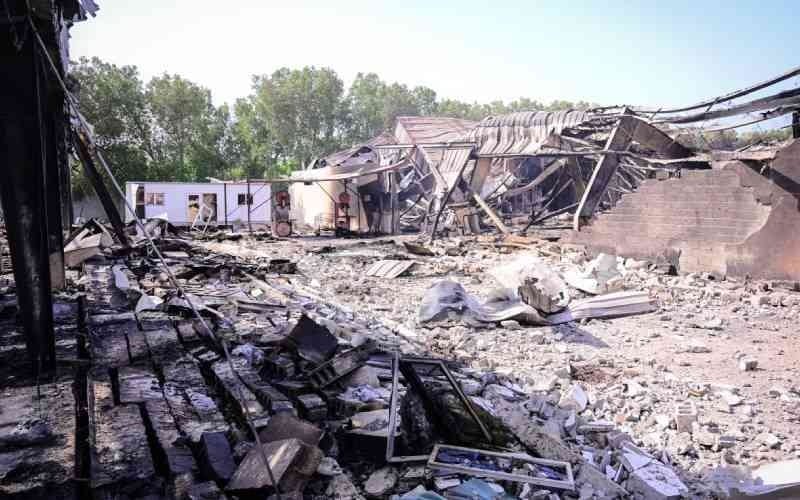

Click points to explore news by date. News sentiment ranges from -10 (very negative) to +10 (very positive) where 0 is neutral.
2026 © Helium Trades
Privacy Policy & Disclosure
* Disclaimer: Nothing on this website constitutes investment advice, performance data or any recommendation that any particular security, portfolio of securities, transaction or investment strategy is suitable for any specific person. Helium Trades is not responsible in any way for the accuracy
of any model predictions or price data. Any mention of a particular security and related prediction data is not a recommendation to buy or sell that security. Investments in securities involve the risk of loss. Past performance is no guarantee of future results. Helium Trades is not responsible for any of your investment decisions,
you should consult a financial expert before engaging in any transaction.
Helium Research Assistant

How can I help you today?
Ask any question about this page.


