See whether Helium helps you make better-informed decisions. Try every Pro Trader feature for 30 days. No credit card required.
Try every Pro Trader feature for 30 days. No credit card required.
November 19, 2026 · 0 shares
Neutral, attribution-heavy summit coverage that balances official remarks with analyst skepticism and regional unease.
Helium Analysis
Limitations: The supplied text appears future-dated (Nov 19, 2026) and includes a likely typo 'unclear weapons'; no byline or independent verification is provided in the text.
·
11 of 56 available dimensions scored; omitted dimensions are not treated as neutral.
·
Verified supporting quotes for 11 of 11 scored dimensions.
Claim: Balances US and Chinese official characterizations without adopting a left-right ideological frame.
“Trump described Xi as a friend, saying they shared a “special relationship”.
He also praised progress in balancing trade between the two countries, including fairer tariff arrangements.”
· exact text match
“Meanwhile, Xi said China-US relations were stable and improving, expressing willingness to work with Trump to keep ties on the “correct course”.” · exact text match
Why: Both sides' characterizations are quoted without ideological endorsement.
Claim: Maintains objective reporting by attributing claims to leaders and unnamed analysts and noting competing priorities.
“But analysts have expressed low expectations of concrete breakthroughs as the leaders enter the talks with competing national interests and strategic priorities.” · exact text match
“Chinese media reported shortly before 4.30pm that the meeting was underway.” · exact text match
Why: Attribution and contextual caveats support an objective classification.
Claim: Uses neutral sourcing and measured context rather than sensational treatment.
“Chinese media reported shortly before 4.30pm that the meeting was underway.” · exact text match
Counterevidence:
“The leaders of China, the United States and Russia began unprecedented three-way talks on Thursday (Nov 19), amid mounting geopolitical tensions and competing priorities over global security.” · exact text match
Why: Neutral sourcing outweighs the limited dramatic language of 'unprecedented' and 'mounting tensions'.
Claim: Reports the event and statements without prescribing policy.
“The gathering follows talks between Xi and Trump at the same venue earlier on Thursday.” · exact text match
Why: The sentence is descriptive and the article does not advocate a policy outcome.
Claim: Includes a regional fear frame, but it is reported and balanced by low-expectation analyst context.
“It has also unnerved leaders of smaller economies, particularly in Europe and Asia, who fear the world's greatest military powers will disregard their interests.” · exact text match
Why: Fearful language is present but limited and attributed to regional leaders rather than amplified by the publisher.
Claim: The report is entirely about heads-of-state diplomacy and global security.
“The leaders of China, the United States and Russia began unprecedented three-way talks on Thursday (Nov 19), amid mounting geopolitical tensions and competing priorities over global security.” · exact text match
Why: The subject matter is explicitly political and geopolitical.
Claim: Credibility is supported by named attribution, direct quotes, and inclusion of skeptical analyst expectations.
“Chinese media reported shortly before 4.30pm that the meeting was underway.” · exact text match
“But analysts have expressed low expectations of concrete breakthroughs as the leaders enter the talks with competing national interests and strategic priorities.” · exact text match
Why: Visible sourcing, direct quotes, and caveats support a credible classification.
Claim: Uses attributed reporting and cautious analyst expectations rather than emotive or conspiratorial reasoning.
“But analysts have expressed low expectations of concrete breakthroughs as the leaders enter the talks with competing national interests and strategic priorities.” · exact text match
Why: The report relies on sourced claims and cautious expectations.
Claim: Contains forecast-style expectations from analysts, explicitly framed as expectations rather than certain outcomes.
“But analysts have expressed low expectations of concrete breakthroughs as the leaders enter the talks with competing national interests and strategic priorities.” · exact text match
Why: The forecast is attributed and qualified, yielding only mild speculation.
Claim: Fairness and candor are signaled by sourcing official claims and including skeptical expectations.
“But analysts have expressed low expectations of concrete breakthroughs as the leaders enter the talks with competing national interests and strategic priorities.” · exact text match
“Chinese media reported shortly before 4.30pm that the meeting was underway.” · exact text match
Why: The report attributes claims and includes caveats rather than presenting a one-sided narrative.
Claim: Provides historical context and prior bilateral details to interpret the summit.
“Their meeting has drawn comparisons with the 1945 Yalta Conference between the US, Britain and the Soviet Union that formalised spheres of influence and set the stage for the post-World War II order.” · exact text match
Why: Historical comparison and contextual detail support an above-average intelligence classification.
The supplied text appears future-dated (Nov 19, 2026) and includes a likely typo 'unclear weapons'; no byline or independent verification is provided in the text.
November 19, 2026 · 0 shares
The report is largely a neutral, attribution-heavy diplomatic news account, though its headline and lead adopt mildly dramatic 'historic' and 'unprecedented' framing.
Helium Analysis
Limitations: The supplied text mixes the main report with unrelated related-article headlines, and the APEC meeting is dated 2026, limiting external verification; the analysis is limited to the visible main report.
·
8 of 56 available dimensions scored; omitted dimensions are not treated as neutral.
·
Verified supporting quotes for 8 of 8 scored dimensions.
Claim: The report is mostly objective and attribution-driven, with limited dramatic framing.
“According to the Stockholm International Peace Research Institute, China possessed an estimated 620 nuclear warheads as of January 2026, compared with 5,042 held by the U.S. and 5,420 by Russia.” · exact text match
Counterevidence:
“Trump, Xi and Putin hold historic trilateral talks.” · exact text match
Why: The body relies on attributed figures and official statements, while the headline uses a dramatic label.
Claim: The headline and lead use mildly dramatic language to elevate the meeting's significance.
“The presidents of China, the United States and Russia held an unprecedented summit in China on Nov. 19, with Donald Trump saying the three men were “making history.”” · exact text match
Why: Terms such as 'unprecedented' and 'making history' are dramatic, though the rest of the report is measured.
Claim: The first-ever trilateral meeting is a notable development.
“Chinese President Xi Jinping, U.S. President Donald Trump and Russian President Vladimir Putin held their first-ever trilateral talks on Nov. 19 in Shenzhen, China, including a closed-door meeting.” · exact text match
Why: The novelty and high-level participants make the report newsworthy.
Claim: The report is overwhelmingly descriptive rather than prescriptive.
“The three leaders delivered remarks during a media session lasting approximately 15 minutes before proceeding to closed-door discussions.” · exact text match
Why: It recounts proceedings and statements without urging a policy course.
Claim: The subject matter is highly political.
“Trump, Xi and Putin hold historic trilateral talks.” · exact text match
Why: The report concerns heads of state, nuclear security and the Russia-Ukraine war.
Claim: The report provides identifiable attribution and direct quotations but limited independent verification.
“According to the Stockholm International Peace Research Institute, China possessed an estimated 620 nuclear warheads as of January 2026, compared with 5,042 held by the U.S. and 5,420 by Russia.” · exact text match
“Xi said "positive interactions" among China, the U.S. and Russia were not an "option but a must," stressing their responsibilities as major global powers.” · exact text match
Why: SIPRI figures and leader quotes are cited, though no byline or corroborating sources are given.
Claim: The report shows high integrity through sourcing and inclusion of a countervailing position.
“According to the Stockholm International Peace Research Institute, China possessed an estimated 620 nuclear warheads as of January 2026, compared with 5,042 held by the U.S. and 5,420 by Russia.” · exact text match
“China has repeatedly rejected calls to participate in nuclear disarmament negotiations, arguing that its nuclear arsenal is significantly smaller than those of the U.S. and Russia.” · exact text match
Why: It cites an independent research institute and notes China's rejection, improving verifiability and fairness.
Claim: The report integrates relevant quantitative context into a coherent account.
“According to the Stockholm International Peace Research Institute, China possessed an estimated 620 nuclear warheads as of January 2026, compared with 5,042 held by the U.S. and 5,420 by Russia.” · exact text match
Why: It uses external warhead estimates to contextualize the disarmament discussion.
The supplied text mixes the main report with unrelated related-article headlines, and the APEC meeting is dated 2026, limiting external verification; the analysis is limited to the visible main report.
November 19, 2026 · 0 shares
Skeptical, evaluative framing presents the trilateral as a high-profile but substantively thin photo op, contrasting Trump’s boasts and personal diplomacy with modest agreements, expert doubt, and excluded allies.
Helium Analysis
Limitations: The supplied text includes duplicated article content and publisher subscription boilerplate; the analysis excludes that wrapper and relies on the substantive AP-reported article.
·
56 of 56 available dimensions scored; omitted dimensions are not treated as neutral.
·
Verified supporting quotes for 15 of 56 scored dimensions.
Claim: The report’s framing is mildly critical of Trump, using a photo-op characterization and labeling Xi and Putin as autocrats.
“What was billed as a historic trilateral meeting in the end looked like a fleeting photo op.” · exact text match
“the two autocrats” · exact text match
Why: Critical treatment of Trump’s personal diplomacy and the autocrat label produce a slight liberal-leaning framing rather than explicit ideology.
Claim: The article includes evaluative judgments about the meeting’s significance rather than staying strictly descriptive.
“What was billed as a historic trilateral meeting in the end looked like a fleeting photo op.” · exact text match
Why: The photo-op phrase is a subjective assessment of the meeting’s substance.
Claim: The report emphasizes disappointment and lack of breakthrough rather than the leaders’ positive framing.
“Trump, Xi And Putin Hold Rare 3-Way Talks On Nuclear Risks But Deliver No Breakthroughs.” · exact text match
“What was billed as a historic trilateral meeting in the end looked like a fleeting photo op.” · exact text match
Why: Headline and lede foreground failure and skepticism about the summit’s value.
Claim: The article is mainly descriptive, though it contains some evaluative framing about great-power diplomacy.
“The U.S. president’s ambitions going into the meeting recalled an era of great power politics when wealthier countries felt entitled to decide the fate of seemingly lesser nations.” · exact text match
Why: The report mostly recounts events and attributed views rather than prescribing policy, with a limited evaluative frame.
Claim: The article blends reported facts with evaluative characterizations of Trump’s diplomacy and the meeting.
“What was billed as a historic trilateral meeting in the end looked like a fleeting photo op.” · exact text match
“Trump has frequently boasted of his rapport with Putin” · exact text match
Why: These are evaluative/interpretive phrases beyond neutral event reporting.
Claim: The report is centrally about political leaders, diplomacy, war, and international institutions.
“For U.S. President Donald Trump, the meeting with the leaders of two other nuclear powers ― China’s Xi Jinping and Russia’s Vladimir Putin ― was supposed to be a diplomatic triumph” · exact text match
Why: The subject matter is inherently high-level politics and diplomacy.
Claim: The report carries a modest normative frame about inclusive diplomacy and skepticism toward great-power dealmaking.
“Trump was negotiating with China and Russia without the involvement of Ukraine — or allies like Germany, France, the United Kingdom, Japan and South Korea that also have stakes in the outcome of any talks.” · exact text match
Why: The criticism of excluding allies and Ukraine introduces a limited ideological/normative frame.
Claim: The report’s tone is somewhat negative/skeptical toward the summit’s outcome.
“What was billed as a historic trilateral meeting in the end looked like a fleeting photo op.” · exact text match
Why: The photo-op characterization conveys a negative evaluative tone.
Claim: The article uses attribution and uncertainty markers for key claims.
“Trump told the Berlin gathering that he spoke to Xi and Putin about finding a peaceful end to the Ukraine war, Witkoff said.” · exact text match
“more than 5,000 warheads believed to be in each of the U.S. and Russian stockpiles” · exact text match
Why: Named attribution and “believed to be” hedging are visible credibility signals.
Claim: The report is structured around attributed facts, expert assessment, and contextual comparisons rather than emotive or illogical reasoning.
“Daryl Kimball, executive director of the Arms Control Association, said the meeting could at best start a process that would eventually lead to a sustained set of talks for reducing nuclear arsenals.” · exact text match
“more than 5,000 warheads believed to be in each of the U.S. and Russian stockpiles” · exact text match
Why: Named expert sourcing and hedged stockpile figures reflect rational, evidence-bound reporting.
Claim: The report includes limited forward-looking or evaluative speculation, mainly through an expert assessment.
“Daryl Kimball, executive director of the Arms Control Association, said the meeting could at best start a process that would eventually lead to a sustained set of talks for reducing nuclear arsenals.” · exact text match
Why: The speculative element is bounded and attributed rather than presented as fact.
Claim: The article uses some loaded framing but no strong observable manipulative techniques.
“What was billed as a historic trilateral meeting in the end looked like a fleeting photo op.” · exact text match
Why: The loaded phrase is evaluative, but the overall sourcing and structure limit manipulation concerns.
Claim: The text shows no strong independent indicators of AI authorship and includes AP writer contributions.
“Associated Press writers Darlene Superville, Didi Tang and Will Weissert in Washington, Huizhong Wu in Bangkok, Hanna Arhirova in Berlin and Kanis Leung in Hong Kong contributed to this report.” · exact text match
Why: Human bylines and reporting credits are stronger evidence than the smooth prose alone.
Claim: The report includes multiple attributions and acknowledges official and expert perspectives.
“Xinhua reported that Xi discussed Taiwan with Trump and said the two countries needed to improve communication on economic and trade issues.” · exact text match
“Daryl Kimball, executive director of the Arms Control Association, said the meeting could at best start a process” · exact text match
Why: Clear attribution to named sources and experts supports fair/honest internal practice.
Claim: The report provides contextual and expert analysis, including nuclear stockpile comparisons and arms-control assessment.
“China has less motivation to accept limits given that its arsenal of more than 600 warheads is far smaller than the more than 5,000 warheads believed to be in each of the U.S. and Russian stockpiles.” · exact text match
“Daryl Kimball, executive director of the Arms Control Association, said the meeting could at best start a process that would eventually lead to a sustained set of talks for reducing nuclear arsenals.” · exact text match
Why: Contextual comparisons and expert attribution support above-average article intelligence.
The supplied text includes duplicated article content and publisher subscription boilerplate; the analysis excludes that wrapper and relies on the substantive AP-reported article.
November 19, 2026 · 0 shares
The report pairs the declared peace summit with pointed reminders of continued Russian attacks and bipartisan US criticism, framing the diplomatic warmth as high-stakes but morally and strategically questionable.
Helium Analysis
Limitations: No byline is present, and the declaration text itself is not linked, limiting verification of its exact wording.
·
8 of 56 available dimensions scored; omitted dimensions are not treated as neutral.
·
Verified supporting quotes for 7 of 8 scored dimensions.
Claim: The report uses mildly evaluative wording about Putin's peace posture and the summit's substance.
“claiming to be ready for peace” · exact text match
“There was no mention from Putin of almost five years of Russian attacks on power plants, bridges and residential buildings in Ukraine.” · exact text match
Why: These are factual but selectively emphasized and 'claiming' casts doubt, introducing mild subjectivity.
Claim: The report undercuts the peace declaration by emphasizing continued Russian attacks and rejected ceasefires.
“claiming to be ready for peace” · exact text match
“Putin has repeatedly rejected all ceasefire offers from Ukraine, insisting on his maximalist demands which Kyiv and its European allies say are tantamount to de facto capitulation of Ukraine.” · exact text match
Why: This framing makes the peace overture appear doubtful and the outlook for peace pessimistic.
Claim: The article primarily reports statements and events rather than advocating a policy course.
“The three leaders met for 90 minutes in China's south-eastern city of Shenzhen, on the sidelines of the Asia-Pacific Economic Cooperation (APEC) summit.” · exact text match
“In the declaration, they said "nuclear war cannot be won and must never be fought"” · exact text match
Why: It recounts what happened and what was said, with no publisher-issued prescription.
Claim: The report concerns heads of state, war diplomacy, and US legislative reaction.
“US President Donald Trump and his Russian and Chinese counterparts Vladimir Putin and Xi Jinping have issued a "joint declaration of peace" following historic trilateral talks.” · exact text match
Why: It is explicitly about high-level geopolitics and political responses.
Claim: The report's own framing is mildly negative toward Putin's peace claims and Trump's warmth.
“claiming to be ready for peace” · exact text match
“There was no mention from Putin of almost five years of Russian attacks on power plants, bridges and residential buildings in Ukraine.” · exact text match
Why: These phrases introduce a skeptical, negative valence without overt emotional language.
Claim: The report names sources, attributes claims, and provides context for the summit.
“Republican Senator John Curtis said in an emailed statement to the BBC.” · exact text match
“China has officially remained neutral since Putin launched a full-scale invasion of Ukraine in 2022, rejecting accusations from Kyiv and its allies that it has been tacitly supporting Moscow, including by exporting dual-use technology used by the Russian military.” · exact text match
Why: Named attributions and contextual background support credibility.
Claim: The report includes attributed criticism from both Republican and Democratic senators.
“I was encouraged by some of the commitments that came out of the President's meetings in Asia, particularly the recognition that nuclear war must never be fought,” · not found in supplied text
“President Trump's 'friend' is a murderous war criminal” · not found in supplied text
Why: Balanced inclusion of named critics and direct quotes signals fair, transparent reporting.
Claim: The report supplies geopolitical context and distinguishes public claims from reported attacks.
“Beyond the warmth and shared niceties, however, the three men had different goals and motivations for the sit-down.” · exact text match
“China has officially remained neutral since Putin launched a full-scale invasion of Ukraine in 2022, rejecting accusations from Kyiv and its allies that it has been tacitly supporting Moscow, including by exporting dual-use technology used by the Russian military.” · exact text match
Why: It frames the summit within competing interests and historical background.
No byline is present, and the declaration text itself is not linked, limiting verification of its exact wording.
Framing emphasizes the summit’s symbolic novelty while questioning its substance through the absence of concrete measures and quoted concerns from an arms-control expert and European/Ukrainian observers.
Helium Analysis
Limitations: The article depicts future or hypothetical events and includes unusual bracketed formatting, so the assessment is limited to the supplied text’s observable framing.
·
6 of 56 available dimensions scored; omitted dimensions are not treated as neutral.
·
Verified supporting quotes for 6 of 6 scored dimensions.
Claim: The text attributes claims to an official declaration and a named expert rather than asserting them subjectively.
“According to the declaration issued after the meeting” · exact text match
“Daryl Kimball, executive director of the Arms Control Association, told AP.” · exact text match
Why: Sourcing and attribution support an objective, non-subjective framing.
Claim: The report uses measured language and explicitly notes the summit yielded no concrete measures.
“rich in symbolism but short on announcements” · exact text match
Why: The wording is evaluative but restrained, not sensational.
Claim: The text primarily reports commitments and quoted positions rather than prescribing policy.
“According to the declaration issued after the meeting, the three leaders committed to “engage in dialogue on reducing nuclear risks and preventing nuclear proliferation”” · exact text match
Why: It reports commitments and statements without advocating a course of action.
Claim: The content is centrally about heads of state, diplomacy, and international security.
“Trump, Putin and Xi hold their first three-way summit” · exact text match
Why: The subject is explicitly political.
Claim: The text uses named attribution, official documents, and contextual caveats.
“According to the declaration issued after the meeting” · exact text match
“Daryl Kimball, executive director of the Arms Control Association, told AP.” · exact text match
Why: Visible sourcing and caveats support credibility within the supplied text.
Claim: The report includes adverse context and critical voices that qualify the summit’s positive symbolism.
“The International Criminal Court has an outstanding arrest warrant for Putin.” · exact text match
““We need more than diplomatic theatre and photo opportunities,” Daryl Kimball, executive director of the Arms Control Association, told AP.” · exact text match
Why: Including adverse context and critical voices indicates fairness.
The article depicts future or hypothetical events and includes unusual bracketed formatting, so the assessment is limited to the supplied text’s observable framing.
The analysis frames the summit through a measured transatlantic-institutionalist lens, treating the declaration’s thinness and omissions as evidence of limited great-power alignment while using U.S. ally concerns as a key benchmark.
Helium Analysis
Limitations: The supplied text is duplicated and includes auto-transcript boilerplate, and no author byline appears; the substantive content is an explicitly authored analysis with evaluative judgments.
·
13 of 56 available dimensions scored; omitted dimensions are not treated as neutral.
·
Verified supporting quotes for 13 of 13 scored dimensions.
Claim: The framing is mildly liberal-internationalist in highlighting concern among U.S. allies and ICC members over immunity for leaders.
“It signals that the three share a preference for shielding leaders from international legal accountability, a position many U.S. allies, most of them ICC members, will not welcome.” · exact text match
Why: The passage criticizes immunity from ICC accountability and invokes allied ICC members, a liberal-internationalist concern.
Claim: The analysis includes subjective interpretive judgments about what is far-fetched.
“But the idea that the meeting in Shenzhen points toward a great-power arrangement made over their heads looks far-fetched.” · exact text match
Why: The phrase “looks far-fetched” is an explicit evaluative judgment rather than a purely factual report.
Claim: The prose is understated and analytical rather than sensational.
“The declaration’s thinness shows how little the three leaders agree on.” · exact text match
Why: The wording is calm and analytical, with no alarmist or dramatic framing.
Claim: The conclusion is balanced rather than optimistic or pessimistic.
“That is cold comfort for allies, but it should temper fears that a new Yalta is in the making.” · exact text match
Why: The sentence pairs a negative note for allies with a caution against excessive fear, indicating measured balance.
Claim: The text is primarily descriptive and evaluative rather than prescribing a policy course.
“Whether this dialogue convenes, and whether it produces anything concrete, will be the real test.” · exact text match
Why: The sentence states an evaluative test rather than urging a specific policy action.
Claim: The text includes clearly evaluative judgments, not just factual reporting.
“It would still be a mistake to dismiss the event as irrelevant.” · exact text match
Why: The statement is an explicit judgment about the proper interpretation of the event.
Claim: The content is centrally about geopolitical and diplomatic power.
“The most consequential item is the pledge to hold a dialogue on reducing nuclear risks and preventing proliferation.” · exact text match
Why: The article’s main subject is a leaders’ summit and nuclear-risk diplomacy, making it highly political.
Claim: The framing takes the concerns of established U.S. allies and institutions as a relevant reference point.
“He has also signed onto a joint statement that calls for reforming the UN and limiting the ICC, institutions many of America’s closest partners support.” · exact text match
Why: The passage foregrounds established partners’ support for the UN and ICC as a benchmark for assessing the summit.
Claim: The text compares official readouts and acknowledges institutional non-endorsement.
“At their May summit in Beijing, the White House said, Trump and Xi agreed that the Strait of Hormuz must remain open to support the free flow of energy, that no one should be allowed to charge tolls for passage, and that Iran must never acquire a nuclear weapon.” · exact text match
“China’s own readout did not mention tolls or Iranian nuclear weapons.” · exact text match
Why: The article distinguishes U.S. and Chinese readouts and notes the institutional disclaimer, supporting credibility.
Claim: The analysis is rational and evidence-qualified rather than emotive or conspiratorial.
“It would still be a mistake to dismiss the event as irrelevant.” · exact text match
“If anything, the summit exposed the limits of their alignment more than its depth.” · exact text match
Why: The text balances significance against thin evidence and draws a qualified conclusion from the declaration.
Claim: The analysis forecasts future processes and effects from the summit.
“The first-ever leaders’ meeting of the United States, China, and Russia is significant in its signaling and in the processes it could set in motion.” · exact text match
Why: The phrase “processes it could set in motion” is forward-looking speculation about consequences.
Claim: The text discloses authorial responsibility and institutional neutrality.
“The views expressed herein are those solely of the author(s).
GMF as an institution does not take positions.”
· exact text match
Why: This is an explicit transparency and conflict-of-position disclosure.
Claim: The analysis synthesizes competing motives and limits of alignment.
“These are leaders pursuing different and often conflicting objectives who found a few points of common ground.” · exact text match
Why: The sentence captures a nuanced interpretation of the summit’s limited cooperation.
The supplied text is duplicated and includes auto-transcript boilerplate, and no author byline appears; the substantive content is an explicitly authored analysis with evaluative judgments.
The report presents a Kremlin-sourced trilateral declaration in a neutral, declarative tone with almost no independent verification or critical context.
Helium Analysis
Limitations: The report is short, undated, and relies solely on a Kremlin account, so independent verification of the summit and declaration is unavailable.
·
5 of 56 available dimensions scored; omitted dimensions are not treated as neutral.
·
Verified supporting quotes for 5 of 5 scored dimensions.
Claim: The report is largely composed of attributed declarative statements rather than subjective commentary.
“The Kremlin reported that the heads of the three states thoroughly exchanged views on the current international situation” · exact text match
“the declaration says” · exact text match
Why: It reports official statements with attribution and avoids first-person or evaluative language.
Claim: The language is formal and institutional, without sensational or emotive cues.
“thoroughly exchanged views on the current international situation” · exact text match
“reaffirmed the importance of stable energy supplies” · exact text match
Why: Formal diplomatic vocabulary and restrained tone indicate low sensationalism.
Claim: The report foregrounds a peace declaration and nuclear-risk reduction rather than military escalation.
“Putin, Trump and Xi Jinping adopted a joint declaration on peace following their meeting in Shenzhen.” · exact text match
“The heads of the three states reaffirmed that there can be no winners in a nuclear war and that it must never be unleashed.” · exact text match
Why: The selection and wording emphasize diplomacy and avoiding nuclear war, a dovish framing.
Claim: The report's content is overwhelmingly official international politics: UN Security Council reform, ICC authority, and nuclear policy.
“As permanent members of the UN Security Council, Russia, China and the United States expressed their commitment to reforming the UN” · exact text match
“the International Criminal Court and other similar bodies should not abuse their powers.” · exact text match
Why: These are core political and intergovernmental issues rather than non-political matters.
Claim: The report attributes key claims to the Kremlin and the declaration but provides no independent corroboration.
“The Kremlin reported” · exact text match
“the declaration says” · exact text match
Why: Transparent attribution is present, but the single official source and lack of independent verification keep credibility neutral.
The report is short, undated, and relies solely on a Kremlin account, so independent verification of the summit and declaration is unavailable.
November 19, 2026 · 0 shares
Skeptical, evaluative framing presents the trilateral as a high-profile but substantively thin photo op, contrasting Trump’s boasts and personal diplomacy with modest agreements, expert doubt, and excluded allies.
Helium Analysis
Limitations: The supplied text includes duplicated article content and publisher subscription boilerplate; the analysis excludes that wrapper and relies on the substantive AP-reported article.
·
56 of 56 available dimensions scored; omitted dimensions are not treated as neutral.
·
Verified supporting quotes for 15 of 56 scored dimensions.
Claim: The report’s framing is mildly critical of Trump, using a photo-op characterization and labeling Xi and Putin as autocrats.
“What was billed as a historic trilateral meeting in the end looked like a fleeting photo op.” · exact text match
“the two autocrats” · exact text match
Why: Critical treatment of Trump’s personal diplomacy and the autocrat label produce a slight liberal-leaning framing rather than explicit ideology.
Claim: The article includes evaluative judgments about the meeting’s significance rather than staying strictly descriptive.
“What was billed as a historic trilateral meeting in the end looked like a fleeting photo op.” · exact text match
Why: The photo-op phrase is a subjective assessment of the meeting’s substance.
Claim: The report emphasizes disappointment and lack of breakthrough rather than the leaders’ positive framing.
“Trump, Xi And Putin Hold Rare 3-Way Talks On Nuclear Risks But Deliver No Breakthroughs.” · exact text match
“What was billed as a historic trilateral meeting in the end looked like a fleeting photo op.” · exact text match
Why: Headline and lede foreground failure and skepticism about the summit’s value.
Claim: The article is mainly descriptive, though it contains some evaluative framing about great-power diplomacy.
“The U.S. president’s ambitions going into the meeting recalled an era of great power politics when wealthier countries felt entitled to decide the fate of seemingly lesser nations.” · exact text match
Why: The report mostly recounts events and attributed views rather than prescribing policy, with a limited evaluative frame.
Claim: The article blends reported facts with evaluative characterizations of Trump’s diplomacy and the meeting.
“What was billed as a historic trilateral meeting in the end looked like a fleeting photo op.” · exact text match
“Trump has frequently boasted of his rapport with Putin” · exact text match
Why: These are evaluative/interpretive phrases beyond neutral event reporting.
Claim: The report is centrally about political leaders, diplomacy, war, and international institutions.
“For U.S. President Donald Trump, the meeting with the leaders of two other nuclear powers ― China’s Xi Jinping and Russia’s Vladimir Putin ― was supposed to be a diplomatic triumph” · exact text match
Why: The subject matter is inherently high-level politics and diplomacy.
Claim: The report carries a modest normative frame about inclusive diplomacy and skepticism toward great-power dealmaking.
“Trump was negotiating with China and Russia without the involvement of Ukraine — or allies like Germany, France, the United Kingdom, Japan and South Korea that also have stakes in the outcome of any talks.” · exact text match
Why: The criticism of excluding allies and Ukraine introduces a limited ideological/normative frame.
Claim: The report’s tone is somewhat negative/skeptical toward the summit’s outcome.
“What was billed as a historic trilateral meeting in the end looked like a fleeting photo op.” · exact text match
Why: The photo-op characterization conveys a negative evaluative tone.
Claim: The article uses attribution and uncertainty markers for key claims.
“Trump told the Berlin gathering that he spoke to Xi and Putin about finding a peaceful end to the Ukraine war, Witkoff said.” · exact text match
“more than 5,000 warheads believed to be in each of the U.S. and Russian stockpiles” · exact text match
Why: Named attribution and “believed to be” hedging are visible credibility signals.
Claim: The report is structured around attributed facts, expert assessment, and contextual comparisons rather than emotive or illogical reasoning.
“Daryl Kimball, executive director of the Arms Control Association, said the meeting could at best start a process that would eventually lead to a sustained set of talks for reducing nuclear arsenals.” · exact text match
“more than 5,000 warheads believed to be in each of the U.S. and Russian stockpiles” · exact text match
Why: Named expert sourcing and hedged stockpile figures reflect rational, evidence-bound reporting.
Claim: The report includes limited forward-looking or evaluative speculation, mainly through an expert assessment.
“Daryl Kimball, executive director of the Arms Control Association, said the meeting could at best start a process that would eventually lead to a sustained set of talks for reducing nuclear arsenals.” · exact text match
Why: The speculative element is bounded and attributed rather than presented as fact.
Claim: The article uses some loaded framing but no strong observable manipulative techniques.
“What was billed as a historic trilateral meeting in the end looked like a fleeting photo op.” · exact text match
Why: The loaded phrase is evaluative, but the overall sourcing and structure limit manipulation concerns.
Claim: The text shows no strong independent indicators of AI authorship and includes AP writer contributions.
“Associated Press writers Darlene Superville, Didi Tang and Will Weissert in Washington, Huizhong Wu in Bangkok, Hanna Arhirova in Berlin and Kanis Leung in Hong Kong contributed to this report.” · exact text match
Why: Human bylines and reporting credits are stronger evidence than the smooth prose alone.
Claim: The report includes multiple attributions and acknowledges official and expert perspectives.
“Xinhua reported that Xi discussed Taiwan with Trump and said the two countries needed to improve communication on economic and trade issues.” · exact text match
“Daryl Kimball, executive director of the Arms Control Association, said the meeting could at best start a process” · exact text match
Why: Clear attribution to named sources and experts supports fair/honest internal practice.
Claim: The report provides contextual and expert analysis, including nuclear stockpile comparisons and arms-control assessment.
“China has less motivation to accept limits given that its arsenal of more than 600 warheads is far smaller than the more than 5,000 warheads believed to be in each of the U.S. and Russian stockpiles.” · exact text match
“Daryl Kimball, executive director of the Arms Control Association, said the meeting could at best start a process that would eventually lead to a sustained set of talks for reducing nuclear arsenals.” · exact text match
Why: Contextual comparisons and expert attribution support above-average article intelligence.
The supplied text includes duplicated article content and publisher subscription boilerplate; the analysis excludes that wrapper and relies on the substantive AP-reported article.
November 19, 2026 · 0 shares
The framing is a skeptical, U.S.-interests-focused analysis that treats nuclear-risk dialogue as the summit's only meaningful opening while stressing symbolism, missing details, and reputational gains for Xi and Putin.
New START was a U.S.-Russia strategic nuclear arms treaty; its expiration removed bilateral limits on deployed strategic warheads.
Helium Analysis
Limitations: The supplied text includes duplicated scraped fragments and a truncated phrase ('crisis commun'), so some details may be incomplete.
·
12 of 56 available dimensions scored; omitted dimensions are not treated as neutral.
·
Verified supporting quotes for 12 of 12 scored dimensions.
Claim: The framing is evaluative and opinion-driven rather than purely descriptive.
“On balance, Shenzhen was long on symbolism and promises and short on results that advance global stability or U.S. interests.” · exact text match
“I won’t hold my breath.” · exact text match
Why: Explicit evaluative judgments and a first-person skeptical conclusion make the framing subjective.
Claim: Tone is measured and analytical rather than sensational.
“However, the joint declaration sets no timetable or agenda and contains no commitment to negotiate limits on arsenals.” · exact text match
Why: The text reports specific limits and omissions in restrained language rather than using sensational framing.
Claim: The overall assessment is skeptical that the summit will produce concrete gains.
“On balance, Shenzhen was long on symbolism and promises and short on results that advance global stability or U.S. interests.” · exact text match
“I won’t hold my breath.” · exact text match
Why: The conclusion emphasizes thin results and personal doubt about follow-through.
Claim: The analysis moves from description to a policy recommendation.
“Although the joint declaration contained no agreement to establish them, Washington and Moscow should nevertheless take up the proposal and see whether Beijing will agree to practical steps, such as establishing and regularly testing emergency contacts.” · exact text match
Why: The explicit “should” makes a policy prescription.
Claim: The framing favors nuclear-risk reduction and diplomacy over confrontation.
“The United States has a clear interest in reducing nuclear risks with both China and Russia, and the three leaders agreed to discuss how to do so.” · exact text match
“Washington and Moscow should nevertheless take up the proposal and see whether Beijing will agree to practical steps, such as establishing and regularly testing emergency contacts.” · exact text match
Why: It emphasizes arms control, crisis communication, and reducing miscalculation risk.
Claim: The piece is explicitly evaluative and reads as analysis or opinion rather than neutral news reporting.
“On balance, Shenzhen was long on symbolism and promises and short on results that advance global stability or U.S. interests.” · exact text match
“I won’t hold my breath.” · exact text match
Why: Strong evaluative judgments and a personal conclusion signal opinionated analysis.
Claim: The subject and framing are heavily political and foreign-policy oriented.
“Its language on immunity for state officials and alleged jurisdictional abuse by the International Criminal Court (ICC) had a clearer political payoff.” · exact text match
Why: The analysis centers on heads of state, national interests, arms control, and international legal politics.
Claim: Tone is mildly negative toward the summit and toward Putin’s position, but remains restrained.
“even as Russia continues its brutal war against Ukraine” · exact text match
“I won’t hold my breath.” · exact text match
Why: The loaded word “brutal” and skeptical first-person phrase convey a negative but limited emotional charge.
Claim: The analysis shows visible attribution to declarations and prior consultations, with qualifications and no overclaiming.
“Beijing says they discussed Ukraine, the Middle East, and the Korean Peninsula, but the declaration identified no concrete next steps.” · exact text match
“That judgment could change if the three governments schedule nuclear talks and agree on measures that reduce the risk of miscalculation.” · exact text match
Why: It attributes claims and qualifies its conclusions while avoiding unsupported certainty.
Claim: The analysis is largely rational and evidence-bound, evaluating the summit through explicit conditions and concessions.
“That judgment could change if the three governments schedule nuclear talks and agree on measures that reduce the risk of miscalculation.” · exact text match
Why: It uses conditional reasoning and distinguishes a possible opening from demonstrated results.
Claim: Framing shows fair, qualified judgment and distinguishes commitments from results.
“That is a meaningful opening, especially since New START expired in February.” · exact text match
“That judgment could change if the three governments schedule nuclear talks and agree on measures that reduce the risk of miscalculation.” · exact text match
Why: It acknowledges a positive opening and states conditions under which its judgment could change.
Claim: The analysis is nuanced, distinguishing symbolic openings from concrete commitments.
“That is a meaningful opening, especially since New START expired in February.” · exact text match
“However, the joint declaration sets no timetable or agenda and contains no commitment to negotiate limits on arsenals.” · exact text match
Why: It weighs the significance of the opening against the absence of operational commitments.
The supplied text includes duplicated scraped fragments and a truncated phrase ('crisis commun'), so some details may be incomplete.
November 20, 2026 · 0 shares
The report uses a sober, analyst-heavy framing that credits all three leaders with diplomatic gains while repeatedly stressing the absence of concrete mechanisms and implementation details.
Helium Analysis
Limitations: The supplied text reports a future-dated 2026 summit as fact, so scores assess framing and internal epistemic practice rather than external factual verification.
·
12 of 56 available dimensions scored; omitted dimensions are not treated as neutral.
·
Verified supporting quotes for 12 of 12 scored dimensions.
Claim: The report interprets the summit mainly through named academics and consultants rather than ordinary public perspectives.
“Chong Ja Ian, an associate professor of political science at the National University of Singapore (NUS), told CNA.” · exact text match
Why: Heavy reliance on academic and consultancy voices gives an elite-expert framing.
Claim: The report attributes interpretations to official readouts and named analysts rather than presenting them as the publisher’s own assertions.
“According to the Chinese readout, the discussions ranged from the wars in Ukraine and the Middle East to the Korean Peninsula and nuclear proliferation - issues extending far beyond their own borders.” · exact text match
Why: Explicit attribution to a readout supports an objective, sourced presentation.
Claim: The framing is measured and caveated rather than sensational.
“But it offered no timetable, concrete mechanisms or plans for another such gathering.” · exact text match
Why: The report immediately qualifies the summit’s significance with concrete limitations.
Claim: The report balances gains for all three leaders with skepticism about translating them into action.
“Xi Jinping, Donald Trump and Vladimir Putin each walked away from their historic trilateral summit with something to claim as a win, but turning their unprecedented diplomatic engagement into meaningful action will be far harder, say analysts.” · exact text match
Why: The same sentence pairs claimed wins with analysts’ doubts, supporting a neutral rather than optimistic or pessimistic score.
Claim: The report describes declarations and analyst assessments without prescribing a policy course.
“The joint declaration committed the three countries to further talks on nuclear risks.” · exact text match
Why: The article reports what the declaration committed rather than urging a policy position.
Claim: The article is centrally about a summit of heads of state, diplomacy and the global balance of power.
“The presidents of China, the United States and Russia met on Thursday (Nov 19) on the sidelines of the Asia-Pacific Economic Cooperation (APEC) summit in Shenzhen.” · exact text match
Why: The subject matter is explicitly political and diplomatic.
Claim: The report leans heavily on named academics and think-tank analysts to interpret the summit’s significance.
“Wang Dan, China director at political risk consultancy Eurasia Group, described the summit as “a diplomatic win for China”.” · exact text match
“Wu Xinbo, professor and dean of Fudan University’s Institute of International Studies and director of its Center for American Studies, said the outcome was in line with China’s expectations.” · exact text match
Why: Multiple interpretive claims are grounded in credentialed expert authority.
Claim: The report uses multiple named sources, official readouts and explicit caveats.
“Chong Ja Ian, an associate professor of political science at the National University of Singapore (NUS), told CNA.” · exact text match
“But it offered no timetable, concrete mechanisms or plans for another such gathering.” · exact text match
Why: Named sourcing and caveats are visible credibility signals within the supplied text.
Claim: The report presents competing expert interpretations and avoids emotional or conspiratorial reasoning.
“Analysts differed over whether closer coordination among the three powers would bolster global stability or give them greater influence over international affairs.” · exact text match
Why: The article frames disagreement through evidence-based expert analysis rather than emotional or conspiratorial claims.
Claim: The report includes forward-looking interpretations about what closer coordination could mean.
“The summit also offered a glimpse of how the three powers could seek to shape global affairs through closer coordination.” · exact text match
Why: The article uses conditional language to discuss possible implications, supporting a moderate speculation score.
Claim: The report distinguishes official claims from analyst assessment and notes implementation gaps.
“According to the Chinese readout” · exact text match
“But it offered no timetable, concrete mechanisms or plans for another such gathering.” · exact text match
Why: Attribution and caveats support high internal fairness and honesty signals.
Claim: The report is analytically detailed and distinguishes competing interpretations and implementation limits.
“Analysts differed over whether closer coordination among the three powers would bolster global stability or give them greater influence over international affairs.” · exact text match
Why: The article organizes competing expert readings and limitations rather than simplifying the summit into a single message.
The supplied text reports a future-dated 2026 summit as fact, so scores assess framing and internal epistemic practice rather than external factual verification.
November 19, 2026 · 0 shares
The report pairs the declared peace summit with pointed reminders of continued Russian attacks and bipartisan US criticism, framing the diplomatic warmth as high-stakes but morally and strategically questionable.
Helium Analysis
Limitations: No byline is present, and the declaration text itself is not linked, limiting verification of its exact wording.
·
8 of 56 available dimensions scored; omitted dimensions are not treated as neutral.
·
Verified supporting quotes for 7 of 8 scored dimensions.
Claim: The report uses mildly evaluative wording about Putin's peace posture and the summit's substance.
“claiming to be ready for peace” · exact text match
“There was no mention from Putin of almost five years of Russian attacks on power plants, bridges and residential buildings in Ukraine.” · exact text match
Why: These are factual but selectively emphasized and 'claiming' casts doubt, introducing mild subjectivity.
Claim: The report undercuts the peace declaration by emphasizing continued Russian attacks and rejected ceasefires.
“claiming to be ready for peace” · exact text match
“Putin has repeatedly rejected all ceasefire offers from Ukraine, insisting on his maximalist demands which Kyiv and its European allies say are tantamount to de facto capitulation of Ukraine.” · exact text match
Why: This framing makes the peace overture appear doubtful and the outlook for peace pessimistic.
Claim: The article primarily reports statements and events rather than advocating a policy course.
“The three leaders met for 90 minutes in China's south-eastern city of Shenzhen, on the sidelines of the Asia-Pacific Economic Cooperation (APEC) summit.” · exact text match
“In the declaration, they said "nuclear war cannot be won and must never be fought"” · exact text match
Why: It recounts what happened and what was said, with no publisher-issued prescription.
Claim: The report concerns heads of state, war diplomacy, and US legislative reaction.
“US President Donald Trump and his Russian and Chinese counterparts Vladimir Putin and Xi Jinping have issued a "joint declaration of peace" following historic trilateral talks.” · exact text match
Why: It is explicitly about high-level geopolitics and political responses.
Claim: The report's own framing is mildly negative toward Putin's peace claims and Trump's warmth.
“claiming to be ready for peace” · exact text match
“There was no mention from Putin of almost five years of Russian attacks on power plants, bridges and residential buildings in Ukraine.” · exact text match
Why: These phrases introduce a skeptical, negative valence without overt emotional language.
Claim: The report names sources, attributes claims, and provides context for the summit.
“Republican Senator John Curtis said in an emailed statement to the BBC.” · exact text match
“China has officially remained neutral since Putin launched a full-scale invasion of Ukraine in 2022, rejecting accusations from Kyiv and its allies that it has been tacitly supporting Moscow, including by exporting dual-use technology used by the Russian military.” · exact text match
Why: Named attributions and contextual background support credibility.
Claim: The report includes attributed criticism from both Republican and Democratic senators.
“I was encouraged by some of the commitments that came out of the President's meetings in Asia, particularly the recognition that nuclear war must never be fought,” · not found in supplied text
“President Trump's 'friend' is a murderous war criminal” · not found in supplied text
Why: Balanced inclusion of named critics and direct quotes signals fair, transparent reporting.
Claim: The report supplies geopolitical context and distinguishes public claims from reported attacks.
“Beyond the warmth and shared niceties, however, the three men had different goals and motivations for the sit-down.” · exact text match
“China has officially remained neutral since Putin launched a full-scale invasion of Ukraine in 2022, rejecting accusations from Kyiv and its allies that it has been tacitly supporting Moscow, including by exporting dual-use technology used by the Russian military.” · exact text match
Why: It frames the summit within competing interests and historical background.
No byline is present, and the declaration text itself is not linked, limiting verification of its exact wording.
November 21, 2026 · 0 shares
The report frames the strikes through Ukrainian official accounts and Zelensky’s criticism of Trump’s posture toward Putin, while flagging that Saturday’s damage and casualties were not immediately confirmed.
Helium Analysis
Limitations: The supplied text is an aggregated/duplicated news page with no byline and no Russian official response, limiting assessment of balance and authorship.
·
8 of 56 available dimensions scored; omitted dimensions are not treated as neutral.
·
Verified supporting quotes for 8 of 8 scored dimensions.
Claim: The report distinguishes confirmed facts from unconfirmed attack details.
“The extent of damage and any casualties from Saturday’s attack were not immediately confirmed.” · exact text match
Why: Explicitly noting unconfirmed damage and casualties supports an objective, verification-conscious classification.
Claim: The report limits sensational framing by caveating unverified damage and casualty information.
“The extent of damage and any casualties from Saturday’s attack were not immediately confirmed.” · exact text match
Counterevidence:
“Russia Bombards Kyiv Again Hours After Attack Kills Seven.” · exact text match
Why: The caveat weighs against sensationalism, though the headline's wording is forceful.
Claim: The report situates the Kyiv strikes within high-level US-Russia-China diplomacy.
“The attacks came just days after US President Donald Trump, Russian leader Vladimir Putin and Chinese President Xi Jinping held a trilateral summit in Shenzhen, China, on Thursday, Nov.
19.”
· exact text match
Why: The explicit diplomatic framing makes the report highly political in content.
Claim: The report foregrounds Ukrainian civilian harm in the strikes.
““As a result of the enemy attack, two private residential buildings caught fire in the Podil district,” the administration said.” · exact text match
“that killed seven people and injured 17, according to Ukrainian authorities.” · exact text match
Why: Residential damage and casualty figures center Ukrainian victims, though the details are attributed and factual.
Claim: The report relies on official Ukrainian military administration accounts for attack details.
“The Kyiv City Military Administration (KMVA) confirmed the damage in an official Telegram update.” · exact text match
Why: Official government sourcing indicates a pro-establishment orientation, though the report is primarily factual.
Claim: The report uses casualty and wartime language that carries a negative emotional valence.
“The latest strike followed a deadly Russian missile attack on Kyiv on Friday, Nov. 20, that killed seven people and injured 17, according to Ukrainian authorities.” · exact text match
““For us he’s an enemy, and of course, for us, he is a killer.” · exact text match
Why: Death, injury, and 'killer' language create a negative tone, though much of it is factual or attributed.
Claim: The report provides visible attribution and uncertainty about casualty details.
“according to Ukrainian authorities” · exact text match
“The extent of damage and any casualties from Saturday’s attack were not immediately confirmed.” · exact text match
Why: Visible sourcing and caveats support credibility, but the lack of Russian or independent corroboration limits confidence.
Claim: The report attributes casualty figures and acknowledges unconfirmed details.
“The latest strike followed a deadly Russian missile attack on Kyiv on Friday, Nov. 20, that killed seven people and injured 17, according to Ukrainian authorities.” · exact text match
“The extent of damage and any casualties from Saturday’s attack were not immediately confirmed.” · exact text match
Why: Attribution and explicit uncertainty are positive internal integrity signals, though sourcing is one-sided.
The supplied text is an aggregated/duplicated news page with no byline and no Russian official response, limiting assessment of balance and authorship.
November 19, 2026 · 0 shares
The brief is largely neutral wire-style reporting, though it adopts evaluative shorthand such as 'historic trilateral meeting' and 'Coalition of the Willing' while leaving the trilateral talks unspecified.
Helium Analysis
Limitations: The supplied article text is very short and appears partially duplicated, with no details on the trilateral meeting or summit outcomes; bias scores rely on limited evidence.
·
3 of 56 available dimensions scored; omitted dimensions are not treated as neutral.
·
Verified supporting quotes for 3 of 3 scored dimensions.
Claim: The brief mostly reports meeting logistics but includes the evaluative term 'historic' for the trilateral meeting.
“historic trilateral meeting” · exact text match
Why: A single evaluative adjective slightly qualifies otherwise factual reporting; the overall tone remains mainly objective.
Claim: The report describes a diplomatic meeting and stated aims without recommending a policy course.
“Ukraine's allies meet in Berlin to rally support for Kyiv after Trump-Putin-Xi talks.” · exact text match
Why: The text reports an event and stated hopes rather than prescribing actions.
Claim: The report is centered on a diplomatic summit and peace talks involving Ukraine, Russia, the US, China, and Europe.
“Ukraine's allies meet in Berlin to rally support for Kyiv after Trump-Putin-Xi talks.” · exact text match
Why: The article's subject is explicitly international political and diplomatic affairs.
The supplied article text is very short and appears partially duplicated, with no details on the trilateral meeting or summit outcomes; bias scores rely on limited evidence.
November 19, 2026 · 0 shares
The brief report is largely descriptive and non-sensational, with a mildly subjective superlative in calling the U.S., Russia, and China the world’s three most powerful countries.
Helium Analysis
Limitations: The supplied text is an extremely short news summary with no byline or sourcing, limiting confidence in several bias dimensions.
·
4 of 56 available dimensions scored; omitted dimensions are not treated as neutral.
·
Verified supporting quotes for 4 of 4 scored dimensions.
Claim: The report predominantly presents official actions and statements descriptively rather than through evaluative commentary.
“US President Trump, Russia’s President Putin and China’s Xi Jinping made a series of agreements – including to reduce the risk of nuclear war, increase oil supplies and reform the United Nations.” · exact text match
“Meanwhile, European leaders met with Ukraine’s President Zelenskyy in Berlin to reassure him of their support in his country’s war with Russia.” · exact text match
Counterevidence:
“The leaders of the world’s three most powerful countries held their first trilateral meeting on November 19 in Shenzhen in China.” · exact text match
Why: Both passages state events and claimed agreements without adjectives, argument, or visible editorializing.
Claim: The report uses plain, non-sensational language to describe high-stakes diplomatic events.
“US President Trump, Russia’s President Putin and China’s Xi Jinping made a series of agreements – including to reduce the risk of nuclear war, increase oil supplies and reform the United Nations.” · exact text match
Why: Even the nuclear-war-risk item is presented as a routine agreement without alarmist adjectives or dramatic framing.
Claim: The text is descriptive, reporting meetings and agreements without prescribing policies or actions.
“The leaders of the world’s three most powerful countries held their first trilateral meeting on November 19 in Shenzhen in China.” · exact text match
Why: It narrates what occurred rather than advocating what should happen.
Claim: The report is strongly political in subject matter, centering on heads of state, war, and international institutions.
“Meanwhile, European leaders met with Ukraine’s President Zelenskyy in Berlin to reassure him of their support in his country’s war with Russia.” · exact text match
Why: The content concerns national leaders, military conflict, and diplomacy, making it highly political.
The supplied text is an extremely short news summary with no byline or sourcing, limiting confidence in several bias dimensions.
November 19, 2026 · 0 shares
The report frames ceremonial airport protocol as deliberate diplomatic signaling that reveals Beijing's pecking order, relying on an analyst's interpretation and selected comparisons.
Helium Analysis
Limitations: The article is a short syndicated Bloomberg analysis with no named individual author and limited direct evidence about Xi's private views; scores reflect its interpretive protocol framing.
·
11 of 56 available dimensions scored; omitted dimensions are not treated as neutral.
·
Verified supporting quotes for 11 of 11 scored dimensions.
Claim: The report interprets airport protocol as a signal of Beijing's diplomatic hierarchy rather than only describing the receptions.
“offer a glimpse of what amounts to Beijing’s diplomatic pecking order” · exact text match
Why: The phrase frames ceremonial details as interpretable evidence of diplomatic ranking, a subjective inference.
Claim: The report's tone is measured and analytical rather than sensational.
“The carefully choreographed arrivals at the Asia-Pacific Economic Cooperation summit this week offer a glimpse of what amounts to Beijing’s diplomatic pecking order.” · exact text match
Why: The framing is explanatory and restrained, despite discussing symbolic protocol.
Claim: The article uses notable ceremonial contrasts and comparisons to sustain reader interest.
“Even more notable was Trump and Xi’s brief cheek-to-cheek embrace.” · exact text match
Why: The focus on unusual protocol details and leader-by-leader comparisons is engaging.
Claim: The article is primarily descriptive and analytical rather than prescriptive.
“The carefully choreographed arrivals at the Asia-Pacific Economic Cooperation summit this week offer a glimpse of what amounts to Beijing’s diplomatic pecking order.” · exact text match
Why: It aims to describe and interpret events, not recommend policy.
Claim: The article characterizes receptions evaluatively, such as calling one 'cooler'.
“Takaichi got a cooler reception.” · exact text match
Why: 'Cooler' is an evaluative characterization rather than a purely factual description.
Claim: The article is centrally concerned with heads-of-state diplomacy and political protocol.
“When Xi Jinping broke nearly five decades of norms to give Donald Trump a personal welcome at Shenzhen airport” · exact text match
Why: The central subject is the diplomatic treatment of national leaders at a political summit.
Claim: The article provides visible sourcing and attribution for its central interpretive claims.
“Public records show she retired in 2021 after serving as China’s ambassador to Greece.” · exact text match
“said Bloomberg Economics’s Neil Thomas” · exact text match
Why: Specific records and named expert attribution support credibility within the supplied text.
Claim: The article's inferences follow an explicit logic about protocol and diplomatic signaling.
“Beijing is a stickler for diplomatic protocol and decisions about who meets visiting leaders on the tarmac are very deliberate.” · exact text match
Why: The analysis reasons from the premise that protocol choices are deliberate, rather than from arbitrary assertions.
Claim: The report infers leaders' relationships and diplomatic rank from ceremonial protocol.
“Takaichi’s welcome suggests that Japan remains in the diplomatic doghouse as far as Xi is concerned” · exact text match
Why: The quoted conclusion is inferential, reading diplomatic standing from the reception's rank and style.
Claim: The report attributes its interpretive claims and cites documentary or visual sources.
“said Bloomberg Economics’s Neil Thomas” · exact text match
“according to footage Takaichi posted on X” · exact text match
Why: It identifies an expert source and the provenance of visual evidence, supporting fair and transparent framing.
Claim: The report synthesizes protocol details, expert assessment, and public records into a comparative analysis.
“Public records show she retired in 2021 after serving as China’s ambassador to Greece.” · exact text match
Why: Use of records and expert commentary indicates a relatively sophisticated explanatory analysis.
The article is a short syndicated Bloomberg analysis with no named individual author and limited direct evidence about Xi's private views; scores reflect its interpretive protocol framing.
November 19, 2026 · 0 shares
The framing is a Kyiv-centered analytical account that treats Ukrainian strikes as a political embarrassment for Putin while contrasting Xi’s warmer reception of Trump with Putin’s cooler protocol and highlighting Kyiv’s worry about great-power bargaining over Ukraine.
Helium Analysis
Limitations: The supplied text duplicates a large portion of the article and includes site boilerplate, but the substantive report is legible.
·
11 of 56 available dimensions scored; omitted dimensions are not treated as neutral.
·
Verified supporting quotes for 11 of 11 scored dimensions.
Claim: The article treats Russia’s annexation and great-power spheres of influence as illegitimate, implicitly favoring sovereignty and participation.
“Russia’s illegal annexation of Crimea” · exact text match
“warning against a return to spheres of influence” · exact text match
Why: The framing rejects coercive annexation and exclusive great-power spheres, aligning with anti-authoritarian/libertarian-leaning sovereignty norms.
Claim: The framing uses evaluative and interpretive language about the leaders’ receptions and the bridge damage.
“Trump Receives Star Treatment in China as Putin’s Crimea Bridge Collapses” · exact text match
“Its damaged span now presented the Kremlin with both a transport problem and a political embarrassment.” · exact text match
Why: The headline and analysis line interpret events with subjective labels rather than only neutral description.
Claim: The headline employs dramatic phrasing about Trump’s reception and the bridge collapse.
“Trump Receives Star Treatment in China as Putin’s Crimea Bridge Collapses” · exact text match
Why: Words such as “Star Treatment” and “Collapses” add sensational emphasis, though the body is more measured.
Claim: The bulk of the report describes events and reactions rather than prescribing a policy course.
“That was the backdrop to Putin’s arrival in Shenzhen for the Asia-Pacific Economic Cooperation (APEC) gathering on Wednesday.” · exact text match
Why: The selected line is descriptive reporting; the article does not centrally advocate specific actions.
Claim: The article mixes factual reporting with evaluative analysis of what the protocol differences mean.
“The differences continued inside the summit venue.” · exact text match
“An anticipated opportunity for informal contact had failed to materialize.” · exact text match
Why: These lines interpret significance rather than merely list events, showing moderate opinion/analysis content.
Claim: The report is centrally about war, diplomacy, and leadership summits.
“Ukrainian strikes brought down the Crimean Bridge’s central road arch on Tuesday, a day before Vladimir Putin arrived in China for talks with US President Donald Trump and Chinese leader Xi Jinping.” · exact text match
Why: The event and framing are explicitly geopolitical and political.
Claim: The article frames Russia’s position negatively through legally loaded and setback-oriented language.
“Russia’s illegal annexation of Crimea” · exact text match
“Its damaged span now presented the Kremlin with both a transport problem and a political embarrassment.” · exact text match
Why: The language carries negative valence toward Russia and presents its damage as an embarrassment.
Claim: The report uses named sources and attributed reporting for key claims.
“Ukraine’s Security Service (SBU) said the attack concluded a month-long, seven-stage operation that first targeted Russian air defenses.” · exact text match
“Meduza reported that the orchestra played the American national anthem for Trump and an excerpt from Tchaikovsky’s “The Nutcracker” for Putin.” · exact text match
Why: Attribution to an official agency and a named outlet supports a moderate-high credibility assessment.
Claim: The report attributes the bridge operation and summit details to named or identifiable sources rather than asserting them without support.
“Ukraine’s Security Service (SBU) said the attack concluded a month-long, seven-stage operation that first targeted Russian air defenses.” · exact text match
“Meduza reported that the orchestra played the American national anthem for Trump and an excerpt from Tchaikovsky’s “The Nutcracker” for Putin.” · exact text match
Why: Multiple factual claims are tied to named outlets or agencies, supporting a rational/evidence-bound classification.
Claim: The report includes Kremlin pushback and notes Putin’s substantive access to Xi, balancing the cooler reception narrative.
“Peskov dismissed it on Monday as “games of political scientists.”” · exact text match
“He held separate bilateral talks with Xi on Wednesday, their fifth meeting of the year, including one by video link.” · exact text match
Why: Including counterpoints and Putin-Xi talks shows observable fairness rather than one-sided omission.
Claim: The report draws distinctions and qualifies the summit’s significance rather than reducing it to a single narrative.
“Differences in the two leaders’ receptions complicated the image of a meeting among equals, while expectations of a grand agreement remained unfulfilled on the summit’s opening day.” · exact text match
Why: The analysis acknowledges complexity and uncertainty, supporting a high intelligence rating.
The supplied text duplicates a large portion of the article and includes site boilerplate, but the substantive report is legible.
Publisher framing casts the reporter’s exclusion as a Chinese official restriction on press freedom, while anchoring contested details in White House pool-report attribution.
Helium Analysis
Limitations: Several key claims rely on 'reportedly' or secondary pool/AFP reports and cannot be independently verified from the supplied text.
·
8 of 56 available dimensions scored; omitted dimensions are not treated as neutral.
·
Verified supporting quotes for 8 of 8 scored dimensions.
Claim: The framing treats Chinese officials' exclusion of the reporter as a press-freedom restriction.
“The incident has raised questions about press freedom and the restrictions faced by foreign journalists covering important political meetings in China.” · exact text match
Why: The article highlights official restrictions on journalists, which pushes the dimension toward libertarian/anti-authoritarian.
Claim: Contested details are presented through attributed reports rather than the publisher's own subjective assertions.
“According to the White House pool report, Chinese officials told reporters that shouting questions during the summit was considered extremely rude.” · exact text match
“According to AFP, journalists travelling with the US president had to wait nearly 30 minutes before entering the temple complex.” · exact text match
Why: Repeated attribution to pool and AFP reports supports an objective-presentation classification, though some framing language remains.
Claim: The reporting style is largely straight-news and does not use hyperbolic or sensational prose in the core account.
“The decision came after Hordern asked Trump a question about former Nvidia CEO Jensen Huang during an earlier meeting between Trump and Xi Jinping.” · exact text match
Why: The central account is stated as a sequence of reported events without sensational adjectives, supporting an objective score.
Claim: The article gives salacious personal-scandal context about Jensen Huang's alleged affair and suspected-spy link.
“Huang reportedly resigned as Nvidia CEO after admitting to having an affair with Alice Huang, who has been described as a suspected Chinese spy.” · exact text match
Why: The inclusion of an alleged affair and suspected-spy connection adds gossipy personal-scandal framing, though it is linked to the reporter's question.
Claim: The article moves from event reporting to a broad press-freedom concern.
“The incident has raised questions about press freedom and the restrictions faced by foreign journalists covering important political meetings in China.” · exact text match
Why: This sentence introduces an evaluative concern beyond the immediate facts, supporting a modest opinion-framing score.
Claim: The report is centrally about a high-level diplomatic meeting and press-access restrictions involving the US, China and Russia.
“The meeting brought together the leaders of the US, China and Russia, three countries that play major roles in global politics, security and technology.” · exact text match
Why: The core subject is government leaders, diplomacy and press freedom, making the article highly political.
Claim: The article relies on named/attributed secondary reports and official accounts for its key factual claims.
“According to AFP, journalists travelling with the US president had to wait nearly 30 minutes before entering the temple complex.” · exact text match
“According to the White House pool report, Chinese officials told reporters that shouting questions during the summit was considered extremely rude.” · exact text match
Why: Visible sourcing and hedged attribution support moderate-to-good credibility, though key claims remain secondhand.
Claim: The account includes official rationale and multiple attributed sources rather than presenting only one side.
“According to the White House pool report, Chinese officials told reporters that shouting questions during the summit was considered extremely rude.” · exact text match
“A White House official reportedly said that US officials tried to get Hordern's access to the meeting restored.” · exact text match
Why: Inclusion of both Chinese officials' stated rationale and reported US efforts suggests fair, attributed treatment.
Several key claims rely on 'reportedly' or secondary pool/AFP reports and cannot be independently verified from the supplied text.
November 20, 2026 · 0 shares
The report frames a press-access incident at a diplomatic summit through dramatic, gossip-adjacent scandal details and speculative language about Chinese motives.
The trilateral meeting took place on the sidelines of the APEC summit hosted by China.
Helium Analysis
Limitations: The supplied text includes newsletter/paywall boilerplate and serious Huang allegations with thin attribution; scores are based only on the substantive article and do not externally verify its claims.
·
5 of 56 available dimensions scored; omitted dimensions are not treated as neutral.
·
Verified supporting quotes for 5 of 5 scored dimensions.
Claim: The framing uses dramatic labels like 'major scandal' to heighten the story.
“Jensen Huang’s sudden resignation as the CEO of Nvidia has been a major scandal in the past few weeks.” · exact text match
Why: The phrase 'major scandal' adds dramatic emphasis beyond neutral reporting of a resignation.
Claim: The article foregrounds personal affair details and an identified third party alongside the policy dispute.
“Even though he admitted to having an affair, he did not name the third party, reported to be Alice Huang, a Chinese executive for Megaspeed who’s also accused of diverting $7.5 billion worth of Nvidia chips into China and passing along information to Chinese intelligence.” · exact text match
Why: The passage centers on a personal relationship and scandal-adjacent allegations.
Claim: The article includes an evaluative aside about controversial questions being unwelcome.
“It seems that controversial questions are frowned upon.” · exact text match
Why: The sentence is subjective commentary rather than a purely factual report.
Claim: The report is centered on high-level diplomacy, press access, and U.S.-China technology rivalry.
“A Bloomberg reporter was ejected from a historic trilateral meeting between the leaders of the United States, China, and Russia” · exact text match
Why: The central event and context concern heads of state, APEC, and export-control policy.
Claim: The report speculates about the motive for the ejection and whether Trump answered the questions.
“possibly implying the nature of the questions' delivery, rather than its content, was behind the decision.” · exact text match
“It’s unclear if Trump was able to answer both these questions.” · exact text match
Why: The text explicitly offers an inference about motive and notes unresolved facts.
The supplied text includes newsletter/paywall boilerplate and serious Huang allegations with thin attribution; scores are based only on the substantive article and do not externally verify its claims.
November 20, 2026 · 0 shares
The report is largely neutral, source-attributed geopolitical analysis, though it frames Trump's summitry as great-power theater and highlights allied anxieties about US reliability.
APEC is an Asia-Pacific leaders' forum, and 'middle powers' are states that are not great powers but seek autonomy through diversified trade and security partnerships.
Helium Analysis
Limitations: The supplied text contains duplicated and fragmentary passages and no byline, limiting assessment of original structure and authorship.
·
8 of 56 available dimensions scored; omitted dimensions are not treated as neutral.
·
Verified supporting quotes for 7 of 8 scored dimensions.
Claim: The report is predominantly objective and source-attributed, with only minor evaluative wording such as 'boasted'.
“a senior Japanese government official told Reuters, asking for anonymity because they are not authorised to talk to the media.” · exact text match
Counterevidence:
“Trump boasted it was "bigger than Yalta"” · exact text match
Why: Multiple attributed sources and explained anonymity indicate objective reporting; the verb 'boasted' introduces slight evaluative framing.
Claim: The report is measured rather than sensational, explicitly qualifying symbolic significance.
“The meeting's symbolism mattered even without a substantive agreement, said Alejandro Reyes, an adjunct professor at the University of Hong Kong.” · exact text match
Why: The article frames the summit through attributed analysis and caveats rather than dramatic language.
Claim: The article is descriptive, explaining constraints and actions without recommending a policy course.
“Canada and Japan show those efforts are gaining traction but also how geography and geopolitics shape which partners they can turn to.” · exact text match
Why: This sentence summarizes observed dynamics and constraints rather than prescribing action.
Claim: The article is centrally political and geopolitical, focused on leaders, alliances, trade, and security.
“As President Donald Trump sought to reshape the world order around great powers this week, two US allies looked beyond Washington.” · exact text match
Why: The subject matter is explicitly about world order, alliances, and statecraft.
Claim: Credibility is strengthened by named experts, attributed claims, and explicit qualification.
“The meeting's symbolism mattered even without a substantive agreement, said Alejandro Reyes, an adjunct professor at the University of Hong Kong.” · exact text match
Why: The article uses named sources and distinguishes symbolic interpretation from substantive agreement.
Claim: The report uses analytical, geopolitical reasoning rather than emotive or irrational assertion.
“Canada and Japan show those efforts are gaining traction but also how geography and geopolitics shape which partners they can turn to.” · exact text match
Why: The analysis weighs geography and geopolitics in explaining alliance behavior.
Claim: The report contains limited, clearly attributed forecasting about future middle-power cooperation.
“China's treatment of Japan could spur further middle-power cooperation, said Narushige Michishita, a professor at Japan's National Graduate Institute for Policy Studies.” · exact text match
Why: Speculation is present but modest and attributed to an expert rather than presented as fact.
Claim: The report demonstrates fair sourcing and transparency about attribution.
“a senior Japanese government official told Reuters, asking for anonymity because they are not authorised to talk to the media.” · exact text match
“said Zhao Minghao, an international relations expert at Shanghai's Fudan University.” · not found in supplied text
Why: It identifies named experts and explains an anonymous source's authorization constraint.
The supplied text contains duplicated and fragmentary passages and no byline, limiting assessment of original structure and authorship.
The report is largely neutral and quote-driven, amplifying Lee's sovereignty framing while including an unattributed 'growing concerns' claim that Seoul could be sidelined.
Helium Analysis
Limitations: The supplied text contains duplicated fragmentary quote/array material, but the substantive news content is clear enough to assess.
·
10 of 56 available dimensions scored; omitted dimensions are not treated as neutral.
·
Verified supporting quotes for 10 of 10 scored dimensions.
Claim: The report frames the issue as national sovereignty and diplomacy rather than a domestic left-right dispute.
“President Lee Jae Myung on Friday stressed a need for South Korea to chart its own path on Korean Peninsula issues.” · exact text match
Why: No left-right ideological labels or partisan framing appear; the focus is sovereign diplomacy.
Claim: The report attributes Lee's remarks directly and flags its historical interpretation as apparent rather than certain.
“Lee told his secretaries in a meeting he convened at Cheong Wa Dae Friday.” · exact text match
“This was in an apparent reference to the Yalta Conference in 1945” · exact text match
Why: Direct attribution and hedged interpretation support an objective presentation.
Claim: The report uses measured, non-alarmist language.
“President Lee Jae Myung on Friday stressed a need for South Korea to chart its own path on Korean Peninsula issues.” · exact text match
Why: The phrasing is straightforward news language rather than sensational wording.
Claim: The report mainly describes Lee's policy prescriptions rather than issuing its own.
“Lee underscored a need to "consolidate the national capabilities" to ensure that South Korea "takes the lead in resolving key issues concerning the Korean Peninsula as its primary stakeholder."” · exact text match
Why: The prescriptive content is attributed to Lee, while the publisher reports it descriptively.
Claim: The report is mostly factual but includes one unattributed concern framing.
“came amid growing concerns that the trilateral meeting between the leaders of the US, China and Russia indicated that South Korea could be sidelined in discussions on North Korea” · exact text match
Why: The 'growing concerns' phrase is interpretive and unattributed, but its presence is limited.
Claim: The content is centrally political and geopolitical.
“President Lee Jae Myung on Friday stressed a need for South Korea to chart its own path on Korean Peninsula issues.” · exact text match
“US President Donald Trump, Chinese President Xi Jinping and Russian President Vladimir Putin Thursday on the sidelines of the APEC events” · exact text match
Why: The report focuses on presidential diplomacy, APEC, and Korean Peninsula geopolitics.
Claim: The report has direct attribution, context, and cautious language.
“Lee told his secretaries in a meeting he convened at Cheong Wa Dae Friday.” · exact text match
“This was in an apparent reference to the Yalta Conference in 1945” · exact text match
Why: Sourcing and hedging support credibility in the supplied text.
Claim: The report includes speculation about South Korea being sidelined and potential scenarios, but attributes it to concerns and Lee.
“came amid growing concerns that the trilateral meeting between the leaders of the US, China and Russia indicated that South Korea could be sidelined in discussions on North Korea” · exact text match
“We must carefully analyze the potential repercussions of shifts in the international landscape and thoroughly prepare for all possible scenarios” · exact text match
Why: Speculative content is present but largely attributed to concerns or direct quotation.
Claim: The report provides direct quotes and historical context while hedging its interpretation.
“This was in an apparent reference to the Yalta Conference in 1945” · exact text match
“Lee underscored a need to "consolidate the national capabilities"” · exact text match
Why: Transparent attribution and qualified interpretation indicate fair, honest reporting.
Claim: The report contextualizes Lee's remark with a relevant historical reference.
“This was in an apparent reference to the Yalta Conference in 1945 between UK Prime Minister Winston Churchill, US President Franklin Roosevelt and Soviet Union Premier Joseph Stalin, where the idea of multilateral trusteeship of Korea materialized” · exact text match
Why: The historical context adds explanatory depth to the reported remarks.
The supplied text contains duplicated fragmentary quote/array material, but the substantive news content is clear enough to assess.
November 19, 2026 · 0 shares
Neutral, attribution-heavy summit coverage that balances official remarks with analyst skepticism and regional unease.
Helium Analysis Limitations: The supplied text appears future-dated (Nov 19, 2026) and includes a likely typo 'unclear weapons'; no byline or independent verification is provided in the text. · 11 of 56 available dimensions scored; omitted dimensions are not treated as neutral. · Verified supporting quotes for 11 of 11 scored dimensions.
Claim: Balances US and Chinese official characterizations without adopting a left-right ideological frame.
“Trump described Xi as a friend, saying they shared a “special relationship”. He also praised progress in balancing trade between the two countries, including fairer tariff arrangements.” · exact text match
“Meanwhile, Xi said China-US relations were stable and improving, expressing willingness to work with Trump to keep ties on the “correct course”.” · exact text match
Why: Both sides' characterizations are quoted without ideological endorsement.
Claim: Maintains objective reporting by attributing claims to leaders and unnamed analysts and noting competing priorities.
“But analysts have expressed low expectations of concrete breakthroughs as the leaders enter the talks with competing national interests and strategic priorities.” · exact text match
“Chinese media reported shortly before 4.30pm that the meeting was underway.” · exact text match
Why: Attribution and contextual caveats support an objective classification.
Claim: Uses neutral sourcing and measured context rather than sensational treatment.
“Chinese media reported shortly before 4.30pm that the meeting was underway.” · exact text match
Counterevidence:
“The leaders of China, the United States and Russia began unprecedented three-way talks on Thursday (Nov 19), amid mounting geopolitical tensions and competing priorities over global security.” · exact text match
Why: Neutral sourcing outweighs the limited dramatic language of 'unprecedented' and 'mounting tensions'.
Claim: Reports the event and statements without prescribing policy.
“The gathering follows talks between Xi and Trump at the same venue earlier on Thursday.” · exact text match
Why: The sentence is descriptive and the article does not advocate a policy outcome.
Claim: Includes a regional fear frame, but it is reported and balanced by low-expectation analyst context.
“It has also unnerved leaders of smaller economies, particularly in Europe and Asia, who fear the world's greatest military powers will disregard their interests.” · exact text match
Why: Fearful language is present but limited and attributed to regional leaders rather than amplified by the publisher.
Claim: The report is entirely about heads-of-state diplomacy and global security.
“The leaders of China, the United States and Russia began unprecedented three-way talks on Thursday (Nov 19), amid mounting geopolitical tensions and competing priorities over global security.” · exact text match
Why: The subject matter is explicitly political and geopolitical.
Claim: Credibility is supported by named attribution, direct quotes, and inclusion of skeptical analyst expectations.
“Chinese media reported shortly before 4.30pm that the meeting was underway.” · exact text match
“But analysts have expressed low expectations of concrete breakthroughs as the leaders enter the talks with competing national interests and strategic priorities.” · exact text match
Why: Visible sourcing, direct quotes, and caveats support a credible classification.
Claim: Uses attributed reporting and cautious analyst expectations rather than emotive or conspiratorial reasoning.
“But analysts have expressed low expectations of concrete breakthroughs as the leaders enter the talks with competing national interests and strategic priorities.” · exact text match
Why: The report relies on sourced claims and cautious expectations.
Claim: Contains forecast-style expectations from analysts, explicitly framed as expectations rather than certain outcomes.
“But analysts have expressed low expectations of concrete breakthroughs as the leaders enter the talks with competing national interests and strategic priorities.” · exact text match
Why: The forecast is attributed and qualified, yielding only mild speculation.
Claim: Fairness and candor are signaled by sourcing official claims and including skeptical expectations.
“But analysts have expressed low expectations of concrete breakthroughs as the leaders enter the talks with competing national interests and strategic priorities.” · exact text match
“Chinese media reported shortly before 4.30pm that the meeting was underway.” · exact text match
Why: The report attributes claims and includes caveats rather than presenting a one-sided narrative.
Claim: Provides historical context and prior bilateral details to interpret the summit.
“Their meeting has drawn comparisons with the 1945 Yalta Conference between the US, Britain and the Soviet Union that formalised spheres of influence and set the stage for the post-World War II order.” · exact text match
Why: Historical comparison and contextual detail support an above-average intelligence classification.
The supplied text appears future-dated (Nov 19, 2026) and includes a likely typo 'unclear weapons'; no byline or independent verification is provided in the text.
November 19, 2026 · 0 shares
Skeptical, evaluative framing presents the trilateral as a high-profile but substantively thin photo op, contrasting Trump’s boasts and personal diplomacy with modest agreements, expert doubt, and excluded allies.
Helium Analysis Limitations: The supplied text includes duplicated article content and publisher subscription boilerplate; the analysis excludes that wrapper and relies on the substantive AP-reported article. · 56 of 56 available dimensions scored; omitted dimensions are not treated as neutral. · Verified supporting quotes for 15 of 56 scored dimensions.
Claim: The report’s framing is mildly critical of Trump, using a photo-op characterization and labeling Xi and Putin as autocrats.
“What was billed as a historic trilateral meeting in the end looked like a fleeting photo op.” · exact text match
“the two autocrats” · exact text match
Why: Critical treatment of Trump’s personal diplomacy and the autocrat label produce a slight liberal-leaning framing rather than explicit ideology.
Claim: The article includes evaluative judgments about the meeting’s significance rather than staying strictly descriptive.
“What was billed as a historic trilateral meeting in the end looked like a fleeting photo op.” · exact text match
Why: The photo-op phrase is a subjective assessment of the meeting’s substance.
Claim: The report emphasizes disappointment and lack of breakthrough rather than the leaders’ positive framing.
“Trump, Xi And Putin Hold Rare 3-Way Talks On Nuclear Risks But Deliver No Breakthroughs.” · exact text match
“What was billed as a historic trilateral meeting in the end looked like a fleeting photo op.” · exact text match
Why: Headline and lede foreground failure and skepticism about the summit’s value.
Claim: The article is mainly descriptive, though it contains some evaluative framing about great-power diplomacy.
“The U.S. president’s ambitions going into the meeting recalled an era of great power politics when wealthier countries felt entitled to decide the fate of seemingly lesser nations.” · exact text match
Why: The report mostly recounts events and attributed views rather than prescribing policy, with a limited evaluative frame.
Claim: The article blends reported facts with evaluative characterizations of Trump’s diplomacy and the meeting.
“What was billed as a historic trilateral meeting in the end looked like a fleeting photo op.” · exact text match
“Trump has frequently boasted of his rapport with Putin” · exact text match
Why: These are evaluative/interpretive phrases beyond neutral event reporting.
Claim: The report is centrally about political leaders, diplomacy, war, and international institutions.
“For U.S. President Donald Trump, the meeting with the leaders of two other nuclear powers ― China’s Xi Jinping and Russia’s Vladimir Putin ― was supposed to be a diplomatic triumph” · exact text match
Why: The subject matter is inherently high-level politics and diplomacy.
Claim: The report carries a modest normative frame about inclusive diplomacy and skepticism toward great-power dealmaking.
“Trump was negotiating with China and Russia without the involvement of Ukraine — or allies like Germany, France, the United Kingdom, Japan and South Korea that also have stakes in the outcome of any talks.” · exact text match
Why: The criticism of excluding allies and Ukraine introduces a limited ideological/normative frame.
Claim: The report’s tone is somewhat negative/skeptical toward the summit’s outcome.
“What was billed as a historic trilateral meeting in the end looked like a fleeting photo op.” · exact text match
Why: The photo-op characterization conveys a negative evaluative tone.
Claim: The article uses attribution and uncertainty markers for key claims.
“Trump told the Berlin gathering that he spoke to Xi and Putin about finding a peaceful end to the Ukraine war, Witkoff said.” · exact text match
“more than 5,000 warheads believed to be in each of the U.S. and Russian stockpiles” · exact text match
Why: Named attribution and “believed to be” hedging are visible credibility signals.
Claim: The report is structured around attributed facts, expert assessment, and contextual comparisons rather than emotive or illogical reasoning.
“Daryl Kimball, executive director of the Arms Control Association, said the meeting could at best start a process that would eventually lead to a sustained set of talks for reducing nuclear arsenals.” · exact text match
“more than 5,000 warheads believed to be in each of the U.S. and Russian stockpiles” · exact text match
Why: Named expert sourcing and hedged stockpile figures reflect rational, evidence-bound reporting.
Claim: The report includes limited forward-looking or evaluative speculation, mainly through an expert assessment.
“Daryl Kimball, executive director of the Arms Control Association, said the meeting could at best start a process that would eventually lead to a sustained set of talks for reducing nuclear arsenals.” · exact text match
Why: The speculative element is bounded and attributed rather than presented as fact.
Claim: The article uses some loaded framing but no strong observable manipulative techniques.
“What was billed as a historic trilateral meeting in the end looked like a fleeting photo op.” · exact text match
Why: The loaded phrase is evaluative, but the overall sourcing and structure limit manipulation concerns.
Claim: The text shows no strong independent indicators of AI authorship and includes AP writer contributions.
“Associated Press writers Darlene Superville, Didi Tang and Will Weissert in Washington, Huizhong Wu in Bangkok, Hanna Arhirova in Berlin and Kanis Leung in Hong Kong contributed to this report.” · exact text match
Why: Human bylines and reporting credits are stronger evidence than the smooth prose alone.
Claim: The report includes multiple attributions and acknowledges official and expert perspectives.
“Xinhua reported that Xi discussed Taiwan with Trump and said the two countries needed to improve communication on economic and trade issues.” · exact text match
“Daryl Kimball, executive director of the Arms Control Association, said the meeting could at best start a process” · exact text match
Why: Clear attribution to named sources and experts supports fair/honest internal practice.
Claim: The report provides contextual and expert analysis, including nuclear stockpile comparisons and arms-control assessment.
“China has less motivation to accept limits given that its arsenal of more than 600 warheads is far smaller than the more than 5,000 warheads believed to be in each of the U.S. and Russian stockpiles.” · exact text match
“Daryl Kimball, executive director of the Arms Control Association, said the meeting could at best start a process that would eventually lead to a sustained set of talks for reducing nuclear arsenals.” · exact text match
Why: Contextual comparisons and expert attribution support above-average article intelligence.
The supplied text includes duplicated article content and publisher subscription boilerplate; the analysis excludes that wrapper and relies on the substantive AP-reported article.
The analysis frames the summit through a measured transatlantic-institutionalist lens, treating the declaration’s thinness and omissions as evidence of limited great-power alignment while using U.S. ally concerns as a key benchmark.
Helium Analysis Limitations: The supplied text is duplicated and includes auto-transcript boilerplate, and no author byline appears; the substantive content is an explicitly authored analysis with evaluative judgments. · 13 of 56 available dimensions scored; omitted dimensions are not treated as neutral. · Verified supporting quotes for 13 of 13 scored dimensions.
Claim: The framing is mildly liberal-internationalist in highlighting concern among U.S. allies and ICC members over immunity for leaders.
“It signals that the three share a preference for shielding leaders from international legal accountability, a position many U.S. allies, most of them ICC members, will not welcome.” · exact text match
Why: The passage criticizes immunity from ICC accountability and invokes allied ICC members, a liberal-internationalist concern.
Claim: The analysis includes subjective interpretive judgments about what is far-fetched.
“But the idea that the meeting in Shenzhen points toward a great-power arrangement made over their heads looks far-fetched.” · exact text match
Why: The phrase “looks far-fetched” is an explicit evaluative judgment rather than a purely factual report.
Claim: The prose is understated and analytical rather than sensational.
“The declaration’s thinness shows how little the three leaders agree on.” · exact text match
Why: The wording is calm and analytical, with no alarmist or dramatic framing.
Claim: The conclusion is balanced rather than optimistic or pessimistic.
“That is cold comfort for allies, but it should temper fears that a new Yalta is in the making.” · exact text match
Why: The sentence pairs a negative note for allies with a caution against excessive fear, indicating measured balance.
Claim: The text is primarily descriptive and evaluative rather than prescribing a policy course.
“Whether this dialogue convenes, and whether it produces anything concrete, will be the real test.” · exact text match
Why: The sentence states an evaluative test rather than urging a specific policy action.
Claim: The text includes clearly evaluative judgments, not just factual reporting.
“It would still be a mistake to dismiss the event as irrelevant.” · exact text match
Why: The statement is an explicit judgment about the proper interpretation of the event.
Claim: The content is centrally about geopolitical and diplomatic power.
“The most consequential item is the pledge to hold a dialogue on reducing nuclear risks and preventing proliferation.” · exact text match
Why: The article’s main subject is a leaders’ summit and nuclear-risk diplomacy, making it highly political.
Claim: The framing takes the concerns of established U.S. allies and institutions as a relevant reference point.
“He has also signed onto a joint statement that calls for reforming the UN and limiting the ICC, institutions many of America’s closest partners support.” · exact text match
Why: The passage foregrounds established partners’ support for the UN and ICC as a benchmark for assessing the summit.
Claim: The text compares official readouts and acknowledges institutional non-endorsement.
“At their May summit in Beijing, the White House said, Trump and Xi agreed that the Strait of Hormuz must remain open to support the free flow of energy, that no one should be allowed to charge tolls for passage, and that Iran must never acquire a nuclear weapon.” · exact text match
“China’s own readout did not mention tolls or Iranian nuclear weapons.” · exact text match
Why: The article distinguishes U.S. and Chinese readouts and notes the institutional disclaimer, supporting credibility.
Claim: The analysis is rational and evidence-qualified rather than emotive or conspiratorial.
“It would still be a mistake to dismiss the event as irrelevant.” · exact text match
“If anything, the summit exposed the limits of their alignment more than its depth.” · exact text match
Why: The text balances significance against thin evidence and draws a qualified conclusion from the declaration.
Claim: The analysis forecasts future processes and effects from the summit.
“The first-ever leaders’ meeting of the United States, China, and Russia is significant in its signaling and in the processes it could set in motion.” · exact text match
Why: The phrase “processes it could set in motion” is forward-looking speculation about consequences.
Claim: The text discloses authorial responsibility and institutional neutrality.
“The views expressed herein are those solely of the author(s). GMF as an institution does not take positions.” · exact text match
Why: This is an explicit transparency and conflict-of-position disclosure.
Claim: The analysis synthesizes competing motives and limits of alignment.
“These are leaders pursuing different and often conflicting objectives who found a few points of common ground.” · exact text match
Why: The sentence captures a nuanced interpretation of the summit’s limited cooperation.
The supplied text is duplicated and includes auto-transcript boilerplate, and no author byline appears; the substantive content is an explicitly authored analysis with evaluative judgments.
The report presents a Kremlin-sourced trilateral declaration in a neutral, declarative tone with almost no independent verification or critical context.
Helium Analysis Limitations: The report is short, undated, and relies solely on a Kremlin account, so independent verification of the summit and declaration is unavailable. · 5 of 56 available dimensions scored; omitted dimensions are not treated as neutral. · Verified supporting quotes for 5 of 5 scored dimensions.
Claim: The report is largely composed of attributed declarative statements rather than subjective commentary.
“The Kremlin reported that the heads of the three states thoroughly exchanged views on the current international situation” · exact text match
“the declaration says” · exact text match
Why: It reports official statements with attribution and avoids first-person or evaluative language.
Claim: The language is formal and institutional, without sensational or emotive cues.
“thoroughly exchanged views on the current international situation” · exact text match
“reaffirmed the importance of stable energy supplies” · exact text match
Why: Formal diplomatic vocabulary and restrained tone indicate low sensationalism.
Claim: The report foregrounds a peace declaration and nuclear-risk reduction rather than military escalation.
“Putin, Trump and Xi Jinping adopted a joint declaration on peace following their meeting in Shenzhen.” · exact text match
“The heads of the three states reaffirmed that there can be no winners in a nuclear war and that it must never be unleashed.” · exact text match
Why: The selection and wording emphasize diplomacy and avoiding nuclear war, a dovish framing.
Claim: The report's content is overwhelmingly official international politics: UN Security Council reform, ICC authority, and nuclear policy.
“As permanent members of the UN Security Council, Russia, China and the United States expressed their commitment to reforming the UN” · exact text match
“the International Criminal Court and other similar bodies should not abuse their powers.” · exact text match
Why: These are core political and intergovernmental issues rather than non-political matters.
Claim: The report attributes key claims to the Kremlin and the declaration but provides no independent corroboration.
“The Kremlin reported” · exact text match
“the declaration says” · exact text match
Why: Transparent attribution is present, but the single official source and lack of independent verification keep credibility neutral.
The report is short, undated, and relies solely on a Kremlin account, so independent verification of the summit and declaration is unavailable.
November 20, 2026 · 0 shares
The report uses a sober, analyst-heavy framing that credits all three leaders with diplomatic gains while repeatedly stressing the absence of concrete mechanisms and implementation details.
Helium Analysis Limitations: The supplied text reports a future-dated 2026 summit as fact, so scores assess framing and internal epistemic practice rather than external factual verification. · 12 of 56 available dimensions scored; omitted dimensions are not treated as neutral. · Verified supporting quotes for 12 of 12 scored dimensions.
Claim: The report interprets the summit mainly through named academics and consultants rather than ordinary public perspectives.
“Chong Ja Ian, an associate professor of political science at the National University of Singapore (NUS), told CNA.” · exact text match
Why: Heavy reliance on academic and consultancy voices gives an elite-expert framing.
Claim: The report attributes interpretations to official readouts and named analysts rather than presenting them as the publisher’s own assertions.
“According to the Chinese readout, the discussions ranged from the wars in Ukraine and the Middle East to the Korean Peninsula and nuclear proliferation - issues extending far beyond their own borders.” · exact text match
Why: Explicit attribution to a readout supports an objective, sourced presentation.
Claim: The framing is measured and caveated rather than sensational.
“But it offered no timetable, concrete mechanisms or plans for another such gathering.” · exact text match
Why: The report immediately qualifies the summit’s significance with concrete limitations.
Claim: The report balances gains for all three leaders with skepticism about translating them into action.
“Xi Jinping, Donald Trump and Vladimir Putin each walked away from their historic trilateral summit with something to claim as a win, but turning their unprecedented diplomatic engagement into meaningful action will be far harder, say analysts.” · exact text match
Why: The same sentence pairs claimed wins with analysts’ doubts, supporting a neutral rather than optimistic or pessimistic score.
Claim: The report describes declarations and analyst assessments without prescribing a policy course.
“The joint declaration committed the three countries to further talks on nuclear risks.” · exact text match
Why: The article reports what the declaration committed rather than urging a policy position.
Claim: The article is centrally about a summit of heads of state, diplomacy and the global balance of power.
“The presidents of China, the United States and Russia met on Thursday (Nov 19) on the sidelines of the Asia-Pacific Economic Cooperation (APEC) summit in Shenzhen.” · exact text match
Why: The subject matter is explicitly political and diplomatic.
Claim: The report leans heavily on named academics and think-tank analysts to interpret the summit’s significance.
“Wang Dan, China director at political risk consultancy Eurasia Group, described the summit as “a diplomatic win for China”.” · exact text match
“Wu Xinbo, professor and dean of Fudan University’s Institute of International Studies and director of its Center for American Studies, said the outcome was in line with China’s expectations.” · exact text match
Why: Multiple interpretive claims are grounded in credentialed expert authority.
Claim: The report uses multiple named sources, official readouts and explicit caveats.
“Chong Ja Ian, an associate professor of political science at the National University of Singapore (NUS), told CNA.” · exact text match
“But it offered no timetable, concrete mechanisms or plans for another such gathering.” · exact text match
Why: Named sourcing and caveats are visible credibility signals within the supplied text.
Claim: The report presents competing expert interpretations and avoids emotional or conspiratorial reasoning.
“Analysts differed over whether closer coordination among the three powers would bolster global stability or give them greater influence over international affairs.” · exact text match
Why: The article frames disagreement through evidence-based expert analysis rather than emotional or conspiratorial claims.
Claim: The report includes forward-looking interpretations about what closer coordination could mean.
“The summit also offered a glimpse of how the three powers could seek to shape global affairs through closer coordination.” · exact text match
Why: The article uses conditional language to discuss possible implications, supporting a moderate speculation score.
Claim: The report distinguishes official claims from analyst assessment and notes implementation gaps.
“According to the Chinese readout” · exact text match
“But it offered no timetable, concrete mechanisms or plans for another such gathering.” · exact text match
Why: Attribution and caveats support high internal fairness and honesty signals.
Claim: The report is analytically detailed and distinguishes competing interpretations and implementation limits.
“Analysts differed over whether closer coordination among the three powers would bolster global stability or give them greater influence over international affairs.” · exact text match
Why: The article organizes competing expert readings and limitations rather than simplifying the summit into a single message.
The supplied text reports a future-dated 2026 summit as fact, so scores assess framing and internal epistemic practice rather than external factual verification.
The report frames the trilateral summit as high on symbolic rhetoric but uncertain on substantive outcomes, repeatedly foregrounding official and expert skepticism about concrete breakthroughs.
Helium Analysis Limitations: The supplied text contains future-dated and apparently counterfactual details (e.g., a 2026 APEC summit in Shenzhen and Jensen Huang’s resignation as Nvidia CEO), so verification is limited to internal consistency of the provided text. · 5 of 56 available dimensions scored; omitted dimensions are not treated as neutral. · Verified supporting quotes for 5 of 5 scored dimensions.
Claim: The report attributes interpretive expectations and criticism to named analysts or officials instead of presenting them as the reporter’s own subjective judgment.
“Analysts did not expect the trilateral to produce major agreements” · exact text match
“Daryl Kimball, executive director of the Arms Control Association, said Trump’s showmanship could at best start a process” · exact text match
Why: Forecasts and analysis are explicitly sourced, supporting an objective rather than subjective presentation.
Claim: The report tempers the summit’s historic framing with a concrete caveat that no detailed nuclear agreement was announced.
“there was no detailed agreement announced on reducing the world’s nuclear stockpiles” · exact text match
Why: The factual caveat counteracts hype, reducing sensational framing.
Claim: The report is centrally about great-power summitry, wars, nuclear arms, and trade policy.
“US President Donald Trump met with China’s Xi Jinping and Russia’s Vladimir Putin on Nov 19 in an unprecedented summit” · exact text match
Why: The subject matter is explicitly political and geopolitical.
Claim: The report uses named sources and clear attribution while flagging uncertainty about summit outcomes.
“Daryl Kimball, executive director of the Arms Control Association, said Trump’s showmanship could at best start a process” · exact text match
“The US officials said afterwards that China had not fully honoured its commitments made in 2025” · exact text match
Why: Named sourcing and attribution support credibility.
Claim: The report balances leaders’ optimistic statements with named expert skepticism and specific caveats.
“Despite sweeping declarations from Trump and Xi during the summit, there was no detailed agreement announced” · exact text match
“We need more than diplomatic theatre and photo opportunities between Xi, Putin and Trump at APEC” · exact text match
Why: Including skepticism and concrete limitations alongside official rhetoric shows fair, honest framing.
The supplied text contains future-dated and apparently counterfactual details (e.g., a 2026 APEC summit in Shenzhen and Jensen Huang’s resignation as Nvidia CEO), so verification is limited to internal consistency of the provided text.
November 19, 2026 · 0 shares
The report is largely a neutral, attribution-heavy diplomatic news account, though its headline and lead adopt mildly dramatic 'historic' and 'unprecedented' framing.
Helium Analysis Limitations: The supplied text mixes the main report with unrelated related-article headlines, and the APEC meeting is dated 2026, limiting external verification; the analysis is limited to the visible main report. · 8 of 56 available dimensions scored; omitted dimensions are not treated as neutral. · Verified supporting quotes for 8 of 8 scored dimensions.
Claim: The report is mostly objective and attribution-driven, with limited dramatic framing.
“According to the Stockholm International Peace Research Institute, China possessed an estimated 620 nuclear warheads as of January 2026, compared with 5,042 held by the U.S. and 5,420 by Russia.” · exact text match
Counterevidence:
“Trump, Xi and Putin hold historic trilateral talks.” · exact text match
Why: The body relies on attributed figures and official statements, while the headline uses a dramatic label.
Claim: The headline and lead use mildly dramatic language to elevate the meeting's significance.
“The presidents of China, the United States and Russia held an unprecedented summit in China on Nov. 19, with Donald Trump saying the three men were “making history.”” · exact text match
Why: Terms such as 'unprecedented' and 'making history' are dramatic, though the rest of the report is measured.
Claim: The first-ever trilateral meeting is a notable development.
“Chinese President Xi Jinping, U.S. President Donald Trump and Russian President Vladimir Putin held their first-ever trilateral talks on Nov. 19 in Shenzhen, China, including a closed-door meeting.” · exact text match
Why: The novelty and high-level participants make the report newsworthy.
Claim: The report is overwhelmingly descriptive rather than prescriptive.
“The three leaders delivered remarks during a media session lasting approximately 15 minutes before proceeding to closed-door discussions.” · exact text match
Why: It recounts proceedings and statements without urging a policy course.
Claim: The subject matter is highly political.
“Trump, Xi and Putin hold historic trilateral talks.” · exact text match
Why: The report concerns heads of state, nuclear security and the Russia-Ukraine war.
Claim: The report provides identifiable attribution and direct quotations but limited independent verification.
“According to the Stockholm International Peace Research Institute, China possessed an estimated 620 nuclear warheads as of January 2026, compared with 5,042 held by the U.S. and 5,420 by Russia.” · exact text match
“Xi said "positive interactions" among China, the U.S. and Russia were not an "option but a must," stressing their responsibilities as major global powers.” · exact text match
Why: SIPRI figures and leader quotes are cited, though no byline or corroborating sources are given.
Claim: The report shows high integrity through sourcing and inclusion of a countervailing position.
“According to the Stockholm International Peace Research Institute, China possessed an estimated 620 nuclear warheads as of January 2026, compared with 5,042 held by the U.S. and 5,420 by Russia.” · exact text match
“China has repeatedly rejected calls to participate in nuclear disarmament negotiations, arguing that its nuclear arsenal is significantly smaller than those of the U.S. and Russia.” · exact text match
Why: It cites an independent research institute and notes China's rejection, improving verifiability and fairness.
Claim: The report integrates relevant quantitative context into a coherent account.
“According to the Stockholm International Peace Research Institute, China possessed an estimated 620 nuclear warheads as of January 2026, compared with 5,042 held by the U.S. and 5,420 by Russia.” · exact text match
Why: It uses external warhead estimates to contextualize the disarmament discussion.
The supplied text mixes the main report with unrelated related-article headlines, and the APEC meeting is dated 2026, limiting external verification; the analysis is limited to the visible main report.
November 19, 2026 · 0 shares
The publisher frames the Trump-Xi-Putin summit skeptically, emphasizing photo-op risk, Trump's ego and great-power bargaining while highlighting excluded allies and expert doubts.
Helium Analysis Limitations: The supplied text includes future-dated/fictional events and conflicting day references, so external verification is not possible; analysis is limited to the provided article text. · 17 of 56 available dimensions scored; omitted dimensions are not treated as neutral. · Verified supporting quotes for 17 of 17 scored dimensions.
Claim: The article frames Trump's diplomacy through a critical, internationalist lens by invoking great-power entitlement and highlighting his military actions while pursuing peace.
“Mr Trump's ambitions recall an era of great power politics when wealthier countries considered themselves entitled to decide the fate of seemingly lesser nations.” · exact text match
“Mr Trump has openly pursued a Nobel Peace Prize while also taking military action against Venezuela and Iran.” · exact text match
Why: The publisher's own analysis casts Trump's approach as entitled great-power politics and notes a tension between peace-prize pursuit and military action, a framing more aligned with liberal internationalist criticism than with conservative support.
Claim: The article blends reported facts with evaluative characterizations of Trump's motives and personal diplomacy.
“Mr Xi appealed to Mr Trump's ego on Wednesday by greeting Air Force One on the airport tarmac” · exact text match
“could mark a turning point in world history – or become a quickly forgotten photo opportunity.” · exact text match
Why: Both phrases are the publisher's interpretive framing rather than neutral description, supporting a subjective lean.
Claim: The article is largely measured, using caveats and expert skepticism rather than sensational language.
“However, experts have played down expectations of any major breakthroughs.” · exact text match
“one meeting will not likely produce dramatic breakthroughs.” · exact text match
Why: The report downplays dramatic outcomes and cites expert caution, indicating an objective rather than sensational presentation.
Claim: The framing is skeptical that the summit will produce major progress.
“However, experts have played down expectations of any major breakthroughs.” · exact text match
“could mark a turning point in world history – or become a quickly forgotten photo opportunity.” · exact text match
Why: The publisher foregrounds doubts and a possible photo-op outcome, supporting a mildly pessimistic/skeptical score.
Claim: The subject matter involves high-stakes nuclear, war, and great-power diplomacy.
“The leaders discussed nuclear weapons, global conflicts and energy security” · exact text match
“Mr Trump has said he wants to discuss the leaders' nuclear stockpiles.” · exact text match
Why: Nuclear arms control and wars among major powers are inherently consequential and engaging topics.
Claim: The article mainly describes the meetings and surrounding context rather than advocating a specific policy.
“The leaders discussed nuclear weapons, global conflicts and energy security” · exact text match
“The US president is negotiating with China and Russia without the involvement of Ukraine or other countries with a stake in the outcome, including Germany, France, the UK, Japan and South Korea.” · exact text match
Why: These are descriptive statements about the event and its structure, with little explicit prescription.
Claim: The publisher includes evaluative language about Trump's ego and great-power entitlement.
“Mr Xi appealed to Mr Trump's ego” · exact text match
“Mr Trump's ambitions recall an era of great power politics when wealthier countries considered themselves entitled to decide the fate of seemingly lesser nations.” · exact text match
Why: These are explicit evaluative judgments, not merely neutral reporting, supporting a moderate opinion bias score.
Claim: The report is centrally about heads of state, war, nuclear weapons, and international security.
“The leaders discussed nuclear weapons, global conflicts and energy security” · exact text match
“Ukraine and its European allies are suspicious that the trilateral meeting could exclude them from discussions about their own security.” · exact text match
Why: The entire subject is political and geopolitical.
Claim: The article frames Ukraine as undermined and excluded from decisions affecting its security.
“Mr Trump has rejected new sanctions against Russia, while Kyiv has been undermined by disruptions to satellite support for its drones during the war.” · exact text match
“Ukraine and its European allies are suspicious that the trilateral meeting could exclude them from discussions about their own security.” · exact text match
Why: The publisher highlights Ukraine's vulnerability and exclusion, though in a reported and contextual manner rather than overt advocacy.
Claim: The article's critical great-power framing reflects a liberal-internationalist perspective.
“Mr Trump's ambitions recall an era of great power politics when wealthier countries considered themselves entitled to decide the fate of seemingly lesser nations.” · exact text match
“The US president is negotiating with China and Russia without the involvement of Ukraine or other countries with a stake in the outcome, including Germany, France, the UK, Japan and South Korea.” · exact text match
Why: The emphasis on inclusion of affected allies and criticism of great-power bargaining indicates a coherent ideological lens, though not extreme.
Claim: The tone is somewhat negative toward Trump's personal diplomacy and summit theatrics.
“could mark a turning point in world history – or become a quickly forgotten photo opportunity.” · exact text match
“Mr Xi appealed to Mr Trump's ego” · exact text match
Why: The wording carries a skeptical, mildly negative valence rather than neutral or positive emotion.
Claim: The report shows named sourcing, direct quotes, context, and caveats.
“Daryl Kimball, executive director of the Arms Control Association, said Mr Trump's showmanship could, at best, initiate a process that might eventually lead to sustained talks on reducing nuclear arsenals.” · exact text match
“However, experts have played down expectations of any major breakthroughs.” · exact text match
Why: Visible attribution and uncertainty qualify the claims, supporting high credibility based on the supplied text.
Claim: The report relies on expert caveats, named sources, and quantified nuclear arsenals to temper expectations.
“However, experts have played down expectations of any major breakthroughs.” · exact text match
“China has less incentive to accept limits on its arsenal, which comprises more than 600 warheads – far fewer than the more than 5,000 believed to be held by each of the US and Russia.” · exact text match
Why: These passages show evidence-based analysis and uncertainty rather than emotional or irrational framing.
Claim: The article uses empirical arms-control data and expert analysis rather than superstition.
“China has less incentive to accept limits on its arsenal, which comprises more than 600 warheads – far fewer than the more than 5,000 believed to be held by each of the US and Russia.” · exact text match
“Daryl Kimball, executive director of the Arms Control Association, said Mr Trump's showmanship could, at best, initiate a process that might eventually lead to sustained talks on reducing nuclear arsenals.” · exact text match
Why: Quantified stockpile estimates and arms-control expertise support a scientific/empirical lean.
Claim: The article includes forecasting and hypothetical outcomes about the summit.
“could mark a turning point in world history – or become a quickly forgotten photo opportunity.” · exact text match
“one meeting will not likely produce dramatic breakthroughs.” · exact text match
Why: The framing and quoted expert assess possible future outcomes, indicating moderate speculation.
Claim: The report attributes claims to named experts and directly quotes leaders, while noting uncertainty.
“Daryl Kimball, executive director of the Arms Control Association, said Mr Trump's showmanship could, at best, initiate a process that might eventually lead to sustained talks on reducing nuclear arsenals.” · exact text match
“However, experts have played down expectations of any major breakthroughs.” · exact text match
Why: Named sourcing, direct quotation, and acknowledgment of limits on outcomes show observable fairness and honesty signals.
Claim: The article provides context on treaty expiry, arsenal sizes, alliance concerns, and expert skepticism.
“The last nuclear arms treaty between Russia and the US, known as New START, expired in February.” · exact text match
“China has less incentive to accept limits on its arsenal, which comprises more than 600 warheads – far fewer than the more than 5,000 believed to be held by each of the US and Russia.” · exact text match
Why: Substantive context and quantified comparisons indicate above-average analytical intelligence.
The supplied text includes future-dated/fictional events and conflicting day references, so external verification is not possible; analysis is limited to the provided article text.
November 19, 2026 · 0 shares
The framing is a skeptical, U.S.-interests-focused analysis that treats nuclear-risk dialogue as the summit's only meaningful opening while stressing symbolism, missing details, and reputational gains for Xi and Putin.
New START was a U.S.-Russia strategic nuclear arms treaty; its expiration removed bilateral limits on deployed strategic warheads.
Helium Analysis Limitations: The supplied text includes duplicated scraped fragments and a truncated phrase ('crisis commun'), so some details may be incomplete. · 12 of 56 available dimensions scored; omitted dimensions are not treated as neutral. · Verified supporting quotes for 12 of 12 scored dimensions.
Claim: The framing is evaluative and opinion-driven rather than purely descriptive.
“On balance, Shenzhen was long on symbolism and promises and short on results that advance global stability or U.S. interests.” · exact text match
“I won’t hold my breath.” · exact text match
Why: Explicit evaluative judgments and a first-person skeptical conclusion make the framing subjective.
Claim: Tone is measured and analytical rather than sensational.
“However, the joint declaration sets no timetable or agenda and contains no commitment to negotiate limits on arsenals.” · exact text match
Why: The text reports specific limits and omissions in restrained language rather than using sensational framing.
Claim: The overall assessment is skeptical that the summit will produce concrete gains.
“On balance, Shenzhen was long on symbolism and promises and short on results that advance global stability or U.S. interests.” · exact text match
“I won’t hold my breath.” · exact text match
Why: The conclusion emphasizes thin results and personal doubt about follow-through.
Claim: The analysis moves from description to a policy recommendation.
“Although the joint declaration contained no agreement to establish them, Washington and Moscow should nevertheless take up the proposal and see whether Beijing will agree to practical steps, such as establishing and regularly testing emergency contacts.” · exact text match
Why: The explicit “should” makes a policy prescription.
Claim: The framing favors nuclear-risk reduction and diplomacy over confrontation.
“The United States has a clear interest in reducing nuclear risks with both China and Russia, and the three leaders agreed to discuss how to do so.” · exact text match
“Washington and Moscow should nevertheless take up the proposal and see whether Beijing will agree to practical steps, such as establishing and regularly testing emergency contacts.” · exact text match
Why: It emphasizes arms control, crisis communication, and reducing miscalculation risk.
Claim: The piece is explicitly evaluative and reads as analysis or opinion rather than neutral news reporting.
“On balance, Shenzhen was long on symbolism and promises and short on results that advance global stability or U.S. interests.” · exact text match
“I won’t hold my breath.” · exact text match
Why: Strong evaluative judgments and a personal conclusion signal opinionated analysis.
Claim: The subject and framing are heavily political and foreign-policy oriented.
“Its language on immunity for state officials and alleged jurisdictional abuse by the International Criminal Court (ICC) had a clearer political payoff.” · exact text match
Why: The analysis centers on heads of state, national interests, arms control, and international legal politics.
Claim: Tone is mildly negative toward the summit and toward Putin’s position, but remains restrained.
“even as Russia continues its brutal war against Ukraine” · exact text match
“I won’t hold my breath.” · exact text match
Why: The loaded word “brutal” and skeptical first-person phrase convey a negative but limited emotional charge.
Claim: The analysis shows visible attribution to declarations and prior consultations, with qualifications and no overclaiming.
“Beijing says they discussed Ukraine, the Middle East, and the Korean Peninsula, but the declaration identified no concrete next steps.” · exact text match
“That judgment could change if the three governments schedule nuclear talks and agree on measures that reduce the risk of miscalculation.” · exact text match
Why: It attributes claims and qualifies its conclusions while avoiding unsupported certainty.
Claim: The analysis is largely rational and evidence-bound, evaluating the summit through explicit conditions and concessions.
“That judgment could change if the three governments schedule nuclear talks and agree on measures that reduce the risk of miscalculation.” · exact text match
Why: It uses conditional reasoning and distinguishes a possible opening from demonstrated results.
Claim: Framing shows fair, qualified judgment and distinguishes commitments from results.
“That is a meaningful opening, especially since New START expired in February.” · exact text match
“That judgment could change if the three governments schedule nuclear talks and agree on measures that reduce the risk of miscalculation.” · exact text match
Why: It acknowledges a positive opening and states conditions under which its judgment could change.
Claim: The analysis is nuanced, distinguishing symbolic openings from concrete commitments.
“That is a meaningful opening, especially since New START expired in February.” · exact text match
“However, the joint declaration sets no timetable or agenda and contains no commitment to negotiate limits on arsenals.” · exact text match
Why: It weighs the significance of the opening against the absence of operational commitments.
The supplied text includes duplicated scraped fragments and a truncated phrase ('crisis commun'), so some details may be incomplete.
The analysis frames the summit through a measured transatlantic-institutionalist lens, treating the declaration’s thinness and omissions as evidence of limited great-power alignment while using U.S. ally concerns as a key benchmark.
Helium Analysis Limitations: The supplied text is duplicated and includes auto-transcript boilerplate, and no author byline appears; the substantive content is an explicitly authored analysis with evaluative judgments. · 13 of 56 available dimensions scored; omitted dimensions are not treated as neutral. · Verified supporting quotes for 13 of 13 scored dimensions.
Claim: The framing is mildly liberal-internationalist in highlighting concern among U.S. allies and ICC members over immunity for leaders.
“It signals that the three share a preference for shielding leaders from international legal accountability, a position many U.S. allies, most of them ICC members, will not welcome.” · exact text match
Why: The passage criticizes immunity from ICC accountability and invokes allied ICC members, a liberal-internationalist concern.
Claim: The analysis includes subjective interpretive judgments about what is far-fetched.
“But the idea that the meeting in Shenzhen points toward a great-power arrangement made over their heads looks far-fetched.” · exact text match
Why: The phrase “looks far-fetched” is an explicit evaluative judgment rather than a purely factual report.
Claim: The prose is understated and analytical rather than sensational.
“The declaration’s thinness shows how little the three leaders agree on.” · exact text match
Why: The wording is calm and analytical, with no alarmist or dramatic framing.
Claim: The conclusion is balanced rather than optimistic or pessimistic.
“That is cold comfort for allies, but it should temper fears that a new Yalta is in the making.” · exact text match
Why: The sentence pairs a negative note for allies with a caution against excessive fear, indicating measured balance.
Claim: The text is primarily descriptive and evaluative rather than prescribing a policy course.
“Whether this dialogue convenes, and whether it produces anything concrete, will be the real test.” · exact text match
Why: The sentence states an evaluative test rather than urging a specific policy action.
Claim: The text includes clearly evaluative judgments, not just factual reporting.
“It would still be a mistake to dismiss the event as irrelevant.” · exact text match
Why: The statement is an explicit judgment about the proper interpretation of the event.
Claim: The content is centrally about geopolitical and diplomatic power.
“The most consequential item is the pledge to hold a dialogue on reducing nuclear risks and preventing proliferation.” · exact text match
Why: The article’s main subject is a leaders’ summit and nuclear-risk diplomacy, making it highly political.
Claim: The framing takes the concerns of established U.S. allies and institutions as a relevant reference point.
“He has also signed onto a joint statement that calls for reforming the UN and limiting the ICC, institutions many of America’s closest partners support.” · exact text match
Why: The passage foregrounds established partners’ support for the UN and ICC as a benchmark for assessing the summit.
Claim: The text compares official readouts and acknowledges institutional non-endorsement.
“At their May summit in Beijing, the White House said, Trump and Xi agreed that the Strait of Hormuz must remain open to support the free flow of energy, that no one should be allowed to charge tolls for passage, and that Iran must never acquire a nuclear weapon.” · exact text match
“China’s own readout did not mention tolls or Iranian nuclear weapons.” · exact text match
Why: The article distinguishes U.S. and Chinese readouts and notes the institutional disclaimer, supporting credibility.
Claim: The analysis is rational and evidence-qualified rather than emotive or conspiratorial.
“It would still be a mistake to dismiss the event as irrelevant.” · exact text match
“If anything, the summit exposed the limits of their alignment more than its depth.” · exact text match
Why: The text balances significance against thin evidence and draws a qualified conclusion from the declaration.
Claim: The analysis forecasts future processes and effects from the summit.
“The first-ever leaders’ meeting of the United States, China, and Russia is significant in its signaling and in the processes it could set in motion.” · exact text match
Why: The phrase “processes it could set in motion” is forward-looking speculation about consequences.
Claim: The text discloses authorial responsibility and institutional neutrality.
“The views expressed herein are those solely of the author(s). GMF as an institution does not take positions.” · exact text match
Why: This is an explicit transparency and conflict-of-position disclosure.
Claim: The analysis synthesizes competing motives and limits of alignment.
“These are leaders pursuing different and often conflicting objectives who found a few points of common ground.” · exact text match
Why: The sentence captures a nuanced interpretation of the summit’s limited cooperation.
The supplied text is duplicated and includes auto-transcript boilerplate, and no author byline appears; the substantive content is an explicitly authored analysis with evaluative judgments.
November 19, 2026 · 0 shares
The report pairs the declared peace summit with pointed reminders of continued Russian attacks and bipartisan US criticism, framing the diplomatic warmth as high-stakes but morally and strategically questionable.
Helium Analysis Limitations: No byline is present, and the declaration text itself is not linked, limiting verification of its exact wording. · 8 of 56 available dimensions scored; omitted dimensions are not treated as neutral. · Verified supporting quotes for 7 of 8 scored dimensions.
Claim: The report uses mildly evaluative wording about Putin's peace posture and the summit's substance.
“claiming to be ready for peace” · exact text match
“There was no mention from Putin of almost five years of Russian attacks on power plants, bridges and residential buildings in Ukraine.” · exact text match
Why: These are factual but selectively emphasized and 'claiming' casts doubt, introducing mild subjectivity.
Claim: The report undercuts the peace declaration by emphasizing continued Russian attacks and rejected ceasefires.
“claiming to be ready for peace” · exact text match
“Putin has repeatedly rejected all ceasefire offers from Ukraine, insisting on his maximalist demands which Kyiv and its European allies say are tantamount to de facto capitulation of Ukraine.” · exact text match
Why: This framing makes the peace overture appear doubtful and the outlook for peace pessimistic.
Claim: The article primarily reports statements and events rather than advocating a policy course.
“The three leaders met for 90 minutes in China's south-eastern city of Shenzhen, on the sidelines of the Asia-Pacific Economic Cooperation (APEC) summit.” · exact text match
“In the declaration, they said "nuclear war cannot be won and must never be fought"” · exact text match
Why: It recounts what happened and what was said, with no publisher-issued prescription.
Claim: The report concerns heads of state, war diplomacy, and US legislative reaction.
“US President Donald Trump and his Russian and Chinese counterparts Vladimir Putin and Xi Jinping have issued a "joint declaration of peace" following historic trilateral talks.” · exact text match
Why: It is explicitly about high-level geopolitics and political responses.
Claim: The report's own framing is mildly negative toward Putin's peace claims and Trump's warmth.
“claiming to be ready for peace” · exact text match
“There was no mention from Putin of almost five years of Russian attacks on power plants, bridges and residential buildings in Ukraine.” · exact text match
Why: These phrases introduce a skeptical, negative valence without overt emotional language.
Claim: The report names sources, attributes claims, and provides context for the summit.
“Republican Senator John Curtis said in an emailed statement to the BBC.” · exact text match
“China has officially remained neutral since Putin launched a full-scale invasion of Ukraine in 2022, rejecting accusations from Kyiv and its allies that it has been tacitly supporting Moscow, including by exporting dual-use technology used by the Russian military.” · exact text match
Why: Named attributions and contextual background support credibility.
Claim: The report includes attributed criticism from both Republican and Democratic senators.
“I was encouraged by some of the commitments that came out of the President's meetings in Asia, particularly the recognition that nuclear war must never be fought,” · not found in supplied text
“President Trump's 'friend' is a murderous war criminal” · not found in supplied text
Why: Balanced inclusion of named critics and direct quotes signals fair, transparent reporting.
Claim: The report supplies geopolitical context and distinguishes public claims from reported attacks.
“Beyond the warmth and shared niceties, however, the three men had different goals and motivations for the sit-down.” · exact text match
“China has officially remained neutral since Putin launched a full-scale invasion of Ukraine in 2022, rejecting accusations from Kyiv and its allies that it has been tacitly supporting Moscow, including by exporting dual-use technology used by the Russian military.” · exact text match
Why: It frames the summit within competing interests and historical background.
No byline is present, and the declaration text itself is not linked, limiting verification of its exact wording.
November 21, 2026 · 0 shares
The report frames the strikes through Ukrainian official accounts and Zelensky’s criticism of Trump’s posture toward Putin, while flagging that Saturday’s damage and casualties were not immediately confirmed.
Helium Analysis Limitations: The supplied text is an aggregated/duplicated news page with no byline and no Russian official response, limiting assessment of balance and authorship. · 8 of 56 available dimensions scored; omitted dimensions are not treated as neutral. · Verified supporting quotes for 8 of 8 scored dimensions.
Claim: The report distinguishes confirmed facts from unconfirmed attack details.
“The extent of damage and any casualties from Saturday’s attack were not immediately confirmed.” · exact text match
Why: Explicitly noting unconfirmed damage and casualties supports an objective, verification-conscious classification.
Claim: The report limits sensational framing by caveating unverified damage and casualty information.
“The extent of damage and any casualties from Saturday’s attack were not immediately confirmed.” · exact text match
Counterevidence:
“Russia Bombards Kyiv Again Hours After Attack Kills Seven.” · exact text match
Why: The caveat weighs against sensationalism, though the headline's wording is forceful.
Claim: The report situates the Kyiv strikes within high-level US-Russia-China diplomacy.
“The attacks came just days after US President Donald Trump, Russian leader Vladimir Putin and Chinese President Xi Jinping held a trilateral summit in Shenzhen, China, on Thursday, Nov. 19.” · exact text match
Why: The explicit diplomatic framing makes the report highly political in content.
Claim: The report foregrounds Ukrainian civilian harm in the strikes.
““As a result of the enemy attack, two private residential buildings caught fire in the Podil district,” the administration said.” · exact text match
“that killed seven people and injured 17, according to Ukrainian authorities.” · exact text match
Why: Residential damage and casualty figures center Ukrainian victims, though the details are attributed and factual.
Claim: The report relies on official Ukrainian military administration accounts for attack details.
“The Kyiv City Military Administration (KMVA) confirmed the damage in an official Telegram update.” · exact text match
Why: Official government sourcing indicates a pro-establishment orientation, though the report is primarily factual.
Claim: The report uses casualty and wartime language that carries a negative emotional valence.
“The latest strike followed a deadly Russian missile attack on Kyiv on Friday, Nov. 20, that killed seven people and injured 17, according to Ukrainian authorities.” · exact text match
““For us he’s an enemy, and of course, for us, he is a killer.” · exact text match
Why: Death, injury, and 'killer' language create a negative tone, though much of it is factual or attributed.
Claim: The report provides visible attribution and uncertainty about casualty details.
“according to Ukrainian authorities” · exact text match
“The extent of damage and any casualties from Saturday’s attack were not immediately confirmed.” · exact text match
Why: Visible sourcing and caveats support credibility, but the lack of Russian or independent corroboration limits confidence.
Claim: The report attributes casualty figures and acknowledges unconfirmed details.
“The latest strike followed a deadly Russian missile attack on Kyiv on Friday, Nov. 20, that killed seven people and injured 17, according to Ukrainian authorities.” · exact text match
“The extent of damage and any casualties from Saturday’s attack were not immediately confirmed.” · exact text match
Why: Attribution and explicit uncertainty are positive internal integrity signals, though sourcing is one-sided.
The supplied text is an aggregated/duplicated news page with no byline and no Russian official response, limiting assessment of balance and authorship.
November 19, 2026 · 0 shares
The report frames the unprecedented trilateral summit as symbolically potent and potentially alarming, foregrounding fears of great-power spheres of influence and critical reactions while attributing them to analysts, critics, and officials.
Helium Analysis Limitations: No byline is provided, and several evaluative reactions are attributed only to unnamed 'analysts' or 'critics,' limiting certainty about publisher-owned emphasis. · 9 of 56 available dimensions scored; omitted dimensions are not treated as neutral. · Verified supporting quotes for 9 of 9 scored dimensions.
Claim: The report's narration uses fear-oriented subjective framing about the summit's geopolitical meaning.
“The Kylin Villa summit has stoked fears that the three powerful men want to divide the globe into spheres of influence” · exact text match
Why: The phrase 'stoked fears' and the characterization of the leaders' aims are evaluative rather than purely descriptive.
Claim: The report heightens drama with alarm language and a vivid metaphor in a quoted reaction.
“sparking alarm and derision elsewhere” · exact text match
“playing Donald Trump like a cheap violin” · exact text match
Why: The alarm wording and the 'cheap violin' metaphor add sensational color to the summit coverage.
Claim: The report covers an unprecedented trilateral summit of major-power leaders.
“Xi, Trump and Putin begin unprecedented summit in China.” · exact text match
Why: The first-time trilateral meeting is inherently high-interest news.
Claim: The report mainly describes official statements and planned discussions rather than prescribing policy.
“The Kremlin has said that the agenda had not been finalised, but it would be hard to avoid discussing Ukraine at the meeting” · exact text match
Why: The quoted language reports a stated agenda without advocating a course of action.
Claim: The report foregrounds fear of great-power influence and damaging political optics.
“The Kylin Villa summit has stoked fears that the three powerful men want to divide the globe into spheres of influence” · exact text match
“Critics warned that the optics from the meeting will be damaging for the US president” · exact text match
Why: Both the narration and selected reactions emphasize danger and feared consequences.
Claim: The article is centrally political, focused on heads of state, war, diplomacy, and an APEC summit.
“The leaders of China, the United States and Russia kicked off their first trilateral talks on Thursday” · exact text match
Why: The central subject is a high-level political summit involving war and diplomacy.
Claim: The report attributes claims to multiple official and named sources and notes conflicting accounts.
“Beijing, Washington and Moscow have given different accounts of the agenda for the three-way meeting” · exact text match
“Trump told Fox News from Shenzhen” · exact text match
Why: Attribution and acknowledgment of differing accounts are visible credibility signals, though some reactions are attributed to unnamed critics.
Claim: The report includes official and critical perspectives and attributes contentious statements.
“Beijing, Washington and Moscow have given different accounts of the agenda for the three-way meeting” · exact text match
“Lyle Morris at the Asia Society Policy Institute” · exact text match
Why: Including both official accounts and criticism shows fairness signals, though some criticism is vaguely attributed.
Claim: The report supplies context and multiple official accounts of the summit agenda.
“Beijing, Washington and Moscow have given different accounts of the agenda for the three-way meeting” · exact text match
“The Kremlin has said that the agenda had not been finalised, but it would be hard to avoid discussing Ukraine at the meeting” · exact text match
Why: The article contextualizes competing agenda claims and includes detailed quotes, supporting an above-average intelligence assessment.
No byline is provided, and several evaluative reactions are attributed only to unnamed 'analysts' or 'critics,' limiting certainty about publisher-owned emphasis.
November 19, 2026 · 0 shares
The brief is largely neutral wire-style reporting, though it adopts evaluative shorthand such as 'historic trilateral meeting' and 'Coalition of the Willing' while leaving the trilateral talks unspecified.
Helium Analysis Limitations: The supplied article text is very short and appears partially duplicated, with no details on the trilateral meeting or summit outcomes; bias scores rely on limited evidence. · 3 of 56 available dimensions scored; omitted dimensions are not treated as neutral. · Verified supporting quotes for 3 of 3 scored dimensions.
Claim: The brief mostly reports meeting logistics but includes the evaluative term 'historic' for the trilateral meeting.
“historic trilateral meeting” · exact text match
Why: A single evaluative adjective slightly qualifies otherwise factual reporting; the overall tone remains mainly objective.
Claim: The report describes a diplomatic meeting and stated aims without recommending a policy course.
“Ukraine's allies meet in Berlin to rally support for Kyiv after Trump-Putin-Xi talks.” · exact text match
Why: The text reports an event and stated hopes rather than prescribing actions.
Claim: The report is centered on a diplomatic summit and peace talks involving Ukraine, Russia, the US, China, and Europe.
“Ukraine's allies meet in Berlin to rally support for Kyiv after Trump-Putin-Xi talks.” · exact text match
Why: The article's subject is explicitly international political and diplomatic affairs.
The supplied article text is very short and appears partially duplicated, with no details on the trilateral meeting or summit outcomes; bias scores rely on limited evidence.
November 20, 2026 · 0 shares
The report is largely neutral, source-attributed geopolitical analysis, though it frames Trump's summitry as great-power theater and highlights allied anxieties about US reliability.
APEC is an Asia-Pacific leaders' forum, and 'middle powers' are states that are not great powers but seek autonomy through diversified trade and security partnerships.
Helium Analysis Limitations: The supplied text contains duplicated and fragmentary passages and no byline, limiting assessment of original structure and authorship. · 8 of 56 available dimensions scored; omitted dimensions are not treated as neutral. · Verified supporting quotes for 7 of 8 scored dimensions.
Claim: The report is predominantly objective and source-attributed, with only minor evaluative wording such as 'boasted'.
“a senior Japanese government official told Reuters, asking for anonymity because they are not authorised to talk to the media.” · exact text match
Counterevidence:
“Trump boasted it was "bigger than Yalta"” · exact text match
Why: Multiple attributed sources and explained anonymity indicate objective reporting; the verb 'boasted' introduces slight evaluative framing.
Claim: The report is measured rather than sensational, explicitly qualifying symbolic significance.
“The meeting's symbolism mattered even without a substantive agreement, said Alejandro Reyes, an adjunct professor at the University of Hong Kong.” · exact text match
Why: The article frames the summit through attributed analysis and caveats rather than dramatic language.
Claim: The article is descriptive, explaining constraints and actions without recommending a policy course.
“Canada and Japan show those efforts are gaining traction but also how geography and geopolitics shape which partners they can turn to.” · exact text match
Why: This sentence summarizes observed dynamics and constraints rather than prescribing action.
Claim: The article is centrally political and geopolitical, focused on leaders, alliances, trade, and security.
“As President Donald Trump sought to reshape the world order around great powers this week, two US allies looked beyond Washington.” · exact text match
Why: The subject matter is explicitly about world order, alliances, and statecraft.
Claim: Credibility is strengthened by named experts, attributed claims, and explicit qualification.
“The meeting's symbolism mattered even without a substantive agreement, said Alejandro Reyes, an adjunct professor at the University of Hong Kong.” · exact text match
Why: The article uses named sources and distinguishes symbolic interpretation from substantive agreement.
Claim: The report uses analytical, geopolitical reasoning rather than emotive or irrational assertion.
“Canada and Japan show those efforts are gaining traction but also how geography and geopolitics shape which partners they can turn to.” · exact text match
Why: The analysis weighs geography and geopolitics in explaining alliance behavior.
Claim: The report contains limited, clearly attributed forecasting about future middle-power cooperation.
“China's treatment of Japan could spur further middle-power cooperation, said Narushige Michishita, a professor at Japan's National Graduate Institute for Policy Studies.” · exact text match
Why: Speculation is present but modest and attributed to an expert rather than presented as fact.
Claim: The report demonstrates fair sourcing and transparency about attribution.
“a senior Japanese government official told Reuters, asking for anonymity because they are not authorised to talk to the media.” · exact text match
“said Zhao Minghao, an international relations expert at Shanghai's Fudan University.” · not found in supplied text
Why: It identifies named experts and explains an anonymous source's authorization constraint.
The supplied text contains duplicated and fragmentary passages and no byline, limiting assessment of original structure and authorship.
The report is largely neutral and quote-driven, amplifying Lee's sovereignty framing while including an unattributed 'growing concerns' claim that Seoul could be sidelined.
Helium Analysis Limitations: The supplied text contains duplicated fragmentary quote/array material, but the substantive news content is clear enough to assess. · 10 of 56 available dimensions scored; omitted dimensions are not treated as neutral. · Verified supporting quotes for 10 of 10 scored dimensions.
Claim: The report frames the issue as national sovereignty and diplomacy rather than a domestic left-right dispute.
“President Lee Jae Myung on Friday stressed a need for South Korea to chart its own path on Korean Peninsula issues.” · exact text match
Why: No left-right ideological labels or partisan framing appear; the focus is sovereign diplomacy.
Claim: The report attributes Lee's remarks directly and flags its historical interpretation as apparent rather than certain.
“Lee told his secretaries in a meeting he convened at Cheong Wa Dae Friday.” · exact text match
“This was in an apparent reference to the Yalta Conference in 1945” · exact text match
Why: Direct attribution and hedged interpretation support an objective presentation.
Claim: The report uses measured, non-alarmist language.
“President Lee Jae Myung on Friday stressed a need for South Korea to chart its own path on Korean Peninsula issues.” · exact text match
Why: The phrasing is straightforward news language rather than sensational wording.
Claim: The report mainly describes Lee's policy prescriptions rather than issuing its own.
“Lee underscored a need to "consolidate the national capabilities" to ensure that South Korea "takes the lead in resolving key issues concerning the Korean Peninsula as its primary stakeholder."” · exact text match
Why: The prescriptive content is attributed to Lee, while the publisher reports it descriptively.
Claim: The report is mostly factual but includes one unattributed concern framing.
“came amid growing concerns that the trilateral meeting between the leaders of the US, China and Russia indicated that South Korea could be sidelined in discussions on North Korea” · exact text match
Why: The 'growing concerns' phrase is interpretive and unattributed, but its presence is limited.
Claim: The content is centrally political and geopolitical.
“President Lee Jae Myung on Friday stressed a need for South Korea to chart its own path on Korean Peninsula issues.” · exact text match
“US President Donald Trump, Chinese President Xi Jinping and Russian President Vladimir Putin Thursday on the sidelines of the APEC events” · exact text match
Why: The report focuses on presidential diplomacy, APEC, and Korean Peninsula geopolitics.
Claim: The report has direct attribution, context, and cautious language.
“Lee told his secretaries in a meeting he convened at Cheong Wa Dae Friday.” · exact text match
“This was in an apparent reference to the Yalta Conference in 1945” · exact text match
Why: Sourcing and hedging support credibility in the supplied text.
Claim: The report includes speculation about South Korea being sidelined and potential scenarios, but attributes it to concerns and Lee.
“came amid growing concerns that the trilateral meeting between the leaders of the US, China and Russia indicated that South Korea could be sidelined in discussions on North Korea” · exact text match
“We must carefully analyze the potential repercussions of shifts in the international landscape and thoroughly prepare for all possible scenarios” · exact text match
Why: Speculative content is present but largely attributed to concerns or direct quotation.
Claim: The report provides direct quotes and historical context while hedging its interpretation.
“This was in an apparent reference to the Yalta Conference in 1945” · exact text match
“Lee underscored a need to "consolidate the national capabilities"” · exact text match
Why: Transparent attribution and qualified interpretation indicate fair, honest reporting.
Claim: The report contextualizes Lee's remark with a relevant historical reference.
“This was in an apparent reference to the Yalta Conference in 1945 between UK Prime Minister Winston Churchill, US President Franklin Roosevelt and Soviet Union Premier Joseph Stalin, where the idea of multilateral trusteeship of Korea materialized” · exact text match
Why: The historical context adds explanatory depth to the reported remarks.
The supplied text contains duplicated fragmentary quote/array material, but the substantive news content is clear enough to assess.
Realist/Great-Power Managerialist
The report frames the trilateral summit as high on symbolic rhetoric but uncertain on substantive outcomes, repeatedly foregrounding official and expert skepticism about concrete breakthroughs.
Helium Analysis Limitations: The supplied text contains future-dated and apparently counterfactual details (e.g., a 2026 APEC summit in Shenzhen and Jensen Huang’s resignation as Nvidia CEO), so verification is limited to internal consistency of the provided text. · 5 of 56 available dimensions scored; omitted dimensions are not treated as neutral. · Verified supporting quotes for 5 of 5 scored dimensions.
Claim: The report attributes interpretive expectations and criticism to named analysts or officials instead of presenting them as the reporter’s own subjective judgment.
“Analysts did not expect the trilateral to produce major agreements” · exact text match
“Daryl Kimball, executive director of the Arms Control Association, said Trump’s showmanship could at best start a process” · exact text match
Why: Forecasts and analysis are explicitly sourced, supporting an objective rather than subjective presentation.
Claim: The report tempers the summit’s historic framing with a concrete caveat that no detailed nuclear agreement was announced.
“there was no detailed agreement announced on reducing the world’s nuclear stockpiles” · exact text match
Why: The factual caveat counteracts hype, reducing sensational framing.
Claim: The report is centrally about great-power summitry, wars, nuclear arms, and trade policy.
“US President Donald Trump met with China’s Xi Jinping and Russia’s Vladimir Putin on Nov 19 in an unprecedented summit” · exact text match
Why: The subject matter is explicitly political and geopolitical.
Claim: The report uses named sources and clear attribution while flagging uncertainty about summit outcomes.
“Daryl Kimball, executive director of the Arms Control Association, said Trump’s showmanship could at best start a process” · exact text match
“The US officials said afterwards that China had not fully honoured its commitments made in 2025” · exact text match
Why: Named sourcing and attribution support credibility.
Claim: The report balances leaders’ optimistic statements with named expert skepticism and specific caveats.
“Despite sweeping declarations from Trump and Xi during the summit, there was no detailed agreement announced” · exact text match
“We need more than diplomatic theatre and photo opportunities between Xi, Putin and Trump at APEC” · exact text match
Why: Including skepticism and concrete limitations alongside official rhetoric shows fair, honest framing.
The supplied text contains future-dated and apparently counterfactual details (e.g., a 2026 APEC summit in Shenzhen and Jensen Huang’s resignation as Nvidia CEO), so verification is limited to internal consistency of the provided text.
Framing emphasizes the summit’s symbolic novelty while questioning its substance through the absence of concrete measures and quoted concerns from an arms-control expert and European/Ukrainian observers.
Helium Analysis Limitations: The article depicts future or hypothetical events and includes unusual bracketed formatting, so the assessment is limited to the supplied text’s observable framing. · 6 of 56 available dimensions scored; omitted dimensions are not treated as neutral. · Verified supporting quotes for 6 of 6 scored dimensions.
Claim: The text attributes claims to an official declaration and a named expert rather than asserting them subjectively.
“According to the declaration issued after the meeting” · exact text match
“Daryl Kimball, executive director of the Arms Control Association, told AP.” · exact text match
Why: Sourcing and attribution support an objective, non-subjective framing.
Claim: The report uses measured language and explicitly notes the summit yielded no concrete measures.
“rich in symbolism but short on announcements” · exact text match
Why: The wording is evaluative but restrained, not sensational.
Claim: The text primarily reports commitments and quoted positions rather than prescribing policy.
“According to the declaration issued after the meeting, the three leaders committed to “engage in dialogue on reducing nuclear risks and preventing nuclear proliferation”” · exact text match
Why: It reports commitments and statements without advocating a course of action.
Claim: The content is centrally about heads of state, diplomacy, and international security.
“Trump, Putin and Xi hold their first three-way summit” · exact text match
Why: The subject is explicitly political.
Claim: The text uses named attribution, official documents, and contextual caveats.
“According to the declaration issued after the meeting” · exact text match
“Daryl Kimball, executive director of the Arms Control Association, told AP.” · exact text match
Why: Visible sourcing and caveats support credibility within the supplied text.
Claim: The report includes adverse context and critical voices that qualify the summit’s positive symbolism.
“The International Criminal Court has an outstanding arrest warrant for Putin.” · exact text match
““We need more than diplomatic theatre and photo opportunities,” Daryl Kimball, executive director of the Arms Control Association, told AP.” · exact text match
Why: Including adverse context and critical voices indicates fairness.
The article depicts future or hypothetical events and includes unusual bracketed formatting, so the assessment is limited to the supplied text’s observable framing.
November 19, 2026 · 0 shares
The framing is a skeptical, U.S.-interests-focused analysis that treats nuclear-risk dialogue as the summit's only meaningful opening while stressing symbolism, missing details, and reputational gains for Xi and Putin.
New START was a U.S.-Russia strategic nuclear arms treaty; its expiration removed bilateral limits on deployed strategic warheads.
Helium Analysis Limitations: The supplied text includes duplicated scraped fragments and a truncated phrase ('crisis commun'), so some details may be incomplete. · 12 of 56 available dimensions scored; omitted dimensions are not treated as neutral. · Verified supporting quotes for 12 of 12 scored dimensions.
Claim: The framing is evaluative and opinion-driven rather than purely descriptive.
“On balance, Shenzhen was long on symbolism and promises and short on results that advance global stability or U.S. interests.” · exact text match
“I won’t hold my breath.” · exact text match
Why: Explicit evaluative judgments and a first-person skeptical conclusion make the framing subjective.
Claim: Tone is measured and analytical rather than sensational.
“However, the joint declaration sets no timetable or agenda and contains no commitment to negotiate limits on arsenals.” · exact text match
Why: The text reports specific limits and omissions in restrained language rather than using sensational framing.
Claim: The overall assessment is skeptical that the summit will produce concrete gains.
“On balance, Shenzhen was long on symbolism and promises and short on results that advance global stability or U.S. interests.” · exact text match
“I won’t hold my breath.” · exact text match
Why: The conclusion emphasizes thin results and personal doubt about follow-through.
Claim: The analysis moves from description to a policy recommendation.
“Although the joint declaration contained no agreement to establish them, Washington and Moscow should nevertheless take up the proposal and see whether Beijing will agree to practical steps, such as establishing and regularly testing emergency contacts.” · exact text match
Why: The explicit “should” makes a policy prescription.
Claim: The framing favors nuclear-risk reduction and diplomacy over confrontation.
“The United States has a clear interest in reducing nuclear risks with both China and Russia, and the three leaders agreed to discuss how to do so.” · exact text match
“Washington and Moscow should nevertheless take up the proposal and see whether Beijing will agree to practical steps, such as establishing and regularly testing emergency contacts.” · exact text match
Why: It emphasizes arms control, crisis communication, and reducing miscalculation risk.
Claim: The piece is explicitly evaluative and reads as analysis or opinion rather than neutral news reporting.
“On balance, Shenzhen was long on symbolism and promises and short on results that advance global stability or U.S. interests.” · exact text match
“I won’t hold my breath.” · exact text match
Why: Strong evaluative judgments and a personal conclusion signal opinionated analysis.
Claim: The subject and framing are heavily political and foreign-policy oriented.
“Its language on immunity for state officials and alleged jurisdictional abuse by the International Criminal Court (ICC) had a clearer political payoff.” · exact text match
Why: The analysis centers on heads of state, national interests, arms control, and international legal politics.
Claim: Tone is mildly negative toward the summit and toward Putin’s position, but remains restrained.
“even as Russia continues its brutal war against Ukraine” · exact text match
“I won’t hold my breath.” · exact text match
Why: The loaded word “brutal” and skeptical first-person phrase convey a negative but limited emotional charge.
Claim: The analysis shows visible attribution to declarations and prior consultations, with qualifications and no overclaiming.
“Beijing says they discussed Ukraine, the Middle East, and the Korean Peninsula, but the declaration identified no concrete next steps.” · exact text match
“That judgment could change if the three governments schedule nuclear talks and agree on measures that reduce the risk of miscalculation.” · exact text match
Why: It attributes claims and qualifies its conclusions while avoiding unsupported certainty.
Claim: The analysis is largely rational and evidence-bound, evaluating the summit through explicit conditions and concessions.
“That judgment could change if the three governments schedule nuclear talks and agree on measures that reduce the risk of miscalculation.” · exact text match
Why: It uses conditional reasoning and distinguishes a possible opening from demonstrated results.
Claim: Framing shows fair, qualified judgment and distinguishes commitments from results.
“That is a meaningful opening, especially since New START expired in February.” · exact text match
“That judgment could change if the three governments schedule nuclear talks and agree on measures that reduce the risk of miscalculation.” · exact text match
Why: It acknowledges a positive opening and states conditions under which its judgment could change.
Claim: The analysis is nuanced, distinguishing symbolic openings from concrete commitments.
“That is a meaningful opening, especially since New START expired in February.” · exact text match
“However, the joint declaration sets no timetable or agenda and contains no commitment to negotiate limits on arsenals.” · exact text match
Why: It weighs the significance of the opening against the absence of operational commitments.
The supplied text includes duplicated scraped fragments and a truncated phrase ('crisis commun'), so some details may be incomplete.
November 18, 2026 · 0 shares
The report is forecast-heavy and expert-sourced, framing the summit through named analysts' expectations and explicit uncertainty about any deal.
Helium Analysis Limitations: The supplied text includes related-link headlines and promotional items after the substantive report; those were excluded from the analysis. · 6 of 56 available dimensions scored; omitted dimensions are not treated as neutral. · Verified supporting quotes for 6 of 6 scored dimensions.
Claim: The substantive report uses measured language and attributes its central projection about the summit's likely outcome.
“a concrete agreement on nuclear arms control would be an unlikely result, analysts told Radio Free Asia” · exact text match
Why: The wording is restrained and the negative prospect is presented as attributed analysis rather than sensational assertion.
Claim: The report describes diplomatic positions and expected outcomes without prescribing a policy.
“The meeting comes as Washington seeks to bring Beijing into nuclear discussions with Moscow” · exact text match
Why: The article reports actors' aims and analysts' expectations rather than advocating a course of action.
Claim: The report's central subject is high-level international politics and nuclear diplomacy.
“Trump-Xi-Putin summit puts nuclear arms control, North Korea in focus.” · exact text match
Why: The headline and body center on heads of state, nuclear arms control, sanctions, and diplomatic positioning.
Claim: Assessments are repeatedly grounded in named analysts, former officials, and institutions.
“Kim Tae-woo, a former president of the Seoul-based Korea Institute for National Unification, told RFA Korean.” · exact text match
“The U.S.-based Arms Control Association said ahead of the meeting that a single summit was unlikely to produce a major breakthrough” · exact text match
Why: The article's framing relies heavily on expert and institutional authority, though the sources are identified and attributed.
Claim: The report identifies named sources and includes caveats about uncertainty.
“Cheng Xiaonong, a U.S.-based Chinese scholar, told RFA Mandarin.” · exact text match
“The U.S.-based Arms Control Association said ahead of the meeting that a single summit was unlikely to produce a major breakthrough” · exact text match
Why: Multiple named attributions and explicit hedging are visible, supporting a high credibility assessment based on the supplied text.
Claim: Much of the report is prospective, describing likely outcomes, hopes, and possible risks rather than confirmed results.
“Though a deal is not likely, the summit could open channels for further consultations on nuclear risks” · exact text match
“North Korea may also hope Beijing and Moscow will press Washington to ease sanctions, analysts said.” · exact text match
Why: The article is built around analyst forecasts and expectations about a summit that has not yet produced a result.
The supplied text includes related-link headlines and promotional items after the substantive report; those were excluded from the analysis.
Liberal-Internationalist/Atlanticist
November 19, 2026 · 0 shares
The report frames the unprecedented trilateral summit as symbolically potent and potentially alarming, foregrounding fears of great-power spheres of influence and critical reactions while attributing them to analysts, critics, and officials.
Helium Analysis Limitations: No byline is provided, and several evaluative reactions are attributed only to unnamed 'analysts' or 'critics,' limiting certainty about publisher-owned emphasis. · 9 of 56 available dimensions scored; omitted dimensions are not treated as neutral. · Verified supporting quotes for 9 of 9 scored dimensions.
Claim: The report's narration uses fear-oriented subjective framing about the summit's geopolitical meaning.
“The Kylin Villa summit has stoked fears that the three powerful men want to divide the globe into spheres of influence” · exact text match
Why: The phrase 'stoked fears' and the characterization of the leaders' aims are evaluative rather than purely descriptive.
Claim: The report heightens drama with alarm language and a vivid metaphor in a quoted reaction.
“sparking alarm and derision elsewhere” · exact text match
“playing Donald Trump like a cheap violin” · exact text match
Why: The alarm wording and the 'cheap violin' metaphor add sensational color to the summit coverage.
Claim: The report covers an unprecedented trilateral summit of major-power leaders.
“Xi, Trump and Putin begin unprecedented summit in China.” · exact text match
Why: The first-time trilateral meeting is inherently high-interest news.
Claim: The report mainly describes official statements and planned discussions rather than prescribing policy.
“The Kremlin has said that the agenda had not been finalised, but it would be hard to avoid discussing Ukraine at the meeting” · exact text match
Why: The quoted language reports a stated agenda without advocating a course of action.
Claim: The report foregrounds fear of great-power influence and damaging political optics.
“The Kylin Villa summit has stoked fears that the three powerful men want to divide the globe into spheres of influence” · exact text match
“Critics warned that the optics from the meeting will be damaging for the US president” · exact text match
Why: Both the narration and selected reactions emphasize danger and feared consequences.
Claim: The article is centrally political, focused on heads of state, war, diplomacy, and an APEC summit.
“The leaders of China, the United States and Russia kicked off their first trilateral talks on Thursday” · exact text match
Why: The central subject is a high-level political summit involving war and diplomacy.
Claim: The report attributes claims to multiple official and named sources and notes conflicting accounts.
“Beijing, Washington and Moscow have given different accounts of the agenda for the three-way meeting” · exact text match
“Trump told Fox News from Shenzhen” · exact text match
Why: Attribution and acknowledgment of differing accounts are visible credibility signals, though some reactions are attributed to unnamed critics.
Claim: The report includes official and critical perspectives and attributes contentious statements.
“Beijing, Washington and Moscow have given different accounts of the agenda for the three-way meeting” · exact text match
“Lyle Morris at the Asia Society Policy Institute” · exact text match
Why: Including both official accounts and criticism shows fairness signals, though some criticism is vaguely attributed.
Claim: The report supplies context and multiple official accounts of the summit agenda.
“Beijing, Washington and Moscow have given different accounts of the agenda for the three-way meeting” · exact text match
“The Kremlin has said that the agenda had not been finalised, but it would be hard to avoid discussing Ukraine at the meeting” · exact text match
Why: The article contextualizes competing agenda claims and includes detailed quotes, supporting an above-average intelligence assessment.
No byline is provided, and several evaluative reactions are attributed only to unnamed 'analysts' or 'critics,' limiting certainty about publisher-owned emphasis.
November 20, 2026 · 0 shares
An opinion column frames the Shenzhen summit as a damaging symbolic win for Vladimir Putin and a failure of Trump-era personal diplomacy, using liberal-internationalist and anti-authoritarian language.
Helium Analysis Limitations: The supplied text contains duplicated paragraphs and appended reader comments; the analysis is limited to the substantive column and publisher subscription prompt. · 19 of 56 available dimensions scored; omitted dimensions are not treated as neutral. · Verified supporting quotes for 19 of 19 scored dimensions.
Claim: The column's framing is liberal-internationalist and anti-Trump.
“fight for liberal values wherever they are threatened” · exact text match
“Americans still value our democratic alliances, still support NATO” · exact text match
Why: Explicitly invokes liberal values, democratic alliances, and NATO in contrast to Trump.
Claim: The column favors professional establishment diplomacy over Trump's personal diplomacy.
“While I worked for President Obama, first at the National Security Council at the White House, and then as the U.S. ambassador to the Russian Federation” · exact text match
“At every meeting, we had a list of concrete outcomes we sought to achieve.” · exact text match
Why: Uses the author's elite diplomatic experience as a standard for legitimate engagement.
Claim: The column is explicitly evaluative and uses first-person judgments.
“This meeting produced nothing good for American national interests.” · exact text match
“That is a shame.” · exact text match
Why: Direct value judgments and emotional reactions dominate the framing.
Claim: The column uses some dramatic, loaded framing but not tabloid-style sensationalism.
“giant gift to Vladimir Putin—a photo” · exact text match
“Shockingly, Trump even referred to Putin as his “friend.”” · exact text match
Why: Metaphor and shock language heighten the critique, though the prose remains analytical.
Claim: The column makes explicit prescriptions about how Putin and diplomacy should be treated.
“This man should be vilified, not welcomed, on the global stage.” · exact text match
“they should have a clear purpose that advances American national interests and values” · exact text match
Why: Uses normative 'should' language to prescribe policy and judgment.
Claim: The column takes a moderately hawkish pro-NATO, anti-Putin line without advocating new war.
“Putin is a man who has waged a full-scale war on a democratic partner of the United States” · exact text match
“Americans still value our democratic alliances, still support NATO” · exact text match
Why: Supports alliances and confronting aggression, but focuses on diplomacy and legitimacy.
Claim: The column uses alarm and disapproval about Putin and Trump but does not reach rage-bait.
“This man should be vilified, not welcomed, on the global stage.” · exact text match
“giant gift to Vladimir Putin—a photo” · exact text match
Why: Strong condemnation and alarming metaphors convey concern but remain within opinion journalism.
Claim: The column is overwhelmingly opinionated.
“This meeting produced nothing good for American national interests.” · exact text match
“That is a shame.” · exact text match
Why: The central claims are evaluative judgments rather than neutral reporting.
Claim: The column is highly political, centered on presidential foreign policy and electoral context.
“two-thirds of Americans disapprove of Trump’s handling of Russia’s war against Ukraine” · exact text match
“In the wake of the “Blue Tsunami” we saw in the midterms” · exact text match
Why: Focuses on Trump, foreign policy, public approval, and midterm politics.
Claim: The column reduces the summit's main outcome to a symbolic gift to Putin despite acknowledging possible unknown benefits.
“The summit’s most important outcome, however, had nothing to do with this statement. I’m talking about the giant gift to Vladimir Putin—a photo” · exact text match
Why: Frames a complex diplomatic meeting around a single photo-op interpretation.
Claim: The column makes confident negative conclusions about the summit while briefly allowing for unknown outcomes.
“This meeting produced nothing good for American national interests.” · exact text match
“Maybe Putin, Trump, and Xi negotiated outcomes that we have yet to learn about” · exact text match
Why: The concession is immediately subordinated to a firm negative judgment.
Claim: The column is shaped by liberal-internationalist ideology.
“Americans still value our democratic alliances, still support NATO, and still believe that the promotion of democracy and the defense of human rights should have a place in American foreign policy.” · exact text match
Why: Explicitly advances a coherent ideological framework for foreign policy.
Claim: The column defends establishment foreign-policy process and credentials.
“While I worked for President Obama, first at the National Security Council at the White House, and then as the U.S. ambassador to the Russian Federation” · exact text match
“At every meeting, we had a list of concrete outcomes we sought to achieve.” · exact text match
Why: Contrasts Trump's personal diplomacy with professional, outcome-oriented diplomatic practice.
Claim: The column's emotional valence is strongly negative toward the summit and Putin.
“This meeting produced nothing good for American national interests.” · exact text match
“That is a shame.” · exact text match
Why: Negative evaluative language and disappointment dominate.
Claim: The column shows visible sourcing and author credentials but remains an opinion piece.
“a new poll released by the Pew Research Center this week found” · exact text match
“Michael McFaul, a columnist for American Purpose, is a professor of political science” · exact text match
Why: Attribution and credentials are present, though the argument is openly partisan.
Claim: The argument is mostly analytical, using historical and polling evidence, though it remains opinionated.
“For instance, President Obama met with then-Russian President Dmitry Medvedev several times to negotiate the terms of the New START Treaty” · exact text match
“a new poll released by the Pew Research Center this week found” · exact text match
Why: Cites concrete precedent and survey data to support its critique.
Claim: The column forecasts political consequences beyond the observed meeting.
“The next American president is unlikely to befriend Putin” · exact text match
“will soon be forgotten as just another crazy but ephemeral moment of the Trump era.” · exact text match
Why: Predicts future leadership behavior and historical judgment.
Claim: The column is transparent about the author's background and sources, despite being one-sided.
“a new poll released by the Pew Research Center this week found” · exact text match
“Michael McFaul, a columnist for American Purpose, is a professor of political science” · exact text match
Why: Named author, cited poll, and specific historical examples provide visible sourcing.
Claim: The column is analytically sophisticated and structured.
“For instance, President Obama met with then-Russian President Dmitry Medvedev several times to negotiate the terms of the New START Treaty” · exact text match
“At every meeting, we had a list of concrete outcomes we sought to achieve.” · exact text match
Why: Uses historical comparison and explicit criteria for evaluating diplomacy.
The supplied text contains duplicated paragraphs and appended reader comments; the analysis is limited to the substantive column and publisher subscription prompt.
November 20, 2026 · 0 shares
Framing centers on a single former diplomat's critical evaluation, foregrounding 'absurd' and Ukraine-war irony while omitting the signatories' rationale.
Helium Analysis Limitations: The provided text is a short excerpt centered on one Facebook post and includes unrelated page links; the full declaration and responses from the three governments are absent, limiting assessment of balance. · 9 of 56 available dimensions scored; omitted dimensions are not treated as neutral. · Verified supporting quotes for 9 of 9 scored dimensions.
Claim: The headline frames the event through a critic's evaluative label rather than a neutral outcome.
“Tommy Koh criticises Trump-Xi-Putin APEC peace declaration as 'absurd'.” · exact text match
Why: The word 'absurd' in the headline is an evaluative judgment, not a neutral description.
Claim: The lead and headline heighten controversy with 'raised eyebrows' and 'absurd'.
“has raised eyebrows” · exact text match
“called the peace declaration "absurd"” · exact text match
Why: These phrases amplify the meeting's controversial reception beyond a straight factual account.
Claim: The report gives central space to one critic's opinion with no defense of the declaration included.
“Koh, in a Facebook post dated Nov. 20, called the peace declaration "absurd".” · exact text match
“we must all oppose this statement” · exact text match
Why: The article is structured around Tommy Koh's critical judgments and prescriptions.
Claim: The report is centrally about international political leaders and legal institutions.
“Tommy Koh criticises Trump-Xi-Putin APEC peace declaration as 'absurd'.” · exact text match
Why: The headline and report focus on heads of state, war, and international courts.
Claim: The critic's former-diplomat status is used to lend weight to his criticism.
“former Singapore diplomat Tommy Koh” · exact text match
Why: The credential is foregrounded as the basis for treating his Facebook post as newsworthy.
Claim: The report carries a strongly negative valence toward Russia and the declaration.
“Russia is the enemy of Europe” · exact text match
“waging a war of aggression against Ukraine” · exact text match
Why: The quoted and narrated language emphasizes threat, aggression, and irony.
Claim: The report uses direct quotes and a dated named source, though it relies on one critic.
“Koh, in a Facebook post dated Nov. 20, called the peace declaration "absurd".” · exact text match
Why: Visible sourcing supports credibility, while single-source reliance limits balance.
Claim: The report includes a speculative question about Trump's motive in convening the summit.
“Was he trying to duplicate the trilateral summit in Yalta convened by Roosevelt with Churchill and Stalin. (sic)” · exact text match
Why: The quoted question speculates about motive rather than reporting a confirmed fact.
Claim: The report attributes the criticism to a named source and dates the Facebook post.
“Koh, in a Facebook post dated Nov. 20, called the peace declaration "absurd".” · exact text match
Why: Named attribution and dating provide observable transparency.
The provided text is a short excerpt centered on one Facebook post and includes unrelated page links; the full declaration and responses from the three governments are absent, limiting assessment of balance.
November 19, 2026 · 0 shares
The framing is a Kyiv-centered analytical account that treats Ukrainian strikes as a political embarrassment for Putin while contrasting Xi’s warmer reception of Trump with Putin’s cooler protocol and highlighting Kyiv’s worry about great-power bargaining over Ukraine.
Helium Analysis Limitations: The supplied text duplicates a large portion of the article and includes site boilerplate, but the substantive report is legible. · 11 of 56 available dimensions scored; omitted dimensions are not treated as neutral. · Verified supporting quotes for 11 of 11 scored dimensions.
Claim: The article treats Russia’s annexation and great-power spheres of influence as illegitimate, implicitly favoring sovereignty and participation.
“Russia’s illegal annexation of Crimea” · exact text match
“warning against a return to spheres of influence” · exact text match
Why: The framing rejects coercive annexation and exclusive great-power spheres, aligning with anti-authoritarian/libertarian-leaning sovereignty norms.
Claim: The framing uses evaluative and interpretive language about the leaders’ receptions and the bridge damage.
“Trump Receives Star Treatment in China as Putin’s Crimea Bridge Collapses” · exact text match
“Its damaged span now presented the Kremlin with both a transport problem and a political embarrassment.” · exact text match
Why: The headline and analysis line interpret events with subjective labels rather than only neutral description.
Claim: The headline employs dramatic phrasing about Trump’s reception and the bridge collapse.
“Trump Receives Star Treatment in China as Putin’s Crimea Bridge Collapses” · exact text match
Why: Words such as “Star Treatment” and “Collapses” add sensational emphasis, though the body is more measured.
Claim: The bulk of the report describes events and reactions rather than prescribing a policy course.
“That was the backdrop to Putin’s arrival in Shenzhen for the Asia-Pacific Economic Cooperation (APEC) gathering on Wednesday.” · exact text match
Why: The selected line is descriptive reporting; the article does not centrally advocate specific actions.
Claim: The article mixes factual reporting with evaluative analysis of what the protocol differences mean.
“The differences continued inside the summit venue.” · exact text match
“An anticipated opportunity for informal contact had failed to materialize.” · exact text match
Why: These lines interpret significance rather than merely list events, showing moderate opinion/analysis content.
Claim: The report is centrally about war, diplomacy, and leadership summits.
“Ukrainian strikes brought down the Crimean Bridge’s central road arch on Tuesday, a day before Vladimir Putin arrived in China for talks with US President Donald Trump and Chinese leader Xi Jinping.” · exact text match
Why: The event and framing are explicitly geopolitical and political.
Claim: The article frames Russia’s position negatively through legally loaded and setback-oriented language.
“Russia’s illegal annexation of Crimea” · exact text match
“Its damaged span now presented the Kremlin with both a transport problem and a political embarrassment.” · exact text match
Why: The language carries negative valence toward Russia and presents its damage as an embarrassment.
Claim: The report uses named sources and attributed reporting for key claims.
“Ukraine’s Security Service (SBU) said the attack concluded a month-long, seven-stage operation that first targeted Russian air defenses.” · exact text match
“Meduza reported that the orchestra played the American national anthem for Trump and an excerpt from Tchaikovsky’s “The Nutcracker” for Putin.” · exact text match
Why: Attribution to an official agency and a named outlet supports a moderate-high credibility assessment.
Claim: The report attributes the bridge operation and summit details to named or identifiable sources rather than asserting them without support.
“Ukraine’s Security Service (SBU) said the attack concluded a month-long, seven-stage operation that first targeted Russian air defenses.” · exact text match
“Meduza reported that the orchestra played the American national anthem for Trump and an excerpt from Tchaikovsky’s “The Nutcracker” for Putin.” · exact text match
Why: Multiple factual claims are tied to named outlets or agencies, supporting a rational/evidence-bound classification.
Claim: The report includes Kremlin pushback and notes Putin’s substantive access to Xi, balancing the cooler reception narrative.
“Peskov dismissed it on Monday as “games of political scientists.”” · exact text match
“He held separate bilateral talks with Xi on Wednesday, their fifth meeting of the year, including one by video link.” · exact text match
Why: Including counterpoints and Putin-Xi talks shows observable fairness rather than one-sided omission.
Claim: The report draws distinctions and qualifies the summit’s significance rather than reducing it to a single narrative.
“Differences in the two leaders’ receptions complicated the image of a meeting among equals, while expectations of a grand agreement remained unfulfilled on the summit’s opening day.” · exact text match
Why: The analysis acknowledges complexity and uncertainty, supporting a high intelligence rating.
The supplied text duplicates a large portion of the article and includes site boilerplate, but the substantive report is legible.
Conservative/Nationalist (Trump-aligned)
November 19, 2026 · 0 shares
The report frames the unprecedented trilateral summit as symbolically potent and potentially alarming, foregrounding fears of great-power spheres of influence and critical reactions while attributing them to analysts, critics, and officials.
Helium Analysis Limitations: No byline is provided, and several evaluative reactions are attributed only to unnamed 'analysts' or 'critics,' limiting certainty about publisher-owned emphasis. · 9 of 56 available dimensions scored; omitted dimensions are not treated as neutral. · Verified supporting quotes for 9 of 9 scored dimensions.
Claim: The report's narration uses fear-oriented subjective framing about the summit's geopolitical meaning.
“The Kylin Villa summit has stoked fears that the three powerful men want to divide the globe into spheres of influence” · exact text match
Why: The phrase 'stoked fears' and the characterization of the leaders' aims are evaluative rather than purely descriptive.
Claim: The report heightens drama with alarm language and a vivid metaphor in a quoted reaction.
“sparking alarm and derision elsewhere” · exact text match
“playing Donald Trump like a cheap violin” · exact text match
Why: The alarm wording and the 'cheap violin' metaphor add sensational color to the summit coverage.
Claim: The report covers an unprecedented trilateral summit of major-power leaders.
“Xi, Trump and Putin begin unprecedented summit in China.” · exact text match
Why: The first-time trilateral meeting is inherently high-interest news.
Claim: The report mainly describes official statements and planned discussions rather than prescribing policy.
“The Kremlin has said that the agenda had not been finalised, but it would be hard to avoid discussing Ukraine at the meeting” · exact text match
Why: The quoted language reports a stated agenda without advocating a course of action.
Claim: The report foregrounds fear of great-power influence and damaging political optics.
“The Kylin Villa summit has stoked fears that the three powerful men want to divide the globe into spheres of influence” · exact text match
“Critics warned that the optics from the meeting will be damaging for the US president” · exact text match
Why: Both the narration and selected reactions emphasize danger and feared consequences.
Claim: The article is centrally political, focused on heads of state, war, diplomacy, and an APEC summit.
“The leaders of China, the United States and Russia kicked off their first trilateral talks on Thursday” · exact text match
Why: The central subject is a high-level political summit involving war and diplomacy.
Claim: The report attributes claims to multiple official and named sources and notes conflicting accounts.
“Beijing, Washington and Moscow have given different accounts of the agenda for the three-way meeting” · exact text match
“Trump told Fox News from Shenzhen” · exact text match
Why: Attribution and acknowledgment of differing accounts are visible credibility signals, though some reactions are attributed to unnamed critics.
Claim: The report includes official and critical perspectives and attributes contentious statements.
“Beijing, Washington and Moscow have given different accounts of the agenda for the three-way meeting” · exact text match
“Lyle Morris at the Asia Society Policy Institute” · exact text match
Why: Including both official accounts and criticism shows fairness signals, though some criticism is vaguely attributed.
Claim: The report supplies context and multiple official accounts of the summit agenda.
“Beijing, Washington and Moscow have given different accounts of the agenda for the three-way meeting” · exact text match
“The Kremlin has said that the agenda had not been finalised, but it would be hard to avoid discussing Ukraine at the meeting” · exact text match
Why: The article contextualizes competing agenda claims and includes detailed quotes, supporting an above-average intelligence assessment.
No byline is provided, and several evaluative reactions are attributed only to unnamed 'analysts' or 'critics,' limiting certainty about publisher-owned emphasis.
November 18, 2026 · 0 shares
The strongest observable framing is an official-friendly, ceremony-focused account that presents the summit as highly anticipated and largely uncritical of the leaders and host city.
Helium Analysis Limitations: The supplied text is truncated mid-sentence and includes duplicated headline fragments and related-link headlines, so assessment is limited to the visible body. · 7 of 56 available dimensions scored; omitted dimensions are not treated as neutral. · Verified supporting quotes for 7 of 7 scored dimensions.
Claim: The report mixes factual event coverage with subjective color about Shenzhen’s atmosphere.
“The streets were pristine, with everything meticulously organized, as if the city was eager to showcase its rapid development.” · exact text match
Why: Mostly factual reporting, but the quoted line supplies an interpretive impression of the host city, supporting a slight subjective lean.
Claim: The headline and lead use warm color and anticipation language, but the report remains measured rather than sensational.
“Smiles and hugs ahead of Trump, Xi and Putin's highly anticipated meeting.” · exact text match
Why: The phrasing is mildly dramatized but lacks shock, urgency, or exaggerated language, supporting a modest objective lean.
Claim: The text primarily narrates events and statements without prescribing policy or action.
“Trump was greeted by Chinese President Xi Jinping at the bottom of the stairs of Air Force One upon landing in China on Wednesday for this week’s APEC summit.” · exact text match
Why: The passage is event description, and no prescriptive advocacy appears in the visible body.
Claim: The report is centered on heads-of-state diplomacy and a scheduled Trump-Xi-Putin meeting.
“the scheduled meeting between Trump, Xi and Russian President Vladimir Putin on Thursday is the highly anticipated event.” · exact text match
Why: The content is explicitly about political leaders and a diplomatic summit, making the political dimension clear.
Claim: The visible framing presents the leaders’ summit in official, largely uncritical terms.
“Both leaders embraced on the red carpet at Shenzhen Bao’an International Airport” · exact text match
“Xi took the stage and offered a toast to the “shared prosperity” of the Asia-Pacific region.” · exact text match
Why: Warm official imagery and a summit toast are relayed without challenge, giving the account a modest pro-establishment tone.
Claim: The tone is mildly positive, emphasizing smiles, embraces, and festive ceremony.
“Both leaders embraced on the red carpet at Shenzhen Bao’an International Airport” · exact text match
“giving the entire city a festive atmosphere.” · exact text match
Why: The selected images emphasize warmth and celebration, producing a slight positive emotional lean without strong emotive language.
Claim: The visible report uses named attribution, specific locations, and concrete event details.
“Olivia Wales, a White House spokeswoman, said on a call with reporters about the meeting last week.” · exact text match
“Shenzhen is hosting leaders from 21 Asia-Pacific economies during the two-day summit” · exact text match
Why: Named sourcing and specific, checkable details support moderate credibility, though the supplied text is truncated and limited.
The supplied text is truncated mid-sentence and includes duplicated headline fragments and related-link headlines, so assessment is limited to the visible body.
November 19, 2026 · 0 shares
A national-security policy roundup pairs factual summaries with prescriptive expert commentary that casts Trumpian 'strongman' diplomacy as dangerous and champions international order, deterrence, and American-values internationalism.
Helium Analysis Limitations: The supplied text is an aggregated roundup with a truncated opening paragraph and mixed news/commentary, so bias scores reflect the visible excerpt rather than a complete editorial product. · 20 of 56 available dimensions scored; omitted dimensions are not treated as neutral. · Verified supporting quotes for 19 of 20 scored dimensions.
Claim: The commentary's strongest political framing is anti-Trump internationalist, criticizing 'strongman' diplomacy and defending the rules-based order and American values.
“The actions and rhetoric of the Trump administration against the ICC and the very concept of international law continue to erode the foundations of international order in favor of Trump’s “strongman” theory of the world” · exact text match
“recommit to the fundamental American values of liberty, freedom, and justice across the world” · exact text match
Why: Defense of international law and the ICC plus criticism of Trump's strongman approach align with liberal internationalism, though pro-defense and American-values language make the score only slightly left of center.
Claim: The roundup speaks from an expert policy establishment perspective that treats international order and elite institutional analysis as the proper frame.
“Danielle Steitz, Director of National Security Policy:” · exact text match
“erode the foundations of international order in favor of Trump’s “strongman” theory of the world” · exact text match
Why: Repeated expert commentary and defense of international institutions signal an elitist or establishment rather than populist framing.
Claim: The item mixes factual news summaries with clearly subjective expert commentary and value judgments.
“It is surreal to see Putin, whose war of aggression against Ukraine is poised to enter its fifth year, sit at the same table as the American president” · exact text match
“Americans of all political stripes should recognize as dangerous and ought to disavow” · exact text match
Why: Evaluative first-person language and explicit recommendations make substantial portions subjective.
Claim: The framing uses some dramatic language but remains mostly policy-oriented rather than tabloid-sensational.
“It is surreal to see Putin” · exact text match
“AI-fueled “vulnopocalypse”” · not found in supplied text
Why: Dramatic terms are present, but the article's overall tone is analytical.
Claim: The commentary is more pessimistic than optimistic, warning of eroded international order and continuing cyber disruptions.
“continue to erode the foundations of international order” · exact text match
“it is likely that we continue to see systems respond in unexpected ways to those patches, causing further disruptions” · exact text match
Why: Warnings dominate, though some defense-funding details are framed positively.
Claim: The commentary moves from description to explicit prescriptions about what Americans should do.
“Americans of all political stripes should recognize as dangerous and ought to disavow” · exact text match
“Americans of all stripes should move beyond this short-sighted “strongman” view” · exact text match
Why: Repeated 'should' and 'ought' language makes the framing strongly prescriptive.
Claim: The roundup is modestly hawkish, emphasizing deterrence, defense funding, and military space cooperation.
“advancing cooperative regional deterrence measures in the Indo-Pacific region” · exact text match
“helps to keep funding alive for administration priorities like Golden Dome and rebuilding munitions stockpiles” · exact text match
Why: Deterrence and defense investment are framed positively, though the commentary also stresses international law and negotiation.
Claim: The article uses measured fear appeals about dangerous strongman diplomacy and cyber fragility.
“a theory Americans of all political stripes should recognize as dangerous and ought to disavow” · exact text match
“causing further disruptions during this time of rapid transition in our cyber architecture” · exact text match
Why: There are warnings of danger and disruption, but not rage-bait or extreme fear-mongering.
Claim: Substantial portions are openly opinionated expert commentary rather than straight news.
“It is surreal to see Putin” · exact text match
“Americans of all political stripes should recognize as dangerous and ought to disavow” · exact text match
Why: Evaluative and prescriptive language pervades the repeated Steitz commentaries.
Claim: The content is overwhelmingly political and national-security focused.
“President Donald Trump met Thursday with his Chinese and Russian counterparts, Xi Jinping and Vladimir Putin, in a trilateral summit in Shenzhen, China.” · exact text match
“The Senate Appropriations Committee this week unveiled its $1.1 trillion defense spending bill for fiscal year 2027” · exact text match
Why: The roundup concerns heads of state, defense budgets, ICC policy, and congressional action.
Claim: Some commentary uses certainty that exceeds what a summary can establish.
“What it has undoubtedly done, however, is legitimize Vladimir Putin’s Russia as a co-equal on the level of the United States and China” · exact text match
Why: The word 'undoubtedly' asserts a contested interpretive claim with high certainty.
Claim: The commentary is shaped by a coherent liberal-internationalist and strong-defense ideological framework.
“Trump’s “strongman” theory of the world — a theory Americans of all political stripes should recognize as dangerous and ought to disavow” · exact text match
“recommit to the fundamental American values of liberty, freedom, and justice across the world” · exact text match
Why: Repeated normative commitments and prescriptions show an ideological lens, though not an extreme one.
Claim: The framing is strongly pro-establishment in its defense of international order, institutions, and expert national-security analysis.
“erode the foundations of international order” · exact text match
“recommit to the fundamental American values” · exact text match
Why: It criticizes Trumpian 'strongman' politics from an institutionalist establishment standpoint.
Claim: The overall emotional valence is negative toward Trumpian diplomacy and Putin, though not uniformly hostile in every item.
“It is surreal to see Putin” · exact text match
“has become unrecognizable in his attempt to amass power and influence in the “might makes right” world of Trumpian foreign policy” · exact text match
Why: Strong negative evaluative language produces a mildly negative emotional bias.
Claim: Visible sourcing, named officials, quoted statements, and labeled commentary support moderate-to-good credibility within the supplied text.
“Homeland Security Secretary Markwayne Mullin, Director of National Intelligence Jay Clayton, and FBI Deputy Director Christopher Raia testified before Congress” · exact text match
“Danielle Steitz, Director of National Security Policy:” · exact text match
Why: Attribution and separation of commentary from reporting are present, though no external citations are included in the excerpt.
Claim: The analysis is mostly reasoned and evidence-based, though it includes normative and emotional judgments.
“based on available information, these incidents are not the result of malicious cyber attacks, but rather are the result of separate outages associated with “maintenance and technical changes”” · exact text match
“It is surreal to see Putin” · exact text match
Why: Factual attribution and technical explanation dominate, with some emotive commentary reducing but not eliminating rationality.
Claim: The article explains events through technical and empirical infrastructure processes rather than superstition.
“system infrastructure that reacted to patching in unexpected ways” · exact text match
“a hardware update that resulted in older router hardware being overwhelmed and creating a cascading disruption” · exact text match
Why: Technical causation is emphasized, indicating a scientific or empirical orientation.
Claim: The article includes explicit forecasts about cyber disruptions and legislative odds.
“it is likely that we continue to see systems respond in unexpected ways to those patches” · exact text match
“The odds of a party-line reconciliation bill or supplemental look incredibly long at this point” · exact text match
Why: Forecasting and probability language are present but tied to policy analysis.
Claim: The article generally labels commentary, attributes official statements, and distinguishes available information from conclusion.
“Danielle Steitz, Director of National Security Policy:” · exact text match
“based on available information, these incidents are not the result of malicious cyber attacks” · exact text match
Why: Clear attribution and separation of reporting from analysis support higher observed integrity.
Claim: The article is analytically sophisticated, covering multiple policy domains with named officials, technical details, and strategic arguments.
“Between the NDAA, the base appropriations bills, and any potential reconciliation or supplemental funding, the lame-duck Congress has a lot of defense-related items on its to-do list and not much time to do them.” · exact text match
“system infrastructure that reacted to patching in unexpected ways” · exact text match
Why: Detailed policy and technical explanation indicate above-average article intelligence.
The supplied text is an aggregated roundup with a truncated opening paragraph and mixed news/commentary, so bias scores reflect the visible excerpt rather than a complete editorial product.
November 19, 2026 · 0 shares
Skeptical, evaluative framing presents the trilateral as a high-profile but substantively thin photo op, contrasting Trump’s boasts and personal diplomacy with modest agreements, expert doubt, and excluded allies.
Helium Analysis Limitations: The supplied text includes duplicated article content and publisher subscription boilerplate; the analysis excludes that wrapper and relies on the substantive AP-reported article. · 56 of 56 available dimensions scored; omitted dimensions are not treated as neutral. · Verified supporting quotes for 15 of 56 scored dimensions.
Claim: The report’s framing is mildly critical of Trump, using a photo-op characterization and labeling Xi and Putin as autocrats.
“What was billed as a historic trilateral meeting in the end looked like a fleeting photo op.” · exact text match
“the two autocrats” · exact text match
Why: Critical treatment of Trump’s personal diplomacy and the autocrat label produce a slight liberal-leaning framing rather than explicit ideology.
Claim: The article includes evaluative judgments about the meeting’s significance rather than staying strictly descriptive.
“What was billed as a historic trilateral meeting in the end looked like a fleeting photo op.” · exact text match
Why: The photo-op phrase is a subjective assessment of the meeting’s substance.
Claim: The report emphasizes disappointment and lack of breakthrough rather than the leaders’ positive framing.
“Trump, Xi And Putin Hold Rare 3-Way Talks On Nuclear Risks But Deliver No Breakthroughs.” · exact text match
“What was billed as a historic trilateral meeting in the end looked like a fleeting photo op.” · exact text match
Why: Headline and lede foreground failure and skepticism about the summit’s value.
Claim: The article is mainly descriptive, though it contains some evaluative framing about great-power diplomacy.
“The U.S. president’s ambitions going into the meeting recalled an era of great power politics when wealthier countries felt entitled to decide the fate of seemingly lesser nations.” · exact text match
Why: The report mostly recounts events and attributed views rather than prescribing policy, with a limited evaluative frame.
Claim: The article blends reported facts with evaluative characterizations of Trump’s diplomacy and the meeting.
“What was billed as a historic trilateral meeting in the end looked like a fleeting photo op.” · exact text match
“Trump has frequently boasted of his rapport with Putin” · exact text match
Why: These are evaluative/interpretive phrases beyond neutral event reporting.
Claim: The report is centrally about political leaders, diplomacy, war, and international institutions.
“For U.S. President Donald Trump, the meeting with the leaders of two other nuclear powers ― China’s Xi Jinping and Russia’s Vladimir Putin ― was supposed to be a diplomatic triumph” · exact text match
Why: The subject matter is inherently high-level politics and diplomacy.
Claim: The report carries a modest normative frame about inclusive diplomacy and skepticism toward great-power dealmaking.
“Trump was negotiating with China and Russia without the involvement of Ukraine — or allies like Germany, France, the United Kingdom, Japan and South Korea that also have stakes in the outcome of any talks.” · exact text match
Why: The criticism of excluding allies and Ukraine introduces a limited ideological/normative frame.
Claim: The report’s tone is somewhat negative/skeptical toward the summit’s outcome.
“What was billed as a historic trilateral meeting in the end looked like a fleeting photo op.” · exact text match
Why: The photo-op characterization conveys a negative evaluative tone.
Claim: The article uses attribution and uncertainty markers for key claims.
“Trump told the Berlin gathering that he spoke to Xi and Putin about finding a peaceful end to the Ukraine war, Witkoff said.” · exact text match
“more than 5,000 warheads believed to be in each of the U.S. and Russian stockpiles” · exact text match
Why: Named attribution and “believed to be” hedging are visible credibility signals.
Claim: The report is structured around attributed facts, expert assessment, and contextual comparisons rather than emotive or illogical reasoning.
“Daryl Kimball, executive director of the Arms Control Association, said the meeting could at best start a process that would eventually lead to a sustained set of talks for reducing nuclear arsenals.” · exact text match
“more than 5,000 warheads believed to be in each of the U.S. and Russian stockpiles” · exact text match
Why: Named expert sourcing and hedged stockpile figures reflect rational, evidence-bound reporting.
Claim: The report includes limited forward-looking or evaluative speculation, mainly through an expert assessment.
“Daryl Kimball, executive director of the Arms Control Association, said the meeting could at best start a process that would eventually lead to a sustained set of talks for reducing nuclear arsenals.” · exact text match
Why: The speculative element is bounded and attributed rather than presented as fact.
Claim: The article uses some loaded framing but no strong observable manipulative techniques.
“What was billed as a historic trilateral meeting in the end looked like a fleeting photo op.” · exact text match
Why: The loaded phrase is evaluative, but the overall sourcing and structure limit manipulation concerns.
Claim: The text shows no strong independent indicators of AI authorship and includes AP writer contributions.
“Associated Press writers Darlene Superville, Didi Tang and Will Weissert in Washington, Huizhong Wu in Bangkok, Hanna Arhirova in Berlin and Kanis Leung in Hong Kong contributed to this report.” · exact text match
Why: Human bylines and reporting credits are stronger evidence than the smooth prose alone.
Claim: The report includes multiple attributions and acknowledges official and expert perspectives.
“Xinhua reported that Xi discussed Taiwan with Trump and said the two countries needed to improve communication on economic and trade issues.” · exact text match
“Daryl Kimball, executive director of the Arms Control Association, said the meeting could at best start a process” · exact text match
Why: Clear attribution to named sources and experts supports fair/honest internal practice.
Claim: The report provides contextual and expert analysis, including nuclear stockpile comparisons and arms-control assessment.
“China has less motivation to accept limits given that its arsenal of more than 600 warheads is far smaller than the more than 5,000 warheads believed to be in each of the U.S. and Russian stockpiles.” · exact text match
“Daryl Kimball, executive director of the Arms Control Association, said the meeting could at best start a process that would eventually lead to a sustained set of talks for reducing nuclear arsenals.” · exact text match
Why: Contextual comparisons and expert attribution support above-average article intelligence.
The supplied text includes duplicated article content and publisher subscription boilerplate; the analysis excludes that wrapper and relies on the substantive AP-reported article.
November 19, 2026 · 0 shares
A national-security policy roundup pairs factual summaries with prescriptive expert commentary that casts Trumpian 'strongman' diplomacy as dangerous and champions international order, deterrence, and American-values internationalism.
Helium Analysis Limitations: The supplied text is an aggregated roundup with a truncated opening paragraph and mixed news/commentary, so bias scores reflect the visible excerpt rather than a complete editorial product. · 20 of 56 available dimensions scored; omitted dimensions are not treated as neutral. · Verified supporting quotes for 19 of 20 scored dimensions.
Claim: The commentary's strongest political framing is anti-Trump internationalist, criticizing 'strongman' diplomacy and defending the rules-based order and American values.
“The actions and rhetoric of the Trump administration against the ICC and the very concept of international law continue to erode the foundations of international order in favor of Trump’s “strongman” theory of the world” · exact text match
“recommit to the fundamental American values of liberty, freedom, and justice across the world” · exact text match
Why: Defense of international law and the ICC plus criticism of Trump's strongman approach align with liberal internationalism, though pro-defense and American-values language make the score only slightly left of center.
Claim: The roundup speaks from an expert policy establishment perspective that treats international order and elite institutional analysis as the proper frame.
“Danielle Steitz, Director of National Security Policy:” · exact text match
“erode the foundations of international order in favor of Trump’s “strongman” theory of the world” · exact text match
Why: Repeated expert commentary and defense of international institutions signal an elitist or establishment rather than populist framing.
Claim: The item mixes factual news summaries with clearly subjective expert commentary and value judgments.
“It is surreal to see Putin, whose war of aggression against Ukraine is poised to enter its fifth year, sit at the same table as the American president” · exact text match
“Americans of all political stripes should recognize as dangerous and ought to disavow” · exact text match
Why: Evaluative first-person language and explicit recommendations make substantial portions subjective.
Claim: The framing uses some dramatic language but remains mostly policy-oriented rather than tabloid-sensational.
“It is surreal to see Putin” · exact text match
“AI-fueled “vulnopocalypse”” · not found in supplied text
Why: Dramatic terms are present, but the article's overall tone is analytical.
Claim: The commentary is more pessimistic than optimistic, warning of eroded international order and continuing cyber disruptions.
“continue to erode the foundations of international order” · exact text match
“it is likely that we continue to see systems respond in unexpected ways to those patches, causing further disruptions” · exact text match
Why: Warnings dominate, though some defense-funding details are framed positively.
Claim: The commentary moves from description to explicit prescriptions about what Americans should do.
“Americans of all political stripes should recognize as dangerous and ought to disavow” · exact text match
“Americans of all stripes should move beyond this short-sighted “strongman” view” · exact text match
Why: Repeated 'should' and 'ought' language makes the framing strongly prescriptive.
Claim: The roundup is modestly hawkish, emphasizing deterrence, defense funding, and military space cooperation.
“advancing cooperative regional deterrence measures in the Indo-Pacific region” · exact text match
“helps to keep funding alive for administration priorities like Golden Dome and rebuilding munitions stockpiles” · exact text match
Why: Deterrence and defense investment are framed positively, though the commentary also stresses international law and negotiation.
Claim: The article uses measured fear appeals about dangerous strongman diplomacy and cyber fragility.
“a theory Americans of all political stripes should recognize as dangerous and ought to disavow” · exact text match
“causing further disruptions during this time of rapid transition in our cyber architecture” · exact text match
Why: There are warnings of danger and disruption, but not rage-bait or extreme fear-mongering.
Claim: Substantial portions are openly opinionated expert commentary rather than straight news.
“It is surreal to see Putin” · exact text match
“Americans of all political stripes should recognize as dangerous and ought to disavow” · exact text match
Why: Evaluative and prescriptive language pervades the repeated Steitz commentaries.
Claim: The content is overwhelmingly political and national-security focused.
“President Donald Trump met Thursday with his Chinese and Russian counterparts, Xi Jinping and Vladimir Putin, in a trilateral summit in Shenzhen, China.” · exact text match
“The Senate Appropriations Committee this week unveiled its $1.1 trillion defense spending bill for fiscal year 2027” · exact text match
Why: The roundup concerns heads of state, defense budgets, ICC policy, and congressional action.
Claim: Some commentary uses certainty that exceeds what a summary can establish.
“What it has undoubtedly done, however, is legitimize Vladimir Putin’s Russia as a co-equal on the level of the United States and China” · exact text match
Why: The word 'undoubtedly' asserts a contested interpretive claim with high certainty.
Claim: The commentary is shaped by a coherent liberal-internationalist and strong-defense ideological framework.
“Trump’s “strongman” theory of the world — a theory Americans of all political stripes should recognize as dangerous and ought to disavow” · exact text match
“recommit to the fundamental American values of liberty, freedom, and justice across the world” · exact text match
Why: Repeated normative commitments and prescriptions show an ideological lens, though not an extreme one.
Claim: The framing is strongly pro-establishment in its defense of international order, institutions, and expert national-security analysis.
“erode the foundations of international order” · exact text match
“recommit to the fundamental American values” · exact text match
Why: It criticizes Trumpian 'strongman' politics from an institutionalist establishment standpoint.
Claim: The overall emotional valence is negative toward Trumpian diplomacy and Putin, though not uniformly hostile in every item.
“It is surreal to see Putin” · exact text match
“has become unrecognizable in his attempt to amass power and influence in the “might makes right” world of Trumpian foreign policy” · exact text match
Why: Strong negative evaluative language produces a mildly negative emotional bias.
Claim: Visible sourcing, named officials, quoted statements, and labeled commentary support moderate-to-good credibility within the supplied text.
“Homeland Security Secretary Markwayne Mullin, Director of National Intelligence Jay Clayton, and FBI Deputy Director Christopher Raia testified before Congress” · exact text match
“Danielle Steitz, Director of National Security Policy:” · exact text match
Why: Attribution and separation of commentary from reporting are present, though no external citations are included in the excerpt.
Claim: The analysis is mostly reasoned and evidence-based, though it includes normative and emotional judgments.
“based on available information, these incidents are not the result of malicious cyber attacks, but rather are the result of separate outages associated with “maintenance and technical changes”” · exact text match
“It is surreal to see Putin” · exact text match
Why: Factual attribution and technical explanation dominate, with some emotive commentary reducing but not eliminating rationality.
Claim: The article explains events through technical and empirical infrastructure processes rather than superstition.
“system infrastructure that reacted to patching in unexpected ways” · exact text match
“a hardware update that resulted in older router hardware being overwhelmed and creating a cascading disruption” · exact text match
Why: Technical causation is emphasized, indicating a scientific or empirical orientation.
Claim: The article includes explicit forecasts about cyber disruptions and legislative odds.
“it is likely that we continue to see systems respond in unexpected ways to those patches” · exact text match
“The odds of a party-line reconciliation bill or supplemental look incredibly long at this point” · exact text match
Why: Forecasting and probability language are present but tied to policy analysis.
Claim: The article generally labels commentary, attributes official statements, and distinguishes available information from conclusion.
“Danielle Steitz, Director of National Security Policy:” · exact text match
“based on available information, these incidents are not the result of malicious cyber attacks” · exact text match
Why: Clear attribution and separation of reporting from analysis support higher observed integrity.
Claim: The article is analytically sophisticated, covering multiple policy domains with named officials, technical details, and strategic arguments.
“Between the NDAA, the base appropriations bills, and any potential reconciliation or supplemental funding, the lame-duck Congress has a lot of defense-related items on its to-do list and not much time to do them.” · exact text match
“system infrastructure that reacted to patching in unexpected ways” · exact text match
Why: Detailed policy and technical explanation indicate above-average article intelligence.
The supplied text is an aggregated roundup with a truncated opening paragraph and mixed news/commentary, so bias scores reflect the visible excerpt rather than a complete editorial product.
November 19, 2026 · 0 shares
The report pairs the declared peace summit with pointed reminders of continued Russian attacks and bipartisan US criticism, framing the diplomatic warmth as high-stakes but morally and strategically questionable.
Helium Analysis Limitations: No byline is present, and the declaration text itself is not linked, limiting verification of its exact wording. · 8 of 56 available dimensions scored; omitted dimensions are not treated as neutral. · Verified supporting quotes for 7 of 8 scored dimensions.
Claim: The report uses mildly evaluative wording about Putin's peace posture and the summit's substance.
“claiming to be ready for peace” · exact text match
“There was no mention from Putin of almost five years of Russian attacks on power plants, bridges and residential buildings in Ukraine.” · exact text match
Why: These are factual but selectively emphasized and 'claiming' casts doubt, introducing mild subjectivity.
Claim: The report undercuts the peace declaration by emphasizing continued Russian attacks and rejected ceasefires.
“claiming to be ready for peace” · exact text match
“Putin has repeatedly rejected all ceasefire offers from Ukraine, insisting on his maximalist demands which Kyiv and its European allies say are tantamount to de facto capitulation of Ukraine.” · exact text match
Why: This framing makes the peace overture appear doubtful and the outlook for peace pessimistic.
Claim: The article primarily reports statements and events rather than advocating a policy course.
“The three leaders met for 90 minutes in China's south-eastern city of Shenzhen, on the sidelines of the Asia-Pacific Economic Cooperation (APEC) summit.” · exact text match
“In the declaration, they said "nuclear war cannot be won and must never be fought"” · exact text match
Why: It recounts what happened and what was said, with no publisher-issued prescription.
Claim: The report concerns heads of state, war diplomacy, and US legislative reaction.
“US President Donald Trump and his Russian and Chinese counterparts Vladimir Putin and Xi Jinping have issued a "joint declaration of peace" following historic trilateral talks.” · exact text match
Why: It is explicitly about high-level geopolitics and political responses.
Claim: The report's own framing is mildly negative toward Putin's peace claims and Trump's warmth.
“claiming to be ready for peace” · exact text match
“There was no mention from Putin of almost five years of Russian attacks on power plants, bridges and residential buildings in Ukraine.” · exact text match
Why: These phrases introduce a skeptical, negative valence without overt emotional language.
Claim: The report names sources, attributes claims, and provides context for the summit.
“Republican Senator John Curtis said in an emailed statement to the BBC.” · exact text match
“China has officially remained neutral since Putin launched a full-scale invasion of Ukraine in 2022, rejecting accusations from Kyiv and its allies that it has been tacitly supporting Moscow, including by exporting dual-use technology used by the Russian military.” · exact text match
Why: Named attributions and contextual background support credibility.
Claim: The report includes attributed criticism from both Republican and Democratic senators.
“I was encouraged by some of the commitments that came out of the President's meetings in Asia, particularly the recognition that nuclear war must never be fought,” · not found in supplied text
“President Trump's 'friend' is a murderous war criminal” · not found in supplied text
Why: Balanced inclusion of named critics and direct quotes signals fair, transparent reporting.
Claim: The report supplies geopolitical context and distinguishes public claims from reported attacks.
“Beyond the warmth and shared niceties, however, the three men had different goals and motivations for the sit-down.” · exact text match
“China has officially remained neutral since Putin launched a full-scale invasion of Ukraine in 2022, rejecting accusations from Kyiv and its allies that it has been tacitly supporting Moscow, including by exporting dual-use technology used by the Russian military.” · exact text match
Why: It frames the summit within competing interests and historical background.
No byline is present, and the declaration text itself is not linked, limiting verification of its exact wording.
Middle-Power/Global South
November 20, 2026 · 0 shares
The report is largely neutral, source-attributed geopolitical analysis, though it frames Trump's summitry as great-power theater and highlights allied anxieties about US reliability.
APEC is an Asia-Pacific leaders' forum, and 'middle powers' are states that are not great powers but seek autonomy through diversified trade and security partnerships.
Helium Analysis Limitations: The supplied text contains duplicated and fragmentary passages and no byline, limiting assessment of original structure and authorship. · 8 of 56 available dimensions scored; omitted dimensions are not treated as neutral. · Verified supporting quotes for 7 of 8 scored dimensions.
Claim: The report is predominantly objective and source-attributed, with only minor evaluative wording such as 'boasted'.
“a senior Japanese government official told Reuters, asking for anonymity because they are not authorised to talk to the media.” · exact text match
Counterevidence:
“Trump boasted it was "bigger than Yalta"” · exact text match
Why: Multiple attributed sources and explained anonymity indicate objective reporting; the verb 'boasted' introduces slight evaluative framing.
Claim: The report is measured rather than sensational, explicitly qualifying symbolic significance.
“The meeting's symbolism mattered even without a substantive agreement, said Alejandro Reyes, an adjunct professor at the University of Hong Kong.” · exact text match
Why: The article frames the summit through attributed analysis and caveats rather than dramatic language.
Claim: The article is descriptive, explaining constraints and actions without recommending a policy course.
“Canada and Japan show those efforts are gaining traction but also how geography and geopolitics shape which partners they can turn to.” · exact text match
Why: This sentence summarizes observed dynamics and constraints rather than prescribing action.
Claim: The article is centrally political and geopolitical, focused on leaders, alliances, trade, and security.
“As President Donald Trump sought to reshape the world order around great powers this week, two US allies looked beyond Washington.” · exact text match
Why: The subject matter is explicitly about world order, alliances, and statecraft.
Claim: Credibility is strengthened by named experts, attributed claims, and explicit qualification.
“The meeting's symbolism mattered even without a substantive agreement, said Alejandro Reyes, an adjunct professor at the University of Hong Kong.” · exact text match
Why: The article uses named sources and distinguishes symbolic interpretation from substantive agreement.
Claim: The report uses analytical, geopolitical reasoning rather than emotive or irrational assertion.
“Canada and Japan show those efforts are gaining traction but also how geography and geopolitics shape which partners they can turn to.” · exact text match
Why: The analysis weighs geography and geopolitics in explaining alliance behavior.
Claim: The report contains limited, clearly attributed forecasting about future middle-power cooperation.
“China's treatment of Japan could spur further middle-power cooperation, said Narushige Michishita, a professor at Japan's National Graduate Institute for Policy Studies.” · exact text match
Why: Speculation is present but modest and attributed to an expert rather than presented as fact.
Claim: The report demonstrates fair sourcing and transparency about attribution.
“a senior Japanese government official told Reuters, asking for anonymity because they are not authorised to talk to the media.” · exact text match
“said Zhao Minghao, an international relations expert at Shanghai's Fudan University.” · not found in supplied text
Why: It identifies named experts and explains an anonymous source's authorization constraint.
The supplied text contains duplicated and fragmentary passages and no byline, limiting assessment of original structure and authorship.
November 19, 2026 · 0 shares
The report frames ceremonial airport protocol as deliberate diplomatic signaling that reveals Beijing's pecking order, relying on an analyst's interpretation and selected comparisons.
Helium Analysis Limitations: The article is a short syndicated Bloomberg analysis with no named individual author and limited direct evidence about Xi's private views; scores reflect its interpretive protocol framing. · 11 of 56 available dimensions scored; omitted dimensions are not treated as neutral. · Verified supporting quotes for 11 of 11 scored dimensions.
Claim: The report interprets airport protocol as a signal of Beijing's diplomatic hierarchy rather than only describing the receptions.
“offer a glimpse of what amounts to Beijing’s diplomatic pecking order” · exact text match
Why: The phrase frames ceremonial details as interpretable evidence of diplomatic ranking, a subjective inference.
Claim: The report's tone is measured and analytical rather than sensational.
“The carefully choreographed arrivals at the Asia-Pacific Economic Cooperation summit this week offer a glimpse of what amounts to Beijing’s diplomatic pecking order.” · exact text match
Why: The framing is explanatory and restrained, despite discussing symbolic protocol.
Claim: The article uses notable ceremonial contrasts and comparisons to sustain reader interest.
“Even more notable was Trump and Xi’s brief cheek-to-cheek embrace.” · exact text match
Why: The focus on unusual protocol details and leader-by-leader comparisons is engaging.
Claim: The article is primarily descriptive and analytical rather than prescriptive.
“The carefully choreographed arrivals at the Asia-Pacific Economic Cooperation summit this week offer a glimpse of what amounts to Beijing’s diplomatic pecking order.” · exact text match
Why: It aims to describe and interpret events, not recommend policy.
Claim: The article characterizes receptions evaluatively, such as calling one 'cooler'.
“Takaichi got a cooler reception.” · exact text match
Why: 'Cooler' is an evaluative characterization rather than a purely factual description.
Claim: The article is centrally concerned with heads-of-state diplomacy and political protocol.
“When Xi Jinping broke nearly five decades of norms to give Donald Trump a personal welcome at Shenzhen airport” · exact text match
Why: The central subject is the diplomatic treatment of national leaders at a political summit.
Claim: The article provides visible sourcing and attribution for its central interpretive claims.
“Public records show she retired in 2021 after serving as China’s ambassador to Greece.” · exact text match
“said Bloomberg Economics’s Neil Thomas” · exact text match
Why: Specific records and named expert attribution support credibility within the supplied text.
Claim: The article's inferences follow an explicit logic about protocol and diplomatic signaling.
“Beijing is a stickler for diplomatic protocol and decisions about who meets visiting leaders on the tarmac are very deliberate.” · exact text match
Why: The analysis reasons from the premise that protocol choices are deliberate, rather than from arbitrary assertions.
Claim: The report infers leaders' relationships and diplomatic rank from ceremonial protocol.
“Takaichi’s welcome suggests that Japan remains in the diplomatic doghouse as far as Xi is concerned” · exact text match
Why: The quoted conclusion is inferential, reading diplomatic standing from the reception's rank and style.
Claim: The report attributes its interpretive claims and cites documentary or visual sources.
“said Bloomberg Economics’s Neil Thomas” · exact text match
“according to footage Takaichi posted on X” · exact text match
Why: It identifies an expert source and the provenance of visual evidence, supporting fair and transparent framing.
Claim: The report synthesizes protocol details, expert assessment, and public records into a comparative analysis.
“Public records show she retired in 2021 after serving as China’s ambassador to Greece.” · exact text match
Why: Use of records and expert commentary indicates a relatively sophisticated explanatory analysis.
The article is a short syndicated Bloomberg analysis with no named individual author and limited direct evidence about Xi's private views; scores reflect its interpretive protocol framing.
The report is largely neutral and quote-driven, amplifying Lee's sovereignty framing while including an unattributed 'growing concerns' claim that Seoul could be sidelined.
Helium Analysis Limitations: The supplied text contains duplicated fragmentary quote/array material, but the substantive news content is clear enough to assess. · 10 of 56 available dimensions scored; omitted dimensions are not treated as neutral. · Verified supporting quotes for 10 of 10 scored dimensions.
Claim: The report frames the issue as national sovereignty and diplomacy rather than a domestic left-right dispute.
“President Lee Jae Myung on Friday stressed a need for South Korea to chart its own path on Korean Peninsula issues.” · exact text match
Why: No left-right ideological labels or partisan framing appear; the focus is sovereign diplomacy.
Claim: The report attributes Lee's remarks directly and flags its historical interpretation as apparent rather than certain.
“Lee told his secretaries in a meeting he convened at Cheong Wa Dae Friday.” · exact text match
“This was in an apparent reference to the Yalta Conference in 1945” · exact text match
Why: Direct attribution and hedged interpretation support an objective presentation.
Claim: The report uses measured, non-alarmist language.
“President Lee Jae Myung on Friday stressed a need for South Korea to chart its own path on Korean Peninsula issues.” · exact text match
Why: The phrasing is straightforward news language rather than sensational wording.
Claim: The report mainly describes Lee's policy prescriptions rather than issuing its own.
“Lee underscored a need to "consolidate the national capabilities" to ensure that South Korea "takes the lead in resolving key issues concerning the Korean Peninsula as its primary stakeholder."” · exact text match
Why: The prescriptive content is attributed to Lee, while the publisher reports it descriptively.
Claim: The report is mostly factual but includes one unattributed concern framing.
“came amid growing concerns that the trilateral meeting between the leaders of the US, China and Russia indicated that South Korea could be sidelined in discussions on North Korea” · exact text match
Why: The 'growing concerns' phrase is interpretive and unattributed, but its presence is limited.
Claim: The content is centrally political and geopolitical.
“President Lee Jae Myung on Friday stressed a need for South Korea to chart its own path on Korean Peninsula issues.” · exact text match
“US President Donald Trump, Chinese President Xi Jinping and Russian President Vladimir Putin Thursday on the sidelines of the APEC events” · exact text match
Why: The report focuses on presidential diplomacy, APEC, and Korean Peninsula geopolitics.
Claim: The report has direct attribution, context, and cautious language.
“Lee told his secretaries in a meeting he convened at Cheong Wa Dae Friday.” · exact text match
“This was in an apparent reference to the Yalta Conference in 1945” · exact text match
Why: Sourcing and hedging support credibility in the supplied text.
Claim: The report includes speculation about South Korea being sidelined and potential scenarios, but attributes it to concerns and Lee.
“came amid growing concerns that the trilateral meeting between the leaders of the US, China and Russia indicated that South Korea could be sidelined in discussions on North Korea” · exact text match
“We must carefully analyze the potential repercussions of shifts in the international landscape and thoroughly prepare for all possible scenarios” · exact text match
Why: Speculative content is present but largely attributed to concerns or direct quotation.
Claim: The report provides direct quotes and historical context while hedging its interpretation.
“This was in an apparent reference to the Yalta Conference in 1945” · exact text match
“Lee underscored a need to "consolidate the national capabilities"” · exact text match
Why: Transparent attribution and qualified interpretation indicate fair, honest reporting.
Claim: The report contextualizes Lee's remark with a relevant historical reference.
“This was in an apparent reference to the Yalta Conference in 1945 between UK Prime Minister Winston Churchill, US President Franklin Roosevelt and Soviet Union Premier Joseph Stalin, where the idea of multilateral trusteeship of Korea materialized” · exact text match
Why: The historical context adds explanatory depth to the reported remarks.
The supplied text contains duplicated fragmentary quote/array material, but the substantive news content is clear enough to assess.
November 20, 2026 · 0 shares
The analysis frames the Shenzhen trilateral through Pakistani security-establishment interests, treating the nuclear non-use commitment as validation while relying on hedged forecasts of regional benefits.
Helium Analysis Limitations: The supplied text repeats the article body and includes unrelated headline and link clutter, so extraction and some framing judgments rely on identifying the substantive duplicate content. · 11 of 56 available dimensions scored; omitted dimensions are not treated as neutral. · Verified supporting quotes for 11 of 11 scored dimensions.
Claim: The analysis privileges policy and security elites over popular opinion.
“policymakers in Pakistan are likely to closely monitor whether the Shenzhen declaration translates into concrete follow-up steps.” · exact text match
Why: The framing centers officials’ monitoring and strategic calculations, not public debate.
Claim: The article is interpretive and forecast-heavy rather than strictly factual.
“Pakistan will likely view the consensus reached among the U.S., China, and Russia on nuclear risk reduction and non-use in any crisis as a welcome validation of its own warnings over the dangers of confrontation between nuclear-armed states, including India and Pakistan.” · exact text match
Why: This is the publisher’s projected interpretation of Pakistan’s likely response, not a directly verified fact.
Claim: The article leans toward optimistic possibilities from great-power cooperation.
“the idea of deeper cooperation among these countries could potentially result in the end of the Ukraine war, and a resolution of the crisis between Iran and the U.S., which in turn, could bring down oil prices.” · exact text match
Why: It highlights potential conflict resolution and lower oil prices as benefits, though hedged with “could potentially.”
Claim: The analysis presents nuclear non-use and risk-reduction dialogue as stabilizing.
“Arguably, by reinforcing the global taboo against nuclear use, the trilateral agreement over the non-use of nuclear weapons strengthens Islamabad’s own diplomatic push to deter any idea of regional miscalculation with India, which might pose the danger of a nuclear spillover in any form.” · exact text match
Why: The framing favors non-use, deterrence stability, and avoiding escalation.
Claim: The piece offers evaluative judgments about what matters most for Pakistan.
“For Islamabad, the Shenzhen declaration’s affirmation that “a nuclear war cannot be won and must never be fought” is the summit’s most consequential takeaway.” · exact text match
Why: The phrase “most consequential takeaway” is an evaluative judgment.
Claim: The report is centrally about geopolitics, state strategy, and international institutions.
“Pakistan, like several other countries, watched the trilateral meeting closely to see what the dialogue among the three powers could mean for its own strategic interests and how it might affect the country.” · exact text match
Why: The content is framed almost entirely through state power and diplomatic strategy.
Claim: The article adopts the Pakistani security establishment’s perspective.
“For Islamabad, the Shenzhen declaration’s affirmation that “a nuclear war cannot be won and must never be fought” is the summit’s most consequential takeaway.” · exact text match
Why: The central significance is defined through Islamabad’s official strategic viewpoint.
Claim: The article uses attribution and hedged language for claims and forecasts.
“The meeting reportedly lasted more than an hour” · exact text match
“Pakistan will likely view the consensus reached among the U.S., China, and Russia on nuclear risk reduction and non-use in any crisis as a welcome validation of its own warnings over the dangers of confrontation between nuclear-armed states, including India and Pakistan.” · exact text match
Why: Named-source attribution and hedges are visible, though much of the analysis remains interpretive.
Claim: The analysis largely proceeds through strategic-interest reasoning.
“Strategically, Islamabad aims to prevent regional rivals from gaining permanent Council status.” · exact text match
Why: The explanation is framed as rational calculation of state interests rather than emotive or irrational reasoning.
Claim: The article forecasts broad consequences of the summit without firm evidence.
“For instance, the idea of deeper cooperation among these countries could potentially result in the end of the Ukraine war, and a resolution of the crisis between Iran and the U.S., which in turn, could bring down oil prices.” · exact text match
Why: This is explicitly conditional forecasting about major geopolitical and market outcomes.
Claim: The analysis synthesizes strategic implications beyond simple event reporting.
“A sustained dialogue among Washington, Beijing and Moscow has the potential to ease some of the systemic pressures that smaller states routinely face.” · exact text match
Why: This is a general analytical synthesis about middle powers and systemic pressure.
The supplied text repeats the article body and includes unrelated headline and link clutter, so extraction and some framing judgments rely on identifying the substantive duplicate content.
November 19, 2026 · 0 shares
The report frames the unprecedented trilateral summit as symbolically potent and potentially alarming, foregrounding fears of great-power spheres of influence and critical reactions while attributing them to analysts, critics, and officials.
Helium Analysis Limitations: No byline is provided, and several evaluative reactions are attributed only to unnamed 'analysts' or 'critics,' limiting certainty about publisher-owned emphasis. · 9 of 56 available dimensions scored; omitted dimensions are not treated as neutral. · Verified supporting quotes for 9 of 9 scored dimensions.
Claim: The report's narration uses fear-oriented subjective framing about the summit's geopolitical meaning.
“The Kylin Villa summit has stoked fears that the three powerful men want to divide the globe into spheres of influence” · exact text match
Why: The phrase 'stoked fears' and the characterization of the leaders' aims are evaluative rather than purely descriptive.
Claim: The report heightens drama with alarm language and a vivid metaphor in a quoted reaction.
“sparking alarm and derision elsewhere” · exact text match
“playing Donald Trump like a cheap violin” · exact text match
Why: The alarm wording and the 'cheap violin' metaphor add sensational color to the summit coverage.
Claim: The report covers an unprecedented trilateral summit of major-power leaders.
“Xi, Trump and Putin begin unprecedented summit in China.” · exact text match
Why: The first-time trilateral meeting is inherently high-interest news.
Claim: The report mainly describes official statements and planned discussions rather than prescribing policy.
“The Kremlin has said that the agenda had not been finalised, but it would be hard to avoid discussing Ukraine at the meeting” · exact text match
Why: The quoted language reports a stated agenda without advocating a course of action.
Claim: The report foregrounds fear of great-power influence and damaging political optics.
“The Kylin Villa summit has stoked fears that the three powerful men want to divide the globe into spheres of influence” · exact text match
“Critics warned that the optics from the meeting will be damaging for the US president” · exact text match
Why: Both the narration and selected reactions emphasize danger and feared consequences.
Claim: The article is centrally political, focused on heads of state, war, diplomacy, and an APEC summit.
“The leaders of China, the United States and Russia kicked off their first trilateral talks on Thursday” · exact text match
Why: The central subject is a high-level political summit involving war and diplomacy.
Claim: The report attributes claims to multiple official and named sources and notes conflicting accounts.
“Beijing, Washington and Moscow have given different accounts of the agenda for the three-way meeting” · exact text match
“Trump told Fox News from Shenzhen” · exact text match
Why: Attribution and acknowledgment of differing accounts are visible credibility signals, though some reactions are attributed to unnamed critics.
Claim: The report includes official and critical perspectives and attributes contentious statements.
“Beijing, Washington and Moscow have given different accounts of the agenda for the three-way meeting” · exact text match
“Lyle Morris at the Asia Society Policy Institute” · exact text match
Why: Including both official accounts and criticism shows fairness signals, though some criticism is vaguely attributed.
Claim: The report supplies context and multiple official accounts of the summit agenda.
“Beijing, Washington and Moscow have given different accounts of the agenda for the three-way meeting” · exact text match
“The Kremlin has said that the agenda had not been finalised, but it would be hard to avoid discussing Ukraine at the meeting” · exact text match
Why: The article contextualizes competing agenda claims and includes detailed quotes, supporting an above-average intelligence assessment.
No byline is provided, and several evaluative reactions are attributed only to unnamed 'analysts' or 'critics,' limiting certainty about publisher-owned emphasis.
November 19, 2026 · 0 shares
Frames a brief, attributed summit report with a passive, fear-laden warning about a global 'carve up,' adding speculative geopolitical alarm to otherwise factual leader-meeting details.
Helium Analysis Limitations: The supplied text is extremely short and duplicated, limiting evidence for many dimensions; no named source is given for the 'fears' cited.
The supplied text is extremely short and duplicated, limiting evidence for many dimensions; no named source is given for the 'fears' cited.
Kremlin/Chinese state framing
The report presents a Kremlin-sourced trilateral declaration in a neutral, declarative tone with almost no independent verification or critical context.
Helium Analysis Limitations: The report is short, undated, and relies solely on a Kremlin account, so independent verification of the summit and declaration is unavailable. · 5 of 56 available dimensions scored; omitted dimensions are not treated as neutral. · Verified supporting quotes for 5 of 5 scored dimensions.
Claim: The report is largely composed of attributed declarative statements rather than subjective commentary.
“The Kremlin reported that the heads of the three states thoroughly exchanged views on the current international situation” · exact text match
“the declaration says” · exact text match
Why: It reports official statements with attribution and avoids first-person or evaluative language.
Claim: The language is formal and institutional, without sensational or emotive cues.
“thoroughly exchanged views on the current international situation” · exact text match
“reaffirmed the importance of stable energy supplies” · exact text match
Why: Formal diplomatic vocabulary and restrained tone indicate low sensationalism.
Claim: The report foregrounds a peace declaration and nuclear-risk reduction rather than military escalation.
“Putin, Trump and Xi Jinping adopted a joint declaration on peace following their meeting in Shenzhen.” · exact text match
“The heads of the three states reaffirmed that there can be no winners in a nuclear war and that it must never be unleashed.” · exact text match
Why: The selection and wording emphasize diplomacy and avoiding nuclear war, a dovish framing.
Claim: The report's content is overwhelmingly official international politics: UN Security Council reform, ICC authority, and nuclear policy.
“As permanent members of the UN Security Council, Russia, China and the United States expressed their commitment to reforming the UN” · exact text match
“the International Criminal Court and other similar bodies should not abuse their powers.” · exact text match
Why: These are core political and intergovernmental issues rather than non-political matters.
Claim: The report attributes key claims to the Kremlin and the declaration but provides no independent corroboration.
“The Kremlin reported” · exact text match
“the declaration says” · exact text match
Why: Transparent attribution is present, but the single official source and lack of independent verification keep credibility neutral.
The report is short, undated, and relies solely on a Kremlin account, so independent verification of the summit and declaration is unavailable.
November 18, 2026 · 0 shares
The reporting is largely descriptive and source-attributed, but uses mildly evaluative framing such as 'history-making' and 'spectre' when describing the summit and Trump's tariff policies.
Helium Analysis Limitations: The supplied text includes unrelated appended headlines and no byline, limiting verification of authorship and exact publication context. · 7 of 56 available dimensions scored; omitted dimensions are not treated as neutral. · Verified supporting quotes for 7 of 7 scored dimensions.
Claim: The report is mostly factual but includes mild evaluative descriptors.
“history-making first formal trilateral summit” · exact text match
“spectre of Trump’s ongoing tariff blitz has loomed large over his recent travels.” · exact text match
Why: These phrases add evaluative coloring beyond neutral factual description, though the overall report remains largely attributed and factual.
Claim: The report uses mild sensational or dramatic framing around the summit and Trump policy.
“spectre of Trump’s ongoing tariff blitz has loomed large over his recent travels.” · exact text match
“raised fears of a carve-up into new “spheres of influence”” · exact text match
Why: The language is somewhat dramatic, but it is not sustained or extreme enough to indicate high sensationalism.
Claim: The report primarily describes events and reported plans rather than prescribing policy.
“The agenda for Thursday’s meeting between presidents Xi Jinping, Donald Trump and Vladimir Putin — which has raised fears of a carve-up into new “spheres of influence” — was unclear, however.” · exact text match
“was set to last “no more than an hour”” · exact text match
Why: These are descriptive statements about an uncertain agenda and schedule, not advocacy for a policy.
Claim: The report is mostly factual but contains some evaluative characterizations.
“a combative Trump doubled down” · exact text match
“spectre of Trump’s ongoing tariff blitz has loomed large over his recent travels.” · exact text match
Why: Such labels introduce limited opinion or evaluative tone into an otherwise factual account.
Claim: The content is overwhelmingly political and geopolitical.
“history-making first formal trilateral summit” · exact text match
“The summit is expected to include discussions of the Iran war and nuclear disarmament” · exact text match
Why: The article centers on heads of state, diplomacy, war, sanctions and nuclear policy.
Claim: The report provides named sources, direct attribution and on-the-ground observation.
“an AFP reporter observed” · exact text match
“according to Chinese state news agency Xinhua” · exact text match
Why: Visible sourcing and attribution support moderate credibility, though much of the material is relayed from official or state media.
Claim: The report transparently attributes official statements and includes multiple named sources.
“Kremlin spokesman Dmitry Peskov told Russian state media Wednesday” · exact text match
“according to Chinese state news agency Xinhua” · exact text match
Why: Named attribution and sourcing support moderate-high integrity, though the report relies on state media for some claims.
The supplied text includes unrelated appended headlines and no byline, limiting verification of authorship and exact publication context.
The report relies heavily on BBC attribution and Kremlin-released footage, presenting the 'joint declaration on peace' and leader quotes largely at face value.
Helium Analysis Limitations: The supplied text is fragmentary, with duplicated lines and unrelated sidebar headlines; analysis is limited to the identifiable summit report. · 5 of 56 available dimensions scored; omitted dimensions are not treated as neutral. · Verified supporting quotes for 5 of 5 scored dimensions.
Claim: Most claims are attributed to BBC or presented as direct statements, with limited subjective commentary.
“BBC reported” · exact text match
“The statement says” · exact text match
Counterevidence:
“This meeting would have been unthinkable not so long ago” · exact text match
Why: Attribution and direct quotation dominate, but one correspondent line is evaluative.
Claim: The report uses sober, attributed language rather than sensational framing.
“The statement says” · exact text match
“BBC reported” · exact text match
Why: No hyperbolic or fear-mongering prose appears; claims are tied to a declaration or BBC reporting.
Claim: The report describes statements and events without prescribing policy.
“The statement says” · exact text match
“Putin says to Xi” · exact text match
Why: It reports what the declaration and leaders said rather than advocating action.
Claim: The report is centrally about a geopolitical summit and the Ukraine conflict.
“Trump, Putin, and Xi issue 'joint declaration on peace'” · exact text match
“on the issue of Ukraine said that Kyiv and Europe were, in his words, not yet ready to compromise to resolve the conflict” · exact text match
Why: The article's focus is high-level international politics and war diplomacy.
Claim: The report shows visible source attribution to BBC and Kremlin footage.
“BBC reported” · exact text match
“In footage released earlier by the Kremlin” · exact text match
Why: Sources are named, but there is no independent corroboration or correction information in the excerpt.
The supplied text is fragmentary, with duplicated lines and unrelated sidebar headlines; analysis is limited to the identifiable summit report.
November 19, 2026 · 0 shares
A largely descriptive, attribution-rich diplomatic report frames the trilateral meeting as 'historic' and 'unprecedented' while foregrounding great-power division and expert doubt.
Helium Analysis Limitations: The supplied text includes an appended list of unrelated link headlines after the main report; these were excluded from analysis. Some main-text claims lack direct attribution. · 11 of 56 available dimensions scored; omitted dimensions are not treated as neutral. · Verified supporting quotes for 11 of 11 scored dimensions.
Claim: The publisher uses subjective characterizations of individuals and atmosphere beyond neutral reporting.
“Takaichi, who cut an isolated figure throughout the summit” · exact text match
Why: The description of Takaichi as isolated is an evaluative, subjective characterization.
Claim: The headline and copy use dramatic terms to heighten the meeting's significance and stakes.
“historic meeting on Ukraine war, nuclear arms” · exact text match
“crippling of a key bridge linking Crimea to Russia” · exact text match
Why: 'Historic' and 'crippling' add dramatic emphasis beyond bare factual reporting.
Claim: The framing emphasizes doubt and divisions over prospects for agreement despite the 'historic' label.
“deep divisions over security, trade and Taiwan cast doubt on whether the unprecedented meeting would produce concrete agreements” · exact text match
Why: The report foregrounds skepticism about concrete outcomes, producing a slightly pessimistic cast.
Claim: The report is overwhelmingly descriptive of diplomatic events and views rather than prescriptive.
“The leaders discussed Ukraine, nuclear disarmament and regional conflicts” · exact text match
Why: The text recounts discussions and positions rather than urging a policy course.
Claim: Some evaluative characterizations and attributed opinions are woven into the reporting.
“Trump, reeling from a mid-term election loss and the Nvidia spy scandal” · exact text match
Why: The phrase 'reeling from' is a judgment-laden characterization rather than a neutral fact.
Claim: Content is centered on heads of state, security, trade, and Taiwan diplomacy.
“Trump, Xi, Putin conclude historic meeting on Ukraine war, nuclear arms” · exact text match
Why: The entire report concerns high-level political and geopolitical developments.
Claim: Credibility is supported by named sourcing and attribution, though some loaded and unattributed claims reduce confidence.
“state agency Xinhua cited Xi as telling the other two leaders” · exact text match
“said Craig Singleton of the Foundation for Defense of Democracies” · exact text match
Counterevidence:
“Trump, reeling from a mid-term election loss and the Nvidia spy scandal” · exact text match
Why: Attribution to agencies and experts aids credibility, while evaluative and unsourced phrasing qualifies it.
Claim: The report supports its assessment with attributed expert analysis and acknowledges uncertainty.
“said Craig Singleton of the Foundation for Defense of Democracies” · exact text match
“deep divisions over security, trade and Taiwan cast doubt” · exact text match
Why: Named expert attribution and acknowledgment of unresolved divisions indicate rational, evidence-aware framing.
Claim: The report includes forecasts and uncertainty about whether the summit will produce agreements.
“cast doubt on whether the unprecedented meeting would produce concrete agreements” · exact text match
Why: The framing explicitly speculates about future outcomes rather than reporting settled results.
Claim: The report attributes claims to named officials, agencies, and experts and includes countervailing doubts.
“state agency Xinhua cited Xi as telling the other two leaders” · exact text match
“said Craig Singleton of the Foundation for Defense of Democracies” · exact text match
Why: Multiple named sources and attribution signals generally fair handling of contested claims.
Claim: The article integrates diplomatic, security, trade, and nuclear dimensions rather than presenting a single-frame account.
“The leaders discussed Ukraine, nuclear disarmament and regional conflicts” · exact text match
“Trump’s talks with Xi come after an extension of their trade truce this month” · exact text match
Why: Multiple substantive issue areas and sources are synthesized, indicating above-average article intelligence.
The supplied text includes an appended list of unrelated link headlines after the main report; these were excluded from analysis. Some main-text claims lack direct attribution.
Helium Bias
Story Blindspots
November 19, 2026 · 0 shares
Skeptical, evaluative framing presents the trilateral as a high-profile but substantively thin photo op, contrasting Trump’s boasts and personal diplomacy with modest agreements, expert doubt, and excluded allies.
Helium Analysis Limitations: The supplied text includes duplicated article content and publisher subscription boilerplate; the analysis excludes that wrapper and relies on the substantive AP-reported article. · 56 of 56 available dimensions scored; omitted dimensions are not treated as neutral. · Verified supporting quotes for 15 of 56 scored dimensions.
Claim: The report’s framing is mildly critical of Trump, using a photo-op characterization and labeling Xi and Putin as autocrats.
“What was billed as a historic trilateral meeting in the end looked like a fleeting photo op.” · exact text match
“the two autocrats” · exact text match
Why: Critical treatment of Trump’s personal diplomacy and the autocrat label produce a slight liberal-leaning framing rather than explicit ideology.
Claim: The article includes evaluative judgments about the meeting’s significance rather than staying strictly descriptive.
“What was billed as a historic trilateral meeting in the end looked like a fleeting photo op.” · exact text match
Why: The photo-op phrase is a subjective assessment of the meeting’s substance.
Claim: The report emphasizes disappointment and lack of breakthrough rather than the leaders’ positive framing.
“Trump, Xi And Putin Hold Rare 3-Way Talks On Nuclear Risks But Deliver No Breakthroughs.” · exact text match
“What was billed as a historic trilateral meeting in the end looked like a fleeting photo op.” · exact text match
Why: Headline and lede foreground failure and skepticism about the summit’s value.
Claim: The article is mainly descriptive, though it contains some evaluative framing about great-power diplomacy.
“The U.S. president’s ambitions going into the meeting recalled an era of great power politics when wealthier countries felt entitled to decide the fate of seemingly lesser nations.” · exact text match
Why: The report mostly recounts events and attributed views rather than prescribing policy, with a limited evaluative frame.
Claim: The article blends reported facts with evaluative characterizations of Trump’s diplomacy and the meeting.
“What was billed as a historic trilateral meeting in the end looked like a fleeting photo op.” · exact text match
“Trump has frequently boasted of his rapport with Putin” · exact text match
Why: These are evaluative/interpretive phrases beyond neutral event reporting.
Claim: The report is centrally about political leaders, diplomacy, war, and international institutions.
“For U.S. President Donald Trump, the meeting with the leaders of two other nuclear powers ― China’s Xi Jinping and Russia’s Vladimir Putin ― was supposed to be a diplomatic triumph” · exact text match
Why: The subject matter is inherently high-level politics and diplomacy.
Claim: The report carries a modest normative frame about inclusive diplomacy and skepticism toward great-power dealmaking.
“Trump was negotiating with China and Russia without the involvement of Ukraine — or allies like Germany, France, the United Kingdom, Japan and South Korea that also have stakes in the outcome of any talks.” · exact text match
Why: The criticism of excluding allies and Ukraine introduces a limited ideological/normative frame.
Claim: The report’s tone is somewhat negative/skeptical toward the summit’s outcome.
“What was billed as a historic trilateral meeting in the end looked like a fleeting photo op.” · exact text match
Why: The photo-op characterization conveys a negative evaluative tone.
Claim: The article uses attribution and uncertainty markers for key claims.
“Trump told the Berlin gathering that he spoke to Xi and Putin about finding a peaceful end to the Ukraine war, Witkoff said.” · exact text match
“more than 5,000 warheads believed to be in each of the U.S. and Russian stockpiles” · exact text match
Why: Named attribution and “believed to be” hedging are visible credibility signals.
Claim: The report is structured around attributed facts, expert assessment, and contextual comparisons rather than emotive or illogical reasoning.
“Daryl Kimball, executive director of the Arms Control Association, said the meeting could at best start a process that would eventually lead to a sustained set of talks for reducing nuclear arsenals.” · exact text match
“more than 5,000 warheads believed to be in each of the U.S. and Russian stockpiles” · exact text match
Why: Named expert sourcing and hedged stockpile figures reflect rational, evidence-bound reporting.
Claim: The report includes limited forward-looking or evaluative speculation, mainly through an expert assessment.
“Daryl Kimball, executive director of the Arms Control Association, said the meeting could at best start a process that would eventually lead to a sustained set of talks for reducing nuclear arsenals.” · exact text match
Why: The speculative element is bounded and attributed rather than presented as fact.
Claim: The article uses some loaded framing but no strong observable manipulative techniques.
“What was billed as a historic trilateral meeting in the end looked like a fleeting photo op.” · exact text match
Why: The loaded phrase is evaluative, but the overall sourcing and structure limit manipulation concerns.
Claim: The text shows no strong independent indicators of AI authorship and includes AP writer contributions.
“Associated Press writers Darlene Superville, Didi Tang and Will Weissert in Washington, Huizhong Wu in Bangkok, Hanna Arhirova in Berlin and Kanis Leung in Hong Kong contributed to this report.” · exact text match
Why: Human bylines and reporting credits are stronger evidence than the smooth prose alone.
Claim: The report includes multiple attributions and acknowledges official and expert perspectives.
“Xinhua reported that Xi discussed Taiwan with Trump and said the two countries needed to improve communication on economic and trade issues.” · exact text match
“Daryl Kimball, executive director of the Arms Control Association, said the meeting could at best start a process” · exact text match
Why: Clear attribution to named sources and experts supports fair/honest internal practice.
Claim: The report provides contextual and expert analysis, including nuclear stockpile comparisons and arms-control assessment.
“China has less motivation to accept limits given that its arsenal of more than 600 warheads is far smaller than the more than 5,000 warheads believed to be in each of the U.S. and Russian stockpiles.” · exact text match
“Daryl Kimball, executive director of the Arms Control Association, said the meeting could at best start a process that would eventually lead to a sustained set of talks for reducing nuclear arsenals.” · exact text match
Why: Contextual comparisons and expert attribution support above-average article intelligence.
The supplied text includes duplicated article content and publisher subscription boilerplate; the analysis excludes that wrapper and relies on the substantive AP-reported article.
November 19, 2026 · 0 shares
The report is largely a neutral, attribution-heavy diplomatic news account, though its headline and lead adopt mildly dramatic 'historic' and 'unprecedented' framing.
Helium Analysis Limitations: The supplied text mixes the main report with unrelated related-article headlines, and the APEC meeting is dated 2026, limiting external verification; the analysis is limited to the visible main report. · 8 of 56 available dimensions scored; omitted dimensions are not treated as neutral. · Verified supporting quotes for 8 of 8 scored dimensions.
Claim: The report is mostly objective and attribution-driven, with limited dramatic framing.
“According to the Stockholm International Peace Research Institute, China possessed an estimated 620 nuclear warheads as of January 2026, compared with 5,042 held by the U.S. and 5,420 by Russia.” · exact text match
Counterevidence:
“Trump, Xi and Putin hold historic trilateral talks.” · exact text match
Why: The body relies on attributed figures and official statements, while the headline uses a dramatic label.
Claim: The headline and lead use mildly dramatic language to elevate the meeting's significance.
“The presidents of China, the United States and Russia held an unprecedented summit in China on Nov. 19, with Donald Trump saying the three men were “making history.”” · exact text match
Why: Terms such as 'unprecedented' and 'making history' are dramatic, though the rest of the report is measured.
Claim: The first-ever trilateral meeting is a notable development.
“Chinese President Xi Jinping, U.S. President Donald Trump and Russian President Vladimir Putin held their first-ever trilateral talks on Nov. 19 in Shenzhen, China, including a closed-door meeting.” · exact text match
Why: The novelty and high-level participants make the report newsworthy.
Claim: The report is overwhelmingly descriptive rather than prescriptive.
“The three leaders delivered remarks during a media session lasting approximately 15 minutes before proceeding to closed-door discussions.” · exact text match
Why: It recounts proceedings and statements without urging a policy course.
Claim: The subject matter is highly political.
“Trump, Xi and Putin hold historic trilateral talks.” · exact text match
Why: The report concerns heads of state, nuclear security and the Russia-Ukraine war.
Claim: The report provides identifiable attribution and direct quotations but limited independent verification.
“According to the Stockholm International Peace Research Institute, China possessed an estimated 620 nuclear warheads as of January 2026, compared with 5,042 held by the U.S. and 5,420 by Russia.” · exact text match
“Xi said "positive interactions" among China, the U.S. and Russia were not an "option but a must," stressing their responsibilities as major global powers.” · exact text match
Why: SIPRI figures and leader quotes are cited, though no byline or corroborating sources are given.
Claim: The report shows high integrity through sourcing and inclusion of a countervailing position.
“According to the Stockholm International Peace Research Institute, China possessed an estimated 620 nuclear warheads as of January 2026, compared with 5,042 held by the U.S. and 5,420 by Russia.” · exact text match
“China has repeatedly rejected calls to participate in nuclear disarmament negotiations, arguing that its nuclear arsenal is significantly smaller than those of the U.S. and Russia.” · exact text match
Why: It cites an independent research institute and notes China's rejection, improving verifiability and fairness.
Claim: The report integrates relevant quantitative context into a coherent account.
“According to the Stockholm International Peace Research Institute, China possessed an estimated 620 nuclear warheads as of January 2026, compared with 5,042 held by the U.S. and 5,420 by Russia.” · exact text match
Why: It uses external warhead estimates to contextualize the disarmament discussion.
The supplied text mixes the main report with unrelated related-article headlines, and the APEC meeting is dated 2026, limiting external verification; the analysis is limited to the visible main report.
November 19, 2026 · 0 shares
The framing is a Kyiv-centered analytical account that treats Ukrainian strikes as a political embarrassment for Putin while contrasting Xi’s warmer reception of Trump with Putin’s cooler protocol and highlighting Kyiv’s worry about great-power bargaining over Ukraine.
Helium Analysis Limitations: The supplied text duplicates a large portion of the article and includes site boilerplate, but the substantive report is legible. · 11 of 56 available dimensions scored; omitted dimensions are not treated as neutral. · Verified supporting quotes for 11 of 11 scored dimensions.
Claim: The article treats Russia’s annexation and great-power spheres of influence as illegitimate, implicitly favoring sovereignty and participation.
“Russia’s illegal annexation of Crimea” · exact text match
“warning against a return to spheres of influence” · exact text match
Why: The framing rejects coercive annexation and exclusive great-power spheres, aligning with anti-authoritarian/libertarian-leaning sovereignty norms.
Claim: The framing uses evaluative and interpretive language about the leaders’ receptions and the bridge damage.
“Trump Receives Star Treatment in China as Putin’s Crimea Bridge Collapses” · exact text match
“Its damaged span now presented the Kremlin with both a transport problem and a political embarrassment.” · exact text match
Why: The headline and analysis line interpret events with subjective labels rather than only neutral description.
Claim: The headline employs dramatic phrasing about Trump’s reception and the bridge collapse.
“Trump Receives Star Treatment in China as Putin’s Crimea Bridge Collapses” · exact text match
Why: Words such as “Star Treatment” and “Collapses” add sensational emphasis, though the body is more measured.
Claim: The bulk of the report describes events and reactions rather than prescribing a policy course.
“That was the backdrop to Putin’s arrival in Shenzhen for the Asia-Pacific Economic Cooperation (APEC) gathering on Wednesday.” · exact text match
Why: The selected line is descriptive reporting; the article does not centrally advocate specific actions.
Claim: The article mixes factual reporting with evaluative analysis of what the protocol differences mean.
“The differences continued inside the summit venue.” · exact text match
“An anticipated opportunity for informal contact had failed to materialize.” · exact text match
Why: These lines interpret significance rather than merely list events, showing moderate opinion/analysis content.
Claim: The report is centrally about war, diplomacy, and leadership summits.
“Ukrainian strikes brought down the Crimean Bridge’s central road arch on Tuesday, a day before Vladimir Putin arrived in China for talks with US President Donald Trump and Chinese leader Xi Jinping.” · exact text match
Why: The event and framing are explicitly geopolitical and political.
Claim: The article frames Russia’s position negatively through legally loaded and setback-oriented language.
“Russia’s illegal annexation of Crimea” · exact text match
“Its damaged span now presented the Kremlin with both a transport problem and a political embarrassment.” · exact text match
Why: The language carries negative valence toward Russia and presents its damage as an embarrassment.
Claim: The report uses named sources and attributed reporting for key claims.
“Ukraine’s Security Service (SBU) said the attack concluded a month-long, seven-stage operation that first targeted Russian air defenses.” · exact text match
“Meduza reported that the orchestra played the American national anthem for Trump and an excerpt from Tchaikovsky’s “The Nutcracker” for Putin.” · exact text match
Why: Attribution to an official agency and a named outlet supports a moderate-high credibility assessment.
Claim: The report attributes the bridge operation and summit details to named or identifiable sources rather than asserting them without support.
“Ukraine’s Security Service (SBU) said the attack concluded a month-long, seven-stage operation that first targeted Russian air defenses.” · exact text match
“Meduza reported that the orchestra played the American national anthem for Trump and an excerpt from Tchaikovsky’s “The Nutcracker” for Putin.” · exact text match
Why: Multiple factual claims are tied to named outlets or agencies, supporting a rational/evidence-bound classification.
Claim: The report includes Kremlin pushback and notes Putin’s substantive access to Xi, balancing the cooler reception narrative.
“Peskov dismissed it on Monday as “games of political scientists.”” · exact text match
“He held separate bilateral talks with Xi on Wednesday, their fifth meeting of the year, including one by video link.” · exact text match
Why: Including counterpoints and Putin-Xi talks shows observable fairness rather than one-sided omission.
Claim: The report draws distinctions and qualifies the summit’s significance rather than reducing it to a single narrative.
“Differences in the two leaders’ receptions complicated the image of a meeting among equals, while expectations of a grand agreement remained unfulfilled on the summit’s opening day.” · exact text match
Why: The analysis acknowledges complexity and uncertainty, supporting a high intelligence rating.
The supplied text duplicates a large portion of the article and includes site boilerplate, but the substantive report is legible.
November 18, 2026 · 0 shares
The framing amplifies a single former CIA official's alarming, speculative national-security claims with minimal independent verification or counterpoint.
Helium Analysis Limitations: The supplied text is a short, single-source commentary summary with duplicated passages and promotional content; no independent corroboration or full interview transcript is provided. · 13 of 56 available dimensions scored; omitted dimensions are not treated as neutral. · Verified supporting quotes for 9 of 13 scored dimensions.
Claim: The report is built around one source's judgments and hypotheticals rather than verified findings.
“In his judgment, Alice Huang, the former Megaspeed executive whose affair with Jensen Huang forced him out as Nvidia's chief last week, worked as an agent for China's Ministry of State Security” · not found in supplied text
“He offered a hypothetical: Chinese intelligence needs about 30 seconds alone with a phone or laptop to copy it.” · exact text match
Why: The central claims are framed as the source's judgment and a hypothetical, making the presentation highly subjective.
Claim: The headline and phrasing heighten dramatic national-security stakes.
“Former CIA Station Chief Wiswesser Calls Washington's All-Clear "Message Control".” · exact text match
“Wiswesser called the Nvidia affair "a national security disaster."” · exact text match
Why: The headline and quoted labels use dramatic, attention-grabbing language.
Claim: The report emphasizes hidden threats and dismisses official reassurance, producing a pessimistic outlook.
“A quiet network proves nothing.” · exact text match
“This is just a whole lot of photo opportunities.” · not found in supplied text
Why: The selected quotes stress danger and downplay positive diplomatic or security signals.
Claim: The article centers a hawkish national-security critique of official reassurance and summit diplomacy.
“state-sponsored hackers were at work” · exact text match
“He did not think it served U.S. national security.” · exact text match
Why: The framing prioritizes foreign intelligence threats and skepticism of diplomatic engagement.
Claim: The article uses alarms about hidden state-sponsored intrusions and a 'national security disaster.'
“the most dangerous hack is the one you haven't found yet” · not found in supplied text
“Chinese and Russian intelligence get in, stay hidden and keep the access, he said.” · exact text match
Why: These claims are selected to induce concern about unseen security breaches.
Claim: Most substantive content consists of the source's opinions and judgments rather than verified facts.
“In his judgment” · exact text match
“He did not think it served U.S. national security.” · exact text match
Why: The article repeatedly reports the source's evaluative conclusions without balancing or independent findings.
Claim: The report frames a national-security and foreign-policy dispute involving the administration and a Trump-Xi-Putin summit.
“from the administration” · exact text match
“Trump, Xi and Putin sit down together tonight, Washington time, in Shenzhen, China.” · exact text match
Why: The content is centrally about government policy, intelligence, and summit politics.
Claim: The piece leans on Wiswesser's former CIA status and long government service to support his claims.
“Former CIA Station Chief Wiswesser Calls Washington's All-Clear "Message Control".” · exact text match
“Wiswesser spent 28 years in the CIA and the U.S. government; his views are his own.” · exact text match
Why: Credentials are prominently used to lend weight to the assertions.
Claim: The language and selection lean negative and alarming.
“a national security disaster” · exact text match
“A quiet network proves nothing.” · exact text match
Why: Dramatic negative wording shapes an emotionally alarming impression.
Claim: The report identifies its source and labels his views as his own, but the central espionage allegation rests on his judgment without independent corroboration.
“Sean Wiswesser, a former CIA station chief, told Zev Shalev this morning” · exact text match
“his views are his own” · exact text match
Why: Visible attribution supports some credibility, but the uncorroborated judgment limits it.
Claim: The text includes promotional references to Wiswesser's Substack, book, and live video.
“He writes The Tradecraft Brief on Substack at seanwiswesser.substack.com.” · exact text match
“Join me for my next live video in the app.” · exact text match
Why: These are promotional calls to follow or consume the source's other products.
Claim: The article foregrounds hypotheticals and forecasts about hidden penetration and summit outcomes.
“He offered a hypothetical: Chinese intelligence needs about 30 seconds alone with a phone or laptop to copy it.” · exact text match
“His question was "how deep did the penetration go?"” · exact text match
Why: The selected content is explicitly hypothetical and speculative rather than confirmed.
Claim: The article gives prominence to a 'message control' claim and an unverified agent allegation without challenging either.
“He called the all-clear "message control" from companies guarding their stock price and, in part, from the administration.” · exact text match
“In his judgment, Alice Huang, the former Megaspeed executive whose affair with Jensen Huang forced him out as Nvidia's chief last week, worked as an agent for China's Ministry of State Security, an asset and never a staff officer.” · not found in supplied text
Why: These are conspiratorial-sounding claims of coordinated messaging and deep infiltration, presented through a single source without corroboration.
The supplied text is a short, single-source commentary summary with duplicated passages and promotional content; no independent corroboration or full interview transcript is provided.
Publisher framing casts the reporter’s exclusion as a Chinese official restriction on press freedom, while anchoring contested details in White House pool-report attribution.
Helium Analysis Limitations: Several key claims rely on 'reportedly' or secondary pool/AFP reports and cannot be independently verified from the supplied text. · 8 of 56 available dimensions scored; omitted dimensions are not treated as neutral. · Verified supporting quotes for 8 of 8 scored dimensions.
Claim: The framing treats Chinese officials' exclusion of the reporter as a press-freedom restriction.
“The incident has raised questions about press freedom and the restrictions faced by foreign journalists covering important political meetings in China.” · exact text match
Why: The article highlights official restrictions on journalists, which pushes the dimension toward libertarian/anti-authoritarian.
Claim: Contested details are presented through attributed reports rather than the publisher's own subjective assertions.
“According to the White House pool report, Chinese officials told reporters that shouting questions during the summit was considered extremely rude.” · exact text match
“According to AFP, journalists travelling with the US president had to wait nearly 30 minutes before entering the temple complex.” · exact text match
Why: Repeated attribution to pool and AFP reports supports an objective-presentation classification, though some framing language remains.
Claim: The reporting style is largely straight-news and does not use hyperbolic or sensational prose in the core account.
“The decision came after Hordern asked Trump a question about former Nvidia CEO Jensen Huang during an earlier meeting between Trump and Xi Jinping.” · exact text match
Why: The central account is stated as a sequence of reported events without sensational adjectives, supporting an objective score.
Claim: The article gives salacious personal-scandal context about Jensen Huang's alleged affair and suspected-spy link.
“Huang reportedly resigned as Nvidia CEO after admitting to having an affair with Alice Huang, who has been described as a suspected Chinese spy.” · exact text match
Why: The inclusion of an alleged affair and suspected-spy connection adds gossipy personal-scandal framing, though it is linked to the reporter's question.
Claim: The article moves from event reporting to a broad press-freedom concern.
“The incident has raised questions about press freedom and the restrictions faced by foreign journalists covering important political meetings in China.” · exact text match
Why: This sentence introduces an evaluative concern beyond the immediate facts, supporting a modest opinion-framing score.
Claim: The report is centrally about a high-level diplomatic meeting and press-access restrictions involving the US, China and Russia.
“The meeting brought together the leaders of the US, China and Russia, three countries that play major roles in global politics, security and technology.” · exact text match
Why: The core subject is government leaders, diplomacy and press freedom, making the article highly political.
Claim: The article relies on named/attributed secondary reports and official accounts for its key factual claims.
“According to AFP, journalists travelling with the US president had to wait nearly 30 minutes before entering the temple complex.” · exact text match
“According to the White House pool report, Chinese officials told reporters that shouting questions during the summit was considered extremely rude.” · exact text match
Why: Visible sourcing and hedged attribution support moderate-to-good credibility, though key claims remain secondhand.
Claim: The account includes official rationale and multiple attributed sources rather than presenting only one side.
“According to the White House pool report, Chinese officials told reporters that shouting questions during the summit was considered extremely rude.” · exact text match
“A White House official reportedly said that US officials tried to get Hordern's access to the meeting restored.” · exact text match
Why: Inclusion of both Chinese officials' stated rationale and reported US efforts suggests fair, attributed treatment.
Several key claims rely on 'reportedly' or secondary pool/AFP reports and cannot be independently verified from the supplied text.
November 18, 2026 · 0 shares
The headline and lede dramatize Russian bomber movements as alarming U.S. allies before a Trump-Putin-Xi summit, while the body largely attributes details and interpretive possibilities to allied ministries, Reuters, and named experts with caveats.
Helium Analysis Limitations: The supplied text contains substantial duplicated blocks and a truncated final sentence, limiting assessment to the repeated substantive content. · 7 of 56 available dimensions scored; omitted dimensions are not treated as neutral. · Verified supporting quotes for 7 of 7 scored dimensions.
Claim: The lede uses evaluative language around the summit and allied alarm, though most details are attributed.
“Russia deployed nuclear-capable strategic bombers across East Asia this week, alarming American allies just before President Donald Trump’s highly anticipated meeting with Russian and Chinese leaders.” · exact text match
Why: The phrase 'alarming' and 'highly anticipated' add subjective characterization to an otherwise factual report.
Claim: The headline heightens the story with a verb and timing that emphasize threat and drama.
“Russian Bombers Rattle American Allies Days Before Trump-Putin-Xi Summit.” · exact text match
Why: 'Rattle' and the countdown-style timing make the military deployment sound more dramatic than the body's measured sourcing.
Claim: The framing emphasizes alarm among U.S. allies over Russian nuclear-capable bomber activity.
“Russian Bombers Rattle American Allies Days Before Trump-Putin-Xi Summit.” · exact text match
“alarming American allies” · exact text match
Why: The headline and lede foreground threat and allied alarm, though the body remains factual and caveated.
Claim: The report is centrally about summit diplomacy among heads of state and military signaling.
“Trump is expected to discuss nuclear arms control and Russia’s war against Ukraine during Thursday’s meeting with Putin and Xi.” · exact text match
Why: The subject matter is explicitly geopolitical and presidential, making the article highly political in content.
Claim: The report attributes military movements and expert interpretations to official ministries, Reuters, and named researchers.
“according to Japan’s Ministry of Defense” · exact text match
“Reuters reported, citing Ian Storey, a security researcher at Singapore’s ISEAS-Yusof Ishak Institute.” · exact text match
Why: Multiple official and named sources, plus caveats and conditional language, support relatively high credibility within the supplied text.
Claim: The article includes multiple attributed but conditional interpretations of Russian and Vietnamese intentions.
“Vietnam’s decision to accommodate the bombers could signal a willingness to accept additional Russian deployments” · exact text match
“The Russian flights could also be intended to project closer military cooperation between Moscow and Beijing before the trilateral summit” · exact text match
Why: Words like 'could signal' and 'could also be intended' introduce speculation, though the claims are attributed to experts and framed conditionally.
Claim: The report includes a material caveat that limits the implications of the nuclear-capable bomber deployment.
“although there was no indication that nuclear weapons accompanied the latest deployment, Reuters reported.” · exact text match
Why: Explicitly noting the absence of evidence for nuclear weapons shows fairness and restraint in framing the threat.
The supplied text contains substantial duplicated blocks and a truncated final sentence, limiting assessment to the repeated substantive content.
November 21, 2026 · 0 shares
The report frames the strikes through Ukrainian official accounts and Zelensky’s criticism of Trump’s posture toward Putin, while flagging that Saturday’s damage and casualties were not immediately confirmed.
Helium Analysis Limitations: The supplied text is an aggregated/duplicated news page with no byline and no Russian official response, limiting assessment of balance and authorship. · 8 of 56 available dimensions scored; omitted dimensions are not treated as neutral. · Verified supporting quotes for 8 of 8 scored dimensions.
Claim: The report distinguishes confirmed facts from unconfirmed attack details.
“The extent of damage and any casualties from Saturday’s attack were not immediately confirmed.” · exact text match
Why: Explicitly noting unconfirmed damage and casualties supports an objective, verification-conscious classification.
Claim: The report limits sensational framing by caveating unverified damage and casualty information.
“The extent of damage and any casualties from Saturday’s attack were not immediately confirmed.” · exact text match
Counterevidence:
“Russia Bombards Kyiv Again Hours After Attack Kills Seven.” · exact text match
Why: The caveat weighs against sensationalism, though the headline's wording is forceful.
Claim: The report situates the Kyiv strikes within high-level US-Russia-China diplomacy.
“The attacks came just days after US President Donald Trump, Russian leader Vladimir Putin and Chinese President Xi Jinping held a trilateral summit in Shenzhen, China, on Thursday, Nov. 19.” · exact text match
Why: The explicit diplomatic framing makes the report highly political in content.
Claim: The report foregrounds Ukrainian civilian harm in the strikes.
““As a result of the enemy attack, two private residential buildings caught fire in the Podil district,” the administration said.” · exact text match
“that killed seven people and injured 17, according to Ukrainian authorities.” · exact text match
Why: Residential damage and casualty figures center Ukrainian victims, though the details are attributed and factual.
Claim: The report relies on official Ukrainian military administration accounts for attack details.
“The Kyiv City Military Administration (KMVA) confirmed the damage in an official Telegram update.” · exact text match
Why: Official government sourcing indicates a pro-establishment orientation, though the report is primarily factual.
Claim: The report uses casualty and wartime language that carries a negative emotional valence.
“The latest strike followed a deadly Russian missile attack on Kyiv on Friday, Nov. 20, that killed seven people and injured 17, according to Ukrainian authorities.” · exact text match
““For us he’s an enemy, and of course, for us, he is a killer.” · exact text match
Why: Death, injury, and 'killer' language create a negative tone, though much of it is factual or attributed.
Claim: The report provides visible attribution and uncertainty about casualty details.
“according to Ukrainian authorities” · exact text match
“The extent of damage and any casualties from Saturday’s attack were not immediately confirmed.” · exact text match
Why: Visible sourcing and caveats support credibility, but the lack of Russian or independent corroboration limits confidence.
Claim: The report attributes casualty figures and acknowledges unconfirmed details.
“The latest strike followed a deadly Russian missile attack on Kyiv on Friday, Nov. 20, that killed seven people and injured 17, according to Ukrainian authorities.” · exact text match
“The extent of damage and any casualties from Saturday’s attack were not immediately confirmed.” · exact text match
Why: Attribution and explicit uncertainty are positive internal integrity signals, though sourcing is one-sided.
The supplied text is an aggregated/duplicated news page with no byline and no Russian official response, limiting assessment of balance and authorship.
The analysis frames the summit through a measured transatlantic-institutionalist lens, treating the declaration’s thinness and omissions as evidence of limited great-power alignment while using U.S. ally concerns as a key benchmark.
Helium Analysis Limitations: The supplied text is duplicated and includes auto-transcript boilerplate, and no author byline appears; the substantive content is an explicitly authored analysis with evaluative judgments. · 13 of 56 available dimensions scored; omitted dimensions are not treated as neutral. · Verified supporting quotes for 13 of 13 scored dimensions.
Claim: The framing is mildly liberal-internationalist in highlighting concern among U.S. allies and ICC members over immunity for leaders.
“It signals that the three share a preference for shielding leaders from international legal accountability, a position many U.S. allies, most of them ICC members, will not welcome.” · exact text match
Why: The passage criticizes immunity from ICC accountability and invokes allied ICC members, a liberal-internationalist concern.
Claim: The analysis includes subjective interpretive judgments about what is far-fetched.
“But the idea that the meeting in Shenzhen points toward a great-power arrangement made over their heads looks far-fetched.” · exact text match
Why: The phrase “looks far-fetched” is an explicit evaluative judgment rather than a purely factual report.
Claim: The prose is understated and analytical rather than sensational.
“The declaration’s thinness shows how little the three leaders agree on.” · exact text match
Why: The wording is calm and analytical, with no alarmist or dramatic framing.
Claim: The conclusion is balanced rather than optimistic or pessimistic.
“That is cold comfort for allies, but it should temper fears that a new Yalta is in the making.” · exact text match
Why: The sentence pairs a negative note for allies with a caution against excessive fear, indicating measured balance.
Claim: The text is primarily descriptive and evaluative rather than prescribing a policy course.
“Whether this dialogue convenes, and whether it produces anything concrete, will be the real test.” · exact text match
Why: The sentence states an evaluative test rather than urging a specific policy action.
Claim: The text includes clearly evaluative judgments, not just factual reporting.
“It would still be a mistake to dismiss the event as irrelevant.” · exact text match
Why: The statement is an explicit judgment about the proper interpretation of the event.
Claim: The content is centrally about geopolitical and diplomatic power.
“The most consequential item is the pledge to hold a dialogue on reducing nuclear risks and preventing proliferation.” · exact text match
Why: The article’s main subject is a leaders’ summit and nuclear-risk diplomacy, making it highly political.
Claim: The framing takes the concerns of established U.S. allies and institutions as a relevant reference point.
“He has also signed onto a joint statement that calls for reforming the UN and limiting the ICC, institutions many of America’s closest partners support.” · exact text match
Why: The passage foregrounds established partners’ support for the UN and ICC as a benchmark for assessing the summit.
Claim: The text compares official readouts and acknowledges institutional non-endorsement.
“At their May summit in Beijing, the White House said, Trump and Xi agreed that the Strait of Hormuz must remain open to support the free flow of energy, that no one should be allowed to charge tolls for passage, and that Iran must never acquire a nuclear weapon.” · exact text match
“China’s own readout did not mention tolls or Iranian nuclear weapons.” · exact text match
Why: The article distinguishes U.S. and Chinese readouts and notes the institutional disclaimer, supporting credibility.
Claim: The analysis is rational and evidence-qualified rather than emotive or conspiratorial.
“It would still be a mistake to dismiss the event as irrelevant.” · exact text match
“If anything, the summit exposed the limits of their alignment more than its depth.” · exact text match
Why: The text balances significance against thin evidence and draws a qualified conclusion from the declaration.
Claim: The analysis forecasts future processes and effects from the summit.
“The first-ever leaders’ meeting of the United States, China, and Russia is significant in its signaling and in the processes it could set in motion.” · exact text match
Why: The phrase “processes it could set in motion” is forward-looking speculation about consequences.
Claim: The text discloses authorial responsibility and institutional neutrality.
“The views expressed herein are those solely of the author(s). GMF as an institution does not take positions.” · exact text match
Why: This is an explicit transparency and conflict-of-position disclosure.
Claim: The analysis synthesizes competing motives and limits of alignment.
“These are leaders pursuing different and often conflicting objectives who found a few points of common ground.” · exact text match
Why: The sentence captures a nuanced interpretation of the summit’s limited cooperation.
The supplied text is duplicated and includes auto-transcript boilerplate, and no author byline appears; the substantive content is an explicitly authored analysis with evaluative judgments.
November 18, 2026 · 0 shares
The headline and lede dramatize Russian bomber movements as alarming U.S. allies before a Trump-Putin-Xi summit, while the body largely attributes details and interpretive possibilities to allied ministries, Reuters, and named experts with caveats.
Helium Analysis Limitations: The supplied text contains substantial duplicated blocks and a truncated final sentence, limiting assessment to the repeated substantive content. · 7 of 56 available dimensions scored; omitted dimensions are not treated as neutral. · Verified supporting quotes for 7 of 7 scored dimensions.
Claim: The lede uses evaluative language around the summit and allied alarm, though most details are attributed.
“Russia deployed nuclear-capable strategic bombers across East Asia this week, alarming American allies just before President Donald Trump’s highly anticipated meeting with Russian and Chinese leaders.” · exact text match
Why: The phrase 'alarming' and 'highly anticipated' add subjective characterization to an otherwise factual report.
Claim: The headline heightens the story with a verb and timing that emphasize threat and drama.
“Russian Bombers Rattle American Allies Days Before Trump-Putin-Xi Summit.” · exact text match
Why: 'Rattle' and the countdown-style timing make the military deployment sound more dramatic than the body's measured sourcing.
Claim: The framing emphasizes alarm among U.S. allies over Russian nuclear-capable bomber activity.
“Russian Bombers Rattle American Allies Days Before Trump-Putin-Xi Summit.” · exact text match
“alarming American allies” · exact text match
Why: The headline and lede foreground threat and allied alarm, though the body remains factual and caveated.
Claim: The report is centrally about summit diplomacy among heads of state and military signaling.
“Trump is expected to discuss nuclear arms control and Russia’s war against Ukraine during Thursday’s meeting with Putin and Xi.” · exact text match
Why: The subject matter is explicitly geopolitical and presidential, making the article highly political in content.
Claim: The report attributes military movements and expert interpretations to official ministries, Reuters, and named researchers.
“according to Japan’s Ministry of Defense” · exact text match
“Reuters reported, citing Ian Storey, a security researcher at Singapore’s ISEAS-Yusof Ishak Institute.” · exact text match
Why: Multiple official and named sources, plus caveats and conditional language, support relatively high credibility within the supplied text.
Claim: The article includes multiple attributed but conditional interpretations of Russian and Vietnamese intentions.
“Vietnam’s decision to accommodate the bombers could signal a willingness to accept additional Russian deployments” · exact text match
“The Russian flights could also be intended to project closer military cooperation between Moscow and Beijing before the trilateral summit” · exact text match
Why: Words like 'could signal' and 'could also be intended' introduce speculation, though the claims are attributed to experts and framed conditionally.
Claim: The report includes a material caveat that limits the implications of the nuclear-capable bomber deployment.
“although there was no indication that nuclear weapons accompanied the latest deployment, Reuters reported.” · exact text match
Why: Explicitly noting the absence of evidence for nuclear weapons shows fairness and restraint in framing the threat.
The supplied text contains substantial duplicated blocks and a truncated final sentence, limiting assessment to the repeated substantive content.
Publisher framing casts the reporter’s exclusion as a Chinese official restriction on press freedom, while anchoring contested details in White House pool-report attribution.
Helium Analysis Limitations: Several key claims rely on 'reportedly' or secondary pool/AFP reports and cannot be independently verified from the supplied text. · 8 of 56 available dimensions scored; omitted dimensions are not treated as neutral. · Verified supporting quotes for 8 of 8 scored dimensions.
Claim: The framing treats Chinese officials' exclusion of the reporter as a press-freedom restriction.
“The incident has raised questions about press freedom and the restrictions faced by foreign journalists covering important political meetings in China.” · exact text match
Why: The article highlights official restrictions on journalists, which pushes the dimension toward libertarian/anti-authoritarian.
Claim: Contested details are presented through attributed reports rather than the publisher's own subjective assertions.
“According to the White House pool report, Chinese officials told reporters that shouting questions during the summit was considered extremely rude.” · exact text match
“According to AFP, journalists travelling with the US president had to wait nearly 30 minutes before entering the temple complex.” · exact text match
Why: Repeated attribution to pool and AFP reports supports an objective-presentation classification, though some framing language remains.
Claim: The reporting style is largely straight-news and does not use hyperbolic or sensational prose in the core account.
“The decision came after Hordern asked Trump a question about former Nvidia CEO Jensen Huang during an earlier meeting between Trump and Xi Jinping.” · exact text match
Why: The central account is stated as a sequence of reported events without sensational adjectives, supporting an objective score.
Claim: The article gives salacious personal-scandal context about Jensen Huang's alleged affair and suspected-spy link.
“Huang reportedly resigned as Nvidia CEO after admitting to having an affair with Alice Huang, who has been described as a suspected Chinese spy.” · exact text match
Why: The inclusion of an alleged affair and suspected-spy connection adds gossipy personal-scandal framing, though it is linked to the reporter's question.
Claim: The article moves from event reporting to a broad press-freedom concern.
“The incident has raised questions about press freedom and the restrictions faced by foreign journalists covering important political meetings in China.” · exact text match
Why: This sentence introduces an evaluative concern beyond the immediate facts, supporting a modest opinion-framing score.
Claim: The report is centrally about a high-level diplomatic meeting and press-access restrictions involving the US, China and Russia.
“The meeting brought together the leaders of the US, China and Russia, three countries that play major roles in global politics, security and technology.” · exact text match
Why: The core subject is government leaders, diplomacy and press freedom, making the article highly political.
Claim: The article relies on named/attributed secondary reports and official accounts for its key factual claims.
“According to AFP, journalists travelling with the US president had to wait nearly 30 minutes before entering the temple complex.” · exact text match
“According to the White House pool report, Chinese officials told reporters that shouting questions during the summit was considered extremely rude.” · exact text match
Why: Visible sourcing and hedged attribution support moderate-to-good credibility, though key claims remain secondhand.
Claim: The account includes official rationale and multiple attributed sources rather than presenting only one side.
“According to the White House pool report, Chinese officials told reporters that shouting questions during the summit was considered extremely rude.” · exact text match
“A White House official reportedly said that US officials tried to get Hordern's access to the meeting restored.” · exact text match
Why: Inclusion of both Chinese officials' stated rationale and reported US efforts suggests fair, attributed treatment.
Several key claims rely on 'reportedly' or secondary pool/AFP reports and cannot be independently verified from the supplied text.
Diplomatic body language is framed as a high-stakes 'unscripted spectacle' and 'subtle power play,' lending interpretive weight to gestures beyond the reported facts.
Helium Analysis Limitations: The supplied article is a truncated RSS excerpt ending mid-sentence after 'to greet US…'; the full article is unavailable, limiting assessment. · 3 of 56 available dimensions scored; omitted dimensions are not treated as neutral. · Verified supporting quotes for 3 of 3 scored dimensions.
Claim: The lede interprets diplomatic body language as carrying as much significance as closed-door talks.
“where every lingering handshake, pat on the back and side-by-side stride carried as much weight as the closed-door talks.” · exact text match
Why: This is an evaluative interpretation of gestures rather than a neutral report of events.
Claim: The report dramatizes the summit as an 'unscripted diplomatic spectacle'.
“delivered an unscripted diplomatic spectacle” · exact text match
Why: The phrase adds dramatic framing to the summit description.
Claim: The report is centrally about a political summit and heads of state.
“this year’s Asia-Pacific Economic Cooperation (Apec) summit in Shenzhen” · exact text match
“Chinese President Xi Jinping personally appeared on the tarmac” · exact text match
Why: The content focuses on political leaders and diplomatic protocol.
The supplied article is a truncated RSS excerpt ending mid-sentence after 'to greet US…'; the full article is unavailable, limiting assessment.
November 20, 2026 · 0 shares
Foregrounds a single attributed denunciation—calling the declaration 'absurd'—as the news without supplying the declaration's contents or the critic's reasoning.
Helium Analysis Limitations: Analysis is limited to a duplicated headline/snippet; no article body, declaration text, or reasoning is supplied. · 1 of 56 available dimensions scored; omitted dimensions are not treated as neutral. · Verified supporting quotes for 1 of 1 scored dimensions.
Claim: The item centers on a political declaration involving Trump, Xi, and Putin.
“Trump-Xi-Putin APEC peace declaration” · exact text match
Why: Named heads of state and a diplomatic declaration make the subject explicitly political.
Analysis is limited to a duplicated headline/snippet; no article body, declaration text, or reasoning is supplied.
The analysis frames the summit through a measured transatlantic-institutionalist lens, treating the declaration’s thinness and omissions as evidence of limited great-power alignment while using U.S. ally concerns as a key benchmark.
Helium Analysis Limitations: The supplied text is duplicated and includes auto-transcript boilerplate, and no author byline appears; the substantive content is an explicitly authored analysis with evaluative judgments. · 13 of 56 available dimensions scored; omitted dimensions are not treated as neutral. · Verified supporting quotes for 13 of 13 scored dimensions.
Claim: The framing is mildly liberal-internationalist in highlighting concern among U.S. allies and ICC members over immunity for leaders.
“It signals that the three share a preference for shielding leaders from international legal accountability, a position many U.S. allies, most of them ICC members, will not welcome.” · exact text match
Why: The passage criticizes immunity from ICC accountability and invokes allied ICC members, a liberal-internationalist concern.
Claim: The analysis includes subjective interpretive judgments about what is far-fetched.
“But the idea that the meeting in Shenzhen points toward a great-power arrangement made over their heads looks far-fetched.” · exact text match
Why: The phrase “looks far-fetched” is an explicit evaluative judgment rather than a purely factual report.
Claim: The prose is understated and analytical rather than sensational.
“The declaration’s thinness shows how little the three leaders agree on.” · exact text match
Why: The wording is calm and analytical, with no alarmist or dramatic framing.
Claim: The conclusion is balanced rather than optimistic or pessimistic.
“That is cold comfort for allies, but it should temper fears that a new Yalta is in the making.” · exact text match
Why: The sentence pairs a negative note for allies with a caution against excessive fear, indicating measured balance.
Claim: The text is primarily descriptive and evaluative rather than prescribing a policy course.
“Whether this dialogue convenes, and whether it produces anything concrete, will be the real test.” · exact text match
Why: The sentence states an evaluative test rather than urging a specific policy action.
Claim: The text includes clearly evaluative judgments, not just factual reporting.
“It would still be a mistake to dismiss the event as irrelevant.” · exact text match
Why: The statement is an explicit judgment about the proper interpretation of the event.
Claim: The content is centrally about geopolitical and diplomatic power.
“The most consequential item is the pledge to hold a dialogue on reducing nuclear risks and preventing proliferation.” · exact text match
Why: The article’s main subject is a leaders’ summit and nuclear-risk diplomacy, making it highly political.
Claim: The framing takes the concerns of established U.S. allies and institutions as a relevant reference point.
“He has also signed onto a joint statement that calls for reforming the UN and limiting the ICC, institutions many of America’s closest partners support.” · exact text match
Why: The passage foregrounds established partners’ support for the UN and ICC as a benchmark for assessing the summit.
Claim: The text compares official readouts and acknowledges institutional non-endorsement.
“At their May summit in Beijing, the White House said, Trump and Xi agreed that the Strait of Hormuz must remain open to support the free flow of energy, that no one should be allowed to charge tolls for passage, and that Iran must never acquire a nuclear weapon.” · exact text match
“China’s own readout did not mention tolls or Iranian nuclear weapons.” · exact text match
Why: The article distinguishes U.S. and Chinese readouts and notes the institutional disclaimer, supporting credibility.
Claim: The analysis is rational and evidence-qualified rather than emotive or conspiratorial.
“It would still be a mistake to dismiss the event as irrelevant.” · exact text match
“If anything, the summit exposed the limits of their alignment more than its depth.” · exact text match
Why: The text balances significance against thin evidence and draws a qualified conclusion from the declaration.
Claim: The analysis forecasts future processes and effects from the summit.
“The first-ever leaders’ meeting of the United States, China, and Russia is significant in its signaling and in the processes it could set in motion.” · exact text match
Why: The phrase “processes it could set in motion” is forward-looking speculation about consequences.
Claim: The text discloses authorial responsibility and institutional neutrality.
“The views expressed herein are those solely of the author(s). GMF as an institution does not take positions.” · exact text match
Why: This is an explicit transparency and conflict-of-position disclosure.
Claim: The analysis synthesizes competing motives and limits of alignment.
“These are leaders pursuing different and often conflicting objectives who found a few points of common ground.” · exact text match
Why: The sentence captures a nuanced interpretation of the summit’s limited cooperation.
The supplied text is duplicated and includes auto-transcript boilerplate, and no author byline appears; the substantive content is an explicitly authored analysis with evaluative judgments.
The report presents a Kremlin-sourced trilateral declaration in a neutral, declarative tone with almost no independent verification or critical context.
Helium Analysis Limitations: The report is short, undated, and relies solely on a Kremlin account, so independent verification of the summit and declaration is unavailable. · 5 of 56 available dimensions scored; omitted dimensions are not treated as neutral. · Verified supporting quotes for 5 of 5 scored dimensions.
Claim: The report is largely composed of attributed declarative statements rather than subjective commentary.
“The Kremlin reported that the heads of the three states thoroughly exchanged views on the current international situation” · exact text match
“the declaration says” · exact text match
Why: It reports official statements with attribution and avoids first-person or evaluative language.
Claim: The language is formal and institutional, without sensational or emotive cues.
“thoroughly exchanged views on the current international situation” · exact text match
“reaffirmed the importance of stable energy supplies” · exact text match
Why: Formal diplomatic vocabulary and restrained tone indicate low sensationalism.
Claim: The report foregrounds a peace declaration and nuclear-risk reduction rather than military escalation.
“Putin, Trump and Xi Jinping adopted a joint declaration on peace following their meeting in Shenzhen.” · exact text match
“The heads of the three states reaffirmed that there can be no winners in a nuclear war and that it must never be unleashed.” · exact text match
Why: The selection and wording emphasize diplomacy and avoiding nuclear war, a dovish framing.
Claim: The report's content is overwhelmingly official international politics: UN Security Council reform, ICC authority, and nuclear policy.
“As permanent members of the UN Security Council, Russia, China and the United States expressed their commitment to reforming the UN” · exact text match
“the International Criminal Court and other similar bodies should not abuse their powers.” · exact text match
Why: These are core political and intergovernmental issues rather than non-political matters.
Claim: The report attributes key claims to the Kremlin and the declaration but provides no independent corroboration.
“The Kremlin reported” · exact text match
“the declaration says” · exact text match
Why: Transparent attribution is present, but the single official source and lack of independent verification keep credibility neutral.
The report is short, undated, and relies solely on a Kremlin account, so independent verification of the summit and declaration is unavailable.
November 19, 2026 · 0 shares
The report pairs the declared peace summit with pointed reminders of continued Russian attacks and bipartisan US criticism, framing the diplomatic warmth as high-stakes but morally and strategically questionable.
Helium Analysis Limitations: No byline is present, and the declaration text itself is not linked, limiting verification of its exact wording. · 8 of 56 available dimensions scored; omitted dimensions are not treated as neutral. · Verified supporting quotes for 7 of 8 scored dimensions.
Claim: The report uses mildly evaluative wording about Putin's peace posture and the summit's substance.
“claiming to be ready for peace” · exact text match
“There was no mention from Putin of almost five years of Russian attacks on power plants, bridges and residential buildings in Ukraine.” · exact text match
Why: These are factual but selectively emphasized and 'claiming' casts doubt, introducing mild subjectivity.
Claim: The report undercuts the peace declaration by emphasizing continued Russian attacks and rejected ceasefires.
“claiming to be ready for peace” · exact text match
“Putin has repeatedly rejected all ceasefire offers from Ukraine, insisting on his maximalist demands which Kyiv and its European allies say are tantamount to de facto capitulation of Ukraine.” · exact text match
Why: This framing makes the peace overture appear doubtful and the outlook for peace pessimistic.
Claim: The article primarily reports statements and events rather than advocating a policy course.
“The three leaders met for 90 minutes in China's south-eastern city of Shenzhen, on the sidelines of the Asia-Pacific Economic Cooperation (APEC) summit.” · exact text match
“In the declaration, they said "nuclear war cannot be won and must never be fought"” · exact text match
Why: It recounts what happened and what was said, with no publisher-issued prescription.
Claim: The report concerns heads of state, war diplomacy, and US legislative reaction.
“US President Donald Trump and his Russian and Chinese counterparts Vladimir Putin and Xi Jinping have issued a "joint declaration of peace" following historic trilateral talks.” · exact text match
Why: It is explicitly about high-level geopolitics and political responses.
Claim: The report's own framing is mildly negative toward Putin's peace claims and Trump's warmth.
“claiming to be ready for peace” · exact text match
“There was no mention from Putin of almost five years of Russian attacks on power plants, bridges and residential buildings in Ukraine.” · exact text match
Why: These phrases introduce a skeptical, negative valence without overt emotional language.
Claim: The report names sources, attributes claims, and provides context for the summit.
“Republican Senator John Curtis said in an emailed statement to the BBC.” · exact text match
“China has officially remained neutral since Putin launched a full-scale invasion of Ukraine in 2022, rejecting accusations from Kyiv and its allies that it has been tacitly supporting Moscow, including by exporting dual-use technology used by the Russian military.” · exact text match
Why: Named attributions and contextual background support credibility.
Claim: The report includes attributed criticism from both Republican and Democratic senators.
“I was encouraged by some of the commitments that came out of the President's meetings in Asia, particularly the recognition that nuclear war must never be fought,” · not found in supplied text
“President Trump's 'friend' is a murderous war criminal” · not found in supplied text
Why: Balanced inclusion of named critics and direct quotes signals fair, transparent reporting.
Claim: The report supplies geopolitical context and distinguishes public claims from reported attacks.
“Beyond the warmth and shared niceties, however, the three men had different goals and motivations for the sit-down.” · exact text match
“China has officially remained neutral since Putin launched a full-scale invasion of Ukraine in 2022, rejecting accusations from Kyiv and its allies that it has been tacitly supporting Moscow, including by exporting dual-use technology used by the Russian military.” · exact text match
Why: It frames the summit within competing interests and historical background.
No byline is present, and the declaration text itself is not linked, limiting verification of its exact wording.
November 19, 2026 · 0 shares
The framing is a skeptical, U.S.-interests-focused analysis that treats nuclear-risk dialogue as the summit's only meaningful opening while stressing symbolism, missing details, and reputational gains for Xi and Putin.
New START was a U.S.-Russia strategic nuclear arms treaty; its expiration removed bilateral limits on deployed strategic warheads.
Helium Analysis Limitations: The supplied text includes duplicated scraped fragments and a truncated phrase ('crisis commun'), so some details may be incomplete. · 12 of 56 available dimensions scored; omitted dimensions are not treated as neutral. · Verified supporting quotes for 12 of 12 scored dimensions.
Claim: The framing is evaluative and opinion-driven rather than purely descriptive.
“On balance, Shenzhen was long on symbolism and promises and short on results that advance global stability or U.S. interests.” · exact text match
“I won’t hold my breath.” · exact text match
Why: Explicit evaluative judgments and a first-person skeptical conclusion make the framing subjective.
Claim: Tone is measured and analytical rather than sensational.
“However, the joint declaration sets no timetable or agenda and contains no commitment to negotiate limits on arsenals.” · exact text match
Why: The text reports specific limits and omissions in restrained language rather than using sensational framing.
Claim: The overall assessment is skeptical that the summit will produce concrete gains.
“On balance, Shenzhen was long on symbolism and promises and short on results that advance global stability or U.S. interests.” · exact text match
“I won’t hold my breath.” · exact text match
Why: The conclusion emphasizes thin results and personal doubt about follow-through.
Claim: The analysis moves from description to a policy recommendation.
“Although the joint declaration contained no agreement to establish them, Washington and Moscow should nevertheless take up the proposal and see whether Beijing will agree to practical steps, such as establishing and regularly testing emergency contacts.” · exact text match
Why: The explicit “should” makes a policy prescription.
Claim: The framing favors nuclear-risk reduction and diplomacy over confrontation.
“The United States has a clear interest in reducing nuclear risks with both China and Russia, and the three leaders agreed to discuss how to do so.” · exact text match
“Washington and Moscow should nevertheless take up the proposal and see whether Beijing will agree to practical steps, such as establishing and regularly testing emergency contacts.” · exact text match
Why: It emphasizes arms control, crisis communication, and reducing miscalculation risk.
Claim: The piece is explicitly evaluative and reads as analysis or opinion rather than neutral news reporting.
“On balance, Shenzhen was long on symbolism and promises and short on results that advance global stability or U.S. interests.” · exact text match
“I won’t hold my breath.” · exact text match
Why: Strong evaluative judgments and a personal conclusion signal opinionated analysis.
Claim: The subject and framing are heavily political and foreign-policy oriented.
“Its language on immunity for state officials and alleged jurisdictional abuse by the International Criminal Court (ICC) had a clearer political payoff.” · exact text match
Why: The analysis centers on heads of state, national interests, arms control, and international legal politics.
Claim: Tone is mildly negative toward the summit and toward Putin’s position, but remains restrained.
“even as Russia continues its brutal war against Ukraine” · exact text match
“I won’t hold my breath.” · exact text match
Why: The loaded word “brutal” and skeptical first-person phrase convey a negative but limited emotional charge.
Claim: The analysis shows visible attribution to declarations and prior consultations, with qualifications and no overclaiming.
“Beijing says they discussed Ukraine, the Middle East, and the Korean Peninsula, but the declaration identified no concrete next steps.” · exact text match
“That judgment could change if the three governments schedule nuclear talks and agree on measures that reduce the risk of miscalculation.” · exact text match
Why: It attributes claims and qualifies its conclusions while avoiding unsupported certainty.
Claim: The analysis is largely rational and evidence-bound, evaluating the summit through explicit conditions and concessions.
“That judgment could change if the three governments schedule nuclear talks and agree on measures that reduce the risk of miscalculation.” · exact text match
Why: It uses conditional reasoning and distinguishes a possible opening from demonstrated results.
Claim: Framing shows fair, qualified judgment and distinguishes commitments from results.
“That is a meaningful opening, especially since New START expired in February.” · exact text match
“That judgment could change if the three governments schedule nuclear talks and agree on measures that reduce the risk of miscalculation.” · exact text match
Why: It acknowledges a positive opening and states conditions under which its judgment could change.
Claim: The analysis is nuanced, distinguishing symbolic openings from concrete commitments.
“That is a meaningful opening, especially since New START expired in February.” · exact text match
“However, the joint declaration sets no timetable or agenda and contains no commitment to negotiate limits on arsenals.” · exact text match
Why: It weighs the significance of the opening against the absence of operational commitments.
The supplied text includes duplicated scraped fragments and a truncated phrase ('crisis commun'), so some details may be incomplete.
November 20, 2026 · 0 shares
The report uses a sober, analyst-heavy framing that credits all three leaders with diplomatic gains while repeatedly stressing the absence of concrete mechanisms and implementation details.
Helium Analysis Limitations: The supplied text reports a future-dated 2026 summit as fact, so scores assess framing and internal epistemic practice rather than external factual verification. · 12 of 56 available dimensions scored; omitted dimensions are not treated as neutral. · Verified supporting quotes for 12 of 12 scored dimensions.
Claim: The report interprets the summit mainly through named academics and consultants rather than ordinary public perspectives.
“Chong Ja Ian, an associate professor of political science at the National University of Singapore (NUS), told CNA.” · exact text match
Why: Heavy reliance on academic and consultancy voices gives an elite-expert framing.
Claim: The report attributes interpretations to official readouts and named analysts rather than presenting them as the publisher’s own assertions.
“According to the Chinese readout, the discussions ranged from the wars in Ukraine and the Middle East to the Korean Peninsula and nuclear proliferation - issues extending far beyond their own borders.” · exact text match
Why: Explicit attribution to a readout supports an objective, sourced presentation.
Claim: The framing is measured and caveated rather than sensational.
“But it offered no timetable, concrete mechanisms or plans for another such gathering.” · exact text match
Why: The report immediately qualifies the summit’s significance with concrete limitations.
Claim: The report balances gains for all three leaders with skepticism about translating them into action.
“Xi Jinping, Donald Trump and Vladimir Putin each walked away from their historic trilateral summit with something to claim as a win, but turning their unprecedented diplomatic engagement into meaningful action will be far harder, say analysts.” · exact text match
Why: The same sentence pairs claimed wins with analysts’ doubts, supporting a neutral rather than optimistic or pessimistic score.
Claim: The report describes declarations and analyst assessments without prescribing a policy course.
“The joint declaration committed the three countries to further talks on nuclear risks.” · exact text match
Why: The article reports what the declaration committed rather than urging a policy position.
Claim: The article is centrally about a summit of heads of state, diplomacy and the global balance of power.
“The presidents of China, the United States and Russia met on Thursday (Nov 19) on the sidelines of the Asia-Pacific Economic Cooperation (APEC) summit in Shenzhen.” · exact text match
Why: The subject matter is explicitly political and diplomatic.
Claim: The report leans heavily on named academics and think-tank analysts to interpret the summit’s significance.
“Wang Dan, China director at political risk consultancy Eurasia Group, described the summit as “a diplomatic win for China”.” · exact text match
“Wu Xinbo, professor and dean of Fudan University’s Institute of International Studies and director of its Center for American Studies, said the outcome was in line with China’s expectations.” · exact text match
Why: Multiple interpretive claims are grounded in credentialed expert authority.
Claim: The report uses multiple named sources, official readouts and explicit caveats.
“Chong Ja Ian, an associate professor of political science at the National University of Singapore (NUS), told CNA.” · exact text match
“But it offered no timetable, concrete mechanisms or plans for another such gathering.” · exact text match
Why: Named sourcing and caveats are visible credibility signals within the supplied text.
Claim: The report presents competing expert interpretations and avoids emotional or conspiratorial reasoning.
“Analysts differed over whether closer coordination among the three powers would bolster global stability or give them greater influence over international affairs.” · exact text match
Why: The article frames disagreement through evidence-based expert analysis rather than emotional or conspiratorial claims.
Claim: The report includes forward-looking interpretations about what closer coordination could mean.
“The summit also offered a glimpse of how the three powers could seek to shape global affairs through closer coordination.” · exact text match
Why: The article uses conditional language to discuss possible implications, supporting a moderate speculation score.
Claim: The report distinguishes official claims from analyst assessment and notes implementation gaps.
“According to the Chinese readout” · exact text match
“But it offered no timetable, concrete mechanisms or plans for another such gathering.” · exact text match
Why: Attribution and caveats support high internal fairness and honesty signals.
Claim: The report is analytically detailed and distinguishes competing interpretations and implementation limits.
“Analysts differed over whether closer coordination among the three powers would bolster global stability or give them greater influence over international affairs.” · exact text match
Why: The article organizes competing expert readings and limitations rather than simplifying the summit into a single message.
The supplied text reports a future-dated 2026 summit as fact, so scores assess framing and internal epistemic practice rather than external factual verification.
November 19, 2026 · 0 shares
The report frames the trilateral through named think-tank skepticism and attributed leader statements, keeping expectations low without overt ideological advocacy.
APEC is an Asia-Pacific economic summit, and the Strait of Hormuz is a major oil-shipping corridor.
Helium Analysis Limitations: The supplied text includes unrelated link headlines and newsletter boilerplate after the main report; analysis is limited to the substantive article body. · 56 of 56 available dimensions scored; omitted dimensions are not treated as neutral. · Verified supporting quotes for 55 of 56 scored dimensions.
Claim: The report does not show a clear left-right ideological lean; it balances Trump's statements with analyst skepticism.
“Trump told the audience the US has been a Pacific power for hundreds of years and touted the strength of its economy.” · exact text match
“The leaders have plenty of reasons to appear together but far fewer to agree on substance” · exact text match
Why: Direct statements from Trump are set alongside skeptical analysis from a named expert, indicating no one-sided partisan framing.
Claim: The report relies mainly on official leaders and named think-tank analysts rather than populist or ordinary-citizen voices.
“Patricia Kim, foreign policy fellow at the Brookings Institution, said China would not want to be seen as brokering a deal over Ukraine” · exact text match
Why: The sourcing is elite-expert focused, but this is a standard foreign-policy reporting pattern rather than strong elitist advocacy.
Claim: The report does not adopt a clear libertarian or authoritarian stance; it describes state-to-state diplomacy.
“Trump met Putin and Xi separately ahead of the trilateral talks, calling the Russian leader a "friend".” · exact text match
Why: The content concerns leaders and state power without explicit advocacy for either libertarian or authoritarian governance.
Claim: The report keeps mostly to attributed statements and factual description rather than subjective commentary.
“Patricia Kim, foreign policy fellow at the Brookings Institution, said China would not want to be seen as brokering a deal over Ukraine” · exact text match
Why: Named-source attribution and direct quotation reduce subjective framing.
Claim: The article uses measured language about diplomatic expectations rather than sensational alarm.
“The diplomatic gathering of the leaders of the world's largest nuclear powers is unlikely to produce major agreements, analysts say” · exact text match
Why: Low expectations are attributed to analysts in restrained terms.
Claim: The article is not framed around market bullishness or bearishness.
“Trump said both presidents felt strongly about oil having to flow through the Strait of Hormuz, which has been disrupted by the Iran war.” · exact text match
Why: Oil and trade are mentioned, but there is no clear market-direction framing.
Claim: The article's framing of the summit outcome is mildly pessimistic, emphasizing unlikely agreements.
“The leaders have plenty of reasons to appear together but far fewer to agree on substance” · exact text match
Why: The quote underscores low prospects for substantive agreement, though it is attributed to an analyst.
Claim: The article highlights an unprecedented three-way meeting among leaders of the world's largest nuclear powers.
“ahead of their unprecedented three-way meeting with Russian President Vladimir Putin” · exact text match
Why: The unprecedented high-stakes summit is inherently newsworthy.
Claim: The article describes events and expert expectations without prescribing policy.
“Trump met Putin and Xi separately ahead of the trilateral talks, calling the Russian leader a "friend".” · exact text match
Why: The sentence recounts what happened rather than recommending a course of action.
Claim: The report does not clearly advocate either a dovish or hawkish policy line.
“Trump has insisted nuclear arms control be a central topic of the summit” · exact text match
Why: It reports both diplomatic outreach and security concerns without a clear dovish or hawkish editorial stance.
Claim: The article uses mild fear-related language about smaller countries and domestic challenges.
“But it has unnerved smaller countries that fear their interests might be disregarded.” · exact text match
Why: Fear language appears but is limited and not sensational.
Claim: The report does not rely on circular reasoning.
“The diplomatic gathering of the leaders of the world's largest nuclear powers is unlikely to produce major agreements, analysts say, given deep differences over Ukraine, Iran, nuclear weapons and trade.” · exact text match
Why: The claim is supported by attributed reasoning about policy differences rather than by assuming its conclusion.
Claim: The report is not framed as personal gossip or celebrity-style speculation.
“Trump met Putin and Xi separately ahead of the trilateral talks, calling the Russian leader a "friend".” · exact text match
Why: Personal interactions are mentioned, but the focus remains diplomatic and policy-oriented.
Claim: The article contains some publisher-side analytical framing but most evaluative claims are attributed.
“Trump's Asia trip has offered a chance to showcase US influence, strengthen ties with regional allies and pursue a high-profile diplomatic opening with Xi and Putin.” · exact text match
Why: This sentence is the publisher's analysis, not a direct quote, but it is measured.
Claim: The article is centered on high-level political diplomacy and war.
“US President Donald Trump told his Chinese counterpart Xi Jinping on Thursday that they should both help end the war in Ukraine” · exact text match
Why: The content is explicitly about leaders, war, and diplomacy.
Claim: The report includes multiple policy dimensions rather than reducing the summit to a single cause.
“The leaders have plenty of reasons to appear together but far fewer to agree on substance, given differences over Ukraine, Iran, nuclear weapons, trade and China's military buildup, said Craig Singleton of the Foundation for Defense of Democracies.” · exact text match
Why: It lists several areas of disagreement, indicating nuance rather than oversimplification.
Claim: The report cites named experts for analysis, though it does not treat them as infallible.
“Patricia Kim, foreign policy fellow at the Brookings Institution, said China would not want to be seen as brokering a deal over Ukraine” · exact text match
Why: Expert authority is used for interpretation, but the claims are attributed and put alongside other official statements.
Claim: The report does not use immature or rage-baiting language.
“The Kremlin said they discussed the war in Ukraine and that Putin left the meeting in an "excellent" mood.” · exact text match
Why: The tone remains restrained and news-oriented.
Claim: The report does not use circular reasoning.
“analysts say, given deep differences over Ukraine, Iran, nuclear weapons and trade” · exact text match
Why: The expectation is tied to stated policy differences rather than restated as its own proof.
Claim: The report does not appear to cover for a particular response or actor.
“Xi did not mention Ukraine or Iran in his remarks.” · exact text match
Why: It notes an omission by Xi, which cuts against one-sided defense of any leader.
Claim: The report does not frame any actor as a collective victim.
“But it has unnerved smaller countries that fear their interests might be disregarded.” · exact text match
Why: It mentions fear among smaller countries but does not build a victimization narrative around them.
Claim: The report avoids certainty beyond the evidence by attributing predictions to analysts.
“The diplomatic gathering of the leaders of the world's largest nuclear powers is unlikely to produce major agreements, analysts say” · exact text match
Why: The forecast is hedged and attributed rather than asserted as certain.
Claim: The substantive report is not spam or promotional filler.
“US President Donald Trump told his Chinese counterpart Xi Jinping on Thursday that they should both help end the war in Ukraine” · exact text match
Why: The main body is news reporting rather than advertising or repetitive filler.
Claim: The report is not strongly ideological.
“The leaders have plenty of reasons to appear together but far fewer to agree on substance” · exact text match
Why: It reports diplomatic and analytical perspectives rather than a closed ideological line.
Claim: The report leans slightly toward establishment expert and official perspectives.
“Craig Singleton of the Foundation for Defense of Democracies” · exact text match
Why: It uses named think-tank analysts and official statements, which are establishment-oriented sources, though this is standard for diplomatic reporting.
Claim: The article maintains a neutral, unemotional tone despite discussing war and political challenges.
“The Kremlin said they discussed the war in Ukraine and that Putin left the meeting in an "excellent" mood.” · exact text match
Why: Even emotive terms like 'excellent' are attributed to the Kremlin, not adopted by the publisher.
Claim: The report does not show a strong double standard across comparable actors.
“Trump told the audience the US has been a Pacific power for hundreds of years and touted the strength of its economy.” · exact text match
“Xi reiterated his advocacy for what he called "free and open" trade.” · exact text match
Why: Statements from multiple leaders are reported without obvious asymmetric standards.
Claim: The article demonstrates credible sourcing and uncertainty by relying on named analysts and attributed official statements.
“The diplomatic gathering of the leaders of the world's largest nuclear powers is unlikely to produce major agreements, analysts say, given deep differences over Ukraine, Iran, nuclear weapons and trade.” · exact text match
“Patricia Kim, foreign policy fellow at the Brookings Institution, said China would not want to be seen as brokering a deal over Ukraine” · exact text match
Why: Named expert attribution and explicit uncertainty support credibility.
Claim: The report presents analyst-based reasoning and contextual factors rather than emotive or irrational claims.
“The diplomatic gathering of the leaders of the world's largest nuclear powers is unlikely to produce major agreements, analysts say, given deep differences over Ukraine, Iran, nuclear weapons and trade.” · exact text match
Why: It explicitly attributes a conditional forecast to analysts and lists substantive reasons.
Claim: The substantive report is not advertorial or marketing content.
“The diplomatic gathering of the leaders of the world's largest nuclear powers is unlikely to produce major agreements, analysts say” · exact text match
Why: The content is editorial news analysis, not promotion of a product or service.
Claim: The article includes forecasts about the summit's likely outcomes and effects.
“The diplomatic gathering of the leaders of the world's largest nuclear powers is unlikely to produce major agreements, analysts say” · exact text match
Why: The forecast is attributed to analysts, but speculation is still a significant content element.
Claim: The substantive text does not show multiple strong indicators of AI authorship.
“Sign up for Ngā Pitopito Kōrero, a daily newsletter curated by our editors and delivered straight to your inbox.” · exact text match
Why: The main article has human-news conventions and attributed reporting; the newsletter boilerplate is separate page content.
Claim: The report shows fairness by naming sources, attributing claims, and noting what Xi did not say.
“Xi did not mention Ukraine or Iran in his remarks.” · exact text match
“Patricia Kim, foreign policy fellow at the Brookings Institution, said China would not want to be seen as brokering a deal over Ukraine” · exact text match
Why: Attribution and inclusion of limiting detail indicate honest reporting practice.
Claim: The article is analytically sophisticated, incorporating multiple sources and contextual factors.
“The leaders have plenty of reasons to appear together but far fewer to agree on substance, given differences over Ukraine, Iran, nuclear weapons, trade and China's military buildup, said Craig Singleton of the Foundation for Defense of Democracies.” · exact text match
Why: It synthesizes expert analysis and lists multiple policy differences.
Claim: The report is broadly truth-seeking and reality-based rather than delusional.
“Xi did not mention Ukraine or Iran in his remarks.” · exact text match
Why: It notes factual limitations and attributed claims rather than delusional framing.
Claim: The report does not endorse or sanitize terrorism.
“The Kremlin said they discussed the war in Ukraine and that Putin left the meeting in an "excellent" mood.” · exact text match
Why: The article reports diplomatic meetings and war discussions without justifying intentional violence against civilians.
Claim: The report does not normalize or justify fraud.
“the Nvidia spy scandal” · exact text match
Why: Fraud or scandal is reported as a political challenge, not endorsed.
Claim: The report does not advance Marxist class-conflict or revolutionary analysis.
“Xi reiterated his advocacy for what he called "free and open" trade.” · exact text match
Why: The article reports trade positions without Marxist ideological framing.
Claim: The report does not advocate Islamist political governance.
“Trump said both presidents felt strongly about oil having to flow through the Strait of Hormuz, which has been disrupted by the Iran war.” · exact text match
Why: Iran is mentioned as a security issue, not as an Islamist ideological preference.
Claim: The report contains no anti-Jewish generalization or conspiracy framing.
“The diplomatic gathering of the leaders of the world's largest nuclear powers is unlikely to produce major agreements, analysts say” · exact text match
Why: No anti-Semitic content appears in the substantive report.
Claim: The report contains no anti-LGBT content.
“Trump met Putin and Xi separately ahead of the trilateral talks, calling the Russian leader a "friend".” · exact text match
Why: No LGBT-related content appears in the substantive report.
Claim: The report contains no racist generalization or collective blame.
“Xi greeted Trump at the airport, the first time he has done so with any visiting leader since becoming president” · exact text match
Why: No racial framing appears in the substantive report.
Claim: The report does not use identity-group power framing or prescriptive institutional remedies.
“The diplomatic gathering of the leaders of the world's largest nuclear powers is unlikely to produce major agreements, analysts say” · exact text match
Why: No woke identity-politics framing appears in the substantive report.
Claim: The report does not express cruelty or immoral framing.
“But it has unnerved smaller countries that fear their interests might be disregarded.” · exact text match
Why: It notes concern for smaller countries without endorsing harm.
Claim: The report does not use faux virtue signaling.
“Xi said he would work with Trump to keep ties stable.” · exact text match
Why: The language is diplomatic and descriptive rather than moralized display.
Claim: The report does not promote conspiratorial thinking.
“The Kremlin said they discussed the war in Ukraine and that Putin left the meeting in an "excellent" mood.” · exact text match
Why: It attributes claims to official sources and analysts rather than advancing a conspiracy.
Claim: The report does not frame compassion as requiring acceptance of severe self-harm.
“The diplomatic gathering of the leaders of the world's largest nuclear powers is unlikely to produce major agreements, analysts say” · exact text match
Why: No compassion-based self-harm tradeoff appears in the report.
Claim: The report does not scapegoat a group or individual for complex outcomes.
“The leaders have plenty of reasons to appear together but far fewer to agree on substance” · exact text match
Why: It attributes low prospects to broad policy differences rather than a scapegoat.
Claim: The report does not apply obviously incompatible standards to comparable cases.
“Trump thanked him for a lavish welcome and expressed hope that their trilateral with Putin would be successful.” · exact text match
Why: It reports praise and skepticism without a visible double standard.
Claim: The report does not reject reason, evidence, or pluralism.
“The diplomatic gathering of the leaders of the world's largest nuclear powers is unlikely to produce major agreements, analysts say, given deep differences over Ukraine, Iran, nuclear weapons and trade.” · exact text match
Why: It relies on reasoned analysis and attributed evidence rather than anti-enlightenment framing.
The supplied text includes unrelated link headlines and newsletter boilerplate after the main report; analysis is limited to the substantive article body.
The analysis frames the summit through a measured transatlantic-institutionalist lens, treating the declaration’s thinness and omissions as evidence of limited great-power alignment while using U.S. ally concerns as a key benchmark.
Helium Analysis Limitations: The supplied text is duplicated and includes auto-transcript boilerplate, and no author byline appears; the substantive content is an explicitly authored analysis with evaluative judgments. · 13 of 56 available dimensions scored; omitted dimensions are not treated as neutral. · Verified supporting quotes for 13 of 13 scored dimensions.
Claim: The framing is mildly liberal-internationalist in highlighting concern among U.S. allies and ICC members over immunity for leaders.
“It signals that the three share a preference for shielding leaders from international legal accountability, a position many U.S. allies, most of them ICC members, will not welcome.” · exact text match
Why: The passage criticizes immunity from ICC accountability and invokes allied ICC members, a liberal-internationalist concern.
Claim: The analysis includes subjective interpretive judgments about what is far-fetched.
“But the idea that the meeting in Shenzhen points toward a great-power arrangement made over their heads looks far-fetched.” · exact text match
Why: The phrase “looks far-fetched” is an explicit evaluative judgment rather than a purely factual report.
Claim: The prose is understated and analytical rather than sensational.
“The declaration’s thinness shows how little the three leaders agree on.” · exact text match
Why: The wording is calm and analytical, with no alarmist or dramatic framing.
Claim: The conclusion is balanced rather than optimistic or pessimistic.
“That is cold comfort for allies, but it should temper fears that a new Yalta is in the making.” · exact text match
Why: The sentence pairs a negative note for allies with a caution against excessive fear, indicating measured balance.
Claim: The text is primarily descriptive and evaluative rather than prescribing a policy course.
“Whether this dialogue convenes, and whether it produces anything concrete, will be the real test.” · exact text match
Why: The sentence states an evaluative test rather than urging a specific policy action.
Claim: The text includes clearly evaluative judgments, not just factual reporting.
“It would still be a mistake to dismiss the event as irrelevant.” · exact text match
Why: The statement is an explicit judgment about the proper interpretation of the event.
Claim: The content is centrally about geopolitical and diplomatic power.
“The most consequential item is the pledge to hold a dialogue on reducing nuclear risks and preventing proliferation.” · exact text match
Why: The article’s main subject is a leaders’ summit and nuclear-risk diplomacy, making it highly political.
Claim: The framing takes the concerns of established U.S. allies and institutions as a relevant reference point.
“He has also signed onto a joint statement that calls for reforming the UN and limiting the ICC, institutions many of America’s closest partners support.” · exact text match
Why: The passage foregrounds established partners’ support for the UN and ICC as a benchmark for assessing the summit.
Claim: The text compares official readouts and acknowledges institutional non-endorsement.
“At their May summit in Beijing, the White House said, Trump and Xi agreed that the Strait of Hormuz must remain open to support the free flow of energy, that no one should be allowed to charge tolls for passage, and that Iran must never acquire a nuclear weapon.” · exact text match
“China’s own readout did not mention tolls or Iranian nuclear weapons.” · exact text match
Why: The article distinguishes U.S. and Chinese readouts and notes the institutional disclaimer, supporting credibility.
Claim: The analysis is rational and evidence-qualified rather than emotive or conspiratorial.
“It would still be a mistake to dismiss the event as irrelevant.” · exact text match
“If anything, the summit exposed the limits of their alignment more than its depth.” · exact text match
Why: The text balances significance against thin evidence and draws a qualified conclusion from the declaration.
Claim: The analysis forecasts future processes and effects from the summit.
“The first-ever leaders’ meeting of the United States, China, and Russia is significant in its signaling and in the processes it could set in motion.” · exact text match
Why: The phrase “processes it could set in motion” is forward-looking speculation about consequences.
Claim: The text discloses authorial responsibility and institutional neutrality.
“The views expressed herein are those solely of the author(s). GMF as an institution does not take positions.” · exact text match
Why: This is an explicit transparency and conflict-of-position disclosure.
Claim: The analysis synthesizes competing motives and limits of alignment.
“These are leaders pursuing different and often conflicting objectives who found a few points of common ground.” · exact text match
Why: The sentence captures a nuanced interpretation of the summit’s limited cooperation.
The supplied text is duplicated and includes auto-transcript boilerplate, and no author byline appears; the substantive content is an explicitly authored analysis with evaluative judgments.
November 19, 2026 · 0 shares
The report pairs the declared peace summit with pointed reminders of continued Russian attacks and bipartisan US criticism, framing the diplomatic warmth as high-stakes but morally and strategically questionable.
Helium Analysis Limitations: No byline is present, and the declaration text itself is not linked, limiting verification of its exact wording. · 8 of 56 available dimensions scored; omitted dimensions are not treated as neutral. · Verified supporting quotes for 7 of 8 scored dimensions.
Claim: The report uses mildly evaluative wording about Putin's peace posture and the summit's substance.
“claiming to be ready for peace” · exact text match
“There was no mention from Putin of almost five years of Russian attacks on power plants, bridges and residential buildings in Ukraine.” · exact text match
Why: These are factual but selectively emphasized and 'claiming' casts doubt, introducing mild subjectivity.
Claim: The report undercuts the peace declaration by emphasizing continued Russian attacks and rejected ceasefires.
“claiming to be ready for peace” · exact text match
“Putin has repeatedly rejected all ceasefire offers from Ukraine, insisting on his maximalist demands which Kyiv and its European allies say are tantamount to de facto capitulation of Ukraine.” · exact text match
Why: This framing makes the peace overture appear doubtful and the outlook for peace pessimistic.
Claim: The article primarily reports statements and events rather than advocating a policy course.
“The three leaders met for 90 minutes in China's south-eastern city of Shenzhen, on the sidelines of the Asia-Pacific Economic Cooperation (APEC) summit.” · exact text match
“In the declaration, they said "nuclear war cannot be won and must never be fought"” · exact text match
Why: It recounts what happened and what was said, with no publisher-issued prescription.
Claim: The report concerns heads of state, war diplomacy, and US legislative reaction.
“US President Donald Trump and his Russian and Chinese counterparts Vladimir Putin and Xi Jinping have issued a "joint declaration of peace" following historic trilateral talks.” · exact text match
Why: It is explicitly about high-level geopolitics and political responses.
Claim: The report's own framing is mildly negative toward Putin's peace claims and Trump's warmth.
“claiming to be ready for peace” · exact text match
“There was no mention from Putin of almost five years of Russian attacks on power plants, bridges and residential buildings in Ukraine.” · exact text match
Why: These phrases introduce a skeptical, negative valence without overt emotional language.
Claim: The report names sources, attributes claims, and provides context for the summit.
“Republican Senator John Curtis said in an emailed statement to the BBC.” · exact text match
“China has officially remained neutral since Putin launched a full-scale invasion of Ukraine in 2022, rejecting accusations from Kyiv and its allies that it has been tacitly supporting Moscow, including by exporting dual-use technology used by the Russian military.” · exact text match
Why: Named attributions and contextual background support credibility.
Claim: The report includes attributed criticism from both Republican and Democratic senators.
“I was encouraged by some of the commitments that came out of the President's meetings in Asia, particularly the recognition that nuclear war must never be fought,” · not found in supplied text
“President Trump's 'friend' is a murderous war criminal” · not found in supplied text
Why: Balanced inclusion of named critics and direct quotes signals fair, transparent reporting.
Claim: The report supplies geopolitical context and distinguishes public claims from reported attacks.
“Beyond the warmth and shared niceties, however, the three men had different goals and motivations for the sit-down.” · exact text match
“China has officially remained neutral since Putin launched a full-scale invasion of Ukraine in 2022, rejecting accusations from Kyiv and its allies that it has been tacitly supporting Moscow, including by exporting dual-use technology used by the Russian military.” · exact text match
Why: It frames the summit within competing interests and historical background.
No byline is present, and the declaration text itself is not linked, limiting verification of its exact wording.
November 19, 2026 · 0 shares
A national-security policy roundup pairs factual summaries with prescriptive expert commentary that casts Trumpian 'strongman' diplomacy as dangerous and champions international order, deterrence, and American-values internationalism.
Helium Analysis Limitations: The supplied text is an aggregated roundup with a truncated opening paragraph and mixed news/commentary, so bias scores reflect the visible excerpt rather than a complete editorial product. · 20 of 56 available dimensions scored; omitted dimensions are not treated as neutral. · Verified supporting quotes for 19 of 20 scored dimensions.
Claim: The commentary's strongest political framing is anti-Trump internationalist, criticizing 'strongman' diplomacy and defending the rules-based order and American values.
“The actions and rhetoric of the Trump administration against the ICC and the very concept of international law continue to erode the foundations of international order in favor of Trump’s “strongman” theory of the world” · exact text match
“recommit to the fundamental American values of liberty, freedom, and justice across the world” · exact text match
Why: Defense of international law and the ICC plus criticism of Trump's strongman approach align with liberal internationalism, though pro-defense and American-values language make the score only slightly left of center.
Claim: The roundup speaks from an expert policy establishment perspective that treats international order and elite institutional analysis as the proper frame.
“Danielle Steitz, Director of National Security Policy:” · exact text match
“erode the foundations of international order in favor of Trump’s “strongman” theory of the world” · exact text match
Why: Repeated expert commentary and defense of international institutions signal an elitist or establishment rather than populist framing.
Claim: The item mixes factual news summaries with clearly subjective expert commentary and value judgments.
“It is surreal to see Putin, whose war of aggression against Ukraine is poised to enter its fifth year, sit at the same table as the American president” · exact text match
“Americans of all political stripes should recognize as dangerous and ought to disavow” · exact text match
Why: Evaluative first-person language and explicit recommendations make substantial portions subjective.
Claim: The framing uses some dramatic language but remains mostly policy-oriented rather than tabloid-sensational.
“It is surreal to see Putin” · exact text match
“AI-fueled “vulnopocalypse”” · not found in supplied text
Why: Dramatic terms are present, but the article's overall tone is analytical.
Claim: The commentary is more pessimistic than optimistic, warning of eroded international order and continuing cyber disruptions.
“continue to erode the foundations of international order” · exact text match
“it is likely that we continue to see systems respond in unexpected ways to those patches, causing further disruptions” · exact text match
Why: Warnings dominate, though some defense-funding details are framed positively.
Claim: The commentary moves from description to explicit prescriptions about what Americans should do.
“Americans of all political stripes should recognize as dangerous and ought to disavow” · exact text match
“Americans of all stripes should move beyond this short-sighted “strongman” view” · exact text match
Why: Repeated 'should' and 'ought' language makes the framing strongly prescriptive.
Claim: The roundup is modestly hawkish, emphasizing deterrence, defense funding, and military space cooperation.
“advancing cooperative regional deterrence measures in the Indo-Pacific region” · exact text match
“helps to keep funding alive for administration priorities like Golden Dome and rebuilding munitions stockpiles” · exact text match
Why: Deterrence and defense investment are framed positively, though the commentary also stresses international law and negotiation.
Claim: The article uses measured fear appeals about dangerous strongman diplomacy and cyber fragility.
“a theory Americans of all political stripes should recognize as dangerous and ought to disavow” · exact text match
“causing further disruptions during this time of rapid transition in our cyber architecture” · exact text match
Why: There are warnings of danger and disruption, but not rage-bait or extreme fear-mongering.
Claim: Substantial portions are openly opinionated expert commentary rather than straight news.
“It is surreal to see Putin” · exact text match
“Americans of all political stripes should recognize as dangerous and ought to disavow” · exact text match
Why: Evaluative and prescriptive language pervades the repeated Steitz commentaries.
Claim: The content is overwhelmingly political and national-security focused.
“President Donald Trump met Thursday with his Chinese and Russian counterparts, Xi Jinping and Vladimir Putin, in a trilateral summit in Shenzhen, China.” · exact text match
“The Senate Appropriations Committee this week unveiled its $1.1 trillion defense spending bill for fiscal year 2027” · exact text match
Why: The roundup concerns heads of state, defense budgets, ICC policy, and congressional action.
Claim: Some commentary uses certainty that exceeds what a summary can establish.
“What it has undoubtedly done, however, is legitimize Vladimir Putin’s Russia as a co-equal on the level of the United States and China” · exact text match
Why: The word 'undoubtedly' asserts a contested interpretive claim with high certainty.
Claim: The commentary is shaped by a coherent liberal-internationalist and strong-defense ideological framework.
“Trump’s “strongman” theory of the world — a theory Americans of all political stripes should recognize as dangerous and ought to disavow” · exact text match
“recommit to the fundamental American values of liberty, freedom, and justice across the world” · exact text match
Why: Repeated normative commitments and prescriptions show an ideological lens, though not an extreme one.
Claim: The framing is strongly pro-establishment in its defense of international order, institutions, and expert national-security analysis.
“erode the foundations of international order” · exact text match
“recommit to the fundamental American values” · exact text match
Why: It criticizes Trumpian 'strongman' politics from an institutionalist establishment standpoint.
Claim: The overall emotional valence is negative toward Trumpian diplomacy and Putin, though not uniformly hostile in every item.
“It is surreal to see Putin” · exact text match
“has become unrecognizable in his attempt to amass power and influence in the “might makes right” world of Trumpian foreign policy” · exact text match
Why: Strong negative evaluative language produces a mildly negative emotional bias.
Claim: Visible sourcing, named officials, quoted statements, and labeled commentary support moderate-to-good credibility within the supplied text.
“Homeland Security Secretary Markwayne Mullin, Director of National Intelligence Jay Clayton, and FBI Deputy Director Christopher Raia testified before Congress” · exact text match
“Danielle Steitz, Director of National Security Policy:” · exact text match
Why: Attribution and separation of commentary from reporting are present, though no external citations are included in the excerpt.
Claim: The analysis is mostly reasoned and evidence-based, though it includes normative and emotional judgments.
“based on available information, these incidents are not the result of malicious cyber attacks, but rather are the result of separate outages associated with “maintenance and technical changes”” · exact text match
“It is surreal to see Putin” · exact text match
Why: Factual attribution and technical explanation dominate, with some emotive commentary reducing but not eliminating rationality.
Claim: The article explains events through technical and empirical infrastructure processes rather than superstition.
“system infrastructure that reacted to patching in unexpected ways” · exact text match
“a hardware update that resulted in older router hardware being overwhelmed and creating a cascading disruption” · exact text match
Why: Technical causation is emphasized, indicating a scientific or empirical orientation.
Claim: The article includes explicit forecasts about cyber disruptions and legislative odds.
“it is likely that we continue to see systems respond in unexpected ways to those patches” · exact text match
“The odds of a party-line reconciliation bill or supplemental look incredibly long at this point” · exact text match
Why: Forecasting and probability language are present but tied to policy analysis.
Claim: The article generally labels commentary, attributes official statements, and distinguishes available information from conclusion.
“Danielle Steitz, Director of National Security Policy:” · exact text match
“based on available information, these incidents are not the result of malicious cyber attacks” · exact text match
Why: Clear attribution and separation of reporting from analysis support higher observed integrity.
Claim: The article is analytically sophisticated, covering multiple policy domains with named officials, technical details, and strategic arguments.
“Between the NDAA, the base appropriations bills, and any potential reconciliation or supplemental funding, the lame-duck Congress has a lot of defense-related items on its to-do list and not much time to do them.” · exact text match
“system infrastructure that reacted to patching in unexpected ways” · exact text match
Why: Detailed policy and technical explanation indicate above-average article intelligence.
The supplied text is an aggregated roundup with a truncated opening paragraph and mixed news/commentary, so bias scores reflect the visible excerpt rather than a complete editorial product.
November 19, 2026 · 0 shares
The report pairs the declared peace summit with pointed reminders of continued Russian attacks and bipartisan US criticism, framing the diplomatic warmth as high-stakes but morally and strategically questionable.
Helium Analysis Limitations: No byline is present, and the declaration text itself is not linked, limiting verification of its exact wording. · 8 of 56 available dimensions scored; omitted dimensions are not treated as neutral. · Verified supporting quotes for 7 of 8 scored dimensions.
Claim: The report uses mildly evaluative wording about Putin's peace posture and the summit's substance.
“claiming to be ready for peace” · exact text match
“There was no mention from Putin of almost five years of Russian attacks on power plants, bridges and residential buildings in Ukraine.” · exact text match
Why: These are factual but selectively emphasized and 'claiming' casts doubt, introducing mild subjectivity.
Claim: The report undercuts the peace declaration by emphasizing continued Russian attacks and rejected ceasefires.
“claiming to be ready for peace” · exact text match
“Putin has repeatedly rejected all ceasefire offers from Ukraine, insisting on his maximalist demands which Kyiv and its European allies say are tantamount to de facto capitulation of Ukraine.” · exact text match
Why: This framing makes the peace overture appear doubtful and the outlook for peace pessimistic.
Claim: The article primarily reports statements and events rather than advocating a policy course.
“The three leaders met for 90 minutes in China's south-eastern city of Shenzhen, on the sidelines of the Asia-Pacific Economic Cooperation (APEC) summit.” · exact text match
“In the declaration, they said "nuclear war cannot be won and must never be fought"” · exact text match
Why: It recounts what happened and what was said, with no publisher-issued prescription.
Claim: The report concerns heads of state, war diplomacy, and US legislative reaction.
“US President Donald Trump and his Russian and Chinese counterparts Vladimir Putin and Xi Jinping have issued a "joint declaration of peace" following historic trilateral talks.” · exact text match
Why: It is explicitly about high-level geopolitics and political responses.
Claim: The report's own framing is mildly negative toward Putin's peace claims and Trump's warmth.
“claiming to be ready for peace” · exact text match
“There was no mention from Putin of almost five years of Russian attacks on power plants, bridges and residential buildings in Ukraine.” · exact text match
Why: These phrases introduce a skeptical, negative valence without overt emotional language.
Claim: The report names sources, attributes claims, and provides context for the summit.
“Republican Senator John Curtis said in an emailed statement to the BBC.” · exact text match
“China has officially remained neutral since Putin launched a full-scale invasion of Ukraine in 2022, rejecting accusations from Kyiv and its allies that it has been tacitly supporting Moscow, including by exporting dual-use technology used by the Russian military.” · exact text match
Why: Named attributions and contextual background support credibility.
Claim: The report includes attributed criticism from both Republican and Democratic senators.
“I was encouraged by some of the commitments that came out of the President's meetings in Asia, particularly the recognition that nuclear war must never be fought,” · not found in supplied text
“President Trump's 'friend' is a murderous war criminal” · not found in supplied text
Why: Balanced inclusion of named critics and direct quotes signals fair, transparent reporting.
Claim: The report supplies geopolitical context and distinguishes public claims from reported attacks.
“Beyond the warmth and shared niceties, however, the three men had different goals and motivations for the sit-down.” · exact text match
“China has officially remained neutral since Putin launched a full-scale invasion of Ukraine in 2022, rejecting accusations from Kyiv and its allies that it has been tacitly supporting Moscow, including by exporting dual-use technology used by the Russian military.” · exact text match
Why: It frames the summit within competing interests and historical background.
No byline is present, and the declaration text itself is not linked, limiting verification of its exact wording.
November 21, 2026 · 0 shares
The report frames the strikes through Ukrainian official accounts and Zelensky’s criticism of Trump’s posture toward Putin, while flagging that Saturday’s damage and casualties were not immediately confirmed.
Helium Analysis Limitations: The supplied text is an aggregated/duplicated news page with no byline and no Russian official response, limiting assessment of balance and authorship. · 8 of 56 available dimensions scored; omitted dimensions are not treated as neutral. · Verified supporting quotes for 8 of 8 scored dimensions.
Claim: The report distinguishes confirmed facts from unconfirmed attack details.
“The extent of damage and any casualties from Saturday’s attack were not immediately confirmed.” · exact text match
Why: Explicitly noting unconfirmed damage and casualties supports an objective, verification-conscious classification.
Claim: The report limits sensational framing by caveating unverified damage and casualty information.
“The extent of damage and any casualties from Saturday’s attack were not immediately confirmed.” · exact text match
Counterevidence:
“Russia Bombards Kyiv Again Hours After Attack Kills Seven.” · exact text match
Why: The caveat weighs against sensationalism, though the headline's wording is forceful.
Claim: The report situates the Kyiv strikes within high-level US-Russia-China diplomacy.
“The attacks came just days after US President Donald Trump, Russian leader Vladimir Putin and Chinese President Xi Jinping held a trilateral summit in Shenzhen, China, on Thursday, Nov. 19.” · exact text match
Why: The explicit diplomatic framing makes the report highly political in content.
Claim: The report foregrounds Ukrainian civilian harm in the strikes.
““As a result of the enemy attack, two private residential buildings caught fire in the Podil district,” the administration said.” · exact text match
“that killed seven people and injured 17, according to Ukrainian authorities.” · exact text match
Why: Residential damage and casualty figures center Ukrainian victims, though the details are attributed and factual.
Claim: The report relies on official Ukrainian military administration accounts for attack details.
“The Kyiv City Military Administration (KMVA) confirmed the damage in an official Telegram update.” · exact text match
Why: Official government sourcing indicates a pro-establishment orientation, though the report is primarily factual.
Claim: The report uses casualty and wartime language that carries a negative emotional valence.
“The latest strike followed a deadly Russian missile attack on Kyiv on Friday, Nov. 20, that killed seven people and injured 17, according to Ukrainian authorities.” · exact text match
““For us he’s an enemy, and of course, for us, he is a killer.” · exact text match
Why: Death, injury, and 'killer' language create a negative tone, though much of it is factual or attributed.
Claim: The report provides visible attribution and uncertainty about casualty details.
“according to Ukrainian authorities” · exact text match
“The extent of damage and any casualties from Saturday’s attack were not immediately confirmed.” · exact text match
Why: Visible sourcing and caveats support credibility, but the lack of Russian or independent corroboration limits confidence.
Claim: The report attributes casualty figures and acknowledges unconfirmed details.
“The latest strike followed a deadly Russian missile attack on Kyiv on Friday, Nov. 20, that killed seven people and injured 17, according to Ukrainian authorities.” · exact text match
“The extent of damage and any casualties from Saturday’s attack were not immediately confirmed.” · exact text match
Why: Attribution and explicit uncertainty are positive internal integrity signals, though sourcing is one-sided.
The supplied text is an aggregated/duplicated news page with no byline and no Russian official response, limiting assessment of balance and authorship.
November 19, 2026 · 0 shares
The brief is largely neutral wire-style reporting, though it adopts evaluative shorthand such as 'historic trilateral meeting' and 'Coalition of the Willing' while leaving the trilateral talks unspecified.
Helium Analysis Limitations: The supplied article text is very short and appears partially duplicated, with no details on the trilateral meeting or summit outcomes; bias scores rely on limited evidence. · 3 of 56 available dimensions scored; omitted dimensions are not treated as neutral. · Verified supporting quotes for 3 of 3 scored dimensions.
Claim: The brief mostly reports meeting logistics but includes the evaluative term 'historic' for the trilateral meeting.
“historic trilateral meeting” · exact text match
Why: A single evaluative adjective slightly qualifies otherwise factual reporting; the overall tone remains mainly objective.
Claim: The report describes a diplomatic meeting and stated aims without recommending a policy course.
“Ukraine's allies meet in Berlin to rally support for Kyiv after Trump-Putin-Xi talks.” · exact text match
Why: The text reports an event and stated hopes rather than prescribing actions.
Claim: The report is centered on a diplomatic summit and peace talks involving Ukraine, Russia, the US, China, and Europe.
“Ukraine's allies meet in Berlin to rally support for Kyiv after Trump-Putin-Xi talks.” · exact text match
Why: The article's subject is explicitly international political and diplomatic affairs.
The supplied article text is very short and appears partially duplicated, with no details on the trilateral meeting or summit outcomes; bias scores rely on limited evidence.
Publisher framing casts the reporter’s exclusion as a Chinese official restriction on press freedom, while anchoring contested details in White House pool-report attribution.
Helium Analysis Limitations: Several key claims rely on 'reportedly' or secondary pool/AFP reports and cannot be independently verified from the supplied text. · 8 of 56 available dimensions scored; omitted dimensions are not treated as neutral. · Verified supporting quotes for 8 of 8 scored dimensions.
Claim: The framing treats Chinese officials' exclusion of the reporter as a press-freedom restriction.
“The incident has raised questions about press freedom and the restrictions faced by foreign journalists covering important political meetings in China.” · exact text match
Why: The article highlights official restrictions on journalists, which pushes the dimension toward libertarian/anti-authoritarian.
Claim: Contested details are presented through attributed reports rather than the publisher's own subjective assertions.
“According to the White House pool report, Chinese officials told reporters that shouting questions during the summit was considered extremely rude.” · exact text match
“According to AFP, journalists travelling with the US president had to wait nearly 30 minutes before entering the temple complex.” · exact text match
Why: Repeated attribution to pool and AFP reports supports an objective-presentation classification, though some framing language remains.
Claim: The reporting style is largely straight-news and does not use hyperbolic or sensational prose in the core account.
“The decision came after Hordern asked Trump a question about former Nvidia CEO Jensen Huang during an earlier meeting between Trump and Xi Jinping.” · exact text match
Why: The central account is stated as a sequence of reported events without sensational adjectives, supporting an objective score.
Claim: The article gives salacious personal-scandal context about Jensen Huang's alleged affair and suspected-spy link.
“Huang reportedly resigned as Nvidia CEO after admitting to having an affair with Alice Huang, who has been described as a suspected Chinese spy.” · exact text match
Why: The inclusion of an alleged affair and suspected-spy connection adds gossipy personal-scandal framing, though it is linked to the reporter's question.
Claim: The article moves from event reporting to a broad press-freedom concern.
“The incident has raised questions about press freedom and the restrictions faced by foreign journalists covering important political meetings in China.” · exact text match
Why: This sentence introduces an evaluative concern beyond the immediate facts, supporting a modest opinion-framing score.
Claim: The report is centrally about a high-level diplomatic meeting and press-access restrictions involving the US, China and Russia.
“The meeting brought together the leaders of the US, China and Russia, three countries that play major roles in global politics, security and technology.” · exact text match
Why: The core subject is government leaders, diplomacy and press freedom, making the article highly political.
Claim: The article relies on named/attributed secondary reports and official accounts for its key factual claims.
“According to AFP, journalists travelling with the US president had to wait nearly 30 minutes before entering the temple complex.” · exact text match
“According to the White House pool report, Chinese officials told reporters that shouting questions during the summit was considered extremely rude.” · exact text match
Why: Visible sourcing and hedged attribution support moderate-to-good credibility, though key claims remain secondhand.
Claim: The account includes official rationale and multiple attributed sources rather than presenting only one side.
“According to the White House pool report, Chinese officials told reporters that shouting questions during the summit was considered extremely rude.” · exact text match
“A White House official reportedly said that US officials tried to get Hordern's access to the meeting restored.” · exact text match
Why: Inclusion of both Chinese officials' stated rationale and reported US efforts suggests fair, attributed treatment.
Several key claims rely on 'reportedly' or secondary pool/AFP reports and cannot be independently verified from the supplied text.
November 20, 2026 · 0 shares
The report frames a press-access incident at a diplomatic summit through dramatic, gossip-adjacent scandal details and speculative language about Chinese motives.
The trilateral meeting took place on the sidelines of the APEC summit hosted by China.
Helium Analysis Limitations: The supplied text includes newsletter/paywall boilerplate and serious Huang allegations with thin attribution; scores are based only on the substantive article and do not externally verify its claims. · 5 of 56 available dimensions scored; omitted dimensions are not treated as neutral. · Verified supporting quotes for 5 of 5 scored dimensions.
Claim: The framing uses dramatic labels like 'major scandal' to heighten the story.
“Jensen Huang’s sudden resignation as the CEO of Nvidia has been a major scandal in the past few weeks.” · exact text match
Why: The phrase 'major scandal' adds dramatic emphasis beyond neutral reporting of a resignation.
Claim: The article foregrounds personal affair details and an identified third party alongside the policy dispute.
“Even though he admitted to having an affair, he did not name the third party, reported to be Alice Huang, a Chinese executive for Megaspeed who’s also accused of diverting $7.5 billion worth of Nvidia chips into China and passing along information to Chinese intelligence.” · exact text match
Why: The passage centers on a personal relationship and scandal-adjacent allegations.
Claim: The article includes an evaluative aside about controversial questions being unwelcome.
“It seems that controversial questions are frowned upon.” · exact text match
Why: The sentence is subjective commentary rather than a purely factual report.
Claim: The report is centered on high-level diplomacy, press access, and U.S.-China technology rivalry.
“A Bloomberg reporter was ejected from a historic trilateral meeting between the leaders of the United States, China, and Russia” · exact text match
Why: The central event and context concern heads of state, APEC, and export-control policy.
Claim: The report speculates about the motive for the ejection and whether Trump answered the questions.
“possibly implying the nature of the questions' delivery, rather than its content, was behind the decision.” · exact text match
“It’s unclear if Trump was able to answer both these questions.” · exact text match
Why: The text explicitly offers an inference about motive and notes unresolved facts.
The supplied text includes newsletter/paywall boilerplate and serious Huang allegations with thin attribution; scores are based only on the substantive article and do not externally verify its claims.
November 20, 2026 · 0 shares
The report frames a press-access incident at a diplomatic summit through dramatic, gossip-adjacent scandal details and speculative language about Chinese motives.
The trilateral meeting took place on the sidelines of the APEC summit hosted by China.
Helium Analysis Limitations: The supplied text includes newsletter/paywall boilerplate and serious Huang allegations with thin attribution; scores are based only on the substantive article and do not externally verify its claims. · 5 of 56 available dimensions scored; omitted dimensions are not treated as neutral. · Verified supporting quotes for 5 of 5 scored dimensions.
Claim: The framing uses dramatic labels like 'major scandal' to heighten the story.
“Jensen Huang’s sudden resignation as the CEO of Nvidia has been a major scandal in the past few weeks.” · exact text match
Why: The phrase 'major scandal' adds dramatic emphasis beyond neutral reporting of a resignation.
Claim: The article foregrounds personal affair details and an identified third party alongside the policy dispute.
“Even though he admitted to having an affair, he did not name the third party, reported to be Alice Huang, a Chinese executive for Megaspeed who’s also accused of diverting $7.5 billion worth of Nvidia chips into China and passing along information to Chinese intelligence.” · exact text match
Why: The passage centers on a personal relationship and scandal-adjacent allegations.
Claim: The article includes an evaluative aside about controversial questions being unwelcome.
“It seems that controversial questions are frowned upon.” · exact text match
Why: The sentence is subjective commentary rather than a purely factual report.
Claim: The report is centered on high-level diplomacy, press access, and U.S.-China technology rivalry.
“A Bloomberg reporter was ejected from a historic trilateral meeting between the leaders of the United States, China, and Russia” · exact text match
Why: The central event and context concern heads of state, APEC, and export-control policy.
Claim: The report speculates about the motive for the ejection and whether Trump answered the questions.
“possibly implying the nature of the questions' delivery, rather than its content, was behind the decision.” · exact text match
“It’s unclear if Trump was able to answer both these questions.” · exact text match
Why: The text explicitly offers an inference about motive and notes unresolved facts.
The supplied text includes newsletter/paywall boilerplate and serious Huang allegations with thin attribution; scores are based only on the substantive article and do not externally verify its claims.
November 18, 2026 · 0 shares
The framing amplifies a single former CIA official's alarming, speculative national-security claims with minimal independent verification or counterpoint.
Helium Analysis Limitations: The supplied text is a short, single-source commentary summary with duplicated passages and promotional content; no independent corroboration or full interview transcript is provided. · 13 of 56 available dimensions scored; omitted dimensions are not treated as neutral. · Verified supporting quotes for 9 of 13 scored dimensions.
Claim: The report is built around one source's judgments and hypotheticals rather than verified findings.
“In his judgment, Alice Huang, the former Megaspeed executive whose affair with Jensen Huang forced him out as Nvidia's chief last week, worked as an agent for China's Ministry of State Security” · not found in supplied text
“He offered a hypothetical: Chinese intelligence needs about 30 seconds alone with a phone or laptop to copy it.” · exact text match
Why: The central claims are framed as the source's judgment and a hypothetical, making the presentation highly subjective.
Claim: The headline and phrasing heighten dramatic national-security stakes.
“Former CIA Station Chief Wiswesser Calls Washington's All-Clear "Message Control".” · exact text match
“Wiswesser called the Nvidia affair "a national security disaster."” · exact text match
Why: The headline and quoted labels use dramatic, attention-grabbing language.
Claim: The report emphasizes hidden threats and dismisses official reassurance, producing a pessimistic outlook.
“A quiet network proves nothing.” · exact text match
“This is just a whole lot of photo opportunities.” · not found in supplied text
Why: The selected quotes stress danger and downplay positive diplomatic or security signals.
Claim: The article centers a hawkish national-security critique of official reassurance and summit diplomacy.
“state-sponsored hackers were at work” · exact text match
“He did not think it served U.S. national security.” · exact text match
Why: The framing prioritizes foreign intelligence threats and skepticism of diplomatic engagement.
Claim: The article uses alarms about hidden state-sponsored intrusions and a 'national security disaster.'
“the most dangerous hack is the one you haven't found yet” · not found in supplied text
“Chinese and Russian intelligence get in, stay hidden and keep the access, he said.” · exact text match
Why: These claims are selected to induce concern about unseen security breaches.
Claim: Most substantive content consists of the source's opinions and judgments rather than verified facts.
“In his judgment” · exact text match
“He did not think it served U.S. national security.” · exact text match
Why: The article repeatedly reports the source's evaluative conclusions without balancing or independent findings.
Claim: The report frames a national-security and foreign-policy dispute involving the administration and a Trump-Xi-Putin summit.
“from the administration” · exact text match
“Trump, Xi and Putin sit down together tonight, Washington time, in Shenzhen, China.” · exact text match
Why: The content is centrally about government policy, intelligence, and summit politics.
Claim: The piece leans on Wiswesser's former CIA status and long government service to support his claims.
“Former CIA Station Chief Wiswesser Calls Washington's All-Clear "Message Control".” · exact text match
“Wiswesser spent 28 years in the CIA and the U.S. government; his views are his own.” · exact text match
Why: Credentials are prominently used to lend weight to the assertions.
Claim: The language and selection lean negative and alarming.
“a national security disaster” · exact text match
“A quiet network proves nothing.” · exact text match
Why: Dramatic negative wording shapes an emotionally alarming impression.
Claim: The report identifies its source and labels his views as his own, but the central espionage allegation rests on his judgment without independent corroboration.
“Sean Wiswesser, a former CIA station chief, told Zev Shalev this morning” · exact text match
“his views are his own” · exact text match
Why: Visible attribution supports some credibility, but the uncorroborated judgment limits it.
Claim: The text includes promotional references to Wiswesser's Substack, book, and live video.
“He writes The Tradecraft Brief on Substack at seanwiswesser.substack.com.” · exact text match
“Join me for my next live video in the app.” · exact text match
Why: These are promotional calls to follow or consume the source's other products.
Claim: The article foregrounds hypotheticals and forecasts about hidden penetration and summit outcomes.
“He offered a hypothetical: Chinese intelligence needs about 30 seconds alone with a phone or laptop to copy it.” · exact text match
“His question was "how deep did the penetration go?"” · exact text match
Why: The selected content is explicitly hypothetical and speculative rather than confirmed.
Claim: The article gives prominence to a 'message control' claim and an unverified agent allegation without challenging either.
“He called the all-clear "message control" from companies guarding their stock price and, in part, from the administration.” · exact text match
“In his judgment, Alice Huang, the former Megaspeed executive whose affair with Jensen Huang forced him out as Nvidia's chief last week, worked as an agent for China's Ministry of State Security, an asset and never a staff officer.” · not found in supplied text
Why: These are conspiratorial-sounding claims of coordinated messaging and deep infiltration, presented through a single source without corroboration.
The supplied text is a short, single-source commentary summary with duplicated passages and promotional content; no independent corroboration or full interview transcript is provided.
November 19, 2026 · 0 shares
Skeptical, evaluative framing presents the trilateral as a high-profile but substantively thin photo op, contrasting Trump’s boasts and personal diplomacy with modest agreements, expert doubt, and excluded allies.
Helium Analysis Limitations: The supplied text includes duplicated article content and publisher subscription boilerplate; the analysis excludes that wrapper and relies on the substantive AP-reported article. · 56 of 56 available dimensions scored; omitted dimensions are not treated as neutral. · Verified supporting quotes for 15 of 56 scored dimensions.
Claim: The report’s framing is mildly critical of Trump, using a photo-op characterization and labeling Xi and Putin as autocrats.
“What was billed as a historic trilateral meeting in the end looked like a fleeting photo op.” · exact text match
“the two autocrats” · exact text match
Why: Critical treatment of Trump’s personal diplomacy and the autocrat label produce a slight liberal-leaning framing rather than explicit ideology.
Claim: The article includes evaluative judgments about the meeting’s significance rather than staying strictly descriptive.
“What was billed as a historic trilateral meeting in the end looked like a fleeting photo op.” · exact text match
Why: The photo-op phrase is a subjective assessment of the meeting’s substance.
Claim: The report emphasizes disappointment and lack of breakthrough rather than the leaders’ positive framing.
“Trump, Xi And Putin Hold Rare 3-Way Talks On Nuclear Risks But Deliver No Breakthroughs.” · exact text match
“What was billed as a historic trilateral meeting in the end looked like a fleeting photo op.” · exact text match
Why: Headline and lede foreground failure and skepticism about the summit’s value.
Claim: The article is mainly descriptive, though it contains some evaluative framing about great-power diplomacy.
“The U.S. president’s ambitions going into the meeting recalled an era of great power politics when wealthier countries felt entitled to decide the fate of seemingly lesser nations.” · exact text match
Why: The report mostly recounts events and attributed views rather than prescribing policy, with a limited evaluative frame.
Claim: The article blends reported facts with evaluative characterizations of Trump’s diplomacy and the meeting.
“What was billed as a historic trilateral meeting in the end looked like a fleeting photo op.” · exact text match
“Trump has frequently boasted of his rapport with Putin” · exact text match
Why: These are evaluative/interpretive phrases beyond neutral event reporting.
Claim: The report is centrally about political leaders, diplomacy, war, and international institutions.
“For U.S. President Donald Trump, the meeting with the leaders of two other nuclear powers ― China’s Xi Jinping and Russia’s Vladimir Putin ― was supposed to be a diplomatic triumph” · exact text match
Why: The subject matter is inherently high-level politics and diplomacy.
Claim: The report carries a modest normative frame about inclusive diplomacy and skepticism toward great-power dealmaking.
“Trump was negotiating with China and Russia without the involvement of Ukraine — or allies like Germany, France, the United Kingdom, Japan and South Korea that also have stakes in the outcome of any talks.” · exact text match
Why: The criticism of excluding allies and Ukraine introduces a limited ideological/normative frame.
Claim: The report’s tone is somewhat negative/skeptical toward the summit’s outcome.
“What was billed as a historic trilateral meeting in the end looked like a fleeting photo op.” · exact text match
Why: The photo-op characterization conveys a negative evaluative tone.
Claim: The article uses attribution and uncertainty markers for key claims.
“Trump told the Berlin gathering that he spoke to Xi and Putin about finding a peaceful end to the Ukraine war, Witkoff said.” · exact text match
“more than 5,000 warheads believed to be in each of the U.S. and Russian stockpiles” · exact text match
Why: Named attribution and “believed to be” hedging are visible credibility signals.
Claim: The report is structured around attributed facts, expert assessment, and contextual comparisons rather than emotive or illogical reasoning.
“Daryl Kimball, executive director of the Arms Control Association, said the meeting could at best start a process that would eventually lead to a sustained set of talks for reducing nuclear arsenals.” · exact text match
“more than 5,000 warheads believed to be in each of the U.S. and Russian stockpiles” · exact text match
Why: Named expert sourcing and hedged stockpile figures reflect rational, evidence-bound reporting.
Claim: The report includes limited forward-looking or evaluative speculation, mainly through an expert assessment.
“Daryl Kimball, executive director of the Arms Control Association, said the meeting could at best start a process that would eventually lead to a sustained set of talks for reducing nuclear arsenals.” · exact text match
Why: The speculative element is bounded and attributed rather than presented as fact.
Claim: The article uses some loaded framing but no strong observable manipulative techniques.
“What was billed as a historic trilateral meeting in the end looked like a fleeting photo op.” · exact text match
Why: The loaded phrase is evaluative, but the overall sourcing and structure limit manipulation concerns.
Claim: The text shows no strong independent indicators of AI authorship and includes AP writer contributions.
“Associated Press writers Darlene Superville, Didi Tang and Will Weissert in Washington, Huizhong Wu in Bangkok, Hanna Arhirova in Berlin and Kanis Leung in Hong Kong contributed to this report.” · exact text match
Why: Human bylines and reporting credits are stronger evidence than the smooth prose alone.
Claim: The report includes multiple attributions and acknowledges official and expert perspectives.
“Xinhua reported that Xi discussed Taiwan with Trump and said the two countries needed to improve communication on economic and trade issues.” · exact text match
“Daryl Kimball, executive director of the Arms Control Association, said the meeting could at best start a process” · exact text match
Why: Clear attribution to named sources and experts supports fair/honest internal practice.
Claim: The report provides contextual and expert analysis, including nuclear stockpile comparisons and arms-control assessment.
“China has less motivation to accept limits given that its arsenal of more than 600 warheads is far smaller than the more than 5,000 warheads believed to be in each of the U.S. and Russian stockpiles.” · exact text match
“Daryl Kimball, executive director of the Arms Control Association, said the meeting could at best start a process that would eventually lead to a sustained set of talks for reducing nuclear arsenals.” · exact text match
Why: Contextual comparisons and expert attribution support above-average article intelligence.
The supplied text includes duplicated article content and publisher subscription boilerplate; the analysis excludes that wrapper and relies on the substantive AP-reported article.
November 19, 2026 · 0 shares
The framing is a skeptical, U.S.-interests-focused analysis that treats nuclear-risk dialogue as the summit's only meaningful opening while stressing symbolism, missing details, and reputational gains for Xi and Putin.
New START was a U.S.-Russia strategic nuclear arms treaty; its expiration removed bilateral limits on deployed strategic warheads.
Helium Analysis Limitations: The supplied text includes duplicated scraped fragments and a truncated phrase ('crisis commun'), so some details may be incomplete. · 12 of 56 available dimensions scored; omitted dimensions are not treated as neutral. · Verified supporting quotes for 12 of 12 scored dimensions.
Claim: The framing is evaluative and opinion-driven rather than purely descriptive.
“On balance, Shenzhen was long on symbolism and promises and short on results that advance global stability or U.S. interests.” · exact text match
“I won’t hold my breath.” · exact text match
Why: Explicit evaluative judgments and a first-person skeptical conclusion make the framing subjective.
Claim: Tone is measured and analytical rather than sensational.
“However, the joint declaration sets no timetable or agenda and contains no commitment to negotiate limits on arsenals.” · exact text match
Why: The text reports specific limits and omissions in restrained language rather than using sensational framing.
Claim: The overall assessment is skeptical that the summit will produce concrete gains.
“On balance, Shenzhen was long on symbolism and promises and short on results that advance global stability or U.S. interests.” · exact text match
“I won’t hold my breath.” · exact text match
Why: The conclusion emphasizes thin results and personal doubt about follow-through.
Claim: The analysis moves from description to a policy recommendation.
“Although the joint declaration contained no agreement to establish them, Washington and Moscow should nevertheless take up the proposal and see whether Beijing will agree to practical steps, such as establishing and regularly testing emergency contacts.” · exact text match
Why: The explicit “should” makes a policy prescription.
Claim: The framing favors nuclear-risk reduction and diplomacy over confrontation.
“The United States has a clear interest in reducing nuclear risks with both China and Russia, and the three leaders agreed to discuss how to do so.” · exact text match
“Washington and Moscow should nevertheless take up the proposal and see whether Beijing will agree to practical steps, such as establishing and regularly testing emergency contacts.” · exact text match
Why: It emphasizes arms control, crisis communication, and reducing miscalculation risk.
Claim: The piece is explicitly evaluative and reads as analysis or opinion rather than neutral news reporting.
“On balance, Shenzhen was long on symbolism and promises and short on results that advance global stability or U.S. interests.” · exact text match
“I won’t hold my breath.” · exact text match
Why: Strong evaluative judgments and a personal conclusion signal opinionated analysis.
Claim: The subject and framing are heavily political and foreign-policy oriented.
“Its language on immunity for state officials and alleged jurisdictional abuse by the International Criminal Court (ICC) had a clearer political payoff.” · exact text match
Why: The analysis centers on heads of state, national interests, arms control, and international legal politics.
Claim: Tone is mildly negative toward the summit and toward Putin’s position, but remains restrained.
“even as Russia continues its brutal war against Ukraine” · exact text match
“I won’t hold my breath.” · exact text match
Why: The loaded word “brutal” and skeptical first-person phrase convey a negative but limited emotional charge.
Claim: The analysis shows visible attribution to declarations and prior consultations, with qualifications and no overclaiming.
“Beijing says they discussed Ukraine, the Middle East, and the Korean Peninsula, but the declaration identified no concrete next steps.” · exact text match
“That judgment could change if the three governments schedule nuclear talks and agree on measures that reduce the risk of miscalculation.” · exact text match
Why: It attributes claims and qualifies its conclusions while avoiding unsupported certainty.
Claim: The analysis is largely rational and evidence-bound, evaluating the summit through explicit conditions and concessions.
“That judgment could change if the three governments schedule nuclear talks and agree on measures that reduce the risk of miscalculation.” · exact text match
Why: It uses conditional reasoning and distinguishes a possible opening from demonstrated results.
Claim: Framing shows fair, qualified judgment and distinguishes commitments from results.
“That is a meaningful opening, especially since New START expired in February.” · exact text match
“That judgment could change if the three governments schedule nuclear talks and agree on measures that reduce the risk of miscalculation.” · exact text match
Why: It acknowledges a positive opening and states conditions under which its judgment could change.
Claim: The analysis is nuanced, distinguishing symbolic openings from concrete commitments.
“That is a meaningful opening, especially since New START expired in February.” · exact text match
“However, the joint declaration sets no timetable or agenda and contains no commitment to negotiate limits on arsenals.” · exact text match
Why: It weighs the significance of the opening against the absence of operational commitments.
The supplied text includes duplicated scraped fragments and a truncated phrase ('crisis commun'), so some details may be incomplete.
The analysis frames the summit through a measured transatlantic-institutionalist lens, treating the declaration’s thinness and omissions as evidence of limited great-power alignment while using U.S. ally concerns as a key benchmark.
Helium Analysis Limitations: The supplied text is duplicated and includes auto-transcript boilerplate, and no author byline appears; the substantive content is an explicitly authored analysis with evaluative judgments. · 13 of 56 available dimensions scored; omitted dimensions are not treated as neutral. · Verified supporting quotes for 13 of 13 scored dimensions.
Claim: The framing is mildly liberal-internationalist in highlighting concern among U.S. allies and ICC members over immunity for leaders.
“It signals that the three share a preference for shielding leaders from international legal accountability, a position many U.S. allies, most of them ICC members, will not welcome.” · exact text match
Why: The passage criticizes immunity from ICC accountability and invokes allied ICC members, a liberal-internationalist concern.
Claim: The analysis includes subjective interpretive judgments about what is far-fetched.
“But the idea that the meeting in Shenzhen points toward a great-power arrangement made over their heads looks far-fetched.” · exact text match
Why: The phrase “looks far-fetched” is an explicit evaluative judgment rather than a purely factual report.
Claim: The prose is understated and analytical rather than sensational.
“The declaration’s thinness shows how little the three leaders agree on.” · exact text match
Why: The wording is calm and analytical, with no alarmist or dramatic framing.
Claim: The conclusion is balanced rather than optimistic or pessimistic.
“That is cold comfort for allies, but it should temper fears that a new Yalta is in the making.” · exact text match
Why: The sentence pairs a negative note for allies with a caution against excessive fear, indicating measured balance.
Claim: The text is primarily descriptive and evaluative rather than prescribing a policy course.
“Whether this dialogue convenes, and whether it produces anything concrete, will be the real test.” · exact text match
Why: The sentence states an evaluative test rather than urging a specific policy action.
Claim: The text includes clearly evaluative judgments, not just factual reporting.
“It would still be a mistake to dismiss the event as irrelevant.” · exact text match
Why: The statement is an explicit judgment about the proper interpretation of the event.
Claim: The content is centrally about geopolitical and diplomatic power.
“The most consequential item is the pledge to hold a dialogue on reducing nuclear risks and preventing proliferation.” · exact text match
Why: The article’s main subject is a leaders’ summit and nuclear-risk diplomacy, making it highly political.
Claim: The framing takes the concerns of established U.S. allies and institutions as a relevant reference point.
“He has also signed onto a joint statement that calls for reforming the UN and limiting the ICC, institutions many of America’s closest partners support.” · exact text match
Why: The passage foregrounds established partners’ support for the UN and ICC as a benchmark for assessing the summit.
Claim: The text compares official readouts and acknowledges institutional non-endorsement.
“At their May summit in Beijing, the White House said, Trump and Xi agreed that the Strait of Hormuz must remain open to support the free flow of energy, that no one should be allowed to charge tolls for passage, and that Iran must never acquire a nuclear weapon.” · exact text match
“China’s own readout did not mention tolls or Iranian nuclear weapons.” · exact text match
Why: The article distinguishes U.S. and Chinese readouts and notes the institutional disclaimer, supporting credibility.
Claim: The analysis is rational and evidence-qualified rather than emotive or conspiratorial.
“It would still be a mistake to dismiss the event as irrelevant.” · exact text match
“If anything, the summit exposed the limits of their alignment more than its depth.” · exact text match
Why: The text balances significance against thin evidence and draws a qualified conclusion from the declaration.
Claim: The analysis forecasts future processes and effects from the summit.
“The first-ever leaders’ meeting of the United States, China, and Russia is significant in its signaling and in the processes it could set in motion.” · exact text match
Why: The phrase “processes it could set in motion” is forward-looking speculation about consequences.
Claim: The text discloses authorial responsibility and institutional neutrality.
“The views expressed herein are those solely of the author(s). GMF as an institution does not take positions.” · exact text match
Why: This is an explicit transparency and conflict-of-position disclosure.
Claim: The analysis synthesizes competing motives and limits of alignment.
“These are leaders pursuing different and often conflicting objectives who found a few points of common ground.” · exact text match
Why: The sentence captures a nuanced interpretation of the summit’s limited cooperation.
The supplied text is duplicated and includes auto-transcript boilerplate, and no author byline appears; the substantive content is an explicitly authored analysis with evaluative judgments.
November 20, 2026 · 0 shares
The report uses a sober, analyst-heavy framing that credits all three leaders with diplomatic gains while repeatedly stressing the absence of concrete mechanisms and implementation details.
Helium Analysis Limitations: The supplied text reports a future-dated 2026 summit as fact, so scores assess framing and internal epistemic practice rather than external factual verification. · 12 of 56 available dimensions scored; omitted dimensions are not treated as neutral. · Verified supporting quotes for 12 of 12 scored dimensions.
Claim: The report interprets the summit mainly through named academics and consultants rather than ordinary public perspectives.
“Chong Ja Ian, an associate professor of political science at the National University of Singapore (NUS), told CNA.” · exact text match
Why: Heavy reliance on academic and consultancy voices gives an elite-expert framing.
Claim: The report attributes interpretations to official readouts and named analysts rather than presenting them as the publisher’s own assertions.
“According to the Chinese readout, the discussions ranged from the wars in Ukraine and the Middle East to the Korean Peninsula and nuclear proliferation - issues extending far beyond their own borders.” · exact text match
Why: Explicit attribution to a readout supports an objective, sourced presentation.
Claim: The framing is measured and caveated rather than sensational.
“But it offered no timetable, concrete mechanisms or plans for another such gathering.” · exact text match
Why: The report immediately qualifies the summit’s significance with concrete limitations.
Claim: The report balances gains for all three leaders with skepticism about translating them into action.
“Xi Jinping, Donald Trump and Vladimir Putin each walked away from their historic trilateral summit with something to claim as a win, but turning their unprecedented diplomatic engagement into meaningful action will be far harder, say analysts.” · exact text match
Why: The same sentence pairs claimed wins with analysts’ doubts, supporting a neutral rather than optimistic or pessimistic score.
Claim: The report describes declarations and analyst assessments without prescribing a policy course.
“The joint declaration committed the three countries to further talks on nuclear risks.” · exact text match
Why: The article reports what the declaration committed rather than urging a policy position.
Claim: The article is centrally about a summit of heads of state, diplomacy and the global balance of power.
“The presidents of China, the United States and Russia met on Thursday (Nov 19) on the sidelines of the Asia-Pacific Economic Cooperation (APEC) summit in Shenzhen.” · exact text match
Why: The subject matter is explicitly political and diplomatic.
Claim: The report leans heavily on named academics and think-tank analysts to interpret the summit’s significance.
“Wang Dan, China director at political risk consultancy Eurasia Group, described the summit as “a diplomatic win for China”.” · exact text match
“Wu Xinbo, professor and dean of Fudan University’s Institute of International Studies and director of its Center for American Studies, said the outcome was in line with China’s expectations.” · exact text match
Why: Multiple interpretive claims are grounded in credentialed expert authority.
Claim: The report uses multiple named sources, official readouts and explicit caveats.
“Chong Ja Ian, an associate professor of political science at the National University of Singapore (NUS), told CNA.” · exact text match
“But it offered no timetable, concrete mechanisms or plans for another such gathering.” · exact text match
Why: Named sourcing and caveats are visible credibility signals within the supplied text.
Claim: The report presents competing expert interpretations and avoids emotional or conspiratorial reasoning.
“Analysts differed over whether closer coordination among the three powers would bolster global stability or give them greater influence over international affairs.” · exact text match
Why: The article frames disagreement through evidence-based expert analysis rather than emotional or conspiratorial claims.
Claim: The report includes forward-looking interpretations about what closer coordination could mean.
“The summit also offered a glimpse of how the three powers could seek to shape global affairs through closer coordination.” · exact text match
Why: The article uses conditional language to discuss possible implications, supporting a moderate speculation score.
Claim: The report distinguishes official claims from analyst assessment and notes implementation gaps.
“According to the Chinese readout” · exact text match
“But it offered no timetable, concrete mechanisms or plans for another such gathering.” · exact text match
Why: Attribution and caveats support high internal fairness and honesty signals.
Claim: The report is analytically detailed and distinguishes competing interpretations and implementation limits.
“Analysts differed over whether closer coordination among the three powers would bolster global stability or give them greater influence over international affairs.” · exact text match
Why: The article organizes competing expert readings and limitations rather than simplifying the summit into a single message.
The supplied text reports a future-dated 2026 summit as fact, so scores assess framing and internal epistemic practice rather than external factual verification.
November 19, 2026 · 0 shares
The framing is a skeptical, U.S.-interests-focused analysis that treats nuclear-risk dialogue as the summit's only meaningful opening while stressing symbolism, missing details, and reputational gains for Xi and Putin.
New START was a U.S.-Russia strategic nuclear arms treaty; its expiration removed bilateral limits on deployed strategic warheads.
Helium Analysis Limitations: The supplied text includes duplicated scraped fragments and a truncated phrase ('crisis commun'), so some details may be incomplete. · 12 of 56 available dimensions scored; omitted dimensions are not treated as neutral. · Verified supporting quotes for 12 of 12 scored dimensions.
Claim: The framing is evaluative and opinion-driven rather than purely descriptive.
“On balance, Shenzhen was long on symbolism and promises and short on results that advance global stability or U.S. interests.” · exact text match
“I won’t hold my breath.” · exact text match
Why: Explicit evaluative judgments and a first-person skeptical conclusion make the framing subjective.
Claim: Tone is measured and analytical rather than sensational.
“However, the joint declaration sets no timetable or agenda and contains no commitment to negotiate limits on arsenals.” · exact text match
Why: The text reports specific limits and omissions in restrained language rather than using sensational framing.
Claim: The overall assessment is skeptical that the summit will produce concrete gains.
“On balance, Shenzhen was long on symbolism and promises and short on results that advance global stability or U.S. interests.” · exact text match
“I won’t hold my breath.” · exact text match
Why: The conclusion emphasizes thin results and personal doubt about follow-through.
Claim: The analysis moves from description to a policy recommendation.
“Although the joint declaration contained no agreement to establish them, Washington and Moscow should nevertheless take up the proposal and see whether Beijing will agree to practical steps, such as establishing and regularly testing emergency contacts.” · exact text match
Why: The explicit “should” makes a policy prescription.
Claim: The framing favors nuclear-risk reduction and diplomacy over confrontation.
“The United States has a clear interest in reducing nuclear risks with both China and Russia, and the three leaders agreed to discuss how to do so.” · exact text match
“Washington and Moscow should nevertheless take up the proposal and see whether Beijing will agree to practical steps, such as establishing and regularly testing emergency contacts.” · exact text match
Why: It emphasizes arms control, crisis communication, and reducing miscalculation risk.
Claim: The piece is explicitly evaluative and reads as analysis or opinion rather than neutral news reporting.
“On balance, Shenzhen was long on symbolism and promises and short on results that advance global stability or U.S. interests.” · exact text match
“I won’t hold my breath.” · exact text match
Why: Strong evaluative judgments and a personal conclusion signal opinionated analysis.
Claim: The subject and framing are heavily political and foreign-policy oriented.
“Its language on immunity for state officials and alleged jurisdictional abuse by the International Criminal Court (ICC) had a clearer political payoff.” · exact text match
Why: The analysis centers on heads of state, national interests, arms control, and international legal politics.
Claim: Tone is mildly negative toward the summit and toward Putin’s position, but remains restrained.
“even as Russia continues its brutal war against Ukraine” · exact text match
“I won’t hold my breath.” · exact text match
Why: The loaded word “brutal” and skeptical first-person phrase convey a negative but limited emotional charge.
Claim: The analysis shows visible attribution to declarations and prior consultations, with qualifications and no overclaiming.
“Beijing says they discussed Ukraine, the Middle East, and the Korean Peninsula, but the declaration identified no concrete next steps.” · exact text match
“That judgment could change if the three governments schedule nuclear talks and agree on measures that reduce the risk of miscalculation.” · exact text match
Why: It attributes claims and qualifies its conclusions while avoiding unsupported certainty.
Claim: The analysis is largely rational and evidence-bound, evaluating the summit through explicit conditions and concessions.
“That judgment could change if the three governments schedule nuclear talks and agree on measures that reduce the risk of miscalculation.” · exact text match
Why: It uses conditional reasoning and distinguishes a possible opening from demonstrated results.
Claim: Framing shows fair, qualified judgment and distinguishes commitments from results.
“That is a meaningful opening, especially since New START expired in February.” · exact text match
“That judgment could change if the three governments schedule nuclear talks and agree on measures that reduce the risk of miscalculation.” · exact text match
Why: It acknowledges a positive opening and states conditions under which its judgment could change.
Claim: The analysis is nuanced, distinguishing symbolic openings from concrete commitments.
“That is a meaningful opening, especially since New START expired in February.” · exact text match
“However, the joint declaration sets no timetable or agenda and contains no commitment to negotiate limits on arsenals.” · exact text match
Why: It weighs the significance of the opening against the absence of operational commitments.
The supplied text includes duplicated scraped fragments and a truncated phrase ('crisis commun'), so some details may be incomplete.
The report frames the trilateral summit as high on symbolic rhetoric but uncertain on substantive outcomes, repeatedly foregrounding official and expert skepticism about concrete breakthroughs.
Helium Analysis Limitations: The supplied text contains future-dated and apparently counterfactual details (e.g., a 2026 APEC summit in Shenzhen and Jensen Huang’s resignation as Nvidia CEO), so verification is limited to internal consistency of the provided text. · 5 of 56 available dimensions scored; omitted dimensions are not treated as neutral. · Verified supporting quotes for 5 of 5 scored dimensions.
Claim: The report attributes interpretive expectations and criticism to named analysts or officials instead of presenting them as the reporter’s own subjective judgment.
“Analysts did not expect the trilateral to produce major agreements” · exact text match
“Daryl Kimball, executive director of the Arms Control Association, said Trump’s showmanship could at best start a process” · exact text match
Why: Forecasts and analysis are explicitly sourced, supporting an objective rather than subjective presentation.
Claim: The report tempers the summit’s historic framing with a concrete caveat that no detailed nuclear agreement was announced.
“there was no detailed agreement announced on reducing the world’s nuclear stockpiles” · exact text match
Why: The factual caveat counteracts hype, reducing sensational framing.
Claim: The report is centrally about great-power summitry, wars, nuclear arms, and trade policy.
“US President Donald Trump met with China’s Xi Jinping and Russia’s Vladimir Putin on Nov 19 in an unprecedented summit” · exact text match
Why: The subject matter is explicitly political and geopolitical.
Claim: The report uses named sources and clear attribution while flagging uncertainty about summit outcomes.
“Daryl Kimball, executive director of the Arms Control Association, said Trump’s showmanship could at best start a process” · exact text match
“The US officials said afterwards that China had not fully honoured its commitments made in 2025” · exact text match
Why: Named sourcing and attribution support credibility.
Claim: The report balances leaders’ optimistic statements with named expert skepticism and specific caveats.
“Despite sweeping declarations from Trump and Xi during the summit, there was no detailed agreement announced” · exact text match
“We need more than diplomatic theatre and photo opportunities between Xi, Putin and Trump at APEC” · exact text match
Why: Including skepticism and concrete limitations alongside official rhetoric shows fair, honest framing.
The supplied text contains future-dated and apparently counterfactual details (e.g., a 2026 APEC summit in Shenzhen and Jensen Huang’s resignation as Nvidia CEO), so verification is limited to internal consistency of the provided text.
November 19, 2026 · 0 shares
The report pairs the declared peace summit with pointed reminders of continued Russian attacks and bipartisan US criticism, framing the diplomatic warmth as high-stakes but morally and strategically questionable.
Helium Analysis Limitations: No byline is present, and the declaration text itself is not linked, limiting verification of its exact wording. · 8 of 56 available dimensions scored; omitted dimensions are not treated as neutral. · Verified supporting quotes for 7 of 8 scored dimensions.
Claim: The report uses mildly evaluative wording about Putin's peace posture and the summit's substance.
“claiming to be ready for peace” · exact text match
“There was no mention from Putin of almost five years of Russian attacks on power plants, bridges and residential buildings in Ukraine.” · exact text match
Why: These are factual but selectively emphasized and 'claiming' casts doubt, introducing mild subjectivity.
Claim: The report undercuts the peace declaration by emphasizing continued Russian attacks and rejected ceasefires.
“claiming to be ready for peace” · exact text match
“Putin has repeatedly rejected all ceasefire offers from Ukraine, insisting on his maximalist demands which Kyiv and its European allies say are tantamount to de facto capitulation of Ukraine.” · exact text match
Why: This framing makes the peace overture appear doubtful and the outlook for peace pessimistic.
Claim: The article primarily reports statements and events rather than advocating a policy course.
“The three leaders met for 90 minutes in China's south-eastern city of Shenzhen, on the sidelines of the Asia-Pacific Economic Cooperation (APEC) summit.” · exact text match
“In the declaration, they said "nuclear war cannot be won and must never be fought"” · exact text match
Why: It recounts what happened and what was said, with no publisher-issued prescription.
Claim: The report concerns heads of state, war diplomacy, and US legislative reaction.
“US President Donald Trump and his Russian and Chinese counterparts Vladimir Putin and Xi Jinping have issued a "joint declaration of peace" following historic trilateral talks.” · exact text match
Why: It is explicitly about high-level geopolitics and political responses.
Claim: The report's own framing is mildly negative toward Putin's peace claims and Trump's warmth.
“claiming to be ready for peace” · exact text match
“There was no mention from Putin of almost five years of Russian attacks on power plants, bridges and residential buildings in Ukraine.” · exact text match
Why: These phrases introduce a skeptical, negative valence without overt emotional language.
Claim: The report names sources, attributes claims, and provides context for the summit.
“Republican Senator John Curtis said in an emailed statement to the BBC.” · exact text match
“China has officially remained neutral since Putin launched a full-scale invasion of Ukraine in 2022, rejecting accusations from Kyiv and its allies that it has been tacitly supporting Moscow, including by exporting dual-use technology used by the Russian military.” · exact text match
Why: Named attributions and contextual background support credibility.
Claim: The report includes attributed criticism from both Republican and Democratic senators.
“I was encouraged by some of the commitments that came out of the President's meetings in Asia, particularly the recognition that nuclear war must never be fought,” · not found in supplied text
“President Trump's 'friend' is a murderous war criminal” · not found in supplied text
Why: Balanced inclusion of named critics and direct quotes signals fair, transparent reporting.
Claim: The report supplies geopolitical context and distinguishes public claims from reported attacks.
“Beyond the warmth and shared niceties, however, the three men had different goals and motivations for the sit-down.” · exact text match
“China has officially remained neutral since Putin launched a full-scale invasion of Ukraine in 2022, rejecting accusations from Kyiv and its allies that it has been tacitly supporting Moscow, including by exporting dual-use technology used by the Russian military.” · exact text match
Why: It frames the summit within competing interests and historical background.
No byline is present, and the declaration text itself is not linked, limiting verification of its exact wording.
November 21, 2026 · 0 shares
The report frames the strikes through Ukrainian official accounts and Zelensky’s criticism of Trump’s posture toward Putin, while flagging that Saturday’s damage and casualties were not immediately confirmed.
Helium Analysis Limitations: The supplied text is an aggregated/duplicated news page with no byline and no Russian official response, limiting assessment of balance and authorship. · 8 of 56 available dimensions scored; omitted dimensions are not treated as neutral. · Verified supporting quotes for 8 of 8 scored dimensions.
Claim: The report distinguishes confirmed facts from unconfirmed attack details.
“The extent of damage and any casualties from Saturday’s attack were not immediately confirmed.” · exact text match
Why: Explicitly noting unconfirmed damage and casualties supports an objective, verification-conscious classification.
Claim: The report limits sensational framing by caveating unverified damage and casualty information.
“The extent of damage and any casualties from Saturday’s attack were not immediately confirmed.” · exact text match
Counterevidence:
“Russia Bombards Kyiv Again Hours After Attack Kills Seven.” · exact text match
Why: The caveat weighs against sensationalism, though the headline's wording is forceful.
Claim: The report situates the Kyiv strikes within high-level US-Russia-China diplomacy.
“The attacks came just days after US President Donald Trump, Russian leader Vladimir Putin and Chinese President Xi Jinping held a trilateral summit in Shenzhen, China, on Thursday, Nov. 19.” · exact text match
Why: The explicit diplomatic framing makes the report highly political in content.
Claim: The report foregrounds Ukrainian civilian harm in the strikes.
““As a result of the enemy attack, two private residential buildings caught fire in the Podil district,” the administration said.” · exact text match
“that killed seven people and injured 17, according to Ukrainian authorities.” · exact text match
Why: Residential damage and casualty figures center Ukrainian victims, though the details are attributed and factual.
Claim: The report relies on official Ukrainian military administration accounts for attack details.
“The Kyiv City Military Administration (KMVA) confirmed the damage in an official Telegram update.” · exact text match
Why: Official government sourcing indicates a pro-establishment orientation, though the report is primarily factual.
Claim: The report uses casualty and wartime language that carries a negative emotional valence.
“The latest strike followed a deadly Russian missile attack on Kyiv on Friday, Nov. 20, that killed seven people and injured 17, according to Ukrainian authorities.” · exact text match
““For us he’s an enemy, and of course, for us, he is a killer.” · exact text match
Why: Death, injury, and 'killer' language create a negative tone, though much of it is factual or attributed.
Claim: The report provides visible attribution and uncertainty about casualty details.
“according to Ukrainian authorities” · exact text match
“The extent of damage and any casualties from Saturday’s attack were not immediately confirmed.” · exact text match
Why: Visible sourcing and caveats support credibility, but the lack of Russian or independent corroboration limits confidence.
Claim: The report attributes casualty figures and acknowledges unconfirmed details.
“The latest strike followed a deadly Russian missile attack on Kyiv on Friday, Nov. 20, that killed seven people and injured 17, according to Ukrainian authorities.” · exact text match
“The extent of damage and any casualties from Saturday’s attack were not immediately confirmed.” · exact text match
Why: Attribution and explicit uncertainty are positive internal integrity signals, though sourcing is one-sided.
The supplied text is an aggregated/duplicated news page with no byline and no Russian official response, limiting assessment of balance and authorship.
November 18, 2026 · 0 shares
The headline and lede dramatize Russian bomber movements as alarming U.S. allies before a Trump-Putin-Xi summit, while the body largely attributes details and interpretive possibilities to allied ministries, Reuters, and named experts with caveats.
Helium Analysis
Limitations: The supplied text contains substantial duplicated blocks and a truncated final sentence, limiting assessment to the repeated substantive content.
·
7 of 56 available dimensions scored; omitted dimensions are not treated as neutral.
·
Verified supporting quotes for 7 of 7 scored dimensions.
Claim: The lede uses evaluative language around the summit and allied alarm, though most details are attributed.
“Russia deployed nuclear-capable strategic bombers across East Asia this week, alarming American allies just before President Donald Trump’s highly anticipated meeting with Russian and Chinese leaders.” · exact text match
Why: The phrase 'alarming' and 'highly anticipated' add subjective characterization to an otherwise factual report.
Claim: The headline heightens the story with a verb and timing that emphasize threat and drama.
“Russian Bombers Rattle American Allies Days Before Trump-Putin-Xi Summit.” · exact text match
Why: 'Rattle' and the countdown-style timing make the military deployment sound more dramatic than the body's measured sourcing.
Claim: The framing emphasizes alarm among U.S. allies over Russian nuclear-capable bomber activity.
“Russian Bombers Rattle American Allies Days Before Trump-Putin-Xi Summit.” · exact text match
“alarming American allies” · exact text match
Why: The headline and lede foreground threat and allied alarm, though the body remains factual and caveated.
Claim: The report is centrally about summit diplomacy among heads of state and military signaling.
“Trump is expected to discuss nuclear arms control and Russia’s war against Ukraine during Thursday’s meeting with Putin and Xi.” · exact text match
Why: The subject matter is explicitly geopolitical and presidential, making the article highly political in content.
Claim: The report attributes military movements and expert interpretations to official ministries, Reuters, and named researchers.
“according to Japan’s Ministry of Defense” · exact text match
“Reuters reported, citing Ian Storey, a security researcher at Singapore’s ISEAS-Yusof Ishak Institute.” · exact text match
Why: Multiple official and named sources, plus caveats and conditional language, support relatively high credibility within the supplied text.
Claim: The article includes multiple attributed but conditional interpretations of Russian and Vietnamese intentions.
“Vietnam’s decision to accommodate the bombers could signal a willingness to accept additional Russian deployments” · exact text match
“The Russian flights could also be intended to project closer military cooperation between Moscow and Beijing before the trilateral summit” · exact text match
Why: Words like 'could signal' and 'could also be intended' introduce speculation, though the claims are attributed to experts and framed conditionally.
Claim: The report includes a material caveat that limits the implications of the nuclear-capable bomber deployment.
“although there was no indication that nuclear weapons accompanied the latest deployment, Reuters reported.” · exact text match
Why: Explicitly noting the absence of evidence for nuclear weapons shows fairness and restraint in framing the threat.
The supplied text contains substantial duplicated blocks and a truncated final sentence, limiting assessment to the repeated substantive content.
November 19, 2026 · 0 shares
The report pairs the declared peace summit with pointed reminders of continued Russian attacks and bipartisan US criticism, framing the diplomatic warmth as high-stakes but morally and strategically questionable.
Helium Analysis
Limitations: No byline is present, and the declaration text itself is not linked, limiting verification of its exact wording.
·
8 of 56 available dimensions scored; omitted dimensions are not treated as neutral.
·
Verified supporting quotes for 7 of 8 scored dimensions.
Claim: The report uses mildly evaluative wording about Putin's peace posture and the summit's substance.
“claiming to be ready for peace” · exact text match
“There was no mention from Putin of almost five years of Russian attacks on power plants, bridges and residential buildings in Ukraine.” · exact text match
Why: These are factual but selectively emphasized and 'claiming' casts doubt, introducing mild subjectivity.
Claim: The report undercuts the peace declaration by emphasizing continued Russian attacks and rejected ceasefires.
“claiming to be ready for peace” · exact text match
“Putin has repeatedly rejected all ceasefire offers from Ukraine, insisting on his maximalist demands which Kyiv and its European allies say are tantamount to de facto capitulation of Ukraine.” · exact text match
Why: This framing makes the peace overture appear doubtful and the outlook for peace pessimistic.
Claim: The article primarily reports statements and events rather than advocating a policy course.
“The three leaders met for 90 minutes in China's south-eastern city of Shenzhen, on the sidelines of the Asia-Pacific Economic Cooperation (APEC) summit.” · exact text match
“In the declaration, they said "nuclear war cannot be won and must never be fought"” · exact text match
Why: It recounts what happened and what was said, with no publisher-issued prescription.
Claim: The report concerns heads of state, war diplomacy, and US legislative reaction.
“US President Donald Trump and his Russian and Chinese counterparts Vladimir Putin and Xi Jinping have issued a "joint declaration of peace" following historic trilateral talks.” · exact text match
Why: It is explicitly about high-level geopolitics and political responses.
Claim: The report's own framing is mildly negative toward Putin's peace claims and Trump's warmth.
“claiming to be ready for peace” · exact text match
“There was no mention from Putin of almost five years of Russian attacks on power plants, bridges and residential buildings in Ukraine.” · exact text match
Why: These phrases introduce a skeptical, negative valence without overt emotional language.
Claim: The report names sources, attributes claims, and provides context for the summit.
“Republican Senator John Curtis said in an emailed statement to the BBC.” · exact text match
“China has officially remained neutral since Putin launched a full-scale invasion of Ukraine in 2022, rejecting accusations from Kyiv and its allies that it has been tacitly supporting Moscow, including by exporting dual-use technology used by the Russian military.” · exact text match
Why: Named attributions and contextual background support credibility.
Claim: The report includes attributed criticism from both Republican and Democratic senators.
“I was encouraged by some of the commitments that came out of the President's meetings in Asia, particularly the recognition that nuclear war must never be fought,” · not found in supplied text
“President Trump's 'friend' is a murderous war criminal” · not found in supplied text
Why: Balanced inclusion of named critics and direct quotes signals fair, transparent reporting.
Claim: The report supplies geopolitical context and distinguishes public claims from reported attacks.
“Beyond the warmth and shared niceties, however, the three men had different goals and motivations for the sit-down.” · exact text match
“China has officially remained neutral since Putin launched a full-scale invasion of Ukraine in 2022, rejecting accusations from Kyiv and its allies that it has been tacitly supporting Moscow, including by exporting dual-use technology used by the Russian military.” · exact text match
Why: It frames the summit within competing interests and historical background.
No byline is present, and the declaration text itself is not linked, limiting verification of its exact wording.
November 19, 2026 · 0 shares
The report is largely a neutral, attribution-heavy diplomatic news account, though its headline and lead adopt mildly dramatic 'historic' and 'unprecedented' framing.
Helium Analysis
Limitations: The supplied text mixes the main report with unrelated related-article headlines, and the APEC meeting is dated 2026, limiting external verification; the analysis is limited to the visible main report.
·
8 of 56 available dimensions scored; omitted dimensions are not treated as neutral.
·
Verified supporting quotes for 8 of 8 scored dimensions.
Claim: The report is mostly objective and attribution-driven, with limited dramatic framing.
“According to the Stockholm International Peace Research Institute, China possessed an estimated 620 nuclear warheads as of January 2026, compared with 5,042 held by the U.S. and 5,420 by Russia.” · exact text match
Counterevidence:
“Trump, Xi and Putin hold historic trilateral talks.” · exact text match
Why: The body relies on attributed figures and official statements, while the headline uses a dramatic label.
Claim: The headline and lead use mildly dramatic language to elevate the meeting's significance.
“The presidents of China, the United States and Russia held an unprecedented summit in China on Nov. 19, with Donald Trump saying the three men were “making history.”” · exact text match
Why: Terms such as 'unprecedented' and 'making history' are dramatic, though the rest of the report is measured.
Claim: The first-ever trilateral meeting is a notable development.
“Chinese President Xi Jinping, U.S. President Donald Trump and Russian President Vladimir Putin held their first-ever trilateral talks on Nov. 19 in Shenzhen, China, including a closed-door meeting.” · exact text match
Why: The novelty and high-level participants make the report newsworthy.
Claim: The report is overwhelmingly descriptive rather than prescriptive.
“The three leaders delivered remarks during a media session lasting approximately 15 minutes before proceeding to closed-door discussions.” · exact text match
Why: It recounts proceedings and statements without urging a policy course.
Claim: The subject matter is highly political.
“Trump, Xi and Putin hold historic trilateral talks.” · exact text match
Why: The report concerns heads of state, nuclear security and the Russia-Ukraine war.
Claim: The report provides identifiable attribution and direct quotations but limited independent verification.
“According to the Stockholm International Peace Research Institute, China possessed an estimated 620 nuclear warheads as of January 2026, compared with 5,042 held by the U.S. and 5,420 by Russia.” · exact text match
“Xi said "positive interactions" among China, the U.S. and Russia were not an "option but a must," stressing their responsibilities as major global powers.” · exact text match
Why: SIPRI figures and leader quotes are cited, though no byline or corroborating sources are given.
Claim: The report shows high integrity through sourcing and inclusion of a countervailing position.
“According to the Stockholm International Peace Research Institute, China possessed an estimated 620 nuclear warheads as of January 2026, compared with 5,042 held by the U.S. and 5,420 by Russia.” · exact text match
“China has repeatedly rejected calls to participate in nuclear disarmament negotiations, arguing that its nuclear arsenal is significantly smaller than those of the U.S. and Russia.” · exact text match
Why: It cites an independent research institute and notes China's rejection, improving verifiability and fairness.
Claim: The report integrates relevant quantitative context into a coherent account.
“According to the Stockholm International Peace Research Institute, China possessed an estimated 620 nuclear warheads as of January 2026, compared with 5,042 held by the U.S. and 5,420 by Russia.” · exact text match
Why: It uses external warhead estimates to contextualize the disarmament discussion.
The supplied text mixes the main report with unrelated related-article headlines, and the APEC meeting is dated 2026, limiting external verification; the analysis is limited to the visible main report.
November 19, 2026 · 0 shares
Neutral, attribution-heavy summit coverage that balances official remarks with analyst skepticism and regional unease.
Helium Analysis
Limitations: The supplied text appears future-dated (Nov 19, 2026) and includes a likely typo 'unclear weapons'; no byline or independent verification is provided in the text.
·
11 of 56 available dimensions scored; omitted dimensions are not treated as neutral.
·
Verified supporting quotes for 11 of 11 scored dimensions.
Claim: Balances US and Chinese official characterizations without adopting a left-right ideological frame.
“Trump described Xi as a friend, saying they shared a “special relationship”.
He also praised progress in balancing trade between the two countries, including fairer tariff arrangements.”
· exact text match
“Meanwhile, Xi said China-US relations were stable and improving, expressing willingness to work with Trump to keep ties on the “correct course”.” · exact text match
Why: Both sides' characterizations are quoted without ideological endorsement.
Claim: Maintains objective reporting by attributing claims to leaders and unnamed analysts and noting competing priorities.
“But analysts have expressed low expectations of concrete breakthroughs as the leaders enter the talks with competing national interests and strategic priorities.” · exact text match
“Chinese media reported shortly before 4.30pm that the meeting was underway.” · exact text match
Why: Attribution and contextual caveats support an objective classification.
Claim: Uses neutral sourcing and measured context rather than sensational treatment.
“Chinese media reported shortly before 4.30pm that the meeting was underway.” · exact text match
Counterevidence:
“The leaders of China, the United States and Russia began unprecedented three-way talks on Thursday (Nov 19), amid mounting geopolitical tensions and competing priorities over global security.” · exact text match
Why: Neutral sourcing outweighs the limited dramatic language of 'unprecedented' and 'mounting tensions'.
Claim: Reports the event and statements without prescribing policy.
“The gathering follows talks between Xi and Trump at the same venue earlier on Thursday.” · exact text match
Why: The sentence is descriptive and the article does not advocate a policy outcome.
Claim: Includes a regional fear frame, but it is reported and balanced by low-expectation analyst context.
“It has also unnerved leaders of smaller economies, particularly in Europe and Asia, who fear the world's greatest military powers will disregard their interests.” · exact text match
Why: Fearful language is present but limited and attributed to regional leaders rather than amplified by the publisher.
Claim: The report is entirely about heads-of-state diplomacy and global security.
“The leaders of China, the United States and Russia began unprecedented three-way talks on Thursday (Nov 19), amid mounting geopolitical tensions and competing priorities over global security.” · exact text match
Why: The subject matter is explicitly political and geopolitical.
Claim: Credibility is supported by named attribution, direct quotes, and inclusion of skeptical analyst expectations.
“Chinese media reported shortly before 4.30pm that the meeting was underway.” · exact text match
“But analysts have expressed low expectations of concrete breakthroughs as the leaders enter the talks with competing national interests and strategic priorities.” · exact text match
Why: Visible sourcing, direct quotes, and caveats support a credible classification.
Claim: Uses attributed reporting and cautious analyst expectations rather than emotive or conspiratorial reasoning.
“But analysts have expressed low expectations of concrete breakthroughs as the leaders enter the talks with competing national interests and strategic priorities.” · exact text match
Why: The report relies on sourced claims and cautious expectations.
Claim: Contains forecast-style expectations from analysts, explicitly framed as expectations rather than certain outcomes.
“But analysts have expressed low expectations of concrete breakthroughs as the leaders enter the talks with competing national interests and strategic priorities.” · exact text match
Why: The forecast is attributed and qualified, yielding only mild speculation.
Claim: Fairness and candor are signaled by sourcing official claims and including skeptical expectations.
“But analysts have expressed low expectations of concrete breakthroughs as the leaders enter the talks with competing national interests and strategic priorities.” · exact text match
“Chinese media reported shortly before 4.30pm that the meeting was underway.” · exact text match
Why: The report attributes claims and includes caveats rather than presenting a one-sided narrative.
Claim: Provides historical context and prior bilateral details to interpret the summit.
“Their meeting has drawn comparisons with the 1945 Yalta Conference between the US, Britain and the Soviet Union that formalised spheres of influence and set the stage for the post-World War II order.” · exact text match
Why: Historical comparison and contextual detail support an above-average intelligence classification.
The supplied text appears future-dated (Nov 19, 2026) and includes a likely typo 'unclear weapons'; no byline or independent verification is provided in the text.
Publisher framing casts the reporter’s exclusion as a Chinese official restriction on press freedom, while anchoring contested details in White House pool-report attribution.
Helium Analysis
Limitations: Several key claims rely on 'reportedly' or secondary pool/AFP reports and cannot be independently verified from the supplied text.
·
8 of 56 available dimensions scored; omitted dimensions are not treated as neutral.
·
Verified supporting quotes for 8 of 8 scored dimensions.
Claim: The framing treats Chinese officials' exclusion of the reporter as a press-freedom restriction.
“The incident has raised questions about press freedom and the restrictions faced by foreign journalists covering important political meetings in China.” · exact text match
Why: The article highlights official restrictions on journalists, which pushes the dimension toward libertarian/anti-authoritarian.
Claim: Contested details are presented through attributed reports rather than the publisher's own subjective assertions.
“According to the White House pool report, Chinese officials told reporters that shouting questions during the summit was considered extremely rude.” · exact text match
“According to AFP, journalists travelling with the US president had to wait nearly 30 minutes before entering the temple complex.” · exact text match
Why: Repeated attribution to pool and AFP reports supports an objective-presentation classification, though some framing language remains.
Claim: The reporting style is largely straight-news and does not use hyperbolic or sensational prose in the core account.
“The decision came after Hordern asked Trump a question about former Nvidia CEO Jensen Huang during an earlier meeting between Trump and Xi Jinping.” · exact text match
Why: The central account is stated as a sequence of reported events without sensational adjectives, supporting an objective score.
Claim: The article gives salacious personal-scandal context about Jensen Huang's alleged affair and suspected-spy link.
“Huang reportedly resigned as Nvidia CEO after admitting to having an affair with Alice Huang, who has been described as a suspected Chinese spy.” · exact text match
Why: The inclusion of an alleged affair and suspected-spy connection adds gossipy personal-scandal framing, though it is linked to the reporter's question.
Claim: The article moves from event reporting to a broad press-freedom concern.
“The incident has raised questions about press freedom and the restrictions faced by foreign journalists covering important political meetings in China.” · exact text match
Why: This sentence introduces an evaluative concern beyond the immediate facts, supporting a modest opinion-framing score.
Claim: The report is centrally about a high-level diplomatic meeting and press-access restrictions involving the US, China and Russia.
“The meeting brought together the leaders of the US, China and Russia, three countries that play major roles in global politics, security and technology.” · exact text match
Why: The core subject is government leaders, diplomacy and press freedom, making the article highly political.
Claim: The article relies on named/attributed secondary reports and official accounts for its key factual claims.
“According to AFP, journalists travelling with the US president had to wait nearly 30 minutes before entering the temple complex.” · exact text match
“According to the White House pool report, Chinese officials told reporters that shouting questions during the summit was considered extremely rude.” · exact text match
Why: Visible sourcing and hedged attribution support moderate-to-good credibility, though key claims remain secondhand.
Claim: The account includes official rationale and multiple attributed sources rather than presenting only one side.
“According to the White House pool report, Chinese officials told reporters that shouting questions during the summit was considered extremely rude.” · exact text match
“A White House official reportedly said that US officials tried to get Hordern's access to the meeting restored.” · exact text match
Why: Inclusion of both Chinese officials' stated rationale and reported US efforts suggests fair, attributed treatment.
Several key claims rely on 'reportedly' or secondary pool/AFP reports and cannot be independently verified from the supplied text.
November 19, 2026 · 0 shares
Skeptical, evaluative framing presents the trilateral as a high-profile but substantively thin photo op, contrasting Trump’s boasts and personal diplomacy with modest agreements, expert doubt, and excluded allies.
Helium Analysis
Limitations: The supplied text includes duplicated article content and publisher subscription boilerplate; the analysis excludes that wrapper and relies on the substantive AP-reported article.
·
56 of 56 available dimensions scored; omitted dimensions are not treated as neutral.
·
Verified supporting quotes for 15 of 56 scored dimensions.
Claim: The report’s framing is mildly critical of Trump, using a photo-op characterization and labeling Xi and Putin as autocrats.
“What was billed as a historic trilateral meeting in the end looked like a fleeting photo op.” · exact text match
“the two autocrats” · exact text match
Why: Critical treatment of Trump’s personal diplomacy and the autocrat label produce a slight liberal-leaning framing rather than explicit ideology.
Claim: The article includes evaluative judgments about the meeting’s significance rather than staying strictly descriptive.
“What was billed as a historic trilateral meeting in the end looked like a fleeting photo op.” · exact text match
Why: The photo-op phrase is a subjective assessment of the meeting’s substance.
Claim: The report emphasizes disappointment and lack of breakthrough rather than the leaders’ positive framing.
“Trump, Xi And Putin Hold Rare 3-Way Talks On Nuclear Risks But Deliver No Breakthroughs.” · exact text match
“What was billed as a historic trilateral meeting in the end looked like a fleeting photo op.” · exact text match
Why: Headline and lede foreground failure and skepticism about the summit’s value.
Claim: The article is mainly descriptive, though it contains some evaluative framing about great-power diplomacy.
“The U.S. president’s ambitions going into the meeting recalled an era of great power politics when wealthier countries felt entitled to decide the fate of seemingly lesser nations.” · exact text match
Why: The report mostly recounts events and attributed views rather than prescribing policy, with a limited evaluative frame.
Claim: The article blends reported facts with evaluative characterizations of Trump’s diplomacy and the meeting.
“What was billed as a historic trilateral meeting in the end looked like a fleeting photo op.” · exact text match
“Trump has frequently boasted of his rapport with Putin” · exact text match
Why: These are evaluative/interpretive phrases beyond neutral event reporting.
Claim: The report is centrally about political leaders, diplomacy, war, and international institutions.
“For U.S. President Donald Trump, the meeting with the leaders of two other nuclear powers ― China’s Xi Jinping and Russia’s Vladimir Putin ― was supposed to be a diplomatic triumph” · exact text match
Why: The subject matter is inherently high-level politics and diplomacy.
Claim: The report carries a modest normative frame about inclusive diplomacy and skepticism toward great-power dealmaking.
“Trump was negotiating with China and Russia without the involvement of Ukraine — or allies like Germany, France, the United Kingdom, Japan and South Korea that also have stakes in the outcome of any talks.” · exact text match
Why: The criticism of excluding allies and Ukraine introduces a limited ideological/normative frame.
Claim: The report’s tone is somewhat negative/skeptical toward the summit’s outcome.
“What was billed as a historic trilateral meeting in the end looked like a fleeting photo op.” · exact text match
Why: The photo-op characterization conveys a negative evaluative tone.
Claim: The article uses attribution and uncertainty markers for key claims.
“Trump told the Berlin gathering that he spoke to Xi and Putin about finding a peaceful end to the Ukraine war, Witkoff said.” · exact text match
“more than 5,000 warheads believed to be in each of the U.S. and Russian stockpiles” · exact text match
Why: Named attribution and “believed to be” hedging are visible credibility signals.
Claim: The report is structured around attributed facts, expert assessment, and contextual comparisons rather than emotive or illogical reasoning.
“Daryl Kimball, executive director of the Arms Control Association, said the meeting could at best start a process that would eventually lead to a sustained set of talks for reducing nuclear arsenals.” · exact text match
“more than 5,000 warheads believed to be in each of the U.S. and Russian stockpiles” · exact text match
Why: Named expert sourcing and hedged stockpile figures reflect rational, evidence-bound reporting.
Claim: The report includes limited forward-looking or evaluative speculation, mainly through an expert assessment.
“Daryl Kimball, executive director of the Arms Control Association, said the meeting could at best start a process that would eventually lead to a sustained set of talks for reducing nuclear arsenals.” · exact text match
Why: The speculative element is bounded and attributed rather than presented as fact.
Claim: The article uses some loaded framing but no strong observable manipulative techniques.
“What was billed as a historic trilateral meeting in the end looked like a fleeting photo op.” · exact text match
Why: The loaded phrase is evaluative, but the overall sourcing and structure limit manipulation concerns.
Claim: The text shows no strong independent indicators of AI authorship and includes AP writer contributions.
“Associated Press writers Darlene Superville, Didi Tang and Will Weissert in Washington, Huizhong Wu in Bangkok, Hanna Arhirova in Berlin and Kanis Leung in Hong Kong contributed to this report.” · exact text match
Why: Human bylines and reporting credits are stronger evidence than the smooth prose alone.
Claim: The report includes multiple attributions and acknowledges official and expert perspectives.
“Xinhua reported that Xi discussed Taiwan with Trump and said the two countries needed to improve communication on economic and trade issues.” · exact text match
“Daryl Kimball, executive director of the Arms Control Association, said the meeting could at best start a process” · exact text match
Why: Clear attribution to named sources and experts supports fair/honest internal practice.
Claim: The report provides contextual and expert analysis, including nuclear stockpile comparisons and arms-control assessment.
“China has less motivation to accept limits given that its arsenal of more than 600 warheads is far smaller than the more than 5,000 warheads believed to be in each of the U.S. and Russian stockpiles.” · exact text match
“Daryl Kimball, executive director of the Arms Control Association, said the meeting could at best start a process that would eventually lead to a sustained set of talks for reducing nuclear arsenals.” · exact text match
Why: Contextual comparisons and expert attribution support above-average article intelligence.
The supplied text includes duplicated article content and publisher subscription boilerplate; the analysis excludes that wrapper and relies on the substantive AP-reported article.
November 20, 2026 · 0 shares
The strongest framing is critical omission: the headline and deck emphasize what the summit failed to produce or address rather than what it achieved.
Helium Analysis
Limitations: Only a headline and one-sentence deck are supplied; no full article, sourcing, author, date, or location is available.
·
5 of 56 available dimensions scored; omitted dimensions are not treated as neutral.
·
Verified supporting quotes for 5 of 5 scored dimensions.
Claim: The framing is mostly objective but has mild evaluative subjectivity in the headline and emphasis on omission.
“What Trump, Putin and Xi Left on the Table.” · exact text match
“the A.I. race wasn’t even on the agenda” · exact text match
Why: The headline phrase “Left on the Table” and the word “even” evaluate the summit’s omissions, while the core sentence remains factual.
Claim: The report uses measured, non-sensational language to describe the summit outcome.
“A summit among the leaders of the United States, China and Russia produced no treaties on war or nuclear weapons” · exact text match
Why: The sentence states the absence of treaties plainly without alarmist or emotive wording.
Claim: The text is descriptive, reporting an outcome and an agenda omission rather than prescribing policy.
“A summit among the leaders of the United States, China and Russia produced no treaties on war or nuclear weapons — and the A.I. race wasn’t even on the agenda.” · exact text match
Why: It states what did not happen; it does not call for action.
Claim: The headline and deck carry a mild evaluative judgment about what the leaders failed to accomplish or address.
“What Trump, Putin and Xi Left on the Table.” · exact text match
“the A.I. race wasn’t even on the agenda” · exact text match
Why: “Left on the Table” and “even” frame omissions as notable, adding opinion to an otherwise factual report.
Claim: The content is highly political, centered on a summit of major-power leaders and diplomatic outcomes.
“A summit among the leaders of the United States, China and Russia” · exact text match
“What Trump, Putin and Xi Left on the Table.” · exact text match
Why: The subject is international political leadership and diplomacy.
Only a headline and one-sentence deck are supplied; no full article, sourcing, author, date, or location is available.
November 20, 2026 · 0 shares
Framing of the leaders’ fuel-supply pledge is skeptical, using expert quotes and capacity data, while contested war-origin claims are asserted as background.
Helium Analysis
Limitations: The supplied text includes apparent future-dated 2026 reporting and extraction artifacts, which limit confidence in external verification; scores assess only observable framing and sourcing in the provided content.
·
11 of 56 available dimensions scored; omitted dimensions are not treated as neutral.
·
Verified supporting quotes for 11 of 11 scored dimensions.
Claim: The report attributes claims to named analysts and official reports rather than adopting an explicit evaluative voice.
“Hamad Hussain, a senior climate and commodities economist at Capital Economics, told Al Jazeera.” · exact text match
Counterevidence:
“The United States, China and Russia have pledged to increase petrol supplies as the wars in Iran – started by Israel and the US – and Ukraine – started by Russia – continue to upend global energy markets.” · exact text match
Why: Attribution and data support an objective framing, but the causal war-origin assertion adds a subjective/loaded element, so the score is moderately objective rather than fully neutral.
Claim: The article uses dry quantitative data rather than sensational language.
“China has roughly 18.5 to 18.83 million barrels per day (bpd) of oil refining capacity.” · exact text match
Why: Capacity figures exemplify calm, technical reporting.
Claim: The report emphasizes skepticism that the pledge will ease constrained global fuel supplies.
““The trilateral statement should be treated as political noise rather than the first step to boosting global fuel supplies,” Hamad Hussain, a senior climate and commodities economist at Capital Economics, told Al Jazeera.” · exact text match
“any increase in refined output may be used to replenish reserves rather than for export, which would keep global fuel supply constrained” · exact text match
Why: Selected analyst quotes foreground constrained supply and doubts, supporting a slightly pessimistic tone.
Claim: The report primarily describes the pledge, market data, and analyst assessments without advocating a policy.
“The three leaders also “reaffirmed the importance of stable energy flows”.” · exact text match
Why: This is a descriptive statement of what leaders said, not a prescription.
Claim: The central development is framed through heads of state, wars, and geopolitical conflict.
“Following their trilateral summit in Shenzhen, China, on Thursday, US President Donald Trump, Chinese President Xi Jinping and Russia’s President Vladimir Putin said in a joint statement that they “plan to increase the production and supply of refined petroleum products for the benefit of all nations”.” · exact text match
Why: Leaders, summit diplomacy, and wars are central, making the report strongly political/geopolitical.
Claim: The report supports its claims with named experts, official data, and specific attributions.
“According to an October EIA report, “the US refinery fleet has run at higher-than-normal rates this year, with refinery utilisation averaging more than 95 percent of capacity between May and September, the highest for those months since 1998”.” · exact text match
“Hamad Hussain, a senior climate and commodities economist at Capital Economics, told Al Jazeera.” · exact text match
Why: Sourcing and specific data support high credibility within the supplied text.
Claim: The report grounds feasibility judgments in official capacity and utilization data rather than assertion.
“the US refinery fleet has run at higher-than-normal rates this year, with refinery utilisation averaging more than 95 percent of capacity between May and September, the highest for those months since 1998” · exact text match
Why: Uses official data to assess feasibility, supporting a rational/empirical classification.
Claim: The report relies on empirical energy statistics and official agency reports rather than non-empirical claims.
“According to the IEA, in the first eight months of 2026, a Russian refinery was hit on average once every three days.” · exact text match
Why: Use of IEA statistics supports an empirical/scientific classification.
Claim: The report includes attributed forward-looking assessments about future fuel supply and refinery use.
“any increase in refined output may be used to replenish reserves rather than for export, which would keep global fuel supply constrained” · exact text match
Why: This is a forecast-like analyst statement, so the article carries moderate speculative content.
Claim: The report provides named sources and specific institutional attributions for its central claims.
“Hamad Hussain, a senior climate and commodities economist at Capital Economics, told Al Jazeera.” · exact text match
“According to a November report by the US Energy Information Administration (EIA), crude oil refinery imports in China fell by 2.1 million bpd in the second quarter of 2026 and by an additional 0.8 million barrels bpd in the third quarter of the year.” · exact text match
Why: Attribution to named experts and official reports indicates strong integrity practices.
Claim: The report integrates multiple supply constraints—refining capacity, crude imports, and infrastructure attacks—into a coherent explanation.
“But analysts are sceptical about how this will actually work amid the US having little to no spare refining capacity, Russia being constrained by continued Ukrainian attacks on its energy infrastructure and China’s crude oil imports disrupted by the US and Israel’s war on Iran.” · exact text match
Why: This multi-factor causal summary reflects strong analytical content.
The supplied text includes apparent future-dated 2026 reporting and extraction artifacts, which limit confidence in external verification; scores assess only observable framing and sourcing in the provided content.
Diplomatic body language is framed as a high-stakes 'unscripted spectacle' and 'subtle power play,' lending interpretive weight to gestures beyond the reported facts.
Helium Analysis
Limitations: The supplied article is a truncated RSS excerpt ending mid-sentence after 'to greet US…'; the full article is unavailable, limiting assessment.
·
3 of 56 available dimensions scored; omitted dimensions are not treated as neutral.
·
Verified supporting quotes for 3 of 3 scored dimensions.
Claim: The lede interprets diplomatic body language as carrying as much significance as closed-door talks.
“where every lingering handshake, pat on the back and side-by-side stride carried as much weight as the closed-door talks.” · exact text match
Why: This is an evaluative interpretation of gestures rather than a neutral report of events.
Claim: The report dramatizes the summit as an 'unscripted diplomatic spectacle'.
“delivered an unscripted diplomatic spectacle” · exact text match
Why: The phrase adds dramatic framing to the summit description.
Claim: The report is centrally about a political summit and heads of state.
“this year’s Asia-Pacific Economic Cooperation (Apec) summit in Shenzhen” · exact text match
“Chinese President Xi Jinping personally appeared on the tarmac” · exact text match
Why: The content focuses on political leaders and diplomatic protocol.
The supplied article is a truncated RSS excerpt ending mid-sentence after 'to greet US…'; the full article is unavailable, limiting assessment.
November 20, 2026 · 0 shares
An opinion column frames the Shenzhen summit as a damaging symbolic win for Vladimir Putin and a failure of Trump-era personal diplomacy, using liberal-internationalist and anti-authoritarian language.
Helium Analysis
Limitations: The supplied text contains duplicated paragraphs and appended reader comments; the analysis is limited to the substantive column and publisher subscription prompt.
·
19 of 56 available dimensions scored; omitted dimensions are not treated as neutral.
·
Verified supporting quotes for 19 of 19 scored dimensions.
Claim: The column's framing is liberal-internationalist and anti-Trump.
“fight for liberal values wherever they are threatened” · exact text match
“Americans still value our democratic alliances, still support NATO” · exact text match
Why: Explicitly invokes liberal values, democratic alliances, and NATO in contrast to Trump.
Claim: The column favors professional establishment diplomacy over Trump's personal diplomacy.
“While I worked for President Obama, first at the National Security Council at the White House, and then as the U.S. ambassador to the Russian Federation” · exact text match
“At every meeting, we had a list of concrete outcomes we sought to achieve.” · exact text match
Why: Uses the author's elite diplomatic experience as a standard for legitimate engagement.
Claim: The column is explicitly evaluative and uses first-person judgments.
“This meeting produced nothing good for American national interests.” · exact text match
“That is a shame.” · exact text match
Why: Direct value judgments and emotional reactions dominate the framing.
Claim: The column uses some dramatic, loaded framing but not tabloid-style sensationalism.
“giant gift to Vladimir Putin—a photo” · exact text match
“Shockingly, Trump even referred to Putin as his “friend.”” · exact text match
Why: Metaphor and shock language heighten the critique, though the prose remains analytical.
Claim: The column makes explicit prescriptions about how Putin and diplomacy should be treated.
“This man should be vilified, not welcomed, on the global stage.” · exact text match
“they should have a clear purpose that advances American national interests and values” · exact text match
Why: Uses normative 'should' language to prescribe policy and judgment.
Claim: The column takes a moderately hawkish pro-NATO, anti-Putin line without advocating new war.
“Putin is a man who has waged a full-scale war on a democratic partner of the United States” · exact text match
“Americans still value our democratic alliances, still support NATO” · exact text match
Why: Supports alliances and confronting aggression, but focuses on diplomacy and legitimacy.
Claim: The column uses alarm and disapproval about Putin and Trump but does not reach rage-bait.
“This man should be vilified, not welcomed, on the global stage.” · exact text match
“giant gift to Vladimir Putin—a photo” · exact text match
Why: Strong condemnation and alarming metaphors convey concern but remain within opinion journalism.
Claim: The column is overwhelmingly opinionated.
“This meeting produced nothing good for American national interests.” · exact text match
“That is a shame.” · exact text match
Why: The central claims are evaluative judgments rather than neutral reporting.
Claim: The column is highly political, centered on presidential foreign policy and electoral context.
“two-thirds of Americans disapprove of Trump’s handling of Russia’s war against Ukraine” · exact text match
“In the wake of the “Blue Tsunami” we saw in the midterms” · exact text match
Why: Focuses on Trump, foreign policy, public approval, and midterm politics.
Claim: The column reduces the summit's main outcome to a symbolic gift to Putin despite acknowledging possible unknown benefits.
“The summit’s most important outcome, however, had nothing to do with this statement.
I’m talking about the giant gift to Vladimir Putin—a photo”
· exact text match
Why: Frames a complex diplomatic meeting around a single photo-op interpretation.
Claim: The column makes confident negative conclusions about the summit while briefly allowing for unknown outcomes.
“This meeting produced nothing good for American national interests.” · exact text match
“Maybe Putin, Trump, and Xi negotiated outcomes that we have yet to learn about” · exact text match
Why: The concession is immediately subordinated to a firm negative judgment.
Claim: The column is shaped by liberal-internationalist ideology.
“Americans still value our democratic alliances, still support NATO, and still believe that the promotion of democracy and the defense of human rights should have a place in American foreign policy.” · exact text match
Why: Explicitly advances a coherent ideological framework for foreign policy.
Claim: The column defends establishment foreign-policy process and credentials.
“While I worked for President Obama, first at the National Security Council at the White House, and then as the U.S. ambassador to the Russian Federation” · exact text match
“At every meeting, we had a list of concrete outcomes we sought to achieve.” · exact text match
Why: Contrasts Trump's personal diplomacy with professional, outcome-oriented diplomatic practice.
Claim: The column's emotional valence is strongly negative toward the summit and Putin.
“This meeting produced nothing good for American national interests.” · exact text match
“That is a shame.” · exact text match
Why: Negative evaluative language and disappointment dominate.
Claim: The column shows visible sourcing and author credentials but remains an opinion piece.
“a new poll released by the Pew Research Center this week found” · exact text match
“Michael McFaul, a columnist for American Purpose, is a professor of political science” · exact text match
Why: Attribution and credentials are present, though the argument is openly partisan.
Claim: The argument is mostly analytical, using historical and polling evidence, though it remains opinionated.
“For instance, President Obama met with then-Russian President Dmitry Medvedev several times to negotiate the terms of the New START Treaty” · exact text match
“a new poll released by the Pew Research Center this week found” · exact text match
Why: Cites concrete precedent and survey data to support its critique.
Claim: The column forecasts political consequences beyond the observed meeting.
“The next American president is unlikely to befriend Putin” · exact text match
“will soon be forgotten as just another crazy but ephemeral moment of the Trump era.” · exact text match
Why: Predicts future leadership behavior and historical judgment.
Claim: The column is transparent about the author's background and sources, despite being one-sided.
“a new poll released by the Pew Research Center this week found” · exact text match
“Michael McFaul, a columnist for American Purpose, is a professor of political science” · exact text match
Why: Named author, cited poll, and specific historical examples provide visible sourcing.
Claim: The column is analytically sophisticated and structured.
“For instance, President Obama met with then-Russian President Dmitry Medvedev several times to negotiate the terms of the New START Treaty” · exact text match
“At every meeting, we had a list of concrete outcomes we sought to achieve.” · exact text match
Why: Uses historical comparison and explicit criteria for evaluating diplomacy.
The supplied text contains duplicated paragraphs and appended reader comments; the analysis is limited to the substantive column and publisher subscription prompt.
November 20, 2026 · 0 shares
Framing centers on a single former diplomat's critical evaluation, foregrounding 'absurd' and Ukraine-war irony while omitting the signatories' rationale.
Helium Analysis
Limitations: The provided text is a short excerpt centered on one Facebook post and includes unrelated page links; the full declaration and responses from the three governments are absent, limiting assessment of balance.
·
9 of 56 available dimensions scored; omitted dimensions are not treated as neutral.
·
Verified supporting quotes for 9 of 9 scored dimensions.
Claim: The headline frames the event through a critic's evaluative label rather than a neutral outcome.
“Tommy Koh criticises Trump-Xi-Putin APEC peace declaration as 'absurd'.” · exact text match
Why: The word 'absurd' in the headline is an evaluative judgment, not a neutral description.
Claim: The lead and headline heighten controversy with 'raised eyebrows' and 'absurd'.
“has raised eyebrows” · exact text match
“called the peace declaration "absurd"” · exact text match
Why: These phrases amplify the meeting's controversial reception beyond a straight factual account.
Claim: The report gives central space to one critic's opinion with no defense of the declaration included.
“Koh, in a Facebook post dated Nov. 20, called the peace declaration "absurd".” · exact text match
“we must all oppose this statement” · exact text match
Why: The article is structured around Tommy Koh's critical judgments and prescriptions.
Claim: The report is centrally about international political leaders and legal institutions.
“Tommy Koh criticises Trump-Xi-Putin APEC peace declaration as 'absurd'.” · exact text match
Why: The headline and report focus on heads of state, war, and international courts.
Claim: The critic's former-diplomat status is used to lend weight to his criticism.
“former Singapore diplomat Tommy Koh” · exact text match
Why: The credential is foregrounded as the basis for treating his Facebook post as newsworthy.
Claim: The report carries a strongly negative valence toward Russia and the declaration.
“Russia is the enemy of Europe” · exact text match
“waging a war of aggression against Ukraine” · exact text match
Why: The quoted and narrated language emphasizes threat, aggression, and irony.
Claim: The report uses direct quotes and a dated named source, though it relies on one critic.
“Koh, in a Facebook post dated Nov. 20, called the peace declaration "absurd".” · exact text match
Why: Visible sourcing supports credibility, while single-source reliance limits balance.
Claim: The report includes a speculative question about Trump's motive in convening the summit.
“Was he trying to duplicate the trilateral summit in Yalta convened by Roosevelt with Churchill and Stalin.
(sic)”
· exact text match
Why: The quoted question speculates about motive rather than reporting a confirmed fact.
Claim: The report attributes the criticism to a named source and dates the Facebook post.
“Koh, in a Facebook post dated Nov. 20, called the peace declaration "absurd".” · exact text match
Why: Named attribution and dating provide observable transparency.
The provided text is a short excerpt centered on one Facebook post and includes unrelated page links; the full declaration and responses from the three governments are absent, limiting assessment of balance.
November 19, 2026 · 0 shares
The report frames the unprecedented trilateral summit as symbolically potent and potentially alarming, foregrounding fears of great-power spheres of influence and critical reactions while attributing them to analysts, critics, and officials.
Helium Analysis
Limitations: No byline is provided, and several evaluative reactions are attributed only to unnamed 'analysts' or 'critics,' limiting certainty about publisher-owned emphasis.
·
9 of 56 available dimensions scored; omitted dimensions are not treated as neutral.
·
Verified supporting quotes for 9 of 9 scored dimensions.
Claim: The report's narration uses fear-oriented subjective framing about the summit's geopolitical meaning.
“The Kylin Villa summit has stoked fears that the three powerful men want to divide the globe into spheres of influence” · exact text match
Why: The phrase 'stoked fears' and the characterization of the leaders' aims are evaluative rather than purely descriptive.
Claim: The report heightens drama with alarm language and a vivid metaphor in a quoted reaction.
“sparking alarm and derision elsewhere” · exact text match
“playing Donald Trump like a cheap violin” · exact text match
Why: The alarm wording and the 'cheap violin' metaphor add sensational color to the summit coverage.
Claim: The report covers an unprecedented trilateral summit of major-power leaders.
“Xi, Trump and Putin begin unprecedented summit in China.” · exact text match
Why: The first-time trilateral meeting is inherently high-interest news.
Claim: The report mainly describes official statements and planned discussions rather than prescribing policy.
“The Kremlin has said that the agenda had not been finalised, but it would be hard to avoid discussing Ukraine at the meeting” · exact text match
Why: The quoted language reports a stated agenda without advocating a course of action.
Claim: The report foregrounds fear of great-power influence and damaging political optics.
“The Kylin Villa summit has stoked fears that the three powerful men want to divide the globe into spheres of influence” · exact text match
“Critics warned that the optics from the meeting will be damaging for the US president” · exact text match
Why: Both the narration and selected reactions emphasize danger and feared consequences.
Claim: The article is centrally political, focused on heads of state, war, diplomacy, and an APEC summit.
“The leaders of China, the United States and Russia kicked off their first trilateral talks on Thursday” · exact text match
Why: The central subject is a high-level political summit involving war and diplomacy.
Claim: The report attributes claims to multiple official and named sources and notes conflicting accounts.
“Beijing, Washington and Moscow have given different accounts of the agenda for the three-way meeting” · exact text match
“Trump told Fox News from Shenzhen” · exact text match
Why: Attribution and acknowledgment of differing accounts are visible credibility signals, though some reactions are attributed to unnamed critics.
Claim: The report includes official and critical perspectives and attributes contentious statements.
“Beijing, Washington and Moscow have given different accounts of the agenda for the three-way meeting” · exact text match
“Lyle Morris at the Asia Society Policy Institute” · exact text match
Why: Including both official accounts and criticism shows fairness signals, though some criticism is vaguely attributed.
Claim: The report supplies context and multiple official accounts of the summit agenda.
“Beijing, Washington and Moscow have given different accounts of the agenda for the three-way meeting” · exact text match
“The Kremlin has said that the agenda had not been finalised, but it would be hard to avoid discussing Ukraine at the meeting” · exact text match
Why: The article contextualizes competing agenda claims and includes detailed quotes, supporting an above-average intelligence assessment.
No byline is provided, and several evaluative reactions are attributed only to unnamed 'analysts' or 'critics,' limiting certainty about publisher-owned emphasis.
Framing emphasizes the summit’s symbolic novelty while questioning its substance through the absence of concrete measures and quoted concerns from an arms-control expert and European/Ukrainian observers.
Helium Analysis
Limitations: The article depicts future or hypothetical events and includes unusual bracketed formatting, so the assessment is limited to the supplied text’s observable framing.
·
6 of 56 available dimensions scored; omitted dimensions are not treated as neutral.
·
Verified supporting quotes for 6 of 6 scored dimensions.
Claim: The text attributes claims to an official declaration and a named expert rather than asserting them subjectively.
“According to the declaration issued after the meeting” · exact text match
“Daryl Kimball, executive director of the Arms Control Association, told AP.” · exact text match
Why: Sourcing and attribution support an objective, non-subjective framing.
Claim: The report uses measured language and explicitly notes the summit yielded no concrete measures.
“rich in symbolism but short on announcements” · exact text match
Why: The wording is evaluative but restrained, not sensational.
Claim: The text primarily reports commitments and quoted positions rather than prescribing policy.
“According to the declaration issued after the meeting, the three leaders committed to “engage in dialogue on reducing nuclear risks and preventing nuclear proliferation”” · exact text match
Why: It reports commitments and statements without advocating a course of action.
Claim: The content is centrally about heads of state, diplomacy, and international security.
“Trump, Putin and Xi hold their first three-way summit” · exact text match
Why: The subject is explicitly political.
Claim: The text uses named attribution, official documents, and contextual caveats.
“According to the declaration issued after the meeting” · exact text match
“Daryl Kimball, executive director of the Arms Control Association, told AP.” · exact text match
Why: Visible sourcing and caveats support credibility within the supplied text.
Claim: The report includes adverse context and critical voices that qualify the summit’s positive symbolism.
“The International Criminal Court has an outstanding arrest warrant for Putin.” · exact text match
““We need more than diplomatic theatre and photo opportunities,” Daryl Kimball, executive director of the Arms Control Association, told AP.” · exact text match
Why: Including adverse context and critical voices indicates fairness.
The article depicts future or hypothetical events and includes unusual bracketed formatting, so the assessment is limited to the supplied text’s observable framing.
November 20, 2026 · 0 shares
Foregrounds a single attributed denunciation—calling the declaration 'absurd'—as the news without supplying the declaration's contents or the critic's reasoning.
Helium Analysis
Limitations: Analysis is limited to a duplicated headline/snippet; no article body, declaration text, or reasoning is supplied.
·
1 of 56 available dimensions scored; omitted dimensions are not treated as neutral.
·
Verified supporting quotes for 1 of 1 scored dimensions.
Claim: The item centers on a political declaration involving Trump, Xi, and Putin.
“Trump-Xi-Putin APEC peace declaration” · exact text match
Why: Named heads of state and a diplomatic declaration make the subject explicitly political.
Analysis is limited to a duplicated headline/snippet; no article body, declaration text, or reasoning is supplied.
November 19, 2026 · 0 shares
The headline adopts an interpretive, geopolitically charged frame, calling a three-leader meeting the dawn of a post-Western world and treating its symbolism as the substance.
Xi Jinping is China's president, Vladimir Putin is Russia's president, Donald Trump is a U.S. political figure, and Shenzhen is a major Chinese city.
Helium Analysis
Limitations: Only a headline and subhead are supplied; no article body, sourcing, or full context is available, so scores reflect limited framing evidence.
·
4 of 56 available dimensions scored; omitted dimensions are not treated as neutral.
·
Verified supporting quotes for 4 of 4 scored dimensions.
Claim: The headline presents an interpretive metaphor as the meaning of the event rather than a neutral factual description.
“The symbolism was the substance in Shenzhen” · exact text match
Why: The phrase asserts an evaluative judgment about what mattered at the meeting, supporting a subjective framing.
Claim: The text advances an opinionated geopolitical thesis about the meeting's significance.
“the dawn of a post-western world” · exact text match
Why: Calling the meeting the dawn of a post-Western world is an evaluative thesis, not a bare factual report.
Claim: The headline is centrally focused on political leaders and a geopolitical order shift.
“The Xi, Trump, Putin meeting” · exact text match
“post-western world” · exact text match
Why: It names national leaders and frames their meeting in terms of world-order politics.
Claim: The headline forecasts an epochal geopolitical transition from a single meeting.
“the dawn of a post-western world” · exact text match
Why: The 'dawn' metaphor projects a broad future condition beyond the reported meeting, supporting a speculative classification.
Only a headline and subhead are supplied; no article body, sourcing, or full context is available, so scores reflect limited framing evidence.
November 19, 2026 · 0 shares
The supplied text frames a reported trilateral summit through the loaded historical analogy “A new Yalta” and the evaluative label “a historic meeting.”
The 1945 Yalta Conference was a World War II meeting of Allied leaders that shaped postwar Europe; the text invokes it as a comparison point for the Shenzhen summit.
Helium Analysis
Limitations: The supplied text is a short, truncated snippet without sourcing or a full article body, limiting bias assessment.
·
3 of 56 available dimensions scored; omitted dimensions are not treated as neutral.
·
Verified supporting quotes for 3 of 3 scored dimensions.
Claim: The text frames the summit through an evaluative historical comparison rather than neutral description.
“A new Yalta” · exact text match
“a historic meeting” · exact text match
Why: The loaded comparison and significance label are subjective framing choices.
Claim: The text uses a dramatic historical analogy and calls the meeting 'historic.'
“A new Yalta” · exact text match
“a historic meeting” · exact text match
Why: The headline analogy and evaluative label are stronger than neutral event description.
Claim: The text centers on national leaders, a diplomatic summit, and a former U.S. president's memoir.
“leaders of China, the U.S. and Russia are gathering in Shenzhen” · exact text match
“former U.S. President Joe Biden” · exact text match
Why: The subject matter is explicitly political and elite diplomatic affairs.
The supplied text is a short, truncated snippet without sourcing or a full article body, limiting bias assessment.
November 20, 2026 · 0 shares
The analysis adopts a measured internationalist lens, treating the Shenzhen declaration skeptically and framing the three leaders as 'strongmen' while emphasizing verification and rules-based order.
Helium Analysis
Limitations: The supplied text includes a truncated sentence and appended reader comments; analysis is limited to the substantive article body, and the described 2026 summit appears speculative or future-dated within the text.
·
11 of 56 available dimensions scored; omitted dimensions are not treated as neutral.
·
Verified supporting quotes for 11 of 11 scored dimensions.
Claim: The article frames the three leaders through concerns about 'strongmen' dividing the world into spheres of influence.
“Ahead of the summit, concerns about three strongmen carving up the world into spheres of influence made their rounds.” · exact text match
Why: The selected framing signals liberal-internationalist skepticism toward great-power spheres, though it is presented as a reported concern.
Claim: The article uses interpretive language to characterize the declaration's meaning.
“The ICC clause reads like a mutual assurance.” · exact text match
Why: 'Reads like' is an interpretive judgment rather than a purely factual report.
Claim: The piece deliberately deflates the more alarmist Yalta comparison.
“The Shenzhen summit was not the feared Yalta 2.0, despite Xi mentioning in his opening remarks that the three leaders must not cross each other’s red lines.” · exact text match
Why: The framing is measured and explicitly rejects a sensational comparison.
Claim: The article primarily describes and analyzes the declaration's contents rather than prescribing a policy.
“The declaration also pledges further talks to reduce the risk of nuclear proliferation, calls for more production and supply of refined petroleum products and takes a swipe at the International Criminal Court (ICC) by stressing state consent and the immunity of officials.” · exact text match
Why: The passage is a descriptive summary of the document's provisions.
Claim: The article offers evaluative interpretation of the ICC clause.
“The ICC clause reads like a mutual assurance.” · exact text match
Why: The phrase 'reads like' signals an opinionated interpretation rather than a neutral fact.
Claim: The article is centrally concerned with geopolitical power dynamics among the US, China, and Russia.
“The US, Chinese and Russian leaders each had their own reason to want a three-way meeting in Shenzhen – a historical first in this format.” · exact text match
Why: The content is explicitly about political leadership and international power.
Claim: The article treats the UN as a central multilateral venue whose relevance is welcome.
“the prime venue of multilateralism is not forgotten.” · exact text match
Why: This framing is favorable to established multilateral institutions, though only briefly.
Claim: The article shows visible sourcing, authorship, and caveats.
“This article is republished from The Conversation under a Creative Commons license.” · exact text match
“Less clear, however, is what kind of reform Xi, Trump and Putin have in mind.” · exact text match
Why: Transparent source disclosure and explicit uncertainty support visible credibility.
Claim: The analysis distinguishes clear findings from unresolved questions and emphasizes verification.
“Less clear, however, is what kind of reform Xi, Trump and Putin have in mind.” · exact text match
“What is now important is whether they can turn these broad pledges into verifiable commitments.” · exact text match
Why: Explicit hedging and a verification standard indicate strongly rational analysis.
Claim: The article forecasts that a future G20 summit will test whether the declaration is followed through.
“The G20 summit in Miami in December will show whether anything follows.” · exact text match
Why: The statement is forward-looking about future political developments.
Claim: The article discloses its republication source and acknowledges uncertainty.
“This article is republished from The Conversation under a Creative Commons license.” · exact text match
“Less clear, however, is what kind of reform Xi, Trump and Putin have in mind.” · exact text match
Why: Source disclosure and caveats are visible fairness and honesty signals.
The supplied text includes a truncated sentence and appended reader comments; analysis is limited to the substantive article body, and the described 2026 summit appears speculative or future-dated within the text.
The report presents a Kremlin-sourced trilateral declaration in a neutral, declarative tone with almost no independent verification or critical context.
Helium Analysis
Limitations: The report is short, undated, and relies solely on a Kremlin account, so independent verification of the summit and declaration is unavailable.
·
5 of 56 available dimensions scored; omitted dimensions are not treated as neutral.
·
Verified supporting quotes for 5 of 5 scored dimensions.
Claim: The report is largely composed of attributed declarative statements rather than subjective commentary.
“The Kremlin reported that the heads of the three states thoroughly exchanged views on the current international situation” · exact text match
“the declaration says” · exact text match
Why: It reports official statements with attribution and avoids first-person or evaluative language.
Claim: The language is formal and institutional, without sensational or emotive cues.
“thoroughly exchanged views on the current international situation” · exact text match
“reaffirmed the importance of stable energy supplies” · exact text match
Why: Formal diplomatic vocabulary and restrained tone indicate low sensationalism.
Claim: The report foregrounds a peace declaration and nuclear-risk reduction rather than military escalation.
“Putin, Trump and Xi Jinping adopted a joint declaration on peace following their meeting in Shenzhen.” · exact text match
“The heads of the three states reaffirmed that there can be no winners in a nuclear war and that it must never be unleashed.” · exact text match
Why: The selection and wording emphasize diplomacy and avoiding nuclear war, a dovish framing.
Claim: The report's content is overwhelmingly official international politics: UN Security Council reform, ICC authority, and nuclear policy.
“As permanent members of the UN Security Council, Russia, China and the United States expressed their commitment to reforming the UN” · exact text match
“the International Criminal Court and other similar bodies should not abuse their powers.” · exact text match
Why: These are core political and intergovernmental issues rather than non-political matters.
Claim: The report attributes key claims to the Kremlin and the declaration but provides no independent corroboration.
“The Kremlin reported” · exact text match
“the declaration says” · exact text match
Why: Transparent attribution is present, but the single official source and lack of independent verification keep credibility neutral.
The report is short, undated, and relies solely on a Kremlin account, so independent verification of the summit and declaration is unavailable.
November 19, 2026 · 0 shares
A largely descriptive, attribution-rich diplomatic report frames the trilateral meeting as 'historic' and 'unprecedented' while foregrounding great-power division and expert doubt.
Helium Analysis
Limitations: The supplied text includes an appended list of unrelated link headlines after the main report; these were excluded from analysis.
Some main-text claims lack direct attribution.
·
11 of 56 available dimensions scored; omitted dimensions are not treated as neutral.
·
Verified supporting quotes for 11 of 11 scored dimensions.
Claim: The publisher uses subjective characterizations of individuals and atmosphere beyond neutral reporting.
“Takaichi, who cut an isolated figure throughout the summit” · exact text match
Why: The description of Takaichi as isolated is an evaluative, subjective characterization.
Claim: The headline and copy use dramatic terms to heighten the meeting's significance and stakes.
“historic meeting on Ukraine war, nuclear arms” · exact text match
“crippling of a key bridge linking Crimea to Russia” · exact text match
Why: 'Historic' and 'crippling' add dramatic emphasis beyond bare factual reporting.
Claim: The framing emphasizes doubt and divisions over prospects for agreement despite the 'historic' label.
“deep divisions over security, trade and Taiwan cast doubt on whether the unprecedented meeting would produce concrete agreements” · exact text match
Why: The report foregrounds skepticism about concrete outcomes, producing a slightly pessimistic cast.
Claim: The report is overwhelmingly descriptive of diplomatic events and views rather than prescriptive.
“The leaders discussed Ukraine, nuclear disarmament and regional conflicts” · exact text match
Why: The text recounts discussions and positions rather than urging a policy course.
Claim: Some evaluative characterizations and attributed opinions are woven into the reporting.
“Trump, reeling from a mid-term election loss and the Nvidia spy scandal” · exact text match
Why: The phrase 'reeling from' is a judgment-laden characterization rather than a neutral fact.
Claim: Content is centered on heads of state, security, trade, and Taiwan diplomacy.
“Trump, Xi, Putin conclude historic meeting on Ukraine war, nuclear arms” · exact text match
Why: The entire report concerns high-level political and geopolitical developments.
Claim: Credibility is supported by named sourcing and attribution, though some loaded and unattributed claims reduce confidence.
“state agency Xinhua cited Xi as telling the other two leaders” · exact text match
“said Craig Singleton of the Foundation for Defense of Democracies” · exact text match
Counterevidence:
“Trump, reeling from a mid-term election loss and the Nvidia spy scandal” · exact text match
Why: Attribution to agencies and experts aids credibility, while evaluative and unsourced phrasing qualifies it.
Claim: The report supports its assessment with attributed expert analysis and acknowledges uncertainty.
“said Craig Singleton of the Foundation for Defense of Democracies” · exact text match
“deep divisions over security, trade and Taiwan cast doubt” · exact text match
Why: Named expert attribution and acknowledgment of unresolved divisions indicate rational, evidence-aware framing.
Claim: The report includes forecasts and uncertainty about whether the summit will produce agreements.
“cast doubt on whether the unprecedented meeting would produce concrete agreements” · exact text match
Why: The framing explicitly speculates about future outcomes rather than reporting settled results.
Claim: The report attributes claims to named officials, agencies, and experts and includes countervailing doubts.
“state agency Xinhua cited Xi as telling the other two leaders” · exact text match
“said Craig Singleton of the Foundation for Defense of Democracies” · exact text match
Why: Multiple named sources and attribution signals generally fair handling of contested claims.
Claim: The article integrates diplomatic, security, trade, and nuclear dimensions rather than presenting a single-frame account.
“The leaders discussed Ukraine, nuclear disarmament and regional conflicts” · exact text match
“Trump’s talks with Xi come after an extension of their trade truce this month” · exact text match
Why: Multiple substantive issue areas and sources are synthesized, indicating above-average article intelligence.
The supplied text includes an appended list of unrelated link headlines after the main report; these were excluded from analysis.
Some main-text claims lack direct attribution.
November 20, 2026 · 0 shares
Framing of the leaders’ fuel-supply pledge is skeptical, using expert quotes and capacity data, while contested war-origin claims are asserted as background.
Helium Analysis
Limitations: The supplied text includes apparent future-dated 2026 reporting and extraction artifacts, which limit confidence in external verification; scores assess only observable framing and sourcing in the provided content.
·
11 of 56 available dimensions scored; omitted dimensions are not treated as neutral.
·
Verified supporting quotes for 11 of 11 scored dimensions.
Claim: The report attributes claims to named analysts and official reports rather than adopting an explicit evaluative voice.
“Hamad Hussain, a senior climate and commodities economist at Capital Economics, told Al Jazeera.” · exact text match
Counterevidence:
“The United States, China and Russia have pledged to increase petrol supplies as the wars in Iran – started by Israel and the US – and Ukraine – started by Russia – continue to upend global energy markets.” · exact text match
Why: Attribution and data support an objective framing, but the causal war-origin assertion adds a subjective/loaded element, so the score is moderately objective rather than fully neutral.
Claim: The article uses dry quantitative data rather than sensational language.
“China has roughly 18.5 to 18.83 million barrels per day (bpd) of oil refining capacity.” · exact text match
Why: Capacity figures exemplify calm, technical reporting.
Claim: The report emphasizes skepticism that the pledge will ease constrained global fuel supplies.
““The trilateral statement should be treated as political noise rather than the first step to boosting global fuel supplies,” Hamad Hussain, a senior climate and commodities economist at Capital Economics, told Al Jazeera.” · exact text match
“any increase in refined output may be used to replenish reserves rather than for export, which would keep global fuel supply constrained” · exact text match
Why: Selected analyst quotes foreground constrained supply and doubts, supporting a slightly pessimistic tone.
Claim: The report primarily describes the pledge, market data, and analyst assessments without advocating a policy.
“The three leaders also “reaffirmed the importance of stable energy flows”.” · exact text match
Why: This is a descriptive statement of what leaders said, not a prescription.
Claim: The central development is framed through heads of state, wars, and geopolitical conflict.
“Following their trilateral summit in Shenzhen, China, on Thursday, US President Donald Trump, Chinese President Xi Jinping and Russia’s President Vladimir Putin said in a joint statement that they “plan to increase the production and supply of refined petroleum products for the benefit of all nations”.” · exact text match
Why: Leaders, summit diplomacy, and wars are central, making the report strongly political/geopolitical.
Claim: The report supports its claims with named experts, official data, and specific attributions.
“According to an October EIA report, “the US refinery fleet has run at higher-than-normal rates this year, with refinery utilisation averaging more than 95 percent of capacity between May and September, the highest for those months since 1998”.” · exact text match
“Hamad Hussain, a senior climate and commodities economist at Capital Economics, told Al Jazeera.” · exact text match
Why: Sourcing and specific data support high credibility within the supplied text.
Claim: The report grounds feasibility judgments in official capacity and utilization data rather than assertion.
“the US refinery fleet has run at higher-than-normal rates this year, with refinery utilisation averaging more than 95 percent of capacity between May and September, the highest for those months since 1998” · exact text match
Why: Uses official data to assess feasibility, supporting a rational/empirical classification.
Claim: The report relies on empirical energy statistics and official agency reports rather than non-empirical claims.
“According to the IEA, in the first eight months of 2026, a Russian refinery was hit on average once every three days.” · exact text match
Why: Use of IEA statistics supports an empirical/scientific classification.
Claim: The report includes attributed forward-looking assessments about future fuel supply and refinery use.
“any increase in refined output may be used to replenish reserves rather than for export, which would keep global fuel supply constrained” · exact text match
Why: This is a forecast-like analyst statement, so the article carries moderate speculative content.
Claim: The report provides named sources and specific institutional attributions for its central claims.
“Hamad Hussain, a senior climate and commodities economist at Capital Economics, told Al Jazeera.” · exact text match
“According to a November report by the US Energy Information Administration (EIA), crude oil refinery imports in China fell by 2.1 million bpd in the second quarter of 2026 and by an additional 0.8 million barrels bpd in the third quarter of the year.” · exact text match
Why: Attribution to named experts and official reports indicates strong integrity practices.
Claim: The report integrates multiple supply constraints—refining capacity, crude imports, and infrastructure attacks—into a coherent explanation.
“But analysts are sceptical about how this will actually work amid the US having little to no spare refining capacity, Russia being constrained by continued Ukrainian attacks on its energy infrastructure and China’s crude oil imports disrupted by the US and Israel’s war on Iran.” · exact text match
Why: This multi-factor causal summary reflects strong analytical content.
The supplied text includes apparent future-dated 2026 reporting and extraction artifacts, which limit confidence in external verification; scores assess only observable framing and sourcing in the provided content.
November 20, 2026 · 0 shares
The report frames a press-access incident at a diplomatic summit through dramatic, gossip-adjacent scandal details and speculative language about Chinese motives.
The trilateral meeting took place on the sidelines of the APEC summit hosted by China.
Helium Analysis
Limitations: The supplied text includes newsletter/paywall boilerplate and serious Huang allegations with thin attribution; scores are based only on the substantive article and do not externally verify its claims.
·
5 of 56 available dimensions scored; omitted dimensions are not treated as neutral.
·
Verified supporting quotes for 5 of 5 scored dimensions.
Claim: The framing uses dramatic labels like 'major scandal' to heighten the story.
“Jensen Huang’s sudden resignation as the CEO of Nvidia has been a major scandal in the past few weeks.” · exact text match
Why: The phrase 'major scandal' adds dramatic emphasis beyond neutral reporting of a resignation.
Claim: The article foregrounds personal affair details and an identified third party alongside the policy dispute.
“Even though he admitted to having an affair, he did not name the third party, reported to be Alice Huang, a Chinese executive for Megaspeed who’s also accused of diverting $7.5 billion worth of Nvidia chips into China and passing along information to Chinese intelligence.” · exact text match
Why: The passage centers on a personal relationship and scandal-adjacent allegations.
Claim: The article includes an evaluative aside about controversial questions being unwelcome.
“It seems that controversial questions are frowned upon.” · exact text match
Why: The sentence is subjective commentary rather than a purely factual report.
Claim: The report is centered on high-level diplomacy, press access, and U.S.-China technology rivalry.
“A Bloomberg reporter was ejected from a historic trilateral meeting between the leaders of the United States, China, and Russia” · exact text match
Why: The central event and context concern heads of state, APEC, and export-control policy.
Claim: The report speculates about the motive for the ejection and whether Trump answered the questions.
“possibly implying the nature of the questions' delivery, rather than its content, was behind the decision.” · exact text match
“It’s unclear if Trump was able to answer both these questions.” · exact text match
Why: The text explicitly offers an inference about motive and notes unresolved facts.
The supplied text includes newsletter/paywall boilerplate and serious Huang allegations with thin attribution; scores are based only on the substantive article and do not externally verify its claims.
The item reports the exclusion factually and appends an attributed New York Times characterization of China's tight event management, yielding a political and slightly subjective framing.
Jensen Huang is the CEO of Nvidia; Xi and Putin refer to Chinese leader Xi Jinping and Russian President Vladimir Putin.
Helium Analysis
Limitations: The supplied text is a very short excerpt with an attributed New York Times characterization and no Chinese response or full article context.
·
6 of 56 available dimensions scored; omitted dimensions are not treated as neutral.
·
Verified supporting quotes for 6 of 6 scored dimensions.
Claim: The article includes an evaluative characterization of China's intent alongside factual reporting.
“an example of how tightly China tries to stage-manage events” · exact text match
Why: The phrase is an interpretive judgment about intent, making the overall content slightly subjective even though it is attributed.
Claim: The publisher's own reporting is factual and measured rather than sensational.
“China barred Bloomberg's Annmarie Hordern from covering a summit between Trump, Xi, and Putin after she shouted a question to Trump regarding Jensen Huang.” · exact text match
Why: The sentence states concrete actions and entities without emotional or hyperbolic language.
Claim: The text is descriptive and does not prescribe a course of action.
“China barred Bloomberg's Annmarie Hordern from covering a summit between Trump, Xi, and Putin after she shouted a question to Trump regarding Jensen Huang.” · exact text match
Why: The article recounts an event and an attributed characterization without recommendations.
Claim: The included characterization is evaluative rather than purely factual.
“an example of how tightly China tries to stage-manage events” · exact text match
Why: The text presents an opinion-like interpretation of the exclusion, though it is attributed to The New York Times.
Claim: The content is centrally political, involving a diplomatic summit and government restriction of press access.
“covering a summit between Trump, Xi, and Putin” · exact text match
Why: The reported event concerns heads of state and official treatment of journalists.
Claim: The item provides named actors and source attribution but lacks a response from Chinese authorities or broader corroboration.
“New York Times: — The exclusion of the reporter after she shouted a question to President Trump is an example of how tightly China tries to stage-manage events.” · verified after text normalization
Why: Attribution to The New York Times and named entities supports credibility, while the one-sided excerpt limits it.
The supplied text is a very short excerpt with an attributed New York Times characterization and no Chinese response or full article context.
November 19, 2026 · 0 shares
The report frames ceremonial airport protocol as deliberate diplomatic signaling that reveals Beijing's pecking order, relying on an analyst's interpretation and selected comparisons.
Helium Analysis
Limitations: The article is a short syndicated Bloomberg analysis with no named individual author and limited direct evidence about Xi's private views; scores reflect its interpretive protocol framing.
·
11 of 56 available dimensions scored; omitted dimensions are not treated as neutral.
·
Verified supporting quotes for 11 of 11 scored dimensions.
Claim: The report interprets airport protocol as a signal of Beijing's diplomatic hierarchy rather than only describing the receptions.
“offer a glimpse of what amounts to Beijing’s diplomatic pecking order” · exact text match
Why: The phrase frames ceremonial details as interpretable evidence of diplomatic ranking, a subjective inference.
Claim: The report's tone is measured and analytical rather than sensational.
“The carefully choreographed arrivals at the Asia-Pacific Economic Cooperation summit this week offer a glimpse of what amounts to Beijing’s diplomatic pecking order.” · exact text match
Why: The framing is explanatory and restrained, despite discussing symbolic protocol.
Claim: The article uses notable ceremonial contrasts and comparisons to sustain reader interest.
“Even more notable was Trump and Xi’s brief cheek-to-cheek embrace.” · exact text match
Why: The focus on unusual protocol details and leader-by-leader comparisons is engaging.
Claim: The article is primarily descriptive and analytical rather than prescriptive.
“The carefully choreographed arrivals at the Asia-Pacific Economic Cooperation summit this week offer a glimpse of what amounts to Beijing’s diplomatic pecking order.” · exact text match
Why: It aims to describe and interpret events, not recommend policy.
Claim: The article characterizes receptions evaluatively, such as calling one 'cooler'.
“Takaichi got a cooler reception.” · exact text match
Why: 'Cooler' is an evaluative characterization rather than a purely factual description.
Claim: The article is centrally concerned with heads-of-state diplomacy and political protocol.
“When Xi Jinping broke nearly five decades of norms to give Donald Trump a personal welcome at Shenzhen airport” · exact text match
Why: The central subject is the diplomatic treatment of national leaders at a political summit.
Claim: The article provides visible sourcing and attribution for its central interpretive claims.
“Public records show she retired in 2021 after serving as China’s ambassador to Greece.” · exact text match
“said Bloomberg Economics’s Neil Thomas” · exact text match
Why: Specific records and named expert attribution support credibility within the supplied text.
Claim: The article's inferences follow an explicit logic about protocol and diplomatic signaling.
“Beijing is a stickler for diplomatic protocol and decisions about who meets visiting leaders on the tarmac are very deliberate.” · exact text match
Why: The analysis reasons from the premise that protocol choices are deliberate, rather than from arbitrary assertions.
Claim: The report infers leaders' relationships and diplomatic rank from ceremonial protocol.
“Takaichi’s welcome suggests that Japan remains in the diplomatic doghouse as far as Xi is concerned” · exact text match
Why: The quoted conclusion is inferential, reading diplomatic standing from the reception's rank and style.
Claim: The report attributes its interpretive claims and cites documentary or visual sources.
“said Bloomberg Economics’s Neil Thomas” · exact text match
“according to footage Takaichi posted on X” · exact text match
Why: It identifies an expert source and the provenance of visual evidence, supporting fair and transparent framing.
Claim: The report synthesizes protocol details, expert assessment, and public records into a comparative analysis.
“Public records show she retired in 2021 after serving as China’s ambassador to Greece.” · exact text match
Why: Use of records and expert commentary indicates a relatively sophisticated explanatory analysis.
The article is a short syndicated Bloomberg analysis with no named individual author and limited direct evidence about Xi's private views; scores reflect its interpretive protocol framing.
November 20, 2026 · 0 shares
The strongest framing is critical omission: the headline and deck emphasize what the summit failed to produce or address rather than what it achieved.
Helium Analysis
Limitations: Only a headline and one-sentence deck are supplied; no full article, sourcing, author, date, or location is available.
·
5 of 56 available dimensions scored; omitted dimensions are not treated as neutral.
·
Verified supporting quotes for 5 of 5 scored dimensions.
Claim: The framing is mostly objective but has mild evaluative subjectivity in the headline and emphasis on omission.
“What Trump, Putin and Xi Left on the Table.” · exact text match
“the A.I. race wasn’t even on the agenda” · exact text match
Why: The headline phrase “Left on the Table” and the word “even” evaluate the summit’s omissions, while the core sentence remains factual.
Claim: The report uses measured, non-sensational language to describe the summit outcome.
“A summit among the leaders of the United States, China and Russia produced no treaties on war or nuclear weapons” · exact text match
Why: The sentence states the absence of treaties plainly without alarmist or emotive wording.
Claim: The text is descriptive, reporting an outcome and an agenda omission rather than prescribing policy.
“A summit among the leaders of the United States, China and Russia produced no treaties on war or nuclear weapons — and the A.I. race wasn’t even on the agenda.” · exact text match
Why: It states what did not happen; it does not call for action.
Claim: The headline and deck carry a mild evaluative judgment about what the leaders failed to accomplish or address.
“What Trump, Putin and Xi Left on the Table.” · exact text match
“the A.I. race wasn’t even on the agenda” · exact text match
Why: “Left on the Table” and “even” frame omissions as notable, adding opinion to an otherwise factual report.
Claim: The content is highly political, centered on a summit of major-power leaders and diplomatic outcomes.
“A summit among the leaders of the United States, China and Russia” · exact text match
“What Trump, Putin and Xi Left on the Table.” · exact text match
Why: The subject is international political leadership and diplomacy.
Only a headline and one-sentence deck are supplied; no full article, sourcing, author, date, or location is available.
November 19, 2026 · 0 shares
The framing is a Kyiv-centered analytical account that treats Ukrainian strikes as a political embarrassment for Putin while contrasting Xi’s warmer reception of Trump with Putin’s cooler protocol and highlighting Kyiv’s worry about great-power bargaining over Ukraine.
Helium Analysis
Limitations: The supplied text duplicates a large portion of the article and includes site boilerplate, but the substantive report is legible.
·
11 of 56 available dimensions scored; omitted dimensions are not treated as neutral.
·
Verified supporting quotes for 11 of 11 scored dimensions.
Claim: The article treats Russia’s annexation and great-power spheres of influence as illegitimate, implicitly favoring sovereignty and participation.
“Russia’s illegal annexation of Crimea” · exact text match
“warning against a return to spheres of influence” · exact text match
Why: The framing rejects coercive annexation and exclusive great-power spheres, aligning with anti-authoritarian/libertarian-leaning sovereignty norms.
Claim: The framing uses evaluative and interpretive language about the leaders’ receptions and the bridge damage.
“Trump Receives Star Treatment in China as Putin’s Crimea Bridge Collapses” · exact text match
“Its damaged span now presented the Kremlin with both a transport problem and a political embarrassment.” · exact text match
Why: The headline and analysis line interpret events with subjective labels rather than only neutral description.
Claim: The headline employs dramatic phrasing about Trump’s reception and the bridge collapse.
“Trump Receives Star Treatment in China as Putin’s Crimea Bridge Collapses” · exact text match
Why: Words such as “Star Treatment” and “Collapses” add sensational emphasis, though the body is more measured.
Claim: The bulk of the report describes events and reactions rather than prescribing a policy course.
“That was the backdrop to Putin’s arrival in Shenzhen for the Asia-Pacific Economic Cooperation (APEC) gathering on Wednesday.” · exact text match
Why: The selected line is descriptive reporting; the article does not centrally advocate specific actions.
Claim: The article mixes factual reporting with evaluative analysis of what the protocol differences mean.
“The differences continued inside the summit venue.” · exact text match
“An anticipated opportunity for informal contact had failed to materialize.” · exact text match
Why: These lines interpret significance rather than merely list events, showing moderate opinion/analysis content.
Claim: The report is centrally about war, diplomacy, and leadership summits.
“Ukrainian strikes brought down the Crimean Bridge’s central road arch on Tuesday, a day before Vladimir Putin arrived in China for talks with US President Donald Trump and Chinese leader Xi Jinping.” · exact text match
Why: The event and framing are explicitly geopolitical and political.
Claim: The article frames Russia’s position negatively through legally loaded and setback-oriented language.
“Russia’s illegal annexation of Crimea” · exact text match
“Its damaged span now presented the Kremlin with both a transport problem and a political embarrassment.” · exact text match
Why: The language carries negative valence toward Russia and presents its damage as an embarrassment.
Claim: The report uses named sources and attributed reporting for key claims.
“Ukraine’s Security Service (SBU) said the attack concluded a month-long, seven-stage operation that first targeted Russian air defenses.” · exact text match
“Meduza reported that the orchestra played the American national anthem for Trump and an excerpt from Tchaikovsky’s “The Nutcracker” for Putin.” · exact text match
Why: Attribution to an official agency and a named outlet supports a moderate-high credibility assessment.
Claim: The report attributes the bridge operation and summit details to named or identifiable sources rather than asserting them without support.
“Ukraine’s Security Service (SBU) said the attack concluded a month-long, seven-stage operation that first targeted Russian air defenses.” · exact text match
“Meduza reported that the orchestra played the American national anthem for Trump and an excerpt from Tchaikovsky’s “The Nutcracker” for Putin.” · exact text match
Why: Multiple factual claims are tied to named outlets or agencies, supporting a rational/evidence-bound classification.
Claim: The report includes Kremlin pushback and notes Putin’s substantive access to Xi, balancing the cooler reception narrative.
“Peskov dismissed it on Monday as “games of political scientists.”” · exact text match
“He held separate bilateral talks with Xi on Wednesday, their fifth meeting of the year, including one by video link.” · exact text match
Why: Including counterpoints and Putin-Xi talks shows observable fairness rather than one-sided omission.
Claim: The report draws distinctions and qualifies the summit’s significance rather than reducing it to a single narrative.
“Differences in the two leaders’ receptions complicated the image of a meeting among equals, while expectations of a grand agreement remained unfulfilled on the summit’s opening day.” · exact text match
Why: The analysis acknowledges complexity and uncertainty, supporting a high intelligence rating.
The supplied text duplicates a large portion of the article and includes site boilerplate, but the substantive report is legible.
November 18, 2026 · 0 shares
The headline and lede dramatize Russian bomber movements as alarming U.S. allies before a Trump-Putin-Xi summit, while the body largely attributes details and interpretive possibilities to allied ministries, Reuters, and named experts with caveats.
Helium Analysis
Limitations: The supplied text contains substantial duplicated blocks and a truncated final sentence, limiting assessment to the repeated substantive content.
·
7 of 56 available dimensions scored; omitted dimensions are not treated as neutral.
·
Verified supporting quotes for 7 of 7 scored dimensions.
Claim: The lede uses evaluative language around the summit and allied alarm, though most details are attributed.
“Russia deployed nuclear-capable strategic bombers across East Asia this week, alarming American allies just before President Donald Trump’s highly anticipated meeting with Russian and Chinese leaders.” · exact text match
Why: The phrase 'alarming' and 'highly anticipated' add subjective characterization to an otherwise factual report.
Claim: The headline heightens the story with a verb and timing that emphasize threat and drama.
“Russian Bombers Rattle American Allies Days Before Trump-Putin-Xi Summit.” · exact text match
Why: 'Rattle' and the countdown-style timing make the military deployment sound more dramatic than the body's measured sourcing.
Claim: The framing emphasizes alarm among U.S. allies over Russian nuclear-capable bomber activity.
“Russian Bombers Rattle American Allies Days Before Trump-Putin-Xi Summit.” · exact text match
“alarming American allies” · exact text match
Why: The headline and lede foreground threat and allied alarm, though the body remains factual and caveated.
Claim: The report is centrally about summit diplomacy among heads of state and military signaling.
“Trump is expected to discuss nuclear arms control and Russia’s war against Ukraine during Thursday’s meeting with Putin and Xi.” · exact text match
Why: The subject matter is explicitly geopolitical and presidential, making the article highly political in content.
Claim: The report attributes military movements and expert interpretations to official ministries, Reuters, and named researchers.
“according to Japan’s Ministry of Defense” · exact text match
“Reuters reported, citing Ian Storey, a security researcher at Singapore’s ISEAS-Yusof Ishak Institute.” · exact text match
Why: Multiple official and named sources, plus caveats and conditional language, support relatively high credibility within the supplied text.
Claim: The article includes multiple attributed but conditional interpretations of Russian and Vietnamese intentions.
“Vietnam’s decision to accommodate the bombers could signal a willingness to accept additional Russian deployments” · exact text match
“The Russian flights could also be intended to project closer military cooperation between Moscow and Beijing before the trilateral summit” · exact text match
Why: Words like 'could signal' and 'could also be intended' introduce speculation, though the claims are attributed to experts and framed conditionally.
Claim: The report includes a material caveat that limits the implications of the nuclear-capable bomber deployment.
“although there was no indication that nuclear weapons accompanied the latest deployment, Reuters reported.” · exact text match
Why: Explicitly noting the absence of evidence for nuclear weapons shows fairness and restraint in framing the threat.
The supplied text contains substantial duplicated blocks and a truncated final sentence, limiting assessment to the repeated substantive content.
November 19, 2026 · 0 shares
The framing is a skeptical, U.S.-interests-focused analysis that treats nuclear-risk dialogue as the summit's only meaningful opening while stressing symbolism, missing details, and reputational gains for Xi and Putin.
New START was a U.S.-Russia strategic nuclear arms treaty; its expiration removed bilateral limits on deployed strategic warheads.
Helium Analysis Limitations: The supplied text includes duplicated scraped fragments and a truncated phrase ('crisis commun'), so some details may be incomplete. · 12 of 56 available dimensions scored; omitted dimensions are not treated as neutral. · Verified supporting quotes for 12 of 12 scored dimensions.
Claim: The framing is evaluative and opinion-driven rather than purely descriptive.
“On balance, Shenzhen was long on symbolism and promises and short on results that advance global stability or U.S. interests.” · exact text match
“I won’t hold my breath.” · exact text match
Why: Explicit evaluative judgments and a first-person skeptical conclusion make the framing subjective.
Claim: Tone is measured and analytical rather than sensational.
“However, the joint declaration sets no timetable or agenda and contains no commitment to negotiate limits on arsenals.” · exact text match
Why: The text reports specific limits and omissions in restrained language rather than using sensational framing.
Claim: The overall assessment is skeptical that the summit will produce concrete gains.
“On balance, Shenzhen was long on symbolism and promises and short on results that advance global stability or U.S. interests.” · exact text match
“I won’t hold my breath.” · exact text match
Why: The conclusion emphasizes thin results and personal doubt about follow-through.
Claim: The analysis moves from description to a policy recommendation.
“Although the joint declaration contained no agreement to establish them, Washington and Moscow should nevertheless take up the proposal and see whether Beijing will agree to practical steps, such as establishing and regularly testing emergency contacts.” · exact text match
Why: The explicit “should” makes a policy prescription.
Claim: The framing favors nuclear-risk reduction and diplomacy over confrontation.
“The United States has a clear interest in reducing nuclear risks with both China and Russia, and the three leaders agreed to discuss how to do so.” · exact text match
“Washington and Moscow should nevertheless take up the proposal and see whether Beijing will agree to practical steps, such as establishing and regularly testing emergency contacts.” · exact text match
Why: It emphasizes arms control, crisis communication, and reducing miscalculation risk.
Claim: The piece is explicitly evaluative and reads as analysis or opinion rather than neutral news reporting.
“On balance, Shenzhen was long on symbolism and promises and short on results that advance global stability or U.S. interests.” · exact text match
“I won’t hold my breath.” · exact text match
Why: Strong evaluative judgments and a personal conclusion signal opinionated analysis.
Claim: The subject and framing are heavily political and foreign-policy oriented.
“Its language on immunity for state officials and alleged jurisdictional abuse by the International Criminal Court (ICC) had a clearer political payoff.” · exact text match
Why: The analysis centers on heads of state, national interests, arms control, and international legal politics.
Claim: Tone is mildly negative toward the summit and toward Putin’s position, but remains restrained.
“even as Russia continues its brutal war against Ukraine” · exact text match
“I won’t hold my breath.” · exact text match
Why: The loaded word “brutal” and skeptical first-person phrase convey a negative but limited emotional charge.
Claim: The analysis shows visible attribution to declarations and prior consultations, with qualifications and no overclaiming.
“Beijing says they discussed Ukraine, the Middle East, and the Korean Peninsula, but the declaration identified no concrete next steps.” · exact text match
“That judgment could change if the three governments schedule nuclear talks and agree on measures that reduce the risk of miscalculation.” · exact text match
Why: It attributes claims and qualifies its conclusions while avoiding unsupported certainty.
Claim: The analysis is largely rational and evidence-bound, evaluating the summit through explicit conditions and concessions.
“That judgment could change if the three governments schedule nuclear talks and agree on measures that reduce the risk of miscalculation.” · exact text match
Why: It uses conditional reasoning and distinguishes a possible opening from demonstrated results.
Claim: Framing shows fair, qualified judgment and distinguishes commitments from results.
“That is a meaningful opening, especially since New START expired in February.” · exact text match
“That judgment could change if the three governments schedule nuclear talks and agree on measures that reduce the risk of miscalculation.” · exact text match
Why: It acknowledges a positive opening and states conditions under which its judgment could change.
Claim: The analysis is nuanced, distinguishing symbolic openings from concrete commitments.
“That is a meaningful opening, especially since New START expired in February.” · exact text match
“However, the joint declaration sets no timetable or agenda and contains no commitment to negotiate limits on arsenals.” · exact text match
Why: It weighs the significance of the opening against the absence of operational commitments.
The supplied text includes duplicated scraped fragments and a truncated phrase ('crisis commun'), so some details may be incomplete.
November 20, 2026 · 0 shares
The report uses a sober, analyst-heavy framing that credits all three leaders with diplomatic gains while repeatedly stressing the absence of concrete mechanisms and implementation details.
Helium Analysis Limitations: The supplied text reports a future-dated 2026 summit as fact, so scores assess framing and internal epistemic practice rather than external factual verification. · 12 of 56 available dimensions scored; omitted dimensions are not treated as neutral. · Verified supporting quotes for 12 of 12 scored dimensions.
Claim: The report interprets the summit mainly through named academics and consultants rather than ordinary public perspectives.
“Chong Ja Ian, an associate professor of political science at the National University of Singapore (NUS), told CNA.” · exact text match
Why: Heavy reliance on academic and consultancy voices gives an elite-expert framing.
Claim: The report attributes interpretations to official readouts and named analysts rather than presenting them as the publisher’s own assertions.
“According to the Chinese readout, the discussions ranged from the wars in Ukraine and the Middle East to the Korean Peninsula and nuclear proliferation - issues extending far beyond their own borders.” · exact text match
Why: Explicit attribution to a readout supports an objective, sourced presentation.
Claim: The framing is measured and caveated rather than sensational.
“But it offered no timetable, concrete mechanisms or plans for another such gathering.” · exact text match
Why: The report immediately qualifies the summit’s significance with concrete limitations.
Claim: The report balances gains for all three leaders with skepticism about translating them into action.
“Xi Jinping, Donald Trump and Vladimir Putin each walked away from their historic trilateral summit with something to claim as a win, but turning their unprecedented diplomatic engagement into meaningful action will be far harder, say analysts.” · exact text match
Why: The same sentence pairs claimed wins with analysts’ doubts, supporting a neutral rather than optimistic or pessimistic score.
Claim: The report describes declarations and analyst assessments without prescribing a policy course.
“The joint declaration committed the three countries to further talks on nuclear risks.” · exact text match
Why: The article reports what the declaration committed rather than urging a policy position.
Claim: The article is centrally about a summit of heads of state, diplomacy and the global balance of power.
“The presidents of China, the United States and Russia met on Thursday (Nov 19) on the sidelines of the Asia-Pacific Economic Cooperation (APEC) summit in Shenzhen.” · exact text match
Why: The subject matter is explicitly political and diplomatic.
Claim: The report leans heavily on named academics and think-tank analysts to interpret the summit’s significance.
“Wang Dan, China director at political risk consultancy Eurasia Group, described the summit as “a diplomatic win for China”.” · exact text match
“Wu Xinbo, professor and dean of Fudan University’s Institute of International Studies and director of its Center for American Studies, said the outcome was in line with China’s expectations.” · exact text match
Why: Multiple interpretive claims are grounded in credentialed expert authority.
Claim: The report uses multiple named sources, official readouts and explicit caveats.
“Chong Ja Ian, an associate professor of political science at the National University of Singapore (NUS), told CNA.” · exact text match
“But it offered no timetable, concrete mechanisms or plans for another such gathering.” · exact text match
Why: Named sourcing and caveats are visible credibility signals within the supplied text.
Claim: The report presents competing expert interpretations and avoids emotional or conspiratorial reasoning.
“Analysts differed over whether closer coordination among the three powers would bolster global stability or give them greater influence over international affairs.” · exact text match
Why: The article frames disagreement through evidence-based expert analysis rather than emotional or conspiratorial claims.
Claim: The report includes forward-looking interpretations about what closer coordination could mean.
“The summit also offered a glimpse of how the three powers could seek to shape global affairs through closer coordination.” · exact text match
Why: The article uses conditional language to discuss possible implications, supporting a moderate speculation score.
Claim: The report distinguishes official claims from analyst assessment and notes implementation gaps.
“According to the Chinese readout” · exact text match
“But it offered no timetable, concrete mechanisms or plans for another such gathering.” · exact text match
Why: Attribution and caveats support high internal fairness and honesty signals.
Claim: The report is analytically detailed and distinguishes competing interpretations and implementation limits.
“Analysts differed over whether closer coordination among the three powers would bolster global stability or give them greater influence over international affairs.” · exact text match
Why: The article organizes competing expert readings and limitations rather than simplifying the summit into a single message.
The supplied text reports a future-dated 2026 summit as fact, so scores assess framing and internal epistemic practice rather than external factual verification.
The analysis frames the summit through a measured transatlantic-institutionalist lens, treating the declaration’s thinness and omissions as evidence of limited great-power alignment while using U.S. ally concerns as a key benchmark.
Helium Analysis Limitations: The supplied text is duplicated and includes auto-transcript boilerplate, and no author byline appears; the substantive content is an explicitly authored analysis with evaluative judgments. · 13 of 56 available dimensions scored; omitted dimensions are not treated as neutral. · Verified supporting quotes for 13 of 13 scored dimensions.
Claim: The framing is mildly liberal-internationalist in highlighting concern among U.S. allies and ICC members over immunity for leaders.
“It signals that the three share a preference for shielding leaders from international legal accountability, a position many U.S. allies, most of them ICC members, will not welcome.” · exact text match
Why: The passage criticizes immunity from ICC accountability and invokes allied ICC members, a liberal-internationalist concern.
Claim: The analysis includes subjective interpretive judgments about what is far-fetched.
“But the idea that the meeting in Shenzhen points toward a great-power arrangement made over their heads looks far-fetched.” · exact text match
Why: The phrase “looks far-fetched” is an explicit evaluative judgment rather than a purely factual report.
Claim: The prose is understated and analytical rather than sensational.
“The declaration’s thinness shows how little the three leaders agree on.” · exact text match
Why: The wording is calm and analytical, with no alarmist or dramatic framing.
Claim: The conclusion is balanced rather than optimistic or pessimistic.
“That is cold comfort for allies, but it should temper fears that a new Yalta is in the making.” · exact text match
Why: The sentence pairs a negative note for allies with a caution against excessive fear, indicating measured balance.
Claim: The text is primarily descriptive and evaluative rather than prescribing a policy course.
“Whether this dialogue convenes, and whether it produces anything concrete, will be the real test.” · exact text match
Why: The sentence states an evaluative test rather than urging a specific policy action.
Claim: The text includes clearly evaluative judgments, not just factual reporting.
“It would still be a mistake to dismiss the event as irrelevant.” · exact text match
Why: The statement is an explicit judgment about the proper interpretation of the event.
Claim: The content is centrally about geopolitical and diplomatic power.
“The most consequential item is the pledge to hold a dialogue on reducing nuclear risks and preventing proliferation.” · exact text match
Why: The article’s main subject is a leaders’ summit and nuclear-risk diplomacy, making it highly political.
Claim: The framing takes the concerns of established U.S. allies and institutions as a relevant reference point.
“He has also signed onto a joint statement that calls for reforming the UN and limiting the ICC, institutions many of America’s closest partners support.” · exact text match
Why: The passage foregrounds established partners’ support for the UN and ICC as a benchmark for assessing the summit.
Claim: The text compares official readouts and acknowledges institutional non-endorsement.
“At their May summit in Beijing, the White House said, Trump and Xi agreed that the Strait of Hormuz must remain open to support the free flow of energy, that no one should be allowed to charge tolls for passage, and that Iran must never acquire a nuclear weapon.” · exact text match
“China’s own readout did not mention tolls or Iranian nuclear weapons.” · exact text match
Why: The article distinguishes U.S. and Chinese readouts and notes the institutional disclaimer, supporting credibility.
Claim: The analysis is rational and evidence-qualified rather than emotive or conspiratorial.
“It would still be a mistake to dismiss the event as irrelevant.” · exact text match
“If anything, the summit exposed the limits of their alignment more than its depth.” · exact text match
Why: The text balances significance against thin evidence and draws a qualified conclusion from the declaration.
Claim: The analysis forecasts future processes and effects from the summit.
“The first-ever leaders’ meeting of the United States, China, and Russia is significant in its signaling and in the processes it could set in motion.” · exact text match
Why: The phrase “processes it could set in motion” is forward-looking speculation about consequences.
Claim: The text discloses authorial responsibility and institutional neutrality.
“The views expressed herein are those solely of the author(s). GMF as an institution does not take positions.” · exact text match
Why: This is an explicit transparency and conflict-of-position disclosure.
Claim: The analysis synthesizes competing motives and limits of alignment.
“These are leaders pursuing different and often conflicting objectives who found a few points of common ground.” · exact text match
Why: The sentence captures a nuanced interpretation of the summit’s limited cooperation.
The supplied text is duplicated and includes auto-transcript boilerplate, and no author byline appears; the substantive content is an explicitly authored analysis with evaluative judgments.
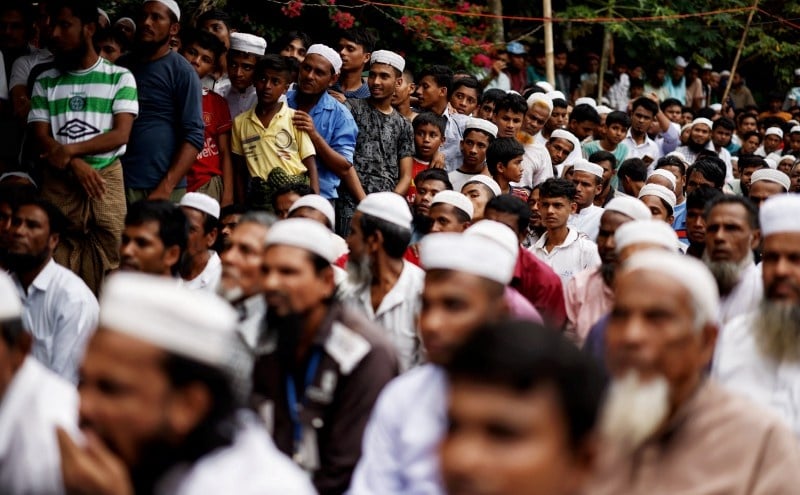

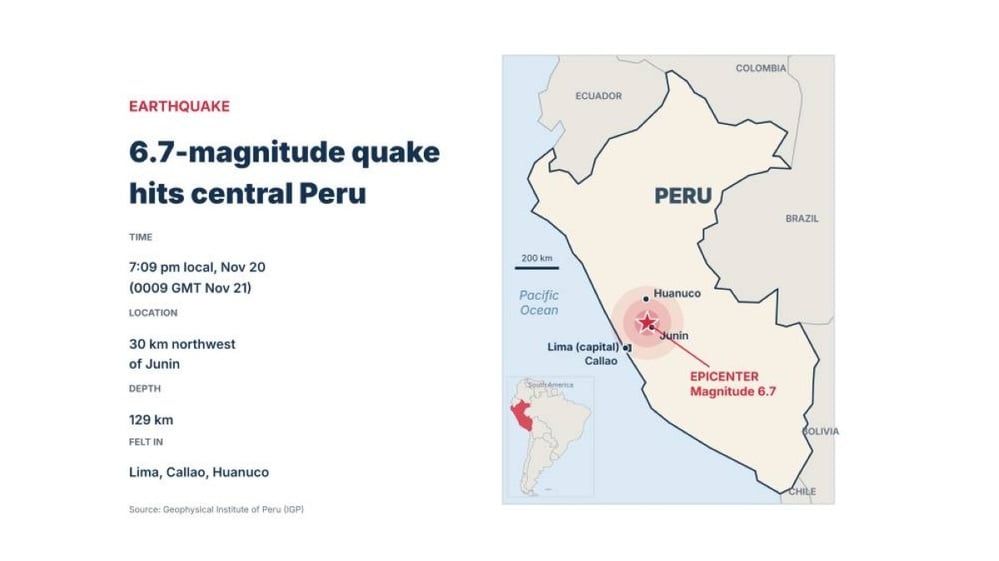
Click points to explore news by date. News sentiment ranges from -10 (very negative) to +10 (very positive) where 0 is neutral.
2026 © Helium Trades
Privacy Policy & Disclosure
* Disclaimer: Nothing on this website constitutes investment advice, performance data or any recommendation that any particular security, portfolio of securities, transaction or investment strategy is suitable for any specific person. Helium Trades is not responsible in any way for the accuracy
of any model predictions or price data. Any mention of a particular security and related prediction data is not a recommendation to buy or sell that security. Investments in securities involve the risk of loss. Past performance is no guarantee of future results. Helium Trades is not responsible for any of your investment decisions,
you should consult a financial expert before engaging in any transaction.
Helium Research Assistant

How can I help you today?
Ask any question about this page.