See whether Helium helps you make better-informed decisions. Try every Pro Trader feature for 30 days. No credit card required.
Try every Pro Trader feature for 30 days. No credit card required.
July 16, 2026 · 0 shares
Pro-establishment, pro-defense industrial policy framing that emphasizes US leadership over China, praising Trump-era initiatives, with limited critique and reliance on elite authorities to justify increased militarization.
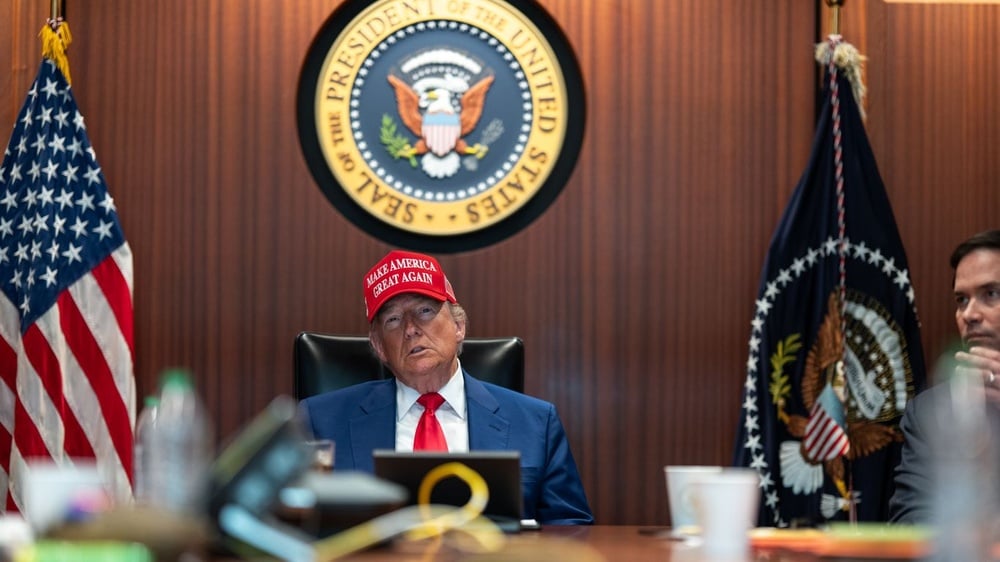
Defense Innovation Summit in Carlisle, PA, two-day gathering with high-profile political and business participants to revitalize defense industry and AI leadership to outpace China.
Automated analysis; not human reviewed.
·
52 of 52 available dimensions scored; omitted dimensions are not treated as neutral.
·
Verified supporting quotes for 0 of 52 scored dimensions.
Claim: Pro-conservative tilt via praising Trump leadership and defense policy; alignment with elite policy actors.
“"The business leaders credited both the president and Secretary of War Hegseth for spurring innovation and production."” · not found in supplied text
“"There was also unanimous agreement at the summit that the United States must lead the AI revolution, especially as it applies to warfare and strategy.
If we don’t lead here, China will."”
· exact text match
Counterevidence:
“"Opponents of a defense buildup often quote Eisenhower’s warning about guarding “against the acquisition of unwarranted influence” of the military-industrial complex, but they isolate that quote without providing context."” · not found in supplied text
“"Most of the left, including virtually every corporate media “journalist”...Read More"” · exact text match
Why: Prominent pro-defense and pro-Trump framing with selective acknowledgment of critics.
Claim: Foregrounds elite business and political figures as the central drivers of policy.
“"Business leaders included JP Morgan Chairman and CEO Jamie Dimon, President and CEO of Lockheed Martin Jim Taiclet, Executive Officer and President of Northrup Grumman Kathy Warden, General Dynamics President Danny Deep, President and COO of Blackstone Jon Gray, Chief Technology Officer for Palantir Technologies Shyam Sankar, CEO and Chief Investment Officer of Valor Equity Antonio Gracias, and President and CEO of Hanwha Defense USA Michael Coulter."” · exact text match
“"The list of federal government officials participating in the summit... included CIA Director John Ratcliffe, Secretary of War Pete Hegseth, Chairman of the Joint Chiefs of Staff Dan Caine..."” · not found in supplied text
Counterevidence:
“"Opponents of a defense buildup often quote Eisenhower’s warning..."” · not found in supplied text
Why: The piece centers elites shaping defense policy and industry.
Claim: Supports strong centralized leadership in defense matters; preference for rapid policy action.
“"unanimous agreement at the summit"” · not found in supplied text
“"to unleash the ‘arsenal of democracy’"” · not found in supplied text
Counterevidence:
“"Opponents of a defense buildup..."” · not found in supplied text
Why: Emphasizes top-down leadership and urgent policy action in defense.
Claim: Reduces complex defense challenges to slogans and binary leadership claims.
“"We need both quantity and quality to meet China’s challenge."” · not found in supplied text
“"If we don’t lead here, China will."” · not found in supplied text
Counterevidence:
“"outsourced too many important defense-related materials and technologies..."” · not found in supplied text
Why: Frames complex AI and industrial base issues as solvable by leadership alone.
Claim: Relies on statements from high-profile elites to justify policy.
“"The business leaders credited both the president and Secretary of War Hegseth for spurring innovation and production."” · not found in supplied text
“"arsenal of democracy’ and its commitment to incentivize America’s defense industries and tech companies"” · not found in supplied text
Counterevidence:
“"Opponents of a defense buildup..."” · not found in supplied text
Why: Uses elite voices to bolster arguments without broad empirical support.
Claim: Certainty about outcomes and consensus in the discourse.
“"There was also unanimous agreement at the summit that the United States must lead the AI revolution..."” · not found in supplied text
“"We need both quantity and quality to meet China’s challenge."” · not found in supplied text
Counterevidence:
“"Opponents of a defense buildup often quote Eisenhower’s warning..."” · not found in supplied text
Why: Uses absolutist phrasing like 'unanimous agreement' and definitive threats from China.
Claim: Frame favors a confrontational stance toward China and expansive US defense investment.
“"to outpace Beijing"” · not found in supplied text
“"If we don’t lead here, China will."” · not found in supplied text
Counterevidence:
“"Opponents of a defense buildup..."” · not found in supplied text
Why: Frames China as a principal adversary and prioritizes defense growth.
Claim: Moderate credibility with use of real officials, but punctuated by surfaced promo content and placeholders.
“"CIA Director John Ratcliffe" listed among participants” · not found in supplied text
“"Temple University President John Fry, University of Pittsburgh Chancellor Joan Gabel, and Penn State University President Neeli Bendapudi served as moderators"” · not found in supplied text
Counterevidence:
“"On Saturday former Clinton advisor James Carville took to YouTube...Read More"” · exact text match
“"Be a Free Market Loving Patriot.
Subscribe Today!"”
· verified after text normalization
Why: Mixes credible sourcing with promotional and click-through content that distracts from objective reporting.
Claim: Normative calls to lead against China anchored in familiar strategic rhetoric.
“"We need both quantity and quality to meet China’s challenge."” · not found in supplied text
“"If we don’t lead here, China will."” · not found in supplied text
Counterevidence:
“"There was also unanimous agreement at the summit that the United States must lead the AI revolution, especially as it applies to warfare and strategy."” · not found in supplied text
Why: Claims rest on normative premises about leadership without presenting broader evidence.
Claim: Uses loaded language and slogans to steer reader sentiment.
“"arsenal of democracy"” · not found in supplied text
“"freedom’s forge"” · not found in supplied text
“"unanimous agreement"” · not found in supplied text
Counterevidence:
“"Opponents of a defense buildup..."” · not found in supplied text
Why: Loaded framing emphasizes urgency and unity.
Ambiguities: year not specified; excised context; heavy reliance on elite sources and framing; potential selection bias.
Pro-Trump, pro-Republican framing that emphasizes defense investments and job creation in Pennsylvania, praising McCormick and using celebratory language with minimal counterpoints.
Trump's defense investment announcement in Pennsylvania at McCormick's Defense and Innovation Summit, highlighting job creation and multiple contracts.
Automated analysis; not human reviewed.
Limitations: Concise, case-specific limitations and plausible alternative interpretations.
·
1 of 52 available dimensions scored; omitted dimensions are not treated as neutral.
·
Verified supporting quotes for 1 of 1 scored dimensions.
Claim: The report frames the coverage with strong conservative-leaning praise and alignment with Republican figures.
““This afternoon, we’re announcing nearly $10 billion of new investments in our defense industrial base, right here in the great Commonwealth of Pennsylvania, and these investments will create more than 4,000 jobs,” he said.” · exact text match
““We used to go million, then we went billion.
Now we’re into the trillions.
But there’s never been anything like it. The country is as hot as it’s ever been,” Trump said.”
· exact text match
““Outstanding work on behalf of the incredible people of Pennsylvania,” Trump told McCormick, who was elected in 2024 and was pivotal to helping Republicans reclaim the U.S. Senate majority.” · exact text match
Why: Quotations emphasize Trump and Republican figures and frame investments as success, signaling pro-conservative framing.
Event-focused, pro-Trump framing; lacks counterpoints; limited quotes.
This report relies on a Washington Post analysis to recount Trump family defense-sector investments and billions in government contracts while including DoD and White House denials, yielding a cautious, skeptical framing of potential conflicts of interest without settling on a definitive conclusion.
This report covers a Washington Post analysis showing Trump family investments in defense-related firms earning billions in government contracts, alongside responses from DoD, the White House, and the companies involved.
I aim for objectivity; accuracy ~0.65
July 16, 2026 · 0 shares
Neutral, descriptive coverage of a defense policy announcement by Hegseth, with no evident editorializing.
Brief report on a policy announcement by Defense Secretary Pete Hegseth to implement testosterone deficiency screening for troops.
Automated analysis; not human reviewed.
Limitations: Concise, case-specific limitations and plausible alternative interpretations.
·
1 of 52 available dimensions scored; omitted dimensions are not treated as neutral.
·
Verified supporting quotes for 1 of 1 scored dimensions.
Claim: The report presents a policy claim with quoted justification but no external sourcing in the text.
“Hegseth announces new policy to test troops for low testosterone.” · exact text match
“"testosterone deficiency"” · exact text match
“"absolute best."” · exact text match
Why: Descriptive content relies on a single speaker's claim without corroborating sources.
Ambiguity: single brief text, no broader context or framing.
Conservative-leaning framing presents the Pentagon testosterone policy as a pragmatic readiness measure while portraying Democratic critics as politically motivated and inclined to weaponize biology, using gender-affirming care debates to color the argument.
Explores a Defense Department testosterone screening policy for service members and the polarized political responses surrounding it.
Automated analysis; not human reviewed.
Limitations: Concise, case-specific limitations and plausible alternative interpretations.
·
13 of 52 available dimensions scored; omitted dimensions are not treated as neutral.
·
Verified supporting quotes for 0 of 13 scored dimensions.
Claim: Conservative-leaning framing that casts Democrats as politicizing biology and weaponizing it for advantage.
“The Pentagon’s new testosterone policy exposes how quickly Democrats will weaponize biology for political convenience.” · exact text match
“"Rep.
Chrissy Houlahan (D–PA), an Air Force veteran, said the policy ‘proves that Secretary Hegseth takes direction from the far corners of the manosphere.’"”
· not found in supplied text
Counterevidence:
“"Pete Hegseth comes out in favor of gender-affirming care," wrote Schiff, and Jayapal said, "The Secretary of Forever Wars... this completely debunks all of Republicans’ attacks on trans people."” · not found in supplied text
Why: Opening framing relies on partisan language and selective quotes suggesting a conservative slant.
Claim: Policy entails government-mpecified health screening and potential therapy decisions.
“annual testosterone-deficiency screenings for service members 30 and older as part of regular health assessments.” · not found in supplied text
Why: Visible government-mandated health intervention suggests an authoritarian tilt relative to libertarian ideals.
Claim: Subjective framing is evident via loaded terms and selective quoting.
“The Pentagon’s new testosterone policy exposes how quickly Democrats will weaponize biology for political convenience.” · exact text match
“"far corners of the manosphere"” · not found in supplied text
Counterevidence:
“Hegseth’s clarifications present a counterpoint that frames the policy in health/fitness terms.” · not found in supplied text
Why: Loaded language indicates subjective framing beyond neutral reporting.
Claim: Some phrasing increases sensationalism by tying policy to political controversy.
“weaponize biology for political convenience” · exact text match
“"the far corners of the manosphere"” · not found in supplied text
Counterevidence:
“Policy specifics are described in straightforward terms at points.” · not found in supplied text
Why: Presence of loaded phrases suggests sensational framing.
Claim: Topic intersects biology, defense, and partisan politics, making it notably engaging.
“The policy announcement” · not found in supplied text
“Critics connecting to gender-affirming care” · not found in supplied text
Why: Contemporary intersection of biology and policy tends to attract interest.
Claim: Descriptive policy description is often paired with normative judgments about readiness and justification.
“"to keep troops 'strong, resilient, and capable' for the demands of the battlefield."” · not found in supplied text
“"The mission of the military is to 'provide the military forces needed to deter war and ensure our nation’s security.'"” · not found in supplied text
Counterevidence:
“Democrats’ criticisms show contested dimensions.” · not found in supplied text
Why: Policy is described with normative language about readiness.
Claim: Emphasis on military readiness points toward a hawkish, proactive posture.
“"to keep troops 'strong, resilient, and capable' for the demands of the battlefield."” · not found in supplied text
“"The mission of the military..."” · not found in supplied text
Why: Readiness-focused framing aligns with hawkish perspectives.
Claim: Frequent use of opinionated framing and loaded descriptors.
“"weaponize biology for political convenience"” · not found in supplied text
“"far corners of the manosphere"” · not found in supplied text
Counterevidence:
“Some policy explanations and clarifications from supporters appear.” · not found in supplied text
Why: Loaded language signals opinionated framing.
Claim: Favors a political narrative that questions Democratic positions while elevating the policy as beneficial.
“The policy exposes how quickly Democrats will weaponize biology for political convenience.” · not found in supplied text
“Under President Biden, Democrats were all too happy for the government to foot the bill for actual sex reassignment surgery ...” · not found in supplied text
Counterevidence:
“Schiff and Jayapal’s criticisms are included to present counter-frames.” · not found in supplied text
Why: Explicit partisan framing and cited quotes indicate political bias.
Claim: Some simplifications occur when linking testosterone screening directly to gender-affirming care debates.
“addressing a deficiency of a hormone that a man’s body naturally produces is not the equivalent of artificially suppressing one sex hormone and elevating another...” · not found in supplied text
Counterevidence:
“Hegseth emphasizes restoring natural capabilities, which adds nuance.” · not found in supplied text
Why: Complex hormonal interactions are presented in simplified comparisons.
Claim: Authoritative tone on policy implications without exhaustive evidence presented.
“"The mission of the military is..."” · not found in supplied text
“"not exactly a deranged idea."” · not found in supplied text
Counterevidence:
“Democratic criticisms are presented to show alternative views.” · not found in supplied text
Why: Confidence may exceed the evidentiary support shown within excerpts.
Claim: Mix of empirical claims about physiology with emotionally charged framing, blending rational and rhetorical elements.
“When a man is low in testosterone, ... it is “tied to muscle mass, bone density, metabolism, energy, concentration, mood, and physical performance.”” · not found in supplied text
“"this is not about artificial enhancement; it’s about restoring and optimizing your natural capabilities, protecting your longevity, and ensuring you have the biological foundation required to sustain the fight."” · verified after text normalization
Counterevidence:
“The article also includes policy rationale statements by Hegseth and supporters.” · not found in supplied text
Why: Some neutral factual statements exist, but the framing is not purely neutral.
Claim: The piece includes voices from both sides but foregrounds conservative framing.
“"Rep.
Chrissy Houlahan... 'far corners of the manosphere'"”
· not found in supplied text
Counterevidence:
“Hegseth's own clarifications are included.” · not found in supplied text
Why: Balancing quotes exist, yet framing remains orientationed.
My bias: limited excerpt; quotes may skew context; more context needed.
July 15, 2026 · 0 shares
Neutral, descriptive coverage of an official military health policy announcement, presenting rationale and details with minimal evaluative framing and no evident advocacy.
Announcement by Defense Secretary Pete Hegseth of an annual testosterone screening program for service members aged 30 and older, including TRT, as part of the war fighters' periodic health assessment.
Automated analysis; not human reviewed.
·
51 of 52 available dimensions scored; omitted dimensions are not treated as neutral.
·
Supporting quotes supplied for 0 of 51 scored dimensions; exact matching was not run.
limited context; confidence ~0.6
Frames the testosterone screening plan as culture-war fodder and gender-affirming care, using loaded language and presenting skeptical hosts/panelists while highlighting opposition to mainstream media framing; exhibits anti-establishment, opinionated tendencies in coverage.
Concise description: a CNN This Morning segment about Pete Hegseth's plan to test troops for testosterone deficiency and offer treatment, framed as culture-war controversy with skeptical host and panelist commentary.
Automated analysis; not human reviewed.
Limitations: Concise, case-specific limitations and plausible alternative interpretations.
·
52 of 52 available dimensions scored; omitted dimensions are not treated as neutral.
·
Verified supporting quotes for 4 of 52 scored dimensions.
Claim: Frames the testosterone screening as culture-war fodder and uses loaded descriptors.
“CNN Mocks Hegseth's Testosterone Program As 'Looksmaxxing, Gender-Affirming Care'.” · exact text match
“Group Chat turned Defense Secretary Pete Hegseth’s proposal to screen troops for testosterone deficiency and offer treatment into fresh culture-war fodder.” · exact text match
“CNN showed itself incapable of discussing basic military readiness without injecting identity politics and hyperbole.” · exact text match
Counterevidence:
“CORNISH was clearly skeptical about the program.” · not found in supplied text
“The initiative is simple enough: service members 30 and older would be required to test, those under 30 could volunteer, and anyone diagnosed with a deficiency could choose treatment.” · exact text match
Why: Loaded framing and descriptors indicate editorial tone leaning toward liberal critique of conservative framing.
Claim: Uses subjective framing via loaded terms and quoted rhetoric.
“Group Chat turned Defense Secretary Pete Hegseth’s proposal to screen troops for testosterone deficiency and offer treatment into fresh culture-war fodder.” · exact text match
“Even more outrageous was panelist Harrison Mann's description of the program as 'gender-affirming care.'” · not found in supplied text
“Mann snidely mocked: 'Is it good to offer everybody in the military gender-affirming care who wants it? Absolutely.
I don't think that privilege should only be reserved for Pete Hegseth's conception of his ideal man.'”
· not found in supplied text
Counterevidence:
“CORNISH was clearly skeptical about the program.” · not found in supplied text
“The initiative is simple enough: service members 30 and older would be required to test, those under 30 could volunteer, and anyone diagnosed with a deficiency could choose treatment.” · exact text match
Why: Direct quotes demonstrate opinionated framing, balanced by neutral policy details.
Claim: Uses sensational language around 'culture-war' framing.
“Group Chat turned Defense Secretary Pete Hegseth’s proposal to screen troops for testosterone deficiency and offer treatment into fresh culture-war fodder.” · exact text match
“Even more outrageous was panelist Harrison Mann's description of the program as 'gender-affirming care.'” · not found in supplied text
Counterevidence:
“The initiative is simple enough: service members 30 and older would be required to test, those under 30 could volunteer, and anyone diagnosed with a deficiency could choose treatment.” · exact text match
“No one would be obliged to take treatment.” · exact text match
Why: Loaded phrases pair with culture-war framing to evoke emotion.
Claim: Emphasizes stronger, fitter troops as hawkish objective but tempered by criticism.
“Hegseth’s focus on stronger, fitter troops was mocked as extremism, while gender surgeries were cast as essential “care.”” · exact text match
“Republican strategist Mike Dubke injected—excuse the pun—a note of realism.
He cast the program as part of the Trump administration's obvious goal of recruiting young men to the military.”
· exact text match
Counterevidence:
“The initiative is simple enough: service members 30 and older would be required to test, those under 30 could volunteer, and anyone diagnosed with a deficiency could choose treatment.” · exact text match
Why: Hawkish emphasis on military strength contrasted with critical framing.
Claim: Normative framing appears via mission statements and host-panel discourse.
“The mission of the Media Research Center is to document and combat the falsehoods and censorship of the news media, entertainment media and Big Tech in order to defend and preserve America's founding principles and Judeo-Christian values.” · exact text match
Counterevidence:
“Policy details describing testing requirements are presented.” · not found in supplied text
Why: Normative framing indicated by slogans and organizational mission statements.
Claim: Conservative-leaning framing supported by conservative voices and media-critique context.
“The Trump administration's obvious goal of recruiting young men to the military.” · not found in supplied text
“Mann’s critique of 'gender-affirming care' and calls to 'sweaty masculinity' imagery.” · not found in supplied text
Counterevidence:
“CORNISH was clearly skeptical about the program.” · not found in supplied text
Why: References to conservative figures and frames signal ideological tilt.
Claim: Critique of mainstream media indicates anti-establishment alignment.
“CNN showed itself incapable of discussing basic military readiness without injecting identity politics and hyperbole.” · exact text match
“The mission of the Media Research Center is to document and combat the falsehoods and censorship of the news media, entertainment media and Big Tech in order to defend and preserve America's founding principles and Judeo-Christian values.” · exact text match
Counterevidence:
“The transcript provides direct quotes showing policy details and positions from multiple viewpoints.” · not found in supplied text
Why: Media critique and watchdog rhetoric suggest anti-establishment framing.
Context limited; quotes highlight opposing views more than support.
July 15, 2026 · 0 shares
Mixes a policy claim to screen all troops for low testosterone (including women) with a descriptor of Hegseth's persona as manosphere-friendly, signaling provocative framing rather than neutral reporting.
Context: brief blurb describing a policy proposal to screen troops for low testosterone and a persona descriptor for a defense official.
Automated analysis; not human reviewed.
·
51 of 52 available dimensions scored; omitted dimensions are not treated as neutral.
·
Supporting quotes supplied for 0 of 51 scored dimensions; exact matching was not run.
Low confidence; accuracy ~0.
4.
July 13, 2026 · 0 shares
Framing emphasizes national-security rationales for the leaks crackdown, foregrounding government voices while acknowledging counterpoints from press organizations about subpoenas and threats to independent reporting.
Description of the Pentagon-DoJ joint task force formation to identify and prosecute press leaks, including quotes from Hegseth and references to NYT reporting and press reactions.
I may overstate security framing; confidence 0.6
July 15, 2026 · 0 shares
Descriptive, source-based coverage with hedged language about escalation, balancing U.S. actions and Iranian responses while signaling potential policy shifts; relies on anonymous sources and quotes, and notes White House non-comment.
News report on a Situation Room meeting and ongoing strikes on Iran, citing anonymous sources and officials and including direct quotes from Trump.
Automated analysis; not human reviewed.
·
1 of 52 available dimensions scored; omitted dimensions are not treated as neutral.
·
Supporting quotes supplied for 0 of 1 scored dimensions; exact matching was not run.
my bias: Western-source tilt; confidence ~0.6
July 15, 2026 · 0 shares
Descriptive, source-based coverage with hedged language about escalation, balancing U.S. actions and Iranian responses while signaling potential policy shifts; relies on anonymous sources and quotes, and notes White House non-comment.
News report on a Situation Room meeting and ongoing strikes on Iran, citing anonymous sources and officials and including direct quotes from Trump.
Automated analysis; not human reviewed.
·
1 of 52 available dimensions scored; omitted dimensions are not treated as neutral.
·
Supporting quotes supplied for 0 of 1 scored dimensions; exact matching was not run.
my bias: Western-source tilt; confidence ~0.6
July 16, 2026 · 0 shares
Neutral, descriptive coverage of a defense policy announcement by Hegseth, with no evident editorializing.
Brief report on a policy announcement by Defense Secretary Pete Hegseth to implement testosterone deficiency screening for troops.
Automated analysis; not human reviewed. Limitations: Concise, case-specific limitations and plausible alternative interpretations. · 1 of 52 available dimensions scored; omitted dimensions are not treated as neutral. · Verified supporting quotes for 1 of 1 scored dimensions.
Claim: The report presents a policy claim with quoted justification but no external sourcing in the text.
“Hegseth announces new policy to test troops for low testosterone.” · exact text match
“"testosterone deficiency"” · exact text match
“"absolute best."” · exact text match
Why: Descriptive content relies on a single speaker's claim without corroborating sources.
Ambiguity: single brief text, no broader context or framing.
July 15, 2026 · 0 shares
Neutral, descriptive coverage of an official military health policy announcement, presenting rationale and details with minimal evaluative framing and no evident advocacy.
Announcement by Defense Secretary Pete Hegseth of an annual testosterone screening program for service members aged 30 and older, including TRT, as part of the war fighters' periodic health assessment.
Automated analysis; not human reviewed. · 51 of 52 available dimensions scored; omitted dimensions are not treated as neutral. · Supporting quotes supplied for 0 of 51 scored dimensions; exact matching was not run.
limited context; confidence ~0.6
Frames the testosterone screening plan as culture-war fodder and gender-affirming care, using loaded language and presenting skeptical hosts/panelists while highlighting opposition to mainstream media framing; exhibits anti-establishment, opinionated tendencies in coverage.
Concise description: a CNN This Morning segment about Pete Hegseth's plan to test troops for testosterone deficiency and offer treatment, framed as culture-war controversy with skeptical host and panelist commentary.
Automated analysis; not human reviewed. Limitations: Concise, case-specific limitations and plausible alternative interpretations. · 52 of 52 available dimensions scored; omitted dimensions are not treated as neutral. · Verified supporting quotes for 4 of 52 scored dimensions.
Claim: Frames the testosterone screening as culture-war fodder and uses loaded descriptors.
“CNN Mocks Hegseth's Testosterone Program As 'Looksmaxxing, Gender-Affirming Care'.” · exact text match
“Group Chat turned Defense Secretary Pete Hegseth’s proposal to screen troops for testosterone deficiency and offer treatment into fresh culture-war fodder.” · exact text match
“CNN showed itself incapable of discussing basic military readiness without injecting identity politics and hyperbole.” · exact text match
Counterevidence:
“CORNISH was clearly skeptical about the program.” · not found in supplied text
“The initiative is simple enough: service members 30 and older would be required to test, those under 30 could volunteer, and anyone diagnosed with a deficiency could choose treatment.” · exact text match
Why: Loaded framing and descriptors indicate editorial tone leaning toward liberal critique of conservative framing.
Claim: Uses subjective framing via loaded terms and quoted rhetoric.
“Group Chat turned Defense Secretary Pete Hegseth’s proposal to screen troops for testosterone deficiency and offer treatment into fresh culture-war fodder.” · exact text match
“Even more outrageous was panelist Harrison Mann's description of the program as 'gender-affirming care.'” · not found in supplied text
“Mann snidely mocked: 'Is it good to offer everybody in the military gender-affirming care who wants it? Absolutely. I don't think that privilege should only be reserved for Pete Hegseth's conception of his ideal man.'” · not found in supplied text
Counterevidence:
“CORNISH was clearly skeptical about the program.” · not found in supplied text
“The initiative is simple enough: service members 30 and older would be required to test, those under 30 could volunteer, and anyone diagnosed with a deficiency could choose treatment.” · exact text match
Why: Direct quotes demonstrate opinionated framing, balanced by neutral policy details.
Claim: Uses sensational language around 'culture-war' framing.
“Group Chat turned Defense Secretary Pete Hegseth’s proposal to screen troops for testosterone deficiency and offer treatment into fresh culture-war fodder.” · exact text match
“Even more outrageous was panelist Harrison Mann's description of the program as 'gender-affirming care.'” · not found in supplied text
Counterevidence:
“The initiative is simple enough: service members 30 and older would be required to test, those under 30 could volunteer, and anyone diagnosed with a deficiency could choose treatment.” · exact text match
“No one would be obliged to take treatment.” · exact text match
Why: Loaded phrases pair with culture-war framing to evoke emotion.
Claim: Emphasizes stronger, fitter troops as hawkish objective but tempered by criticism.
“Hegseth’s focus on stronger, fitter troops was mocked as extremism, while gender surgeries were cast as essential “care.”” · exact text match
“Republican strategist Mike Dubke injected—excuse the pun—a note of realism. He cast the program as part of the Trump administration's obvious goal of recruiting young men to the military.” · exact text match
Counterevidence:
“The initiative is simple enough: service members 30 and older would be required to test, those under 30 could volunteer, and anyone diagnosed with a deficiency could choose treatment.” · exact text match
Why: Hawkish emphasis on military strength contrasted with critical framing.
Claim: Normative framing appears via mission statements and host-panel discourse.
“The mission of the Media Research Center is to document and combat the falsehoods and censorship of the news media, entertainment media and Big Tech in order to defend and preserve America's founding principles and Judeo-Christian values.” · exact text match
Counterevidence:
“Policy details describing testing requirements are presented.” · not found in supplied text
Why: Normative framing indicated by slogans and organizational mission statements.
Claim: Conservative-leaning framing supported by conservative voices and media-critique context.
“The Trump administration's obvious goal of recruiting young men to the military.” · not found in supplied text
“Mann’s critique of 'gender-affirming care' and calls to 'sweaty masculinity' imagery.” · not found in supplied text
Counterevidence:
“CORNISH was clearly skeptical about the program.” · not found in supplied text
Why: References to conservative figures and frames signal ideological tilt.
Claim: Critique of mainstream media indicates anti-establishment alignment.
“CNN showed itself incapable of discussing basic military readiness without injecting identity politics and hyperbole.” · exact text match
“The mission of the Media Research Center is to document and combat the falsehoods and censorship of the news media, entertainment media and Big Tech in order to defend and preserve America's founding principles and Judeo-Christian values.” · exact text match
Counterevidence:
“The transcript provides direct quotes showing policy details and positions from multiple viewpoints.” · not found in supplied text
Why: Media critique and watchdog rhetoric suggest anti-establishment framing.
Context limited; quotes highlight opposing views more than support.
A multi-item, source-diverse news digest with largely neutral, fact-based phrasing; occasional evaluative terms appear in quotes but overall framing remains informational.
A concise, factful, accurate, balanced context for the article in one sentence.
Automated analysis; not human reviewed. · 52 of 52 available dimensions scored; omitted dimensions are not treated as neutral. · Verified supporting quotes for 0 of 52 scored dimensions.
Neutral; article is a collection of diverse items; no strong bias detected
July 13, 2026 · 0 shares
Framing emphasizes national-security rationales for the leaks crackdown, foregrounding government voices while acknowledging counterpoints from press organizations about subpoenas and threats to independent reporting.
Description of the Pentagon-DoJ joint task force formation to identify and prosecute press leaks, including quotes from Hegseth and references to NYT reporting and press reactions.
I may overstate security framing; confidence 0.6
July 17, 2026 · 0 shares
Coverage presents the Pentagon escort-policy dispute as a neutral, legal process, citing court rulings and statements from both sides to avoid editorializing.
Federal appeals court temporarily reinstates the Pentagon escort policy for journalists as The New York Times challenges the rule in ongoing First Amendment litigation.
Automated analysis; not human reviewed. Limitations: Concise, case-specific limitations and plausible alternative interpretations. · 1 of 52 available dimensions scored; omitted dimensions are not treated as neutral. · Verified supporting quotes for 0 of 1 scored dimensions.
Claim: Neutral coverage with no discernible lean toward liberal or conservative ideology.
““neutrally and evenhandedly applied”” · exact text match
““While The Times is disappointed with this interim decision, we appreciate that the court has expedited the appeal and look forward to litigating it on the merits”” · not found in supplied text
Counterevidence:
“"The Defense Department can now temporarily require escorts for all journalists who visit the Pentagon, according to a ruling from a federal appeals court on Thursday. The decision, which The New York Times reported on Friday, reverses a June order that halted the escort requirement."” · exact text match
“"The Times sued to block the restrictions, arguing that they were a violation of the First Amendment."” · not found in supplied text
Why: Quoted material from both sides and neutral-leaning judge language support a balanced framing rather than ideological tilt.
A multi-item, source-diverse news digest with largely neutral, fact-based phrasing; occasional evaluative terms appear in quotes but overall framing remains informational.
A concise, factful, accurate, balanced context for the article in one sentence.
Automated analysis; not human reviewed. · 52 of 52 available dimensions scored; omitted dimensions are not treated as neutral. · Verified supporting quotes for 0 of 52 scored dimensions.
Neutral; article is a collection of diverse items; no strong bias detected
Readiness/merit-oriented supportive frame
Conservative-leaning framing presents the Pentagon testosterone policy as a pragmatic readiness measure while portraying Democratic critics as politically motivated and inclined to weaponize biology, using gender-affirming care debates to color the argument.
Explores a Defense Department testosterone screening policy for service members and the polarized political responses surrounding it.
Automated analysis; not human reviewed. Limitations: Concise, case-specific limitations and plausible alternative interpretations. · 13 of 52 available dimensions scored; omitted dimensions are not treated as neutral. · Verified supporting quotes for 0 of 13 scored dimensions.
Claim: Conservative-leaning framing that casts Democrats as politicizing biology and weaponizing it for advantage.
“The Pentagon’s new testosterone policy exposes how quickly Democrats will weaponize biology for political convenience.” · exact text match
“"Rep. Chrissy Houlahan (D–PA), an Air Force veteran, said the policy ‘proves that Secretary Hegseth takes direction from the far corners of the manosphere.’"” · not found in supplied text
Counterevidence:
“"Pete Hegseth comes out in favor of gender-affirming care," wrote Schiff, and Jayapal said, "The Secretary of Forever Wars... this completely debunks all of Republicans’ attacks on trans people."” · not found in supplied text
Why: Opening framing relies on partisan language and selective quotes suggesting a conservative slant.
Claim: Policy entails government-mpecified health screening and potential therapy decisions.
“annual testosterone-deficiency screenings for service members 30 and older as part of regular health assessments.” · not found in supplied text
Why: Visible government-mandated health intervention suggests an authoritarian tilt relative to libertarian ideals.
Claim: Subjective framing is evident via loaded terms and selective quoting.
“The Pentagon’s new testosterone policy exposes how quickly Democrats will weaponize biology for political convenience.” · exact text match
“"far corners of the manosphere"” · not found in supplied text
Counterevidence:
“Hegseth’s clarifications present a counterpoint that frames the policy in health/fitness terms.” · not found in supplied text
Why: Loaded language indicates subjective framing beyond neutral reporting.
Claim: Some phrasing increases sensationalism by tying policy to political controversy.
“weaponize biology for political convenience” · exact text match
“"the far corners of the manosphere"” · not found in supplied text
Counterevidence:
“Policy specifics are described in straightforward terms at points.” · not found in supplied text
Why: Presence of loaded phrases suggests sensational framing.
Claim: Topic intersects biology, defense, and partisan politics, making it notably engaging.
“The policy announcement” · not found in supplied text
“Critics connecting to gender-affirming care” · not found in supplied text
Why: Contemporary intersection of biology and policy tends to attract interest.
Claim: Descriptive policy description is often paired with normative judgments about readiness and justification.
“"to keep troops 'strong, resilient, and capable' for the demands of the battlefield."” · not found in supplied text
“"The mission of the military is to 'provide the military forces needed to deter war and ensure our nation’s security.'"” · not found in supplied text
Counterevidence:
“Democrats’ criticisms show contested dimensions.” · not found in supplied text
Why: Policy is described with normative language about readiness.
Claim: Emphasis on military readiness points toward a hawkish, proactive posture.
“"to keep troops 'strong, resilient, and capable' for the demands of the battlefield."” · not found in supplied text
“"The mission of the military..."” · not found in supplied text
Why: Readiness-focused framing aligns with hawkish perspectives.
Claim: Frequent use of opinionated framing and loaded descriptors.
“"weaponize biology for political convenience"” · not found in supplied text
“"far corners of the manosphere"” · not found in supplied text
Counterevidence:
“Some policy explanations and clarifications from supporters appear.” · not found in supplied text
Why: Loaded language signals opinionated framing.
Claim: Favors a political narrative that questions Democratic positions while elevating the policy as beneficial.
“The policy exposes how quickly Democrats will weaponize biology for political convenience.” · not found in supplied text
“Under President Biden, Democrats were all too happy for the government to foot the bill for actual sex reassignment surgery ...” · not found in supplied text
Counterevidence:
“Schiff and Jayapal’s criticisms are included to present counter-frames.” · not found in supplied text
Why: Explicit partisan framing and cited quotes indicate political bias.
Claim: Some simplifications occur when linking testosterone screening directly to gender-affirming care debates.
“addressing a deficiency of a hormone that a man’s body naturally produces is not the equivalent of artificially suppressing one sex hormone and elevating another...” · not found in supplied text
Counterevidence:
“Hegseth emphasizes restoring natural capabilities, which adds nuance.” · not found in supplied text
Why: Complex hormonal interactions are presented in simplified comparisons.
Claim: Authoritative tone on policy implications without exhaustive evidence presented.
“"The mission of the military is..."” · not found in supplied text
“"not exactly a deranged idea."” · not found in supplied text
Counterevidence:
“Democratic criticisms are presented to show alternative views.” · not found in supplied text
Why: Confidence may exceed the evidentiary support shown within excerpts.
Claim: Mix of empirical claims about physiology with emotionally charged framing, blending rational and rhetorical elements.
“When a man is low in testosterone, ... it is “tied to muscle mass, bone density, metabolism, energy, concentration, mood, and physical performance.”” · not found in supplied text
“"this is not about artificial enhancement; it’s about restoring and optimizing your natural capabilities, protecting your longevity, and ensuring you have the biological foundation required to sustain the fight."” · verified after text normalization
Counterevidence:
“The article also includes policy rationale statements by Hegseth and supporters.” · not found in supplied text
Why: Some neutral factual statements exist, but the framing is not purely neutral.
Claim: The piece includes voices from both sides but foregrounds conservative framing.
“"Rep. Chrissy Houlahan... 'far corners of the manosphere'"” · not found in supplied text
Counterevidence:
“Hegseth's own clarifications are included.” · not found in supplied text
Why: Balancing quotes exist, yet framing remains orientationed.
My bias: limited excerpt; quotes may skew context; more context needed.
July 16, 2026 · 0 shares
Neutral, descriptive coverage of a defense policy announcement by Hegseth, with no evident editorializing.
Brief report on a policy announcement by Defense Secretary Pete Hegseth to implement testosterone deficiency screening for troops.
Automated analysis; not human reviewed. Limitations: Concise, case-specific limitations and plausible alternative interpretations. · 1 of 52 available dimensions scored; omitted dimensions are not treated as neutral. · Verified supporting quotes for 1 of 1 scored dimensions.
Claim: The report presents a policy claim with quoted justification but no external sourcing in the text.
“Hegseth announces new policy to test troops for low testosterone.” · exact text match
“"testosterone deficiency"” · exact text match
“"absolute best."” · exact text match
Why: Descriptive content relies on a single speaker's claim without corroborating sources.
Ambiguity: single brief text, no broader context or framing.
July 16, 2026 · 0 shares
Pro-establishment, pro-defense industrial policy framing that emphasizes US leadership over China, praising Trump-era initiatives, with limited critique and reliance on elite authorities to justify increased militarization.
Defense Innovation Summit in Carlisle, PA, two-day gathering with high-profile political and business participants to revitalize defense industry and AI leadership to outpace China.
Automated analysis; not human reviewed. · 52 of 52 available dimensions scored; omitted dimensions are not treated as neutral. · Verified supporting quotes for 0 of 52 scored dimensions.
Claim: Pro-conservative tilt via praising Trump leadership and defense policy; alignment with elite policy actors.
“"The business leaders credited both the president and Secretary of War Hegseth for spurring innovation and production."” · not found in supplied text
“"There was also unanimous agreement at the summit that the United States must lead the AI revolution, especially as it applies to warfare and strategy. If we don’t lead here, China will."” · exact text match
Counterevidence:
“"Opponents of a defense buildup often quote Eisenhower’s warning about guarding “against the acquisition of unwarranted influence” of the military-industrial complex, but they isolate that quote without providing context."” · not found in supplied text
“"Most of the left, including virtually every corporate media “journalist”...Read More"” · exact text match
Why: Prominent pro-defense and pro-Trump framing with selective acknowledgment of critics.
Claim: Foregrounds elite business and political figures as the central drivers of policy.
“"Business leaders included JP Morgan Chairman and CEO Jamie Dimon, President and CEO of Lockheed Martin Jim Taiclet, Executive Officer and President of Northrup Grumman Kathy Warden, General Dynamics President Danny Deep, President and COO of Blackstone Jon Gray, Chief Technology Officer for Palantir Technologies Shyam Sankar, CEO and Chief Investment Officer of Valor Equity Antonio Gracias, and President and CEO of Hanwha Defense USA Michael Coulter."” · exact text match
“"The list of federal government officials participating in the summit... included CIA Director John Ratcliffe, Secretary of War Pete Hegseth, Chairman of the Joint Chiefs of Staff Dan Caine..."” · not found in supplied text
Counterevidence:
“"Opponents of a defense buildup often quote Eisenhower’s warning..."” · not found in supplied text
Why: The piece centers elites shaping defense policy and industry.
Claim: Supports strong centralized leadership in defense matters; preference for rapid policy action.
“"unanimous agreement at the summit"” · not found in supplied text
“"to unleash the ‘arsenal of democracy’"” · not found in supplied text
Counterevidence:
“"Opponents of a defense buildup..."” · not found in supplied text
Why: Emphasizes top-down leadership and urgent policy action in defense.
Claim: Reduces complex defense challenges to slogans and binary leadership claims.
“"We need both quantity and quality to meet China’s challenge."” · not found in supplied text
“"If we don’t lead here, China will."” · not found in supplied text
Counterevidence:
“"outsourced too many important defense-related materials and technologies..."” · not found in supplied text
Why: Frames complex AI and industrial base issues as solvable by leadership alone.
Claim: Relies on statements from high-profile elites to justify policy.
“"The business leaders credited both the president and Secretary of War Hegseth for spurring innovation and production."” · not found in supplied text
“"arsenal of democracy’ and its commitment to incentivize America’s defense industries and tech companies"” · not found in supplied text
Counterevidence:
“"Opponents of a defense buildup..."” · not found in supplied text
Why: Uses elite voices to bolster arguments without broad empirical support.
Claim: Certainty about outcomes and consensus in the discourse.
“"There was also unanimous agreement at the summit that the United States must lead the AI revolution..."” · not found in supplied text
“"We need both quantity and quality to meet China’s challenge."” · not found in supplied text
Counterevidence:
“"Opponents of a defense buildup often quote Eisenhower’s warning..."” · not found in supplied text
Why: Uses absolutist phrasing like 'unanimous agreement' and definitive threats from China.
Claim: Frame favors a confrontational stance toward China and expansive US defense investment.
“"to outpace Beijing"” · not found in supplied text
“"If we don’t lead here, China will."” · not found in supplied text
Counterevidence:
“"Opponents of a defense buildup..."” · not found in supplied text
Why: Frames China as a principal adversary and prioritizes defense growth.
Claim: Moderate credibility with use of real officials, but punctuated by surfaced promo content and placeholders.
“"CIA Director John Ratcliffe" listed among participants” · not found in supplied text
“"Temple University President John Fry, University of Pittsburgh Chancellor Joan Gabel, and Penn State University President Neeli Bendapudi served as moderators"” · not found in supplied text
Counterevidence:
“"On Saturday former Clinton advisor James Carville took to YouTube...Read More"” · exact text match
“"Be a Free Market Loving Patriot. Subscribe Today!"” · verified after text normalization
Why: Mixes credible sourcing with promotional and click-through content that distracts from objective reporting.
Claim: Normative calls to lead against China anchored in familiar strategic rhetoric.
“"We need both quantity and quality to meet China’s challenge."” · not found in supplied text
“"If we don’t lead here, China will."” · not found in supplied text
Counterevidence:
“"There was also unanimous agreement at the summit that the United States must lead the AI revolution, especially as it applies to warfare and strategy."” · not found in supplied text
Why: Claims rest on normative premises about leadership without presenting broader evidence.
Claim: Uses loaded language and slogans to steer reader sentiment.
“"arsenal of democracy"” · not found in supplied text
“"freedom’s forge"” · not found in supplied text
“"unanimous agreement"” · not found in supplied text
Counterevidence:
“"Opponents of a defense buildup..."” · not found in supplied text
Why: Loaded framing emphasizes urgency and unity.
Ambiguities: year not specified; excised context; heavy reliance on elite sources and framing; potential selection bias.
Pro-Trump, pro-Republican framing that emphasizes defense investments and job creation in Pennsylvania, praising McCormick and using celebratory language with minimal counterpoints.
Trump's defense investment announcement in Pennsylvania at McCormick's Defense and Innovation Summit, highlighting job creation and multiple contracts.
Automated analysis; not human reviewed. Limitations: Concise, case-specific limitations and plausible alternative interpretations. · 1 of 52 available dimensions scored; omitted dimensions are not treated as neutral. · Verified supporting quotes for 1 of 1 scored dimensions.
Claim: The report frames the coverage with strong conservative-leaning praise and alignment with Republican figures.
““This afternoon, we’re announcing nearly $10 billion of new investments in our defense industrial base, right here in the great Commonwealth of Pennsylvania, and these investments will create more than 4,000 jobs,” he said.” · exact text match
““We used to go million, then we went billion. Now we’re into the trillions. But there’s never been anything like it. The country is as hot as it’s ever been,” Trump said.” · exact text match
““Outstanding work on behalf of the incredible people of Pennsylvania,” Trump told McCormick, who was elected in 2024 and was pivotal to helping Republicans reclaim the U.S. Senate majority.” · exact text match
Why: Quotations emphasize Trump and Republican figures and frame investments as success, signaling pro-conservative framing.
Event-focused, pro-Trump framing; lacks counterpoints; limited quotes.
Conservative-leaning framing presents the Pentagon testosterone policy as a pragmatic readiness measure while portraying Democratic critics as politically motivated and inclined to weaponize biology, using gender-affirming care debates to color the argument.
Explores a Defense Department testosterone screening policy for service members and the polarized political responses surrounding it.
Automated analysis; not human reviewed. Limitations: Concise, case-specific limitations and plausible alternative interpretations. · 13 of 52 available dimensions scored; omitted dimensions are not treated as neutral. · Verified supporting quotes for 0 of 13 scored dimensions.
Claim: Conservative-leaning framing that casts Democrats as politicizing biology and weaponizing it for advantage.
“The Pentagon’s new testosterone policy exposes how quickly Democrats will weaponize biology for political convenience.” · exact text match
“"Rep. Chrissy Houlahan (D–PA), an Air Force veteran, said the policy ‘proves that Secretary Hegseth takes direction from the far corners of the manosphere.’"” · not found in supplied text
Counterevidence:
“"Pete Hegseth comes out in favor of gender-affirming care," wrote Schiff, and Jayapal said, "The Secretary of Forever Wars... this completely debunks all of Republicans’ attacks on trans people."” · not found in supplied text
Why: Opening framing relies on partisan language and selective quotes suggesting a conservative slant.
Claim: Policy entails government-mpecified health screening and potential therapy decisions.
“annual testosterone-deficiency screenings for service members 30 and older as part of regular health assessments.” · not found in supplied text
Why: Visible government-mandated health intervention suggests an authoritarian tilt relative to libertarian ideals.
Claim: Subjective framing is evident via loaded terms and selective quoting.
“The Pentagon’s new testosterone policy exposes how quickly Democrats will weaponize biology for political convenience.” · exact text match
“"far corners of the manosphere"” · not found in supplied text
Counterevidence:
“Hegseth’s clarifications present a counterpoint that frames the policy in health/fitness terms.” · not found in supplied text
Why: Loaded language indicates subjective framing beyond neutral reporting.
Claim: Some phrasing increases sensationalism by tying policy to political controversy.
“weaponize biology for political convenience” · exact text match
“"the far corners of the manosphere"” · not found in supplied text
Counterevidence:
“Policy specifics are described in straightforward terms at points.” · not found in supplied text
Why: Presence of loaded phrases suggests sensational framing.
Claim: Topic intersects biology, defense, and partisan politics, making it notably engaging.
“The policy announcement” · not found in supplied text
“Critics connecting to gender-affirming care” · not found in supplied text
Why: Contemporary intersection of biology and policy tends to attract interest.
Claim: Descriptive policy description is often paired with normative judgments about readiness and justification.
“"to keep troops 'strong, resilient, and capable' for the demands of the battlefield."” · not found in supplied text
“"The mission of the military is to 'provide the military forces needed to deter war and ensure our nation’s security.'"” · not found in supplied text
Counterevidence:
“Democrats’ criticisms show contested dimensions.” · not found in supplied text
Why: Policy is described with normative language about readiness.
Claim: Emphasis on military readiness points toward a hawkish, proactive posture.
“"to keep troops 'strong, resilient, and capable' for the demands of the battlefield."” · not found in supplied text
“"The mission of the military..."” · not found in supplied text
Why: Readiness-focused framing aligns with hawkish perspectives.
Claim: Frequent use of opinionated framing and loaded descriptors.
“"weaponize biology for political convenience"” · not found in supplied text
“"far corners of the manosphere"” · not found in supplied text
Counterevidence:
“Some policy explanations and clarifications from supporters appear.” · not found in supplied text
Why: Loaded language signals opinionated framing.
Claim: Favors a political narrative that questions Democratic positions while elevating the policy as beneficial.
“The policy exposes how quickly Democrats will weaponize biology for political convenience.” · not found in supplied text
“Under President Biden, Democrats were all too happy for the government to foot the bill for actual sex reassignment surgery ...” · not found in supplied text
Counterevidence:
“Schiff and Jayapal’s criticisms are included to present counter-frames.” · not found in supplied text
Why: Explicit partisan framing and cited quotes indicate political bias.
Claim: Some simplifications occur when linking testosterone screening directly to gender-affirming care debates.
“addressing a deficiency of a hormone that a man’s body naturally produces is not the equivalent of artificially suppressing one sex hormone and elevating another...” · not found in supplied text
Counterevidence:
“Hegseth emphasizes restoring natural capabilities, which adds nuance.” · not found in supplied text
Why: Complex hormonal interactions are presented in simplified comparisons.
Claim: Authoritative tone on policy implications without exhaustive evidence presented.
“"The mission of the military is..."” · not found in supplied text
“"not exactly a deranged idea."” · not found in supplied text
Counterevidence:
“Democratic criticisms are presented to show alternative views.” · not found in supplied text
Why: Confidence may exceed the evidentiary support shown within excerpts.
Claim: Mix of empirical claims about physiology with emotionally charged framing, blending rational and rhetorical elements.
“When a man is low in testosterone, ... it is “tied to muscle mass, bone density, metabolism, energy, concentration, mood, and physical performance.”” · not found in supplied text
“"this is not about artificial enhancement; it’s about restoring and optimizing your natural capabilities, protecting your longevity, and ensuring you have the biological foundation required to sustain the fight."” · verified after text normalization
Counterevidence:
“The article also includes policy rationale statements by Hegseth and supporters.” · not found in supplied text
Why: Some neutral factual statements exist, but the framing is not purely neutral.
Claim: The piece includes voices from both sides but foregrounds conservative framing.
“"Rep. Chrissy Houlahan... 'far corners of the manosphere'"” · not found in supplied text
Counterevidence:
“Hegseth's own clarifications are included.” · not found in supplied text
Why: Balancing quotes exist, yet framing remains orientationed.
My bias: limited excerpt; quotes may skew context; more context needed.
July 15, 2026 · 0 shares
Mixes a policy claim to screen all troops for low testosterone (including women) with a descriptor of Hegseth's persona as manosphere-friendly, signaling provocative framing rather than neutral reporting.
Context: brief blurb describing a policy proposal to screen troops for low testosterone and a persona descriptor for a defense official.
Automated analysis; not human reviewed. · 51 of 52 available dimensions scored; omitted dimensions are not treated as neutral. · Supporting quotes supplied for 0 of 51 scored dimensions; exact matching was not run.
Low confidence; accuracy ~0.4.
A multi-item, source-diverse news digest with largely neutral, fact-based phrasing; occasional evaluative terms appear in quotes but overall framing remains informational.
A concise, factful, accurate, balanced context for the article in one sentence.
Automated analysis; not human reviewed. · 52 of 52 available dimensions scored; omitted dimensions are not treated as neutral. · Verified supporting quotes for 0 of 52 scored dimensions.
Neutral; article is a collection of diverse items; no strong bias detected
Critical civil-rights / culture-war skeptical frame
Frames the testosterone screening plan as culture-war fodder and gender-affirming care, using loaded language and presenting skeptical hosts/panelists while highlighting opposition to mainstream media framing; exhibits anti-establishment, opinionated tendencies in coverage.
Concise description: a CNN This Morning segment about Pete Hegseth's plan to test troops for testosterone deficiency and offer treatment, framed as culture-war controversy with skeptical host and panelist commentary.
Automated analysis; not human reviewed. Limitations: Concise, case-specific limitations and plausible alternative interpretations. · 52 of 52 available dimensions scored; omitted dimensions are not treated as neutral. · Verified supporting quotes for 4 of 52 scored dimensions.
Claim: Frames the testosterone screening as culture-war fodder and uses loaded descriptors.
“CNN Mocks Hegseth's Testosterone Program As 'Looksmaxxing, Gender-Affirming Care'.” · exact text match
“Group Chat turned Defense Secretary Pete Hegseth’s proposal to screen troops for testosterone deficiency and offer treatment into fresh culture-war fodder.” · exact text match
“CNN showed itself incapable of discussing basic military readiness without injecting identity politics and hyperbole.” · exact text match
Counterevidence:
“CORNISH was clearly skeptical about the program.” · not found in supplied text
“The initiative is simple enough: service members 30 and older would be required to test, those under 30 could volunteer, and anyone diagnosed with a deficiency could choose treatment.” · exact text match
Why: Loaded framing and descriptors indicate editorial tone leaning toward liberal critique of conservative framing.
Claim: Uses subjective framing via loaded terms and quoted rhetoric.
“Group Chat turned Defense Secretary Pete Hegseth’s proposal to screen troops for testosterone deficiency and offer treatment into fresh culture-war fodder.” · exact text match
“Even more outrageous was panelist Harrison Mann's description of the program as 'gender-affirming care.'” · not found in supplied text
“Mann snidely mocked: 'Is it good to offer everybody in the military gender-affirming care who wants it? Absolutely. I don't think that privilege should only be reserved for Pete Hegseth's conception of his ideal man.'” · not found in supplied text
Counterevidence:
“CORNISH was clearly skeptical about the program.” · not found in supplied text
“The initiative is simple enough: service members 30 and older would be required to test, those under 30 could volunteer, and anyone diagnosed with a deficiency could choose treatment.” · exact text match
Why: Direct quotes demonstrate opinionated framing, balanced by neutral policy details.
Claim: Uses sensational language around 'culture-war' framing.
“Group Chat turned Defense Secretary Pete Hegseth’s proposal to screen troops for testosterone deficiency and offer treatment into fresh culture-war fodder.” · exact text match
“Even more outrageous was panelist Harrison Mann's description of the program as 'gender-affirming care.'” · not found in supplied text
Counterevidence:
“The initiative is simple enough: service members 30 and older would be required to test, those under 30 could volunteer, and anyone diagnosed with a deficiency could choose treatment.” · exact text match
“No one would be obliged to take treatment.” · exact text match
Why: Loaded phrases pair with culture-war framing to evoke emotion.
Claim: Emphasizes stronger, fitter troops as hawkish objective but tempered by criticism.
“Hegseth’s focus on stronger, fitter troops was mocked as extremism, while gender surgeries were cast as essential “care.”” · exact text match
“Republican strategist Mike Dubke injected—excuse the pun—a note of realism. He cast the program as part of the Trump administration's obvious goal of recruiting young men to the military.” · exact text match
Counterevidence:
“The initiative is simple enough: service members 30 and older would be required to test, those under 30 could volunteer, and anyone diagnosed with a deficiency could choose treatment.” · exact text match
Why: Hawkish emphasis on military strength contrasted with critical framing.
Claim: Normative framing appears via mission statements and host-panel discourse.
“The mission of the Media Research Center is to document and combat the falsehoods and censorship of the news media, entertainment media and Big Tech in order to defend and preserve America's founding principles and Judeo-Christian values.” · exact text match
Counterevidence:
“Policy details describing testing requirements are presented.” · not found in supplied text
Why: Normative framing indicated by slogans and organizational mission statements.
Claim: Conservative-leaning framing supported by conservative voices and media-critique context.
“The Trump administration's obvious goal of recruiting young men to the military.” · not found in supplied text
“Mann’s critique of 'gender-affirming care' and calls to 'sweaty masculinity' imagery.” · not found in supplied text
Counterevidence:
“CORNISH was clearly skeptical about the program.” · not found in supplied text
Why: References to conservative figures and frames signal ideological tilt.
Claim: Critique of mainstream media indicates anti-establishment alignment.
“CNN showed itself incapable of discussing basic military readiness without injecting identity politics and hyperbole.” · exact text match
“The mission of the Media Research Center is to document and combat the falsehoods and censorship of the news media, entertainment media and Big Tech in order to defend and preserve America's founding principles and Judeo-Christian values.” · exact text match
Counterevidence:
“The transcript provides direct quotes showing policy details and positions from multiple viewpoints.” · not found in supplied text
Why: Media critique and watchdog rhetoric suggest anti-establishment framing.
Context limited; quotes highlight opposing views more than support.
July 17, 2026 · 0 shares
Critical portrayal of MAGA masculinity rhetoric as performative and insecure, grounded in Salon-style critique and medical skepticism.
Critical analysis in Salon about MAGA masculinity rhetoric, citing Marcotte and a physician to challenge testosterone-testing claims.
Automated analysis; not human reviewed. · 8 of 52 available dimensions scored; omitted dimensions are not treated as neutral. · Verified supporting quotes for 0 of 8 scored dimensions.
Claim: The article frames MAGA through a liberal-critic lens.
“"Far-right conspiracy theorists, including Infowars' Alex Jones, have long claimed that liberals, progressives and feminists are conspiring to emasculate men and turn them into low-testosterone 'soy boys'— and they believe that soy products are specifically designed to make men more effeminate."” · not found in supplied text
“"Efforts to prove their masculinity are so over-the-top that they inevitably read more as anxious than tough, revealing the deep well of insecurity fueling the movement."” · not found in supplied text
“"MAGA loves nothing more than a Potemkin village, and Trump has gotten as far as he has because he's very good at using TV tricks to create the illusion of strength and competence, especially for those who aren't looking very closely."” · not found in supplied text
Counterevidence:
“"There is no magic formula that can tell us what level of testosterone best prepares someone to serve in the United States military. Testosterone levels have no place as a proxy for a myriad of physical and mental readiness tests, where capacity and readiness is directly measured."” · not found in supplied text
“"But according to Marcotte, it's 'unlikely' that Hegseth 'understands or even cares about what the actual medical science says'."” · not found in supplied text
Why: Left-leaning framing with quotes from a liberal analyst; medical quotes provide some balance.
Claim: The piece mixes descriptive critique with normative language.
“"cringeworthy"” · not found in supplied text
“"Potemkin village"” · not found in supplied text
“"anxious little boy"” · not found in supplied text
Counterevidence:
“"There is no magic formula..."” · not found in supplied text
Why: Language crosses description and normative judgments.
Claim: Loaded evaluative language signals strong opinion.
“"cringeworthy"” · not found in supplied text
“"anxious little boy inside them"” · not found in supplied text
“"Potemkin village"” · not found in supplied text
Counterevidence:
“"There is no magic formula..."” · not found in supplied text
Why: Loaded adjectives show normative stance.
Claim: The piece uses broad generalizations about MAGA masculinity.
“"The pervasive plague of MAGA men"” · not found in supplied text
“"From barbed wire tattoos to oversized pickup trucks to yelling 'Michelle Obama is a man' at a UFC fight, there are millions of men like Pete Hegseth"” · not found in supplied text
Counterevidence:
“"Hegseth is an especially cringeworthy example"” · not found in supplied text
Why: Broad generalizations with some concrete examples.
Claim: Juvenile metaphors are used to belittle MAGA figures.
“"third-grade boy dressing up his GI Joes"” · not found in supplied text
“"anxious little boy inside them"” · not found in supplied text
Counterevidence:
“"Marcotte emphasizes" shows nuance.” · not found in supplied text
Why: Juvenile imagery indicates tone; other parts provide credible analysis.
Claim: The article expresses high certainty about MAGA's insecurity and performativity.
“"The belief that reality doesn't matter if the facade is showy enough reaches into every corner of modern right-wing culture, especially when it comes to gender."” · not found in supplied text
“"MAGA loves nothing more than a Potemkin village, and Trump has gotten as far as he has because he's very good at using TV tricks to create the illusion of strength and competence, especially for those who aren't looking very closely."” · not found in supplied text
Counterevidence:
“"There is no magic formula..."” · not found in supplied text
Why: Hyperbolic framing; medical nuance reduces certainty somewhat.
Claim: The piece aligns with mainstream, establishment skepticism toward MAGA.
“"MAGA exposed by cartoonish obsession with 'manliness': doctor."” · not found in supplied text
“"the Salon journalist writes"” · not found in supplied text
Counterevidence:
“"There is no magic formula that can tell us what level of testosterone best prepares someone to serve in the United States military."” · not found in supplied text
Why: Uses mainstream outlets and labeled critiques; mild balancing quotes.
Claim: The piece mixes rational medical critique with emotive framing.
“"There is no magic formula that can tell us what level of testosterone best prepares someone to serve in the United States military."” · not found in supplied text
“"Testosterone levels have no place as a proxy for a myriad of physical and mental readiness tests, where capacity and readiness is directly measured."” · not found in supplied text
Counterevidence:
“"MAGA loves nothing more than a Potemkin village..."” · not found in supplied text
Why: Rational medical statements paired with emotive language.
Ambiguities and evidence gaps could shift the balance; the analysis relies on selective quotes.
A liberal-leaning framing is evident, foregrounding Rep. Jayapal's criticisms of Israeli policy, labeling Israel's Gaza actions as genocide, and emphasizing efforts to cut U.S. military aid while linking domestic gender-policy debates to anti-militarist arguments.
Democracy Now! transcript featuring Rep. Pramila Jayapal discussing Democrats' vote to cut Israeli military aid and the Pentagon's testosterone policy in the military.
Automated analysis; not human reviewed. Limitations: Analysis relies on a single interview transcript from Democracy Now!, a source with a known progressive stance; excerpts emphasize a particular viewpoint and may not reflect broader editorial practices. · 1 of 52 available dimensions scored; omitted dimensions are not treated as neutral. · Verified supporting quotes for 0 of 1 scored dimensions.
Conservative-leaning framing presents the Pentagon testosterone policy as a pragmatic readiness measure while portraying Democratic critics as politically motivated and inclined to weaponize biology, using gender-affirming care debates to color the argument.
Explores a Defense Department testosterone screening policy for service members and the polarized political responses surrounding it.
Automated analysis; not human reviewed. Limitations: Concise, case-specific limitations and plausible alternative interpretations. · 13 of 52 available dimensions scored; omitted dimensions are not treated as neutral. · Verified supporting quotes for 0 of 13 scored dimensions.
Claim: Conservative-leaning framing that casts Democrats as politicizing biology and weaponizing it for advantage.
“The Pentagon’s new testosterone policy exposes how quickly Democrats will weaponize biology for political convenience.” · exact text match
“"Rep. Chrissy Houlahan (D–PA), an Air Force veteran, said the policy ‘proves that Secretary Hegseth takes direction from the far corners of the manosphere.’"” · not found in supplied text
Counterevidence:
“"Pete Hegseth comes out in favor of gender-affirming care," wrote Schiff, and Jayapal said, "The Secretary of Forever Wars... this completely debunks all of Republicans’ attacks on trans people."” · not found in supplied text
Why: Opening framing relies on partisan language and selective quotes suggesting a conservative slant.
Claim: Policy entails government-mpecified health screening and potential therapy decisions.
“annual testosterone-deficiency screenings for service members 30 and older as part of regular health assessments.” · not found in supplied text
Why: Visible government-mandated health intervention suggests an authoritarian tilt relative to libertarian ideals.
Claim: Subjective framing is evident via loaded terms and selective quoting.
“The Pentagon’s new testosterone policy exposes how quickly Democrats will weaponize biology for political convenience.” · exact text match
“"far corners of the manosphere"” · not found in supplied text
Counterevidence:
“Hegseth’s clarifications present a counterpoint that frames the policy in health/fitness terms.” · not found in supplied text
Why: Loaded language indicates subjective framing beyond neutral reporting.
Claim: Some phrasing increases sensationalism by tying policy to political controversy.
“weaponize biology for political convenience” · exact text match
“"the far corners of the manosphere"” · not found in supplied text
Counterevidence:
“Policy specifics are described in straightforward terms at points.” · not found in supplied text
Why: Presence of loaded phrases suggests sensational framing.
Claim: Topic intersects biology, defense, and partisan politics, making it notably engaging.
“The policy announcement” · not found in supplied text
“Critics connecting to gender-affirming care” · not found in supplied text
Why: Contemporary intersection of biology and policy tends to attract interest.
Claim: Descriptive policy description is often paired with normative judgments about readiness and justification.
“"to keep troops 'strong, resilient, and capable' for the demands of the battlefield."” · not found in supplied text
“"The mission of the military is to 'provide the military forces needed to deter war and ensure our nation’s security.'"” · not found in supplied text
Counterevidence:
“Democrats’ criticisms show contested dimensions.” · not found in supplied text
Why: Policy is described with normative language about readiness.
Claim: Emphasis on military readiness points toward a hawkish, proactive posture.
“"to keep troops 'strong, resilient, and capable' for the demands of the battlefield."” · not found in supplied text
“"The mission of the military..."” · not found in supplied text
Why: Readiness-focused framing aligns with hawkish perspectives.
Claim: Frequent use of opinionated framing and loaded descriptors.
“"weaponize biology for political convenience"” · not found in supplied text
“"far corners of the manosphere"” · not found in supplied text
Counterevidence:
“Some policy explanations and clarifications from supporters appear.” · not found in supplied text
Why: Loaded language signals opinionated framing.
Claim: Favors a political narrative that questions Democratic positions while elevating the policy as beneficial.
“The policy exposes how quickly Democrats will weaponize biology for political convenience.” · not found in supplied text
“Under President Biden, Democrats were all too happy for the government to foot the bill for actual sex reassignment surgery ...” · not found in supplied text
Counterevidence:
“Schiff and Jayapal’s criticisms are included to present counter-frames.” · not found in supplied text
Why: Explicit partisan framing and cited quotes indicate political bias.
Claim: Some simplifications occur when linking testosterone screening directly to gender-affirming care debates.
“addressing a deficiency of a hormone that a man’s body naturally produces is not the equivalent of artificially suppressing one sex hormone and elevating another...” · not found in supplied text
Counterevidence:
“Hegseth emphasizes restoring natural capabilities, which adds nuance.” · not found in supplied text
Why: Complex hormonal interactions are presented in simplified comparisons.
Claim: Authoritative tone on policy implications without exhaustive evidence presented.
“"The mission of the military is..."” · not found in supplied text
“"not exactly a deranged idea."” · not found in supplied text
Counterevidence:
“Democratic criticisms are presented to show alternative views.” · not found in supplied text
Why: Confidence may exceed the evidentiary support shown within excerpts.
Claim: Mix of empirical claims about physiology with emotionally charged framing, blending rational and rhetorical elements.
“When a man is low in testosterone, ... it is “tied to muscle mass, bone density, metabolism, energy, concentration, mood, and physical performance.”” · not found in supplied text
“"this is not about artificial enhancement; it’s about restoring and optimizing your natural capabilities, protecting your longevity, and ensuring you have the biological foundation required to sustain the fight."” · verified after text normalization
Counterevidence:
“The article also includes policy rationale statements by Hegseth and supporters.” · not found in supplied text
Why: Some neutral factual statements exist, but the framing is not purely neutral.
Claim: The piece includes voices from both sides but foregrounds conservative framing.
“"Rep. Chrissy Houlahan... 'far corners of the manosphere'"” · not found in supplied text
Counterevidence:
“Hegseth's own clarifications are included.” · not found in supplied text
Why: Balancing quotes exist, yet framing remains orientationed.
My bias: limited excerpt; quotes may skew context; more context needed.
Frames the testosterone screening plan as culture-war fodder and gender-affirming care, using loaded language and presenting skeptical hosts/panelists while highlighting opposition to mainstream media framing; exhibits anti-establishment, opinionated tendencies in coverage.
Concise description: a CNN This Morning segment about Pete Hegseth's plan to test troops for testosterone deficiency and offer treatment, framed as culture-war controversy with skeptical host and panelist commentary.
Automated analysis; not human reviewed. Limitations: Concise, case-specific limitations and plausible alternative interpretations. · 52 of 52 available dimensions scored; omitted dimensions are not treated as neutral. · Verified supporting quotes for 4 of 52 scored dimensions.
Claim: Frames the testosterone screening as culture-war fodder and uses loaded descriptors.
“CNN Mocks Hegseth's Testosterone Program As 'Looksmaxxing, Gender-Affirming Care'.” · exact text match
“Group Chat turned Defense Secretary Pete Hegseth’s proposal to screen troops for testosterone deficiency and offer treatment into fresh culture-war fodder.” · exact text match
“CNN showed itself incapable of discussing basic military readiness without injecting identity politics and hyperbole.” · exact text match
Counterevidence:
“CORNISH was clearly skeptical about the program.” · not found in supplied text
“The initiative is simple enough: service members 30 and older would be required to test, those under 30 could volunteer, and anyone diagnosed with a deficiency could choose treatment.” · exact text match
Why: Loaded framing and descriptors indicate editorial tone leaning toward liberal critique of conservative framing.
Claim: Uses subjective framing via loaded terms and quoted rhetoric.
“Group Chat turned Defense Secretary Pete Hegseth’s proposal to screen troops for testosterone deficiency and offer treatment into fresh culture-war fodder.” · exact text match
“Even more outrageous was panelist Harrison Mann's description of the program as 'gender-affirming care.'” · not found in supplied text
“Mann snidely mocked: 'Is it good to offer everybody in the military gender-affirming care who wants it? Absolutely. I don't think that privilege should only be reserved for Pete Hegseth's conception of his ideal man.'” · not found in supplied text
Counterevidence:
“CORNISH was clearly skeptical about the program.” · not found in supplied text
“The initiative is simple enough: service members 30 and older would be required to test, those under 30 could volunteer, and anyone diagnosed with a deficiency could choose treatment.” · exact text match
Why: Direct quotes demonstrate opinionated framing, balanced by neutral policy details.
Claim: Uses sensational language around 'culture-war' framing.
“Group Chat turned Defense Secretary Pete Hegseth’s proposal to screen troops for testosterone deficiency and offer treatment into fresh culture-war fodder.” · exact text match
“Even more outrageous was panelist Harrison Mann's description of the program as 'gender-affirming care.'” · not found in supplied text
Counterevidence:
“The initiative is simple enough: service members 30 and older would be required to test, those under 30 could volunteer, and anyone diagnosed with a deficiency could choose treatment.” · exact text match
“No one would be obliged to take treatment.” · exact text match
Why: Loaded phrases pair with culture-war framing to evoke emotion.
Claim: Emphasizes stronger, fitter troops as hawkish objective but tempered by criticism.
“Hegseth’s focus on stronger, fitter troops was mocked as extremism, while gender surgeries were cast as essential “care.”” · exact text match
“Republican strategist Mike Dubke injected—excuse the pun—a note of realism. He cast the program as part of the Trump administration's obvious goal of recruiting young men to the military.” · exact text match
Counterevidence:
“The initiative is simple enough: service members 30 and older would be required to test, those under 30 could volunteer, and anyone diagnosed with a deficiency could choose treatment.” · exact text match
Why: Hawkish emphasis on military strength contrasted with critical framing.
Claim: Normative framing appears via mission statements and host-panel discourse.
“The mission of the Media Research Center is to document and combat the falsehoods and censorship of the news media, entertainment media and Big Tech in order to defend and preserve America's founding principles and Judeo-Christian values.” · exact text match
Counterevidence:
“Policy details describing testing requirements are presented.” · not found in supplied text
Why: Normative framing indicated by slogans and organizational mission statements.
Claim: Conservative-leaning framing supported by conservative voices and media-critique context.
“The Trump administration's obvious goal of recruiting young men to the military.” · not found in supplied text
“Mann’s critique of 'gender-affirming care' and calls to 'sweaty masculinity' imagery.” · not found in supplied text
Counterevidence:
“CORNISH was clearly skeptical about the program.” · not found in supplied text
Why: References to conservative figures and frames signal ideological tilt.
Claim: Critique of mainstream media indicates anti-establishment alignment.
“CNN showed itself incapable of discussing basic military readiness without injecting identity politics and hyperbole.” · exact text match
“The mission of the Media Research Center is to document and combat the falsehoods and censorship of the news media, entertainment media and Big Tech in order to defend and preserve America's founding principles and Judeo-Christian values.” · exact text match
Counterevidence:
“The transcript provides direct quotes showing policy details and positions from multiple viewpoints.” · not found in supplied text
Why: Media critique and watchdog rhetoric suggest anti-establishment framing.
Context limited; quotes highlight opposing views more than support.
July 17, 2026 · 0 shares
Critical portrayal of MAGA masculinity rhetoric as performative and insecure, grounded in Salon-style critique and medical skepticism.
Critical analysis in Salon about MAGA masculinity rhetoric, citing Marcotte and a physician to challenge testosterone-testing claims.
Automated analysis; not human reviewed. · 8 of 52 available dimensions scored; omitted dimensions are not treated as neutral. · Verified supporting quotes for 0 of 8 scored dimensions.
Claim: The article frames MAGA through a liberal-critic lens.
“"Far-right conspiracy theorists, including Infowars' Alex Jones, have long claimed that liberals, progressives and feminists are conspiring to emasculate men and turn them into low-testosterone 'soy boys'— and they believe that soy products are specifically designed to make men more effeminate."” · not found in supplied text
“"Efforts to prove their masculinity are so over-the-top that they inevitably read more as anxious than tough, revealing the deep well of insecurity fueling the movement."” · not found in supplied text
“"MAGA loves nothing more than a Potemkin village, and Trump has gotten as far as he has because he's very good at using TV tricks to create the illusion of strength and competence, especially for those who aren't looking very closely."” · not found in supplied text
Counterevidence:
“"There is no magic formula that can tell us what level of testosterone best prepares someone to serve in the United States military. Testosterone levels have no place as a proxy for a myriad of physical and mental readiness tests, where capacity and readiness is directly measured."” · not found in supplied text
“"But according to Marcotte, it's 'unlikely' that Hegseth 'understands or even cares about what the actual medical science says'."” · not found in supplied text
Why: Left-leaning framing with quotes from a liberal analyst; medical quotes provide some balance.
Claim: The piece mixes descriptive critique with normative language.
“"cringeworthy"” · not found in supplied text
“"Potemkin village"” · not found in supplied text
“"anxious little boy"” · not found in supplied text
Counterevidence:
“"There is no magic formula..."” · not found in supplied text
Why: Language crosses description and normative judgments.
Claim: Loaded evaluative language signals strong opinion.
“"cringeworthy"” · not found in supplied text
“"anxious little boy inside them"” · not found in supplied text
“"Potemkin village"” · not found in supplied text
Counterevidence:
“"There is no magic formula..."” · not found in supplied text
Why: Loaded adjectives show normative stance.
Claim: The piece uses broad generalizations about MAGA masculinity.
“"The pervasive plague of MAGA men"” · not found in supplied text
“"From barbed wire tattoos to oversized pickup trucks to yelling 'Michelle Obama is a man' at a UFC fight, there are millions of men like Pete Hegseth"” · not found in supplied text
Counterevidence:
“"Hegseth is an especially cringeworthy example"” · not found in supplied text
Why: Broad generalizations with some concrete examples.
Claim: Juvenile metaphors are used to belittle MAGA figures.
“"third-grade boy dressing up his GI Joes"” · not found in supplied text
“"anxious little boy inside them"” · not found in supplied text
Counterevidence:
“"Marcotte emphasizes" shows nuance.” · not found in supplied text
Why: Juvenile imagery indicates tone; other parts provide credible analysis.
Claim: The article expresses high certainty about MAGA's insecurity and performativity.
“"The belief that reality doesn't matter if the facade is showy enough reaches into every corner of modern right-wing culture, especially when it comes to gender."” · not found in supplied text
“"MAGA loves nothing more than a Potemkin village, and Trump has gotten as far as he has because he's very good at using TV tricks to create the illusion of strength and competence, especially for those who aren't looking very closely."” · not found in supplied text
Counterevidence:
“"There is no magic formula..."” · not found in supplied text
Why: Hyperbolic framing; medical nuance reduces certainty somewhat.
Claim: The piece aligns with mainstream, establishment skepticism toward MAGA.
“"MAGA exposed by cartoonish obsession with 'manliness': doctor."” · not found in supplied text
“"the Salon journalist writes"” · not found in supplied text
Counterevidence:
“"There is no magic formula that can tell us what level of testosterone best prepares someone to serve in the United States military."” · not found in supplied text
Why: Uses mainstream outlets and labeled critiques; mild balancing quotes.
Claim: The piece mixes rational medical critique with emotive framing.
“"There is no magic formula that can tell us what level of testosterone best prepares someone to serve in the United States military."” · not found in supplied text
“"Testosterone levels have no place as a proxy for a myriad of physical and mental readiness tests, where capacity and readiness is directly measured."” · not found in supplied text
Counterevidence:
“"MAGA loves nothing more than a Potemkin village..."” · not found in supplied text
Why: Rational medical statements paired with emotive language.
Ambiguities and evidence gaps could shift the balance; the analysis relies on selective quotes.
Legal/press-freedom and institutions frame
July 13, 2026 · 0 shares
Framing emphasizes national-security rationales for the leaks crackdown, foregrounding government voices while acknowledging counterpoints from press organizations about subpoenas and threats to independent reporting.
Description of the Pentagon-DoJ joint task force formation to identify and prosecute press leaks, including quotes from Hegseth and references to NYT reporting and press reactions.
I may overstate security framing; confidence 0.6
July 17, 2026 · 0 shares
Coverage presents the Pentagon escort-policy dispute as a neutral, legal process, citing court rulings and statements from both sides to avoid editorializing.
Federal appeals court temporarily reinstates the Pentagon escort policy for journalists as The New York Times challenges the rule in ongoing First Amendment litigation.
Automated analysis; not human reviewed. Limitations: Concise, case-specific limitations and plausible alternative interpretations. · 1 of 52 available dimensions scored; omitted dimensions are not treated as neutral. · Verified supporting quotes for 0 of 1 scored dimensions.
Claim: Neutral coverage with no discernible lean toward liberal or conservative ideology.
““neutrally and evenhandedly applied”” · exact text match
““While The Times is disappointed with this interim decision, we appreciate that the court has expedited the appeal and look forward to litigating it on the merits”” · not found in supplied text
Counterevidence:
“"The Defense Department can now temporarily require escorts for all journalists who visit the Pentagon, according to a ruling from a federal appeals court on Thursday. The decision, which The New York Times reported on Friday, reverses a June order that halted the escort requirement."” · exact text match
“"The Times sued to block the restrictions, arguing that they were a violation of the First Amendment."” · not found in supplied text
Why: Quoted material from both sides and neutral-leaning judge language support a balanced framing rather than ideological tilt.
A multi-item, source-diverse news digest with largely neutral, fact-based phrasing; occasional evaluative terms appear in quotes but overall framing remains informational.
A concise, factful, accurate, balanced context for the article in one sentence.
Automated analysis; not human reviewed. · 52 of 52 available dimensions scored; omitted dimensions are not treated as neutral. · Verified supporting quotes for 0 of 52 scored dimensions.
Neutral; article is a collection of diverse items; no strong bias detected
July 13, 2026 · 0 shares
Framing emphasizes national-security rationales for the leaks crackdown, foregrounding government voices while acknowledging counterpoints from press organizations about subpoenas and threats to independent reporting.
Description of the Pentagon-DoJ joint task force formation to identify and prosecute press leaks, including quotes from Hegseth and references to NYT reporting and press reactions.
I may overstate security framing; confidence 0.6
July 17, 2026 · 0 shares
Coverage presents the Pentagon escort-policy dispute as a neutral, legal process, citing court rulings and statements from both sides to avoid editorializing.
Federal appeals court temporarily reinstates the Pentagon escort policy for journalists as The New York Times challenges the rule in ongoing First Amendment litigation.
Automated analysis; not human reviewed. Limitations: Concise, case-specific limitations and plausible alternative interpretations. · 1 of 52 available dimensions scored; omitted dimensions are not treated as neutral. · Verified supporting quotes for 0 of 1 scored dimensions.
Claim: Neutral coverage with no discernible lean toward liberal or conservative ideology.
““neutrally and evenhandedly applied”” · exact text match
““While The Times is disappointed with this interim decision, we appreciate that the court has expedited the appeal and look forward to litigating it on the merits”” · not found in supplied text
Counterevidence:
“"The Defense Department can now temporarily require escorts for all journalists who visit the Pentagon, according to a ruling from a federal appeals court on Thursday. The decision, which The New York Times reported on Friday, reverses a June order that halted the escort requirement."” · exact text match
“"The Times sued to block the restrictions, arguing that they were a violation of the First Amendment."” · not found in supplied text
Why: Quoted material from both sides and neutral-leaning judge language support a balanced framing rather than ideological tilt.
Defense-industrial-policy + conflict-of-interest scrutiny
Pro-Trump, pro-Republican framing that emphasizes defense investments and job creation in Pennsylvania, praising McCormick and using celebratory language with minimal counterpoints.
Trump's defense investment announcement in Pennsylvania at McCormick's Defense and Innovation Summit, highlighting job creation and multiple contracts.
Automated analysis; not human reviewed. Limitations: Concise, case-specific limitations and plausible alternative interpretations. · 1 of 52 available dimensions scored; omitted dimensions are not treated as neutral. · Verified supporting quotes for 1 of 1 scored dimensions.
Claim: The report frames the coverage with strong conservative-leaning praise and alignment with Republican figures.
““This afternoon, we’re announcing nearly $10 billion of new investments in our defense industrial base, right here in the great Commonwealth of Pennsylvania, and these investments will create more than 4,000 jobs,” he said.” · exact text match
““We used to go million, then we went billion. Now we’re into the trillions. But there’s never been anything like it. The country is as hot as it’s ever been,” Trump said.” · exact text match
““Outstanding work on behalf of the incredible people of Pennsylvania,” Trump told McCormick, who was elected in 2024 and was pivotal to helping Republicans reclaim the U.S. Senate majority.” · exact text match
Why: Quotations emphasize Trump and Republican figures and frame investments as success, signaling pro-conservative framing.
Event-focused, pro-Trump framing; lacks counterpoints; limited quotes.
This report relies on a Washington Post analysis to recount Trump family defense-sector investments and billions in government contracts while including DoD and White House denials, yielding a cautious, skeptical framing of potential conflicts of interest without settling on a definitive conclusion.
This report covers a Washington Post analysis showing Trump family investments in defense-related firms earning billions in government contracts, alongside responses from DoD, the White House, and the companies involved.
I aim for objectivity; accuracy ~0.65
July 16, 2026 · 0 shares
Pro-establishment, pro-defense industrial policy framing that emphasizes US leadership over China, praising Trump-era initiatives, with limited critique and reliance on elite authorities to justify increased militarization.
Defense Innovation Summit in Carlisle, PA, two-day gathering with high-profile political and business participants to revitalize defense industry and AI leadership to outpace China.
Automated analysis; not human reviewed. · 52 of 52 available dimensions scored; omitted dimensions are not treated as neutral. · Verified supporting quotes for 0 of 52 scored dimensions.
Claim: Pro-conservative tilt via praising Trump leadership and defense policy; alignment with elite policy actors.
“"The business leaders credited both the president and Secretary of War Hegseth for spurring innovation and production."” · not found in supplied text
“"There was also unanimous agreement at the summit that the United States must lead the AI revolution, especially as it applies to warfare and strategy. If we don’t lead here, China will."” · exact text match
Counterevidence:
“"Opponents of a defense buildup often quote Eisenhower’s warning about guarding “against the acquisition of unwarranted influence” of the military-industrial complex, but they isolate that quote without providing context."” · not found in supplied text
“"Most of the left, including virtually every corporate media “journalist”...Read More"” · exact text match
Why: Prominent pro-defense and pro-Trump framing with selective acknowledgment of critics.
Claim: Foregrounds elite business and political figures as the central drivers of policy.
“"Business leaders included JP Morgan Chairman and CEO Jamie Dimon, President and CEO of Lockheed Martin Jim Taiclet, Executive Officer and President of Northrup Grumman Kathy Warden, General Dynamics President Danny Deep, President and COO of Blackstone Jon Gray, Chief Technology Officer for Palantir Technologies Shyam Sankar, CEO and Chief Investment Officer of Valor Equity Antonio Gracias, and President and CEO of Hanwha Defense USA Michael Coulter."” · exact text match
“"The list of federal government officials participating in the summit... included CIA Director John Ratcliffe, Secretary of War Pete Hegseth, Chairman of the Joint Chiefs of Staff Dan Caine..."” · not found in supplied text
Counterevidence:
“"Opponents of a defense buildup often quote Eisenhower’s warning..."” · not found in supplied text
Why: The piece centers elites shaping defense policy and industry.
Claim: Supports strong centralized leadership in defense matters; preference for rapid policy action.
“"unanimous agreement at the summit"” · not found in supplied text
“"to unleash the ‘arsenal of democracy’"” · not found in supplied text
Counterevidence:
“"Opponents of a defense buildup..."” · not found in supplied text
Why: Emphasizes top-down leadership and urgent policy action in defense.
Claim: Reduces complex defense challenges to slogans and binary leadership claims.
“"We need both quantity and quality to meet China’s challenge."” · not found in supplied text
“"If we don’t lead here, China will."” · not found in supplied text
Counterevidence:
“"outsourced too many important defense-related materials and technologies..."” · not found in supplied text
Why: Frames complex AI and industrial base issues as solvable by leadership alone.
Claim: Relies on statements from high-profile elites to justify policy.
“"The business leaders credited both the president and Secretary of War Hegseth for spurring innovation and production."” · not found in supplied text
“"arsenal of democracy’ and its commitment to incentivize America’s defense industries and tech companies"” · not found in supplied text
Counterevidence:
“"Opponents of a defense buildup..."” · not found in supplied text
Why: Uses elite voices to bolster arguments without broad empirical support.
Claim: Certainty about outcomes and consensus in the discourse.
“"There was also unanimous agreement at the summit that the United States must lead the AI revolution..."” · not found in supplied text
“"We need both quantity and quality to meet China’s challenge."” · not found in supplied text
Counterevidence:
“"Opponents of a defense buildup often quote Eisenhower’s warning..."” · not found in supplied text
Why: Uses absolutist phrasing like 'unanimous agreement' and definitive threats from China.
Claim: Frame favors a confrontational stance toward China and expansive US defense investment.
“"to outpace Beijing"” · not found in supplied text
“"If we don’t lead here, China will."” · not found in supplied text
Counterevidence:
“"Opponents of a defense buildup..."” · not found in supplied text
Why: Frames China as a principal adversary and prioritizes defense growth.
Claim: Moderate credibility with use of real officials, but punctuated by surfaced promo content and placeholders.
“"CIA Director John Ratcliffe" listed among participants” · not found in supplied text
“"Temple University President John Fry, University of Pittsburgh Chancellor Joan Gabel, and Penn State University President Neeli Bendapudi served as moderators"” · not found in supplied text
Counterevidence:
“"On Saturday former Clinton advisor James Carville took to YouTube...Read More"” · exact text match
“"Be a Free Market Loving Patriot. Subscribe Today!"” · verified after text normalization
Why: Mixes credible sourcing with promotional and click-through content that distracts from objective reporting.
Claim: Normative calls to lead against China anchored in familiar strategic rhetoric.
“"We need both quantity and quality to meet China’s challenge."” · not found in supplied text
“"If we don’t lead here, China will."” · not found in supplied text
Counterevidence:
“"There was also unanimous agreement at the summit that the United States must lead the AI revolution, especially as it applies to warfare and strategy."” · not found in supplied text
Why: Claims rest on normative premises about leadership without presenting broader evidence.
Claim: Uses loaded language and slogans to steer reader sentiment.
“"arsenal of democracy"” · not found in supplied text
“"freedom’s forge"” · not found in supplied text
“"unanimous agreement"” · not found in supplied text
Counterevidence:
“"Opponents of a defense buildup..."” · not found in supplied text
Why: Loaded framing emphasizes urgency and unity.
Ambiguities: year not specified; excised context; heavy reliance on elite sources and framing; potential selection bias.
This report relies on a Washington Post analysis to recount Trump family defense-sector investments and billions in government contracts while including DoD and White House denials, yielding a cautious, skeptical framing of potential conflicts of interest without settling on a definitive conclusion.
This report covers a Washington Post analysis showing Trump family investments in defense-related firms earning billions in government contracts, alongside responses from DoD, the White House, and the companies involved.
I aim for objectivity; accuracy ~0.65
Conservative institutional legitimacy frame (including DEI rollback)
July 13, 2026 · 0 shares
Pro-diversity, inclusive, and historically grounded critique of calls to drop DEI in Scouting America, arguing that exclusionary nationalist ideals undermine inclusive citizenship.
Republished Conversation essay by Seth T. Kannarr and Derek H. Alderman analyzing the history and politics of American summer camps and critiquing Pete Hegseth's DEI order for Scouting America.
I lean liberal in political framing; accuracy ~0.6
July 16, 2026 · 0 shares
Pro-establishment, pro-defense industrial policy framing that emphasizes US leadership over China, praising Trump-era initiatives, with limited critique and reliance on elite authorities to justify increased militarization.
Defense Innovation Summit in Carlisle, PA, two-day gathering with high-profile political and business participants to revitalize defense industry and AI leadership to outpace China.
Automated analysis; not human reviewed. · 52 of 52 available dimensions scored; omitted dimensions are not treated as neutral. · Verified supporting quotes for 0 of 52 scored dimensions.
Claim: Pro-conservative tilt via praising Trump leadership and defense policy; alignment with elite policy actors.
“"The business leaders credited both the president and Secretary of War Hegseth for spurring innovation and production."” · not found in supplied text
“"There was also unanimous agreement at the summit that the United States must lead the AI revolution, especially as it applies to warfare and strategy. If we don’t lead here, China will."” · exact text match
Counterevidence:
“"Opponents of a defense buildup often quote Eisenhower’s warning about guarding “against the acquisition of unwarranted influence” of the military-industrial complex, but they isolate that quote without providing context."” · not found in supplied text
“"Most of the left, including virtually every corporate media “journalist”...Read More"” · exact text match
Why: Prominent pro-defense and pro-Trump framing with selective acknowledgment of critics.
Claim: Foregrounds elite business and political figures as the central drivers of policy.
“"Business leaders included JP Morgan Chairman and CEO Jamie Dimon, President and CEO of Lockheed Martin Jim Taiclet, Executive Officer and President of Northrup Grumman Kathy Warden, General Dynamics President Danny Deep, President and COO of Blackstone Jon Gray, Chief Technology Officer for Palantir Technologies Shyam Sankar, CEO and Chief Investment Officer of Valor Equity Antonio Gracias, and President and CEO of Hanwha Defense USA Michael Coulter."” · exact text match
“"The list of federal government officials participating in the summit... included CIA Director John Ratcliffe, Secretary of War Pete Hegseth, Chairman of the Joint Chiefs of Staff Dan Caine..."” · not found in supplied text
Counterevidence:
“"Opponents of a defense buildup often quote Eisenhower’s warning..."” · not found in supplied text
Why: The piece centers elites shaping defense policy and industry.
Claim: Supports strong centralized leadership in defense matters; preference for rapid policy action.
“"unanimous agreement at the summit"” · not found in supplied text
“"to unleash the ‘arsenal of democracy’"” · not found in supplied text
Counterevidence:
“"Opponents of a defense buildup..."” · not found in supplied text
Why: Emphasizes top-down leadership and urgent policy action in defense.
Claim: Reduces complex defense challenges to slogans and binary leadership claims.
“"We need both quantity and quality to meet China’s challenge."” · not found in supplied text
“"If we don’t lead here, China will."” · not found in supplied text
Counterevidence:
“"outsourced too many important defense-related materials and technologies..."” · not found in supplied text
Why: Frames complex AI and industrial base issues as solvable by leadership alone.
Claim: Relies on statements from high-profile elites to justify policy.
“"The business leaders credited both the president and Secretary of War Hegseth for spurring innovation and production."” · not found in supplied text
“"arsenal of democracy’ and its commitment to incentivize America’s defense industries and tech companies"” · not found in supplied text
Counterevidence:
“"Opponents of a defense buildup..."” · not found in supplied text
Why: Uses elite voices to bolster arguments without broad empirical support.
Claim: Certainty about outcomes and consensus in the discourse.
“"There was also unanimous agreement at the summit that the United States must lead the AI revolution..."” · not found in supplied text
“"We need both quantity and quality to meet China’s challenge."” · not found in supplied text
Counterevidence:
“"Opponents of a defense buildup often quote Eisenhower’s warning..."” · not found in supplied text
Why: Uses absolutist phrasing like 'unanimous agreement' and definitive threats from China.
Claim: Frame favors a confrontational stance toward China and expansive US defense investment.
“"to outpace Beijing"” · not found in supplied text
“"If we don’t lead here, China will."” · not found in supplied text
Counterevidence:
“"Opponents of a defense buildup..."” · not found in supplied text
Why: Frames China as a principal adversary and prioritizes defense growth.
Claim: Moderate credibility with use of real officials, but punctuated by surfaced promo content and placeholders.
“"CIA Director John Ratcliffe" listed among participants” · not found in supplied text
“"Temple University President John Fry, University of Pittsburgh Chancellor Joan Gabel, and Penn State University President Neeli Bendapudi served as moderators"” · not found in supplied text
Counterevidence:
“"On Saturday former Clinton advisor James Carville took to YouTube...Read More"” · exact text match
“"Be a Free Market Loving Patriot. Subscribe Today!"” · verified after text normalization
Why: Mixes credible sourcing with promotional and click-through content that distracts from objective reporting.
Claim: Normative calls to lead against China anchored in familiar strategic rhetoric.
“"We need both quantity and quality to meet China’s challenge."” · not found in supplied text
“"If we don’t lead here, China will."” · not found in supplied text
Counterevidence:
“"There was also unanimous agreement at the summit that the United States must lead the AI revolution, especially as it applies to warfare and strategy."” · not found in supplied text
Why: Claims rest on normative premises about leadership without presenting broader evidence.
Claim: Uses loaded language and slogans to steer reader sentiment.
“"arsenal of democracy"” · not found in supplied text
“"freedom’s forge"” · not found in supplied text
“"unanimous agreement"” · not found in supplied text
Counterevidence:
“"Opponents of a defense buildup..."” · not found in supplied text
Why: Loaded framing emphasizes urgency and unity.
Ambiguities: year not specified; excised context; heavy reliance on elite sources and framing; potential selection bias.
Pro-Trump, pro-Republican framing that emphasizes defense investments and job creation in Pennsylvania, praising McCormick and using celebratory language with minimal counterpoints.
Trump's defense investment announcement in Pennsylvania at McCormick's Defense and Innovation Summit, highlighting job creation and multiple contracts.
Automated analysis; not human reviewed. Limitations: Concise, case-specific limitations and plausible alternative interpretations. · 1 of 52 available dimensions scored; omitted dimensions are not treated as neutral. · Verified supporting quotes for 1 of 1 scored dimensions.
Claim: The report frames the coverage with strong conservative-leaning praise and alignment with Republican figures.
““This afternoon, we’re announcing nearly $10 billion of new investments in our defense industrial base, right here in the great Commonwealth of Pennsylvania, and these investments will create more than 4,000 jobs,” he said.” · exact text match
““We used to go million, then we went billion. Now we’re into the trillions. But there’s never been anything like it. The country is as hot as it’s ever been,” Trump said.” · exact text match
““Outstanding work on behalf of the incredible people of Pennsylvania,” Trump told McCormick, who was elected in 2024 and was pivotal to helping Republicans reclaim the U.S. Senate majority.” · exact text match
Why: Quotations emphasize Trump and Republican figures and frame investments as success, signaling pro-conservative framing.
Event-focused, pro-Trump framing; lacks counterpoints; limited quotes.
July 13, 2026 · 0 shares
Pro-diversity, inclusive, and historically grounded critique of calls to drop DEI in Scouting America, arguing that exclusionary nationalist ideals undermine inclusive citizenship.
Republished Conversation essay by Seth T. Kannarr and Derek H. Alderman analyzing the history and politics of American summer camps and critiquing Pete Hegseth's DEI order for Scouting America.
I lean liberal in political framing; accuracy ~0.6
A multi-item, source-diverse news digest with largely neutral, fact-based phrasing; occasional evaluative terms appear in quotes but overall framing remains informational.
A concise, factful, accurate, balanced context for the article in one sentence.
Automated analysis; not human reviewed. · 52 of 52 available dimensions scored; omitted dimensions are not treated as neutral. · Verified supporting quotes for 0 of 52 scored dimensions.
Neutral; article is a collection of diverse items; no strong bias detected
Frames the testosterone screening plan as culture-war fodder and gender-affirming care, using loaded language and presenting skeptical hosts/panelists while highlighting opposition to mainstream media framing; exhibits anti-establishment, opinionated tendencies in coverage.
Concise description: a CNN This Morning segment about Pete Hegseth's plan to test troops for testosterone deficiency and offer treatment, framed as culture-war controversy with skeptical host and panelist commentary.
Automated analysis; not human reviewed. Limitations: Concise, case-specific limitations and plausible alternative interpretations. · 52 of 52 available dimensions scored; omitted dimensions are not treated as neutral. · Verified supporting quotes for 4 of 52 scored dimensions.
Claim: Frames the testosterone screening as culture-war fodder and uses loaded descriptors.
“CNN Mocks Hegseth's Testosterone Program As 'Looksmaxxing, Gender-Affirming Care'.” · exact text match
“Group Chat turned Defense Secretary Pete Hegseth’s proposal to screen troops for testosterone deficiency and offer treatment into fresh culture-war fodder.” · exact text match
“CNN showed itself incapable of discussing basic military readiness without injecting identity politics and hyperbole.” · exact text match
Counterevidence:
“CORNISH was clearly skeptical about the program.” · not found in supplied text
“The initiative is simple enough: service members 30 and older would be required to test, those under 30 could volunteer, and anyone diagnosed with a deficiency could choose treatment.” · exact text match
Why: Loaded framing and descriptors indicate editorial tone leaning toward liberal critique of conservative framing.
Claim: Uses subjective framing via loaded terms and quoted rhetoric.
“Group Chat turned Defense Secretary Pete Hegseth’s proposal to screen troops for testosterone deficiency and offer treatment into fresh culture-war fodder.” · exact text match
“Even more outrageous was panelist Harrison Mann's description of the program as 'gender-affirming care.'” · not found in supplied text
“Mann snidely mocked: 'Is it good to offer everybody in the military gender-affirming care who wants it? Absolutely. I don't think that privilege should only be reserved for Pete Hegseth's conception of his ideal man.'” · not found in supplied text
Counterevidence:
“CORNISH was clearly skeptical about the program.” · not found in supplied text
“The initiative is simple enough: service members 30 and older would be required to test, those under 30 could volunteer, and anyone diagnosed with a deficiency could choose treatment.” · exact text match
Why: Direct quotes demonstrate opinionated framing, balanced by neutral policy details.
Claim: Uses sensational language around 'culture-war' framing.
“Group Chat turned Defense Secretary Pete Hegseth’s proposal to screen troops for testosterone deficiency and offer treatment into fresh culture-war fodder.” · exact text match
“Even more outrageous was panelist Harrison Mann's description of the program as 'gender-affirming care.'” · not found in supplied text
Counterevidence:
“The initiative is simple enough: service members 30 and older would be required to test, those under 30 could volunteer, and anyone diagnosed with a deficiency could choose treatment.” · exact text match
“No one would be obliged to take treatment.” · exact text match
Why: Loaded phrases pair with culture-war framing to evoke emotion.
Claim: Emphasizes stronger, fitter troops as hawkish objective but tempered by criticism.
“Hegseth’s focus on stronger, fitter troops was mocked as extremism, while gender surgeries were cast as essential “care.”” · exact text match
“Republican strategist Mike Dubke injected—excuse the pun—a note of realism. He cast the program as part of the Trump administration's obvious goal of recruiting young men to the military.” · exact text match
Counterevidence:
“The initiative is simple enough: service members 30 and older would be required to test, those under 30 could volunteer, and anyone diagnosed with a deficiency could choose treatment.” · exact text match
Why: Hawkish emphasis on military strength contrasted with critical framing.
Claim: Normative framing appears via mission statements and host-panel discourse.
“The mission of the Media Research Center is to document and combat the falsehoods and censorship of the news media, entertainment media and Big Tech in order to defend and preserve America's founding principles and Judeo-Christian values.” · exact text match
Counterevidence:
“Policy details describing testing requirements are presented.” · not found in supplied text
Why: Normative framing indicated by slogans and organizational mission statements.
Claim: Conservative-leaning framing supported by conservative voices and media-critique context.
“The Trump administration's obvious goal of recruiting young men to the military.” · not found in supplied text
“Mann’s critique of 'gender-affirming care' and calls to 'sweaty masculinity' imagery.” · not found in supplied text
Counterevidence:
“CORNISH was clearly skeptical about the program.” · not found in supplied text
Why: References to conservative figures and frames signal ideological tilt.
Claim: Critique of mainstream media indicates anti-establishment alignment.
“CNN showed itself incapable of discussing basic military readiness without injecting identity politics and hyperbole.” · exact text match
“The mission of the Media Research Center is to document and combat the falsehoods and censorship of the news media, entertainment media and Big Tech in order to defend and preserve America's founding principles and Judeo-Christian values.” · exact text match
Counterevidence:
“The transcript provides direct quotes showing policy details and positions from multiple viewpoints.” · not found in supplied text
Why: Media critique and watchdog rhetoric suggest anti-establishment framing.
Context limited; quotes highlight opposing views more than support.
Helium Bias
Frames the testosterone screening plan as culture-war fodder and gender-affirming care, using loaded language and presenting skeptical hosts/panelists while highlighting opposition to mainstream media framing; exhibits anti-establishment, opinionated tendencies in coverage.
Concise description: a CNN This Morning segment about Pete Hegseth's plan to test troops for testosterone deficiency and offer treatment, framed as culture-war controversy with skeptical host and panelist commentary.
Automated analysis; not human reviewed. Limitations: Concise, case-specific limitations and plausible alternative interpretations. · 52 of 52 available dimensions scored; omitted dimensions are not treated as neutral. · Verified supporting quotes for 4 of 52 scored dimensions.
Claim: Frames the testosterone screening as culture-war fodder and uses loaded descriptors.
“CNN Mocks Hegseth's Testosterone Program As 'Looksmaxxing, Gender-Affirming Care'.” · exact text match
“Group Chat turned Defense Secretary Pete Hegseth’s proposal to screen troops for testosterone deficiency and offer treatment into fresh culture-war fodder.” · exact text match
“CNN showed itself incapable of discussing basic military readiness without injecting identity politics and hyperbole.” · exact text match
Counterevidence:
“CORNISH was clearly skeptical about the program.” · not found in supplied text
“The initiative is simple enough: service members 30 and older would be required to test, those under 30 could volunteer, and anyone diagnosed with a deficiency could choose treatment.” · exact text match
Why: Loaded framing and descriptors indicate editorial tone leaning toward liberal critique of conservative framing.
Claim: Uses subjective framing via loaded terms and quoted rhetoric.
“Group Chat turned Defense Secretary Pete Hegseth’s proposal to screen troops for testosterone deficiency and offer treatment into fresh culture-war fodder.” · exact text match
“Even more outrageous was panelist Harrison Mann's description of the program as 'gender-affirming care.'” · not found in supplied text
“Mann snidely mocked: 'Is it good to offer everybody in the military gender-affirming care who wants it? Absolutely. I don't think that privilege should only be reserved for Pete Hegseth's conception of his ideal man.'” · not found in supplied text
Counterevidence:
“CORNISH was clearly skeptical about the program.” · not found in supplied text
“The initiative is simple enough: service members 30 and older would be required to test, those under 30 could volunteer, and anyone diagnosed with a deficiency could choose treatment.” · exact text match
Why: Direct quotes demonstrate opinionated framing, balanced by neutral policy details.
Claim: Uses sensational language around 'culture-war' framing.
“Group Chat turned Defense Secretary Pete Hegseth’s proposal to screen troops for testosterone deficiency and offer treatment into fresh culture-war fodder.” · exact text match
“Even more outrageous was panelist Harrison Mann's description of the program as 'gender-affirming care.'” · not found in supplied text
Counterevidence:
“The initiative is simple enough: service members 30 and older would be required to test, those under 30 could volunteer, and anyone diagnosed with a deficiency could choose treatment.” · exact text match
“No one would be obliged to take treatment.” · exact text match
Why: Loaded phrases pair with culture-war framing to evoke emotion.
Claim: Emphasizes stronger, fitter troops as hawkish objective but tempered by criticism.
“Hegseth’s focus on stronger, fitter troops was mocked as extremism, while gender surgeries were cast as essential “care.”” · exact text match
“Republican strategist Mike Dubke injected—excuse the pun—a note of realism. He cast the program as part of the Trump administration's obvious goal of recruiting young men to the military.” · exact text match
Counterevidence:
“The initiative is simple enough: service members 30 and older would be required to test, those under 30 could volunteer, and anyone diagnosed with a deficiency could choose treatment.” · exact text match
Why: Hawkish emphasis on military strength contrasted with critical framing.
Claim: Normative framing appears via mission statements and host-panel discourse.
“The mission of the Media Research Center is to document and combat the falsehoods and censorship of the news media, entertainment media and Big Tech in order to defend and preserve America's founding principles and Judeo-Christian values.” · exact text match
Counterevidence:
“Policy details describing testing requirements are presented.” · not found in supplied text
Why: Normative framing indicated by slogans and organizational mission statements.
Claim: Conservative-leaning framing supported by conservative voices and media-critique context.
“The Trump administration's obvious goal of recruiting young men to the military.” · not found in supplied text
“Mann’s critique of 'gender-affirming care' and calls to 'sweaty masculinity' imagery.” · not found in supplied text
Counterevidence:
“CORNISH was clearly skeptical about the program.” · not found in supplied text
Why: References to conservative figures and frames signal ideological tilt.
Claim: Critique of mainstream media indicates anti-establishment alignment.
“CNN showed itself incapable of discussing basic military readiness without injecting identity politics and hyperbole.” · exact text match
“The mission of the Media Research Center is to document and combat the falsehoods and censorship of the news media, entertainment media and Big Tech in order to defend and preserve America's founding principles and Judeo-Christian values.” · exact text match
Counterevidence:
“The transcript provides direct quotes showing policy details and positions from multiple viewpoints.” · not found in supplied text
Why: Media critique and watchdog rhetoric suggest anti-establishment framing.
Context limited; quotes highlight opposing views more than support.
July 13, 2026 · 0 shares
Framing emphasizes national-security rationales for the leaks crackdown, foregrounding government voices while acknowledging counterpoints from press organizations about subpoenas and threats to independent reporting.
Description of the Pentagon-DoJ joint task force formation to identify and prosecute press leaks, including quotes from Hegseth and references to NYT reporting and press reactions.
I may overstate security framing; confidence 0.6
July 17, 2026 · 0 shares
Coverage presents the Pentagon escort-policy dispute as a neutral, legal process, citing court rulings and statements from both sides to avoid editorializing.
Federal appeals court temporarily reinstates the Pentagon escort policy for journalists as The New York Times challenges the rule in ongoing First Amendment litigation.
Automated analysis; not human reviewed. Limitations: Concise, case-specific limitations and plausible alternative interpretations. · 1 of 52 available dimensions scored; omitted dimensions are not treated as neutral. · Verified supporting quotes for 0 of 1 scored dimensions.
Claim: Neutral coverage with no discernible lean toward liberal or conservative ideology.
““neutrally and evenhandedly applied”” · exact text match
““While The Times is disappointed with this interim decision, we appreciate that the court has expedited the appeal and look forward to litigating it on the merits”” · not found in supplied text
Counterevidence:
“"The Defense Department can now temporarily require escorts for all journalists who visit the Pentagon, according to a ruling from a federal appeals court on Thursday. The decision, which The New York Times reported on Friday, reverses a June order that halted the escort requirement."” · exact text match
“"The Times sued to block the restrictions, arguing that they were a violation of the First Amendment."” · not found in supplied text
Why: Quoted material from both sides and neutral-leaning judge language support a balanced framing rather than ideological tilt.
July 17, 2026 · 0 shares
Coverage presents the Pentagon escort-policy dispute as a neutral, legal process, citing court rulings and statements from both sides to avoid editorializing.
Federal appeals court temporarily reinstates the Pentagon escort policy for journalists as The New York Times challenges the rule in ongoing First Amendment litigation.
Automated analysis; not human reviewed. Limitations: Concise, case-specific limitations and plausible alternative interpretations. · 1 of 52 available dimensions scored; omitted dimensions are not treated as neutral. · Verified supporting quotes for 0 of 1 scored dimensions.
Claim: Neutral coverage with no discernible lean toward liberal or conservative ideology.
““neutrally and evenhandedly applied”” · exact text match
““While The Times is disappointed with this interim decision, we appreciate that the court has expedited the appeal and look forward to litigating it on the merits”” · not found in supplied text
Counterevidence:
“"The Defense Department can now temporarily require escorts for all journalists who visit the Pentagon, according to a ruling from a federal appeals court on Thursday. The decision, which The New York Times reported on Friday, reverses a June order that halted the escort requirement."” · exact text match
“"The Times sued to block the restrictions, arguing that they were a violation of the First Amendment."” · not found in supplied text
Why: Quoted material from both sides and neutral-leaning judge language support a balanced framing rather than ideological tilt.
A multi-item, source-diverse news digest with largely neutral, fact-based phrasing; occasional evaluative terms appear in quotes but overall framing remains informational.
A concise, factful, accurate, balanced context for the article in one sentence.
Automated analysis; not human reviewed. · 52 of 52 available dimensions scored; omitted dimensions are not treated as neutral. · Verified supporting quotes for 0 of 52 scored dimensions.
Neutral; article is a collection of diverse items; no strong bias detected
A multi-item, source-diverse news digest with largely neutral, fact-based phrasing; occasional evaluative terms appear in quotes but overall framing remains informational.
A concise, factful, accurate, balanced context for the article in one sentence.
Automated analysis; not human reviewed. · 52 of 52 available dimensions scored; omitted dimensions are not treated as neutral. · Verified supporting quotes for 0 of 52 scored dimensions.
Neutral; article is a collection of diverse items; no strong bias detected
Story Blindspots
July 13, 2026 · 0 shares
Pro-diversity, inclusive, and historically grounded critique of calls to drop DEI in Scouting America, arguing that exclusionary nationalist ideals undermine inclusive citizenship.
Republished Conversation essay by Seth T. Kannarr and Derek H. Alderman analyzing the history and politics of American summer camps and critiquing Pete Hegseth's DEI order for Scouting America.
I lean liberal in political framing; accuracy ~0.6
A multi-item, source-diverse news digest with largely neutral, fact-based phrasing; occasional evaluative terms appear in quotes but overall framing remains informational.
A concise, factful, accurate, balanced context for the article in one sentence.
Automated analysis; not human reviewed. · 52 of 52 available dimensions scored; omitted dimensions are not treated as neutral. · Verified supporting quotes for 0 of 52 scored dimensions.
Neutral; article is a collection of diverse items; no strong bias detected
July 16, 2026 · 0 shares
Neutral, descriptive coverage of a defense policy announcement by Hegseth, with no evident editorializing.
Brief report on a policy announcement by Defense Secretary Pete Hegseth to implement testosterone deficiency screening for troops.
Automated analysis; not human reviewed. Limitations: Concise, case-specific limitations and plausible alternative interpretations. · 1 of 52 available dimensions scored; omitted dimensions are not treated as neutral. · Verified supporting quotes for 1 of 1 scored dimensions.
Claim: The report presents a policy claim with quoted justification but no external sourcing in the text.
“Hegseth announces new policy to test troops for low testosterone.” · exact text match
“"testosterone deficiency"” · exact text match
“"absolute best."” · exact text match
Why: Descriptive content relies on a single speaker's claim without corroborating sources.
Ambiguity: single brief text, no broader context or framing.
July 16, 2026 · 0 shares
The reporting is broadly neutral and evidence-based, citing medical sources and acknowledging uncertainties without obvious partisan framing.
A neutral policy report on a new Pentagon testosterone screening and therapy policy with references to medical associations and deployment impacts.
Automated analysis; not human reviewed. Limitations: Case-specific; relies on quoted material; may not capture broader editorial practices; avoidance of inferred motives. · 1 of 52 available dimensions scored; omitted dimensions are not treated as neutral. · Verified supporting quotes for 0 of 1 scored dimensions.
Conservative-leaning framing presents the Pentagon testosterone policy as a pragmatic readiness measure while portraying Democratic critics as politically motivated and inclined to weaponize biology, using gender-affirming care debates to color the argument.
Explores a Defense Department testosterone screening policy for service members and the polarized political responses surrounding it.
Automated analysis; not human reviewed. Limitations: Concise, case-specific limitations and plausible alternative interpretations. · 13 of 52 available dimensions scored; omitted dimensions are not treated as neutral. · Verified supporting quotes for 0 of 13 scored dimensions.
Claim: Conservative-leaning framing that casts Democrats as politicizing biology and weaponizing it for advantage.
“The Pentagon’s new testosterone policy exposes how quickly Democrats will weaponize biology for political convenience.” · exact text match
“"Rep. Chrissy Houlahan (D–PA), an Air Force veteran, said the policy ‘proves that Secretary Hegseth takes direction from the far corners of the manosphere.’"” · not found in supplied text
Counterevidence:
“"Pete Hegseth comes out in favor of gender-affirming care," wrote Schiff, and Jayapal said, "The Secretary of Forever Wars... this completely debunks all of Republicans’ attacks on trans people."” · not found in supplied text
Why: Opening framing relies on partisan language and selective quotes suggesting a conservative slant.
Claim: Policy entails government-mpecified health screening and potential therapy decisions.
“annual testosterone-deficiency screenings for service members 30 and older as part of regular health assessments.” · not found in supplied text
Why: Visible government-mandated health intervention suggests an authoritarian tilt relative to libertarian ideals.
Claim: Subjective framing is evident via loaded terms and selective quoting.
“The Pentagon’s new testosterone policy exposes how quickly Democrats will weaponize biology for political convenience.” · exact text match
“"far corners of the manosphere"” · not found in supplied text
Counterevidence:
“Hegseth’s clarifications present a counterpoint that frames the policy in health/fitness terms.” · not found in supplied text
Why: Loaded language indicates subjective framing beyond neutral reporting.
Claim: Some phrasing increases sensationalism by tying policy to political controversy.
“weaponize biology for political convenience” · exact text match
“"the far corners of the manosphere"” · not found in supplied text
Counterevidence:
“Policy specifics are described in straightforward terms at points.” · not found in supplied text
Why: Presence of loaded phrases suggests sensational framing.
Claim: Topic intersects biology, defense, and partisan politics, making it notably engaging.
“The policy announcement” · not found in supplied text
“Critics connecting to gender-affirming care” · not found in supplied text
Why: Contemporary intersection of biology and policy tends to attract interest.
Claim: Descriptive policy description is often paired with normative judgments about readiness and justification.
“"to keep troops 'strong, resilient, and capable' for the demands of the battlefield."” · not found in supplied text
“"The mission of the military is to 'provide the military forces needed to deter war and ensure our nation’s security.'"” · not found in supplied text
Counterevidence:
“Democrats’ criticisms show contested dimensions.” · not found in supplied text
Why: Policy is described with normative language about readiness.
Claim: Emphasis on military readiness points toward a hawkish, proactive posture.
“"to keep troops 'strong, resilient, and capable' for the demands of the battlefield."” · not found in supplied text
“"The mission of the military..."” · not found in supplied text
Why: Readiness-focused framing aligns with hawkish perspectives.
Claim: Frequent use of opinionated framing and loaded descriptors.
“"weaponize biology for political convenience"” · not found in supplied text
“"far corners of the manosphere"” · not found in supplied text
Counterevidence:
“Some policy explanations and clarifications from supporters appear.” · not found in supplied text
Why: Loaded language signals opinionated framing.
Claim: Favors a political narrative that questions Democratic positions while elevating the policy as beneficial.
“The policy exposes how quickly Democrats will weaponize biology for political convenience.” · not found in supplied text
“Under President Biden, Democrats were all too happy for the government to foot the bill for actual sex reassignment surgery ...” · not found in supplied text
Counterevidence:
“Schiff and Jayapal’s criticisms are included to present counter-frames.” · not found in supplied text
Why: Explicit partisan framing and cited quotes indicate political bias.
Claim: Some simplifications occur when linking testosterone screening directly to gender-affirming care debates.
“addressing a deficiency of a hormone that a man’s body naturally produces is not the equivalent of artificially suppressing one sex hormone and elevating another...” · not found in supplied text
Counterevidence:
“Hegseth emphasizes restoring natural capabilities, which adds nuance.” · not found in supplied text
Why: Complex hormonal interactions are presented in simplified comparisons.
Claim: Authoritative tone on policy implications without exhaustive evidence presented.
“"The mission of the military is..."” · not found in supplied text
“"not exactly a deranged idea."” · not found in supplied text
Counterevidence:
“Democratic criticisms are presented to show alternative views.” · not found in supplied text
Why: Confidence may exceed the evidentiary support shown within excerpts.
Claim: Mix of empirical claims about physiology with emotionally charged framing, blending rational and rhetorical elements.
“When a man is low in testosterone, ... it is “tied to muscle mass, bone density, metabolism, energy, concentration, mood, and physical performance.”” · not found in supplied text
“"this is not about artificial enhancement; it’s about restoring and optimizing your natural capabilities, protecting your longevity, and ensuring you have the biological foundation required to sustain the fight."” · verified after text normalization
Counterevidence:
“The article also includes policy rationale statements by Hegseth and supporters.” · not found in supplied text
Why: Some neutral factual statements exist, but the framing is not purely neutral.
Claim: The piece includes voices from both sides but foregrounds conservative framing.
“"Rep. Chrissy Houlahan... 'far corners of the manosphere'"” · not found in supplied text
Counterevidence:
“Hegseth's own clarifications are included.” · not found in supplied text
Why: Balancing quotes exist, yet framing remains orientationed.
My bias: limited excerpt; quotes may skew context; more context needed.
July 15, 2026 · 0 shares
Mixes a policy claim to screen all troops for low testosterone (including women) with a descriptor of Hegseth's persona as manosphere-friendly, signaling provocative framing rather than neutral reporting.
Context: brief blurb describing a policy proposal to screen troops for low testosterone and a persona descriptor for a defense official.
Automated analysis; not human reviewed. · 51 of 52 available dimensions scored; omitted dimensions are not treated as neutral. · Supporting quotes supplied for 0 of 51 scored dimensions; exact matching was not run.
Low confidence; accuracy ~0.4.
Conservative-leaning framing presents the Pentagon testosterone policy as a pragmatic readiness measure while portraying Democratic critics as politically motivated and inclined to weaponize biology, using gender-affirming care debates to color the argument.
Explores a Defense Department testosterone screening policy for service members and the polarized political responses surrounding it.
Automated analysis; not human reviewed. Limitations: Concise, case-specific limitations and plausible alternative interpretations. · 13 of 52 available dimensions scored; omitted dimensions are not treated as neutral. · Verified supporting quotes for 0 of 13 scored dimensions.
Claim: Conservative-leaning framing that casts Democrats as politicizing biology and weaponizing it for advantage.
“The Pentagon’s new testosterone policy exposes how quickly Democrats will weaponize biology for political convenience.” · exact text match
“"Rep. Chrissy Houlahan (D–PA), an Air Force veteran, said the policy ‘proves that Secretary Hegseth takes direction from the far corners of the manosphere.’"” · not found in supplied text
Counterevidence:
“"Pete Hegseth comes out in favor of gender-affirming care," wrote Schiff, and Jayapal said, "The Secretary of Forever Wars... this completely debunks all of Republicans’ attacks on trans people."” · not found in supplied text
Why: Opening framing relies on partisan language and selective quotes suggesting a conservative slant.
Claim: Policy entails government-mpecified health screening and potential therapy decisions.
“annual testosterone-deficiency screenings for service members 30 and older as part of regular health assessments.” · not found in supplied text
Why: Visible government-mandated health intervention suggests an authoritarian tilt relative to libertarian ideals.
Claim: Subjective framing is evident via loaded terms and selective quoting.
“The Pentagon’s new testosterone policy exposes how quickly Democrats will weaponize biology for political convenience.” · exact text match
“"far corners of the manosphere"” · not found in supplied text
Counterevidence:
“Hegseth’s clarifications present a counterpoint that frames the policy in health/fitness terms.” · not found in supplied text
Why: Loaded language indicates subjective framing beyond neutral reporting.
Claim: Some phrasing increases sensationalism by tying policy to political controversy.
“weaponize biology for political convenience” · exact text match
“"the far corners of the manosphere"” · not found in supplied text
Counterevidence:
“Policy specifics are described in straightforward terms at points.” · not found in supplied text
Why: Presence of loaded phrases suggests sensational framing.
Claim: Topic intersects biology, defense, and partisan politics, making it notably engaging.
“The policy announcement” · not found in supplied text
“Critics connecting to gender-affirming care” · not found in supplied text
Why: Contemporary intersection of biology and policy tends to attract interest.
Claim: Descriptive policy description is often paired with normative judgments about readiness and justification.
“"to keep troops 'strong, resilient, and capable' for the demands of the battlefield."” · not found in supplied text
“"The mission of the military is to 'provide the military forces needed to deter war and ensure our nation’s security.'"” · not found in supplied text
Counterevidence:
“Democrats’ criticisms show contested dimensions.” · not found in supplied text
Why: Policy is described with normative language about readiness.
Claim: Emphasis on military readiness points toward a hawkish, proactive posture.
“"to keep troops 'strong, resilient, and capable' for the demands of the battlefield."” · not found in supplied text
“"The mission of the military..."” · not found in supplied text
Why: Readiness-focused framing aligns with hawkish perspectives.
Claim: Frequent use of opinionated framing and loaded descriptors.
“"weaponize biology for political convenience"” · not found in supplied text
“"far corners of the manosphere"” · not found in supplied text
Counterevidence:
“Some policy explanations and clarifications from supporters appear.” · not found in supplied text
Why: Loaded language signals opinionated framing.
Claim: Favors a political narrative that questions Democratic positions while elevating the policy as beneficial.
“The policy exposes how quickly Democrats will weaponize biology for political convenience.” · not found in supplied text
“Under President Biden, Democrats were all too happy for the government to foot the bill for actual sex reassignment surgery ...” · not found in supplied text
Counterevidence:
“Schiff and Jayapal’s criticisms are included to present counter-frames.” · not found in supplied text
Why: Explicit partisan framing and cited quotes indicate political bias.
Claim: Some simplifications occur when linking testosterone screening directly to gender-affirming care debates.
“addressing a deficiency of a hormone that a man’s body naturally produces is not the equivalent of artificially suppressing one sex hormone and elevating another...” · not found in supplied text
Counterevidence:
“Hegseth emphasizes restoring natural capabilities, which adds nuance.” · not found in supplied text
Why: Complex hormonal interactions are presented in simplified comparisons.
Claim: Authoritative tone on policy implications without exhaustive evidence presented.
“"The mission of the military is..."” · not found in supplied text
“"not exactly a deranged idea."” · not found in supplied text
Counterevidence:
“Democratic criticisms are presented to show alternative views.” · not found in supplied text
Why: Confidence may exceed the evidentiary support shown within excerpts.
Claim: Mix of empirical claims about physiology with emotionally charged framing, blending rational and rhetorical elements.
“When a man is low in testosterone, ... it is “tied to muscle mass, bone density, metabolism, energy, concentration, mood, and physical performance.”” · not found in supplied text
“"this is not about artificial enhancement; it’s about restoring and optimizing your natural capabilities, protecting your longevity, and ensuring you have the biological foundation required to sustain the fight."” · verified after text normalization
Counterevidence:
“The article also includes policy rationale statements by Hegseth and supporters.” · not found in supplied text
Why: Some neutral factual statements exist, but the framing is not purely neutral.
Claim: The piece includes voices from both sides but foregrounds conservative framing.
“"Rep. Chrissy Houlahan... 'far corners of the manosphere'"” · not found in supplied text
Counterevidence:
“Hegseth's own clarifications are included.” · not found in supplied text
Why: Balancing quotes exist, yet framing remains orientationed.
My bias: limited excerpt; quotes may skew context; more context needed.
A liberal-leaning framing is evident, foregrounding Rep. Jayapal's criticisms of Israeli policy, labeling Israel's Gaza actions as genocide, and emphasizing efforts to cut U.S. military aid while linking domestic gender-policy debates to anti-militarist arguments.
Democracy Now! transcript featuring Rep. Pramila Jayapal discussing Democrats' vote to cut Israeli military aid and the Pentagon's testosterone policy in the military.
Automated analysis; not human reviewed. Limitations: Analysis relies on a single interview transcript from Democracy Now!, a source with a known progressive stance; excerpts emphasize a particular viewpoint and may not reflect broader editorial practices. · 1 of 52 available dimensions scored; omitted dimensions are not treated as neutral. · Verified supporting quotes for 0 of 1 scored dimensions.
July 13, 2026 · 0 shares
Framing emphasizes national-security rationales for the leaks crackdown, foregrounding government voices while acknowledging counterpoints from press organizations about subpoenas and threats to independent reporting.
Description of the Pentagon-DoJ joint task force formation to identify and prosecute press leaks, including quotes from Hegseth and references to NYT reporting and press reactions.
I may overstate security framing; confidence 0.6
July 17, 2026 · 0 shares
Coverage presents the Pentagon escort-policy dispute as a neutral, legal process, citing court rulings and statements from both sides to avoid editorializing.
Federal appeals court temporarily reinstates the Pentagon escort policy for journalists as The New York Times challenges the rule in ongoing First Amendment litigation.
Automated analysis; not human reviewed. Limitations: Concise, case-specific limitations and plausible alternative interpretations. · 1 of 52 available dimensions scored; omitted dimensions are not treated as neutral. · Verified supporting quotes for 0 of 1 scored dimensions.
Claim: Neutral coverage with no discernible lean toward liberal or conservative ideology.
““neutrally and evenhandedly applied”” · exact text match
““While The Times is disappointed with this interim decision, we appreciate that the court has expedited the appeal and look forward to litigating it on the merits”” · not found in supplied text
Counterevidence:
“"The Defense Department can now temporarily require escorts for all journalists who visit the Pentagon, according to a ruling from a federal appeals court on Thursday. The decision, which The New York Times reported on Friday, reverses a June order that halted the escort requirement."” · exact text match
“"The Times sued to block the restrictions, arguing that they were a violation of the First Amendment."” · not found in supplied text
Why: Quoted material from both sides and neutral-leaning judge language support a balanced framing rather than ideological tilt.
Pro-Trump, pro-Republican framing that emphasizes defense investments and job creation in Pennsylvania, praising McCormick and using celebratory language with minimal counterpoints.
Trump's defense investment announcement in Pennsylvania at McCormick's Defense and Innovation Summit, highlighting job creation and multiple contracts.
Automated analysis; not human reviewed. Limitations: Concise, case-specific limitations and plausible alternative interpretations. · 1 of 52 available dimensions scored; omitted dimensions are not treated as neutral. · Verified supporting quotes for 1 of 1 scored dimensions.
Claim: The report frames the coverage with strong conservative-leaning praise and alignment with Republican figures.
““This afternoon, we’re announcing nearly $10 billion of new investments in our defense industrial base, right here in the great Commonwealth of Pennsylvania, and these investments will create more than 4,000 jobs,” he said.” · exact text match
““We used to go million, then we went billion. Now we’re into the trillions. But there’s never been anything like it. The country is as hot as it’s ever been,” Trump said.” · exact text match
““Outstanding work on behalf of the incredible people of Pennsylvania,” Trump told McCormick, who was elected in 2024 and was pivotal to helping Republicans reclaim the U.S. Senate majority.” · exact text match
Why: Quotations emphasize Trump and Republican figures and frame investments as success, signaling pro-conservative framing.
Event-focused, pro-Trump framing; lacks counterpoints; limited quotes.
July 16, 2026 · 0 shares
Neutral, descriptive coverage of a defense policy announcement by Hegseth, with no evident editorializing.
Brief report on a policy announcement by Defense Secretary Pete Hegseth to implement testosterone deficiency screening for troops.
Automated analysis; not human reviewed. Limitations: Concise, case-specific limitations and plausible alternative interpretations. · 1 of 52 available dimensions scored; omitted dimensions are not treated as neutral. · Verified supporting quotes for 1 of 1 scored dimensions.
Claim: The report presents a policy claim with quoted justification but no external sourcing in the text.
“Hegseth announces new policy to test troops for low testosterone.” · exact text match
“"testosterone deficiency"” · exact text match
“"absolute best."” · exact text match
Why: Descriptive content relies on a single speaker's claim without corroborating sources.
Ambiguity: single brief text, no broader context or framing.
July 15, 2026 · 0 shares
Neutral, descriptive coverage of an official military health policy announcement, presenting rationale and details with minimal evaluative framing and no evident advocacy.
Announcement by Defense Secretary Pete Hegseth of an annual testosterone screening program for service members aged 30 and older, including TRT, as part of the war fighters' periodic health assessment.
Automated analysis; not human reviewed. · 51 of 52 available dimensions scored; omitted dimensions are not treated as neutral. · Supporting quotes supplied for 0 of 51 scored dimensions; exact matching was not run.
limited context; confidence ~0.6
Frames the testosterone screening plan as culture-war fodder and gender-affirming care, using loaded language and presenting skeptical hosts/panelists while highlighting opposition to mainstream media framing; exhibits anti-establishment, opinionated tendencies in coverage.
Concise description: a CNN This Morning segment about Pete Hegseth's plan to test troops for testosterone deficiency and offer treatment, framed as culture-war controversy with skeptical host and panelist commentary.
Automated analysis; not human reviewed. Limitations: Concise, case-specific limitations and plausible alternative interpretations. · 52 of 52 available dimensions scored; omitted dimensions are not treated as neutral. · Verified supporting quotes for 4 of 52 scored dimensions.
Claim: Frames the testosterone screening as culture-war fodder and uses loaded descriptors.
“CNN Mocks Hegseth's Testosterone Program As 'Looksmaxxing, Gender-Affirming Care'.” · exact text match
“Group Chat turned Defense Secretary Pete Hegseth’s proposal to screen troops for testosterone deficiency and offer treatment into fresh culture-war fodder.” · exact text match
“CNN showed itself incapable of discussing basic military readiness without injecting identity politics and hyperbole.” · exact text match
Counterevidence:
“CORNISH was clearly skeptical about the program.” · not found in supplied text
“The initiative is simple enough: service members 30 and older would be required to test, those under 30 could volunteer, and anyone diagnosed with a deficiency could choose treatment.” · exact text match
Why: Loaded framing and descriptors indicate editorial tone leaning toward liberal critique of conservative framing.
Claim: Uses subjective framing via loaded terms and quoted rhetoric.
“Group Chat turned Defense Secretary Pete Hegseth’s proposal to screen troops for testosterone deficiency and offer treatment into fresh culture-war fodder.” · exact text match
“Even more outrageous was panelist Harrison Mann's description of the program as 'gender-affirming care.'” · not found in supplied text
“Mann snidely mocked: 'Is it good to offer everybody in the military gender-affirming care who wants it? Absolutely. I don't think that privilege should only be reserved for Pete Hegseth's conception of his ideal man.'” · not found in supplied text
Counterevidence:
“CORNISH was clearly skeptical about the program.” · not found in supplied text
“The initiative is simple enough: service members 30 and older would be required to test, those under 30 could volunteer, and anyone diagnosed with a deficiency could choose treatment.” · exact text match
Why: Direct quotes demonstrate opinionated framing, balanced by neutral policy details.
Claim: Uses sensational language around 'culture-war' framing.
“Group Chat turned Defense Secretary Pete Hegseth’s proposal to screen troops for testosterone deficiency and offer treatment into fresh culture-war fodder.” · exact text match
“Even more outrageous was panelist Harrison Mann's description of the program as 'gender-affirming care.'” · not found in supplied text
Counterevidence:
“The initiative is simple enough: service members 30 and older would be required to test, those under 30 could volunteer, and anyone diagnosed with a deficiency could choose treatment.” · exact text match
“No one would be obliged to take treatment.” · exact text match
Why: Loaded phrases pair with culture-war framing to evoke emotion.
Claim: Emphasizes stronger, fitter troops as hawkish objective but tempered by criticism.
“Hegseth’s focus on stronger, fitter troops was mocked as extremism, while gender surgeries were cast as essential “care.”” · exact text match
“Republican strategist Mike Dubke injected—excuse the pun—a note of realism. He cast the program as part of the Trump administration's obvious goal of recruiting young men to the military.” · exact text match
Counterevidence:
“The initiative is simple enough: service members 30 and older would be required to test, those under 30 could volunteer, and anyone diagnosed with a deficiency could choose treatment.” · exact text match
Why: Hawkish emphasis on military strength contrasted with critical framing.
Claim: Normative framing appears via mission statements and host-panel discourse.
“The mission of the Media Research Center is to document and combat the falsehoods and censorship of the news media, entertainment media and Big Tech in order to defend and preserve America's founding principles and Judeo-Christian values.” · exact text match
Counterevidence:
“Policy details describing testing requirements are presented.” · not found in supplied text
Why: Normative framing indicated by slogans and organizational mission statements.
Claim: Conservative-leaning framing supported by conservative voices and media-critique context.
“The Trump administration's obvious goal of recruiting young men to the military.” · not found in supplied text
“Mann’s critique of 'gender-affirming care' and calls to 'sweaty masculinity' imagery.” · not found in supplied text
Counterevidence:
“CORNISH was clearly skeptical about the program.” · not found in supplied text
Why: References to conservative figures and frames signal ideological tilt.
Claim: Critique of mainstream media indicates anti-establishment alignment.
“CNN showed itself incapable of discussing basic military readiness without injecting identity politics and hyperbole.” · exact text match
“The mission of the Media Research Center is to document and combat the falsehoods and censorship of the news media, entertainment media and Big Tech in order to defend and preserve America's founding principles and Judeo-Christian values.” · exact text match
Counterevidence:
“The transcript provides direct quotes showing policy details and positions from multiple viewpoints.” · not found in supplied text
Why: Media critique and watchdog rhetoric suggest anti-establishment framing.
Context limited; quotes highlight opposing views more than support.
July 15, 2026 · 0 shares
Mixes a policy claim to screen all troops for low testosterone (including women) with a descriptor of Hegseth's persona as manosphere-friendly, signaling provocative framing rather than neutral reporting.
Context: brief blurb describing a policy proposal to screen troops for low testosterone and a persona descriptor for a defense official.
Automated analysis; not human reviewed. · 51 of 52 available dimensions scored; omitted dimensions are not treated as neutral. · Supporting quotes supplied for 0 of 51 scored dimensions; exact matching was not run.
Low confidence; accuracy ~0.4.
A multi-item, source-diverse news digest with largely neutral, fact-based phrasing; occasional evaluative terms appear in quotes but overall framing remains informational.
A concise, factful, accurate, balanced context for the article in one sentence.
Automated analysis; not human reviewed. · 52 of 52 available dimensions scored; omitted dimensions are not treated as neutral. · Verified supporting quotes for 0 of 52 scored dimensions.
Neutral; article is a collection of diverse items; no strong bias detected
July 13, 2026 · 0 shares
Framing emphasizes national-security rationales for the leaks crackdown, foregrounding government voices while acknowledging counterpoints from press organizations about subpoenas and threats to independent reporting.
Description of the Pentagon-DoJ joint task force formation to identify and prosecute press leaks, including quotes from Hegseth and references to NYT reporting and press reactions.
I may overstate security framing; confidence 0.6
July 17, 2026 · 0 shares
Coverage presents the Pentagon escort-policy dispute as a neutral, legal process, citing court rulings and statements from both sides to avoid editorializing.
Federal appeals court temporarily reinstates the Pentagon escort policy for journalists as The New York Times challenges the rule in ongoing First Amendment litigation.
Automated analysis; not human reviewed. Limitations: Concise, case-specific limitations and plausible alternative interpretations. · 1 of 52 available dimensions scored; omitted dimensions are not treated as neutral. · Verified supporting quotes for 0 of 1 scored dimensions.
Claim: Neutral coverage with no discernible lean toward liberal or conservative ideology.
““neutrally and evenhandedly applied”” · exact text match
““While The Times is disappointed with this interim decision, we appreciate that the court has expedited the appeal and look forward to litigating it on the merits”” · not found in supplied text
Counterevidence:
“"The Defense Department can now temporarily require escorts for all journalists who visit the Pentagon, according to a ruling from a federal appeals court on Thursday. The decision, which The New York Times reported on Friday, reverses a June order that halted the escort requirement."” · exact text match
“"The Times sued to block the restrictions, arguing that they were a violation of the First Amendment."” · not found in supplied text
Why: Quoted material from both sides and neutral-leaning judge language support a balanced framing rather than ideological tilt.
A multi-item, source-diverse news digest with largely neutral, fact-based phrasing; occasional evaluative terms appear in quotes but overall framing remains informational.
A concise, factful, accurate, balanced context for the article in one sentence.
Automated analysis; not human reviewed. · 52 of 52 available dimensions scored; omitted dimensions are not treated as neutral. · Verified supporting quotes for 0 of 52 scored dimensions.
Neutral; article is a collection of diverse items; no strong bias detected
July 16, 2026 · 0 shares
Pro-establishment, pro-defense industrial policy framing that emphasizes US leadership over China, praising Trump-era initiatives, with limited critique and reliance on elite authorities to justify increased militarization.
Defense Innovation Summit in Carlisle, PA, two-day gathering with high-profile political and business participants to revitalize defense industry and AI leadership to outpace China.
Automated analysis; not human reviewed.
·
52 of 52 available dimensions scored; omitted dimensions are not treated as neutral.
·
Verified supporting quotes for 0 of 52 scored dimensions.
Claim: Pro-conservative tilt via praising Trump leadership and defense policy; alignment with elite policy actors.
“"The business leaders credited both the president and Secretary of War Hegseth for spurring innovation and production."” · not found in supplied text
“"There was also unanimous agreement at the summit that the United States must lead the AI revolution, especially as it applies to warfare and strategy.
If we don’t lead here, China will."”
· exact text match
Counterevidence:
“"Opponents of a defense buildup often quote Eisenhower’s warning about guarding “against the acquisition of unwarranted influence” of the military-industrial complex, but they isolate that quote without providing context."” · not found in supplied text
“"Most of the left, including virtually every corporate media “journalist”...Read More"” · exact text match
Why: Prominent pro-defense and pro-Trump framing with selective acknowledgment of critics.
Claim: Foregrounds elite business and political figures as the central drivers of policy.
“"Business leaders included JP Morgan Chairman and CEO Jamie Dimon, President and CEO of Lockheed Martin Jim Taiclet, Executive Officer and President of Northrup Grumman Kathy Warden, General Dynamics President Danny Deep, President and COO of Blackstone Jon Gray, Chief Technology Officer for Palantir Technologies Shyam Sankar, CEO and Chief Investment Officer of Valor Equity Antonio Gracias, and President and CEO of Hanwha Defense USA Michael Coulter."” · exact text match
“"The list of federal government officials participating in the summit... included CIA Director John Ratcliffe, Secretary of War Pete Hegseth, Chairman of the Joint Chiefs of Staff Dan Caine..."” · not found in supplied text
Counterevidence:
“"Opponents of a defense buildup often quote Eisenhower’s warning..."” · not found in supplied text
Why: The piece centers elites shaping defense policy and industry.
Claim: Supports strong centralized leadership in defense matters; preference for rapid policy action.
“"unanimous agreement at the summit"” · not found in supplied text
“"to unleash the ‘arsenal of democracy’"” · not found in supplied text
Counterevidence:
“"Opponents of a defense buildup..."” · not found in supplied text
Why: Emphasizes top-down leadership and urgent policy action in defense.
Claim: Reduces complex defense challenges to slogans and binary leadership claims.
“"We need both quantity and quality to meet China’s challenge."” · not found in supplied text
“"If we don’t lead here, China will."” · not found in supplied text
Counterevidence:
“"outsourced too many important defense-related materials and technologies..."” · not found in supplied text
Why: Frames complex AI and industrial base issues as solvable by leadership alone.
Claim: Relies on statements from high-profile elites to justify policy.
“"The business leaders credited both the president and Secretary of War Hegseth for spurring innovation and production."” · not found in supplied text
“"arsenal of democracy’ and its commitment to incentivize America’s defense industries and tech companies"” · not found in supplied text
Counterevidence:
“"Opponents of a defense buildup..."” · not found in supplied text
Why: Uses elite voices to bolster arguments without broad empirical support.
Claim: Certainty about outcomes and consensus in the discourse.
“"There was also unanimous agreement at the summit that the United States must lead the AI revolution..."” · not found in supplied text
“"We need both quantity and quality to meet China’s challenge."” · not found in supplied text
Counterevidence:
“"Opponents of a defense buildup often quote Eisenhower’s warning..."” · not found in supplied text
Why: Uses absolutist phrasing like 'unanimous agreement' and definitive threats from China.
Claim: Frame favors a confrontational stance toward China and expansive US defense investment.
“"to outpace Beijing"” · not found in supplied text
“"If we don’t lead here, China will."” · not found in supplied text
Counterevidence:
“"Opponents of a defense buildup..."” · not found in supplied text
Why: Frames China as a principal adversary and prioritizes defense growth.
Claim: Moderate credibility with use of real officials, but punctuated by surfaced promo content and placeholders.
“"CIA Director John Ratcliffe" listed among participants” · not found in supplied text
“"Temple University President John Fry, University of Pittsburgh Chancellor Joan Gabel, and Penn State University President Neeli Bendapudi served as moderators"” · not found in supplied text
Counterevidence:
“"On Saturday former Clinton advisor James Carville took to YouTube...Read More"” · exact text match
“"Be a Free Market Loving Patriot.
Subscribe Today!"”
· verified after text normalization
Why: Mixes credible sourcing with promotional and click-through content that distracts from objective reporting.
Claim: Normative calls to lead against China anchored in familiar strategic rhetoric.
“"We need both quantity and quality to meet China’s challenge."” · not found in supplied text
“"If we don’t lead here, China will."” · not found in supplied text
Counterevidence:
“"There was also unanimous agreement at the summit that the United States must lead the AI revolution, especially as it applies to warfare and strategy."” · not found in supplied text
Why: Claims rest on normative premises about leadership without presenting broader evidence.
Claim: Uses loaded language and slogans to steer reader sentiment.
“"arsenal of democracy"” · not found in supplied text
“"freedom’s forge"” · not found in supplied text
“"unanimous agreement"” · not found in supplied text
Counterevidence:
“"Opponents of a defense buildup..."” · not found in supplied text
Why: Loaded framing emphasizes urgency and unity.
Ambiguities: year not specified; excised context; heavy reliance on elite sources and framing; potential selection bias.
Pro-Trump, pro-Republican framing that emphasizes defense investments and job creation in Pennsylvania, praising McCormick and using celebratory language with minimal counterpoints.
Trump's defense investment announcement in Pennsylvania at McCormick's Defense and Innovation Summit, highlighting job creation and multiple contracts.
Automated analysis; not human reviewed.
Limitations: Concise, case-specific limitations and plausible alternative interpretations.
·
1 of 52 available dimensions scored; omitted dimensions are not treated as neutral.
·
Verified supporting quotes for 1 of 1 scored dimensions.
Claim: The report frames the coverage with strong conservative-leaning praise and alignment with Republican figures.
““This afternoon, we’re announcing nearly $10 billion of new investments in our defense industrial base, right here in the great Commonwealth of Pennsylvania, and these investments will create more than 4,000 jobs,” he said.” · exact text match
““We used to go million, then we went billion.
Now we’re into the trillions.
But there’s never been anything like it. The country is as hot as it’s ever been,” Trump said.”
· exact text match
““Outstanding work on behalf of the incredible people of Pennsylvania,” Trump told McCormick, who was elected in 2024 and was pivotal to helping Republicans reclaim the U.S. Senate majority.” · exact text match
Why: Quotations emphasize Trump and Republican figures and frame investments as success, signaling pro-conservative framing.
Event-focused, pro-Trump framing; lacks counterpoints; limited quotes.
Conservative-leaning framing presents the Pentagon testosterone policy as a pragmatic readiness measure while portraying Democratic critics as politically motivated and inclined to weaponize biology, using gender-affirming care debates to color the argument.
Explores a Defense Department testosterone screening policy for service members and the polarized political responses surrounding it.
Automated analysis; not human reviewed.
Limitations: Concise, case-specific limitations and plausible alternative interpretations.
·
13 of 52 available dimensions scored; omitted dimensions are not treated as neutral.
·
Verified supporting quotes for 0 of 13 scored dimensions.
Claim: Conservative-leaning framing that casts Democrats as politicizing biology and weaponizing it for advantage.
“The Pentagon’s new testosterone policy exposes how quickly Democrats will weaponize biology for political convenience.” · exact text match
“"Rep.
Chrissy Houlahan (D–PA), an Air Force veteran, said the policy ‘proves that Secretary Hegseth takes direction from the far corners of the manosphere.’"”
· not found in supplied text
Counterevidence:
“"Pete Hegseth comes out in favor of gender-affirming care," wrote Schiff, and Jayapal said, "The Secretary of Forever Wars... this completely debunks all of Republicans’ attacks on trans people."” · not found in supplied text
Why: Opening framing relies on partisan language and selective quotes suggesting a conservative slant.
Claim: Policy entails government-mpecified health screening and potential therapy decisions.
“annual testosterone-deficiency screenings for service members 30 and older as part of regular health assessments.” · not found in supplied text
Why: Visible government-mandated health intervention suggests an authoritarian tilt relative to libertarian ideals.
Claim: Subjective framing is evident via loaded terms and selective quoting.
“The Pentagon’s new testosterone policy exposes how quickly Democrats will weaponize biology for political convenience.” · exact text match
“"far corners of the manosphere"” · not found in supplied text
Counterevidence:
“Hegseth’s clarifications present a counterpoint that frames the policy in health/fitness terms.” · not found in supplied text
Why: Loaded language indicates subjective framing beyond neutral reporting.
Claim: Some phrasing increases sensationalism by tying policy to political controversy.
“weaponize biology for political convenience” · exact text match
“"the far corners of the manosphere"” · not found in supplied text
Counterevidence:
“Policy specifics are described in straightforward terms at points.” · not found in supplied text
Why: Presence of loaded phrases suggests sensational framing.
Claim: Topic intersects biology, defense, and partisan politics, making it notably engaging.
“The policy announcement” · not found in supplied text
“Critics connecting to gender-affirming care” · not found in supplied text
Why: Contemporary intersection of biology and policy tends to attract interest.
Claim: Descriptive policy description is often paired with normative judgments about readiness and justification.
“"to keep troops 'strong, resilient, and capable' for the demands of the battlefield."” · not found in supplied text
“"The mission of the military is to 'provide the military forces needed to deter war and ensure our nation’s security.'"” · not found in supplied text
Counterevidence:
“Democrats’ criticisms show contested dimensions.” · not found in supplied text
Why: Policy is described with normative language about readiness.
Claim: Emphasis on military readiness points toward a hawkish, proactive posture.
“"to keep troops 'strong, resilient, and capable' for the demands of the battlefield."” · not found in supplied text
“"The mission of the military..."” · not found in supplied text
Why: Readiness-focused framing aligns with hawkish perspectives.
Claim: Frequent use of opinionated framing and loaded descriptors.
“"weaponize biology for political convenience"” · not found in supplied text
“"far corners of the manosphere"” · not found in supplied text
Counterevidence:
“Some policy explanations and clarifications from supporters appear.” · not found in supplied text
Why: Loaded language signals opinionated framing.
Claim: Favors a political narrative that questions Democratic positions while elevating the policy as beneficial.
“The policy exposes how quickly Democrats will weaponize biology for political convenience.” · not found in supplied text
“Under President Biden, Democrats were all too happy for the government to foot the bill for actual sex reassignment surgery ...” · not found in supplied text
Counterevidence:
“Schiff and Jayapal’s criticisms are included to present counter-frames.” · not found in supplied text
Why: Explicit partisan framing and cited quotes indicate political bias.
Claim: Some simplifications occur when linking testosterone screening directly to gender-affirming care debates.
“addressing a deficiency of a hormone that a man’s body naturally produces is not the equivalent of artificially suppressing one sex hormone and elevating another...” · not found in supplied text
Counterevidence:
“Hegseth emphasizes restoring natural capabilities, which adds nuance.” · not found in supplied text
Why: Complex hormonal interactions are presented in simplified comparisons.
Claim: Authoritative tone on policy implications without exhaustive evidence presented.
“"The mission of the military is..."” · not found in supplied text
“"not exactly a deranged idea."” · not found in supplied text
Counterevidence:
“Democratic criticisms are presented to show alternative views.” · not found in supplied text
Why: Confidence may exceed the evidentiary support shown within excerpts.
Claim: Mix of empirical claims about physiology with emotionally charged framing, blending rational and rhetorical elements.
“When a man is low in testosterone, ... it is “tied to muscle mass, bone density, metabolism, energy, concentration, mood, and physical performance.”” · not found in supplied text
“"this is not about artificial enhancement; it’s about restoring and optimizing your natural capabilities, protecting your longevity, and ensuring you have the biological foundation required to sustain the fight."” · verified after text normalization
Counterevidence:
“The article also includes policy rationale statements by Hegseth and supporters.” · not found in supplied text
Why: Some neutral factual statements exist, but the framing is not purely neutral.
Claim: The piece includes voices from both sides but foregrounds conservative framing.
“"Rep.
Chrissy Houlahan... 'far corners of the manosphere'"”
· not found in supplied text
Counterevidence:
“Hegseth's own clarifications are included.” · not found in supplied text
Why: Balancing quotes exist, yet framing remains orientationed.
My bias: limited excerpt; quotes may skew context; more context needed.
Frames the testosterone screening plan as culture-war fodder and gender-affirming care, using loaded language and presenting skeptical hosts/panelists while highlighting opposition to mainstream media framing; exhibits anti-establishment, opinionated tendencies in coverage.
Concise description: a CNN This Morning segment about Pete Hegseth's plan to test troops for testosterone deficiency and offer treatment, framed as culture-war controversy with skeptical host and panelist commentary.
Automated analysis; not human reviewed.
Limitations: Concise, case-specific limitations and plausible alternative interpretations.
·
52 of 52 available dimensions scored; omitted dimensions are not treated as neutral.
·
Verified supporting quotes for 4 of 52 scored dimensions.
Claim: Frames the testosterone screening as culture-war fodder and uses loaded descriptors.
“CNN Mocks Hegseth's Testosterone Program As 'Looksmaxxing, Gender-Affirming Care'.” · exact text match
“Group Chat turned Defense Secretary Pete Hegseth’s proposal to screen troops for testosterone deficiency and offer treatment into fresh culture-war fodder.” · exact text match
“CNN showed itself incapable of discussing basic military readiness without injecting identity politics and hyperbole.” · exact text match
Counterevidence:
“CORNISH was clearly skeptical about the program.” · not found in supplied text
“The initiative is simple enough: service members 30 and older would be required to test, those under 30 could volunteer, and anyone diagnosed with a deficiency could choose treatment.” · exact text match
Why: Loaded framing and descriptors indicate editorial tone leaning toward liberal critique of conservative framing.
Claim: Uses subjective framing via loaded terms and quoted rhetoric.
“Group Chat turned Defense Secretary Pete Hegseth’s proposal to screen troops for testosterone deficiency and offer treatment into fresh culture-war fodder.” · exact text match
“Even more outrageous was panelist Harrison Mann's description of the program as 'gender-affirming care.'” · not found in supplied text
“Mann snidely mocked: 'Is it good to offer everybody in the military gender-affirming care who wants it? Absolutely.
I don't think that privilege should only be reserved for Pete Hegseth's conception of his ideal man.'”
· not found in supplied text
Counterevidence:
“CORNISH was clearly skeptical about the program.” · not found in supplied text
“The initiative is simple enough: service members 30 and older would be required to test, those under 30 could volunteer, and anyone diagnosed with a deficiency could choose treatment.” · exact text match
Why: Direct quotes demonstrate opinionated framing, balanced by neutral policy details.
Claim: Uses sensational language around 'culture-war' framing.
“Group Chat turned Defense Secretary Pete Hegseth’s proposal to screen troops for testosterone deficiency and offer treatment into fresh culture-war fodder.” · exact text match
“Even more outrageous was panelist Harrison Mann's description of the program as 'gender-affirming care.'” · not found in supplied text
Counterevidence:
“The initiative is simple enough: service members 30 and older would be required to test, those under 30 could volunteer, and anyone diagnosed with a deficiency could choose treatment.” · exact text match
“No one would be obliged to take treatment.” · exact text match
Why: Loaded phrases pair with culture-war framing to evoke emotion.
Claim: Emphasizes stronger, fitter troops as hawkish objective but tempered by criticism.
“Hegseth’s focus on stronger, fitter troops was mocked as extremism, while gender surgeries were cast as essential “care.”” · exact text match
“Republican strategist Mike Dubke injected—excuse the pun—a note of realism.
He cast the program as part of the Trump administration's obvious goal of recruiting young men to the military.”
· exact text match
Counterevidence:
“The initiative is simple enough: service members 30 and older would be required to test, those under 30 could volunteer, and anyone diagnosed with a deficiency could choose treatment.” · exact text match
Why: Hawkish emphasis on military strength contrasted with critical framing.
Claim: Normative framing appears via mission statements and host-panel discourse.
“The mission of the Media Research Center is to document and combat the falsehoods and censorship of the news media, entertainment media and Big Tech in order to defend and preserve America's founding principles and Judeo-Christian values.” · exact text match
Counterevidence:
“Policy details describing testing requirements are presented.” · not found in supplied text
Why: Normative framing indicated by slogans and organizational mission statements.
Claim: Conservative-leaning framing supported by conservative voices and media-critique context.
“The Trump administration's obvious goal of recruiting young men to the military.” · not found in supplied text
“Mann’s critique of 'gender-affirming care' and calls to 'sweaty masculinity' imagery.” · not found in supplied text
Counterevidence:
“CORNISH was clearly skeptical about the program.” · not found in supplied text
Why: References to conservative figures and frames signal ideological tilt.
Claim: Critique of mainstream media indicates anti-establishment alignment.
“CNN showed itself incapable of discussing basic military readiness without injecting identity politics and hyperbole.” · exact text match
“The mission of the Media Research Center is to document and combat the falsehoods and censorship of the news media, entertainment media and Big Tech in order to defend and preserve America's founding principles and Judeo-Christian values.” · exact text match
Counterevidence:
“The transcript provides direct quotes showing policy details and positions from multiple viewpoints.” · not found in supplied text
Why: Media critique and watchdog rhetoric suggest anti-establishment framing.
Context limited; quotes highlight opposing views more than support.
July 16, 2026 · 0 shares
The reporting is broadly neutral and evidence-based, citing medical sources and acknowledging uncertainties without obvious partisan framing.
A neutral policy report on a new Pentagon testosterone screening and therapy policy with references to medical associations and deployment impacts.
Automated analysis; not human reviewed.
Limitations: Case-specific; relies on quoted material; may not capture broader editorial practices; avoidance of inferred motives.
·
1 of 52 available dimensions scored; omitted dimensions are not treated as neutral.
·
Verified supporting quotes for 0 of 1 scored dimensions.
A multi-item, source-diverse news digest with largely neutral, fact-based phrasing; occasional evaluative terms appear in quotes but overall framing remains informational.
A concise, factful, accurate, balanced context for the article in one sentence.
Automated analysis; not human reviewed.
·
52 of 52 available dimensions scored; omitted dimensions are not treated as neutral.
·
Verified supporting quotes for 0 of 52 scored dimensions.
Neutral; article is a collection of diverse items; no strong bias detected
July 13, 2026 · 0 shares
Framing emphasizes national-security rationales for the leaks crackdown, foregrounding government voices while acknowledging counterpoints from press organizations about subpoenas and threats to independent reporting.
Description of the Pentagon-DoJ joint task force formation to identify and prosecute press leaks, including quotes from Hegseth and references to NYT reporting and press reactions.
I may overstate security framing; confidence 0.6
July 17, 2026 · 0 shares
Coverage presents the Pentagon escort-policy dispute as a neutral, legal process, citing court rulings and statements from both sides to avoid editorializing.
Federal appeals court temporarily reinstates the Pentagon escort policy for journalists as The New York Times challenges the rule in ongoing First Amendment litigation.
Automated analysis; not human reviewed.
Limitations: Concise, case-specific limitations and plausible alternative interpretations.
·
1 of 52 available dimensions scored; omitted dimensions are not treated as neutral.
·
Verified supporting quotes for 0 of 1 scored dimensions.
Claim: Neutral coverage with no discernible lean toward liberal or conservative ideology.
““neutrally and evenhandedly applied”” · exact text match
““While The Times is disappointed with this interim decision, we appreciate that the court has expedited the appeal and look forward to litigating it on the merits”” · not found in supplied text
Counterevidence:
“"The Defense Department can now temporarily require escorts for all journalists who visit the Pentagon, according to a ruling from a federal appeals court on Thursday.
The decision, which The New York Times reported on Friday, reverses a June order that halted the escort requirement."”
· exact text match
“"The Times sued to block the restrictions, arguing that they were a violation of the First Amendment."” · not found in supplied text
Why: Quoted material from both sides and neutral-leaning judge language support a balanced framing rather than ideological tilt.
A multi-item, source-diverse news digest with largely neutral, fact-based phrasing; occasional evaluative terms appear in quotes but overall framing remains informational.
A concise, factful, accurate, balanced context for the article in one sentence.
Automated analysis; not human reviewed.
·
52 of 52 available dimensions scored; omitted dimensions are not treated as neutral.
·
Verified supporting quotes for 0 of 52 scored dimensions.
Neutral; article is a collection of diverse items; no strong bias detected
This report relies on a Washington Post analysis to recount Trump family defense-sector investments and billions in government contracts while including DoD and White House denials, yielding a cautious, skeptical framing of potential conflicts of interest without settling on a definitive conclusion.
This report covers a Washington Post analysis showing Trump family investments in defense-related firms earning billions in government contracts, alongside responses from DoD, the White House, and the companies involved.
I aim for objectivity; accuracy ~0.65
Frames the testosterone screening plan as culture-war fodder and gender-affirming care, using loaded language and presenting skeptical hosts/panelists while highlighting opposition to mainstream media framing; exhibits anti-establishment, opinionated tendencies in coverage.
Concise description: a CNN This Morning segment about Pete Hegseth's plan to test troops for testosterone deficiency and offer treatment, framed as culture-war controversy with skeptical host and panelist commentary.
Automated analysis; not human reviewed.
Limitations: Concise, case-specific limitations and plausible alternative interpretations.
·
52 of 52 available dimensions scored; omitted dimensions are not treated as neutral.
·
Verified supporting quotes for 4 of 52 scored dimensions.
Claim: Frames the testosterone screening as culture-war fodder and uses loaded descriptors.
“CNN Mocks Hegseth's Testosterone Program As 'Looksmaxxing, Gender-Affirming Care'.” · exact text match
“Group Chat turned Defense Secretary Pete Hegseth’s proposal to screen troops for testosterone deficiency and offer treatment into fresh culture-war fodder.” · exact text match
“CNN showed itself incapable of discussing basic military readiness without injecting identity politics and hyperbole.” · exact text match
Counterevidence:
“CORNISH was clearly skeptical about the program.” · not found in supplied text
“The initiative is simple enough: service members 30 and older would be required to test, those under 30 could volunteer, and anyone diagnosed with a deficiency could choose treatment.” · exact text match
Why: Loaded framing and descriptors indicate editorial tone leaning toward liberal critique of conservative framing.
Claim: Uses subjective framing via loaded terms and quoted rhetoric.
“Group Chat turned Defense Secretary Pete Hegseth’s proposal to screen troops for testosterone deficiency and offer treatment into fresh culture-war fodder.” · exact text match
“Even more outrageous was panelist Harrison Mann's description of the program as 'gender-affirming care.'” · not found in supplied text
“Mann snidely mocked: 'Is it good to offer everybody in the military gender-affirming care who wants it? Absolutely.
I don't think that privilege should only be reserved for Pete Hegseth's conception of his ideal man.'”
· not found in supplied text
Counterevidence:
“CORNISH was clearly skeptical about the program.” · not found in supplied text
“The initiative is simple enough: service members 30 and older would be required to test, those under 30 could volunteer, and anyone diagnosed with a deficiency could choose treatment.” · exact text match
Why: Direct quotes demonstrate opinionated framing, balanced by neutral policy details.
Claim: Uses sensational language around 'culture-war' framing.
“Group Chat turned Defense Secretary Pete Hegseth’s proposal to screen troops for testosterone deficiency and offer treatment into fresh culture-war fodder.” · exact text match
“Even more outrageous was panelist Harrison Mann's description of the program as 'gender-affirming care.'” · not found in supplied text
Counterevidence:
“The initiative is simple enough: service members 30 and older would be required to test, those under 30 could volunteer, and anyone diagnosed with a deficiency could choose treatment.” · exact text match
“No one would be obliged to take treatment.” · exact text match
Why: Loaded phrases pair with culture-war framing to evoke emotion.
Claim: Emphasizes stronger, fitter troops as hawkish objective but tempered by criticism.
“Hegseth’s focus on stronger, fitter troops was mocked as extremism, while gender surgeries were cast as essential “care.”” · exact text match
“Republican strategist Mike Dubke injected—excuse the pun—a note of realism.
He cast the program as part of the Trump administration's obvious goal of recruiting young men to the military.”
· exact text match
Counterevidence:
“The initiative is simple enough: service members 30 and older would be required to test, those under 30 could volunteer, and anyone diagnosed with a deficiency could choose treatment.” · exact text match
Why: Hawkish emphasis on military strength contrasted with critical framing.
Claim: Normative framing appears via mission statements and host-panel discourse.
“The mission of the Media Research Center is to document and combat the falsehoods and censorship of the news media, entertainment media and Big Tech in order to defend and preserve America's founding principles and Judeo-Christian values.” · exact text match
Counterevidence:
“Policy details describing testing requirements are presented.” · not found in supplied text
Why: Normative framing indicated by slogans and organizational mission statements.
Claim: Conservative-leaning framing supported by conservative voices and media-critique context.
“The Trump administration's obvious goal of recruiting young men to the military.” · not found in supplied text
“Mann’s critique of 'gender-affirming care' and calls to 'sweaty masculinity' imagery.” · not found in supplied text
Counterevidence:
“CORNISH was clearly skeptical about the program.” · not found in supplied text
Why: References to conservative figures and frames signal ideological tilt.
Claim: Critique of mainstream media indicates anti-establishment alignment.
“CNN showed itself incapable of discussing basic military readiness without injecting identity politics and hyperbole.” · exact text match
“The mission of the Media Research Center is to document and combat the falsehoods and censorship of the news media, entertainment media and Big Tech in order to defend and preserve America's founding principles and Judeo-Christian values.” · exact text match
Counterevidence:
“The transcript provides direct quotes showing policy details and positions from multiple viewpoints.” · not found in supplied text
Why: Media critique and watchdog rhetoric suggest anti-establishment framing.
Context limited; quotes highlight opposing views more than support.
July 13, 2026 · 0 shares
Pro-diversity, inclusive, and historically grounded critique of calls to drop DEI in Scouting America, arguing that exclusionary nationalist ideals undermine inclusive citizenship.
Republished Conversation essay by Seth T. Kannarr and Derek H. Alderman analyzing the history and politics of American summer camps and critiquing Pete Hegseth's DEI order for Scouting America.
I lean liberal in political framing; accuracy ~0.6
July 15, 2026 · 0 shares
Descriptive, source-based coverage with hedged language about escalation, balancing U.S. actions and Iranian responses while signaling potential policy shifts; relies on anonymous sources and quotes, and notes White House non-comment.
News report on a Situation Room meeting and ongoing strikes on Iran, citing anonymous sources and officials and including direct quotes from Trump.
Automated analysis; not human reviewed. · 1 of 52 available dimensions scored; omitted dimensions are not treated as neutral. · Supporting quotes supplied for 0 of 1 scored dimensions; exact matching was not run.
my bias: Western-source tilt; confidence ~0.6
July 15, 2026 · 0 shares
Descriptive, source-based coverage with hedged language about escalation, balancing U.S. actions and Iranian responses while signaling potential policy shifts; relies on anonymous sources and quotes, and notes White House non-comment.
News report on a Situation Room meeting and ongoing strikes on Iran, citing anonymous sources and officials and including direct quotes from Trump.
Automated analysis; not human reviewed. · 1 of 52 available dimensions scored; omitted dimensions are not treated as neutral. · Supporting quotes supplied for 0 of 1 scored dimensions; exact matching was not run.
my bias: Western-source tilt; confidence ~0.6
July 13, 2026 · 0 shares
Framing emphasizes national-security rationales for the leaks crackdown, foregrounding government voices while acknowledging counterpoints from press organizations about subpoenas and threats to independent reporting.
Description of the Pentagon-DoJ joint task force formation to identify and prosecute press leaks, including quotes from Hegseth and references to NYT reporting and press reactions.
I may overstate security framing; confidence 0.6
Pro-Trump, pro-Republican framing that emphasizes defense investments and job creation in Pennsylvania, praising McCormick and using celebratory language with minimal counterpoints.
Trump's defense investment announcement in Pennsylvania at McCormick's Defense and Innovation Summit, highlighting job creation and multiple contracts.
Automated analysis; not human reviewed. Limitations: Concise, case-specific limitations and plausible alternative interpretations. · 1 of 52 available dimensions scored; omitted dimensions are not treated as neutral. · Verified supporting quotes for 1 of 1 scored dimensions.
Claim: The report frames the coverage with strong conservative-leaning praise and alignment with Republican figures.
““This afternoon, we’re announcing nearly $10 billion of new investments in our defense industrial base, right here in the great Commonwealth of Pennsylvania, and these investments will create more than 4,000 jobs,” he said.” · exact text match
““We used to go million, then we went billion. Now we’re into the trillions. But there’s never been anything like it. The country is as hot as it’s ever been,” Trump said.” · exact text match
““Outstanding work on behalf of the incredible people of Pennsylvania,” Trump told McCormick, who was elected in 2024 and was pivotal to helping Republicans reclaim the U.S. Senate majority.” · exact text match
Why: Quotations emphasize Trump and Republican figures and frame investments as success, signaling pro-conservative framing.
Event-focused, pro-Trump framing; lacks counterpoints; limited quotes.
A multi-item, source-diverse news digest with largely neutral, fact-based phrasing; occasional evaluative terms appear in quotes but overall framing remains informational.
A concise, factful, accurate, balanced context for the article in one sentence.
Automated analysis; not human reviewed. · 52 of 52 available dimensions scored; omitted dimensions are not treated as neutral. · Verified supporting quotes for 0 of 52 scored dimensions.
Neutral; article is a collection of diverse items; no strong bias detected
July 17, 2026 · 0 shares
Coverage presents the Pentagon escort-policy dispute as a neutral, legal process, citing court rulings and statements from both sides to avoid editorializing.
Federal appeals court temporarily reinstates the Pentagon escort policy for journalists as The New York Times challenges the rule in ongoing First Amendment litigation.
Automated analysis; not human reviewed. Limitations: Concise, case-specific limitations and plausible alternative interpretations. · 1 of 52 available dimensions scored; omitted dimensions are not treated as neutral. · Verified supporting quotes for 0 of 1 scored dimensions.
Claim: Neutral coverage with no discernible lean toward liberal or conservative ideology.
““neutrally and evenhandedly applied”” · exact text match
““While The Times is disappointed with this interim decision, we appreciate that the court has expedited the appeal and look forward to litigating it on the merits”” · not found in supplied text
Counterevidence:
“"The Defense Department can now temporarily require escorts for all journalists who visit the Pentagon, according to a ruling from a federal appeals court on Thursday. The decision, which The New York Times reported on Friday, reverses a June order that halted the escort requirement."” · exact text match
“"The Times sued to block the restrictions, arguing that they were a violation of the First Amendment."” · not found in supplied text
Why: Quoted material from both sides and neutral-leaning judge language support a balanced framing rather than ideological tilt.



2026 © Helium Trades
Privacy Policy & Disclosure
* Disclaimer: Nothing on this website constitutes investment advice, performance data or any recommendation that any particular security, portfolio of securities, transaction or investment strategy is suitable for any specific person. Helium Trades is not responsible in any way for the accuracy
of any model predictions or price data. Any mention of a particular security and related prediction data is not a recommendation to buy or sell that security. Investments in securities involve the risk of loss. Past performance is no guarantee of future results. Helium Trades is not responsible for any of your investment decisions,
you should consult a financial expert before engaging in any transaction.
Helium Research Assistant

How can I help you today?
Ask any question about this page.