See whether Helium helps you make better-informed decisions. Try every Pro Trader feature for 30 days. No credit card required.
Try every Pro Trader feature for 30 days. No credit card required.
November 01, 2026 · 0 shares
Sensational headline wording ('Horrific') and vivid crash imagery are paired with largely attributed, official-sourced reporting and explicit uncertainty about the cause.
Automated analysis; not human reviewed.
Limitations: The supplied text is a short aggregation with embedded social-media and local-source material; the cause and weather role remain officially undetermined.
·
4 of 55 available dimensions scored; omitted dimensions are not treated as neutral.
·
Verified supporting quotes for 4 of 4 scored dimensions.
Claim: The headline uses the emotive adjective 'Horrific' to frame an otherwise factual crash report.
“Nine Confirmed Dead After Horrific Plane Crash In Florida.” · exact text match
Why: The headline's wording heightens dramatic impact beyond neutral reporting.
Claim: Coverage adopts a negative emotional tone consistent with a fatal crash.
“Nine Confirmed Dead After Horrific Plane Crash In Florida.” · exact text match
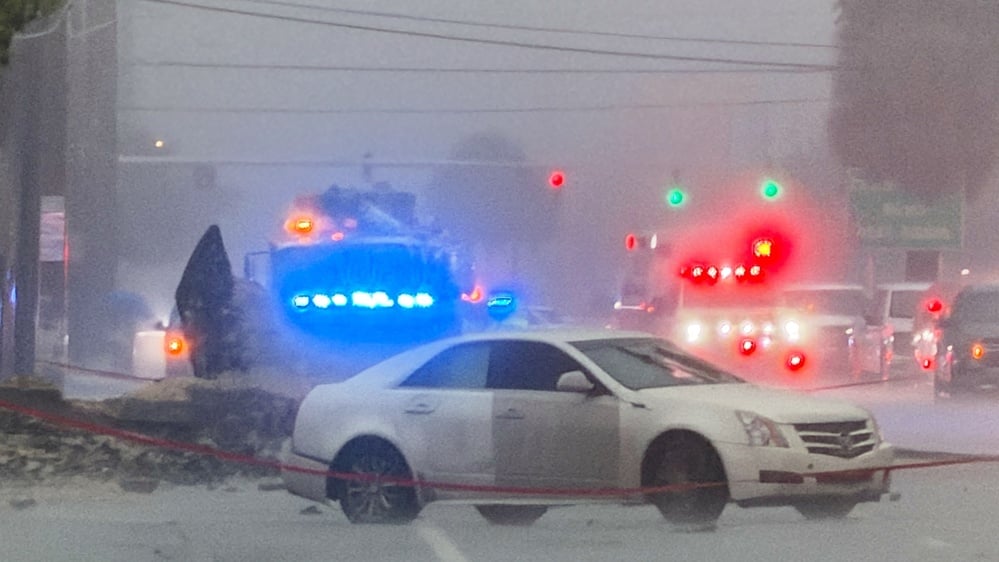
“creating a large crater in the pavement, scattering debris across a wide area, and producing a large fireball.” · exact text match
Why: Negative, dramatic language frames the event emotionally, though most body text remains factual.
Claim: The report attributes key facts to named officials, local reporting, and flight-data sources and flags uncertainty.
“according to local outlet Fox 13” · exact text match
“Officials have stated that the cause has not been determined” · exact text match
Why: Visible sourcing and explicit uncertainty support higher credibility.
Claim: The article distinguishes confirmed facts from unconfirmed reports and does not assert an undetermined cause.
“There have been no confirmed reports of deaths or injuries among people on the ground from the impact or debris as of this report.” · exact text match
“Officials have stated that the cause has not been determined” · exact text match
Why: Fairness and honesty signals include separating confirmed from unconfirmed information.
The supplied text is a short aggregation with embedded social-media and local-source material; the cause and weather role remain officially undetermined.
November 01, 2026 · 0 shares
Framing is largely neutral and attribution-driven, using official statements and a transcript while letting dramatic quoted language stand without publisher editorializing.
Automated analysis; not human reviewed.
Limitations: The supplied text includes unrelated related-link and promotional page chrome; analysis is limited to the crash report.
·
11 of 55 available dimensions scored; omitted dimensions are not treated as neutral.
·
Verified supporting quotes for 11 of 11 scored dimensions.
Claim: The report does not use partisan or ideological framing.
“Nine people died after a plane crashed Sunday in a neighborhood in Palm Beach County, Florida, U.S. Transportation Secretary Sean Duffy said.” · exact text match
Why: The passage is a factual attribution of a crash toll with no left-right framing.
Claim: The report is primarily objective, attributing key claims to named officials and agencies.
“The Palm Beach County Sheriff's Office said the plane crashed in the area of Military Trail, between Cresthaven Boulevard and 10th Avenue North.” · verified after text normalization
Why: The claim is externally attributed to a law-enforcement source rather than narrator opinion.
Claim: Dramatic language is confined mainly to attributed quotes.
““This was a cataclysmic plane crash,” DeSantis said at a news conference.
“It looked like a missile going down.””
· exact text match
Why: The sensational wording is presented as a direct official quote rather than neutral publisher narration.
Claim: The report is descriptive rather than prescriptive.
“The plane was on its way from Austin, Texas to the Bahamas.” · exact text match
Why: The passage recounts flight details without advocating a course of action.
Claim: The report is fact-based and avoids publisher opinion.
“As of Sunday evening, there were no reports of fatalities on the ground, DeSantis said.” · exact text match
Why: The statement is an attributed status update rather than commentary.
Claim: The report is non-political.
“The Federal Aviation Administration is sending a team to the scene to help the National Transportation Safety Board with its investigation, Duffy said.” · exact text match
Why: The content concerns aviation safety and investigation, not political contestation.
Claim: The report relies heavily on official authorities for factual claims.
“U.S. Transportation Secretary Sean Duffy said.” · exact text match
Why: Key facts are sourced to senior officials and agencies, an authority-based reporting pattern.
Claim: The report attributes key facts to named officials and agencies and notes unresolved investigation details.
“Investigators with the NTSB will be arriving at the accident site Sunday and Monday morning.” · exact text match
Why: Named agencies, timelines, and pending updates are visible credibility signals.
Claim: The report presents specific, attributed details rather than speculative reasoning.
“Duffy said the crash happened at 12:50 p.m. ET and involved a Learjet 60.” · exact text match
Why: Precise time and aircraft identification support a rational, factual presentation.
Claim: Sources and next steps are attributed with transparent uncertainty about the investigation.
“A media briefing is planned in West Palm Beach for Monday, with a time and location pending, the NTSB said.” · exact text match
Why: The report notes pending details and attributes them to the investigating agency.
Claim: The report supplies specific operational and investigative details.
“Air traffic control recordings reveal the pilot reported icing and moderate turbulence, then requested to climb to 37,000 feet.” · exact text match
Why: Specific technical and procedural details indicate substantive reporting.
The supplied text includes unrelated related-link and promotional page chrome; analysis is limited to the crash report.
November 02, 2026 · 0 shares
Factual crash reporting anchored in official attributions, though the prose leans on vivid disaster imagery such as 'massive fireball' and 'nose-diving'.
The crash site is roughly eight miles from President Donald Trump's Mar-a-Lago estate; Trump was in Iowa for a midterms election rally around the time of the crash.
Automated analysis; not human reviewed.
Limitations: Text includes duplicated headline and membership boilerplate; analysis is limited to the substantive crash-reporting paragraphs.
·
9 of 55 available dimensions scored; omitted dimensions are not treated as neutral.
·
Verified supporting quotes for 9 of 9 scored dimensions.
Claim: No partisan or ideological framing appears in the crash report.
“Trump was in Iowa for a midterms election rally around the time of the crash.” · exact text match
Why: The single political reference is contextual and non-evaluative, supporting neutrality.
Claim: The report is built on verifiable incident details and attributed official statements rather than subjective commentary.
“The Learjet 60 went down in a neighborhood near Cresthaven in South Florida at 12:50 p.m. All nine people onboard the business jet were killed, according to US Transportation Secretary Sean Duffy.” · exact text match
Why: Specific location, time, and attributed sourcing dominate over subjective narration.
Claim: Framing emphasizes dramatic imagery of fire and destruction beyond bare factual reporting.
“erupted into a big fireball” · exact text match
“exploding into a giant ball of flames on a major road” · exact text match
Why: Vivid combustion imagery intensifies presentation of a factual event.
Claim: The report describes events and official responses without prescribing actions or policies.
“Teams with the National Transportation Safety Board and Federal Aviation Administration were headed to the scene” · exact text match
Why: Coverage stays with what happened and who responded, offering no recommendations.
Claim: Descriptions of near-misses and explosions add mild alarm to the account.
“inches from passing cars” · exact text match
Why: Proximity framing heightens perceived danger, though no fear-mongering argument is advanced.
Claim: The article is almost entirely factual with only attributed quotes carrying evaluative language.
“It wasn’t immediately clear if anyone on the ground was injured or what caused the jet to crash.” · exact text match
Why: Uncertainties are flagged rather than replaced by the publisher's opinion.
Claim: Emotional register is negative, centered on death and tragedy.
“is a horrific tragedy” · exact text match
Why: Quoted and descriptive language frames the event as tragic, though the tone is largely restrained reporting.
Claim: Sourcing is attributed to named officials and agencies with explicit acknowledgment of unknowns.
“Jim Reynolds, spokesperson for Austin-Bergstrom International Airport, said the plane was a private aircraft with tail number N722BD” · exact text match
Why: Named attribution and stated uncertainty support moderate credibility.
Claim: Reporting conveys concrete operational detail from officials but remains a brief incident account.
“The Bahamas-bound flight had departed from Austin-Bergstrom International Airport in Texas.” · exact text match
Why: Competent but limited informational depth.
Text includes duplicated headline and membership boilerplate; analysis is limited to the substantive crash-reporting paragraphs.
November 03, 2026 · 0 shares
Attribution-heavy, restrained crash coverage foregrounds official NTSB statements and family-provided identifications while explicitly withholding causal conclusions.
Automated analysis; not human reviewed.
Limitations: Analysis is limited to the supplied article; crash details were not independently verified.
·
10 of 55 available dimensions scored; omitted dimensions are not treated as neutral.
·
Verified supporting quotes for 10 of 10 scored dimensions.
Claim: The report is dominated by attributed factual statements and official findings.
“according to the National Transportation Safety Board” · exact text match
Why: The central factual claims are sourced to an official investigator.
Claim: Coverage is restrained and avoids sensational language while reporting a fatal crash.
“The crew described the ice as manageable, Chapman said.” · exact text match
Counterevidence:
“We're going to crash into the ground” · not found in supplied text
Why: The tone is largely procedural, though a dramatic cockpit quote is included.
Claim: The report describes events and investigation without prescribing policy or action.
“Federal investigators said Monday” · exact text match
Why: The framing is reportorial rather than advocacy-oriented.
Claim: The report stays largely factual rather than editorializing.
“Government officials have not determined what caused the crash.” · exact text match
Why: It emphasizes official uncertainty instead of advancing an opinion.
Claim: The report explicitly notes the cause is undetermined and labels early findings as indications.
“Investigators have early indications that the plane may have begun breaking apart before impact.” · exact text match
Why: Cautious language and official caveats limit certainty.
Claim: The report attributes sensitive details and preserves official uncertainty.
“according to a joint statement” · exact text match
“Government officials have not determined what caused the crash.” · exact text match
Why: Multiple named and official sources are used, with explicit caveats about cause and identification.
Claim: The report follows an evidence-based investigative sequence with attributed technical details.
“The crew described the ice as manageable, Chapman said.” · exact text match
Why: Technical conditions and crew statements are reported with attribution rather than speculative assertion.
Claim: The report uses empirical investigation and technical aviation explanation rather than supernatural or superstitious framing.
“Clear ice is a transparent glaze that forms on aircraft when water droplets hit the plane and spread out before freezing.” · exact text match
Why: The explanation is technical and empirical.
Claim: The report distinguishes confirmed facts from unconfirmed identity reports.
“Her mother identified her to the two newspapers, but authorities have not confirmed her identity.” · exact text match
Why: It explicitly flags an unconfirmed identification.
Claim: The report explains technical aviation terms and investigation details clearly.
“Clear ice is a transparent glaze that forms on aircraft when water droplets hit the plane and spread out before freezing.” · exact text match
Why: It supplies a clear technical definition relevant to the crash conditions.
Analysis is limited to the supplied article; crash details were not independently verified.
November 02, 2026 · 0 shares
Factual disaster reporting relies on official attribution and cockpit-audio chronology while including vivid, quote-driven crash imagery.
Automated analysis; not human reviewed.
Limitations: The supplied text contains scrape artifacts and unrelated headline fragments, but the crash report itself is analyzable.
·
4 of 55 available dimensions scored; omitted dimensions are not treated as neutral.
·
Verified supporting quotes for 4 of 4 scored dimensions.
Claim: Key crash details are attributed to named agencies and officials rather than presented as the publisher's own interpretation.
“the Federal Aviation Administration said in a statement.” · exact text match
Why: Official attribution supports an objective, source-based presentation.
Claim: The narration uses vivid crash imagery from social-media video.
“Videos on social media showed the jet slamming into the ground next to a road and exploding.” · exact text match
Why: Words such as “slamming” and “exploding” add dramatic sensory detail beyond a bare factual account.
Claim: The cockpit-audio chronology provides unusual, specific detail.
“About 35 seconds after the initial mayday announcement, the last thing heard from the cockpit was a rapidly spoken “We’re out of time.”” · exact text match
Why: The reconstructed final transmissions add distinctive narrative specificity.
Claim: The report cites investigating agencies and attributed sources for key claims.
“The National Transportation Safety Board said it had launched an investigation into the crash” · exact text match
Why: Visible sourcing and attribution support credibility.
The supplied text contains scrape artifacts and unrelated headline fragments, but the crash report itself is analyzable.
November 02, 2026 · 0 shares
Attribution-heavy, minimally framed FAA-sourced crash brief with explicit uncertainty about the number aboard.
Automated analysis; not human reviewed.
Limitations: Very short excerpt; only FAA-attributed preliminary details, so many framing dimensions are not assessable.
·
7 of 55 available dimensions scored; omitted dimensions are not treated as neutral.
·
Verified supporting quotes for 7 of 7 scored dimensions.
Claim: The report is attributed to the FAA and hedges the occupant count.
“according to the Federal Aviation Administration” · exact text match
“believed to be carrying nine people” · exact text match
Why: Sourced, hedged language indicates objective reporting rather than subjective interpretation.
Claim: Crash details are stated in plain, attributed terms without sensational wording.
“crashed after taking off from Austin, Texas, and was headed to North Eleuthera in the Bahamas, according to the FAA.” · exact text match
Why: No emotive or dramatic language beyond the factual event.
Claim: The text describes the flight and crash without prescribing action.
“crashed after taking off from Austin, Texas, and was headed to North Eleuthera in the Bahamas, according to the FAA.” · exact text match
Why: Purely descriptive reporting.
Claim: Key details are attributed to the FAA and uncertainty is flagged.
“according to the Federal Aviation Administration” · exact text match
“believed to be carrying nine people” · exact text match
Why: Visible sourcing and hedging support credibility.
Claim: The article reports a quantified FAA detail rather than an emotional narrative.
“after making a rapid dive of about 350 feet per second, according to the Federal Aviation Administration” · exact text match
Why: Quantified, attributed information supports a rational classification.
Claim: The occupant count is explicitly marked as believed, not asserted.
“believed to be carrying nine people” · exact text match
Why: Hedging limits speculation; score near absent.
Claim: The report attributes crash details to the FAA rather than presenting unsourced assertions.
“according to the Federal Aviation Administration” · exact text match
Why: Fair attribution supports integrity.
Very short excerpt; only FAA-attributed preliminary details, so many framing dimensions are not assessable.
November 02, 2026 · 0 shares
Factual crash reporting anchored in official attributions, though the prose leans on vivid disaster imagery such as 'massive fireball' and 'nose-diving'.
The crash site is roughly eight miles from President Donald Trump's Mar-a-Lago estate; Trump was in Iowa for a midterms election rally around the time of the crash.
Automated analysis; not human reviewed.
Limitations: Text includes duplicated headline and membership boilerplate; analysis is limited to the substantive crash-reporting paragraphs.
·
9 of 55 available dimensions scored; omitted dimensions are not treated as neutral.
·
Verified supporting quotes for 9 of 9 scored dimensions.
Claim: No partisan or ideological framing appears in the crash report.
“Trump was in Iowa for a midterms election rally around the time of the crash.” · exact text match
Why: The single political reference is contextual and non-evaluative, supporting neutrality.
Claim: The report is built on verifiable incident details and attributed official statements rather than subjective commentary.
“The Learjet 60 went down in a neighborhood near Cresthaven in South Florida at 12:50 p.m. All nine people onboard the business jet were killed, according to US Transportation Secretary Sean Duffy.” · exact text match
Why: Specific location, time, and attributed sourcing dominate over subjective narration.
Claim: Framing emphasizes dramatic imagery of fire and destruction beyond bare factual reporting.
“erupted into a big fireball” · exact text match
“exploding into a giant ball of flames on a major road” · exact text match
Why: Vivid combustion imagery intensifies presentation of a factual event.
Claim: The report describes events and official responses without prescribing actions or policies.
“Teams with the National Transportation Safety Board and Federal Aviation Administration were headed to the scene” · exact text match
Why: Coverage stays with what happened and who responded, offering no recommendations.
Claim: Descriptions of near-misses and explosions add mild alarm to the account.
“inches from passing cars” · exact text match
Why: Proximity framing heightens perceived danger, though no fear-mongering argument is advanced.
Claim: The article is almost entirely factual with only attributed quotes carrying evaluative language.
“It wasn’t immediately clear if anyone on the ground was injured or what caused the jet to crash.” · exact text match
Why: Uncertainties are flagged rather than replaced by the publisher's opinion.
Claim: Emotional register is negative, centered on death and tragedy.
“is a horrific tragedy” · exact text match
Why: Quoted and descriptive language frames the event as tragic, though the tone is largely restrained reporting.
Claim: Sourcing is attributed to named officials and agencies with explicit acknowledgment of unknowns.
“Jim Reynolds, spokesperson for Austin-Bergstrom International Airport, said the plane was a private aircraft with tail number N722BD” · exact text match
Why: Named attribution and stated uncertainty support moderate credibility.
Claim: Reporting conveys concrete operational detail from officials but remains a brief incident account.
“The Bahamas-bound flight had departed from Austin-Bergstrom International Airport in Texas.” · exact text match
Why: Competent but limited informational depth.
Text includes duplicated headline and membership boilerplate; analysis is limited to the substantive crash-reporting paragraphs.
November 02, 2026 · 0 shares
Attribution-heavy, minimally framed FAA-sourced crash brief with explicit uncertainty about the number aboard.
Automated analysis; not human reviewed.
Limitations: Very short excerpt; only FAA-attributed preliminary details, so many framing dimensions are not assessable.
·
7 of 55 available dimensions scored; omitted dimensions are not treated as neutral.
·
Verified supporting quotes for 7 of 7 scored dimensions.
Claim: The report is attributed to the FAA and hedges the occupant count.
“according to the Federal Aviation Administration” · exact text match
“believed to be carrying nine people” · exact text match
Why: Sourced, hedged language indicates objective reporting rather than subjective interpretation.
Claim: Crash details are stated in plain, attributed terms without sensational wording.
“crashed after taking off from Austin, Texas, and was headed to North Eleuthera in the Bahamas, according to the FAA.” · exact text match
Why: No emotive or dramatic language beyond the factual event.
Claim: The text describes the flight and crash without prescribing action.
“crashed after taking off from Austin, Texas, and was headed to North Eleuthera in the Bahamas, according to the FAA.” · exact text match
Why: Purely descriptive reporting.
Claim: Key details are attributed to the FAA and uncertainty is flagged.
“according to the Federal Aviation Administration” · exact text match
“believed to be carrying nine people” · exact text match
Why: Visible sourcing and hedging support credibility.
Claim: The article reports a quantified FAA detail rather than an emotional narrative.
“after making a rapid dive of about 350 feet per second, according to the Federal Aviation Administration” · exact text match
Why: Quantified, attributed information supports a rational classification.
Claim: The occupant count is explicitly marked as believed, not asserted.
“believed to be carrying nine people” · exact text match
Why: Hedging limits speculation; score near absent.
Claim: The report attributes crash details to the FAA rather than presenting unsourced assertions.
“according to the Federal Aviation Administration” · exact text match
Why: Fair attribution supports integrity.
Very short excerpt; only FAA-attributed preliminary details, so many framing dimensions are not assessable.
November 03, 2026 · 0 shares
Attribution-heavy, restrained crash coverage foregrounds official NTSB statements and family-provided identifications while explicitly withholding causal conclusions.
Automated analysis; not human reviewed.
Limitations: Analysis is limited to the supplied article; crash details were not independently verified.
·
10 of 55 available dimensions scored; omitted dimensions are not treated as neutral.
·
Verified supporting quotes for 10 of 10 scored dimensions.
Claim: The report is dominated by attributed factual statements and official findings.
“according to the National Transportation Safety Board” · exact text match
Why: The central factual claims are sourced to an official investigator.
Claim: Coverage is restrained and avoids sensational language while reporting a fatal crash.
“The crew described the ice as manageable, Chapman said.” · exact text match
Counterevidence:
“We're going to crash into the ground” · not found in supplied text
Why: The tone is largely procedural, though a dramatic cockpit quote is included.
Claim: The report describes events and investigation without prescribing policy or action.
“Federal investigators said Monday” · exact text match
Why: The framing is reportorial rather than advocacy-oriented.
Claim: The report stays largely factual rather than editorializing.
“Government officials have not determined what caused the crash.” · exact text match
Why: It emphasizes official uncertainty instead of advancing an opinion.
Claim: The report explicitly notes the cause is undetermined and labels early findings as indications.
“Investigators have early indications that the plane may have begun breaking apart before impact.” · exact text match
Why: Cautious language and official caveats limit certainty.
Claim: The report attributes sensitive details and preserves official uncertainty.
“according to a joint statement” · exact text match
“Government officials have not determined what caused the crash.” · exact text match
Why: Multiple named and official sources are used, with explicit caveats about cause and identification.
Claim: The report follows an evidence-based investigative sequence with attributed technical details.
“The crew described the ice as manageable, Chapman said.” · exact text match
Why: Technical conditions and crew statements are reported with attribution rather than speculative assertion.
Claim: The report uses empirical investigation and technical aviation explanation rather than supernatural or superstitious framing.
“Clear ice is a transparent glaze that forms on aircraft when water droplets hit the plane and spread out before freezing.” · exact text match
Why: The explanation is technical and empirical.
Claim: The report distinguishes confirmed facts from unconfirmed identity reports.
“Her mother identified her to the two newspapers, but authorities have not confirmed her identity.” · exact text match
Why: It explicitly flags an unconfirmed identification.
Claim: The report explains technical aviation terms and investigation details clearly.
“Clear ice is a transparent glaze that forms on aircraft when water droplets hit the plane and spread out before freezing.” · exact text match
Why: It supplies a clear technical definition relevant to the crash conditions.
Analysis is limited to the supplied article; crash details were not independently verified.
November 02, 2026 · 0 shares
A brief, sober factual report with neutral wording and no evident framing beyond the standard attribution of victims in a fatal crash.
Automated analysis; not human reviewed.
Limitations: Very short snippet; limited text constrains confidence, so only strongly evident dimensions are scored.
·
12 of 55 available dimensions scored; omitted dimensions are not treated as neutral.
·
Verified supporting quotes for 5 of 12 scored dimensions.
Claim: The report is stated in neutral, factual terms without evaluative language.
“The Learjet 60 crashed in a residential area near Cresthaven in Palm Beach County, Florida.” · exact text match
Why: Plain descriptive statement of the event without subjective commentary.
Claim: No sensational or dramatizing language is used.
“Victims in fatal Florida private jet crash identified, including 2 children.” · exact text match
Why: Headline states the facts directly without emotive or hyperbolic framing.
Claim: The text is purely descriptive with no prescriptions or calls to action.
“Victims in fatal Florida private jet crash identified, including 2 children.” · exact text match
Why: Reports what happened without recommending any action.
Claim: No opinion or evaluative judgment is expressed.
“The Learjet 60 crashed in a residential area near Cresthaven in Palm Beach County, Florida.” · exact text match
Why: Statement is factual rather than opinionated.
Claim: Tone is restrained and matter-of-fact regarding a fatal event.
“The Learjet 60 crashed in a residential area near Cresthaven in Palm Beach County, Florida.” · exact text match
Why: No emotive appeal despite the tragic subject matter.
Very short snippet; limited text constrains confidence, so only strongly evident dimensions are scored.
November 01, 2026 · 0 shares
Framing is largely neutral and attribution-driven, using official statements and a transcript while letting dramatic quoted language stand without publisher editorializing.
Automated analysis; not human reviewed.
Limitations: The supplied text includes unrelated related-link and promotional page chrome; analysis is limited to the crash report.
·
11 of 55 available dimensions scored; omitted dimensions are not treated as neutral.
·
Verified supporting quotes for 11 of 11 scored dimensions.
Claim: The report does not use partisan or ideological framing.
“Nine people died after a plane crashed Sunday in a neighborhood in Palm Beach County, Florida, U.S. Transportation Secretary Sean Duffy said.” · exact text match
Why: The passage is a factual attribution of a crash toll with no left-right framing.
Claim: The report is primarily objective, attributing key claims to named officials and agencies.
“The Palm Beach County Sheriff's Office said the plane crashed in the area of Military Trail, between Cresthaven Boulevard and 10th Avenue North.” · verified after text normalization
Why: The claim is externally attributed to a law-enforcement source rather than narrator opinion.
Claim: Dramatic language is confined mainly to attributed quotes.
““This was a cataclysmic plane crash,” DeSantis said at a news conference.
“It looked like a missile going down.””
· exact text match
Why: The sensational wording is presented as a direct official quote rather than neutral publisher narration.
Claim: The report is descriptive rather than prescriptive.
“The plane was on its way from Austin, Texas to the Bahamas.” · exact text match
Why: The passage recounts flight details without advocating a course of action.
Claim: The report is fact-based and avoids publisher opinion.
“As of Sunday evening, there were no reports of fatalities on the ground, DeSantis said.” · exact text match
Why: The statement is an attributed status update rather than commentary.
Claim: The report is non-political.
“The Federal Aviation Administration is sending a team to the scene to help the National Transportation Safety Board with its investigation, Duffy said.” · exact text match
Why: The content concerns aviation safety and investigation, not political contestation.
Claim: The report relies heavily on official authorities for factual claims.
“U.S. Transportation Secretary Sean Duffy said.” · exact text match
Why: Key facts are sourced to senior officials and agencies, an authority-based reporting pattern.
Claim: The report attributes key facts to named officials and agencies and notes unresolved investigation details.
“Investigators with the NTSB will be arriving at the accident site Sunday and Monday morning.” · exact text match
Why: Named agencies, timelines, and pending updates are visible credibility signals.
Claim: The report presents specific, attributed details rather than speculative reasoning.
“Duffy said the crash happened at 12:50 p.m. ET and involved a Learjet 60.” · exact text match
Why: Precise time and aircraft identification support a rational, factual presentation.
Claim: Sources and next steps are attributed with transparent uncertainty about the investigation.
“A media briefing is planned in West Palm Beach for Monday, with a time and location pending, the NTSB said.” · exact text match
Why: The report notes pending details and attributes them to the investigating agency.
Claim: The report supplies specific operational and investigative details.
“Air traffic control recordings reveal the pilot reported icing and moderate turbulence, then requested to climb to 37,000 feet.” · exact text match
Why: Specific technical and procedural details indicate substantive reporting.
The supplied text includes unrelated related-link and promotional page chrome; analysis is limited to the crash report.
November 03, 2026 · 0 shares
Attribution-heavy, restrained crash coverage foregrounds official NTSB statements and family-provided identifications while explicitly withholding causal conclusions.
Automated analysis; not human reviewed.
Limitations: Analysis is limited to the supplied article; crash details were not independently verified.
·
10 of 55 available dimensions scored; omitted dimensions are not treated as neutral.
·
Verified supporting quotes for 10 of 10 scored dimensions.
Claim: The report is dominated by attributed factual statements and official findings.
“according to the National Transportation Safety Board” · exact text match
Why: The central factual claims are sourced to an official investigator.
Claim: Coverage is restrained and avoids sensational language while reporting a fatal crash.
“The crew described the ice as manageable, Chapman said.” · exact text match
Counterevidence:
“We're going to crash into the ground” · not found in supplied text
Why: The tone is largely procedural, though a dramatic cockpit quote is included.
Claim: The report describes events and investigation without prescribing policy or action.
“Federal investigators said Monday” · exact text match
Why: The framing is reportorial rather than advocacy-oriented.
Claim: The report stays largely factual rather than editorializing.
“Government officials have not determined what caused the crash.” · exact text match
Why: It emphasizes official uncertainty instead of advancing an opinion.
Claim: The report explicitly notes the cause is undetermined and labels early findings as indications.
“Investigators have early indications that the plane may have begun breaking apart before impact.” · exact text match
Why: Cautious language and official caveats limit certainty.
Claim: The report attributes sensitive details and preserves official uncertainty.
“according to a joint statement” · exact text match
“Government officials have not determined what caused the crash.” · exact text match
Why: Multiple named and official sources are used, with explicit caveats about cause and identification.
Claim: The report follows an evidence-based investigative sequence with attributed technical details.
“The crew described the ice as manageable, Chapman said.” · exact text match
Why: Technical conditions and crew statements are reported with attribution rather than speculative assertion.
Claim: The report uses empirical investigation and technical aviation explanation rather than supernatural or superstitious framing.
“Clear ice is a transparent glaze that forms on aircraft when water droplets hit the plane and spread out before freezing.” · exact text match
Why: The explanation is technical and empirical.
Claim: The report distinguishes confirmed facts from unconfirmed identity reports.
“Her mother identified her to the two newspapers, but authorities have not confirmed her identity.” · exact text match
Why: It explicitly flags an unconfirmed identification.
Claim: The report explains technical aviation terms and investigation details clearly.
“Clear ice is a transparent glaze that forms on aircraft when water droplets hit the plane and spread out before freezing.” · exact text match
Why: It supplies a clear technical definition relevant to the crash conditions.
Analysis is limited to the supplied article; crash details were not independently verified.
November 01, 2026 · 0 shares
Sensational headline wording ('Horrific') and vivid crash imagery are paired with largely attributed, official-sourced reporting and explicit uncertainty about the cause.
Automated analysis; not human reviewed.
Limitations: The supplied text is a short aggregation with embedded social-media and local-source material; the cause and weather role remain officially undetermined.
·
4 of 55 available dimensions scored; omitted dimensions are not treated as neutral.
·
Verified supporting quotes for 4 of 4 scored dimensions.
Claim: The headline uses the emotive adjective 'Horrific' to frame an otherwise factual crash report.
“Nine Confirmed Dead After Horrific Plane Crash In Florida.” · exact text match
Why: The headline's wording heightens dramatic impact beyond neutral reporting.
Claim: Coverage adopts a negative emotional tone consistent with a fatal crash.
“Nine Confirmed Dead After Horrific Plane Crash In Florida.” · exact text match
“creating a large crater in the pavement, scattering debris across a wide area, and producing a large fireball.” · exact text match
Why: Negative, dramatic language frames the event emotionally, though most body text remains factual.
Claim: The report attributes key facts to named officials, local reporting, and flight-data sources and flags uncertainty.
“according to local outlet Fox 13” · exact text match
“Officials have stated that the cause has not been determined” · exact text match
Why: Visible sourcing and explicit uncertainty support higher credibility.
Claim: The article distinguishes confirmed facts from unconfirmed reports and does not assert an undetermined cause.
“There have been no confirmed reports of deaths or injuries among people on the ground from the impact or debris as of this report.” · exact text match
“Officials have stated that the cause has not been determined” · exact text match
Why: Fairness and honesty signals include separating confirmed from unconfirmed information.
The supplied text is a short aggregation with embedded social-media and local-source material; the cause and weather role remain officially undetermined.
November 01, 2026 · 0 shares
Framing is largely neutral and attribution-driven, using official statements and a transcript while letting dramatic quoted language stand without publisher editorializing.
Automated analysis; not human reviewed.
Limitations: The supplied text includes unrelated related-link and promotional page chrome; analysis is limited to the crash report.
·
11 of 55 available dimensions scored; omitted dimensions are not treated as neutral.
·
Verified supporting quotes for 11 of 11 scored dimensions.
Claim: The report does not use partisan or ideological framing.
“Nine people died after a plane crashed Sunday in a neighborhood in Palm Beach County, Florida, U.S. Transportation Secretary Sean Duffy said.” · exact text match
Why: The passage is a factual attribution of a crash toll with no left-right framing.
Claim: The report is primarily objective, attributing key claims to named officials and agencies.
“The Palm Beach County Sheriff's Office said the plane crashed in the area of Military Trail, between Cresthaven Boulevard and 10th Avenue North.” · verified after text normalization
Why: The claim is externally attributed to a law-enforcement source rather than narrator opinion.
Claim: Dramatic language is confined mainly to attributed quotes.
““This was a cataclysmic plane crash,” DeSantis said at a news conference.
“It looked like a missile going down.””
· exact text match
Why: The sensational wording is presented as a direct official quote rather than neutral publisher narration.
Claim: The report is descriptive rather than prescriptive.
“The plane was on its way from Austin, Texas to the Bahamas.” · exact text match
Why: The passage recounts flight details without advocating a course of action.
Claim: The report is fact-based and avoids publisher opinion.
“As of Sunday evening, there were no reports of fatalities on the ground, DeSantis said.” · exact text match
Why: The statement is an attributed status update rather than commentary.
Claim: The report is non-political.
“The Federal Aviation Administration is sending a team to the scene to help the National Transportation Safety Board with its investigation, Duffy said.” · exact text match
Why: The content concerns aviation safety and investigation, not political contestation.
Claim: The report relies heavily on official authorities for factual claims.
“U.S. Transportation Secretary Sean Duffy said.” · exact text match
Why: Key facts are sourced to senior officials and agencies, an authority-based reporting pattern.
Claim: The report attributes key facts to named officials and agencies and notes unresolved investigation details.
“Investigators with the NTSB will be arriving at the accident site Sunday and Monday morning.” · exact text match
Why: Named agencies, timelines, and pending updates are visible credibility signals.
Claim: The report presents specific, attributed details rather than speculative reasoning.
“Duffy said the crash happened at 12:50 p.m. ET and involved a Learjet 60.” · exact text match
Why: Precise time and aircraft identification support a rational, factual presentation.
Claim: Sources and next steps are attributed with transparent uncertainty about the investigation.
“A media briefing is planned in West Palm Beach for Monday, with a time and location pending, the NTSB said.” · exact text match
Why: The report notes pending details and attributes them to the investigating agency.
Claim: The report supplies specific operational and investigative details.
“Air traffic control recordings reveal the pilot reported icing and moderate turbulence, then requested to climb to 37,000 feet.” · exact text match
Why: Specific technical and procedural details indicate substantive reporting.
The supplied text includes unrelated related-link and promotional page chrome; analysis is limited to the crash report.
November 03, 2026 · 0 shares
Attribution-heavy, restrained crash coverage foregrounds official NTSB statements and family-provided identifications while explicitly withholding causal conclusions.
Automated analysis; not human reviewed.
Limitations: Analysis is limited to the supplied article; crash details were not independently verified.
·
10 of 55 available dimensions scored; omitted dimensions are not treated as neutral.
·
Verified supporting quotes for 10 of 10 scored dimensions.
Claim: The report is dominated by attributed factual statements and official findings.
“according to the National Transportation Safety Board” · exact text match
Why: The central factual claims are sourced to an official investigator.
Claim: Coverage is restrained and avoids sensational language while reporting a fatal crash.
“The crew described the ice as manageable, Chapman said.” · exact text match
Counterevidence:
“We're going to crash into the ground” · not found in supplied text
Why: The tone is largely procedural, though a dramatic cockpit quote is included.
Claim: The report describes events and investigation without prescribing policy or action.
“Federal investigators said Monday” · exact text match
Why: The framing is reportorial rather than advocacy-oriented.
Claim: The report stays largely factual rather than editorializing.
“Government officials have not determined what caused the crash.” · exact text match
Why: It emphasizes official uncertainty instead of advancing an opinion.
Claim: The report explicitly notes the cause is undetermined and labels early findings as indications.
“Investigators have early indications that the plane may have begun breaking apart before impact.” · exact text match
Why: Cautious language and official caveats limit certainty.
Claim: The report attributes sensitive details and preserves official uncertainty.
“according to a joint statement” · exact text match
“Government officials have not determined what caused the crash.” · exact text match
Why: Multiple named and official sources are used, with explicit caveats about cause and identification.
Claim: The report follows an evidence-based investigative sequence with attributed technical details.
“The crew described the ice as manageable, Chapman said.” · exact text match
Why: Technical conditions and crew statements are reported with attribution rather than speculative assertion.
Claim: The report uses empirical investigation and technical aviation explanation rather than supernatural or superstitious framing.
“Clear ice is a transparent glaze that forms on aircraft when water droplets hit the plane and spread out before freezing.” · exact text match
Why: The explanation is technical and empirical.
Claim: The report distinguishes confirmed facts from unconfirmed identity reports.
“Her mother identified her to the two newspapers, but authorities have not confirmed her identity.” · exact text match
Why: It explicitly flags an unconfirmed identification.
Claim: The report explains technical aviation terms and investigation details clearly.
“Clear ice is a transparent glaze that forms on aircraft when water droplets hit the plane and spread out before freezing.” · exact text match
Why: It supplies a clear technical definition relevant to the crash conditions.
Analysis is limited to the supplied article; crash details were not independently verified.
November 03, 2026 · 0 shares
Attribution-heavy, restrained crash coverage foregrounds official NTSB statements and family-provided identifications while explicitly withholding causal conclusions.
Automated analysis; not human reviewed. Limitations: Analysis is limited to the supplied article; crash details were not independently verified. · 10 of 55 available dimensions scored; omitted dimensions are not treated as neutral. · Verified supporting quotes for 10 of 10 scored dimensions.
Claim: The report is dominated by attributed factual statements and official findings.
“according to the National Transportation Safety Board” · exact text match
Why: The central factual claims are sourced to an official investigator.
Claim: Coverage is restrained and avoids sensational language while reporting a fatal crash.
“The crew described the ice as manageable, Chapman said.” · exact text match
Counterevidence:
“We're going to crash into the ground” · not found in supplied text
Why: The tone is largely procedural, though a dramatic cockpit quote is included.
Claim: The report describes events and investigation without prescribing policy or action.
“Federal investigators said Monday” · exact text match
Why: The framing is reportorial rather than advocacy-oriented.
Claim: The report stays largely factual rather than editorializing.
“Government officials have not determined what caused the crash.” · exact text match
Why: It emphasizes official uncertainty instead of advancing an opinion.
Claim: The report explicitly notes the cause is undetermined and labels early findings as indications.
“Investigators have early indications that the plane may have begun breaking apart before impact.” · exact text match
Why: Cautious language and official caveats limit certainty.
Claim: The report attributes sensitive details and preserves official uncertainty.
“according to a joint statement” · exact text match
“Government officials have not determined what caused the crash.” · exact text match
Why: Multiple named and official sources are used, with explicit caveats about cause and identification.
Claim: The report follows an evidence-based investigative sequence with attributed technical details.
“The crew described the ice as manageable, Chapman said.” · exact text match
Why: Technical conditions and crew statements are reported with attribution rather than speculative assertion.
Claim: The report uses empirical investigation and technical aviation explanation rather than supernatural or superstitious framing.
“Clear ice is a transparent glaze that forms on aircraft when water droplets hit the plane and spread out before freezing.” · exact text match
Why: The explanation is technical and empirical.
Claim: The report distinguishes confirmed facts from unconfirmed identity reports.
“Her mother identified her to the two newspapers, but authorities have not confirmed her identity.” · exact text match
Why: It explicitly flags an unconfirmed identification.
Claim: The report explains technical aviation terms and investigation details clearly.
“Clear ice is a transparent glaze that forms on aircraft when water droplets hit the plane and spread out before freezing.” · exact text match
Why: It supplies a clear technical definition relevant to the crash conditions.
Analysis is limited to the supplied article; crash details were not independently verified.
November 02, 2026 · 0 shares
Factual disaster reporting relies on official attribution and cockpit-audio chronology while including vivid, quote-driven crash imagery.
Automated analysis; not human reviewed. Limitations: The supplied text contains scrape artifacts and unrelated headline fragments, but the crash report itself is analyzable. · 4 of 55 available dimensions scored; omitted dimensions are not treated as neutral. · Verified supporting quotes for 4 of 4 scored dimensions.
Claim: Key crash details are attributed to named agencies and officials rather than presented as the publisher's own interpretation.
“the Federal Aviation Administration said in a statement.” · exact text match
Why: Official attribution supports an objective, source-based presentation.
Claim: The narration uses vivid crash imagery from social-media video.
“Videos on social media showed the jet slamming into the ground next to a road and exploding.” · exact text match
Why: Words such as “slamming” and “exploding” add dramatic sensory detail beyond a bare factual account.
Claim: The cockpit-audio chronology provides unusual, specific detail.
“About 35 seconds after the initial mayday announcement, the last thing heard from the cockpit was a rapidly spoken “We’re out of time.”” · exact text match
Why: The reconstructed final transmissions add distinctive narrative specificity.
Claim: The report cites investigating agencies and attributed sources for key claims.
“The National Transportation Safety Board said it had launched an investigation into the crash” · exact text match
Why: Visible sourcing and attribution support credibility.
The supplied text contains scrape artifacts and unrelated headline fragments, but the crash report itself is analyzable.
November 02, 2026 · 0 shares
Attribution-heavy, minimally framed FAA-sourced crash brief with explicit uncertainty about the number aboard.
Automated analysis; not human reviewed. Limitations: Very short excerpt; only FAA-attributed preliminary details, so many framing dimensions are not assessable. · 7 of 55 available dimensions scored; omitted dimensions are not treated as neutral. · Verified supporting quotes for 7 of 7 scored dimensions.
Claim: The report is attributed to the FAA and hedges the occupant count.
“according to the Federal Aviation Administration” · exact text match
“believed to be carrying nine people” · exact text match
Why: Sourced, hedged language indicates objective reporting rather than subjective interpretation.
Claim: Crash details are stated in plain, attributed terms without sensational wording.
“crashed after taking off from Austin, Texas, and was headed to North Eleuthera in the Bahamas, according to the FAA.” · exact text match
Why: No emotive or dramatic language beyond the factual event.
Claim: The text describes the flight and crash without prescribing action.
“crashed after taking off from Austin, Texas, and was headed to North Eleuthera in the Bahamas, according to the FAA.” · exact text match
Why: Purely descriptive reporting.
Claim: Key details are attributed to the FAA and uncertainty is flagged.
“according to the Federal Aviation Administration” · exact text match
“believed to be carrying nine people” · exact text match
Why: Visible sourcing and hedging support credibility.
Claim: The article reports a quantified FAA detail rather than an emotional narrative.
“after making a rapid dive of about 350 feet per second, according to the Federal Aviation Administration” · exact text match
Why: Quantified, attributed information supports a rational classification.
Claim: The occupant count is explicitly marked as believed, not asserted.
“believed to be carrying nine people” · exact text match
Why: Hedging limits speculation; score near absent.
Claim: The report attributes crash details to the FAA rather than presenting unsourced assertions.
“according to the Federal Aviation Administration” · exact text match
Why: Fair attribution supports integrity.
Very short excerpt; only FAA-attributed preliminary details, so many framing dimensions are not assessable.
November 01, 2026 · 0 shares
Framing is largely neutral and attribution-driven, using official statements and a transcript while letting dramatic quoted language stand without publisher editorializing.
Automated analysis; not human reviewed. Limitations: The supplied text includes unrelated related-link and promotional page chrome; analysis is limited to the crash report. · 11 of 55 available dimensions scored; omitted dimensions are not treated as neutral. · Verified supporting quotes for 11 of 11 scored dimensions.
Claim: The report does not use partisan or ideological framing.
“Nine people died after a plane crashed Sunday in a neighborhood in Palm Beach County, Florida, U.S. Transportation Secretary Sean Duffy said.” · exact text match
Why: The passage is a factual attribution of a crash toll with no left-right framing.
Claim: The report is primarily objective, attributing key claims to named officials and agencies.
“The Palm Beach County Sheriff's Office said the plane crashed in the area of Military Trail, between Cresthaven Boulevard and 10th Avenue North.” · verified after text normalization
Why: The claim is externally attributed to a law-enforcement source rather than narrator opinion.
Claim: Dramatic language is confined mainly to attributed quotes.
““This was a cataclysmic plane crash,” DeSantis said at a news conference. “It looked like a missile going down.”” · exact text match
Why: The sensational wording is presented as a direct official quote rather than neutral publisher narration.
Claim: The report is descriptive rather than prescriptive.
“The plane was on its way from Austin, Texas to the Bahamas.” · exact text match
Why: The passage recounts flight details without advocating a course of action.
Claim: The report is fact-based and avoids publisher opinion.
“As of Sunday evening, there were no reports of fatalities on the ground, DeSantis said.” · exact text match
Why: The statement is an attributed status update rather than commentary.
Claim: The report is non-political.
“The Federal Aviation Administration is sending a team to the scene to help the National Transportation Safety Board with its investigation, Duffy said.” · exact text match
Why: The content concerns aviation safety and investigation, not political contestation.
Claim: The report relies heavily on official authorities for factual claims.
“U.S. Transportation Secretary Sean Duffy said.” · exact text match
Why: Key facts are sourced to senior officials and agencies, an authority-based reporting pattern.
Claim: The report attributes key facts to named officials and agencies and notes unresolved investigation details.
“Investigators with the NTSB will be arriving at the accident site Sunday and Monday morning.” · exact text match
Why: Named agencies, timelines, and pending updates are visible credibility signals.
Claim: The report presents specific, attributed details rather than speculative reasoning.
“Duffy said the crash happened at 12:50 p.m. ET and involved a Learjet 60.” · exact text match
Why: Precise time and aircraft identification support a rational, factual presentation.
Claim: Sources and next steps are attributed with transparent uncertainty about the investigation.
“A media briefing is planned in West Palm Beach for Monday, with a time and location pending, the NTSB said.” · exact text match
Why: The report notes pending details and attributes them to the investigating agency.
Claim: The report supplies specific operational and investigative details.
“Air traffic control recordings reveal the pilot reported icing and moderate turbulence, then requested to climb to 37,000 feet.” · exact text match
Why: Specific technical and procedural details indicate substantive reporting.
The supplied text includes unrelated related-link and promotional page chrome; analysis is limited to the crash report.
November 01, 2026 · 0 shares
Sensational headline wording ('Horrific') and vivid crash imagery are paired with largely attributed, official-sourced reporting and explicit uncertainty about the cause.
Automated analysis; not human reviewed. Limitations: The supplied text is a short aggregation with embedded social-media and local-source material; the cause and weather role remain officially undetermined. · 4 of 55 available dimensions scored; omitted dimensions are not treated as neutral. · Verified supporting quotes for 4 of 4 scored dimensions.
Claim: The headline uses the emotive adjective 'Horrific' to frame an otherwise factual crash report.
“Nine Confirmed Dead After Horrific Plane Crash In Florida.” · exact text match
Why: The headline's wording heightens dramatic impact beyond neutral reporting.
Claim: Coverage adopts a negative emotional tone consistent with a fatal crash.
“Nine Confirmed Dead After Horrific Plane Crash In Florida.” · exact text match
“creating a large crater in the pavement, scattering debris across a wide area, and producing a large fireball.” · exact text match
Why: Negative, dramatic language frames the event emotionally, though most body text remains factual.
Claim: The report attributes key facts to named officials, local reporting, and flight-data sources and flags uncertainty.
“according to local outlet Fox 13” · exact text match
“Officials have stated that the cause has not been determined” · exact text match
Why: Visible sourcing and explicit uncertainty support higher credibility.
Claim: The article distinguishes confirmed facts from unconfirmed reports and does not assert an undetermined cause.
“There have been no confirmed reports of deaths or injuries among people on the ground from the impact or debris as of this report.” · exact text match
“Officials have stated that the cause has not been determined” · exact text match
Why: Fairness and honesty signals include separating confirmed from unconfirmed information.
The supplied text is a short aggregation with embedded social-media and local-source material; the cause and weather role remain officially undetermined.
November 02, 2026 · 0 shares
Factual crash reporting anchored in official attributions, though the prose leans on vivid disaster imagery such as 'massive fireball' and 'nose-diving'.
The crash site is roughly eight miles from President Donald Trump's Mar-a-Lago estate; Trump was in Iowa for a midterms election rally around the time of the crash.
Automated analysis; not human reviewed. Limitations: Text includes duplicated headline and membership boilerplate; analysis is limited to the substantive crash-reporting paragraphs. · 9 of 55 available dimensions scored; omitted dimensions are not treated as neutral. · Verified supporting quotes for 9 of 9 scored dimensions.
Claim: No partisan or ideological framing appears in the crash report.
“Trump was in Iowa for a midterms election rally around the time of the crash.” · exact text match
Why: The single political reference is contextual and non-evaluative, supporting neutrality.
Claim: The report is built on verifiable incident details and attributed official statements rather than subjective commentary.
“The Learjet 60 went down in a neighborhood near Cresthaven in South Florida at 12:50 p.m. All nine people onboard the business jet were killed, according to US Transportation Secretary Sean Duffy.” · exact text match
Why: Specific location, time, and attributed sourcing dominate over subjective narration.
Claim: Framing emphasizes dramatic imagery of fire and destruction beyond bare factual reporting.
“erupted into a big fireball” · exact text match
“exploding into a giant ball of flames on a major road” · exact text match
Why: Vivid combustion imagery intensifies presentation of a factual event.
Claim: The report describes events and official responses without prescribing actions or policies.
“Teams with the National Transportation Safety Board and Federal Aviation Administration were headed to the scene” · exact text match
Why: Coverage stays with what happened and who responded, offering no recommendations.
Claim: Descriptions of near-misses and explosions add mild alarm to the account.
“inches from passing cars” · exact text match
Why: Proximity framing heightens perceived danger, though no fear-mongering argument is advanced.
Claim: The article is almost entirely factual with only attributed quotes carrying evaluative language.
“It wasn’t immediately clear if anyone on the ground was injured or what caused the jet to crash.” · exact text match
Why: Uncertainties are flagged rather than replaced by the publisher's opinion.
Claim: Emotional register is negative, centered on death and tragedy.
“is a horrific tragedy” · exact text match
Why: Quoted and descriptive language frames the event as tragic, though the tone is largely restrained reporting.
Claim: Sourcing is attributed to named officials and agencies with explicit acknowledgment of unknowns.
“Jim Reynolds, spokesperson for Austin-Bergstrom International Airport, said the plane was a private aircraft with tail number N722BD” · exact text match
Why: Named attribution and stated uncertainty support moderate credibility.
Claim: Reporting conveys concrete operational detail from officials but remains a brief incident account.
“The Bahamas-bound flight had departed from Austin-Bergstrom International Airport in Texas.” · exact text match
Why: Competent but limited informational depth.
Text includes duplicated headline and membership boilerplate; analysis is limited to the substantive crash-reporting paragraphs.
Helium Bias
November 03, 2026 · 0 shares
Attribution-heavy, restrained crash coverage foregrounds official NTSB statements and family-provided identifications while explicitly withholding causal conclusions.
Automated analysis; not human reviewed. Limitations: Analysis is limited to the supplied article; crash details were not independently verified. · 10 of 55 available dimensions scored; omitted dimensions are not treated as neutral. · Verified supporting quotes for 10 of 10 scored dimensions.
Claim: The report is dominated by attributed factual statements and official findings.
“according to the National Transportation Safety Board” · exact text match
Why: The central factual claims are sourced to an official investigator.
Claim: Coverage is restrained and avoids sensational language while reporting a fatal crash.
“The crew described the ice as manageable, Chapman said.” · exact text match
Counterevidence:
“We're going to crash into the ground” · not found in supplied text
Why: The tone is largely procedural, though a dramatic cockpit quote is included.
Claim: The report describes events and investigation without prescribing policy or action.
“Federal investigators said Monday” · exact text match
Why: The framing is reportorial rather than advocacy-oriented.
Claim: The report stays largely factual rather than editorializing.
“Government officials have not determined what caused the crash.” · exact text match
Why: It emphasizes official uncertainty instead of advancing an opinion.
Claim: The report explicitly notes the cause is undetermined and labels early findings as indications.
“Investigators have early indications that the plane may have begun breaking apart before impact.” · exact text match
Why: Cautious language and official caveats limit certainty.
Claim: The report attributes sensitive details and preserves official uncertainty.
“according to a joint statement” · exact text match
“Government officials have not determined what caused the crash.” · exact text match
Why: Multiple named and official sources are used, with explicit caveats about cause and identification.
Claim: The report follows an evidence-based investigative sequence with attributed technical details.
“The crew described the ice as manageable, Chapman said.” · exact text match
Why: Technical conditions and crew statements are reported with attribution rather than speculative assertion.
Claim: The report uses empirical investigation and technical aviation explanation rather than supernatural or superstitious framing.
“Clear ice is a transparent glaze that forms on aircraft when water droplets hit the plane and spread out before freezing.” · exact text match
Why: The explanation is technical and empirical.
Claim: The report distinguishes confirmed facts from unconfirmed identity reports.
“Her mother identified her to the two newspapers, but authorities have not confirmed her identity.” · exact text match
Why: It explicitly flags an unconfirmed identification.
Claim: The report explains technical aviation terms and investigation details clearly.
“Clear ice is a transparent glaze that forms on aircraft when water droplets hit the plane and spread out before freezing.” · exact text match
Why: It supplies a clear technical definition relevant to the crash conditions.
Analysis is limited to the supplied article; crash details were not independently verified.
November 02, 2026 · 0 shares
Factual disaster reporting relies on official attribution and cockpit-audio chronology while including vivid, quote-driven crash imagery.
Automated analysis; not human reviewed. Limitations: The supplied text contains scrape artifacts and unrelated headline fragments, but the crash report itself is analyzable. · 4 of 55 available dimensions scored; omitted dimensions are not treated as neutral. · Verified supporting quotes for 4 of 4 scored dimensions.
Claim: Key crash details are attributed to named agencies and officials rather than presented as the publisher's own interpretation.
“the Federal Aviation Administration said in a statement.” · exact text match
Why: Official attribution supports an objective, source-based presentation.
Claim: The narration uses vivid crash imagery from social-media video.
“Videos on social media showed the jet slamming into the ground next to a road and exploding.” · exact text match
Why: Words such as “slamming” and “exploding” add dramatic sensory detail beyond a bare factual account.
Claim: The cockpit-audio chronology provides unusual, specific detail.
“About 35 seconds after the initial mayday announcement, the last thing heard from the cockpit was a rapidly spoken “We’re out of time.”” · exact text match
Why: The reconstructed final transmissions add distinctive narrative specificity.
Claim: The report cites investigating agencies and attributed sources for key claims.
“The National Transportation Safety Board said it had launched an investigation into the crash” · exact text match
Why: Visible sourcing and attribution support credibility.
The supplied text contains scrape artifacts and unrelated headline fragments, but the crash report itself is analyzable.
Story Blindspots
November 03, 2026 · 0 shares
Attribution-heavy, restrained crash coverage foregrounds official NTSB statements and family-provided identifications while explicitly withholding causal conclusions.
Automated analysis; not human reviewed. Limitations: Analysis is limited to the supplied article; crash details were not independently verified. · 10 of 55 available dimensions scored; omitted dimensions are not treated as neutral. · Verified supporting quotes for 10 of 10 scored dimensions.
Claim: The report is dominated by attributed factual statements and official findings.
“according to the National Transportation Safety Board” · exact text match
Why: The central factual claims are sourced to an official investigator.
Claim: Coverage is restrained and avoids sensational language while reporting a fatal crash.
“The crew described the ice as manageable, Chapman said.” · exact text match
Counterevidence:
“We're going to crash into the ground” · not found in supplied text
Why: The tone is largely procedural, though a dramatic cockpit quote is included.
Claim: The report describes events and investigation without prescribing policy or action.
“Federal investigators said Monday” · exact text match
Why: The framing is reportorial rather than advocacy-oriented.
Claim: The report stays largely factual rather than editorializing.
“Government officials have not determined what caused the crash.” · exact text match
Why: It emphasizes official uncertainty instead of advancing an opinion.
Claim: The report explicitly notes the cause is undetermined and labels early findings as indications.
“Investigators have early indications that the plane may have begun breaking apart before impact.” · exact text match
Why: Cautious language and official caveats limit certainty.
Claim: The report attributes sensitive details and preserves official uncertainty.
“according to a joint statement” · exact text match
“Government officials have not determined what caused the crash.” · exact text match
Why: Multiple named and official sources are used, with explicit caveats about cause and identification.
Claim: The report follows an evidence-based investigative sequence with attributed technical details.
“The crew described the ice as manageable, Chapman said.” · exact text match
Why: Technical conditions and crew statements are reported with attribution rather than speculative assertion.
Claim: The report uses empirical investigation and technical aviation explanation rather than supernatural or superstitious framing.
“Clear ice is a transparent glaze that forms on aircraft when water droplets hit the plane and spread out before freezing.” · exact text match
Why: The explanation is technical and empirical.
Claim: The report distinguishes confirmed facts from unconfirmed identity reports.
“Her mother identified her to the two newspapers, but authorities have not confirmed her identity.” · exact text match
Why: It explicitly flags an unconfirmed identification.
Claim: The report explains technical aviation terms and investigation details clearly.
“Clear ice is a transparent glaze that forms on aircraft when water droplets hit the plane and spread out before freezing.” · exact text match
Why: It supplies a clear technical definition relevant to the crash conditions.
Analysis is limited to the supplied article; crash details were not independently verified.
November 02, 2026 · 0 shares
Attribution-heavy, minimally framed FAA-sourced crash brief with explicit uncertainty about the number aboard.
Automated analysis; not human reviewed. Limitations: Very short excerpt; only FAA-attributed preliminary details, so many framing dimensions are not assessable. · 7 of 55 available dimensions scored; omitted dimensions are not treated as neutral. · Verified supporting quotes for 7 of 7 scored dimensions.
Claim: The report is attributed to the FAA and hedges the occupant count.
“according to the Federal Aviation Administration” · exact text match
“believed to be carrying nine people” · exact text match
Why: Sourced, hedged language indicates objective reporting rather than subjective interpretation.
Claim: Crash details are stated in plain, attributed terms without sensational wording.
“crashed after taking off from Austin, Texas, and was headed to North Eleuthera in the Bahamas, according to the FAA.” · exact text match
Why: No emotive or dramatic language beyond the factual event.
Claim: The text describes the flight and crash without prescribing action.
“crashed after taking off from Austin, Texas, and was headed to North Eleuthera in the Bahamas, according to the FAA.” · exact text match
Why: Purely descriptive reporting.
Claim: Key details are attributed to the FAA and uncertainty is flagged.
“according to the Federal Aviation Administration” · exact text match
“believed to be carrying nine people” · exact text match
Why: Visible sourcing and hedging support credibility.
Claim: The article reports a quantified FAA detail rather than an emotional narrative.
“after making a rapid dive of about 350 feet per second, according to the Federal Aviation Administration” · exact text match
Why: Quantified, attributed information supports a rational classification.
Claim: The occupant count is explicitly marked as believed, not asserted.
“believed to be carrying nine people” · exact text match
Why: Hedging limits speculation; score near absent.
Claim: The report attributes crash details to the FAA rather than presenting unsourced assertions.
“according to the Federal Aviation Administration” · exact text match
Why: Fair attribution supports integrity.
Very short excerpt; only FAA-attributed preliminary details, so many framing dimensions are not assessable.
November 01, 2026 · 0 shares
Sensational headline wording ('Horrific') and vivid crash imagery are paired with largely attributed, official-sourced reporting and explicit uncertainty about the cause.
Automated analysis; not human reviewed. Limitations: The supplied text is a short aggregation with embedded social-media and local-source material; the cause and weather role remain officially undetermined. · 4 of 55 available dimensions scored; omitted dimensions are not treated as neutral. · Verified supporting quotes for 4 of 4 scored dimensions.
Claim: The headline uses the emotive adjective 'Horrific' to frame an otherwise factual crash report.
“Nine Confirmed Dead After Horrific Plane Crash In Florida.” · exact text match
Why: The headline's wording heightens dramatic impact beyond neutral reporting.
Claim: Coverage adopts a negative emotional tone consistent with a fatal crash.
“Nine Confirmed Dead After Horrific Plane Crash In Florida.” · exact text match
“creating a large crater in the pavement, scattering debris across a wide area, and producing a large fireball.” · exact text match
Why: Negative, dramatic language frames the event emotionally, though most body text remains factual.
Claim: The report attributes key facts to named officials, local reporting, and flight-data sources and flags uncertainty.
“according to local outlet Fox 13” · exact text match
“Officials have stated that the cause has not been determined” · exact text match
Why: Visible sourcing and explicit uncertainty support higher credibility.
Claim: The article distinguishes confirmed facts from unconfirmed reports and does not assert an undetermined cause.
“There have been no confirmed reports of deaths or injuries among people on the ground from the impact or debris as of this report.” · exact text match
“Officials have stated that the cause has not been determined” · exact text match
Why: Fairness and honesty signals include separating confirmed from unconfirmed information.
The supplied text is a short aggregation with embedded social-media and local-source material; the cause and weather role remain officially undetermined.
November 01, 2026 · 0 shares
Framing is largely neutral and attribution-driven, using official statements and a transcript while letting dramatic quoted language stand without publisher editorializing.
Automated analysis; not human reviewed. Limitations: The supplied text includes unrelated related-link and promotional page chrome; analysis is limited to the crash report. · 11 of 55 available dimensions scored; omitted dimensions are not treated as neutral. · Verified supporting quotes for 11 of 11 scored dimensions.
Claim: The report does not use partisan or ideological framing.
“Nine people died after a plane crashed Sunday in a neighborhood in Palm Beach County, Florida, U.S. Transportation Secretary Sean Duffy said.” · exact text match
Why: The passage is a factual attribution of a crash toll with no left-right framing.
Claim: The report is primarily objective, attributing key claims to named officials and agencies.
“The Palm Beach County Sheriff's Office said the plane crashed in the area of Military Trail, between Cresthaven Boulevard and 10th Avenue North.” · verified after text normalization
Why: The claim is externally attributed to a law-enforcement source rather than narrator opinion.
Claim: Dramatic language is confined mainly to attributed quotes.
““This was a cataclysmic plane crash,” DeSantis said at a news conference. “It looked like a missile going down.”” · exact text match
Why: The sensational wording is presented as a direct official quote rather than neutral publisher narration.
Claim: The report is descriptive rather than prescriptive.
“The plane was on its way from Austin, Texas to the Bahamas.” · exact text match
Why: The passage recounts flight details without advocating a course of action.
Claim: The report is fact-based and avoids publisher opinion.
“As of Sunday evening, there were no reports of fatalities on the ground, DeSantis said.” · exact text match
Why: The statement is an attributed status update rather than commentary.
Claim: The report is non-political.
“The Federal Aviation Administration is sending a team to the scene to help the National Transportation Safety Board with its investigation, Duffy said.” · exact text match
Why: The content concerns aviation safety and investigation, not political contestation.
Claim: The report relies heavily on official authorities for factual claims.
“U.S. Transportation Secretary Sean Duffy said.” · exact text match
Why: Key facts are sourced to senior officials and agencies, an authority-based reporting pattern.
Claim: The report attributes key facts to named officials and agencies and notes unresolved investigation details.
“Investigators with the NTSB will be arriving at the accident site Sunday and Monday morning.” · exact text match
Why: Named agencies, timelines, and pending updates are visible credibility signals.
Claim: The report presents specific, attributed details rather than speculative reasoning.
“Duffy said the crash happened at 12:50 p.m. ET and involved a Learjet 60.” · exact text match
Why: Precise time and aircraft identification support a rational, factual presentation.
Claim: Sources and next steps are attributed with transparent uncertainty about the investigation.
“A media briefing is planned in West Palm Beach for Monday, with a time and location pending, the NTSB said.” · exact text match
Why: The report notes pending details and attributes them to the investigating agency.
Claim: The report supplies specific operational and investigative details.
“Air traffic control recordings reveal the pilot reported icing and moderate turbulence, then requested to climb to 37,000 feet.” · exact text match
Why: Specific technical and procedural details indicate substantive reporting.
The supplied text includes unrelated related-link and promotional page chrome; analysis is limited to the crash report.
November 03, 2026 · 0 shares
Attribution-heavy, restrained crash coverage foregrounds official NTSB statements and family-provided identifications while explicitly withholding causal conclusions.
Automated analysis; not human reviewed. Limitations: Analysis is limited to the supplied article; crash details were not independently verified. · 10 of 55 available dimensions scored; omitted dimensions are not treated as neutral. · Verified supporting quotes for 10 of 10 scored dimensions.
Claim: The report is dominated by attributed factual statements and official findings.
“according to the National Transportation Safety Board” · exact text match
Why: The central factual claims are sourced to an official investigator.
Claim: Coverage is restrained and avoids sensational language while reporting a fatal crash.
“The crew described the ice as manageable, Chapman said.” · exact text match
Counterevidence:
“We're going to crash into the ground” · not found in supplied text
Why: The tone is largely procedural, though a dramatic cockpit quote is included.
Claim: The report describes events and investigation without prescribing policy or action.
“Federal investigators said Monday” · exact text match
Why: The framing is reportorial rather than advocacy-oriented.
Claim: The report stays largely factual rather than editorializing.
“Government officials have not determined what caused the crash.” · exact text match
Why: It emphasizes official uncertainty instead of advancing an opinion.
Claim: The report explicitly notes the cause is undetermined and labels early findings as indications.
“Investigators have early indications that the plane may have begun breaking apart before impact.” · exact text match
Why: Cautious language and official caveats limit certainty.
Claim: The report attributes sensitive details and preserves official uncertainty.
“according to a joint statement” · exact text match
“Government officials have not determined what caused the crash.” · exact text match
Why: Multiple named and official sources are used, with explicit caveats about cause and identification.
Claim: The report follows an evidence-based investigative sequence with attributed technical details.
“The crew described the ice as manageable, Chapman said.” · exact text match
Why: Technical conditions and crew statements are reported with attribution rather than speculative assertion.
Claim: The report uses empirical investigation and technical aviation explanation rather than supernatural or superstitious framing.
“Clear ice is a transparent glaze that forms on aircraft when water droplets hit the plane and spread out before freezing.” · exact text match
Why: The explanation is technical and empirical.
Claim: The report distinguishes confirmed facts from unconfirmed identity reports.
“Her mother identified her to the two newspapers, but authorities have not confirmed her identity.” · exact text match
Why: It explicitly flags an unconfirmed identification.
Claim: The report explains technical aviation terms and investigation details clearly.
“Clear ice is a transparent glaze that forms on aircraft when water droplets hit the plane and spread out before freezing.” · exact text match
Why: It supplies a clear technical definition relevant to the crash conditions.
Analysis is limited to the supplied article; crash details were not independently verified.
November 02, 2026 · 0 shares
Factual disaster reporting relies on official attribution and cockpit-audio chronology while including vivid, quote-driven crash imagery.
Automated analysis; not human reviewed. Limitations: The supplied text contains scrape artifacts and unrelated headline fragments, but the crash report itself is analyzable. · 4 of 55 available dimensions scored; omitted dimensions are not treated as neutral. · Verified supporting quotes for 4 of 4 scored dimensions.
Claim: Key crash details are attributed to named agencies and officials rather than presented as the publisher's own interpretation.
“the Federal Aviation Administration said in a statement.” · exact text match
Why: Official attribution supports an objective, source-based presentation.
Claim: The narration uses vivid crash imagery from social-media video.
“Videos on social media showed the jet slamming into the ground next to a road and exploding.” · exact text match
Why: Words such as “slamming” and “exploding” add dramatic sensory detail beyond a bare factual account.
Claim: The cockpit-audio chronology provides unusual, specific detail.
“About 35 seconds after the initial mayday announcement, the last thing heard from the cockpit was a rapidly spoken “We’re out of time.”” · exact text match
Why: The reconstructed final transmissions add distinctive narrative specificity.
Claim: The report cites investigating agencies and attributed sources for key claims.
“The National Transportation Safety Board said it had launched an investigation into the crash” · exact text match
Why: Visible sourcing and attribution support credibility.
The supplied text contains scrape artifacts and unrelated headline fragments, but the crash report itself is analyzable.
November 01, 2026 · 0 shares
Sensational headline wording ('Horrific') and vivid crash imagery are paired with largely attributed, official-sourced reporting and explicit uncertainty about the cause.
Automated analysis; not human reviewed. Limitations: The supplied text is a short aggregation with embedded social-media and local-source material; the cause and weather role remain officially undetermined. · 4 of 55 available dimensions scored; omitted dimensions are not treated as neutral. · Verified supporting quotes for 4 of 4 scored dimensions.
Claim: The headline uses the emotive adjective 'Horrific' to frame an otherwise factual crash report.
“Nine Confirmed Dead After Horrific Plane Crash In Florida.” · exact text match
Why: The headline's wording heightens dramatic impact beyond neutral reporting.
Claim: Coverage adopts a negative emotional tone consistent with a fatal crash.
“Nine Confirmed Dead After Horrific Plane Crash In Florida.” · exact text match
“creating a large crater in the pavement, scattering debris across a wide area, and producing a large fireball.” · exact text match
Why: Negative, dramatic language frames the event emotionally, though most body text remains factual.
Claim: The report attributes key facts to named officials, local reporting, and flight-data sources and flags uncertainty.
“according to local outlet Fox 13” · exact text match
“Officials have stated that the cause has not been determined” · exact text match
Why: Visible sourcing and explicit uncertainty support higher credibility.
Claim: The article distinguishes confirmed facts from unconfirmed reports and does not assert an undetermined cause.
“There have been no confirmed reports of deaths or injuries among people on the ground from the impact or debris as of this report.” · exact text match
“Officials have stated that the cause has not been determined” · exact text match
Why: Fairness and honesty signals include separating confirmed from unconfirmed information.
The supplied text is a short aggregation with embedded social-media and local-source material; the cause and weather role remain officially undetermined.
November 03, 2026 · 0 shares
Attribution-heavy, restrained crash coverage foregrounds official NTSB statements and family-provided identifications while explicitly withholding causal conclusions.
Automated analysis; not human reviewed. Limitations: Analysis is limited to the supplied article; crash details were not independently verified. · 10 of 55 available dimensions scored; omitted dimensions are not treated as neutral. · Verified supporting quotes for 10 of 10 scored dimensions.
Claim: The report is dominated by attributed factual statements and official findings.
“according to the National Transportation Safety Board” · exact text match
Why: The central factual claims are sourced to an official investigator.
Claim: Coverage is restrained and avoids sensational language while reporting a fatal crash.
“The crew described the ice as manageable, Chapman said.” · exact text match
Counterevidence:
“We're going to crash into the ground” · not found in supplied text
Why: The tone is largely procedural, though a dramatic cockpit quote is included.
Claim: The report describes events and investigation without prescribing policy or action.
“Federal investigators said Monday” · exact text match
Why: The framing is reportorial rather than advocacy-oriented.
Claim: The report stays largely factual rather than editorializing.
“Government officials have not determined what caused the crash.” · exact text match
Why: It emphasizes official uncertainty instead of advancing an opinion.
Claim: The report explicitly notes the cause is undetermined and labels early findings as indications.
“Investigators have early indications that the plane may have begun breaking apart before impact.” · exact text match
Why: Cautious language and official caveats limit certainty.
Claim: The report attributes sensitive details and preserves official uncertainty.
“according to a joint statement” · exact text match
“Government officials have not determined what caused the crash.” · exact text match
Why: Multiple named and official sources are used, with explicit caveats about cause and identification.
Claim: The report follows an evidence-based investigative sequence with attributed technical details.
“The crew described the ice as manageable, Chapman said.” · exact text match
Why: Technical conditions and crew statements are reported with attribution rather than speculative assertion.
Claim: The report uses empirical investigation and technical aviation explanation rather than supernatural or superstitious framing.
“Clear ice is a transparent glaze that forms on aircraft when water droplets hit the plane and spread out before freezing.” · exact text match
Why: The explanation is technical and empirical.
Claim: The report distinguishes confirmed facts from unconfirmed identity reports.
“Her mother identified her to the two newspapers, but authorities have not confirmed her identity.” · exact text match
Why: It explicitly flags an unconfirmed identification.
Claim: The report explains technical aviation terms and investigation details clearly.
“Clear ice is a transparent glaze that forms on aircraft when water droplets hit the plane and spread out before freezing.” · exact text match
Why: It supplies a clear technical definition relevant to the crash conditions.
Analysis is limited to the supplied article; crash details were not independently verified.
November 02, 2026 · 0 shares
Factual disaster reporting relies on official attribution and cockpit-audio chronology while including vivid, quote-driven crash imagery.
Automated analysis; not human reviewed. Limitations: The supplied text contains scrape artifacts and unrelated headline fragments, but the crash report itself is analyzable. · 4 of 55 available dimensions scored; omitted dimensions are not treated as neutral. · Verified supporting quotes for 4 of 4 scored dimensions.
Claim: Key crash details are attributed to named agencies and officials rather than presented as the publisher's own interpretation.
“the Federal Aviation Administration said in a statement.” · exact text match
Why: Official attribution supports an objective, source-based presentation.
Claim: The narration uses vivid crash imagery from social-media video.
“Videos on social media showed the jet slamming into the ground next to a road and exploding.” · exact text match
Why: Words such as “slamming” and “exploding” add dramatic sensory detail beyond a bare factual account.
Claim: The cockpit-audio chronology provides unusual, specific detail.
“About 35 seconds after the initial mayday announcement, the last thing heard from the cockpit was a rapidly spoken “We’re out of time.”” · exact text match
Why: The reconstructed final transmissions add distinctive narrative specificity.
Claim: The report cites investigating agencies and attributed sources for key claims.
“The National Transportation Safety Board said it had launched an investigation into the crash” · exact text match
Why: Visible sourcing and attribution support credibility.
The supplied text contains scrape artifacts and unrelated headline fragments, but the crash report itself is analyzable.
November 02, 2026 · 0 shares
Factual crash reporting anchored in official attributions, though the prose leans on vivid disaster imagery such as 'massive fireball' and 'nose-diving'.
The crash site is roughly eight miles from President Donald Trump's Mar-a-Lago estate; Trump was in Iowa for a midterms election rally around the time of the crash.
Automated analysis; not human reviewed. Limitations: Text includes duplicated headline and membership boilerplate; analysis is limited to the substantive crash-reporting paragraphs. · 9 of 55 available dimensions scored; omitted dimensions are not treated as neutral. · Verified supporting quotes for 9 of 9 scored dimensions.
Claim: No partisan or ideological framing appears in the crash report.
“Trump was in Iowa for a midterms election rally around the time of the crash.” · exact text match
Why: The single political reference is contextual and non-evaluative, supporting neutrality.
Claim: The report is built on verifiable incident details and attributed official statements rather than subjective commentary.
“The Learjet 60 went down in a neighborhood near Cresthaven in South Florida at 12:50 p.m. All nine people onboard the business jet were killed, according to US Transportation Secretary Sean Duffy.” · exact text match
Why: Specific location, time, and attributed sourcing dominate over subjective narration.
Claim: Framing emphasizes dramatic imagery of fire and destruction beyond bare factual reporting.
“erupted into a big fireball” · exact text match
“exploding into a giant ball of flames on a major road” · exact text match
Why: Vivid combustion imagery intensifies presentation of a factual event.
Claim: The report describes events and official responses without prescribing actions or policies.
“Teams with the National Transportation Safety Board and Federal Aviation Administration were headed to the scene” · exact text match
Why: Coverage stays with what happened and who responded, offering no recommendations.
Claim: Descriptions of near-misses and explosions add mild alarm to the account.
“inches from passing cars” · exact text match
Why: Proximity framing heightens perceived danger, though no fear-mongering argument is advanced.
Claim: The article is almost entirely factual with only attributed quotes carrying evaluative language.
“It wasn’t immediately clear if anyone on the ground was injured or what caused the jet to crash.” · exact text match
Why: Uncertainties are flagged rather than replaced by the publisher's opinion.
Claim: Emotional register is negative, centered on death and tragedy.
“is a horrific tragedy” · exact text match
Why: Quoted and descriptive language frames the event as tragic, though the tone is largely restrained reporting.
Claim: Sourcing is attributed to named officials and agencies with explicit acknowledgment of unknowns.
“Jim Reynolds, spokesperson for Austin-Bergstrom International Airport, said the plane was a private aircraft with tail number N722BD” · exact text match
Why: Named attribution and stated uncertainty support moderate credibility.
Claim: Reporting conveys concrete operational detail from officials but remains a brief incident account.
“The Bahamas-bound flight had departed from Austin-Bergstrom International Airport in Texas.” · exact text match
Why: Competent but limited informational depth.
Text includes duplicated headline and membership boilerplate; analysis is limited to the substantive crash-reporting paragraphs.
November 02, 2026 · 0 shares
Attribution-heavy, minimally framed FAA-sourced crash brief with explicit uncertainty about the number aboard.
Automated analysis; not human reviewed. Limitations: Very short excerpt; only FAA-attributed preliminary details, so many framing dimensions are not assessable. · 7 of 55 available dimensions scored; omitted dimensions are not treated as neutral. · Verified supporting quotes for 7 of 7 scored dimensions.
Claim: The report is attributed to the FAA and hedges the occupant count.
“according to the Federal Aviation Administration” · exact text match
“believed to be carrying nine people” · exact text match
Why: Sourced, hedged language indicates objective reporting rather than subjective interpretation.
Claim: Crash details are stated in plain, attributed terms without sensational wording.
“crashed after taking off from Austin, Texas, and was headed to North Eleuthera in the Bahamas, according to the FAA.” · exact text match
Why: No emotive or dramatic language beyond the factual event.
Claim: The text describes the flight and crash without prescribing action.
“crashed after taking off from Austin, Texas, and was headed to North Eleuthera in the Bahamas, according to the FAA.” · exact text match
Why: Purely descriptive reporting.
Claim: Key details are attributed to the FAA and uncertainty is flagged.
“according to the Federal Aviation Administration” · exact text match
“believed to be carrying nine people” · exact text match
Why: Visible sourcing and hedging support credibility.
Claim: The article reports a quantified FAA detail rather than an emotional narrative.
“after making a rapid dive of about 350 feet per second, according to the Federal Aviation Administration” · exact text match
Why: Quantified, attributed information supports a rational classification.
Claim: The occupant count is explicitly marked as believed, not asserted.
“believed to be carrying nine people” · exact text match
Why: Hedging limits speculation; score near absent.
Claim: The report attributes crash details to the FAA rather than presenting unsourced assertions.
“according to the Federal Aviation Administration” · exact text match
Why: Fair attribution supports integrity.
Very short excerpt; only FAA-attributed preliminary details, so many framing dimensions are not assessable.
November 03, 2026 · 0 shares
Attribution-heavy, restrained crash coverage foregrounds official NTSB statements and family-provided identifications while explicitly withholding causal conclusions.
Automated analysis; not human reviewed. Limitations: Analysis is limited to the supplied article; crash details were not independently verified. · 10 of 55 available dimensions scored; omitted dimensions are not treated as neutral. · Verified supporting quotes for 10 of 10 scored dimensions.
Claim: The report is dominated by attributed factual statements and official findings.
“according to the National Transportation Safety Board” · exact text match
Why: The central factual claims are sourced to an official investigator.
Claim: Coverage is restrained and avoids sensational language while reporting a fatal crash.
“The crew described the ice as manageable, Chapman said.” · exact text match
Counterevidence:
“We're going to crash into the ground” · not found in supplied text
Why: The tone is largely procedural, though a dramatic cockpit quote is included.
Claim: The report describes events and investigation without prescribing policy or action.
“Federal investigators said Monday” · exact text match
Why: The framing is reportorial rather than advocacy-oriented.
Claim: The report stays largely factual rather than editorializing.
“Government officials have not determined what caused the crash.” · exact text match
Why: It emphasizes official uncertainty instead of advancing an opinion.
Claim: The report explicitly notes the cause is undetermined and labels early findings as indications.
“Investigators have early indications that the plane may have begun breaking apart before impact.” · exact text match
Why: Cautious language and official caveats limit certainty.
Claim: The report attributes sensitive details and preserves official uncertainty.
“according to a joint statement” · exact text match
“Government officials have not determined what caused the crash.” · exact text match
Why: Multiple named and official sources are used, with explicit caveats about cause and identification.
Claim: The report follows an evidence-based investigative sequence with attributed technical details.
“The crew described the ice as manageable, Chapman said.” · exact text match
Why: Technical conditions and crew statements are reported with attribution rather than speculative assertion.
Claim: The report uses empirical investigation and technical aviation explanation rather than supernatural or superstitious framing.
“Clear ice is a transparent glaze that forms on aircraft when water droplets hit the plane and spread out before freezing.” · exact text match
Why: The explanation is technical and empirical.
Claim: The report distinguishes confirmed facts from unconfirmed identity reports.
“Her mother identified her to the two newspapers, but authorities have not confirmed her identity.” · exact text match
Why: It explicitly flags an unconfirmed identification.
Claim: The report explains technical aviation terms and investigation details clearly.
“Clear ice is a transparent glaze that forms on aircraft when water droplets hit the plane and spread out before freezing.” · exact text match
Why: It supplies a clear technical definition relevant to the crash conditions.
Analysis is limited to the supplied article; crash details were not independently verified.
November 02, 2026 · 0 shares
A brief, sober factual report with neutral wording and no evident framing beyond the standard attribution of victims in a fatal crash.
Automated analysis; not human reviewed. Limitations: Very short snippet; limited text constrains confidence, so only strongly evident dimensions are scored. · 12 of 55 available dimensions scored; omitted dimensions are not treated as neutral. · Verified supporting quotes for 5 of 12 scored dimensions.
Claim: The report is stated in neutral, factual terms without evaluative language.
“The Learjet 60 crashed in a residential area near Cresthaven in Palm Beach County, Florida.” · exact text match
Why: Plain descriptive statement of the event without subjective commentary.
Claim: No sensational or dramatizing language is used.
“Victims in fatal Florida private jet crash identified, including 2 children.” · exact text match
Why: Headline states the facts directly without emotive or hyperbolic framing.
Claim: The text is purely descriptive with no prescriptions or calls to action.
“Victims in fatal Florida private jet crash identified, including 2 children.” · exact text match
Why: Reports what happened without recommending any action.
Claim: No opinion or evaluative judgment is expressed.
“The Learjet 60 crashed in a residential area near Cresthaven in Palm Beach County, Florida.” · exact text match
Why: Statement is factual rather than opinionated.
Claim: Tone is restrained and matter-of-fact regarding a fatal event.
“The Learjet 60 crashed in a residential area near Cresthaven in Palm Beach County, Florida.” · exact text match
Why: No emotive appeal despite the tragic subject matter.
Very short snippet; limited text constrains confidence, so only strongly evident dimensions are scored.
November 03, 2026 · 0 shares
Attribution-heavy, restrained crash coverage foregrounds official NTSB statements and family-provided identifications while explicitly withholding causal conclusions.
Automated analysis; not human reviewed. Limitations: Analysis is limited to the supplied article; crash details were not independently verified. · 10 of 55 available dimensions scored; omitted dimensions are not treated as neutral. · Verified supporting quotes for 10 of 10 scored dimensions.
Claim: The report is dominated by attributed factual statements and official findings.
“according to the National Transportation Safety Board” · exact text match
Why: The central factual claims are sourced to an official investigator.
Claim: Coverage is restrained and avoids sensational language while reporting a fatal crash.
“The crew described the ice as manageable, Chapman said.” · exact text match
Counterevidence:
“We're going to crash into the ground” · not found in supplied text
Why: The tone is largely procedural, though a dramatic cockpit quote is included.
Claim: The report describes events and investigation without prescribing policy or action.
“Federal investigators said Monday” · exact text match
Why: The framing is reportorial rather than advocacy-oriented.
Claim: The report stays largely factual rather than editorializing.
“Government officials have not determined what caused the crash.” · exact text match
Why: It emphasizes official uncertainty instead of advancing an opinion.
Claim: The report explicitly notes the cause is undetermined and labels early findings as indications.
“Investigators have early indications that the plane may have begun breaking apart before impact.” · exact text match
Why: Cautious language and official caveats limit certainty.
Claim: The report attributes sensitive details and preserves official uncertainty.
“according to a joint statement” · exact text match
“Government officials have not determined what caused the crash.” · exact text match
Why: Multiple named and official sources are used, with explicit caveats about cause and identification.
Claim: The report follows an evidence-based investigative sequence with attributed technical details.
“The crew described the ice as manageable, Chapman said.” · exact text match
Why: Technical conditions and crew statements are reported with attribution rather than speculative assertion.
Claim: The report uses empirical investigation and technical aviation explanation rather than supernatural or superstitious framing.
“Clear ice is a transparent glaze that forms on aircraft when water droplets hit the plane and spread out before freezing.” · exact text match
Why: The explanation is technical and empirical.
Claim: The report distinguishes confirmed facts from unconfirmed identity reports.
“Her mother identified her to the two newspapers, but authorities have not confirmed her identity.” · exact text match
Why: It explicitly flags an unconfirmed identification.
Claim: The report explains technical aviation terms and investigation details clearly.
“Clear ice is a transparent glaze that forms on aircraft when water droplets hit the plane and spread out before freezing.” · exact text match
Why: It supplies a clear technical definition relevant to the crash conditions.
Analysis is limited to the supplied article; crash details were not independently verified.
November 01, 2026 · 0 shares
Framing is largely neutral and attribution-driven, using official statements and a transcript while letting dramatic quoted language stand without publisher editorializing.
Automated analysis; not human reviewed. Limitations: The supplied text includes unrelated related-link and promotional page chrome; analysis is limited to the crash report. · 11 of 55 available dimensions scored; omitted dimensions are not treated as neutral. · Verified supporting quotes for 11 of 11 scored dimensions.
Claim: The report does not use partisan or ideological framing.
“Nine people died after a plane crashed Sunday in a neighborhood in Palm Beach County, Florida, U.S. Transportation Secretary Sean Duffy said.” · exact text match
Why: The passage is a factual attribution of a crash toll with no left-right framing.
Claim: The report is primarily objective, attributing key claims to named officials and agencies.
“The Palm Beach County Sheriff's Office said the plane crashed in the area of Military Trail, between Cresthaven Boulevard and 10th Avenue North.” · verified after text normalization
Why: The claim is externally attributed to a law-enforcement source rather than narrator opinion.
Claim: Dramatic language is confined mainly to attributed quotes.
““This was a cataclysmic plane crash,” DeSantis said at a news conference. “It looked like a missile going down.”” · exact text match
Why: The sensational wording is presented as a direct official quote rather than neutral publisher narration.
Claim: The report is descriptive rather than prescriptive.
“The plane was on its way from Austin, Texas to the Bahamas.” · exact text match
Why: The passage recounts flight details without advocating a course of action.
Claim: The report is fact-based and avoids publisher opinion.
“As of Sunday evening, there were no reports of fatalities on the ground, DeSantis said.” · exact text match
Why: The statement is an attributed status update rather than commentary.
Claim: The report is non-political.
“The Federal Aviation Administration is sending a team to the scene to help the National Transportation Safety Board with its investigation, Duffy said.” · exact text match
Why: The content concerns aviation safety and investigation, not political contestation.
Claim: The report relies heavily on official authorities for factual claims.
“U.S. Transportation Secretary Sean Duffy said.” · exact text match
Why: Key facts are sourced to senior officials and agencies, an authority-based reporting pattern.
Claim: The report attributes key facts to named officials and agencies and notes unresolved investigation details.
“Investigators with the NTSB will be arriving at the accident site Sunday and Monday morning.” · exact text match
Why: Named agencies, timelines, and pending updates are visible credibility signals.
Claim: The report presents specific, attributed details rather than speculative reasoning.
“Duffy said the crash happened at 12:50 p.m. ET and involved a Learjet 60.” · exact text match
Why: Precise time and aircraft identification support a rational, factual presentation.
Claim: Sources and next steps are attributed with transparent uncertainty about the investigation.
“A media briefing is planned in West Palm Beach for Monday, with a time and location pending, the NTSB said.” · exact text match
Why: The report notes pending details and attributes them to the investigating agency.
Claim: The report supplies specific operational and investigative details.
“Air traffic control recordings reveal the pilot reported icing and moderate turbulence, then requested to climb to 37,000 feet.” · exact text match
Why: Specific technical and procedural details indicate substantive reporting.
The supplied text includes unrelated related-link and promotional page chrome; analysis is limited to the crash report.
November 02, 2026 · 0 shares
Factual disaster reporting relies on official attribution and cockpit-audio chronology while including vivid, quote-driven crash imagery.
Automated analysis; not human reviewed. Limitations: The supplied text contains scrape artifacts and unrelated headline fragments, but the crash report itself is analyzable. · 4 of 55 available dimensions scored; omitted dimensions are not treated as neutral. · Verified supporting quotes for 4 of 4 scored dimensions.
Claim: Key crash details are attributed to named agencies and officials rather than presented as the publisher's own interpretation.
“the Federal Aviation Administration said in a statement.” · exact text match
Why: Official attribution supports an objective, source-based presentation.
Claim: The narration uses vivid crash imagery from social-media video.
“Videos on social media showed the jet slamming into the ground next to a road and exploding.” · exact text match
Why: Words such as “slamming” and “exploding” add dramatic sensory detail beyond a bare factual account.
Claim: The cockpit-audio chronology provides unusual, specific detail.
“About 35 seconds after the initial mayday announcement, the last thing heard from the cockpit was a rapidly spoken “We’re out of time.”” · exact text match
Why: The reconstructed final transmissions add distinctive narrative specificity.
Claim: The report cites investigating agencies and attributed sources for key claims.
“The National Transportation Safety Board said it had launched an investigation into the crash” · exact text match
Why: Visible sourcing and attribution support credibility.
The supplied text contains scrape artifacts and unrelated headline fragments, but the crash report itself is analyzable.
November 01, 2026 · 0 shares
Sensational headline wording ('Horrific') and vivid crash imagery are paired with largely attributed, official-sourced reporting and explicit uncertainty about the cause.
Automated analysis; not human reviewed. Limitations: The supplied text is a short aggregation with embedded social-media and local-source material; the cause and weather role remain officially undetermined. · 4 of 55 available dimensions scored; omitted dimensions are not treated as neutral. · Verified supporting quotes for 4 of 4 scored dimensions.
Claim: The headline uses the emotive adjective 'Horrific' to frame an otherwise factual crash report.
“Nine Confirmed Dead After Horrific Plane Crash In Florida.” · exact text match
Why: The headline's wording heightens dramatic impact beyond neutral reporting.
Claim: Coverage adopts a negative emotional tone consistent with a fatal crash.
“Nine Confirmed Dead After Horrific Plane Crash In Florida.” · exact text match
“creating a large crater in the pavement, scattering debris across a wide area, and producing a large fireball.” · exact text match
Why: Negative, dramatic language frames the event emotionally, though most body text remains factual.
Claim: The report attributes key facts to named officials, local reporting, and flight-data sources and flags uncertainty.
“according to local outlet Fox 13” · exact text match
“Officials have stated that the cause has not been determined” · exact text match
Why: Visible sourcing and explicit uncertainty support higher credibility.
Claim: The article distinguishes confirmed facts from unconfirmed reports and does not assert an undetermined cause.
“There have been no confirmed reports of deaths or injuries among people on the ground from the impact or debris as of this report.” · exact text match
“Officials have stated that the cause has not been determined” · exact text match
Why: Fairness and honesty signals include separating confirmed from unconfirmed information.
The supplied text is a short aggregation with embedded social-media and local-source material; the cause and weather role remain officially undetermined.
November 01, 2026 · 0 shares
Framing is largely neutral and attribution-driven, using official statements and a transcript while letting dramatic quoted language stand without publisher editorializing.
Automated analysis; not human reviewed. Limitations: The supplied text includes unrelated related-link and promotional page chrome; analysis is limited to the crash report. · 11 of 55 available dimensions scored; omitted dimensions are not treated as neutral. · Verified supporting quotes for 11 of 11 scored dimensions.
Claim: The report does not use partisan or ideological framing.
“Nine people died after a plane crashed Sunday in a neighborhood in Palm Beach County, Florida, U.S. Transportation Secretary Sean Duffy said.” · exact text match
Why: The passage is a factual attribution of a crash toll with no left-right framing.
Claim: The report is primarily objective, attributing key claims to named officials and agencies.
“The Palm Beach County Sheriff's Office said the plane crashed in the area of Military Trail, between Cresthaven Boulevard and 10th Avenue North.” · verified after text normalization
Why: The claim is externally attributed to a law-enforcement source rather than narrator opinion.
Claim: Dramatic language is confined mainly to attributed quotes.
““This was a cataclysmic plane crash,” DeSantis said at a news conference. “It looked like a missile going down.”” · exact text match
Why: The sensational wording is presented as a direct official quote rather than neutral publisher narration.
Claim: The report is descriptive rather than prescriptive.
“The plane was on its way from Austin, Texas to the Bahamas.” · exact text match
Why: The passage recounts flight details without advocating a course of action.
Claim: The report is fact-based and avoids publisher opinion.
“As of Sunday evening, there were no reports of fatalities on the ground, DeSantis said.” · exact text match
Why: The statement is an attributed status update rather than commentary.
Claim: The report is non-political.
“The Federal Aviation Administration is sending a team to the scene to help the National Transportation Safety Board with its investigation, Duffy said.” · exact text match
Why: The content concerns aviation safety and investigation, not political contestation.
Claim: The report relies heavily on official authorities for factual claims.
“U.S. Transportation Secretary Sean Duffy said.” · exact text match
Why: Key facts are sourced to senior officials and agencies, an authority-based reporting pattern.
Claim: The report attributes key facts to named officials and agencies and notes unresolved investigation details.
“Investigators with the NTSB will be arriving at the accident site Sunday and Monday morning.” · exact text match
Why: Named agencies, timelines, and pending updates are visible credibility signals.
Claim: The report presents specific, attributed details rather than speculative reasoning.
“Duffy said the crash happened at 12:50 p.m. ET and involved a Learjet 60.” · exact text match
Why: Precise time and aircraft identification support a rational, factual presentation.
Claim: Sources and next steps are attributed with transparent uncertainty about the investigation.
“A media briefing is planned in West Palm Beach for Monday, with a time and location pending, the NTSB said.” · exact text match
Why: The report notes pending details and attributes them to the investigating agency.
Claim: The report supplies specific operational and investigative details.
“Air traffic control recordings reveal the pilot reported icing and moderate turbulence, then requested to climb to 37,000 feet.” · exact text match
Why: Specific technical and procedural details indicate substantive reporting.
The supplied text includes unrelated related-link and promotional page chrome; analysis is limited to the crash report.
November 03, 2026 · 0 shares
Attribution-heavy, restrained crash coverage foregrounds official NTSB statements and family-provided identifications while explicitly withholding causal conclusions.
Automated analysis; not human reviewed. Limitations: Analysis is limited to the supplied article; crash details were not independently verified. · 10 of 55 available dimensions scored; omitted dimensions are not treated as neutral. · Verified supporting quotes for 10 of 10 scored dimensions.
Claim: The report is dominated by attributed factual statements and official findings.
“according to the National Transportation Safety Board” · exact text match
Why: The central factual claims are sourced to an official investigator.
Claim: Coverage is restrained and avoids sensational language while reporting a fatal crash.
“The crew described the ice as manageable, Chapman said.” · exact text match
Counterevidence:
“We're going to crash into the ground” · not found in supplied text
Why: The tone is largely procedural, though a dramatic cockpit quote is included.
Claim: The report describes events and investigation without prescribing policy or action.
“Federal investigators said Monday” · exact text match
Why: The framing is reportorial rather than advocacy-oriented.
Claim: The report stays largely factual rather than editorializing.
“Government officials have not determined what caused the crash.” · exact text match
Why: It emphasizes official uncertainty instead of advancing an opinion.
Claim: The report explicitly notes the cause is undetermined and labels early findings as indications.
“Investigators have early indications that the plane may have begun breaking apart before impact.” · exact text match
Why: Cautious language and official caveats limit certainty.
Claim: The report attributes sensitive details and preserves official uncertainty.
“according to a joint statement” · exact text match
“Government officials have not determined what caused the crash.” · exact text match
Why: Multiple named and official sources are used, with explicit caveats about cause and identification.
Claim: The report follows an evidence-based investigative sequence with attributed technical details.
“The crew described the ice as manageable, Chapman said.” · exact text match
Why: Technical conditions and crew statements are reported with attribution rather than speculative assertion.
Claim: The report uses empirical investigation and technical aviation explanation rather than supernatural or superstitious framing.
“Clear ice is a transparent glaze that forms on aircraft when water droplets hit the plane and spread out before freezing.” · exact text match
Why: The explanation is technical and empirical.
Claim: The report distinguishes confirmed facts from unconfirmed identity reports.
“Her mother identified her to the two newspapers, but authorities have not confirmed her identity.” · exact text match
Why: It explicitly flags an unconfirmed identification.
Claim: The report explains technical aviation terms and investigation details clearly.
“Clear ice is a transparent glaze that forms on aircraft when water droplets hit the plane and spread out before freezing.” · exact text match
Why: It supplies a clear technical definition relevant to the crash conditions.
Analysis is limited to the supplied article; crash details were not independently verified.
November 01, 2026 · 0 shares
Framing is largely neutral and attribution-driven, using official statements and a transcript while letting dramatic quoted language stand without publisher editorializing.
Automated analysis; not human reviewed.
Limitations: The supplied text includes unrelated related-link and promotional page chrome; analysis is limited to the crash report.
·
11 of 55 available dimensions scored; omitted dimensions are not treated as neutral.
·
Verified supporting quotes for 11 of 11 scored dimensions.
Claim: The report does not use partisan or ideological framing.
“Nine people died after a plane crashed Sunday in a neighborhood in Palm Beach County, Florida, U.S. Transportation Secretary Sean Duffy said.” · exact text match
Why: The passage is a factual attribution of a crash toll with no left-right framing.
Claim: The report is primarily objective, attributing key claims to named officials and agencies.
“The Palm Beach County Sheriff's Office said the plane crashed in the area of Military Trail, between Cresthaven Boulevard and 10th Avenue North.” · verified after text normalization
Why: The claim is externally attributed to a law-enforcement source rather than narrator opinion.
Claim: Dramatic language is confined mainly to attributed quotes.
““This was a cataclysmic plane crash,” DeSantis said at a news conference.
“It looked like a missile going down.””
· exact text match
Why: The sensational wording is presented as a direct official quote rather than neutral publisher narration.
Claim: The report is descriptive rather than prescriptive.
“The plane was on its way from Austin, Texas to the Bahamas.” · exact text match
Why: The passage recounts flight details without advocating a course of action.
Claim: The report is fact-based and avoids publisher opinion.
“As of Sunday evening, there were no reports of fatalities on the ground, DeSantis said.” · exact text match
Why: The statement is an attributed status update rather than commentary.
Claim: The report is non-political.
“The Federal Aviation Administration is sending a team to the scene to help the National Transportation Safety Board with its investigation, Duffy said.” · exact text match
Why: The content concerns aviation safety and investigation, not political contestation.
Claim: The report relies heavily on official authorities for factual claims.
“U.S. Transportation Secretary Sean Duffy said.” · exact text match
Why: Key facts are sourced to senior officials and agencies, an authority-based reporting pattern.
Claim: The report attributes key facts to named officials and agencies and notes unresolved investigation details.
“Investigators with the NTSB will be arriving at the accident site Sunday and Monday morning.” · exact text match
Why: Named agencies, timelines, and pending updates are visible credibility signals.
Claim: The report presents specific, attributed details rather than speculative reasoning.
“Duffy said the crash happened at 12:50 p.m. ET and involved a Learjet 60.” · exact text match
Why: Precise time and aircraft identification support a rational, factual presentation.
Claim: Sources and next steps are attributed with transparent uncertainty about the investigation.
“A media briefing is planned in West Palm Beach for Monday, with a time and location pending, the NTSB said.” · exact text match
Why: The report notes pending details and attributes them to the investigating agency.
Claim: The report supplies specific operational and investigative details.
“Air traffic control recordings reveal the pilot reported icing and moderate turbulence, then requested to climb to 37,000 feet.” · exact text match
Why: Specific technical and procedural details indicate substantive reporting.
The supplied text includes unrelated related-link and promotional page chrome; analysis is limited to the crash report.
November 02, 2026 · 0 shares
Factual crash reporting anchored in official attributions, though the prose leans on vivid disaster imagery such as 'massive fireball' and 'nose-diving'.
The crash site is roughly eight miles from President Donald Trump's Mar-a-Lago estate; Trump was in Iowa for a midterms election rally around the time of the crash.
Automated analysis; not human reviewed.
Limitations: Text includes duplicated headline and membership boilerplate; analysis is limited to the substantive crash-reporting paragraphs.
·
9 of 55 available dimensions scored; omitted dimensions are not treated as neutral.
·
Verified supporting quotes for 9 of 9 scored dimensions.
Claim: No partisan or ideological framing appears in the crash report.
“Trump was in Iowa for a midterms election rally around the time of the crash.” · exact text match
Why: The single political reference is contextual and non-evaluative, supporting neutrality.
Claim: The report is built on verifiable incident details and attributed official statements rather than subjective commentary.
“The Learjet 60 went down in a neighborhood near Cresthaven in South Florida at 12:50 p.m. All nine people onboard the business jet were killed, according to US Transportation Secretary Sean Duffy.” · exact text match
Why: Specific location, time, and attributed sourcing dominate over subjective narration.
Claim: Framing emphasizes dramatic imagery of fire and destruction beyond bare factual reporting.
“erupted into a big fireball” · exact text match
“exploding into a giant ball of flames on a major road” · exact text match
Why: Vivid combustion imagery intensifies presentation of a factual event.
Claim: The report describes events and official responses without prescribing actions or policies.
“Teams with the National Transportation Safety Board and Federal Aviation Administration were headed to the scene” · exact text match
Why: Coverage stays with what happened and who responded, offering no recommendations.
Claim: Descriptions of near-misses and explosions add mild alarm to the account.
“inches from passing cars” · exact text match
Why: Proximity framing heightens perceived danger, though no fear-mongering argument is advanced.
Claim: The article is almost entirely factual with only attributed quotes carrying evaluative language.
“It wasn’t immediately clear if anyone on the ground was injured or what caused the jet to crash.” · exact text match
Why: Uncertainties are flagged rather than replaced by the publisher's opinion.
Claim: Emotional register is negative, centered on death and tragedy.
“is a horrific tragedy” · exact text match
Why: Quoted and descriptive language frames the event as tragic, though the tone is largely restrained reporting.
Claim: Sourcing is attributed to named officials and agencies with explicit acknowledgment of unknowns.
“Jim Reynolds, spokesperson for Austin-Bergstrom International Airport, said the plane was a private aircraft with tail number N722BD” · exact text match
Why: Named attribution and stated uncertainty support moderate credibility.
Claim: Reporting conveys concrete operational detail from officials but remains a brief incident account.
“The Bahamas-bound flight had departed from Austin-Bergstrom International Airport in Texas.” · exact text match
Why: Competent but limited informational depth.
Text includes duplicated headline and membership boilerplate; analysis is limited to the substantive crash-reporting paragraphs.
November 03, 2026 · 0 shares
Attribution-heavy, restrained crash coverage foregrounds official NTSB statements and family-provided identifications while explicitly withholding causal conclusions.
Automated analysis; not human reviewed.
Limitations: Analysis is limited to the supplied article; crash details were not independently verified.
·
10 of 55 available dimensions scored; omitted dimensions are not treated as neutral.
·
Verified supporting quotes for 10 of 10 scored dimensions.
Claim: The report is dominated by attributed factual statements and official findings.
“according to the National Transportation Safety Board” · exact text match
Why: The central factual claims are sourced to an official investigator.
Claim: Coverage is restrained and avoids sensational language while reporting a fatal crash.
“The crew described the ice as manageable, Chapman said.” · exact text match
Counterevidence:
“We're going to crash into the ground” · not found in supplied text
Why: The tone is largely procedural, though a dramatic cockpit quote is included.
Claim: The report describes events and investigation without prescribing policy or action.
“Federal investigators said Monday” · exact text match
Why: The framing is reportorial rather than advocacy-oriented.
Claim: The report stays largely factual rather than editorializing.
“Government officials have not determined what caused the crash.” · exact text match
Why: It emphasizes official uncertainty instead of advancing an opinion.
Claim: The report explicitly notes the cause is undetermined and labels early findings as indications.
“Investigators have early indications that the plane may have begun breaking apart before impact.” · exact text match
Why: Cautious language and official caveats limit certainty.
Claim: The report attributes sensitive details and preserves official uncertainty.
“according to a joint statement” · exact text match
“Government officials have not determined what caused the crash.” · exact text match
Why: Multiple named and official sources are used, with explicit caveats about cause and identification.
Claim: The report follows an evidence-based investigative sequence with attributed technical details.
“The crew described the ice as manageable, Chapman said.” · exact text match
Why: Technical conditions and crew statements are reported with attribution rather than speculative assertion.
Claim: The report uses empirical investigation and technical aviation explanation rather than supernatural or superstitious framing.
“Clear ice is a transparent glaze that forms on aircraft when water droplets hit the plane and spread out before freezing.” · exact text match
Why: The explanation is technical and empirical.
Claim: The report distinguishes confirmed facts from unconfirmed identity reports.
“Her mother identified her to the two newspapers, but authorities have not confirmed her identity.” · exact text match
Why: It explicitly flags an unconfirmed identification.
Claim: The report explains technical aviation terms and investigation details clearly.
“Clear ice is a transparent glaze that forms on aircraft when water droplets hit the plane and spread out before freezing.” · exact text match
Why: It supplies a clear technical definition relevant to the crash conditions.
Analysis is limited to the supplied article; crash details were not independently verified.
November 02, 2026 · 0 shares
Factual disaster reporting relies on official attribution and cockpit-audio chronology while including vivid, quote-driven crash imagery.
Automated analysis; not human reviewed.
Limitations: The supplied text contains scrape artifacts and unrelated headline fragments, but the crash report itself is analyzable.
·
4 of 55 available dimensions scored; omitted dimensions are not treated as neutral.
·
Verified supporting quotes for 4 of 4 scored dimensions.
Claim: Key crash details are attributed to named agencies and officials rather than presented as the publisher's own interpretation.
“the Federal Aviation Administration said in a statement.” · exact text match
Why: Official attribution supports an objective, source-based presentation.
Claim: The narration uses vivid crash imagery from social-media video.
“Videos on social media showed the jet slamming into the ground next to a road and exploding.” · exact text match
Why: Words such as “slamming” and “exploding” add dramatic sensory detail beyond a bare factual account.
Claim: The cockpit-audio chronology provides unusual, specific detail.
“About 35 seconds after the initial mayday announcement, the last thing heard from the cockpit was a rapidly spoken “We’re out of time.”” · exact text match
Why: The reconstructed final transmissions add distinctive narrative specificity.
Claim: The report cites investigating agencies and attributed sources for key claims.
“The National Transportation Safety Board said it had launched an investigation into the crash” · exact text match
Why: Visible sourcing and attribution support credibility.
The supplied text contains scrape artifacts and unrelated headline fragments, but the crash report itself is analyzable.
November 02, 2026 · 0 shares
The brief is a terse, factual incident report with vivid but non-evaluative crash details and no evident political or ideological framing.
Automated analysis; not human reviewed.
Limitations: Very short snippet; limited text for bias assessment.
·
12 of 55 available dimensions scored; omitted dimensions are not treated as neutral.
·
Verified supporting quotes for 12 of 12 scored dimensions.
Claim: The report contains no discernible liberal or conservative political framing.
“A business jet carrying nine people crashed into a residential street in Florida's Palm Beach County on Sunday” · exact text match
Why: The text reports an accident without political actors, policies, or ideological language.
Claim: The report does not adopt a populist or elitist stance.
“A business jet carrying nine people crashed into a residential street in Florida's Palm Beach County on Sunday” · exact text match
Why: No class, elite, or popular framing is present.
Claim: The report has no libertarian or authoritarian policy framing.
“A business jet carrying nine people crashed into a residential street in Florida's Palm Beach County on Sunday” · exact text match
Why: No freedom, authority, or state-power claims are made.
Claim: The report is predominantly objective, limited to incident facts.
“A business jet carrying nine people crashed into a residential street in Florida's Palm Beach County on Sunday” · exact text match
Why: The text describes the crash, location, timing, and casualties without evaluative commentary.
Claim: The report is mostly objective despite vivid crash wording.
“narrowly missing homes before exploding on impact and killing everyone on board” · exact text match
Why: The phrasing is vivid but remains tied to concrete reported details rather than sensational speculation.
Claim: The report is descriptive rather than prescriptive.
“A business jet carrying nine people crashed into a residential street in Florida's Palm Beach County on Sunday” · exact text match
Why: It describes an event and does not recommend actions or policies.
Claim: The report is fact-focused rather than opinionated.
“All 9 aboard killed in Florida plane crash” · exact text match
Why: The headline and body state incident facts without expressed opinion.
Claim: The report is non-political.
“A business jet carrying nine people crashed into a residential street in Florida's Palm Beach County on Sunday” · exact text match
Why: No political actors, issues, or framing appear in the text.
Claim: The brief gives specific incident details but lacks named sourcing or uncertainty language.
“A business jet carrying nine people crashed into a residential street in Florida's Palm Beach County on Sunday” · exact text match
Why: Specific location, timing, and casualty details are present, but no source is attributed in the supplied text.
Claim: The report is factual and free of evident logical fallacies.
“A business jet carrying nine people crashed into a residential street in Florida's Palm Beach County on Sunday” · exact text match
Why: It states observable incident details without argumentative or irrational framing.
Very short snippet; limited text for bias assessment.
November 02, 2026 · 0 shares
Factual crash reporting anchored in official attributions, though the prose leans on vivid disaster imagery such as 'massive fireball' and 'nose-diving'.
The crash site is roughly eight miles from President Donald Trump's Mar-a-Lago estate; Trump was in Iowa for a midterms election rally around the time of the crash.
Automated analysis; not human reviewed.
Limitations: Text includes duplicated headline and membership boilerplate; analysis is limited to the substantive crash-reporting paragraphs.
·
9 of 55 available dimensions scored; omitted dimensions are not treated as neutral.
·
Verified supporting quotes for 9 of 9 scored dimensions.
Claim: No partisan or ideological framing appears in the crash report.
“Trump was in Iowa for a midterms election rally around the time of the crash.” · exact text match
Why: The single political reference is contextual and non-evaluative, supporting neutrality.
Claim: The report is built on verifiable incident details and attributed official statements rather than subjective commentary.
“The Learjet 60 went down in a neighborhood near Cresthaven in South Florida at 12:50 p.m. All nine people onboard the business jet were killed, according to US Transportation Secretary Sean Duffy.” · exact text match
Why: Specific location, time, and attributed sourcing dominate over subjective narration.
Claim: Framing emphasizes dramatic imagery of fire and destruction beyond bare factual reporting.
“erupted into a big fireball” · exact text match
“exploding into a giant ball of flames on a major road” · exact text match
Why: Vivid combustion imagery intensifies presentation of a factual event.
Claim: The report describes events and official responses without prescribing actions or policies.
“Teams with the National Transportation Safety Board and Federal Aviation Administration were headed to the scene” · exact text match
Why: Coverage stays with what happened and who responded, offering no recommendations.
Claim: Descriptions of near-misses and explosions add mild alarm to the account.
“inches from passing cars” · exact text match
Why: Proximity framing heightens perceived danger, though no fear-mongering argument is advanced.
Claim: The article is almost entirely factual with only attributed quotes carrying evaluative language.
“It wasn’t immediately clear if anyone on the ground was injured or what caused the jet to crash.” · exact text match
Why: Uncertainties are flagged rather than replaced by the publisher's opinion.
Claim: Emotional register is negative, centered on death and tragedy.
“is a horrific tragedy” · exact text match
Why: Quoted and descriptive language frames the event as tragic, though the tone is largely restrained reporting.
Claim: Sourcing is attributed to named officials and agencies with explicit acknowledgment of unknowns.
“Jim Reynolds, spokesperson for Austin-Bergstrom International Airport, said the plane was a private aircraft with tail number N722BD” · exact text match
Why: Named attribution and stated uncertainty support moderate credibility.
Claim: Reporting conveys concrete operational detail from officials but remains a brief incident account.
“The Bahamas-bound flight had departed from Austin-Bergstrom International Airport in Texas.” · exact text match
Why: Competent but limited informational depth.
Text includes duplicated headline and membership boilerplate; analysis is limited to the substantive crash-reporting paragraphs.
November 02, 2026 · 0 shares
Brief accident report uses hedged attribution ('according to news reports', 'reportedly') and vivid video description, with no named sources or broader context.
Automated analysis; not human reviewed.
Limitations: The supplied text is very brief and relies on unspecified news reports, limiting assessment of sourcing and context.
·
8 of 55 available dimensions scored; omitted dimensions are not treated as neutral.
·
Verified supporting quotes for 8 of 8 scored dimensions.
Claim: The report contains no political framing, actors, or policy advocacy.
“A private jet carrying nine people crashed in a residential area of Palm Beach County in Florida on Sunday, killing all those onboard, according to news reports.” · exact text match
Why: The article is a nonpolitical accident report, supporting measured neutrality on the liberal-conservative dimension.
Claim: The report does not frame the event around populist or elitist themes.
“The aircraft, which had taken off from Texas and was heading to the Bahamas, reportedly began losing altitude from around 35,000 feet before crashing.” · exact text match
Why: No populist or elitist framing is present; the report is a straightforward crash account.
Claim: The report does not address liberty, authority, or state-control themes.
“Video footage of the incident shows the aircraft erupting into a massive fireball upon impact, sending flames and thick smoke into the air.” · exact text match
Why: The article is an accident report with no libertarian or authoritarian framing.
Claim: The report stays descriptive and attributes claims rather than offering subjective interpretation.
“according to news reports” · exact text match
“Video footage of the incident shows” · exact text match
Why: Attribution and direct description of footage support an objective framing.
Claim: Vivid wording about a fireball adds mild sensational color to an otherwise factual crash report.
“erupting into a massive fireball upon impact” · exact text match
Why: The phrase is vivid but tied to video description, so mostly objective with slight sensational tone.
Claim: The report avoids certainty about causes and altitude by using hedges.
“reportedly began losing altitude from around 35,000 feet” · exact text match
“according to news reports” · exact text match
Why: Hedged attribution shows measured absence of overconfidence.
Claim: Sourcing is attributed but unnamed, with uncertainty hedges and no official confirmation.
“according to news reports” · exact text match
“reportedly began losing altitude” · exact text match
Why: Visible attribution and hedging are present, but unnamed sources keep credibility neutral rather than strong.
Claim: The report is factually framed and hedges claims with attribution rather than asserting speculation.
“according to news reports” · exact text match
“reportedly began losing altitude from around 35,000 feet” · exact text match
Why: Attribution and hedging indicate rational, evidence-bound reporting.
The supplied text is very brief and relies on unspecified news reports, limiting assessment of sourcing and context.
November 03, 2026 · 0 shares
Attribution-heavy, restrained crash coverage foregrounds official NTSB statements and family-provided identifications while explicitly withholding causal conclusions.
Automated analysis; not human reviewed.
Limitations: Analysis is limited to the supplied article; crash details were not independently verified.
·
10 of 55 available dimensions scored; omitted dimensions are not treated as neutral.
·
Verified supporting quotes for 10 of 10 scored dimensions.
Claim: The report is dominated by attributed factual statements and official findings.
“according to the National Transportation Safety Board” · exact text match
Why: The central factual claims are sourced to an official investigator.
Claim: Coverage is restrained and avoids sensational language while reporting a fatal crash.
“The crew described the ice as manageable, Chapman said.” · exact text match
Counterevidence:
“We're going to crash into the ground” · not found in supplied text
Why: The tone is largely procedural, though a dramatic cockpit quote is included.
Claim: The report describes events and investigation without prescribing policy or action.
“Federal investigators said Monday” · exact text match
Why: The framing is reportorial rather than advocacy-oriented.
Claim: The report stays largely factual rather than editorializing.
“Government officials have not determined what caused the crash.” · exact text match
Why: It emphasizes official uncertainty instead of advancing an opinion.
Claim: The report explicitly notes the cause is undetermined and labels early findings as indications.
“Investigators have early indications that the plane may have begun breaking apart before impact.” · exact text match
Why: Cautious language and official caveats limit certainty.
Claim: The report attributes sensitive details and preserves official uncertainty.
“according to a joint statement” · exact text match
“Government officials have not determined what caused the crash.” · exact text match
Why: Multiple named and official sources are used, with explicit caveats about cause and identification.
Claim: The report follows an evidence-based investigative sequence with attributed technical details.
“The crew described the ice as manageable, Chapman said.” · exact text match
Why: Technical conditions and crew statements are reported with attribution rather than speculative assertion.
Claim: The report uses empirical investigation and technical aviation explanation rather than supernatural or superstitious framing.
“Clear ice is a transparent glaze that forms on aircraft when water droplets hit the plane and spread out before freezing.” · exact text match
Why: The explanation is technical and empirical.
Claim: The report distinguishes confirmed facts from unconfirmed identity reports.
“Her mother identified her to the two newspapers, but authorities have not confirmed her identity.” · exact text match
Why: It explicitly flags an unconfirmed identification.
Claim: The report explains technical aviation terms and investigation details clearly.
“Clear ice is a transparent glaze that forms on aircraft when water droplets hit the plane and spread out before freezing.” · exact text match
Why: It supplies a clear technical definition relevant to the crash conditions.
Analysis is limited to the supplied article; crash details were not independently verified.
November 02, 2026 · 0 shares
Straight factual crash reporting attributes the flight details and death toll to video and an official statement, with no partisan or sensational framing beyond quoted condolence language.
North Eleuthera is in The Bahamas.
Automated analysis; not human reviewed.
Limitations: The supplied text is brief and does not include the crash cause, independent confirmation of the social-media video, or full article context.
·
6 of 55 available dimensions scored; omitted dimensions are not treated as neutral.
·
Verified supporting quotes for 6 of 6 scored dimensions.
Claim: The report uses no partisan or ideological framing in describing the crash and official condolence.
“Reports confirmed that the Learjet 60, carrying nine people, departed Austin, Texas, and was bound for North Eleuthera when it crashed in a residential area.” · exact text match
Why: The sentence is attributed factual reporting without left-right policy or ideological cues.
Claim: The report is framed around verifiable flight details and attributed official statements rather than personal interpretation.
“Deputy Prime Minister Chester Cooper yesterday offered condolences to the family and loved ones of the nine people who died in a plane that crashed in South Florida on its way to North Eleuthera Airport.” · exact text match
Why: The central claims are tied to an official statement and factual crash details.
Claim: Vivid crash imagery is attributed to circulated video rather than publisher embellishment.
“Video footage circulated on social media yesterday showed a Learjet 60, which departed from Austin-Bergstrom International Airport in Texas en route to North Eleuthera, crashing violently into the street and bursting into flames in Palm Beach County, Florida.” · exact text match
Why: The dramatic language appears within a description of video evidence, not as independent sensational narration.
Claim: The report attributes crash details to an official statement and social-media video while noting that no further details are available.
“Cooper said in a statement on Facebook.” · exact text match
“No further details [are] available at this time.” · exact text match
Why: Attribution to named officials and acknowledgment of missing details support visible credibility signals.
Claim: The report limits claims to confirmed details and explicitly notes missing information.
“No further details [are] available at this time.” · exact text match
Why: Explicit acknowledgment of unavailable details indicates restrained, rational reporting.
The supplied text is brief and does not include the crash cause, independent confirmation of the social-media video, or full article context.
November 01, 2026 · 0 shares
Sensational headline wording ('Horrific') and vivid crash imagery are paired with largely attributed, official-sourced reporting and explicit uncertainty about the cause.
Automated analysis; not human reviewed.
Limitations: The supplied text is a short aggregation with embedded social-media and local-source material; the cause and weather role remain officially undetermined.
·
4 of 55 available dimensions scored; omitted dimensions are not treated as neutral.
·
Verified supporting quotes for 4 of 4 scored dimensions.
Claim: The headline uses the emotive adjective 'Horrific' to frame an otherwise factual crash report.
“Nine Confirmed Dead After Horrific Plane Crash In Florida.” · exact text match
Why: The headline's wording heightens dramatic impact beyond neutral reporting.
Claim: Coverage adopts a negative emotional tone consistent with a fatal crash.
“Nine Confirmed Dead After Horrific Plane Crash In Florida.” · exact text match
“creating a large crater in the pavement, scattering debris across a wide area, and producing a large fireball.” · exact text match
Why: Negative, dramatic language frames the event emotionally, though most body text remains factual.
Claim: The report attributes key facts to named officials, local reporting, and flight-data sources and flags uncertainty.
“according to local outlet Fox 13” · exact text match
“Officials have stated that the cause has not been determined” · exact text match
Why: Visible sourcing and explicit uncertainty support higher credibility.
Claim: The article distinguishes confirmed facts from unconfirmed reports and does not assert an undetermined cause.
“There have been no confirmed reports of deaths or injuries among people on the ground from the impact or debris as of this report.” · exact text match
“Officials have stated that the cause has not been determined” · exact text match
Why: Fairness and honesty signals include separating confirmed from unconfirmed information.
The supplied text is a short aggregation with embedded social-media and local-source material; the cause and weather role remain officially undetermined.
November 01, 2026 · 0 shares
Sensational headline wording ('Horrific') and vivid crash imagery are paired with largely attributed, official-sourced reporting and explicit uncertainty about the cause.
Automated analysis; not human reviewed.
Limitations: The supplied text is a short aggregation with embedded social-media and local-source material; the cause and weather role remain officially undetermined.
·
4 of 55 available dimensions scored; omitted dimensions are not treated as neutral.
·
Verified supporting quotes for 4 of 4 scored dimensions.
Claim: The headline uses the emotive adjective 'Horrific' to frame an otherwise factual crash report.
“Nine Confirmed Dead After Horrific Plane Crash In Florida.” · exact text match
Why: The headline's wording heightens dramatic impact beyond neutral reporting.
Claim: Coverage adopts a negative emotional tone consistent with a fatal crash.
“Nine Confirmed Dead After Horrific Plane Crash In Florida.” · exact text match
“creating a large crater in the pavement, scattering debris across a wide area, and producing a large fireball.” · exact text match
Why: Negative, dramatic language frames the event emotionally, though most body text remains factual.
Claim: The report attributes key facts to named officials, local reporting, and flight-data sources and flags uncertainty.
“according to local outlet Fox 13” · exact text match
“Officials have stated that the cause has not been determined” · exact text match
Why: Visible sourcing and explicit uncertainty support higher credibility.
Claim: The article distinguishes confirmed facts from unconfirmed reports and does not assert an undetermined cause.
“There have been no confirmed reports of deaths or injuries among people on the ground from the impact or debris as of this report.” · exact text match
“Officials have stated that the cause has not been determined” · exact text match
Why: Fairness and honesty signals include separating confirmed from unconfirmed information.
The supplied text is a short aggregation with embedded social-media and local-source material; the cause and weather role remain officially undetermined.
November 03, 2026 · 0 shares
Attribution-heavy, restrained crash coverage foregrounds official NTSB statements and family-provided identifications while explicitly withholding causal conclusions.
Automated analysis; not human reviewed.
Limitations: Analysis is limited to the supplied article; crash details were not independently verified.
·
10 of 55 available dimensions scored; omitted dimensions are not treated as neutral.
·
Verified supporting quotes for 10 of 10 scored dimensions.
Claim: The report is dominated by attributed factual statements and official findings.
“according to the National Transportation Safety Board” · exact text match
Why: The central factual claims are sourced to an official investigator.
Claim: Coverage is restrained and avoids sensational language while reporting a fatal crash.
“The crew described the ice as manageable, Chapman said.” · exact text match
Counterevidence:
“We're going to crash into the ground” · not found in supplied text
Why: The tone is largely procedural, though a dramatic cockpit quote is included.
Claim: The report describes events and investigation without prescribing policy or action.
“Federal investigators said Monday” · exact text match
Why: The framing is reportorial rather than advocacy-oriented.
Claim: The report stays largely factual rather than editorializing.
“Government officials have not determined what caused the crash.” · exact text match
Why: It emphasizes official uncertainty instead of advancing an opinion.
Claim: The report explicitly notes the cause is undetermined and labels early findings as indications.
“Investigators have early indications that the plane may have begun breaking apart before impact.” · exact text match
Why: Cautious language and official caveats limit certainty.
Claim: The report attributes sensitive details and preserves official uncertainty.
“according to a joint statement” · exact text match
“Government officials have not determined what caused the crash.” · exact text match
Why: Multiple named and official sources are used, with explicit caveats about cause and identification.
Claim: The report follows an evidence-based investigative sequence with attributed technical details.
“The crew described the ice as manageable, Chapman said.” · exact text match
Why: Technical conditions and crew statements are reported with attribution rather than speculative assertion.
Claim: The report uses empirical investigation and technical aviation explanation rather than supernatural or superstitious framing.
“Clear ice is a transparent glaze that forms on aircraft when water droplets hit the plane and spread out before freezing.” · exact text match
Why: The explanation is technical and empirical.
Claim: The report distinguishes confirmed facts from unconfirmed identity reports.
“Her mother identified her to the two newspapers, but authorities have not confirmed her identity.” · exact text match
Why: It explicitly flags an unconfirmed identification.
Claim: The report explains technical aviation terms and investigation details clearly.
“Clear ice is a transparent glaze that forms on aircraft when water droplets hit the plane and spread out before freezing.” · exact text match
Why: It supplies a clear technical definition relevant to the crash conditions.
Analysis is limited to the supplied article; crash details were not independently verified.
November 02, 2026 · 0 shares
Factual disaster reporting relies on official attribution and cockpit-audio chronology while including vivid, quote-driven crash imagery.
Automated analysis; not human reviewed.
Limitations: The supplied text contains scrape artifacts and unrelated headline fragments, but the crash report itself is analyzable.
·
4 of 55 available dimensions scored; omitted dimensions are not treated as neutral.
·
Verified supporting quotes for 4 of 4 scored dimensions.
Claim: Key crash details are attributed to named agencies and officials rather than presented as the publisher's own interpretation.
“the Federal Aviation Administration said in a statement.” · exact text match
Why: Official attribution supports an objective, source-based presentation.
Claim: The narration uses vivid crash imagery from social-media video.
“Videos on social media showed the jet slamming into the ground next to a road and exploding.” · exact text match
Why: Words such as “slamming” and “exploding” add dramatic sensory detail beyond a bare factual account.
Claim: The cockpit-audio chronology provides unusual, specific detail.
“About 35 seconds after the initial mayday announcement, the last thing heard from the cockpit was a rapidly spoken “We’re out of time.”” · exact text match
Why: The reconstructed final transmissions add distinctive narrative specificity.
Claim: The report cites investigating agencies and attributed sources for key claims.
“The National Transportation Safety Board said it had launched an investigation into the crash” · exact text match
Why: Visible sourcing and attribution support credibility.
The supplied text contains scrape artifacts and unrelated headline fragments, but the crash report itself is analyzable.
November 02, 2026 · 0 shares
Brief accident report uses hedged attribution ('according to news reports', 'reportedly') and vivid video description, with no named sources or broader context.
Automated analysis; not human reviewed.
Limitations: The supplied text is very brief and relies on unspecified news reports, limiting assessment of sourcing and context.
·
8 of 55 available dimensions scored; omitted dimensions are not treated as neutral.
·
Verified supporting quotes for 8 of 8 scored dimensions.
Claim: The report contains no political framing, actors, or policy advocacy.
“A private jet carrying nine people crashed in a residential area of Palm Beach County in Florida on Sunday, killing all those onboard, according to news reports.” · exact text match
Why: The article is a nonpolitical accident report, supporting measured neutrality on the liberal-conservative dimension.
Claim: The report does not frame the event around populist or elitist themes.
“The aircraft, which had taken off from Texas and was heading to the Bahamas, reportedly began losing altitude from around 35,000 feet before crashing.” · exact text match
Why: No populist or elitist framing is present; the report is a straightforward crash account.
Claim: The report does not address liberty, authority, or state-control themes.
“Video footage of the incident shows the aircraft erupting into a massive fireball upon impact, sending flames and thick smoke into the air.” · exact text match
Why: The article is an accident report with no libertarian or authoritarian framing.
Claim: The report stays descriptive and attributes claims rather than offering subjective interpretation.
“according to news reports” · exact text match
“Video footage of the incident shows” · exact text match
Why: Attribution and direct description of footage support an objective framing.
Claim: Vivid wording about a fireball adds mild sensational color to an otherwise factual crash report.
“erupting into a massive fireball upon impact” · exact text match
Why: The phrase is vivid but tied to video description, so mostly objective with slight sensational tone.
Claim: The report avoids certainty about causes and altitude by using hedges.
“reportedly began losing altitude from around 35,000 feet” · exact text match
“according to news reports” · exact text match
Why: Hedged attribution shows measured absence of overconfidence.
Claim: Sourcing is attributed but unnamed, with uncertainty hedges and no official confirmation.
“according to news reports” · exact text match
“reportedly began losing altitude” · exact text match
Why: Visible attribution and hedging are present, but unnamed sources keep credibility neutral rather than strong.
Claim: The report is factually framed and hedges claims with attribution rather than asserting speculation.
“according to news reports” · exact text match
“reportedly began losing altitude from around 35,000 feet” · exact text match
Why: Attribution and hedging indicate rational, evidence-bound reporting.
The supplied text is very brief and relies on unspecified news reports, limiting assessment of sourcing and context.
November 01, 2026 · 0 shares
Framing is largely neutral and attribution-driven, using official statements and a transcript while letting dramatic quoted language stand without publisher editorializing.
Automated analysis; not human reviewed.
Limitations: The supplied text includes unrelated related-link and promotional page chrome; analysis is limited to the crash report.
·
11 of 55 available dimensions scored; omitted dimensions are not treated as neutral.
·
Verified supporting quotes for 11 of 11 scored dimensions.
Claim: The report does not use partisan or ideological framing.
“Nine people died after a plane crashed Sunday in a neighborhood in Palm Beach County, Florida, U.S. Transportation Secretary Sean Duffy said.” · exact text match
Why: The passage is a factual attribution of a crash toll with no left-right framing.
Claim: The report is primarily objective, attributing key claims to named officials and agencies.
“The Palm Beach County Sheriff's Office said the plane crashed in the area of Military Trail, between Cresthaven Boulevard and 10th Avenue North.” · verified after text normalization
Why: The claim is externally attributed to a law-enforcement source rather than narrator opinion.
Claim: Dramatic language is confined mainly to attributed quotes.
““This was a cataclysmic plane crash,” DeSantis said at a news conference.
“It looked like a missile going down.””
· exact text match
Why: The sensational wording is presented as a direct official quote rather than neutral publisher narration.
Claim: The report is descriptive rather than prescriptive.
“The plane was on its way from Austin, Texas to the Bahamas.” · exact text match
Why: The passage recounts flight details without advocating a course of action.
Claim: The report is fact-based and avoids publisher opinion.
“As of Sunday evening, there were no reports of fatalities on the ground, DeSantis said.” · exact text match
Why: The statement is an attributed status update rather than commentary.
Claim: The report is non-political.
“The Federal Aviation Administration is sending a team to the scene to help the National Transportation Safety Board with its investigation, Duffy said.” · exact text match
Why: The content concerns aviation safety and investigation, not political contestation.
Claim: The report relies heavily on official authorities for factual claims.
“U.S. Transportation Secretary Sean Duffy said.” · exact text match
Why: Key facts are sourced to senior officials and agencies, an authority-based reporting pattern.
Claim: The report attributes key facts to named officials and agencies and notes unresolved investigation details.
“Investigators with the NTSB will be arriving at the accident site Sunday and Monday morning.” · exact text match
Why: Named agencies, timelines, and pending updates are visible credibility signals.
Claim: The report presents specific, attributed details rather than speculative reasoning.
“Duffy said the crash happened at 12:50 p.m. ET and involved a Learjet 60.” · exact text match
Why: Precise time and aircraft identification support a rational, factual presentation.
Claim: Sources and next steps are attributed with transparent uncertainty about the investigation.
“A media briefing is planned in West Palm Beach for Monday, with a time and location pending, the NTSB said.” · exact text match
Why: The report notes pending details and attributes them to the investigating agency.
Claim: The report supplies specific operational and investigative details.
“Air traffic control recordings reveal the pilot reported icing and moderate turbulence, then requested to climb to 37,000 feet.” · exact text match
Why: Specific technical and procedural details indicate substantive reporting.
The supplied text includes unrelated related-link and promotional page chrome; analysis is limited to the crash report.
November 02, 2026 · 0 shares
Factual crash reporting anchored in official attributions, though the prose leans on vivid disaster imagery such as 'massive fireball' and 'nose-diving'.
The crash site is roughly eight miles from President Donald Trump's Mar-a-Lago estate; Trump was in Iowa for a midterms election rally around the time of the crash.
Automated analysis; not human reviewed.
Limitations: Text includes duplicated headline and membership boilerplate; analysis is limited to the substantive crash-reporting paragraphs.
·
9 of 55 available dimensions scored; omitted dimensions are not treated as neutral.
·
Verified supporting quotes for 9 of 9 scored dimensions.
Claim: No partisan or ideological framing appears in the crash report.
“Trump was in Iowa for a midterms election rally around the time of the crash.” · exact text match
Why: The single political reference is contextual and non-evaluative, supporting neutrality.
Claim: The report is built on verifiable incident details and attributed official statements rather than subjective commentary.
“The Learjet 60 went down in a neighborhood near Cresthaven in South Florida at 12:50 p.m. All nine people onboard the business jet were killed, according to US Transportation Secretary Sean Duffy.” · exact text match
Why: Specific location, time, and attributed sourcing dominate over subjective narration.
Claim: Framing emphasizes dramatic imagery of fire and destruction beyond bare factual reporting.
“erupted into a big fireball” · exact text match
“exploding into a giant ball of flames on a major road” · exact text match
Why: Vivid combustion imagery intensifies presentation of a factual event.
Claim: The report describes events and official responses without prescribing actions or policies.
“Teams with the National Transportation Safety Board and Federal Aviation Administration were headed to the scene” · exact text match
Why: Coverage stays with what happened and who responded, offering no recommendations.
Claim: Descriptions of near-misses and explosions add mild alarm to the account.
“inches from passing cars” · exact text match
Why: Proximity framing heightens perceived danger, though no fear-mongering argument is advanced.
Claim: The article is almost entirely factual with only attributed quotes carrying evaluative language.
“It wasn’t immediately clear if anyone on the ground was injured or what caused the jet to crash.” · exact text match
Why: Uncertainties are flagged rather than replaced by the publisher's opinion.
Claim: Emotional register is negative, centered on death and tragedy.
“is a horrific tragedy” · exact text match
Why: Quoted and descriptive language frames the event as tragic, though the tone is largely restrained reporting.
Claim: Sourcing is attributed to named officials and agencies with explicit acknowledgment of unknowns.
“Jim Reynolds, spokesperson for Austin-Bergstrom International Airport, said the plane was a private aircraft with tail number N722BD” · exact text match
Why: Named attribution and stated uncertainty support moderate credibility.
Claim: Reporting conveys concrete operational detail from officials but remains a brief incident account.
“The Bahamas-bound flight had departed from Austin-Bergstrom International Airport in Texas.” · exact text match
Why: Competent but limited informational depth.
Text includes duplicated headline and membership boilerplate; analysis is limited to the substantive crash-reporting paragraphs.
November 03, 2026 · 0 shares
Attribution-heavy, restrained crash coverage foregrounds official NTSB statements and family-provided identifications while explicitly withholding causal conclusions.
Automated analysis; not human reviewed.
Limitations: Analysis is limited to the supplied article; crash details were not independently verified.
·
10 of 55 available dimensions scored; omitted dimensions are not treated as neutral.
·
Verified supporting quotes for 10 of 10 scored dimensions.
Claim: The report is dominated by attributed factual statements and official findings.
“according to the National Transportation Safety Board” · exact text match
Why: The central factual claims are sourced to an official investigator.
Claim: Coverage is restrained and avoids sensational language while reporting a fatal crash.
“The crew described the ice as manageable, Chapman said.” · exact text match
Counterevidence:
“We're going to crash into the ground” · not found in supplied text
Why: The tone is largely procedural, though a dramatic cockpit quote is included.
Claim: The report describes events and investigation without prescribing policy or action.
“Federal investigators said Monday” · exact text match
Why: The framing is reportorial rather than advocacy-oriented.
Claim: The report stays largely factual rather than editorializing.
“Government officials have not determined what caused the crash.” · exact text match
Why: It emphasizes official uncertainty instead of advancing an opinion.
Claim: The report explicitly notes the cause is undetermined and labels early findings as indications.
“Investigators have early indications that the plane may have begun breaking apart before impact.” · exact text match
Why: Cautious language and official caveats limit certainty.
Claim: The report attributes sensitive details and preserves official uncertainty.
“according to a joint statement” · exact text match
“Government officials have not determined what caused the crash.” · exact text match
Why: Multiple named and official sources are used, with explicit caveats about cause and identification.
Claim: The report follows an evidence-based investigative sequence with attributed technical details.
“The crew described the ice as manageable, Chapman said.” · exact text match
Why: Technical conditions and crew statements are reported with attribution rather than speculative assertion.
Claim: The report uses empirical investigation and technical aviation explanation rather than supernatural or superstitious framing.
“Clear ice is a transparent glaze that forms on aircraft when water droplets hit the plane and spread out before freezing.” · exact text match
Why: The explanation is technical and empirical.
Claim: The report distinguishes confirmed facts from unconfirmed identity reports.
“Her mother identified her to the two newspapers, but authorities have not confirmed her identity.” · exact text match
Why: It explicitly flags an unconfirmed identification.
Claim: The report explains technical aviation terms and investigation details clearly.
“Clear ice is a transparent glaze that forms on aircraft when water droplets hit the plane and spread out before freezing.” · exact text match
Why: It supplies a clear technical definition relevant to the crash conditions.
Analysis is limited to the supplied article; crash details were not independently verified.
November 03, 2026 · 0 shares
Attribution-heavy, restrained crash coverage foregrounds official NTSB statements and family-provided identifications while explicitly withholding causal conclusions.
Automated analysis; not human reviewed. Limitations: Analysis is limited to the supplied article; crash details were not independently verified. · 10 of 55 available dimensions scored; omitted dimensions are not treated as neutral. · Verified supporting quotes for 10 of 10 scored dimensions.
Claim: The report is dominated by attributed factual statements and official findings.
“according to the National Transportation Safety Board” · exact text match
Why: The central factual claims are sourced to an official investigator.
Claim: Coverage is restrained and avoids sensational language while reporting a fatal crash.
“The crew described the ice as manageable, Chapman said.” · exact text match
Counterevidence:
“We're going to crash into the ground” · not found in supplied text
Why: The tone is largely procedural, though a dramatic cockpit quote is included.
Claim: The report describes events and investigation without prescribing policy or action.
“Federal investigators said Monday” · exact text match
Why: The framing is reportorial rather than advocacy-oriented.
Claim: The report stays largely factual rather than editorializing.
“Government officials have not determined what caused the crash.” · exact text match
Why: It emphasizes official uncertainty instead of advancing an opinion.
Claim: The report explicitly notes the cause is undetermined and labels early findings as indications.
“Investigators have early indications that the plane may have begun breaking apart before impact.” · exact text match
Why: Cautious language and official caveats limit certainty.
Claim: The report attributes sensitive details and preserves official uncertainty.
“according to a joint statement” · exact text match
“Government officials have not determined what caused the crash.” · exact text match
Why: Multiple named and official sources are used, with explicit caveats about cause and identification.
Claim: The report follows an evidence-based investigative sequence with attributed technical details.
“The crew described the ice as manageable, Chapman said.” · exact text match
Why: Technical conditions and crew statements are reported with attribution rather than speculative assertion.
Claim: The report uses empirical investigation and technical aviation explanation rather than supernatural or superstitious framing.
“Clear ice is a transparent glaze that forms on aircraft when water droplets hit the plane and spread out before freezing.” · exact text match
Why: The explanation is technical and empirical.
Claim: The report distinguishes confirmed facts from unconfirmed identity reports.
“Her mother identified her to the two newspapers, but authorities have not confirmed her identity.” · exact text match
Why: It explicitly flags an unconfirmed identification.
Claim: The report explains technical aviation terms and investigation details clearly.
“Clear ice is a transparent glaze that forms on aircraft when water droplets hit the plane and spread out before freezing.” · exact text match
Why: It supplies a clear technical definition relevant to the crash conditions.
Analysis is limited to the supplied article; crash details were not independently verified.
November 02, 2026 · 0 shares
Factual disaster reporting relies on official attribution and cockpit-audio chronology while including vivid, quote-driven crash imagery.
Automated analysis; not human reviewed. Limitations: The supplied text contains scrape artifacts and unrelated headline fragments, but the crash report itself is analyzable. · 4 of 55 available dimensions scored; omitted dimensions are not treated as neutral. · Verified supporting quotes for 4 of 4 scored dimensions.
Claim: Key crash details are attributed to named agencies and officials rather than presented as the publisher's own interpretation.
“the Federal Aviation Administration said in a statement.” · exact text match
Why: Official attribution supports an objective, source-based presentation.
Claim: The narration uses vivid crash imagery from social-media video.
“Videos on social media showed the jet slamming into the ground next to a road and exploding.” · exact text match
Why: Words such as “slamming” and “exploding” add dramatic sensory detail beyond a bare factual account.
Claim: The cockpit-audio chronology provides unusual, specific detail.
“About 35 seconds after the initial mayday announcement, the last thing heard from the cockpit was a rapidly spoken “We’re out of time.”” · exact text match
Why: The reconstructed final transmissions add distinctive narrative specificity.
Claim: The report cites investigating agencies and attributed sources for key claims.
“The National Transportation Safety Board said it had launched an investigation into the crash” · exact text match
Why: Visible sourcing and attribution support credibility.
The supplied text contains scrape artifacts and unrelated headline fragments, but the crash report itself is analyzable.
November 03, 2026 · 0 shares
Attribution-heavy, restrained crash coverage foregrounds official NTSB statements and family-provided identifications while explicitly withholding causal conclusions.
Automated analysis; not human reviewed. Limitations: Analysis is limited to the supplied article; crash details were not independently verified. · 10 of 55 available dimensions scored; omitted dimensions are not treated as neutral. · Verified supporting quotes for 10 of 10 scored dimensions.
Claim: The report is dominated by attributed factual statements and official findings.
“according to the National Transportation Safety Board” · exact text match
Why: The central factual claims are sourced to an official investigator.
Claim: Coverage is restrained and avoids sensational language while reporting a fatal crash.
“The crew described the ice as manageable, Chapman said.” · exact text match
Counterevidence:
“We're going to crash into the ground” · not found in supplied text
Why: The tone is largely procedural, though a dramatic cockpit quote is included.
Claim: The report describes events and investigation without prescribing policy or action.
“Federal investigators said Monday” · exact text match
Why: The framing is reportorial rather than advocacy-oriented.
Claim: The report stays largely factual rather than editorializing.
“Government officials have not determined what caused the crash.” · exact text match
Why: It emphasizes official uncertainty instead of advancing an opinion.
Claim: The report explicitly notes the cause is undetermined and labels early findings as indications.
“Investigators have early indications that the plane may have begun breaking apart before impact.” · exact text match
Why: Cautious language and official caveats limit certainty.
Claim: The report attributes sensitive details and preserves official uncertainty.
“according to a joint statement” · exact text match
“Government officials have not determined what caused the crash.” · exact text match
Why: Multiple named and official sources are used, with explicit caveats about cause and identification.
Claim: The report follows an evidence-based investigative sequence with attributed technical details.
“The crew described the ice as manageable, Chapman said.” · exact text match
Why: Technical conditions and crew statements are reported with attribution rather than speculative assertion.
Claim: The report uses empirical investigation and technical aviation explanation rather than supernatural or superstitious framing.
“Clear ice is a transparent glaze that forms on aircraft when water droplets hit the plane and spread out before freezing.” · exact text match
Why: The explanation is technical and empirical.
Claim: The report distinguishes confirmed facts from unconfirmed identity reports.
“Her mother identified her to the two newspapers, but authorities have not confirmed her identity.” · exact text match
Why: It explicitly flags an unconfirmed identification.
Claim: The report explains technical aviation terms and investigation details clearly.
“Clear ice is a transparent glaze that forms on aircraft when water droplets hit the plane and spread out before freezing.” · exact text match
Why: It supplies a clear technical definition relevant to the crash conditions.
Analysis is limited to the supplied article; crash details were not independently verified.
November 01, 2026 · 0 shares
Sensational headline wording ('Horrific') and vivid crash imagery are paired with largely attributed, official-sourced reporting and explicit uncertainty about the cause.
Automated analysis; not human reviewed. Limitations: The supplied text is a short aggregation with embedded social-media and local-source material; the cause and weather role remain officially undetermined. · 4 of 55 available dimensions scored; omitted dimensions are not treated as neutral. · Verified supporting quotes for 4 of 4 scored dimensions.
Claim: The headline uses the emotive adjective 'Horrific' to frame an otherwise factual crash report.
“Nine Confirmed Dead After Horrific Plane Crash In Florida.” · exact text match
Why: The headline's wording heightens dramatic impact beyond neutral reporting.
Claim: Coverage adopts a negative emotional tone consistent with a fatal crash.
“Nine Confirmed Dead After Horrific Plane Crash In Florida.” · exact text match
“creating a large crater in the pavement, scattering debris across a wide area, and producing a large fireball.” · exact text match
Why: Negative, dramatic language frames the event emotionally, though most body text remains factual.
Claim: The report attributes key facts to named officials, local reporting, and flight-data sources and flags uncertainty.
“according to local outlet Fox 13” · exact text match
“Officials have stated that the cause has not been determined” · exact text match
Why: Visible sourcing and explicit uncertainty support higher credibility.
Claim: The article distinguishes confirmed facts from unconfirmed reports and does not assert an undetermined cause.
“There have been no confirmed reports of deaths or injuries among people on the ground from the impact or debris as of this report.” · exact text match
“Officials have stated that the cause has not been determined” · exact text match
Why: Fairness and honesty signals include separating confirmed from unconfirmed information.
The supplied text is a short aggregation with embedded social-media and local-source material; the cause and weather role remain officially undetermined.
2026 © Helium Trades
Privacy Policy & Disclosure
* Disclaimer: Nothing on this website constitutes investment advice, performance data or any recommendation that any particular security, portfolio of securities, transaction or investment strategy is suitable for any specific person. Helium Trades is not responsible in any way for the accuracy
of any model predictions or price data. Any mention of a particular security and related prediction data is not a recommendation to buy or sell that security. Investments in securities involve the risk of loss. Past performance is no guarantee of future results. Helium Trades is not responsible for any of your investment decisions,
you should consult a financial expert before engaging in any transaction.
Helium Research Assistant

How can I help you today?
Ask any question about this page.