See whether Helium helps you make better-informed decisions. Try every Pro Trader feature for 30 days. No credit card required.
Try every Pro Trader feature for 30 days. No credit card required.
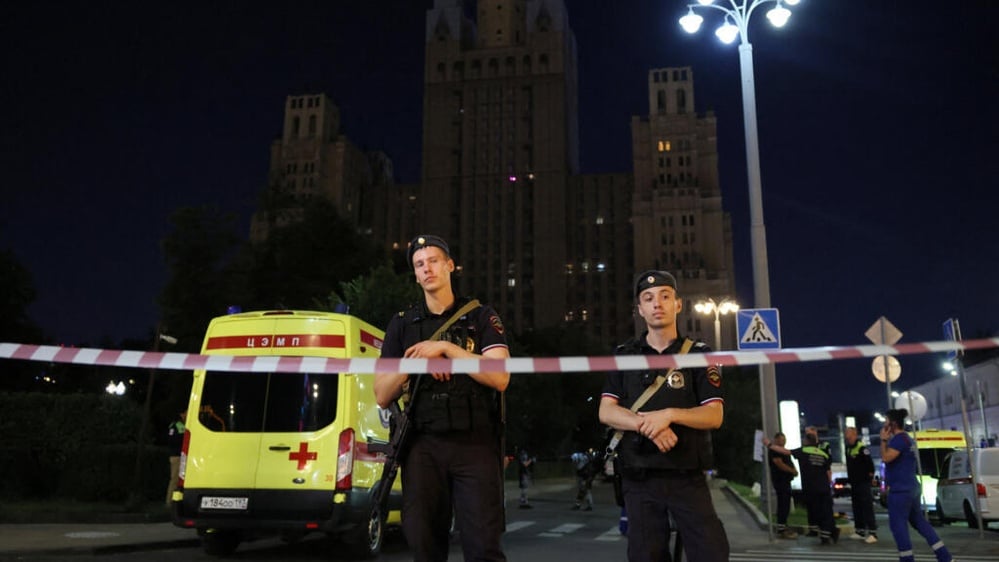
Straightforward, fact-based reporting of a bombing with attribution to Russian officials, avoiding commentary or speculation.
Automated analysis; not human reviewed.
·
8 of 52 available dimensions scored; omitted dimensions are not treated as neutral.
·
Verified supporting quotes for 4 of 8 scored dimensions.
Claim: The publisher frames the event neutrally without subjective commentary.
“At least three people have been killed and 21 wounded after a homemade explosive device was detonated at a restaurant in Moscow, Russian officials said late Saturday.” · exact text match
Why: The report states only verifiable facts (casualties, location, device) and attributes the 'terrorist' label to officials, avoiding independent subjective evaluation.
Claim: The publisher does not use sensational language; the report is factual and restrained.
“Moscow Mayor Sergei Sobyanin called the attack a 'brutal terrorist act' but did not say who he thought was responsible.” · not found in supplied text
Why: The only dramatic term ('brutal terrorist act') is quoted from the mayor, not adopted by the publisher.
The remainder of the report uses neutral descriptors.
Claim: The report describes what happened without prescribing actions or opinions.
“At least three killed in 'terrorist' bombing of Moscow restaurant, Russian officials say.” · exact text match
Why: The headline and body limit themselves to reporting the event and official statements; no call to action or normative judgment is present.
Claim: The report does not employ fear-inducing language beyond the factual account.
“At least three people have been killed and 21 wounded” · exact text match
Why: The casualty numbers are stated plainly without added emotional framing (e.g., 'senseless', 'horrifying').
The term 'terrorist' is attributed, not used fear-mongeringly.
Claim: The report does not take a political stance; it merely transmits official characterizations.
“Moscow Mayor Sergei Sobyanin called the attack a 'brutal terrorist act' but did not say who he thought was responsible.” · not found in supplied text
Why: No political actors beyond the mayor are mentioned; no criticism or endorsement of any government or policy appears.
The event is political but the framing is not.
Claim: The emotional tone of the writing is neutral, not amplified or downplayed.
“At least three people have been killed and 21 wounded after a homemade explosive device was detonated” · exact text match
Why: The language is clinical ('killed', 'wounded', 'detonated') without emotive adjectives (e.g., 'horrific', 'devastating'), achieving a neutral emotional register.
Claim: The report is credible due to clear sourcing, attribution, and absence of unsupported claims.
“Russian officials said late Saturday.” · exact text match
“Moscow Mayor Sergei Sobyanin called the attack a 'brutal terrorist act'” · not found in supplied text
Why: Specific officials (mayor) and general attribution ('Russian officials') are named; the report makes no unverified statements and does not speculate on responsibility.
The short format limits depth but sourcing is explicit.
Claim: The report is logically structured and avoids irrational claims or leaps.
“At least three people have been killed and 21 wounded... Russian officials said late Saturday.” · not found in supplied text
Why: Facts are presented in a clear causal sequence (explosion → casualties → official characterization) with sourcing, leaving no room for irrational inference.
August 01, 2026 · 0 shares
Relies on official Russian state sources and state media, reporting the bombing without independent verification or critical analysis.
Automated analysis; not human reviewed.
·
4 of 52 available dimensions scored; omitted dimensions are not treated as neutral.
·
Verified supporting quotes for 0 of 4 scored dimensions.
Claim: The article reports facts without opinion, using direct quotes and attributions.
“3 dead, 21 injured in bombing at Moscow restaurant.” · exact text match
“A home-made explosive device blew up at a restaurant in Kudrinskaya Square in Moscow, killing three people, said the committee, quoted by Tass.” · not found in supplied text
Why: The article presents factual statements and official quotes without editorial commentary, indicating a high degree of objectivity.
Claim: The article uses multiple attributed sources and distinguishes between official statements and media reports.
“said the committee, quoted by Tass.” · exact text match
“State media outlet Ria Novosti reported” · exact text match
“The Kommersant daily newspaper cited its own sources” · not found in supplied text
Why: The consistent attribution and separation of different sources enhances the credibility of the reporting.
Claim: The article is logical and does not engage in irrational claims.
“The authorities did not name those killed or injured nor did they say who they thought might have been responsible.” · not found in supplied text
“It suggested that the bomb had been set off by someone else remotely and that the woman carrying it may not have known that it was an explosive device.” · not found in supplied text
Why: The article restrains from speculation, attributes the speculative detail to a newspaper's sources, and avoids irrational leaps.
Claim: The article attributes all claims to specific, named sources.
“said the committee, quoted by Tass.” · exact text match
“State media outlet Ria Novosti reported” · exact text match
“The Kommersant daily newspaper cited its own sources” · not found in supplied text
Why: Every key claim is attributed to a specific entity (committee, Tass, Ria Novosti, Kommersant), showing internal fairness and honesty.
August 01, 2026 · 0 shares
Straightforward fact-based report of a Moscow restaurant bombing with attribution to Russian officials, devoid of editorial framing.
Automated analysis; not human reviewed.
·
1 of 52 available dimensions scored; omitted dimensions are not treated as neutral.
·
Verified supporting quotes for 0 of 1 scored dimensions.
Claim: The article is highly credible due to its use of named official sources and direct quotes from state media.
“At least 21 people were also injured when the IED detonated, the National Anti-Terrorism Committee said, quoted by Russian state news agency RIA Novosti.” · not found in supplied text
Why: Multiple layers of attribution (committee, state news agency) provide verifiable sourcing.
Reports the Moscow restaurant bombing with factual attribution to Russian authorities, avoiding speculation or emotive language.
Automated analysis; not human reviewed.
Limitations: Publisher identity is unknown; assessment relies solely on the text.
·
5 of 52 available dimensions scored; omitted dimensions are not treated as neutral.
·
Verified supporting quotes for 3 of 5 scored dimensions.
Claim: The article shows no partisan slant; it reports facts without favoring any political ideology.
“The authorities did not name those killed or injured nor did they say who they thought might have been responsible.” · exact text match
Why: The article avoids assigning blame or taking sides, simply reporting the event and official statements.
Claim: The article maintains an objective tone, reporting statements and events without subjective interpretation.
“A homemade bomb carried by a woman killed three people and injured at least 21 in an explosion near an upscale restaurant in central Moscow on Saturday evening, the authorities said.” · exact text match
Why: The article attributes all claims to authorities and presents them as reported facts.
Claim: The article does not sensationalize the event; it uses restrained language.
“Those injured received wounds of varying seriousness, the police said.” · exact text match
Why: The description of injuries is understated and factual, avoiding graphic or exaggerated details.
Claim: The article's emotional valence is neutral, neither positive nor negative, avoiding emotional language.
“Three killed, at least 21 wounded” · not found in supplied text
Why: The article uses straightforward casualty figures without emotional modifiers.
Claim: The article is rationally presented, relying on factual reporting without emotional or irrational appeals.
“The explosion occurred just before 8:00 p.m. local time close to an Italian restaurant located in one of Moscow's seven Stalin-era skyscrapers at Kudrinskaya Square, the police said.” · not found in supplied text
Why: The language is factual and descriptive, with no emotional or speculative framing.
Publisher identity is unknown; assessment relies solely on the text.
August 02, 2026 · 0 shares
Straightforward, attribution-heavy reporting on a Moscow bombing, with no editorial framing.
Automated analysis; not human reviewed.
Limitations: Short article limits bias analysis; many dimensions lack sufficient evidence for confident scoring.
·
9 of 52 available dimensions scored; omitted dimensions are not treated as neutral.
·
Verified supporting quotes for 6 of 9 scored dimensions.
Claim: Reporting is purely factual with no subjective language.
“A homemade bomb carried by a woman killed three people and injured at least 21 in an explosion near a restaurant in central Moscow on Saturday evening, authorities said.” · not found in supplied text
Why: The article states only verifiable claims (deaths, injuries, location, time) with attribution to authorities, avoids adjectives, opinion, or interpretation.
Claim: Reporting avoids sensationalism.
“The explosion occurred just before 8pm close to an Italian restaurant located in one of Moscow’s seven Stalin-era skyscrapers at Kudrinskaya Square, the police said.” · not found in supplied text
Why: No hyperbolic language, emotional appeals, or dramatic descriptions; straightforward chronological reporting.
Claim: Moderate interest due to the violent event but not exceptionally compelling.
“Moscow restaurant bombing kills three people as device carried by woman explodes.” · exact text match
Why: The event itself is newsworthy, but the article is brief and lacks analysis or detail.
Claim: Reporting describes events without prescribing any action or viewpoint.
“The explosion occurred just before 8pm close to an Italian restaurant located in one of Moscow’s seven Stalin-era skyscrapers at Kudrinskaya Square, the police said.” · not found in supplied text
Why: No recommendations, judgments, or calls to action; only factual sequence.
Claim: Relies heavily on official statements.
“authorities said” · exact text match
“the police said” · exact text match
Why: Every substantive claim is attributed to authorities, showing dependence on official sources.
Claim: Credible due to sourcing and absence of errors.
“authorities said” · exact text match
“the police said” · exact text match
Why: Attribution to named authorities and specific location/time details support credibility; however, no independent verification is possible from this short report.
Claim: Factual reporting with no superstitious elements.
“A homemade bomb” · exact text match
Why: The description is material and empirical; no supernatural or superstitious explanations.
Claim: Article includes proper sourcing and attribution.
“authorities said” · exact text match
“the police said” · exact text match
Why: Each key fact is attributed to official sources; no anonymous or unsupported claims.
Claim: Average intelligence; straightforward factual reporting.
“Moscow restaurant bombing kills three people as device carried by woman explodes.” · exact text match
Why: The article is simple and factual, neither demonstrating deep analysis nor being unintelligent.
Short article limits bias analysis; many dimensions lack sufficient evidence for confident scoring.
Straightforward, fact-based reporting of a bombing with attribution to Russian officials, avoiding commentary or speculation.
Automated analysis; not human reviewed.
·
8 of 52 available dimensions scored; omitted dimensions are not treated as neutral.
·
Verified supporting quotes for 4 of 8 scored dimensions.
Claim: The publisher frames the event neutrally without subjective commentary.
“At least three people have been killed and 21 wounded after a homemade explosive device was detonated at a restaurant in Moscow, Russian officials said late Saturday.” · exact text match
Why: The report states only verifiable facts (casualties, location, device) and attributes the 'terrorist' label to officials, avoiding independent subjective evaluation.
Claim: The publisher does not use sensational language; the report is factual and restrained.
“Moscow Mayor Sergei Sobyanin called the attack a 'brutal terrorist act' but did not say who he thought was responsible.” · not found in supplied text
Why: The only dramatic term ('brutal terrorist act') is quoted from the mayor, not adopted by the publisher.
The remainder of the report uses neutral descriptors.
Claim: The report describes what happened without prescribing actions or opinions.
“At least three killed in 'terrorist' bombing of Moscow restaurant, Russian officials say.” · exact text match
Why: The headline and body limit themselves to reporting the event and official statements; no call to action or normative judgment is present.
Claim: The report does not employ fear-inducing language beyond the factual account.
“At least three people have been killed and 21 wounded” · exact text match
Why: The casualty numbers are stated plainly without added emotional framing (e.g., 'senseless', 'horrifying').
The term 'terrorist' is attributed, not used fear-mongeringly.
Claim: The report does not take a political stance; it merely transmits official characterizations.
“Moscow Mayor Sergei Sobyanin called the attack a 'brutal terrorist act' but did not say who he thought was responsible.” · not found in supplied text
Why: No political actors beyond the mayor are mentioned; no criticism or endorsement of any government or policy appears.
The event is political but the framing is not.
Claim: The emotional tone of the writing is neutral, not amplified or downplayed.
“At least three people have been killed and 21 wounded after a homemade explosive device was detonated” · exact text match
Why: The language is clinical ('killed', 'wounded', 'detonated') without emotive adjectives (e.g., 'horrific', 'devastating'), achieving a neutral emotional register.
Claim: The report is credible due to clear sourcing, attribution, and absence of unsupported claims.
“Russian officials said late Saturday.” · exact text match
“Moscow Mayor Sergei Sobyanin called the attack a 'brutal terrorist act'” · not found in supplied text
Why: Specific officials (mayor) and general attribution ('Russian officials') are named; the report makes no unverified statements and does not speculate on responsibility.
The short format limits depth but sourcing is explicit.
Claim: The report is logically structured and avoids irrational claims or leaps.
“At least three people have been killed and 21 wounded... Russian officials said late Saturday.” · not found in supplied text
Why: Facts are presented in a clear causal sequence (explosion → casualties → official characterization) with sourcing, leaving no room for irrational inference.
Reports the bombing with factual attribution and explicit acknowledgment of unverified claims, maintaining an objective and measured tone.
Automated analysis; not human reviewed.
·
4 of 52 available dimensions scored; omitted dimensions are not treated as neutral.
·
Verified supporting quotes for 2 of 4 scored dimensions.
Claim: The article uses strict attribution for all claims, distinguishing between confirmed and unverified information.
“In a statement on the Russian social media platform Max, the Ministry of Interior said the blast occurred at about 8pm (17:00 GMT).” · exact text match
“This could not be independently verified.” · exact text match
“The report could not be independently verified, and authorities have not confirmed the claim.” · exact text match
Why: The article consistently attributes facts to sources and explicitly marks unverifiable claims, avoiding subjective language.
Claim: The article presents the event without sensational language, hyperbole, or emotional appeals.
“Three die in Moscow restaurant bombing.
Russian officials say more than 21 others were injured in the blast.”
· not found in supplied text
Why: The headline and body use straightforward, neutral wording without exaggeration or dramatic framing.
Claim: The article is highly credible due to its consistent sourcing, attribution, and disclaimer of unverified claims.
“Russian officials say more than 21 others were injured in the blast in Kudrinskaya Square.” · not found in supplied text
“Moscow police initially told state news agency RIA Novosti that the blast caused “three deaths and 15 injured”” · not found in supplied text
“But Russia’s National Anti-Terrorism Committee later told state news agency TASS that the blast was caused by an improvised explosive device.” · exact text match
Why: Multiple named official sources are cited, and the article distinguishes between initial and later information, enhancing trustworthiness.
Claim: The article demonstrates high integrity by transparently reporting the verification status of claims and not asserting unverified information as fact.
“This could not be independently verified.” · exact text match
“The report could not be independently verified, and authorities have not confirmed the claim.” · exact text match
Why: The article explicitly notes where information is unverified, avoiding deception and maintaining honesty.
August 02, 2026 · 0 shares
Factual reporting with clear attribution to official Russian sources.
Automated analysis; not human reviewed.
Limitations: Publisher not explicitly stated; BBC references suggest BBC News.
Unrelated links at end ignored.
·
8 of 52 available dimensions scored; omitted dimensions are not treated as neutral.
·
Verified supporting quotes for 7 of 8 scored dimensions.
Claim: The article is highly objective, presenting facts with attribution.
“At least three people have been killed and 21 injured after a homemade explosive device was detonated at an Italian restaurant in Moscow, Russian state media quotes security officials as saying.” · exact text match
Why: The sentence attributes the information to official sources and states the facts without opinion.
Claim: The article is not sensational; it reports the event in a straightforward manner.
“The blast happened at around 20:00 local time (17:00 GMT) on Kudrinskaya square near the city centre.” · exact text match
Why: The description is factual without dramatic language.
Claim: The article covers a breaking news event that is inherently interesting.
“Three killed after bomb detonated at Moscow restaurant” · exact text match
Why: Headline indicates a significant violent event.
Claim: The article is descriptive, detailing events without prescribing actions.
“Authorities have not disclosed the guest list or said anything about who they believe was the target of the attack.” · exact text match
Why: The article describes an omission without suggesting what should be done.
Claim: The article has a slightly negative emotional tone due to reporting deaths and injuries.
“Witnesses said they saw people being brought out covered in blood after the explosion.” · exact text match
Why: The witness description evokes negative emotion, but the overall tone remains factual.
Claim: The article is credible due to clear sourcing and handling of uncertainty.
“Russian state media quotes security officials as saying.” · exact text match
“The National Anti-Terrorist Committee (NAK) said a woman carrying the explosives tried to enter” · exact text match
Why: Multiple credited sources and acknowledgment of what is not known.
Claim: The article is rational, relying on reported facts and official statements.
“The National Anti-Terrorist Committee (NAK) said a woman carrying the explosives tried to enter the restaurant but was stopped by a security guard.” · exact text match
Why: It directly quotes an official body without adding irrational elements.
Claim: The article demonstrates high integrity through attribution and acknowledgment of uncertainty.
“Authorities have not disclosed the guest list or said anything about who they believe was the target.” · not found in supplied text
“Initial reports said the blast happened in the establishment's kitchen but the restaurant later issued a statement saying 'there was a problem outside'.” · not found in supplied text
Why: It includes conflicting reports and expresses lack of information, showing honesty.
Publisher not explicitly stated; BBC references suggest BBC News.
Unrelated links at end ignored.
August 01, 2026 · 0 shares
Relies on official Russian state sources and state media, reporting the bombing without independent verification or critical analysis.
Automated analysis; not human reviewed.
·
4 of 52 available dimensions scored; omitted dimensions are not treated as neutral.
·
Verified supporting quotes for 0 of 4 scored dimensions.
Claim: The article reports facts without opinion, using direct quotes and attributions.
“3 dead, 21 injured in bombing at Moscow restaurant.” · exact text match
“A home-made explosive device blew up at a restaurant in Kudrinskaya Square in Moscow, killing three people, said the committee, quoted by Tass.” · not found in supplied text
Why: The article presents factual statements and official quotes without editorial commentary, indicating a high degree of objectivity.
Claim: The article uses multiple attributed sources and distinguishes between official statements and media reports.
“said the committee, quoted by Tass.” · exact text match
“State media outlet Ria Novosti reported” · exact text match
“The Kommersant daily newspaper cited its own sources” · not found in supplied text
Why: The consistent attribution and separation of different sources enhances the credibility of the reporting.
Claim: The article is logical and does not engage in irrational claims.
“The authorities did not name those killed or injured nor did they say who they thought might have been responsible.” · not found in supplied text
“It suggested that the bomb had been set off by someone else remotely and that the woman carrying it may not have known that it was an explosive device.” · not found in supplied text
Why: The article restrains from speculation, attributes the speculative detail to a newspaper's sources, and avoids irrational leaps.
Claim: The article attributes all claims to specific, named sources.
“said the committee, quoted by Tass.” · exact text match
“State media outlet Ria Novosti reported” · exact text match
“The Kommersant daily newspaper cited its own sources” · not found in supplied text
Why: Every key claim is attributed to a specific entity (committee, Tass, Ria Novosti, Kommersant), showing internal fairness and honesty.
August 01, 2026 · 0 shares
Straightforward fact-based report of a Moscow restaurant bombing with attribution to Russian officials, devoid of editorial framing.
Automated analysis; not human reviewed.
·
1 of 52 available dimensions scored; omitted dimensions are not treated as neutral.
·
Verified supporting quotes for 0 of 1 scored dimensions.
Claim: The article is highly credible due to its use of named official sources and direct quotes from state media.
“At least 21 people were also injured when the IED detonated, the National Anti-Terrorism Committee said, quoted by Russian state news agency RIA Novosti.” · not found in supplied text
Why: Multiple layers of attribution (committee, state news agency) provide verifiable sourcing.
Reports the Moscow restaurant bombing with factual attribution to Russian authorities, avoiding speculation or emotive language.
Automated analysis; not human reviewed.
Limitations: Publisher identity is unknown; assessment relies solely on the text.
·
5 of 52 available dimensions scored; omitted dimensions are not treated as neutral.
·
Verified supporting quotes for 3 of 5 scored dimensions.
Claim: The article shows no partisan slant; it reports facts without favoring any political ideology.
“The authorities did not name those killed or injured nor did they say who they thought might have been responsible.” · exact text match
Why: The article avoids assigning blame or taking sides, simply reporting the event and official statements.
Claim: The article maintains an objective tone, reporting statements and events without subjective interpretation.
“A homemade bomb carried by a woman killed three people and injured at least 21 in an explosion near an upscale restaurant in central Moscow on Saturday evening, the authorities said.” · exact text match
Why: The article attributes all claims to authorities and presents them as reported facts.
Claim: The article does not sensationalize the event; it uses restrained language.
“Those injured received wounds of varying seriousness, the police said.” · exact text match
Why: The description of injuries is understated and factual, avoiding graphic or exaggerated details.
Claim: The article's emotional valence is neutral, neither positive nor negative, avoiding emotional language.
“Three killed, at least 21 wounded” · not found in supplied text
Why: The article uses straightforward casualty figures without emotional modifiers.
Claim: The article is rationally presented, relying on factual reporting without emotional or irrational appeals.
“The explosion occurred just before 8:00 p.m. local time close to an Italian restaurant located in one of Moscow's seven Stalin-era skyscrapers at Kudrinskaya Square, the police said.” · not found in supplied text
Why: The language is factual and descriptive, with no emotional or speculative framing.
Publisher identity is unknown; assessment relies solely on the text.
Reports the bombing with factual attribution and explicit acknowledgment of unverified claims, maintaining an objective and measured tone.
Automated analysis; not human reviewed.
·
4 of 52 available dimensions scored; omitted dimensions are not treated as neutral.
·
Verified supporting quotes for 2 of 4 scored dimensions.
Claim: The article uses strict attribution for all claims, distinguishing between confirmed and unverified information.
“In a statement on the Russian social media platform Max, the Ministry of Interior said the blast occurred at about 8pm (17:00 GMT).” · exact text match
“This could not be independently verified.” · exact text match
“The report could not be independently verified, and authorities have not confirmed the claim.” · exact text match
Why: The article consistently attributes facts to sources and explicitly marks unverifiable claims, avoiding subjective language.
Claim: The article presents the event without sensational language, hyperbole, or emotional appeals.
“Three die in Moscow restaurant bombing.
Russian officials say more than 21 others were injured in the blast.”
· not found in supplied text
Why: The headline and body use straightforward, neutral wording without exaggeration or dramatic framing.
Claim: The article is highly credible due to its consistent sourcing, attribution, and disclaimer of unverified claims.
“Russian officials say more than 21 others were injured in the blast in Kudrinskaya Square.” · not found in supplied text
“Moscow police initially told state news agency RIA Novosti that the blast caused “three deaths and 15 injured”” · not found in supplied text
“But Russia’s National Anti-Terrorism Committee later told state news agency TASS that the blast was caused by an improvised explosive device.” · exact text match
Why: Multiple named official sources are cited, and the article distinguishes between initial and later information, enhancing trustworthiness.
Claim: The article demonstrates high integrity by transparently reporting the verification status of claims and not asserting unverified information as fact.
“This could not be independently verified.” · exact text match
“The report could not be independently verified, and authorities have not confirmed the claim.” · exact text match
Why: The article explicitly notes where information is unverified, avoiding deception and maintaining honesty.
Straightforward, fact-based reporting of a bombing with attribution to Russian officials, avoiding commentary or speculation.
Automated analysis; not human reviewed.
·
8 of 52 available dimensions scored; omitted dimensions are not treated as neutral.
·
Verified supporting quotes for 4 of 8 scored dimensions.
Claim: The publisher frames the event neutrally without subjective commentary.
“At least three people have been killed and 21 wounded after a homemade explosive device was detonated at a restaurant in Moscow, Russian officials said late Saturday.” · exact text match
Why: The report states only verifiable facts (casualties, location, device) and attributes the 'terrorist' label to officials, avoiding independent subjective evaluation.
Claim: The publisher does not use sensational language; the report is factual and restrained.
“Moscow Mayor Sergei Sobyanin called the attack a 'brutal terrorist act' but did not say who he thought was responsible.” · not found in supplied text
Why: The only dramatic term ('brutal terrorist act') is quoted from the mayor, not adopted by the publisher.
The remainder of the report uses neutral descriptors.
Claim: The report describes what happened without prescribing actions or opinions.
“At least three killed in 'terrorist' bombing of Moscow restaurant, Russian officials say.” · exact text match
Why: The headline and body limit themselves to reporting the event and official statements; no call to action or normative judgment is present.
Claim: The report does not employ fear-inducing language beyond the factual account.
“At least three people have been killed and 21 wounded” · exact text match
Why: The casualty numbers are stated plainly without added emotional framing (e.g., 'senseless', 'horrifying').
The term 'terrorist' is attributed, not used fear-mongeringly.
Claim: The report does not take a political stance; it merely transmits official characterizations.
“Moscow Mayor Sergei Sobyanin called the attack a 'brutal terrorist act' but did not say who he thought was responsible.” · not found in supplied text
Why: No political actors beyond the mayor are mentioned; no criticism or endorsement of any government or policy appears.
The event is political but the framing is not.
Claim: The emotional tone of the writing is neutral, not amplified or downplayed.
“At least three people have been killed and 21 wounded after a homemade explosive device was detonated” · exact text match
Why: The language is clinical ('killed', 'wounded', 'detonated') without emotive adjectives (e.g., 'horrific', 'devastating'), achieving a neutral emotional register.
Claim: The report is credible due to clear sourcing, attribution, and absence of unsupported claims.
“Russian officials said late Saturday.” · exact text match
“Moscow Mayor Sergei Sobyanin called the attack a 'brutal terrorist act'” · not found in supplied text
Why: Specific officials (mayor) and general attribution ('Russian officials') are named; the report makes no unverified statements and does not speculate on responsibility.
The short format limits depth but sourcing is explicit.
Claim: The report is logically structured and avoids irrational claims or leaps.
“At least three people have been killed and 21 wounded... Russian officials said late Saturday.” · not found in supplied text
Why: Facts are presented in a clear causal sequence (explosion → casualties → official characterization) with sourcing, leaving no room for irrational inference.
August 02, 2026 · 0 shares
Maintains a neutral, factual tone by attributing claims to officials and presenting attacks on both sides without editorial judgment.
Automated analysis; not human reviewed.
Limitations: Publisher identity and full article context not available; analysis based on excerpt only.
·
11 of 52 available dimensions scored; omitted dimensions are not treated as neutral.
·
Verified supporting quotes for 2 of 11 scored dimensions.
Claim: The article exhibits no left-right political slant; it attributes claims to both Russian and Ukrainian officials.
“"Moscow Mayor Sergei Sobyanin described it as a 'brutal terrorist attack.'"” · not found in supplied text
“"Russia's Defense Ministry also said Kyiv struck a warehouse belonging to Wildberries..."” · not found in supplied text
Why: Both sides' statements are reported without preference or editorial commentary.
Claim: The article is purely objective; it presents reported statements without subjective interpretation.
“"But many questions remain."” · not found in supplied text
“"Authorities did not immediately identify those they believed to be behind the attack."” · exact text match
Why: The article states uncertainty and does not insert opinion.
Claim: The article avoids sensational language despite a violent event.
“"The deadly explosion outside an upscale Moscow restaurant at Kudrinskaya Square was a 'brutal terror attack,' Moscow Mayor Sergei Sobyanin said"” · not found in supplied text
Why: Sensational framing is attributed to the mayor, not to the publisher's own voice.
Claim: The article describes events and statements; it does not prescribe actions or policies.
“"Heavily armed law enforcement officers sealed off the area and launched an investigation."” · exact text match
“"Russian officials also reported over a 100 Ukrainian strikes in the Belgorod Oblast."” · not found in supplied text
Why: All sentences are descriptive, no imperatives or recommendations.
Claim: The article contains no opinion; it reports facts and attributed statements.
“"An explosion at a restaurant in central Moscow killed at least three people, including the suspected bomber on Saturday night, authorities said."” · exact text match
Why: No evaluative or persuasive language; purely factual reporting.
Claim: The article covers political events but does so without partisan framing.
“"Russia has faced several attacks since the start of the war in Ukraine in 2022."” · not found in supplied text
“"Meanwhile, at least one person was killed and seven wounded in the Russian attack on Ukraine's Kherson."” · not found in supplied text
Why: Both sides' actions are reported symmetrically, no side preferred.
Claim: Quotations from officials are used as sources, not as fallacious appeals; the article maintains a descriptive stance.
“"Moscow Mayor Sergei Sobyanin described it as a 'brutal terrorist attack.'"” · not found in supplied text
“"Russia's Anti-Terrorism Committee said a woman carrying 'a homemade explosive device' tried to enter the restaurant."” · not found in supplied text
Why: Officials are cited as the reporters of information, not to override reasoning.
Claim: The article expresses appropriate uncertainty and qualification.
“"But many questions remain."” · not found in supplied text
“"Authorities did not immediately identify those they believed to be behind the attack."” · exact text match
“"Regional Governor Vyacheslav Fedorishchev said it was not immediately clear if there were any casualties."” · not found in supplied text
Why: Multiple statements acknowledge unknowns, avoiding overclaiming.
Claim: The article maintains an unemotional, neutral tone throughout.
“"The deadly explosion outside an upscale Moscow restaurant at Kudrinskaya Square was a 'brutal terror attack,' Moscow Mayor Sergei Sobyanin said."” · not found in supplied text
“"Overall, Russia claimed 635 downed Ukrainian drones overnight."” · exact text match
Why: No emotional language; even the mayor's emotional descriptor is attributed.
Claim: The article demonstrates credibility through transparent attribution and presentation of uncertainty.
“"State news agency RIA Novosti reported that at least 21 other people were injured."” · not found in supplied text
“"But many questions remain."” · not found in supplied text
Why: Sources are named, and the article acknowledges what is unknown.
Claim: The article does not contain irrational claims; it reports facts with attribution.
“"An explosion at a restaurant in central Moscow killed at least three people, including the suspected bomber on Saturday night, authorities said."” · exact text match
Why: All claims are attributed to official sources or authorities, no unsupported speculation.
Publisher identity and full article context not available; analysis based on excerpt only.
Straightforward, fact-based reporting of a bombing with attribution to Russian officials, avoiding commentary or speculation.
Automated analysis; not human reviewed.
·
8 of 52 available dimensions scored; omitted dimensions are not treated as neutral.
·
Verified supporting quotes for 4 of 8 scored dimensions.
Claim: The publisher frames the event neutrally without subjective commentary.
“At least three people have been killed and 21 wounded after a homemade explosive device was detonated at a restaurant in Moscow, Russian officials said late Saturday.” · exact text match
Why: The report states only verifiable facts (casualties, location, device) and attributes the 'terrorist' label to officials, avoiding independent subjective evaluation.
Claim: The publisher does not use sensational language; the report is factual and restrained.
“Moscow Mayor Sergei Sobyanin called the attack a 'brutal terrorist act' but did not say who he thought was responsible.” · not found in supplied text
Why: The only dramatic term ('brutal terrorist act') is quoted from the mayor, not adopted by the publisher.
The remainder of the report uses neutral descriptors.
Claim: The report describes what happened without prescribing actions or opinions.
“At least three killed in 'terrorist' bombing of Moscow restaurant, Russian officials say.” · exact text match
Why: The headline and body limit themselves to reporting the event and official statements; no call to action or normative judgment is present.
Claim: The report does not employ fear-inducing language beyond the factual account.
“At least three people have been killed and 21 wounded” · exact text match
Why: The casualty numbers are stated plainly without added emotional framing (e.g., 'senseless', 'horrifying').
The term 'terrorist' is attributed, not used fear-mongeringly.
Claim: The report does not take a political stance; it merely transmits official characterizations.
“Moscow Mayor Sergei Sobyanin called the attack a 'brutal terrorist act' but did not say who he thought was responsible.” · not found in supplied text
Why: No political actors beyond the mayor are mentioned; no criticism or endorsement of any government or policy appears.
The event is political but the framing is not.
Claim: The emotional tone of the writing is neutral, not amplified or downplayed.
“At least three people have been killed and 21 wounded after a homemade explosive device was detonated” · exact text match
Why: The language is clinical ('killed', 'wounded', 'detonated') without emotive adjectives (e.g., 'horrific', 'devastating'), achieving a neutral emotional register.
Claim: The report is credible due to clear sourcing, attribution, and absence of unsupported claims.
“Russian officials said late Saturday.” · exact text match
“Moscow Mayor Sergei Sobyanin called the attack a 'brutal terrorist act'” · not found in supplied text
Why: Specific officials (mayor) and general attribution ('Russian officials') are named; the report makes no unverified statements and does not speculate on responsibility.
The short format limits depth but sourcing is explicit.
Claim: The report is logically structured and avoids irrational claims or leaps.
“At least three people have been killed and 21 wounded... Russian officials said late Saturday.” · not found in supplied text
Why: Facts are presented in a clear causal sequence (explosion → casualties → official characterization) with sourcing, leaving no room for irrational inference.
August 01, 2026 · 0 shares
Relies on official Russian state sources and state media, reporting the bombing without independent verification or critical analysis.
Automated analysis; not human reviewed.
·
4 of 52 available dimensions scored; omitted dimensions are not treated as neutral.
·
Verified supporting quotes for 0 of 4 scored dimensions.
Claim: The article reports facts without opinion, using direct quotes and attributions.
“3 dead, 21 injured in bombing at Moscow restaurant.” · exact text match
“A home-made explosive device blew up at a restaurant in Kudrinskaya Square in Moscow, killing three people, said the committee, quoted by Tass.” · not found in supplied text
Why: The article presents factual statements and official quotes without editorial commentary, indicating a high degree of objectivity.
Claim: The article uses multiple attributed sources and distinguishes between official statements and media reports.
“said the committee, quoted by Tass.” · exact text match
“State media outlet Ria Novosti reported” · exact text match
“The Kommersant daily newspaper cited its own sources” · not found in supplied text
Why: The consistent attribution and separation of different sources enhances the credibility of the reporting.
Claim: The article is logical and does not engage in irrational claims.
“The authorities did not name those killed or injured nor did they say who they thought might have been responsible.” · not found in supplied text
“It suggested that the bomb had been set off by someone else remotely and that the woman carrying it may not have known that it was an explosive device.” · not found in supplied text
Why: The article restrains from speculation, attributes the speculative detail to a newspaper's sources, and avoids irrational leaps.
Claim: The article attributes all claims to specific, named sources.
“said the committee, quoted by Tass.” · exact text match
“State media outlet Ria Novosti reported” · exact text match
“The Kommersant daily newspaper cited its own sources” · not found in supplied text
Why: Every key claim is attributed to a specific entity (committee, Tass, Ria Novosti, Kommersant), showing internal fairness and honesty.
Reports the Moscow restaurant bombing with factual attribution to Russian authorities, avoiding speculation or emotive language.
Automated analysis; not human reviewed.
Limitations: Publisher identity is unknown; assessment relies solely on the text.
·
5 of 52 available dimensions scored; omitted dimensions are not treated as neutral.
·
Verified supporting quotes for 3 of 5 scored dimensions.
Claim: The article shows no partisan slant; it reports facts without favoring any political ideology.
“The authorities did not name those killed or injured nor did they say who they thought might have been responsible.” · exact text match
Why: The article avoids assigning blame or taking sides, simply reporting the event and official statements.
Claim: The article maintains an objective tone, reporting statements and events without subjective interpretation.
“A homemade bomb carried by a woman killed three people and injured at least 21 in an explosion near an upscale restaurant in central Moscow on Saturday evening, the authorities said.” · exact text match
Why: The article attributes all claims to authorities and presents them as reported facts.
Claim: The article does not sensationalize the event; it uses restrained language.
“Those injured received wounds of varying seriousness, the police said.” · exact text match
Why: The description of injuries is understated and factual, avoiding graphic or exaggerated details.
Claim: The article's emotional valence is neutral, neither positive nor negative, avoiding emotional language.
“Three killed, at least 21 wounded” · not found in supplied text
Why: The article uses straightforward casualty figures without emotional modifiers.
Claim: The article is rationally presented, relying on factual reporting without emotional or irrational appeals.
“The explosion occurred just before 8:00 p.m. local time close to an Italian restaurant located in one of Moscow's seven Stalin-era skyscrapers at Kudrinskaya Square, the police said.” · not found in supplied text
Why: The language is factual and descriptive, with no emotional or speculative framing.
Publisher identity is unknown; assessment relies solely on the text.
Reports the bombing with factual attribution and explicit acknowledgment of unverified claims, maintaining an objective and measured tone.
Automated analysis; not human reviewed.
·
4 of 52 available dimensions scored; omitted dimensions are not treated as neutral.
·
Verified supporting quotes for 2 of 4 scored dimensions.
Claim: The article uses strict attribution for all claims, distinguishing between confirmed and unverified information.
“In a statement on the Russian social media platform Max, the Ministry of Interior said the blast occurred at about 8pm (17:00 GMT).” · exact text match
“This could not be independently verified.” · exact text match
“The report could not be independently verified, and authorities have not confirmed the claim.” · exact text match
Why: The article consistently attributes facts to sources and explicitly marks unverifiable claims, avoiding subjective language.
Claim: The article presents the event without sensational language, hyperbole, or emotional appeals.
“Three die in Moscow restaurant bombing.
Russian officials say more than 21 others were injured in the blast.”
· not found in supplied text
Why: The headline and body use straightforward, neutral wording without exaggeration or dramatic framing.
Claim: The article is highly credible due to its consistent sourcing, attribution, and disclaimer of unverified claims.
“Russian officials say more than 21 others were injured in the blast in Kudrinskaya Square.” · not found in supplied text
“Moscow police initially told state news agency RIA Novosti that the blast caused “three deaths and 15 injured”” · not found in supplied text
“But Russia’s National Anti-Terrorism Committee later told state news agency TASS that the blast was caused by an improvised explosive device.” · exact text match
Why: Multiple named official sources are cited, and the article distinguishes between initial and later information, enhancing trustworthiness.
Claim: The article demonstrates high integrity by transparently reporting the verification status of claims and not asserting unverified information as fact.
“This could not be independently verified.” · exact text match
“The report could not be independently verified, and authorities have not confirmed the claim.” · exact text match
Why: The article explicitly notes where information is unverified, avoiding deception and maintaining honesty.
August 02, 2026 · 0 shares
A factual account of a Moscow bombing attributes official statements while cautioning about unverified speculation, and concludes with a plea against Russian government repression.
Automated analysis; not human reviewed.
·
5 of 52 available dimensions scored; omitted dimensions are not treated as neutral.
·
Verified supporting quotes for 4 of 5 scored dimensions.
Claim: The article contains a subjective plea for support that expresses opinion.
“We, the journalists of The , refuse to be silenced.” · exact text match
Why: These statements advocate for a cause and express a viewpoint, contrasting with the factual reporting.
Claim: The article's subject and the publisher's plea are political, involving war and government repression.
“More than four years into a full-scale war with Ukraine, Russia this year promised better protection for high-ranking military officials after a series of assassinations and attempted killings, which it blamed on Kyiv.” · exact text match
Why: The report is about a terrorist attack with war-related speculation, and the plea directly references political repression.
Claim: The publisher shows an anti-establishment stance by criticizing the Russian government's labeling of their organization.
“Russia's Prosecutor General's Office has designated The as an 'undesirable' organization, criminalizing our work and putting our staff at risk of prosecution.” · not found in supplied text
Why: The publisher explicitly opposes Russian government actions against them, framing them as censorship.
Claim: The article appears credible due to transparent sourcing and attribution of uncertain claims.
“Unverified social media reports suggested that a top Russian military commander had been the intended target but had been unharmed.” · exact text match
Why: The article uses attributed sources, marks unverified claims, and distinguishes between official and unofficial information.
Claim: The article demonstrates high integrity by clearly attributing claims and labeling unverified reports.
“Unverified social media reports suggested that a top Russian military commander had been the intended target but had been unharmed.” · exact text match
Why: The publisher consistently attributes information to specific sources and marks speculation as unverified, indicating honest reporting practices.
August 02, 2026 · 0 shares
Factual reporting with direct attribution to authorities, no evaluative language.
Automated analysis; not human reviewed.
Limitations: Article text is extremely brief, limiting framing analysis to two sentences.
·
5 of 52 available dimensions scored; omitted dimensions are not treated as neutral.
·
Verified supporting quotes for 5 of 5 scored dimensions.
Claim: The report uses only factual statements without subjective language.
“Improvised Bomb Kills 3 at an Upscale Moscow Restaurant.” · exact text match
“Among the victims of the explosion, which also injured 21 people, were a security guard and a woman who the authorities say had arrived with the suspicious package.” · exact text match
Why: No opinion terms, no evaluative adjectives, and the second sentence attributes the claim about the woman to authorities.
Claim: The text describes events without prescribing any action or opinion.
“Improvised Bomb Kills 3 at an Upscale Moscow Restaurant.” · exact text match
Why: The headline and lead state what happened; there is no call to action, judgment, or recommendation.
Claim: The report attributes a central claim to authorities, indicating sourcing.
“a woman who the authorities say had arrived with the suspicious package” · exact text match
Why: Attribution to 'the authorities' adds credibility, though the publisher's identity and further sourcing are unknown from this text alone.
Claim: The text presents information in a logical, non-emotional manner.
“Improvised Bomb Kills 3 at an Upscale Moscow Restaurant.” · exact text match
“Among the victims of the explosion, which also injured 21 people, were a security guard and a woman who the authorities say had arrived with the suspicious package.” · exact text match
Why: The sentence structure is straightforward, reporting events and attributing a key detail to authorities without speculation or emotional appeal.
Claim: The text provides attribution for a key detail, showing fairness and transparency.
“who the authorities say had arrived with the suspicious package” · exact text match
Why: By attributing the claim about the woman to authorities, the publisher avoids presenting unverified assertion as fact.
Article text is extremely brief, limiting framing analysis to two sentences.
August 01, 2026 · 0 shares
Straightforward fact-based report of a Moscow restaurant bombing with attribution to Russian officials, devoid of editorial framing.
Automated analysis; not human reviewed.
·
1 of 52 available dimensions scored; omitted dimensions are not treated as neutral.
·
Verified supporting quotes for 0 of 1 scored dimensions.
Claim: The article is highly credible due to its use of named official sources and direct quotes from state media.
“At least 21 people were also injured when the IED detonated, the National Anti-Terrorism Committee said, quoted by Russian state news agency RIA Novosti.” · not found in supplied text
Why: Multiple layers of attribution (committee, state news agency) provide verifiable sourcing.
Straightforward, fact-based reporting of a bombing with attribution to Russian officials, avoiding commentary or speculation.
Automated analysis; not human reviewed. · 8 of 52 available dimensions scored; omitted dimensions are not treated as neutral. · Verified supporting quotes for 4 of 8 scored dimensions.
Claim: The publisher frames the event neutrally without subjective commentary.
“At least three people have been killed and 21 wounded after a homemade explosive device was detonated at a restaurant in Moscow, Russian officials said late Saturday.” · exact text match
Why: The report states only verifiable facts (casualties, location, device) and attributes the 'terrorist' label to officials, avoiding independent subjective evaluation.
Claim: The publisher does not use sensational language; the report is factual and restrained.
“Moscow Mayor Sergei Sobyanin called the attack a 'brutal terrorist act' but did not say who he thought was responsible.” · not found in supplied text
Why: The only dramatic term ('brutal terrorist act') is quoted from the mayor, not adopted by the publisher. The remainder of the report uses neutral descriptors.
Claim: The report describes what happened without prescribing actions or opinions.
“At least three killed in 'terrorist' bombing of Moscow restaurant, Russian officials say.” · exact text match
Why: The headline and body limit themselves to reporting the event and official statements; no call to action or normative judgment is present.
Claim: The report does not employ fear-inducing language beyond the factual account.
“At least three people have been killed and 21 wounded” · exact text match
Why: The casualty numbers are stated plainly without added emotional framing (e.g., 'senseless', 'horrifying'). The term 'terrorist' is attributed, not used fear-mongeringly.
Claim: The report does not take a political stance; it merely transmits official characterizations.
“Moscow Mayor Sergei Sobyanin called the attack a 'brutal terrorist act' but did not say who he thought was responsible.” · not found in supplied text
Why: No political actors beyond the mayor are mentioned; no criticism or endorsement of any government or policy appears. The event is political but the framing is not.
Claim: The emotional tone of the writing is neutral, not amplified or downplayed.
“At least three people have been killed and 21 wounded after a homemade explosive device was detonated” · exact text match
Why: The language is clinical ('killed', 'wounded', 'detonated') without emotive adjectives (e.g., 'horrific', 'devastating'), achieving a neutral emotional register.
Claim: The report is credible due to clear sourcing, attribution, and absence of unsupported claims.
“Russian officials said late Saturday.” · exact text match
“Moscow Mayor Sergei Sobyanin called the attack a 'brutal terrorist act'” · not found in supplied text
Why: Specific officials (mayor) and general attribution ('Russian officials') are named; the report makes no unverified statements and does not speculate on responsibility. The short format limits depth but sourcing is explicit.
Claim: The report is logically structured and avoids irrational claims or leaps.
“At least three people have been killed and 21 wounded... Russian officials said late Saturday.” · not found in supplied text
Why: Facts are presented in a clear causal sequence (explosion → casualties → official characterization) with sourcing, leaving no room for irrational inference.
August 01, 2026 · 0 shares
Relies on official Russian state sources and state media, reporting the bombing without independent verification or critical analysis.
Automated analysis; not human reviewed. · 4 of 52 available dimensions scored; omitted dimensions are not treated as neutral. · Verified supporting quotes for 0 of 4 scored dimensions.
Claim: The article reports facts without opinion, using direct quotes and attributions.
“3 dead, 21 injured in bombing at Moscow restaurant.” · exact text match
“A home-made explosive device blew up at a restaurant in Kudrinskaya Square in Moscow, killing three people, said the committee, quoted by Tass.” · not found in supplied text
Why: The article presents factual statements and official quotes without editorial commentary, indicating a high degree of objectivity.
Claim: The article uses multiple attributed sources and distinguishes between official statements and media reports.
“said the committee, quoted by Tass.” · exact text match
“State media outlet Ria Novosti reported” · exact text match
“The Kommersant daily newspaper cited its own sources” · not found in supplied text
Why: The consistent attribution and separation of different sources enhances the credibility of the reporting.
Claim: The article is logical and does not engage in irrational claims.
“The authorities did not name those killed or injured nor did they say who they thought might have been responsible.” · not found in supplied text
“It suggested that the bomb had been set off by someone else remotely and that the woman carrying it may not have known that it was an explosive device.” · not found in supplied text
Why: The article restrains from speculation, attributes the speculative detail to a newspaper's sources, and avoids irrational leaps.
Claim: The article attributes all claims to specific, named sources.
“said the committee, quoted by Tass.” · exact text match
“State media outlet Ria Novosti reported” · exact text match
“The Kommersant daily newspaper cited its own sources” · not found in supplied text
Why: Every key claim is attributed to a specific entity (committee, Tass, Ria Novosti, Kommersant), showing internal fairness and honesty.
August 01, 2026 · 0 shares
Straightforward fact-based report of a Moscow restaurant bombing with attribution to Russian officials, devoid of editorial framing.
Automated analysis; not human reviewed. · 1 of 52 available dimensions scored; omitted dimensions are not treated as neutral. · Verified supporting quotes for 0 of 1 scored dimensions.
Claim: The article is highly credible due to its use of named official sources and direct quotes from state media.
“At least 21 people were also injured when the IED detonated, the National Anti-Terrorism Committee said, quoted by Russian state news agency RIA Novosti.” · not found in supplied text
Why: Multiple layers of attribution (committee, state news agency) provide verifiable sourcing.
Reports the Moscow restaurant bombing with factual attribution to Russian authorities, avoiding speculation or emotive language.
Automated analysis; not human reviewed. Limitations: Publisher identity is unknown; assessment relies solely on the text. · 5 of 52 available dimensions scored; omitted dimensions are not treated as neutral. · Verified supporting quotes for 3 of 5 scored dimensions.
Claim: The article shows no partisan slant; it reports facts without favoring any political ideology.
“The authorities did not name those killed or injured nor did they say who they thought might have been responsible.” · exact text match
Why: The article avoids assigning blame or taking sides, simply reporting the event and official statements.
Claim: The article maintains an objective tone, reporting statements and events without subjective interpretation.
“A homemade bomb carried by a woman killed three people and injured at least 21 in an explosion near an upscale restaurant in central Moscow on Saturday evening, the authorities said.” · exact text match
Why: The article attributes all claims to authorities and presents them as reported facts.
Claim: The article does not sensationalize the event; it uses restrained language.
“Those injured received wounds of varying seriousness, the police said.” · exact text match
Why: The description of injuries is understated and factual, avoiding graphic or exaggerated details.
Claim: The article's emotional valence is neutral, neither positive nor negative, avoiding emotional language.
“Three killed, at least 21 wounded” · not found in supplied text
Why: The article uses straightforward casualty figures without emotional modifiers.
Claim: The article is rationally presented, relying on factual reporting without emotional or irrational appeals.
“The explosion occurred just before 8:00 p.m. local time close to an Italian restaurant located in one of Moscow's seven Stalin-era skyscrapers at Kudrinskaya Square, the police said.” · not found in supplied text
Why: The language is factual and descriptive, with no emotional or speculative framing.
Publisher identity is unknown; assessment relies solely on the text.
August 02, 2026 · 0 shares
Straightforward, attribution-heavy reporting on a Moscow bombing, with no editorial framing.
Automated analysis; not human reviewed. Limitations: Short article limits bias analysis; many dimensions lack sufficient evidence for confident scoring. · 9 of 52 available dimensions scored; omitted dimensions are not treated as neutral. · Verified supporting quotes for 6 of 9 scored dimensions.
Claim: Reporting is purely factual with no subjective language.
“A homemade bomb carried by a woman killed three people and injured at least 21 in an explosion near a restaurant in central Moscow on Saturday evening, authorities said.” · not found in supplied text
Why: The article states only verifiable claims (deaths, injuries, location, time) with attribution to authorities, avoids adjectives, opinion, or interpretation.
Claim: Reporting avoids sensationalism.
“The explosion occurred just before 8pm close to an Italian restaurant located in one of Moscow’s seven Stalin-era skyscrapers at Kudrinskaya Square, the police said.” · not found in supplied text
Why: No hyperbolic language, emotional appeals, or dramatic descriptions; straightforward chronological reporting.
Claim: Moderate interest due to the violent event but not exceptionally compelling.
“Moscow restaurant bombing kills three people as device carried by woman explodes.” · exact text match
Why: The event itself is newsworthy, but the article is brief and lacks analysis or detail.
Claim: Reporting describes events without prescribing any action or viewpoint.
“The explosion occurred just before 8pm close to an Italian restaurant located in one of Moscow’s seven Stalin-era skyscrapers at Kudrinskaya Square, the police said.” · not found in supplied text
Why: No recommendations, judgments, or calls to action; only factual sequence.
Claim: Relies heavily on official statements.
“authorities said” · exact text match
“the police said” · exact text match
Why: Every substantive claim is attributed to authorities, showing dependence on official sources.
Claim: Credible due to sourcing and absence of errors.
“authorities said” · exact text match
“the police said” · exact text match
Why: Attribution to named authorities and specific location/time details support credibility; however, no independent verification is possible from this short report.
Claim: Factual reporting with no superstitious elements.
“A homemade bomb” · exact text match
Why: The description is material and empirical; no supernatural or superstitious explanations.
Claim: Article includes proper sourcing and attribution.
“authorities said” · exact text match
“the police said” · exact text match
Why: Each key fact is attributed to official sources; no anonymous or unsupported claims.
Claim: Average intelligence; straightforward factual reporting.
“Moscow restaurant bombing kills three people as device carried by woman explodes.” · exact text match
Why: The article is simple and factual, neither demonstrating deep analysis nor being unintelligent.
Short article limits bias analysis; many dimensions lack sufficient evidence for confident scoring.
Straightforward, fact-based reporting of a bombing with attribution to Russian officials, avoiding commentary or speculation.
Automated analysis; not human reviewed. · 8 of 52 available dimensions scored; omitted dimensions are not treated as neutral. · Verified supporting quotes for 4 of 8 scored dimensions.
Claim: The publisher frames the event neutrally without subjective commentary.
“At least three people have been killed and 21 wounded after a homemade explosive device was detonated at a restaurant in Moscow, Russian officials said late Saturday.” · exact text match
Why: The report states only verifiable facts (casualties, location, device) and attributes the 'terrorist' label to officials, avoiding independent subjective evaluation.
Claim: The publisher does not use sensational language; the report is factual and restrained.
“Moscow Mayor Sergei Sobyanin called the attack a 'brutal terrorist act' but did not say who he thought was responsible.” · not found in supplied text
Why: The only dramatic term ('brutal terrorist act') is quoted from the mayor, not adopted by the publisher. The remainder of the report uses neutral descriptors.
Claim: The report describes what happened without prescribing actions or opinions.
“At least three killed in 'terrorist' bombing of Moscow restaurant, Russian officials say.” · exact text match
Why: The headline and body limit themselves to reporting the event and official statements; no call to action or normative judgment is present.
Claim: The report does not employ fear-inducing language beyond the factual account.
“At least three people have been killed and 21 wounded” · exact text match
Why: The casualty numbers are stated plainly without added emotional framing (e.g., 'senseless', 'horrifying'). The term 'terrorist' is attributed, not used fear-mongeringly.
Claim: The report does not take a political stance; it merely transmits official characterizations.
“Moscow Mayor Sergei Sobyanin called the attack a 'brutal terrorist act' but did not say who he thought was responsible.” · not found in supplied text
Why: No political actors beyond the mayor are mentioned; no criticism or endorsement of any government or policy appears. The event is political but the framing is not.
Claim: The emotional tone of the writing is neutral, not amplified or downplayed.
“At least three people have been killed and 21 wounded after a homemade explosive device was detonated” · exact text match
Why: The language is clinical ('killed', 'wounded', 'detonated') without emotive adjectives (e.g., 'horrific', 'devastating'), achieving a neutral emotional register.
Claim: The report is credible due to clear sourcing, attribution, and absence of unsupported claims.
“Russian officials said late Saturday.” · exact text match
“Moscow Mayor Sergei Sobyanin called the attack a 'brutal terrorist act'” · not found in supplied text
Why: Specific officials (mayor) and general attribution ('Russian officials') are named; the report makes no unverified statements and does not speculate on responsibility. The short format limits depth but sourcing is explicit.
Claim: The report is logically structured and avoids irrational claims or leaps.
“At least three people have been killed and 21 wounded... Russian officials said late Saturday.” · not found in supplied text
Why: Facts are presented in a clear causal sequence (explosion → casualties → official characterization) with sourcing, leaving no room for irrational inference.
August 02, 2026 · 0 shares
Factual reporting with direct attribution to authorities, no evaluative language.
Automated analysis; not human reviewed. Limitations: Article text is extremely brief, limiting framing analysis to two sentences. · 5 of 52 available dimensions scored; omitted dimensions are not treated as neutral. · Verified supporting quotes for 5 of 5 scored dimensions.
Claim: The report uses only factual statements without subjective language.
“Improvised Bomb Kills 3 at an Upscale Moscow Restaurant.” · exact text match
“Among the victims of the explosion, which also injured 21 people, were a security guard and a woman who the authorities say had arrived with the suspicious package.” · exact text match
Why: No opinion terms, no evaluative adjectives, and the second sentence attributes the claim about the woman to authorities.
Claim: The text describes events without prescribing any action or opinion.
“Improvised Bomb Kills 3 at an Upscale Moscow Restaurant.” · exact text match
Why: The headline and lead state what happened; there is no call to action, judgment, or recommendation.
Claim: The report attributes a central claim to authorities, indicating sourcing.
“a woman who the authorities say had arrived with the suspicious package” · exact text match
Why: Attribution to 'the authorities' adds credibility, though the publisher's identity and further sourcing are unknown from this text alone.
Claim: The text presents information in a logical, non-emotional manner.
“Improvised Bomb Kills 3 at an Upscale Moscow Restaurant.” · exact text match
“Among the victims of the explosion, which also injured 21 people, were a security guard and a woman who the authorities say had arrived with the suspicious package.” · exact text match
Why: The sentence structure is straightforward, reporting events and attributing a key detail to authorities without speculation or emotional appeal.
Claim: The text provides attribution for a key detail, showing fairness and transparency.
“who the authorities say had arrived with the suspicious package” · exact text match
Why: By attributing the claim about the woman to authorities, the publisher avoids presenting unverified assertion as fact.
Article text is extremely brief, limiting framing analysis to two sentences.
Reports the bombing with factual attribution and explicit acknowledgment of unverified claims, maintaining an objective and measured tone.
Automated analysis; not human reviewed. · 4 of 52 available dimensions scored; omitted dimensions are not treated as neutral. · Verified supporting quotes for 2 of 4 scored dimensions.
Claim: The article uses strict attribution for all claims, distinguishing between confirmed and unverified information.
“In a statement on the Russian social media platform Max, the Ministry of Interior said the blast occurred at about 8pm (17:00 GMT).” · exact text match
“This could not be independently verified.” · exact text match
“The report could not be independently verified, and authorities have not confirmed the claim.” · exact text match
Why: The article consistently attributes facts to sources and explicitly marks unverifiable claims, avoiding subjective language.
Claim: The article presents the event without sensational language, hyperbole, or emotional appeals.
“Three die in Moscow restaurant bombing. Russian officials say more than 21 others were injured in the blast.” · not found in supplied text
Why: The headline and body use straightforward, neutral wording without exaggeration or dramatic framing.
Claim: The article is highly credible due to its consistent sourcing, attribution, and disclaimer of unverified claims.
“Russian officials say more than 21 others were injured in the blast in Kudrinskaya Square.” · not found in supplied text
“Moscow police initially told state news agency RIA Novosti that the blast caused “three deaths and 15 injured”” · not found in supplied text
“But Russia’s National Anti-Terrorism Committee later told state news agency TASS that the blast was caused by an improvised explosive device.” · exact text match
Why: Multiple named official sources are cited, and the article distinguishes between initial and later information, enhancing trustworthiness.
Claim: The article demonstrates high integrity by transparently reporting the verification status of claims and not asserting unverified information as fact.
“This could not be independently verified.” · exact text match
“The report could not be independently verified, and authorities have not confirmed the claim.” · exact text match
Why: The article explicitly notes where information is unverified, avoiding deception and maintaining honesty.
August 02, 2026 · 0 shares
Factual reporting with clear attribution to official Russian sources.
Automated analysis; not human reviewed. Limitations: Publisher not explicitly stated; BBC references suggest BBC News. Unrelated links at end ignored. · 8 of 52 available dimensions scored; omitted dimensions are not treated as neutral. · Verified supporting quotes for 7 of 8 scored dimensions.
Claim: The article is highly objective, presenting facts with attribution.
“At least three people have been killed and 21 injured after a homemade explosive device was detonated at an Italian restaurant in Moscow, Russian state media quotes security officials as saying.” · exact text match
Why: The sentence attributes the information to official sources and states the facts without opinion.
Claim: The article is not sensational; it reports the event in a straightforward manner.
“The blast happened at around 20:00 local time (17:00 GMT) on Kudrinskaya square near the city centre.” · exact text match
Why: The description is factual without dramatic language.
Claim: The article covers a breaking news event that is inherently interesting.
“Three killed after bomb detonated at Moscow restaurant” · exact text match
Why: Headline indicates a significant violent event.
Claim: The article is descriptive, detailing events without prescribing actions.
“Authorities have not disclosed the guest list or said anything about who they believe was the target of the attack.” · exact text match
Why: The article describes an omission without suggesting what should be done.
Claim: The article has a slightly negative emotional tone due to reporting deaths and injuries.
“Witnesses said they saw people being brought out covered in blood after the explosion.” · exact text match
Why: The witness description evokes negative emotion, but the overall tone remains factual.
Claim: The article is credible due to clear sourcing and handling of uncertainty.
“Russian state media quotes security officials as saying.” · exact text match
“The National Anti-Terrorist Committee (NAK) said a woman carrying the explosives tried to enter” · exact text match
Why: Multiple credited sources and acknowledgment of what is not known.
Claim: The article is rational, relying on reported facts and official statements.
“The National Anti-Terrorist Committee (NAK) said a woman carrying the explosives tried to enter the restaurant but was stopped by a security guard.” · exact text match
Why: It directly quotes an official body without adding irrational elements.
Claim: The article demonstrates high integrity through attribution and acknowledgment of uncertainty.
“Authorities have not disclosed the guest list or said anything about who they believe was the target.” · not found in supplied text
“Initial reports said the blast happened in the establishment's kitchen but the restaurant later issued a statement saying 'there was a problem outside'.” · not found in supplied text
Why: It includes conflicting reports and expresses lack of information, showing honesty.
Publisher not explicitly stated; BBC references suggest BBC News. Unrelated links at end ignored.
August 01, 2026 · 0 shares
Relies on official Russian state sources and state media, reporting the bombing without independent verification or critical analysis.
Automated analysis; not human reviewed. · 4 of 52 available dimensions scored; omitted dimensions are not treated as neutral. · Verified supporting quotes for 0 of 4 scored dimensions.
Claim: The article reports facts without opinion, using direct quotes and attributions.
“3 dead, 21 injured in bombing at Moscow restaurant.” · exact text match
“A home-made explosive device blew up at a restaurant in Kudrinskaya Square in Moscow, killing three people, said the committee, quoted by Tass.” · not found in supplied text
Why: The article presents factual statements and official quotes without editorial commentary, indicating a high degree of objectivity.
Claim: The article uses multiple attributed sources and distinguishes between official statements and media reports.
“said the committee, quoted by Tass.” · exact text match
“State media outlet Ria Novosti reported” · exact text match
“The Kommersant daily newspaper cited its own sources” · not found in supplied text
Why: The consistent attribution and separation of different sources enhances the credibility of the reporting.
Claim: The article is logical and does not engage in irrational claims.
“The authorities did not name those killed or injured nor did they say who they thought might have been responsible.” · not found in supplied text
“It suggested that the bomb had been set off by someone else remotely and that the woman carrying it may not have known that it was an explosive device.” · not found in supplied text
Why: The article restrains from speculation, attributes the speculative detail to a newspaper's sources, and avoids irrational leaps.
Claim: The article attributes all claims to specific, named sources.
“said the committee, quoted by Tass.” · exact text match
“State media outlet Ria Novosti reported” · exact text match
“The Kommersant daily newspaper cited its own sources” · not found in supplied text
Why: Every key claim is attributed to a specific entity (committee, Tass, Ria Novosti, Kommersant), showing internal fairness and honesty.
Reports the Moscow restaurant bombing with factual attribution to Russian authorities, avoiding speculation or emotive language.
Automated analysis; not human reviewed. Limitations: Publisher identity is unknown; assessment relies solely on the text. · 5 of 52 available dimensions scored; omitted dimensions are not treated as neutral. · Verified supporting quotes for 3 of 5 scored dimensions.
Claim: The article shows no partisan slant; it reports facts without favoring any political ideology.
“The authorities did not name those killed or injured nor did they say who they thought might have been responsible.” · exact text match
Why: The article avoids assigning blame or taking sides, simply reporting the event and official statements.
Claim: The article maintains an objective tone, reporting statements and events without subjective interpretation.
“A homemade bomb carried by a woman killed three people and injured at least 21 in an explosion near an upscale restaurant in central Moscow on Saturday evening, the authorities said.” · exact text match
Why: The article attributes all claims to authorities and presents them as reported facts.
Claim: The article does not sensationalize the event; it uses restrained language.
“Those injured received wounds of varying seriousness, the police said.” · exact text match
Why: The description of injuries is understated and factual, avoiding graphic or exaggerated details.
Claim: The article's emotional valence is neutral, neither positive nor negative, avoiding emotional language.
“Three killed, at least 21 wounded” · not found in supplied text
Why: The article uses straightforward casualty figures without emotional modifiers.
Claim: The article is rationally presented, relying on factual reporting without emotional or irrational appeals.
“The explosion occurred just before 8:00 p.m. local time close to an Italian restaurant located in one of Moscow's seven Stalin-era skyscrapers at Kudrinskaya Square, the police said.” · not found in supplied text
Why: The language is factual and descriptive, with no emotional or speculative framing.
Publisher identity is unknown; assessment relies solely on the text.
Reports the bombing with factual attribution and explicit acknowledgment of unverified claims, maintaining an objective and measured tone.
Automated analysis; not human reviewed. · 4 of 52 available dimensions scored; omitted dimensions are not treated as neutral. · Verified supporting quotes for 2 of 4 scored dimensions.
Claim: The article uses strict attribution for all claims, distinguishing between confirmed and unverified information.
“In a statement on the Russian social media platform Max, the Ministry of Interior said the blast occurred at about 8pm (17:00 GMT).” · exact text match
“This could not be independently verified.” · exact text match
“The report could not be independently verified, and authorities have not confirmed the claim.” · exact text match
Why: The article consistently attributes facts to sources and explicitly marks unverifiable claims, avoiding subjective language.
Claim: The article presents the event without sensational language, hyperbole, or emotional appeals.
“Three die in Moscow restaurant bombing. Russian officials say more than 21 others were injured in the blast.” · not found in supplied text
Why: The headline and body use straightforward, neutral wording without exaggeration or dramatic framing.
Claim: The article is highly credible due to its consistent sourcing, attribution, and disclaimer of unverified claims.
“Russian officials say more than 21 others were injured in the blast in Kudrinskaya Square.” · not found in supplied text
“Moscow police initially told state news agency RIA Novosti that the blast caused “three deaths and 15 injured”” · not found in supplied text
“But Russia’s National Anti-Terrorism Committee later told state news agency TASS that the blast was caused by an improvised explosive device.” · exact text match
Why: Multiple named official sources are cited, and the article distinguishes between initial and later information, enhancing trustworthiness.
Claim: The article demonstrates high integrity by transparently reporting the verification status of claims and not asserting unverified information as fact.
“This could not be independently verified.” · exact text match
“The report could not be independently verified, and authorities have not confirmed the claim.” · exact text match
Why: The article explicitly notes where information is unverified, avoiding deception and maintaining honesty.
August 01, 2026 · 0 shares
Relies on official Russian state sources and state media, reporting the bombing without independent verification or critical analysis.
Automated analysis; not human reviewed. · 4 of 52 available dimensions scored; omitted dimensions are not treated as neutral. · Verified supporting quotes for 0 of 4 scored dimensions.
Claim: The article reports facts without opinion, using direct quotes and attributions.
“3 dead, 21 injured in bombing at Moscow restaurant.” · exact text match
“A home-made explosive device blew up at a restaurant in Kudrinskaya Square in Moscow, killing three people, said the committee, quoted by Tass.” · not found in supplied text
Why: The article presents factual statements and official quotes without editorial commentary, indicating a high degree of objectivity.
Claim: The article uses multiple attributed sources and distinguishes between official statements and media reports.
“said the committee, quoted by Tass.” · exact text match
“State media outlet Ria Novosti reported” · exact text match
“The Kommersant daily newspaper cited its own sources” · not found in supplied text
Why: The consistent attribution and separation of different sources enhances the credibility of the reporting.
Claim: The article is logical and does not engage in irrational claims.
“The authorities did not name those killed or injured nor did they say who they thought might have been responsible.” · not found in supplied text
“It suggested that the bomb had been set off by someone else remotely and that the woman carrying it may not have known that it was an explosive device.” · not found in supplied text
Why: The article restrains from speculation, attributes the speculative detail to a newspaper's sources, and avoids irrational leaps.
Claim: The article attributes all claims to specific, named sources.
“said the committee, quoted by Tass.” · exact text match
“State media outlet Ria Novosti reported” · exact text match
“The Kommersant daily newspaper cited its own sources” · not found in supplied text
Why: Every key claim is attributed to a specific entity (committee, Tass, Ria Novosti, Kommersant), showing internal fairness and honesty.
August 02, 2026 · 0 shares
A factual account of a Moscow bombing attributes official statements while cautioning about unverified speculation, and concludes with a plea against Russian government repression.
Automated analysis; not human reviewed. · 5 of 52 available dimensions scored; omitted dimensions are not treated as neutral. · Verified supporting quotes for 4 of 5 scored dimensions.
Claim: The article contains a subjective plea for support that expresses opinion.
“We, the journalists of The , refuse to be silenced.” · exact text match
Why: These statements advocate for a cause and express a viewpoint, contrasting with the factual reporting.
Claim: The article's subject and the publisher's plea are political, involving war and government repression.
“More than four years into a full-scale war with Ukraine, Russia this year promised better protection for high-ranking military officials after a series of assassinations and attempted killings, which it blamed on Kyiv.” · exact text match
Why: The report is about a terrorist attack with war-related speculation, and the plea directly references political repression.
Claim: The publisher shows an anti-establishment stance by criticizing the Russian government's labeling of their organization.
“Russia's Prosecutor General's Office has designated The as an 'undesirable' organization, criminalizing our work and putting our staff at risk of prosecution.” · not found in supplied text
Why: The publisher explicitly opposes Russian government actions against them, framing them as censorship.
Claim: The article appears credible due to transparent sourcing and attribution of uncertain claims.
“Unverified social media reports suggested that a top Russian military commander had been the intended target but had been unharmed.” · exact text match
Why: The article uses attributed sources, marks unverified claims, and distinguishes between official and unofficial information.
Claim: The article demonstrates high integrity by clearly attributing claims and labeling unverified reports.
“Unverified social media reports suggested that a top Russian military commander had been the intended target but had been unharmed.” · exact text match
Why: The publisher consistently attributes information to specific sources and marks speculation as unverified, indicating honest reporting practices.
August 02, 2026 · 0 shares
Factual reporting with direct attribution to authorities, no evaluative language.
Automated analysis; not human reviewed. Limitations: Article text is extremely brief, limiting framing analysis to two sentences. · 5 of 52 available dimensions scored; omitted dimensions are not treated as neutral. · Verified supporting quotes for 5 of 5 scored dimensions.
Claim: The report uses only factual statements without subjective language.
“Improvised Bomb Kills 3 at an Upscale Moscow Restaurant.” · exact text match
“Among the victims of the explosion, which also injured 21 people, were a security guard and a woman who the authorities say had arrived with the suspicious package.” · exact text match
Why: No opinion terms, no evaluative adjectives, and the second sentence attributes the claim about the woman to authorities.
Claim: The text describes events without prescribing any action or opinion.
“Improvised Bomb Kills 3 at an Upscale Moscow Restaurant.” · exact text match
Why: The headline and lead state what happened; there is no call to action, judgment, or recommendation.
Claim: The report attributes a central claim to authorities, indicating sourcing.
“a woman who the authorities say had arrived with the suspicious package” · exact text match
Why: Attribution to 'the authorities' adds credibility, though the publisher's identity and further sourcing are unknown from this text alone.
Claim: The text presents information in a logical, non-emotional manner.
“Improvised Bomb Kills 3 at an Upscale Moscow Restaurant.” · exact text match
“Among the victims of the explosion, which also injured 21 people, were a security guard and a woman who the authorities say had arrived with the suspicious package.” · exact text match
Why: The sentence structure is straightforward, reporting events and attributing a key detail to authorities without speculation or emotional appeal.
Claim: The text provides attribution for a key detail, showing fairness and transparency.
“who the authorities say had arrived with the suspicious package” · exact text match
Why: By attributing the claim about the woman to authorities, the publisher avoids presenting unverified assertion as fact.
Article text is extremely brief, limiting framing analysis to two sentences.
Official Russian account
Straightforward, fact-based reporting of a bombing with attribution to Russian officials, avoiding commentary or speculation.
Automated analysis; not human reviewed. · 8 of 52 available dimensions scored; omitted dimensions are not treated as neutral. · Verified supporting quotes for 4 of 8 scored dimensions.
Claim: The publisher frames the event neutrally without subjective commentary.
“At least three people have been killed and 21 wounded after a homemade explosive device was detonated at a restaurant in Moscow, Russian officials said late Saturday.” · exact text match
Why: The report states only verifiable facts (casualties, location, device) and attributes the 'terrorist' label to officials, avoiding independent subjective evaluation.
Claim: The publisher does not use sensational language; the report is factual and restrained.
“Moscow Mayor Sergei Sobyanin called the attack a 'brutal terrorist act' but did not say who he thought was responsible.” · not found in supplied text
Why: The only dramatic term ('brutal terrorist act') is quoted from the mayor, not adopted by the publisher. The remainder of the report uses neutral descriptors.
Claim: The report describes what happened without prescribing actions or opinions.
“At least three killed in 'terrorist' bombing of Moscow restaurant, Russian officials say.” · exact text match
Why: The headline and body limit themselves to reporting the event and official statements; no call to action or normative judgment is present.
Claim: The report does not employ fear-inducing language beyond the factual account.
“At least three people have been killed and 21 wounded” · exact text match
Why: The casualty numbers are stated plainly without added emotional framing (e.g., 'senseless', 'horrifying'). The term 'terrorist' is attributed, not used fear-mongeringly.
Claim: The report does not take a political stance; it merely transmits official characterizations.
“Moscow Mayor Sergei Sobyanin called the attack a 'brutal terrorist act' but did not say who he thought was responsible.” · not found in supplied text
Why: No political actors beyond the mayor are mentioned; no criticism or endorsement of any government or policy appears. The event is political but the framing is not.
Claim: The emotional tone of the writing is neutral, not amplified or downplayed.
“At least three people have been killed and 21 wounded after a homemade explosive device was detonated” · exact text match
Why: The language is clinical ('killed', 'wounded', 'detonated') without emotive adjectives (e.g., 'horrific', 'devastating'), achieving a neutral emotional register.
Claim: The report is credible due to clear sourcing, attribution, and absence of unsupported claims.
“Russian officials said late Saturday.” · exact text match
“Moscow Mayor Sergei Sobyanin called the attack a 'brutal terrorist act'” · not found in supplied text
Why: Specific officials (mayor) and general attribution ('Russian officials') are named; the report makes no unverified statements and does not speculate on responsibility. The short format limits depth but sourcing is explicit.
Claim: The report is logically structured and avoids irrational claims or leaps.
“At least three people have been killed and 21 wounded... Russian officials said late Saturday.” · not found in supplied text
Why: Facts are presented in a clear causal sequence (explosion → casualties → official characterization) with sourcing, leaving no room for irrational inference.
August 01, 2026 · 0 shares
Relies on official Russian state sources and state media, reporting the bombing without independent verification or critical analysis.
Automated analysis; not human reviewed. · 4 of 52 available dimensions scored; omitted dimensions are not treated as neutral. · Verified supporting quotes for 0 of 4 scored dimensions.
Claim: The article reports facts without opinion, using direct quotes and attributions.
“3 dead, 21 injured in bombing at Moscow restaurant.” · exact text match
“A home-made explosive device blew up at a restaurant in Kudrinskaya Square in Moscow, killing three people, said the committee, quoted by Tass.” · not found in supplied text
Why: The article presents factual statements and official quotes without editorial commentary, indicating a high degree of objectivity.
Claim: The article uses multiple attributed sources and distinguishes between official statements and media reports.
“said the committee, quoted by Tass.” · exact text match
“State media outlet Ria Novosti reported” · exact text match
“The Kommersant daily newspaper cited its own sources” · not found in supplied text
Why: The consistent attribution and separation of different sources enhances the credibility of the reporting.
Claim: The article is logical and does not engage in irrational claims.
“The authorities did not name those killed or injured nor did they say who they thought might have been responsible.” · not found in supplied text
“It suggested that the bomb had been set off by someone else remotely and that the woman carrying it may not have known that it was an explosive device.” · not found in supplied text
Why: The article restrains from speculation, attributes the speculative detail to a newspaper's sources, and avoids irrational leaps.
Claim: The article attributes all claims to specific, named sources.
“said the committee, quoted by Tass.” · exact text match
“State media outlet Ria Novosti reported” · exact text match
“The Kommersant daily newspaper cited its own sources” · not found in supplied text
Why: Every key claim is attributed to a specific entity (committee, Tass, Ria Novosti, Kommersant), showing internal fairness and honesty.
August 01, 2026 · 0 shares
Straightforward fact-based report of a Moscow restaurant bombing with attribution to Russian officials, devoid of editorial framing.
Automated analysis; not human reviewed. · 1 of 52 available dimensions scored; omitted dimensions are not treated as neutral. · Verified supporting quotes for 0 of 1 scored dimensions.
Claim: The article is highly credible due to its use of named official sources and direct quotes from state media.
“At least 21 people were also injured when the IED detonated, the National Anti-Terrorism Committee said, quoted by Russian state news agency RIA Novosti.” · not found in supplied text
Why: Multiple layers of attribution (committee, state news agency) provide verifiable sourcing.
Reports the Moscow restaurant bombing with factual attribution to Russian authorities, avoiding speculation or emotive language.
Automated analysis; not human reviewed. Limitations: Publisher identity is unknown; assessment relies solely on the text. · 5 of 52 available dimensions scored; omitted dimensions are not treated as neutral. · Verified supporting quotes for 3 of 5 scored dimensions.
Claim: The article shows no partisan slant; it reports facts without favoring any political ideology.
“The authorities did not name those killed or injured nor did they say who they thought might have been responsible.” · exact text match
Why: The article avoids assigning blame or taking sides, simply reporting the event and official statements.
Claim: The article maintains an objective tone, reporting statements and events without subjective interpretation.
“A homemade bomb carried by a woman killed three people and injured at least 21 in an explosion near an upscale restaurant in central Moscow on Saturday evening, the authorities said.” · exact text match
Why: The article attributes all claims to authorities and presents them as reported facts.
Claim: The article does not sensationalize the event; it uses restrained language.
“Those injured received wounds of varying seriousness, the police said.” · exact text match
Why: The description of injuries is understated and factual, avoiding graphic or exaggerated details.
Claim: The article's emotional valence is neutral, neither positive nor negative, avoiding emotional language.
“Three killed, at least 21 wounded” · not found in supplied text
Why: The article uses straightforward casualty figures without emotional modifiers.
Claim: The article is rationally presented, relying on factual reporting without emotional or irrational appeals.
“The explosion occurred just before 8:00 p.m. local time close to an Italian restaurant located in one of Moscow's seven Stalin-era skyscrapers at Kudrinskaya Square, the police said.” · not found in supplied text
Why: The language is factual and descriptive, with no emotional or speculative framing.
Publisher identity is unknown; assessment relies solely on the text.
Straightforward, fact-based reporting of a bombing with attribution to Russian officials, avoiding commentary or speculation.
Automated analysis; not human reviewed. · 8 of 52 available dimensions scored; omitted dimensions are not treated as neutral. · Verified supporting quotes for 4 of 8 scored dimensions.
Claim: The publisher frames the event neutrally without subjective commentary.
“At least three people have been killed and 21 wounded after a homemade explosive device was detonated at a restaurant in Moscow, Russian officials said late Saturday.” · exact text match
Why: The report states only verifiable facts (casualties, location, device) and attributes the 'terrorist' label to officials, avoiding independent subjective evaluation.
Claim: The publisher does not use sensational language; the report is factual and restrained.
“Moscow Mayor Sergei Sobyanin called the attack a 'brutal terrorist act' but did not say who he thought was responsible.” · not found in supplied text
Why: The only dramatic term ('brutal terrorist act') is quoted from the mayor, not adopted by the publisher. The remainder of the report uses neutral descriptors.
Claim: The report describes what happened without prescribing actions or opinions.
“At least three killed in 'terrorist' bombing of Moscow restaurant, Russian officials say.” · exact text match
Why: The headline and body limit themselves to reporting the event and official statements; no call to action or normative judgment is present.
Claim: The report does not employ fear-inducing language beyond the factual account.
“At least three people have been killed and 21 wounded” · exact text match
Why: The casualty numbers are stated plainly without added emotional framing (e.g., 'senseless', 'horrifying'). The term 'terrorist' is attributed, not used fear-mongeringly.
Claim: The report does not take a political stance; it merely transmits official characterizations.
“Moscow Mayor Sergei Sobyanin called the attack a 'brutal terrorist act' but did not say who he thought was responsible.” · not found in supplied text
Why: No political actors beyond the mayor are mentioned; no criticism or endorsement of any government or policy appears. The event is political but the framing is not.
Claim: The emotional tone of the writing is neutral, not amplified or downplayed.
“At least three people have been killed and 21 wounded after a homemade explosive device was detonated” · exact text match
Why: The language is clinical ('killed', 'wounded', 'detonated') without emotive adjectives (e.g., 'horrific', 'devastating'), achieving a neutral emotional register.
Claim: The report is credible due to clear sourcing, attribution, and absence of unsupported claims.
“Russian officials said late Saturday.” · exact text match
“Moscow Mayor Sergei Sobyanin called the attack a 'brutal terrorist act'” · not found in supplied text
Why: Specific officials (mayor) and general attribution ('Russian officials') are named; the report makes no unverified statements and does not speculate on responsibility. The short format limits depth but sourcing is explicit.
Claim: The report is logically structured and avoids irrational claims or leaps.
“At least three people have been killed and 21 wounded... Russian officials said late Saturday.” · not found in supplied text
Why: Facts are presented in a clear causal sequence (explosion → casualties → official characterization) with sourcing, leaving no room for irrational inference.
August 01, 2026 · 0 shares
Relies on official Russian state sources and state media, reporting the bombing without independent verification or critical analysis.
Automated analysis; not human reviewed. · 4 of 52 available dimensions scored; omitted dimensions are not treated as neutral. · Verified supporting quotes for 0 of 4 scored dimensions.
Claim: The article reports facts without opinion, using direct quotes and attributions.
“3 dead, 21 injured in bombing at Moscow restaurant.” · exact text match
“A home-made explosive device blew up at a restaurant in Kudrinskaya Square in Moscow, killing three people, said the committee, quoted by Tass.” · not found in supplied text
Why: The article presents factual statements and official quotes without editorial commentary, indicating a high degree of objectivity.
Claim: The article uses multiple attributed sources and distinguishes between official statements and media reports.
“said the committee, quoted by Tass.” · exact text match
“State media outlet Ria Novosti reported” · exact text match
“The Kommersant daily newspaper cited its own sources” · not found in supplied text
Why: The consistent attribution and separation of different sources enhances the credibility of the reporting.
Claim: The article is logical and does not engage in irrational claims.
“The authorities did not name those killed or injured nor did they say who they thought might have been responsible.” · not found in supplied text
“It suggested that the bomb had been set off by someone else remotely and that the woman carrying it may not have known that it was an explosive device.” · not found in supplied text
Why: The article restrains from speculation, attributes the speculative detail to a newspaper's sources, and avoids irrational leaps.
Claim: The article attributes all claims to specific, named sources.
“said the committee, quoted by Tass.” · exact text match
“State media outlet Ria Novosti reported” · exact text match
“The Kommersant daily newspaper cited its own sources” · not found in supplied text
Why: Every key claim is attributed to a specific entity (committee, Tass, Ria Novosti, Kommersant), showing internal fairness and honesty.
August 01, 2026 · 0 shares
Straightforward fact-based report of a Moscow restaurant bombing with attribution to Russian officials, devoid of editorial framing.
Automated analysis; not human reviewed. · 1 of 52 available dimensions scored; omitted dimensions are not treated as neutral. · Verified supporting quotes for 0 of 1 scored dimensions.
Claim: The article is highly credible due to its use of named official sources and direct quotes from state media.
“At least 21 people were also injured when the IED detonated, the National Anti-Terrorism Committee said, quoted by Russian state news agency RIA Novosti.” · not found in supplied text
Why: Multiple layers of attribution (committee, state news agency) provide verifiable sourcing.
Independent and skeptical reporting
Straightforward, fact-based reporting of a bombing with attribution to Russian officials, avoiding commentary or speculation.
Automated analysis; not human reviewed. · 8 of 52 available dimensions scored; omitted dimensions are not treated as neutral. · Verified supporting quotes for 4 of 8 scored dimensions.
Claim: The publisher frames the event neutrally without subjective commentary.
“At least three people have been killed and 21 wounded after a homemade explosive device was detonated at a restaurant in Moscow, Russian officials said late Saturday.” · exact text match
Why: The report states only verifiable facts (casualties, location, device) and attributes the 'terrorist' label to officials, avoiding independent subjective evaluation.
Claim: The publisher does not use sensational language; the report is factual and restrained.
“Moscow Mayor Sergei Sobyanin called the attack a 'brutal terrorist act' but did not say who he thought was responsible.” · not found in supplied text
Why: The only dramatic term ('brutal terrorist act') is quoted from the mayor, not adopted by the publisher. The remainder of the report uses neutral descriptors.
Claim: The report describes what happened without prescribing actions or opinions.
“At least three killed in 'terrorist' bombing of Moscow restaurant, Russian officials say.” · exact text match
Why: The headline and body limit themselves to reporting the event and official statements; no call to action or normative judgment is present.
Claim: The report does not employ fear-inducing language beyond the factual account.
“At least three people have been killed and 21 wounded” · exact text match
Why: The casualty numbers are stated plainly without added emotional framing (e.g., 'senseless', 'horrifying'). The term 'terrorist' is attributed, not used fear-mongeringly.
Claim: The report does not take a political stance; it merely transmits official characterizations.
“Moscow Mayor Sergei Sobyanin called the attack a 'brutal terrorist act' but did not say who he thought was responsible.” · not found in supplied text
Why: No political actors beyond the mayor are mentioned; no criticism or endorsement of any government or policy appears. The event is political but the framing is not.
Claim: The emotional tone of the writing is neutral, not amplified or downplayed.
“At least three people have been killed and 21 wounded after a homemade explosive device was detonated” · exact text match
Why: The language is clinical ('killed', 'wounded', 'detonated') without emotive adjectives (e.g., 'horrific', 'devastating'), achieving a neutral emotional register.
Claim: The report is credible due to clear sourcing, attribution, and absence of unsupported claims.
“Russian officials said late Saturday.” · exact text match
“Moscow Mayor Sergei Sobyanin called the attack a 'brutal terrorist act'” · not found in supplied text
Why: Specific officials (mayor) and general attribution ('Russian officials') are named; the report makes no unverified statements and does not speculate on responsibility. The short format limits depth but sourcing is explicit.
Claim: The report is logically structured and avoids irrational claims or leaps.
“At least three people have been killed and 21 wounded... Russian officials said late Saturday.” · not found in supplied text
Why: Facts are presented in a clear causal sequence (explosion → casualties → official characterization) with sourcing, leaving no room for irrational inference.
August 01, 2026 · 0 shares
Straightforward fact-based report of a Moscow restaurant bombing with attribution to Russian officials, devoid of editorial framing.
Automated analysis; not human reviewed. · 1 of 52 available dimensions scored; omitted dimensions are not treated as neutral. · Verified supporting quotes for 0 of 1 scored dimensions.
Claim: The article is highly credible due to its use of named official sources and direct quotes from state media.
“At least 21 people were also injured when the IED detonated, the National Anti-Terrorism Committee said, quoted by Russian state news agency RIA Novosti.” · not found in supplied text
Why: Multiple layers of attribution (committee, state news agency) provide verifiable sourcing.
Reports the Moscow restaurant bombing with factual attribution to Russian authorities, avoiding speculation or emotive language.
Automated analysis; not human reviewed. Limitations: Publisher identity is unknown; assessment relies solely on the text. · 5 of 52 available dimensions scored; omitted dimensions are not treated as neutral. · Verified supporting quotes for 3 of 5 scored dimensions.
Claim: The article shows no partisan slant; it reports facts without favoring any political ideology.
“The authorities did not name those killed or injured nor did they say who they thought might have been responsible.” · exact text match
Why: The article avoids assigning blame or taking sides, simply reporting the event and official statements.
Claim: The article maintains an objective tone, reporting statements and events without subjective interpretation.
“A homemade bomb carried by a woman killed three people and injured at least 21 in an explosion near an upscale restaurant in central Moscow on Saturday evening, the authorities said.” · exact text match
Why: The article attributes all claims to authorities and presents them as reported facts.
Claim: The article does not sensationalize the event; it uses restrained language.
“Those injured received wounds of varying seriousness, the police said.” · exact text match
Why: The description of injuries is understated and factual, avoiding graphic or exaggerated details.
Claim: The article's emotional valence is neutral, neither positive nor negative, avoiding emotional language.
“Three killed, at least 21 wounded” · not found in supplied text
Why: The article uses straightforward casualty figures without emotional modifiers.
Claim: The article is rationally presented, relying on factual reporting without emotional or irrational appeals.
“The explosion occurred just before 8:00 p.m. local time close to an Italian restaurant located in one of Moscow's seven Stalin-era skyscrapers at Kudrinskaya Square, the police said.” · not found in supplied text
Why: The language is factual and descriptive, with no emotional or speculative framing.
Publisher identity is unknown; assessment relies solely on the text.
August 02, 2026 · 0 shares
Straightforward, attribution-heavy reporting on a Moscow bombing, with no editorial framing.
Automated analysis; not human reviewed. Limitations: Short article limits bias analysis; many dimensions lack sufficient evidence for confident scoring. · 9 of 52 available dimensions scored; omitted dimensions are not treated as neutral. · Verified supporting quotes for 6 of 9 scored dimensions.
Claim: Reporting is purely factual with no subjective language.
“A homemade bomb carried by a woman killed three people and injured at least 21 in an explosion near a restaurant in central Moscow on Saturday evening, authorities said.” · not found in supplied text
Why: The article states only verifiable claims (deaths, injuries, location, time) with attribution to authorities, avoids adjectives, opinion, or interpretation.
Claim: Reporting avoids sensationalism.
“The explosion occurred just before 8pm close to an Italian restaurant located in one of Moscow’s seven Stalin-era skyscrapers at Kudrinskaya Square, the police said.” · not found in supplied text
Why: No hyperbolic language, emotional appeals, or dramatic descriptions; straightforward chronological reporting.
Claim: Moderate interest due to the violent event but not exceptionally compelling.
“Moscow restaurant bombing kills three people as device carried by woman explodes.” · exact text match
Why: The event itself is newsworthy, but the article is brief and lacks analysis or detail.
Claim: Reporting describes events without prescribing any action or viewpoint.
“The explosion occurred just before 8pm close to an Italian restaurant located in one of Moscow’s seven Stalin-era skyscrapers at Kudrinskaya Square, the police said.” · not found in supplied text
Why: No recommendations, judgments, or calls to action; only factual sequence.
Claim: Relies heavily on official statements.
“authorities said” · exact text match
“the police said” · exact text match
Why: Every substantive claim is attributed to authorities, showing dependence on official sources.
Claim: Credible due to sourcing and absence of errors.
“authorities said” · exact text match
“the police said” · exact text match
Why: Attribution to named authorities and specific location/time details support credibility; however, no independent verification is possible from this short report.
Claim: Factual reporting with no superstitious elements.
“A homemade bomb” · exact text match
Why: The description is material and empirical; no supernatural or superstitious explanations.
Claim: Article includes proper sourcing and attribution.
“authorities said” · exact text match
“the police said” · exact text match
Why: Each key fact is attributed to official sources; no anonymous or unsupported claims.
Claim: Average intelligence; straightforward factual reporting.
“Moscow restaurant bombing kills three people as device carried by woman explodes.” · exact text match
Why: The article is simple and factual, neither demonstrating deep analysis nor being unintelligent.
Short article limits bias analysis; many dimensions lack sufficient evidence for confident scoring.
Straightforward, fact-based reporting of a bombing with attribution to Russian officials, avoiding commentary or speculation.
Automated analysis; not human reviewed. · 8 of 52 available dimensions scored; omitted dimensions are not treated as neutral. · Verified supporting quotes for 4 of 8 scored dimensions.
Claim: The publisher frames the event neutrally without subjective commentary.
“At least three people have been killed and 21 wounded after a homemade explosive device was detonated at a restaurant in Moscow, Russian officials said late Saturday.” · exact text match
Why: The report states only verifiable facts (casualties, location, device) and attributes the 'terrorist' label to officials, avoiding independent subjective evaluation.
Claim: The publisher does not use sensational language; the report is factual and restrained.
“Moscow Mayor Sergei Sobyanin called the attack a 'brutal terrorist act' but did not say who he thought was responsible.” · not found in supplied text
Why: The only dramatic term ('brutal terrorist act') is quoted from the mayor, not adopted by the publisher. The remainder of the report uses neutral descriptors.
Claim: The report describes what happened without prescribing actions or opinions.
“At least three killed in 'terrorist' bombing of Moscow restaurant, Russian officials say.” · exact text match
Why: The headline and body limit themselves to reporting the event and official statements; no call to action or normative judgment is present.
Claim: The report does not employ fear-inducing language beyond the factual account.
“At least three people have been killed and 21 wounded” · exact text match
Why: The casualty numbers are stated plainly without added emotional framing (e.g., 'senseless', 'horrifying'). The term 'terrorist' is attributed, not used fear-mongeringly.
Claim: The report does not take a political stance; it merely transmits official characterizations.
“Moscow Mayor Sergei Sobyanin called the attack a 'brutal terrorist act' but did not say who he thought was responsible.” · not found in supplied text
Why: No political actors beyond the mayor are mentioned; no criticism or endorsement of any government or policy appears. The event is political but the framing is not.
Claim: The emotional tone of the writing is neutral, not amplified or downplayed.
“At least three people have been killed and 21 wounded after a homemade explosive device was detonated” · exact text match
Why: The language is clinical ('killed', 'wounded', 'detonated') without emotive adjectives (e.g., 'horrific', 'devastating'), achieving a neutral emotional register.
Claim: The report is credible due to clear sourcing, attribution, and absence of unsupported claims.
“Russian officials said late Saturday.” · exact text match
“Moscow Mayor Sergei Sobyanin called the attack a 'brutal terrorist act'” · not found in supplied text
Why: Specific officials (mayor) and general attribution ('Russian officials') are named; the report makes no unverified statements and does not speculate on responsibility. The short format limits depth but sourcing is explicit.
Claim: The report is logically structured and avoids irrational claims or leaps.
“At least three people have been killed and 21 wounded... Russian officials said late Saturday.” · not found in supplied text
Why: Facts are presented in a clear causal sequence (explosion → casualties → official characterization) with sourcing, leaving no room for irrational inference.
August 02, 2026 · 0 shares
Factual reporting with direct attribution to authorities, no evaluative language.
Automated analysis; not human reviewed. Limitations: Article text is extremely brief, limiting framing analysis to two sentences. · 5 of 52 available dimensions scored; omitted dimensions are not treated as neutral. · Verified supporting quotes for 5 of 5 scored dimensions.
Claim: The report uses only factual statements without subjective language.
“Improvised Bomb Kills 3 at an Upscale Moscow Restaurant.” · exact text match
“Among the victims of the explosion, which also injured 21 people, were a security guard and a woman who the authorities say had arrived with the suspicious package.” · exact text match
Why: No opinion terms, no evaluative adjectives, and the second sentence attributes the claim about the woman to authorities.
Claim: The text describes events without prescribing any action or opinion.
“Improvised Bomb Kills 3 at an Upscale Moscow Restaurant.” · exact text match
Why: The headline and lead state what happened; there is no call to action, judgment, or recommendation.
Claim: The report attributes a central claim to authorities, indicating sourcing.
“a woman who the authorities say had arrived with the suspicious package” · exact text match
Why: Attribution to 'the authorities' adds credibility, though the publisher's identity and further sourcing are unknown from this text alone.
Claim: The text presents information in a logical, non-emotional manner.
“Improvised Bomb Kills 3 at an Upscale Moscow Restaurant.” · exact text match
“Among the victims of the explosion, which also injured 21 people, were a security guard and a woman who the authorities say had arrived with the suspicious package.” · exact text match
Why: The sentence structure is straightforward, reporting events and attributing a key detail to authorities without speculation or emotional appeal.
Claim: The text provides attribution for a key detail, showing fairness and transparency.
“who the authorities say had arrived with the suspicious package” · exact text match
Why: By attributing the claim about the woman to authorities, the publisher avoids presenting unverified assertion as fact.
Article text is extremely brief, limiting framing analysis to two sentences.
Reports the bombing with factual attribution and explicit acknowledgment of unverified claims, maintaining an objective and measured tone.
Automated analysis; not human reviewed. · 4 of 52 available dimensions scored; omitted dimensions are not treated as neutral. · Verified supporting quotes for 2 of 4 scored dimensions.
Claim: The article uses strict attribution for all claims, distinguishing between confirmed and unverified information.
“In a statement on the Russian social media platform Max, the Ministry of Interior said the blast occurred at about 8pm (17:00 GMT).” · exact text match
“This could not be independently verified.” · exact text match
“The report could not be independently verified, and authorities have not confirmed the claim.” · exact text match
Why: The article consistently attributes facts to sources and explicitly marks unverifiable claims, avoiding subjective language.
Claim: The article presents the event without sensational language, hyperbole, or emotional appeals.
“Three die in Moscow restaurant bombing. Russian officials say more than 21 others were injured in the blast.” · not found in supplied text
Why: The headline and body use straightforward, neutral wording without exaggeration or dramatic framing.
Claim: The article is highly credible due to its consistent sourcing, attribution, and disclaimer of unverified claims.
“Russian officials say more than 21 others were injured in the blast in Kudrinskaya Square.” · not found in supplied text
“Moscow police initially told state news agency RIA Novosti that the blast caused “three deaths and 15 injured”” · not found in supplied text
“But Russia’s National Anti-Terrorism Committee later told state news agency TASS that the blast was caused by an improvised explosive device.” · exact text match
Why: Multiple named official sources are cited, and the article distinguishes between initial and later information, enhancing trustworthiness.
Claim: The article demonstrates high integrity by transparently reporting the verification status of claims and not asserting unverified information as fact.
“This could not be independently verified.” · exact text match
“The report could not be independently verified, and authorities have not confirmed the claim.” · exact text match
Why: The article explicitly notes where information is unverified, avoiding deception and maintaining honesty.
August 02, 2026 · 0 shares
Factual reporting with clear attribution to official Russian sources.
Automated analysis; not human reviewed. Limitations: Publisher not explicitly stated; BBC references suggest BBC News. Unrelated links at end ignored. · 8 of 52 available dimensions scored; omitted dimensions are not treated as neutral. · Verified supporting quotes for 7 of 8 scored dimensions.
Claim: The article is highly objective, presenting facts with attribution.
“At least three people have been killed and 21 injured after a homemade explosive device was detonated at an Italian restaurant in Moscow, Russian state media quotes security officials as saying.” · exact text match
Why: The sentence attributes the information to official sources and states the facts without opinion.
Claim: The article is not sensational; it reports the event in a straightforward manner.
“The blast happened at around 20:00 local time (17:00 GMT) on Kudrinskaya square near the city centre.” · exact text match
Why: The description is factual without dramatic language.
Claim: The article covers a breaking news event that is inherently interesting.
“Three killed after bomb detonated at Moscow restaurant” · exact text match
Why: Headline indicates a significant violent event.
Claim: The article is descriptive, detailing events without prescribing actions.
“Authorities have not disclosed the guest list or said anything about who they believe was the target of the attack.” · exact text match
Why: The article describes an omission without suggesting what should be done.
Claim: The article has a slightly negative emotional tone due to reporting deaths and injuries.
“Witnesses said they saw people being brought out covered in blood after the explosion.” · exact text match
Why: The witness description evokes negative emotion, but the overall tone remains factual.
Claim: The article is credible due to clear sourcing and handling of uncertainty.
“Russian state media quotes security officials as saying.” · exact text match
“The National Anti-Terrorist Committee (NAK) said a woman carrying the explosives tried to enter” · exact text match
Why: Multiple credited sources and acknowledgment of what is not known.
Claim: The article is rational, relying on reported facts and official statements.
“The National Anti-Terrorist Committee (NAK) said a woman carrying the explosives tried to enter the restaurant but was stopped by a security guard.” · exact text match
Why: It directly quotes an official body without adding irrational elements.
Claim: The article demonstrates high integrity through attribution and acknowledgment of uncertainty.
“Authorities have not disclosed the guest list or said anything about who they believe was the target.” · not found in supplied text
“Initial reports said the blast happened in the establishment's kitchen but the restaurant later issued a statement saying 'there was a problem outside'.” · not found in supplied text
Why: It includes conflicting reports and expresses lack of information, showing honesty.
Publisher not explicitly stated; BBC references suggest BBC News. Unrelated links at end ignored.
August 01, 2026 · 0 shares
Relies on official Russian state sources and state media, reporting the bombing without independent verification or critical analysis.
Automated analysis; not human reviewed. · 4 of 52 available dimensions scored; omitted dimensions are not treated as neutral. · Verified supporting quotes for 0 of 4 scored dimensions.
Claim: The article reports facts without opinion, using direct quotes and attributions.
“3 dead, 21 injured in bombing at Moscow restaurant.” · exact text match
“A home-made explosive device blew up at a restaurant in Kudrinskaya Square in Moscow, killing three people, said the committee, quoted by Tass.” · not found in supplied text
Why: The article presents factual statements and official quotes without editorial commentary, indicating a high degree of objectivity.
Claim: The article uses multiple attributed sources and distinguishes between official statements and media reports.
“said the committee, quoted by Tass.” · exact text match
“State media outlet Ria Novosti reported” · exact text match
“The Kommersant daily newspaper cited its own sources” · not found in supplied text
Why: The consistent attribution and separation of different sources enhances the credibility of the reporting.
Claim: The article is logical and does not engage in irrational claims.
“The authorities did not name those killed or injured nor did they say who they thought might have been responsible.” · not found in supplied text
“It suggested that the bomb had been set off by someone else remotely and that the woman carrying it may not have known that it was an explosive device.” · not found in supplied text
Why: The article restrains from speculation, attributes the speculative detail to a newspaper's sources, and avoids irrational leaps.
Claim: The article attributes all claims to specific, named sources.
“said the committee, quoted by Tass.” · exact text match
“State media outlet Ria Novosti reported” · exact text match
“The Kommersant daily newspaper cited its own sources” · not found in supplied text
Why: Every key claim is attributed to a specific entity (committee, Tass, Ria Novosti, Kommersant), showing internal fairness and honesty.
Reports the Moscow restaurant bombing with factual attribution to Russian authorities, avoiding speculation or emotive language.
Automated analysis; not human reviewed. Limitations: Publisher identity is unknown; assessment relies solely on the text. · 5 of 52 available dimensions scored; omitted dimensions are not treated as neutral. · Verified supporting quotes for 3 of 5 scored dimensions.
Claim: The article shows no partisan slant; it reports facts without favoring any political ideology.
“The authorities did not name those killed or injured nor did they say who they thought might have been responsible.” · exact text match
Why: The article avoids assigning blame or taking sides, simply reporting the event and official statements.
Claim: The article maintains an objective tone, reporting statements and events without subjective interpretation.
“A homemade bomb carried by a woman killed three people and injured at least 21 in an explosion near an upscale restaurant in central Moscow on Saturday evening, the authorities said.” · exact text match
Why: The article attributes all claims to authorities and presents them as reported facts.
Claim: The article does not sensationalize the event; it uses restrained language.
“Those injured received wounds of varying seriousness, the police said.” · exact text match
Why: The description of injuries is understated and factual, avoiding graphic or exaggerated details.
Claim: The article's emotional valence is neutral, neither positive nor negative, avoiding emotional language.
“Three killed, at least 21 wounded” · not found in supplied text
Why: The article uses straightforward casualty figures without emotional modifiers.
Claim: The article is rationally presented, relying on factual reporting without emotional or irrational appeals.
“The explosion occurred just before 8:00 p.m. local time close to an Italian restaurant located in one of Moscow's seven Stalin-era skyscrapers at Kudrinskaya Square, the police said.” · not found in supplied text
Why: The language is factual and descriptive, with no emotional or speculative framing.
Publisher identity is unknown; assessment relies solely on the text.
Reports the bombing with factual attribution and explicit acknowledgment of unverified claims, maintaining an objective and measured tone.
Automated analysis; not human reviewed. · 4 of 52 available dimensions scored; omitted dimensions are not treated as neutral. · Verified supporting quotes for 2 of 4 scored dimensions.
Claim: The article uses strict attribution for all claims, distinguishing between confirmed and unverified information.
“In a statement on the Russian social media platform Max, the Ministry of Interior said the blast occurred at about 8pm (17:00 GMT).” · exact text match
“This could not be independently verified.” · exact text match
“The report could not be independently verified, and authorities have not confirmed the claim.” · exact text match
Why: The article consistently attributes facts to sources and explicitly marks unverifiable claims, avoiding subjective language.
Claim: The article presents the event without sensational language, hyperbole, or emotional appeals.
“Three die in Moscow restaurant bombing. Russian officials say more than 21 others were injured in the blast.” · not found in supplied text
Why: The headline and body use straightforward, neutral wording without exaggeration or dramatic framing.
Claim: The article is highly credible due to its consistent sourcing, attribution, and disclaimer of unverified claims.
“Russian officials say more than 21 others were injured in the blast in Kudrinskaya Square.” · not found in supplied text
“Moscow police initially told state news agency RIA Novosti that the blast caused “three deaths and 15 injured”” · not found in supplied text
“But Russia’s National Anti-Terrorism Committee later told state news agency TASS that the blast was caused by an improvised explosive device.” · exact text match
Why: Multiple named official sources are cited, and the article distinguishes between initial and later information, enhancing trustworthiness.
Claim: The article demonstrates high integrity by transparently reporting the verification status of claims and not asserting unverified information as fact.
“This could not be independently verified.” · exact text match
“The report could not be independently verified, and authorities have not confirmed the claim.” · exact text match
Why: The article explicitly notes where information is unverified, avoiding deception and maintaining honesty.
War-related and political interpretations
August 02, 2026 · 0 shares
A factual account of a Moscow bombing attributes official statements while cautioning about unverified speculation, and concludes with a plea against Russian government repression.
Automated analysis; not human reviewed. · 5 of 52 available dimensions scored; omitted dimensions are not treated as neutral. · Verified supporting quotes for 4 of 5 scored dimensions.
Claim: The article contains a subjective plea for support that expresses opinion.
“We, the journalists of The , refuse to be silenced.” · exact text match
Why: These statements advocate for a cause and express a viewpoint, contrasting with the factual reporting.
Claim: The article's subject and the publisher's plea are political, involving war and government repression.
“More than four years into a full-scale war with Ukraine, Russia this year promised better protection for high-ranking military officials after a series of assassinations and attempted killings, which it blamed on Kyiv.” · exact text match
Why: The report is about a terrorist attack with war-related speculation, and the plea directly references political repression.
Claim: The publisher shows an anti-establishment stance by criticizing the Russian government's labeling of their organization.
“Russia's Prosecutor General's Office has designated The as an 'undesirable' organization, criminalizing our work and putting our staff at risk of prosecution.” · not found in supplied text
Why: The publisher explicitly opposes Russian government actions against them, framing them as censorship.
Claim: The article appears credible due to transparent sourcing and attribution of uncertain claims.
“Unverified social media reports suggested that a top Russian military commander had been the intended target but had been unharmed.” · exact text match
Why: The article uses attributed sources, marks unverified claims, and distinguishes between official and unofficial information.
Claim: The article demonstrates high integrity by clearly attributing claims and labeling unverified reports.
“Unverified social media reports suggested that a top Russian military commander had been the intended target but had been unharmed.” · exact text match
Why: The publisher consistently attributes information to specific sources and marks speculation as unverified, indicating honest reporting practices.
August 02, 2026 · 0 shares
Factual reporting with direct attribution to authorities, no evaluative language.
Automated analysis; not human reviewed. Limitations: Article text is extremely brief, limiting framing analysis to two sentences. · 5 of 52 available dimensions scored; omitted dimensions are not treated as neutral. · Verified supporting quotes for 5 of 5 scored dimensions.
Claim: The report uses only factual statements without subjective language.
“Improvised Bomb Kills 3 at an Upscale Moscow Restaurant.” · exact text match
“Among the victims of the explosion, which also injured 21 people, were a security guard and a woman who the authorities say had arrived with the suspicious package.” · exact text match
Why: No opinion terms, no evaluative adjectives, and the second sentence attributes the claim about the woman to authorities.
Claim: The text describes events without prescribing any action or opinion.
“Improvised Bomb Kills 3 at an Upscale Moscow Restaurant.” · exact text match
Why: The headline and lead state what happened; there is no call to action, judgment, or recommendation.
Claim: The report attributes a central claim to authorities, indicating sourcing.
“a woman who the authorities say had arrived with the suspicious package” · exact text match
Why: Attribution to 'the authorities' adds credibility, though the publisher's identity and further sourcing are unknown from this text alone.
Claim: The text presents information in a logical, non-emotional manner.
“Improvised Bomb Kills 3 at an Upscale Moscow Restaurant.” · exact text match
“Among the victims of the explosion, which also injured 21 people, were a security guard and a woman who the authorities say had arrived with the suspicious package.” · exact text match
Why: The sentence structure is straightforward, reporting events and attributing a key detail to authorities without speculation or emotional appeal.
Claim: The text provides attribution for a key detail, showing fairness and transparency.
“who the authorities say had arrived with the suspicious package” · exact text match
Why: By attributing the claim about the woman to authorities, the publisher avoids presenting unverified assertion as fact.
Article text is extremely brief, limiting framing analysis to two sentences.
August 01, 2026 · 0 shares
Relies on official Russian state sources and state media, reporting the bombing without independent verification or critical analysis.
Automated analysis; not human reviewed. · 4 of 52 available dimensions scored; omitted dimensions are not treated as neutral. · Verified supporting quotes for 0 of 4 scored dimensions.
Claim: The article reports facts without opinion, using direct quotes and attributions.
“3 dead, 21 injured in bombing at Moscow restaurant.” · exact text match
“A home-made explosive device blew up at a restaurant in Kudrinskaya Square in Moscow, killing three people, said the committee, quoted by Tass.” · not found in supplied text
Why: The article presents factual statements and official quotes without editorial commentary, indicating a high degree of objectivity.
Claim: The article uses multiple attributed sources and distinguishes between official statements and media reports.
“said the committee, quoted by Tass.” · exact text match
“State media outlet Ria Novosti reported” · exact text match
“The Kommersant daily newspaper cited its own sources” · not found in supplied text
Why: The consistent attribution and separation of different sources enhances the credibility of the reporting.
Claim: The article is logical and does not engage in irrational claims.
“The authorities did not name those killed or injured nor did they say who they thought might have been responsible.” · not found in supplied text
“It suggested that the bomb had been set off by someone else remotely and that the woman carrying it may not have known that it was an explosive device.” · not found in supplied text
Why: The article restrains from speculation, attributes the speculative detail to a newspaper's sources, and avoids irrational leaps.
Claim: The article attributes all claims to specific, named sources.
“said the committee, quoted by Tass.” · exact text match
“State media outlet Ria Novosti reported” · exact text match
“The Kommersant daily newspaper cited its own sources” · not found in supplied text
Why: Every key claim is attributed to a specific entity (committee, Tass, Ria Novosti, Kommersant), showing internal fairness and honesty.
August 02, 2026 · 0 shares
A factual account of a Moscow bombing attributes official statements while cautioning about unverified speculation, and concludes with a plea against Russian government repression.
Automated analysis; not human reviewed. · 5 of 52 available dimensions scored; omitted dimensions are not treated as neutral. · Verified supporting quotes for 4 of 5 scored dimensions.
Claim: The article contains a subjective plea for support that expresses opinion.
“We, the journalists of The , refuse to be silenced.” · exact text match
Why: These statements advocate for a cause and express a viewpoint, contrasting with the factual reporting.
Claim: The article's subject and the publisher's plea are political, involving war and government repression.
“More than four years into a full-scale war with Ukraine, Russia this year promised better protection for high-ranking military officials after a series of assassinations and attempted killings, which it blamed on Kyiv.” · exact text match
Why: The report is about a terrorist attack with war-related speculation, and the plea directly references political repression.
Claim: The publisher shows an anti-establishment stance by criticizing the Russian government's labeling of their organization.
“Russia's Prosecutor General's Office has designated The as an 'undesirable' organization, criminalizing our work and putting our staff at risk of prosecution.” · not found in supplied text
Why: The publisher explicitly opposes Russian government actions against them, framing them as censorship.
Claim: The article appears credible due to transparent sourcing and attribution of uncertain claims.
“Unverified social media reports suggested that a top Russian military commander had been the intended target but had been unharmed.” · exact text match
Why: The article uses attributed sources, marks unverified claims, and distinguishes between official and unofficial information.
Claim: The article demonstrates high integrity by clearly attributing claims and labeling unverified reports.
“Unverified social media reports suggested that a top Russian military commander had been the intended target but had been unharmed.” · exact text match
Why: The publisher consistently attributes information to specific sources and marks speculation as unverified, indicating honest reporting practices.
August 02, 2026 · 0 shares
Factual reporting with direct attribution to authorities, no evaluative language.
Automated analysis; not human reviewed. Limitations: Article text is extremely brief, limiting framing analysis to two sentences. · 5 of 52 available dimensions scored; omitted dimensions are not treated as neutral. · Verified supporting quotes for 5 of 5 scored dimensions.
Claim: The report uses only factual statements without subjective language.
“Improvised Bomb Kills 3 at an Upscale Moscow Restaurant.” · exact text match
“Among the victims of the explosion, which also injured 21 people, were a security guard and a woman who the authorities say had arrived with the suspicious package.” · exact text match
Why: No opinion terms, no evaluative adjectives, and the second sentence attributes the claim about the woman to authorities.
Claim: The text describes events without prescribing any action or opinion.
“Improvised Bomb Kills 3 at an Upscale Moscow Restaurant.” · exact text match
Why: The headline and lead state what happened; there is no call to action, judgment, or recommendation.
Claim: The report attributes a central claim to authorities, indicating sourcing.
“a woman who the authorities say had arrived with the suspicious package” · exact text match
Why: Attribution to 'the authorities' adds credibility, though the publisher's identity and further sourcing are unknown from this text alone.
Claim: The text presents information in a logical, non-emotional manner.
“Improvised Bomb Kills 3 at an Upscale Moscow Restaurant.” · exact text match
“Among the victims of the explosion, which also injured 21 people, were a security guard and a woman who the authorities say had arrived with the suspicious package.” · exact text match
Why: The sentence structure is straightforward, reporting events and attributing a key detail to authorities without speculation or emotional appeal.
Claim: The text provides attribution for a key detail, showing fairness and transparency.
“who the authorities say had arrived with the suspicious package” · exact text match
Why: By attributing the claim about the woman to authorities, the publisher avoids presenting unverified assertion as fact.
Article text is extremely brief, limiting framing analysis to two sentences.
Straightforward, fact-based reporting of a bombing with attribution to Russian officials, avoiding commentary or speculation.
Automated analysis; not human reviewed. · 8 of 52 available dimensions scored; omitted dimensions are not treated as neutral. · Verified supporting quotes for 4 of 8 scored dimensions.
Claim: The publisher frames the event neutrally without subjective commentary.
“At least three people have been killed and 21 wounded after a homemade explosive device was detonated at a restaurant in Moscow, Russian officials said late Saturday.” · exact text match
Why: The report states only verifiable facts (casualties, location, device) and attributes the 'terrorist' label to officials, avoiding independent subjective evaluation.
Claim: The publisher does not use sensational language; the report is factual and restrained.
“Moscow Mayor Sergei Sobyanin called the attack a 'brutal terrorist act' but did not say who he thought was responsible.” · not found in supplied text
Why: The only dramatic term ('brutal terrorist act') is quoted from the mayor, not adopted by the publisher. The remainder of the report uses neutral descriptors.
Claim: The report describes what happened without prescribing actions or opinions.
“At least three killed in 'terrorist' bombing of Moscow restaurant, Russian officials say.” · exact text match
Why: The headline and body limit themselves to reporting the event and official statements; no call to action or normative judgment is present.
Claim: The report does not employ fear-inducing language beyond the factual account.
“At least three people have been killed and 21 wounded” · exact text match
Why: The casualty numbers are stated plainly without added emotional framing (e.g., 'senseless', 'horrifying'). The term 'terrorist' is attributed, not used fear-mongeringly.
Claim: The report does not take a political stance; it merely transmits official characterizations.
“Moscow Mayor Sergei Sobyanin called the attack a 'brutal terrorist act' but did not say who he thought was responsible.” · not found in supplied text
Why: No political actors beyond the mayor are mentioned; no criticism or endorsement of any government or policy appears. The event is political but the framing is not.
Claim: The emotional tone of the writing is neutral, not amplified or downplayed.
“At least three people have been killed and 21 wounded after a homemade explosive device was detonated” · exact text match
Why: The language is clinical ('killed', 'wounded', 'detonated') without emotive adjectives (e.g., 'horrific', 'devastating'), achieving a neutral emotional register.
Claim: The report is credible due to clear sourcing, attribution, and absence of unsupported claims.
“Russian officials said late Saturday.” · exact text match
“Moscow Mayor Sergei Sobyanin called the attack a 'brutal terrorist act'” · not found in supplied text
Why: Specific officials (mayor) and general attribution ('Russian officials') are named; the report makes no unverified statements and does not speculate on responsibility. The short format limits depth but sourcing is explicit.
Claim: The report is logically structured and avoids irrational claims or leaps.
“At least three people have been killed and 21 wounded... Russian officials said late Saturday.” · not found in supplied text
Why: Facts are presented in a clear causal sequence (explosion → casualties → official characterization) with sourcing, leaving no room for irrational inference.
August 02, 2026 · 0 shares
Maintains a neutral, factual tone by attributing claims to officials and presenting attacks on both sides without editorial judgment.
Automated analysis; not human reviewed. Limitations: Publisher identity and full article context not available; analysis based on excerpt only. · 11 of 52 available dimensions scored; omitted dimensions are not treated as neutral. · Verified supporting quotes for 2 of 11 scored dimensions.
Claim: The article exhibits no left-right political slant; it attributes claims to both Russian and Ukrainian officials.
“"Moscow Mayor Sergei Sobyanin described it as a 'brutal terrorist attack.'"” · not found in supplied text
“"Russia's Defense Ministry also said Kyiv struck a warehouse belonging to Wildberries..."” · not found in supplied text
Why: Both sides' statements are reported without preference or editorial commentary.
Claim: The article is purely objective; it presents reported statements without subjective interpretation.
“"But many questions remain."” · not found in supplied text
“"Authorities did not immediately identify those they believed to be behind the attack."” · exact text match
Why: The article states uncertainty and does not insert opinion.
Claim: The article avoids sensational language despite a violent event.
“"The deadly explosion outside an upscale Moscow restaurant at Kudrinskaya Square was a 'brutal terror attack,' Moscow Mayor Sergei Sobyanin said"” · not found in supplied text
Why: Sensational framing is attributed to the mayor, not to the publisher's own voice.
Claim: The article describes events and statements; it does not prescribe actions or policies.
“"Heavily armed law enforcement officers sealed off the area and launched an investigation."” · exact text match
“"Russian officials also reported over a 100 Ukrainian strikes in the Belgorod Oblast."” · not found in supplied text
Why: All sentences are descriptive, no imperatives or recommendations.
Claim: The article contains no opinion; it reports facts and attributed statements.
“"An explosion at a restaurant in central Moscow killed at least three people, including the suspected bomber on Saturday night, authorities said."” · exact text match
Why: No evaluative or persuasive language; purely factual reporting.
Claim: The article covers political events but does so without partisan framing.
“"Russia has faced several attacks since the start of the war in Ukraine in 2022."” · not found in supplied text
“"Meanwhile, at least one person was killed and seven wounded in the Russian attack on Ukraine's Kherson."” · not found in supplied text
Why: Both sides' actions are reported symmetrically, no side preferred.
Claim: Quotations from officials are used as sources, not as fallacious appeals; the article maintains a descriptive stance.
“"Moscow Mayor Sergei Sobyanin described it as a 'brutal terrorist attack.'"” · not found in supplied text
“"Russia's Anti-Terrorism Committee said a woman carrying 'a homemade explosive device' tried to enter the restaurant."” · not found in supplied text
Why: Officials are cited as the reporters of information, not to override reasoning.
Claim: The article expresses appropriate uncertainty and qualification.
“"But many questions remain."” · not found in supplied text
“"Authorities did not immediately identify those they believed to be behind the attack."” · exact text match
“"Regional Governor Vyacheslav Fedorishchev said it was not immediately clear if there were any casualties."” · not found in supplied text
Why: Multiple statements acknowledge unknowns, avoiding overclaiming.
Claim: The article maintains an unemotional, neutral tone throughout.
“"The deadly explosion outside an upscale Moscow restaurant at Kudrinskaya Square was a 'brutal terror attack,' Moscow Mayor Sergei Sobyanin said."” · not found in supplied text
“"Overall, Russia claimed 635 downed Ukrainian drones overnight."” · exact text match
Why: No emotional language; even the mayor's emotional descriptor is attributed.
Claim: The article demonstrates credibility through transparent attribution and presentation of uncertainty.
“"State news agency RIA Novosti reported that at least 21 other people were injured."” · not found in supplied text
“"But many questions remain."” · not found in supplied text
Why: Sources are named, and the article acknowledges what is unknown.
Claim: The article does not contain irrational claims; it reports facts with attribution.
“"An explosion at a restaurant in central Moscow killed at least three people, including the suspected bomber on Saturday night, authorities said."” · exact text match
Why: All claims are attributed to official sources or authorities, no unsupported speculation.
Publisher identity and full article context not available; analysis based on excerpt only.
Straightforward, fact-based reporting of a bombing with attribution to Russian officials, avoiding commentary or speculation.
Automated analysis; not human reviewed. · 8 of 52 available dimensions scored; omitted dimensions are not treated as neutral. · Verified supporting quotes for 4 of 8 scored dimensions.
Claim: The publisher frames the event neutrally without subjective commentary.
“At least three people have been killed and 21 wounded after a homemade explosive device was detonated at a restaurant in Moscow, Russian officials said late Saturday.” · exact text match
Why: The report states only verifiable facts (casualties, location, device) and attributes the 'terrorist' label to officials, avoiding independent subjective evaluation.
Claim: The publisher does not use sensational language; the report is factual and restrained.
“Moscow Mayor Sergei Sobyanin called the attack a 'brutal terrorist act' but did not say who he thought was responsible.” · not found in supplied text
Why: The only dramatic term ('brutal terrorist act') is quoted from the mayor, not adopted by the publisher. The remainder of the report uses neutral descriptors.
Claim: The report describes what happened without prescribing actions or opinions.
“At least three killed in 'terrorist' bombing of Moscow restaurant, Russian officials say.” · exact text match
Why: The headline and body limit themselves to reporting the event and official statements; no call to action or normative judgment is present.
Claim: The report does not employ fear-inducing language beyond the factual account.
“At least three people have been killed and 21 wounded” · exact text match
Why: The casualty numbers are stated plainly without added emotional framing (e.g., 'senseless', 'horrifying'). The term 'terrorist' is attributed, not used fear-mongeringly.
Claim: The report does not take a political stance; it merely transmits official characterizations.
“Moscow Mayor Sergei Sobyanin called the attack a 'brutal terrorist act' but did not say who he thought was responsible.” · not found in supplied text
Why: No political actors beyond the mayor are mentioned; no criticism or endorsement of any government or policy appears. The event is political but the framing is not.
Claim: The emotional tone of the writing is neutral, not amplified or downplayed.
“At least three people have been killed and 21 wounded after a homemade explosive device was detonated” · exact text match
Why: The language is clinical ('killed', 'wounded', 'detonated') without emotive adjectives (e.g., 'horrific', 'devastating'), achieving a neutral emotional register.
Claim: The report is credible due to clear sourcing, attribution, and absence of unsupported claims.
“Russian officials said late Saturday.” · exact text match
“Moscow Mayor Sergei Sobyanin called the attack a 'brutal terrorist act'” · not found in supplied text
Why: Specific officials (mayor) and general attribution ('Russian officials') are named; the report makes no unverified statements and does not speculate on responsibility. The short format limits depth but sourcing is explicit.
Claim: The report is logically structured and avoids irrational claims or leaps.
“At least three people have been killed and 21 wounded... Russian officials said late Saturday.” · not found in supplied text
Why: Facts are presented in a clear causal sequence (explosion → casualties → official characterization) with sourcing, leaving no room for irrational inference.
August 02, 2026 · 0 shares
A factual account of a Moscow bombing attributes official statements while cautioning about unverified speculation, and concludes with a plea against Russian government repression.
Automated analysis; not human reviewed. · 5 of 52 available dimensions scored; omitted dimensions are not treated as neutral. · Verified supporting quotes for 4 of 5 scored dimensions.
Claim: The article contains a subjective plea for support that expresses opinion.
“We, the journalists of The , refuse to be silenced.” · exact text match
Why: These statements advocate for a cause and express a viewpoint, contrasting with the factual reporting.
Claim: The article's subject and the publisher's plea are political, involving war and government repression.
“More than four years into a full-scale war with Ukraine, Russia this year promised better protection for high-ranking military officials after a series of assassinations and attempted killings, which it blamed on Kyiv.” · exact text match
Why: The report is about a terrorist attack with war-related speculation, and the plea directly references political repression.
Claim: The publisher shows an anti-establishment stance by criticizing the Russian government's labeling of their organization.
“Russia's Prosecutor General's Office has designated The as an 'undesirable' organization, criminalizing our work and putting our staff at risk of prosecution.” · not found in supplied text
Why: The publisher explicitly opposes Russian government actions against them, framing them as censorship.
Claim: The article appears credible due to transparent sourcing and attribution of uncertain claims.
“Unverified social media reports suggested that a top Russian military commander had been the intended target but had been unharmed.” · exact text match
Why: The article uses attributed sources, marks unverified claims, and distinguishes between official and unofficial information.
Claim: The article demonstrates high integrity by clearly attributing claims and labeling unverified reports.
“Unverified social media reports suggested that a top Russian military commander had been the intended target but had been unharmed.” · exact text match
Why: The publisher consistently attributes information to specific sources and marks speculation as unverified, indicating honest reporting practices.
Helium Bias
Story Blindspots
August 01, 2026 · 0 shares
Relies on official Russian state sources and state media, reporting the bombing without independent verification or critical analysis.
Automated analysis; not human reviewed. · 4 of 52 available dimensions scored; omitted dimensions are not treated as neutral. · Verified supporting quotes for 0 of 4 scored dimensions.
Claim: The article reports facts without opinion, using direct quotes and attributions.
“3 dead, 21 injured in bombing at Moscow restaurant.” · exact text match
“A home-made explosive device blew up at a restaurant in Kudrinskaya Square in Moscow, killing three people, said the committee, quoted by Tass.” · not found in supplied text
Why: The article presents factual statements and official quotes without editorial commentary, indicating a high degree of objectivity.
Claim: The article uses multiple attributed sources and distinguishes between official statements and media reports.
“said the committee, quoted by Tass.” · exact text match
“State media outlet Ria Novosti reported” · exact text match
“The Kommersant daily newspaper cited its own sources” · not found in supplied text
Why: The consistent attribution and separation of different sources enhances the credibility of the reporting.
Claim: The article is logical and does not engage in irrational claims.
“The authorities did not name those killed or injured nor did they say who they thought might have been responsible.” · not found in supplied text
“It suggested that the bomb had been set off by someone else remotely and that the woman carrying it may not have known that it was an explosive device.” · not found in supplied text
Why: The article restrains from speculation, attributes the speculative detail to a newspaper's sources, and avoids irrational leaps.
Claim: The article attributes all claims to specific, named sources.
“said the committee, quoted by Tass.” · exact text match
“State media outlet Ria Novosti reported” · exact text match
“The Kommersant daily newspaper cited its own sources” · not found in supplied text
Why: Every key claim is attributed to a specific entity (committee, Tass, Ria Novosti, Kommersant), showing internal fairness and honesty.
August 02, 2026 · 0 shares
A factual account of a Moscow bombing attributes official statements while cautioning about unverified speculation, and concludes with a plea against Russian government repression.
Automated analysis; not human reviewed. · 5 of 52 available dimensions scored; omitted dimensions are not treated as neutral. · Verified supporting quotes for 4 of 5 scored dimensions.
Claim: The article contains a subjective plea for support that expresses opinion.
“We, the journalists of The , refuse to be silenced.” · exact text match
Why: These statements advocate for a cause and express a viewpoint, contrasting with the factual reporting.
Claim: The article's subject and the publisher's plea are political, involving war and government repression.
“More than four years into a full-scale war with Ukraine, Russia this year promised better protection for high-ranking military officials after a series of assassinations and attempted killings, which it blamed on Kyiv.” · exact text match
Why: The report is about a terrorist attack with war-related speculation, and the plea directly references political repression.
Claim: The publisher shows an anti-establishment stance by criticizing the Russian government's labeling of their organization.
“Russia's Prosecutor General's Office has designated The as an 'undesirable' organization, criminalizing our work and putting our staff at risk of prosecution.” · not found in supplied text
Why: The publisher explicitly opposes Russian government actions against them, framing them as censorship.
Claim: The article appears credible due to transparent sourcing and attribution of uncertain claims.
“Unverified social media reports suggested that a top Russian military commander had been the intended target but had been unharmed.” · exact text match
Why: The article uses attributed sources, marks unverified claims, and distinguishes between official and unofficial information.
Claim: The article demonstrates high integrity by clearly attributing claims and labeling unverified reports.
“Unverified social media reports suggested that a top Russian military commander had been the intended target but had been unharmed.” · exact text match
Why: The publisher consistently attributes information to specific sources and marks speculation as unverified, indicating honest reporting practices.
August 02, 2026 · 0 shares
Factual reporting with direct attribution to authorities, no evaluative language.
Automated analysis; not human reviewed. Limitations: Article text is extremely brief, limiting framing analysis to two sentences. · 5 of 52 available dimensions scored; omitted dimensions are not treated as neutral. · Verified supporting quotes for 5 of 5 scored dimensions.
Claim: The report uses only factual statements without subjective language.
“Improvised Bomb Kills 3 at an Upscale Moscow Restaurant.” · exact text match
“Among the victims of the explosion, which also injured 21 people, were a security guard and a woman who the authorities say had arrived with the suspicious package.” · exact text match
Why: No opinion terms, no evaluative adjectives, and the second sentence attributes the claim about the woman to authorities.
Claim: The text describes events without prescribing any action or opinion.
“Improvised Bomb Kills 3 at an Upscale Moscow Restaurant.” · exact text match
Why: The headline and lead state what happened; there is no call to action, judgment, or recommendation.
Claim: The report attributes a central claim to authorities, indicating sourcing.
“a woman who the authorities say had arrived with the suspicious package” · exact text match
Why: Attribution to 'the authorities' adds credibility, though the publisher's identity and further sourcing are unknown from this text alone.
Claim: The text presents information in a logical, non-emotional manner.
“Improvised Bomb Kills 3 at an Upscale Moscow Restaurant.” · exact text match
“Among the victims of the explosion, which also injured 21 people, were a security guard and a woman who the authorities say had arrived with the suspicious package.” · exact text match
Why: The sentence structure is straightforward, reporting events and attributing a key detail to authorities without speculation or emotional appeal.
Claim: The text provides attribution for a key detail, showing fairness and transparency.
“who the authorities say had arrived with the suspicious package” · exact text match
Why: By attributing the claim about the woman to authorities, the publisher avoids presenting unverified assertion as fact.
Article text is extremely brief, limiting framing analysis to two sentences.
Straightforward, fact-based reporting of a bombing with attribution to Russian officials, avoiding commentary or speculation.
Automated analysis; not human reviewed. · 8 of 52 available dimensions scored; omitted dimensions are not treated as neutral. · Verified supporting quotes for 4 of 8 scored dimensions.
Claim: The publisher frames the event neutrally without subjective commentary.
“At least three people have been killed and 21 wounded after a homemade explosive device was detonated at a restaurant in Moscow, Russian officials said late Saturday.” · exact text match
Why: The report states only verifiable facts (casualties, location, device) and attributes the 'terrorist' label to officials, avoiding independent subjective evaluation.
Claim: The publisher does not use sensational language; the report is factual and restrained.
“Moscow Mayor Sergei Sobyanin called the attack a 'brutal terrorist act' but did not say who he thought was responsible.” · not found in supplied text
Why: The only dramatic term ('brutal terrorist act') is quoted from the mayor, not adopted by the publisher. The remainder of the report uses neutral descriptors.
Claim: The report describes what happened without prescribing actions or opinions.
“At least three killed in 'terrorist' bombing of Moscow restaurant, Russian officials say.” · exact text match
Why: The headline and body limit themselves to reporting the event and official statements; no call to action or normative judgment is present.
Claim: The report does not employ fear-inducing language beyond the factual account.
“At least three people have been killed and 21 wounded” · exact text match
Why: The casualty numbers are stated plainly without added emotional framing (e.g., 'senseless', 'horrifying'). The term 'terrorist' is attributed, not used fear-mongeringly.
Claim: The report does not take a political stance; it merely transmits official characterizations.
“Moscow Mayor Sergei Sobyanin called the attack a 'brutal terrorist act' but did not say who he thought was responsible.” · not found in supplied text
Why: No political actors beyond the mayor are mentioned; no criticism or endorsement of any government or policy appears. The event is political but the framing is not.
Claim: The emotional tone of the writing is neutral, not amplified or downplayed.
“At least three people have been killed and 21 wounded after a homemade explosive device was detonated” · exact text match
Why: The language is clinical ('killed', 'wounded', 'detonated') without emotive adjectives (e.g., 'horrific', 'devastating'), achieving a neutral emotional register.
Claim: The report is credible due to clear sourcing, attribution, and absence of unsupported claims.
“Russian officials said late Saturday.” · exact text match
“Moscow Mayor Sergei Sobyanin called the attack a 'brutal terrorist act'” · not found in supplied text
Why: Specific officials (mayor) and general attribution ('Russian officials') are named; the report makes no unverified statements and does not speculate on responsibility. The short format limits depth but sourcing is explicit.
Claim: The report is logically structured and avoids irrational claims or leaps.
“At least three people have been killed and 21 wounded... Russian officials said late Saturday.” · not found in supplied text
Why: Facts are presented in a clear causal sequence (explosion → casualties → official characterization) with sourcing, leaving no room for irrational inference.
August 01, 2026 · 0 shares
Relies on official Russian state sources and state media, reporting the bombing without independent verification or critical analysis.
Automated analysis; not human reviewed. · 4 of 52 available dimensions scored; omitted dimensions are not treated as neutral. · Verified supporting quotes for 0 of 4 scored dimensions.
Claim: The article reports facts without opinion, using direct quotes and attributions.
“3 dead, 21 injured in bombing at Moscow restaurant.” · exact text match
“A home-made explosive device blew up at a restaurant in Kudrinskaya Square in Moscow, killing three people, said the committee, quoted by Tass.” · not found in supplied text
Why: The article presents factual statements and official quotes without editorial commentary, indicating a high degree of objectivity.
Claim: The article uses multiple attributed sources and distinguishes between official statements and media reports.
“said the committee, quoted by Tass.” · exact text match
“State media outlet Ria Novosti reported” · exact text match
“The Kommersant daily newspaper cited its own sources” · not found in supplied text
Why: The consistent attribution and separation of different sources enhances the credibility of the reporting.
Claim: The article is logical and does not engage in irrational claims.
“The authorities did not name those killed or injured nor did they say who they thought might have been responsible.” · not found in supplied text
“It suggested that the bomb had been set off by someone else remotely and that the woman carrying it may not have known that it was an explosive device.” · not found in supplied text
Why: The article restrains from speculation, attributes the speculative detail to a newspaper's sources, and avoids irrational leaps.
Claim: The article attributes all claims to specific, named sources.
“said the committee, quoted by Tass.” · exact text match
“State media outlet Ria Novosti reported” · exact text match
“The Kommersant daily newspaper cited its own sources” · not found in supplied text
Why: Every key claim is attributed to a specific entity (committee, Tass, Ria Novosti, Kommersant), showing internal fairness and honesty.
August 01, 2026 · 0 shares
Straightforward fact-based report of a Moscow restaurant bombing with attribution to Russian officials, devoid of editorial framing.
Automated analysis; not human reviewed. · 1 of 52 available dimensions scored; omitted dimensions are not treated as neutral. · Verified supporting quotes for 0 of 1 scored dimensions.
Claim: The article is highly credible due to its use of named official sources and direct quotes from state media.
“At least 21 people were also injured when the IED detonated, the National Anti-Terrorism Committee said, quoted by Russian state news agency RIA Novosti.” · not found in supplied text
Why: Multiple layers of attribution (committee, state news agency) provide verifiable sourcing.
Reports the Moscow restaurant bombing with factual attribution to Russian authorities, avoiding speculation or emotive language.
Automated analysis; not human reviewed. Limitations: Publisher identity is unknown; assessment relies solely on the text. · 5 of 52 available dimensions scored; omitted dimensions are not treated as neutral. · Verified supporting quotes for 3 of 5 scored dimensions.
Claim: The article shows no partisan slant; it reports facts without favoring any political ideology.
“The authorities did not name those killed or injured nor did they say who they thought might have been responsible.” · exact text match
Why: The article avoids assigning blame or taking sides, simply reporting the event and official statements.
Claim: The article maintains an objective tone, reporting statements and events without subjective interpretation.
“A homemade bomb carried by a woman killed three people and injured at least 21 in an explosion near an upscale restaurant in central Moscow on Saturday evening, the authorities said.” · exact text match
Why: The article attributes all claims to authorities and presents them as reported facts.
Claim: The article does not sensationalize the event; it uses restrained language.
“Those injured received wounds of varying seriousness, the police said.” · exact text match
Why: The description of injuries is understated and factual, avoiding graphic or exaggerated details.
Claim: The article's emotional valence is neutral, neither positive nor negative, avoiding emotional language.
“Three killed, at least 21 wounded” · not found in supplied text
Why: The article uses straightforward casualty figures without emotional modifiers.
Claim: The article is rationally presented, relying on factual reporting without emotional or irrational appeals.
“The explosion occurred just before 8:00 p.m. local time close to an Italian restaurant located in one of Moscow's seven Stalin-era skyscrapers at Kudrinskaya Square, the police said.” · not found in supplied text
Why: The language is factual and descriptive, with no emotional or speculative framing.
Publisher identity is unknown; assessment relies solely on the text.
August 02, 2026 · 0 shares
Straightforward, attribution-heavy reporting on a Moscow bombing, with no editorial framing.
Automated analysis; not human reviewed. Limitations: Short article limits bias analysis; many dimensions lack sufficient evidence for confident scoring. · 9 of 52 available dimensions scored; omitted dimensions are not treated as neutral. · Verified supporting quotes for 6 of 9 scored dimensions.
Claim: Reporting is purely factual with no subjective language.
“A homemade bomb carried by a woman killed three people and injured at least 21 in an explosion near a restaurant in central Moscow on Saturday evening, authorities said.” · not found in supplied text
Why: The article states only verifiable claims (deaths, injuries, location, time) with attribution to authorities, avoids adjectives, opinion, or interpretation.
Claim: Reporting avoids sensationalism.
“The explosion occurred just before 8pm close to an Italian restaurant located in one of Moscow’s seven Stalin-era skyscrapers at Kudrinskaya Square, the police said.” · not found in supplied text
Why: No hyperbolic language, emotional appeals, or dramatic descriptions; straightforward chronological reporting.
Claim: Moderate interest due to the violent event but not exceptionally compelling.
“Moscow restaurant bombing kills three people as device carried by woman explodes.” · exact text match
Why: The event itself is newsworthy, but the article is brief and lacks analysis or detail.
Claim: Reporting describes events without prescribing any action or viewpoint.
“The explosion occurred just before 8pm close to an Italian restaurant located in one of Moscow’s seven Stalin-era skyscrapers at Kudrinskaya Square, the police said.” · not found in supplied text
Why: No recommendations, judgments, or calls to action; only factual sequence.
Claim: Relies heavily on official statements.
“authorities said” · exact text match
“the police said” · exact text match
Why: Every substantive claim is attributed to authorities, showing dependence on official sources.
Claim: Credible due to sourcing and absence of errors.
“authorities said” · exact text match
“the police said” · exact text match
Why: Attribution to named authorities and specific location/time details support credibility; however, no independent verification is possible from this short report.
Claim: Factual reporting with no superstitious elements.
“A homemade bomb” · exact text match
Why: The description is material and empirical; no supernatural or superstitious explanations.
Claim: Article includes proper sourcing and attribution.
“authorities said” · exact text match
“the police said” · exact text match
Why: Each key fact is attributed to official sources; no anonymous or unsupported claims.
Claim: Average intelligence; straightforward factual reporting.
“Moscow restaurant bombing kills three people as device carried by woman explodes.” · exact text match
Why: The article is simple and factual, neither demonstrating deep analysis nor being unintelligent.
Short article limits bias analysis; many dimensions lack sufficient evidence for confident scoring.
Straightforward, fact-based reporting of a bombing with attribution to Russian officials, avoiding commentary or speculation.
Automated analysis; not human reviewed. · 8 of 52 available dimensions scored; omitted dimensions are not treated as neutral. · Verified supporting quotes for 4 of 8 scored dimensions.
Claim: The publisher frames the event neutrally without subjective commentary.
“At least three people have been killed and 21 wounded after a homemade explosive device was detonated at a restaurant in Moscow, Russian officials said late Saturday.” · exact text match
Why: The report states only verifiable facts (casualties, location, device) and attributes the 'terrorist' label to officials, avoiding independent subjective evaluation.
Claim: The publisher does not use sensational language; the report is factual and restrained.
“Moscow Mayor Sergei Sobyanin called the attack a 'brutal terrorist act' but did not say who he thought was responsible.” · not found in supplied text
Why: The only dramatic term ('brutal terrorist act') is quoted from the mayor, not adopted by the publisher. The remainder of the report uses neutral descriptors.
Claim: The report describes what happened without prescribing actions or opinions.
“At least three killed in 'terrorist' bombing of Moscow restaurant, Russian officials say.” · exact text match
Why: The headline and body limit themselves to reporting the event and official statements; no call to action or normative judgment is present.
Claim: The report does not employ fear-inducing language beyond the factual account.
“At least three people have been killed and 21 wounded” · exact text match
Why: The casualty numbers are stated plainly without added emotional framing (e.g., 'senseless', 'horrifying'). The term 'terrorist' is attributed, not used fear-mongeringly.
Claim: The report does not take a political stance; it merely transmits official characterizations.
“Moscow Mayor Sergei Sobyanin called the attack a 'brutal terrorist act' but did not say who he thought was responsible.” · not found in supplied text
Why: No political actors beyond the mayor are mentioned; no criticism or endorsement of any government or policy appears. The event is political but the framing is not.
Claim: The emotional tone of the writing is neutral, not amplified or downplayed.
“At least three people have been killed and 21 wounded after a homemade explosive device was detonated” · exact text match
Why: The language is clinical ('killed', 'wounded', 'detonated') without emotive adjectives (e.g., 'horrific', 'devastating'), achieving a neutral emotional register.
Claim: The report is credible due to clear sourcing, attribution, and absence of unsupported claims.
“Russian officials said late Saturday.” · exact text match
“Moscow Mayor Sergei Sobyanin called the attack a 'brutal terrorist act'” · not found in supplied text
Why: Specific officials (mayor) and general attribution ('Russian officials') are named; the report makes no unverified statements and does not speculate on responsibility. The short format limits depth but sourcing is explicit.
Claim: The report is logically structured and avoids irrational claims or leaps.
“At least three people have been killed and 21 wounded... Russian officials said late Saturday.” · not found in supplied text
Why: Facts are presented in a clear causal sequence (explosion → casualties → official characterization) with sourcing, leaving no room for irrational inference.
August 02, 2026 · 0 shares
Factual reporting with direct attribution to authorities, no evaluative language.
Automated analysis; not human reviewed. Limitations: Article text is extremely brief, limiting framing analysis to two sentences. · 5 of 52 available dimensions scored; omitted dimensions are not treated as neutral. · Verified supporting quotes for 5 of 5 scored dimensions.
Claim: The report uses only factual statements without subjective language.
“Improvised Bomb Kills 3 at an Upscale Moscow Restaurant.” · exact text match
“Among the victims of the explosion, which also injured 21 people, were a security guard and a woman who the authorities say had arrived with the suspicious package.” · exact text match
Why: No opinion terms, no evaluative adjectives, and the second sentence attributes the claim about the woman to authorities.
Claim: The text describes events without prescribing any action or opinion.
“Improvised Bomb Kills 3 at an Upscale Moscow Restaurant.” · exact text match
Why: The headline and lead state what happened; there is no call to action, judgment, or recommendation.
Claim: The report attributes a central claim to authorities, indicating sourcing.
“a woman who the authorities say had arrived with the suspicious package” · exact text match
Why: Attribution to 'the authorities' adds credibility, though the publisher's identity and further sourcing are unknown from this text alone.
Claim: The text presents information in a logical, non-emotional manner.
“Improvised Bomb Kills 3 at an Upscale Moscow Restaurant.” · exact text match
“Among the victims of the explosion, which also injured 21 people, were a security guard and a woman who the authorities say had arrived with the suspicious package.” · exact text match
Why: The sentence structure is straightforward, reporting events and attributing a key detail to authorities without speculation or emotional appeal.
Claim: The text provides attribution for a key detail, showing fairness and transparency.
“who the authorities say had arrived with the suspicious package” · exact text match
Why: By attributing the claim about the woman to authorities, the publisher avoids presenting unverified assertion as fact.
Article text is extremely brief, limiting framing analysis to two sentences.
Reports the bombing with factual attribution and explicit acknowledgment of unverified claims, maintaining an objective and measured tone.
Automated analysis; not human reviewed. · 4 of 52 available dimensions scored; omitted dimensions are not treated as neutral. · Verified supporting quotes for 2 of 4 scored dimensions.
Claim: The article uses strict attribution for all claims, distinguishing between confirmed and unverified information.
“In a statement on the Russian social media platform Max, the Ministry of Interior said the blast occurred at about 8pm (17:00 GMT).” · exact text match
“This could not be independently verified.” · exact text match
“The report could not be independently verified, and authorities have not confirmed the claim.” · exact text match
Why: The article consistently attributes facts to sources and explicitly marks unverifiable claims, avoiding subjective language.
Claim: The article presents the event without sensational language, hyperbole, or emotional appeals.
“Three die in Moscow restaurant bombing. Russian officials say more than 21 others were injured in the blast.” · not found in supplied text
Why: The headline and body use straightforward, neutral wording without exaggeration or dramatic framing.
Claim: The article is highly credible due to its consistent sourcing, attribution, and disclaimer of unverified claims.
“Russian officials say more than 21 others were injured in the blast in Kudrinskaya Square.” · not found in supplied text
“Moscow police initially told state news agency RIA Novosti that the blast caused “three deaths and 15 injured”” · not found in supplied text
“But Russia’s National Anti-Terrorism Committee later told state news agency TASS that the blast was caused by an improvised explosive device.” · exact text match
Why: Multiple named official sources are cited, and the article distinguishes between initial and later information, enhancing trustworthiness.
Claim: The article demonstrates high integrity by transparently reporting the verification status of claims and not asserting unverified information as fact.
“This could not be independently verified.” · exact text match
“The report could not be independently verified, and authorities have not confirmed the claim.” · exact text match
Why: The article explicitly notes where information is unverified, avoiding deception and maintaining honesty.
August 02, 2026 · 0 shares
Factual reporting with clear attribution to official Russian sources.
Automated analysis; not human reviewed. Limitations: Publisher not explicitly stated; BBC references suggest BBC News. Unrelated links at end ignored. · 8 of 52 available dimensions scored; omitted dimensions are not treated as neutral. · Verified supporting quotes for 7 of 8 scored dimensions.
Claim: The article is highly objective, presenting facts with attribution.
“At least three people have been killed and 21 injured after a homemade explosive device was detonated at an Italian restaurant in Moscow, Russian state media quotes security officials as saying.” · exact text match
Why: The sentence attributes the information to official sources and states the facts without opinion.
Claim: The article is not sensational; it reports the event in a straightforward manner.
“The blast happened at around 20:00 local time (17:00 GMT) on Kudrinskaya square near the city centre.” · exact text match
Why: The description is factual without dramatic language.
Claim: The article covers a breaking news event that is inherently interesting.
“Three killed after bomb detonated at Moscow restaurant” · exact text match
Why: Headline indicates a significant violent event.
Claim: The article is descriptive, detailing events without prescribing actions.
“Authorities have not disclosed the guest list or said anything about who they believe was the target of the attack.” · exact text match
Why: The article describes an omission without suggesting what should be done.
Claim: The article has a slightly negative emotional tone due to reporting deaths and injuries.
“Witnesses said they saw people being brought out covered in blood after the explosion.” · exact text match
Why: The witness description evokes negative emotion, but the overall tone remains factual.
Claim: The article is credible due to clear sourcing and handling of uncertainty.
“Russian state media quotes security officials as saying.” · exact text match
“The National Anti-Terrorist Committee (NAK) said a woman carrying the explosives tried to enter” · exact text match
Why: Multiple credited sources and acknowledgment of what is not known.
Claim: The article is rational, relying on reported facts and official statements.
“The National Anti-Terrorist Committee (NAK) said a woman carrying the explosives tried to enter the restaurant but was stopped by a security guard.” · exact text match
Why: It directly quotes an official body without adding irrational elements.
Claim: The article demonstrates high integrity through attribution and acknowledgment of uncertainty.
“Authorities have not disclosed the guest list or said anything about who they believe was the target.” · not found in supplied text
“Initial reports said the blast happened in the establishment's kitchen but the restaurant later issued a statement saying 'there was a problem outside'.” · not found in supplied text
Why: It includes conflicting reports and expresses lack of information, showing honesty.
Publisher not explicitly stated; BBC references suggest BBC News. Unrelated links at end ignored.
August 01, 2026 · 0 shares
Relies on official Russian state sources and state media, reporting the bombing without independent verification or critical analysis.
Automated analysis; not human reviewed. · 4 of 52 available dimensions scored; omitted dimensions are not treated as neutral. · Verified supporting quotes for 0 of 4 scored dimensions.
Claim: The article reports facts without opinion, using direct quotes and attributions.
“3 dead, 21 injured in bombing at Moscow restaurant.” · exact text match
“A home-made explosive device blew up at a restaurant in Kudrinskaya Square in Moscow, killing three people, said the committee, quoted by Tass.” · not found in supplied text
Why: The article presents factual statements and official quotes without editorial commentary, indicating a high degree of objectivity.
Claim: The article uses multiple attributed sources and distinguishes between official statements and media reports.
“said the committee, quoted by Tass.” · exact text match
“State media outlet Ria Novosti reported” · exact text match
“The Kommersant daily newspaper cited its own sources” · not found in supplied text
Why: The consistent attribution and separation of different sources enhances the credibility of the reporting.
Claim: The article is logical and does not engage in irrational claims.
“The authorities did not name those killed or injured nor did they say who they thought might have been responsible.” · not found in supplied text
“It suggested that the bomb had been set off by someone else remotely and that the woman carrying it may not have known that it was an explosive device.” · not found in supplied text
Why: The article restrains from speculation, attributes the speculative detail to a newspaper's sources, and avoids irrational leaps.
Claim: The article attributes all claims to specific, named sources.
“said the committee, quoted by Tass.” · exact text match
“State media outlet Ria Novosti reported” · exact text match
“The Kommersant daily newspaper cited its own sources” · not found in supplied text
Why: Every key claim is attributed to a specific entity (committee, Tass, Ria Novosti, Kommersant), showing internal fairness and honesty.
August 01, 2026 · 0 shares
Straightforward fact-based report of a Moscow restaurant bombing with attribution to Russian officials, devoid of editorial framing.
Automated analysis; not human reviewed. · 1 of 52 available dimensions scored; omitted dimensions are not treated as neutral. · Verified supporting quotes for 0 of 1 scored dimensions.
Claim: The article is highly credible due to its use of named official sources and direct quotes from state media.
“At least 21 people were also injured when the IED detonated, the National Anti-Terrorism Committee said, quoted by Russian state news agency RIA Novosti.” · not found in supplied text
Why: Multiple layers of attribution (committee, state news agency) provide verifiable sourcing.
Reports the Moscow restaurant bombing with factual attribution to Russian authorities, avoiding speculation or emotive language.
Automated analysis; not human reviewed. Limitations: Publisher identity is unknown; assessment relies solely on the text. · 5 of 52 available dimensions scored; omitted dimensions are not treated as neutral. · Verified supporting quotes for 3 of 5 scored dimensions.
Claim: The article shows no partisan slant; it reports facts without favoring any political ideology.
“The authorities did not name those killed or injured nor did they say who they thought might have been responsible.” · exact text match
Why: The article avoids assigning blame or taking sides, simply reporting the event and official statements.
Claim: The article maintains an objective tone, reporting statements and events without subjective interpretation.
“A homemade bomb carried by a woman killed three people and injured at least 21 in an explosion near an upscale restaurant in central Moscow on Saturday evening, the authorities said.” · exact text match
Why: The article attributes all claims to authorities and presents them as reported facts.
Claim: The article does not sensationalize the event; it uses restrained language.
“Those injured received wounds of varying seriousness, the police said.” · exact text match
Why: The description of injuries is understated and factual, avoiding graphic or exaggerated details.
Claim: The article's emotional valence is neutral, neither positive nor negative, avoiding emotional language.
“Three killed, at least 21 wounded” · not found in supplied text
Why: The article uses straightforward casualty figures without emotional modifiers.
Claim: The article is rationally presented, relying on factual reporting without emotional or irrational appeals.
“The explosion occurred just before 8:00 p.m. local time close to an Italian restaurant located in one of Moscow's seven Stalin-era skyscrapers at Kudrinskaya Square, the police said.” · not found in supplied text
Why: The language is factual and descriptive, with no emotional or speculative framing.
Publisher identity is unknown; assessment relies solely on the text.
August 02, 2026 · 0 shares
Straightforward, attribution-heavy reporting on a Moscow bombing, with no editorial framing.
Automated analysis; not human reviewed. Limitations: Short article limits bias analysis; many dimensions lack sufficient evidence for confident scoring. · 9 of 52 available dimensions scored; omitted dimensions are not treated as neutral. · Verified supporting quotes for 6 of 9 scored dimensions.
Claim: Reporting is purely factual with no subjective language.
“A homemade bomb carried by a woman killed three people and injured at least 21 in an explosion near a restaurant in central Moscow on Saturday evening, authorities said.” · not found in supplied text
Why: The article states only verifiable claims (deaths, injuries, location, time) with attribution to authorities, avoids adjectives, opinion, or interpretation.
Claim: Reporting avoids sensationalism.
“The explosion occurred just before 8pm close to an Italian restaurant located in one of Moscow’s seven Stalin-era skyscrapers at Kudrinskaya Square, the police said.” · not found in supplied text
Why: No hyperbolic language, emotional appeals, or dramatic descriptions; straightforward chronological reporting.
Claim: Moderate interest due to the violent event but not exceptionally compelling.
“Moscow restaurant bombing kills three people as device carried by woman explodes.” · exact text match
Why: The event itself is newsworthy, but the article is brief and lacks analysis or detail.
Claim: Reporting describes events without prescribing any action or viewpoint.
“The explosion occurred just before 8pm close to an Italian restaurant located in one of Moscow’s seven Stalin-era skyscrapers at Kudrinskaya Square, the police said.” · not found in supplied text
Why: No recommendations, judgments, or calls to action; only factual sequence.
Claim: Relies heavily on official statements.
“authorities said” · exact text match
“the police said” · exact text match
Why: Every substantive claim is attributed to authorities, showing dependence on official sources.
Claim: Credible due to sourcing and absence of errors.
“authorities said” · exact text match
“the police said” · exact text match
Why: Attribution to named authorities and specific location/time details support credibility; however, no independent verification is possible from this short report.
Claim: Factual reporting with no superstitious elements.
“A homemade bomb” · exact text match
Why: The description is material and empirical; no supernatural or superstitious explanations.
Claim: Article includes proper sourcing and attribution.
“authorities said” · exact text match
“the police said” · exact text match
Why: Each key fact is attributed to official sources; no anonymous or unsupported claims.
Claim: Average intelligence; straightforward factual reporting.
“Moscow restaurant bombing kills three people as device carried by woman explodes.” · exact text match
Why: The article is simple and factual, neither demonstrating deep analysis nor being unintelligent.
Short article limits bias analysis; many dimensions lack sufficient evidence for confident scoring.
Reports the bombing with factual attribution and explicit acknowledgment of unverified claims, maintaining an objective and measured tone.
Automated analysis; not human reviewed. · 4 of 52 available dimensions scored; omitted dimensions are not treated as neutral. · Verified supporting quotes for 2 of 4 scored dimensions.
Claim: The article uses strict attribution for all claims, distinguishing between confirmed and unverified information.
“In a statement on the Russian social media platform Max, the Ministry of Interior said the blast occurred at about 8pm (17:00 GMT).” · exact text match
“This could not be independently verified.” · exact text match
“The report could not be independently verified, and authorities have not confirmed the claim.” · exact text match
Why: The article consistently attributes facts to sources and explicitly marks unverifiable claims, avoiding subjective language.
Claim: The article presents the event without sensational language, hyperbole, or emotional appeals.
“Three die in Moscow restaurant bombing. Russian officials say more than 21 others were injured in the blast.” · not found in supplied text
Why: The headline and body use straightforward, neutral wording without exaggeration or dramatic framing.
Claim: The article is highly credible due to its consistent sourcing, attribution, and disclaimer of unverified claims.
“Russian officials say more than 21 others were injured in the blast in Kudrinskaya Square.” · not found in supplied text
“Moscow police initially told state news agency RIA Novosti that the blast caused “three deaths and 15 injured”” · not found in supplied text
“But Russia’s National Anti-Terrorism Committee later told state news agency TASS that the blast was caused by an improvised explosive device.” · exact text match
Why: Multiple named official sources are cited, and the article distinguishes between initial and later information, enhancing trustworthiness.
Claim: The article demonstrates high integrity by transparently reporting the verification status of claims and not asserting unverified information as fact.
“This could not be independently verified.” · exact text match
“The report could not be independently verified, and authorities have not confirmed the claim.” · exact text match
Why: The article explicitly notes where information is unverified, avoiding deception and maintaining honesty.
Straightforward, fact-based reporting of a bombing with attribution to Russian officials, avoiding commentary or speculation.
Automated analysis; not human reviewed. · 8 of 52 available dimensions scored; omitted dimensions are not treated as neutral. · Verified supporting quotes for 4 of 8 scored dimensions.
Claim: The publisher frames the event neutrally without subjective commentary.
“At least three people have been killed and 21 wounded after a homemade explosive device was detonated at a restaurant in Moscow, Russian officials said late Saturday.” · exact text match
Why: The report states only verifiable facts (casualties, location, device) and attributes the 'terrorist' label to officials, avoiding independent subjective evaluation.
Claim: The publisher does not use sensational language; the report is factual and restrained.
“Moscow Mayor Sergei Sobyanin called the attack a 'brutal terrorist act' but did not say who he thought was responsible.” · not found in supplied text
Why: The only dramatic term ('brutal terrorist act') is quoted from the mayor, not adopted by the publisher. The remainder of the report uses neutral descriptors.
Claim: The report describes what happened without prescribing actions or opinions.
“At least three killed in 'terrorist' bombing of Moscow restaurant, Russian officials say.” · exact text match
Why: The headline and body limit themselves to reporting the event and official statements; no call to action or normative judgment is present.
Claim: The report does not employ fear-inducing language beyond the factual account.
“At least three people have been killed and 21 wounded” · exact text match
Why: The casualty numbers are stated plainly without added emotional framing (e.g., 'senseless', 'horrifying'). The term 'terrorist' is attributed, not used fear-mongeringly.
Claim: The report does not take a political stance; it merely transmits official characterizations.
“Moscow Mayor Sergei Sobyanin called the attack a 'brutal terrorist act' but did not say who he thought was responsible.” · not found in supplied text
Why: No political actors beyond the mayor are mentioned; no criticism or endorsement of any government or policy appears. The event is political but the framing is not.
Claim: The emotional tone of the writing is neutral, not amplified or downplayed.
“At least three people have been killed and 21 wounded after a homemade explosive device was detonated” · exact text match
Why: The language is clinical ('killed', 'wounded', 'detonated') without emotive adjectives (e.g., 'horrific', 'devastating'), achieving a neutral emotional register.
Claim: The report is credible due to clear sourcing, attribution, and absence of unsupported claims.
“Russian officials said late Saturday.” · exact text match
“Moscow Mayor Sergei Sobyanin called the attack a 'brutal terrorist act'” · not found in supplied text
Why: Specific officials (mayor) and general attribution ('Russian officials') are named; the report makes no unverified statements and does not speculate on responsibility. The short format limits depth but sourcing is explicit.
Claim: The report is logically structured and avoids irrational claims or leaps.
“At least three people have been killed and 21 wounded... Russian officials said late Saturday.” · not found in supplied text
Why: Facts are presented in a clear causal sequence (explosion → casualties → official characterization) with sourcing, leaving no room for irrational inference.
August 02, 2026 · 0 shares
Maintains a neutral, factual tone by attributing claims to officials and presenting attacks on both sides without editorial judgment.
Automated analysis; not human reviewed. Limitations: Publisher identity and full article context not available; analysis based on excerpt only. · 11 of 52 available dimensions scored; omitted dimensions are not treated as neutral. · Verified supporting quotes for 2 of 11 scored dimensions.
Claim: The article exhibits no left-right political slant; it attributes claims to both Russian and Ukrainian officials.
“"Moscow Mayor Sergei Sobyanin described it as a 'brutal terrorist attack.'"” · not found in supplied text
“"Russia's Defense Ministry also said Kyiv struck a warehouse belonging to Wildberries..."” · not found in supplied text
Why: Both sides' statements are reported without preference or editorial commentary.
Claim: The article is purely objective; it presents reported statements without subjective interpretation.
“"But many questions remain."” · not found in supplied text
“"Authorities did not immediately identify those they believed to be behind the attack."” · exact text match
Why: The article states uncertainty and does not insert opinion.
Claim: The article avoids sensational language despite a violent event.
“"The deadly explosion outside an upscale Moscow restaurant at Kudrinskaya Square was a 'brutal terror attack,' Moscow Mayor Sergei Sobyanin said"” · not found in supplied text
Why: Sensational framing is attributed to the mayor, not to the publisher's own voice.
Claim: The article describes events and statements; it does not prescribe actions or policies.
“"Heavily armed law enforcement officers sealed off the area and launched an investigation."” · exact text match
“"Russian officials also reported over a 100 Ukrainian strikes in the Belgorod Oblast."” · not found in supplied text
Why: All sentences are descriptive, no imperatives or recommendations.
Claim: The article contains no opinion; it reports facts and attributed statements.
“"An explosion at a restaurant in central Moscow killed at least three people, including the suspected bomber on Saturday night, authorities said."” · exact text match
Why: No evaluative or persuasive language; purely factual reporting.
Claim: The article covers political events but does so without partisan framing.
“"Russia has faced several attacks since the start of the war in Ukraine in 2022."” · not found in supplied text
“"Meanwhile, at least one person was killed and seven wounded in the Russian attack on Ukraine's Kherson."” · not found in supplied text
Why: Both sides' actions are reported symmetrically, no side preferred.
Claim: Quotations from officials are used as sources, not as fallacious appeals; the article maintains a descriptive stance.
“"Moscow Mayor Sergei Sobyanin described it as a 'brutal terrorist attack.'"” · not found in supplied text
“"Russia's Anti-Terrorism Committee said a woman carrying 'a homemade explosive device' tried to enter the restaurant."” · not found in supplied text
Why: Officials are cited as the reporters of information, not to override reasoning.
Claim: The article expresses appropriate uncertainty and qualification.
“"But many questions remain."” · not found in supplied text
“"Authorities did not immediately identify those they believed to be behind the attack."” · exact text match
“"Regional Governor Vyacheslav Fedorishchev said it was not immediately clear if there were any casualties."” · not found in supplied text
Why: Multiple statements acknowledge unknowns, avoiding overclaiming.
Claim: The article maintains an unemotional, neutral tone throughout.
“"The deadly explosion outside an upscale Moscow restaurant at Kudrinskaya Square was a 'brutal terror attack,' Moscow Mayor Sergei Sobyanin said."” · not found in supplied text
“"Overall, Russia claimed 635 downed Ukrainian drones overnight."” · exact text match
Why: No emotional language; even the mayor's emotional descriptor is attributed.
Claim: The article demonstrates credibility through transparent attribution and presentation of uncertainty.
“"State news agency RIA Novosti reported that at least 21 other people were injured."” · not found in supplied text
“"But many questions remain."” · not found in supplied text
Why: Sources are named, and the article acknowledges what is unknown.
Claim: The article does not contain irrational claims; it reports facts with attribution.
“"An explosion at a restaurant in central Moscow killed at least three people, including the suspected bomber on Saturday night, authorities said."” · exact text match
Why: All claims are attributed to official sources or authorities, no unsupported speculation.
Publisher identity and full article context not available; analysis based on excerpt only.
Straightforward, fact-based reporting of a bombing with attribution to Russian officials, avoiding commentary or speculation.
Automated analysis; not human reviewed. · 8 of 52 available dimensions scored; omitted dimensions are not treated as neutral. · Verified supporting quotes for 4 of 8 scored dimensions.
Claim: The publisher frames the event neutrally without subjective commentary.
“At least three people have been killed and 21 wounded after a homemade explosive device was detonated at a restaurant in Moscow, Russian officials said late Saturday.” · exact text match
Why: The report states only verifiable facts (casualties, location, device) and attributes the 'terrorist' label to officials, avoiding independent subjective evaluation.
Claim: The publisher does not use sensational language; the report is factual and restrained.
“Moscow Mayor Sergei Sobyanin called the attack a 'brutal terrorist act' but did not say who he thought was responsible.” · not found in supplied text
Why: The only dramatic term ('brutal terrorist act') is quoted from the mayor, not adopted by the publisher. The remainder of the report uses neutral descriptors.
Claim: The report describes what happened without prescribing actions or opinions.
“At least three killed in 'terrorist' bombing of Moscow restaurant, Russian officials say.” · exact text match
Why: The headline and body limit themselves to reporting the event and official statements; no call to action or normative judgment is present.
Claim: The report does not employ fear-inducing language beyond the factual account.
“At least three people have been killed and 21 wounded” · exact text match
Why: The casualty numbers are stated plainly without added emotional framing (e.g., 'senseless', 'horrifying'). The term 'terrorist' is attributed, not used fear-mongeringly.
Claim: The report does not take a political stance; it merely transmits official characterizations.
“Moscow Mayor Sergei Sobyanin called the attack a 'brutal terrorist act' but did not say who he thought was responsible.” · not found in supplied text
Why: No political actors beyond the mayor are mentioned; no criticism or endorsement of any government or policy appears. The event is political but the framing is not.
Claim: The emotional tone of the writing is neutral, not amplified or downplayed.
“At least three people have been killed and 21 wounded after a homemade explosive device was detonated” · exact text match
Why: The language is clinical ('killed', 'wounded', 'detonated') without emotive adjectives (e.g., 'horrific', 'devastating'), achieving a neutral emotional register.
Claim: The report is credible due to clear sourcing, attribution, and absence of unsupported claims.
“Russian officials said late Saturday.” · exact text match
“Moscow Mayor Sergei Sobyanin called the attack a 'brutal terrorist act'” · not found in supplied text
Why: Specific officials (mayor) and general attribution ('Russian officials') are named; the report makes no unverified statements and does not speculate on responsibility. The short format limits depth but sourcing is explicit.
Claim: The report is logically structured and avoids irrational claims or leaps.
“At least three people have been killed and 21 wounded... Russian officials said late Saturday.” · not found in supplied text
Why: Facts are presented in a clear causal sequence (explosion → casualties → official characterization) with sourcing, leaving no room for irrational inference.
August 02, 2026 · 0 shares
A factual account of a Moscow bombing attributes official statements while cautioning about unverified speculation, and concludes with a plea against Russian government repression.
Automated analysis; not human reviewed. · 5 of 52 available dimensions scored; omitted dimensions are not treated as neutral. · Verified supporting quotes for 4 of 5 scored dimensions.
Claim: The article contains a subjective plea for support that expresses opinion.
“We, the journalists of The , refuse to be silenced.” · exact text match
Why: These statements advocate for a cause and express a viewpoint, contrasting with the factual reporting.
Claim: The article's subject and the publisher's plea are political, involving war and government repression.
“More than four years into a full-scale war with Ukraine, Russia this year promised better protection for high-ranking military officials after a series of assassinations and attempted killings, which it blamed on Kyiv.” · exact text match
Why: The report is about a terrorist attack with war-related speculation, and the plea directly references political repression.
Claim: The publisher shows an anti-establishment stance by criticizing the Russian government's labeling of their organization.
“Russia's Prosecutor General's Office has designated The as an 'undesirable' organization, criminalizing our work and putting our staff at risk of prosecution.” · not found in supplied text
Why: The publisher explicitly opposes Russian government actions against them, framing them as censorship.
Claim: The article appears credible due to transparent sourcing and attribution of uncertain claims.
“Unverified social media reports suggested that a top Russian military commander had been the intended target but had been unharmed.” · exact text match
Why: The article uses attributed sources, marks unverified claims, and distinguishes between official and unofficial information.
Claim: The article demonstrates high integrity by clearly attributing claims and labeling unverified reports.
“Unverified social media reports suggested that a top Russian military commander had been the intended target but had been unharmed.” · exact text match
Why: The publisher consistently attributes information to specific sources and marks speculation as unverified, indicating honest reporting practices.
August 02, 2026 · 0 shares
Factual reporting with direct attribution to authorities, no evaluative language.
Automated analysis; not human reviewed. Limitations: Article text is extremely brief, limiting framing analysis to two sentences. · 5 of 52 available dimensions scored; omitted dimensions are not treated as neutral. · Verified supporting quotes for 5 of 5 scored dimensions.
Claim: The report uses only factual statements without subjective language.
“Improvised Bomb Kills 3 at an Upscale Moscow Restaurant.” · exact text match
“Among the victims of the explosion, which also injured 21 people, were a security guard and a woman who the authorities say had arrived with the suspicious package.” · exact text match
Why: No opinion terms, no evaluative adjectives, and the second sentence attributes the claim about the woman to authorities.
Claim: The text describes events without prescribing any action or opinion.
“Improvised Bomb Kills 3 at an Upscale Moscow Restaurant.” · exact text match
Why: The headline and lead state what happened; there is no call to action, judgment, or recommendation.
Claim: The report attributes a central claim to authorities, indicating sourcing.
“a woman who the authorities say had arrived with the suspicious package” · exact text match
Why: Attribution to 'the authorities' adds credibility, though the publisher's identity and further sourcing are unknown from this text alone.
Claim: The text presents information in a logical, non-emotional manner.
“Improvised Bomb Kills 3 at an Upscale Moscow Restaurant.” · exact text match
“Among the victims of the explosion, which also injured 21 people, were a security guard and a woman who the authorities say had arrived with the suspicious package.” · exact text match
Why: The sentence structure is straightforward, reporting events and attributing a key detail to authorities without speculation or emotional appeal.
Claim: The text provides attribution for a key detail, showing fairness and transparency.
“who the authorities say had arrived with the suspicious package” · exact text match
Why: By attributing the claim about the woman to authorities, the publisher avoids presenting unverified assertion as fact.
Article text is extremely brief, limiting framing analysis to two sentences.
August 01, 2026 · 0 shares
Relies on official Russian state sources and state media, reporting the bombing without independent verification or critical analysis.
Automated analysis; not human reviewed. · 4 of 52 available dimensions scored; omitted dimensions are not treated as neutral. · Verified supporting quotes for 0 of 4 scored dimensions.
Claim: The article reports facts without opinion, using direct quotes and attributions.
“3 dead, 21 injured in bombing at Moscow restaurant.” · exact text match
“A home-made explosive device blew up at a restaurant in Kudrinskaya Square in Moscow, killing three people, said the committee, quoted by Tass.” · not found in supplied text
Why: The article presents factual statements and official quotes without editorial commentary, indicating a high degree of objectivity.
Claim: The article uses multiple attributed sources and distinguishes between official statements and media reports.
“said the committee, quoted by Tass.” · exact text match
“State media outlet Ria Novosti reported” · exact text match
“The Kommersant daily newspaper cited its own sources” · not found in supplied text
Why: The consistent attribution and separation of different sources enhances the credibility of the reporting.
Claim: The article is logical and does not engage in irrational claims.
“The authorities did not name those killed or injured nor did they say who they thought might have been responsible.” · not found in supplied text
“It suggested that the bomb had been set off by someone else remotely and that the woman carrying it may not have known that it was an explosive device.” · not found in supplied text
Why: The article restrains from speculation, attributes the speculative detail to a newspaper's sources, and avoids irrational leaps.
Claim: The article attributes all claims to specific, named sources.
“said the committee, quoted by Tass.” · exact text match
“State media outlet Ria Novosti reported” · exact text match
“The Kommersant daily newspaper cited its own sources” · not found in supplied text
Why: Every key claim is attributed to a specific entity (committee, Tass, Ria Novosti, Kommersant), showing internal fairness and honesty.
August 02, 2026 · 0 shares
A factual account of a Moscow bombing attributes official statements while cautioning about unverified speculation, and concludes with a plea against Russian government repression.
Automated analysis; not human reviewed. · 5 of 52 available dimensions scored; omitted dimensions are not treated as neutral. · Verified supporting quotes for 4 of 5 scored dimensions.
Claim: The article contains a subjective plea for support that expresses opinion.
“We, the journalists of The , refuse to be silenced.” · exact text match
Why: These statements advocate for a cause and express a viewpoint, contrasting with the factual reporting.
Claim: The article's subject and the publisher's plea are political, involving war and government repression.
“More than four years into a full-scale war with Ukraine, Russia this year promised better protection for high-ranking military officials after a series of assassinations and attempted killings, which it blamed on Kyiv.” · exact text match
Why: The report is about a terrorist attack with war-related speculation, and the plea directly references political repression.
Claim: The publisher shows an anti-establishment stance by criticizing the Russian government's labeling of their organization.
“Russia's Prosecutor General's Office has designated The as an 'undesirable' organization, criminalizing our work and putting our staff at risk of prosecution.” · not found in supplied text
Why: The publisher explicitly opposes Russian government actions against them, framing them as censorship.
Claim: The article appears credible due to transparent sourcing and attribution of uncertain claims.
“Unverified social media reports suggested that a top Russian military commander had been the intended target but had been unharmed.” · exact text match
Why: The article uses attributed sources, marks unverified claims, and distinguishes between official and unofficial information.
Claim: The article demonstrates high integrity by clearly attributing claims and labeling unverified reports.
“Unverified social media reports suggested that a top Russian military commander had been the intended target but had been unharmed.” · exact text match
Why: The publisher consistently attributes information to specific sources and marks speculation as unverified, indicating honest reporting practices.
August 02, 2026 · 0 shares
Factual reporting with direct attribution to authorities, no evaluative language.
Automated analysis; not human reviewed. Limitations: Article text is extremely brief, limiting framing analysis to two sentences. · 5 of 52 available dimensions scored; omitted dimensions are not treated as neutral. · Verified supporting quotes for 5 of 5 scored dimensions.
Claim: The report uses only factual statements without subjective language.
“Improvised Bomb Kills 3 at an Upscale Moscow Restaurant.” · exact text match
“Among the victims of the explosion, which also injured 21 people, were a security guard and a woman who the authorities say had arrived with the suspicious package.” · exact text match
Why: No opinion terms, no evaluative adjectives, and the second sentence attributes the claim about the woman to authorities.
Claim: The text describes events without prescribing any action or opinion.
“Improvised Bomb Kills 3 at an Upscale Moscow Restaurant.” · exact text match
Why: The headline and lead state what happened; there is no call to action, judgment, or recommendation.
Claim: The report attributes a central claim to authorities, indicating sourcing.
“a woman who the authorities say had arrived with the suspicious package” · exact text match
Why: Attribution to 'the authorities' adds credibility, though the publisher's identity and further sourcing are unknown from this text alone.
Claim: The text presents information in a logical, non-emotional manner.
“Improvised Bomb Kills 3 at an Upscale Moscow Restaurant.” · exact text match
“Among the victims of the explosion, which also injured 21 people, were a security guard and a woman who the authorities say had arrived with the suspicious package.” · exact text match
Why: The sentence structure is straightforward, reporting events and attributing a key detail to authorities without speculation or emotional appeal.
Claim: The text provides attribution for a key detail, showing fairness and transparency.
“who the authorities say had arrived with the suspicious package” · exact text match
Why: By attributing the claim about the woman to authorities, the publisher avoids presenting unverified assertion as fact.
Article text is extremely brief, limiting framing analysis to two sentences.
Reports the bombing with factual attribution and explicit acknowledgment of unverified claims, maintaining an objective and measured tone.
Automated analysis; not human reviewed. · 4 of 52 available dimensions scored; omitted dimensions are not treated as neutral. · Verified supporting quotes for 2 of 4 scored dimensions.
Claim: The article uses strict attribution for all claims, distinguishing between confirmed and unverified information.
“In a statement on the Russian social media platform Max, the Ministry of Interior said the blast occurred at about 8pm (17:00 GMT).” · exact text match
“This could not be independently verified.” · exact text match
“The report could not be independently verified, and authorities have not confirmed the claim.” · exact text match
Why: The article consistently attributes facts to sources and explicitly marks unverifiable claims, avoiding subjective language.
Claim: The article presents the event without sensational language, hyperbole, or emotional appeals.
“Three die in Moscow restaurant bombing. Russian officials say more than 21 others were injured in the blast.” · not found in supplied text
Why: The headline and body use straightforward, neutral wording without exaggeration or dramatic framing.
Claim: The article is highly credible due to its consistent sourcing, attribution, and disclaimer of unverified claims.
“Russian officials say more than 21 others were injured in the blast in Kudrinskaya Square.” · not found in supplied text
“Moscow police initially told state news agency RIA Novosti that the blast caused “three deaths and 15 injured”” · not found in supplied text
“But Russia’s National Anti-Terrorism Committee later told state news agency TASS that the blast was caused by an improvised explosive device.” · exact text match
Why: Multiple named official sources are cited, and the article distinguishes between initial and later information, enhancing trustworthiness.
Claim: The article demonstrates high integrity by transparently reporting the verification status of claims and not asserting unverified information as fact.
“This could not be independently verified.” · exact text match
“The report could not be independently verified, and authorities have not confirmed the claim.” · exact text match
Why: The article explicitly notes where information is unverified, avoiding deception and maintaining honesty.
August 01, 2026 · 0 shares
Relies on official Russian state sources and state media, reporting the bombing without independent verification or critical analysis.
Automated analysis; not human reviewed. · 4 of 52 available dimensions scored; omitted dimensions are not treated as neutral. · Verified supporting quotes for 0 of 4 scored dimensions.
Claim: The article reports facts without opinion, using direct quotes and attributions.
“3 dead, 21 injured in bombing at Moscow restaurant.” · exact text match
“A home-made explosive device blew up at a restaurant in Kudrinskaya Square in Moscow, killing three people, said the committee, quoted by Tass.” · not found in supplied text
Why: The article presents factual statements and official quotes without editorial commentary, indicating a high degree of objectivity.
Claim: The article uses multiple attributed sources and distinguishes between official statements and media reports.
“said the committee, quoted by Tass.” · exact text match
“State media outlet Ria Novosti reported” · exact text match
“The Kommersant daily newspaper cited its own sources” · not found in supplied text
Why: The consistent attribution and separation of different sources enhances the credibility of the reporting.
Claim: The article is logical and does not engage in irrational claims.
“The authorities did not name those killed or injured nor did they say who they thought might have been responsible.” · not found in supplied text
“It suggested that the bomb had been set off by someone else remotely and that the woman carrying it may not have known that it was an explosive device.” · not found in supplied text
Why: The article restrains from speculation, attributes the speculative detail to a newspaper's sources, and avoids irrational leaps.
Claim: The article attributes all claims to specific, named sources.
“said the committee, quoted by Tass.” · exact text match
“State media outlet Ria Novosti reported” · exact text match
“The Kommersant daily newspaper cited its own sources” · not found in supplied text
Why: Every key claim is attributed to a specific entity (committee, Tass, Ria Novosti, Kommersant), showing internal fairness and honesty.
Reports the Moscow restaurant bombing with factual attribution to Russian authorities, avoiding speculation or emotive language.
Automated analysis; not human reviewed. Limitations: Publisher identity is unknown; assessment relies solely on the text. · 5 of 52 available dimensions scored; omitted dimensions are not treated as neutral. · Verified supporting quotes for 3 of 5 scored dimensions.
Claim: The article shows no partisan slant; it reports facts without favoring any political ideology.
“The authorities did not name those killed or injured nor did they say who they thought might have been responsible.” · exact text match
Why: The article avoids assigning blame or taking sides, simply reporting the event and official statements.
Claim: The article maintains an objective tone, reporting statements and events without subjective interpretation.
“A homemade bomb carried by a woman killed three people and injured at least 21 in an explosion near an upscale restaurant in central Moscow on Saturday evening, the authorities said.” · exact text match
Why: The article attributes all claims to authorities and presents them as reported facts.
Claim: The article does not sensationalize the event; it uses restrained language.
“Those injured received wounds of varying seriousness, the police said.” · exact text match
Why: The description of injuries is understated and factual, avoiding graphic or exaggerated details.
Claim: The article's emotional valence is neutral, neither positive nor negative, avoiding emotional language.
“Three killed, at least 21 wounded” · not found in supplied text
Why: The article uses straightforward casualty figures without emotional modifiers.
Claim: The article is rationally presented, relying on factual reporting without emotional or irrational appeals.
“The explosion occurred just before 8:00 p.m. local time close to an Italian restaurant located in one of Moscow's seven Stalin-era skyscrapers at Kudrinskaya Square, the police said.” · not found in supplied text
Why: The language is factual and descriptive, with no emotional or speculative framing.
Publisher identity is unknown; assessment relies solely on the text.
Reports the bombing with factual attribution and explicit acknowledgment of unverified claims, maintaining an objective and measured tone.
Automated analysis; not human reviewed. · 4 of 52 available dimensions scored; omitted dimensions are not treated as neutral. · Verified supporting quotes for 2 of 4 scored dimensions.
Claim: The article uses strict attribution for all claims, distinguishing between confirmed and unverified information.
“In a statement on the Russian social media platform Max, the Ministry of Interior said the blast occurred at about 8pm (17:00 GMT).” · exact text match
“This could not be independently verified.” · exact text match
“The report could not be independently verified, and authorities have not confirmed the claim.” · exact text match
Why: The article consistently attributes facts to sources and explicitly marks unverifiable claims, avoiding subjective language.
Claim: The article presents the event without sensational language, hyperbole, or emotional appeals.
“Three die in Moscow restaurant bombing. Russian officials say more than 21 others were injured in the blast.” · not found in supplied text
Why: The headline and body use straightforward, neutral wording without exaggeration or dramatic framing.
Claim: The article is highly credible due to its consistent sourcing, attribution, and disclaimer of unverified claims.
“Russian officials say more than 21 others were injured in the blast in Kudrinskaya Square.” · not found in supplied text
“Moscow police initially told state news agency RIA Novosti that the blast caused “three deaths and 15 injured”” · not found in supplied text
“But Russia’s National Anti-Terrorism Committee later told state news agency TASS that the blast was caused by an improvised explosive device.” · exact text match
Why: Multiple named official sources are cited, and the article distinguishes between initial and later information, enhancing trustworthiness.
Claim: The article demonstrates high integrity by transparently reporting the verification status of claims and not asserting unverified information as fact.
“This could not be independently verified.” · exact text match
“The report could not be independently verified, and authorities have not confirmed the claim.” · exact text match
Why: The article explicitly notes where information is unverified, avoiding deception and maintaining honesty.
Straightforward, fact-based reporting of a bombing with attribution to Russian officials, avoiding commentary or speculation.
Automated analysis; not human reviewed.
·
8 of 52 available dimensions scored; omitted dimensions are not treated as neutral.
·
Verified supporting quotes for 4 of 8 scored dimensions.
Claim: The publisher frames the event neutrally without subjective commentary.
“At least three people have been killed and 21 wounded after a homemade explosive device was detonated at a restaurant in Moscow, Russian officials said late Saturday.” · exact text match
Why: The report states only verifiable facts (casualties, location, device) and attributes the 'terrorist' label to officials, avoiding independent subjective evaluation.
Claim: The publisher does not use sensational language; the report is factual and restrained.
“Moscow Mayor Sergei Sobyanin called the attack a 'brutal terrorist act' but did not say who he thought was responsible.” · not found in supplied text
Why: The only dramatic term ('brutal terrorist act') is quoted from the mayor, not adopted by the publisher.
The remainder of the report uses neutral descriptors.
Claim: The report describes what happened without prescribing actions or opinions.
“At least three killed in 'terrorist' bombing of Moscow restaurant, Russian officials say.” · exact text match
Why: The headline and body limit themselves to reporting the event and official statements; no call to action or normative judgment is present.
Claim: The report does not employ fear-inducing language beyond the factual account.
“At least three people have been killed and 21 wounded” · exact text match
Why: The casualty numbers are stated plainly without added emotional framing (e.g., 'senseless', 'horrifying').
The term 'terrorist' is attributed, not used fear-mongeringly.
Claim: The report does not take a political stance; it merely transmits official characterizations.
“Moscow Mayor Sergei Sobyanin called the attack a 'brutal terrorist act' but did not say who he thought was responsible.” · not found in supplied text
Why: No political actors beyond the mayor are mentioned; no criticism or endorsement of any government or policy appears.
The event is political but the framing is not.
Claim: The emotional tone of the writing is neutral, not amplified or downplayed.
“At least three people have been killed and 21 wounded after a homemade explosive device was detonated” · exact text match
Why: The language is clinical ('killed', 'wounded', 'detonated') without emotive adjectives (e.g., 'horrific', 'devastating'), achieving a neutral emotional register.
Claim: The report is credible due to clear sourcing, attribution, and absence of unsupported claims.
“Russian officials said late Saturday.” · exact text match
“Moscow Mayor Sergei Sobyanin called the attack a 'brutal terrorist act'” · not found in supplied text
Why: Specific officials (mayor) and general attribution ('Russian officials') are named; the report makes no unverified statements and does not speculate on responsibility.
The short format limits depth but sourcing is explicit.
Claim: The report is logically structured and avoids irrational claims or leaps.
“At least three people have been killed and 21 wounded... Russian officials said late Saturday.” · not found in supplied text
Why: Facts are presented in a clear causal sequence (explosion → casualties → official characterization) with sourcing, leaving no room for irrational inference.
August 01, 2026 · 0 shares
Relies on official Russian state sources and state media, reporting the bombing without independent verification or critical analysis.
Automated analysis; not human reviewed.
·
4 of 52 available dimensions scored; omitted dimensions are not treated as neutral.
·
Verified supporting quotes for 0 of 4 scored dimensions.
Claim: The article reports facts without opinion, using direct quotes and attributions.
“3 dead, 21 injured in bombing at Moscow restaurant.” · exact text match
“A home-made explosive device blew up at a restaurant in Kudrinskaya Square in Moscow, killing three people, said the committee, quoted by Tass.” · not found in supplied text
Why: The article presents factual statements and official quotes without editorial commentary, indicating a high degree of objectivity.
Claim: The article uses multiple attributed sources and distinguishes between official statements and media reports.
“said the committee, quoted by Tass.” · exact text match
“State media outlet Ria Novosti reported” · exact text match
“The Kommersant daily newspaper cited its own sources” · not found in supplied text
Why: The consistent attribution and separation of different sources enhances the credibility of the reporting.
Claim: The article is logical and does not engage in irrational claims.
“The authorities did not name those killed or injured nor did they say who they thought might have been responsible.” · not found in supplied text
“It suggested that the bomb had been set off by someone else remotely and that the woman carrying it may not have known that it was an explosive device.” · not found in supplied text
Why: The article restrains from speculation, attributes the speculative detail to a newspaper's sources, and avoids irrational leaps.
Claim: The article attributes all claims to specific, named sources.
“said the committee, quoted by Tass.” · exact text match
“State media outlet Ria Novosti reported” · exact text match
“The Kommersant daily newspaper cited its own sources” · not found in supplied text
Why: Every key claim is attributed to a specific entity (committee, Tass, Ria Novosti, Kommersant), showing internal fairness and honesty.
August 01, 2026 · 0 shares
Straightforward fact-based report of a Moscow restaurant bombing with attribution to Russian officials, devoid of editorial framing.
Automated analysis; not human reviewed.
·
1 of 52 available dimensions scored; omitted dimensions are not treated as neutral.
·
Verified supporting quotes for 0 of 1 scored dimensions.
Claim: The article is highly credible due to its use of named official sources and direct quotes from state media.
“At least 21 people were also injured when the IED detonated, the National Anti-Terrorism Committee said, quoted by Russian state news agency RIA Novosti.” · not found in supplied text
Why: Multiple layers of attribution (committee, state news agency) provide verifiable sourcing.
August 02, 2026 · 0 shares
Maintains a neutral, factual tone by attributing claims to officials and presenting attacks on both sides without editorial judgment.
Automated analysis; not human reviewed.
Limitations: Publisher identity and full article context not available; analysis based on excerpt only.
·
11 of 52 available dimensions scored; omitted dimensions are not treated as neutral.
·
Verified supporting quotes for 2 of 11 scored dimensions.
Claim: The article exhibits no left-right political slant; it attributes claims to both Russian and Ukrainian officials.
“"Moscow Mayor Sergei Sobyanin described it as a 'brutal terrorist attack.'"” · not found in supplied text
“"Russia's Defense Ministry also said Kyiv struck a warehouse belonging to Wildberries..."” · not found in supplied text
Why: Both sides' statements are reported without preference or editorial commentary.
Claim: The article is purely objective; it presents reported statements without subjective interpretation.
“"But many questions remain."” · not found in supplied text
“"Authorities did not immediately identify those they believed to be behind the attack."” · exact text match
Why: The article states uncertainty and does not insert opinion.
Claim: The article avoids sensational language despite a violent event.
“"The deadly explosion outside an upscale Moscow restaurant at Kudrinskaya Square was a 'brutal terror attack,' Moscow Mayor Sergei Sobyanin said"” · not found in supplied text
Why: Sensational framing is attributed to the mayor, not to the publisher's own voice.
Claim: The article describes events and statements; it does not prescribe actions or policies.
“"Heavily armed law enforcement officers sealed off the area and launched an investigation."” · exact text match
“"Russian officials also reported over a 100 Ukrainian strikes in the Belgorod Oblast."” · not found in supplied text
Why: All sentences are descriptive, no imperatives or recommendations.
Claim: The article contains no opinion; it reports facts and attributed statements.
“"An explosion at a restaurant in central Moscow killed at least three people, including the suspected bomber on Saturday night, authorities said."” · exact text match
Why: No evaluative or persuasive language; purely factual reporting.
Claim: The article covers political events but does so without partisan framing.
“"Russia has faced several attacks since the start of the war in Ukraine in 2022."” · not found in supplied text
“"Meanwhile, at least one person was killed and seven wounded in the Russian attack on Ukraine's Kherson."” · not found in supplied text
Why: Both sides' actions are reported symmetrically, no side preferred.
Claim: Quotations from officials are used as sources, not as fallacious appeals; the article maintains a descriptive stance.
“"Moscow Mayor Sergei Sobyanin described it as a 'brutal terrorist attack.'"” · not found in supplied text
“"Russia's Anti-Terrorism Committee said a woman carrying 'a homemade explosive device' tried to enter the restaurant."” · not found in supplied text
Why: Officials are cited as the reporters of information, not to override reasoning.
Claim: The article expresses appropriate uncertainty and qualification.
“"But many questions remain."” · not found in supplied text
“"Authorities did not immediately identify those they believed to be behind the attack."” · exact text match
“"Regional Governor Vyacheslav Fedorishchev said it was not immediately clear if there were any casualties."” · not found in supplied text
Why: Multiple statements acknowledge unknowns, avoiding overclaiming.
Claim: The article maintains an unemotional, neutral tone throughout.
“"The deadly explosion outside an upscale Moscow restaurant at Kudrinskaya Square was a 'brutal terror attack,' Moscow Mayor Sergei Sobyanin said."” · not found in supplied text
“"Overall, Russia claimed 635 downed Ukrainian drones overnight."” · exact text match
Why: No emotional language; even the mayor's emotional descriptor is attributed.
Claim: The article demonstrates credibility through transparent attribution and presentation of uncertainty.
“"State news agency RIA Novosti reported that at least 21 other people were injured."” · not found in supplied text
“"But many questions remain."” · not found in supplied text
Why: Sources are named, and the article acknowledges what is unknown.
Claim: The article does not contain irrational claims; it reports facts with attribution.
“"An explosion at a restaurant in central Moscow killed at least three people, including the suspected bomber on Saturday night, authorities said."” · exact text match
Why: All claims are attributed to official sources or authorities, no unsupported speculation.
Publisher identity and full article context not available; analysis based on excerpt only.
Reports the Moscow restaurant bombing with factual attribution to Russian authorities, avoiding speculation or emotive language.
Automated analysis; not human reviewed.
Limitations: Publisher identity is unknown; assessment relies solely on the text.
·
5 of 52 available dimensions scored; omitted dimensions are not treated as neutral.
·
Verified supporting quotes for 3 of 5 scored dimensions.
Claim: The article shows no partisan slant; it reports facts without favoring any political ideology.
“The authorities did not name those killed or injured nor did they say who they thought might have been responsible.” · exact text match
Why: The article avoids assigning blame or taking sides, simply reporting the event and official statements.
Claim: The article maintains an objective tone, reporting statements and events without subjective interpretation.
“A homemade bomb carried by a woman killed three people and injured at least 21 in an explosion near an upscale restaurant in central Moscow on Saturday evening, the authorities said.” · exact text match
Why: The article attributes all claims to authorities and presents them as reported facts.
Claim: The article does not sensationalize the event; it uses restrained language.
“Those injured received wounds of varying seriousness, the police said.” · exact text match
Why: The description of injuries is understated and factual, avoiding graphic or exaggerated details.
Claim: The article's emotional valence is neutral, neither positive nor negative, avoiding emotional language.
“Three killed, at least 21 wounded” · not found in supplied text
Why: The article uses straightforward casualty figures without emotional modifiers.
Claim: The article is rationally presented, relying on factual reporting without emotional or irrational appeals.
“The explosion occurred just before 8:00 p.m. local time close to an Italian restaurant located in one of Moscow's seven Stalin-era skyscrapers at Kudrinskaya Square, the police said.” · not found in supplied text
Why: The language is factual and descriptive, with no emotional or speculative framing.
Publisher identity is unknown; assessment relies solely on the text.
August 02, 2026 · 0 shares
Straightforward, attribution-heavy reporting on a Moscow bombing, with no editorial framing.
Automated analysis; not human reviewed.
Limitations: Short article limits bias analysis; many dimensions lack sufficient evidence for confident scoring.
·
9 of 52 available dimensions scored; omitted dimensions are not treated as neutral.
·
Verified supporting quotes for 6 of 9 scored dimensions.
Claim: Reporting is purely factual with no subjective language.
“A homemade bomb carried by a woman killed three people and injured at least 21 in an explosion near a restaurant in central Moscow on Saturday evening, authorities said.” · not found in supplied text
Why: The article states only verifiable claims (deaths, injuries, location, time) with attribution to authorities, avoids adjectives, opinion, or interpretation.
Claim: Reporting avoids sensationalism.
“The explosion occurred just before 8pm close to an Italian restaurant located in one of Moscow’s seven Stalin-era skyscrapers at Kudrinskaya Square, the police said.” · not found in supplied text
Why: No hyperbolic language, emotional appeals, or dramatic descriptions; straightforward chronological reporting.
Claim: Moderate interest due to the violent event but not exceptionally compelling.
“Moscow restaurant bombing kills three people as device carried by woman explodes.” · exact text match
Why: The event itself is newsworthy, but the article is brief and lacks analysis or detail.
Claim: Reporting describes events without prescribing any action or viewpoint.
“The explosion occurred just before 8pm close to an Italian restaurant located in one of Moscow’s seven Stalin-era skyscrapers at Kudrinskaya Square, the police said.” · not found in supplied text
Why: No recommendations, judgments, or calls to action; only factual sequence.
Claim: Relies heavily on official statements.
“authorities said” · exact text match
“the police said” · exact text match
Why: Every substantive claim is attributed to authorities, showing dependence on official sources.
Claim: Credible due to sourcing and absence of errors.
“authorities said” · exact text match
“the police said” · exact text match
Why: Attribution to named authorities and specific location/time details support credibility; however, no independent verification is possible from this short report.
Claim: Factual reporting with no superstitious elements.
“A homemade bomb” · exact text match
Why: The description is material and empirical; no supernatural or superstitious explanations.
Claim: Article includes proper sourcing and attribution.
“authorities said” · exact text match
“the police said” · exact text match
Why: Each key fact is attributed to official sources; no anonymous or unsupported claims.
Claim: Average intelligence; straightforward factual reporting.
“Moscow restaurant bombing kills three people as device carried by woman explodes.” · exact text match
Why: The article is simple and factual, neither demonstrating deep analysis nor being unintelligent.
Short article limits bias analysis; many dimensions lack sufficient evidence for confident scoring.
Straightforward, fact-based reporting of a bombing with attribution to Russian officials, avoiding commentary or speculation.
Automated analysis; not human reviewed.
·
8 of 52 available dimensions scored; omitted dimensions are not treated as neutral.
·
Verified supporting quotes for 4 of 8 scored dimensions.
Claim: The publisher frames the event neutrally without subjective commentary.
“At least three people have been killed and 21 wounded after a homemade explosive device was detonated at a restaurant in Moscow, Russian officials said late Saturday.” · exact text match
Why: The report states only verifiable facts (casualties, location, device) and attributes the 'terrorist' label to officials, avoiding independent subjective evaluation.
Claim: The publisher does not use sensational language; the report is factual and restrained.
“Moscow Mayor Sergei Sobyanin called the attack a 'brutal terrorist act' but did not say who he thought was responsible.” · not found in supplied text
Why: The only dramatic term ('brutal terrorist act') is quoted from the mayor, not adopted by the publisher.
The remainder of the report uses neutral descriptors.
Claim: The report describes what happened without prescribing actions or opinions.
“At least three killed in 'terrorist' bombing of Moscow restaurant, Russian officials say.” · exact text match
Why: The headline and body limit themselves to reporting the event and official statements; no call to action or normative judgment is present.
Claim: The report does not employ fear-inducing language beyond the factual account.
“At least three people have been killed and 21 wounded” · exact text match
Why: The casualty numbers are stated plainly without added emotional framing (e.g., 'senseless', 'horrifying').
The term 'terrorist' is attributed, not used fear-mongeringly.
Claim: The report does not take a political stance; it merely transmits official characterizations.
“Moscow Mayor Sergei Sobyanin called the attack a 'brutal terrorist act' but did not say who he thought was responsible.” · not found in supplied text
Why: No political actors beyond the mayor are mentioned; no criticism or endorsement of any government or policy appears.
The event is political but the framing is not.
Claim: The emotional tone of the writing is neutral, not amplified or downplayed.
“At least three people have been killed and 21 wounded after a homemade explosive device was detonated” · exact text match
Why: The language is clinical ('killed', 'wounded', 'detonated') without emotive adjectives (e.g., 'horrific', 'devastating'), achieving a neutral emotional register.
Claim: The report is credible due to clear sourcing, attribution, and absence of unsupported claims.
“Russian officials said late Saturday.” · exact text match
“Moscow Mayor Sergei Sobyanin called the attack a 'brutal terrorist act'” · not found in supplied text
Why: Specific officials (mayor) and general attribution ('Russian officials') are named; the report makes no unverified statements and does not speculate on responsibility.
The short format limits depth but sourcing is explicit.
Claim: The report is logically structured and avoids irrational claims or leaps.
“At least three people have been killed and 21 wounded... Russian officials said late Saturday.” · not found in supplied text
Why: Facts are presented in a clear causal sequence (explosion → casualties → official characterization) with sourcing, leaving no room for irrational inference.
August 02, 2026 · 0 shares
Factual reporting with direct attribution to authorities, no evaluative language.
Automated analysis; not human reviewed.
Limitations: Article text is extremely brief, limiting framing analysis to two sentences.
·
5 of 52 available dimensions scored; omitted dimensions are not treated as neutral.
·
Verified supporting quotes for 5 of 5 scored dimensions.
Claim: The report uses only factual statements without subjective language.
“Improvised Bomb Kills 3 at an Upscale Moscow Restaurant.” · exact text match
“Among the victims of the explosion, which also injured 21 people, were a security guard and a woman who the authorities say had arrived with the suspicious package.” · exact text match
Why: No opinion terms, no evaluative adjectives, and the second sentence attributes the claim about the woman to authorities.
Claim: The text describes events without prescribing any action or opinion.
“Improvised Bomb Kills 3 at an Upscale Moscow Restaurant.” · exact text match
Why: The headline and lead state what happened; there is no call to action, judgment, or recommendation.
Claim: The report attributes a central claim to authorities, indicating sourcing.
“a woman who the authorities say had arrived with the suspicious package” · exact text match
Why: Attribution to 'the authorities' adds credibility, though the publisher's identity and further sourcing are unknown from this text alone.
Claim: The text presents information in a logical, non-emotional manner.
“Improvised Bomb Kills 3 at an Upscale Moscow Restaurant.” · exact text match
“Among the victims of the explosion, which also injured 21 people, were a security guard and a woman who the authorities say had arrived with the suspicious package.” · exact text match
Why: The sentence structure is straightforward, reporting events and attributing a key detail to authorities without speculation or emotional appeal.
Claim: The text provides attribution for a key detail, showing fairness and transparency.
“who the authorities say had arrived with the suspicious package” · exact text match
Why: By attributing the claim about the woman to authorities, the publisher avoids presenting unverified assertion as fact.
Article text is extremely brief, limiting framing analysis to two sentences.
Reports the bombing with factual attribution and explicit acknowledgment of unverified claims, maintaining an objective and measured tone.
Automated analysis; not human reviewed.
·
4 of 52 available dimensions scored; omitted dimensions are not treated as neutral.
·
Verified supporting quotes for 2 of 4 scored dimensions.
Claim: The article uses strict attribution for all claims, distinguishing between confirmed and unverified information.
“In a statement on the Russian social media platform Max, the Ministry of Interior said the blast occurred at about 8pm (17:00 GMT).” · exact text match
“This could not be independently verified.” · exact text match
“The report could not be independently verified, and authorities have not confirmed the claim.” · exact text match
Why: The article consistently attributes facts to sources and explicitly marks unverifiable claims, avoiding subjective language.
Claim: The article presents the event without sensational language, hyperbole, or emotional appeals.
“Three die in Moscow restaurant bombing.
Russian officials say more than 21 others were injured in the blast.”
· not found in supplied text
Why: The headline and body use straightforward, neutral wording without exaggeration or dramatic framing.
Claim: The article is highly credible due to its consistent sourcing, attribution, and disclaimer of unverified claims.
“Russian officials say more than 21 others were injured in the blast in Kudrinskaya Square.” · not found in supplied text
“Moscow police initially told state news agency RIA Novosti that the blast caused “three deaths and 15 injured”” · not found in supplied text
“But Russia’s National Anti-Terrorism Committee later told state news agency TASS that the blast was caused by an improvised explosive device.” · exact text match
Why: Multiple named official sources are cited, and the article distinguishes between initial and later information, enhancing trustworthiness.
Claim: The article demonstrates high integrity by transparently reporting the verification status of claims and not asserting unverified information as fact.
“This could not be independently verified.” · exact text match
“The report could not be independently verified, and authorities have not confirmed the claim.” · exact text match
Why: The article explicitly notes where information is unverified, avoiding deception and maintaining honesty.
August 02, 2026 · 0 shares
Factual reporting with clear attribution to official Russian sources.
Automated analysis; not human reviewed.
Limitations: Publisher not explicitly stated; BBC references suggest BBC News.
Unrelated links at end ignored.
·
8 of 52 available dimensions scored; omitted dimensions are not treated as neutral.
·
Verified supporting quotes for 7 of 8 scored dimensions.
Claim: The article is highly objective, presenting facts with attribution.
“At least three people have been killed and 21 injured after a homemade explosive device was detonated at an Italian restaurant in Moscow, Russian state media quotes security officials as saying.” · exact text match
Why: The sentence attributes the information to official sources and states the facts without opinion.
Claim: The article is not sensational; it reports the event in a straightforward manner.
“The blast happened at around 20:00 local time (17:00 GMT) on Kudrinskaya square near the city centre.” · exact text match
Why: The description is factual without dramatic language.
Claim: The article covers a breaking news event that is inherently interesting.
“Three killed after bomb detonated at Moscow restaurant” · exact text match
Why: Headline indicates a significant violent event.
Claim: The article is descriptive, detailing events without prescribing actions.
“Authorities have not disclosed the guest list or said anything about who they believe was the target of the attack.” · exact text match
Why: The article describes an omission without suggesting what should be done.
Claim: The article has a slightly negative emotional tone due to reporting deaths and injuries.
“Witnesses said they saw people being brought out covered in blood after the explosion.” · exact text match
Why: The witness description evokes negative emotion, but the overall tone remains factual.
Claim: The article is credible due to clear sourcing and handling of uncertainty.
“Russian state media quotes security officials as saying.” · exact text match
“The National Anti-Terrorist Committee (NAK) said a woman carrying the explosives tried to enter” · exact text match
Why: Multiple credited sources and acknowledgment of what is not known.
Claim: The article is rational, relying on reported facts and official statements.
“The National Anti-Terrorist Committee (NAK) said a woman carrying the explosives tried to enter the restaurant but was stopped by a security guard.” · exact text match
Why: It directly quotes an official body without adding irrational elements.
Claim: The article demonstrates high integrity through attribution and acknowledgment of uncertainty.
“Authorities have not disclosed the guest list or said anything about who they believe was the target.” · not found in supplied text
“Initial reports said the blast happened in the establishment's kitchen but the restaurant later issued a statement saying 'there was a problem outside'.” · not found in supplied text
Why: It includes conflicting reports and expresses lack of information, showing honesty.
Publisher not explicitly stated; BBC references suggest BBC News.
Unrelated links at end ignored.
August 01, 2026 · 0 shares
Relies on official Russian state sources and state media, reporting the bombing without independent verification or critical analysis.
Automated analysis; not human reviewed.
·
4 of 52 available dimensions scored; omitted dimensions are not treated as neutral.
·
Verified supporting quotes for 0 of 4 scored dimensions.
Claim: The article reports facts without opinion, using direct quotes and attributions.
“3 dead, 21 injured in bombing at Moscow restaurant.” · exact text match
“A home-made explosive device blew up at a restaurant in Kudrinskaya Square in Moscow, killing three people, said the committee, quoted by Tass.” · not found in supplied text
Why: The article presents factual statements and official quotes without editorial commentary, indicating a high degree of objectivity.
Claim: The article uses multiple attributed sources and distinguishes between official statements and media reports.
“said the committee, quoted by Tass.” · exact text match
“State media outlet Ria Novosti reported” · exact text match
“The Kommersant daily newspaper cited its own sources” · not found in supplied text
Why: The consistent attribution and separation of different sources enhances the credibility of the reporting.
Claim: The article is logical and does not engage in irrational claims.
“The authorities did not name those killed or injured nor did they say who they thought might have been responsible.” · not found in supplied text
“It suggested that the bomb had been set off by someone else remotely and that the woman carrying it may not have known that it was an explosive device.” · not found in supplied text
Why: The article restrains from speculation, attributes the speculative detail to a newspaper's sources, and avoids irrational leaps.
Claim: The article attributes all claims to specific, named sources.
“said the committee, quoted by Tass.” · exact text match
“State media outlet Ria Novosti reported” · exact text match
“The Kommersant daily newspaper cited its own sources” · not found in supplied text
Why: Every key claim is attributed to a specific entity (committee, Tass, Ria Novosti, Kommersant), showing internal fairness and honesty.
August 01, 2026 · 0 shares
Straightforward fact-based report of a Moscow restaurant bombing with attribution to Russian officials, devoid of editorial framing.
Automated analysis; not human reviewed.
·
1 of 52 available dimensions scored; omitted dimensions are not treated as neutral.
·
Verified supporting quotes for 0 of 1 scored dimensions.
Claim: The article is highly credible due to its use of named official sources and direct quotes from state media.
“At least 21 people were also injured when the IED detonated, the National Anti-Terrorism Committee said, quoted by Russian state news agency RIA Novosti.” · not found in supplied text
Why: Multiple layers of attribution (committee, state news agency) provide verifiable sourcing.
August 02, 2026 · 0 shares
Factual reporting with clear attribution to official Russian sources.
Automated analysis; not human reviewed.
Limitations: Publisher not explicitly stated; BBC references suggest BBC News.
Unrelated links at end ignored.
·
8 of 52 available dimensions scored; omitted dimensions are not treated as neutral.
·
Verified supporting quotes for 7 of 8 scored dimensions.
Claim: The article is highly objective, presenting facts with attribution.
“At least three people have been killed and 21 injured after a homemade explosive device was detonated at an Italian restaurant in Moscow, Russian state media quotes security officials as saying.” · exact text match
Why: The sentence attributes the information to official sources and states the facts without opinion.
Claim: The article is not sensational; it reports the event in a straightforward manner.
“The blast happened at around 20:00 local time (17:00 GMT) on Kudrinskaya square near the city centre.” · exact text match
Why: The description is factual without dramatic language.
Claim: The article covers a breaking news event that is inherently interesting.
“Three killed after bomb detonated at Moscow restaurant” · exact text match
Why: Headline indicates a significant violent event.
Claim: The article is descriptive, detailing events without prescribing actions.
“Authorities have not disclosed the guest list or said anything about who they believe was the target of the attack.” · exact text match
Why: The article describes an omission without suggesting what should be done.
Claim: The article has a slightly negative emotional tone due to reporting deaths and injuries.
“Witnesses said they saw people being brought out covered in blood after the explosion.” · exact text match
Why: The witness description evokes negative emotion, but the overall tone remains factual.
Claim: The article is credible due to clear sourcing and handling of uncertainty.
“Russian state media quotes security officials as saying.” · exact text match
“The National Anti-Terrorist Committee (NAK) said a woman carrying the explosives tried to enter” · exact text match
Why: Multiple credited sources and acknowledgment of what is not known.
Claim: The article is rational, relying on reported facts and official statements.
“The National Anti-Terrorist Committee (NAK) said a woman carrying the explosives tried to enter the restaurant but was stopped by a security guard.” · exact text match
Why: It directly quotes an official body without adding irrational elements.
Claim: The article demonstrates high integrity through attribution and acknowledgment of uncertainty.
“Authorities have not disclosed the guest list or said anything about who they believe was the target.” · not found in supplied text
“Initial reports said the blast happened in the establishment's kitchen but the restaurant later issued a statement saying 'there was a problem outside'.” · not found in supplied text
Why: It includes conflicting reports and expresses lack of information, showing honesty.
Publisher not explicitly stated; BBC references suggest BBC News.
Unrelated links at end ignored.
August 02, 2026 · 0 shares
A factual account of a Moscow bombing attributes official statements while cautioning about unverified speculation, and concludes with a plea against Russian government repression.
Automated analysis; not human reviewed.
·
5 of 52 available dimensions scored; omitted dimensions are not treated as neutral.
·
Verified supporting quotes for 4 of 5 scored dimensions.
Claim: The article contains a subjective plea for support that expresses opinion.
“We, the journalists of The , refuse to be silenced.” · exact text match
Why: These statements advocate for a cause and express a viewpoint, contrasting with the factual reporting.
Claim: The article's subject and the publisher's plea are political, involving war and government repression.
“More than four years into a full-scale war with Ukraine, Russia this year promised better protection for high-ranking military officials after a series of assassinations and attempted killings, which it blamed on Kyiv.” · exact text match
Why: The report is about a terrorist attack with war-related speculation, and the plea directly references political repression.
Claim: The publisher shows an anti-establishment stance by criticizing the Russian government's labeling of their organization.
“Russia's Prosecutor General's Office has designated The as an 'undesirable' organization, criminalizing our work and putting our staff at risk of prosecution.” · not found in supplied text
Why: The publisher explicitly opposes Russian government actions against them, framing them as censorship.
Claim: The article appears credible due to transparent sourcing and attribution of uncertain claims.
“Unverified social media reports suggested that a top Russian military commander had been the intended target but had been unharmed.” · exact text match
Why: The article uses attributed sources, marks unverified claims, and distinguishes between official and unofficial information.
Claim: The article demonstrates high integrity by clearly attributing claims and labeling unverified reports.
“Unverified social media reports suggested that a top Russian military commander had been the intended target but had been unharmed.” · exact text match
Why: The publisher consistently attributes information to specific sources and marks speculation as unverified, indicating honest reporting practices.
August 02, 2026 · 0 shares
Factual reporting with direct attribution to authorities, no evaluative language.
Automated analysis; not human reviewed.
Limitations: Article text is extremely brief, limiting framing analysis to two sentences.
·
5 of 52 available dimensions scored; omitted dimensions are not treated as neutral.
·
Verified supporting quotes for 5 of 5 scored dimensions.
Claim: The report uses only factual statements without subjective language.
“Improvised Bomb Kills 3 at an Upscale Moscow Restaurant.” · exact text match
“Among the victims of the explosion, which also injured 21 people, were a security guard and a woman who the authorities say had arrived with the suspicious package.” · exact text match
Why: No opinion terms, no evaluative adjectives, and the second sentence attributes the claim about the woman to authorities.
Claim: The text describes events without prescribing any action or opinion.
“Improvised Bomb Kills 3 at an Upscale Moscow Restaurant.” · exact text match
Why: The headline and lead state what happened; there is no call to action, judgment, or recommendation.
Claim: The report attributes a central claim to authorities, indicating sourcing.
“a woman who the authorities say had arrived with the suspicious package” · exact text match
Why: Attribution to 'the authorities' adds credibility, though the publisher's identity and further sourcing are unknown from this text alone.
Claim: The text presents information in a logical, non-emotional manner.
“Improvised Bomb Kills 3 at an Upscale Moscow Restaurant.” · exact text match
“Among the victims of the explosion, which also injured 21 people, were a security guard and a woman who the authorities say had arrived with the suspicious package.” · exact text match
Why: The sentence structure is straightforward, reporting events and attributing a key detail to authorities without speculation or emotional appeal.
Claim: The text provides attribution for a key detail, showing fairness and transparency.
“who the authorities say had arrived with the suspicious package” · exact text match
Why: By attributing the claim about the woman to authorities, the publisher avoids presenting unverified assertion as fact.
Article text is extremely brief, limiting framing analysis to two sentences.
Reports the bombing with factual attribution and explicit acknowledgment of unverified claims, maintaining an objective and measured tone.
Automated analysis; not human reviewed.
·
4 of 52 available dimensions scored; omitted dimensions are not treated as neutral.
·
Verified supporting quotes for 2 of 4 scored dimensions.
Claim: The article uses strict attribution for all claims, distinguishing between confirmed and unverified information.
“In a statement on the Russian social media platform Max, the Ministry of Interior said the blast occurred at about 8pm (17:00 GMT).” · exact text match
“This could not be independently verified.” · exact text match
“The report could not be independently verified, and authorities have not confirmed the claim.” · exact text match
Why: The article consistently attributes facts to sources and explicitly marks unverifiable claims, avoiding subjective language.
Claim: The article presents the event without sensational language, hyperbole, or emotional appeals.
“Three die in Moscow restaurant bombing.
Russian officials say more than 21 others were injured in the blast.”
· not found in supplied text
Why: The headline and body use straightforward, neutral wording without exaggeration or dramatic framing.
Claim: The article is highly credible due to its consistent sourcing, attribution, and disclaimer of unverified claims.
“Russian officials say more than 21 others were injured in the blast in Kudrinskaya Square.” · not found in supplied text
“Moscow police initially told state news agency RIA Novosti that the blast caused “three deaths and 15 injured”” · not found in supplied text
“But Russia’s National Anti-Terrorism Committee later told state news agency TASS that the blast was caused by an improvised explosive device.” · exact text match
Why: Multiple named official sources are cited, and the article distinguishes between initial and later information, enhancing trustworthiness.
Claim: The article demonstrates high integrity by transparently reporting the verification status of claims and not asserting unverified information as fact.
“This could not be independently verified.” · exact text match
“The report could not be independently verified, and authorities have not confirmed the claim.” · exact text match
Why: The article explicitly notes where information is unverified, avoiding deception and maintaining honesty.
August 01, 2026 · 0 shares
Relies on official Russian state sources and state media, reporting the bombing without independent verification or critical analysis.
Automated analysis; not human reviewed.
·
4 of 52 available dimensions scored; omitted dimensions are not treated as neutral.
·
Verified supporting quotes for 0 of 4 scored dimensions.
Claim: The article reports facts without opinion, using direct quotes and attributions.
“3 dead, 21 injured in bombing at Moscow restaurant.” · exact text match
“A home-made explosive device blew up at a restaurant in Kudrinskaya Square in Moscow, killing three people, said the committee, quoted by Tass.” · not found in supplied text
Why: The article presents factual statements and official quotes without editorial commentary, indicating a high degree of objectivity.
Claim: The article uses multiple attributed sources and distinguishes between official statements and media reports.
“said the committee, quoted by Tass.” · exact text match
“State media outlet Ria Novosti reported” · exact text match
“The Kommersant daily newspaper cited its own sources” · not found in supplied text
Why: The consistent attribution and separation of different sources enhances the credibility of the reporting.
Claim: The article is logical and does not engage in irrational claims.
“The authorities did not name those killed or injured nor did they say who they thought might have been responsible.” · not found in supplied text
“It suggested that the bomb had been set off by someone else remotely and that the woman carrying it may not have known that it was an explosive device.” · not found in supplied text
Why: The article restrains from speculation, attributes the speculative detail to a newspaper's sources, and avoids irrational leaps.
Claim: The article attributes all claims to specific, named sources.
“said the committee, quoted by Tass.” · exact text match
“State media outlet Ria Novosti reported” · exact text match
“The Kommersant daily newspaper cited its own sources” · not found in supplied text
Why: Every key claim is attributed to a specific entity (committee, Tass, Ria Novosti, Kommersant), showing internal fairness and honesty.
August 02, 2026 · 0 shares
A factual account of a Moscow bombing attributes official statements while cautioning about unverified speculation, and concludes with a plea against Russian government repression.
Automated analysis; not human reviewed.
·
5 of 52 available dimensions scored; omitted dimensions are not treated as neutral.
·
Verified supporting quotes for 4 of 5 scored dimensions.
Claim: The article contains a subjective plea for support that expresses opinion.
“We, the journalists of The , refuse to be silenced.” · exact text match
Why: These statements advocate for a cause and express a viewpoint, contrasting with the factual reporting.
Claim: The article's subject and the publisher's plea are political, involving war and government repression.
“More than four years into a full-scale war with Ukraine, Russia this year promised better protection for high-ranking military officials after a series of assassinations and attempted killings, which it blamed on Kyiv.” · exact text match
Why: The report is about a terrorist attack with war-related speculation, and the plea directly references political repression.
Claim: The publisher shows an anti-establishment stance by criticizing the Russian government's labeling of their organization.
“Russia's Prosecutor General's Office has designated The as an 'undesirable' organization, criminalizing our work and putting our staff at risk of prosecution.” · not found in supplied text
Why: The publisher explicitly opposes Russian government actions against them, framing them as censorship.
Claim: The article appears credible due to transparent sourcing and attribution of uncertain claims.
“Unverified social media reports suggested that a top Russian military commander had been the intended target but had been unharmed.” · exact text match
Why: The article uses attributed sources, marks unverified claims, and distinguishes between official and unofficial information.
Claim: The article demonstrates high integrity by clearly attributing claims and labeling unverified reports.
“Unverified social media reports suggested that a top Russian military commander had been the intended target but had been unharmed.” · exact text match
Why: The publisher consistently attributes information to specific sources and marks speculation as unverified, indicating honest reporting practices.
Reports the bombing with factual attribution and explicit acknowledgment of unverified claims, maintaining an objective and measured tone.
Automated analysis; not human reviewed.
·
4 of 52 available dimensions scored; omitted dimensions are not treated as neutral.
·
Verified supporting quotes for 2 of 4 scored dimensions.
Claim: The article uses strict attribution for all claims, distinguishing between confirmed and unverified information.
“In a statement on the Russian social media platform Max, the Ministry of Interior said the blast occurred at about 8pm (17:00 GMT).” · exact text match
“This could not be independently verified.” · exact text match
“The report could not be independently verified, and authorities have not confirmed the claim.” · exact text match
Why: The article consistently attributes facts to sources and explicitly marks unverifiable claims, avoiding subjective language.
Claim: The article presents the event without sensational language, hyperbole, or emotional appeals.
“Three die in Moscow restaurant bombing.
Russian officials say more than 21 others were injured in the blast.”
· not found in supplied text
Why: The headline and body use straightforward, neutral wording without exaggeration or dramatic framing.
Claim: The article is highly credible due to its consistent sourcing, attribution, and disclaimer of unverified claims.
“Russian officials say more than 21 others were injured in the blast in Kudrinskaya Square.” · not found in supplied text
“Moscow police initially told state news agency RIA Novosti that the blast caused “three deaths and 15 injured”” · not found in supplied text
“But Russia’s National Anti-Terrorism Committee later told state news agency TASS that the blast was caused by an improvised explosive device.” · exact text match
Why: Multiple named official sources are cited, and the article distinguishes between initial and later information, enhancing trustworthiness.
Claim: The article demonstrates high integrity by transparently reporting the verification status of claims and not asserting unverified information as fact.
“This could not be independently verified.” · exact text match
“The report could not be independently verified, and authorities have not confirmed the claim.” · exact text match
Why: The article explicitly notes where information is unverified, avoiding deception and maintaining honesty.
August 02, 2026 · 0 shares
Frames the restaurant bombing as part of a pattern of targeted assassinations linked to the Ukraine war, with unverified speculation about the intended target and potential Western involvement.
Automated analysis; not human reviewed.
Limitations: Limited by reliance on speculative and unverified claims in the article text; potential overestimation of conspiratorial bias due to publisher reputation.
·
11 of 52 available dimensions scored; omitted dimensions are not treated as neutral.
·
Verified supporting quotes for 7 of 11 scored dimensions.
Claim: The article mixes factual reporting with opinionated framing and speculation.
“This terror attack possibly adds, pending the details, to a growing list of high profile assassinations related to the Ukraine war.” · exact text match
Why: The author's own framing of the attack as part of a pattern is subjective.
Claim: The article uses a sensational headline and includes dramatic speculation about Western involvement.
“Female Bomber Kills At Least 3, Injures 21, At Upscale Moscow Restaurant” · exact text match
Why: Headline is sensational, and article includes conspiracy speculation.
Claim: The article covers a notable event with a pattern of assassinations and unverified speculation.
“This terror attack possibly adds... to a growing list of high profile assassinations related to the Ukraine war.” · not found in supplied text
Why: The event itself and the context are interesting.
Claim: The article describes a violent attack with casualties, potentially inducing fear.
“A bomb ripped through a central Moscow upscale restaurant mid-evening on Saturday in what authorities are calling a 'brutal terrorist act'” · not found in supplied text
Why: The description is factual but the event itself is frightening.
Claim: The article reports unverified social media rumors and war blogger speculation.
“Unverified social media reports suggested that a top Russian military commander had been the intended target” · exact text match
“Russian war bloggers, without citing any evidence, were quick to blame Ukraine” · exact text match
Why: Article includes gossip-like speculation.
Claim: The article includes opinionated statements about the attack and its context.
“This terror attack possibly adds, pending the details, to a growing list of high profile assassinations related to the Ukraine war.” · exact text match
Why: The author characterizes the attack as part of a pattern.
Claim: The article is heavily political, focusing on Russia-Ukraine war and assassinations.
“This terror attack possibly adds... to a growing list of high profile assassinations related to the Ukraine war.” · not found in supplied text
Why: Central topic is political violence in the context of war.
Claim: The article is skeptical of official narratives and suggests Western intelligence involvement.
“ultimately little has been uncovered or proven in terms of a potential Western hidden hand in this ongoing 'dirty war'” · exact text match
Why: The framing implies distrust of official accounts.
Claim: The article includes unverified speculation from social media and war bloggers without evidence.
“Russian war bloggers, without citing any evidence, were quick to blame Ukraine for the attack.” · exact text match
Why: The article reports unsupported claims as part of the narrative, indicating a degree of irrationality.
Claim: The article contains significant speculation about the target, perpetrator, and broader conspiracy.
“Unverified social media reports suggested...” · not found in supplied text
“Kommersant daily suggested that the woman carrying the bomb may not have known about it” · exact text match
“America's CIA or Britain's MI6 has long been suspected” · exact text match
Why: Multiple speculative claims are presented.
Claim: The article suggests a possible Western intelligence role and a pattern of assassinations.
“America's CIA or Britain's MI6 has long been suspected by some pundits of being involved in these targeted killings” · exact text match
Why: Implies a Western hand in the attacks.
Limited by reliance on speculative and unverified claims in the article text; potential overestimation of conspiratorial bias due to publisher reputation.
2026 © Helium Trades
Privacy Policy & Disclosure
* Disclaimer: Nothing on this website constitutes investment advice, performance data or any recommendation that any particular security, portfolio of securities, transaction or investment strategy is suitable for any specific person. Helium Trades is not responsible in any way for the accuracy
of any model predictions or price data. Any mention of a particular security and related prediction data is not a recommendation to buy or sell that security. Investments in securities involve the risk of loss. Past performance is no guarantee of future results. Helium Trades is not responsible for any of your investment decisions,
you should consult a financial expert before engaging in any transaction.
Helium Research Assistant

How can I help you today?
Ask any question about this page.