See whether Helium helps you make better-informed decisions. Try every Pro Trader feature for 30 days. No credit card required.
Try every Pro Trader feature for 30 days. No credit card required.
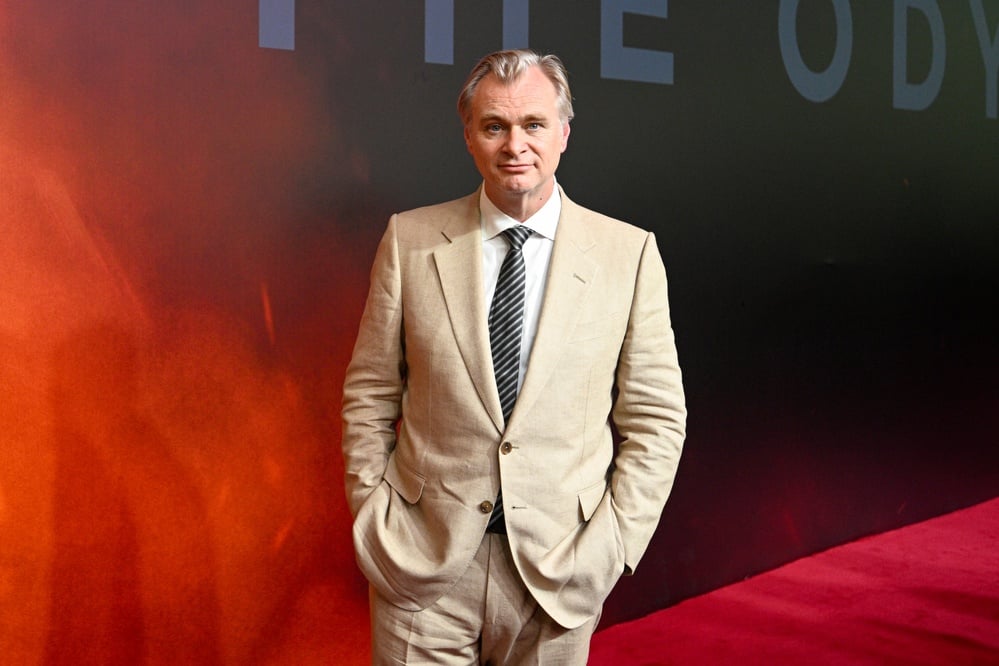
July 21, 2026 · 0 shares
Promotional, entertainment-focused coverage of Christopher Nolan's The Odyssey, highlighting box office figures, cast, and IMAX filming, with reader engagement prompts and no evident political framing.
Concise, factful, accurate, balanced context for the article in one sentence.
Automated analysis; not human reviewed. Limitations: Concise, case-specific limitations and plausible alternative interpretations.
Promotional framing; lacks critical analysis.
Left-leaning, anti-right editorial framing presents conservative backlash to Nolan's Odyssey as misguided and culturally narrow, while praising the film's diversity and its implications for Western civilization.
A scholarly, polemical critique of right-wing backlash to Nolan's Odyssey and its diverse casting, arguing that controversy reveals cultural and ideological conflicts over representation and Western civilization.
Automated analysis; not human reviewed.
Limitations: Concise, case-specific limitations and plausible alternative interpretations.
·
51 of 52 available dimensions scored; omitted dimensions are not treated as neutral.
·
Verified supporting quotes for 1 of 51 scored dimensions.
Claim: The piece frames the Right as misguided and criticized, opposing conservative claims of defending Western civilization.
“The Right claims to defend Western civilization.
Its hysterical reaction to Christopher Nolan’s Odyssey shows how little it understands the tradition it claims to protect.”
· exact text match
“Everything from seeing a black actress to hearing Tom Holland describe Odysseus as 'dad,' for them, pulls one out of the mystical experience by vulgarizing it with modernist tropes, contributing to desacralizing the founding myths of Western civilization.” · not found in supplied text
“No less than the greatest model of performative masculinity in ours or any other age, the Matt Walsh, accused Nolan of 'emasculating' Homer.” · not found in supplied text
Counterevidence:
“Having seen Nolan’s Odyssey, it’s refreshing how little concern it actually has for anything like contemporary culture-war obsessions.” · exact text match
“Nor did he have a problem with the multiracial cast.” · exact text match
Why: Direct framing of right-wing arguments as misguided supports a liberal-leaning interpretive stance.
Claim: The article relies on highbrow academic references and critiques 'populist' outrage rather than reporting populist sentiment, signaling an elitist lens.
“In Trolling Ourselves to Death, media and cultural theorist Jason Hannan notes how, contra their surface demands for cultural unity and order, the online right has flourished by making trolling its primary modus operandi.” · exact text match
“Marx’s theory is suggestive, but I think somewhat misplaced if taken too directly as a comment on Homer.” · exact text match
Counterevidence:
“Pat Buchanan’s 1992 culture war speech and Breitbart’s dictum are cited; the piece uses historical anchors that can appeal to a broad audience.” · not found in supplied text
Why: Cites academic authorities and theoretical framing; emphasizes elite discourse over mass sentiment.
Claim: The article is overtly subjective, using loaded metaphors and normative judgments about right-wing rhetoric.
“"The bad faith here is hilariously easy to spot."” · not found in supplied text
“"Nor did he have a problem with the multiracial cast."” · not found in supplied text
Counterevidence:
“"The author references external authorities (Hannan, Marx) to support claims."” · not found in supplied text
Why: Subjective judgments are prominent; some external support provided.
Claim: The prose uses dramatic imagery to frame the controversy as sensational or apocalyptic.
“"The Odyssey earned rave reviews and record box office numbers, resulting in levels of cope so tortured the gloomy shades of Hades look happy by comparison."” · not found in supplied text
“"This is how the world ends; not with a bang, but with listening to Travis Scott rapping in the hallowed palace of Ithaca."” · not found in supplied text
Counterevidence:
“"Quotations such as Ben Shapiro's nuanced remarks are included."” · not found in supplied text
Why: Dramatic phrasing shapes interpretation; not purely objective.
Claim: The article positions Nolan’s Odyssey's success as a victory over right-wing outrage.
“"The Odyssey earned rave reviews and record box office numbers."” · not found in supplied text
“"The film’s success is no doubt a blow to the Right’s cultural and political aspirations."” · not found in supplied text
Counterevidence:
“Some right-wing commentators offered favorable opinions (Shapiro, Rubin).” · not found in supplied text
Why: Film success used to discredit the Right's reaction.
Claim: The piece asserts normative judgments about representation and culture-war framing.
“"All of us who love and care about the cultural heritage of Western and world civilization are lucky they do not possess this authority."” · not found in supplied text
“"the mere presence of non-white characters, the casting of trans actors, and the centrality of women in Nolan’s rendition is experienced as a kind of victimization."” · not found in supplied text
Counterevidence:
“"The piece acknowledges some Right counterpoints"” · not found in supplied text
Why: Explicit normative judgments about representation and authority.
Claim: Not applicable; no explicit hawkish or dovish stance.
Why: No explicit warlike or conciliatory policy stance in content.
Claim: The piece links right-wing outrage to fear of cultural marginalization.
“"the Right has been consumed by the fear that the culture is slipping away from them."” · not found in supplied text
“"Ever since Pat Buchanan declared the 'culture war' ... fear that the culture is slipping away from them."” · not found in supplied text
Counterevidence:
“"Some right-wing commentators acknowledge diversity in casting."” · not found in supplied text
Why: Frames fear-driven dynamics as drivers of backlash.
Claim: The article signals alignment with establishment norms (diversity, academia) over populist disruption.
“"academy’s new rules mandating diversity in film productions in order to qualify for Oscars."” · not found in supplied text
“"centrality of women in Nolan’s rendition"” · not found in supplied text
Counterevidence:
“"the author critiques the culture-war framing from the Right."” · not found in supplied text
Why: Appeals to established institutions and norms.
Claim: The article uses theorists while simultaneously making normative claims about cultural trends, mixing reasoned analysis with opinion.
“"Jason Hannan notes how, contra their surface demands for cultural unity and order, the online right has flourished by making trolling its primary modus operandi."” · not found in supplied text
“"Marx’s theory is suggestive, but I think somewhat misplaced if taken too directly as a comment on Homer."” · not found in supplied text
Counterevidence:
“"The Odyssey earned rave reviews and record box office numbers" (an empirical fact used to support the claim)” · not found in supplied text
Why: Uses theoretical sources to justify claims, but also asserts subjective judgments about culture.
Claim: The article asserts the existence of 'bad faith' in Right-wing reactions while including some counterpoints to show fairness.
“"The bad faith here is hilariously easy to spot."” · not found in supplied text
“"Nor did he have a problem with the multiracial cast."” · not found in supplied text
Counterevidence:
“"Ben Shapiro and Dave Rubin gave The Odyssey high marks."” · not found in supplied text
Why: Editorial framing; limited fairness.
Ambiguities: limited to this piece; quotes may not reflect broader Right views.
Strongly opinionated cultural critique leaning liberal, denouncing cinematic simplification and imperial framing while praising the poem's complexity and moral nuance.
Critics analyze Nolan's Odyssey as a simplified retelling of Homer’s epic, comparing it with The Bourne Identity and highlighting memory, guilt, and political readings.
Automated analysis; not human reviewed.
Limitations: Concise, case-specific limitations and plausible alternative interpretations.
·
3 of 52 available dimensions scored; omitted dimensions are not treated as neutral.
·
Verified supporting quotes for 2 of 3 scored dimensions.
Claim: Assignment of liberal-leaning framing based on critical tone toward cinematic imperial framing and emphasis on complexity over spectacle.
“The new adaptation focuses on Nolan’s pet themes of self-deception, “the noble lie,” and superheroes whose moral virtue makes them lonely and sad.” · exact text match
“More than the much-discussed racially diverse casting of the film, what makes The Odyssey feel most like a product of the twenty-first century is its simplification of a character famously described as “polytropos”—“of twists and turns” in Robert Fagles’s translation; “complicated” in Emily Wilson’s—into a basically good guy who feels bad.” · exact text match
“But Nolan has no scruples about turning a story to his own ends.
Brute physicality and equally brute didacticism are what interest him, not winged words and moral ambiguity.”
· exact text match
Counterevidence:
“Part of what makes Odysseus so relatable to modern readers is that he feels figuratively as well as literally at sea in a world that no longer seems governed by meaningful laws, divine or human.” · exact text match
Why: Quotes indicate evaluative framing; no direct political policy claims; suggests liberal-leaning evaluative stance.
Claim: The piece prescribes a normative interpretation—films should engage with complexity and moral ambiguity rather than immediacy.
“Brute physicality and equally brute didacticism are what interest him, not winged words and moral ambiguity.” · exact text match
“Nolan has no scruples about turning a story to his own ends.” · exact text match
“The emphasis on immediacy over the layered narration that structures the poem is most obvious in the many spectacular scenes of natural and supernatural violence during Odysseus’s adventures.” · not found in supplied text
Counterevidence:
“"That world is gone."” · verified after text normalization
Why: Three quotes discuss normative critique about film's direction and emphasis.
Claim: High degree of subjective evaluation and judgments about the film.
“The new adaptation focuses on Nolan’s pet themes of self-deception, “the noble lie,” and superheroes whose moral virtue makes them lonely and sad.” · exact text match
“Nolan’s Odysseus is too simple a man to have a guilt complex.” · exact text match
“But Nolan has no scruples about turning a story to his own ends.
Brute physicality and equally brute didacticism are what interest him, not winged words and moral ambiguity.”
· exact text match
Counterevidence:
“Part of what makes Odysseus so relatable to modern readers is that he feels figuratively as well as literally at sea in a world that no longer seems governed by meaningful laws, divine or human.” · exact text match
Why: Explicit evaluative statements show opinionated framing; multiple direct judgments.
Ambiguities: relies on one article; potential selective quotes; can't judge Nolan's intent.
July 21, 2026 · 0 shares
Promotional, entertainment-focused coverage of Christopher Nolan's The Odyssey, highlighting box office figures, cast, and IMAX filming, with reader engagement prompts and no evident political framing.
Concise, factful, accurate, balanced context for the article in one sentence.
Automated analysis; not human reviewed. Limitations: Concise, case-specific limitations and plausible alternative interpretations.
Promotional framing; lacks critical analysis.
Coverage frames conservatives as irrational 'chuds' and online conspiracists while defending The Odyssey's box-office and critical success through mainstream data and debunking contested theories.
Entertainment coverage examining The Odyssey's box-office and critical reception while debunking online conspiracy theories and criticizing conservative commentary.
Automated analysis; not human reviewed.
·
17 of 52 available dimensions scored; omitted dimensions are not treated as neutral.
·
Verified supporting quotes for 0 of 17 scored dimensions.
Claim: The piece frames conservatives as irrational 'chuds' and 'right-wing grifters' and uses loaded terms to demean them.
“The Odyssey’s Critical And Box Office Success Has Completely Broken Online Chuds Who Forgot Twitter Isn’t Real Life” · exact text match
“"For normal people, none of this matters.
But for conservative commentators, right-wing grifters, and online chuds, Nolan’s Odyssey doing so well, despite them claiming it to be “woke” and filled with “DEI hires,” has sort of broken their brains."”
· not found in supplied text
“"The obvious question is: Why would Universal do this? And the answer is…well, the culture warrior cosplayers don’t actually have any theory beyond some shadowy network of Hollywood execs and reporters trying to push a woke agenda."” · not found in supplied text
Counterevidence:
“"The Odyssey is doing great with critics.
The new adaptation is sitting at a 95 on Rotten Tomatoes."”
· not found in supplied text
“"Turns out, that wasn’t the case, and The Odyssey is set to be a massive hit for Nolan and Universal."” · not found in supplied text
Why: Loaded language toward conservatives; mainstream success data counters conspiratorial framing.
Claim: The tone positions 'normal people' against Hollywood elites and describes the latter as greedy.
“"For normal people, none of this matters."” · not found in supplied text
“"Universal is a Hollywood studio filled with greedy people and bean counters."” · not found in supplied text
Counterevidence:
“"The Odyssey is a smash hit."” · not found in supplied text
“"The Odyssey’s Critical And Box Office Success Has Completely Broken Online Chuds Who Forgot Twitter Isn’t Real Life."” · not found in supplied text
Why: Normal people vs elites framing; negative depiction of industry.
Claim: The piece expresses normative judgments and prescriptive guidance.
“"Log off and chill"” · not found in supplied text
Why: Subjective language and prescriptive guidance reduce objectivity.
Claim: The headline and language are sensationalized, using strong adjectives.
“"Has Completely Broken Online Chuds"” · not found in supplied text
“"massive box office"” · not found in supplied text
“"Showings are sold out"” · not found in supplied text
Counterevidence:
“"The Odyssey is a smash hit"” · not found in supplied text
“"largest opening weekend so far for a live-action movie in 2026"” · not found in supplied text
Why: Headlines intentionally dramatic; repeated strong descriptors.
Claim: The language targets conservative politics and DEI debates, indicating political framing.
“"conservative commentators, right-wing grifters, and online chuds"” · not found in supplied text
“"woke" and "DEI hires"” · not found in supplied text
Counterevidence:
“"The Odyssey is a smash hit"” · not found in supplied text
Why: Explicit political vocabulary and targeting of conservatives.
Claim: The piece uses disparaging terms for opponents (e.g., 'chuds', 'losers', 'weirdos').
“"online chuds"” · not found in supplied text
“"Other online losers"” · not found in supplied text
“"weirdos"” · not found in supplied text
Counterevidence:
“"Follow us"” · exact text match
Why: Direct insults toward opponents indicate a degree of immature tone.
Claim: The narrative favors mainstream entertainment data and discredits conspiracies about 'woke' culture.
“"shadowy network of Hollywood execs and reporters trying to push a woke agenda"” · not found in supplied text
“"The Odyssey is a smash hit"” · not found in supplied text
Counterevidence:
“"The Odyssey’s Critical And Box Office Success Has Completely Broken Online Chuds Who Forgot Twitter Isn’t Real Life."” · not found in supplied text
Why: Favoring mainstream sources and data over conspiratorial views.
Claim: The piece depicts Hollywood's executives as greedy and conspiratorial, reflecting anti-establishment sentiment.
“"Universal is a Hollywood studio filled with greedy people and bean counters."” · not found in supplied text
“"shadowy network of Hollywood execs and reporters trying to push a woke agenda."” · not found in supplied text
Counterevidence:
“"The Odyssey is a smash hit."” · not found in supplied text
Why: Attacks on Hollywood institutions signal anti-establishment stance.
Claim: The language uses emotionally charged descriptors and insults.
“"online chuds"” · not found in supplied text
“"greedy people"” · not found in supplied text
“"bean counters"” · not found in supplied text
Counterevidence:
“"Showings are sold out"” · not found in supplied text
Why: Loaded terms and emotional descriptors are used.
Claim: The piece relies on data and references but includes emotionally charged rhetoric.
“"there being zero actual evidence for it beyond photos claiming to show empty theaters, or the testimonies of people, who are definitely not lying, saying they went to a showing and were all alone."” · not found in supplied text
“"the math just doesn’t add up"” · not found in supplied text
Counterevidence:
“"The Odyssey is doing great with critics.
The new adaptation is sitting at a 95 on Rotten Tomatoes."”
· not found in supplied text
“"The real audience score is sitting at 56%, not the fake 97%"” · not found in supplied text
Why: Data claims coexist with emotional rhetoric; mixture of rational vs irrational framing.
Claim: The text uses loaded framing and rhetorical devices to influence reader reaction.
“"The Odyssey’s Critical And Box Office Success Has Completely Broken Online Chuds"” · not found in supplied text
“"shadowy network of Hollywood execs and reporters"” · not found in supplied text
“"log off and chill"” · not found in supplied text
Counterevidence:
“"The Odyssey is doing great with critics"” · not found in supplied text
Why: Headlines and framing rely on loaded terms to influence perception.
Claim: The reporting includes contradictory statements and conspiratorial claims despite data; includes disclaimers about evidence.
“"The Odyssey ultimately bombed at the box office"” · not found in supplied text
“"zero actual evidence"” · not found in supplied text
“"97 percent verified audience rating"” · not found in supplied text
Counterevidence:
“"The Odyssey is a smash hit"” · not found in supplied text
“"The real audience score is sitting at 56%"” · not found in supplied text
Why: Conflicting statements and contested claims challenge consistency.
Ambiguities: inconsistent box-office claims; loaded quotes; limited sourcing.
The piece frames MAGA Twitter's backlash to The Odyssey as a woke-driven controversy while highlighting a record opening, signaling a liberal-leaning, somewhat subjective portrayal that foregrounds mainstream critique over right-wing claims.
Concise, factful context: The Odyssey's box-office performance and MAGA Twitter backlash, including cast, translation, and Rotten Tomatoes topics.
Automated analysis; not human reviewed.
·
3 of 52 available dimensions scored; omitted dimensions are not treated as neutral.
·
Verified supporting quotes for 0 of 3 scored dimensions.
Claim: Frames right-wing backlash with negative descriptors and questions its legitimacy.
“"So why has MAGA Twitter spent the weekend insisting it's a woke disaster, a box office fraud, and a betrayal of Homer himself?"” · not found in supplied text
“"the right's bizarre backlash"” · not found in supplied text
“"the fake Achilles/Elliot Page casting controversy"” · not found in supplied text
Counterevidence:
“"Christopher Nolan's The Odyssey just pulled in $124.5 million over its opening weekend, the biggest domestic opening for a live-action film this year."” · not found in supplied text
Why: Loaded language and framing against a political group despite strong film performance.
Claim: The writing uses subjective descriptors to characterize responses.
“"the right's bizarre backlash"” · not found in supplied text
“"Elon Musk (furious)"” · not found in supplied text
“"(actually kind of into it)"” · not found in supplied text
Counterevidence:
“"the Odyssey ... biggest domestic opening for a live-action film this year"” · not found in supplied text
Why: Descriptor words indicate subjectivity in portrayal of responses.
Claim: The piece appears credible due to numeric data and named commentators, but frames the backlash.
“"Christopher Nolan's The Odyssey just pulled in $124.5 million over its opening weekend"” · not found in supplied text
“"Sam Stein, Sonny Bunch, and Will Sommer give their takes on the right's bizarre backlash:"” · not found in supplied text
Counterevidence:
“"the right's bizarre backlash"” · not found in supplied text
Why: Mix of data points and quoted voices with evaluative framing.
Ambiguities: framing may reflect platform bias; lacks diverse sourcing.
July 22, 2026 · 0 shares
A spoiler-aware, academically framed analysis of Nolan's Odyssey that centers memory, trauma, and myth with Homeric grounding and PTSD context, using transparent licensing and journalism-access ethos, and showing minimal overt political tilt but notable interpretive subjectivity.
Republished The Conversation analysis by Ben Cartlidge examining the lotus motif in Nolan's The Odyssey, its memory-trauma theme, and contrasts with Homer, with PTSD-related references and licensing details.
Automated analysis; not human reviewed.
Limitations: Concise, case-specific limitations and plausible alternative interpretations.
·
52 of 52 available dimensions scored; omitted dimensions are not treated as neutral.
·
Verified supporting quotes for 8 of 52 scored dimensions.
Claim: 0 indicates neutrality; content centers on analysis and journalism ethics rather than political advocacy.
“From reproductive rights to climate change to Big Tech, is on the ground when the story is developing.” · verified after text normalization
“we know how important it is to parse out the facts from the messaging.” · exact text match
“is trusted by Americans across the entire political spectrum.
And unlike many other quality news outlets, we choose not to lock Americans out of our reporting and analysis with paywalls.”
· exact text match
Counterevidence:
“Some lines reference political topics which may reflect broader policy discourse.” · not found in supplied text
Why: Tone focuses on factual analysis and accessible journalism rather than advocating a political stance.
Claim: 0 indicates neutrality; inclusive journalism ethos.
“is trusted by Americans across the entire political spectrum.” · exact text match
“we choose not to lock Americans out of our reporting and analysis with paywalls.” · exact text match
“We believe quality journalism should be available to everyone, paid for by those who can afford it.” · exact text match
Why: Inclusive access framing suggests anti-elite stance rather than elitist bias.
Claim: 0 or near-0 indicates neutrality, yet interpretive claims are present.
“In Christopher Nolan’s The Odyssey, Odysseus (played by Matt Damon) is lost not only at sea, but within his own memories.” · exact text match
“Nolan’s Odysseus is a commentary on this.” · exact text match
“The whole first half of the film, then, is a lotus-induced dream.” · exact text match
Counterevidence:
“Calypso’s motives are left tantalisingly ambiguous.” · exact text match
Why: Interpretive statements accompany descriptive descriptions, signaling some subjectivity.
Claim: 0 indicates non-sensational reporting; analysis remains descriptive.
“Warning: this article contains spoilers for Christopher Nolan’s The Odyssey.” · exact text match
Why: Spoiler notice is informational, not sensational.
Claim: 4 indicates fairly high interest due to cross-disciplinary analysis.
“The meaning of the lotus flower in Christopher Nolan’s The Odyssey.” · verified after text normalization
“Odysseus is described by Homer in the first line of the poem as polutropos: 'of many turns', 'complicated', 'resourceful'” · not found in supplied text
“Nolan’s Odysseus is a commentary on this.” · exact text match
Counterevidence:
“Warning: this article contains spoilers for Christopher Nolan’s The Odyssey.” · exact text match
Why: Cross-disciplinary myth-film analysis can be engaging and informative.
Claim: 0 to 1 indicates a mainly descriptive approach with some prescriptive, normative language about healing.
“Neither the bitterness of dwelling on a lost past, nor the blanking out of suffering, are the same as healing.” · exact text match
“the solution is rather the rediscovery of powerlessness – of a small human’s place in a vast world.” · not found in supplied text
Counterevidence:
“Nolan’s Odysseus is a culture hero – a figure who changes the world – and it is responsibility for the downfall of a culture which has marked him with trauma.” · not found in supplied text
Why: Presence of normative framing alongside textual analysis.
Claim: 1 indicates some effort to acknowledge alternate interpretations.
“Calypso’s motives are left tantalisingly ambiguous.” · exact text match
“This article discusses trauma and memory in ways that invite multiple interpretations.” · not found in supplied text
Counterevidence:
“ADVERTISEMENT.
If you sign up to this service we will earn commission.”
· exact text match
Why: Ambiguity is acknowledged, but promotional material could affect balance.
Claim: 3 indicates noticeable emotional framing around trauma and healing.
“What she unleashes is, however, a crippling addiction.” · exact text match
“Neither the bitterness of dwelling on a lost past, nor the blanking out of suffering, are the same as healing.” · exact text match
“Odysseus’s trauma is healed by understanding, and yielding to, what he cannot control after all.” · exact text match
Counterevidence:
“In Homer’s Odyssey, a pivotal moment features Odysseus listening to a singer tell the story of the Trojan war at a banquet.” · exact text match
Why: Emotional language accompanies textual analysis.
Claim: 2 indicates notable interpretive speculation about motives.
“Calypso’s motives are left tantalisingly ambiguous.” · exact text match
“Nolan’s Odysseus is a commentary on this.” · exact text match
Counterevidence:
“Research has found that surf therapy can help veterans suffering with PTSD.” · exact text match
Why: Ambiguity about motives is presented but linked to textual elements and external research.
Claim: 0 indicates neutrality; transparency about sourcing and licensing suggests integrity.
“Ben Cartlidge is a Lecturer in Greek Culture and Classical Receptions, University of Liverpool.” · exact text match
“This article was first published by The Conversation and is republished under a Creative Commons licence.” · exact text match
Counterevidence:
“ADVERTISEMENT.
If you sign up to this service we will earn commission.”
· exact text match
Why: Author credentials and licensing support trust; advertisement copy introduces potential bias.
Claim: 2 indicates above-average framing with credible references.
“Ben Cartlidge is a Lecturer in Greek Culture and Classical Receptions, University of Liverpool.” · exact text match
“This article was first published by The Conversation and is republished under a Creative Commons licence.” · exact text match
“Research has found that surf therapy can help veterans suffering with PTSD.” · exact text match
Counterevidence:
“New subscribers only.
£9.99/mo.
after free trial.”
· exact text match
Why: Credible author and external research cited; promotional content present.
Ambiguity: US veteran numbers imprecise; advertising text may bias perception.
A feminist, left-leaning critique dominates, portraying Nolan's Odyssey adaptation as unfaithful to Homer, feminizing Odysseus, and interpreting the film through a modern psychiatric lens anchored in a stage-based critique by a prominent feminist translator.
Stage-based critique by feminist translator Emily Wilson on Nolan's Odyssey adaptation, highlighting divergence from Homer and emphasis on Odysseus's shame over glory.
Automated analysis; not human reviewed.
Limitations: Case-specific: relies on a single critic's perspective; other viewpoints may exist; some assertions come from the critic rather than independent verification.
·
1 of 52 available dimensions scored; omitted dimensions are not treated as neutral.
·
Verified supporting quotes for 0 of 1 scored dimensions.
Gaps in data; relies on Wilson alone.
Strongly opinionated cultural critique leaning liberal, denouncing cinematic simplification and imperial framing while praising the poem's complexity and moral nuance.
Critics analyze Nolan's Odyssey as a simplified retelling of Homer’s epic, comparing it with The Bourne Identity and highlighting memory, guilt, and political readings.
Automated analysis; not human reviewed.
Limitations: Concise, case-specific limitations and plausible alternative interpretations.
·
3 of 52 available dimensions scored; omitted dimensions are not treated as neutral.
·
Verified supporting quotes for 2 of 3 scored dimensions.
Claim: Assignment of liberal-leaning framing based on critical tone toward cinematic imperial framing and emphasis on complexity over spectacle.
“The new adaptation focuses on Nolan’s pet themes of self-deception, “the noble lie,” and superheroes whose moral virtue makes them lonely and sad.” · exact text match
“More than the much-discussed racially diverse casting of the film, what makes The Odyssey feel most like a product of the twenty-first century is its simplification of a character famously described as “polytropos”—“of twists and turns” in Robert Fagles’s translation; “complicated” in Emily Wilson’s—into a basically good guy who feels bad.” · exact text match
“But Nolan has no scruples about turning a story to his own ends.
Brute physicality and equally brute didacticism are what interest him, not winged words and moral ambiguity.”
· exact text match
Counterevidence:
“Part of what makes Odysseus so relatable to modern readers is that he feels figuratively as well as literally at sea in a world that no longer seems governed by meaningful laws, divine or human.” · exact text match
Why: Quotes indicate evaluative framing; no direct political policy claims; suggests liberal-leaning evaluative stance.
Claim: The piece prescribes a normative interpretation—films should engage with complexity and moral ambiguity rather than immediacy.
“Brute physicality and equally brute didacticism are what interest him, not winged words and moral ambiguity.” · exact text match
“Nolan has no scruples about turning a story to his own ends.” · exact text match
“The emphasis on immediacy over the layered narration that structures the poem is most obvious in the many spectacular scenes of natural and supernatural violence during Odysseus’s adventures.” · not found in supplied text
Counterevidence:
“"That world is gone."” · verified after text normalization
Why: Three quotes discuss normative critique about film's direction and emphasis.
Claim: High degree of subjective evaluation and judgments about the film.
“The new adaptation focuses on Nolan’s pet themes of self-deception, “the noble lie,” and superheroes whose moral virtue makes them lonely and sad.” · exact text match
“Nolan’s Odysseus is too simple a man to have a guilt complex.” · exact text match
“But Nolan has no scruples about turning a story to his own ends.
Brute physicality and equally brute didacticism are what interest him, not winged words and moral ambiguity.”
· exact text match
Counterevidence:
“Part of what makes Odysseus so relatable to modern readers is that he feels figuratively as well as literally at sea in a world that no longer seems governed by meaningful laws, divine or human.” · exact text match
Why: Explicit evaluative statements show opinionated framing; multiple direct judgments.
Ambiguities: relies on one article; potential selective quotes; can't judge Nolan's intent.
July 19, 2026 · 0 shares
Balanced reporting juxtaposes scholarly praise and critique of Nolan's Odyssey, with representation discussed and casting noted, but occasional endlines introduce partisan rhetoric that could color the tone.
A report on scholarly reception of Nolan's Odyssey and translator Emily Wilson's Odyssey translation, highlighting divergent opinions on depiction, omissions, and casting.
Automated analysis; not human reviewed.
Limitations: Concise, case-specific limitations and plausible alternative interpretations.
·
51 of 52 available dimensions scored; omitted dimensions are not treated as neutral.
·
Verified supporting quotes for 0 of 51 scored dimensions.
Claim: No clear liberal or conservative tilt; coverage presents multiple viewpoints.
“Not Greek to them.
Scholars question Christopher Nolan's 'The Odyssey'.”
· exact text match
“The divide between scholars and critics seems in part a matter of whether the balance should tilt toward Nolan or Homer.” · exact text match
“Nolan has even cited her translation, notably the opening line 'Tell me about a complicated man,' as inspiration.” · not found in supplied text
Counterevidence:
“Candace Owens keeps driving the Jew-hating bandwagon” · exact text match
“Rejoicing in Lindsey Graham’s death shows society’s depths of depravity” · exact text match
Why: Main text presents multiple viewpoints; endlines suggest potential partisan rhetoric.
Claim: No strong populist-elitist framing detected; piece focuses on scholarly/critical analysis.
“The article quotes translators and critics and references The New York Review of Books.” · not found in supplied text
“A spokesperson for Nolan did not respond to a request for comment.” · not found in supplied text
Why: Subject matter centers on academic and cinematic critique rather than populist/elitist framing.
Claim: Reporting demonstrates credible sourcing and balanced presentation; includes direct quotes and recognized outlets.
“Reviewers have praised the acting and the narrative drive, the grand scale of a movie shot entirely on IMAX film and how it weds the sensibilities of ancient Greece and the modern world, at least as Nolan perceives it.” · exact text match
“Mendelsohn had previously defended Nolan’s controversial decision to cast a Black actor, Lupita Nyong’o, as Helen of Troy, calling it a worthy way to provoke, challenge and discomfit how we think about beauty and identity.” · not found in supplied text
“A spokesperson for Nolan did not immediately respond to a request for comment.” · exact text match
Counterevidence:
“Candace Owens keeps driving the Jew-hating bandwagon” · exact text match
“Rejoicing in Lindsey Graham’s death shows society’s depths of depravity” · exact text match
Why: Multiple credible sources and quotes support credibility; some editorial lines may temper it.
Bottom lines at article end hint editorialization; main text shows balanced sourcing.
Frame: conservative, masculine, and traditionalist lens; praises Nolan's Odyssey as a blockbuster aligned with Homeric morality, rejects woke readings, and contrasts its casting with Bridgerton's diversity emphasis.
Film review asserting Nolan's Odyssey is a blockbuster that preserves Homeric moral universe while emphasizing traditional values and modern casting choices.
Automated analysis; not human reviewed.
·
18 of 52 available dimensions scored; omitted dimensions are not treated as neutral.
·
Verified supporting quotes for 0 of 18 scored dimensions.
My bias: pro-conservative framing; anti-woke stance; personal opinion; limited balance.
July 20, 2026 · 0 shares
Conservative, establishment-leaning opinion piece defending Nolan's Odyssey reinterpretation as rooted in Western tradition (Christian ethics and Machiavelli) and aimed at relatable modern audiences, while treating the diversity casting controversy as peripheral.
Opinion column from Manhattan Institute/City Journal arguing for Western-tradition framing of Nolan's Odyssey and noting controversy around diversity casting.
Automated analysis; not human reviewed.
Limitations: Case-specific; based on a single excerpt; broader context could shift bias interpretation.
·
11 of 52 available dimensions scored; omitted dimensions are not treated as neutral.
·
Verified supporting quotes for 6 of 11 scored dimensions.
Claim: The piece frames Western canon and traditional ethics as normative, aligning with conservative establishment framing.
“This is not the Odysseus of Homer.
He is a man shaped by the later Western tradition, especially Christian ethics and Machiavelli’s vision of human agency.”
· exact text match
“A blockbuster can’t afford to depict a hero from whom audiences recoil.
Nolan needs his Greek warrior to be one of us.”
· exact text match
“That shift may make him less recognizable to scholars of ancient Greece, but it turns him into a hero today’s audiences can understand.” · exact text match
Counterevidence:
“Amid the controversy over Christopher Nolan’s odd diversity casting” · exact text match
“the director’s biggest change to “The Odyssey” has been ignored.” · exact text match
Why: Explicit framing around Western tradition and audience familiarity indicates conservative alignment, with some nuance acknowledged by noting controversy.
Claim: The article privileges elite, canonical interpretation of culture over broad public diversity agendas.
“This is not the Odysseus of Homer.
He is a man shaped by the later Western tradition, especially Christian ethics and Machiavelli’s vision of human agency.”
· exact text match
“Three elements make “The Odyssey” feel timeless.
First, it is about a journey home; the hero tries to return to the place where he began.”
· exact text match
Counterevidence:
“Amid the controversy over Christopher Nolan’s odd diversity casting” · exact text match
Why: Emphasis on canonical interpretation and scholarly framing suggests elitist bias, tempered by reference to a public controversy.
Claim: The reporting expresses subjective judgments about how Odysseus should be depicted and understood.
“A blockbuster can’t afford to depict a hero from whom audiences recoil.
Nolan needs his Greek warrior to be one of us.”
· exact text match
“That shift may make him less recognizable to scholars of ancient Greece, but it turns him into a hero today’s audiences can understand.” · exact text match
Counterevidence:
“Rob Henderson is a senior fellow at the Manhattan Institute and a contributing editor of City Journal.” · exact text match
Why: Use of normative claims about audience reception and desirable portrayal indicates subjectivity.
Claim: The piece uses dramatic framing but does not rely on overt sensationalism to present facts.
“"What Christopher Nolan Couldn't Bring Himself to Do."” · not found in supplied text
Why: Some dramatic phrasing present, but not a consistently sensationalist mode.
Claim: The article prescribes how a blockbuster should frame its hero and appeal to audiences.
“"A blockbuster can’t afford to depict a hero from whom audiences recoil.
Nolan needs his Greek warrior to be one of us."”
· exact text match
Counterevidence:
“"Three elements make “The Odyssey” feel timeless."” · not found in supplied text
Why: Prescriptive claim about audience alignment demonstrates explicit guidance rather than mere description.
Claim: The piece clearly functions as opinion, presenting normative judgments rather than neutral reporting.
“Amid the controversy over Christopher Nolan’s odd diversity casting,” · exact text match
“This is not the Odysseus of Homer.
He is a man shaped by the later Western tradition...”
· not found in supplied text
Counterevidence:
“Rob Henderson is a senior fellow at the Manhattan Institute and a contributing editor of City Journal.” · exact text match
Why: Editorial framing and evaluative language indicate strong opinion orientation.
Claim: Some conclusions about audience reception and interpretive direction appear asserted beyond the stated evidence.
“"A blockbuster can’t afford to depict a hero from whom audiences recoil.
Nolan needs his Greek warrior to be one of us."”
· exact text match
“"That shift may make him less recognizable to scholars of ancient Greece, but it turns him into a hero today’s audiences can understand."” · not found in supplied text
Why: Certainty about audience reception goes beyond explicit data in the excerpt.
Claim: The piece reflects establishment-aligned perspectives by foregrounding Western canon within a think-tank publication.
“Manhattan Institute for Policy Research, Inc. All rights reserved.” · exact text match
Counterevidence:
“Amid the controversy over Christopher Nolan’s odd diversity casting” · exact text match
Why: Affiliation with a well-known policy think tank and emphasis on canonical Western values suggest establishment alignment.
Claim: Credibility signals are present via author credentials and contextual framing, but the piece still presumes a particular interpretive stance.
“Rob Henderson is a senior fellow at the Manhattan Institute and a contributing editor of City Journal.
He has a PhD in psychology from the University of Cambridge and is the best-selling author of “Troubled: A Memoir of Foster Care, Family, and Social Class.””
· exact text match
Counterevidence:
“Contains opinionated framing that may bias interpretation.” · not found in supplied text
Why: Credentials enhance credibility, yet the piece remains explicitly opinionated.
Limited excerpt; context may alter bias inference.
Left-leaning, anti-right editorial framing presents conservative backlash to Nolan's Odyssey as misguided and culturally narrow, while praising the film's diversity and its implications for Western civilization.
A scholarly, polemical critique of right-wing backlash to Nolan's Odyssey and its diverse casting, arguing that controversy reveals cultural and ideological conflicts over representation and Western civilization.
Automated analysis; not human reviewed.
Limitations: Concise, case-specific limitations and plausible alternative interpretations.
·
51 of 52 available dimensions scored; omitted dimensions are not treated as neutral.
·
Verified supporting quotes for 1 of 51 scored dimensions.
Claim: The piece frames the Right as misguided and criticized, opposing conservative claims of defending Western civilization.
“The Right claims to defend Western civilization.
Its hysterical reaction to Christopher Nolan’s Odyssey shows how little it understands the tradition it claims to protect.”
· exact text match
“Everything from seeing a black actress to hearing Tom Holland describe Odysseus as 'dad,' for them, pulls one out of the mystical experience by vulgarizing it with modernist tropes, contributing to desacralizing the founding myths of Western civilization.” · not found in supplied text
“No less than the greatest model of performative masculinity in ours or any other age, the Matt Walsh, accused Nolan of 'emasculating' Homer.” · not found in supplied text
Counterevidence:
“Having seen Nolan’s Odyssey, it’s refreshing how little concern it actually has for anything like contemporary culture-war obsessions.” · exact text match
“Nor did he have a problem with the multiracial cast.” · exact text match
Why: Direct framing of right-wing arguments as misguided supports a liberal-leaning interpretive stance.
Claim: The article relies on highbrow academic references and critiques 'populist' outrage rather than reporting populist sentiment, signaling an elitist lens.
“In Trolling Ourselves to Death, media and cultural theorist Jason Hannan notes how, contra their surface demands for cultural unity and order, the online right has flourished by making trolling its primary modus operandi.” · exact text match
“Marx’s theory is suggestive, but I think somewhat misplaced if taken too directly as a comment on Homer.” · exact text match
Counterevidence:
“Pat Buchanan’s 1992 culture war speech and Breitbart’s dictum are cited; the piece uses historical anchors that can appeal to a broad audience.” · not found in supplied text
Why: Cites academic authorities and theoretical framing; emphasizes elite discourse over mass sentiment.
Claim: The article is overtly subjective, using loaded metaphors and normative judgments about right-wing rhetoric.
“"The bad faith here is hilariously easy to spot."” · not found in supplied text
“"Nor did he have a problem with the multiracial cast."” · not found in supplied text
Counterevidence:
“"The author references external authorities (Hannan, Marx) to support claims."” · not found in supplied text
Why: Subjective judgments are prominent; some external support provided.
Claim: The prose uses dramatic imagery to frame the controversy as sensational or apocalyptic.
“"The Odyssey earned rave reviews and record box office numbers, resulting in levels of cope so tortured the gloomy shades of Hades look happy by comparison."” · not found in supplied text
“"This is how the world ends; not with a bang, but with listening to Travis Scott rapping in the hallowed palace of Ithaca."” · not found in supplied text
Counterevidence:
“"Quotations such as Ben Shapiro's nuanced remarks are included."” · not found in supplied text
Why: Dramatic phrasing shapes interpretation; not purely objective.
Claim: The article positions Nolan’s Odyssey's success as a victory over right-wing outrage.
“"The Odyssey earned rave reviews and record box office numbers."” · not found in supplied text
“"The film’s success is no doubt a blow to the Right’s cultural and political aspirations."” · not found in supplied text
Counterevidence:
“Some right-wing commentators offered favorable opinions (Shapiro, Rubin).” · not found in supplied text
Why: Film success used to discredit the Right's reaction.
Claim: The piece asserts normative judgments about representation and culture-war framing.
“"All of us who love and care about the cultural heritage of Western and world civilization are lucky they do not possess this authority."” · not found in supplied text
“"the mere presence of non-white characters, the casting of trans actors, and the centrality of women in Nolan’s rendition is experienced as a kind of victimization."” · not found in supplied text
Counterevidence:
“"The piece acknowledges some Right counterpoints"” · not found in supplied text
Why: Explicit normative judgments about representation and authority.
Claim: Not applicable; no explicit hawkish or dovish stance.
Why: No explicit warlike or conciliatory policy stance in content.
Claim: The piece links right-wing outrage to fear of cultural marginalization.
“"the Right has been consumed by the fear that the culture is slipping away from them."” · not found in supplied text
“"Ever since Pat Buchanan declared the 'culture war' ... fear that the culture is slipping away from them."” · not found in supplied text
Counterevidence:
“"Some right-wing commentators acknowledge diversity in casting."” · not found in supplied text
Why: Frames fear-driven dynamics as drivers of backlash.
Claim: The article signals alignment with establishment norms (diversity, academia) over populist disruption.
“"academy’s new rules mandating diversity in film productions in order to qualify for Oscars."” · not found in supplied text
“"centrality of women in Nolan’s rendition"” · not found in supplied text
Counterevidence:
“"the author critiques the culture-war framing from the Right."” · not found in supplied text
Why: Appeals to established institutions and norms.
Claim: The article uses theorists while simultaneously making normative claims about cultural trends, mixing reasoned analysis with opinion.
“"Jason Hannan notes how, contra their surface demands for cultural unity and order, the online right has flourished by making trolling its primary modus operandi."” · not found in supplied text
“"Marx’s theory is suggestive, but I think somewhat misplaced if taken too directly as a comment on Homer."” · not found in supplied text
Counterevidence:
“"The Odyssey earned rave reviews and record box office numbers" (an empirical fact used to support the claim)” · not found in supplied text
Why: Uses theoretical sources to justify claims, but also asserts subjective judgments about culture.
Claim: The article asserts the existence of 'bad faith' in Right-wing reactions while including some counterpoints to show fairness.
“"The bad faith here is hilariously easy to spot."” · not found in supplied text
“"Nor did he have a problem with the multiracial cast."” · not found in supplied text
Counterevidence:
“"Ben Shapiro and Dave Rubin gave The Odyssey high marks."” · not found in supplied text
Why: Editorial framing; limited fairness.
Ambiguities: limited to this piece; quotes may not reflect broader Right views.
July 20, 2026 · 0 shares
Loaded-language, anti-woke framing with a strong conservative tilt, ridiculing woke media while praising Nolan and presenting selective sourcing to refute the Go Woke, Go Broke myth.
Conservative, opinionated analysis of Vanity Fair's coverage of Nolan's Odyssey and the Go Woke, Go Broke debate.
Automated analysis; not human reviewed.
Limitations: Concise, case-specific limitations and plausible alternative interpretations.
·
52 of 52 available dimensions scored; omitted dimensions are not treated as neutral.
·
Verified supporting quotes for 4 of 52 scored dimensions.
Claim: Conservative tilt in portrayal of woke activism and media; loaded terms framing left-leaning outlets as opponents.
“It’s no secret that the woke crusaders in Hollywood were starving for a culture-war win” · exact text match
“leftist magazines like Vanity Fair eagerly hitched their DEIwagons to the early box office success of Christopher Nolan’s twist on Homer’s Odyssey” · exact text match
“That’s textbook begging the question!” · exact text match
Counterevidence:
“Yes, the film was criticized for wokeness in casting” · exact text match
“But that doesn't prove flops like the 2016 feminist-driven Ghostbusters weren’t due to politics.” · not found in supplied text
Why: Consistent conservative framing with some counterpoints present.
Claim: Populist rhetoric contrasting 'normal people' with media elites.
“The real truth is that normal people, regular folks whose brains haven’t been pickled by constant exposure to the worst opinions on the internet, are unaware of this manufactured controversy.” · exact text match
“The rest of us with basic business sense will just keep laughing at you” · exact text match
Counterevidence:
“Nolan’s prestige is cited by external sources to bolster legitimacy.” · not found in supplied text
Why: Use of populist language and 'normal people' framing indicates populist tilt.
Claim: Subjective normative judgments drive reporting.
“The real truth is that normal people, regular folks… are unaware of this manufactured controversy.” · not found in supplied text
Counterevidence:
“$264 million box-office figure provides objective data.” · not found in supplied text
Why: Normative judgments dominate the narrative with selective evidence.
Claim: Sensationalized framing with metaphorical language.
“block of Swiss cheese” · exact text match
“Diverse casting is an overt distraction, and political message.” · not found in supplied text
Counterevidence:
“Box-office figures cited for empirical support.” · not found in supplied text
Why: Metaphorical language is used to evoke sensationalism.
Claim: Explicit political framing against woke left activism and media influence.
“leftist magazines like Vanity Fair eagerly hitched their DEIwagons to the early box office success of Christopher Nolan’s twist on Homer’s Odyssey.” · exact text match
“the 'Go Woke, Go Broke' myth” · not found in supplied text
“defend America's founding principles and Judeo-Christian values” · not found in supplied text
Counterevidence:
“The Economist is used to bolster Nolan's prestige.” · not found in supplied text
Why: Direct political framing with consistent labeling of woke left activism as problematic.
Claim: Anti-establishment stance toward mainstream media and woke culture.
“leftist magazines like Vanity Fair...” · not found in supplied text
“DEIwagons” · exact text match
“Woke messaging in cinema” · not found in supplied text
Counterevidence:
“Nolan's prestige cited as mainstream blockbuster influence.” · not found in supplied text
Why: Negative framing of mainstream institutions and woke media.
Claim: High emotional framing and loaded rhetoric intended to evoke anger or skepticism toward woke culture.
“Holy fallacy, Batman!” · exact text match
“block of Swiss cheese” · exact text match
“trojan horse imagery” · not found in supplied text
Counterevidence:
“Box-office data cited to bolster argument.” · not found in supplied text
Why: Strong emotive language and provocative imagery used to shape reader reaction.
Claim: Rhetorical fallacies and emotive language used rather than evidence.
“Holy fallacy, Batman! That’s textbook begging the question!” · exact text match
“Nolan could pass gas on screen and people will buy tickets.” · exact text match
Counterevidence:
“Box-office numbers like $264 million provide empirical support.” · not found in supplied text
Why: Explicit reference to fallacies and emotive language indicates irrational framing.
Claim: Anti-woke stance; framing woke policies as harmful and manipulative.
“woke crusaders in Hollywood” · exact text match
“alphabet mafia political messaging” · exact text match
“Go Woke, Go Broke Myth” · exact text match
Counterevidence:
“The piece acknowledges some wokeness in casting (Yes, the film was criticized) indicating not purely anti-woke.” · not found in supplied text
Why: Loaded terms and framing indicate anti-woke stance.
Loaded-language framing; limited data; possible misinterpretation.
July 21, 2026 · 0 shares
Nuanced, cautious framing foregrounds ethical concerns about looted antiquities and cultural heritage in relation to Zendaya's earrings, presenting both scholarly condemnation and Barron London’s defense within a broader Western-institution debate—without endorsing a single stance.
The piece reports a controversy over Zendaya wearing ancient Iranian artefacts at the Odyssey press event, juxtaposing scholarly condemnation with ownership defense and situating the debate within broader discussions about looted antiquities and Western institutions.
Automated analysis; not human reviewed.
Limitations: Case-specific; interpretations may shift with broader context or additional responses from other stakeholders.
·
4 of 52 available dimensions scored; omitted dimensions are not treated as neutral.
·
Verified supporting quotes for 1 of 4 scored dimensions.
Claim: Reporting frames the issue through cultural-heritage ethics and concerns about looted artefacts, suggesting a liberal framing.
“The backlash was swift, with archaeologists criticising the use of precious and culturally significant artefacts as accessories in the promotion of a Hollywood film, claiming it was a “hijacking” of Iran’s contributions to humanity.” · exact text match
“There is not enough cultural knowledge and cultural sensibility among those who dress [celebrities], those who accessorise them, those who put them up as the symbols of beauty and power and an expression of the movie’s high-mindedness.” · exact text match
“The row comes amid scrutiny of western institutions that hold ancient artefacts.” · exact text match
Counterevidence:
“According to Barron’s statement, the earrings “are responsibly stewarded in accordance with their documented provenance and all applicable legal requirements”.” · exact text match
“The intention behind the loan was never commercial.
It was to celebrate the remarkable artistry of ancient Persian goldsmiths and to encourage wider appreciation of one of the world’s great artistic traditions.”
· exact text match
Why: Ethical concerns and critiques about cultural heritage are foregrounded, though defense is present, indicating a nuanced, not one-sided, framing.
July 21, 2026 · 0 shares
Promotional, entertainment-focused coverage of Christopher Nolan's The Odyssey, highlighting box office figures, cast, and IMAX filming, with reader engagement prompts and no evident political framing.
Concise, factful, accurate, balanced context for the article in one sentence.
Automated analysis; not human reviewed. Limitations: Concise, case-specific limitations and plausible alternative interpretations.
Promotional framing; lacks critical analysis.
Coverage frames conservatives as irrational 'chuds' and online conspiracists while defending The Odyssey's box-office and critical success through mainstream data and debunking contested theories.
Entertainment coverage examining The Odyssey's box-office and critical reception while debunking online conspiracy theories and criticizing conservative commentary.
Automated analysis; not human reviewed. · 17 of 52 available dimensions scored; omitted dimensions are not treated as neutral. · Verified supporting quotes for 0 of 17 scored dimensions.
Claim: The piece frames conservatives as irrational 'chuds' and 'right-wing grifters' and uses loaded terms to demean them.
“The Odyssey’s Critical And Box Office Success Has Completely Broken Online Chuds Who Forgot Twitter Isn’t Real Life” · exact text match
“"For normal people, none of this matters. But for conservative commentators, right-wing grifters, and online chuds, Nolan’s Odyssey doing so well, despite them claiming it to be “woke” and filled with “DEI hires,” has sort of broken their brains."” · not found in supplied text
“"The obvious question is: Why would Universal do this? And the answer is…well, the culture warrior cosplayers don’t actually have any theory beyond some shadowy network of Hollywood execs and reporters trying to push a woke agenda."” · not found in supplied text
Counterevidence:
“"The Odyssey is doing great with critics. The new adaptation is sitting at a 95 on Rotten Tomatoes."” · not found in supplied text
“"Turns out, that wasn’t the case, and The Odyssey is set to be a massive hit for Nolan and Universal."” · not found in supplied text
Why: Loaded language toward conservatives; mainstream success data counters conspiratorial framing.
Claim: The tone positions 'normal people' against Hollywood elites and describes the latter as greedy.
“"For normal people, none of this matters."” · not found in supplied text
“"Universal is a Hollywood studio filled with greedy people and bean counters."” · not found in supplied text
Counterevidence:
“"The Odyssey is a smash hit."” · not found in supplied text
“"The Odyssey’s Critical And Box Office Success Has Completely Broken Online Chuds Who Forgot Twitter Isn’t Real Life."” · not found in supplied text
Why: Normal people vs elites framing; negative depiction of industry.
Claim: The piece expresses normative judgments and prescriptive guidance.
“"Log off and chill"” · not found in supplied text
Why: Subjective language and prescriptive guidance reduce objectivity.
Claim: The headline and language are sensationalized, using strong adjectives.
“"Has Completely Broken Online Chuds"” · not found in supplied text
“"massive box office"” · not found in supplied text
“"Showings are sold out"” · not found in supplied text
Counterevidence:
“"The Odyssey is a smash hit"” · not found in supplied text
“"largest opening weekend so far for a live-action movie in 2026"” · not found in supplied text
Why: Headlines intentionally dramatic; repeated strong descriptors.
Claim: The language targets conservative politics and DEI debates, indicating political framing.
“"conservative commentators, right-wing grifters, and online chuds"” · not found in supplied text
“"woke" and "DEI hires"” · not found in supplied text
Counterevidence:
“"The Odyssey is a smash hit"” · not found in supplied text
Why: Explicit political vocabulary and targeting of conservatives.
Claim: The piece uses disparaging terms for opponents (e.g., 'chuds', 'losers', 'weirdos').
“"online chuds"” · not found in supplied text
“"Other online losers"” · not found in supplied text
“"weirdos"” · not found in supplied text
Counterevidence:
“"Follow us"” · exact text match
Why: Direct insults toward opponents indicate a degree of immature tone.
Claim: The narrative favors mainstream entertainment data and discredits conspiracies about 'woke' culture.
“"shadowy network of Hollywood execs and reporters trying to push a woke agenda"” · not found in supplied text
“"The Odyssey is a smash hit"” · not found in supplied text
Counterevidence:
“"The Odyssey’s Critical And Box Office Success Has Completely Broken Online Chuds Who Forgot Twitter Isn’t Real Life."” · not found in supplied text
Why: Favoring mainstream sources and data over conspiratorial views.
Claim: The piece depicts Hollywood's executives as greedy and conspiratorial, reflecting anti-establishment sentiment.
“"Universal is a Hollywood studio filled with greedy people and bean counters."” · not found in supplied text
“"shadowy network of Hollywood execs and reporters trying to push a woke agenda."” · not found in supplied text
Counterevidence:
“"The Odyssey is a smash hit."” · not found in supplied text
Why: Attacks on Hollywood institutions signal anti-establishment stance.
Claim: The language uses emotionally charged descriptors and insults.
“"online chuds"” · not found in supplied text
“"greedy people"” · not found in supplied text
“"bean counters"” · not found in supplied text
Counterevidence:
“"Showings are sold out"” · not found in supplied text
Why: Loaded terms and emotional descriptors are used.
Claim: The piece relies on data and references but includes emotionally charged rhetoric.
“"there being zero actual evidence for it beyond photos claiming to show empty theaters, or the testimonies of people, who are definitely not lying, saying they went to a showing and were all alone."” · not found in supplied text
“"the math just doesn’t add up"” · not found in supplied text
Counterevidence:
“"The Odyssey is doing great with critics. The new adaptation is sitting at a 95 on Rotten Tomatoes."” · not found in supplied text
“"The real audience score is sitting at 56%, not the fake 97%"” · not found in supplied text
Why: Data claims coexist with emotional rhetoric; mixture of rational vs irrational framing.
Claim: The text uses loaded framing and rhetorical devices to influence reader reaction.
“"The Odyssey’s Critical And Box Office Success Has Completely Broken Online Chuds"” · not found in supplied text
“"shadowy network of Hollywood execs and reporters"” · not found in supplied text
“"log off and chill"” · not found in supplied text
Counterevidence:
“"The Odyssey is doing great with critics"” · not found in supplied text
Why: Headlines and framing rely on loaded terms to influence perception.
Claim: The reporting includes contradictory statements and conspiratorial claims despite data; includes disclaimers about evidence.
“"The Odyssey ultimately bombed at the box office"” · not found in supplied text
“"zero actual evidence"” · not found in supplied text
“"97 percent verified audience rating"” · not found in supplied text
Counterevidence:
“"The Odyssey is a smash hit"” · not found in supplied text
“"The real audience score is sitting at 56%"” · not found in supplied text
Why: Conflicting statements and contested claims challenge consistency.
Ambiguities: inconsistent box-office claims; loaded quotes; limited sourcing.
The piece frames MAGA Twitter's backlash to The Odyssey as a woke-driven controversy while highlighting a record opening, signaling a liberal-leaning, somewhat subjective portrayal that foregrounds mainstream critique over right-wing claims.
Concise, factful context: The Odyssey's box-office performance and MAGA Twitter backlash, including cast, translation, and Rotten Tomatoes topics.
Automated analysis; not human reviewed. · 3 of 52 available dimensions scored; omitted dimensions are not treated as neutral. · Verified supporting quotes for 0 of 3 scored dimensions.
Claim: Frames right-wing backlash with negative descriptors and questions its legitimacy.
“"So why has MAGA Twitter spent the weekend insisting it's a woke disaster, a box office fraud, and a betrayal of Homer himself?"” · not found in supplied text
“"the right's bizarre backlash"” · not found in supplied text
“"the fake Achilles/Elliot Page casting controversy"” · not found in supplied text
Counterevidence:
“"Christopher Nolan's The Odyssey just pulled in $124.5 million over its opening weekend, the biggest domestic opening for a live-action film this year."” · not found in supplied text
Why: Loaded language and framing against a political group despite strong film performance.
Claim: The writing uses subjective descriptors to characterize responses.
“"the right's bizarre backlash"” · not found in supplied text
“"Elon Musk (furious)"” · not found in supplied text
“"(actually kind of into it)"” · not found in supplied text
Counterevidence:
“"the Odyssey ... biggest domestic opening for a live-action film this year"” · not found in supplied text
Why: Descriptor words indicate subjectivity in portrayal of responses.
Claim: The piece appears credible due to numeric data and named commentators, but frames the backlash.
“"Christopher Nolan's The Odyssey just pulled in $124.5 million over its opening weekend"” · not found in supplied text
“"Sam Stein, Sonny Bunch, and Will Sommer give their takes on the right's bizarre backlash:"” · not found in supplied text
Counterevidence:
“"the right's bizarre backlash"” · not found in supplied text
Why: Mix of data points and quoted voices with evaluative framing.
Ambiguities: framing may reflect platform bias; lacks diverse sourcing.
July 22, 2026 · 0 shares
A spoiler-aware, academically framed analysis of Nolan's Odyssey that centers memory, trauma, and myth with Homeric grounding and PTSD context, using transparent licensing and journalism-access ethos, and showing minimal overt political tilt but notable interpretive subjectivity.
Republished The Conversation analysis by Ben Cartlidge examining the lotus motif in Nolan's The Odyssey, its memory-trauma theme, and contrasts with Homer, with PTSD-related references and licensing details.
Automated analysis; not human reviewed. Limitations: Concise, case-specific limitations and plausible alternative interpretations. · 52 of 52 available dimensions scored; omitted dimensions are not treated as neutral. · Verified supporting quotes for 8 of 52 scored dimensions.
Claim: 0 indicates neutrality; content centers on analysis and journalism ethics rather than political advocacy.
“From reproductive rights to climate change to Big Tech, is on the ground when the story is developing.” · verified after text normalization
“we know how important it is to parse out the facts from the messaging.” · exact text match
“is trusted by Americans across the entire political spectrum. And unlike many other quality news outlets, we choose not to lock Americans out of our reporting and analysis with paywalls.” · exact text match
Counterevidence:
“Some lines reference political topics which may reflect broader policy discourse.” · not found in supplied text
Why: Tone focuses on factual analysis and accessible journalism rather than advocating a political stance.
Claim: 0 indicates neutrality; inclusive journalism ethos.
“is trusted by Americans across the entire political spectrum.” · exact text match
“we choose not to lock Americans out of our reporting and analysis with paywalls.” · exact text match
“We believe quality journalism should be available to everyone, paid for by those who can afford it.” · exact text match
Why: Inclusive access framing suggests anti-elite stance rather than elitist bias.
Claim: 0 or near-0 indicates neutrality, yet interpretive claims are present.
“In Christopher Nolan’s The Odyssey, Odysseus (played by Matt Damon) is lost not only at sea, but within his own memories.” · exact text match
“Nolan’s Odysseus is a commentary on this.” · exact text match
“The whole first half of the film, then, is a lotus-induced dream.” · exact text match
Counterevidence:
“Calypso’s motives are left tantalisingly ambiguous.” · exact text match
Why: Interpretive statements accompany descriptive descriptions, signaling some subjectivity.
Claim: 0 indicates non-sensational reporting; analysis remains descriptive.
“Warning: this article contains spoilers for Christopher Nolan’s The Odyssey.” · exact text match
Why: Spoiler notice is informational, not sensational.
Claim: 4 indicates fairly high interest due to cross-disciplinary analysis.
“The meaning of the lotus flower in Christopher Nolan’s The Odyssey.” · verified after text normalization
“Odysseus is described by Homer in the first line of the poem as polutropos: 'of many turns', 'complicated', 'resourceful'” · not found in supplied text
“Nolan’s Odysseus is a commentary on this.” · exact text match
Counterevidence:
“Warning: this article contains spoilers for Christopher Nolan’s The Odyssey.” · exact text match
Why: Cross-disciplinary myth-film analysis can be engaging and informative.
Claim: 0 to 1 indicates a mainly descriptive approach with some prescriptive, normative language about healing.
“Neither the bitterness of dwelling on a lost past, nor the blanking out of suffering, are the same as healing.” · exact text match
“the solution is rather the rediscovery of powerlessness – of a small human’s place in a vast world.” · not found in supplied text
Counterevidence:
“Nolan’s Odysseus is a culture hero – a figure who changes the world – and it is responsibility for the downfall of a culture which has marked him with trauma.” · not found in supplied text
Why: Presence of normative framing alongside textual analysis.
Claim: 1 indicates some effort to acknowledge alternate interpretations.
“Calypso’s motives are left tantalisingly ambiguous.” · exact text match
“This article discusses trauma and memory in ways that invite multiple interpretations.” · not found in supplied text
Counterevidence:
“ADVERTISEMENT. If you sign up to this service we will earn commission.” · exact text match
Why: Ambiguity is acknowledged, but promotional material could affect balance.
Claim: 3 indicates noticeable emotional framing around trauma and healing.
“What she unleashes is, however, a crippling addiction.” · exact text match
“Neither the bitterness of dwelling on a lost past, nor the blanking out of suffering, are the same as healing.” · exact text match
“Odysseus’s trauma is healed by understanding, and yielding to, what he cannot control after all.” · exact text match
Counterevidence:
“In Homer’s Odyssey, a pivotal moment features Odysseus listening to a singer tell the story of the Trojan war at a banquet.” · exact text match
Why: Emotional language accompanies textual analysis.
Claim: 2 indicates notable interpretive speculation about motives.
“Calypso’s motives are left tantalisingly ambiguous.” · exact text match
“Nolan’s Odysseus is a commentary on this.” · exact text match
Counterevidence:
“Research has found that surf therapy can help veterans suffering with PTSD.” · exact text match
Why: Ambiguity about motives is presented but linked to textual elements and external research.
Claim: 0 indicates neutrality; transparency about sourcing and licensing suggests integrity.
“Ben Cartlidge is a Lecturer in Greek Culture and Classical Receptions, University of Liverpool.” · exact text match
“This article was first published by The Conversation and is republished under a Creative Commons licence.” · exact text match
Counterevidence:
“ADVERTISEMENT. If you sign up to this service we will earn commission.” · exact text match
Why: Author credentials and licensing support trust; advertisement copy introduces potential bias.
Claim: 2 indicates above-average framing with credible references.
“Ben Cartlidge is a Lecturer in Greek Culture and Classical Receptions, University of Liverpool.” · exact text match
“This article was first published by The Conversation and is republished under a Creative Commons licence.” · exact text match
“Research has found that surf therapy can help veterans suffering with PTSD.” · exact text match
Counterevidence:
“New subscribers only. £9.99/mo. after free trial.” · exact text match
Why: Credible author and external research cited; promotional content present.
Ambiguity: US veteran numbers imprecise; advertising text may bias perception.
A feminist, left-leaning critique dominates, portraying Nolan's Odyssey adaptation as unfaithful to Homer, feminizing Odysseus, and interpreting the film through a modern psychiatric lens anchored in a stage-based critique by a prominent feminist translator.
Stage-based critique by feminist translator Emily Wilson on Nolan's Odyssey adaptation, highlighting divergence from Homer and emphasis on Odysseus's shame over glory.
Automated analysis; not human reviewed. Limitations: Case-specific: relies on a single critic's perspective; other viewpoints may exist; some assertions come from the critic rather than independent verification. · 1 of 52 available dimensions scored; omitted dimensions are not treated as neutral. · Verified supporting quotes for 0 of 1 scored dimensions.
Gaps in data; relies on Wilson alone.
Strongly opinionated cultural critique leaning liberal, denouncing cinematic simplification and imperial framing while praising the poem's complexity and moral nuance.
Critics analyze Nolan's Odyssey as a simplified retelling of Homer’s epic, comparing it with The Bourne Identity and highlighting memory, guilt, and political readings.
Automated analysis; not human reviewed. Limitations: Concise, case-specific limitations and plausible alternative interpretations. · 3 of 52 available dimensions scored; omitted dimensions are not treated as neutral. · Verified supporting quotes for 2 of 3 scored dimensions.
Claim: Assignment of liberal-leaning framing based on critical tone toward cinematic imperial framing and emphasis on complexity over spectacle.
“The new adaptation focuses on Nolan’s pet themes of self-deception, “the noble lie,” and superheroes whose moral virtue makes them lonely and sad.” · exact text match
“More than the much-discussed racially diverse casting of the film, what makes The Odyssey feel most like a product of the twenty-first century is its simplification of a character famously described as “polytropos”—“of twists and turns” in Robert Fagles’s translation; “complicated” in Emily Wilson’s—into a basically good guy who feels bad.” · exact text match
“But Nolan has no scruples about turning a story to his own ends. Brute physicality and equally brute didacticism are what interest him, not winged words and moral ambiguity.” · exact text match
Counterevidence:
“Part of what makes Odysseus so relatable to modern readers is that he feels figuratively as well as literally at sea in a world that no longer seems governed by meaningful laws, divine or human.” · exact text match
Why: Quotes indicate evaluative framing; no direct political policy claims; suggests liberal-leaning evaluative stance.
Claim: The piece prescribes a normative interpretation—films should engage with complexity and moral ambiguity rather than immediacy.
“Brute physicality and equally brute didacticism are what interest him, not winged words and moral ambiguity.” · exact text match
“Nolan has no scruples about turning a story to his own ends.” · exact text match
“The emphasis on immediacy over the layered narration that structures the poem is most obvious in the many spectacular scenes of natural and supernatural violence during Odysseus’s adventures.” · not found in supplied text
Counterevidence:
“"That world is gone."” · verified after text normalization
Why: Three quotes discuss normative critique about film's direction and emphasis.
Claim: High degree of subjective evaluation and judgments about the film.
“The new adaptation focuses on Nolan’s pet themes of self-deception, “the noble lie,” and superheroes whose moral virtue makes them lonely and sad.” · exact text match
“Nolan’s Odysseus is too simple a man to have a guilt complex.” · exact text match
“But Nolan has no scruples about turning a story to his own ends. Brute physicality and equally brute didacticism are what interest him, not winged words and moral ambiguity.” · exact text match
Counterevidence:
“Part of what makes Odysseus so relatable to modern readers is that he feels figuratively as well as literally at sea in a world that no longer seems governed by meaningful laws, divine or human.” · exact text match
Why: Explicit evaluative statements show opinionated framing; multiple direct judgments.
Ambiguities: relies on one article; potential selective quotes; can't judge Nolan's intent.
July 19, 2026 · 0 shares
Balanced reporting juxtaposes scholarly praise and critique of Nolan's Odyssey, with representation discussed and casting noted, but occasional endlines introduce partisan rhetoric that could color the tone.
A report on scholarly reception of Nolan's Odyssey and translator Emily Wilson's Odyssey translation, highlighting divergent opinions on depiction, omissions, and casting.
Automated analysis; not human reviewed. Limitations: Concise, case-specific limitations and plausible alternative interpretations. · 51 of 52 available dimensions scored; omitted dimensions are not treated as neutral. · Verified supporting quotes for 0 of 51 scored dimensions.
Claim: No clear liberal or conservative tilt; coverage presents multiple viewpoints.
“Not Greek to them. Scholars question Christopher Nolan's 'The Odyssey'.” · exact text match
“The divide between scholars and critics seems in part a matter of whether the balance should tilt toward Nolan or Homer.” · exact text match
“Nolan has even cited her translation, notably the opening line 'Tell me about a complicated man,' as inspiration.” · not found in supplied text
Counterevidence:
“Candace Owens keeps driving the Jew-hating bandwagon” · exact text match
“Rejoicing in Lindsey Graham’s death shows society’s depths of depravity” · exact text match
Why: Main text presents multiple viewpoints; endlines suggest potential partisan rhetoric.
Claim: No strong populist-elitist framing detected; piece focuses on scholarly/critical analysis.
“The article quotes translators and critics and references The New York Review of Books.” · not found in supplied text
“A spokesperson for Nolan did not respond to a request for comment.” · not found in supplied text
Why: Subject matter centers on academic and cinematic critique rather than populist/elitist framing.
Claim: Reporting demonstrates credible sourcing and balanced presentation; includes direct quotes and recognized outlets.
“Reviewers have praised the acting and the narrative drive, the grand scale of a movie shot entirely on IMAX film and how it weds the sensibilities of ancient Greece and the modern world, at least as Nolan perceives it.” · exact text match
“Mendelsohn had previously defended Nolan’s controversial decision to cast a Black actor, Lupita Nyong’o, as Helen of Troy, calling it a worthy way to provoke, challenge and discomfit how we think about beauty and identity.” · not found in supplied text
“A spokesperson for Nolan did not immediately respond to a request for comment.” · exact text match
Counterevidence:
“Candace Owens keeps driving the Jew-hating bandwagon” · exact text match
“Rejoicing in Lindsey Graham’s death shows society’s depths of depravity” · exact text match
Why: Multiple credible sources and quotes support credibility; some editorial lines may temper it.
Bottom lines at article end hint editorialization; main text shows balanced sourcing.
Left-leaning, anti-right editorial framing presents conservative backlash to Nolan's Odyssey as misguided and culturally narrow, while praising the film's diversity and its implications for Western civilization.
A scholarly, polemical critique of right-wing backlash to Nolan's Odyssey and its diverse casting, arguing that controversy reveals cultural and ideological conflicts over representation and Western civilization.
Automated analysis; not human reviewed. Limitations: Concise, case-specific limitations and plausible alternative interpretations. · 51 of 52 available dimensions scored; omitted dimensions are not treated as neutral. · Verified supporting quotes for 1 of 51 scored dimensions.
Claim: The piece frames the Right as misguided and criticized, opposing conservative claims of defending Western civilization.
“The Right claims to defend Western civilization. Its hysterical reaction to Christopher Nolan’s Odyssey shows how little it understands the tradition it claims to protect.” · exact text match
“Everything from seeing a black actress to hearing Tom Holland describe Odysseus as 'dad,' for them, pulls one out of the mystical experience by vulgarizing it with modernist tropes, contributing to desacralizing the founding myths of Western civilization.” · not found in supplied text
“No less than the greatest model of performative masculinity in ours or any other age, the Matt Walsh, accused Nolan of 'emasculating' Homer.” · not found in supplied text
Counterevidence:
“Having seen Nolan’s Odyssey, it’s refreshing how little concern it actually has for anything like contemporary culture-war obsessions.” · exact text match
“Nor did he have a problem with the multiracial cast.” · exact text match
Why: Direct framing of right-wing arguments as misguided supports a liberal-leaning interpretive stance.
Claim: The article relies on highbrow academic references and critiques 'populist' outrage rather than reporting populist sentiment, signaling an elitist lens.
“In Trolling Ourselves to Death, media and cultural theorist Jason Hannan notes how, contra their surface demands for cultural unity and order, the online right has flourished by making trolling its primary modus operandi.” · exact text match
“Marx’s theory is suggestive, but I think somewhat misplaced if taken too directly as a comment on Homer.” · exact text match
Counterevidence:
“Pat Buchanan’s 1992 culture war speech and Breitbart’s dictum are cited; the piece uses historical anchors that can appeal to a broad audience.” · not found in supplied text
Why: Cites academic authorities and theoretical framing; emphasizes elite discourse over mass sentiment.
Claim: The article is overtly subjective, using loaded metaphors and normative judgments about right-wing rhetoric.
“"The bad faith here is hilariously easy to spot."” · not found in supplied text
“"Nor did he have a problem with the multiracial cast."” · not found in supplied text
Counterevidence:
“"The author references external authorities (Hannan, Marx) to support claims."” · not found in supplied text
Why: Subjective judgments are prominent; some external support provided.
Claim: The prose uses dramatic imagery to frame the controversy as sensational or apocalyptic.
“"The Odyssey earned rave reviews and record box office numbers, resulting in levels of cope so tortured the gloomy shades of Hades look happy by comparison."” · not found in supplied text
“"This is how the world ends; not with a bang, but with listening to Travis Scott rapping in the hallowed palace of Ithaca."” · not found in supplied text
Counterevidence:
“"Quotations such as Ben Shapiro's nuanced remarks are included."” · not found in supplied text
Why: Dramatic phrasing shapes interpretation; not purely objective.
Claim: The article positions Nolan’s Odyssey's success as a victory over right-wing outrage.
“"The Odyssey earned rave reviews and record box office numbers."” · not found in supplied text
“"The film’s success is no doubt a blow to the Right’s cultural and political aspirations."” · not found in supplied text
Counterevidence:
“Some right-wing commentators offered favorable opinions (Shapiro, Rubin).” · not found in supplied text
Why: Film success used to discredit the Right's reaction.
Claim: The piece asserts normative judgments about representation and culture-war framing.
“"All of us who love and care about the cultural heritage of Western and world civilization are lucky they do not possess this authority."” · not found in supplied text
“"the mere presence of non-white characters, the casting of trans actors, and the centrality of women in Nolan’s rendition is experienced as a kind of victimization."” · not found in supplied text
Counterevidence:
“"The piece acknowledges some Right counterpoints"” · not found in supplied text
Why: Explicit normative judgments about representation and authority.
Claim: Not applicable; no explicit hawkish or dovish stance.
Why: No explicit warlike or conciliatory policy stance in content.
Claim: The piece links right-wing outrage to fear of cultural marginalization.
“"the Right has been consumed by the fear that the culture is slipping away from them."” · not found in supplied text
“"Ever since Pat Buchanan declared the 'culture war' ... fear that the culture is slipping away from them."” · not found in supplied text
Counterevidence:
“"Some right-wing commentators acknowledge diversity in casting."” · not found in supplied text
Why: Frames fear-driven dynamics as drivers of backlash.
Claim: The article signals alignment with establishment norms (diversity, academia) over populist disruption.
“"academy’s new rules mandating diversity in film productions in order to qualify for Oscars."” · not found in supplied text
“"centrality of women in Nolan’s rendition"” · not found in supplied text
Counterevidence:
“"the author critiques the culture-war framing from the Right."” · not found in supplied text
Why: Appeals to established institutions and norms.
Claim: The article uses theorists while simultaneously making normative claims about cultural trends, mixing reasoned analysis with opinion.
“"Jason Hannan notes how, contra their surface demands for cultural unity and order, the online right has flourished by making trolling its primary modus operandi."” · not found in supplied text
“"Marx’s theory is suggestive, but I think somewhat misplaced if taken too directly as a comment on Homer."” · not found in supplied text
Counterevidence:
“"The Odyssey earned rave reviews and record box office numbers" (an empirical fact used to support the claim)” · not found in supplied text
Why: Uses theoretical sources to justify claims, but also asserts subjective judgments about culture.
Claim: The article asserts the existence of 'bad faith' in Right-wing reactions while including some counterpoints to show fairness.
“"The bad faith here is hilariously easy to spot."” · not found in supplied text
“"Nor did he have a problem with the multiracial cast."” · not found in supplied text
Counterevidence:
“"Ben Shapiro and Dave Rubin gave The Odyssey high marks."” · not found in supplied text
Why: Editorial framing; limited fairness.
Ambiguities: limited to this piece; quotes may not reflect broader Right views.
July 20, 2026 · 0 shares
Loaded-language, anti-woke framing with a strong conservative tilt, ridiculing woke media while praising Nolan and presenting selective sourcing to refute the Go Woke, Go Broke myth.
Conservative, opinionated analysis of Vanity Fair's coverage of Nolan's Odyssey and the Go Woke, Go Broke debate.
Automated analysis; not human reviewed. Limitations: Concise, case-specific limitations and plausible alternative interpretations. · 52 of 52 available dimensions scored; omitted dimensions are not treated as neutral. · Verified supporting quotes for 4 of 52 scored dimensions.
Claim: Conservative tilt in portrayal of woke activism and media; loaded terms framing left-leaning outlets as opponents.
“It’s no secret that the woke crusaders in Hollywood were starving for a culture-war win” · exact text match
“leftist magazines like Vanity Fair eagerly hitched their DEIwagons to the early box office success of Christopher Nolan’s twist on Homer’s Odyssey” · exact text match
“That’s textbook begging the question!” · exact text match
Counterevidence:
“Yes, the film was criticized for wokeness in casting” · exact text match
“But that doesn't prove flops like the 2016 feminist-driven Ghostbusters weren’t due to politics.” · not found in supplied text
Why: Consistent conservative framing with some counterpoints present.
Claim: Populist rhetoric contrasting 'normal people' with media elites.
“The real truth is that normal people, regular folks whose brains haven’t been pickled by constant exposure to the worst opinions on the internet, are unaware of this manufactured controversy.” · exact text match
“The rest of us with basic business sense will just keep laughing at you” · exact text match
Counterevidence:
“Nolan’s prestige is cited by external sources to bolster legitimacy.” · not found in supplied text
Why: Use of populist language and 'normal people' framing indicates populist tilt.
Claim: Subjective normative judgments drive reporting.
“The real truth is that normal people, regular folks… are unaware of this manufactured controversy.” · not found in supplied text
Counterevidence:
“$264 million box-office figure provides objective data.” · not found in supplied text
Why: Normative judgments dominate the narrative with selective evidence.
Claim: Sensationalized framing with metaphorical language.
“block of Swiss cheese” · exact text match
“Diverse casting is an overt distraction, and political message.” · not found in supplied text
Counterevidence:
“Box-office figures cited for empirical support.” · not found in supplied text
Why: Metaphorical language is used to evoke sensationalism.
Claim: Explicit political framing against woke left activism and media influence.
“leftist magazines like Vanity Fair eagerly hitched their DEIwagons to the early box office success of Christopher Nolan’s twist on Homer’s Odyssey.” · exact text match
“the 'Go Woke, Go Broke' myth” · not found in supplied text
“defend America's founding principles and Judeo-Christian values” · not found in supplied text
Counterevidence:
“The Economist is used to bolster Nolan's prestige.” · not found in supplied text
Why: Direct political framing with consistent labeling of woke left activism as problematic.
Claim: Anti-establishment stance toward mainstream media and woke culture.
“leftist magazines like Vanity Fair...” · not found in supplied text
“DEIwagons” · exact text match
“Woke messaging in cinema” · not found in supplied text
Counterevidence:
“Nolan's prestige cited as mainstream blockbuster influence.” · not found in supplied text
Why: Negative framing of mainstream institutions and woke media.
Claim: High emotional framing and loaded rhetoric intended to evoke anger or skepticism toward woke culture.
“Holy fallacy, Batman!” · exact text match
“block of Swiss cheese” · exact text match
“trojan horse imagery” · not found in supplied text
Counterevidence:
“Box-office data cited to bolster argument.” · not found in supplied text
Why: Strong emotive language and provocative imagery used to shape reader reaction.
Claim: Rhetorical fallacies and emotive language used rather than evidence.
“Holy fallacy, Batman! That’s textbook begging the question!” · exact text match
“Nolan could pass gas on screen and people will buy tickets.” · exact text match
Counterevidence:
“Box-office numbers like $264 million provide empirical support.” · not found in supplied text
Why: Explicit reference to fallacies and emotive language indicates irrational framing.
Claim: Anti-woke stance; framing woke policies as harmful and manipulative.
“woke crusaders in Hollywood” · exact text match
“alphabet mafia political messaging” · exact text match
“Go Woke, Go Broke Myth” · exact text match
Counterevidence:
“The piece acknowledges some wokeness in casting (Yes, the film was criticized) indicating not purely anti-woke.” · not found in supplied text
Why: Loaded terms and framing indicate anti-woke stance.
Loaded-language framing; limited data; possible misinterpretation.
July 21, 2026 · 0 shares
Nuanced, cautious framing foregrounds ethical concerns about looted antiquities and cultural heritage in relation to Zendaya's earrings, presenting both scholarly condemnation and Barron London’s defense within a broader Western-institution debate—without endorsing a single stance.
The piece reports a controversy over Zendaya wearing ancient Iranian artefacts at the Odyssey press event, juxtaposing scholarly condemnation with ownership defense and situating the debate within broader discussions about looted antiquities and Western institutions.
Automated analysis; not human reviewed. Limitations: Case-specific; interpretations may shift with broader context or additional responses from other stakeholders. · 4 of 52 available dimensions scored; omitted dimensions are not treated as neutral. · Verified supporting quotes for 1 of 4 scored dimensions.
Claim: Reporting frames the issue through cultural-heritage ethics and concerns about looted artefacts, suggesting a liberal framing.
“The backlash was swift, with archaeologists criticising the use of precious and culturally significant artefacts as accessories in the promotion of a Hollywood film, claiming it was a “hijacking” of Iran’s contributions to humanity.” · exact text match
“There is not enough cultural knowledge and cultural sensibility among those who dress [celebrities], those who accessorise them, those who put them up as the symbols of beauty and power and an expression of the movie’s high-mindedness.” · exact text match
“The row comes amid scrutiny of western institutions that hold ancient artefacts.” · exact text match
Counterevidence:
“According to Barron’s statement, the earrings “are responsibly stewarded in accordance with their documented provenance and all applicable legal requirements”.” · exact text match
“The intention behind the loan was never commercial. It was to celebrate the remarkable artistry of ancient Persian goldsmiths and to encourage wider appreciation of one of the world’s great artistic traditions.” · exact text match
Why: Ethical concerns and critiques about cultural heritage are foregrounded, though defense is present, indicating a nuanced, not one-sided, framing.
July 21, 2026 · 0 shares
An overtly opinionated critique that uses Lupita Nyong’o’s admission to claim widespread ignorance of The Odyssey, denounces Nolan’s film as lacking storytelling and infused with 'woke' ideology, and urges a revival of universal classical education while opposing contemporary educational trends.
Opinionated blog-style critique of Nolan's Odyssey and Western education, advocating classical education and criticizing woke ideology.
Automated analysis; not human reviewed. Limitations: Concise, case-specific limitations and plausible alternative interpretations. · 18 of 52 available dimensions scored; omitted dimensions are not treated as neutral. · Verified supporting quotes for 2 of 18 scored dimensions.
Claim: The reporting frames current Western education as deficient in classical knowledge and endorses a traditionalist, anti-woke framing.
“Lupita Nyong'o sums up everything that is wrong with our current approach to the foundational texts of Western Civilisation.” · not found in supplied text
“we ought to use the buzz around the film to demand that a thorough knowledge of the classics is given to all schoolchildren.” · exact text match
“the educational establishment needs to be taken back by people who think in that way.” · not found in supplied text
Counterevidence:
“An introduction to the Greek myths for children (and lazy adults) is Lucy Coats’ Atticus the Storyteller’s 100 Greek Myths.” · exact text match
“I’ve found an old translation by TE Lawrence. On every page there is a gem.” · not found in supplied text
Why: The piece consistently frames classical education as essential and critiques modern policies, signaling a conservative framing rather than neutral reporting.
Claim: The text belittles the general population while advocating for elite-level classical knowledge for all, signaling elitist tone.
“the vast majority of the population... Most people alive today in the West have been entirely educated without recourse to the classics of Western Civilisation.” · not found in supplied text
“There was no storytelling element to the film, no gentle introduction for the morons in the audience like me.” · exact text match
Counterevidence:
“we ought to use the buzz around the film to demand that a thorough knowledge of the classics is given to all schoolchildren.” · exact text match
Why: Derogatory language toward ordinary viewers coexists with calls for universal education, showing mixed signals but leaning elitist in tone.
Claim: The piece relies on subjective judgments and emotive language rather than neutral analysis.
“Lupita Nyong'o sums up everything that is wrong with our current approach to the foundational texts of Western Civilisation.” · not found in supplied text
“my over-riding response was one of fury: why are relying on Hollywood to tell us stories that should have been memorised and breathed in since childhood?” · exact text match
Counterevidence:
“I’ve found an old translation by TE Lawrence. On every page there is a gem.” · not found in supplied text
Why: The piece uses explicit evaluative language rather than neutral analysis.
Claim: The piece employs sensational language to frame the film and author’s views.
“Christopher Nolan is an epic woketard. What the hell was he thinking?” · exact text match
“Bit strange Joanna didn’t make any reference to the obvious woketastic element of this movie.” · exact text match
Counterevidence:
“An introduction to the Greek myths for children (and lazy adults) is Lucy Coats’ Atticus the Storyteller’s 100 Greek Myths.” · exact text match
Why: Loaded epithets and sensational claims indicate bias toward arousing emotion.
Claim: The piece prescribes action to correct education and to revive classical education.
“we ought to use the buzz around the film to demand that a thorough knowledge of the classics is given to all schoolchildren.” · exact text match
“the educational establishment needs to be taken back by people who think in that way.” · not found in supplied text
Counterevidence:
“An introduction to the Greek myths for children (and lazy adults) is Lucy Coats’ Atticus the Storyteller’s 100 Greek Myths.” · exact text match
Why: Casts normative imperative onto educational policy.
Claim: Celebrity details and identity politics appear as side discussions to bolster arguments.
“the trans actress, who identifies as a ‘man,’ plays the role of Sinon- the Greek warrior who used deception to convince the Trojans to let the Trojan Horse inside Troy.” · not found in supplied text
Counterevidence:
“Lupita Nyong'o's admission is central to the argument about public knowledge of classics.” · not found in supplied text
Why: Celebrity details used to color the narrative rather than inform analysis.
Claim: The piece asserts certainty beyond the provided evidence.
“There was no storytelling element to the film, no gentle introduction for the morons in the audience like me.” · exact text match
“the normal misery every man feels on returning from a day at work.” · exact text match
Counterevidence:
“Emily Wilson's translation is cited as a more dramatic reading.” · not found in supplied text
Why: Strong, definitive judgments lacking robust corroboration.
Claim: The piece expresses anti-establishment sentiment toward the educational system.
“the educational establishment needs to be taken back by people who think in that way.” · not found in supplied text
“No interest at all in resurrecting anything that even resembles the sort of classical education many of us of a certain age experienced.” · not found in supplied text
Counterevidence:
“An introduction to the Greek myths for children (and lazy adults) is Lucy Coats’ Atticus the Storyteller’s 100 Greek Myths.” · exact text match
Why: Direct critique and proposed replacement of educational authorities indicate an anti-establishment stance.
Ambiguities: quotes reliability could affect interpretation.
Frame: conservative, masculine, and traditionalist lens; praises Nolan's Odyssey as a blockbuster aligned with Homeric morality, rejects woke readings, and contrasts its casting with Bridgerton's diversity emphasis.
Film review asserting Nolan's Odyssey is a blockbuster that preserves Homeric moral universe while emphasizing traditional values and modern casting choices.
Automated analysis; not human reviewed. · 18 of 52 available dimensions scored; omitted dimensions are not treated as neutral. · Verified supporting quotes for 0 of 18 scored dimensions.
My bias: pro-conservative framing; anti-woke stance; personal opinion; limited balance.
July 20, 2026 · 0 shares
Conservative, establishment-leaning opinion piece defending Nolan's Odyssey reinterpretation as rooted in Western tradition (Christian ethics and Machiavelli) and aimed at relatable modern audiences, while treating the diversity casting controversy as peripheral.
Opinion column from Manhattan Institute/City Journal arguing for Western-tradition framing of Nolan's Odyssey and noting controversy around diversity casting.
Automated analysis; not human reviewed. Limitations: Case-specific; based on a single excerpt; broader context could shift bias interpretation. · 11 of 52 available dimensions scored; omitted dimensions are not treated as neutral. · Verified supporting quotes for 6 of 11 scored dimensions.
Claim: The piece frames Western canon and traditional ethics as normative, aligning with conservative establishment framing.
“This is not the Odysseus of Homer. He is a man shaped by the later Western tradition, especially Christian ethics and Machiavelli’s vision of human agency.” · exact text match
“A blockbuster can’t afford to depict a hero from whom audiences recoil. Nolan needs his Greek warrior to be one of us.” · exact text match
“That shift may make him less recognizable to scholars of ancient Greece, but it turns him into a hero today’s audiences can understand.” · exact text match
Counterevidence:
“Amid the controversy over Christopher Nolan’s odd diversity casting” · exact text match
“the director’s biggest change to “The Odyssey” has been ignored.” · exact text match
Why: Explicit framing around Western tradition and audience familiarity indicates conservative alignment, with some nuance acknowledged by noting controversy.
Claim: The article privileges elite, canonical interpretation of culture over broad public diversity agendas.
“This is not the Odysseus of Homer. He is a man shaped by the later Western tradition, especially Christian ethics and Machiavelli’s vision of human agency.” · exact text match
“Three elements make “The Odyssey” feel timeless. First, it is about a journey home; the hero tries to return to the place where he began.” · exact text match
Counterevidence:
“Amid the controversy over Christopher Nolan’s odd diversity casting” · exact text match
Why: Emphasis on canonical interpretation and scholarly framing suggests elitist bias, tempered by reference to a public controversy.
Claim: The reporting expresses subjective judgments about how Odysseus should be depicted and understood.
“A blockbuster can’t afford to depict a hero from whom audiences recoil. Nolan needs his Greek warrior to be one of us.” · exact text match
“That shift may make him less recognizable to scholars of ancient Greece, but it turns him into a hero today’s audiences can understand.” · exact text match
Counterevidence:
“Rob Henderson is a senior fellow at the Manhattan Institute and a contributing editor of City Journal.” · exact text match
Why: Use of normative claims about audience reception and desirable portrayal indicates subjectivity.
Claim: The piece uses dramatic framing but does not rely on overt sensationalism to present facts.
“"What Christopher Nolan Couldn't Bring Himself to Do."” · not found in supplied text
Why: Some dramatic phrasing present, but not a consistently sensationalist mode.
Claim: The article prescribes how a blockbuster should frame its hero and appeal to audiences.
“"A blockbuster can’t afford to depict a hero from whom audiences recoil. Nolan needs his Greek warrior to be one of us."” · exact text match
Counterevidence:
“"Three elements make “The Odyssey” feel timeless."” · not found in supplied text
Why: Prescriptive claim about audience alignment demonstrates explicit guidance rather than mere description.
Claim: The piece clearly functions as opinion, presenting normative judgments rather than neutral reporting.
“Amid the controversy over Christopher Nolan’s odd diversity casting,” · exact text match
“This is not the Odysseus of Homer. He is a man shaped by the later Western tradition...” · not found in supplied text
Counterevidence:
“Rob Henderson is a senior fellow at the Manhattan Institute and a contributing editor of City Journal.” · exact text match
Why: Editorial framing and evaluative language indicate strong opinion orientation.
Claim: Some conclusions about audience reception and interpretive direction appear asserted beyond the stated evidence.
“"A blockbuster can’t afford to depict a hero from whom audiences recoil. Nolan needs his Greek warrior to be one of us."” · exact text match
“"That shift may make him less recognizable to scholars of ancient Greece, but it turns him into a hero today’s audiences can understand."” · not found in supplied text
Why: Certainty about audience reception goes beyond explicit data in the excerpt.
Claim: The piece reflects establishment-aligned perspectives by foregrounding Western canon within a think-tank publication.
“Manhattan Institute for Policy Research, Inc. All rights reserved.” · exact text match
Counterevidence:
“Amid the controversy over Christopher Nolan’s odd diversity casting” · exact text match
Why: Affiliation with a well-known policy think tank and emphasis on canonical Western values suggest establishment alignment.
Claim: Credibility signals are present via author credentials and contextual framing, but the piece still presumes a particular interpretive stance.
“Rob Henderson is a senior fellow at the Manhattan Institute and a contributing editor of City Journal. He has a PhD in psychology from the University of Cambridge and is the best-selling author of “Troubled: A Memoir of Foster Care, Family, and Social Class.”” · exact text match
Counterevidence:
“Contains opinionated framing that may bias interpretation.” · not found in supplied text
Why: Credentials enhance credibility, yet the piece remains explicitly opinionated.
Limited excerpt; context may alter bias inference.
An overtly opinionated critique that frames multicultural casting as cultural vandalism and Hollywood as elitist, while praising a narrow, traditional reading of Homer.
Opinionated film critique arguing Nolan's Odyssey diverges from Homer through diverse casting, with strong anti-woke language and claims of cultural vandalism.
Automated analysis; not human reviewed. Limitations: Concise, case-specific limitations and plausible alternative interpretations. · 14 of 52 available dimensions scored; omitted dimensions are not treated as neutral. · Verified supporting quotes for 0 of 14 scored dimensions.
Helium Bias
Left-leaning, anti-right editorial framing presents conservative backlash to Nolan's Odyssey as misguided and culturally narrow, while praising the film's diversity and its implications for Western civilization.
A scholarly, polemical critique of right-wing backlash to Nolan's Odyssey and its diverse casting, arguing that controversy reveals cultural and ideological conflicts over representation and Western civilization.
Automated analysis; not human reviewed. Limitations: Concise, case-specific limitations and plausible alternative interpretations. · 51 of 52 available dimensions scored; omitted dimensions are not treated as neutral. · Verified supporting quotes for 1 of 51 scored dimensions.
Claim: The piece frames the Right as misguided and criticized, opposing conservative claims of defending Western civilization.
“The Right claims to defend Western civilization. Its hysterical reaction to Christopher Nolan’s Odyssey shows how little it understands the tradition it claims to protect.” · exact text match
“Everything from seeing a black actress to hearing Tom Holland describe Odysseus as 'dad,' for them, pulls one out of the mystical experience by vulgarizing it with modernist tropes, contributing to desacralizing the founding myths of Western civilization.” · not found in supplied text
“No less than the greatest model of performative masculinity in ours or any other age, the Matt Walsh, accused Nolan of 'emasculating' Homer.” · not found in supplied text
Counterevidence:
“Having seen Nolan’s Odyssey, it’s refreshing how little concern it actually has for anything like contemporary culture-war obsessions.” · exact text match
“Nor did he have a problem with the multiracial cast.” · exact text match
Why: Direct framing of right-wing arguments as misguided supports a liberal-leaning interpretive stance.
Claim: The article relies on highbrow academic references and critiques 'populist' outrage rather than reporting populist sentiment, signaling an elitist lens.
“In Trolling Ourselves to Death, media and cultural theorist Jason Hannan notes how, contra their surface demands for cultural unity and order, the online right has flourished by making trolling its primary modus operandi.” · exact text match
“Marx’s theory is suggestive, but I think somewhat misplaced if taken too directly as a comment on Homer.” · exact text match
Counterevidence:
“Pat Buchanan’s 1992 culture war speech and Breitbart’s dictum are cited; the piece uses historical anchors that can appeal to a broad audience.” · not found in supplied text
Why: Cites academic authorities and theoretical framing; emphasizes elite discourse over mass sentiment.
Claim: The article is overtly subjective, using loaded metaphors and normative judgments about right-wing rhetoric.
“"The bad faith here is hilariously easy to spot."” · not found in supplied text
“"Nor did he have a problem with the multiracial cast."” · not found in supplied text
Counterevidence:
“"The author references external authorities (Hannan, Marx) to support claims."” · not found in supplied text
Why: Subjective judgments are prominent; some external support provided.
Claim: The prose uses dramatic imagery to frame the controversy as sensational or apocalyptic.
“"The Odyssey earned rave reviews and record box office numbers, resulting in levels of cope so tortured the gloomy shades of Hades look happy by comparison."” · not found in supplied text
“"This is how the world ends; not with a bang, but with listening to Travis Scott rapping in the hallowed palace of Ithaca."” · not found in supplied text
Counterevidence:
“"Quotations such as Ben Shapiro's nuanced remarks are included."” · not found in supplied text
Why: Dramatic phrasing shapes interpretation; not purely objective.
Claim: The article positions Nolan’s Odyssey's success as a victory over right-wing outrage.
“"The Odyssey earned rave reviews and record box office numbers."” · not found in supplied text
“"The film’s success is no doubt a blow to the Right’s cultural and political aspirations."” · not found in supplied text
Counterevidence:
“Some right-wing commentators offered favorable opinions (Shapiro, Rubin).” · not found in supplied text
Why: Film success used to discredit the Right's reaction.
Claim: The piece asserts normative judgments about representation and culture-war framing.
“"All of us who love and care about the cultural heritage of Western and world civilization are lucky they do not possess this authority."” · not found in supplied text
“"the mere presence of non-white characters, the casting of trans actors, and the centrality of women in Nolan’s rendition is experienced as a kind of victimization."” · not found in supplied text
Counterevidence:
“"The piece acknowledges some Right counterpoints"” · not found in supplied text
Why: Explicit normative judgments about representation and authority.
Claim: Not applicable; no explicit hawkish or dovish stance.
Why: No explicit warlike or conciliatory policy stance in content.
Claim: The piece links right-wing outrage to fear of cultural marginalization.
“"the Right has been consumed by the fear that the culture is slipping away from them."” · not found in supplied text
“"Ever since Pat Buchanan declared the 'culture war' ... fear that the culture is slipping away from them."” · not found in supplied text
Counterevidence:
“"Some right-wing commentators acknowledge diversity in casting."” · not found in supplied text
Why: Frames fear-driven dynamics as drivers of backlash.
Claim: The article signals alignment with establishment norms (diversity, academia) over populist disruption.
“"academy’s new rules mandating diversity in film productions in order to qualify for Oscars."” · not found in supplied text
“"centrality of women in Nolan’s rendition"” · not found in supplied text
Counterevidence:
“"the author critiques the culture-war framing from the Right."” · not found in supplied text
Why: Appeals to established institutions and norms.
Claim: The article uses theorists while simultaneously making normative claims about cultural trends, mixing reasoned analysis with opinion.
“"Jason Hannan notes how, contra their surface demands for cultural unity and order, the online right has flourished by making trolling its primary modus operandi."” · not found in supplied text
“"Marx’s theory is suggestive, but I think somewhat misplaced if taken too directly as a comment on Homer."” · not found in supplied text
Counterevidence:
“"The Odyssey earned rave reviews and record box office numbers" (an empirical fact used to support the claim)” · not found in supplied text
Why: Uses theoretical sources to justify claims, but also asserts subjective judgments about culture.
Claim: The article asserts the existence of 'bad faith' in Right-wing reactions while including some counterpoints to show fairness.
“"The bad faith here is hilariously easy to spot."” · not found in supplied text
“"Nor did he have a problem with the multiracial cast."” · not found in supplied text
Counterevidence:
“"Ben Shapiro and Dave Rubin gave The Odyssey high marks."” · not found in supplied text
Why: Editorial framing; limited fairness.
Ambiguities: limited to this piece; quotes may not reflect broader Right views.
A feminist, left-leaning critique dominates, portraying Nolan's Odyssey adaptation as unfaithful to Homer, feminizing Odysseus, and interpreting the film through a modern psychiatric lens anchored in a stage-based critique by a prominent feminist translator.
Stage-based critique by feminist translator Emily Wilson on Nolan's Odyssey adaptation, highlighting divergence from Homer and emphasis on Odysseus's shame over glory.
Automated analysis; not human reviewed. Limitations: Case-specific: relies on a single critic's perspective; other viewpoints may exist; some assertions come from the critic rather than independent verification. · 1 of 52 available dimensions scored; omitted dimensions are not treated as neutral. · Verified supporting quotes for 0 of 1 scored dimensions.
Gaps in data; relies on Wilson alone.
July 20, 2026 · 0 shares
Loaded-language, anti-woke framing with a strong conservative tilt, ridiculing woke media while praising Nolan and presenting selective sourcing to refute the Go Woke, Go Broke myth.
Conservative, opinionated analysis of Vanity Fair's coverage of Nolan's Odyssey and the Go Woke, Go Broke debate.
Automated analysis; not human reviewed. Limitations: Concise, case-specific limitations and plausible alternative interpretations. · 52 of 52 available dimensions scored; omitted dimensions are not treated as neutral. · Verified supporting quotes for 4 of 52 scored dimensions.
Claim: Conservative tilt in portrayal of woke activism and media; loaded terms framing left-leaning outlets as opponents.
“It’s no secret that the woke crusaders in Hollywood were starving for a culture-war win” · exact text match
“leftist magazines like Vanity Fair eagerly hitched their DEIwagons to the early box office success of Christopher Nolan’s twist on Homer’s Odyssey” · exact text match
“That’s textbook begging the question!” · exact text match
Counterevidence:
“Yes, the film was criticized for wokeness in casting” · exact text match
“But that doesn't prove flops like the 2016 feminist-driven Ghostbusters weren’t due to politics.” · not found in supplied text
Why: Consistent conservative framing with some counterpoints present.
Claim: Populist rhetoric contrasting 'normal people' with media elites.
“The real truth is that normal people, regular folks whose brains haven’t been pickled by constant exposure to the worst opinions on the internet, are unaware of this manufactured controversy.” · exact text match
“The rest of us with basic business sense will just keep laughing at you” · exact text match
Counterevidence:
“Nolan’s prestige is cited by external sources to bolster legitimacy.” · not found in supplied text
Why: Use of populist language and 'normal people' framing indicates populist tilt.
Claim: Subjective normative judgments drive reporting.
“The real truth is that normal people, regular folks… are unaware of this manufactured controversy.” · not found in supplied text
Counterevidence:
“$264 million box-office figure provides objective data.” · not found in supplied text
Why: Normative judgments dominate the narrative with selective evidence.
Claim: Sensationalized framing with metaphorical language.
“block of Swiss cheese” · exact text match
“Diverse casting is an overt distraction, and political message.” · not found in supplied text
Counterevidence:
“Box-office figures cited for empirical support.” · not found in supplied text
Why: Metaphorical language is used to evoke sensationalism.
Claim: Explicit political framing against woke left activism and media influence.
“leftist magazines like Vanity Fair eagerly hitched their DEIwagons to the early box office success of Christopher Nolan’s twist on Homer’s Odyssey.” · exact text match
“the 'Go Woke, Go Broke' myth” · not found in supplied text
“defend America's founding principles and Judeo-Christian values” · not found in supplied text
Counterevidence:
“The Economist is used to bolster Nolan's prestige.” · not found in supplied text
Why: Direct political framing with consistent labeling of woke left activism as problematic.
Claim: Anti-establishment stance toward mainstream media and woke culture.
“leftist magazines like Vanity Fair...” · not found in supplied text
“DEIwagons” · exact text match
“Woke messaging in cinema” · not found in supplied text
Counterevidence:
“Nolan's prestige cited as mainstream blockbuster influence.” · not found in supplied text
Why: Negative framing of mainstream institutions and woke media.
Claim: High emotional framing and loaded rhetoric intended to evoke anger or skepticism toward woke culture.
“Holy fallacy, Batman!” · exact text match
“block of Swiss cheese” · exact text match
“trojan horse imagery” · not found in supplied text
Counterevidence:
“Box-office data cited to bolster argument.” · not found in supplied text
Why: Strong emotive language and provocative imagery used to shape reader reaction.
Claim: Rhetorical fallacies and emotive language used rather than evidence.
“Holy fallacy, Batman! That’s textbook begging the question!” · exact text match
“Nolan could pass gas on screen and people will buy tickets.” · exact text match
Counterevidence:
“Box-office numbers like $264 million provide empirical support.” · not found in supplied text
Why: Explicit reference to fallacies and emotive language indicates irrational framing.
Claim: Anti-woke stance; framing woke policies as harmful and manipulative.
“woke crusaders in Hollywood” · exact text match
“alphabet mafia political messaging” · exact text match
“Go Woke, Go Broke Myth” · exact text match
Counterevidence:
“The piece acknowledges some wokeness in casting (Yes, the film was criticized) indicating not purely anti-woke.” · not found in supplied text
Why: Loaded terms and framing indicate anti-woke stance.
Loaded-language framing; limited data; possible misinterpretation.
July 21, 2026 · 0 shares
An overtly opinionated critique that uses Lupita Nyong’o’s admission to claim widespread ignorance of The Odyssey, denounces Nolan’s film as lacking storytelling and infused with 'woke' ideology, and urges a revival of universal classical education while opposing contemporary educational trends.
Opinionated blog-style critique of Nolan's Odyssey and Western education, advocating classical education and criticizing woke ideology.
Automated analysis; not human reviewed. Limitations: Concise, case-specific limitations and plausible alternative interpretations. · 18 of 52 available dimensions scored; omitted dimensions are not treated as neutral. · Verified supporting quotes for 2 of 18 scored dimensions.
Claim: The reporting frames current Western education as deficient in classical knowledge and endorses a traditionalist, anti-woke framing.
“Lupita Nyong'o sums up everything that is wrong with our current approach to the foundational texts of Western Civilisation.” · not found in supplied text
“we ought to use the buzz around the film to demand that a thorough knowledge of the classics is given to all schoolchildren.” · exact text match
“the educational establishment needs to be taken back by people who think in that way.” · not found in supplied text
Counterevidence:
“An introduction to the Greek myths for children (and lazy adults) is Lucy Coats’ Atticus the Storyteller’s 100 Greek Myths.” · exact text match
“I’ve found an old translation by TE Lawrence. On every page there is a gem.” · not found in supplied text
Why: The piece consistently frames classical education as essential and critiques modern policies, signaling a conservative framing rather than neutral reporting.
Claim: The text belittles the general population while advocating for elite-level classical knowledge for all, signaling elitist tone.
“the vast majority of the population... Most people alive today in the West have been entirely educated without recourse to the classics of Western Civilisation.” · not found in supplied text
“There was no storytelling element to the film, no gentle introduction for the morons in the audience like me.” · exact text match
Counterevidence:
“we ought to use the buzz around the film to demand that a thorough knowledge of the classics is given to all schoolchildren.” · exact text match
Why: Derogatory language toward ordinary viewers coexists with calls for universal education, showing mixed signals but leaning elitist in tone.
Claim: The piece relies on subjective judgments and emotive language rather than neutral analysis.
“Lupita Nyong'o sums up everything that is wrong with our current approach to the foundational texts of Western Civilisation.” · not found in supplied text
“my over-riding response was one of fury: why are relying on Hollywood to tell us stories that should have been memorised and breathed in since childhood?” · exact text match
Counterevidence:
“I’ve found an old translation by TE Lawrence. On every page there is a gem.” · not found in supplied text
Why: The piece uses explicit evaluative language rather than neutral analysis.
Claim: The piece employs sensational language to frame the film and author’s views.
“Christopher Nolan is an epic woketard. What the hell was he thinking?” · exact text match
“Bit strange Joanna didn’t make any reference to the obvious woketastic element of this movie.” · exact text match
Counterevidence:
“An introduction to the Greek myths for children (and lazy adults) is Lucy Coats’ Atticus the Storyteller’s 100 Greek Myths.” · exact text match
Why: Loaded epithets and sensational claims indicate bias toward arousing emotion.
Claim: The piece prescribes action to correct education and to revive classical education.
“we ought to use the buzz around the film to demand that a thorough knowledge of the classics is given to all schoolchildren.” · exact text match
“the educational establishment needs to be taken back by people who think in that way.” · not found in supplied text
Counterevidence:
“An introduction to the Greek myths for children (and lazy adults) is Lucy Coats’ Atticus the Storyteller’s 100 Greek Myths.” · exact text match
Why: Casts normative imperative onto educational policy.
Claim: Celebrity details and identity politics appear as side discussions to bolster arguments.
“the trans actress, who identifies as a ‘man,’ plays the role of Sinon- the Greek warrior who used deception to convince the Trojans to let the Trojan Horse inside Troy.” · not found in supplied text
Counterevidence:
“Lupita Nyong'o's admission is central to the argument about public knowledge of classics.” · not found in supplied text
Why: Celebrity details used to color the narrative rather than inform analysis.
Claim: The piece asserts certainty beyond the provided evidence.
“There was no storytelling element to the film, no gentle introduction for the morons in the audience like me.” · exact text match
“the normal misery every man feels on returning from a day at work.” · exact text match
Counterevidence:
“Emily Wilson's translation is cited as a more dramatic reading.” · not found in supplied text
Why: Strong, definitive judgments lacking robust corroboration.
Claim: The piece expresses anti-establishment sentiment toward the educational system.
“the educational establishment needs to be taken back by people who think in that way.” · not found in supplied text
“No interest at all in resurrecting anything that even resembles the sort of classical education many of us of a certain age experienced.” · not found in supplied text
Counterevidence:
“An introduction to the Greek myths for children (and lazy adults) is Lucy Coats’ Atticus the Storyteller’s 100 Greek Myths.” · exact text match
Why: Direct critique and proposed replacement of educational authorities indicate an anti-establishment stance.
Ambiguities: quotes reliability could affect interpretation.
An overtly opinionated critique that frames multicultural casting as cultural vandalism and Hollywood as elitist, while praising a narrow, traditional reading of Homer.
Opinionated film critique arguing Nolan's Odyssey diverges from Homer through diverse casting, with strong anti-woke language and claims of cultural vandalism.
Automated analysis; not human reviewed. Limitations: Concise, case-specific limitations and plausible alternative interpretations. · 14 of 52 available dimensions scored; omitted dimensions are not treated as neutral. · Verified supporting quotes for 0 of 14 scored dimensions.
Story Blindspots
July 19, 2026 · 0 shares
Balanced reporting juxtaposes scholarly praise and critique of Nolan's Odyssey, with representation discussed and casting noted, but occasional endlines introduce partisan rhetoric that could color the tone.
A report on scholarly reception of Nolan's Odyssey and translator Emily Wilson's Odyssey translation, highlighting divergent opinions on depiction, omissions, and casting.
Automated analysis; not human reviewed. Limitations: Concise, case-specific limitations and plausible alternative interpretations. · 51 of 52 available dimensions scored; omitted dimensions are not treated as neutral. · Verified supporting quotes for 0 of 51 scored dimensions.
Claim: No clear liberal or conservative tilt; coverage presents multiple viewpoints.
“Not Greek to them. Scholars question Christopher Nolan's 'The Odyssey'.” · exact text match
“The divide between scholars and critics seems in part a matter of whether the balance should tilt toward Nolan or Homer.” · exact text match
“Nolan has even cited her translation, notably the opening line 'Tell me about a complicated man,' as inspiration.” · not found in supplied text
Counterevidence:
“Candace Owens keeps driving the Jew-hating bandwagon” · exact text match
“Rejoicing in Lindsey Graham’s death shows society’s depths of depravity” · exact text match
Why: Main text presents multiple viewpoints; endlines suggest potential partisan rhetoric.
Claim: No strong populist-elitist framing detected; piece focuses on scholarly/critical analysis.
“The article quotes translators and critics and references The New York Review of Books.” · not found in supplied text
“A spokesperson for Nolan did not respond to a request for comment.” · not found in supplied text
Why: Subject matter centers on academic and cinematic critique rather than populist/elitist framing.
Claim: Reporting demonstrates credible sourcing and balanced presentation; includes direct quotes and recognized outlets.
“Reviewers have praised the acting and the narrative drive, the grand scale of a movie shot entirely on IMAX film and how it weds the sensibilities of ancient Greece and the modern world, at least as Nolan perceives it.” · exact text match
“Mendelsohn had previously defended Nolan’s controversial decision to cast a Black actor, Lupita Nyong’o, as Helen of Troy, calling it a worthy way to provoke, challenge and discomfit how we think about beauty and identity.” · not found in supplied text
“A spokesperson for Nolan did not immediately respond to a request for comment.” · exact text match
Counterevidence:
“Candace Owens keeps driving the Jew-hating bandwagon” · exact text match
“Rejoicing in Lindsey Graham’s death shows society’s depths of depravity” · exact text match
Why: Multiple credible sources and quotes support credibility; some editorial lines may temper it.
Bottom lines at article end hint editorialization; main text shows balanced sourcing.
July 21, 2026 · 0 shares
Nuanced, cautious framing foregrounds ethical concerns about looted antiquities and cultural heritage in relation to Zendaya's earrings, presenting both scholarly condemnation and Barron London’s defense within a broader Western-institution debate—without endorsing a single stance.
The piece reports a controversy over Zendaya wearing ancient Iranian artefacts at the Odyssey press event, juxtaposing scholarly condemnation with ownership defense and situating the debate within broader discussions about looted antiquities and Western institutions.
Automated analysis; not human reviewed. Limitations: Case-specific; interpretations may shift with broader context or additional responses from other stakeholders. · 4 of 52 available dimensions scored; omitted dimensions are not treated as neutral. · Verified supporting quotes for 1 of 4 scored dimensions.
Claim: Reporting frames the issue through cultural-heritage ethics and concerns about looted artefacts, suggesting a liberal framing.
“The backlash was swift, with archaeologists criticising the use of precious and culturally significant artefacts as accessories in the promotion of a Hollywood film, claiming it was a “hijacking” of Iran’s contributions to humanity.” · exact text match
“There is not enough cultural knowledge and cultural sensibility among those who dress [celebrities], those who accessorise them, those who put them up as the symbols of beauty and power and an expression of the movie’s high-mindedness.” · exact text match
“The row comes amid scrutiny of western institutions that hold ancient artefacts.” · exact text match
Counterevidence:
“According to Barron’s statement, the earrings “are responsibly stewarded in accordance with their documented provenance and all applicable legal requirements”.” · exact text match
“The intention behind the loan was never commercial. It was to celebrate the remarkable artistry of ancient Persian goldsmiths and to encourage wider appreciation of one of the world’s great artistic traditions.” · exact text match
Why: Ethical concerns and critiques about cultural heritage are foregrounded, though defense is present, indicating a nuanced, not one-sided, framing.
July 23, 2026 · 0 shares
The publisher frames Elon Musk as a disruptive tech provocateur clashing with Hollywood, foregrounding sensational AI-driven promises, a pro-Musk feud with Christopher Nolan, and provocative pitches (including a Gibson-led Odyssey) to lend credibility to the claim.
Elon Musk's plan to produce an Odyssey film via Grok Imagine using AI is depicted amid a feud with Christopher Nolan's adaptation and industry reporting on its box-office performance.
Automated analysis; not human reviewed. Limitations: Concise, case-specific limitations and plausible alternative interpretations. · 12 of 52 available dimensions scored; omitted dimensions are not treated as neutral. · Verified supporting quotes for 0 of 12 scored dimensions.
Claim: The report frames Musk's announcements and feuds with Hollywood in a way that leverages recognizable conservative cues (e.g., references to conservative figures and outlets).
“In May, after conservative commentator Matt Walsh suggested Nolan cast Nyong’o only to avoid being labeled ‘racist,' Musk replied with a single word: 'True.'” · not found in supplied text
“The opening weekend figure is attributed to Breitbart News.” · not found in supplied text
“The article frames the announcement as a 'latest salvo' in Musk’s feud with Nolan.” · not found in supplied text
Counterevidence:
“The piece also includes Musk's own criticisms of Nolan's casting, which positions Musk as a central actor rather than simply a prop in a conservative narrative.” · not found in supplied text
“The article cites mainstream box-office reporting and presents Musk's claims alongside them.” · not found in supplied text
Why: Conservative cues and references to conservative figures/outlets suggest framing aligned with conservative media ecosystems.
Claim: The publisher highlights Musk's wealth status to frame him as a pivotal technocratic actor beyond Hollywood and traditional film industry norms.
“Musk, believed to be the first trillionaire in modern history, unveiled the project on X.” · not found in supplied text
Counterevidence:
“The article also discusses a public, widely debated cultural topic (Nolan's Odyssey) which can be interpreted beyond elitist framing.” · not found in supplied text
Why: Emphasis on Musk's wealth and tech-pivot positioning suggests elitist framing, though framed within a broader narrative of celebrity industry conflict.
Claim: The piece leans toward disruption of established Hollywood norms through tech-driven, market-based challenge rather than state-led solutions.
“'beat Hollywood at its own game'” · not found in supplied text
“Pitch to Gibson with private funding (US$100 million) to reboot the project.” · not found in supplied text
Counterevidence:
“No explicit advocacy for minimal government or anti-regulatory stance beyond market disruption.” · not found in supplied text
Why: Suggests market disruption rhetoric but lacks explicit anti-government framing.
Claim: The article interleaves factual claims with evaluative descriptors and portrayals of Musk as a provocative figure in a public feud.
“'the announcement is the latest salvo in Musk’s long-running feud'” · not found in supplied text
“'historically accurate' and 'true to Homer'” · not found in supplied text
Counterevidence:
“Direct quotes from Musk provide primary-source material that anchors the narrative in his own words.” · not found in supplied text
Why: Framing uses subjective descriptors alongside direct quotes and verifiable data.
Claim: The piece emphasizes dramatic language and conflict framing around Musk’s Odyssey project and Nolan's adaptation.
“'beat Hollywood at its own game'” · not found in supplied text
“'latest salvo in Musk’s long-running feud'” · not found in supplied text
“AI-generated footage depicting a scene from The Odyssey” · not found in supplied text
Counterevidence:
“Box-office figures from Breitbart News anchor the piece in measurable outcomes.” · not found in supplied text
Why: Use of provocative phrasing and conflict narratives signals strong sensational framing.
Claim: The article exhibits bullishness toward Musk’s project while presenting Nolan’s film as a rival with room for sensational debate.
“Musk’s plans are presented with high confidence (by year-end completion)” · not found in supplied text
“Opening box-office figures favor the Nolan film’s strong performance” · not found in supplied text
Counterevidence:
“The article also notes criticism of Musk’s stance and presents opposing viewpoints within the reporting.” · not found in supplied text
Why: Positive framing around Musk’s venture contrasts with coverage of Nolan’s success, indicating bullish lean.
Claim: The article presents a provocative, high-stakes narrative combining AI, myth, and celebrity feud, which is engaging to readers.
“AI-generated footage” · exact text match
“Grok Imagine project” · not found in supplied text
“Mel Gibson pitch” · not found in supplied text
Counterevidence:
“Factual box-office data anchors the narrative in real outcomes.” · not found in supplied text
Why: Content is inherently engaging and newsworthy due to its sensational scope.
Claim: The report mostly describes events and quotes but occasionally implies normative judgments about what should be considered authentic (e.g., historical fidelity).
“'historically accurate and true to the art of Homer'” · not found in supplied text
“'dialogue taken straight from the original poem'” · not found in supplied text
Counterevidence:
“Descriptive reporting is supported by direct quotes from Musk.” · not found in supplied text
Why: Predominantly descriptive with some prescriptive language through the claims about fidelity.
Claim: The presentation of disruption of Hollywood norms through AI-driven film projects hints at a hawkish stance without overt militaristic framing.
“'beat Hollywood at its own game'” · not found in supplied text
“'latest salvo' in Musk’s feud with Nolan” · not found in supplied text
Counterevidence:
“No explicit calls for aggressive or violent action; limited to metaphorical conflict.” · not found in supplied text
Why: Conflict framing suggests hawkish tension without explicit hostility.
Claim: The piece leans anti-establishment by framing Hollywood as adversarial and elevating disruptive tech actors over traditional studios.
“beat Hollywood at its own game” · exact text match
“feud with Nolan” · exact text match
“promotion of AI-based production” · not found in supplied text
Counterevidence:
“References to mainstream box-office performance of Nolan’s film temper the framing.” · not found in supplied text
Why: Signals of anti-establishment sentiment exist, but are tempered by coverage of mainstream box-office data.
Claim: The piece combines speculative AI-based production promises with conventional box-office metrics, mixing reasoned reporting with sensational framing.
“'AI-generated footage'” · not found in supplied text
“'historically accurate' and 'true to Homer'” · not found in supplied text
“$120 million opening weekend as reported.” · not found in supplied text
Counterevidence:
“The piece anchors claims with actual box-office data and Musk's quoted promises.” · not found in supplied text
Why: Mix of credible data and speculative promises signals a blend of rational and sensational framing.
Claim: The coverage highlights integrity disputes between Musk and Nolan as a central narrative device.
“'Chris Nolan lost his integrity'” · not found in supplied text
“Musk’s critiques of Nolan’s casting choices” · not found in supplied text
Counterevidence:
“The piece also documents Musk’s own claims and presents direct quotes, which anchor credibility.” · not found in supplied text
Why: Attention to integrity disputes reflects a fairness dimension but is driven by conflict framing.
Ambiguities in framing; limited to text, may reflect source's tendencies rather than universal truth.
A skeptical framing portrays Nolan's Odyssey project as a costly rewrite of Homer’s Odyssey and Greek history that falsely separates Greeks from their gods.
Brief, factual framing of a Hollywood film project, noting budget and claim of rewriting myth and Greek history.
Automated analysis; not human reviewed. Limitations: Concise, case-specific limitations and plausible alternative interpretations. · 1 of 52 available dimensions scored; omitted dimensions are not treated as neutral. · Verified supporting quotes for 1 of 1 scored dimensions.
Claim: Text uses evaluative framing (rewrites, separates) rather than neutral description.
“He produced a 250-million dollars film that rewrites both Homer’s Odyssey and Greek history.” · exact text match
“His Odyssey movie separates the Greeks from their gods.” · exact text match
Counterevidence:
“However, Greeks and their gods were inseparable.” · exact text match
Why: Evaluative language indicates subjectivity beyond neutral reporting.
July 21, 2026 · 0 shares
Promotional, entertainment-focused coverage of Christopher Nolan's The Odyssey, highlighting box office figures, cast, and IMAX filming, with reader engagement prompts and no evident political framing.
Concise, factful, accurate, balanced context for the article in one sentence.
Automated analysis; not human reviewed. Limitations: Concise, case-specific limitations and plausible alternative interpretations.
Promotional framing; lacks critical analysis.
Coverage frames conservatives as irrational 'chuds' and online conspiracists while defending The Odyssey's box-office and critical success through mainstream data and debunking contested theories.
Entertainment coverage examining The Odyssey's box-office and critical reception while debunking online conspiracy theories and criticizing conservative commentary.
Automated analysis; not human reviewed. · 17 of 52 available dimensions scored; omitted dimensions are not treated as neutral. · Verified supporting quotes for 0 of 17 scored dimensions.
Claim: The piece frames conservatives as irrational 'chuds' and 'right-wing grifters' and uses loaded terms to demean them.
“The Odyssey’s Critical And Box Office Success Has Completely Broken Online Chuds Who Forgot Twitter Isn’t Real Life” · exact text match
“"For normal people, none of this matters. But for conservative commentators, right-wing grifters, and online chuds, Nolan’s Odyssey doing so well, despite them claiming it to be “woke” and filled with “DEI hires,” has sort of broken their brains."” · not found in supplied text
“"The obvious question is: Why would Universal do this? And the answer is…well, the culture warrior cosplayers don’t actually have any theory beyond some shadowy network of Hollywood execs and reporters trying to push a woke agenda."” · not found in supplied text
Counterevidence:
“"The Odyssey is doing great with critics. The new adaptation is sitting at a 95 on Rotten Tomatoes."” · not found in supplied text
“"Turns out, that wasn’t the case, and The Odyssey is set to be a massive hit for Nolan and Universal."” · not found in supplied text
Why: Loaded language toward conservatives; mainstream success data counters conspiratorial framing.
Claim: The tone positions 'normal people' against Hollywood elites and describes the latter as greedy.
“"For normal people, none of this matters."” · not found in supplied text
“"Universal is a Hollywood studio filled with greedy people and bean counters."” · not found in supplied text
Counterevidence:
“"The Odyssey is a smash hit."” · not found in supplied text
“"The Odyssey’s Critical And Box Office Success Has Completely Broken Online Chuds Who Forgot Twitter Isn’t Real Life."” · not found in supplied text
Why: Normal people vs elites framing; negative depiction of industry.
Claim: The piece expresses normative judgments and prescriptive guidance.
“"Log off and chill"” · not found in supplied text
Why: Subjective language and prescriptive guidance reduce objectivity.
Claim: The headline and language are sensationalized, using strong adjectives.
“"Has Completely Broken Online Chuds"” · not found in supplied text
“"massive box office"” · not found in supplied text
“"Showings are sold out"” · not found in supplied text
Counterevidence:
“"The Odyssey is a smash hit"” · not found in supplied text
“"largest opening weekend so far for a live-action movie in 2026"” · not found in supplied text
Why: Headlines intentionally dramatic; repeated strong descriptors.
Claim: The language targets conservative politics and DEI debates, indicating political framing.
“"conservative commentators, right-wing grifters, and online chuds"” · not found in supplied text
“"woke" and "DEI hires"” · not found in supplied text
Counterevidence:
“"The Odyssey is a smash hit"” · not found in supplied text
Why: Explicit political vocabulary and targeting of conservatives.
Claim: The piece uses disparaging terms for opponents (e.g., 'chuds', 'losers', 'weirdos').
“"online chuds"” · not found in supplied text
“"Other online losers"” · not found in supplied text
“"weirdos"” · not found in supplied text
Counterevidence:
“"Follow us"” · exact text match
Why: Direct insults toward opponents indicate a degree of immature tone.
Claim: The narrative favors mainstream entertainment data and discredits conspiracies about 'woke' culture.
“"shadowy network of Hollywood execs and reporters trying to push a woke agenda"” · not found in supplied text
“"The Odyssey is a smash hit"” · not found in supplied text
Counterevidence:
“"The Odyssey’s Critical And Box Office Success Has Completely Broken Online Chuds Who Forgot Twitter Isn’t Real Life."” · not found in supplied text
Why: Favoring mainstream sources and data over conspiratorial views.
Claim: The piece depicts Hollywood's executives as greedy and conspiratorial, reflecting anti-establishment sentiment.
“"Universal is a Hollywood studio filled with greedy people and bean counters."” · not found in supplied text
“"shadowy network of Hollywood execs and reporters trying to push a woke agenda."” · not found in supplied text
Counterevidence:
“"The Odyssey is a smash hit."” · not found in supplied text
Why: Attacks on Hollywood institutions signal anti-establishment stance.
Claim: The language uses emotionally charged descriptors and insults.
“"online chuds"” · not found in supplied text
“"greedy people"” · not found in supplied text
“"bean counters"” · not found in supplied text
Counterevidence:
“"Showings are sold out"” · not found in supplied text
Why: Loaded terms and emotional descriptors are used.
Claim: The piece relies on data and references but includes emotionally charged rhetoric.
“"there being zero actual evidence for it beyond photos claiming to show empty theaters, or the testimonies of people, who are definitely not lying, saying they went to a showing and were all alone."” · not found in supplied text
“"the math just doesn’t add up"” · not found in supplied text
Counterevidence:
“"The Odyssey is doing great with critics. The new adaptation is sitting at a 95 on Rotten Tomatoes."” · not found in supplied text
“"The real audience score is sitting at 56%, not the fake 97%"” · not found in supplied text
Why: Data claims coexist with emotional rhetoric; mixture of rational vs irrational framing.
Claim: The text uses loaded framing and rhetorical devices to influence reader reaction.
“"The Odyssey’s Critical And Box Office Success Has Completely Broken Online Chuds"” · not found in supplied text
“"shadowy network of Hollywood execs and reporters"” · not found in supplied text
“"log off and chill"” · not found in supplied text
Counterevidence:
“"The Odyssey is doing great with critics"” · not found in supplied text
Why: Headlines and framing rely on loaded terms to influence perception.
Claim: The reporting includes contradictory statements and conspiratorial claims despite data; includes disclaimers about evidence.
“"The Odyssey ultimately bombed at the box office"” · not found in supplied text
“"zero actual evidence"” · not found in supplied text
“"97 percent verified audience rating"” · not found in supplied text
Counterevidence:
“"The Odyssey is a smash hit"” · not found in supplied text
“"The real audience score is sitting at 56%"” · not found in supplied text
Why: Conflicting statements and contested claims challenge consistency.
Ambiguities: inconsistent box-office claims; loaded quotes; limited sourcing.
The piece frames MAGA Twitter's backlash to The Odyssey as a woke-driven controversy while highlighting a record opening, signaling a liberal-leaning, somewhat subjective portrayal that foregrounds mainstream critique over right-wing claims.
Concise, factful context: The Odyssey's box-office performance and MAGA Twitter backlash, including cast, translation, and Rotten Tomatoes topics.
Automated analysis; not human reviewed. · 3 of 52 available dimensions scored; omitted dimensions are not treated as neutral. · Verified supporting quotes for 0 of 3 scored dimensions.
Claim: Frames right-wing backlash with negative descriptors and questions its legitimacy.
“"So why has MAGA Twitter spent the weekend insisting it's a woke disaster, a box office fraud, and a betrayal of Homer himself?"” · not found in supplied text
“"the right's bizarre backlash"” · not found in supplied text
“"the fake Achilles/Elliot Page casting controversy"” · not found in supplied text
Counterevidence:
“"Christopher Nolan's The Odyssey just pulled in $124.5 million over its opening weekend, the biggest domestic opening for a live-action film this year."” · not found in supplied text
Why: Loaded language and framing against a political group despite strong film performance.
Claim: The writing uses subjective descriptors to characterize responses.
“"the right's bizarre backlash"” · not found in supplied text
“"Elon Musk (furious)"” · not found in supplied text
“"(actually kind of into it)"” · not found in supplied text
Counterevidence:
“"the Odyssey ... biggest domestic opening for a live-action film this year"” · not found in supplied text
Why: Descriptor words indicate subjectivity in portrayal of responses.
Claim: The piece appears credible due to numeric data and named commentators, but frames the backlash.
“"Christopher Nolan's The Odyssey just pulled in $124.5 million over its opening weekend"” · not found in supplied text
“"Sam Stein, Sonny Bunch, and Will Sommer give their takes on the right's bizarre backlash:"” · not found in supplied text
Counterevidence:
“"the right's bizarre backlash"” · not found in supplied text
Why: Mix of data points and quoted voices with evaluative framing.
Ambiguities: framing may reflect platform bias; lacks diverse sourcing.
July 22, 2026 · 0 shares
A spoiler-aware, academically framed analysis of Nolan's Odyssey that centers memory, trauma, and myth with Homeric grounding and PTSD context, using transparent licensing and journalism-access ethos, and showing minimal overt political tilt but notable interpretive subjectivity.
Republished The Conversation analysis by Ben Cartlidge examining the lotus motif in Nolan's The Odyssey, its memory-trauma theme, and contrasts with Homer, with PTSD-related references and licensing details.
Automated analysis; not human reviewed. Limitations: Concise, case-specific limitations and plausible alternative interpretations. · 52 of 52 available dimensions scored; omitted dimensions are not treated as neutral. · Verified supporting quotes for 8 of 52 scored dimensions.
Claim: 0 indicates neutrality; content centers on analysis and journalism ethics rather than political advocacy.
“From reproductive rights to climate change to Big Tech, is on the ground when the story is developing.” · verified after text normalization
“we know how important it is to parse out the facts from the messaging.” · exact text match
“is trusted by Americans across the entire political spectrum. And unlike many other quality news outlets, we choose not to lock Americans out of our reporting and analysis with paywalls.” · exact text match
Counterevidence:
“Some lines reference political topics which may reflect broader policy discourse.” · not found in supplied text
Why: Tone focuses on factual analysis and accessible journalism rather than advocating a political stance.
Claim: 0 indicates neutrality; inclusive journalism ethos.
“is trusted by Americans across the entire political spectrum.” · exact text match
“we choose not to lock Americans out of our reporting and analysis with paywalls.” · exact text match
“We believe quality journalism should be available to everyone, paid for by those who can afford it.” · exact text match
Why: Inclusive access framing suggests anti-elite stance rather than elitist bias.
Claim: 0 or near-0 indicates neutrality, yet interpretive claims are present.
“In Christopher Nolan’s The Odyssey, Odysseus (played by Matt Damon) is lost not only at sea, but within his own memories.” · exact text match
“Nolan’s Odysseus is a commentary on this.” · exact text match
“The whole first half of the film, then, is a lotus-induced dream.” · exact text match
Counterevidence:
“Calypso’s motives are left tantalisingly ambiguous.” · exact text match
Why: Interpretive statements accompany descriptive descriptions, signaling some subjectivity.
Claim: 0 indicates non-sensational reporting; analysis remains descriptive.
“Warning: this article contains spoilers for Christopher Nolan’s The Odyssey.” · exact text match
Why: Spoiler notice is informational, not sensational.
Claim: 4 indicates fairly high interest due to cross-disciplinary analysis.
“The meaning of the lotus flower in Christopher Nolan’s The Odyssey.” · verified after text normalization
“Odysseus is described by Homer in the first line of the poem as polutropos: 'of many turns', 'complicated', 'resourceful'” · not found in supplied text
“Nolan’s Odysseus is a commentary on this.” · exact text match
Counterevidence:
“Warning: this article contains spoilers for Christopher Nolan’s The Odyssey.” · exact text match
Why: Cross-disciplinary myth-film analysis can be engaging and informative.
Claim: 0 to 1 indicates a mainly descriptive approach with some prescriptive, normative language about healing.
“Neither the bitterness of dwelling on a lost past, nor the blanking out of suffering, are the same as healing.” · exact text match
“the solution is rather the rediscovery of powerlessness – of a small human’s place in a vast world.” · not found in supplied text
Counterevidence:
“Nolan’s Odysseus is a culture hero – a figure who changes the world – and it is responsibility for the downfall of a culture which has marked him with trauma.” · not found in supplied text
Why: Presence of normative framing alongside textual analysis.
Claim: 1 indicates some effort to acknowledge alternate interpretations.
“Calypso’s motives are left tantalisingly ambiguous.” · exact text match
“This article discusses trauma and memory in ways that invite multiple interpretations.” · not found in supplied text
Counterevidence:
“ADVERTISEMENT. If you sign up to this service we will earn commission.” · exact text match
Why: Ambiguity is acknowledged, but promotional material could affect balance.
Claim: 3 indicates noticeable emotional framing around trauma and healing.
“What she unleashes is, however, a crippling addiction.” · exact text match
“Neither the bitterness of dwelling on a lost past, nor the blanking out of suffering, are the same as healing.” · exact text match
“Odysseus’s trauma is healed by understanding, and yielding to, what he cannot control after all.” · exact text match
Counterevidence:
“In Homer’s Odyssey, a pivotal moment features Odysseus listening to a singer tell the story of the Trojan war at a banquet.” · exact text match
Why: Emotional language accompanies textual analysis.
Claim: 2 indicates notable interpretive speculation about motives.
“Calypso’s motives are left tantalisingly ambiguous.” · exact text match
“Nolan’s Odysseus is a commentary on this.” · exact text match
Counterevidence:
“Research has found that surf therapy can help veterans suffering with PTSD.” · exact text match
Why: Ambiguity about motives is presented but linked to textual elements and external research.
Claim: 0 indicates neutrality; transparency about sourcing and licensing suggests integrity.
“Ben Cartlidge is a Lecturer in Greek Culture and Classical Receptions, University of Liverpool.” · exact text match
“This article was first published by The Conversation and is republished under a Creative Commons licence.” · exact text match
Counterevidence:
“ADVERTISEMENT. If you sign up to this service we will earn commission.” · exact text match
Why: Author credentials and licensing support trust; advertisement copy introduces potential bias.
Claim: 2 indicates above-average framing with credible references.
“Ben Cartlidge is a Lecturer in Greek Culture and Classical Receptions, University of Liverpool.” · exact text match
“This article was first published by The Conversation and is republished under a Creative Commons licence.” · exact text match
“Research has found that surf therapy can help veterans suffering with PTSD.” · exact text match
Counterevidence:
“New subscribers only. £9.99/mo. after free trial.” · exact text match
Why: Credible author and external research cited; promotional content present.
Ambiguity: US veteran numbers imprecise; advertising text may bias perception.
A feminist, left-leaning critique dominates, portraying Nolan's Odyssey adaptation as unfaithful to Homer, feminizing Odysseus, and interpreting the film through a modern psychiatric lens anchored in a stage-based critique by a prominent feminist translator.
Stage-based critique by feminist translator Emily Wilson on Nolan's Odyssey adaptation, highlighting divergence from Homer and emphasis on Odysseus's shame over glory.
Automated analysis; not human reviewed. Limitations: Case-specific: relies on a single critic's perspective; other viewpoints may exist; some assertions come from the critic rather than independent verification. · 1 of 52 available dimensions scored; omitted dimensions are not treated as neutral. · Verified supporting quotes for 0 of 1 scored dimensions.
Gaps in data; relies on Wilson alone.
Strongly opinionated cultural critique leaning liberal, denouncing cinematic simplification and imperial framing while praising the poem's complexity and moral nuance.
Critics analyze Nolan's Odyssey as a simplified retelling of Homer’s epic, comparing it with The Bourne Identity and highlighting memory, guilt, and political readings.
Automated analysis; not human reviewed. Limitations: Concise, case-specific limitations and plausible alternative interpretations. · 3 of 52 available dimensions scored; omitted dimensions are not treated as neutral. · Verified supporting quotes for 2 of 3 scored dimensions.
Claim: Assignment of liberal-leaning framing based on critical tone toward cinematic imperial framing and emphasis on complexity over spectacle.
“The new adaptation focuses on Nolan’s pet themes of self-deception, “the noble lie,” and superheroes whose moral virtue makes them lonely and sad.” · exact text match
“More than the much-discussed racially diverse casting of the film, what makes The Odyssey feel most like a product of the twenty-first century is its simplification of a character famously described as “polytropos”—“of twists and turns” in Robert Fagles’s translation; “complicated” in Emily Wilson’s—into a basically good guy who feels bad.” · exact text match
“But Nolan has no scruples about turning a story to his own ends. Brute physicality and equally brute didacticism are what interest him, not winged words and moral ambiguity.” · exact text match
Counterevidence:
“Part of what makes Odysseus so relatable to modern readers is that he feels figuratively as well as literally at sea in a world that no longer seems governed by meaningful laws, divine or human.” · exact text match
Why: Quotes indicate evaluative framing; no direct political policy claims; suggests liberal-leaning evaluative stance.
Claim: The piece prescribes a normative interpretation—films should engage with complexity and moral ambiguity rather than immediacy.
“Brute physicality and equally brute didacticism are what interest him, not winged words and moral ambiguity.” · exact text match
“Nolan has no scruples about turning a story to his own ends.” · exact text match
“The emphasis on immediacy over the layered narration that structures the poem is most obvious in the many spectacular scenes of natural and supernatural violence during Odysseus’s adventures.” · not found in supplied text
Counterevidence:
“"That world is gone."” · verified after text normalization
Why: Three quotes discuss normative critique about film's direction and emphasis.
Claim: High degree of subjective evaluation and judgments about the film.
“The new adaptation focuses on Nolan’s pet themes of self-deception, “the noble lie,” and superheroes whose moral virtue makes them lonely and sad.” · exact text match
“Nolan’s Odysseus is too simple a man to have a guilt complex.” · exact text match
“But Nolan has no scruples about turning a story to his own ends. Brute physicality and equally brute didacticism are what interest him, not winged words and moral ambiguity.” · exact text match
Counterevidence:
“Part of what makes Odysseus so relatable to modern readers is that he feels figuratively as well as literally at sea in a world that no longer seems governed by meaningful laws, divine or human.” · exact text match
Why: Explicit evaluative statements show opinionated framing; multiple direct judgments.
Ambiguities: relies on one article; potential selective quotes; can't judge Nolan's intent.
July 19, 2026 · 0 shares
Balanced reporting juxtaposes scholarly praise and critique of Nolan's Odyssey, with representation discussed and casting noted, but occasional endlines introduce partisan rhetoric that could color the tone.
A report on scholarly reception of Nolan's Odyssey and translator Emily Wilson's Odyssey translation, highlighting divergent opinions on depiction, omissions, and casting.
Automated analysis; not human reviewed. Limitations: Concise, case-specific limitations and plausible alternative interpretations. · 51 of 52 available dimensions scored; omitted dimensions are not treated as neutral. · Verified supporting quotes for 0 of 51 scored dimensions.
Claim: No clear liberal or conservative tilt; coverage presents multiple viewpoints.
“Not Greek to them. Scholars question Christopher Nolan's 'The Odyssey'.” · exact text match
“The divide between scholars and critics seems in part a matter of whether the balance should tilt toward Nolan or Homer.” · exact text match
“Nolan has even cited her translation, notably the opening line 'Tell me about a complicated man,' as inspiration.” · not found in supplied text
Counterevidence:
“Candace Owens keeps driving the Jew-hating bandwagon” · exact text match
“Rejoicing in Lindsey Graham’s death shows society’s depths of depravity” · exact text match
Why: Main text presents multiple viewpoints; endlines suggest potential partisan rhetoric.
Claim: No strong populist-elitist framing detected; piece focuses on scholarly/critical analysis.
“The article quotes translators and critics and references The New York Review of Books.” · not found in supplied text
“A spokesperson for Nolan did not respond to a request for comment.” · not found in supplied text
Why: Subject matter centers on academic and cinematic critique rather than populist/elitist framing.
Claim: Reporting demonstrates credible sourcing and balanced presentation; includes direct quotes and recognized outlets.
“Reviewers have praised the acting and the narrative drive, the grand scale of a movie shot entirely on IMAX film and how it weds the sensibilities of ancient Greece and the modern world, at least as Nolan perceives it.” · exact text match
“Mendelsohn had previously defended Nolan’s controversial decision to cast a Black actor, Lupita Nyong’o, as Helen of Troy, calling it a worthy way to provoke, challenge and discomfit how we think about beauty and identity.” · not found in supplied text
“A spokesperson for Nolan did not immediately respond to a request for comment.” · exact text match
Counterevidence:
“Candace Owens keeps driving the Jew-hating bandwagon” · exact text match
“Rejoicing in Lindsey Graham’s death shows society’s depths of depravity” · exact text match
Why: Multiple credible sources and quotes support credibility; some editorial lines may temper it.
Bottom lines at article end hint editorialization; main text shows balanced sourcing.
Frame: conservative, masculine, and traditionalist lens; praises Nolan's Odyssey as a blockbuster aligned with Homeric morality, rejects woke readings, and contrasts its casting with Bridgerton's diversity emphasis.
Film review asserting Nolan's Odyssey is a blockbuster that preserves Homeric moral universe while emphasizing traditional values and modern casting choices.
Automated analysis; not human reviewed. · 18 of 52 available dimensions scored; omitted dimensions are not treated as neutral. · Verified supporting quotes for 0 of 18 scored dimensions.
My bias: pro-conservative framing; anti-woke stance; personal opinion; limited balance.
July 20, 2026 · 0 shares
Conservative, establishment-leaning opinion piece defending Nolan's Odyssey reinterpretation as rooted in Western tradition (Christian ethics and Machiavelli) and aimed at relatable modern audiences, while treating the diversity casting controversy as peripheral.
Opinion column from Manhattan Institute/City Journal arguing for Western-tradition framing of Nolan's Odyssey and noting controversy around diversity casting.
Automated analysis; not human reviewed. Limitations: Case-specific; based on a single excerpt; broader context could shift bias interpretation. · 11 of 52 available dimensions scored; omitted dimensions are not treated as neutral. · Verified supporting quotes for 6 of 11 scored dimensions.
Claim: The piece frames Western canon and traditional ethics as normative, aligning with conservative establishment framing.
“This is not the Odysseus of Homer. He is a man shaped by the later Western tradition, especially Christian ethics and Machiavelli’s vision of human agency.” · exact text match
“A blockbuster can’t afford to depict a hero from whom audiences recoil. Nolan needs his Greek warrior to be one of us.” · exact text match
“That shift may make him less recognizable to scholars of ancient Greece, but it turns him into a hero today’s audiences can understand.” · exact text match
Counterevidence:
“Amid the controversy over Christopher Nolan’s odd diversity casting” · exact text match
“the director’s biggest change to “The Odyssey” has been ignored.” · exact text match
Why: Explicit framing around Western tradition and audience familiarity indicates conservative alignment, with some nuance acknowledged by noting controversy.
Claim: The article privileges elite, canonical interpretation of culture over broad public diversity agendas.
“This is not the Odysseus of Homer. He is a man shaped by the later Western tradition, especially Christian ethics and Machiavelli’s vision of human agency.” · exact text match
“Three elements make “The Odyssey” feel timeless. First, it is about a journey home; the hero tries to return to the place where he began.” · exact text match
Counterevidence:
“Amid the controversy over Christopher Nolan’s odd diversity casting” · exact text match
Why: Emphasis on canonical interpretation and scholarly framing suggests elitist bias, tempered by reference to a public controversy.
Claim: The reporting expresses subjective judgments about how Odysseus should be depicted and understood.
“A blockbuster can’t afford to depict a hero from whom audiences recoil. Nolan needs his Greek warrior to be one of us.” · exact text match
“That shift may make him less recognizable to scholars of ancient Greece, but it turns him into a hero today’s audiences can understand.” · exact text match
Counterevidence:
“Rob Henderson is a senior fellow at the Manhattan Institute and a contributing editor of City Journal.” · exact text match
Why: Use of normative claims about audience reception and desirable portrayal indicates subjectivity.
Claim: The piece uses dramatic framing but does not rely on overt sensationalism to present facts.
“"What Christopher Nolan Couldn't Bring Himself to Do."” · not found in supplied text
Why: Some dramatic phrasing present, but not a consistently sensationalist mode.
Claim: The article prescribes how a blockbuster should frame its hero and appeal to audiences.
“"A blockbuster can’t afford to depict a hero from whom audiences recoil. Nolan needs his Greek warrior to be one of us."” · exact text match
Counterevidence:
“"Three elements make “The Odyssey” feel timeless."” · not found in supplied text
Why: Prescriptive claim about audience alignment demonstrates explicit guidance rather than mere description.
Claim: The piece clearly functions as opinion, presenting normative judgments rather than neutral reporting.
“Amid the controversy over Christopher Nolan’s odd diversity casting,” · exact text match
“This is not the Odysseus of Homer. He is a man shaped by the later Western tradition...” · not found in supplied text
Counterevidence:
“Rob Henderson is a senior fellow at the Manhattan Institute and a contributing editor of City Journal.” · exact text match
Why: Editorial framing and evaluative language indicate strong opinion orientation.
Claim: Some conclusions about audience reception and interpretive direction appear asserted beyond the stated evidence.
“"A blockbuster can’t afford to depict a hero from whom audiences recoil. Nolan needs his Greek warrior to be one of us."” · exact text match
“"That shift may make him less recognizable to scholars of ancient Greece, but it turns him into a hero today’s audiences can understand."” · not found in supplied text
Why: Certainty about audience reception goes beyond explicit data in the excerpt.
Claim: The piece reflects establishment-aligned perspectives by foregrounding Western canon within a think-tank publication.
“Manhattan Institute for Policy Research, Inc. All rights reserved.” · exact text match
Counterevidence:
“Amid the controversy over Christopher Nolan’s odd diversity casting” · exact text match
Why: Affiliation with a well-known policy think tank and emphasis on canonical Western values suggest establishment alignment.
Claim: Credibility signals are present via author credentials and contextual framing, but the piece still presumes a particular interpretive stance.
“Rob Henderson is a senior fellow at the Manhattan Institute and a contributing editor of City Journal. He has a PhD in psychology from the University of Cambridge and is the best-selling author of “Troubled: A Memoir of Foster Care, Family, and Social Class.”” · exact text match
Counterevidence:
“Contains opinionated framing that may bias interpretation.” · not found in supplied text
Why: Credentials enhance credibility, yet the piece remains explicitly opinionated.
Limited excerpt; context may alter bias inference.
July 21, 2026 · 0 shares
Promotional, entertainment-focused coverage of Christopher Nolan's The Odyssey, highlighting box office figures, cast, and IMAX filming, with reader engagement prompts and no evident political framing.
Concise, factful, accurate, balanced context for the article in one sentence.
Automated analysis; not human reviewed. Limitations: Concise, case-specific limitations and plausible alternative interpretations.
Promotional framing; lacks critical analysis.
Left-leaning, anti-right editorial framing presents conservative backlash to Nolan's Odyssey as misguided and culturally narrow, while praising the film's diversity and its implications for Western civilization.
A scholarly, polemical critique of right-wing backlash to Nolan's Odyssey and its diverse casting, arguing that controversy reveals cultural and ideological conflicts over representation and Western civilization.
Automated analysis; not human reviewed. Limitations: Concise, case-specific limitations and plausible alternative interpretations. · 51 of 52 available dimensions scored; omitted dimensions are not treated as neutral. · Verified supporting quotes for 1 of 51 scored dimensions.
Claim: The piece frames the Right as misguided and criticized, opposing conservative claims of defending Western civilization.
“The Right claims to defend Western civilization. Its hysterical reaction to Christopher Nolan’s Odyssey shows how little it understands the tradition it claims to protect.” · exact text match
“Everything from seeing a black actress to hearing Tom Holland describe Odysseus as 'dad,' for them, pulls one out of the mystical experience by vulgarizing it with modernist tropes, contributing to desacralizing the founding myths of Western civilization.” · not found in supplied text
“No less than the greatest model of performative masculinity in ours or any other age, the Matt Walsh, accused Nolan of 'emasculating' Homer.” · not found in supplied text
Counterevidence:
“Having seen Nolan’s Odyssey, it’s refreshing how little concern it actually has for anything like contemporary culture-war obsessions.” · exact text match
“Nor did he have a problem with the multiracial cast.” · exact text match
Why: Direct framing of right-wing arguments as misguided supports a liberal-leaning interpretive stance.
Claim: The article relies on highbrow academic references and critiques 'populist' outrage rather than reporting populist sentiment, signaling an elitist lens.
“In Trolling Ourselves to Death, media and cultural theorist Jason Hannan notes how, contra their surface demands for cultural unity and order, the online right has flourished by making trolling its primary modus operandi.” · exact text match
“Marx’s theory is suggestive, but I think somewhat misplaced if taken too directly as a comment on Homer.” · exact text match
Counterevidence:
“Pat Buchanan’s 1992 culture war speech and Breitbart’s dictum are cited; the piece uses historical anchors that can appeal to a broad audience.” · not found in supplied text
Why: Cites academic authorities and theoretical framing; emphasizes elite discourse over mass sentiment.
Claim: The article is overtly subjective, using loaded metaphors and normative judgments about right-wing rhetoric.
“"The bad faith here is hilariously easy to spot."” · not found in supplied text
“"Nor did he have a problem with the multiracial cast."” · not found in supplied text
Counterevidence:
“"The author references external authorities (Hannan, Marx) to support claims."” · not found in supplied text
Why: Subjective judgments are prominent; some external support provided.
Claim: The prose uses dramatic imagery to frame the controversy as sensational or apocalyptic.
“"The Odyssey earned rave reviews and record box office numbers, resulting in levels of cope so tortured the gloomy shades of Hades look happy by comparison."” · not found in supplied text
“"This is how the world ends; not with a bang, but with listening to Travis Scott rapping in the hallowed palace of Ithaca."” · not found in supplied text
Counterevidence:
“"Quotations such as Ben Shapiro's nuanced remarks are included."” · not found in supplied text
Why: Dramatic phrasing shapes interpretation; not purely objective.
Claim: The article positions Nolan’s Odyssey's success as a victory over right-wing outrage.
“"The Odyssey earned rave reviews and record box office numbers."” · not found in supplied text
“"The film’s success is no doubt a blow to the Right’s cultural and political aspirations."” · not found in supplied text
Counterevidence:
“Some right-wing commentators offered favorable opinions (Shapiro, Rubin).” · not found in supplied text
Why: Film success used to discredit the Right's reaction.
Claim: The piece asserts normative judgments about representation and culture-war framing.
“"All of us who love and care about the cultural heritage of Western and world civilization are lucky they do not possess this authority."” · not found in supplied text
“"the mere presence of non-white characters, the casting of trans actors, and the centrality of women in Nolan’s rendition is experienced as a kind of victimization."” · not found in supplied text
Counterevidence:
“"The piece acknowledges some Right counterpoints"” · not found in supplied text
Why: Explicit normative judgments about representation and authority.
Claim: Not applicable; no explicit hawkish or dovish stance.
Why: No explicit warlike or conciliatory policy stance in content.
Claim: The piece links right-wing outrage to fear of cultural marginalization.
“"the Right has been consumed by the fear that the culture is slipping away from them."” · not found in supplied text
“"Ever since Pat Buchanan declared the 'culture war' ... fear that the culture is slipping away from them."” · not found in supplied text
Counterevidence:
“"Some right-wing commentators acknowledge diversity in casting."” · not found in supplied text
Why: Frames fear-driven dynamics as drivers of backlash.
Claim: The article signals alignment with establishment norms (diversity, academia) over populist disruption.
“"academy’s new rules mandating diversity in film productions in order to qualify for Oscars."” · not found in supplied text
“"centrality of women in Nolan’s rendition"” · not found in supplied text
Counterevidence:
“"the author critiques the culture-war framing from the Right."” · not found in supplied text
Why: Appeals to established institutions and norms.
Claim: The article uses theorists while simultaneously making normative claims about cultural trends, mixing reasoned analysis with opinion.
“"Jason Hannan notes how, contra their surface demands for cultural unity and order, the online right has flourished by making trolling its primary modus operandi."” · not found in supplied text
“"Marx’s theory is suggestive, but I think somewhat misplaced if taken too directly as a comment on Homer."” · not found in supplied text
Counterevidence:
“"The Odyssey earned rave reviews and record box office numbers" (an empirical fact used to support the claim)” · not found in supplied text
Why: Uses theoretical sources to justify claims, but also asserts subjective judgments about culture.
Claim: The article asserts the existence of 'bad faith' in Right-wing reactions while including some counterpoints to show fairness.
“"The bad faith here is hilariously easy to spot."” · not found in supplied text
“"Nor did he have a problem with the multiracial cast."” · not found in supplied text
Counterevidence:
“"Ben Shapiro and Dave Rubin gave The Odyssey high marks."” · not found in supplied text
Why: Editorial framing; limited fairness.
Ambiguities: limited to this piece; quotes may not reflect broader Right views.
July 20, 2026 · 0 shares
Loaded-language, anti-woke framing with a strong conservative tilt, ridiculing woke media while praising Nolan and presenting selective sourcing to refute the Go Woke, Go Broke myth.
Conservative, opinionated analysis of Vanity Fair's coverage of Nolan's Odyssey and the Go Woke, Go Broke debate.
Automated analysis; not human reviewed. Limitations: Concise, case-specific limitations and plausible alternative interpretations. · 52 of 52 available dimensions scored; omitted dimensions are not treated as neutral. · Verified supporting quotes for 4 of 52 scored dimensions.
Claim: Conservative tilt in portrayal of woke activism and media; loaded terms framing left-leaning outlets as opponents.
“It’s no secret that the woke crusaders in Hollywood were starving for a culture-war win” · exact text match
“leftist magazines like Vanity Fair eagerly hitched their DEIwagons to the early box office success of Christopher Nolan’s twist on Homer’s Odyssey” · exact text match
“That’s textbook begging the question!” · exact text match
Counterevidence:
“Yes, the film was criticized for wokeness in casting” · exact text match
“But that doesn't prove flops like the 2016 feminist-driven Ghostbusters weren’t due to politics.” · not found in supplied text
Why: Consistent conservative framing with some counterpoints present.
Claim: Populist rhetoric contrasting 'normal people' with media elites.
“The real truth is that normal people, regular folks whose brains haven’t been pickled by constant exposure to the worst opinions on the internet, are unaware of this manufactured controversy.” · exact text match
“The rest of us with basic business sense will just keep laughing at you” · exact text match
Counterevidence:
“Nolan’s prestige is cited by external sources to bolster legitimacy.” · not found in supplied text
Why: Use of populist language and 'normal people' framing indicates populist tilt.
Claim: Subjective normative judgments drive reporting.
“The real truth is that normal people, regular folks… are unaware of this manufactured controversy.” · not found in supplied text
Counterevidence:
“$264 million box-office figure provides objective data.” · not found in supplied text
Why: Normative judgments dominate the narrative with selective evidence.
Claim: Sensationalized framing with metaphorical language.
“block of Swiss cheese” · exact text match
“Diverse casting is an overt distraction, and political message.” · not found in supplied text
Counterevidence:
“Box-office figures cited for empirical support.” · not found in supplied text
Why: Metaphorical language is used to evoke sensationalism.
Claim: Explicit political framing against woke left activism and media influence.
“leftist magazines like Vanity Fair eagerly hitched their DEIwagons to the early box office success of Christopher Nolan’s twist on Homer’s Odyssey.” · exact text match
“the 'Go Woke, Go Broke' myth” · not found in supplied text
“defend America's founding principles and Judeo-Christian values” · not found in supplied text
Counterevidence:
“The Economist is used to bolster Nolan's prestige.” · not found in supplied text
Why: Direct political framing with consistent labeling of woke left activism as problematic.
Claim: Anti-establishment stance toward mainstream media and woke culture.
“leftist magazines like Vanity Fair...” · not found in supplied text
“DEIwagons” · exact text match
“Woke messaging in cinema” · not found in supplied text
Counterevidence:
“Nolan's prestige cited as mainstream blockbuster influence.” · not found in supplied text
Why: Negative framing of mainstream institutions and woke media.
Claim: High emotional framing and loaded rhetoric intended to evoke anger or skepticism toward woke culture.
“Holy fallacy, Batman!” · exact text match
“block of Swiss cheese” · exact text match
“trojan horse imagery” · not found in supplied text
Counterevidence:
“Box-office data cited to bolster argument.” · not found in supplied text
Why: Strong emotive language and provocative imagery used to shape reader reaction.
Claim: Rhetorical fallacies and emotive language used rather than evidence.
“Holy fallacy, Batman! That’s textbook begging the question!” · exact text match
“Nolan could pass gas on screen and people will buy tickets.” · exact text match
Counterevidence:
“Box-office numbers like $264 million provide empirical support.” · not found in supplied text
Why: Explicit reference to fallacies and emotive language indicates irrational framing.
Claim: Anti-woke stance; framing woke policies as harmful and manipulative.
“woke crusaders in Hollywood” · exact text match
“alphabet mafia political messaging” · exact text match
“Go Woke, Go Broke Myth” · exact text match
Counterevidence:
“The piece acknowledges some wokeness in casting (Yes, the film was criticized) indicating not purely anti-woke.” · not found in supplied text
Why: Loaded terms and framing indicate anti-woke stance.
Loaded-language framing; limited data; possible misinterpretation.
July 21, 2026 · 0 shares
An overtly opinionated critique that uses Lupita Nyong’o’s admission to claim widespread ignorance of The Odyssey, denounces Nolan’s film as lacking storytelling and infused with 'woke' ideology, and urges a revival of universal classical education while opposing contemporary educational trends.
Opinionated blog-style critique of Nolan's Odyssey and Western education, advocating classical education and criticizing woke ideology.
Automated analysis; not human reviewed. Limitations: Concise, case-specific limitations and plausible alternative interpretations. · 18 of 52 available dimensions scored; omitted dimensions are not treated as neutral. · Verified supporting quotes for 2 of 18 scored dimensions.
Claim: The reporting frames current Western education as deficient in classical knowledge and endorses a traditionalist, anti-woke framing.
“Lupita Nyong'o sums up everything that is wrong with our current approach to the foundational texts of Western Civilisation.” · not found in supplied text
“we ought to use the buzz around the film to demand that a thorough knowledge of the classics is given to all schoolchildren.” · exact text match
“the educational establishment needs to be taken back by people who think in that way.” · not found in supplied text
Counterevidence:
“An introduction to the Greek myths for children (and lazy adults) is Lucy Coats’ Atticus the Storyteller’s 100 Greek Myths.” · exact text match
“I’ve found an old translation by TE Lawrence. On every page there is a gem.” · not found in supplied text
Why: The piece consistently frames classical education as essential and critiques modern policies, signaling a conservative framing rather than neutral reporting.
Claim: The text belittles the general population while advocating for elite-level classical knowledge for all, signaling elitist tone.
“the vast majority of the population... Most people alive today in the West have been entirely educated without recourse to the classics of Western Civilisation.” · not found in supplied text
“There was no storytelling element to the film, no gentle introduction for the morons in the audience like me.” · exact text match
Counterevidence:
“we ought to use the buzz around the film to demand that a thorough knowledge of the classics is given to all schoolchildren.” · exact text match
Why: Derogatory language toward ordinary viewers coexists with calls for universal education, showing mixed signals but leaning elitist in tone.
Claim: The piece relies on subjective judgments and emotive language rather than neutral analysis.
“Lupita Nyong'o sums up everything that is wrong with our current approach to the foundational texts of Western Civilisation.” · not found in supplied text
“my over-riding response was one of fury: why are relying on Hollywood to tell us stories that should have been memorised and breathed in since childhood?” · exact text match
Counterevidence:
“I’ve found an old translation by TE Lawrence. On every page there is a gem.” · not found in supplied text
Why: The piece uses explicit evaluative language rather than neutral analysis.
Claim: The piece employs sensational language to frame the film and author’s views.
“Christopher Nolan is an epic woketard. What the hell was he thinking?” · exact text match
“Bit strange Joanna didn’t make any reference to the obvious woketastic element of this movie.” · exact text match
Counterevidence:
“An introduction to the Greek myths for children (and lazy adults) is Lucy Coats’ Atticus the Storyteller’s 100 Greek Myths.” · exact text match
Why: Loaded epithets and sensational claims indicate bias toward arousing emotion.
Claim: The piece prescribes action to correct education and to revive classical education.
“we ought to use the buzz around the film to demand that a thorough knowledge of the classics is given to all schoolchildren.” · exact text match
“the educational establishment needs to be taken back by people who think in that way.” · not found in supplied text
Counterevidence:
“An introduction to the Greek myths for children (and lazy adults) is Lucy Coats’ Atticus the Storyteller’s 100 Greek Myths.” · exact text match
Why: Casts normative imperative onto educational policy.
Claim: Celebrity details and identity politics appear as side discussions to bolster arguments.
“the trans actress, who identifies as a ‘man,’ plays the role of Sinon- the Greek warrior who used deception to convince the Trojans to let the Trojan Horse inside Troy.” · not found in supplied text
Counterevidence:
“Lupita Nyong'o's admission is central to the argument about public knowledge of classics.” · not found in supplied text
Why: Celebrity details used to color the narrative rather than inform analysis.
Claim: The piece asserts certainty beyond the provided evidence.
“There was no storytelling element to the film, no gentle introduction for the morons in the audience like me.” · exact text match
“the normal misery every man feels on returning from a day at work.” · exact text match
Counterevidence:
“Emily Wilson's translation is cited as a more dramatic reading.” · not found in supplied text
Why: Strong, definitive judgments lacking robust corroboration.
Claim: The piece expresses anti-establishment sentiment toward the educational system.
“the educational establishment needs to be taken back by people who think in that way.” · not found in supplied text
“No interest at all in resurrecting anything that even resembles the sort of classical education many of us of a certain age experienced.” · not found in supplied text
Counterevidence:
“An introduction to the Greek myths for children (and lazy adults) is Lucy Coats’ Atticus the Storyteller’s 100 Greek Myths.” · exact text match
Why: Direct critique and proposed replacement of educational authorities indicate an anti-establishment stance.
Ambiguities: quotes reliability could affect interpretation.
An overtly opinionated critique that frames multicultural casting as cultural vandalism and Hollywood as elitist, while praising a narrow, traditional reading of Homer.
Opinionated film critique arguing Nolan's Odyssey diverges from Homer through diverse casting, with strong anti-woke language and claims of cultural vandalism.
Automated analysis; not human reviewed. Limitations: Concise, case-specific limitations and plausible alternative interpretations. · 14 of 52 available dimensions scored; omitted dimensions are not treated as neutral. · Verified supporting quotes for 0 of 14 scored dimensions.
July 21, 2026 · 0 shares
Promotional, entertainment-focused coverage of Christopher Nolan's The Odyssey, highlighting box office figures, cast, and IMAX filming, with reader engagement prompts and no evident political framing.
Concise, factful, accurate, balanced context for the article in one sentence.
Automated analysis; not human reviewed. Limitations: Concise, case-specific limitations and plausible alternative interpretations.
Promotional framing; lacks critical analysis.
July 19, 2026 · 0 shares
Balanced reporting juxtaposes scholarly praise and critique of Nolan's Odyssey, with representation discussed and casting noted, but occasional endlines introduce partisan rhetoric that could color the tone.
A report on scholarly reception of Nolan's Odyssey and translator Emily Wilson's Odyssey translation, highlighting divergent opinions on depiction, omissions, and casting.
Automated analysis; not human reviewed. Limitations: Concise, case-specific limitations and plausible alternative interpretations. · 51 of 52 available dimensions scored; omitted dimensions are not treated as neutral. · Verified supporting quotes for 0 of 51 scored dimensions.
Claim: No clear liberal or conservative tilt; coverage presents multiple viewpoints.
“Not Greek to them. Scholars question Christopher Nolan's 'The Odyssey'.” · exact text match
“The divide between scholars and critics seems in part a matter of whether the balance should tilt toward Nolan or Homer.” · exact text match
“Nolan has even cited her translation, notably the opening line 'Tell me about a complicated man,' as inspiration.” · not found in supplied text
Counterevidence:
“Candace Owens keeps driving the Jew-hating bandwagon” · exact text match
“Rejoicing in Lindsey Graham’s death shows society’s depths of depravity” · exact text match
Why: Main text presents multiple viewpoints; endlines suggest potential partisan rhetoric.
Claim: No strong populist-elitist framing detected; piece focuses on scholarly/critical analysis.
“The article quotes translators and critics and references The New York Review of Books.” · not found in supplied text
“A spokesperson for Nolan did not respond to a request for comment.” · not found in supplied text
Why: Subject matter centers on academic and cinematic critique rather than populist/elitist framing.
Claim: Reporting demonstrates credible sourcing and balanced presentation; includes direct quotes and recognized outlets.
“Reviewers have praised the acting and the narrative drive, the grand scale of a movie shot entirely on IMAX film and how it weds the sensibilities of ancient Greece and the modern world, at least as Nolan perceives it.” · exact text match
“Mendelsohn had previously defended Nolan’s controversial decision to cast a Black actor, Lupita Nyong’o, as Helen of Troy, calling it a worthy way to provoke, challenge and discomfit how we think about beauty and identity.” · not found in supplied text
“A spokesperson for Nolan did not immediately respond to a request for comment.” · exact text match
Counterevidence:
“Candace Owens keeps driving the Jew-hating bandwagon” · exact text match
“Rejoicing in Lindsey Graham’s death shows society’s depths of depravity” · exact text match
Why: Multiple credible sources and quotes support credibility; some editorial lines may temper it.
Bottom lines at article end hint editorialization; main text shows balanced sourcing.
July 19, 2026 · 0 shares
Balanced reporting juxtaposes scholarly praise and critique of Nolan's Odyssey, with representation discussed and casting noted, but occasional endlines introduce partisan rhetoric that could color the tone.
A report on scholarly reception of Nolan's Odyssey and translator Emily Wilson's Odyssey translation, highlighting divergent opinions on depiction, omissions, and casting.
Automated analysis; not human reviewed. Limitations: Concise, case-specific limitations and plausible alternative interpretations. · 51 of 52 available dimensions scored; omitted dimensions are not treated as neutral. · Verified supporting quotes for 0 of 51 scored dimensions.
Claim: No clear liberal or conservative tilt; coverage presents multiple viewpoints.
“Not Greek to them. Scholars question Christopher Nolan's 'The Odyssey'.” · exact text match
“The divide between scholars and critics seems in part a matter of whether the balance should tilt toward Nolan or Homer.” · exact text match
“Nolan has even cited her translation, notably the opening line 'Tell me about a complicated man,' as inspiration.” · not found in supplied text
Counterevidence:
“Candace Owens keeps driving the Jew-hating bandwagon” · exact text match
“Rejoicing in Lindsey Graham’s death shows society’s depths of depravity” · exact text match
Why: Main text presents multiple viewpoints; endlines suggest potential partisan rhetoric.
Claim: No strong populist-elitist framing detected; piece focuses on scholarly/critical analysis.
“The article quotes translators and critics and references The New York Review of Books.” · not found in supplied text
“A spokesperson for Nolan did not respond to a request for comment.” · not found in supplied text
Why: Subject matter centers on academic and cinematic critique rather than populist/elitist framing.
Claim: Reporting demonstrates credible sourcing and balanced presentation; includes direct quotes and recognized outlets.
“Reviewers have praised the acting and the narrative drive, the grand scale of a movie shot entirely on IMAX film and how it weds the sensibilities of ancient Greece and the modern world, at least as Nolan perceives it.” · exact text match
“Mendelsohn had previously defended Nolan’s controversial decision to cast a Black actor, Lupita Nyong’o, as Helen of Troy, calling it a worthy way to provoke, challenge and discomfit how we think about beauty and identity.” · not found in supplied text
“A spokesperson for Nolan did not immediately respond to a request for comment.” · exact text match
Counterevidence:
“Candace Owens keeps driving the Jew-hating bandwagon” · exact text match
“Rejoicing in Lindsey Graham’s death shows society’s depths of depravity” · exact text match
Why: Multiple credible sources and quotes support credibility; some editorial lines may temper it.
Bottom lines at article end hint editorialization; main text shows balanced sourcing.
July 21, 2026 · 0 shares
Nuanced, cautious framing foregrounds ethical concerns about looted antiquities and cultural heritage in relation to Zendaya's earrings, presenting both scholarly condemnation and Barron London’s defense within a broader Western-institution debate—without endorsing a single stance.
The piece reports a controversy over Zendaya wearing ancient Iranian artefacts at the Odyssey press event, juxtaposing scholarly condemnation with ownership defense and situating the debate within broader discussions about looted antiquities and Western institutions.
Automated analysis; not human reviewed. Limitations: Case-specific; interpretations may shift with broader context or additional responses from other stakeholders. · 4 of 52 available dimensions scored; omitted dimensions are not treated as neutral. · Verified supporting quotes for 1 of 4 scored dimensions.
Claim: Reporting frames the issue through cultural-heritage ethics and concerns about looted artefacts, suggesting a liberal framing.
“The backlash was swift, with archaeologists criticising the use of precious and culturally significant artefacts as accessories in the promotion of a Hollywood film, claiming it was a “hijacking” of Iran’s contributions to humanity.” · exact text match
“There is not enough cultural knowledge and cultural sensibility among those who dress [celebrities], those who accessorise them, those who put them up as the symbols of beauty and power and an expression of the movie’s high-mindedness.” · exact text match
“The row comes amid scrutiny of western institutions that hold ancient artefacts.” · exact text match
Counterevidence:
“According to Barron’s statement, the earrings “are responsibly stewarded in accordance with their documented provenance and all applicable legal requirements”.” · exact text match
“The intention behind the loan was never commercial. It was to celebrate the remarkable artistry of ancient Persian goldsmiths and to encourage wider appreciation of one of the world’s great artistic traditions.” · exact text match
Why: Ethical concerns and critiques about cultural heritage are foregrounded, though defense is present, indicating a nuanced, not one-sided, framing.
July 21, 2026 · 0 shares
Promotional, entertainment-focused coverage of Christopher Nolan's The Odyssey, highlighting box office figures, cast, and IMAX filming, with reader engagement prompts and no evident political framing.
Concise, factful, accurate, balanced context for the article in one sentence.
Automated analysis; not human reviewed. Limitations: Concise, case-specific limitations and plausible alternative interpretations.
Promotional framing; lacks critical analysis.
Coverage frames conservatives as irrational 'chuds' and online conspiracists while defending The Odyssey's box-office and critical success through mainstream data and debunking contested theories.
Entertainment coverage examining The Odyssey's box-office and critical reception while debunking online conspiracy theories and criticizing conservative commentary.
Automated analysis; not human reviewed.
·
17 of 52 available dimensions scored; omitted dimensions are not treated as neutral.
·
Verified supporting quotes for 0 of 17 scored dimensions.
Claim: The piece frames conservatives as irrational 'chuds' and 'right-wing grifters' and uses loaded terms to demean them.
“The Odyssey’s Critical And Box Office Success Has Completely Broken Online Chuds Who Forgot Twitter Isn’t Real Life” · exact text match
“"For normal people, none of this matters.
But for conservative commentators, right-wing grifters, and online chuds, Nolan’s Odyssey doing so well, despite them claiming it to be “woke” and filled with “DEI hires,” has sort of broken their brains."”
· not found in supplied text
“"The obvious question is: Why would Universal do this? And the answer is…well, the culture warrior cosplayers don’t actually have any theory beyond some shadowy network of Hollywood execs and reporters trying to push a woke agenda."” · not found in supplied text
Counterevidence:
“"The Odyssey is doing great with critics.
The new adaptation is sitting at a 95 on Rotten Tomatoes."”
· not found in supplied text
“"Turns out, that wasn’t the case, and The Odyssey is set to be a massive hit for Nolan and Universal."” · not found in supplied text
Why: Loaded language toward conservatives; mainstream success data counters conspiratorial framing.
Claim: The tone positions 'normal people' against Hollywood elites and describes the latter as greedy.
“"For normal people, none of this matters."” · not found in supplied text
“"Universal is a Hollywood studio filled with greedy people and bean counters."” · not found in supplied text
Counterevidence:
“"The Odyssey is a smash hit."” · not found in supplied text
“"The Odyssey’s Critical And Box Office Success Has Completely Broken Online Chuds Who Forgot Twitter Isn’t Real Life."” · not found in supplied text
Why: Normal people vs elites framing; negative depiction of industry.
Claim: The piece expresses normative judgments and prescriptive guidance.
“"Log off and chill"” · not found in supplied text
Why: Subjective language and prescriptive guidance reduce objectivity.
Claim: The headline and language are sensationalized, using strong adjectives.
“"Has Completely Broken Online Chuds"” · not found in supplied text
“"massive box office"” · not found in supplied text
“"Showings are sold out"” · not found in supplied text
Counterevidence:
“"The Odyssey is a smash hit"” · not found in supplied text
“"largest opening weekend so far for a live-action movie in 2026"” · not found in supplied text
Why: Headlines intentionally dramatic; repeated strong descriptors.
Claim: The language targets conservative politics and DEI debates, indicating political framing.
“"conservative commentators, right-wing grifters, and online chuds"” · not found in supplied text
“"woke" and "DEI hires"” · not found in supplied text
Counterevidence:
“"The Odyssey is a smash hit"” · not found in supplied text
Why: Explicit political vocabulary and targeting of conservatives.
Claim: The piece uses disparaging terms for opponents (e.g., 'chuds', 'losers', 'weirdos').
“"online chuds"” · not found in supplied text
“"Other online losers"” · not found in supplied text
“"weirdos"” · not found in supplied text
Counterevidence:
“"Follow us"” · exact text match
Why: Direct insults toward opponents indicate a degree of immature tone.
Claim: The narrative favors mainstream entertainment data and discredits conspiracies about 'woke' culture.
“"shadowy network of Hollywood execs and reporters trying to push a woke agenda"” · not found in supplied text
“"The Odyssey is a smash hit"” · not found in supplied text
Counterevidence:
“"The Odyssey’s Critical And Box Office Success Has Completely Broken Online Chuds Who Forgot Twitter Isn’t Real Life."” · not found in supplied text
Why: Favoring mainstream sources and data over conspiratorial views.
Claim: The piece depicts Hollywood's executives as greedy and conspiratorial, reflecting anti-establishment sentiment.
“"Universal is a Hollywood studio filled with greedy people and bean counters."” · not found in supplied text
“"shadowy network of Hollywood execs and reporters trying to push a woke agenda."” · not found in supplied text
Counterevidence:
“"The Odyssey is a smash hit."” · not found in supplied text
Why: Attacks on Hollywood institutions signal anti-establishment stance.
Claim: The language uses emotionally charged descriptors and insults.
“"online chuds"” · not found in supplied text
“"greedy people"” · not found in supplied text
“"bean counters"” · not found in supplied text
Counterevidence:
“"Showings are sold out"” · not found in supplied text
Why: Loaded terms and emotional descriptors are used.
Claim: The piece relies on data and references but includes emotionally charged rhetoric.
“"there being zero actual evidence for it beyond photos claiming to show empty theaters, or the testimonies of people, who are definitely not lying, saying they went to a showing and were all alone."” · not found in supplied text
“"the math just doesn’t add up"” · not found in supplied text
Counterevidence:
“"The Odyssey is doing great with critics.
The new adaptation is sitting at a 95 on Rotten Tomatoes."”
· not found in supplied text
“"The real audience score is sitting at 56%, not the fake 97%"” · not found in supplied text
Why: Data claims coexist with emotional rhetoric; mixture of rational vs irrational framing.
Claim: The text uses loaded framing and rhetorical devices to influence reader reaction.
“"The Odyssey’s Critical And Box Office Success Has Completely Broken Online Chuds"” · not found in supplied text
“"shadowy network of Hollywood execs and reporters"” · not found in supplied text
“"log off and chill"” · not found in supplied text
Counterevidence:
“"The Odyssey is doing great with critics"” · not found in supplied text
Why: Headlines and framing rely on loaded terms to influence perception.
Claim: The reporting includes contradictory statements and conspiratorial claims despite data; includes disclaimers about evidence.
“"The Odyssey ultimately bombed at the box office"” · not found in supplied text
“"zero actual evidence"” · not found in supplied text
“"97 percent verified audience rating"” · not found in supplied text
Counterevidence:
“"The Odyssey is a smash hit"” · not found in supplied text
“"The real audience score is sitting at 56%"” · not found in supplied text
Why: Conflicting statements and contested claims challenge consistency.
Ambiguities: inconsistent box-office claims; loaded quotes; limited sourcing.
The piece frames MAGA Twitter's backlash to The Odyssey as a woke-driven controversy while highlighting a record opening, signaling a liberal-leaning, somewhat subjective portrayal that foregrounds mainstream critique over right-wing claims.
Concise, factful context: The Odyssey's box-office performance and MAGA Twitter backlash, including cast, translation, and Rotten Tomatoes topics.
Automated analysis; not human reviewed.
·
3 of 52 available dimensions scored; omitted dimensions are not treated as neutral.
·
Verified supporting quotes for 0 of 3 scored dimensions.
Claim: Frames right-wing backlash with negative descriptors and questions its legitimacy.
“"So why has MAGA Twitter spent the weekend insisting it's a woke disaster, a box office fraud, and a betrayal of Homer himself?"” · not found in supplied text
“"the right's bizarre backlash"” · not found in supplied text
“"the fake Achilles/Elliot Page casting controversy"” · not found in supplied text
Counterevidence:
“"Christopher Nolan's The Odyssey just pulled in $124.5 million over its opening weekend, the biggest domestic opening for a live-action film this year."” · not found in supplied text
Why: Loaded language and framing against a political group despite strong film performance.
Claim: The writing uses subjective descriptors to characterize responses.
“"the right's bizarre backlash"” · not found in supplied text
“"Elon Musk (furious)"” · not found in supplied text
“"(actually kind of into it)"” · not found in supplied text
Counterevidence:
“"the Odyssey ... biggest domestic opening for a live-action film this year"” · not found in supplied text
Why: Descriptor words indicate subjectivity in portrayal of responses.
Claim: The piece appears credible due to numeric data and named commentators, but frames the backlash.
“"Christopher Nolan's The Odyssey just pulled in $124.5 million over its opening weekend"” · not found in supplied text
“"Sam Stein, Sonny Bunch, and Will Sommer give their takes on the right's bizarre backlash:"” · not found in supplied text
Counterevidence:
“"the right's bizarre backlash"” · not found in supplied text
Why: Mix of data points and quoted voices with evaluative framing.
Ambiguities: framing may reflect platform bias; lacks diverse sourcing.
A feminist, left-leaning critique dominates, portraying Nolan's Odyssey adaptation as unfaithful to Homer, feminizing Odysseus, and interpreting the film through a modern psychiatric lens anchored in a stage-based critique by a prominent feminist translator.
Stage-based critique by feminist translator Emily Wilson on Nolan's Odyssey adaptation, highlighting divergence from Homer and emphasis on Odysseus's shame over glory.
Automated analysis; not human reviewed.
Limitations: Case-specific: relies on a single critic's perspective; other viewpoints may exist; some assertions come from the critic rather than independent verification.
·
1 of 52 available dimensions scored; omitted dimensions are not treated as neutral.
·
Verified supporting quotes for 0 of 1 scored dimensions.
Gaps in data; relies on Wilson alone.
July 20, 2026 · 0 shares
Loaded-language, anti-woke framing with a strong conservative tilt, ridiculing woke media while praising Nolan and presenting selective sourcing to refute the Go Woke, Go Broke myth.
Conservative, opinionated analysis of Vanity Fair's coverage of Nolan's Odyssey and the Go Woke, Go Broke debate.
Automated analysis; not human reviewed.
Limitations: Concise, case-specific limitations and plausible alternative interpretations.
·
52 of 52 available dimensions scored; omitted dimensions are not treated as neutral.
·
Verified supporting quotes for 4 of 52 scored dimensions.
Claim: Conservative tilt in portrayal of woke activism and media; loaded terms framing left-leaning outlets as opponents.
“It’s no secret that the woke crusaders in Hollywood were starving for a culture-war win” · exact text match
“leftist magazines like Vanity Fair eagerly hitched their DEIwagons to the early box office success of Christopher Nolan’s twist on Homer’s Odyssey” · exact text match
“That’s textbook begging the question!” · exact text match
Counterevidence:
“Yes, the film was criticized for wokeness in casting” · exact text match
“But that doesn't prove flops like the 2016 feminist-driven Ghostbusters weren’t due to politics.” · not found in supplied text
Why: Consistent conservative framing with some counterpoints present.
Claim: Populist rhetoric contrasting 'normal people' with media elites.
“The real truth is that normal people, regular folks whose brains haven’t been pickled by constant exposure to the worst opinions on the internet, are unaware of this manufactured controversy.” · exact text match
“The rest of us with basic business sense will just keep laughing at you” · exact text match
Counterevidence:
“Nolan’s prestige is cited by external sources to bolster legitimacy.” · not found in supplied text
Why: Use of populist language and 'normal people' framing indicates populist tilt.
Claim: Subjective normative judgments drive reporting.
“The real truth is that normal people, regular folks… are unaware of this manufactured controversy.” · not found in supplied text
Counterevidence:
“$264 million box-office figure provides objective data.” · not found in supplied text
Why: Normative judgments dominate the narrative with selective evidence.
Claim: Sensationalized framing with metaphorical language.
“block of Swiss cheese” · exact text match
“Diverse casting is an overt distraction, and political message.” · not found in supplied text
Counterevidence:
“Box-office figures cited for empirical support.” · not found in supplied text
Why: Metaphorical language is used to evoke sensationalism.
Claim: Explicit political framing against woke left activism and media influence.
“leftist magazines like Vanity Fair eagerly hitched their DEIwagons to the early box office success of Christopher Nolan’s twist on Homer’s Odyssey.” · exact text match
“the 'Go Woke, Go Broke' myth” · not found in supplied text
“defend America's founding principles and Judeo-Christian values” · not found in supplied text
Counterevidence:
“The Economist is used to bolster Nolan's prestige.” · not found in supplied text
Why: Direct political framing with consistent labeling of woke left activism as problematic.
Claim: Anti-establishment stance toward mainstream media and woke culture.
“leftist magazines like Vanity Fair...” · not found in supplied text
“DEIwagons” · exact text match
“Woke messaging in cinema” · not found in supplied text
Counterevidence:
“Nolan's prestige cited as mainstream blockbuster influence.” · not found in supplied text
Why: Negative framing of mainstream institutions and woke media.
Claim: High emotional framing and loaded rhetoric intended to evoke anger or skepticism toward woke culture.
“Holy fallacy, Batman!” · exact text match
“block of Swiss cheese” · exact text match
“trojan horse imagery” · not found in supplied text
Counterevidence:
“Box-office data cited to bolster argument.” · not found in supplied text
Why: Strong emotive language and provocative imagery used to shape reader reaction.
Claim: Rhetorical fallacies and emotive language used rather than evidence.
“Holy fallacy, Batman! That’s textbook begging the question!” · exact text match
“Nolan could pass gas on screen and people will buy tickets.” · exact text match
Counterevidence:
“Box-office numbers like $264 million provide empirical support.” · not found in supplied text
Why: Explicit reference to fallacies and emotive language indicates irrational framing.
Claim: Anti-woke stance; framing woke policies as harmful and manipulative.
“woke crusaders in Hollywood” · exact text match
“alphabet mafia political messaging” · exact text match
“Go Woke, Go Broke Myth” · exact text match
Counterevidence:
“The piece acknowledges some wokeness in casting (Yes, the film was criticized) indicating not purely anti-woke.” · not found in supplied text
Why: Loaded terms and framing indicate anti-woke stance.
Loaded-language framing; limited data; possible misinterpretation.
July 21, 2026 · 0 shares
An overtly opinionated critique that uses Lupita Nyong’o’s admission to claim widespread ignorance of The Odyssey, denounces Nolan’s film as lacking storytelling and infused with 'woke' ideology, and urges a revival of universal classical education while opposing contemporary educational trends.
Opinionated blog-style critique of Nolan's Odyssey and Western education, advocating classical education and criticizing woke ideology.
Automated analysis; not human reviewed.
Limitations: Concise, case-specific limitations and plausible alternative interpretations.
·
18 of 52 available dimensions scored; omitted dimensions are not treated as neutral.
·
Verified supporting quotes for 2 of 18 scored dimensions.
Claim: The reporting frames current Western education as deficient in classical knowledge and endorses a traditionalist, anti-woke framing.
“Lupita Nyong'o sums up everything that is wrong with our current approach to the foundational texts of Western Civilisation.” · not found in supplied text
“we ought to use the buzz around the film to demand that a thorough knowledge of the classics is given to all schoolchildren.” · exact text match
“the educational establishment needs to be taken back by people who think in that way.” · not found in supplied text
Counterevidence:
“An introduction to the Greek myths for children (and lazy adults) is Lucy Coats’ Atticus the Storyteller’s 100 Greek Myths.” · exact text match
“I’ve found an old translation by TE Lawrence.
On every page there is a gem.”
· not found in supplied text
Why: The piece consistently frames classical education as essential and critiques modern policies, signaling a conservative framing rather than neutral reporting.
Claim: The text belittles the general population while advocating for elite-level classical knowledge for all, signaling elitist tone.
“the vast majority of the population... Most people alive today in the West have been entirely educated without recourse to the classics of Western Civilisation.” · not found in supplied text
“There was no storytelling element to the film, no gentle introduction for the morons in the audience like me.” · exact text match
Counterevidence:
“we ought to use the buzz around the film to demand that a thorough knowledge of the classics is given to all schoolchildren.” · exact text match
Why: Derogatory language toward ordinary viewers coexists with calls for universal education, showing mixed signals but leaning elitist in tone.
Claim: The piece relies on subjective judgments and emotive language rather than neutral analysis.
“Lupita Nyong'o sums up everything that is wrong with our current approach to the foundational texts of Western Civilisation.” · not found in supplied text
“my over-riding response was one of fury: why are relying on Hollywood to tell us stories that should have been memorised and breathed in since childhood?” · exact text match
Counterevidence:
“I’ve found an old translation by TE Lawrence.
On every page there is a gem.”
· not found in supplied text
Why: The piece uses explicit evaluative language rather than neutral analysis.
Claim: The piece employs sensational language to frame the film and author’s views.
“Christopher Nolan is an epic woketard.
What the hell was he thinking?”
· exact text match
“Bit strange Joanna didn’t make any reference to the obvious woketastic element of this movie.” · exact text match
Counterevidence:
“An introduction to the Greek myths for children (and lazy adults) is Lucy Coats’ Atticus the Storyteller’s 100 Greek Myths.” · exact text match
Why: Loaded epithets and sensational claims indicate bias toward arousing emotion.
Claim: The piece prescribes action to correct education and to revive classical education.
“we ought to use the buzz around the film to demand that a thorough knowledge of the classics is given to all schoolchildren.” · exact text match
“the educational establishment needs to be taken back by people who think in that way.” · not found in supplied text
Counterevidence:
“An introduction to the Greek myths for children (and lazy adults) is Lucy Coats’ Atticus the Storyteller’s 100 Greek Myths.” · exact text match
Why: Casts normative imperative onto educational policy.
Claim: Celebrity details and identity politics appear as side discussions to bolster arguments.
“the trans actress, who identifies as a ‘man,’ plays the role of Sinon- the Greek warrior who used deception to convince the Trojans to let the Trojan Horse inside Troy.” · not found in supplied text
Counterevidence:
“Lupita Nyong'o's admission is central to the argument about public knowledge of classics.” · not found in supplied text
Why: Celebrity details used to color the narrative rather than inform analysis.
Claim: The piece asserts certainty beyond the provided evidence.
“There was no storytelling element to the film, no gentle introduction for the morons in the audience like me.” · exact text match
“the normal misery every man feels on returning from a day at work.” · exact text match
Counterevidence:
“Emily Wilson's translation is cited as a more dramatic reading.” · not found in supplied text
Why: Strong, definitive judgments lacking robust corroboration.
Claim: The piece expresses anti-establishment sentiment toward the educational system.
“the educational establishment needs to be taken back by people who think in that way.” · not found in supplied text
“No interest at all in resurrecting anything that even resembles the sort of classical education many of us of a certain age experienced.” · not found in supplied text
Counterevidence:
“An introduction to the Greek myths for children (and lazy adults) is Lucy Coats’ Atticus the Storyteller’s 100 Greek Myths.” · exact text match
Why: Direct critique and proposed replacement of educational authorities indicate an anti-establishment stance.
Ambiguities: quotes reliability could affect interpretation.
An overtly opinionated critique that frames multicultural casting as cultural vandalism and Hollywood as elitist, while praising a narrow, traditional reading of Homer.
Opinionated film critique arguing Nolan's Odyssey diverges from Homer through diverse casting, with strong anti-woke language and claims of cultural vandalism.
Automated analysis; not human reviewed.
Limitations: Concise, case-specific limitations and plausible alternative interpretations.
·
14 of 52 available dimensions scored; omitted dimensions are not treated as neutral.
·
Verified supporting quotes for 0 of 14 scored dimensions.
Left-leaning, anti-right editorial framing presents conservative backlash to Nolan's Odyssey as misguided and culturally narrow, while praising the film's diversity and its implications for Western civilization.
A scholarly, polemical critique of right-wing backlash to Nolan's Odyssey and its diverse casting, arguing that controversy reveals cultural and ideological conflicts over representation and Western civilization.
Automated analysis; not human reviewed.
Limitations: Concise, case-specific limitations and plausible alternative interpretations.
·
51 of 52 available dimensions scored; omitted dimensions are not treated as neutral.
·
Verified supporting quotes for 1 of 51 scored dimensions.
Claim: The piece frames the Right as misguided and criticized, opposing conservative claims of defending Western civilization.
“The Right claims to defend Western civilization.
Its hysterical reaction to Christopher Nolan’s Odyssey shows how little it understands the tradition it claims to protect.”
· exact text match
“Everything from seeing a black actress to hearing Tom Holland describe Odysseus as 'dad,' for them, pulls one out of the mystical experience by vulgarizing it with modernist tropes, contributing to desacralizing the founding myths of Western civilization.” · not found in supplied text
“No less than the greatest model of performative masculinity in ours or any other age, the Matt Walsh, accused Nolan of 'emasculating' Homer.” · not found in supplied text
Counterevidence:
“Having seen Nolan’s Odyssey, it’s refreshing how little concern it actually has for anything like contemporary culture-war obsessions.” · exact text match
“Nor did he have a problem with the multiracial cast.” · exact text match
Why: Direct framing of right-wing arguments as misguided supports a liberal-leaning interpretive stance.
Claim: The article relies on highbrow academic references and critiques 'populist' outrage rather than reporting populist sentiment, signaling an elitist lens.
“In Trolling Ourselves to Death, media and cultural theorist Jason Hannan notes how, contra their surface demands for cultural unity and order, the online right has flourished by making trolling its primary modus operandi.” · exact text match
“Marx’s theory is suggestive, but I think somewhat misplaced if taken too directly as a comment on Homer.” · exact text match
Counterevidence:
“Pat Buchanan’s 1992 culture war speech and Breitbart’s dictum are cited; the piece uses historical anchors that can appeal to a broad audience.” · not found in supplied text
Why: Cites academic authorities and theoretical framing; emphasizes elite discourse over mass sentiment.
Claim: The article is overtly subjective, using loaded metaphors and normative judgments about right-wing rhetoric.
“"The bad faith here is hilariously easy to spot."” · not found in supplied text
“"Nor did he have a problem with the multiracial cast."” · not found in supplied text
Counterevidence:
“"The author references external authorities (Hannan, Marx) to support claims."” · not found in supplied text
Why: Subjective judgments are prominent; some external support provided.
Claim: The prose uses dramatic imagery to frame the controversy as sensational or apocalyptic.
“"The Odyssey earned rave reviews and record box office numbers, resulting in levels of cope so tortured the gloomy shades of Hades look happy by comparison."” · not found in supplied text
“"This is how the world ends; not with a bang, but with listening to Travis Scott rapping in the hallowed palace of Ithaca."” · not found in supplied text
Counterevidence:
“"Quotations such as Ben Shapiro's nuanced remarks are included."” · not found in supplied text
Why: Dramatic phrasing shapes interpretation; not purely objective.
Claim: The article positions Nolan’s Odyssey's success as a victory over right-wing outrage.
“"The Odyssey earned rave reviews and record box office numbers."” · not found in supplied text
“"The film’s success is no doubt a blow to the Right’s cultural and political aspirations."” · not found in supplied text
Counterevidence:
“Some right-wing commentators offered favorable opinions (Shapiro, Rubin).” · not found in supplied text
Why: Film success used to discredit the Right's reaction.
Claim: The piece asserts normative judgments about representation and culture-war framing.
“"All of us who love and care about the cultural heritage of Western and world civilization are lucky they do not possess this authority."” · not found in supplied text
“"the mere presence of non-white characters, the casting of trans actors, and the centrality of women in Nolan’s rendition is experienced as a kind of victimization."” · not found in supplied text
Counterevidence:
“"The piece acknowledges some Right counterpoints"” · not found in supplied text
Why: Explicit normative judgments about representation and authority.
Claim: Not applicable; no explicit hawkish or dovish stance.
Why: No explicit warlike or conciliatory policy stance in content.
Claim: The piece links right-wing outrage to fear of cultural marginalization.
“"the Right has been consumed by the fear that the culture is slipping away from them."” · not found in supplied text
“"Ever since Pat Buchanan declared the 'culture war' ... fear that the culture is slipping away from them."” · not found in supplied text
Counterevidence:
“"Some right-wing commentators acknowledge diversity in casting."” · not found in supplied text
Why: Frames fear-driven dynamics as drivers of backlash.
Claim: The article signals alignment with establishment norms (diversity, academia) over populist disruption.
“"academy’s new rules mandating diversity in film productions in order to qualify for Oscars."” · not found in supplied text
“"centrality of women in Nolan’s rendition"” · not found in supplied text
Counterevidence:
“"the author critiques the culture-war framing from the Right."” · not found in supplied text
Why: Appeals to established institutions and norms.
Claim: The article uses theorists while simultaneously making normative claims about cultural trends, mixing reasoned analysis with opinion.
“"Jason Hannan notes how, contra their surface demands for cultural unity and order, the online right has flourished by making trolling its primary modus operandi."” · not found in supplied text
“"Marx’s theory is suggestive, but I think somewhat misplaced if taken too directly as a comment on Homer."” · not found in supplied text
Counterevidence:
“"The Odyssey earned rave reviews and record box office numbers" (an empirical fact used to support the claim)” · not found in supplied text
Why: Uses theoretical sources to justify claims, but also asserts subjective judgments about culture.
Claim: The article asserts the existence of 'bad faith' in Right-wing reactions while including some counterpoints to show fairness.
“"The bad faith here is hilariously easy to spot."” · not found in supplied text
“"Nor did he have a problem with the multiracial cast."” · not found in supplied text
Counterevidence:
“"Ben Shapiro and Dave Rubin gave The Odyssey high marks."” · not found in supplied text
Why: Editorial framing; limited fairness.
Ambiguities: limited to this piece; quotes may not reflect broader Right views.
Strongly opinionated cultural critique leaning liberal, denouncing cinematic simplification and imperial framing while praising the poem's complexity and moral nuance.
Critics analyze Nolan's Odyssey as a simplified retelling of Homer’s epic, comparing it with The Bourne Identity and highlighting memory, guilt, and political readings.
Automated analysis; not human reviewed.
Limitations: Concise, case-specific limitations and plausible alternative interpretations.
·
3 of 52 available dimensions scored; omitted dimensions are not treated as neutral.
·
Verified supporting quotes for 2 of 3 scored dimensions.
Claim: Assignment of liberal-leaning framing based on critical tone toward cinematic imperial framing and emphasis on complexity over spectacle.
“The new adaptation focuses on Nolan’s pet themes of self-deception, “the noble lie,” and superheroes whose moral virtue makes them lonely and sad.” · exact text match
“More than the much-discussed racially diverse casting of the film, what makes The Odyssey feel most like a product of the twenty-first century is its simplification of a character famously described as “polytropos”—“of twists and turns” in Robert Fagles’s translation; “complicated” in Emily Wilson’s—into a basically good guy who feels bad.” · exact text match
“But Nolan has no scruples about turning a story to his own ends.
Brute physicality and equally brute didacticism are what interest him, not winged words and moral ambiguity.”
· exact text match
Counterevidence:
“Part of what makes Odysseus so relatable to modern readers is that he feels figuratively as well as literally at sea in a world that no longer seems governed by meaningful laws, divine or human.” · exact text match
Why: Quotes indicate evaluative framing; no direct political policy claims; suggests liberal-leaning evaluative stance.
Claim: The piece prescribes a normative interpretation—films should engage with complexity and moral ambiguity rather than immediacy.
“Brute physicality and equally brute didacticism are what interest him, not winged words and moral ambiguity.” · exact text match
“Nolan has no scruples about turning a story to his own ends.” · exact text match
“The emphasis on immediacy over the layered narration that structures the poem is most obvious in the many spectacular scenes of natural and supernatural violence during Odysseus’s adventures.” · not found in supplied text
Counterevidence:
“"That world is gone."” · verified after text normalization
Why: Three quotes discuss normative critique about film's direction and emphasis.
Claim: High degree of subjective evaluation and judgments about the film.
“The new adaptation focuses on Nolan’s pet themes of self-deception, “the noble lie,” and superheroes whose moral virtue makes them lonely and sad.” · exact text match
“Nolan’s Odysseus is too simple a man to have a guilt complex.” · exact text match
“But Nolan has no scruples about turning a story to his own ends.
Brute physicality and equally brute didacticism are what interest him, not winged words and moral ambiguity.”
· exact text match
Counterevidence:
“Part of what makes Odysseus so relatable to modern readers is that he feels figuratively as well as literally at sea in a world that no longer seems governed by meaningful laws, divine or human.” · exact text match
Why: Explicit evaluative statements show opinionated framing; multiple direct judgments.
Ambiguities: relies on one article; potential selective quotes; can't judge Nolan's intent.
Frame: conservative, masculine, and traditionalist lens; praises Nolan's Odyssey as a blockbuster aligned with Homeric morality, rejects woke readings, and contrasts its casting with Bridgerton's diversity emphasis.
Film review asserting Nolan's Odyssey is a blockbuster that preserves Homeric moral universe while emphasizing traditional values and modern casting choices.
Automated analysis; not human reviewed.
·
18 of 52 available dimensions scored; omitted dimensions are not treated as neutral.
·
Verified supporting quotes for 0 of 18 scored dimensions.
My bias: pro-conservative framing; anti-woke stance; personal opinion; limited balance.
July 20, 2026 · 0 shares
Conservative, establishment-leaning opinion piece defending Nolan's Odyssey reinterpretation as rooted in Western tradition (Christian ethics and Machiavelli) and aimed at relatable modern audiences, while treating the diversity casting controversy as peripheral.
Opinion column from Manhattan Institute/City Journal arguing for Western-tradition framing of Nolan's Odyssey and noting controversy around diversity casting.
Automated analysis; not human reviewed.
Limitations: Case-specific; based on a single excerpt; broader context could shift bias interpretation.
·
11 of 52 available dimensions scored; omitted dimensions are not treated as neutral.
·
Verified supporting quotes for 6 of 11 scored dimensions.
Claim: The piece frames Western canon and traditional ethics as normative, aligning with conservative establishment framing.
“This is not the Odysseus of Homer.
He is a man shaped by the later Western tradition, especially Christian ethics and Machiavelli’s vision of human agency.”
· exact text match
“A blockbuster can’t afford to depict a hero from whom audiences recoil.
Nolan needs his Greek warrior to be one of us.”
· exact text match
“That shift may make him less recognizable to scholars of ancient Greece, but it turns him into a hero today’s audiences can understand.” · exact text match
Counterevidence:
“Amid the controversy over Christopher Nolan’s odd diversity casting” · exact text match
“the director’s biggest change to “The Odyssey” has been ignored.” · exact text match
Why: Explicit framing around Western tradition and audience familiarity indicates conservative alignment, with some nuance acknowledged by noting controversy.
Claim: The article privileges elite, canonical interpretation of culture over broad public diversity agendas.
“This is not the Odysseus of Homer.
He is a man shaped by the later Western tradition, especially Christian ethics and Machiavelli’s vision of human agency.”
· exact text match
“Three elements make “The Odyssey” feel timeless.
First, it is about a journey home; the hero tries to return to the place where he began.”
· exact text match
Counterevidence:
“Amid the controversy over Christopher Nolan’s odd diversity casting” · exact text match
Why: Emphasis on canonical interpretation and scholarly framing suggests elitist bias, tempered by reference to a public controversy.
Claim: The reporting expresses subjective judgments about how Odysseus should be depicted and understood.
“A blockbuster can’t afford to depict a hero from whom audiences recoil.
Nolan needs his Greek warrior to be one of us.”
· exact text match
“That shift may make him less recognizable to scholars of ancient Greece, but it turns him into a hero today’s audiences can understand.” · exact text match
Counterevidence:
“Rob Henderson is a senior fellow at the Manhattan Institute and a contributing editor of City Journal.” · exact text match
Why: Use of normative claims about audience reception and desirable portrayal indicates subjectivity.
Claim: The piece uses dramatic framing but does not rely on overt sensationalism to present facts.
“"What Christopher Nolan Couldn't Bring Himself to Do."” · not found in supplied text
Why: Some dramatic phrasing present, but not a consistently sensationalist mode.
Claim: The article prescribes how a blockbuster should frame its hero and appeal to audiences.
“"A blockbuster can’t afford to depict a hero from whom audiences recoil.
Nolan needs his Greek warrior to be one of us."”
· exact text match
Counterevidence:
“"Three elements make “The Odyssey” feel timeless."” · not found in supplied text
Why: Prescriptive claim about audience alignment demonstrates explicit guidance rather than mere description.
Claim: The piece clearly functions as opinion, presenting normative judgments rather than neutral reporting.
“Amid the controversy over Christopher Nolan’s odd diversity casting,” · exact text match
“This is not the Odysseus of Homer.
He is a man shaped by the later Western tradition...”
· not found in supplied text
Counterevidence:
“Rob Henderson is a senior fellow at the Manhattan Institute and a contributing editor of City Journal.” · exact text match
Why: Editorial framing and evaluative language indicate strong opinion orientation.
Claim: Some conclusions about audience reception and interpretive direction appear asserted beyond the stated evidence.
“"A blockbuster can’t afford to depict a hero from whom audiences recoil.
Nolan needs his Greek warrior to be one of us."”
· exact text match
“"That shift may make him less recognizable to scholars of ancient Greece, but it turns him into a hero today’s audiences can understand."” · not found in supplied text
Why: Certainty about audience reception goes beyond explicit data in the excerpt.
Claim: The piece reflects establishment-aligned perspectives by foregrounding Western canon within a think-tank publication.
“Manhattan Institute for Policy Research, Inc. All rights reserved.” · exact text match
Counterevidence:
“Amid the controversy over Christopher Nolan’s odd diversity casting” · exact text match
Why: Affiliation with a well-known policy think tank and emphasis on canonical Western values suggest establishment alignment.
Claim: Credibility signals are present via author credentials and contextual framing, but the piece still presumes a particular interpretive stance.
“Rob Henderson is a senior fellow at the Manhattan Institute and a contributing editor of City Journal.
He has a PhD in psychology from the University of Cambridge and is the best-selling author of “Troubled: A Memoir of Foster Care, Family, and Social Class.””
· exact text match
Counterevidence:
“Contains opinionated framing that may bias interpretation.” · not found in supplied text
Why: Credentials enhance credibility, yet the piece remains explicitly opinionated.
Limited excerpt; context may alter bias inference.
July 22, 2026 · 0 shares
A spoiler-aware, academically framed analysis of Nolan's Odyssey that centers memory, trauma, and myth with Homeric grounding and PTSD context, using transparent licensing and journalism-access ethos, and showing minimal overt political tilt but notable interpretive subjectivity.
Republished The Conversation analysis by Ben Cartlidge examining the lotus motif in Nolan's The Odyssey, its memory-trauma theme, and contrasts with Homer, with PTSD-related references and licensing details.
Automated analysis; not human reviewed.
Limitations: Concise, case-specific limitations and plausible alternative interpretations.
·
52 of 52 available dimensions scored; omitted dimensions are not treated as neutral.
·
Verified supporting quotes for 8 of 52 scored dimensions.
Claim: 0 indicates neutrality; content centers on analysis and journalism ethics rather than political advocacy.
“From reproductive rights to climate change to Big Tech, is on the ground when the story is developing.” · verified after text normalization
“we know how important it is to parse out the facts from the messaging.” · exact text match
“is trusted by Americans across the entire political spectrum.
And unlike many other quality news outlets, we choose not to lock Americans out of our reporting and analysis with paywalls.”
· exact text match
Counterevidence:
“Some lines reference political topics which may reflect broader policy discourse.” · not found in supplied text
Why: Tone focuses on factual analysis and accessible journalism rather than advocating a political stance.
Claim: 0 indicates neutrality; inclusive journalism ethos.
“is trusted by Americans across the entire political spectrum.” · exact text match
“we choose not to lock Americans out of our reporting and analysis with paywalls.” · exact text match
“We believe quality journalism should be available to everyone, paid for by those who can afford it.” · exact text match
Why: Inclusive access framing suggests anti-elite stance rather than elitist bias.
Claim: 0 or near-0 indicates neutrality, yet interpretive claims are present.
“In Christopher Nolan’s The Odyssey, Odysseus (played by Matt Damon) is lost not only at sea, but within his own memories.” · exact text match
“Nolan’s Odysseus is a commentary on this.” · exact text match
“The whole first half of the film, then, is a lotus-induced dream.” · exact text match
Counterevidence:
“Calypso’s motives are left tantalisingly ambiguous.” · exact text match
Why: Interpretive statements accompany descriptive descriptions, signaling some subjectivity.
Claim: 0 indicates non-sensational reporting; analysis remains descriptive.
“Warning: this article contains spoilers for Christopher Nolan’s The Odyssey.” · exact text match
Why: Spoiler notice is informational, not sensational.
Claim: 4 indicates fairly high interest due to cross-disciplinary analysis.
“The meaning of the lotus flower in Christopher Nolan’s The Odyssey.” · verified after text normalization
“Odysseus is described by Homer in the first line of the poem as polutropos: 'of many turns', 'complicated', 'resourceful'” · not found in supplied text
“Nolan’s Odysseus is a commentary on this.” · exact text match
Counterevidence:
“Warning: this article contains spoilers for Christopher Nolan’s The Odyssey.” · exact text match
Why: Cross-disciplinary myth-film analysis can be engaging and informative.
Claim: 0 to 1 indicates a mainly descriptive approach with some prescriptive, normative language about healing.
“Neither the bitterness of dwelling on a lost past, nor the blanking out of suffering, are the same as healing.” · exact text match
“the solution is rather the rediscovery of powerlessness – of a small human’s place in a vast world.” · not found in supplied text
Counterevidence:
“Nolan’s Odysseus is a culture hero – a figure who changes the world – and it is responsibility for the downfall of a culture which has marked him with trauma.” · not found in supplied text
Why: Presence of normative framing alongside textual analysis.
Claim: 1 indicates some effort to acknowledge alternate interpretations.
“Calypso’s motives are left tantalisingly ambiguous.” · exact text match
“This article discusses trauma and memory in ways that invite multiple interpretations.” · not found in supplied text
Counterevidence:
“ADVERTISEMENT.
If you sign up to this service we will earn commission.”
· exact text match
Why: Ambiguity is acknowledged, but promotional material could affect balance.
Claim: 3 indicates noticeable emotional framing around trauma and healing.
“What she unleashes is, however, a crippling addiction.” · exact text match
“Neither the bitterness of dwelling on a lost past, nor the blanking out of suffering, are the same as healing.” · exact text match
“Odysseus’s trauma is healed by understanding, and yielding to, what he cannot control after all.” · exact text match
Counterevidence:
“In Homer’s Odyssey, a pivotal moment features Odysseus listening to a singer tell the story of the Trojan war at a banquet.” · exact text match
Why: Emotional language accompanies textual analysis.
Claim: 2 indicates notable interpretive speculation about motives.
“Calypso’s motives are left tantalisingly ambiguous.” · exact text match
“Nolan’s Odysseus is a commentary on this.” · exact text match
Counterevidence:
“Research has found that surf therapy can help veterans suffering with PTSD.” · exact text match
Why: Ambiguity about motives is presented but linked to textual elements and external research.
Claim: 0 indicates neutrality; transparency about sourcing and licensing suggests integrity.
“Ben Cartlidge is a Lecturer in Greek Culture and Classical Receptions, University of Liverpool.” · exact text match
“This article was first published by The Conversation and is republished under a Creative Commons licence.” · exact text match
Counterevidence:
“ADVERTISEMENT.
If you sign up to this service we will earn commission.”
· exact text match
Why: Author credentials and licensing support trust; advertisement copy introduces potential bias.
Claim: 2 indicates above-average framing with credible references.
“Ben Cartlidge is a Lecturer in Greek Culture and Classical Receptions, University of Liverpool.” · exact text match
“This article was first published by The Conversation and is republished under a Creative Commons licence.” · exact text match
“Research has found that surf therapy can help veterans suffering with PTSD.” · exact text match
Counterevidence:
“New subscribers only.
£9.99/mo.
after free trial.”
· exact text match
Why: Credible author and external research cited; promotional content present.
Ambiguity: US veteran numbers imprecise; advertising text may bias perception.
July 21, 2026 · 0 shares
Nuanced, cautious framing foregrounds ethical concerns about looted antiquities and cultural heritage in relation to Zendaya's earrings, presenting both scholarly condemnation and Barron London’s defense within a broader Western-institution debate—without endorsing a single stance.
The piece reports a controversy over Zendaya wearing ancient Iranian artefacts at the Odyssey press event, juxtaposing scholarly condemnation with ownership defense and situating the debate within broader discussions about looted antiquities and Western institutions.
Automated analysis; not human reviewed.
Limitations: Case-specific; interpretations may shift with broader context or additional responses from other stakeholders.
·
4 of 52 available dimensions scored; omitted dimensions are not treated as neutral.
·
Verified supporting quotes for 1 of 4 scored dimensions.
Claim: Reporting frames the issue through cultural-heritage ethics and concerns about looted artefacts, suggesting a liberal framing.
“The backlash was swift, with archaeologists criticising the use of precious and culturally significant artefacts as accessories in the promotion of a Hollywood film, claiming it was a “hijacking” of Iran’s contributions to humanity.” · exact text match
“There is not enough cultural knowledge and cultural sensibility among those who dress [celebrities], those who accessorise them, those who put them up as the symbols of beauty and power and an expression of the movie’s high-mindedness.” · exact text match
“The row comes amid scrutiny of western institutions that hold ancient artefacts.” · exact text match
Counterevidence:
“According to Barron’s statement, the earrings “are responsibly stewarded in accordance with their documented provenance and all applicable legal requirements”.” · exact text match
“The intention behind the loan was never commercial.
It was to celebrate the remarkable artistry of ancient Persian goldsmiths and to encourage wider appreciation of one of the world’s great artistic traditions.”
· exact text match
Why: Ethical concerns and critiques about cultural heritage are foregrounded, though defense is present, indicating a nuanced, not one-sided, framing.
July 21, 2026 · 0 shares
Promotional, entertainment-focused coverage of Christopher Nolan's The Odyssey, highlighting box office figures, cast, and IMAX filming, with reader engagement prompts and no evident political framing.
Concise, factful, accurate, balanced context for the article in one sentence.
Automated analysis; not human reviewed. Limitations: Concise, case-specific limitations and plausible alternative interpretations.
Promotional framing; lacks critical analysis.
July 22, 2026 · 0 shares
A spoiler-aware, academically framed analysis of Nolan's Odyssey that centers memory, trauma, and myth with Homeric grounding and PTSD context, using transparent licensing and journalism-access ethos, and showing minimal overt political tilt but notable interpretive subjectivity.
Republished The Conversation analysis by Ben Cartlidge examining the lotus motif in Nolan's The Odyssey, its memory-trauma theme, and contrasts with Homer, with PTSD-related references and licensing details.
Automated analysis; not human reviewed. Limitations: Concise, case-specific limitations and plausible alternative interpretations. · 52 of 52 available dimensions scored; omitted dimensions are not treated as neutral. · Verified supporting quotes for 8 of 52 scored dimensions.
Claim: 0 indicates neutrality; content centers on analysis and journalism ethics rather than political advocacy.
“From reproductive rights to climate change to Big Tech, is on the ground when the story is developing.” · verified after text normalization
“we know how important it is to parse out the facts from the messaging.” · exact text match
“is trusted by Americans across the entire political spectrum. And unlike many other quality news outlets, we choose not to lock Americans out of our reporting and analysis with paywalls.” · exact text match
Counterevidence:
“Some lines reference political topics which may reflect broader policy discourse.” · not found in supplied text
Why: Tone focuses on factual analysis and accessible journalism rather than advocating a political stance.
Claim: 0 indicates neutrality; inclusive journalism ethos.
“is trusted by Americans across the entire political spectrum.” · exact text match
“we choose not to lock Americans out of our reporting and analysis with paywalls.” · exact text match
“We believe quality journalism should be available to everyone, paid for by those who can afford it.” · exact text match
Why: Inclusive access framing suggests anti-elite stance rather than elitist bias.
Claim: 0 or near-0 indicates neutrality, yet interpretive claims are present.
“In Christopher Nolan’s The Odyssey, Odysseus (played by Matt Damon) is lost not only at sea, but within his own memories.” · exact text match
“Nolan’s Odysseus is a commentary on this.” · exact text match
“The whole first half of the film, then, is a lotus-induced dream.” · exact text match
Counterevidence:
“Calypso’s motives are left tantalisingly ambiguous.” · exact text match
Why: Interpretive statements accompany descriptive descriptions, signaling some subjectivity.
Claim: 0 indicates non-sensational reporting; analysis remains descriptive.
“Warning: this article contains spoilers for Christopher Nolan’s The Odyssey.” · exact text match
Why: Spoiler notice is informational, not sensational.
Claim: 4 indicates fairly high interest due to cross-disciplinary analysis.
“The meaning of the lotus flower in Christopher Nolan’s The Odyssey.” · verified after text normalization
“Odysseus is described by Homer in the first line of the poem as polutropos: 'of many turns', 'complicated', 'resourceful'” · not found in supplied text
“Nolan’s Odysseus is a commentary on this.” · exact text match
Counterevidence:
“Warning: this article contains spoilers for Christopher Nolan’s The Odyssey.” · exact text match
Why: Cross-disciplinary myth-film analysis can be engaging and informative.
Claim: 0 to 1 indicates a mainly descriptive approach with some prescriptive, normative language about healing.
“Neither the bitterness of dwelling on a lost past, nor the blanking out of suffering, are the same as healing.” · exact text match
“the solution is rather the rediscovery of powerlessness – of a small human’s place in a vast world.” · not found in supplied text
Counterevidence:
“Nolan’s Odysseus is a culture hero – a figure who changes the world – and it is responsibility for the downfall of a culture which has marked him with trauma.” · not found in supplied text
Why: Presence of normative framing alongside textual analysis.
Claim: 1 indicates some effort to acknowledge alternate interpretations.
“Calypso’s motives are left tantalisingly ambiguous.” · exact text match
“This article discusses trauma and memory in ways that invite multiple interpretations.” · not found in supplied text
Counterevidence:
“ADVERTISEMENT. If you sign up to this service we will earn commission.” · exact text match
Why: Ambiguity is acknowledged, but promotional material could affect balance.
Claim: 3 indicates noticeable emotional framing around trauma and healing.
“What she unleashes is, however, a crippling addiction.” · exact text match
“Neither the bitterness of dwelling on a lost past, nor the blanking out of suffering, are the same as healing.” · exact text match
“Odysseus’s trauma is healed by understanding, and yielding to, what he cannot control after all.” · exact text match
Counterevidence:
“In Homer’s Odyssey, a pivotal moment features Odysseus listening to a singer tell the story of the Trojan war at a banquet.” · exact text match
Why: Emotional language accompanies textual analysis.
Claim: 2 indicates notable interpretive speculation about motives.
“Calypso’s motives are left tantalisingly ambiguous.” · exact text match
“Nolan’s Odysseus is a commentary on this.” · exact text match
Counterevidence:
“Research has found that surf therapy can help veterans suffering with PTSD.” · exact text match
Why: Ambiguity about motives is presented but linked to textual elements and external research.
Claim: 0 indicates neutrality; transparency about sourcing and licensing suggests integrity.
“Ben Cartlidge is a Lecturer in Greek Culture and Classical Receptions, University of Liverpool.” · exact text match
“This article was first published by The Conversation and is republished under a Creative Commons licence.” · exact text match
Counterevidence:
“ADVERTISEMENT. If you sign up to this service we will earn commission.” · exact text match
Why: Author credentials and licensing support trust; advertisement copy introduces potential bias.
Claim: 2 indicates above-average framing with credible references.
“Ben Cartlidge is a Lecturer in Greek Culture and Classical Receptions, University of Liverpool.” · exact text match
“This article was first published by The Conversation and is republished under a Creative Commons licence.” · exact text match
“Research has found that surf therapy can help veterans suffering with PTSD.” · exact text match
Counterevidence:
“New subscribers only. £9.99/mo. after free trial.” · exact text match
Why: Credible author and external research cited; promotional content present.
Ambiguity: US veteran numbers imprecise; advertising text may bias perception.
July 19, 2026 · 0 shares
Balanced reporting juxtaposes scholarly praise and critique of Nolan's Odyssey, with representation discussed and casting noted, but occasional endlines introduce partisan rhetoric that could color the tone.
A report on scholarly reception of Nolan's Odyssey and translator Emily Wilson's Odyssey translation, highlighting divergent opinions on depiction, omissions, and casting.
Automated analysis; not human reviewed. Limitations: Concise, case-specific limitations and plausible alternative interpretations. · 51 of 52 available dimensions scored; omitted dimensions are not treated as neutral. · Verified supporting quotes for 0 of 51 scored dimensions.
Claim: No clear liberal or conservative tilt; coverage presents multiple viewpoints.
“Not Greek to them. Scholars question Christopher Nolan's 'The Odyssey'.” · exact text match
“The divide between scholars and critics seems in part a matter of whether the balance should tilt toward Nolan or Homer.” · exact text match
“Nolan has even cited her translation, notably the opening line 'Tell me about a complicated man,' as inspiration.” · not found in supplied text
Counterevidence:
“Candace Owens keeps driving the Jew-hating bandwagon” · exact text match
“Rejoicing in Lindsey Graham’s death shows society’s depths of depravity” · exact text match
Why: Main text presents multiple viewpoints; endlines suggest potential partisan rhetoric.
Claim: No strong populist-elitist framing detected; piece focuses on scholarly/critical analysis.
“The article quotes translators and critics and references The New York Review of Books.” · not found in supplied text
“A spokesperson for Nolan did not respond to a request for comment.” · not found in supplied text
Why: Subject matter centers on academic and cinematic critique rather than populist/elitist framing.
Claim: Reporting demonstrates credible sourcing and balanced presentation; includes direct quotes and recognized outlets.
“Reviewers have praised the acting and the narrative drive, the grand scale of a movie shot entirely on IMAX film and how it weds the sensibilities of ancient Greece and the modern world, at least as Nolan perceives it.” · exact text match
“Mendelsohn had previously defended Nolan’s controversial decision to cast a Black actor, Lupita Nyong’o, as Helen of Troy, calling it a worthy way to provoke, challenge and discomfit how we think about beauty and identity.” · not found in supplied text
“A spokesperson for Nolan did not immediately respond to a request for comment.” · exact text match
Counterevidence:
“Candace Owens keeps driving the Jew-hating bandwagon” · exact text match
“Rejoicing in Lindsey Graham’s death shows society’s depths of depravity” · exact text match
Why: Multiple credible sources and quotes support credibility; some editorial lines may temper it.
Bottom lines at article end hint editorialization; main text shows balanced sourcing.

2026 © Helium Trades
Privacy Policy & Disclosure
* Disclaimer: Nothing on this website constitutes investment advice, performance data or any recommendation that any particular security, portfolio of securities, transaction or investment strategy is suitable for any specific person. Helium Trades is not responsible in any way for the accuracy
of any model predictions or price data. Any mention of a particular security and related prediction data is not a recommendation to buy or sell that security. Investments in securities involve the risk of loss. Past performance is no guarantee of future results. Helium Trades is not responsible for any of your investment decisions,
you should consult a financial expert before engaging in any transaction.
Helium Research Assistant

How can I help you today?
Ask any question about this page.


