See whether Helium helps you make better-informed decisions. Try every Pro Trader feature for 30 days. No credit card required.
Try every Pro Trader feature for 30 days. No credit card required.
July 30, 2026 · 0 shares
Supportive framing of a Trump-led, multi-party deal to disarm Hamas in Gaza, highlighting mediation by Egypt, Qatar, and Turkey and a phased path to governance.
Context includes Hamas's Oct. 7, 2023 attack on Israel and the Gaza conflict; Trump's 20-point peace plan; the creation of the 'Board of Peace' and mediators (Egypt, Qatar, Turkey); aims to rebuild Gaza and establish governance with a new Palestinian government and security oversight.
Automated analysis; not human reviewed.
·
21 of 52 available dimensions scored; omitted dimensions are not treated as neutral.
·
Verified supporting quotes for 4 of 21 scored dimensions.
Claim: Supportive governance framing: a 'new Palestinian government' will work with the Board of Peace.
““This agreement is a critical step towards Gaza finally being governed by a new Palestinian government that will work closely with the Board of Peace to help the Palestinian people,” Mr. Trump said on social media.” · exact text match
Why: Directly describes governance by a new Palestinian government aligned with a Board of Peace.
Claim: Elite, multi-national mediation and governance structure appears central.
“The deal was mediated by Egypt, Qatar and Turkey and conducted through Mr. Trump’s Board of Peace, a multi-nation body set up to resolve global conflicts.” · exact text match
Why: Indicates elite actors and multi-national governance as central to the framing.
Claim: Security governance includes an International Stabilization Force and a Palestinian police force.
“Mr. Trump said an International Stabilization Force will work with a new Palestinian police force to ensure security in Gaza.” · exact text match
Why: Suggests foreign/security-driven governance and policing.
Claim: Deal framing emphasizes disarmament and security outcomes.
““complete disarmament” of Hamas and other armed groups in Gaza” · exact text match
““With Gaza no longer used as a base for terror attacks.”” · not found in supplied text
Why: Terminology centers on security and disarmament.
Claim: There is implied certainty about implementation timelines.
“If Israel does not comply with the terms, “obviously President Trump will be very, very disappointed,” an official said.” · not found in supplied text
Why: Quotation indicating conditional assurance but uses strong language.
Claim: Framing relies on official sources and formal processes.
“U.S. and Board of Peace officials described the deal as the result of an eight-month process to take Mr. Trump’s 20-point plan and turn it into a framework for a safe and rebuilt Gaza.” · exact text match
Why: Uses official sources and a formal timeline to frame legitimacy.
July 31, 2026 · 0 shares
The publisher frames the Trump-brokered disarmament plan as a substantive development with conditional potential, presenting both promising outcomes and unresolved issues without overt editorializing.
Hamas is the de facto governing authority in the Gaza Strip and is designated as a terrorist organization by the United States and other countries.
The Gaza Strip has been under blockade and experienced multiple conflicts.
Previous peace efforts have included demands for Hamas disarmament.
Automated analysis; not human reviewed.
Limitations: The article text is extremely short (headline plus one sentence), limiting the ability to assess many bias dimensions and making some interpretations uncertain.
·
2 of 52 available dimensions scored; omitted dimensions are not treated as neutral.
·
Verified supporting quotes for 2 of 2 scored dimensions.
Claim: The article's language is neutrally balanced, mentioning both potential positive outcomes and unresolved conditions without partisan cues.
“A U.S.-brokered plan to disarm Hamas in Gaza could pave the way for reconstruction and a new Palestinian government in the territory, though significant conditions remain unresolved.” · exact text match
Why: The text does not use left- or right-coded language; it presents a conditional plan and notes both a positive possibility and a caveat, indicating balanced reporting.
Claim: The article uses factual, declarative statements without subjective or emotional language.
“Trump Announces Agreement to Disarm Hamas as Part of Gaza Peace Plan..” · exact text match
“A U.S.-brokered plan to disarm Hamas in Gaza could pave the way for reconstruction and a new Palestinian government in the territory, though significant conditions remain unresolved.” · exact text match
Why: Both the headline and body rely on straightforward assertions and conditional phrasing; no evaluative adjectives, opinion verbs, or emotional appeals are present.
The article text is extremely short (headline plus one sentence), limiting the ability to assess many bias dimensions and making some interpretations uncertain.
July 31, 2026 · 0 shares
Framing emphasizes a claimed historic disarmament deal and technocratic Gaza governance, while flagging delicate negotiations and potential implementation hurdles.
Context: Gaza's devastation from war; approximately 2 million residents live in tents or makeshift shelters; the plan envisions one government, one legal system, and one security authority for Gaza, with demilitarization over 200-250 days and international stabilization support.
August 03, 2026 · 0 shares
Frames the Gaza peace deal as precarious and possibly illusory, highlighting conflicting stances and unresolved conditions.
Automated analysis; not human reviewed.
·
3 of 52 available dimensions scored; omitted dimensions are not treated as neutral.
·
Verified supporting quotes for 0 of 3 scored dimensions.
Claim: The article maintains balanced neutrality on the liberal-conservative spectrum by giving roughly equal weight to statements from both sides and noting ambiguities.
“Hamas said it would not disarm until Israel withdraws from Gaza, while Israel refuses to withdraw until Hamas disarms.” · exact text match
“Israel, likewise, did not immediately endorse the deal, with a spokesman for Israel’s Prime Minister Benjamin Netanyahu telling NBC News that 'Israel has conveyed its comments and concerns on the proposed framework to our American counterparts.
The version that has been made public does not reflect Israel’s positions.'”
· not found in supplied text
Why: Both Hamas's conditions and Israeli objections are presented without favoring one over the other, and the article repeatedly notes that each side's understanding of the agreement may differ.
Claim: The article is highly political, focusing on diplomatic negotiations, governmental positions, and international resolutions.
“The U.S.-led Board of Peace and the mediating countries of Egypt, Qatar, Turkey, and the United States announced Thursday that Hamas had agreed to a detailed roadmap for implementing the next phases of the Gaza ceasefire, including the group’s disarmament.” · exact text match
“The latest disagreement relates to a controversial authority granted to the Trump administration on November 17, 2025, by UN Security Council Resolution 2803, which states that the IDF will withdraw 'based on standards, milestones, and timeframes linked to demilitarization that will be agreed upon between the IDF, ISF, the guarantors, and the United States,' but without direct input from Palestinians in Gaza.” · not found in supplied text
Why: The entire article is centered on political statements, negotiations, and institutional mechanisms; it does not stray into non-political topics.
Claim: The article appears credible due to its use of named sources, direct quotes, documents, and clear attribution of opinions.
“Documents obtained by Drop Site News show that Hamas agreed to give up its heavy weaponry only after Israel ends its attacks, withdraws its forces from Gaza, and allows the entry of life essentials like medicine and food.” · exact text match
“As the Financial Times reports, 'has been unable to enter the enclave' at all.” · not found in supplied text
Why: The article cites specific documents and other news outlets, attributes statements to named officials, and distinguishes between reported facts and attributed opinions.
July 31, 2026 · 0 shares
Framing centers on a US-backed Board of Peace plan to disarm Hamas in Gaza, highlighting mediator roles and the tentative, contested nature of claims from Hamas, Trump, and Israel.
Context: The report centers on a US-brokered ceasefire framework called the Board of Peace, which envisions a second phase disarming Hamas and reconstructing Gaza, with mediators Egypt, Qatar and Turkey; it references Hamas's 7 October 2023 attack and the ensuing Israeli offensive with casualty figures from the Hamas-run health ministry, and notes leadership changes within Hamas and multiple media reports and statements regarding talks and reactions.
Reporting emphasizes obstacles to Gaza disarmament plan while providing balanced criticism of both Israeli and Hamas actions, with slight sympathy for Palestinian suffering.
Automated analysis; not human reviewed.
Limitations: The article includes many sidebar links and headlines that are not part of the main analysis; I have ignored those.
The analysis relies on the substantive piece by Jeremy Bowen.
·
10 of 52 available dimensions scored; omitted dimensions are not treated as neutral.
·
Verified supporting quotes for 10 of 10 scored dimensions.
Claim: The publisher frames Israeli actions in Gaza as a deliberate destruction project and reports ethnic cleansing allegations, indicating a critical view of Israeli policy.
“There has also been an organised, officially sponsored project to destroy communities and smash infrastructure.” · exact text match
“Many Palestinians believe Israel wants to force them out, by making life so insupportable and appalling that they will leave if they get the chance.” · exact text match
Why: The article includes strong criticism of Israeli actions while also presenting Israeli security concerns, resulting in a slight liberal tilt.
Claim: The publisher uses interpretive and evaluative language such as 'bleak picture' and 'rare chink of light', indicating subjectivity.
“At the same time, it is potentially a rare chink of light in a bleak picture.” · exact text match
Why: These value-laden phrases go beyond factual reporting into interpretation, though they are embedded in an otherwise attributed and sourced article.
Claim: The article avoids sensationalism and maintains a sober, factual tone despite the dramatic subject.
“Only a step-by-step agreement, starting small and building confidence, has a chance of working.” · exact text match
Why: The prose is calm, cautious, and focused on process, without inflammatory language.
Claim: The article provides rich contextual detail, multiple perspectives, and forward-looking analysis, making it engaging.
“Figures gathered by ACLED, a group that monitors armed conflict, says that 2026 is on track to become the most violent year in the West Bank since it began monitoring the territory a decade ago.” · exact text match
Why: The inclusion of time-series data, internal political dynamics, and humanitarian statistics adds depth and interest.
Claim: The article includes a prescriptive statement about the need for a political horizon for Palestinians.
“A process that does not give Palestinians a political horizon and a route to self-determination will not work, condemning another generation to lives dominated by war.” · exact text match
Why: This sentence suggests what should happen, moving beyond description into advocacy for a specific outcome.
Claim: The publisher advocates for diplomatic engagement and step-by-step confidence building, indicating a dovish stance.
“Only a step-by-step agreement, starting small and building confidence, has a chance of working.” · exact text match
Why: The focus on negotiation and caution about sudden shocks reflects a preference for peaceful resolution.
Claim: The article is heavily focused on political actors, elections, and foreign policy, making it highly political.
“Israel has a general election at the end of October.
Prime Minister Benjamin Netanyahu is behind in the polls and fighting not just for his political life and legacy but potentially for his liberty.”
· exact text match
Why: The entire analysis revolves around political calculations on all sides.
Claim: The article uses multiple attributed sources (UN, ACLED, Unicef, Hamas official) and clearly distinguishes between reported facts, allegations, and interpretations.
“Figures gathered by ACLED, a group that monitors armed conflict, says that 2026 is on track to become the most violent year in the West Bank since it began monitoring the territory a decade ago.” · exact text match
Why: The sourcing is transparent, and the publisher attributes casualty figures to specific bodies, enhancing trustworthiness.
Claim: The article employs analytical reasoning, caveats, and multiple perspectives, avoiding emotional or irrational framing.
“The realities of politics, war, zero trust, the deaths of thousands and the destruction of Gaza will make any agreement very complicated.” · exact text match
Why: The text repeatedly emphasizes complexity and conditional statements, demonstrating rational and measured analysis.
Claim: The article transparently attributes controversial claims to specific sources and notes uncertainty where appropriate.
“Hamas-run health ministry whose figures are seen as reliable by the UN.” · exact text match
Why: By clearly naming the source and its credibility assessment, the publisher signals honest reporting practices.
The article includes many sidebar links and headlines that are not part of the main analysis; I have ignored those.
The analysis relies on the substantive piece by Jeremy Bowen.
August 03, 2026 · 0 shares
Frames Israel's security demands around tangible disarmament as legitimate and contrasts with international obligations.
Automated analysis; not human reviewed.
Limitations: Article text includes garbled repetitions and promotional content, but the core news content is clear.
·
3 of 52 available dimensions scored; omitted dimensions are not treated as neutral.
·
Verified supporting quotes for 1 of 3 scored dimensions.
Claim: The article maintains an objective stance by reporting attributed statements without subjective commentary.
“an Israeli official said” · exact text match
“Doron Spielman, a spokesman for the Israeli Prime Minister’s Office, told AP” · exact text match
“he said” · exact text match
Why: The article consistently attributes all claims to named sources and does not insert its own opinion.
Claim: The article demonstrates high integrity through verifiable sourcing and inclusion of multiple perspectives.
“An Israeli official told the Associated Press” · not found in supplied text
“Doron Spielman, a spokesman for the Israeli Prime Minister’s Office, told AP” · exact text match
“Nickolay Mladenov, the high representative for Gaza on behalf of Trump’s Board of Peace, said” · not found in supplied text
Why: All key claims are from named officials with direct quotes, and the article includes a statement acknowledging civilian harm.
Article text includes garbled repetitions and promotional content, but the core news content is clear.
August 03, 2026 · 0 shares
Frames the Gaza peace deal as precarious and possibly illusory, highlighting conflicting stances and unresolved conditions.
Automated analysis; not human reviewed.
·
3 of 52 available dimensions scored; omitted dimensions are not treated as neutral.
·
Verified supporting quotes for 0 of 3 scored dimensions.
Claim: The article maintains balanced neutrality on the liberal-conservative spectrum by giving roughly equal weight to statements from both sides and noting ambiguities.
“Hamas said it would not disarm until Israel withdraws from Gaza, while Israel refuses to withdraw until Hamas disarms.” · exact text match
“Israel, likewise, did not immediately endorse the deal, with a spokesman for Israel’s Prime Minister Benjamin Netanyahu telling NBC News that 'Israel has conveyed its comments and concerns on the proposed framework to our American counterparts.
The version that has been made public does not reflect Israel’s positions.'”
· not found in supplied text
Why: Both Hamas's conditions and Israeli objections are presented without favoring one over the other, and the article repeatedly notes that each side's understanding of the agreement may differ.
Claim: The article is highly political, focusing on diplomatic negotiations, governmental positions, and international resolutions.
“The U.S.-led Board of Peace and the mediating countries of Egypt, Qatar, Turkey, and the United States announced Thursday that Hamas had agreed to a detailed roadmap for implementing the next phases of the Gaza ceasefire, including the group’s disarmament.” · exact text match
“The latest disagreement relates to a controversial authority granted to the Trump administration on November 17, 2025, by UN Security Council Resolution 2803, which states that the IDF will withdraw 'based on standards, milestones, and timeframes linked to demilitarization that will be agreed upon between the IDF, ISF, the guarantors, and the United States,' but without direct input from Palestinians in Gaza.” · not found in supplied text
Why: The entire article is centered on political statements, negotiations, and institutional mechanisms; it does not stray into non-political topics.
Claim: The article appears credible due to its use of named sources, direct quotes, documents, and clear attribution of opinions.
“Documents obtained by Drop Site News show that Hamas agreed to give up its heavy weaponry only after Israel ends its attacks, withdraws its forces from Gaza, and allows the entry of life essentials like medicine and food.” · exact text match
“As the Financial Times reports, 'has been unable to enter the enclave' at all.” · not found in supplied text
Why: The article cites specific documents and other news outlets, attributes statements to named officials, and distinguishes between reported facts and attributed opinions.
July 30, 2026 · 0 shares
Pro-Israel, security-first framing foregrounds Hamas disarmament as the essential condition for any Gaza deal and treats the breakthrough in talks as contingent on Israel's security requirements.
Context: Gaza war, Hamas security threat, and efforts to broker a postwar framework involving disarmament, with Kushner and Dahlan representing direct talks; concerns about a technocratic Palestinian administration and the credibility of an international stabilization force.
July 31, 2026 · 0 shares
Framing emphasizes a claimed historic disarmament deal and technocratic Gaza governance, while flagging delicate negotiations and potential implementation hurdles.
Context: Gaza's devastation from war; approximately 2 million residents live in tents or makeshift shelters; the plan envisions one government, one legal system, and one security authority for Gaza, with demilitarization over 200-250 days and international stabilization support.
July 31, 2026 · 0 shares
Framing: A Trump-brokered Gaza disarmament deal is presented as cautiously hopeful and phased, with long timelines and Israeli skepticism.
Automated analysis; not human reviewed.
·
21 of 52 available dimensions scored; omitted dimensions are not treated as neutral.
·
Verified supporting quotes for 0 of 21 scored dimensions.
July 31, 2026 · 0 shares
Framing highlights a Trump plan to disarm Hamas as plausible, citing Trump's confidence and Hamas's claim while Israel's position remains unreported.
Reports a presidential announcement with balanced caveating, no discernible framing beyond standard news dissemination.
Automated analysis; not human reviewed. Limitations: Very short snippet limits context and bias analysis.
Very short snippet limits context and bias analysis.
July 31, 2026 · 0 shares
Neutral attribution of competing claims from Hamas and Israel, with no editorial commentary.
Automated analysis; not human reviewed.
·
7 of 52 available dimensions scored; omitted dimensions are not treated as neutral.
·
Verified supporting quotes for 3 of 7 scored dimensions.
Claim: The article presents both sides without favoring a liberal or conservative perspective.
“Hamas said on Friday it had agreed to hand over its weapons to a Palestinian governing committee as part of a US-backed roadmap that would see a gradual Israeli military withdrawal from Gaza, though Israel said it would not pull back until the militant group is fully disarmed.” · exact text match
Why: The text attributes both Hamas's agreement and Israel's condition, showing balance and no editorial slant.
Claim: The article reports facts with attribution and no subjective opinion.
“Hamas said on Friday it had agreed to hand over its weapons...” · not found in supplied text
Why: The reporting is purely factual, using direct attribution to sources.
Claim: The article is straightforward and not sensationalized.
“though Israel said it would not pull back until the militant group is fully disarmed.” · exact text match
Why: No dramatic language or emotional framing; plain presentation of positions.
Claim: The article describes events and statements without prescribing actions.
“Hamas said on Friday it had agreed...” · not found in supplied text
“Israel said it would not pull back...” · not found in supplied text
Why: It simply reports what each side stated, not what should happen.
Claim: The article is entirely about a political and military conflict.
“Hamas agrees to disarm under Trump ceasefire deal.” · exact text match
Why: The subject matter is inherently political, involving national actors and diplomatic terms.
Claim: The article cites specific statements from identifiable parties.
“Hamas said on Friday...” · not found in supplied text
“Israel said...” · not found in supplied text
Why: Direct attribution to both Hamas and Israel enhances trustworthiness; no unsupported claims.
Claim: The article attributes claims to named sources and avoids distortion.
“Hamas said on Friday...” · not found in supplied text
“Israel said...” · not found in supplied text
Why: Both sides are directly quoted, showing transparency and fairness.
July 30, 2026 · 0 shares
Supportive framing of a Trump-led, multi-party deal to disarm Hamas in Gaza, highlighting mediation by Egypt, Qatar, and Turkey and a phased path to governance.
Context includes Hamas's Oct. 7, 2023 attack on Israel and the Gaza conflict; Trump's 20-point peace plan; the creation of the 'Board of Peace' and mediators (Egypt, Qatar, Turkey); aims to rebuild Gaza and establish governance with a new Palestinian government and security oversight.
Automated analysis; not human reviewed. · 21 of 52 available dimensions scored; omitted dimensions are not treated as neutral. · Verified supporting quotes for 4 of 21 scored dimensions.
Claim: Supportive governance framing: a 'new Palestinian government' will work with the Board of Peace.
““This agreement is a critical step towards Gaza finally being governed by a new Palestinian government that will work closely with the Board of Peace to help the Palestinian people,” Mr. Trump said on social media.” · exact text match
Why: Directly describes governance by a new Palestinian government aligned with a Board of Peace.
Claim: Elite, multi-national mediation and governance structure appears central.
“The deal was mediated by Egypt, Qatar and Turkey and conducted through Mr. Trump’s Board of Peace, a multi-nation body set up to resolve global conflicts.” · exact text match
Why: Indicates elite actors and multi-national governance as central to the framing.
Claim: Security governance includes an International Stabilization Force and a Palestinian police force.
“Mr. Trump said an International Stabilization Force will work with a new Palestinian police force to ensure security in Gaza.” · exact text match
Why: Suggests foreign/security-driven governance and policing.
Claim: Deal framing emphasizes disarmament and security outcomes.
““complete disarmament” of Hamas and other armed groups in Gaza” · exact text match
““With Gaza no longer used as a base for terror attacks.”” · not found in supplied text
Why: Terminology centers on security and disarmament.
Claim: There is implied certainty about implementation timelines.
“If Israel does not comply with the terms, “obviously President Trump will be very, very disappointed,” an official said.” · not found in supplied text
Why: Quotation indicating conditional assurance but uses strong language.
Claim: Framing relies on official sources and formal processes.
“U.S. and Board of Peace officials described the deal as the result of an eight-month process to take Mr. Trump’s 20-point plan and turn it into a framework for a safe and rebuilt Gaza.” · exact text match
Why: Uses official sources and a formal timeline to frame legitimacy.
July 31, 2026 · 0 shares
The publisher frames the Trump-brokered disarmament plan as a substantive development with conditional potential, presenting both promising outcomes and unresolved issues without overt editorializing.
Hamas is the de facto governing authority in the Gaza Strip and is designated as a terrorist organization by the United States and other countries. The Gaza Strip has been under blockade and experienced multiple conflicts. Previous peace efforts have included demands for Hamas disarmament.
Automated analysis; not human reviewed. Limitations: The article text is extremely short (headline plus one sentence), limiting the ability to assess many bias dimensions and making some interpretations uncertain. · 2 of 52 available dimensions scored; omitted dimensions are not treated as neutral. · Verified supporting quotes for 2 of 2 scored dimensions.
Claim: The article's language is neutrally balanced, mentioning both potential positive outcomes and unresolved conditions without partisan cues.
“A U.S.-brokered plan to disarm Hamas in Gaza could pave the way for reconstruction and a new Palestinian government in the territory, though significant conditions remain unresolved.” · exact text match
Why: The text does not use left- or right-coded language; it presents a conditional plan and notes both a positive possibility and a caveat, indicating balanced reporting.
Claim: The article uses factual, declarative statements without subjective or emotional language.
“Trump Announces Agreement to Disarm Hamas as Part of Gaza Peace Plan..” · exact text match
“A U.S.-brokered plan to disarm Hamas in Gaza could pave the way for reconstruction and a new Palestinian government in the territory, though significant conditions remain unresolved.” · exact text match
Why: Both the headline and body rely on straightforward assertions and conditional phrasing; no evaluative adjectives, opinion verbs, or emotional appeals are present.
The article text is extremely short (headline plus one sentence), limiting the ability to assess many bias dimensions and making some interpretations uncertain.
July 31, 2026 · 0 shares
Framing emphasizes a claimed historic disarmament deal and technocratic Gaza governance, while flagging delicate negotiations and potential implementation hurdles.
Context: Gaza's devastation from war; approximately 2 million residents live in tents or makeshift shelters; the plan envisions one government, one legal system, and one security authority for Gaza, with demilitarization over 200-250 days and international stabilization support.
August 03, 2026 · 0 shares
Frames Israel's security demands around tangible disarmament as legitimate and contrasts with international obligations.
Automated analysis; not human reviewed. Limitations: Article text includes garbled repetitions and promotional content, but the core news content is clear. · 3 of 52 available dimensions scored; omitted dimensions are not treated as neutral. · Verified supporting quotes for 1 of 3 scored dimensions.
Claim: The article maintains an objective stance by reporting attributed statements without subjective commentary.
“an Israeli official said” · exact text match
“Doron Spielman, a spokesman for the Israeli Prime Minister’s Office, told AP” · exact text match
“he said” · exact text match
Why: The article consistently attributes all claims to named sources and does not insert its own opinion.
Claim: The article demonstrates high integrity through verifiable sourcing and inclusion of multiple perspectives.
“An Israeli official told the Associated Press” · not found in supplied text
“Doron Spielman, a spokesman for the Israeli Prime Minister’s Office, told AP” · exact text match
“Nickolay Mladenov, the high representative for Gaza on behalf of Trump’s Board of Peace, said” · not found in supplied text
Why: All key claims are from named officials with direct quotes, and the article includes a statement acknowledging civilian harm.
Article text includes garbled repetitions and promotional content, but the core news content is clear.
August 03, 2026 · 0 shares
Frames the Gaza peace deal as precarious and possibly illusory, highlighting conflicting stances and unresolved conditions.
Automated analysis; not human reviewed. · 3 of 52 available dimensions scored; omitted dimensions are not treated as neutral. · Verified supporting quotes for 0 of 3 scored dimensions.
Claim: The article maintains balanced neutrality on the liberal-conservative spectrum by giving roughly equal weight to statements from both sides and noting ambiguities.
“Hamas said it would not disarm until Israel withdraws from Gaza, while Israel refuses to withdraw until Hamas disarms.” · exact text match
“Israel, likewise, did not immediately endorse the deal, with a spokesman for Israel’s Prime Minister Benjamin Netanyahu telling NBC News that 'Israel has conveyed its comments and concerns on the proposed framework to our American counterparts. The version that has been made public does not reflect Israel’s positions.'” · not found in supplied text
Why: Both Hamas's conditions and Israeli objections are presented without favoring one over the other, and the article repeatedly notes that each side's understanding of the agreement may differ.
Claim: The article is highly political, focusing on diplomatic negotiations, governmental positions, and international resolutions.
“The U.S.-led Board of Peace and the mediating countries of Egypt, Qatar, Turkey, and the United States announced Thursday that Hamas had agreed to a detailed roadmap for implementing the next phases of the Gaza ceasefire, including the group’s disarmament.” · exact text match
“The latest disagreement relates to a controversial authority granted to the Trump administration on November 17, 2025, by UN Security Council Resolution 2803, which states that the IDF will withdraw 'based on standards, milestones, and timeframes linked to demilitarization that will be agreed upon between the IDF, ISF, the guarantors, and the United States,' but without direct input from Palestinians in Gaza.” · not found in supplied text
Why: The entire article is centered on political statements, negotiations, and institutional mechanisms; it does not stray into non-political topics.
Claim: The article appears credible due to its use of named sources, direct quotes, documents, and clear attribution of opinions.
“Documents obtained by Drop Site News show that Hamas agreed to give up its heavy weaponry only after Israel ends its attacks, withdraws its forces from Gaza, and allows the entry of life essentials like medicine and food.” · exact text match
“As the Financial Times reports, 'has been unable to enter the enclave' at all.” · not found in supplied text
Why: The article cites specific documents and other news outlets, attributes statements to named officials, and distinguishes between reported facts and attributed opinions.
Reporting emphasizes obstacles to Gaza disarmament plan while providing balanced criticism of both Israeli and Hamas actions, with slight sympathy for Palestinian suffering.
Automated analysis; not human reviewed. Limitations: The article includes many sidebar links and headlines that are not part of the main analysis; I have ignored those. The analysis relies on the substantive piece by Jeremy Bowen. · 10 of 52 available dimensions scored; omitted dimensions are not treated as neutral. · Verified supporting quotes for 10 of 10 scored dimensions.
Claim: The publisher frames Israeli actions in Gaza as a deliberate destruction project and reports ethnic cleansing allegations, indicating a critical view of Israeli policy.
“There has also been an organised, officially sponsored project to destroy communities and smash infrastructure.” · exact text match
“Many Palestinians believe Israel wants to force them out, by making life so insupportable and appalling that they will leave if they get the chance.” · exact text match
Why: The article includes strong criticism of Israeli actions while also presenting Israeli security concerns, resulting in a slight liberal tilt.
Claim: The publisher uses interpretive and evaluative language such as 'bleak picture' and 'rare chink of light', indicating subjectivity.
“At the same time, it is potentially a rare chink of light in a bleak picture.” · exact text match
Why: These value-laden phrases go beyond factual reporting into interpretation, though they are embedded in an otherwise attributed and sourced article.
Claim: The article avoids sensationalism and maintains a sober, factual tone despite the dramatic subject.
“Only a step-by-step agreement, starting small and building confidence, has a chance of working.” · exact text match
Why: The prose is calm, cautious, and focused on process, without inflammatory language.
Claim: The article provides rich contextual detail, multiple perspectives, and forward-looking analysis, making it engaging.
“Figures gathered by ACLED, a group that monitors armed conflict, says that 2026 is on track to become the most violent year in the West Bank since it began monitoring the territory a decade ago.” · exact text match
Why: The inclusion of time-series data, internal political dynamics, and humanitarian statistics adds depth and interest.
Claim: The article includes a prescriptive statement about the need for a political horizon for Palestinians.
“A process that does not give Palestinians a political horizon and a route to self-determination will not work, condemning another generation to lives dominated by war.” · exact text match
Why: This sentence suggests what should happen, moving beyond description into advocacy for a specific outcome.
Claim: The publisher advocates for diplomatic engagement and step-by-step confidence building, indicating a dovish stance.
“Only a step-by-step agreement, starting small and building confidence, has a chance of working.” · exact text match
Why: The focus on negotiation and caution about sudden shocks reflects a preference for peaceful resolution.
Claim: The article is heavily focused on political actors, elections, and foreign policy, making it highly political.
“Israel has a general election at the end of October. Prime Minister Benjamin Netanyahu is behind in the polls and fighting not just for his political life and legacy but potentially for his liberty.” · exact text match
Why: The entire analysis revolves around political calculations on all sides.
Claim: The article uses multiple attributed sources (UN, ACLED, Unicef, Hamas official) and clearly distinguishes between reported facts, allegations, and interpretations.
“Figures gathered by ACLED, a group that monitors armed conflict, says that 2026 is on track to become the most violent year in the West Bank since it began monitoring the territory a decade ago.” · exact text match
Why: The sourcing is transparent, and the publisher attributes casualty figures to specific bodies, enhancing trustworthiness.
Claim: The article employs analytical reasoning, caveats, and multiple perspectives, avoiding emotional or irrational framing.
“The realities of politics, war, zero trust, the deaths of thousands and the destruction of Gaza will make any agreement very complicated.” · exact text match
Why: The text repeatedly emphasizes complexity and conditional statements, demonstrating rational and measured analysis.
Claim: The article transparently attributes controversial claims to specific sources and notes uncertainty where appropriate.
“Hamas-run health ministry whose figures are seen as reliable by the UN.” · exact text match
Why: By clearly naming the source and its credibility assessment, the publisher signals honest reporting practices.
The article includes many sidebar links and headlines that are not part of the main analysis; I have ignored those. The analysis relies on the substantive piece by Jeremy Bowen.
July 31, 2026 · 0 shares
Framing emphasizes a claimed historic disarmament deal and technocratic Gaza governance, while flagging delicate negotiations and potential implementation hurdles.
Context: Gaza's devastation from war; approximately 2 million residents live in tents or makeshift shelters; the plan envisions one government, one legal system, and one security authority for Gaza, with demilitarization over 200-250 days and international stabilization support.
July 31, 2026 · 0 shares
Framing: A Trump-brokered Gaza disarmament deal is presented as cautiously hopeful and phased, with long timelines and Israeli skepticism.
Automated analysis; not human reviewed. · 21 of 52 available dimensions scored; omitted dimensions are not treated as neutral. · Verified supporting quotes for 0 of 21 scored dimensions.
August 03, 2026 · 0 shares
Frames the Gaza peace deal as precarious and possibly illusory, highlighting conflicting stances and unresolved conditions.
Automated analysis; not human reviewed. · 3 of 52 available dimensions scored; omitted dimensions are not treated as neutral. · Verified supporting quotes for 0 of 3 scored dimensions.
Claim: The article maintains balanced neutrality on the liberal-conservative spectrum by giving roughly equal weight to statements from both sides and noting ambiguities.
“Hamas said it would not disarm until Israel withdraws from Gaza, while Israel refuses to withdraw until Hamas disarms.” · exact text match
“Israel, likewise, did not immediately endorse the deal, with a spokesman for Israel’s Prime Minister Benjamin Netanyahu telling NBC News that 'Israel has conveyed its comments and concerns on the proposed framework to our American counterparts. The version that has been made public does not reflect Israel’s positions.'” · not found in supplied text
Why: Both Hamas's conditions and Israeli objections are presented without favoring one over the other, and the article repeatedly notes that each side's understanding of the agreement may differ.
Claim: The article is highly political, focusing on diplomatic negotiations, governmental positions, and international resolutions.
“The U.S.-led Board of Peace and the mediating countries of Egypt, Qatar, Turkey, and the United States announced Thursday that Hamas had agreed to a detailed roadmap for implementing the next phases of the Gaza ceasefire, including the group’s disarmament.” · exact text match
“The latest disagreement relates to a controversial authority granted to the Trump administration on November 17, 2025, by UN Security Council Resolution 2803, which states that the IDF will withdraw 'based on standards, milestones, and timeframes linked to demilitarization that will be agreed upon between the IDF, ISF, the guarantors, and the United States,' but without direct input from Palestinians in Gaza.” · not found in supplied text
Why: The entire article is centered on political statements, negotiations, and institutional mechanisms; it does not stray into non-political topics.
Claim: The article appears credible due to its use of named sources, direct quotes, documents, and clear attribution of opinions.
“Documents obtained by Drop Site News show that Hamas agreed to give up its heavy weaponry only after Israel ends its attacks, withdraws its forces from Gaza, and allows the entry of life essentials like medicine and food.” · exact text match
“As the Financial Times reports, 'has been unable to enter the enclave' at all.” · not found in supplied text
Why: The article cites specific documents and other news outlets, attributes statements to named officials, and distinguishes between reported facts and attributed opinions.
August 04, 2026 · 0 shares
Presents the Netanyahu-Hamas disarmament standoff and the human cost of the conflict through direct attribution and neutral reporting, without editorializing.
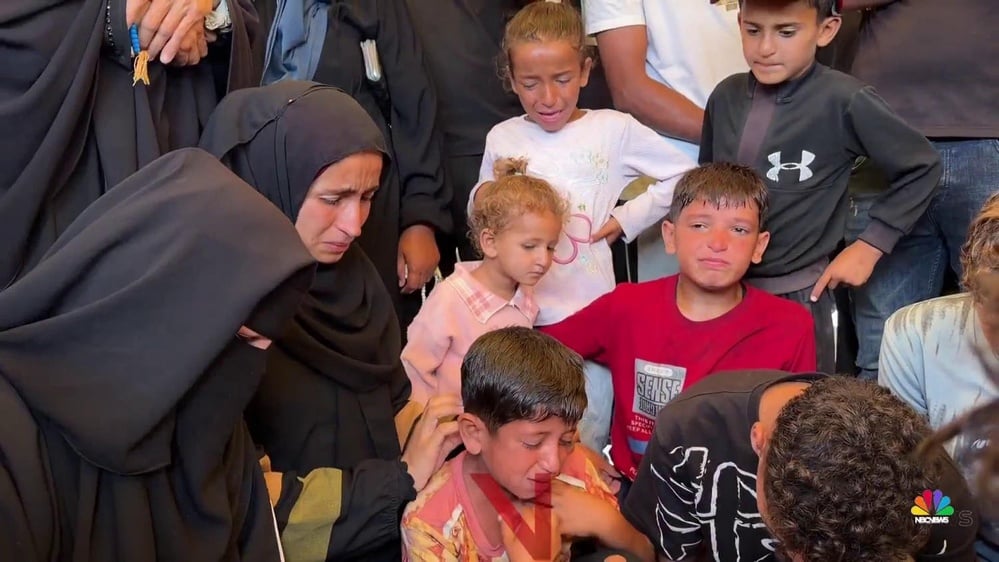
The article is set in the context of the ongoing Israel-Hamas war that began with the Hamas-led attack on October 7, 2023, and Israel's subsequent military campaign in Gaza, which has caused widespread destruction and casualties. A ceasefire took effect in October 2024 but has been tenuous.
Automated analysis; not human reviewed. · 8 of 53 available dimensions scored; omitted dimensions are not treated as neutral. · Verified supporting quotes for 4 of 8 scored dimensions.
Claim: The article shows no liberal or conservative slant; it neutrally reports both Netanyahu's and Palestinian perspectives.
“Netanyahu instead said disarmament should come first, and that Israeli forces would continue to 'do whatever is necessary to protect themselves, our territory, and our citizens.'” · not found in supplied text
“The people mourned on Tuesday were from a residential block belonging to the Hassayna and Abu Sharia clan, and many were related. The Associated Press has identified at least 60 families across Gaza who lost 25 or more family members during the first three months of war.” · exact text match
Why: Direct quotes from both sides are included without editorial comment, and casualty figures are attributed to sources.
Claim: The article is highly objective, relying on attributed statements and avoiding subjective language.
“Israeli Prime Minister Benjamin Netanyahu said Tuesday that Israeli forces will not withdraw from their current lines in Gaza until Hamas has completely disarmed.” · exact text match
“The Hamas-led militant attack on southern Israel on Oct. 7, 2023, killed around 1,200 people and saw 251 taken hostage.” · exact text match
Why: All claims are clearly attributed to speakers or agencies; no opinion or judgment is inserted by the publisher.
Claim: The article uses a factual, non-sensational tone even when describing emotional or tragic events.
“Those discoveries have contributed to the war’s rising toll. The Hamas-led militant attack on southern Israel on Oct. 7, 2023, killed around 1,200 people and saw 251 taken hostage.” · exact text match
Why: Emotionally charged details are presented matter-of-factly, without dramatic language or exaggeration.
Claim: The article describes events and statements without prescribing what should happen.
“The ceasefire halted much of the fighting, but at least 1,252 people have been killed in Gaza since it took effect, according to the territory’s Health Ministry.” · exact text match
Why: The text reports what has occurred and what has been said, without advocating for any course of action.
Claim: The article is factful and neutral, with no opinionated statements.
“Netanyahu suggested there were differences between Israel and the Trump administration over a recent deal announced to disarm the militant group.” · exact text match
“Each side has accused the other of violating the ceasefire.” · not found in supplied text
Why: All claims are presented as attributed statements or facts from named sources; the publisher does not interject its own opinion.
Claim: The article reports political statements and events without favoring any political side.
“Netanyahu instead said disarmament should come first...” · not found in supplied text
“Each side has accused the other of violating the ceasefire, and negotiations on further steps have largely stalled.” · exact text match
Why: Both Israeli and Palestinian positions are given space, and accusations are attributed to each side.
Claim: The article maintains a neutral emotional tone, despite covering tragic events.
“For the missing, it's 'as if their bodies had evaporated without a trace.'” · not found in supplied text
Why: Emotional language is attributed to a relative (Taysir al-Hassayna), not to the publisher. The overall narrative remains dispassionate.
Claim: The article demonstrates high credibility through clear sourcing, attribution, and use of recognized data sources.
“The ministry, part of the Hamas-led government, maintains detailed casualty records that are seen as generally reliable by U.N. agencies and independent experts.” · exact text match
“The Associated Press has identified at least 60 families across Gaza who lost 25 or more family members during the first three months of war.” · exact text match
Why: Multiple sources are cited (Netanyahu, Civil Defense, Health Ministry, AP), and the reliability of casualty records is noted. The article does not present unverified claims as fact.
U.S. administration and Board of Peace
July 30, 2026 · 0 shares
Supportive framing of a Trump-led, multi-party deal to disarm Hamas in Gaza, highlighting mediation by Egypt, Qatar, and Turkey and a phased path to governance.
Context includes Hamas's Oct. 7, 2023 attack on Israel and the Gaza conflict; Trump's 20-point peace plan; the creation of the 'Board of Peace' and mediators (Egypt, Qatar, Turkey); aims to rebuild Gaza and establish governance with a new Palestinian government and security oversight.
Automated analysis; not human reviewed. · 21 of 52 available dimensions scored; omitted dimensions are not treated as neutral. · Verified supporting quotes for 4 of 21 scored dimensions.
Claim: Supportive governance framing: a 'new Palestinian government' will work with the Board of Peace.
““This agreement is a critical step towards Gaza finally being governed by a new Palestinian government that will work closely with the Board of Peace to help the Palestinian people,” Mr. Trump said on social media.” · exact text match
Why: Directly describes governance by a new Palestinian government aligned with a Board of Peace.
Claim: Elite, multi-national mediation and governance structure appears central.
“The deal was mediated by Egypt, Qatar and Turkey and conducted through Mr. Trump’s Board of Peace, a multi-nation body set up to resolve global conflicts.” · exact text match
Why: Indicates elite actors and multi-national governance as central to the framing.
Claim: Security governance includes an International Stabilization Force and a Palestinian police force.
“Mr. Trump said an International Stabilization Force will work with a new Palestinian police force to ensure security in Gaza.” · exact text match
Why: Suggests foreign/security-driven governance and policing.
Claim: Deal framing emphasizes disarmament and security outcomes.
““complete disarmament” of Hamas and other armed groups in Gaza” · exact text match
““With Gaza no longer used as a base for terror attacks.”” · not found in supplied text
Why: Terminology centers on security and disarmament.
Claim: There is implied certainty about implementation timelines.
“If Israel does not comply with the terms, “obviously President Trump will be very, very disappointed,” an official said.” · not found in supplied text
Why: Quotation indicating conditional assurance but uses strong language.
Claim: Framing relies on official sources and formal processes.
“U.S. and Board of Peace officials described the deal as the result of an eight-month process to take Mr. Trump’s 20-point plan and turn it into a framework for a safe and rebuilt Gaza.” · exact text match
Why: Uses official sources and a formal timeline to frame legitimacy.
July 31, 2026 · 0 shares
Framing emphasizes a claimed historic disarmament deal and technocratic Gaza governance, while flagging delicate negotiations and potential implementation hurdles.
Context: Gaza's devastation from war; approximately 2 million residents live in tents or makeshift shelters; the plan envisions one government, one legal system, and one security authority for Gaza, with demilitarization over 200-250 days and international stabilization support.
July 31, 2026 · 0 shares
Framing: A Trump-brokered Gaza disarmament deal is presented as cautiously hopeful and phased, with long timelines and Israeli skepticism.
Automated analysis; not human reviewed. · 21 of 52 available dimensions scored; omitted dimensions are not treated as neutral. · Verified supporting quotes for 0 of 21 scored dimensions.
Reports a presidential announcement with balanced caveating, no discernible framing beyond standard news dissemination.
Automated analysis; not human reviewed. Limitations: Very short snippet limits context and bias analysis.
Very short snippet limits context and bias analysis.
July 31, 2026 · 0 shares
Framing centers on a US-backed Board of Peace plan to disarm Hamas in Gaza, highlighting mediator roles and the tentative, contested nature of claims from Hamas, Trump, and Israel.
Context: The report centers on a US-brokered ceasefire framework called the Board of Peace, which envisions a second phase disarming Hamas and reconstructing Gaza, with mediators Egypt, Qatar and Turkey; it references Hamas's 7 October 2023 attack and the ensuing Israeli offensive with casualty figures from the Hamas-run health ministry, and notes leadership changes within Hamas and multiple media reports and statements regarding talks and reactions.
Helium Bias
Story Blindspots
July 31, 2026 · 0 shares
Framing emphasizes a claimed historic disarmament deal and technocratic Gaza governance, while flagging delicate negotiations and potential implementation hurdles.
Context: Gaza's devastation from war; approximately 2 million residents live in tents or makeshift shelters; the plan envisions one government, one legal system, and one security authority for Gaza, with demilitarization over 200-250 days and international stabilization support.
July 31, 2026 · 0 shares
Framing: A Trump-brokered Gaza disarmament deal is presented as cautiously hopeful and phased, with long timelines and Israeli skepticism.
Automated analysis; not human reviewed. · 21 of 52 available dimensions scored; omitted dimensions are not treated as neutral. · Verified supporting quotes for 0 of 21 scored dimensions.
July 30, 2026 · 0 shares
Supportive framing of a Trump-led, multi-party deal to disarm Hamas in Gaza, highlighting mediation by Egypt, Qatar, and Turkey and a phased path to governance.
Context includes Hamas's Oct. 7, 2023 attack on Israel and the Gaza conflict; Trump's 20-point peace plan; the creation of the 'Board of Peace' and mediators (Egypt, Qatar, Turkey); aims to rebuild Gaza and establish governance with a new Palestinian government and security oversight.
Automated analysis; not human reviewed. · 21 of 52 available dimensions scored; omitted dimensions are not treated as neutral. · Verified supporting quotes for 4 of 21 scored dimensions.
Claim: Supportive governance framing: a 'new Palestinian government' will work with the Board of Peace.
““This agreement is a critical step towards Gaza finally being governed by a new Palestinian government that will work closely with the Board of Peace to help the Palestinian people,” Mr. Trump said on social media.” · exact text match
Why: Directly describes governance by a new Palestinian government aligned with a Board of Peace.
Claim: Elite, multi-national mediation and governance structure appears central.
“The deal was mediated by Egypt, Qatar and Turkey and conducted through Mr. Trump’s Board of Peace, a multi-nation body set up to resolve global conflicts.” · exact text match
Why: Indicates elite actors and multi-national governance as central to the framing.
Claim: Security governance includes an International Stabilization Force and a Palestinian police force.
“Mr. Trump said an International Stabilization Force will work with a new Palestinian police force to ensure security in Gaza.” · exact text match
Why: Suggests foreign/security-driven governance and policing.
Claim: Deal framing emphasizes disarmament and security outcomes.
““complete disarmament” of Hamas and other armed groups in Gaza” · exact text match
““With Gaza no longer used as a base for terror attacks.”” · not found in supplied text
Why: Terminology centers on security and disarmament.
Claim: There is implied certainty about implementation timelines.
“If Israel does not comply with the terms, “obviously President Trump will be very, very disappointed,” an official said.” · not found in supplied text
Why: Quotation indicating conditional assurance but uses strong language.
Claim: Framing relies on official sources and formal processes.
“U.S. and Board of Peace officials described the deal as the result of an eight-month process to take Mr. Trump’s 20-point plan and turn it into a framework for a safe and rebuilt Gaza.” · exact text match
Why: Uses official sources and a formal timeline to frame legitimacy.
July 30, 2026 · 0 shares
Pro-Israel, security-first framing foregrounds Hamas disarmament as the essential condition for any Gaza deal and treats the breakthrough in talks as contingent on Israel's security requirements.
Context: Gaza war, Hamas security threat, and efforts to broker a postwar framework involving disarmament, with Kushner and Dahlan representing direct talks; concerns about a technocratic Palestinian administration and the credibility of an international stabilization force.
July 31, 2026 · 0 shares
Framing highlights a Trump plan to disarm Hamas as plausible, citing Trump's confidence and Hamas's claim while Israel's position remains unreported.
July 31, 2026 · 0 shares
Neutral attribution of competing claims from Hamas and Israel, with no editorial commentary.
Automated analysis; not human reviewed. · 7 of 52 available dimensions scored; omitted dimensions are not treated as neutral. · Verified supporting quotes for 3 of 7 scored dimensions.
Claim: The article presents both sides without favoring a liberal or conservative perspective.
“Hamas said on Friday it had agreed to hand over its weapons to a Palestinian governing committee as part of a US-backed roadmap that would see a gradual Israeli military withdrawal from Gaza, though Israel said it would not pull back until the militant group is fully disarmed.” · exact text match
Why: The text attributes both Hamas's agreement and Israel's condition, showing balance and no editorial slant.
Claim: The article reports facts with attribution and no subjective opinion.
“Hamas said on Friday it had agreed to hand over its weapons...” · not found in supplied text
Why: The reporting is purely factual, using direct attribution to sources.
Claim: The article is straightforward and not sensationalized.
“though Israel said it would not pull back until the militant group is fully disarmed.” · exact text match
Why: No dramatic language or emotional framing; plain presentation of positions.
Claim: The article describes events and statements without prescribing actions.
“Hamas said on Friday it had agreed...” · not found in supplied text
“Israel said it would not pull back...” · not found in supplied text
Why: It simply reports what each side stated, not what should happen.
Claim: The article is entirely about a political and military conflict.
“Hamas agrees to disarm under Trump ceasefire deal.” · exact text match
Why: The subject matter is inherently political, involving national actors and diplomatic terms.
Claim: The article cites specific statements from identifiable parties.
“Hamas said on Friday...” · not found in supplied text
“Israel said...” · not found in supplied text
Why: Direct attribution to both Hamas and Israel enhances trustworthiness; no unsupported claims.
Claim: The article attributes claims to named sources and avoids distortion.
“Hamas said on Friday...” · not found in supplied text
“Israel said...” · not found in supplied text
Why: Both sides are directly quoted, showing transparency and fairness.
July 30, 2026 · 0 shares
Supportive framing of a Trump-led, multi-party deal to disarm Hamas in Gaza, highlighting mediation by Egypt, Qatar, and Turkey and a phased path to governance.
Context includes Hamas's Oct. 7, 2023 attack on Israel and the Gaza conflict; Trump's 20-point peace plan; the creation of the 'Board of Peace' and mediators (Egypt, Qatar, Turkey); aims to rebuild Gaza and establish governance with a new Palestinian government and security oversight.
Automated analysis; not human reviewed. · 21 of 52 available dimensions scored; omitted dimensions are not treated as neutral. · Verified supporting quotes for 4 of 21 scored dimensions.
Claim: Supportive governance framing: a 'new Palestinian government' will work with the Board of Peace.
““This agreement is a critical step towards Gaza finally being governed by a new Palestinian government that will work closely with the Board of Peace to help the Palestinian people,” Mr. Trump said on social media.” · exact text match
Why: Directly describes governance by a new Palestinian government aligned with a Board of Peace.
Claim: Elite, multi-national mediation and governance structure appears central.
“The deal was mediated by Egypt, Qatar and Turkey and conducted through Mr. Trump’s Board of Peace, a multi-nation body set up to resolve global conflicts.” · exact text match
Why: Indicates elite actors and multi-national governance as central to the framing.
Claim: Security governance includes an International Stabilization Force and a Palestinian police force.
“Mr. Trump said an International Stabilization Force will work with a new Palestinian police force to ensure security in Gaza.” · exact text match
Why: Suggests foreign/security-driven governance and policing.
Claim: Deal framing emphasizes disarmament and security outcomes.
““complete disarmament” of Hamas and other armed groups in Gaza” · exact text match
““With Gaza no longer used as a base for terror attacks.”” · not found in supplied text
Why: Terminology centers on security and disarmament.
Claim: There is implied certainty about implementation timelines.
“If Israel does not comply with the terms, “obviously President Trump will be very, very disappointed,” an official said.” · not found in supplied text
Why: Quotation indicating conditional assurance but uses strong language.
Claim: Framing relies on official sources and formal processes.
“U.S. and Board of Peace officials described the deal as the result of an eight-month process to take Mr. Trump’s 20-point plan and turn it into a framework for a safe and rebuilt Gaza.” · exact text match
Why: Uses official sources and a formal timeline to frame legitimacy.
July 31, 2026 · 0 shares
The publisher frames the Trump-brokered disarmament plan as a substantive development with conditional potential, presenting both promising outcomes and unresolved issues without overt editorializing.
Hamas is the de facto governing authority in the Gaza Strip and is designated as a terrorist organization by the United States and other countries. The Gaza Strip has been under blockade and experienced multiple conflicts. Previous peace efforts have included demands for Hamas disarmament.
Automated analysis; not human reviewed. Limitations: The article text is extremely short (headline plus one sentence), limiting the ability to assess many bias dimensions and making some interpretations uncertain. · 2 of 52 available dimensions scored; omitted dimensions are not treated as neutral. · Verified supporting quotes for 2 of 2 scored dimensions.
Claim: The article's language is neutrally balanced, mentioning both potential positive outcomes and unresolved conditions without partisan cues.
“A U.S.-brokered plan to disarm Hamas in Gaza could pave the way for reconstruction and a new Palestinian government in the territory, though significant conditions remain unresolved.” · exact text match
Why: The text does not use left- or right-coded language; it presents a conditional plan and notes both a positive possibility and a caveat, indicating balanced reporting.
Claim: The article uses factual, declarative statements without subjective or emotional language.
“Trump Announces Agreement to Disarm Hamas as Part of Gaza Peace Plan..” · exact text match
“A U.S.-brokered plan to disarm Hamas in Gaza could pave the way for reconstruction and a new Palestinian government in the territory, though significant conditions remain unresolved.” · exact text match
Why: Both the headline and body rely on straightforward assertions and conditional phrasing; no evaluative adjectives, opinion verbs, or emotional appeals are present.
The article text is extremely short (headline plus one sentence), limiting the ability to assess many bias dimensions and making some interpretations uncertain.
July 31, 2026 · 0 shares
Framing emphasizes a claimed historic disarmament deal and technocratic Gaza governance, while flagging delicate negotiations and potential implementation hurdles.
Context: Gaza's devastation from war; approximately 2 million residents live in tents or makeshift shelters; the plan envisions one government, one legal system, and one security authority for Gaza, with demilitarization over 200-250 days and international stabilization support.
August 03, 2026 · 0 shares
Frames the Gaza peace deal as precarious and possibly illusory, highlighting conflicting stances and unresolved conditions.
Automated analysis; not human reviewed. · 3 of 52 available dimensions scored; omitted dimensions are not treated as neutral. · Verified supporting quotes for 0 of 3 scored dimensions.
Claim: The article maintains balanced neutrality on the liberal-conservative spectrum by giving roughly equal weight to statements from both sides and noting ambiguities.
“Hamas said it would not disarm until Israel withdraws from Gaza, while Israel refuses to withdraw until Hamas disarms.” · exact text match
“Israel, likewise, did not immediately endorse the deal, with a spokesman for Israel’s Prime Minister Benjamin Netanyahu telling NBC News that 'Israel has conveyed its comments and concerns on the proposed framework to our American counterparts. The version that has been made public does not reflect Israel’s positions.'” · not found in supplied text
Why: Both Hamas's conditions and Israeli objections are presented without favoring one over the other, and the article repeatedly notes that each side's understanding of the agreement may differ.
Claim: The article is highly political, focusing on diplomatic negotiations, governmental positions, and international resolutions.
“The U.S.-led Board of Peace and the mediating countries of Egypt, Qatar, Turkey, and the United States announced Thursday that Hamas had agreed to a detailed roadmap for implementing the next phases of the Gaza ceasefire, including the group’s disarmament.” · exact text match
“The latest disagreement relates to a controversial authority granted to the Trump administration on November 17, 2025, by UN Security Council Resolution 2803, which states that the IDF will withdraw 'based on standards, milestones, and timeframes linked to demilitarization that will be agreed upon between the IDF, ISF, the guarantors, and the United States,' but without direct input from Palestinians in Gaza.” · not found in supplied text
Why: The entire article is centered on political statements, negotiations, and institutional mechanisms; it does not stray into non-political topics.
Claim: The article appears credible due to its use of named sources, direct quotes, documents, and clear attribution of opinions.
“Documents obtained by Drop Site News show that Hamas agreed to give up its heavy weaponry only after Israel ends its attacks, withdraws its forces from Gaza, and allows the entry of life essentials like medicine and food.” · exact text match
“As the Financial Times reports, 'has been unable to enter the enclave' at all.” · not found in supplied text
Why: The article cites specific documents and other news outlets, attributes statements to named officials, and distinguishes between reported facts and attributed opinions.
July 31, 2026 · 0 shares
Framing centers on a US-backed Board of Peace plan to disarm Hamas in Gaza, highlighting mediator roles and the tentative, contested nature of claims from Hamas, Trump, and Israel.
Context: The report centers on a US-brokered ceasefire framework called the Board of Peace, which envisions a second phase disarming Hamas and reconstructing Gaza, with mediators Egypt, Qatar and Turkey; it references Hamas's 7 October 2023 attack and the ensuing Israeli offensive with casualty figures from the Hamas-run health ministry, and notes leadership changes within Hamas and multiple media reports and statements regarding talks and reactions.
Reporting emphasizes obstacles to Gaza disarmament plan while providing balanced criticism of both Israeli and Hamas actions, with slight sympathy for Palestinian suffering.
Automated analysis; not human reviewed. Limitations: The article includes many sidebar links and headlines that are not part of the main analysis; I have ignored those. The analysis relies on the substantive piece by Jeremy Bowen. · 10 of 52 available dimensions scored; omitted dimensions are not treated as neutral. · Verified supporting quotes for 10 of 10 scored dimensions.
Claim: The publisher frames Israeli actions in Gaza as a deliberate destruction project and reports ethnic cleansing allegations, indicating a critical view of Israeli policy.
“There has also been an organised, officially sponsored project to destroy communities and smash infrastructure.” · exact text match
“Many Palestinians believe Israel wants to force them out, by making life so insupportable and appalling that they will leave if they get the chance.” · exact text match
Why: The article includes strong criticism of Israeli actions while also presenting Israeli security concerns, resulting in a slight liberal tilt.
Claim: The publisher uses interpretive and evaluative language such as 'bleak picture' and 'rare chink of light', indicating subjectivity.
“At the same time, it is potentially a rare chink of light in a bleak picture.” · exact text match
Why: These value-laden phrases go beyond factual reporting into interpretation, though they are embedded in an otherwise attributed and sourced article.
Claim: The article avoids sensationalism and maintains a sober, factual tone despite the dramatic subject.
“Only a step-by-step agreement, starting small and building confidence, has a chance of working.” · exact text match
Why: The prose is calm, cautious, and focused on process, without inflammatory language.
Claim: The article provides rich contextual detail, multiple perspectives, and forward-looking analysis, making it engaging.
“Figures gathered by ACLED, a group that monitors armed conflict, says that 2026 is on track to become the most violent year in the West Bank since it began monitoring the territory a decade ago.” · exact text match
Why: The inclusion of time-series data, internal political dynamics, and humanitarian statistics adds depth and interest.
Claim: The article includes a prescriptive statement about the need for a political horizon for Palestinians.
“A process that does not give Palestinians a political horizon and a route to self-determination will not work, condemning another generation to lives dominated by war.” · exact text match
Why: This sentence suggests what should happen, moving beyond description into advocacy for a specific outcome.
Claim: The publisher advocates for diplomatic engagement and step-by-step confidence building, indicating a dovish stance.
“Only a step-by-step agreement, starting small and building confidence, has a chance of working.” · exact text match
Why: The focus on negotiation and caution about sudden shocks reflects a preference for peaceful resolution.
Claim: The article is heavily focused on political actors, elections, and foreign policy, making it highly political.
“Israel has a general election at the end of October. Prime Minister Benjamin Netanyahu is behind in the polls and fighting not just for his political life and legacy but potentially for his liberty.” · exact text match
Why: The entire analysis revolves around political calculations on all sides.
Claim: The article uses multiple attributed sources (UN, ACLED, Unicef, Hamas official) and clearly distinguishes between reported facts, allegations, and interpretations.
“Figures gathered by ACLED, a group that monitors armed conflict, says that 2026 is on track to become the most violent year in the West Bank since it began monitoring the territory a decade ago.” · exact text match
Why: The sourcing is transparent, and the publisher attributes casualty figures to specific bodies, enhancing trustworthiness.
Claim: The article employs analytical reasoning, caveats, and multiple perspectives, avoiding emotional or irrational framing.
“The realities of politics, war, zero trust, the deaths of thousands and the destruction of Gaza will make any agreement very complicated.” · exact text match
Why: The text repeatedly emphasizes complexity and conditional statements, demonstrating rational and measured analysis.
Claim: The article transparently attributes controversial claims to specific sources and notes uncertainty where appropriate.
“Hamas-run health ministry whose figures are seen as reliable by the UN.” · exact text match
Why: By clearly naming the source and its credibility assessment, the publisher signals honest reporting practices.
The article includes many sidebar links and headlines that are not part of the main analysis; I have ignored those. The analysis relies on the substantive piece by Jeremy Bowen.
July 31, 2026 · 0 shares
Framing: A Trump-brokered Gaza disarmament deal is presented as cautiously hopeful and phased, with long timelines and Israeli skepticism.
Automated analysis; not human reviewed. · 21 of 52 available dimensions scored; omitted dimensions are not treated as neutral. · Verified supporting quotes for 0 of 21 scored dimensions.
August 03, 2026 · 0 shares
Frames Israel's security demands around tangible disarmament as legitimate and contrasts with international obligations.
Automated analysis; not human reviewed. Limitations: Article text includes garbled repetitions and promotional content, but the core news content is clear. · 3 of 52 available dimensions scored; omitted dimensions are not treated as neutral. · Verified supporting quotes for 1 of 3 scored dimensions.
Claim: The article maintains an objective stance by reporting attributed statements without subjective commentary.
“an Israeli official said” · exact text match
“Doron Spielman, a spokesman for the Israeli Prime Minister’s Office, told AP” · exact text match
“he said” · exact text match
Why: The article consistently attributes all claims to named sources and does not insert its own opinion.
Claim: The article demonstrates high integrity through verifiable sourcing and inclusion of multiple perspectives.
“An Israeli official told the Associated Press” · not found in supplied text
“Doron Spielman, a spokesman for the Israeli Prime Minister’s Office, told AP” · exact text match
“Nickolay Mladenov, the high representative for Gaza on behalf of Trump’s Board of Peace, said” · not found in supplied text
Why: All key claims are from named officials with direct quotes, and the article includes a statement acknowledging civilian harm.
Article text includes garbled repetitions and promotional content, but the core news content is clear.
August 03, 2026 · 0 shares
Frames the Gaza peace deal as precarious and possibly illusory, highlighting conflicting stances and unresolved conditions.
Automated analysis; not human reviewed. · 3 of 52 available dimensions scored; omitted dimensions are not treated as neutral. · Verified supporting quotes for 0 of 3 scored dimensions.
Claim: The article maintains balanced neutrality on the liberal-conservative spectrum by giving roughly equal weight to statements from both sides and noting ambiguities.
“Hamas said it would not disarm until Israel withdraws from Gaza, while Israel refuses to withdraw until Hamas disarms.” · exact text match
“Israel, likewise, did not immediately endorse the deal, with a spokesman for Israel’s Prime Minister Benjamin Netanyahu telling NBC News that 'Israel has conveyed its comments and concerns on the proposed framework to our American counterparts. The version that has been made public does not reflect Israel’s positions.'” · not found in supplied text
Why: Both Hamas's conditions and Israeli objections are presented without favoring one over the other, and the article repeatedly notes that each side's understanding of the agreement may differ.
Claim: The article is highly political, focusing on diplomatic negotiations, governmental positions, and international resolutions.
“The U.S.-led Board of Peace and the mediating countries of Egypt, Qatar, Turkey, and the United States announced Thursday that Hamas had agreed to a detailed roadmap for implementing the next phases of the Gaza ceasefire, including the group’s disarmament.” · exact text match
“The latest disagreement relates to a controversial authority granted to the Trump administration on November 17, 2025, by UN Security Council Resolution 2803, which states that the IDF will withdraw 'based on standards, milestones, and timeframes linked to demilitarization that will be agreed upon between the IDF, ISF, the guarantors, and the United States,' but without direct input from Palestinians in Gaza.” · not found in supplied text
Why: The entire article is centered on political statements, negotiations, and institutional mechanisms; it does not stray into non-political topics.
Claim: The article appears credible due to its use of named sources, direct quotes, documents, and clear attribution of opinions.
“Documents obtained by Drop Site News show that Hamas agreed to give up its heavy weaponry only after Israel ends its attacks, withdraws its forces from Gaza, and allows the entry of life essentials like medicine and food.” · exact text match
“As the Financial Times reports, 'has been unable to enter the enclave' at all.” · not found in supplied text
Why: The article cites specific documents and other news outlets, attributes statements to named officials, and distinguishes between reported facts and attributed opinions.
August 04, 2026 · 0 shares
Presents the Netanyahu-Hamas disarmament standoff and the human cost of the conflict through direct attribution and neutral reporting, without editorializing.
The article is set in the context of the ongoing Israel-Hamas war that began with the Hamas-led attack on October 7, 2023, and Israel's subsequent military campaign in Gaza, which has caused widespread destruction and casualties. A ceasefire took effect in October 2024 but has been tenuous.
Automated analysis; not human reviewed. · 8 of 53 available dimensions scored; omitted dimensions are not treated as neutral. · Verified supporting quotes for 4 of 8 scored dimensions.
Claim: The article shows no liberal or conservative slant; it neutrally reports both Netanyahu's and Palestinian perspectives.
“Netanyahu instead said disarmament should come first, and that Israeli forces would continue to 'do whatever is necessary to protect themselves, our territory, and our citizens.'” · not found in supplied text
“The people mourned on Tuesday were from a residential block belonging to the Hassayna and Abu Sharia clan, and many were related. The Associated Press has identified at least 60 families across Gaza who lost 25 or more family members during the first three months of war.” · exact text match
Why: Direct quotes from both sides are included without editorial comment, and casualty figures are attributed to sources.
Claim: The article is highly objective, relying on attributed statements and avoiding subjective language.
“Israeli Prime Minister Benjamin Netanyahu said Tuesday that Israeli forces will not withdraw from their current lines in Gaza until Hamas has completely disarmed.” · exact text match
“The Hamas-led militant attack on southern Israel on Oct. 7, 2023, killed around 1,200 people and saw 251 taken hostage.” · exact text match
Why: All claims are clearly attributed to speakers or agencies; no opinion or judgment is inserted by the publisher.
Claim: The article uses a factual, non-sensational tone even when describing emotional or tragic events.
“Those discoveries have contributed to the war’s rising toll. The Hamas-led militant attack on southern Israel on Oct. 7, 2023, killed around 1,200 people and saw 251 taken hostage.” · exact text match
Why: Emotionally charged details are presented matter-of-factly, without dramatic language or exaggeration.
Claim: The article describes events and statements without prescribing what should happen.
“The ceasefire halted much of the fighting, but at least 1,252 people have been killed in Gaza since it took effect, according to the territory’s Health Ministry.” · exact text match
Why: The text reports what has occurred and what has been said, without advocating for any course of action.
Claim: The article is factful and neutral, with no opinionated statements.
“Netanyahu suggested there were differences between Israel and the Trump administration over a recent deal announced to disarm the militant group.” · exact text match
“Each side has accused the other of violating the ceasefire.” · not found in supplied text
Why: All claims are presented as attributed statements or facts from named sources; the publisher does not interject its own opinion.
Claim: The article reports political statements and events without favoring any political side.
“Netanyahu instead said disarmament should come first...” · not found in supplied text
“Each side has accused the other of violating the ceasefire, and negotiations on further steps have largely stalled.” · exact text match
Why: Both Israeli and Palestinian positions are given space, and accusations are attributed to each side.
Claim: The article maintains a neutral emotional tone, despite covering tragic events.
“For the missing, it's 'as if their bodies had evaporated without a trace.'” · not found in supplied text
Why: Emotional language is attributed to a relative (Taysir al-Hassayna), not to the publisher. The overall narrative remains dispassionate.
Claim: The article demonstrates high credibility through clear sourcing, attribution, and use of recognized data sources.
“The ministry, part of the Hamas-led government, maintains detailed casualty records that are seen as generally reliable by U.N. agencies and independent experts.” · exact text match
“The Associated Press has identified at least 60 families across Gaza who lost 25 or more family members during the first three months of war.” · exact text match
Why: Multiple sources are cited (Netanyahu, Civil Defense, Health Ministry, AP), and the reliability of casualty records is noted. The article does not present unverified claims as fact.
August 03, 2026 · 0 shares
Frames Israel's security demands around tangible disarmament as legitimate and contrasts with international obligations.
Automated analysis; not human reviewed. Limitations: Article text includes garbled repetitions and promotional content, but the core news content is clear. · 3 of 52 available dimensions scored; omitted dimensions are not treated as neutral. · Verified supporting quotes for 1 of 3 scored dimensions.
Claim: The article maintains an objective stance by reporting attributed statements without subjective commentary.
“an Israeli official said” · exact text match
“Doron Spielman, a spokesman for the Israeli Prime Minister’s Office, told AP” · exact text match
“he said” · exact text match
Why: The article consistently attributes all claims to named sources and does not insert its own opinion.
Claim: The article demonstrates high integrity through verifiable sourcing and inclusion of multiple perspectives.
“An Israeli official told the Associated Press” · not found in supplied text
“Doron Spielman, a spokesman for the Israeli Prime Minister’s Office, told AP” · exact text match
“Nickolay Mladenov, the high representative for Gaza on behalf of Trump’s Board of Peace, said” · not found in supplied text
Why: All key claims are from named officials with direct quotes, and the article includes a statement acknowledging civilian harm.
Article text includes garbled repetitions and promotional content, but the core news content is clear.
August 03, 2026 · 0 shares
Frames the Gaza peace deal as precarious and possibly illusory, highlighting conflicting stances and unresolved conditions.
Automated analysis; not human reviewed. · 3 of 52 available dimensions scored; omitted dimensions are not treated as neutral. · Verified supporting quotes for 0 of 3 scored dimensions.
Claim: The article maintains balanced neutrality on the liberal-conservative spectrum by giving roughly equal weight to statements from both sides and noting ambiguities.
“Hamas said it would not disarm until Israel withdraws from Gaza, while Israel refuses to withdraw until Hamas disarms.” · exact text match
“Israel, likewise, did not immediately endorse the deal, with a spokesman for Israel’s Prime Minister Benjamin Netanyahu telling NBC News that 'Israel has conveyed its comments and concerns on the proposed framework to our American counterparts. The version that has been made public does not reflect Israel’s positions.'” · not found in supplied text
Why: Both Hamas's conditions and Israeli objections are presented without favoring one over the other, and the article repeatedly notes that each side's understanding of the agreement may differ.
Claim: The article is highly political, focusing on diplomatic negotiations, governmental positions, and international resolutions.
“The U.S.-led Board of Peace and the mediating countries of Egypt, Qatar, Turkey, and the United States announced Thursday that Hamas had agreed to a detailed roadmap for implementing the next phases of the Gaza ceasefire, including the group’s disarmament.” · exact text match
“The latest disagreement relates to a controversial authority granted to the Trump administration on November 17, 2025, by UN Security Council Resolution 2803, which states that the IDF will withdraw 'based on standards, milestones, and timeframes linked to demilitarization that will be agreed upon between the IDF, ISF, the guarantors, and the United States,' but without direct input from Palestinians in Gaza.” · not found in supplied text
Why: The entire article is centered on political statements, negotiations, and institutional mechanisms; it does not stray into non-political topics.
Claim: The article appears credible due to its use of named sources, direct quotes, documents, and clear attribution of opinions.
“Documents obtained by Drop Site News show that Hamas agreed to give up its heavy weaponry only after Israel ends its attacks, withdraws its forces from Gaza, and allows the entry of life essentials like medicine and food.” · exact text match
“As the Financial Times reports, 'has been unable to enter the enclave' at all.” · not found in supplied text
Why: The article cites specific documents and other news outlets, attributes statements to named officials, and distinguishes between reported facts and attributed opinions.
July 31, 2026 · 0 shares
Framing: A Trump-brokered Gaza disarmament deal is presented as cautiously hopeful and phased, with long timelines and Israeli skepticism.
Automated analysis; not human reviewed. · 21 of 52 available dimensions scored; omitted dimensions are not treated as neutral. · Verified supporting quotes for 0 of 21 scored dimensions.
Reporting emphasizes obstacles to Gaza disarmament plan while providing balanced criticism of both Israeli and Hamas actions, with slight sympathy for Palestinian suffering.
Automated analysis; not human reviewed. Limitations: The article includes many sidebar links and headlines that are not part of the main analysis; I have ignored those. The analysis relies on the substantive piece by Jeremy Bowen. · 10 of 52 available dimensions scored; omitted dimensions are not treated as neutral. · Verified supporting quotes for 10 of 10 scored dimensions.
Claim: The publisher frames Israeli actions in Gaza as a deliberate destruction project and reports ethnic cleansing allegations, indicating a critical view of Israeli policy.
“There has also been an organised, officially sponsored project to destroy communities and smash infrastructure.” · exact text match
“Many Palestinians believe Israel wants to force them out, by making life so insupportable and appalling that they will leave if they get the chance.” · exact text match
Why: The article includes strong criticism of Israeli actions while also presenting Israeli security concerns, resulting in a slight liberal tilt.
Claim: The publisher uses interpretive and evaluative language such as 'bleak picture' and 'rare chink of light', indicating subjectivity.
“At the same time, it is potentially a rare chink of light in a bleak picture.” · exact text match
Why: These value-laden phrases go beyond factual reporting into interpretation, though they are embedded in an otherwise attributed and sourced article.
Claim: The article avoids sensationalism and maintains a sober, factual tone despite the dramatic subject.
“Only a step-by-step agreement, starting small and building confidence, has a chance of working.” · exact text match
Why: The prose is calm, cautious, and focused on process, without inflammatory language.
Claim: The article provides rich contextual detail, multiple perspectives, and forward-looking analysis, making it engaging.
“Figures gathered by ACLED, a group that monitors armed conflict, says that 2026 is on track to become the most violent year in the West Bank since it began monitoring the territory a decade ago.” · exact text match
Why: The inclusion of time-series data, internal political dynamics, and humanitarian statistics adds depth and interest.
Claim: The article includes a prescriptive statement about the need for a political horizon for Palestinians.
“A process that does not give Palestinians a political horizon and a route to self-determination will not work, condemning another generation to lives dominated by war.” · exact text match
Why: This sentence suggests what should happen, moving beyond description into advocacy for a specific outcome.
Claim: The publisher advocates for diplomatic engagement and step-by-step confidence building, indicating a dovish stance.
“Only a step-by-step agreement, starting small and building confidence, has a chance of working.” · exact text match
Why: The focus on negotiation and caution about sudden shocks reflects a preference for peaceful resolution.
Claim: The article is heavily focused on political actors, elections, and foreign policy, making it highly political.
“Israel has a general election at the end of October. Prime Minister Benjamin Netanyahu is behind in the polls and fighting not just for his political life and legacy but potentially for his liberty.” · exact text match
Why: The entire analysis revolves around political calculations on all sides.
Claim: The article uses multiple attributed sources (UN, ACLED, Unicef, Hamas official) and clearly distinguishes between reported facts, allegations, and interpretations.
“Figures gathered by ACLED, a group that monitors armed conflict, says that 2026 is on track to become the most violent year in the West Bank since it began monitoring the territory a decade ago.” · exact text match
Why: The sourcing is transparent, and the publisher attributes casualty figures to specific bodies, enhancing trustworthiness.
Claim: The article employs analytical reasoning, caveats, and multiple perspectives, avoiding emotional or irrational framing.
“The realities of politics, war, zero trust, the deaths of thousands and the destruction of Gaza will make any agreement very complicated.” · exact text match
Why: The text repeatedly emphasizes complexity and conditional statements, demonstrating rational and measured analysis.
Claim: The article transparently attributes controversial claims to specific sources and notes uncertainty where appropriate.
“Hamas-run health ministry whose figures are seen as reliable by the UN.” · exact text match
Why: By clearly naming the source and its credibility assessment, the publisher signals honest reporting practices.
The article includes many sidebar links and headlines that are not part of the main analysis; I have ignored those. The analysis relies on the substantive piece by Jeremy Bowen.
July 31, 2026 · 0 shares
Framing emphasizes a claimed historic disarmament deal and technocratic Gaza governance, while flagging delicate negotiations and potential implementation hurdles.
Context: Gaza's devastation from war; approximately 2 million residents live in tents or makeshift shelters; the plan envisions one government, one legal system, and one security authority for Gaza, with demilitarization over 200-250 days and international stabilization support.
July 31, 2026 · 0 shares
Framing: A Trump-brokered Gaza disarmament deal is presented as cautiously hopeful and phased, with long timelines and Israeli skepticism.
Automated analysis; not human reviewed. · 21 of 52 available dimensions scored; omitted dimensions are not treated as neutral. · Verified supporting quotes for 0 of 21 scored dimensions.
July 30, 2026 · 0 shares
Supportive framing of a Trump-led, multi-party deal to disarm Hamas in Gaza, highlighting mediation by Egypt, Qatar, and Turkey and a phased path to governance.
Context includes Hamas's Oct. 7, 2023 attack on Israel and the Gaza conflict; Trump's 20-point peace plan; the creation of the 'Board of Peace' and mediators (Egypt, Qatar, Turkey); aims to rebuild Gaza and establish governance with a new Palestinian government and security oversight.
Automated analysis; not human reviewed.
·
21 of 52 available dimensions scored; omitted dimensions are not treated as neutral.
·
Verified supporting quotes for 4 of 21 scored dimensions.
Claim: Supportive governance framing: a 'new Palestinian government' will work with the Board of Peace.
““This agreement is a critical step towards Gaza finally being governed by a new Palestinian government that will work closely with the Board of Peace to help the Palestinian people,” Mr. Trump said on social media.” · exact text match
Why: Directly describes governance by a new Palestinian government aligned with a Board of Peace.
Claim: Elite, multi-national mediation and governance structure appears central.
“The deal was mediated by Egypt, Qatar and Turkey and conducted through Mr. Trump’s Board of Peace, a multi-nation body set up to resolve global conflicts.” · exact text match
Why: Indicates elite actors and multi-national governance as central to the framing.
Claim: Security governance includes an International Stabilization Force and a Palestinian police force.
“Mr. Trump said an International Stabilization Force will work with a new Palestinian police force to ensure security in Gaza.” · exact text match
Why: Suggests foreign/security-driven governance and policing.
Claim: Deal framing emphasizes disarmament and security outcomes.
““complete disarmament” of Hamas and other armed groups in Gaza” · exact text match
““With Gaza no longer used as a base for terror attacks.”” · not found in supplied text
Why: Terminology centers on security and disarmament.
Claim: There is implied certainty about implementation timelines.
“If Israel does not comply with the terms, “obviously President Trump will be very, very disappointed,” an official said.” · not found in supplied text
Why: Quotation indicating conditional assurance but uses strong language.
Claim: Framing relies on official sources and formal processes.
“U.S. and Board of Peace officials described the deal as the result of an eight-month process to take Mr. Trump’s 20-point plan and turn it into a framework for a safe and rebuilt Gaza.” · exact text match
Why: Uses official sources and a formal timeline to frame legitimacy.
July 31, 2026 · 0 shares
The publisher frames the Trump-brokered disarmament plan as a substantive development with conditional potential, presenting both promising outcomes and unresolved issues without overt editorializing.
Hamas is the de facto governing authority in the Gaza Strip and is designated as a terrorist organization by the United States and other countries.
The Gaza Strip has been under blockade and experienced multiple conflicts.
Previous peace efforts have included demands for Hamas disarmament.
Automated analysis; not human reviewed.
Limitations: The article text is extremely short (headline plus one sentence), limiting the ability to assess many bias dimensions and making some interpretations uncertain.
·
2 of 52 available dimensions scored; omitted dimensions are not treated as neutral.
·
Verified supporting quotes for 2 of 2 scored dimensions.
Claim: The article's language is neutrally balanced, mentioning both potential positive outcomes and unresolved conditions without partisan cues.
“A U.S.-brokered plan to disarm Hamas in Gaza could pave the way for reconstruction and a new Palestinian government in the territory, though significant conditions remain unresolved.” · exact text match
Why: The text does not use left- or right-coded language; it presents a conditional plan and notes both a positive possibility and a caveat, indicating balanced reporting.
Claim: The article uses factual, declarative statements without subjective or emotional language.
“Trump Announces Agreement to Disarm Hamas as Part of Gaza Peace Plan..” · exact text match
“A U.S.-brokered plan to disarm Hamas in Gaza could pave the way for reconstruction and a new Palestinian government in the territory, though significant conditions remain unresolved.” · exact text match
Why: Both the headline and body rely on straightforward assertions and conditional phrasing; no evaluative adjectives, opinion verbs, or emotional appeals are present.
The article text is extremely short (headline plus one sentence), limiting the ability to assess many bias dimensions and making some interpretations uncertain.
Reports a presidential announcement with balanced caveating, no discernible framing beyond standard news dissemination.
Automated analysis; not human reviewed. Limitations: Very short snippet limits context and bias analysis.
Very short snippet limits context and bias analysis.
July 31, 2026 · 0 shares
Framing centers on a US-backed Board of Peace plan to disarm Hamas in Gaza, highlighting mediator roles and the tentative, contested nature of claims from Hamas, Trump, and Israel.
Context: The report centers on a US-brokered ceasefire framework called the Board of Peace, which envisions a second phase disarming Hamas and reconstructing Gaza, with mediators Egypt, Qatar and Turkey; it references Hamas's 7 October 2023 attack and the ensuing Israeli offensive with casualty figures from the Hamas-run health ministry, and notes leadership changes within Hamas and multiple media reports and statements regarding talks and reactions.
July 31, 2026 · 0 shares
Neutral attribution of competing claims from Hamas and Israel, with no editorial commentary.
Automated analysis; not human reviewed.
·
7 of 52 available dimensions scored; omitted dimensions are not treated as neutral.
·
Verified supporting quotes for 3 of 7 scored dimensions.
Claim: The article presents both sides without favoring a liberal or conservative perspective.
“Hamas said on Friday it had agreed to hand over its weapons to a Palestinian governing committee as part of a US-backed roadmap that would see a gradual Israeli military withdrawal from Gaza, though Israel said it would not pull back until the militant group is fully disarmed.” · exact text match
Why: The text attributes both Hamas's agreement and Israel's condition, showing balance and no editorial slant.
Claim: The article reports facts with attribution and no subjective opinion.
“Hamas said on Friday it had agreed to hand over its weapons...” · not found in supplied text
Why: The reporting is purely factual, using direct attribution to sources.
Claim: The article is straightforward and not sensationalized.
“though Israel said it would not pull back until the militant group is fully disarmed.” · exact text match
Why: No dramatic language or emotional framing; plain presentation of positions.
Claim: The article describes events and statements without prescribing actions.
“Hamas said on Friday it had agreed...” · not found in supplied text
“Israel said it would not pull back...” · not found in supplied text
Why: It simply reports what each side stated, not what should happen.
Claim: The article is entirely about a political and military conflict.
“Hamas agrees to disarm under Trump ceasefire deal.” · exact text match
Why: The subject matter is inherently political, involving national actors and diplomatic terms.
Claim: The article cites specific statements from identifiable parties.
“Hamas said on Friday...” · not found in supplied text
“Israel said...” · not found in supplied text
Why: Direct attribution to both Hamas and Israel enhances trustworthiness; no unsupported claims.
Claim: The article attributes claims to named sources and avoids distortion.
“Hamas said on Friday...” · not found in supplied text
“Israel said...” · not found in supplied text
Why: Both sides are directly quoted, showing transparency and fairness.
July 31, 2026 · 0 shares
NPR's Up First newsletter presents a factual, balanced roundup, attributing claims and providing counterpoints without editorializing.
The U.S.-brokered Gaza ceasefire was signed more than nine months before the announcement.
The U.S. economy has faced rising energy costs from the war with Iran.
Automated analysis; not human reviewed.
Limitations: The article is a newsletter summary; brevity may omit nuance but does not affect bias analysis.
·
7 of 52 available dimensions scored; omitted dimensions are not treated as neutral.
·
Verified supporting quotes for 4 of 7 scored dimensions.
Claim: The article maintains a balanced, neutral stance on partisan issues, avoiding favoring either side.
“President Trump is claiming that Hamas will completely disarm... But a senior official from the Palestinian militant group told they would only give up their weapons if Israel withdraws from Gaza first, and Israeli Prime Minister Benjamin Netanyahu has yet to respond.” · not found in supplied text
Why: The article presents Trump's claim and immediately provides a counterpoint from Hamas and notes Netanyahu's non-response, showing evenhandedness.
Claim: The article reports facts with clear attribution, avoiding editorial opinion.
“Trump is considering withdrawing his nomination of Acting Attorney General Todd Blanche to officially take over the role.
Two Republican senators are withholding their support for Blanche due to the Department of Justice's deal with the president to end his IRS lawsuit.”
· exact text match
Why: The article attributes actions and statements to named sources (Trump, senators, Commerce Department) without injecting personal judgment.
Claim: The article describes events and statements without advocating for any action or policy.
“President Trump is claiming that Hamas will completely disarm... But a senior official from the Palestinian militant group told they would only give up their weapons if Israel withdraws from Gaza first.” · not found in supplied text
Why: The article simply reports competing claims and does not recommend a course of action.
Claim: The article maintains a neutral, unemotional tone throughout.
“President Trump is claiming... The U.S. economy has largely managed the impact of rising energy costs resulting from the war with Iran” · not found in supplied text
Why: Word choices ('claiming', 'managed') are neutral and descriptive, not emotionally charged.
Claim: The article relies on named sources and official data, enhancing trustworthiness.
“according to a recent Commerce Department report” · exact text match
“a senior official from the Palestinian militant group told” · exact text match
Why: Attribution to a government report and an anonymous senior official (with affiliation) provides verifiable sourcing.
Claim: The article uses logical, evidence-based reporting without fallacies or emotional appeals.
“From April to June, the U.S. gross domestic product increased at an annual rate of 1.5%, a slight slowdown from the first quarter of 2026, when GDP grew by 2.1%.” · exact text match
Why: The economic report cites specific government data and provides context; the overall tone is factual and logical.
Claim: The article demonstrates fairness by including opposing viewpoints and avoiding deception.
“But a senior official from the Palestinian militant group told they would only give up their weapons if Israel withdraws from Gaza first” · verified after text normalization
Why: Including the Hamas condition after Trump's claim shows an effort to provide a complete picture, a mark of honest reporting.
The article is a newsletter summary; brevity may omit nuance but does not affect bias analysis.
Report leads with official criticism of Israeli military operations, framing them as obstacles to peace and humanitarian efforts, while presenting Israeli military claims secondarily.
Automated analysis; not human reviewed.
·
3 of 52 available dimensions scored; omitted dimensions are not treated as neutral.
·
Verified supporting quotes for 0 of 3 scored dimensions.
Claim: The article is neutral and factful, containing no editorial opinion.
“Mladenov implied on Sunday that IDF strikes... are interfering with peace efforts.” · not found in supplied text
Why: Reports an implication from a source without assigning blame or promoting a viewpoint.
Claim: The article is neutral in political orientation, presenting both sides.
“IDF's Gaza strikes interfere with BoP efforts... Mladenov implies.” · not found in supplied text
“IDF announced... killed two Hamas commanders.” · not found in supplied text
Why: Includes criticism of Israel and reporting of Israeli military actions, providing balance.
Claim: The article has moderate credibility due to named sources and attribution.
“Senior White House and BoP officials told The on Friday...” · not found in supplied text
Why: Uses named officials, attributes statements, and reports specific claims, though no independent verification is provided.
July 31, 2026 · 0 shares
Framing: A Trump-brokered Gaza disarmament deal is presented as cautiously hopeful and phased, with long timelines and Israeli skepticism.
Automated analysis; not human reviewed.
·
21 of 52 available dimensions scored; omitted dimensions are not treated as neutral.
·
Verified supporting quotes for 0 of 21 scored dimensions.
July 30, 2026 · 0 shares
Supportive framing of a Trump-led, multi-party deal to disarm Hamas in Gaza, highlighting mediation by Egypt, Qatar, and Turkey and a phased path to governance.
Context includes Hamas's Oct. 7, 2023 attack on Israel and the Gaza conflict; Trump's 20-point peace plan; the creation of the 'Board of Peace' and mediators (Egypt, Qatar, Turkey); aims to rebuild Gaza and establish governance with a new Palestinian government and security oversight.
Automated analysis; not human reviewed.
·
21 of 52 available dimensions scored; omitted dimensions are not treated as neutral.
·
Verified supporting quotes for 4 of 21 scored dimensions.
Claim: Supportive governance framing: a 'new Palestinian government' will work with the Board of Peace.
““This agreement is a critical step towards Gaza finally being governed by a new Palestinian government that will work closely with the Board of Peace to help the Palestinian people,” Mr. Trump said on social media.” · exact text match
Why: Directly describes governance by a new Palestinian government aligned with a Board of Peace.
Claim: Elite, multi-national mediation and governance structure appears central.
“The deal was mediated by Egypt, Qatar and Turkey and conducted through Mr. Trump’s Board of Peace, a multi-nation body set up to resolve global conflicts.” · exact text match
Why: Indicates elite actors and multi-national governance as central to the framing.
Claim: Security governance includes an International Stabilization Force and a Palestinian police force.
“Mr. Trump said an International Stabilization Force will work with a new Palestinian police force to ensure security in Gaza.” · exact text match
Why: Suggests foreign/security-driven governance and policing.
Claim: Deal framing emphasizes disarmament and security outcomes.
““complete disarmament” of Hamas and other armed groups in Gaza” · exact text match
““With Gaza no longer used as a base for terror attacks.”” · not found in supplied text
Why: Terminology centers on security and disarmament.
Claim: There is implied certainty about implementation timelines.
“If Israel does not comply with the terms, “obviously President Trump will be very, very disappointed,” an official said.” · not found in supplied text
Why: Quotation indicating conditional assurance but uses strong language.
Claim: Framing relies on official sources and formal processes.
“U.S. and Board of Peace officials described the deal as the result of an eight-month process to take Mr. Trump’s 20-point plan and turn it into a framework for a safe and rebuilt Gaza.” · exact text match
Why: Uses official sources and a formal timeline to frame legitimacy.
August 03, 2026 · 0 shares
Frames Israel's security demands around tangible disarmament as legitimate and contrasts with international obligations.
Automated analysis; not human reviewed.
Limitations: Article text includes garbled repetitions and promotional content, but the core news content is clear.
·
3 of 52 available dimensions scored; omitted dimensions are not treated as neutral.
·
Verified supporting quotes for 1 of 3 scored dimensions.
Claim: The article maintains an objective stance by reporting attributed statements without subjective commentary.
“an Israeli official said” · exact text match
“Doron Spielman, a spokesman for the Israeli Prime Minister’s Office, told AP” · exact text match
“he said” · exact text match
Why: The article consistently attributes all claims to named sources and does not insert its own opinion.
Claim: The article demonstrates high integrity through verifiable sourcing and inclusion of multiple perspectives.
“An Israeli official told the Associated Press” · not found in supplied text
“Doron Spielman, a spokesman for the Israeli Prime Minister’s Office, told AP” · exact text match
“Nickolay Mladenov, the high representative for Gaza on behalf of Trump’s Board of Peace, said” · not found in supplied text
Why: All key claims are from named officials with direct quotes, and the article includes a statement acknowledging civilian harm.
Article text includes garbled repetitions and promotional content, but the core news content is clear.
August 03, 2026 · 0 shares
Frames the Gaza peace deal as precarious and possibly illusory, highlighting conflicting stances and unresolved conditions.
Automated analysis; not human reviewed.
·
3 of 52 available dimensions scored; omitted dimensions are not treated as neutral.
·
Verified supporting quotes for 0 of 3 scored dimensions.
Claim: The article maintains balanced neutrality on the liberal-conservative spectrum by giving roughly equal weight to statements from both sides and noting ambiguities.
“Hamas said it would not disarm until Israel withdraws from Gaza, while Israel refuses to withdraw until Hamas disarms.” · exact text match
“Israel, likewise, did not immediately endorse the deal, with a spokesman for Israel’s Prime Minister Benjamin Netanyahu telling NBC News that 'Israel has conveyed its comments and concerns on the proposed framework to our American counterparts.
The version that has been made public does not reflect Israel’s positions.'”
· not found in supplied text
Why: Both Hamas's conditions and Israeli objections are presented without favoring one over the other, and the article repeatedly notes that each side's understanding of the agreement may differ.
Claim: The article is highly political, focusing on diplomatic negotiations, governmental positions, and international resolutions.
“The U.S.-led Board of Peace and the mediating countries of Egypt, Qatar, Turkey, and the United States announced Thursday that Hamas had agreed to a detailed roadmap for implementing the next phases of the Gaza ceasefire, including the group’s disarmament.” · exact text match
“The latest disagreement relates to a controversial authority granted to the Trump administration on November 17, 2025, by UN Security Council Resolution 2803, which states that the IDF will withdraw 'based on standards, milestones, and timeframes linked to demilitarization that will be agreed upon between the IDF, ISF, the guarantors, and the United States,' but without direct input from Palestinians in Gaza.” · not found in supplied text
Why: The entire article is centered on political statements, negotiations, and institutional mechanisms; it does not stray into non-political topics.
Claim: The article appears credible due to its use of named sources, direct quotes, documents, and clear attribution of opinions.
“Documents obtained by Drop Site News show that Hamas agreed to give up its heavy weaponry only after Israel ends its attacks, withdraws its forces from Gaza, and allows the entry of life essentials like medicine and food.” · exact text match
“As the Financial Times reports, 'has been unable to enter the enclave' at all.” · not found in supplied text
Why: The article cites specific documents and other news outlets, attributes statements to named officials, and distinguishes between reported facts and attributed opinions.
August 04, 2026 · 0 shares
Skeptical framing of Hamas's willingness to disarm despite agreeing to a US-brokered deal.
Automated analysis; not human reviewed.
Limitations: Very short article text with extraneous metadata; may not represent full article.
·
1 of 53 available dimensions scored; omitted dimensions are not treated as neutral.
·
Verified supporting quotes for 1 of 1 scored dimensions.
Claim: The article frames future outcomes as uncertain binary possibilities.
“could provide the blueprint for peace—or it could devolve amid Hamas’ refusal to disarm and Israel’s reluctance to withdraw.” · exact text match
Why: The subheading explicitly presents two speculative outcomes using 'could' and 'or', indicating a speculative rather than factual stance.
Very short article text with extraneous metadata; may not represent full article.
July 30, 2026 · 0 shares
Pro-Israel, security-first framing foregrounds Hamas disarmament as the essential condition for any Gaza deal and treats the breakthrough in talks as contingent on Israel's security requirements.
Context: Gaza war, Hamas security threat, and efforts to broker a postwar framework involving disarmament, with Kushner and Dahlan representing direct talks; concerns about a technocratic Palestinian administration and the credibility of an international stabilization force.
August 01, 2026 · 0 shares
Headline alone suggests a skeptical outlook on Trump's disarmament plan, but insufficient text to assess publisher framing.
August 01, 2026 · 0 shares
Neutral reporting of a Trump deal announcement on Gaza disarmament.
Automated analysis; not human reviewed.
Limitations: Article text is exceptionally brief, limiting bias analysis.
·
2 of 52 available dimensions scored; omitted dimensions are not treated as neutral.
·
Verified supporting quotes for 2 of 2 scored dimensions.
Claim: The article shows no liberal or conservative leaning in its framing.
“President Trump announced a potential breakthrough deal that would require Hamas to disarm, in exchange for Israel pulling back troops from the enclave.” · exact text match
Why: The text is purely factual reporting of an announcement without loaded language, praise, or criticism.
Claim: The article is factual and not opinionated.
“President Trump announced a potential breakthrough deal that would require Hamas to disarm, in exchange for Israel pulling back troops from the enclave.” · exact text match
Why: The text simply reports an announcement without commentary or subjective judgments.
Article text is exceptionally brief, limiting bias analysis.
Reports a presidential announcement with balanced caveating, no discernible framing beyond standard news dissemination.
Automated analysis; not human reviewed. Limitations: Very short snippet limits context and bias analysis.
Very short snippet limits context and bias analysis.
July 31, 2026 · 0 shares
Framing highlights a Trump plan to disarm Hamas as plausible, citing Trump's confidence and Hamas's claim while Israel's position remains unreported.
July 31, 2026 · 0 shares
Framing emphasizes a claimed historic disarmament deal and technocratic Gaza governance, while flagging delicate negotiations and potential implementation hurdles.
Context: Gaza's devastation from war; approximately 2 million residents live in tents or makeshift shelters; the plan envisions one government, one legal system, and one security authority for Gaza, with demilitarization over 200-250 days and international stabilization support.
July 31, 2026 · 0 shares
Framing centers on a US-backed Board of Peace plan to disarm Hamas in Gaza, highlighting mediator roles and the tentative, contested nature of claims from Hamas, Trump, and Israel.
Context: The report centers on a US-brokered ceasefire framework called the Board of Peace, which envisions a second phase disarming Hamas and reconstructing Gaza, with mediators Egypt, Qatar and Turkey; it references Hamas's 7 October 2023 attack and the ensuing Israeli offensive with casualty figures from the Hamas-run health ministry, and notes leadership changes within Hamas and multiple media reports and statements regarding talks and reactions.
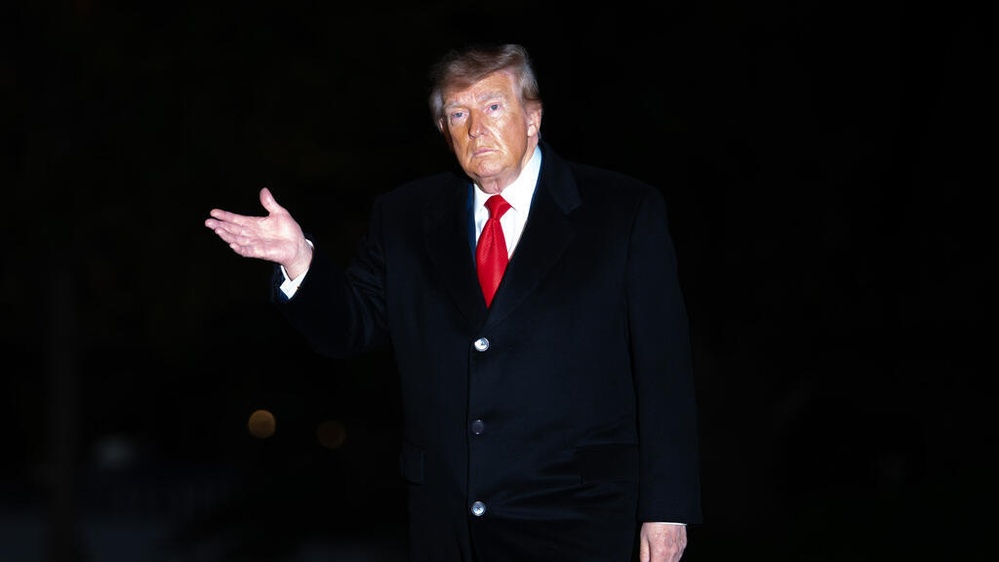

2026 © Helium Trades
Privacy Policy & Disclosure
* Disclaimer: Nothing on this website constitutes investment advice, performance data or any recommendation that any particular security, portfolio of securities, transaction or investment strategy is suitable for any specific person. Helium Trades is not responsible in any way for the accuracy
of any model predictions or price data. Any mention of a particular security and related prediction data is not a recommendation to buy or sell that security. Investments in securities involve the risk of loss. Past performance is no guarantee of future results. Helium Trades is not responsible for any of your investment decisions,
you should consult a financial expert before engaging in any transaction.
Helium Research Assistant

How can I help you today?
Ask any question about this page.


